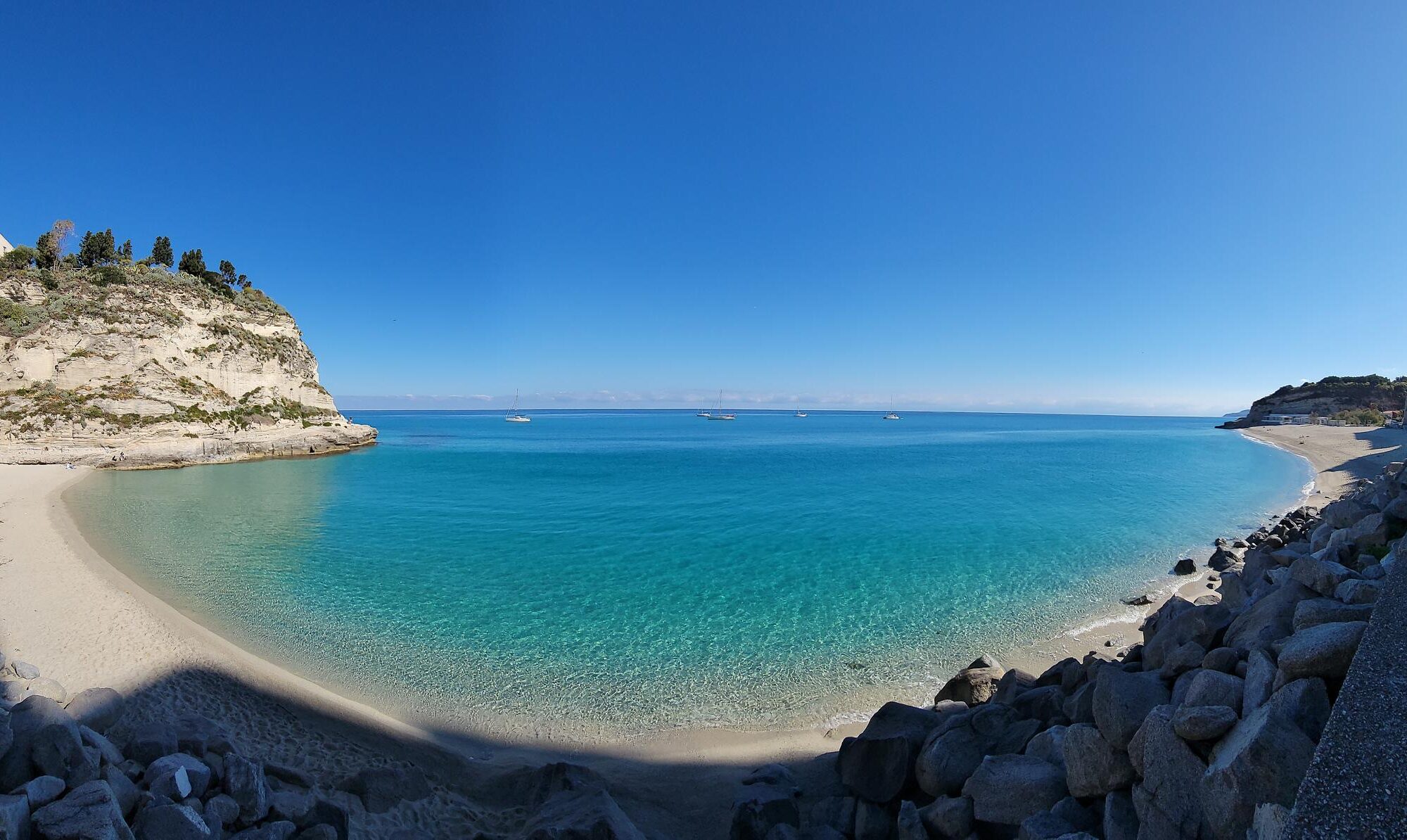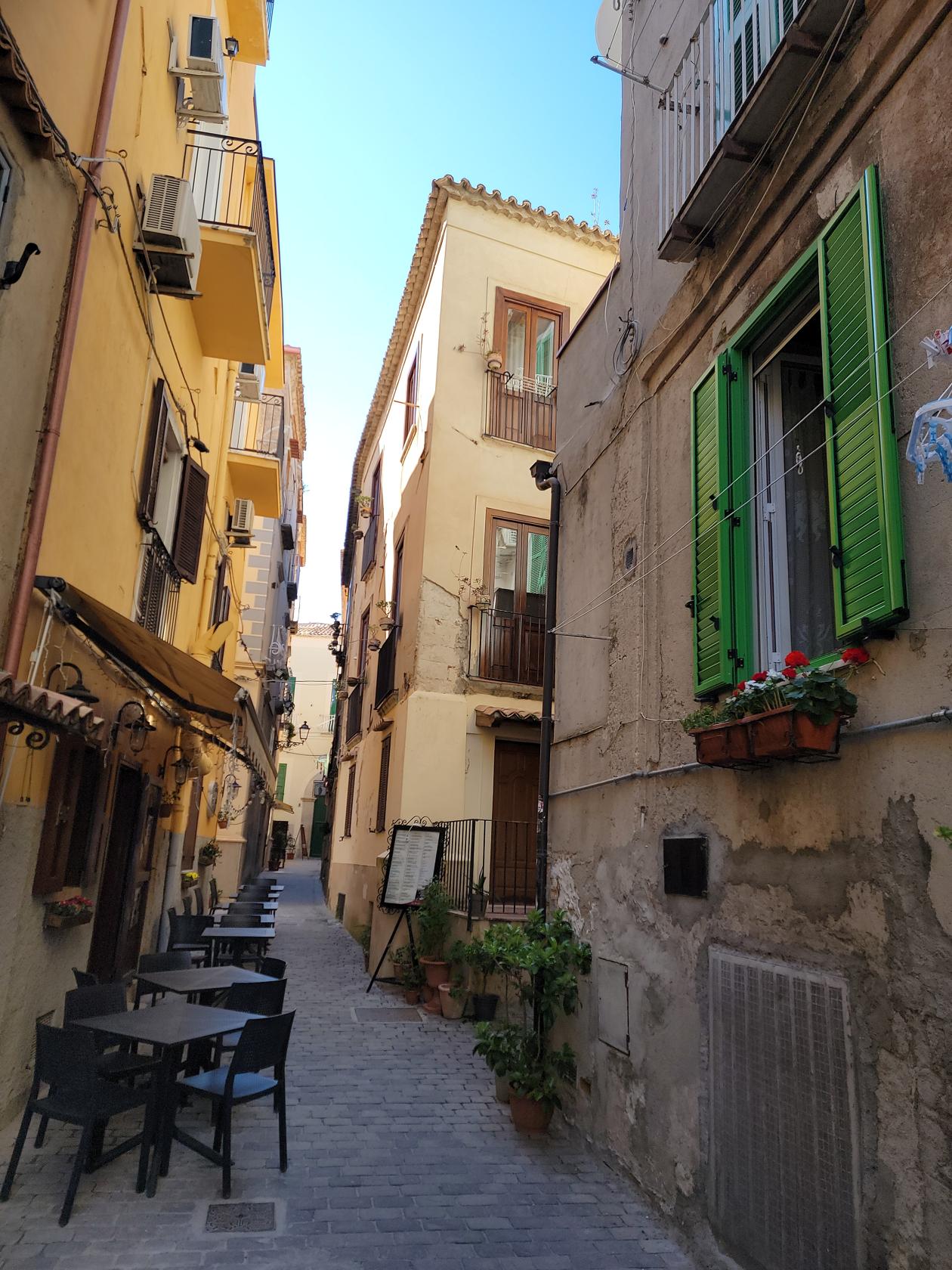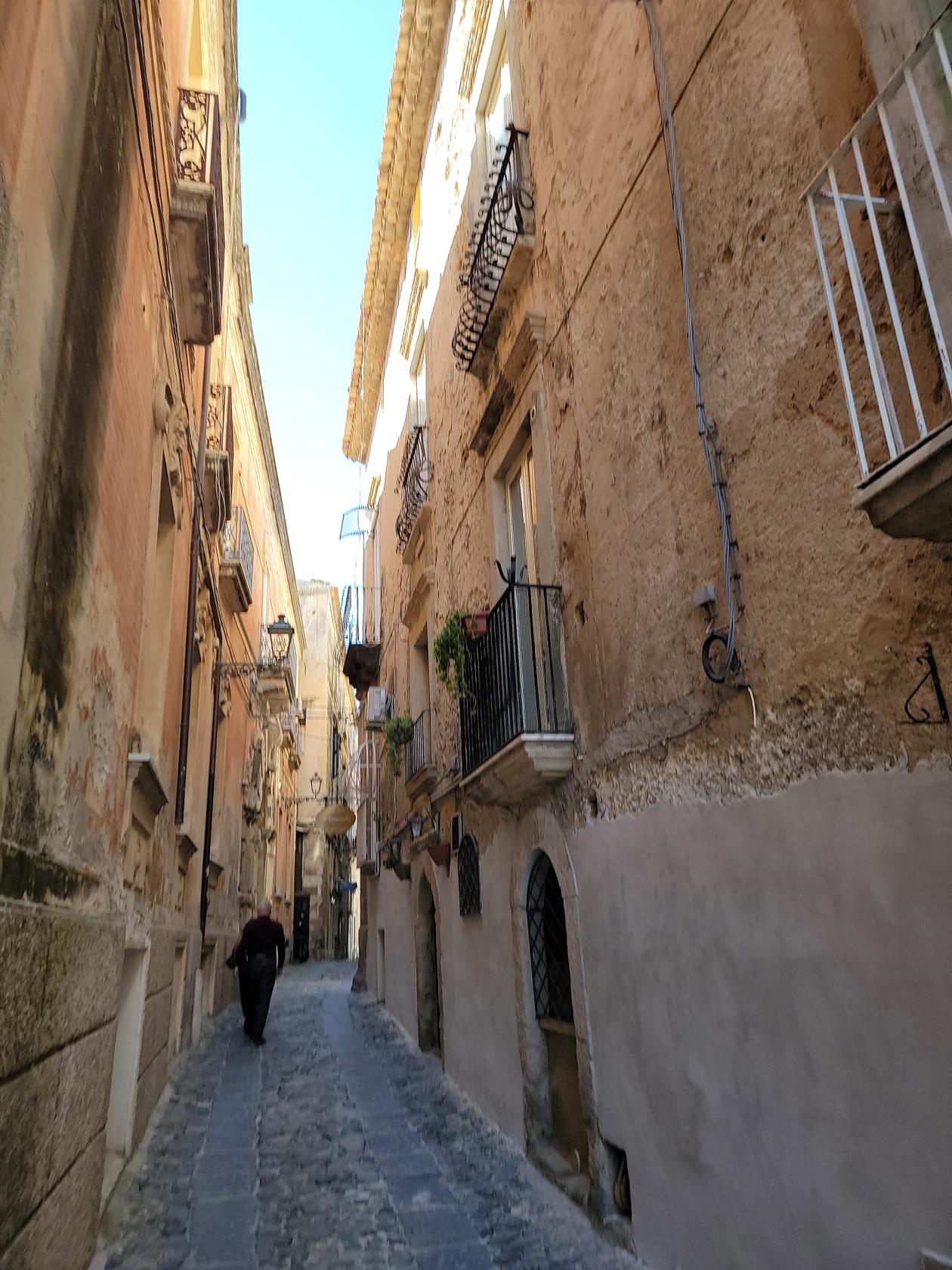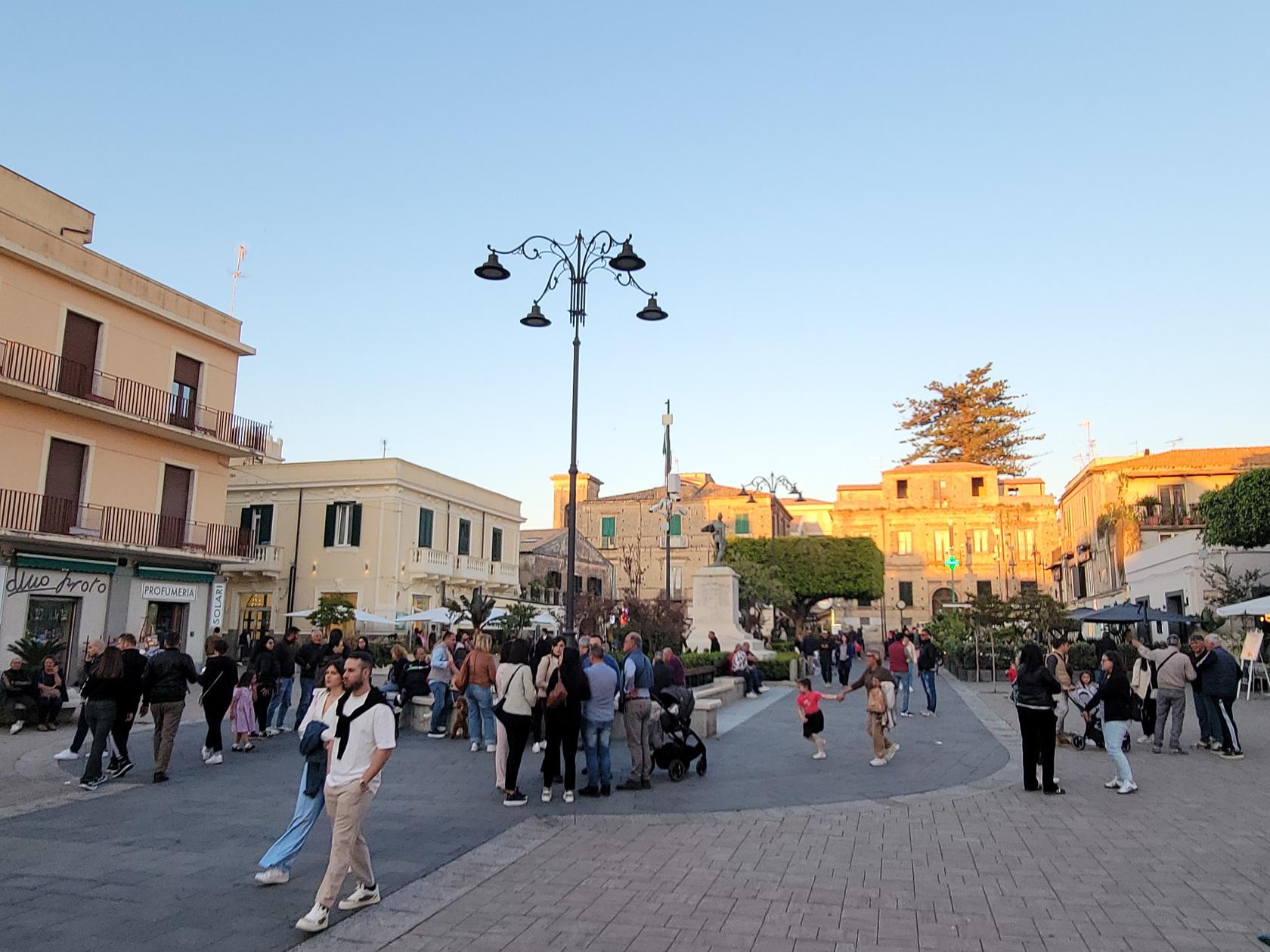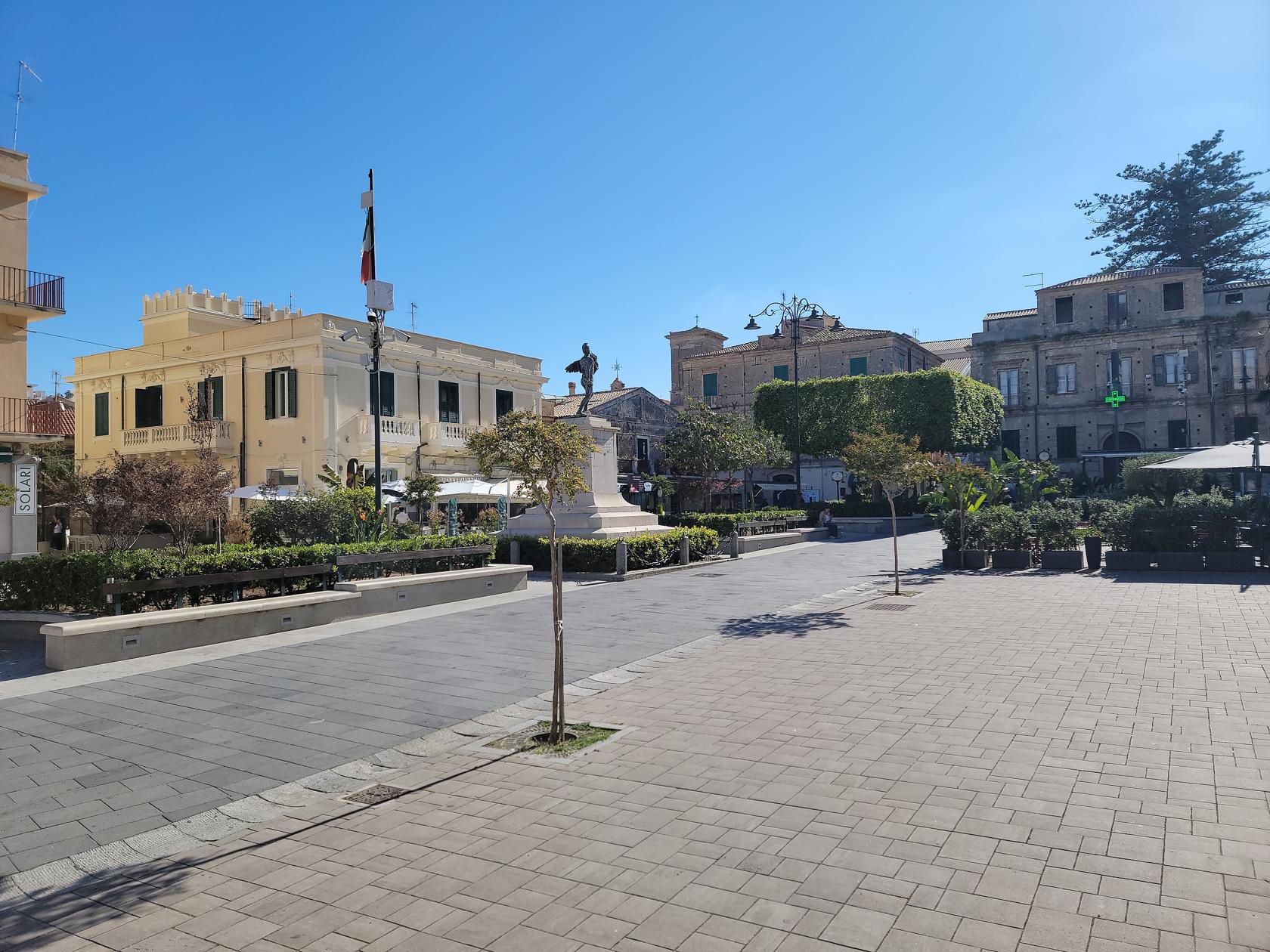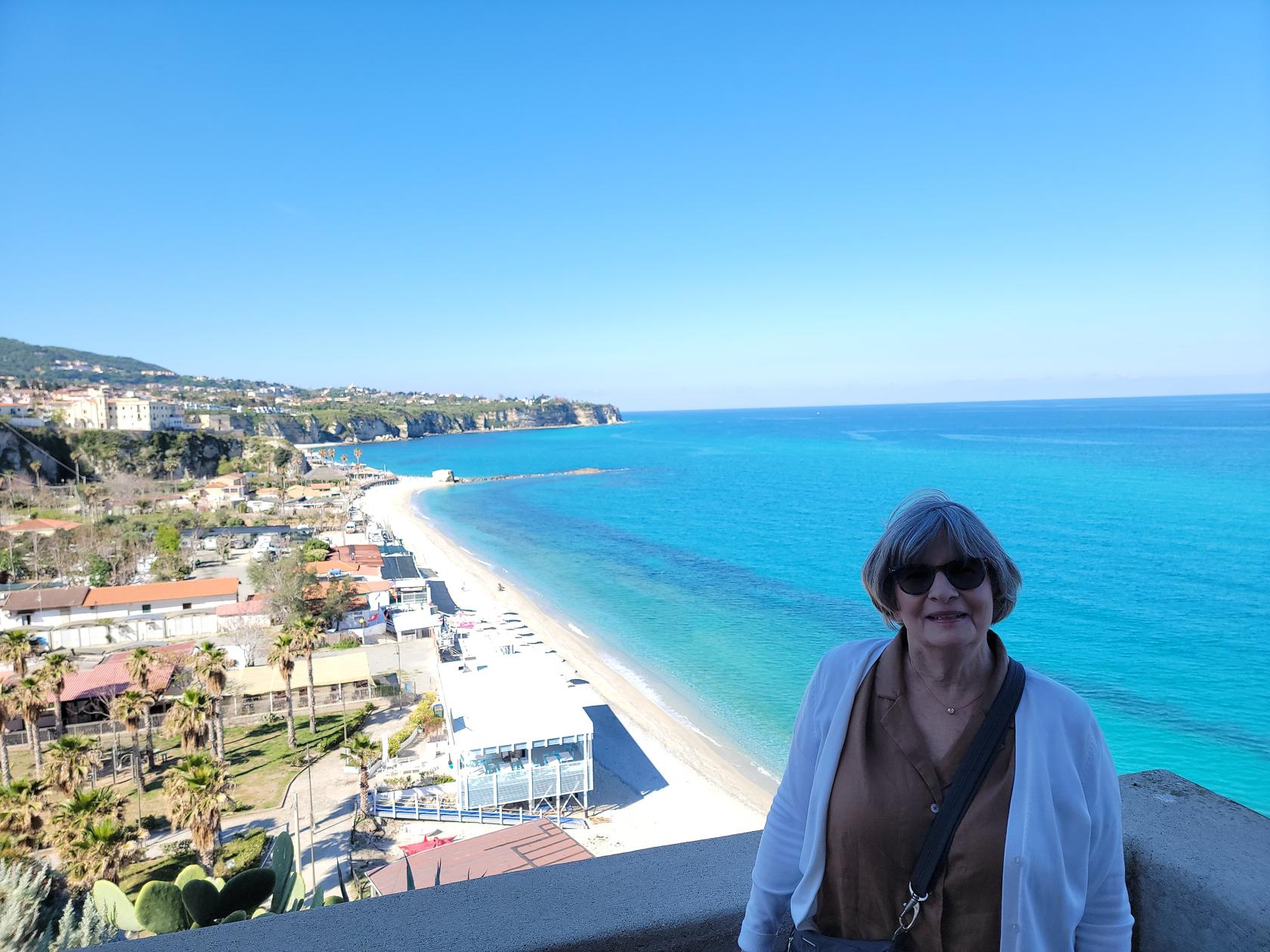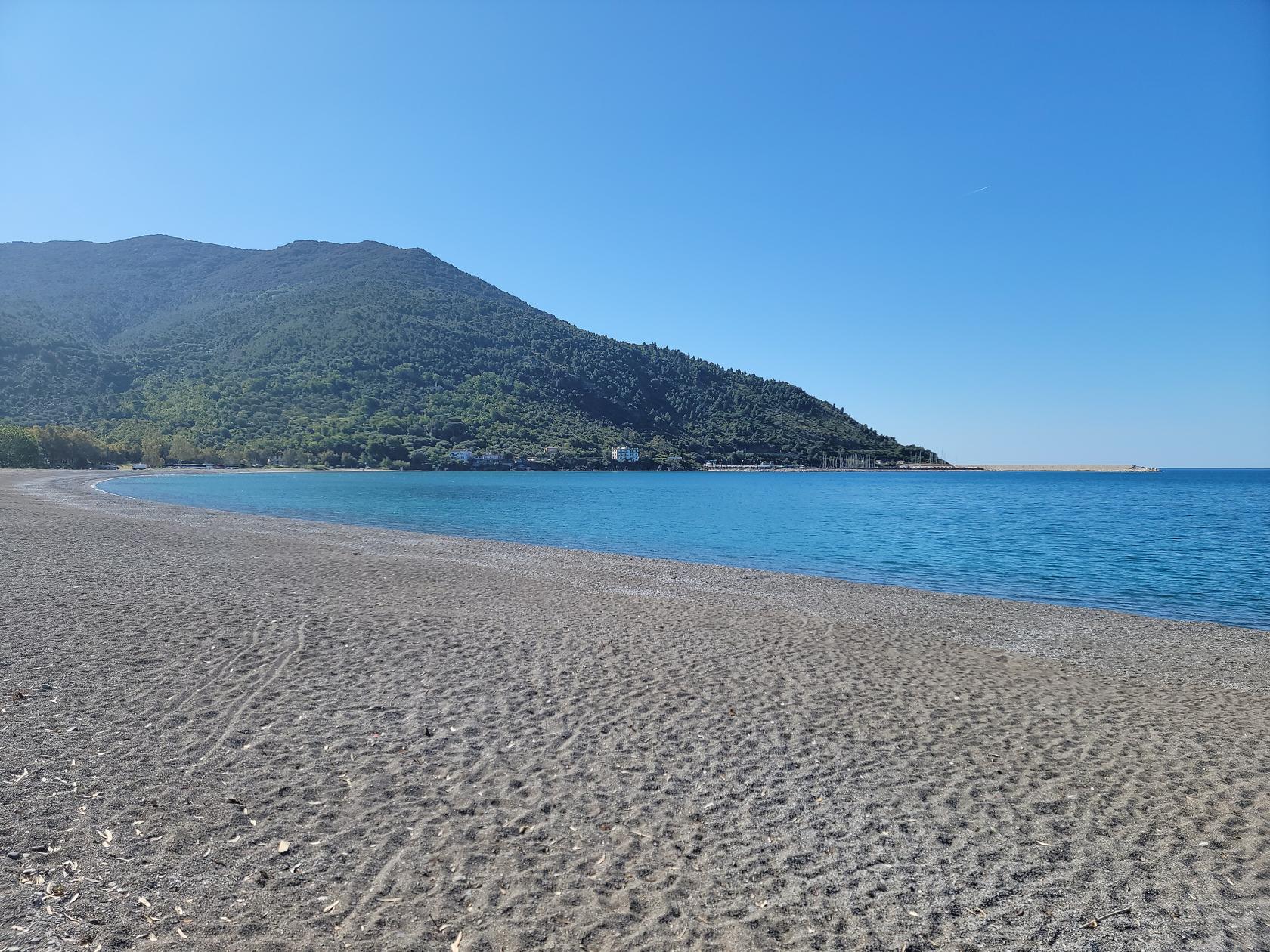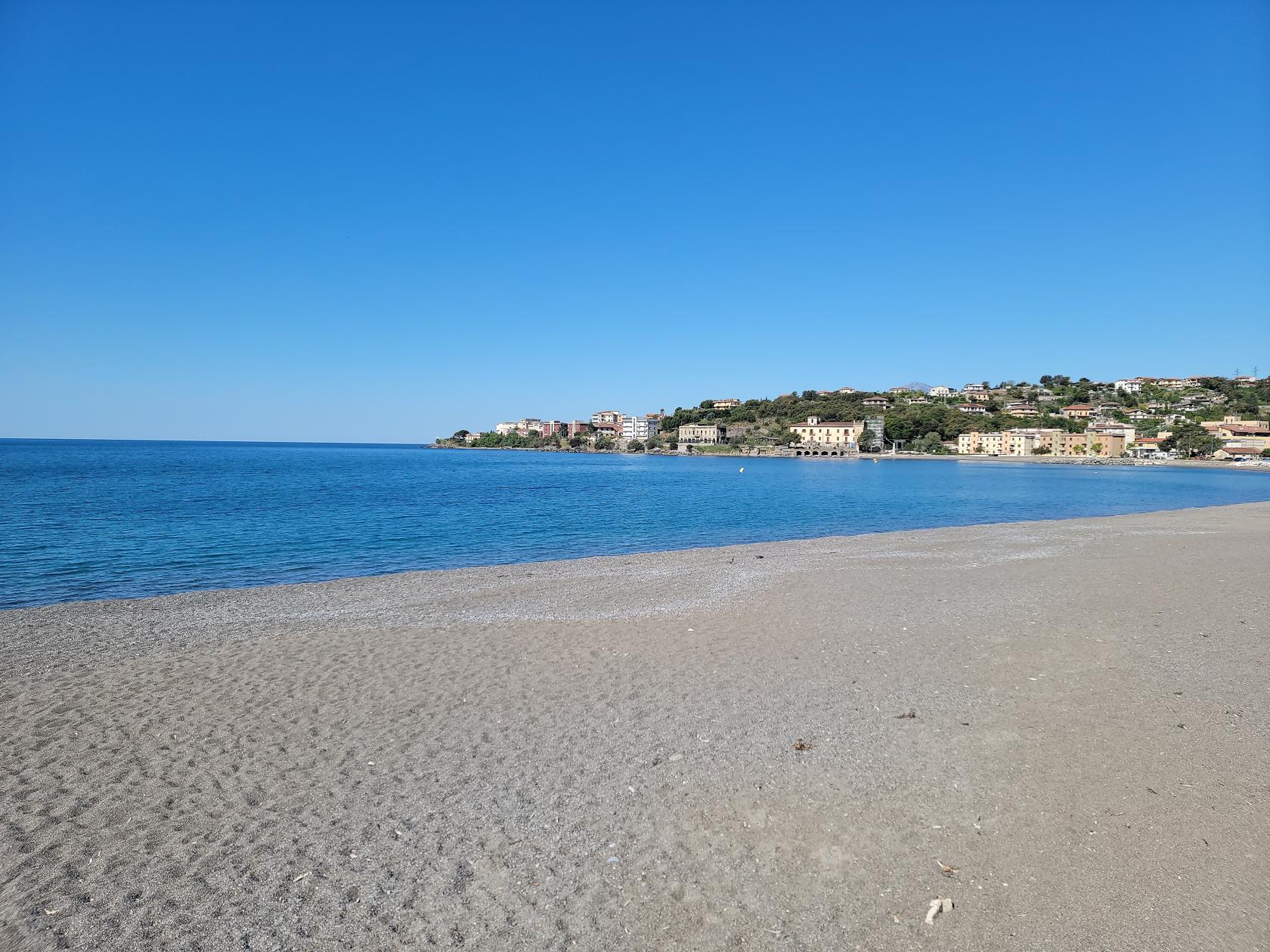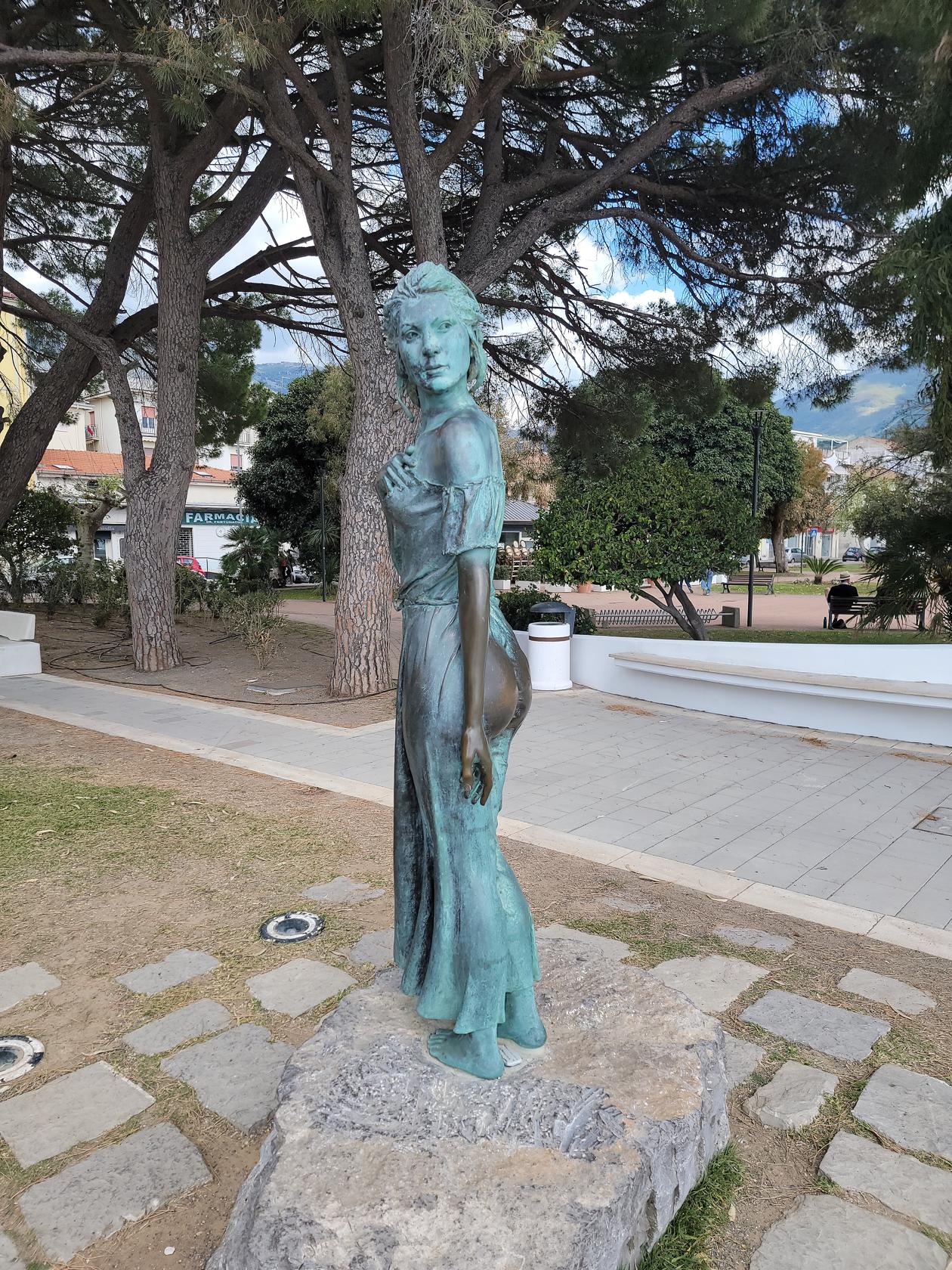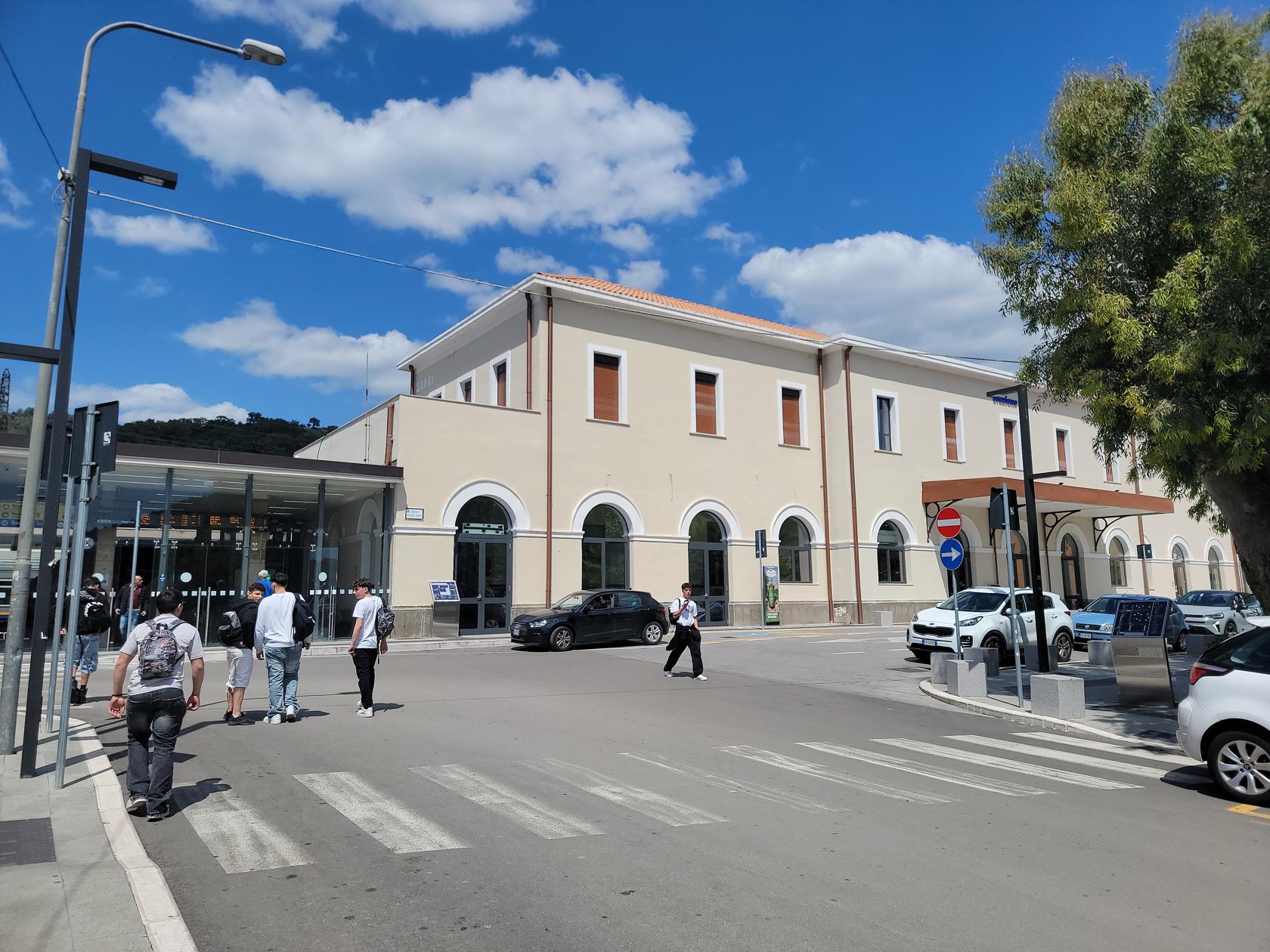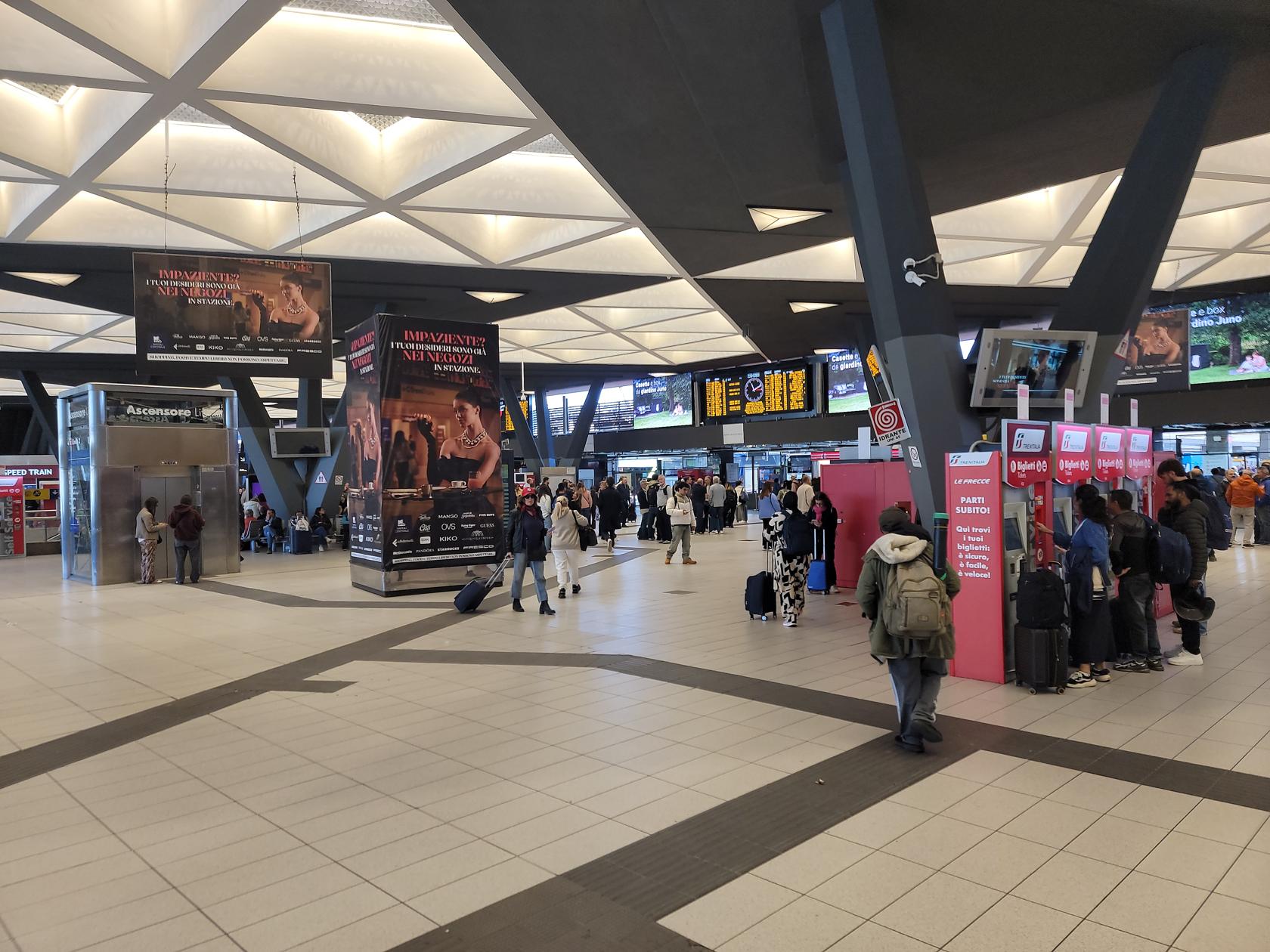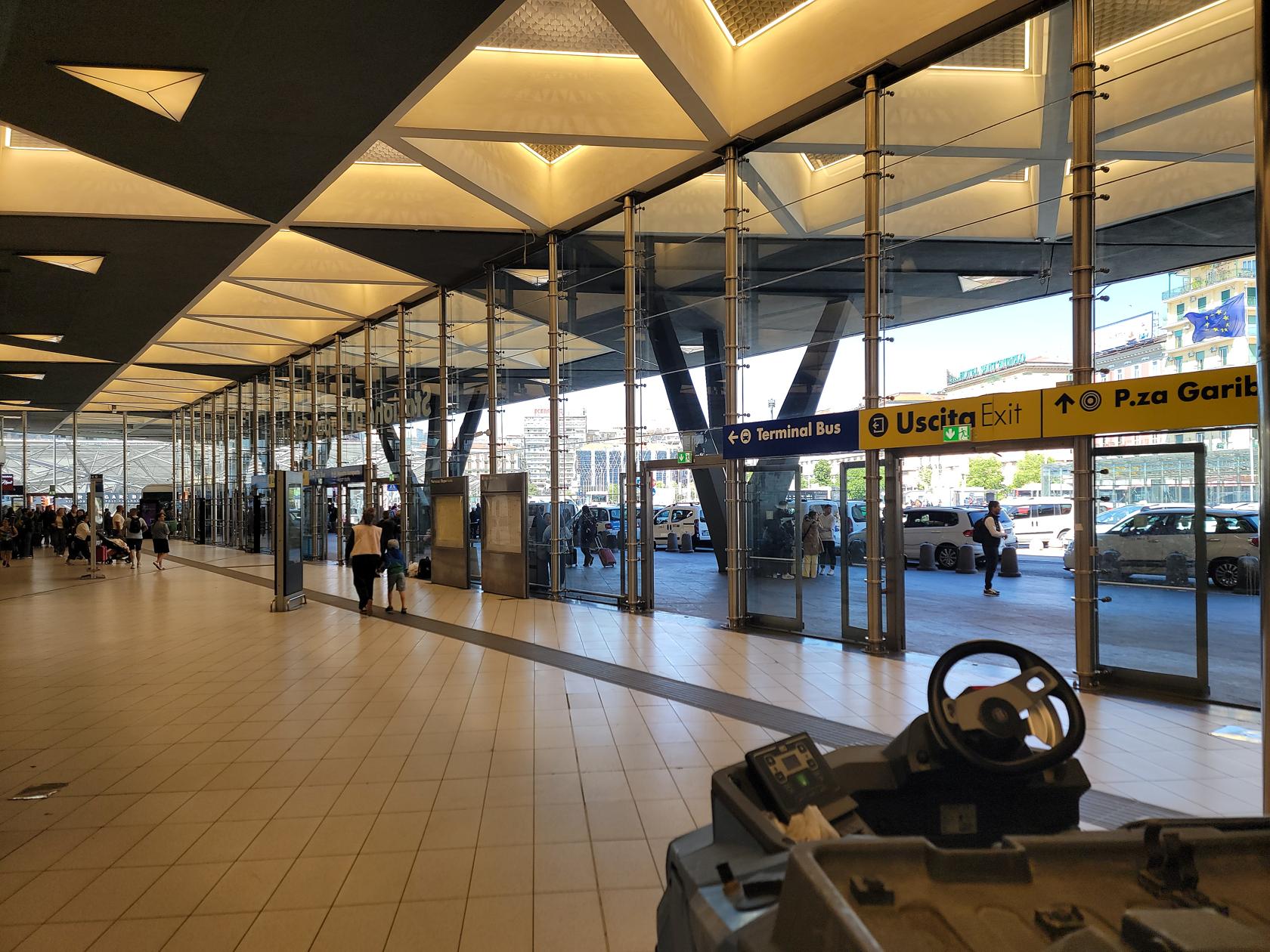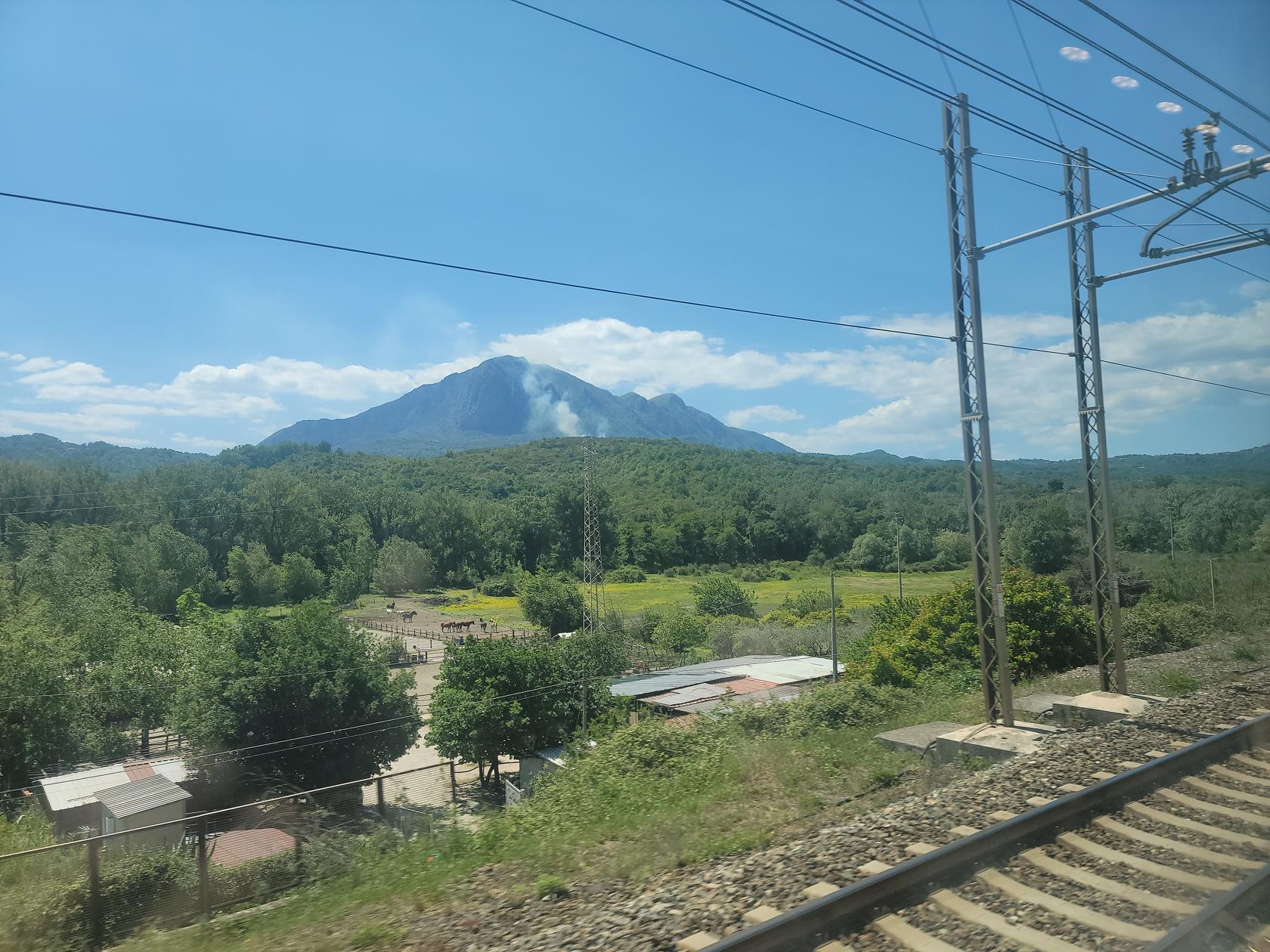
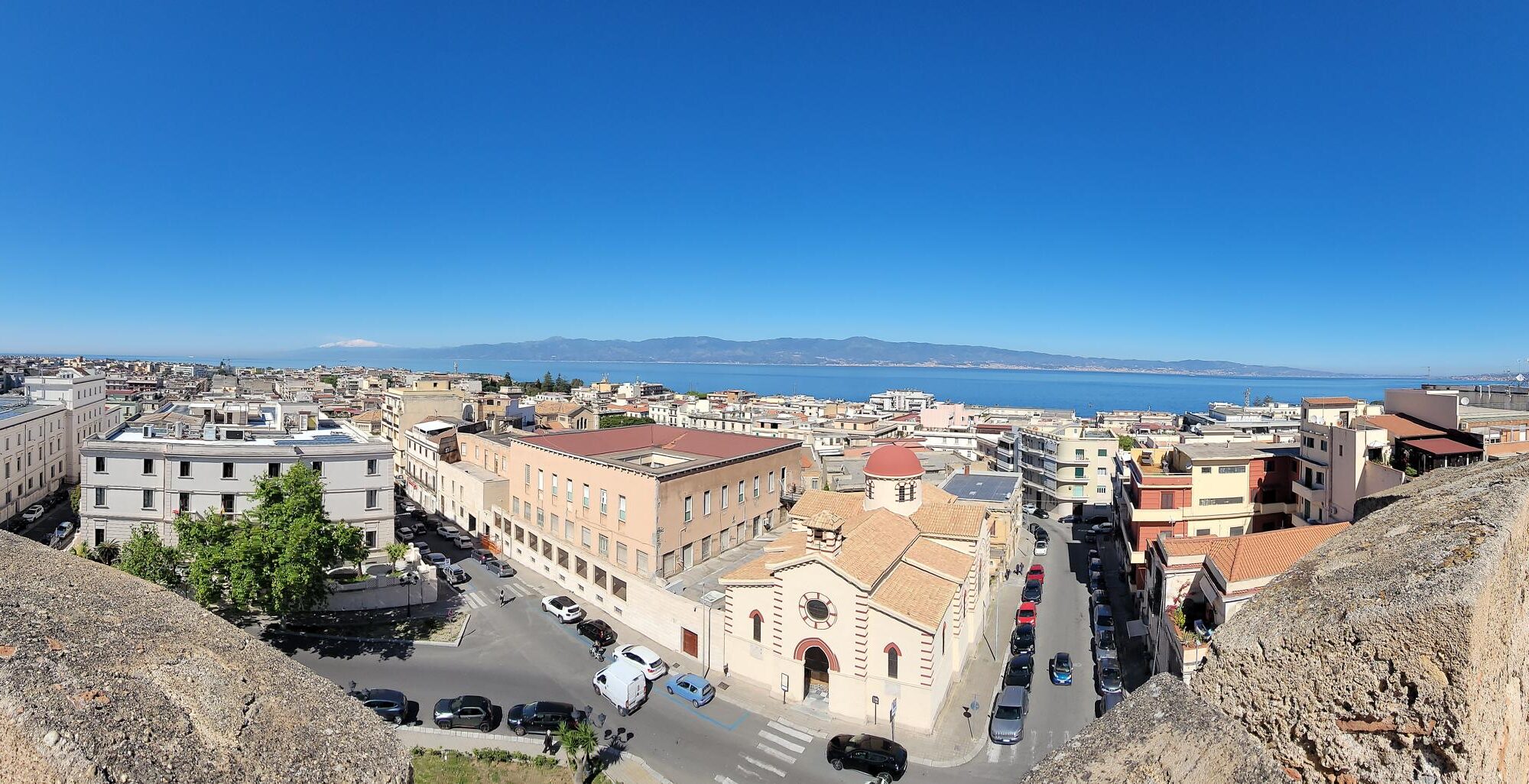
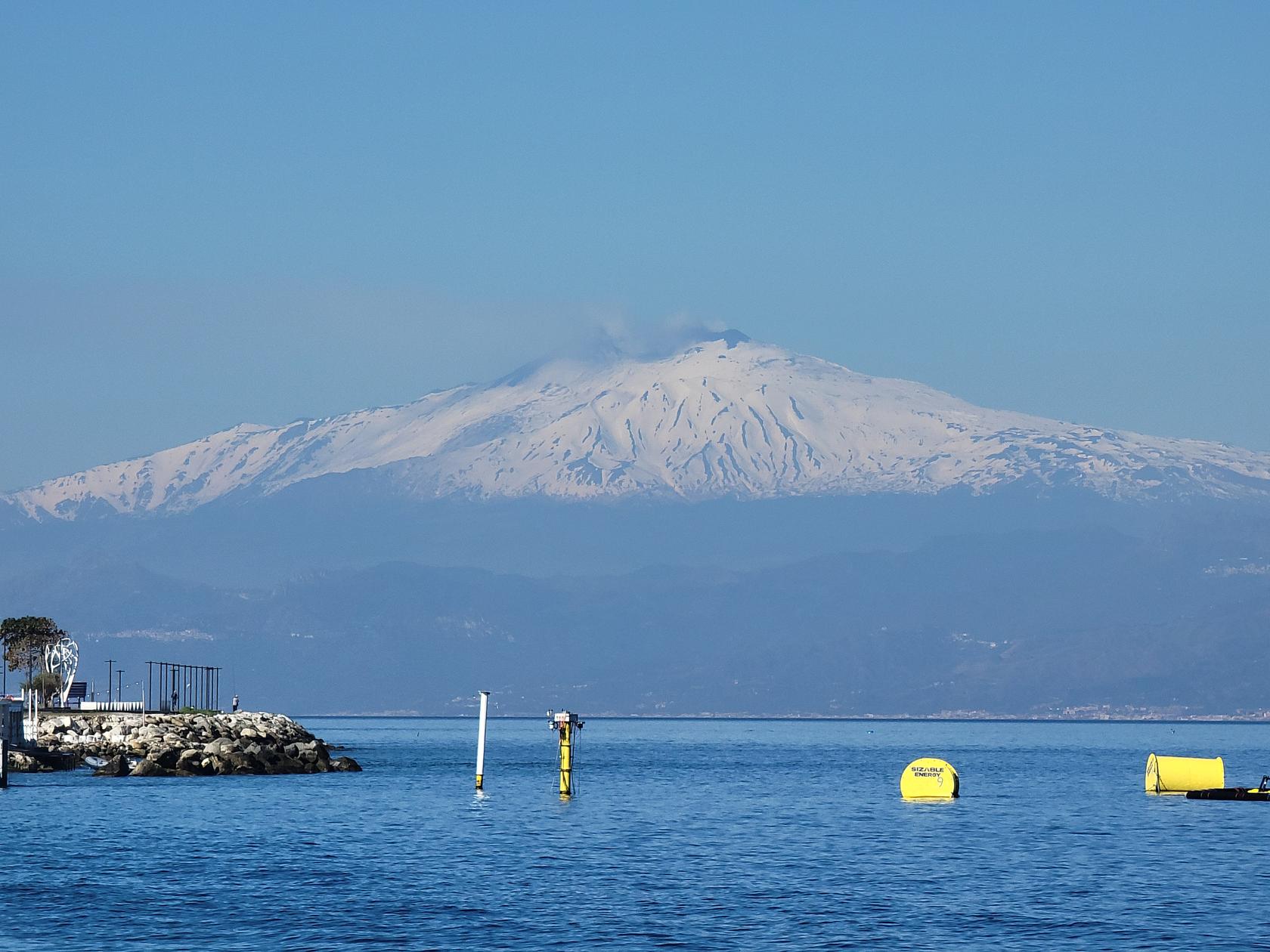
If anyone travels all the way down to the very tip of Italy they will discover Reggio Calabria, a Calabrian city with all the classic touches of Southern Italy. Offshore, you will see the ever present Mount Etna smoking in the background.
Getting There And Back
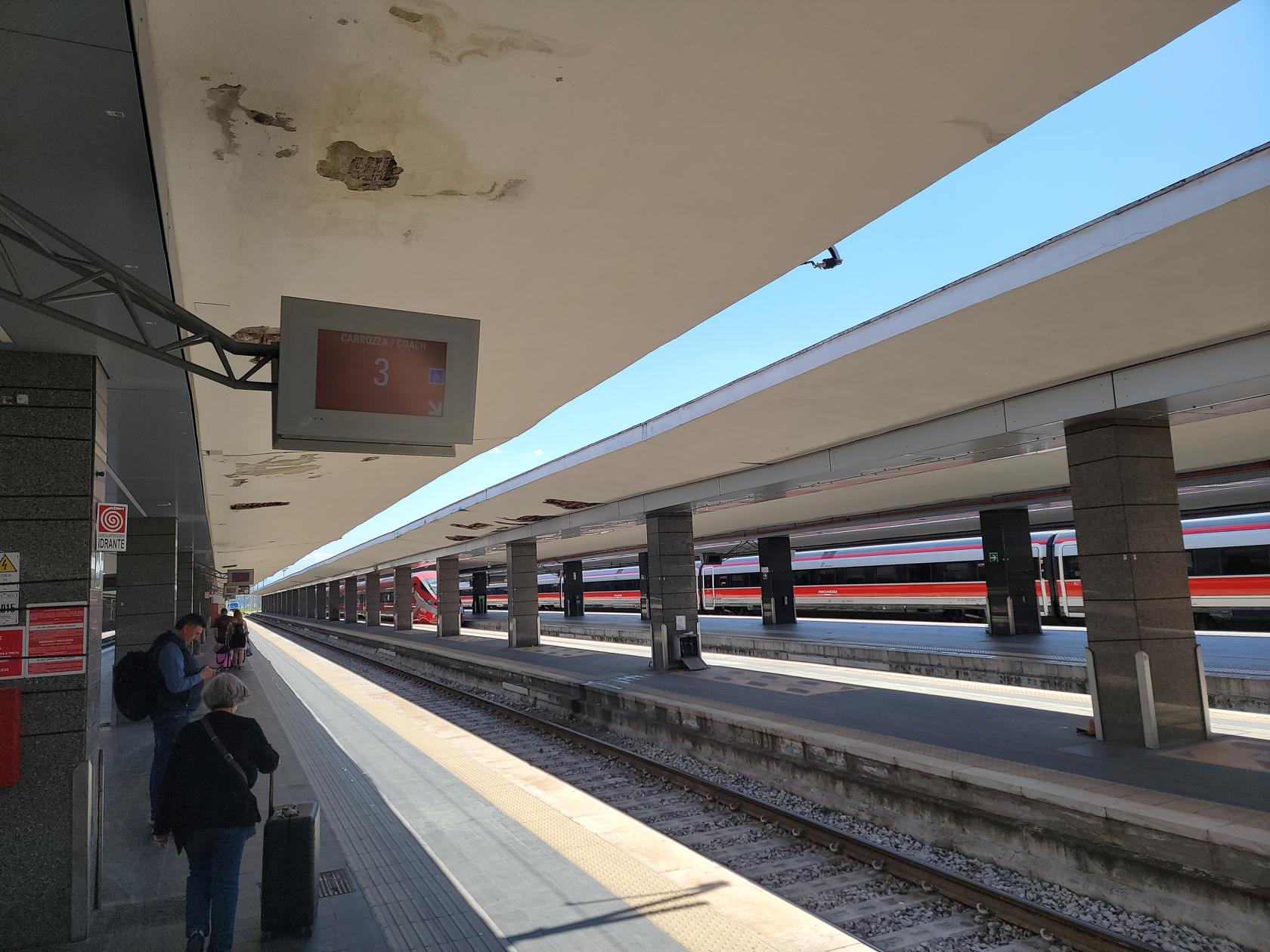
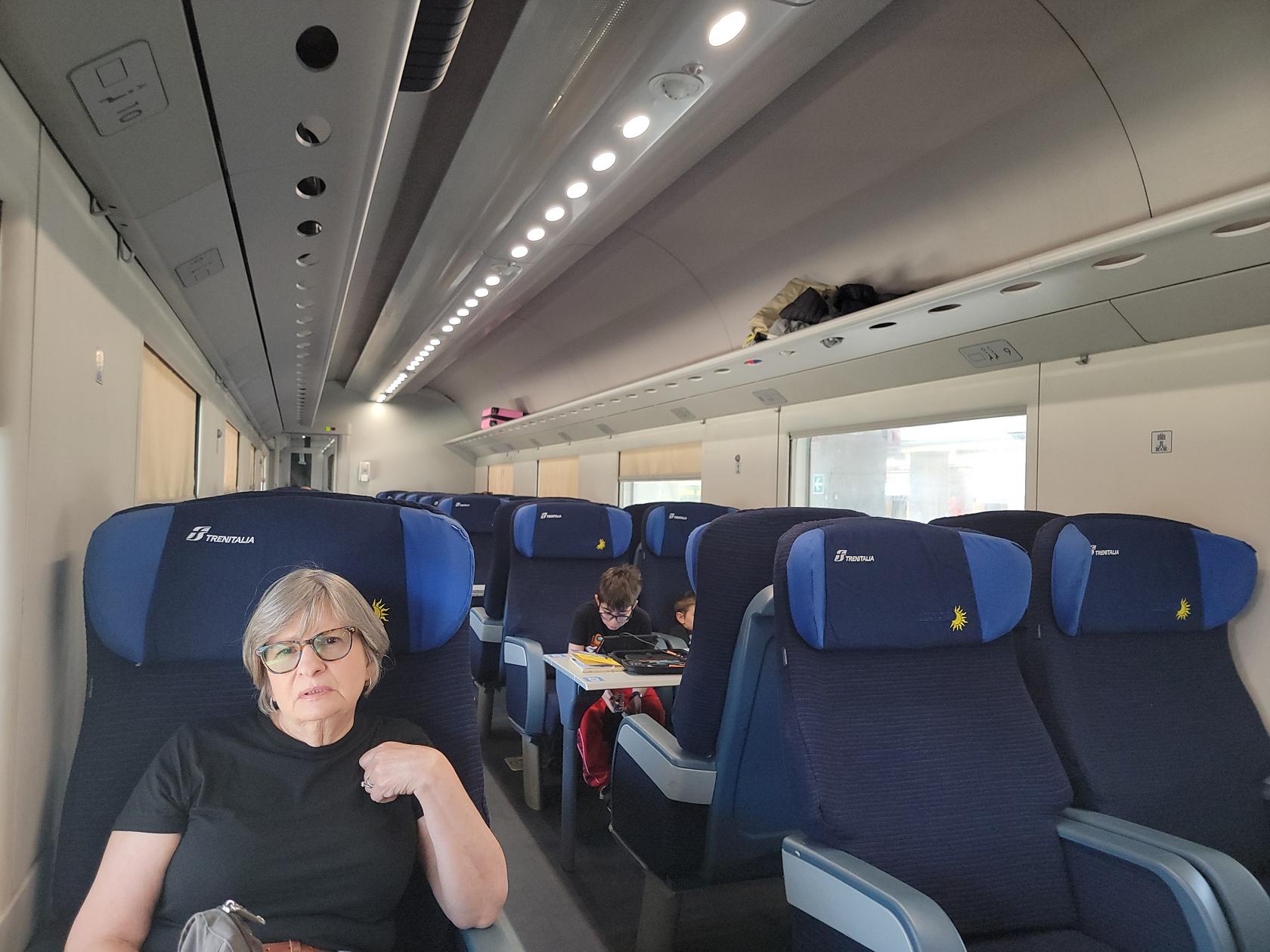
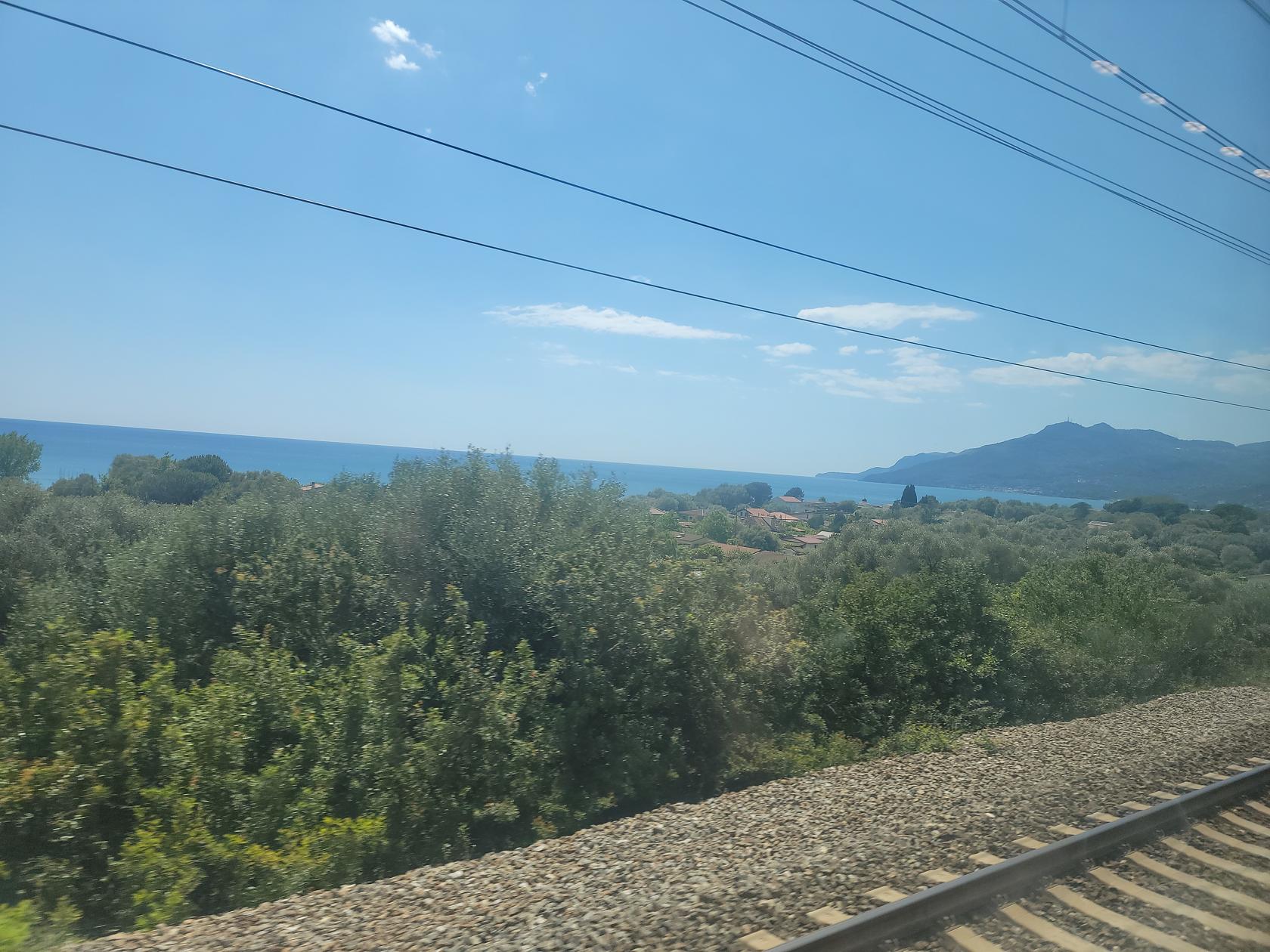
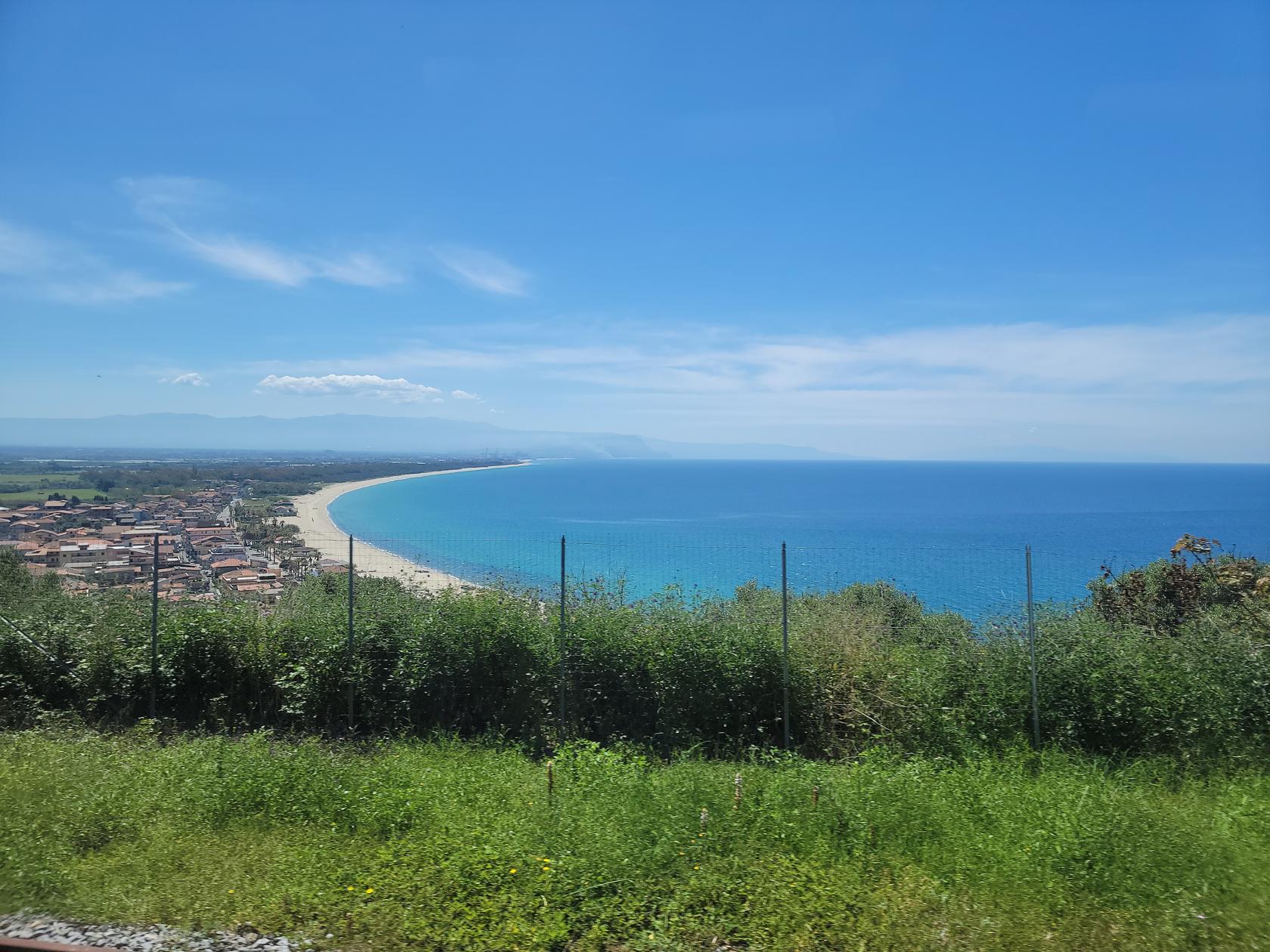
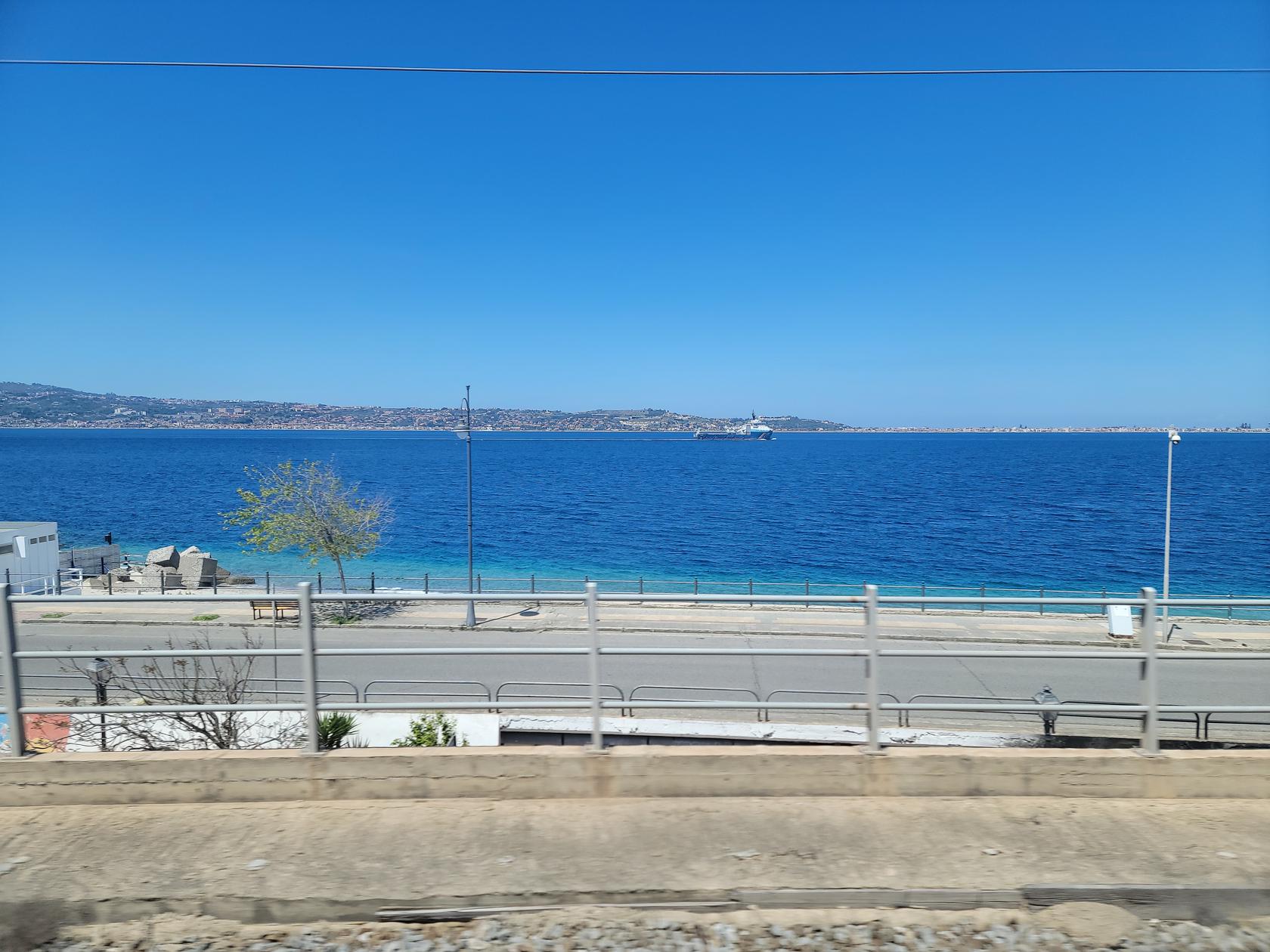
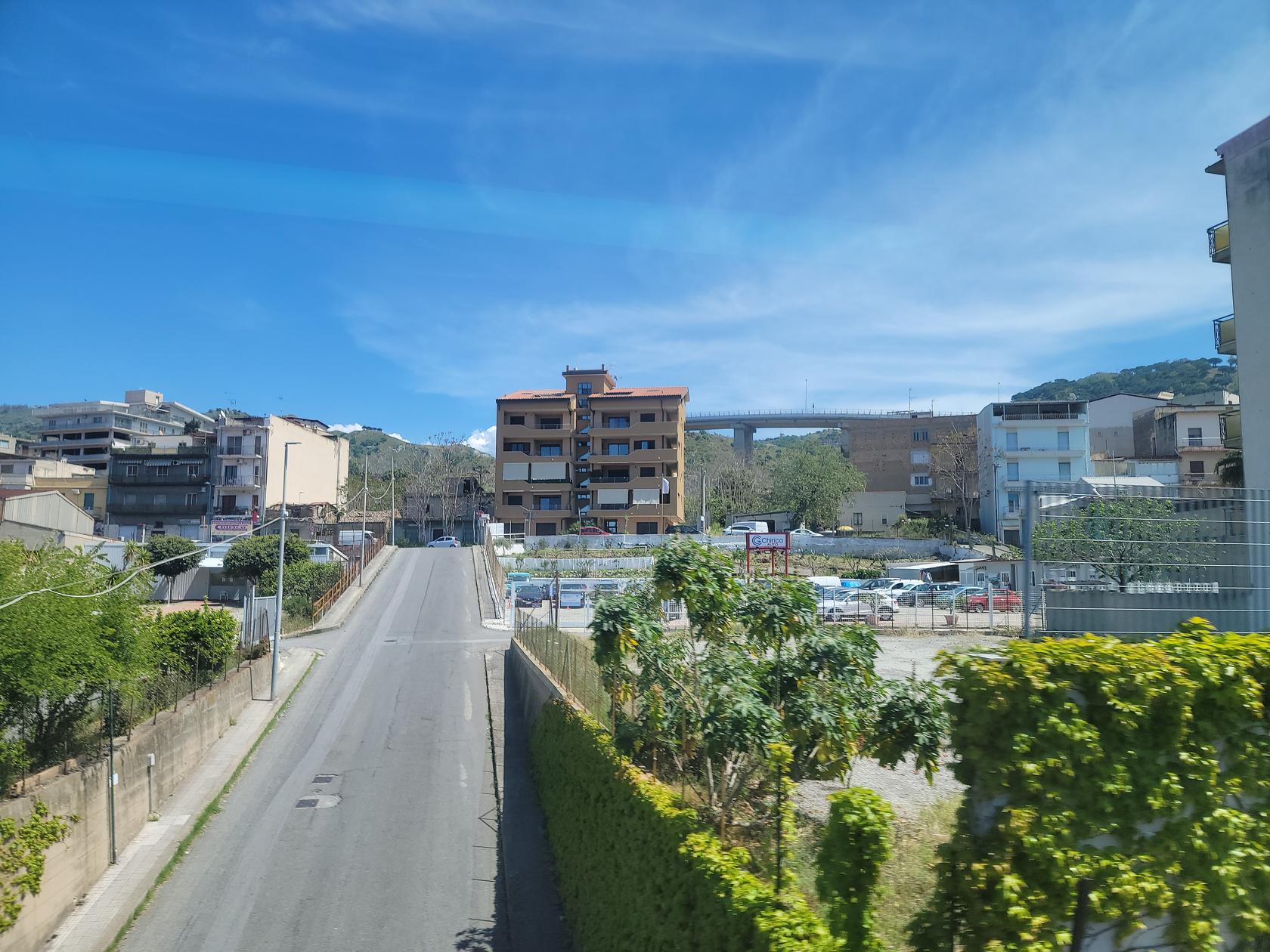
To get there we took TrennItalia’s Calabrian Regional train service from Tropea. Approximately a two hour train ride that eventually hugs the coast and offers a preview of the Italian island of Sicily.
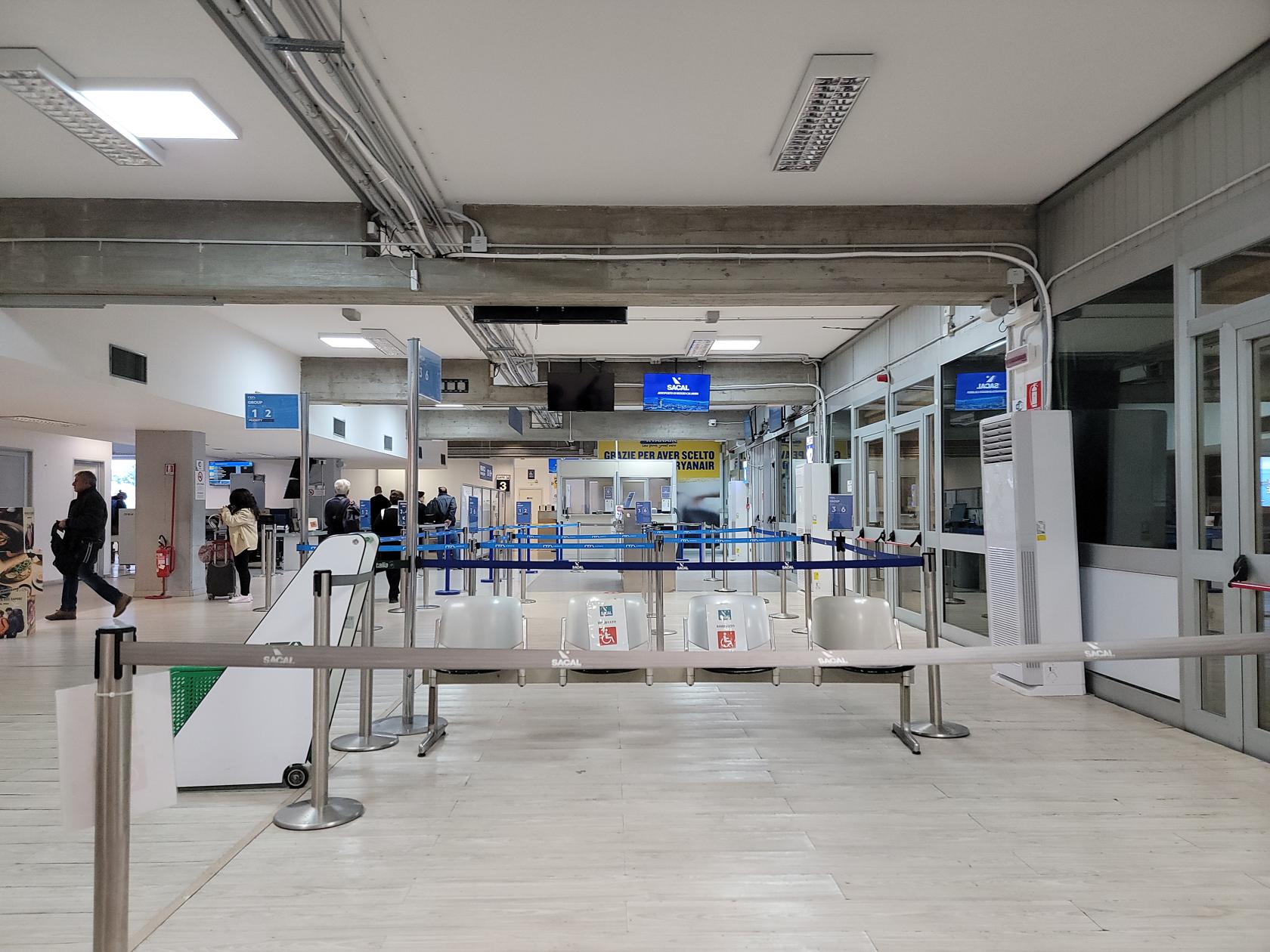
To get back we used Reggio Calabria’s airport, where RyanAir offers direct service to Turin’s Caselle Airport. Another trip just short of two hours which also hugs the coast of Italy and also offers views of Sardinia and other prominent points of interest from the air.
Reggio Calabria
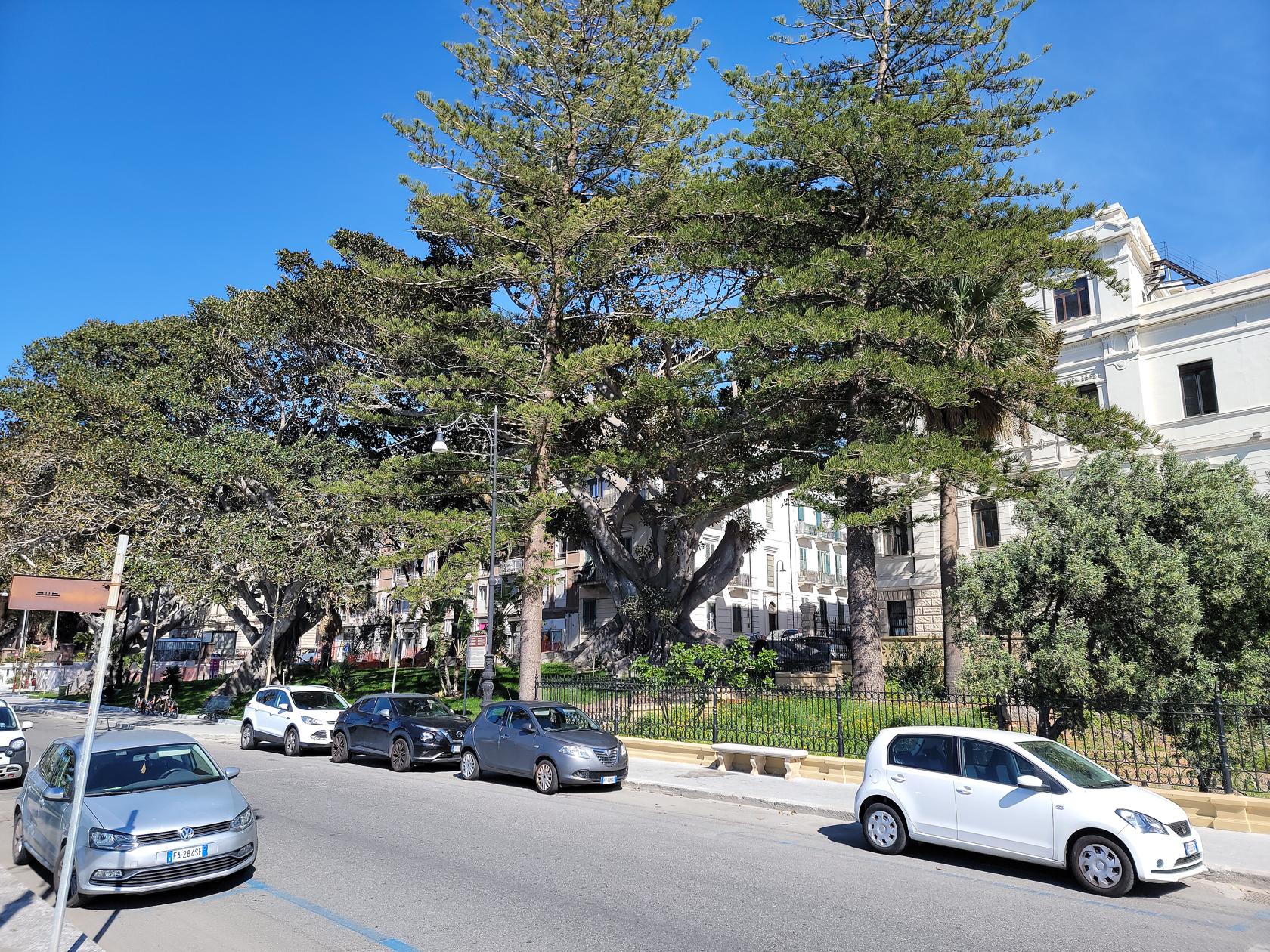
The official name for the city is Reggio Calabria, but it is also known by its traditional names of Reggio di Calabria and just plain Reggio. The city was almost completely destroyed by an earthquake in the beginning of the last century and its more hopefully robust version has new amenities the former city lacked.
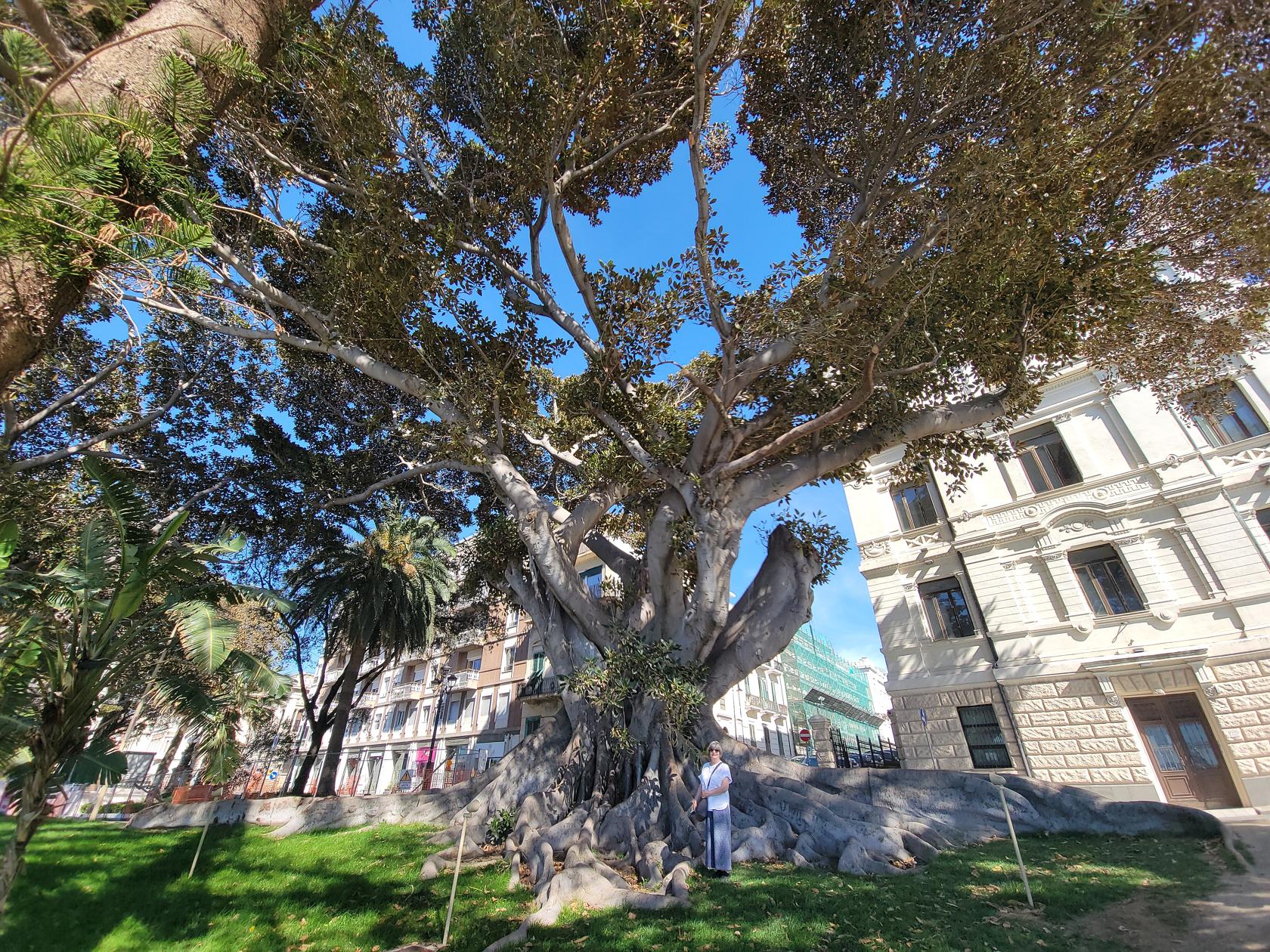
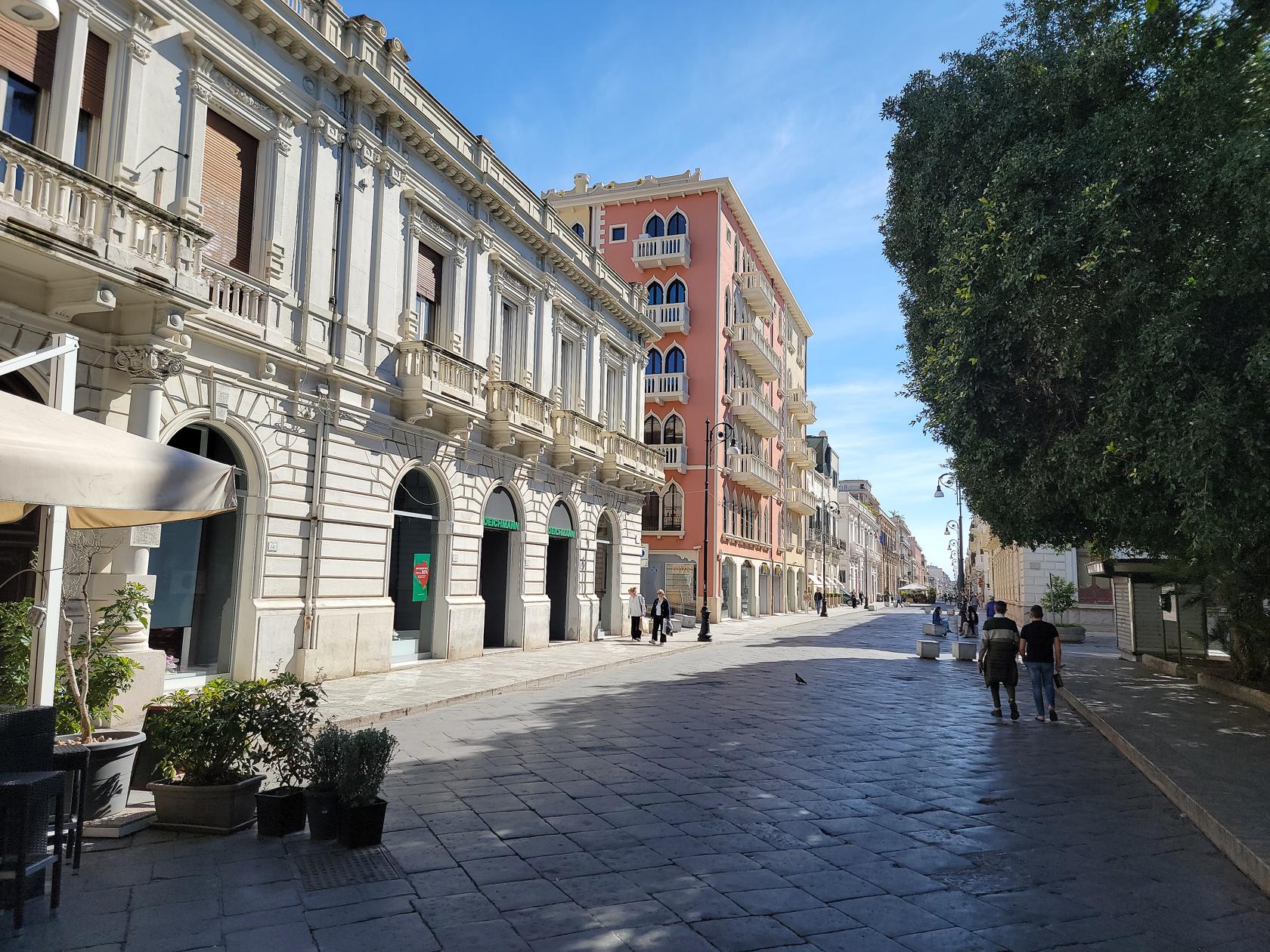
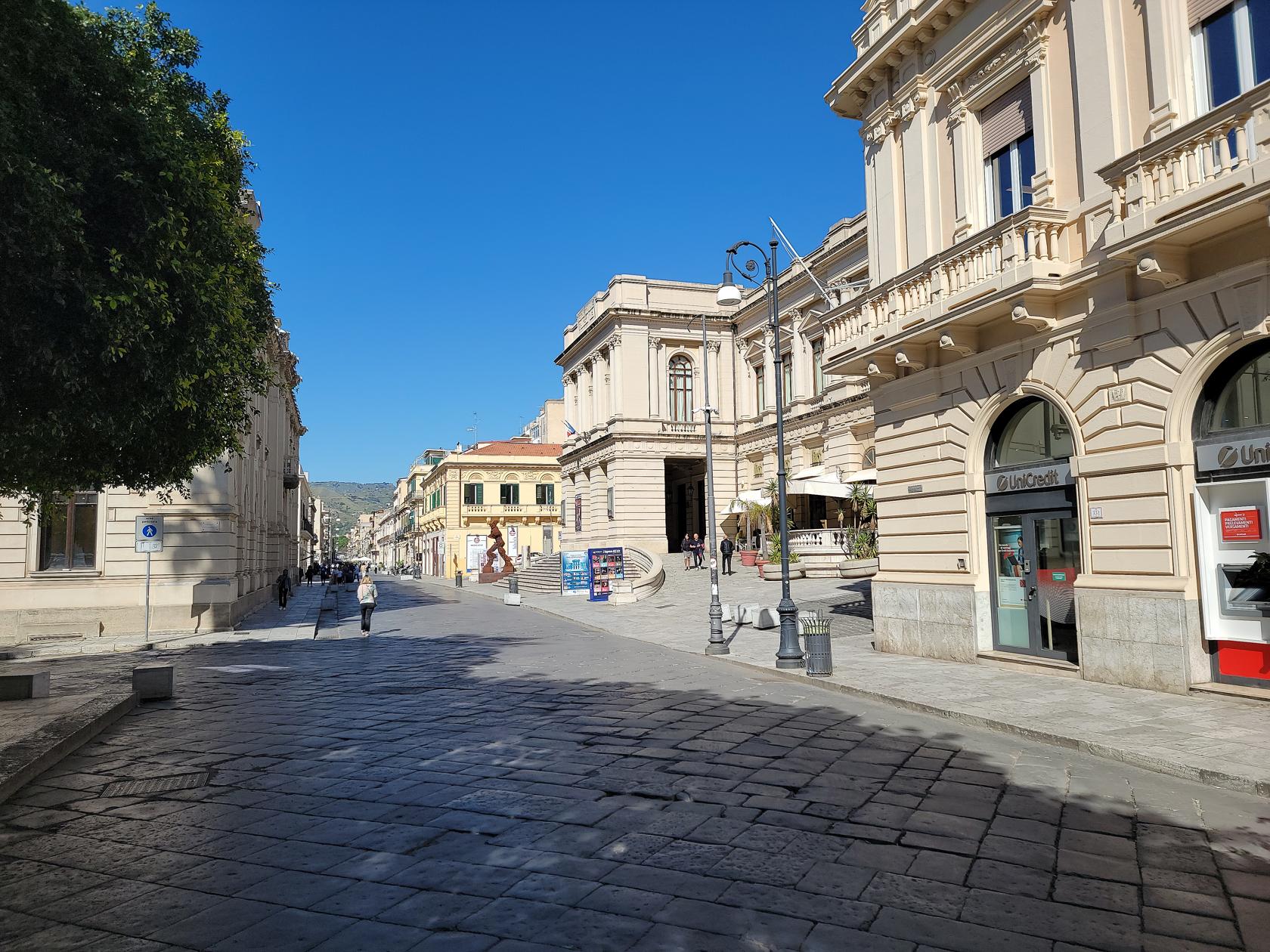
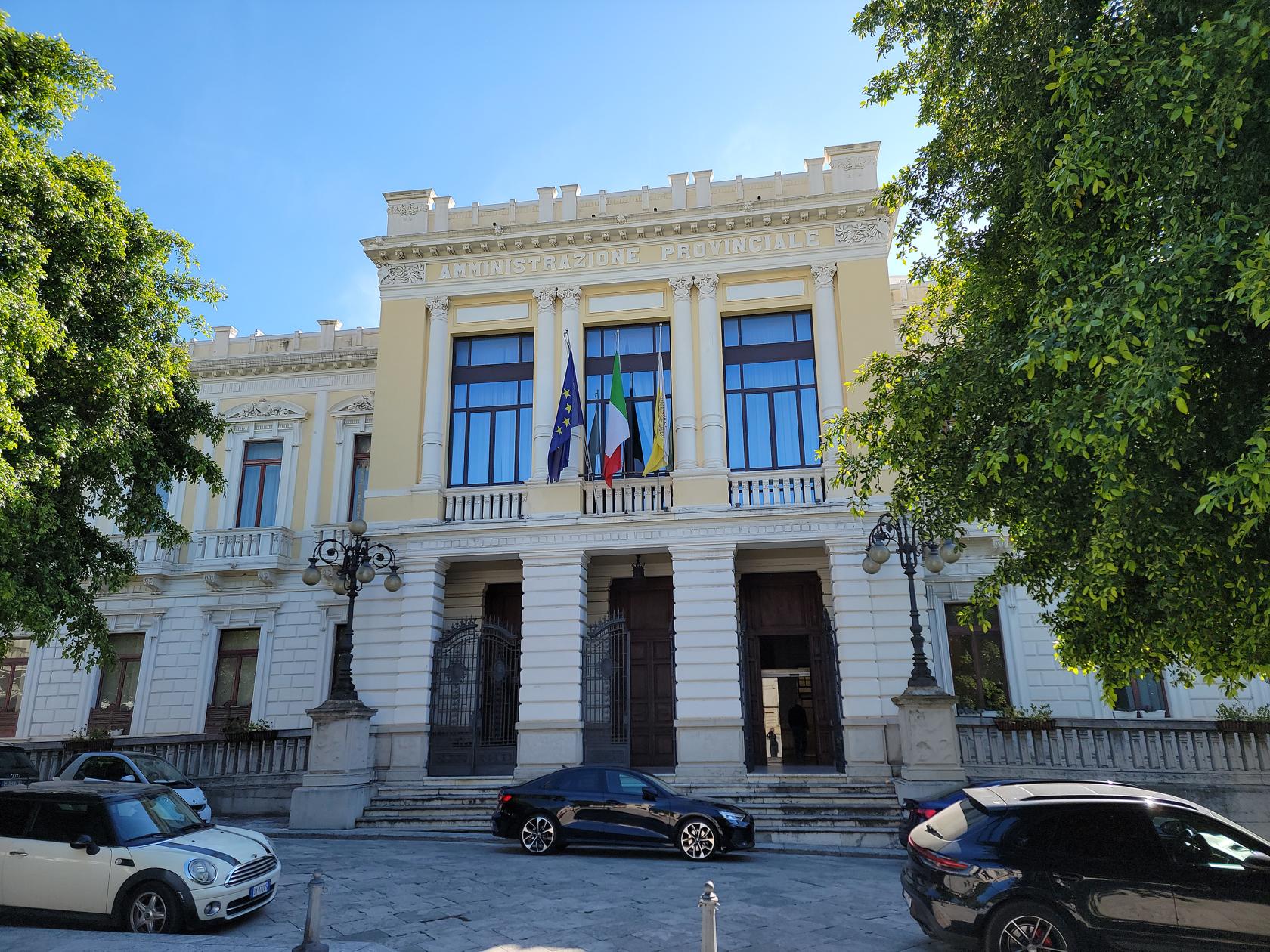
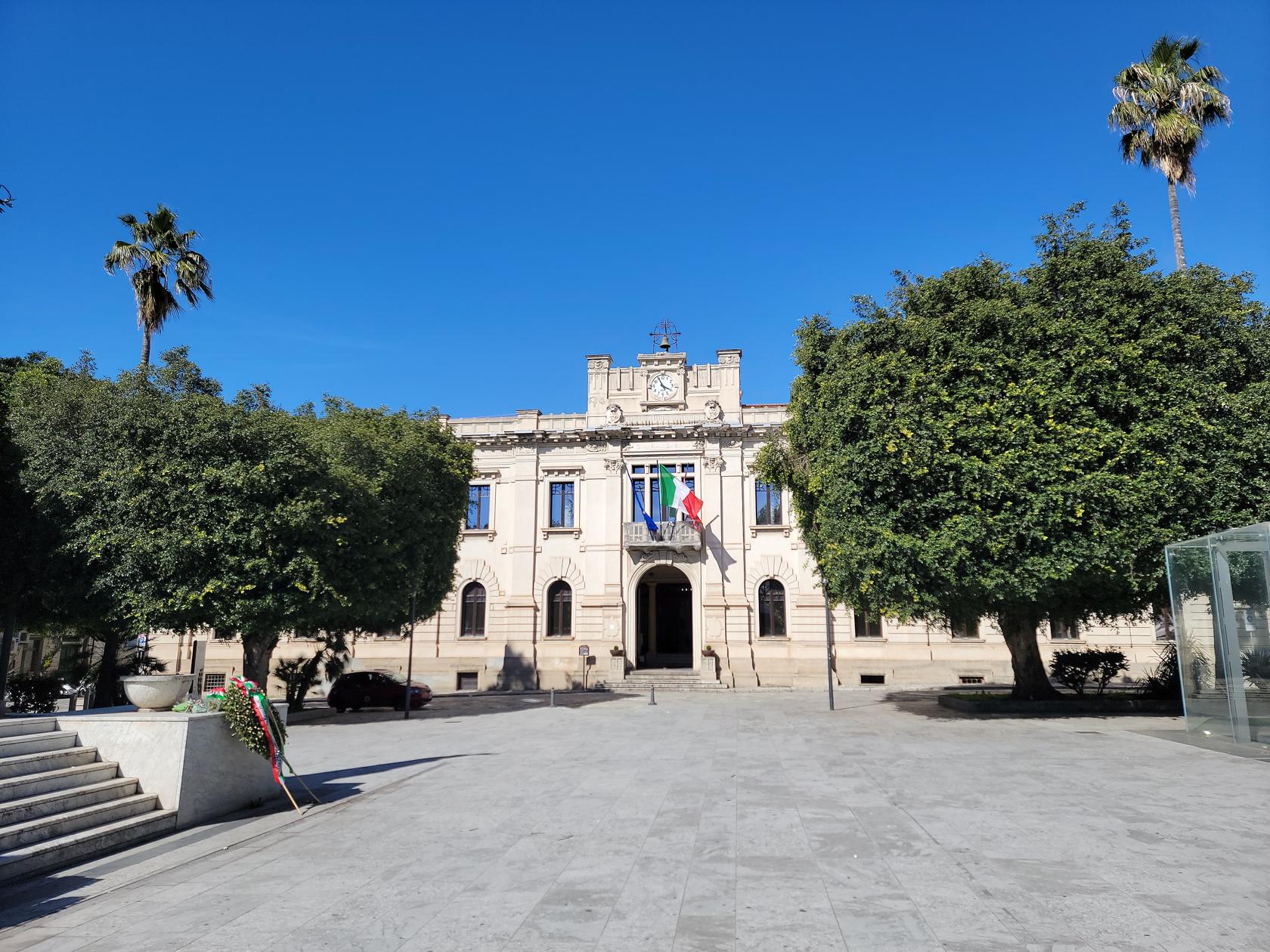
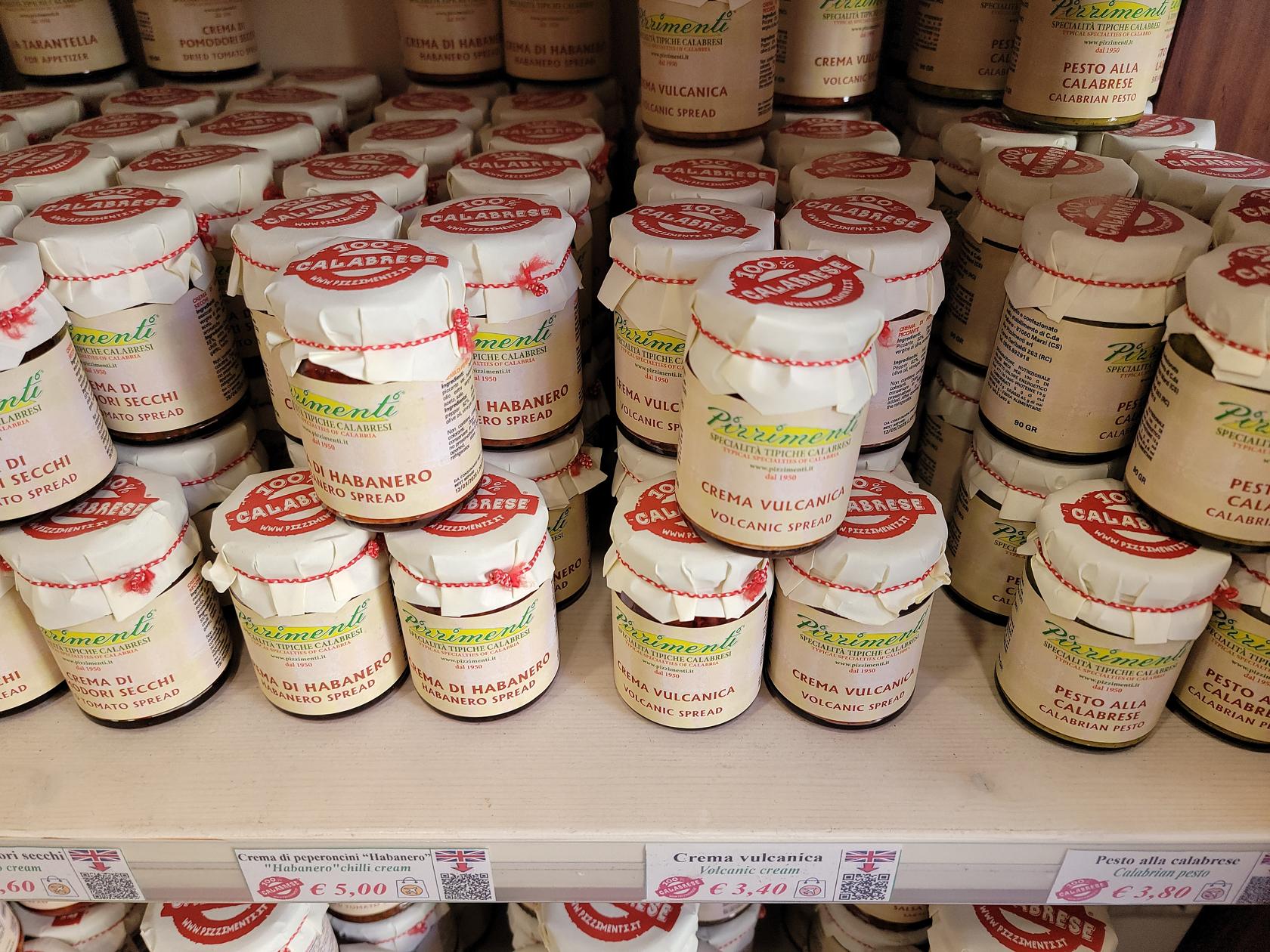
If you love food, visit the shops along Corso Garibaldi. Many have interesting and local foods that you can bring home with you to enjoy, while you reminisce about your time in Calabria.
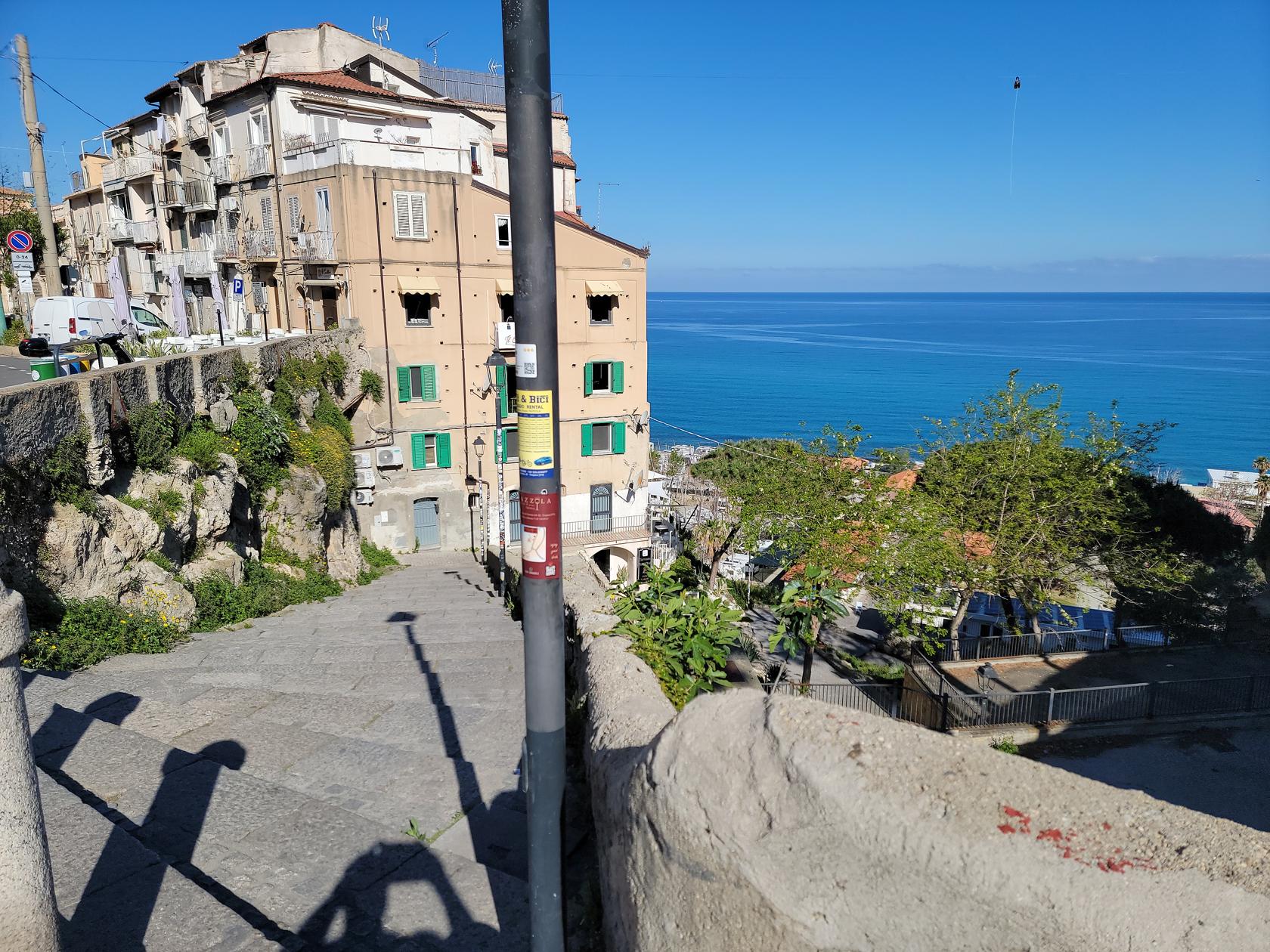
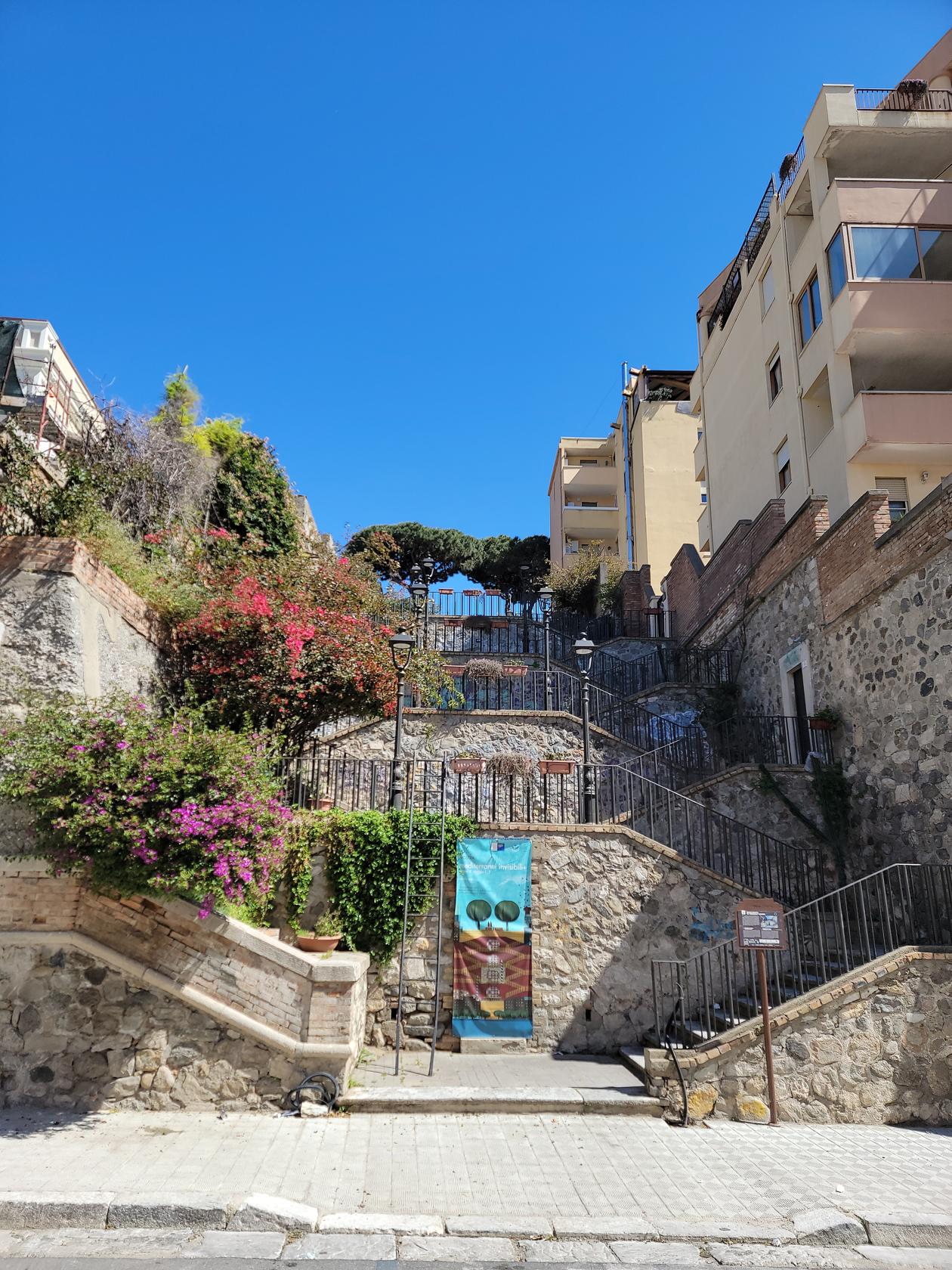
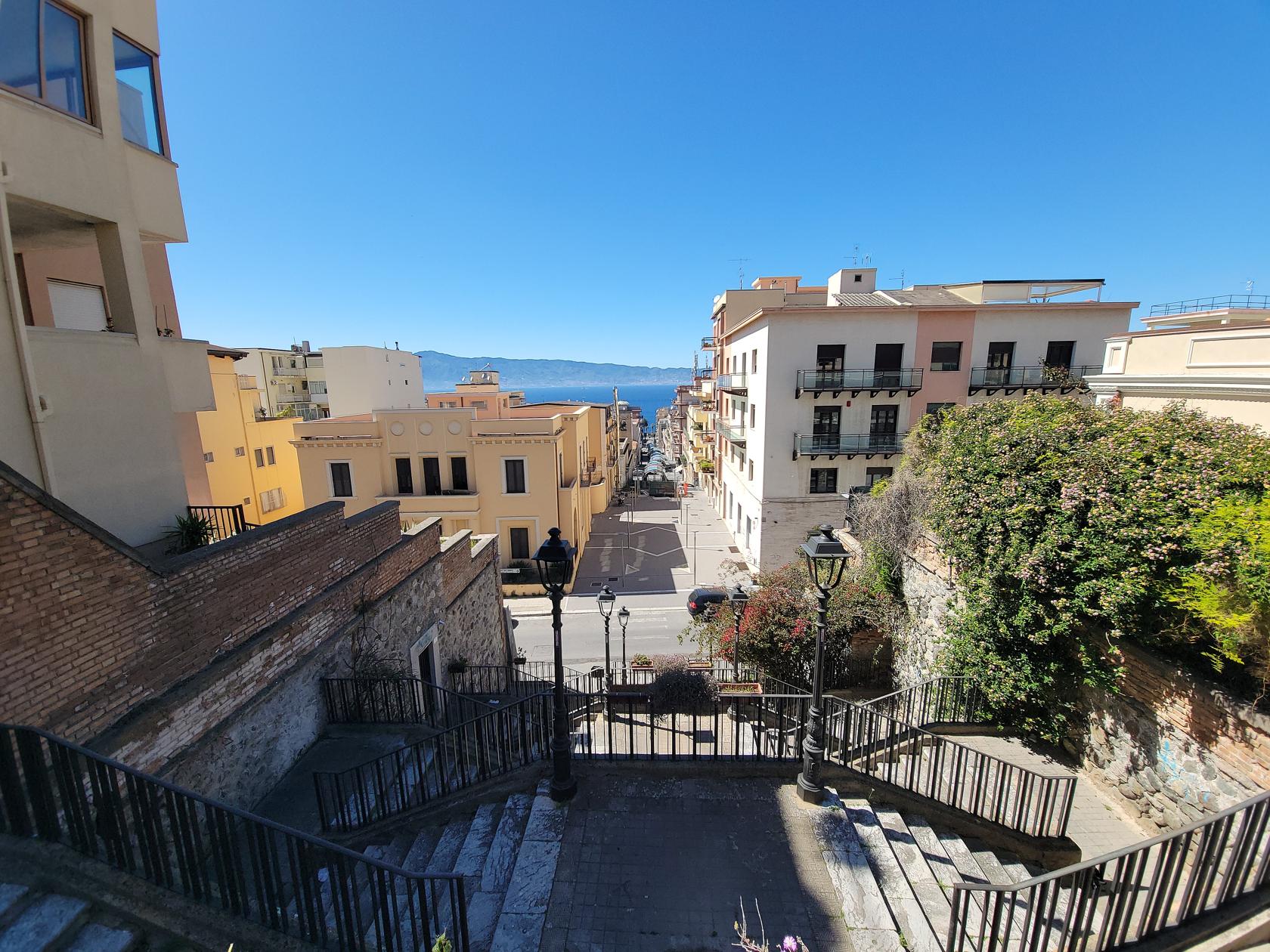
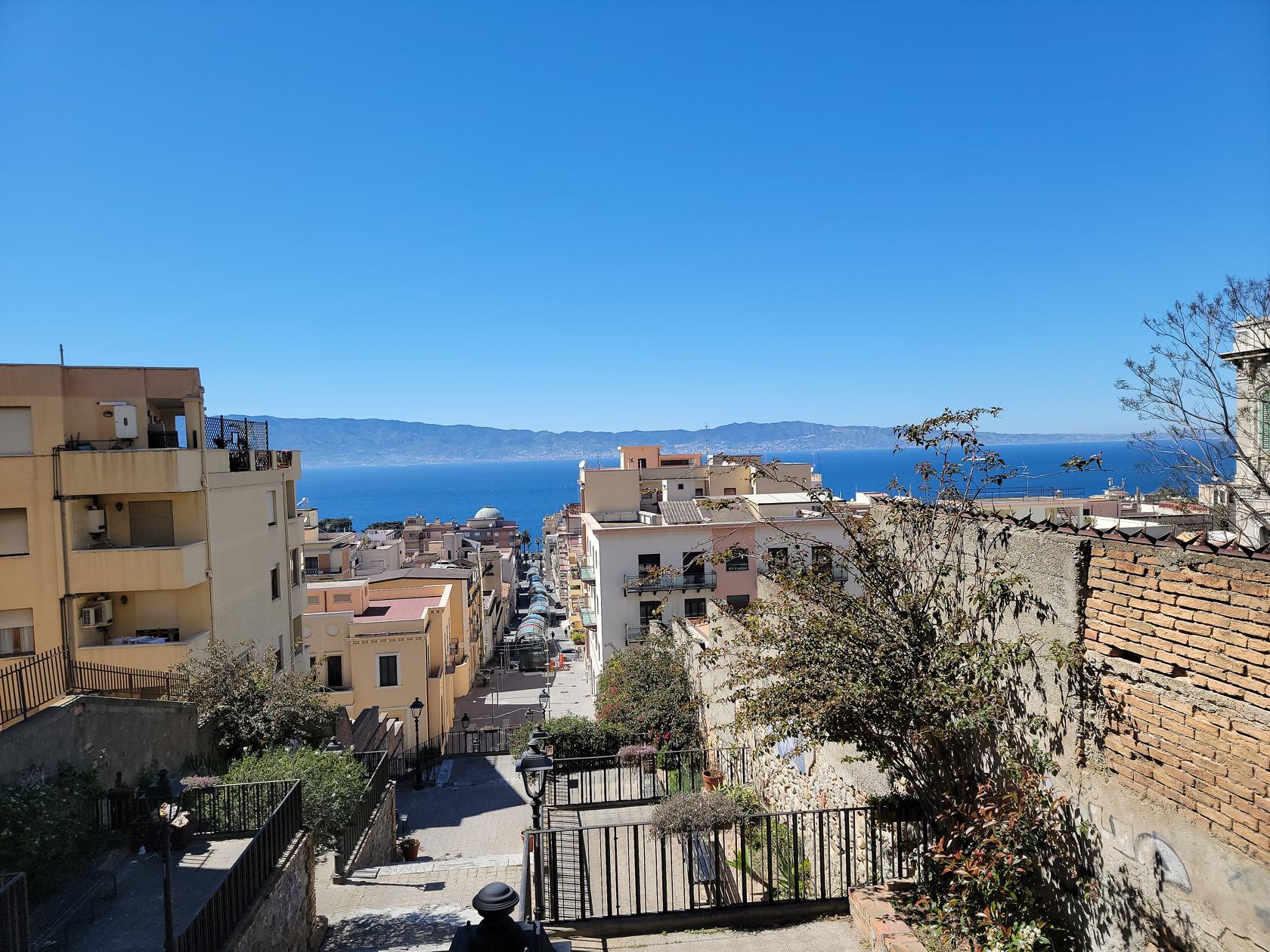
Just up from our hotel and on the transformed via Giudecca street, is the eponymous stairway.
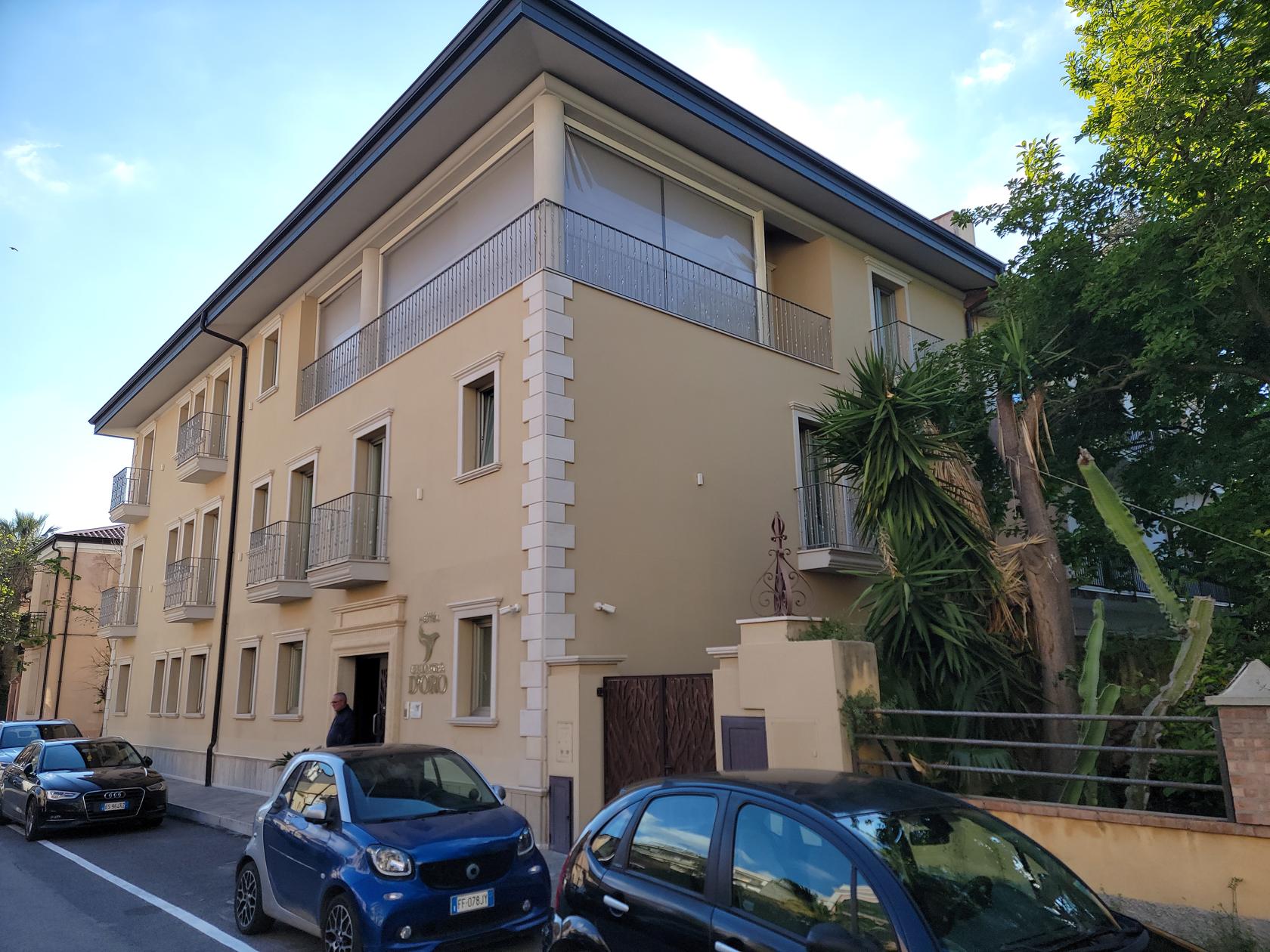
Torrine Hotel
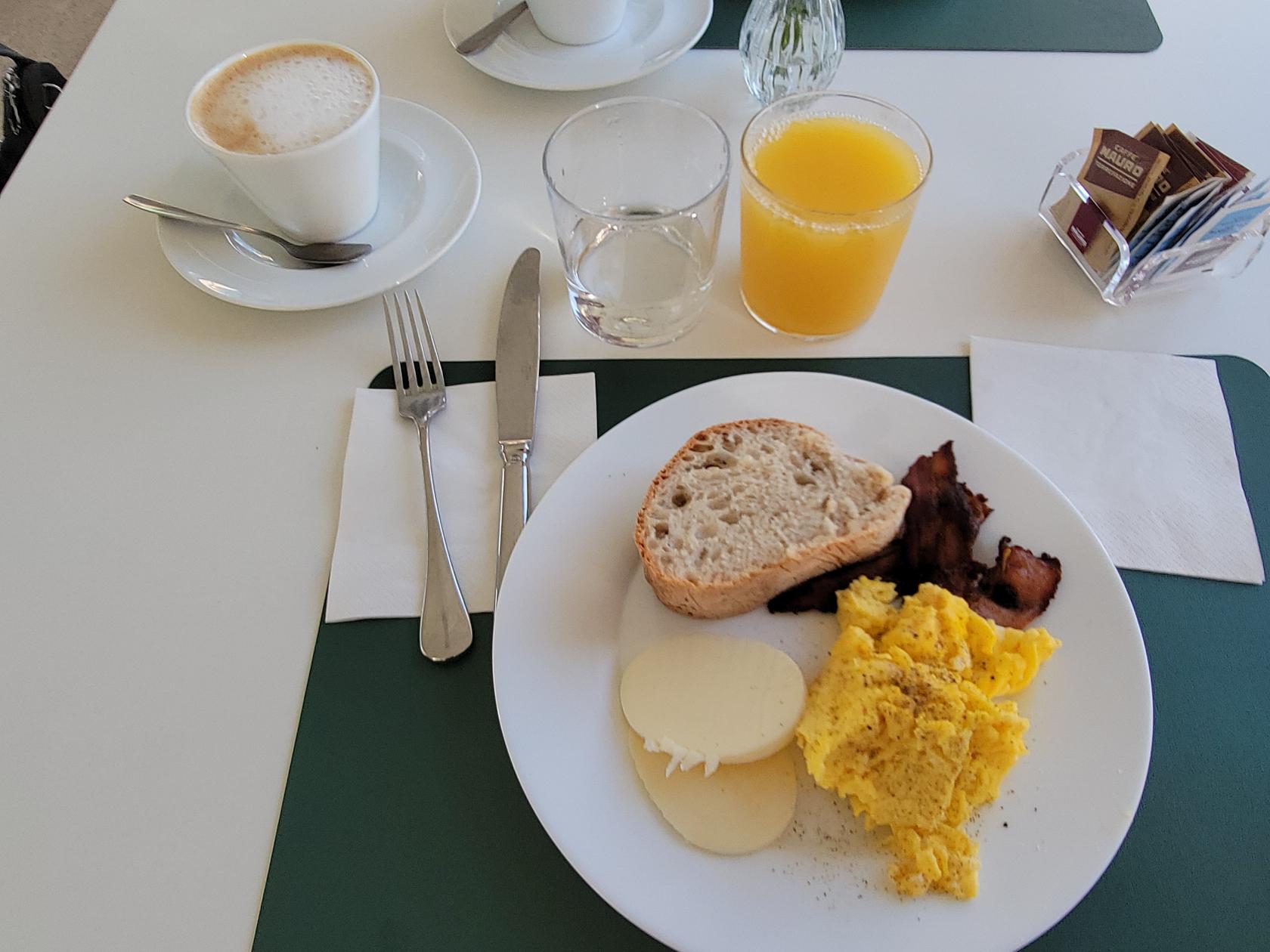
On the edge of the older and more vibrant part of the city, the Torrine Hotel is about four blocks from the waterfront. This is just as well, since it provides a quieter place to stay, with the exception being rush hour; it is located on a busy one-way thoroughfare through the city that buses frequent. Our room came with breakfast, a mixture of continental with some warm food thrown in.
Lungomare
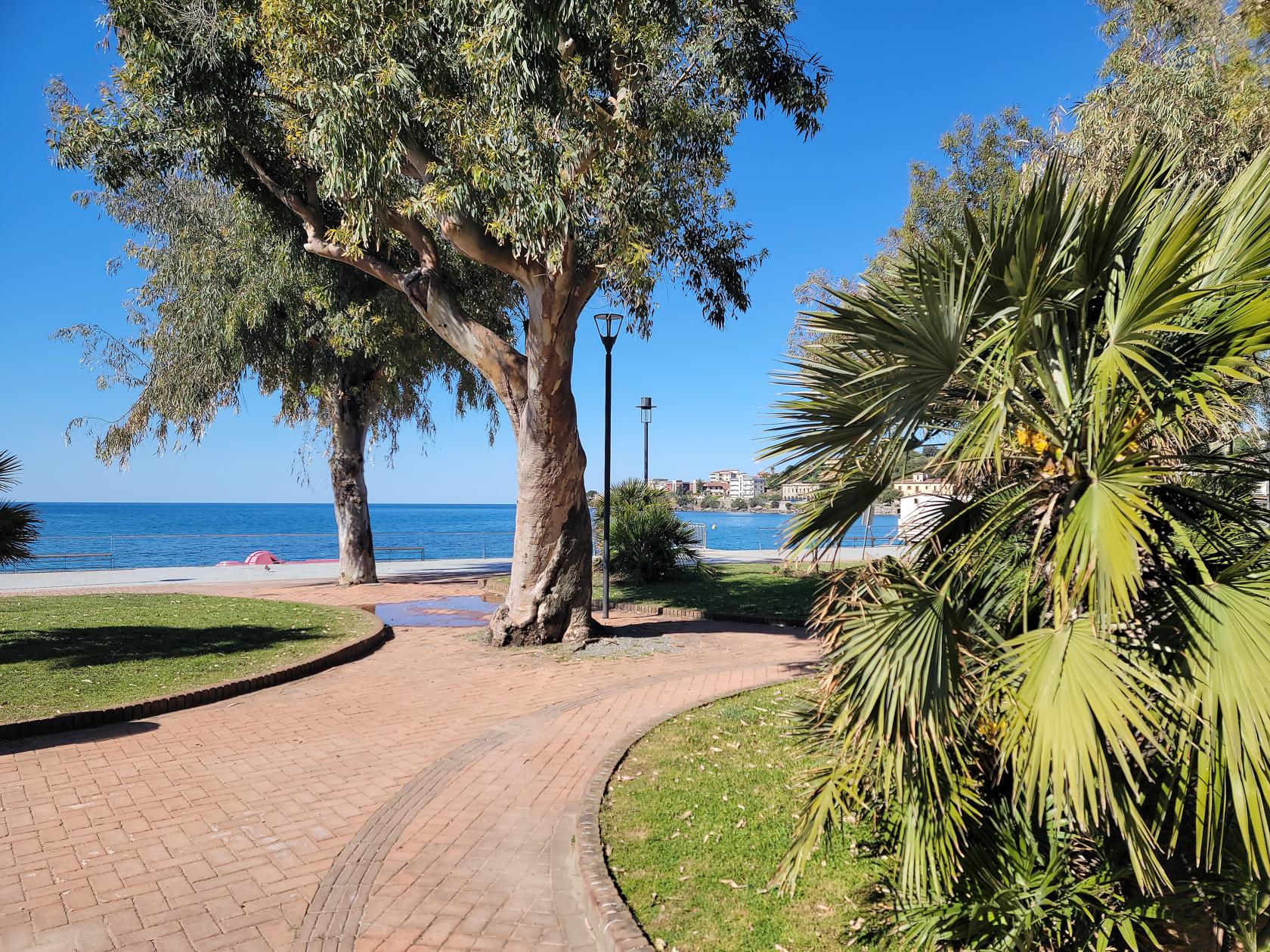
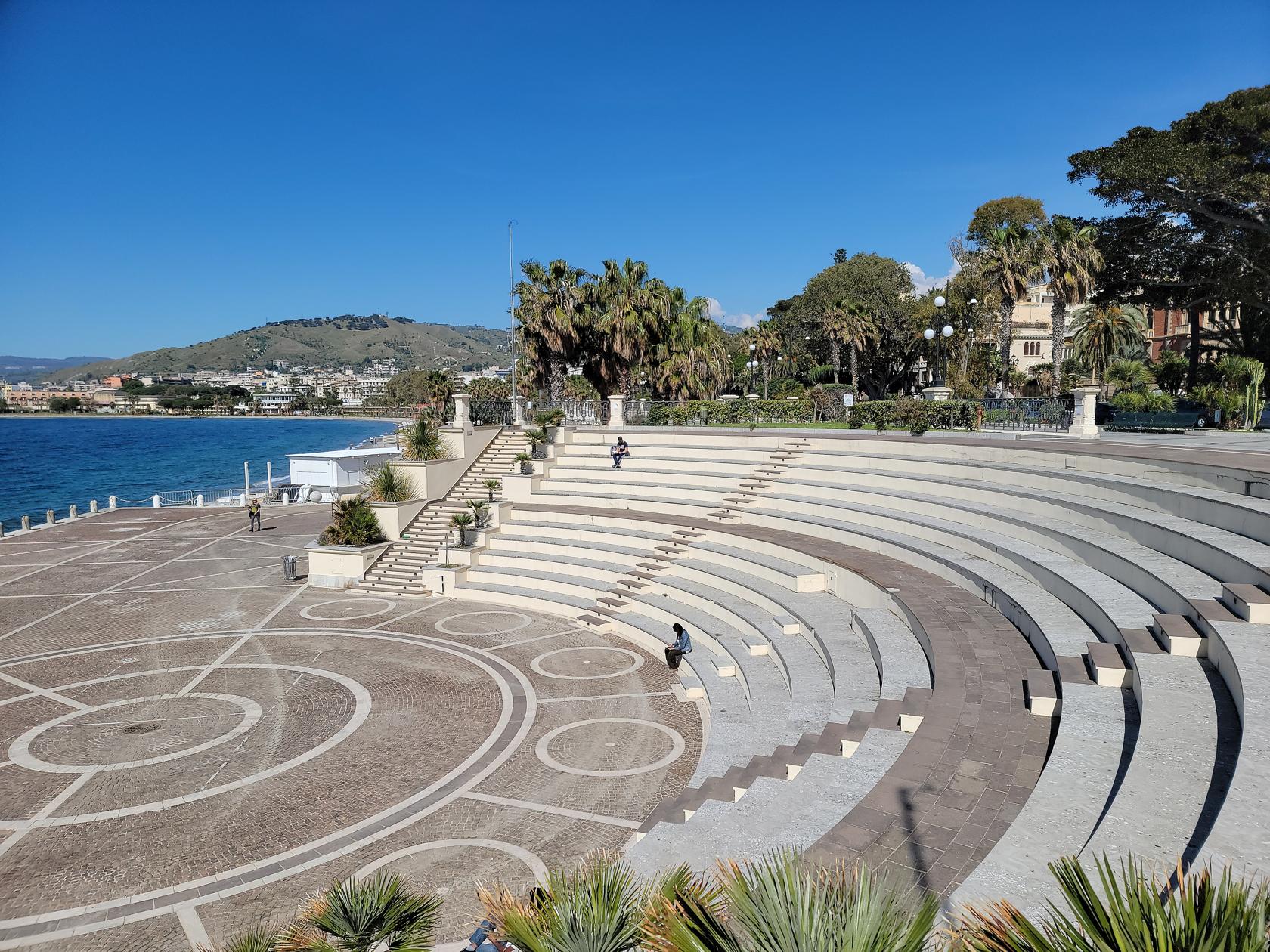
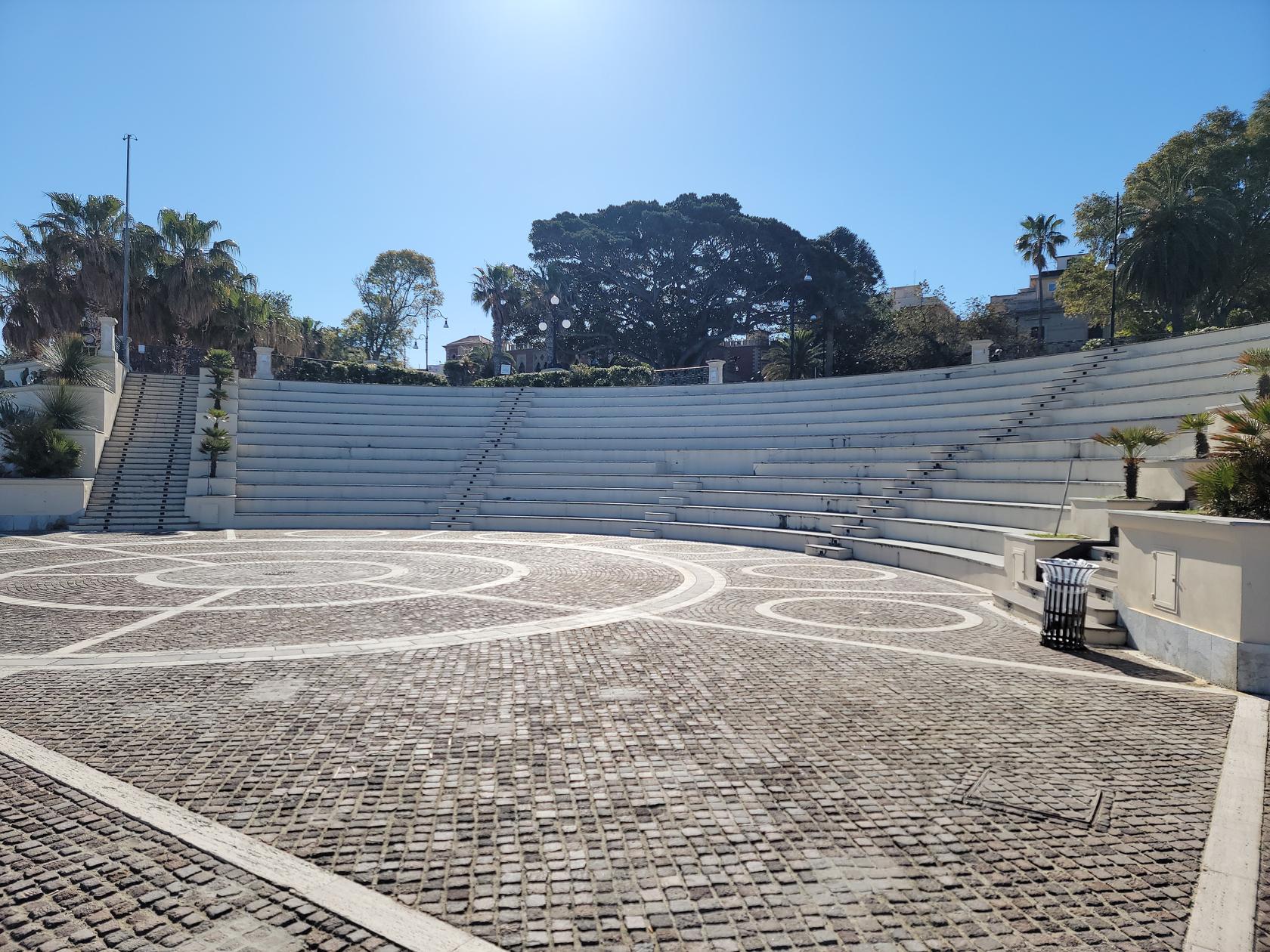
The city has an extensive waterfront and a beautiful Lungomare to go with it. Near the end of it, in the urban park, you will find a nice long sign with the city’s name where you can take memorable photographs.
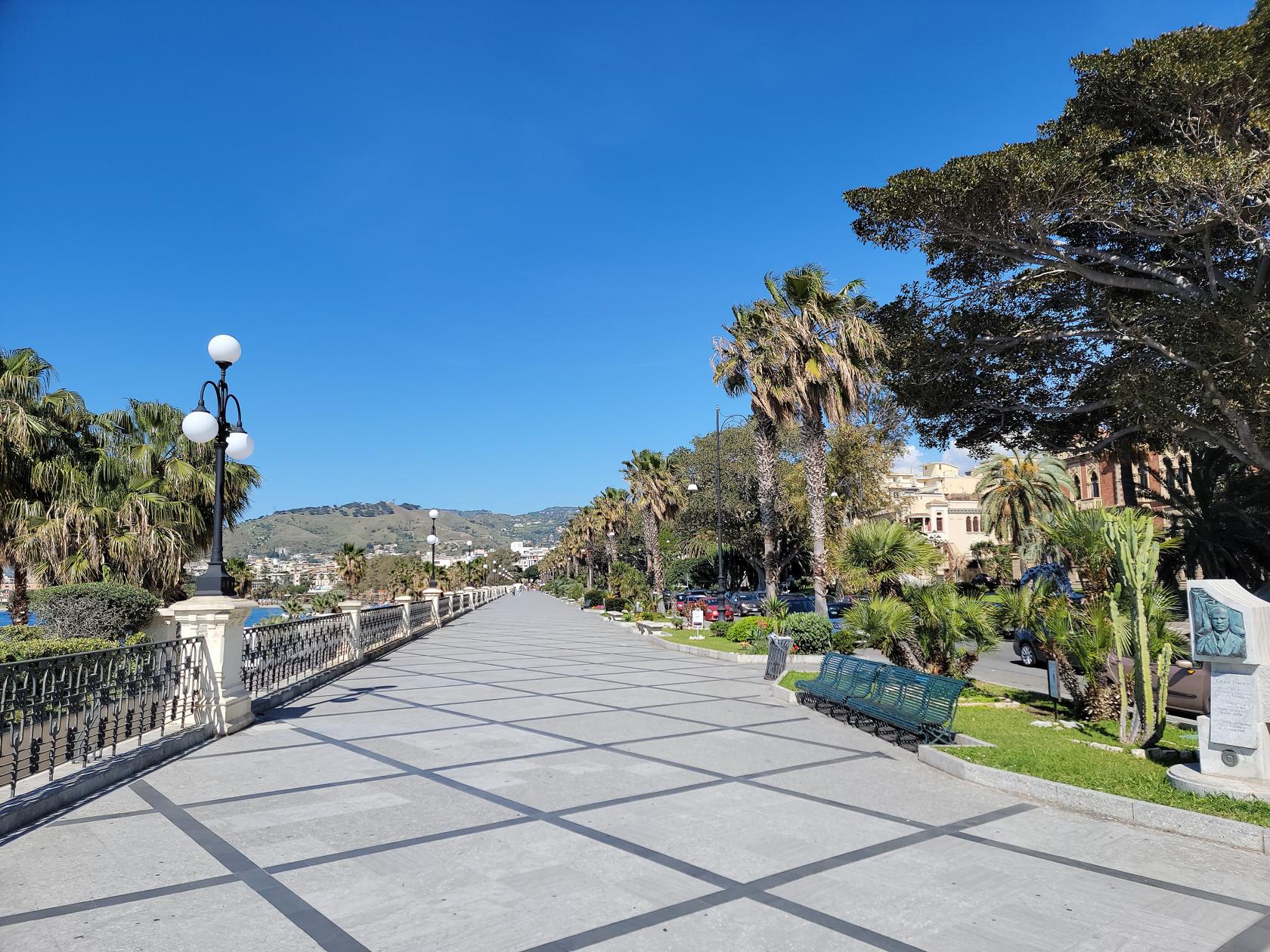
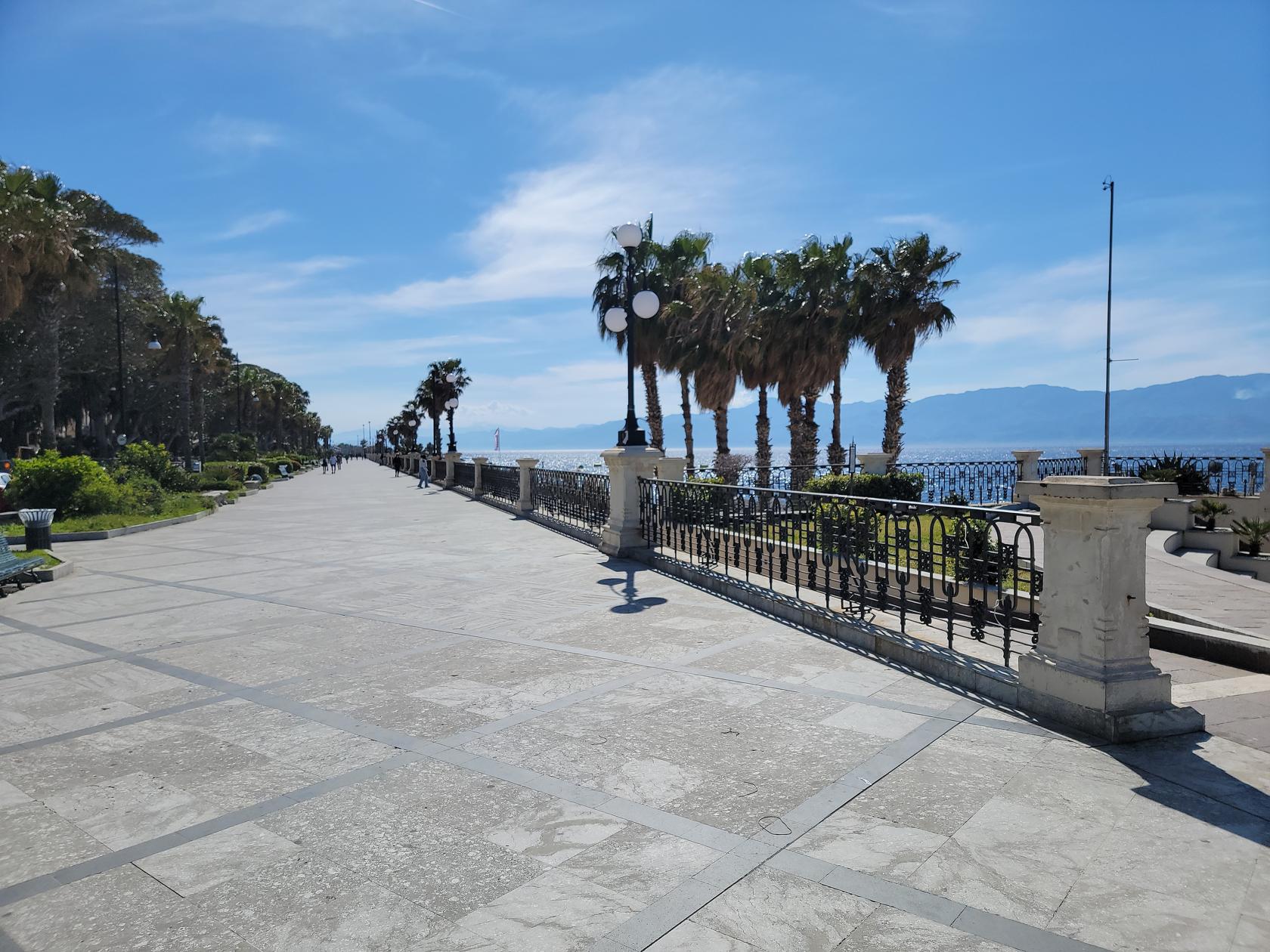
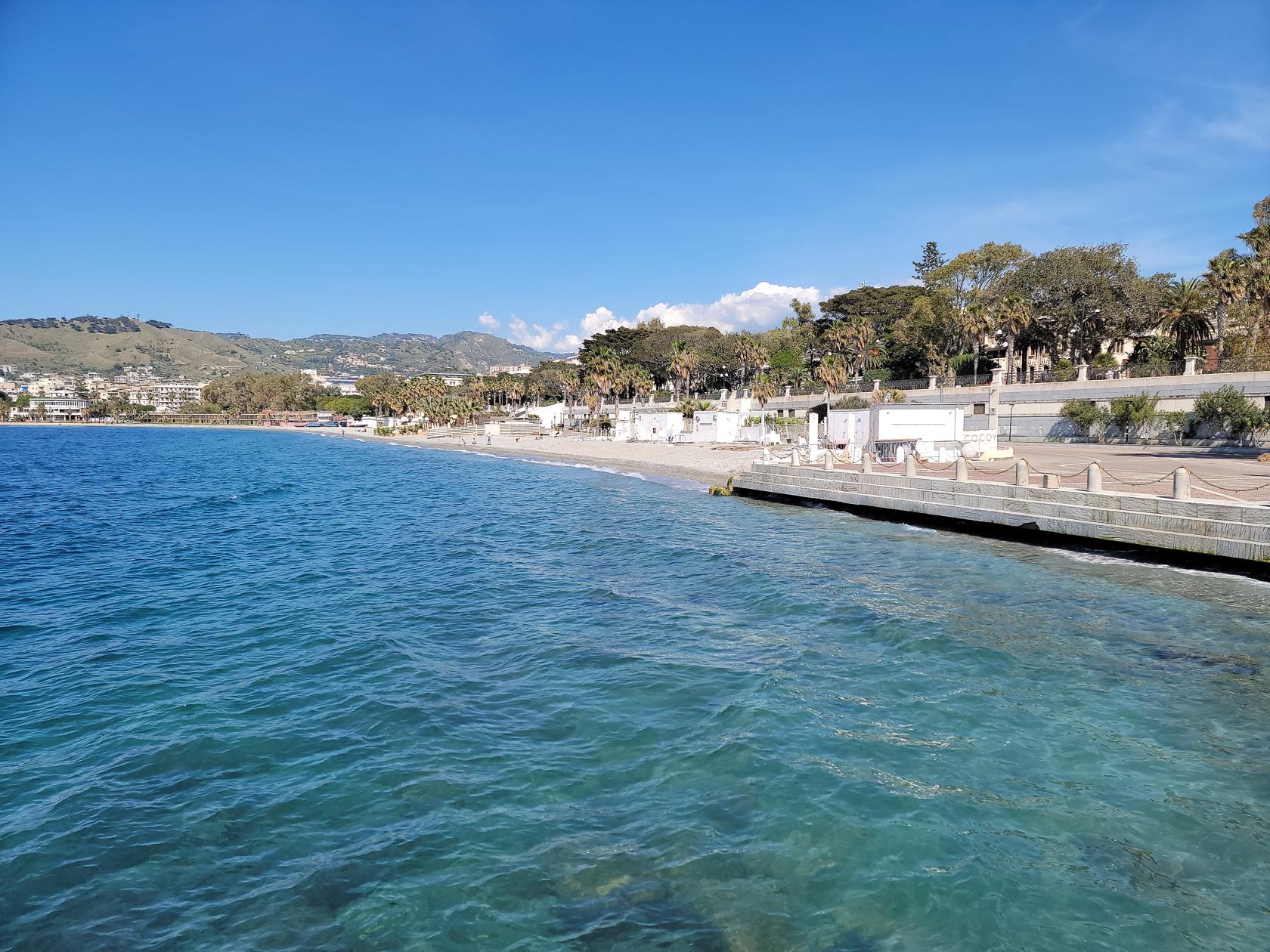
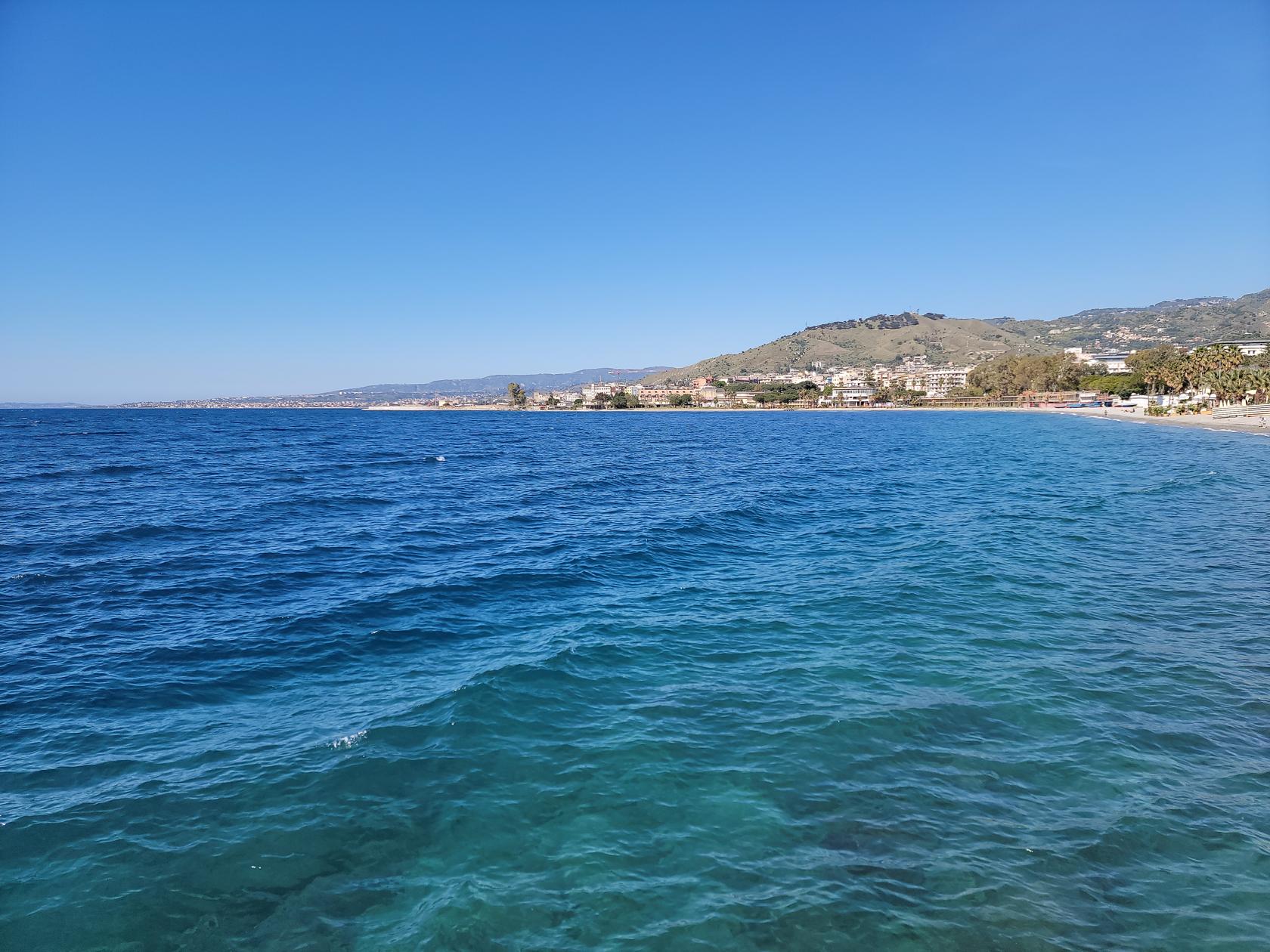
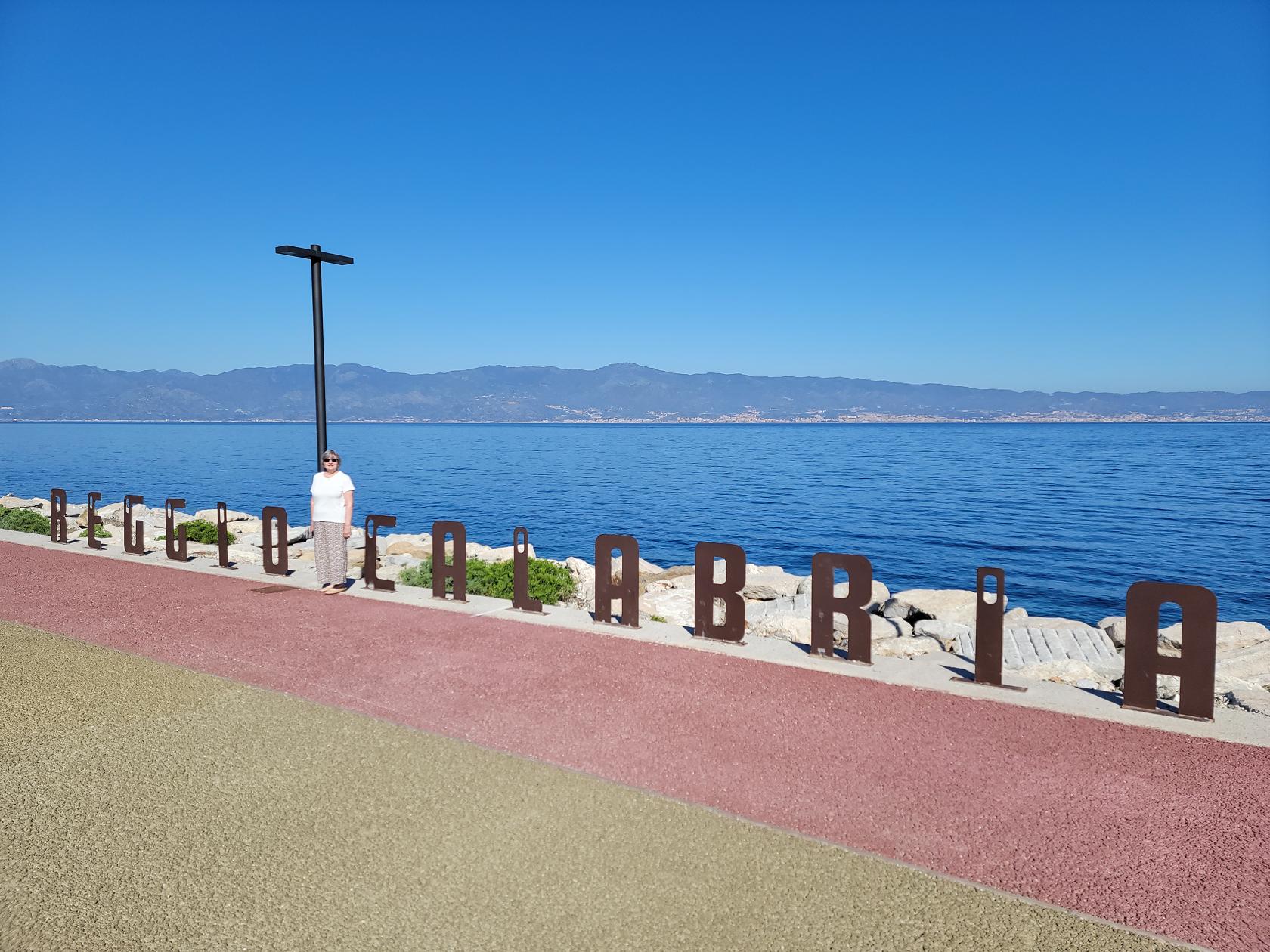
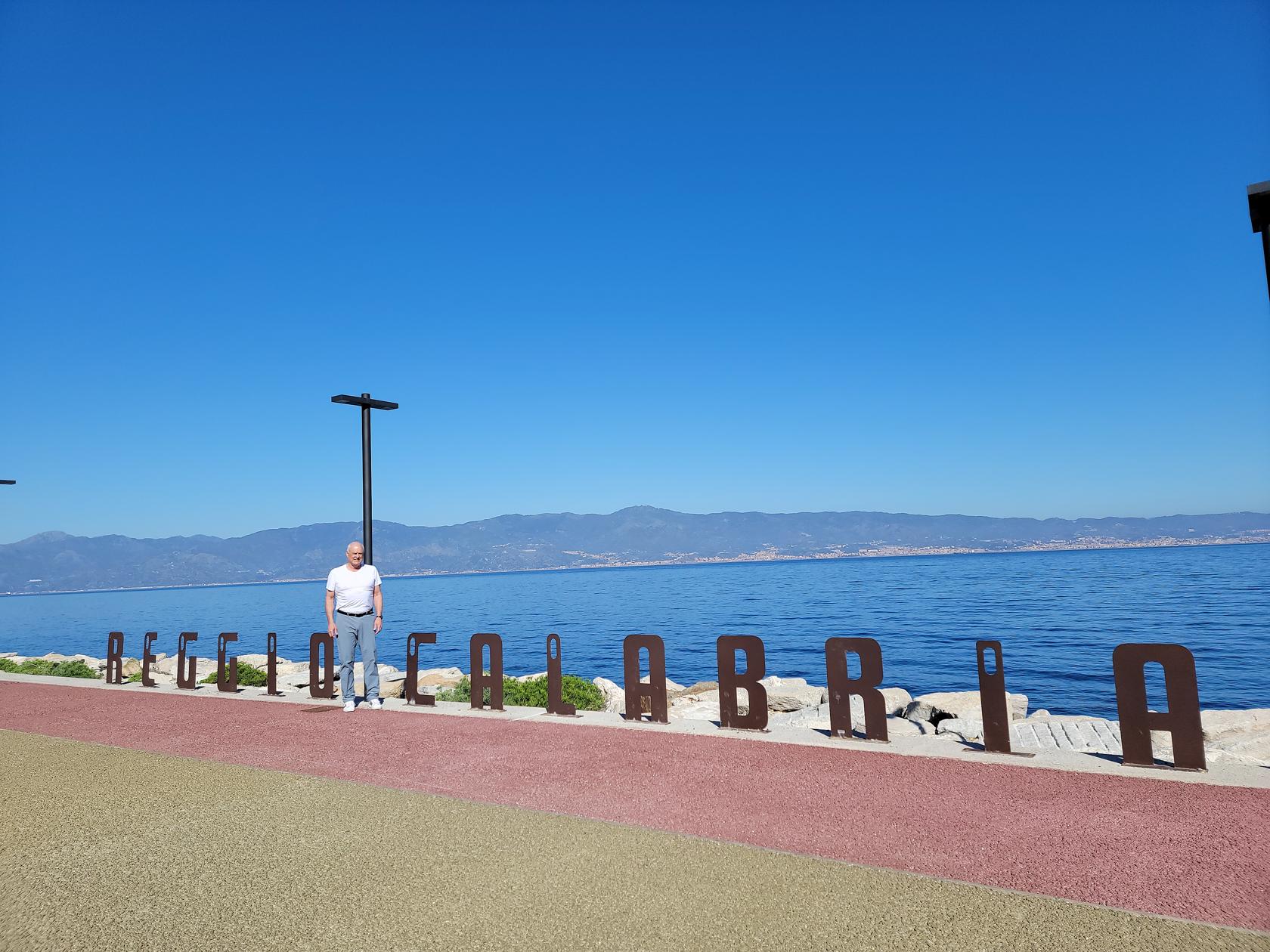
There are several points of interest along the boardwalk and a leisurely stroll along it will eventually bring you to all of them.
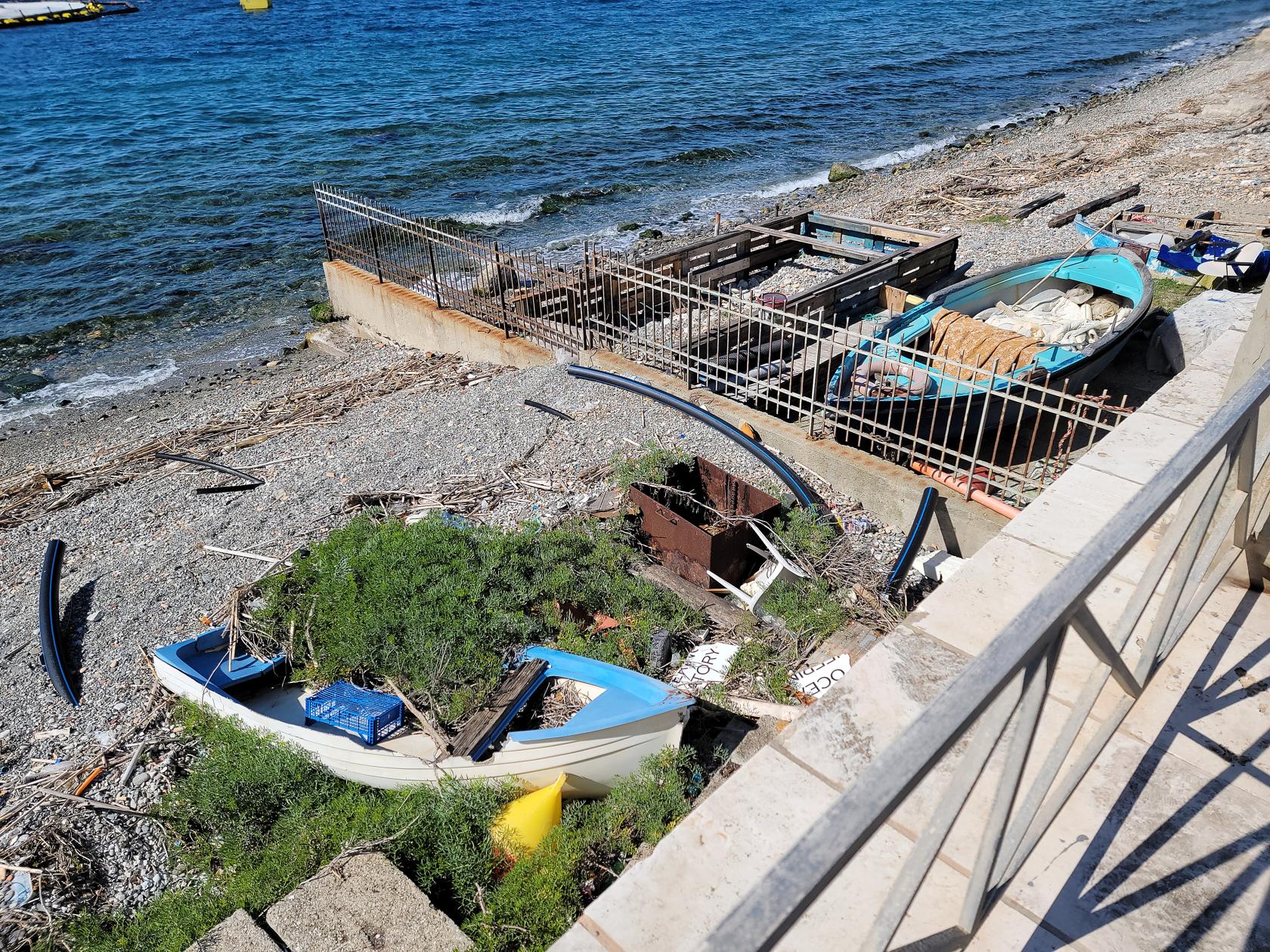
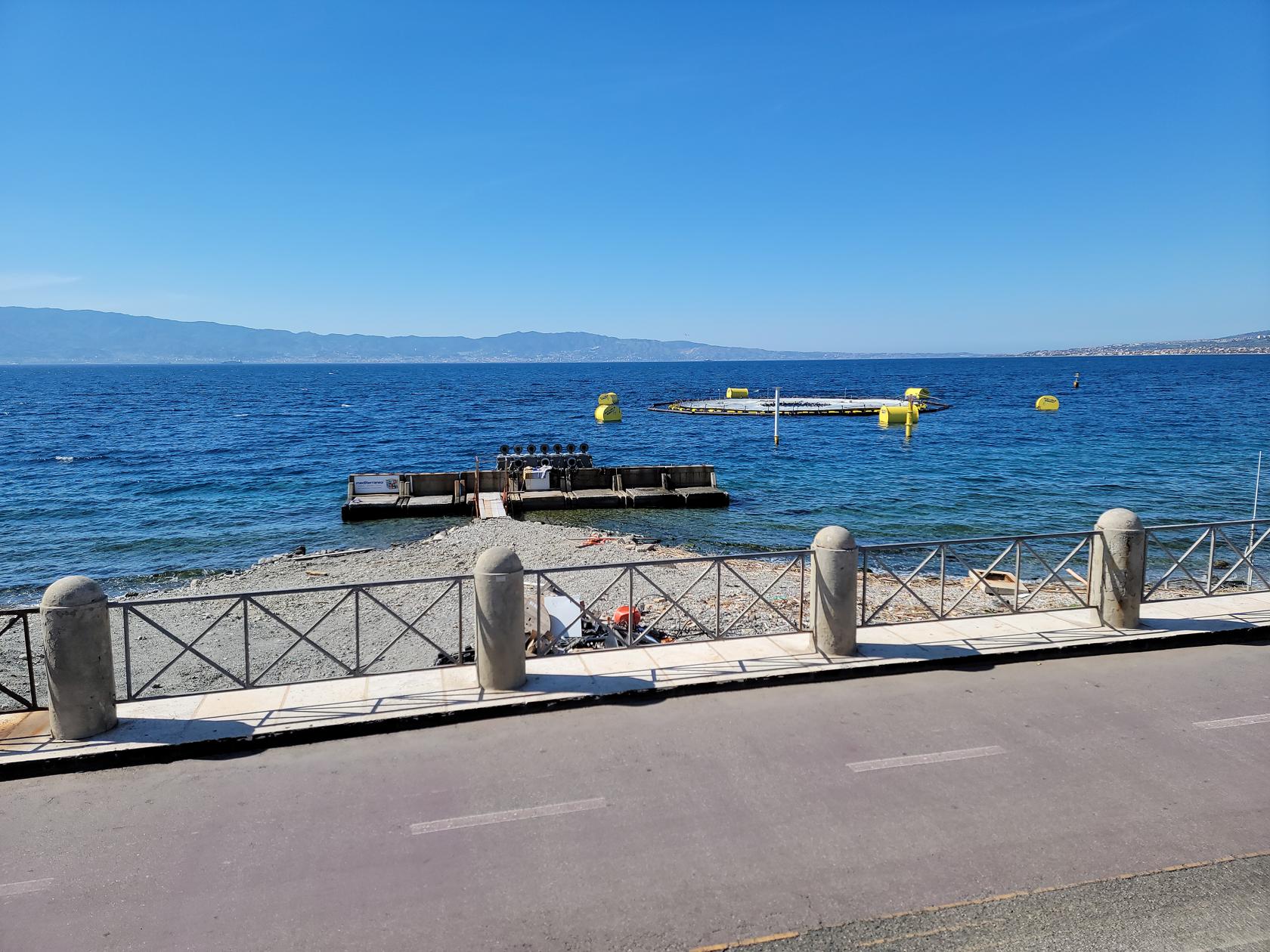
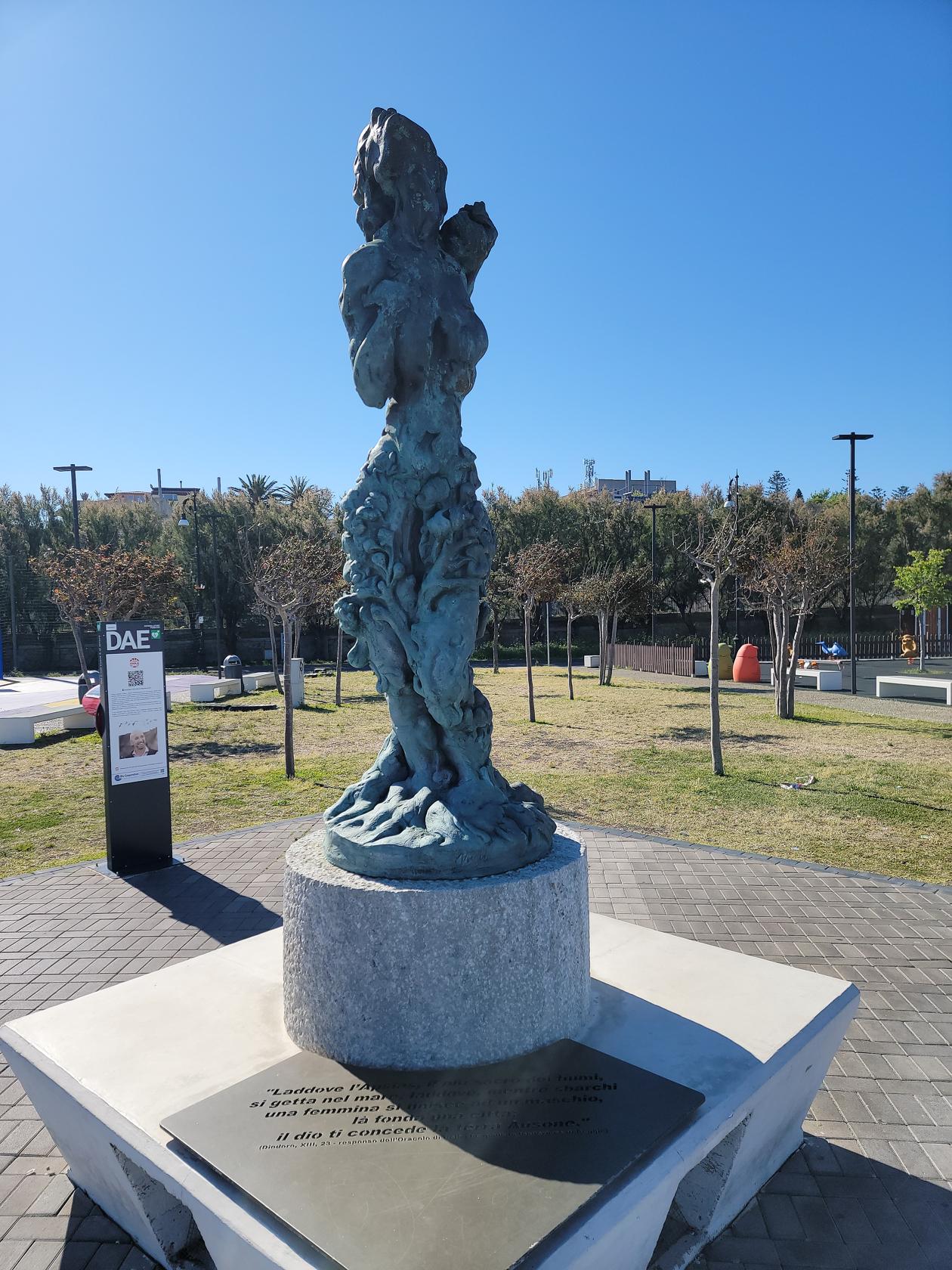
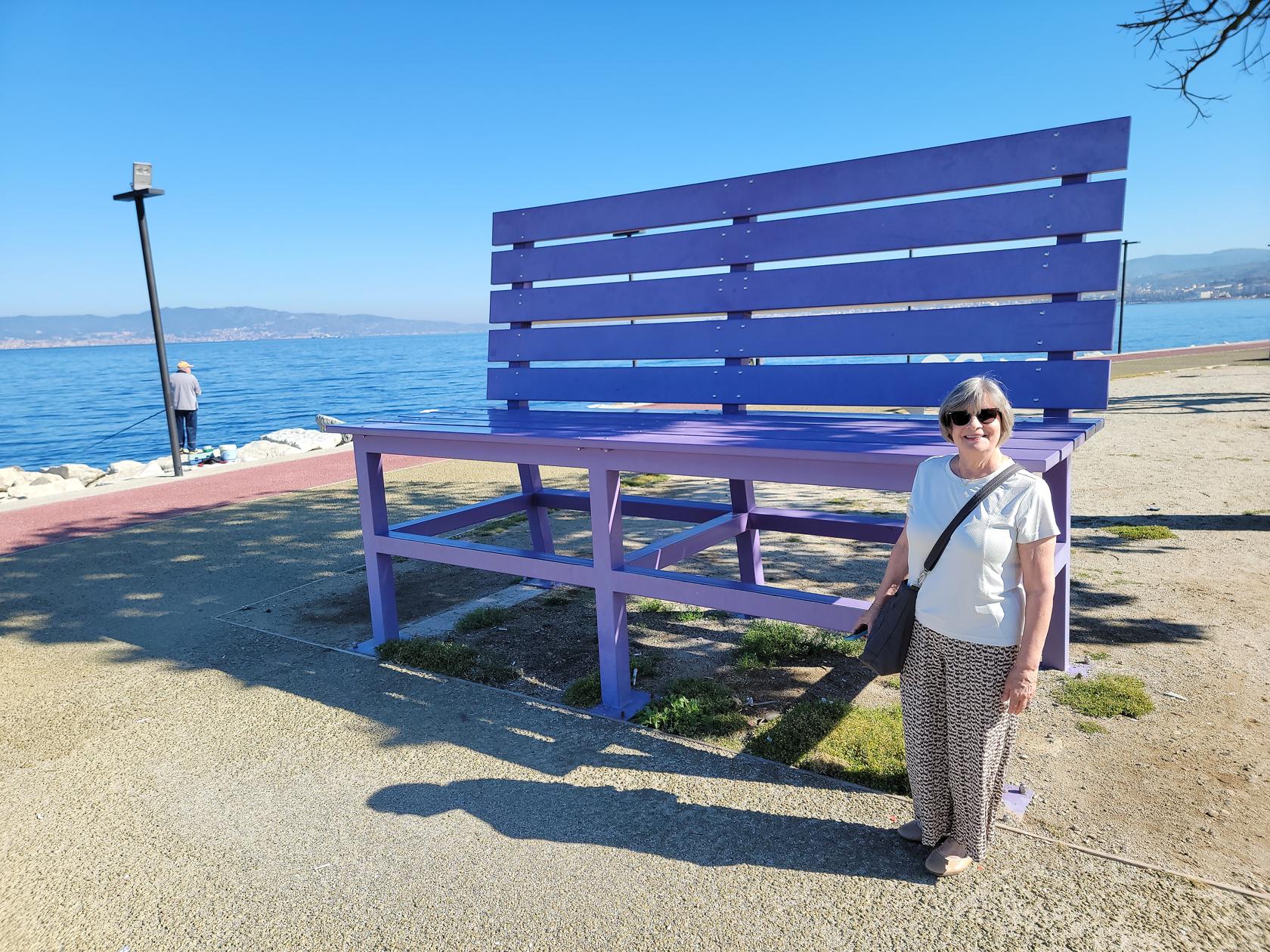
Somewhere near the end, down by the Roman Baths, Patti found the Big Bench. Apparently just installed, since it had no placename on it yet.
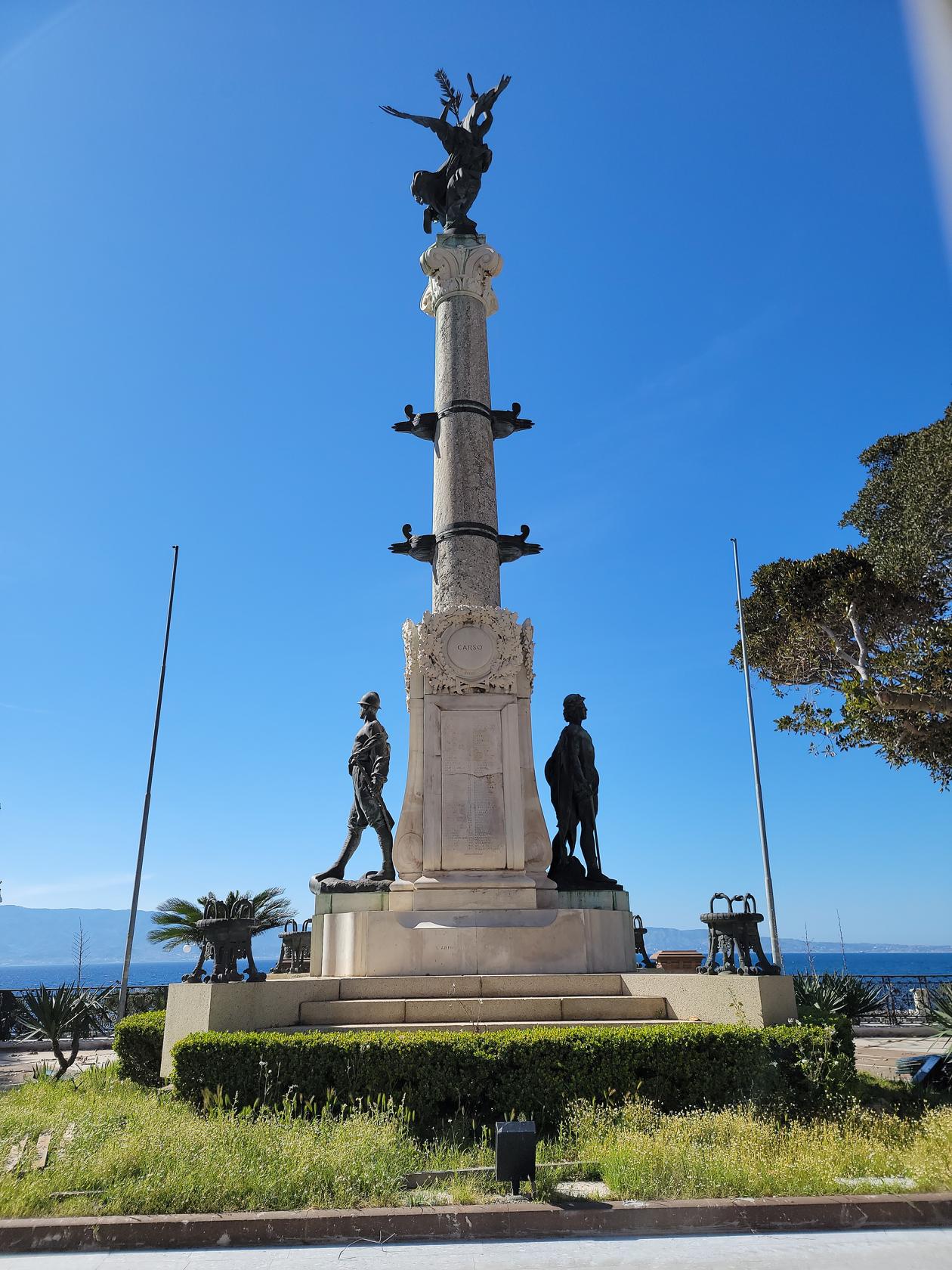
Monumento Della Vittoria
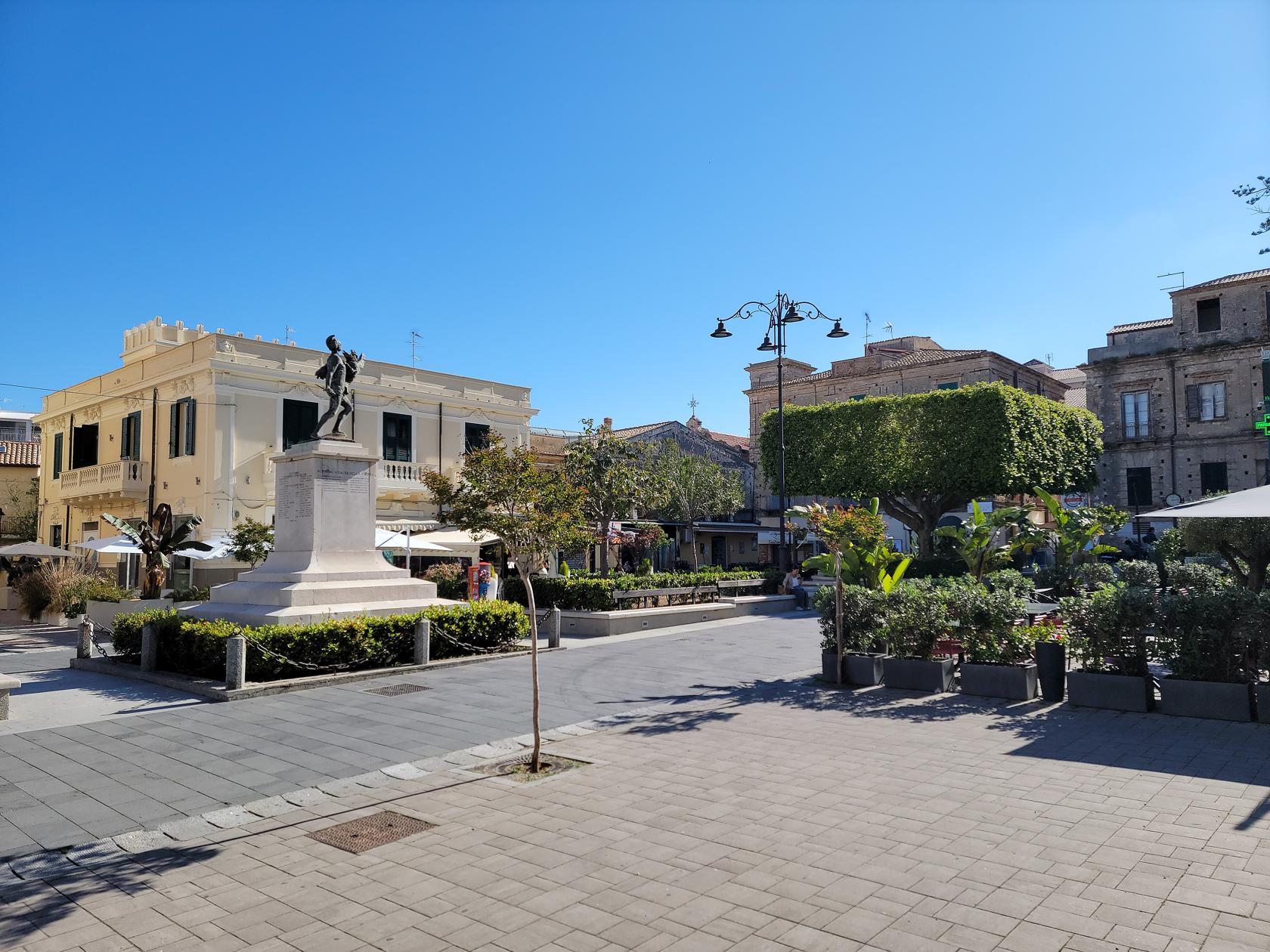
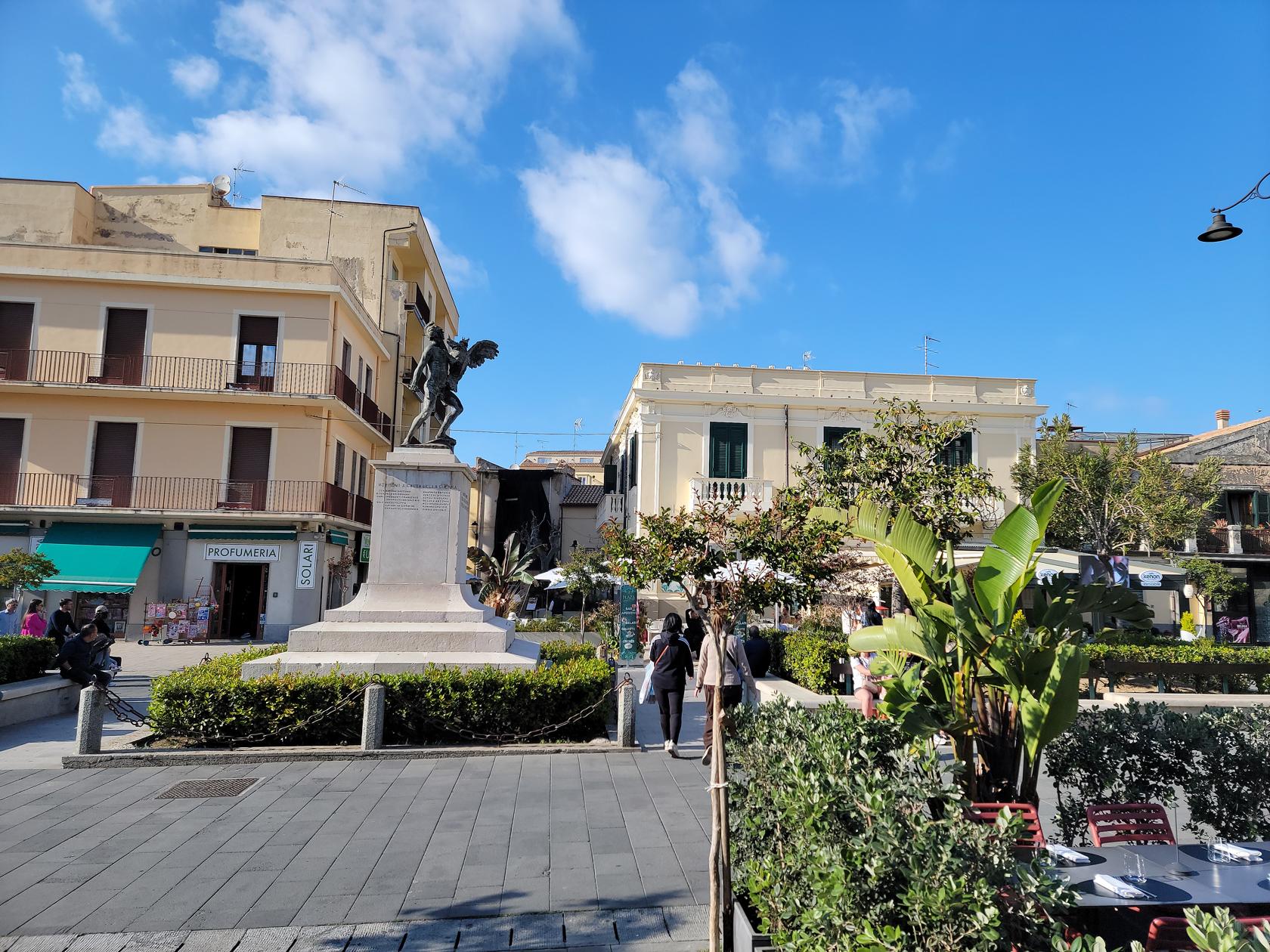
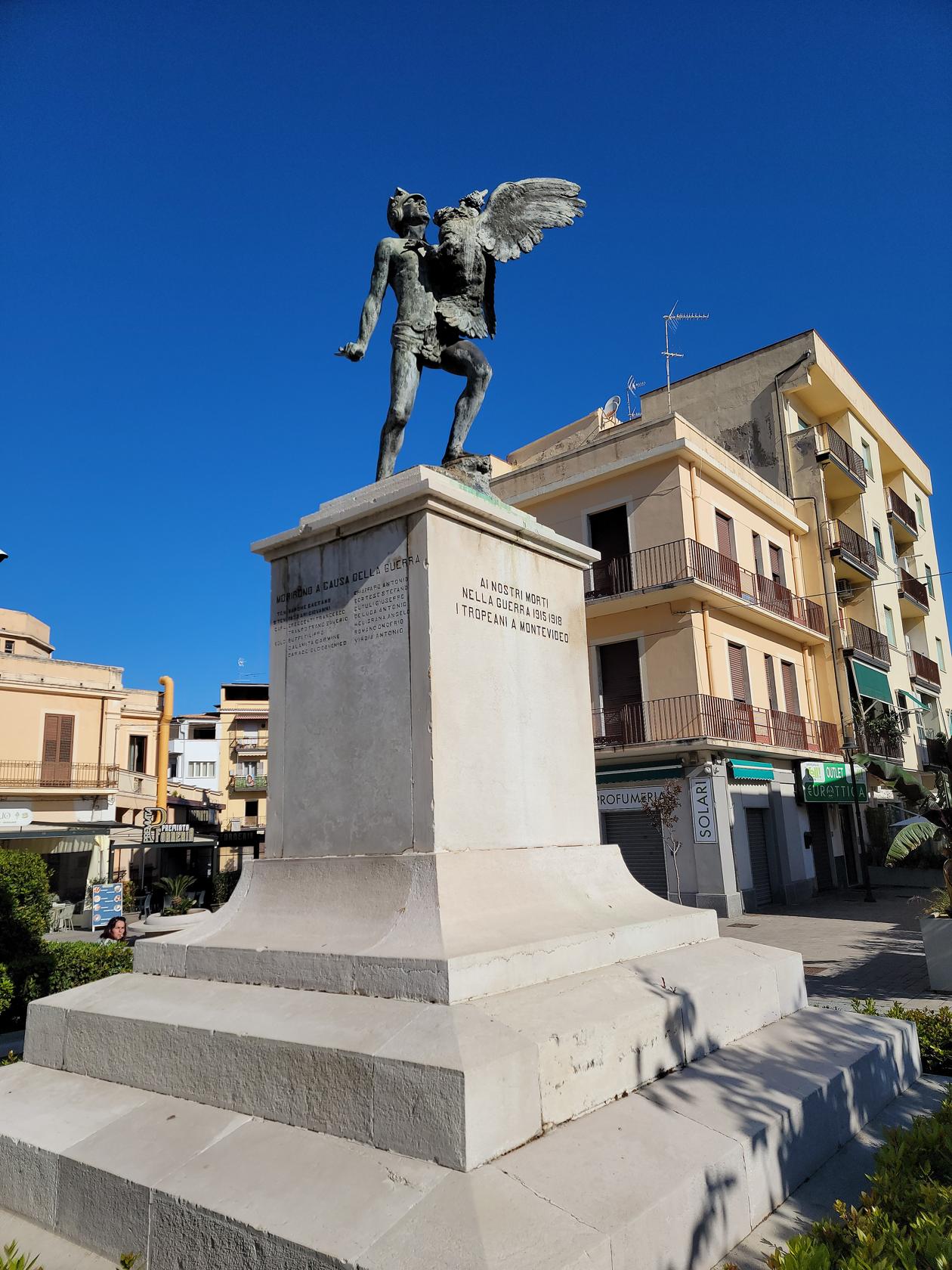
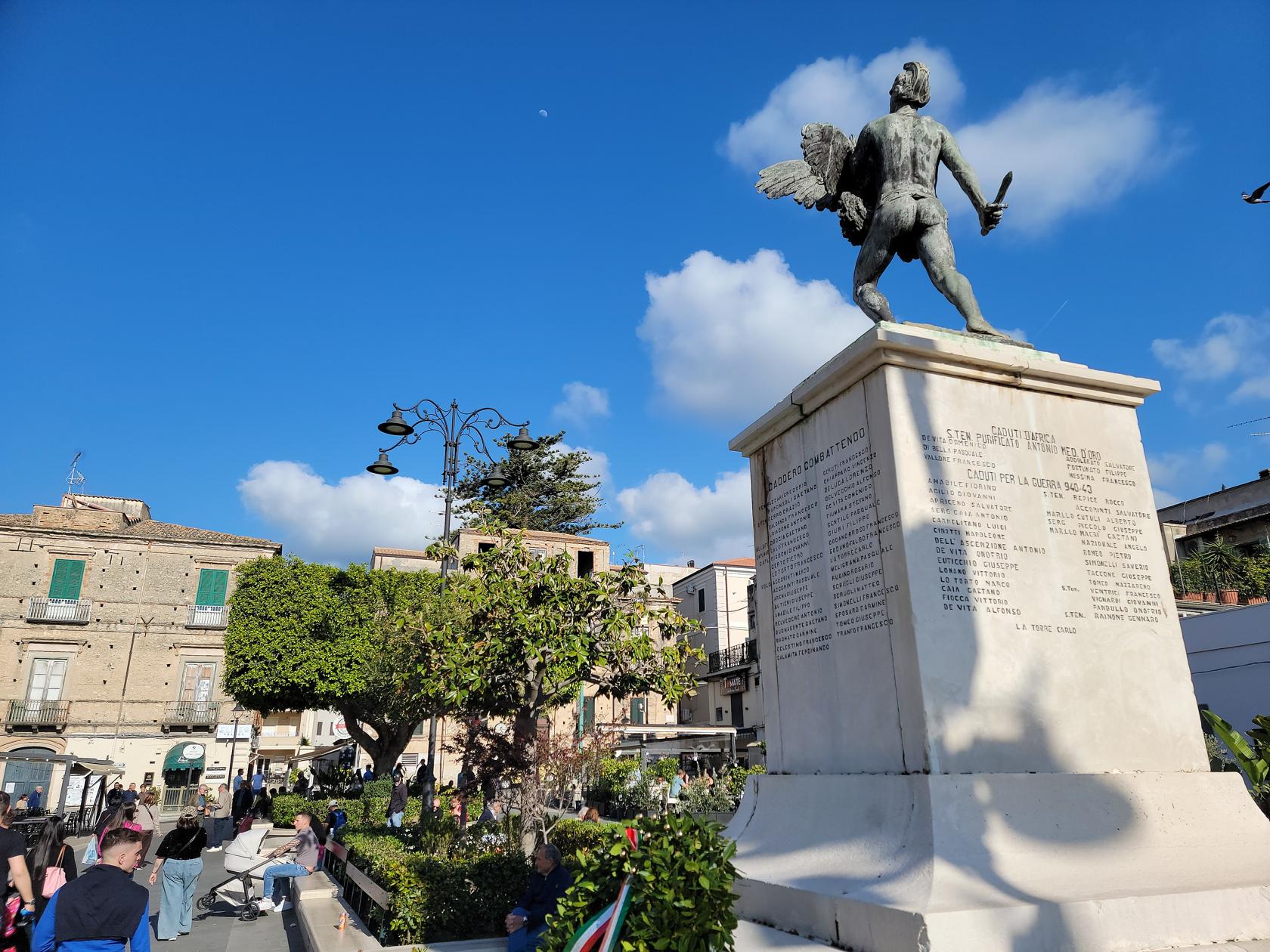
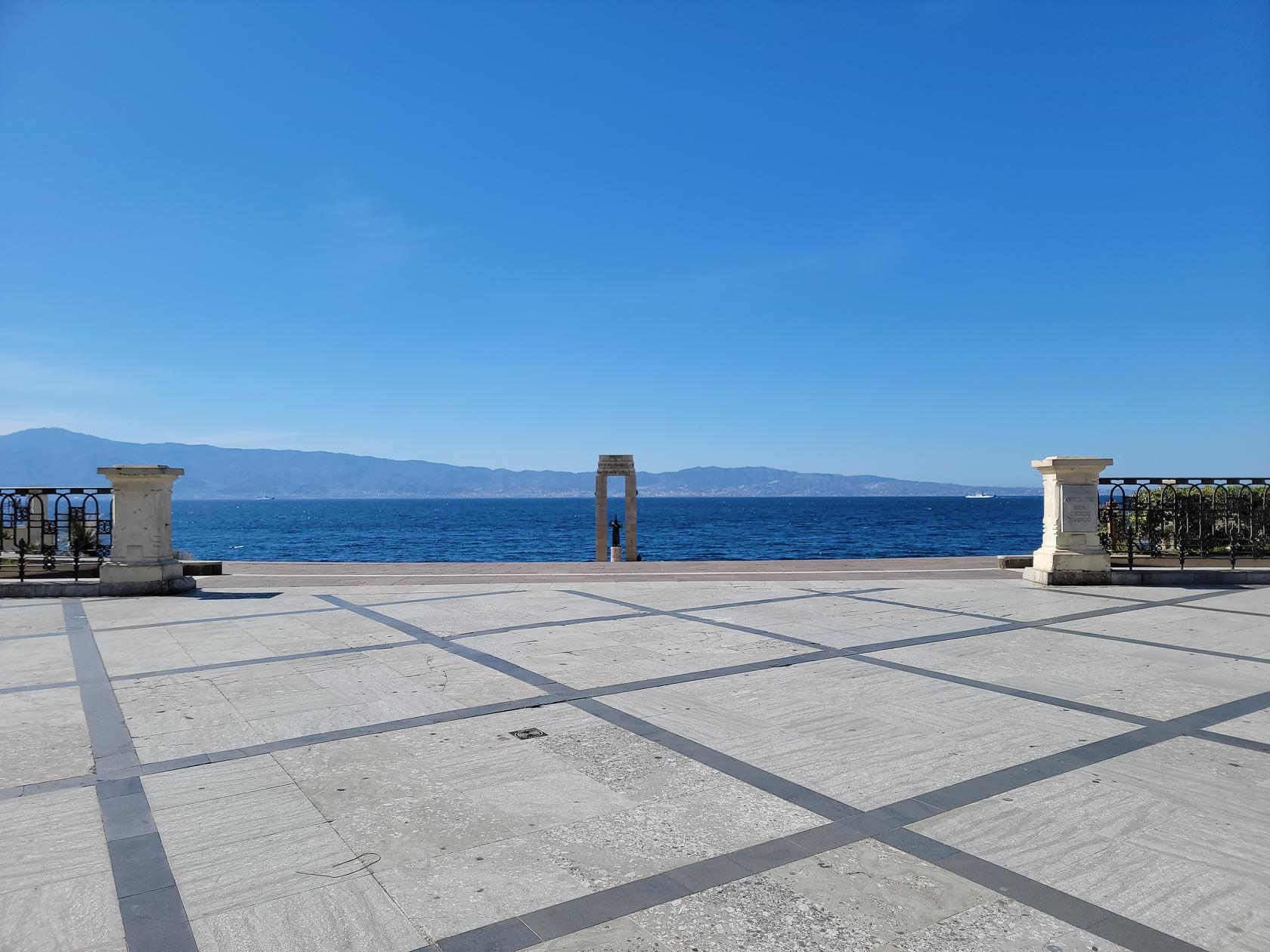
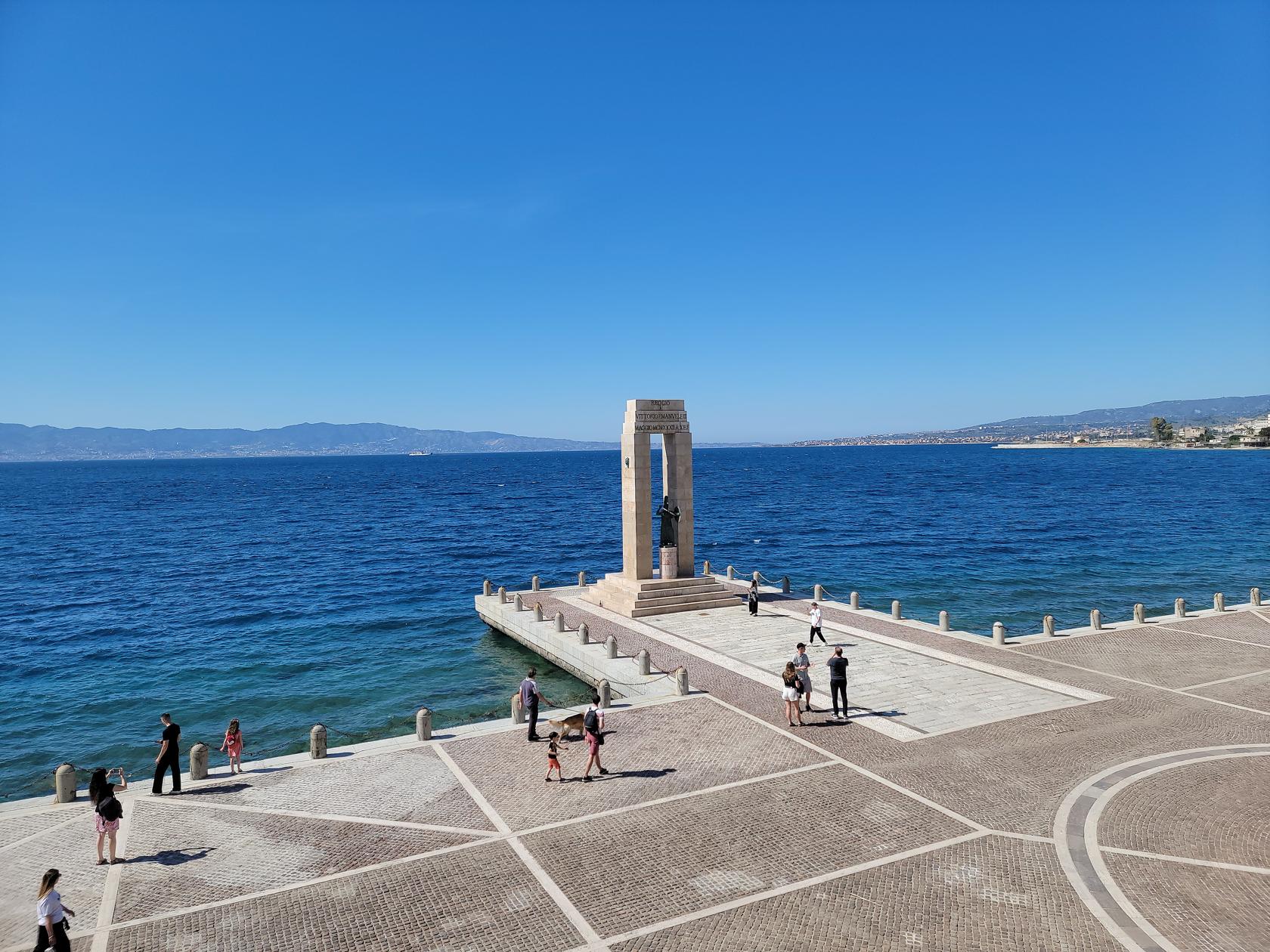
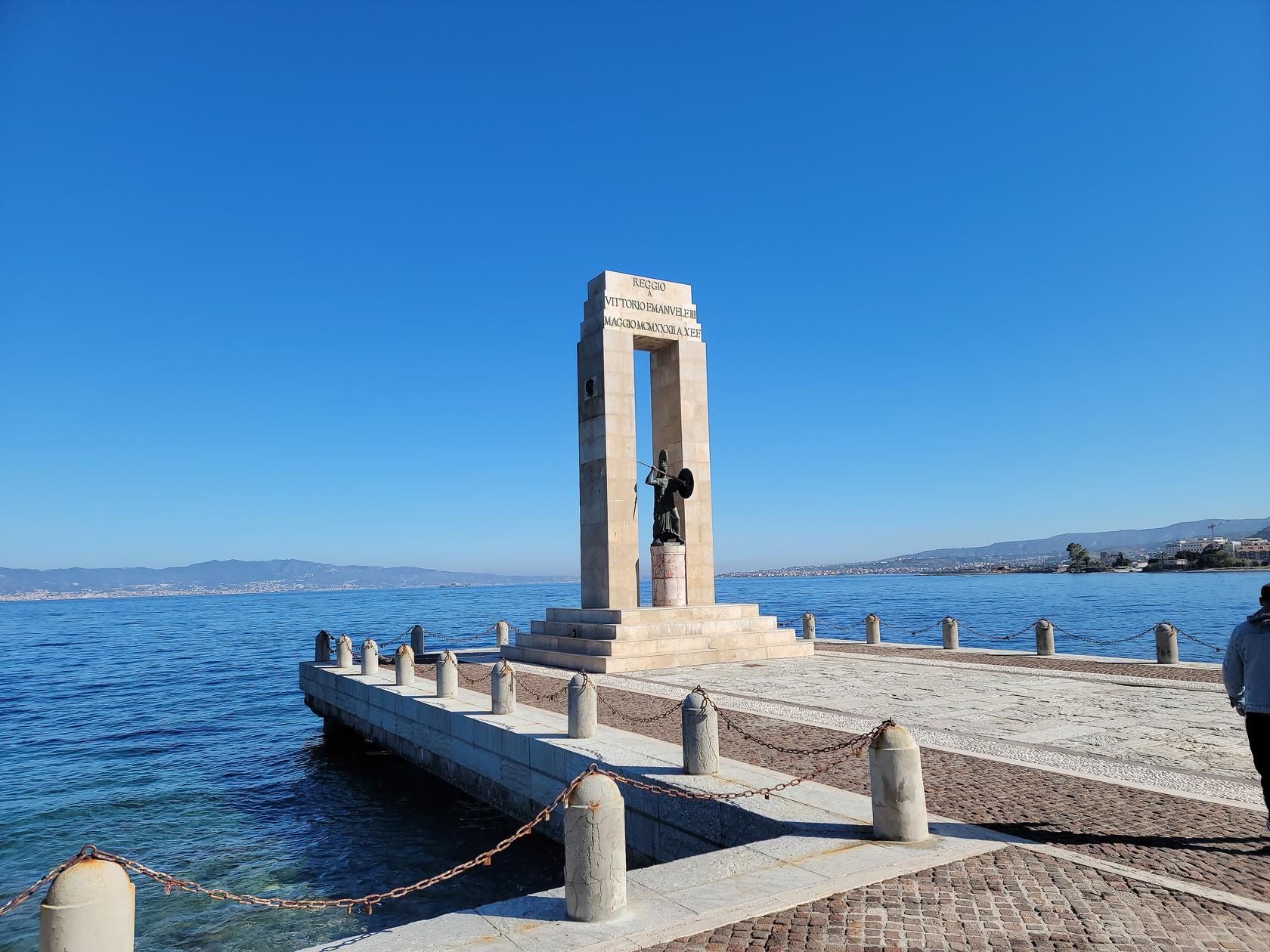
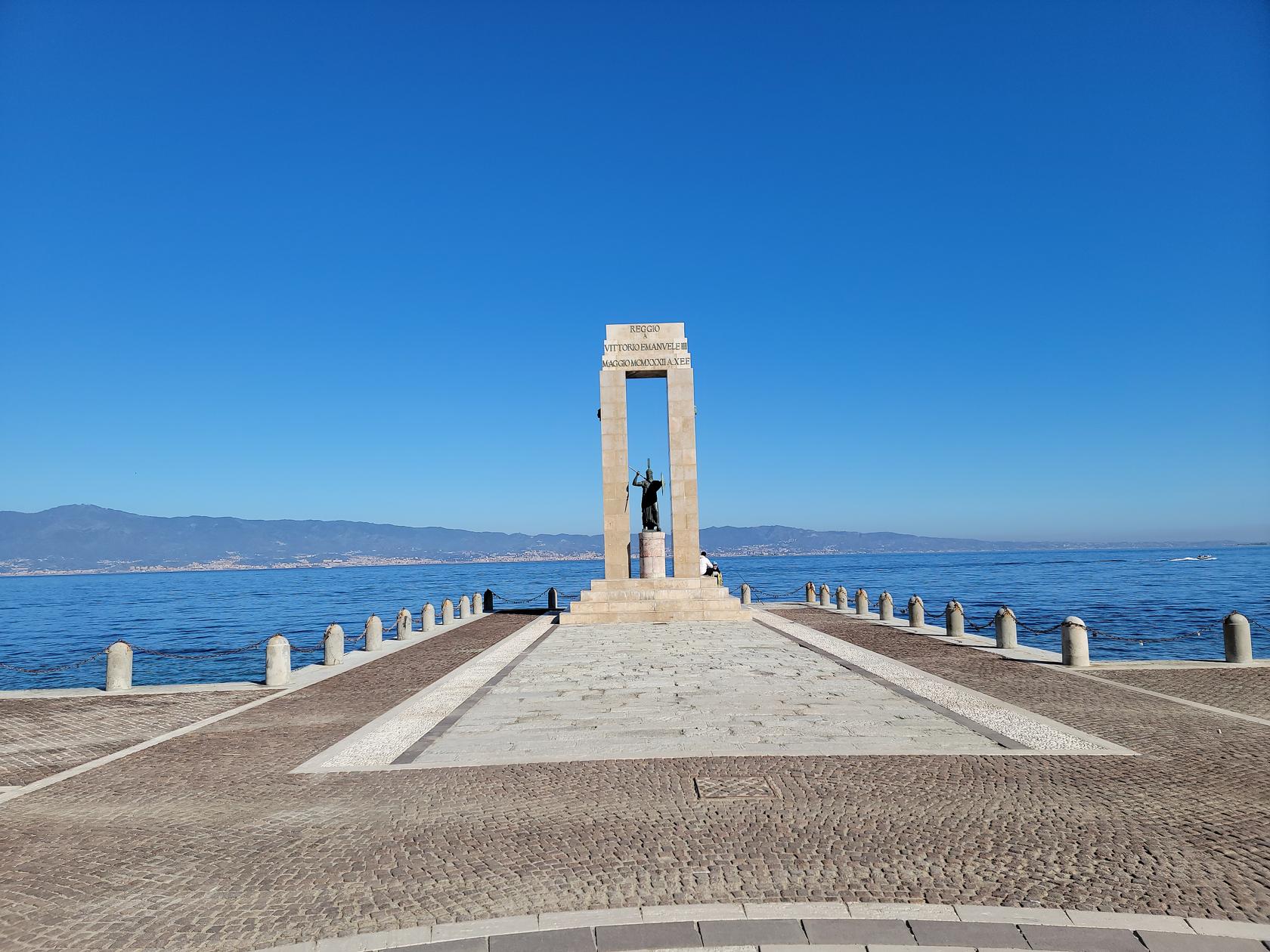
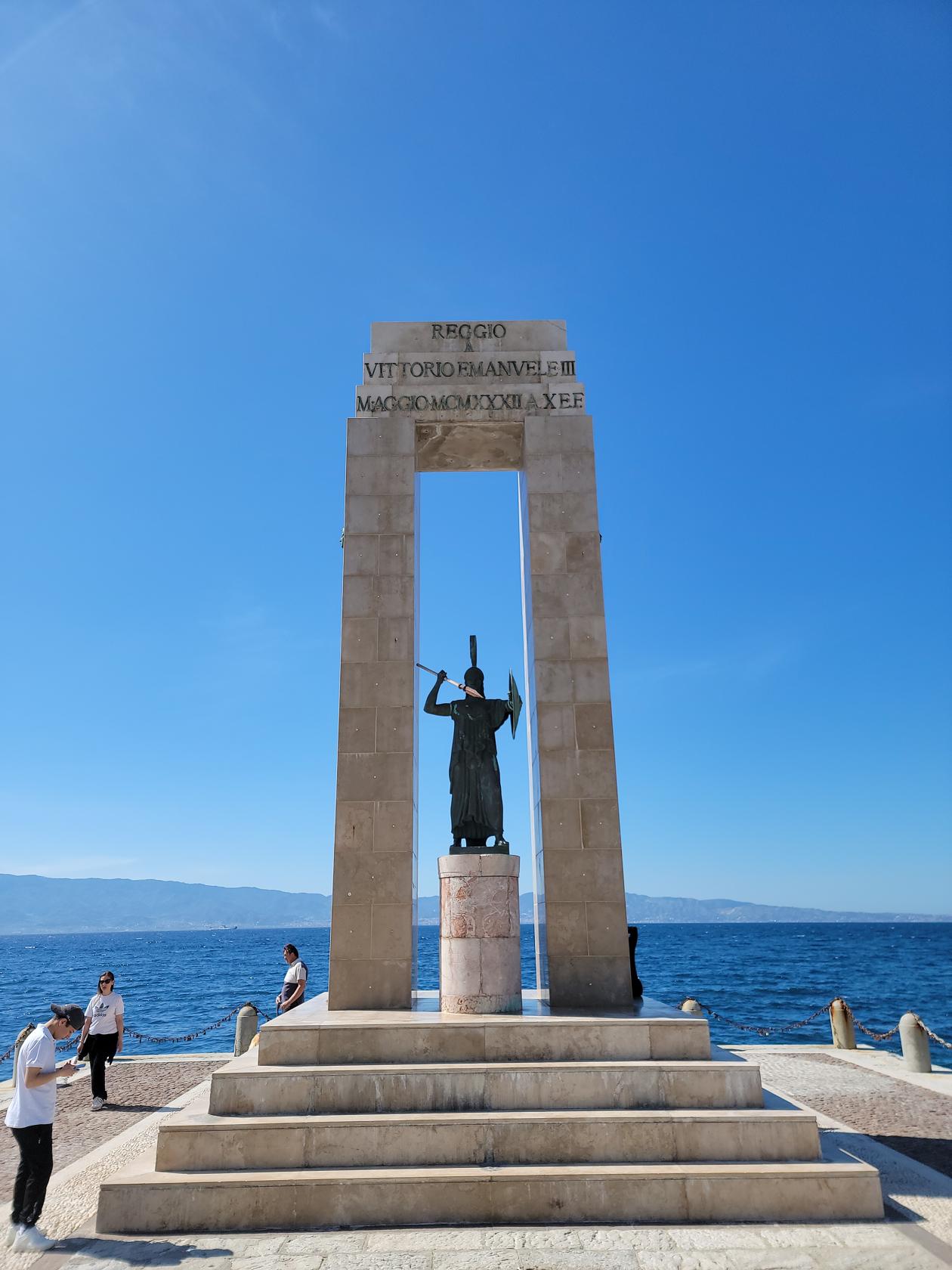
From our hotel on Via Giula, almost directly down the street and on the waterfront and Lungomare, is the Monumento della Vittoria. It is a monument erected for Italy’s World War I victory and Victor Emmanuele III, which also has replica of the Statue of Athena Promachos inside it.
Roman Baths
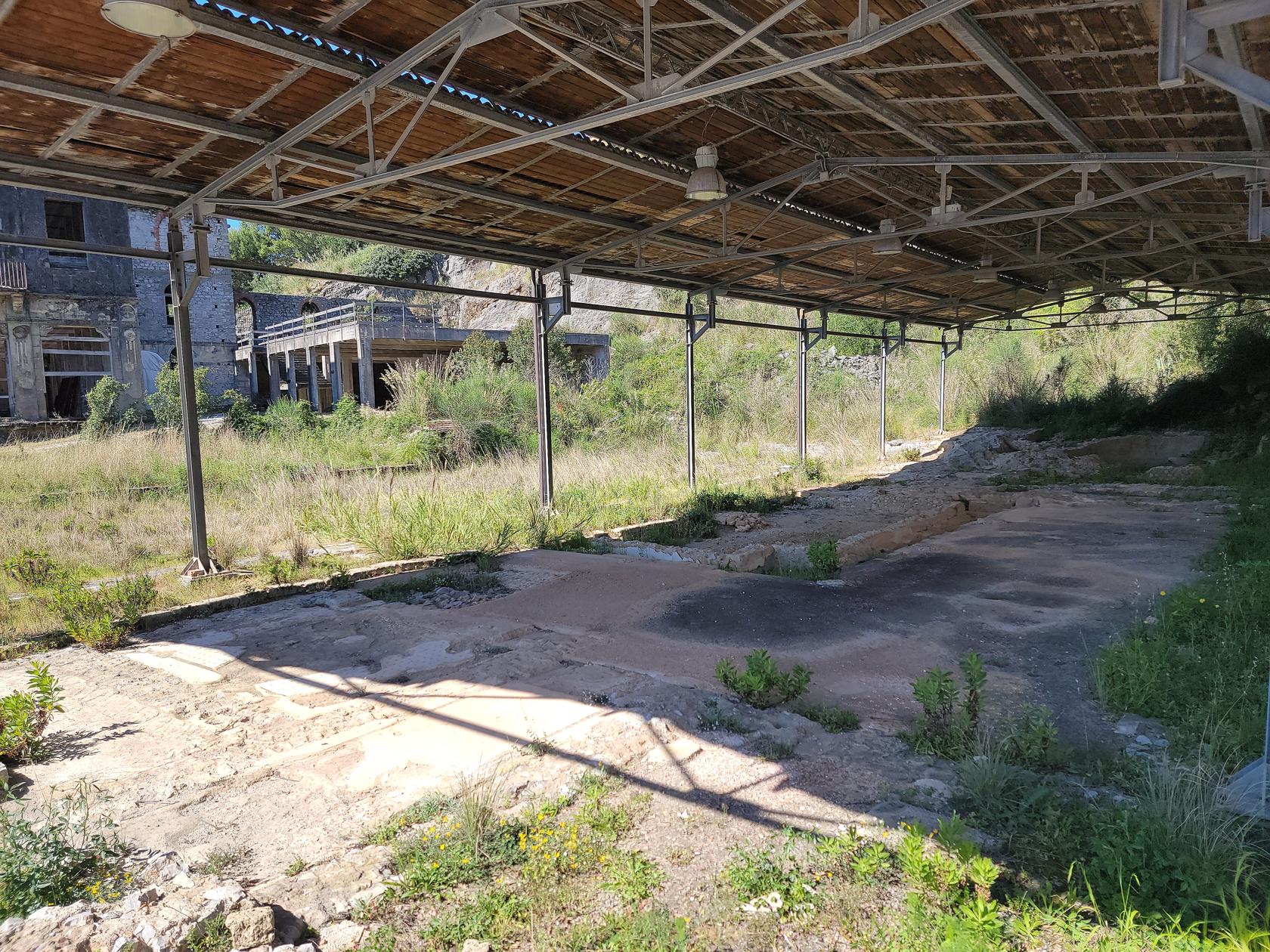
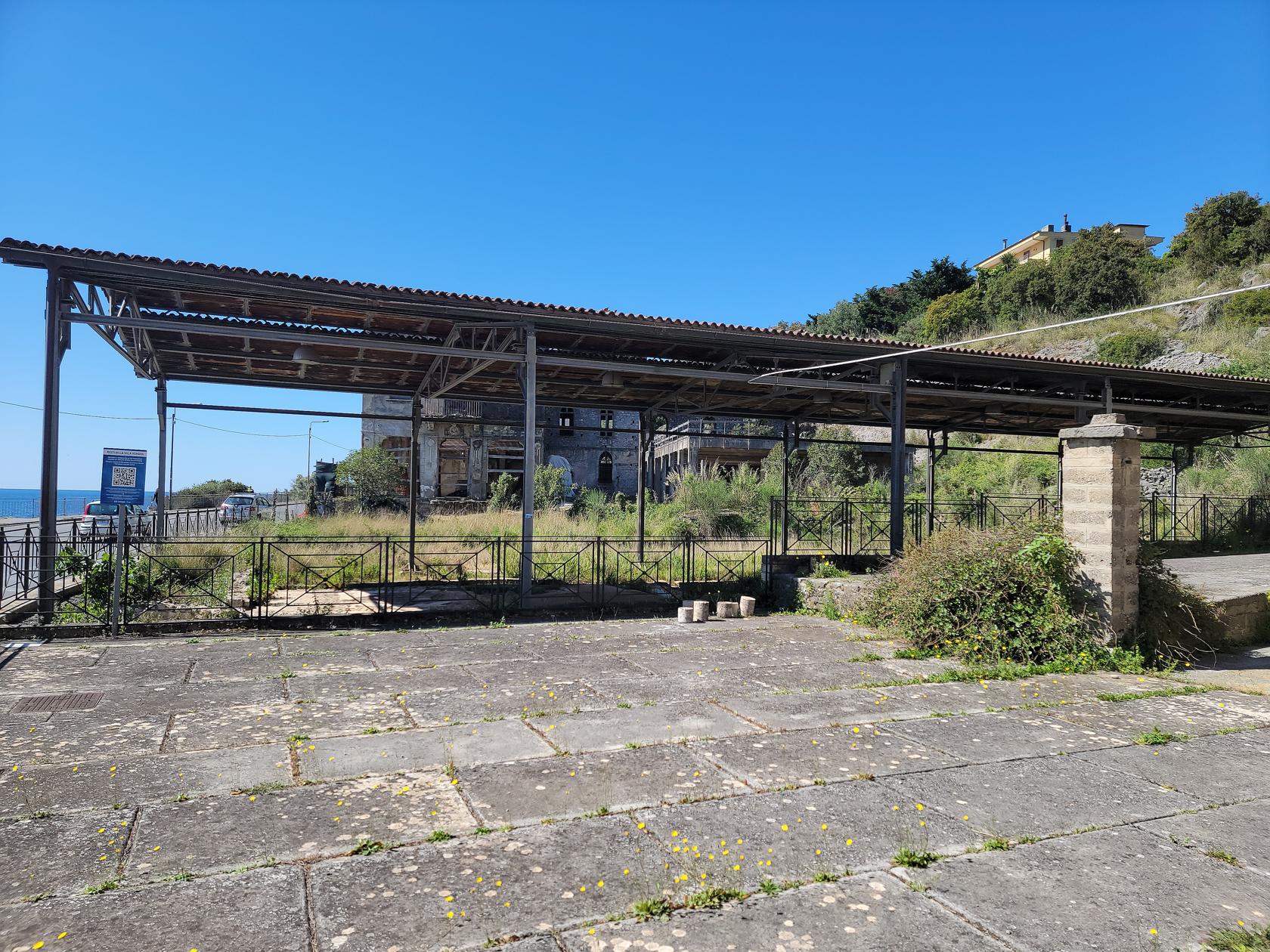
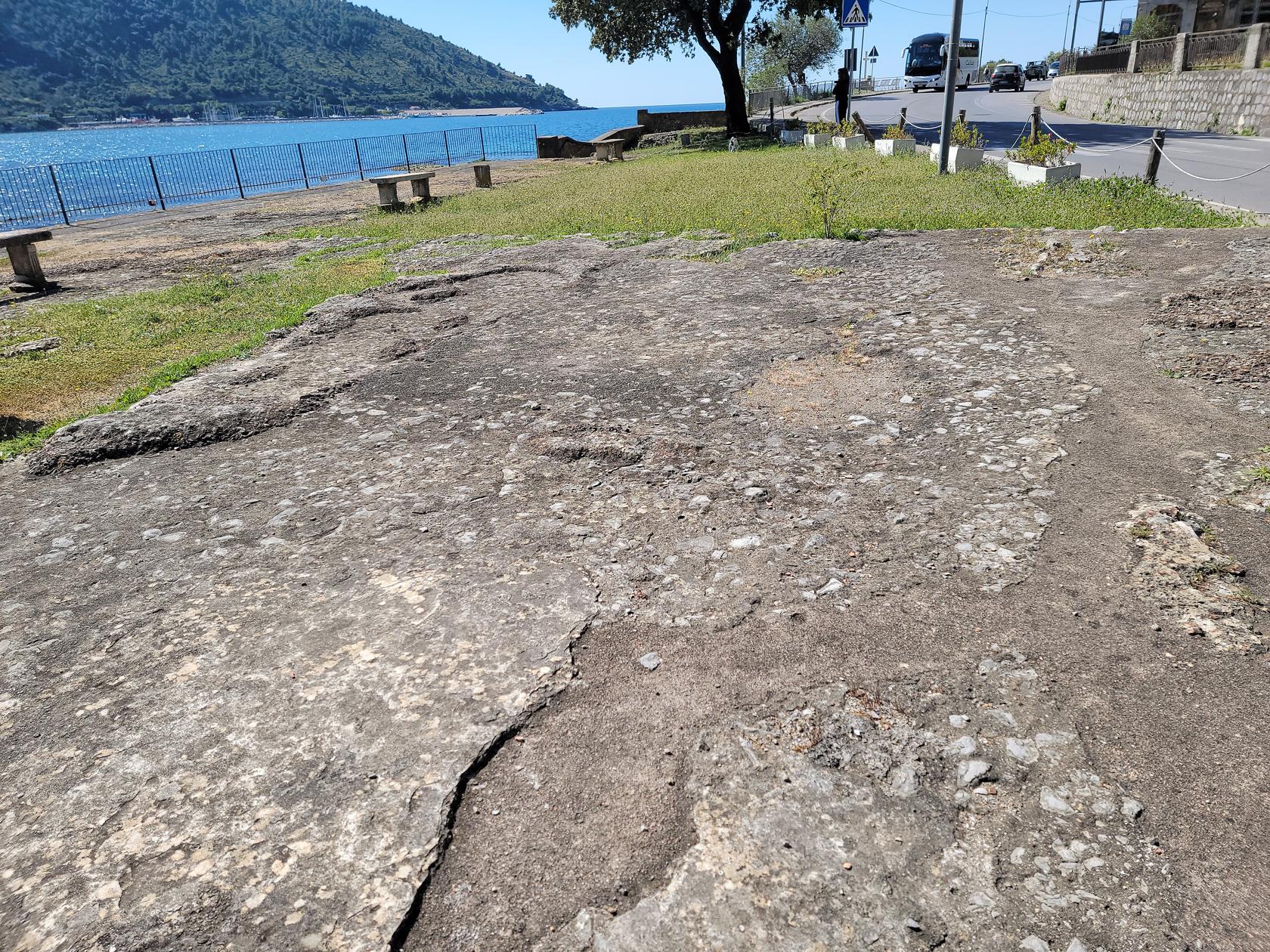
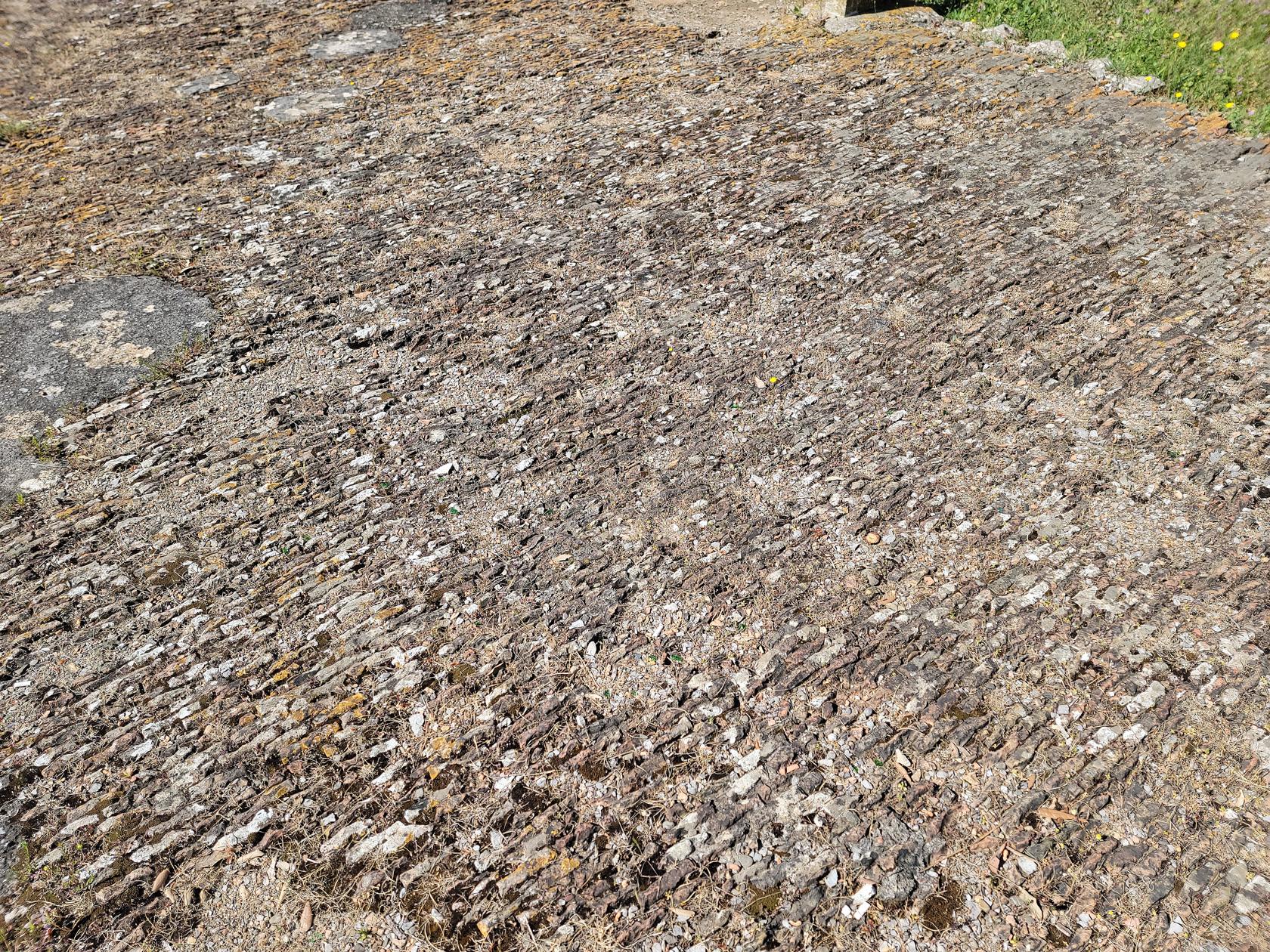
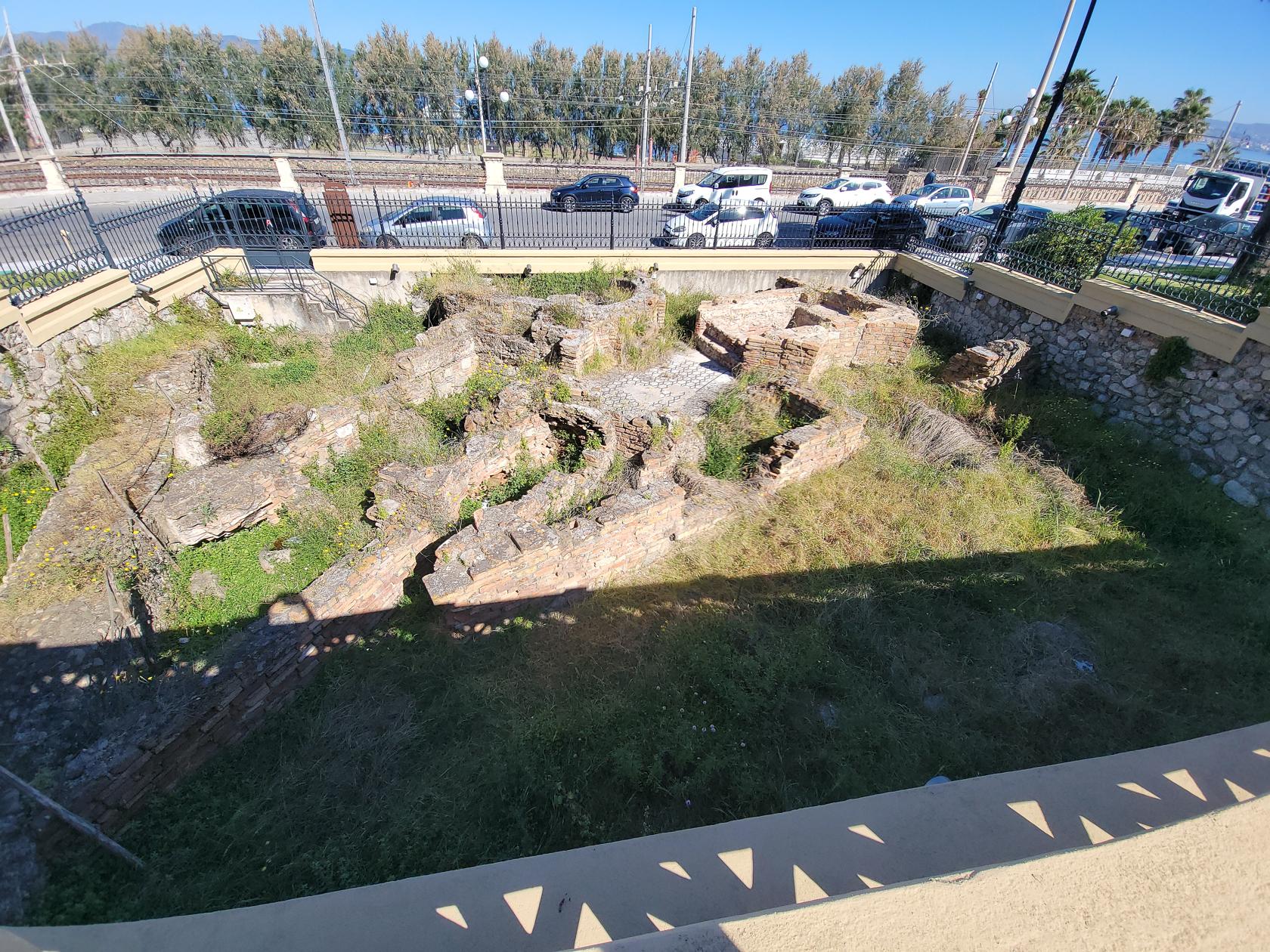
Along the Lungomare is a site of old Roman baths from antiquity.
Basilica di Maria Santissima Assunta in Cielo
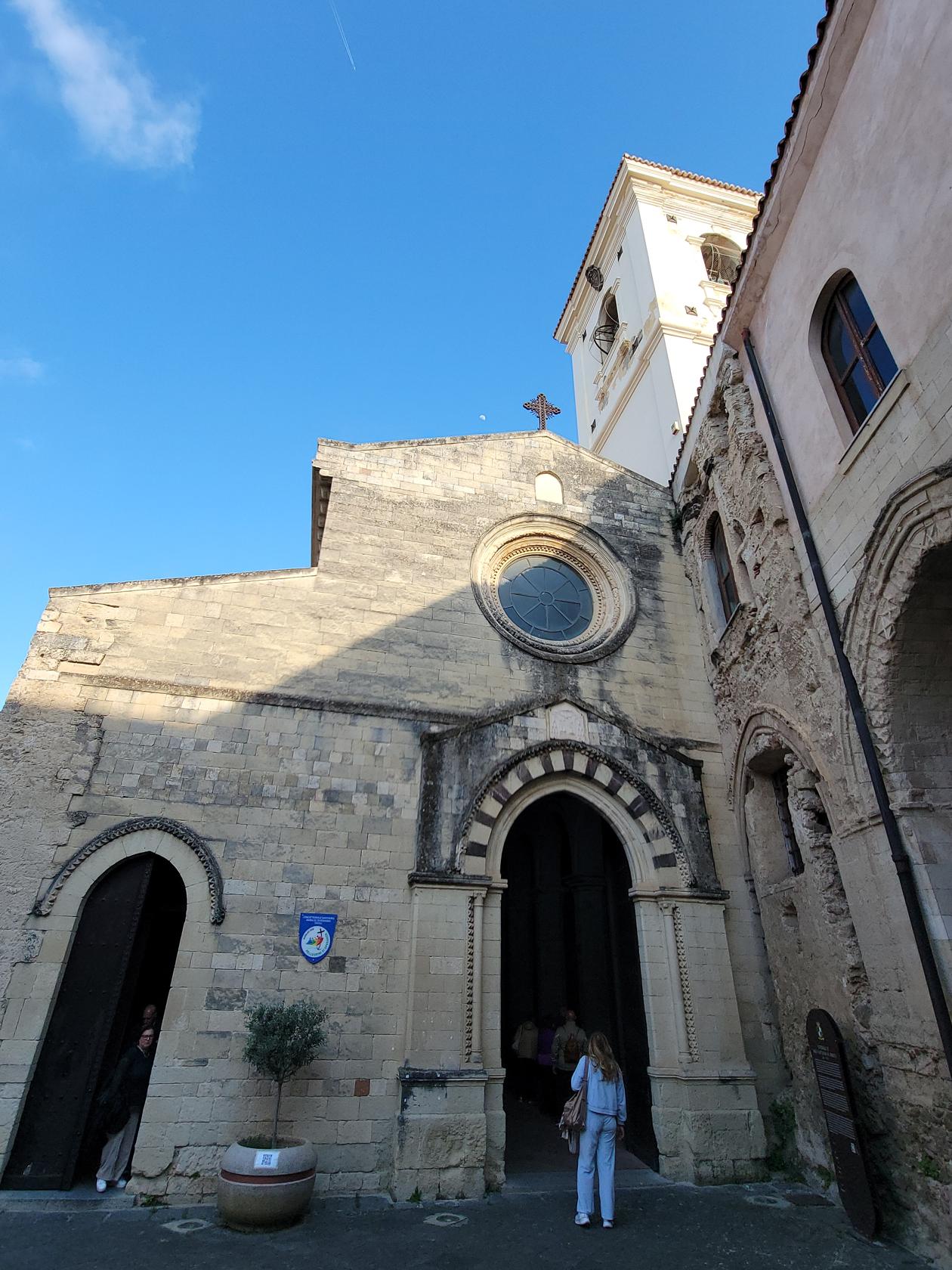
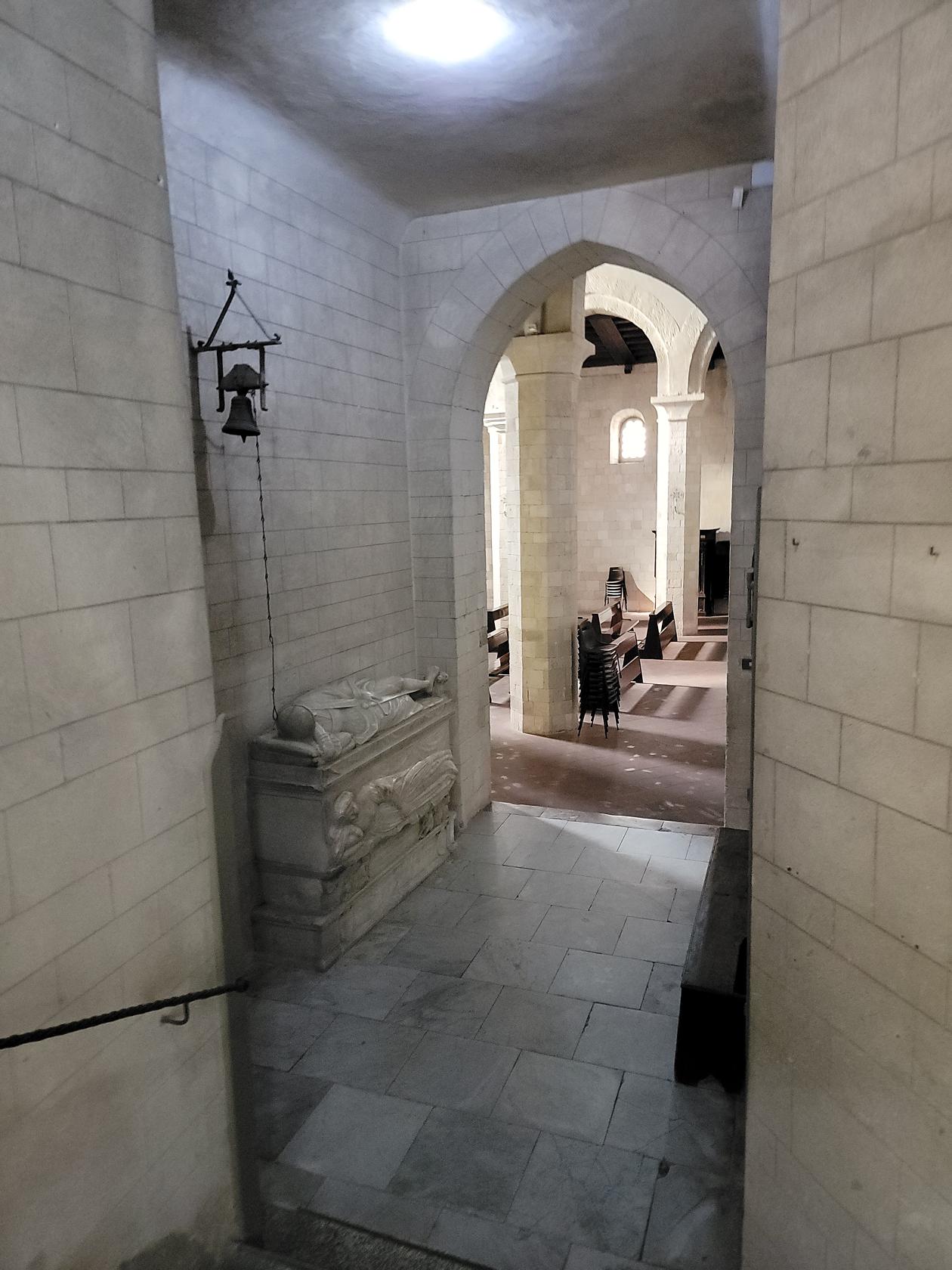
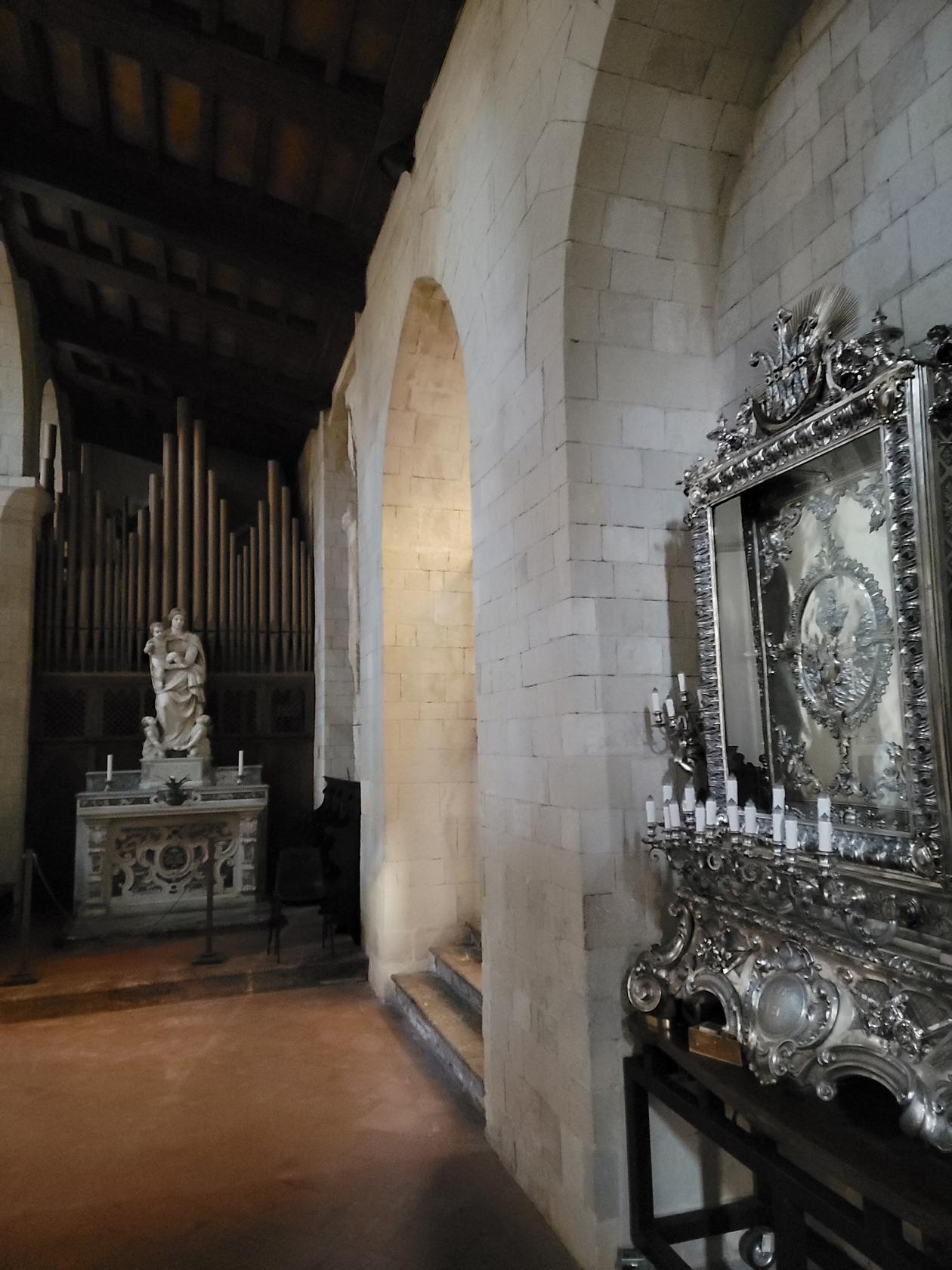
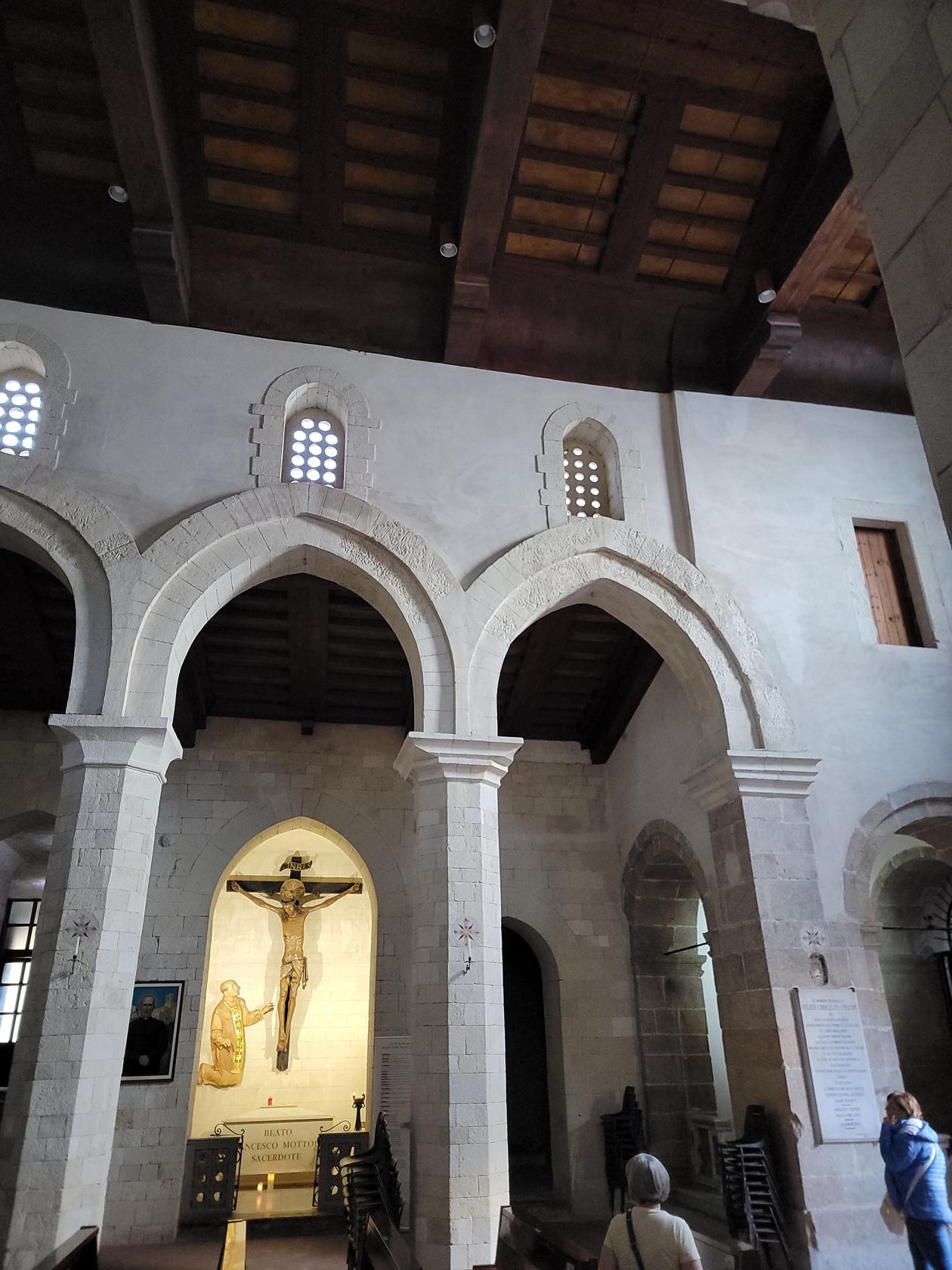
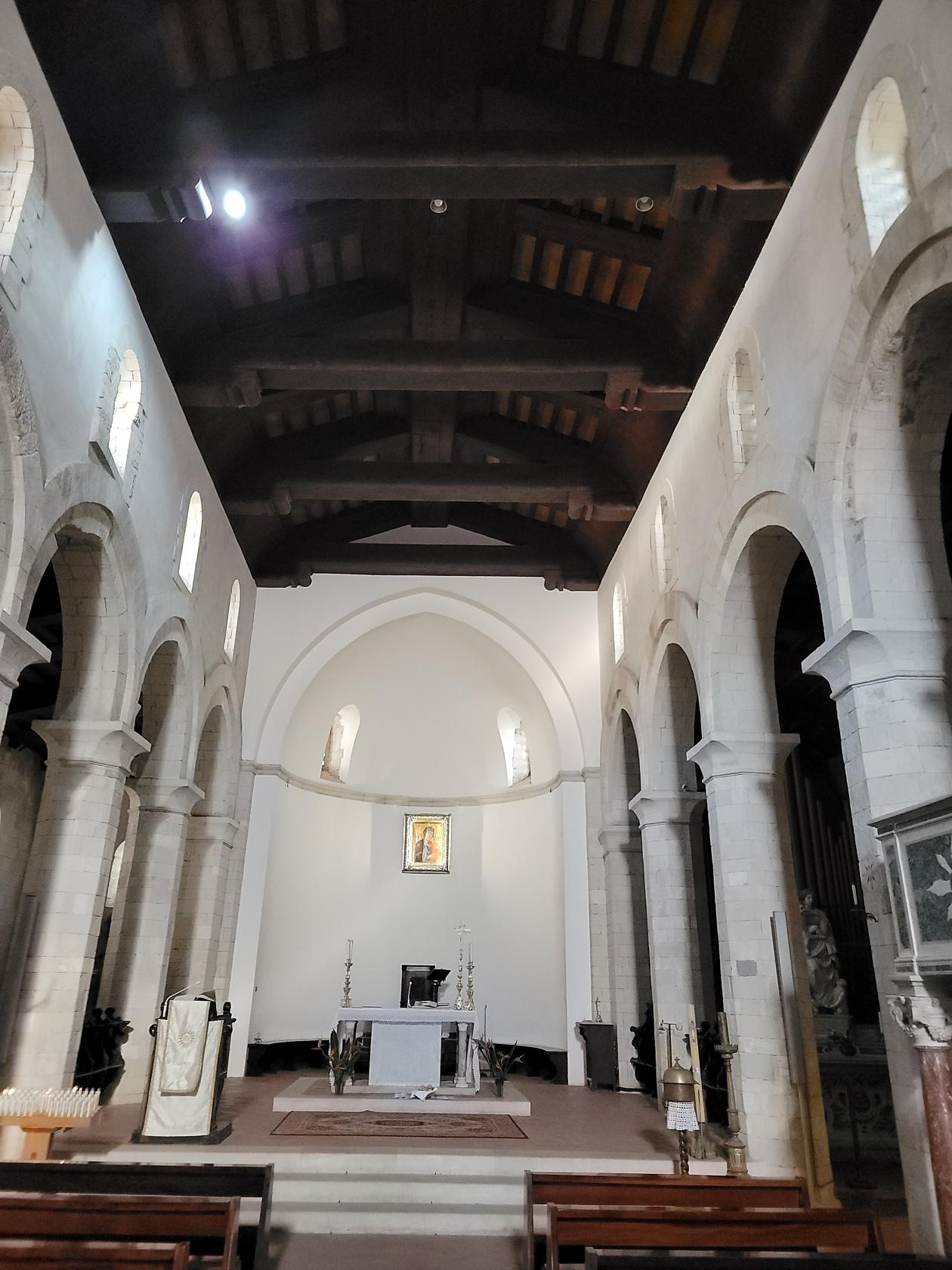
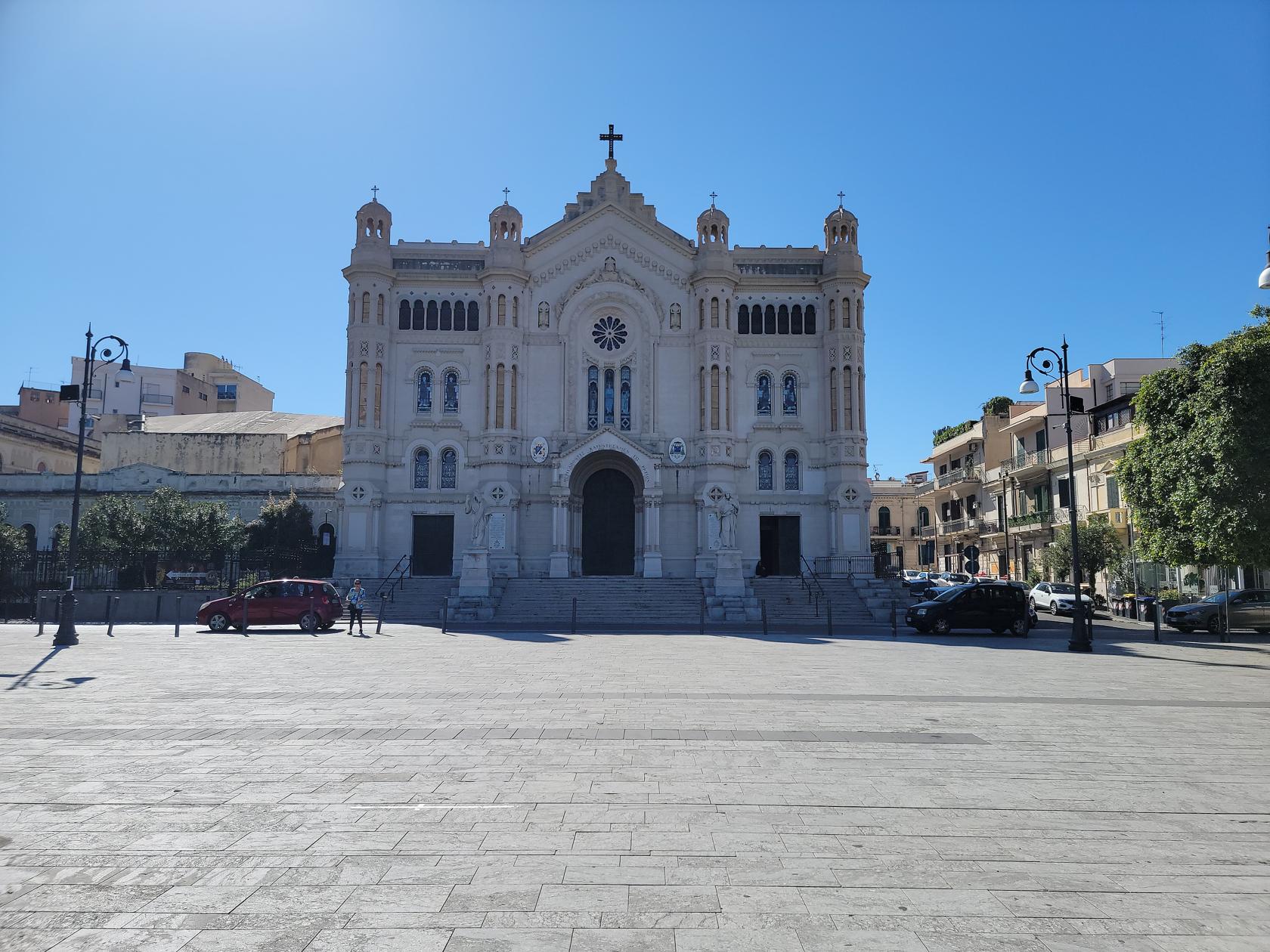
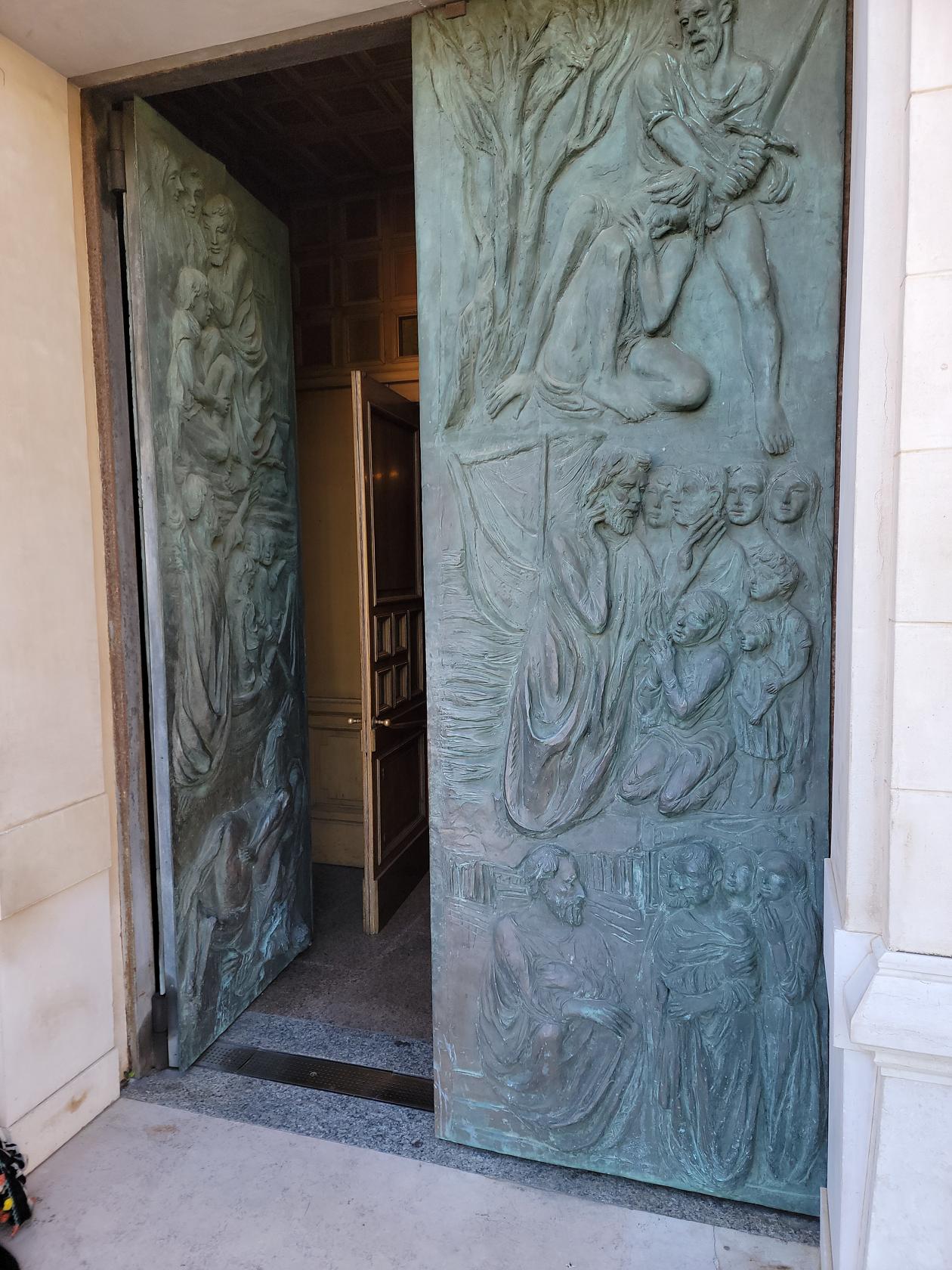
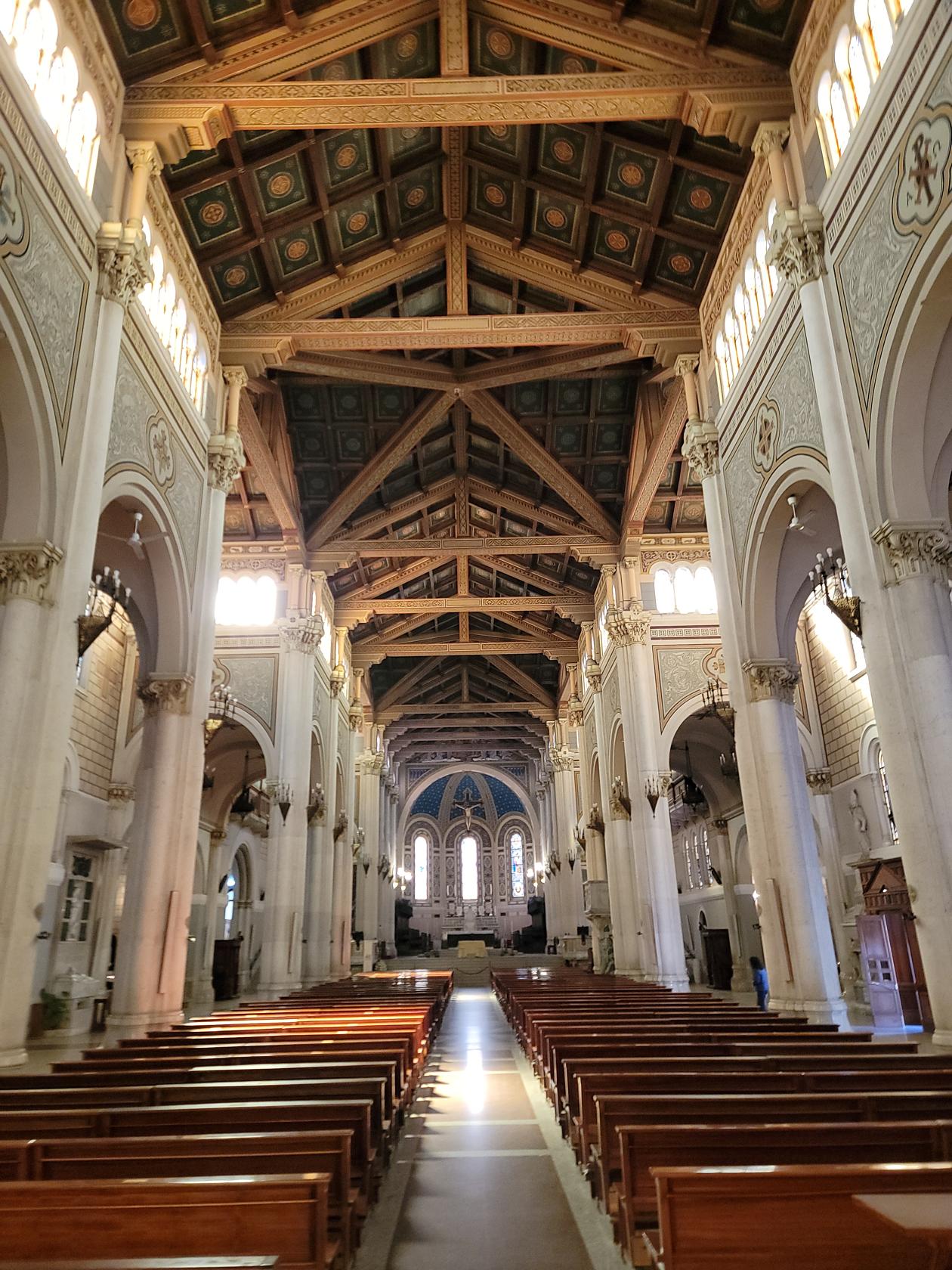
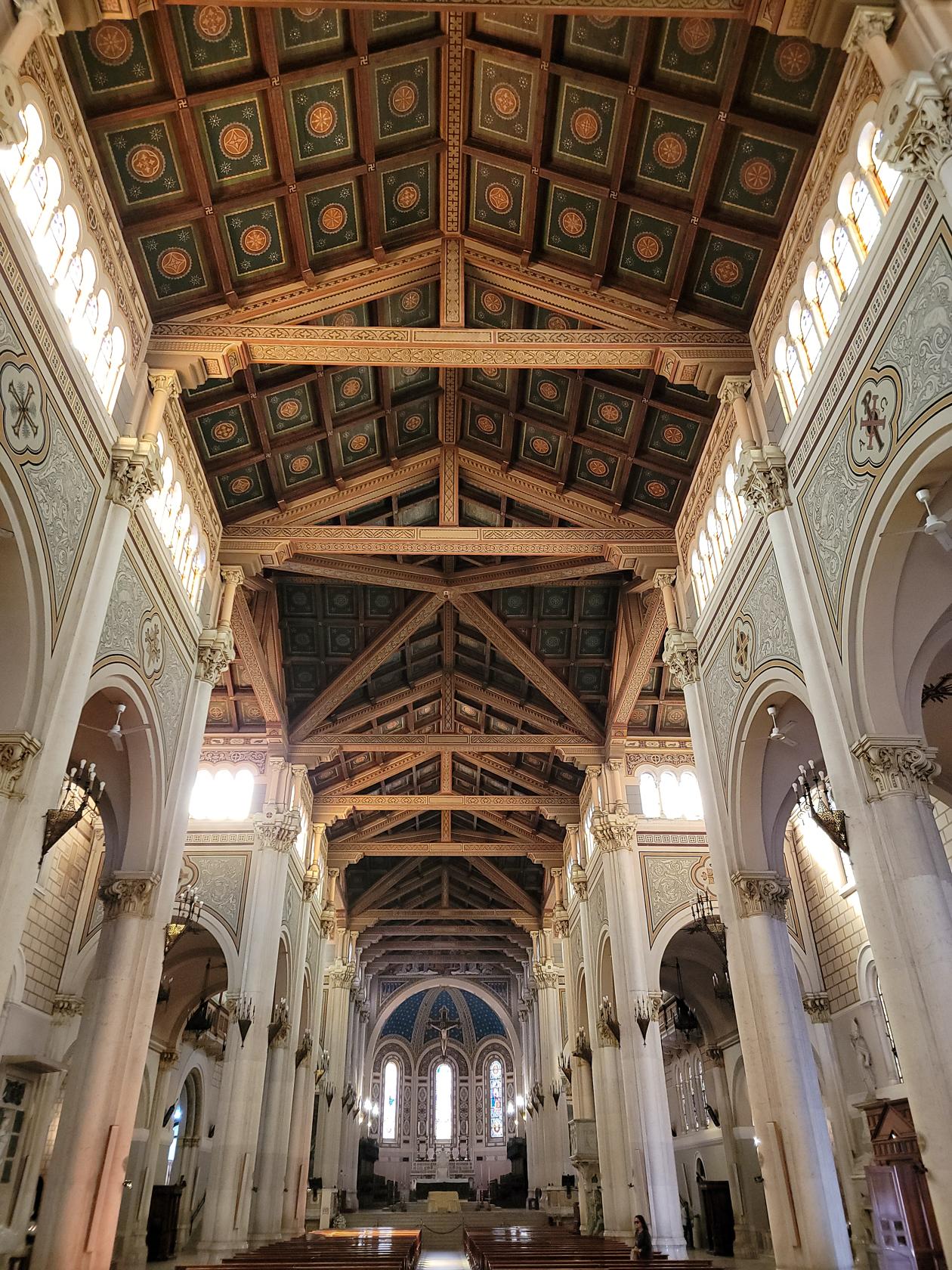
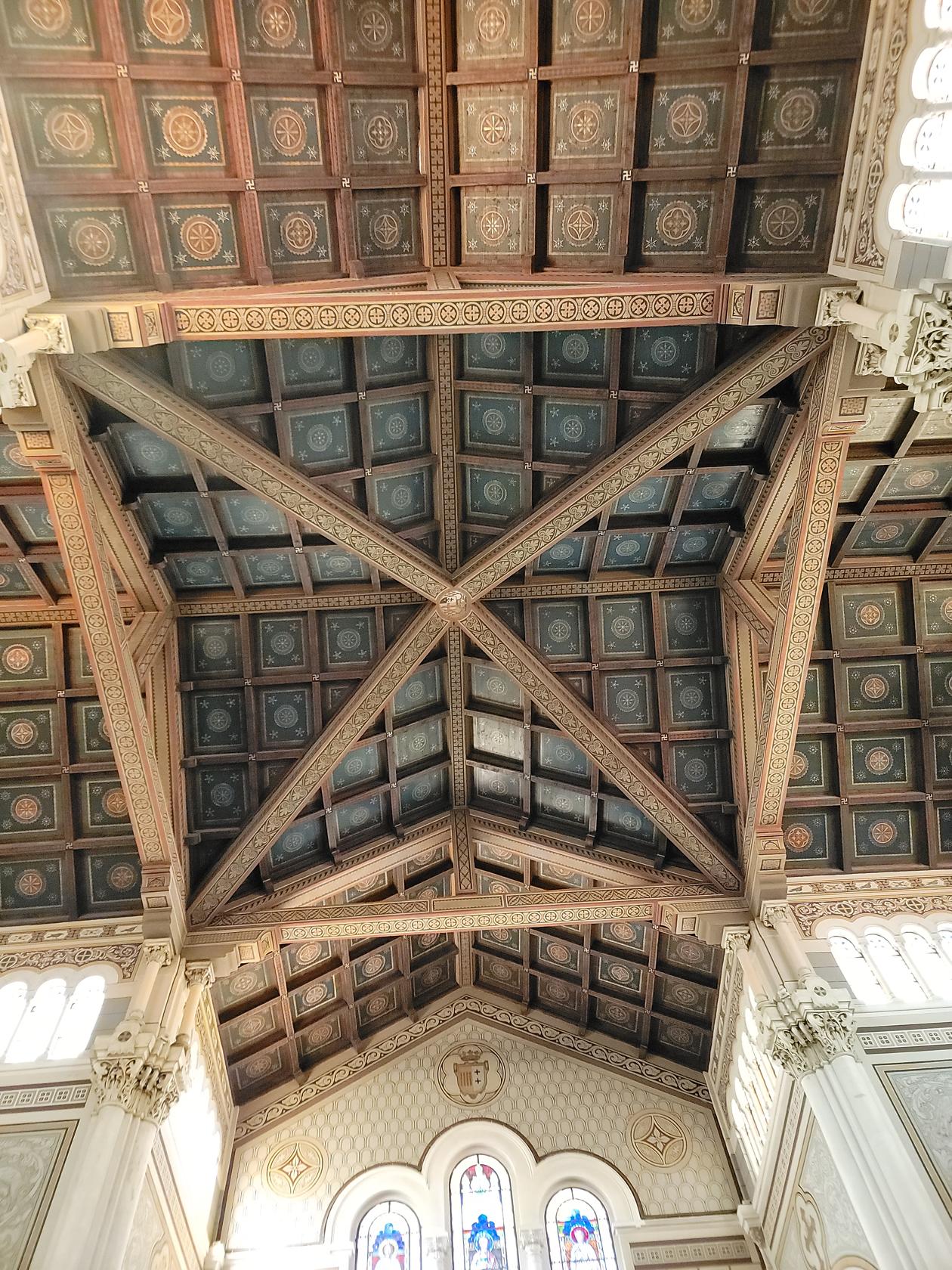
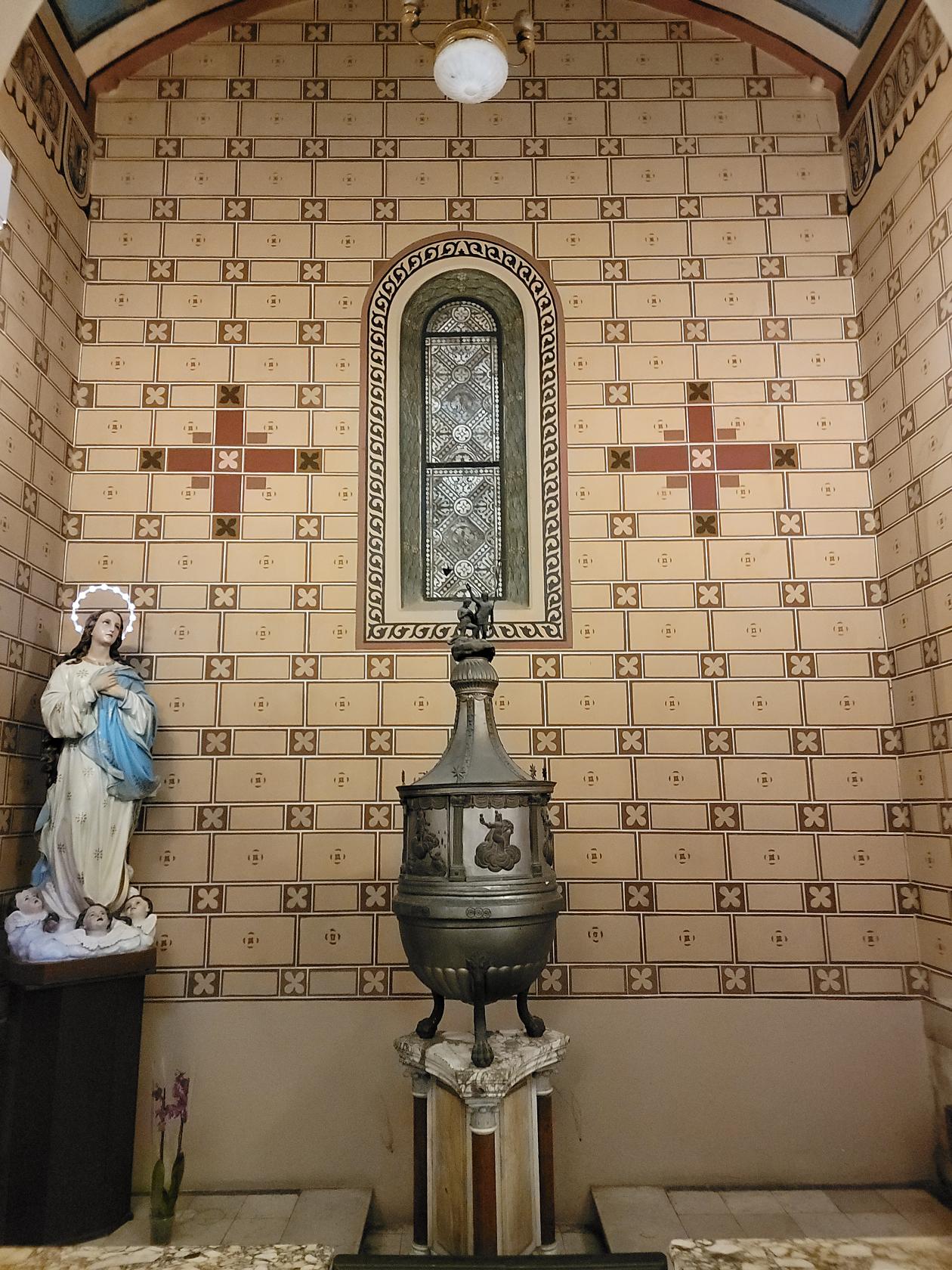
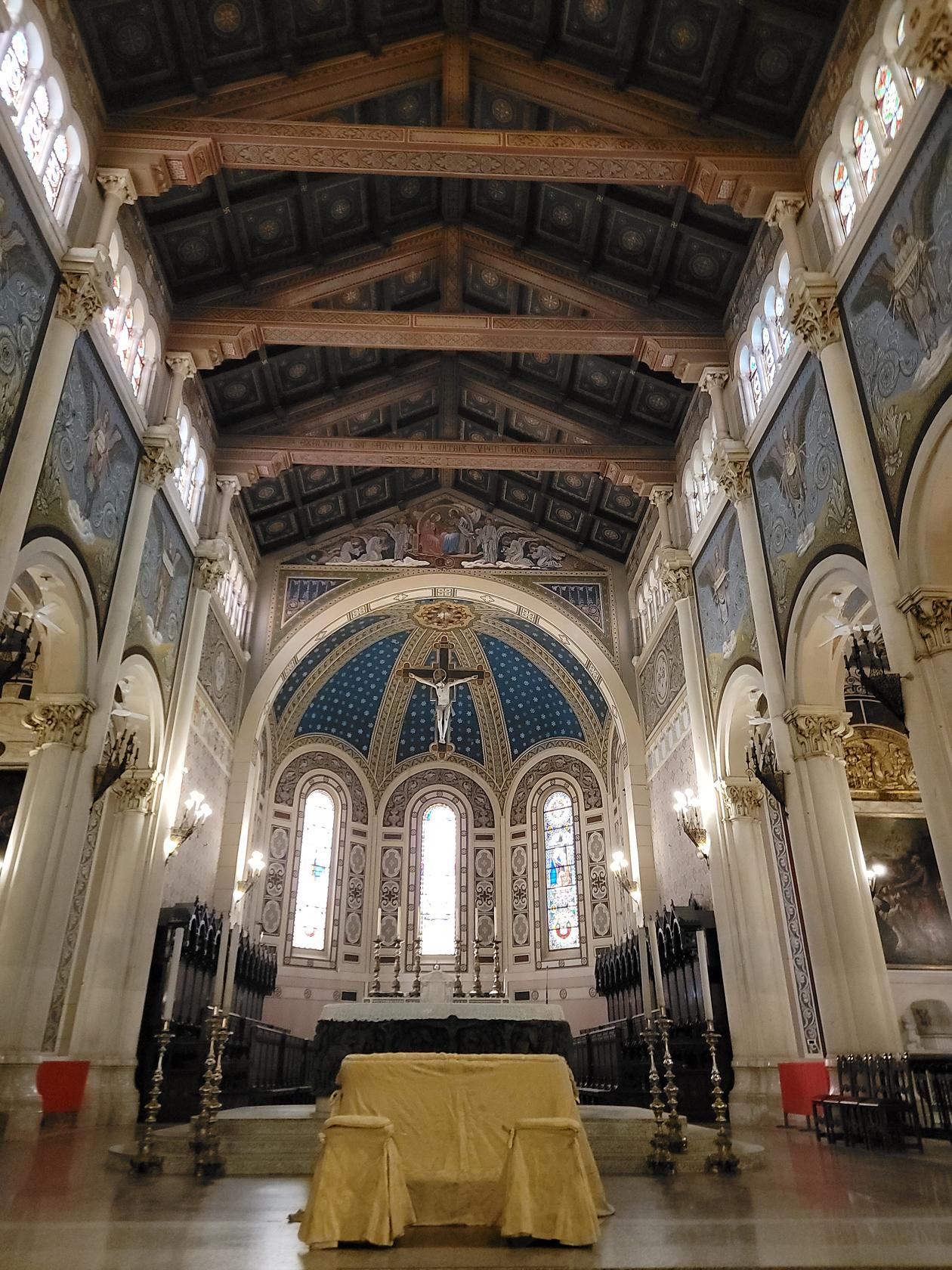
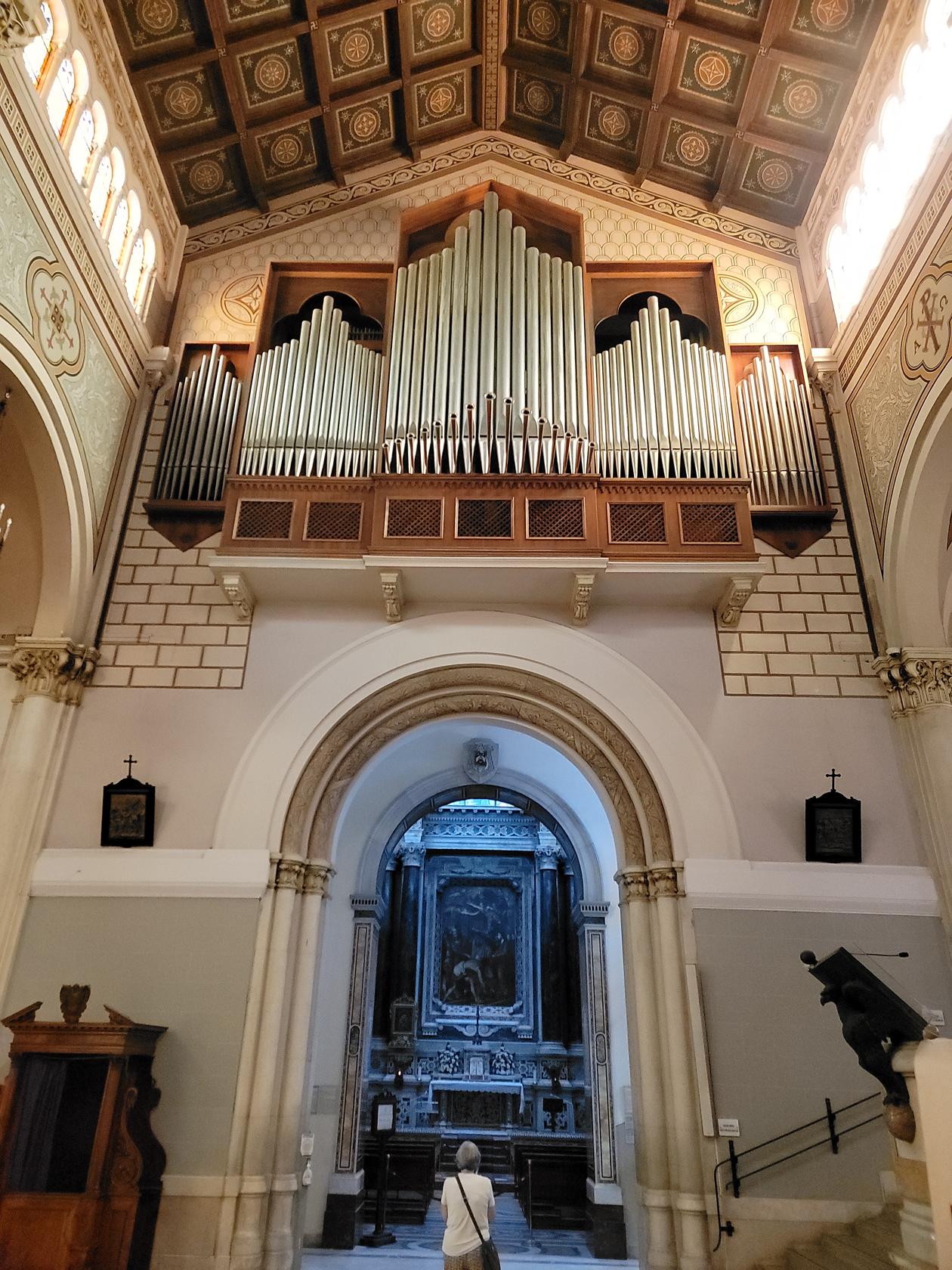
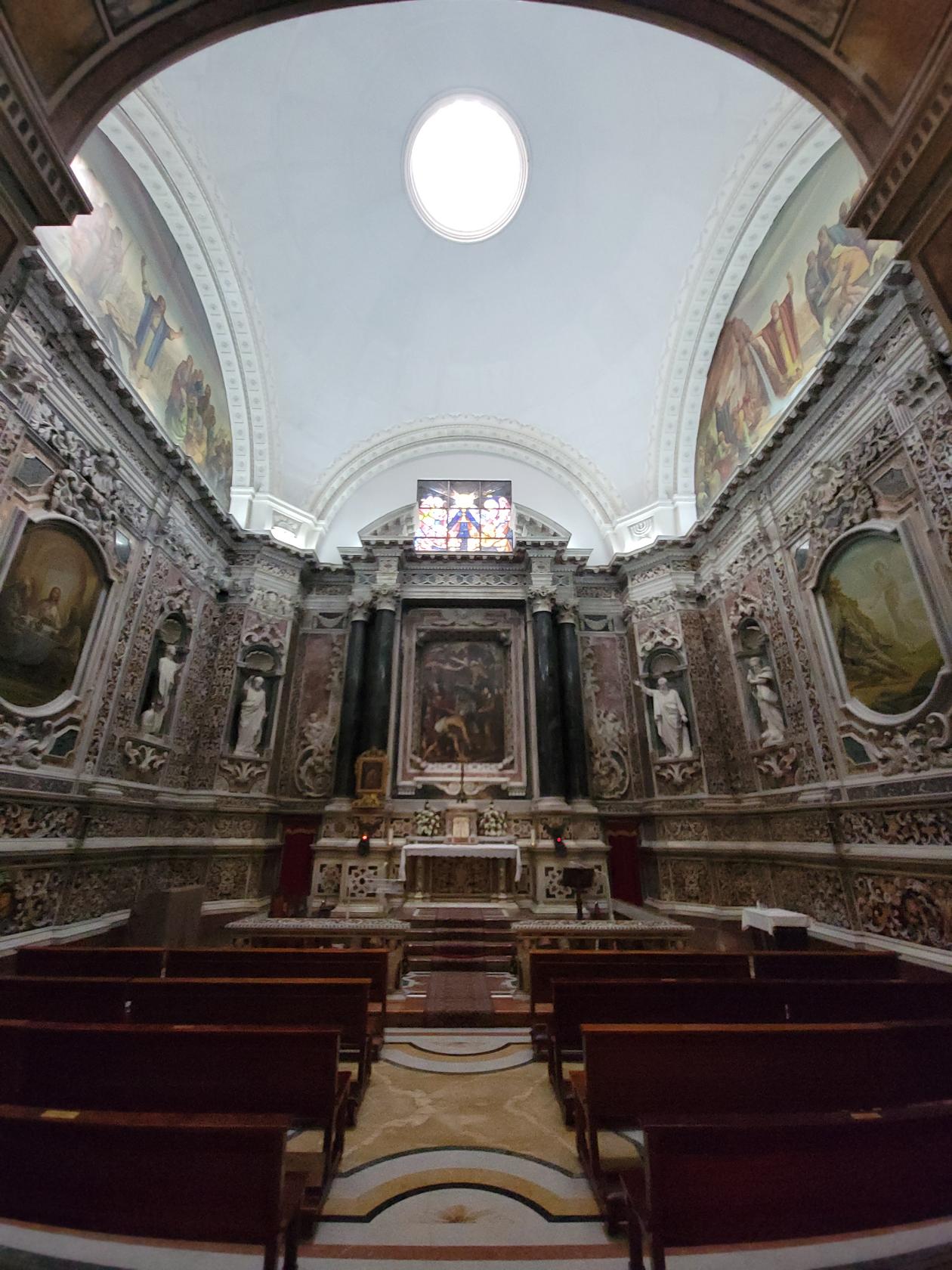
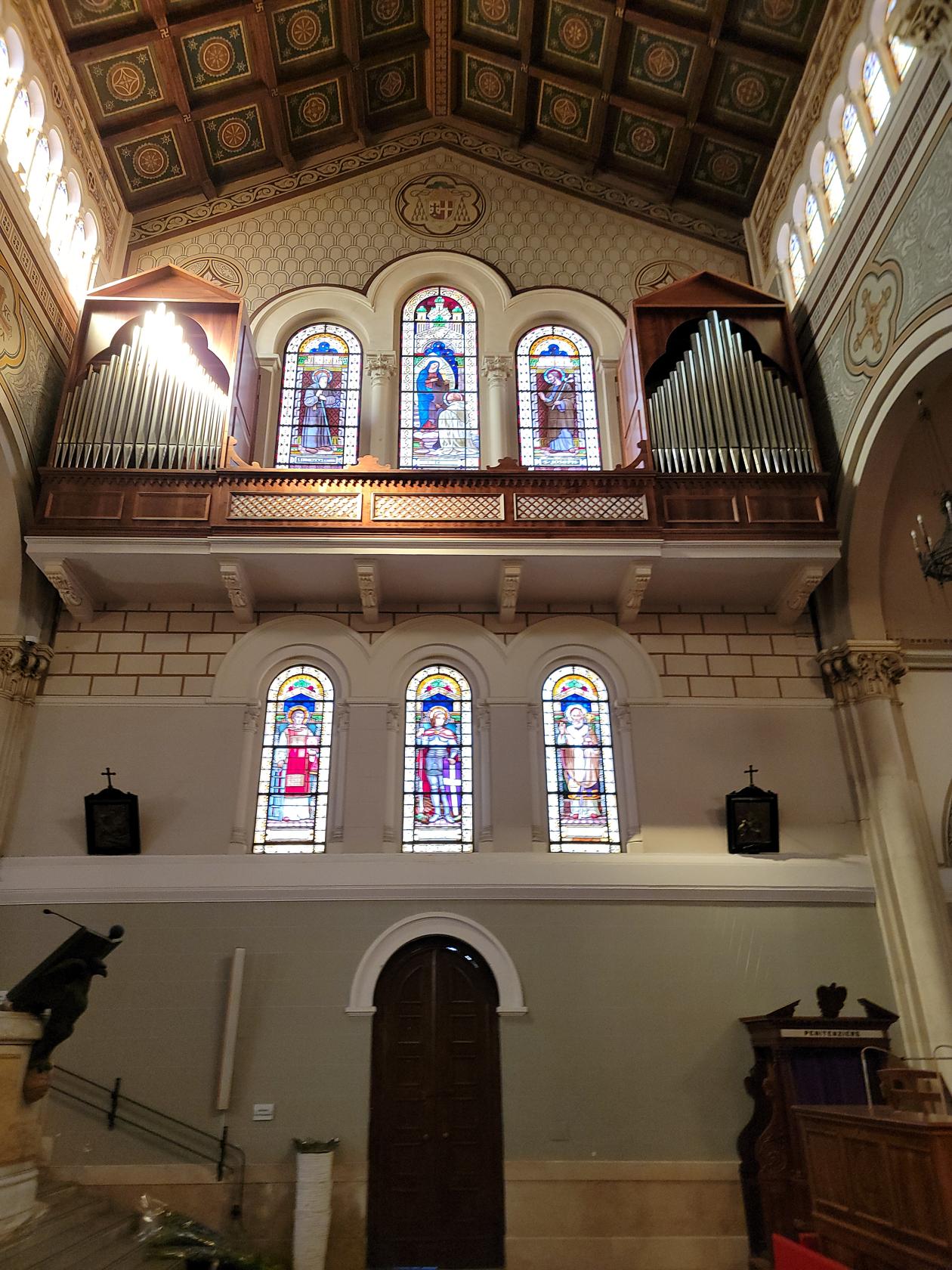
A large cathedral in the Piazza Duomo is the Basilica di Maria Santissima Assunta in Cielo. It was partially destroyed in the 1908 earthquake and rebuilt with a fusion of Romanesque and Gothic styles.
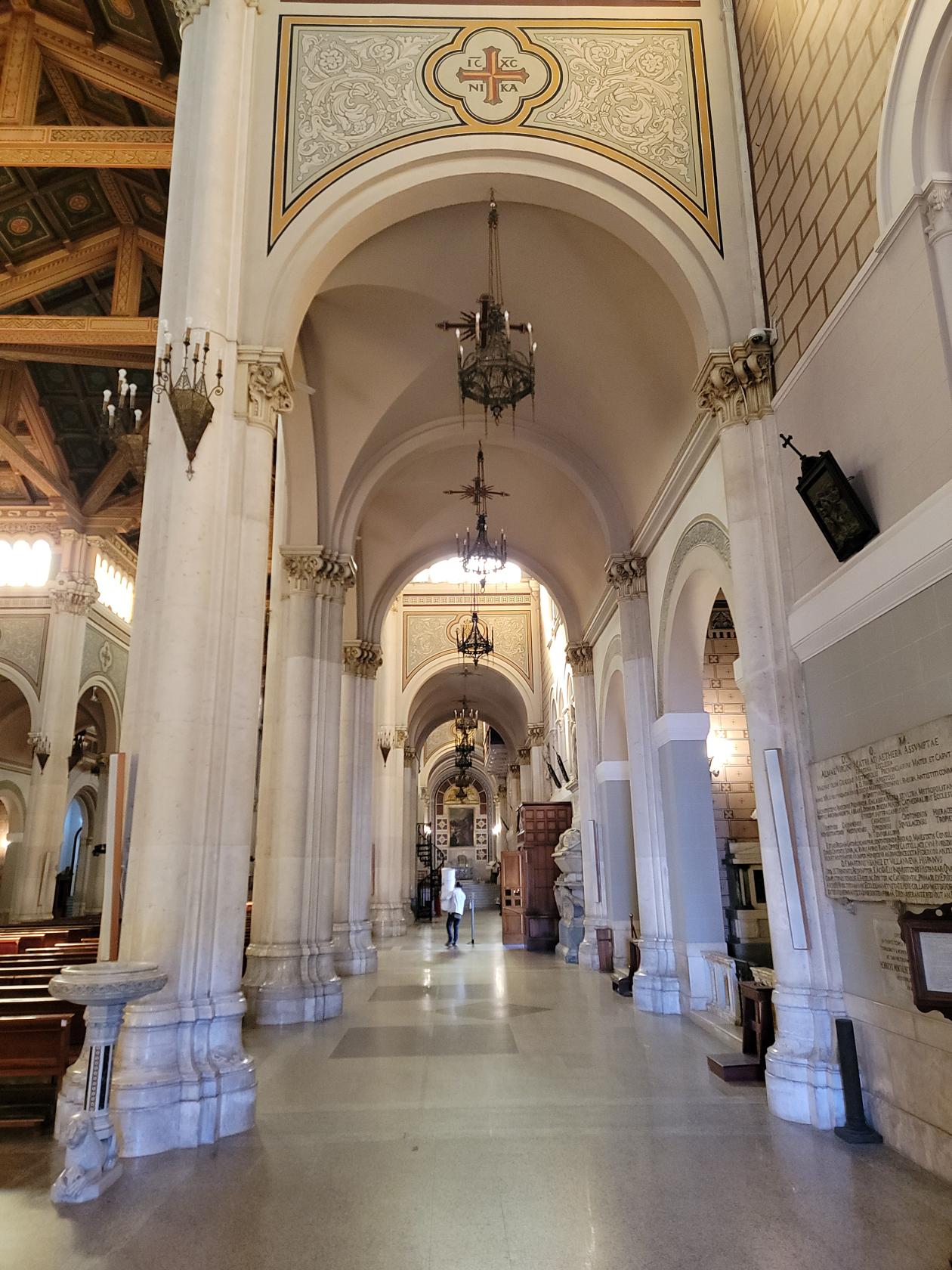
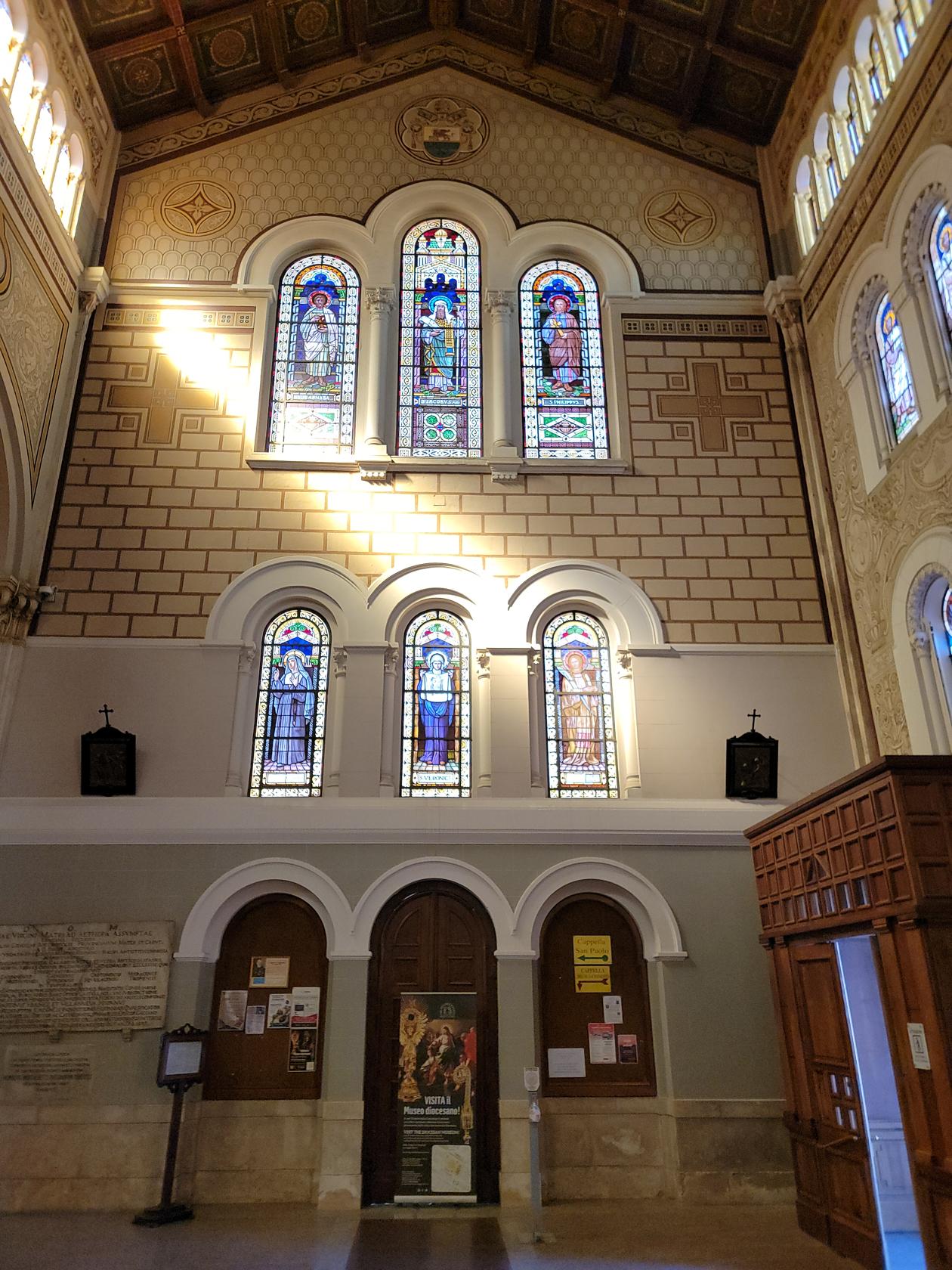
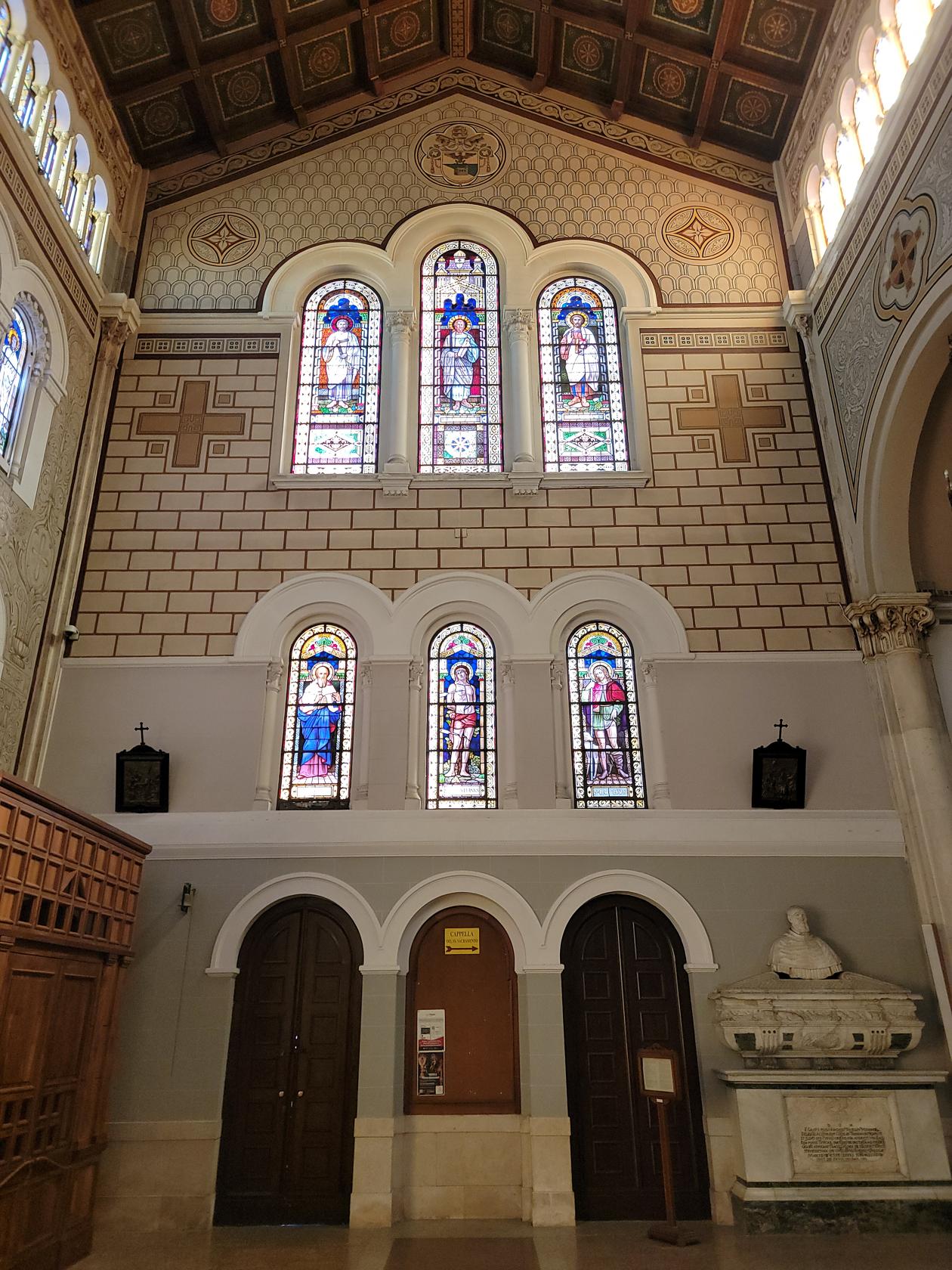
The most interesting interior element of the cathedral is its ceiling. A timbered edifice that is remarqued and painted in a most interesting style, including pagan elements which appear to be handpainted.
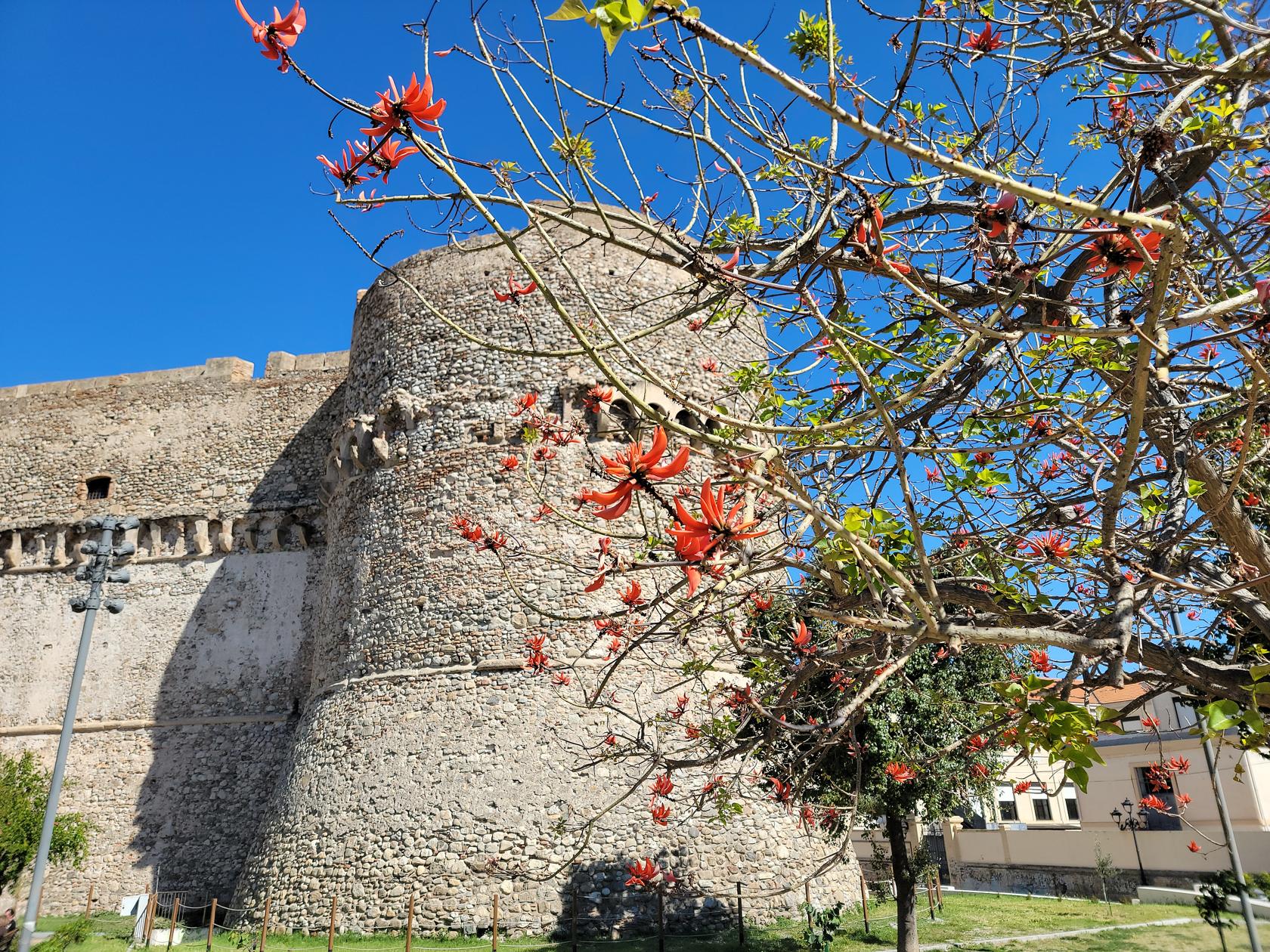
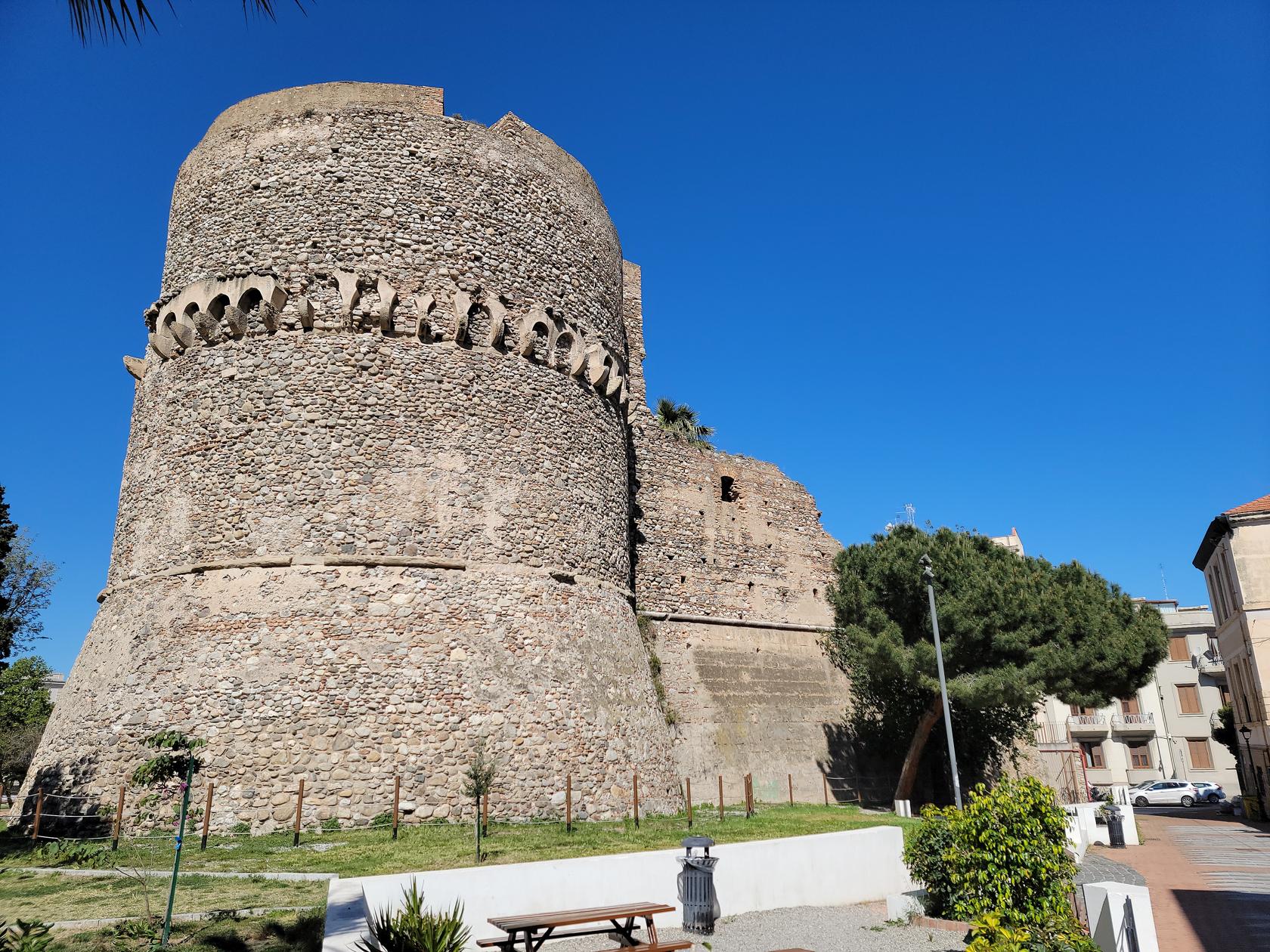
Castello Aragonese
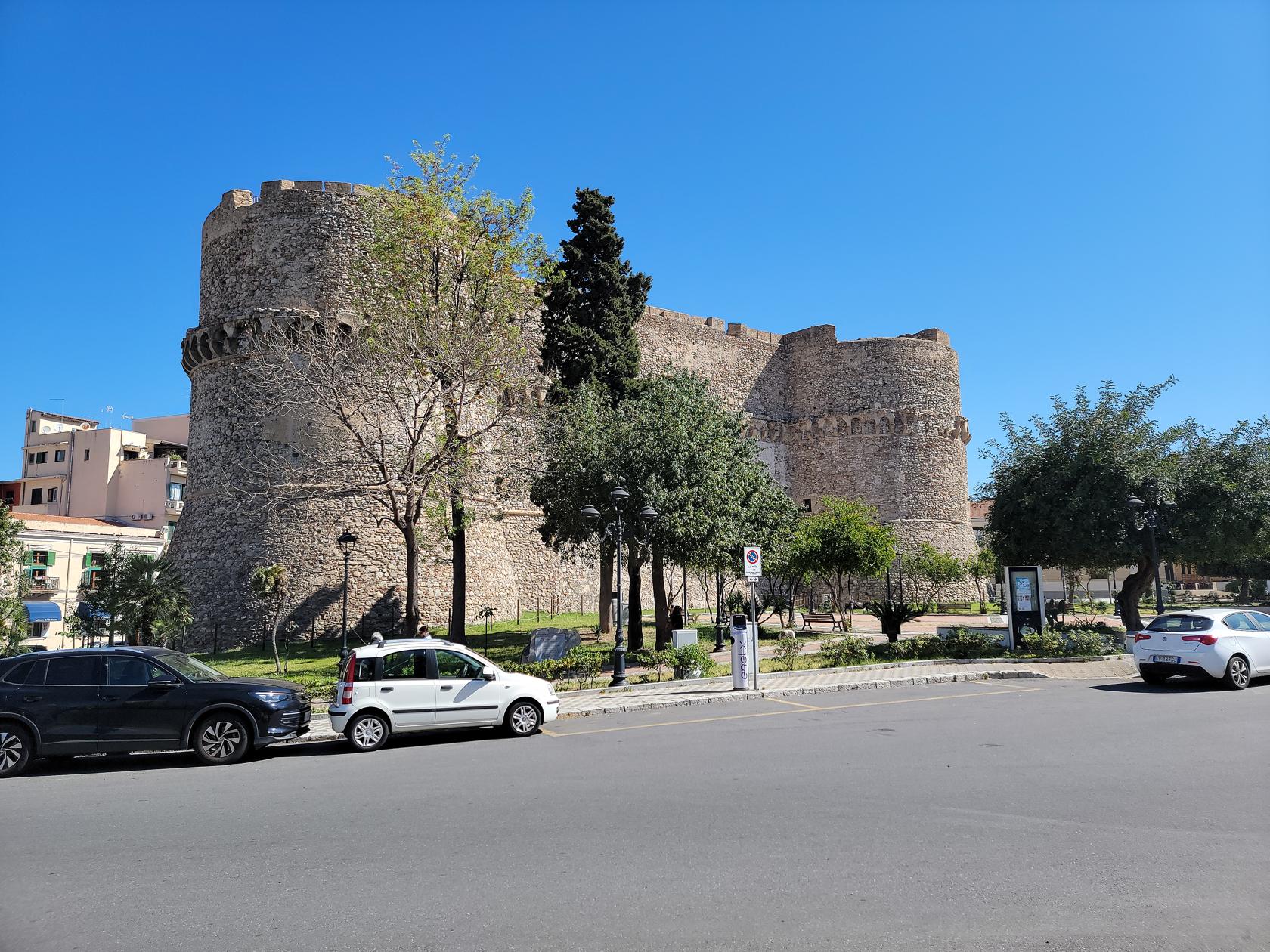
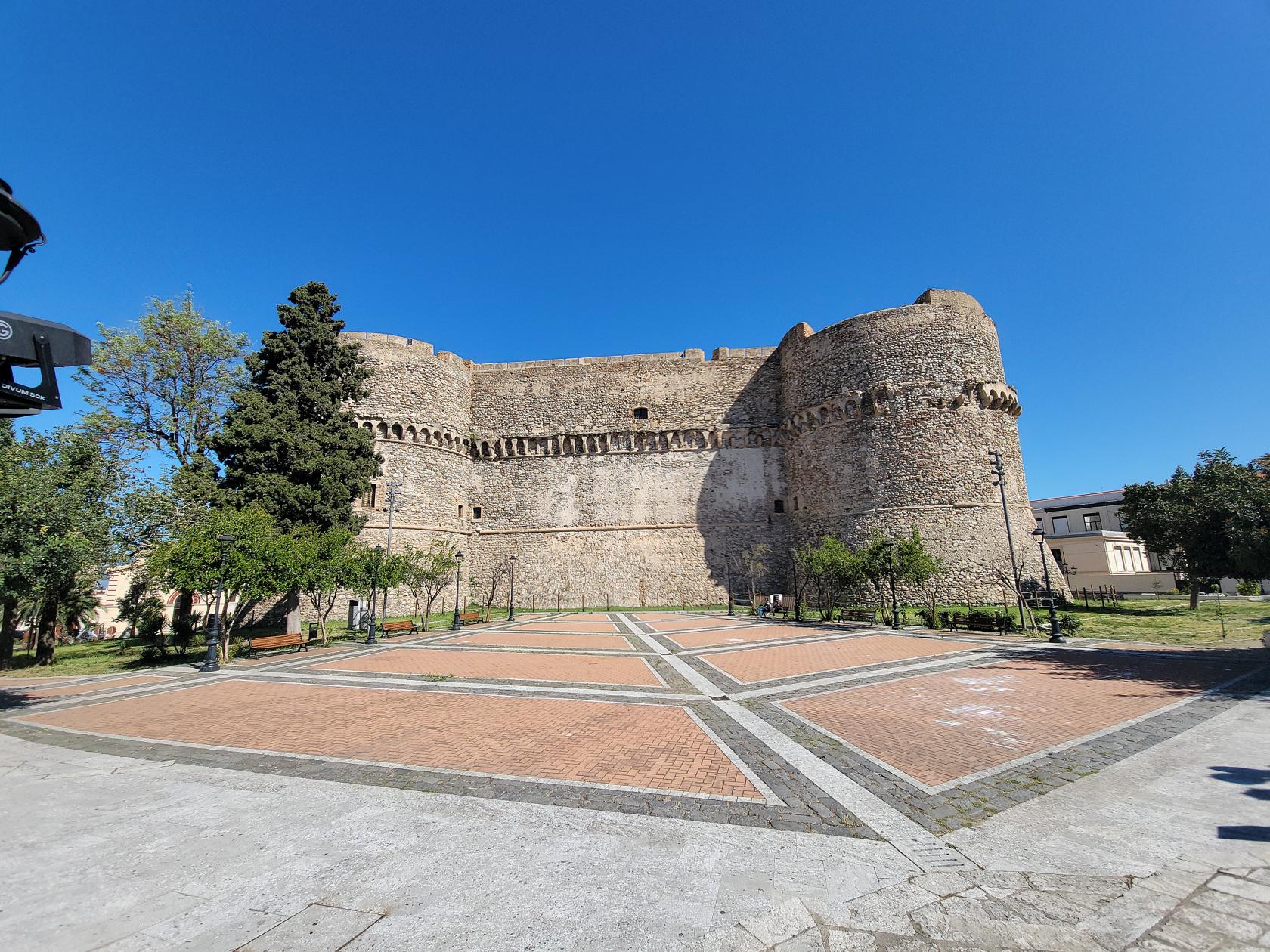
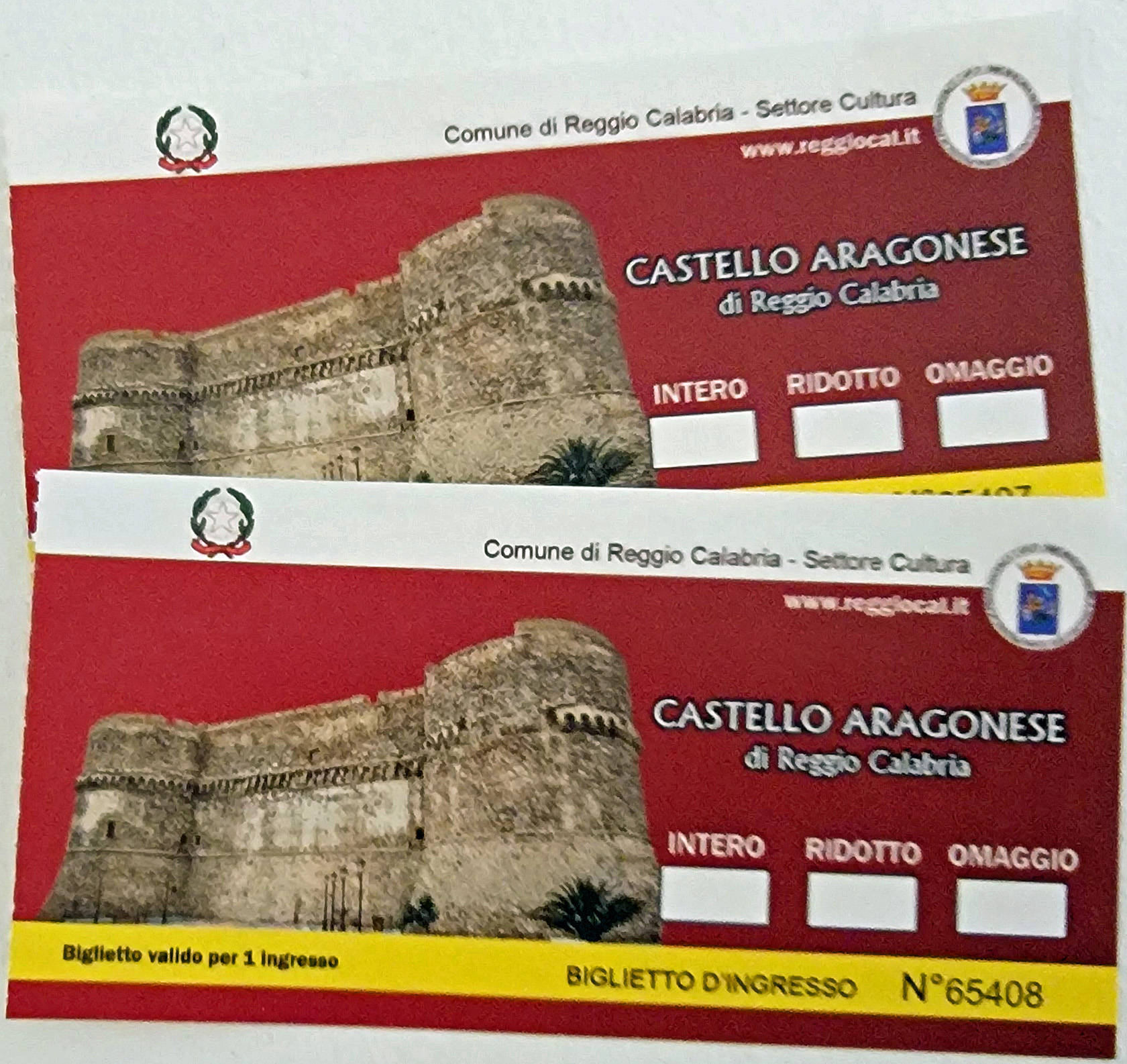
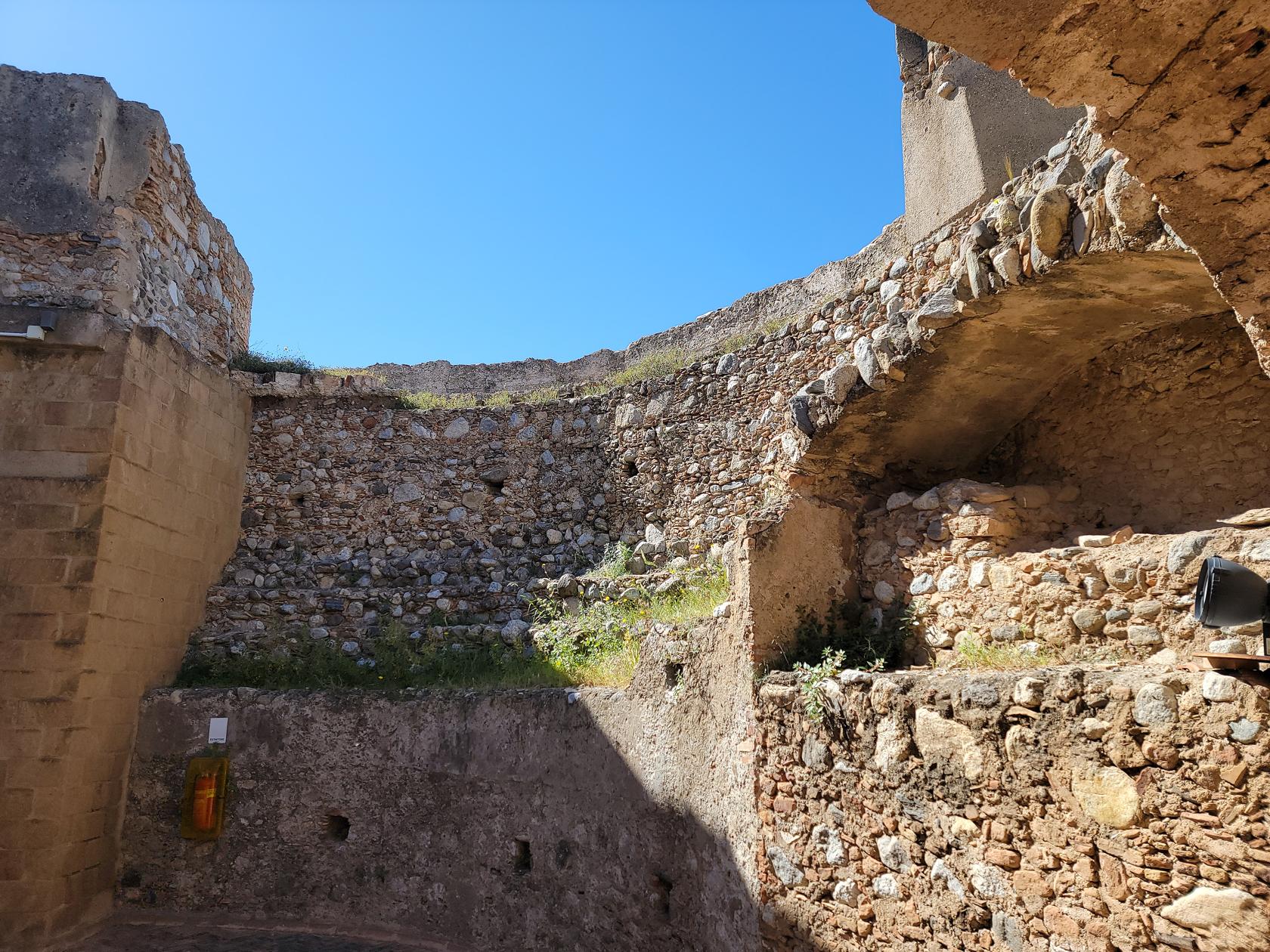
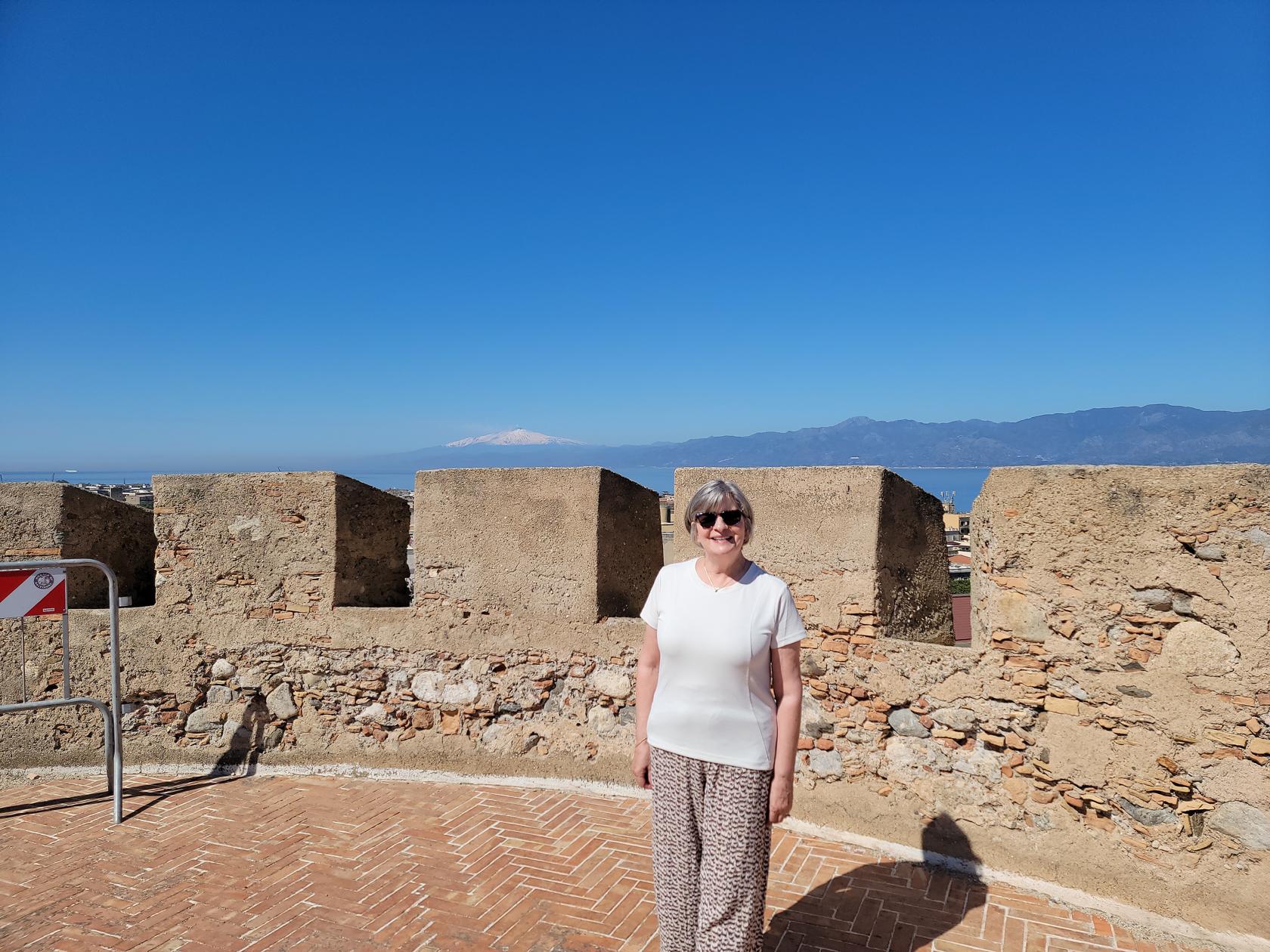
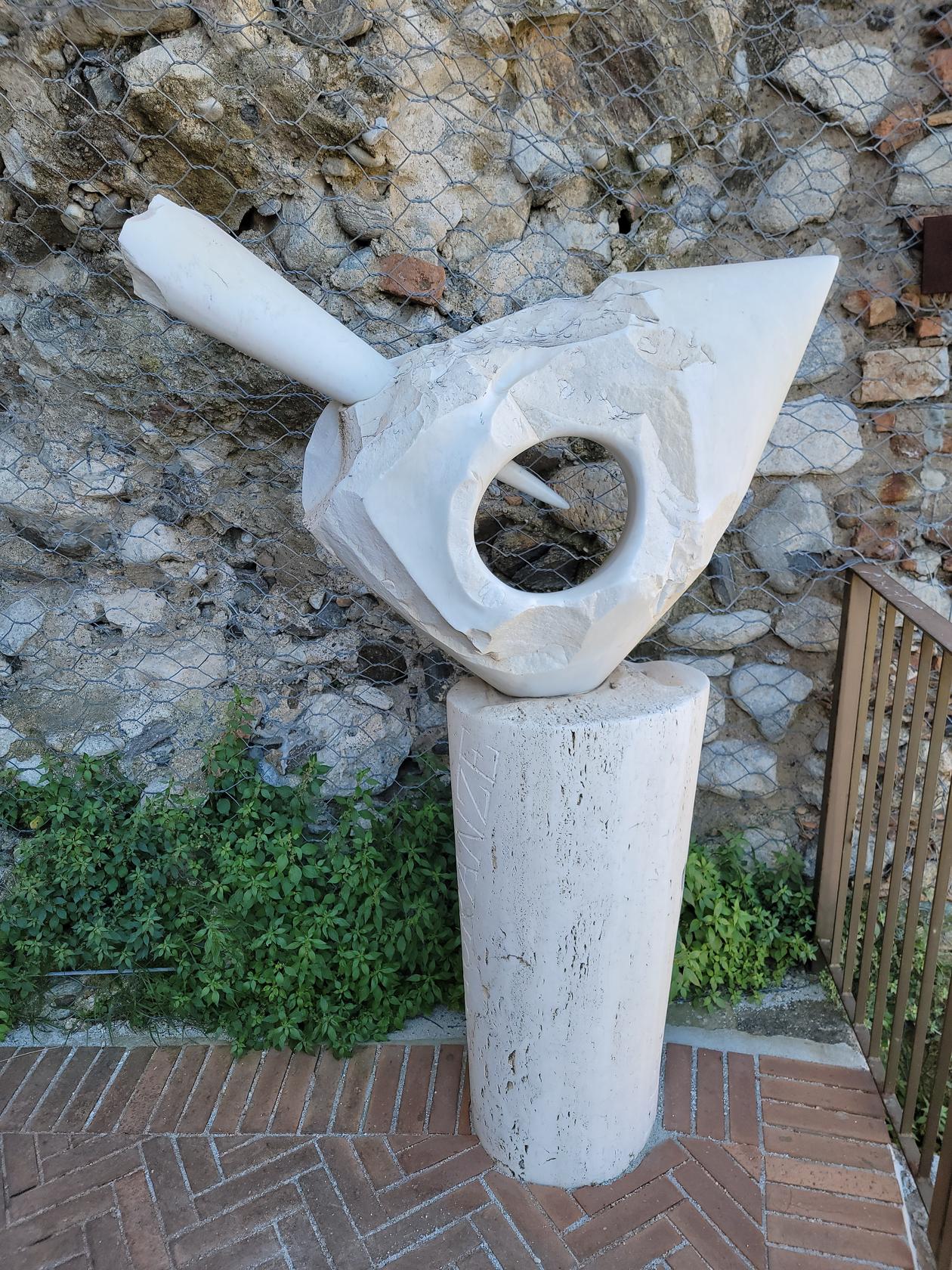
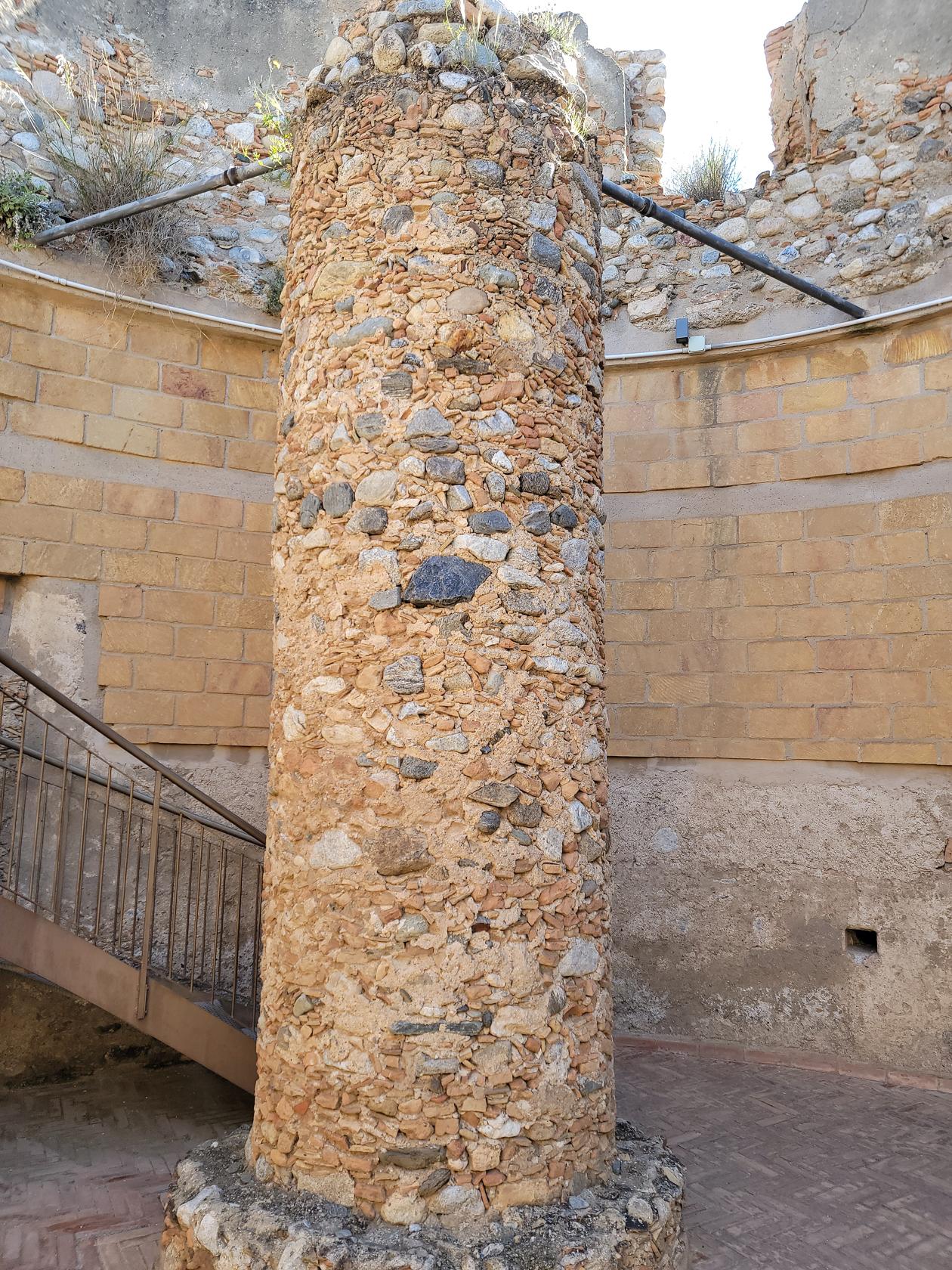
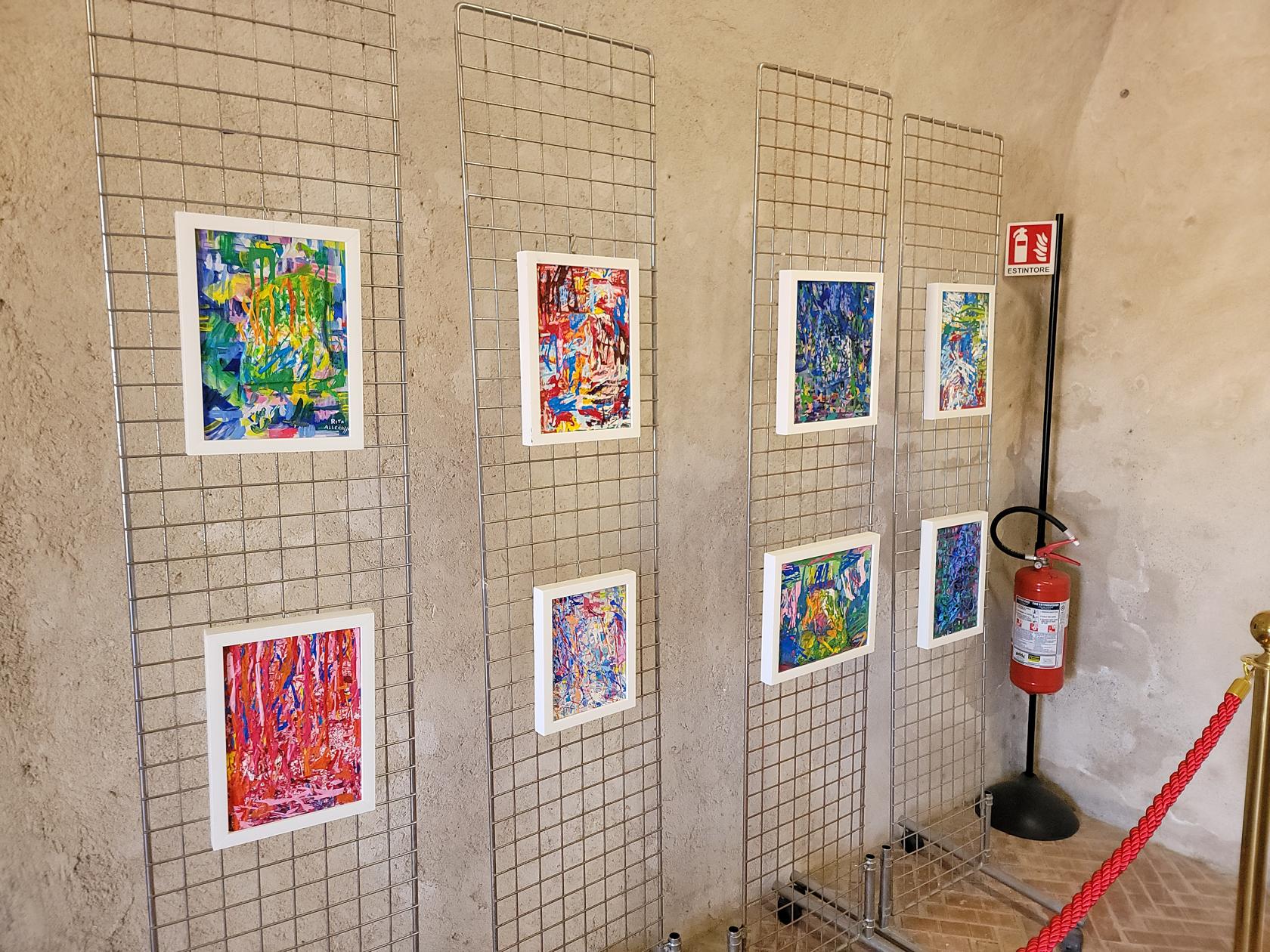
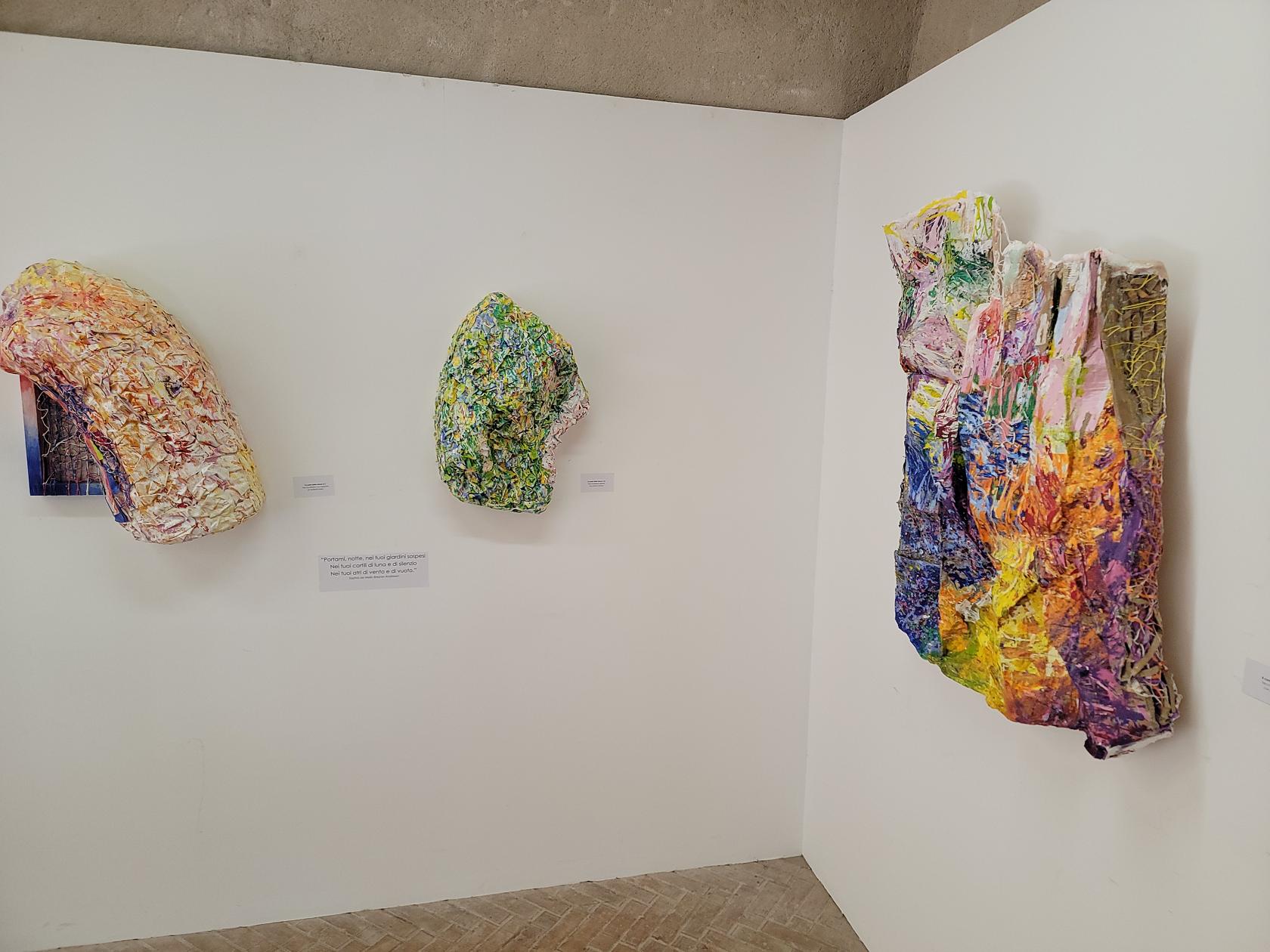
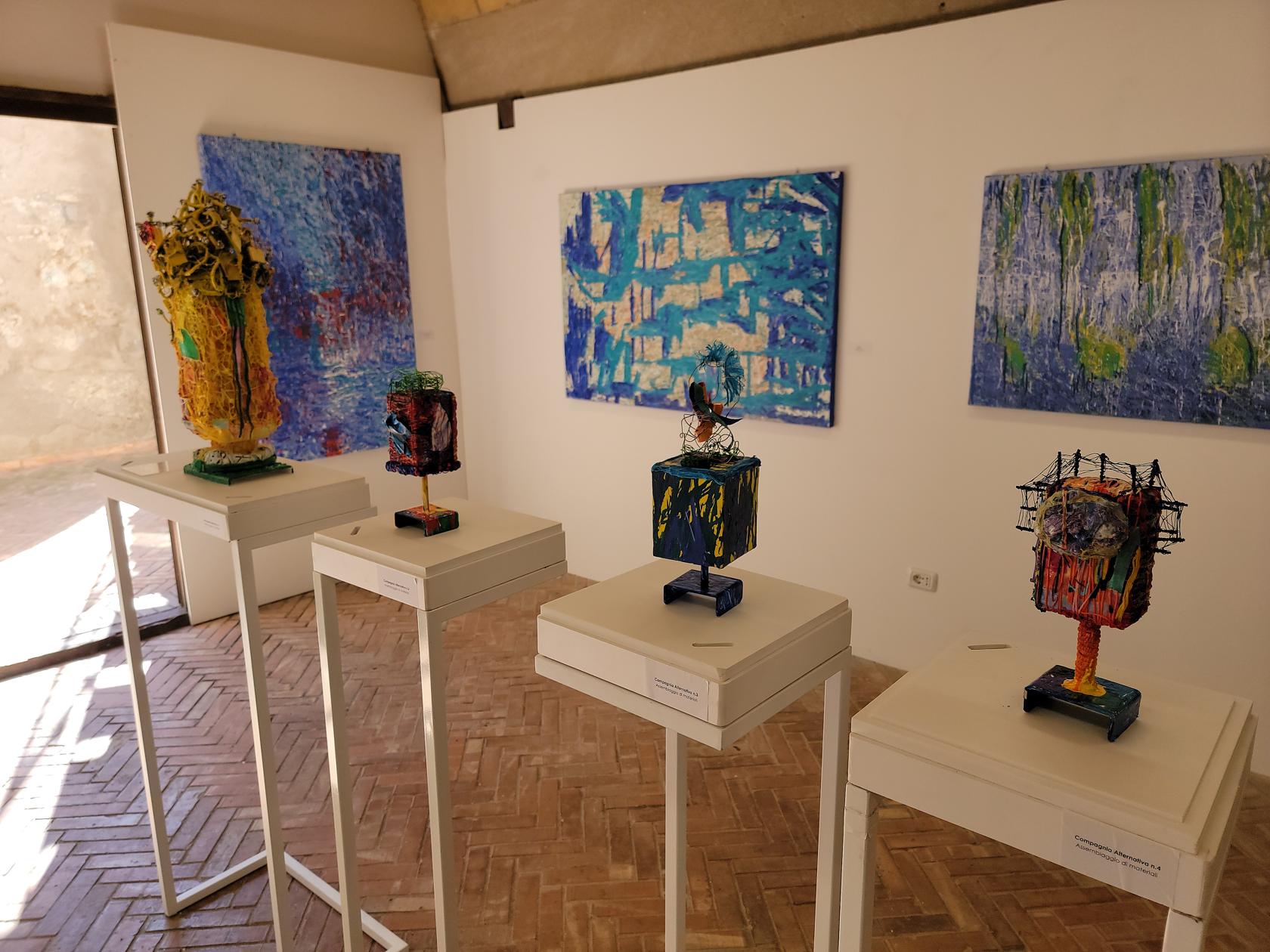
The Castle Aragonese no longer functions as a castle and has been renovated into something more useful, an art museum. Here for a small fee you are able to enjoy two galleries, one in each tower.
North Tower Gallery
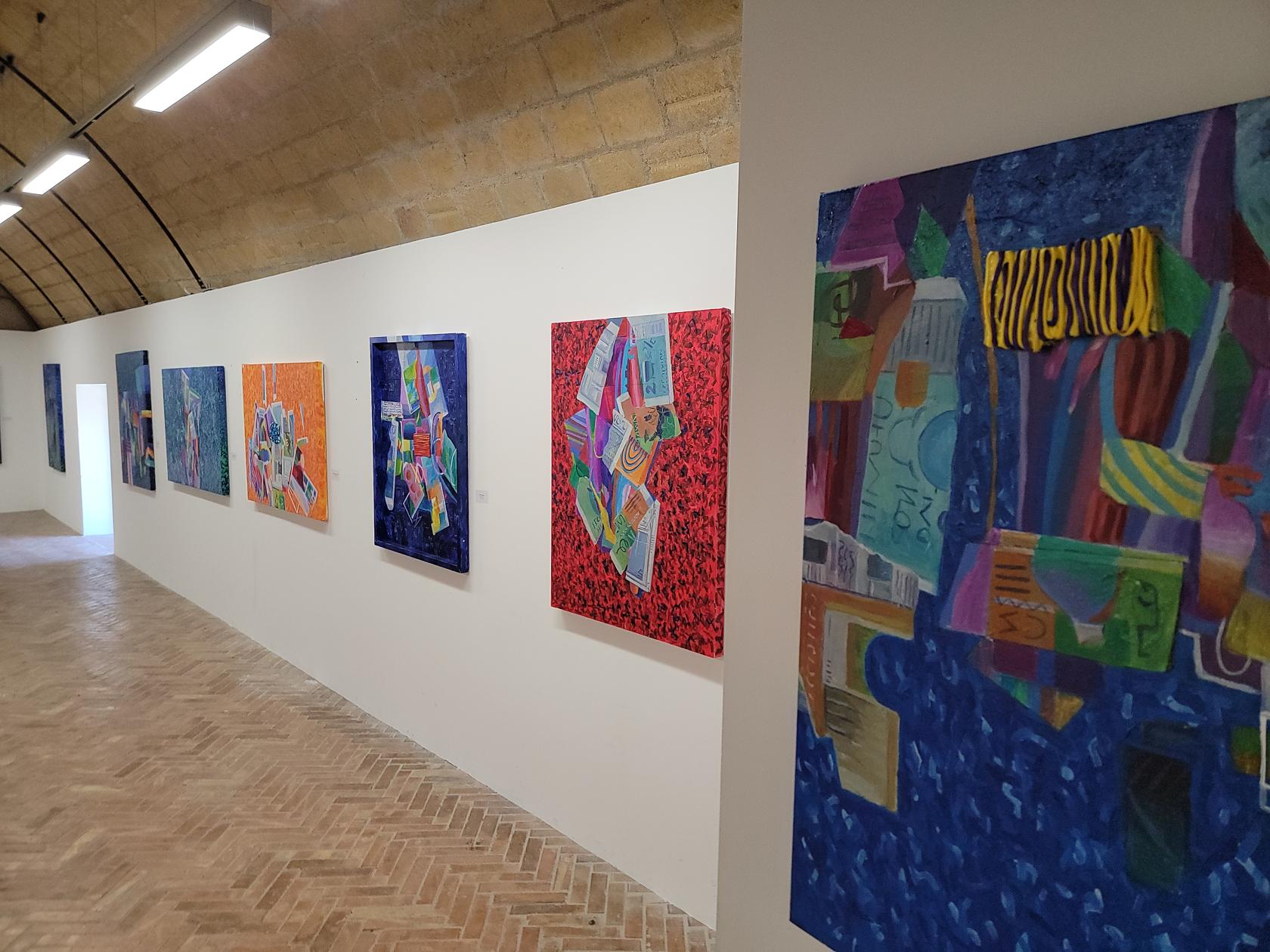
During our visit this gallery had an exhibit of modern paintings, most of which bright colors were used in an almost three dimensional approach.
South Tower Gallery
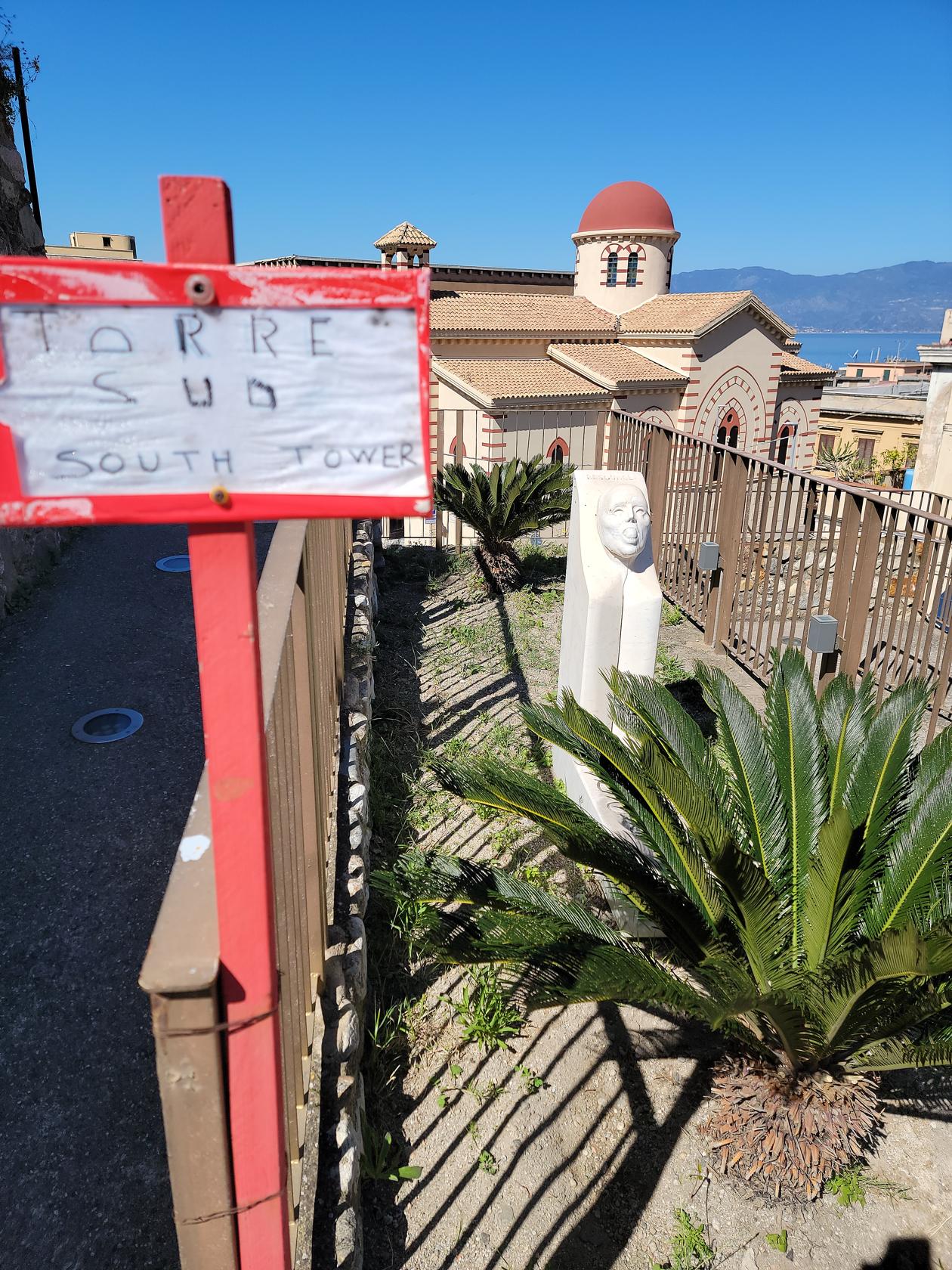
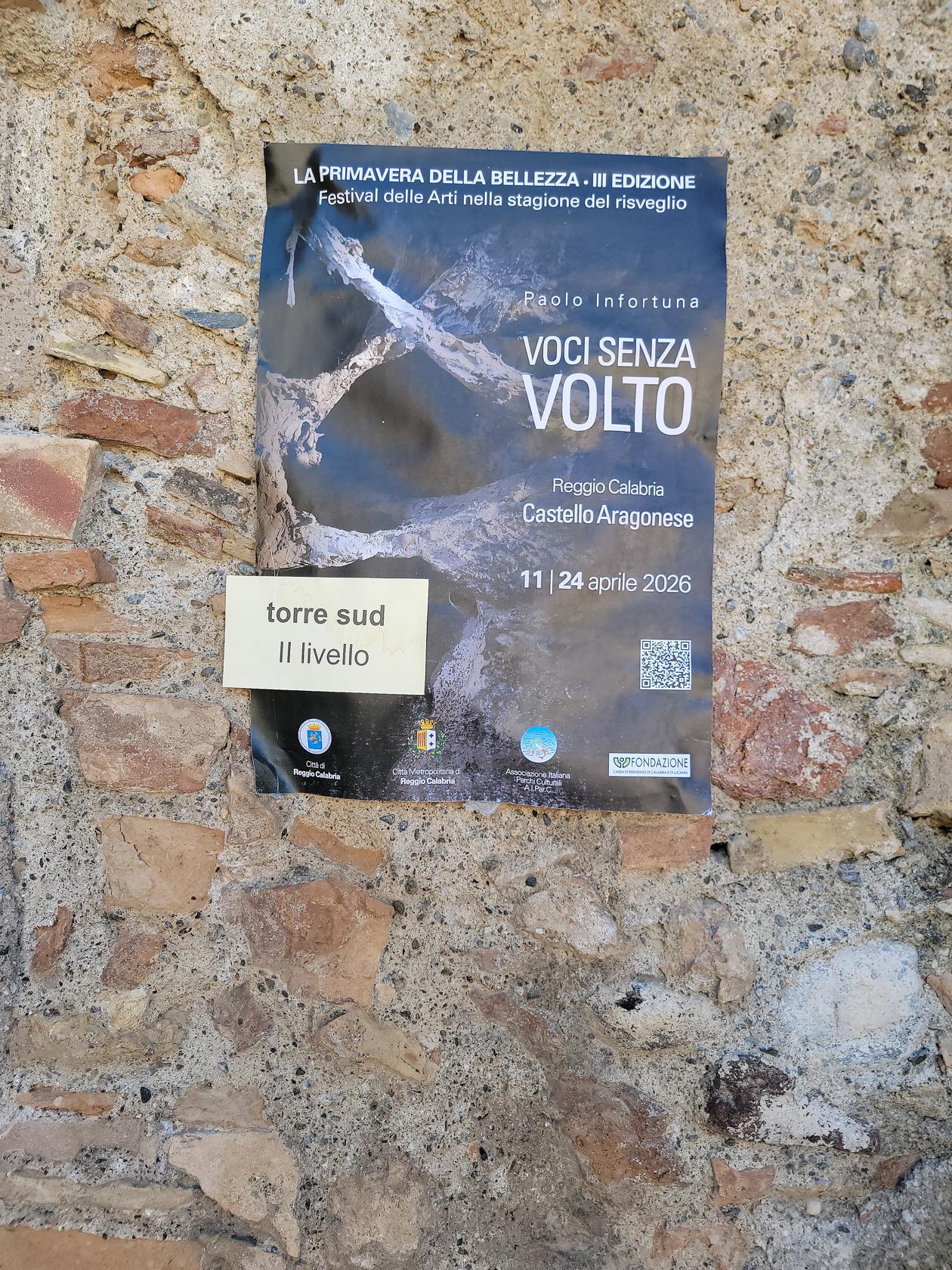
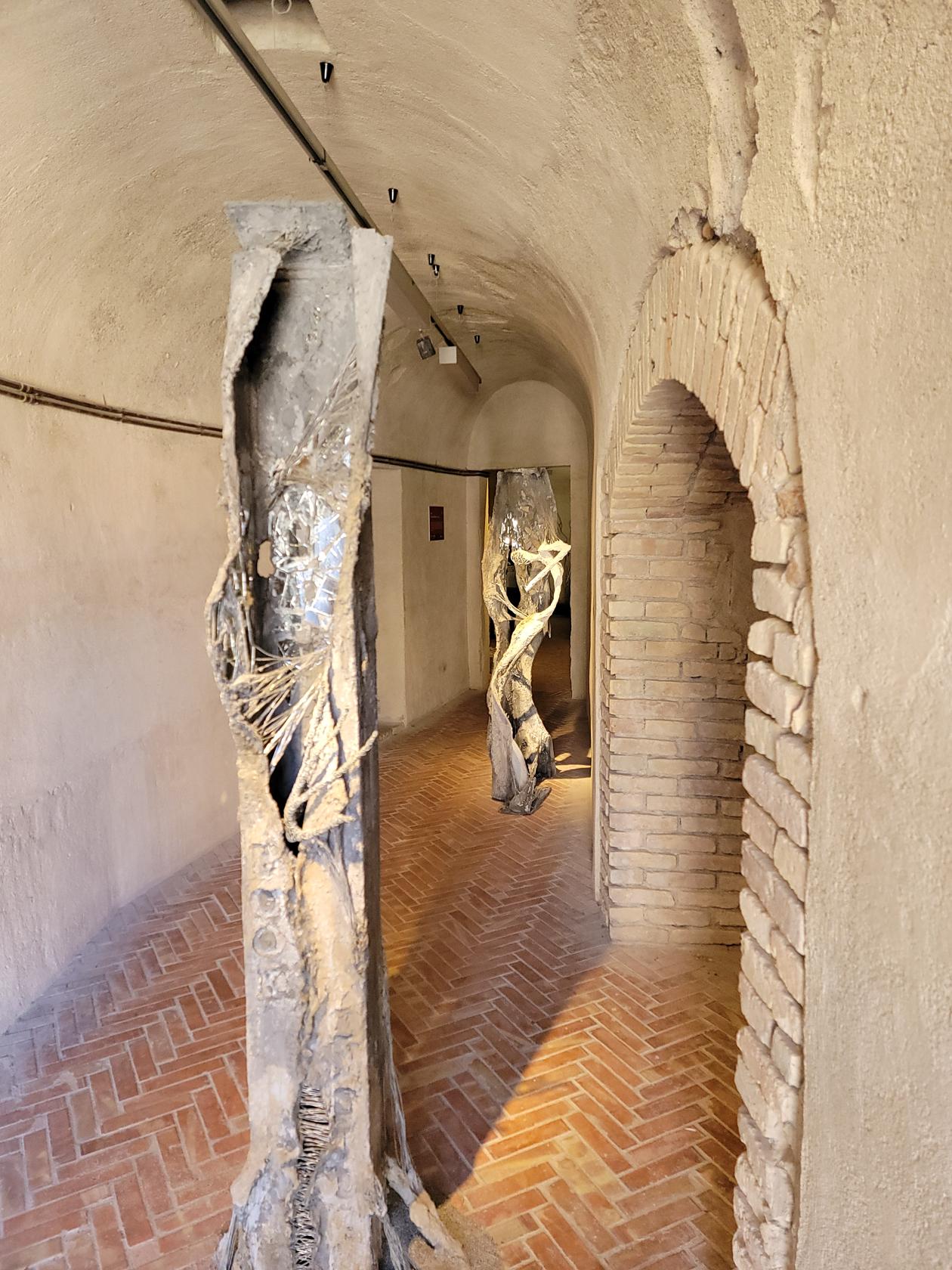
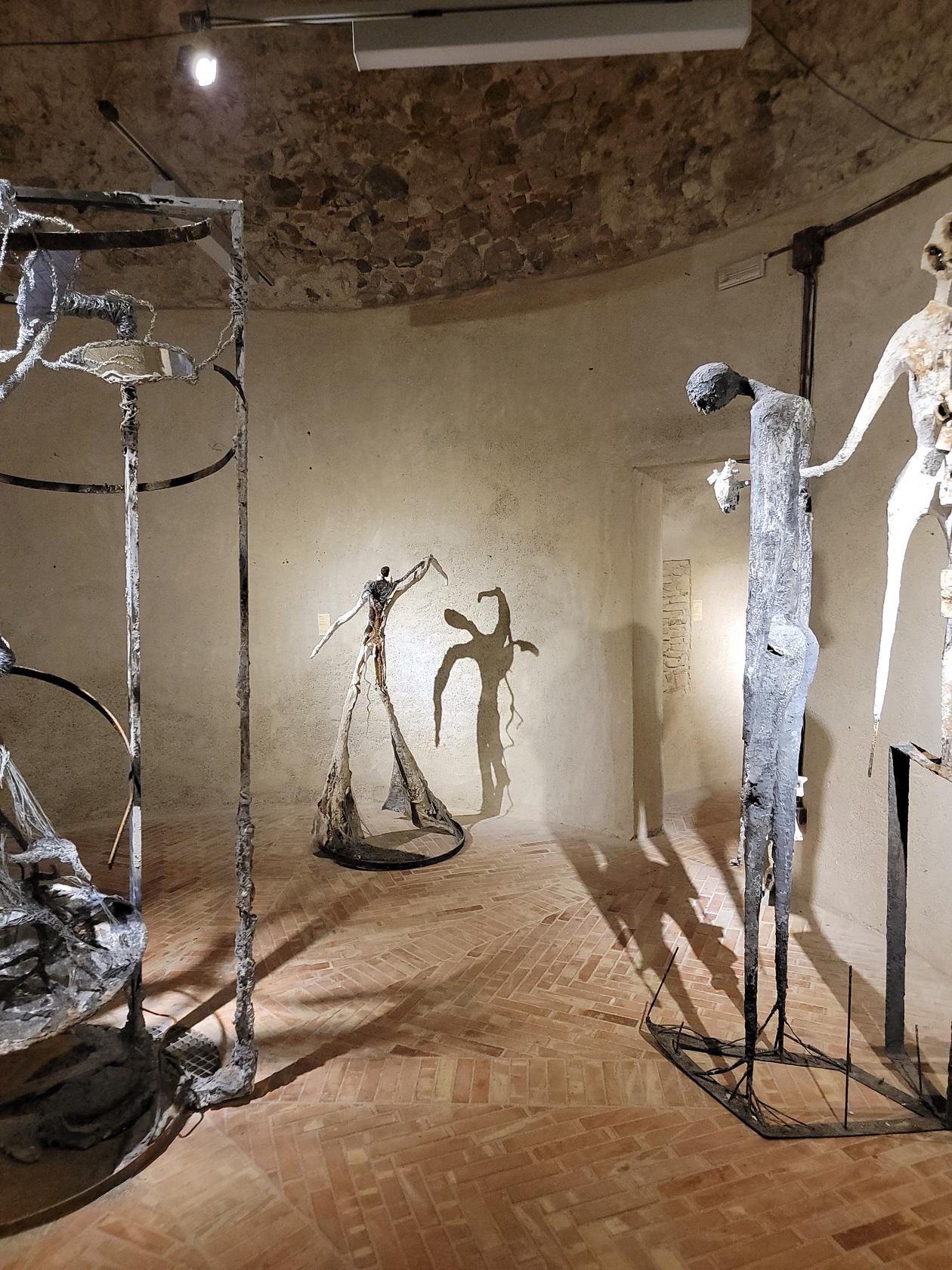
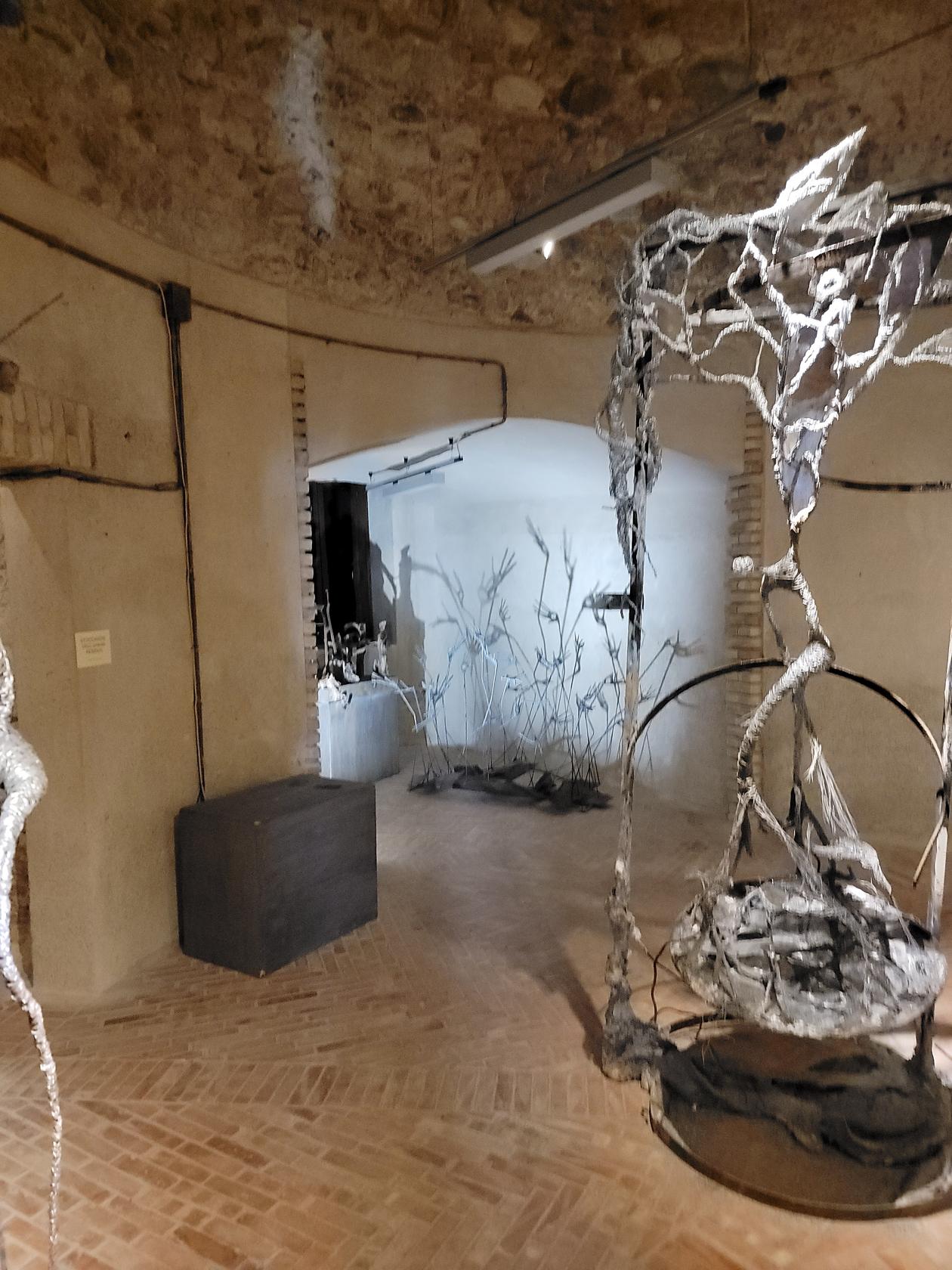
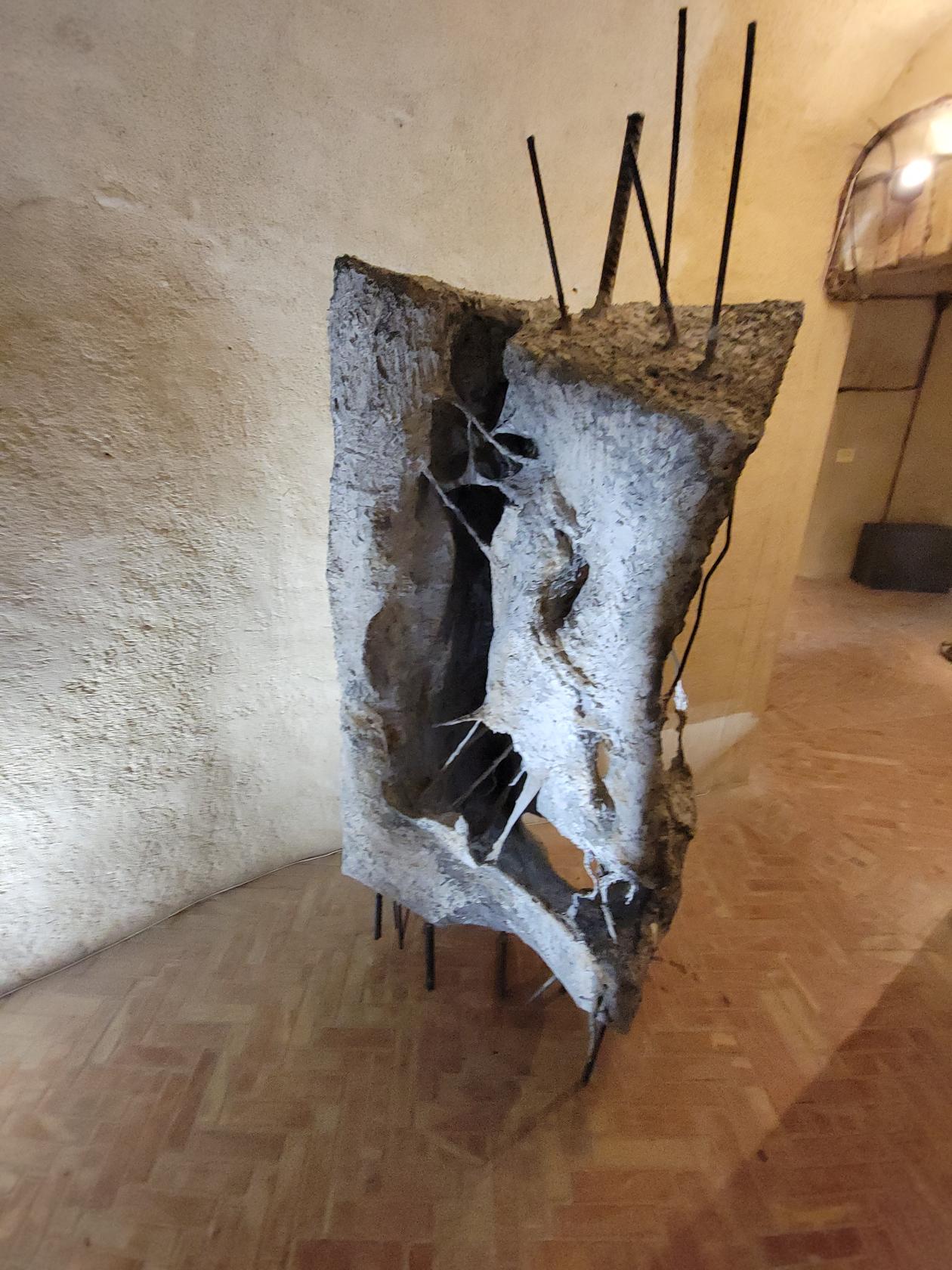
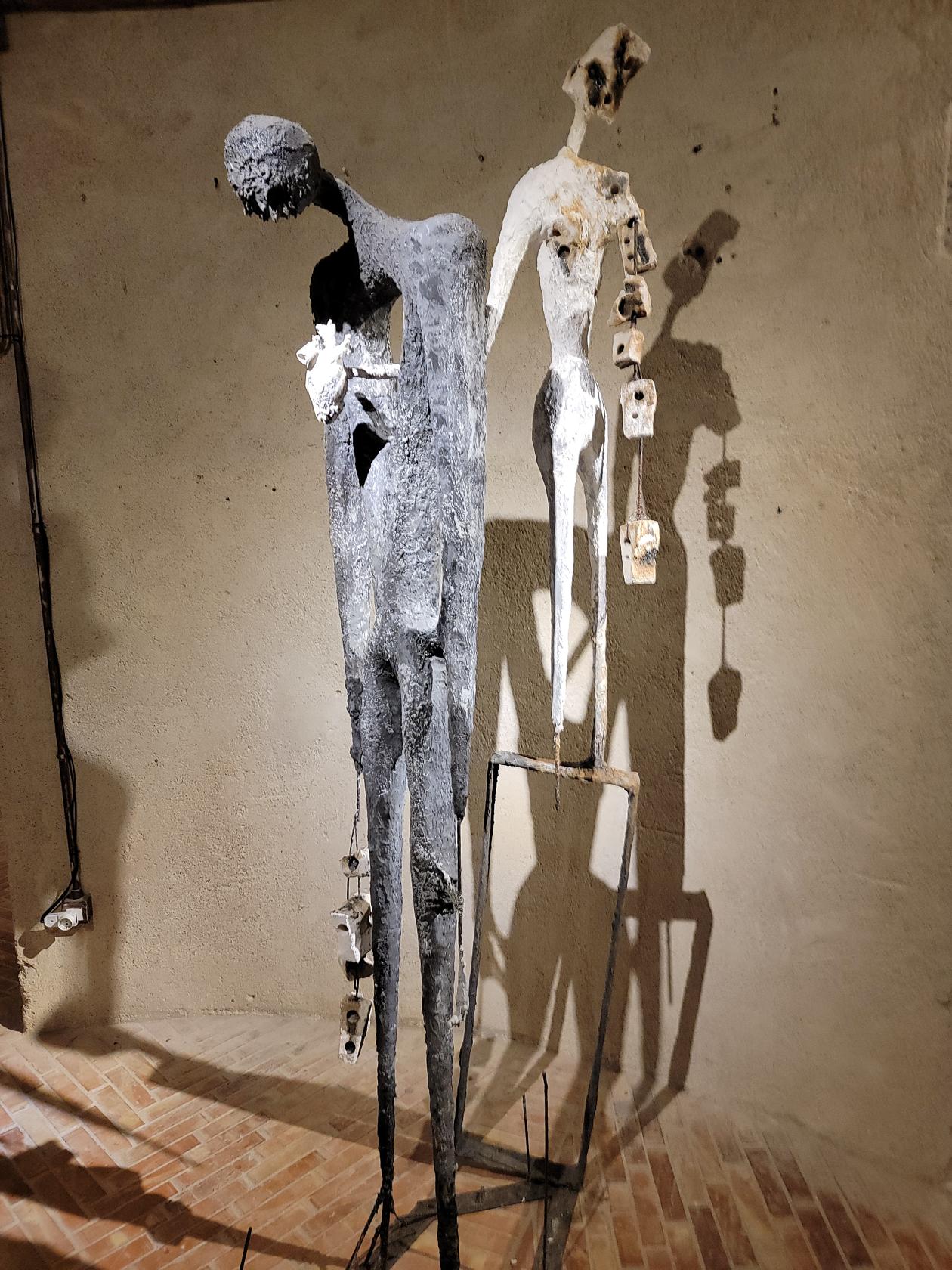
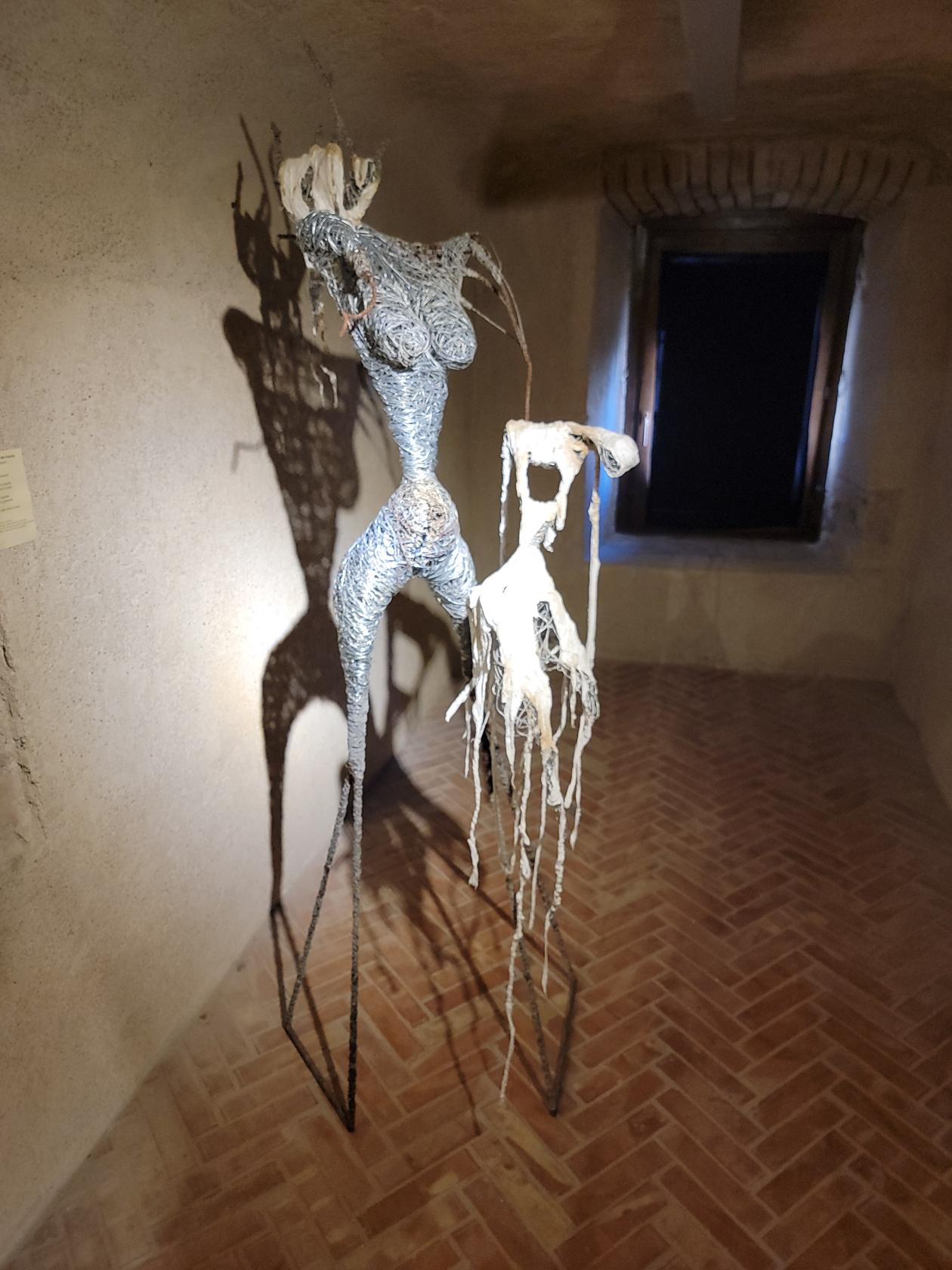
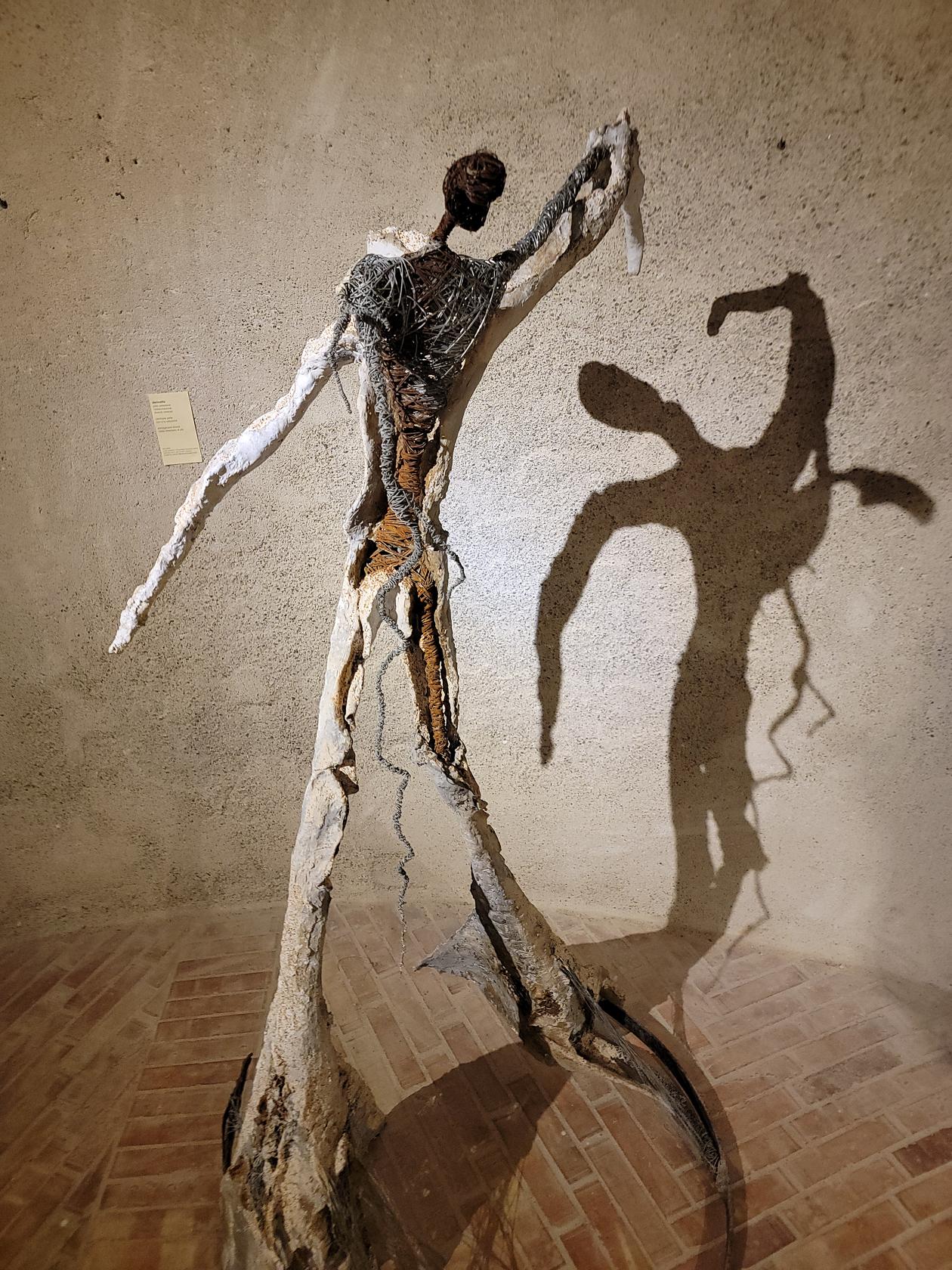
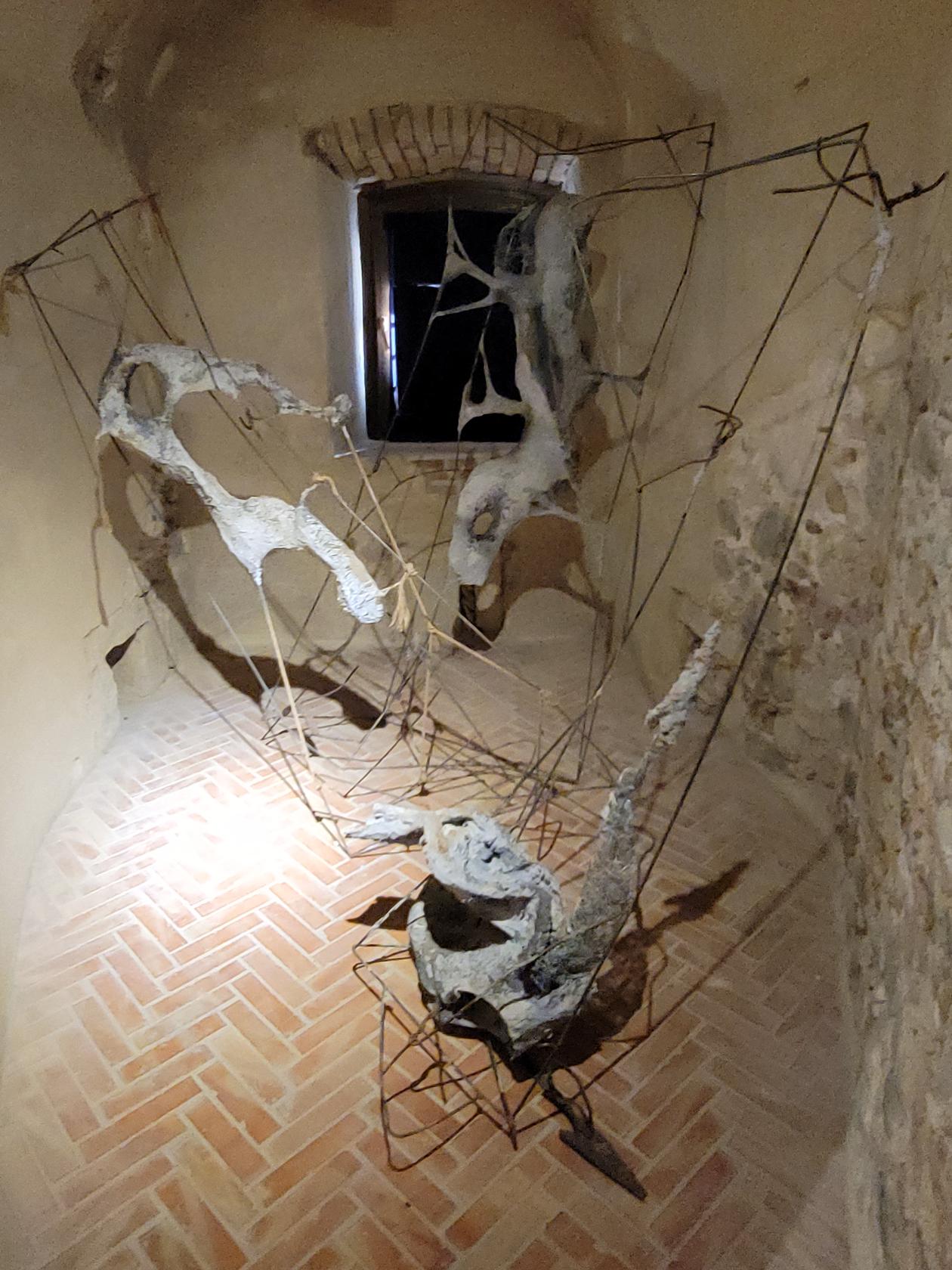
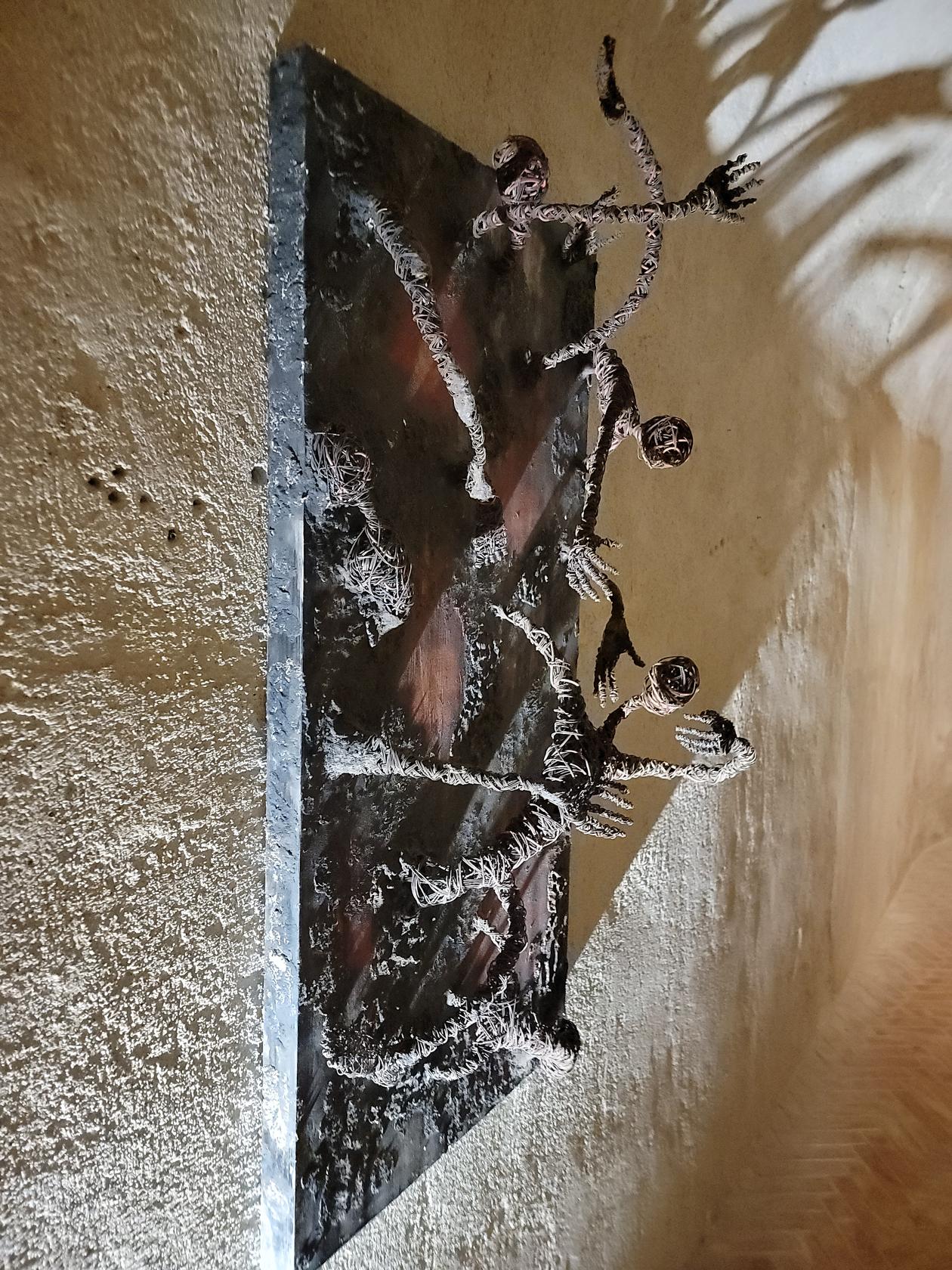
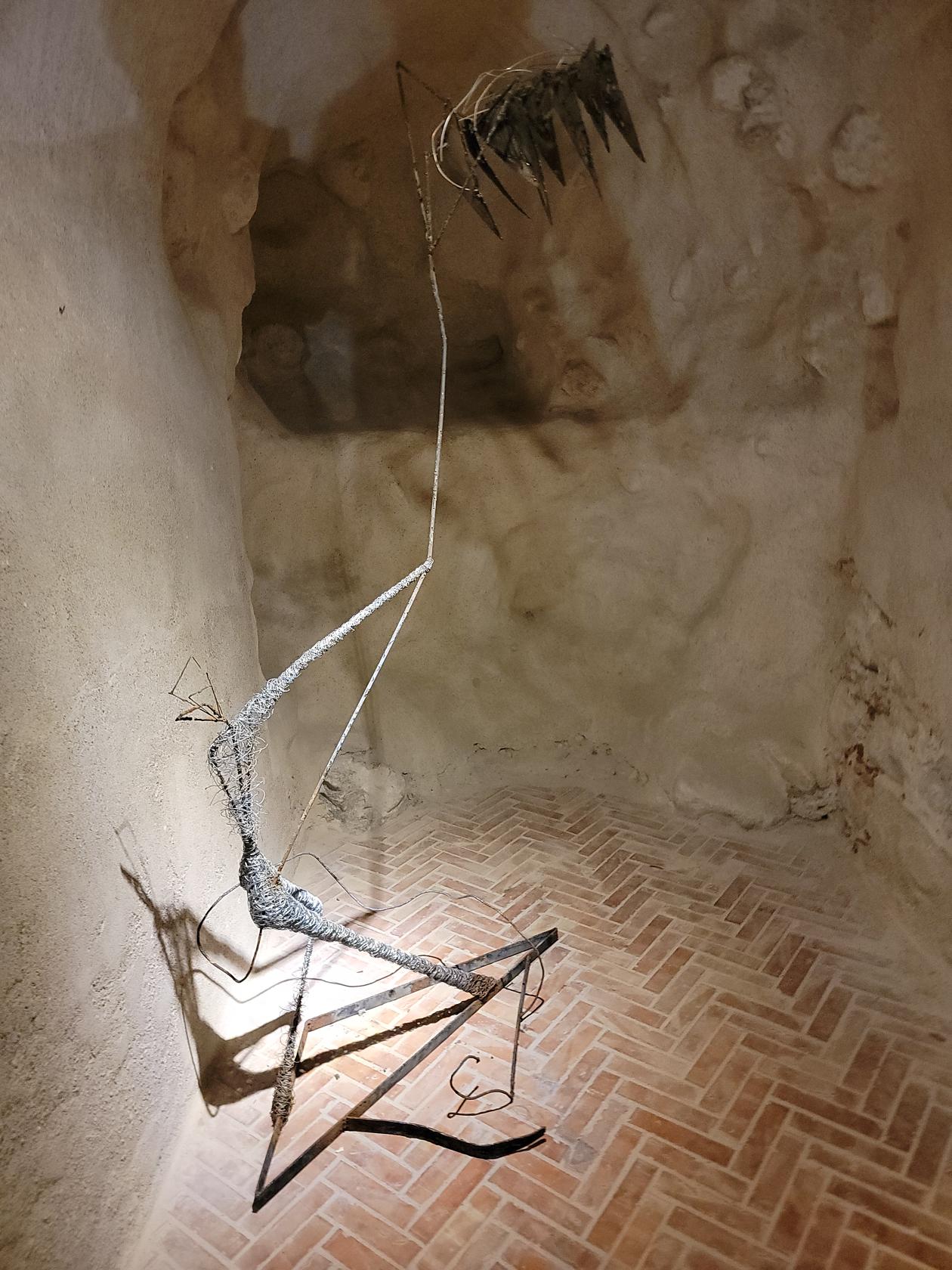
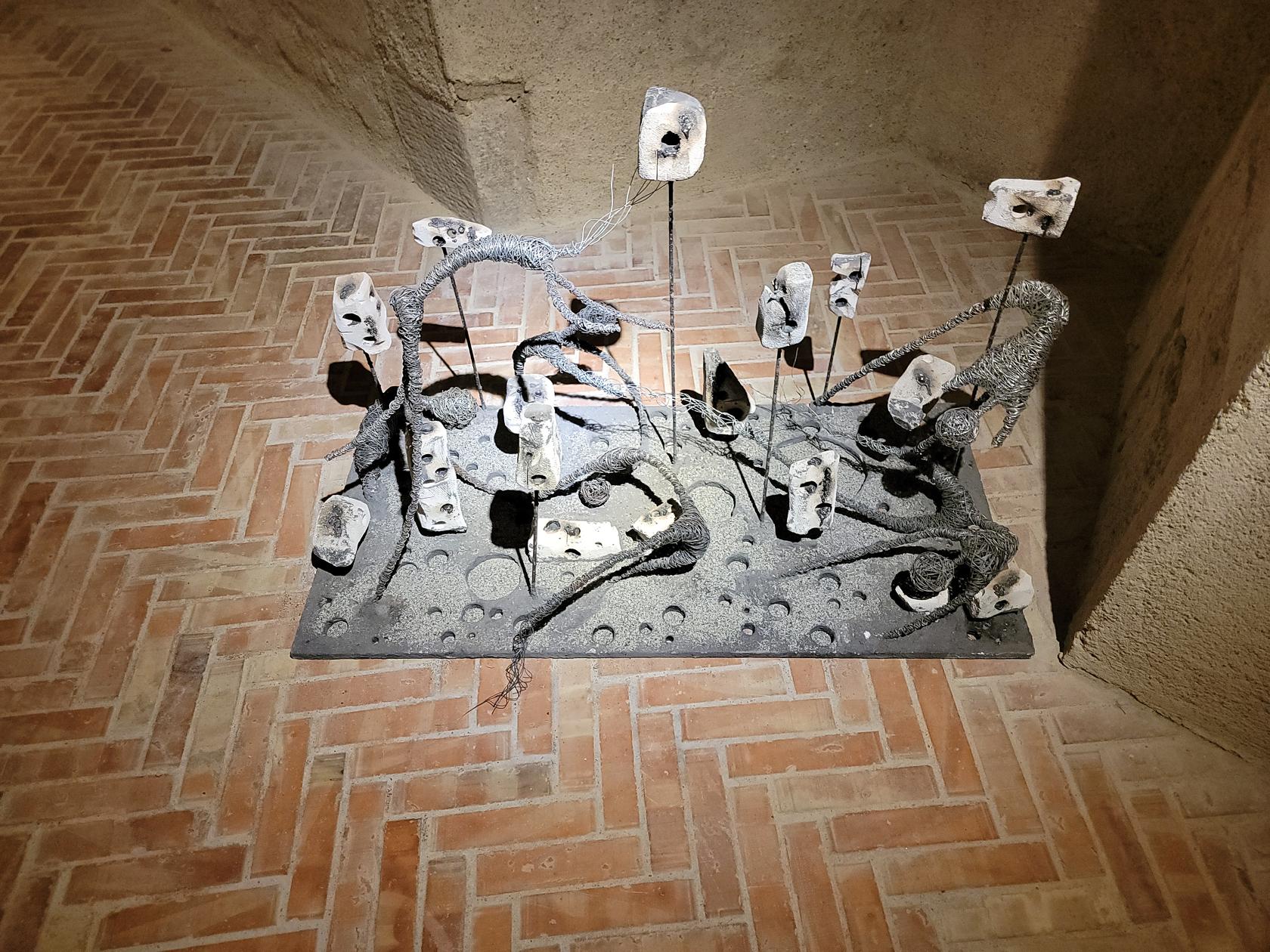
While we were visiting this tower housed a collection of art known as Voci senza Volto, or Voices without a Face. An effective and provocitive collection of art, which appears part surreal and part dystopian and gets the viewer to think about signs of struggle, longing and hardship. This was the high point of the trip for me.
Villas And Palazzos
There are a few villas and palazzos of import in the city.
Villa Genoese Zerbi
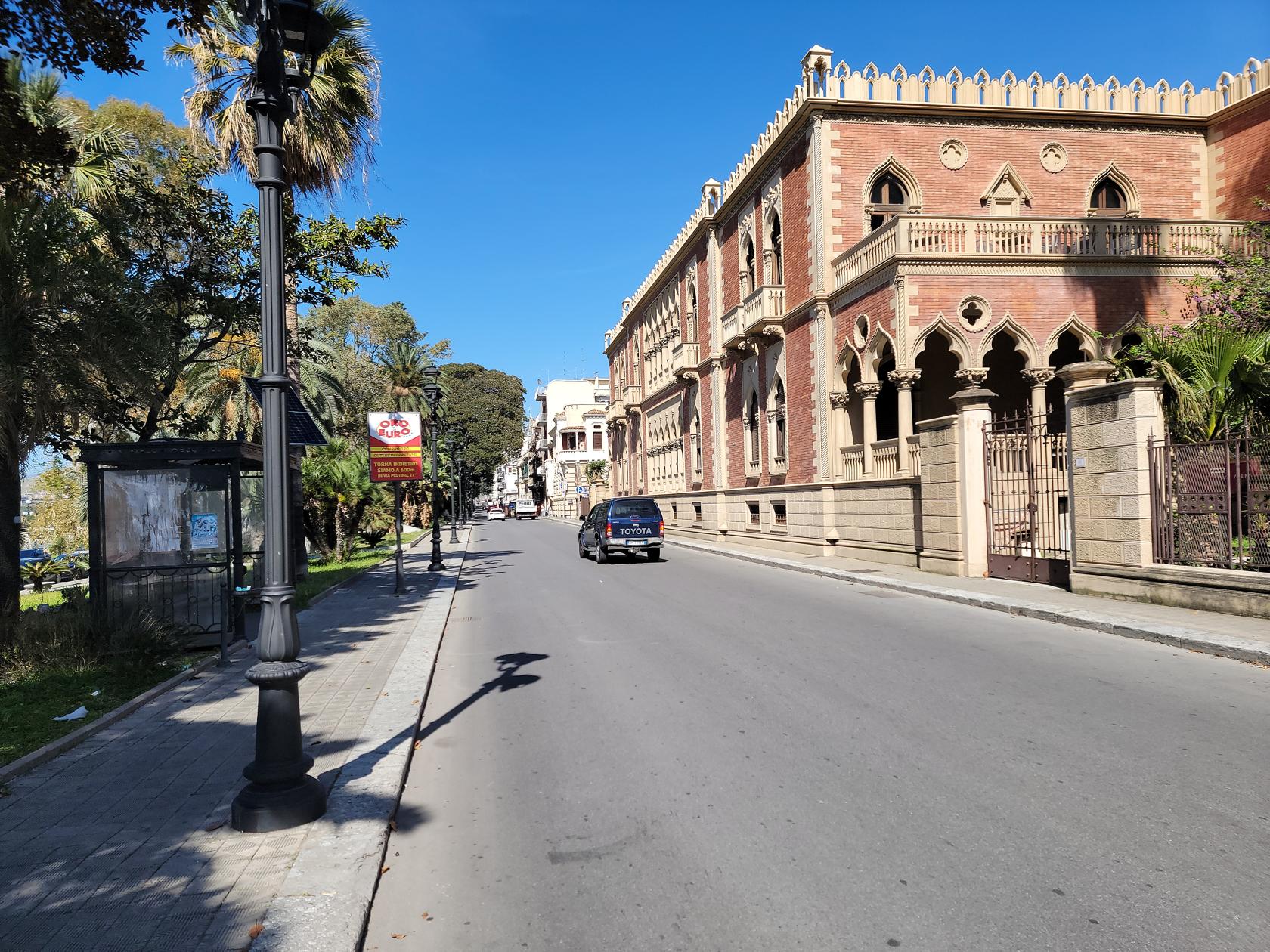
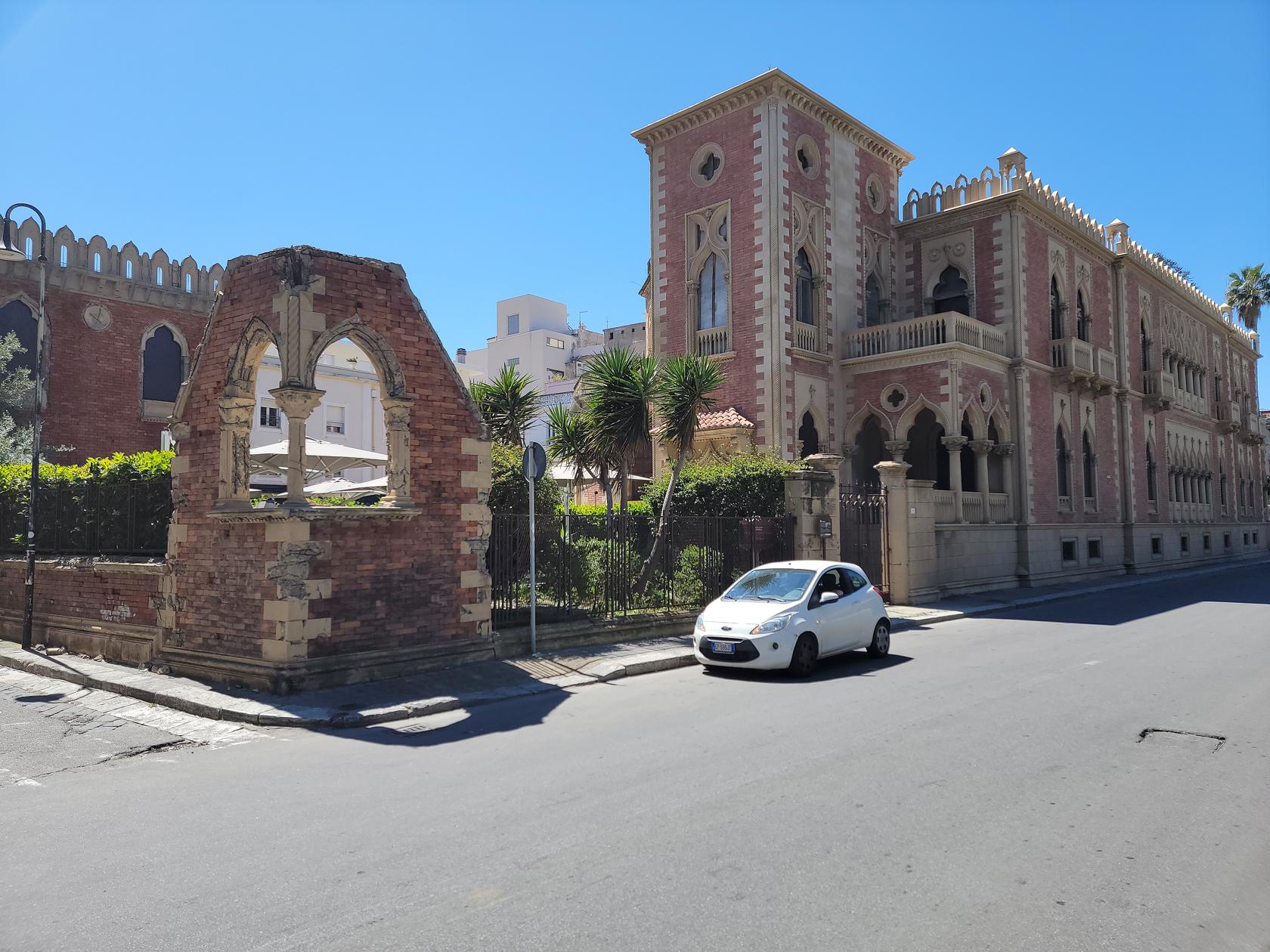
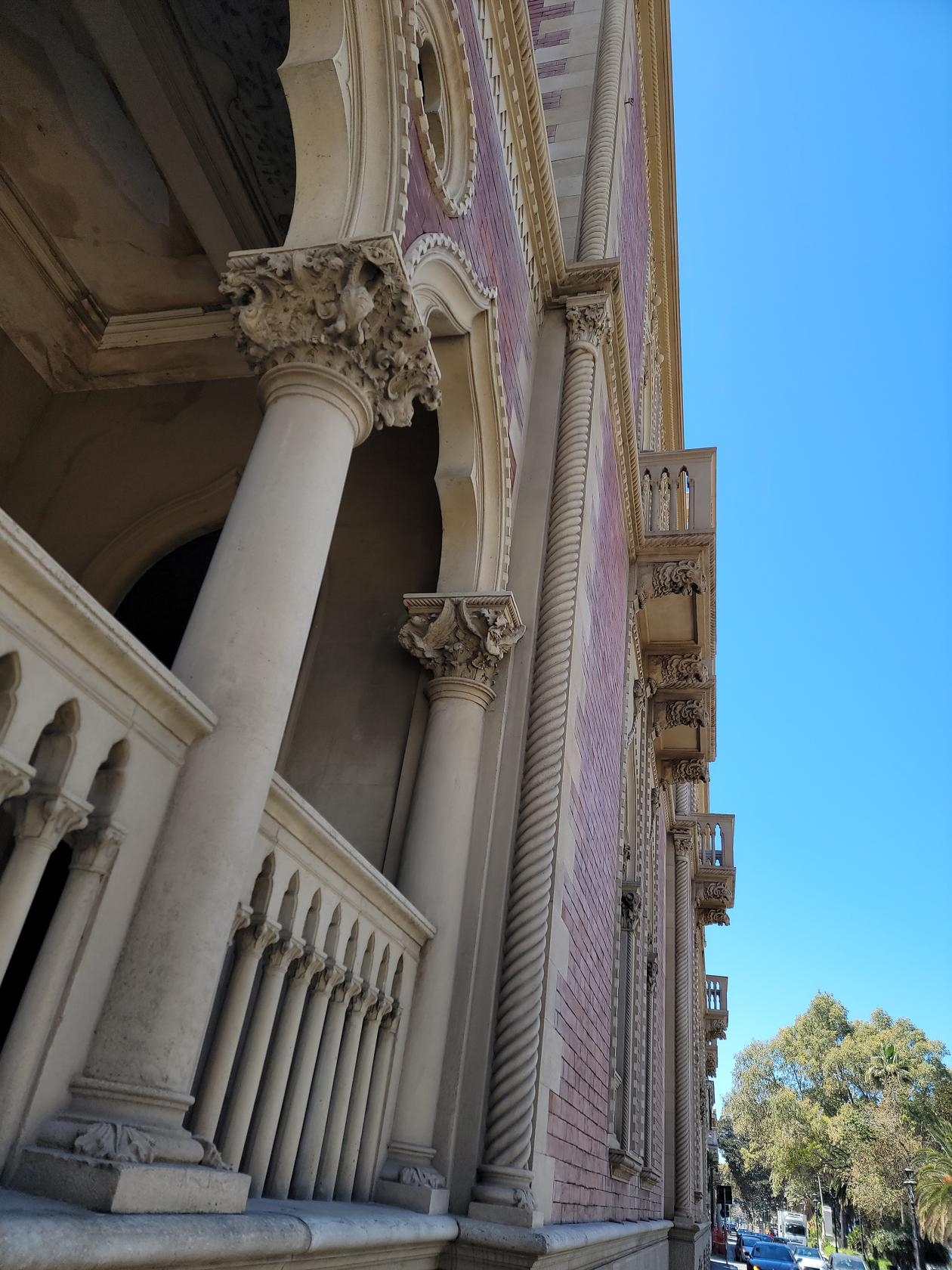
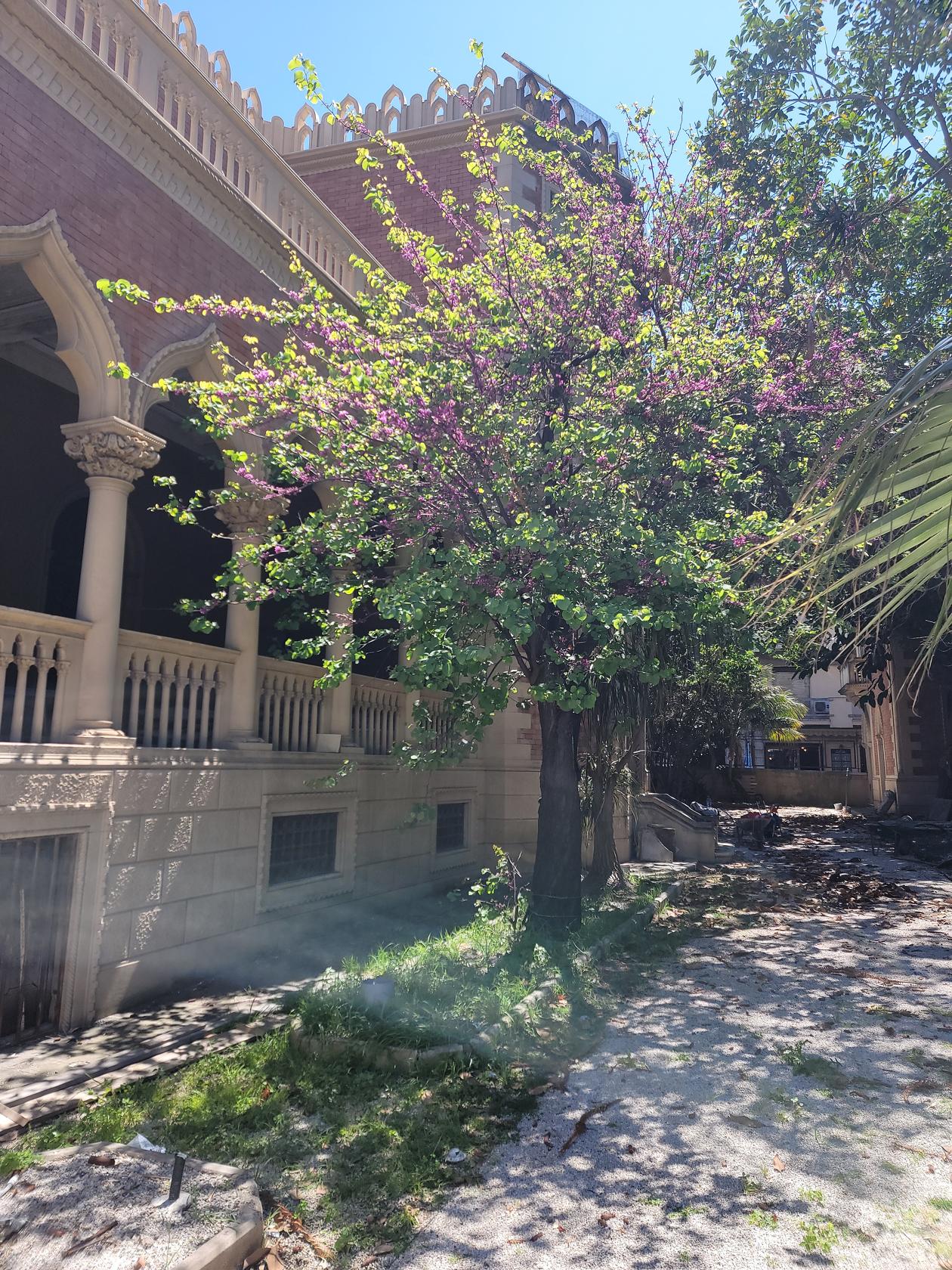
A beautiful Venetian Art Nouveau style building on the Corso Emanuele is the villa of Genoese Zerbi. The original was destroyed in the great quake, but it was completely restored and now is one of the main charms of the city.
Palazzos Spinelli and Giuffrè
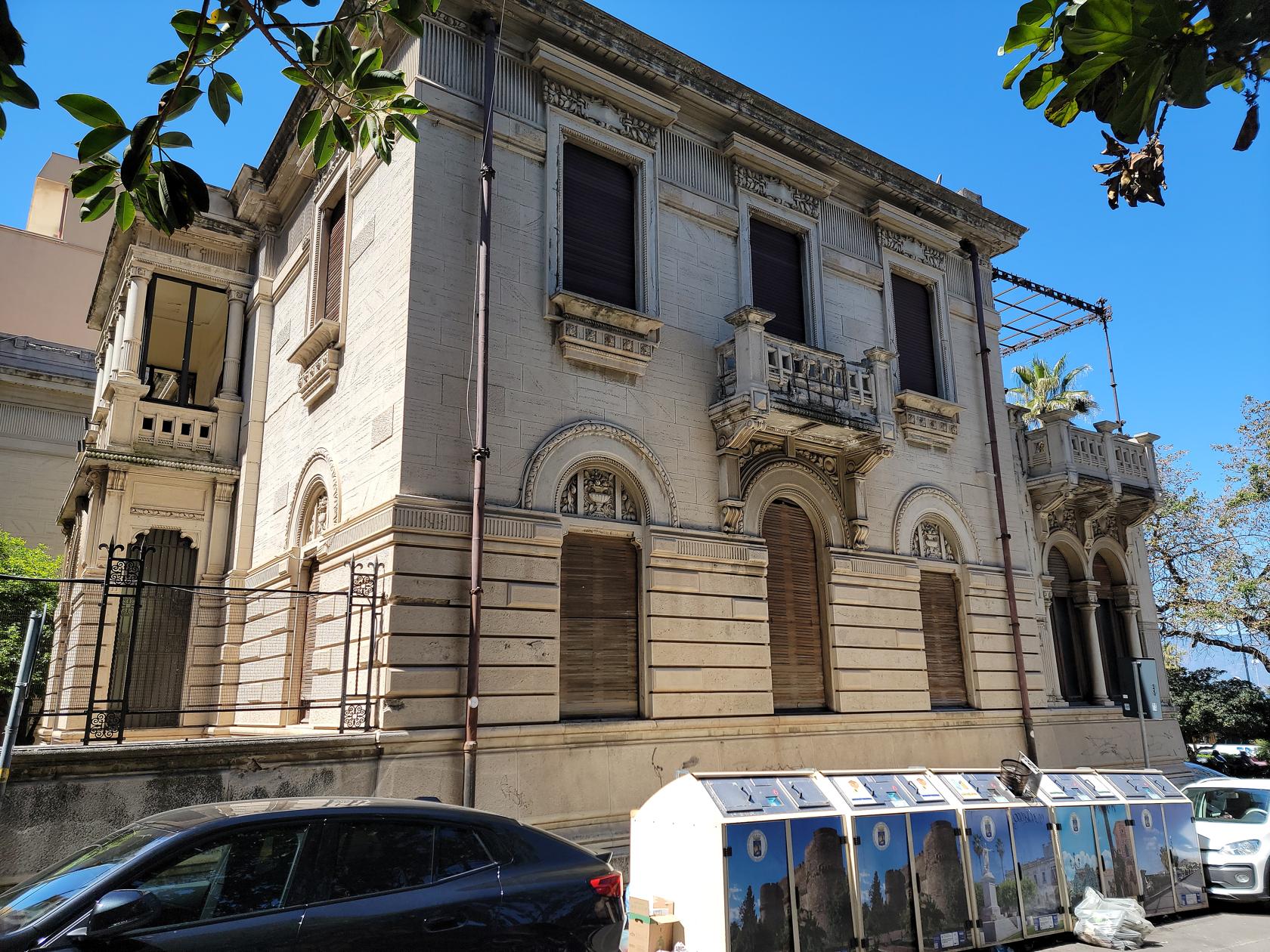
These two palazzos are side by side on the Corso Emanuele by the waterfront. Both appear to need some work. Palazzo Spinelli offers a great example of Calabrian architecture and Art Nouveau, or the liberty style.
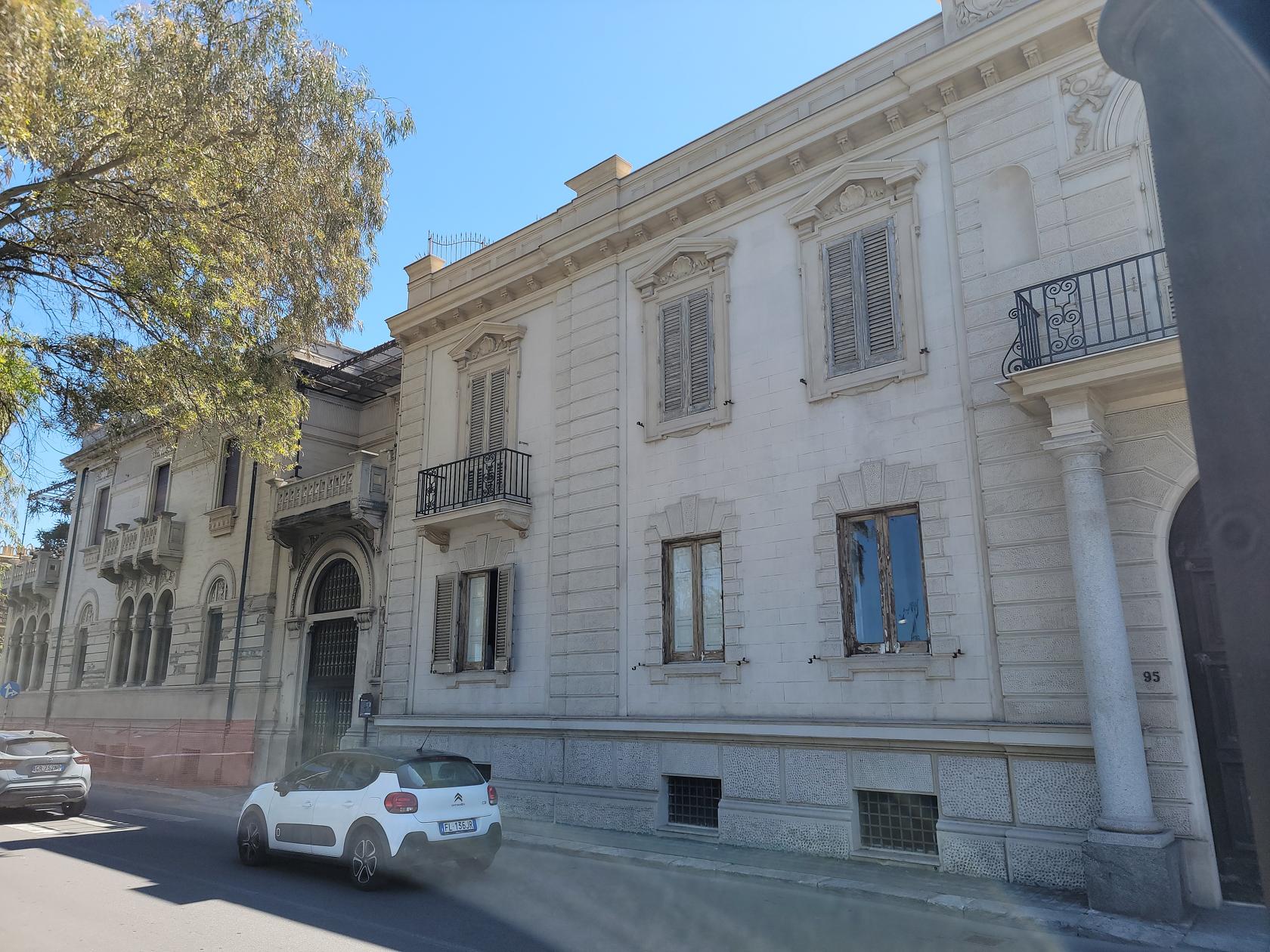
Palazzo Giuffrè on the other hand offers a more mundane example, and is reminiscent of other buildings you will find in other large Italian cities.
Restaurants
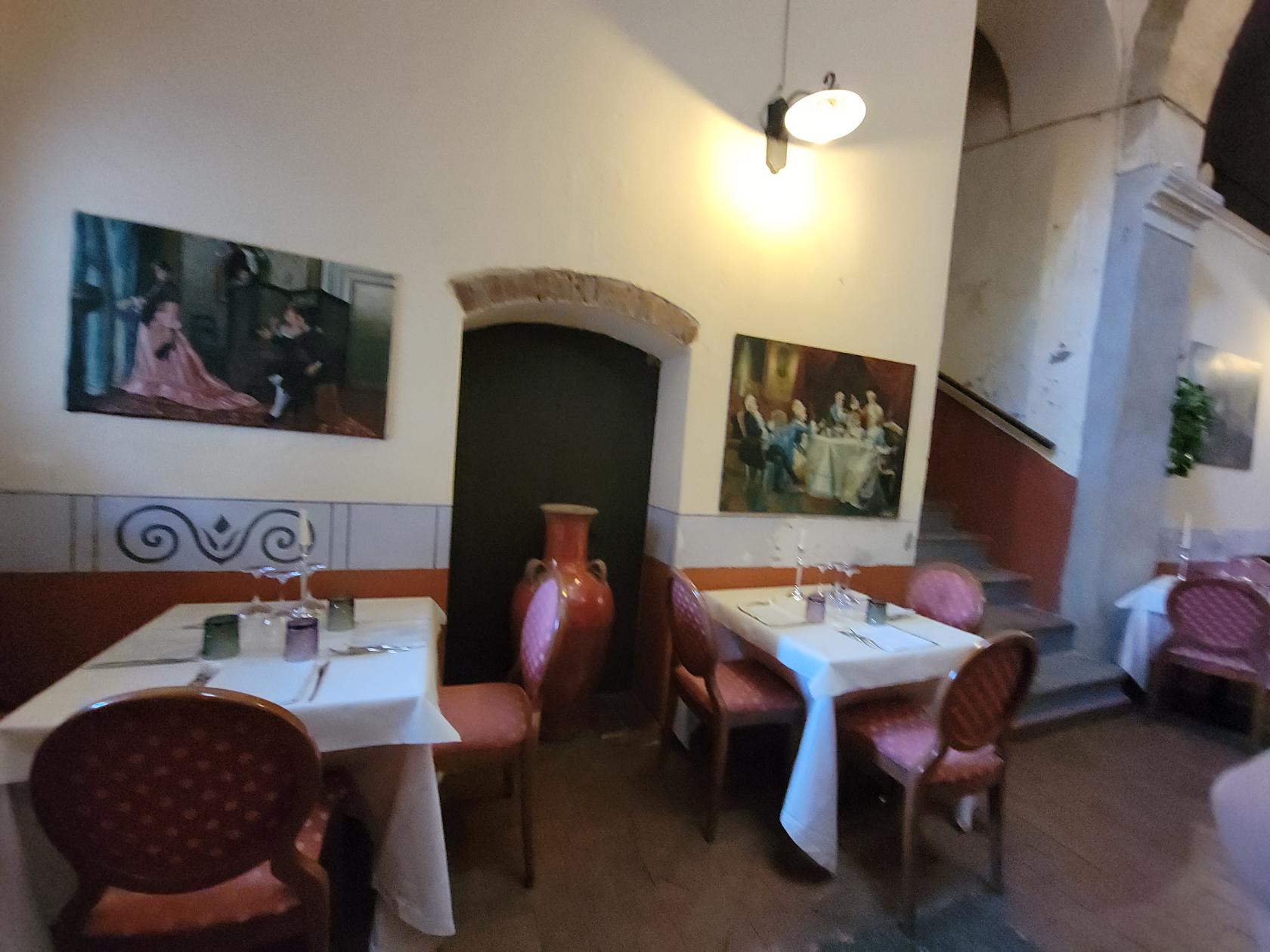
Drogheria Culinaria
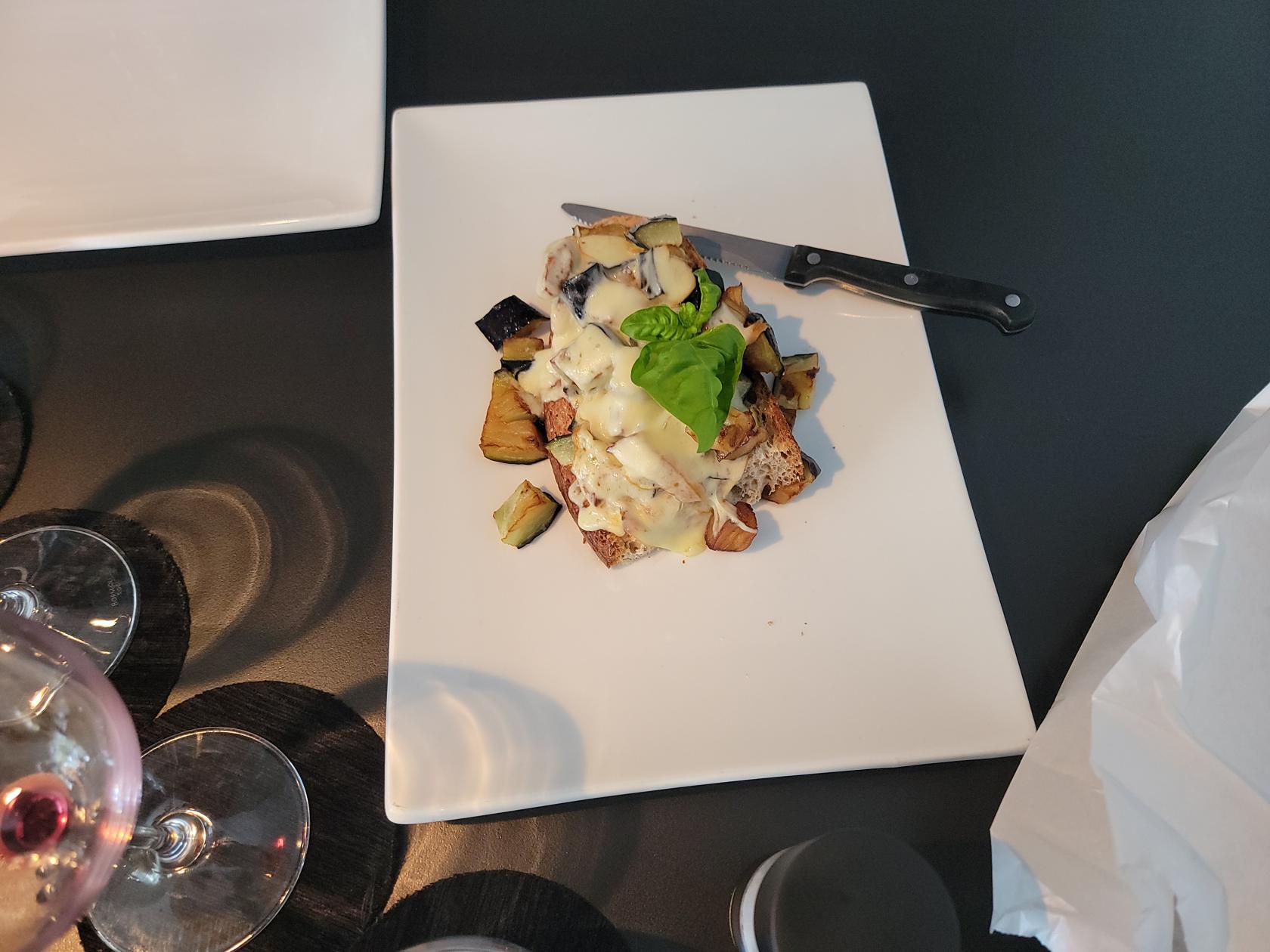
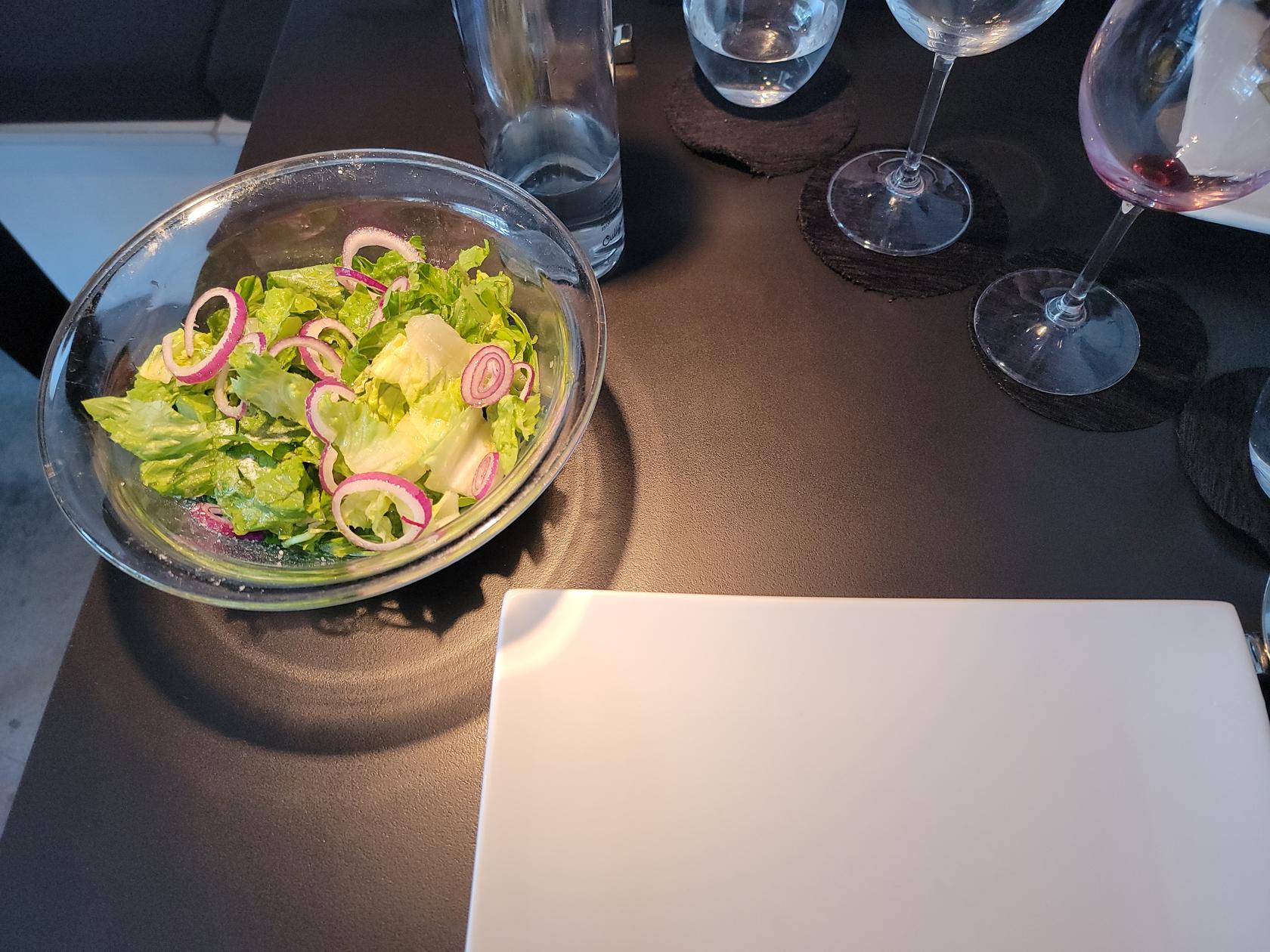
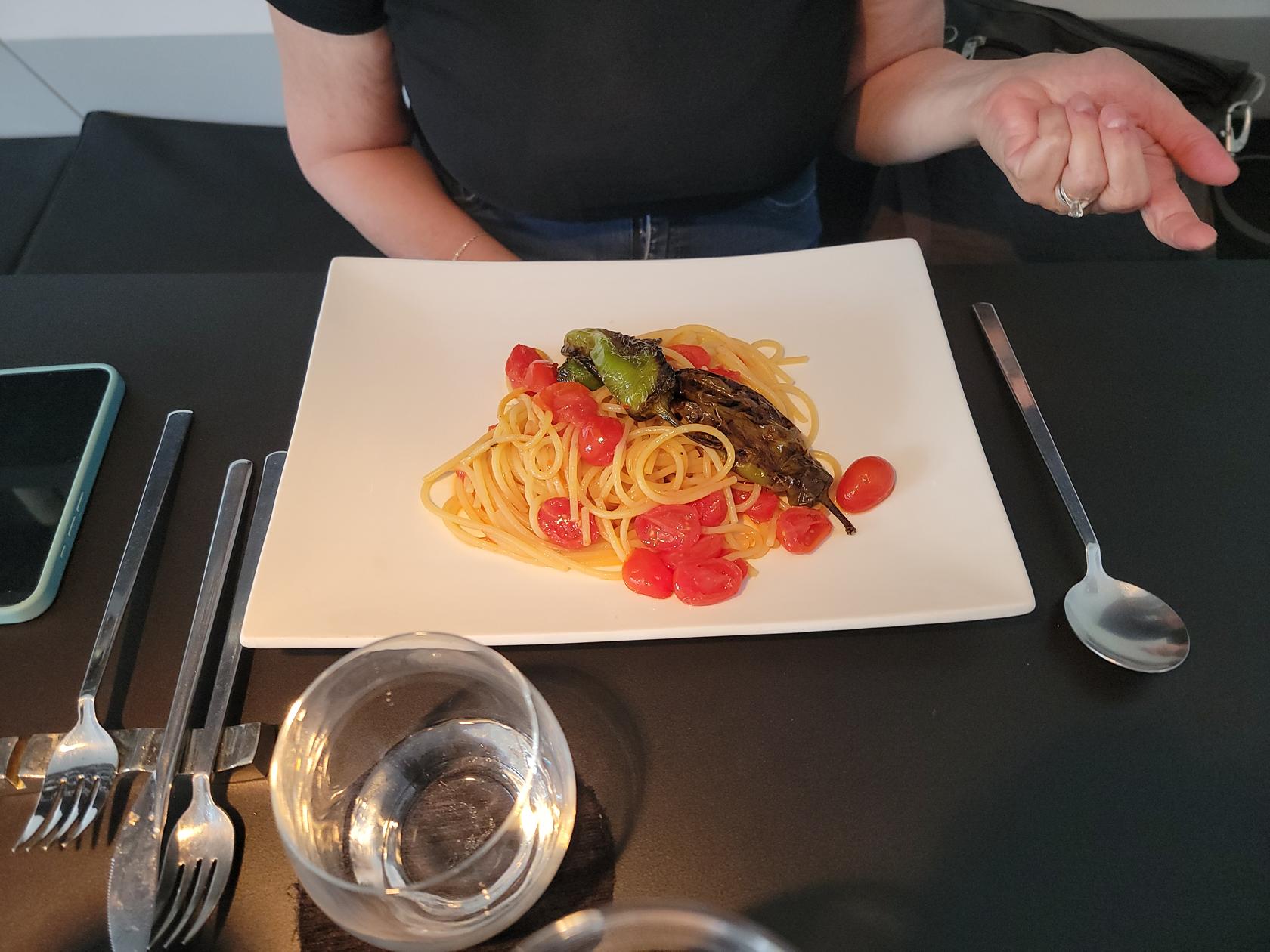
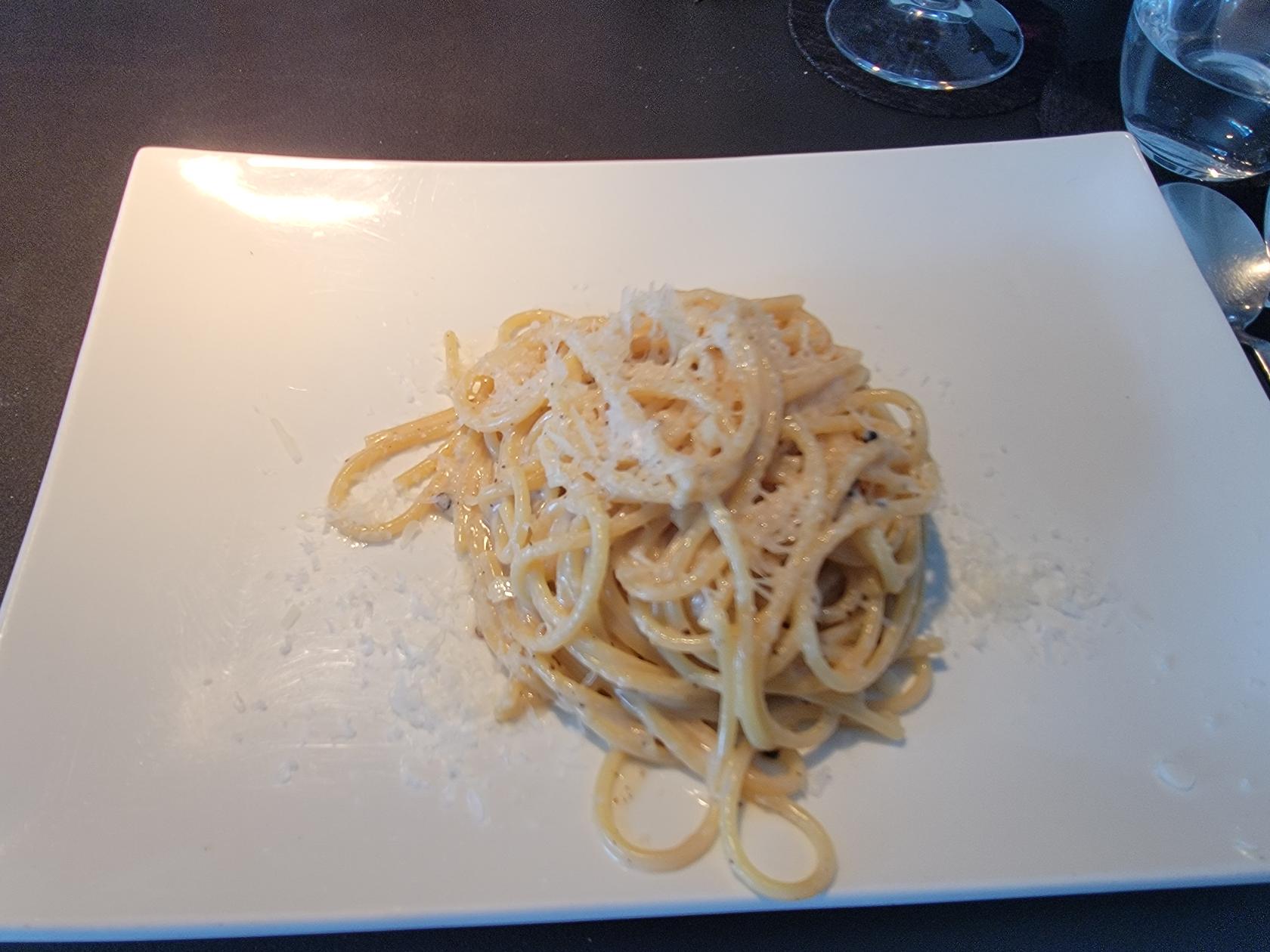
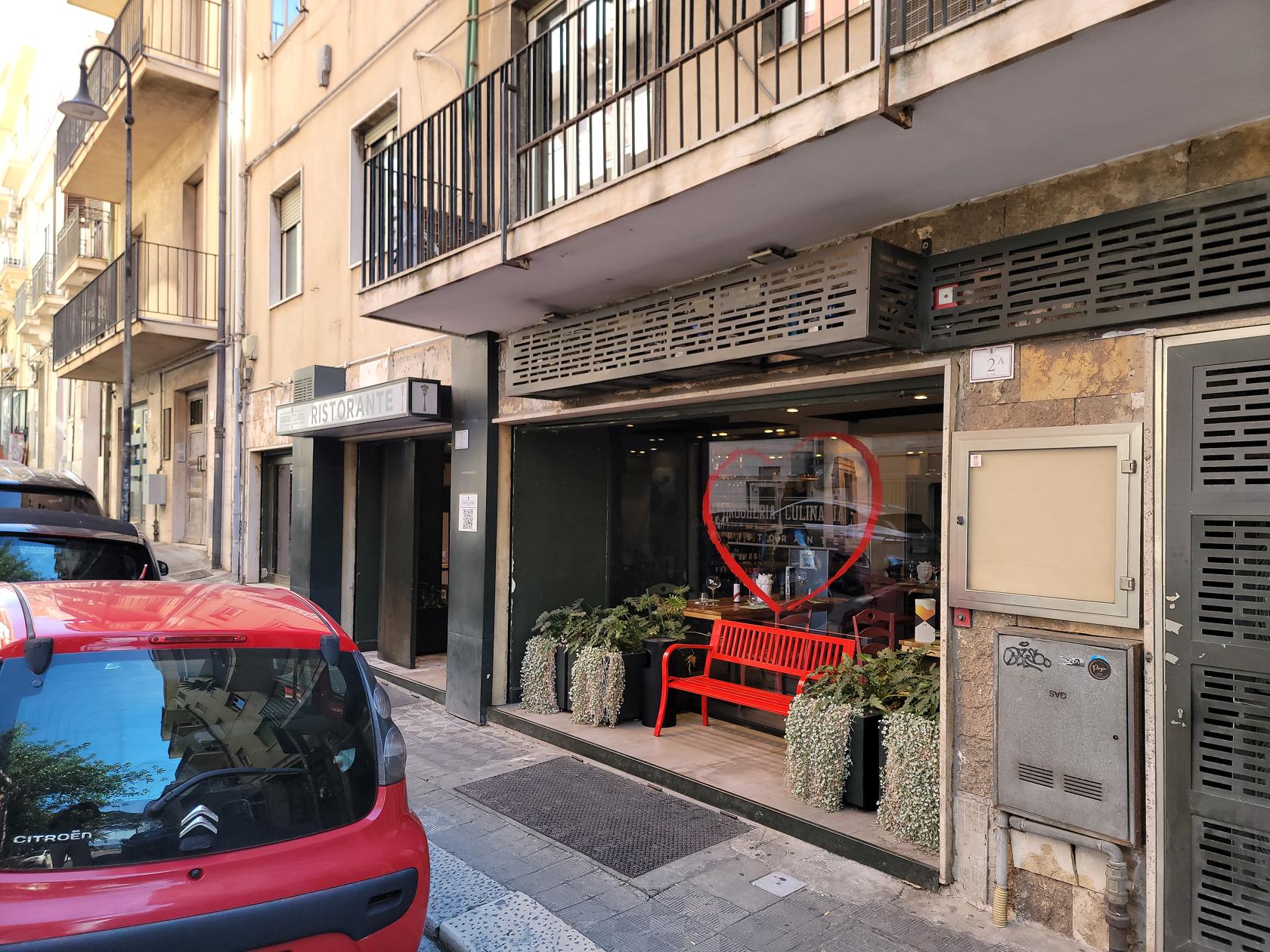
Using its former name for the grocery store the family used to own, it now serves food and drinks. It has a decent wine list, with several good varietals by the glass.
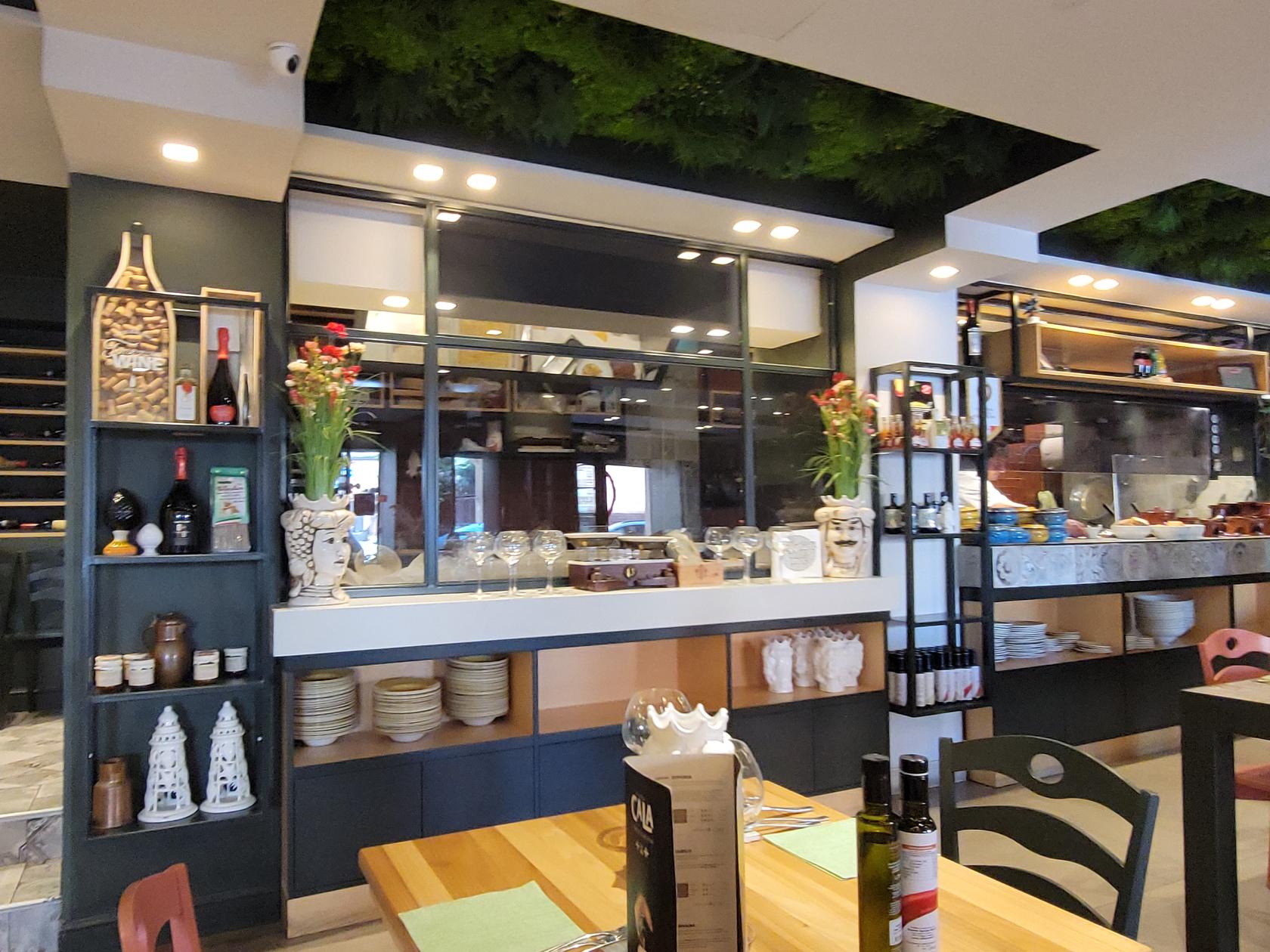
The food is also pretty good and you will definitely be able to find something to slake your appetite at this establishment.
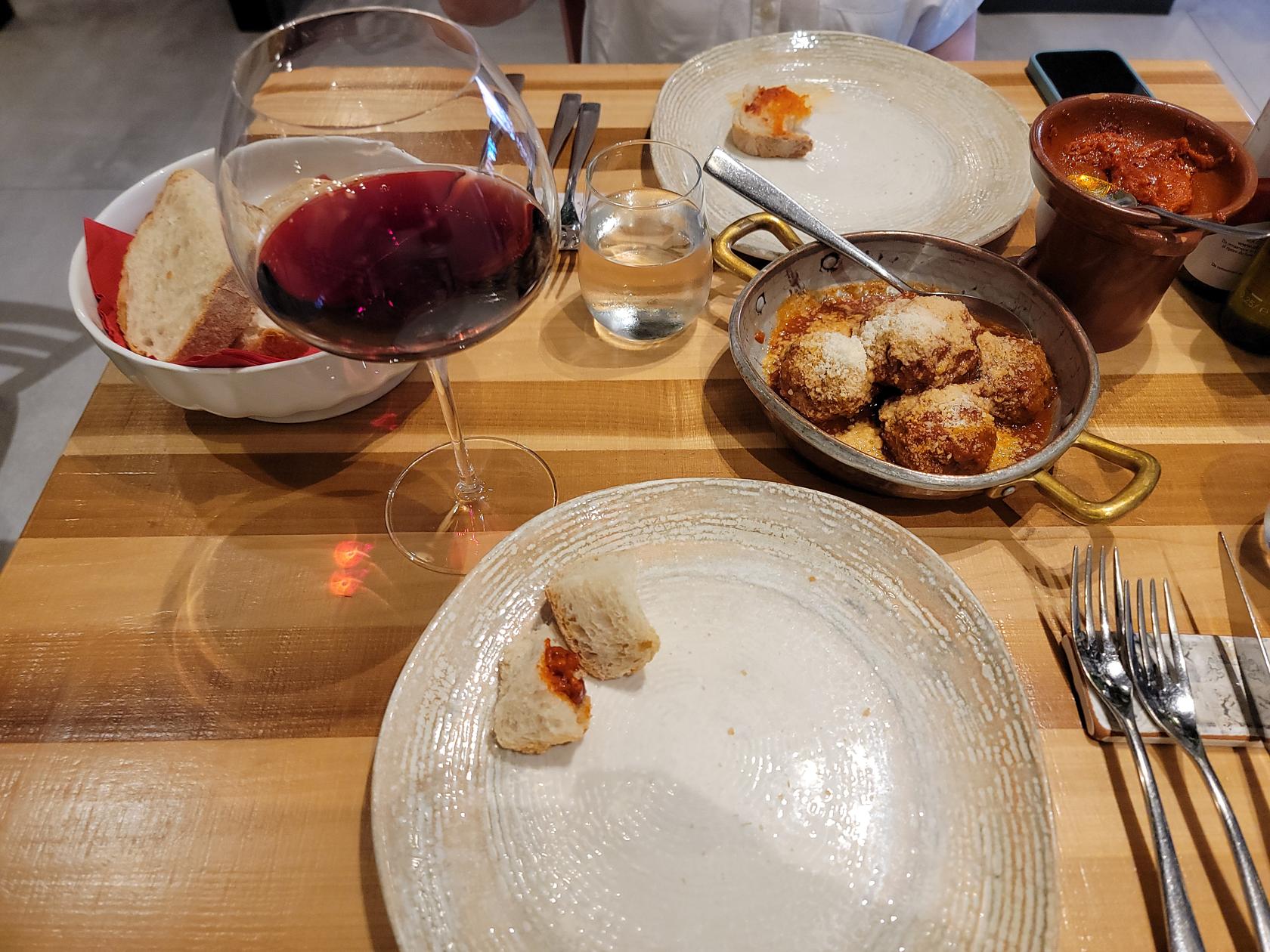
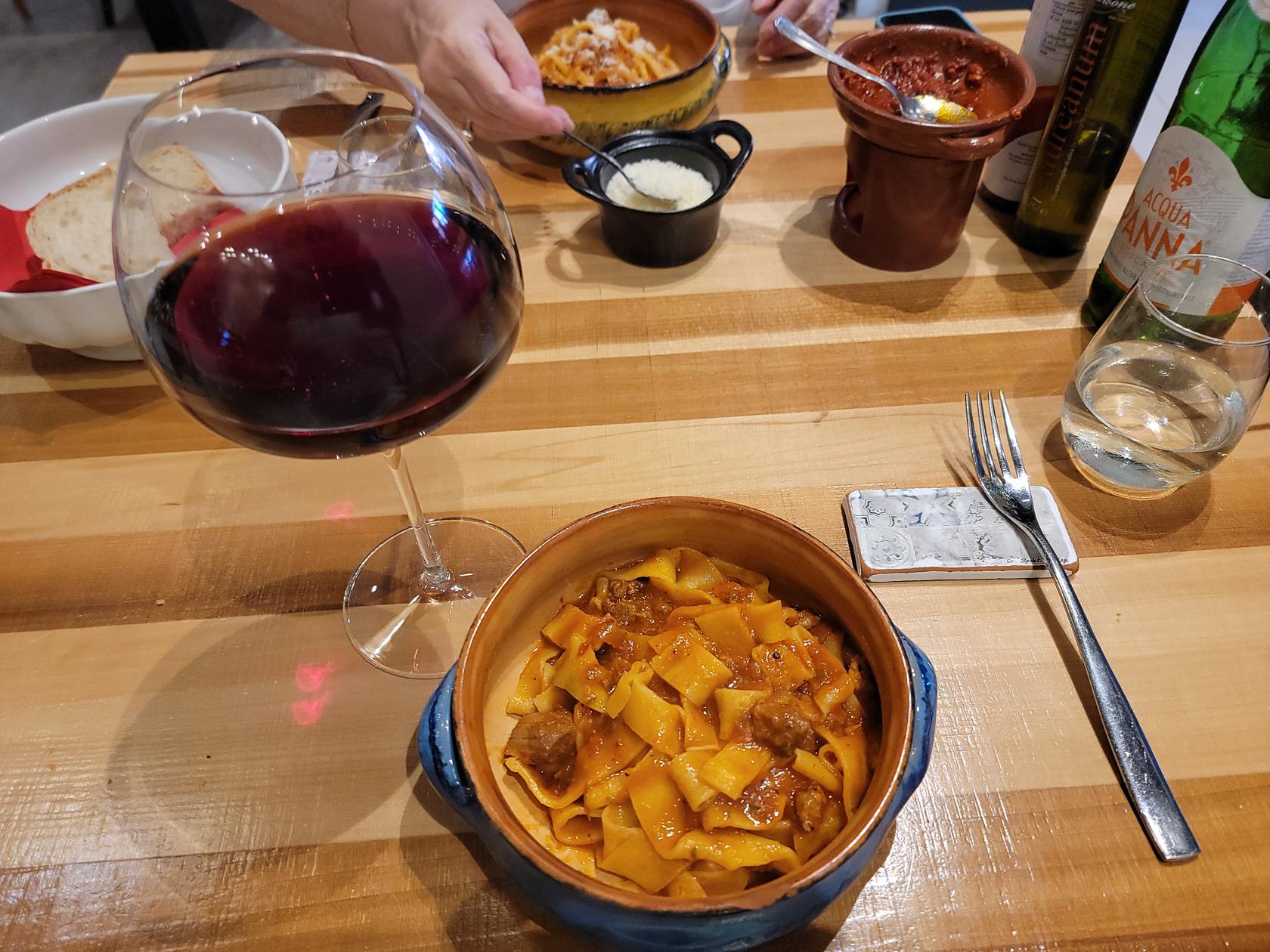
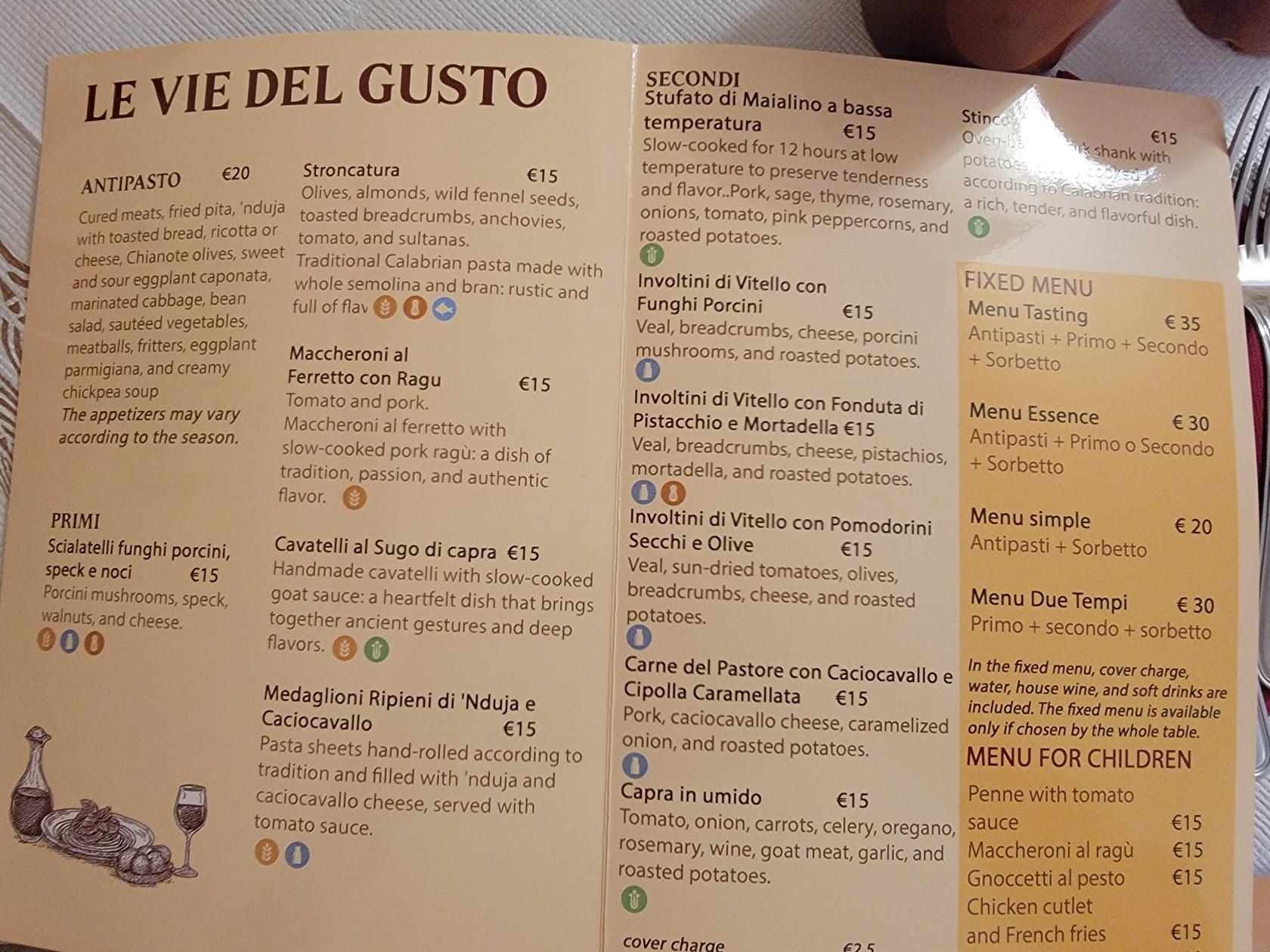
Le Vie Del Gusto Ristorante
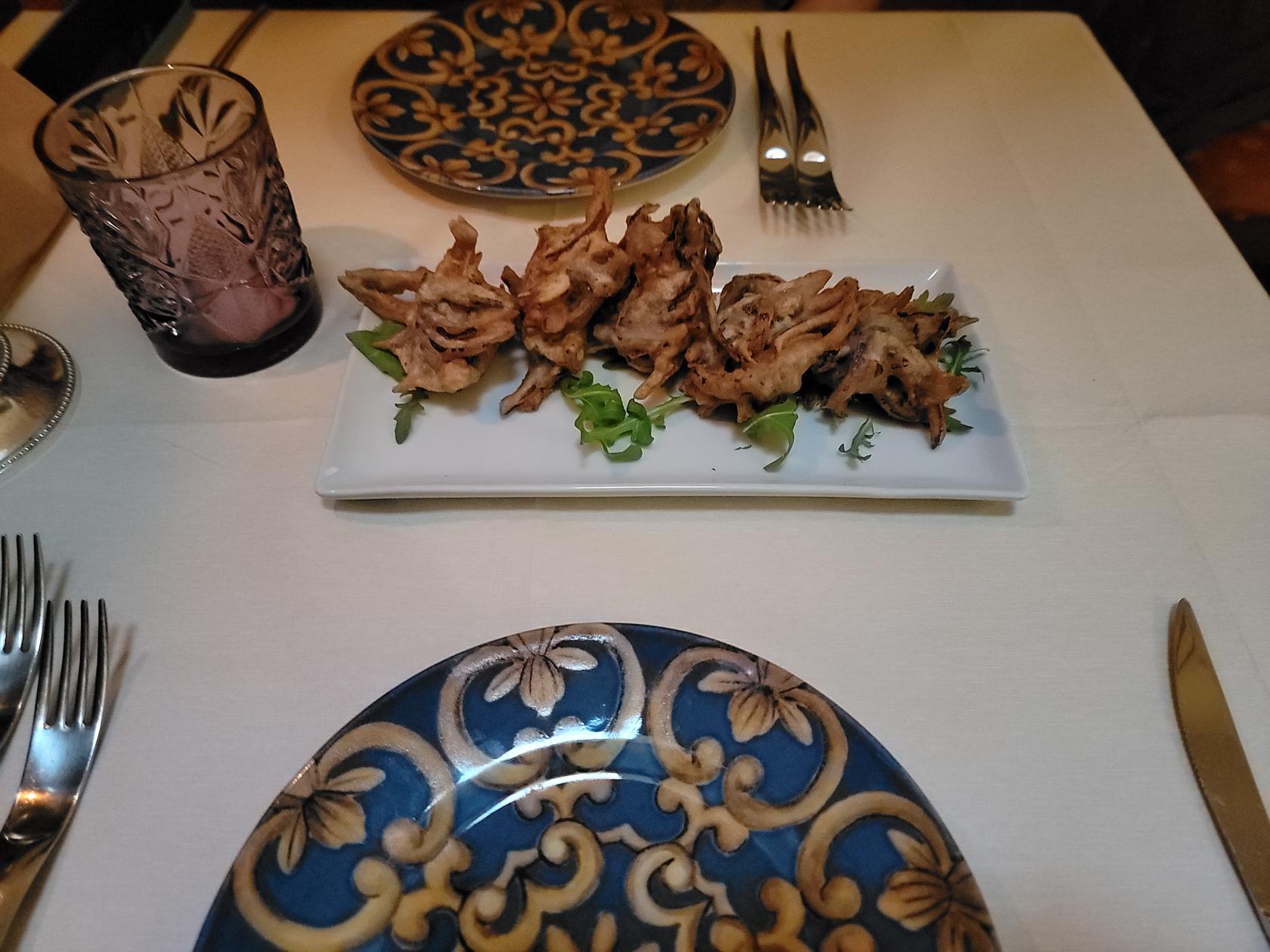
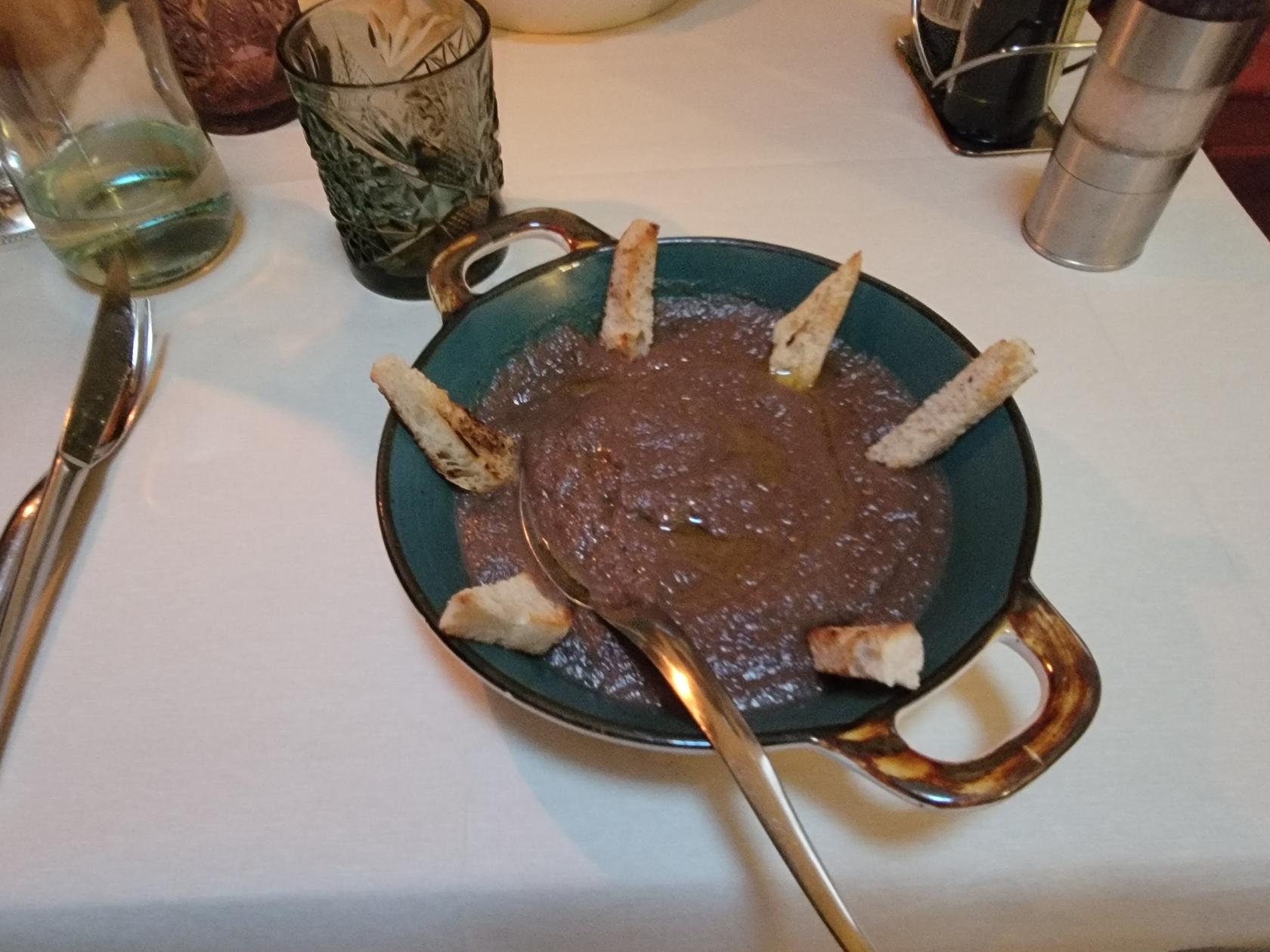
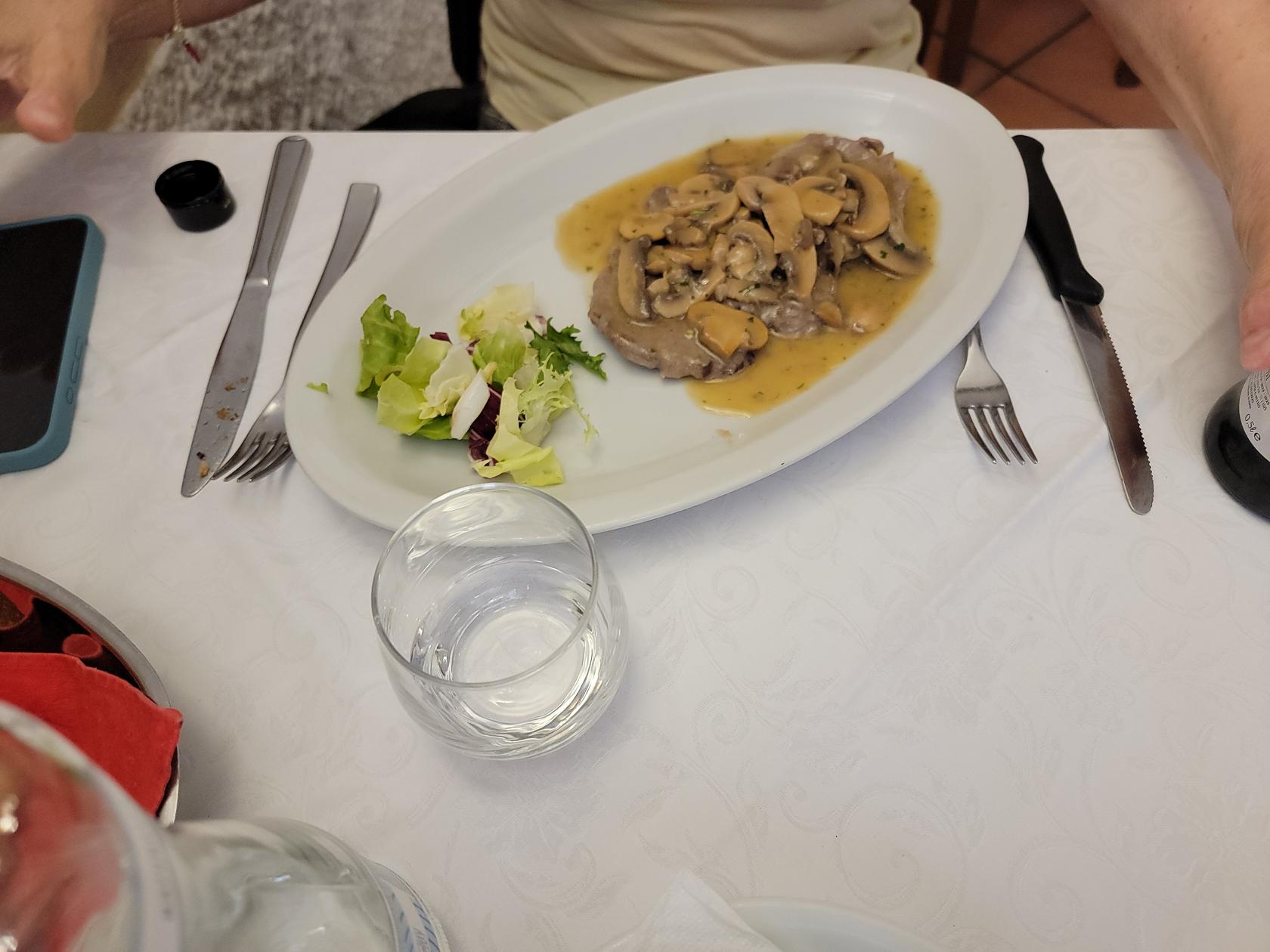
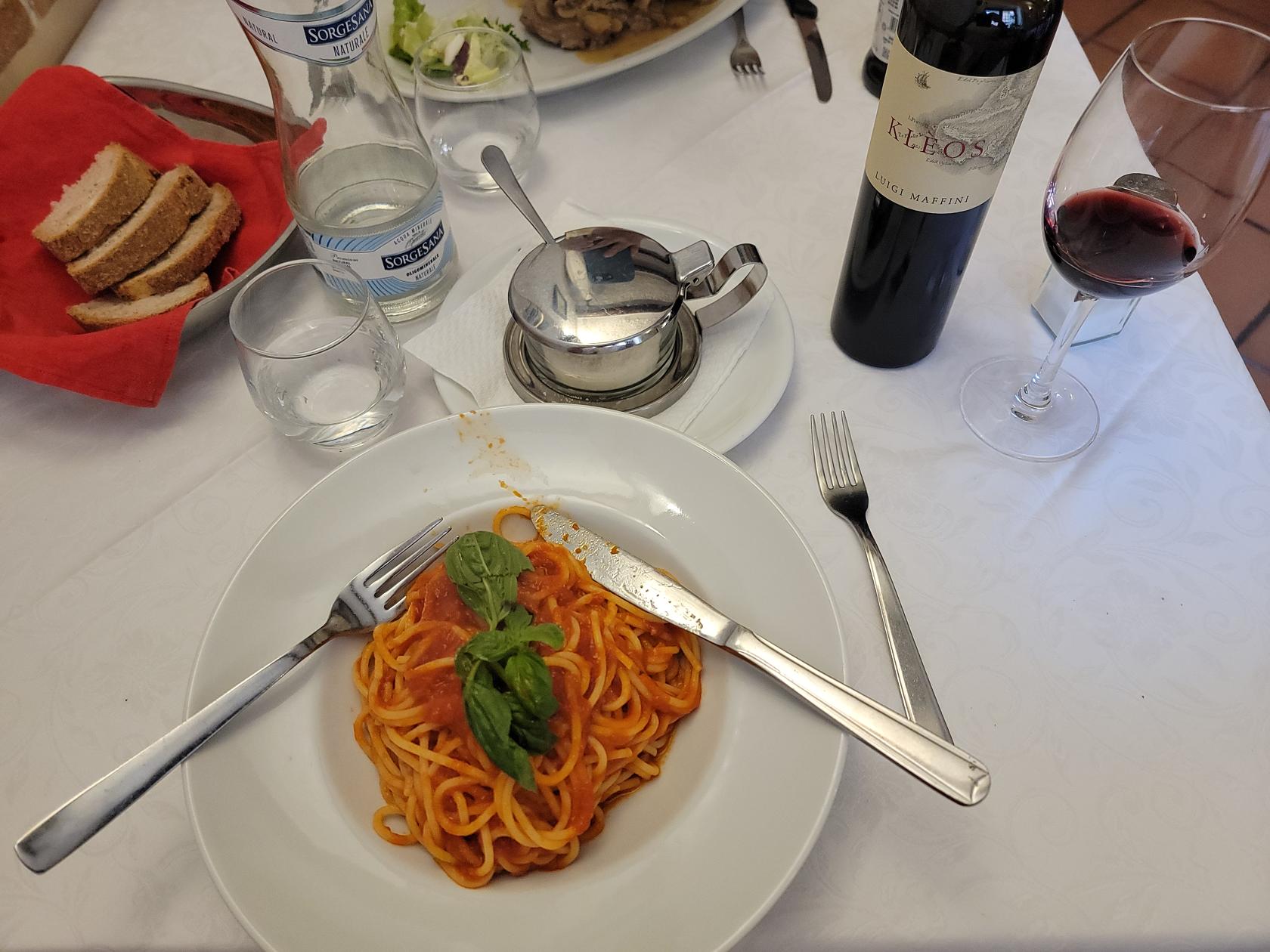
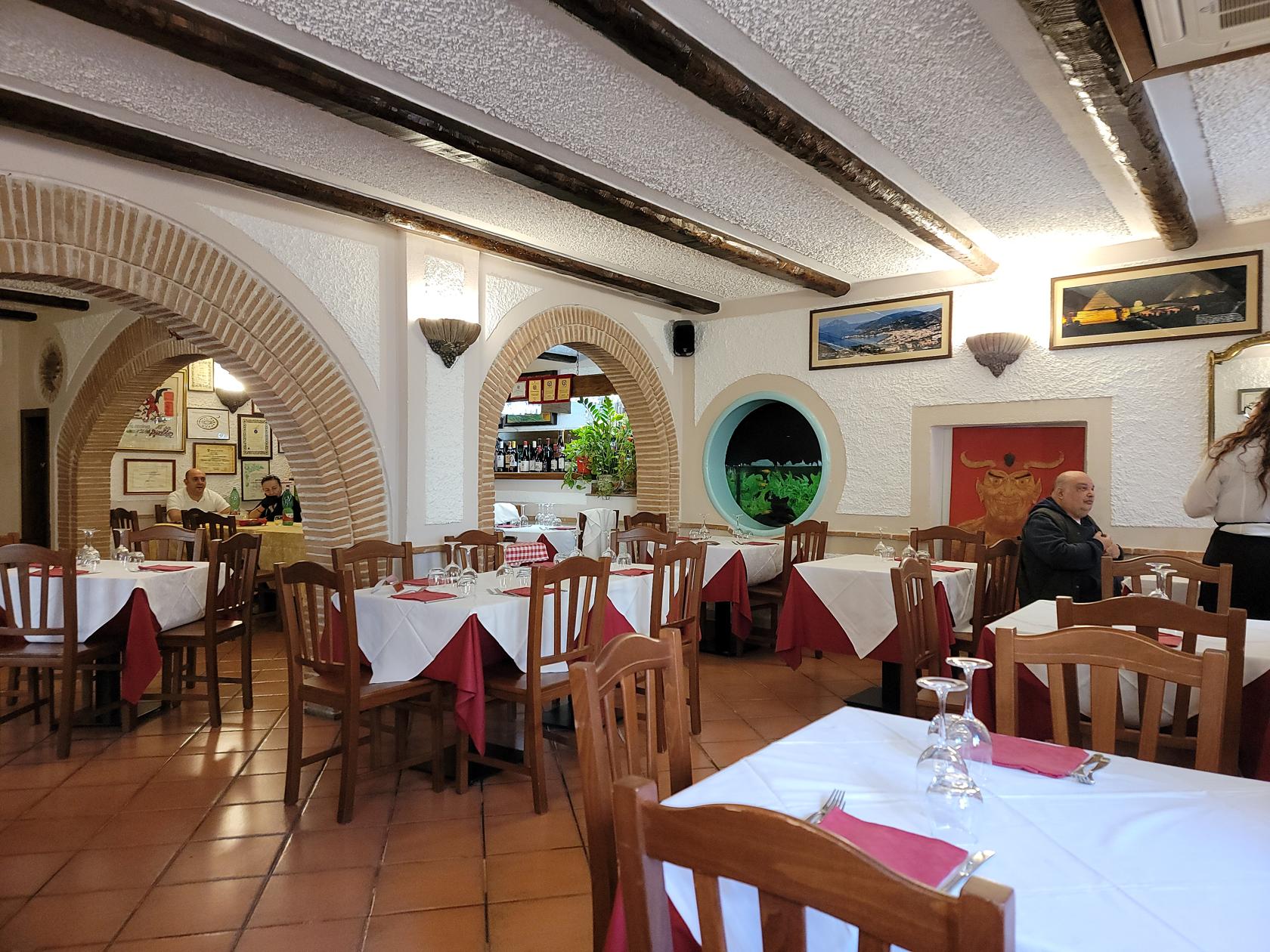
One of the restaurants in the area that is highly recommended for local Calabrian dishes is the Le Vie Del Gusto Ristorante. Located on via Reggio Campi and via II Dezembre, this small little restaurants attacts all the locals, so have your reservation in hand before leaving your hotel or place of stay.
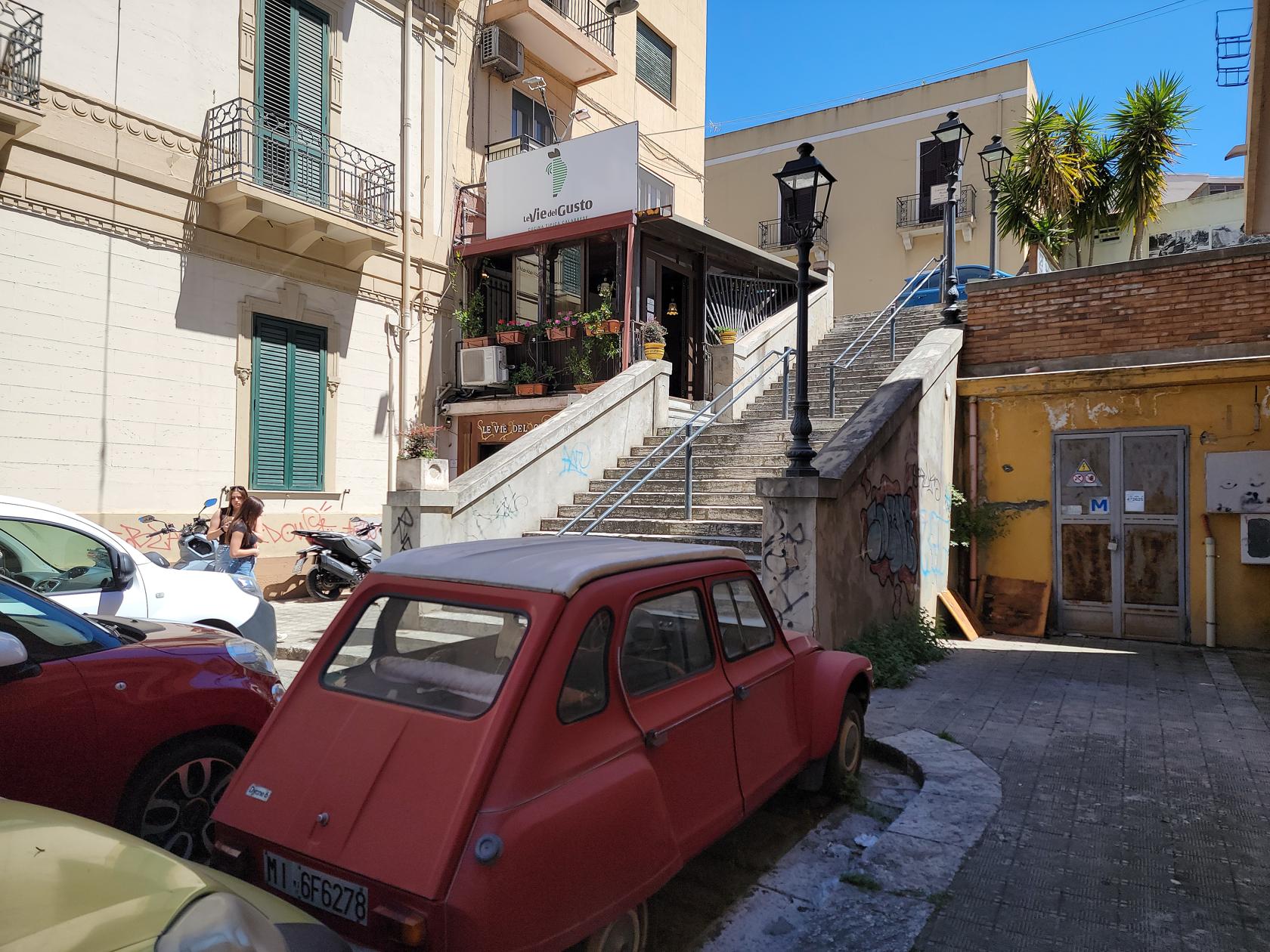
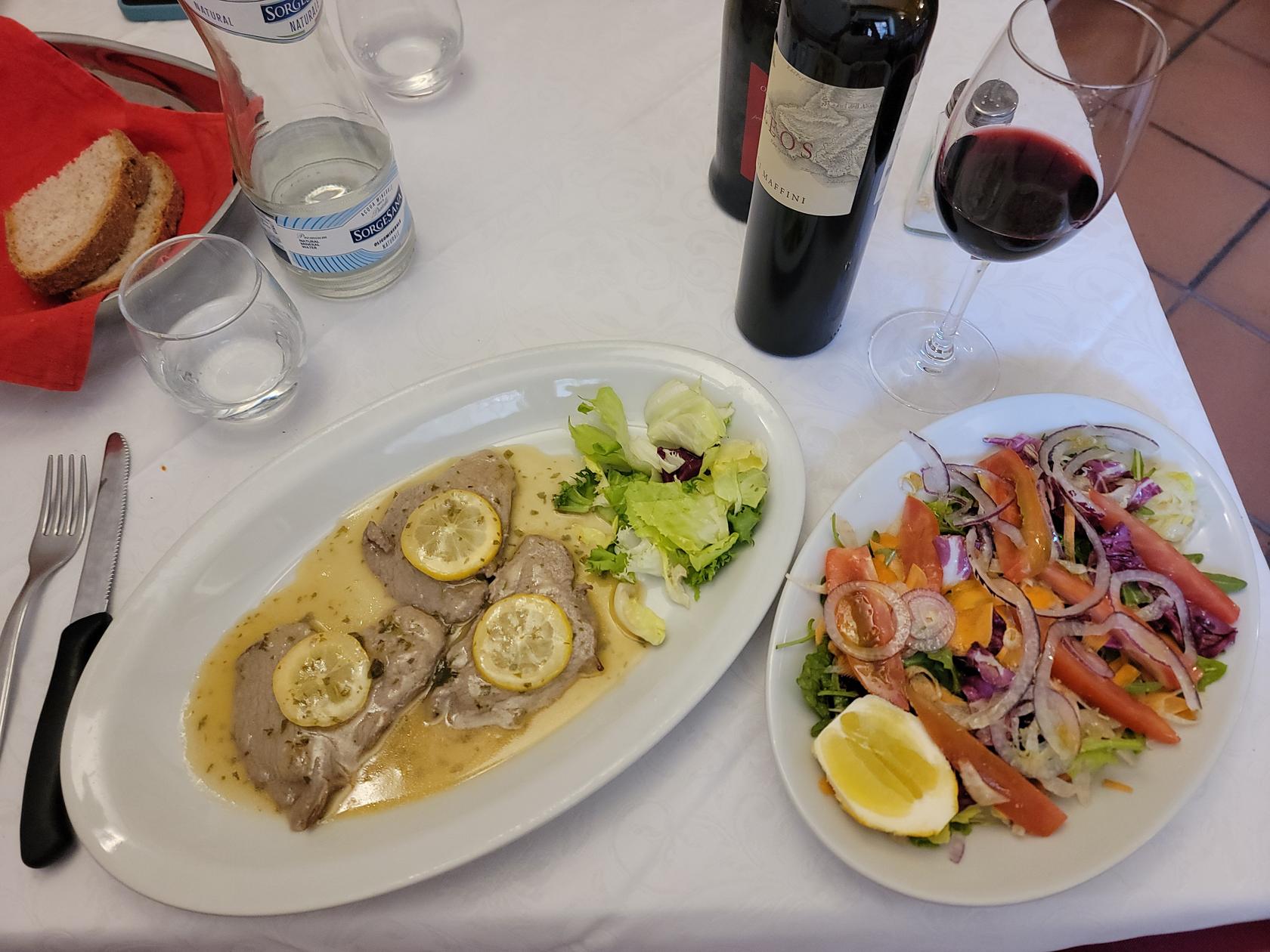
Everything we tried had that home cooking taste without any loss to attention to detail. The Stufato is highly recommended and will melt in your mouth.
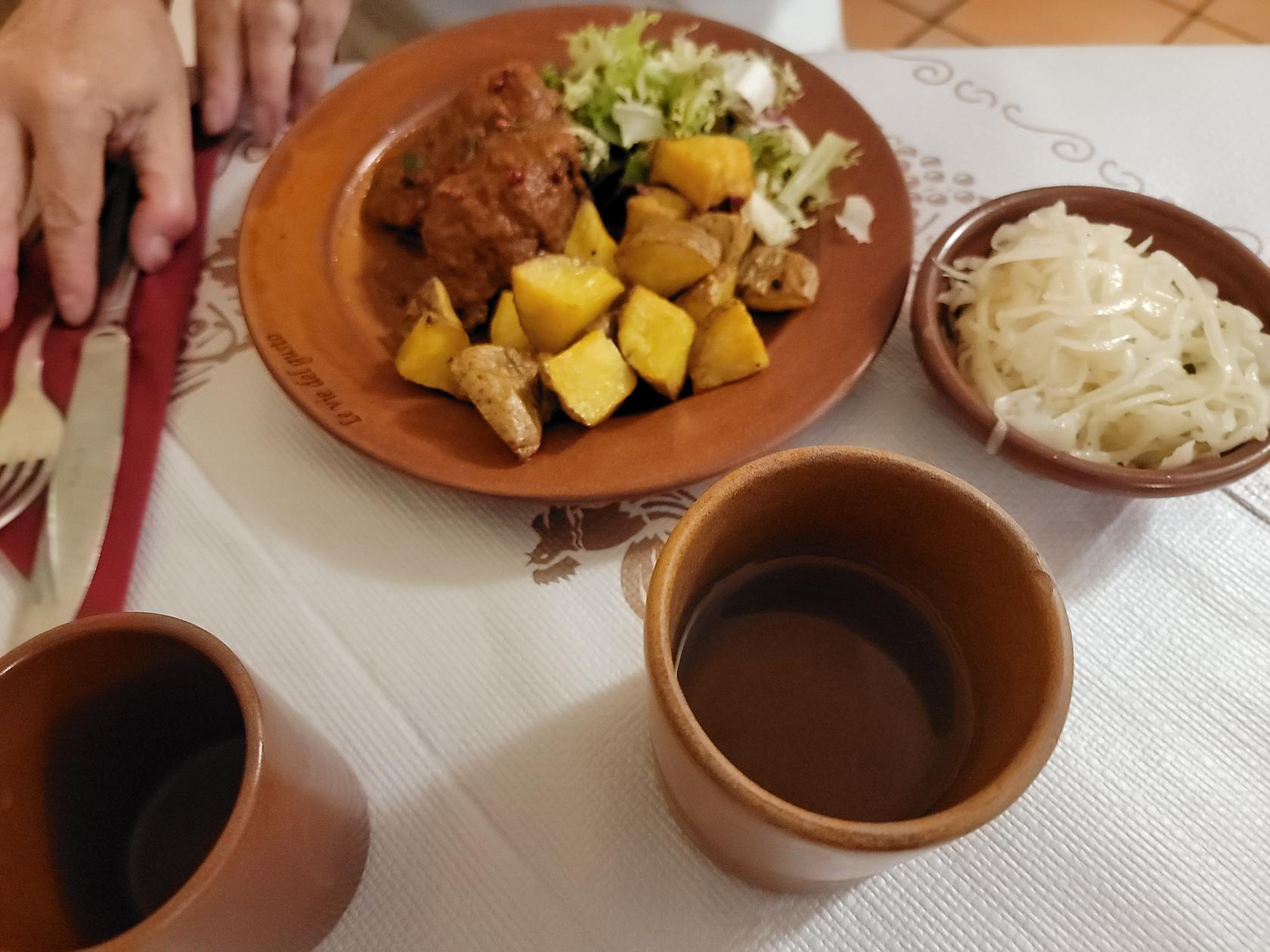
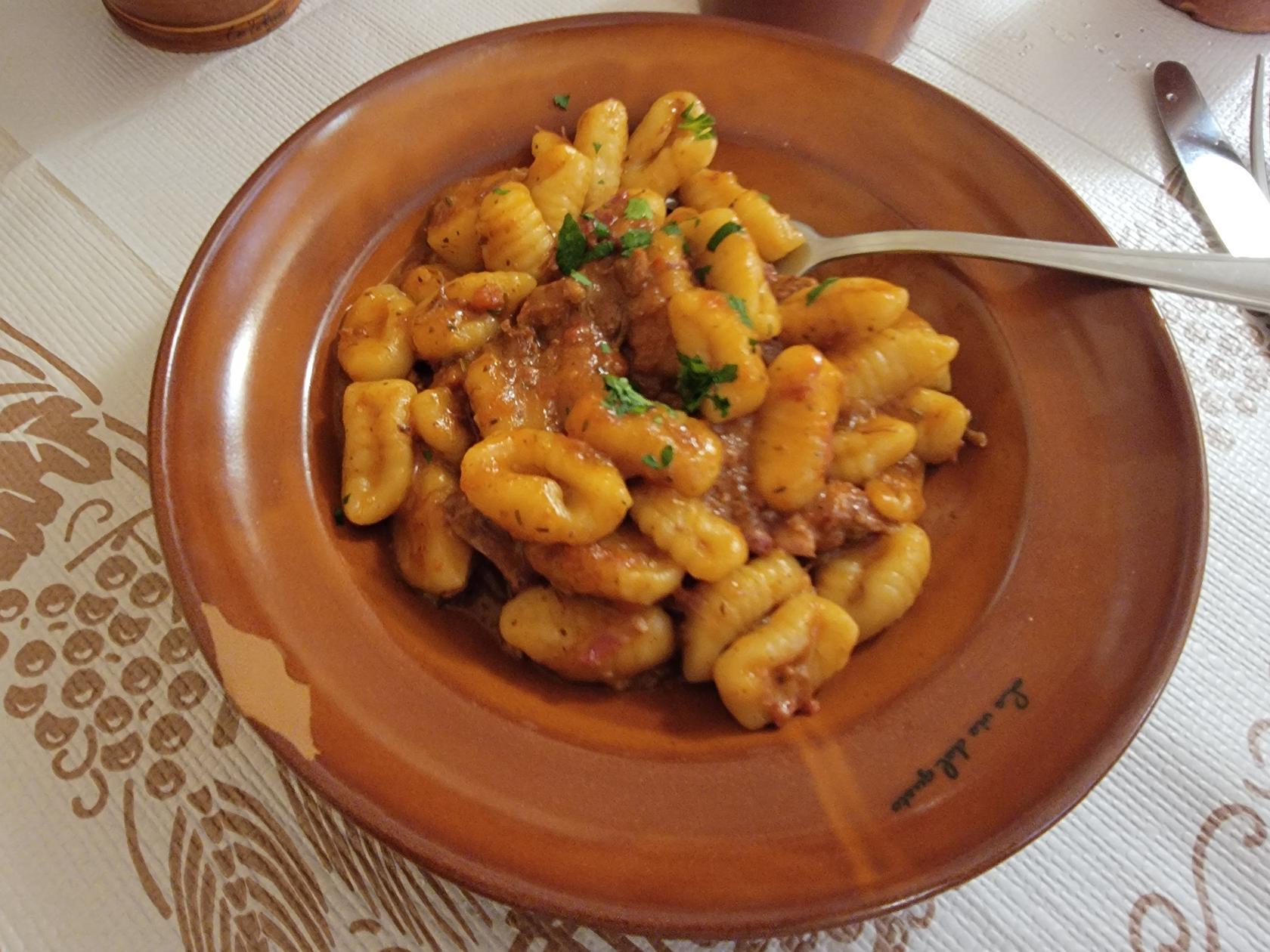
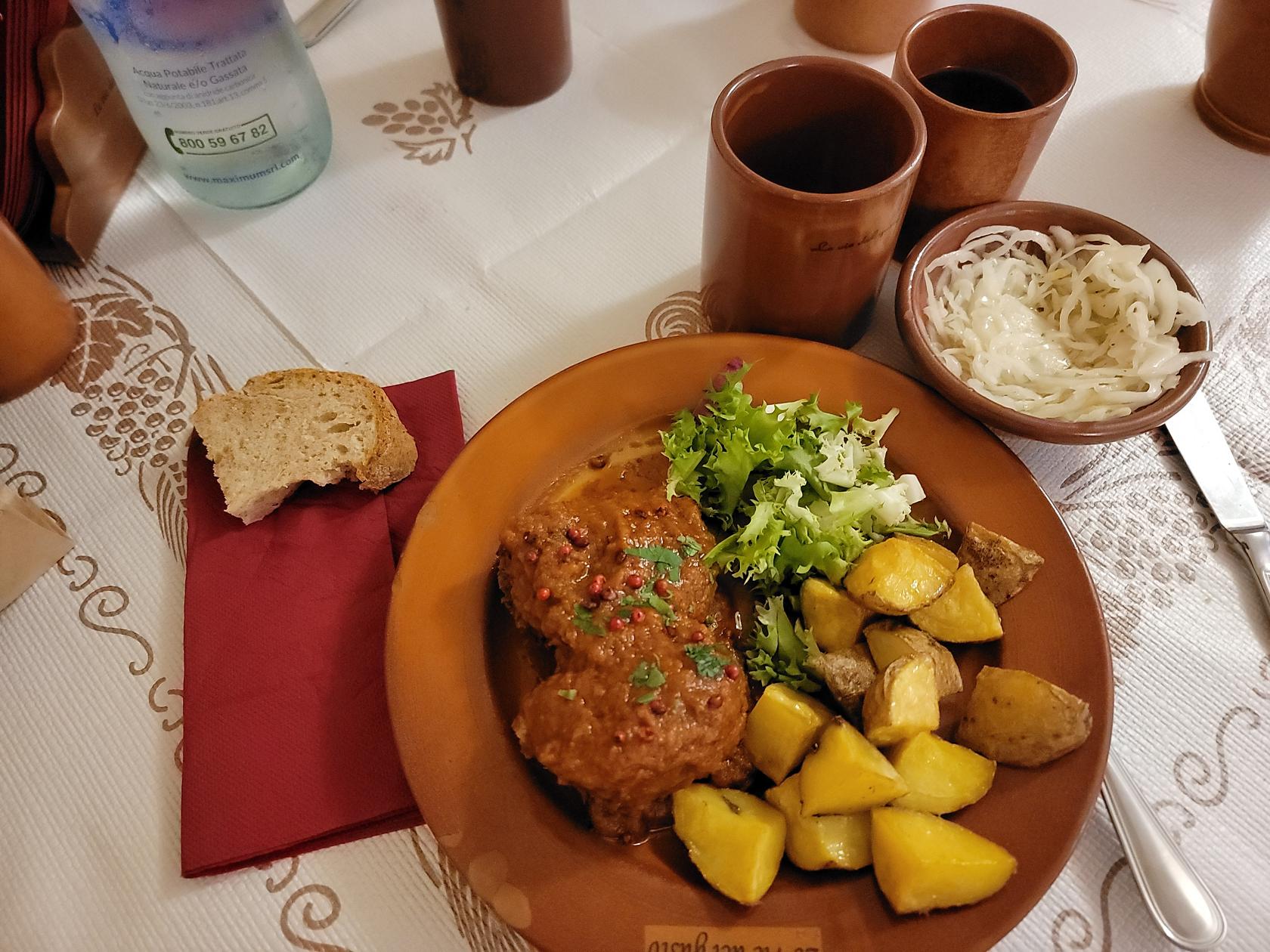
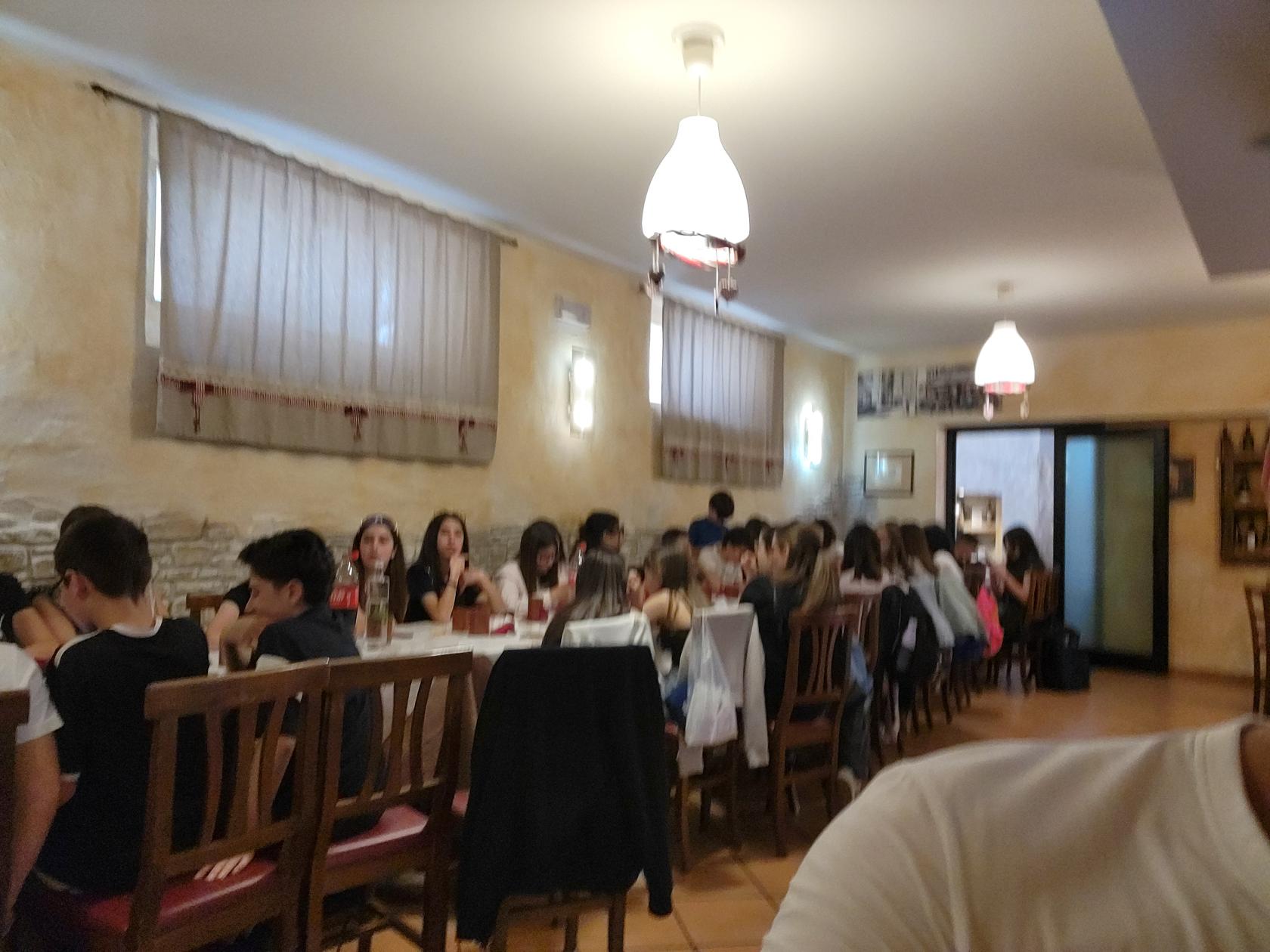
While we were there a local class was having their end of year party, so noise levels were through the roof. However, it was still enjoyable, especially watching the children eating all that food. Made me remember how hungry I used to be as a school kid.