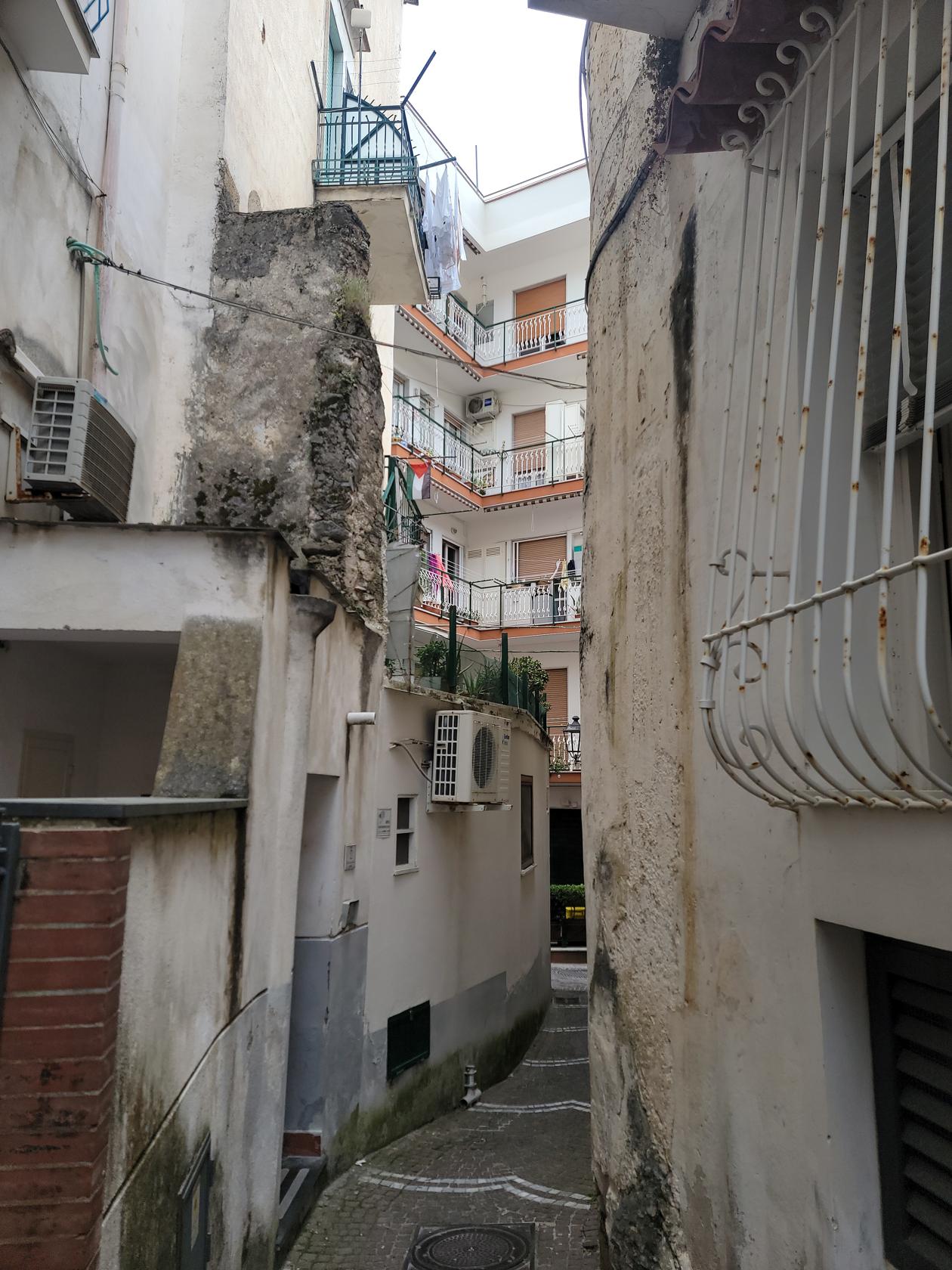
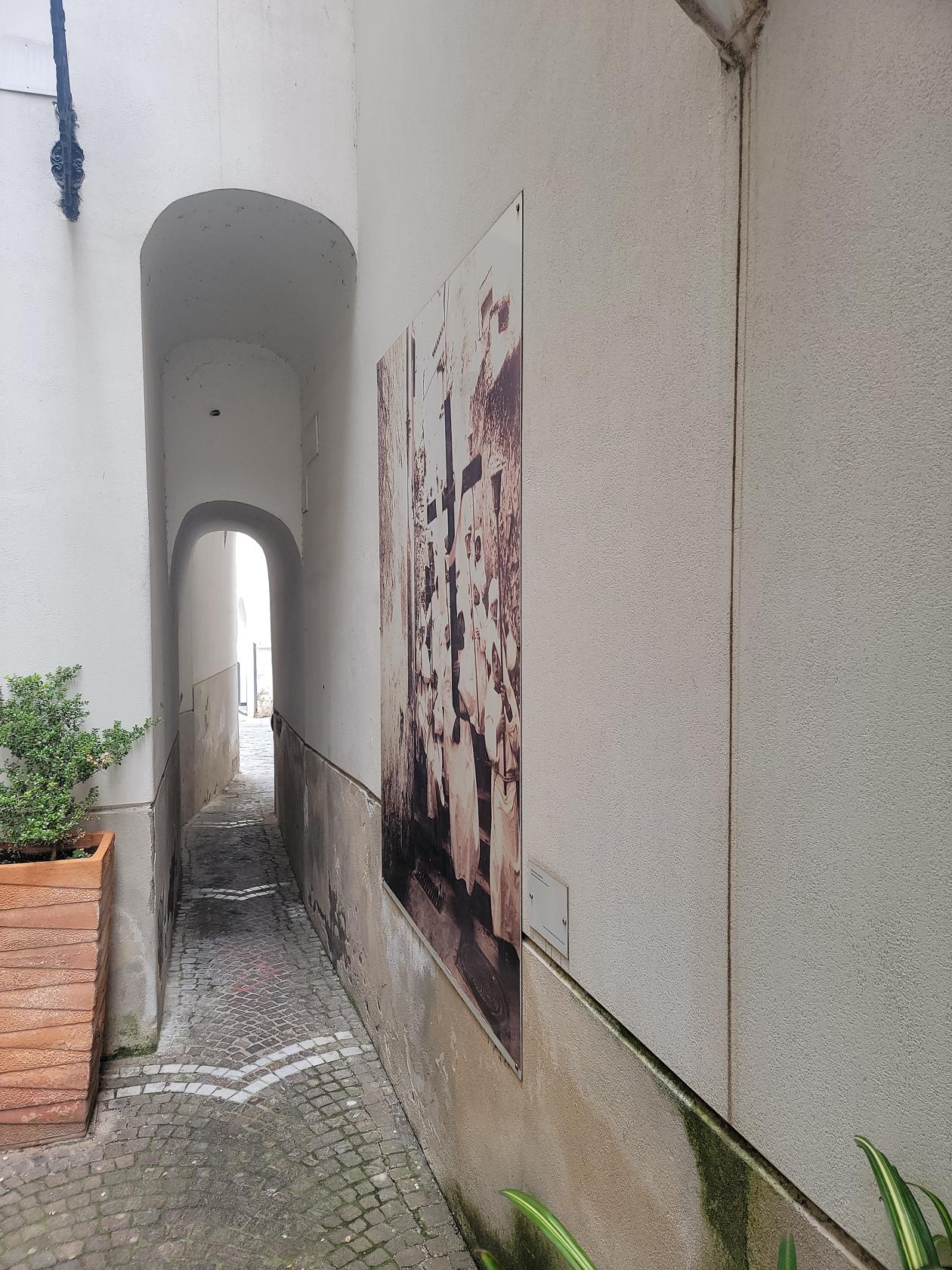
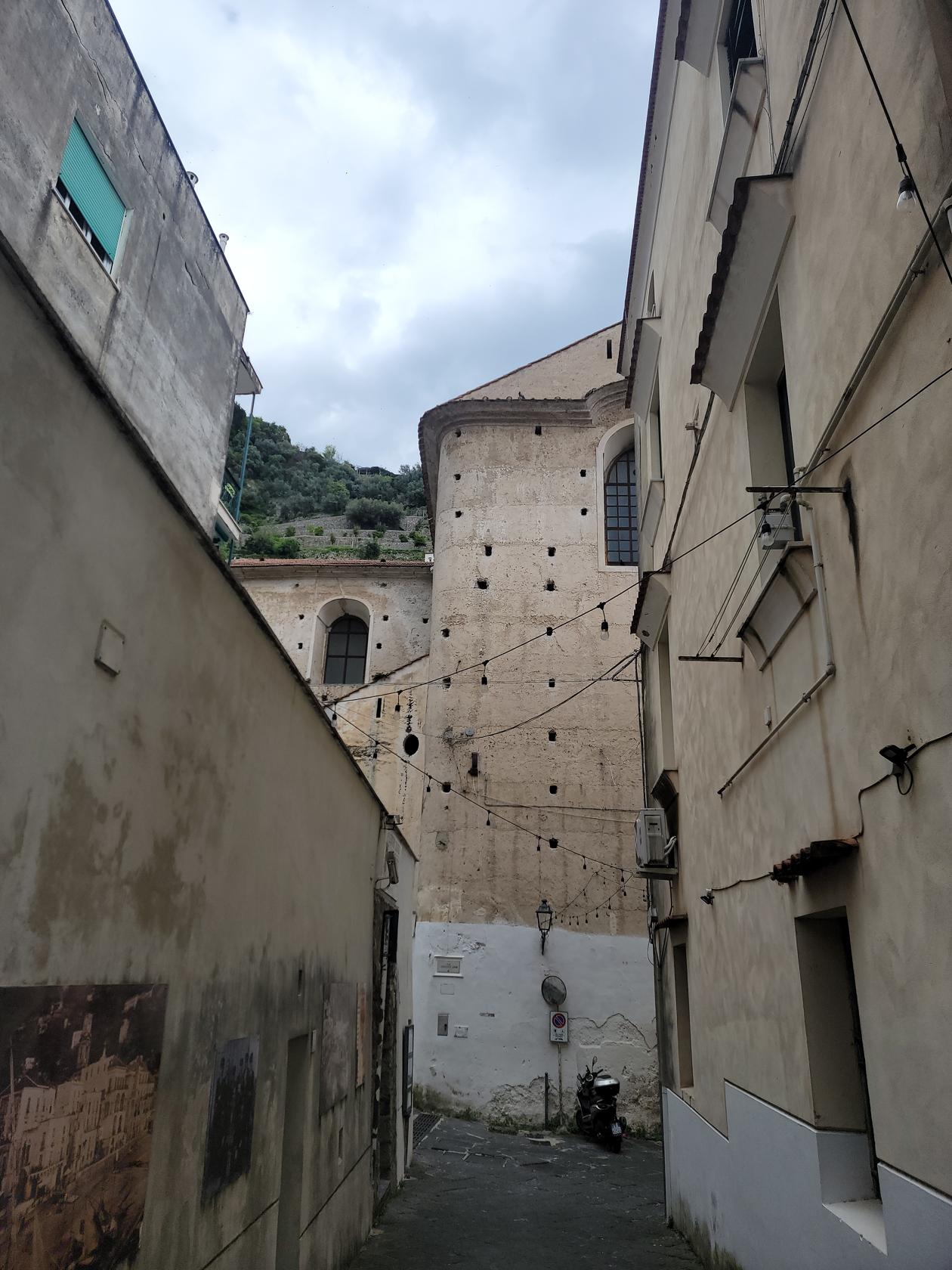
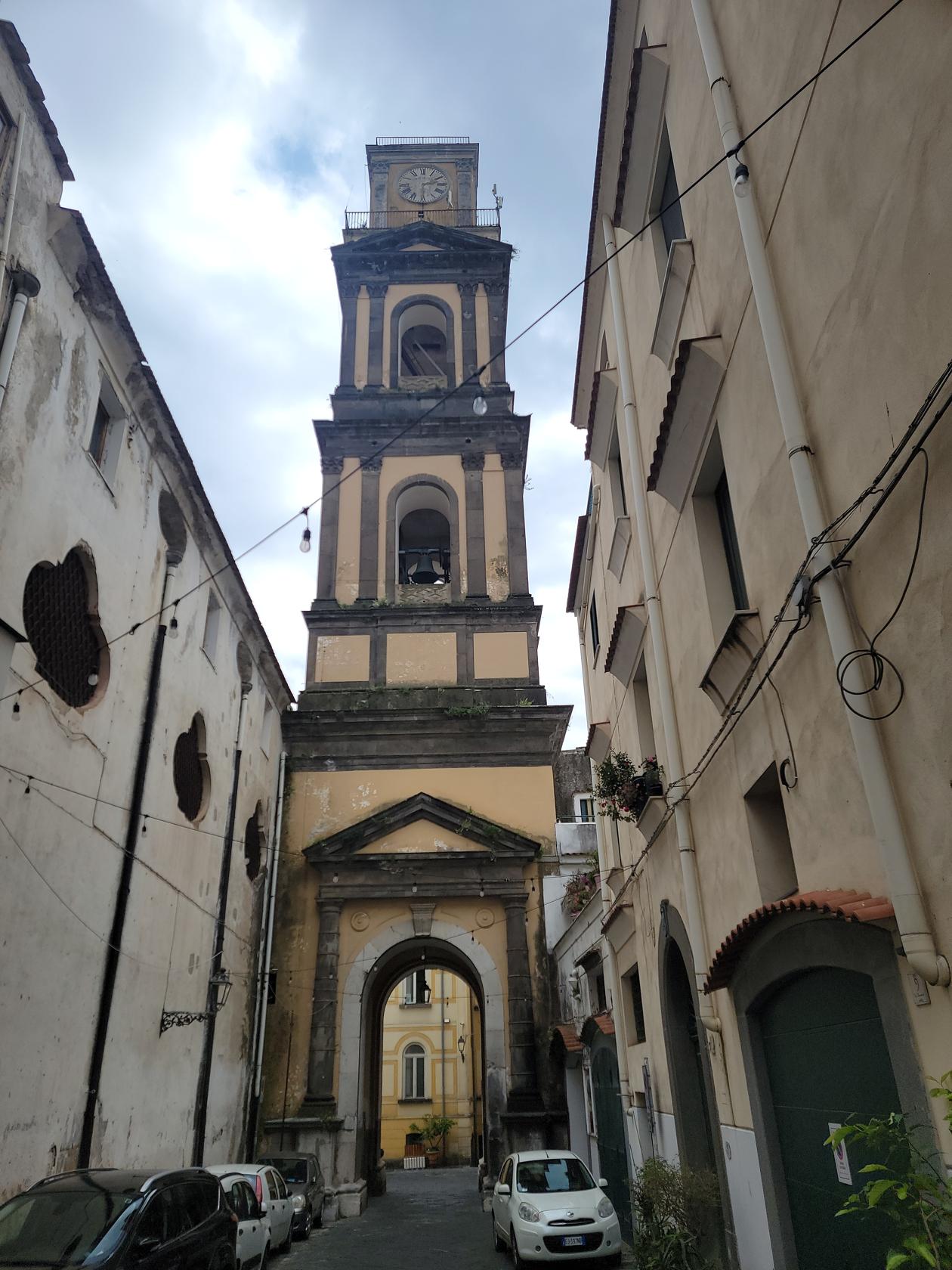
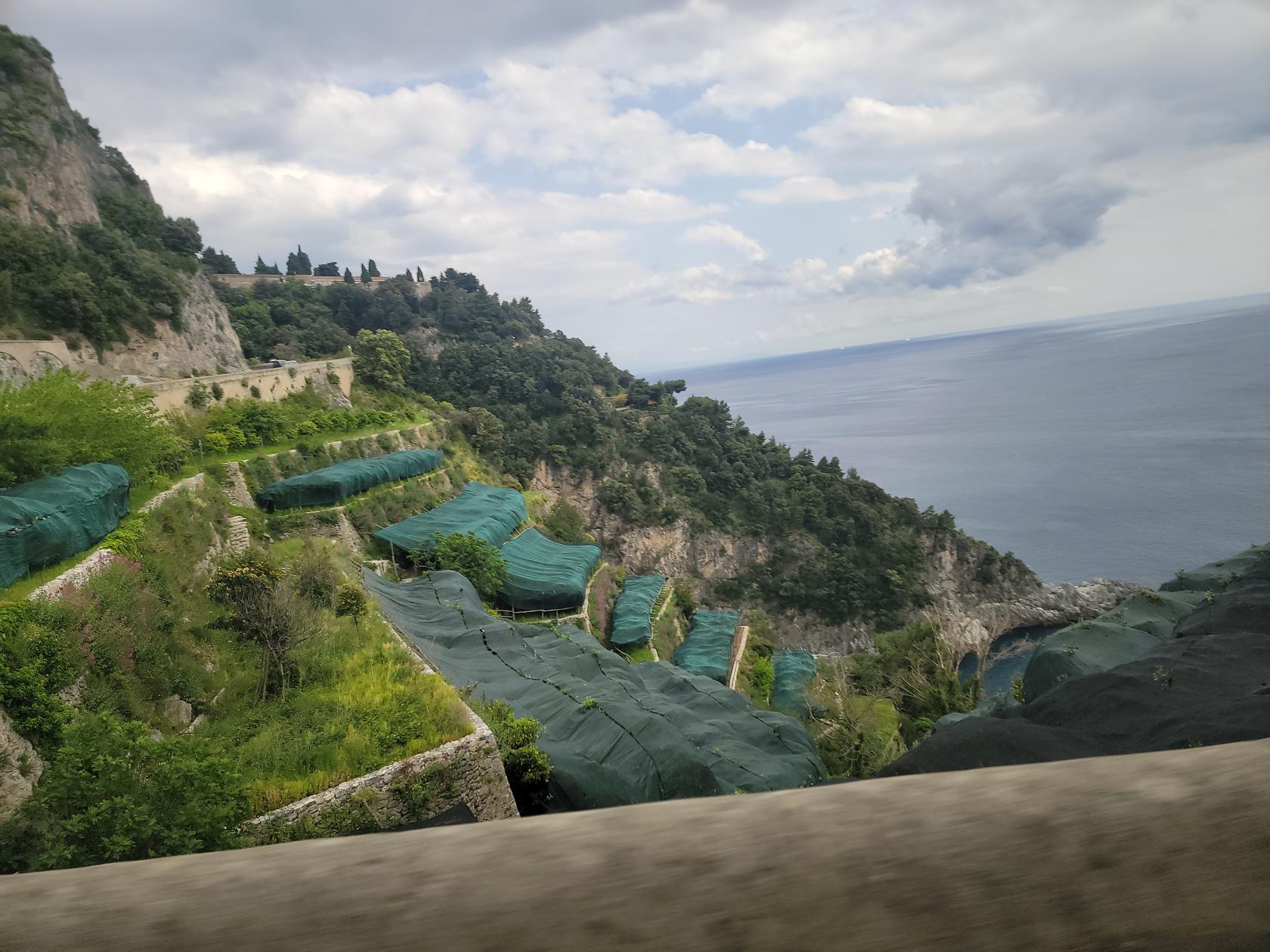
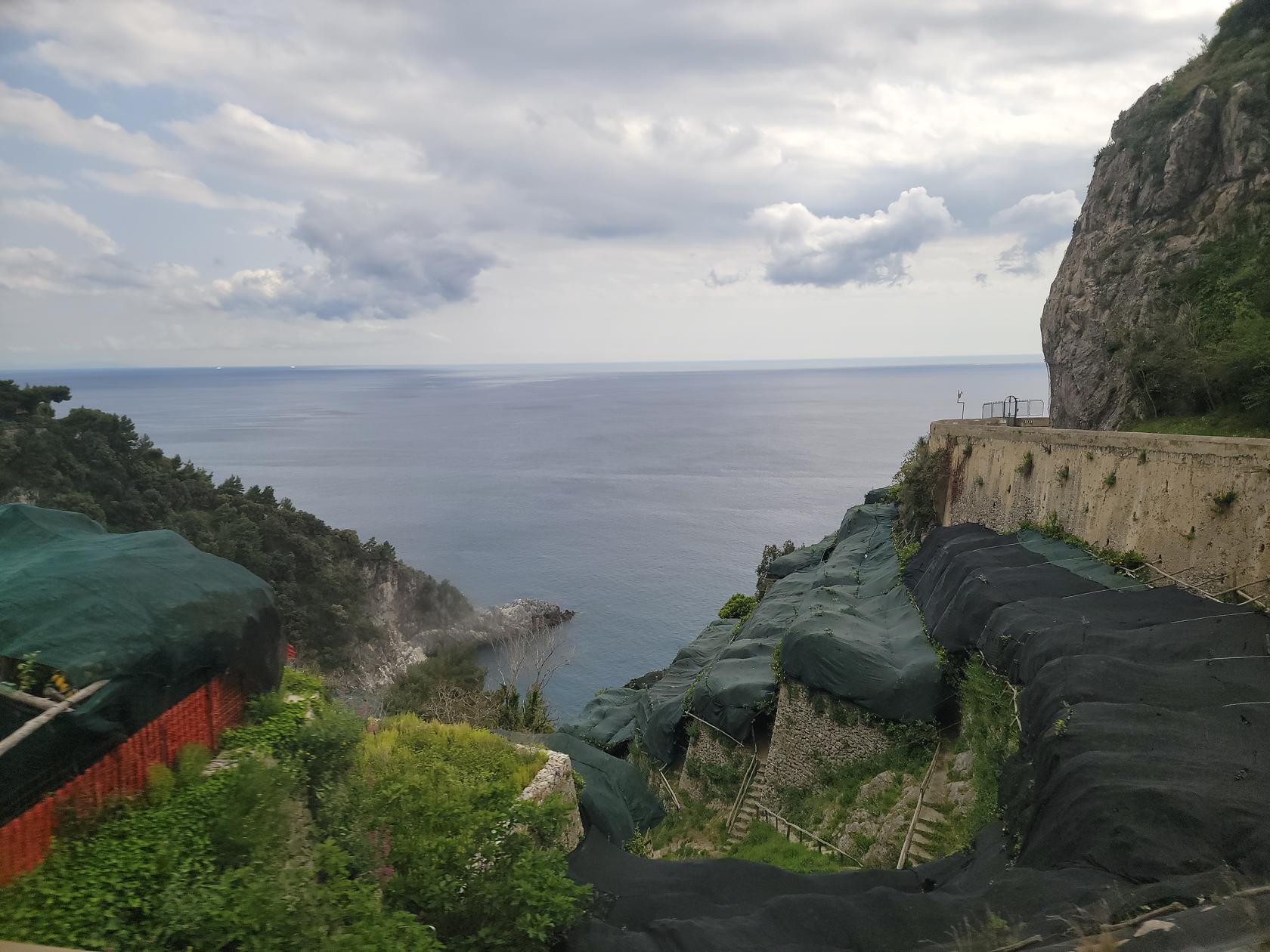
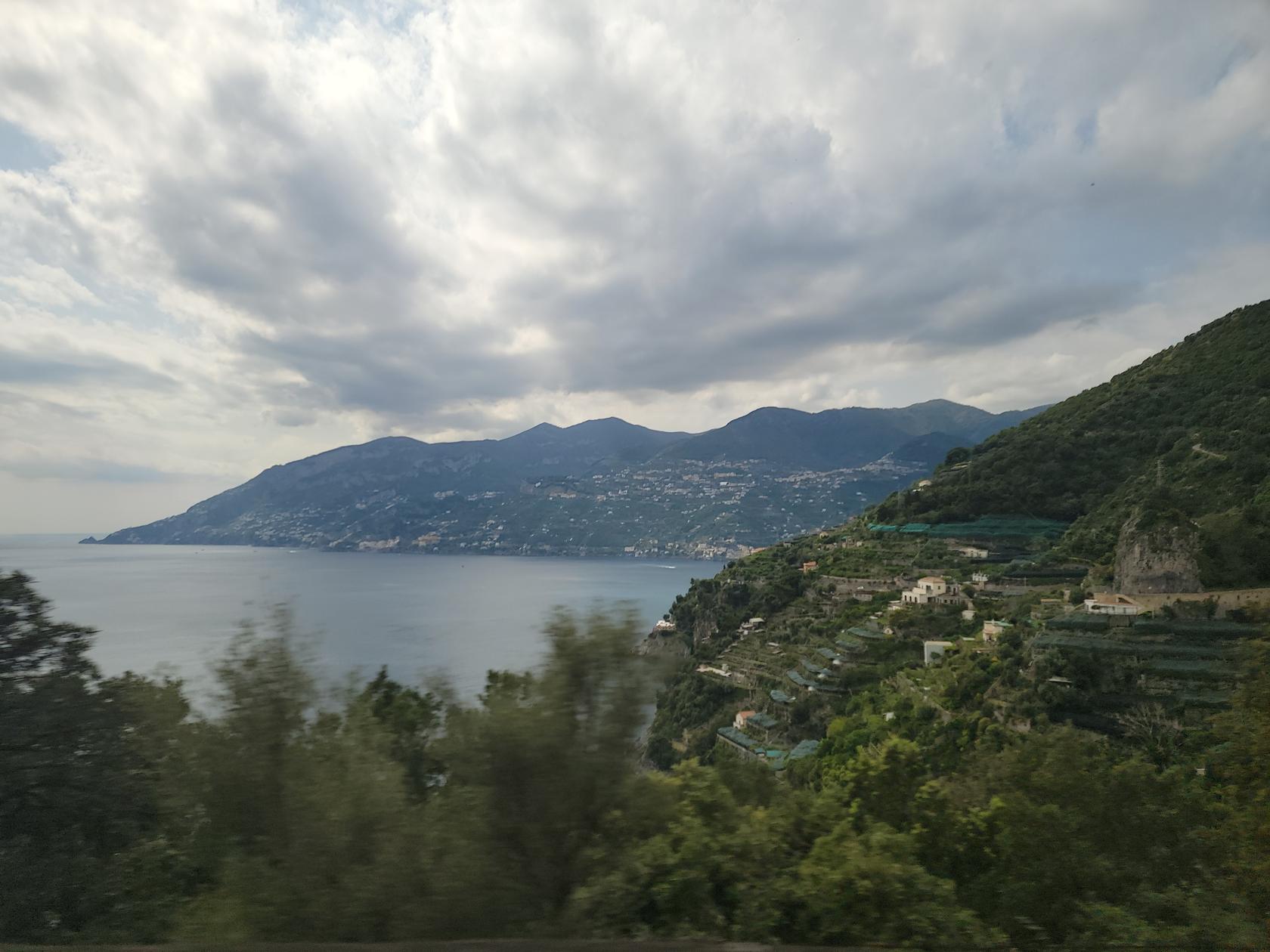
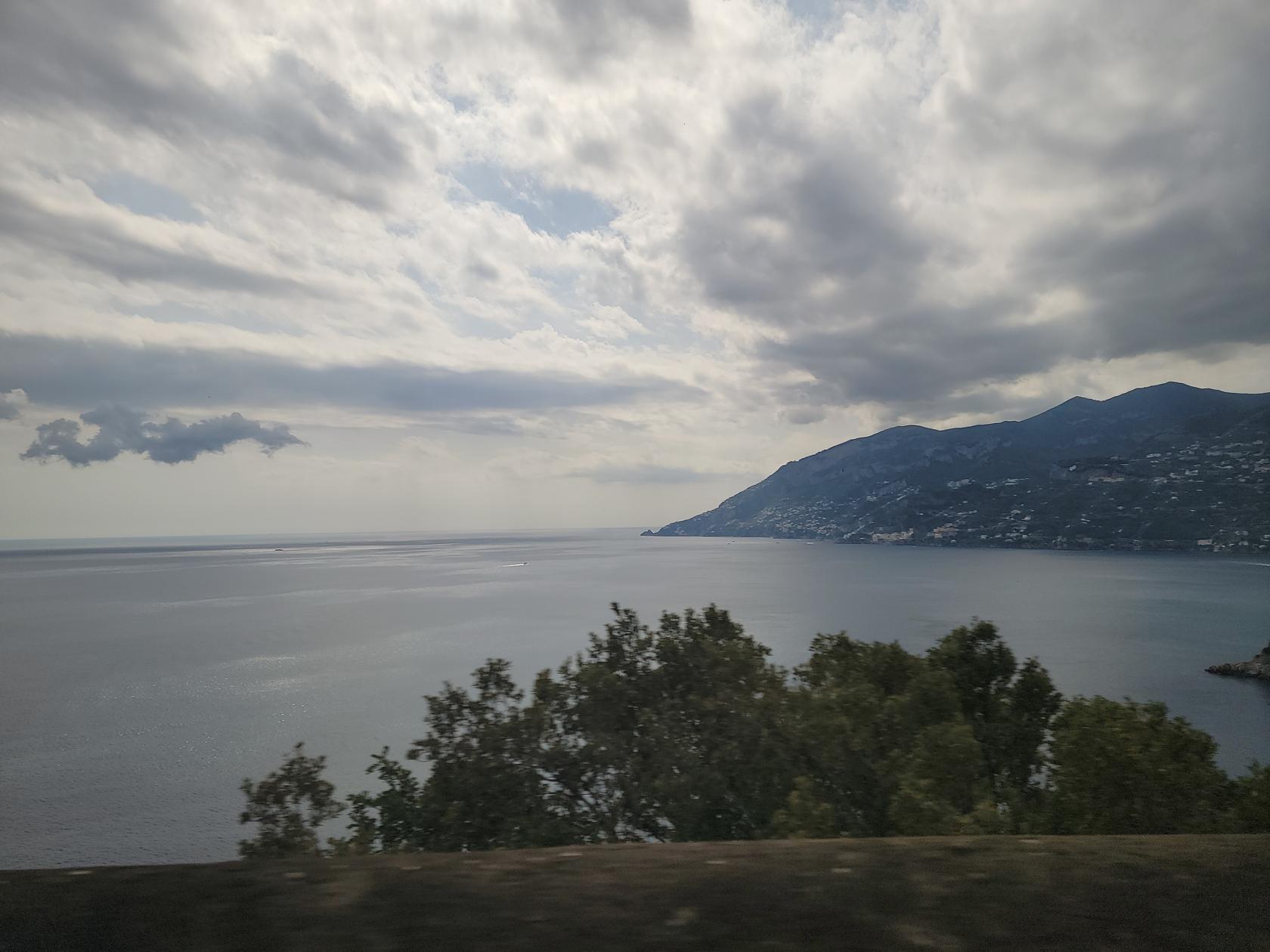
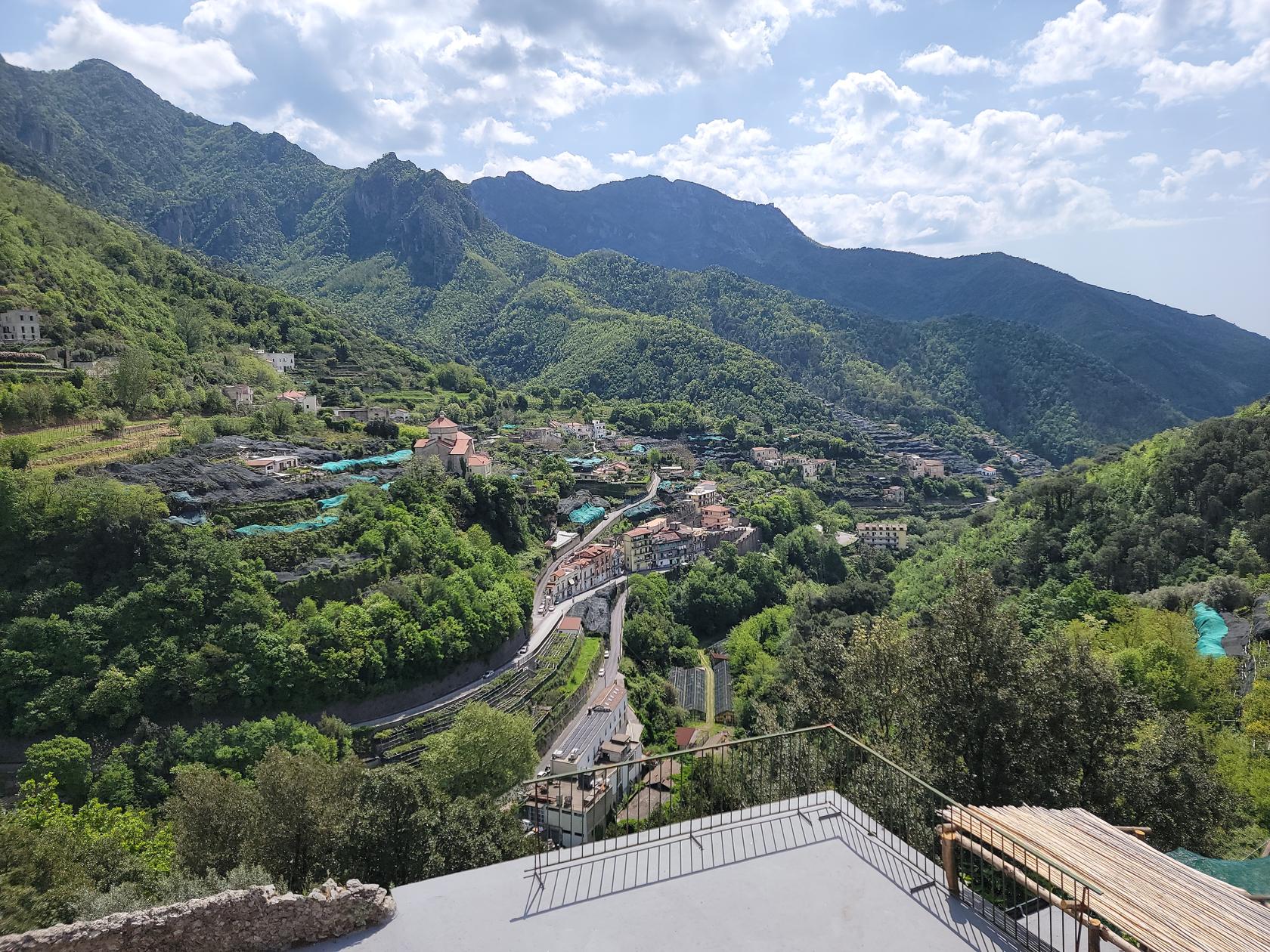
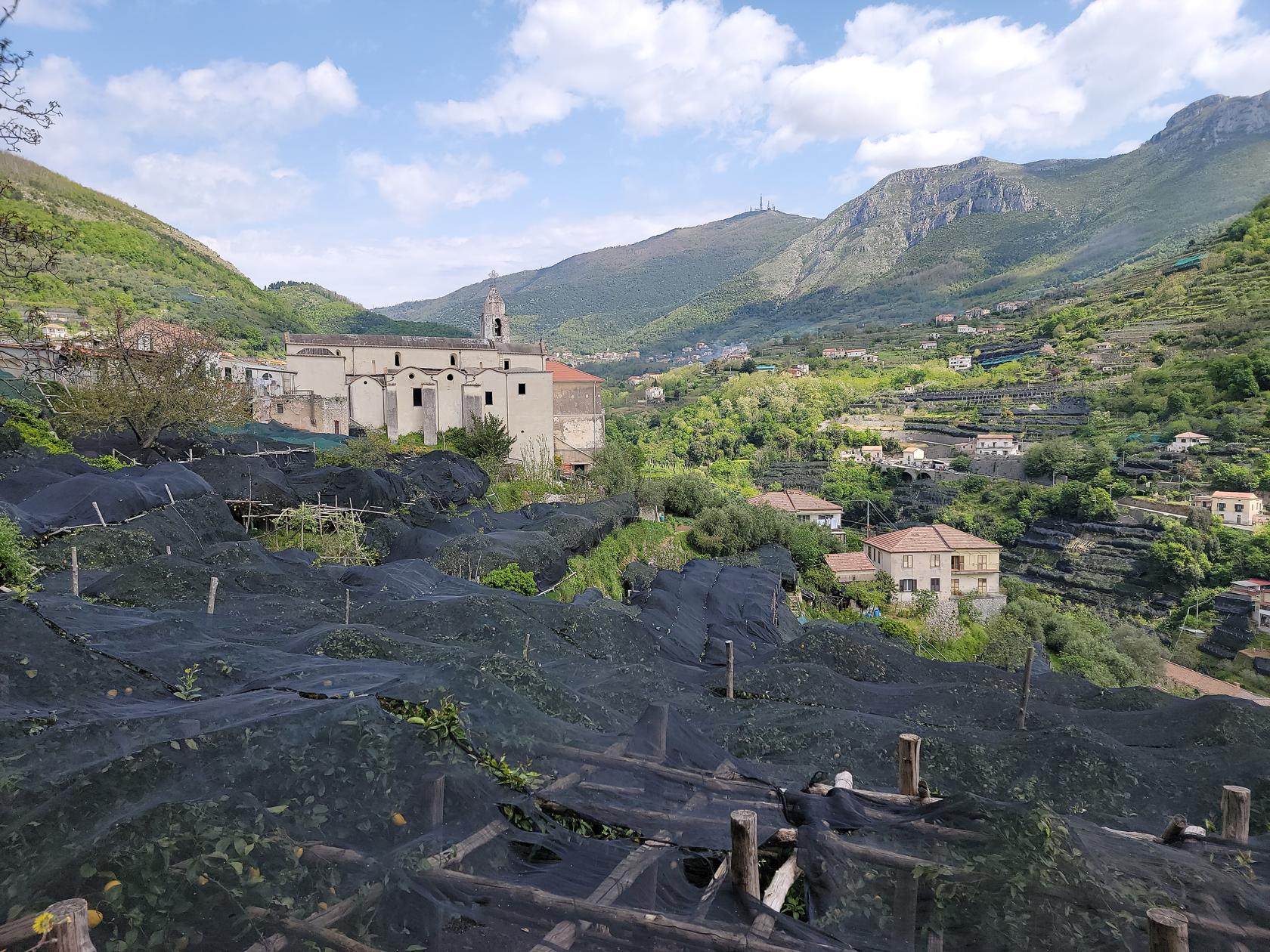
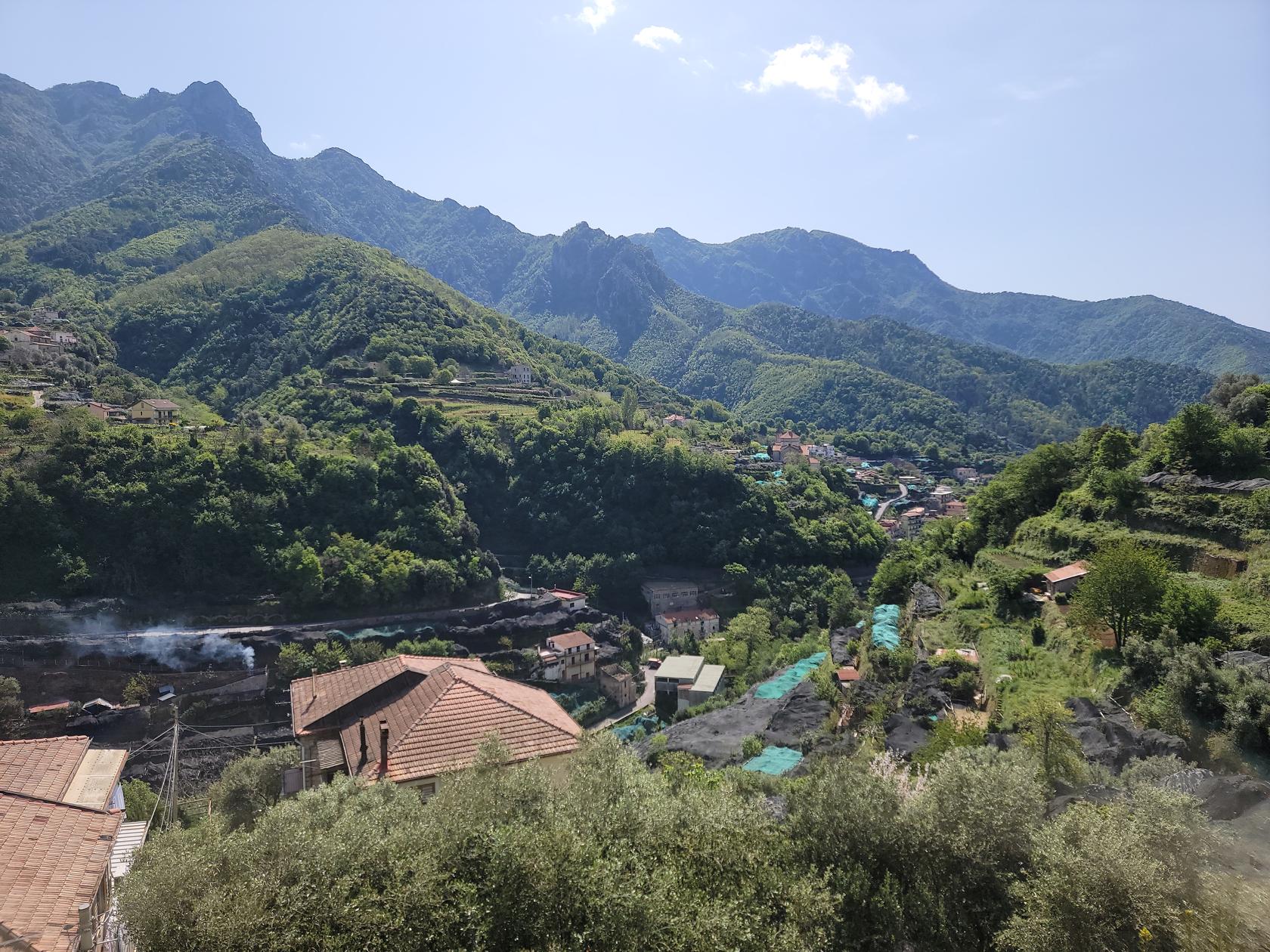
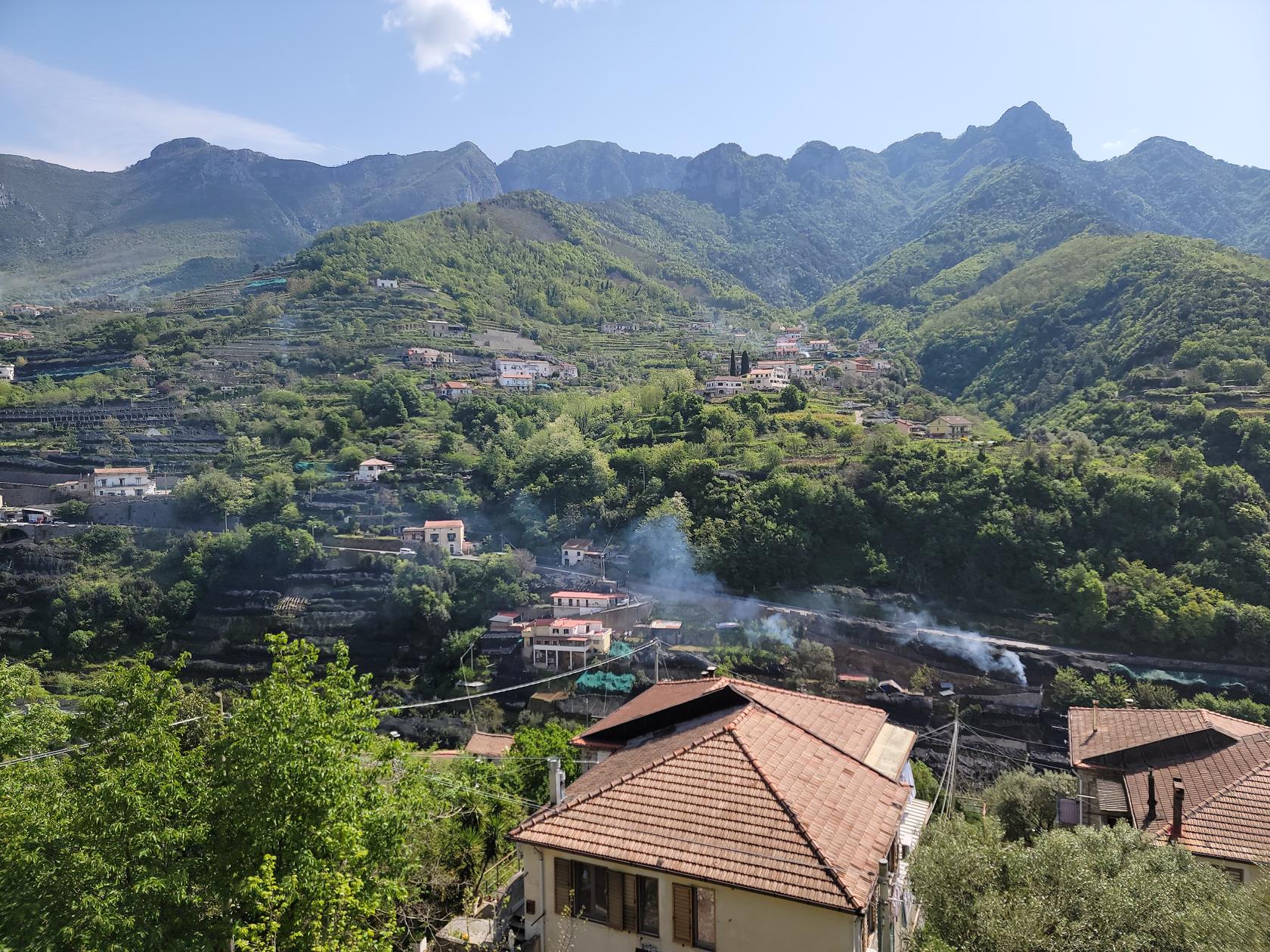
On our second and final day to the Amalfi Coast, we were fortunate enough to enjoy a lemon experience near Tramonti. After our tour and lunch, we visited the other smaller Amalfi towns of Maiori, Minori and finally Cetara. There is not much to see in any of them and may be skipped. Except perhaps for Minori, which if you are looking for a beach spot along the coast, may offer the best option.
Getting There
On our second day we had arranged for the same tour guide that we had the previous day, Mind The Nap tours[1]If you would like to find them, they are on one of the more frequently used social media applications.. Therefore, we took a hired vehicle from Naples to drive once again over the Anti Appenine mountains, via SP2a, to Tramonti and then to the other coastal towns. Returning along the coastal road via Vietri sul Mare and A3.
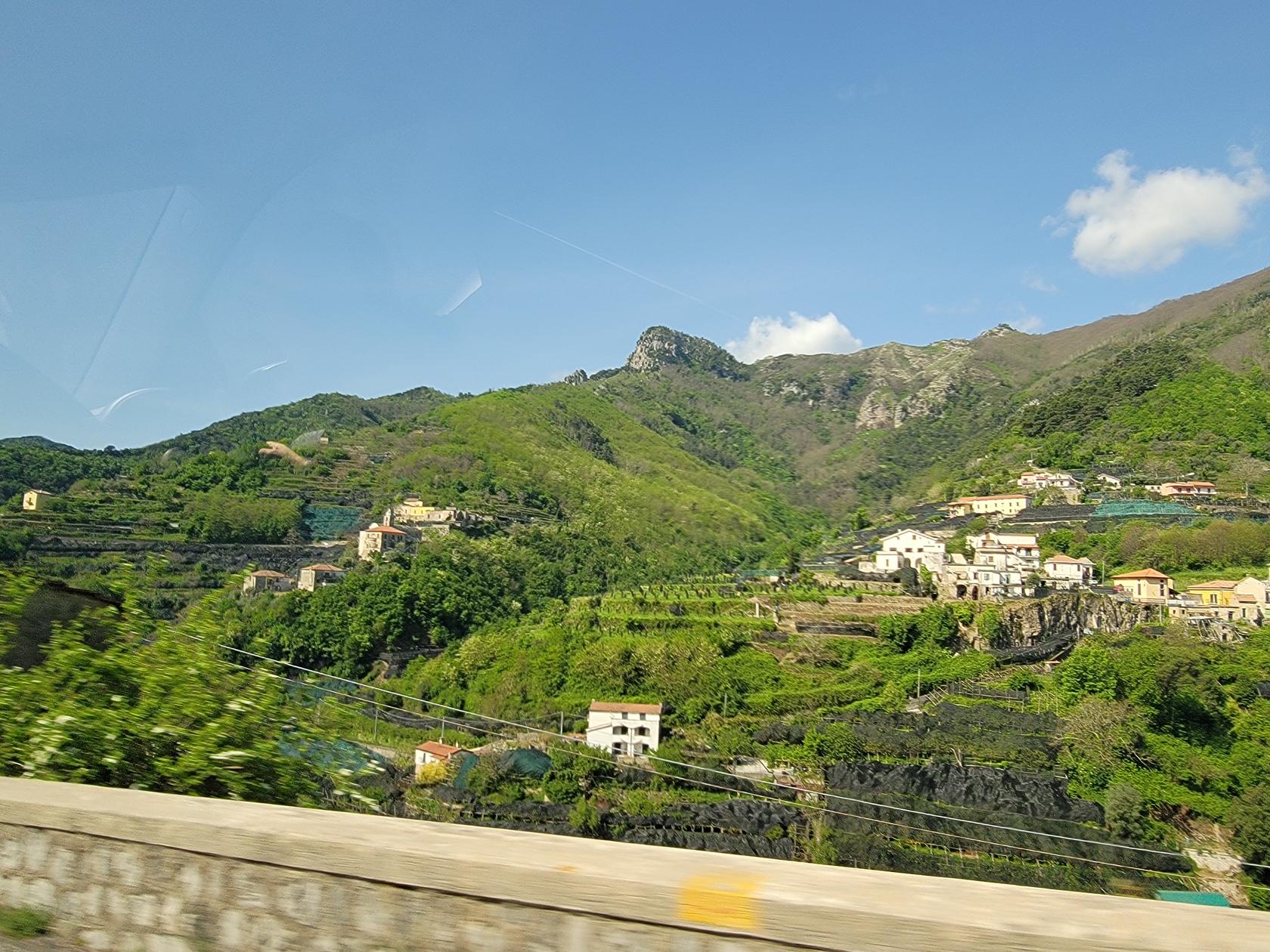
Coming Into Tramonti – Tramonti, Italy
Tramonti
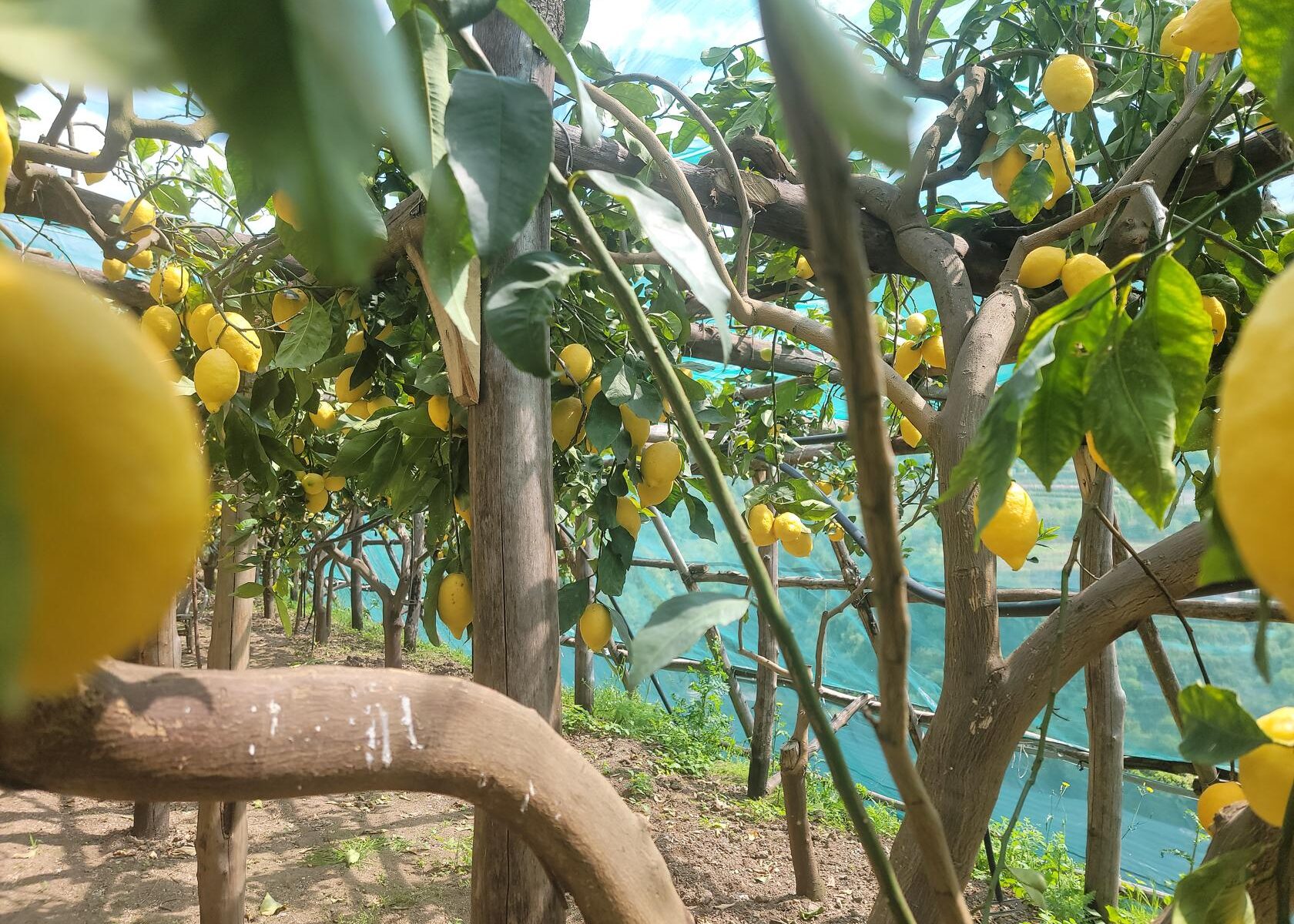
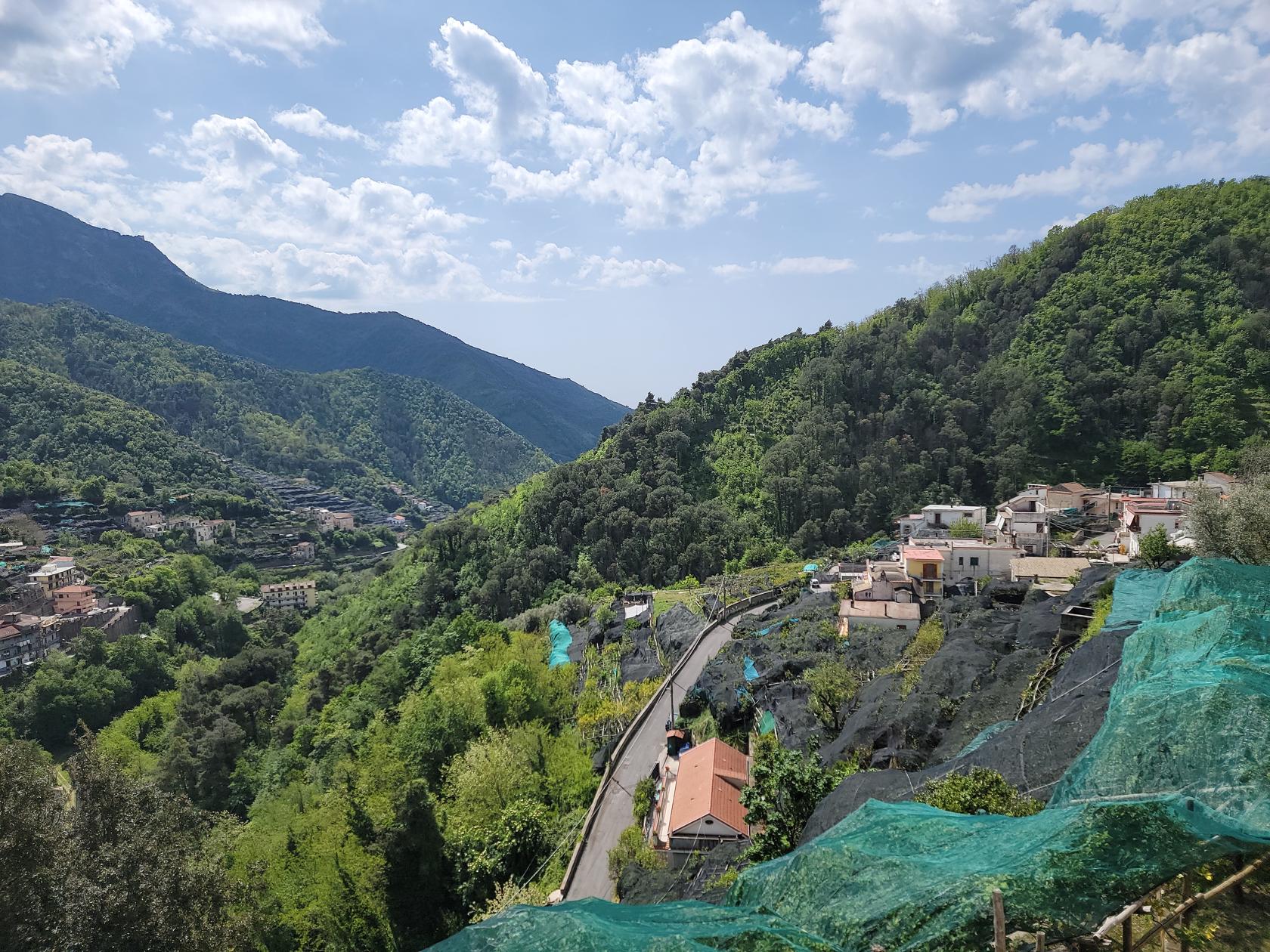
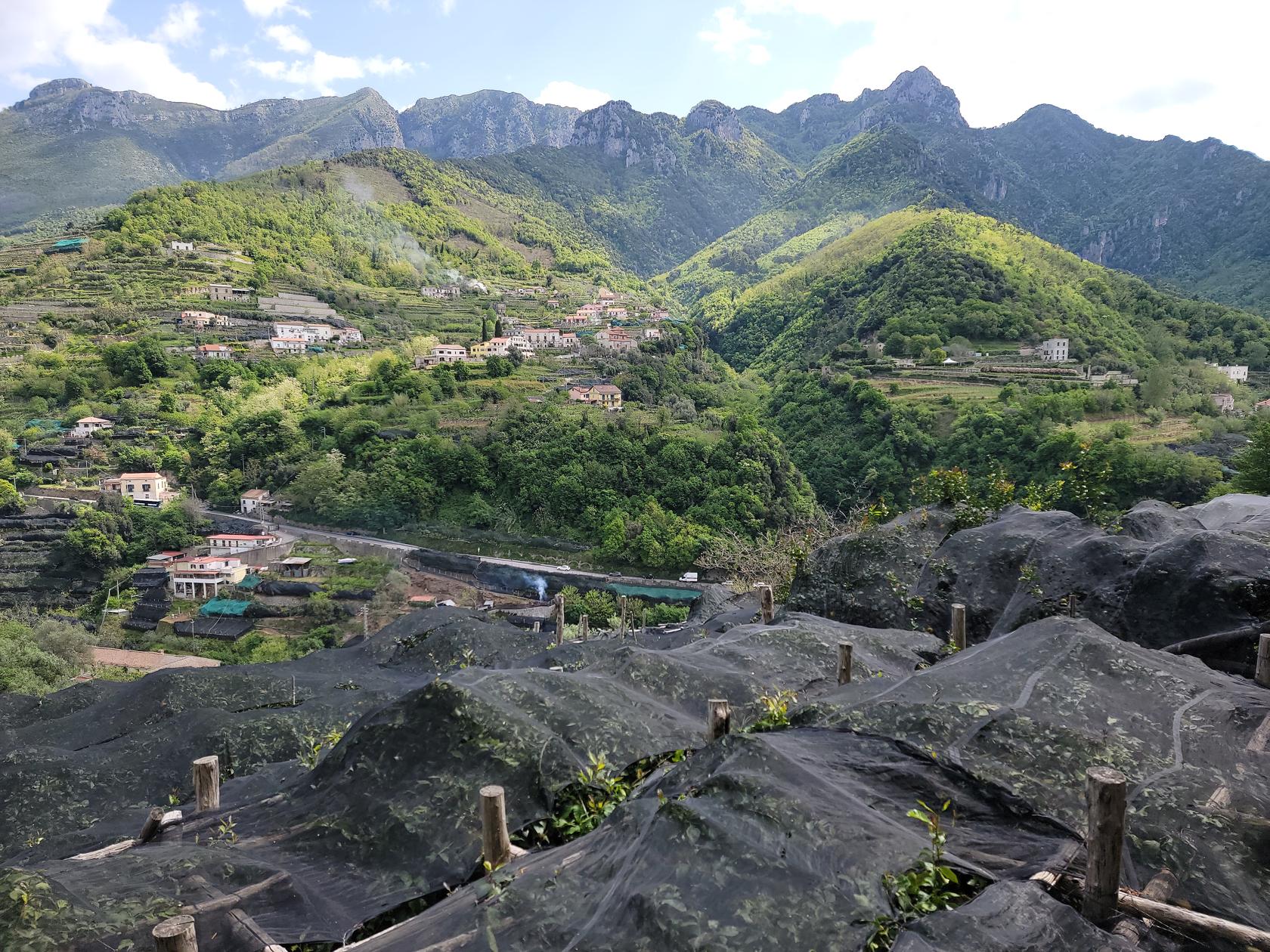
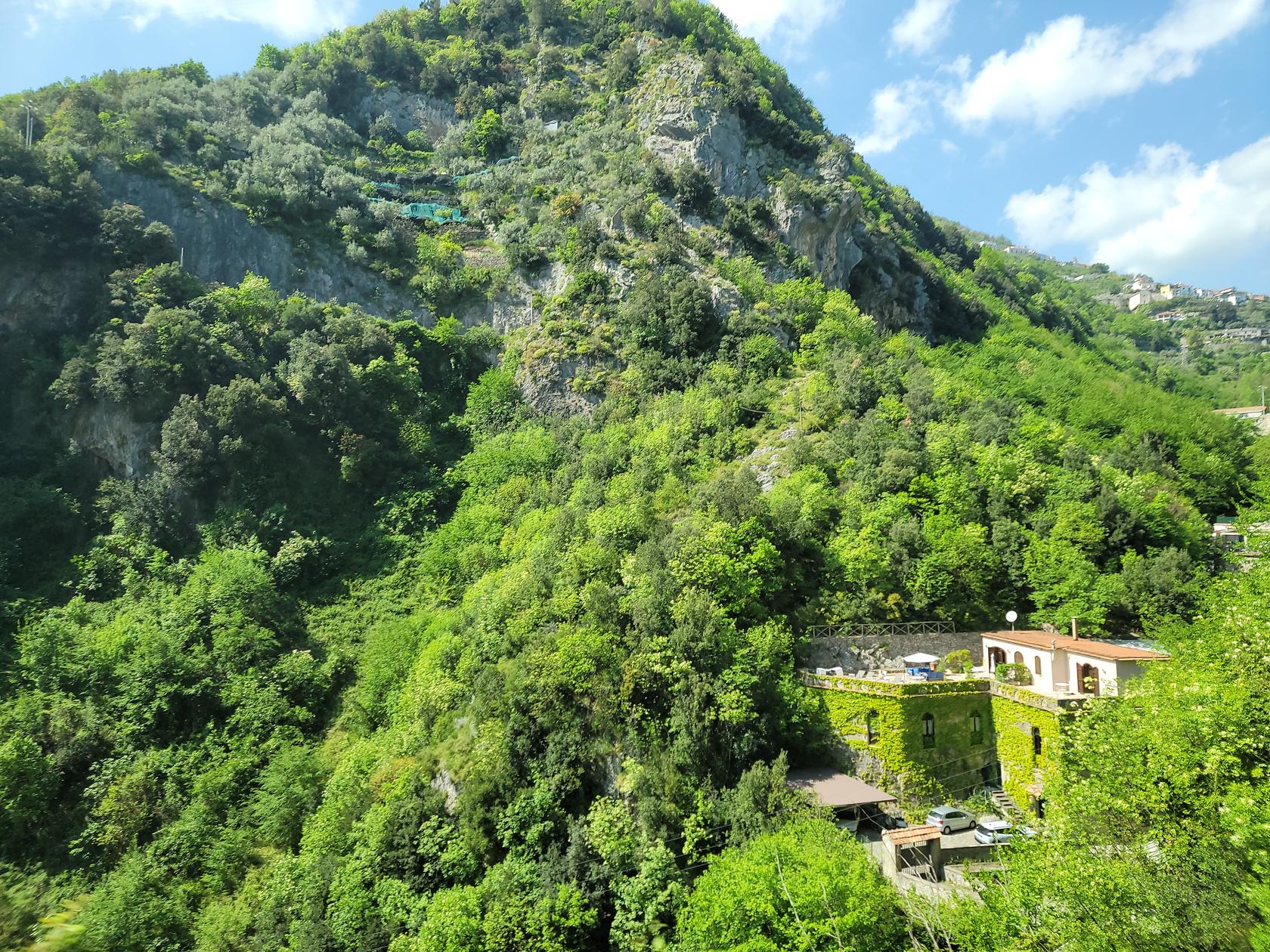
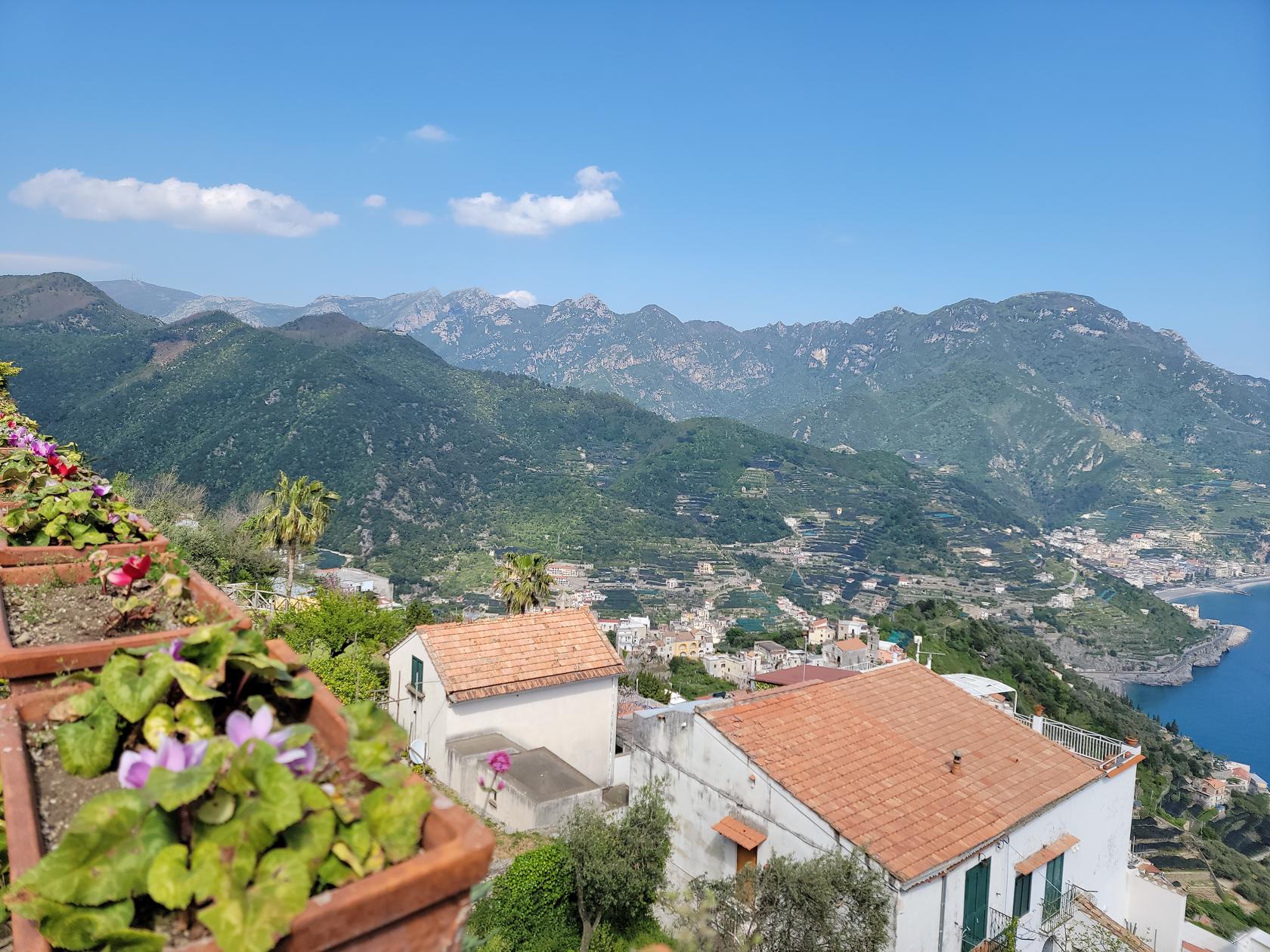
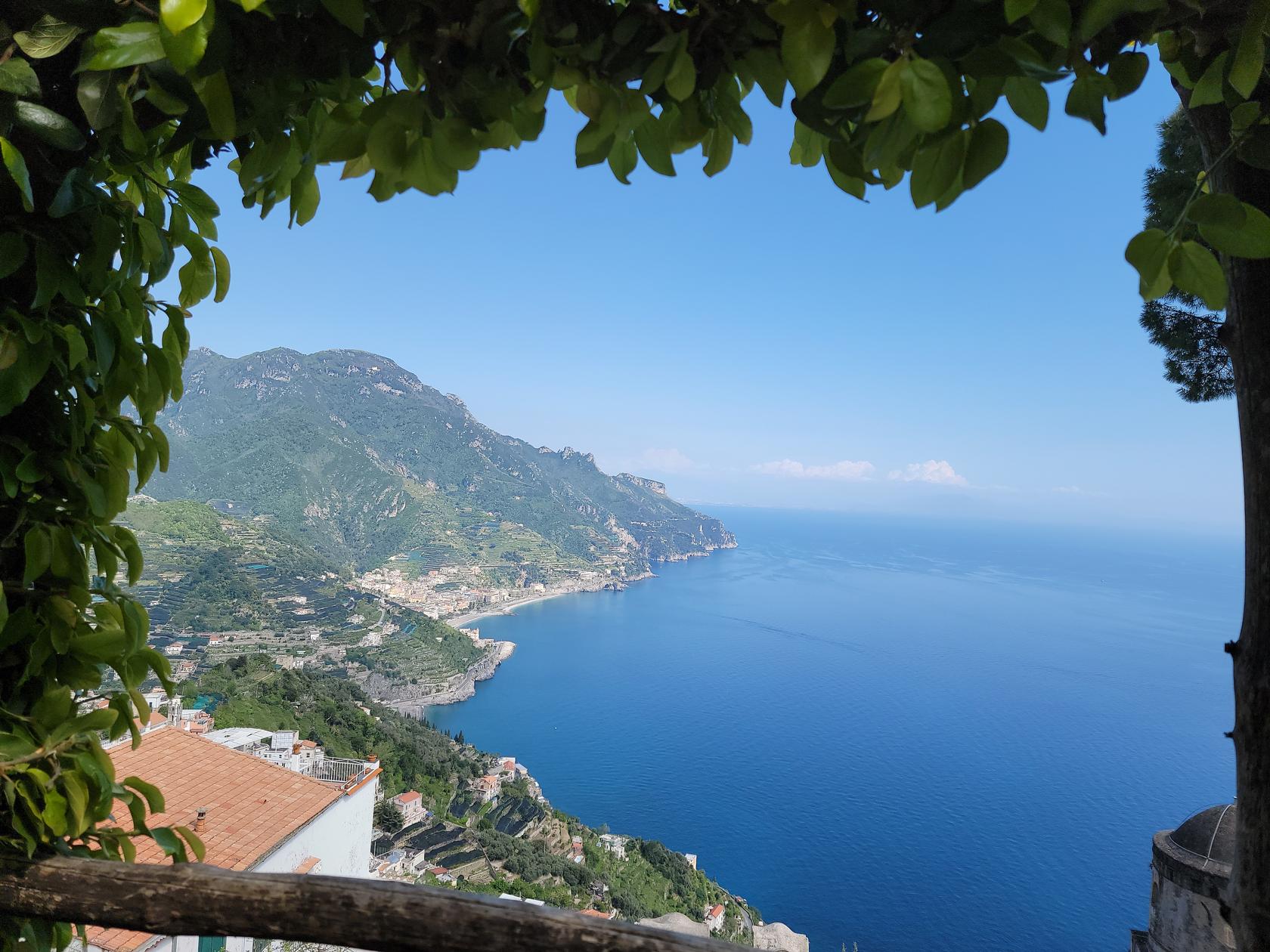
The term for this comune and town literaly means, in between the mountains. As we can attest with the photographs that we took, it definitely is in between the mountains. Our guide explained that the mixture of sun, heat and moisture is excellent for growing lemons in the area and some varieties of grapes.
Azienda Agricola Lemon Experience
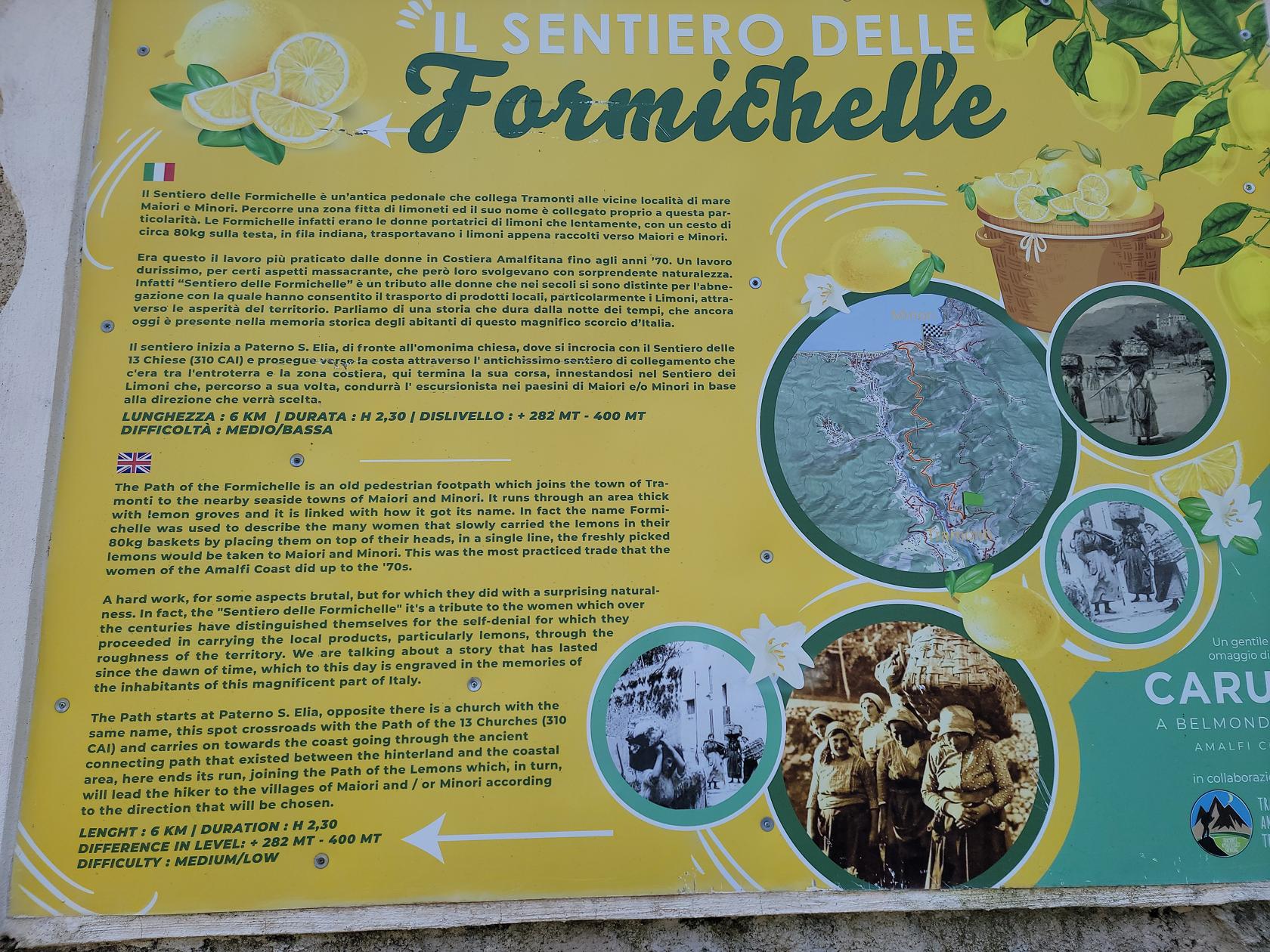
Azienda Agricola Le Formichelle can provide a lemon experience. It is part guided tour, part lunch, with the most complete explanation of lemons you will probably ever experience.
Azienda Agricola Le Formichelle – Tramonti, Italy
Lemon Experience Tour
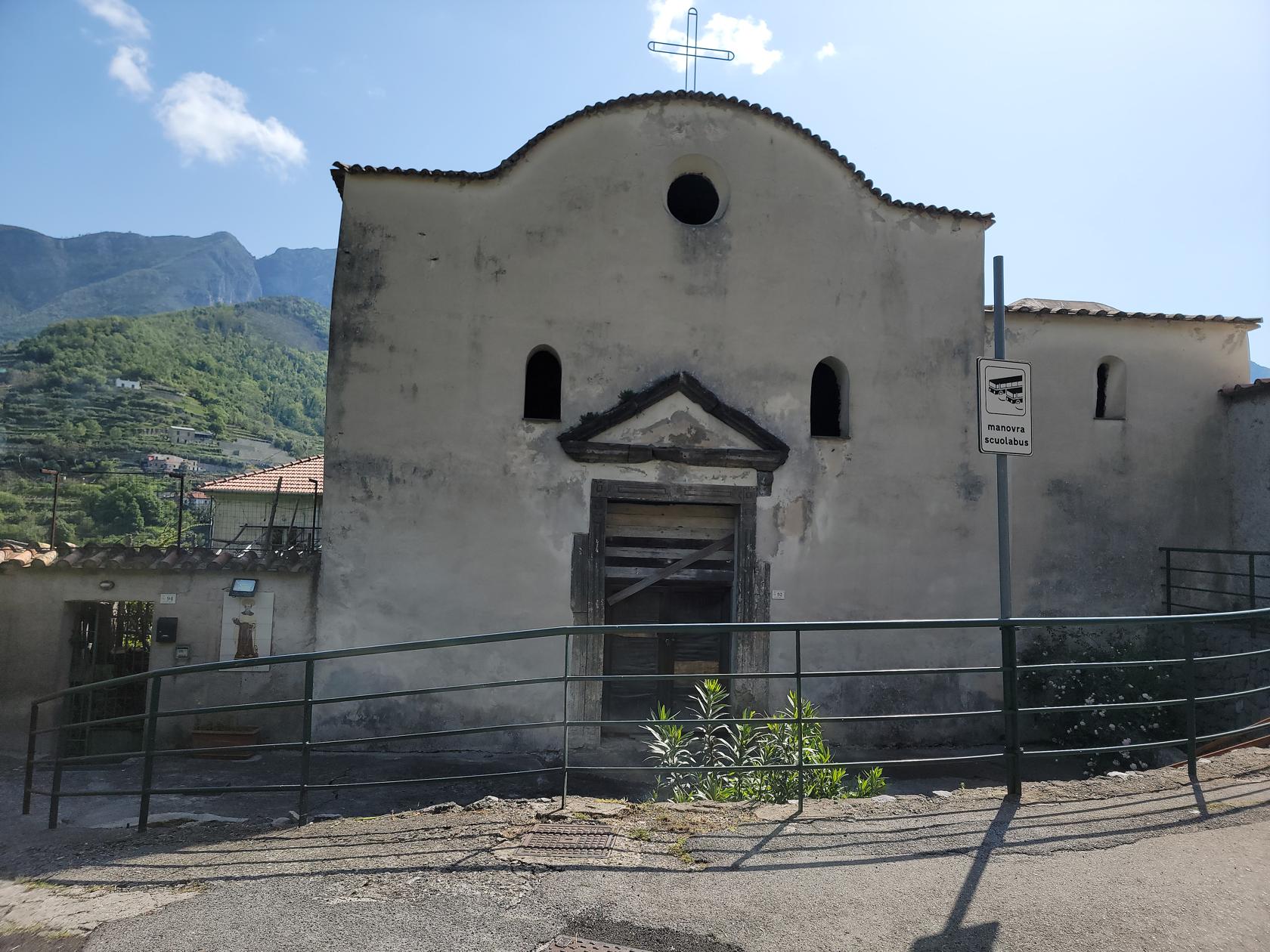
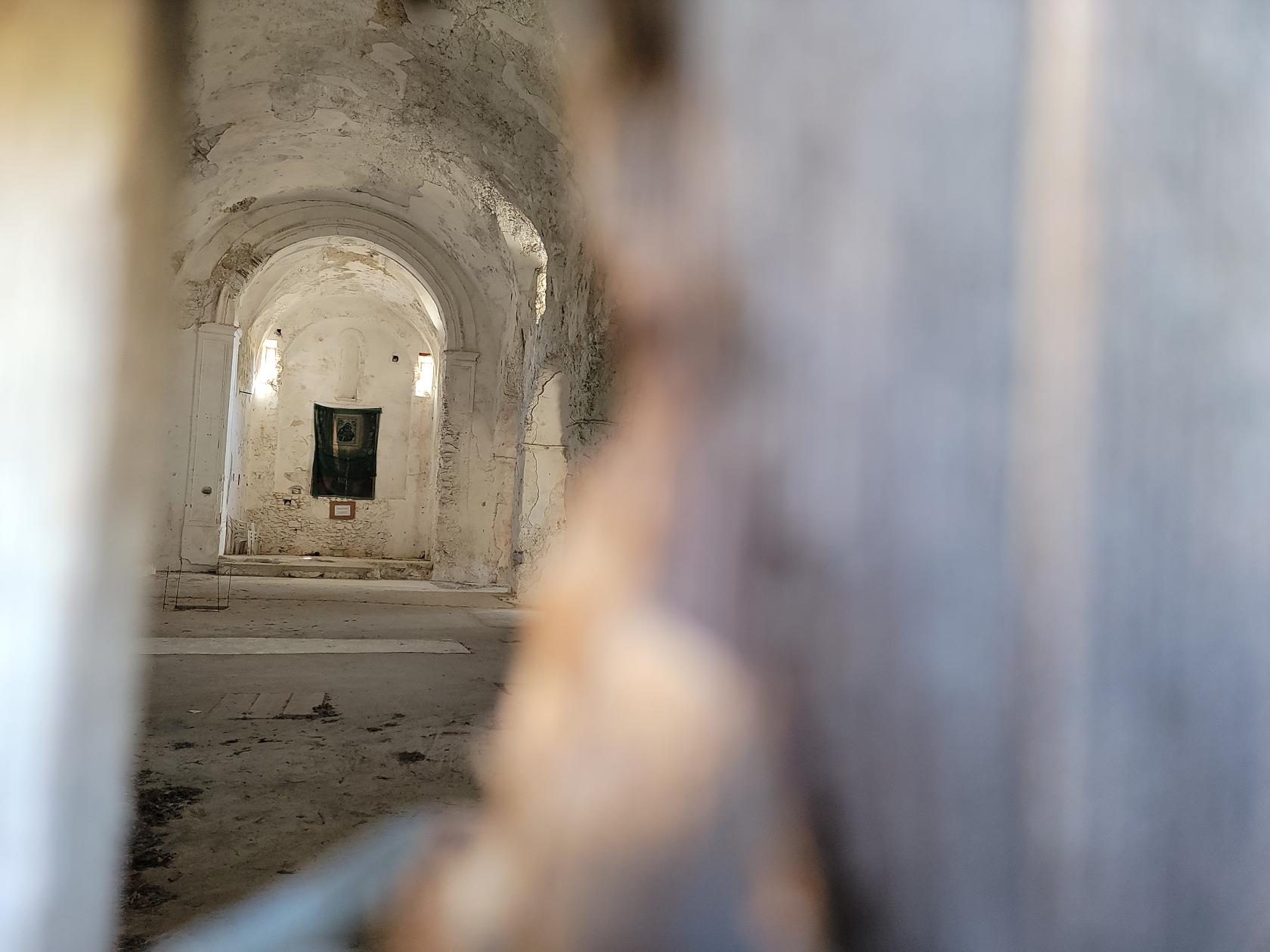
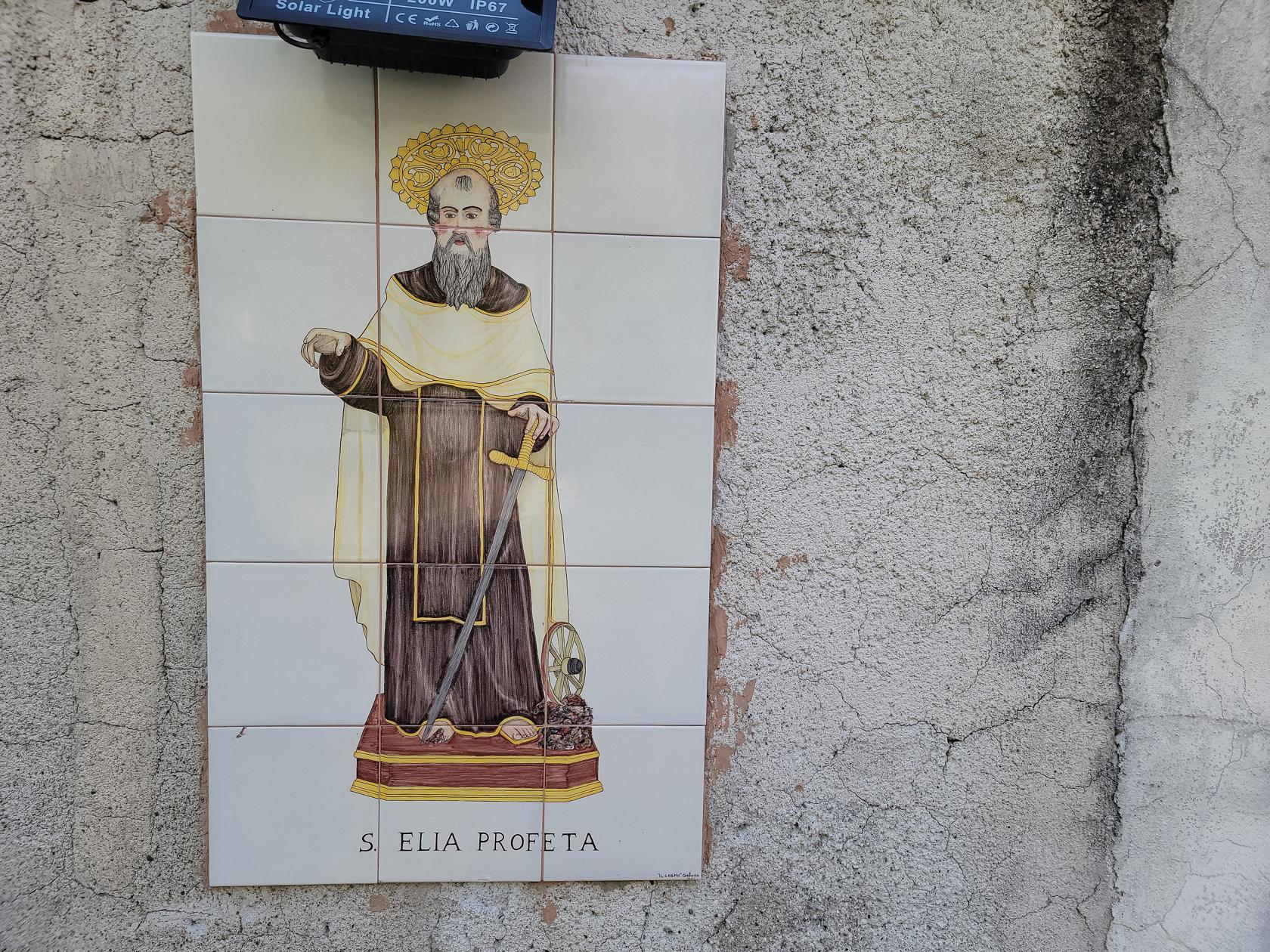
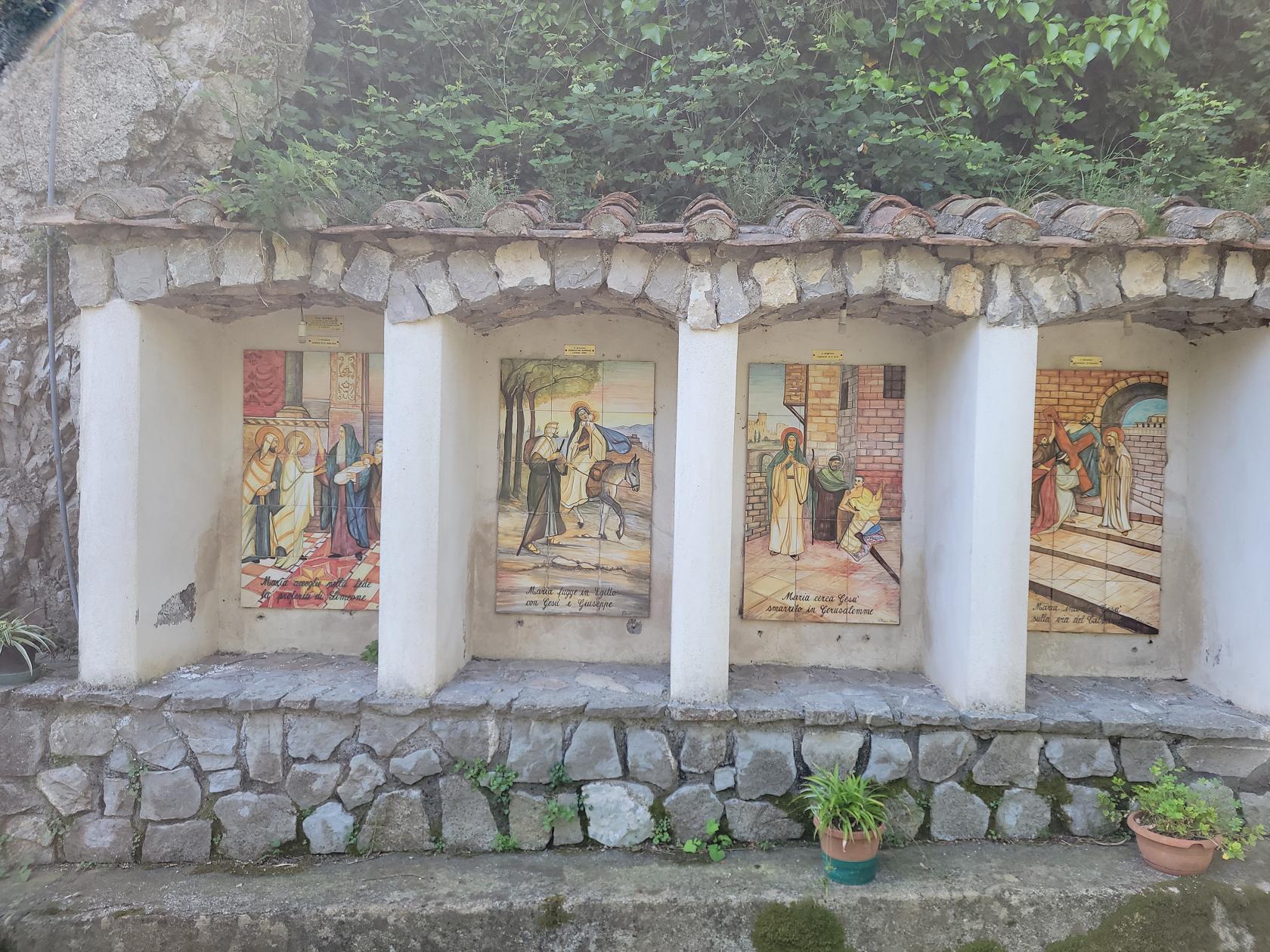
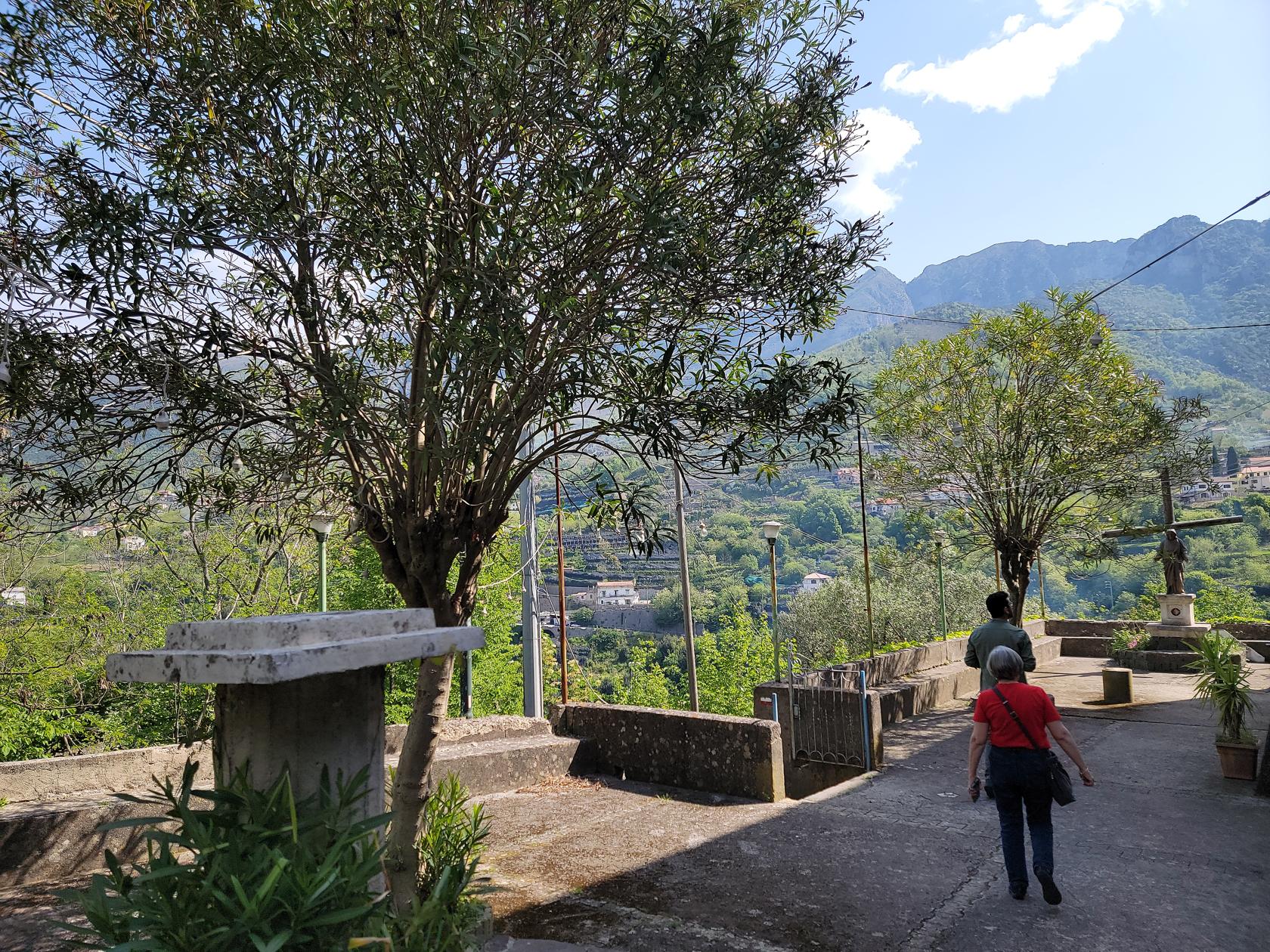
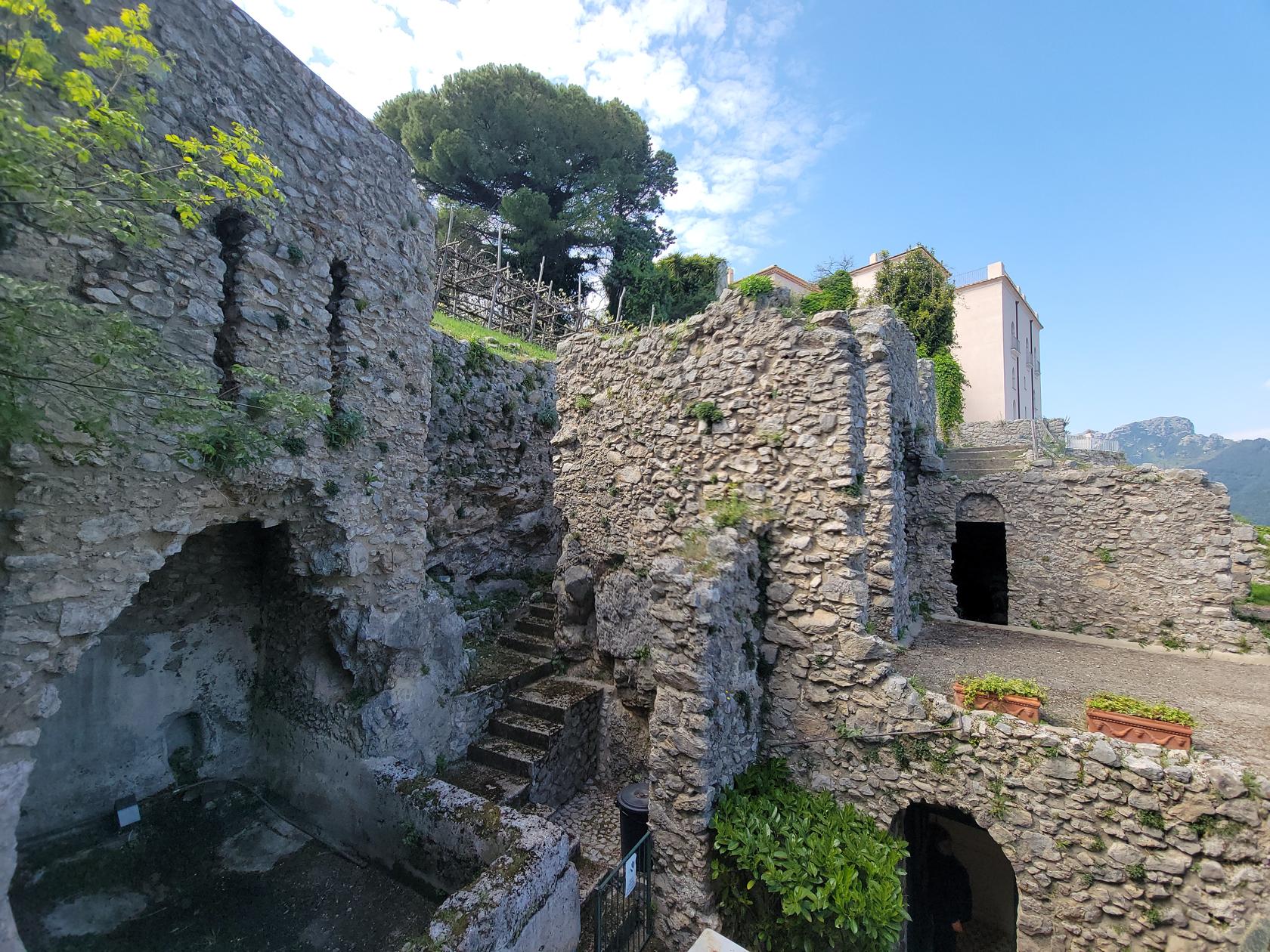
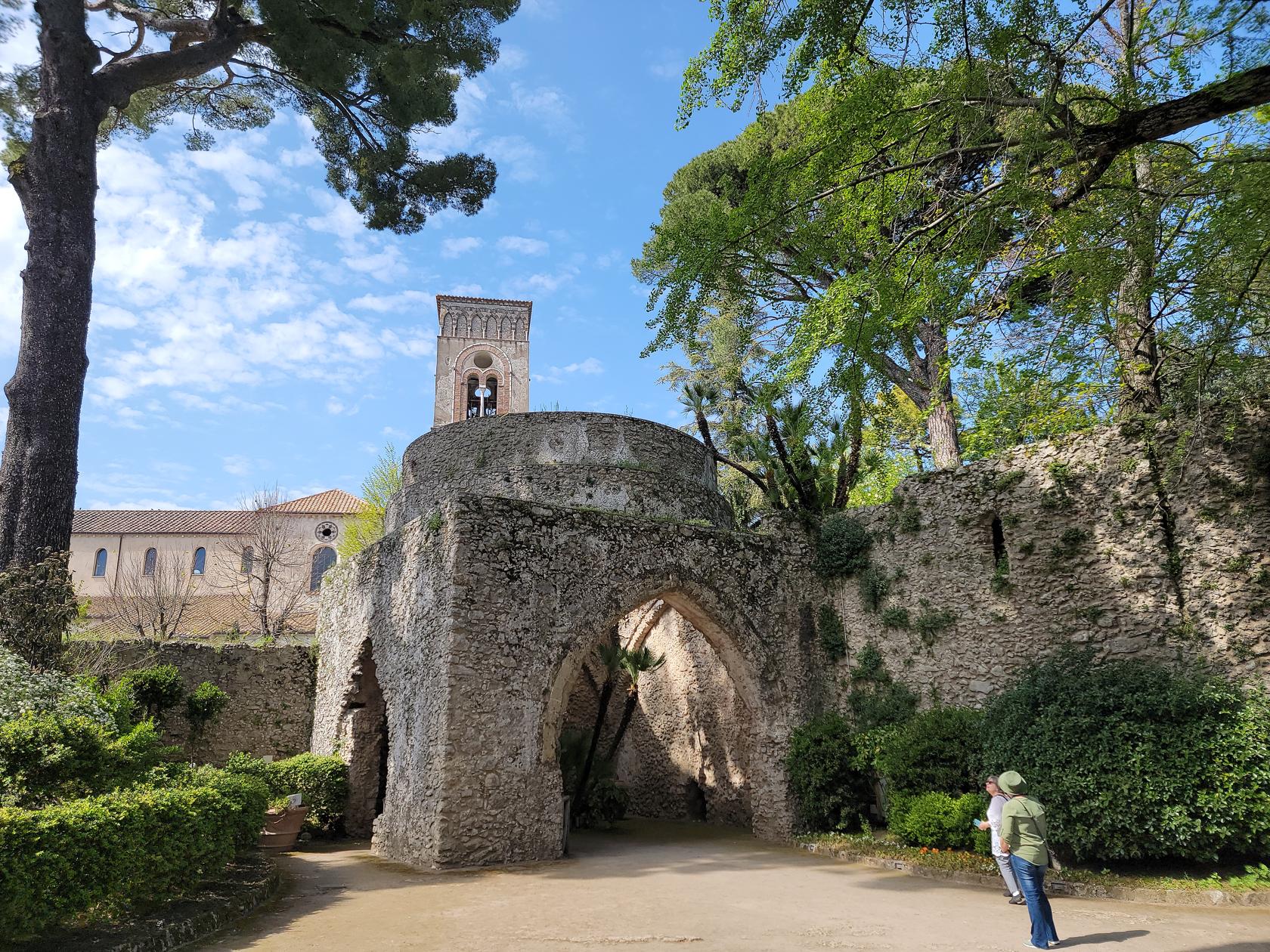
Our tour started out where are tour guide dropped us off, near the small abandoned church of Chiesa parrocchiale S. Elia Profeta in Ferriera, Tramonti.
The Parochial Church Of Saint Elia Profeta – Tramonti, Italy
The Parochial Church Of Saint Elia Profeta – Tramonti, Italy
The Parochial Church Of Saint Elia Profeta – Tramonti, Italy
The Parochial Church Of Saint Elia Profeta – Tramonti, Italy
The Parochial Church Of Saint Elia Profeta – Tramonti, Italy
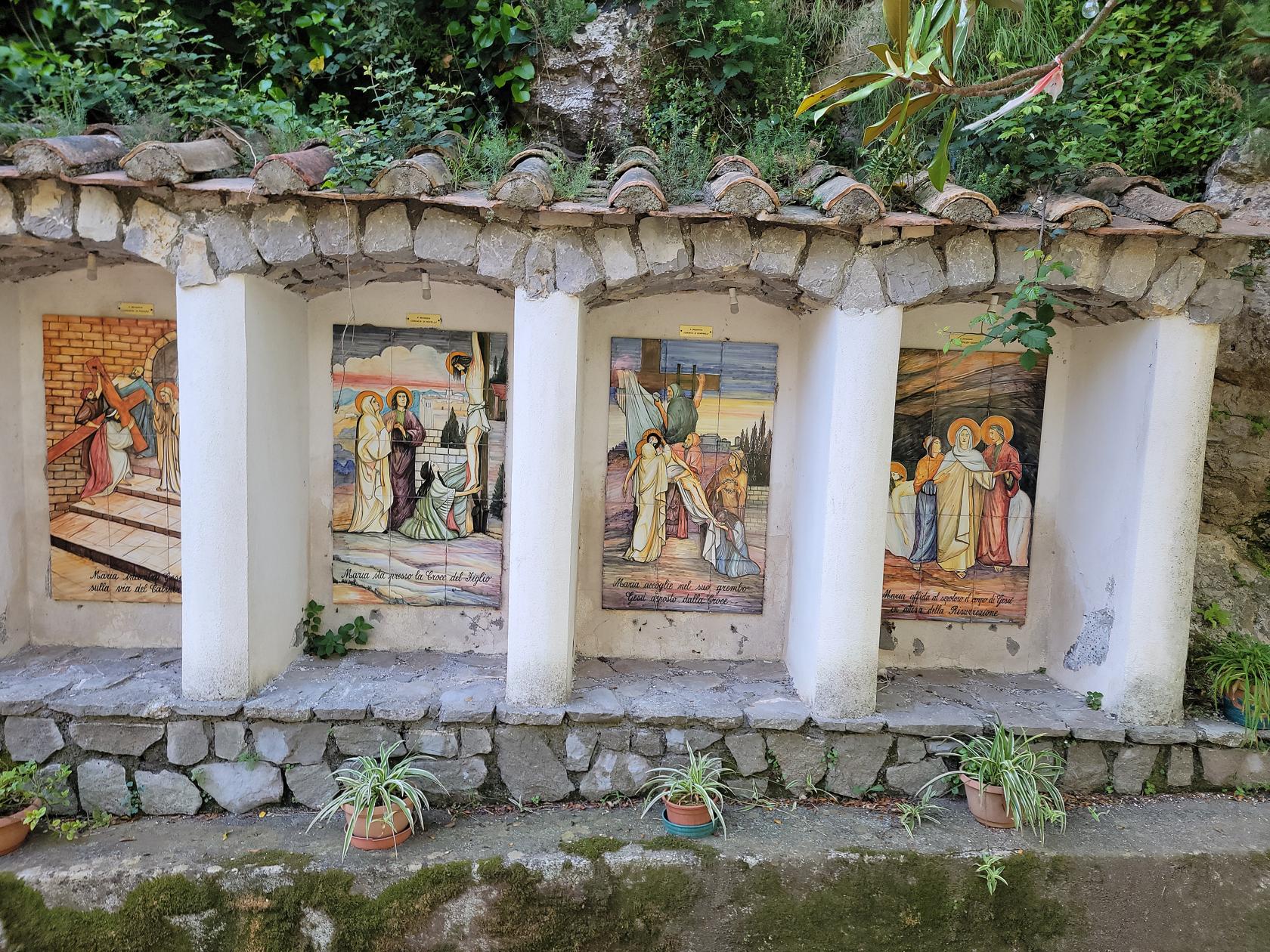
Courtyard – The Parochial Church Of Saint Elia Profeta – Tramonti, Italy
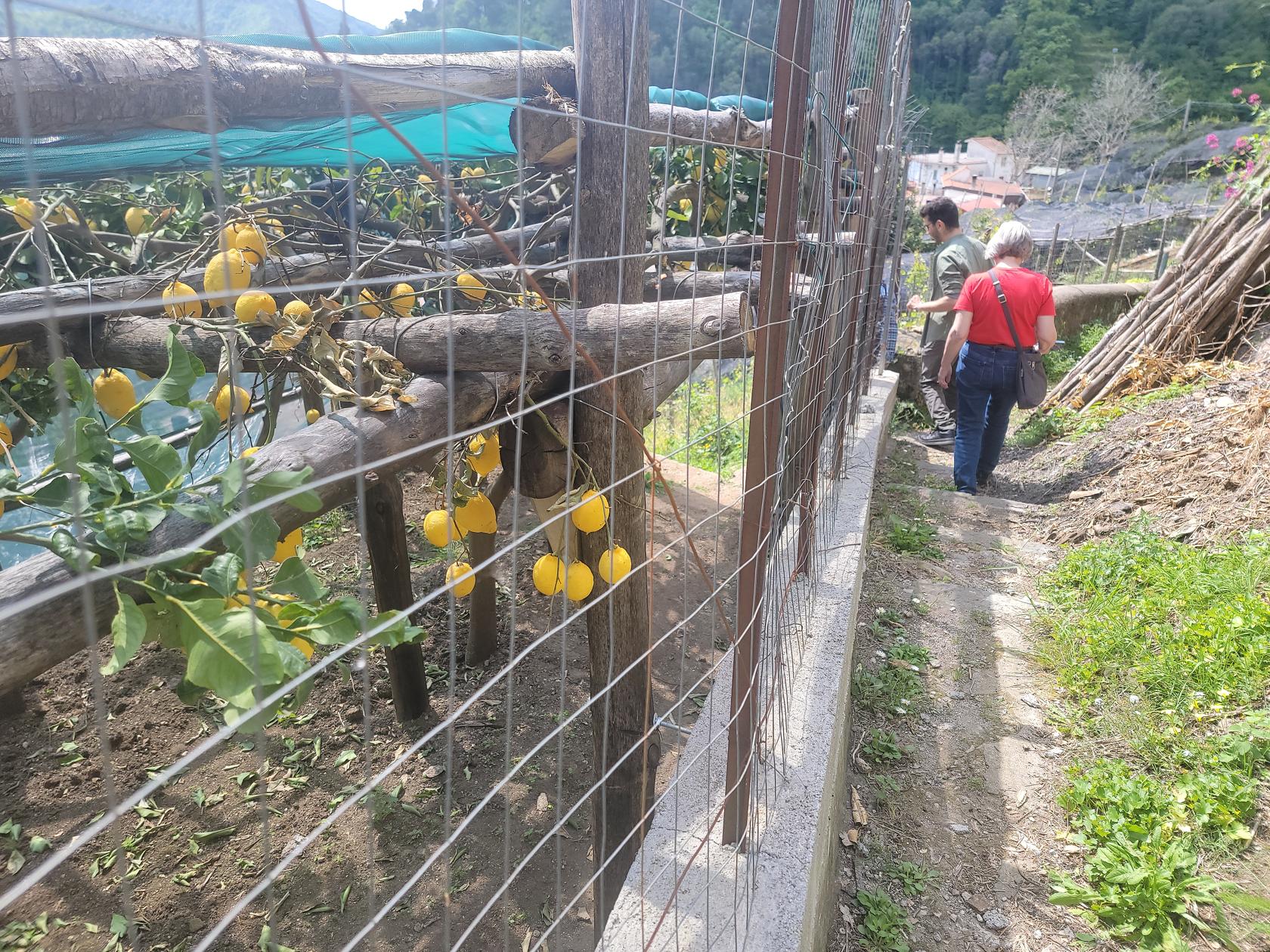
Here our young guide explained in english all the geological, climate and other aspects of lemon growing, while pointing our specific areas between the mountains we were in.
The Surrounding Countryside – Azienda Agricola Le Formichelle – Tramonti, Italy
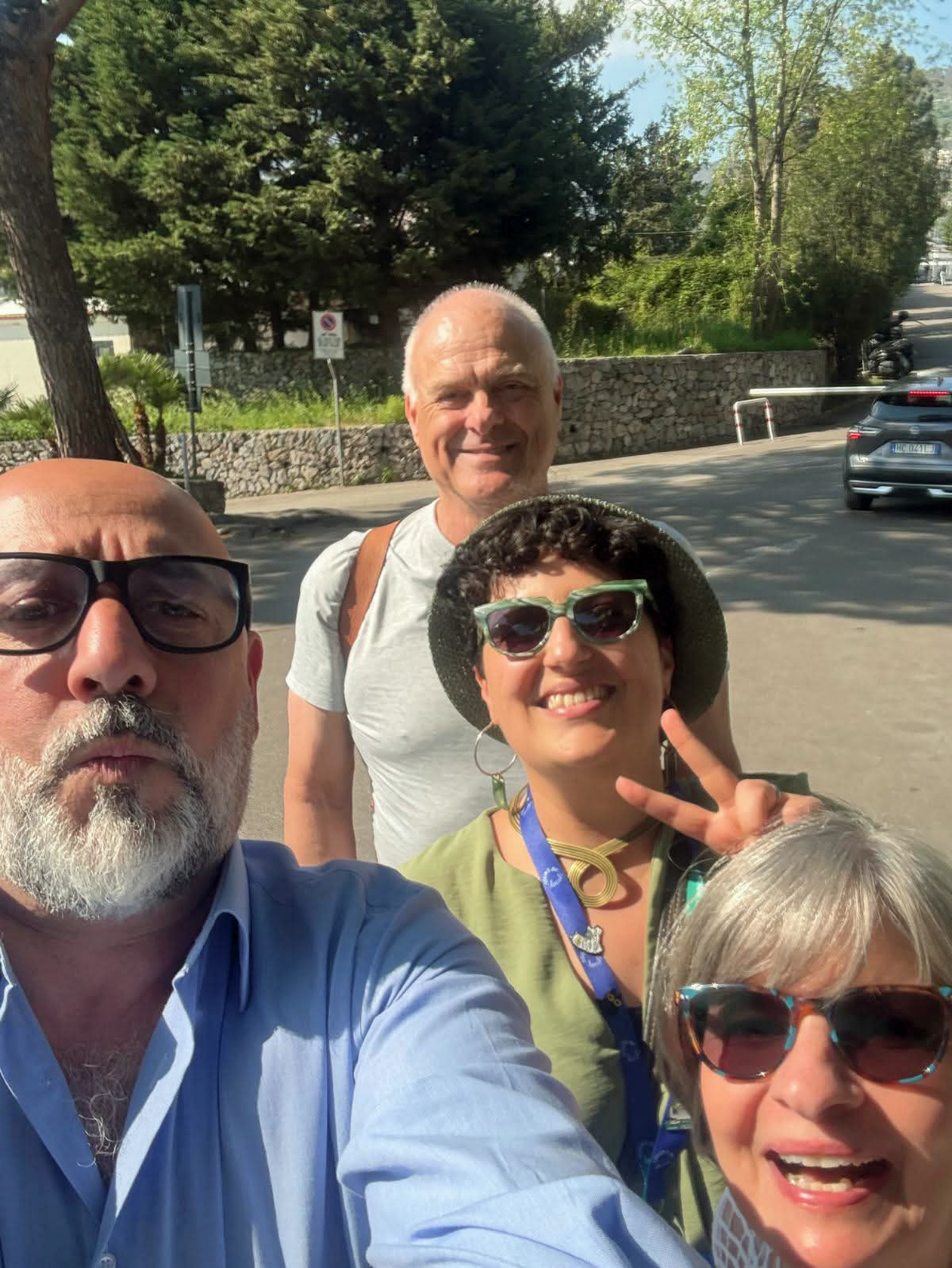
Patti and Ruben – Azienda Agricola Le Formichelle – Tramonti, Italy
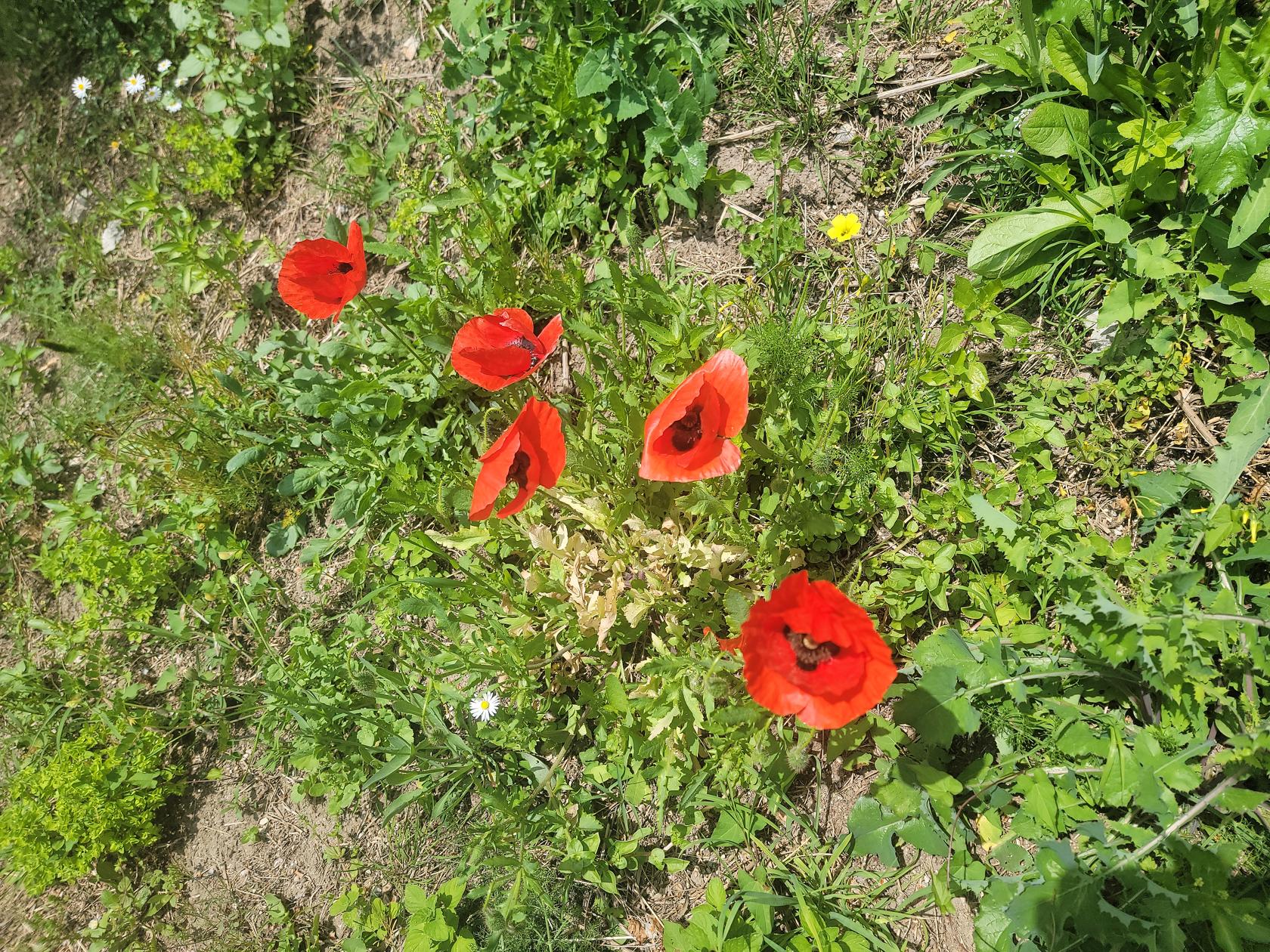
Poppies – Azienda Agricola Le Formichelle – Tramonti, Italy
Alessandro and Patti – Azienda Agricola Le Formichelle – Tramonti, Italy
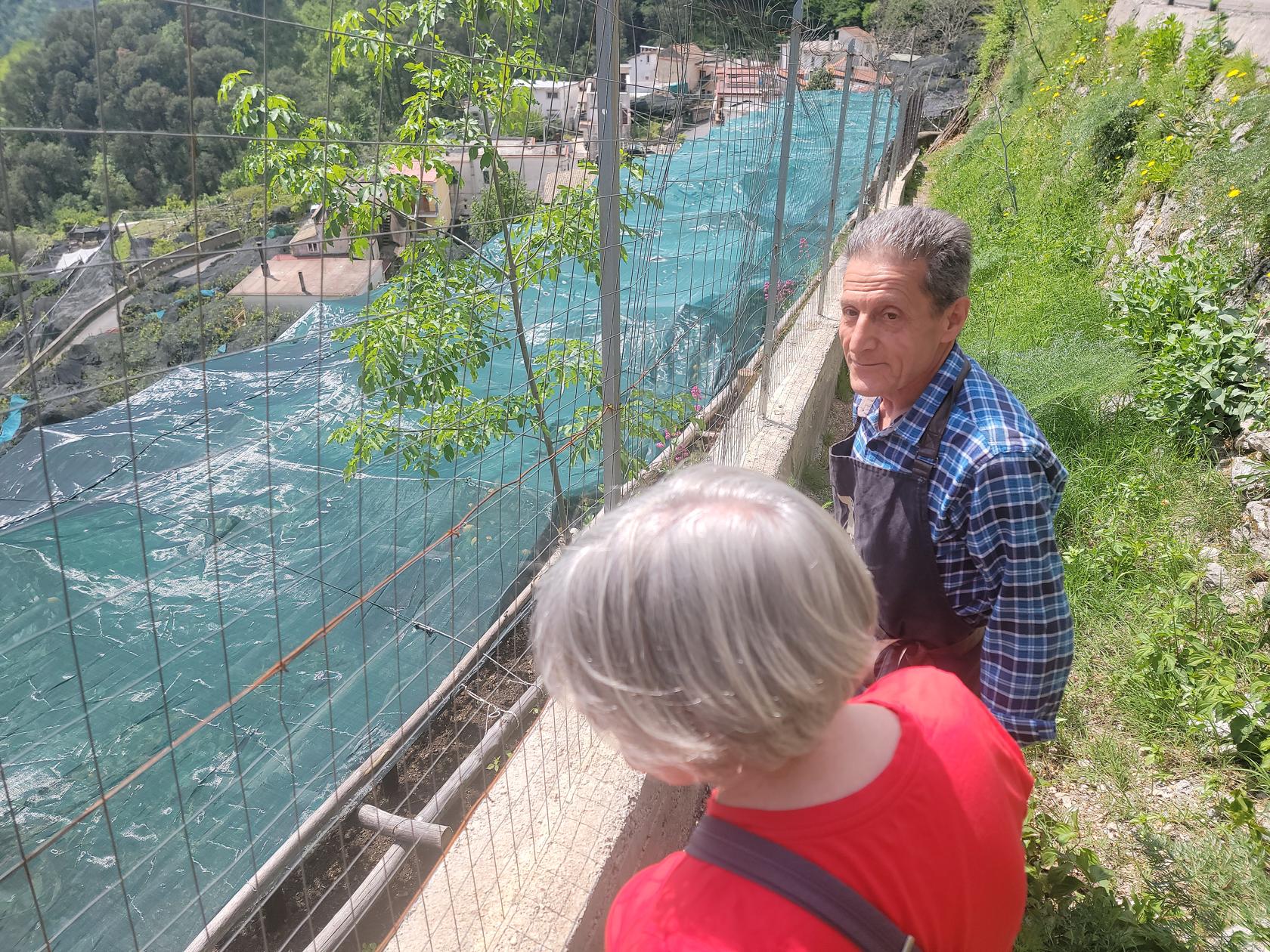
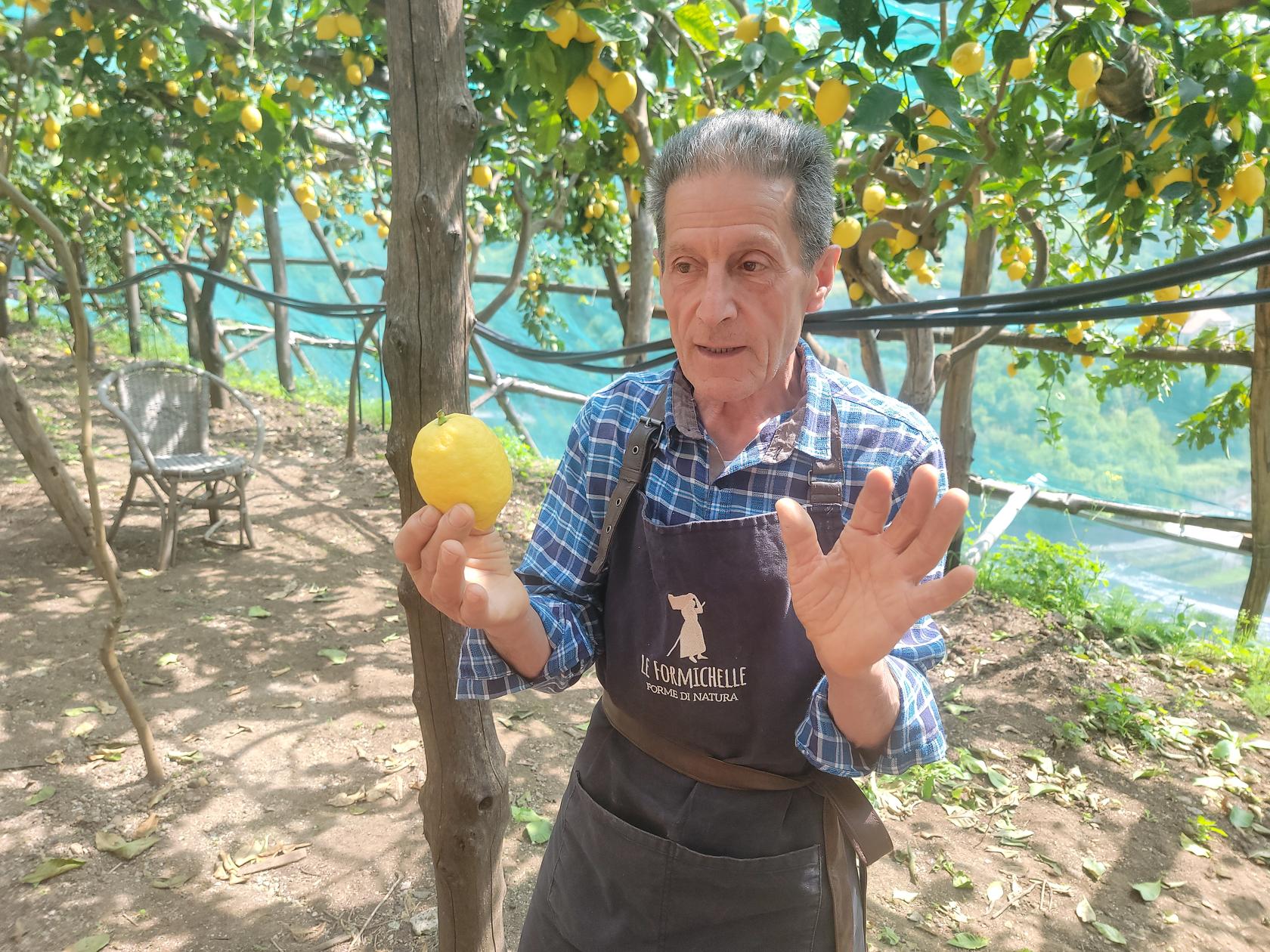
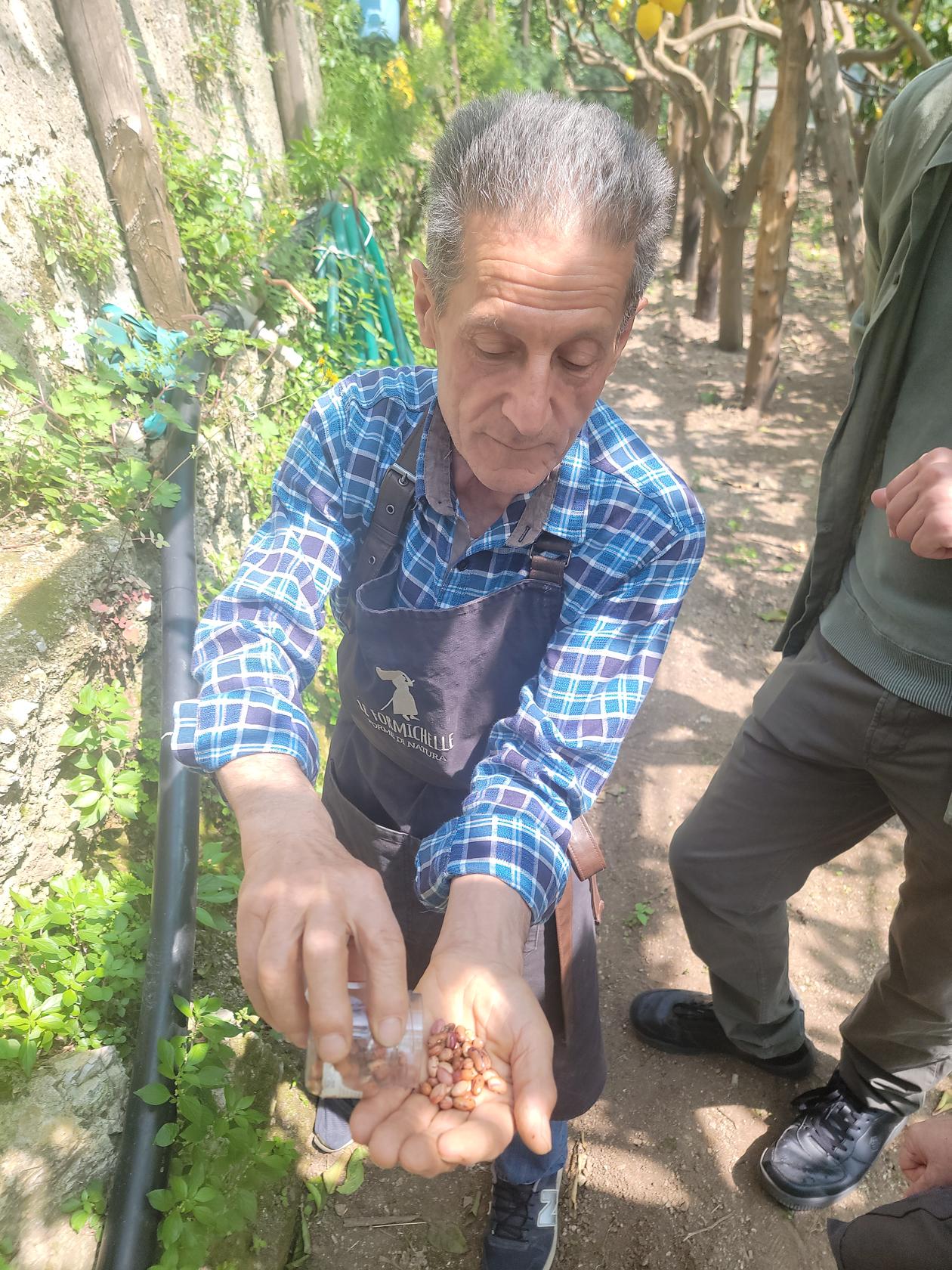
Then he took us to an old man named Ruben, definitely not an Italian name, who explained the horticulture of lemon trees. He showed us how he dries out different kind of seeds from fruit and vegetables that he has raised since he was a child with his father. He is seventy-four years old and does not look a day over sixty.
Ruben Explaining Lemons and Lemon Growing – Azienda Agricola Le Formichelle – Tramonti, Italy
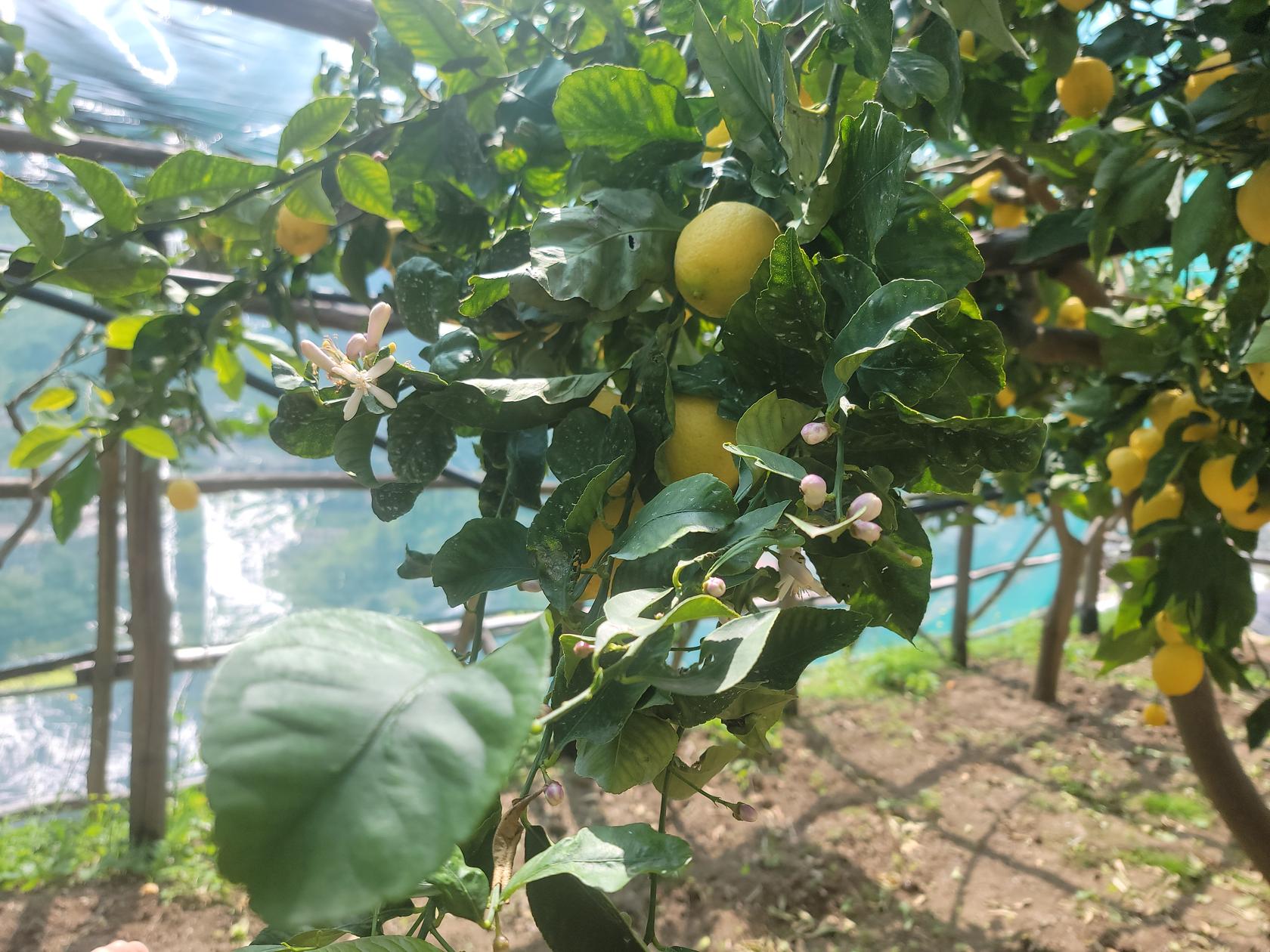
Blossoms, Unripe and Ripe Lemons All On The Same Tree – Azienda Agricola Le Formichelle – Tramonti, Italy
Ruben Seed Drying, The Old Fashion Way – Azienda Agricola Le Formichelle – Tramonti, Italy
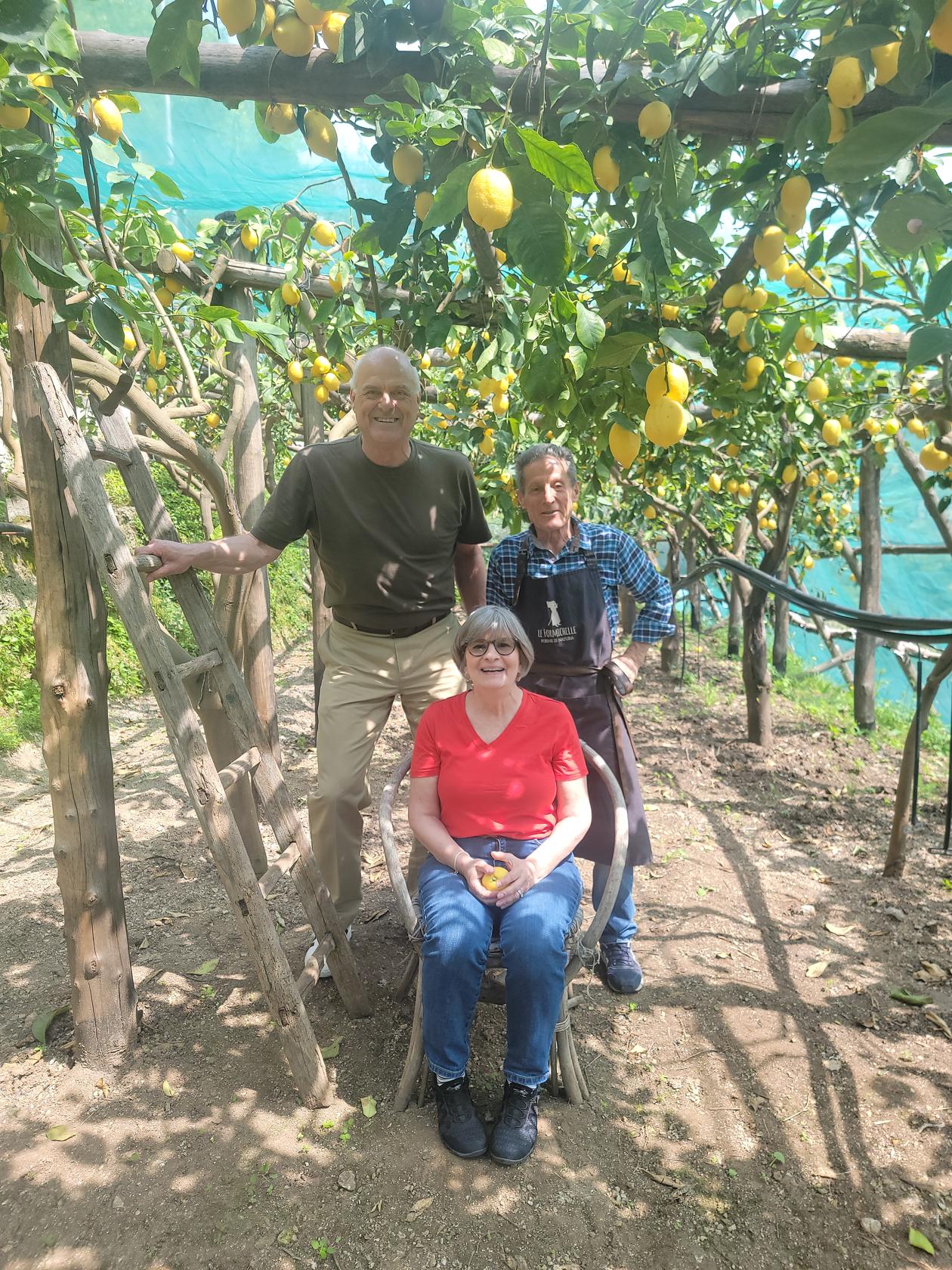
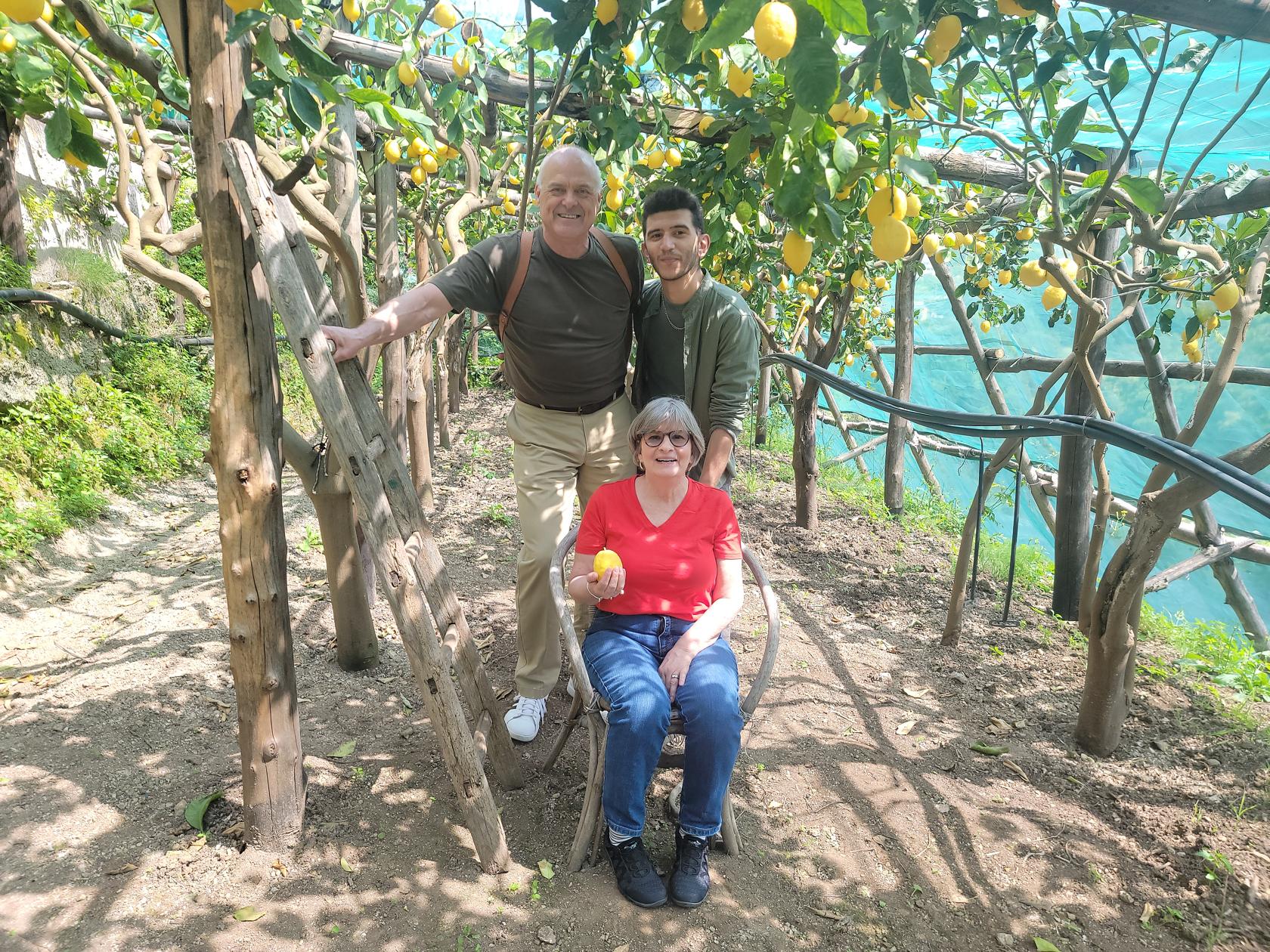
Then we had a cute little photograph session, where he had a small chair strategically placed within his one lemon grove.
Patti, Erick and Ruben – Azienda Agricola Le Formichelle – Tramonti, Italy
Patti, Erick and Alessandro – Azienda Agricola Le Formichelle – Tramonti, Italy
Lemon Experience Luncheon
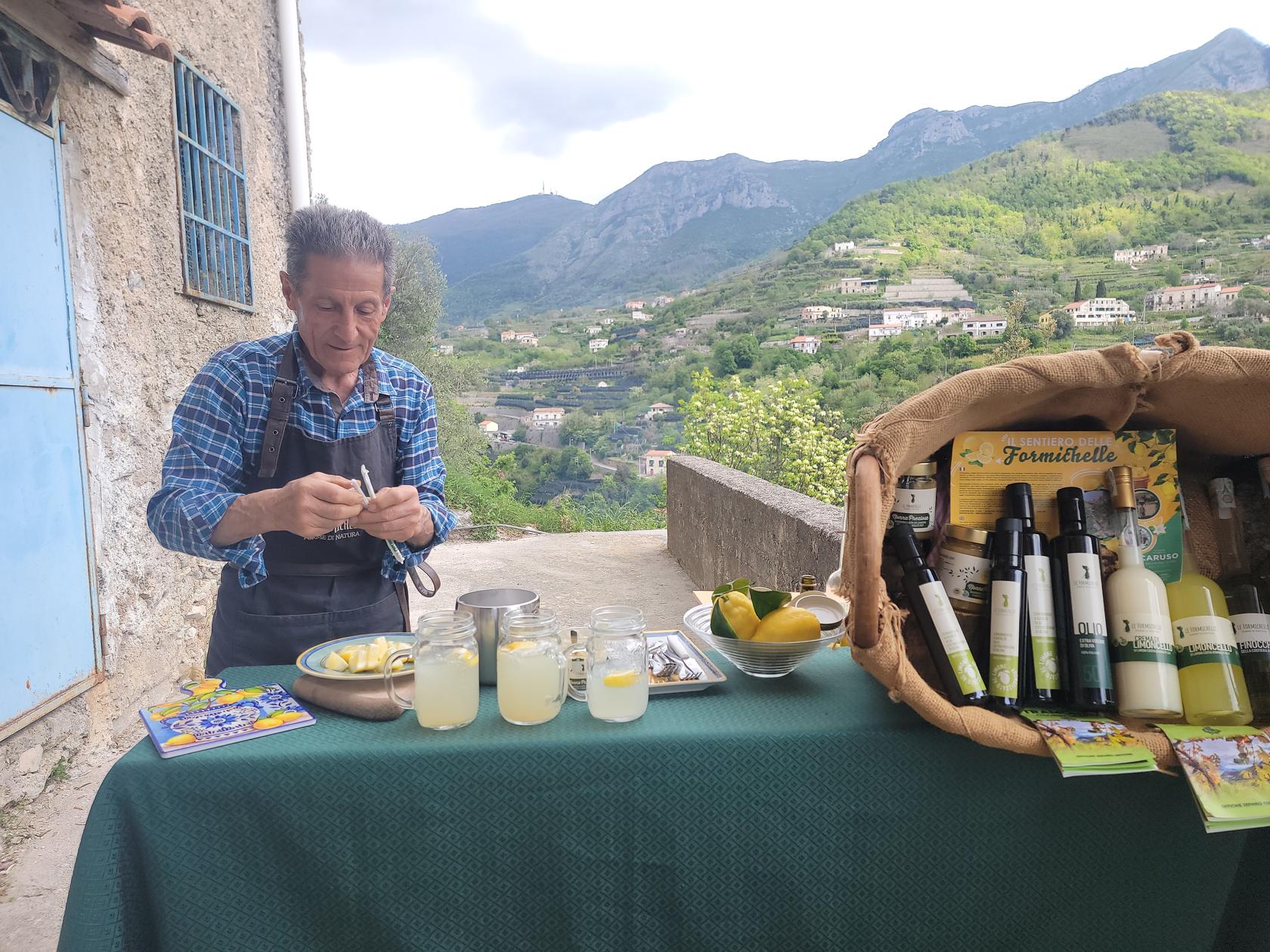
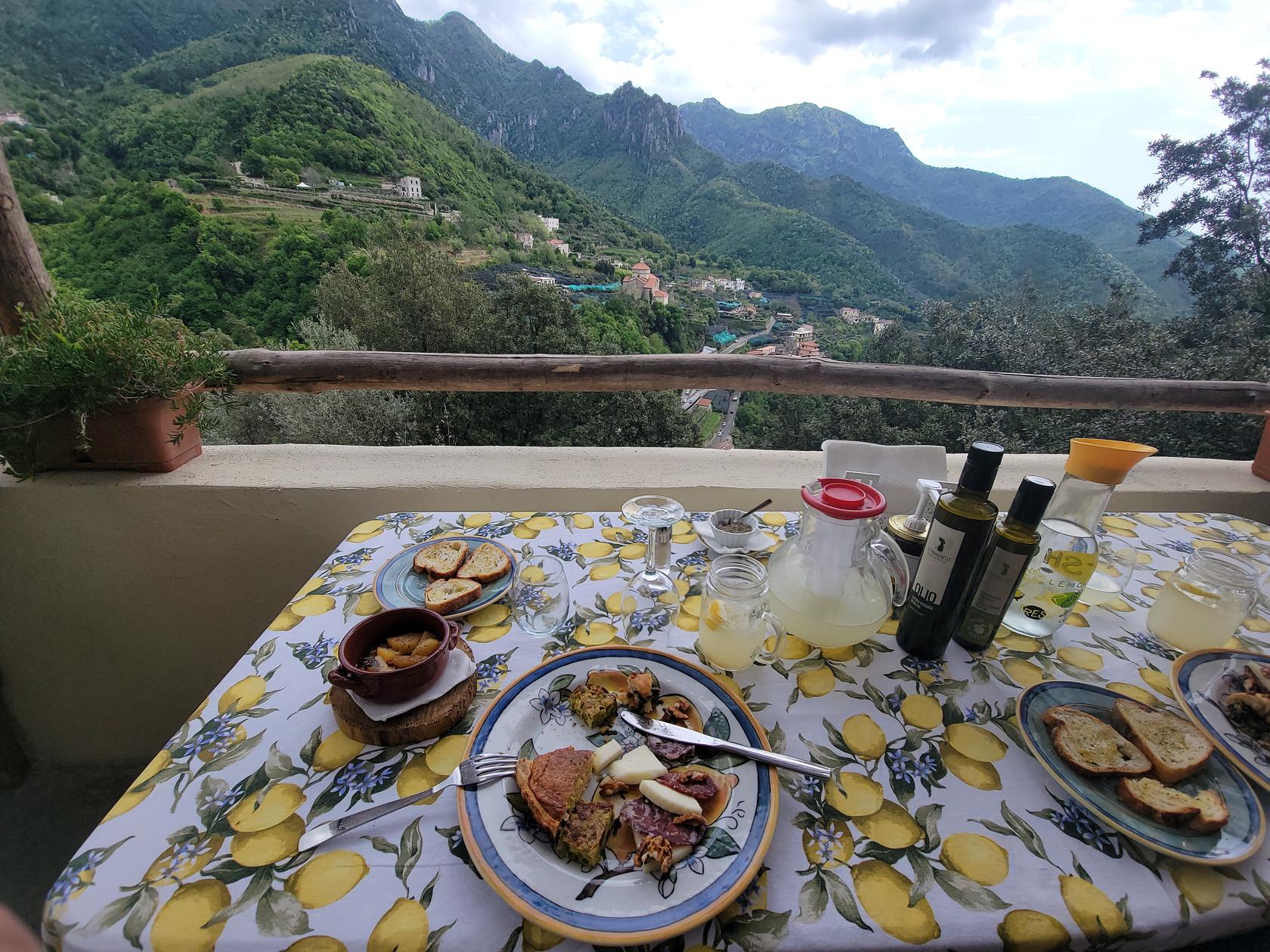
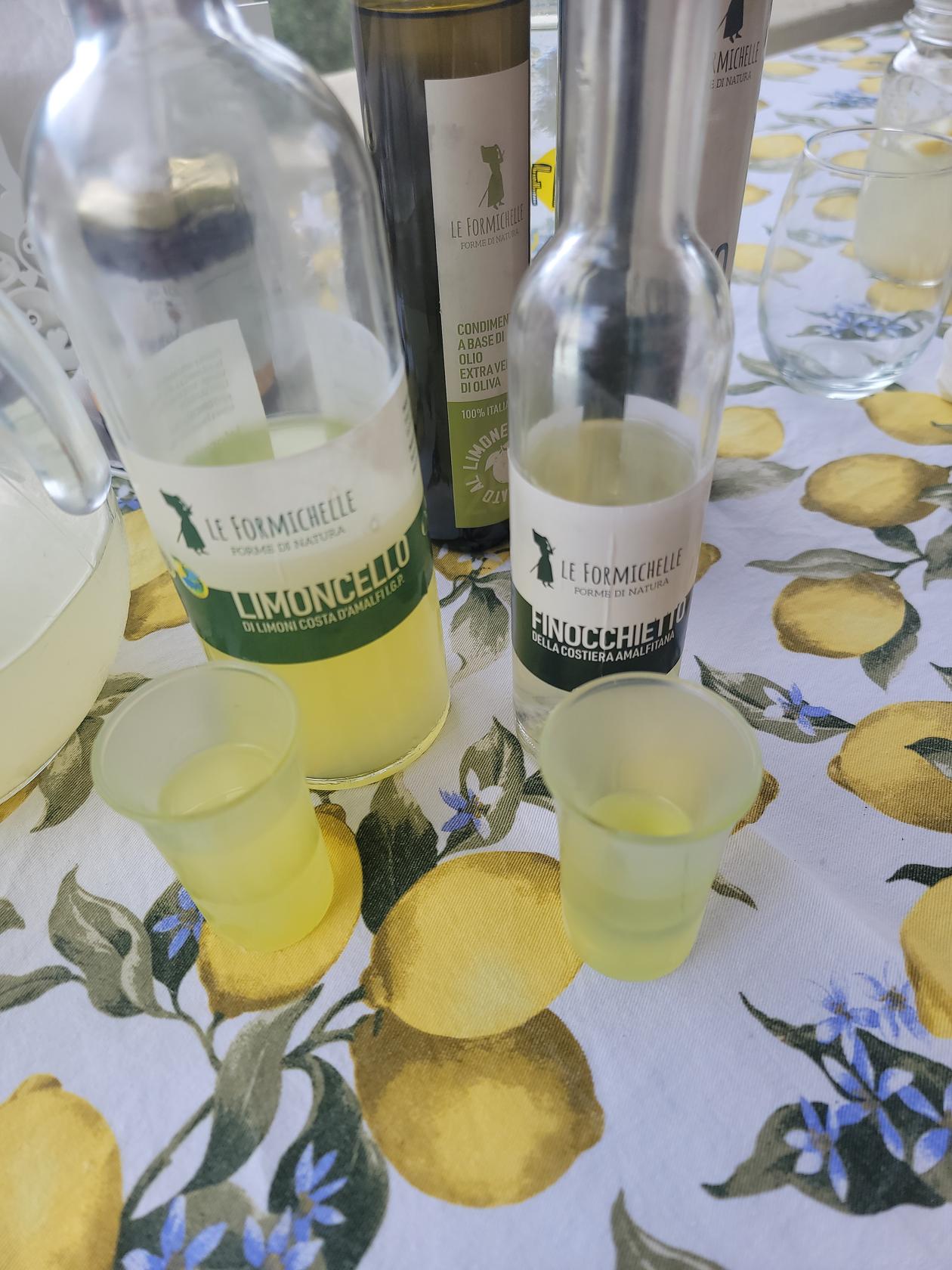
The luncheon was prepared by Ruben’s wife, Luisa. While she cooked inside their small garden house, Ruben prepared for us a Limoncello Spritz for each of us. It was delicious, as well as all the food that was served.
Ruben Making Limoncello Spritz – Azienda Agricola Le Formichelle – Tramonti, Italy
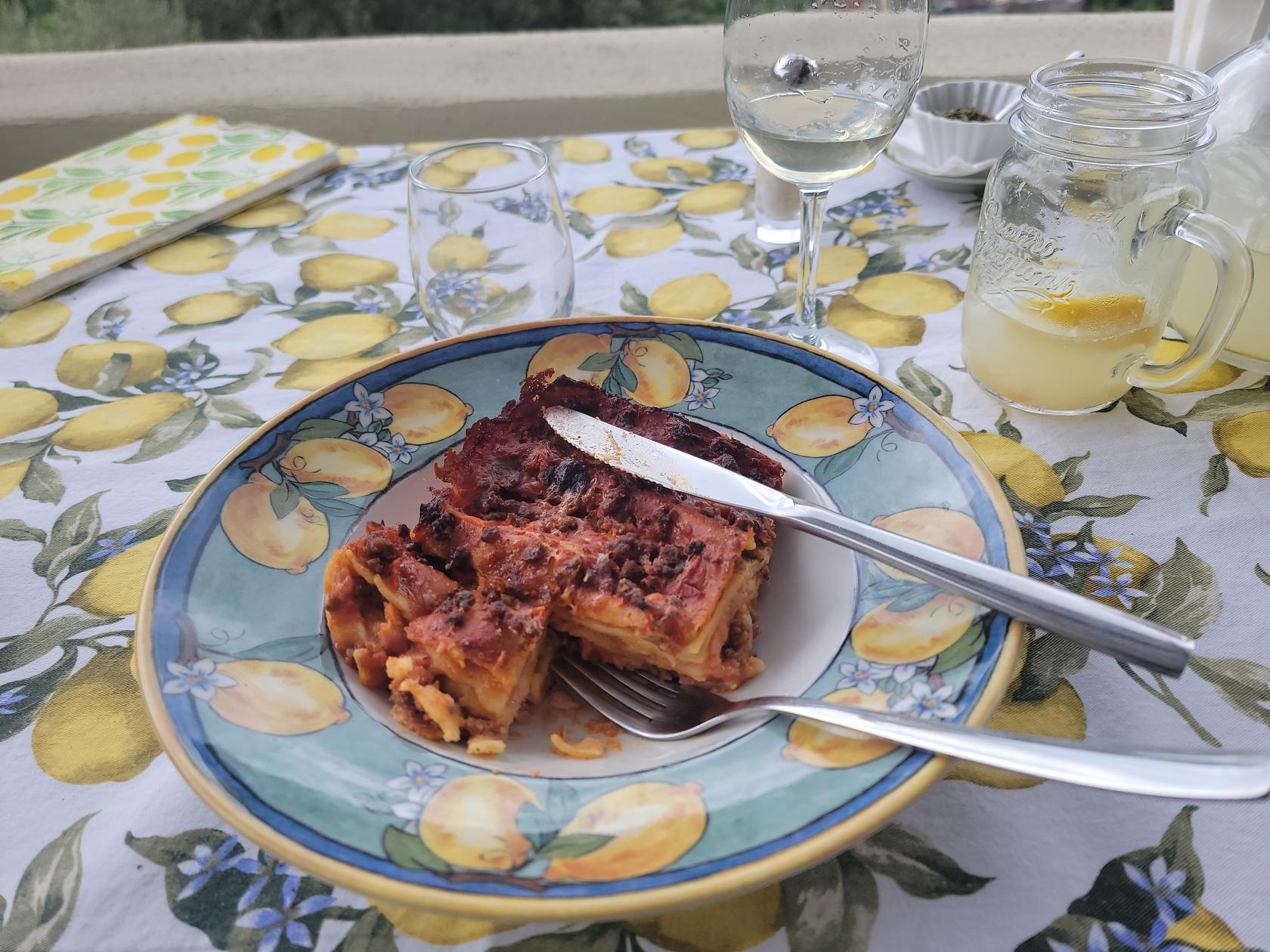
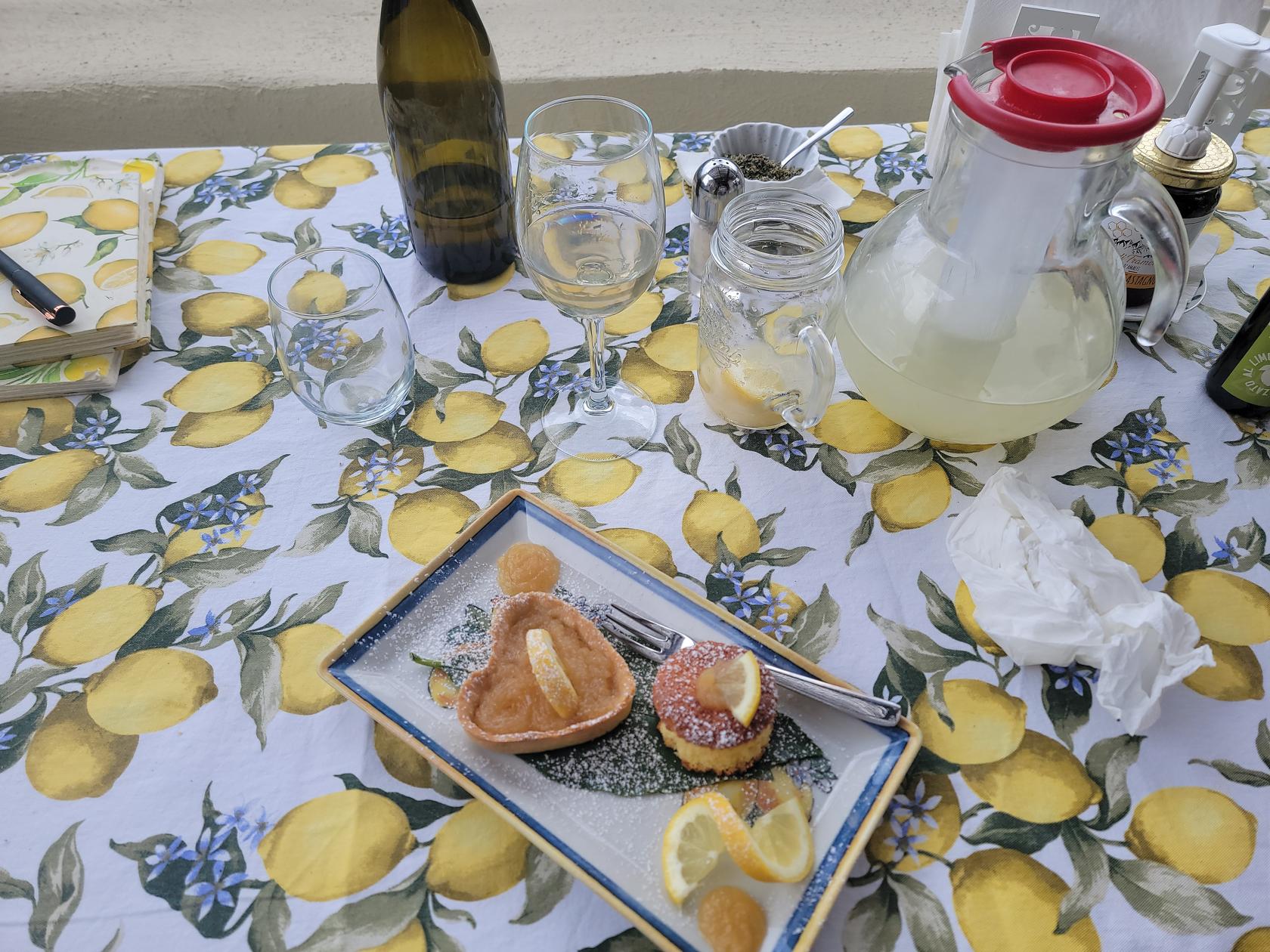
Once we started drinking that, which was made using his own Limoncello, the food started coming out. First the appetizers, then more plentiful food and last a portion of Lasagna.
Real Baked Italian Lasagna With Pancetta – Azienda Agricola Le Formichelle – Tramonti, Italy
Dolci – Azienda Agricola Le Formichelle – Tramonti, Italy
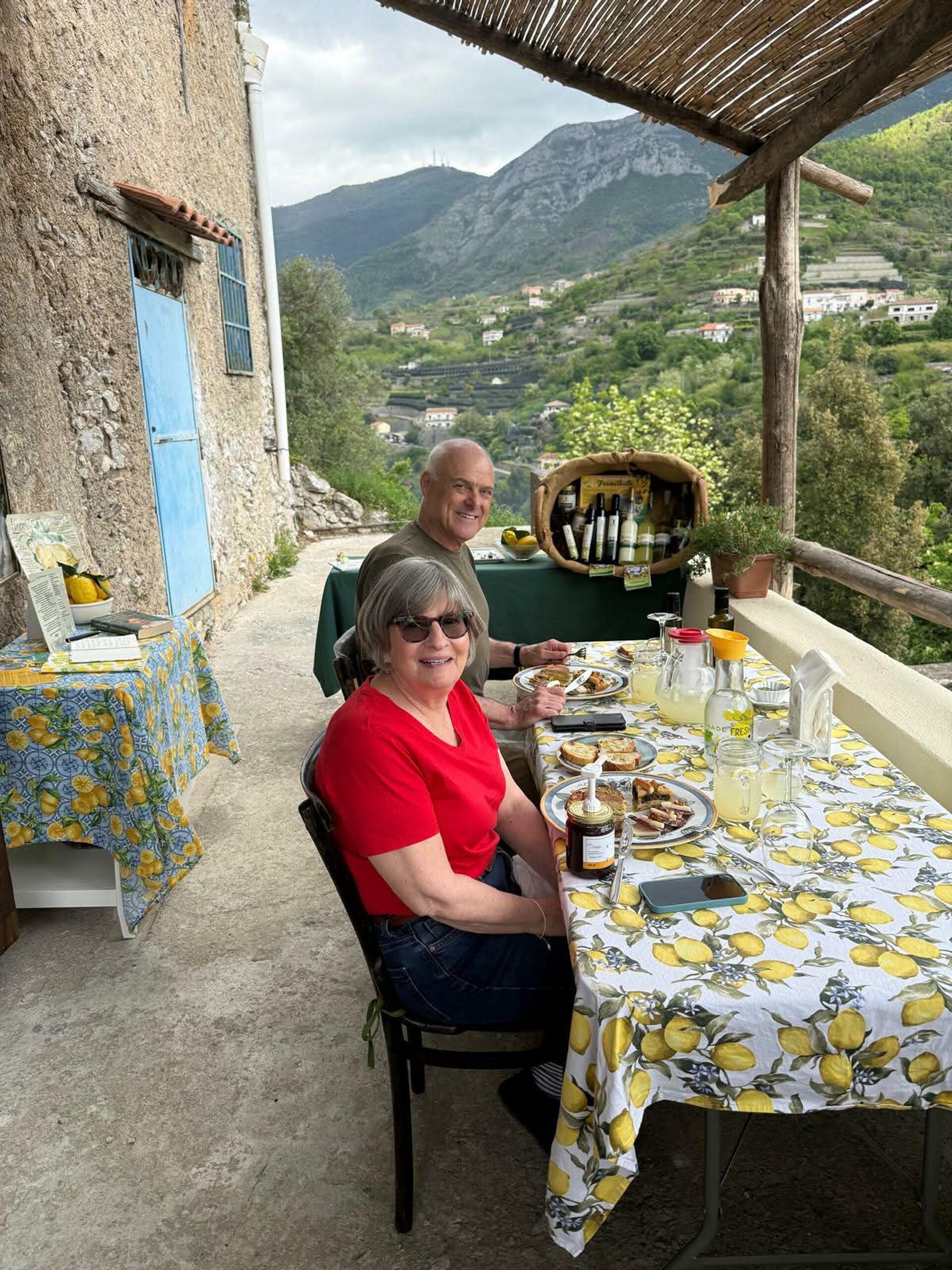
Patti and Erick Enjoying Lunch – Azienda Agricola Le Formichelle – Tramonti, Italy
Le Formichelle Limoncello – Azienda Agricola Le Formichelle – Tramonti, Italy
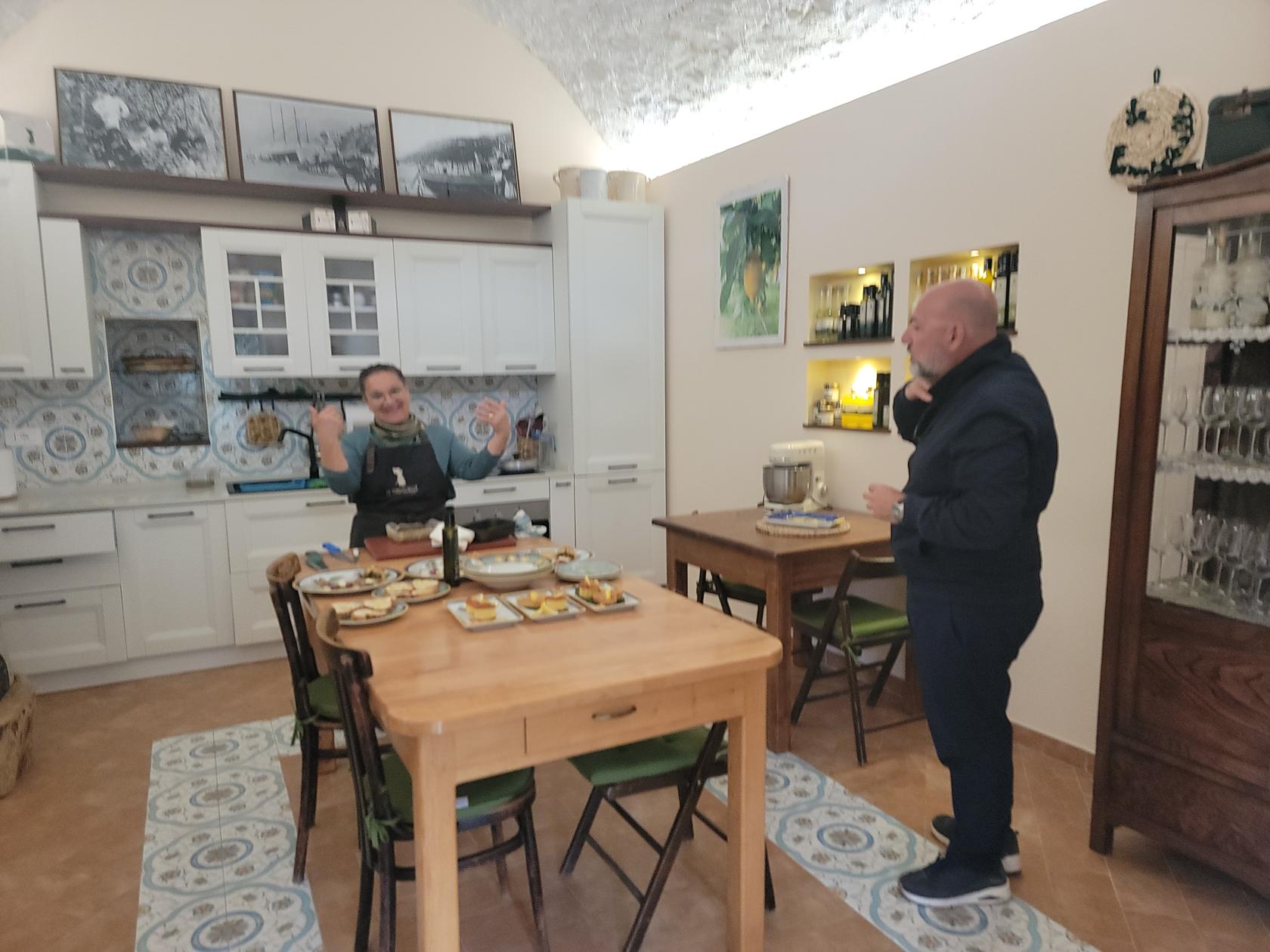
Luisa And Pasqual In The Kitchen – Azienda Agricola Le Formichelle – Tramonti, Italy
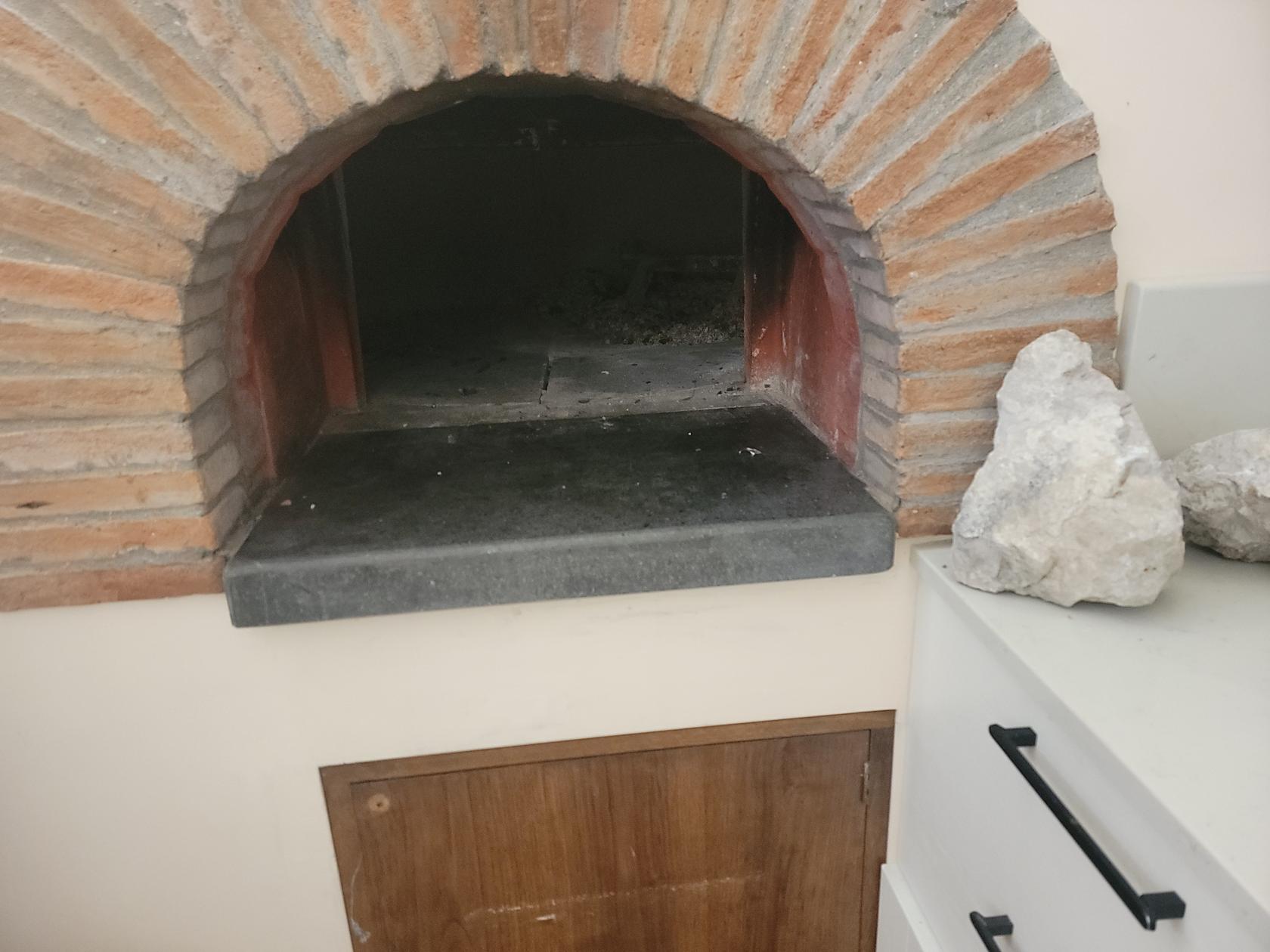
Their Brick Oven – Azienda Agricola Le Formichelle – Tramonti, Italy
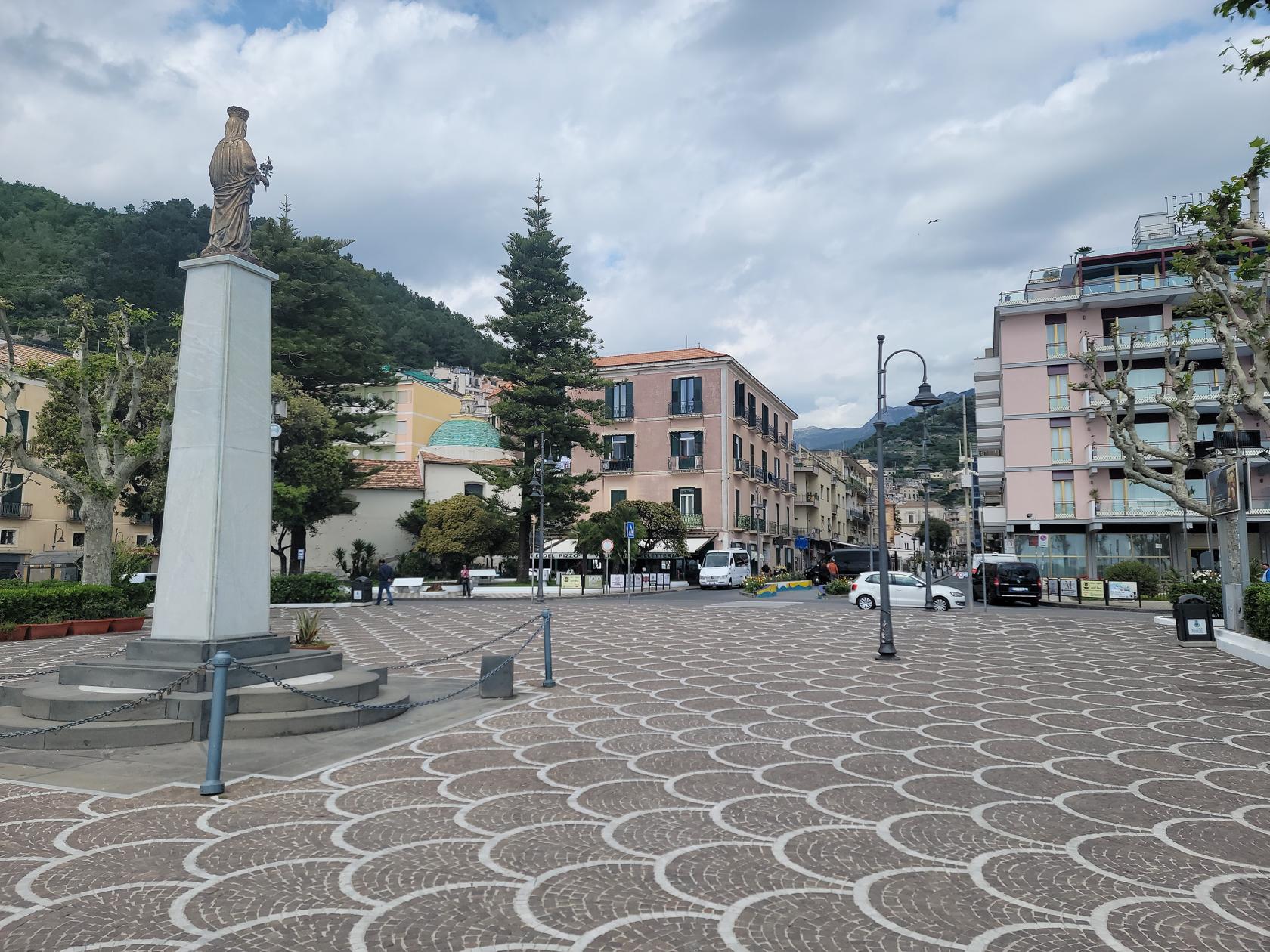
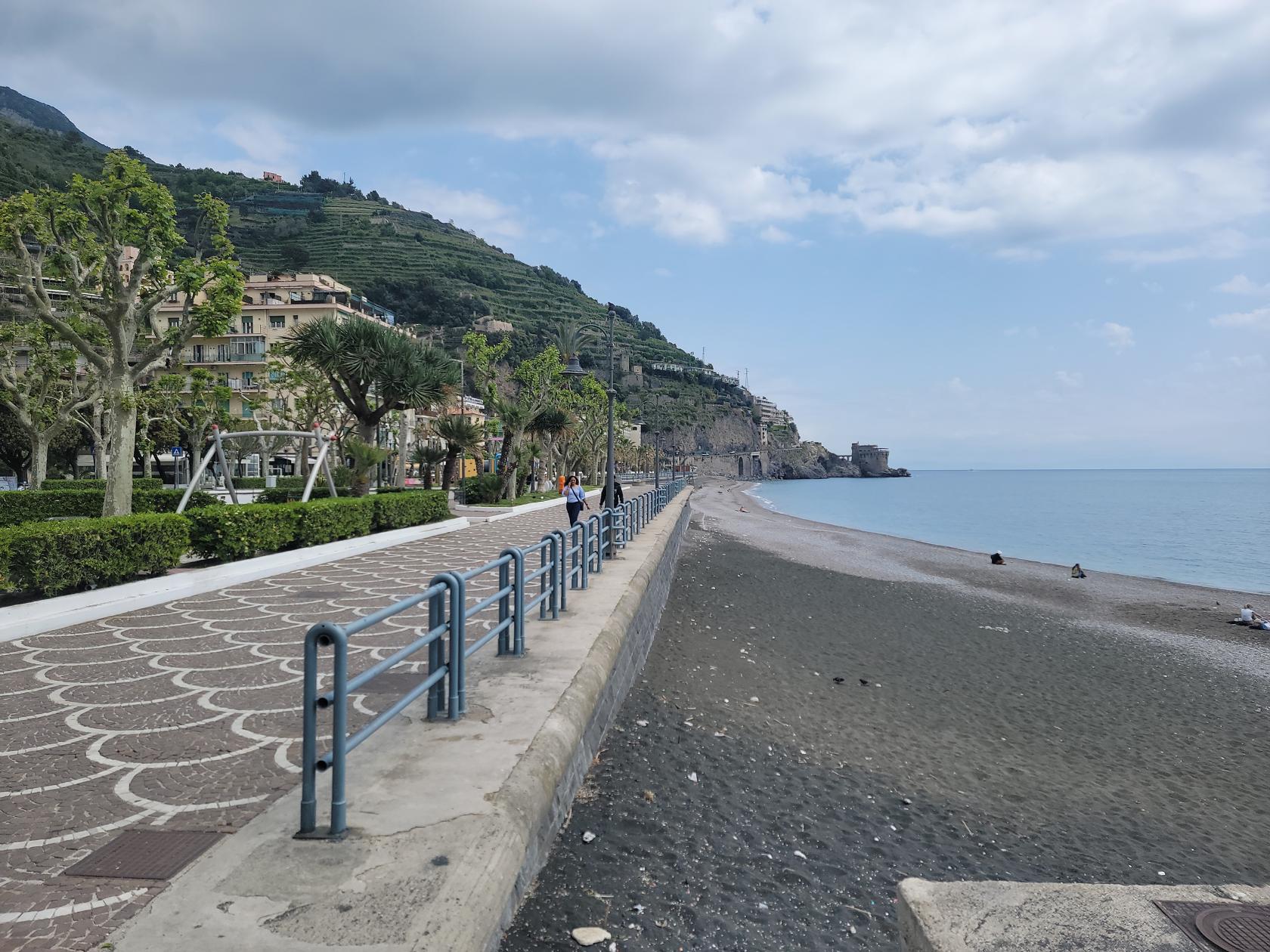
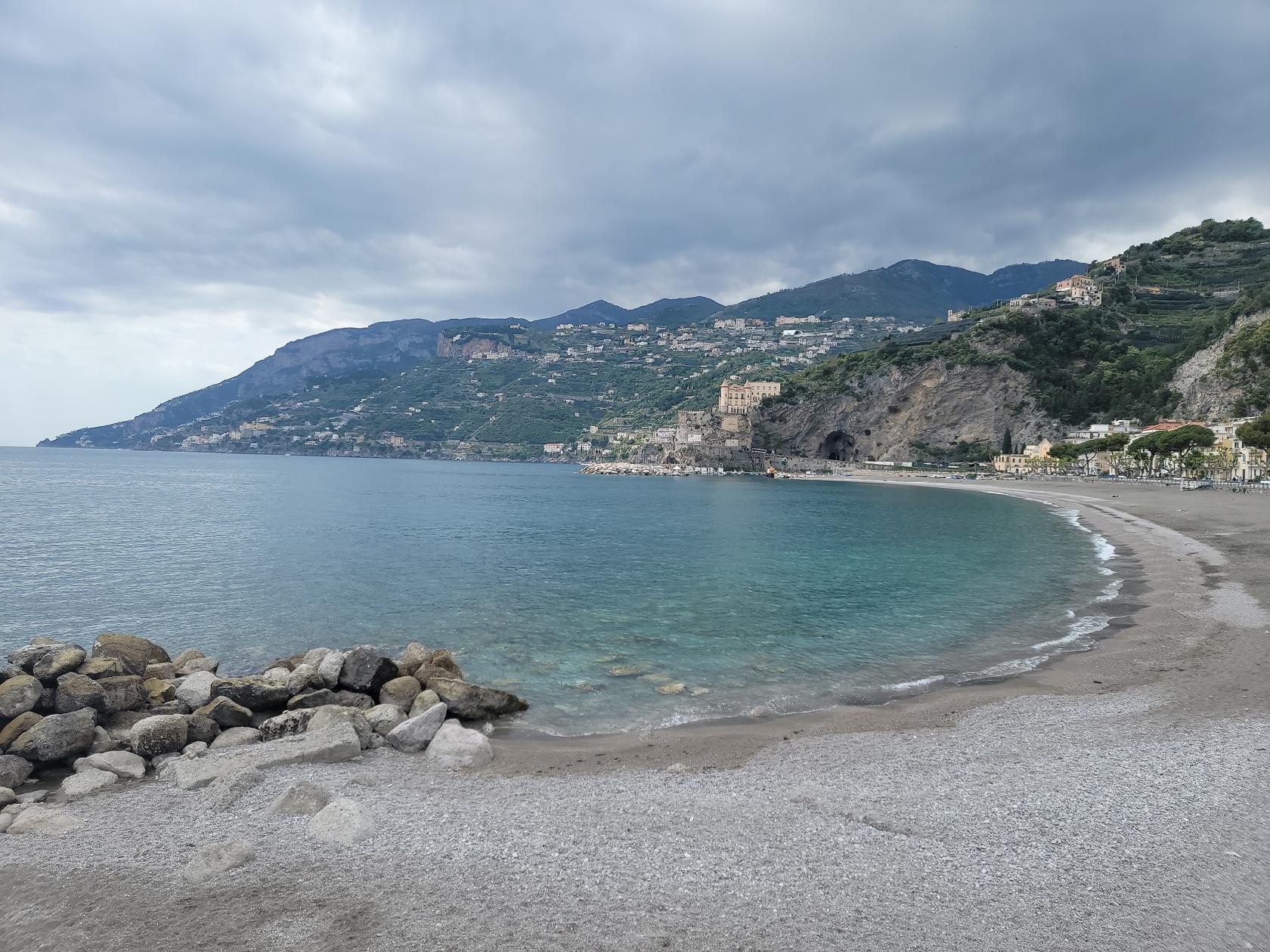
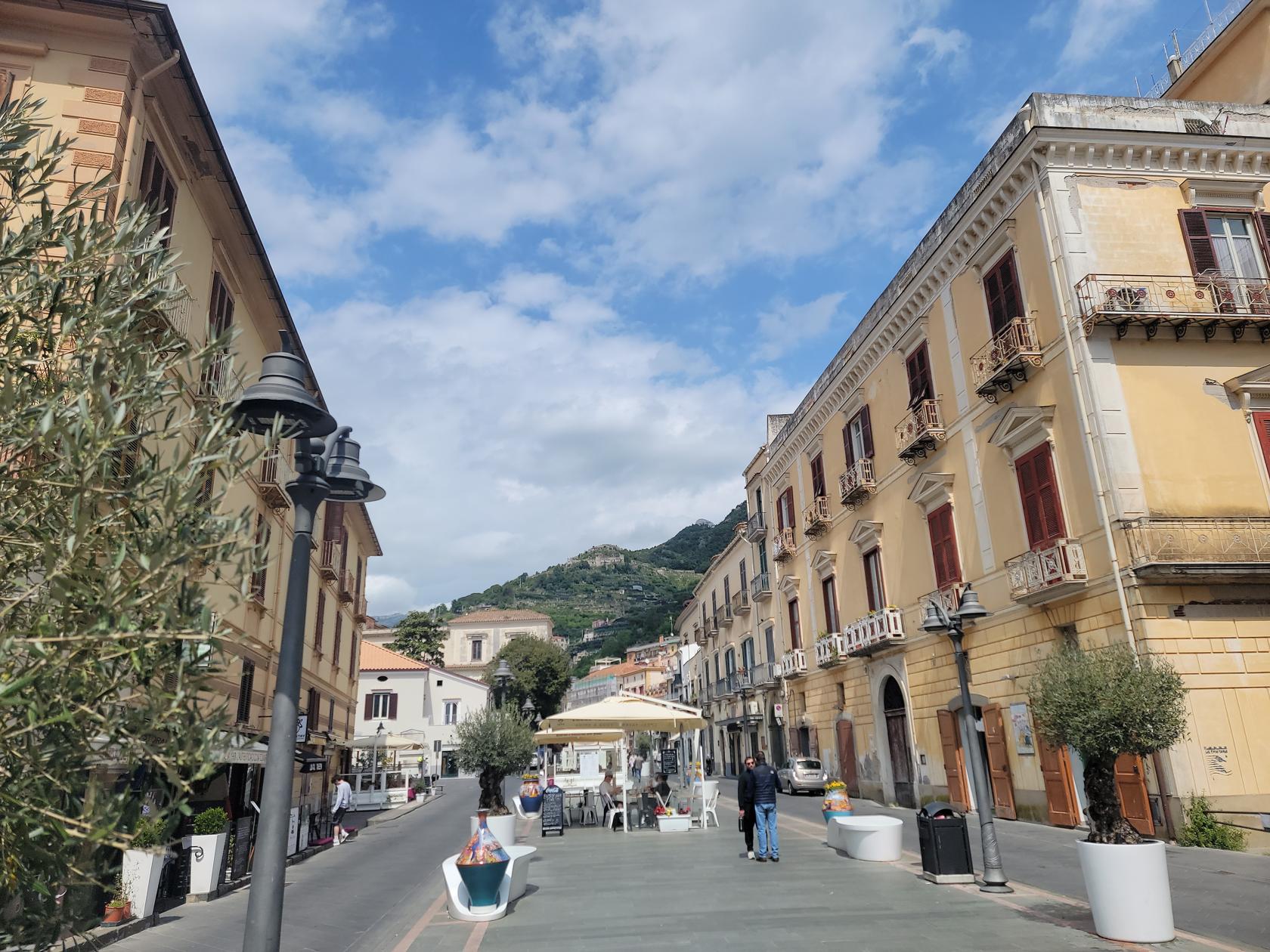
Maiori
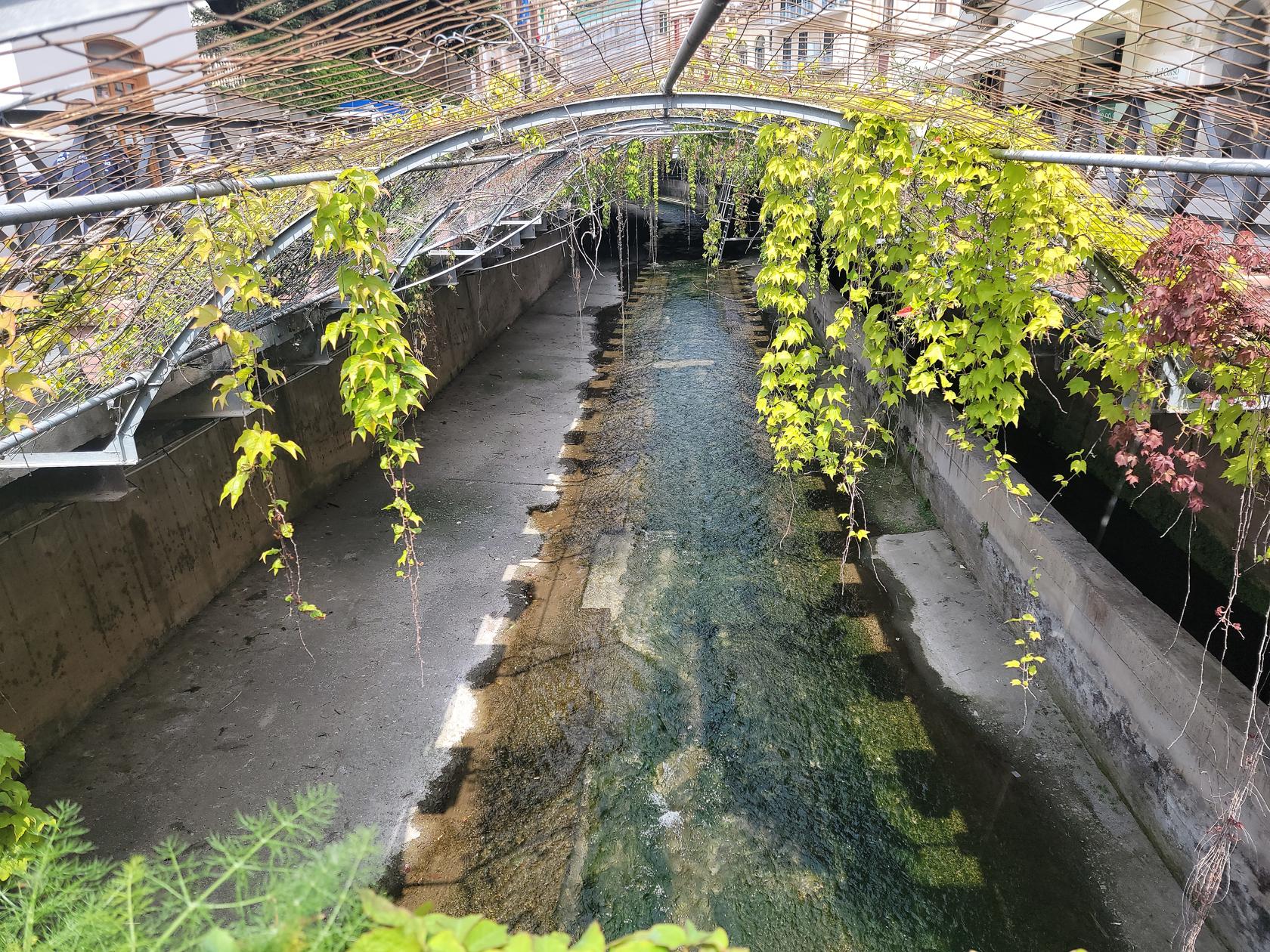
The town of Maiori literally means “major”, after the river which now flows under the Corso Reginna, the river Reghinna Maiori. It has over the years been abbreviated to just Maiori. First founded by the Etruscans, it was later conquered by the Romans, like the rest of Italy.
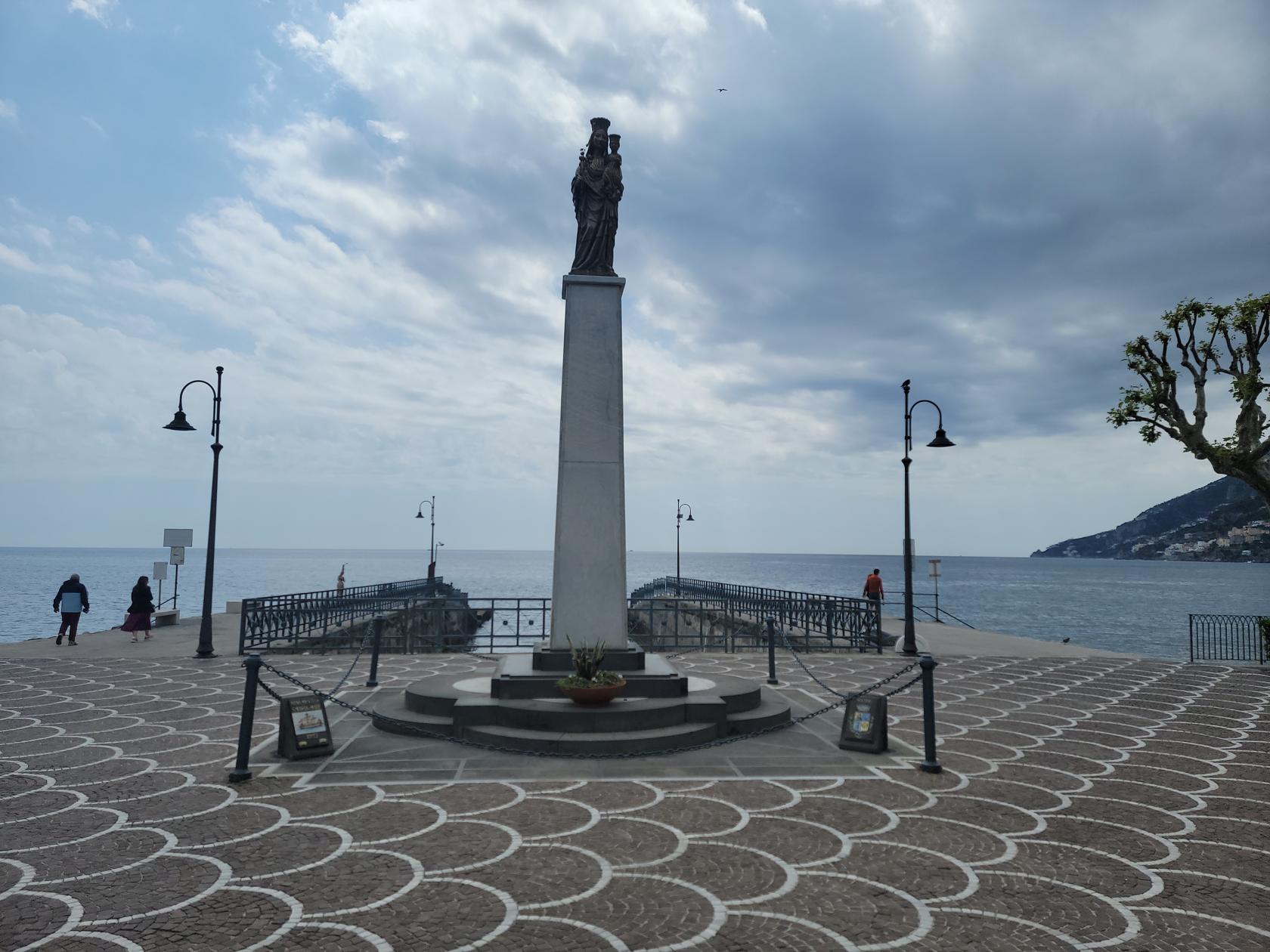
Saint Mary of the Sea – Maiori, Italy
Town From Beachside – Maiori, Italy
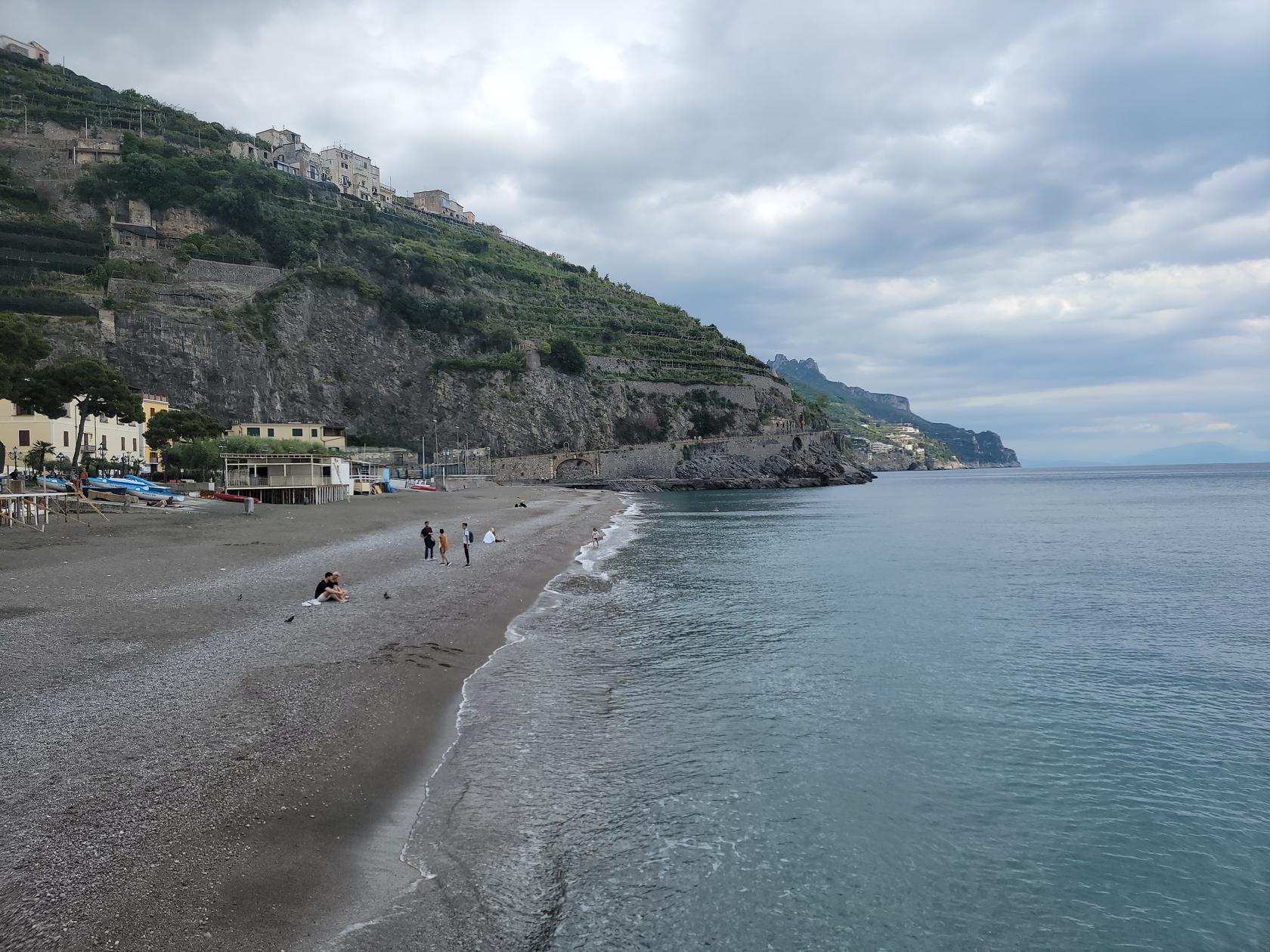
The Beach – Maiori, Italy
The Beach – Maiori, Italy
Corso Reginna – Maiori, Italy
Corso Reginna – Maiori, Italy
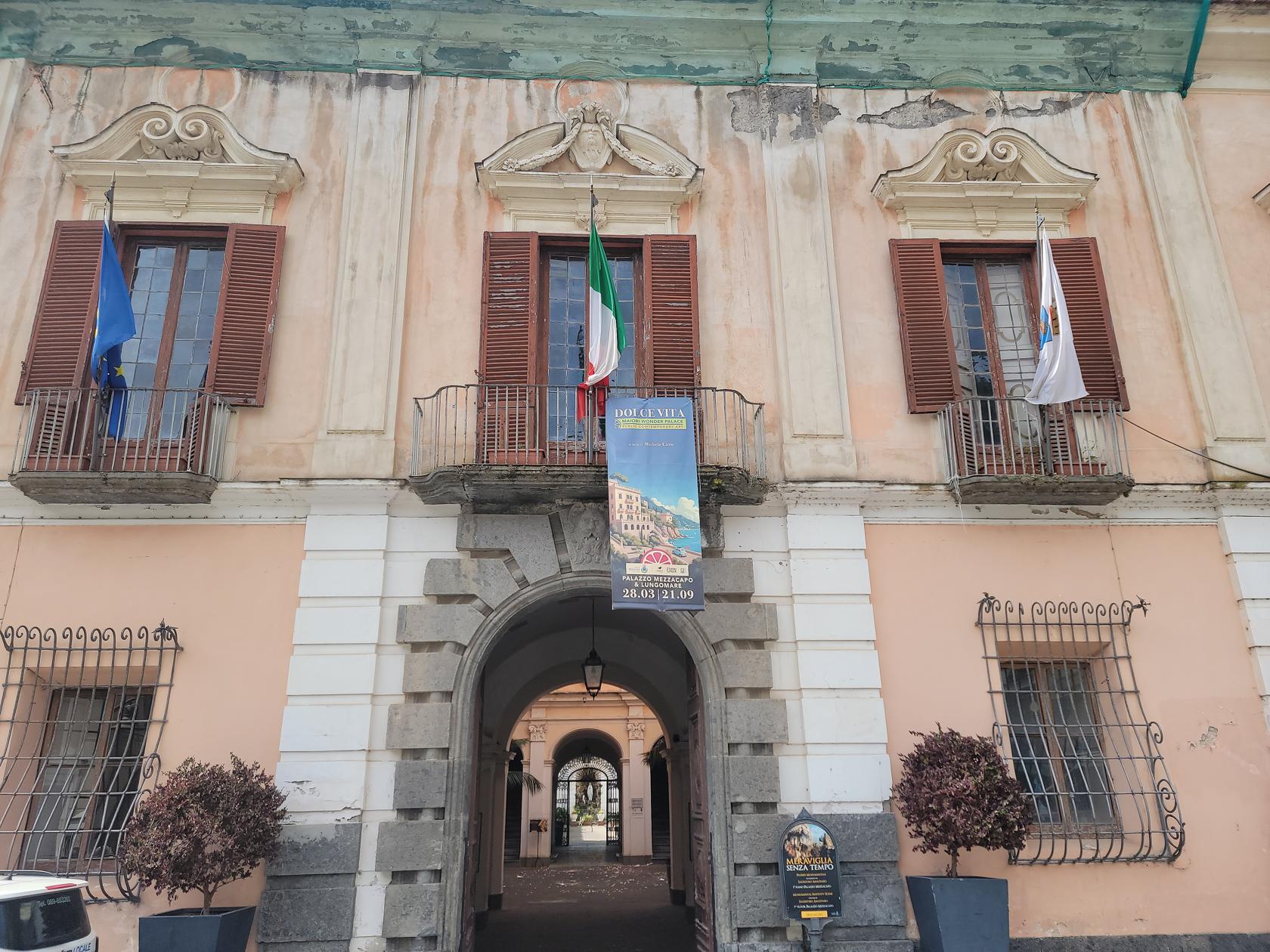
Palazzo Mezzacapo
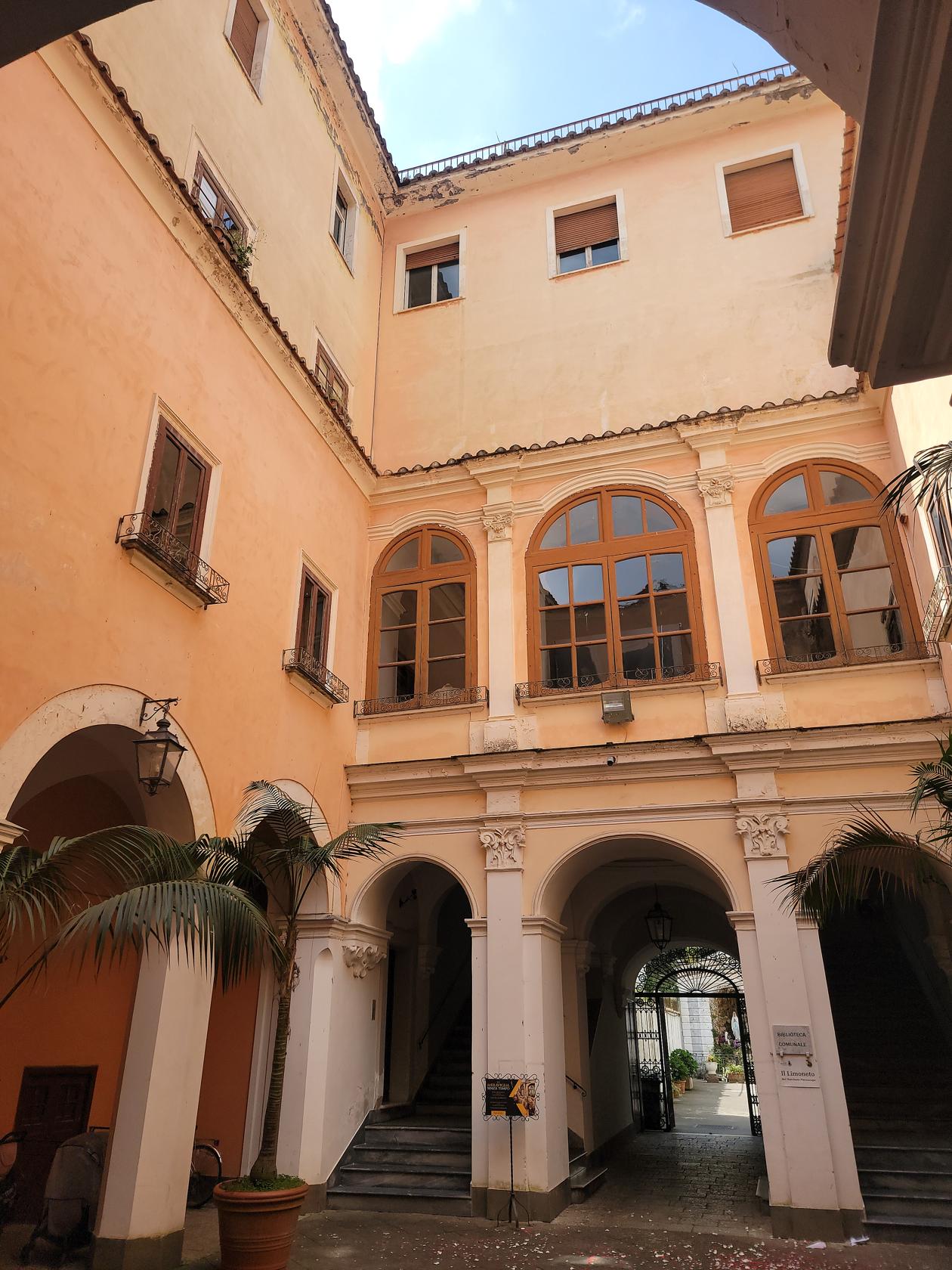
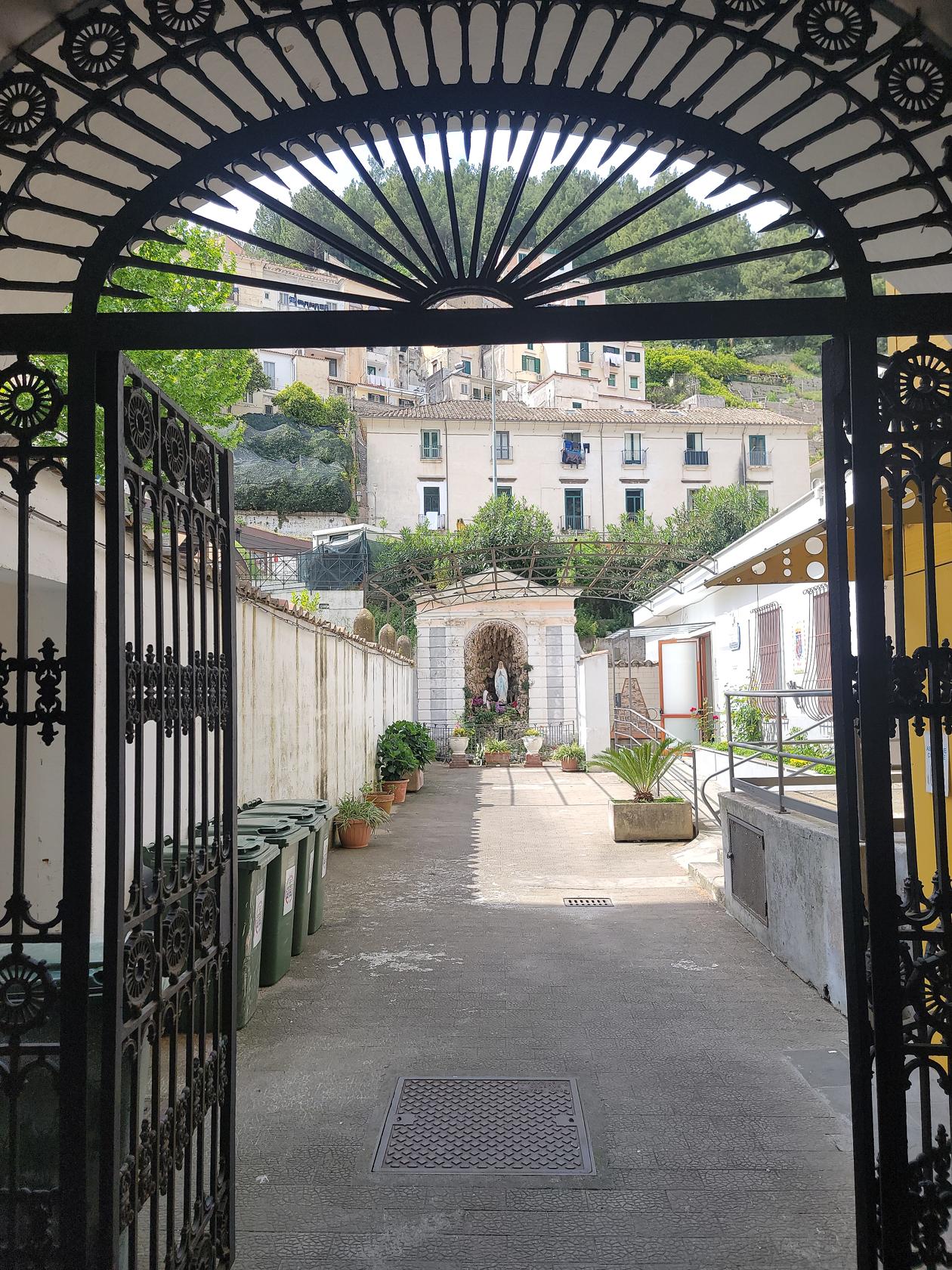
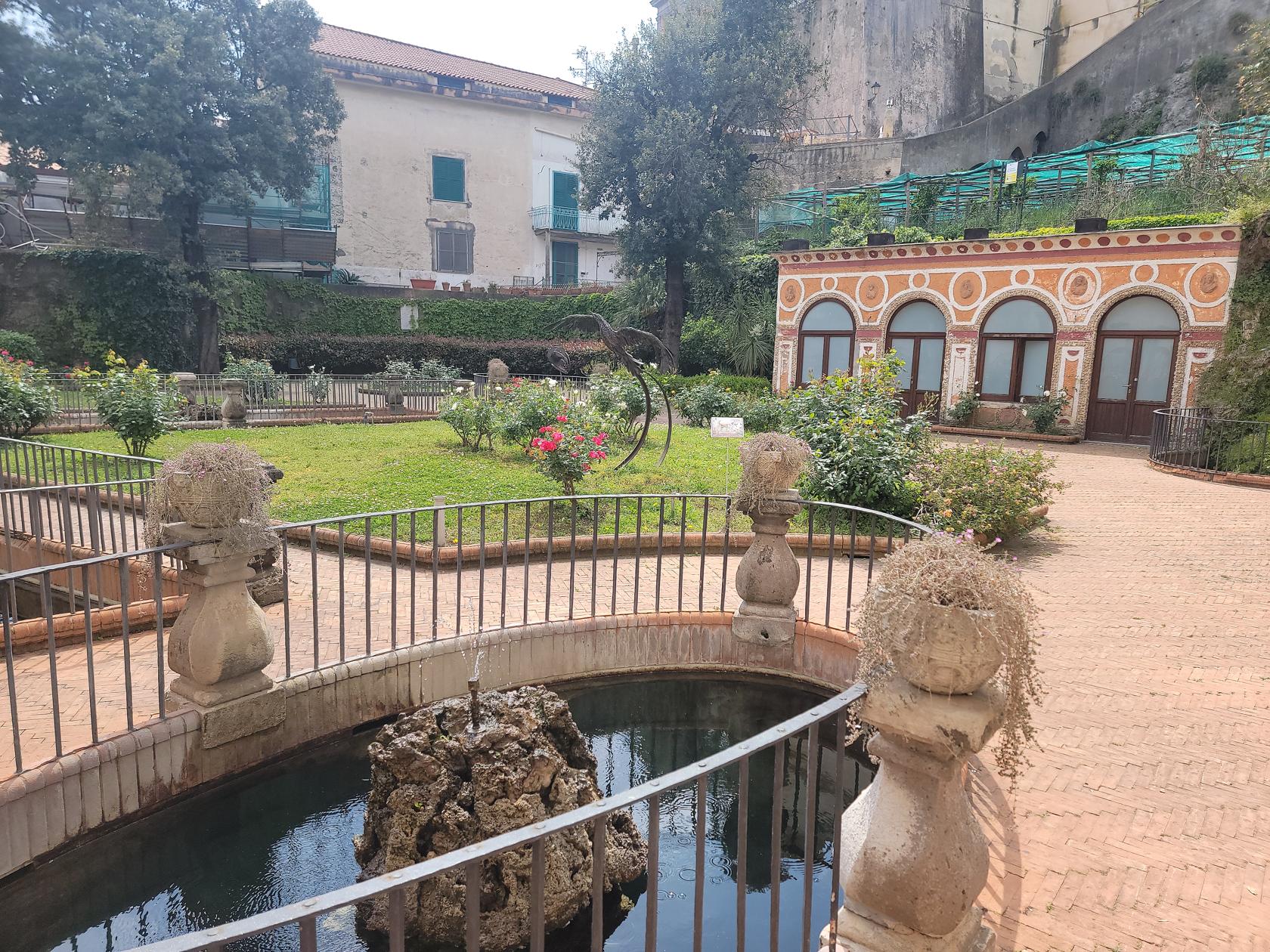
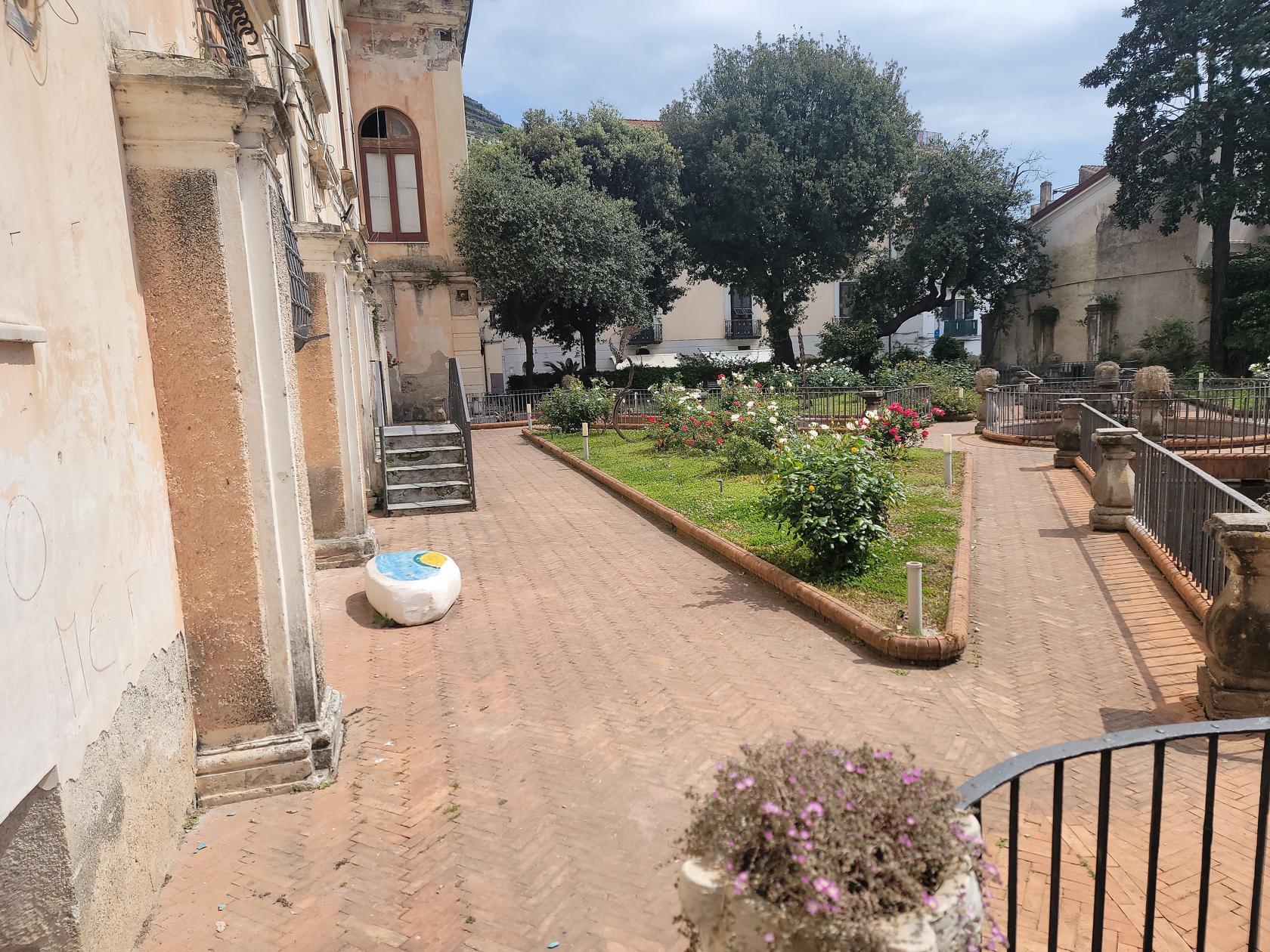
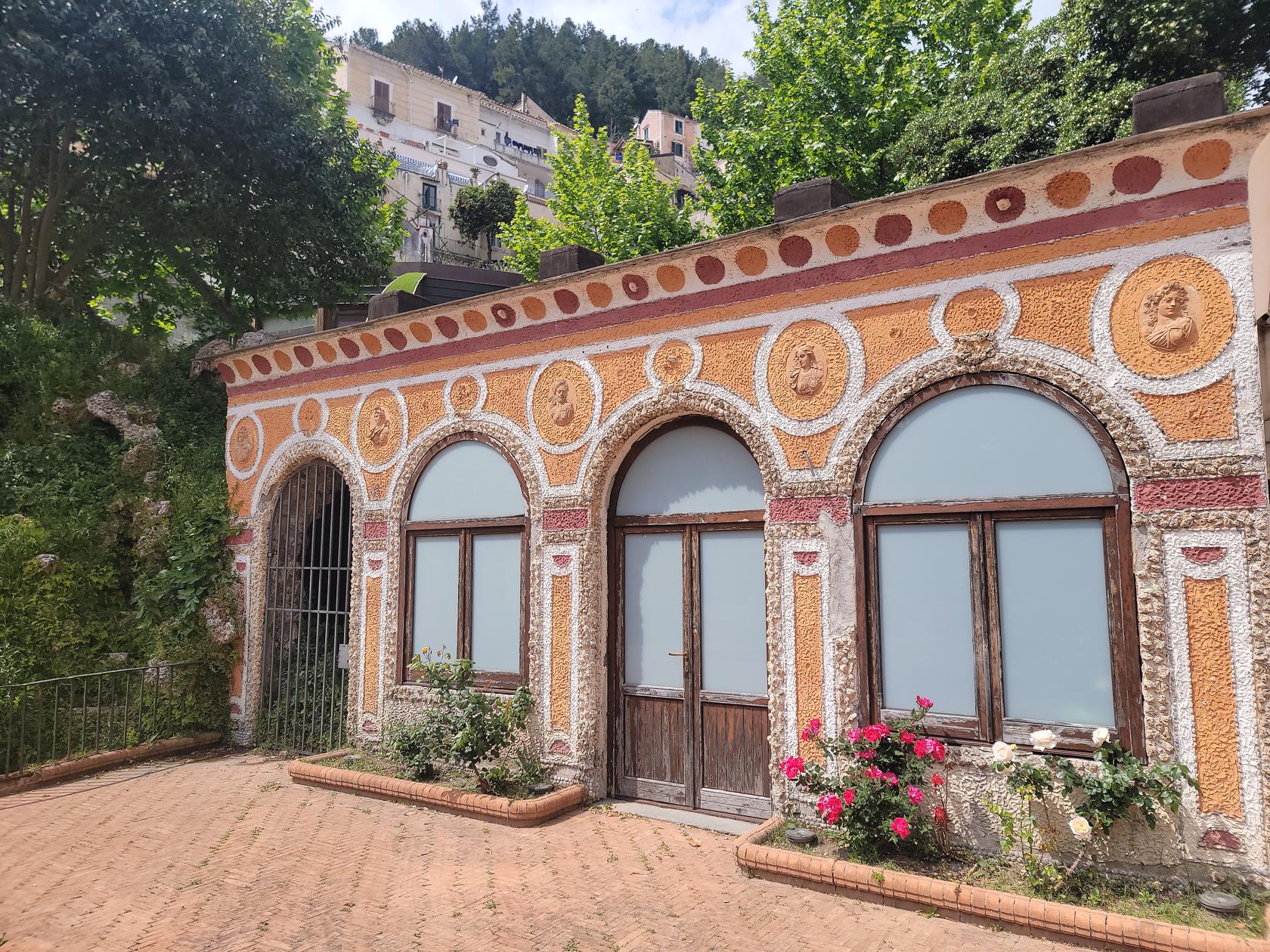
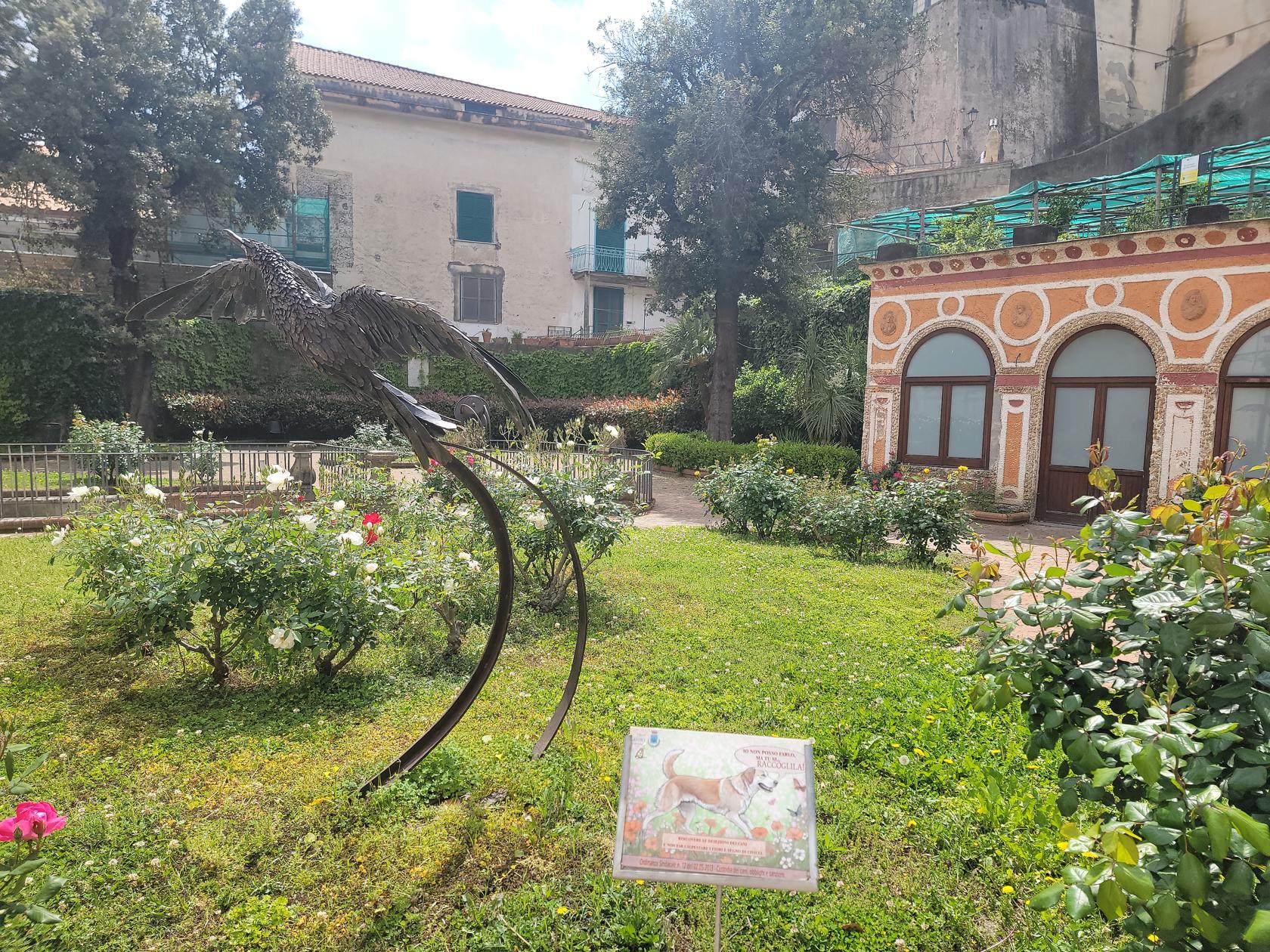
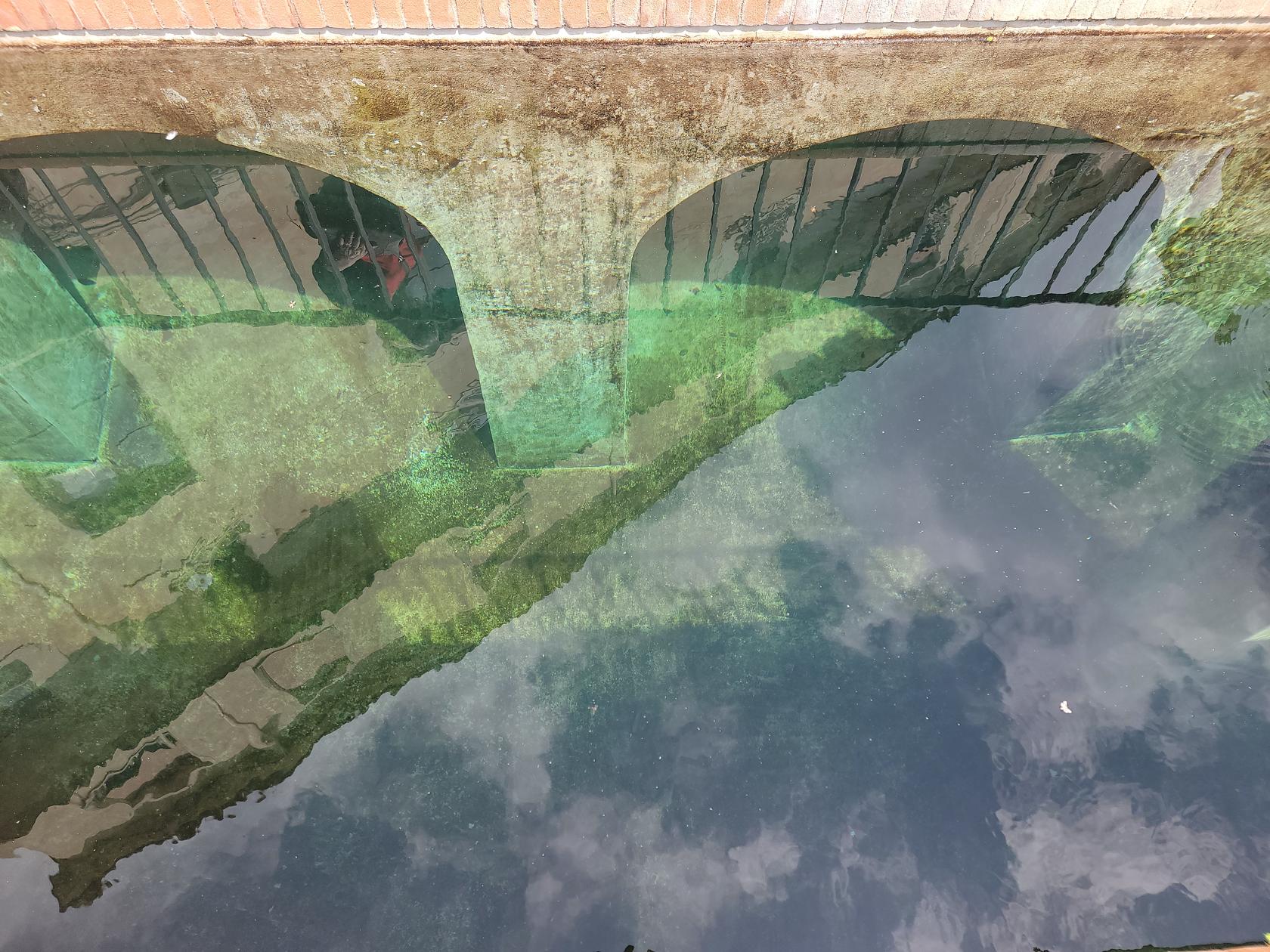
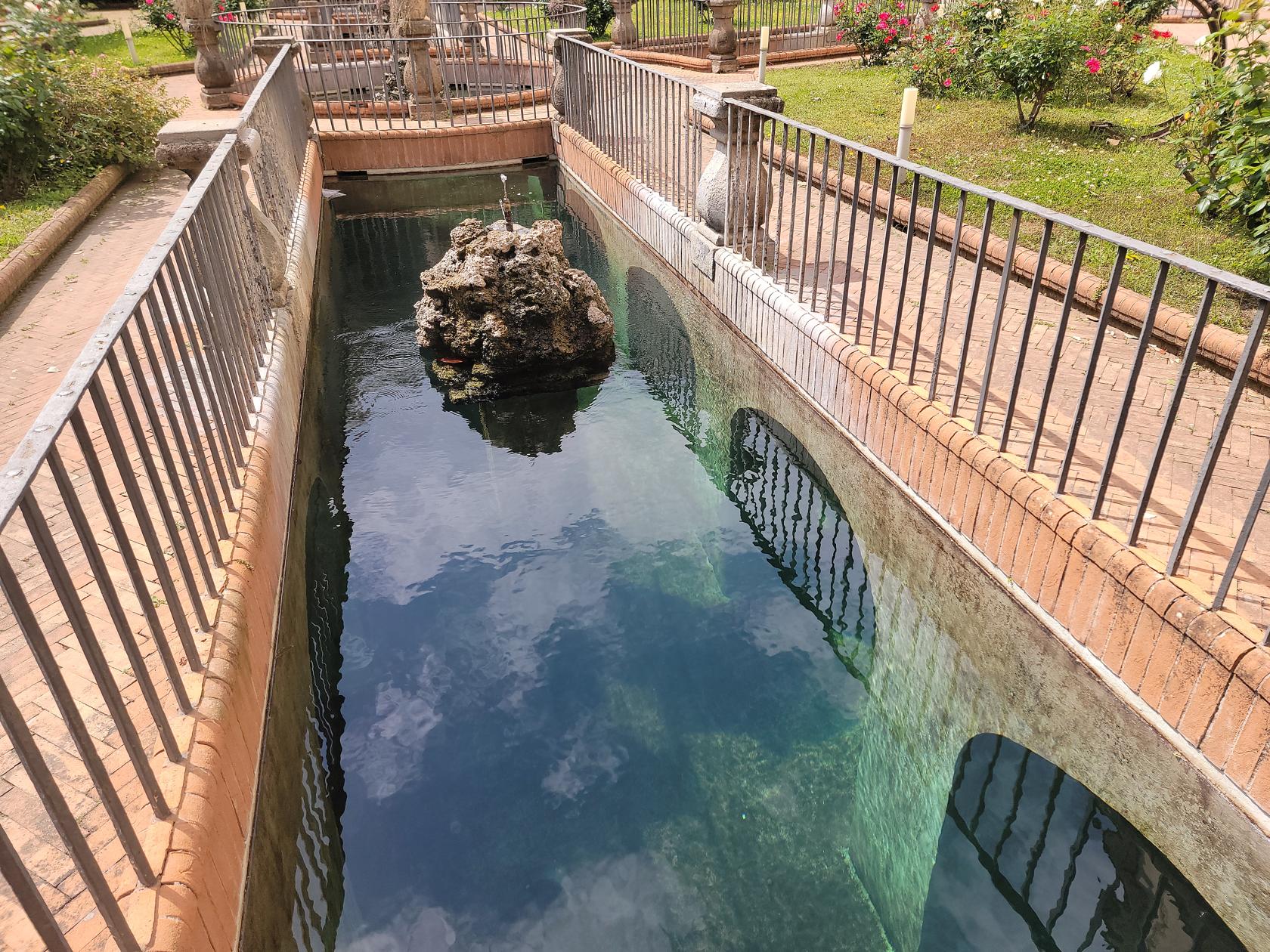
One specific spot to visit would be the Palazzo Mezzacapo, which is situated just off the Corso Reginna in town. It has an very interesting garden with underground vaulted wells.
Palazzo Mezzacapo – Maiori, Italy
Palazzo Mezzacapo – Maiori, Italy
Palazzo Mezzacapo – Maiori, Italy
Palazzo Mezzacapo – Gardens – Maiori, Italy
Palazzo Mezzacapo – Gardens – Maiori, Italy
Palazzo Mezzacapo – Gardens – Maiori, Italy
Palazzo Mezzacapo – Gardens – Maiori, Italy
Palazzo Mezzacapo – Gardens – Maiori, Italy
Palazzo Mezzacapo – Gardens – Maiori, Italy
Minori
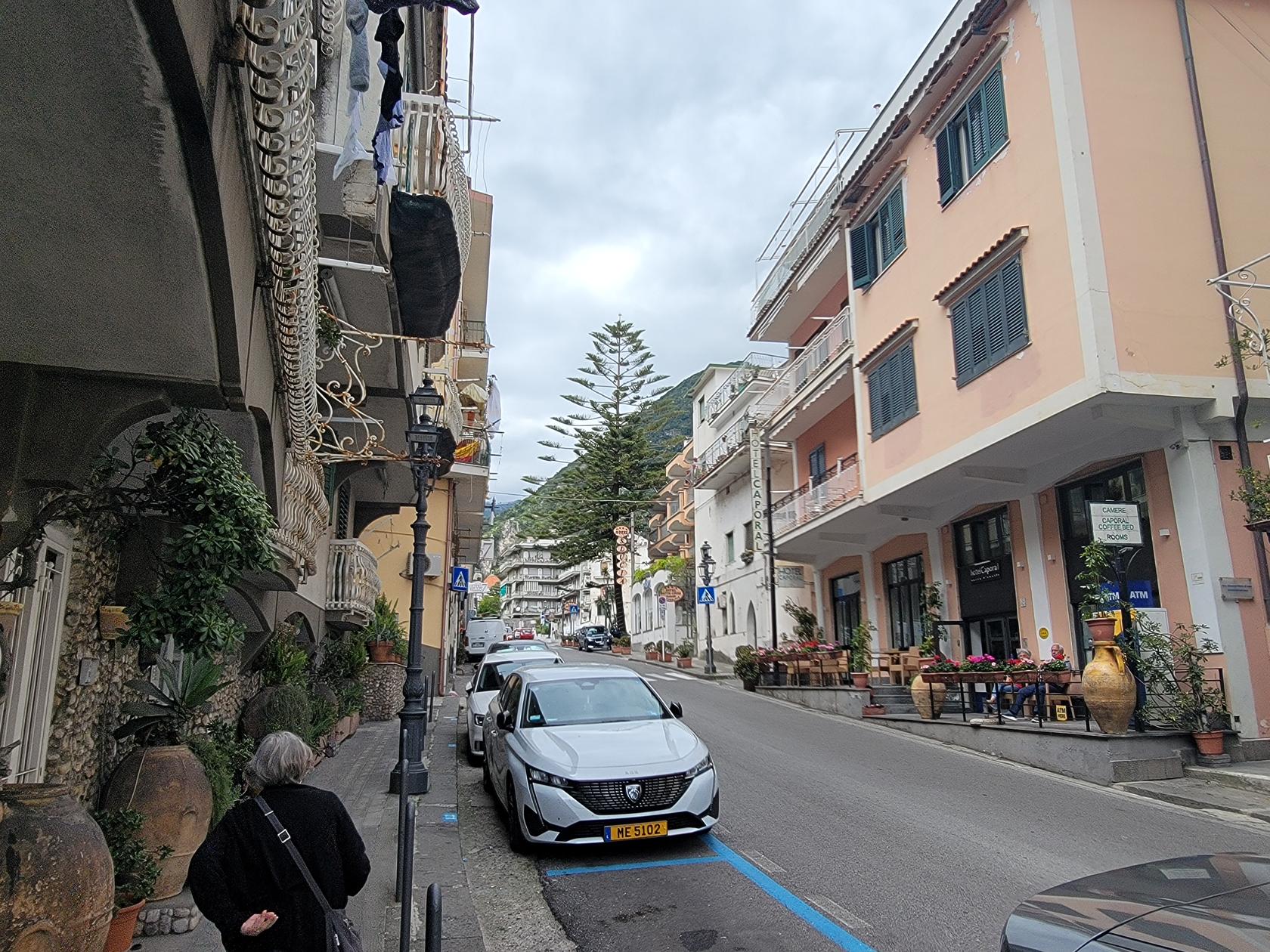
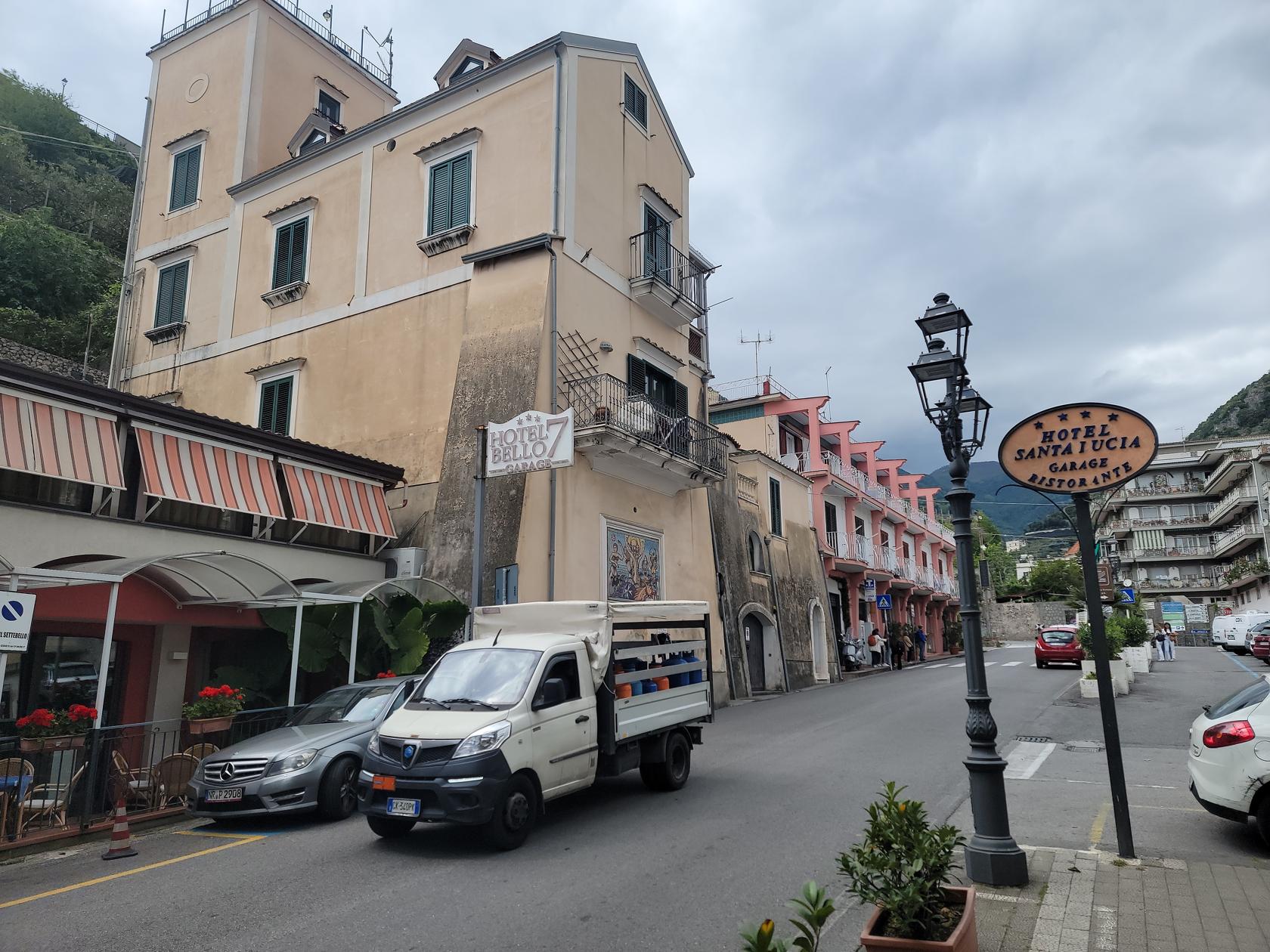
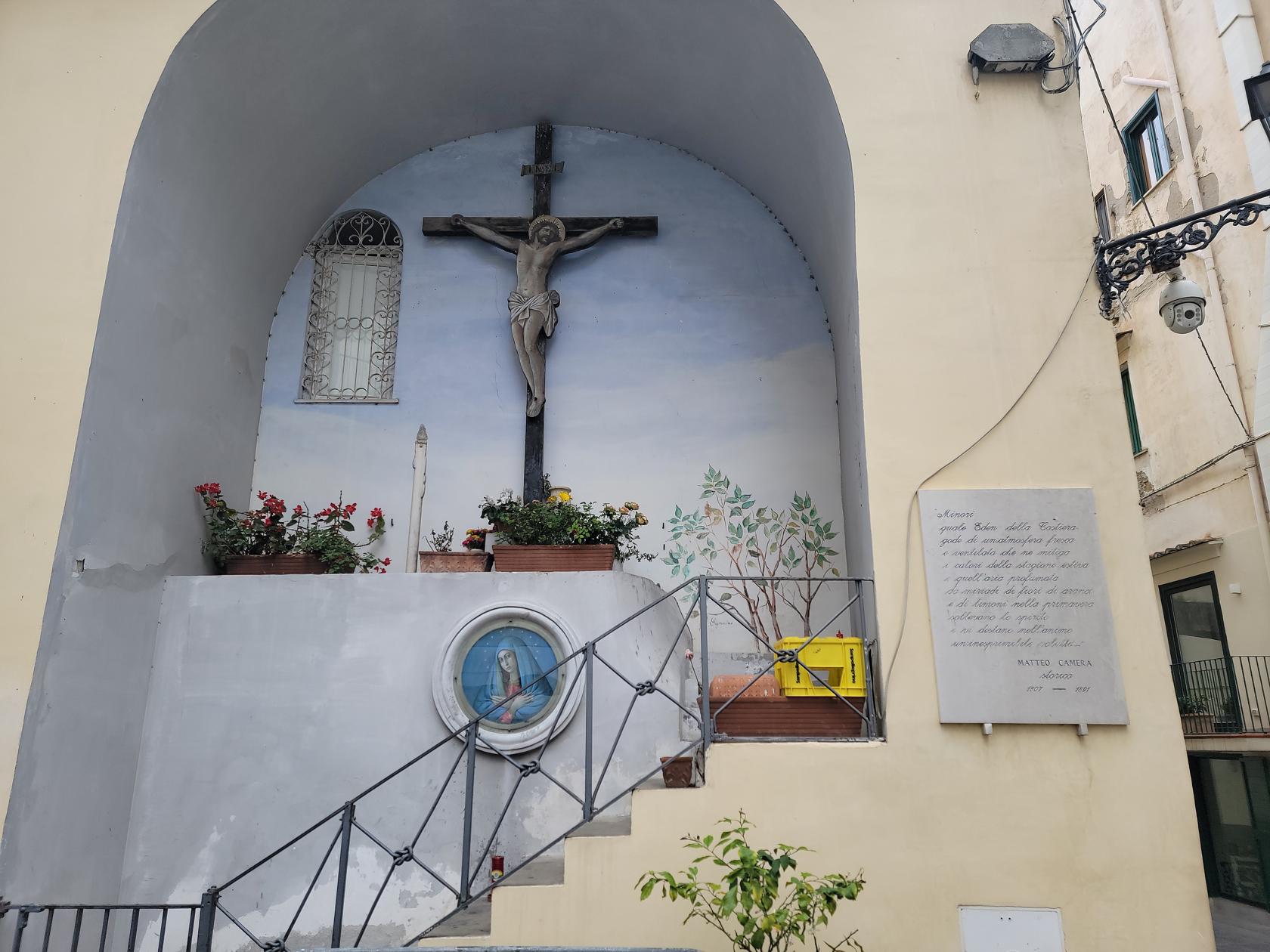
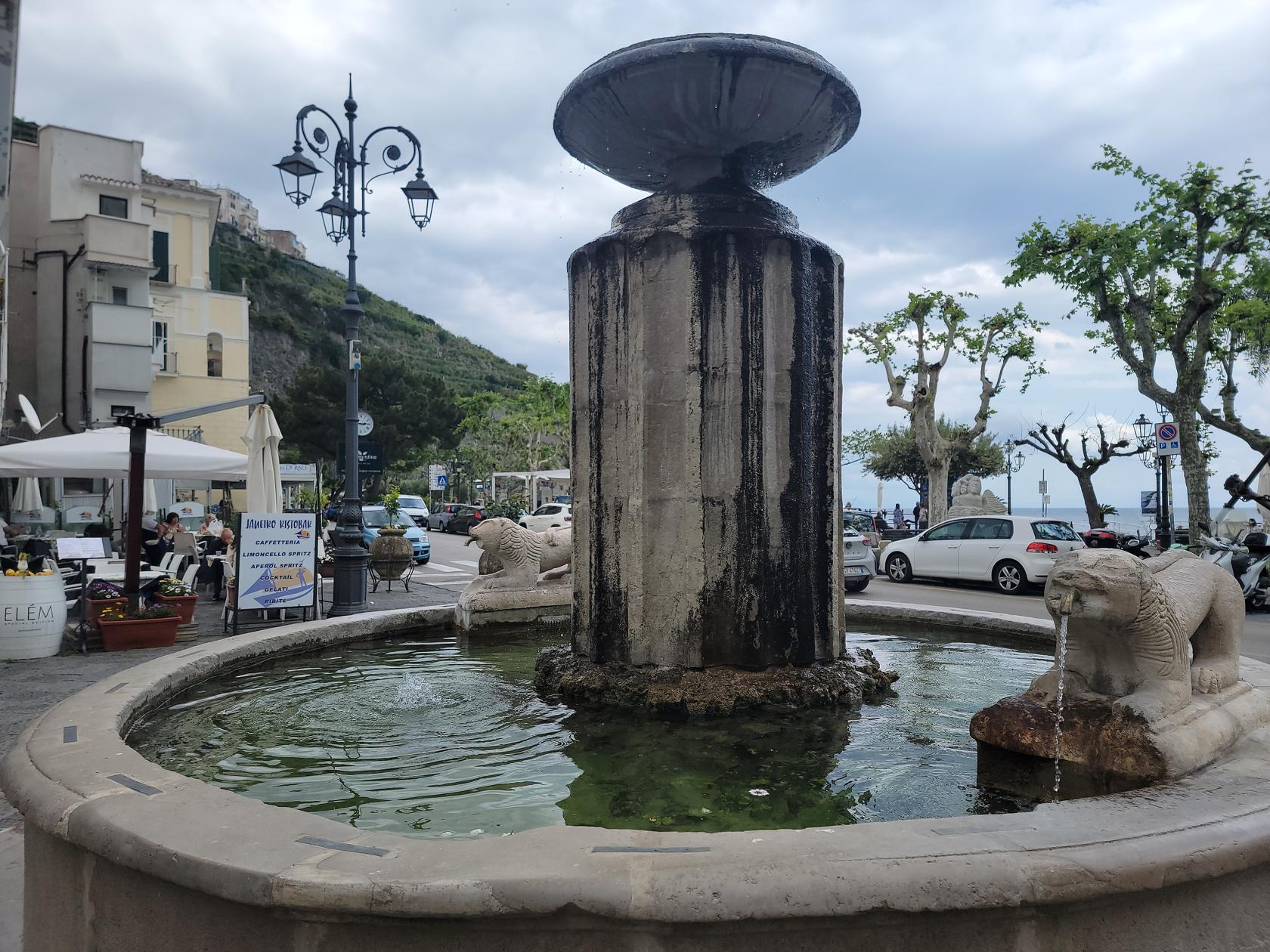
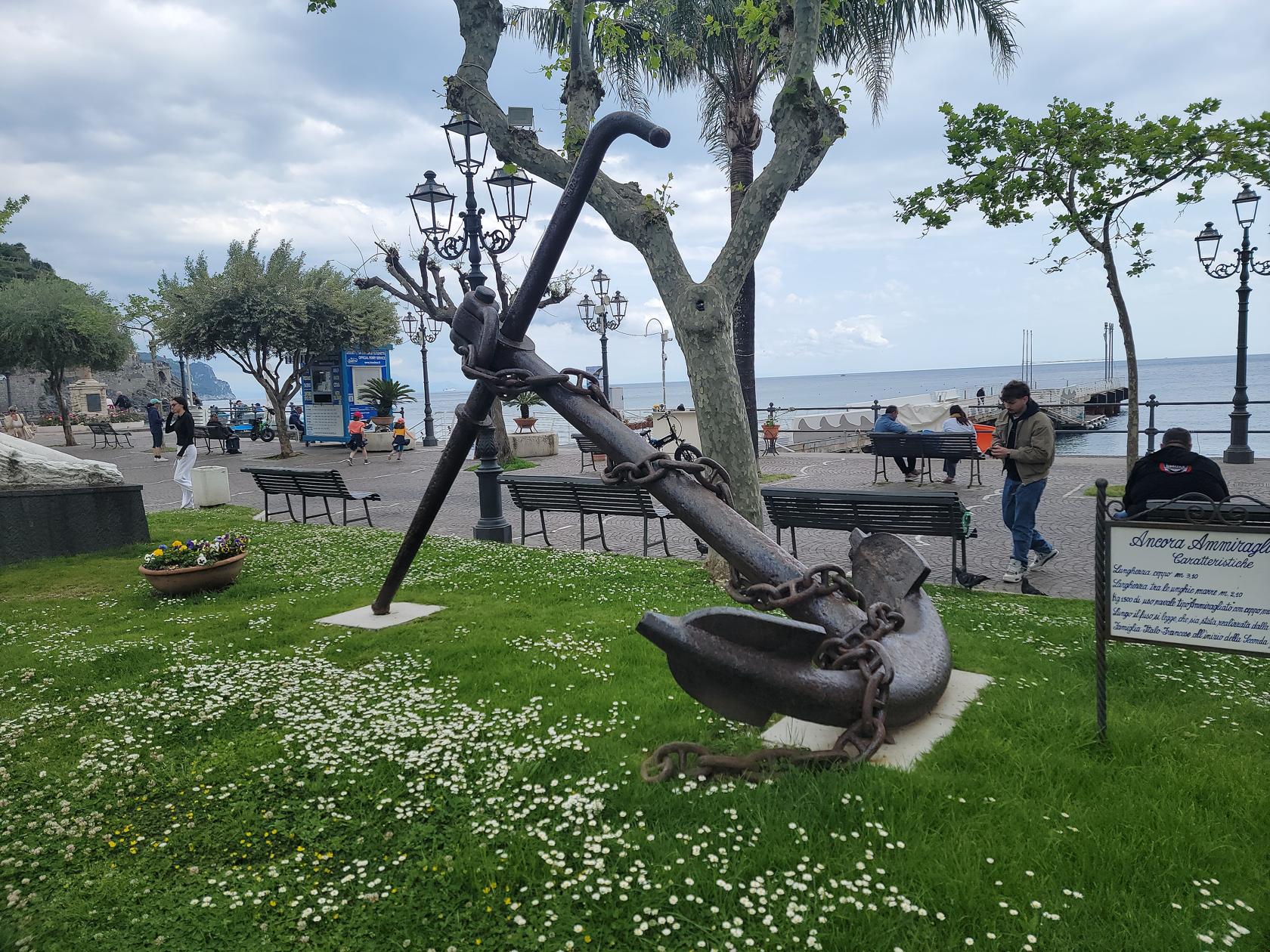
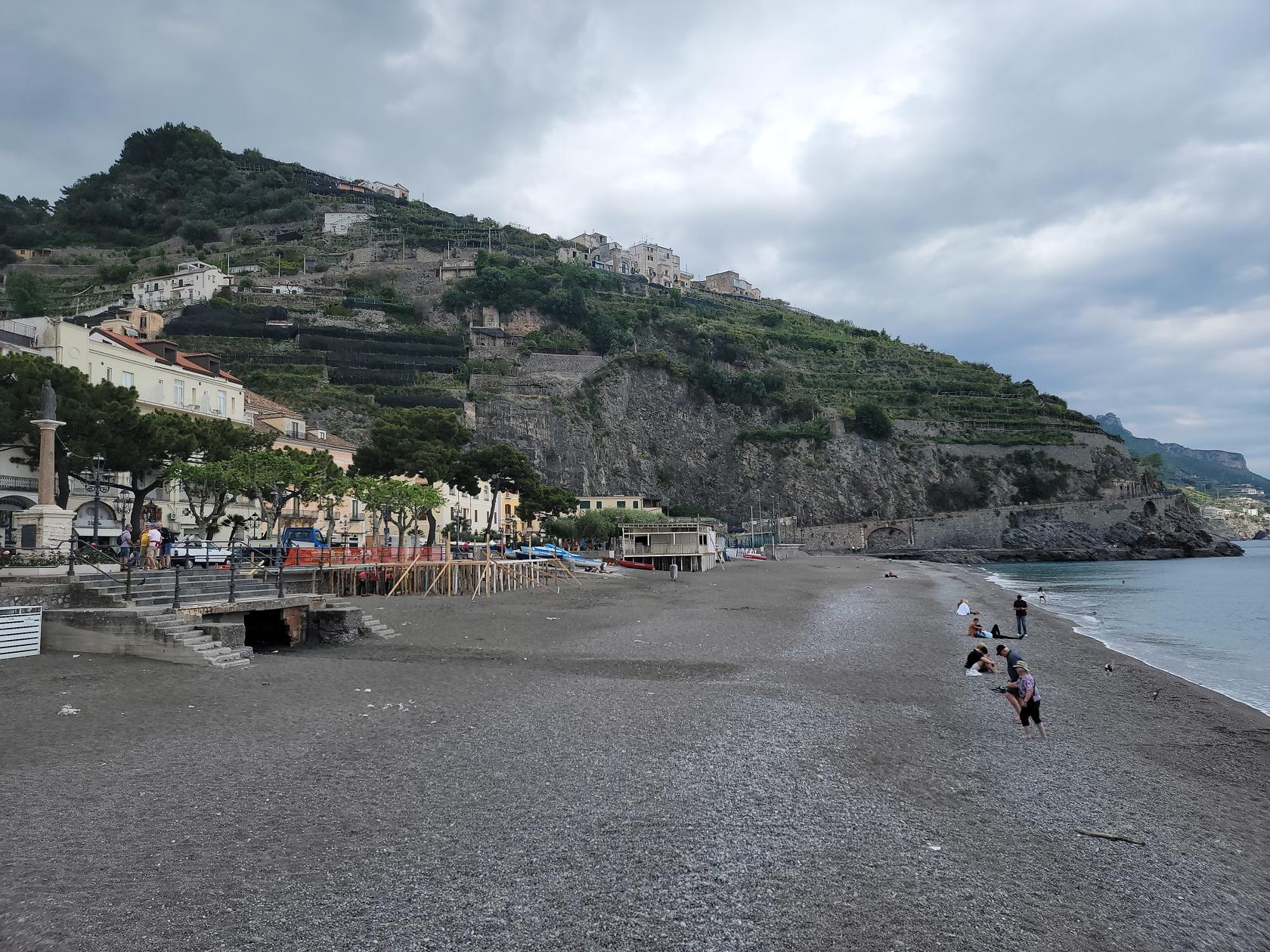
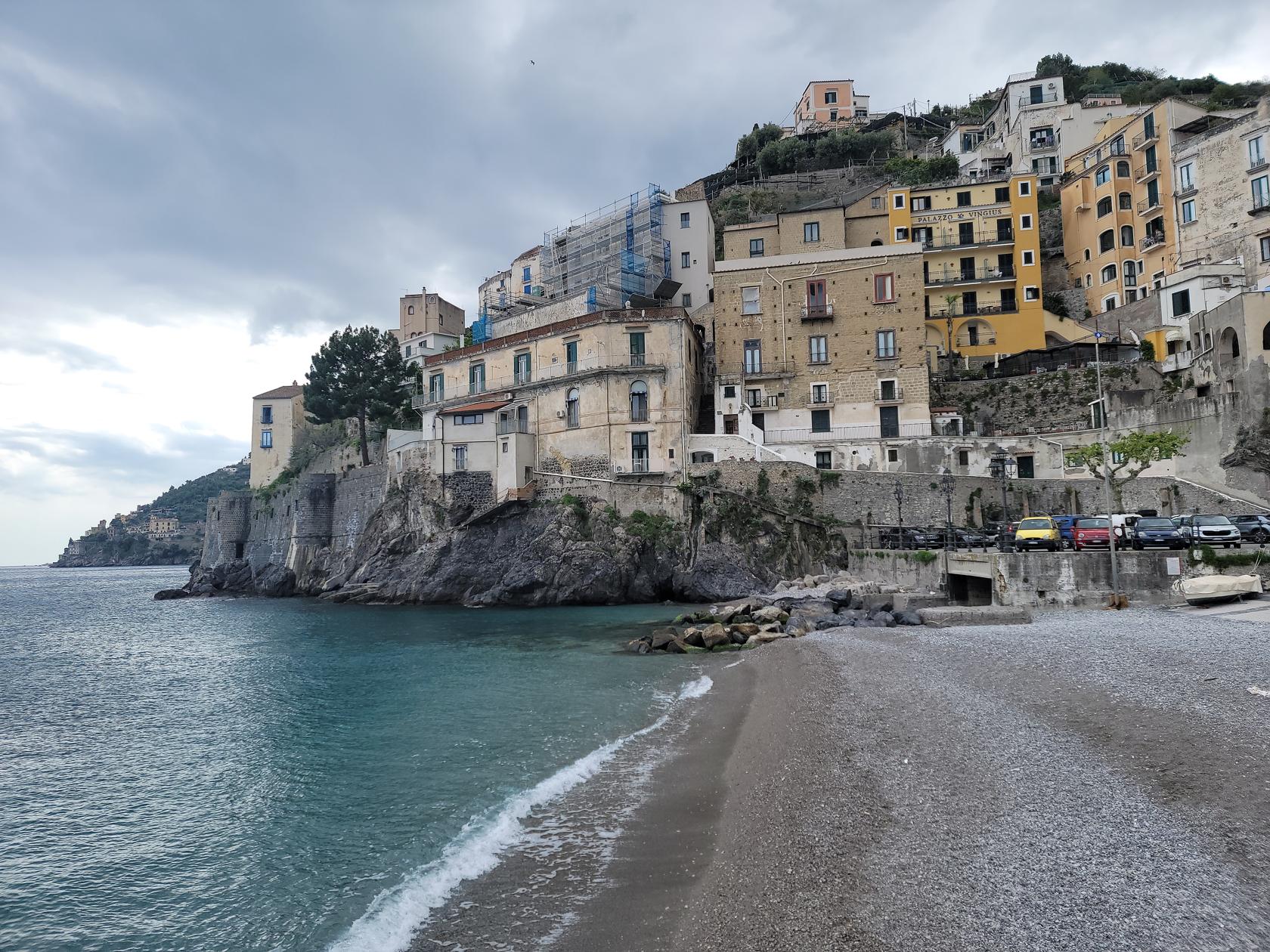
The same is true for the town of Minori, which literally means “minor”, after the river which now flows through it, the Reghinna Minori. The town’s name over the years been abbreviated to just Minori. It’s claim to fame is was used by the Roman high society as a seaside resort. It does have the longest and widest swath of beach on the coast.
Entering Town – Minori, Italy
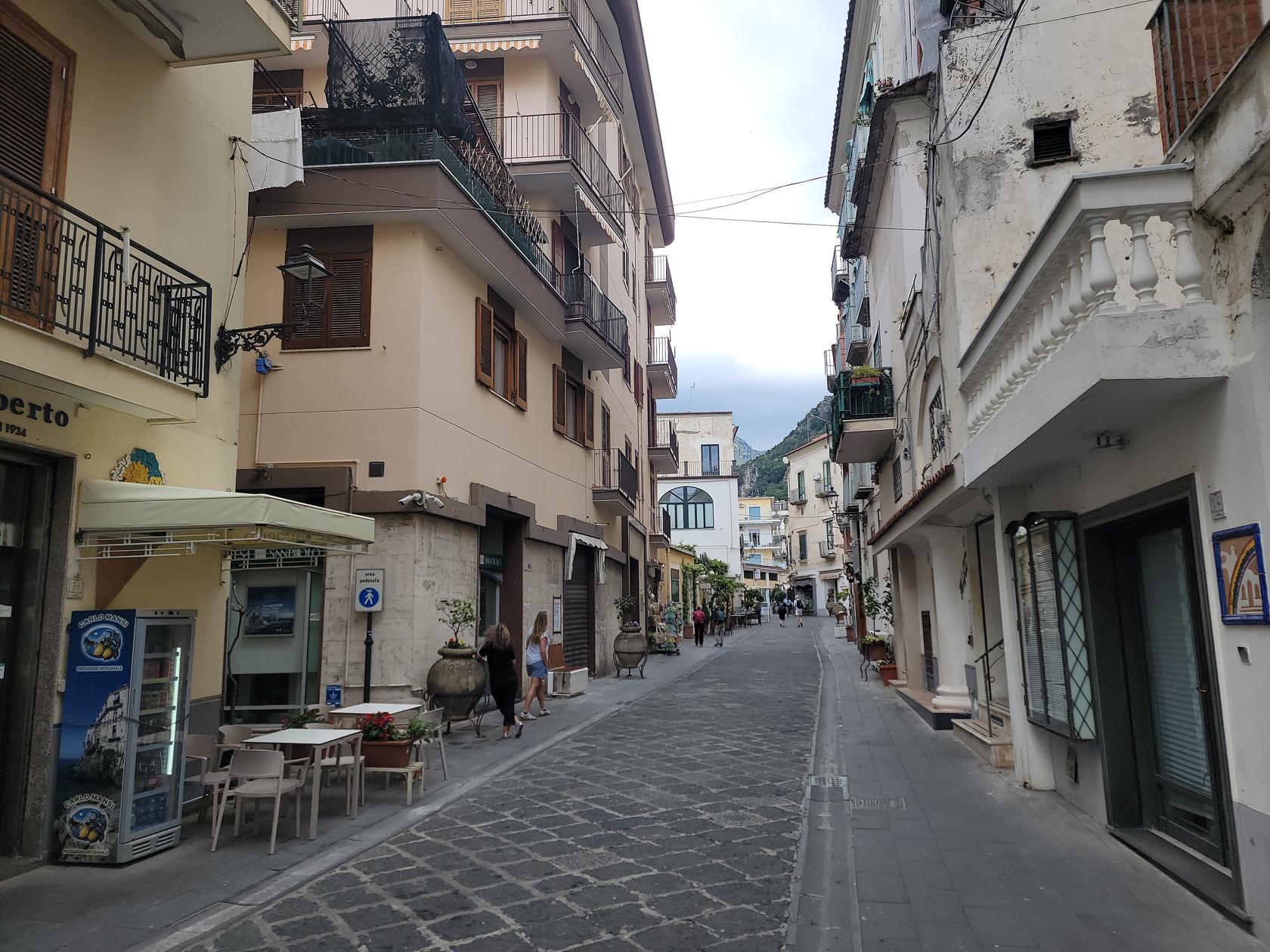
Main Street SS163 – Minori, Italy
Narrow Alleys – Minori, Italy
Narrow Alleys – Minori, Italy
Typical Small Town Alley – Minori, Italy
Clock Tower – Minori, Italy
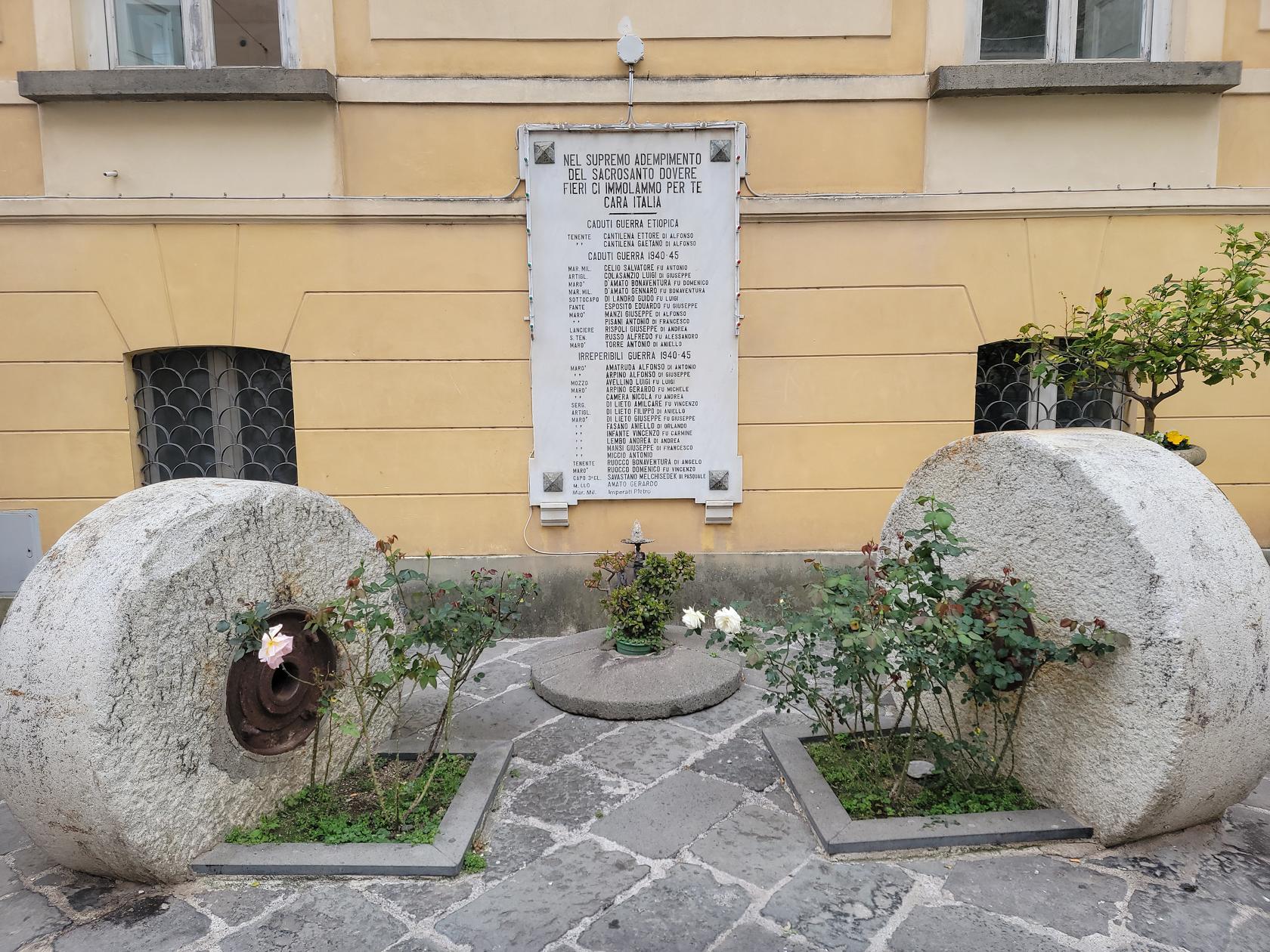
Old Millstones – Minori, Italy
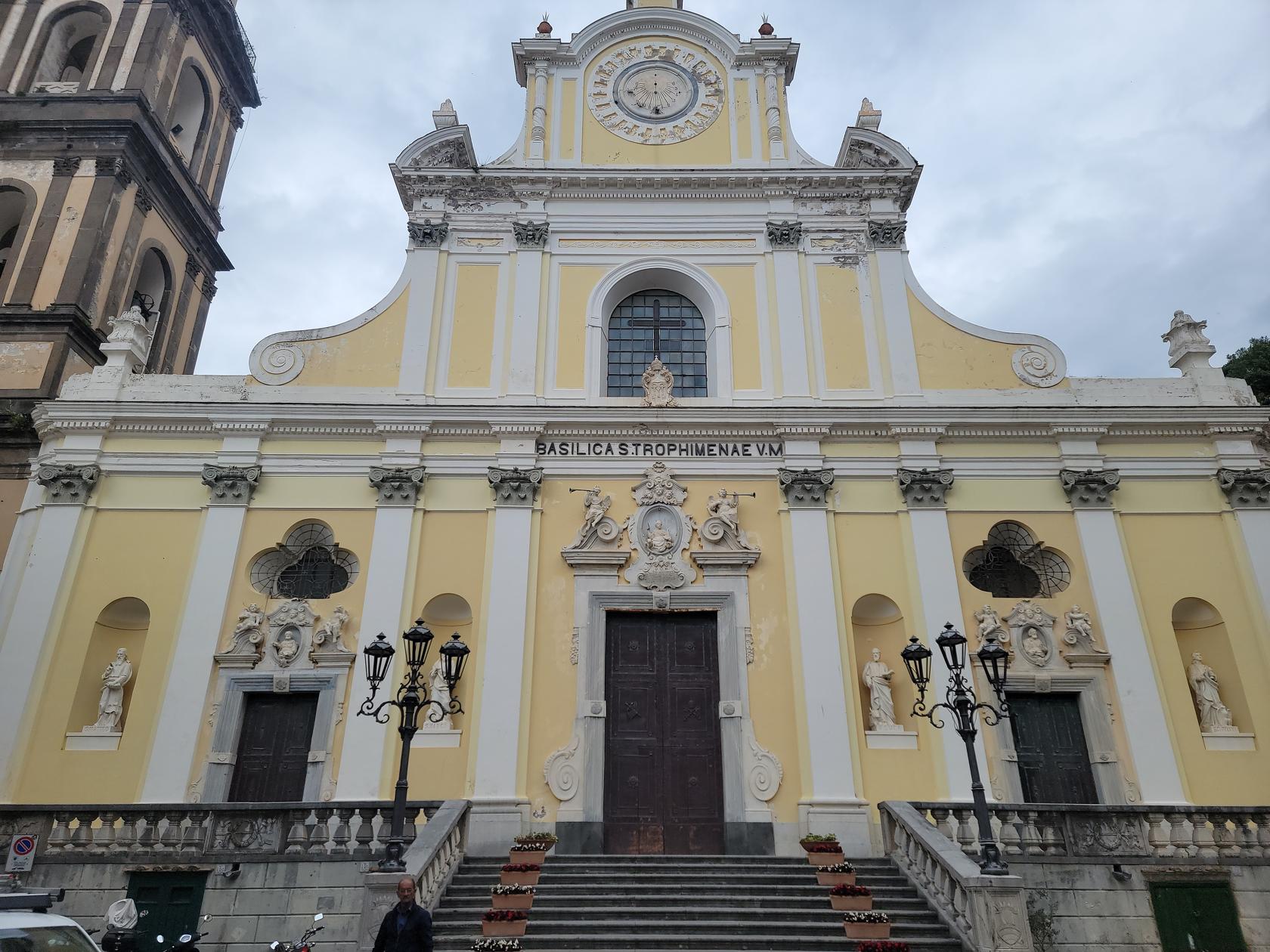
Basilica Saint Trofimena – Minori, Italy
Basilica Saint Trofimena – Minori, Italy
Main Shopping Street – Minori, Italy
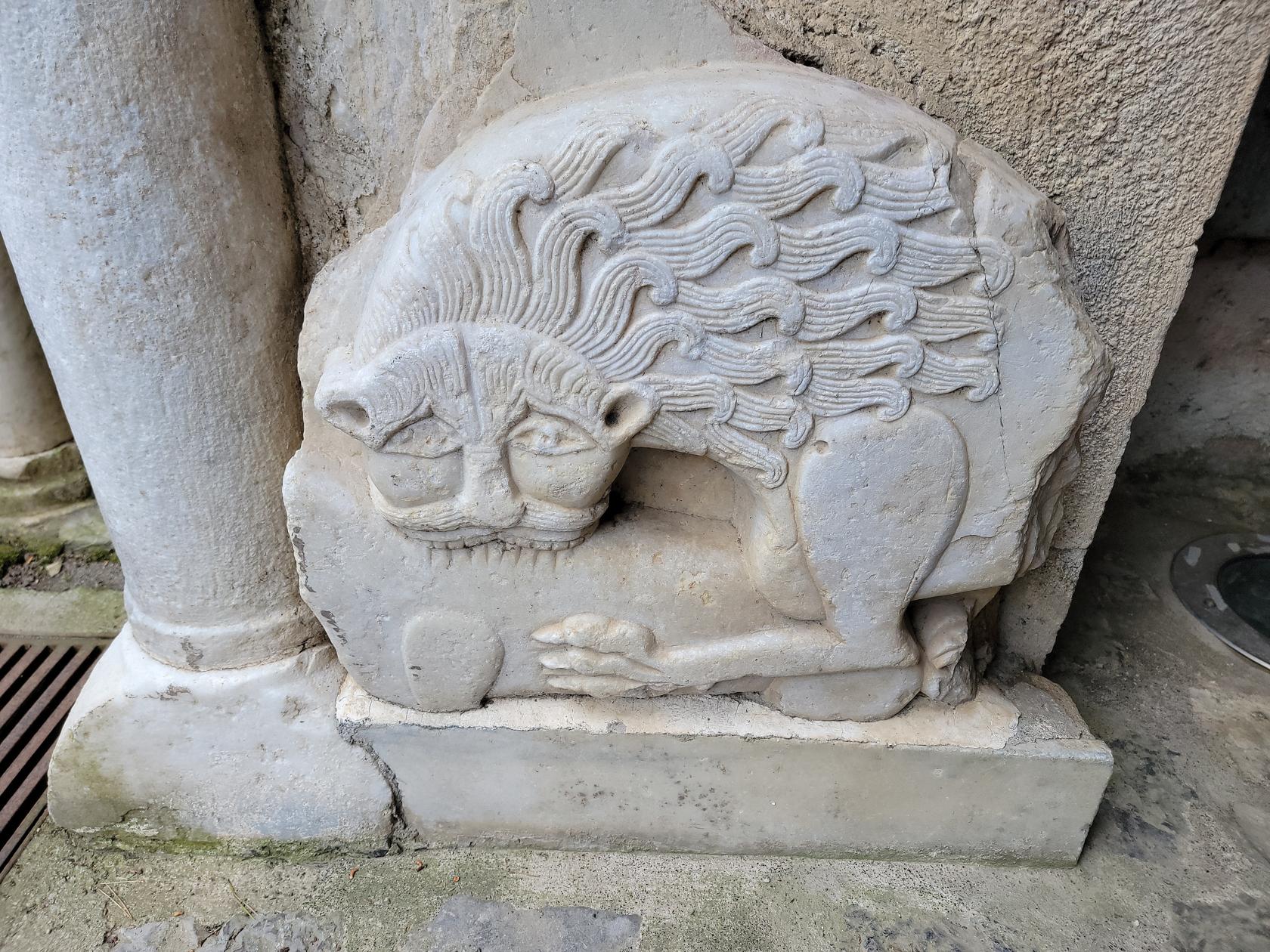
Lion Fountain – Minori, Italy
Beachfront – Minori, Italy
Beach – Minori, Italy
Beach – Minori, Italy
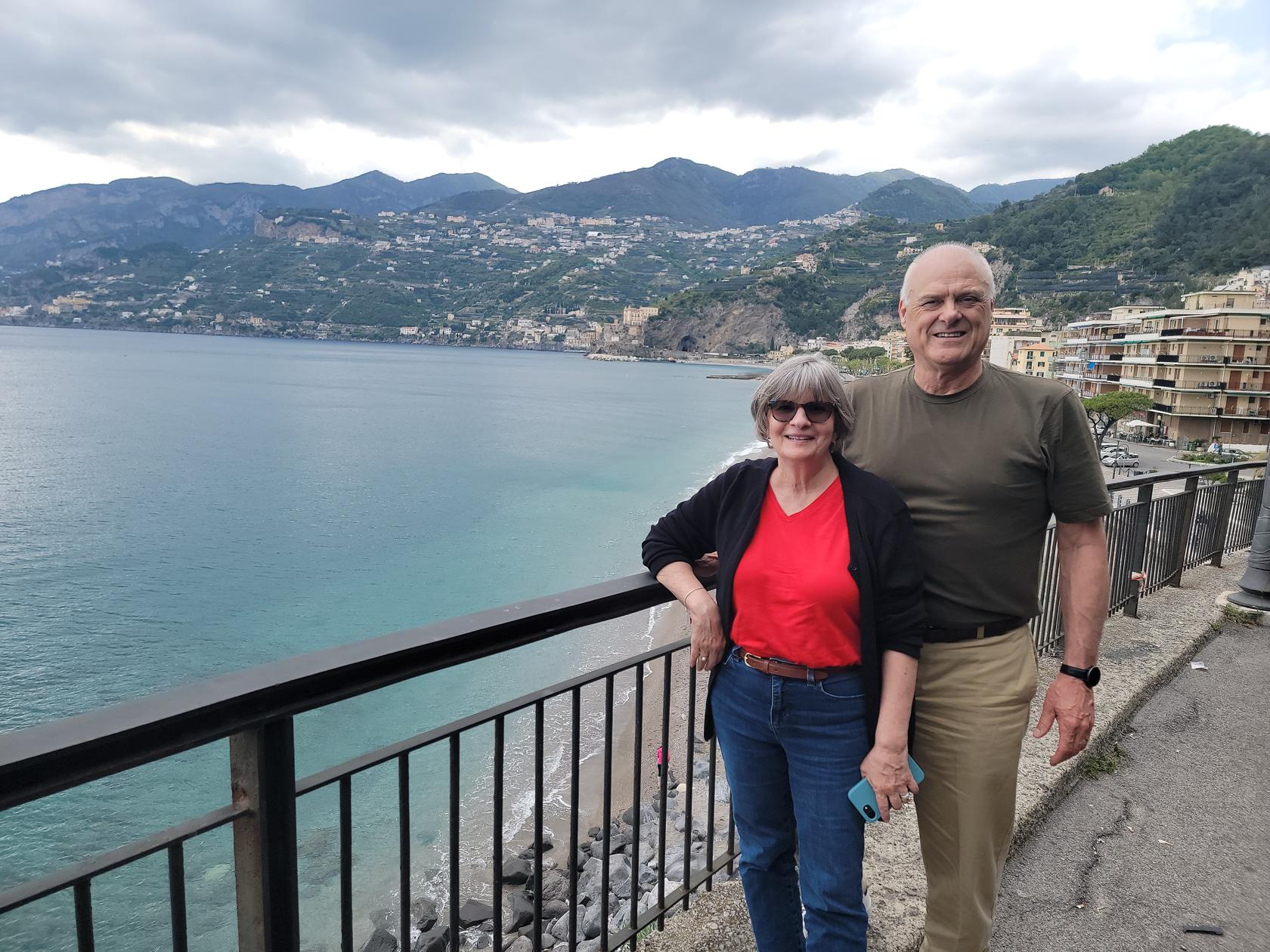
Patti and Erick – Leaving Minori – Minori, Italy
Beach – Minori, Italy
Cetera
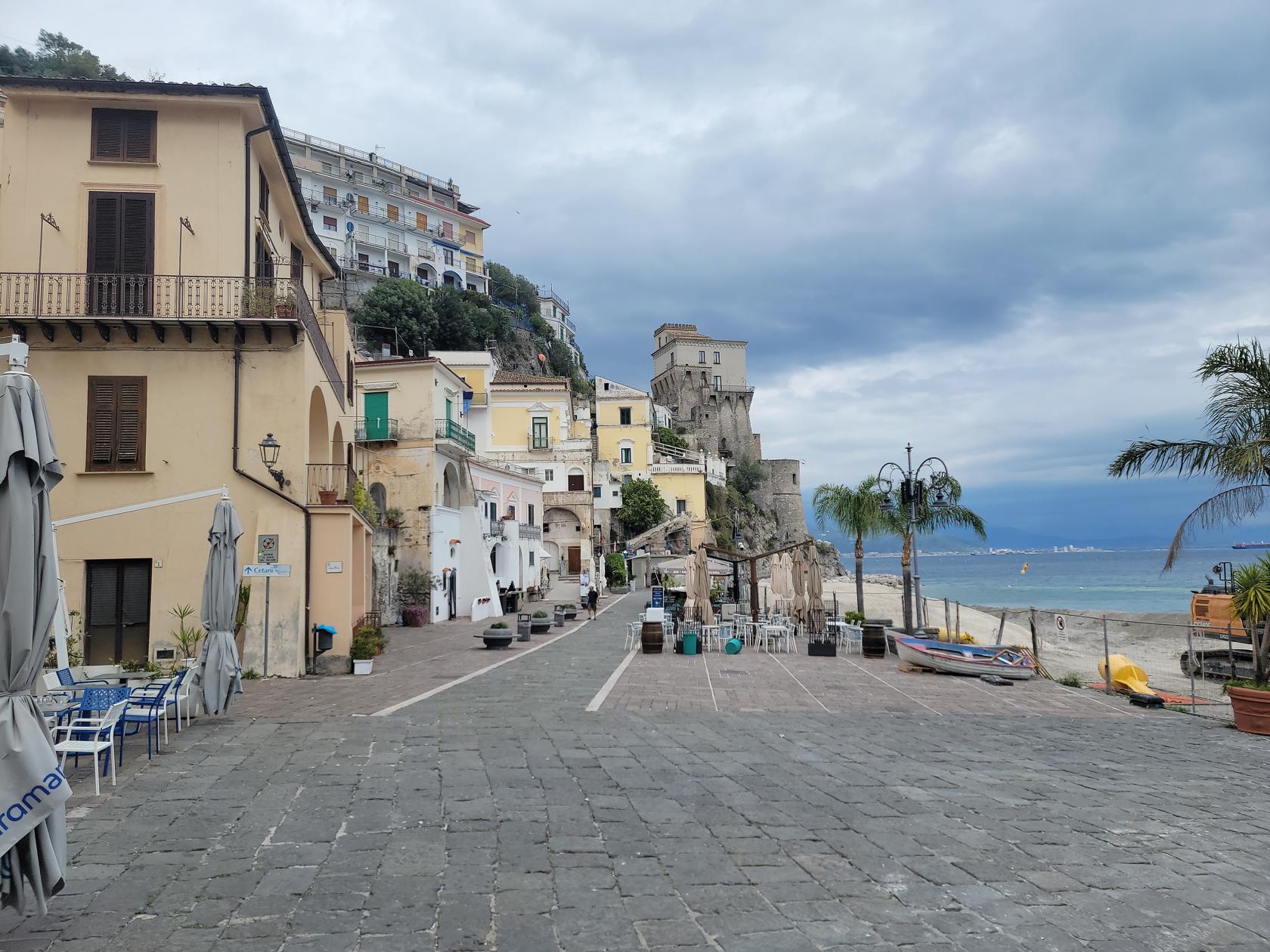
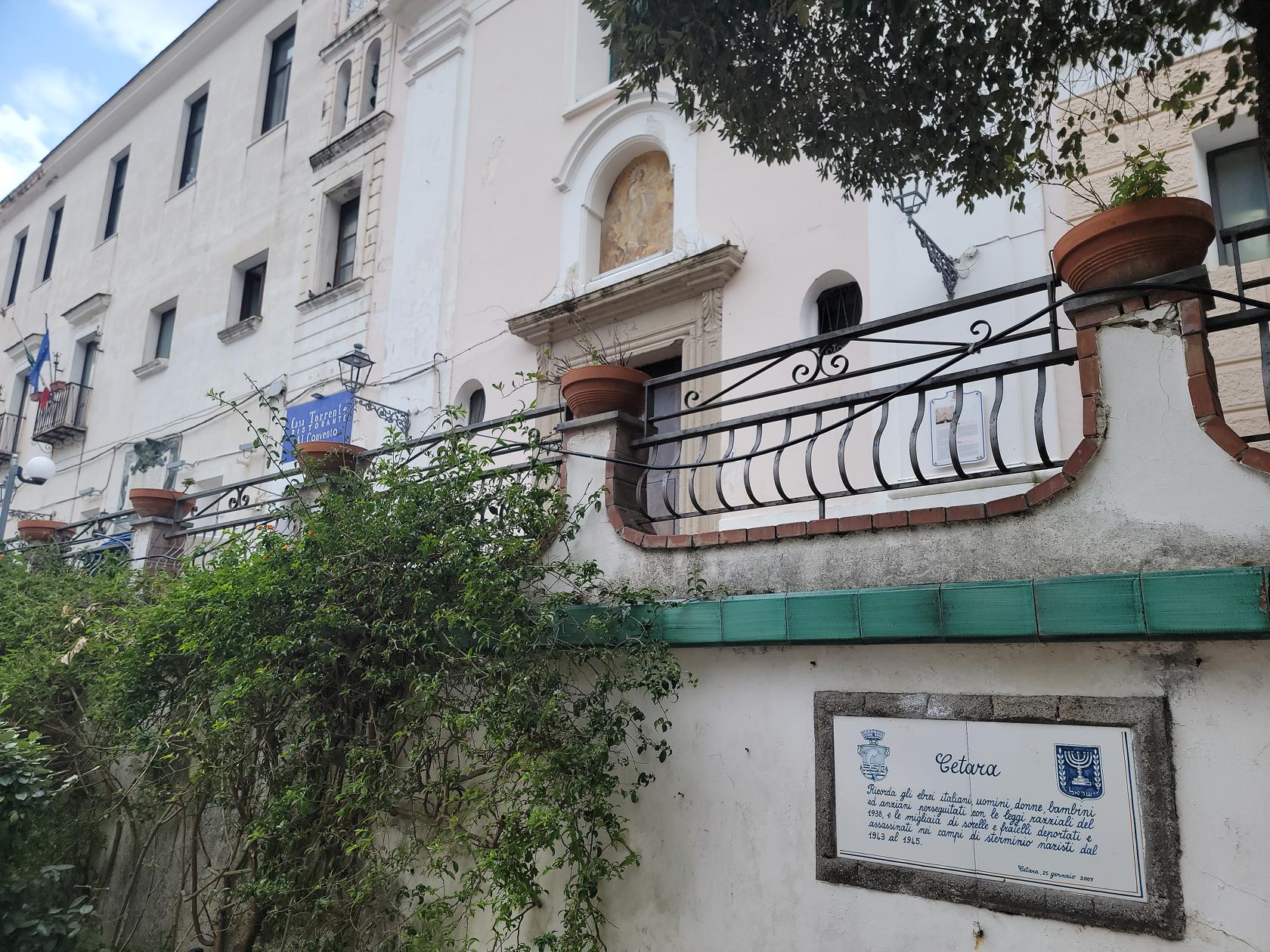
This small town was most likely named after the tuna fishermen that used to live there, as well as the fishmongers, or cetari. Its most important feature is one of the larger Amalfi Coast towers, which dot the coastline and were once used for protection by the Amalfi Federation, or Duchy of Amalfi.
Weather Moving In – Cetara, Italy
Lemon Groves – Cetara, Italy
More Lemon Groves – Cetara, Italy
Covered Lemon Trees – Cetara, Italy
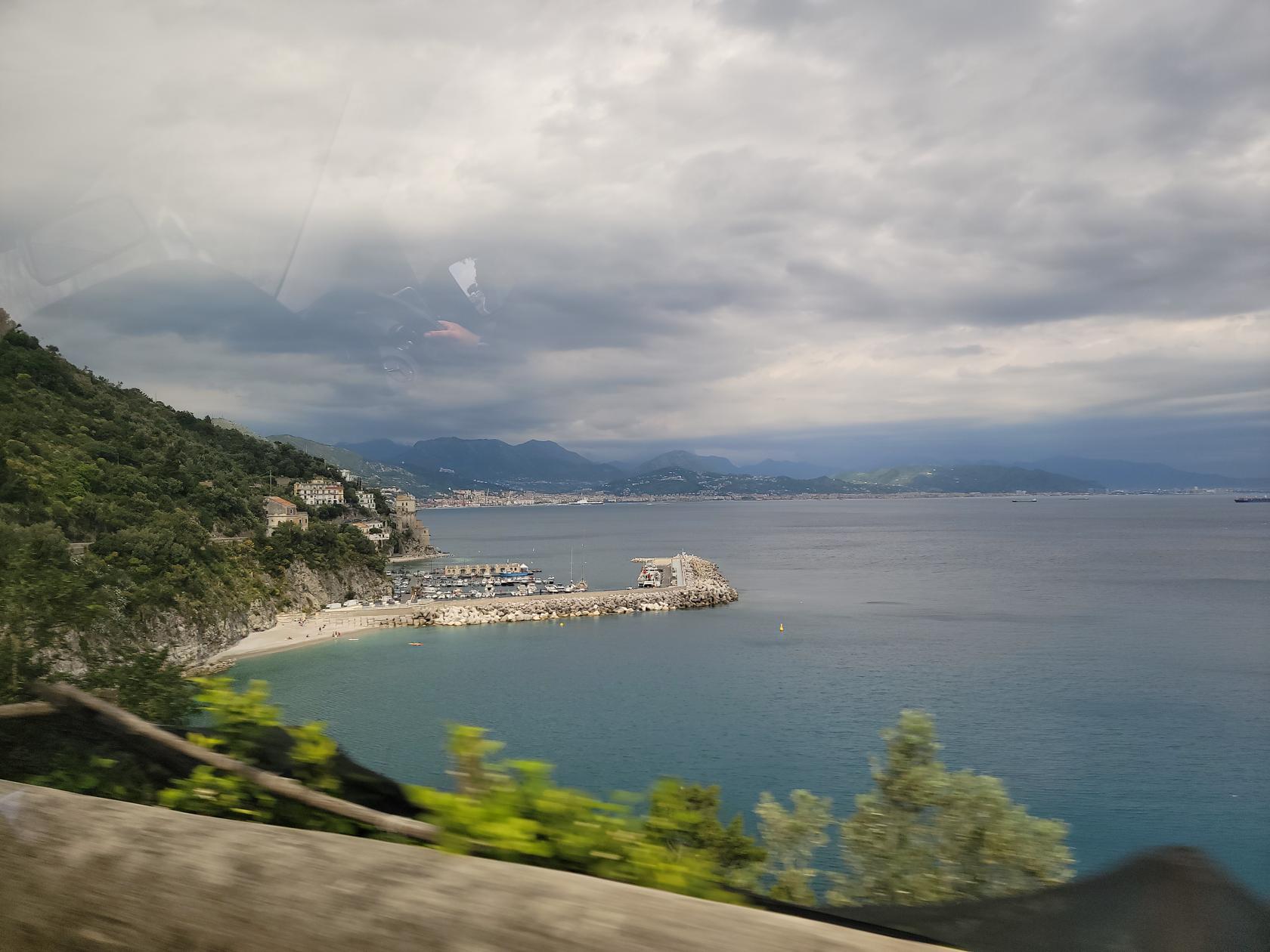
Amalfi Coastline – Cetara, Italy
Amalfi Coast – Cetara, Italy
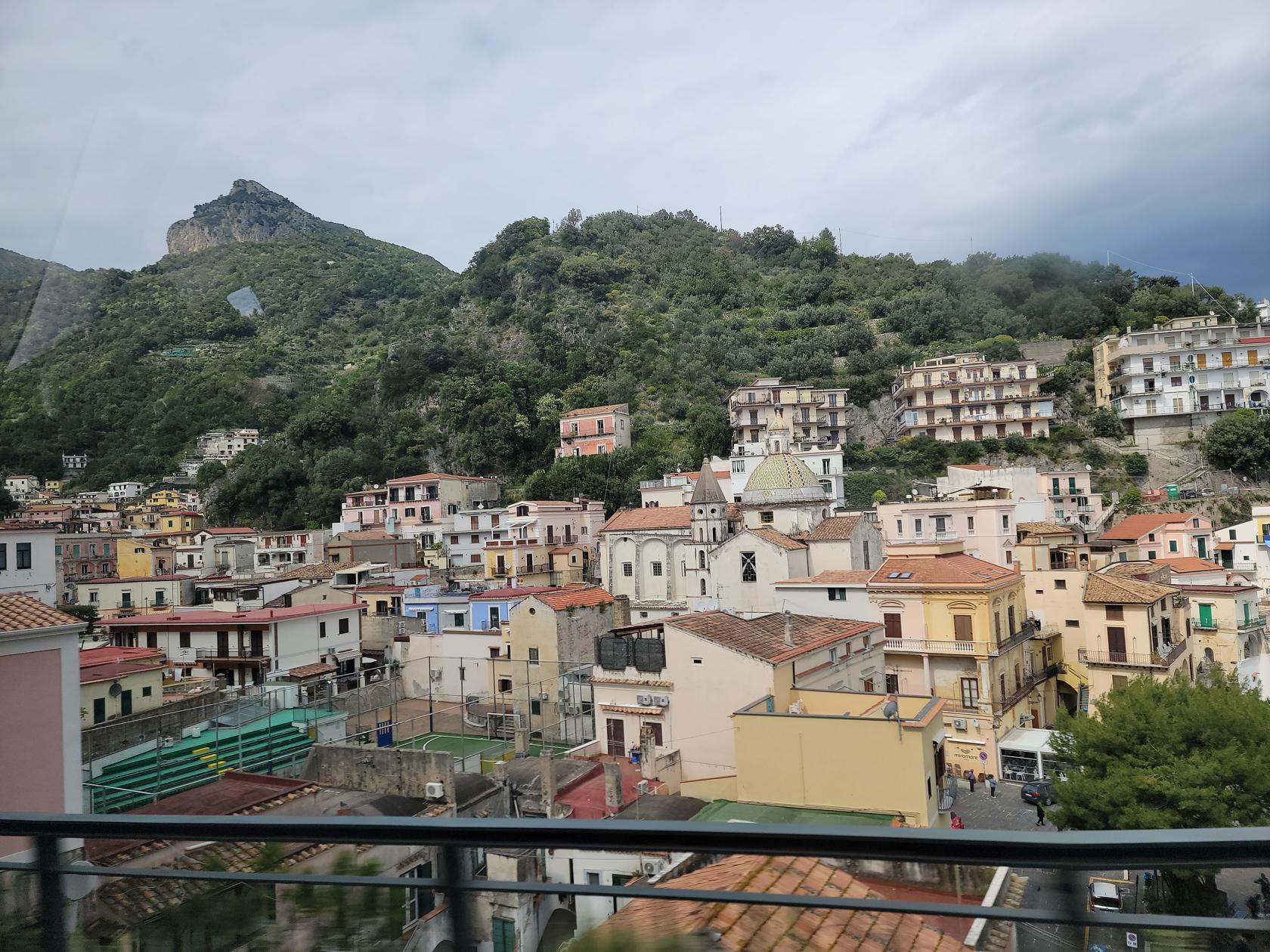
Coming Into Town – Cetara, Italy
Dome Of Saint Peter – Cetara, Italy
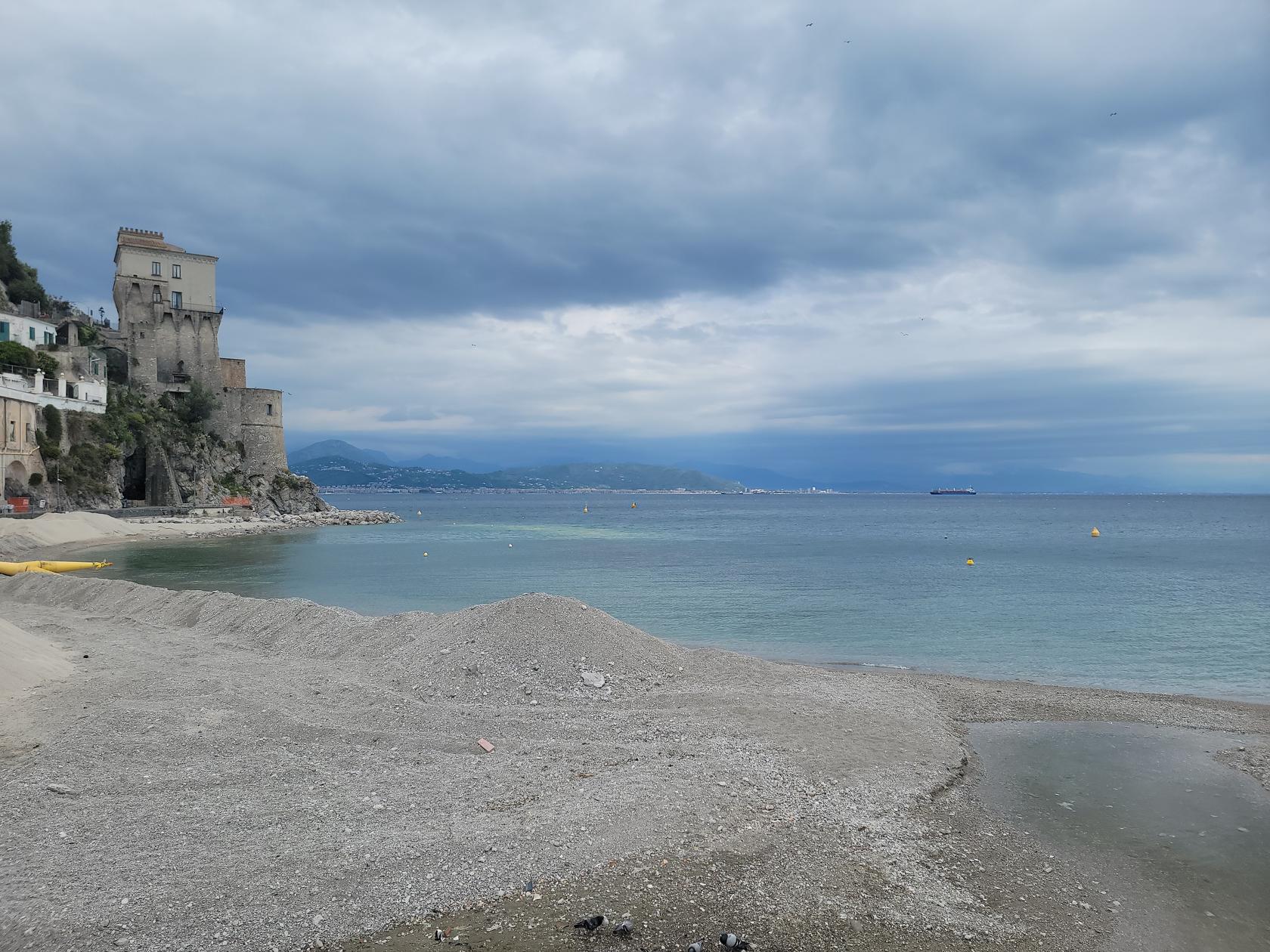
Beach and Tower of Cetara – Cetara, Italy
Beach Restoration – Cetara, Italy
Town Sign – Cetara, Italy
Narrow Walkways – Cetara, Italy
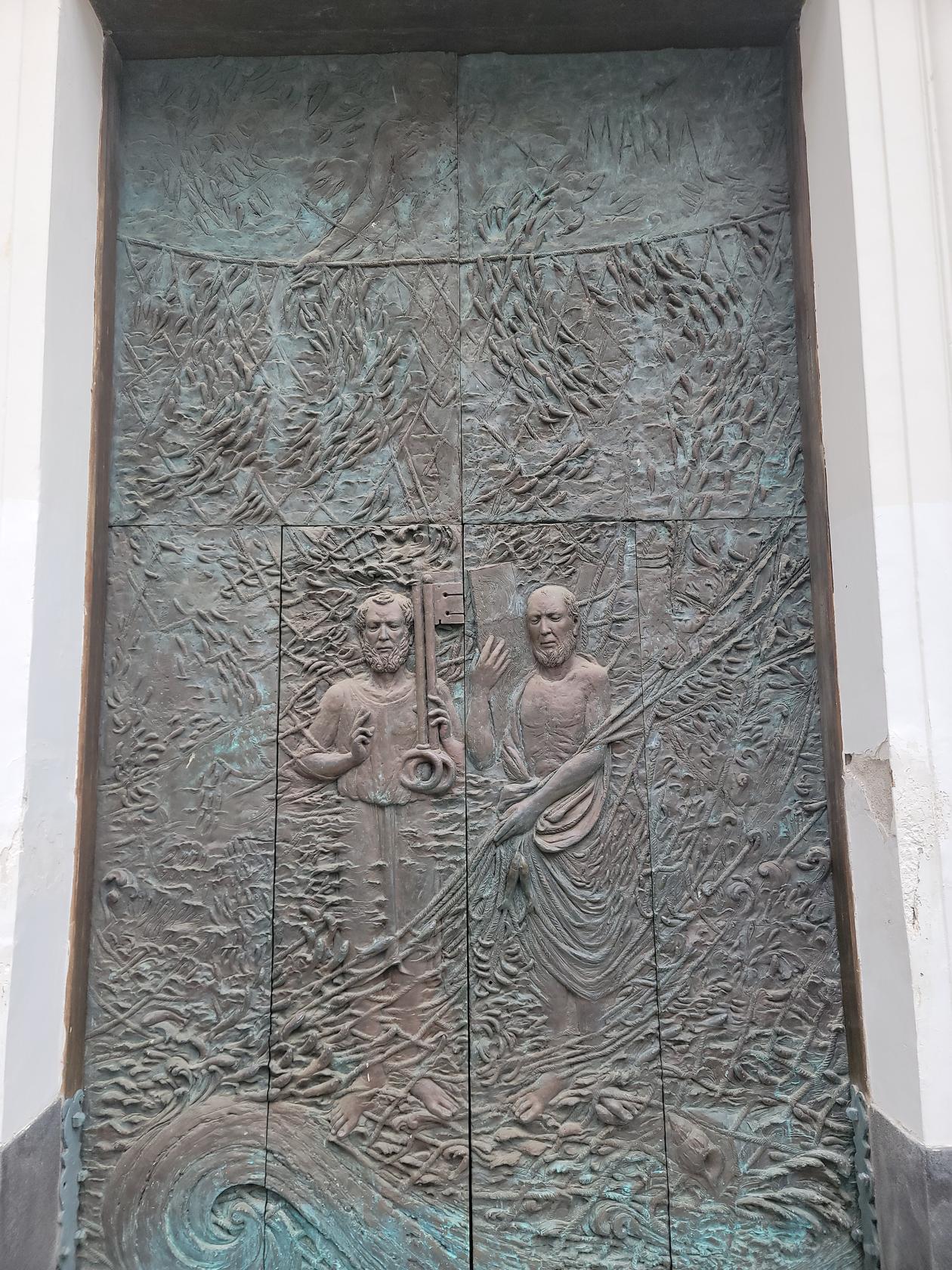
Bronze Doors – Parochial Church of Saint Peter – Cetara, Italy
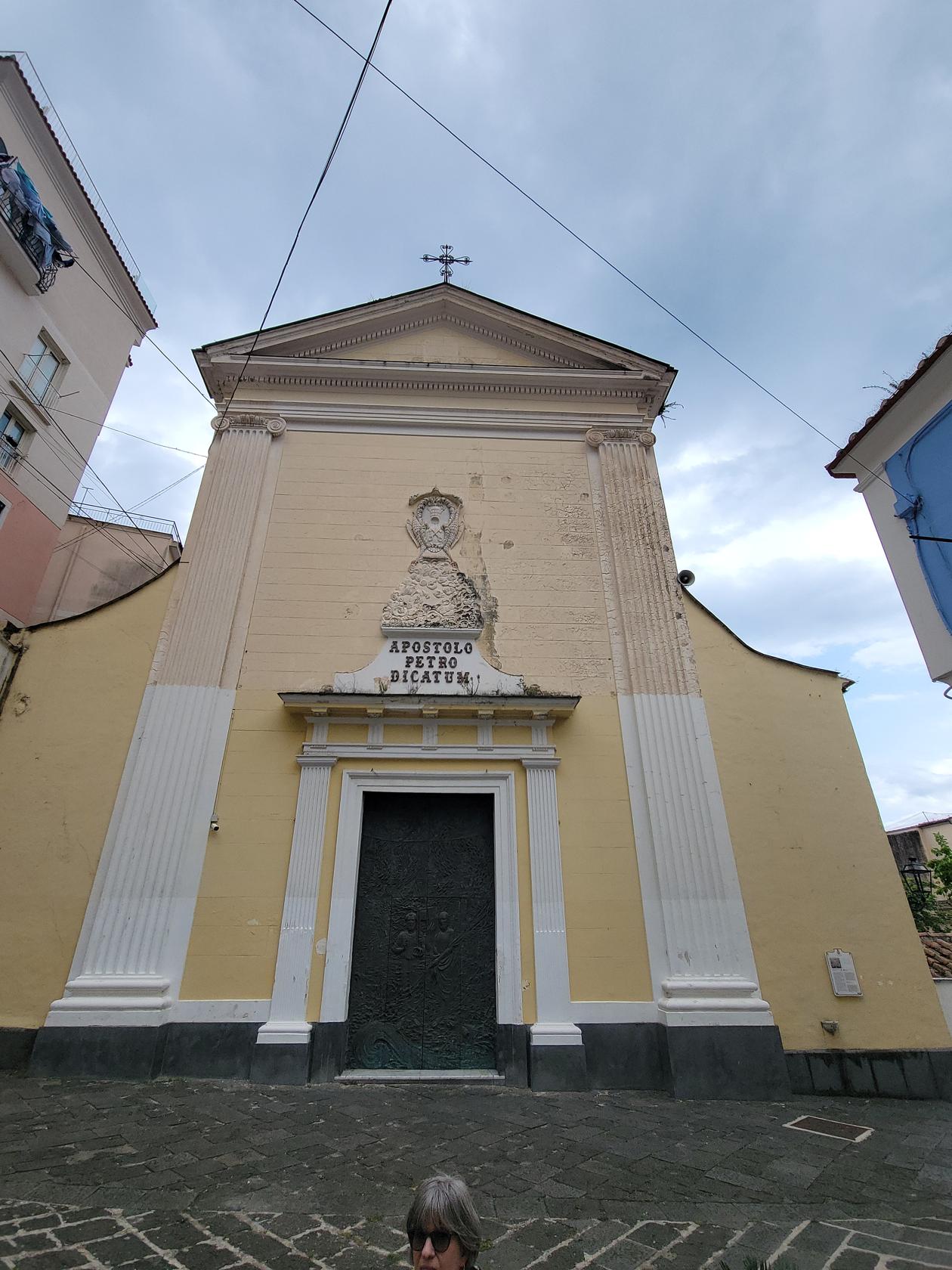
Entrance – Parochial Church of Saint Peter – Cetara, Italy
In Conclusion
We enjoyed our trip to the Amalfi Coast, overall it was a worthwhile experience. Though I would caution, for me, it did not live up to all of the hype and hyperbole surrounding it as a destination. With some of the towns entertaining cruise ships during the tourist season, it truly could turn into one of the more exasperating places to visit at the wrong time of the calendar year.
Lemon Groves – Tramonti, Italy
Lemon Groves – Tramonti, Italy
The Lemon Groves – The Parochial Church Of Saint Elia Profeta – Tramonti, Italy
In Between Mountains – The Parochial Church Of Saint Elia Profeta – Tramonti, Italy
However, we had amazing weather, perfect temperatures and manageable numbers of tourist. Though some places were not available to us at this time, since they open up in the later May and June timeframes for peak season; this was not a problem for us, since we are not big shoppers. In any case, we would commend a tour, or private tour if you can afford it. Removing the need to drive the winding roads, was alone a big plus for us.
The second part of our first day was filled with visiting the town Amalfi on the eponymouos coast and Ravello, a bit further away from the shore, but still part of the famous coastline. We joined our driver again, who drove the windy and treacherous coastal road between Positano and Amalfi, while we took the ferry to enjoy the coastline.
Interesting Entrance Decoration – Villa Rufolo – Ravello, Italy
Getting There
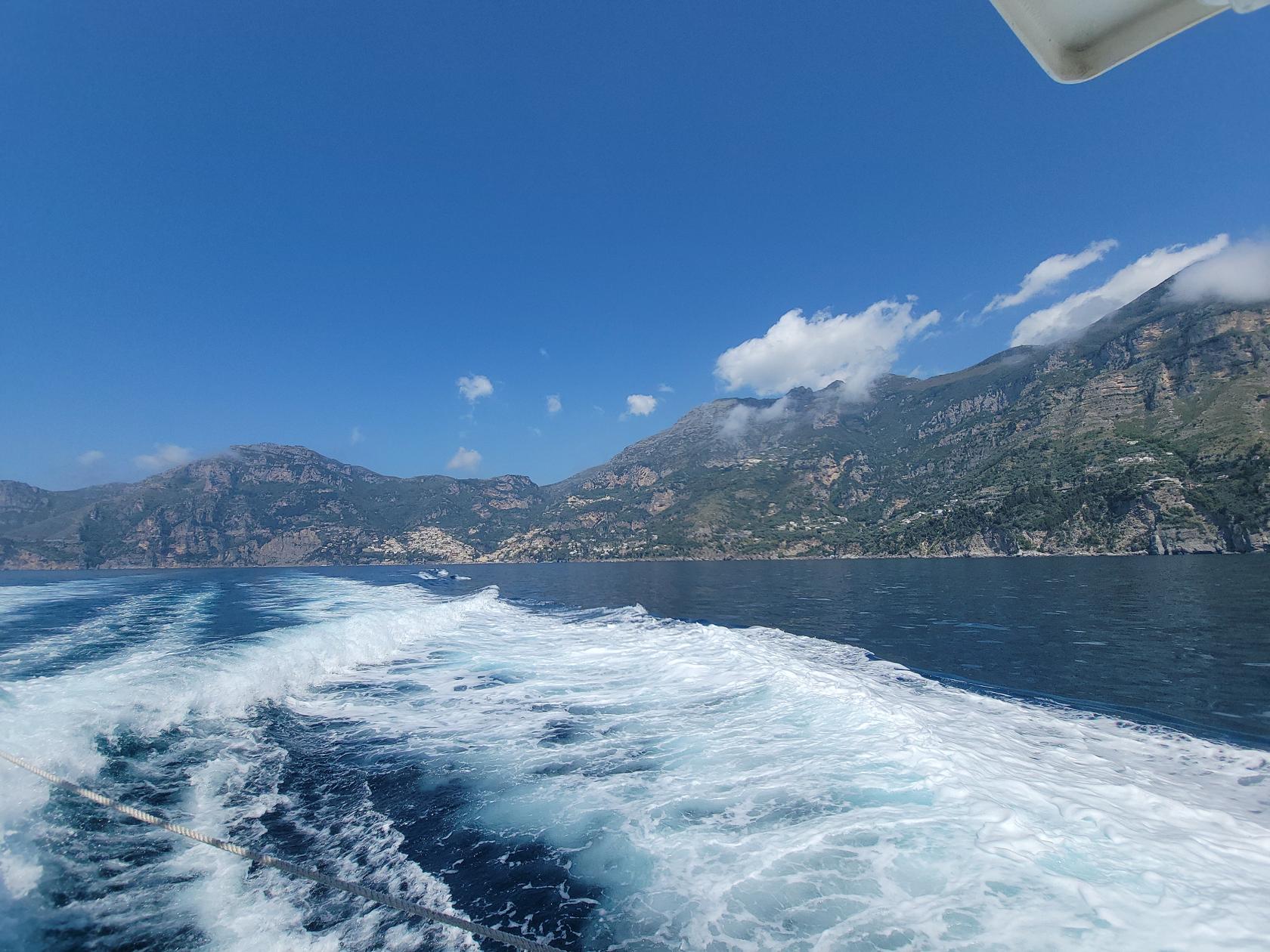
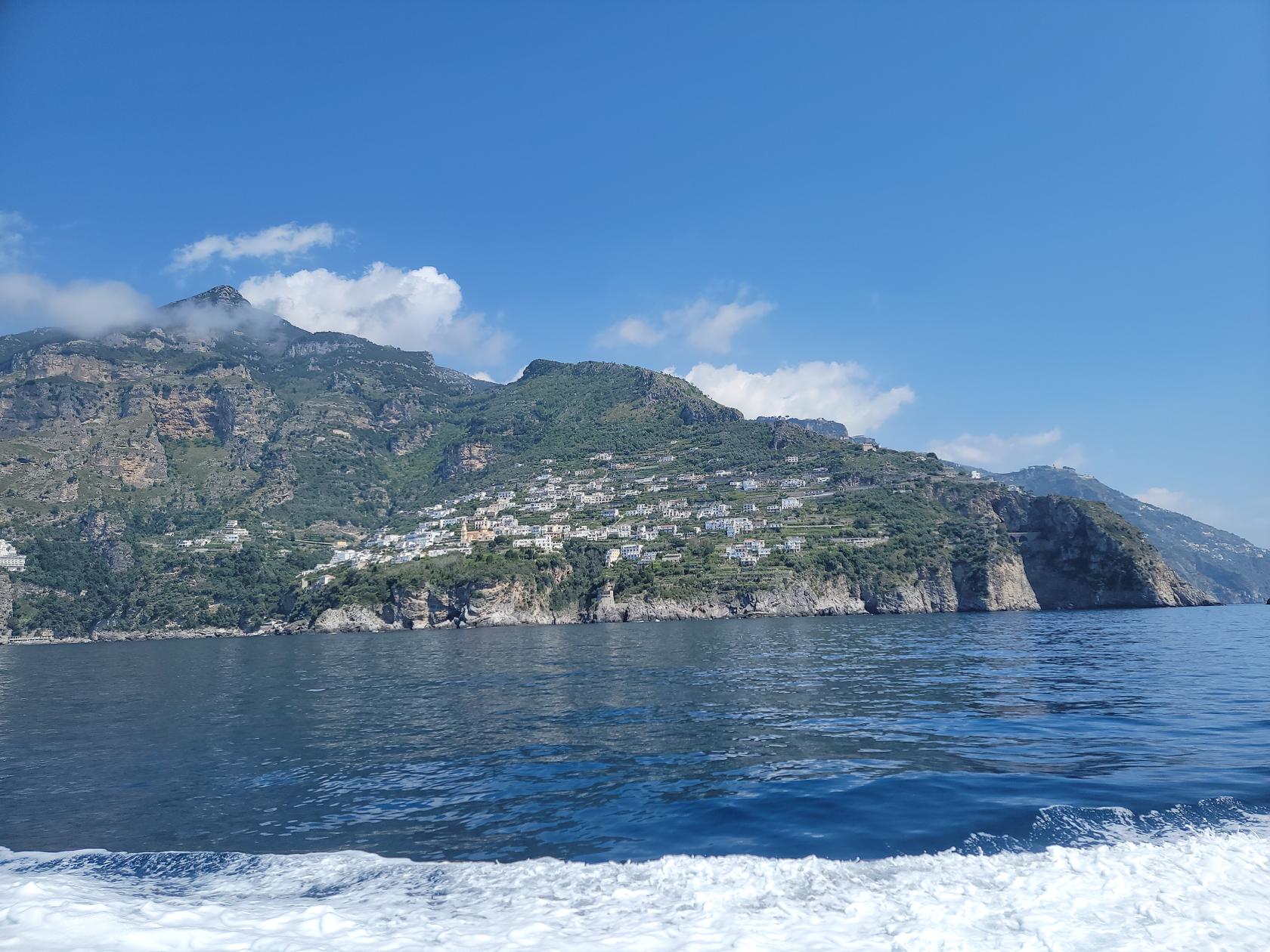
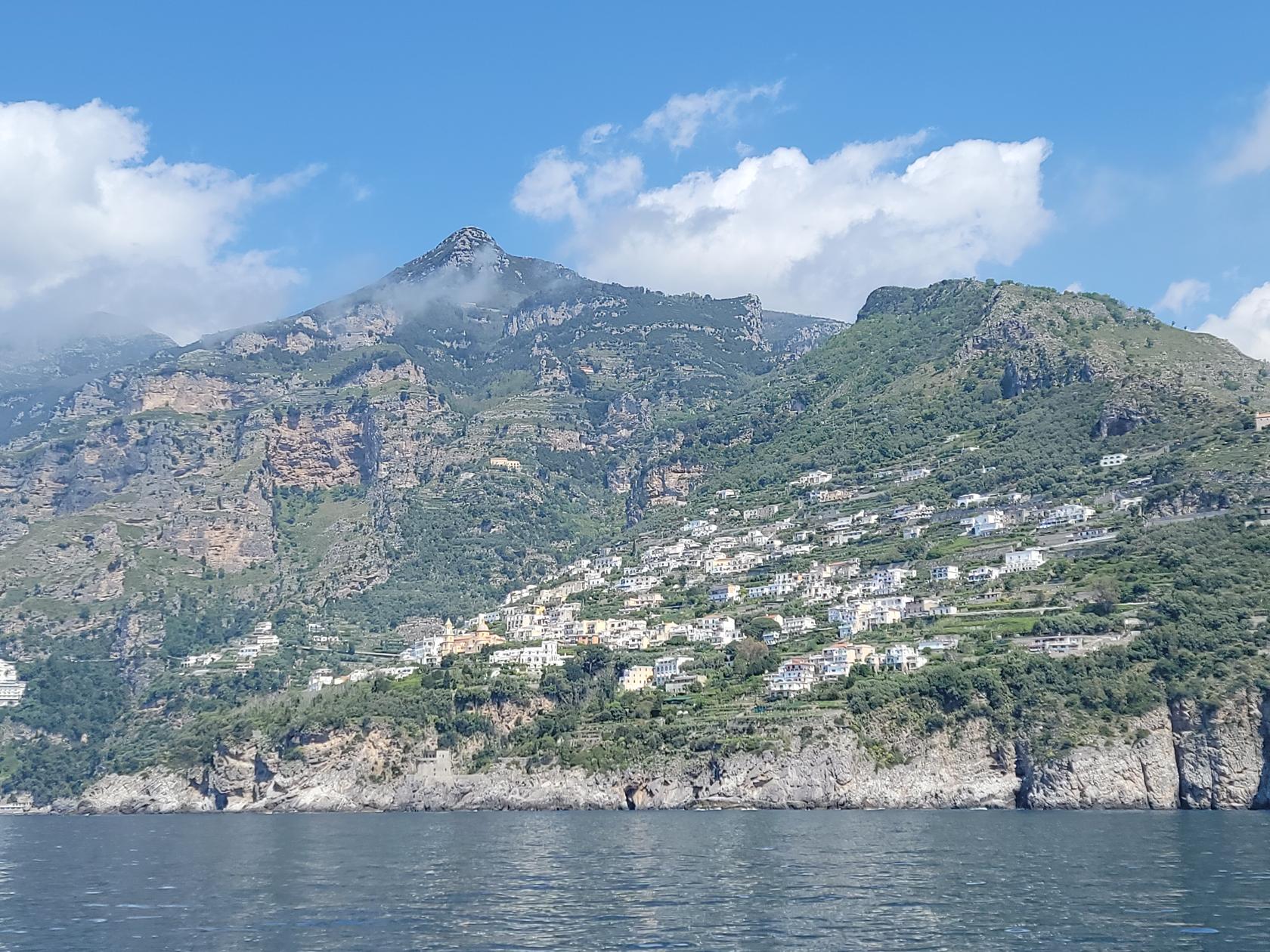
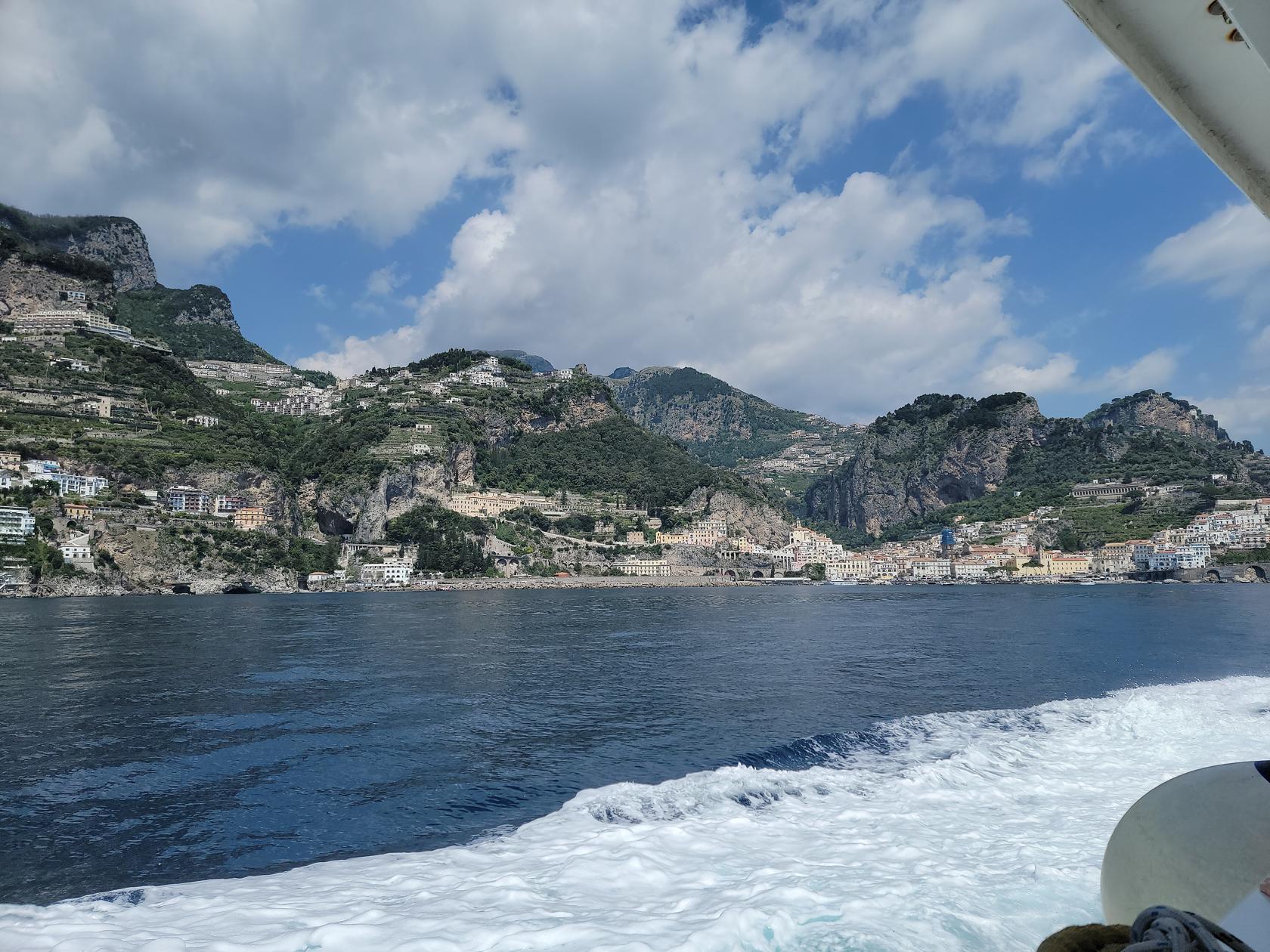
To get to Amalfi, we took the ferry from Positano. It is a thirty minute boat ride along the coast, which when the weather cooperates provides beautiful scenery and a great occasion to take photographs.
Ferry Ride from Positano to Amalfi – Amalfi, Italy
Ferry Ride from Positano to Amalfi – Amalfi, Italy
Ferry Ride from Positano to Amalfi – Amalfi, Italy
Ferry Ride from Positano to Amalfi – Amalfi, Italy
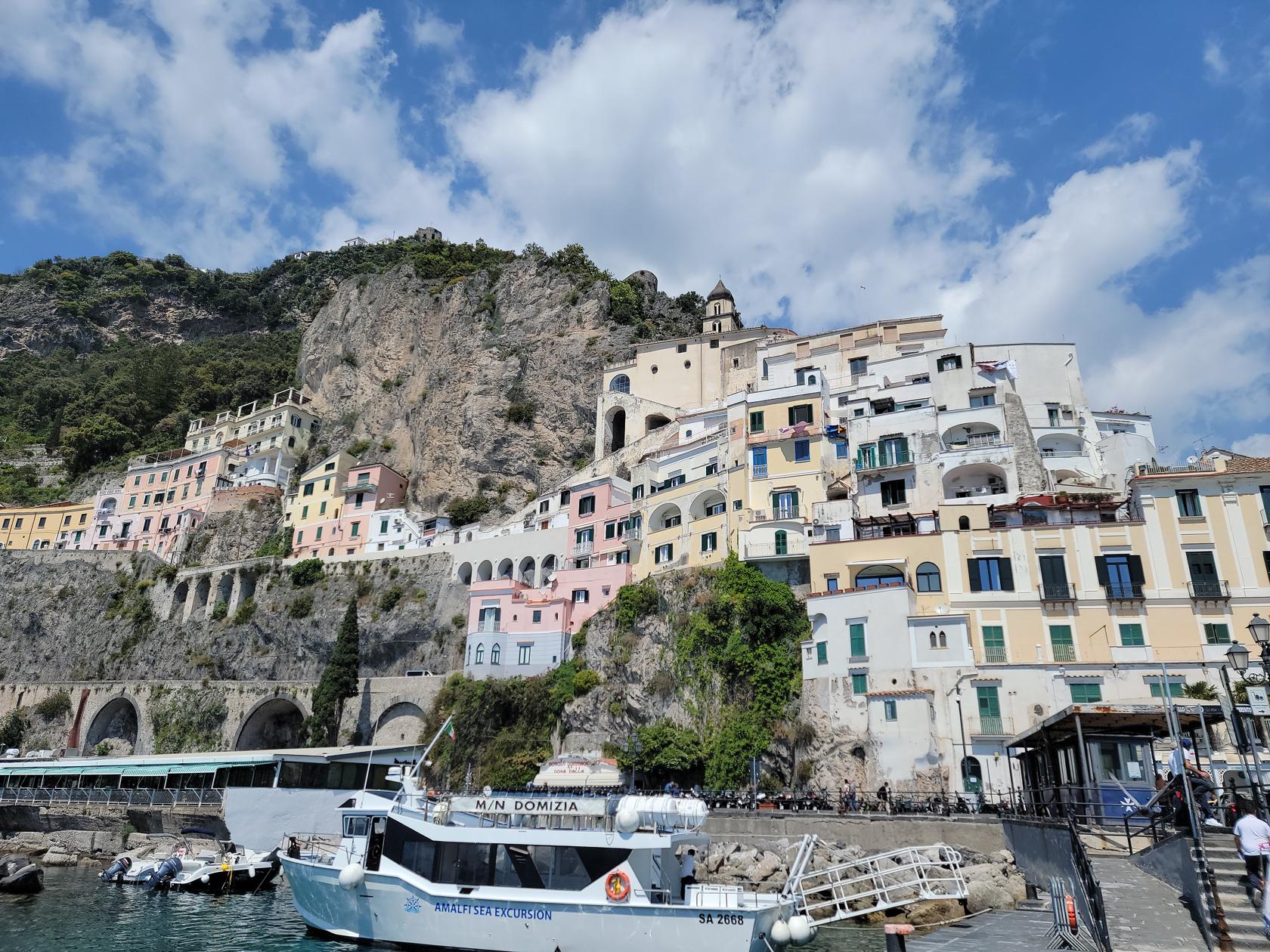
Entering Amalfi – Amalfi, Italy
Dockside at Amalfi – Amalfi, Italy
To get to Ravello from Amalfi, you probably should use or hire a car. Since we were had hired a private tour guide for all day, we used the car to ascend the five kilometers up the coast to the town.
Our Tour Guides Having Typical Italian Discussion While Driving – Pasqual and Federica – Ravello, Italy
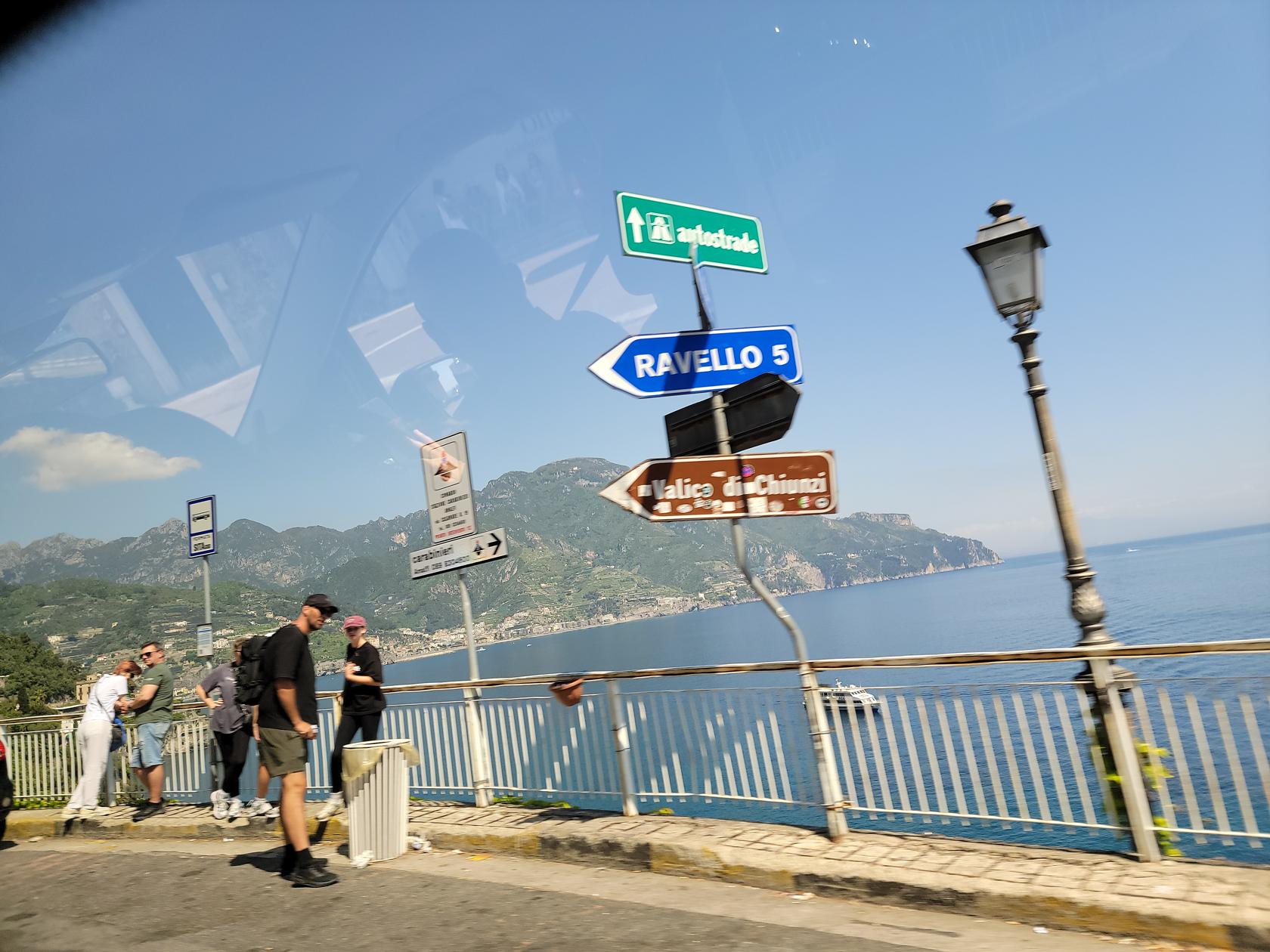
Ravello Next Stop – Leaving Amalfi – Amalfi, Italy
Our Tour Guides Having Typical Italian Discussion While Driving – Pasqual and Federica – Ravello, Italy
The Coast Up To Our Next Stop – Ravello, Italy
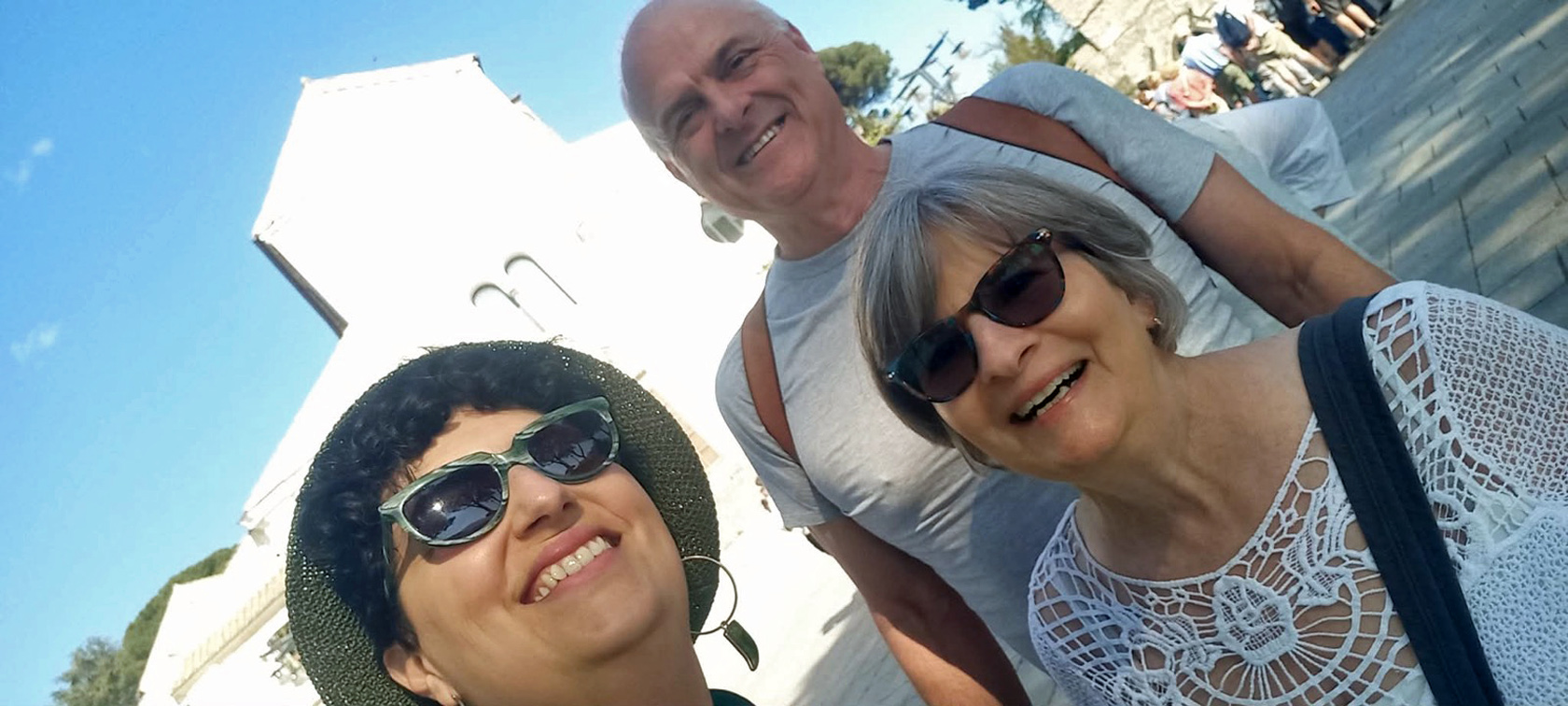
When we arrived, we took a photograph to remember the occasion.
Our Private Tour Group – Driver Pasqual, Tour Guide Federica, Patti and Erick – Ravello, Italy
Amalfi
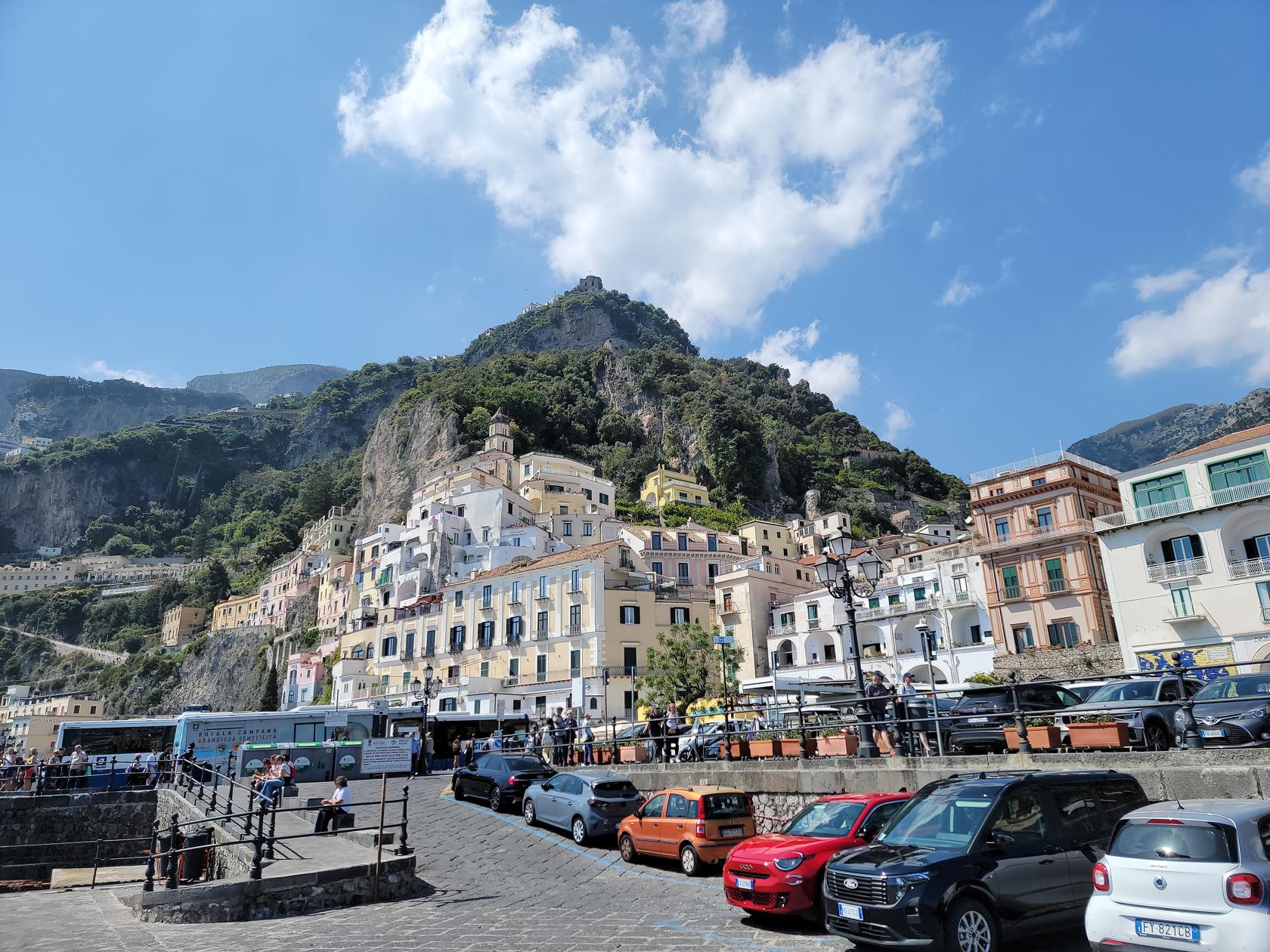
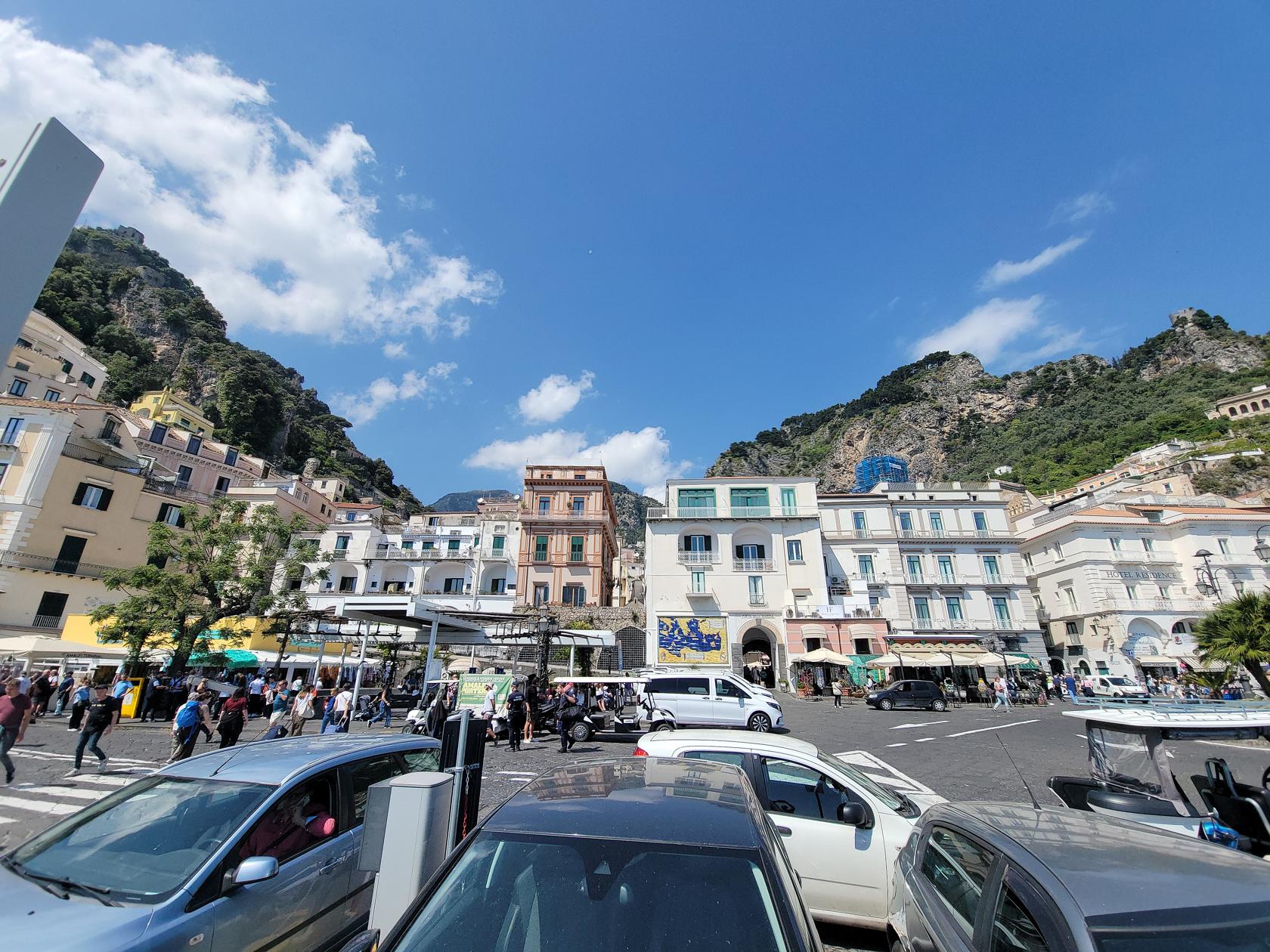
Perhaps fourth best of all the towns along the coast is Amalfi. Some may be surprised, but that is based on our experience of most of the towns. There are many factors for this, including the terrible idea of using part of the waterfront as a parking area, instead of a boardwalk, or even another beach. Therefore, it comes after Positano, Vietri sul Mare[1]this town also has coastal parking, but here it works because it is part of a boardwalk and beach complex. and Ravello.
Amalfi from parking lot – Amalfi, Italy
Amalfi from parking lot – Amalfi, Italy
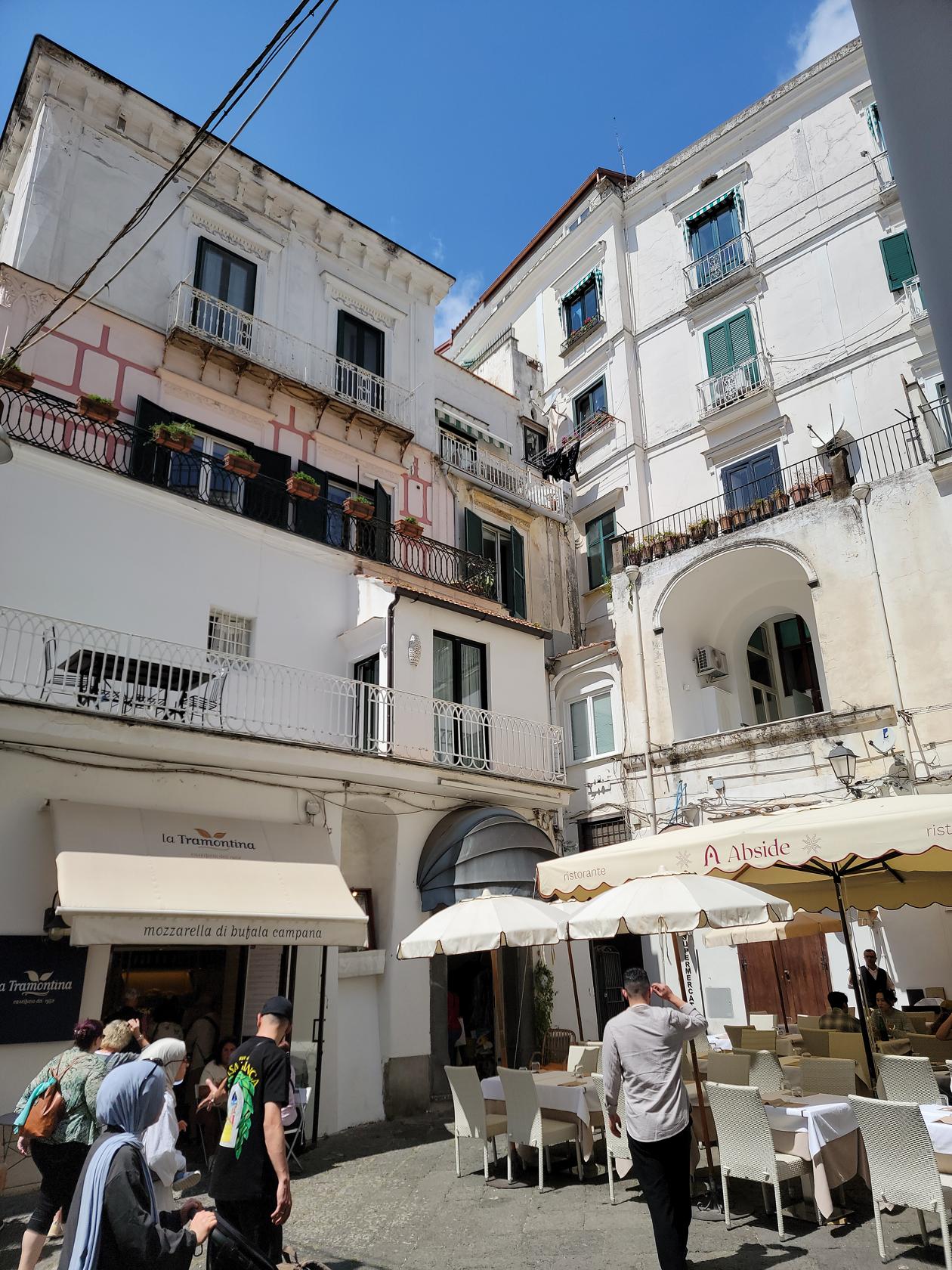
Typical white houses – Amalfi, Italy
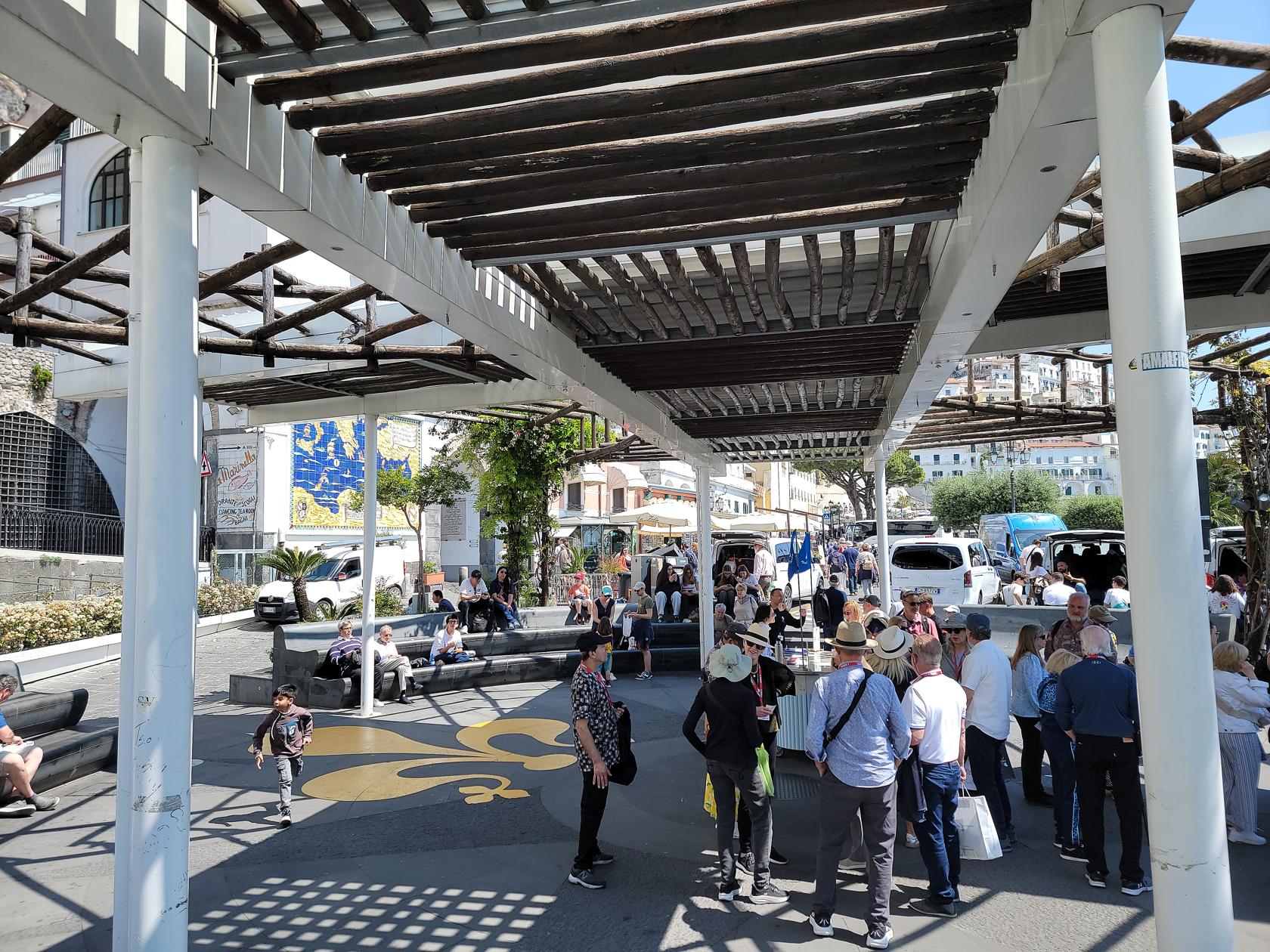
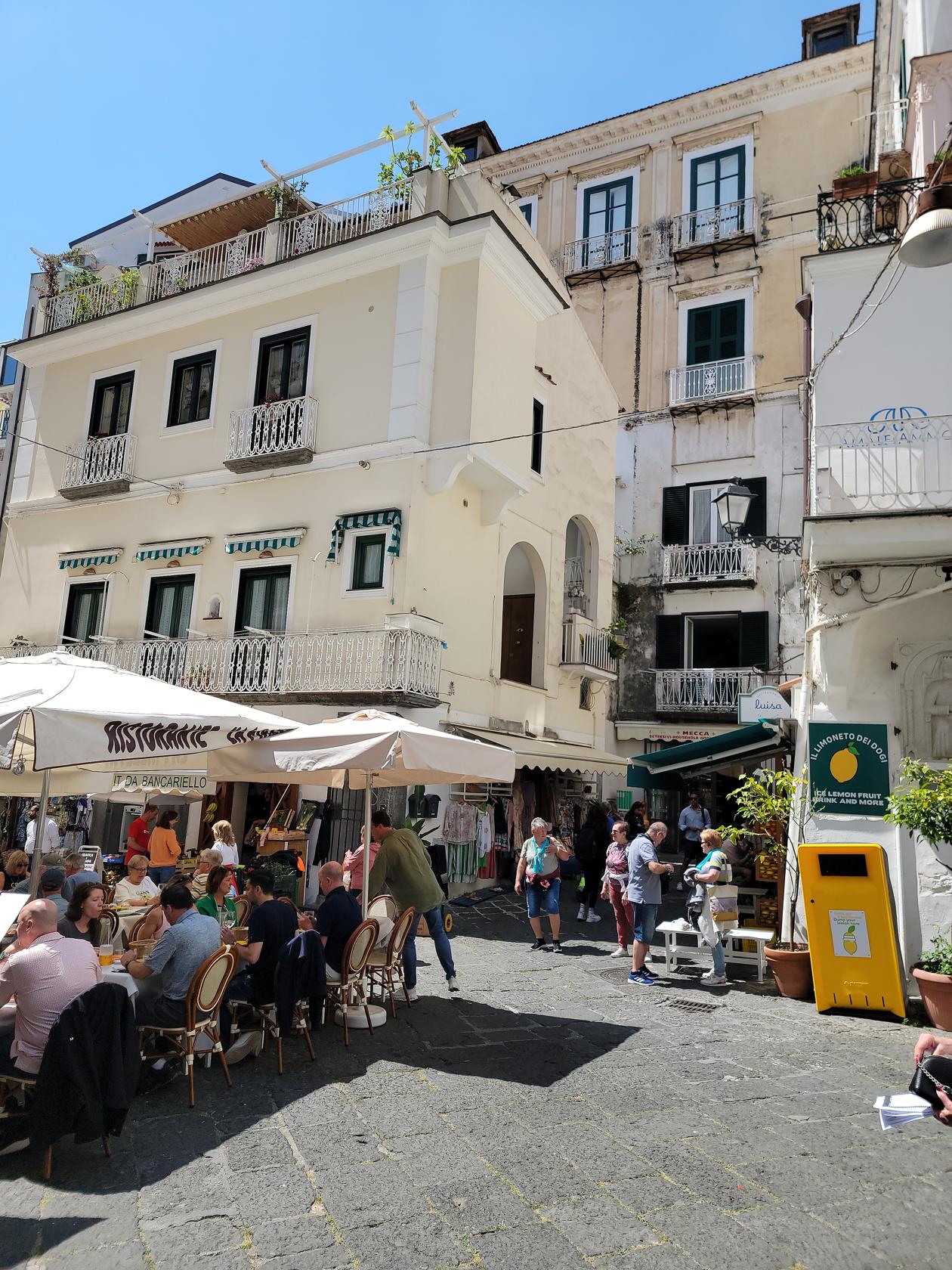
Main Piazza – Amalfi, Italy
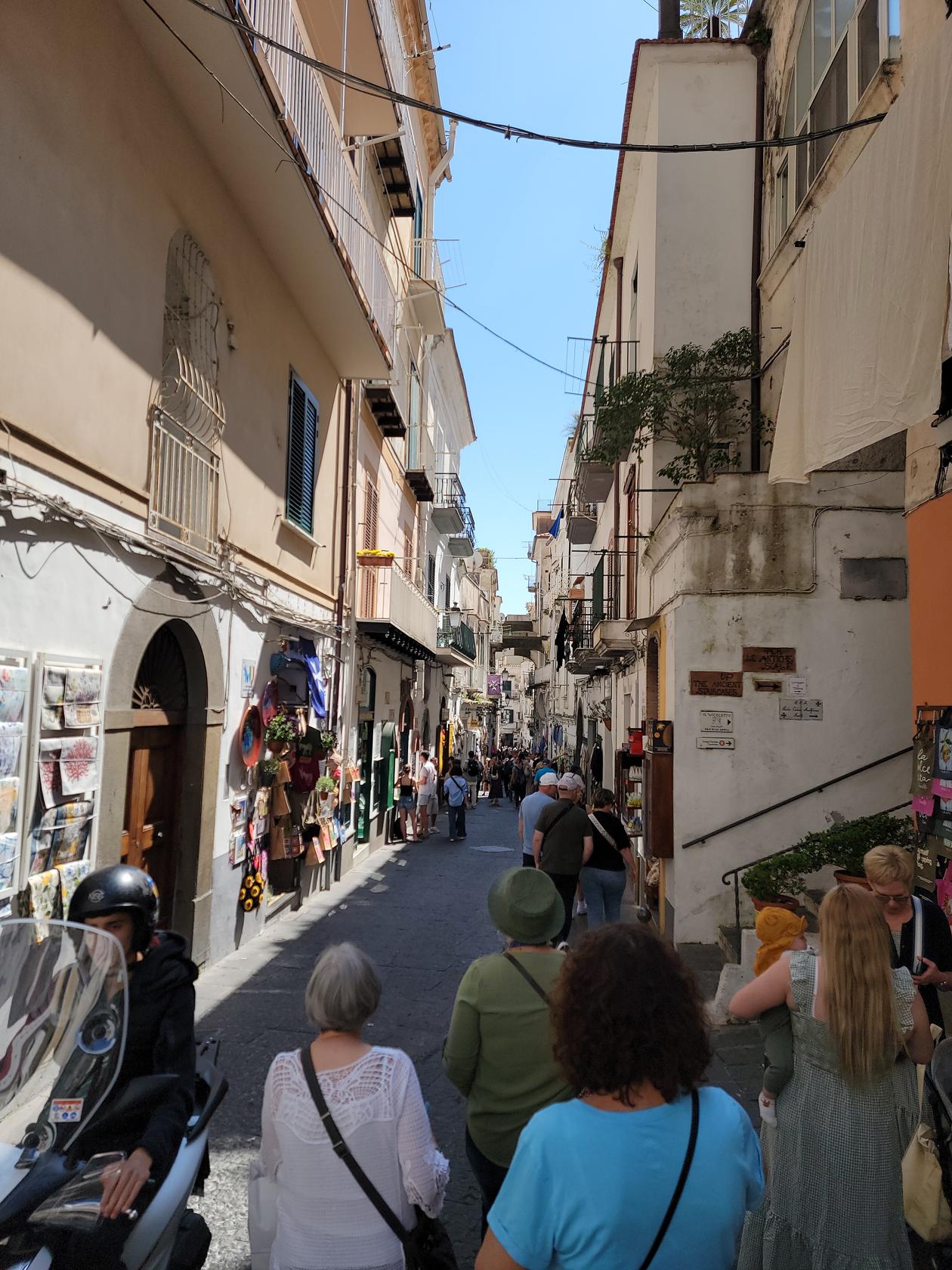
Main shopping street – Amalfi, Italy
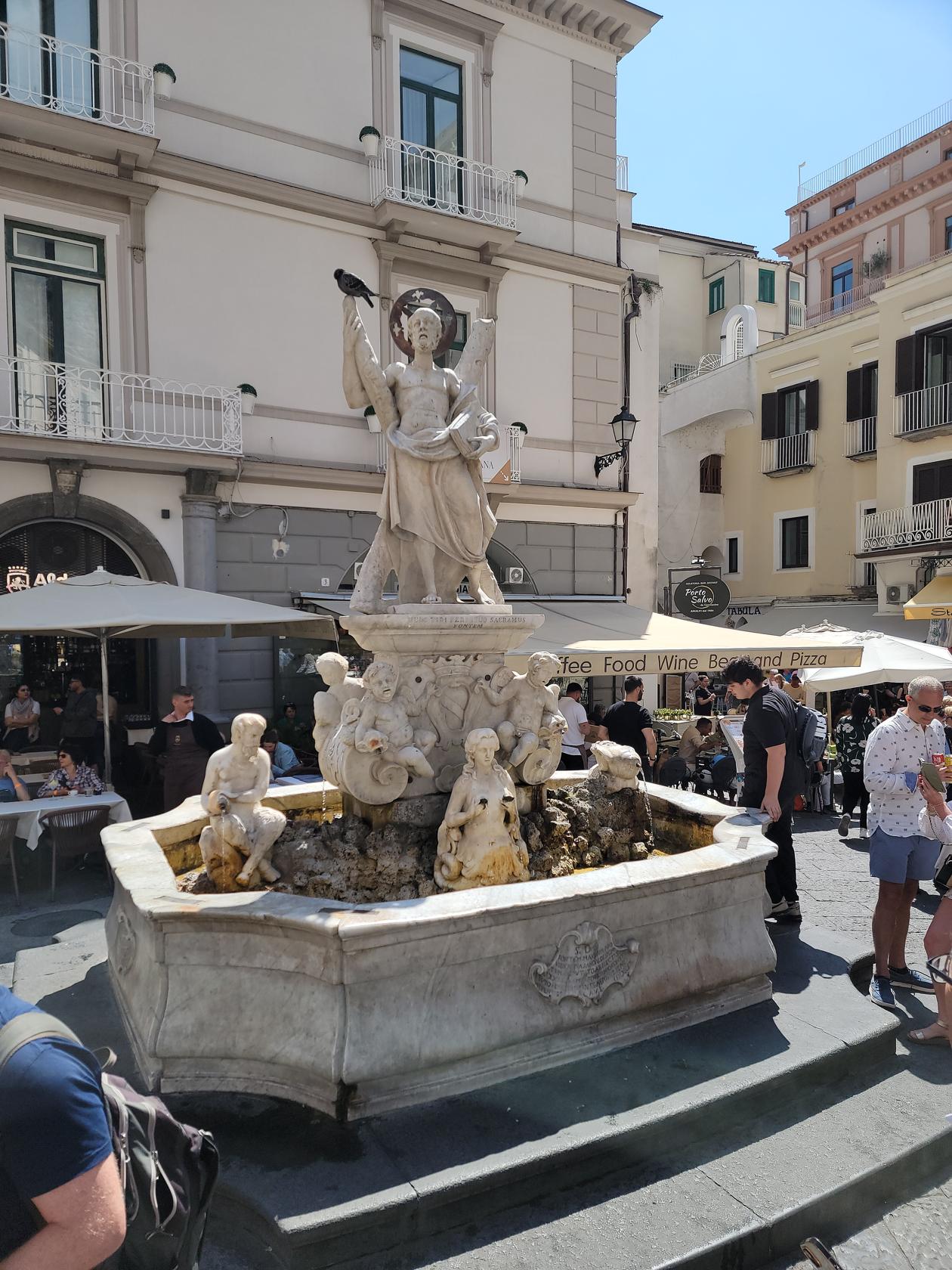
Mermaid fountain – Amalfi, Italy
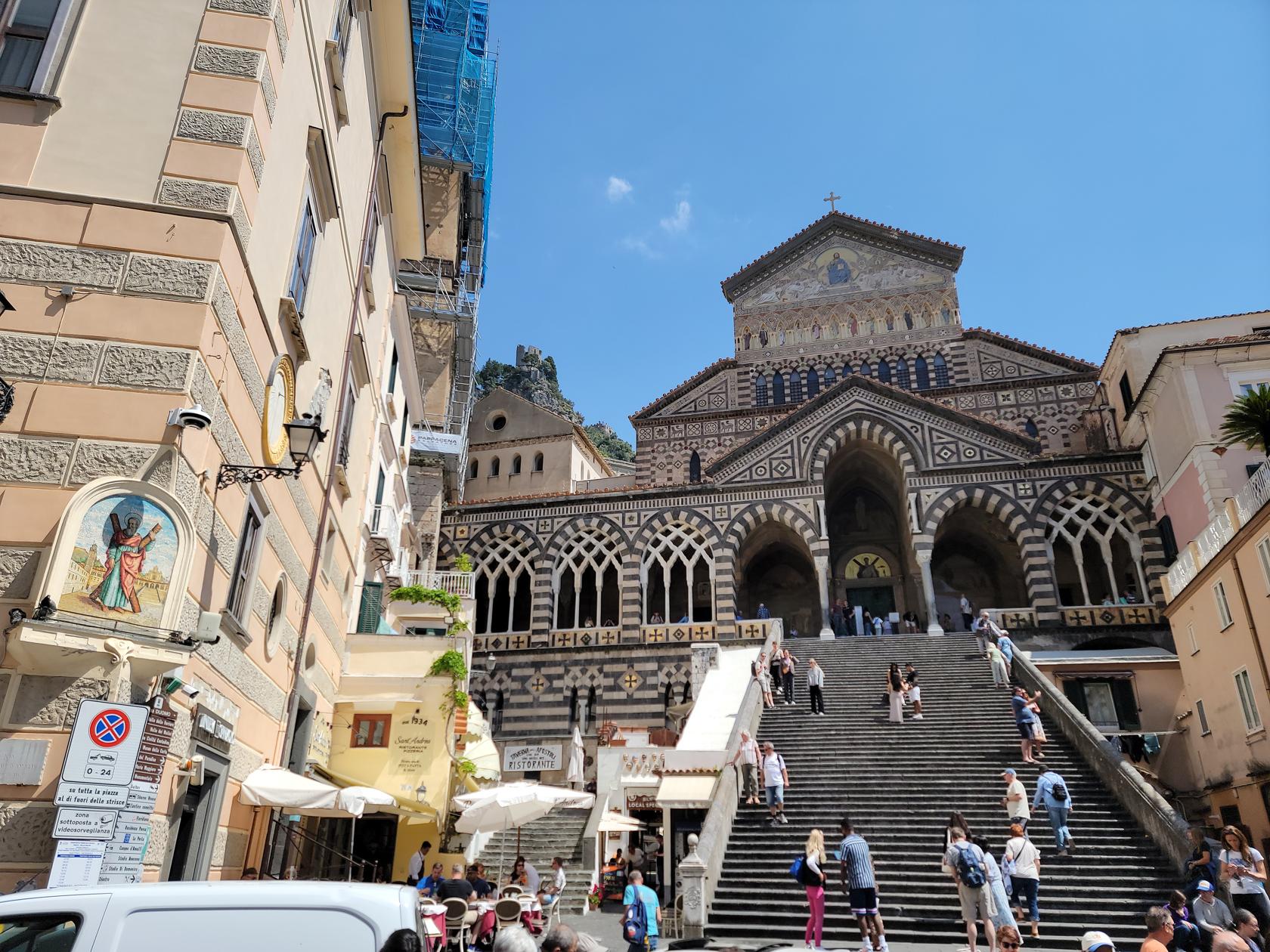
It does have a beautiful cathedral, which unfortunately was closed at the time of our visit.
Cathedral of Saint Andrew the Apostle – Amalfi, Italy
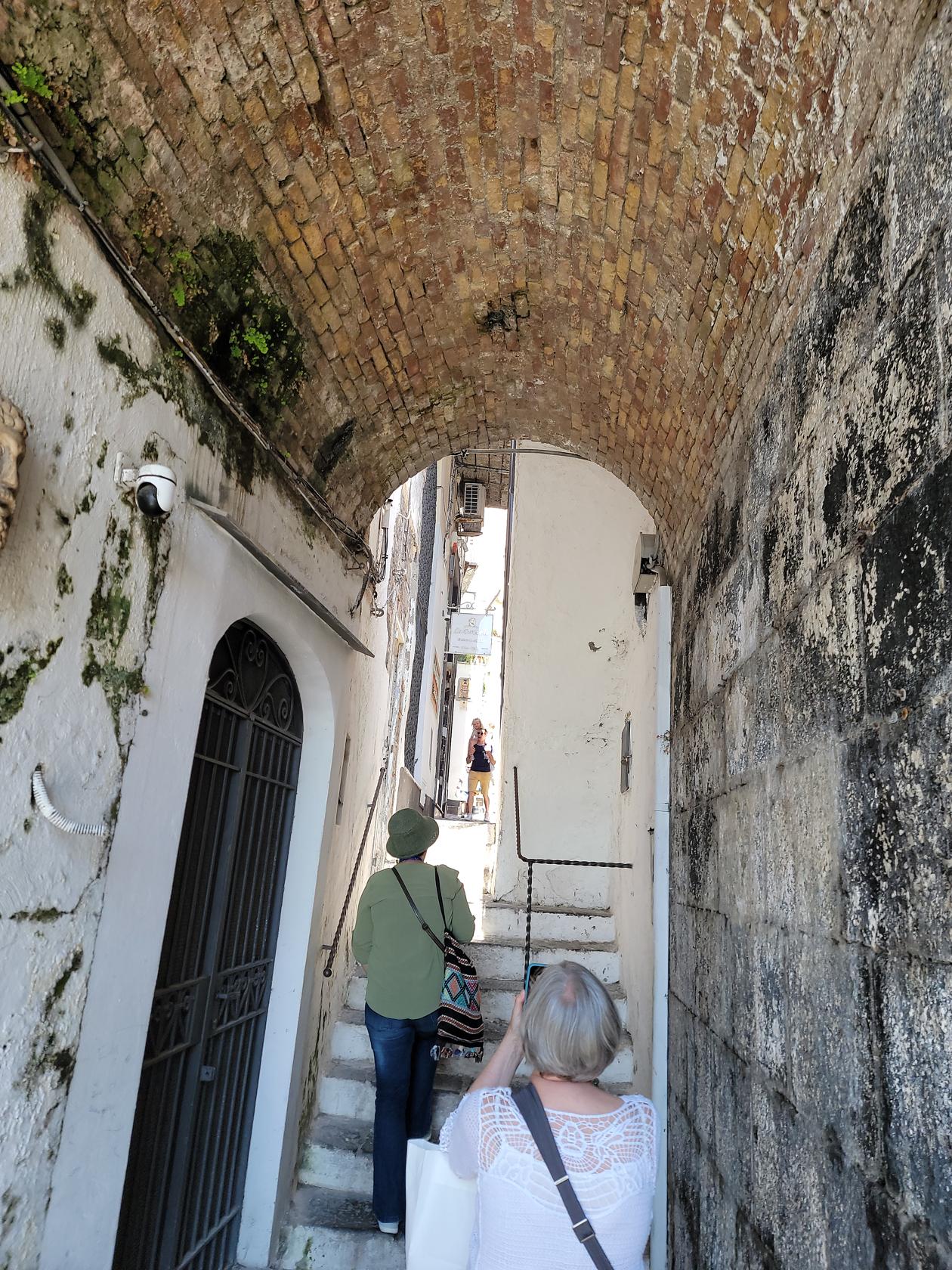
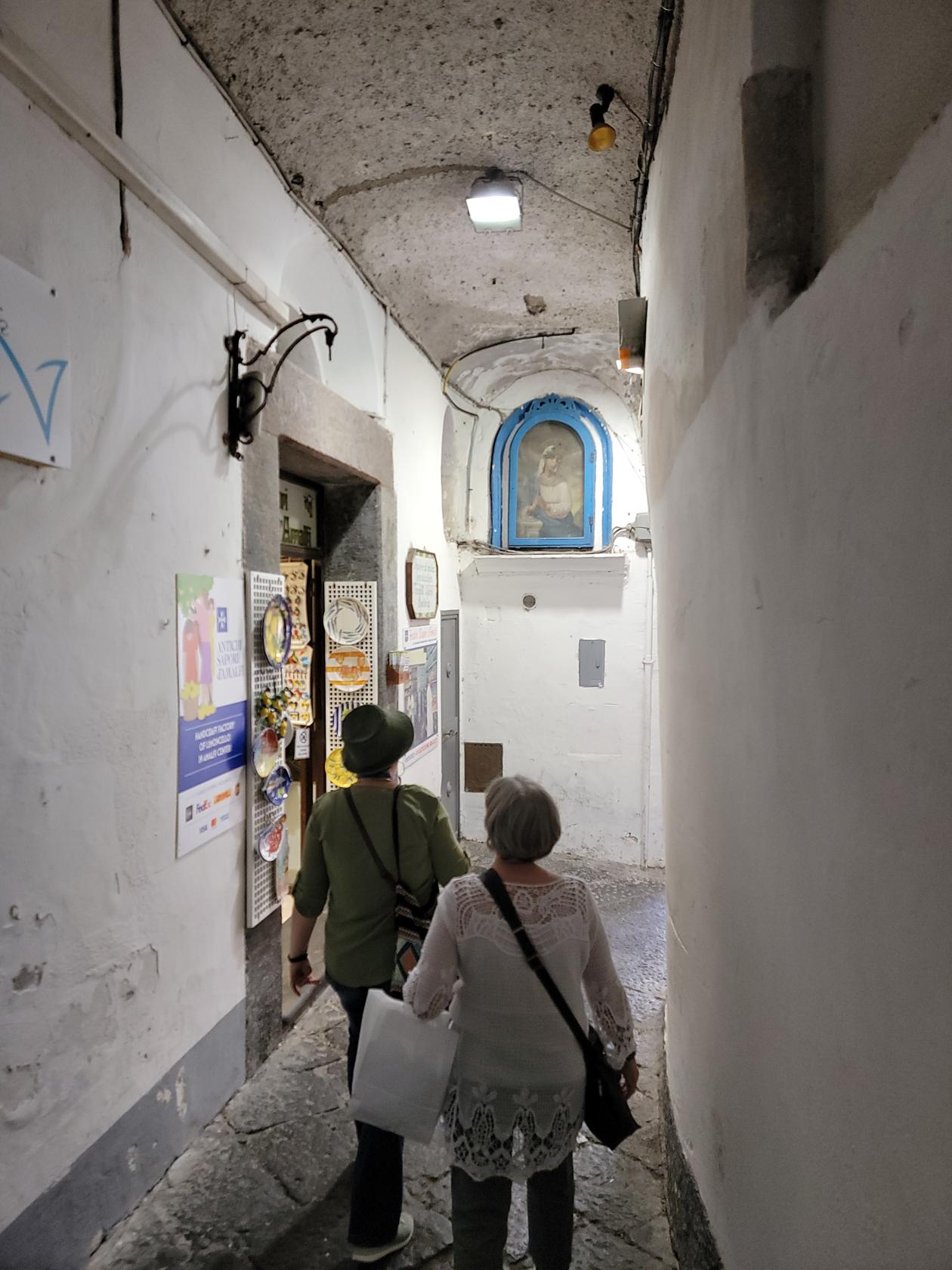
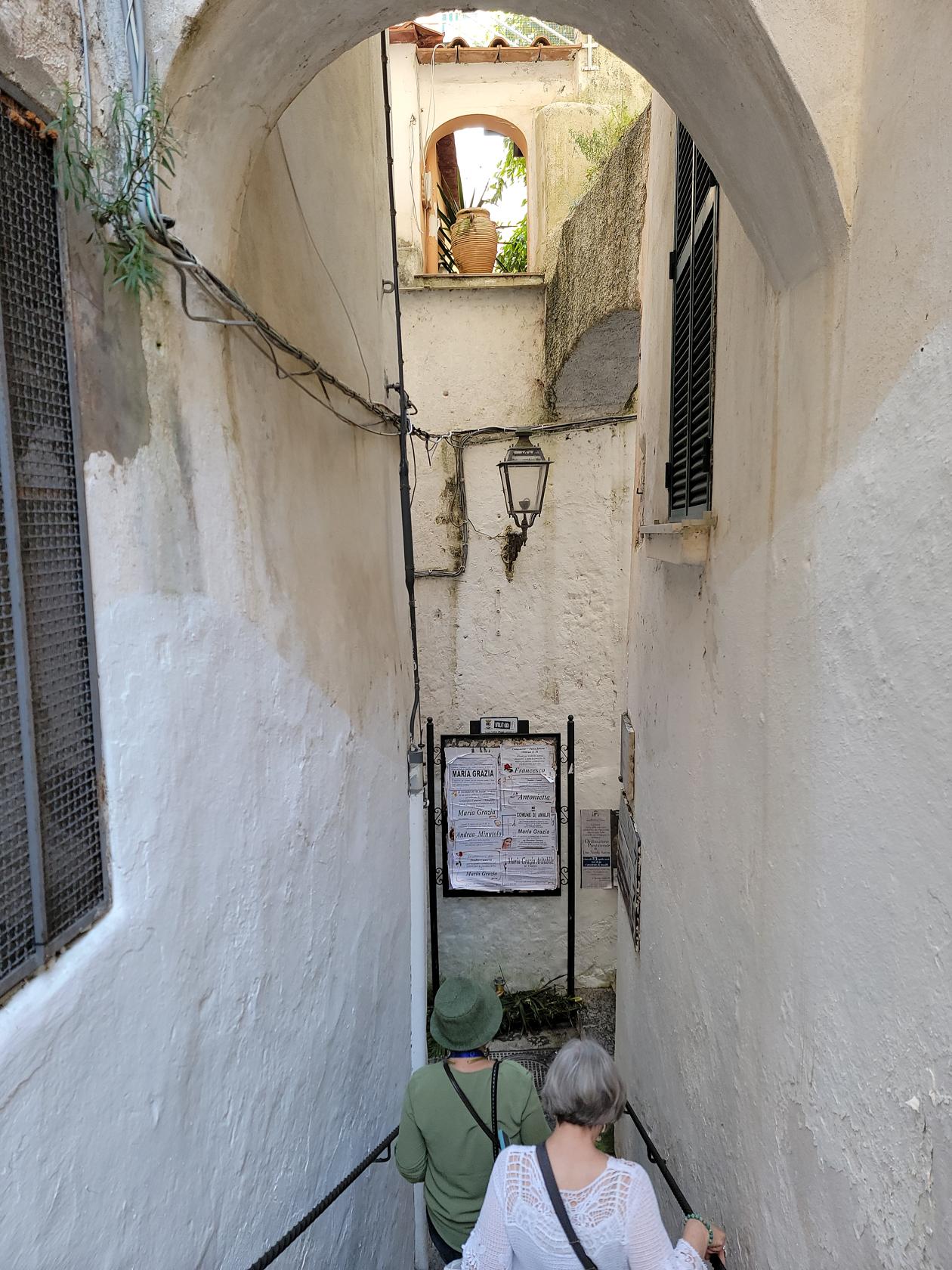
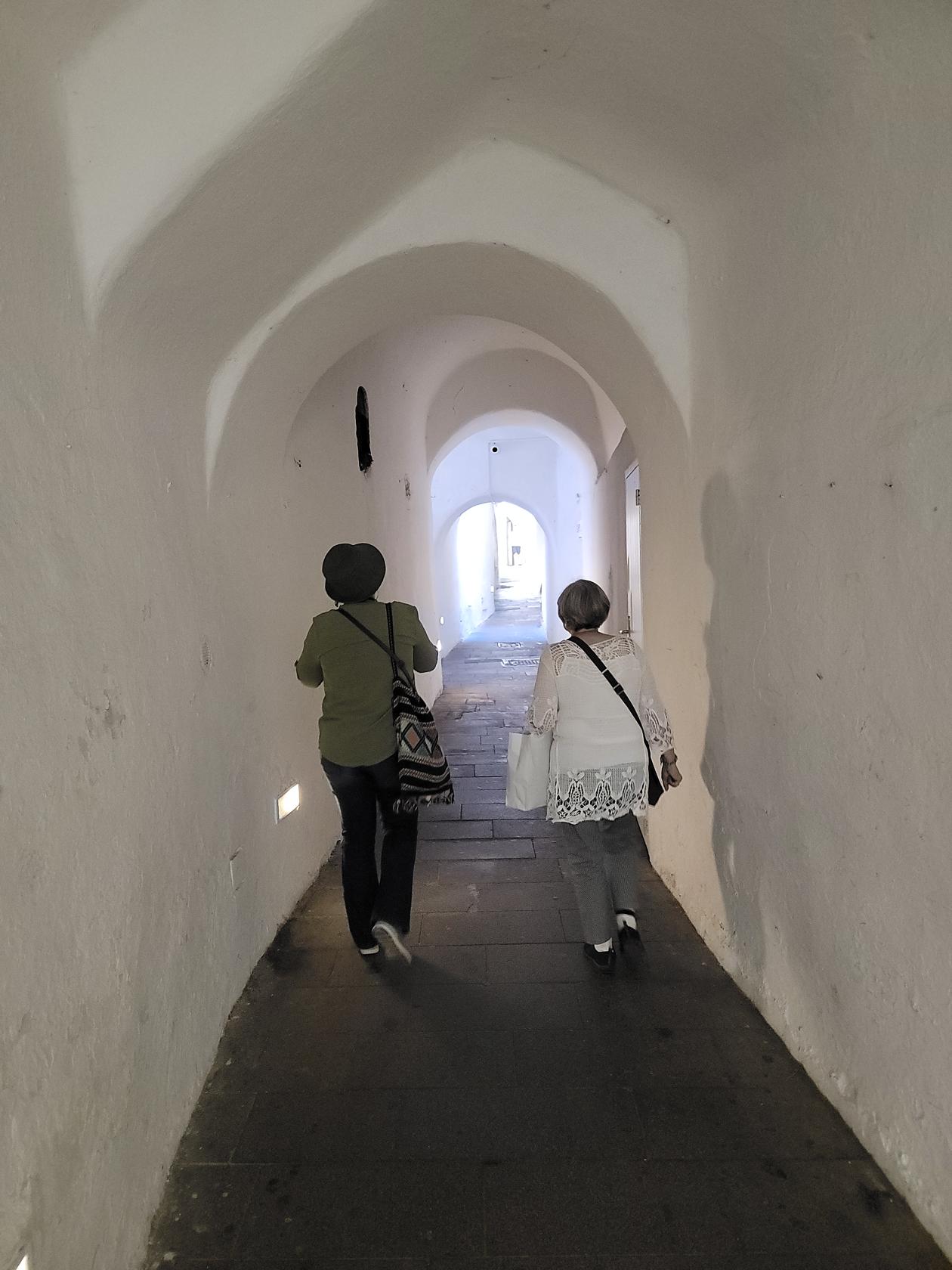
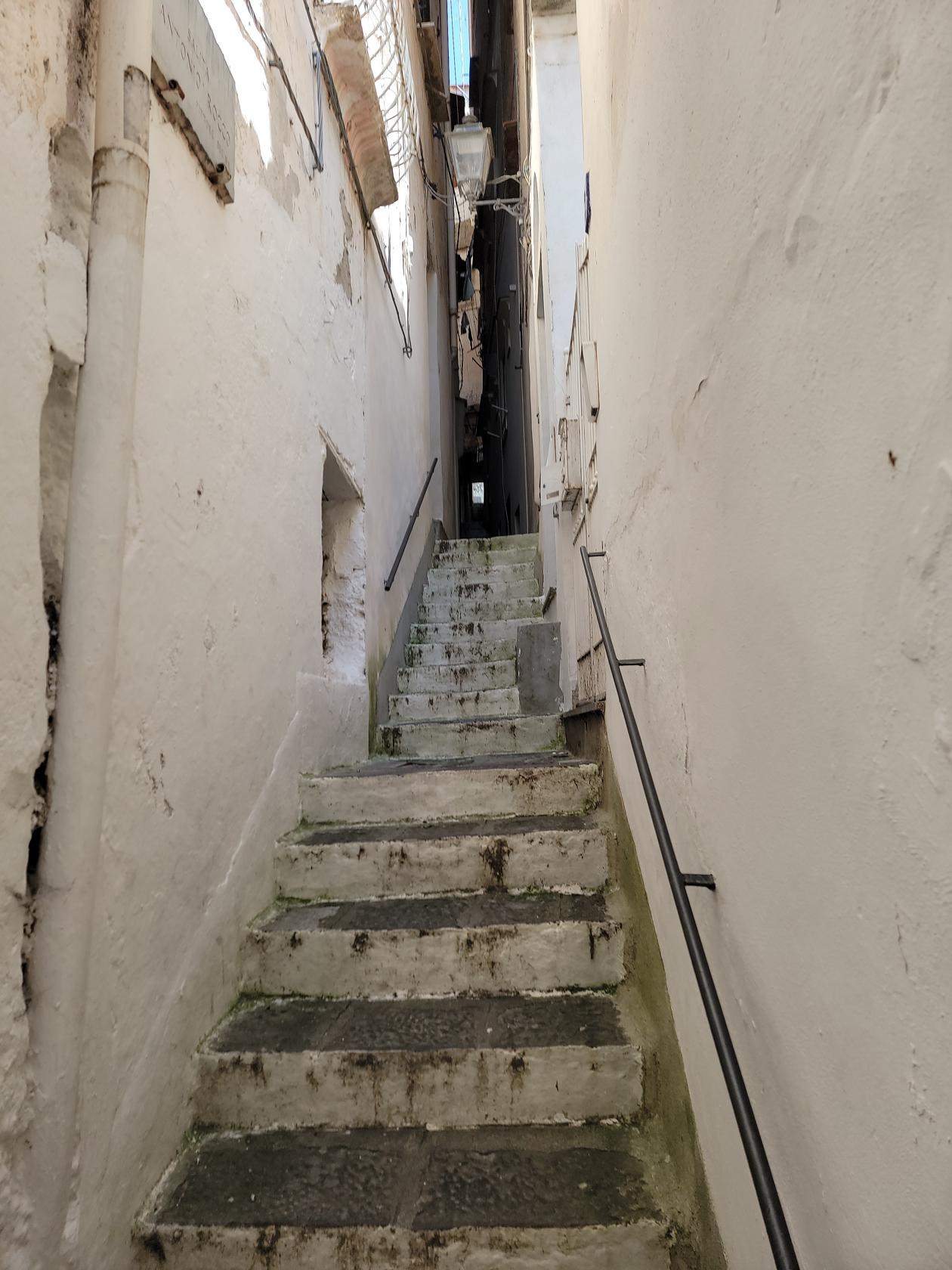
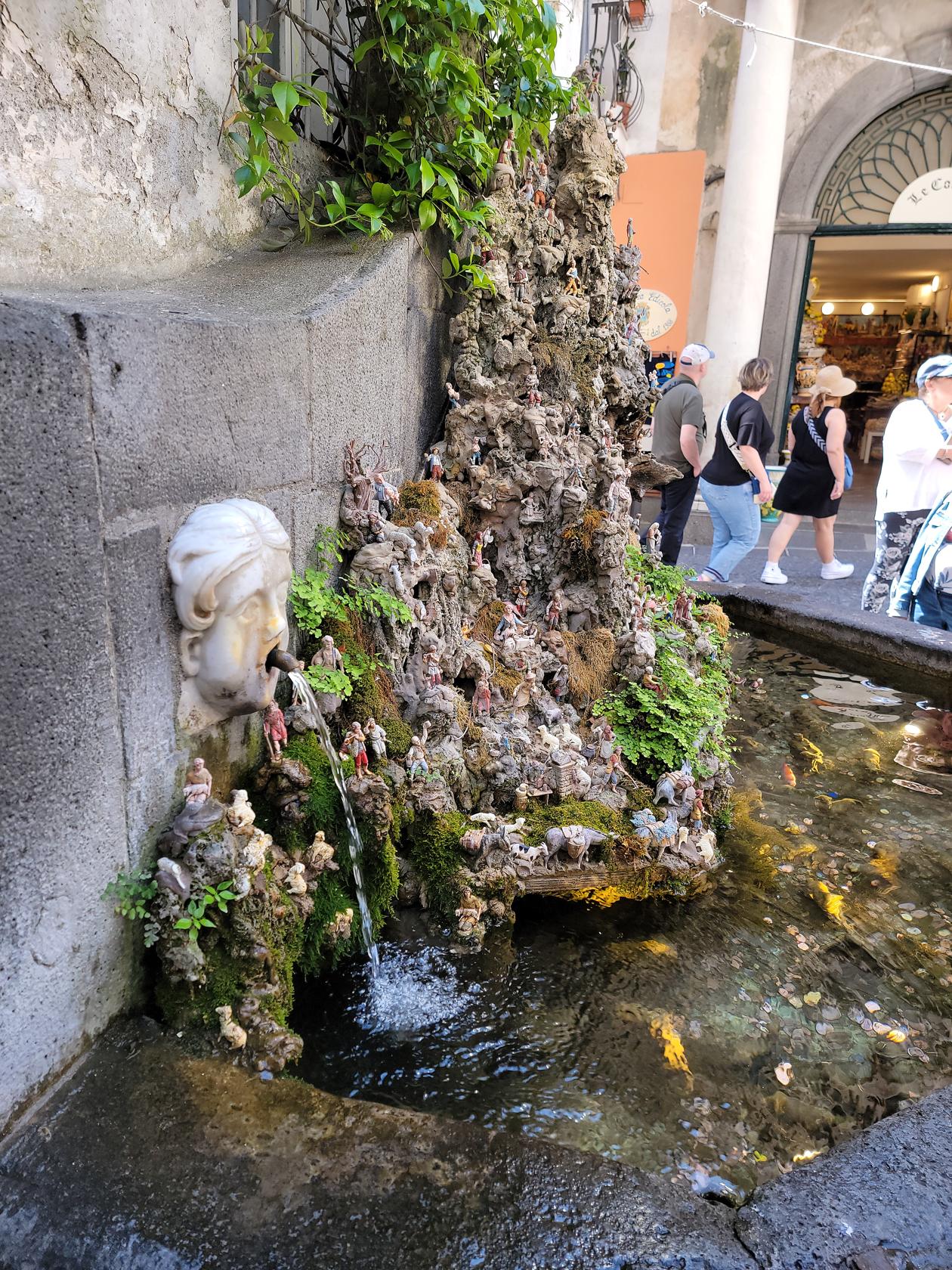
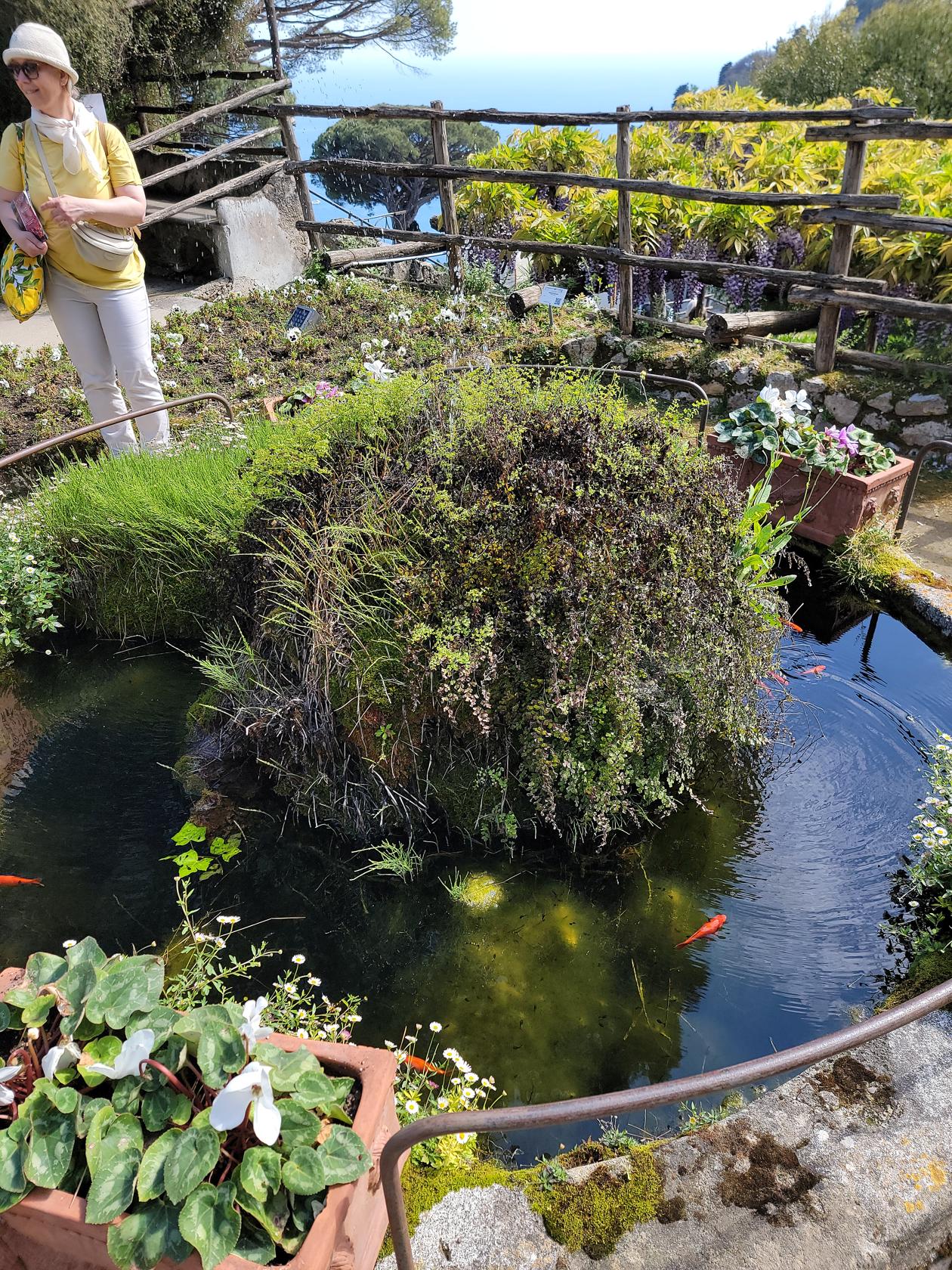
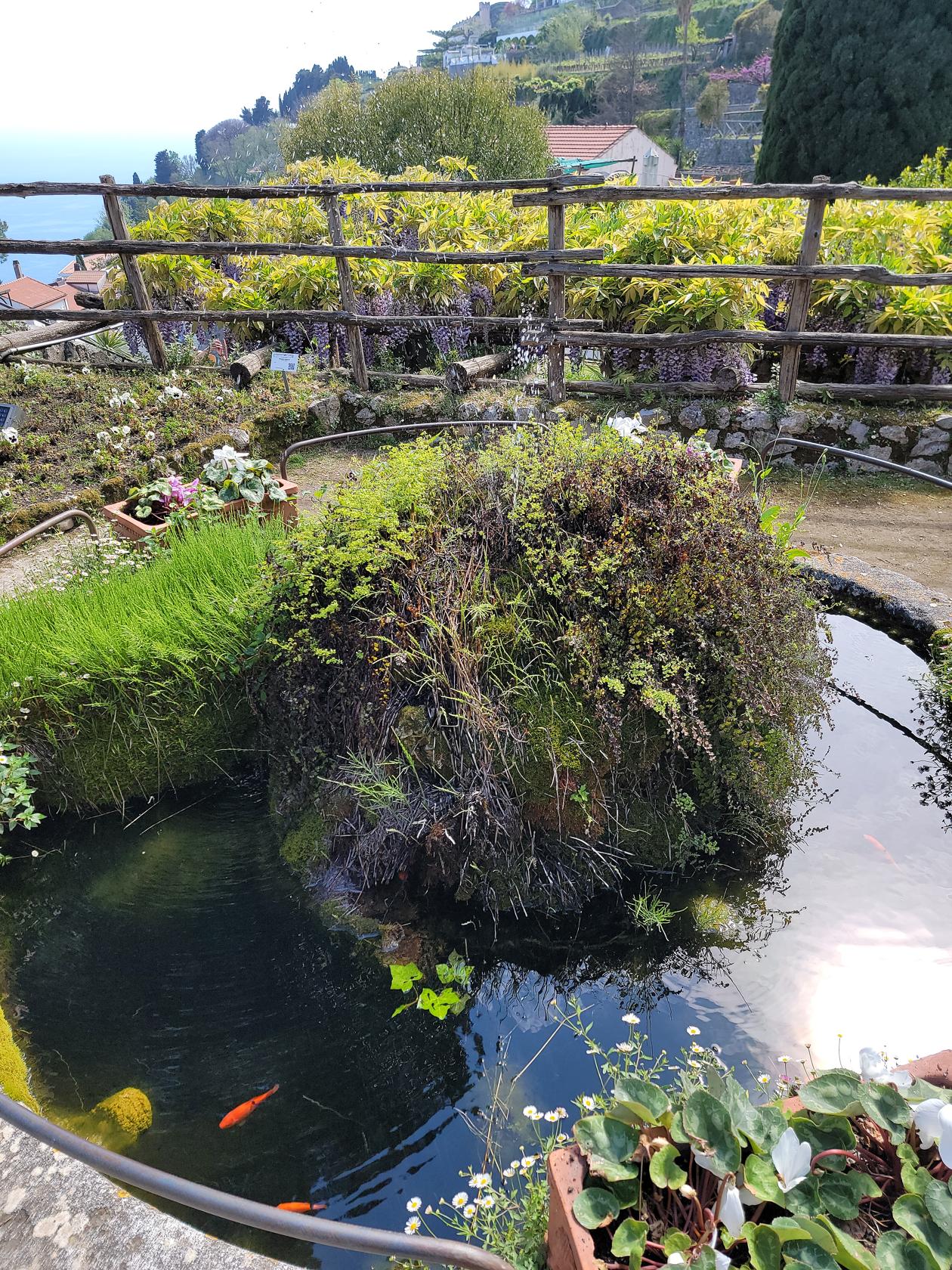
The town has the customary narrow stairs, stairways, alleyways and tunnels, providing a reprieve from the hot summer days for travelers. There are also some interesting fountains in Amalfi, one actually has a cute little diorama built into it of little character, shepards and animals, along with the customary goldfish swimming below.
Narrow stairways – Amalfi, Italy
Narrow alleyways – Amalfi, Italy
More narrow stairs – Amalfi, Italy
Tunnels – Amalfi, Italy
Narrow stairs that go up, up – Amalfi, Italy
Fountain with diorama – Amalfi, Italy
Mermaid fountain – Amalfi, Italy
Ravello
Unlike most other towns along the coast, Ravello kind of stood out. Not only is it more relaxing, since it is obviously visited by fewer people, it is quieter and more laid back. This is most likely due to its smaller size, its elevation and distance from the coast.
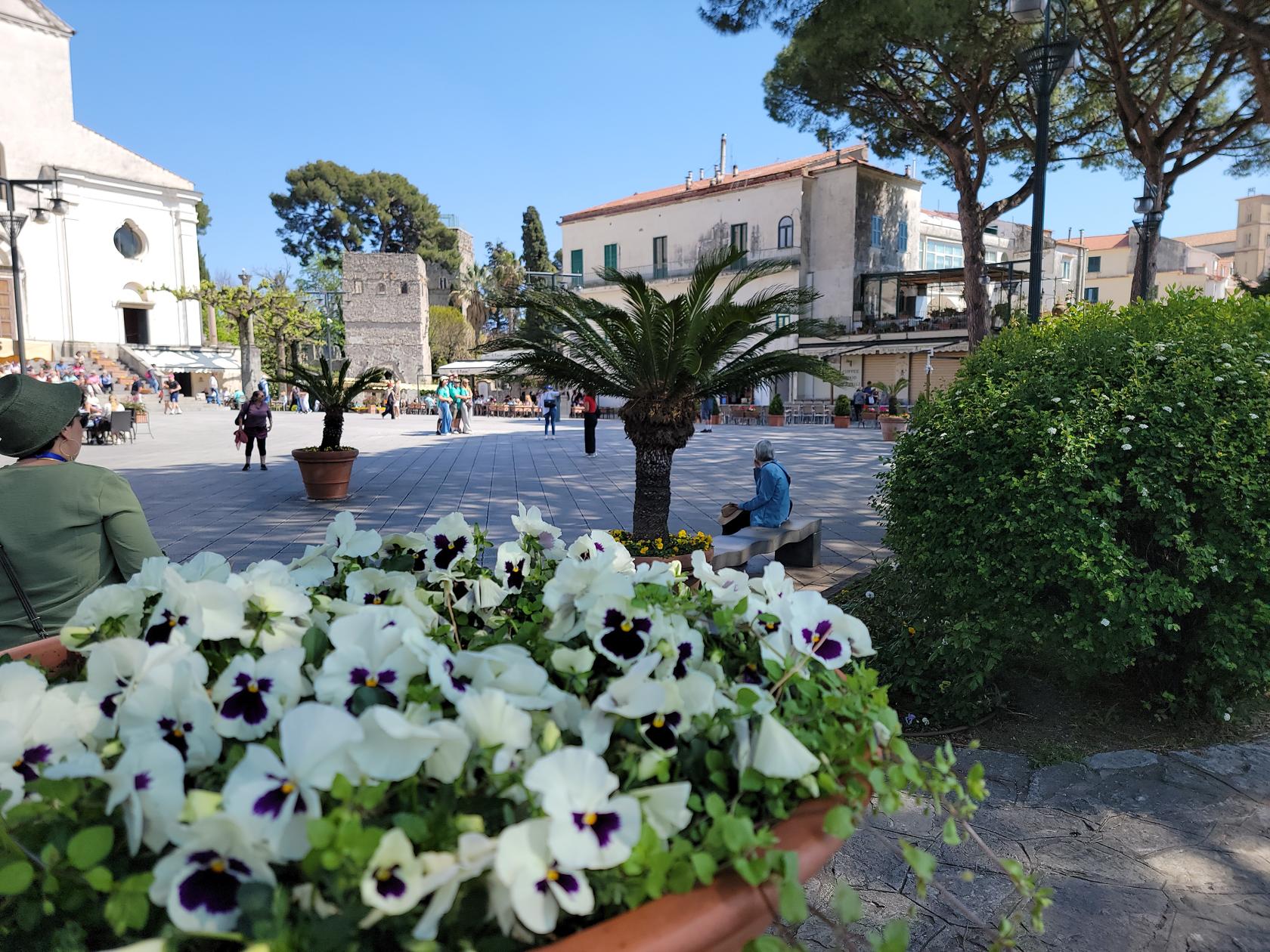
Piazza Centrale – Ravello, Italy
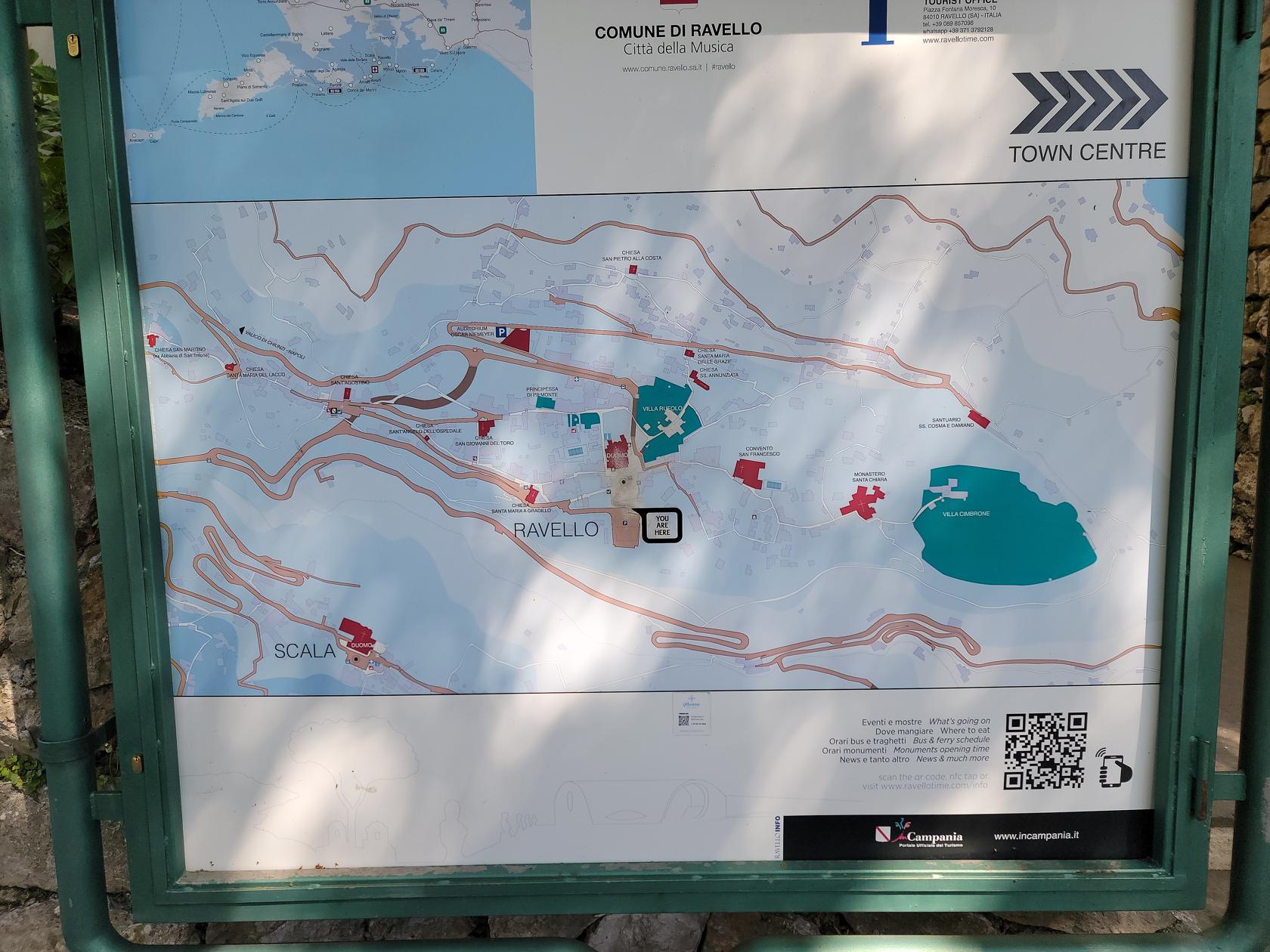
Map Of The Town – Ravello, Italy
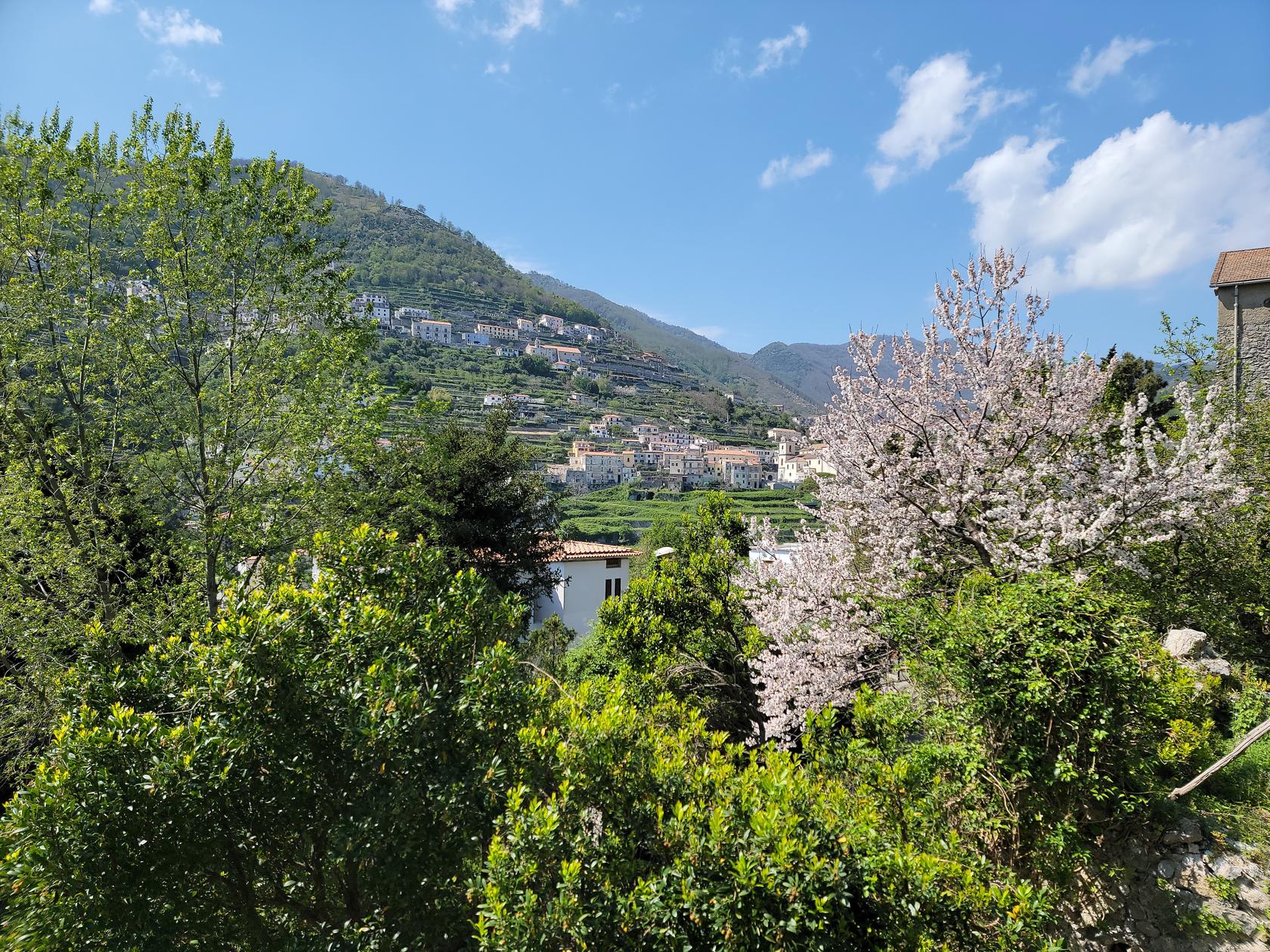
The Countryside – Ravello, Italy
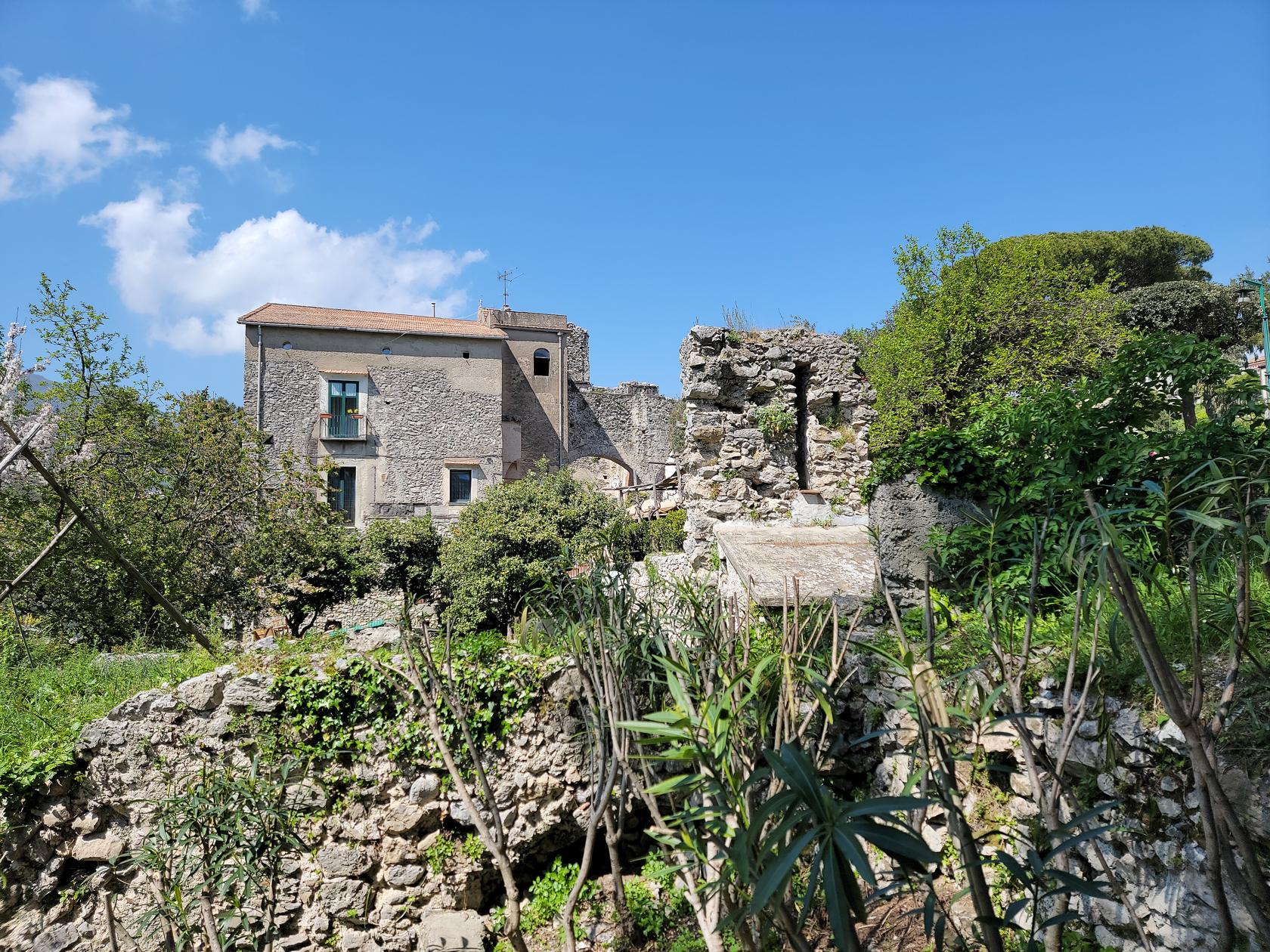
Very Old Buildings – Ravello, Italy
Some find it a better alternative than Amalfi. For one, there are better views from the town, from where visitors can see Amalfi’s classic rocky coastline. Plus the relaxed atmosphere adds to the pleasure, especially if you have time to sit and enjoy a drink, or have a gelato at one of the many artigianale gelaterias in the town.
Gelateria – Ravello, Italy
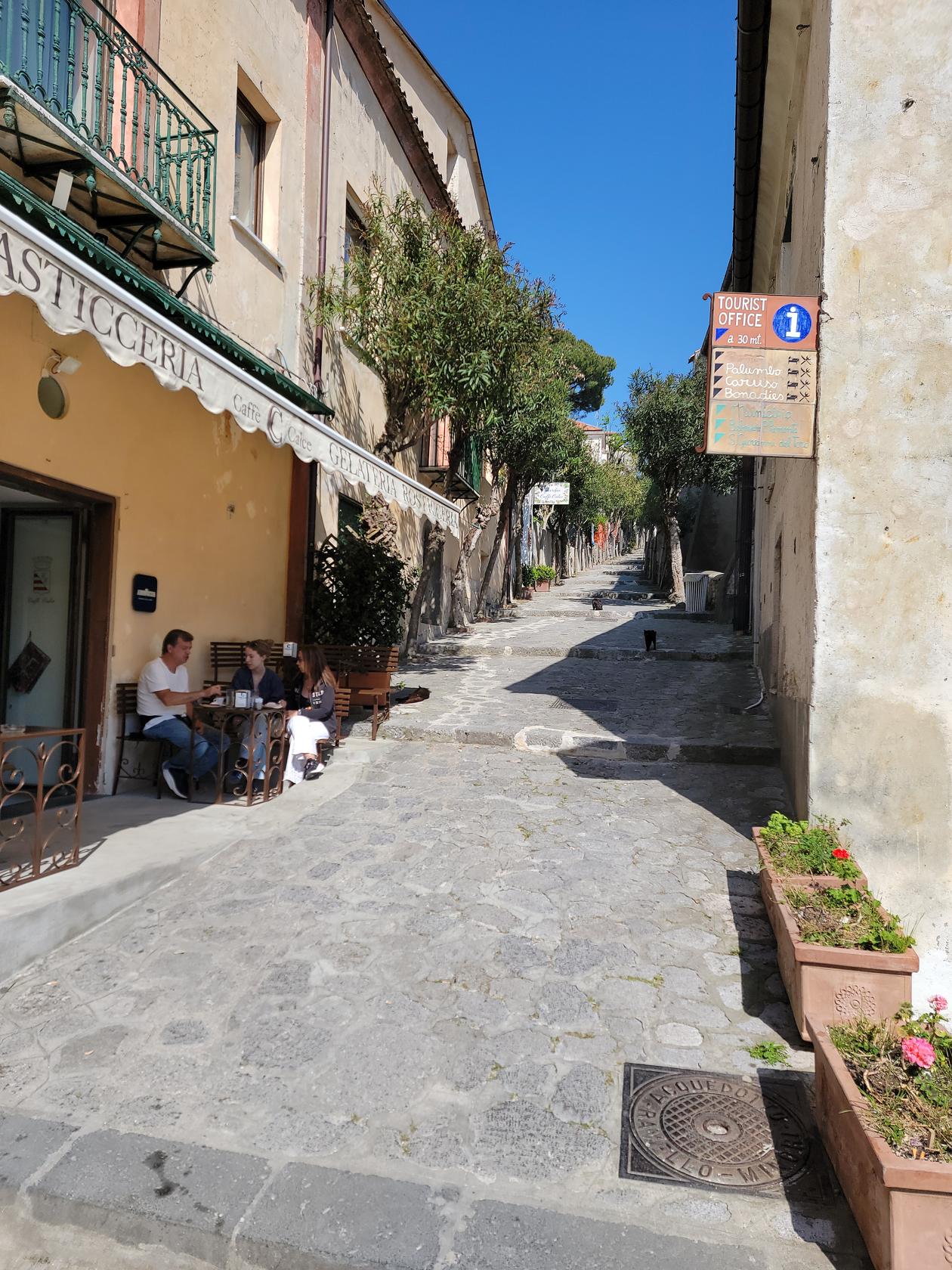
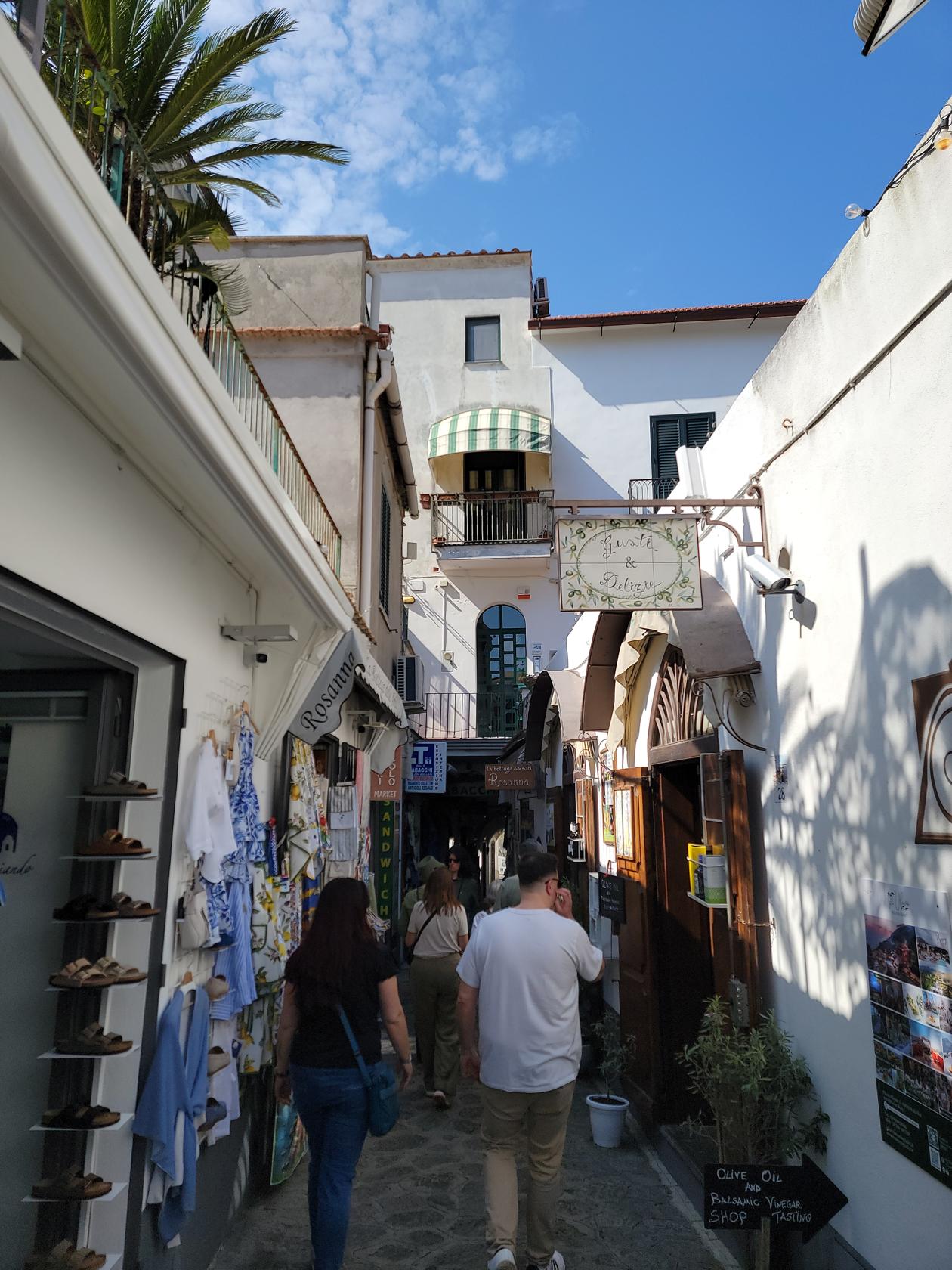
The Narrow Town Streets – Ravello, Italy
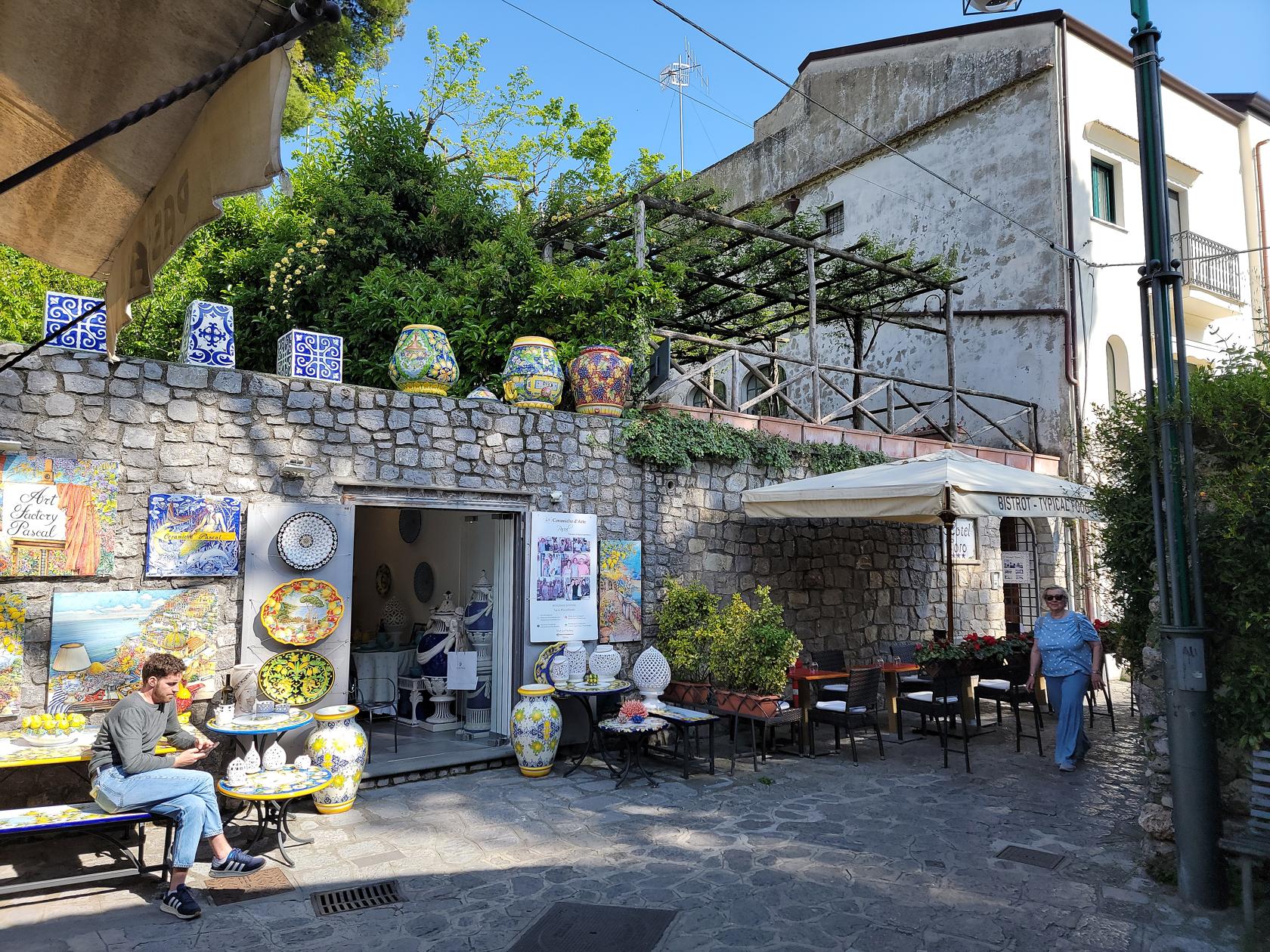
Ceramics And Glass From Coast – Ravello, Italy
Duomo di Revallo
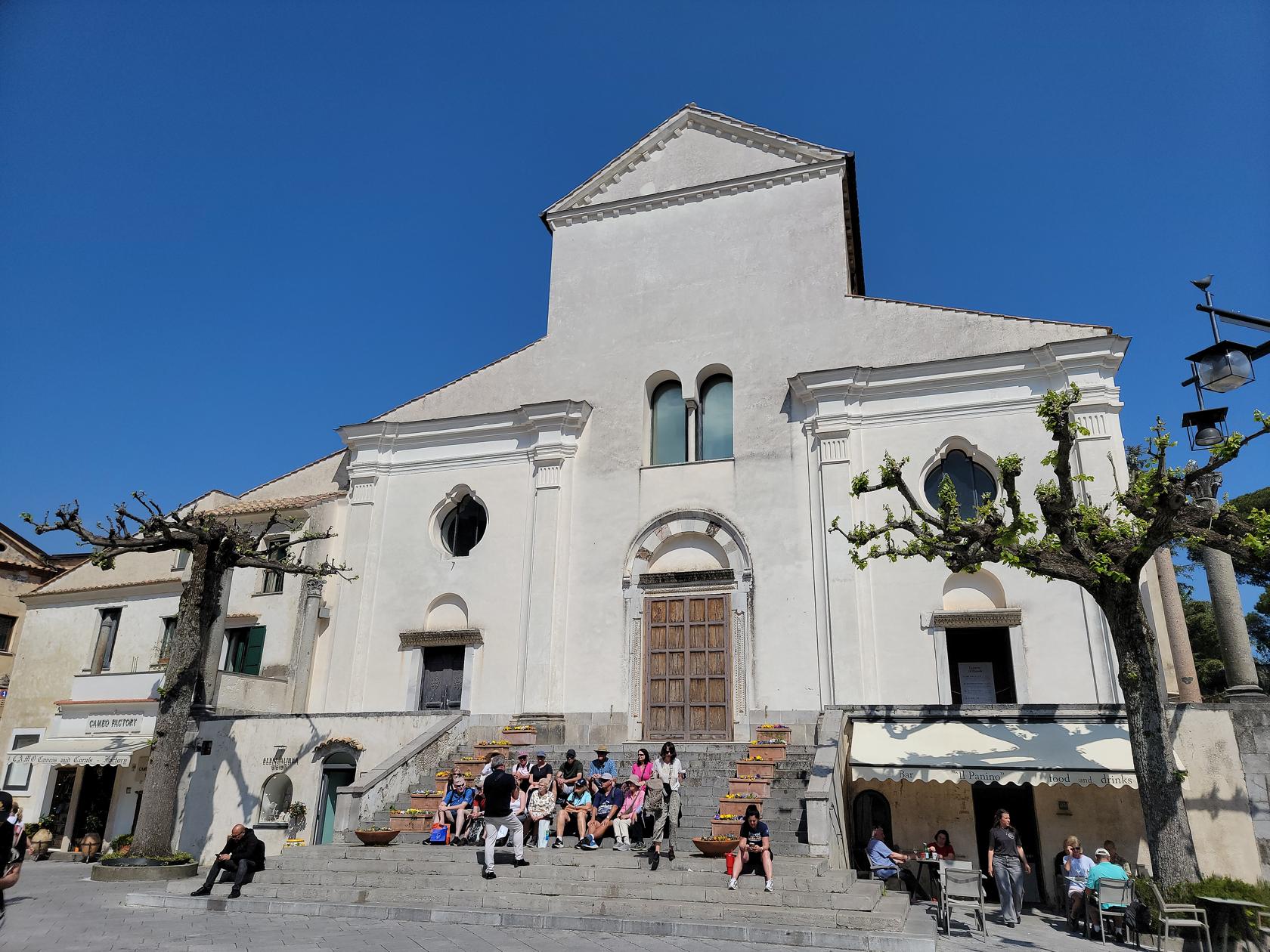
The main church in town is the Duomo di Ravello, which was unfortunately closed while we were visiting, so the interior remains a mystery to us.
Duomo Ravello – Piazza Centrale – Ravello, Italy
Villa Rufolo
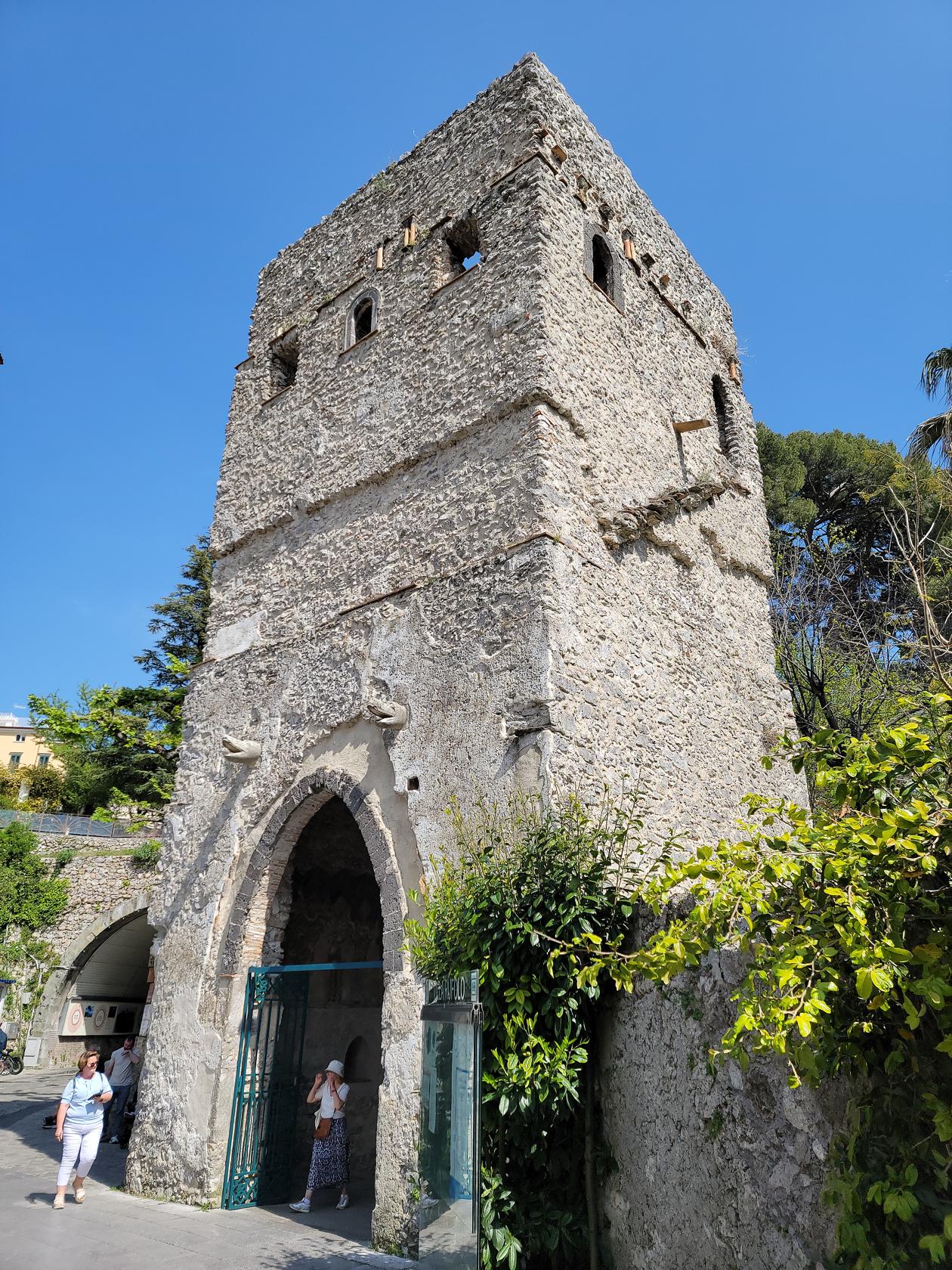
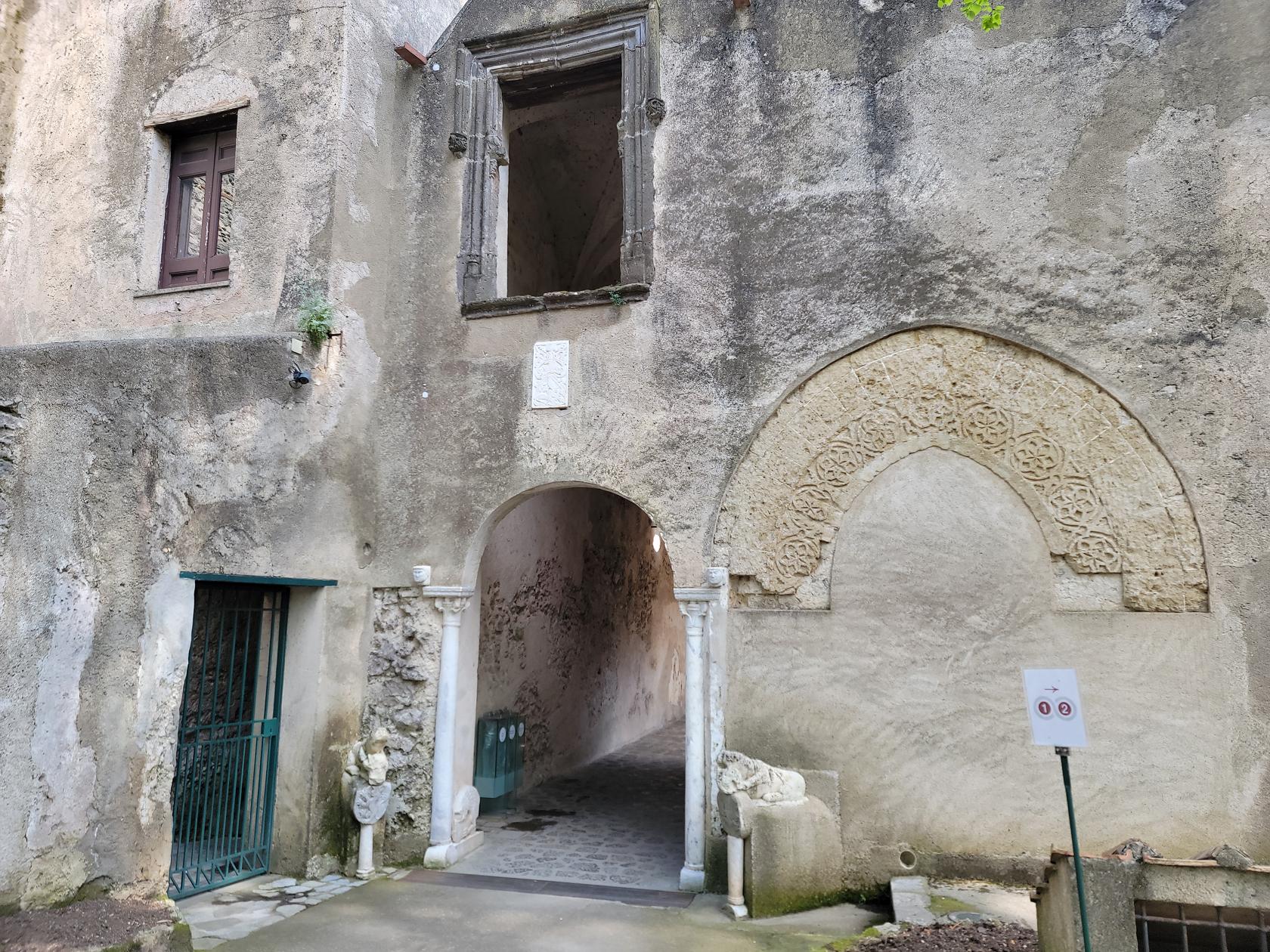
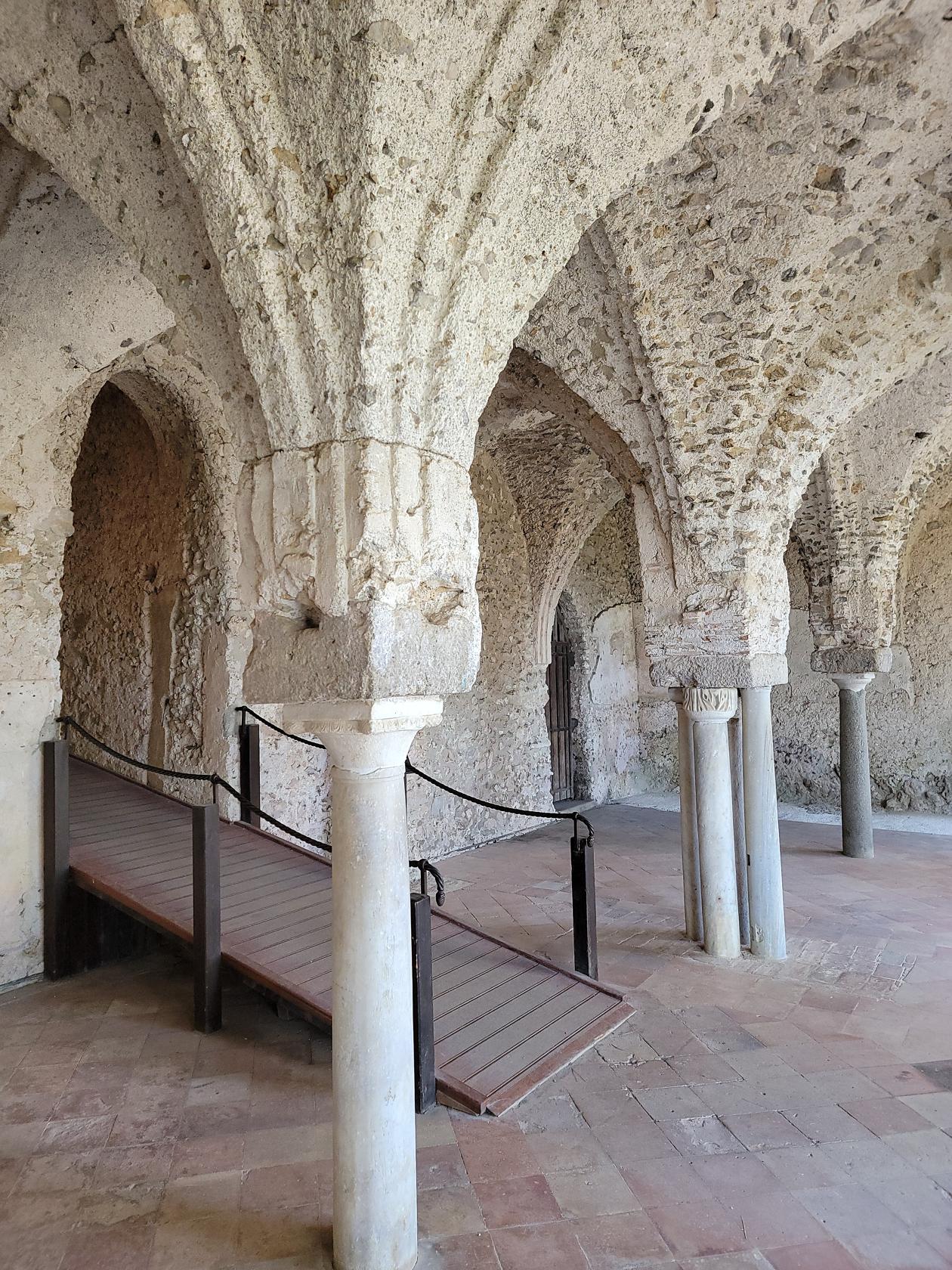
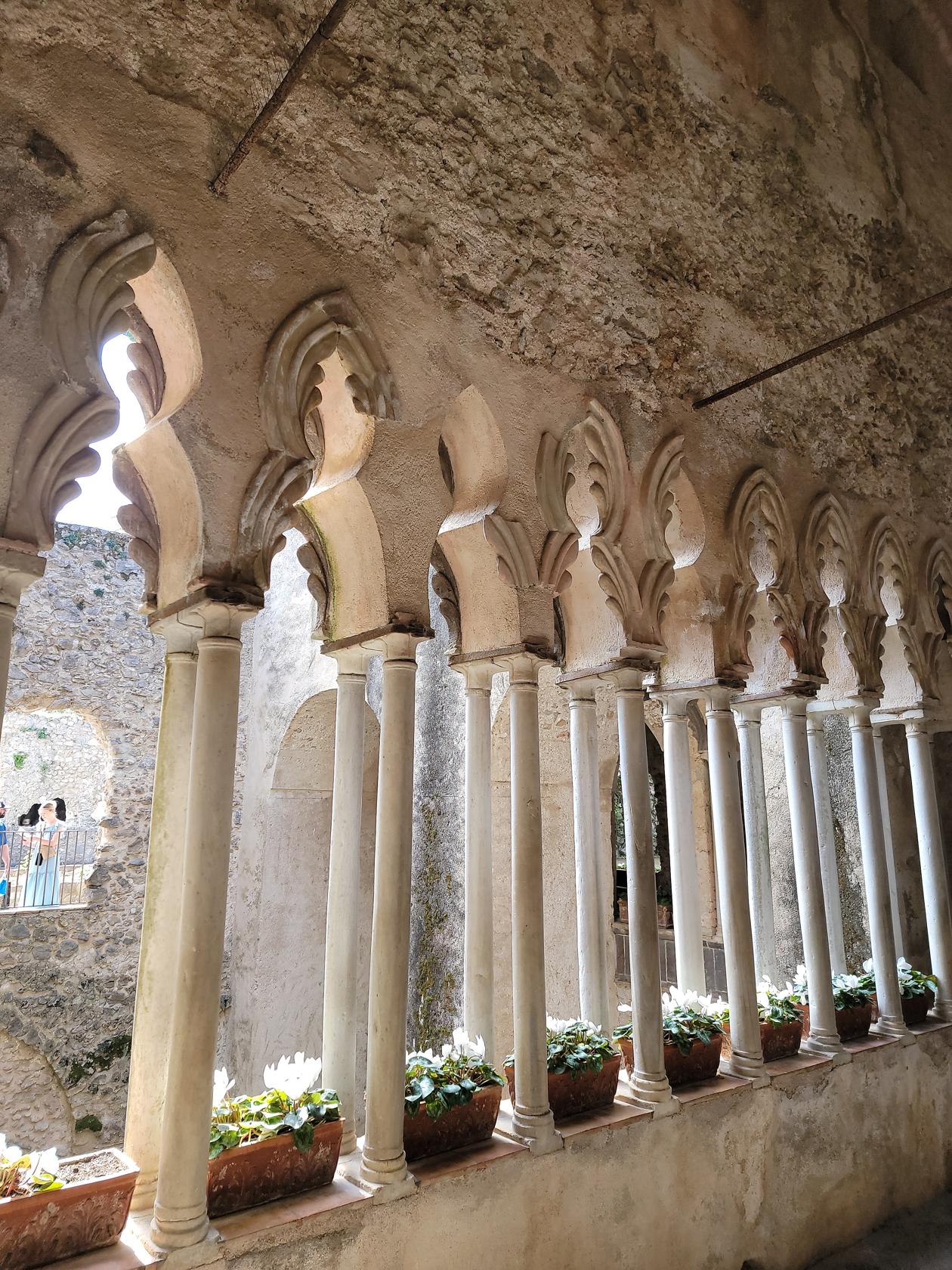
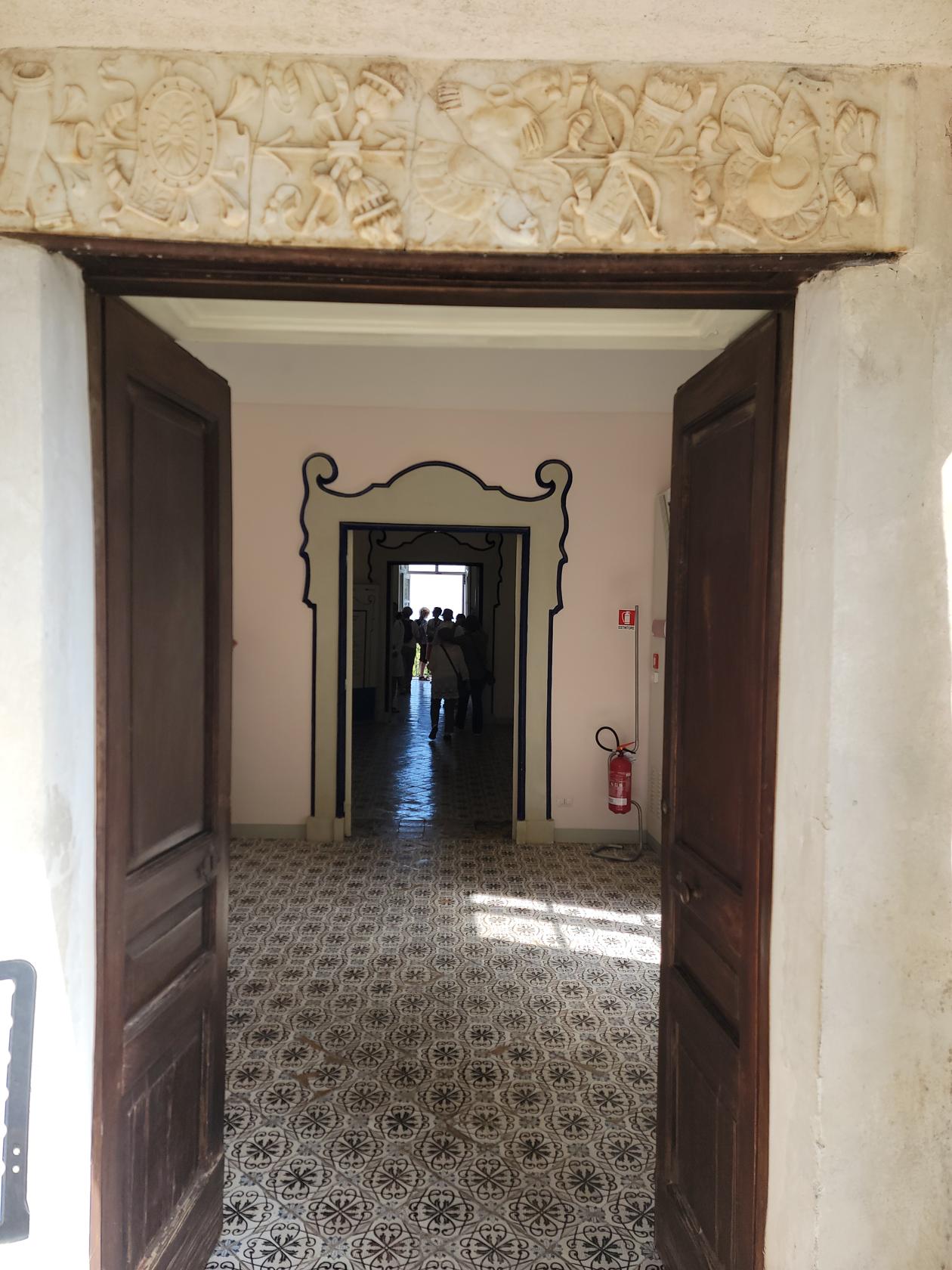
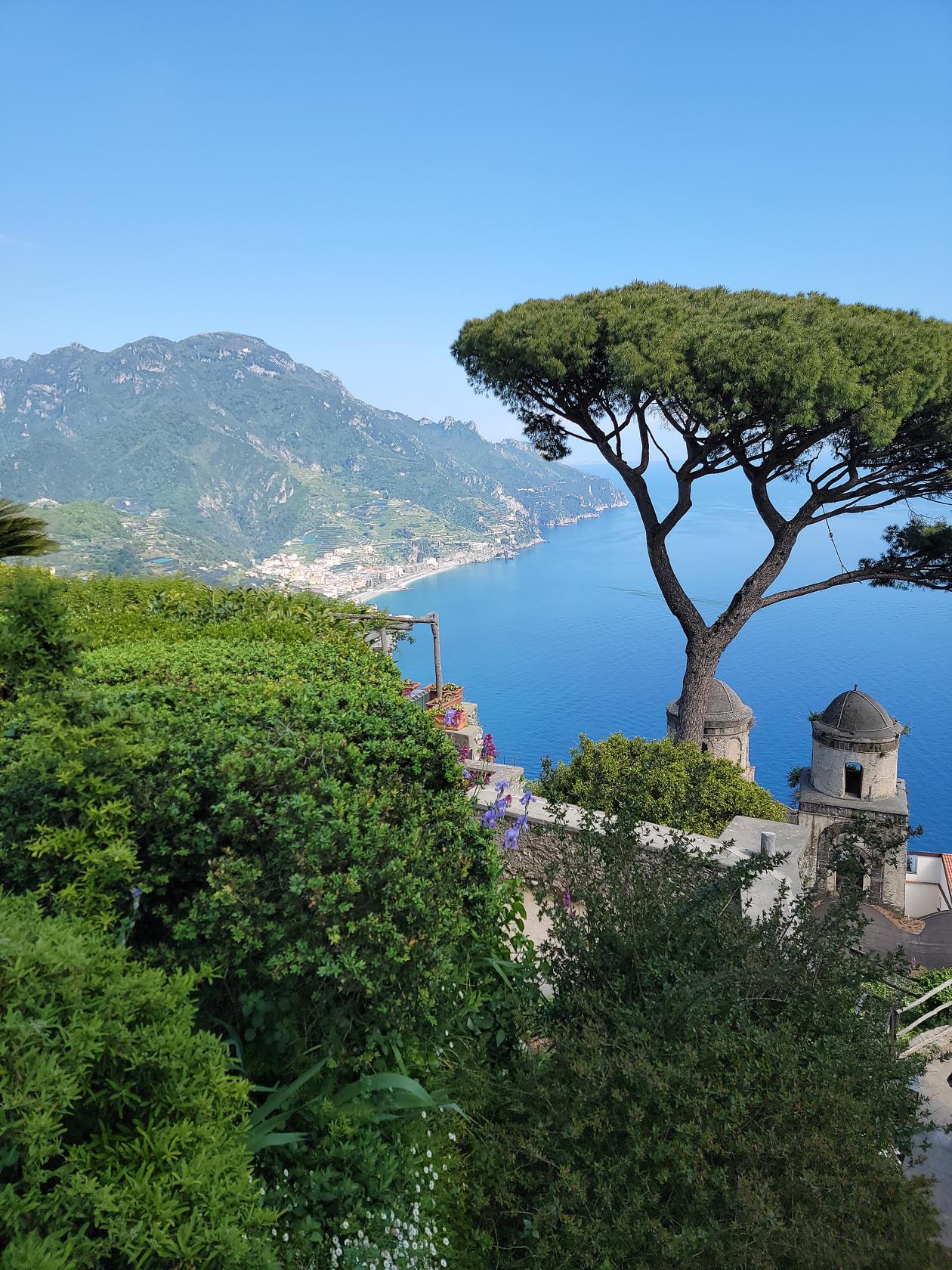
For a small entrance fee you can visit Villa Rufolo in Ravello. The entrance shows some interesting designs and details, that continue in deeper parts of the villa.
Entrance – Villa Rufolo – Ravello, Italy
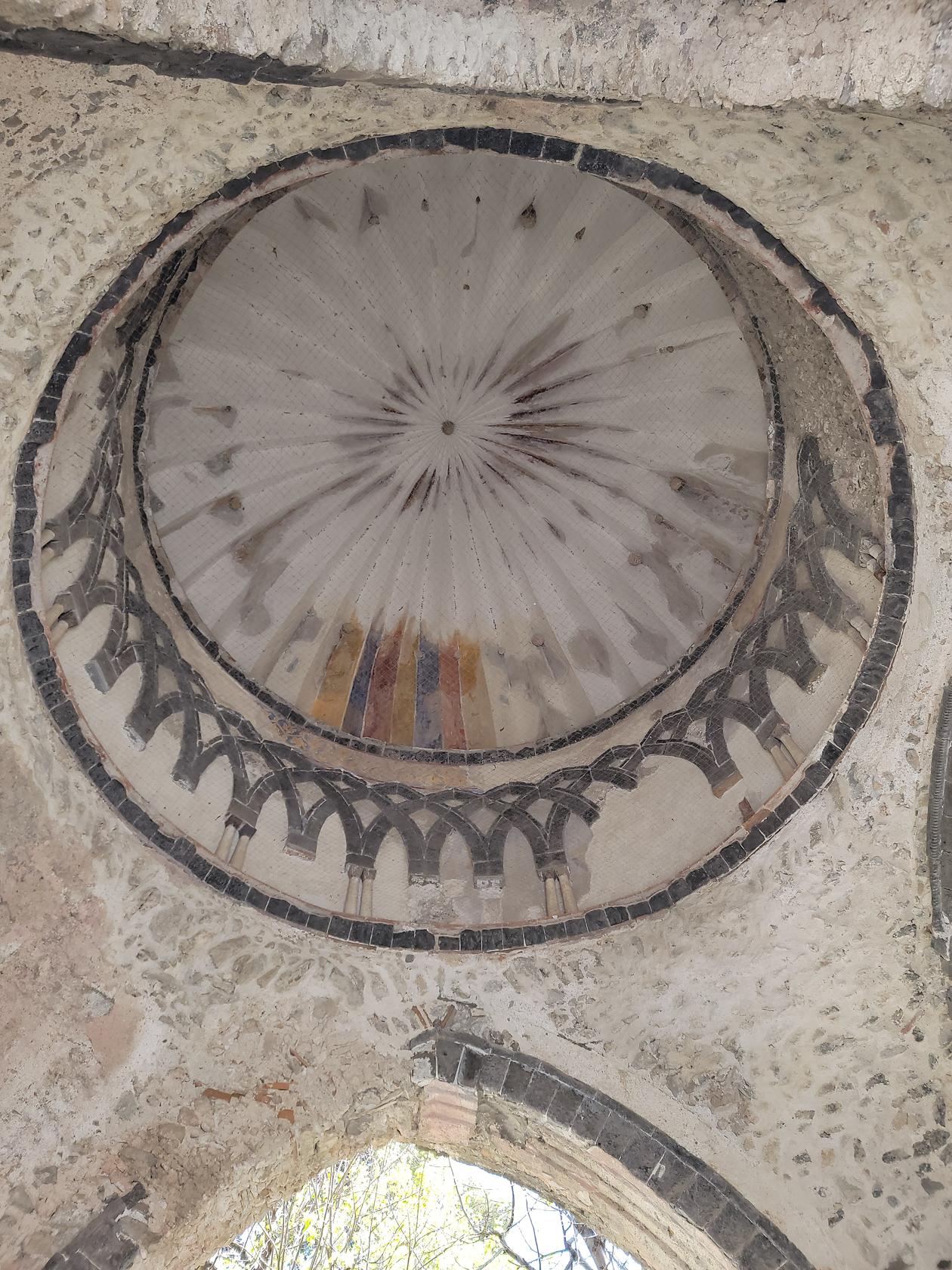
Cupola At Entrance – Villa Rufolo – Ravello, Italy
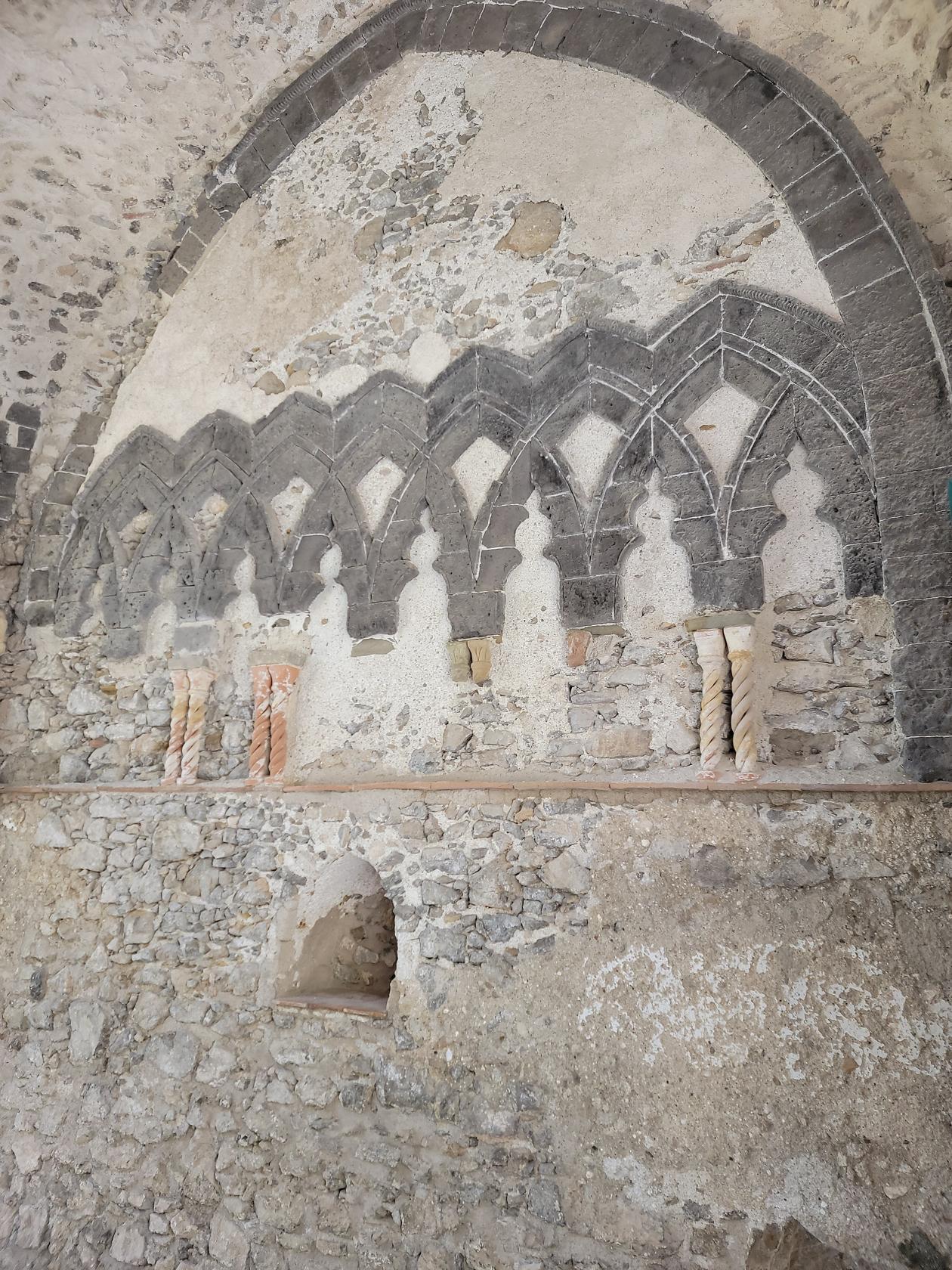
Details By Entrance – Villa Rufolo – Ravello, Italy
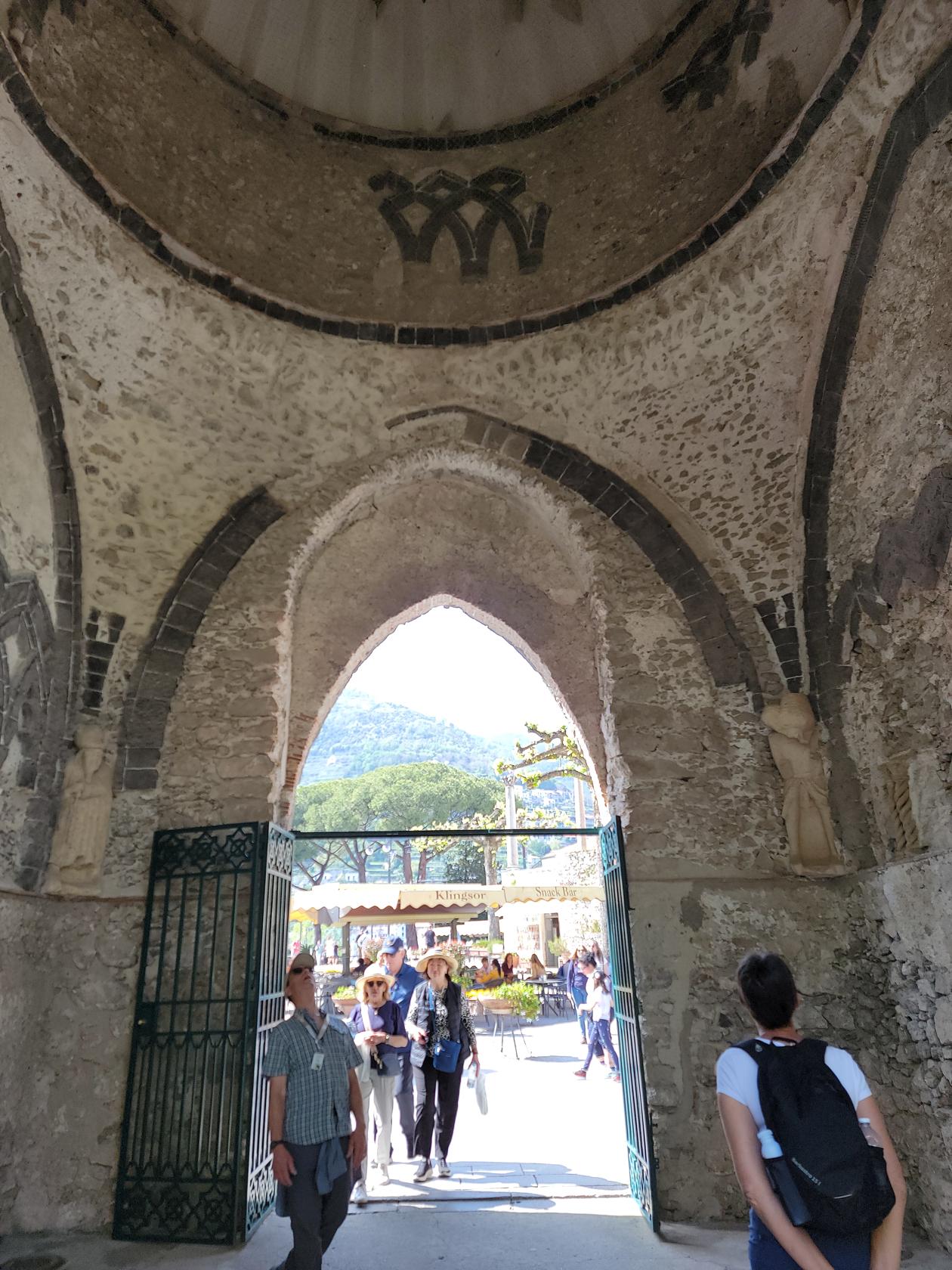
Looking Back Out Of Entrance – Villa Rufolo – Ravello, Italy
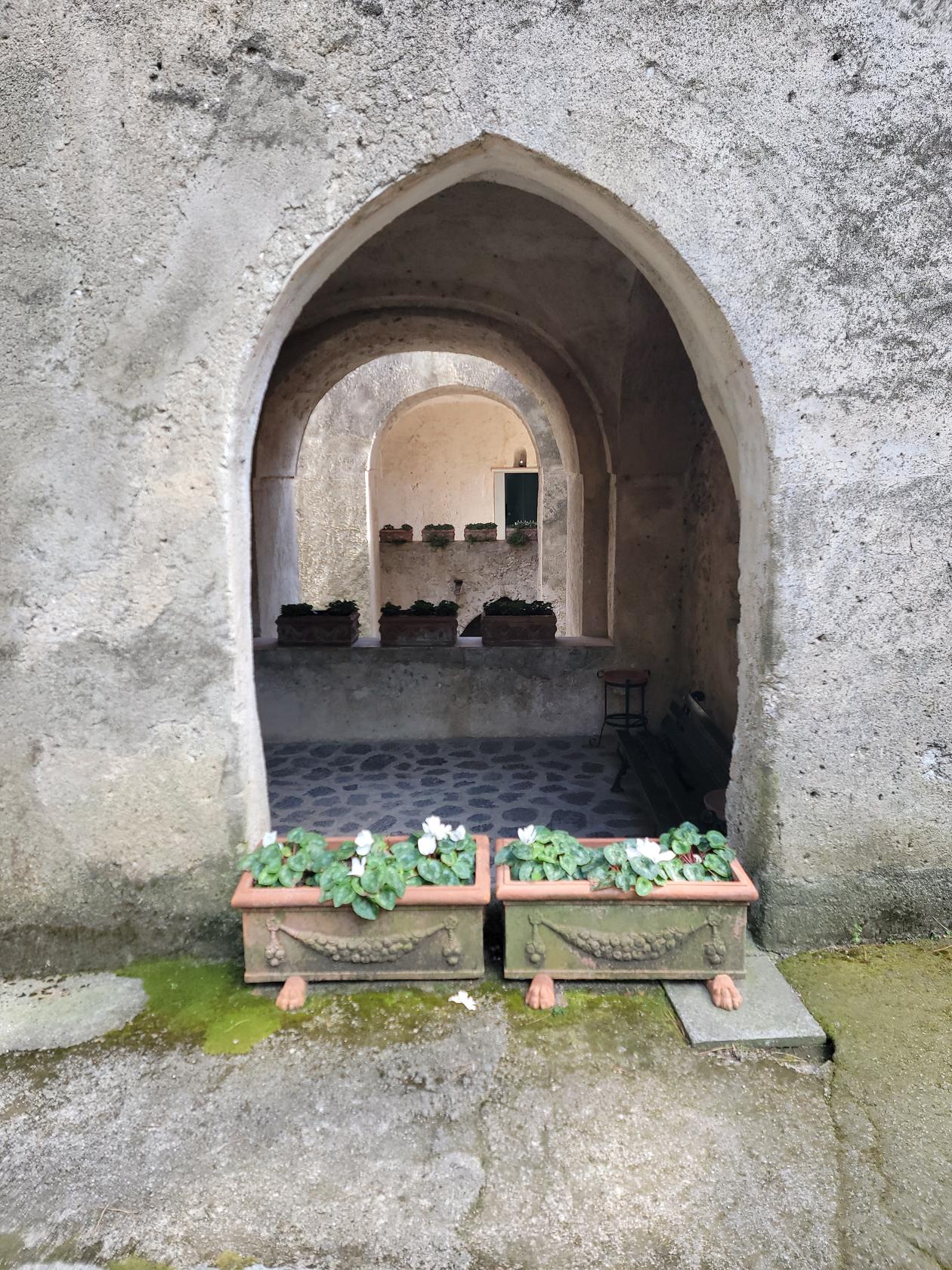
In Between The Rooms By Entrance – Villa Rufolo – Ravello, Italy
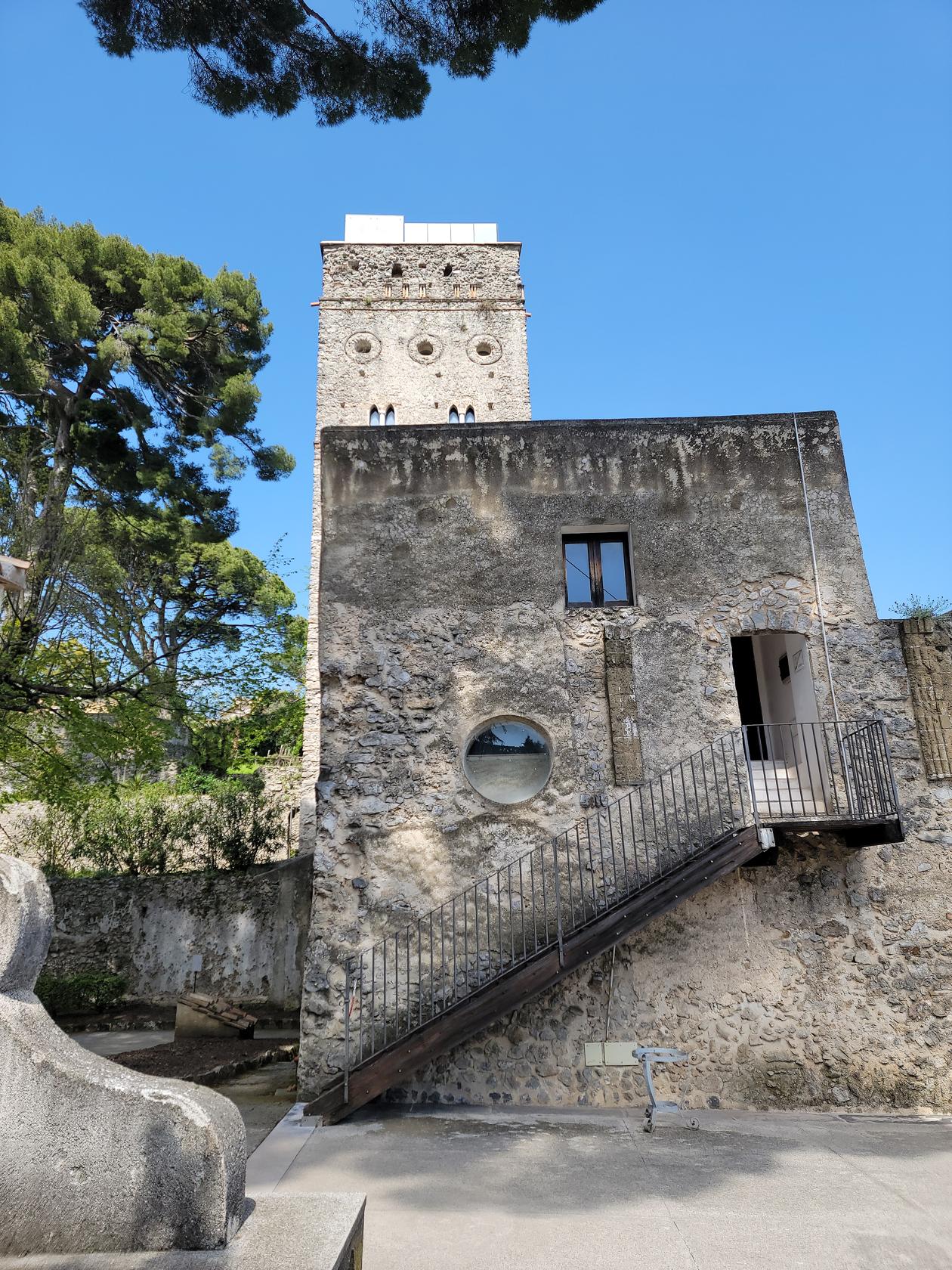
One Of The Towers – Villa Rufolo – Ravello, Italy
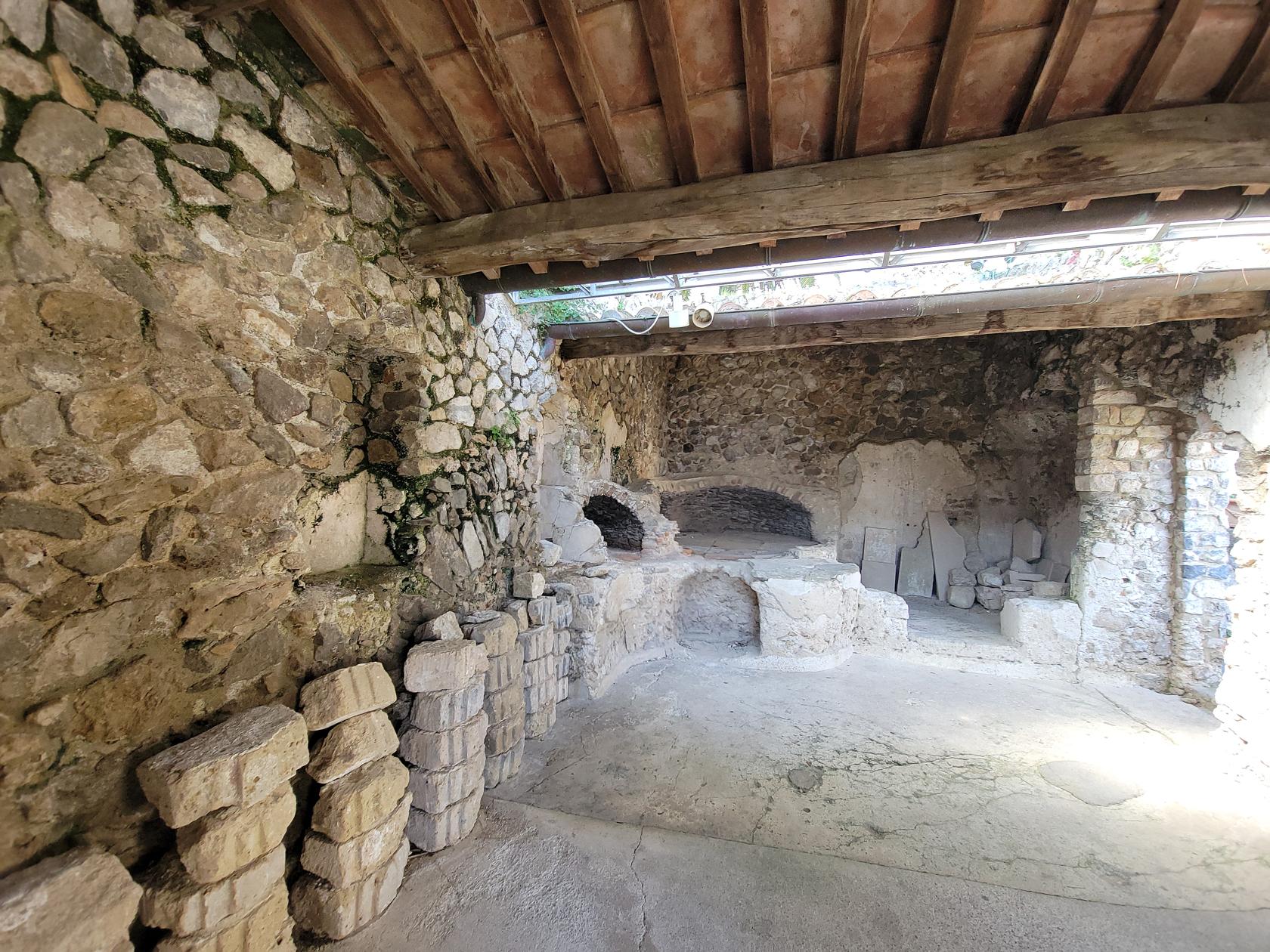
Old Baking And Cooking Ovens – Villa Rufolo – Ravello, Italy
Inside And Some Old Portal Lintel – Villa Rufolo – Ravello, Italy
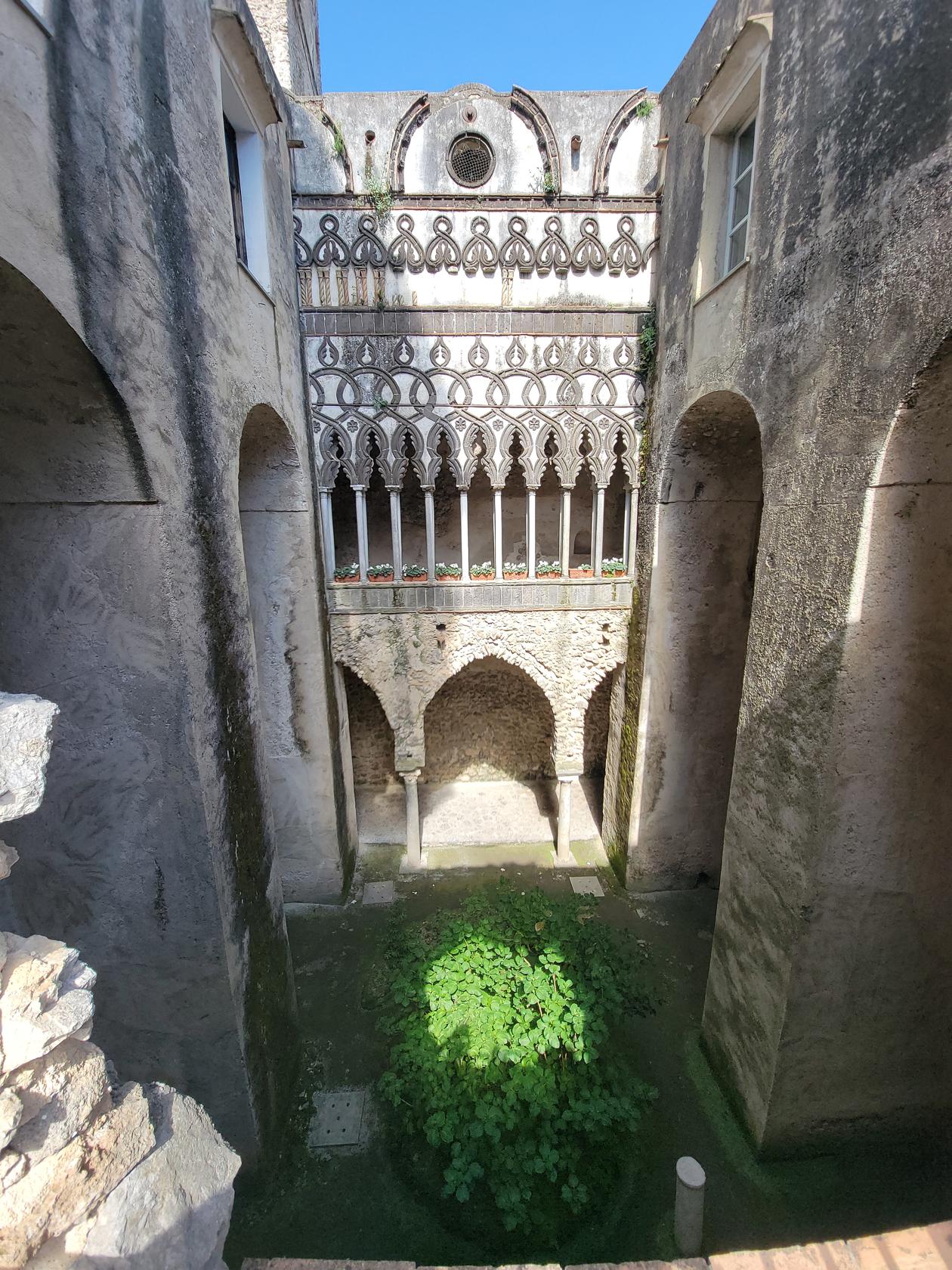
Ornate Design Of Villa Vaulted Areas – Villa Rufolo – Ravello, Italy
Vaulted Area To Gardens – Villa Rufolo – Ravello, Italy
The Gardens – Villa Rufolo – Ravello, Italy
The Gardens – Villa Rufolo – Ravello, Italy
Double Columed Vaulted Area – Villa Rufolo – Ravello, Italy
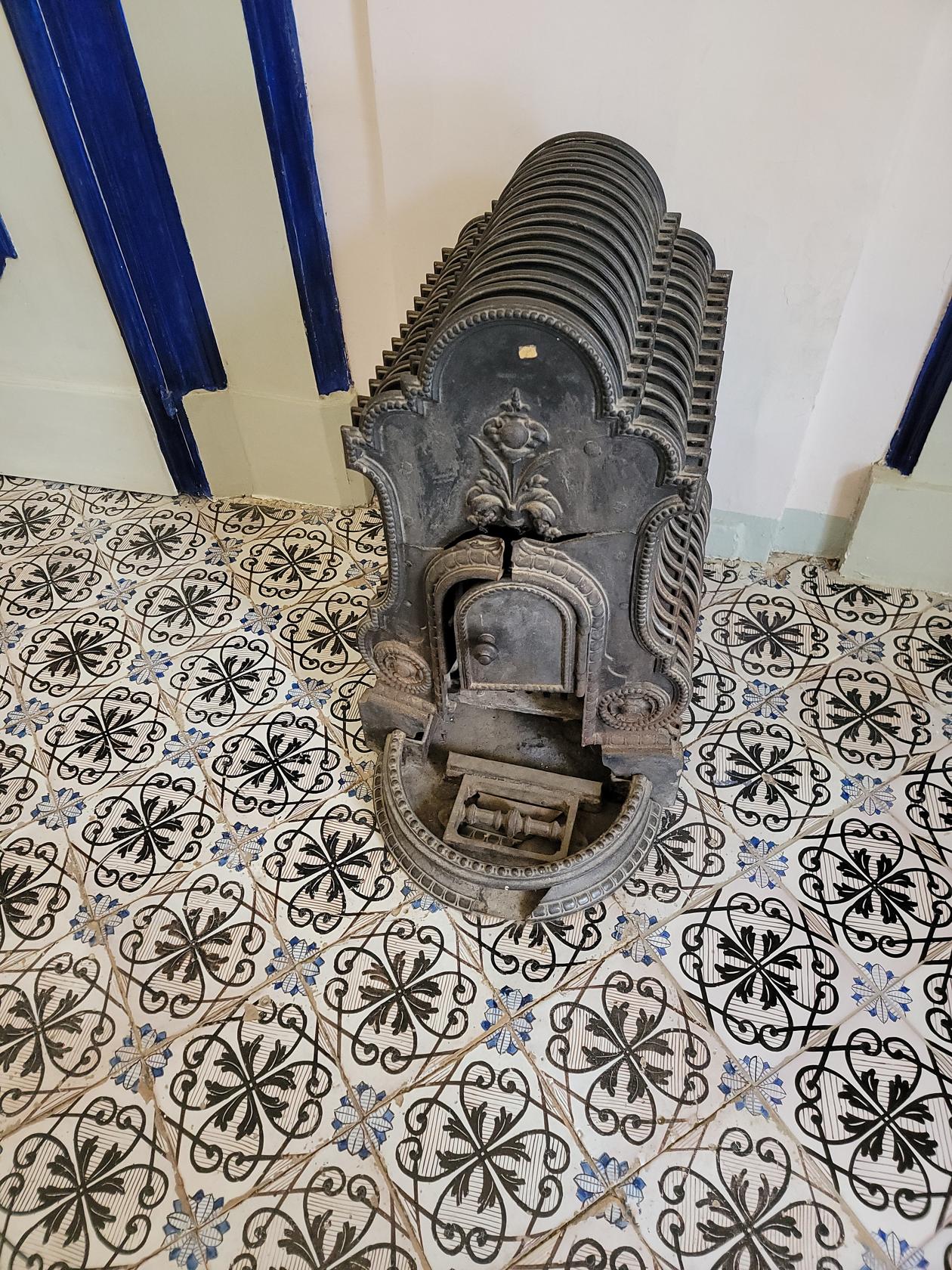
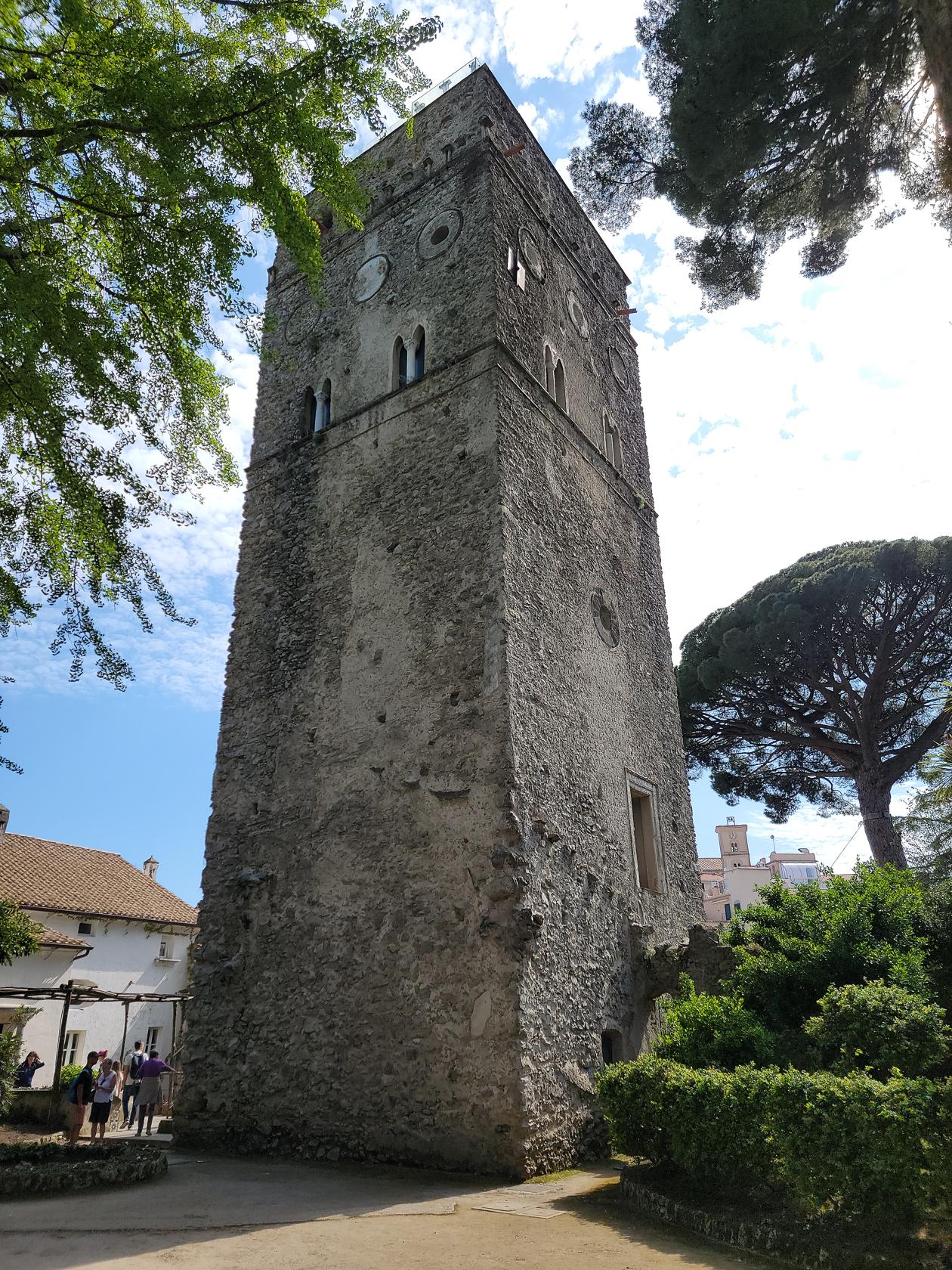
The villa is rather simple, but has some interesting items, like an old stove and a tower. It is kept in relatively fine shape and is a pleasure to walk through.
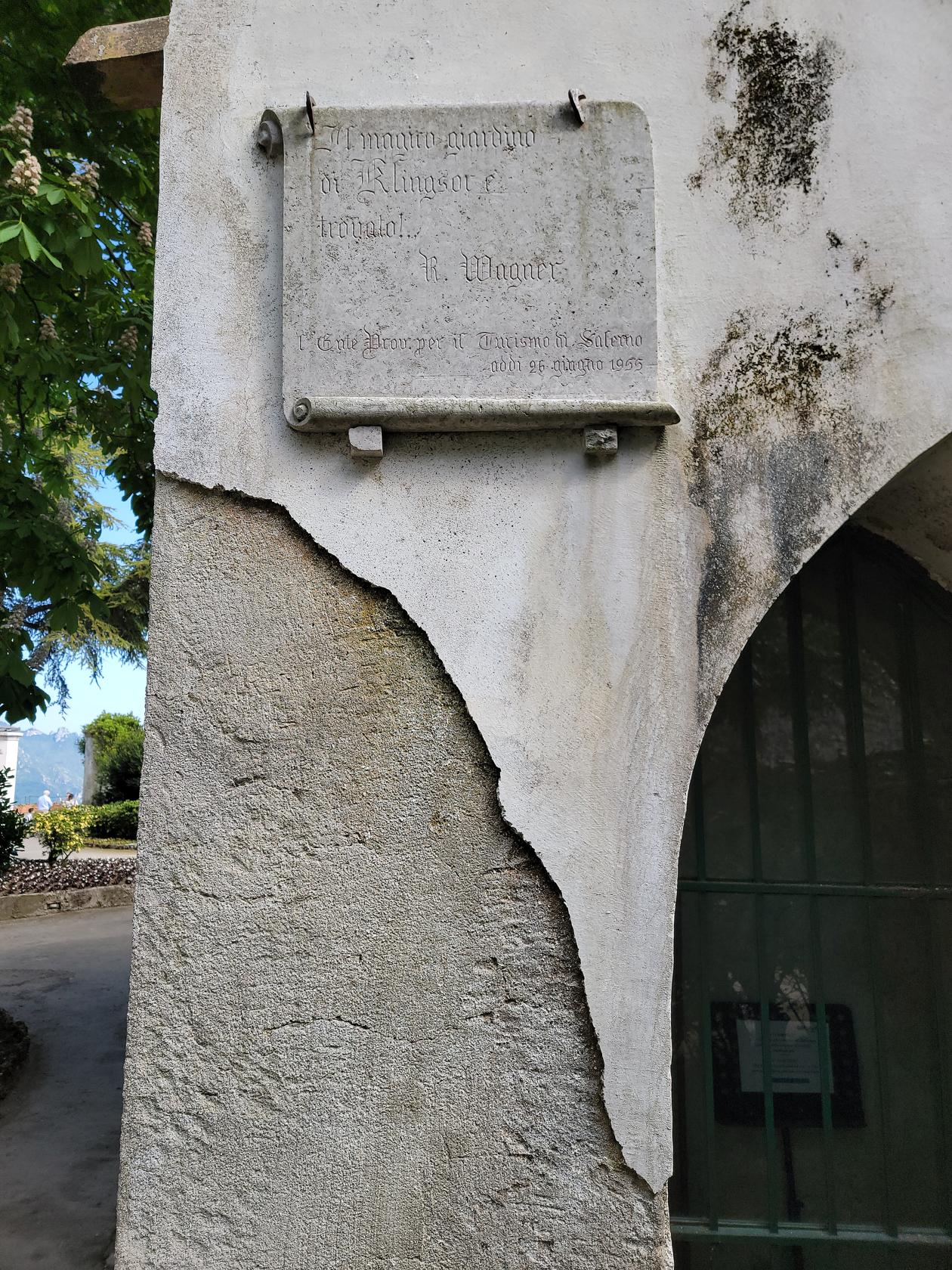
Richard Wagner The Composer Was Here – Villa Rufolo – Ravello, Italy
Ornate Lintel And Rooms – Villa Rufolo – Ravello, Italy
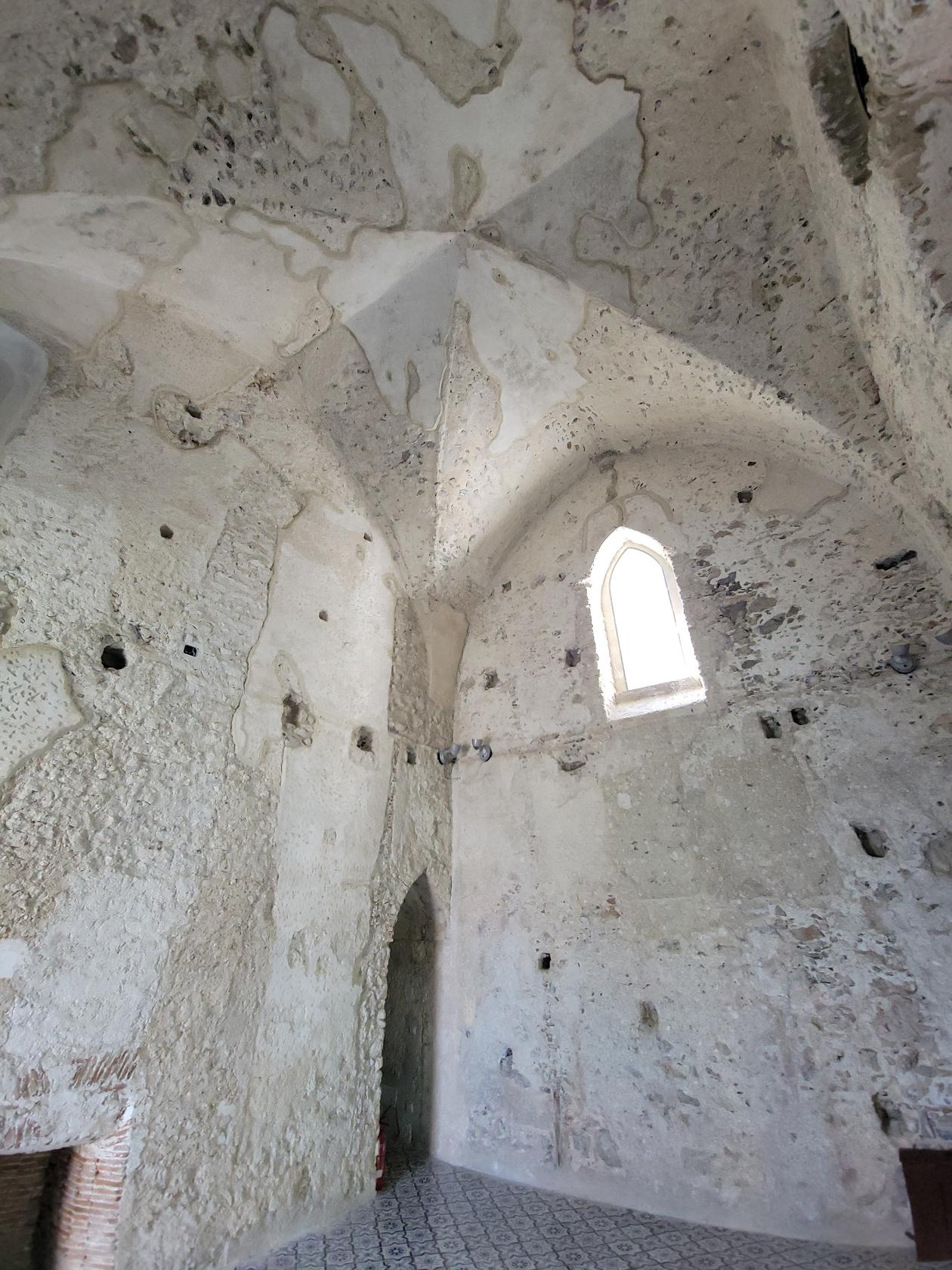
Old Vaulted Ceilings – Villa Rufolo – Ravello, Italy
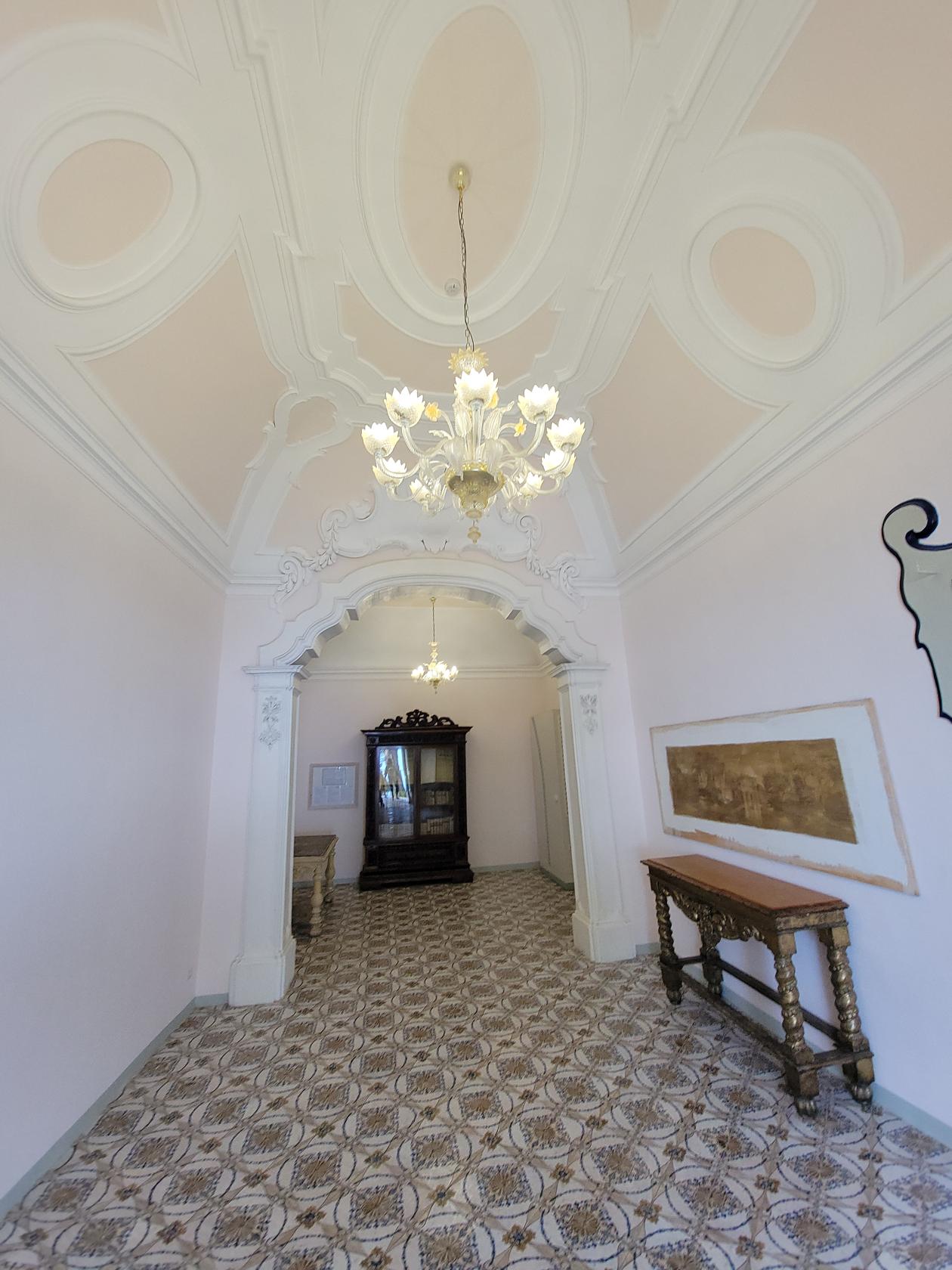
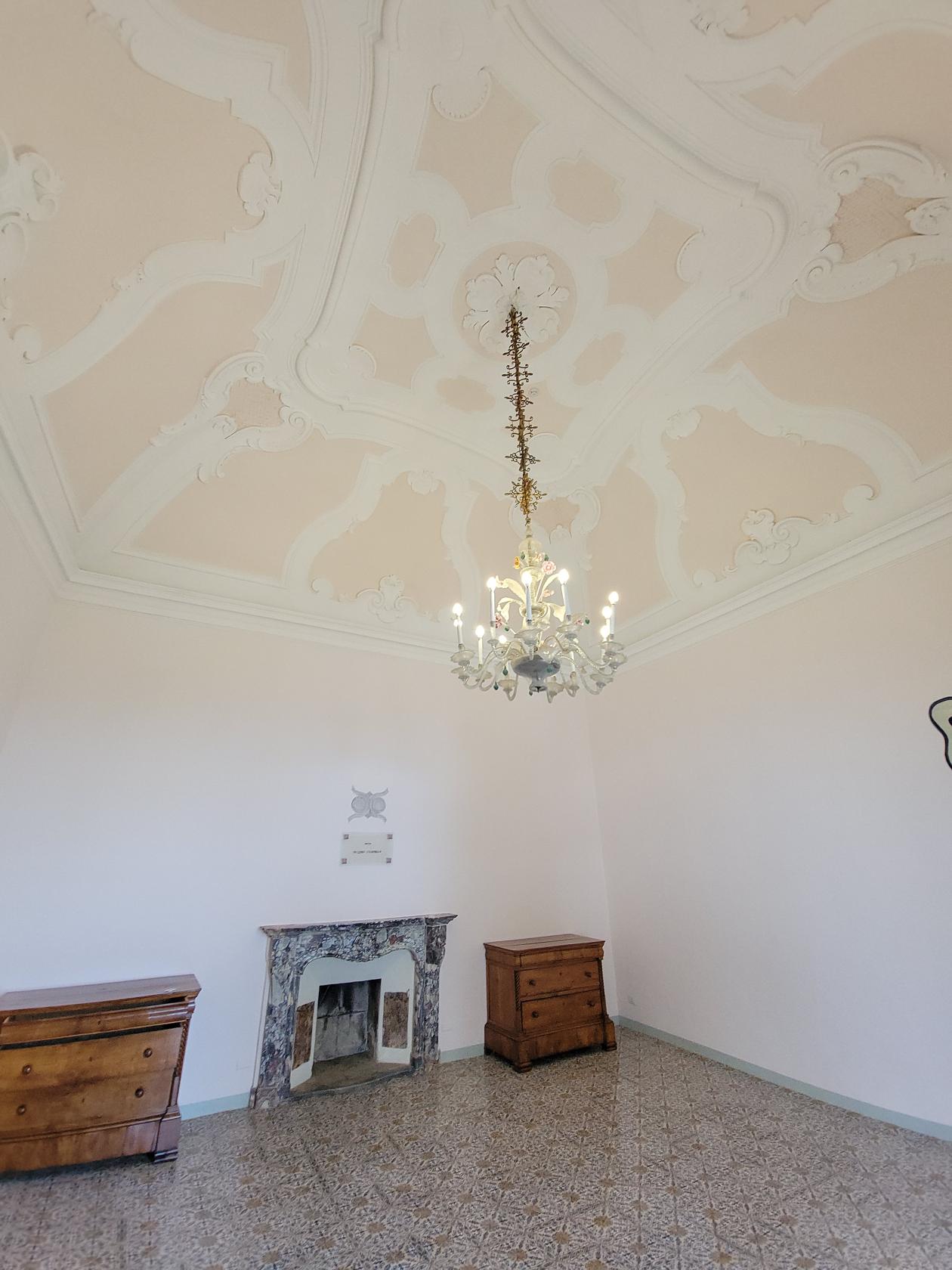
Simple Beautiful With Murano Glass Chandelier – Villa Rufolo – Ravello, Italy
Another Room With Chandelier – Villa Rufolo – Ravello, Italy
Old Iron Stove – Villa Rufolo – Ravello, Italy
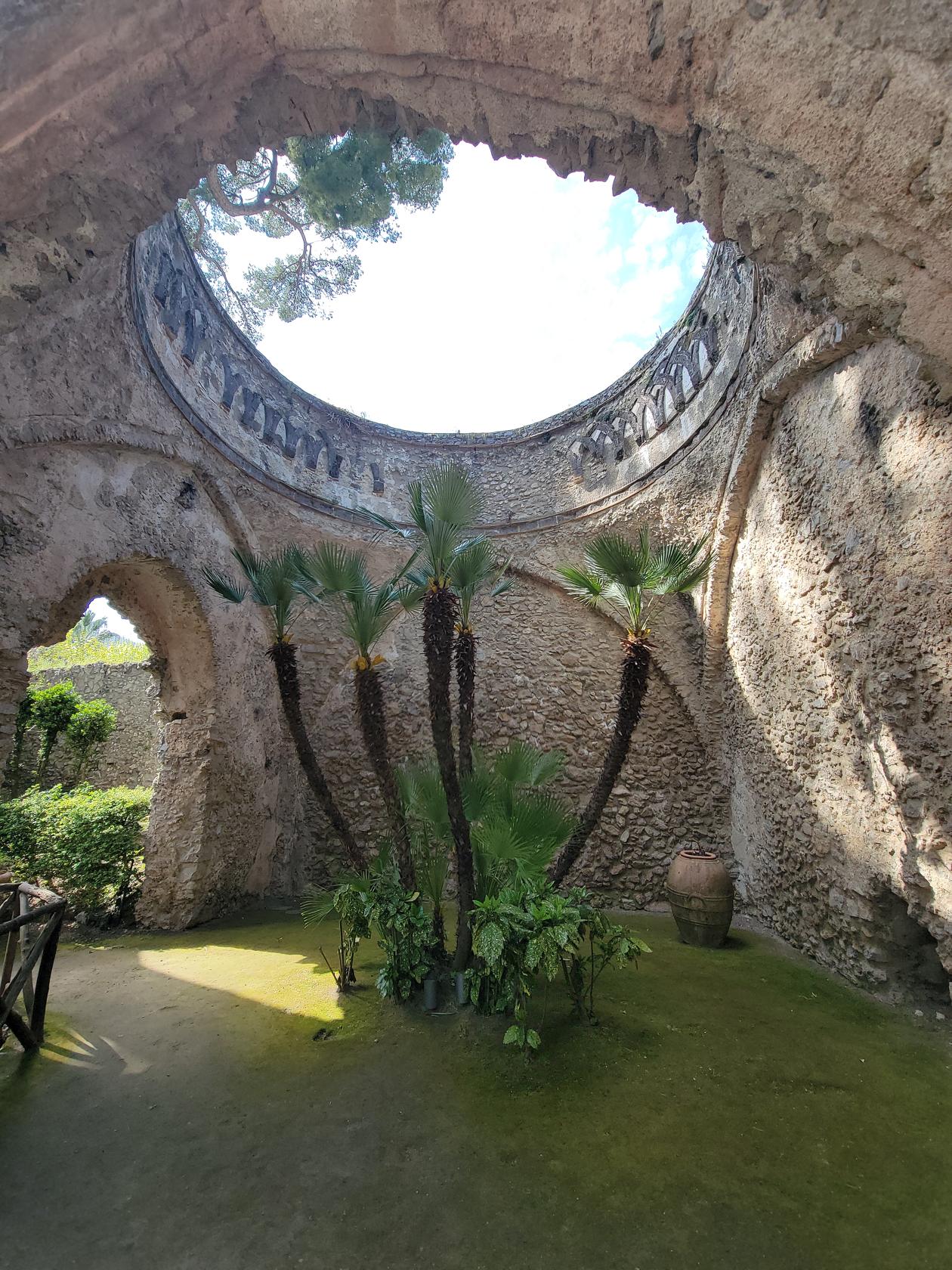
Some of the external structures include a tower, a vaulted building that appears to have been an old chapel and some other old structures near the gardens.
Outer Building – Villa Rufolo – Ravello, Italy
The Tower – Villa Rufolo – Ravello, Italy
Old Stone Walls – Villa Rufolo – Ravello, Italy
Outer Building – Villa Rufolo – Ravello, Italy
It has a magnificent garden with a beautiful view of the sea. They actually hold concerts from the garden, by extending a stage over the side of the hill, providing a wonderful backdrop for music and other performances.
The Coast Looking Toward Vietri sul Mare – Villa Rufolo – Ravello, Italy
The Coast Looking Toward Vietri sul Mare – Villa Rufolo – Ravello, Italy
Church of Saint Mary of Grace – Villa Rufolo – Ravello, Italy
Coastline From The Gardens – Villa Rufolo – Ravello, Italy
The Gardens – Villa Rufolo – Ravello, Italy
Restaurants
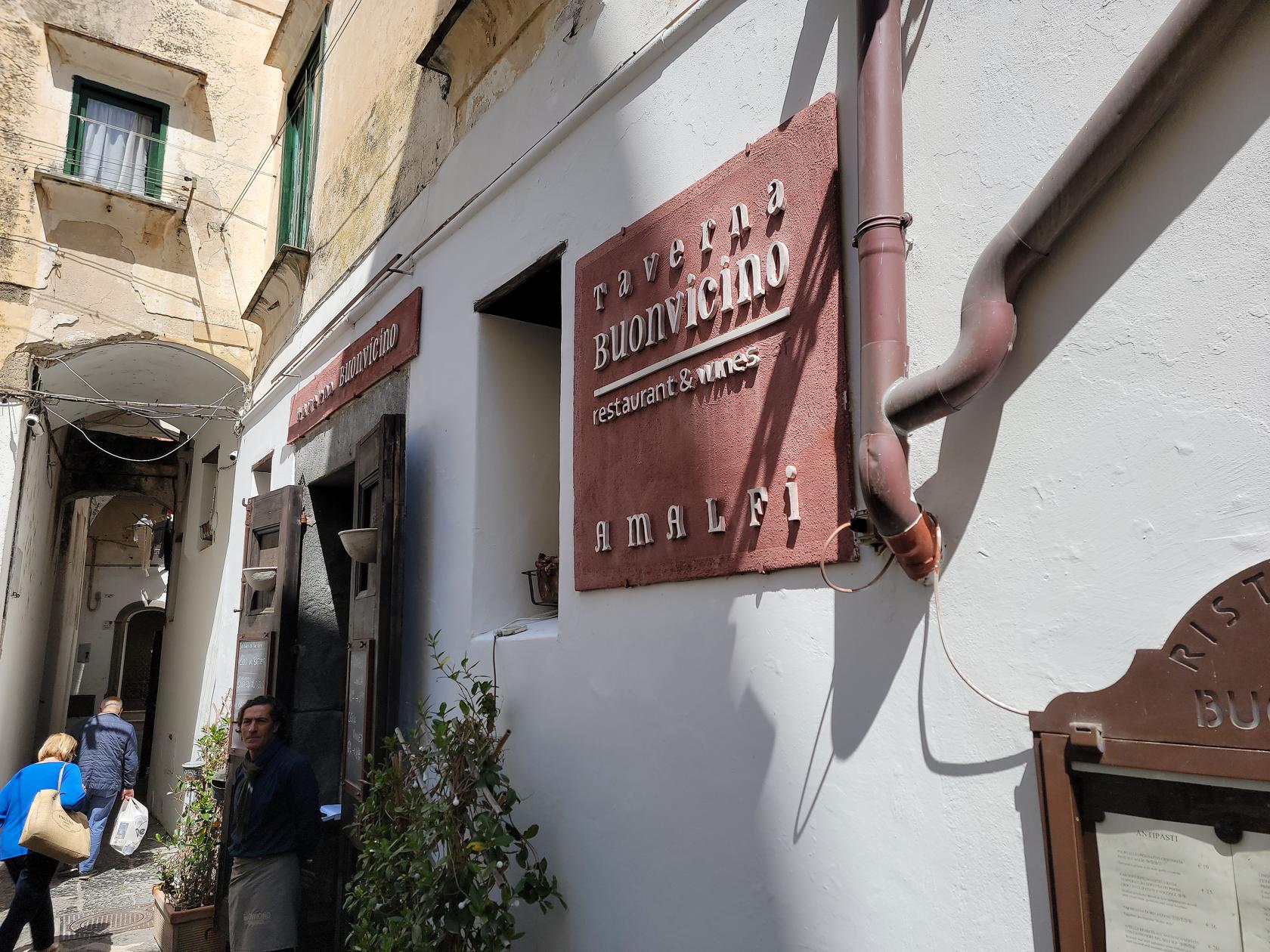
As part of our first day at the coast, we stopped in Amalfi for lunch some time after one in the afternoon.
Entrance – Taverna Buonvicino – Amalfi, Italy
Taverna Buonvicino
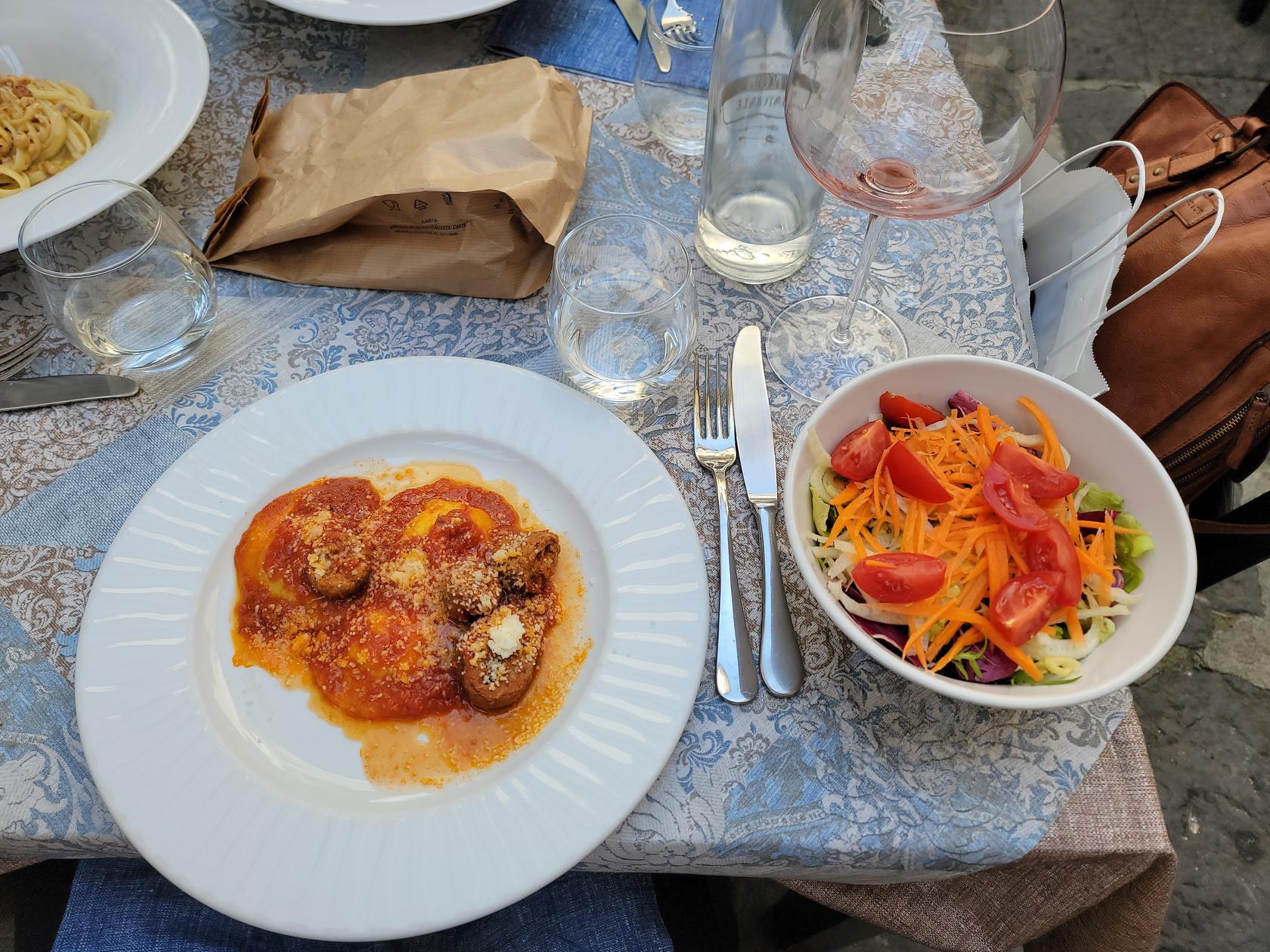
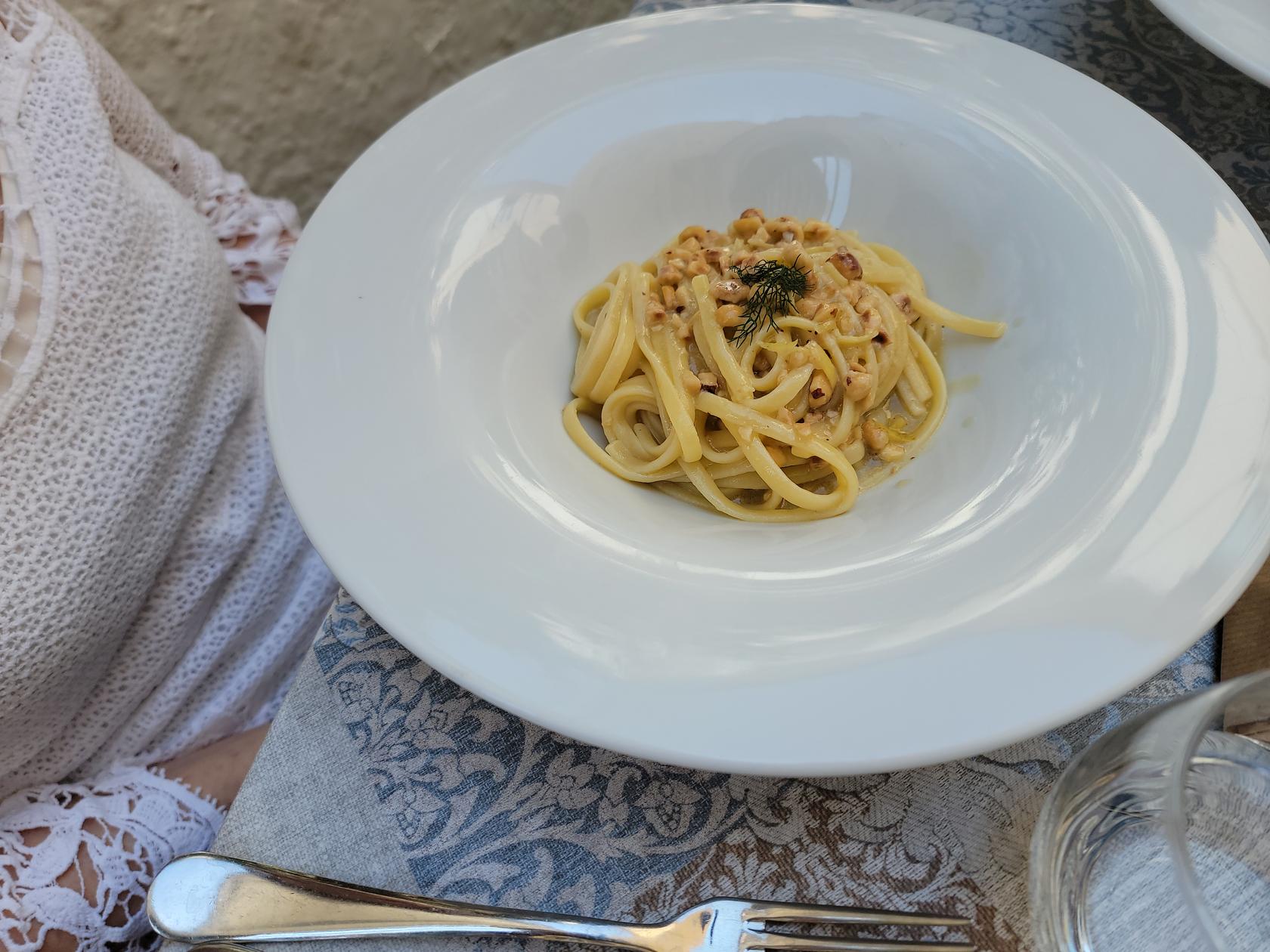
A very nice restaurant with a beautiful terrace outside, which is off the beaten path, so no worries about hordes of tourist bothering you while eating.
Ravioli and Insalata Mista – Taverna Buonvicino – Amalfi, Italy
Linguini with anchovy sauce – Taverna Buonvicino – Amalfi, Italy
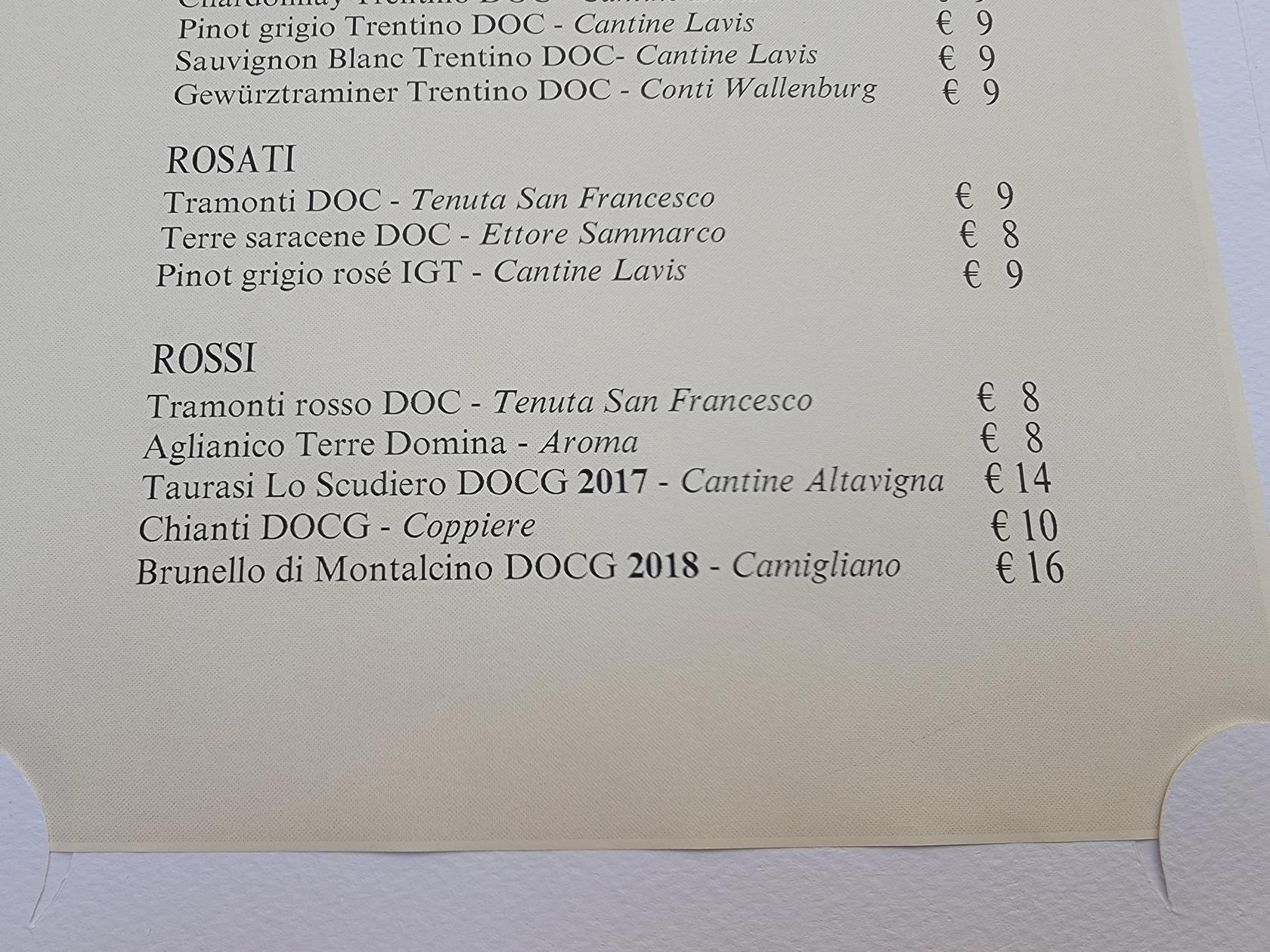
They also have a very good wine list which is stocked with local favorites. I can commend one varietal, Taurasi Lo Scudiero (DOCG), which was exceptionally good.
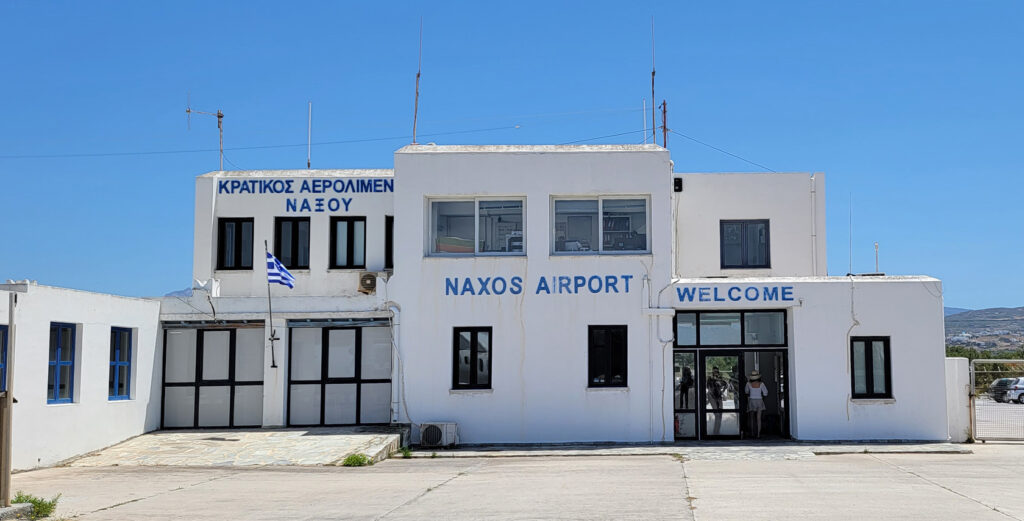
Well, we had just barely left Athens on our way to Naxos Island, when I discovered the feeling that my phone was not in my back pocket. That usually was not so alarming, since when traveling I often take it out and put it in my backpack, so I wouldn’t forget it in what ever form of transportation we were using. I got no further then reaching for my backpack’s zipper, when a dreadful calm came over me. I knew exactly where it was – and it was not with me.
I looked at my wife, with a short pause and a sigh, then told her that I had left my phone back at the hotel. She retorted immediately if I were sure, I responded that I was and that it was actually worse than I had originally thought. Not only had I forgotten my phone, but I had forgotten to take all our money and valuables out of the hotel room’s safe. Exasperated, I immediately informed our private shuttle driver what had happened and that we had to turn around. He assured us not to worry and that all we be alright.
We quickly called the hotel reception what had happened and they responded that they had been trying to get in touch with us. We then let the driver, who speaks very good English and of course Greek, to help explain the situation. We figured out all of the logistics, so that while he continued to take us to the airport, one of the driver’s colleagues drove to the hotel and picked up all of our stuff (after giving him the security code to the safe). With the hotel staff overseeing everything, they sealed our stuff in a bag and the driver was off to the airport. In less than an hour, we were back in possession of my phone and the rest of our travel documents and money. Wow, that was the first time that has ever happened.
In the meantime, while we were waiting and much to our delight, our flight had been delayed by an hour and twenty minutes. So, we felt comfortable that we had plenty of time to wait for the driver, then check in and check all our baggage for Naxos. As soon as the driver returned and we had all of our stuff, we obtained our tickets and started to check in our luggage at the self-service counter, waiting on line like everyone else. However, just as we were next in line, I noticed that the flight was no longer delayed, it was on time; how can that happen?!
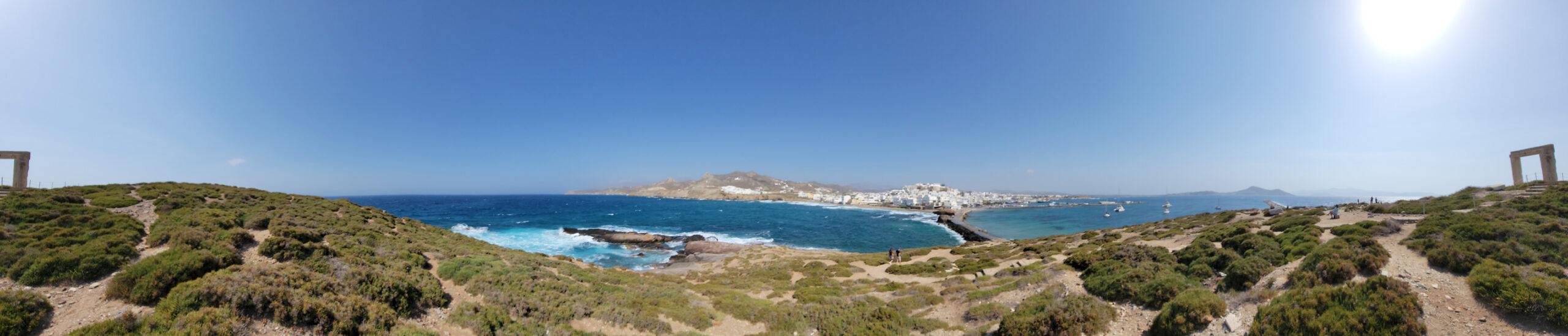
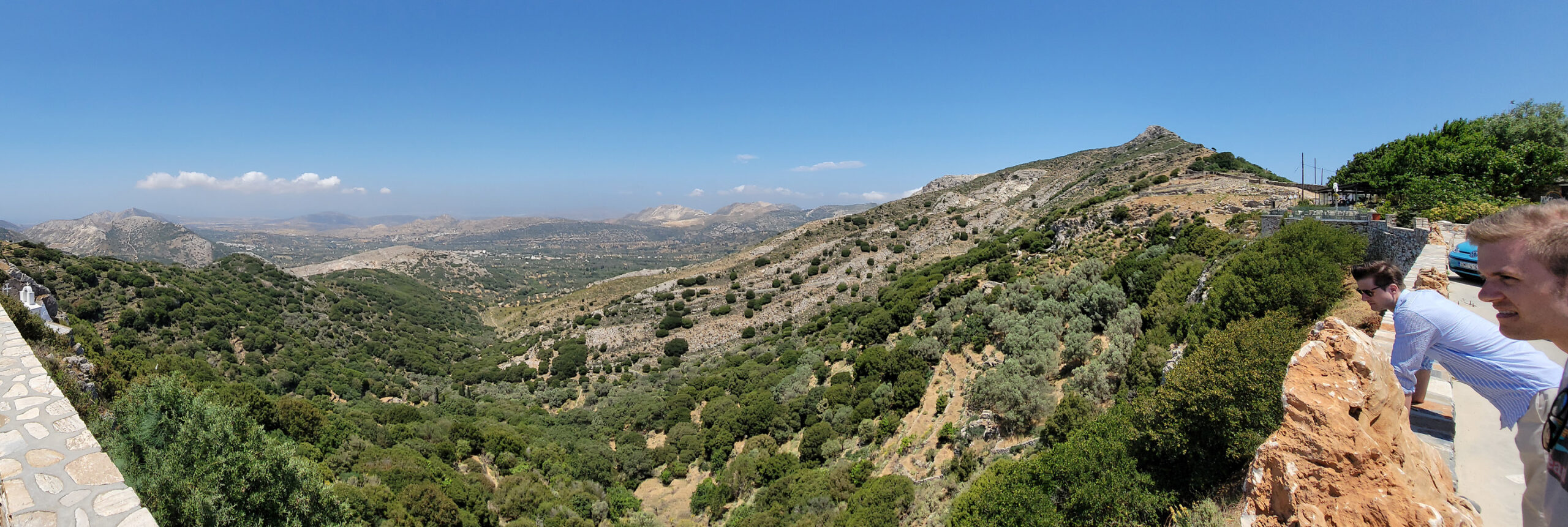
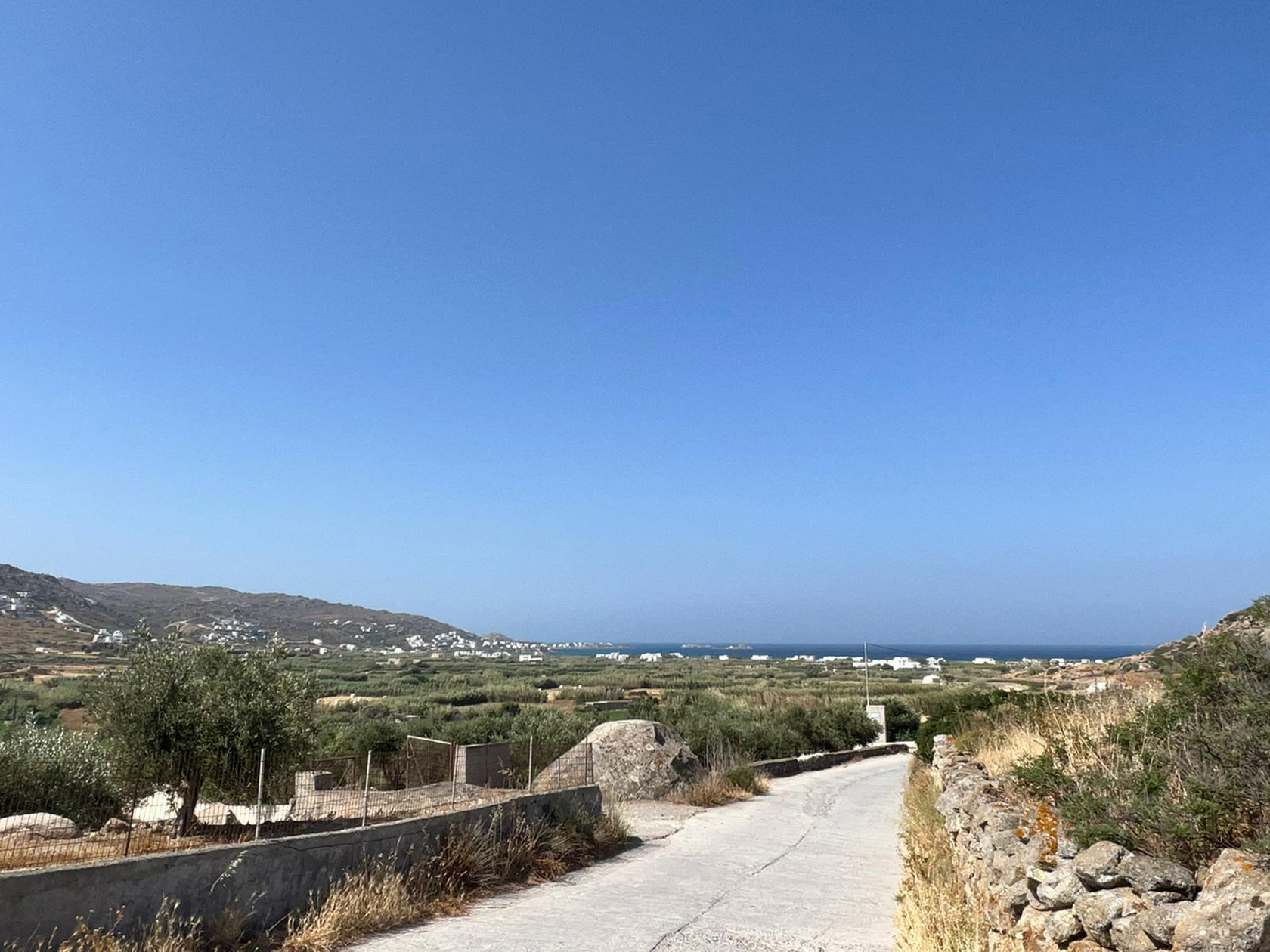
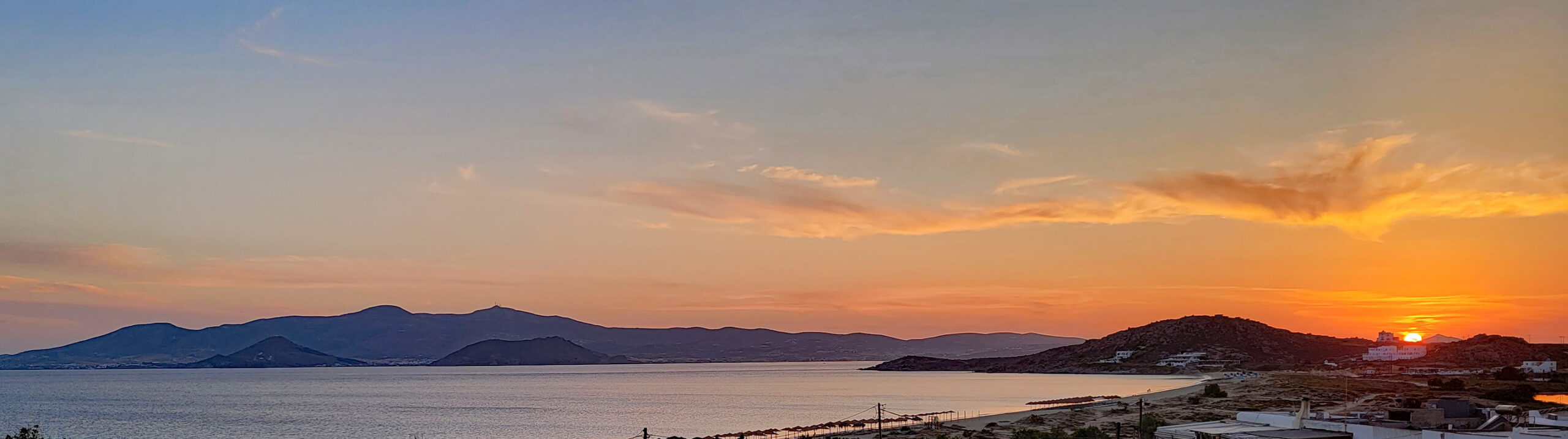
Panorama of Naxos Hills
This left us about thirty minutes to finish baggage self-check in and board the aircraft. Undaunted we pushed on. Two of us were successful self checking our baggage, but as soon as the boarding time for the aircraft arrived, the software locked the rest of us out. What a nightmare. The attendant for Aegean Airlines quickly realized the issue and got us over to another counter so our bags got checked in immediately, with all the proper RUSH stickers applied to them, and we were on our way through security.
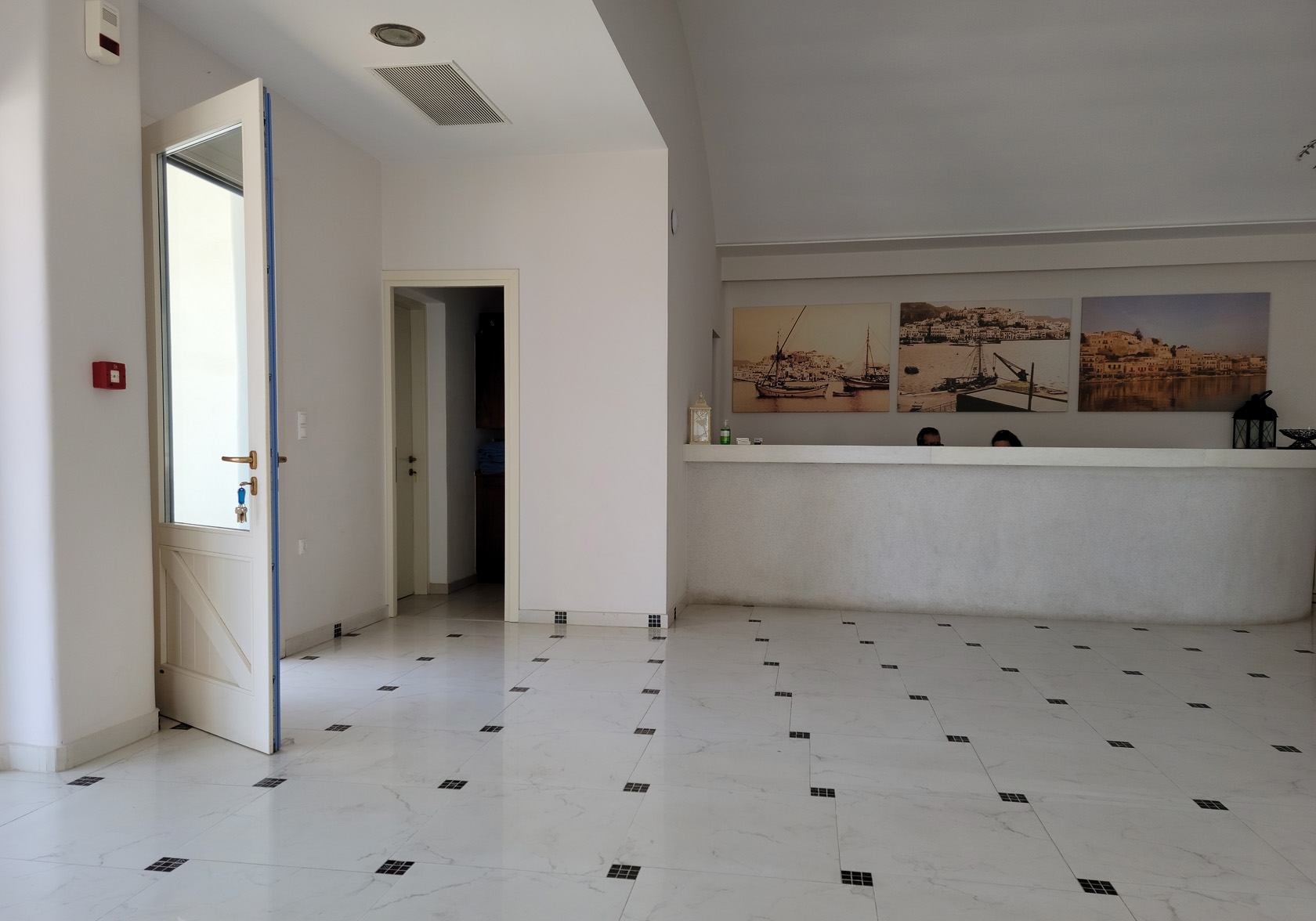
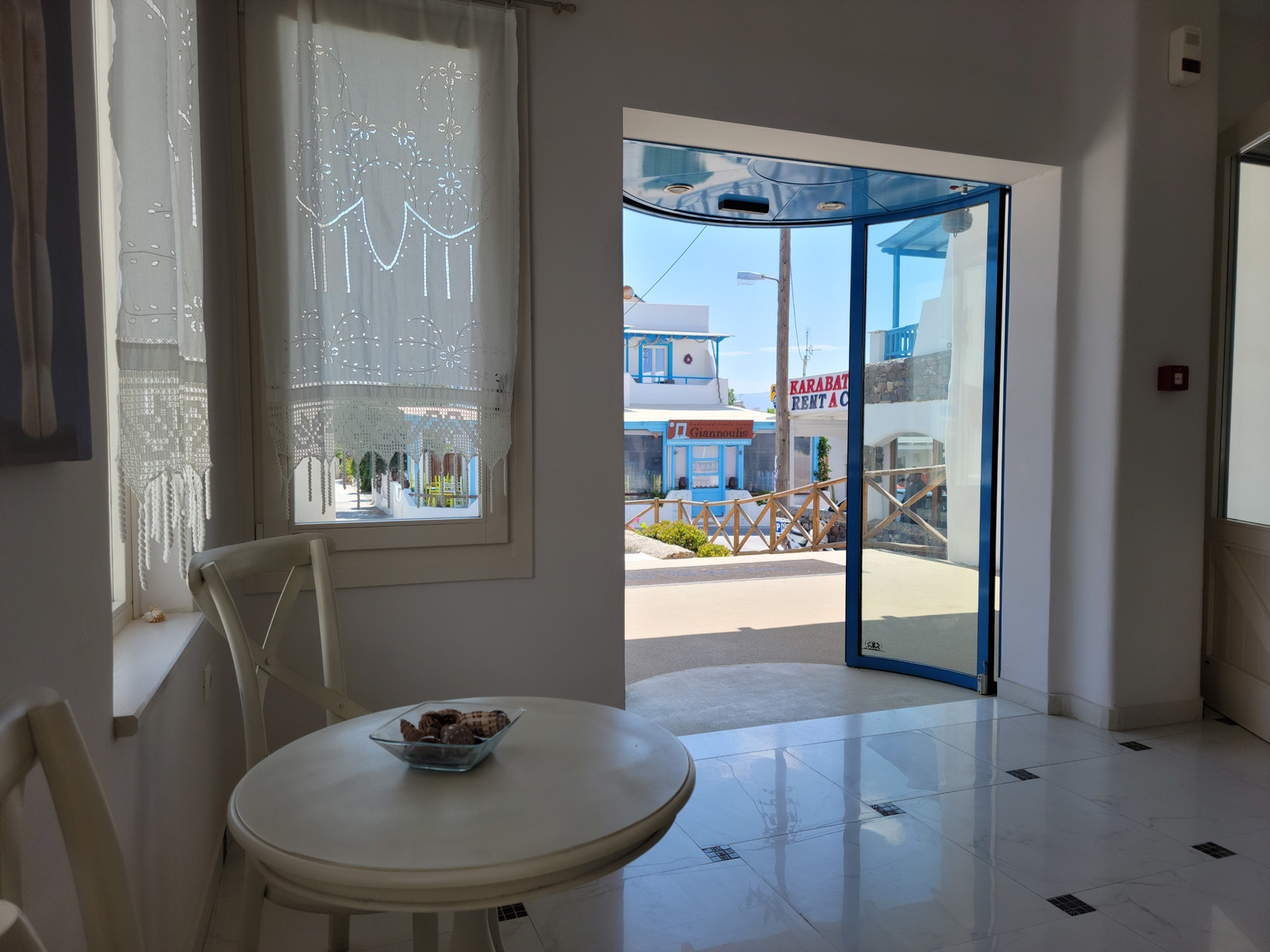
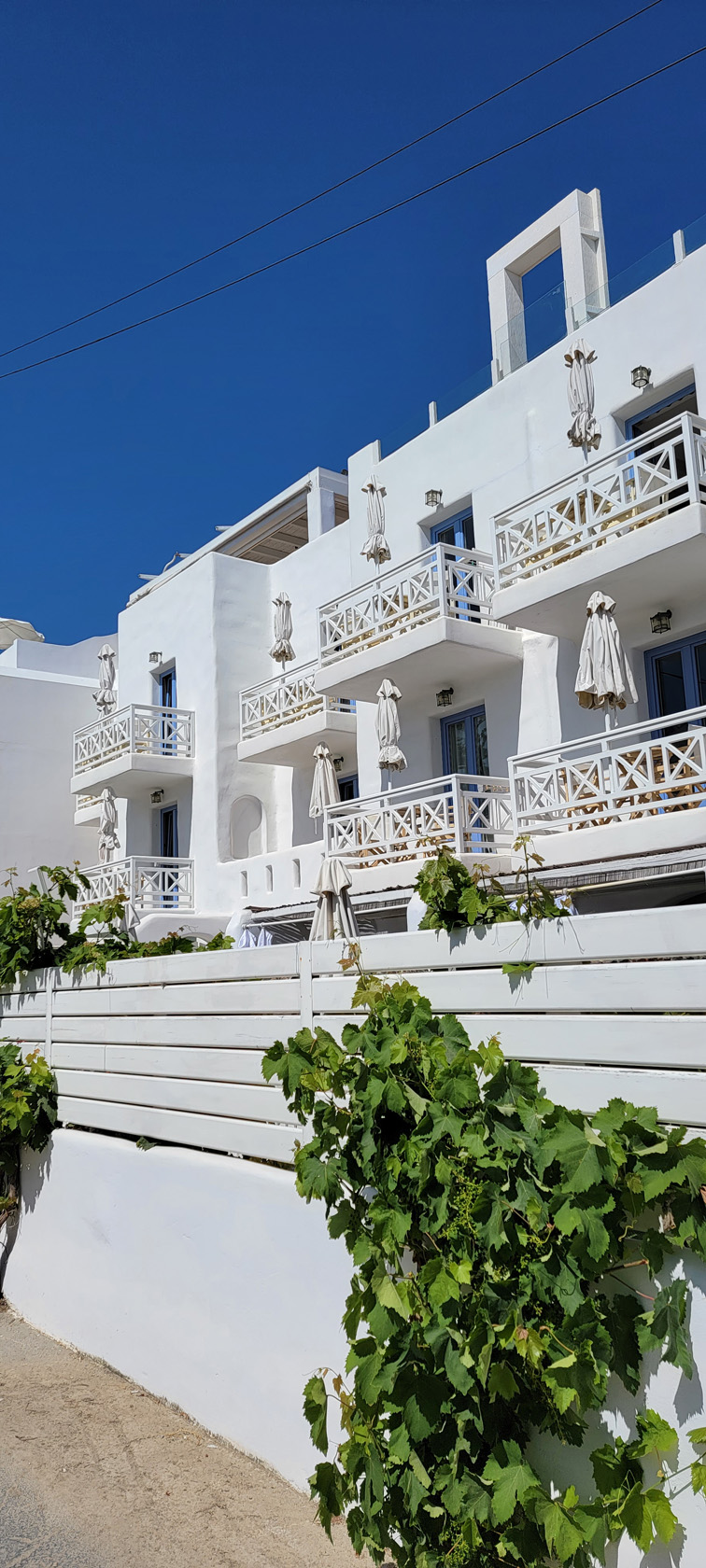
Naxos Island Hotel – Lobby
Naxos Island Hotel – Lobby
Naxos Island Hotel – Lobby
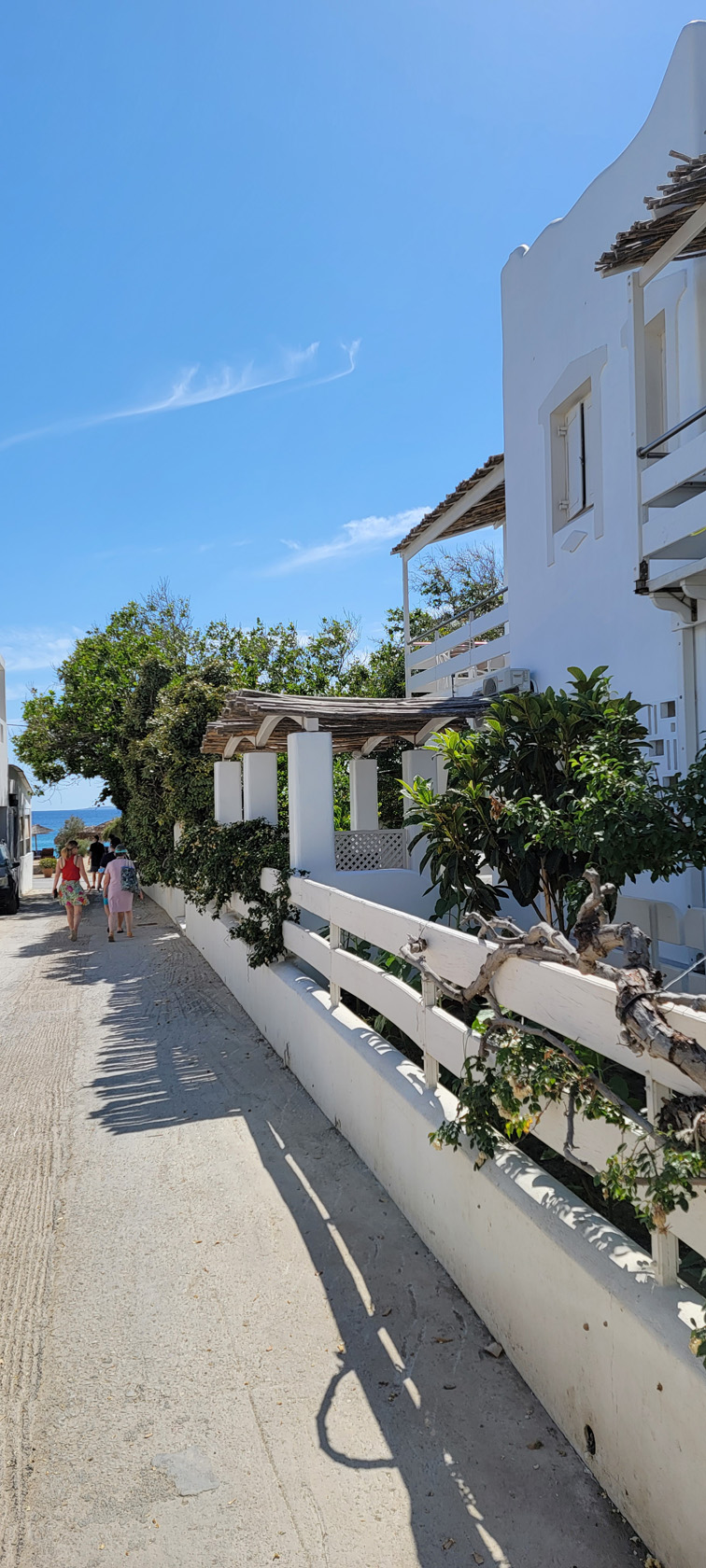
Naxos Island Hotel
Naxos Island Hotel
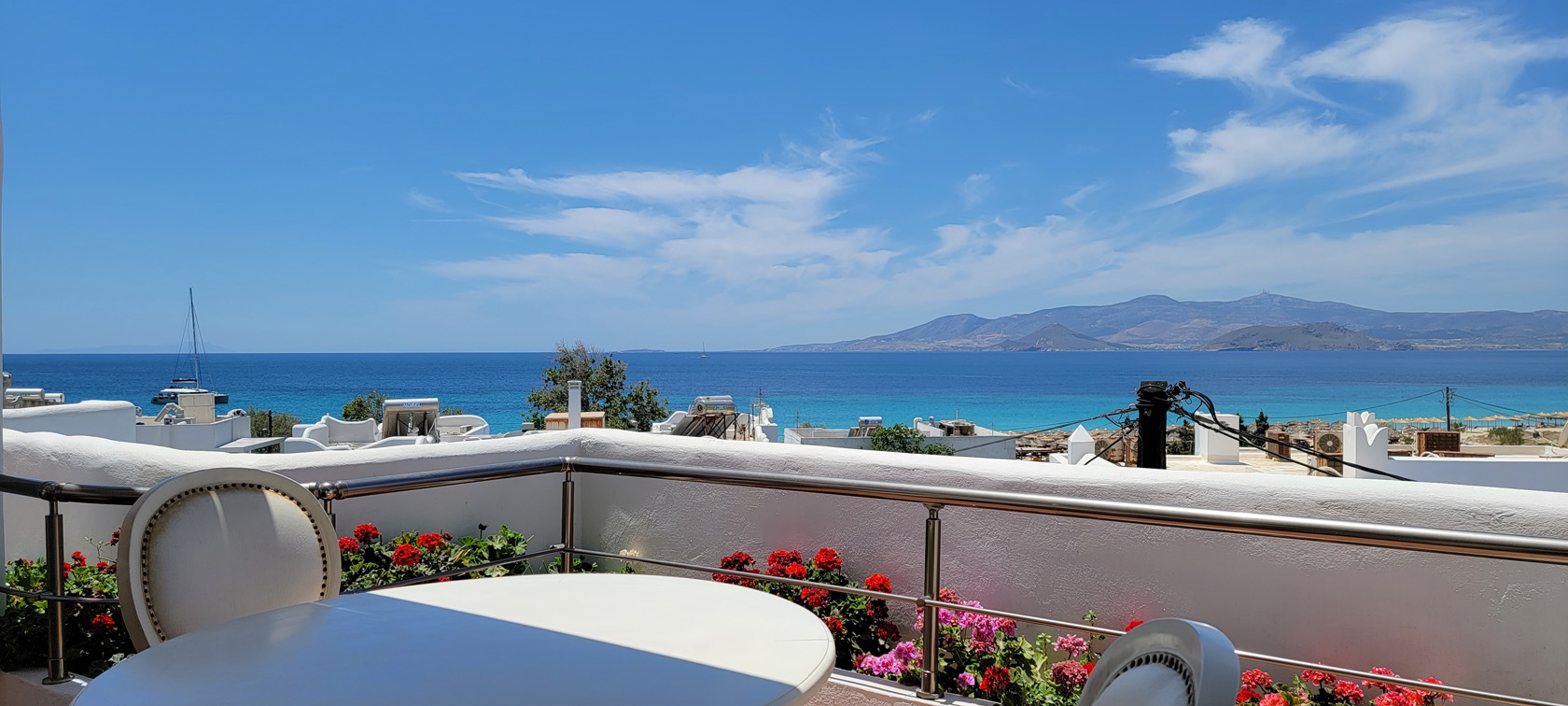
Naxos Island Hotel – View From Rooftop Terrace Restaurant
Needless to say, we made our flight and were soon enjoying the hospitality of our hosts at the Naxos Island Hotel. Since our flight was on time, we arrived before the appropriate check in time, but no worries, our rooms were ready and we were hustled to our rooms, bags and all by our hosts. After a quick refresh, we went to lunch. It was time to really be on vacation, but we were all still wondering, what else could go wrong? Unfortunately, things would uncharacteristically continue to happen to us.
Naxos – The Island
The largest of the Cyclodaes, Naxos is a large oblong island with a central mountainous region with peaks high enough to create their own weather. The island is known for its beaches, most of which are sandy, but the type of sand created from eroded rock and not from reefs, it is therefore fairly coarse to walk on and can become very hot in the sun, so bring your sandals.
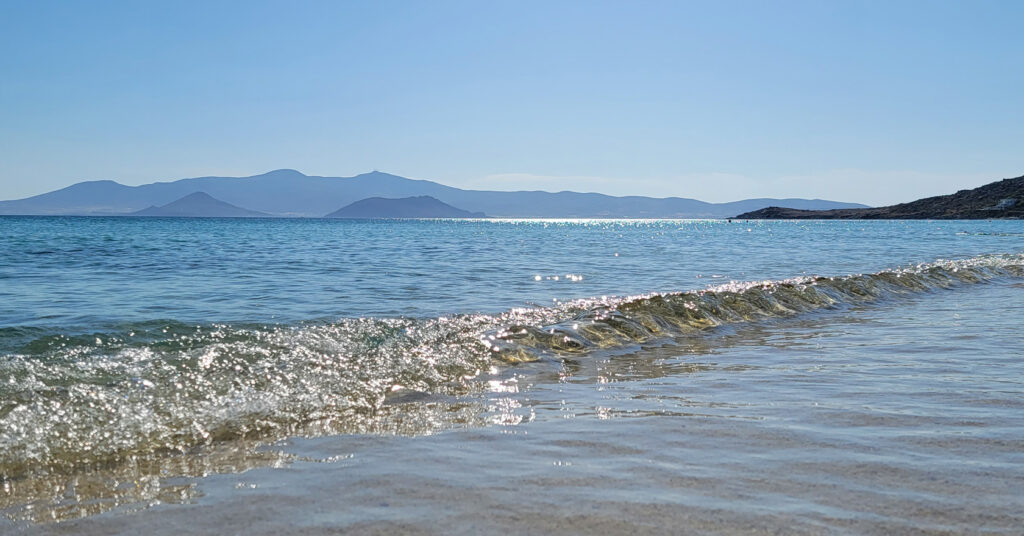
Paros Island – From The Beach
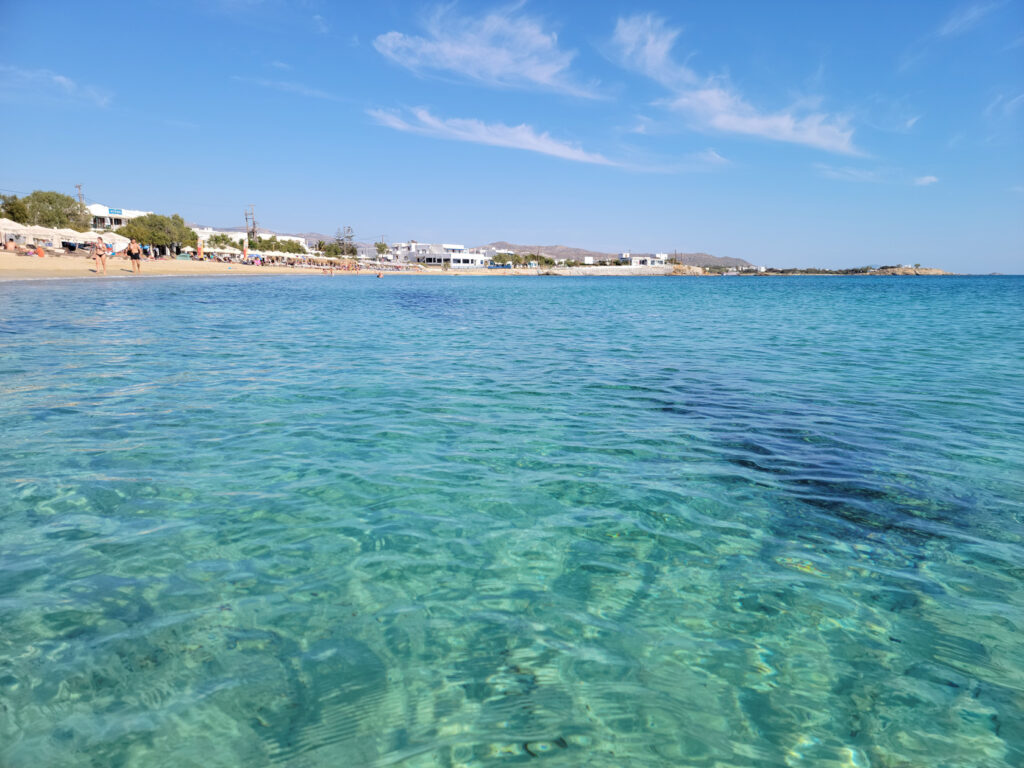
The Beach – A View From The Water
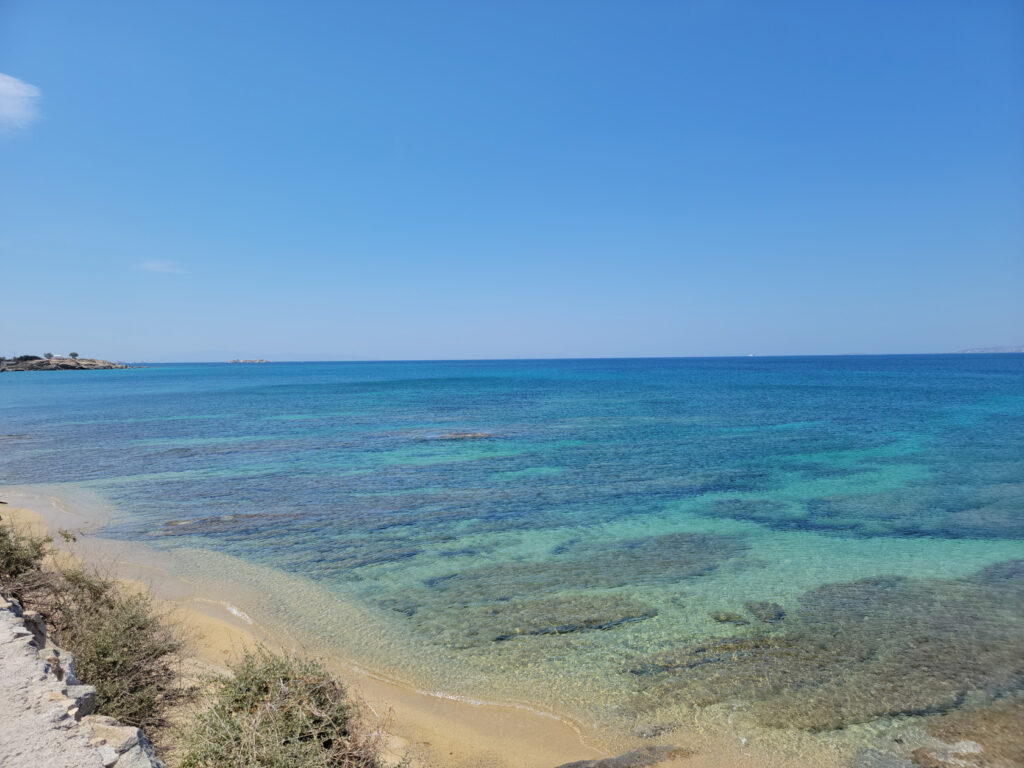
The Blue Aegean Sea
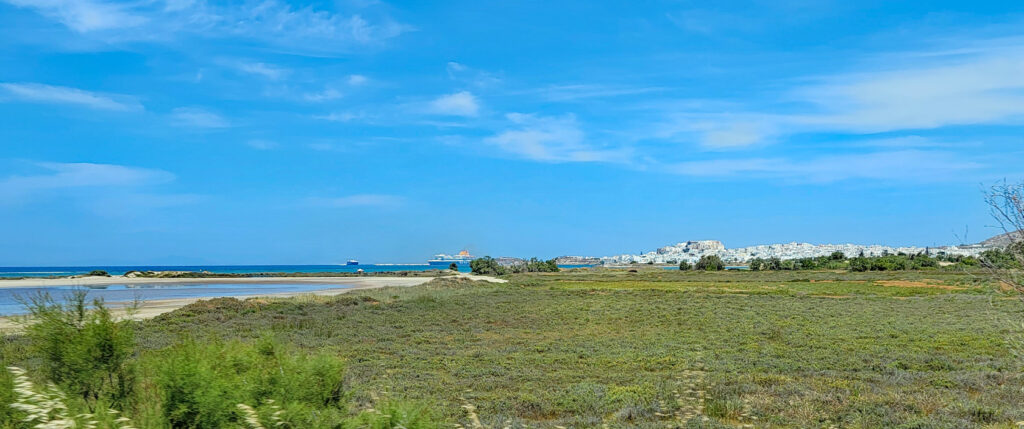
Naxos City – From Airport Road
Cycling Naxos
For the adventurous, or those just wishing to get out and explore, Naxos offers some fairly good cycling. There are a few places where you can rent bicycles. However, if you are looking for something more advanced, you should reserve your equipment before you leave.
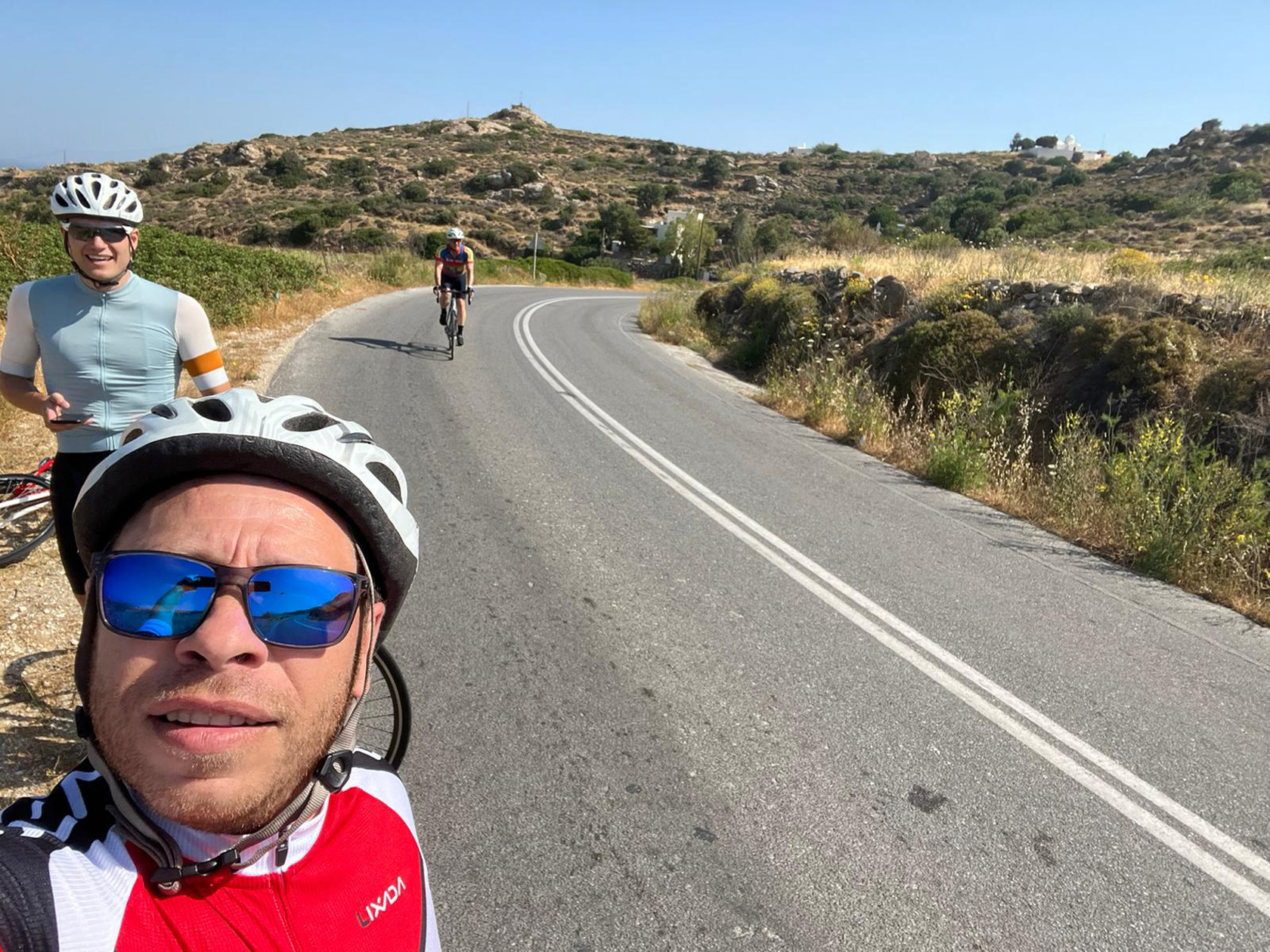
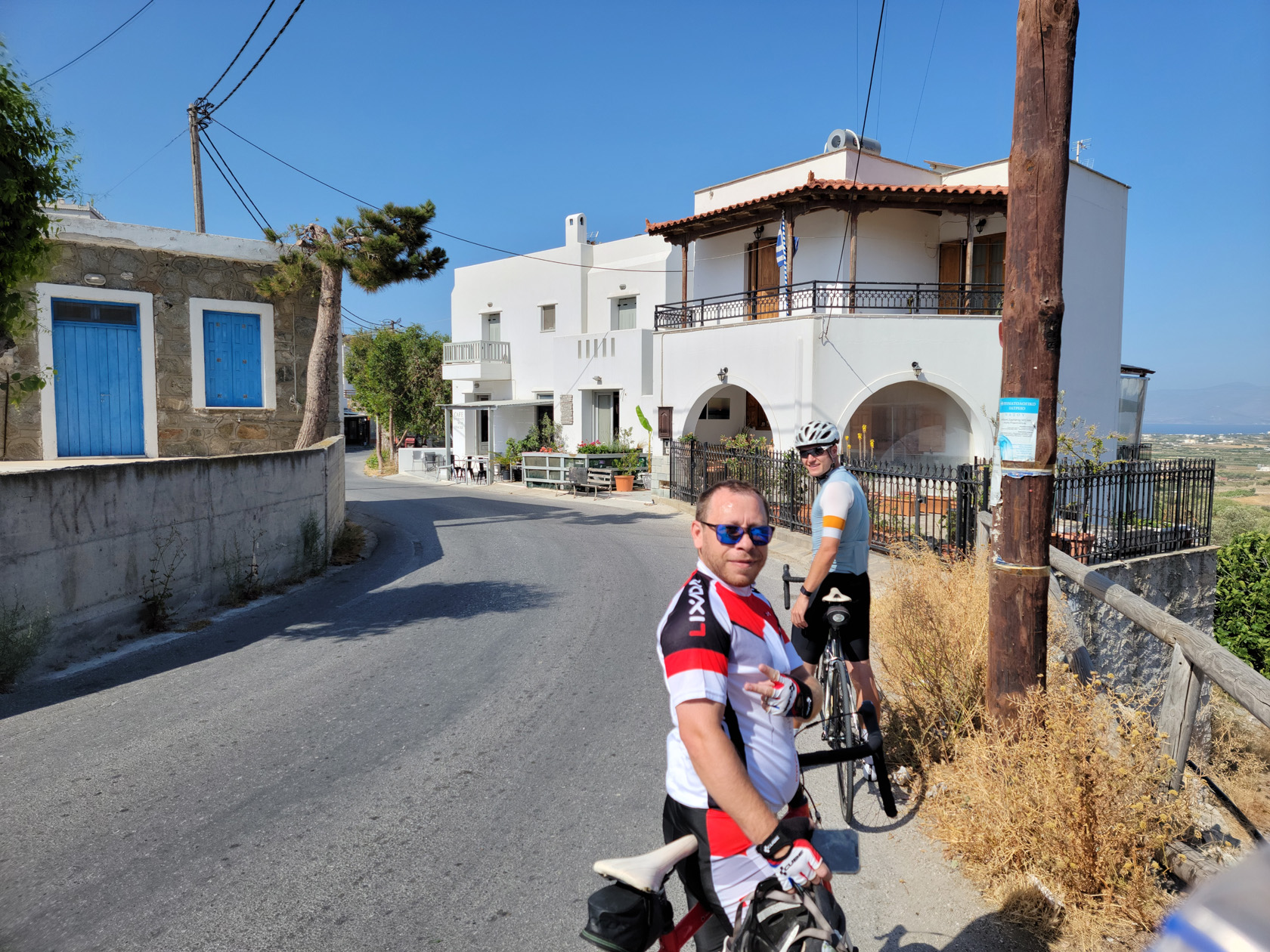
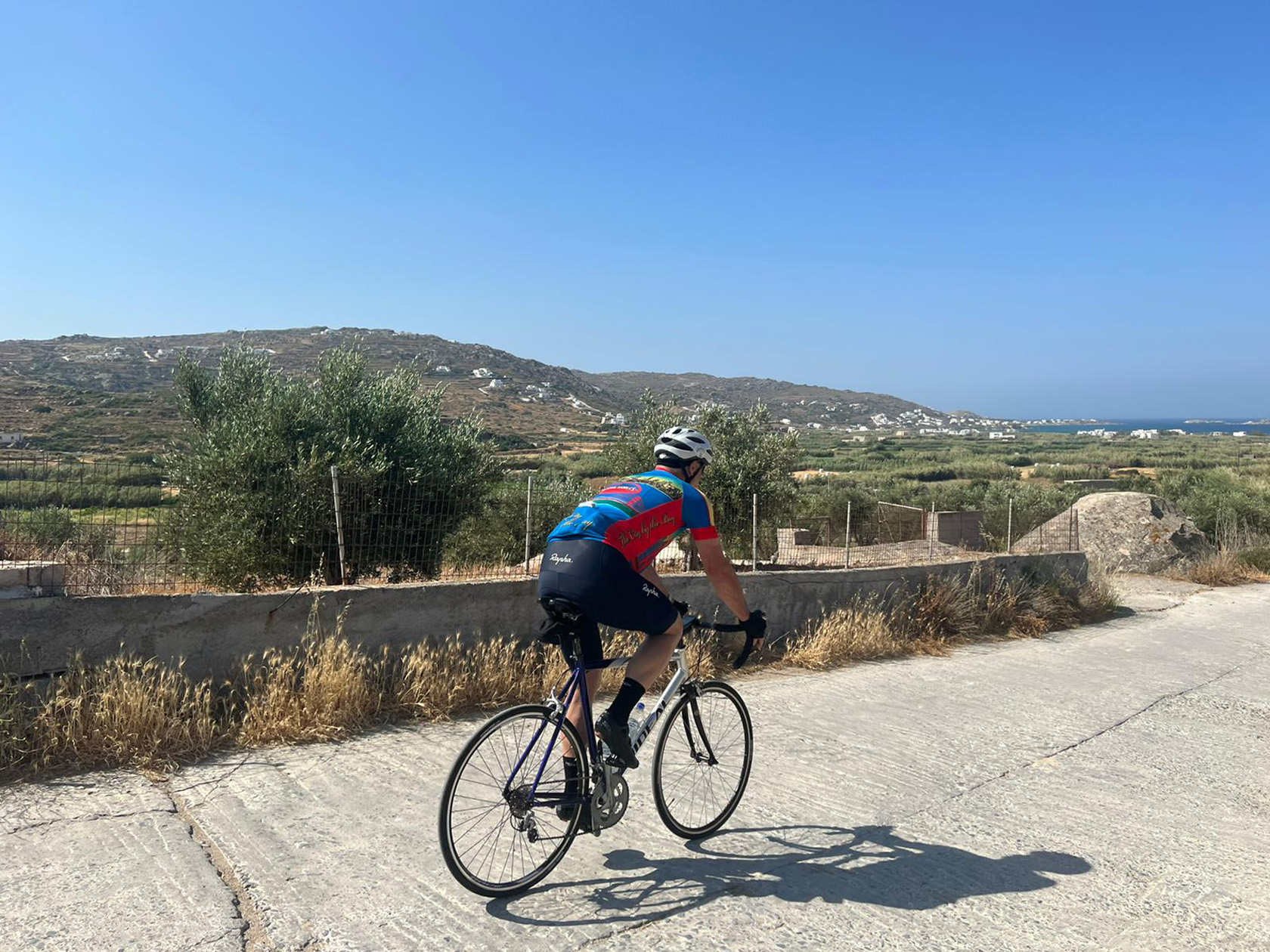
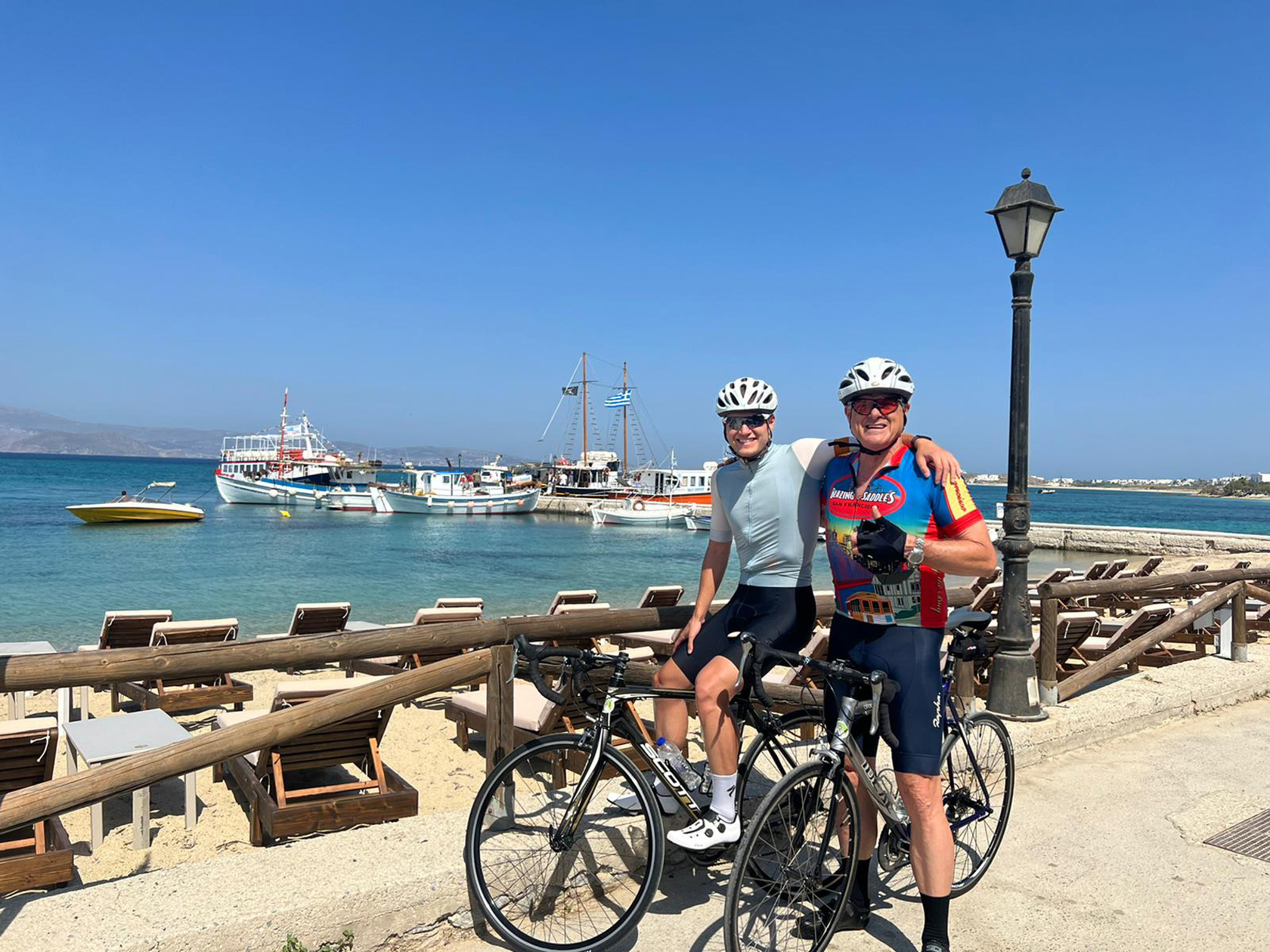
Cycling Naxos – Gabi, Tristan and Erick – Day 1
We rented our road bikes from Naxos Bikes and were not disappointed. Though a bit dated, all of the bikes performed as stated. The owners were eager to supply enough tubes, pumps and other equipment (helmets) as needed. The only thing we had to bring were our own clothes, shoes and Garmins. They delivered and picked up right at our hotel for a modest fee, so we didn’t have to worry about getting into town prior to our ride.
We really enjoyed touring Naxos, though I would suggest planning your route before you leave your hotel, as not all roads are suitable for road bikes (if you make a wrong turn, you will see what I mean).
Naxos – The City
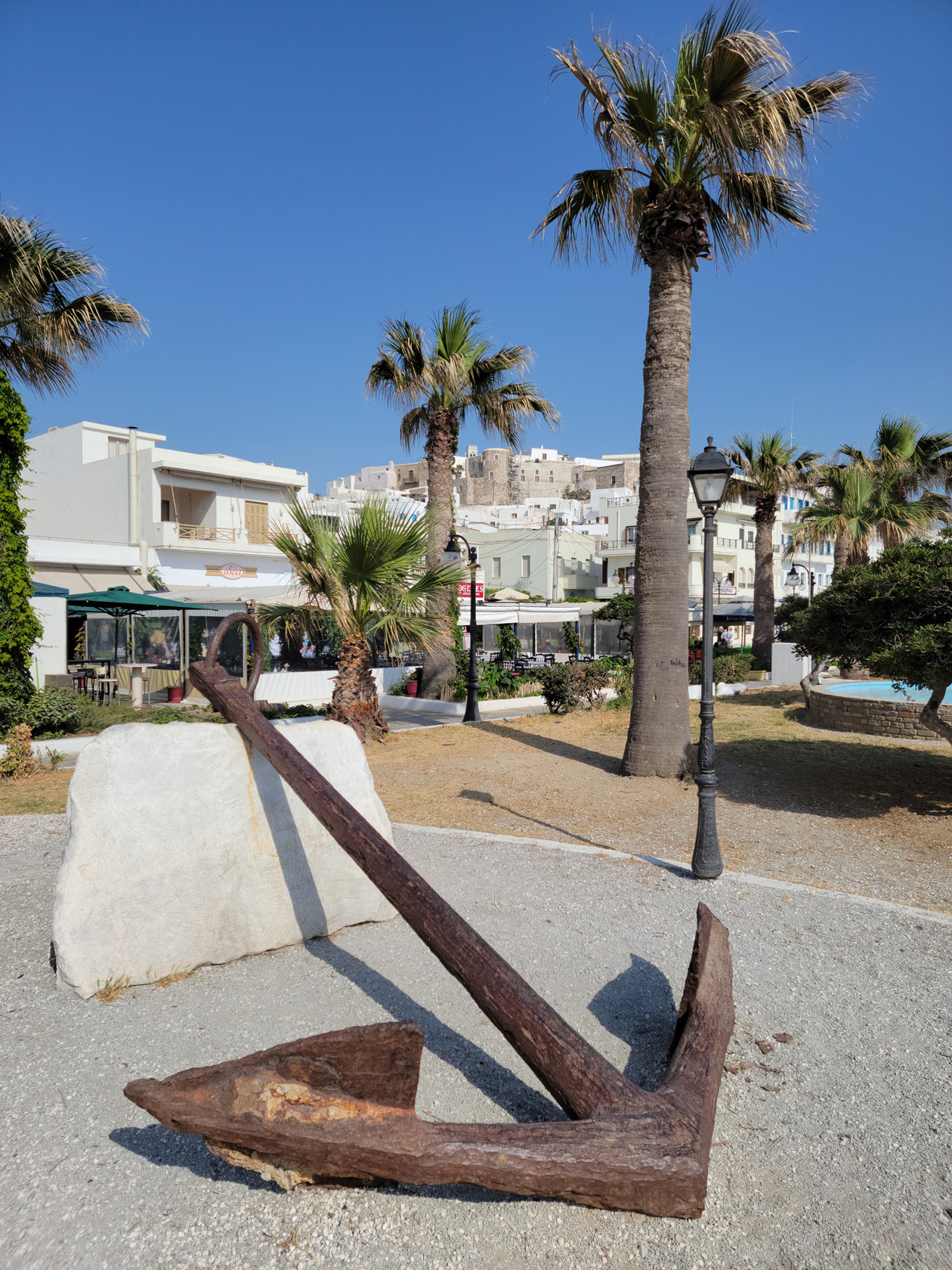
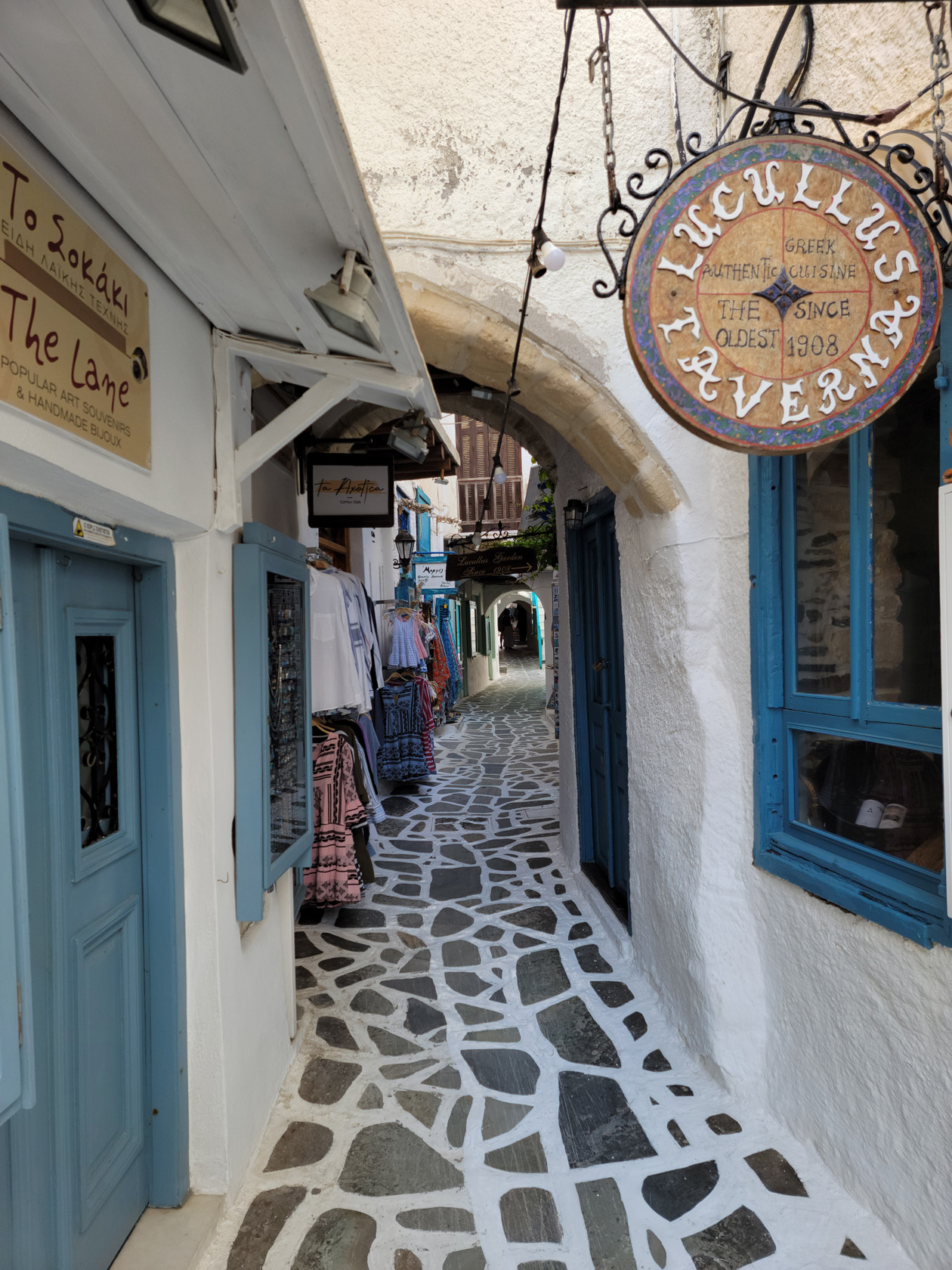
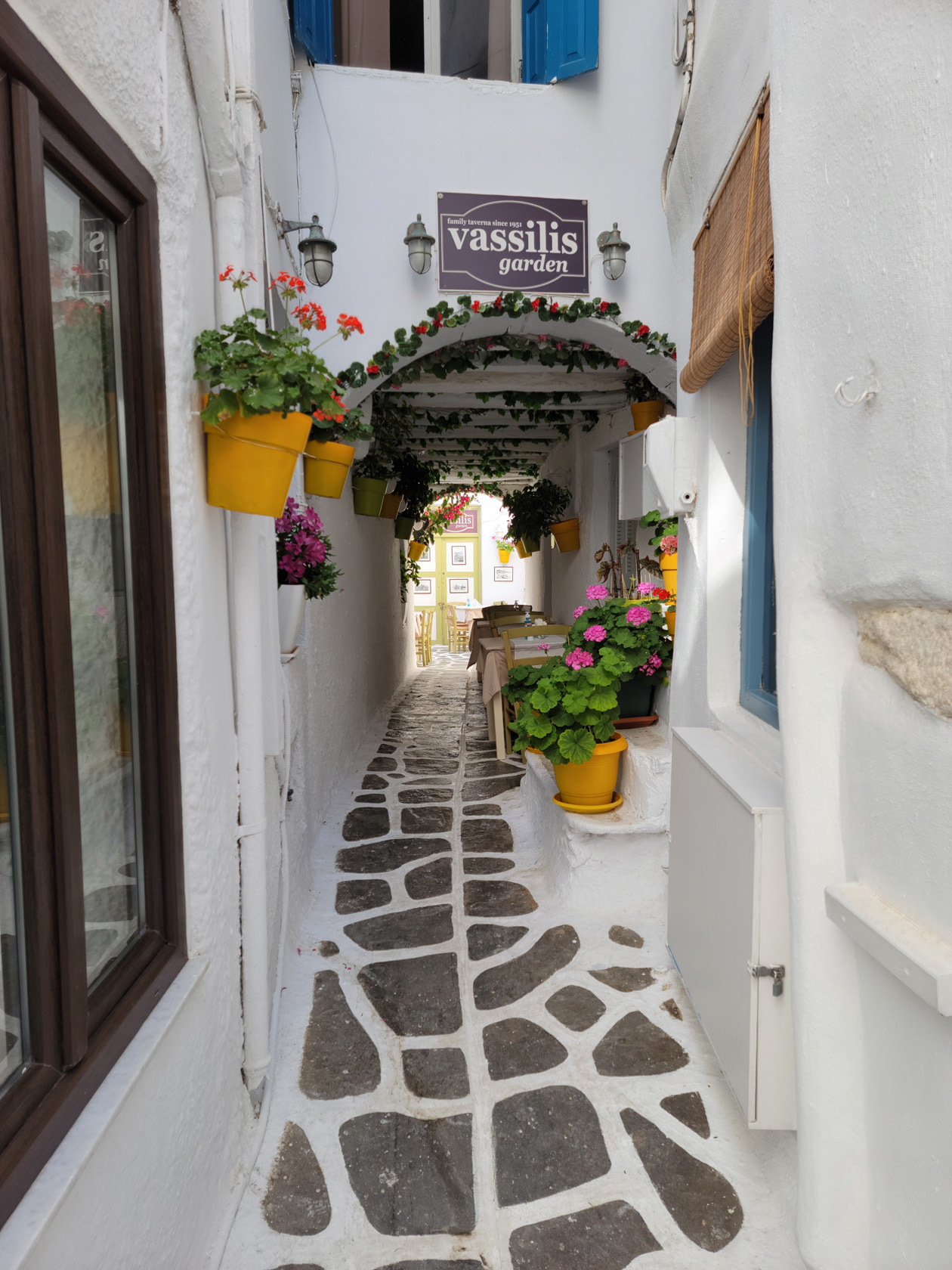
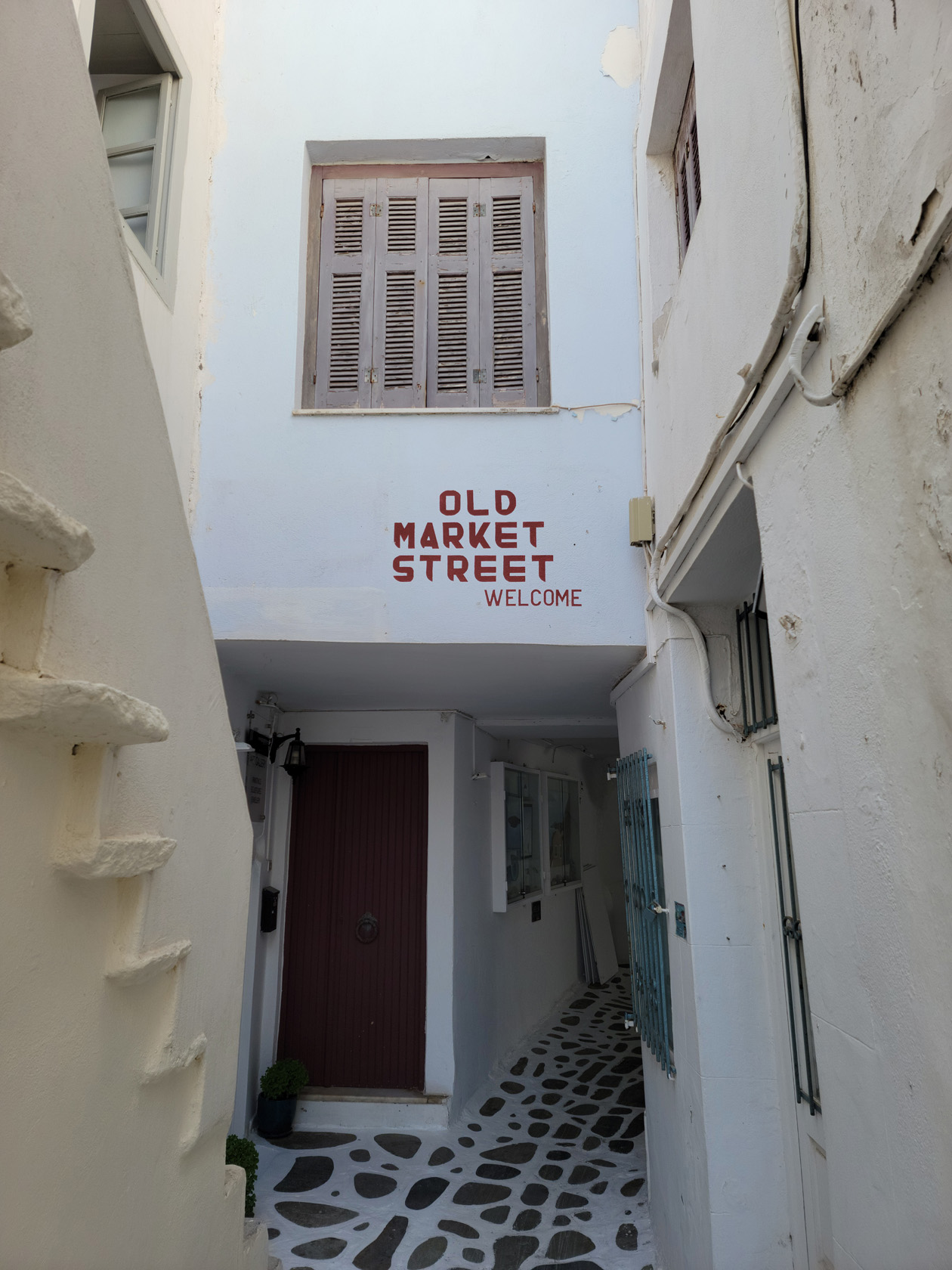
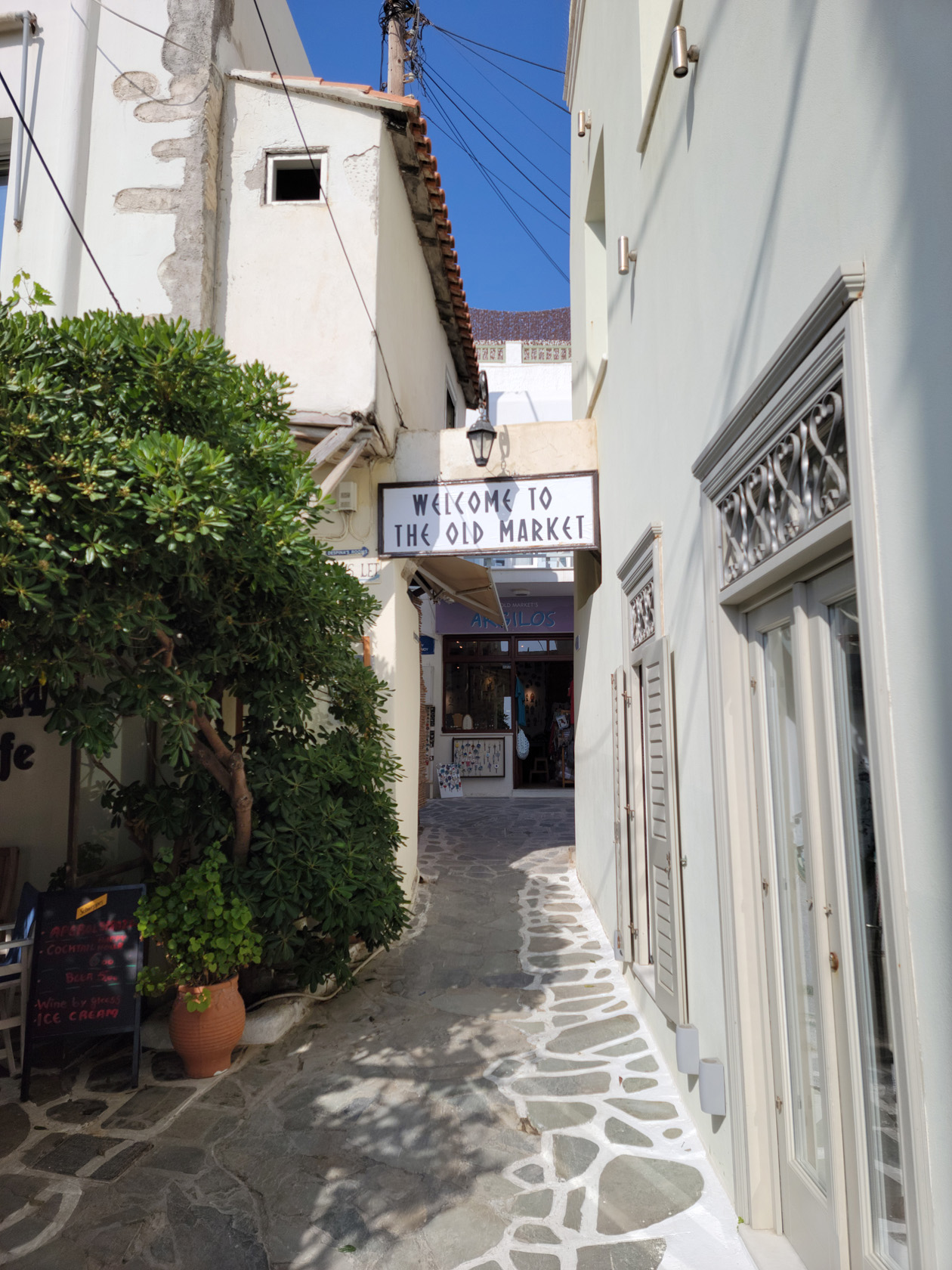
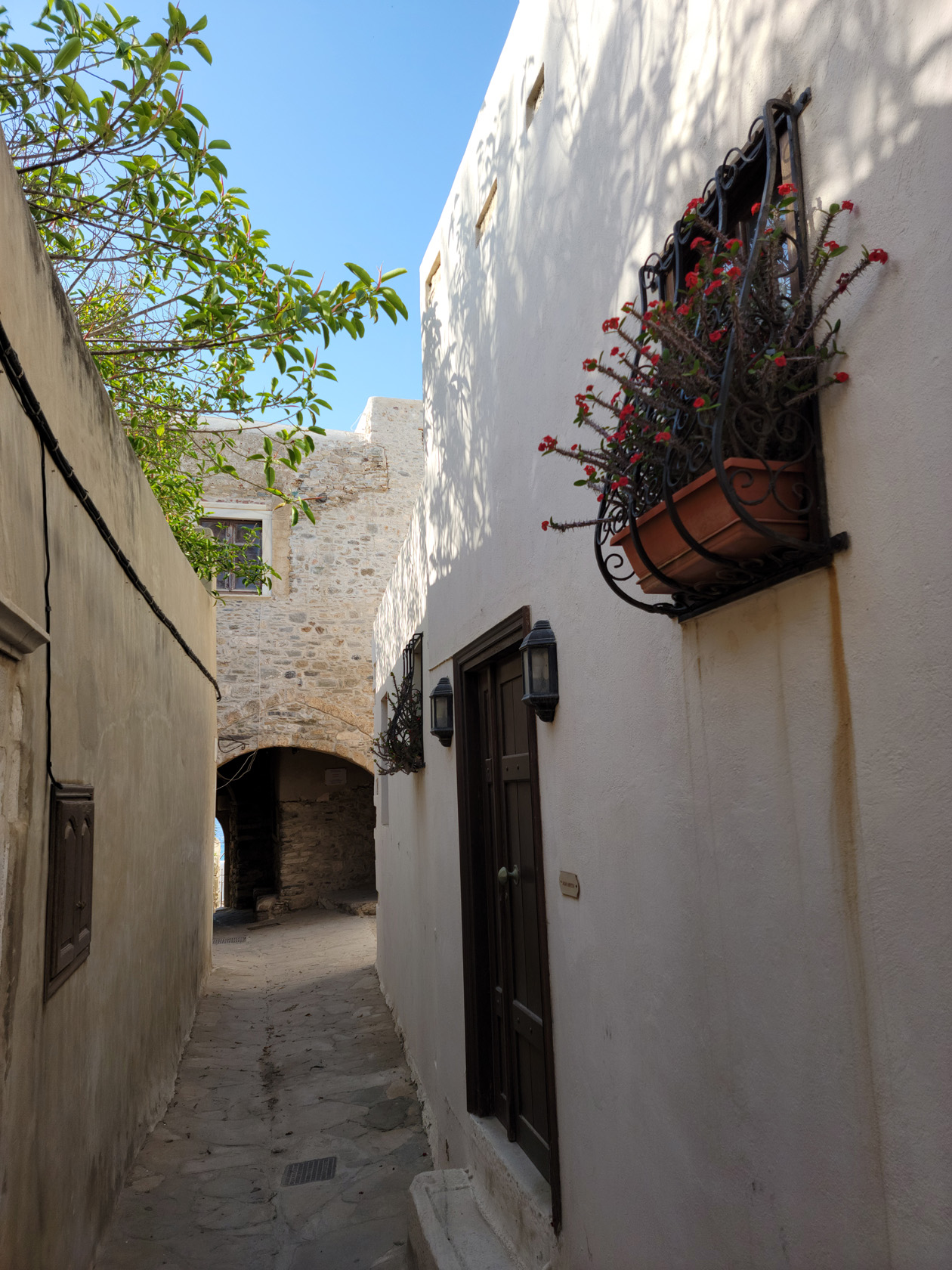
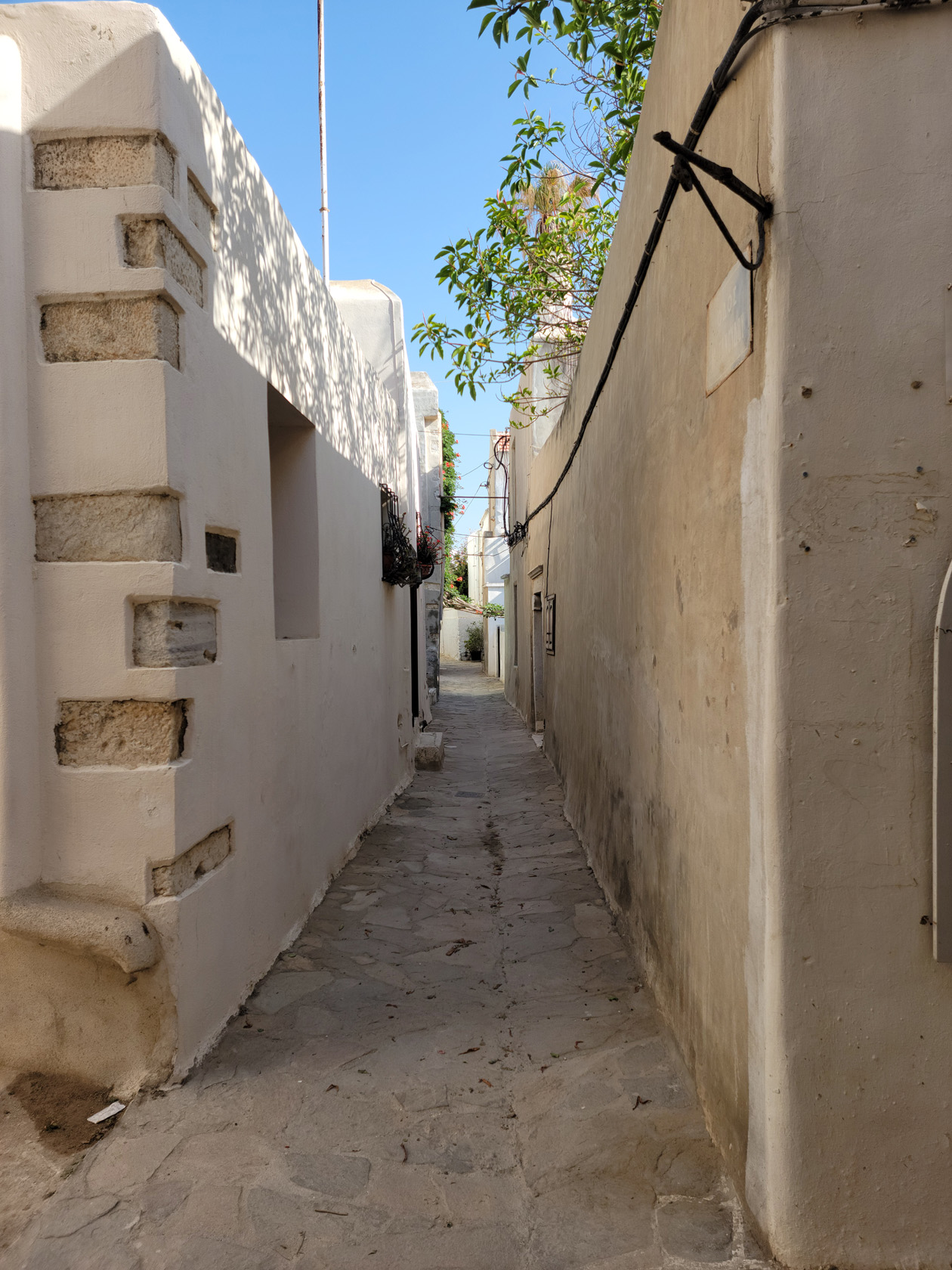
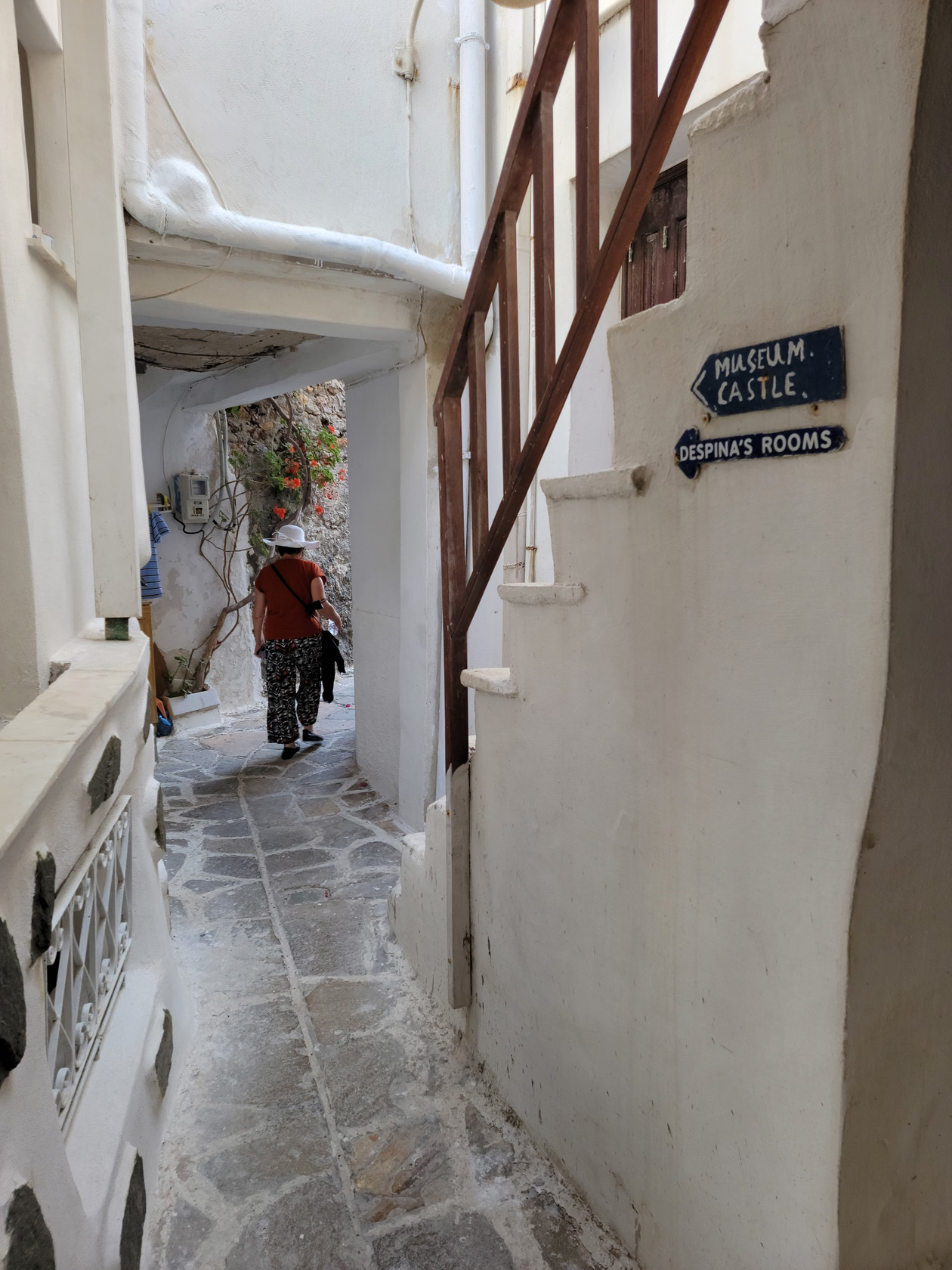
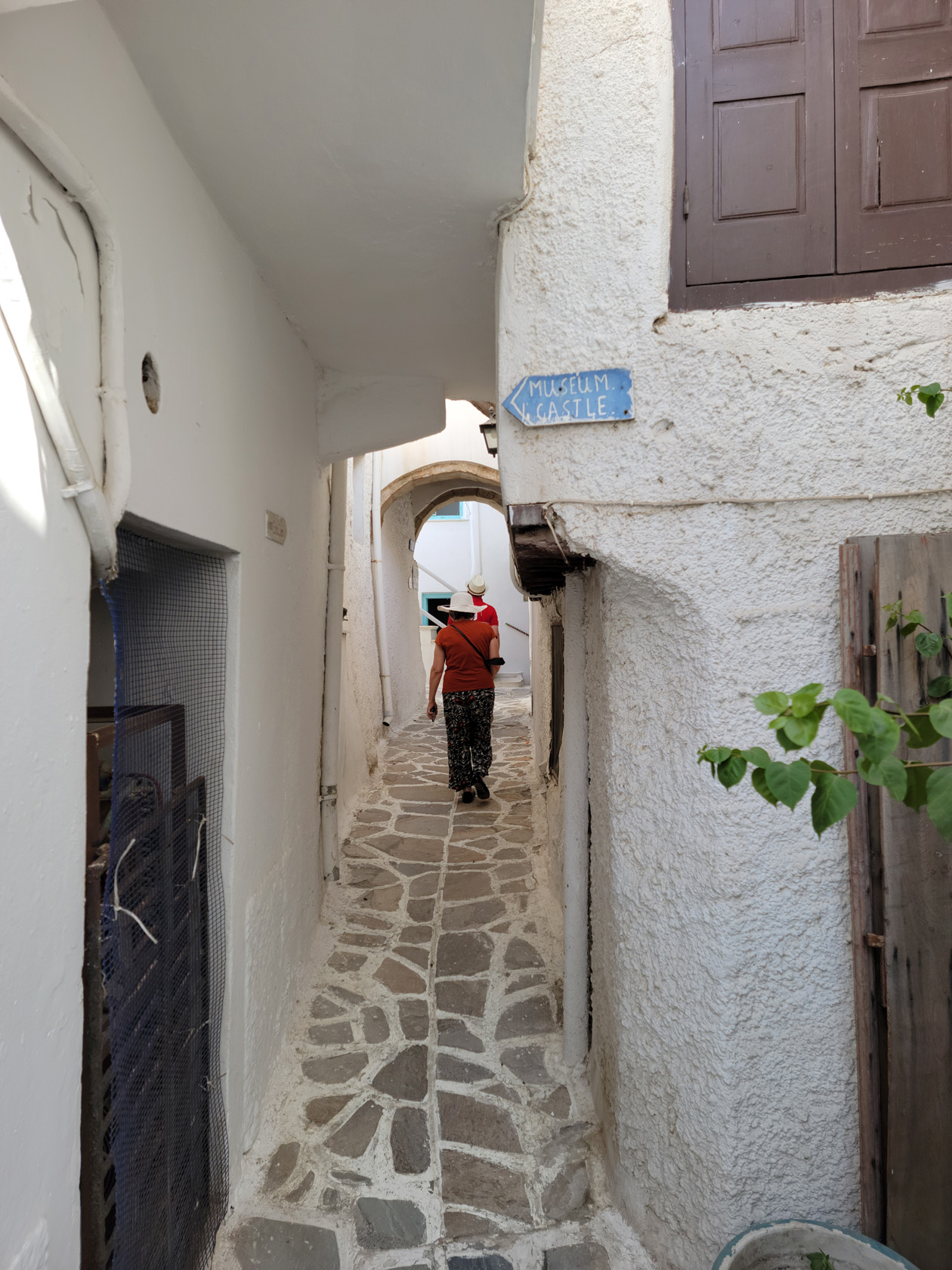
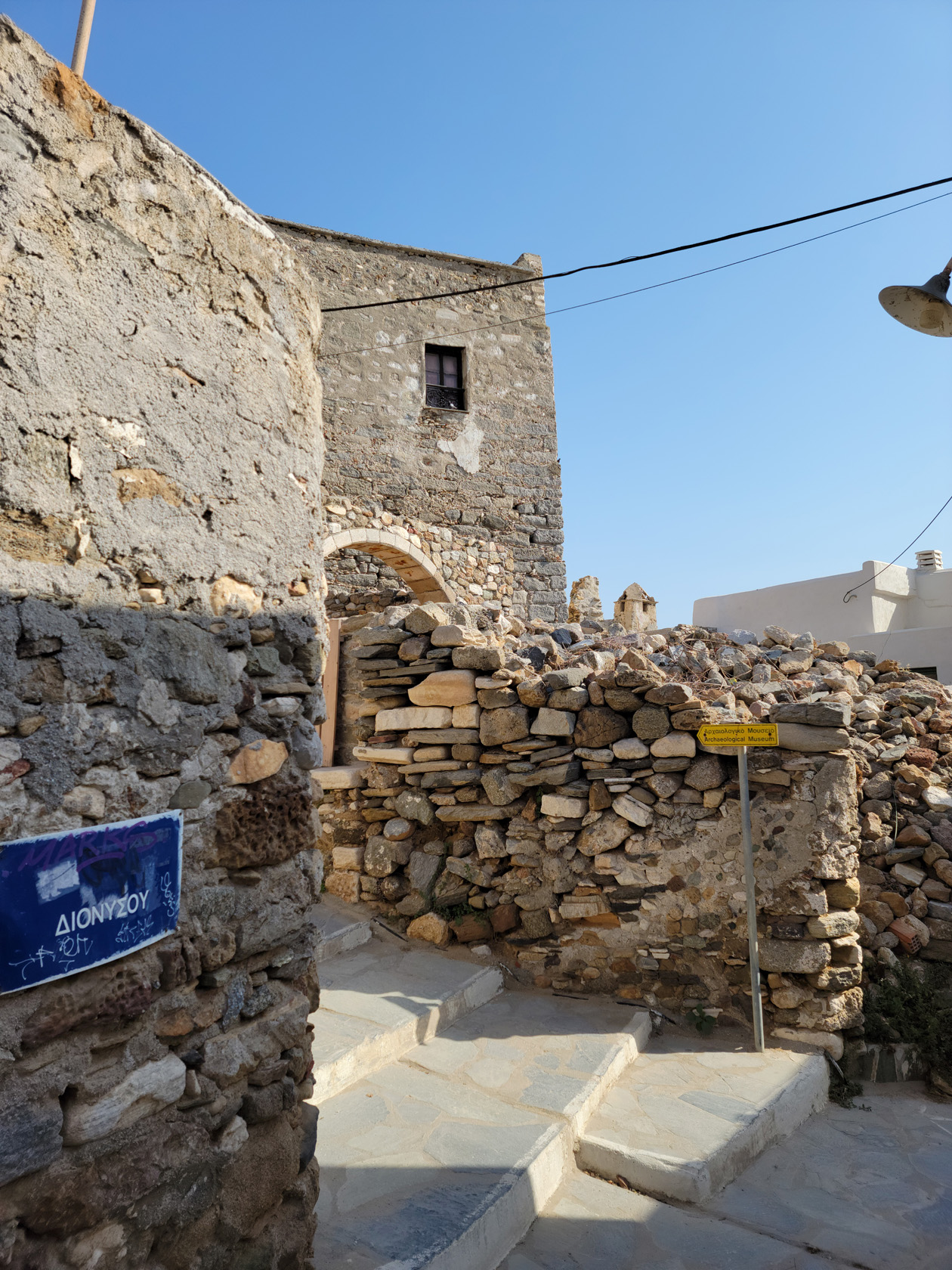
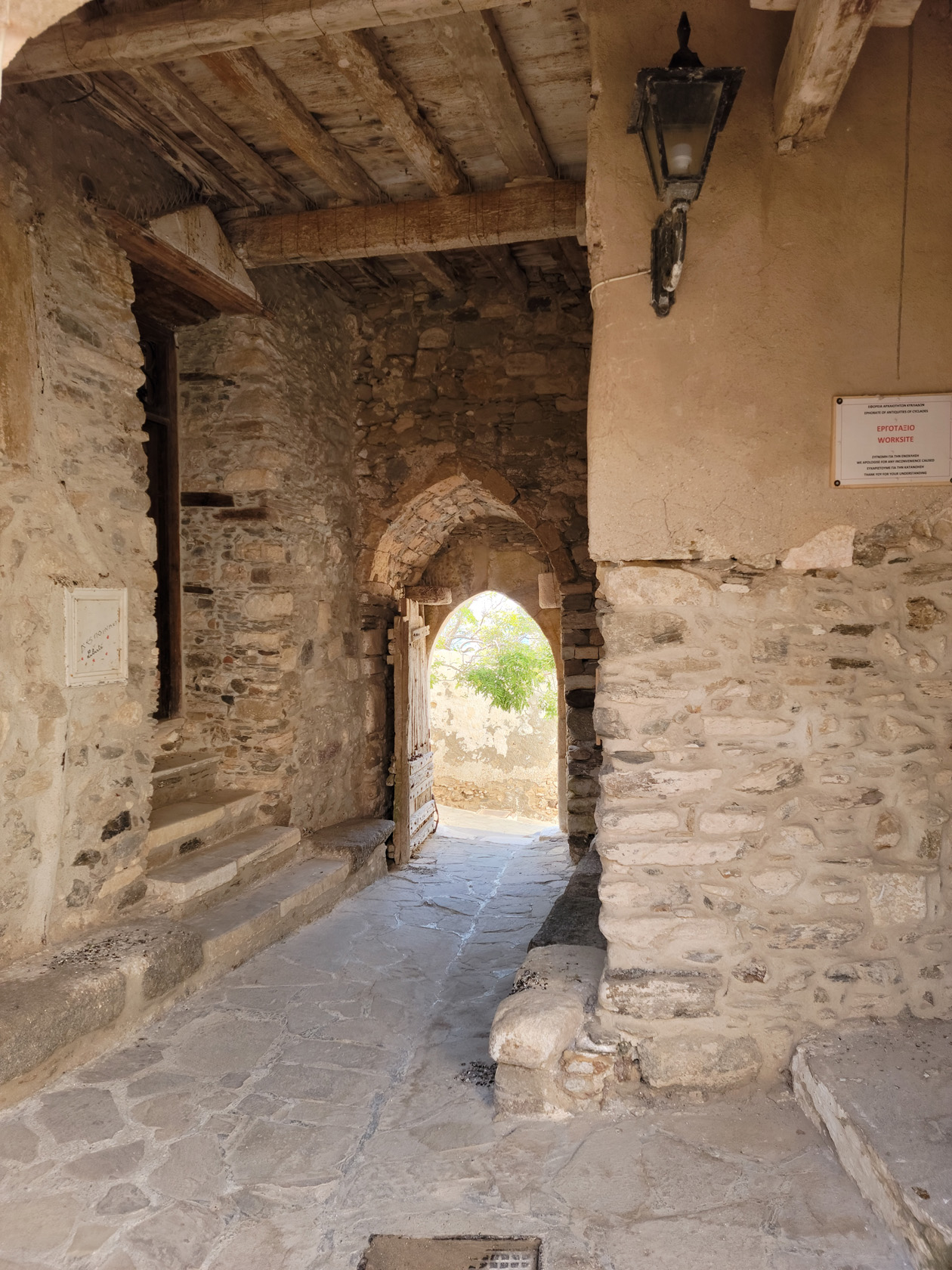
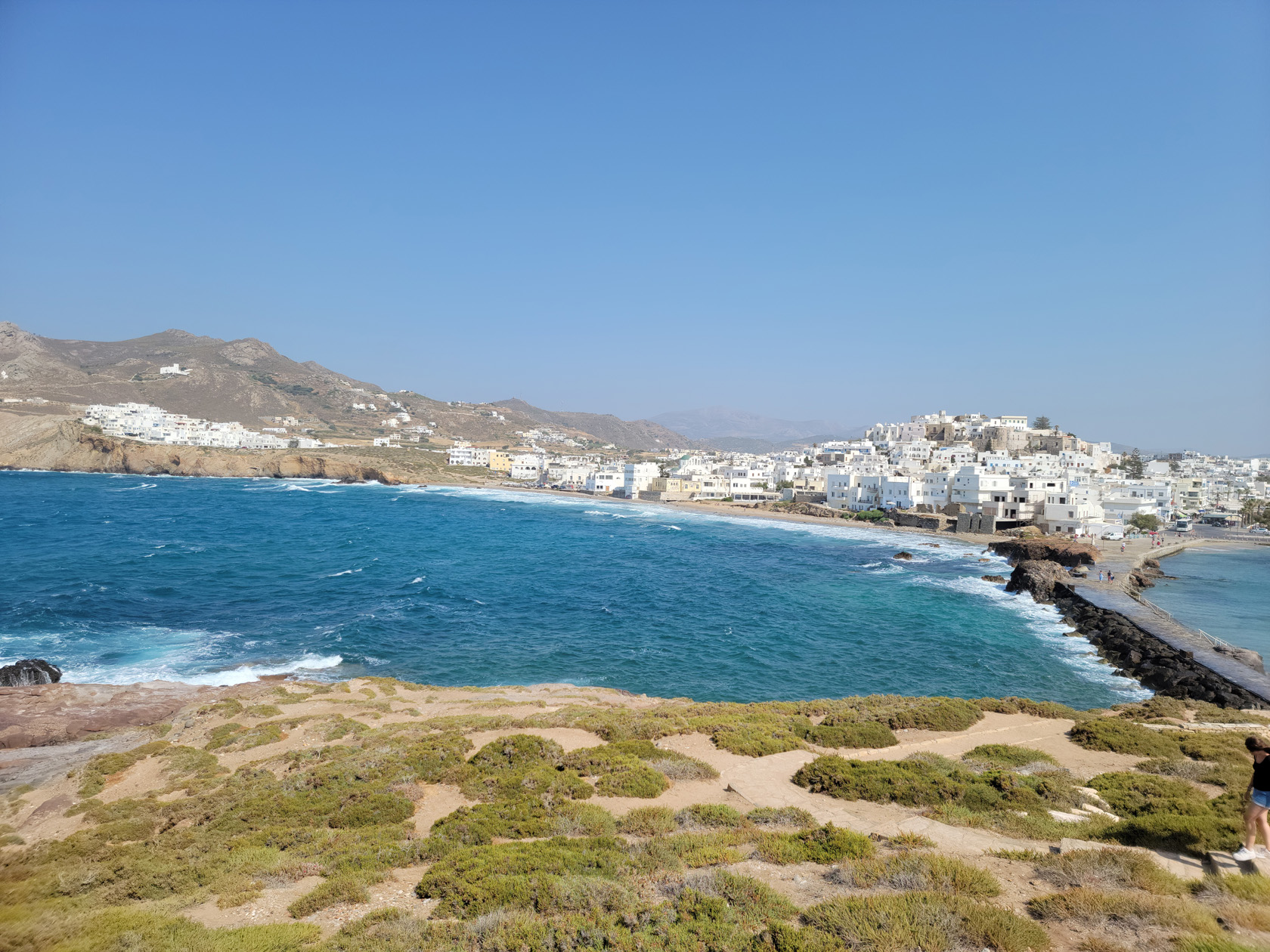
The modern part of Naxos is pretty little port city built into a small hill that of course has a church and castle built on top of it. The hill has very interesting narrow winding streets that one can peruse and occasionally shop at the stores that dot the way.
Naxos, Naxos – The City
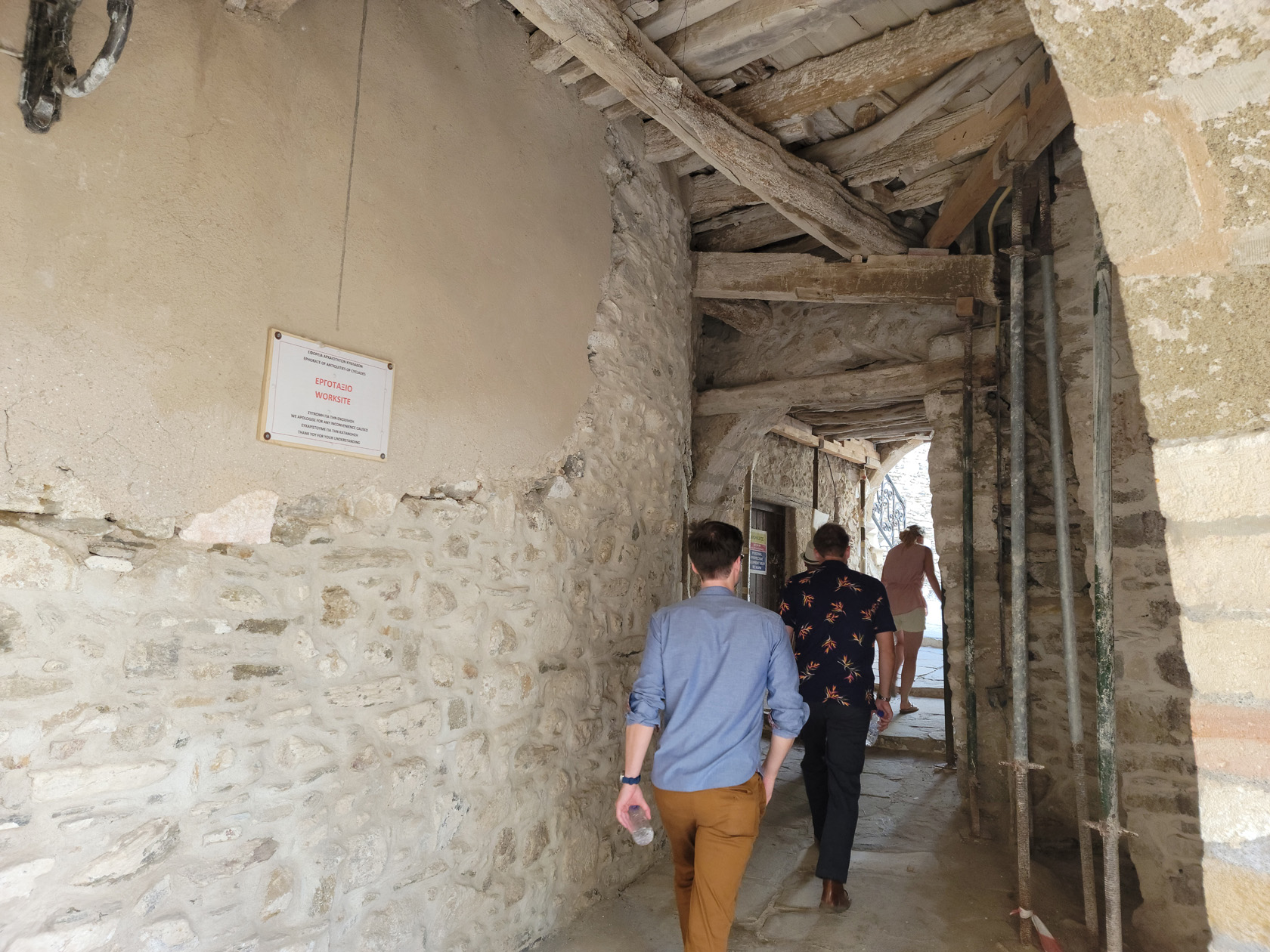
The Venetian Castle of Naxos is not much to look at, and from what we could tell, not open to the public, since all the entrances appear locked, signed and boarded up.
Naxos, Naxos – Alleyway To Castle
Naxos, Naxos – Alleyway To Castle
Naxos, Naxos – Alleyway To Castle
Naxos, Naxos – Alleyway To Castle – Old Market Entrance
Naxos, Naxos – Alleyway To Castle
Naxos, Naxos – Alleyway To Castle
Naxos, Naxos – The Castle
Naxos, Naxos – The Castle
Naxos, Naxos – The Castle
Naxos, Naxos – The Castle
Naxos, Naxos – The Castle – Walking Through Part Of The Castle
The Catholic Cathedral at the top is open to the public, but when we arrived it was during lunch and we were not going to stay until later in the afternoon for them to reopen. It was just a passing thought, since our real intent was to find a place to each lunch ourselves.
The Temple of Apollo
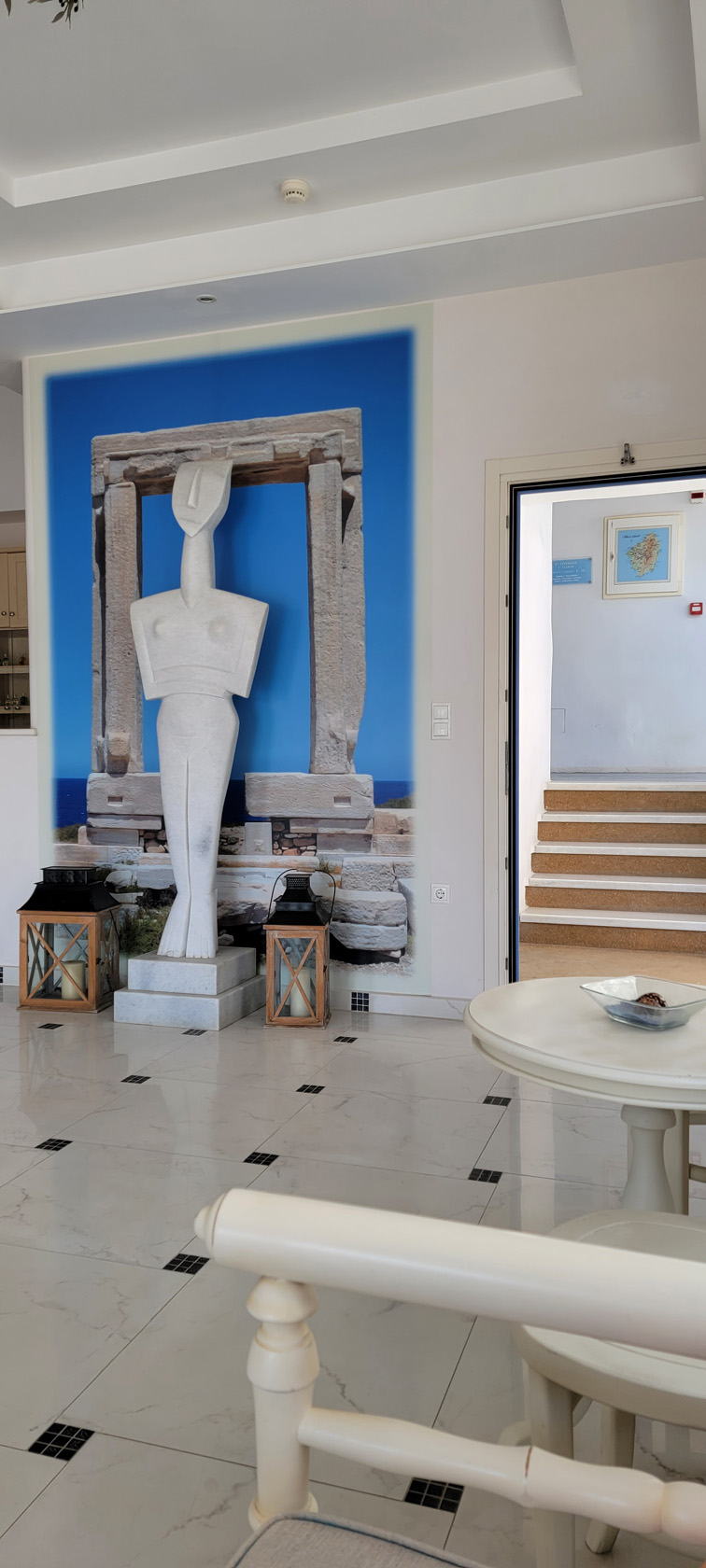
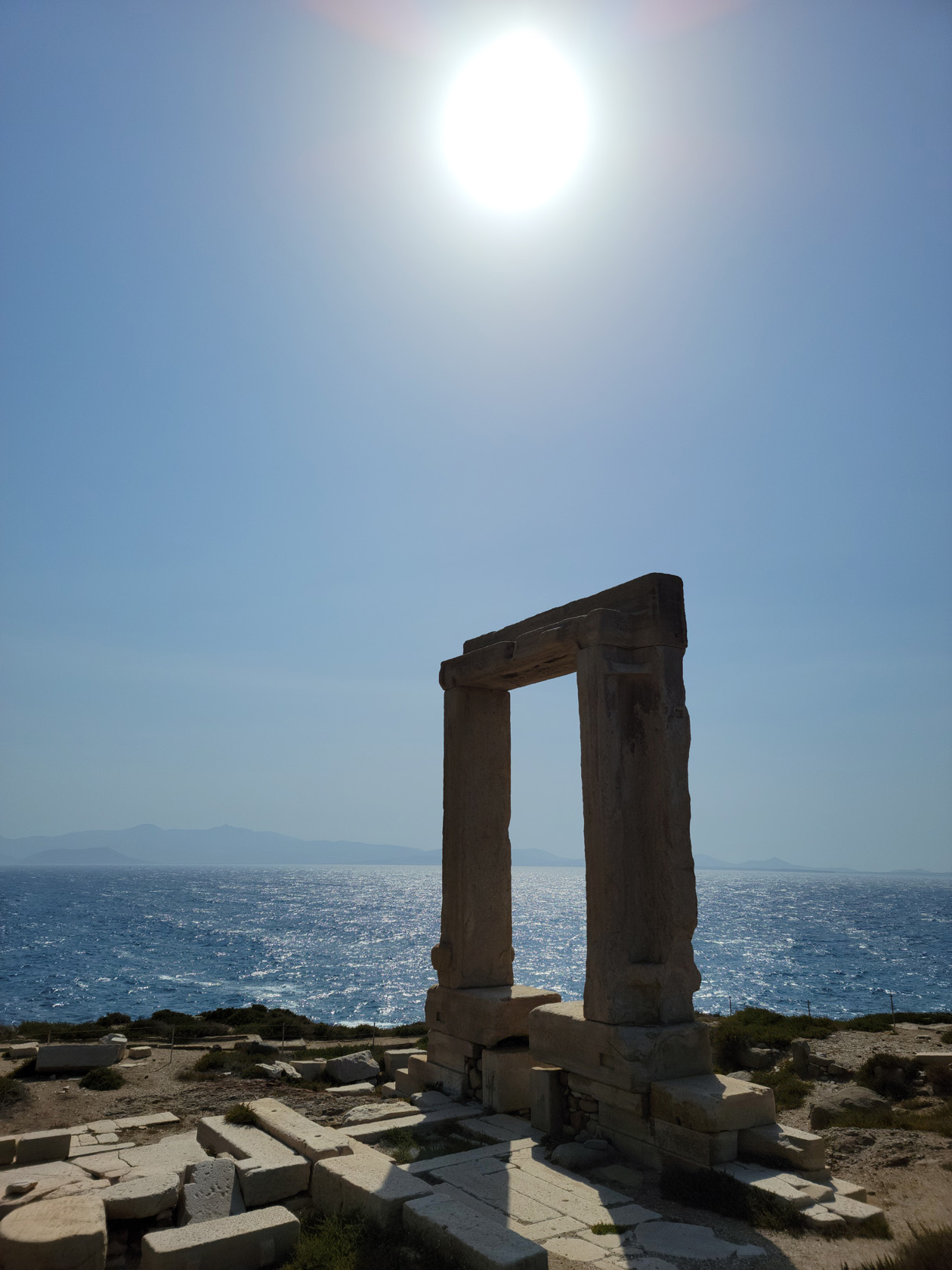
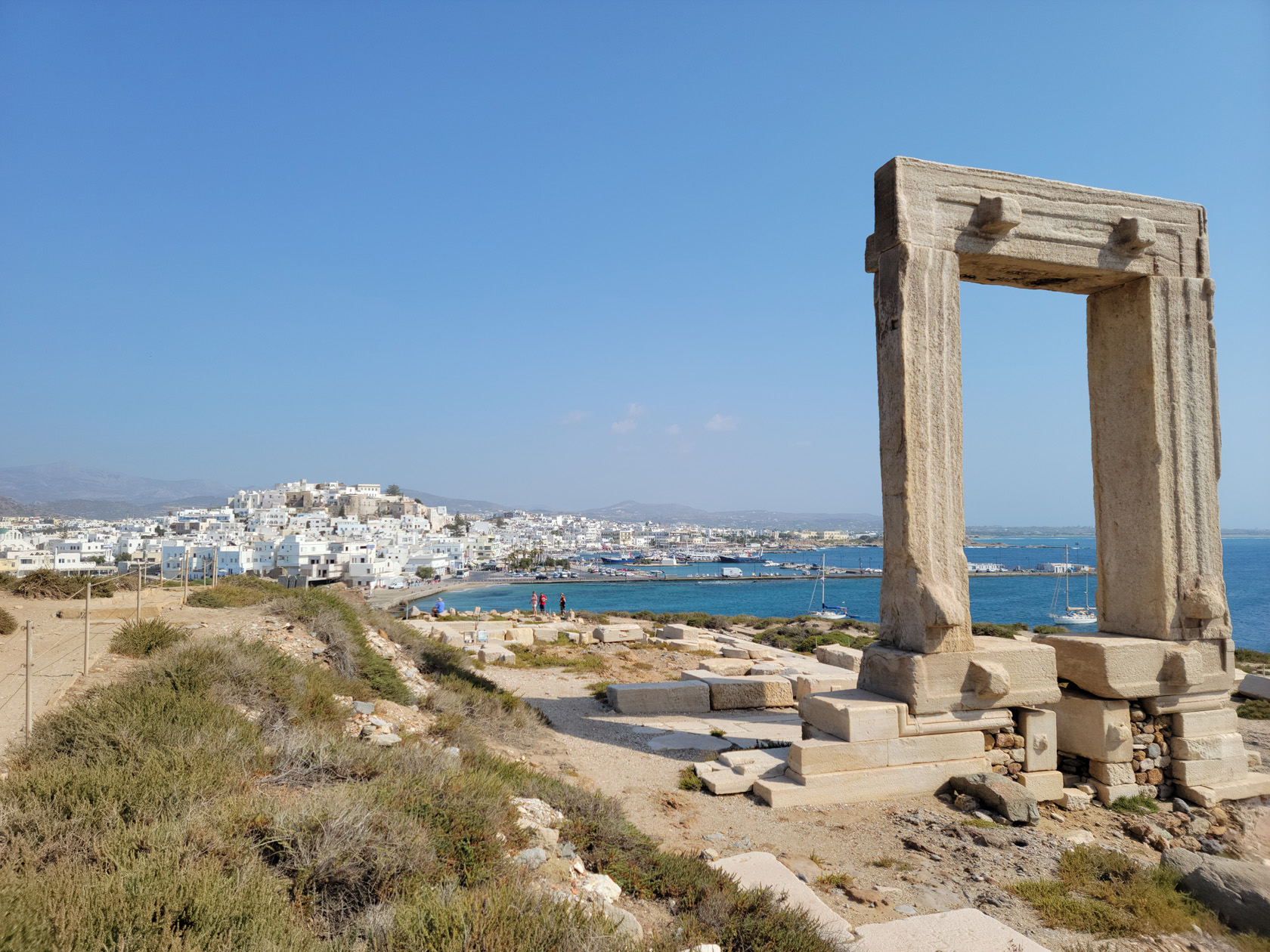
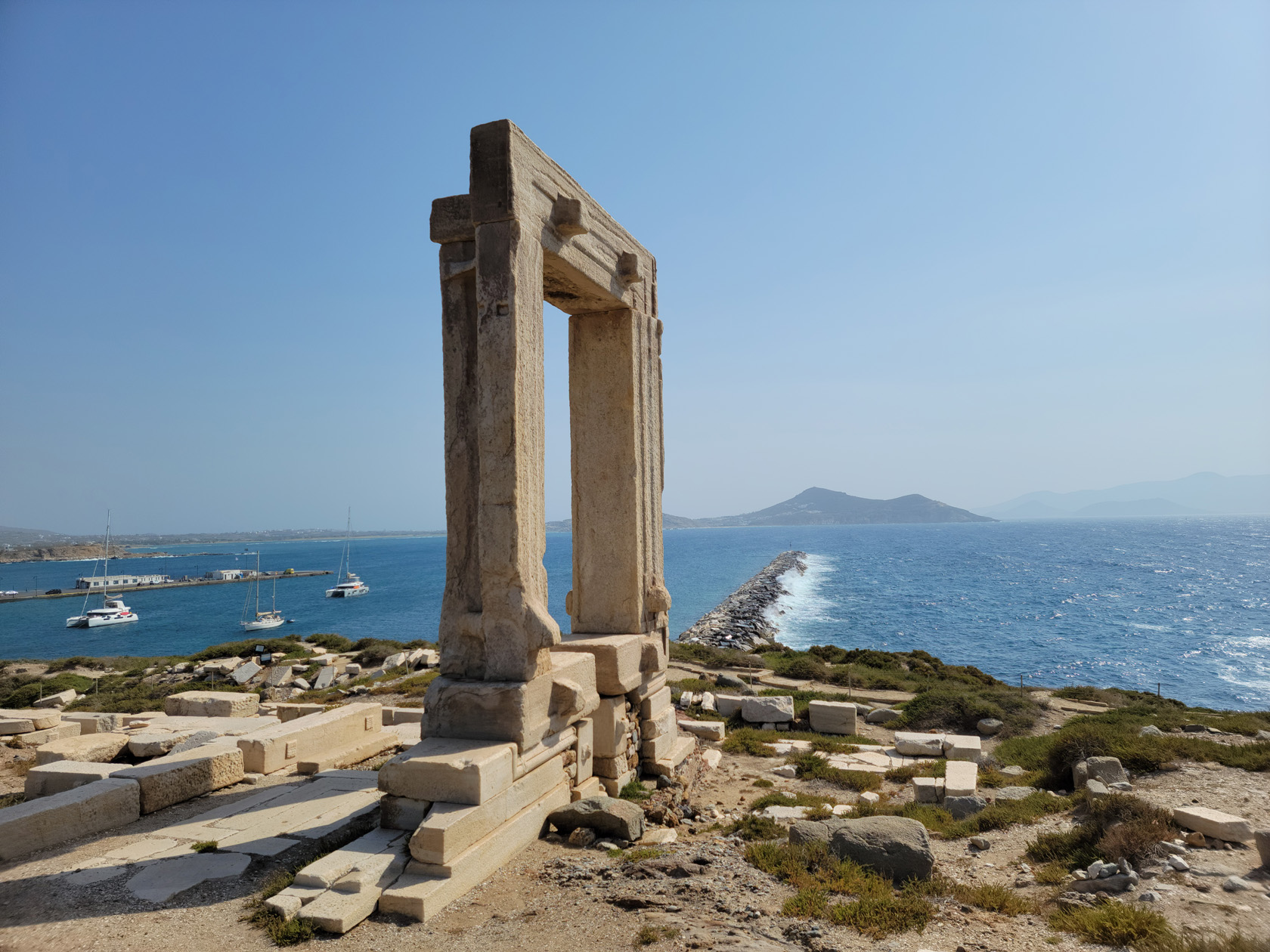
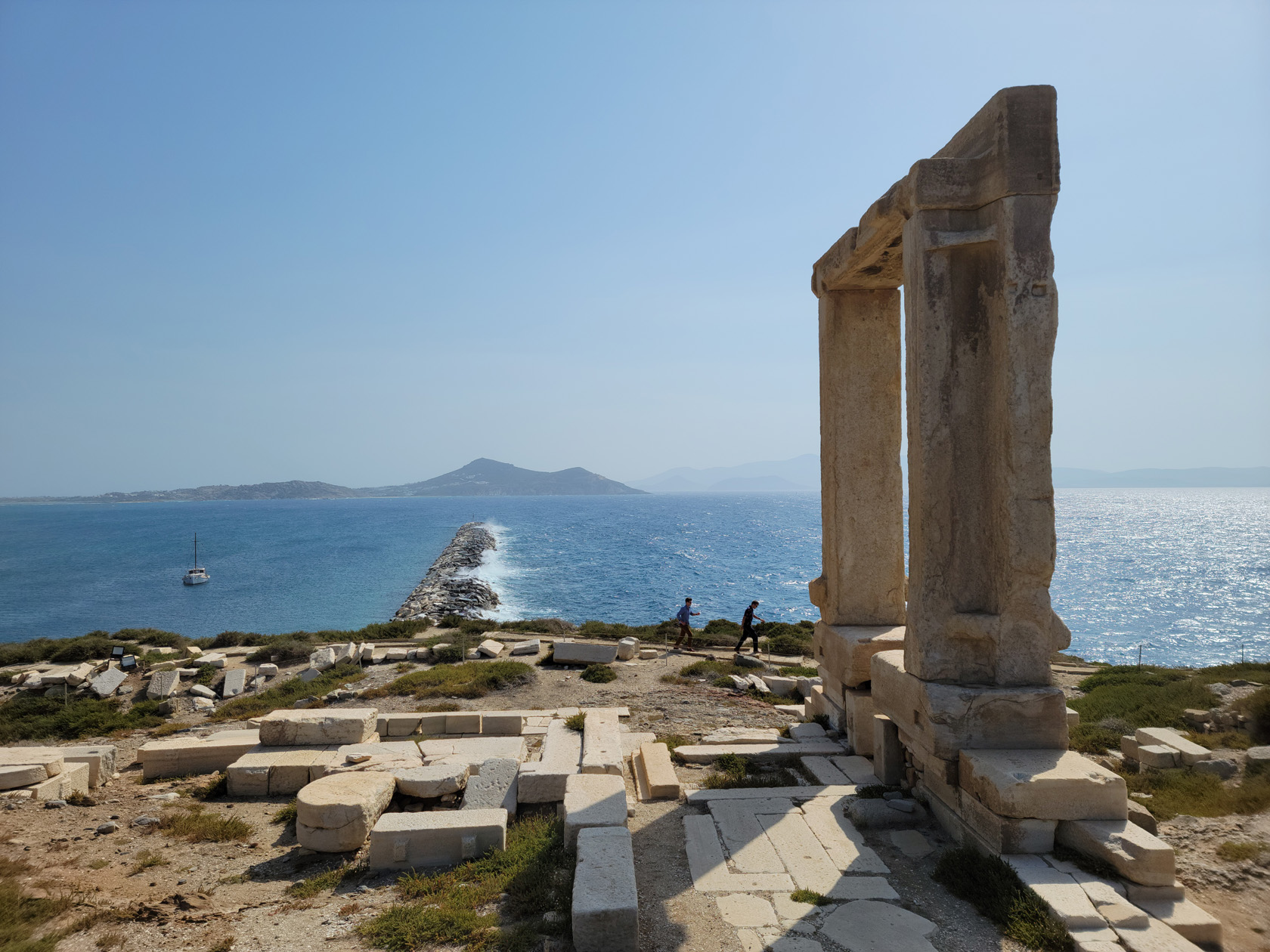
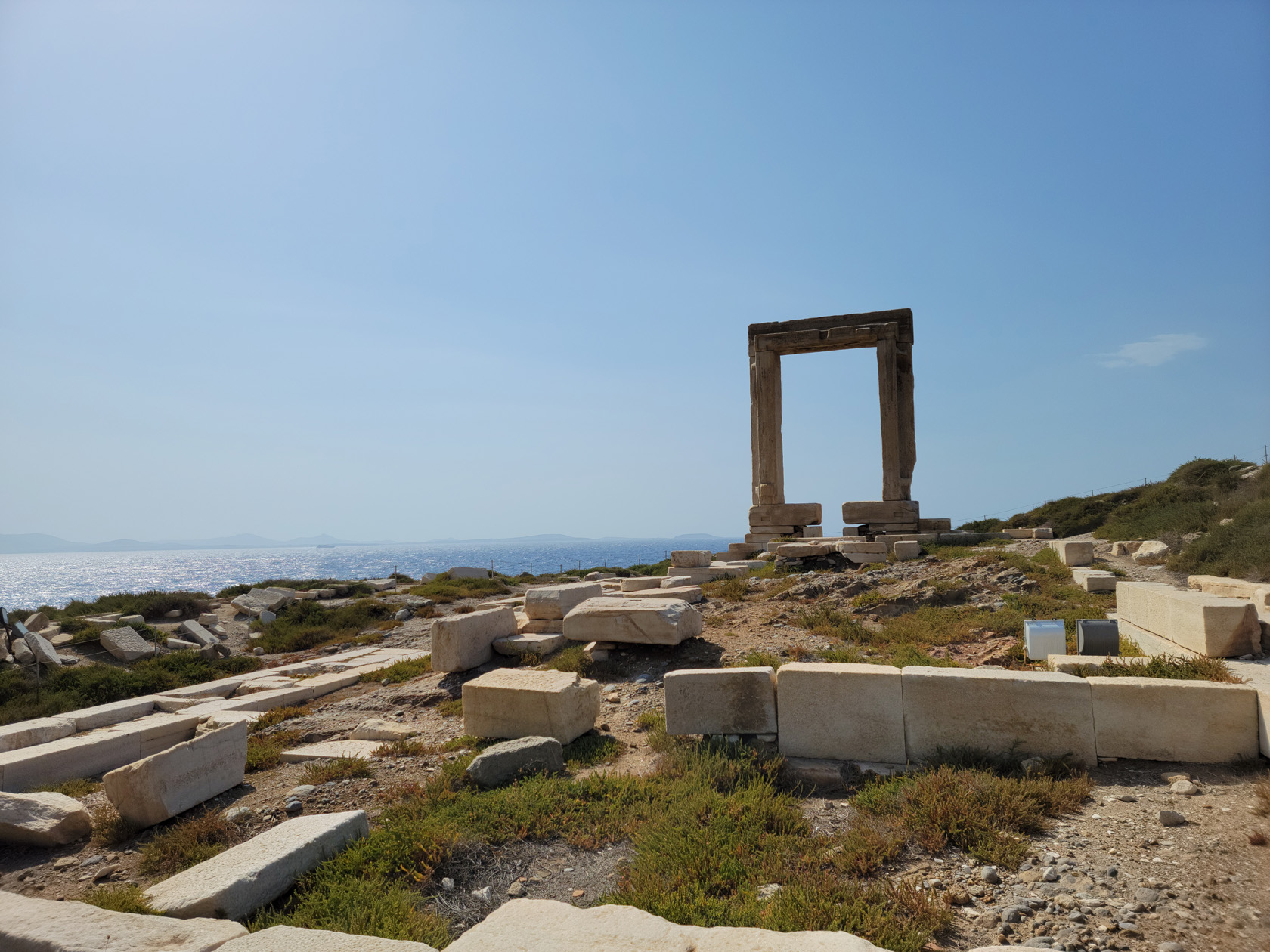
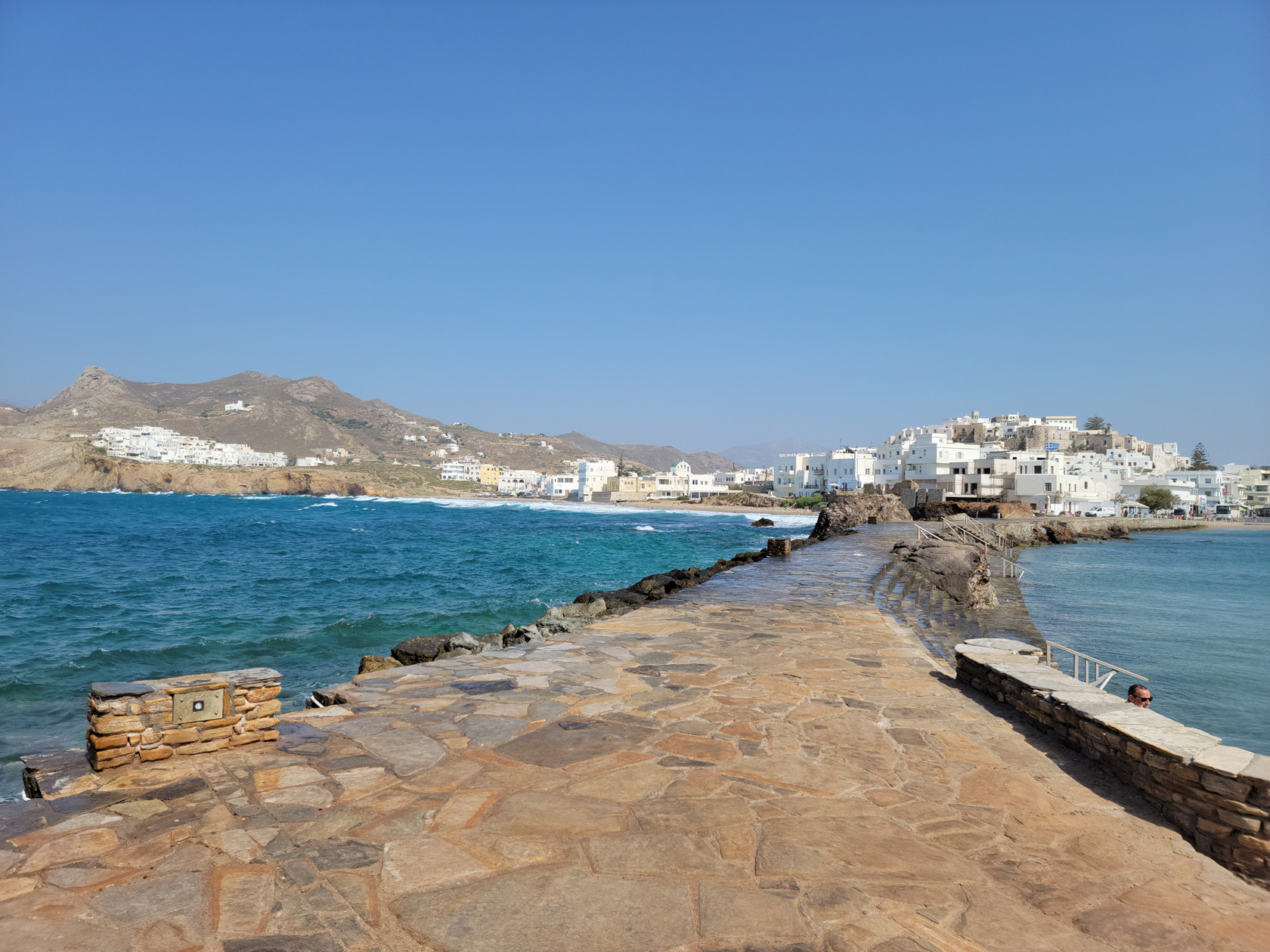
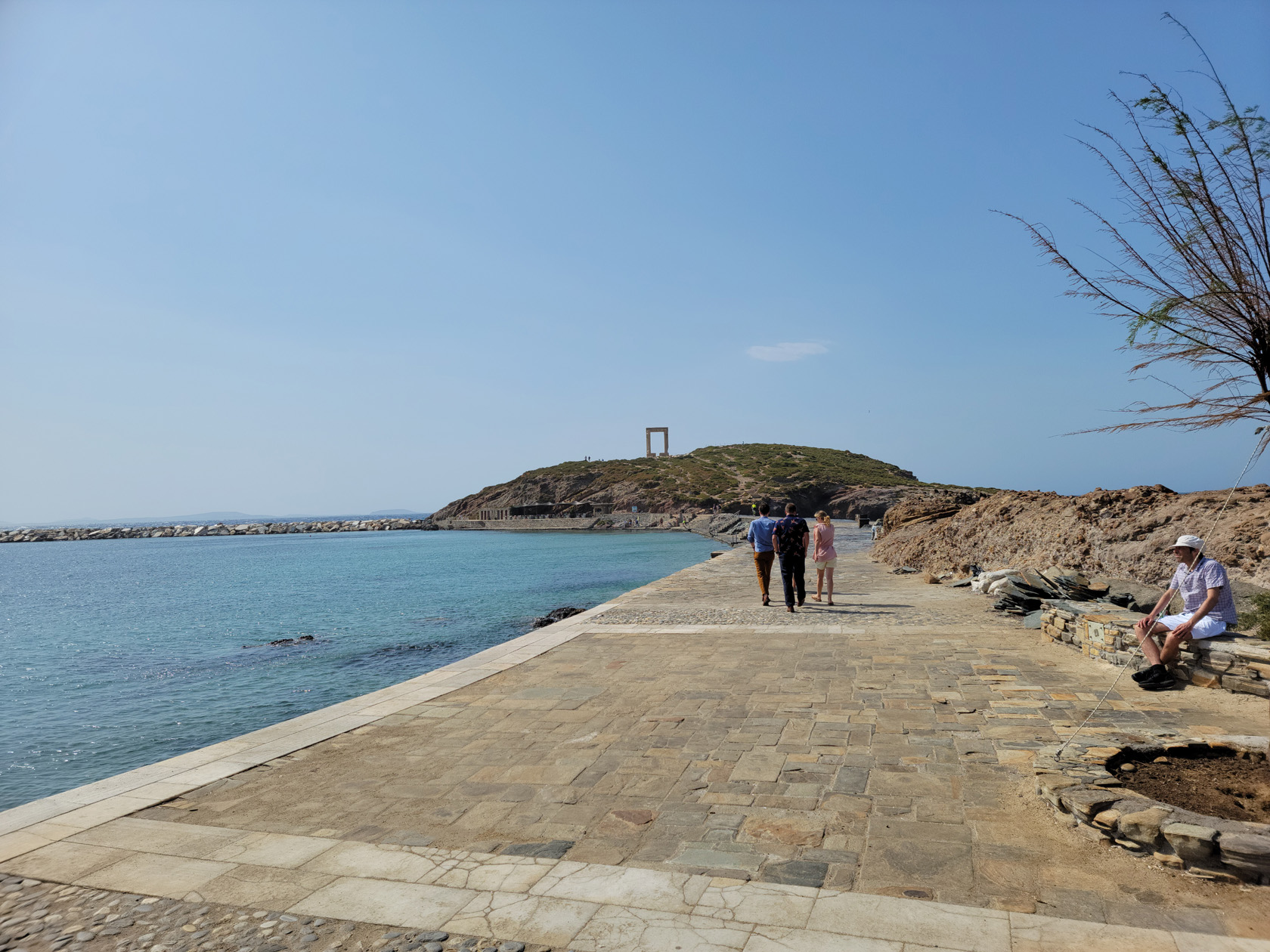
The interesting form that we first came in contact with at our hotel has an actual presence on the island. The Temple of Apollo are the remains of a structure to the god Apollo built by Lygdamis the tyrant in the sixth century BCE on a peninsula just off the harbor of Naxos City. In fact he never actually completed it. Before he could do so, he was conquered by the Spartan army in 524 BCE and never saw power again.
Naxos, Naxos – Temple of Apollo
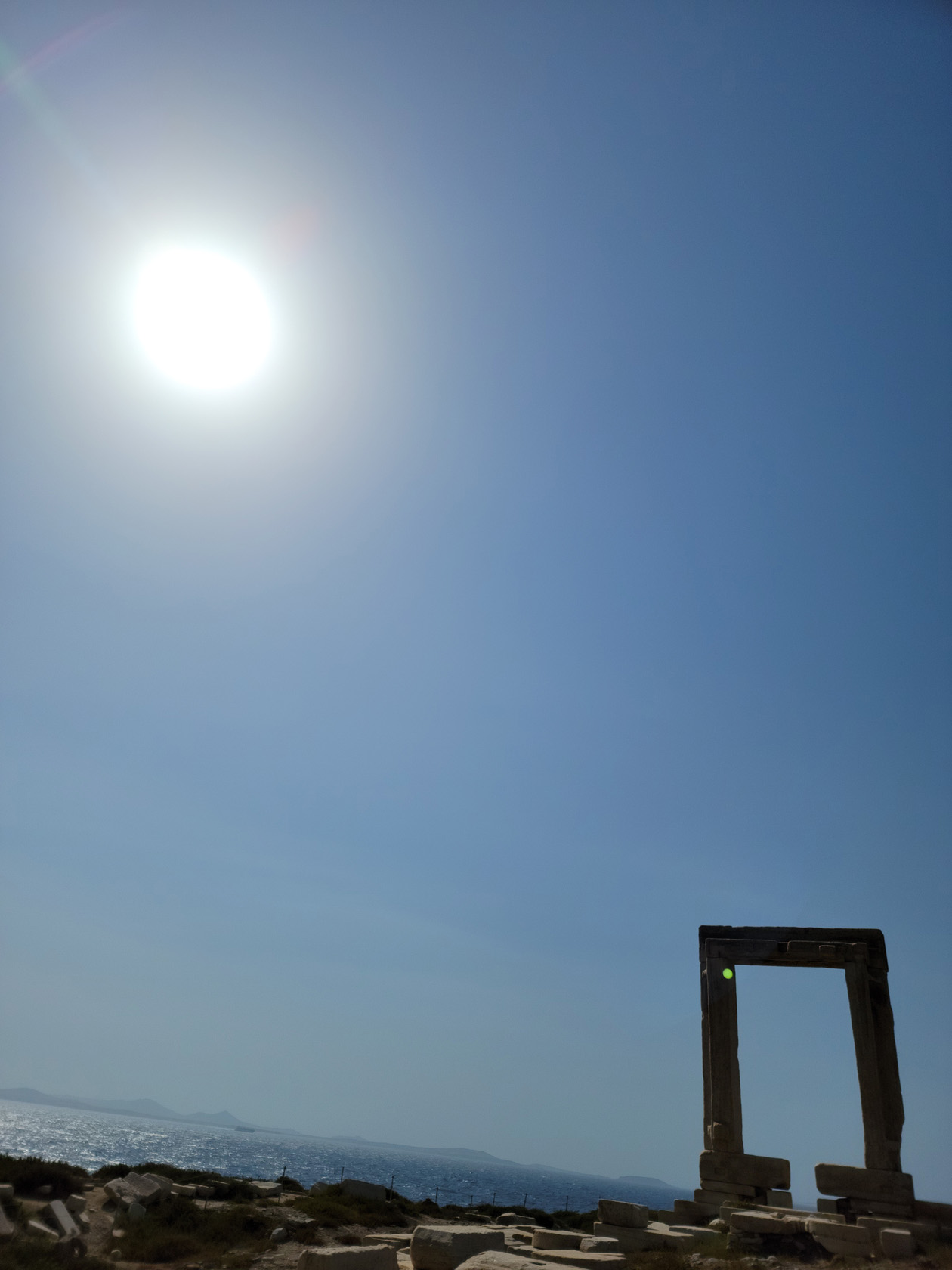
Due to its age and no doubt having been plundered over the millennia, all that stands after repeated excavations and reconstructions, is the gate itself. It stands with its lintel and two sides upright on a small outcropping of rock just to the north of the city against the stark blue Aegean sky.
Naxos, Naxos – Temple of Apollo
Naxos, Naxos – Temple of Apollo
Naxos, Naxos – Temple of Apollo
Naxos, Naxos – Temple of Apollo
Naxos, Naxos – Temple of Apollo
Naxos, Naxos – And Its Jetty From The Temple of Apollo
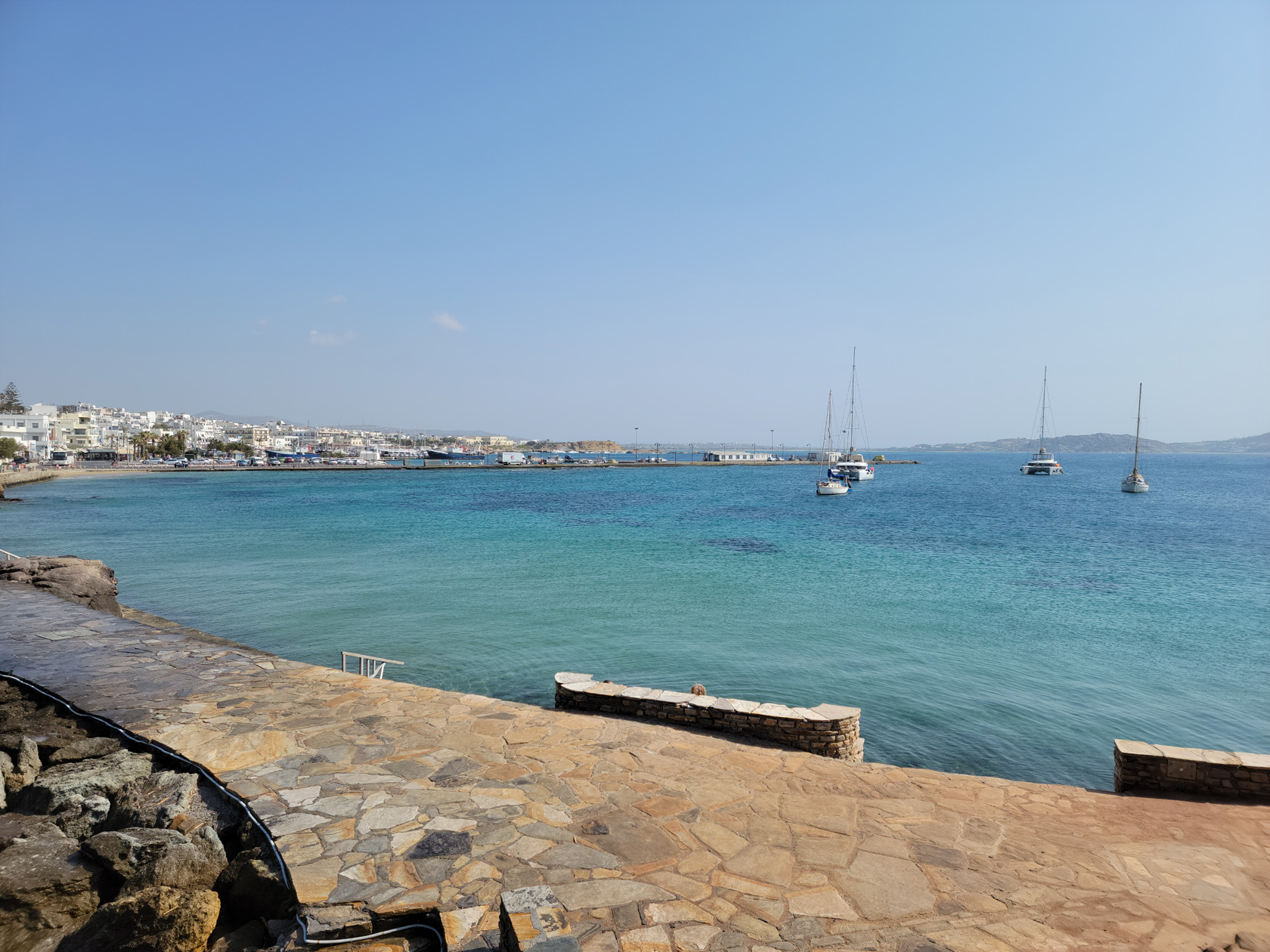
Naxos, Naxos – The Harbor
Naxos, Naxos – From Walkway
Naxos, Naxos – Temple of Apollo
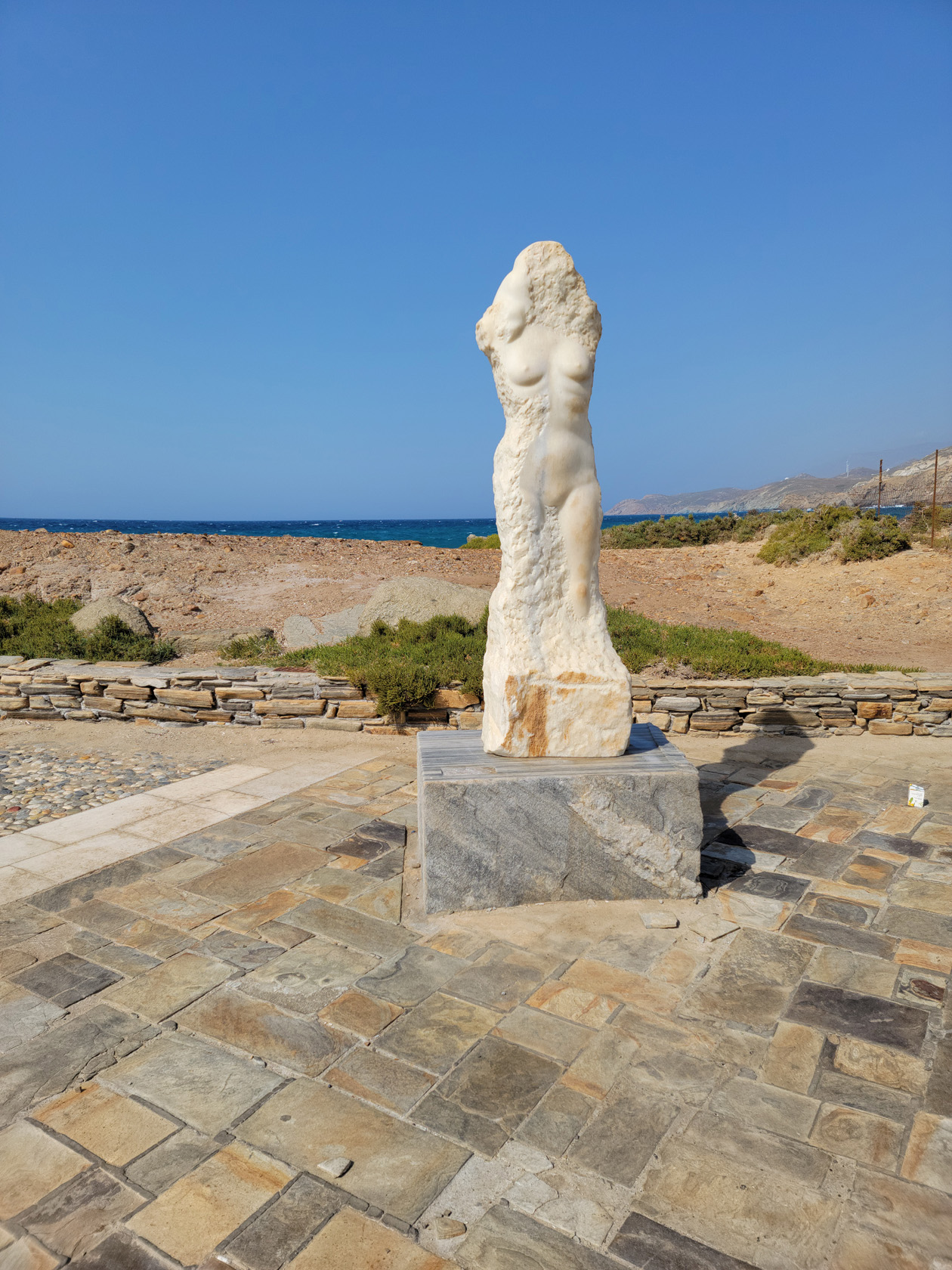
Naxos, Naxos – Temple of Apollo – Statue outside
Our Day Tour
Naxos being such a large island, requires you to at least spend a day exploring areas other than its beaches. We used Naxos Luxury Transport as our Tour Guides to explore a few sites we wanted to see, as well as some others that were suggested by our guide. The entire tour was six hours, most of which was in a van, but included many stops, including Sangry or Sangri (also known as the Temple of Demeter), Manolis Pottery, Chalkio and the Citron distillery, the Flerio Melanes Kouros Statue, the town of Apeiranthos and the Eggares Olive Oil Museum.
It was right around this time that my wife Patti became very sick with bronchitis. To the point at which, she had lost almost her entire voice before we reached the Olive Oil museum in Eggares. What ever dark cloud or spell we were under, it appeared to have followed us into the Naxos hills. I started to wonder, what else could befall us?
The Temple Of Sangri
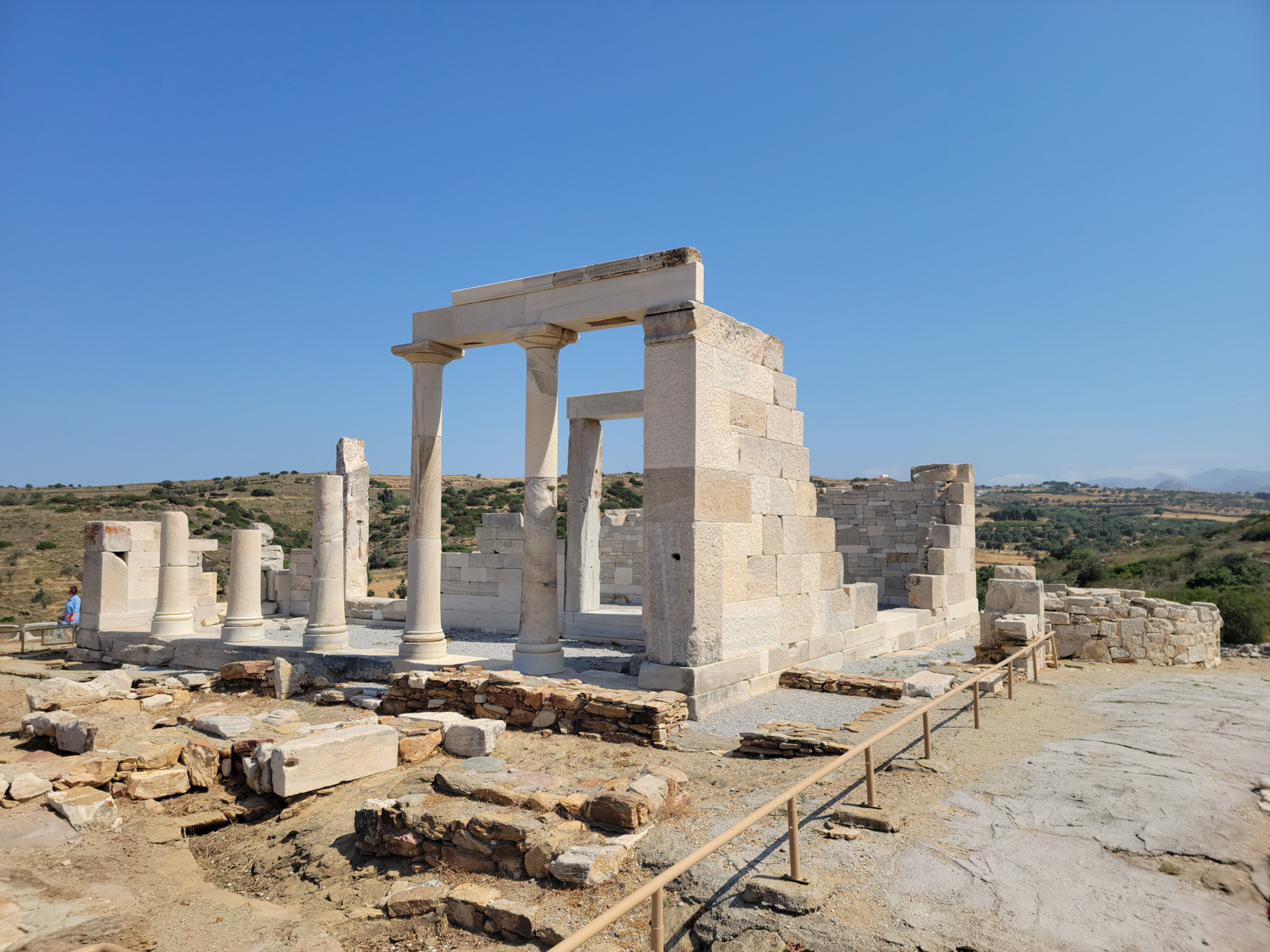
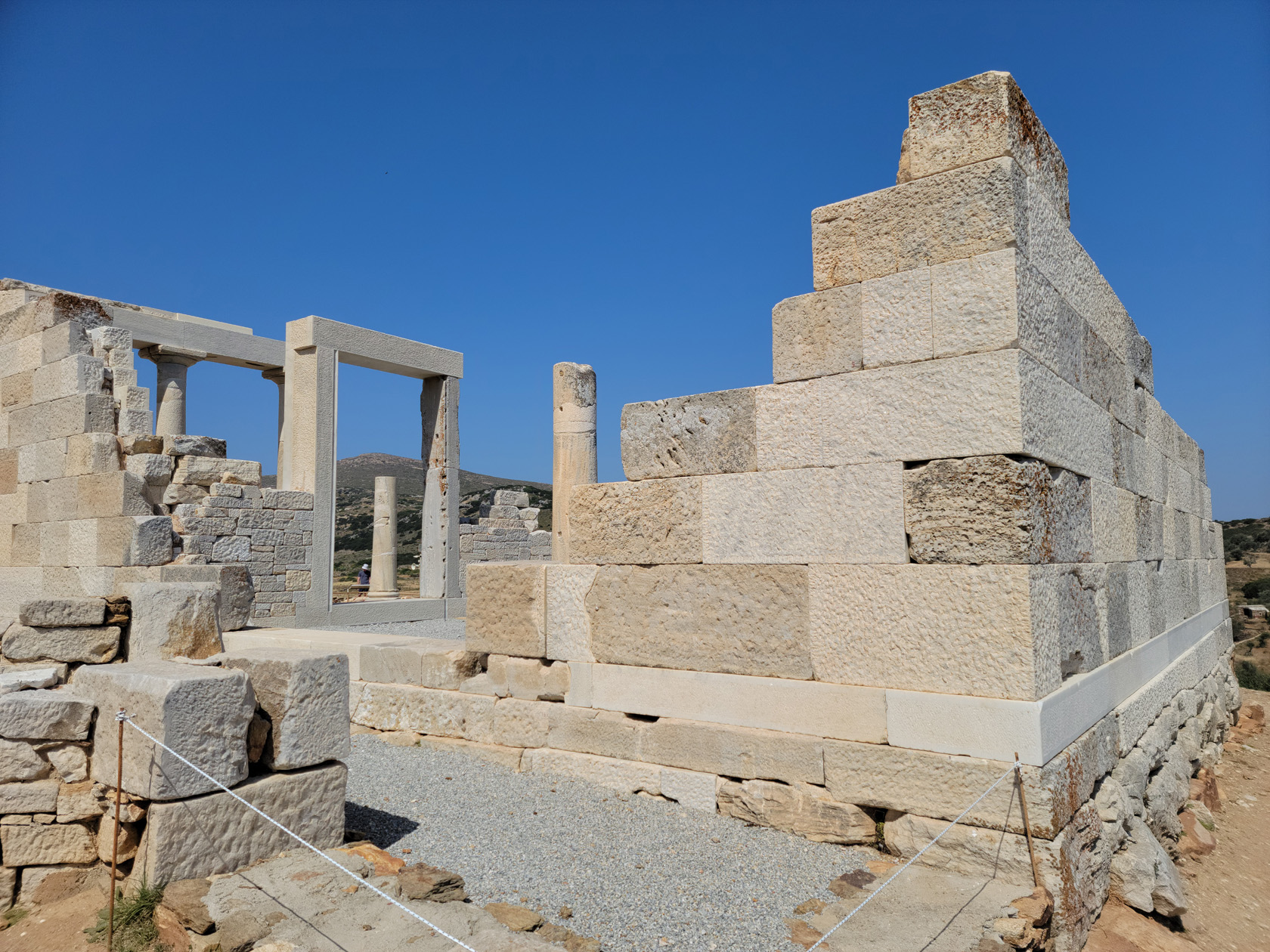
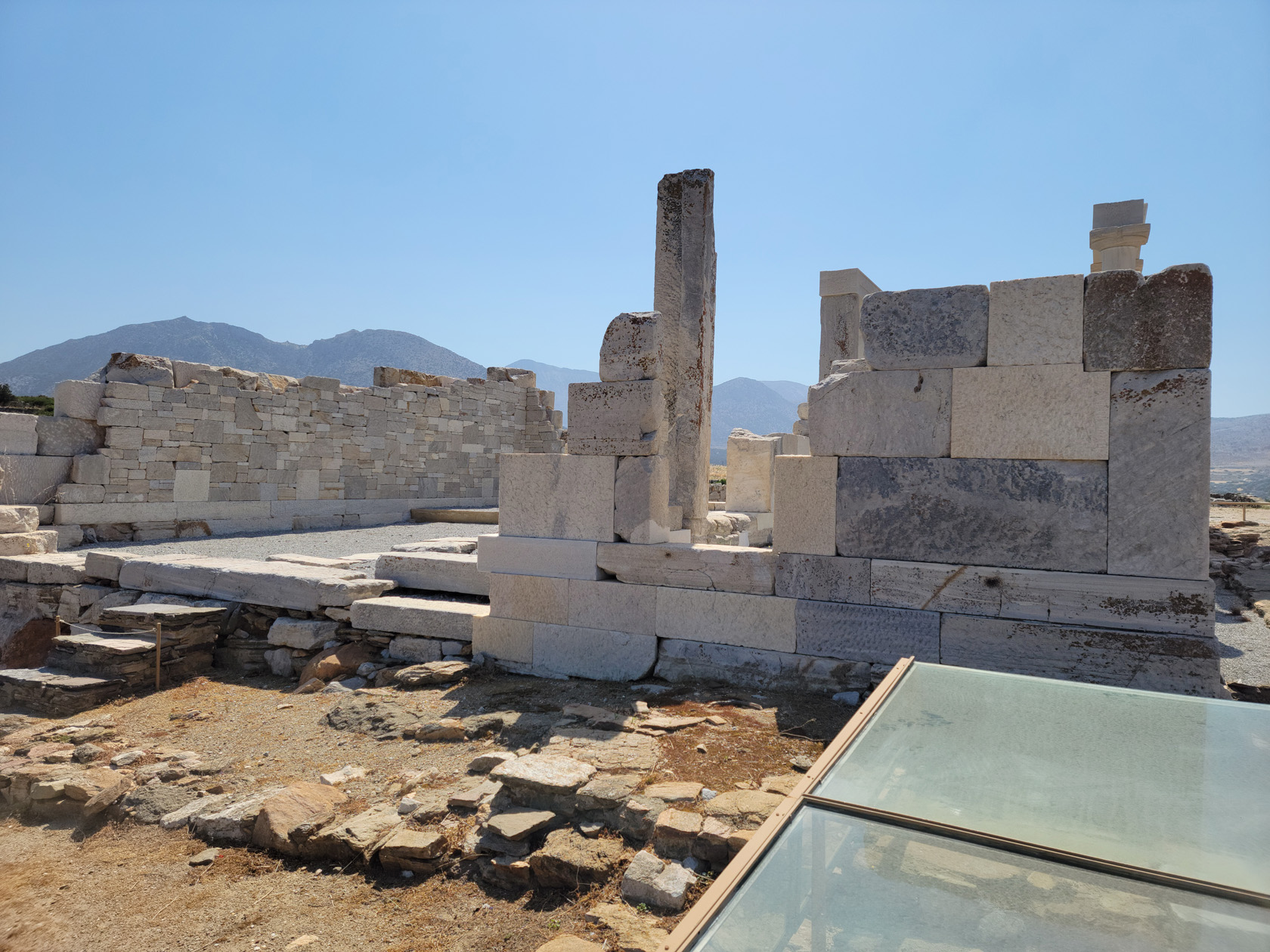
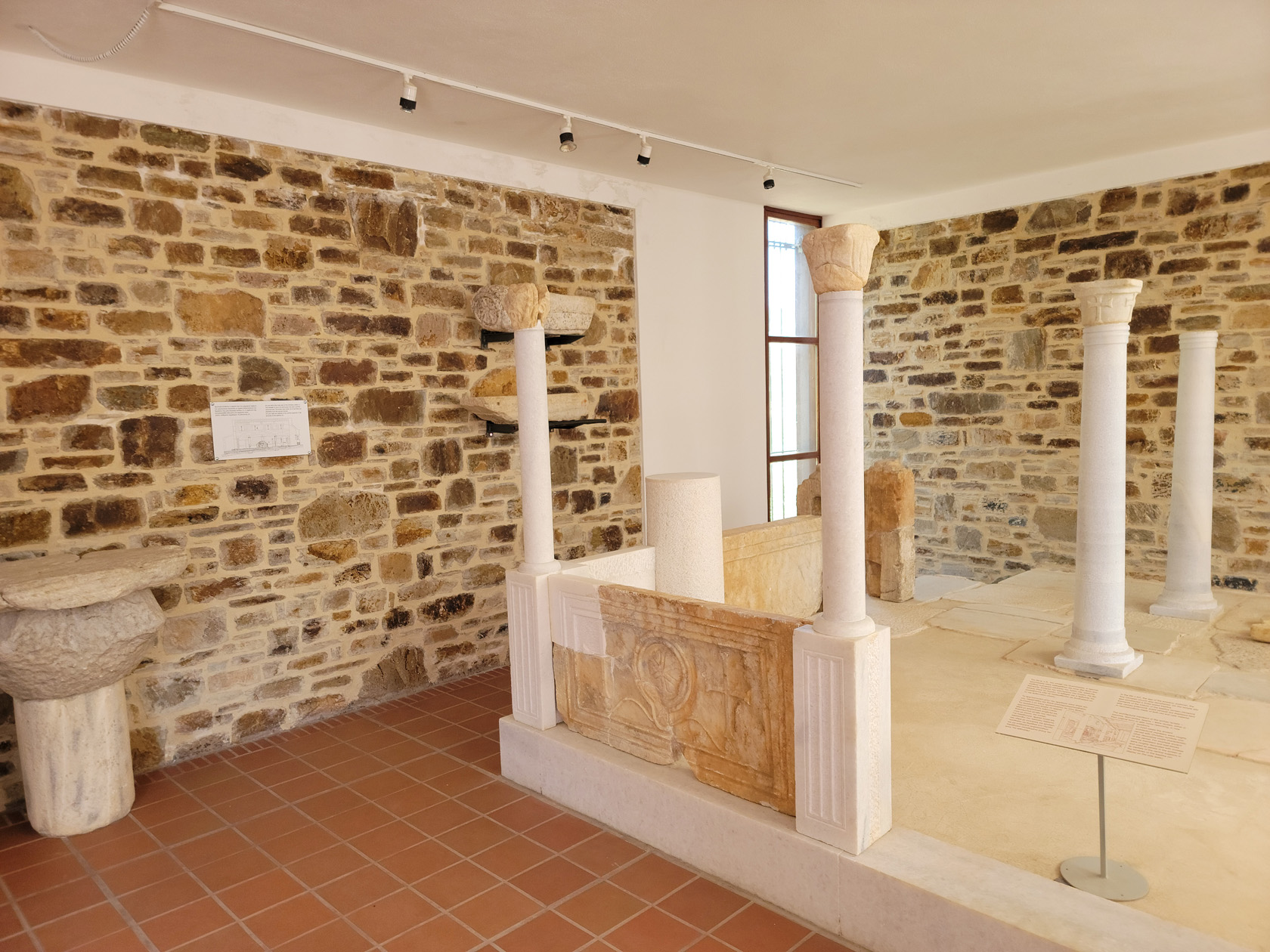
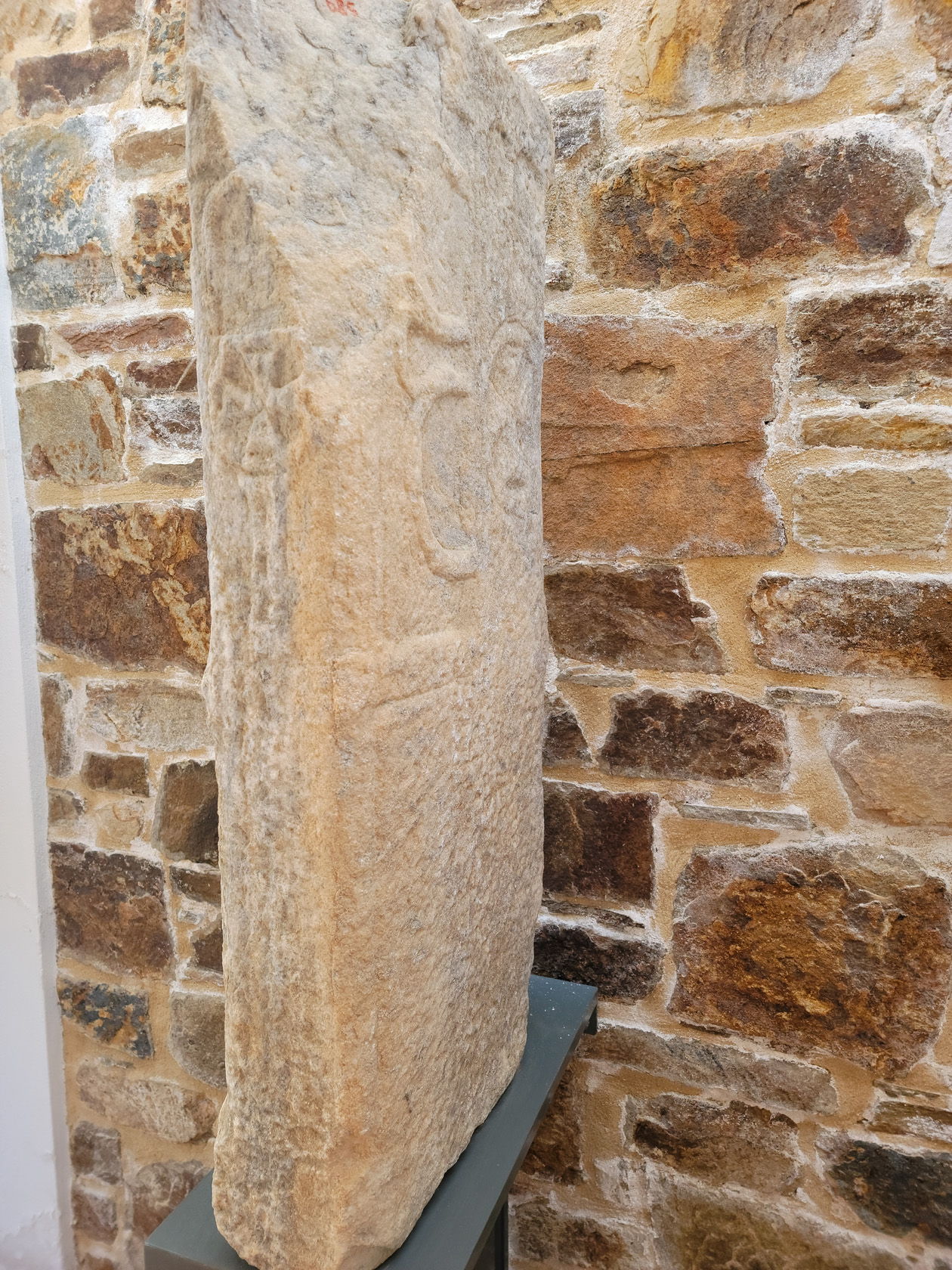
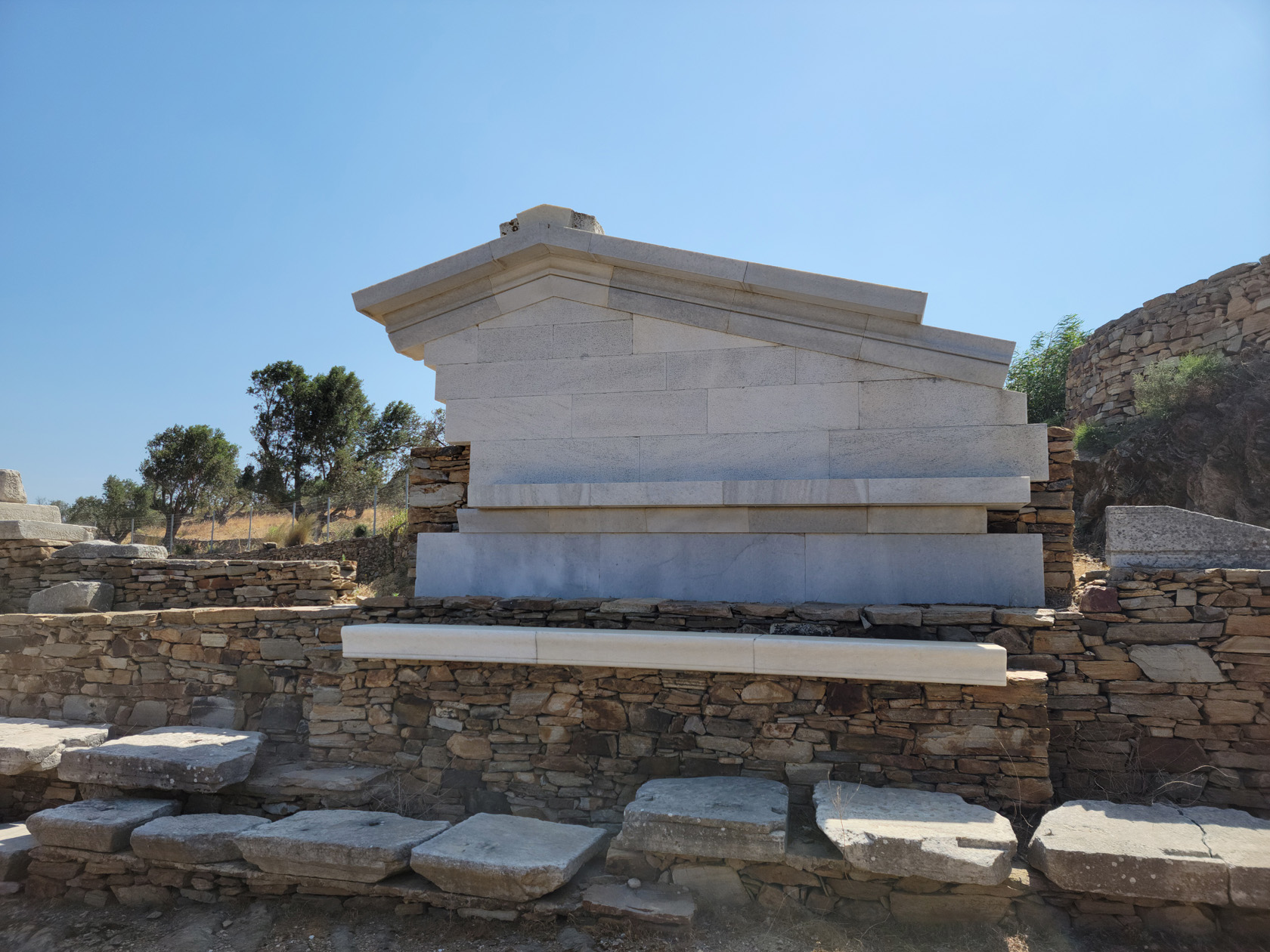
Perhaps a forty-five minute drive from Naxos is the Temple of Sangri. It is also called the Temple of Demeter or the Temple of Kore, there are also signs that the cult of Apollo may have used the site.
Our Day Tour – Sangri Temple
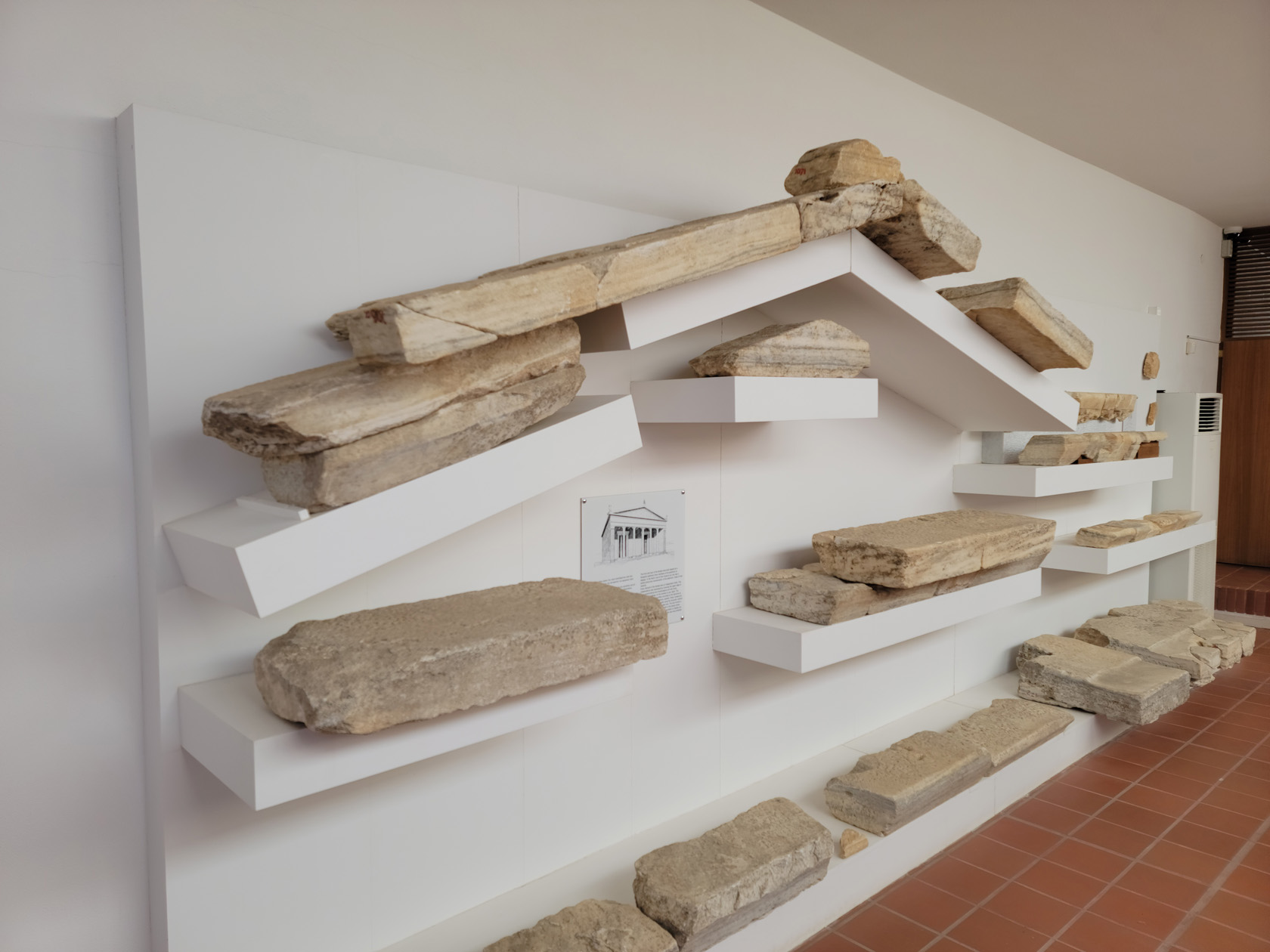
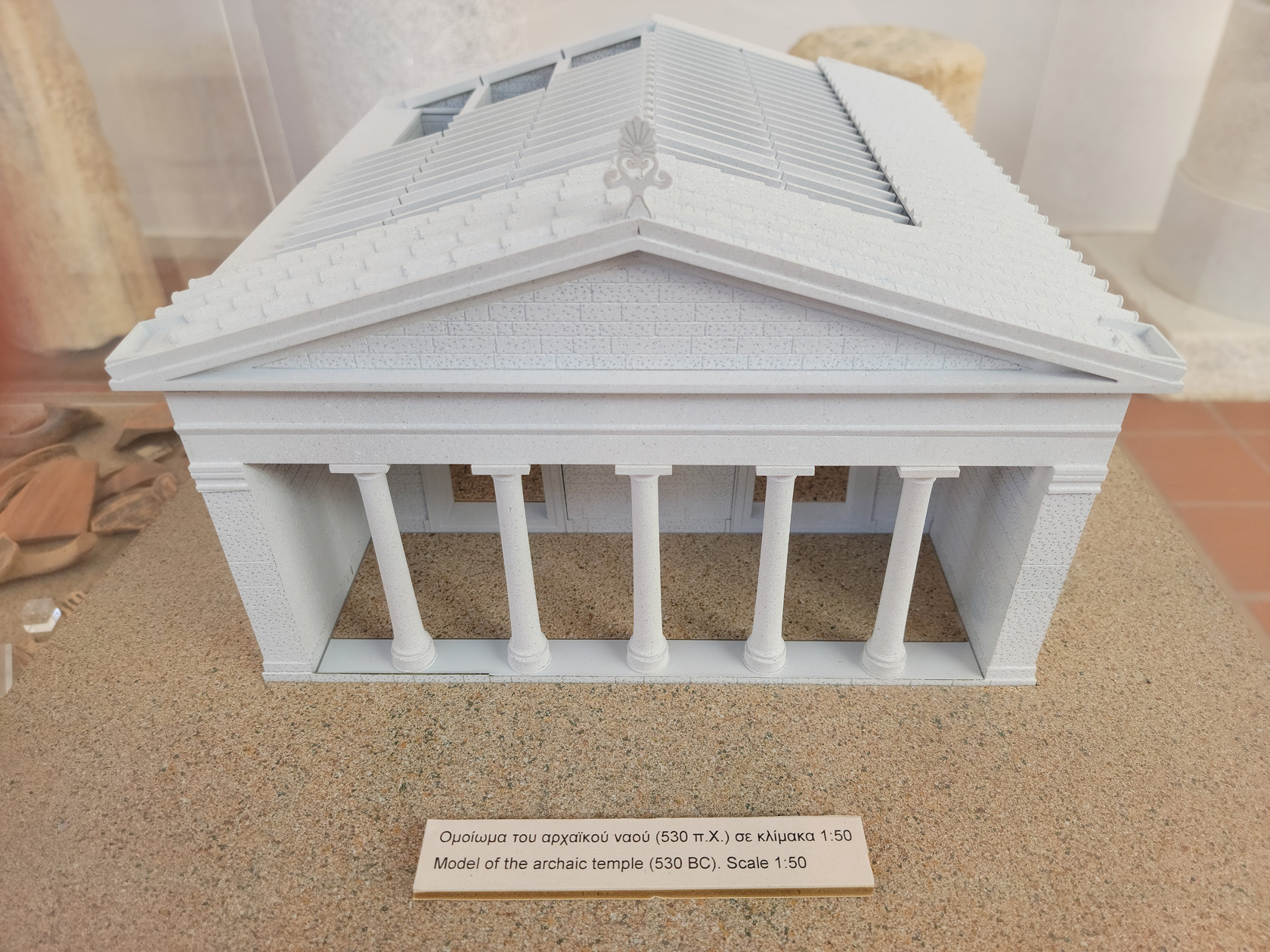
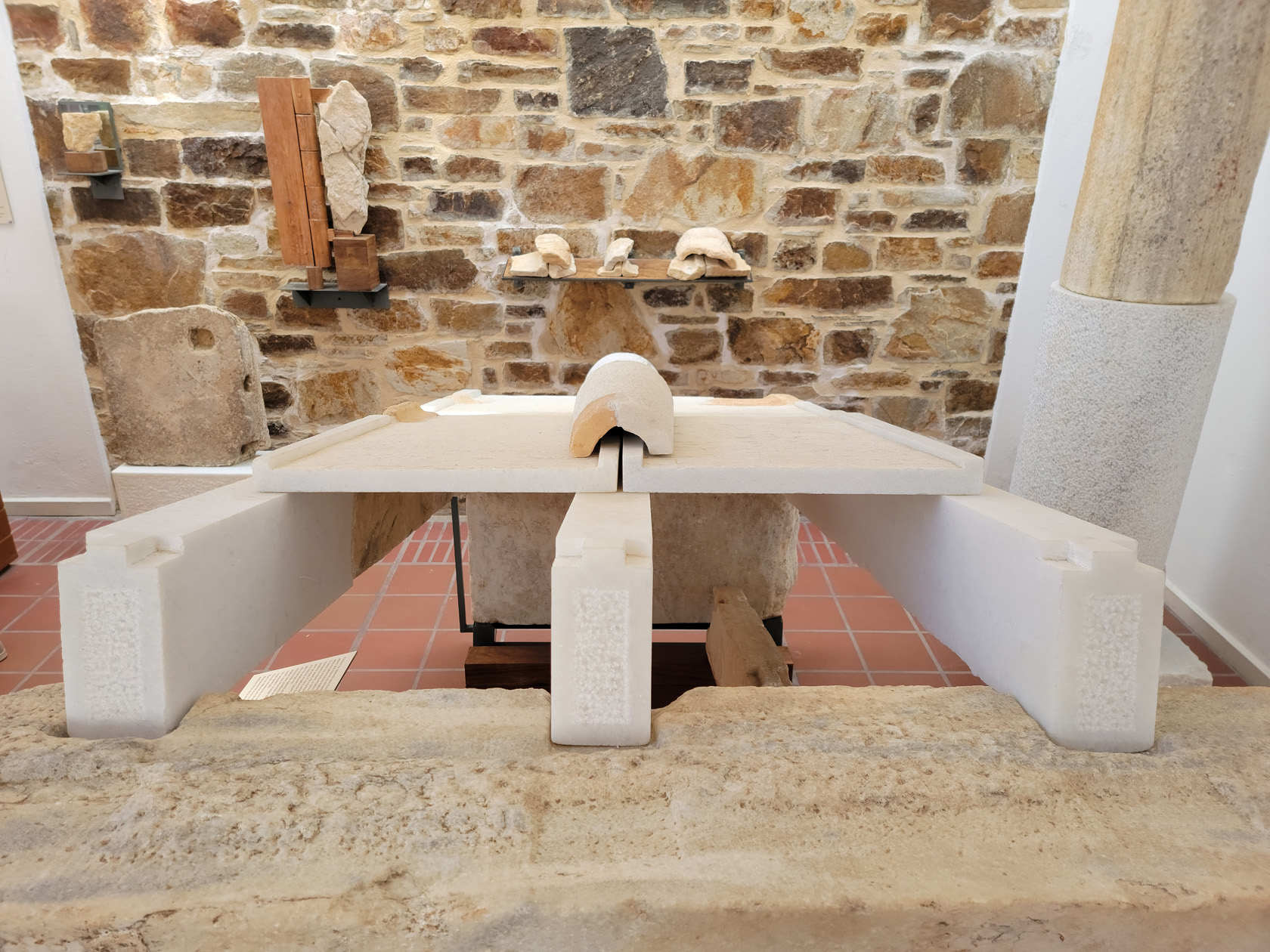
It is an archaic temple that was built on Naxos in the six century BCE. For a Greek temple it is square, rather than the usual rectangular shape. Models that reconstruct its initial design call for a smart, efficient building using internal columns of varying lengths, so that a full marble, translucent roof and ceiling could be accommodated. This provided soft, even internal lighting during the daytime, so that little if any additional lighting was needed.
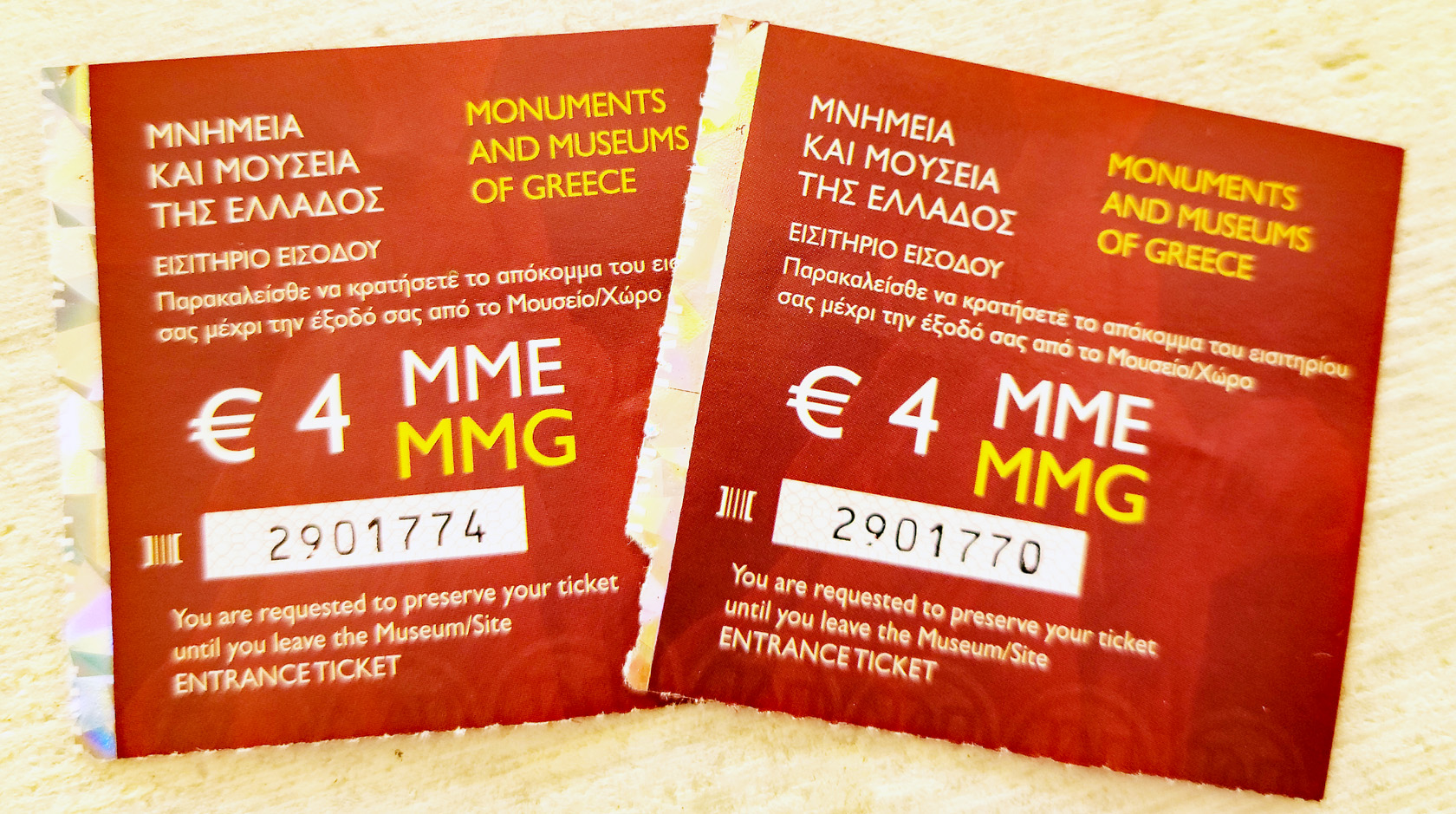
Our Day Tour – Sangri – Tickets For Two
Our Day Tour – Sangri
Our Day Tour – Sangri
Our Day Tour – Sangri
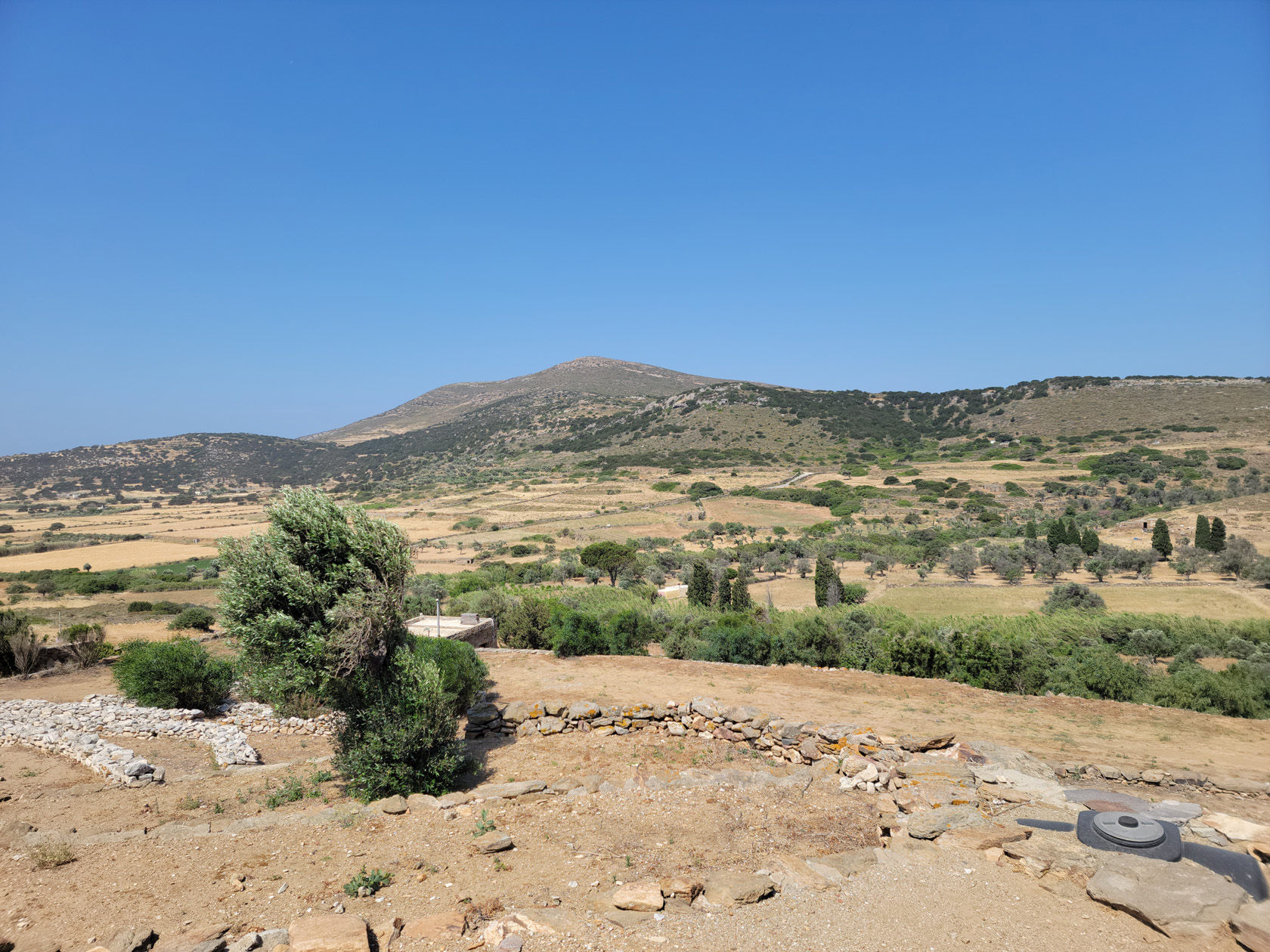
Our Day Tour – Sangri – The Hillside
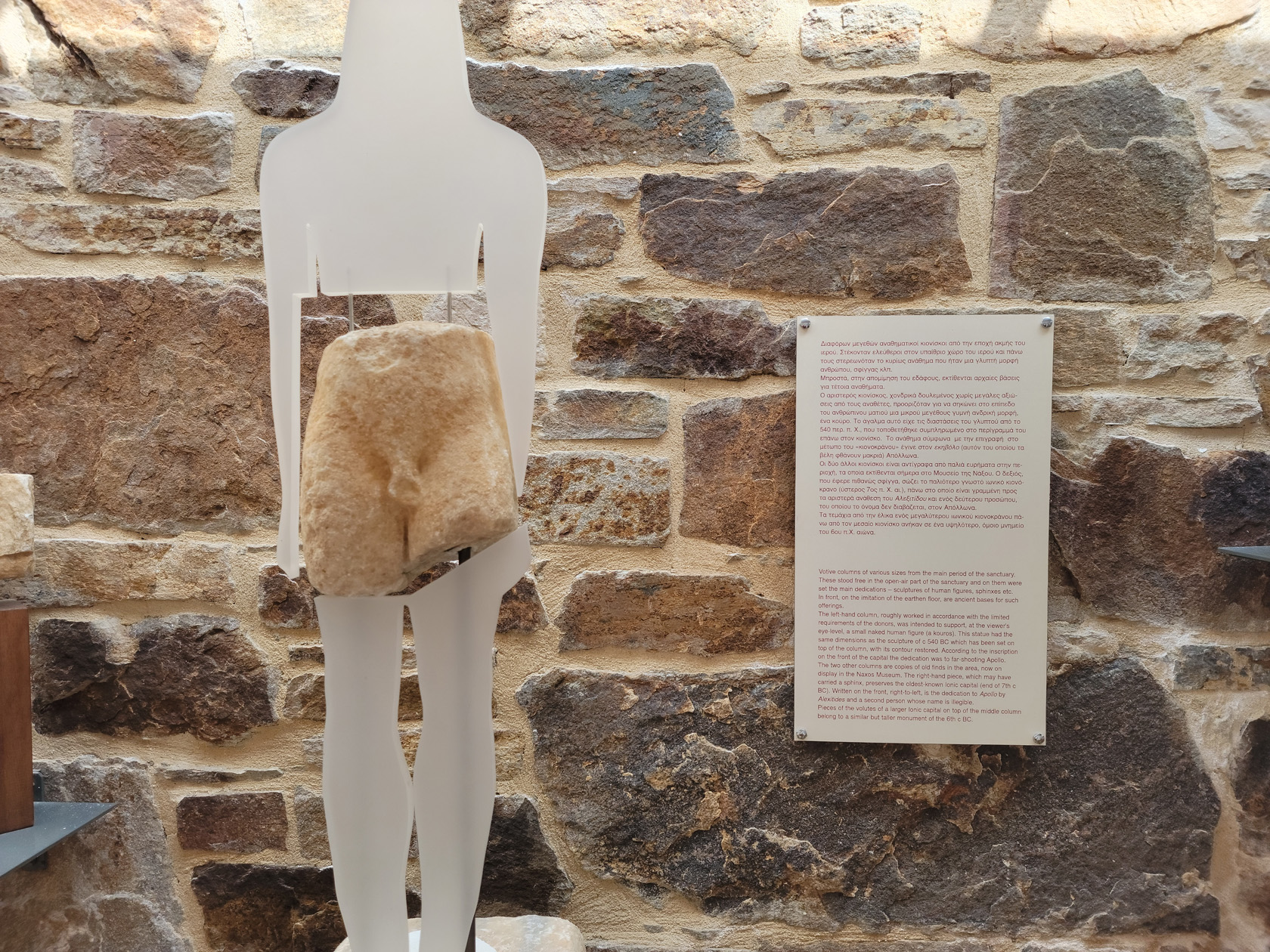
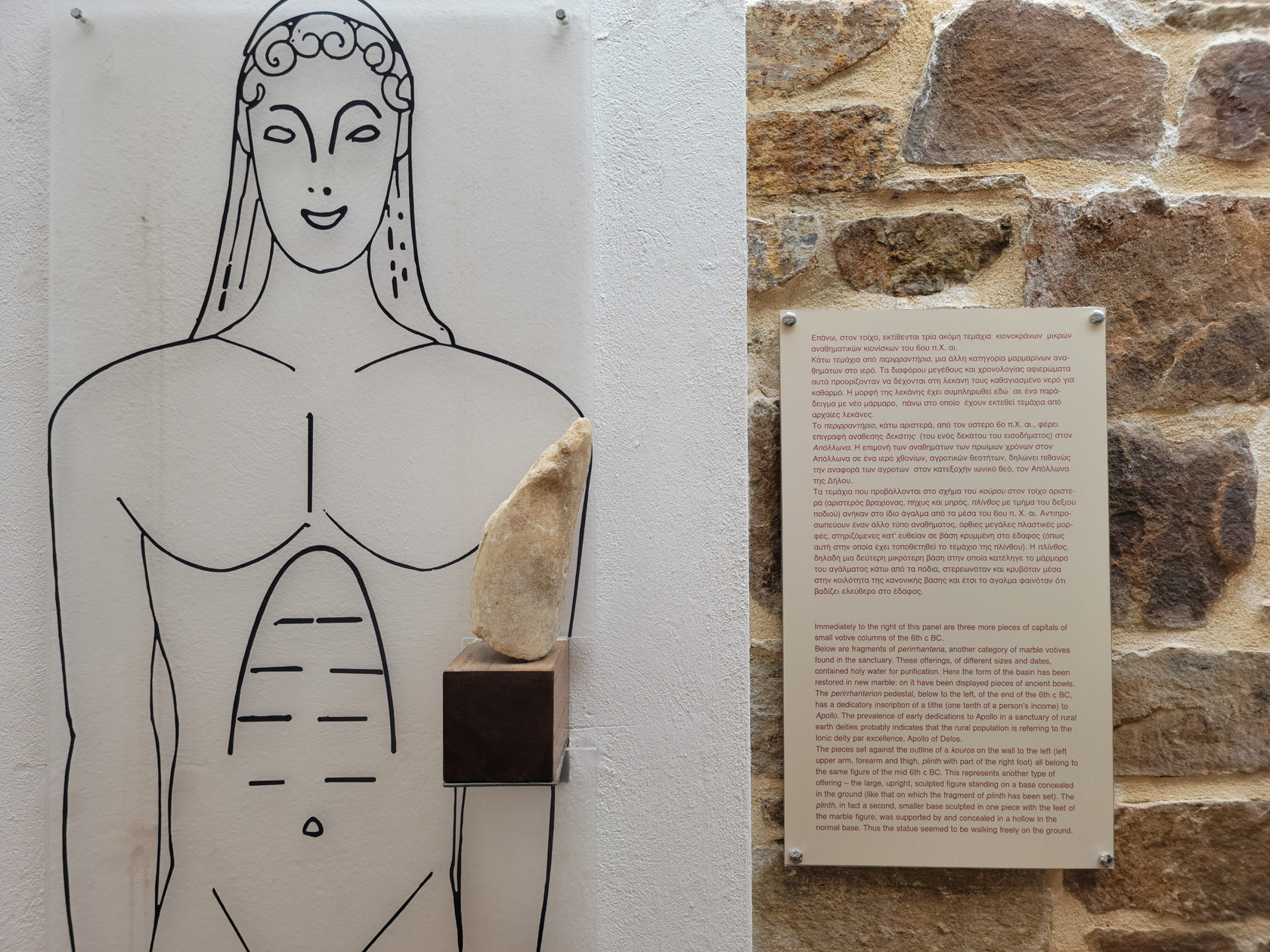
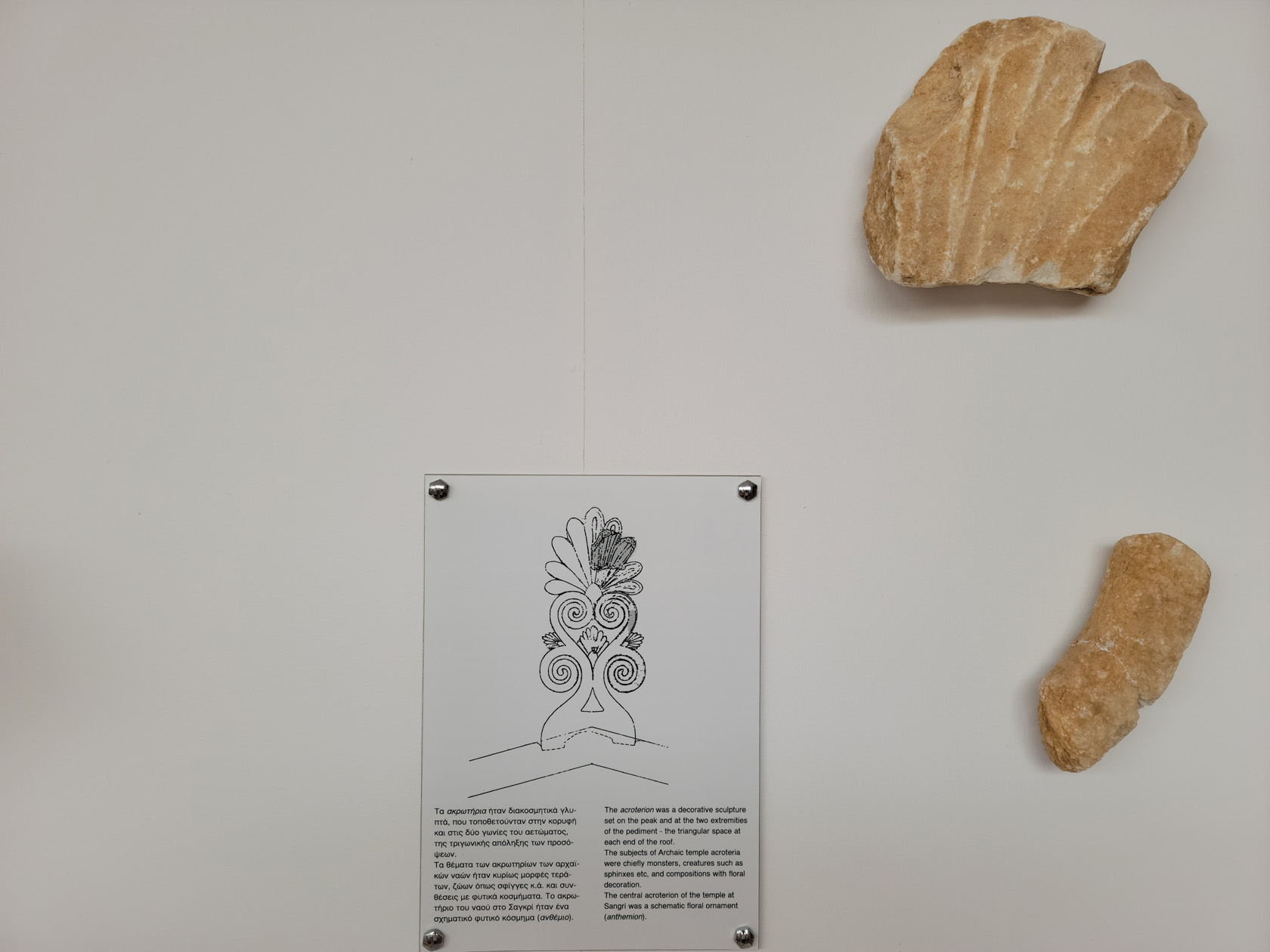
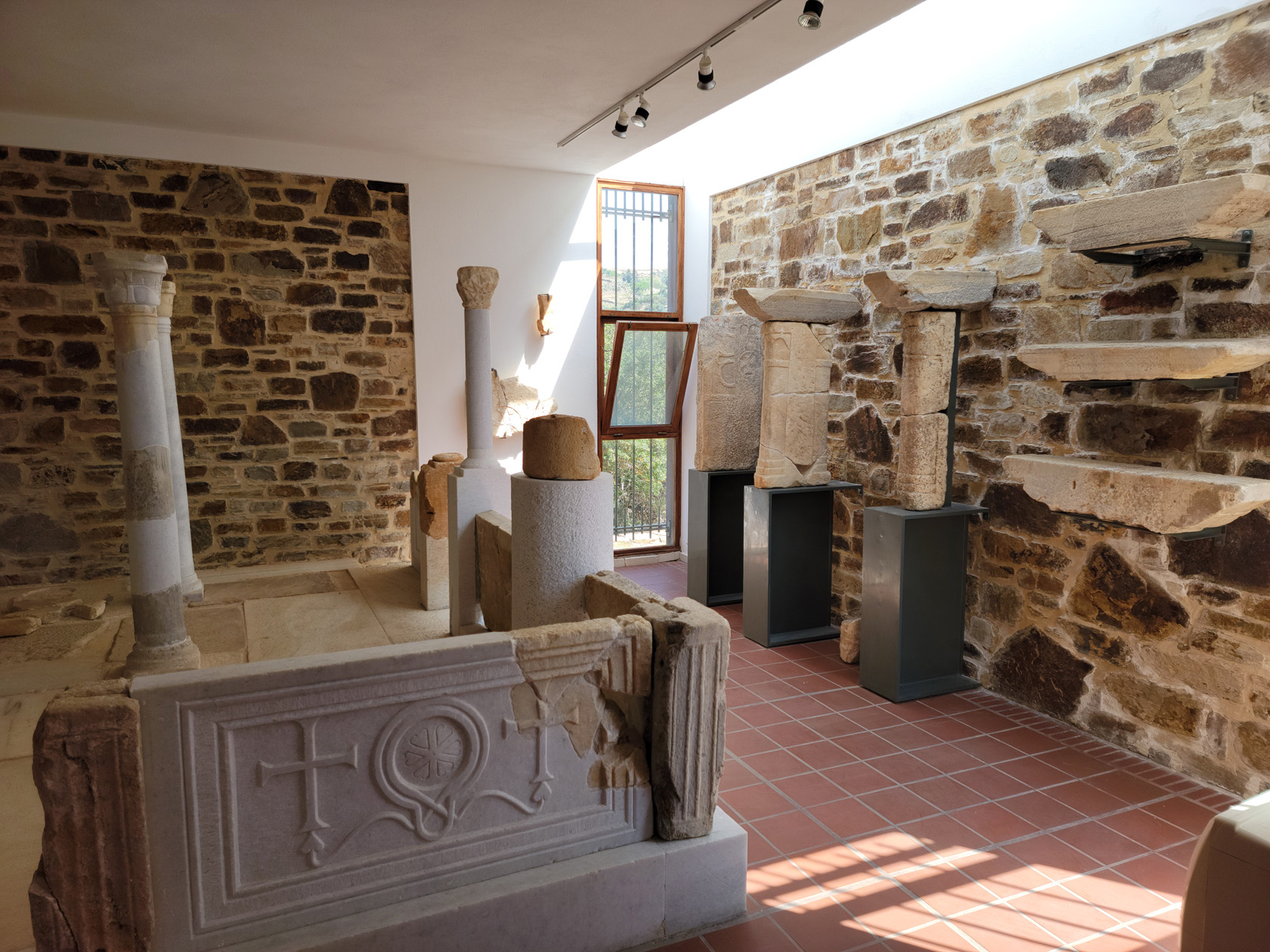
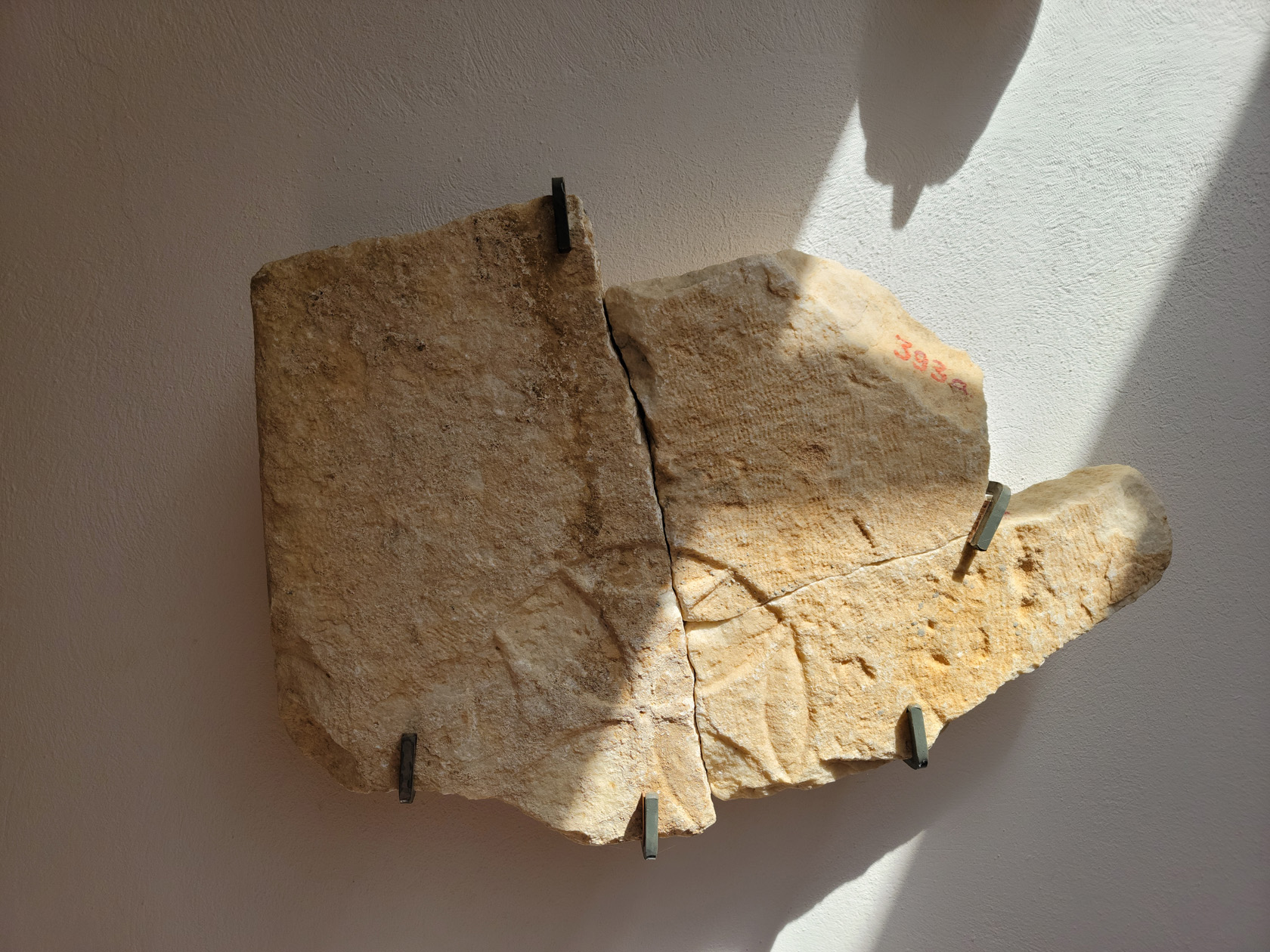
Our Day Tour – Sangri – The Museum
Our Day Tour – Sangri – The Museum
Our Day Tour – Sangri – The Museum
Our Day Tour – Sangri – The Museum
Our Day Tour – Sangri – The Museum
Our Day Tour – Sangri – The Museum
Our Day Tour – Sangri – The Museum
Our Day Tour – Sangri – The Museum
Our Day Tour – Sangri – The Museum
Our Day Tour – Sangri – The Museum
Our Day Tour – Sangri – The Museum
Our Day Tour – Sangri – The Museum
The Pottery Of Limpertas Manolis
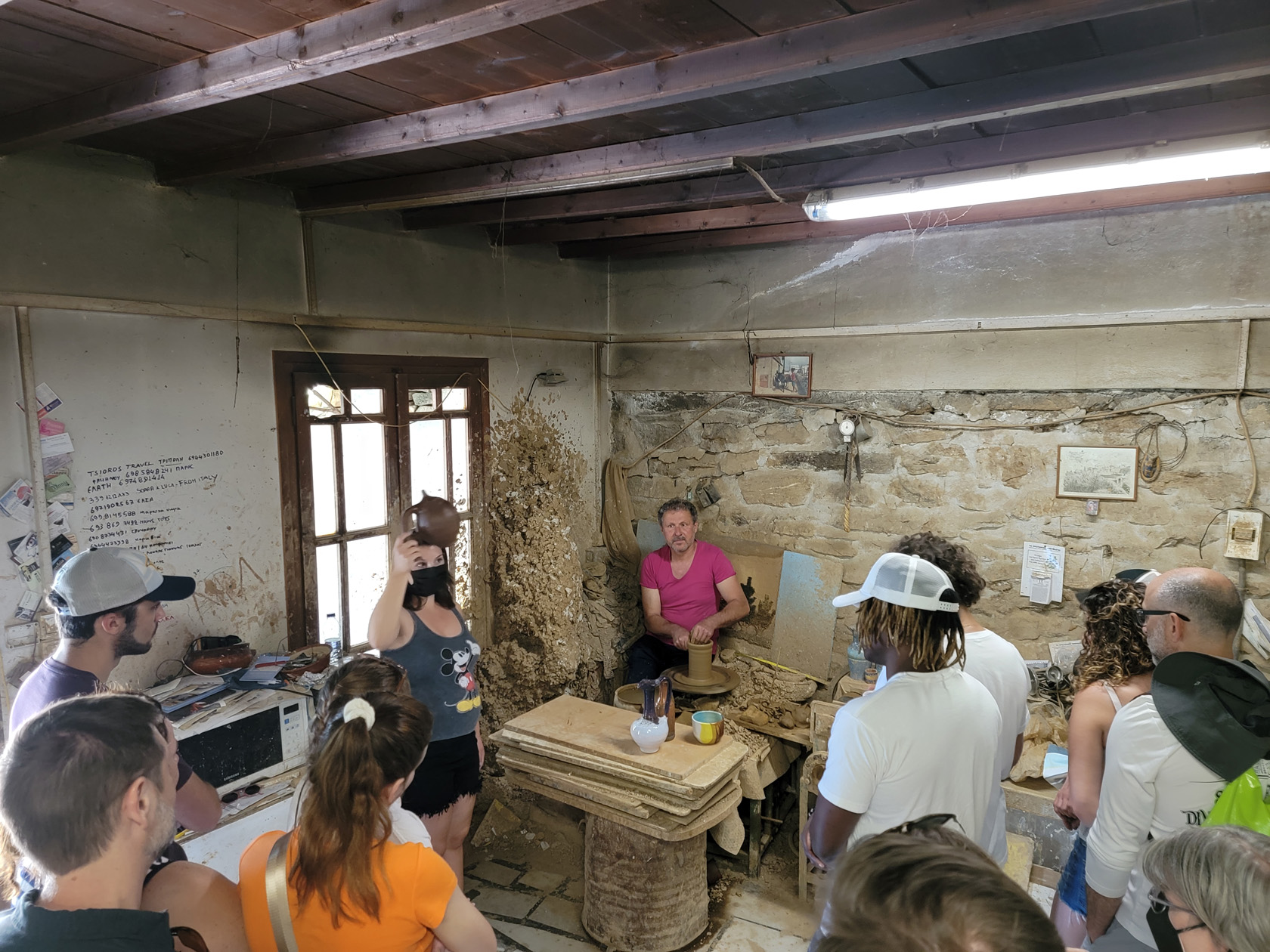
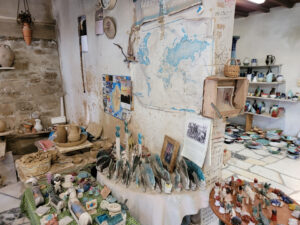
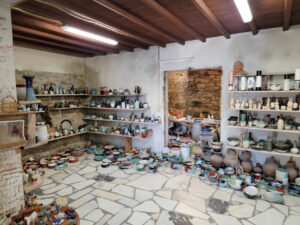
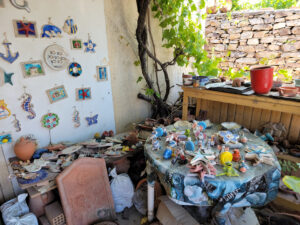
As any typical tour would inject, we visited the local pottery establishment of Limpertas Manolis. His apparent claim to fame was in creating eccentric, yet useful oil decanters and other novel vessels to store things. He also makes the odd spoon holder, vase, cups and saucers.
Our Day Tour – Limpertas Manolis Pottery
Clearly an artist, since his small place was strewn with all kinds of broken and forgotten pieces. Let alone his clear penchant for throwing the odd clay ball at the wall, for which was clearly evident by the definitive and unnatural accumulation growing from the vertical surface from where he sat.
Our Day Tour – Limpertas Manolis Pottery
Our Day Tour – Limpertas Manolis Pottery
Our Day Tour – Limpertas Manolis Pottery
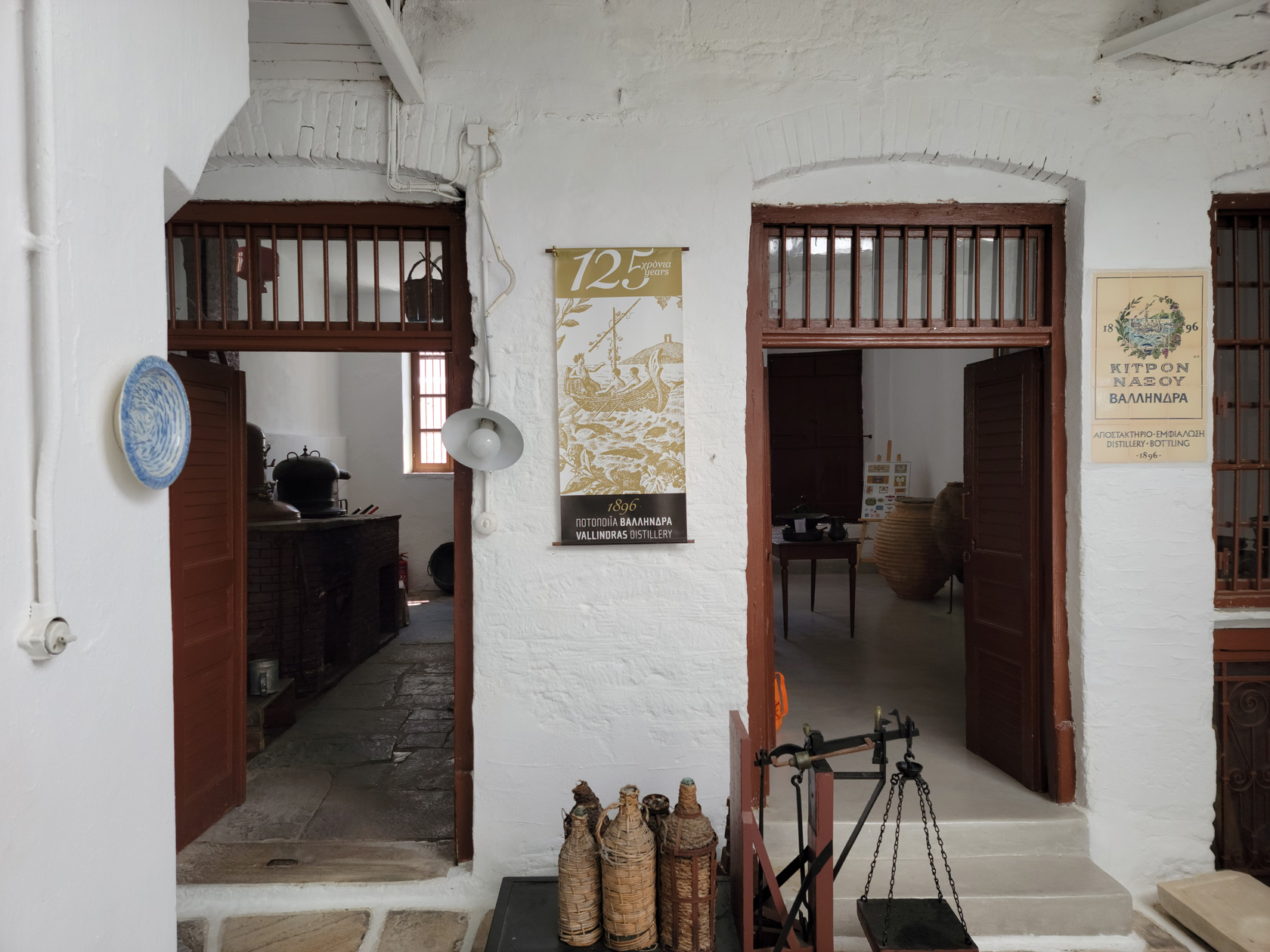
Distillery Vallindras
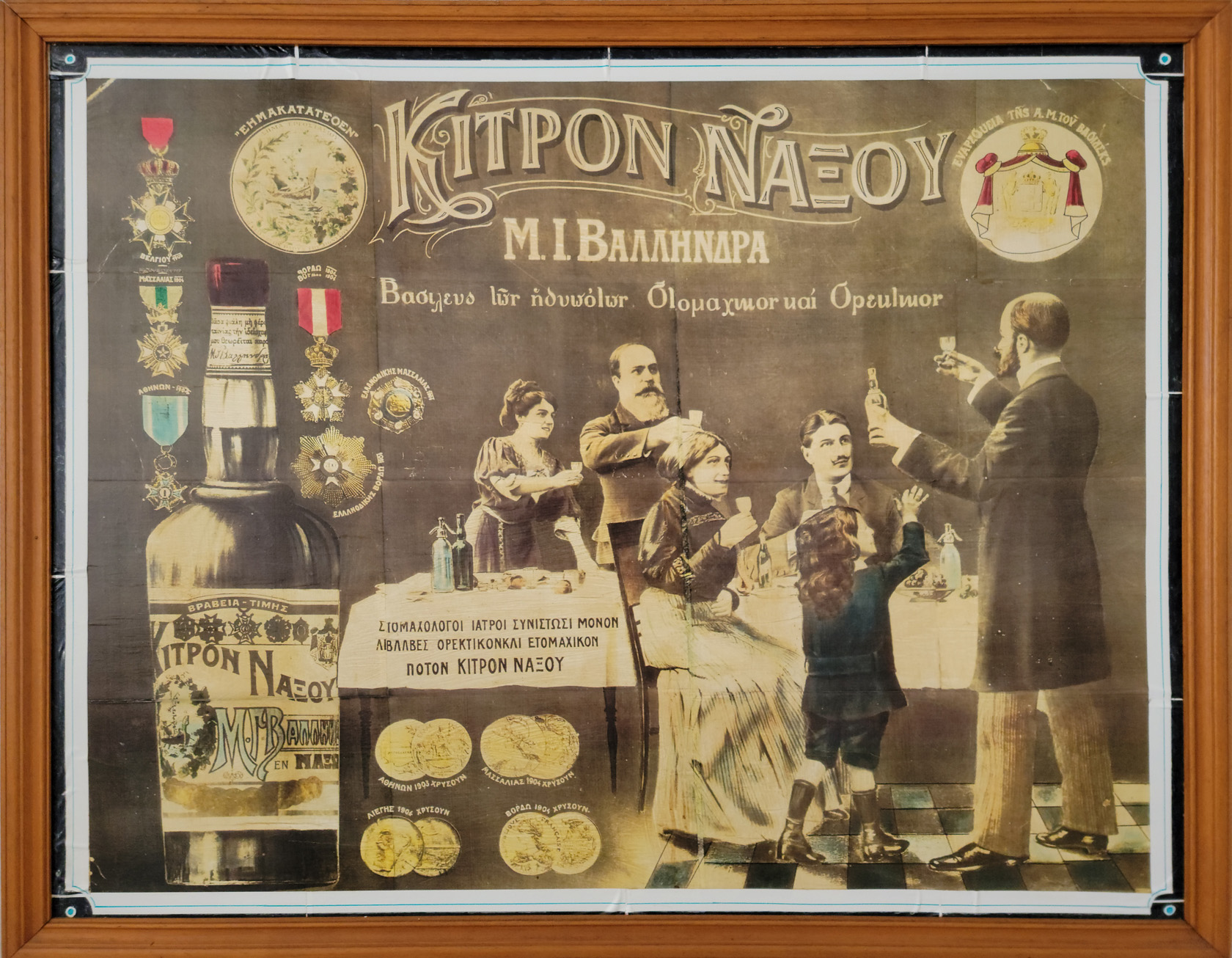
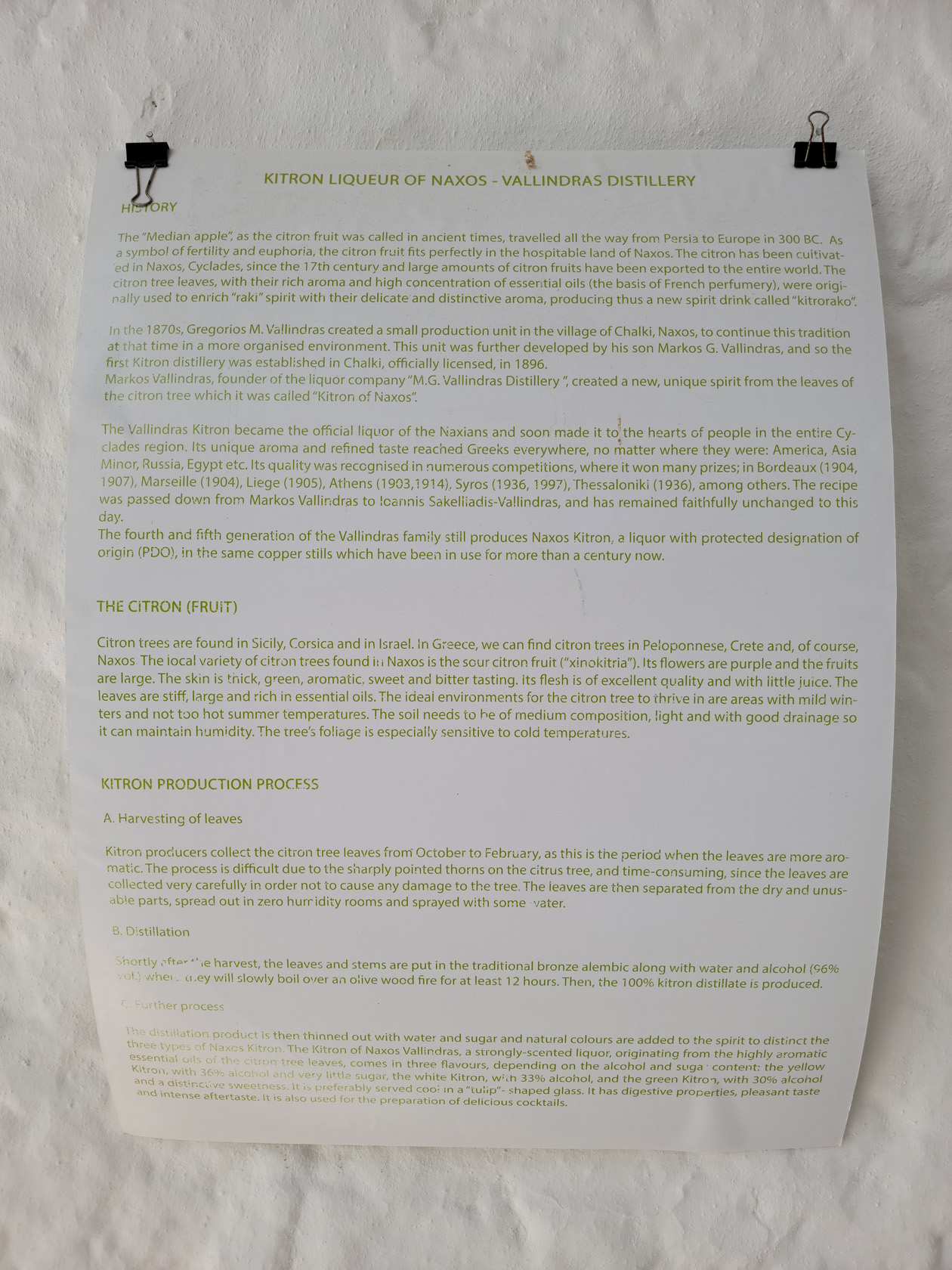
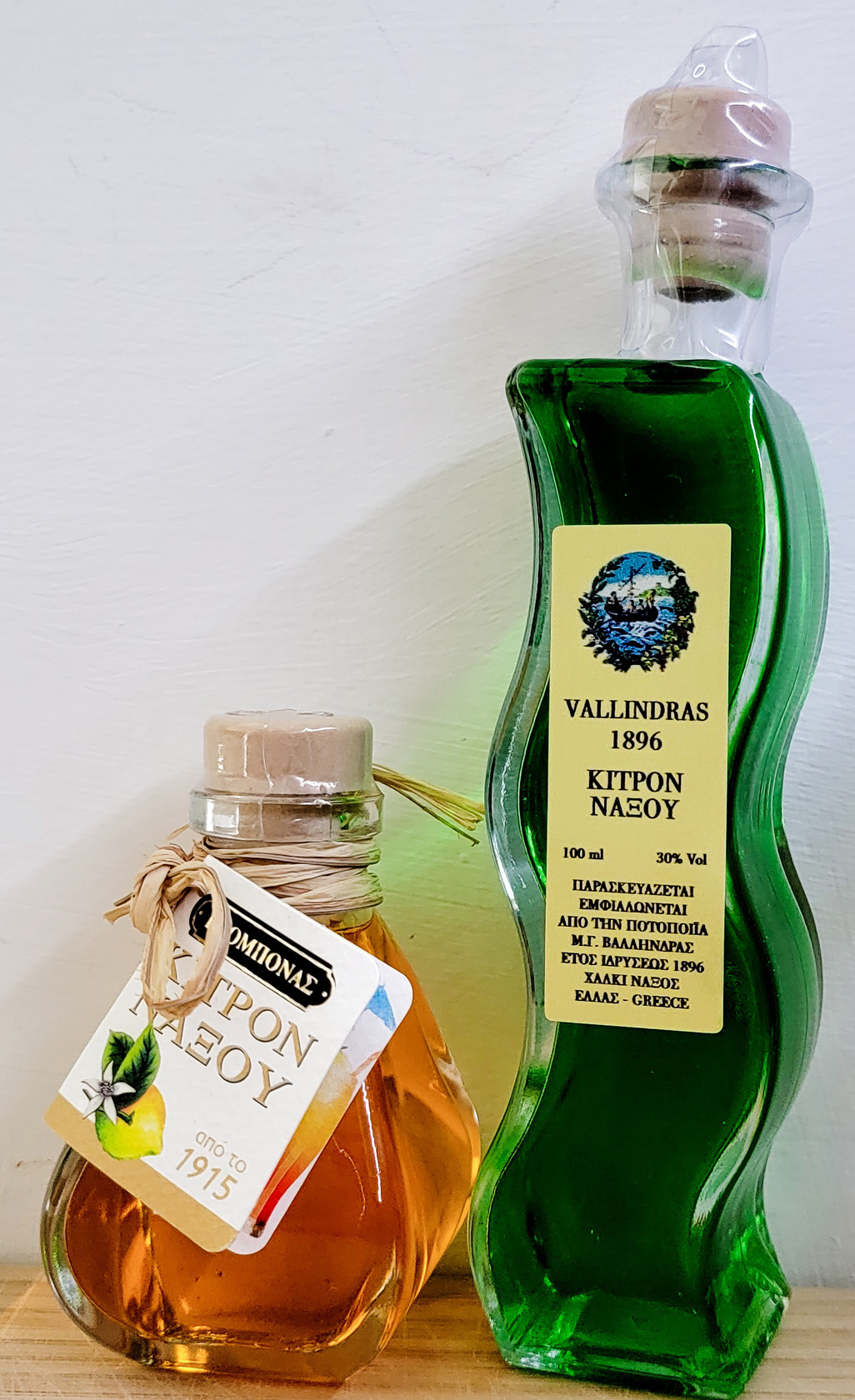
In Chalkio, or Chalki, as some prefer; you can find the distillery M. G. Vallindras. This is an old firm which makes an aperitif widely known throughout Greece, known as Kitron, it comes in three varieties (and colors), depending on the sugar and alcohol content.
Our Day Tour – Chalki – Kipton Distillery
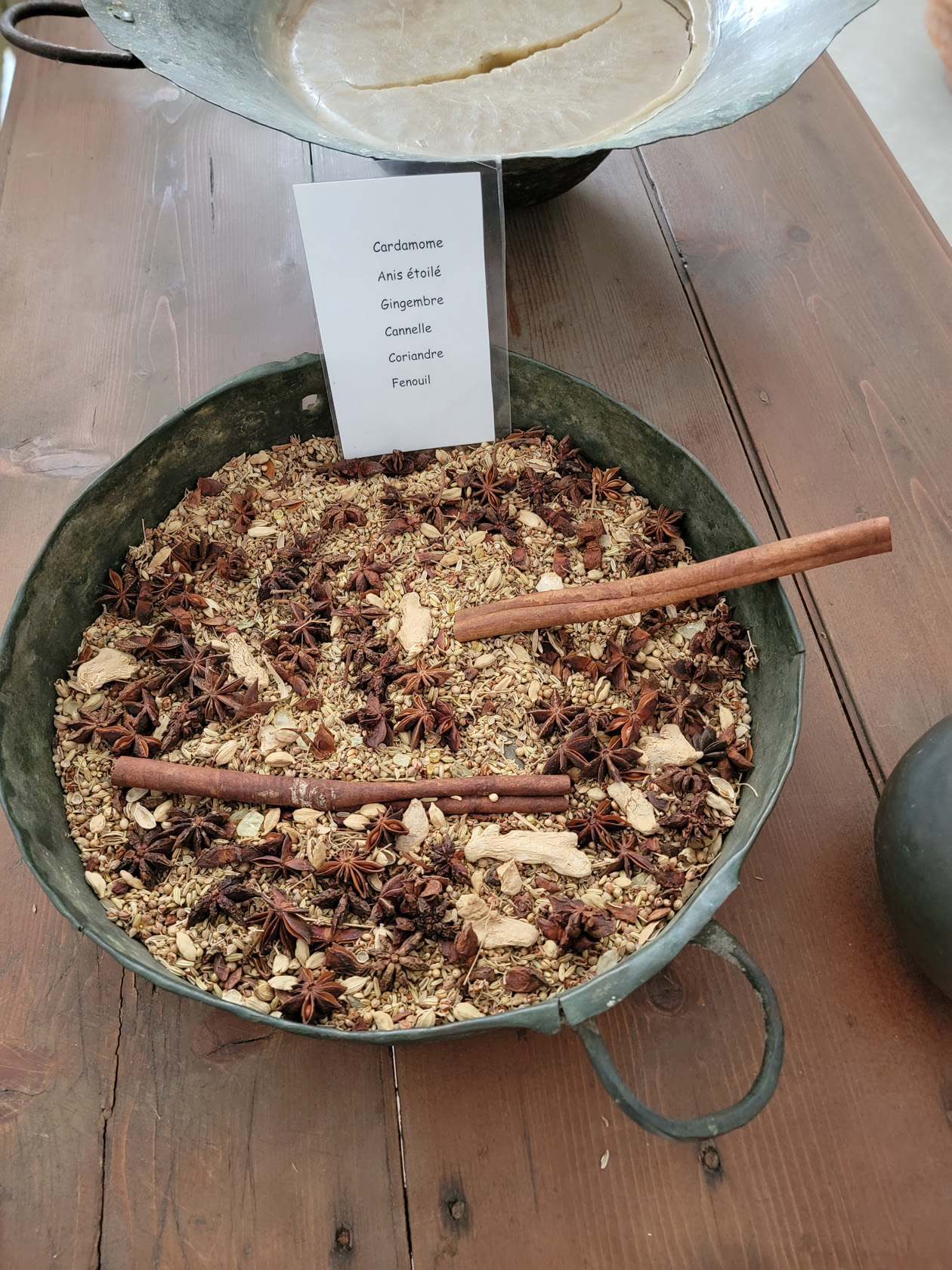
It is a very interesting distillery to visit and learn how this special Greek aperitif is made using Star Anise and other plants. Well worth a stop, if only to pick up a few bottles of their timeless spirits. Most will find the green and yellow varieties more to their liking, they are not as harsh or dry as the clear variety. The taste is more austere than a Molinari Extra or a Ramazzotti, but pleasant after a dinner nonetheless.
Our Day Tour – Chalki – Kipton Distillery
Our Day Tour – Chalki – Kipton Distillery
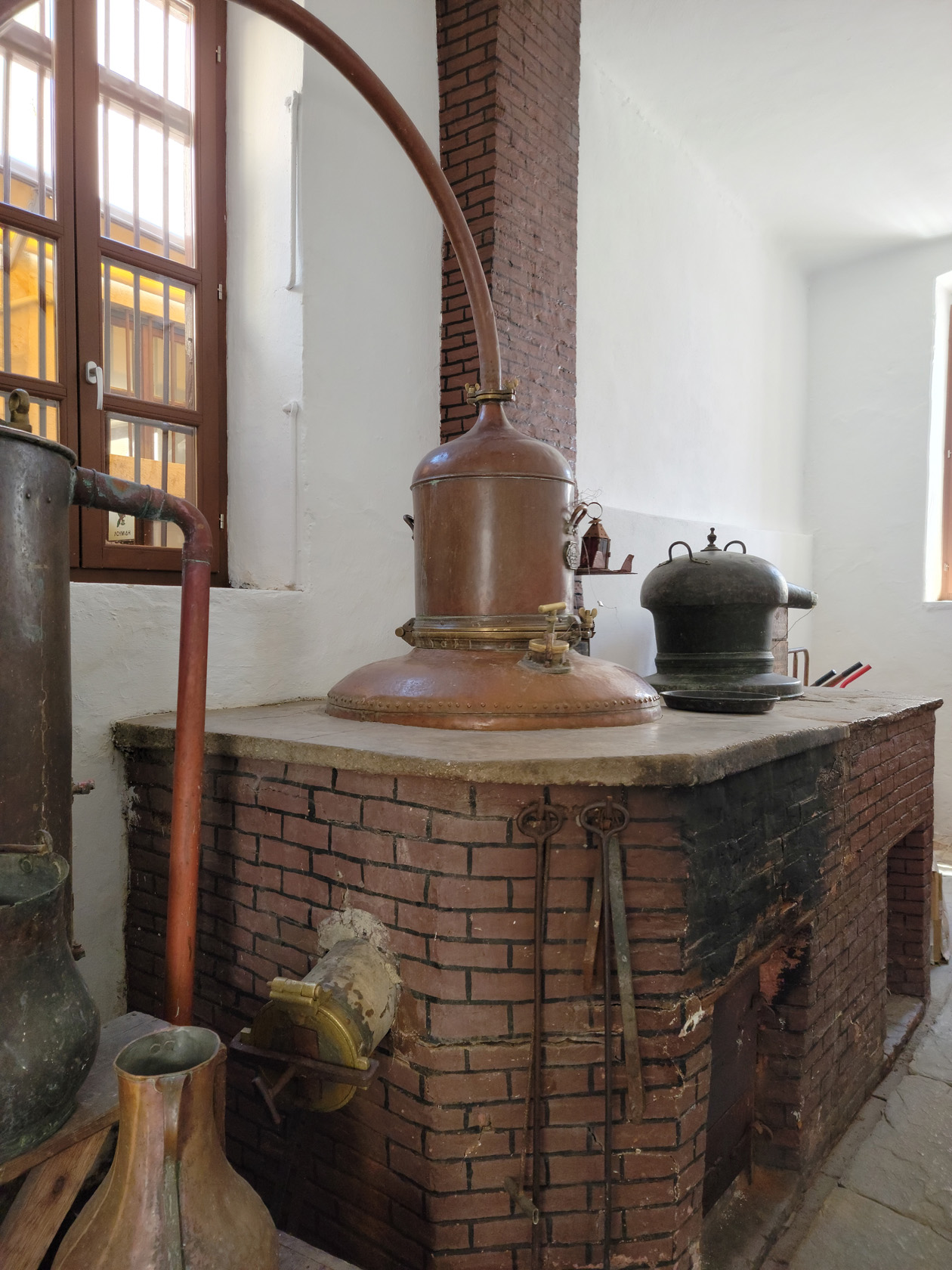
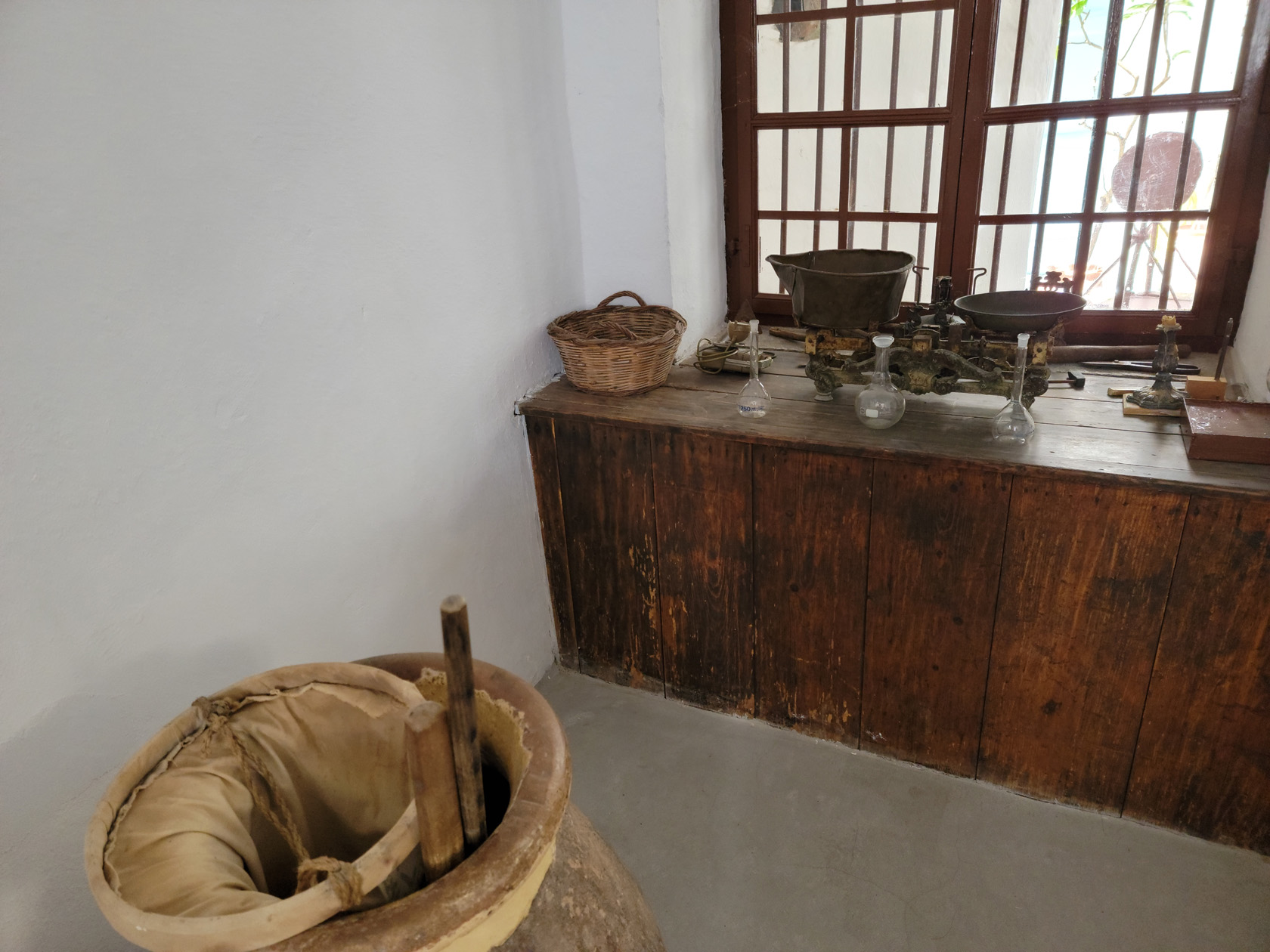
Our Day Tour – Chalki – Kipton Distillery – Alembic
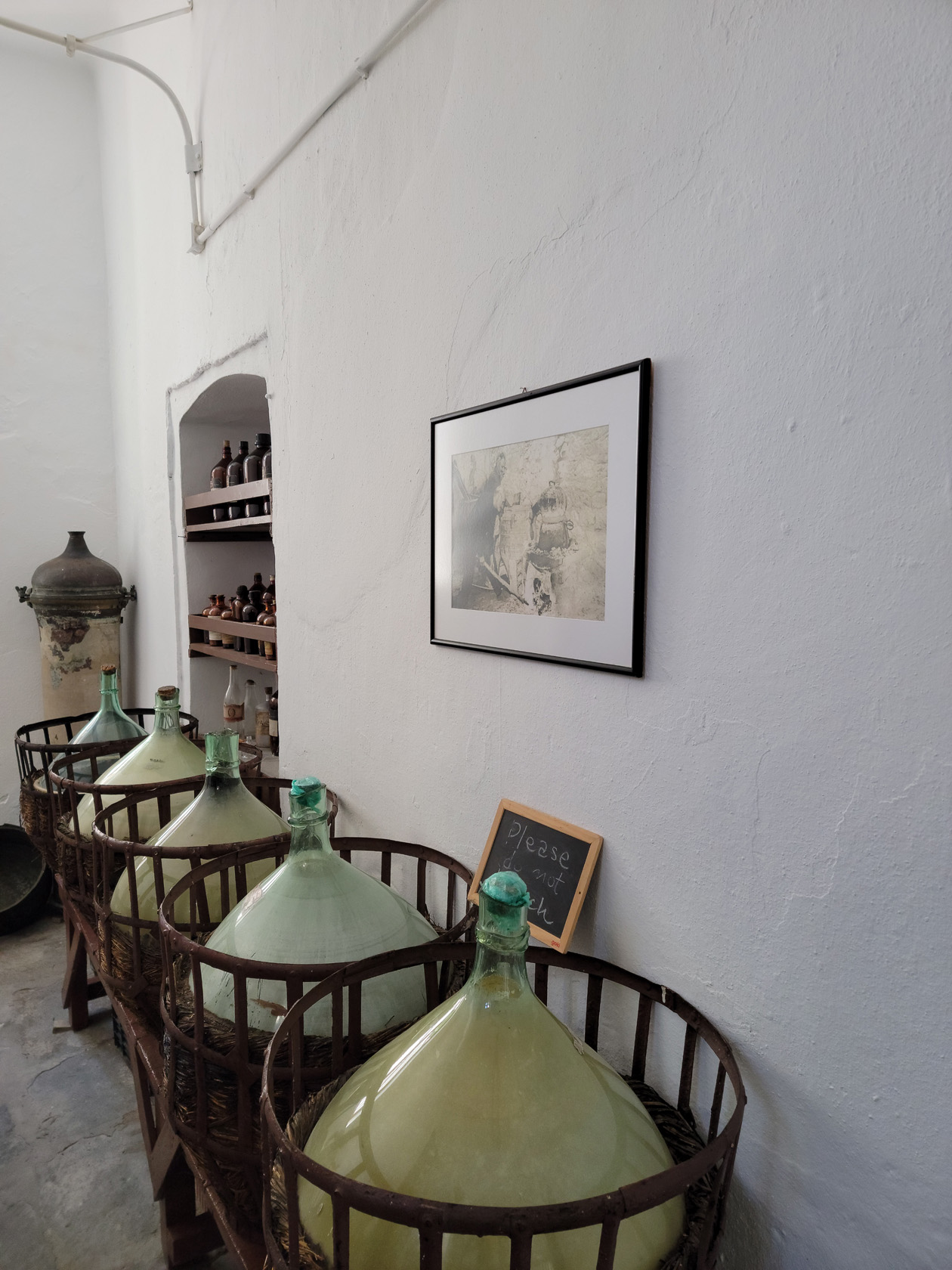
Our Day Tour – Chalki – Kipton Distillery – Old Bottles
Our Day Tour – Chalki – Kipton Distillery
Our Day Tour – Chalki – Kipton Distillery
Our Day Tour – Chalki – Kipton Distillery – Two of Three Variaties
The Flerio Melanes Kouros
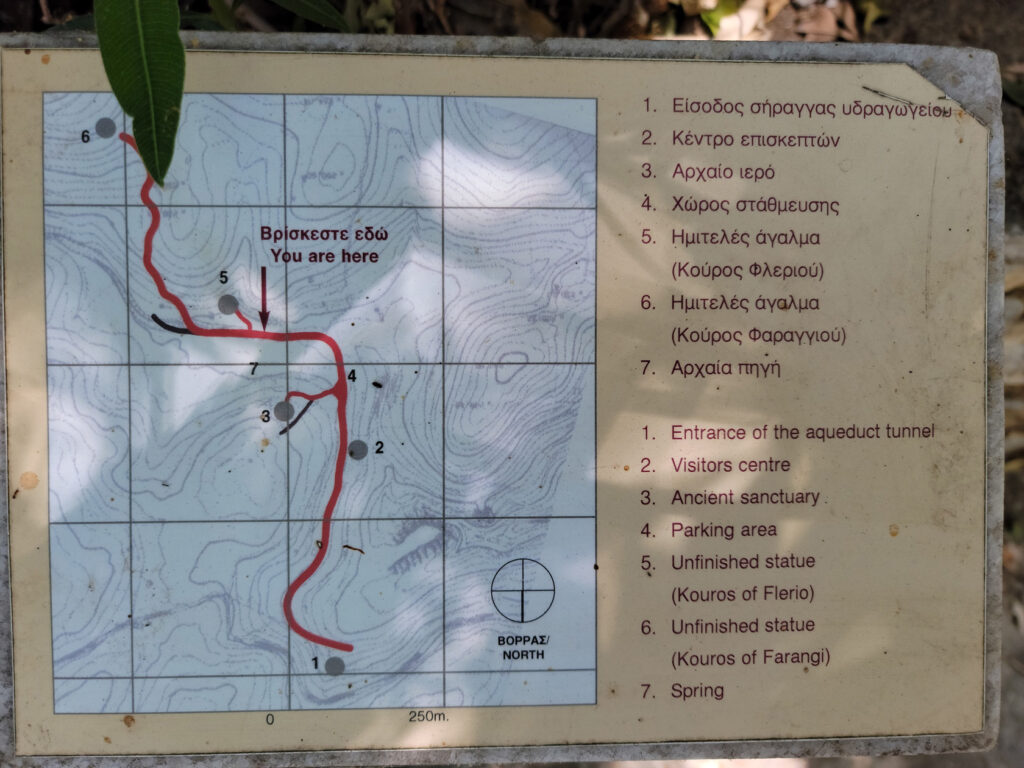
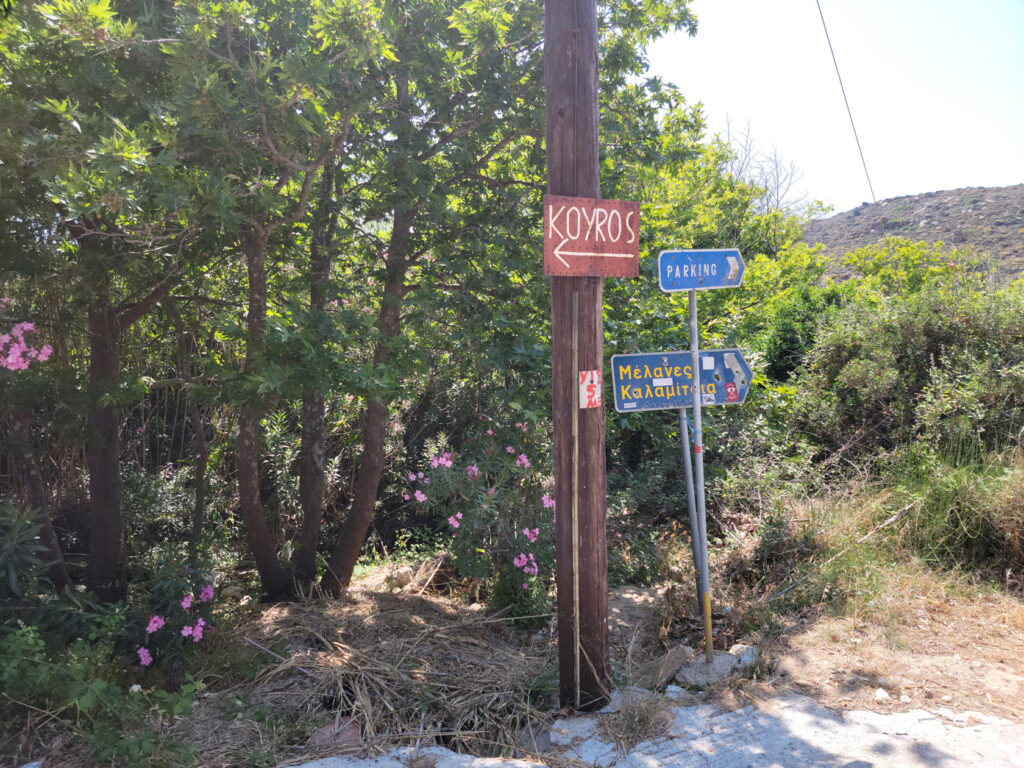
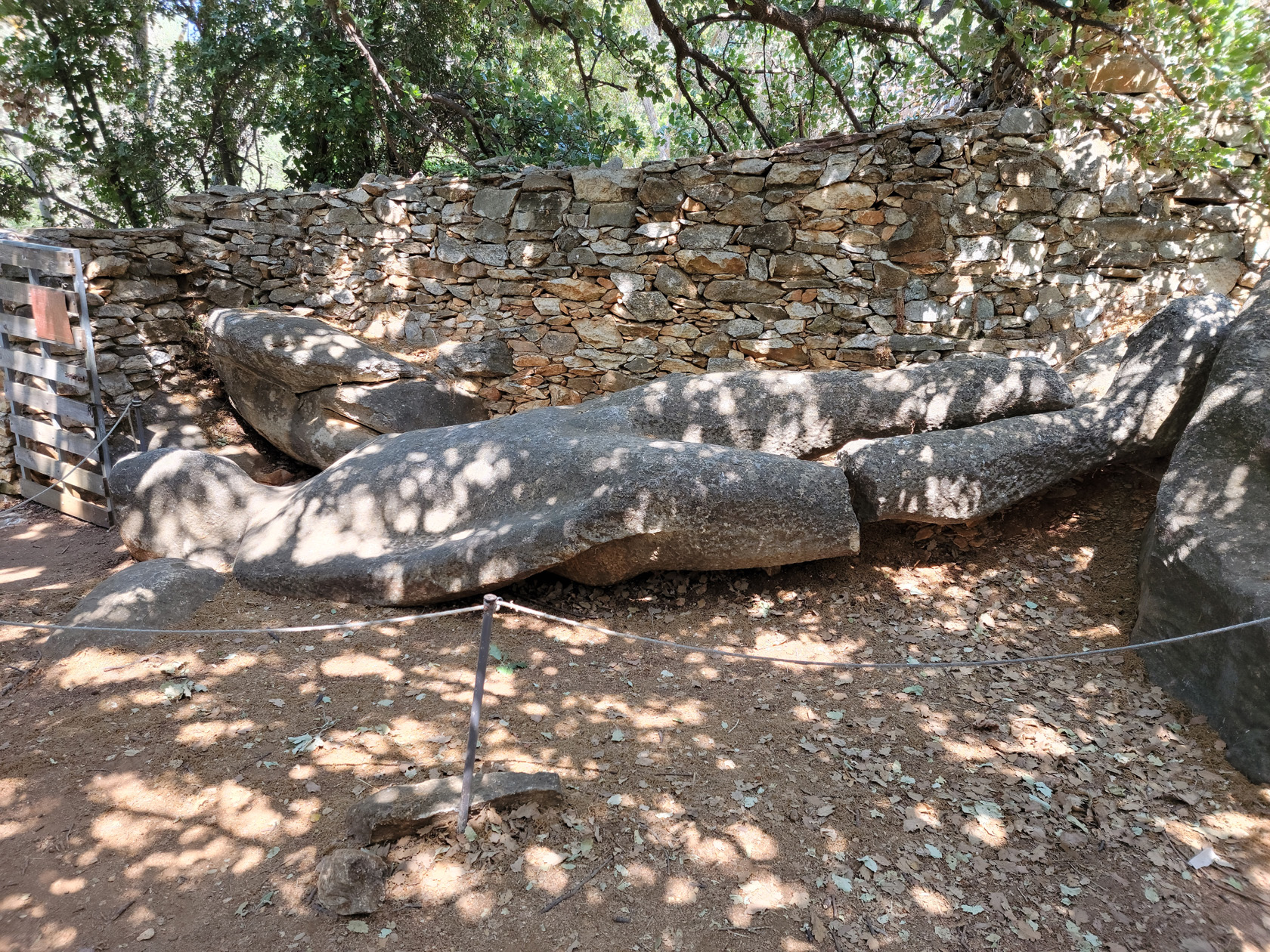
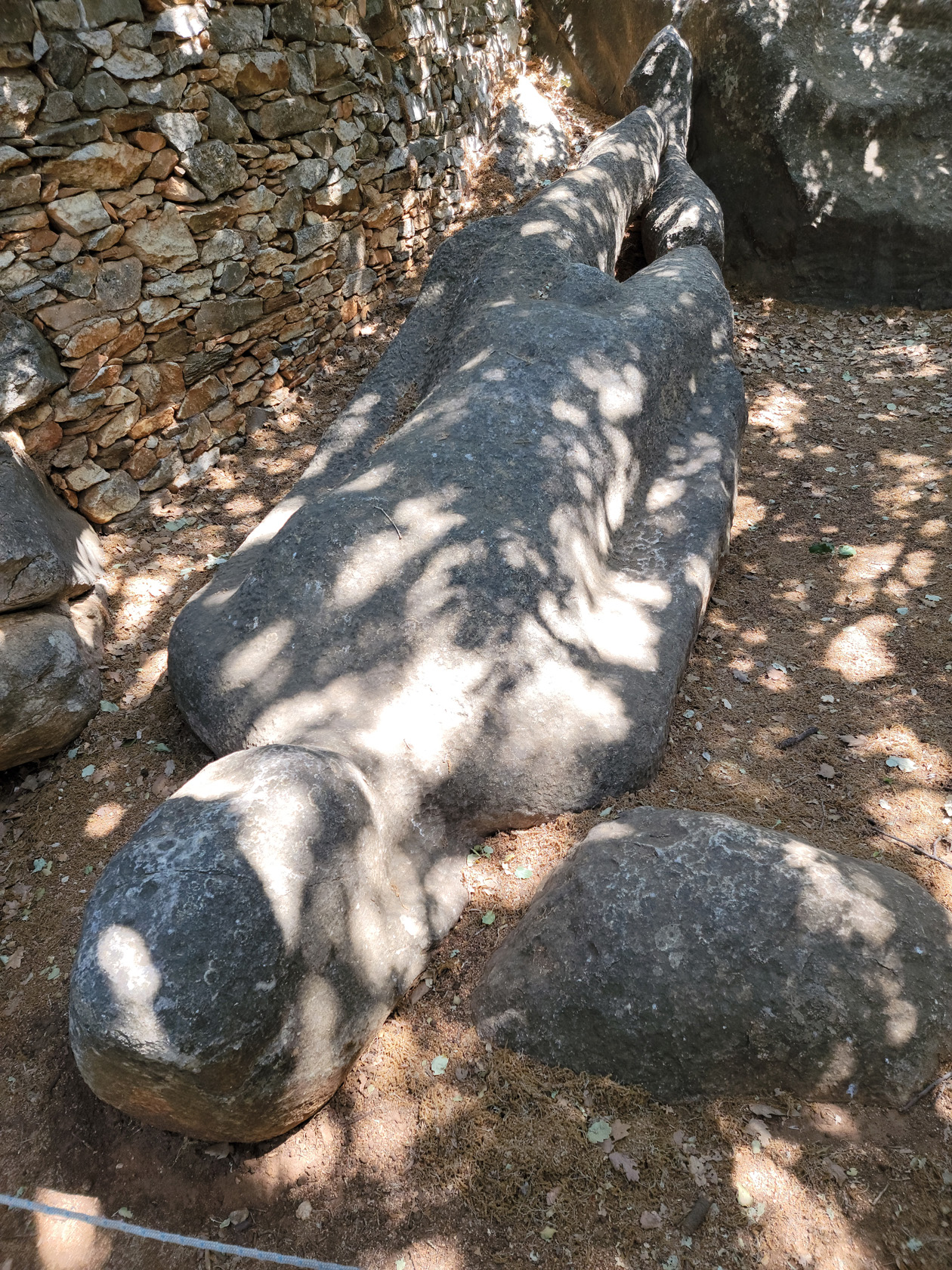
Probable one of the more obscure places to visit archeologically on Naxos is the unfinished Kouros. Located not far from the intersection of the Naxou-Monis and Naxou-Chalkiou roads, you should find a small place to park, it’s rather rural so it should be no problem.
Naxos – The Koyros or Flerio Melanes Kouros Statue
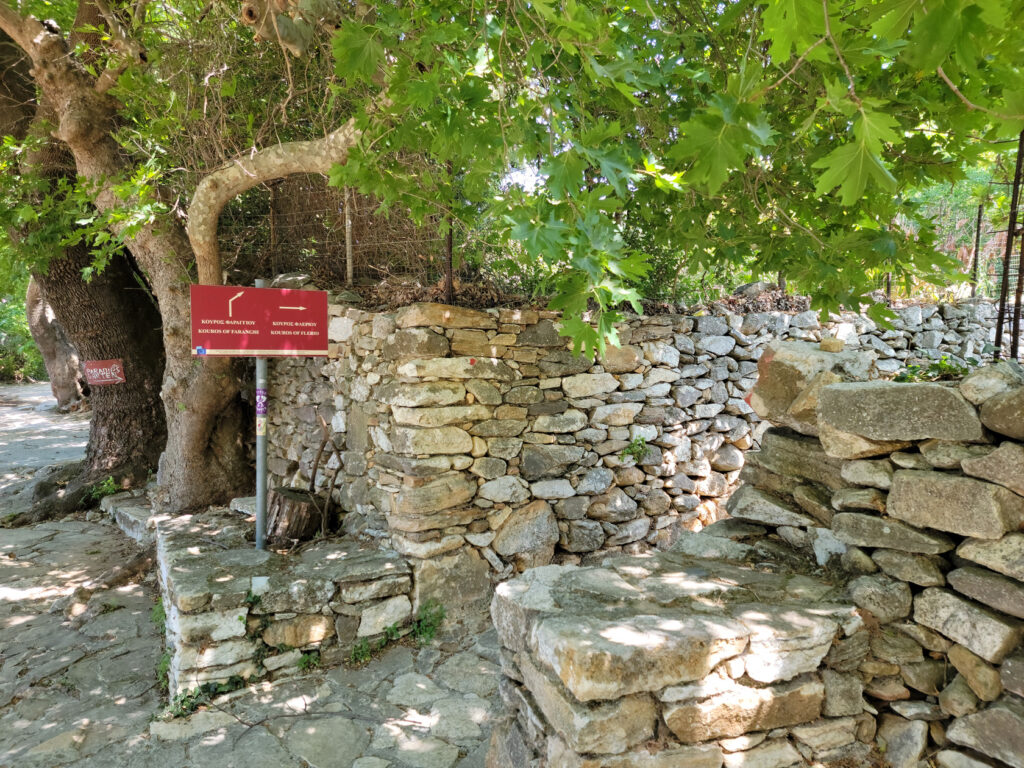
If you are in the right place, there will be some signs indicating the way.
Naxos – The Walkway to Flerio Melanes Kouros Statue
Naxos – The Koyros or Flerio Melanes Kouros Statue
Naxos – The Walkway to Flerio Melanes Kouros Statue
Naxos – The Koyros or Flerio Melanes Kouros Statue
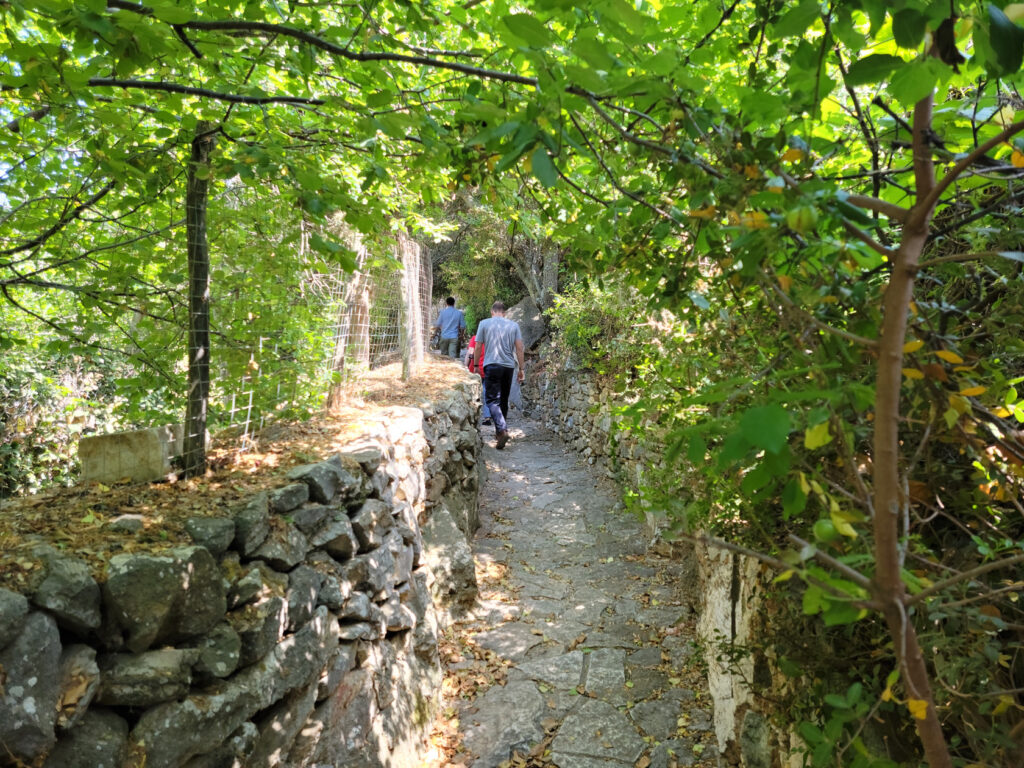
Once found, the Flerio Melanes Kouros is a small walk away up a paved walkway. It appears to reside in a small stone fenced yard, but cannot leave since one of its legs are broken.
Naxos – The Flerio Melanes Kouros Statue
Naxos – The Flerio Melanes Kouros Statue
If you have the time there are a few other things to see in the area. The Faragi Kouros is not far from here and is close to other stones that apparently were chosen for other works, but never started.
Apeiranthos
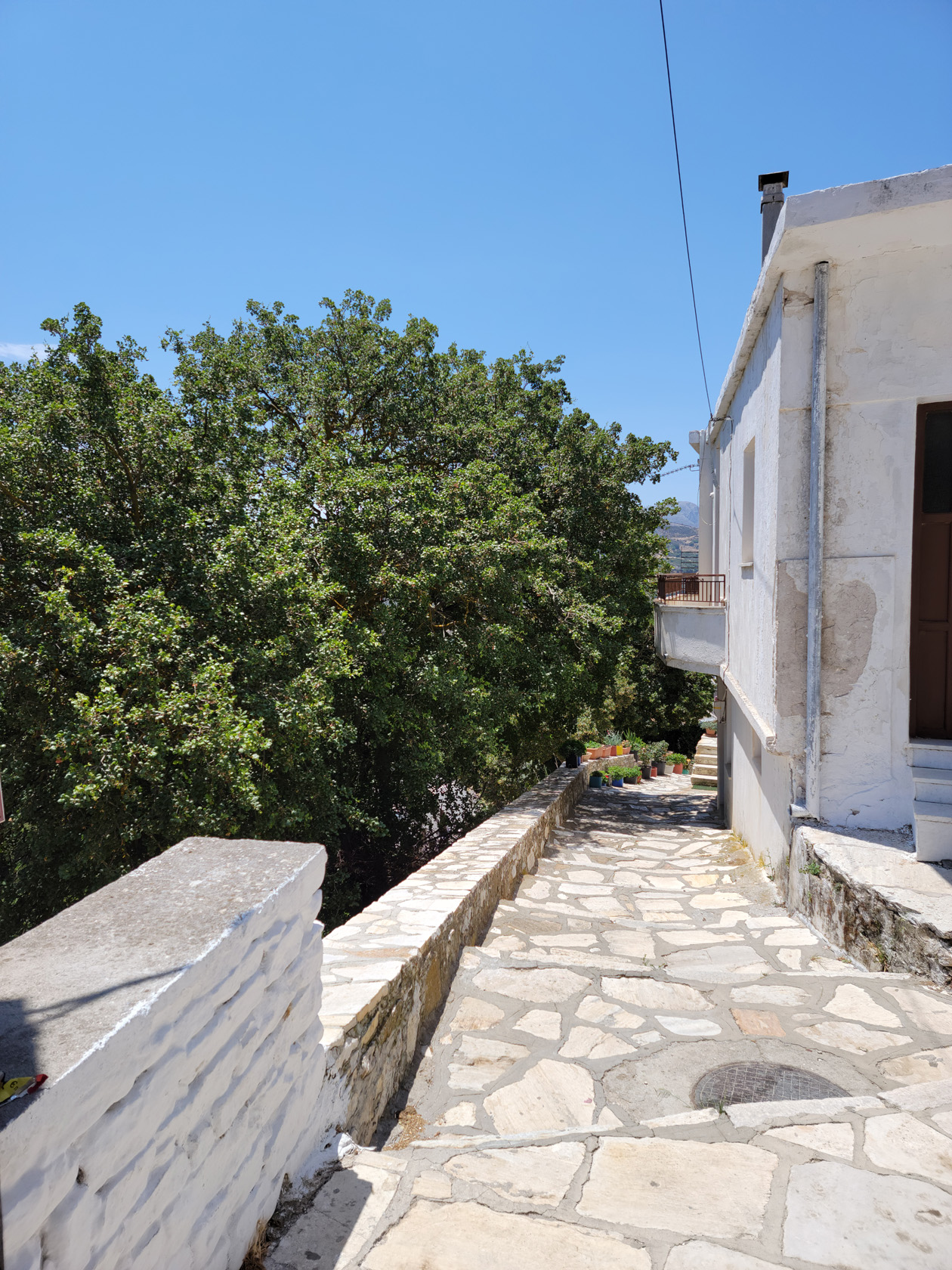
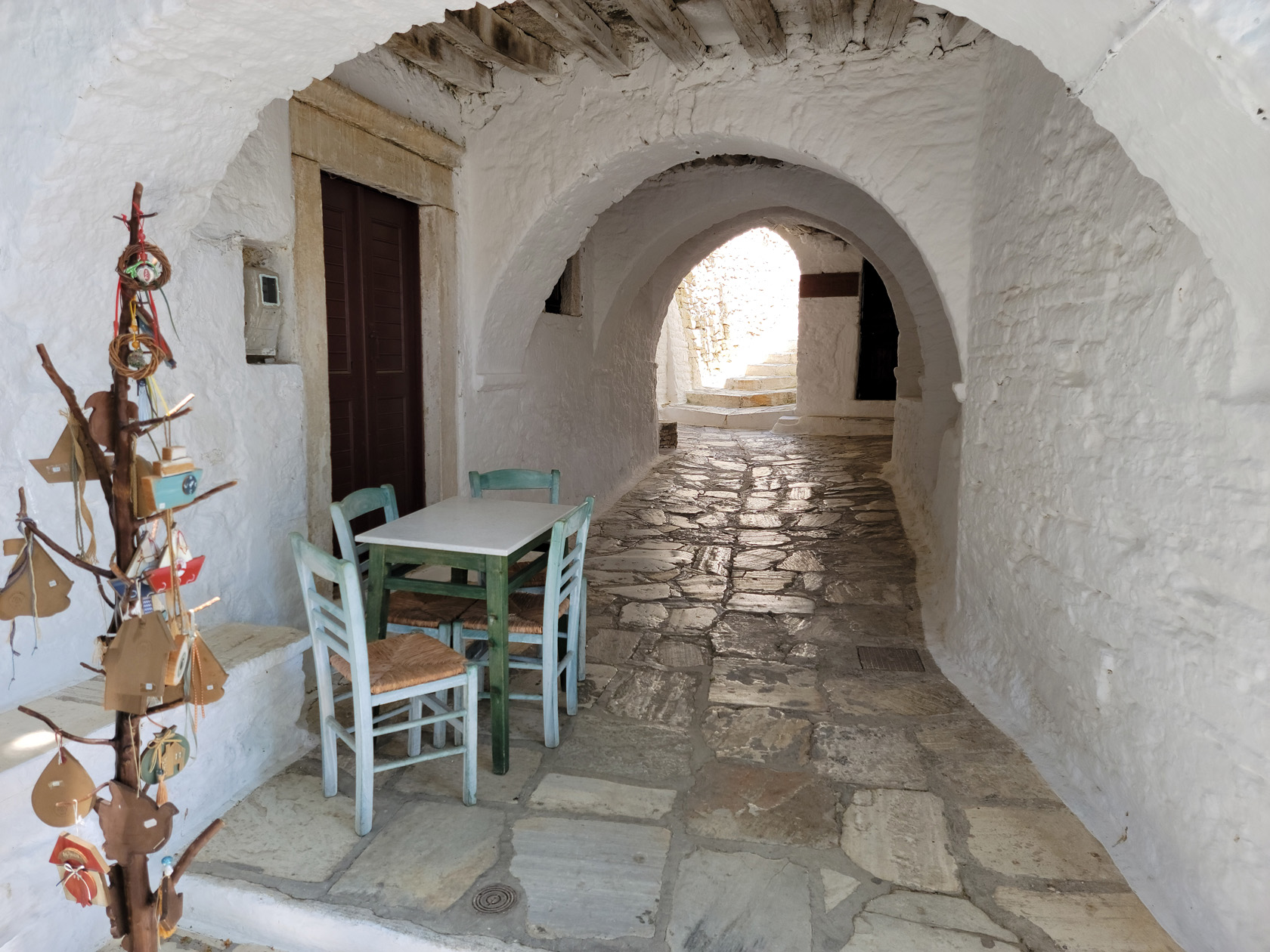
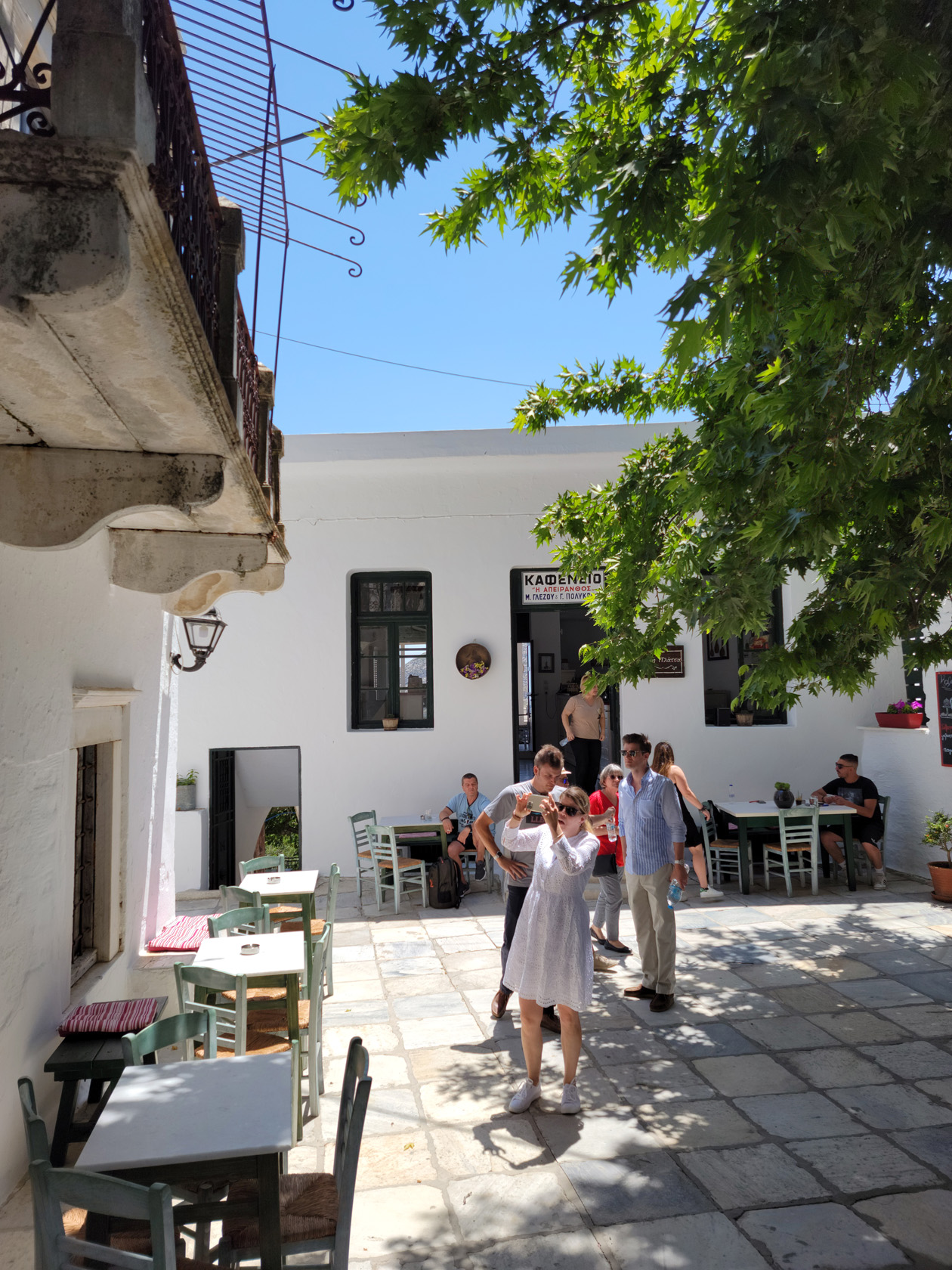
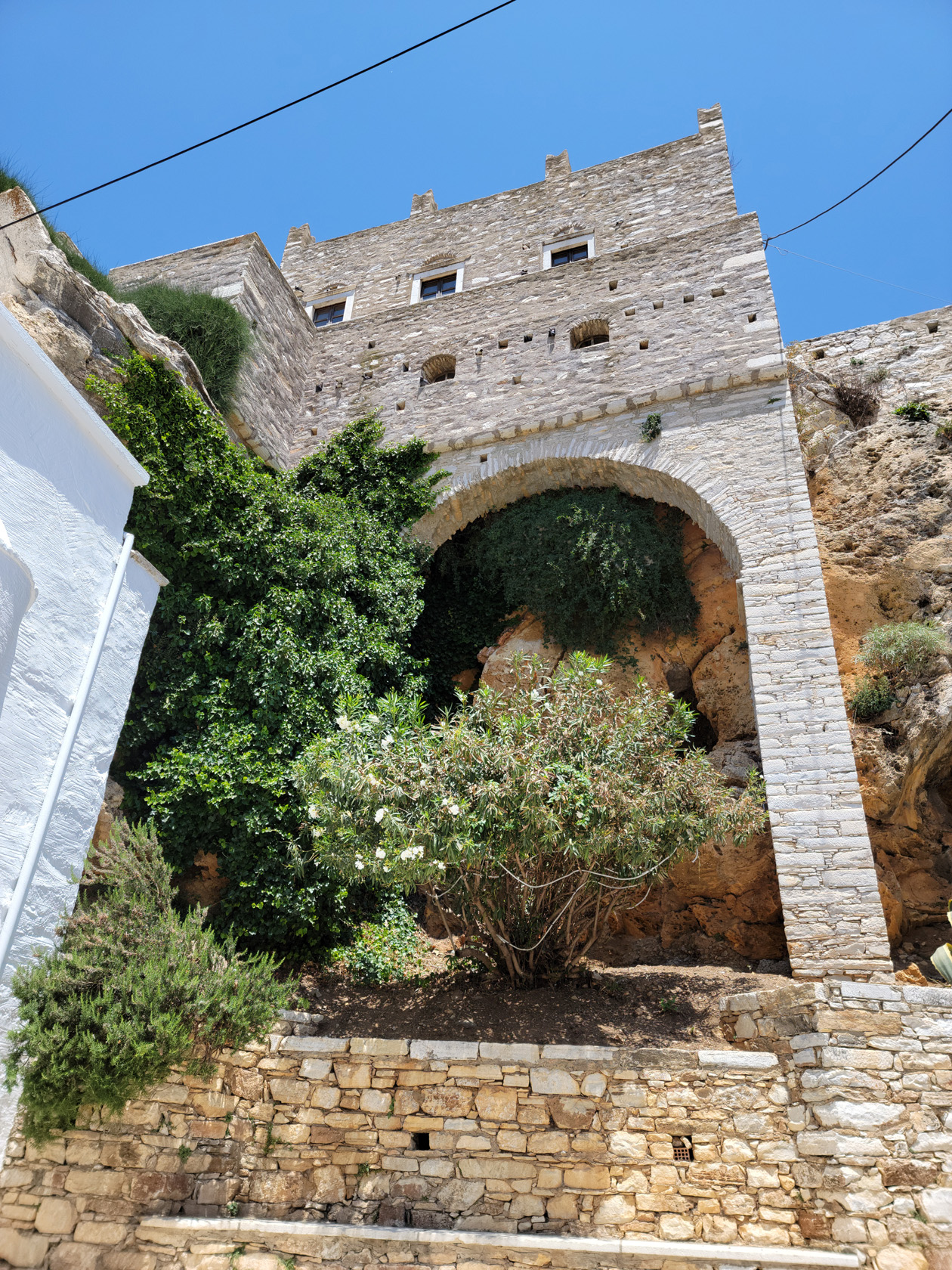
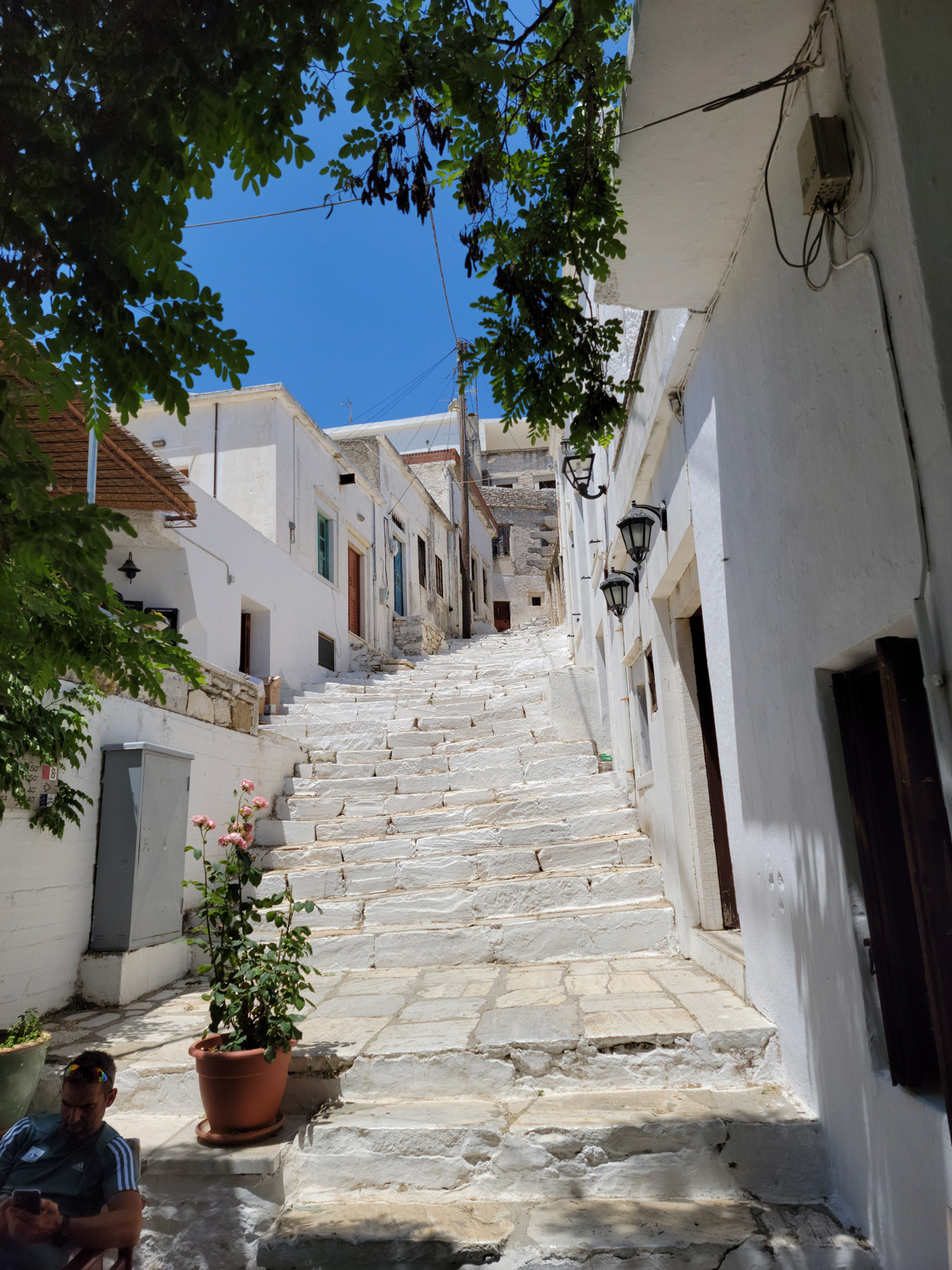
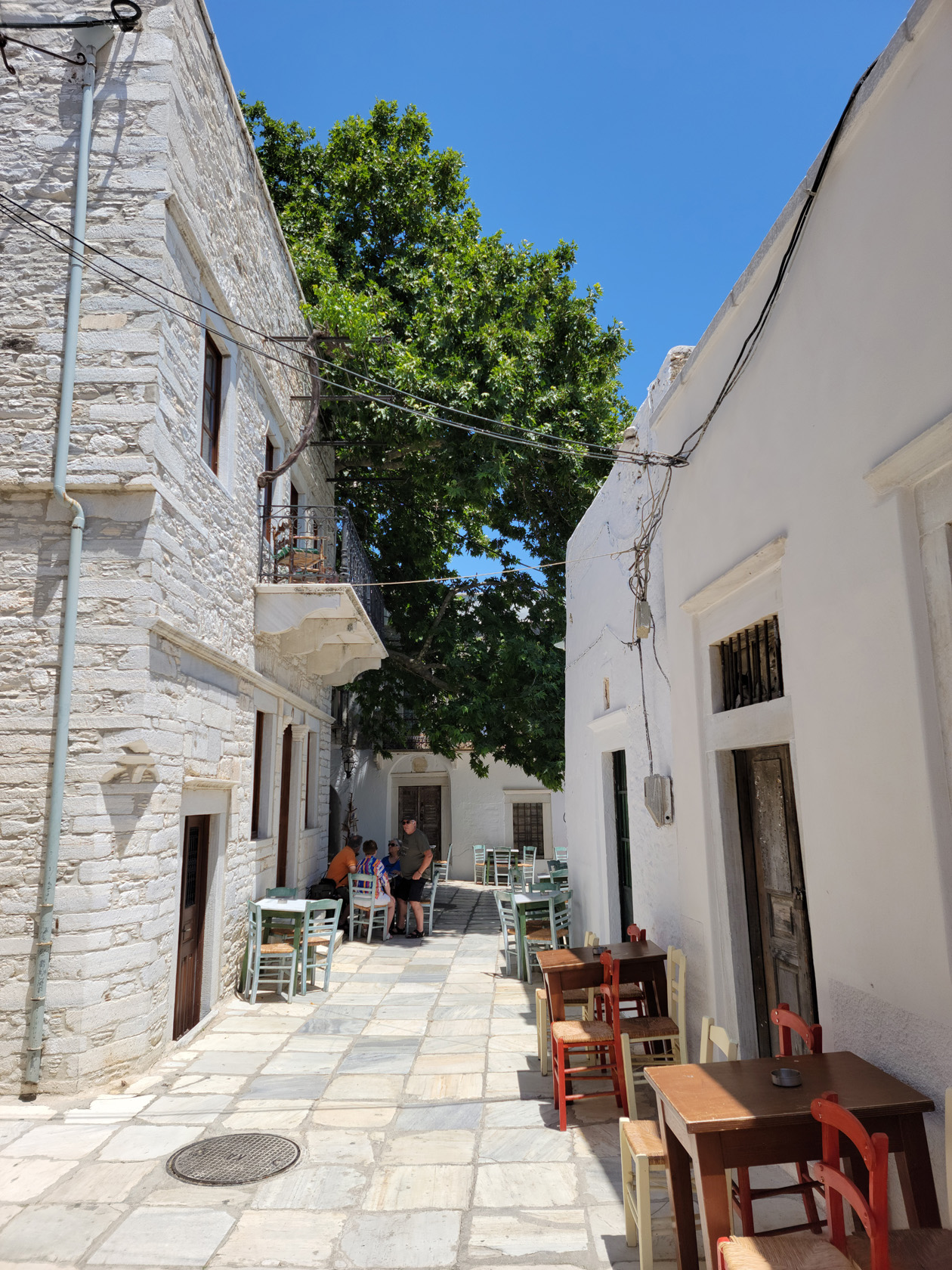
A small town in the hills of Naxos, obtainable only by car, is worth a trip, if only to see its marbled streets and pedestrian ways. If you are on a tour, its a good place to stop for lunch and wander the streets until you are ready to eat. There are many interesting shops to explore and some novel architecture to experience. An hour or two would suffice in order to do both.
Apeiranthos, Naxos – Marble, marble everywhere
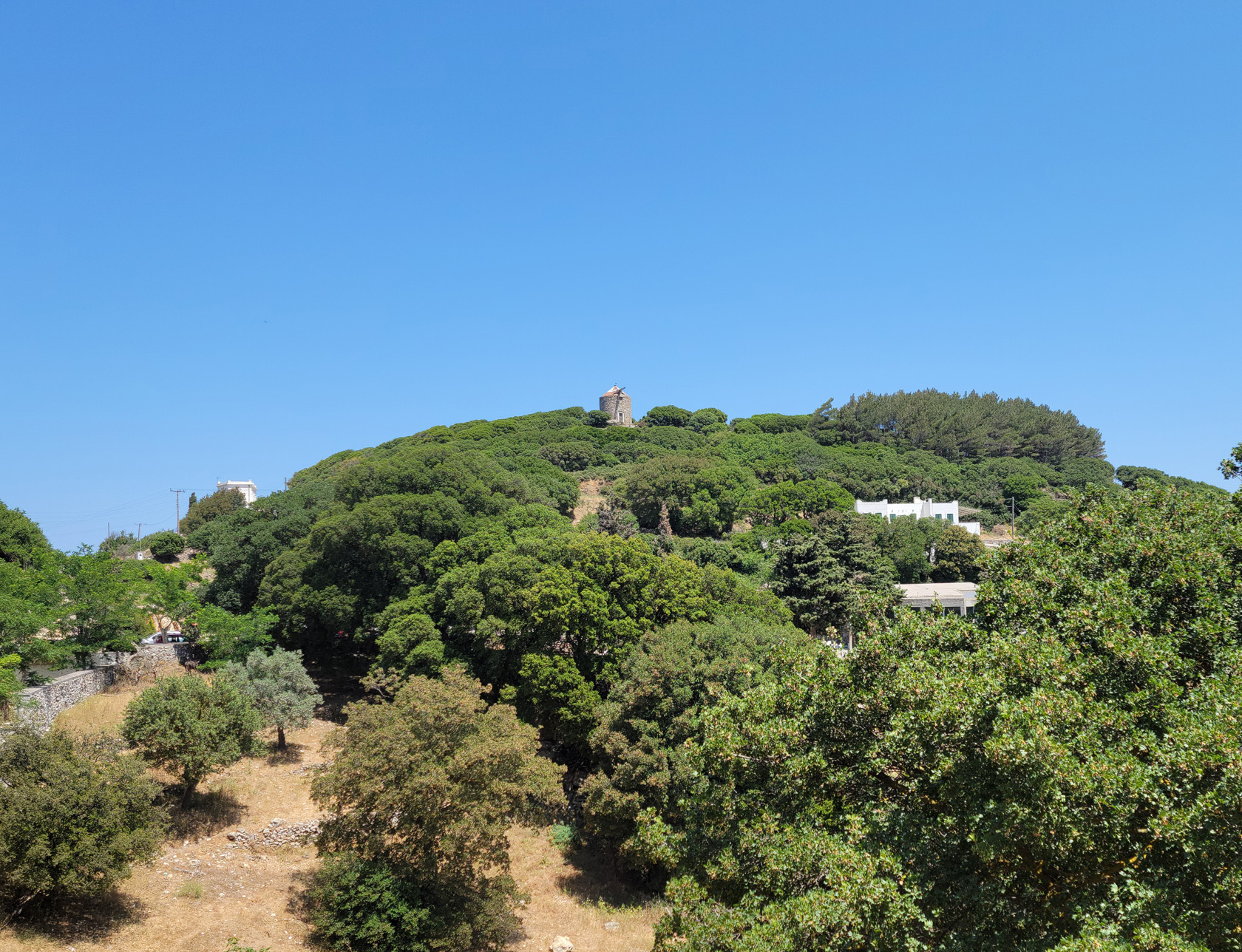
Naxos – Another Old Grainery Windmill
Apeiranthos, Naxos
Apeiranthos, Naxos – The middle of town
Apeiranthos, Naxos – Old Stone Arch
Apeiranthos, Naxos – The marble walkways
Apeiranthos, Naxos – Main Pedestrian Way
Apeiranthos, Naxos – Looking Out At The Hills
Eggares Olive Oil Museum
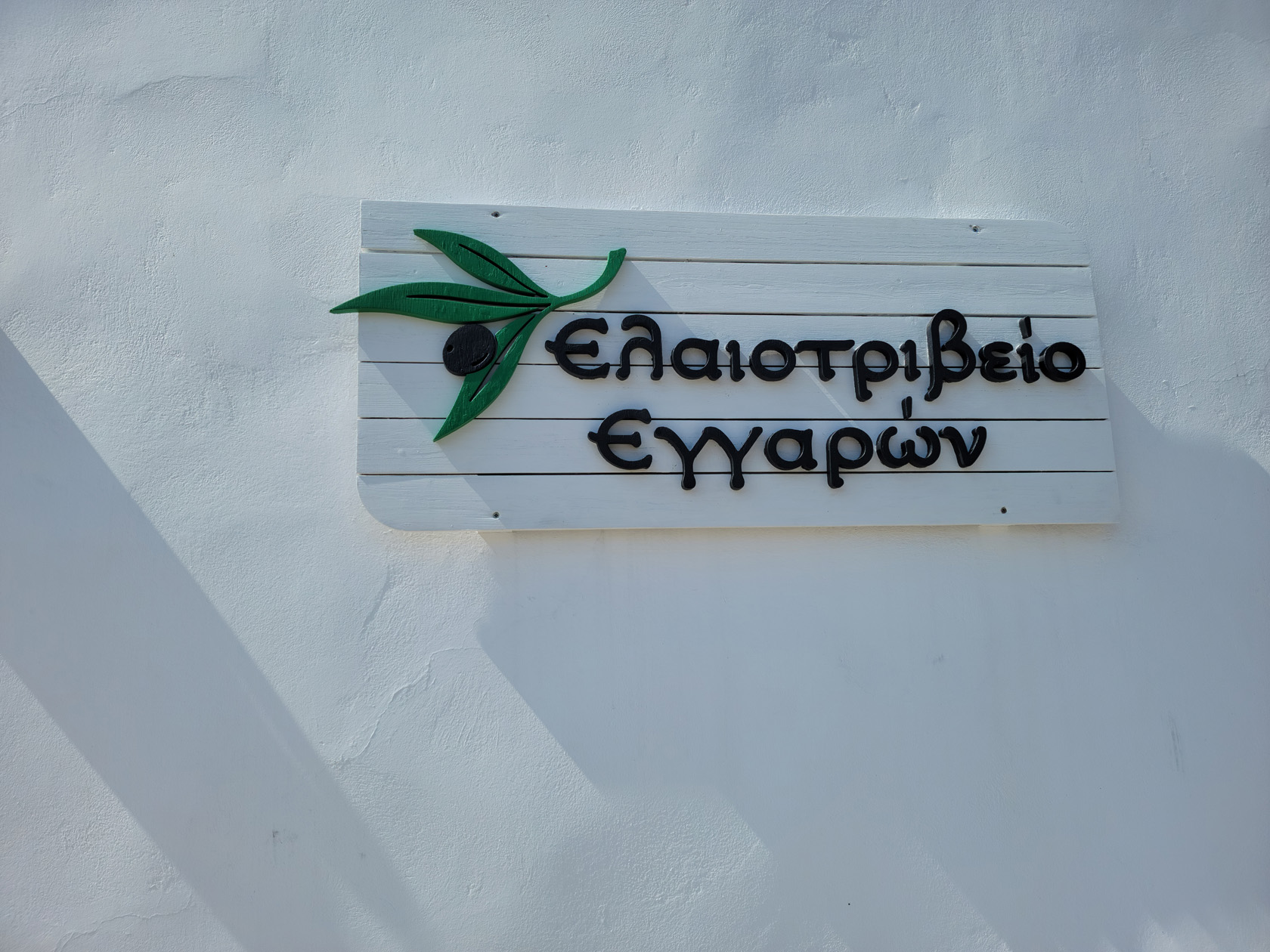
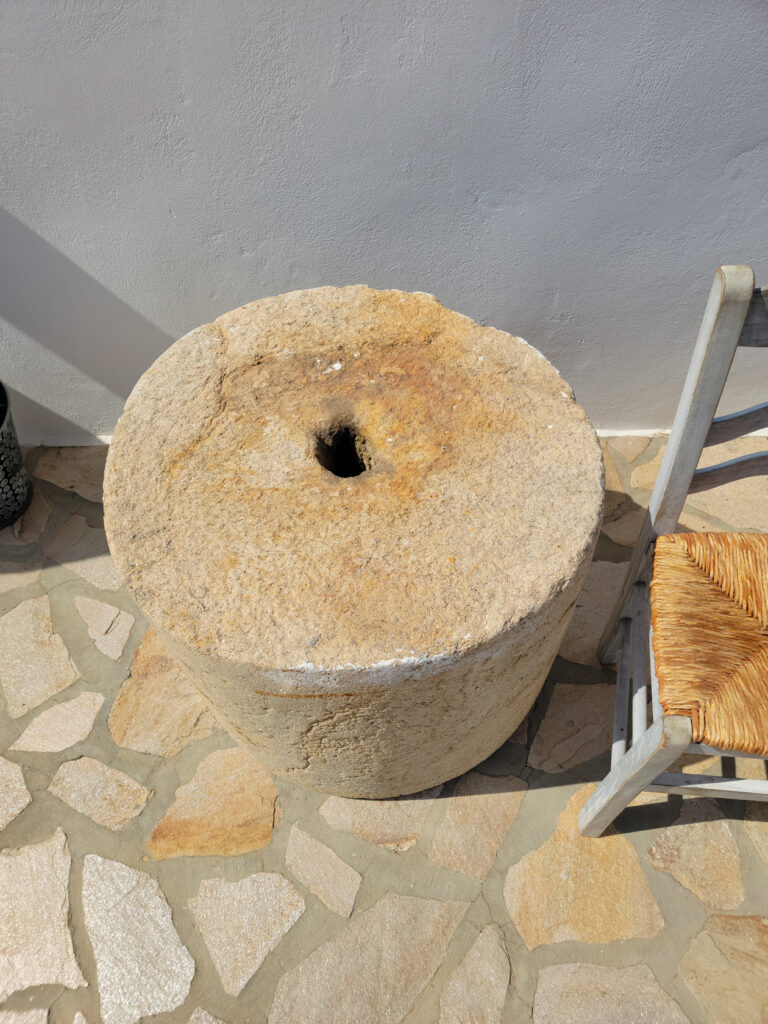
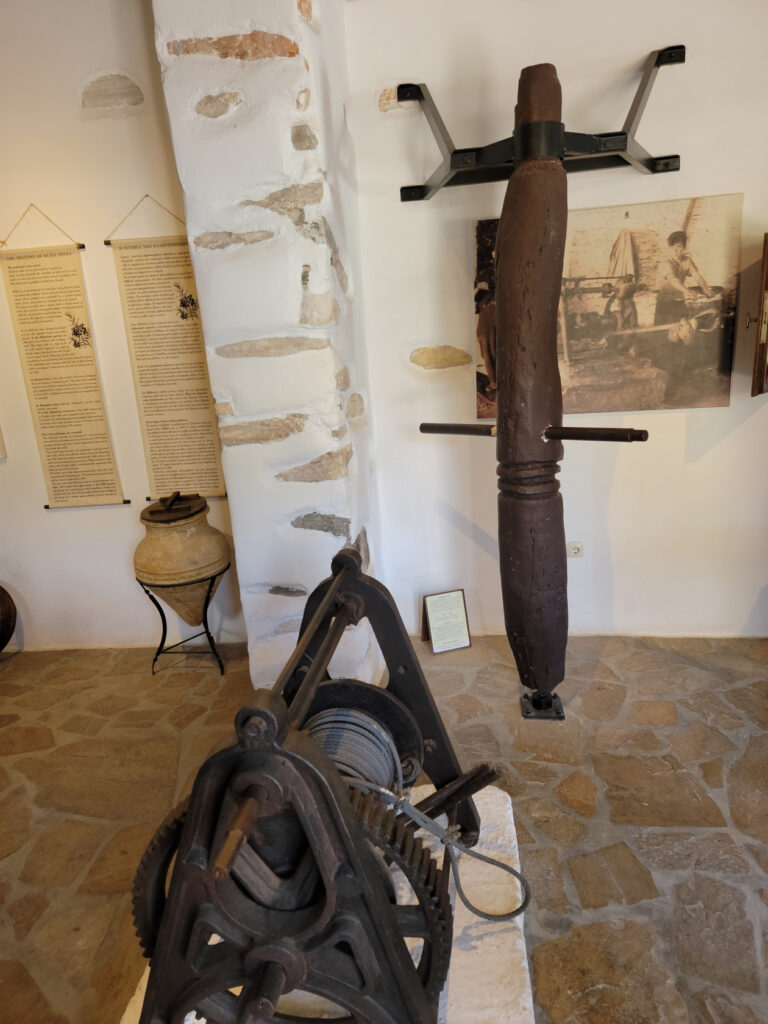
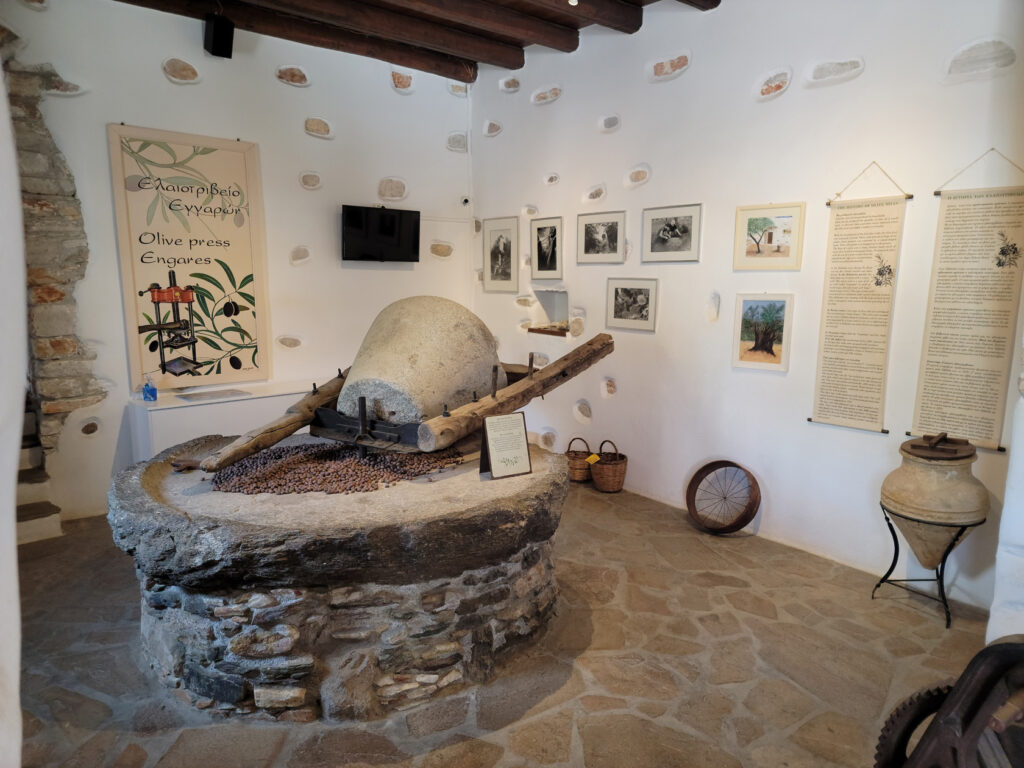
A small private museum showing the discipline of olive oil making can be found not more that a half hour drive from Naxos harbor. The Eggares Olive Oil Museum has a small collection of old oil presses, as well as other tools and the complete history of their firm.
Eggares, Naxos – The Eggares Olive Oil Museum
The museum continues to sell olive oil and olives that it produces in the gift shop. Unfortunately we did not purchase any, since most of the products are not bottled and perhaps not suitable for a return flight. So, instead of taking a chance, we opted out of bringing a sample home.
Eggares, Naxos – The Eggares Olive Oil Museum – Old Mill Stone
Eggares, Naxos – The Eggares Olive Oil Museum – Winch Used To Turn The Millstone
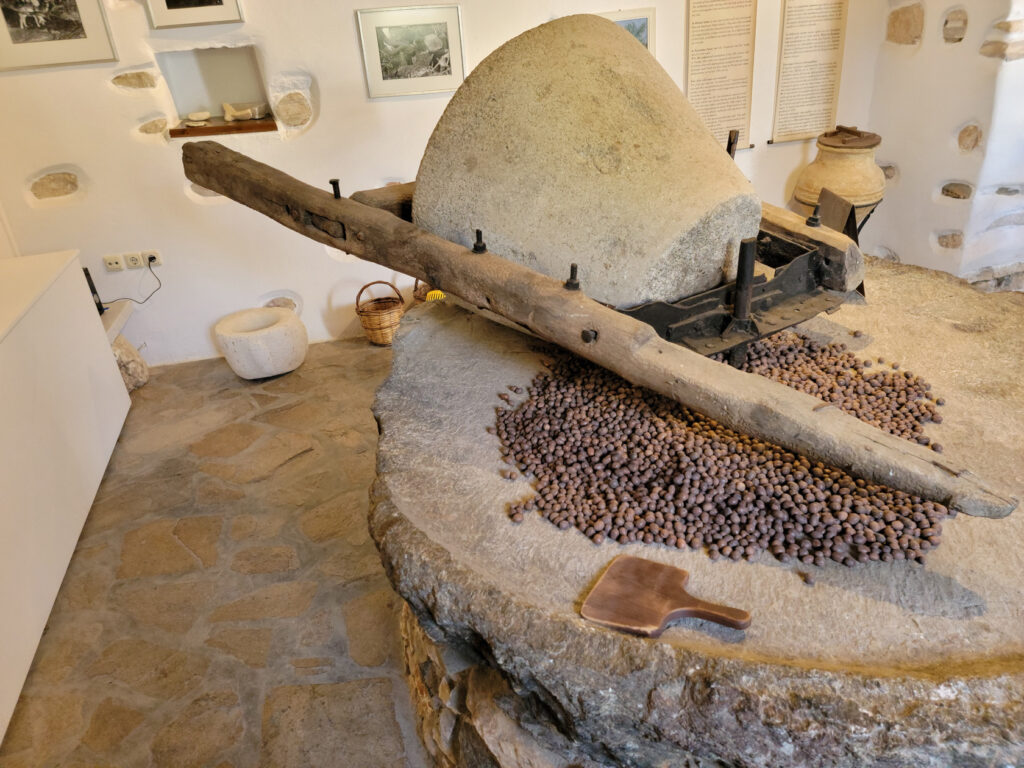
Eggares, Naxos – The Eggares Olive Oil Museum – Olive Millstone
Eggares, Naxos – The Eggares Olive Oil Museum – Olive Millstone
Restaurants
The beach where our hotel was situated was well endowed with restaurants. What follows is only a sample of what is available, but all have very good menus and delicious food.
Taverna Authentic Greek Cuisine Restaurant
Though we had reservations at another restaurant, we had all decided that we were hungry and had to eat a little early.
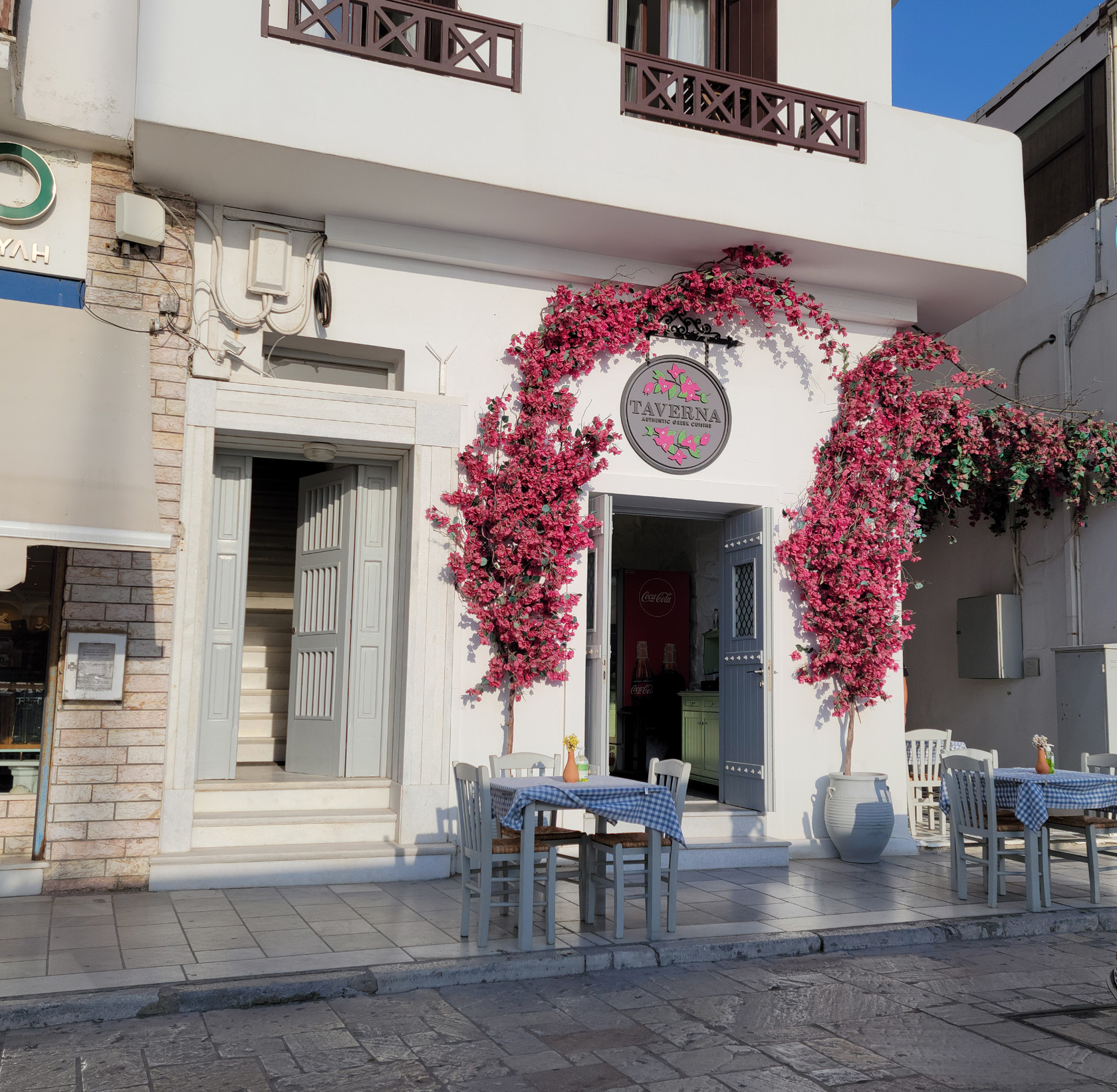
So, we headed back down to the harbor from our sojourn up the hill of Naxos and its castle. There we found the Taverna Authentic Greek Cuisine Restaurant, which as can be imagined, serves numerous authentic Greek dishes.
Naxos, Naxos – Taverna Authentic Greek Cuisine Restaurant – Patti, Ericka, Gabi and Dana
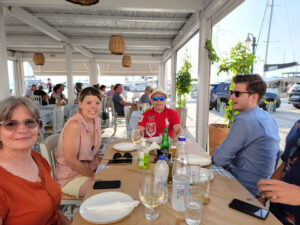
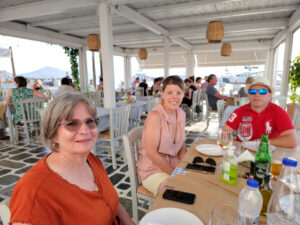
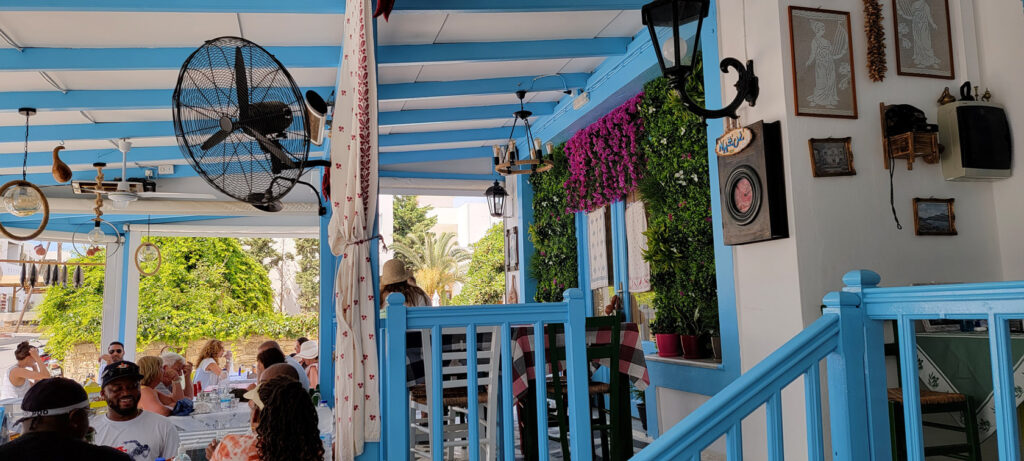
Soon after we arrived, we ate lunch at the Taverna O Giannoulis and enjoyed a very nice meal with water, wine and all the supplements. They have a great Greek menu, the service is very quick and the seating outside is perfect (though we went in June, so heat was never an issue).
Taverna O’ Giannoulis
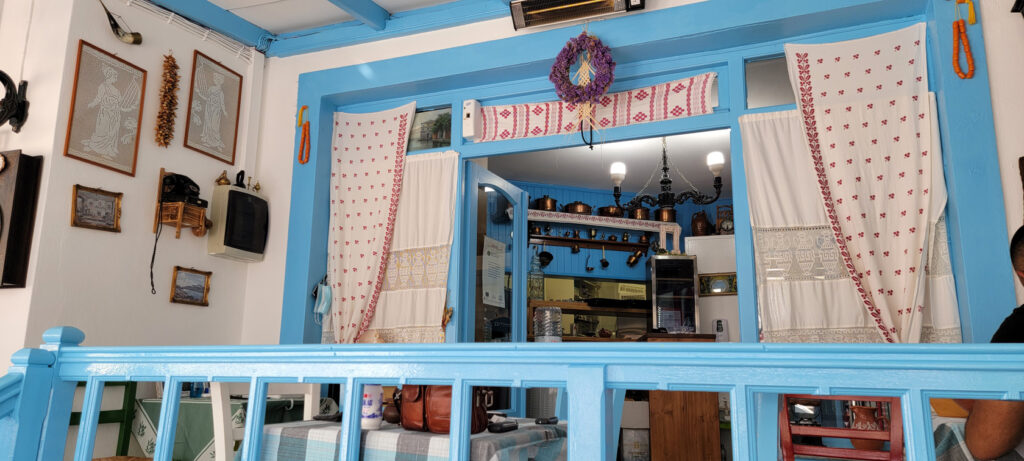
Taverna O’ Giannoulis – Kitchen
Taverna O’ Giannoulis
Taverna O’ Giannoulis
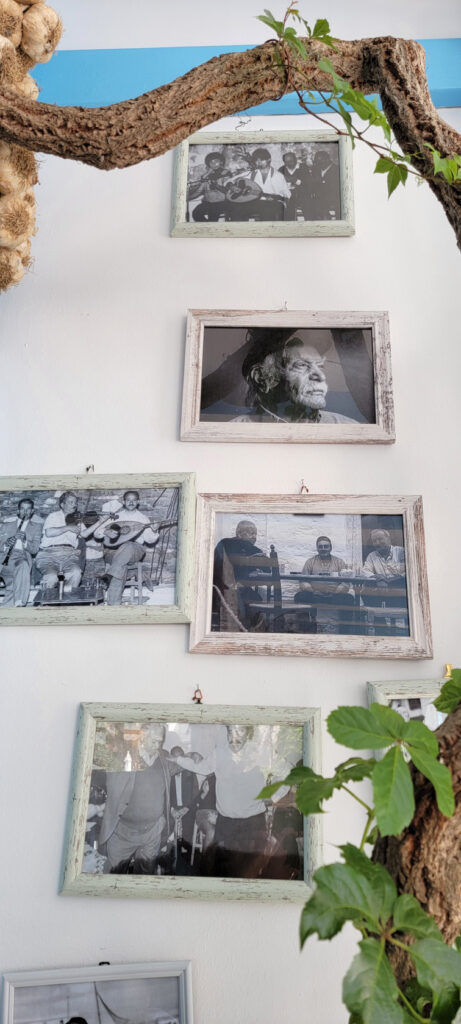
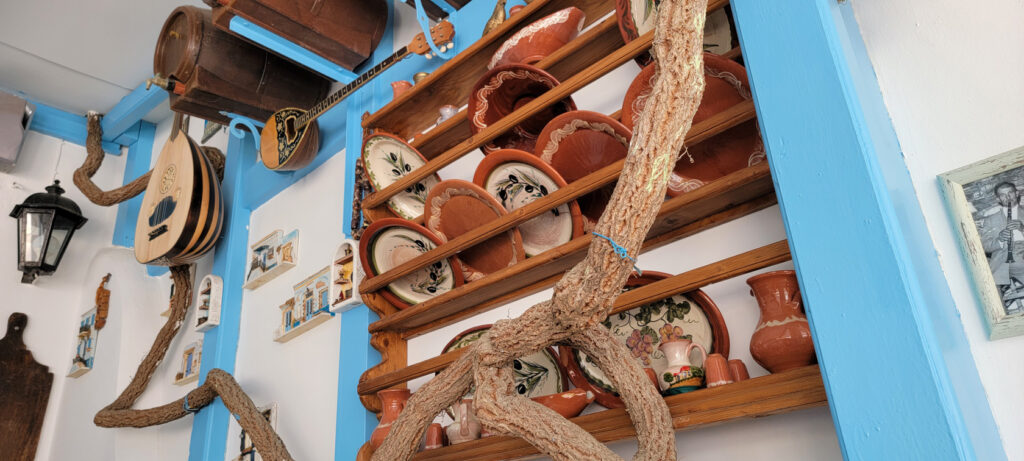
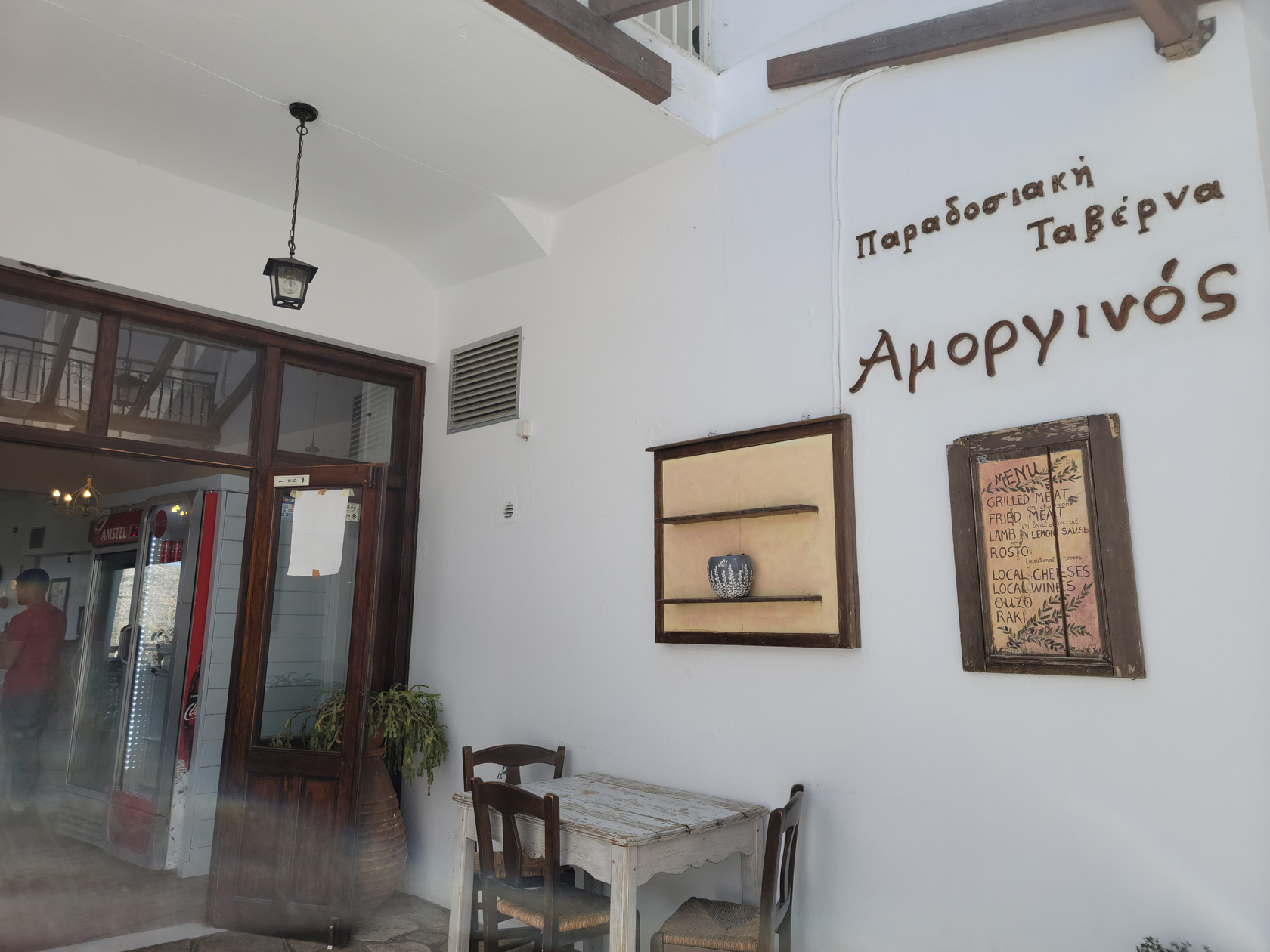
Amorginos Tavern
While on our Naxos day tour, we stopped in the town of Apeiranthos, the one where all the streets and pedestrian ways are made of marble. One of two places recommended by our guide, we chose it for its menu and selection of foods.
Apeiranthos, Naxos – The Amorginos Tavern
There is plenty of outside seating, though we sat just indoors, in order to avoid the midday sun. The service was pretty good, though the food was served randomly, apparently whenever it was ready. Which is good if you ordered something hot, but if you expect your food to come out all at once for your group, you may want to go elsewhere. The food was excellent, as was the local wine and the prices were very reasonable.
The Relax Cafe
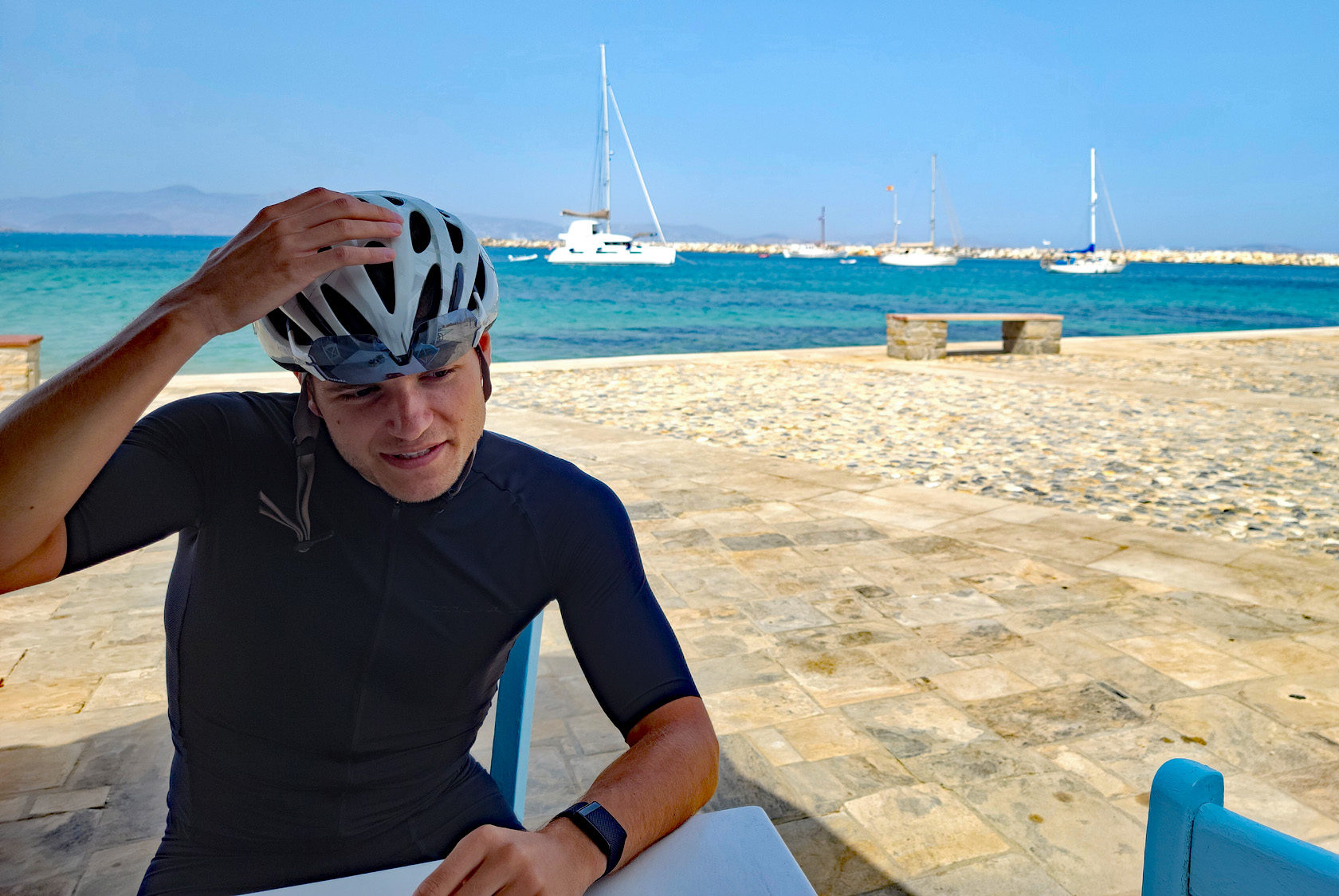
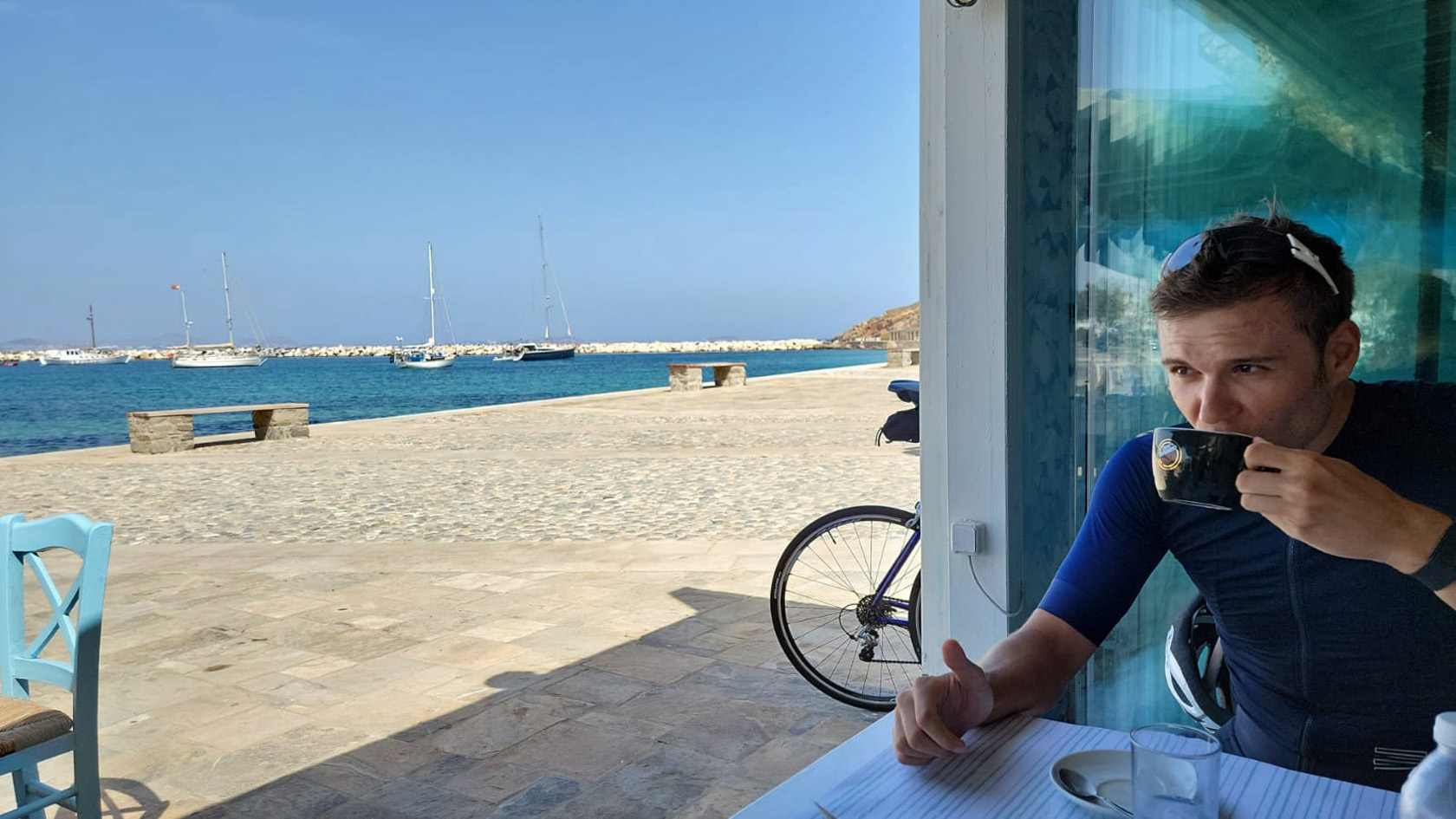
No ride is complete without a coffee stop, and perhaps a bite to eat. After our second morning ride, we decided that we would stop in town, Naxos, and visit the Relax Cafe on the water; not only to enjoy the view, the wind and surf, but also some good coffee and what turned out to be amazing vegetable and cheese omelets (the secret it appears, is not just throwing the freshly cut veggies into the scrambled eggs, but to barbecue or fry them a bit first, infusing them with the burnt taste, yu-ummm).
Highly recommended place for breakfast, unless of course you are timid about calories, as avid cyclist, we aren’t. Enjoy!
Del Mar Cafe
Situated almost in the middle of our strand is the Del Mar Cafe. An Italian restaurant that caters to all needs, especially those nagging Italian taste buds that some of us have. Angela and Marco moved from Italy eight years ago and are excellent hosts, they will ensure your meal is prepared to your expectations. We went here several times for lunch and dinner and used their beach services as well; their wines are also very good, we were never disappointed.
Naxos – A Sunset
Wines
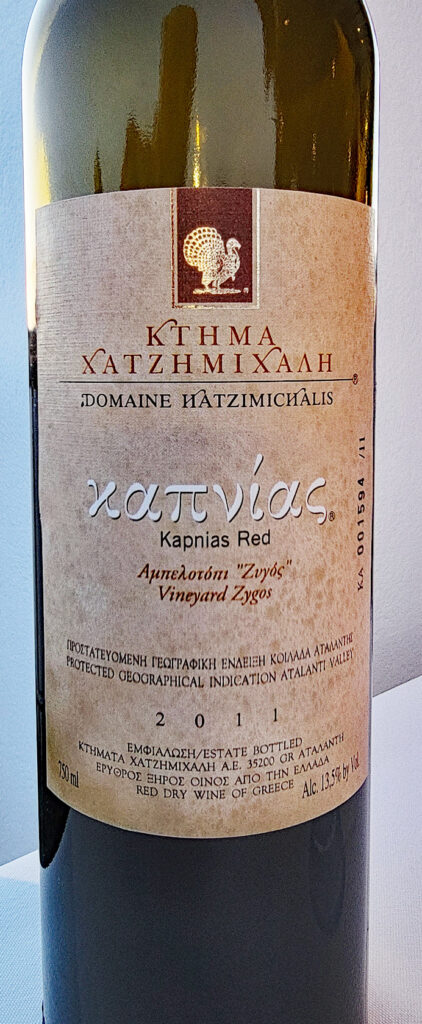
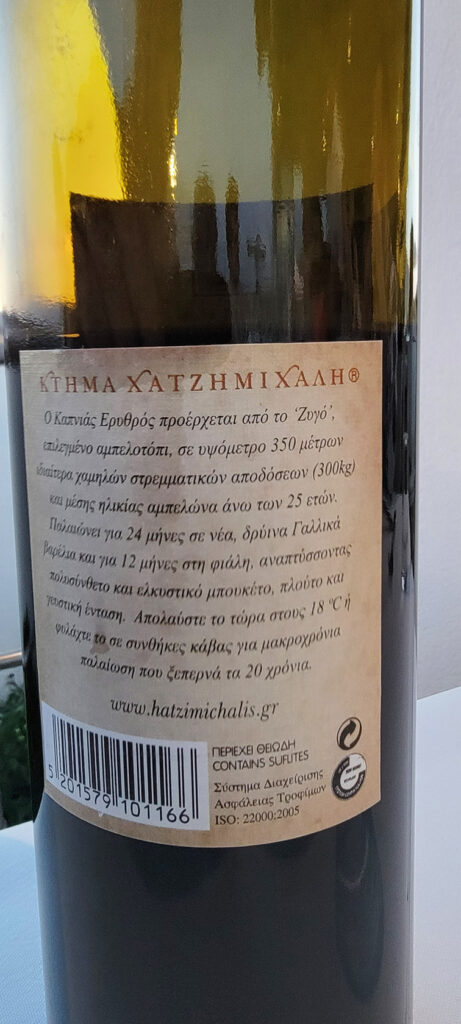
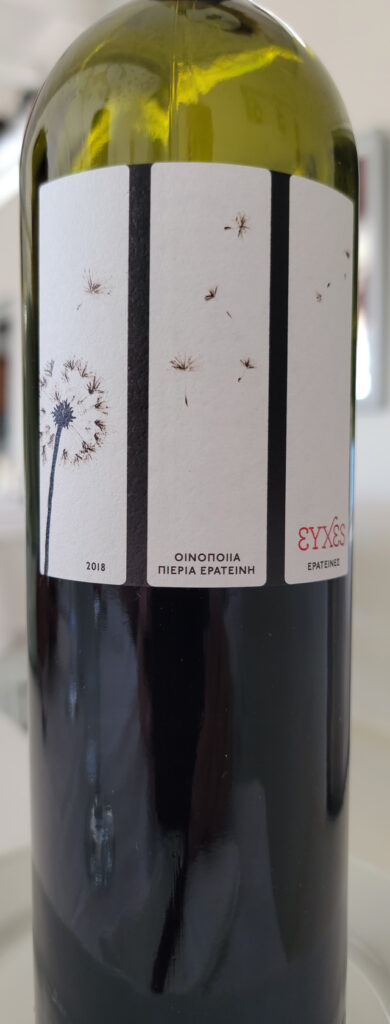
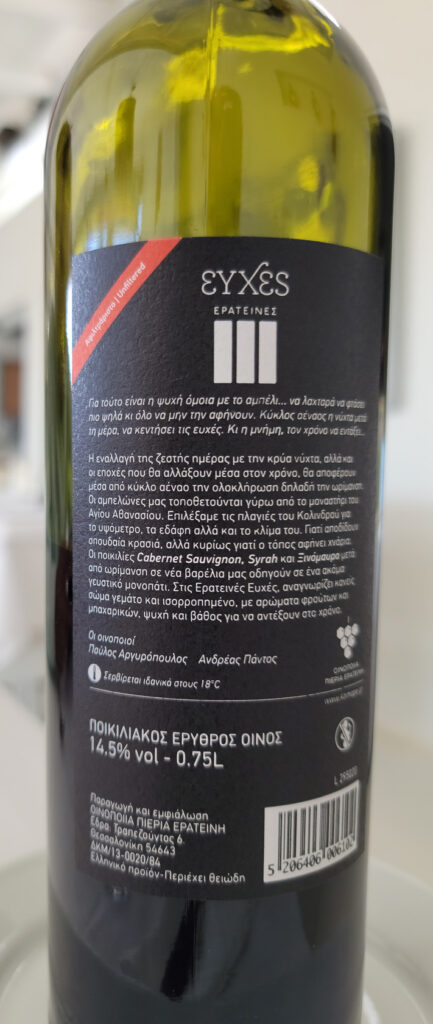
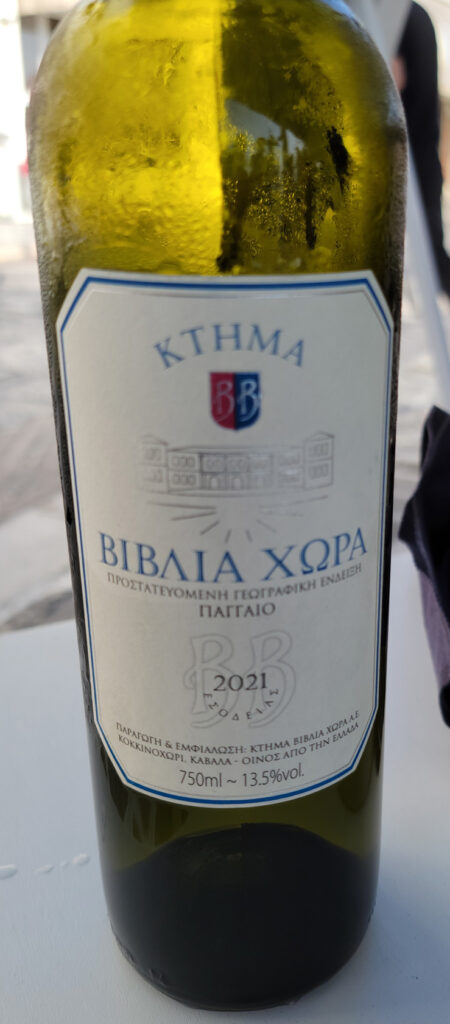
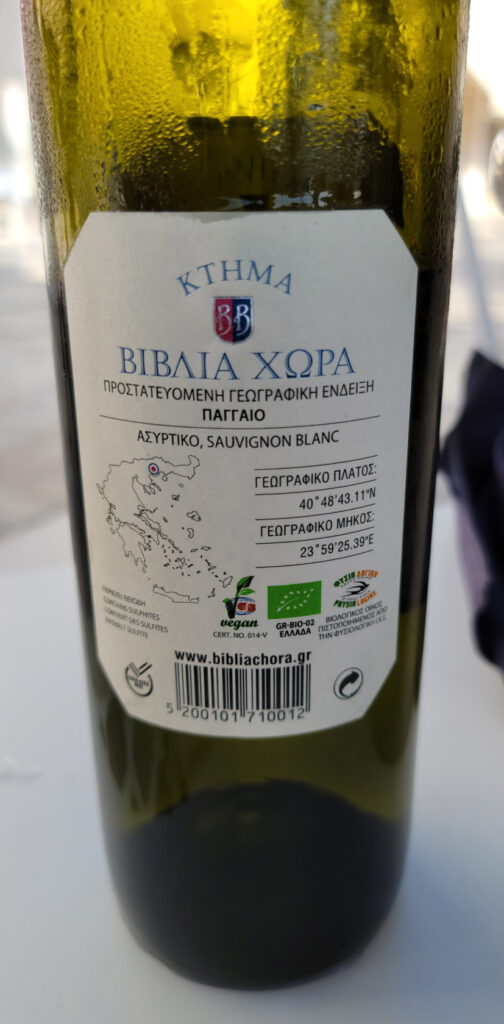
The following wines we enjoyed while dining in Naxos. Most are inexpensive wines, all are from Greece or the neighboring islands and are completely drinkable and satisfying.