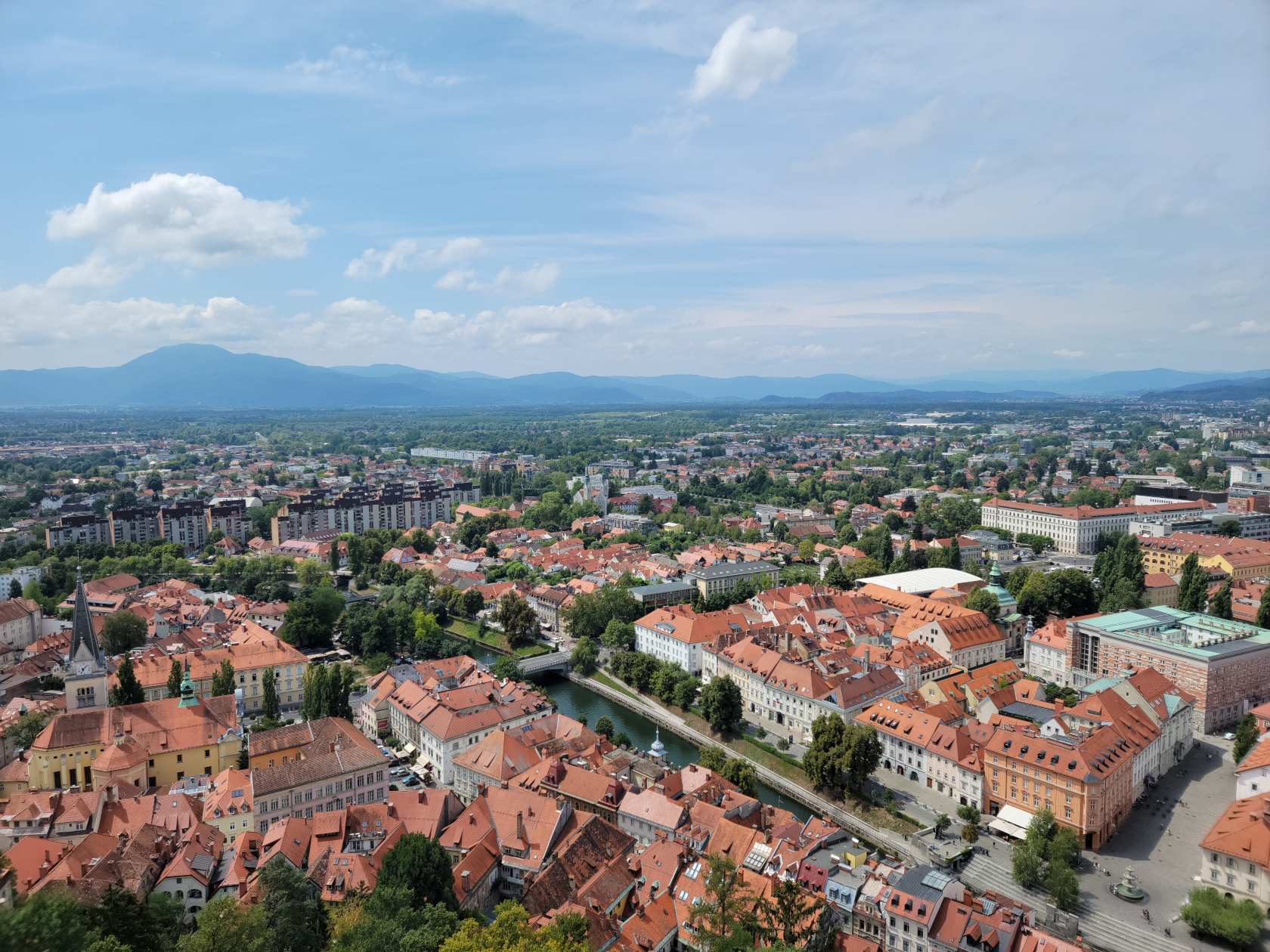
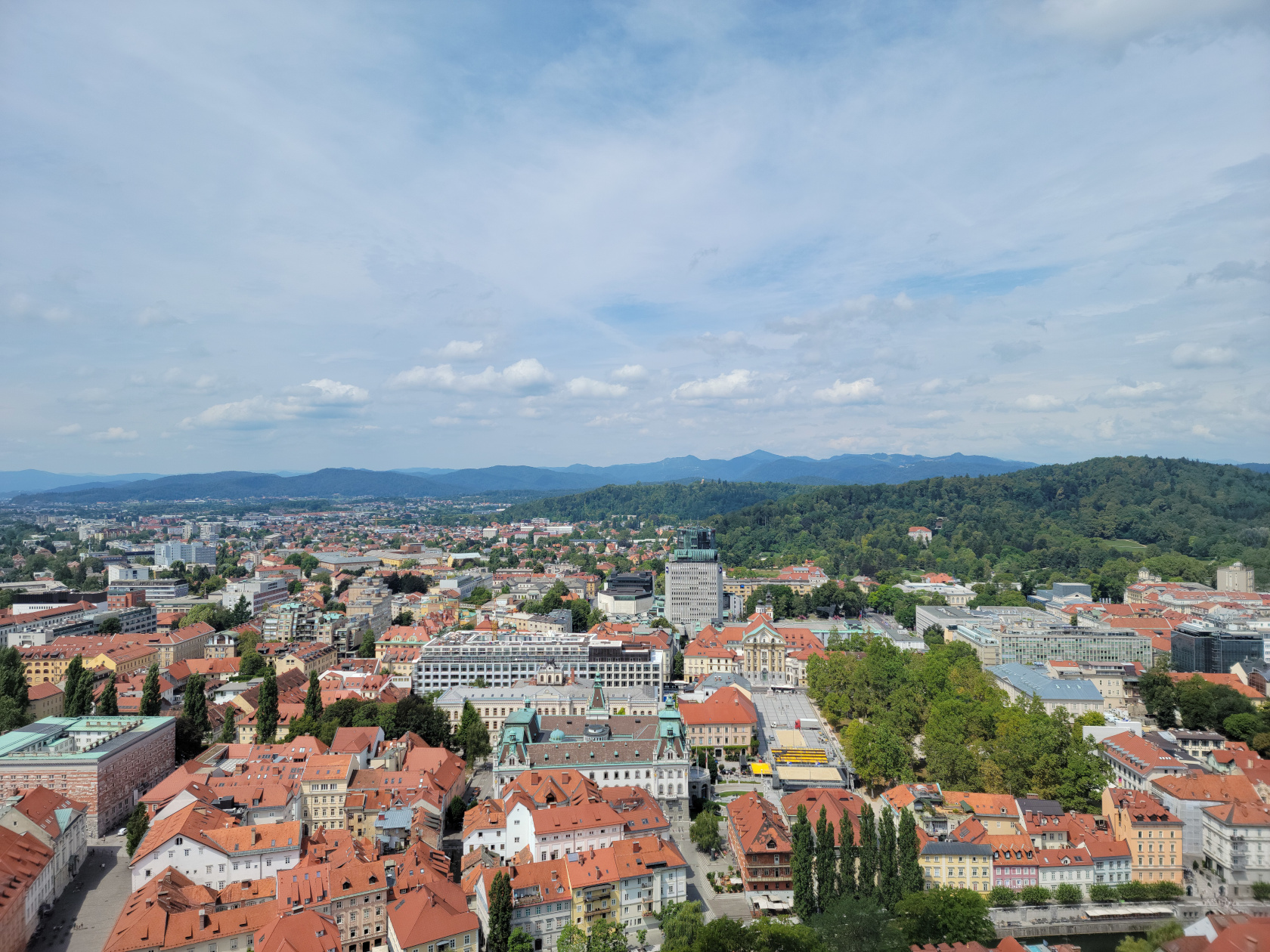
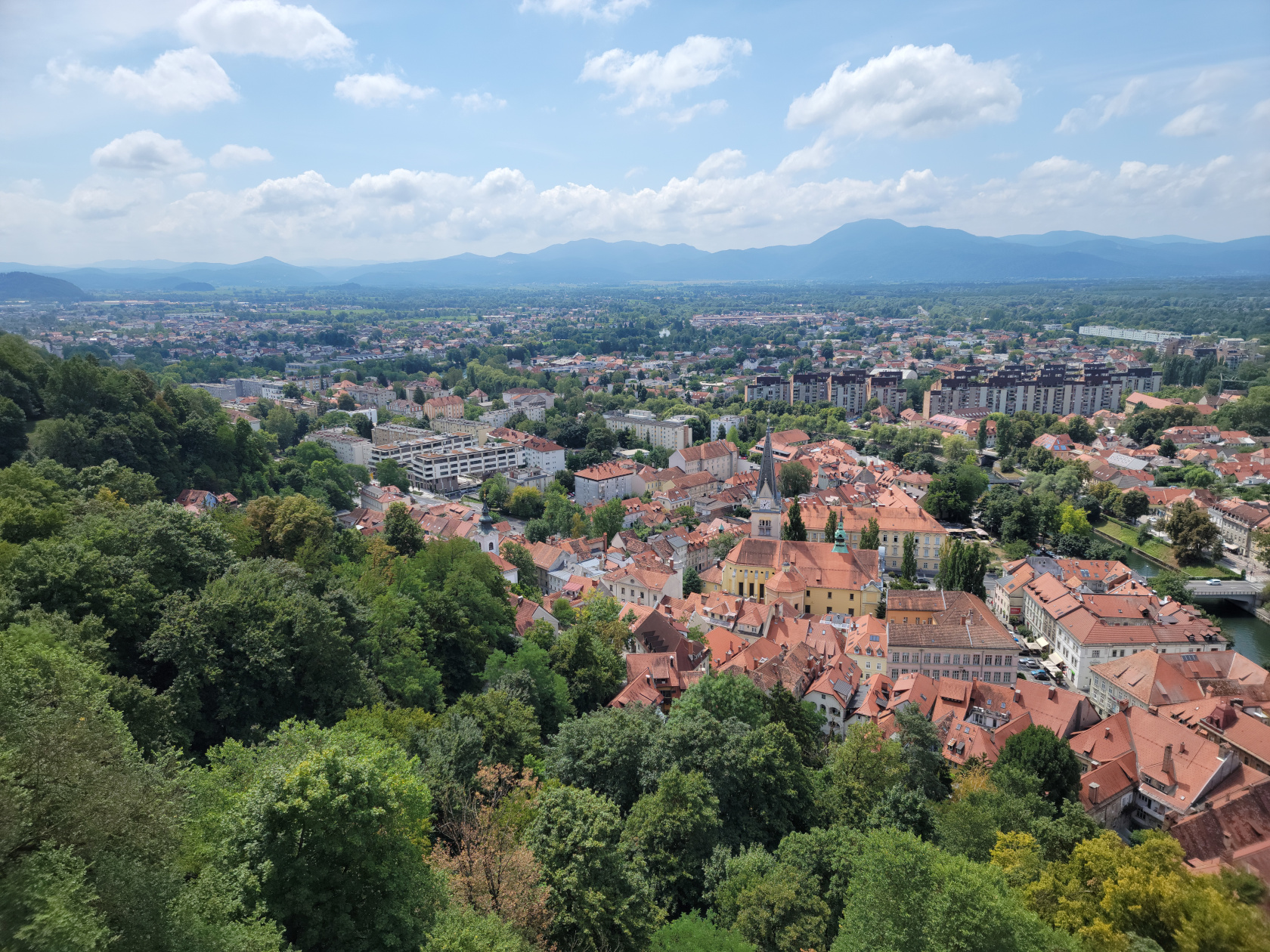
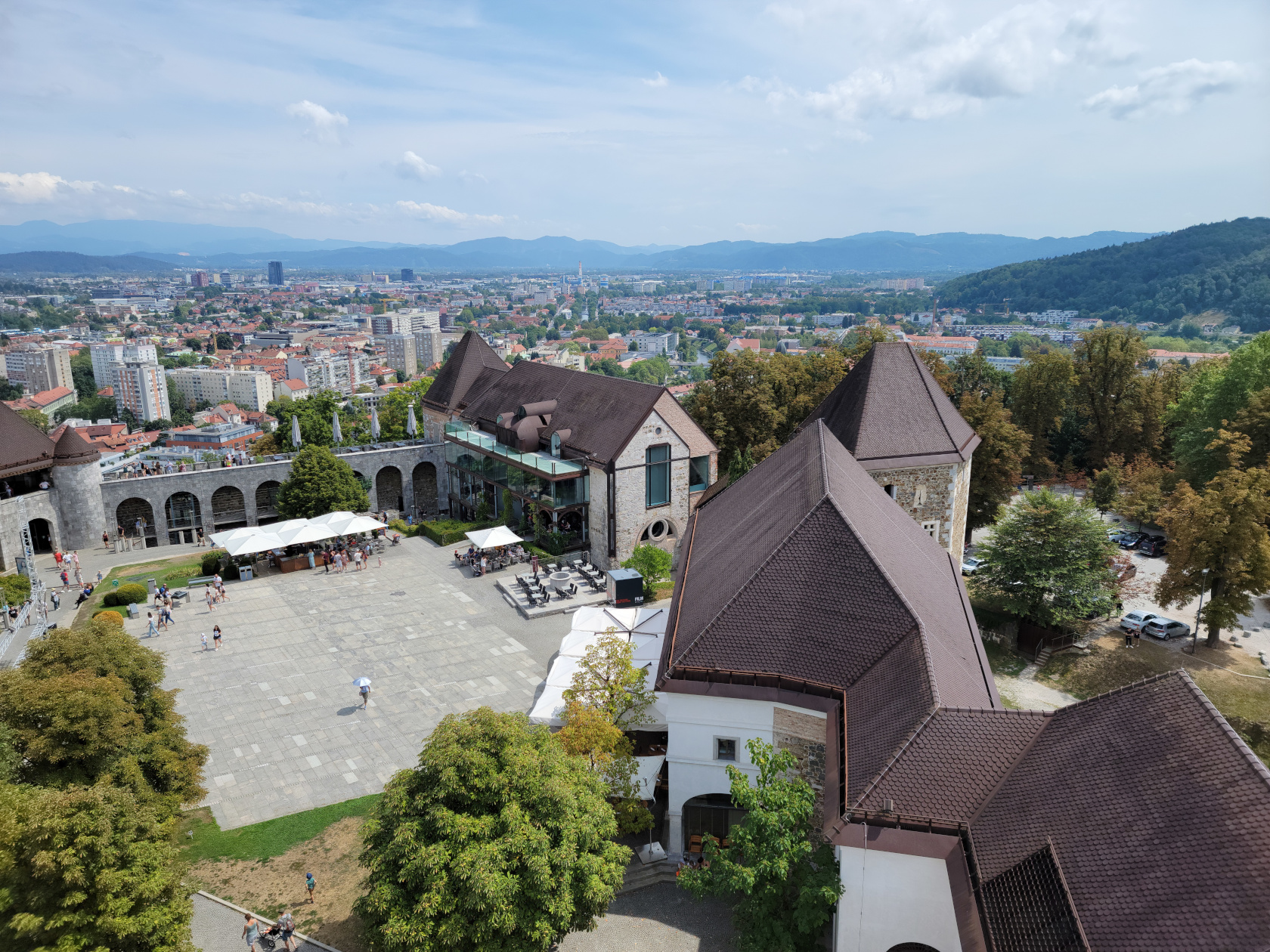
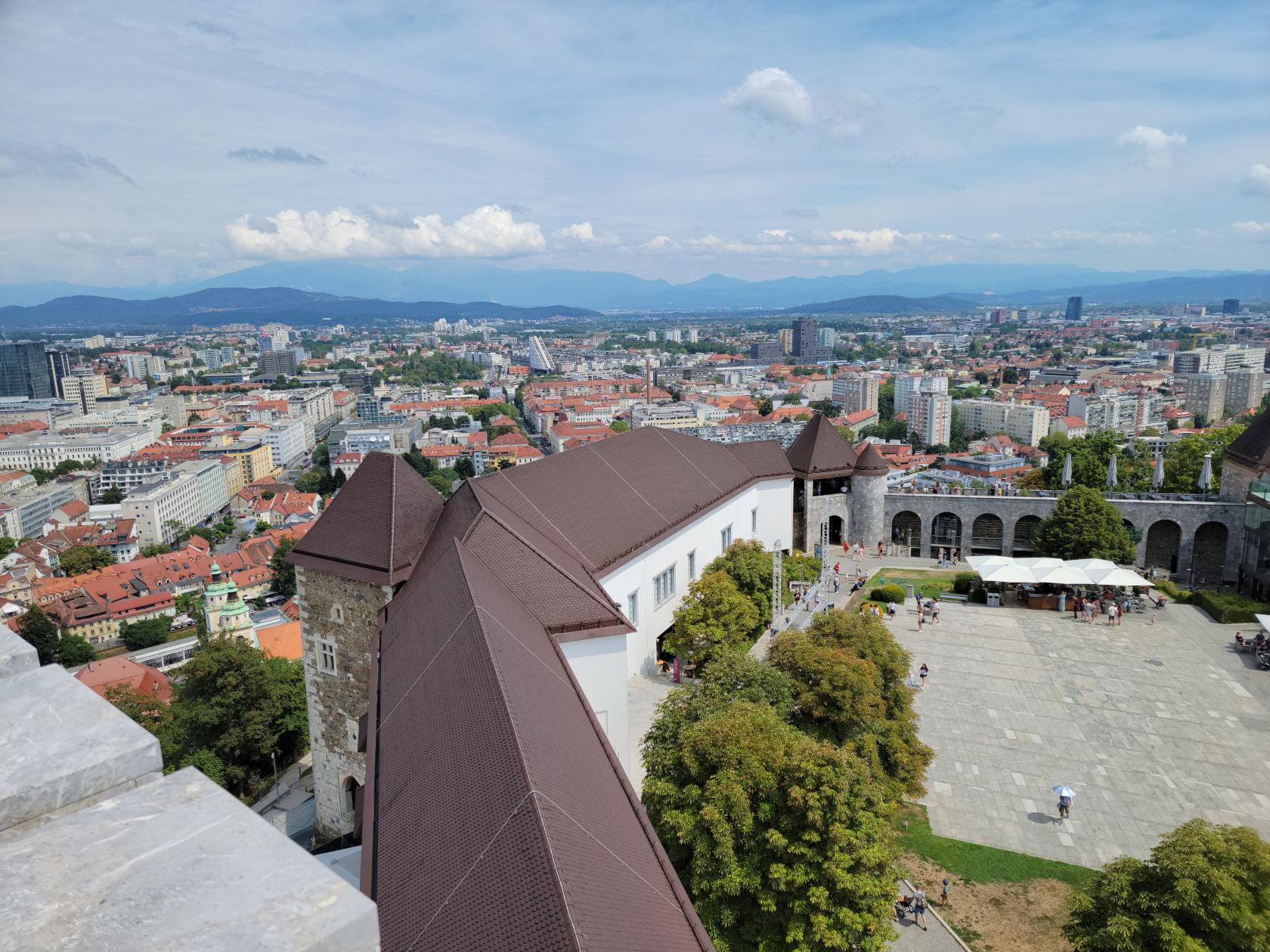
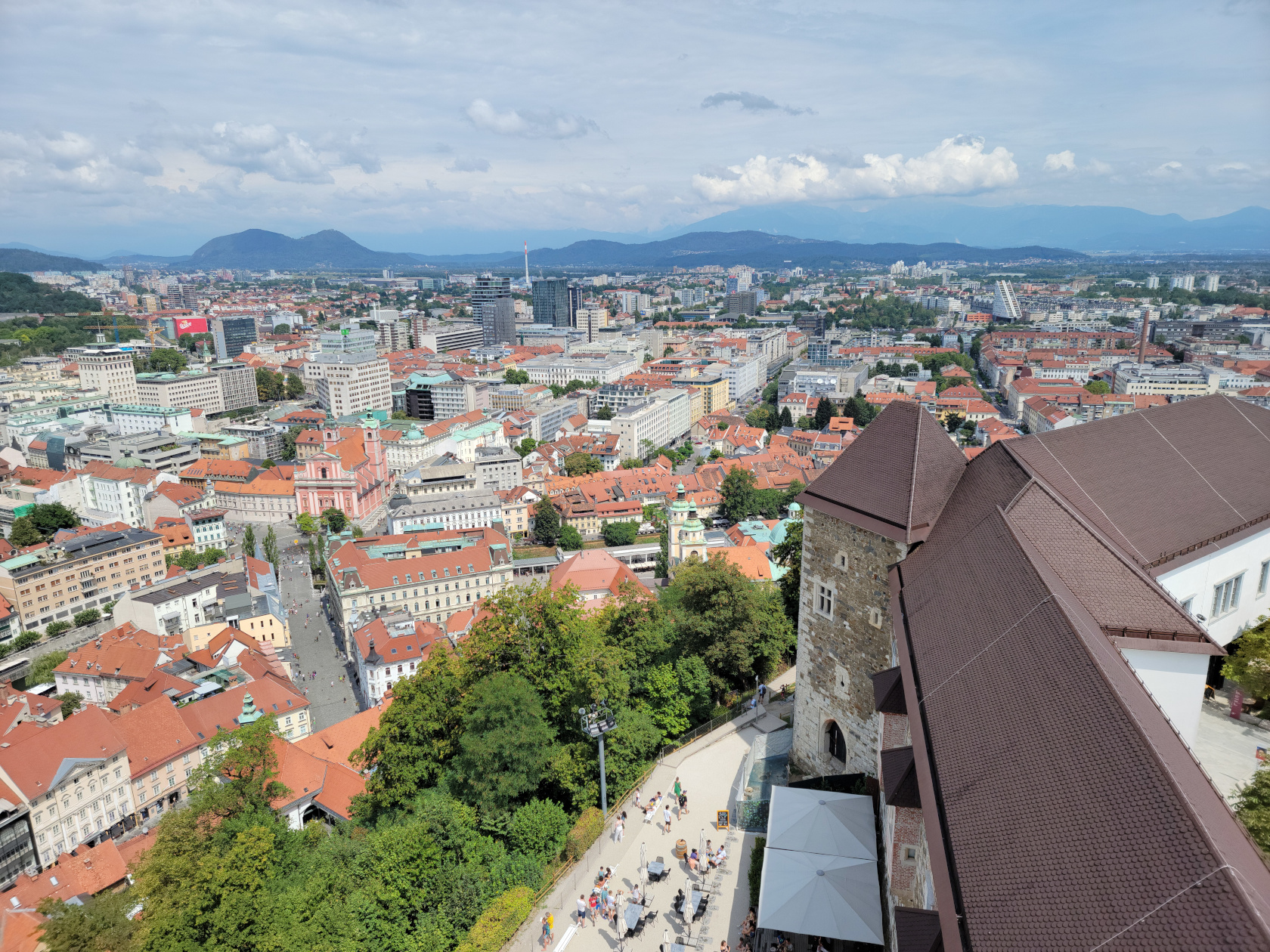
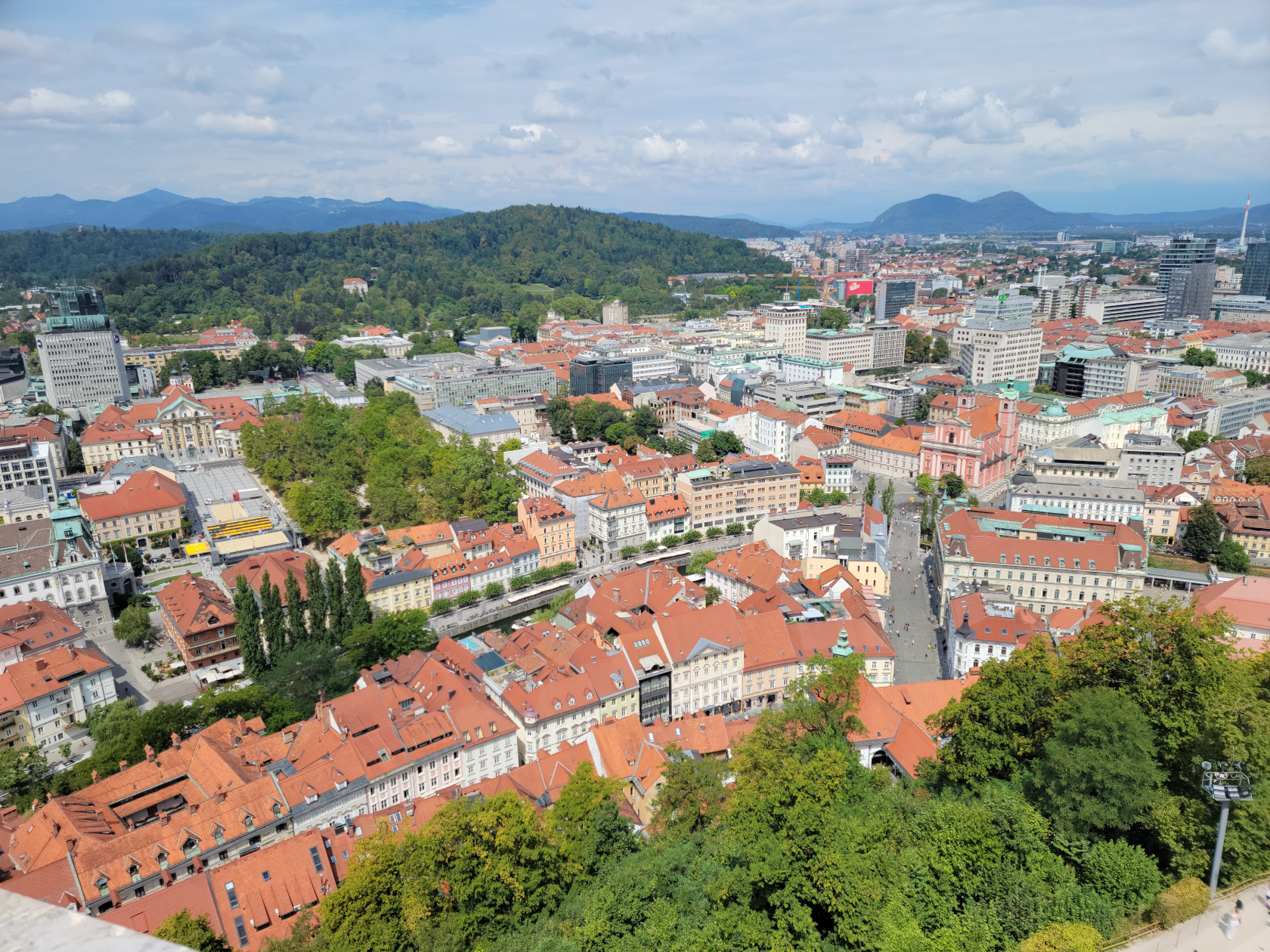
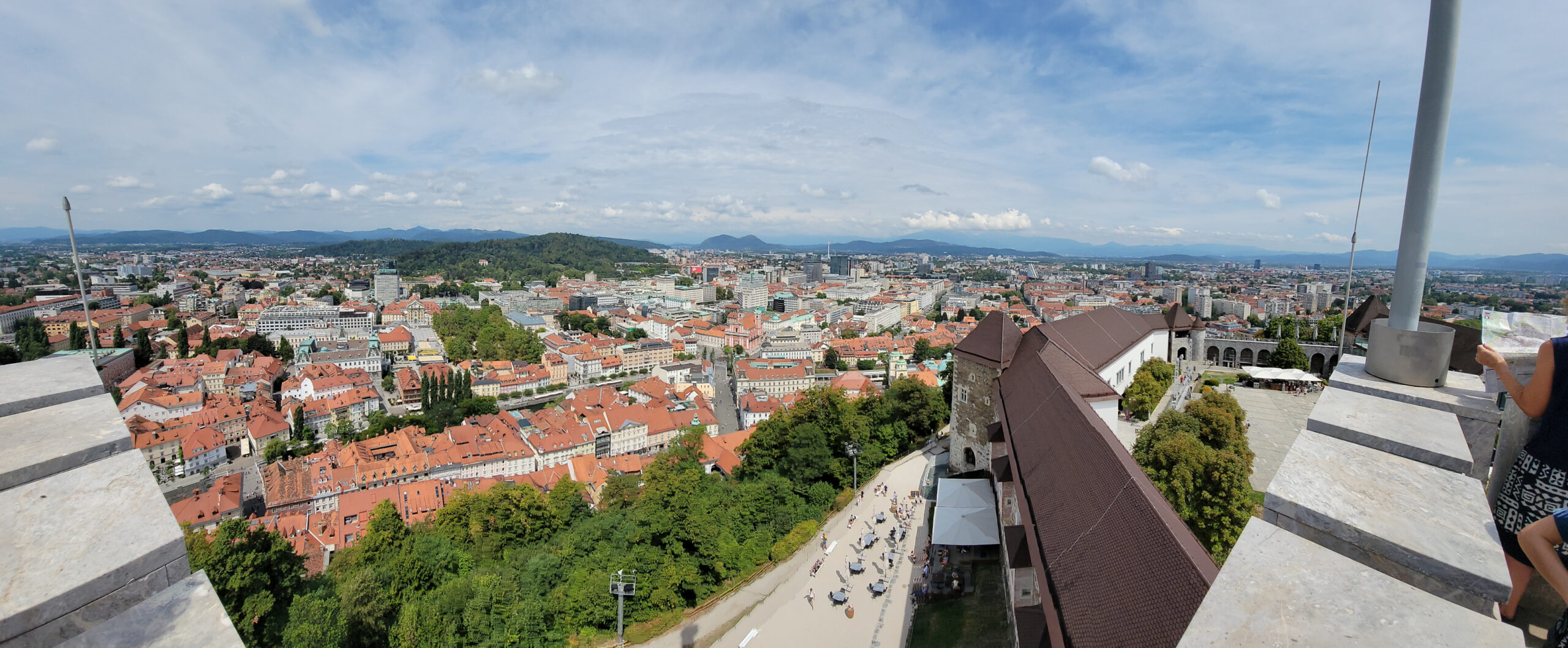
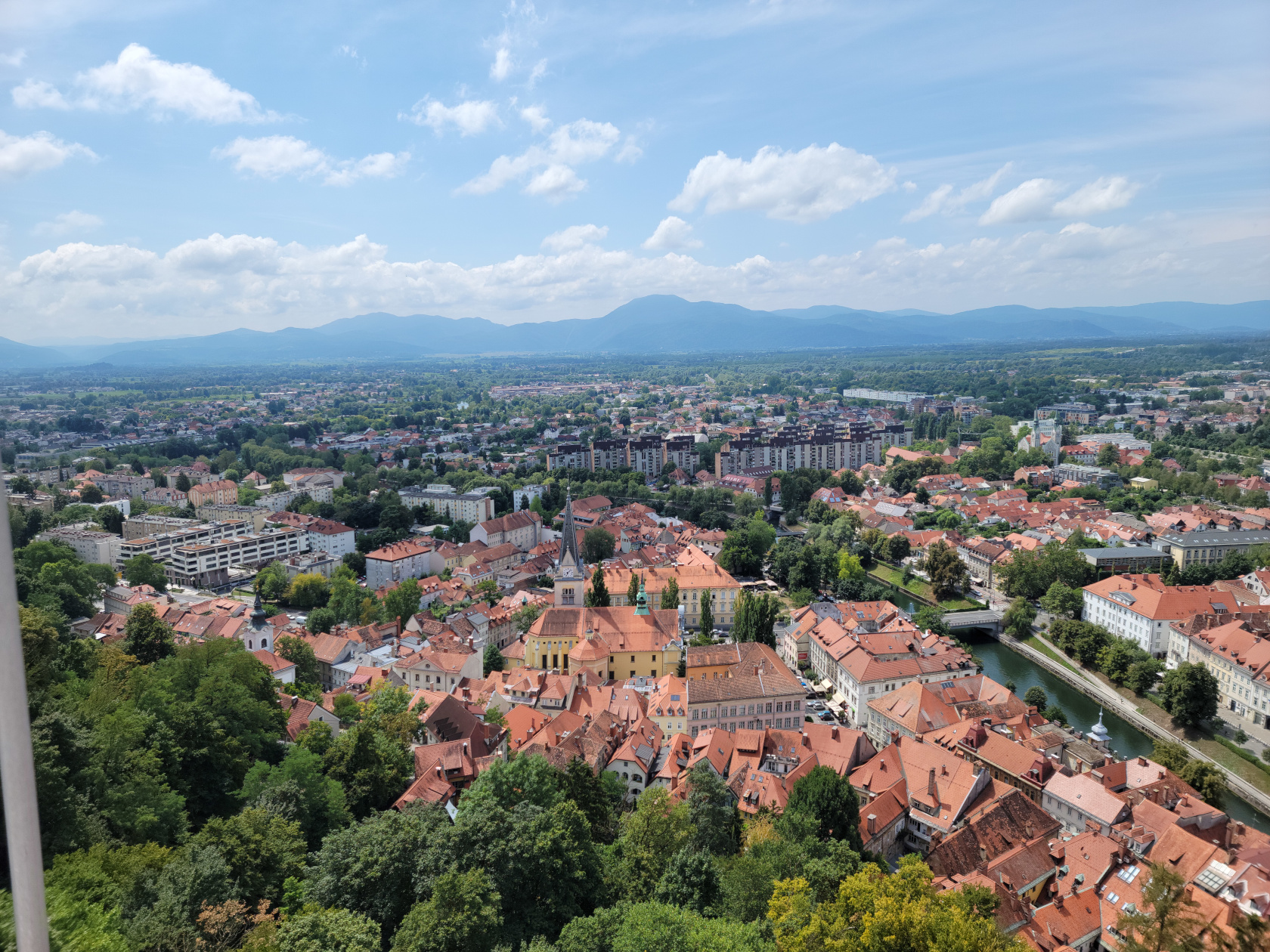
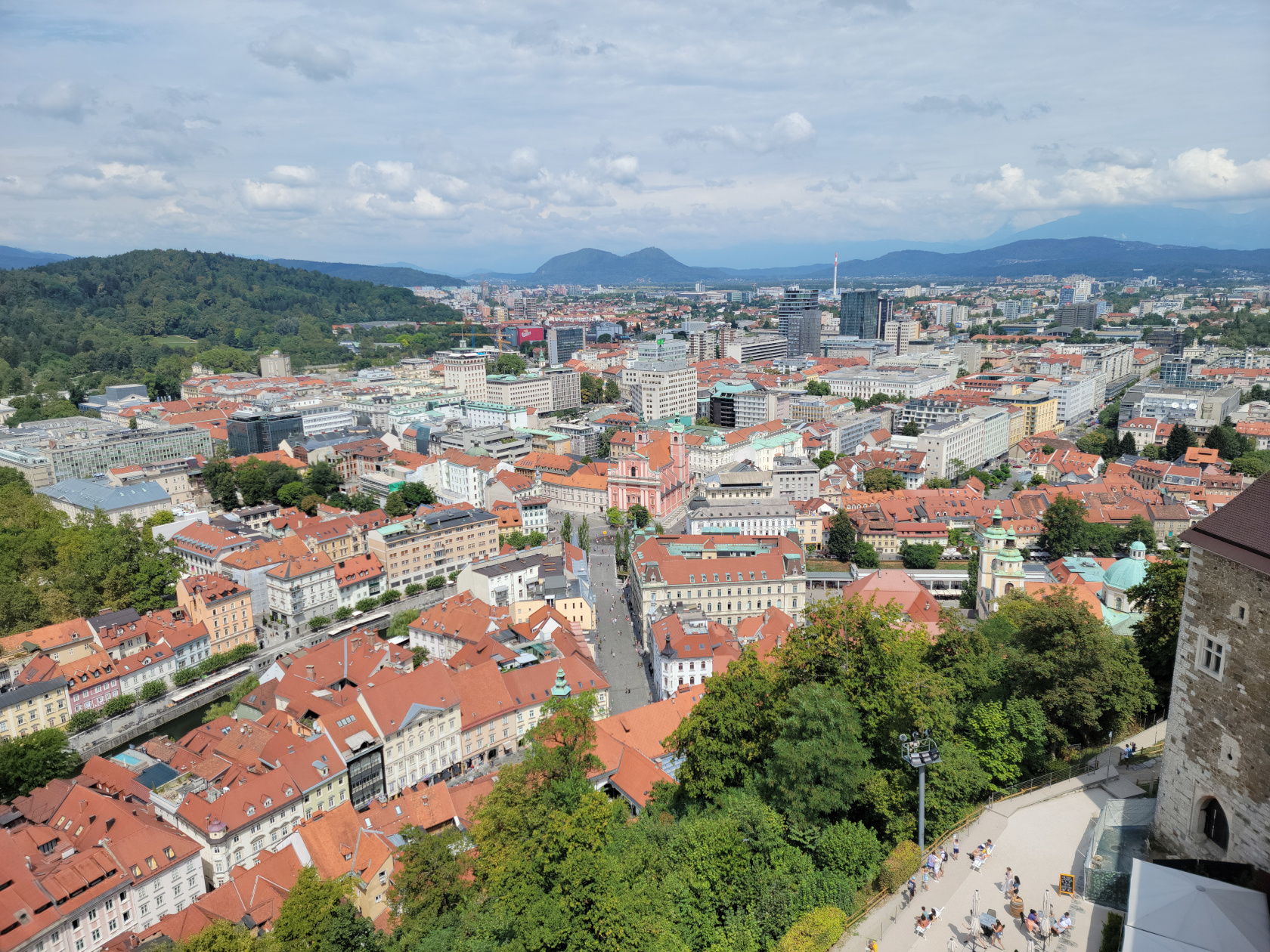
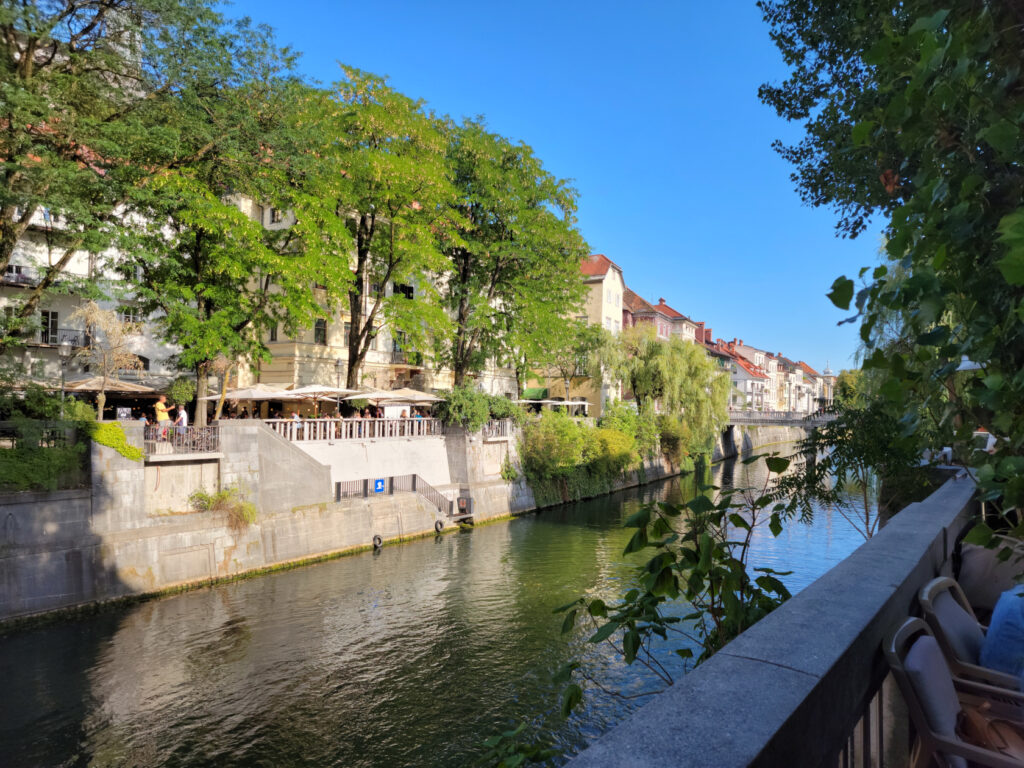
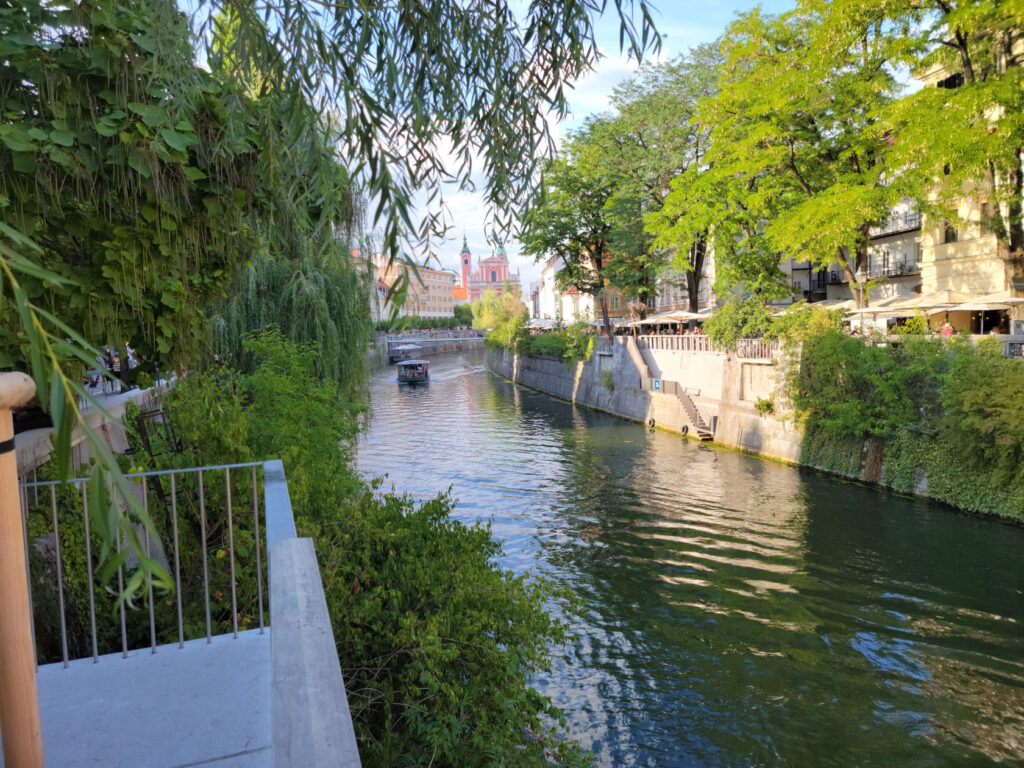
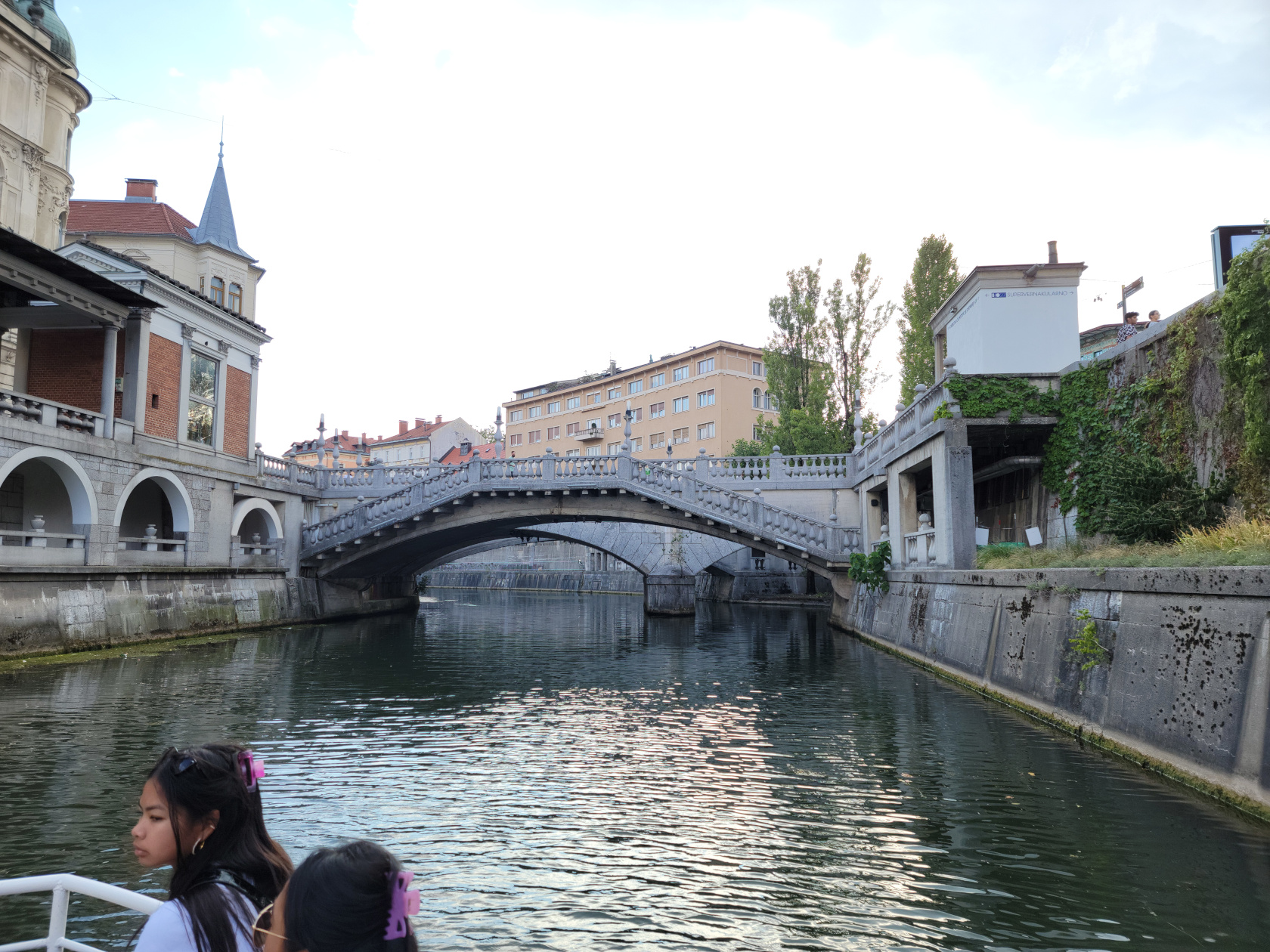
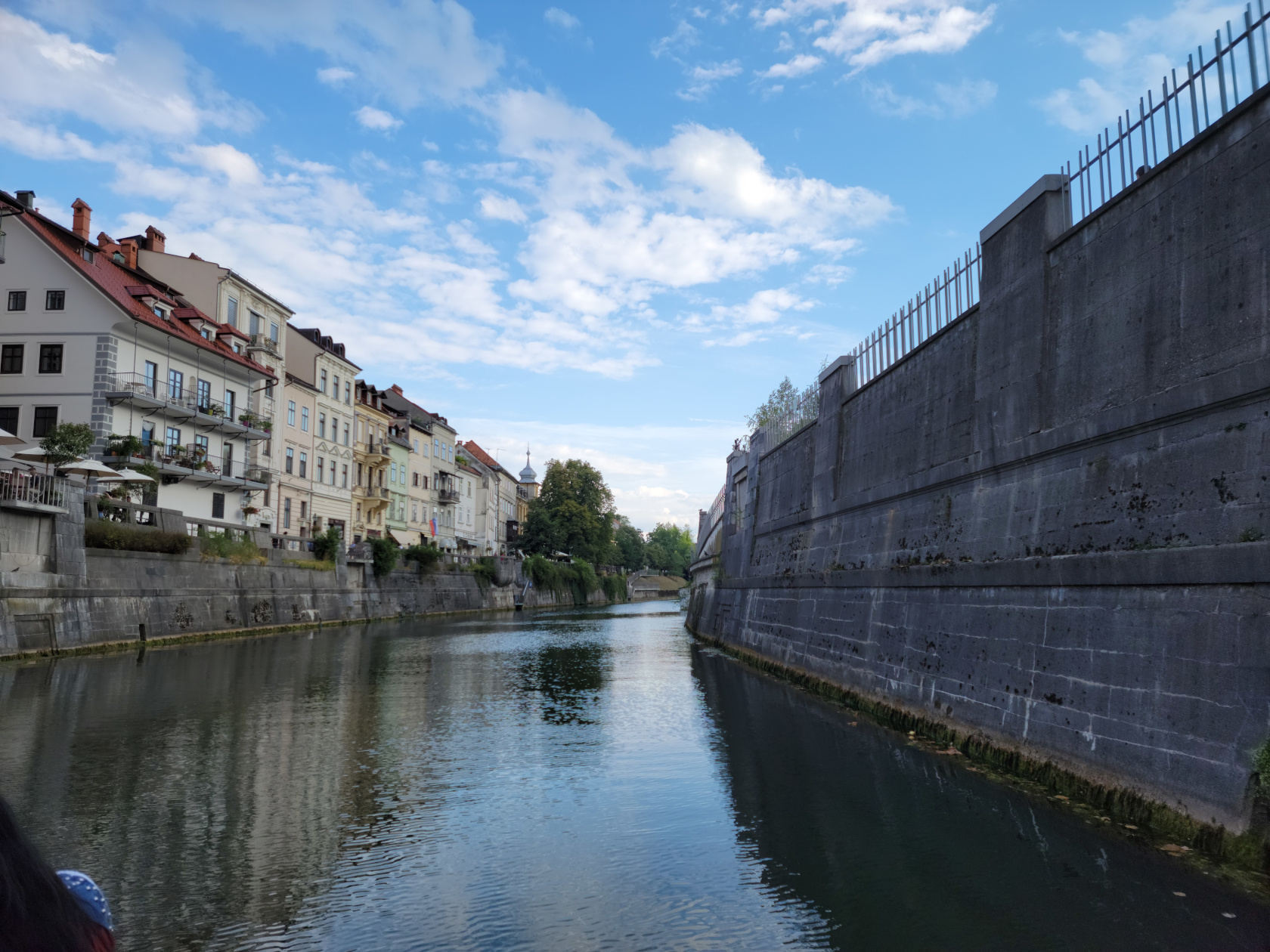
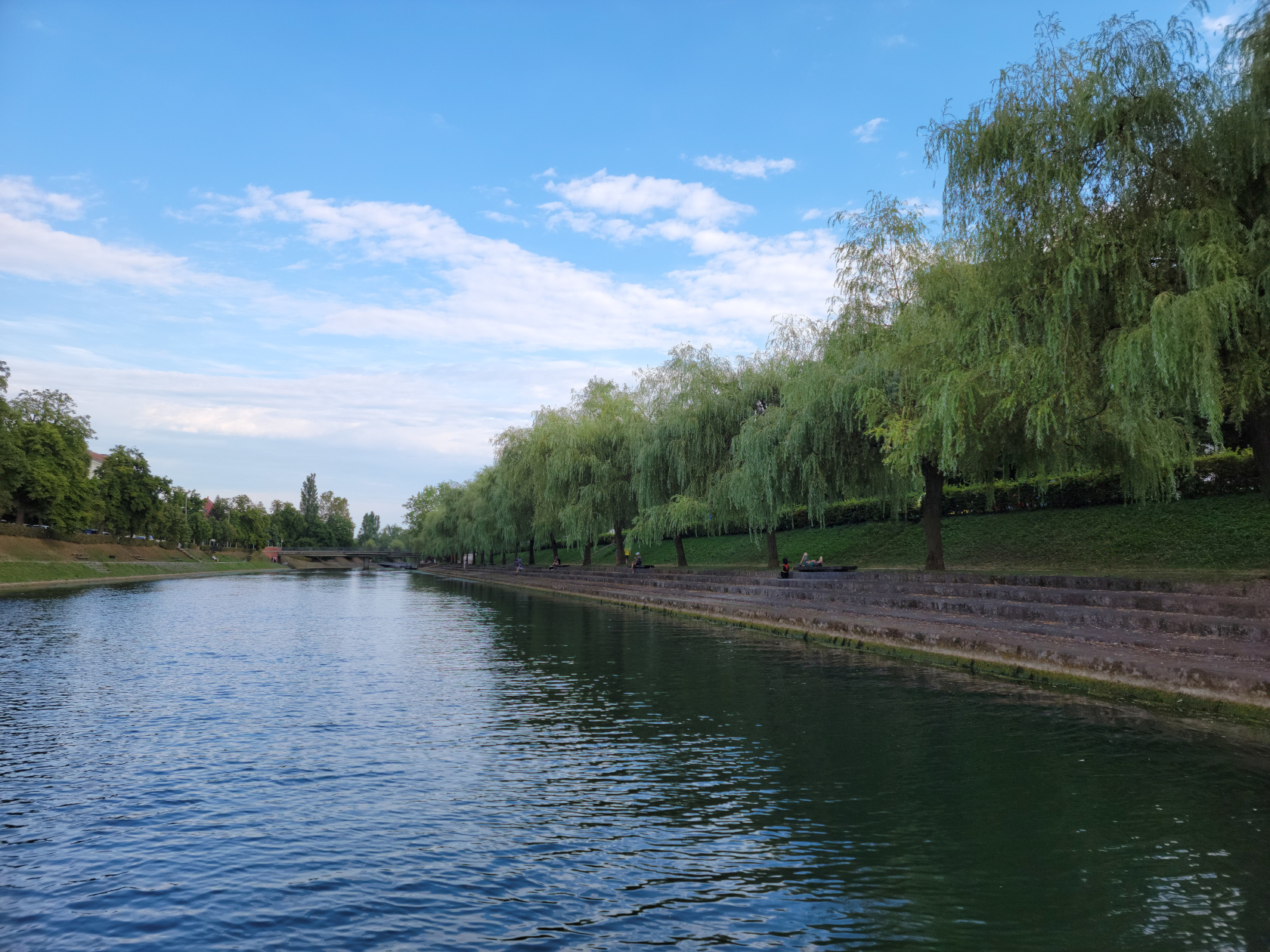
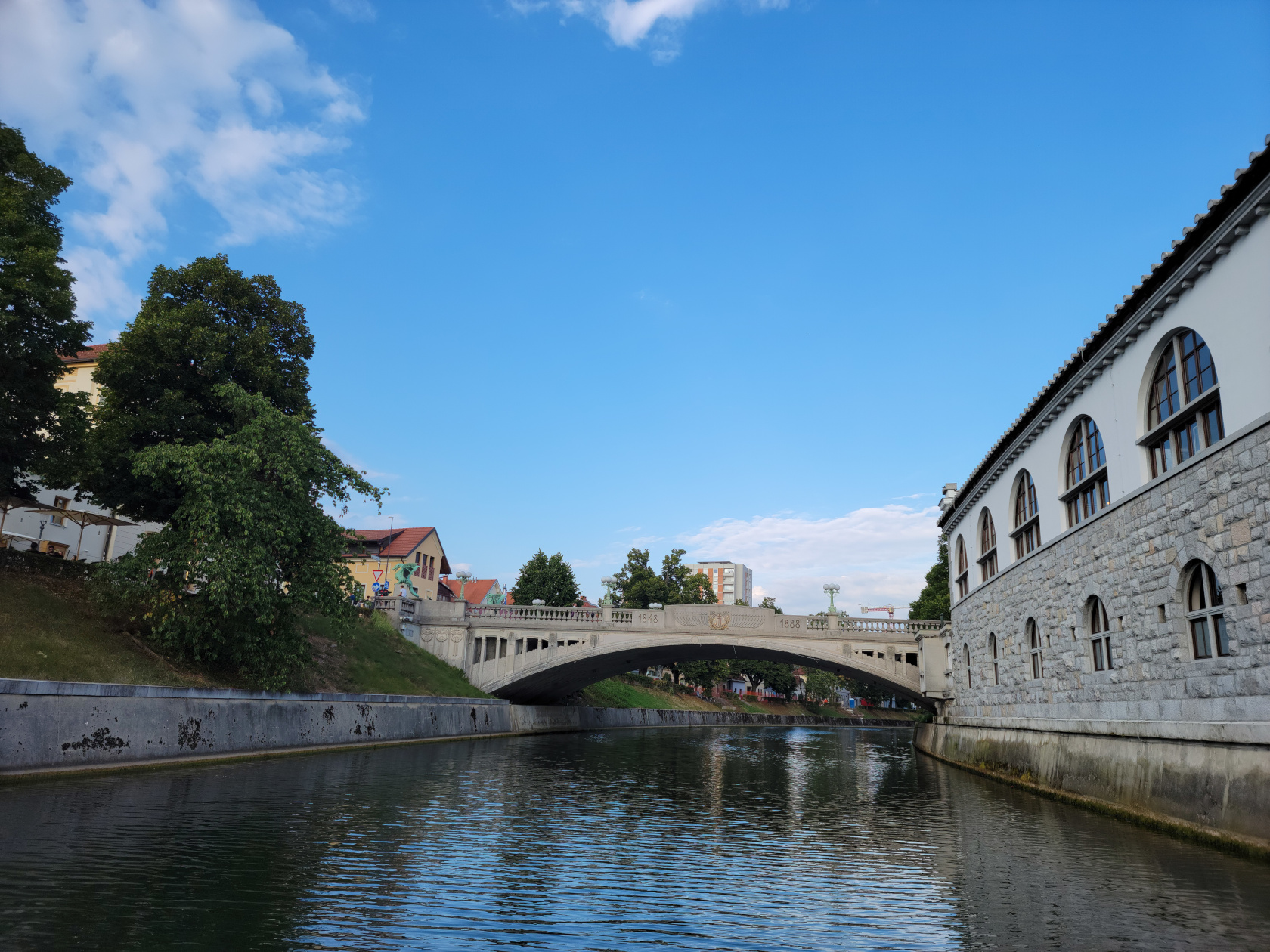
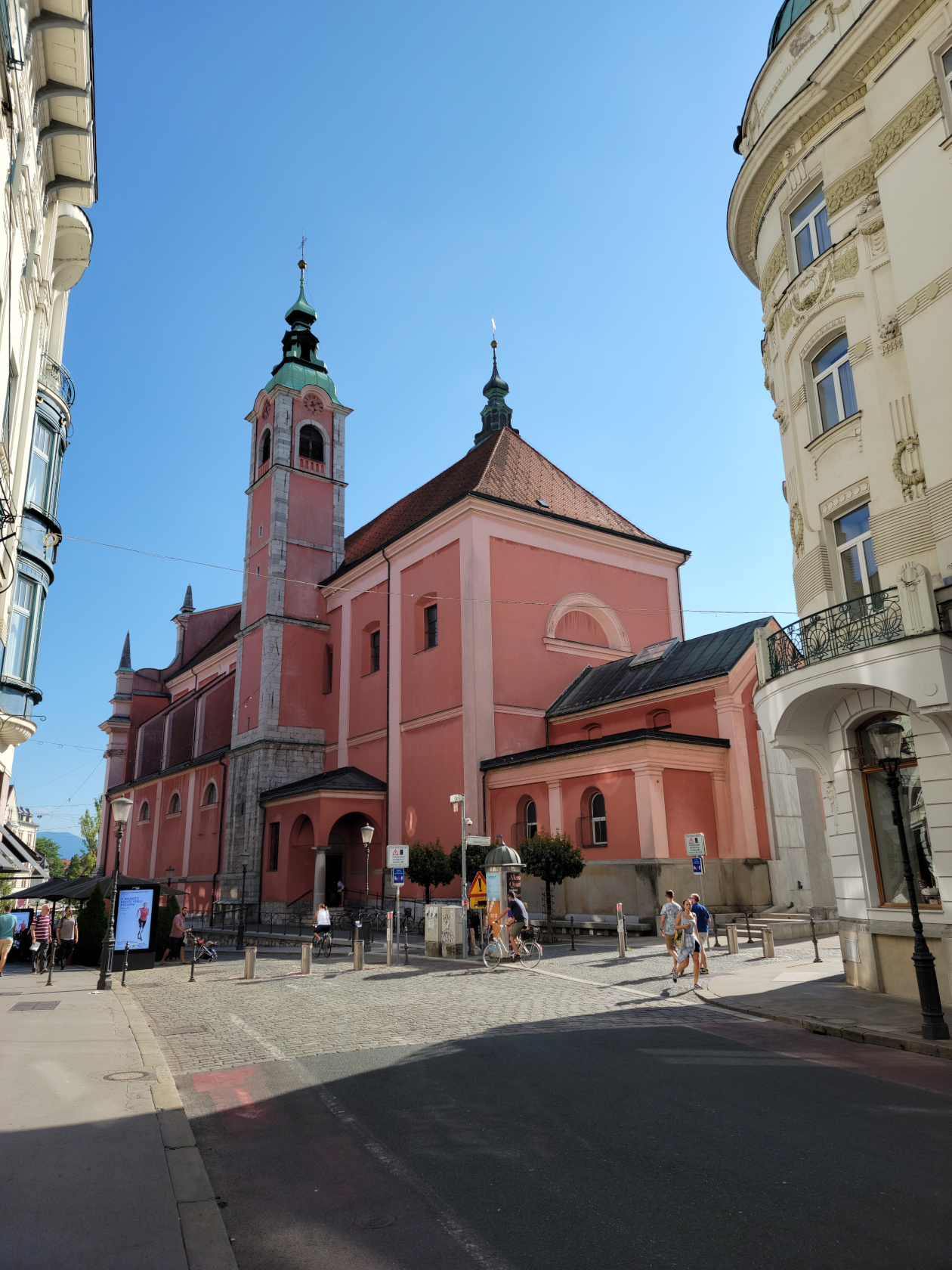
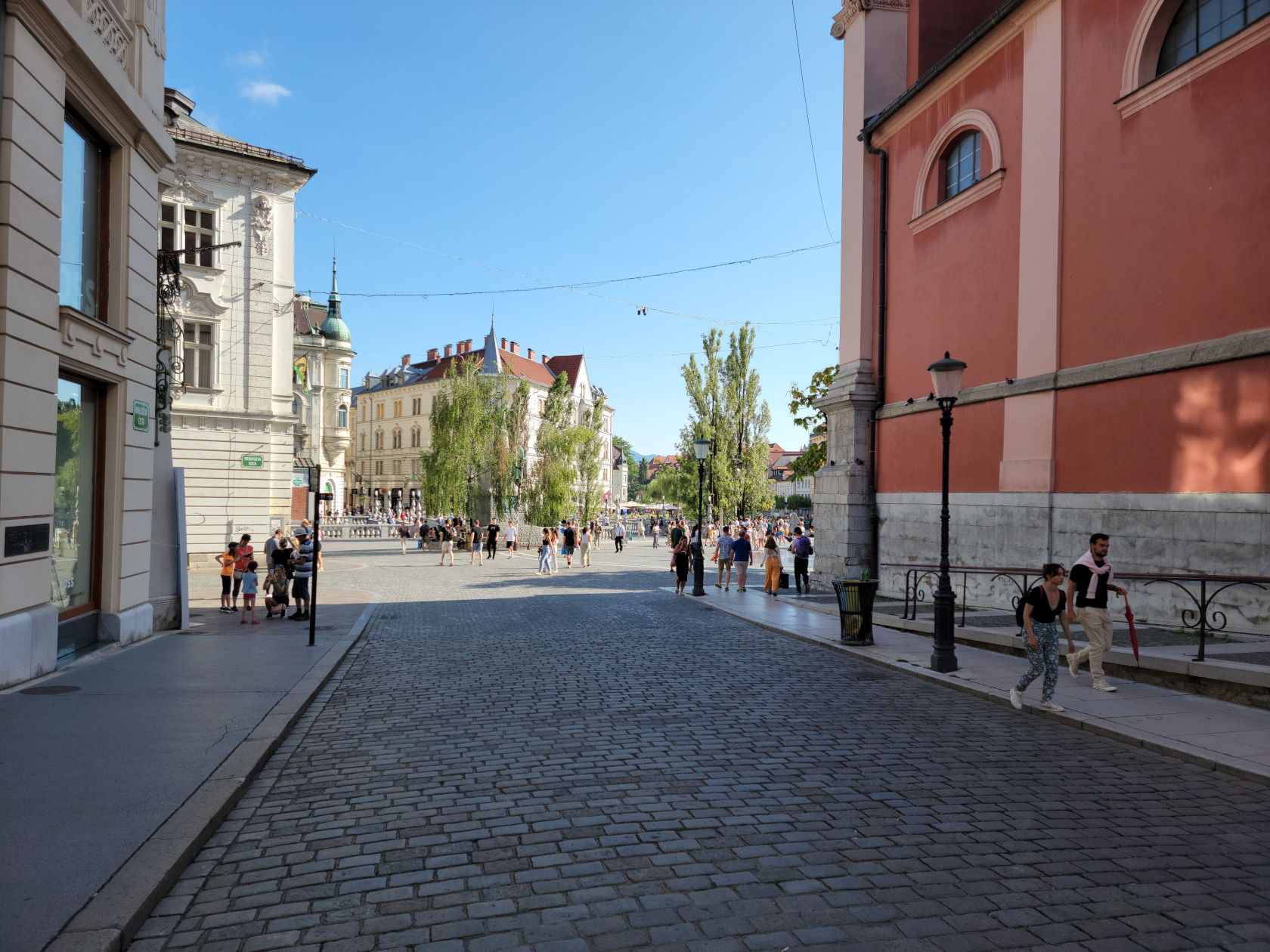
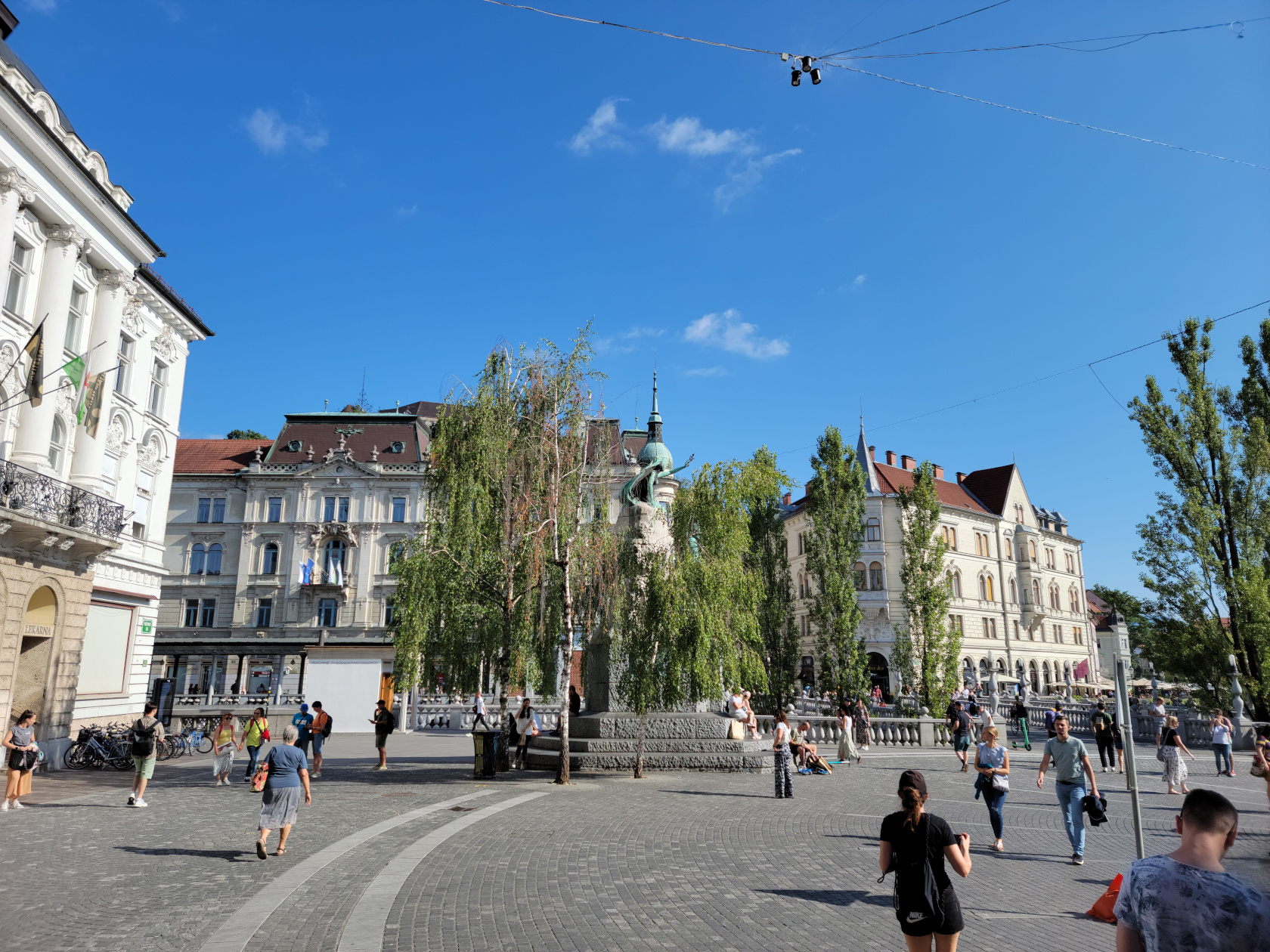
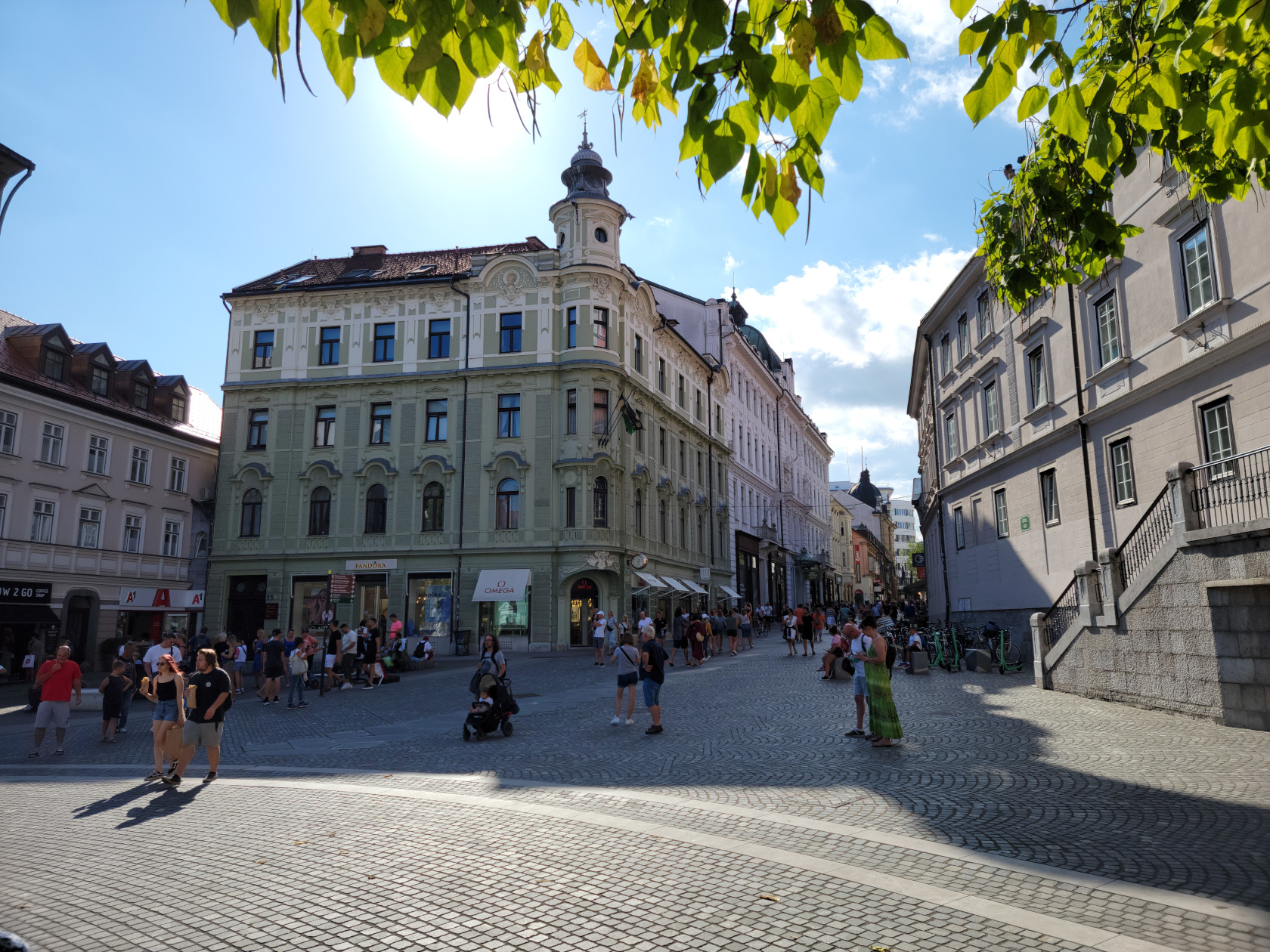
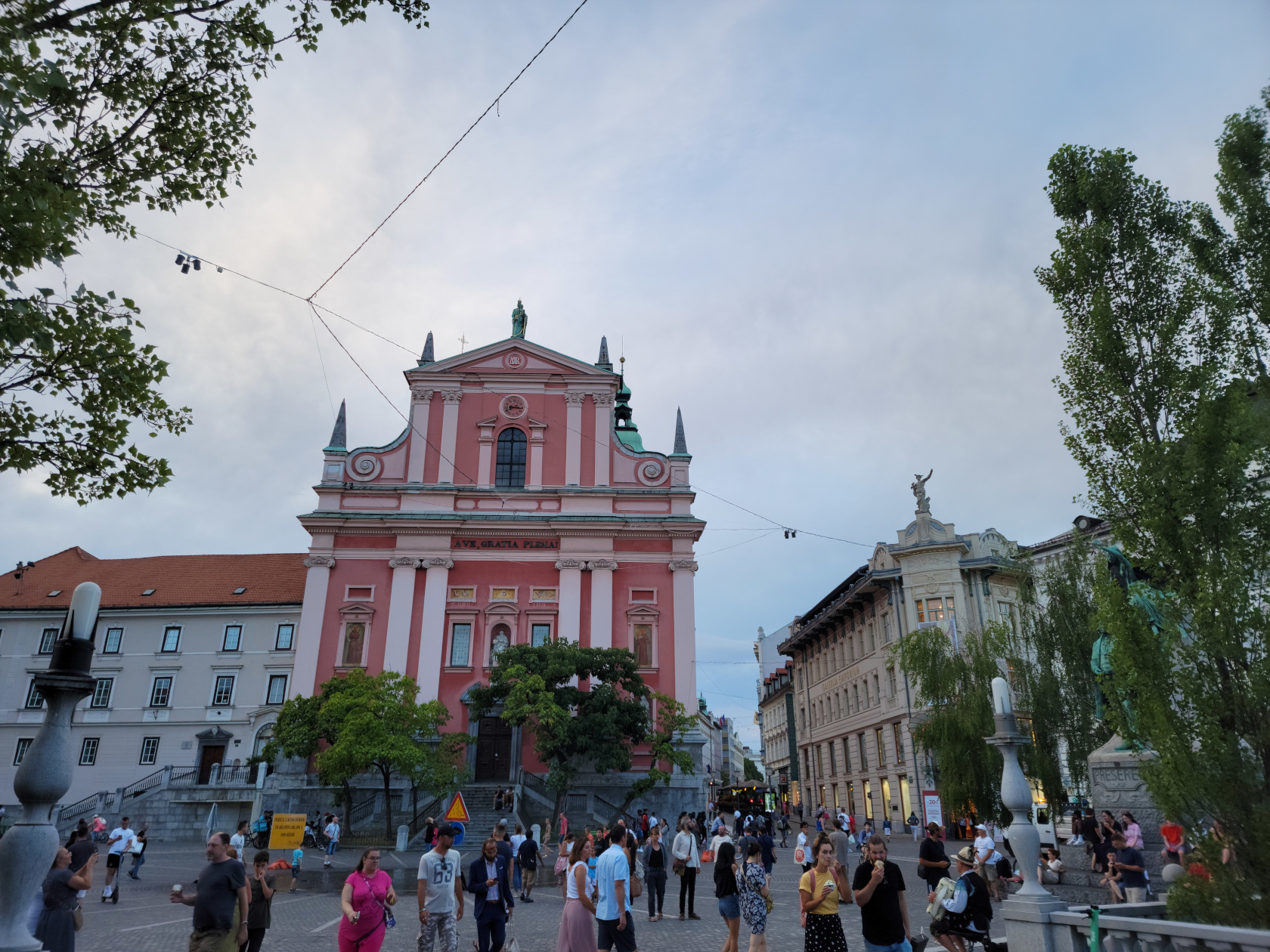
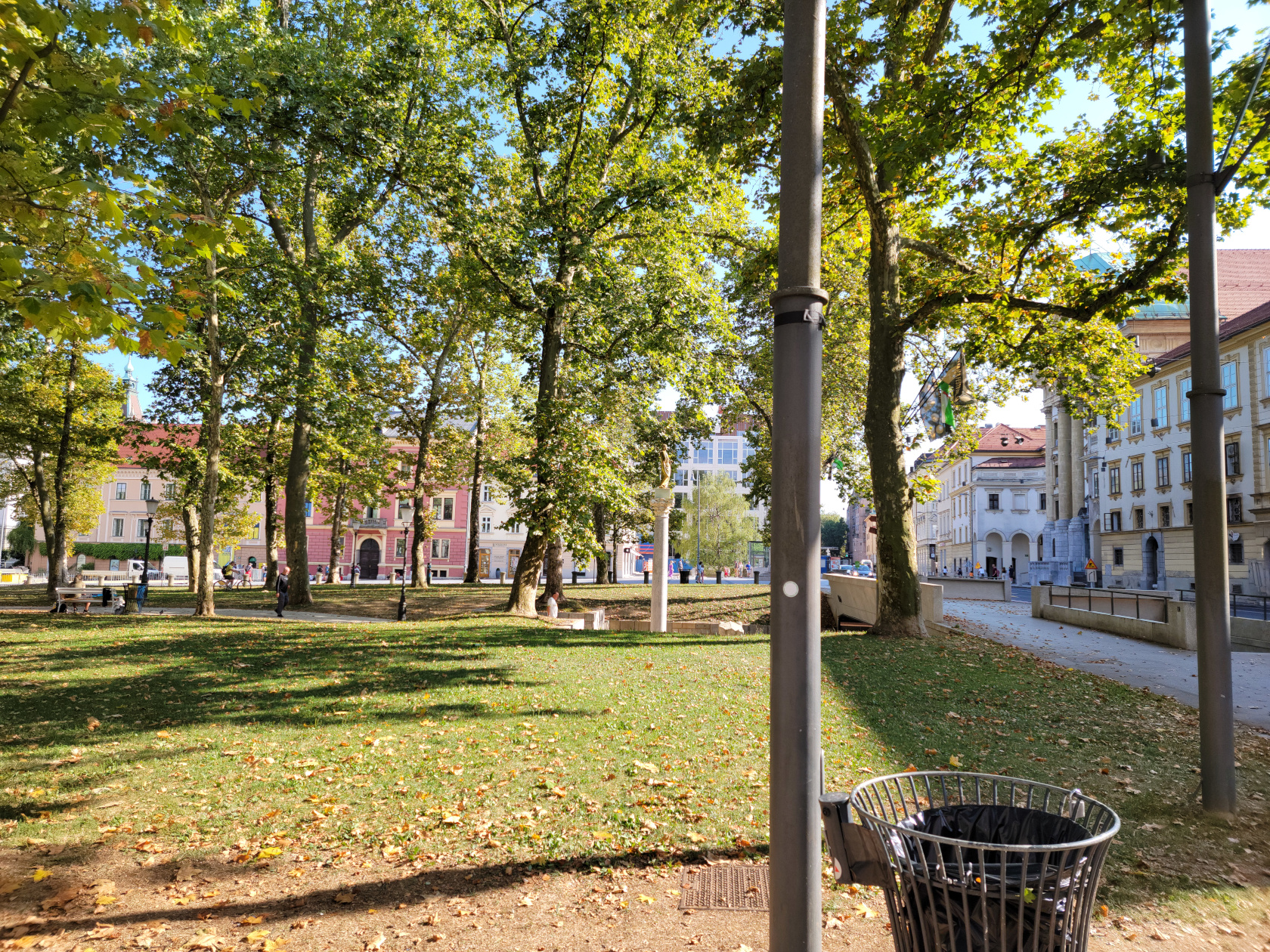
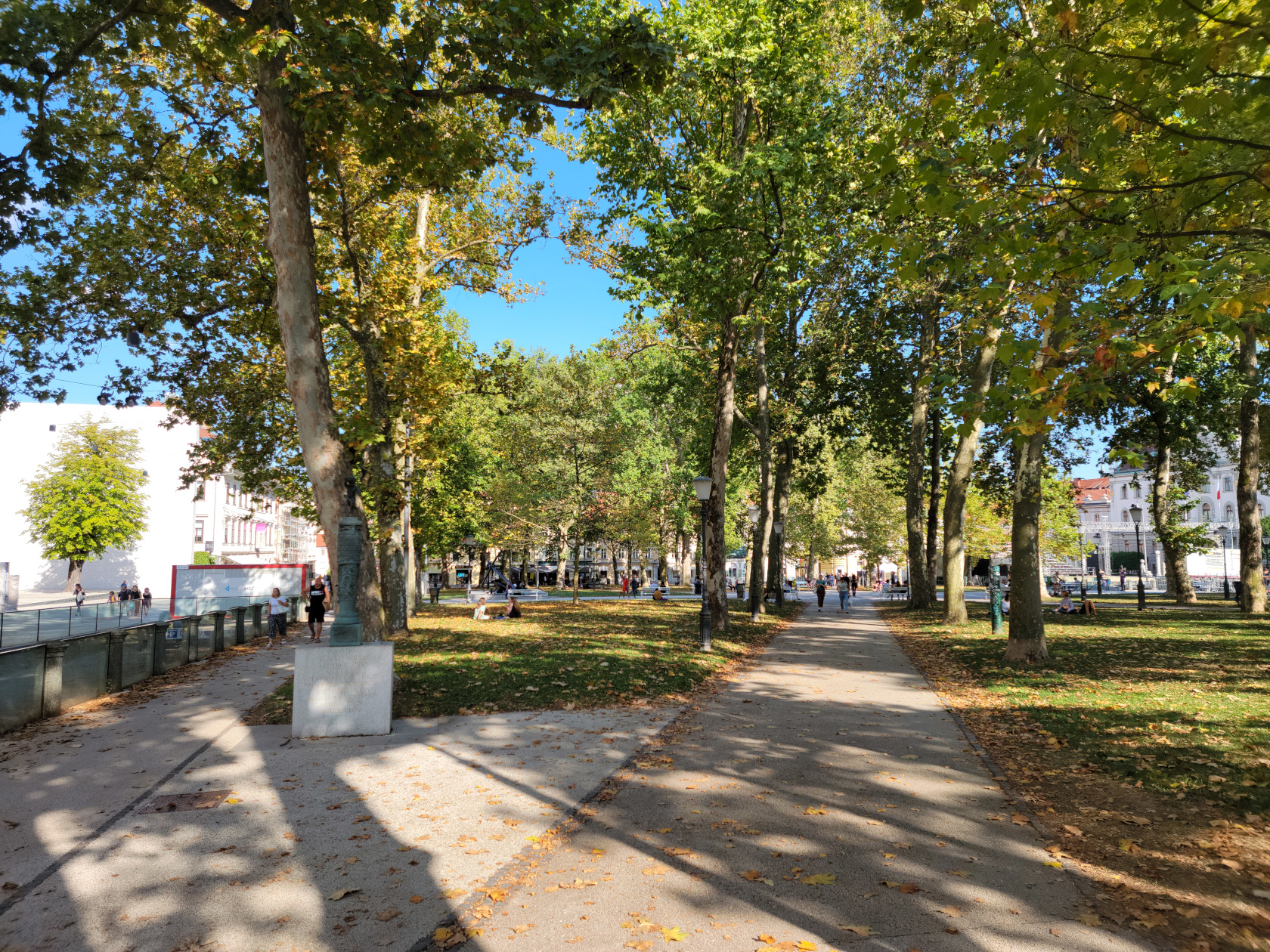
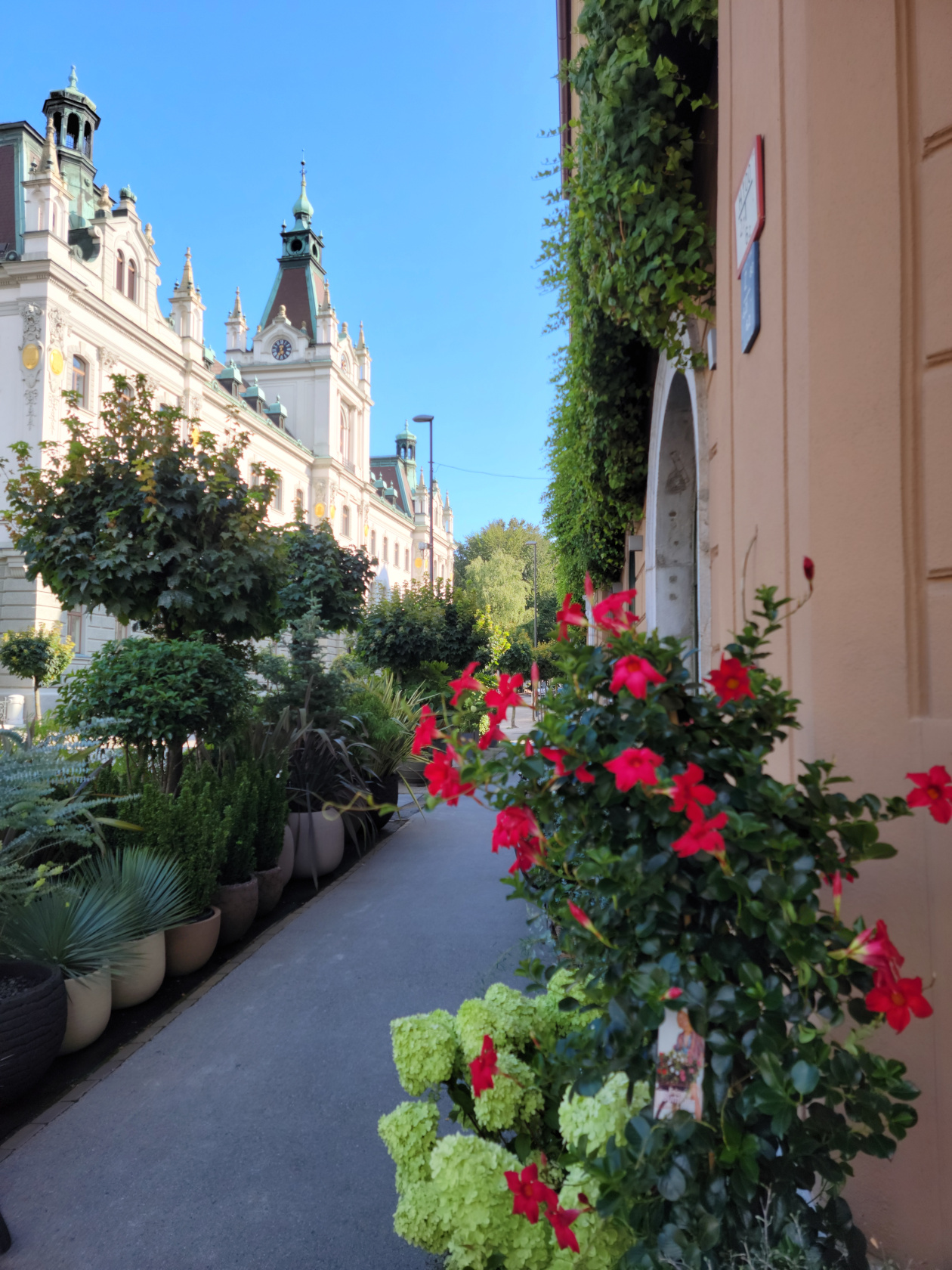
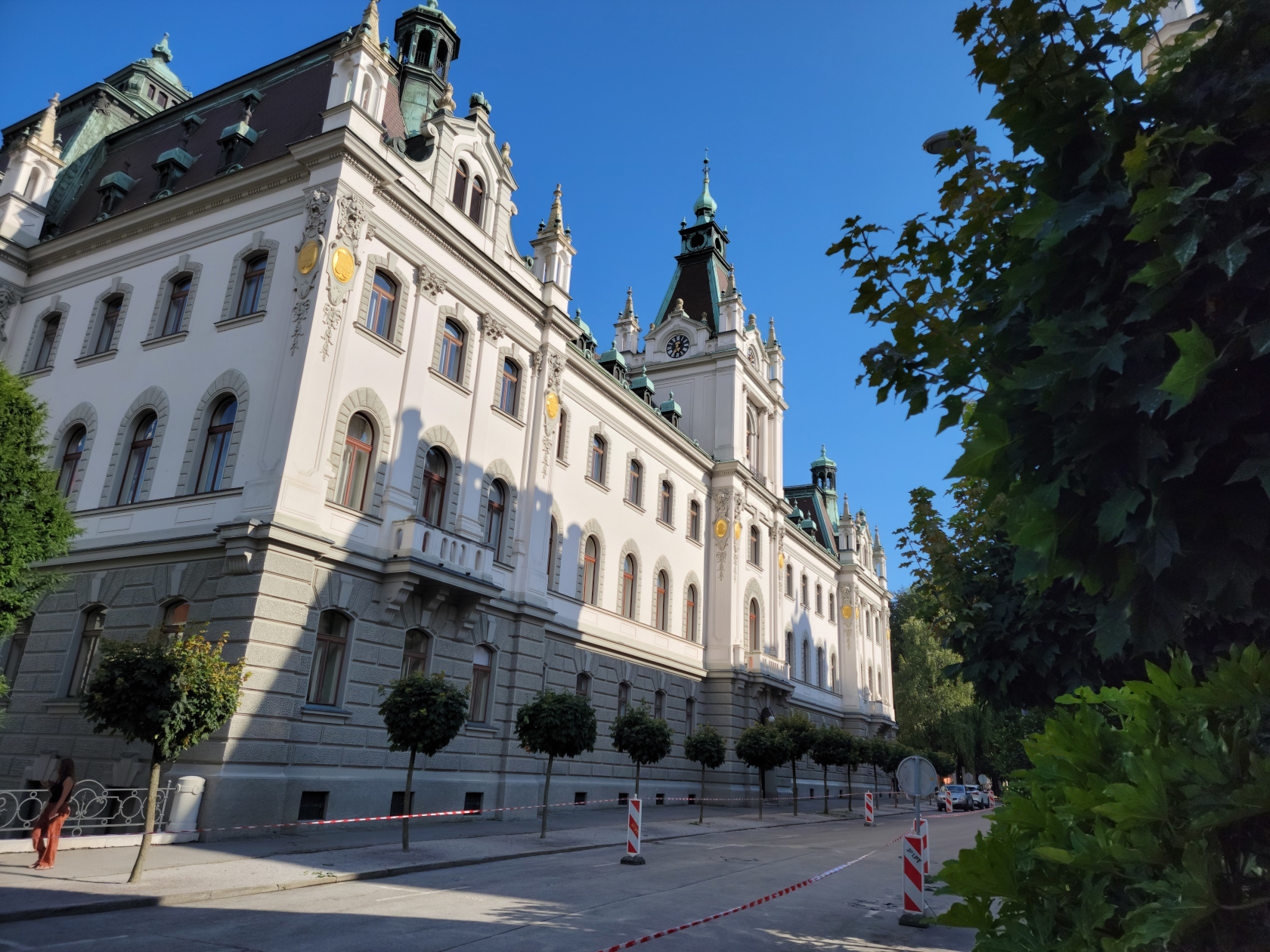
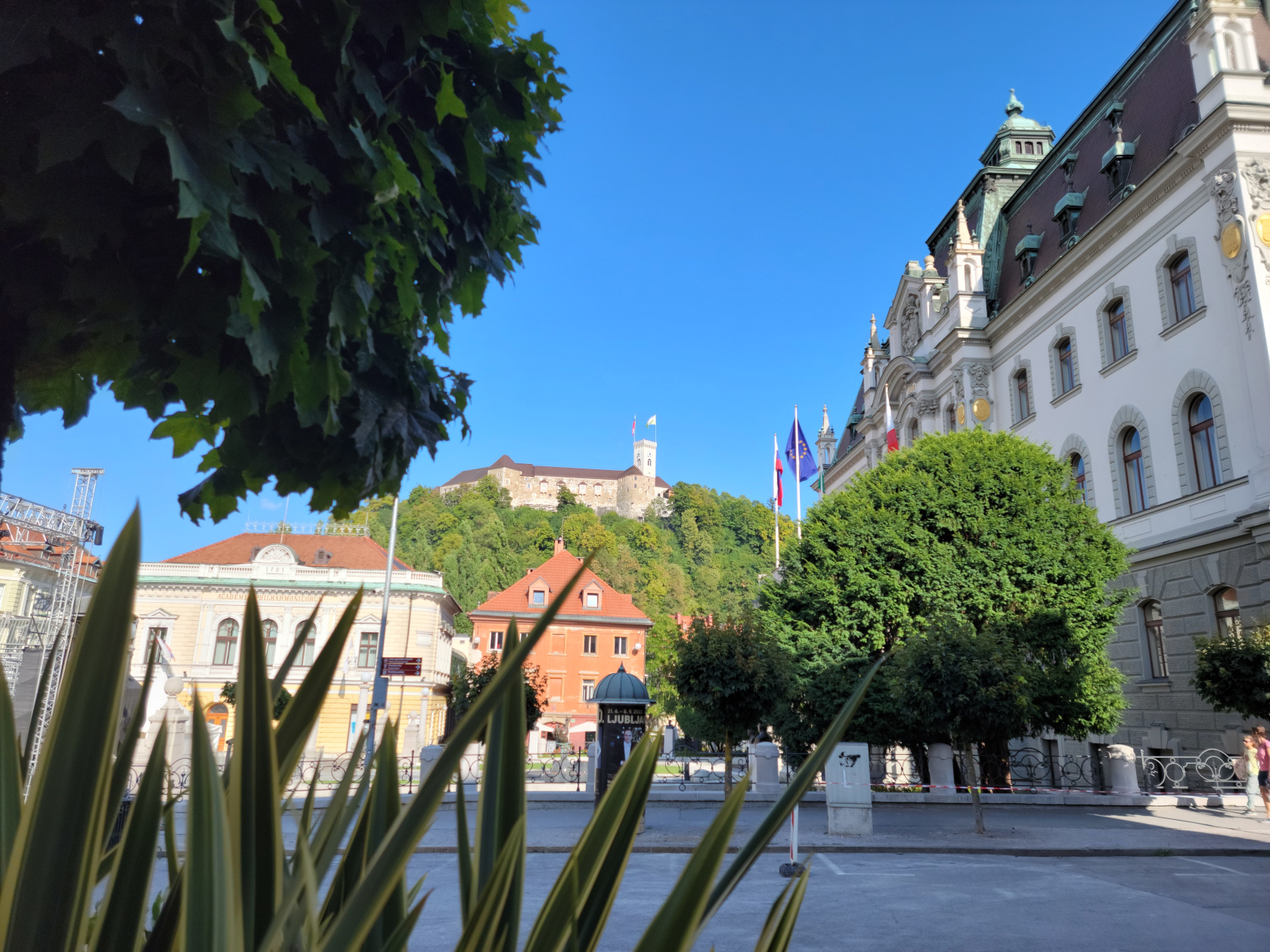
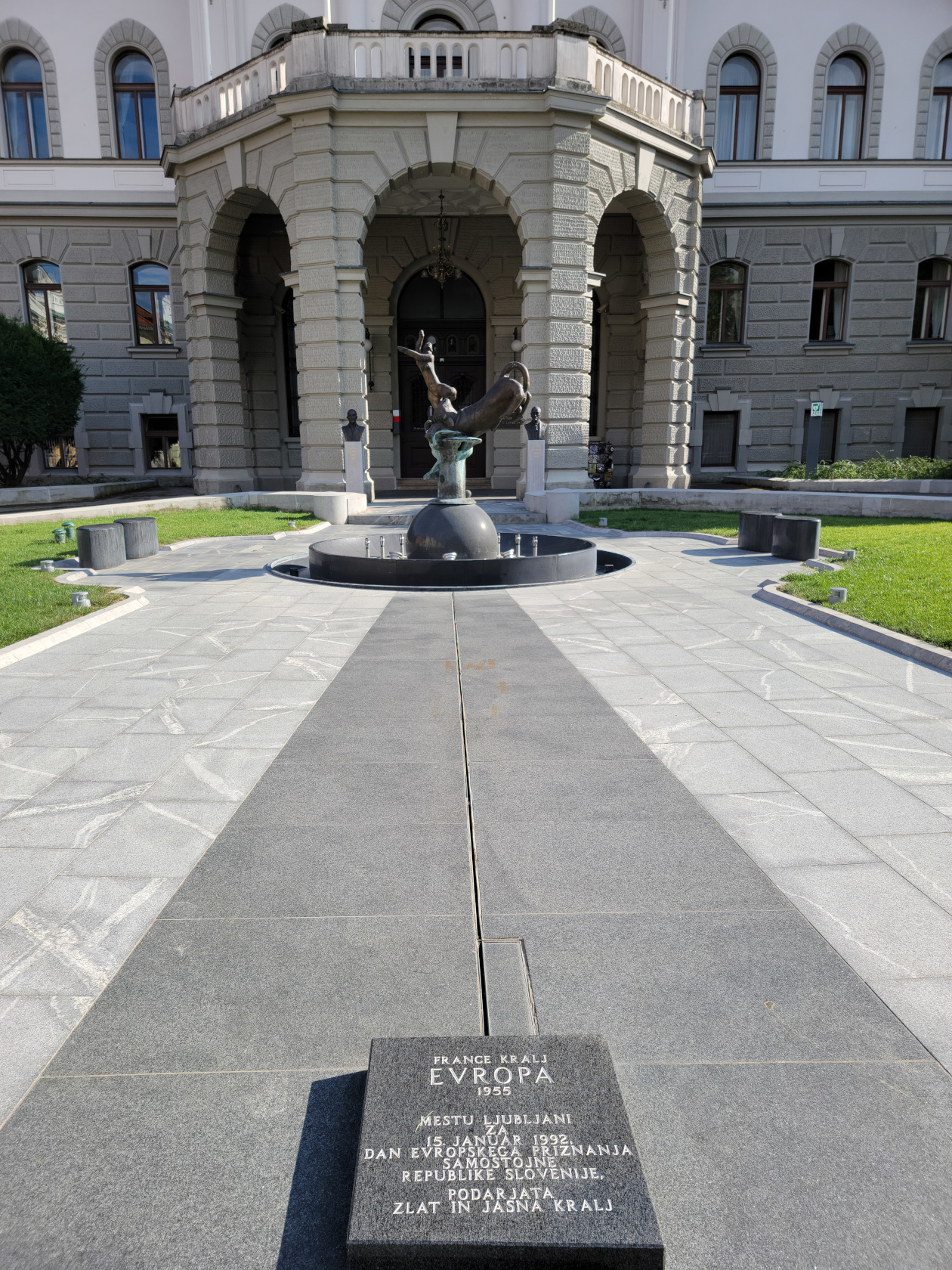
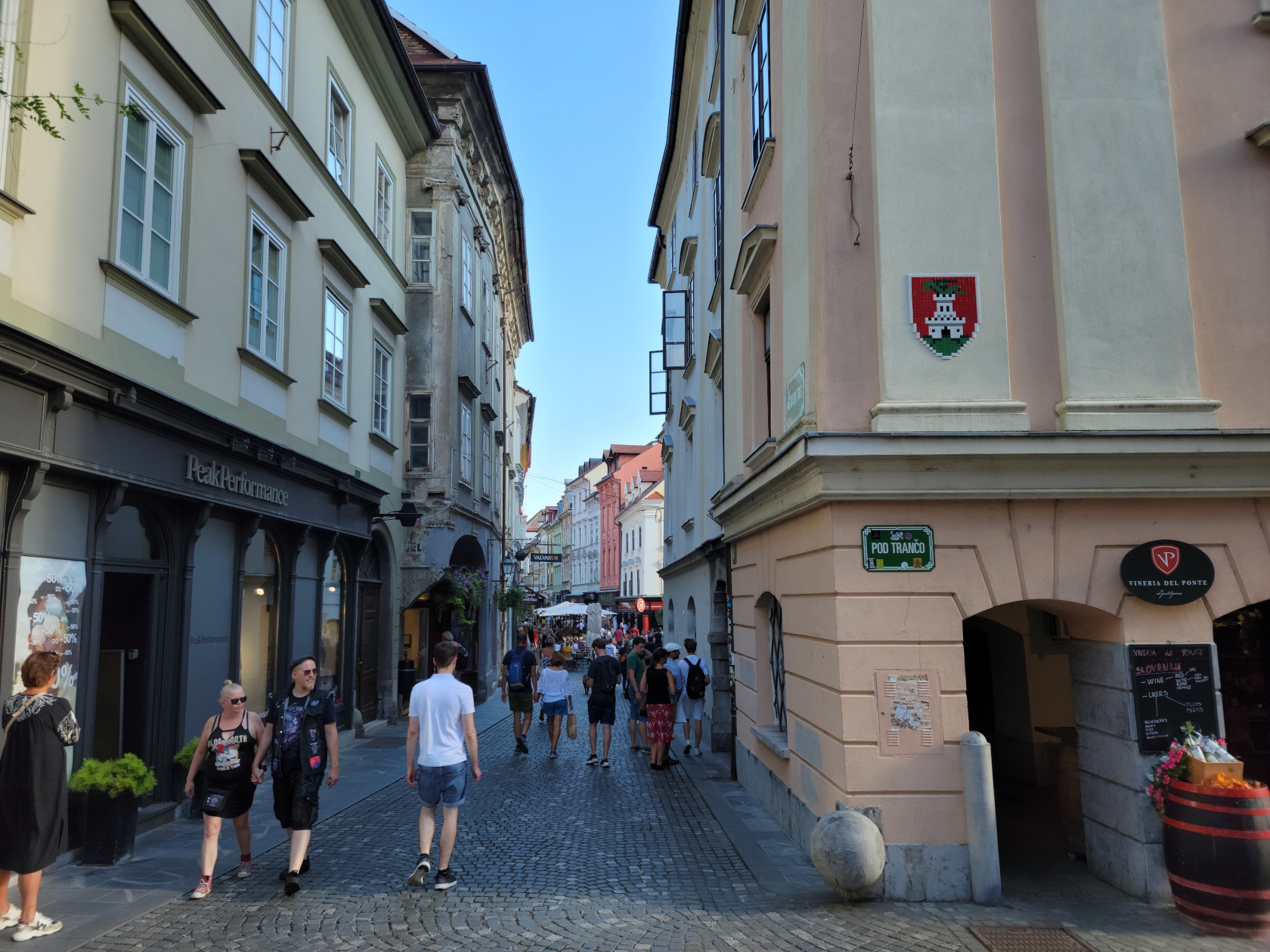
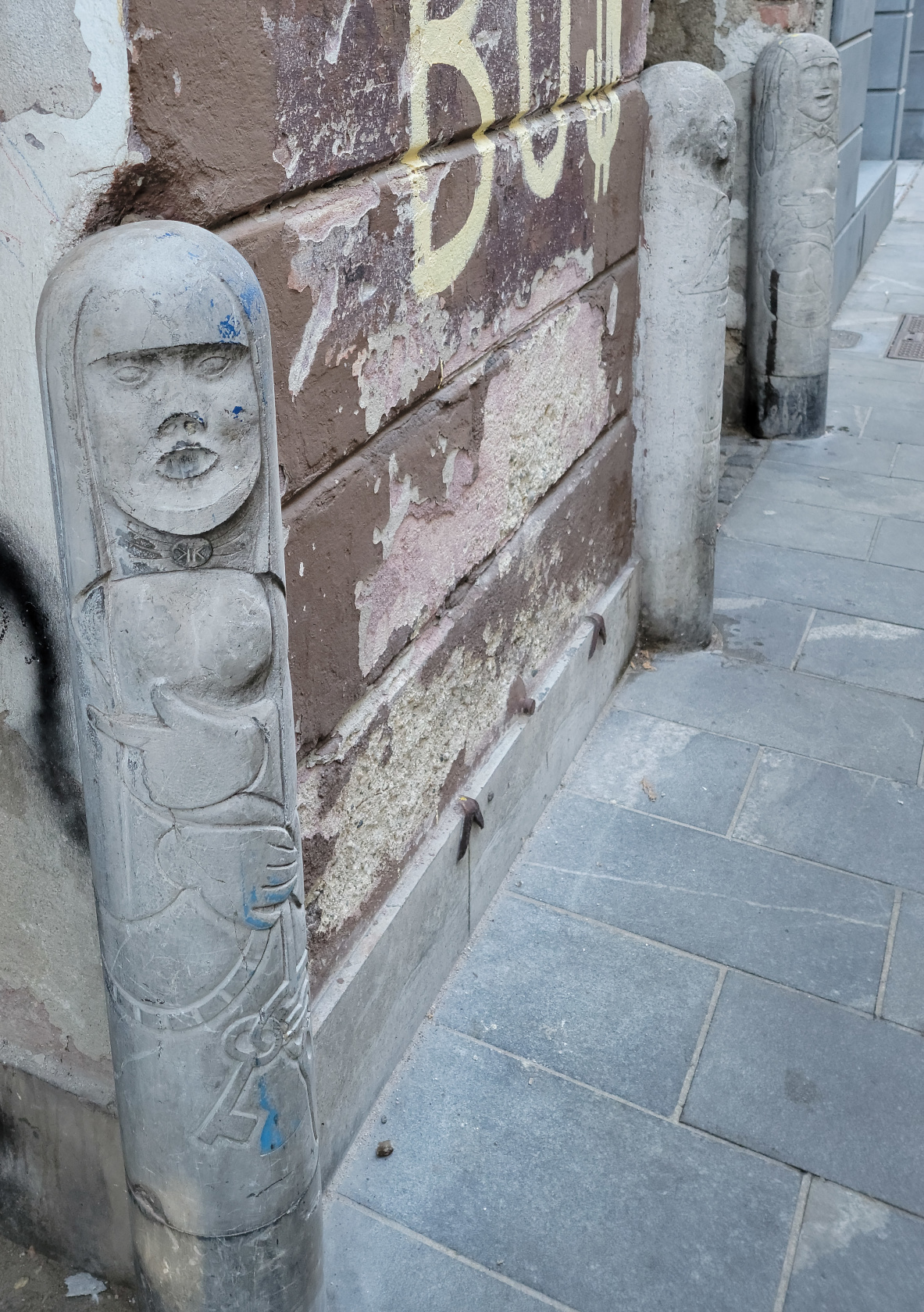
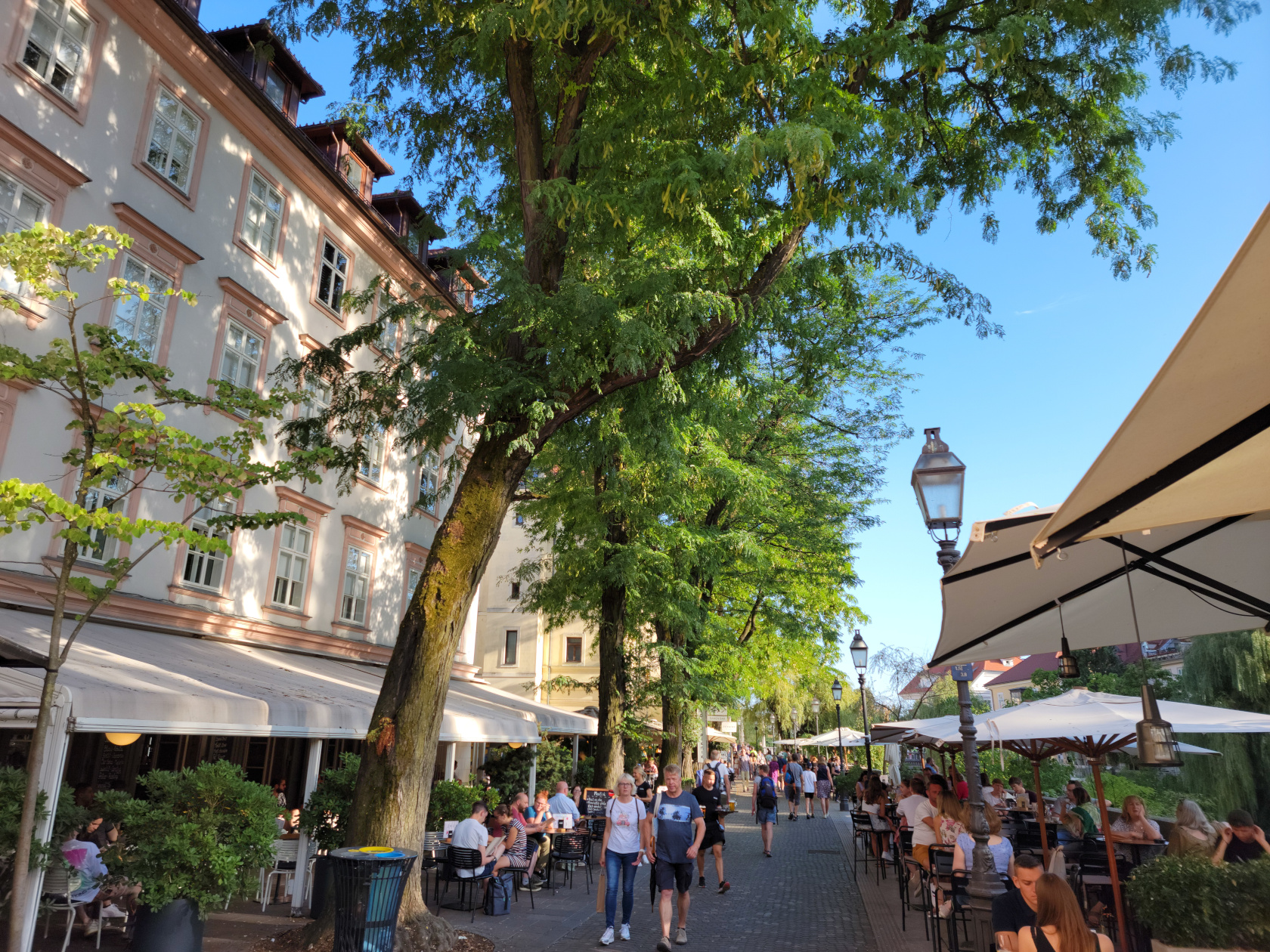
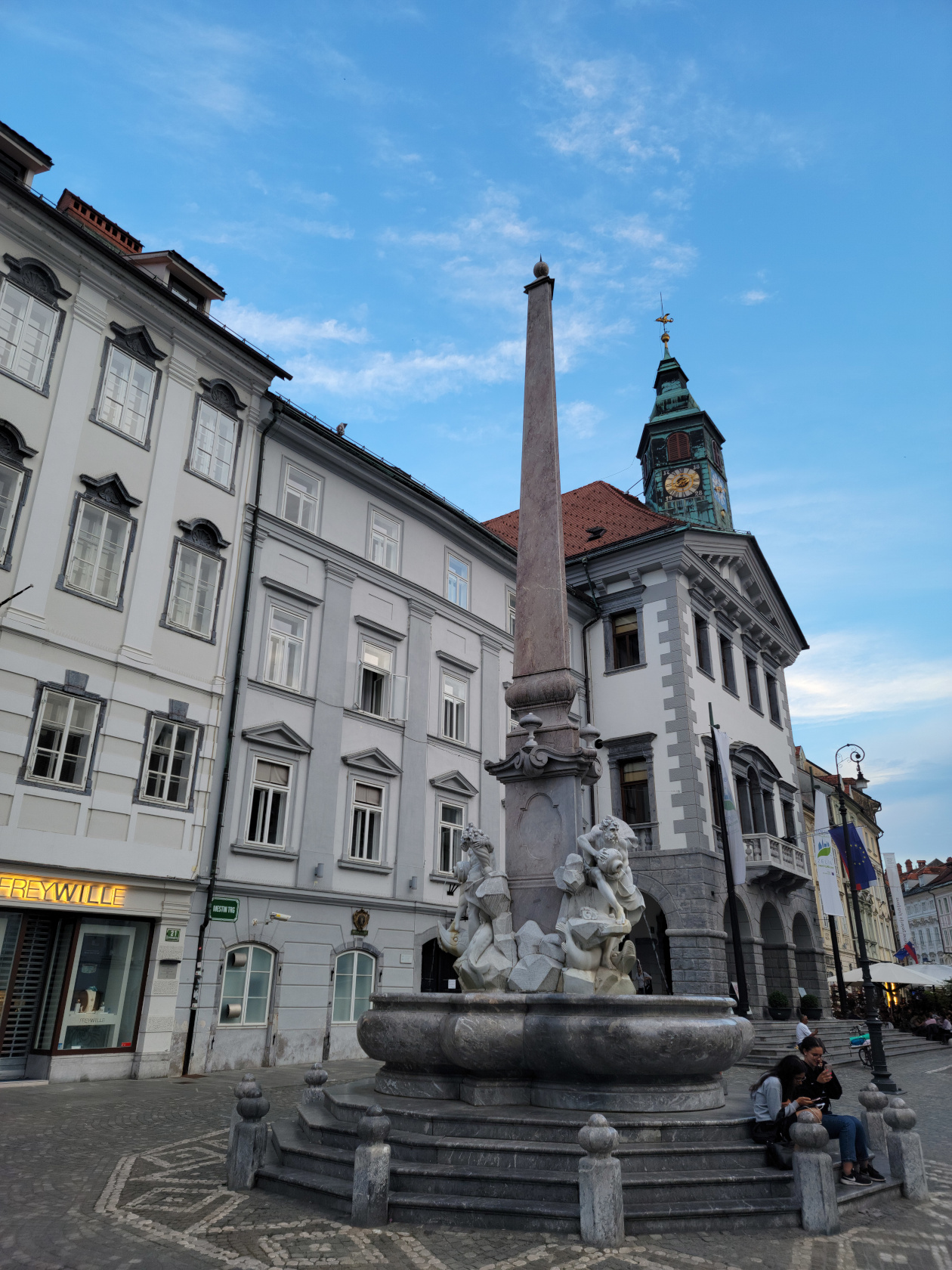
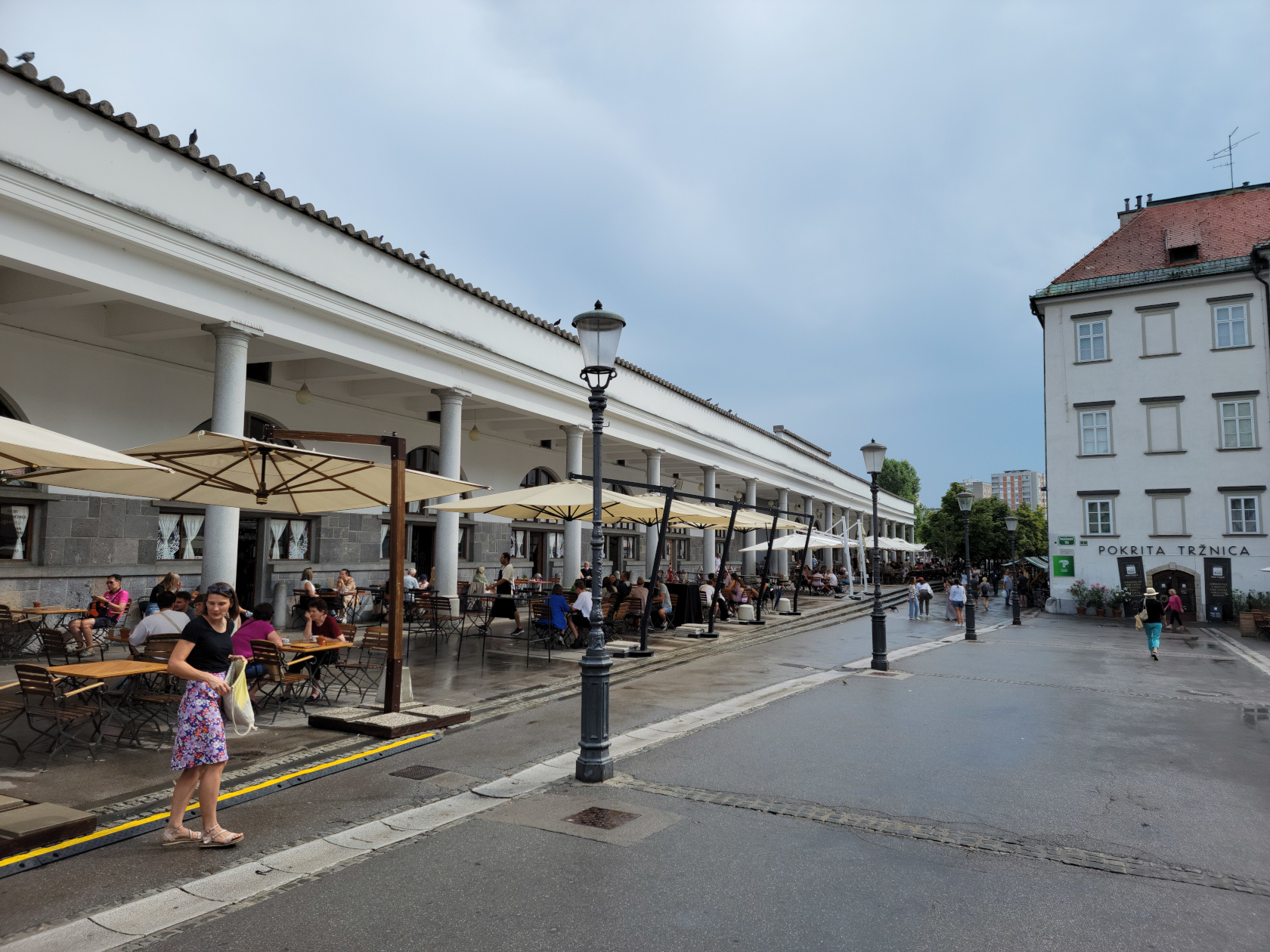
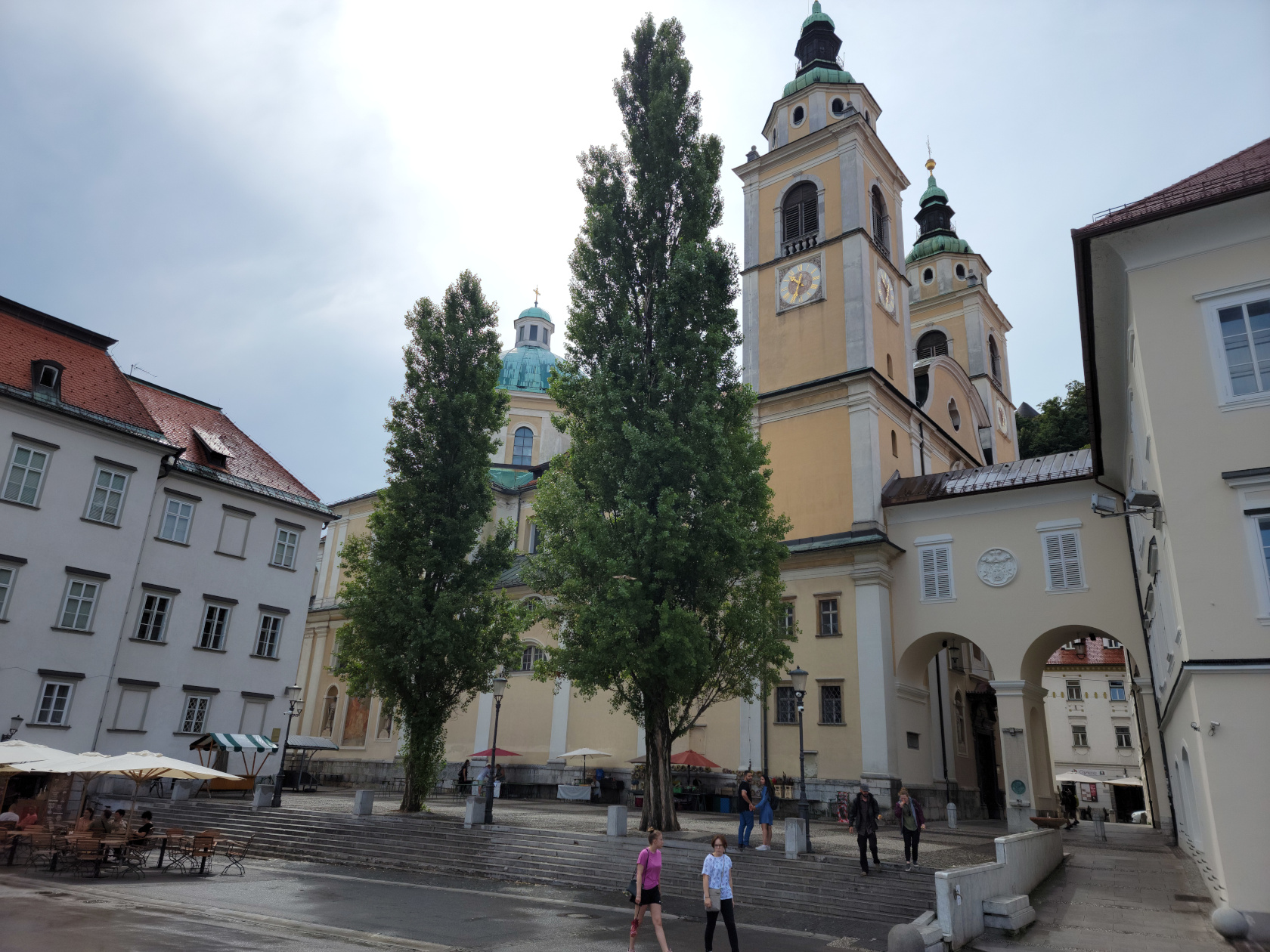
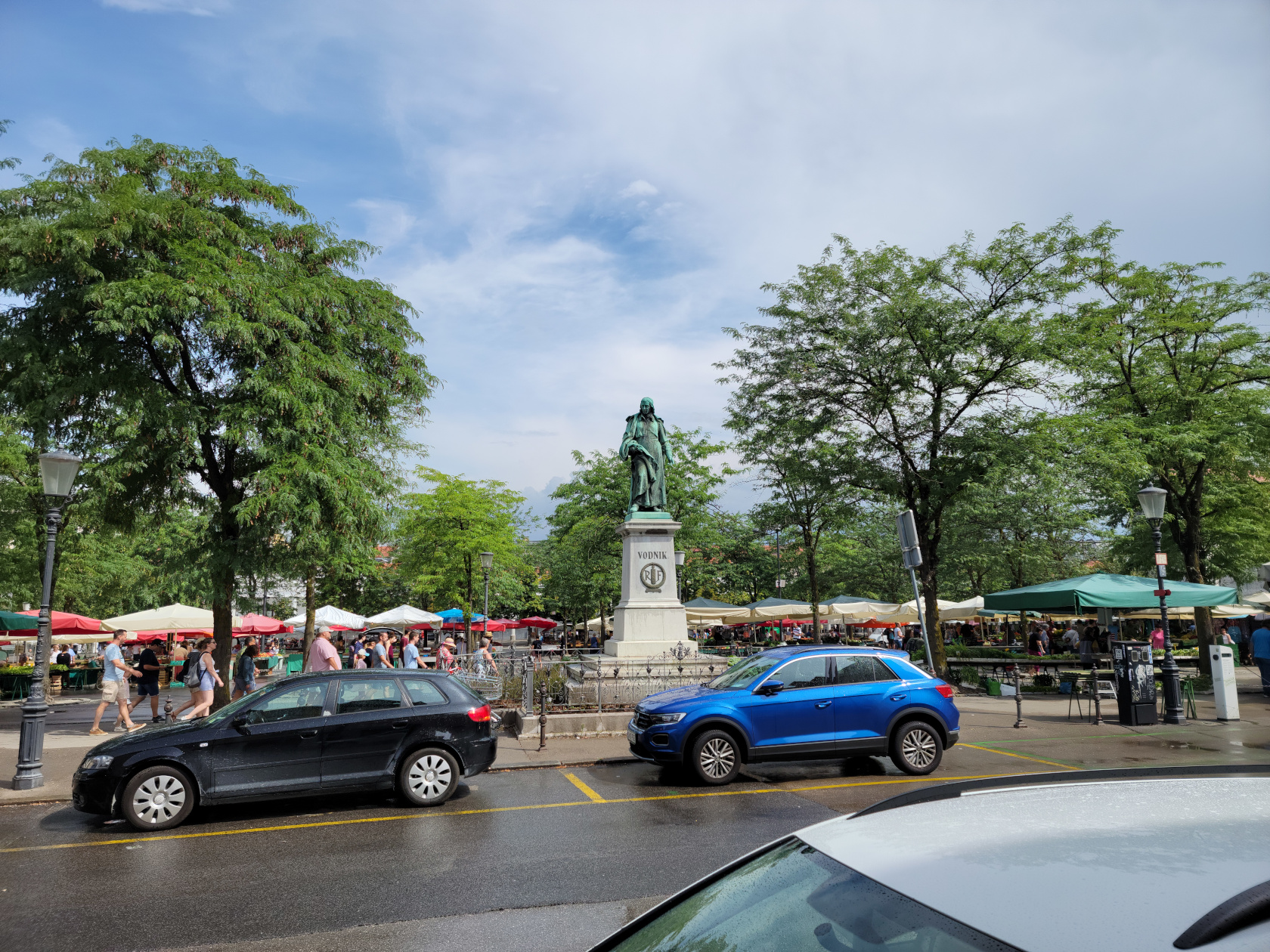
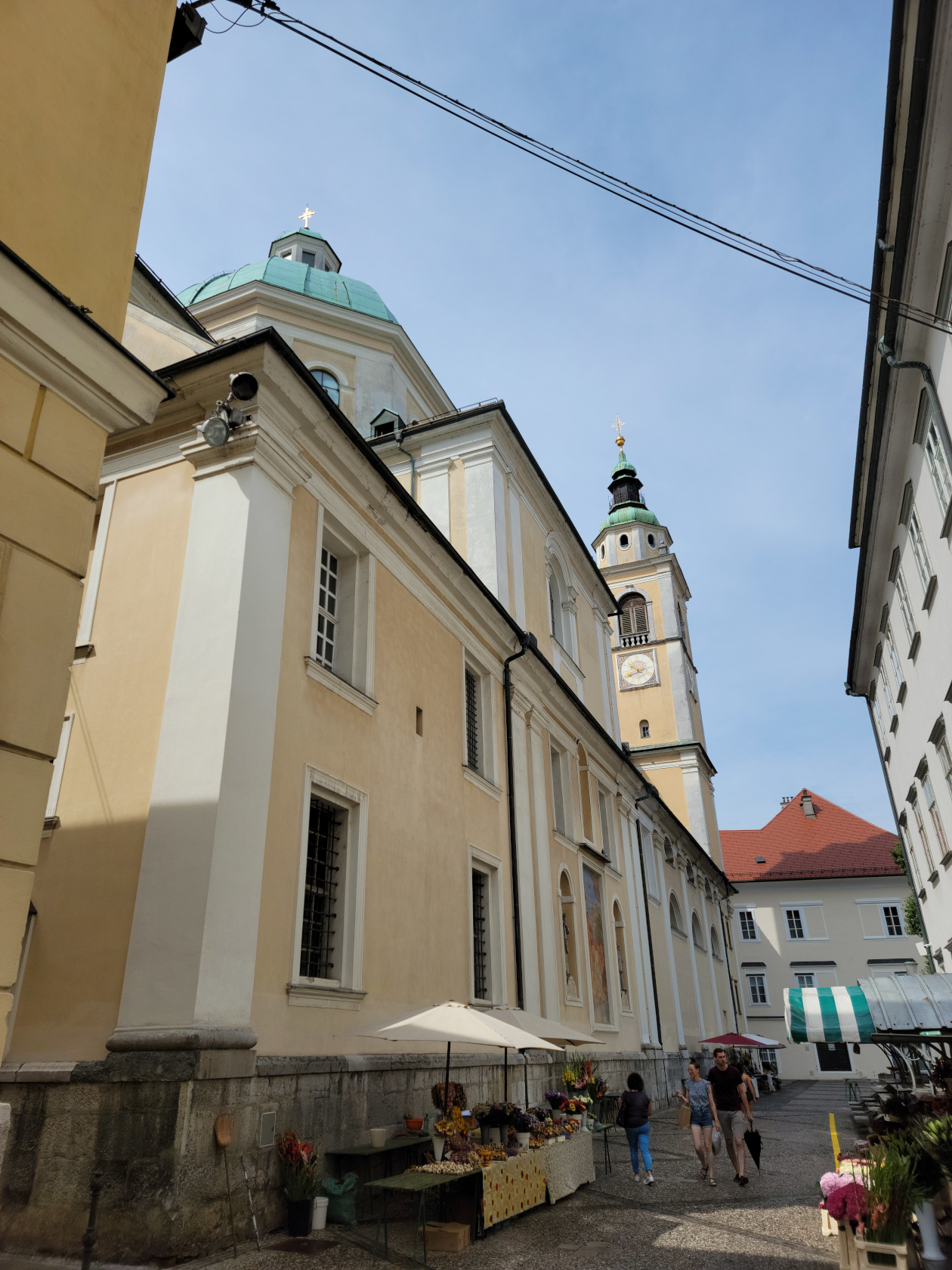
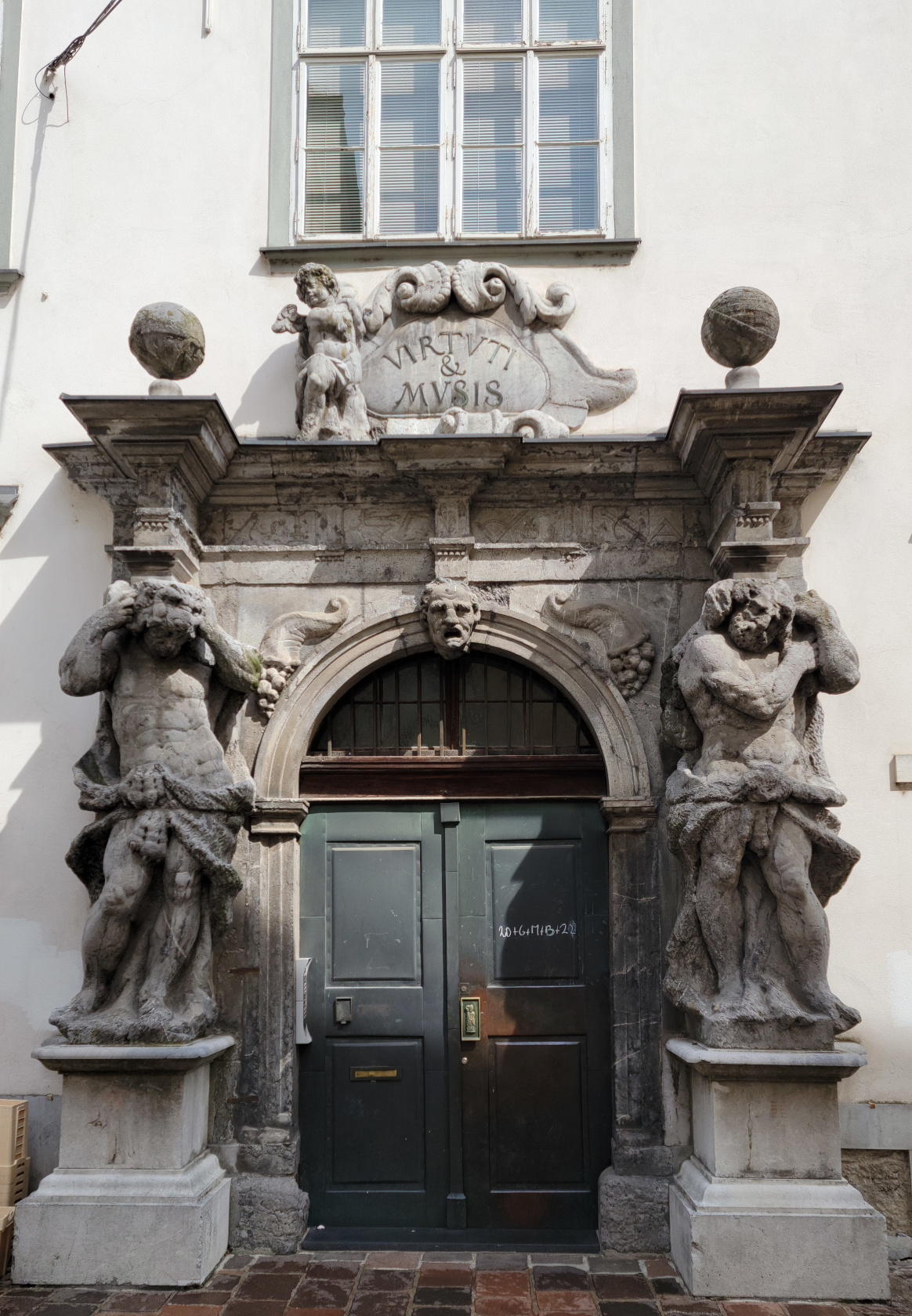
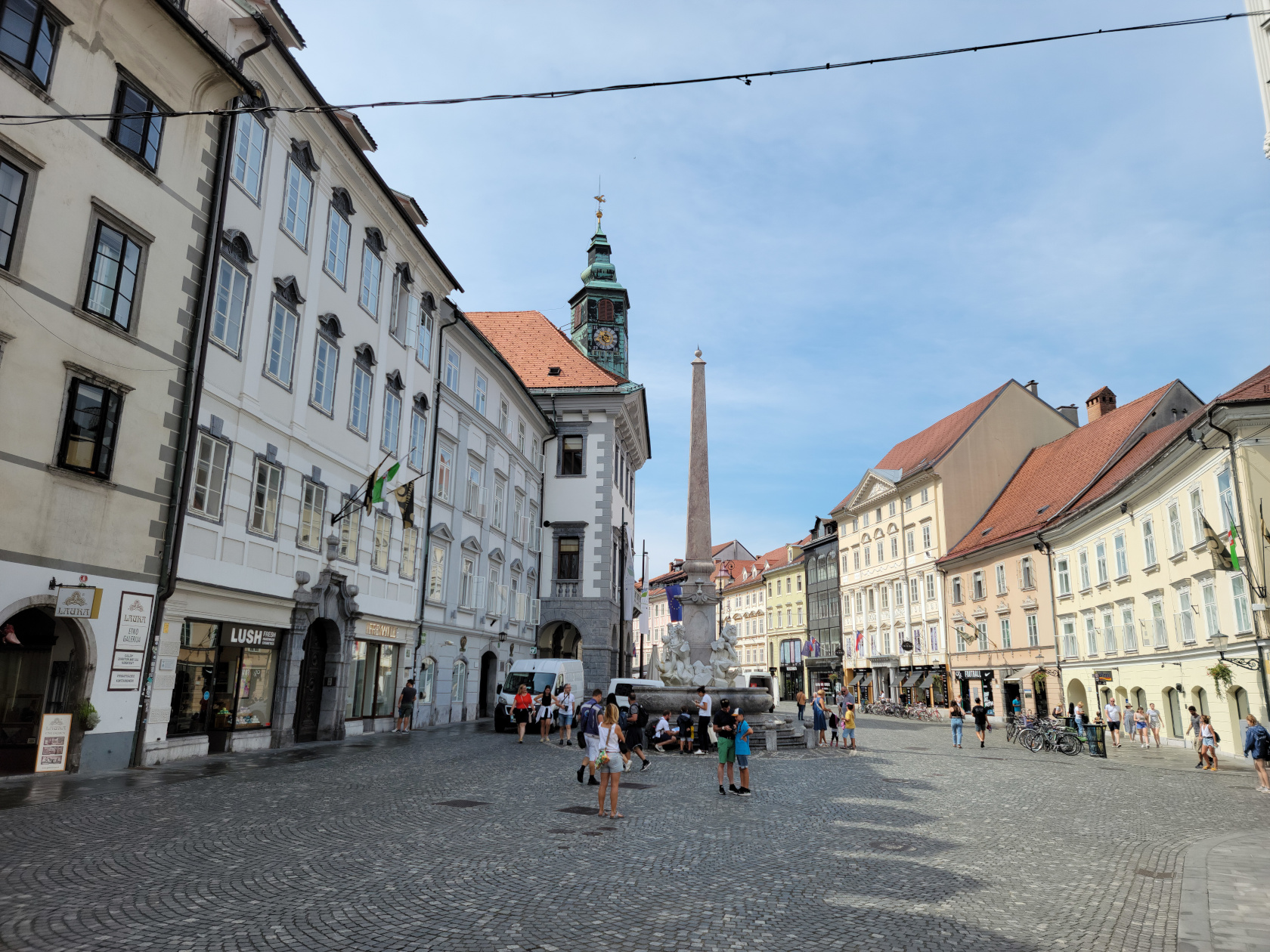
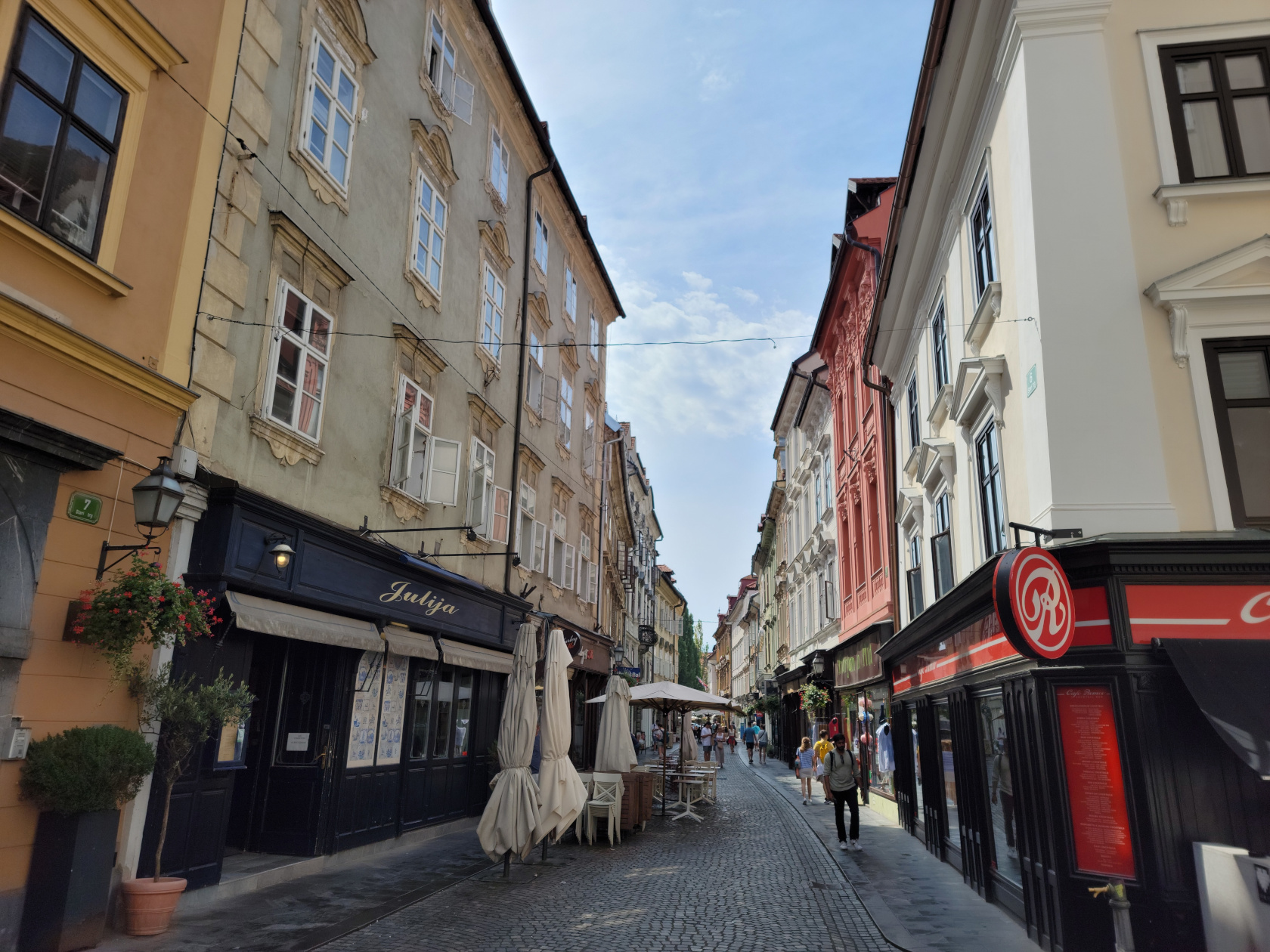
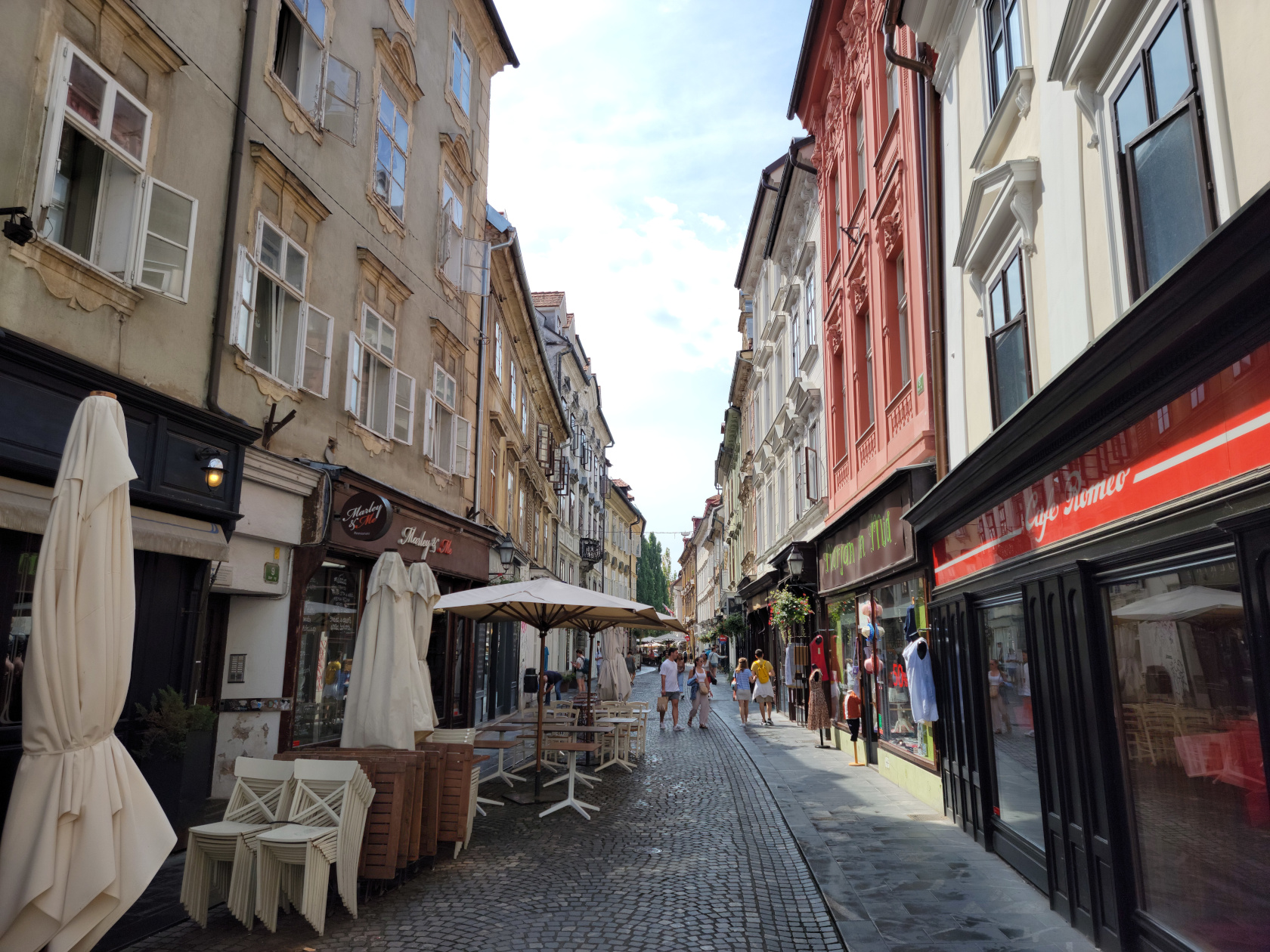
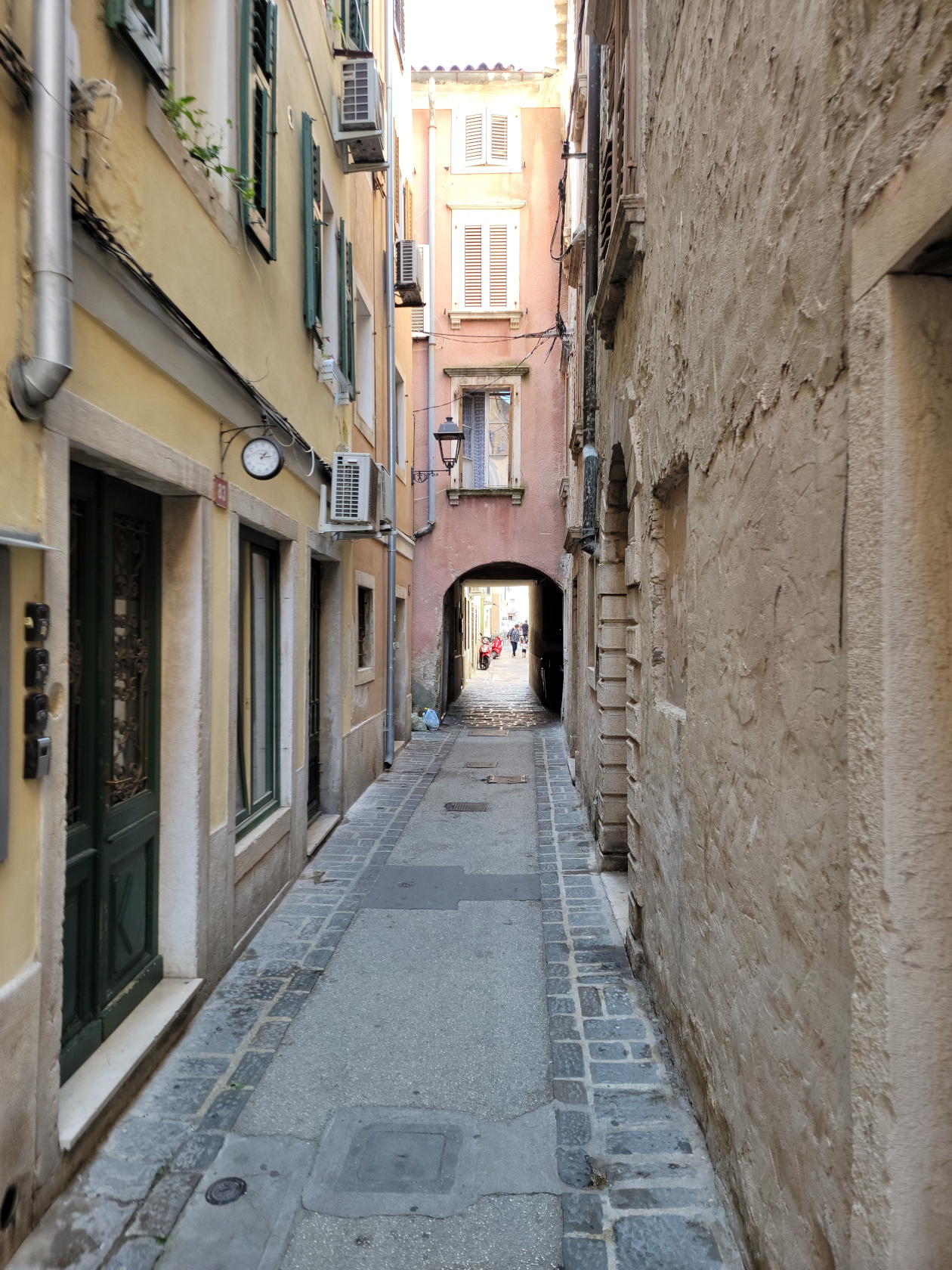
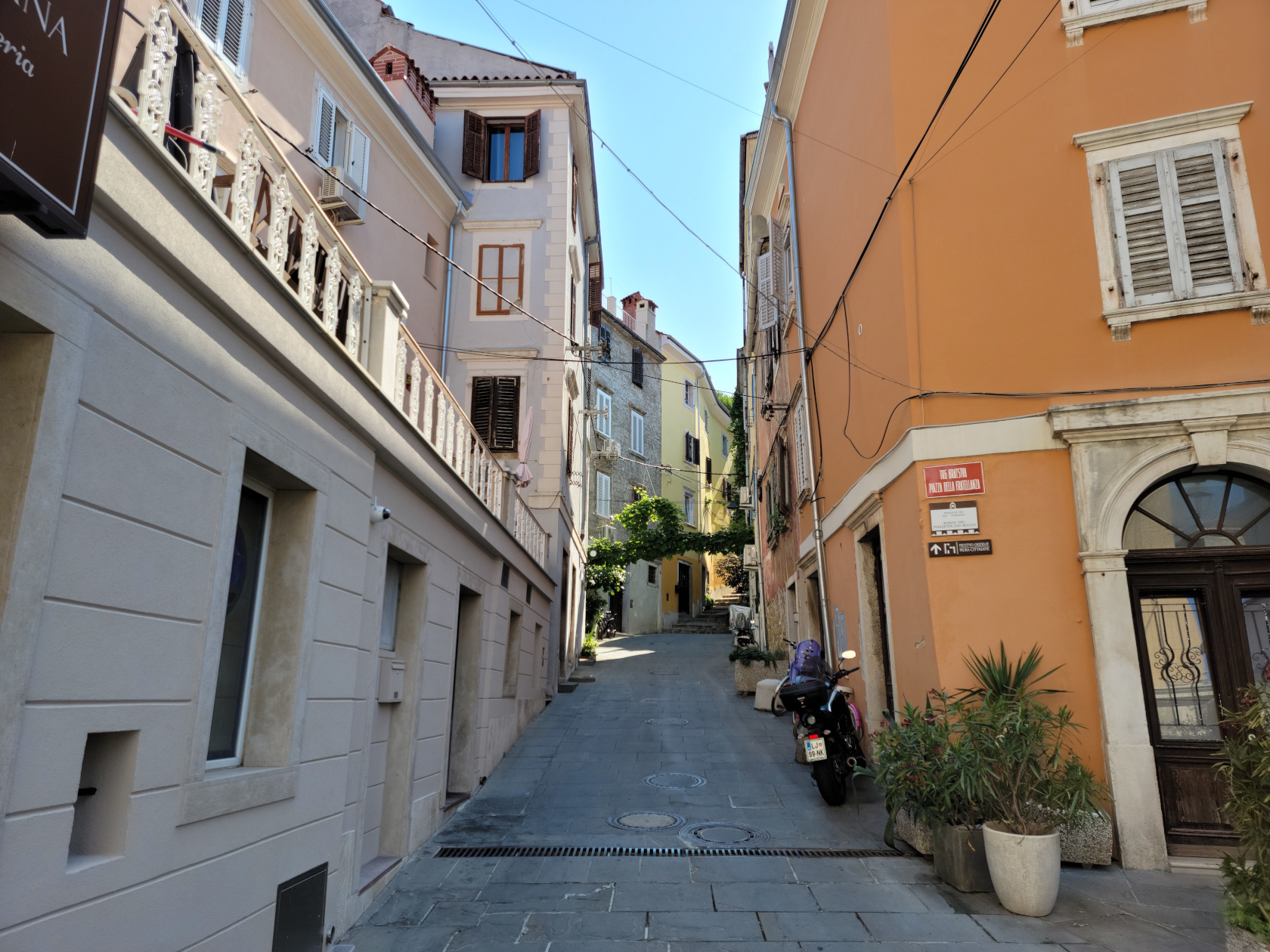
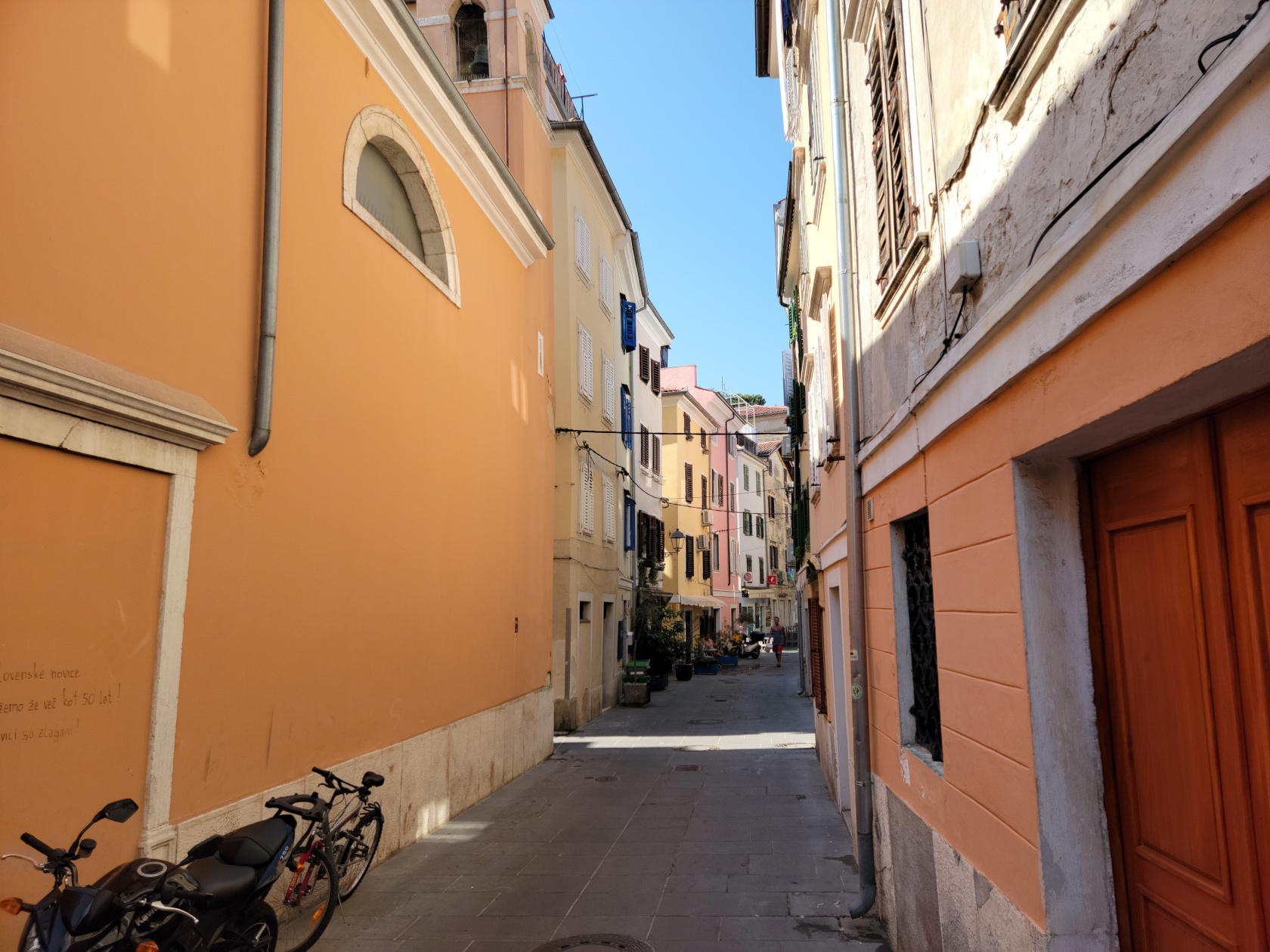
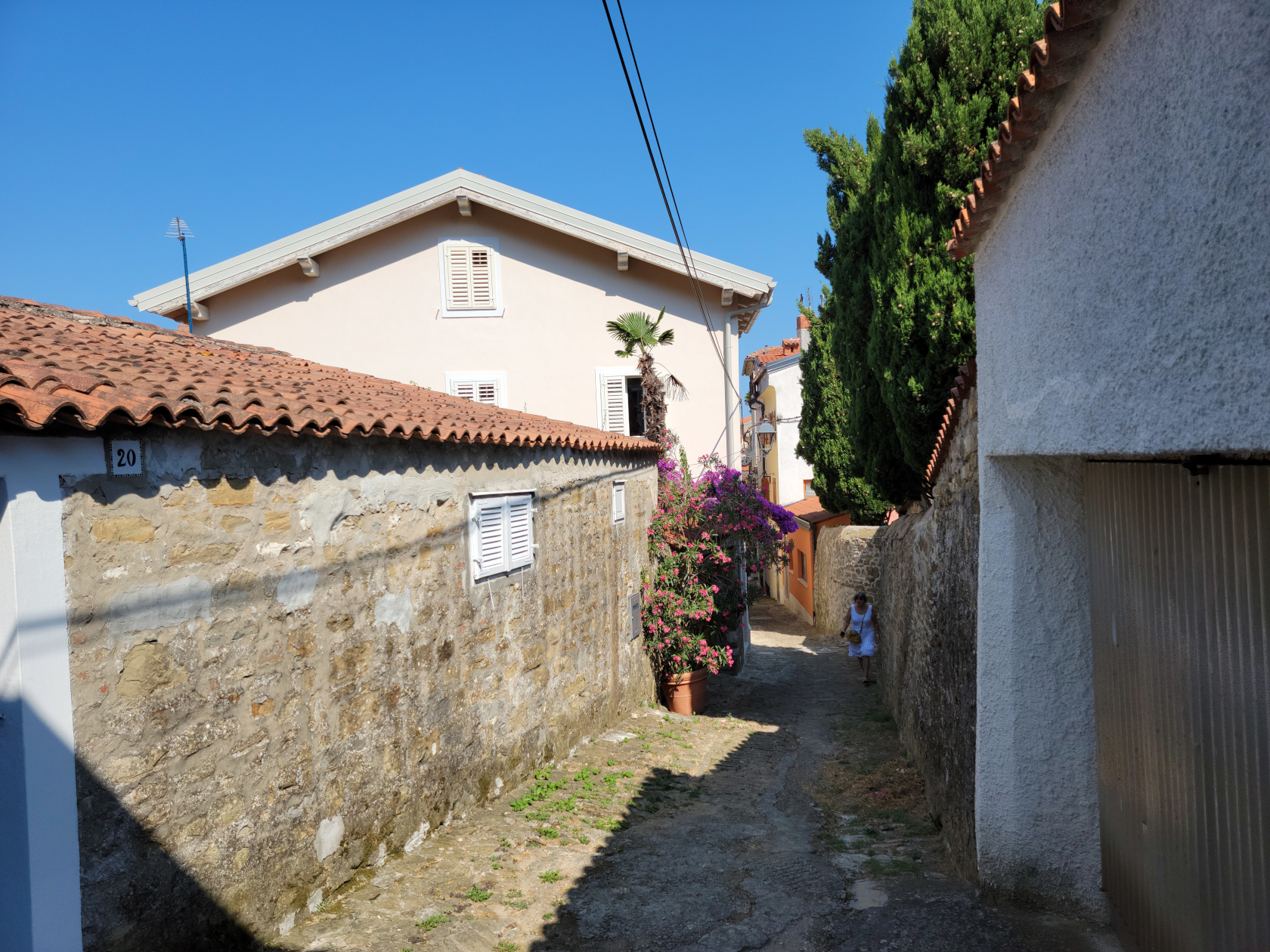
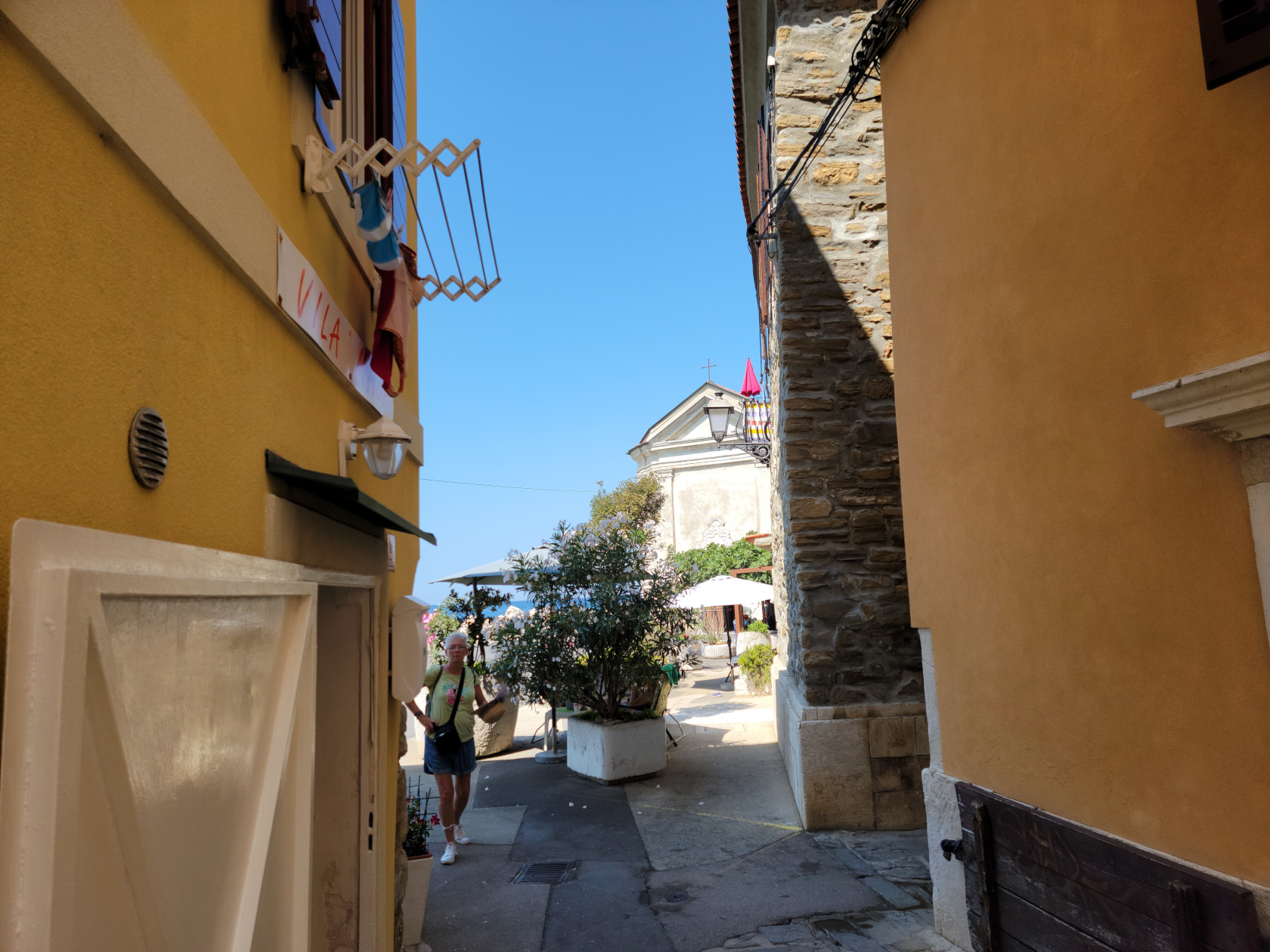
Continuing our Summer Trip of eastern Italy and Slovenia, and after a two and a half hour train ride from Trieste, is the charming city of Ljubljana, Slovenia. Actually, much to my surprise, stepping off the train there was a noticeable cleanliness to it all which rarely, if ever, went away. We even noticed this in some of the more off-beat areas and in other towns, that we ventured to on our day trips.
The Slovenians are no doubt a very orderly, patient people. This can also be witnessed in their driving, since it is very rare, almost uncommon to hear the sound of a horn. When asked, “Why is this?”, most reply with the simple retort, “Well it’s simply rude, and in most cases, unnecessary.”
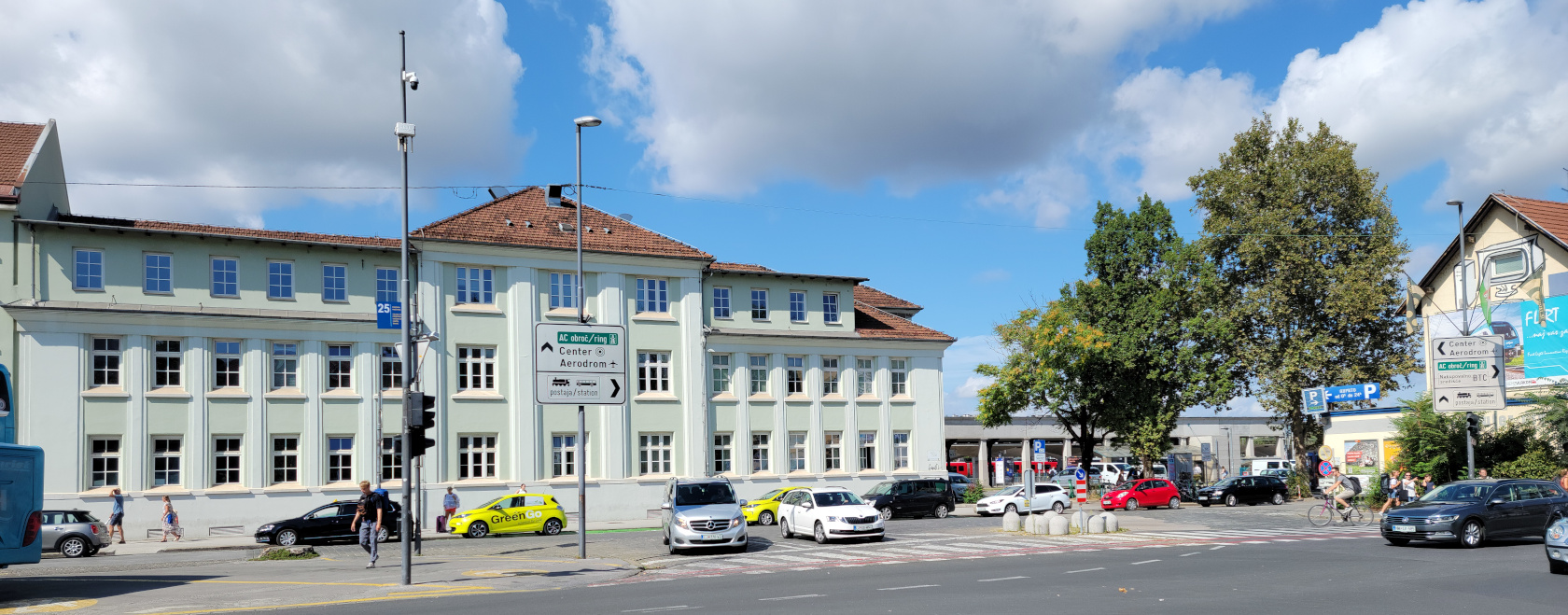
Ljubljana – The Main Train Station
Ljubljana, Lublana and Laybach
Ljubljana is a very old city, dating back to the twelfth and eleventh centuries, though a town called Emona stood here during Roman times. Myths and stories have linked it to Jason and the Argonauts and his struggles, and the killing of the great beast which inhabited the marsh nearby[1]This is where the metaphor of the dragon comes in., which apparently was responsible for the great floods that occurred frequently. It later became synonymous with Ljubljana in the mid-twelfth century.
Ljubljana – Ljubljanica River – Dragons Bridge
Bridges In Lubljana
There are several noteworthy bridges in the city, the Dragon Bridge, the Triple Bridge, the Cobbler’s Bridge and the Butcher’s Bridge. There are several others, however these are the ones we spent the most time on and are the most remarkable.
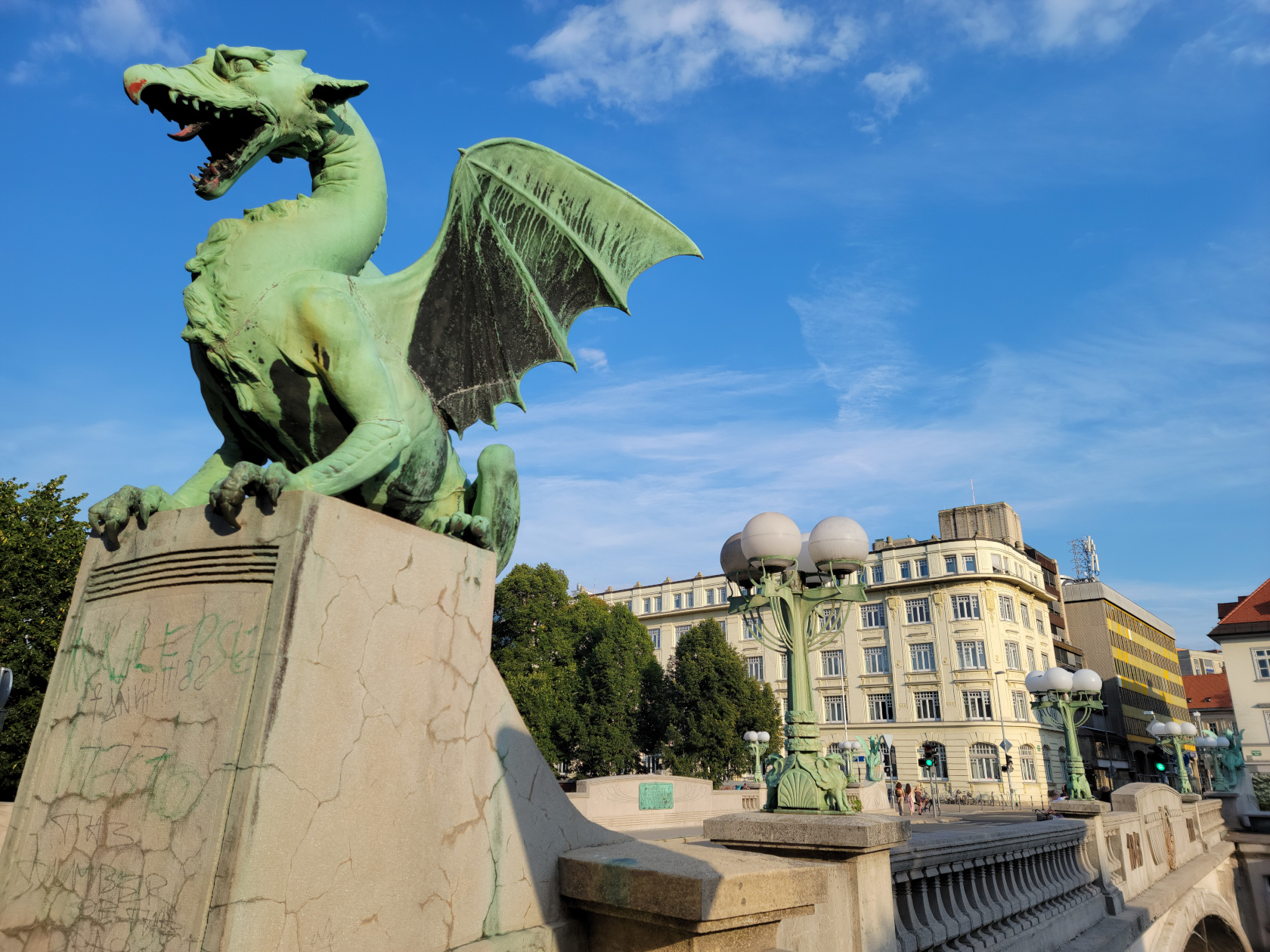
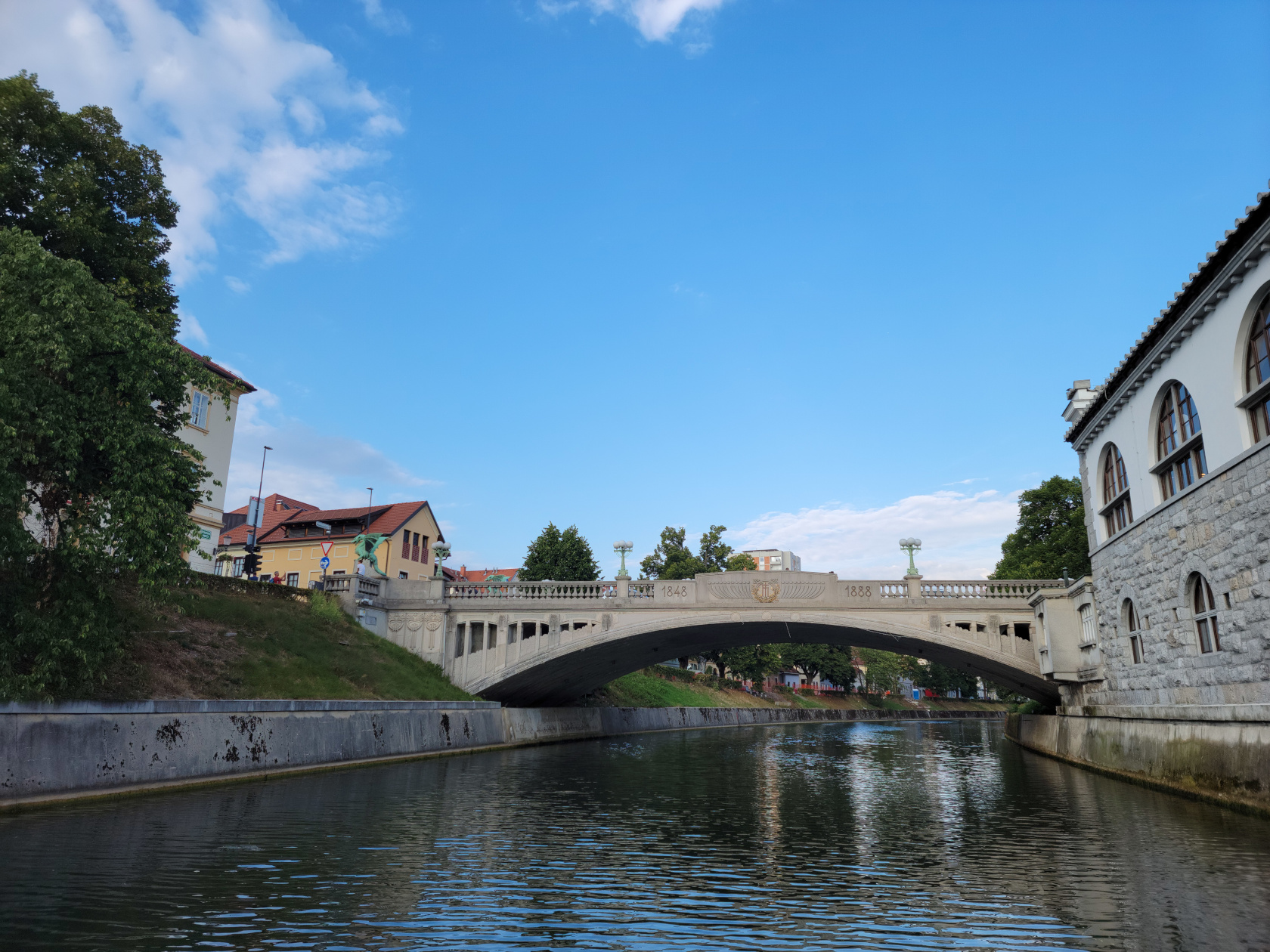
The Dragon’s Bridge
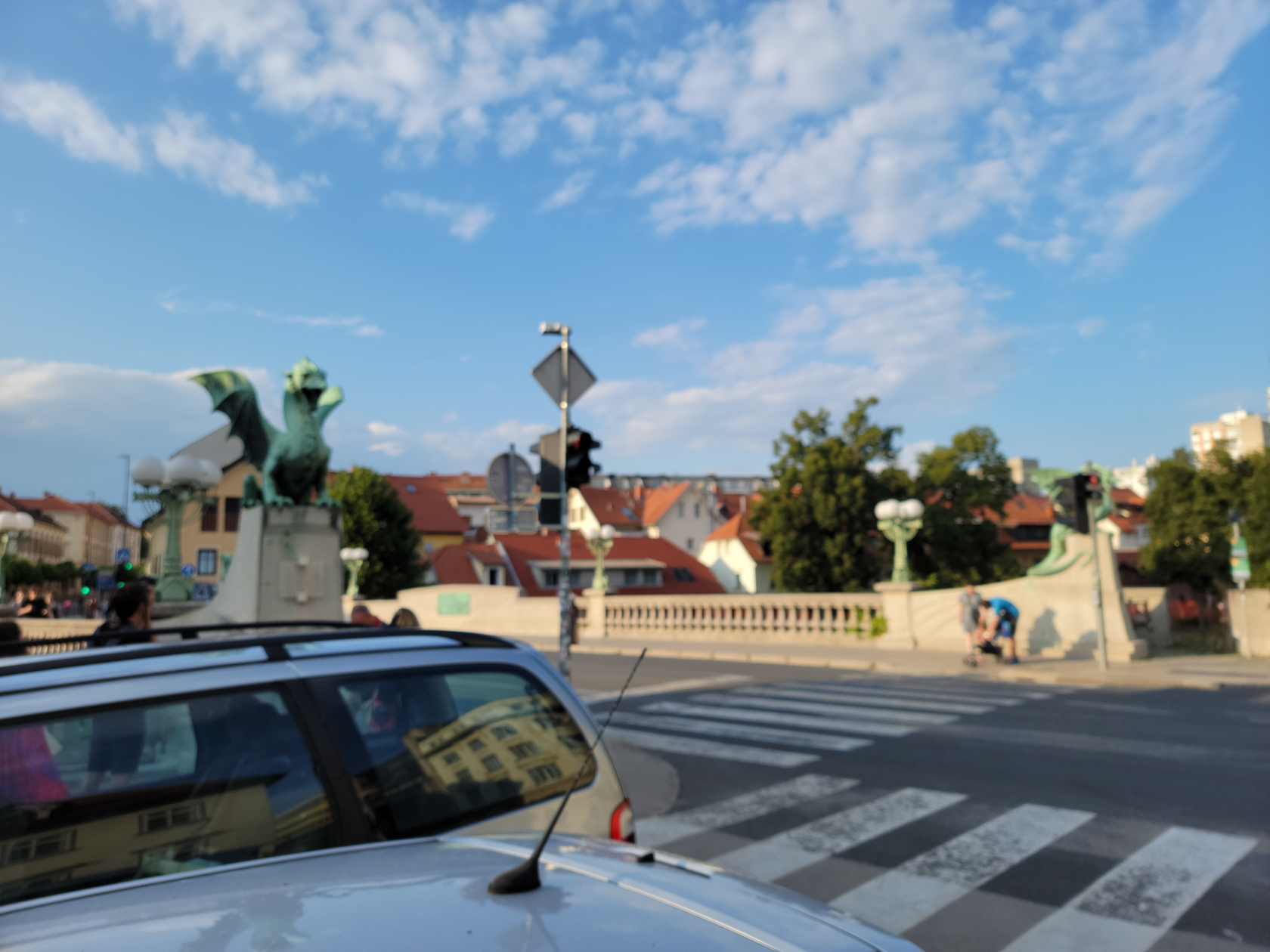
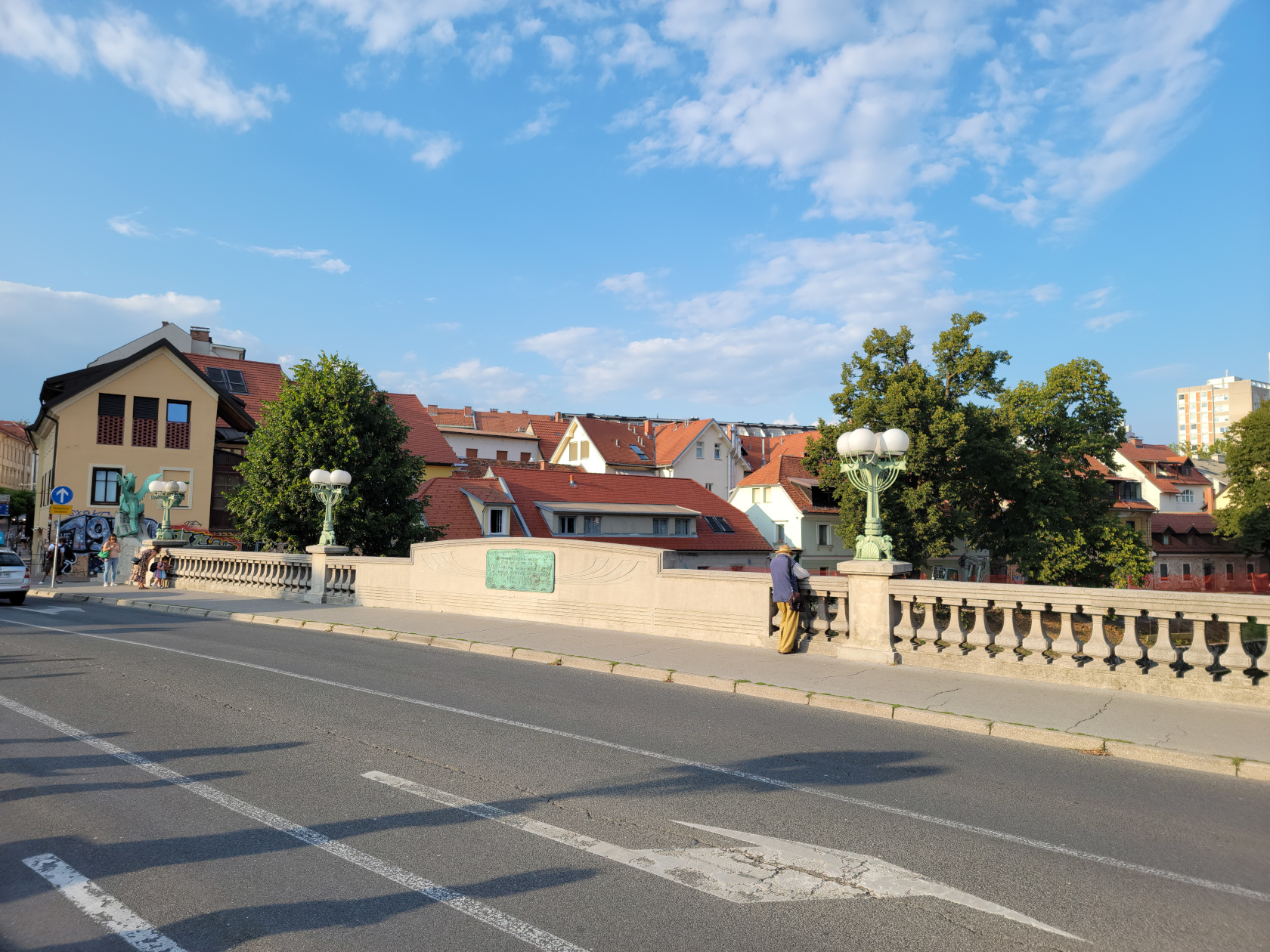
Due to the myth it is probably appropriate that the city have a dragon bridge, one not only to remember Jason’s deeds, but also the ever present danger of the river itself.
Ljubljana – Ljubljanica River – Dragons Bridge
Ljubljana – Ljubljanica River – Dragons Bridge
The Triple Bridge
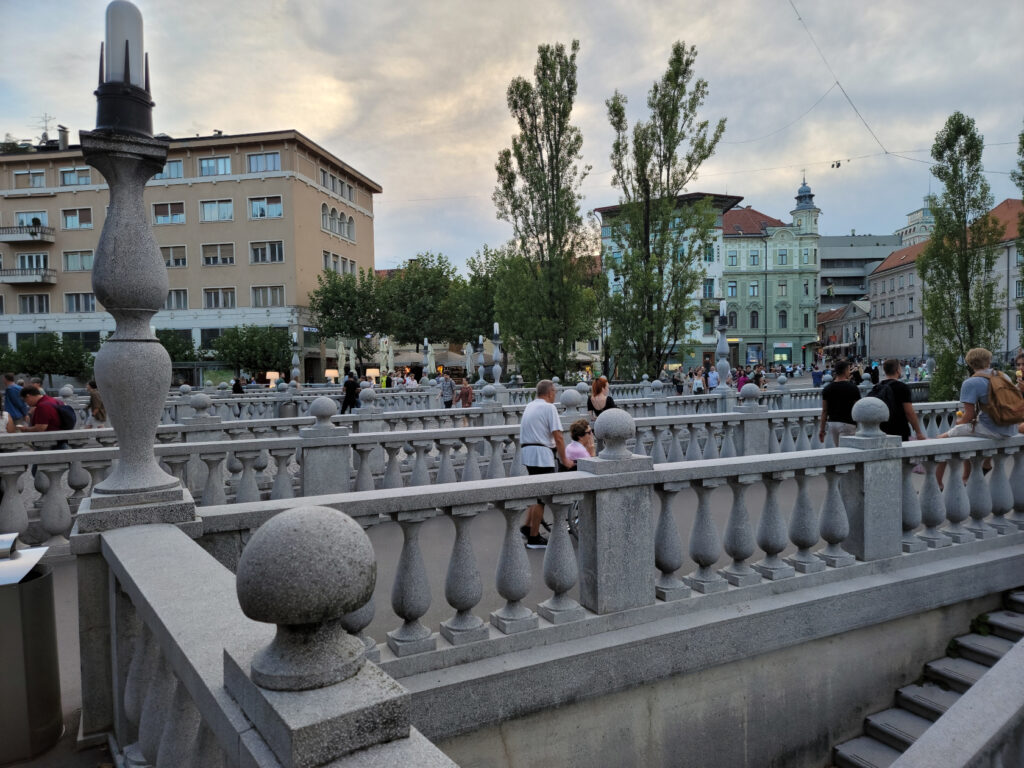
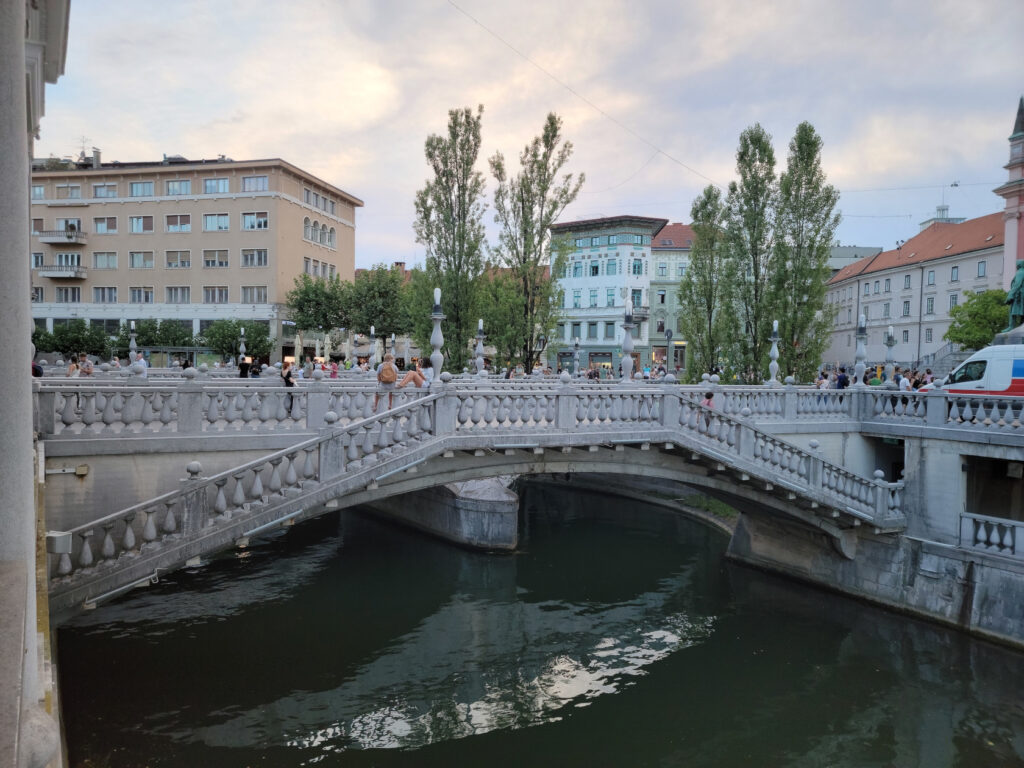
Not far from our hotel and adjacent to Prešeren Square is the Triple Bridge. It was originally one bridge, the central span, but as business and traffic increased the other two side bridges were added for pedestrian traffic.
Ljubljana – The Triple Bridge
Ljubljana – The Triple Bridge
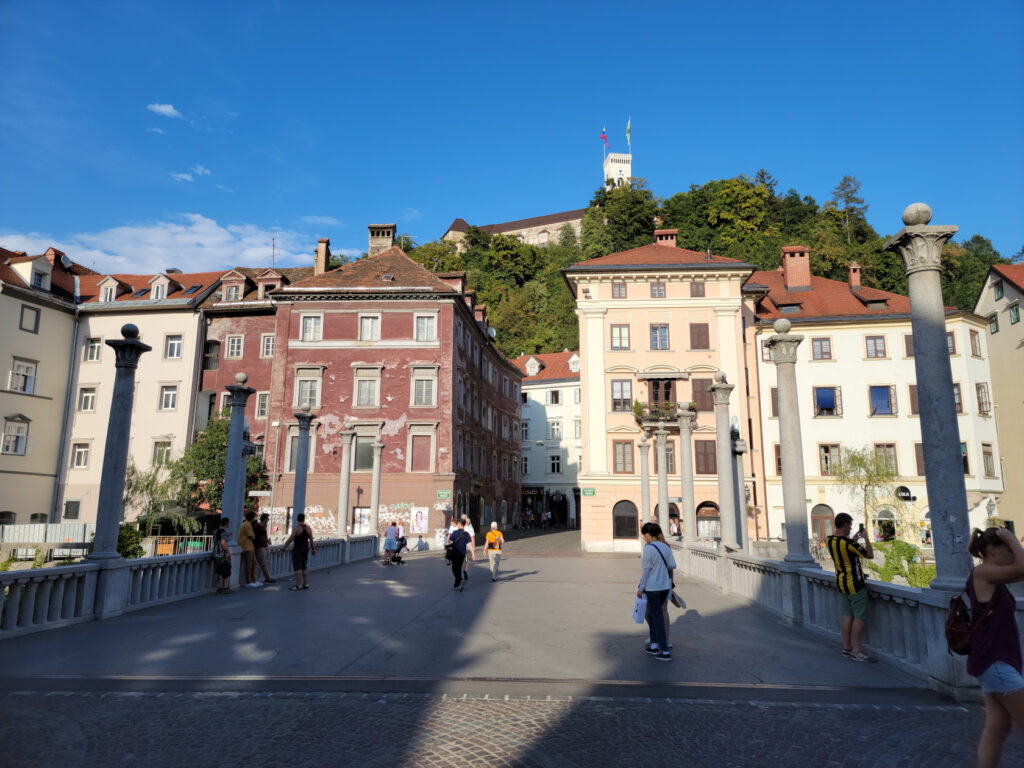
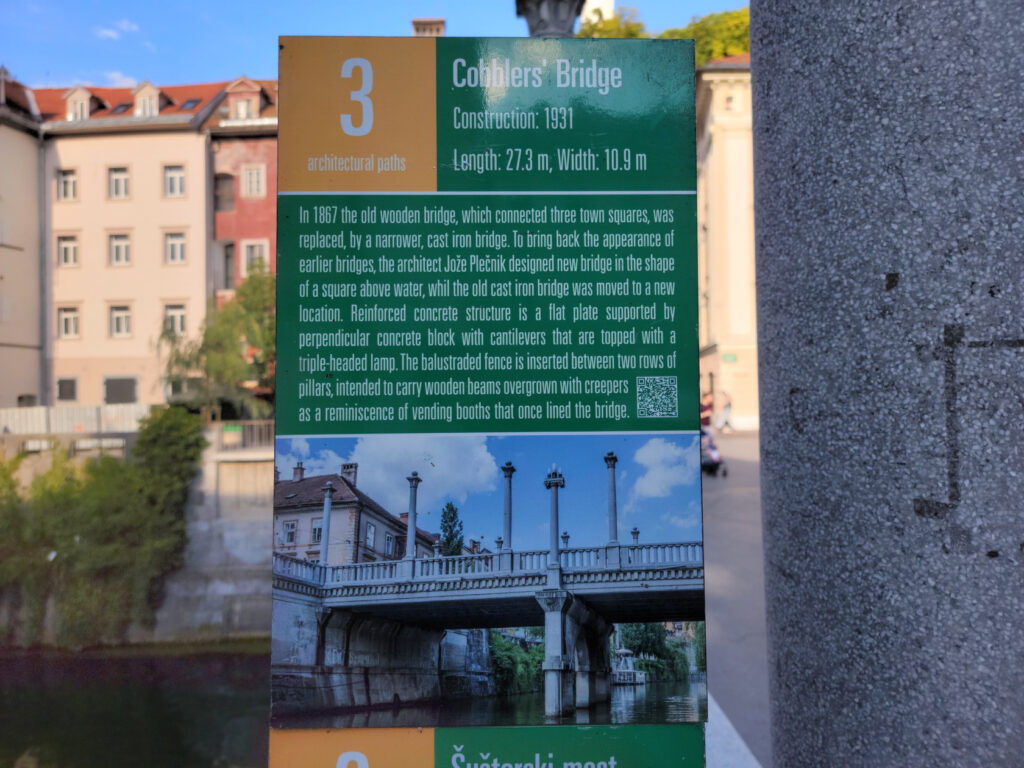
The Cobbler’s Bridge
A quaint bridge that connects two important parts of the medieval city.
Ljubljana – Ljubljanica River – Cobblers Bridge
Ljubljana – Ljubljanica River – Cobblers Bridge
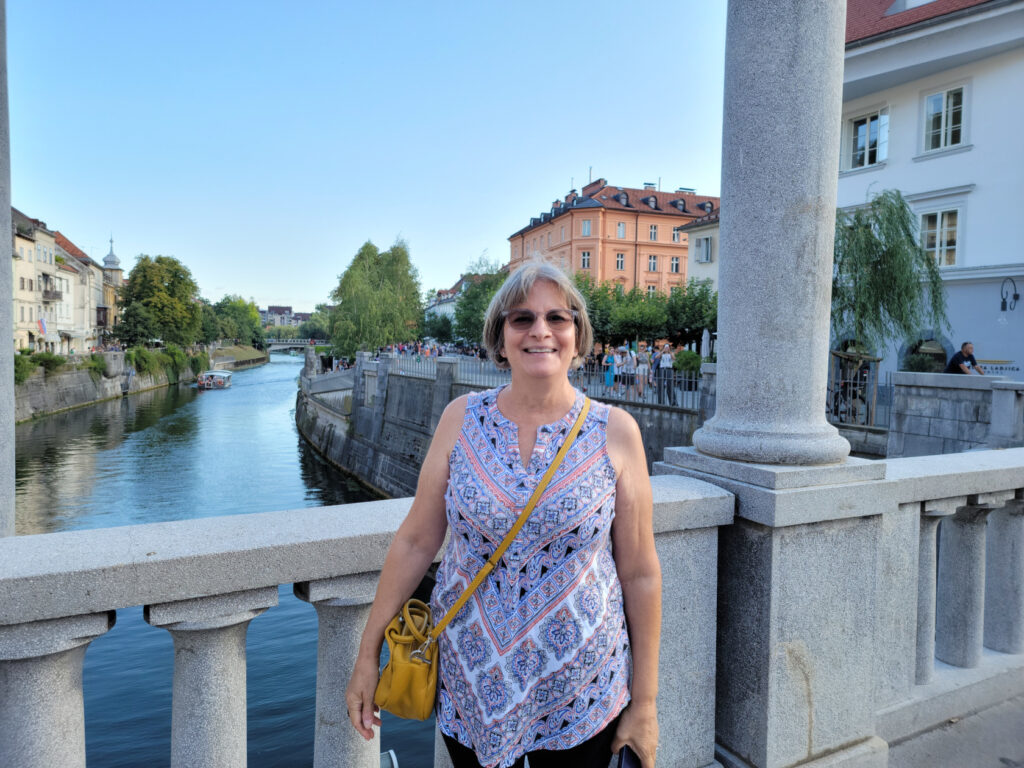
Ljubljana – Ljubljanica River – Patti on Cobblers Bridge
The Butcher’s Bridge
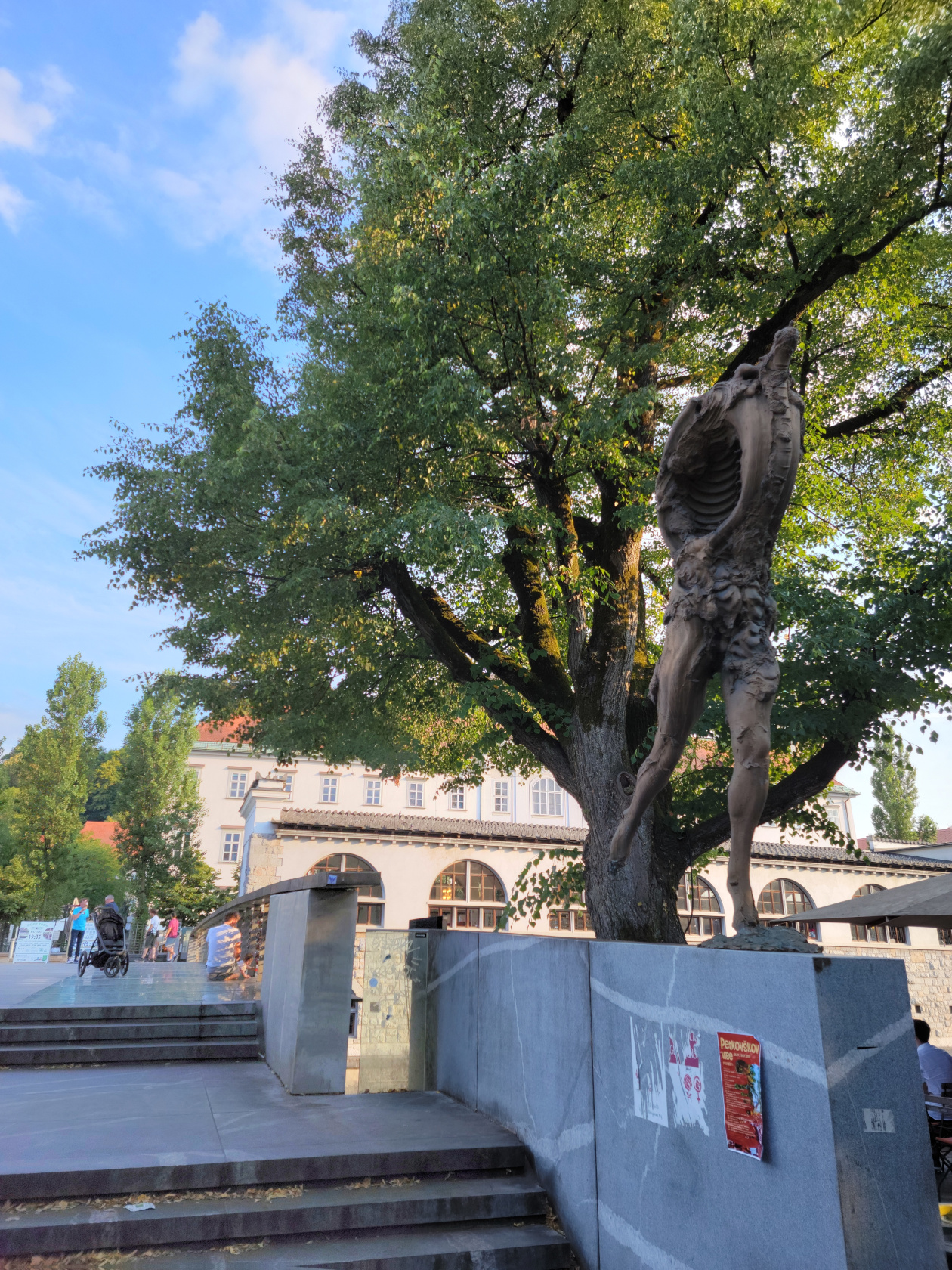
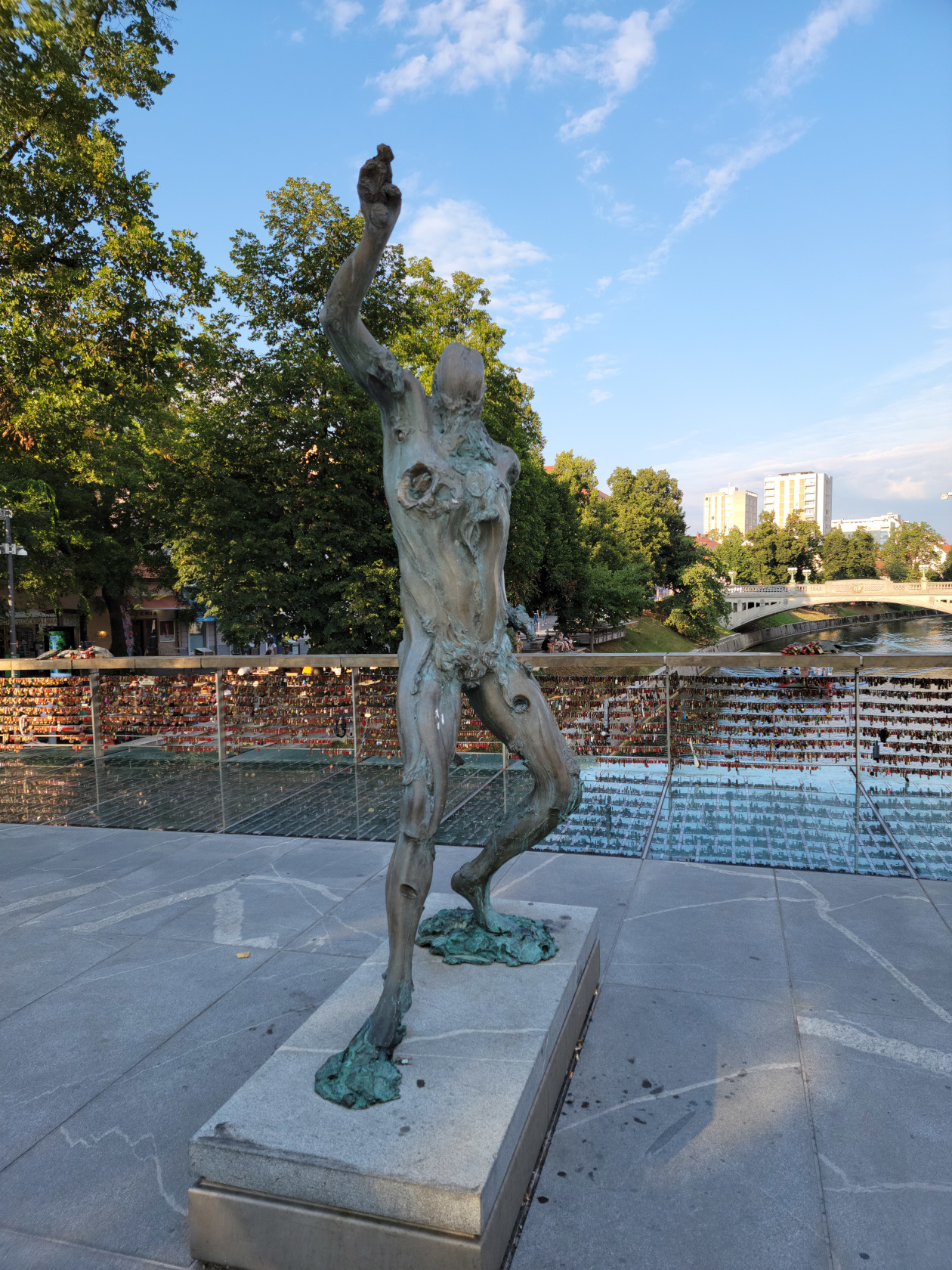
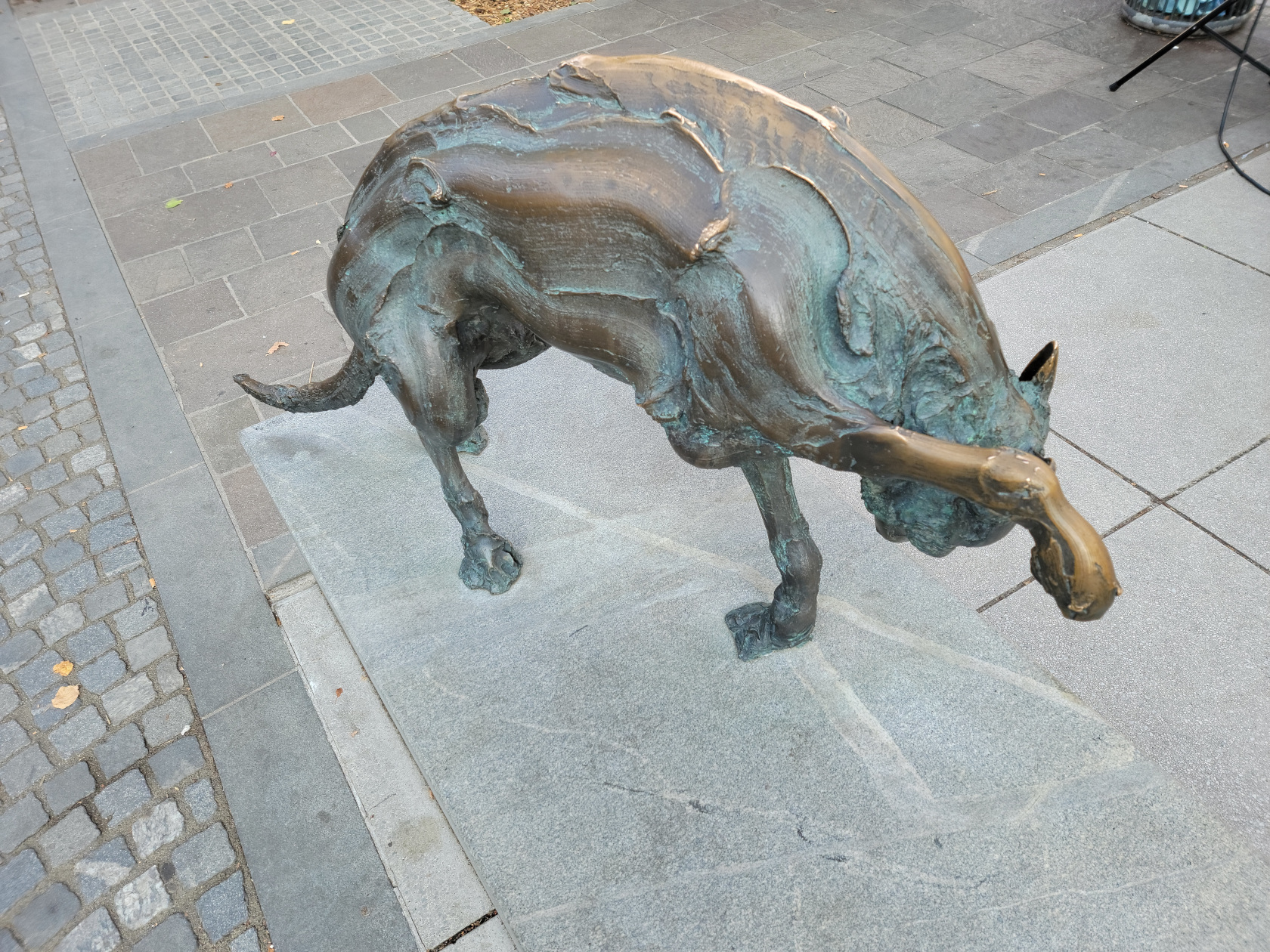
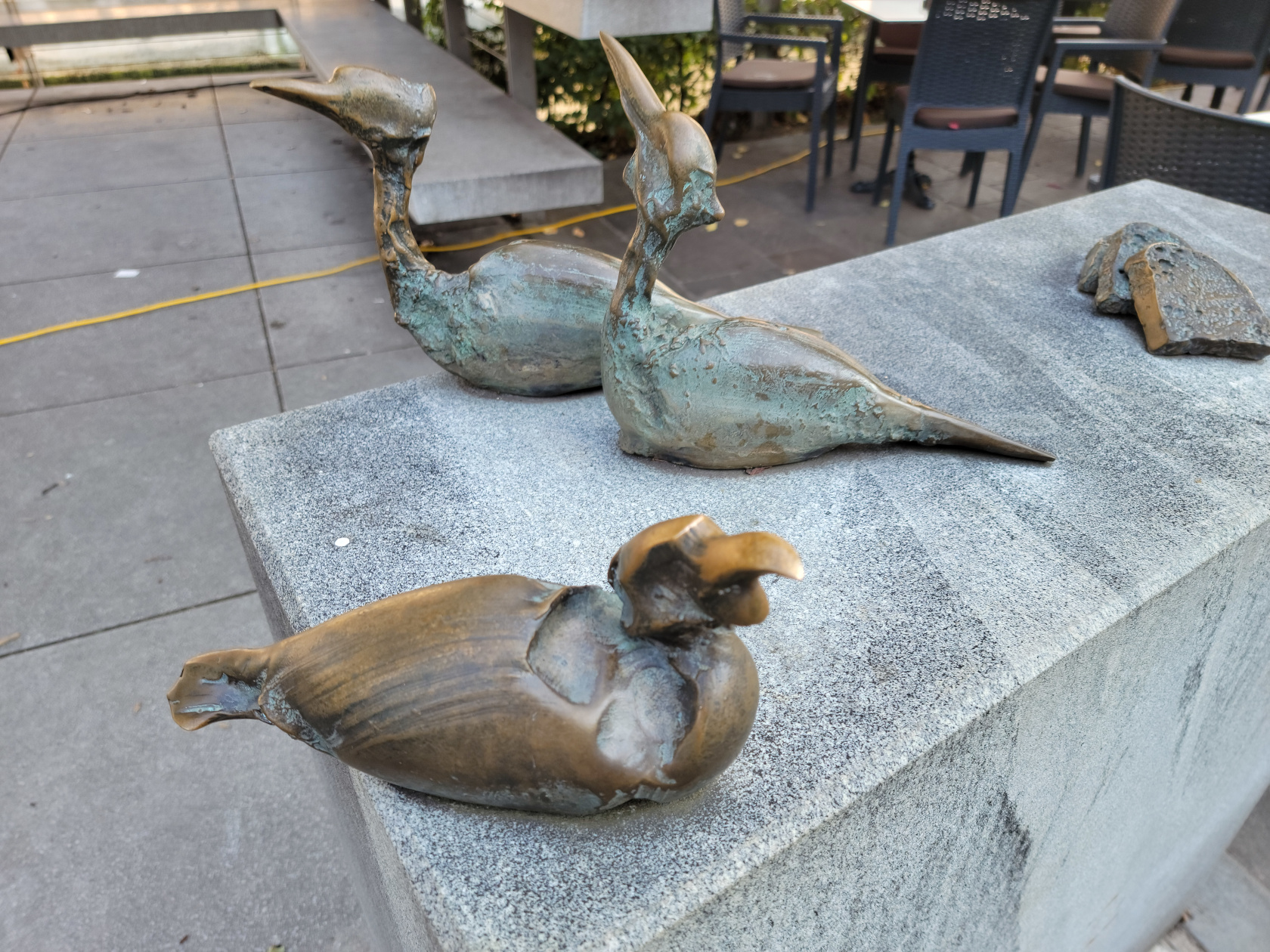
This bridge got its name, since it was near the place that the butchers of the city used to come and wash the carcasses of the animals. The blood and stench of rotting flesh this process brought down through the city must have been appalling. The practice was stopped soon after the residents had had enough of the smell. It is now decorated with locks and bronzes of mythological creatures.
Ljubljana – City Art – Bronze
Ljubljana – City Art – Bronze
Ljubljana – City Art – Bronze
Ljubljana – City Art – Bronzes
Castle Hill
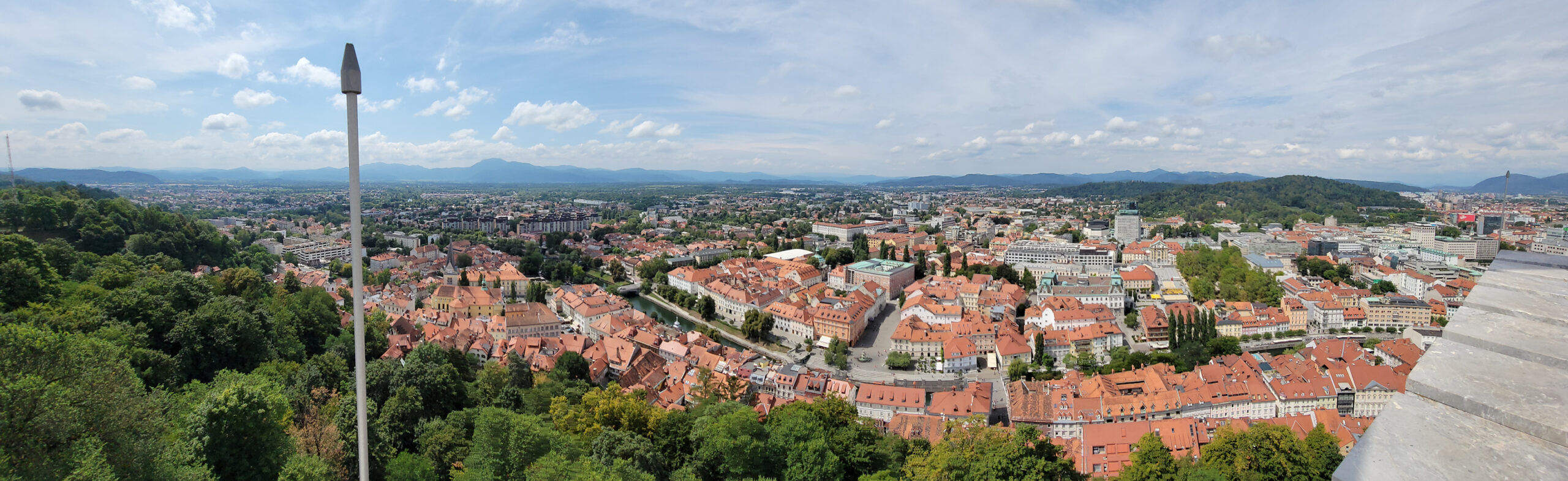
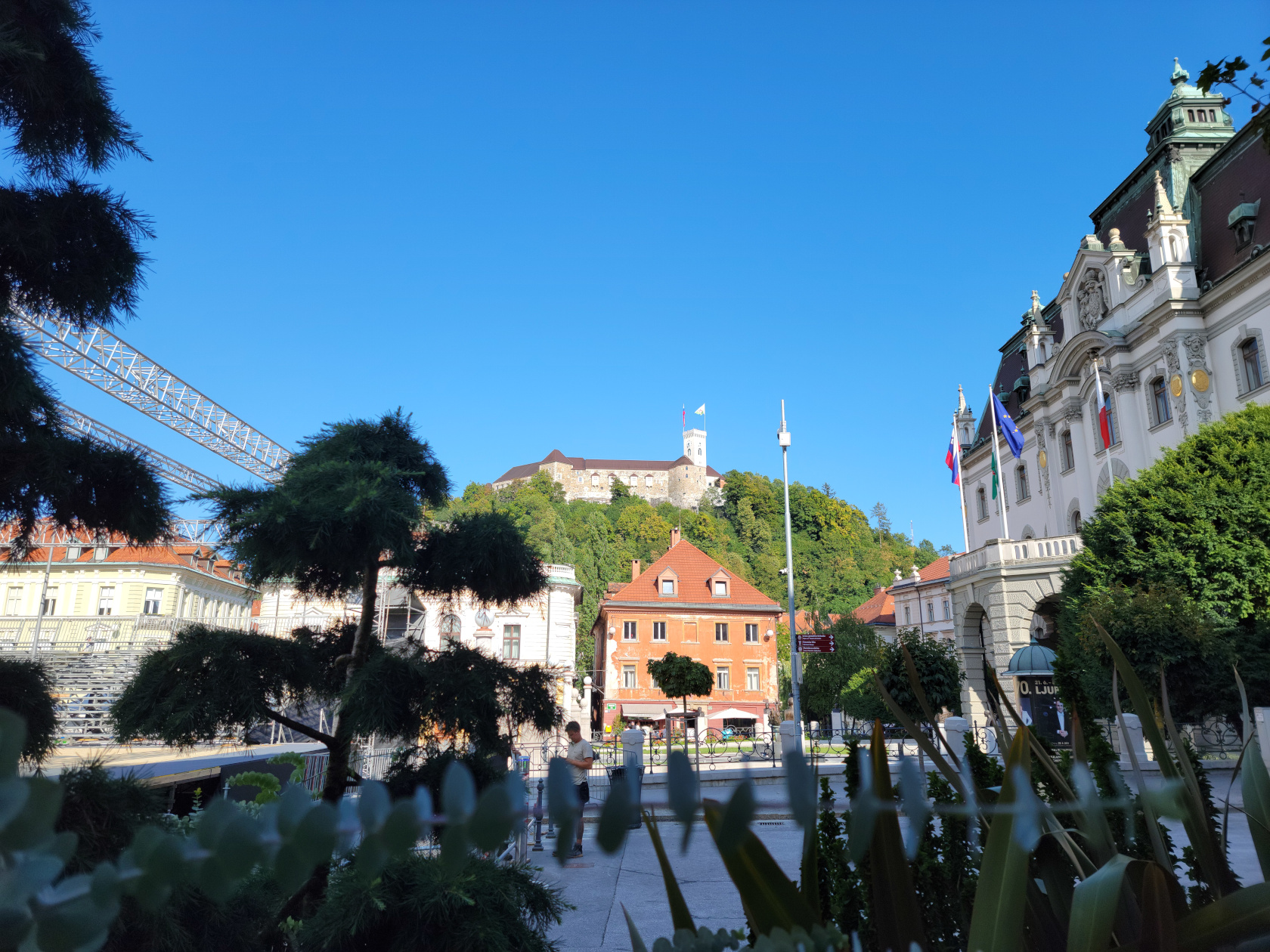
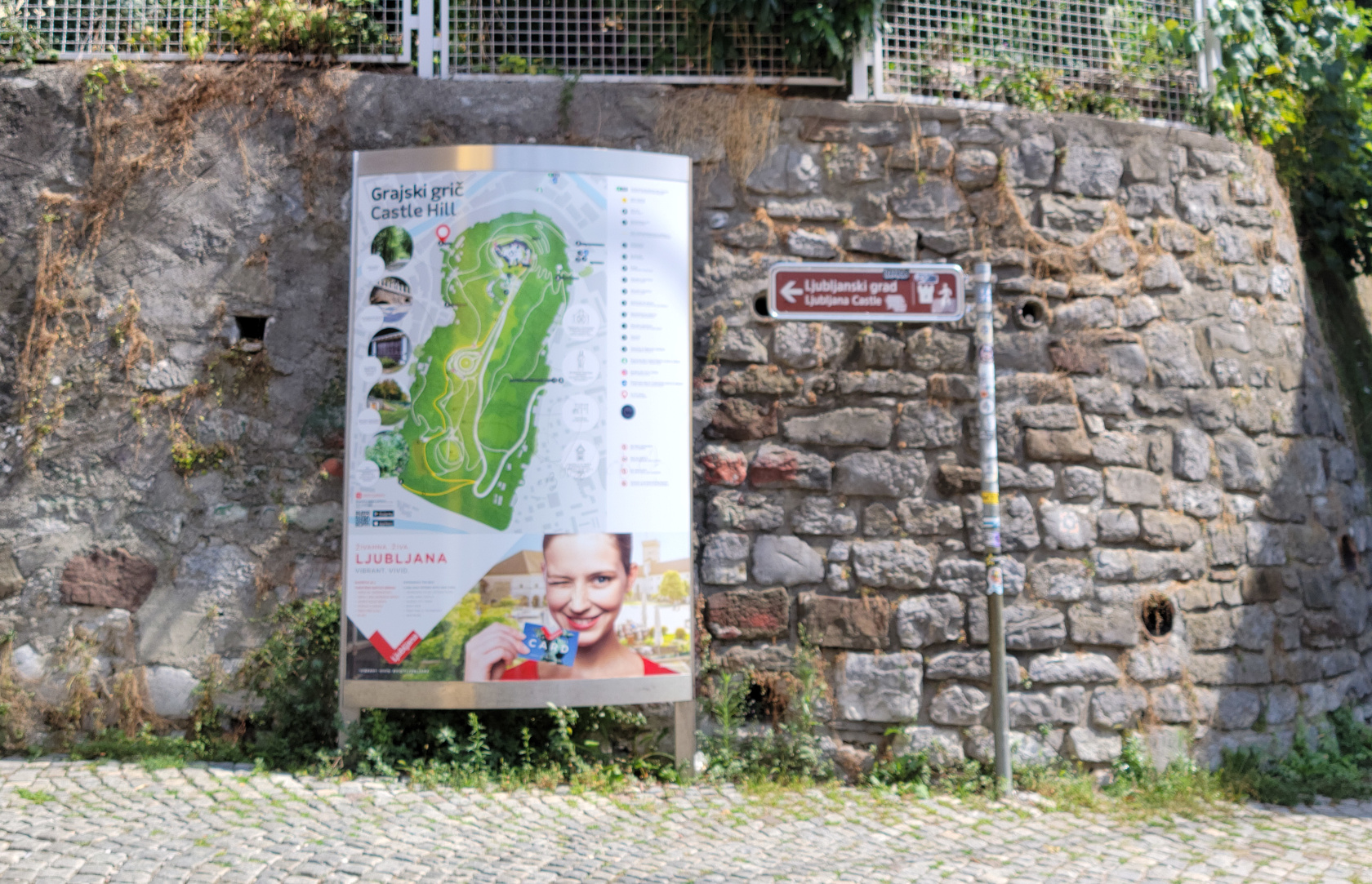
There are two prominent hills in Ljubljana, the one that contains Tivoli Park and Castle Hill, which contains the Ljubljana Castle.
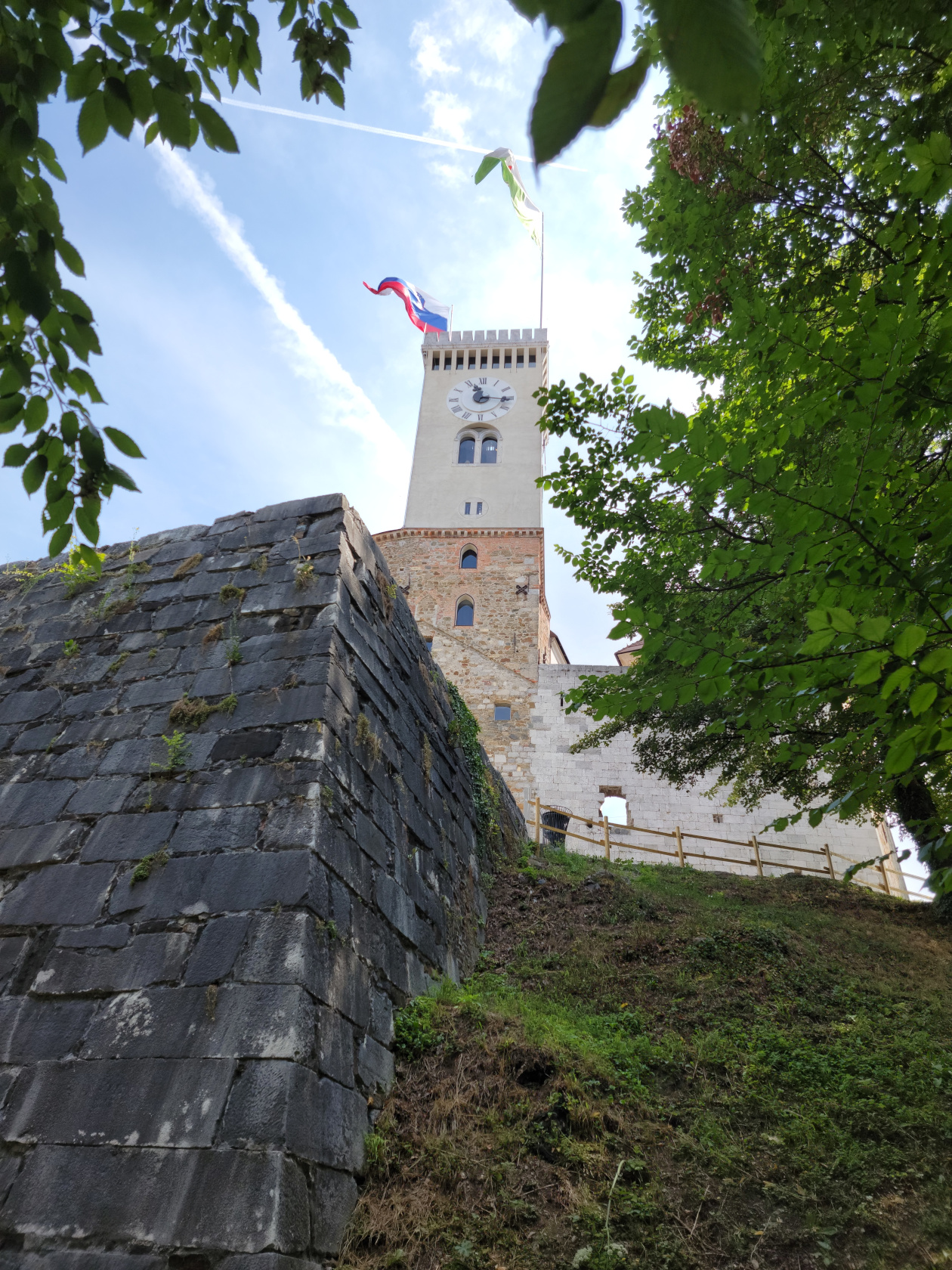
Ljubljana – Ljubljana Castle
Ljubljana Castle
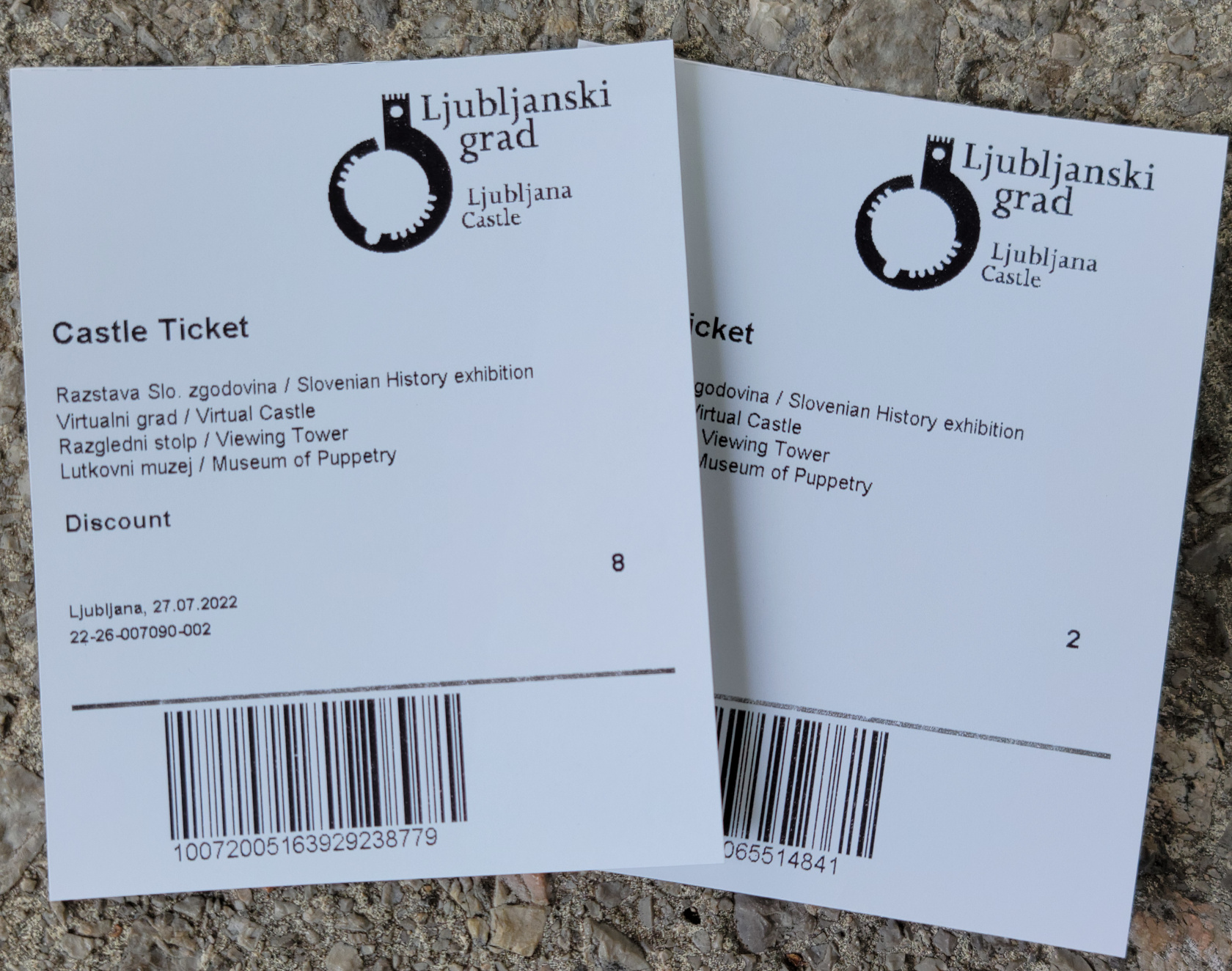
Ljubljana – Ljubljana Castle – Tickets For Two
Perched above the city on the Castle Hill is the Ljubljana Castle. In 1679, Valvasor did an engraving of the Laybach Castle, as it was known in German at the time, showing the castle and many other landmarks of Lublana.[2]There are many spelling variations for this city, due to it being part of many different empires and countries throughout its history.
Ljubljana – Ljubljana Castle
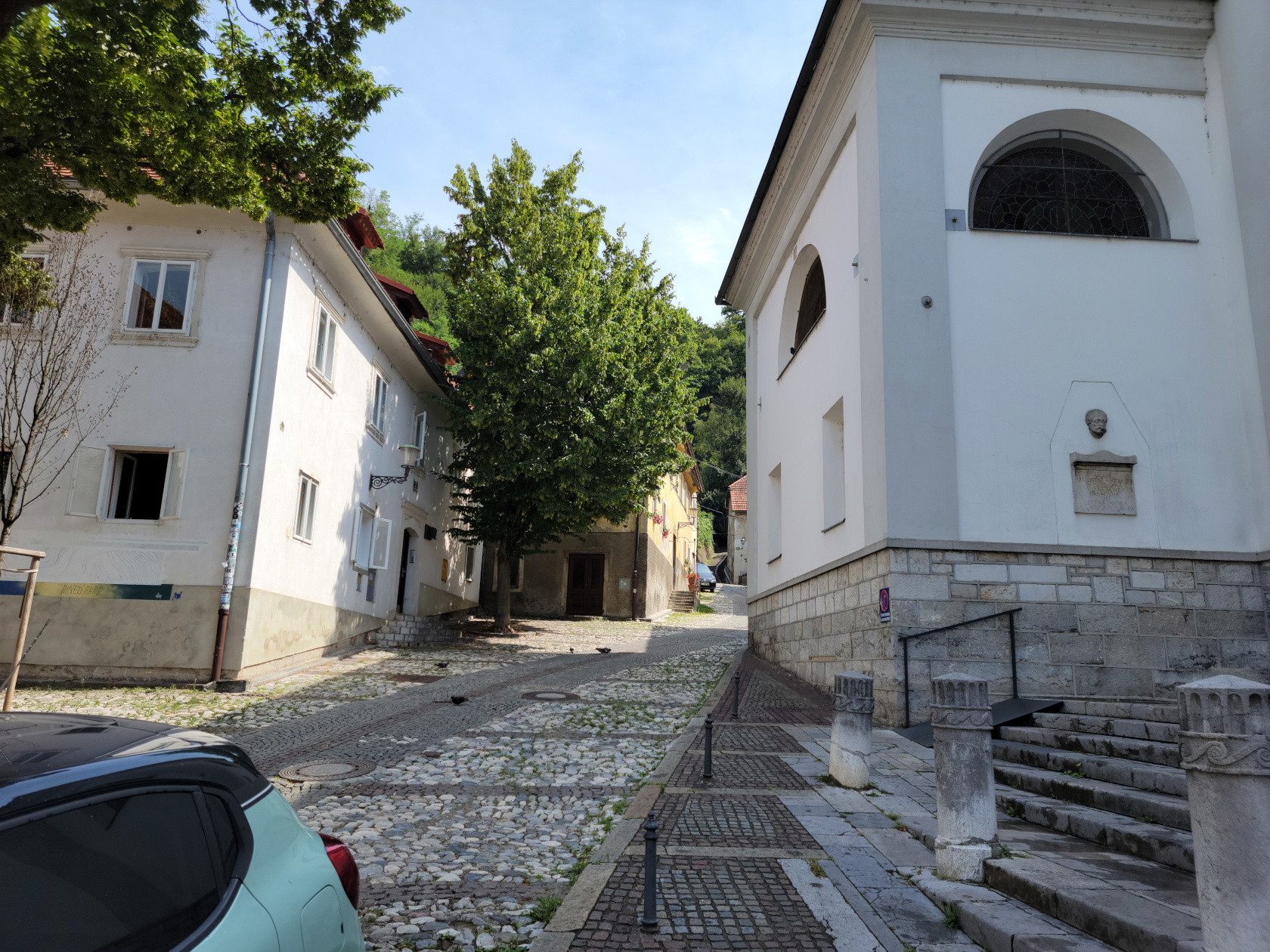
Ljubljana – Ulica na Grad
Ljubljana – Castle Hill – Ulica na Grad
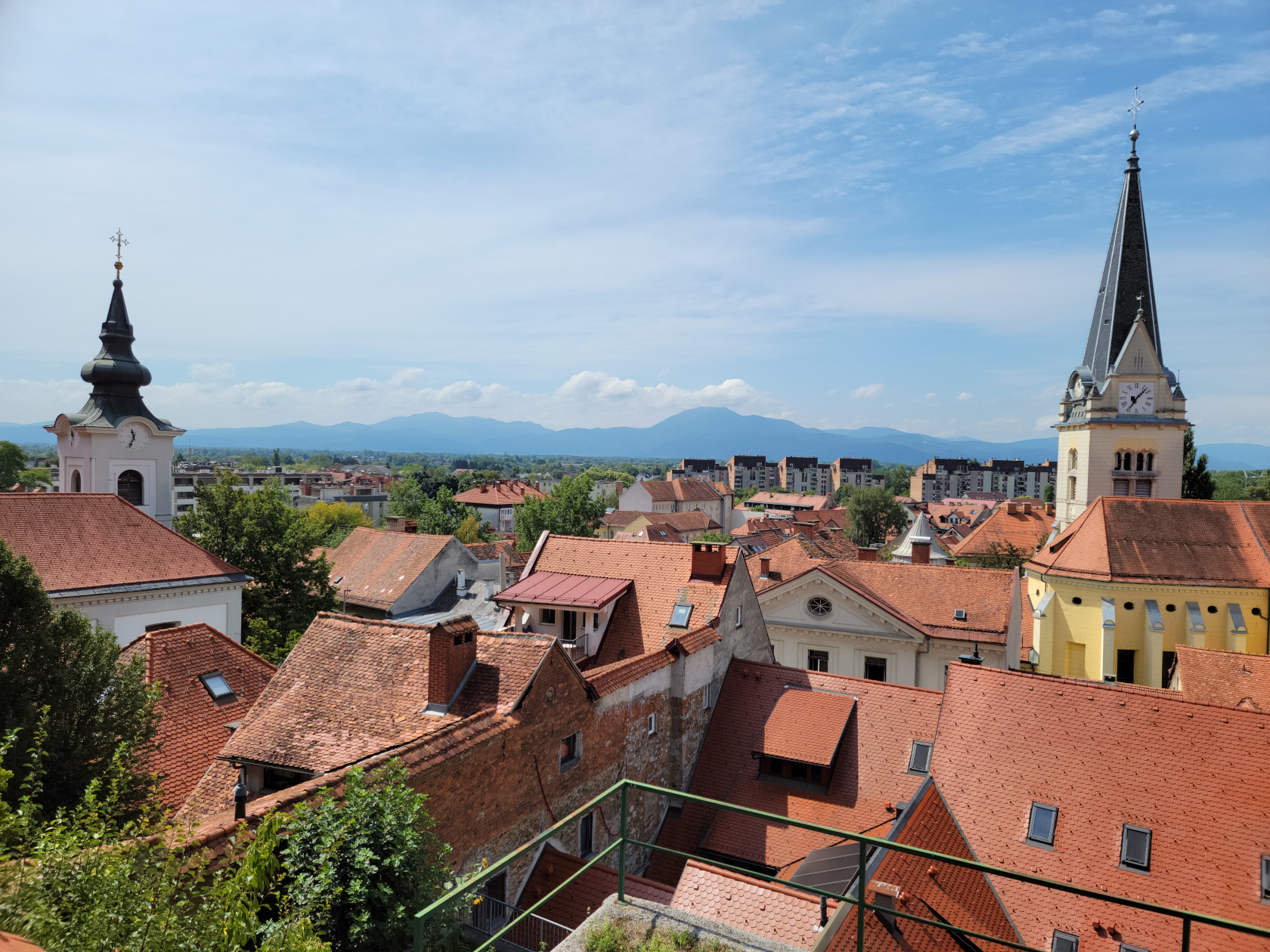
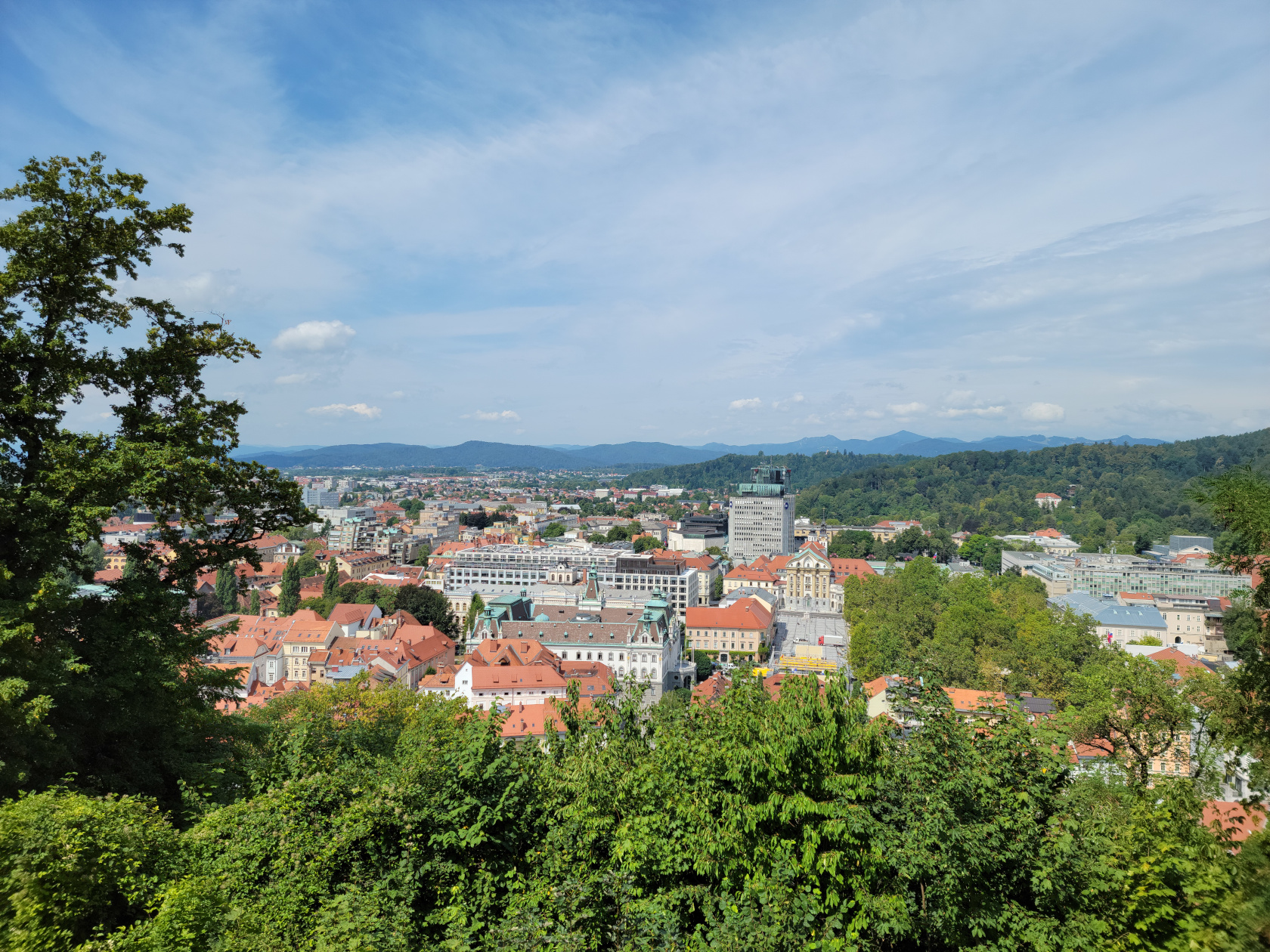
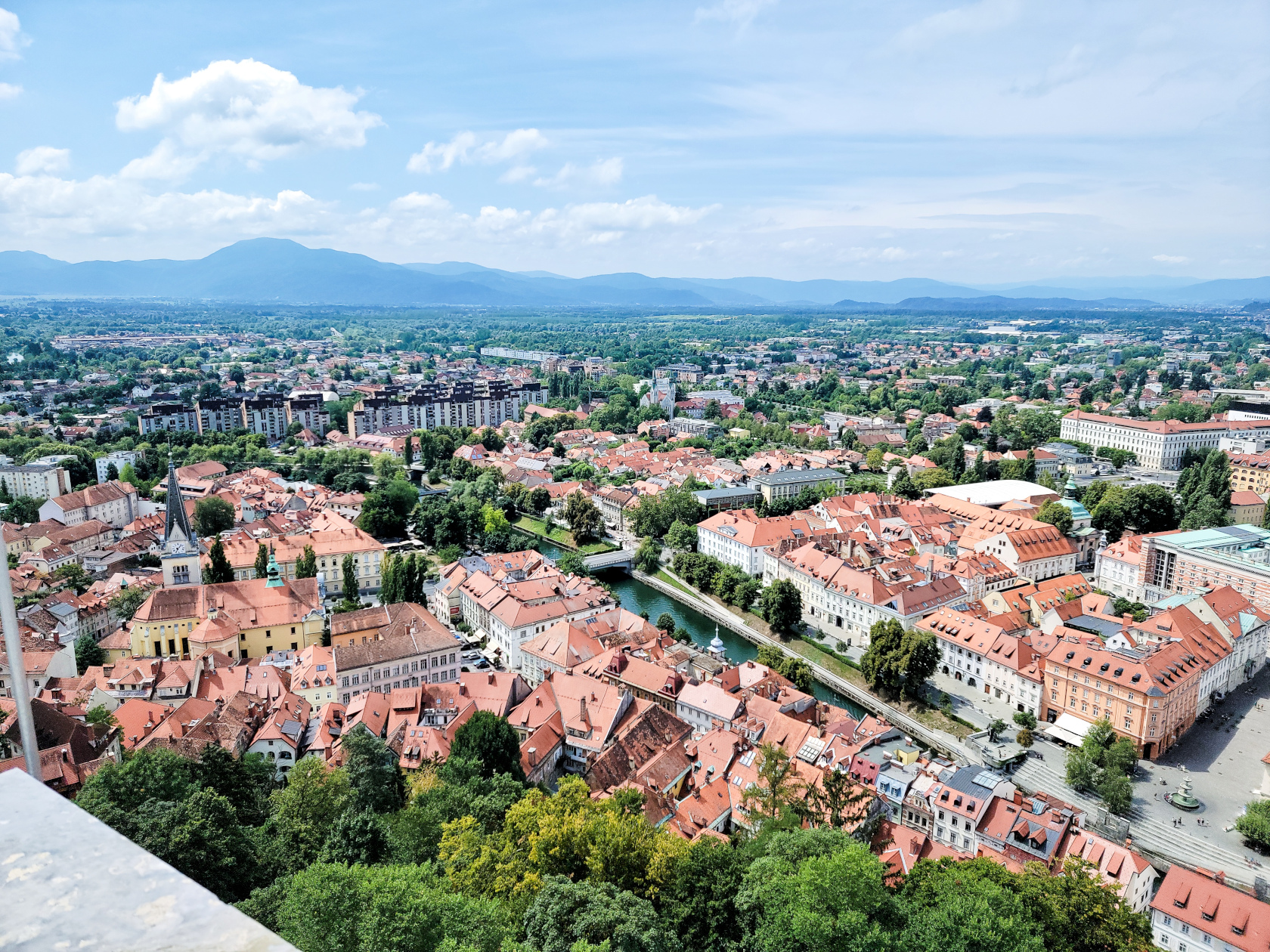
Ljubljana – From Castle Hill
Ljubljana – The Castle
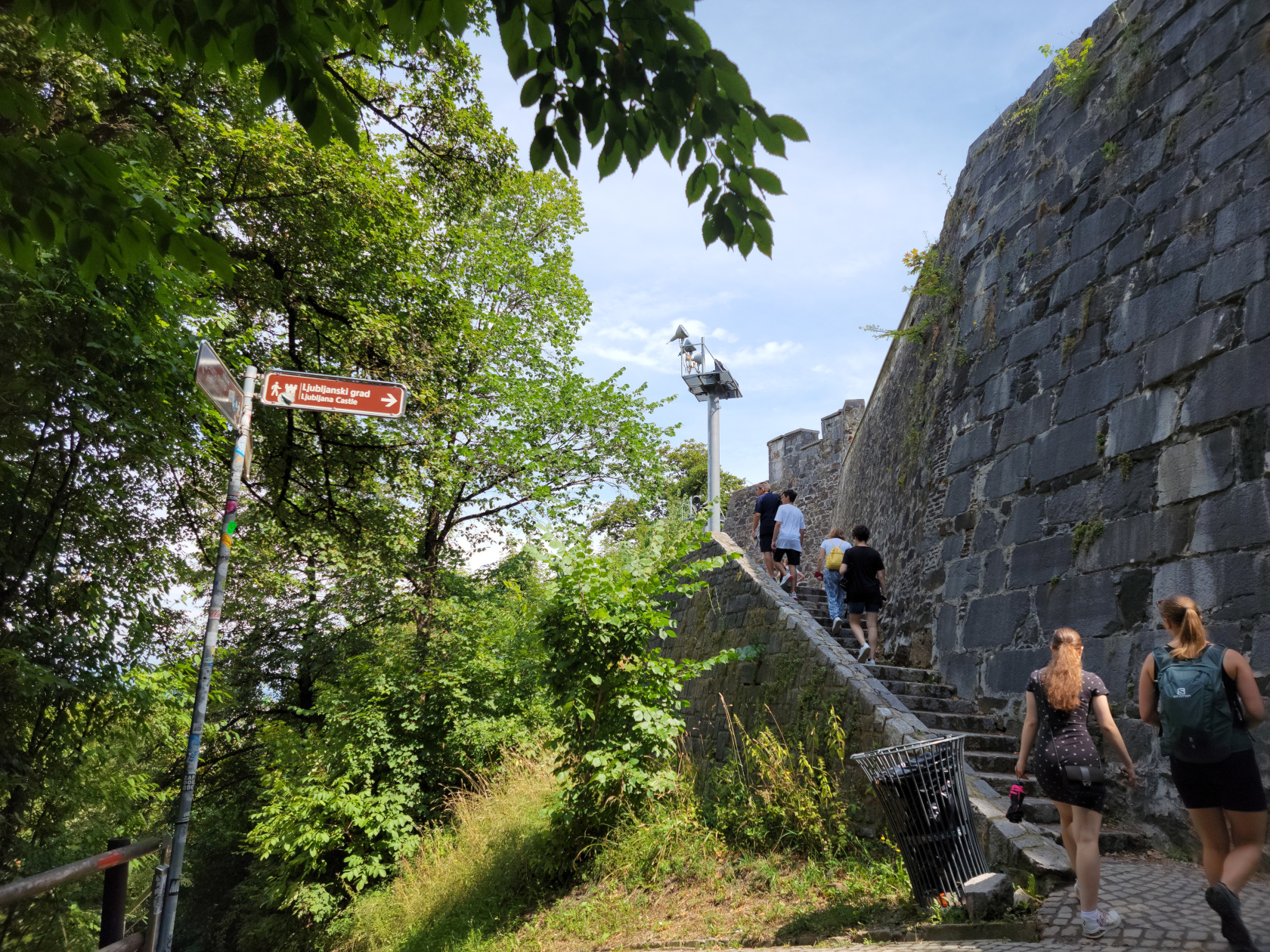
Ljubljana – Climb to Castle
Ljubljana – From Castle Hill
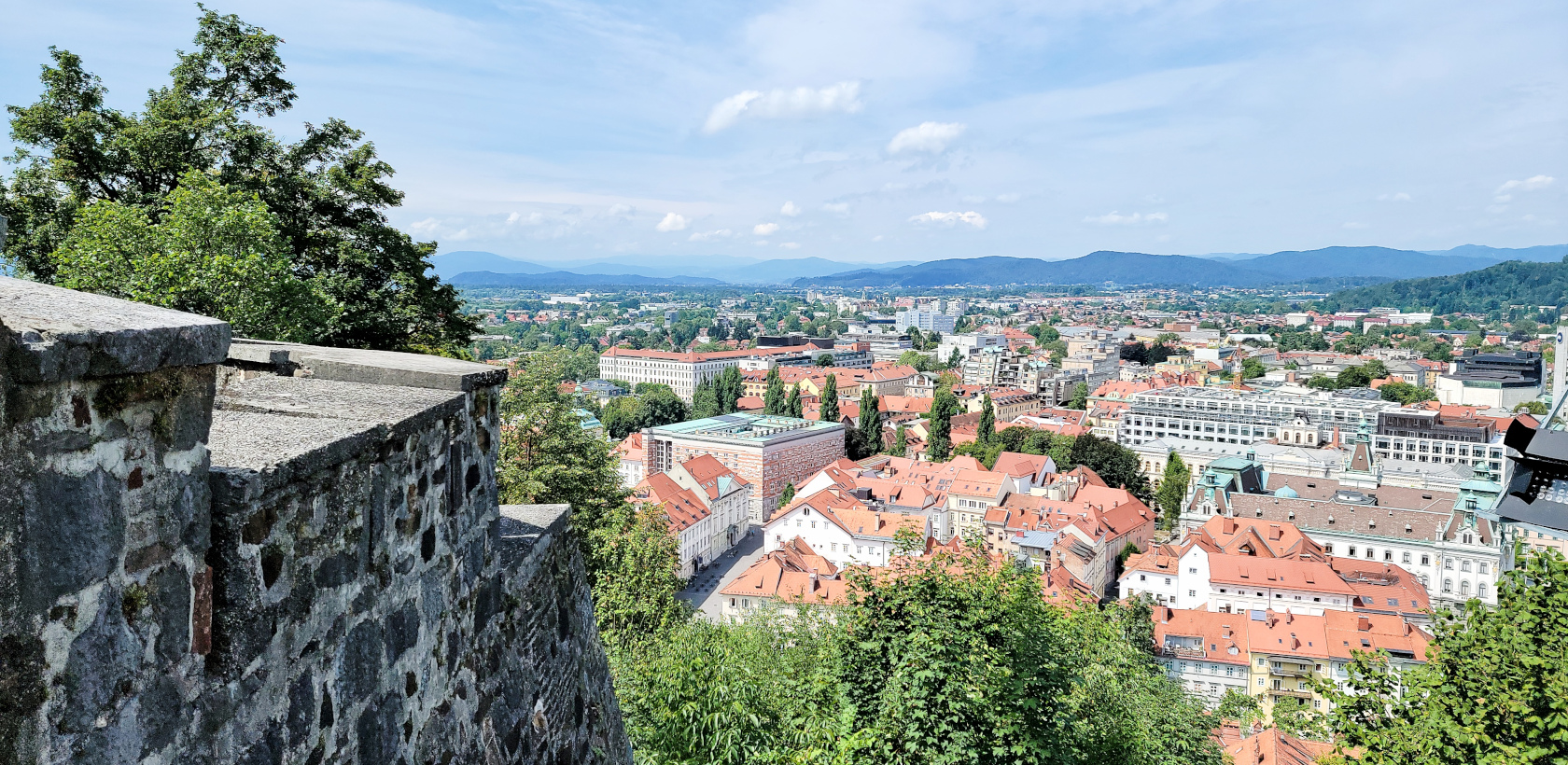
Ljubljana – From Castle Hill
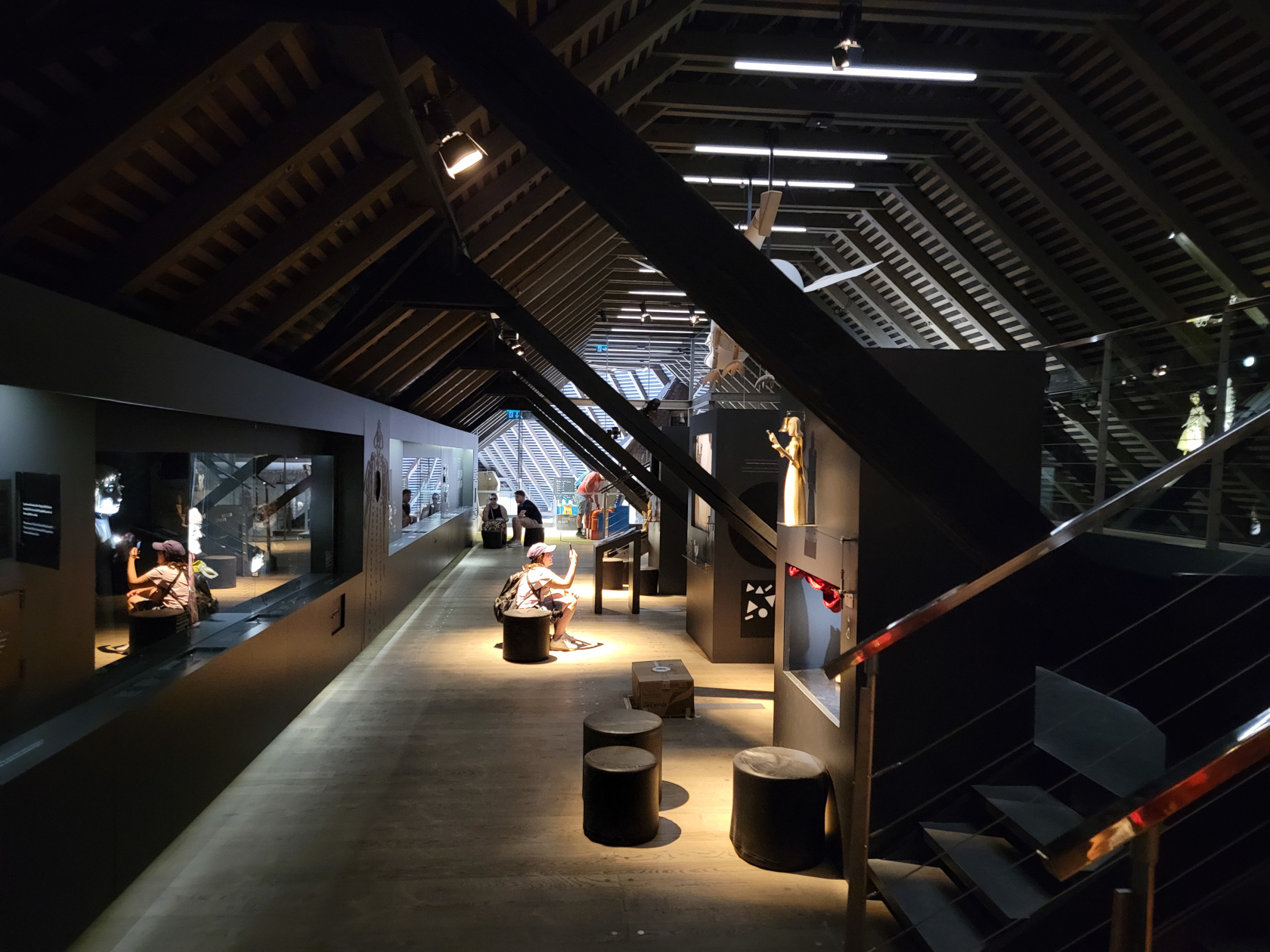
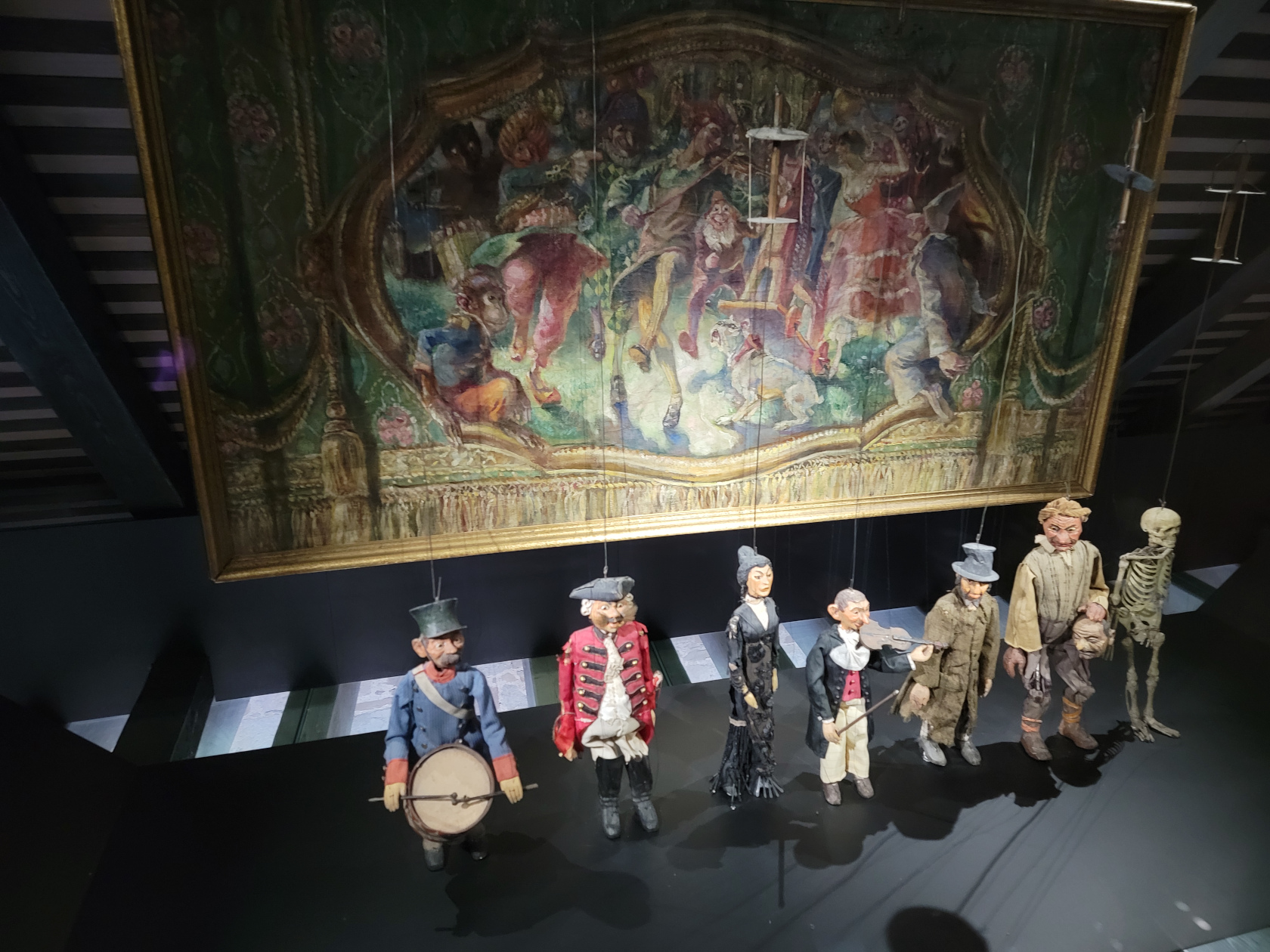
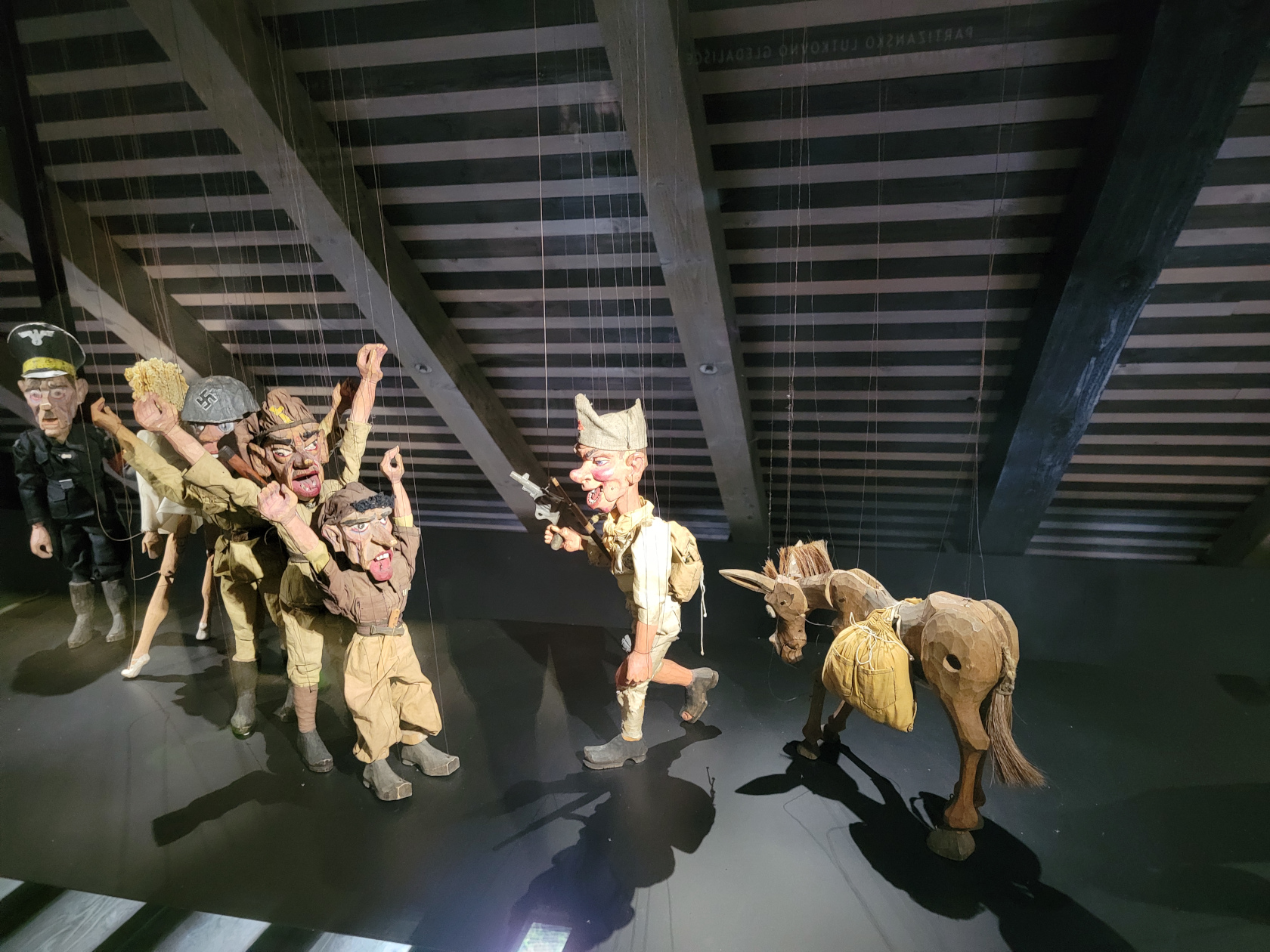
Ljubljana Castle – Puppet Museum
Ljubljana Castle – Puppet Museum
Ljubljana Castle – Puppet Museum
Ljubljana – From Castle Hill
Ljubljana – From Castle Hill
Ljubljana – From Castle Hill
Ljubljana – From Castle Hill
Ljubljana – Castle From Castle Tower
Ljubljana – Castle From Castle Tower
Ljubljana – Ljubljana and Castle From Castle Tower
Ljubljana – From Castle Tower
Ljubljana – From Castle Tower – Panorama
Ljubljana – From Castle Tower
Ljubljana – From Castle Tower
The Ljubljanica River
As it goes through the city the river is split into two. A major section goes directly through the old city, offering tourists the possibility of buying a ticket and traveling part of it, up to where it divides. The boats cannot venture too far however, since parts of the river are reserved for wildlife and cannot be entered.
Ljubljana – Ljubljanica River
Sitting at one of the many cafes along the waterway, one can wile away the afternoon sipping a drink and just watching the boats meander along.
Ljubljana – Ljubljanica River
Ljubljana – Ljubljanica River – River Boats
Boat Tours
Both looking at the tour boats ply the water and actually taking a boat trip is both relaxing and very enjoyable. We decided one evening to take one and see where it actually goes and found it very interesting.
Ljubljana – Ljubljanica River – Boat Tour – Triple Bridge
Ljubljana – Ljubljanica River – Boat Tour
Ljubljana – Ljubljanica River – Boat Tour
Ljubljana – Ljubljanica River – Boat Tour
Ljubljana – Ljubljanica River – Boat Tour
Walking Tour Of The City
Here is a slideshow of some of the other sights in the city.
Ljubljana – Franciscan Church
Ljubljana – Prešeren Square
Ljubljana – Prešeren Square
Ljubljana – Prešeren Square
Ljubljana – Prešeren Square
Ljubljana – Zvezda Park
Ljubljana – Zvezda Park
Ljubljana – Ljubljana University
Ljubljana – Ljubljana University
Ljubljana – Ljubljana University
Ljubljana – Ljubljana University – Europa Fountain
Ljubljana – Ljubljana University
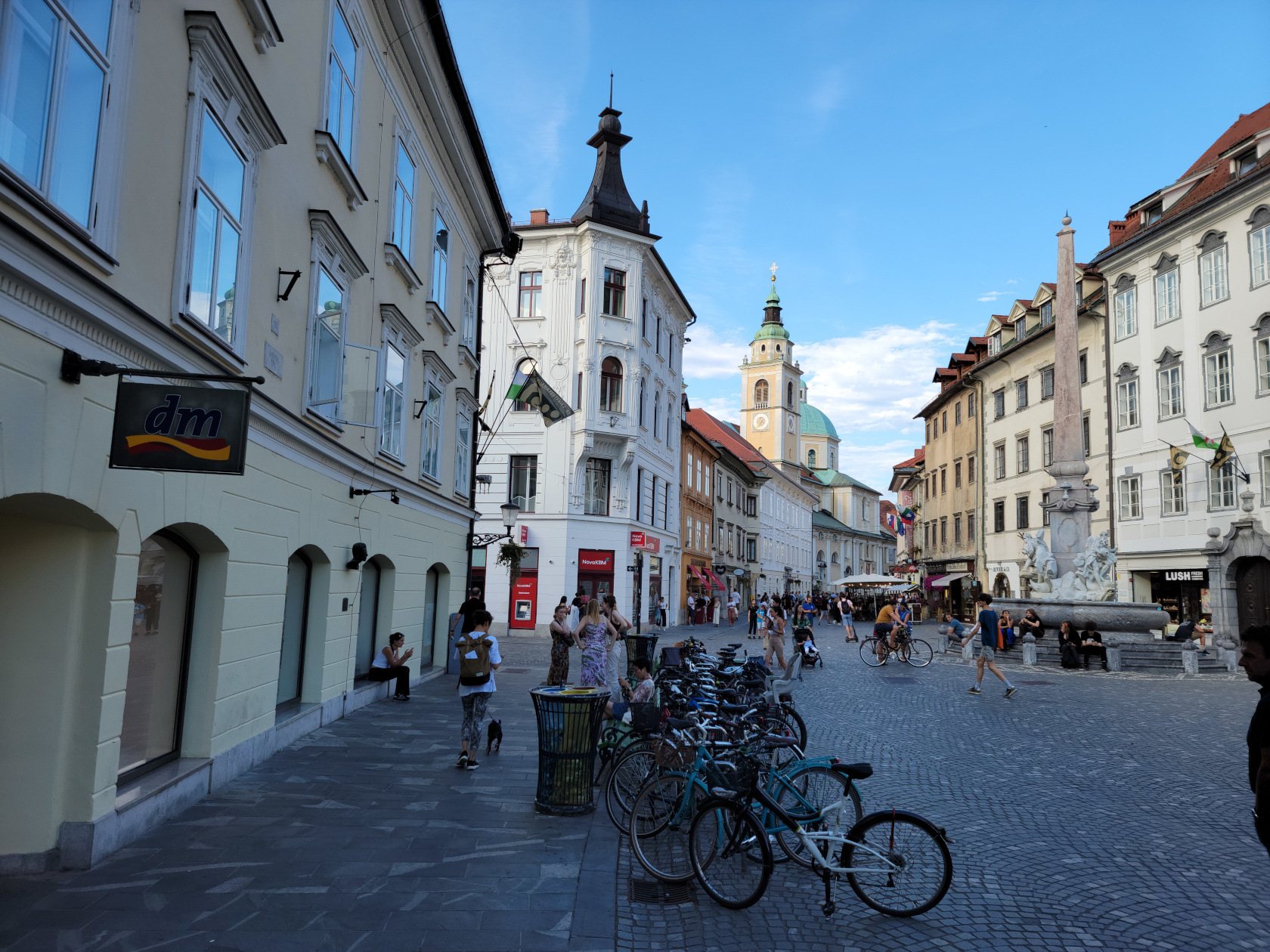
Ljubljana – Mestni Trg
Ljubljana – Mestni Trg
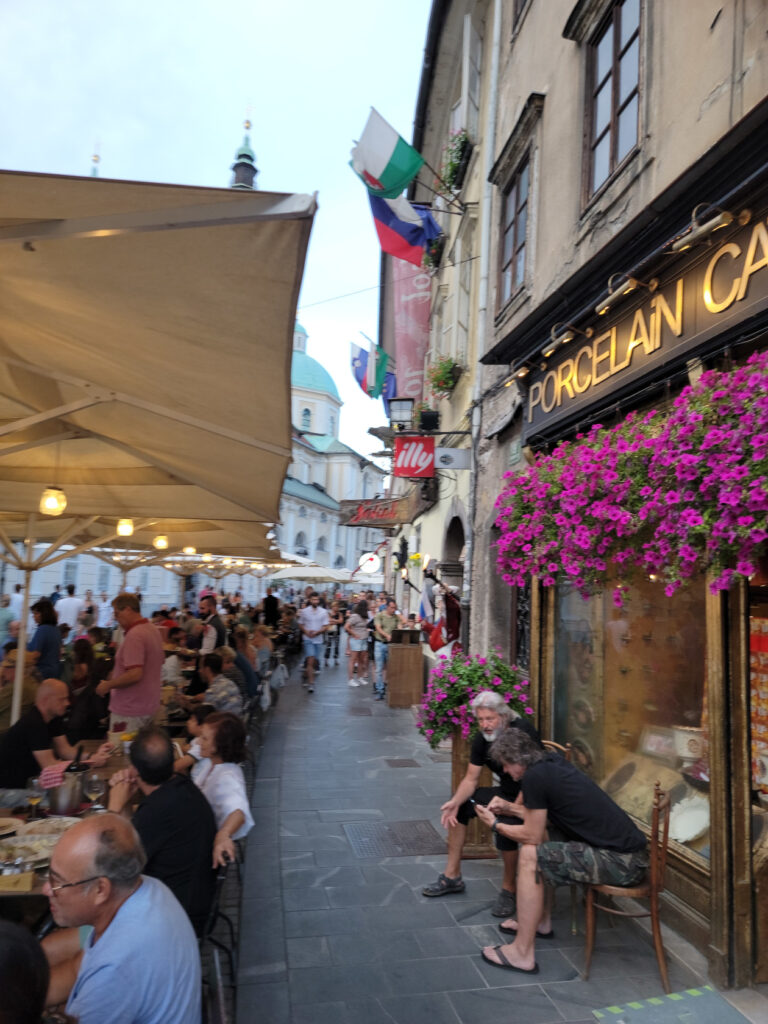
Ljubljana – Cafes along riverfront
Ljubljana – Robba Fountain
Ljubljana – Robba Fountain
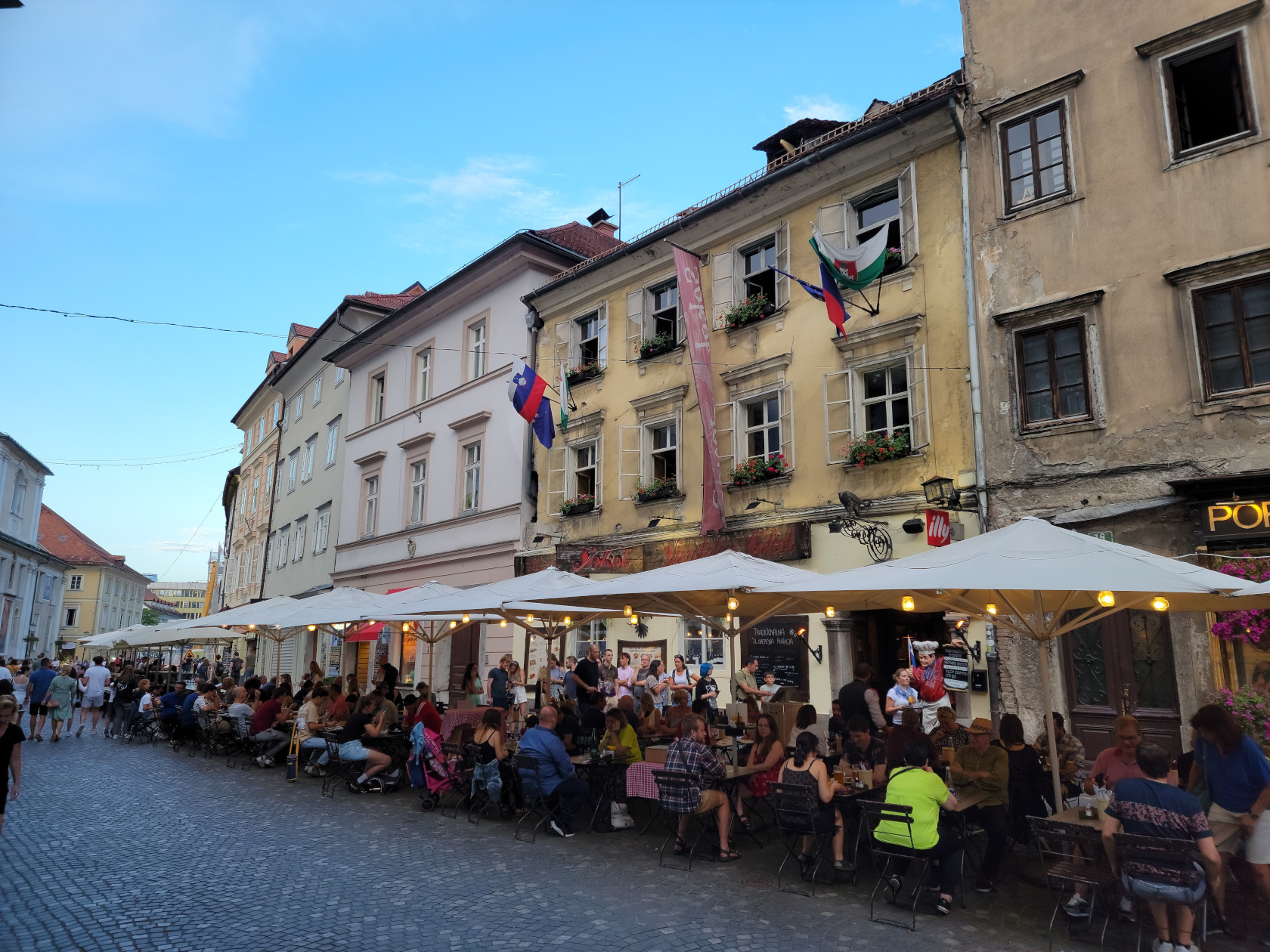
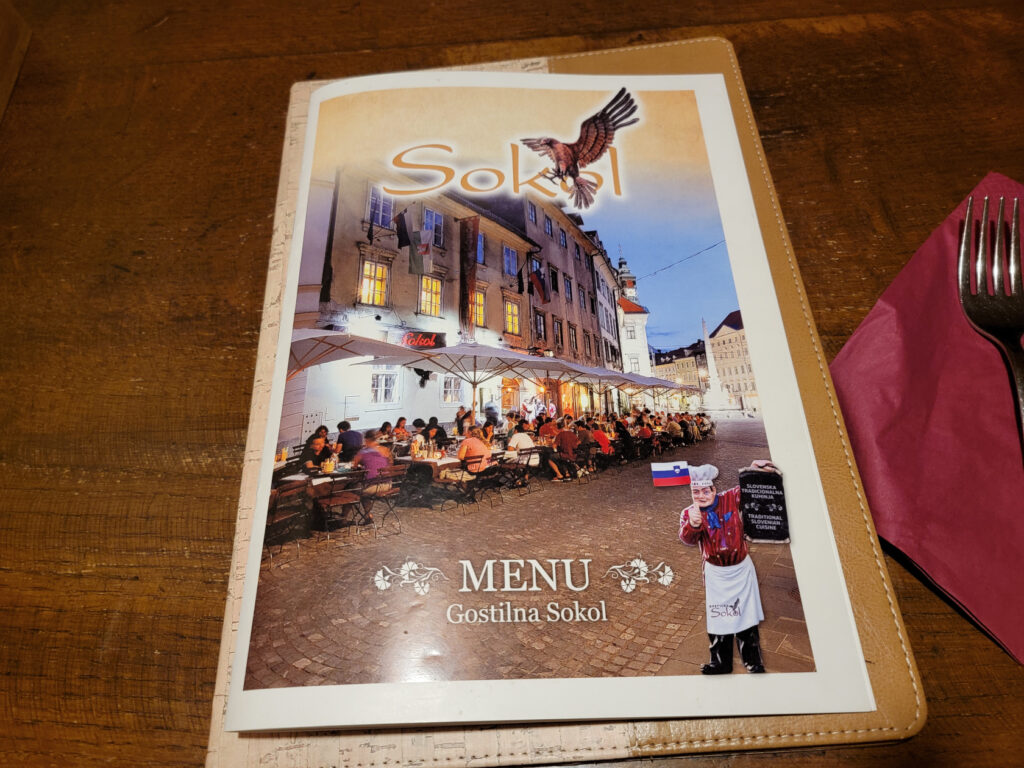
Ljubljana – Gostilna Sokol Restaurant
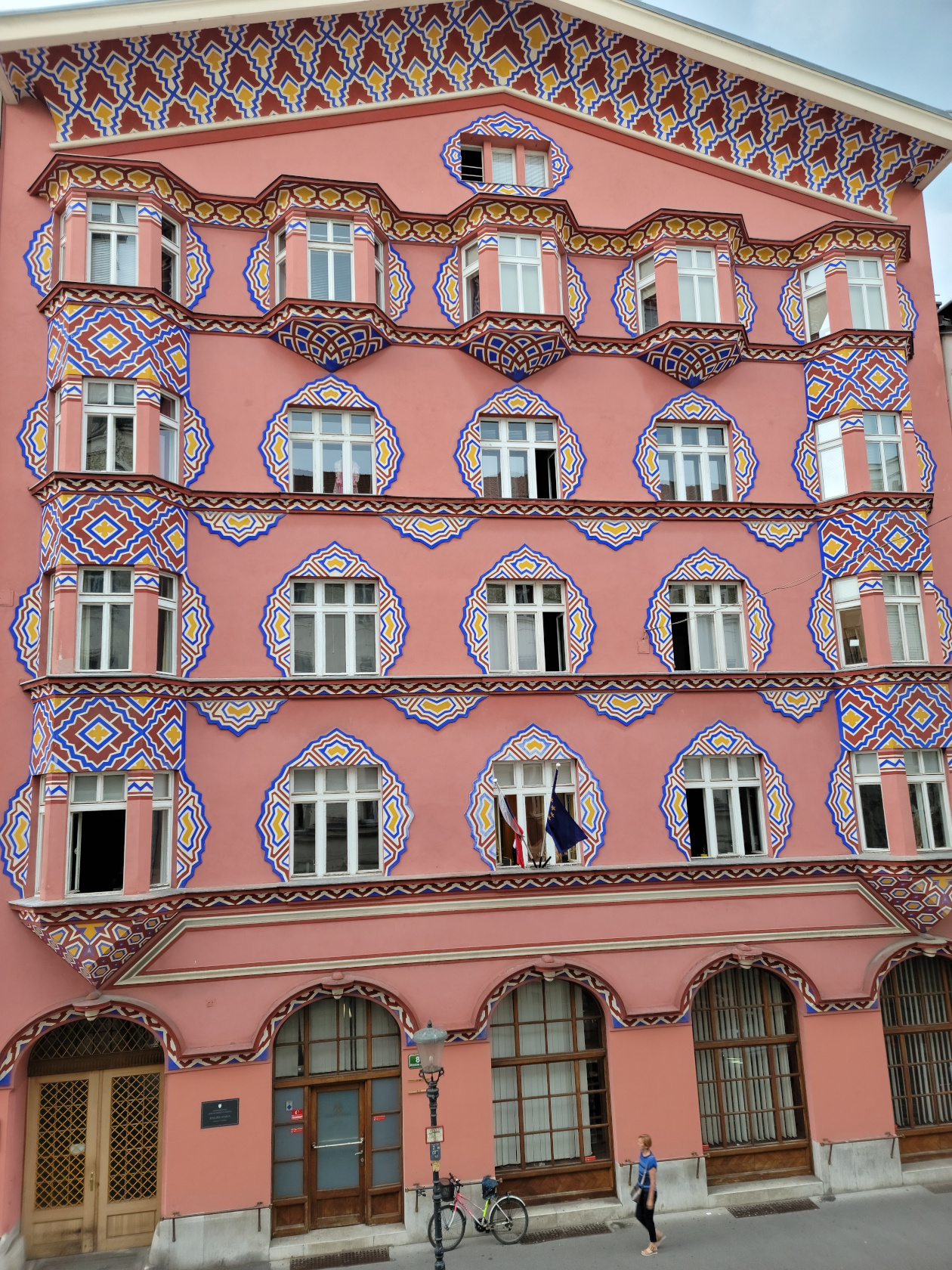
Ljubljana – The Vurnikoval House
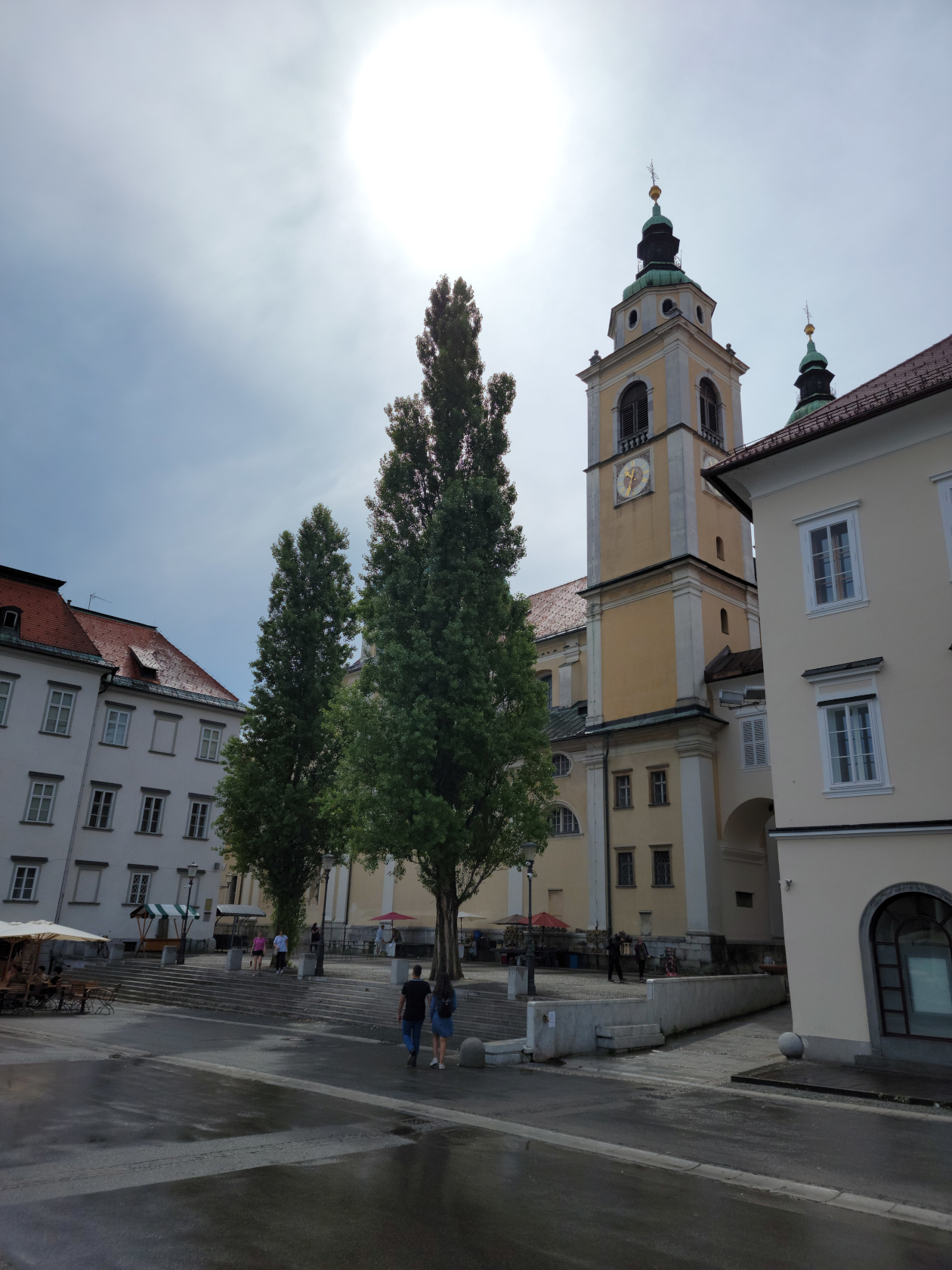
Ljubljana – Ljubljana Cathedral
Ljubljana – Drevored na Adamič-Lundrovem nabrežju – Portico by the Market
Ljubljana – Ljubljana Cathedral
Ljubljana – Vodnik Monument
Ljubljana – Ljubljana Cathedral
Ljubljana – Old Business Doorway
Ljubljana – Robba Fountain
Ljubljana – Mestni Trg
Ljubljana – Mestni Trg
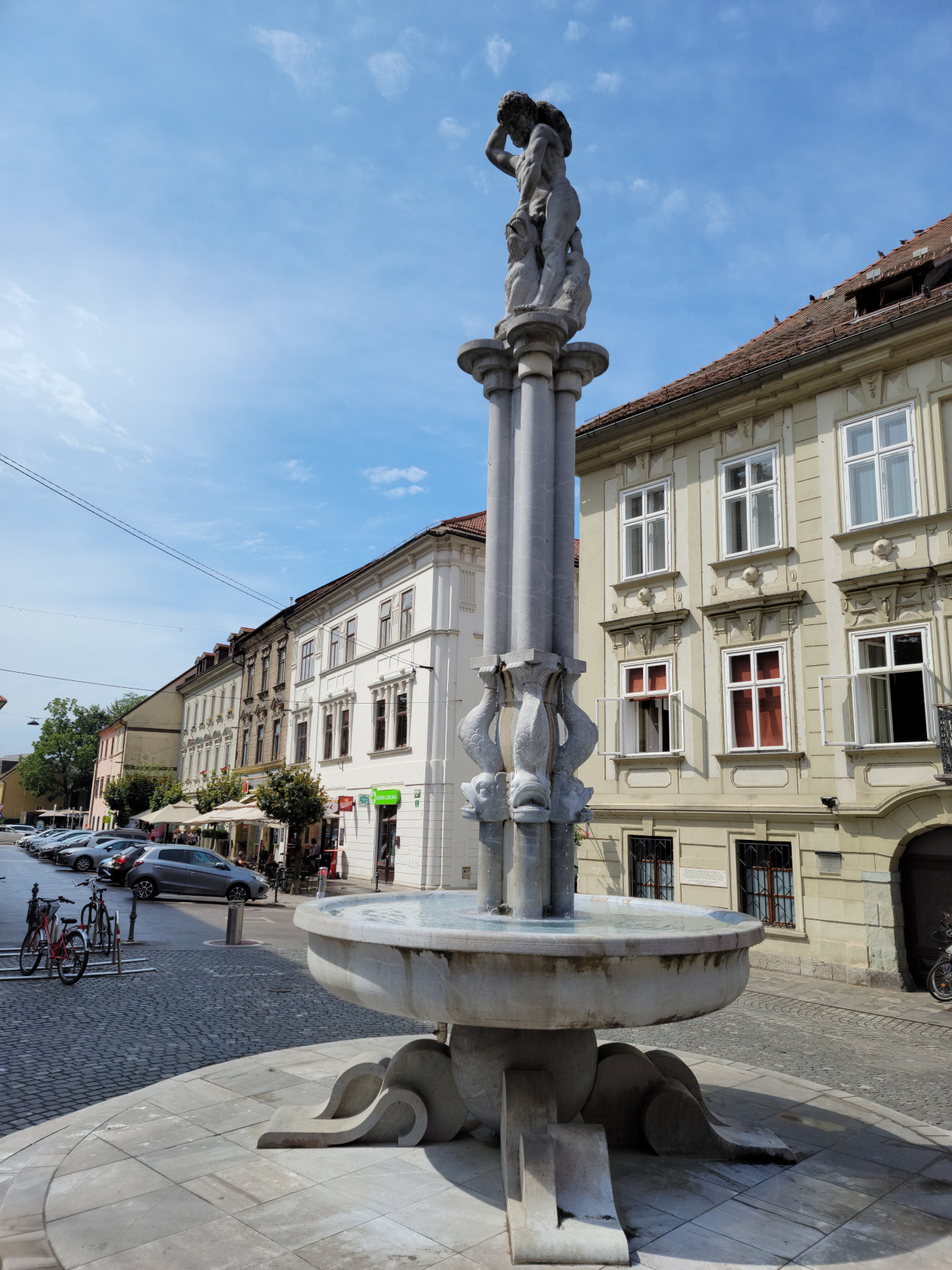
Ljubljana – Herkulov vodnjak – Hercules Fountain
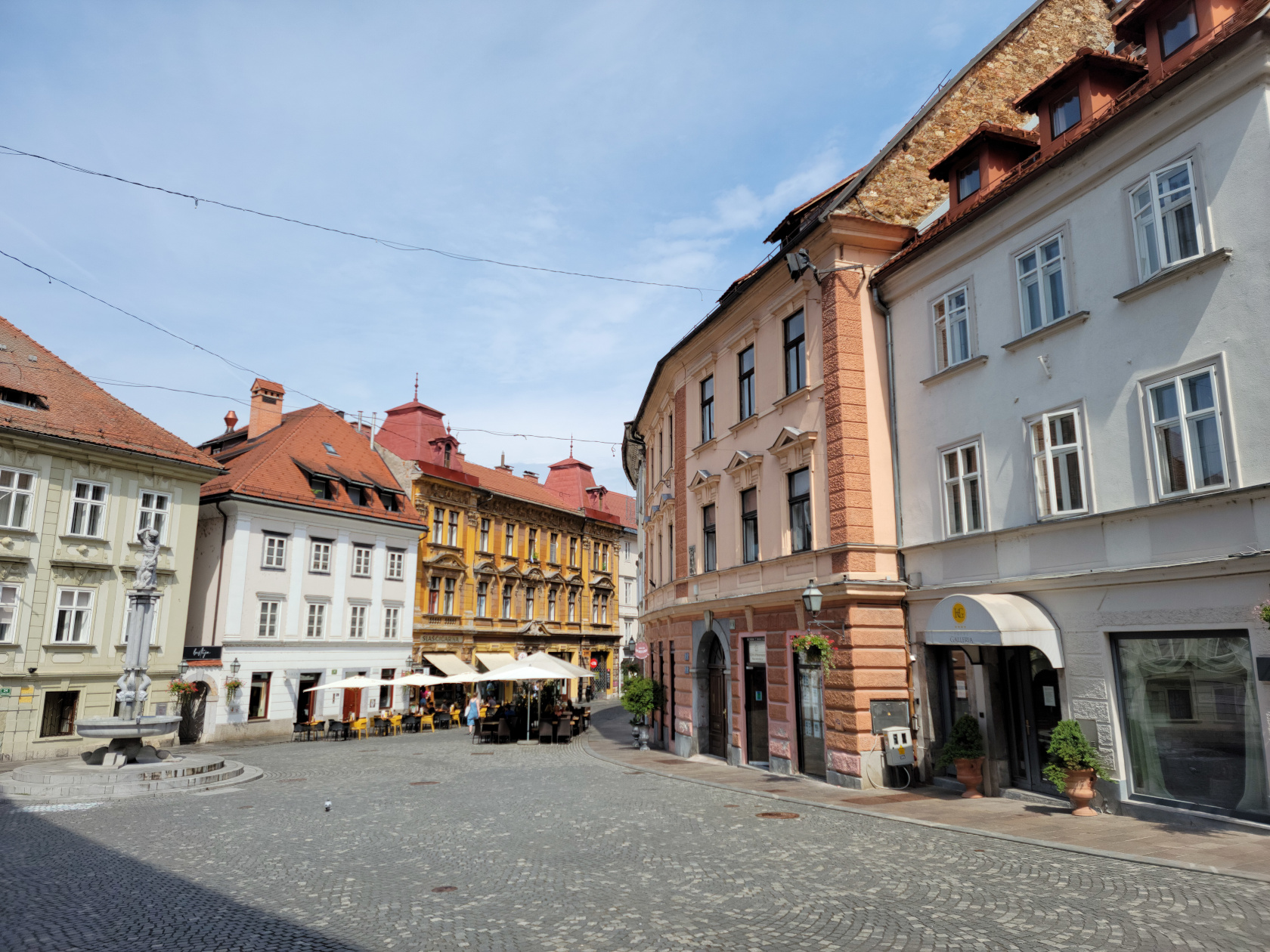
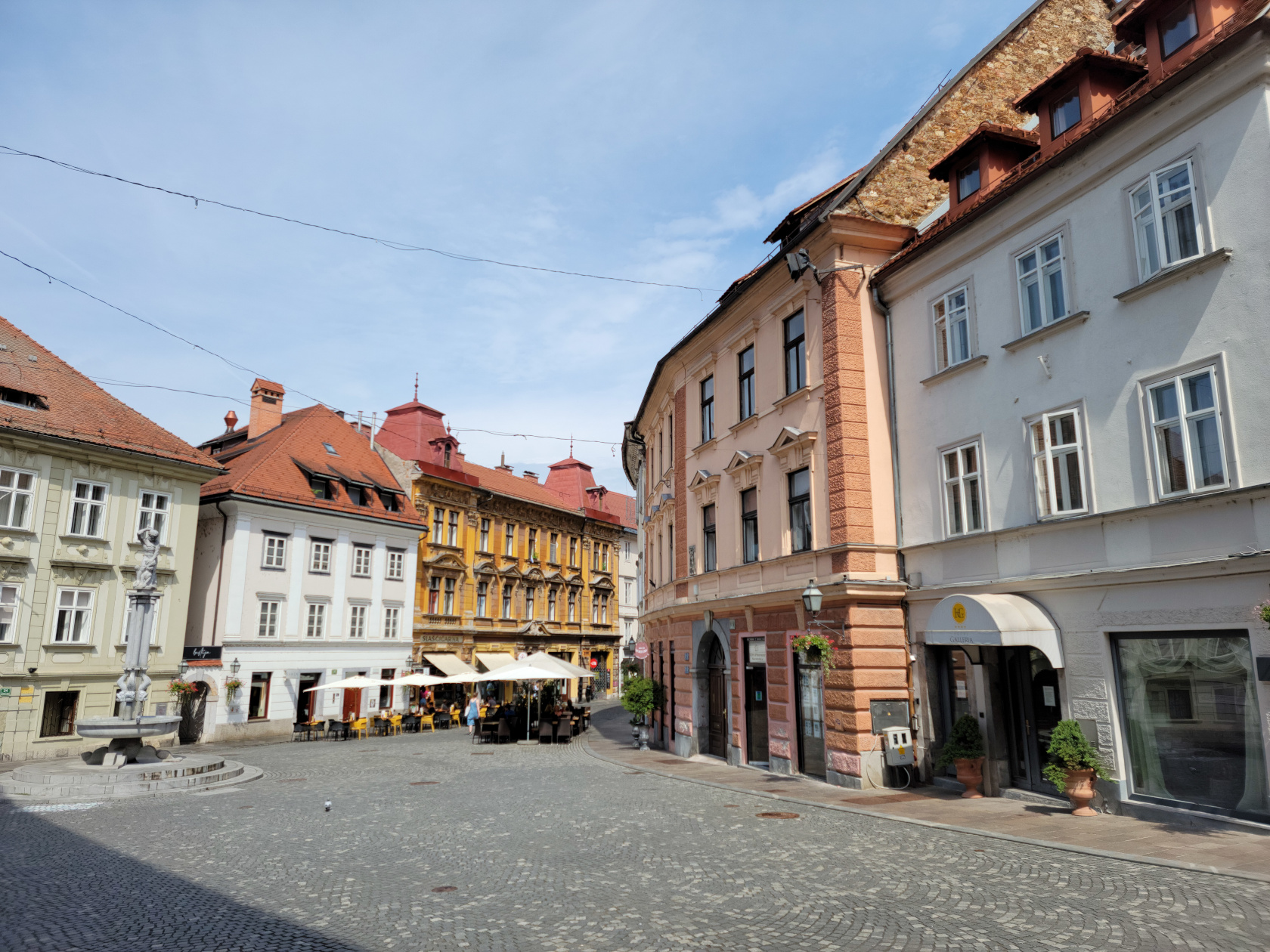
Ljubljana – Herkulov vodnjak – Hercules Fountain and Square
Ljubljana – Herkulov vodnjak – Hercules Fountain and Square
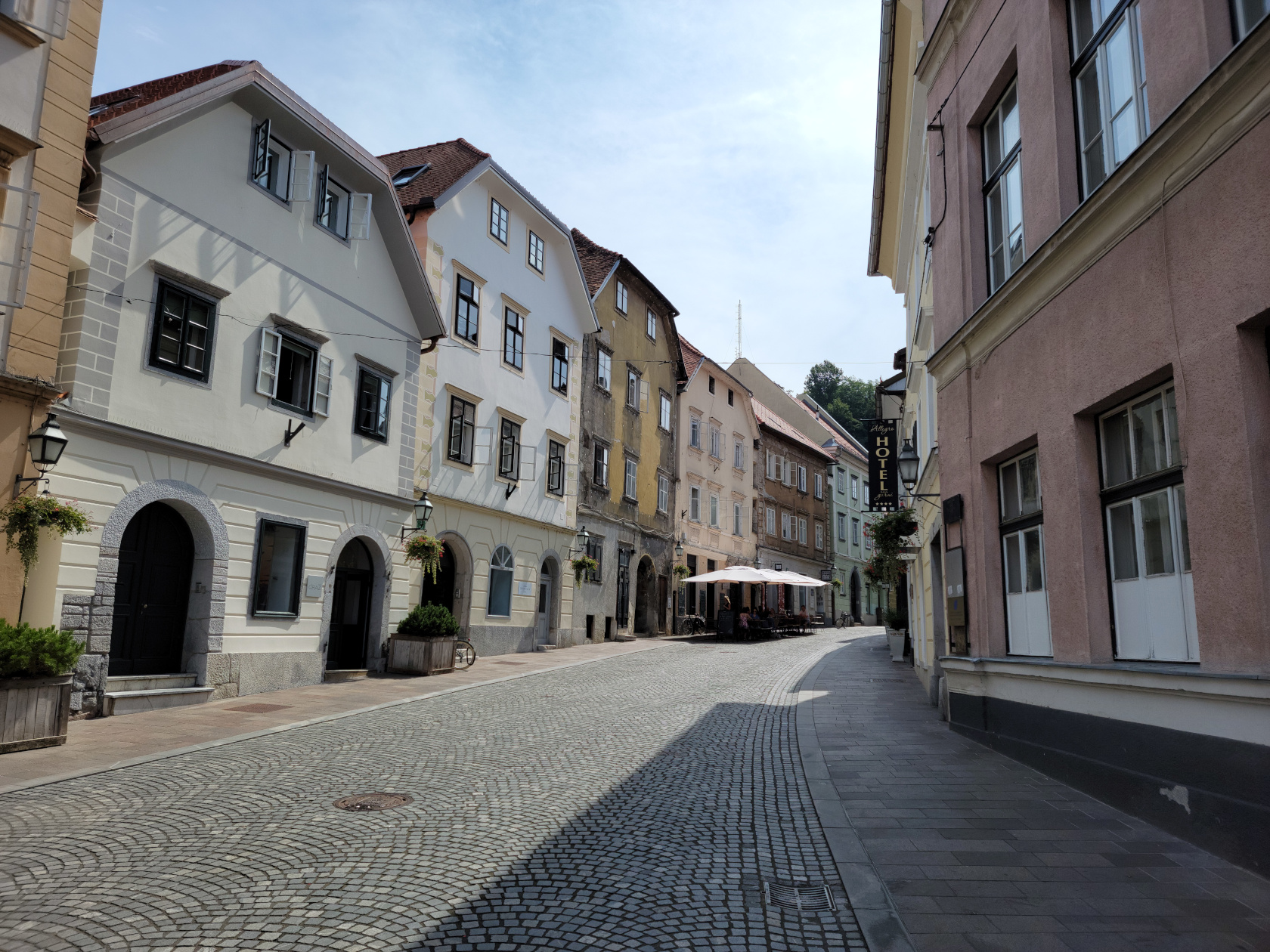
Ljubljana – Gornji Trg
Restaurants
Gostilna Sokol Restaurant
Ljubljana – Gostilna Sokol Restaurant
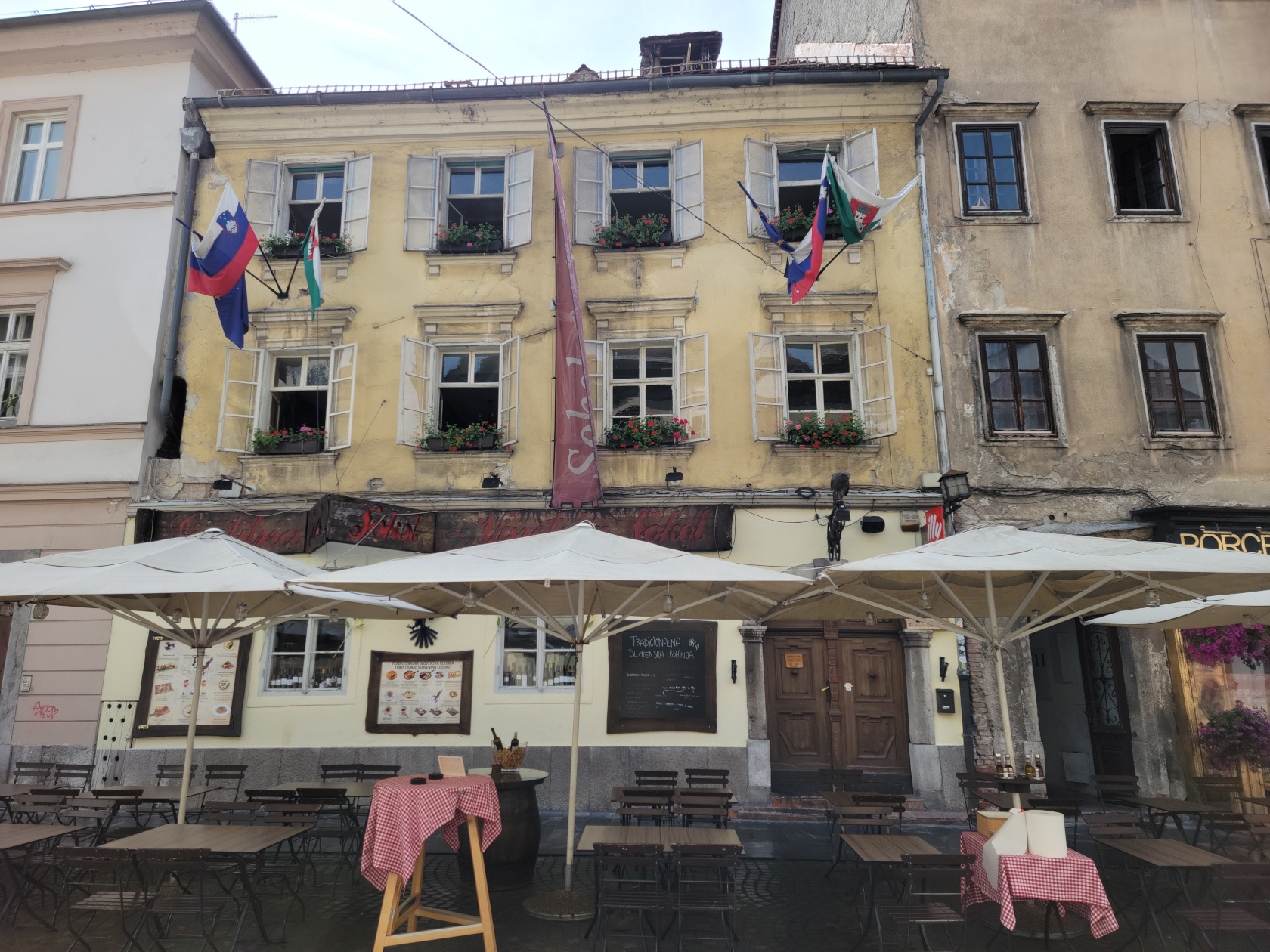
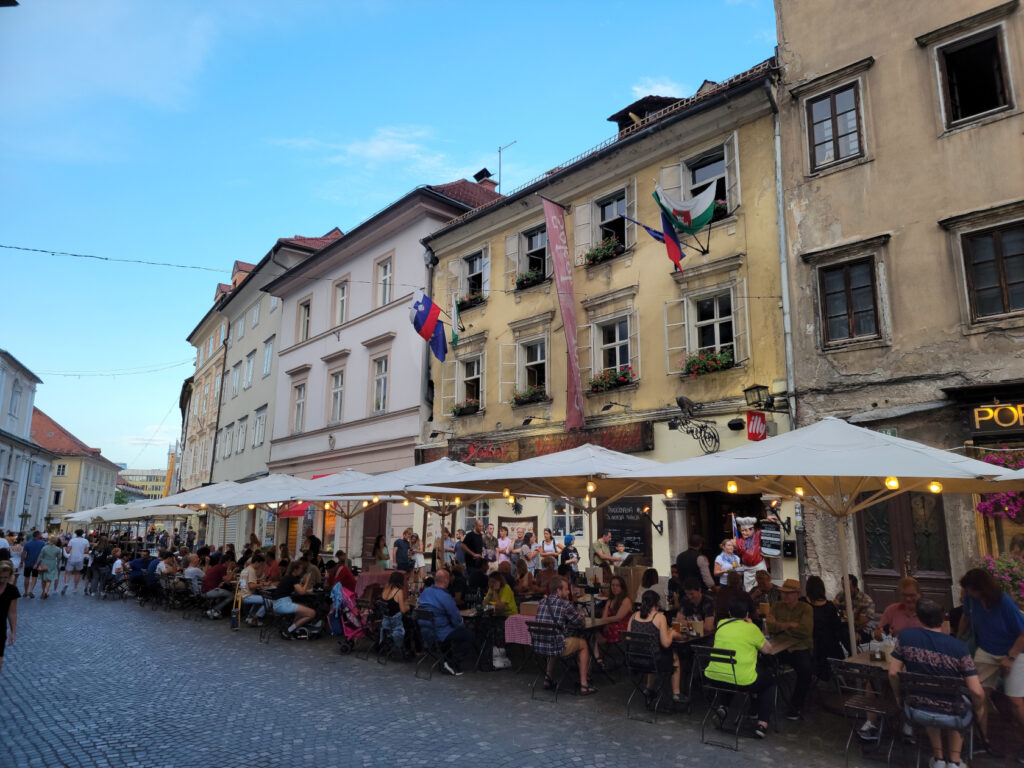
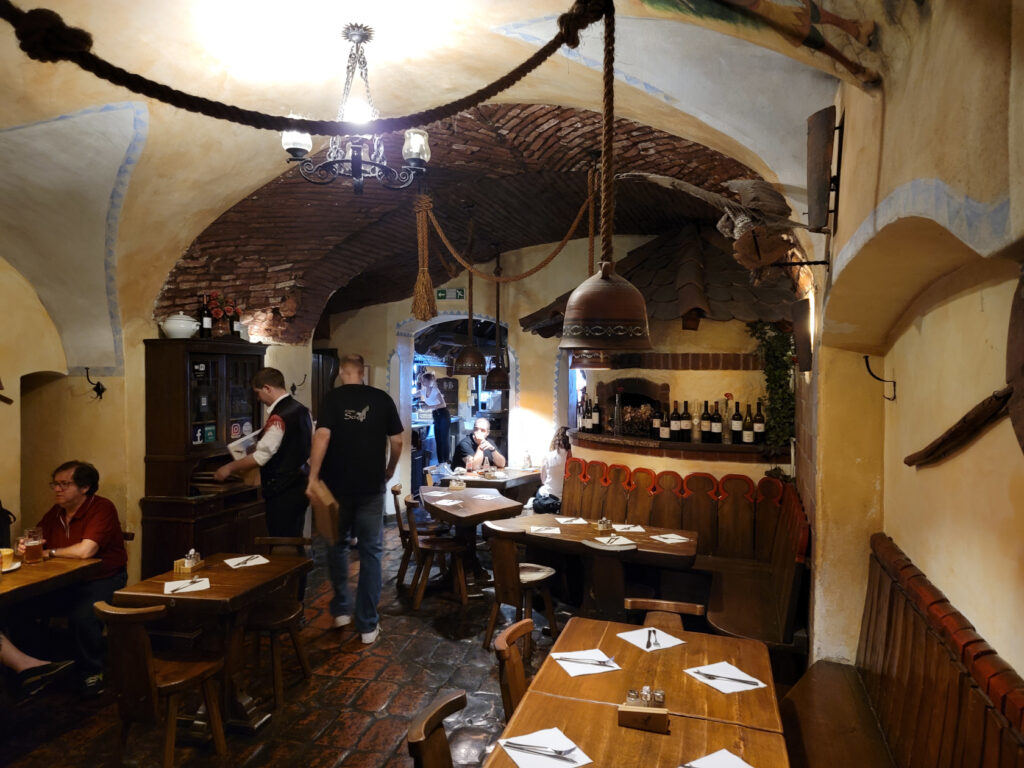
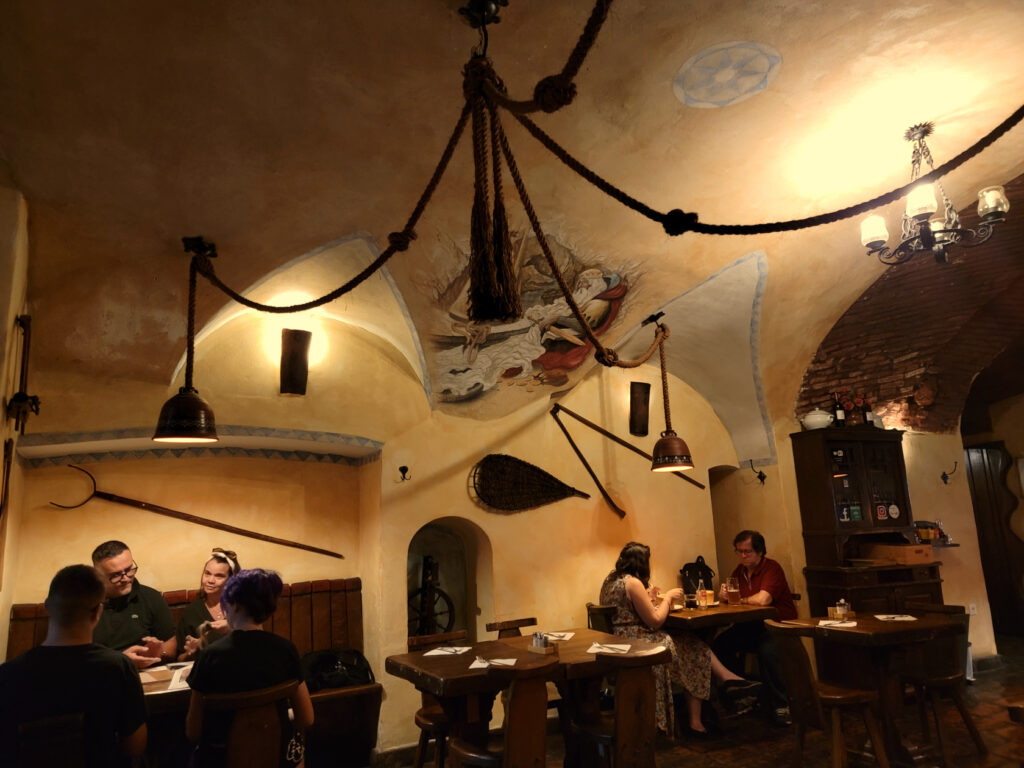
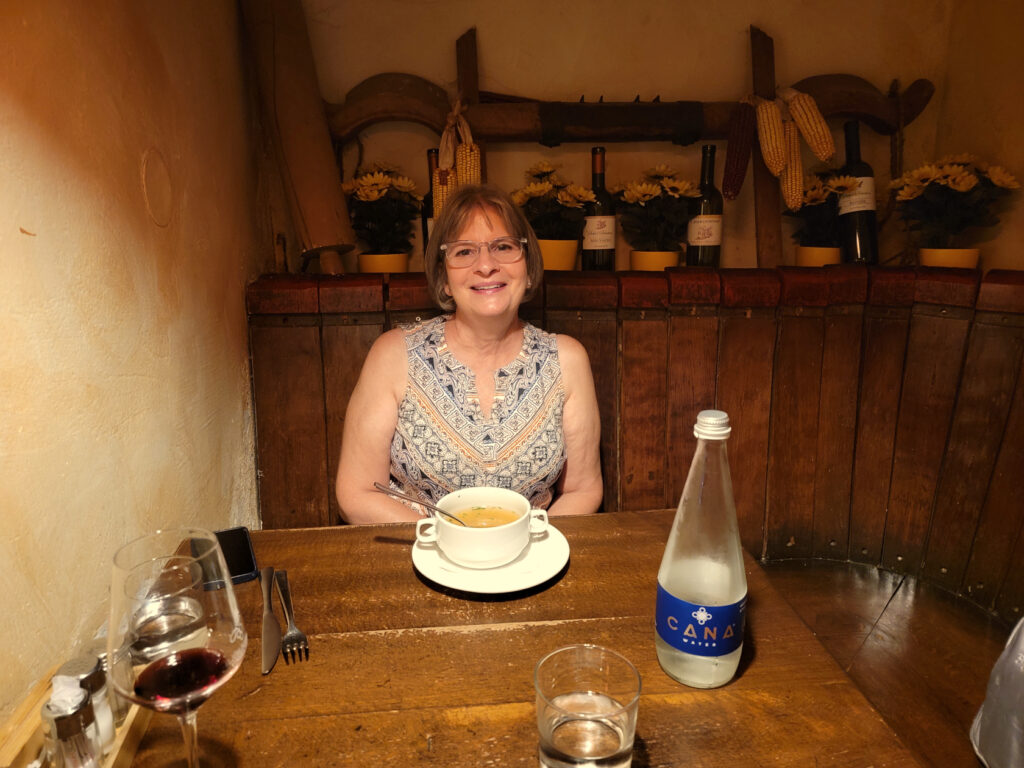
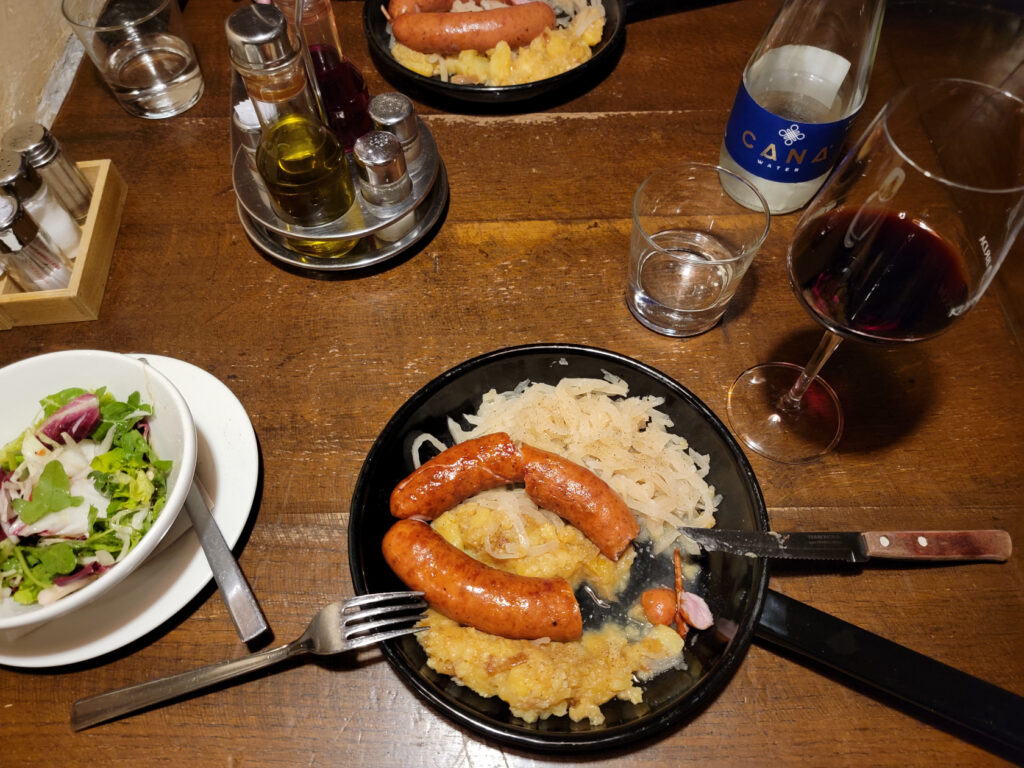
This is a traditional Slovenian restaurant, service many of the authentic dishes and also some non-Slovenian favorites, so anyone who visits can find something to eat. For us it was the traditional fried sausage, or Kranjska Klobasa with pickled turnips and roasted potatoes.
Ljubljana – Gostilna Sokol Restaurant
Ljubljana – Gostilna Sokol Restaurant
Ljubljana – Gostilna Sokol Restaurant
Ljubljana – Gostilna Sokol Restaurant
Ljubljana – Gostilna Sokol Restaurant – Patti
Ljubljana – Gostilna Sokol Restaurant – Fried Sausage with Pickled Turnips and Potatoes
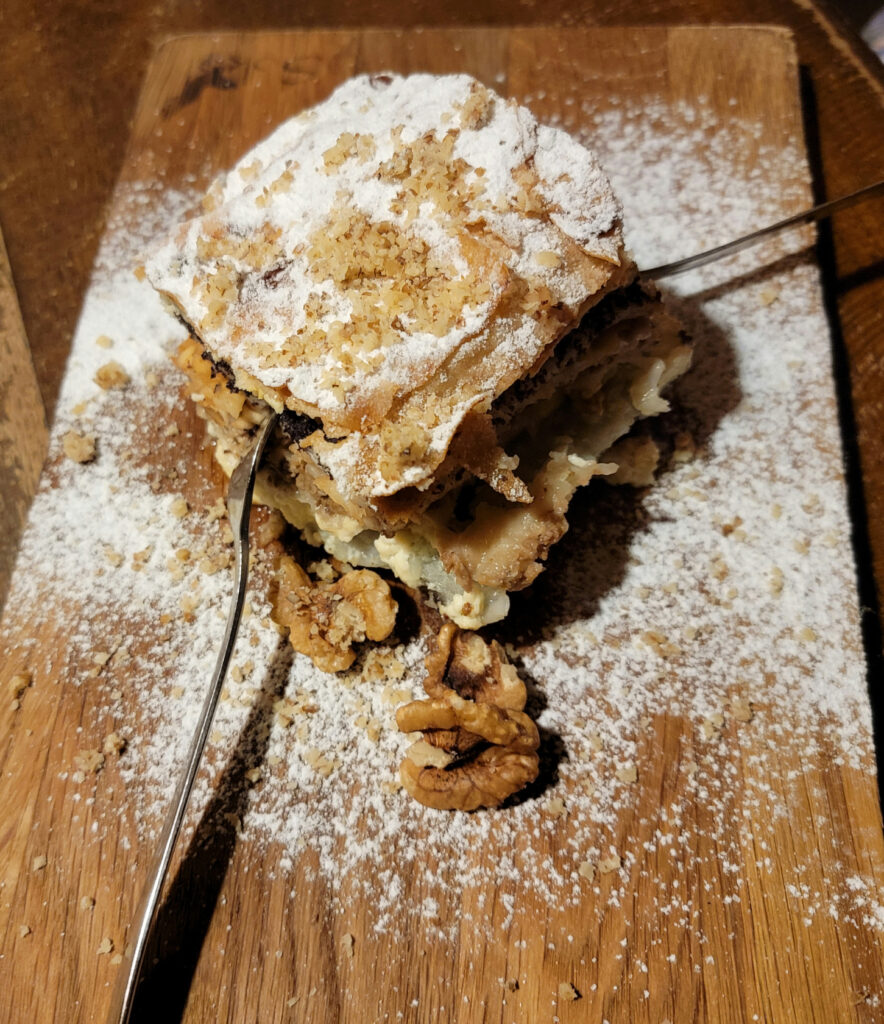
Ljubljana – Gostilna Sokol Restaurant – Hisna Gibanica
Ljubljana – Gostilna Sokol Restaurant
Cantina Mexicana Restaurant
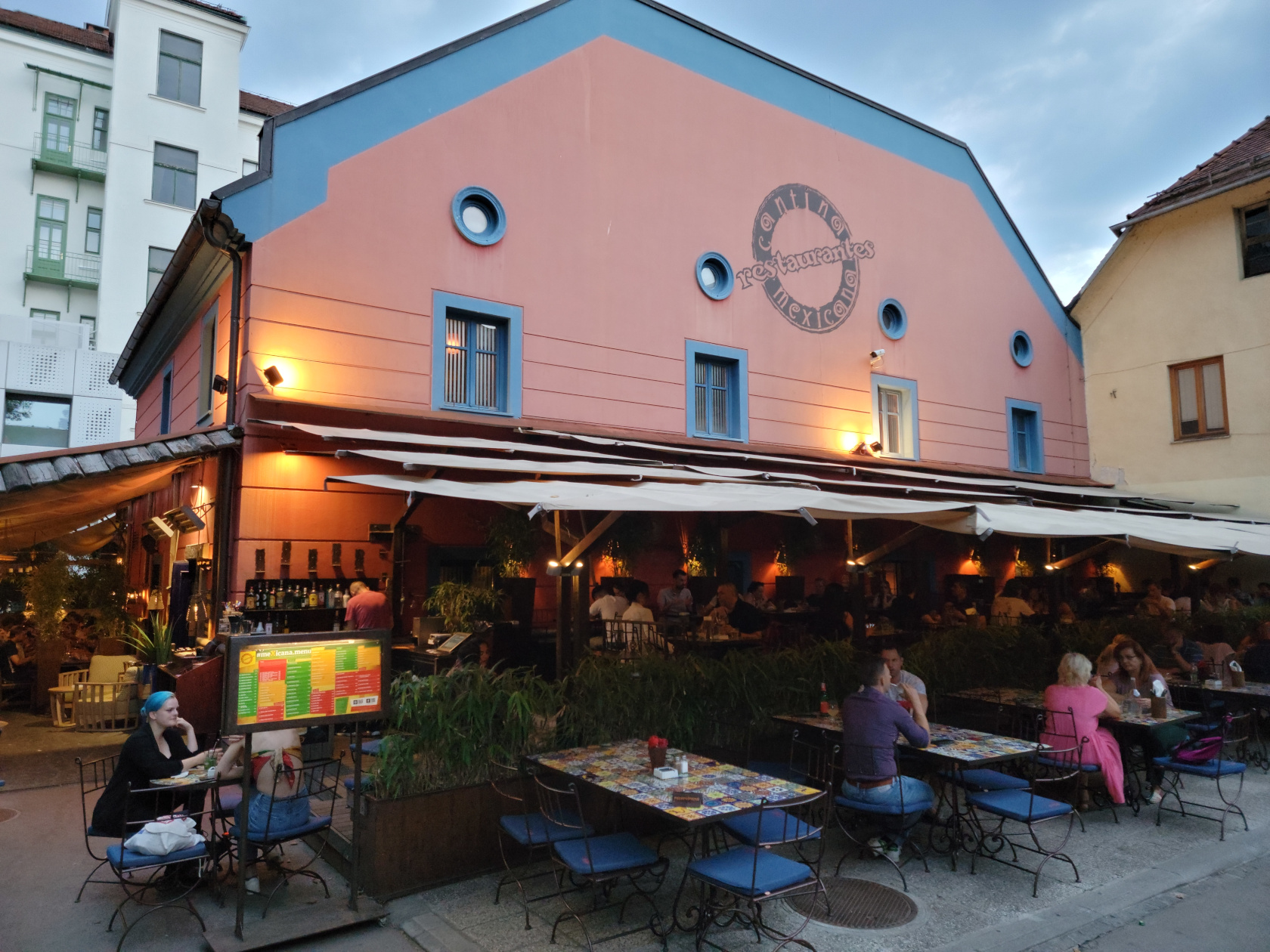
Ljubljana – Cantina Mexicana Restaurant –
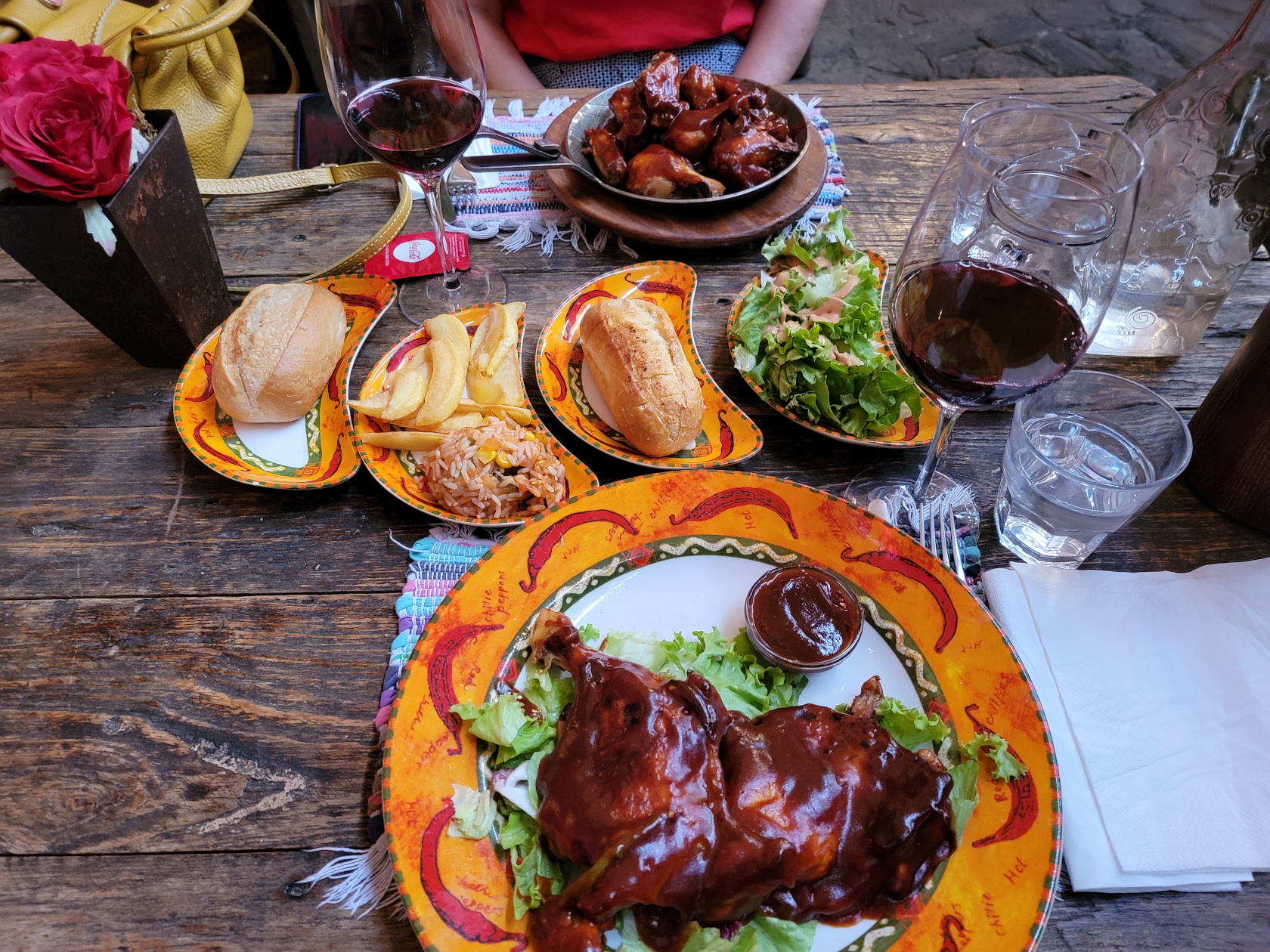
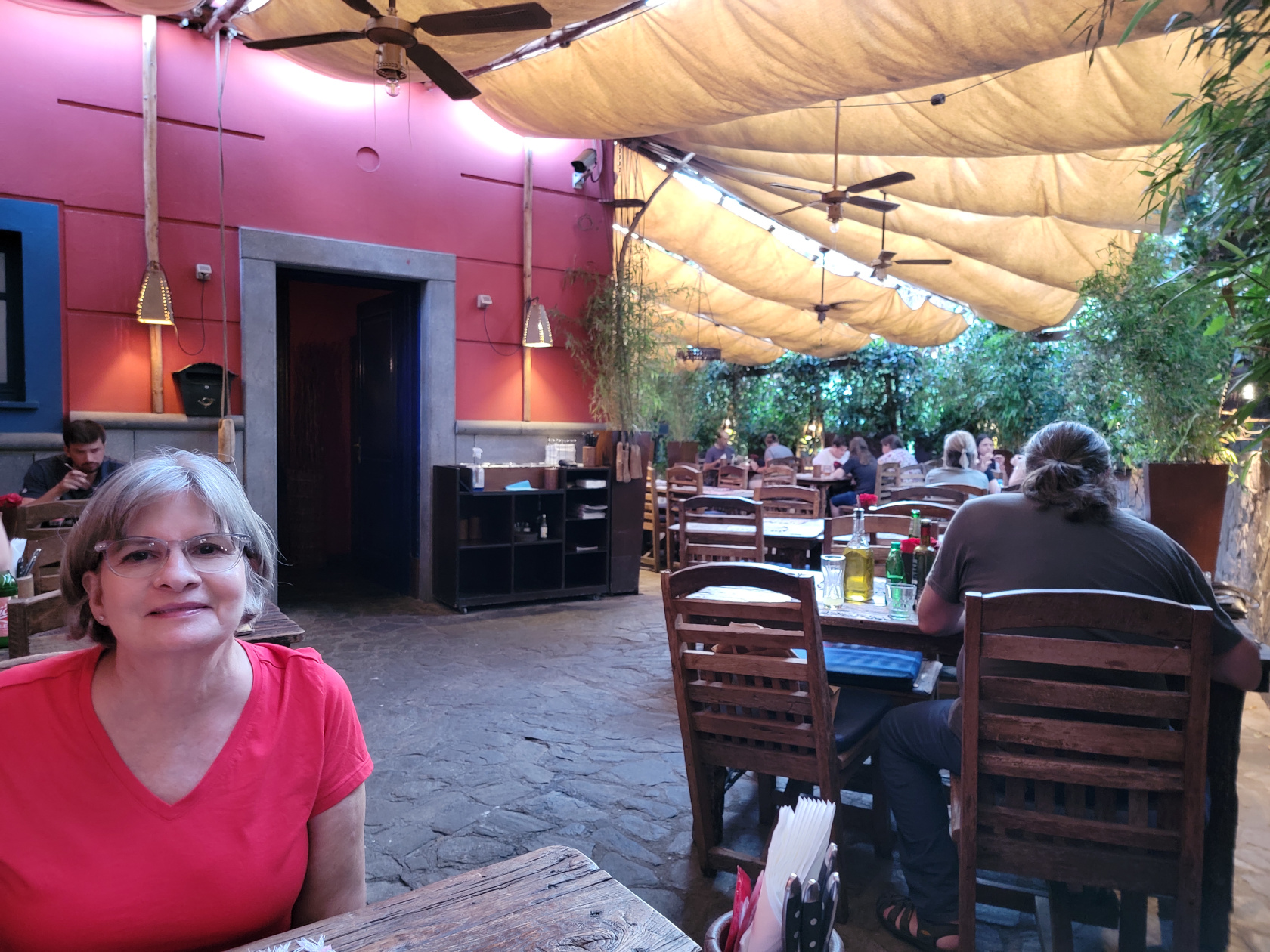
The Cantina Mexicana is a very good mexican restaurant that features both Mexican and Tex-Mex cuisine. It wasn’t too difficult to find something appetizing among the enormous selection of food they offer in their menu.
Ljubljana – Cantina Mexicana Restaurant – Barbecued Chicken
Aside from the Adriatic Magnetic Anomaly, there is an additional one along the the Adriatic Coast that few know about, it’s called Piran.
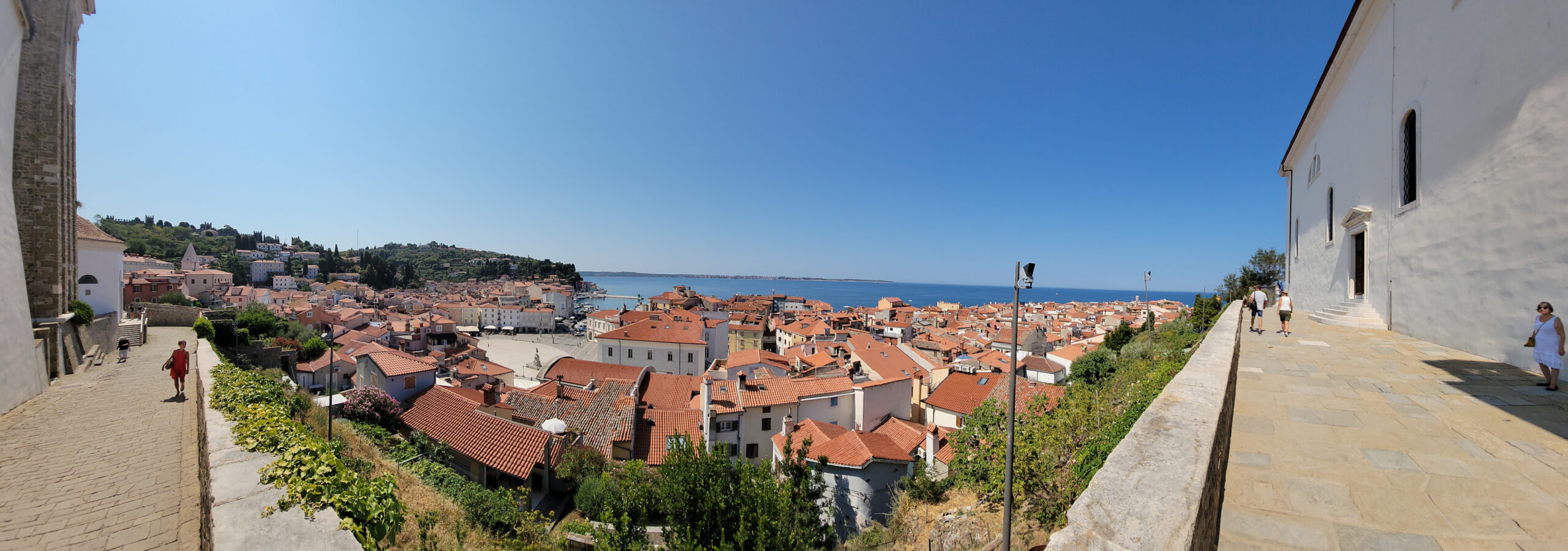
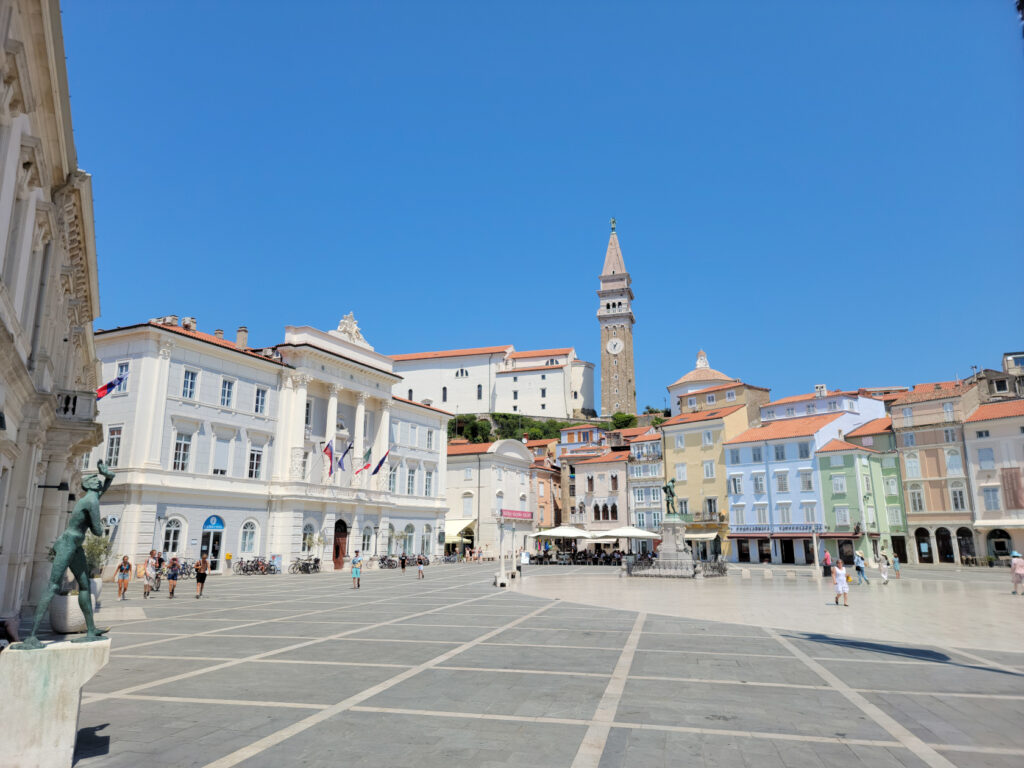
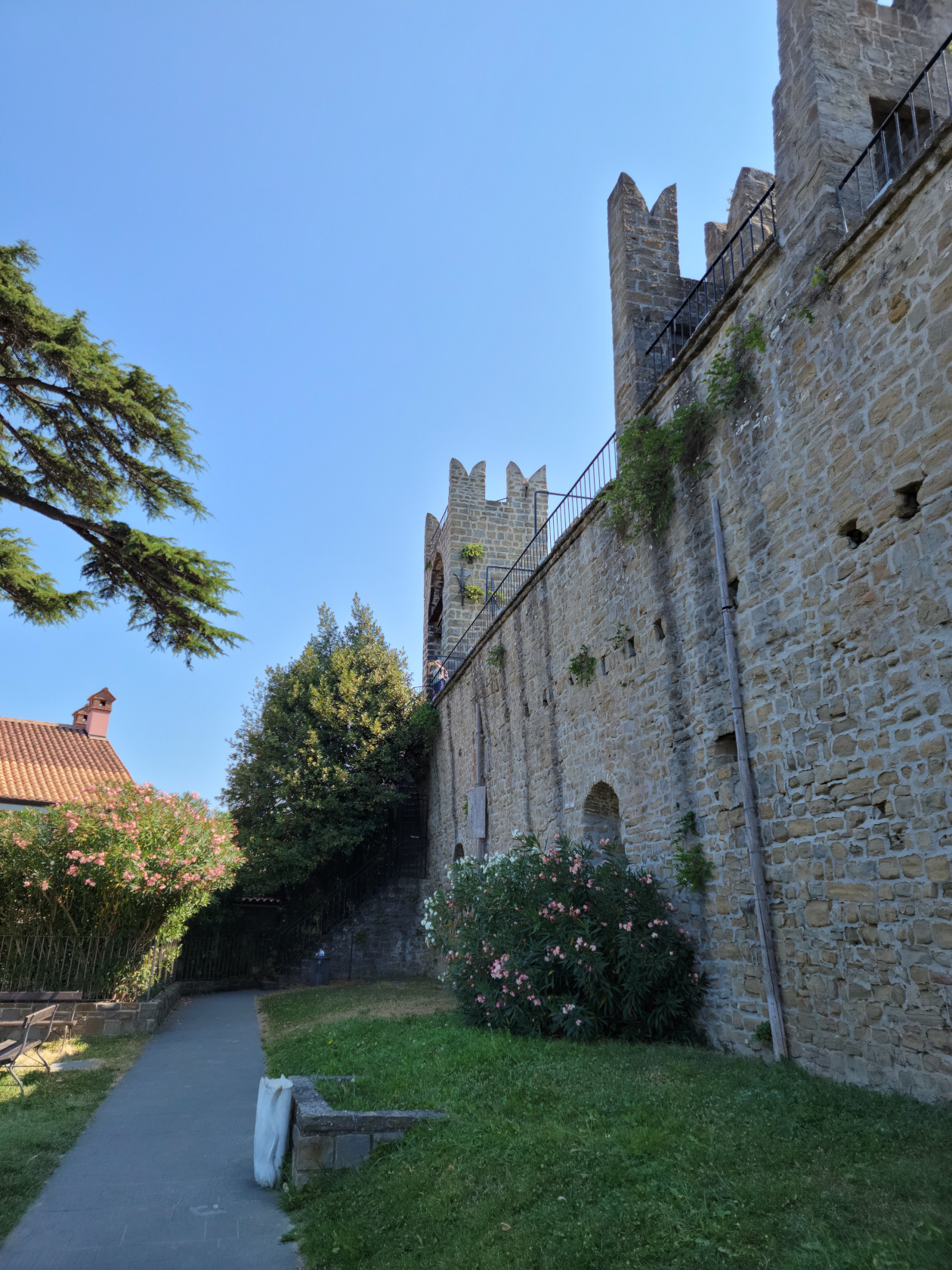
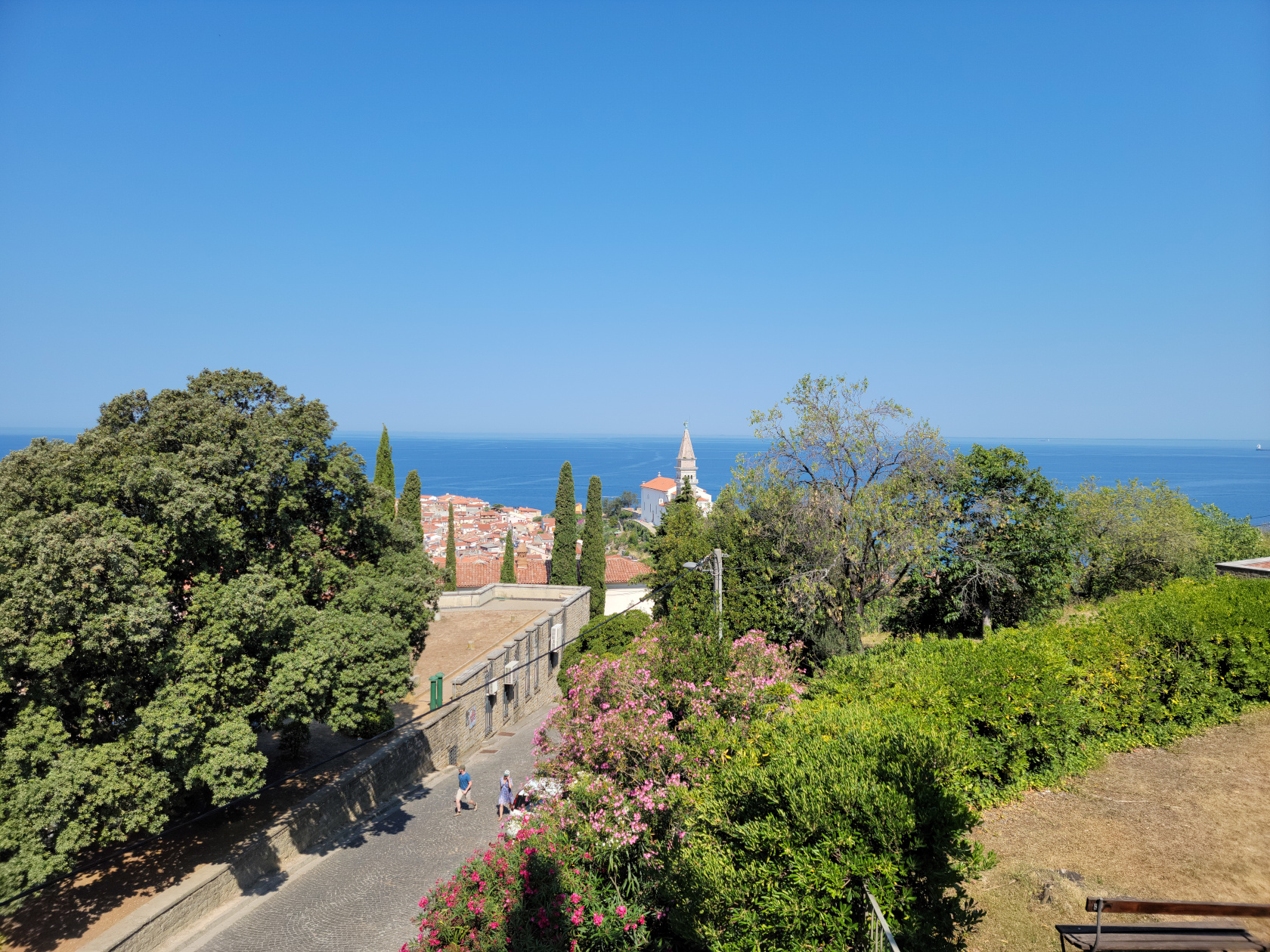
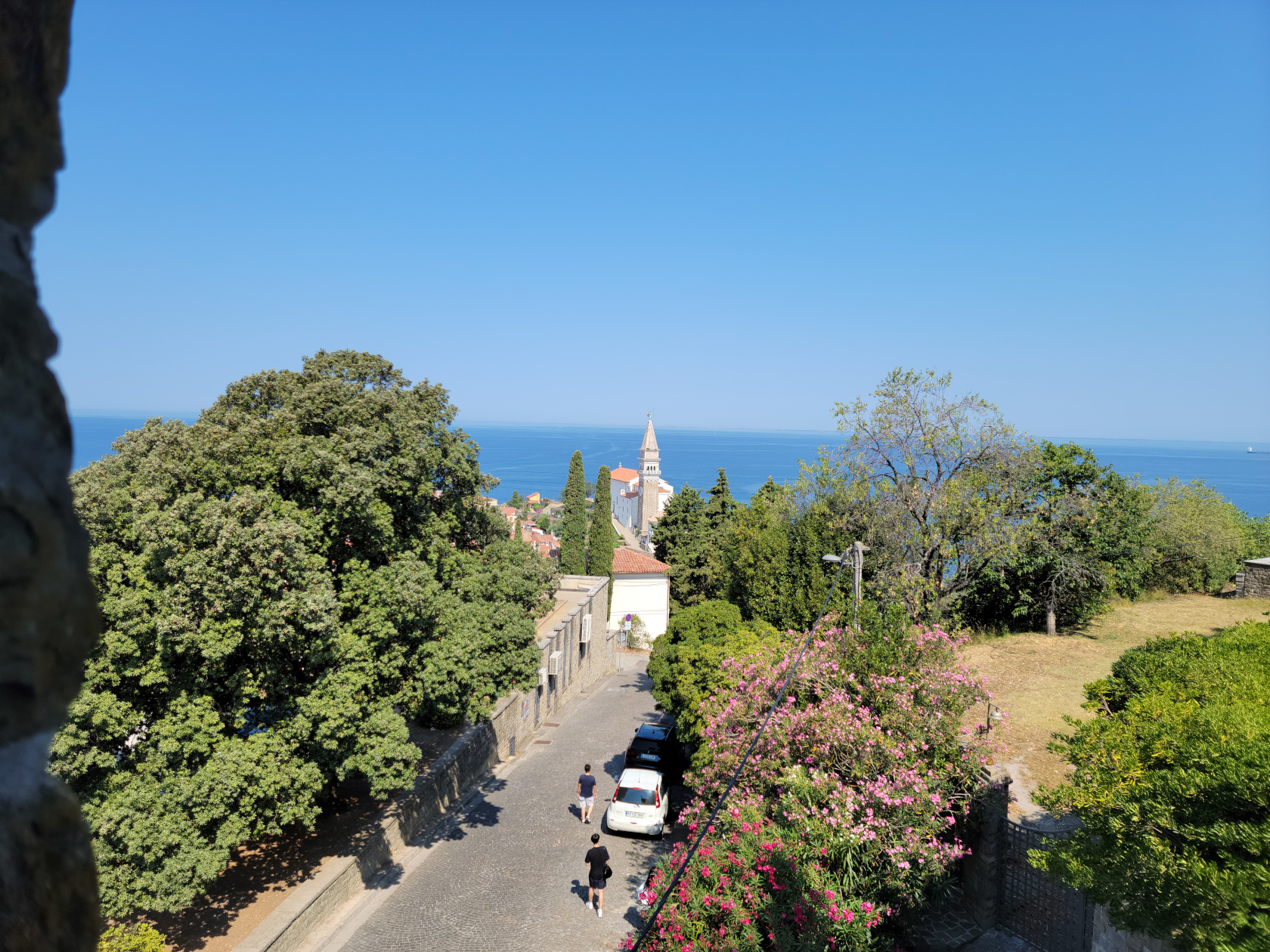
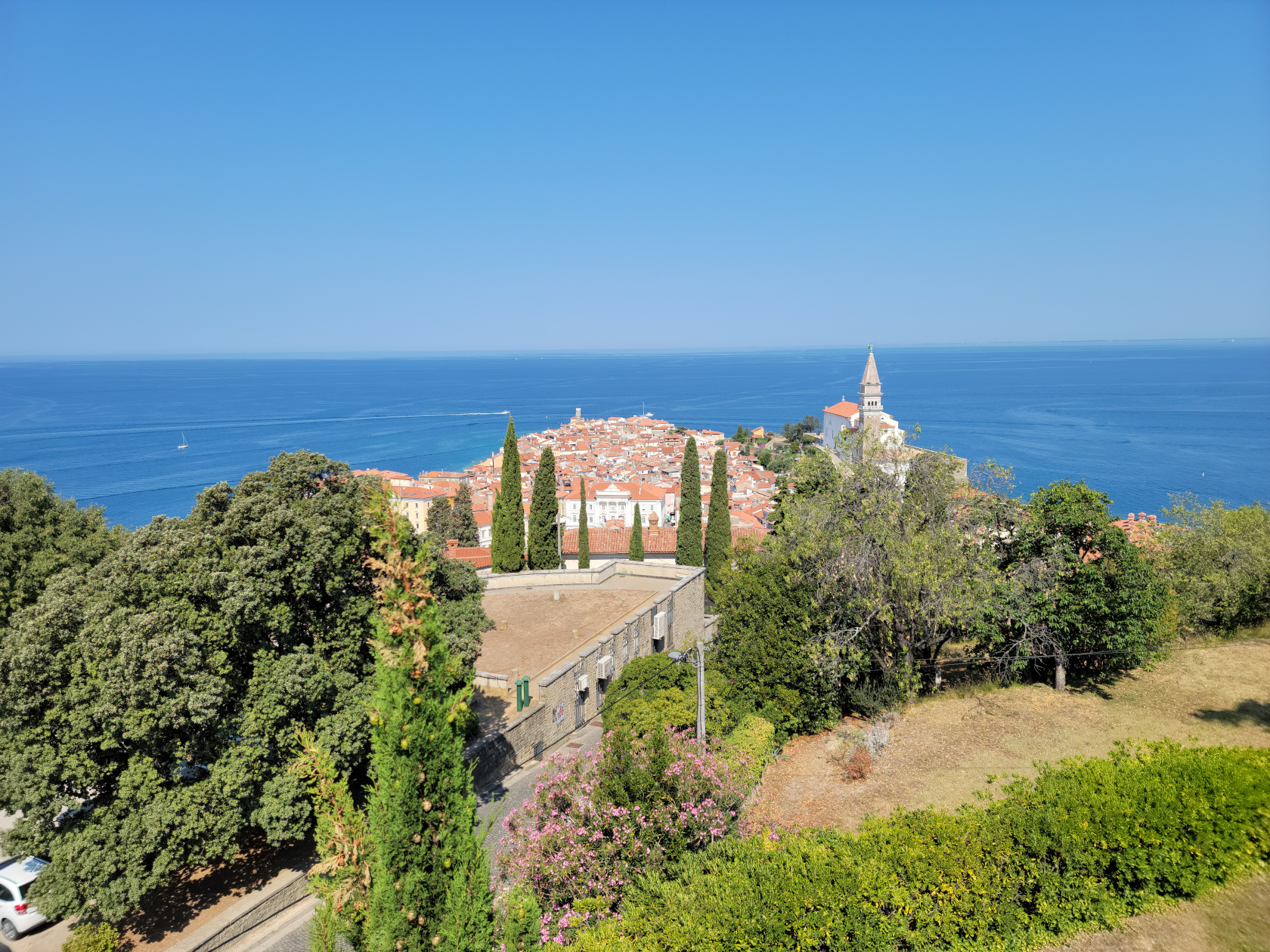
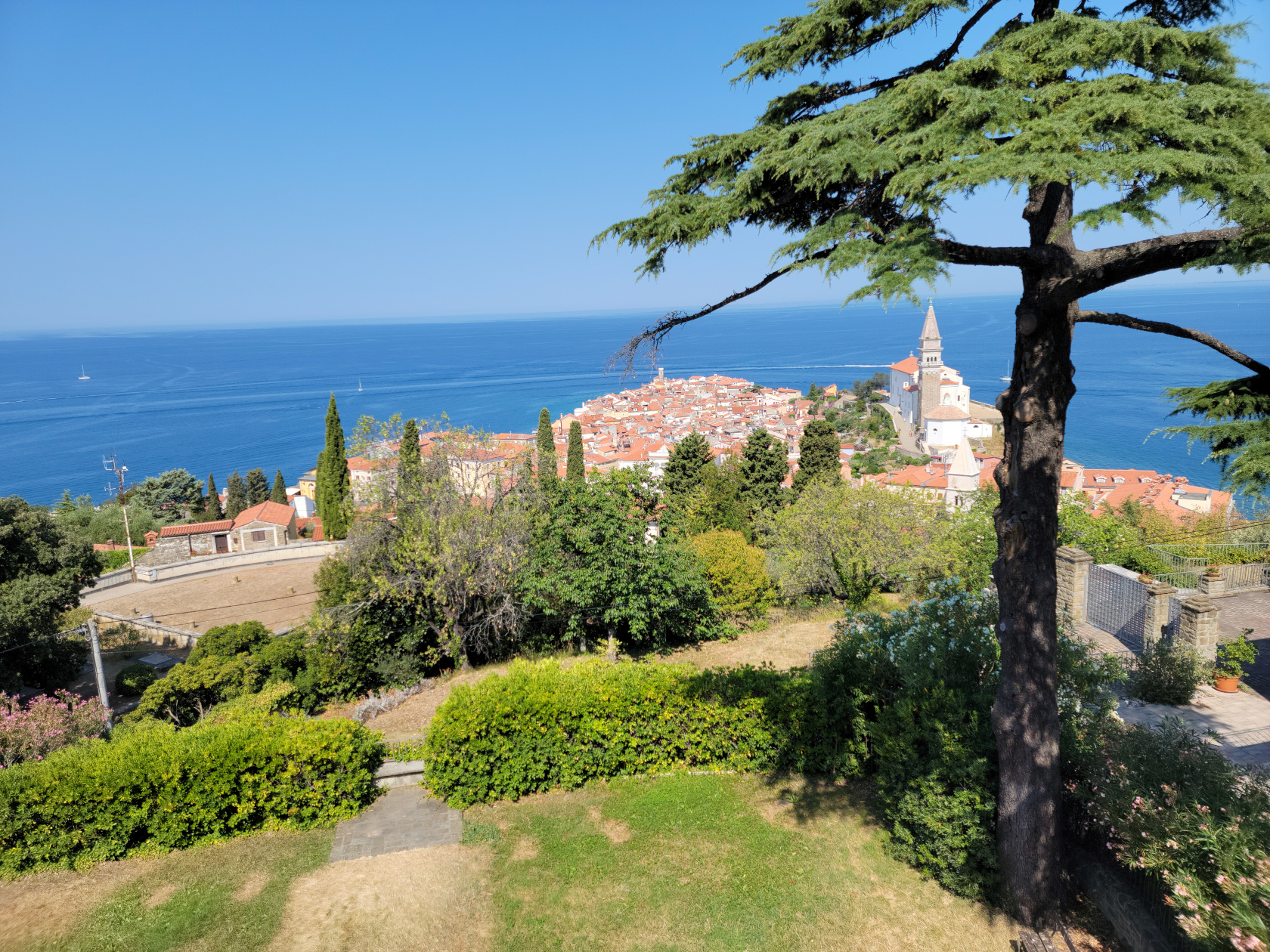
Piran – View of the Town
I call it an anomaly, because one appears to have no other reasonable way of getting there except by car, which for Europe, one has to admit is very strange.[1]There are several other forms of transportation, but none of them go and return on the same day and almost all run irregularly.
Piran – A Day Trip From Trieste
After our Get Your Guide guide cancelled on us, we had to arrange a transfer through our hotel concierge using Taxi Trieste, in order to visit this town for one day. They were actually very good and came in under the amount quoted by the other service (160€ versus 198€), although in this case to be fair, it was just for the transfer and not an all-day stop-and-go tour.
Piran – Taxi Trieste – Perhaps the only way to get to Piran and back in one day
Piran The City
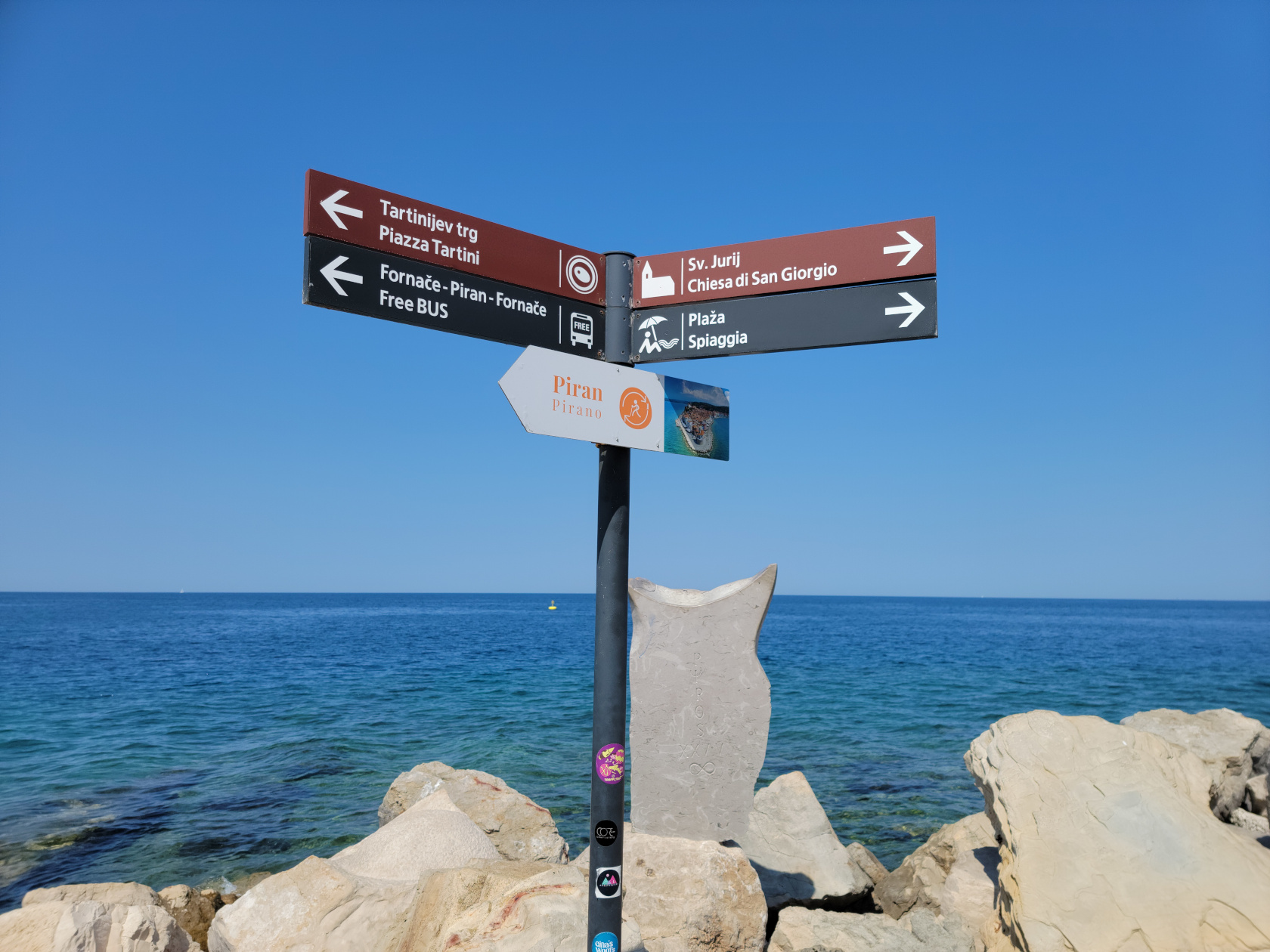
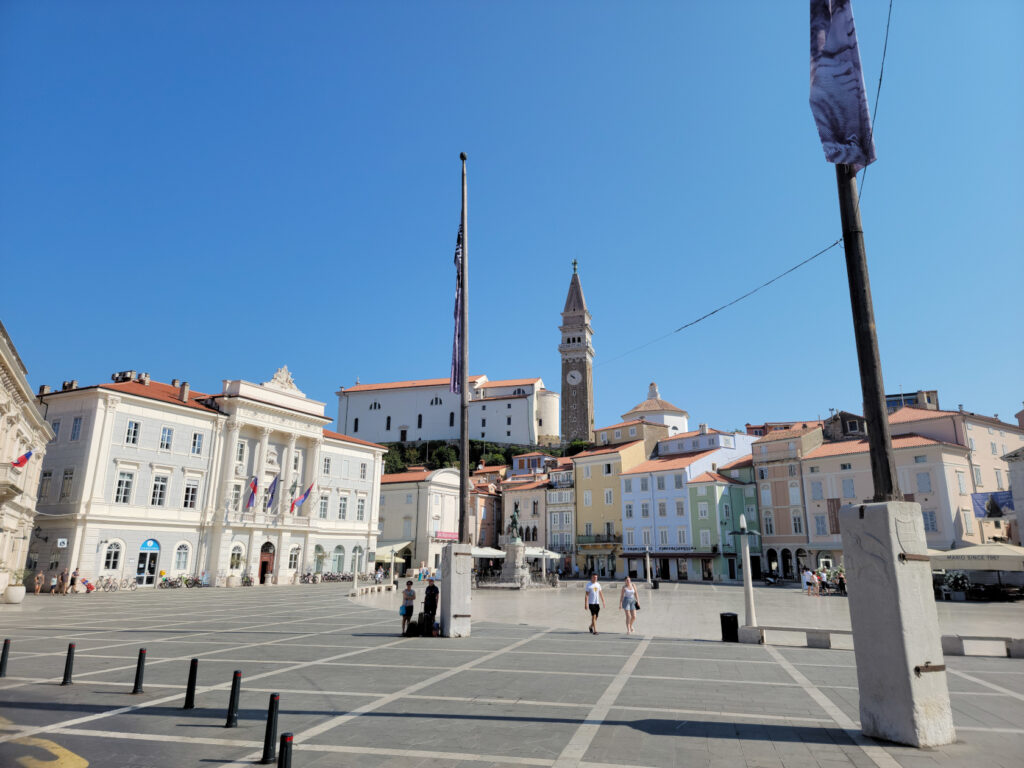
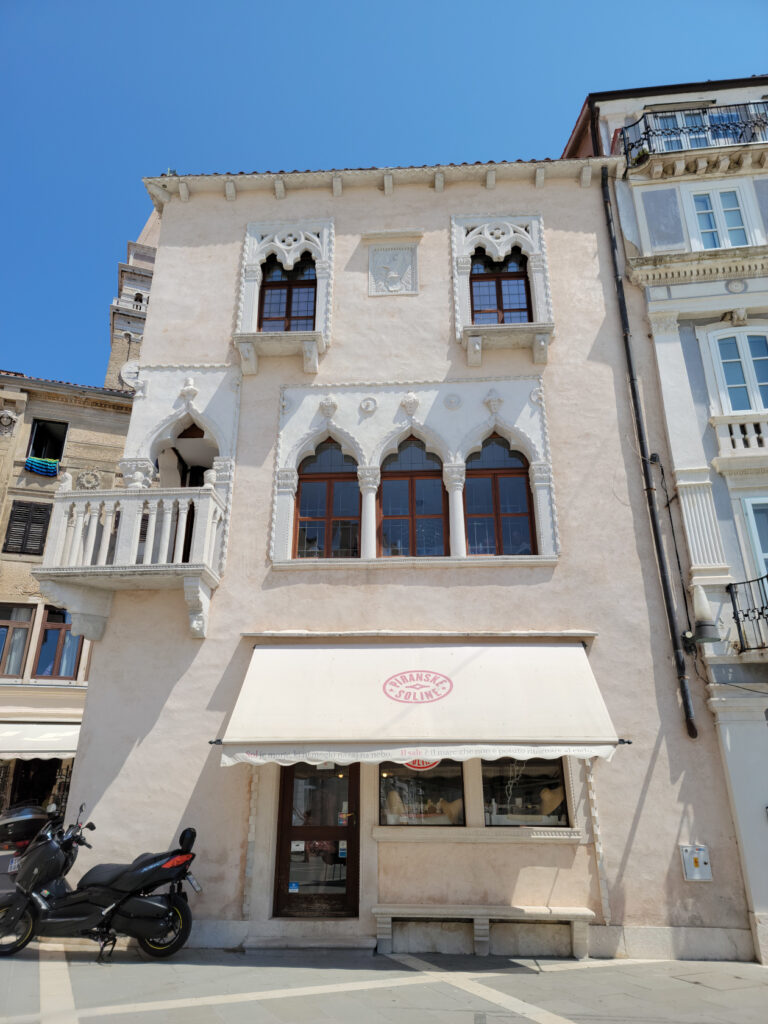
Piran is located on the Piran peninsula and juts out like a triangle into the Adriatic Sea, the Gulf of Piran to one side and the Gulf of Trieste to the other. One can immediately see that the city itself and its architecture have been strongly influenced by both the Venetians and the Hapsburgs (Austro-Hungarian Empire). The church towers have that Venetian look to them, as well as many of the houses and business structures outlining the Tartini Piazza.
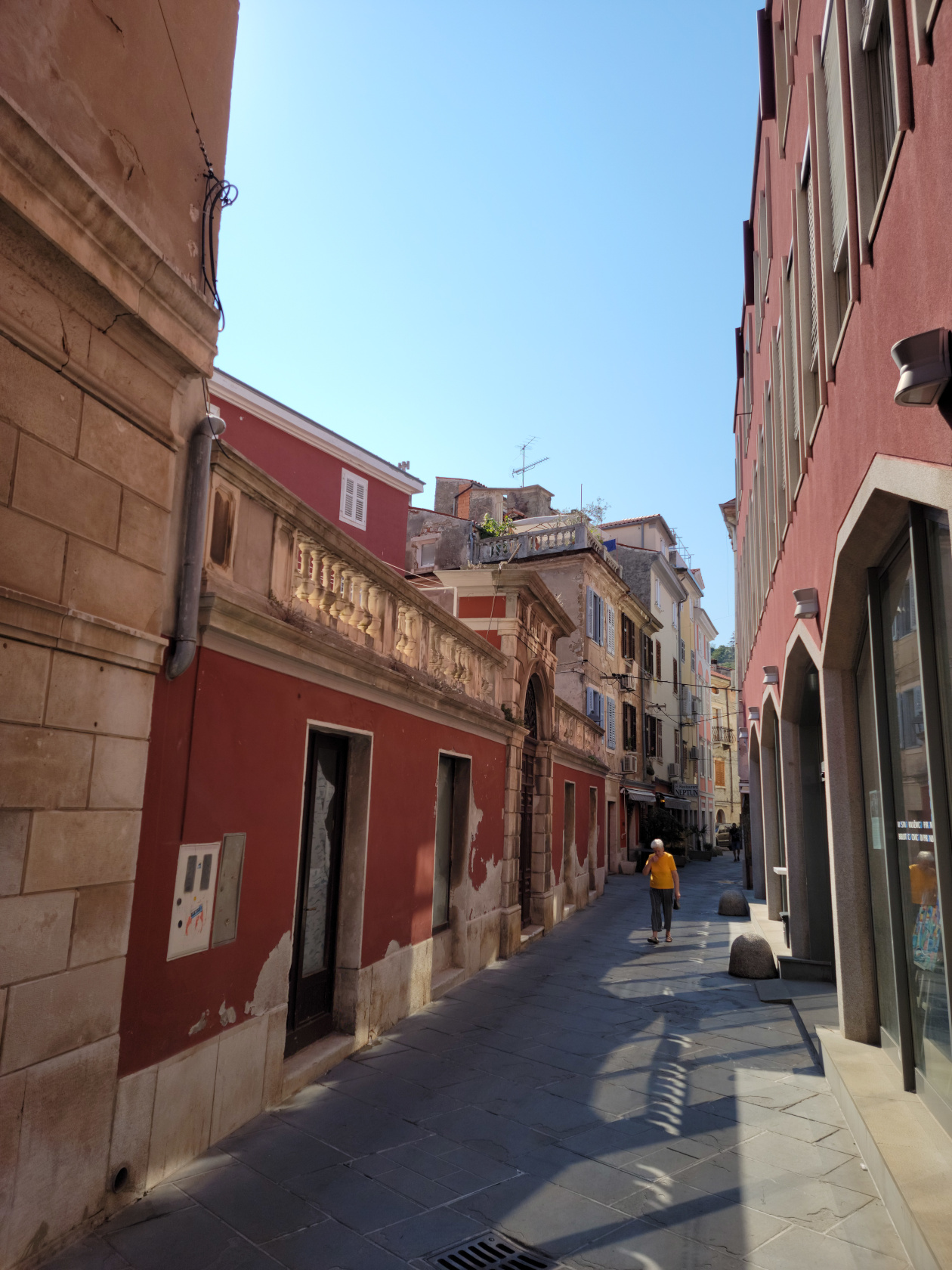
Piran – The Streets
Piran – The Streets
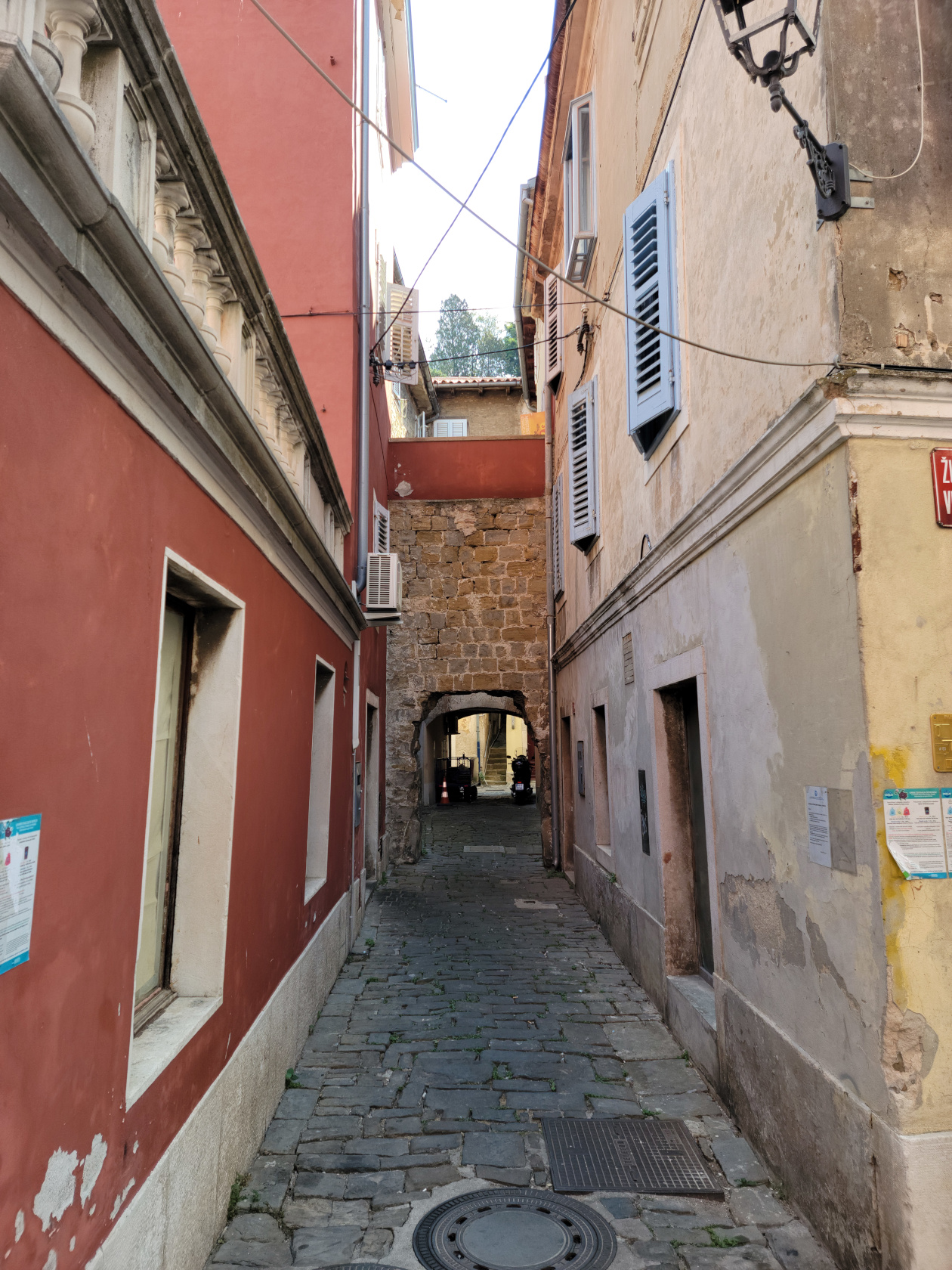
Piran – The Streets – City Gate
Piran – The Streets
Piran – The Streets – City Clock
Piran – The Streets
Piran – The Streets
Piran – The Streets Going up to the wall
Piran – Owl Tile in Wall
Piran – The Town
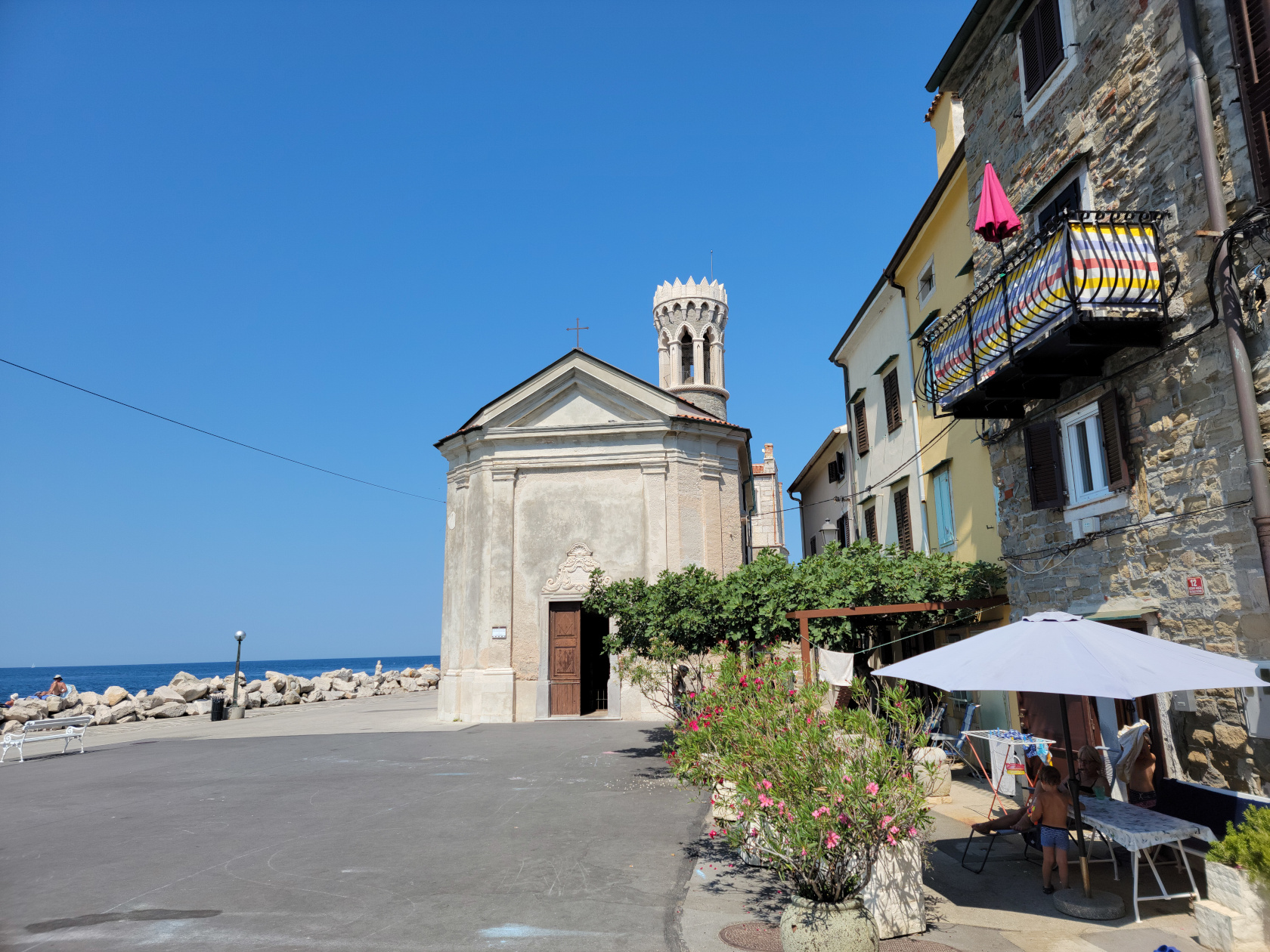
Piran – The Old Church Saint Mary of Healing and the Lighthouse
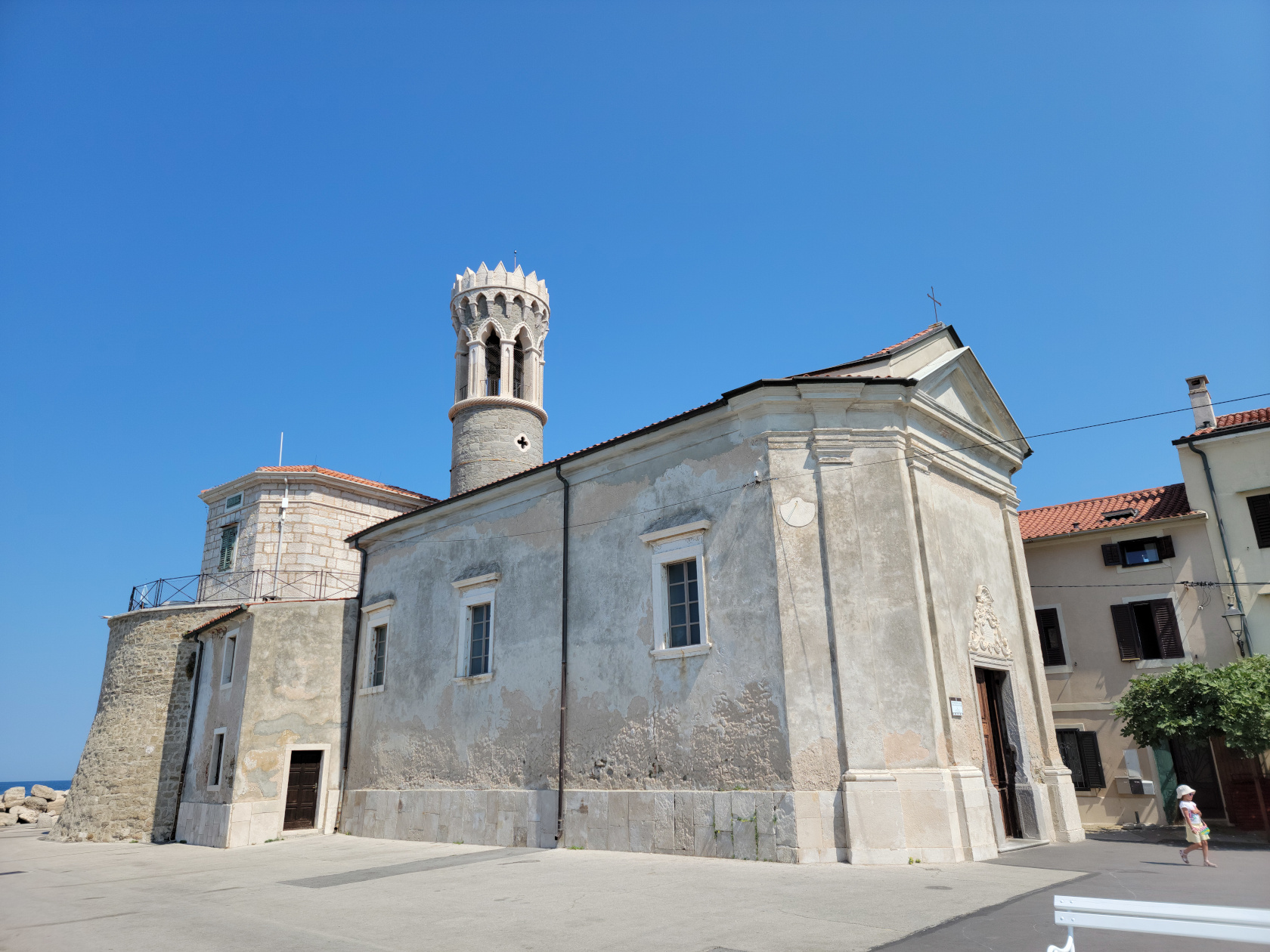
Piran – The Old Church Saint Mary of Healing and the Lighthouse
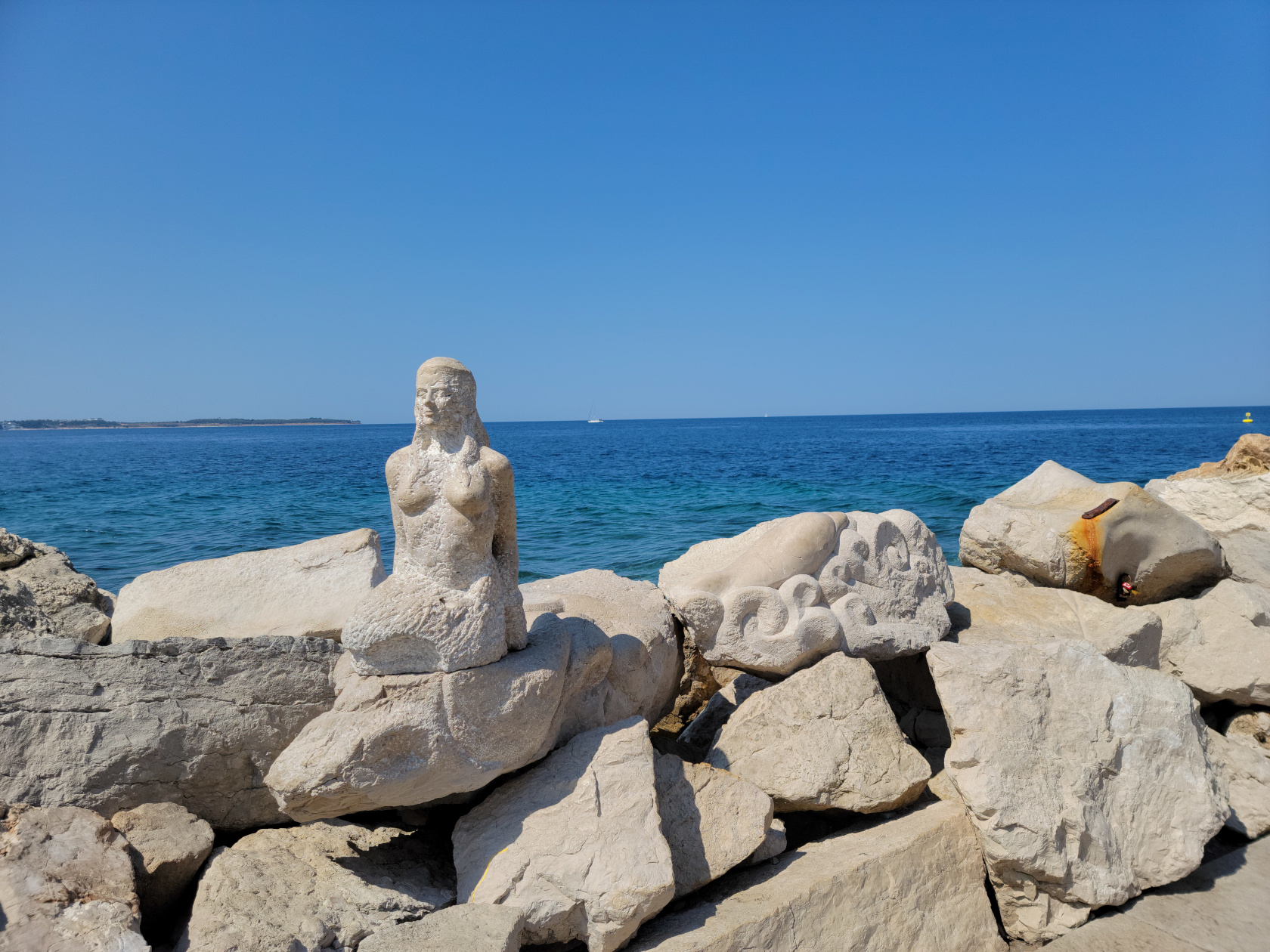
Piran – Sculptor by the sea
Piran – At the point
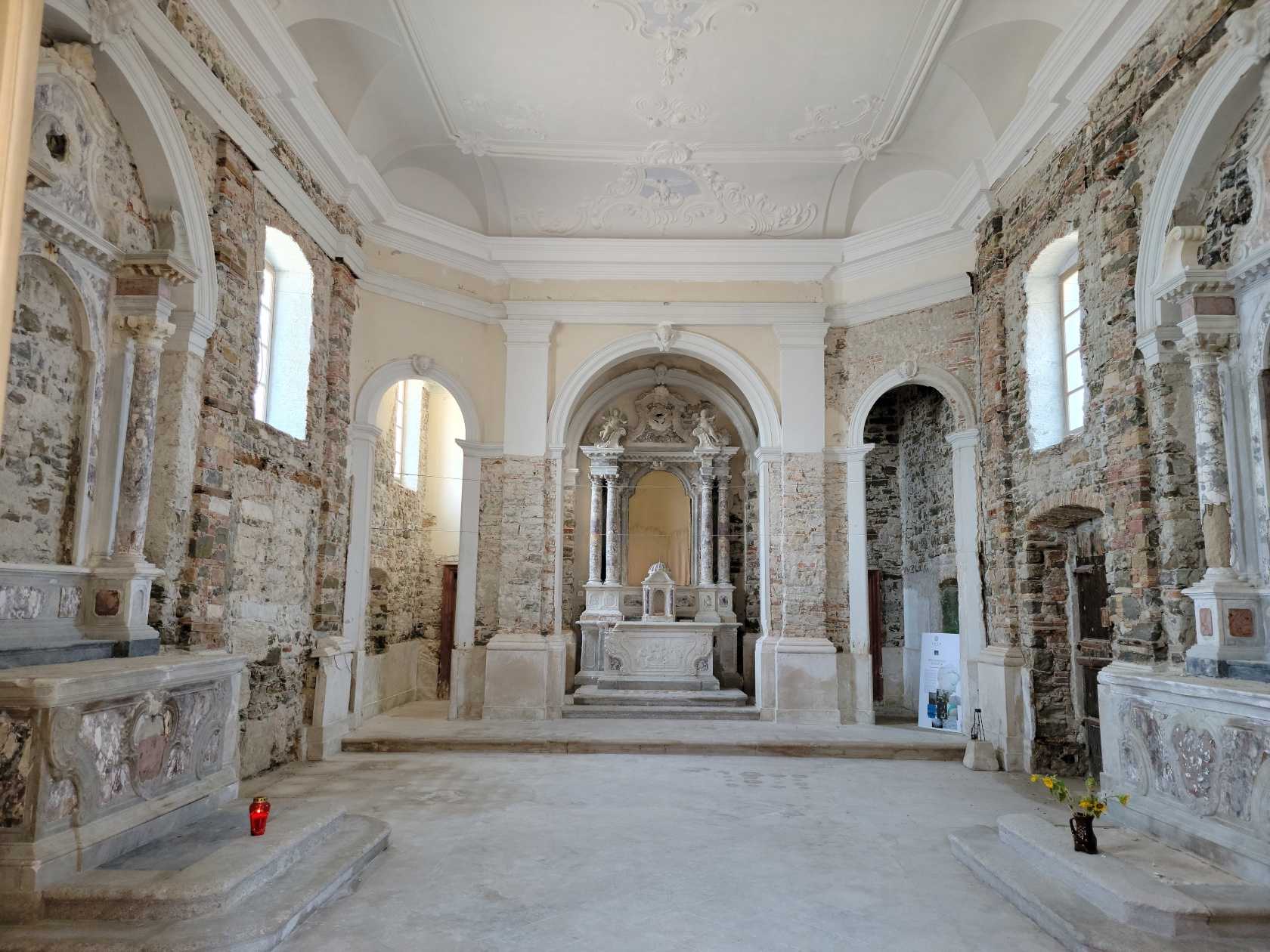
Piran – The Old Church
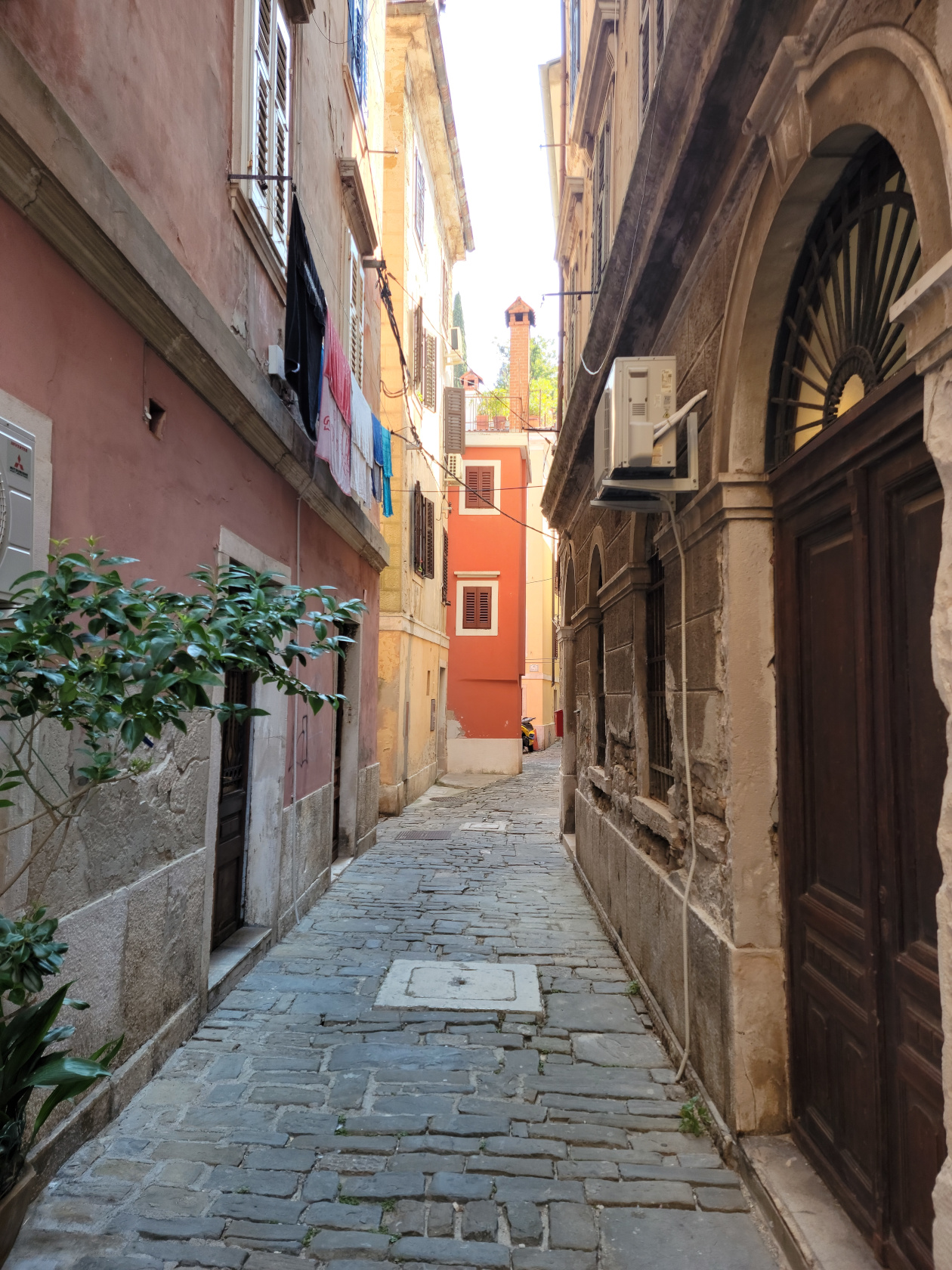
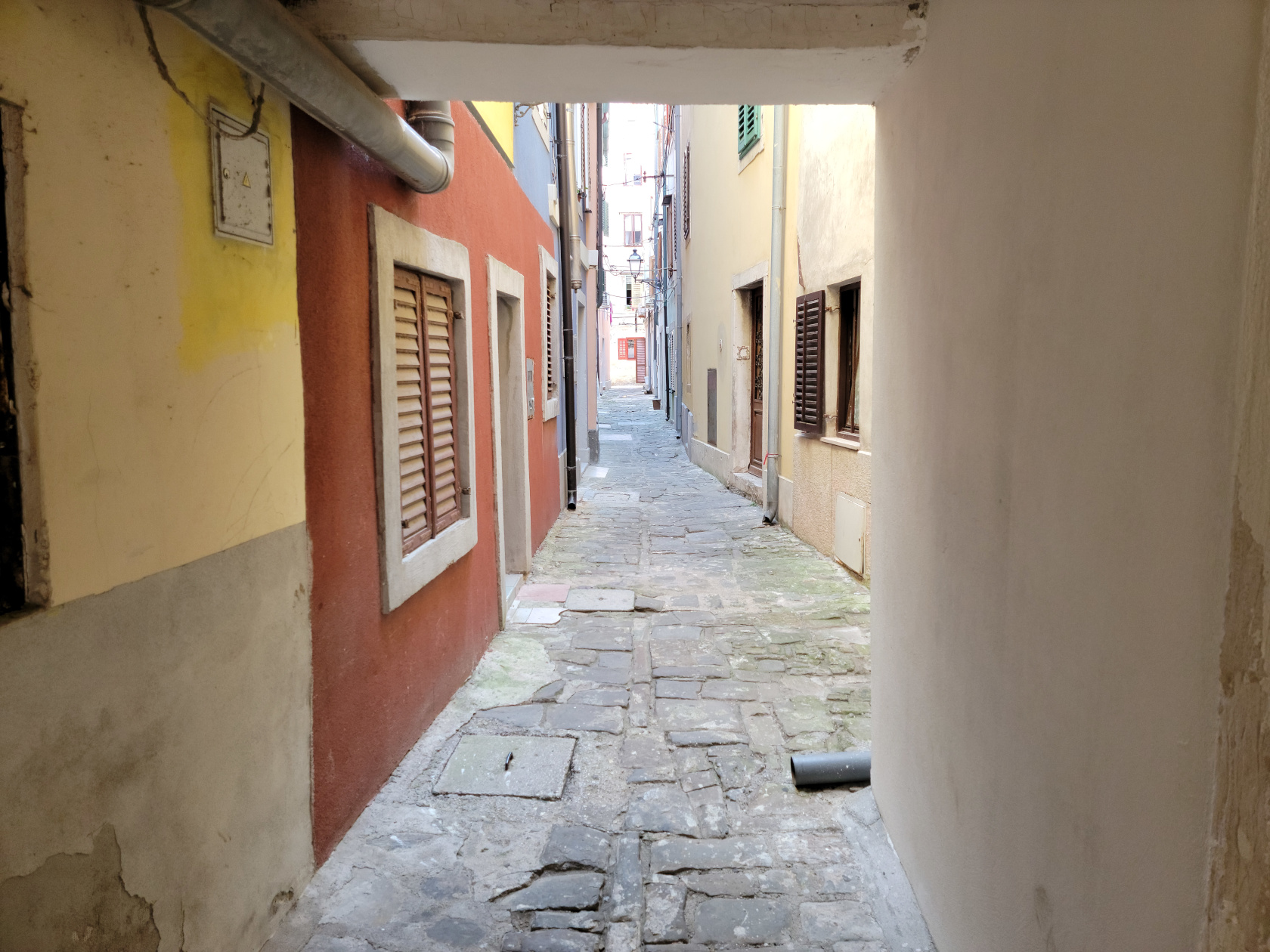
Piran – Narrow Streets
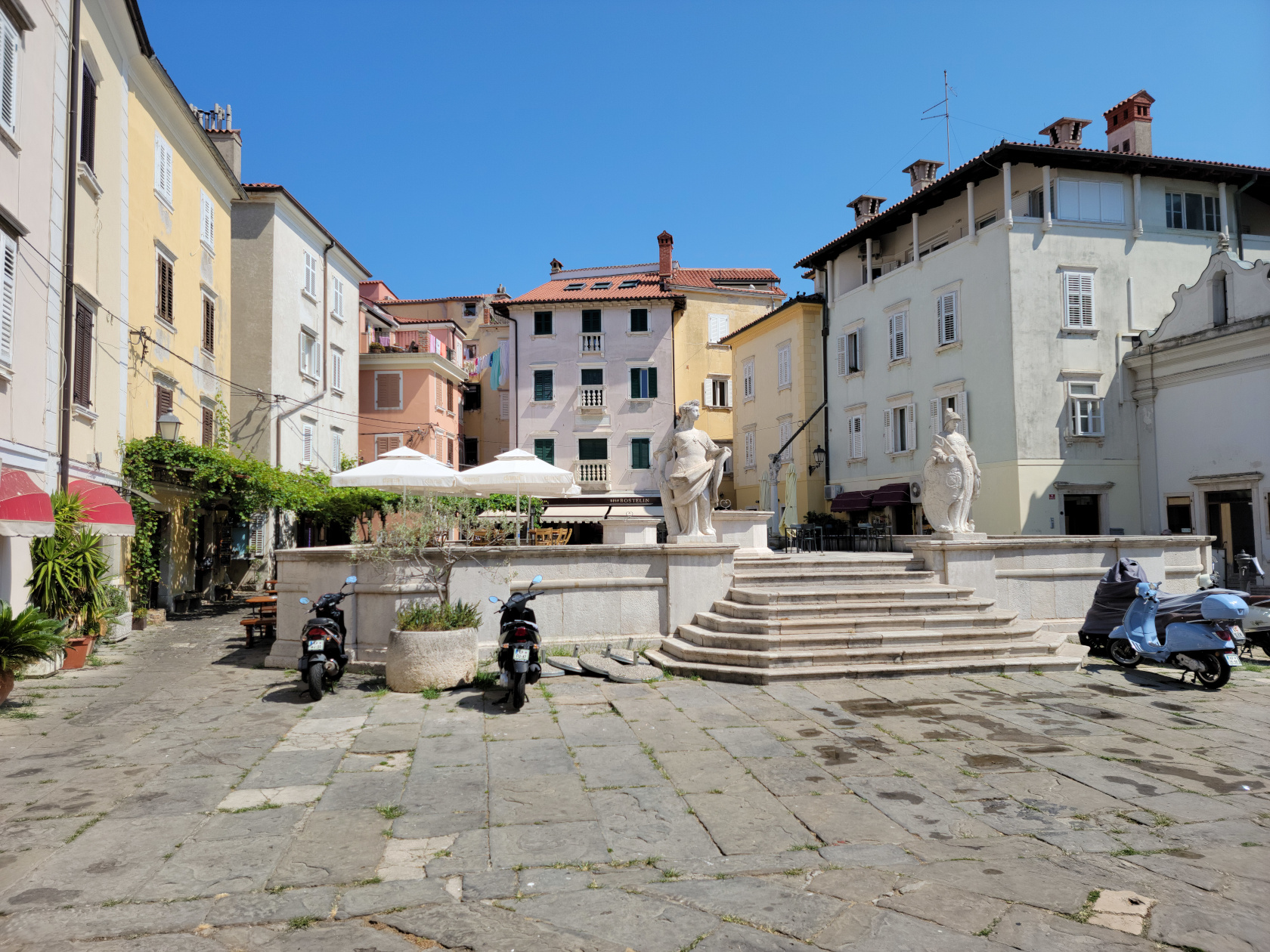
Piran – Plaza of the First of May
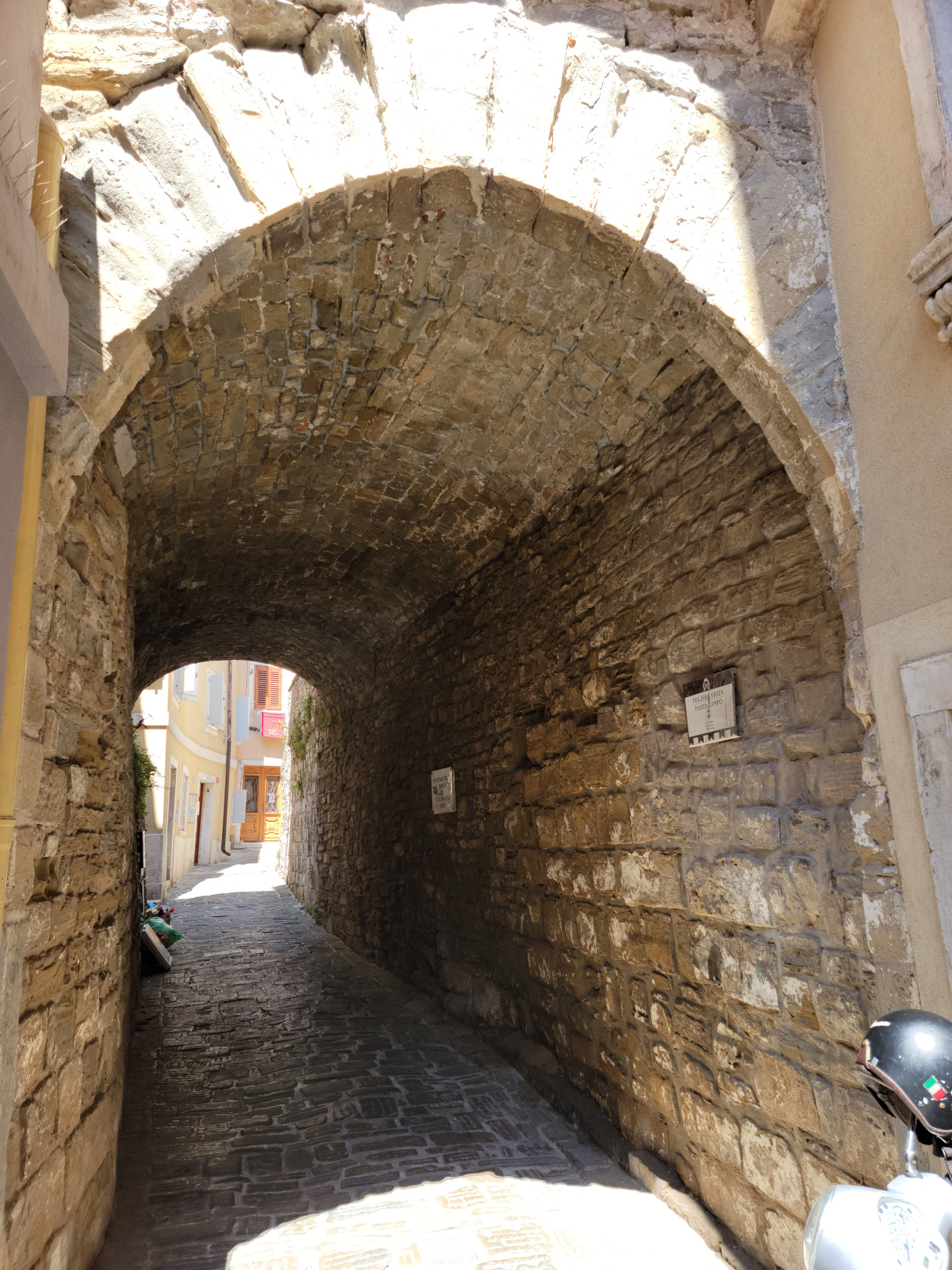
Piran – Porto Campo – City Gate
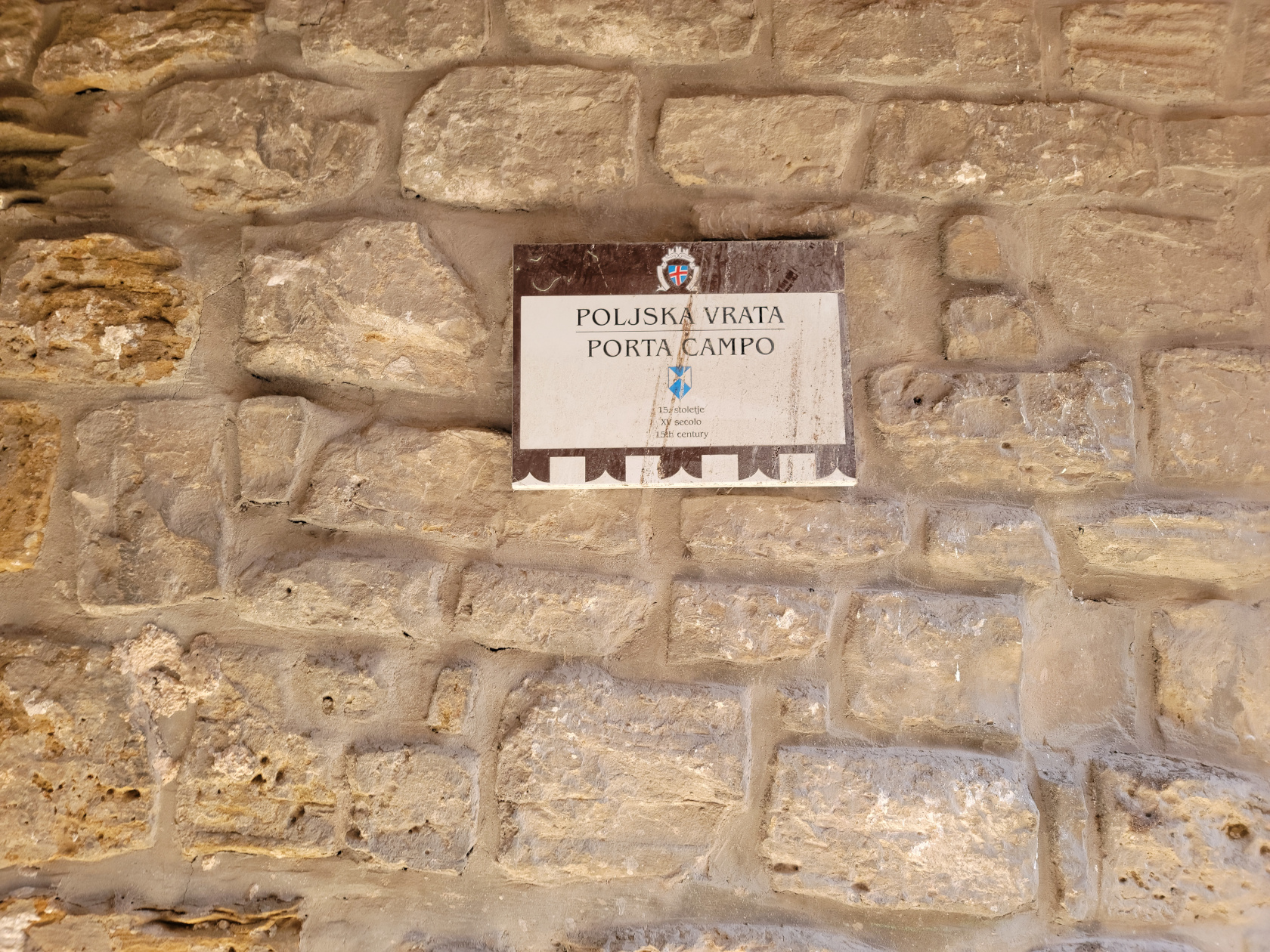
Piran – Porto Campo – City Gate
Piazza Tartini
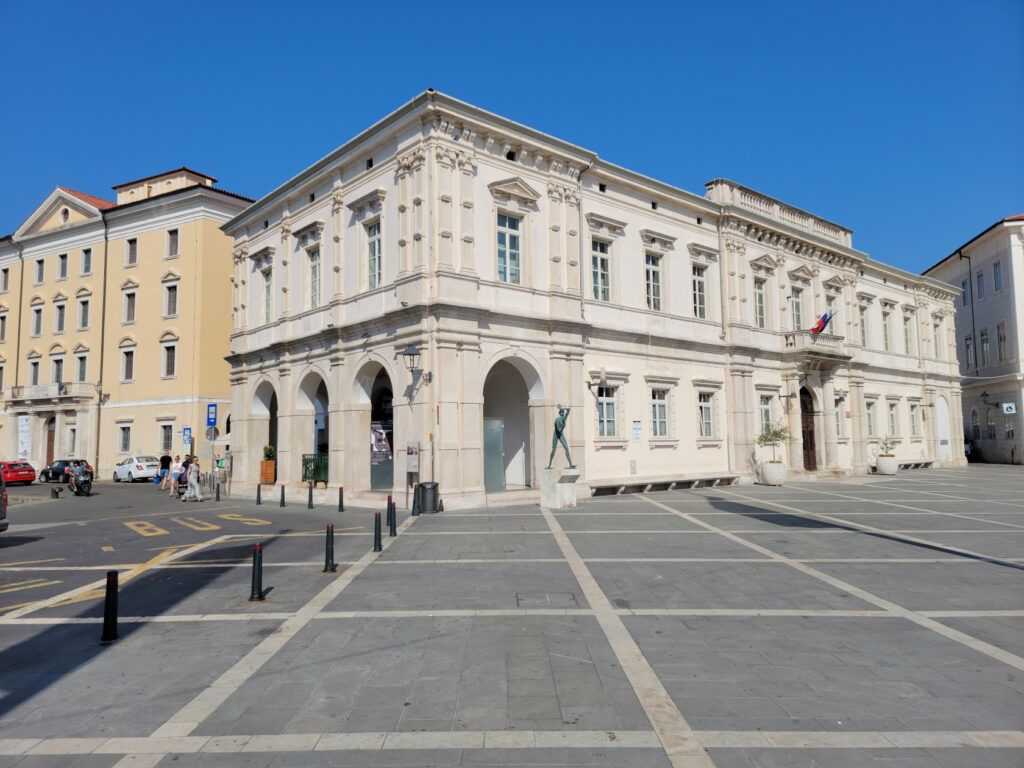
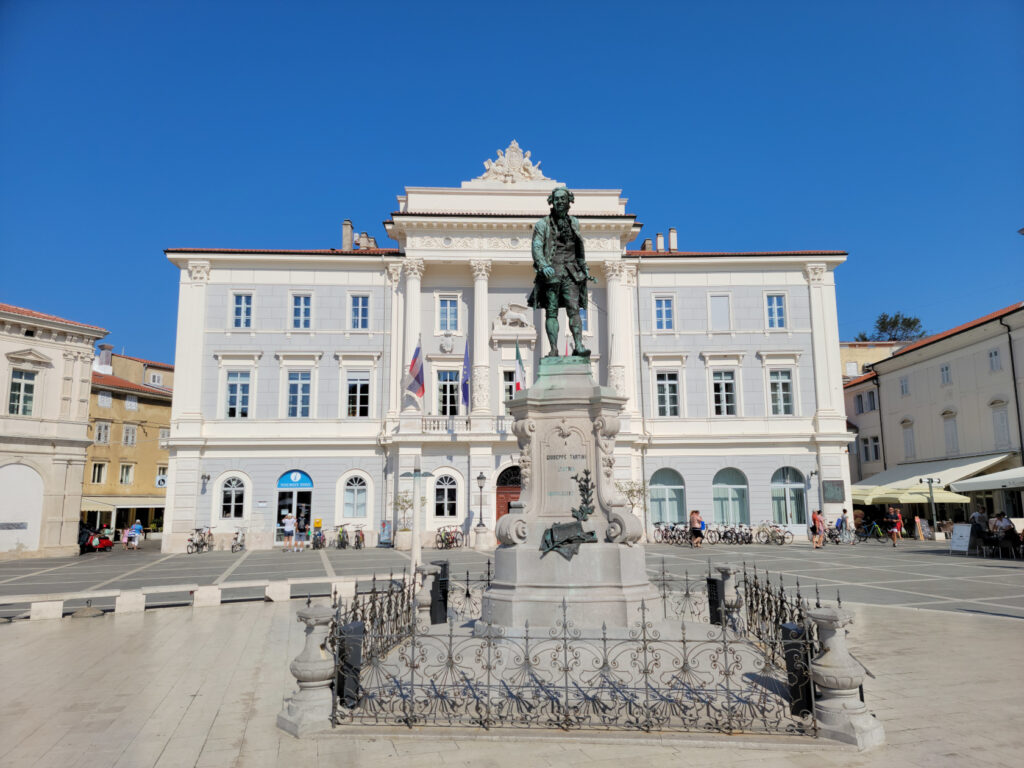
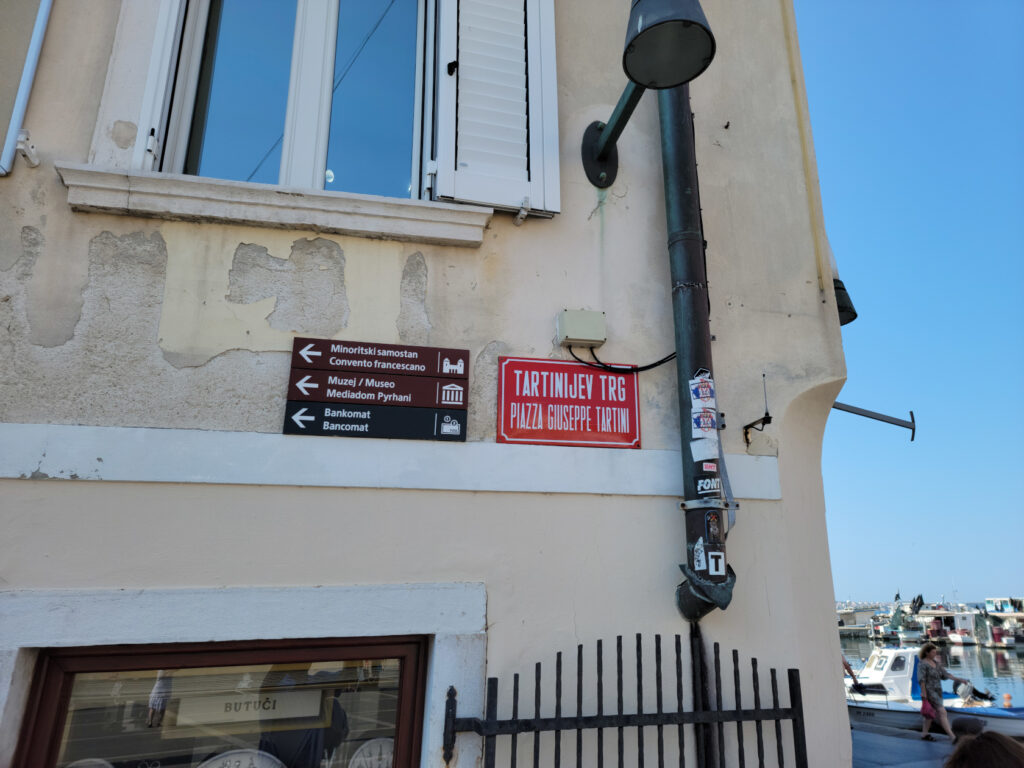
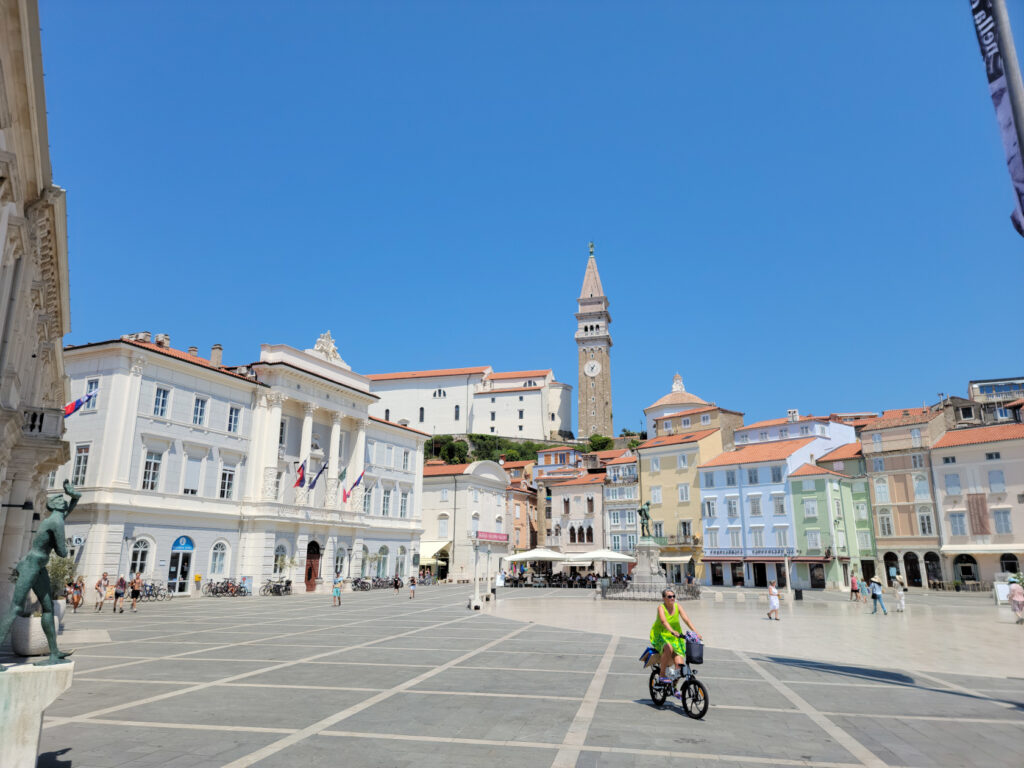
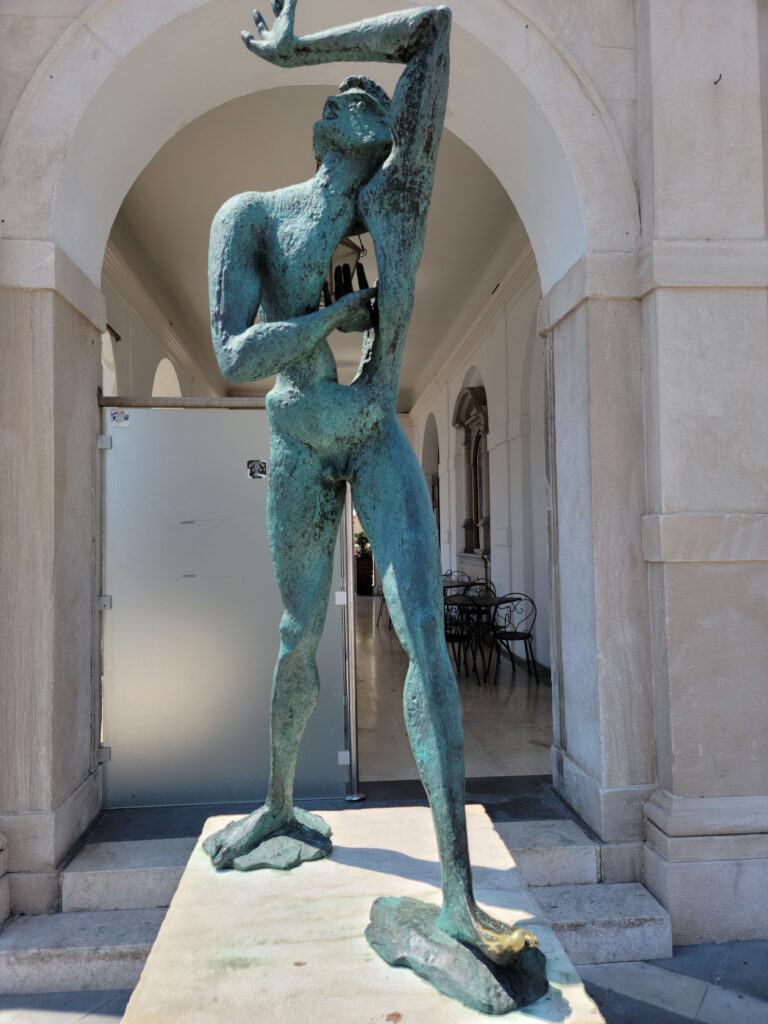
A small plaza that is adorned with a few bronze statues, all which center around the statue of Giuseppe Tartini, the composer and violinist. There are some restaurants, a few businesses and administrative buildings to compliment its surroundings. However, the marble in the middle of the piazza is quite new and shiny and would appear to be a slippery hazard during inclement weather, so be careful.
Piran – Tartini Plaza
Piran – Tartini Plaza
Piran – Tartini Plaza – Giuseppe Tartini Statue – Violinist
Piran – Tartini Plaza
Piran – Tartini Plaza
Piran – Tartini Plaza
Piran – Tartini Plaza
Piran – Interesting Architecture
The Town Wall
Remnants of the old town wall still exist and for a small sum, 3€ each, you may walk the section that is still open.
Piran – Steps leading to the city wall
Piran – The City Wall – Entrance
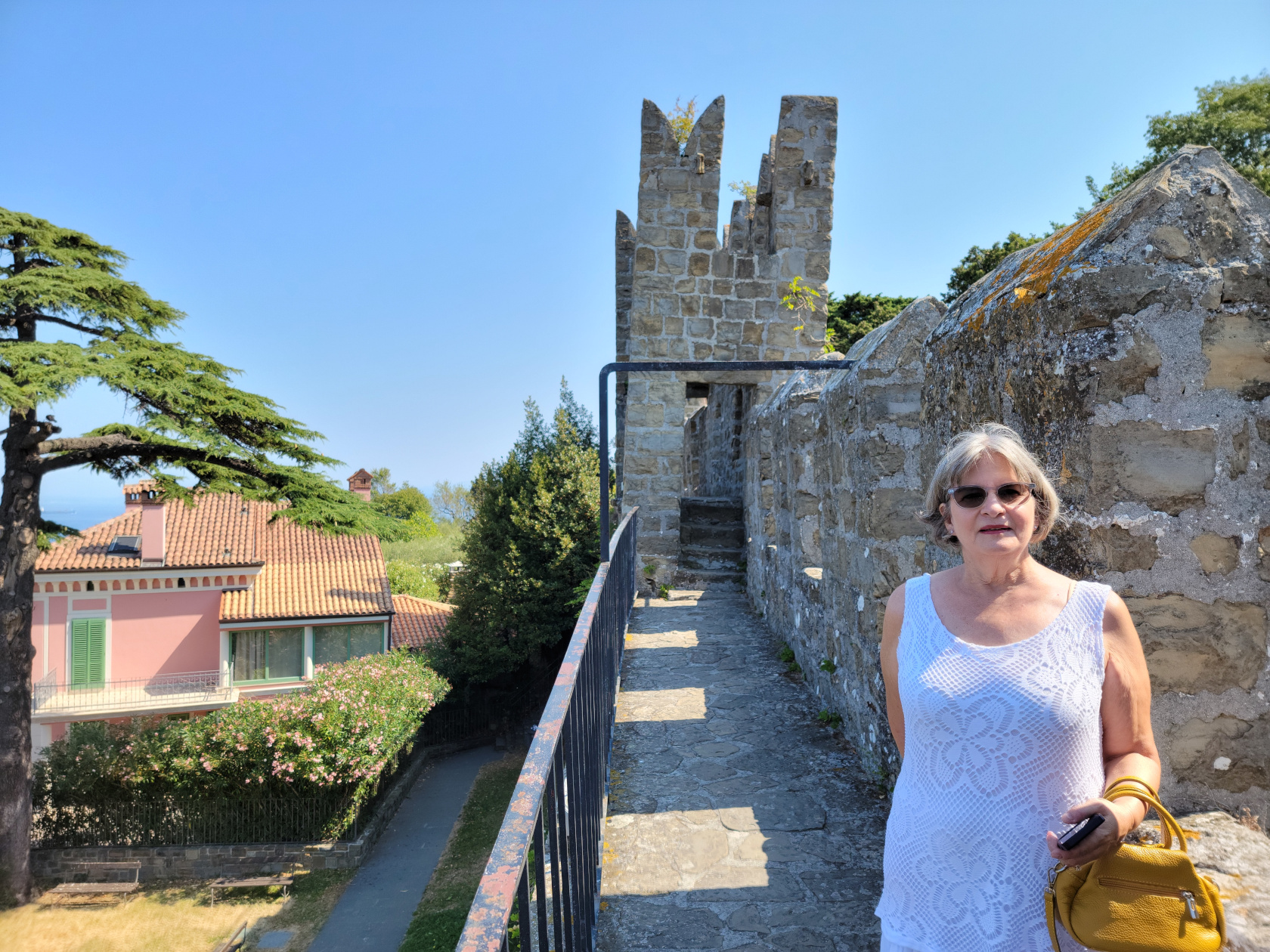
Piran – The City Wall – Patti on the wall
Piran – The City Wall – View of other section
Piran – The City Wall
Piran – The City Wall
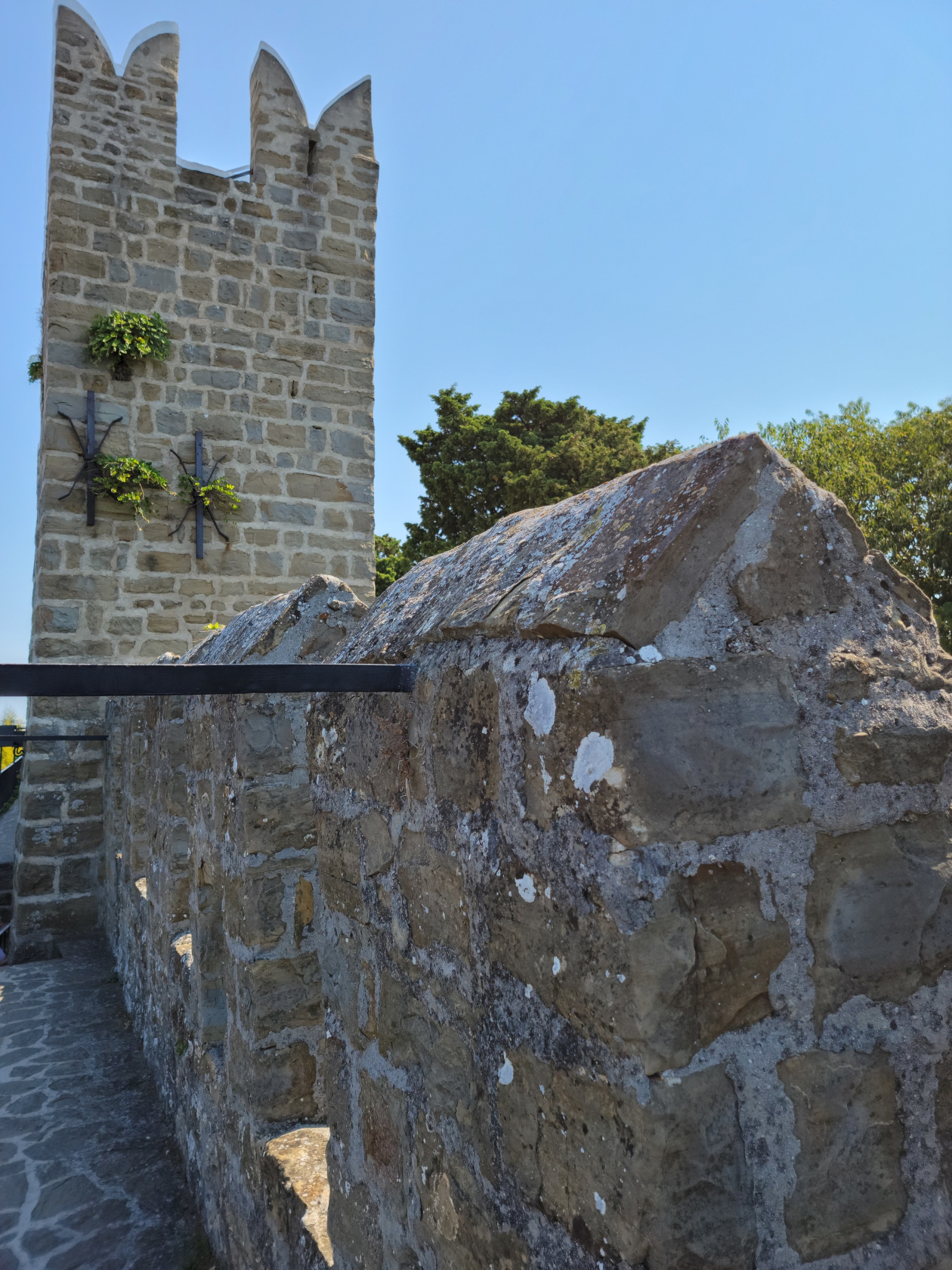
There isn’t really that much to see, aside from its stone masonry and the views it affords to the surrounding area and town.
Piran – The City Wall – View
Piran – The City Wall – View Below
Piran – The City Wall – View of Piran
Piran – The City Wall – The Town Below
Piran – The City Wall – View of the Adriatic
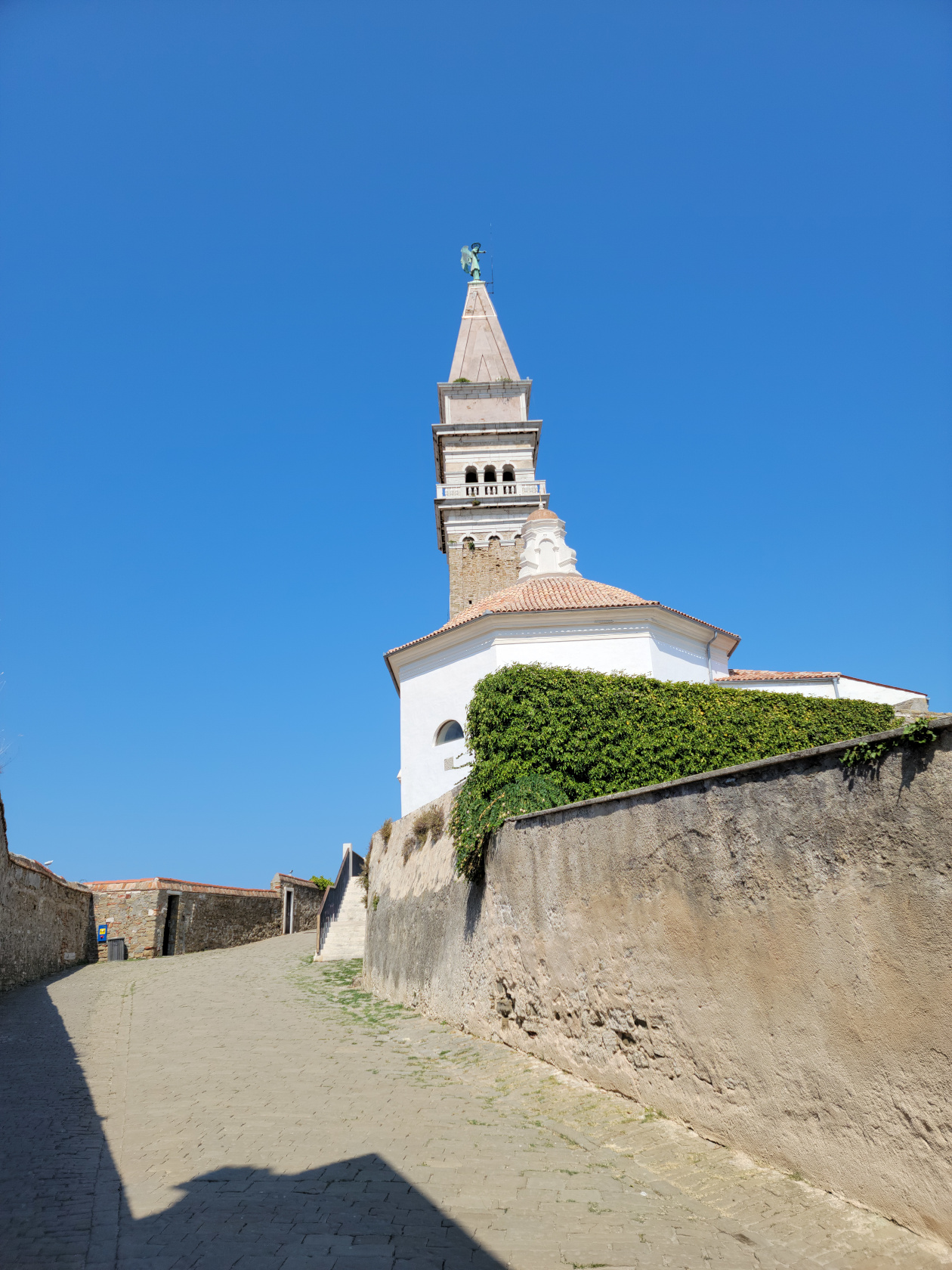
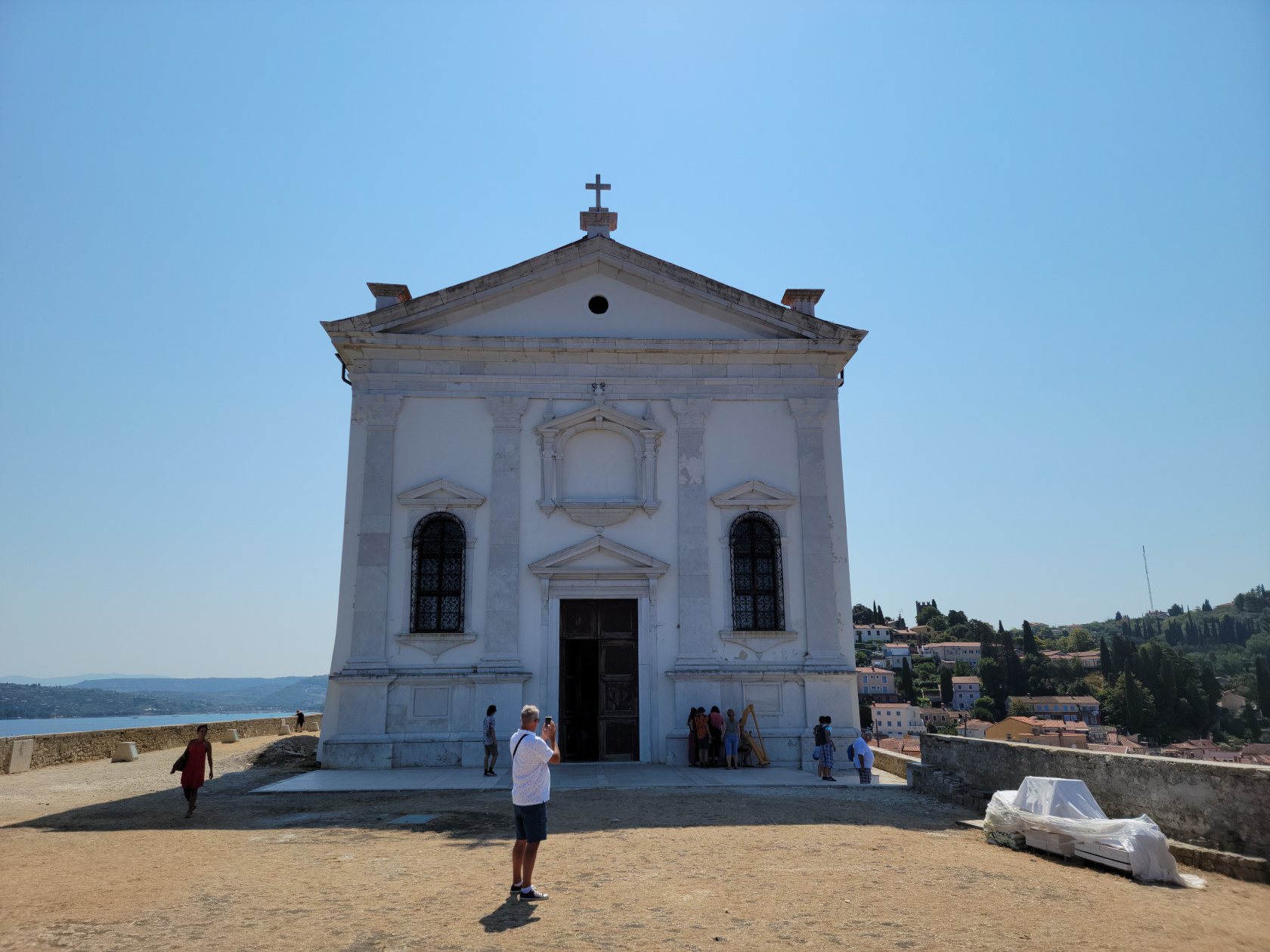
The Church Of Saint George’s Parish
The church stands on the west side of the town on top of the hill overlooking the Gulf of Trieste. From its courtyard, Trieste can be seen in the distance, as well as Miramare Castle.
Piran – Saint George’s Church
Piran – Saint George’s Church
Restaurants
While here, we only had occasion to visit one restaurant for lunch, since we were due to be picked back up at one o’clock in the afternoon.
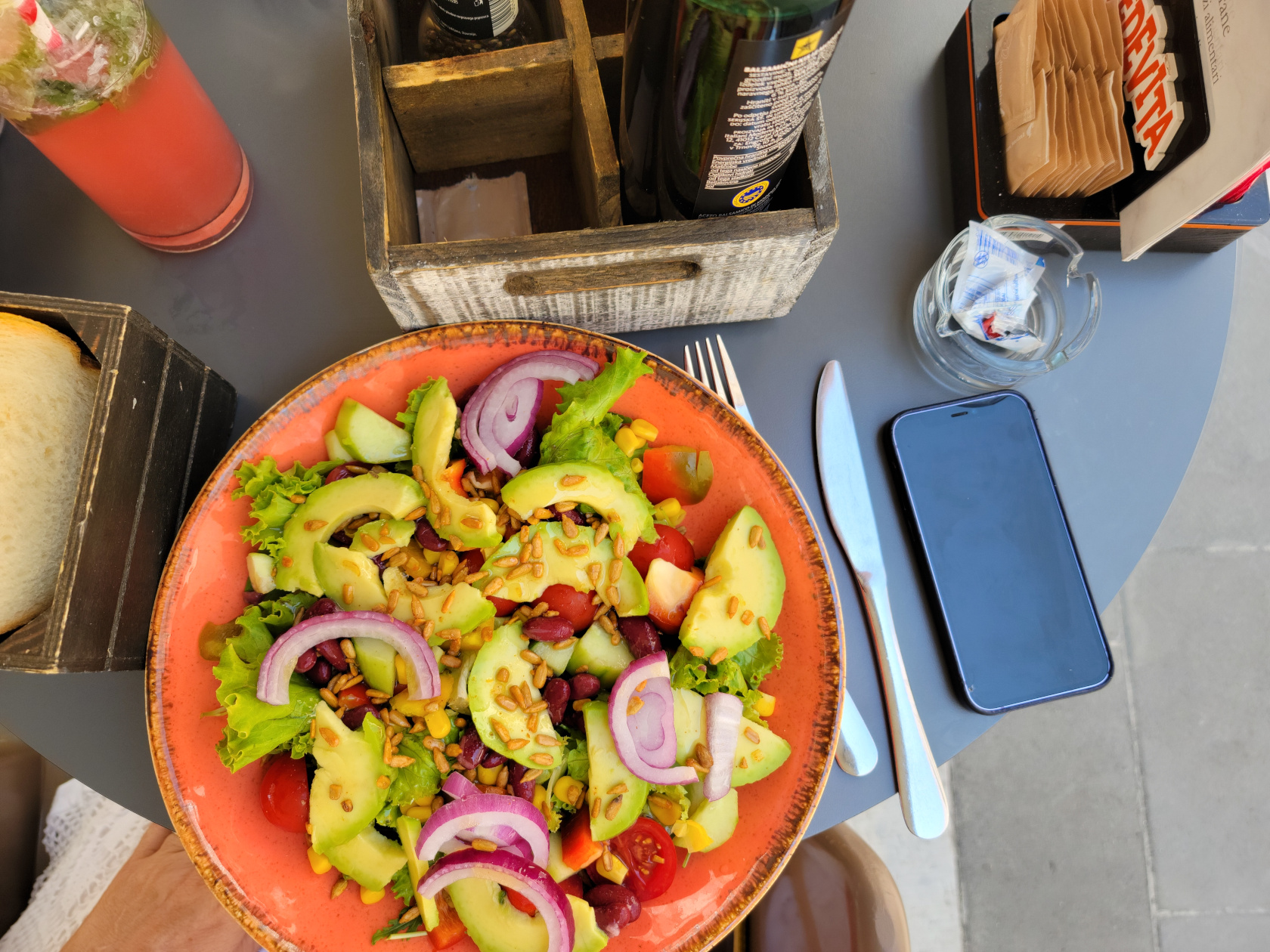
Ristorante Mestna Kavarna
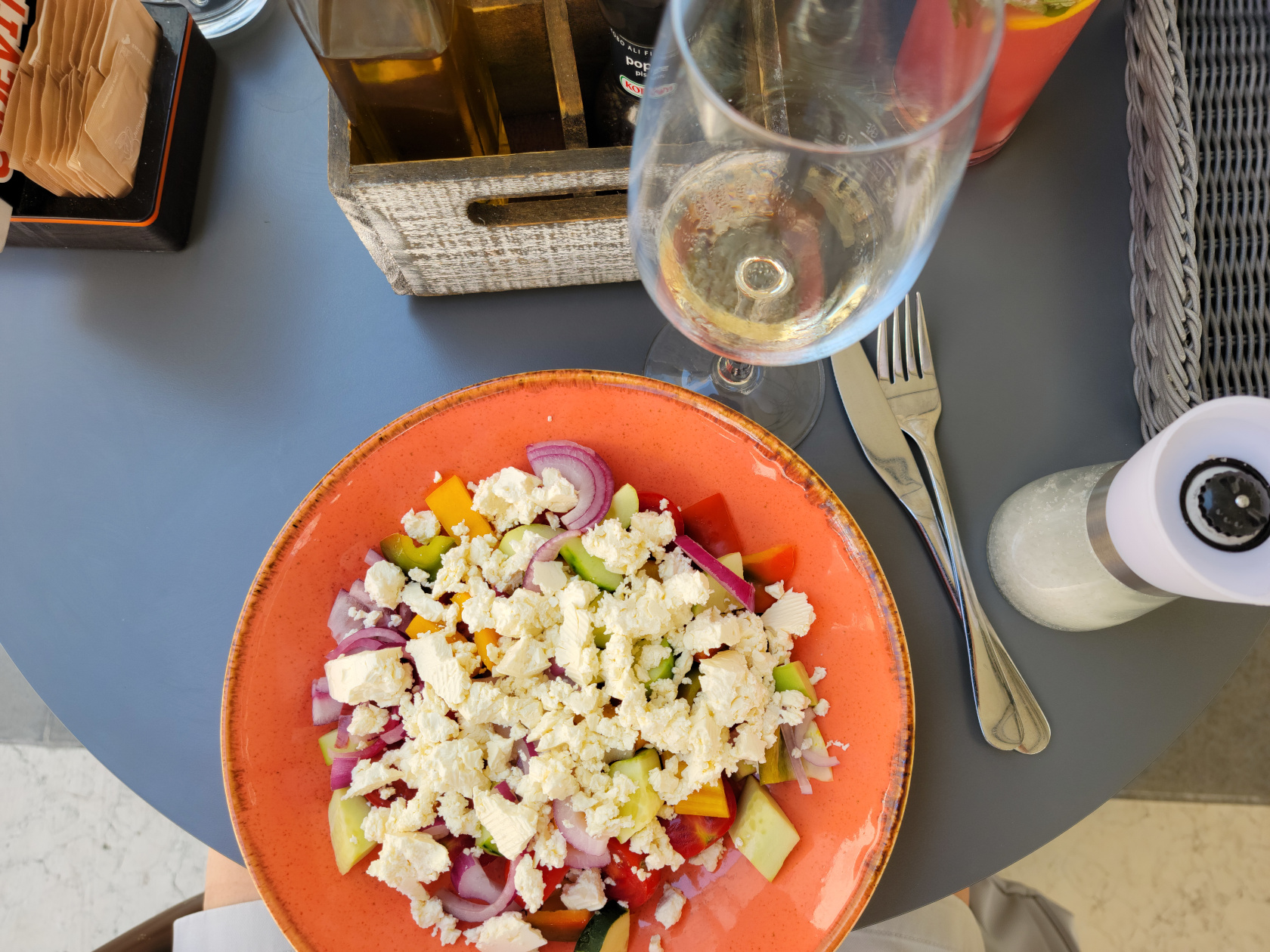
A fusion of wine bar and restaurant, the Mestna Kavarna caters to most tastes. It offers many simple things, including salads and paninis, and of course wide selection of drinks. We found something to satisfy us before our ride arrived.
Before our time here was over, we still had several remaining places throughout Trieste in which to visit. Mainly the waterfront further down along the marina, a few piazzas, the XX September and the Victoria Lighthouse.
XX September
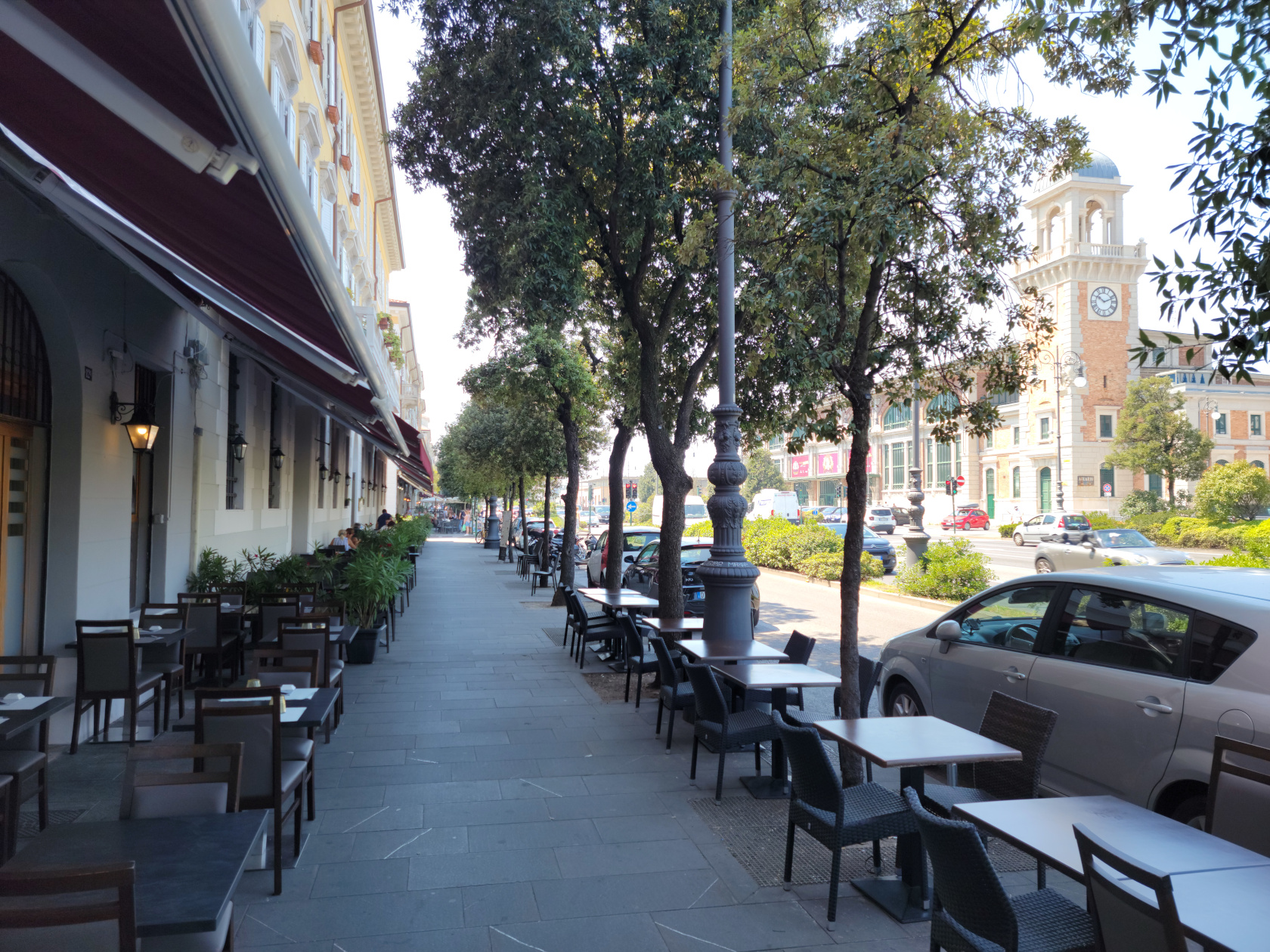
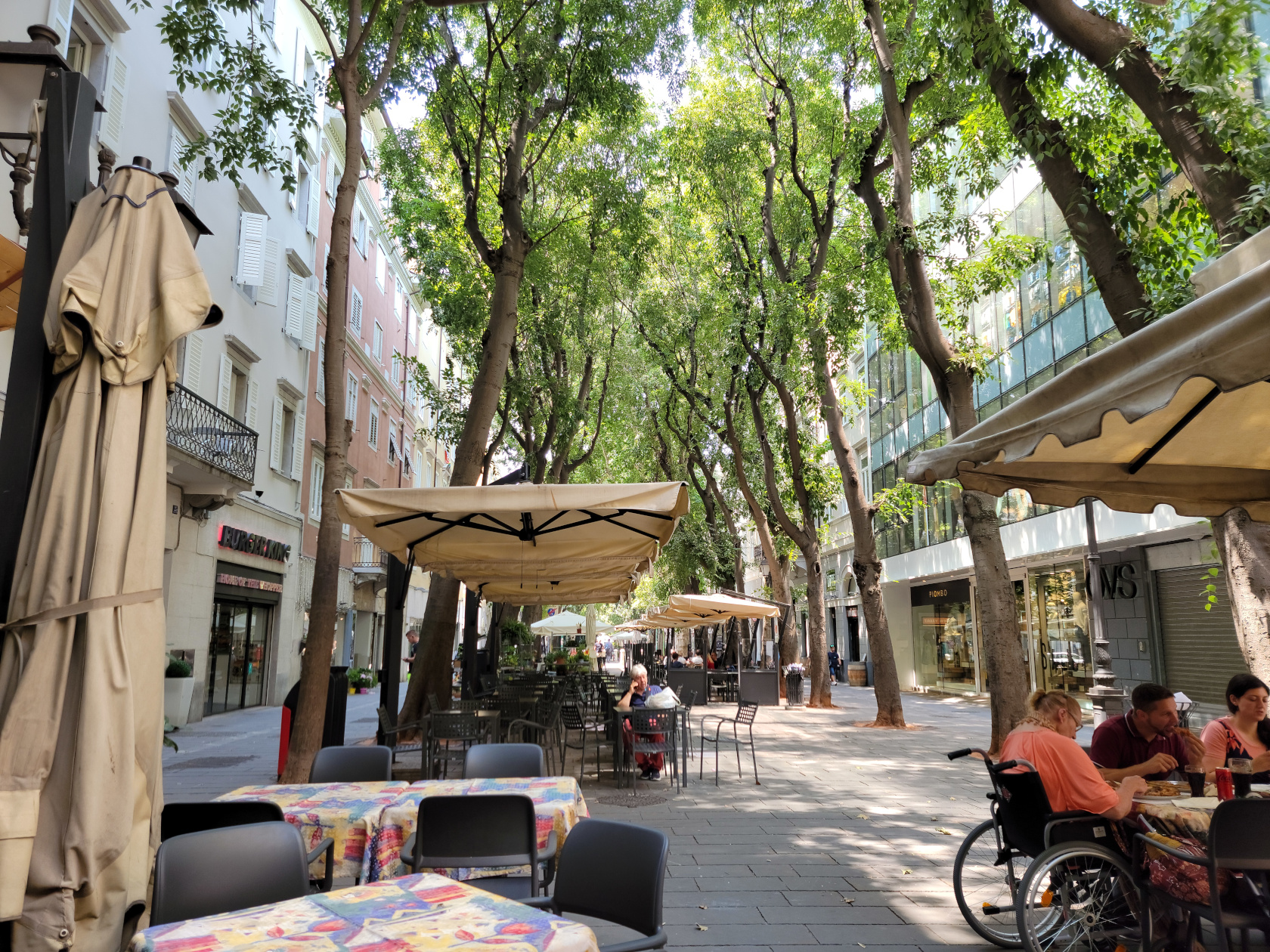
A beautiful avenue on which to shop, eat or just walk on a hot day (it is covered with trees, so there is plenty of shade). We found time to visit this street a few times, since the train and bus stations we use were more or less inline with it. See restaurants section for more information on possible places to eat.
Trieste – Fountain of the Two-Faced Janus
Trieste – More via XX September
Trieste – More via XX September – Flower Shop
If you are looking for something off-beat to eat, fast food or eclectic stores to shop, this is the street.
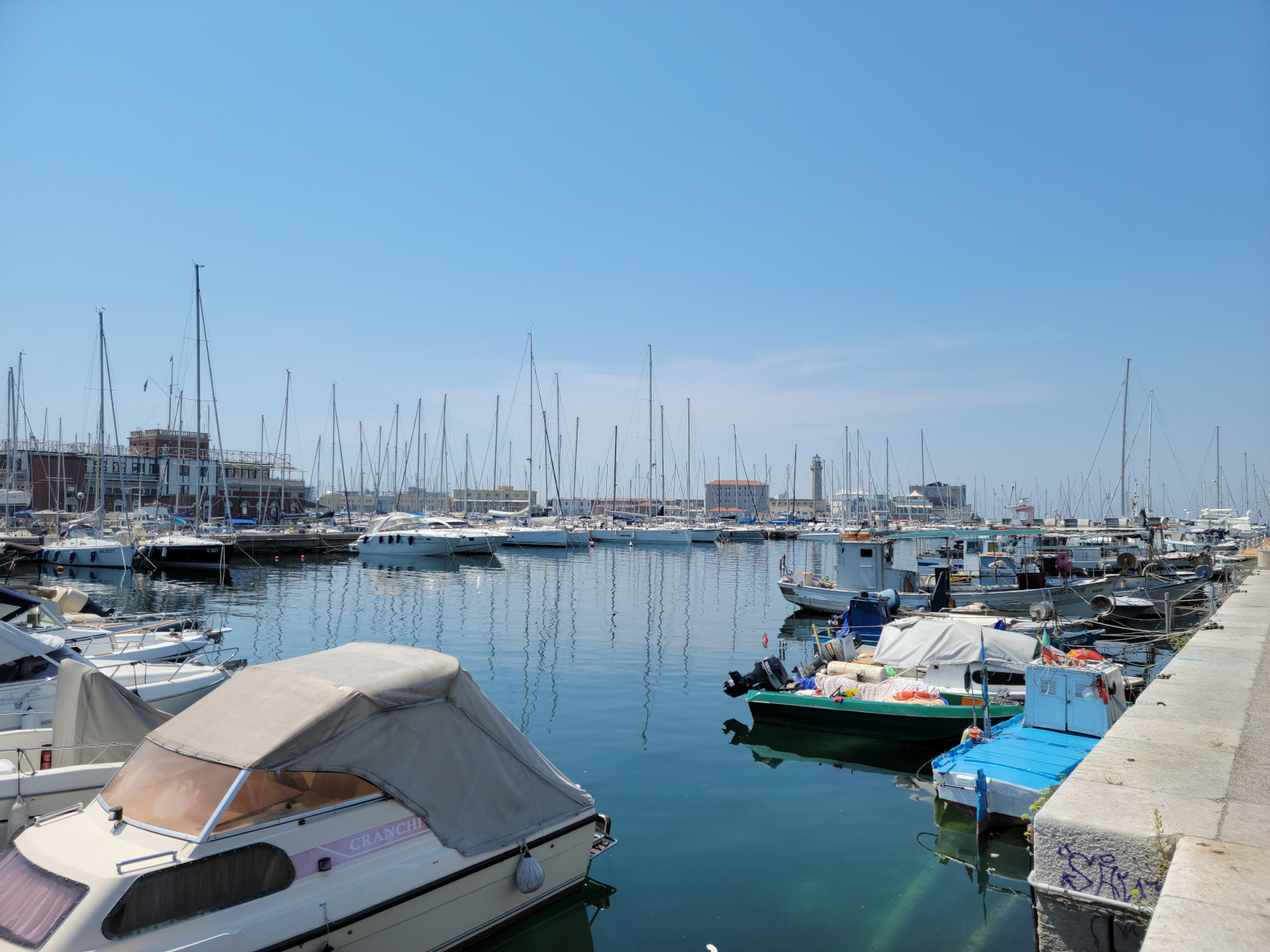
The Marina
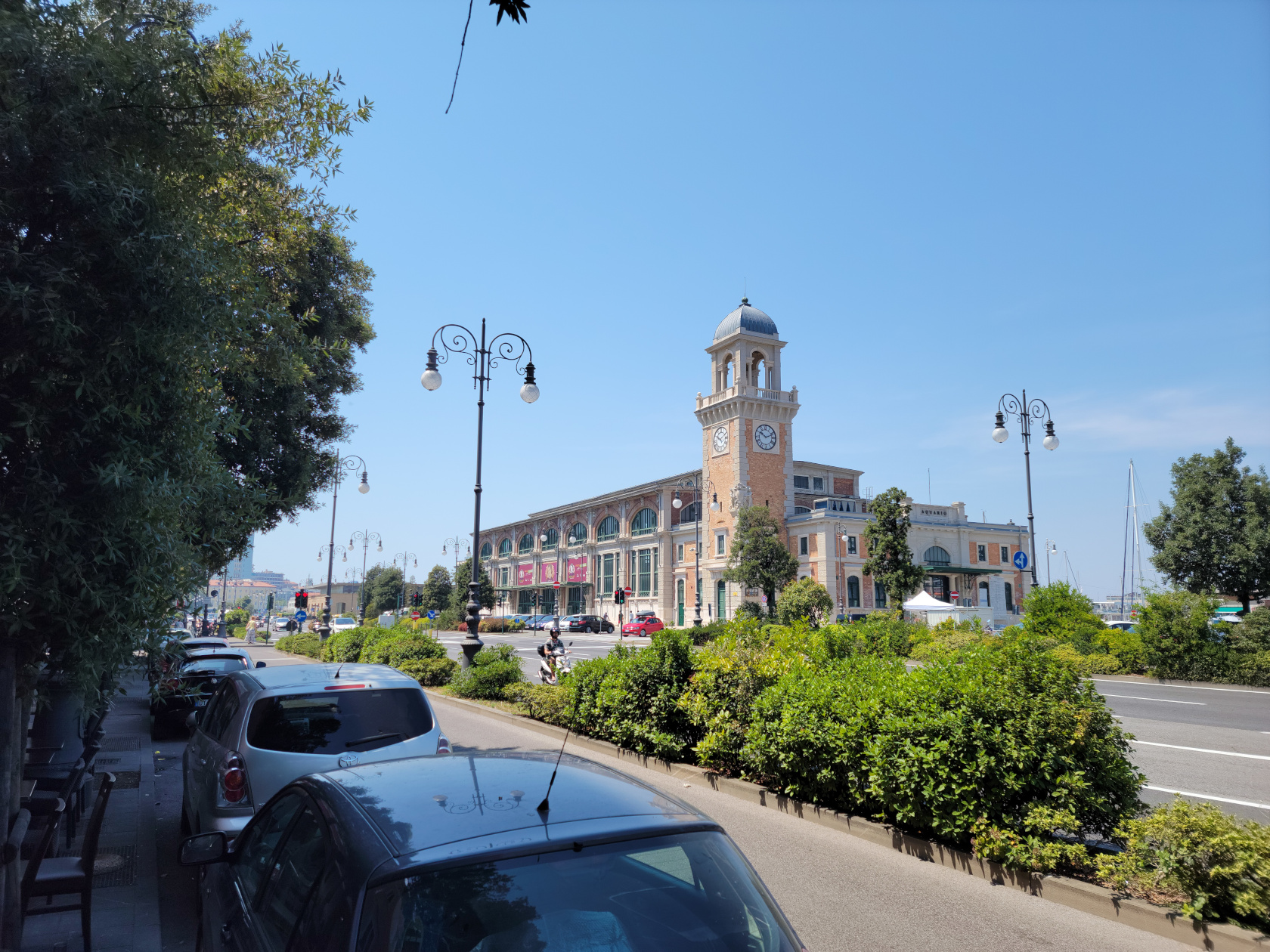
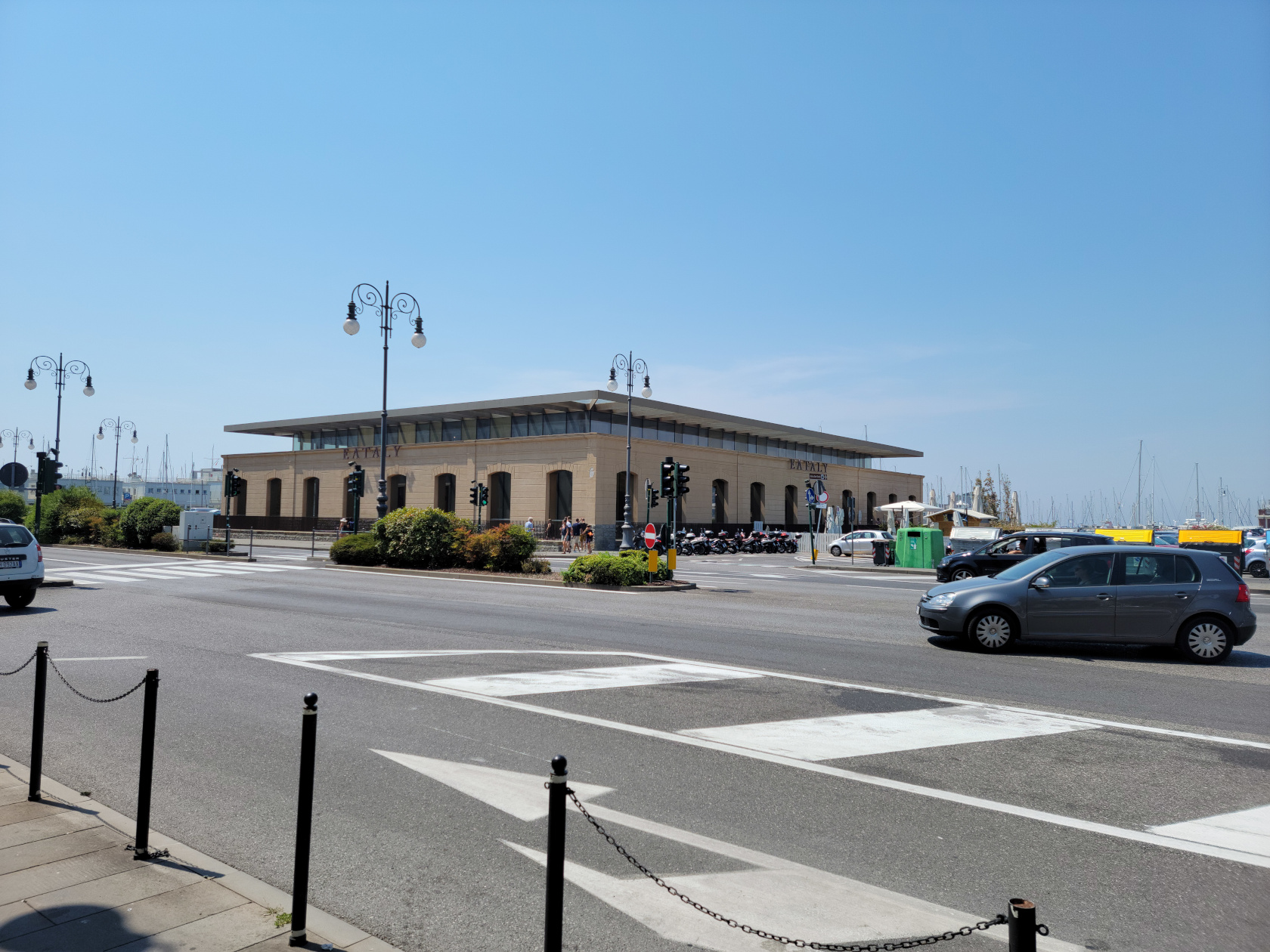
There are several things to note at the marina, as well as the very large cruise ships that come into port on the weekends to visit. Though the Aquarium is closed for renovation, there are still shops and restaurants along this waterfront in which to enjoy.
Trieste – The Trieste Aquarium
Trieste – Riva Nazario Sauro – Along The Waterfront
Trieste – Statue of the Archduke Ferdinand Maximillian – Remember Miramare Castle?
Trieste – Eataly Store
Trieste – Marina and Lighthouse
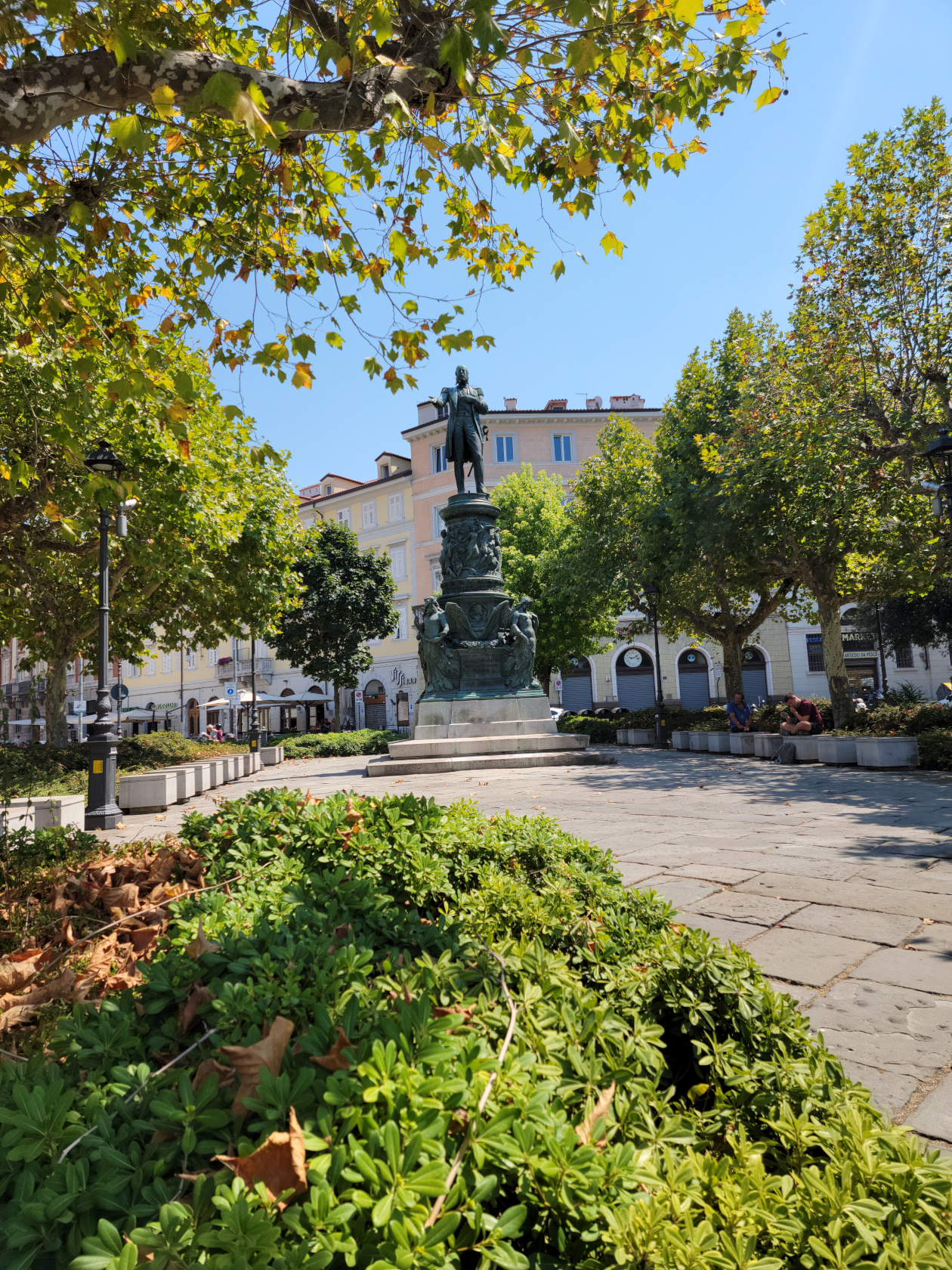
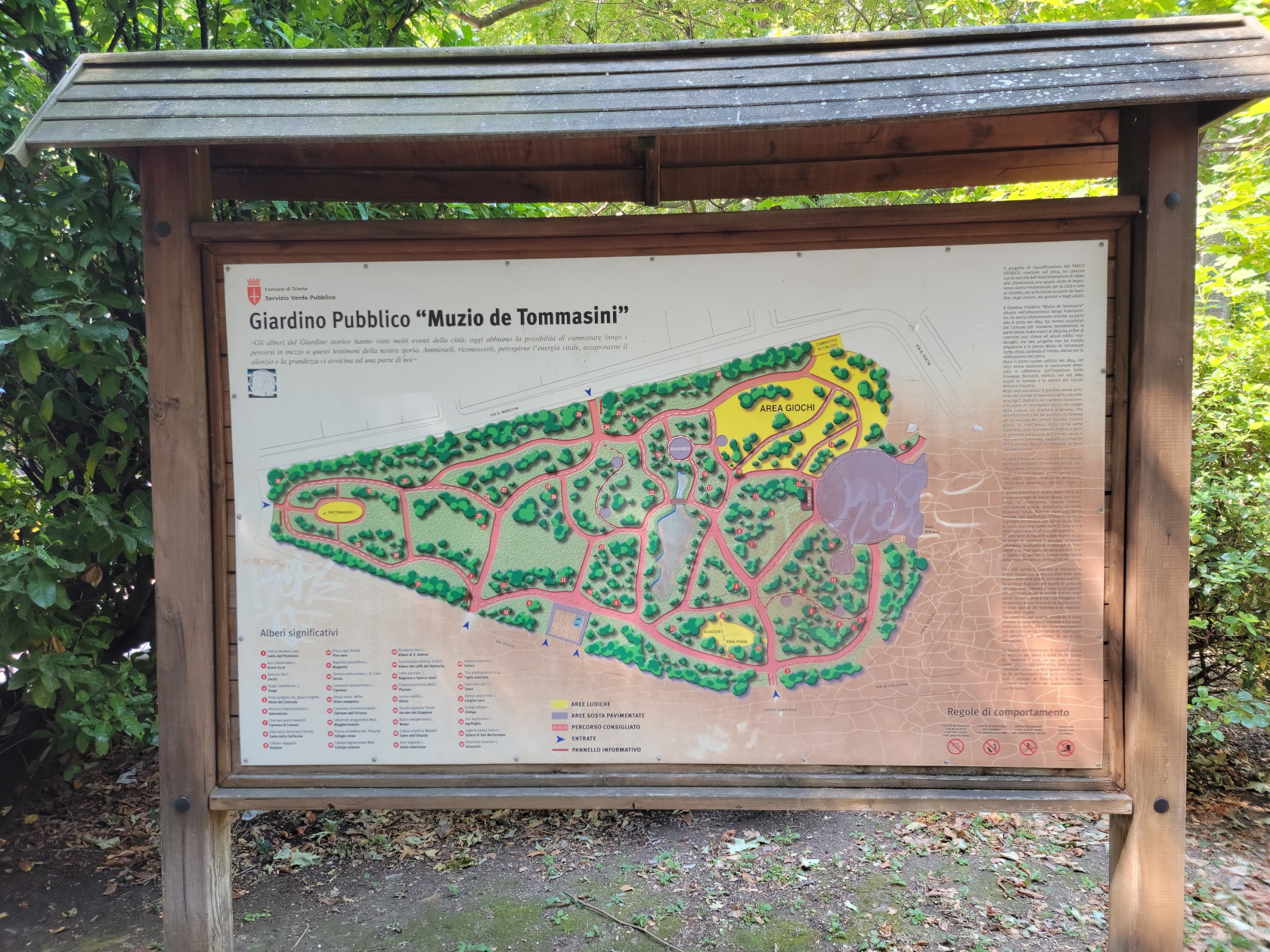
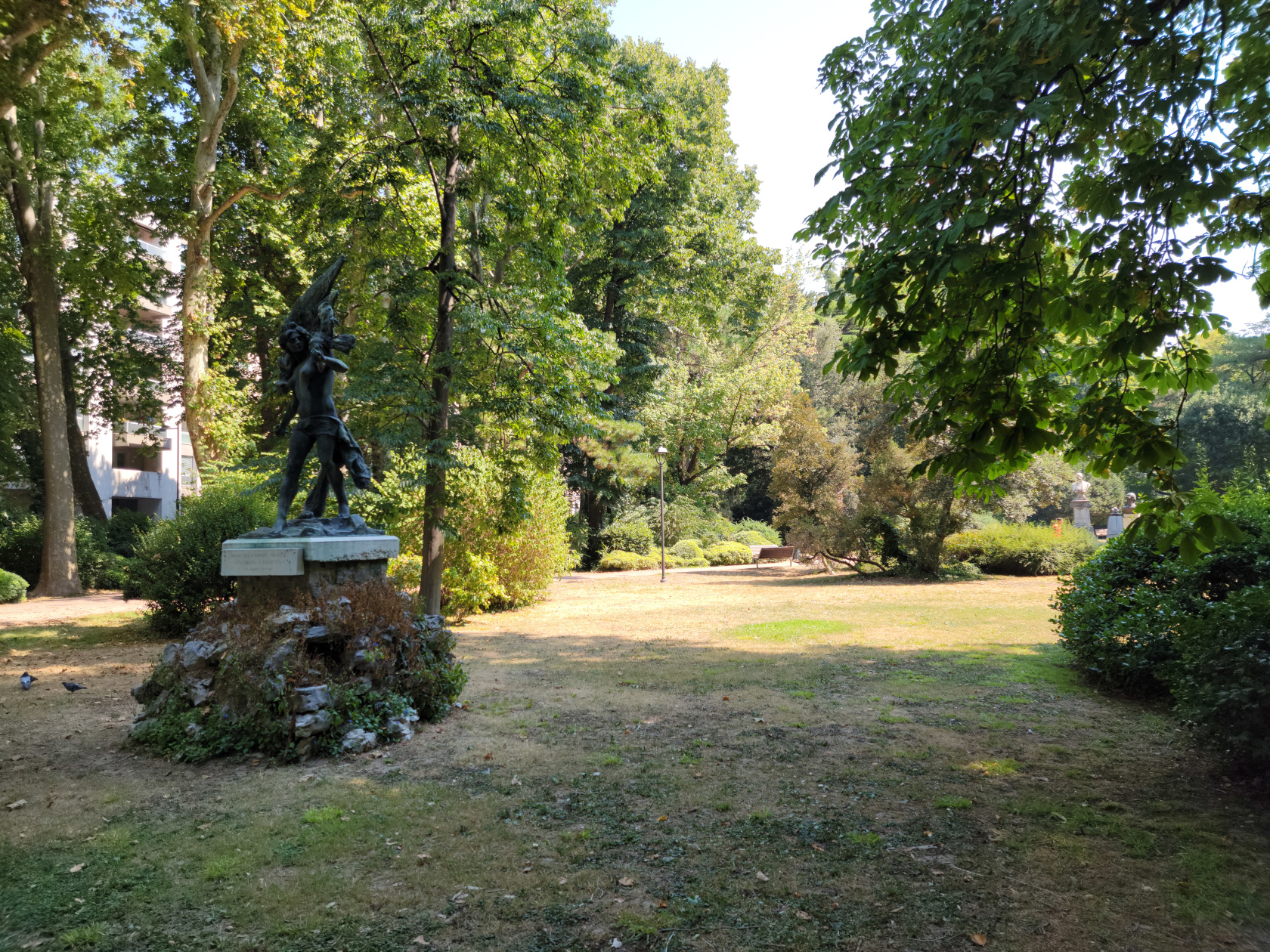
The Muzio de Tommasini Park
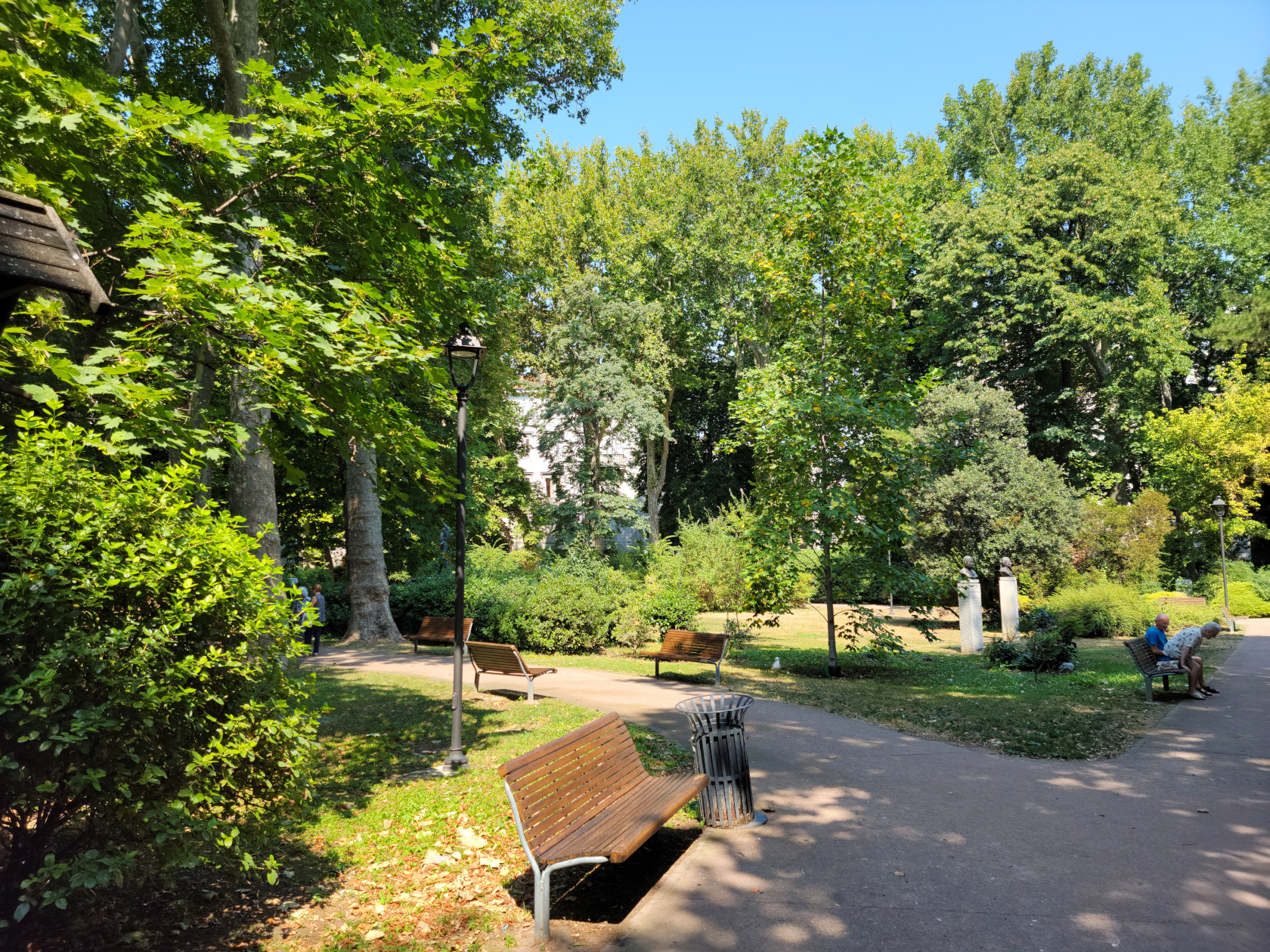
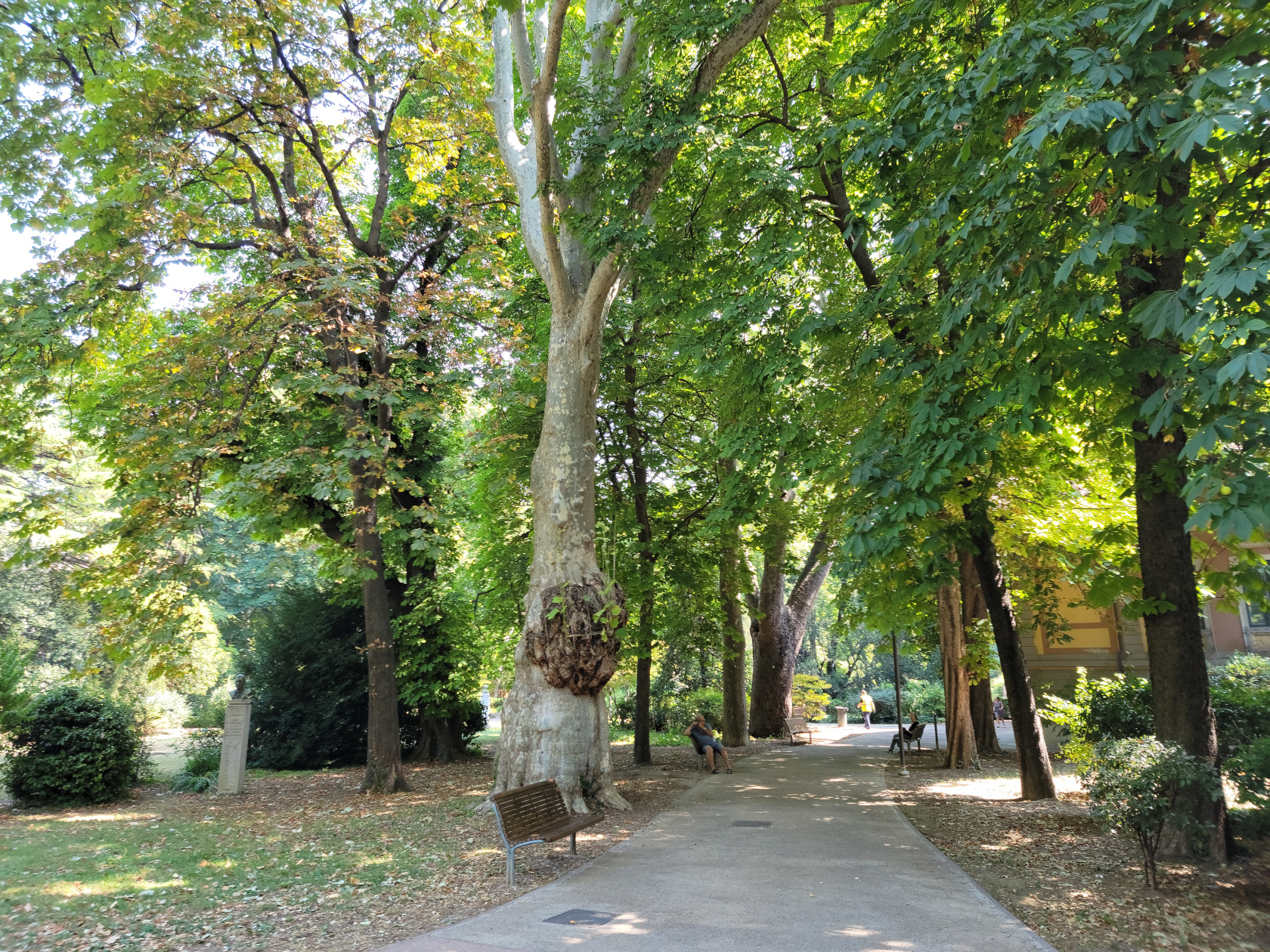
Located very near the Piazza Oberdan is the park Muzio de Tommasini. A beautiful park with several bronze sculptors visitors can enjoy, awaits you here.
Trieste – Muzio de Tommasini Public Park
Trieste – Muzio de Tommasini Public Park
Trieste – Muzio de Tommasini Public Park
Trieste – Muzio de Tommasini Public Park
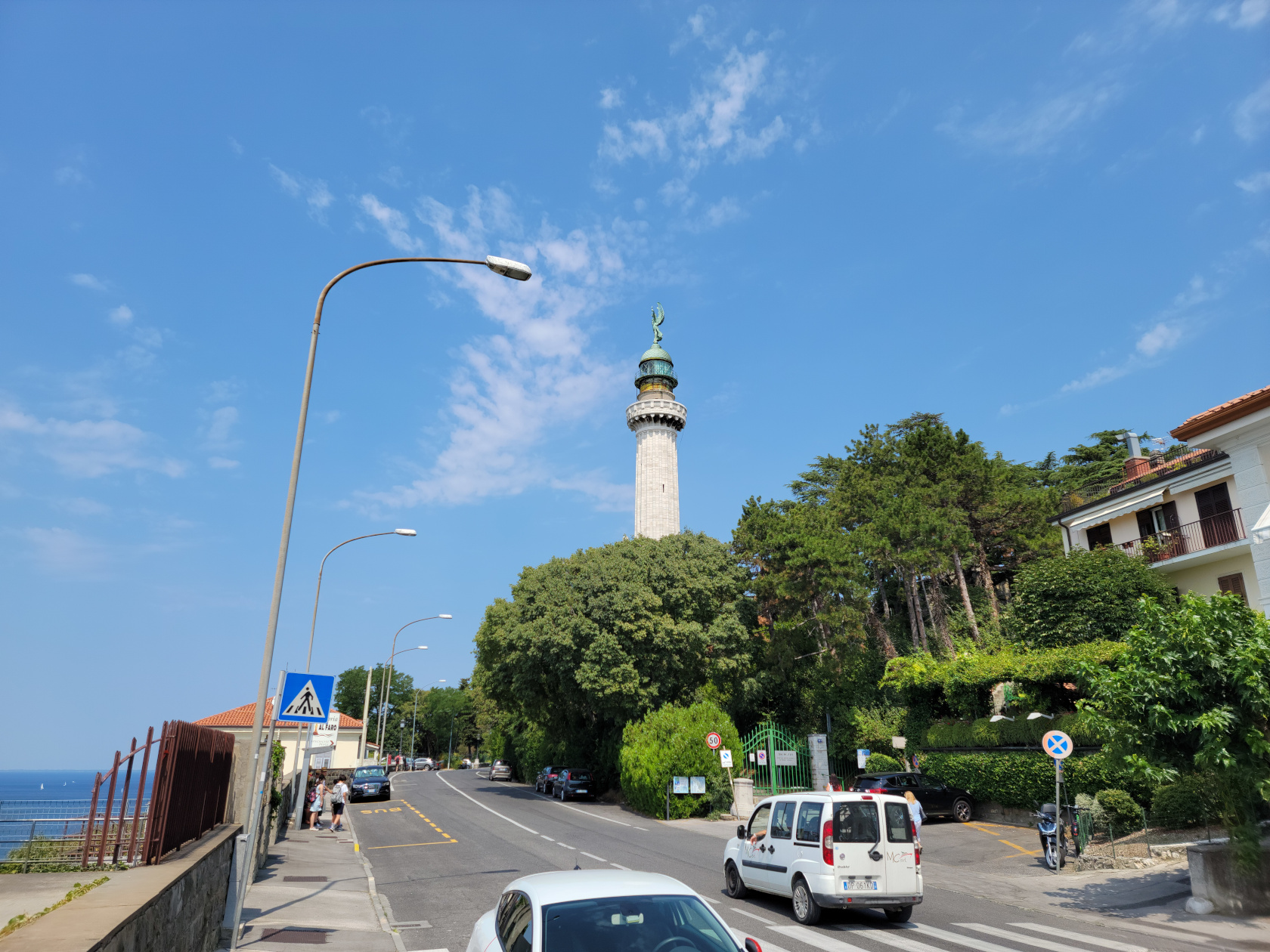
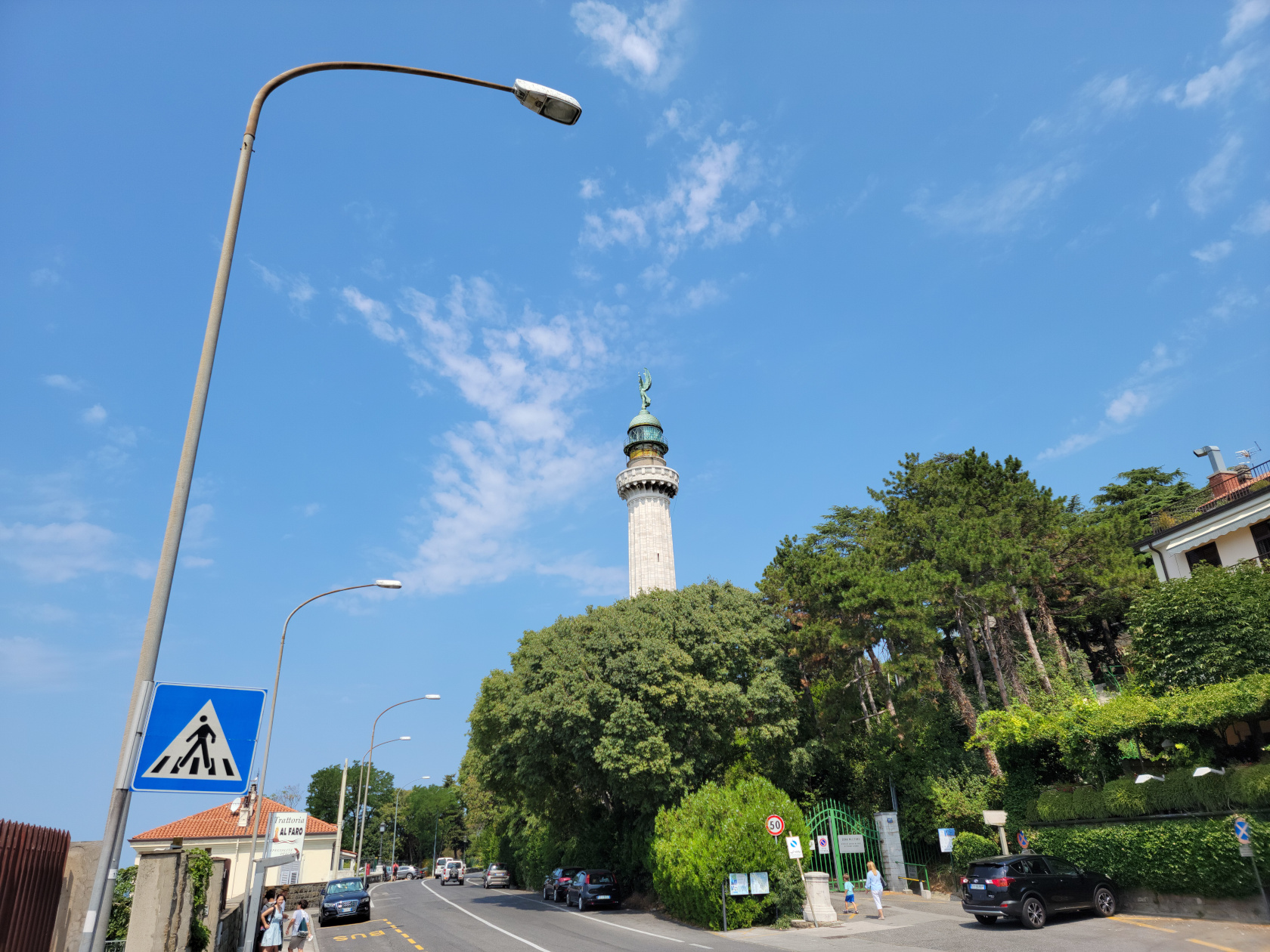
The Faro Della Vittoria Lighthouse
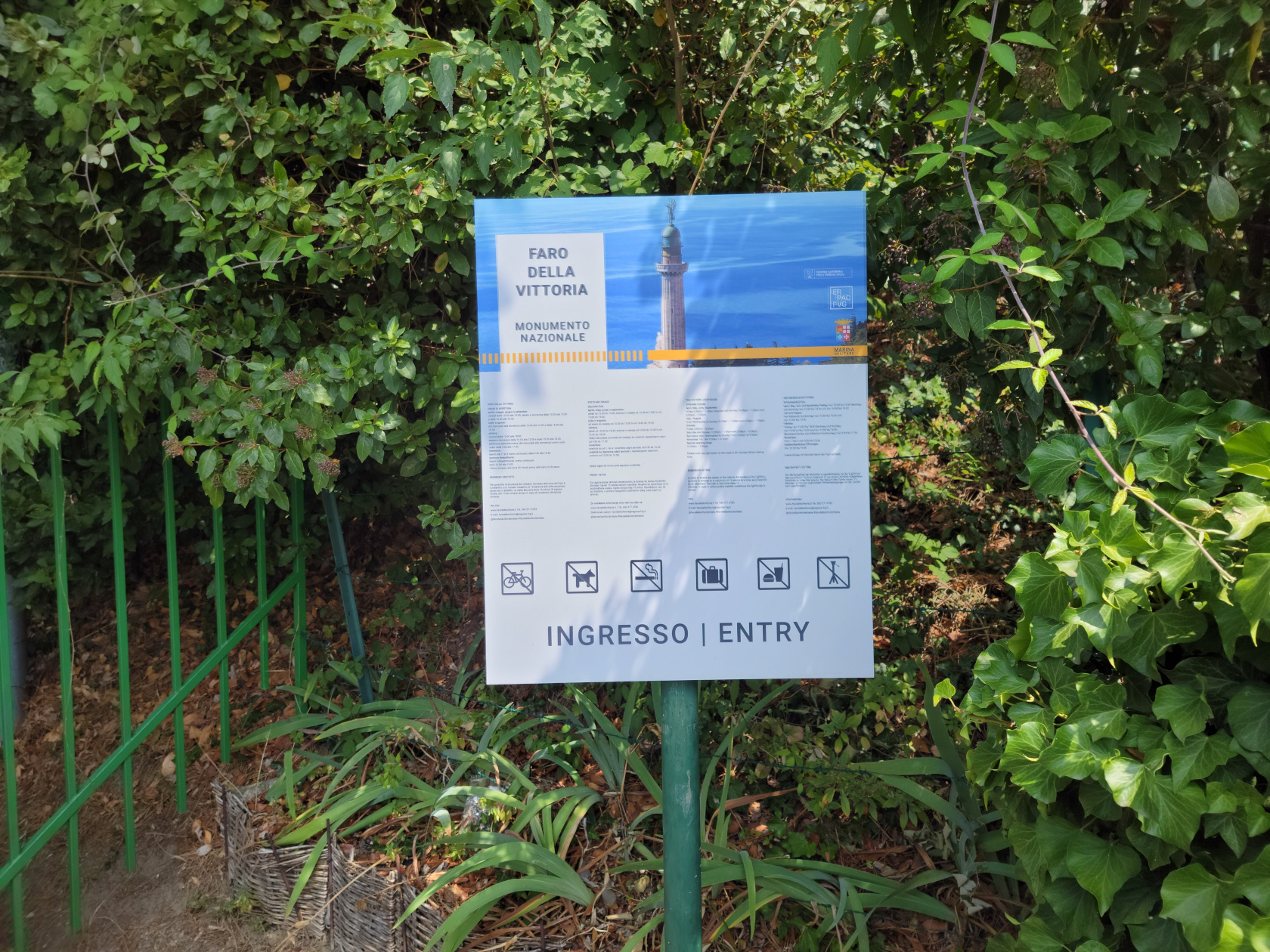
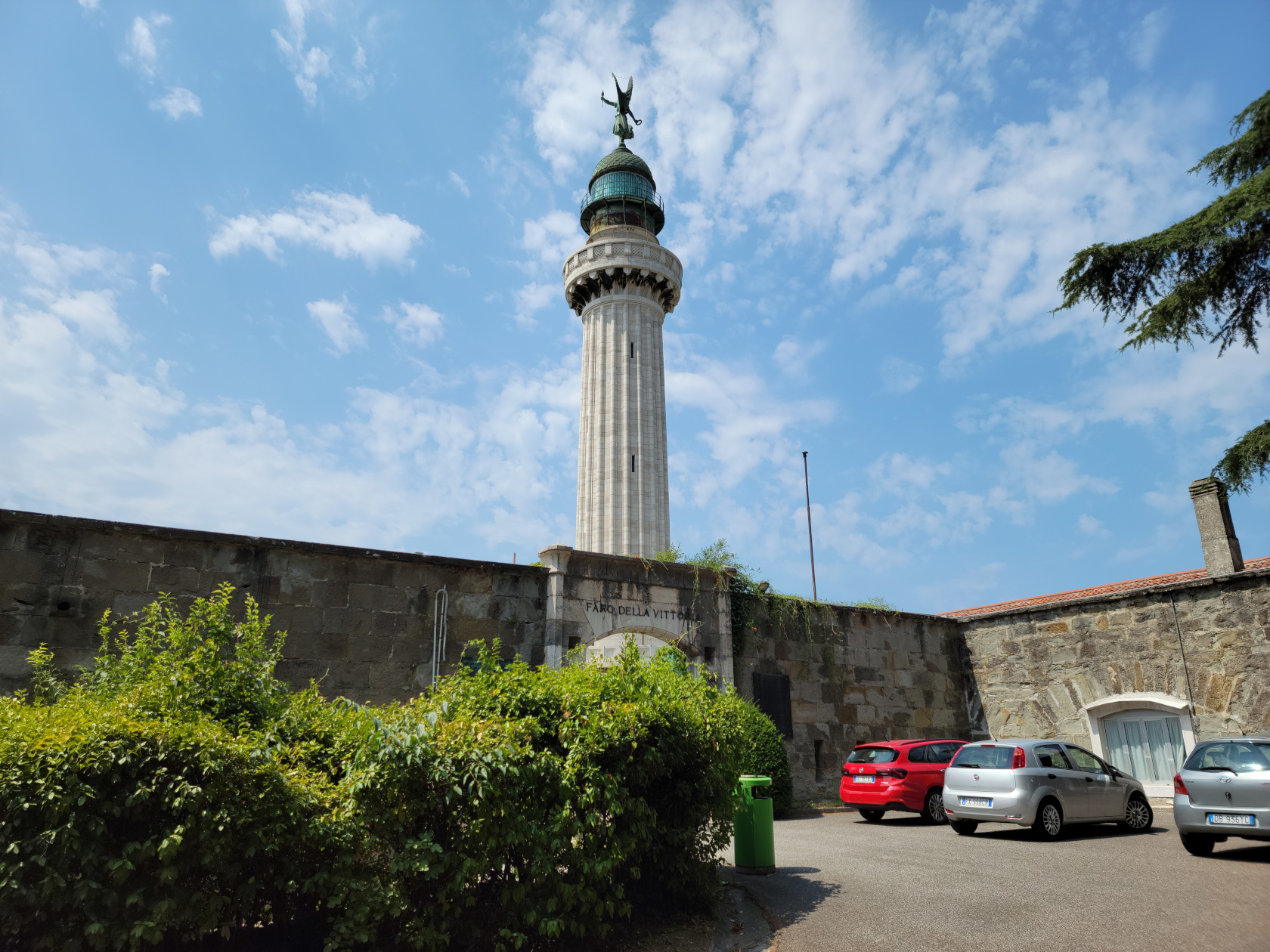
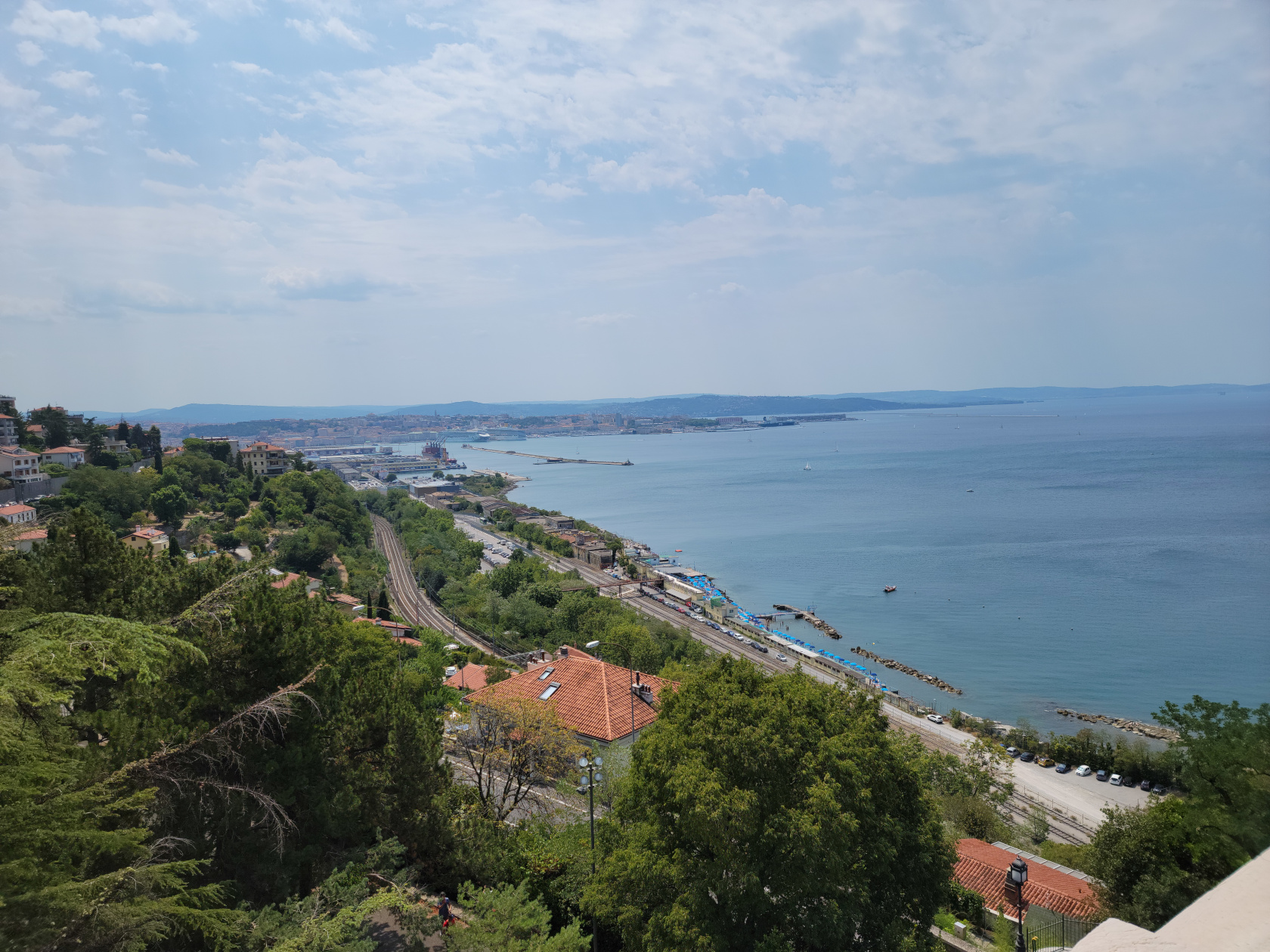
In order to reach the Faro della Vittoria lighthouse, you either have to drive, or take a taxi or bus, there is no train service to it.
Trieste – Tickets For Two – All Day Bus Tickets
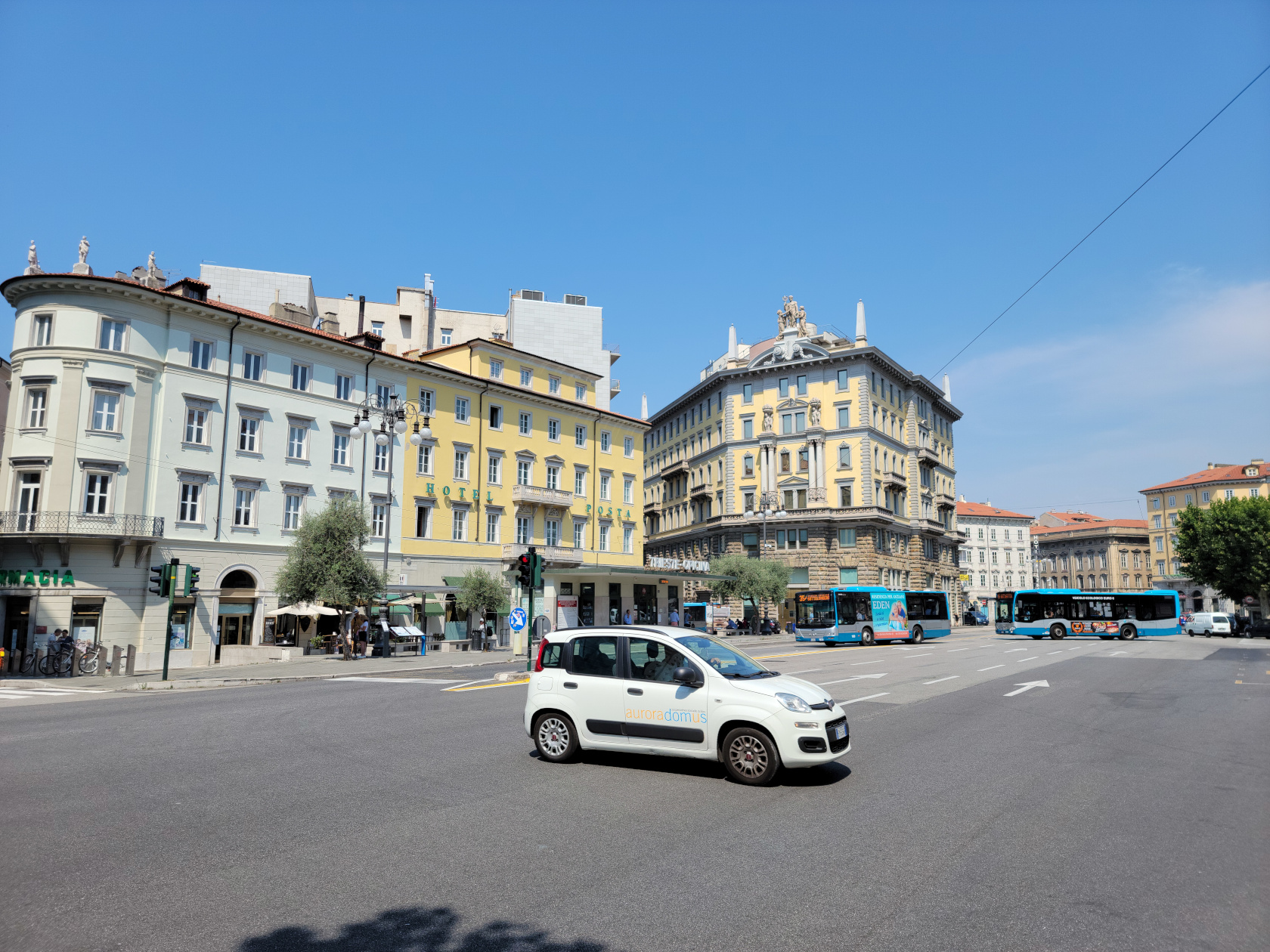
Trieste – Piazza Oberdan – Main Bus Stop
Buses 42 and 44, from Piazza Oberdan, can take you here in twenty minutes for a modest fee of about one euro sixty. We purchased the all-day ticket for three euros each, which was actually cheaper, since it covered both going there and our return.
Trieste – Faro della Vittoria Lighthouse
Trieste – Faro della Vittoria Lighthouse
Trieste – Faro della Vittoria Lighthouse
Trieste – Faro della Vittoria Lighthouse
Trieste – Faro della Vittoria Lighthouse
Trieste – Faro della Vittoria Lighthouse
Trieste – Faro della Vittoria Lighthouse – Observation Platform View
Trieste – Faro della Vittoria Lighthouse – Observation Platform View
Trieste – Faro della Vittoria Lighthouse – Observation Platform View
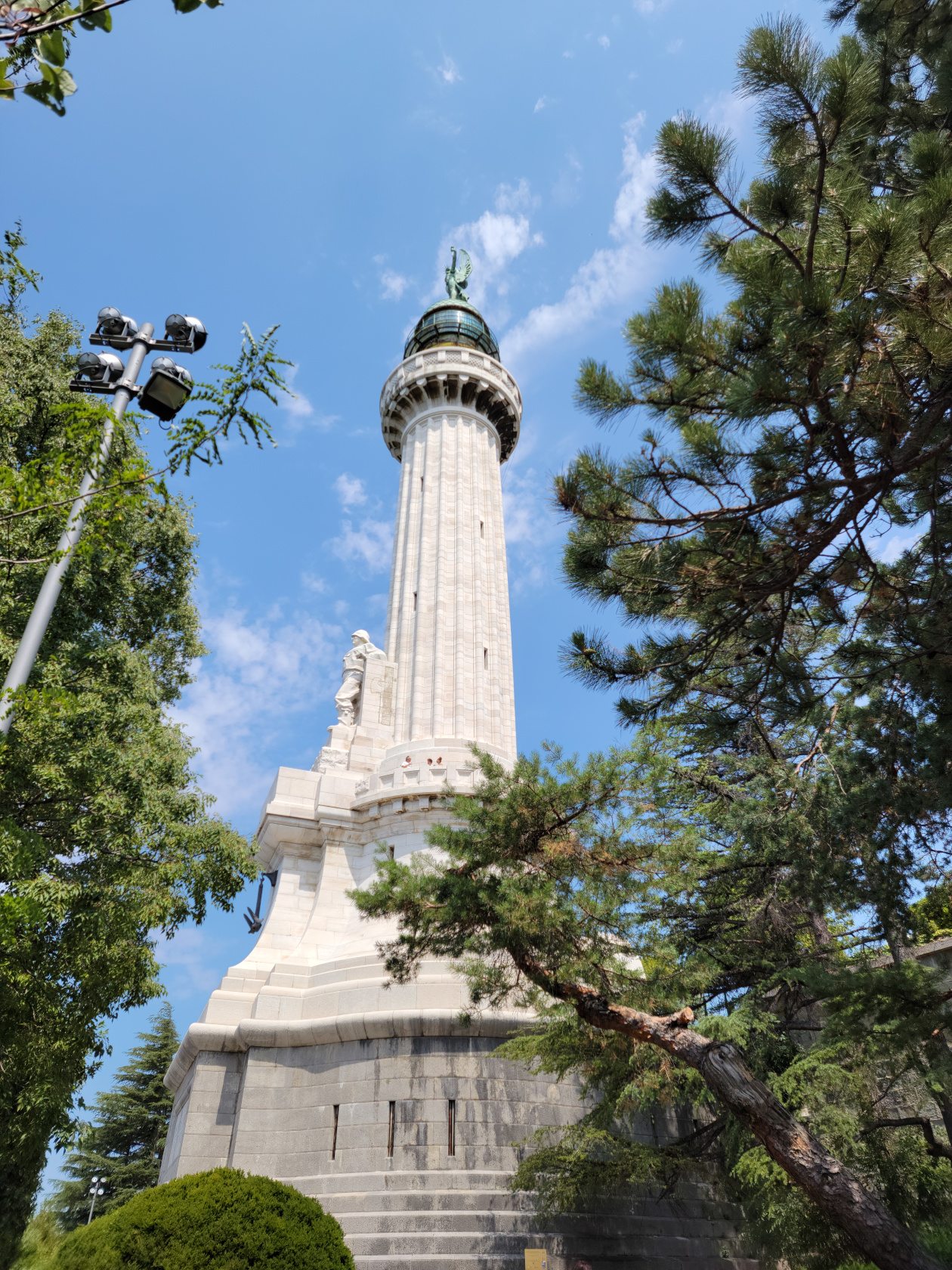
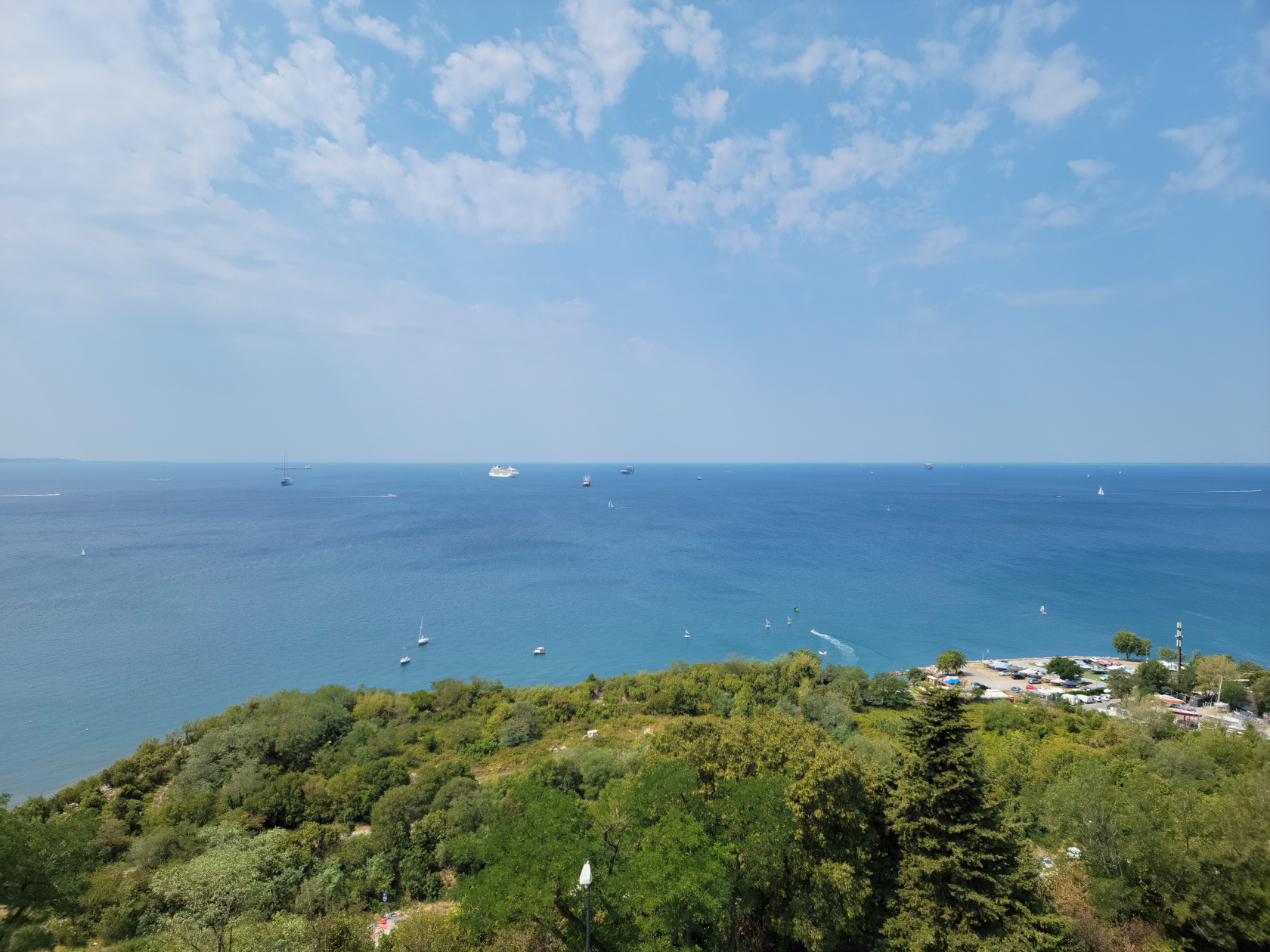
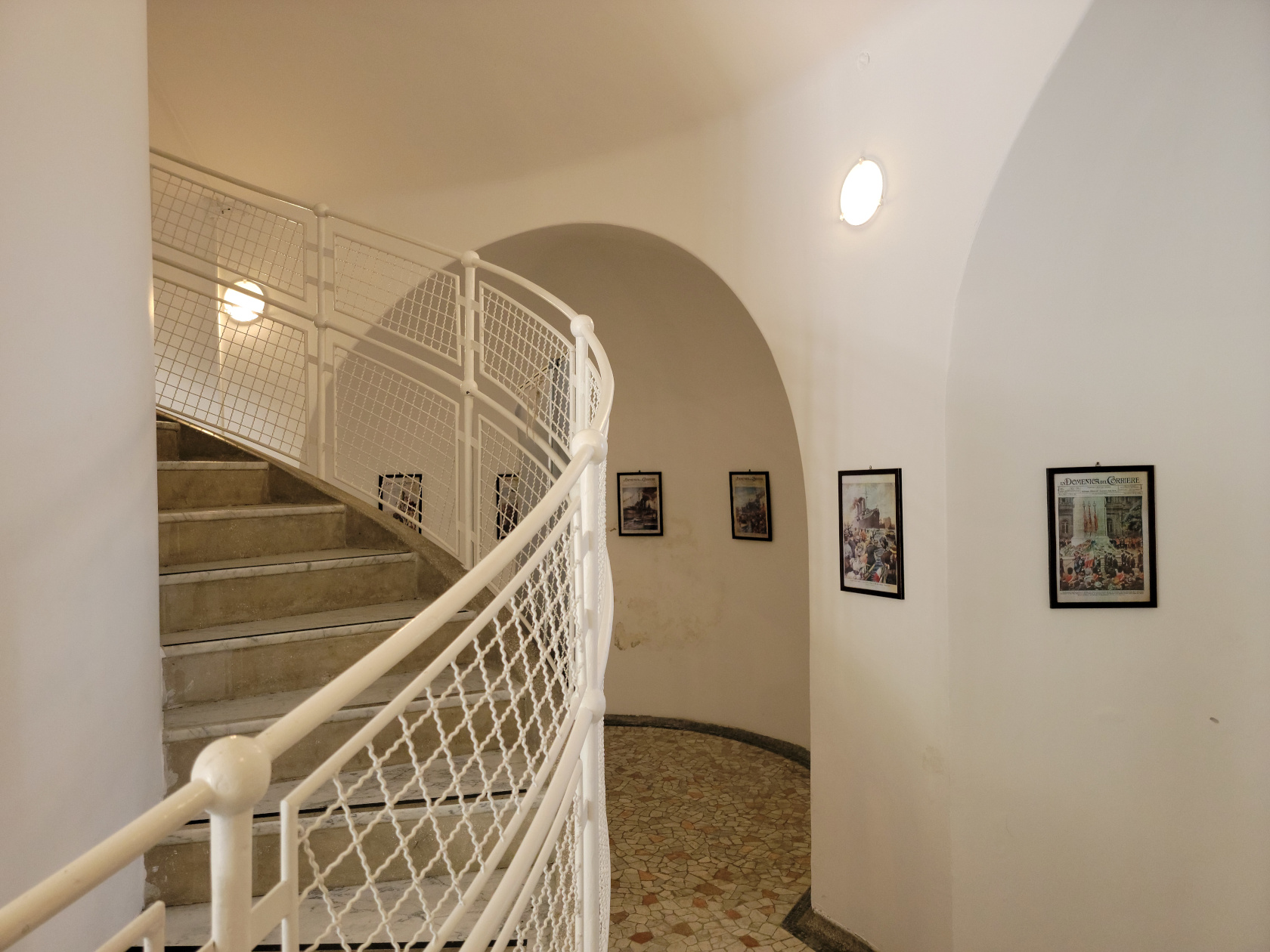
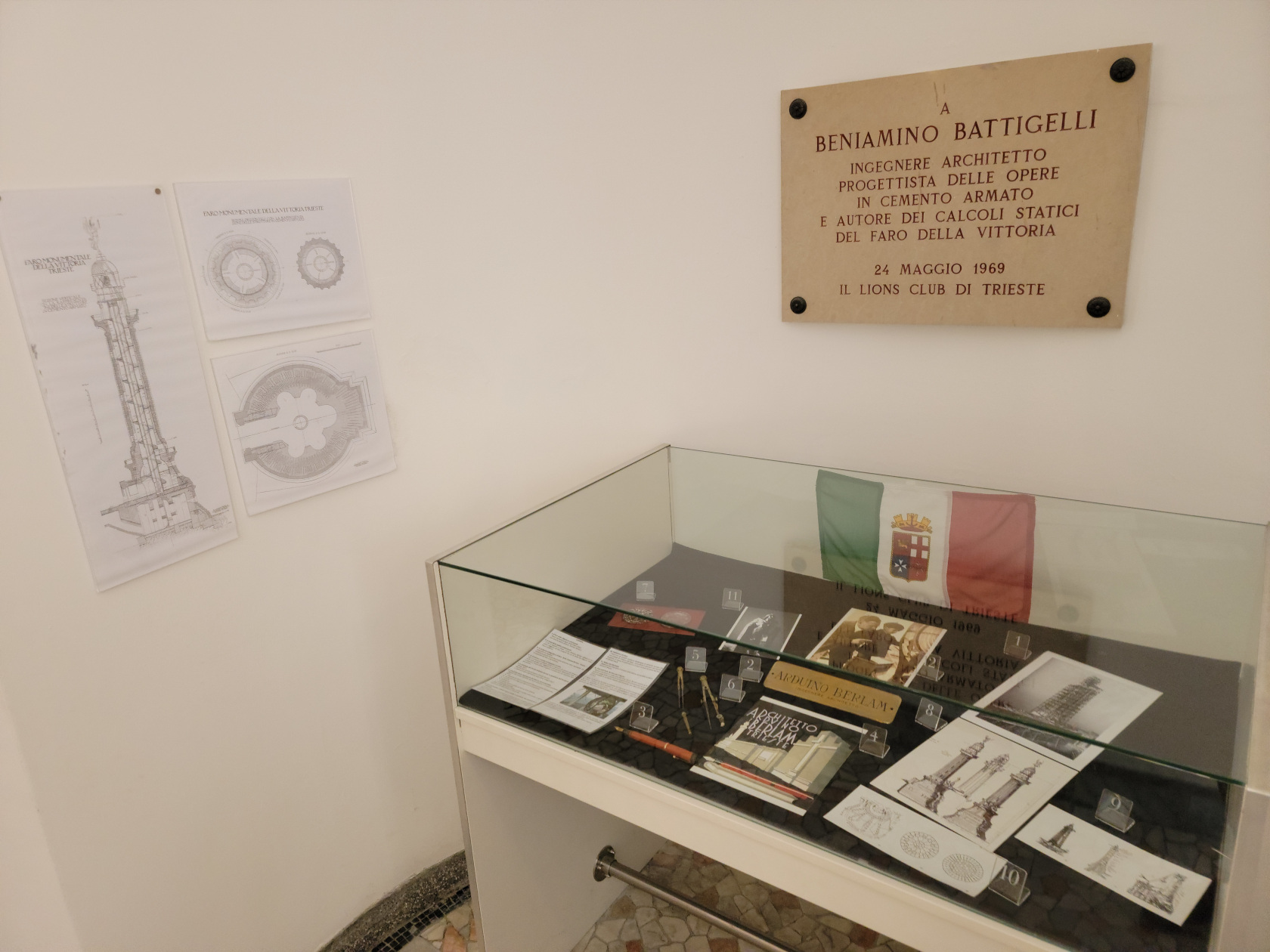
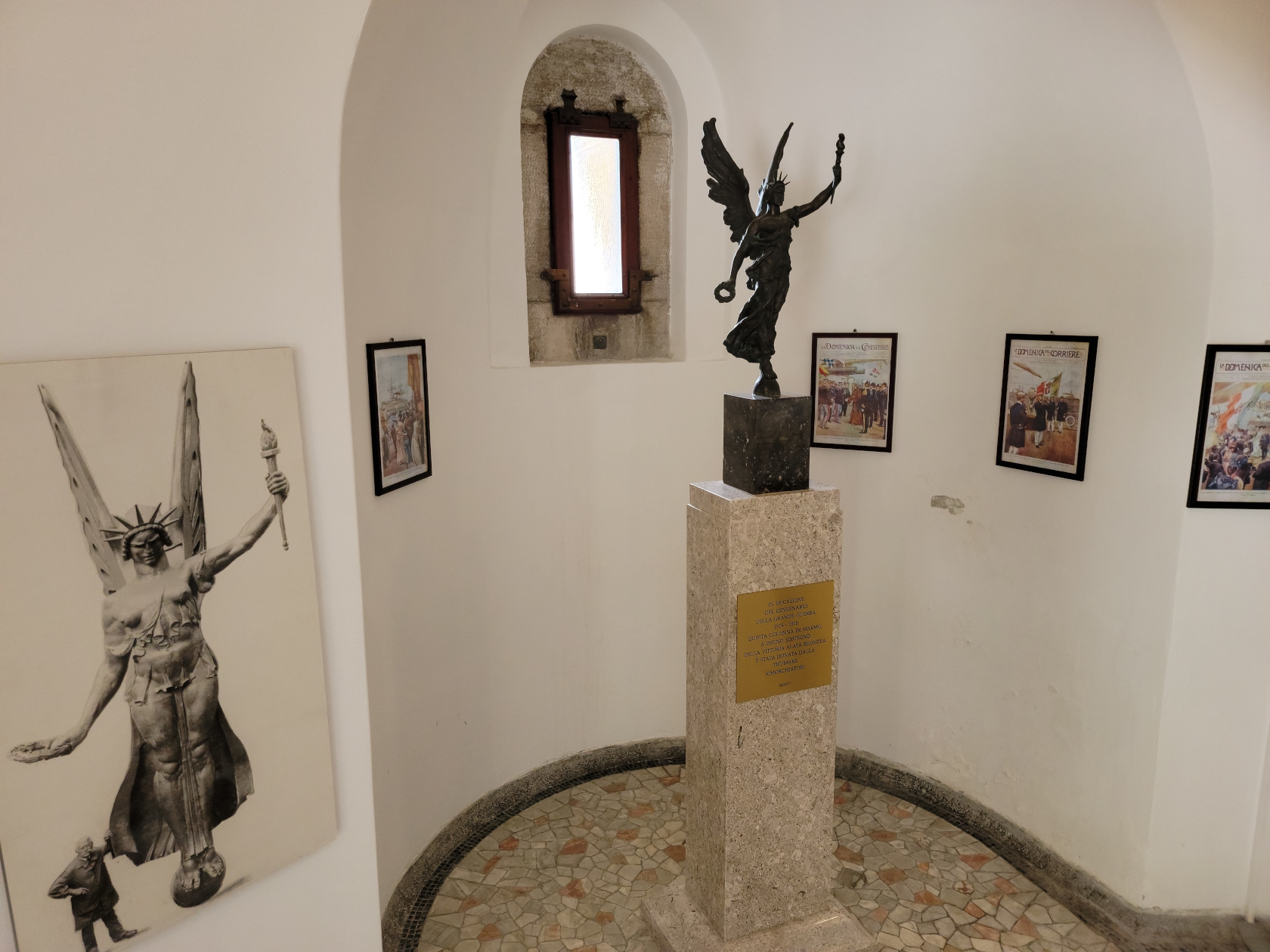
At over sixty meters in height, the lighthouse is one of the tallest in the world. Inside there is a small museum and the circular stairway that ascends to the first viewing deck, about fifty steps. Though we arrived during the weekend, the upper part of the lighthouse was no longer open.
Trieste – Faro della Vittoria Lighthouse – Museum Inside
Trieste – Faro della Vittoria Lighthouse – Museum Inside
Trieste – Faro della Vittoria Lighthouse – Museum Inside
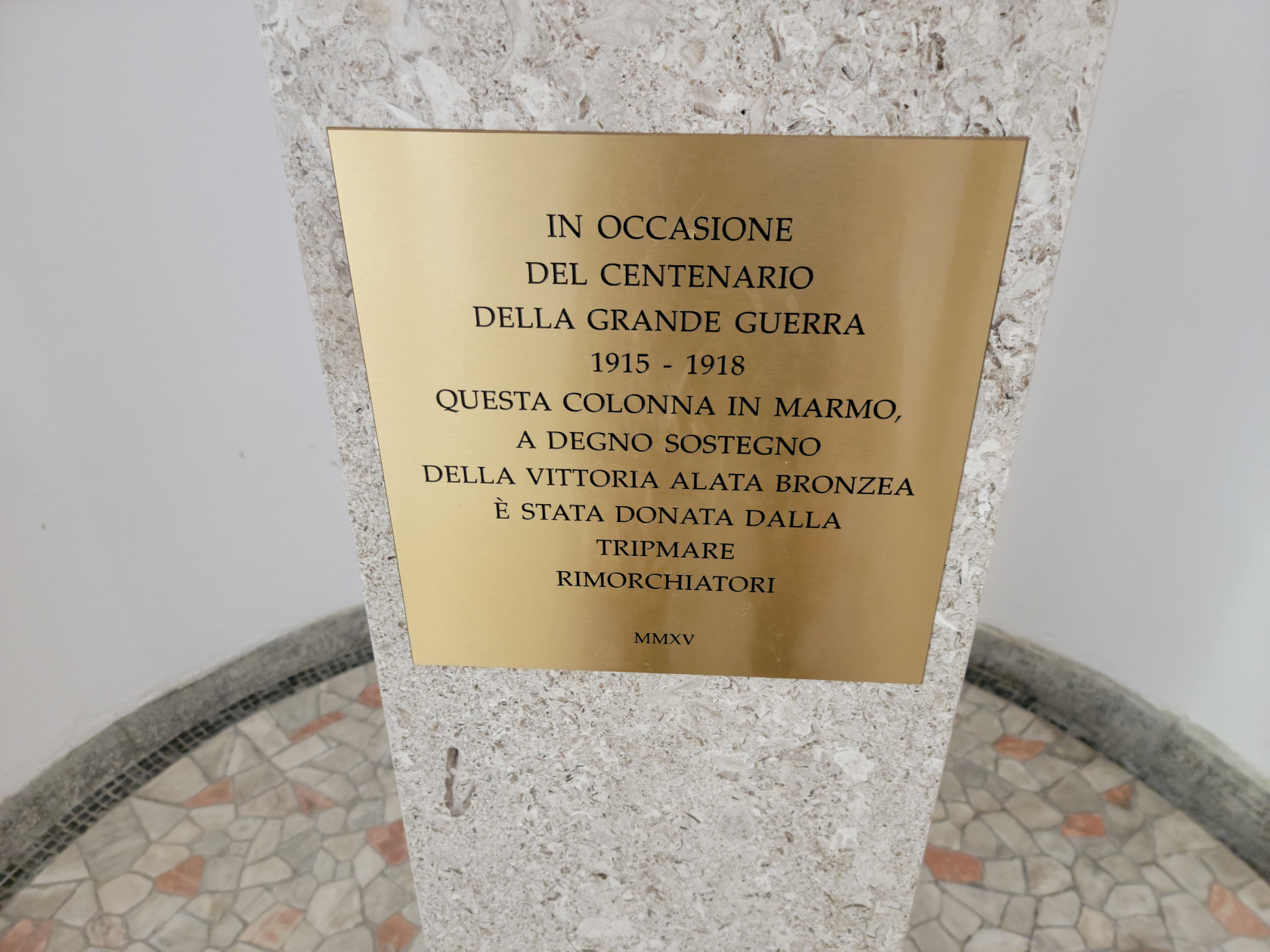
Trieste – Faro della Vittoria Lighthouse – Bronze of the Lighthouse Top
Restaurants
Bella de Napoli
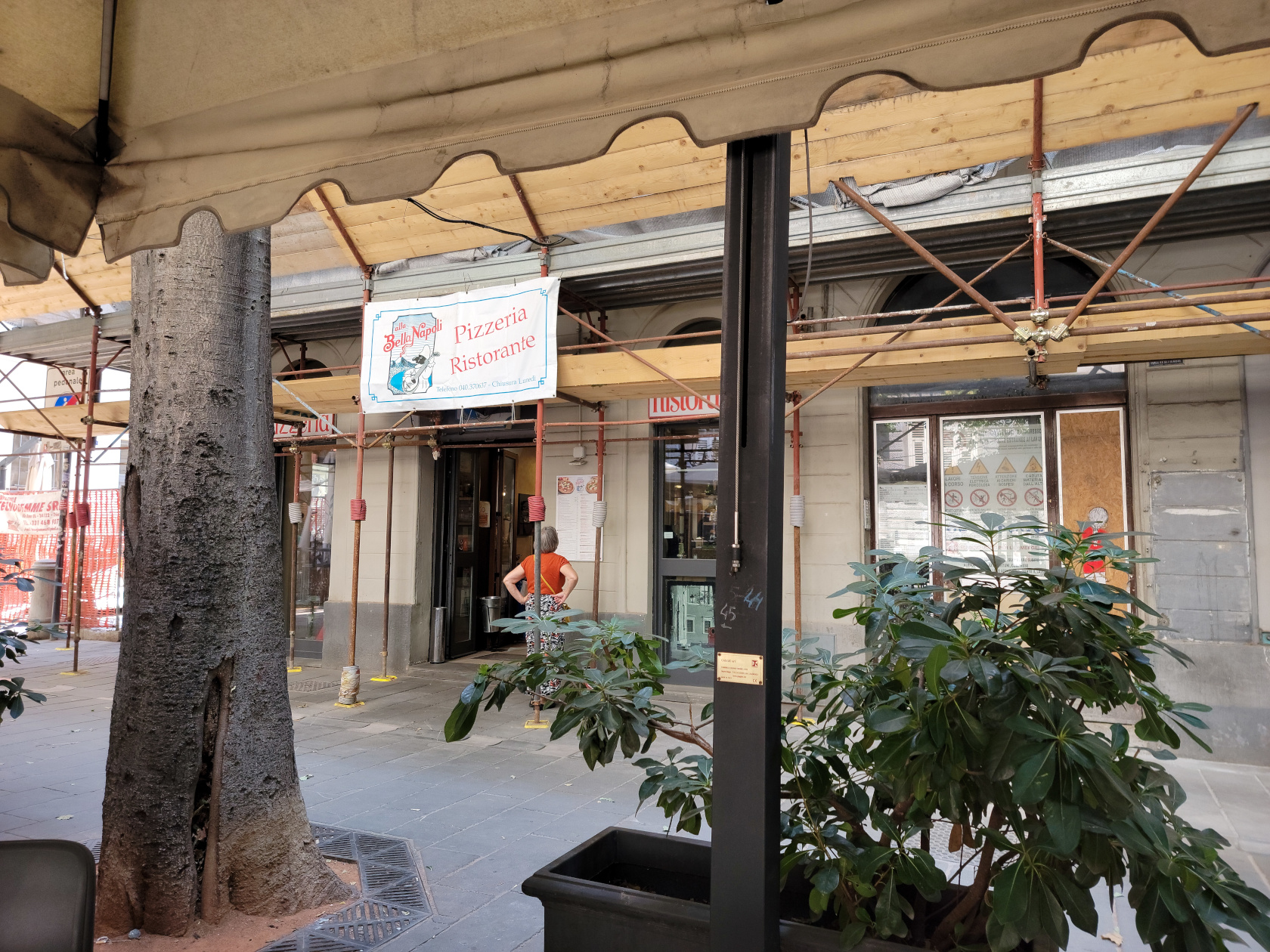
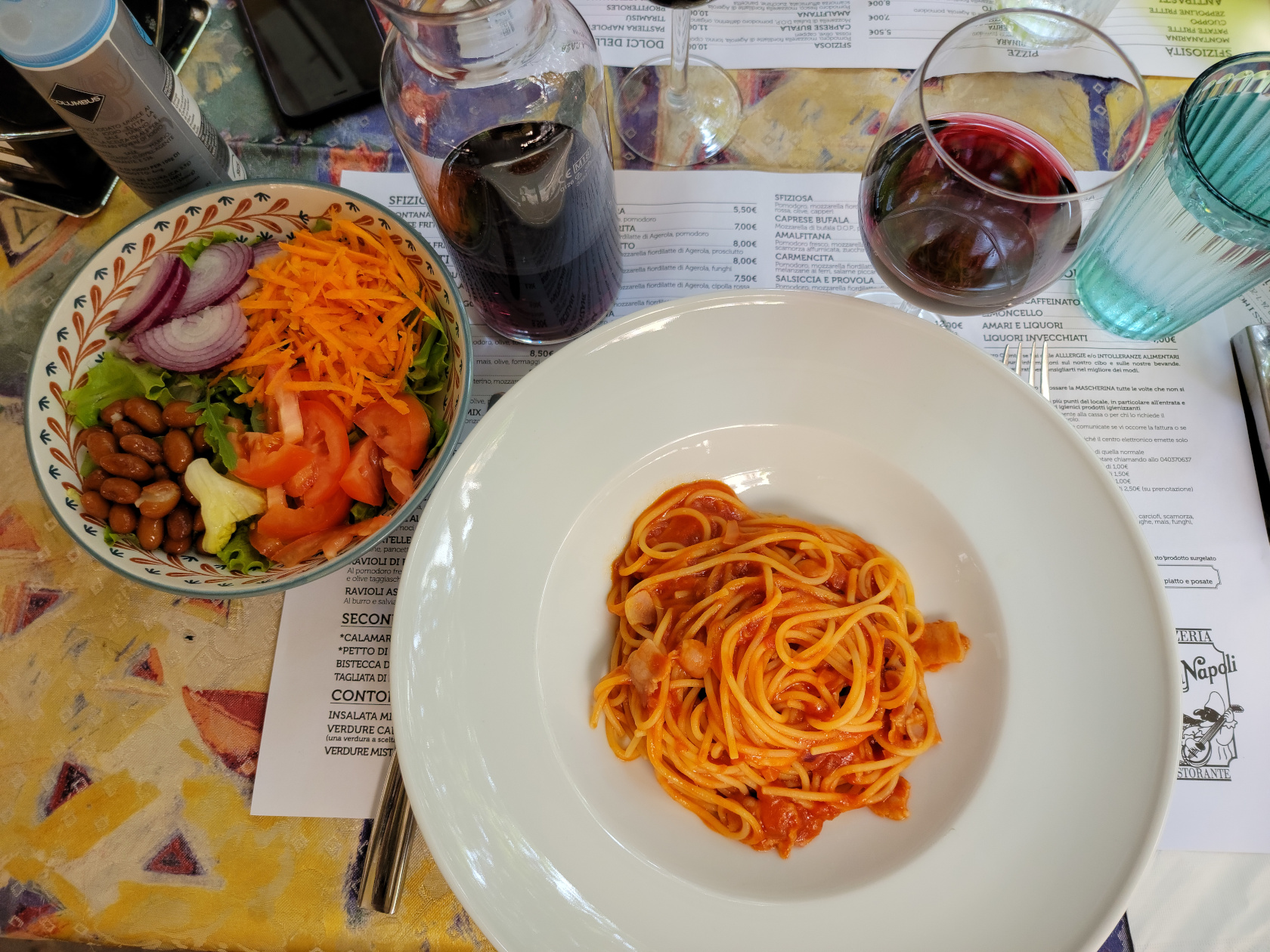
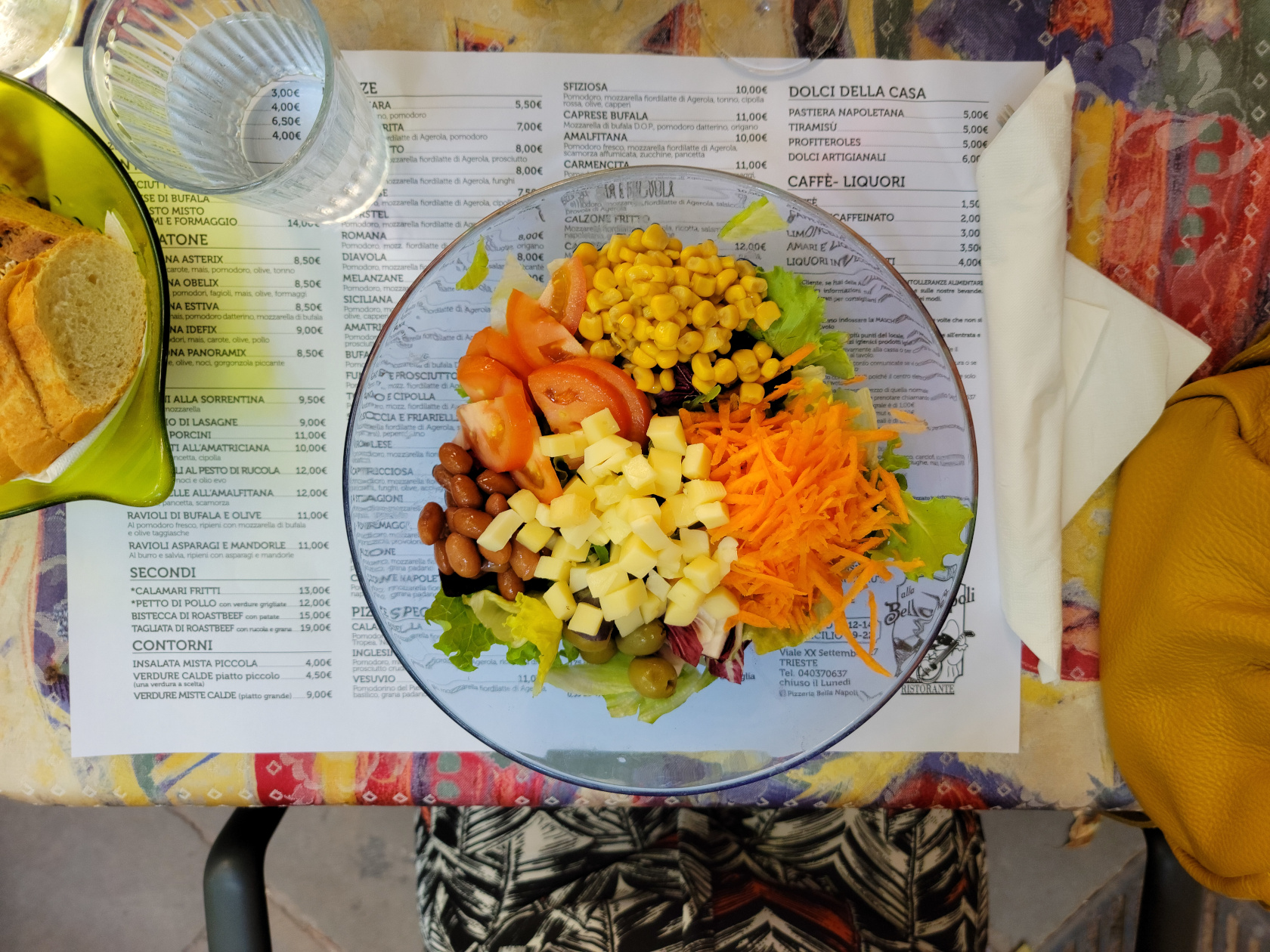
A small restaurant on XX September that serves Neapolitan fare is Bella Napoli. We stopped for lunch and had a very good meal for under forty euros.
Trieste – Bella Napoli – XX September
Trieste – Bella Napoli – XX September
Trieste – Bella Napoli – Spaghetti with Pancetta and Onion
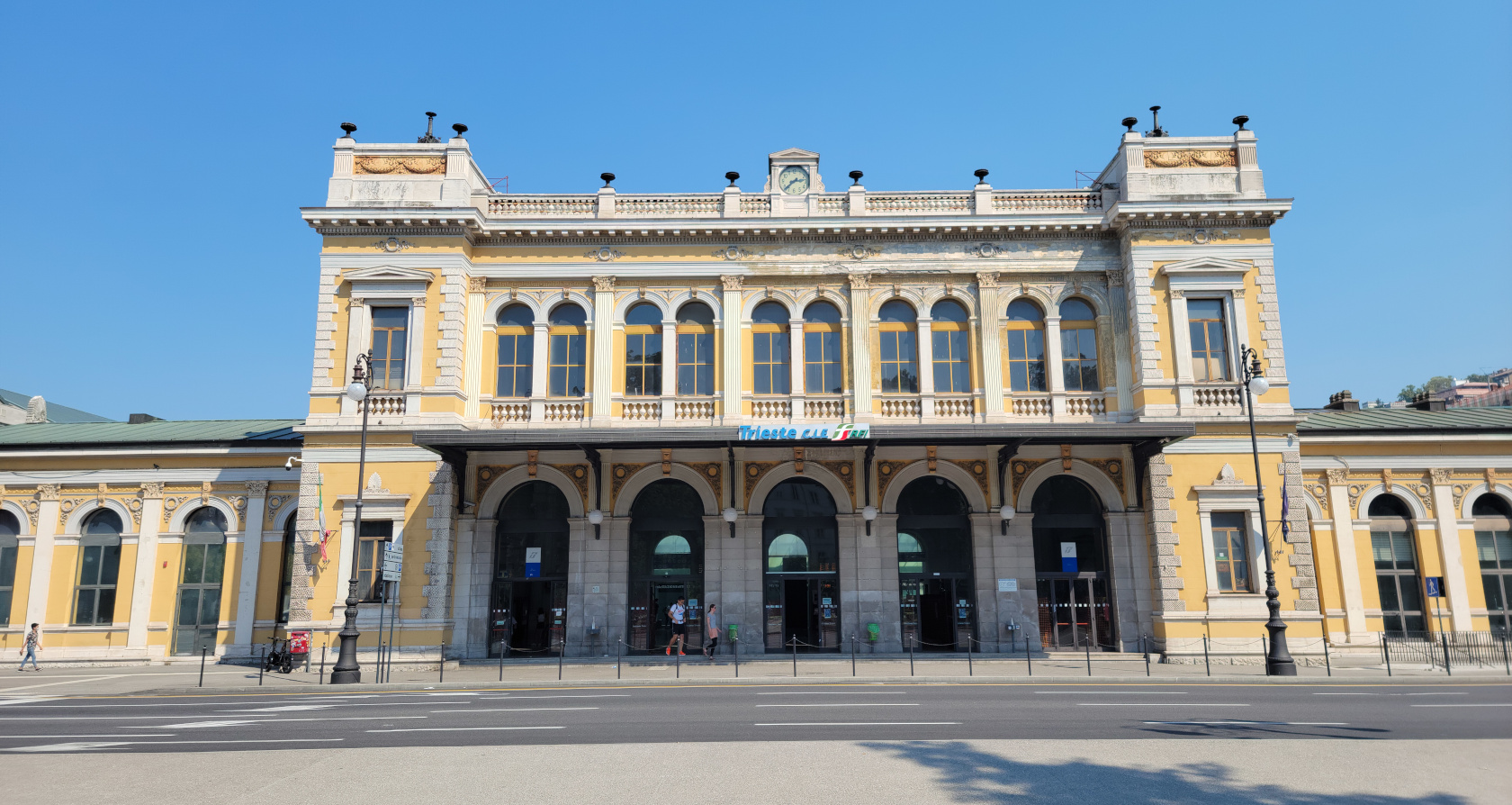
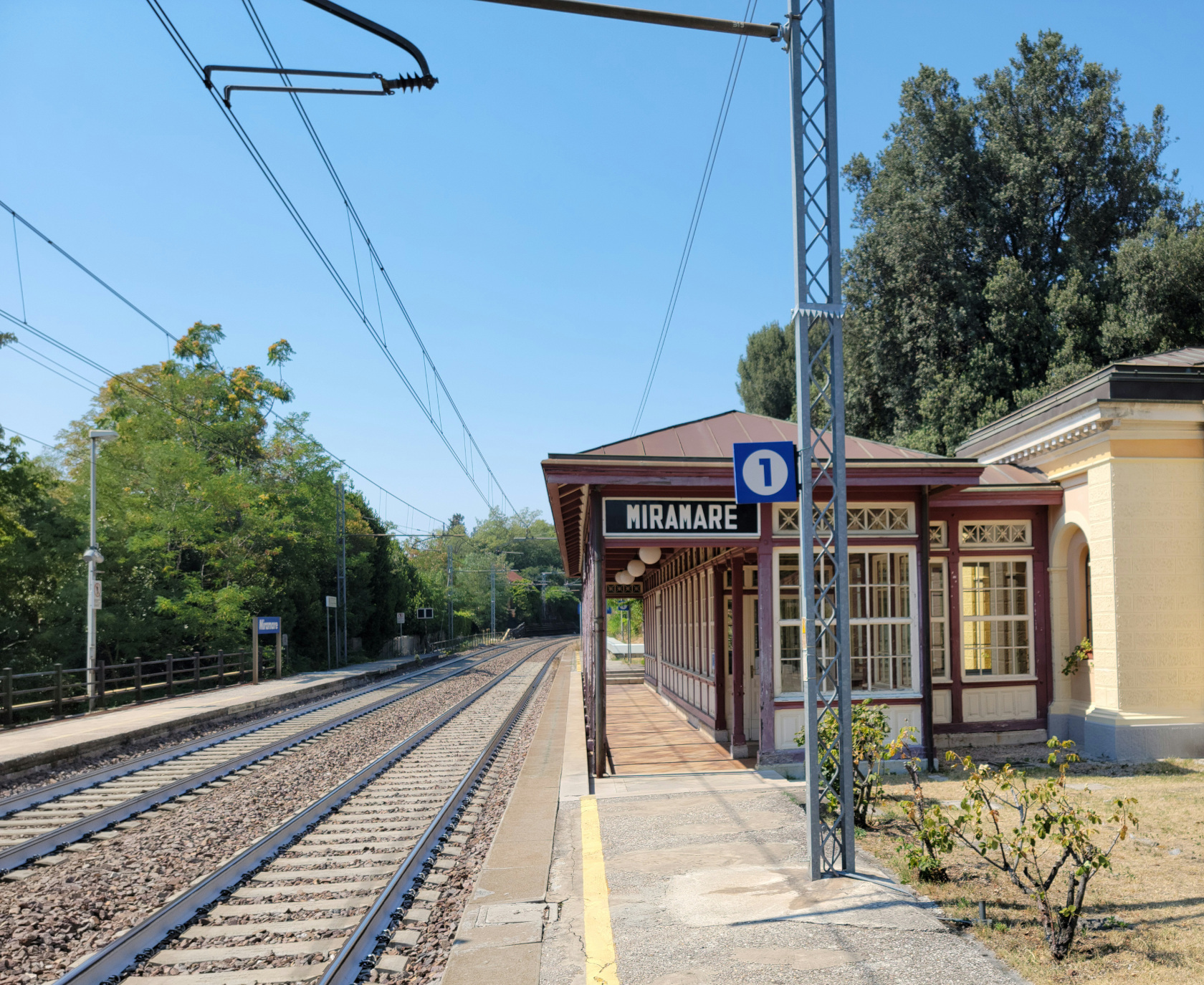
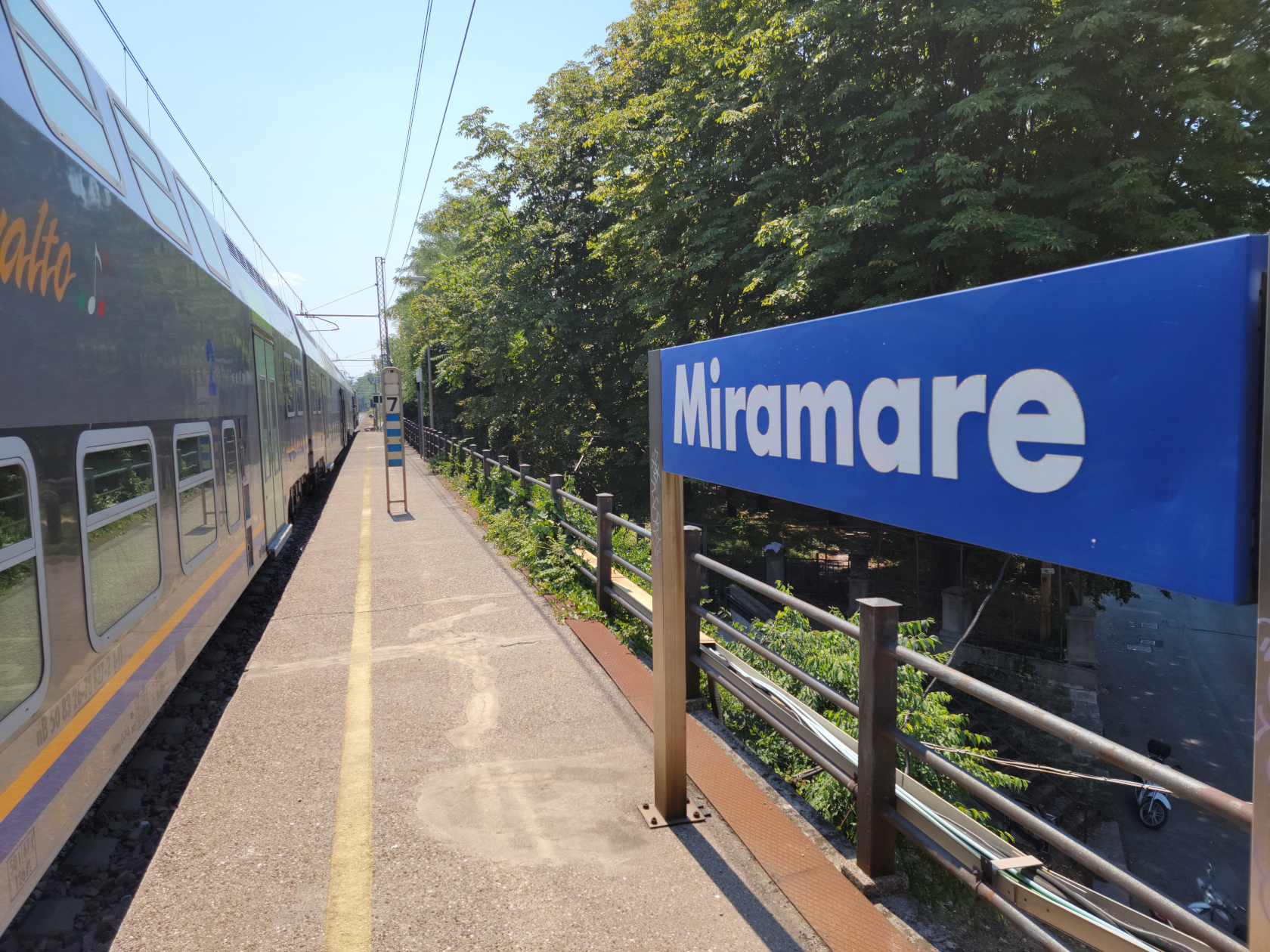
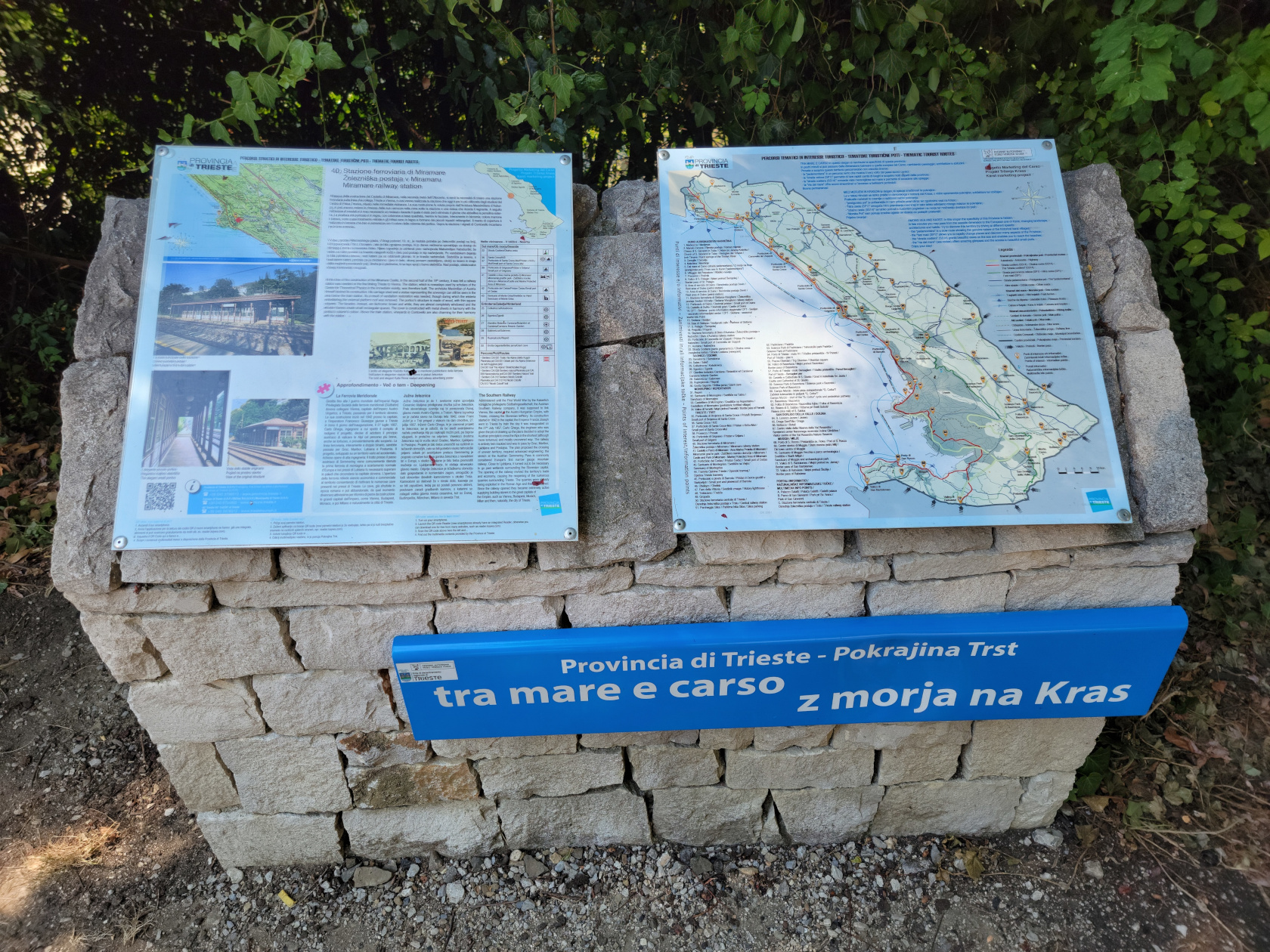
From the Trieste Train Station it is possible to take a local or regional train for a day trip and visit the Castle of Miramare just north of the city. Tickets are available via the TrennItalia application, at the ticket counter or vending machines.
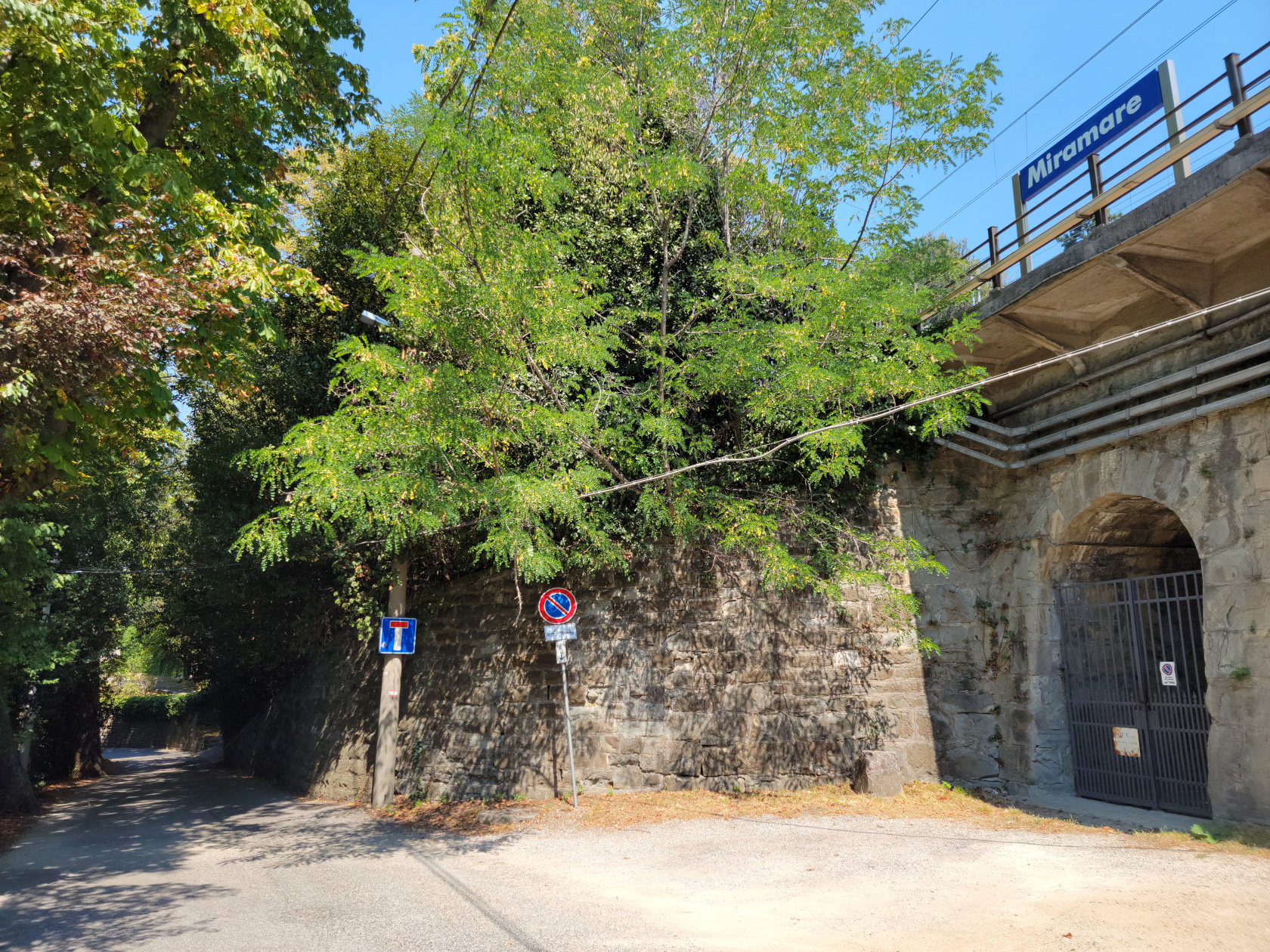
Miramare – Train Station
Miramare – Train Stop
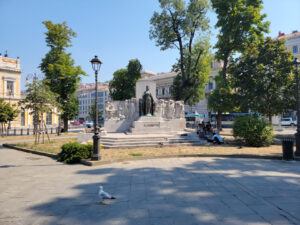
On the walk to the train station we were able to stop and enjoy some of the monuments and fountains that we missed on our previous walks.
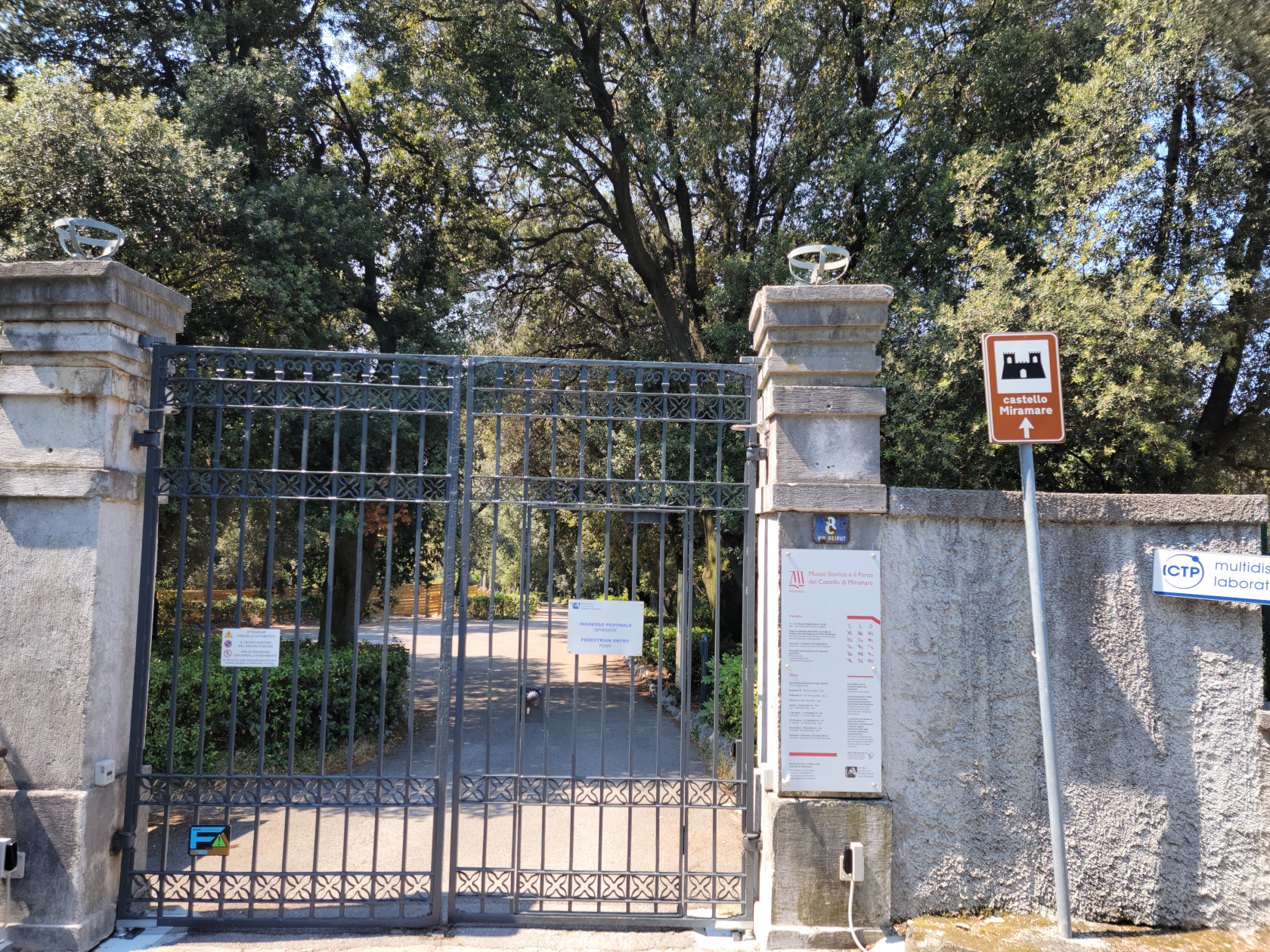
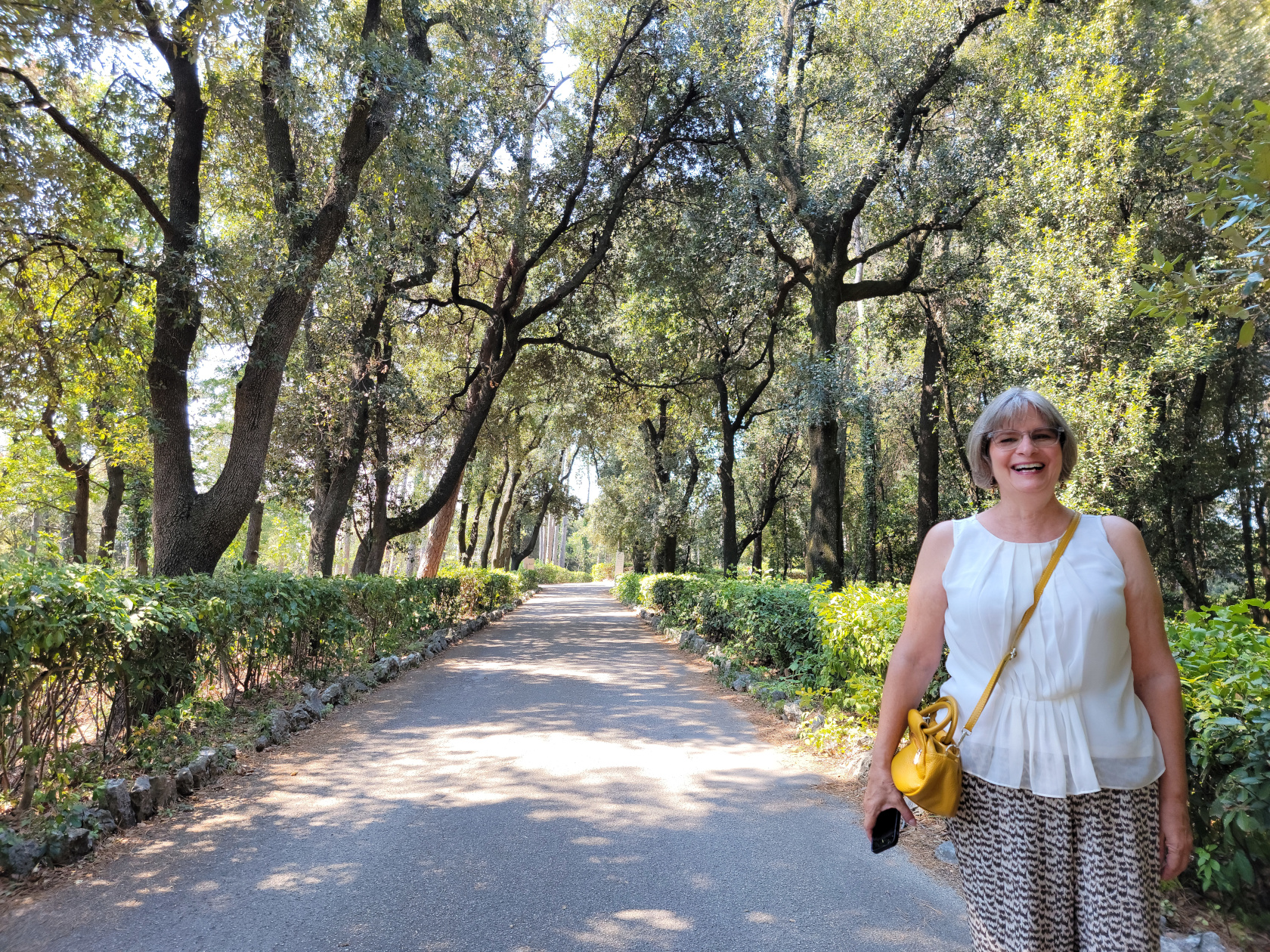
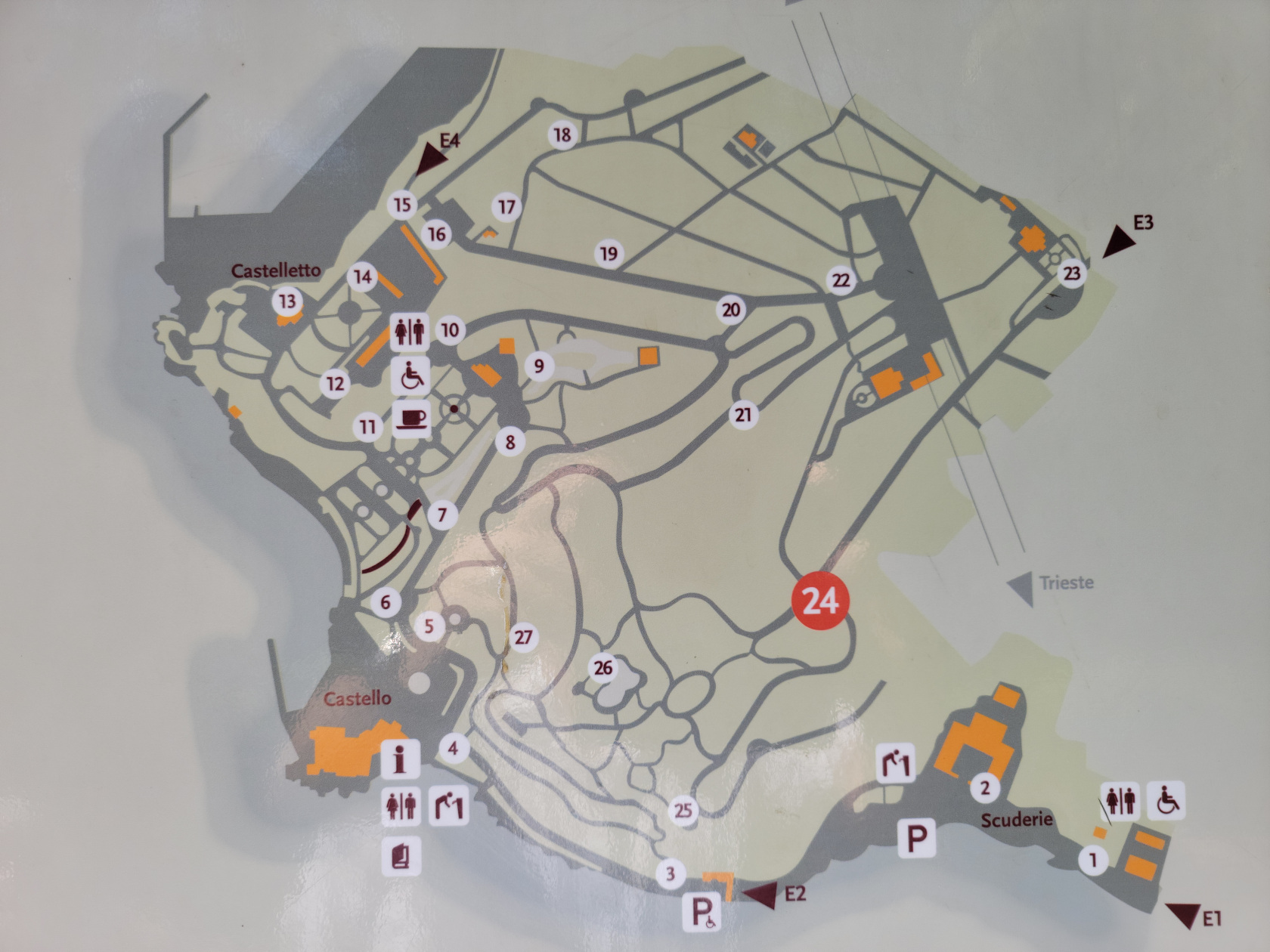
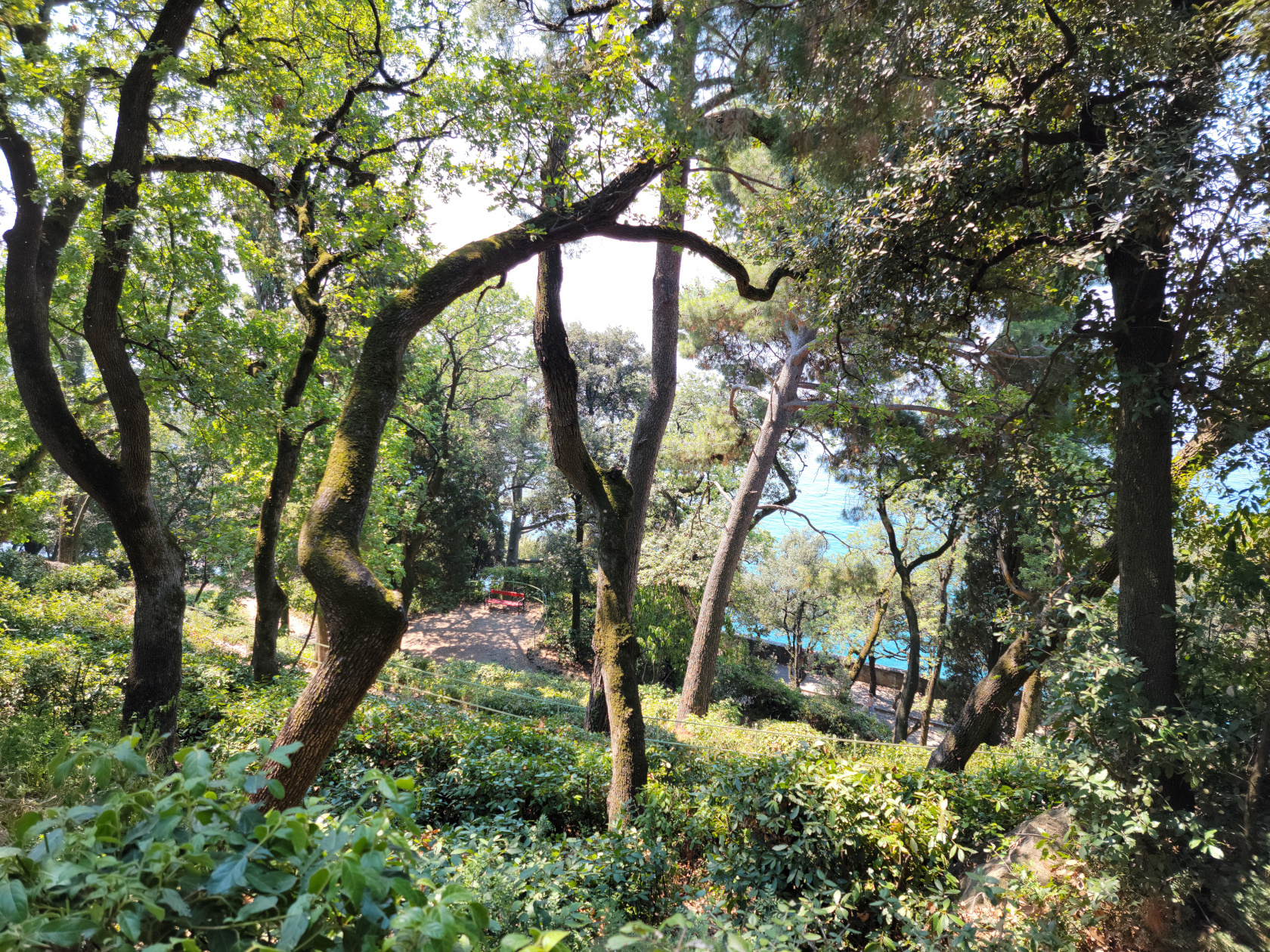
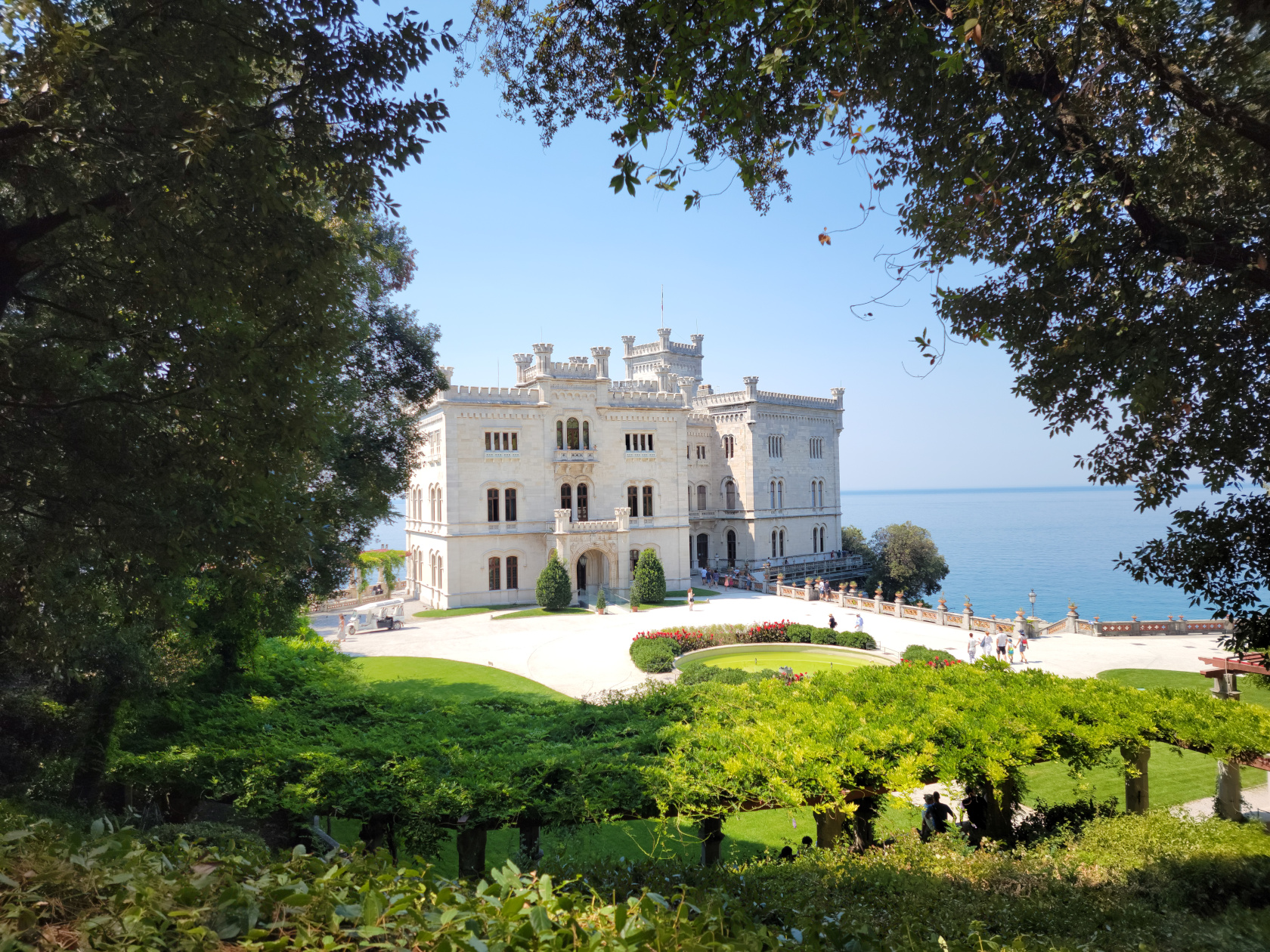
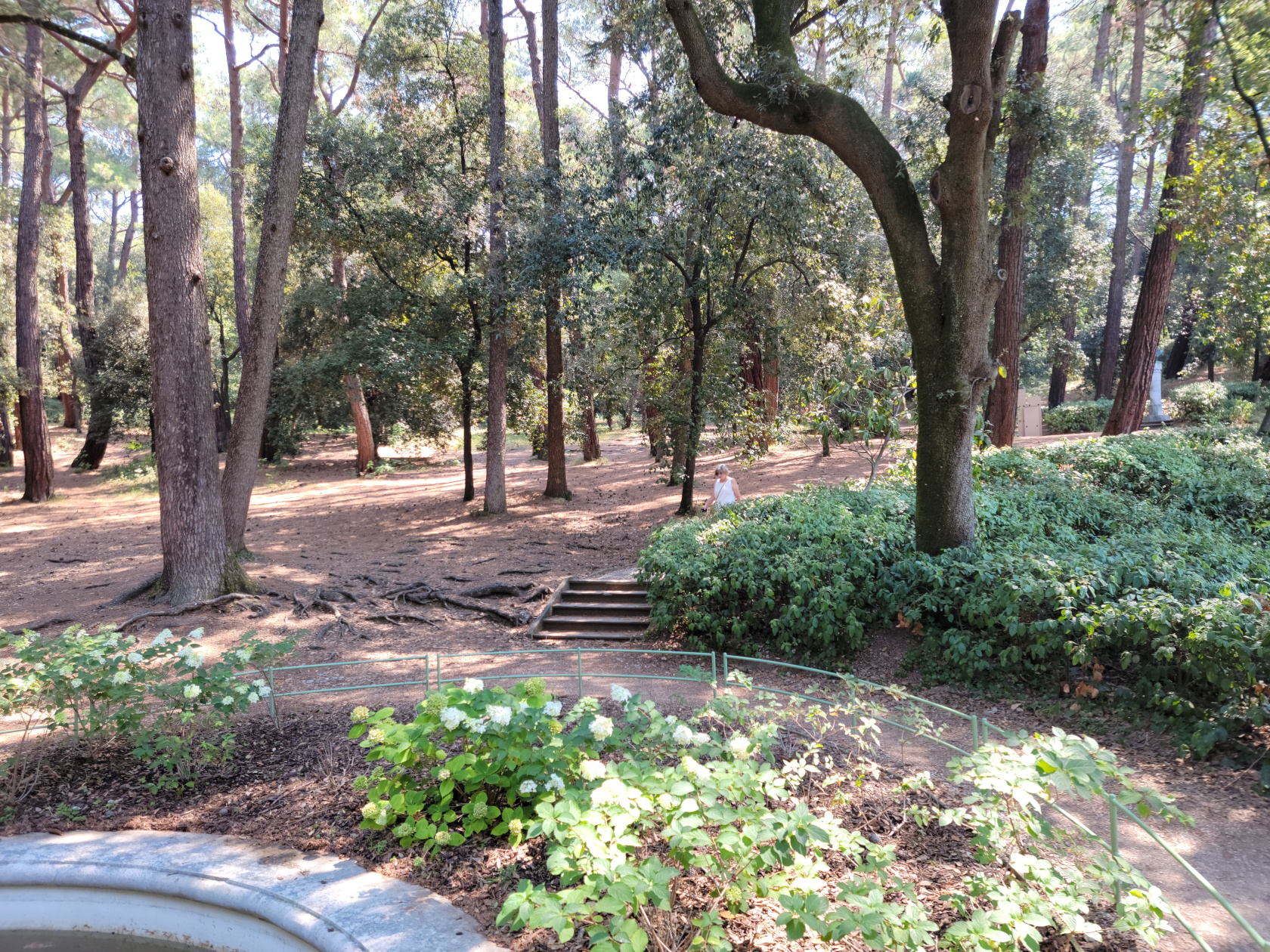
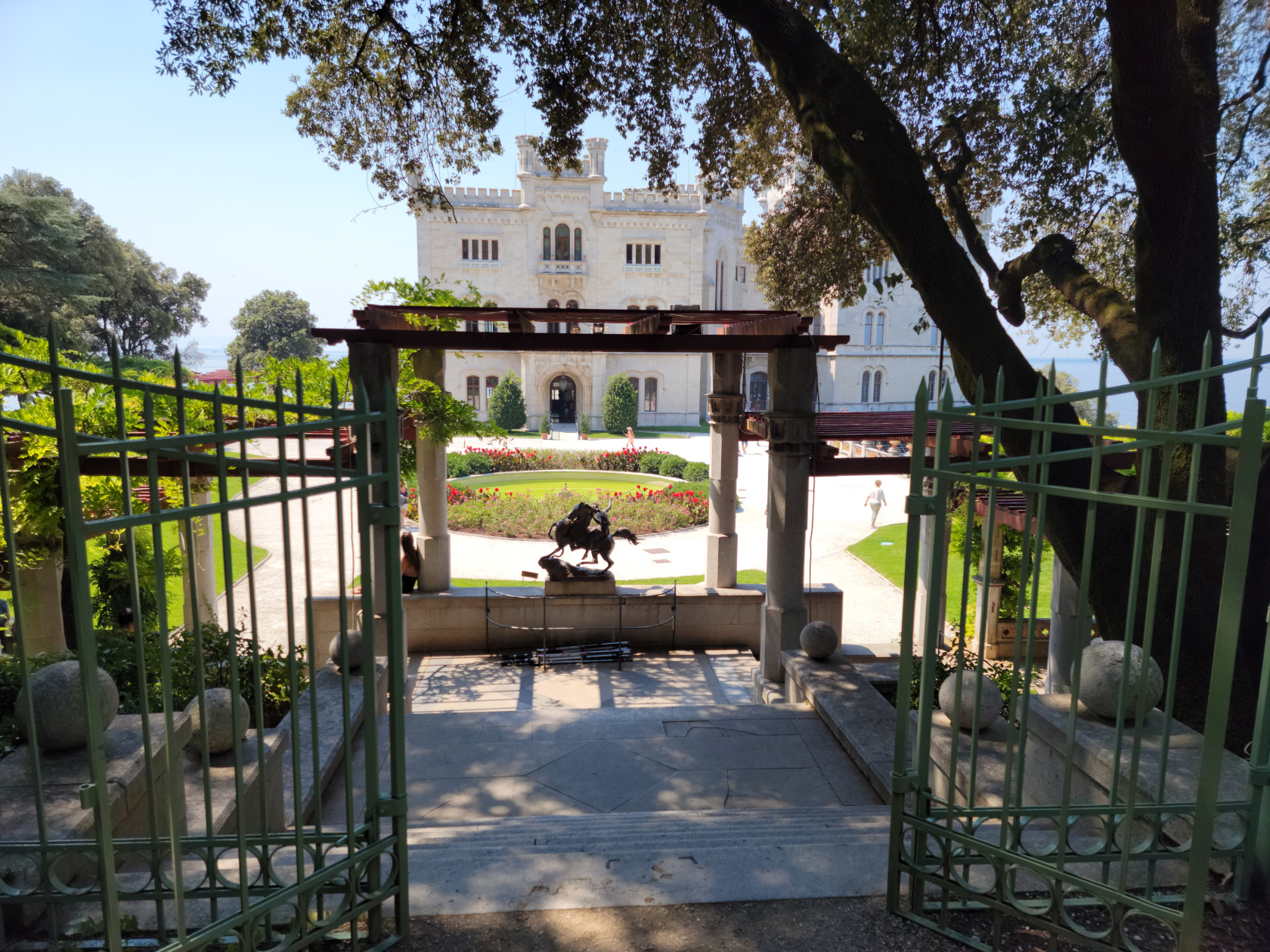
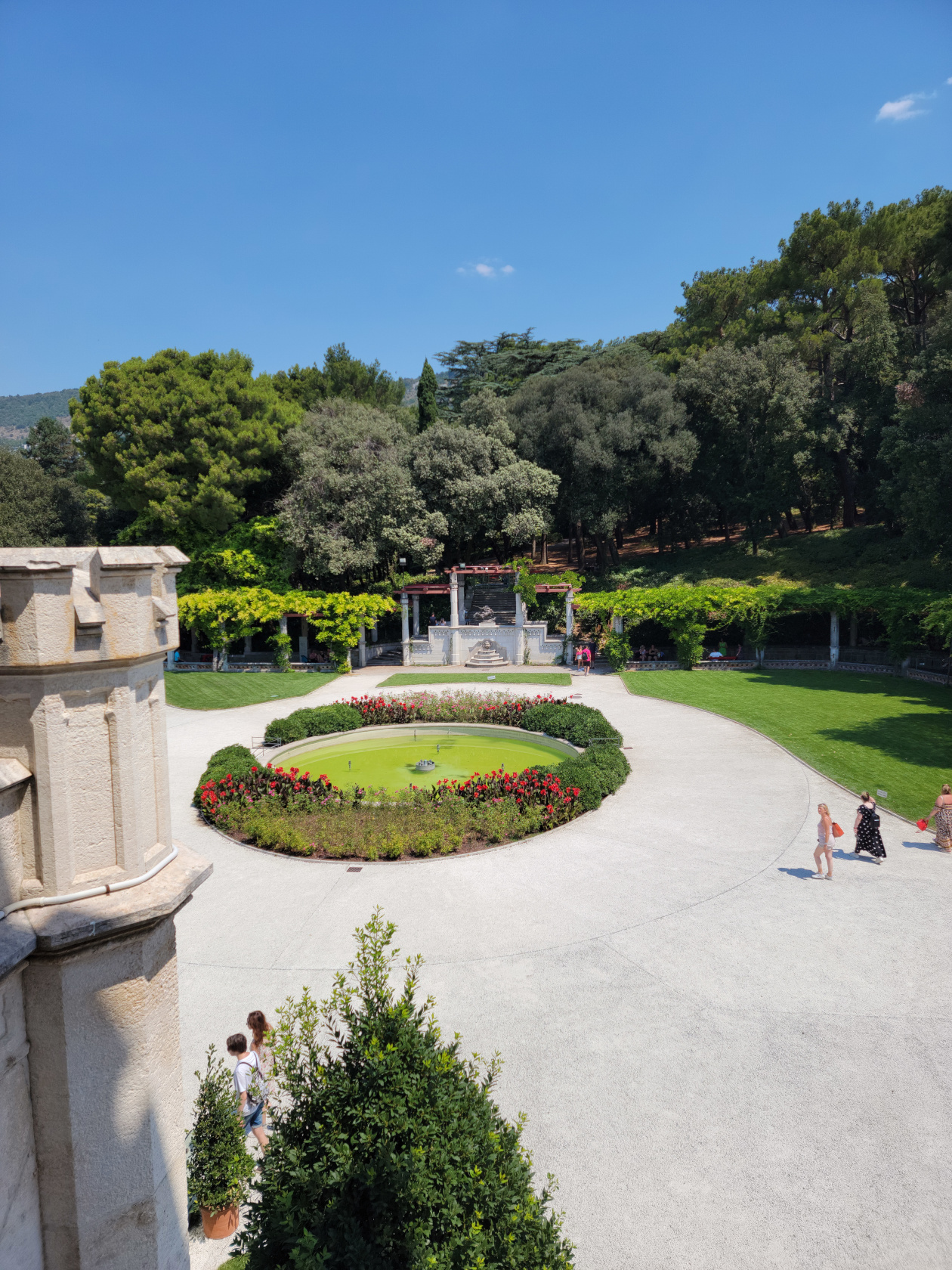
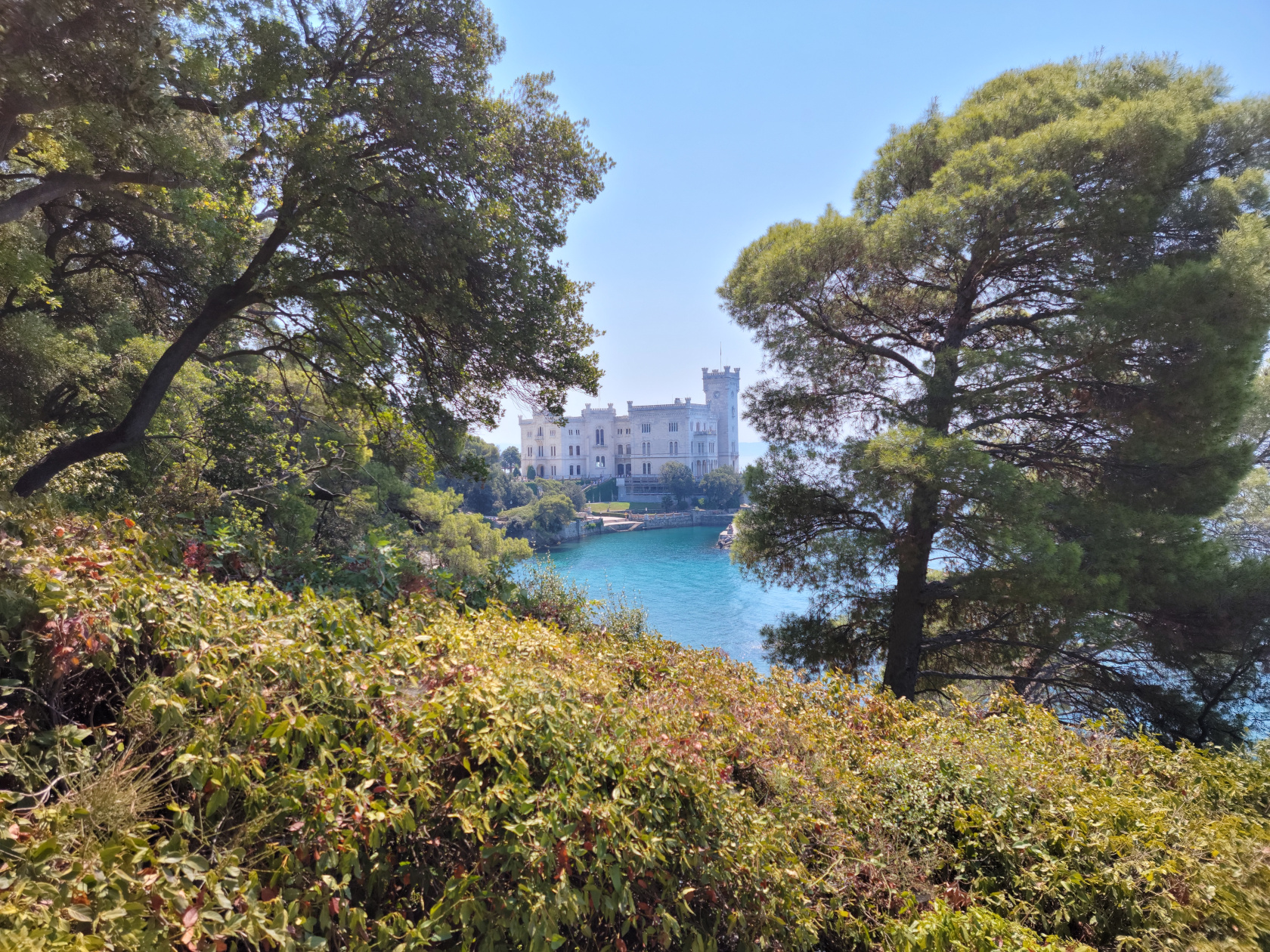
Before reaching the castle, there is a very beautiful park that surrounds it. Its shade was very welcome with temperatures reaching the mid 90s.
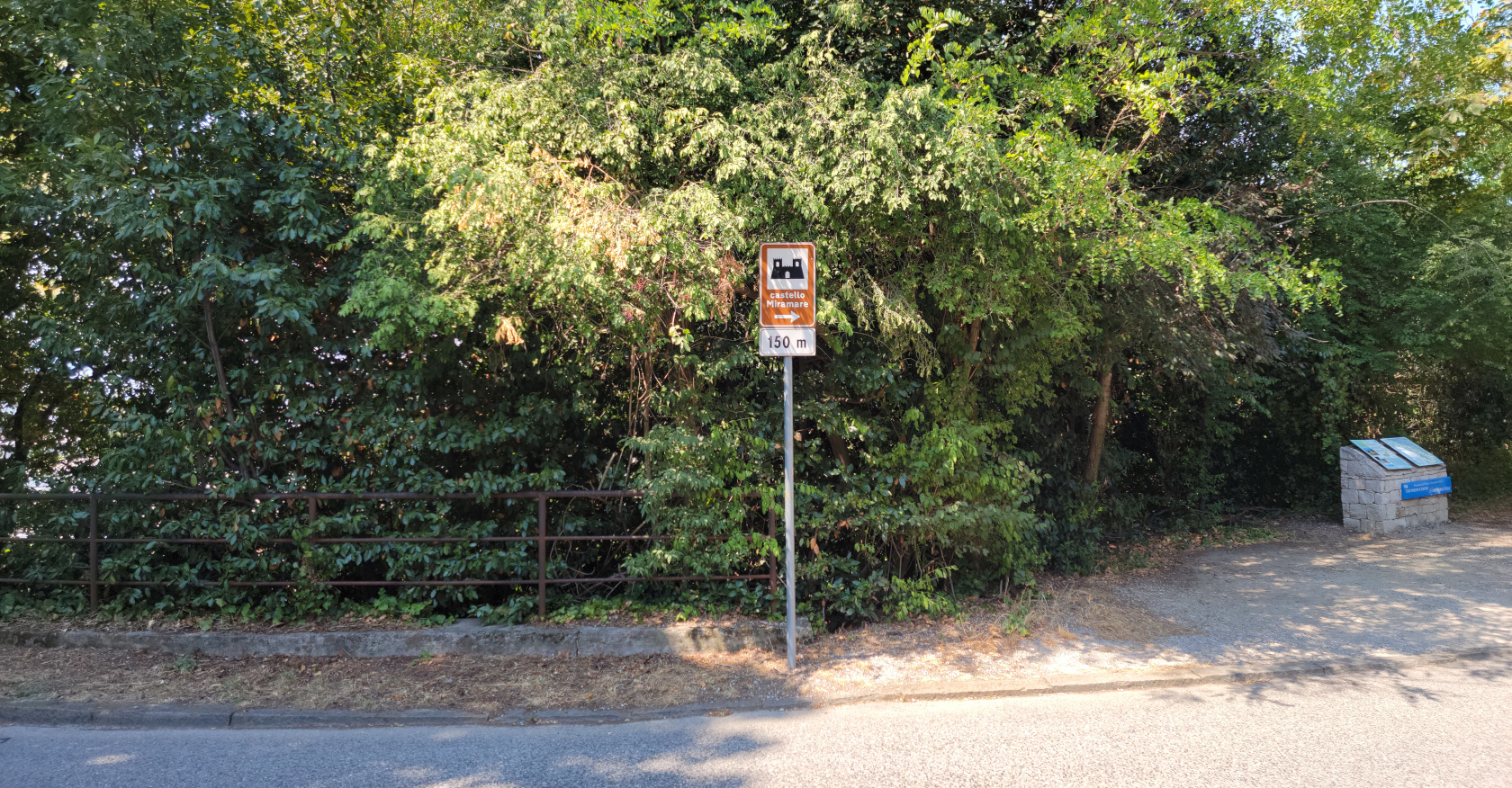
Miramare – Sign to Castle
Miramare – Miramare Castle Park
Miramare – Road to Miramare Castle Park
Miramare – Gate to Miramare Castle Park
Miramare – Patti in Miramare Castle Park
Miramare – Miramare Castle Park Map
Miramare – Miramare Castle Park
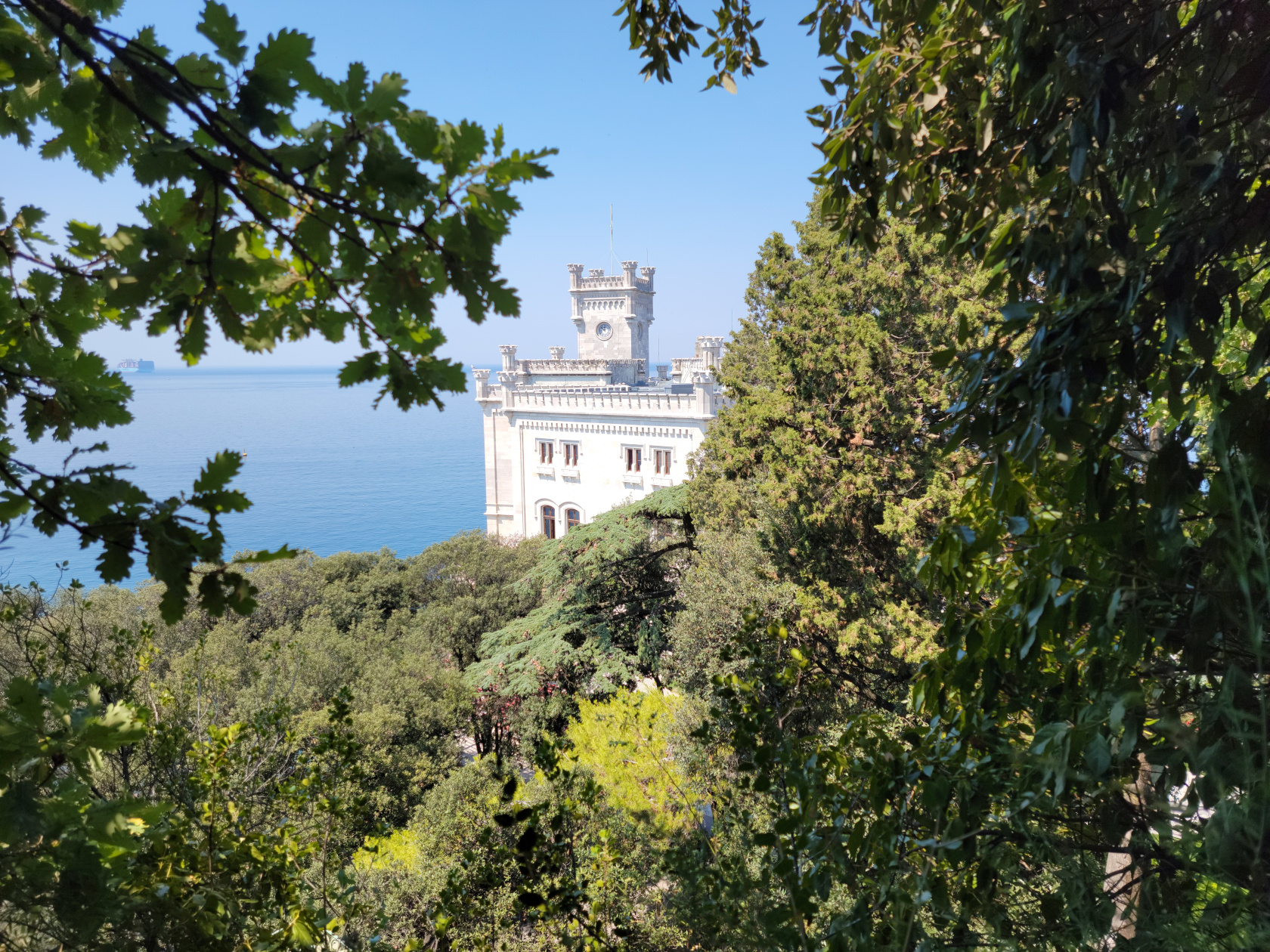
Miramare – Castle viewed from Miramare Castle Park trail
Miramare – Miramare Castle Park
Miramare – Miramare Castle
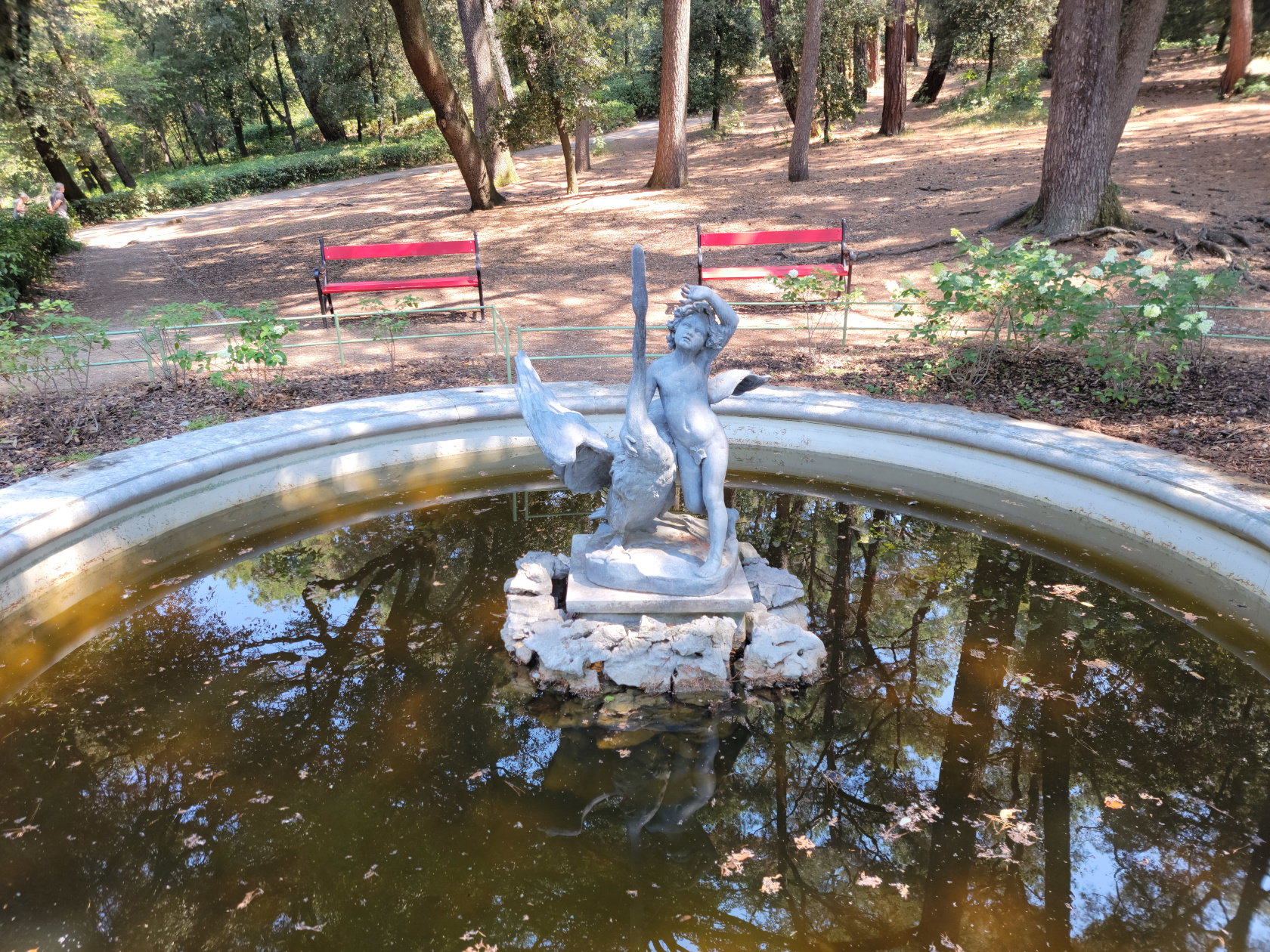
Miramare – Miramare Castle Park – Boy with Swan fountain
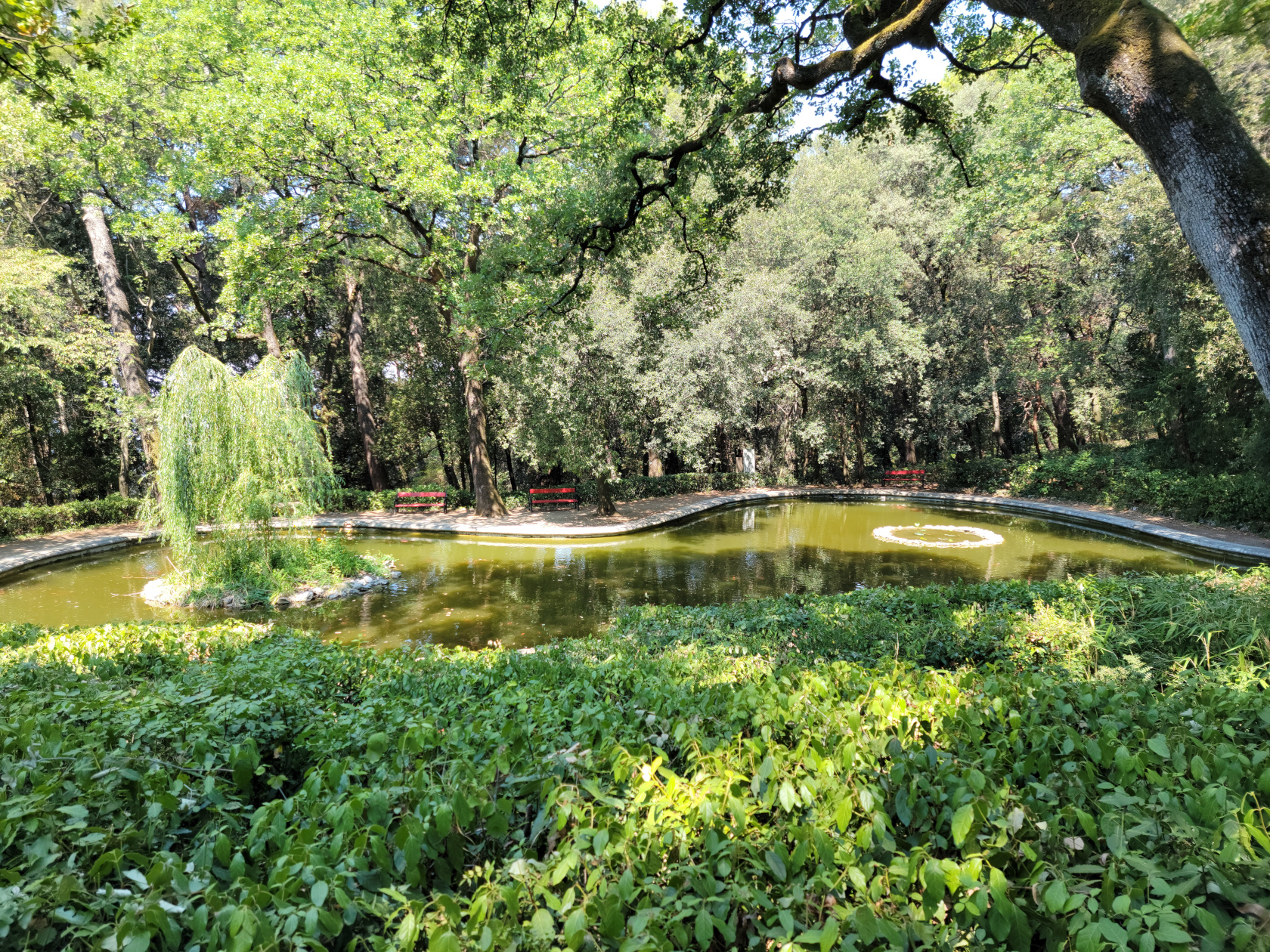
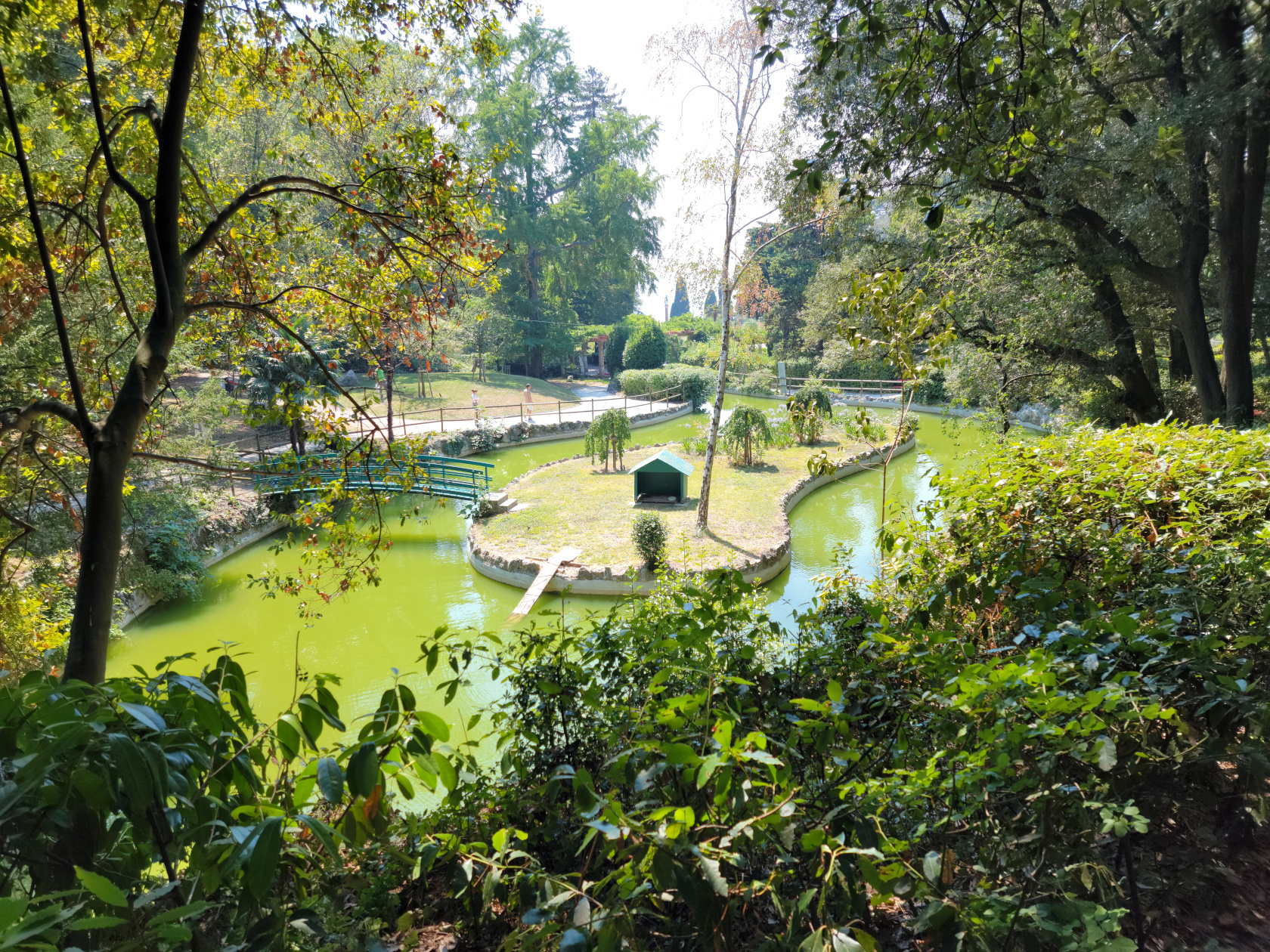
Miramare – Miramare Castle Park – Duck Pond
Miramare – Miramare Castle Park
Miramare – Miramare Castle Park – Entrance to Castle
Miramare – Miramare Castle Park – Duck Pond
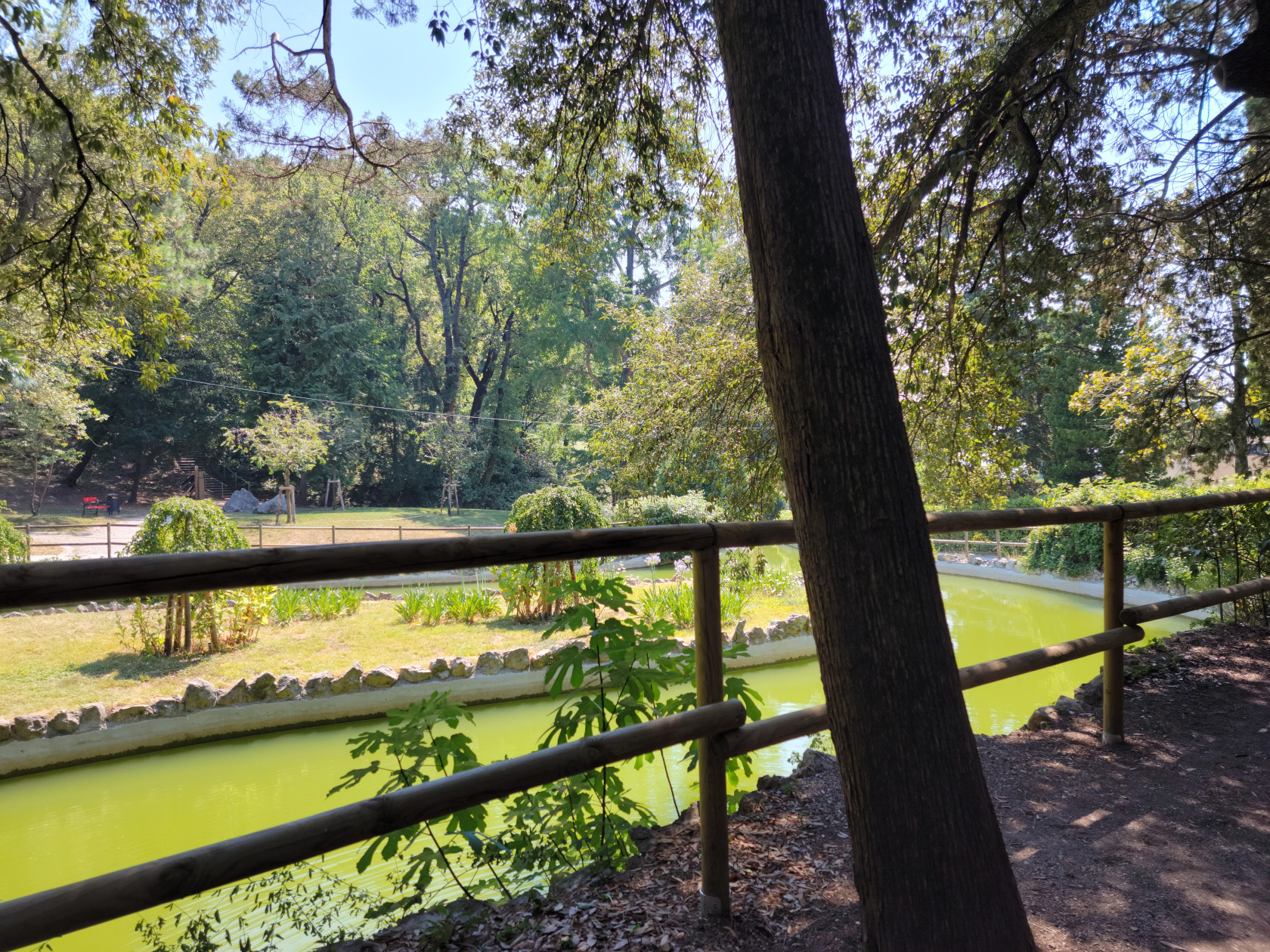
Miramare – Miramare Castle Park – Duck Pond
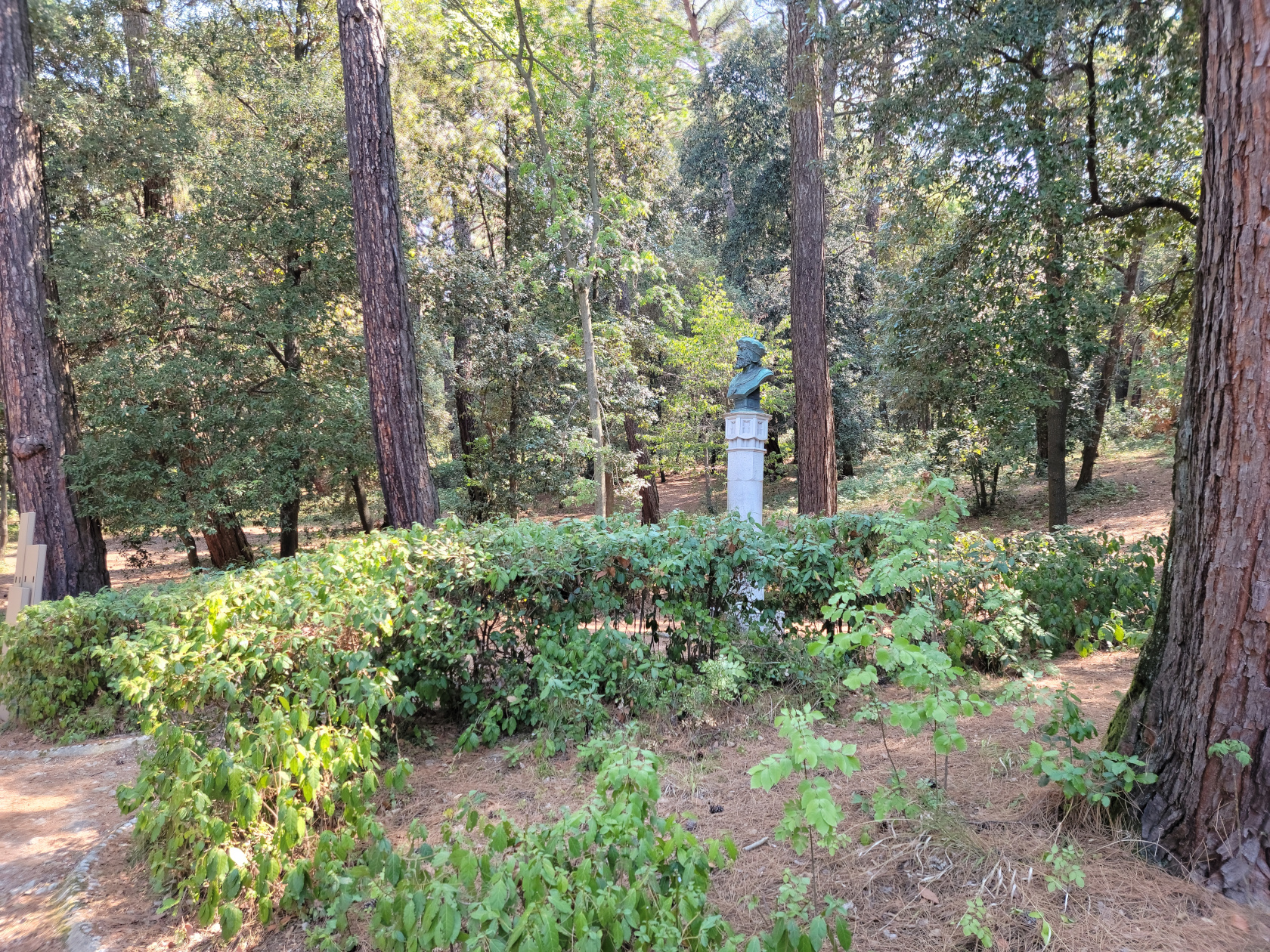
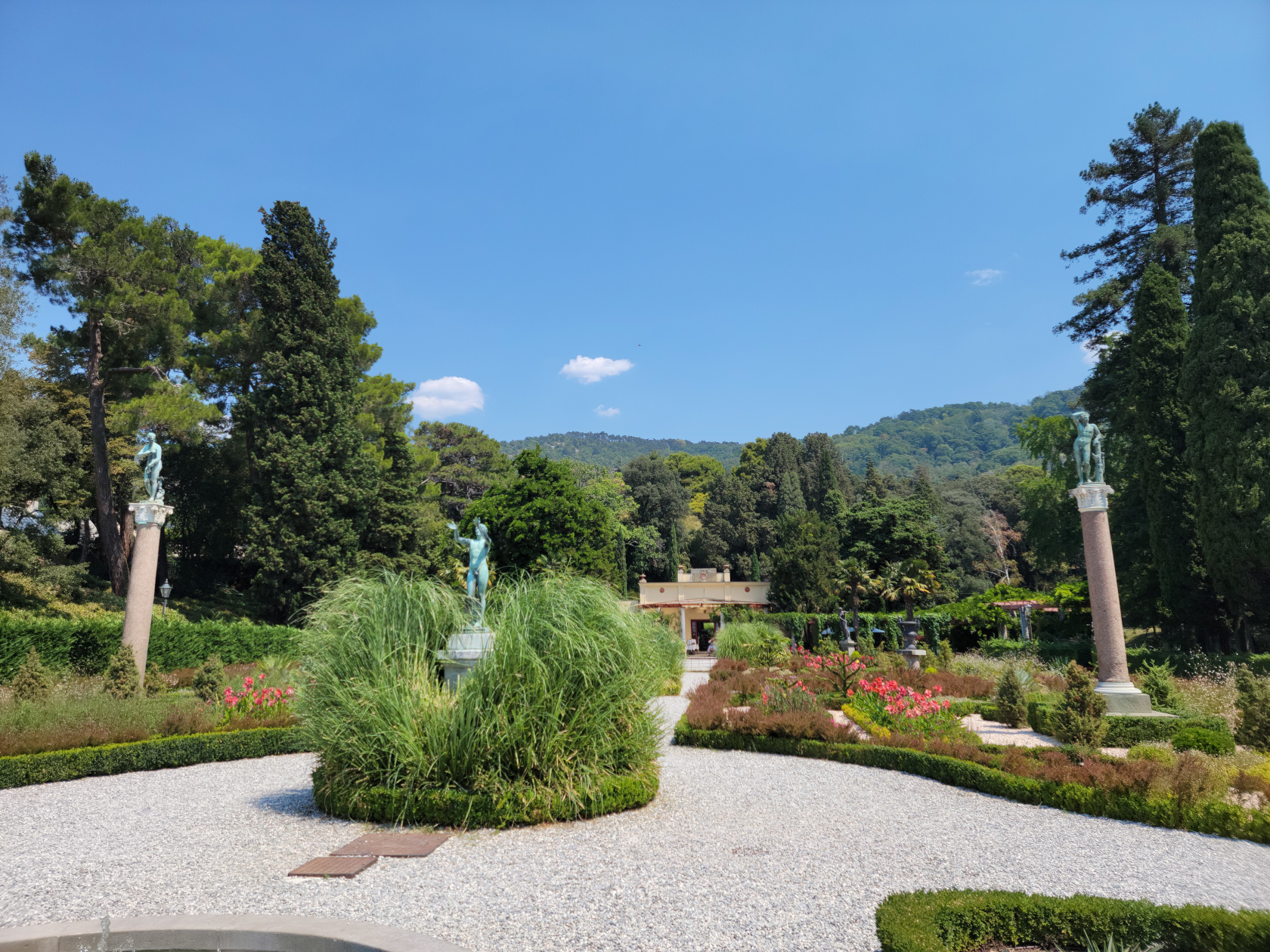
The park is actually very well maintained. Undergrowth is allowed to grow where it should and well pruned in other areas. There are benches everywhere, so feel free to sit down and enjoy the quiet while you can, birds and cicadas notwithstanding.
Miramare Castle
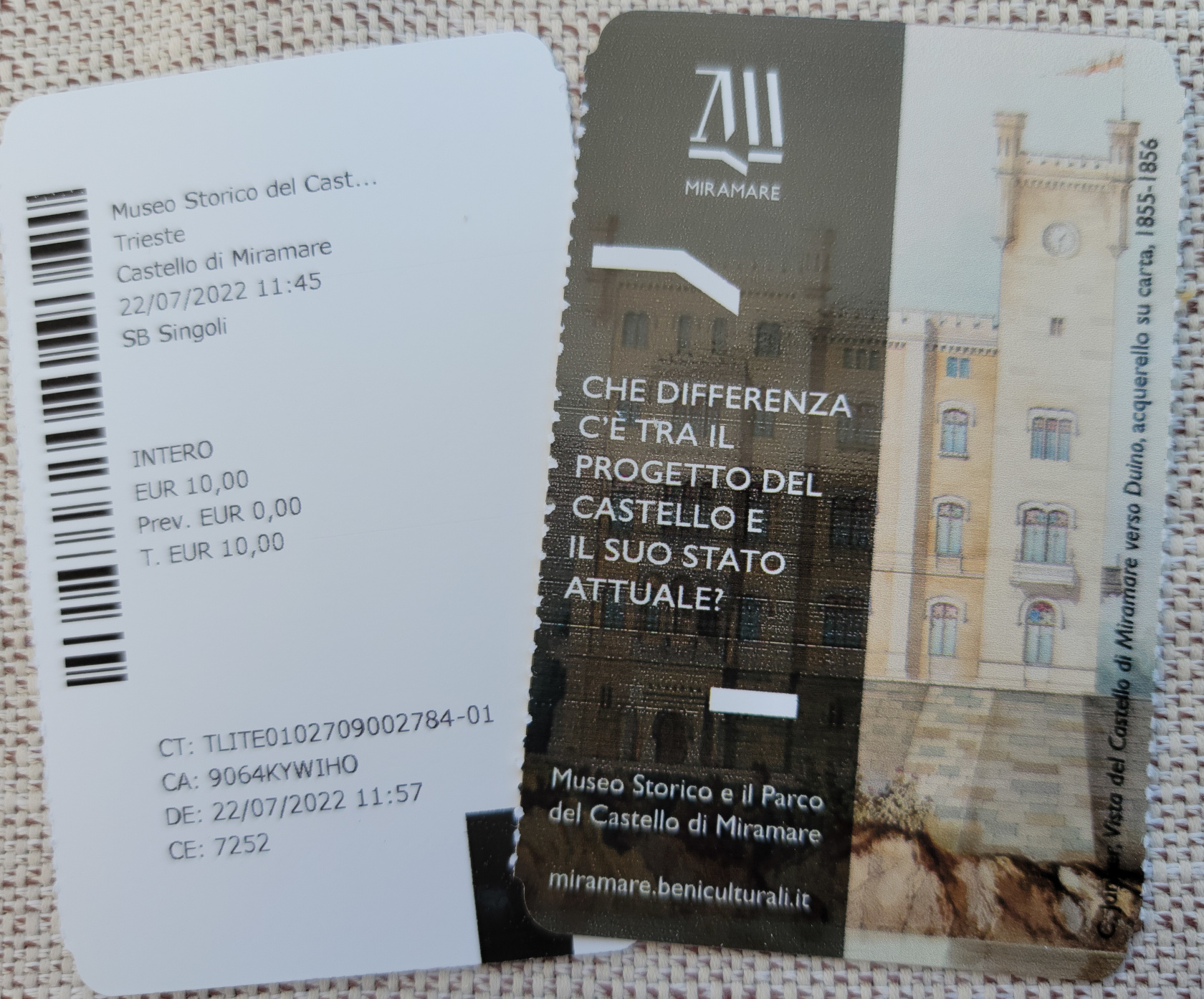
Miramare Castle – Tickets For Two
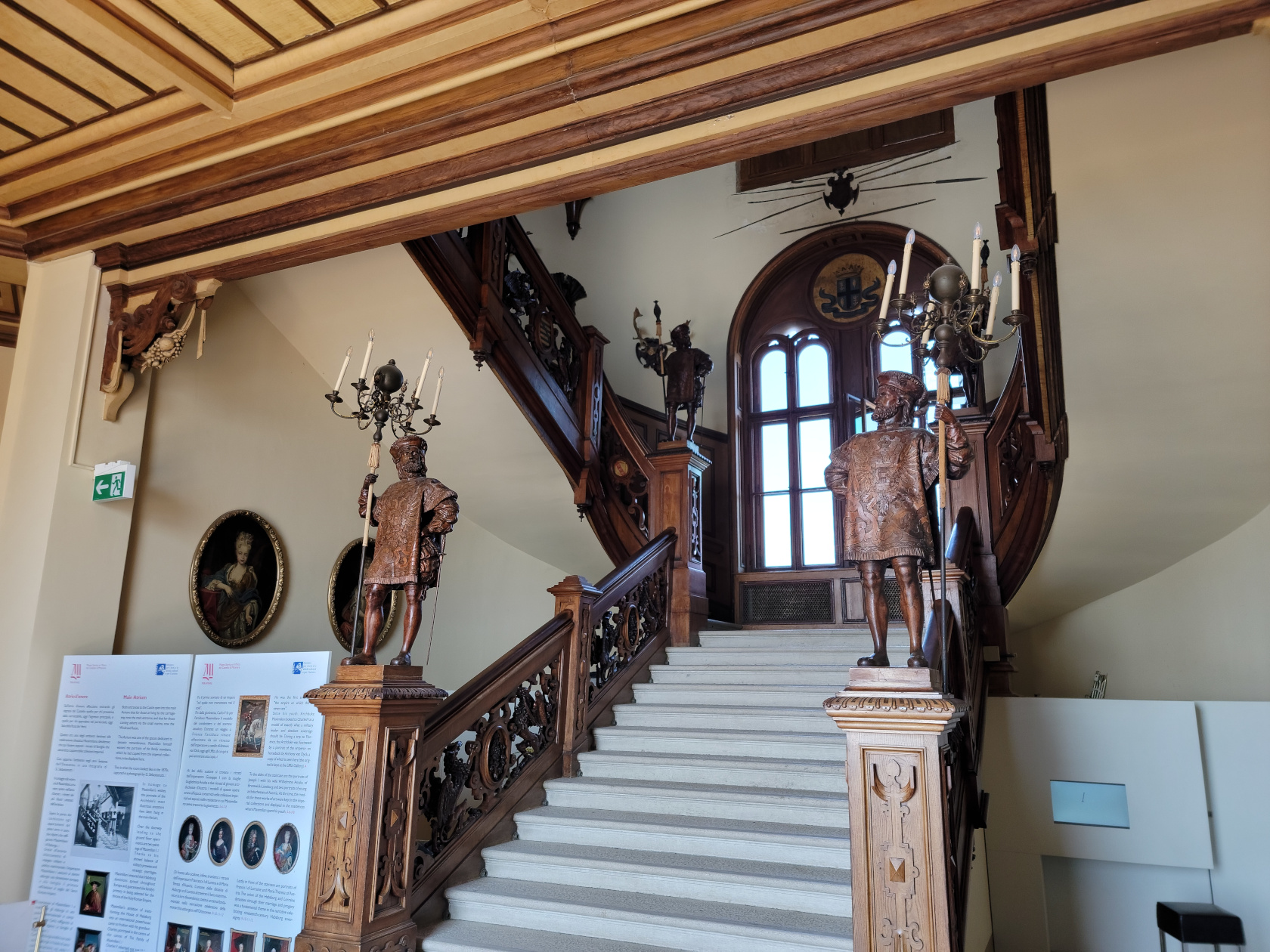
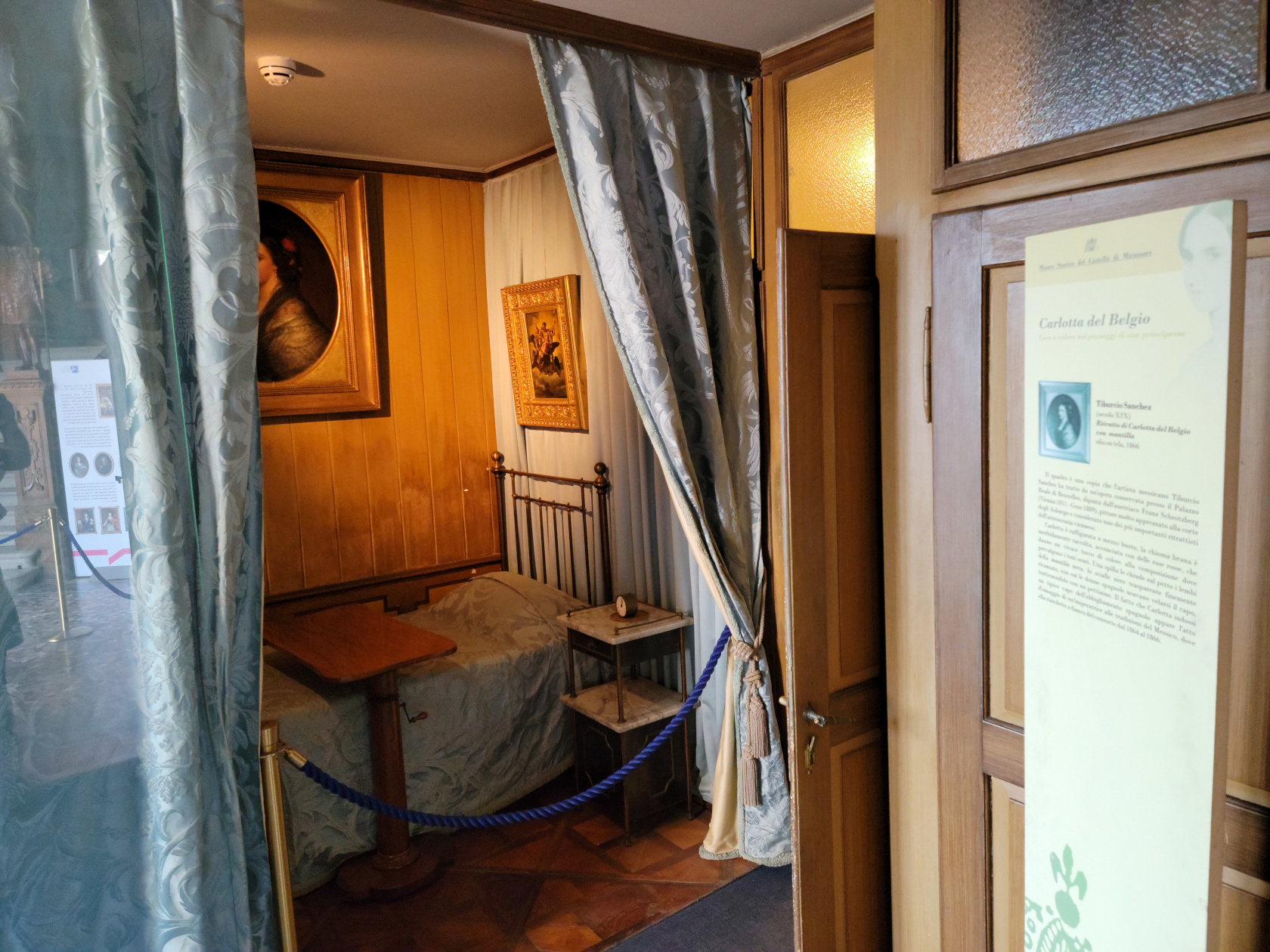
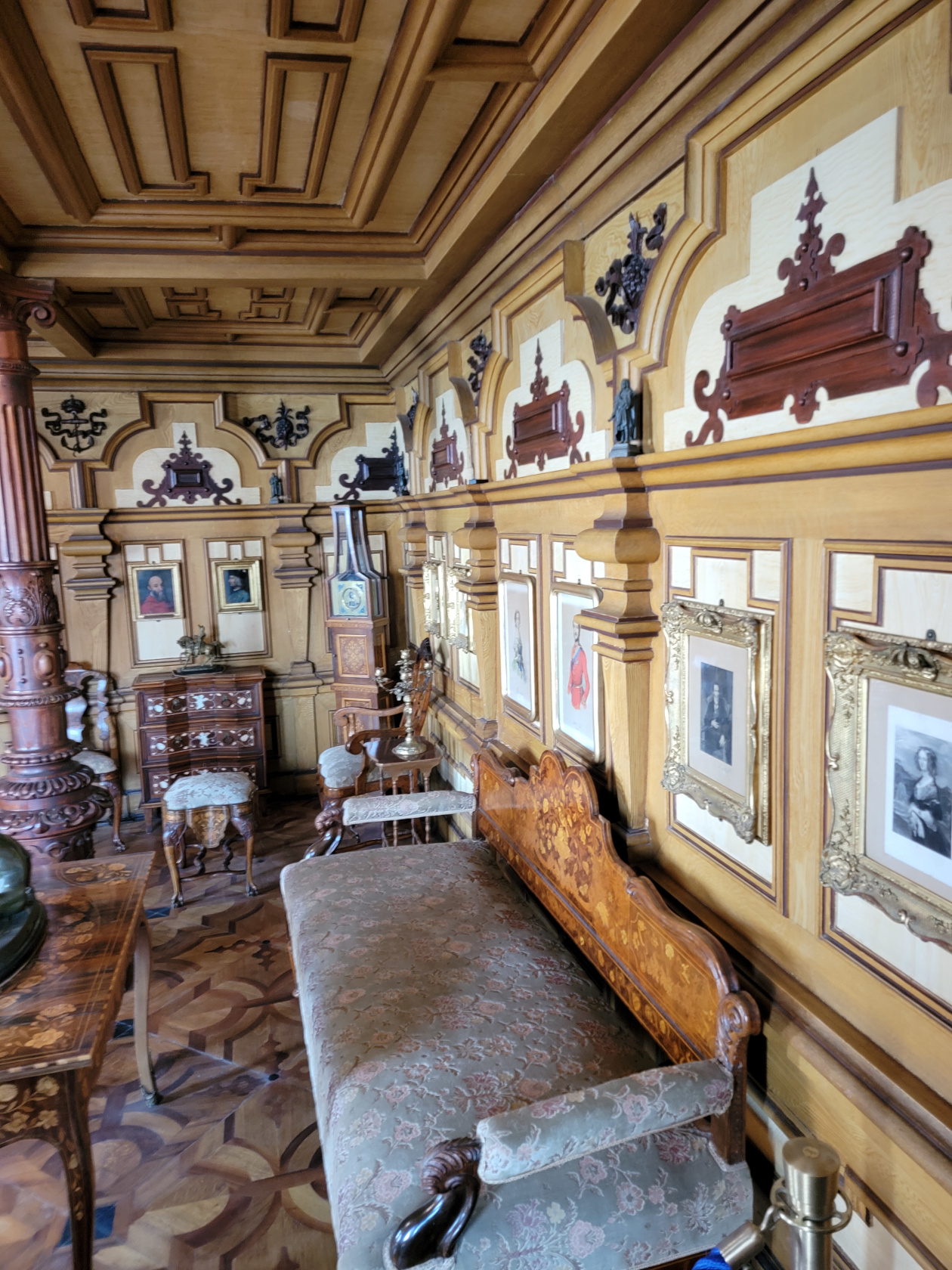
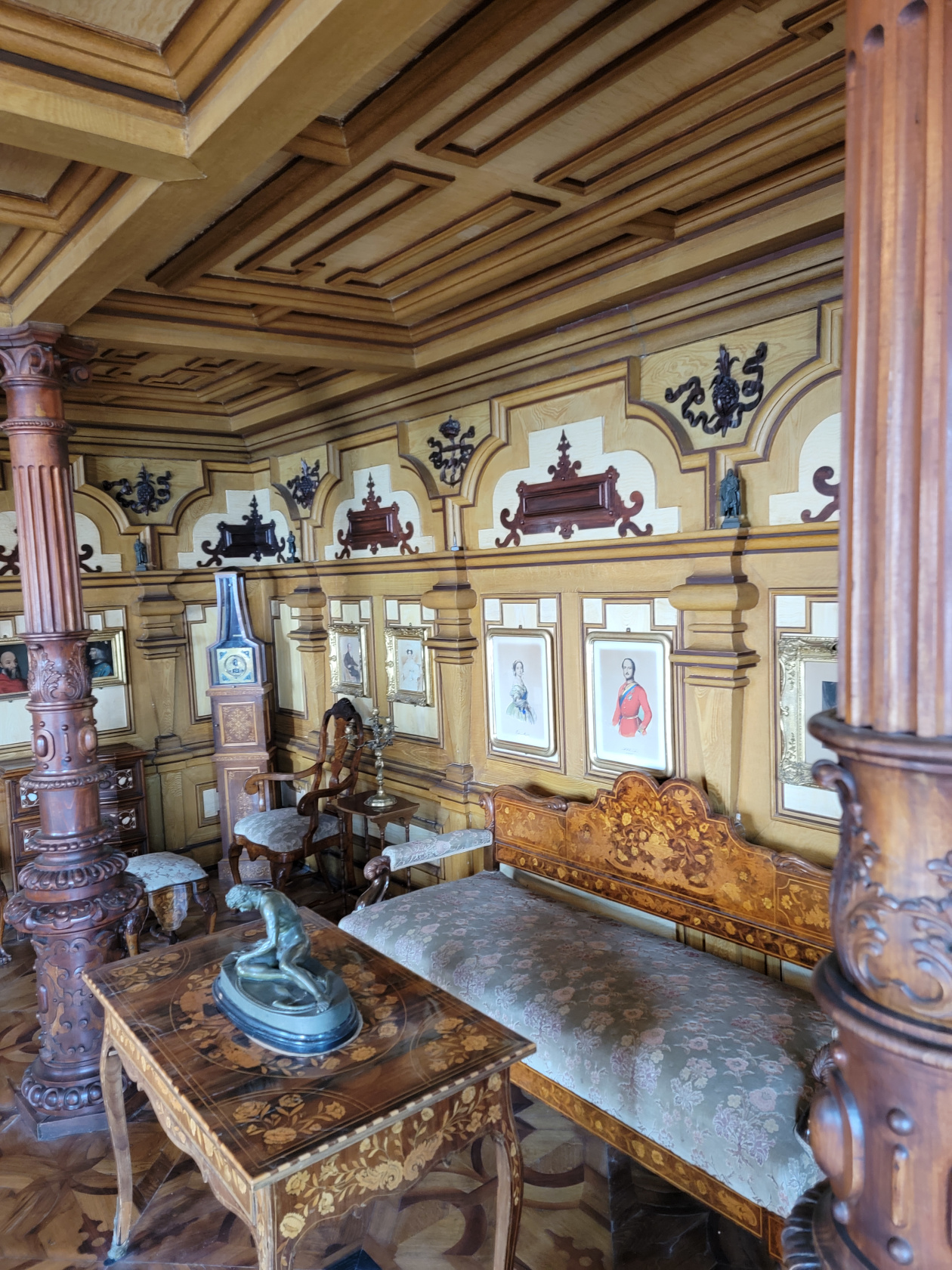
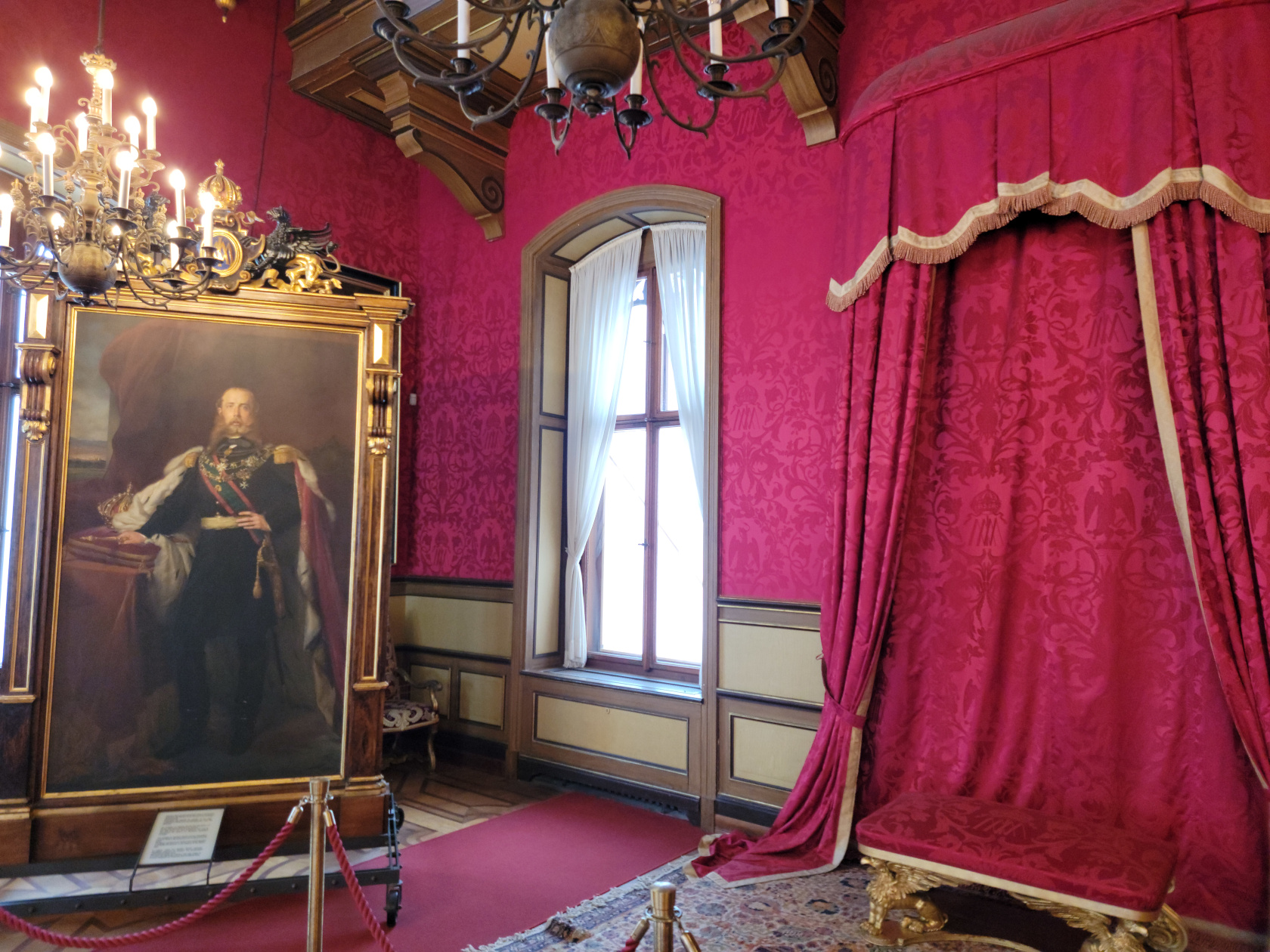
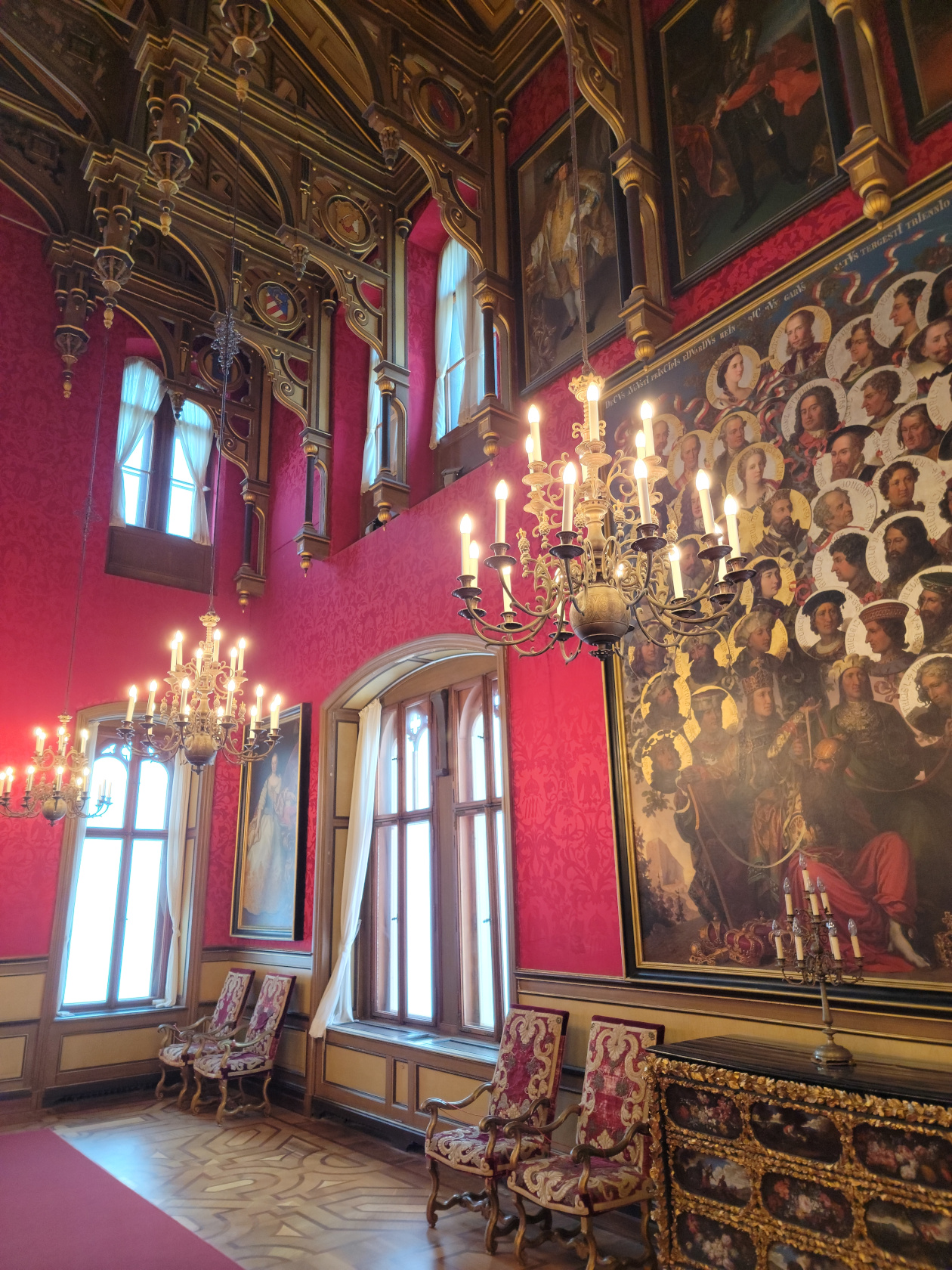
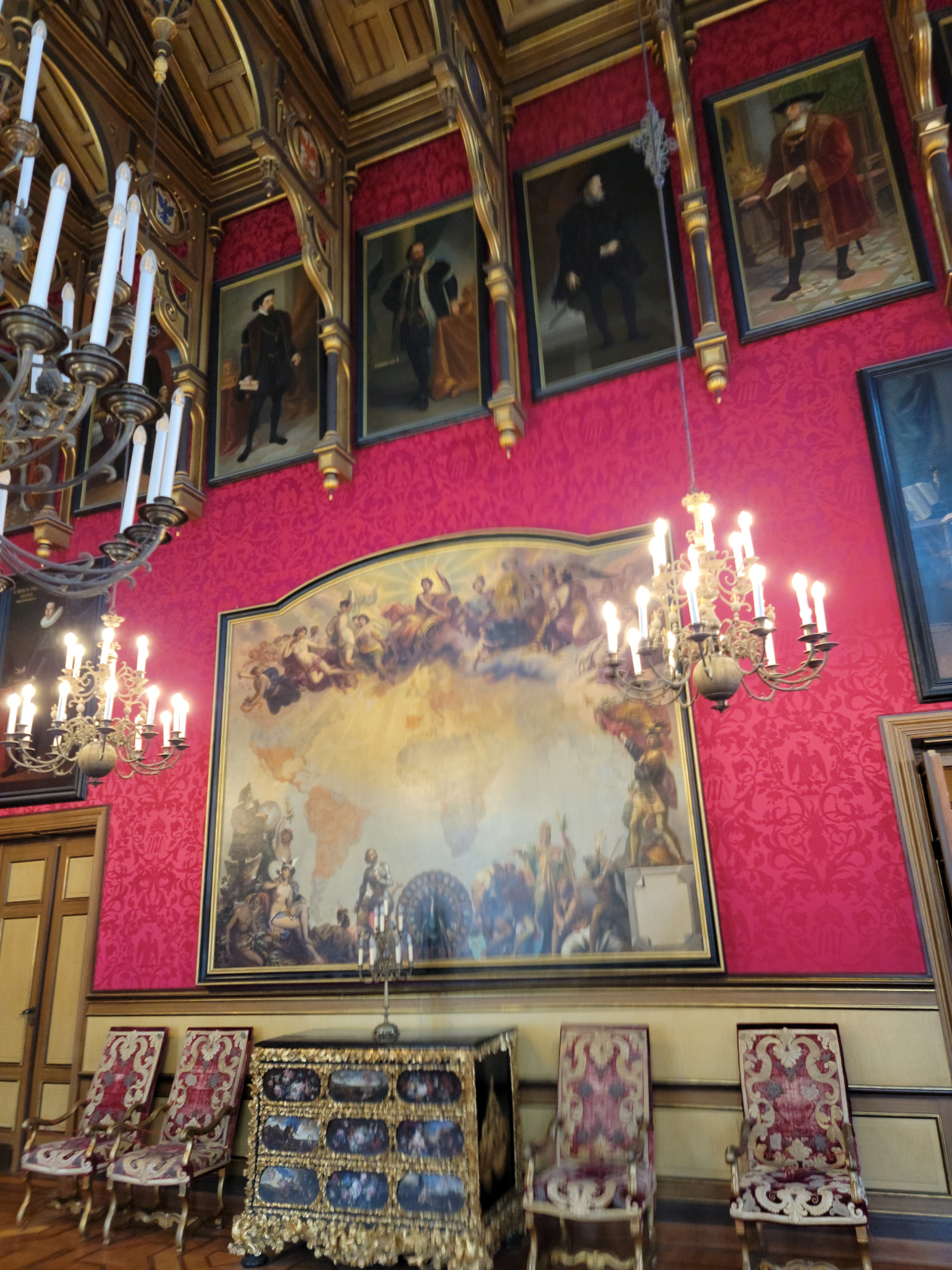
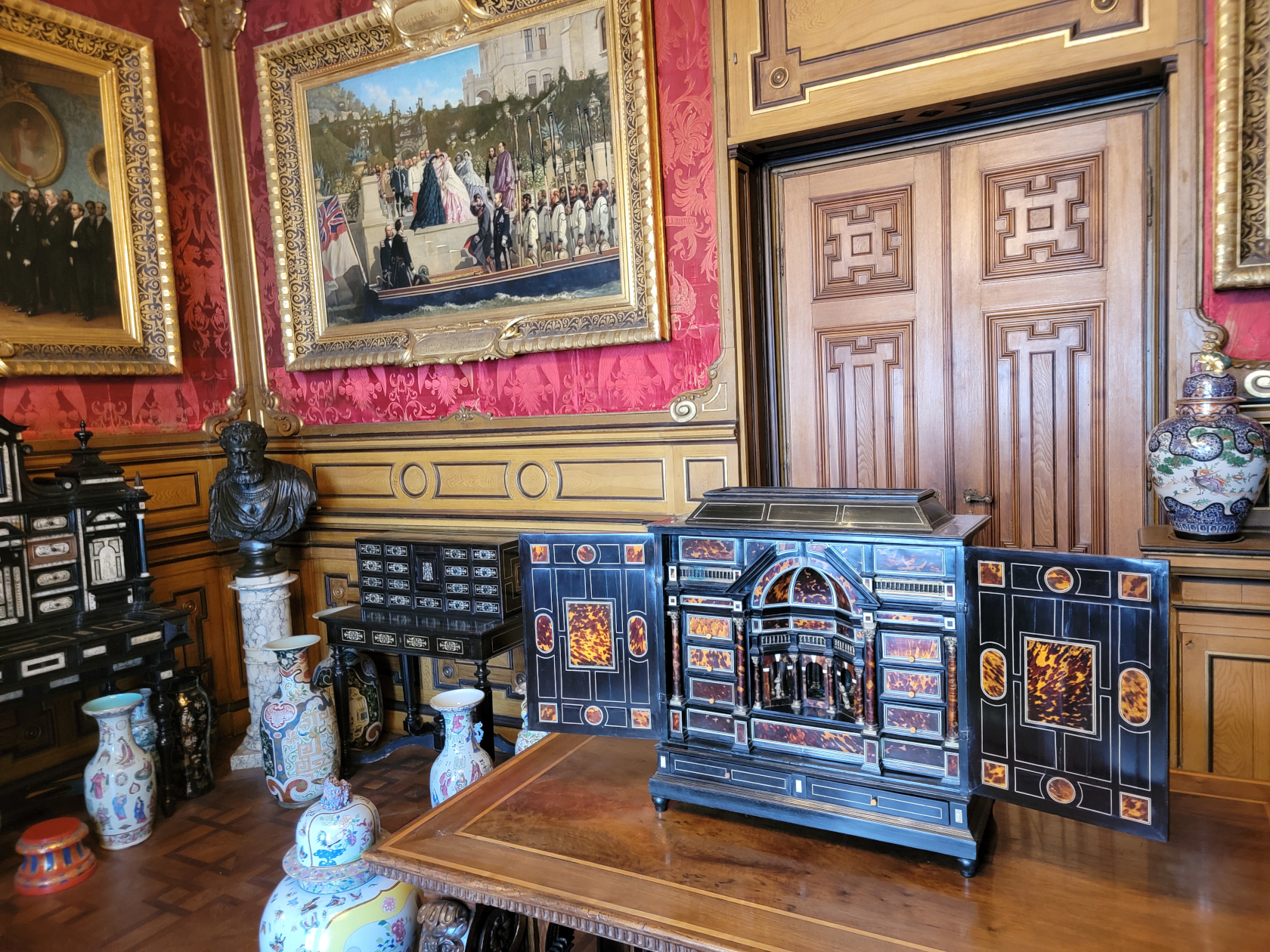
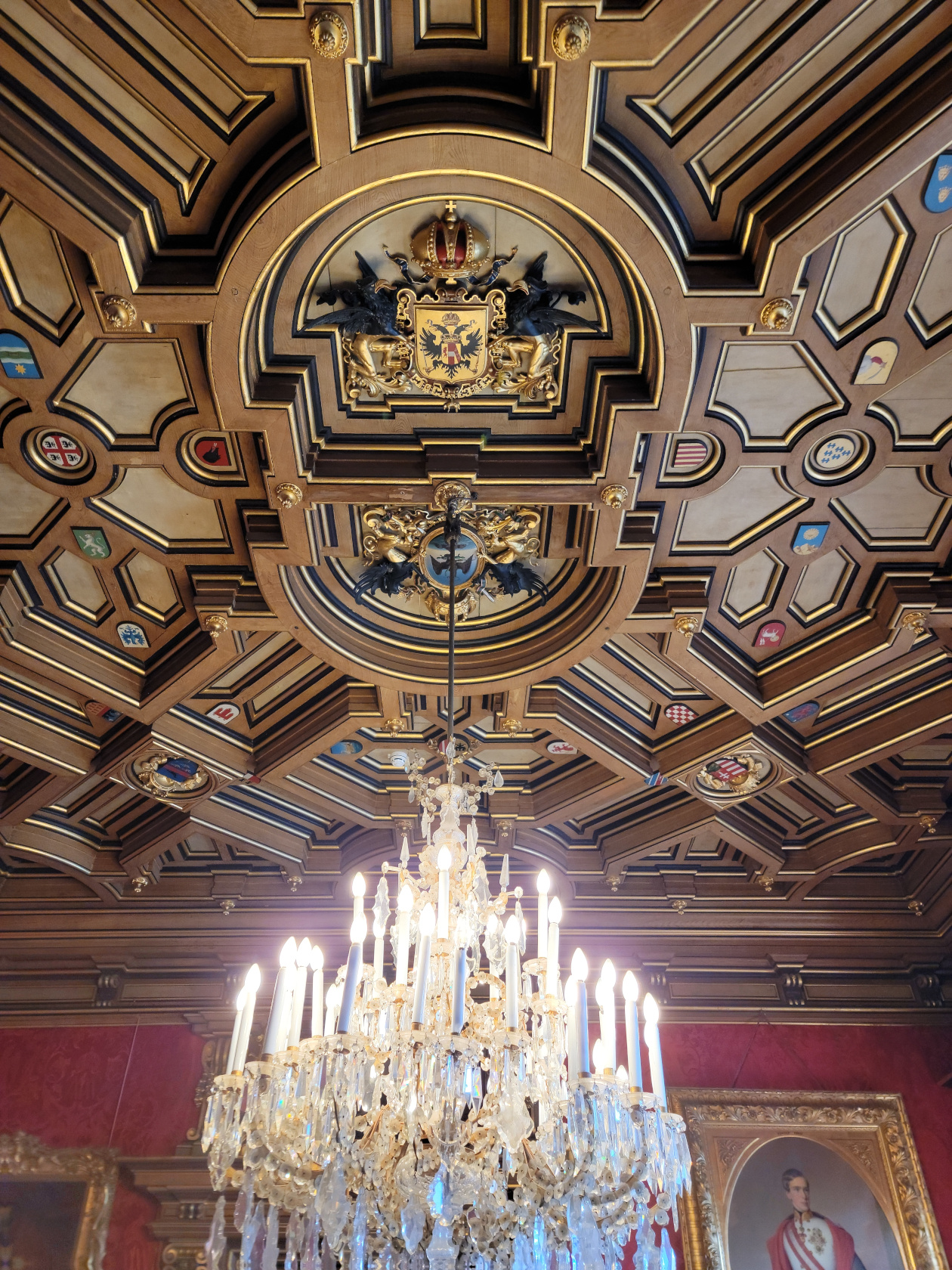
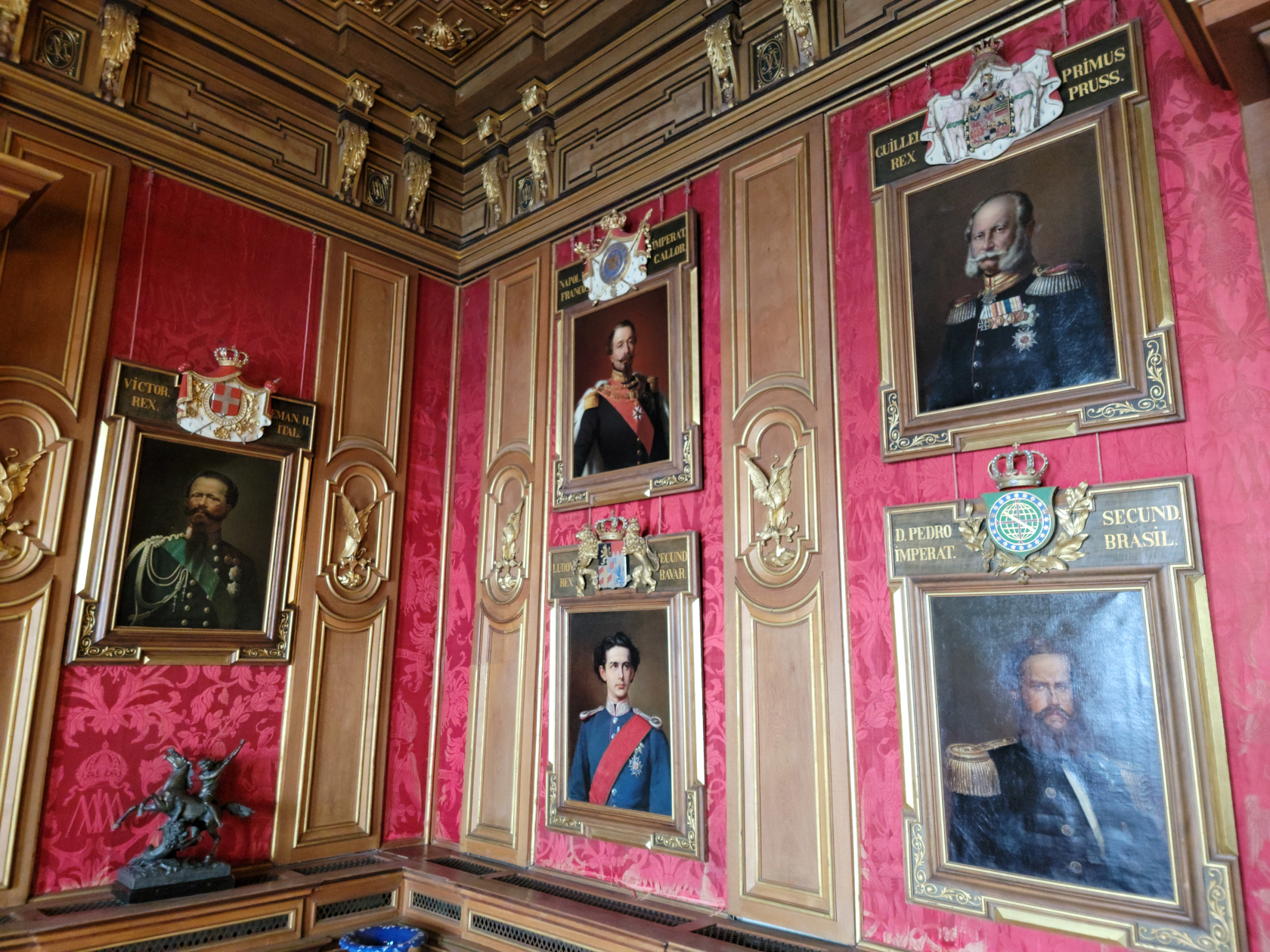
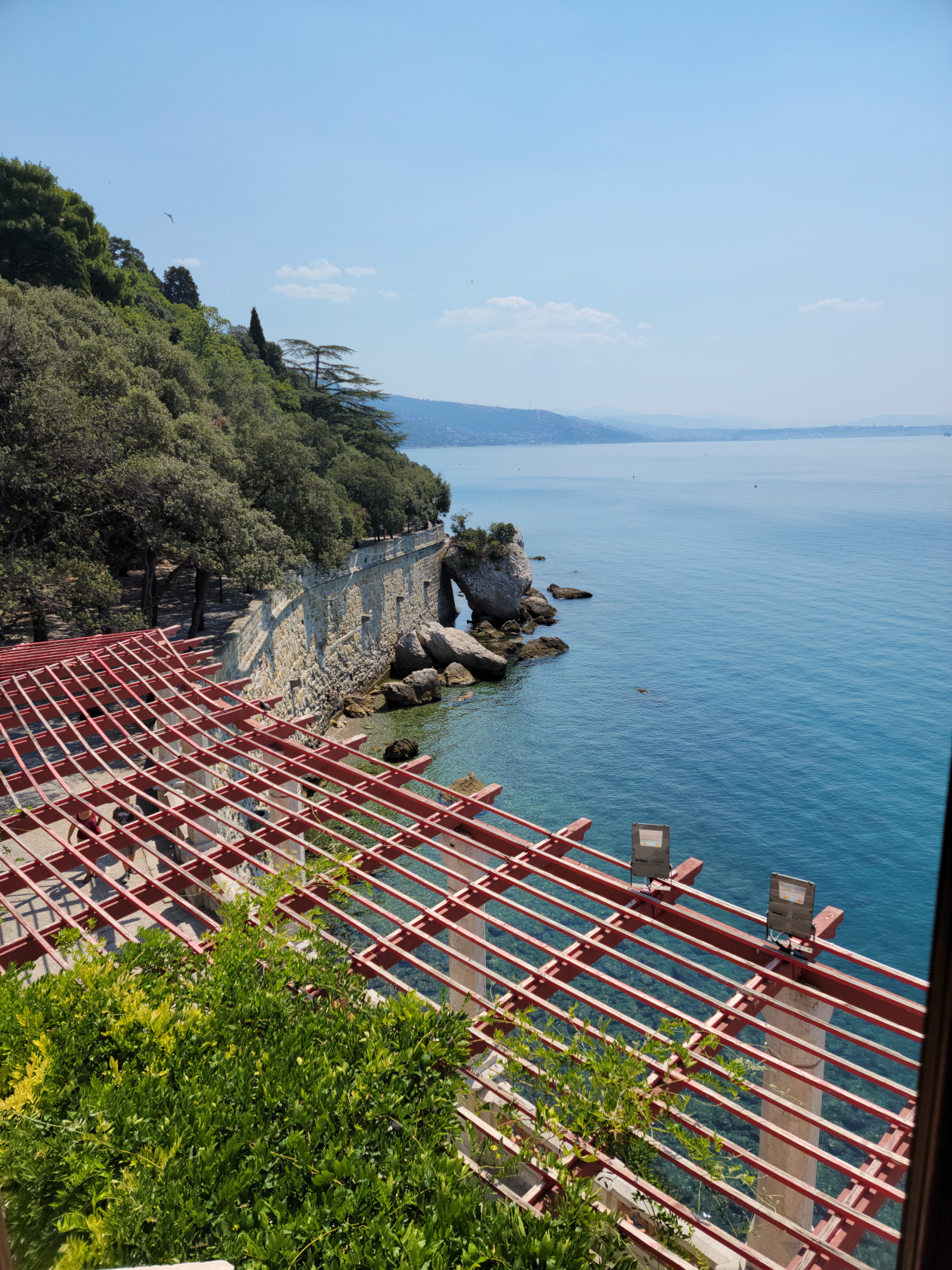
The Miramare Castle was built in the mid eighteen hundreds by Austrian Archduke Ferdinand Maximillian and his wife. The castle is rather small, but fits well into the coastline and has some interesting internal features, including a Chinese Room.
Miramare – Miramare Castle
Miramare – Miramare Castle
Miramare – Miramare Castle
Miramare – Miramare Castle
Miramare – Miramare Castle
Miramare – Miramare Castle
Miramare – Miramare Castle
Miramare – Miramare Castle
Miramare – Miramare Castle
Miramare – Miramare Castle
Miramare – Miramare Castle
Miramare – Miramare Castle
Miramare – Miramare Castle
Miramare – Miramare Castle
Miramare – Miramare Castle
Miramare – Miramare Castle
Miramare – Miramare Castle
Miramare – Miramare Castle
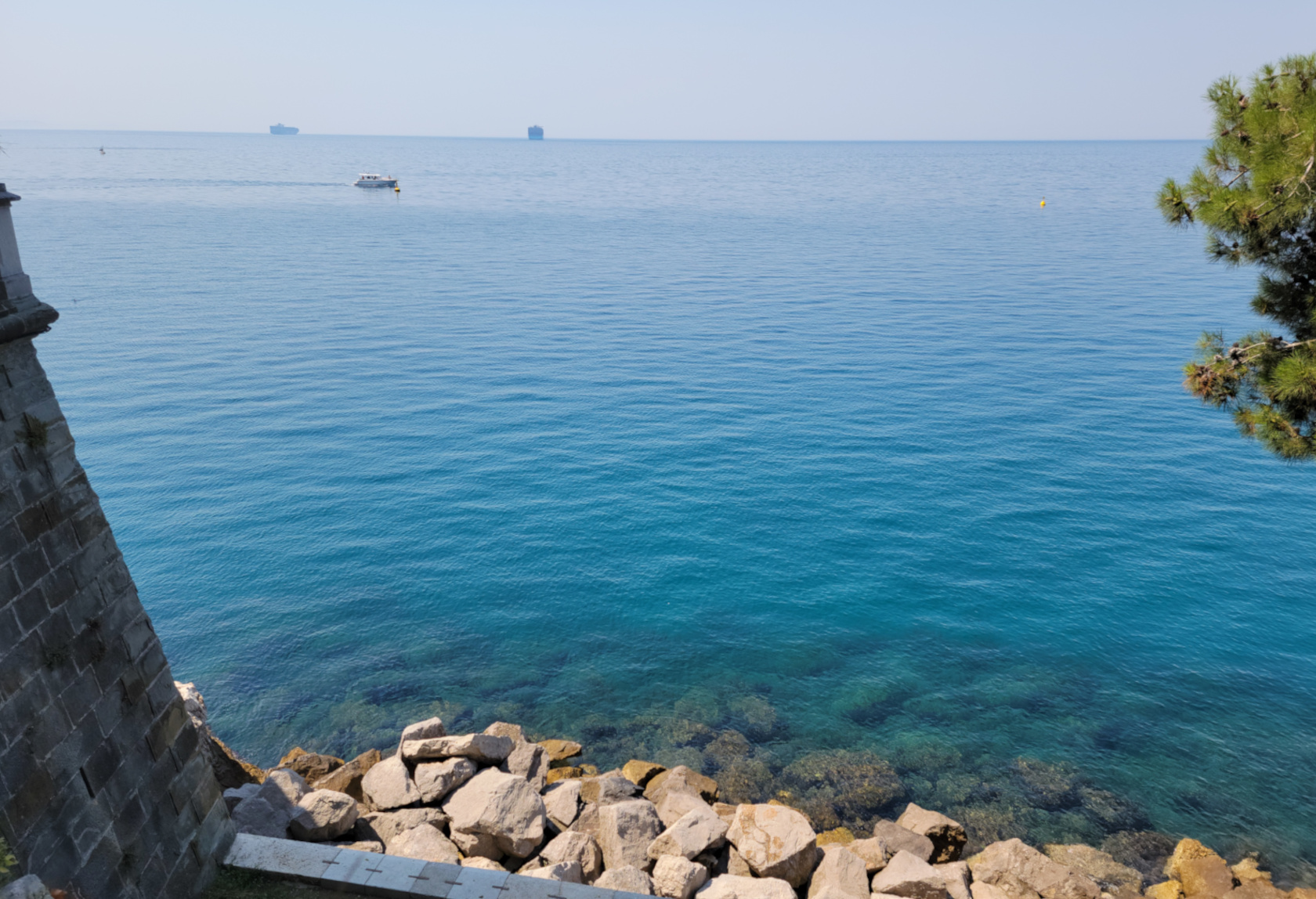
Miramare – Miramare Castle – Gulf of Trieste
Miramare – Miramare Castle – Garden
Miramare – Miramare Castle – Garden
Miramare – Miramare Castle
Restaurants
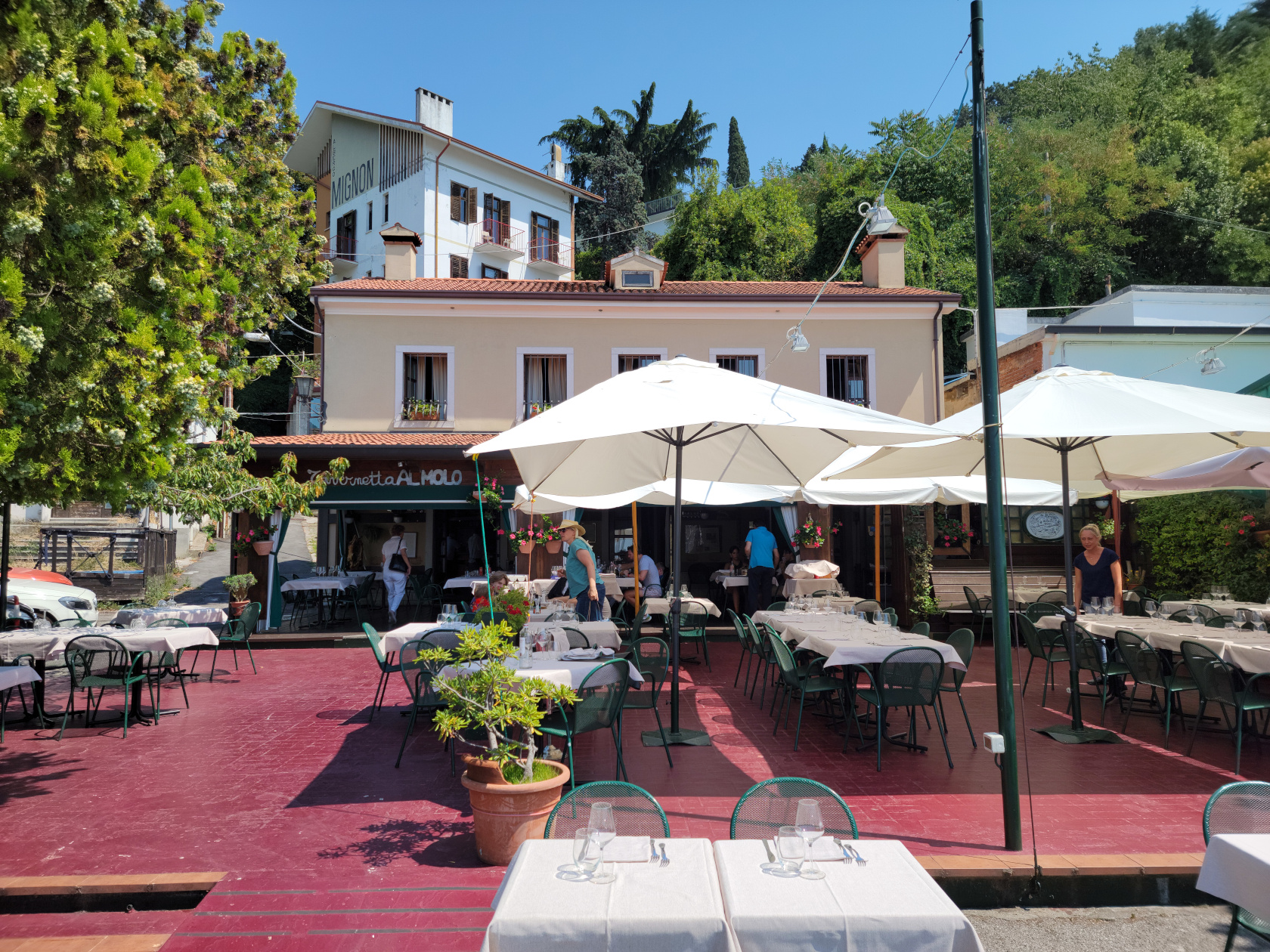
A short walk north on the path down to Grignano will bring you to the marina where several restaurants are located. We chose Tavernetta al Molo for lunch and were not disappointed.
Tavernetta al Molo
Grignano – Travernetta al Molo
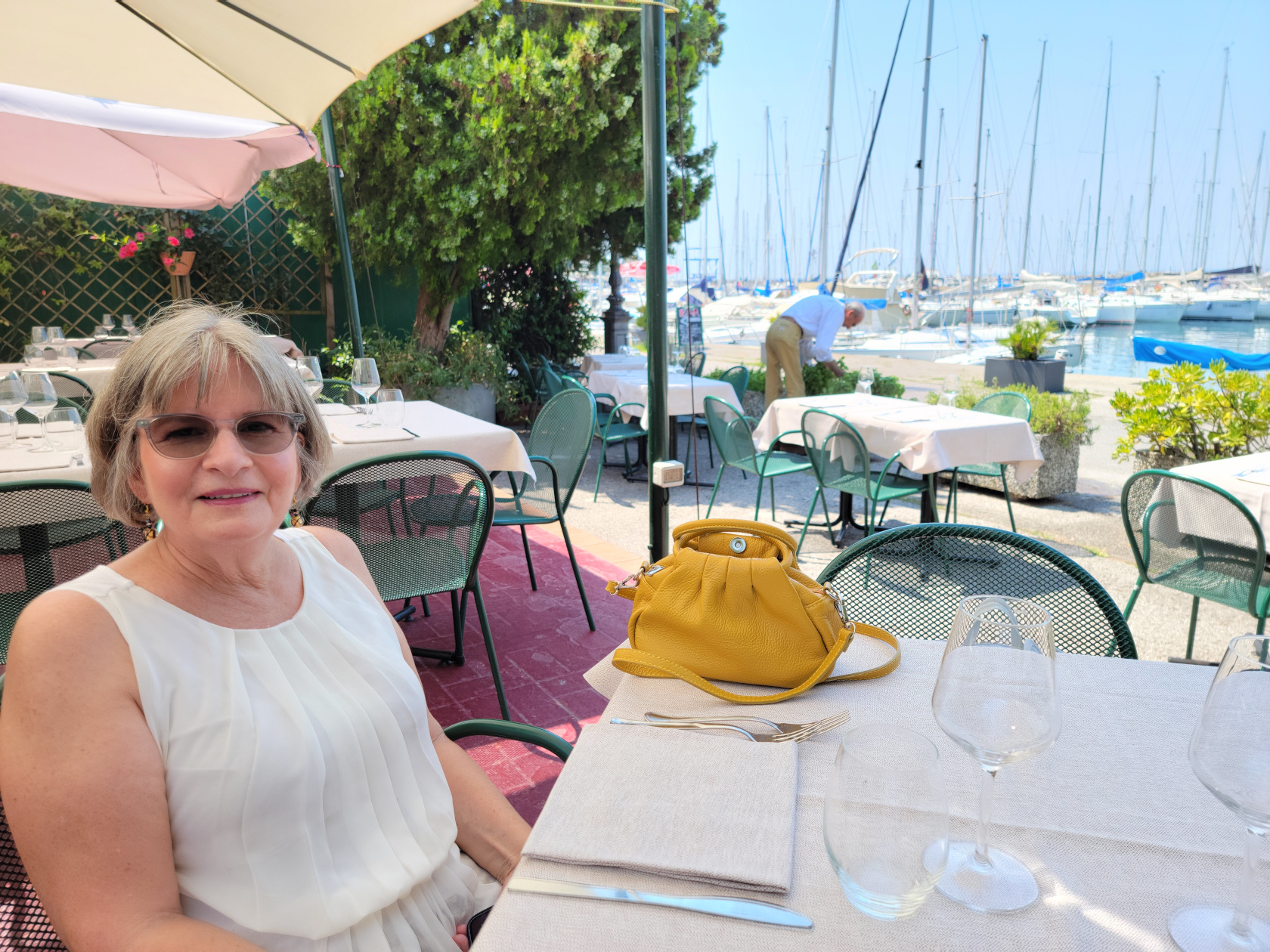
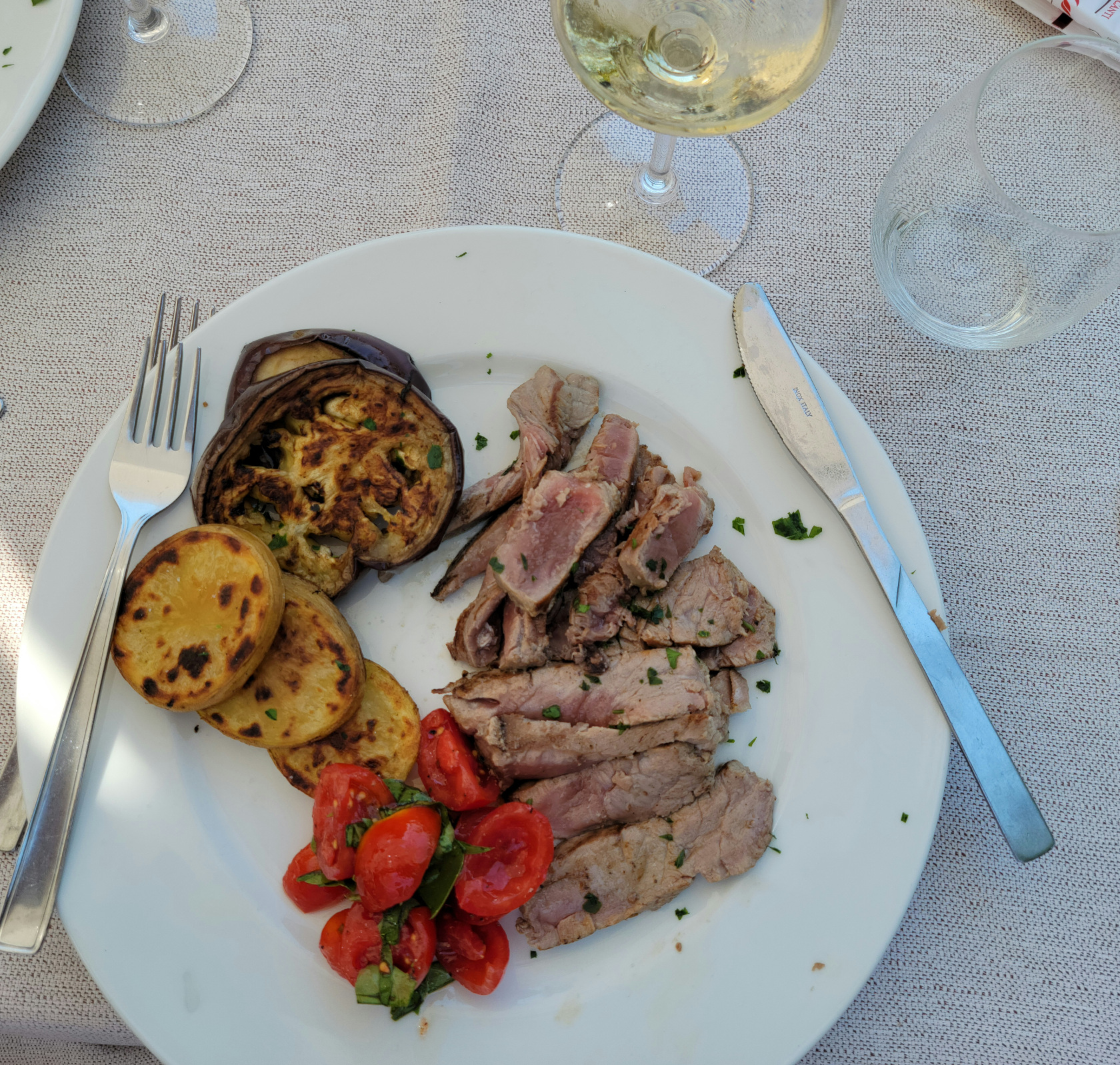
A small establishment by the marina that has a good menu, including daily seafood specials, drinks and desserts. We spent about two hours eating, relaxing and enjoying a rest during a very hot day.
Grignano – Travernetta al Molo
Grignano – Patti at Travernetta al Molo
Grignano – Travernetta al Molo – Grilled Tuna, Potato and Tomato
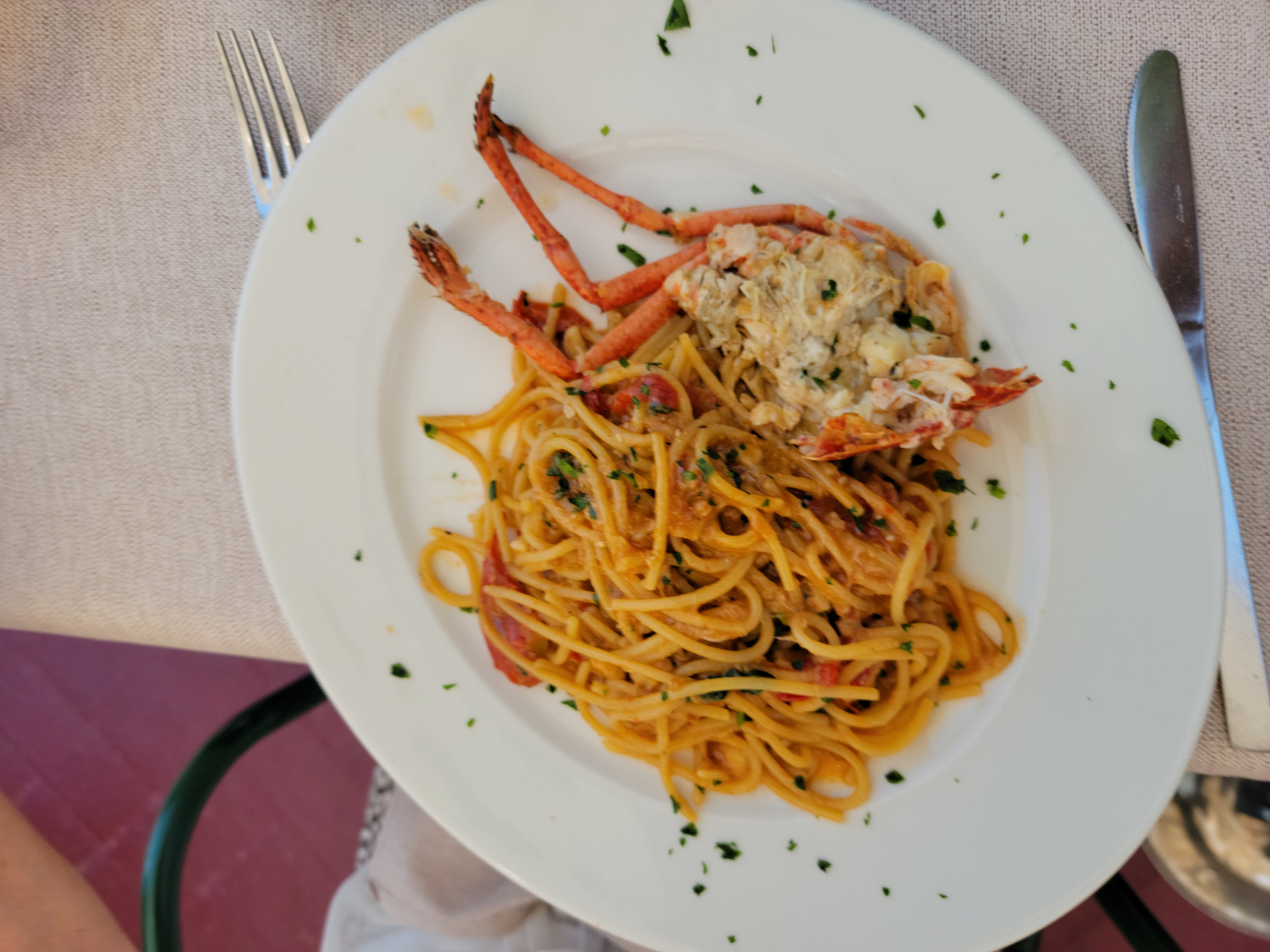
Grignano – Travernetta al Molo – Spaghetti in Lobster Sauce
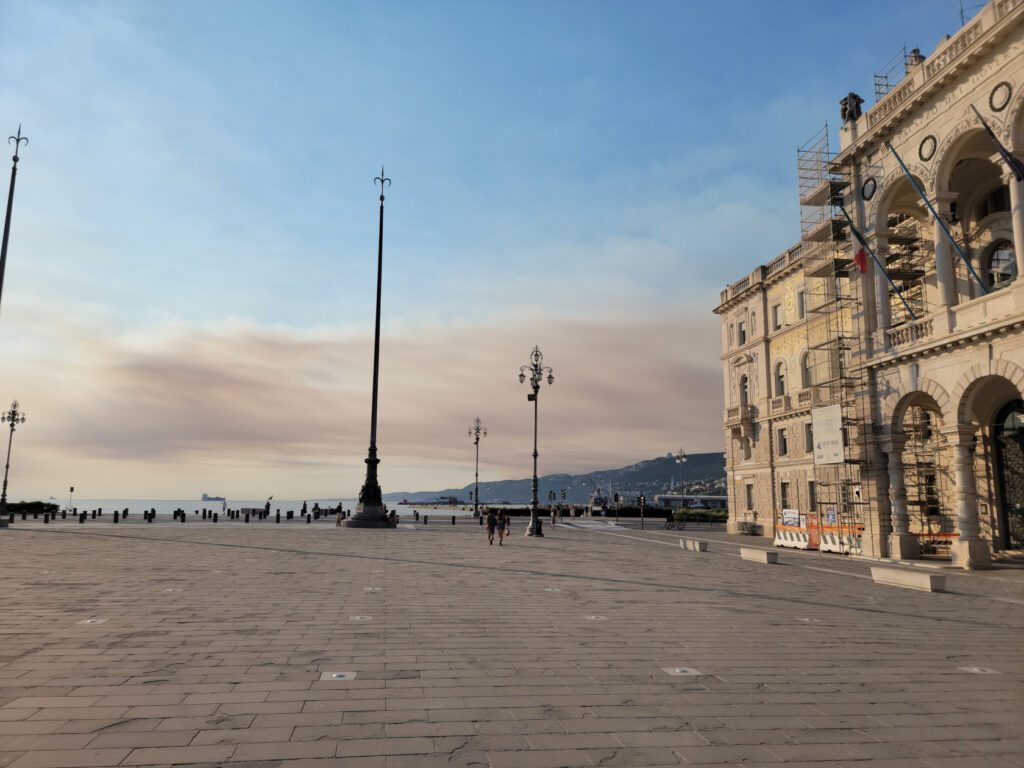
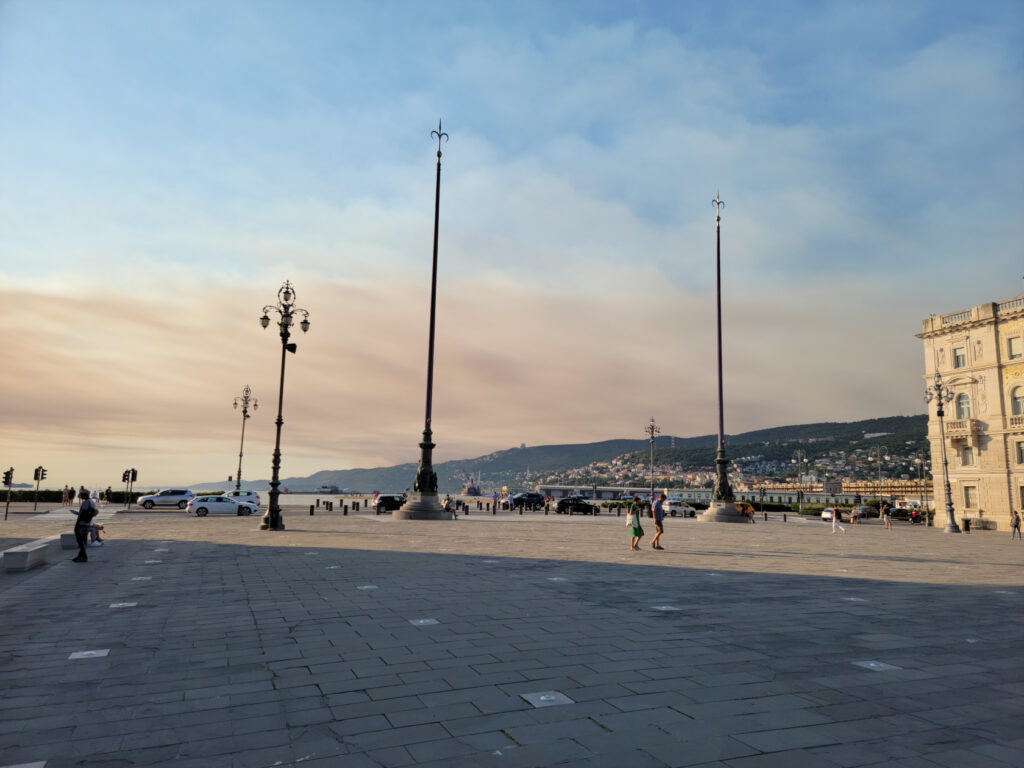
After months of planning, we finally arrived in Trieste after our seven hour train trip, which turned into a nine hour ordeal at the end. This was totally unforeseen because of the weather and a huge forest fire that started burning the day before in the Carso region. We were halted by Italian authorities in Monfalcone from using the train, which runs between Monfalcone and Trieste, due to the fire’s proximity to the train tracks. The E70 and the train line that runs along the coast here were closed out of an abundance of caution.
Trieste – Smoke From Carso Wildfire
Unity of Italy Square – Smoke From Carso Wildfire
We were all loaded onto buses and transported on local roads, all of which were backed up by re-routed traffic, extending our trips an extra hour. Only to be dropped off at the next available train station. We had assumed they were taking us all the way to Trieste by bus, but that was not in their calculus. Instead, we waited for the other buses to arrive at the next train station until the next train to Trieste left, which actually was only forty minutes later. So all-in-all, not as bad as some of the horror stories one hears about air travelers.
Trieste – Roman Veins
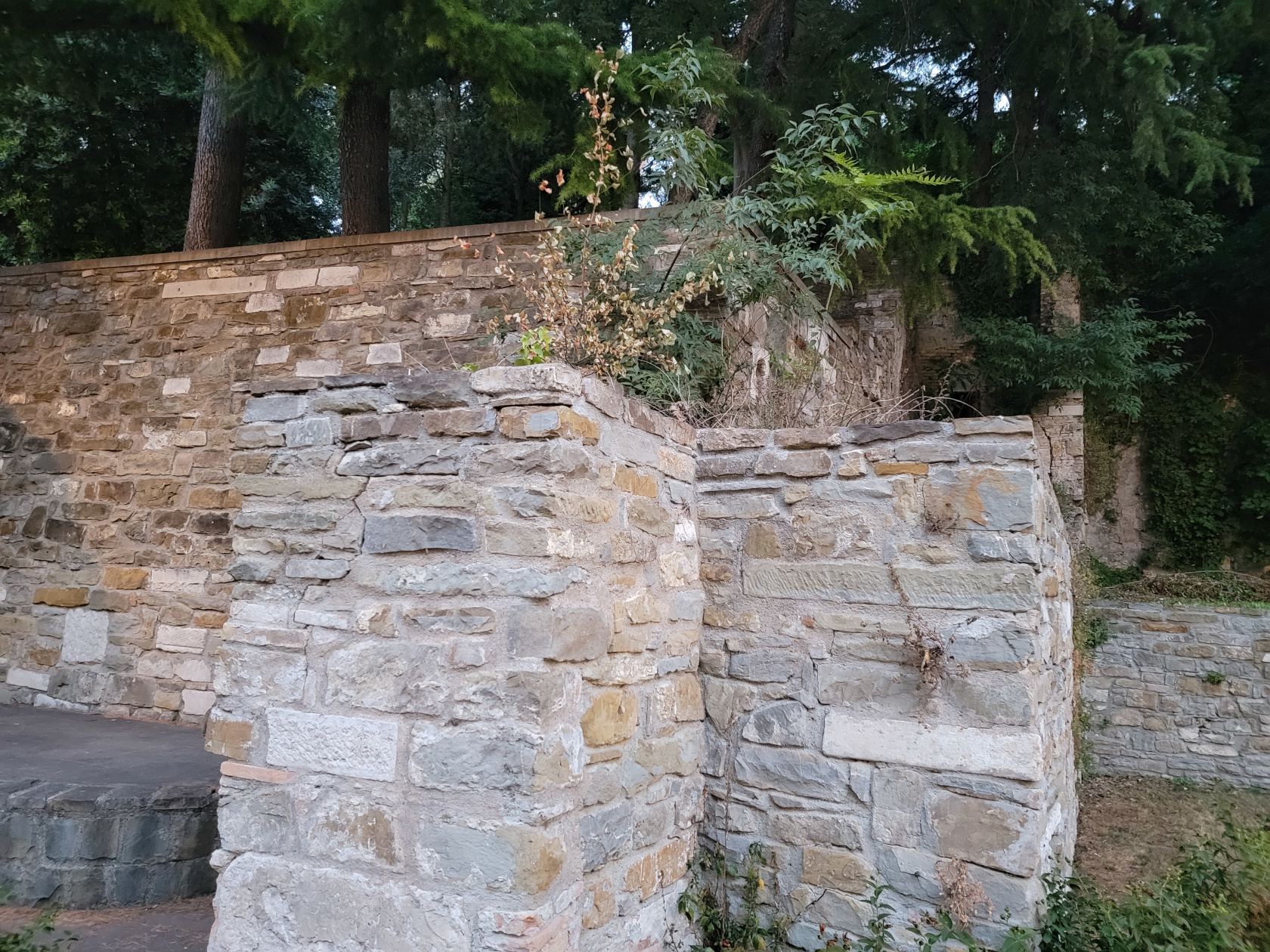
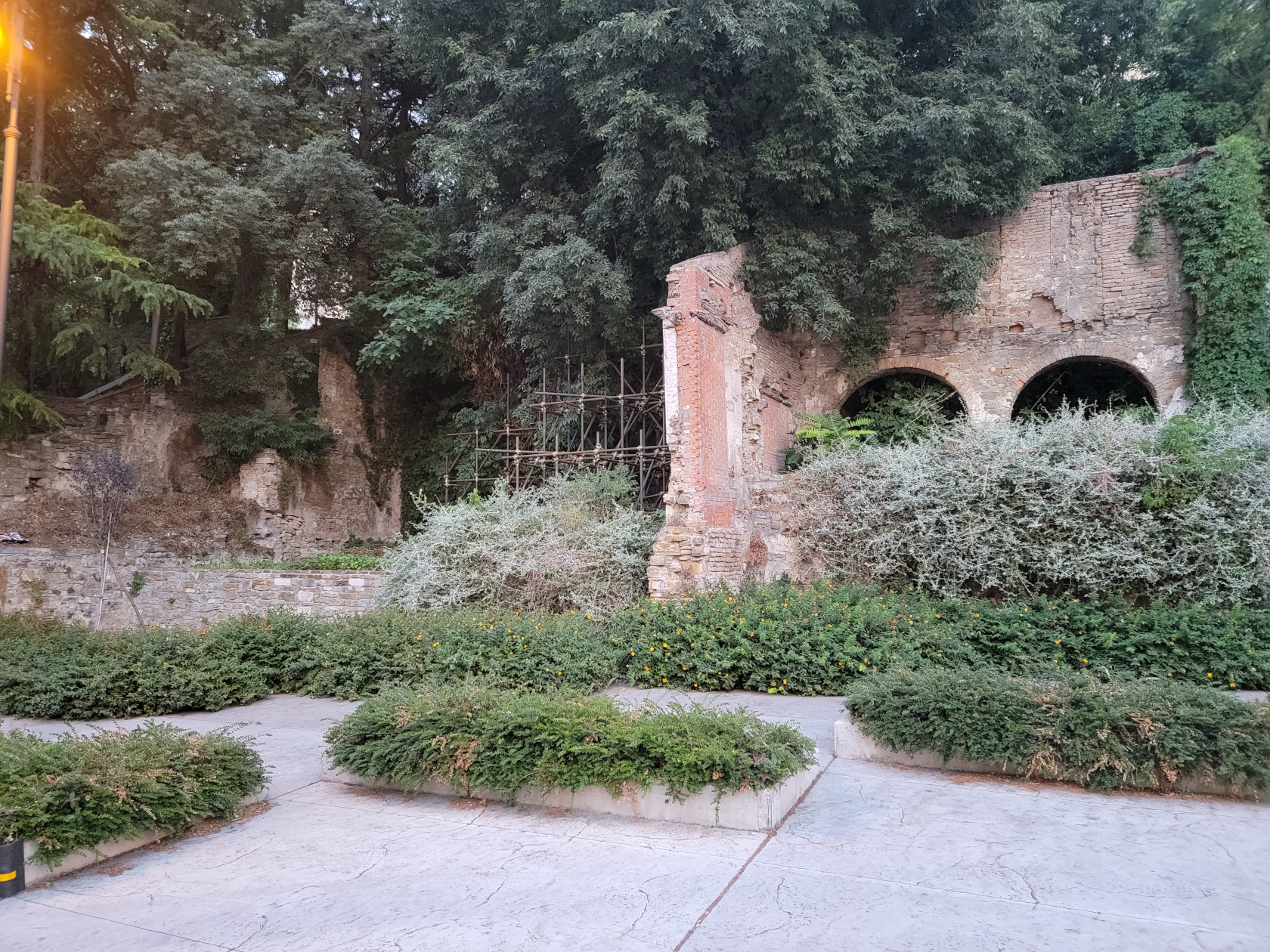
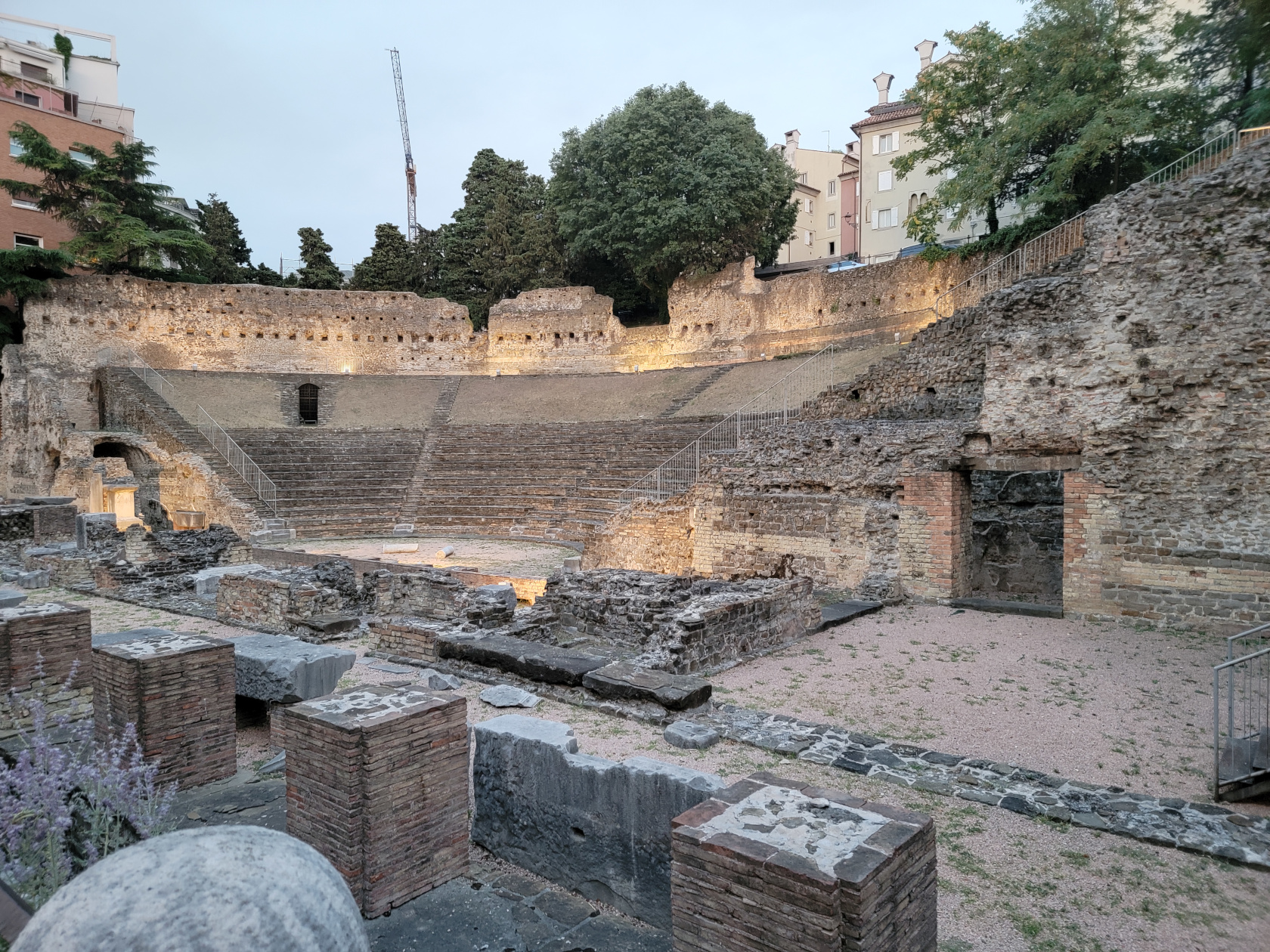
While walking the city, one can see that Trieste has some very deep cultural veins, when it comes to ancient Rome and the remains they left behind. From the Roman Theatre, to the aqueducts that brought water into the city, the Romans had a strong influence over the city.
Trieste – Roman Theatre
Trieste – Roman Theatre
Trieste – Roman Theatre
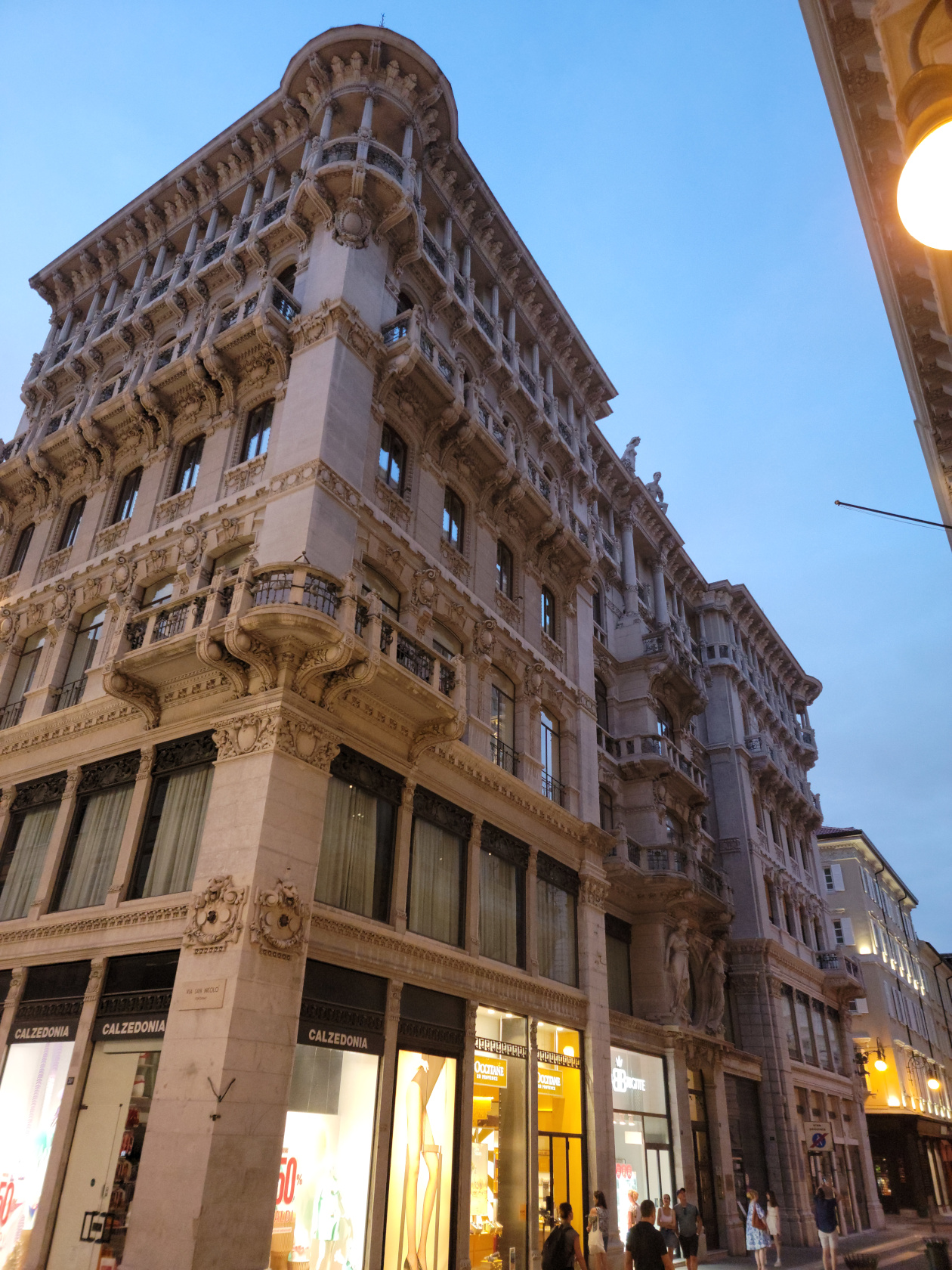
Trieste – The City
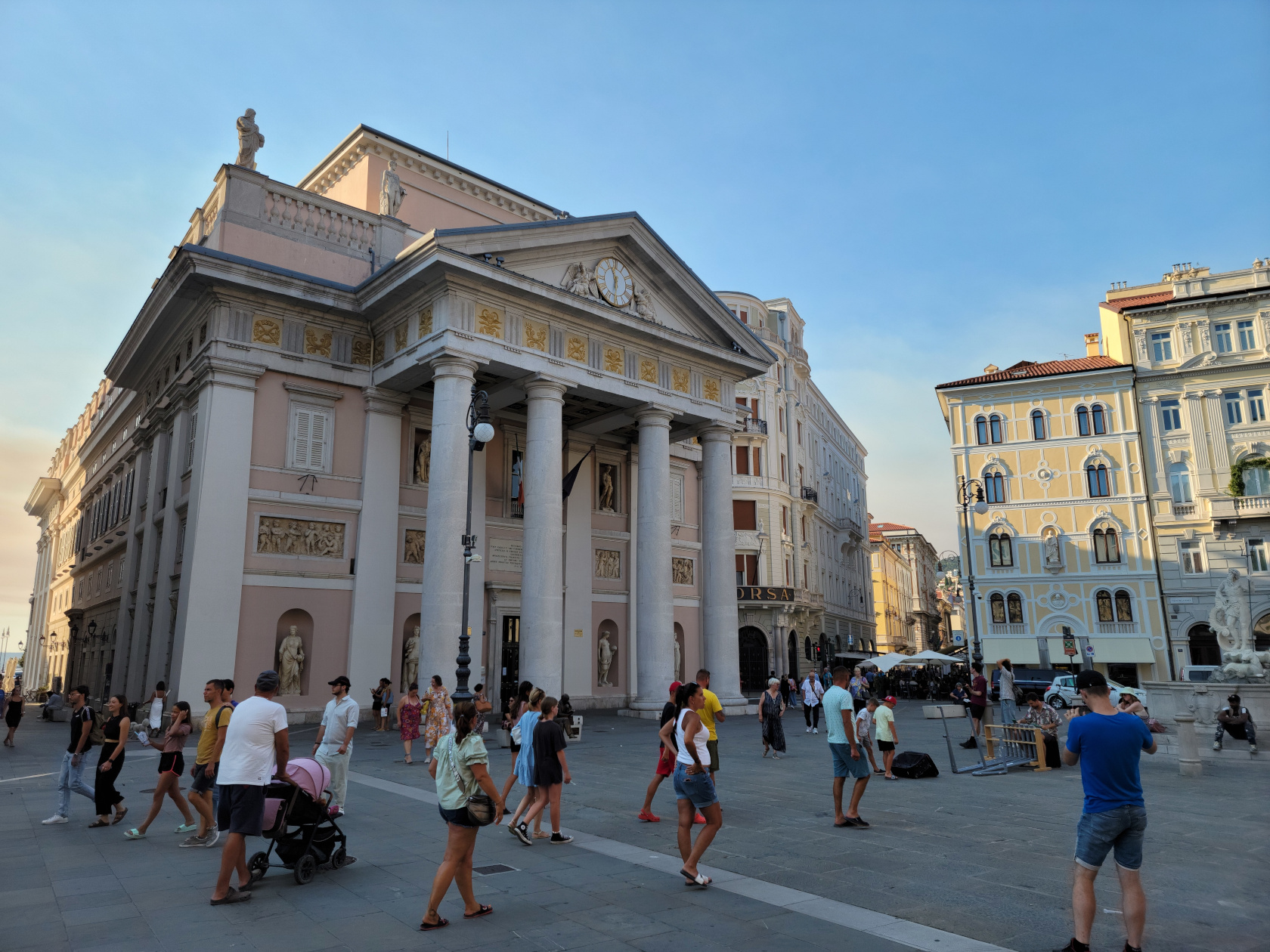
The city is very clean and pedestrian friendly. There are many open public spaces and a beautiful promenade along the waterway. Visitors will find it a very inviting and friendly place to walk and experience.
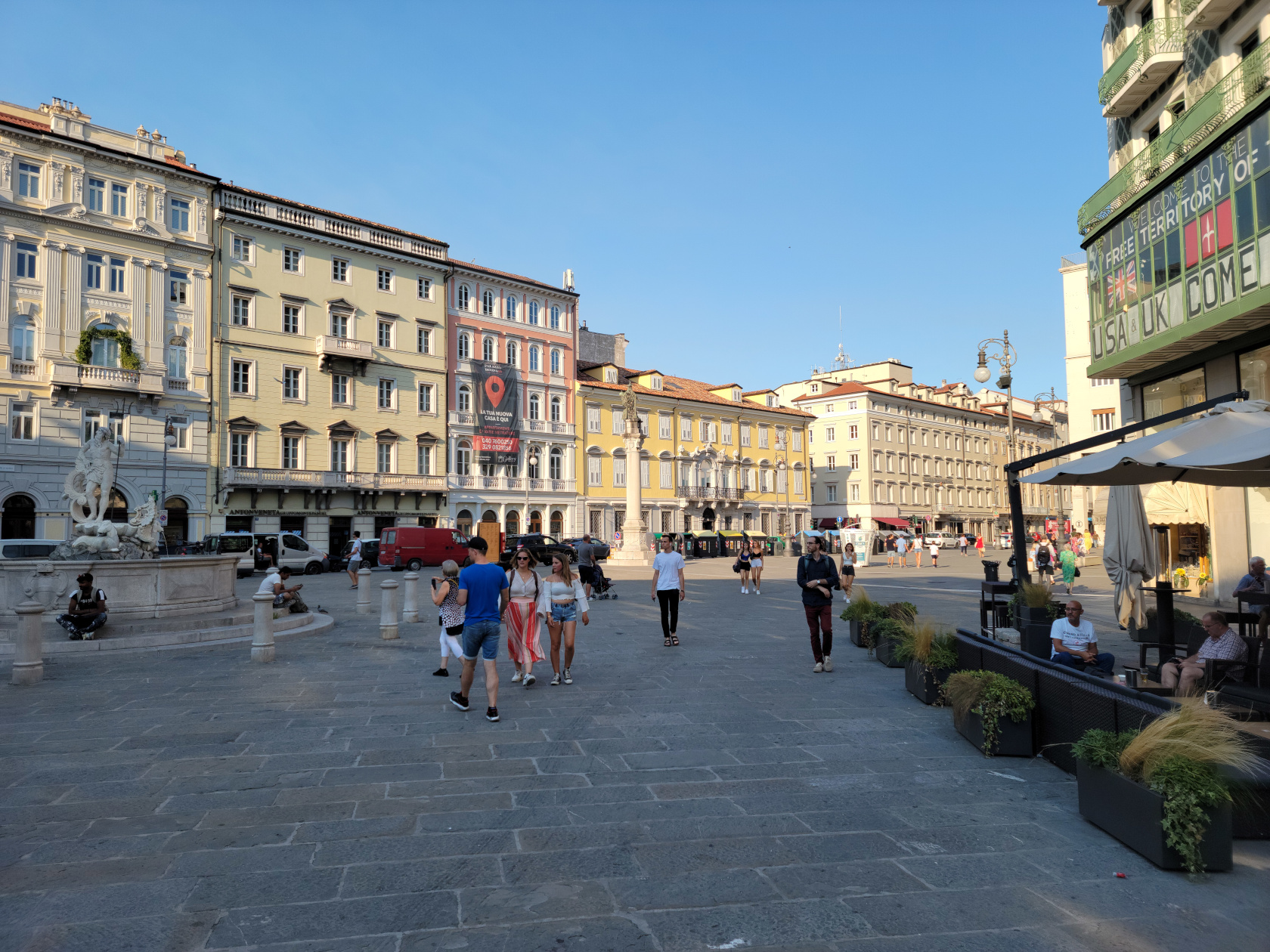
Piazza della Borsa
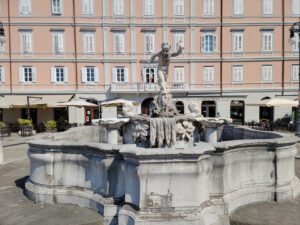
Piazza della Borsa – Neptune Fountain
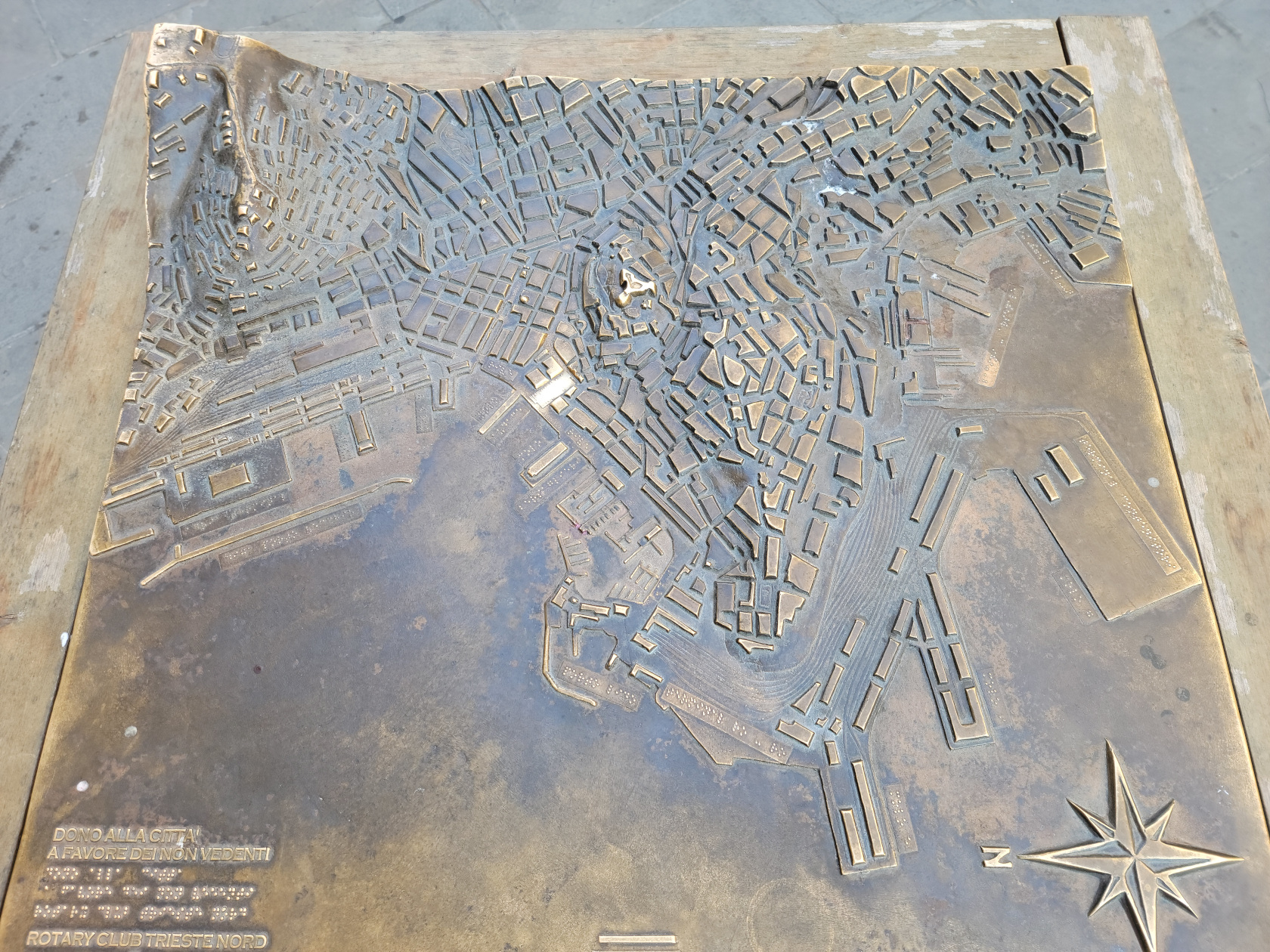
Bronz of Trieste City
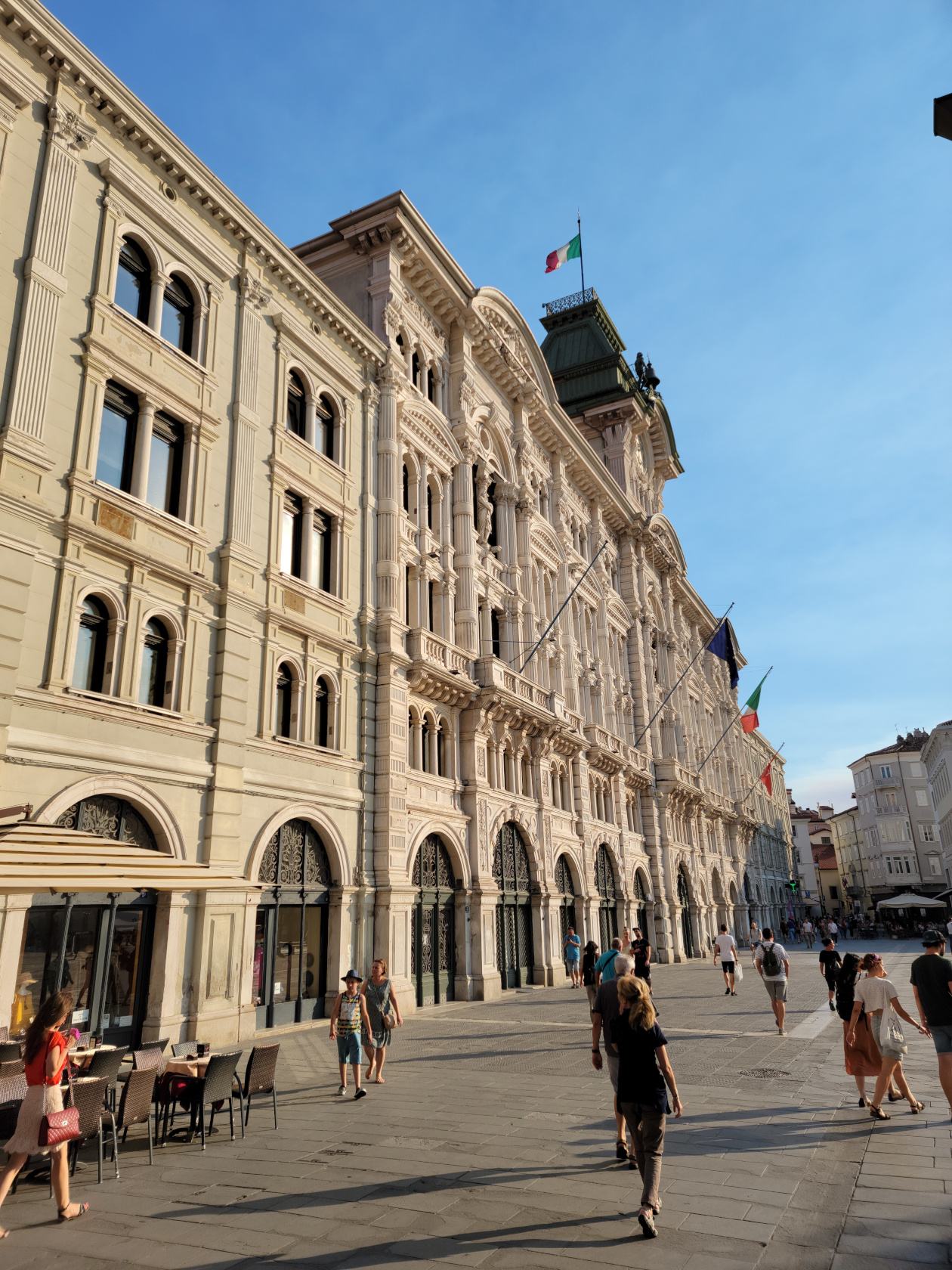
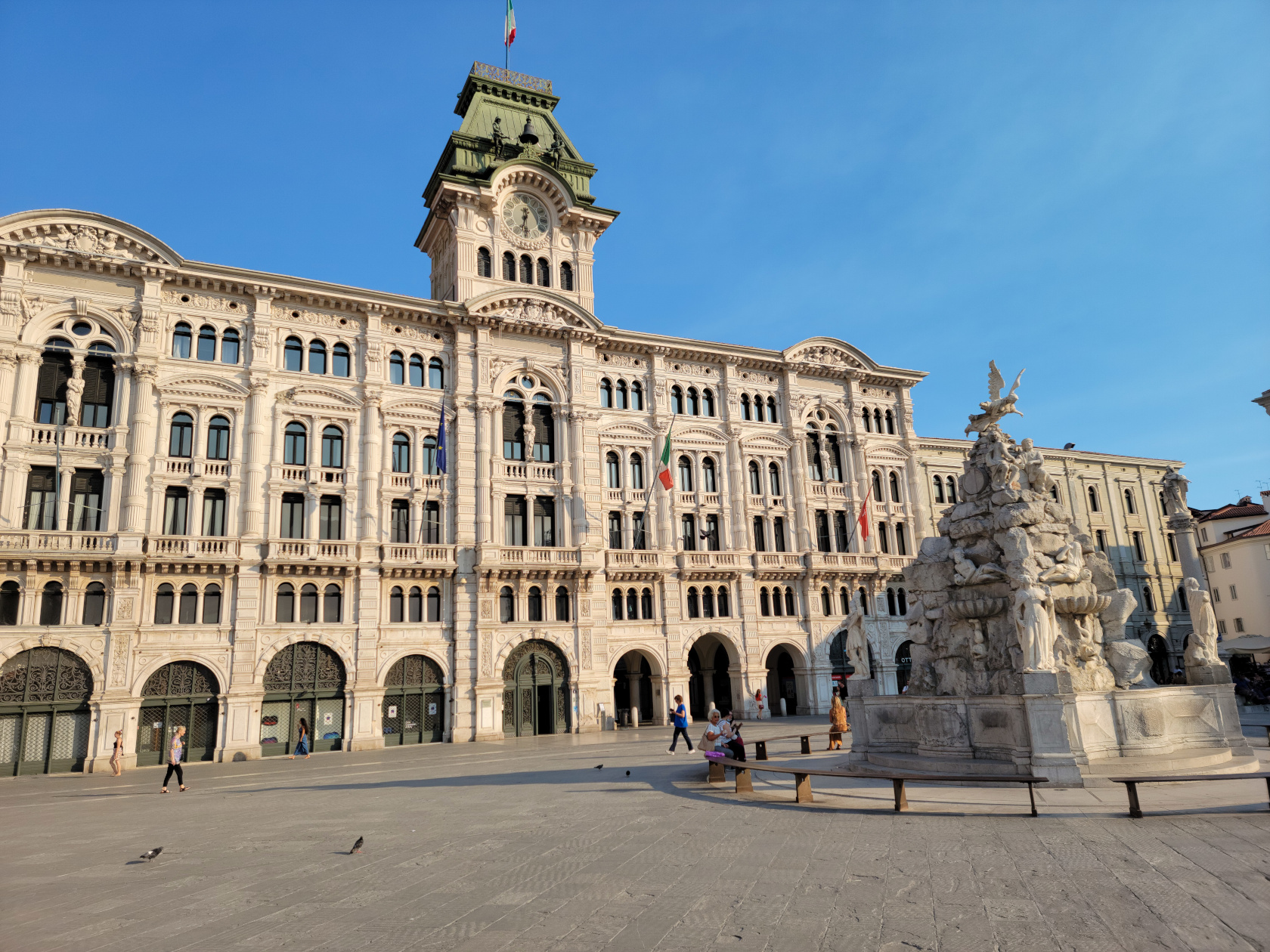
Unity of Italy Square
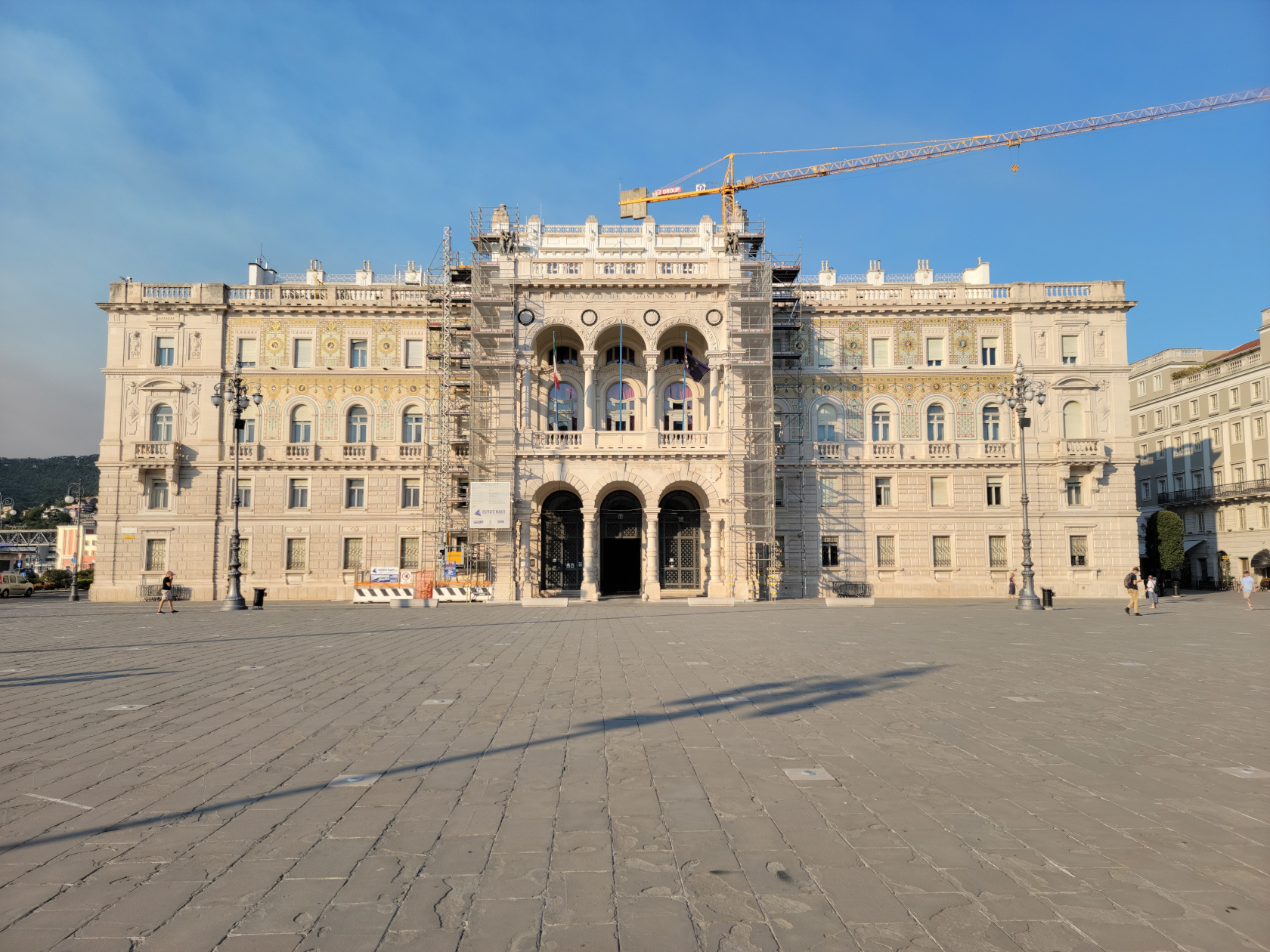
Unity of Italy Square – Palazzo del Municipio di Trieste
Unity of Italy Square – Prefettura di Trieste
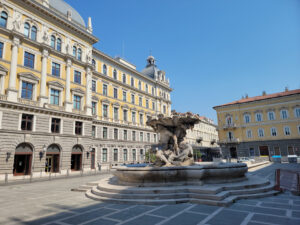
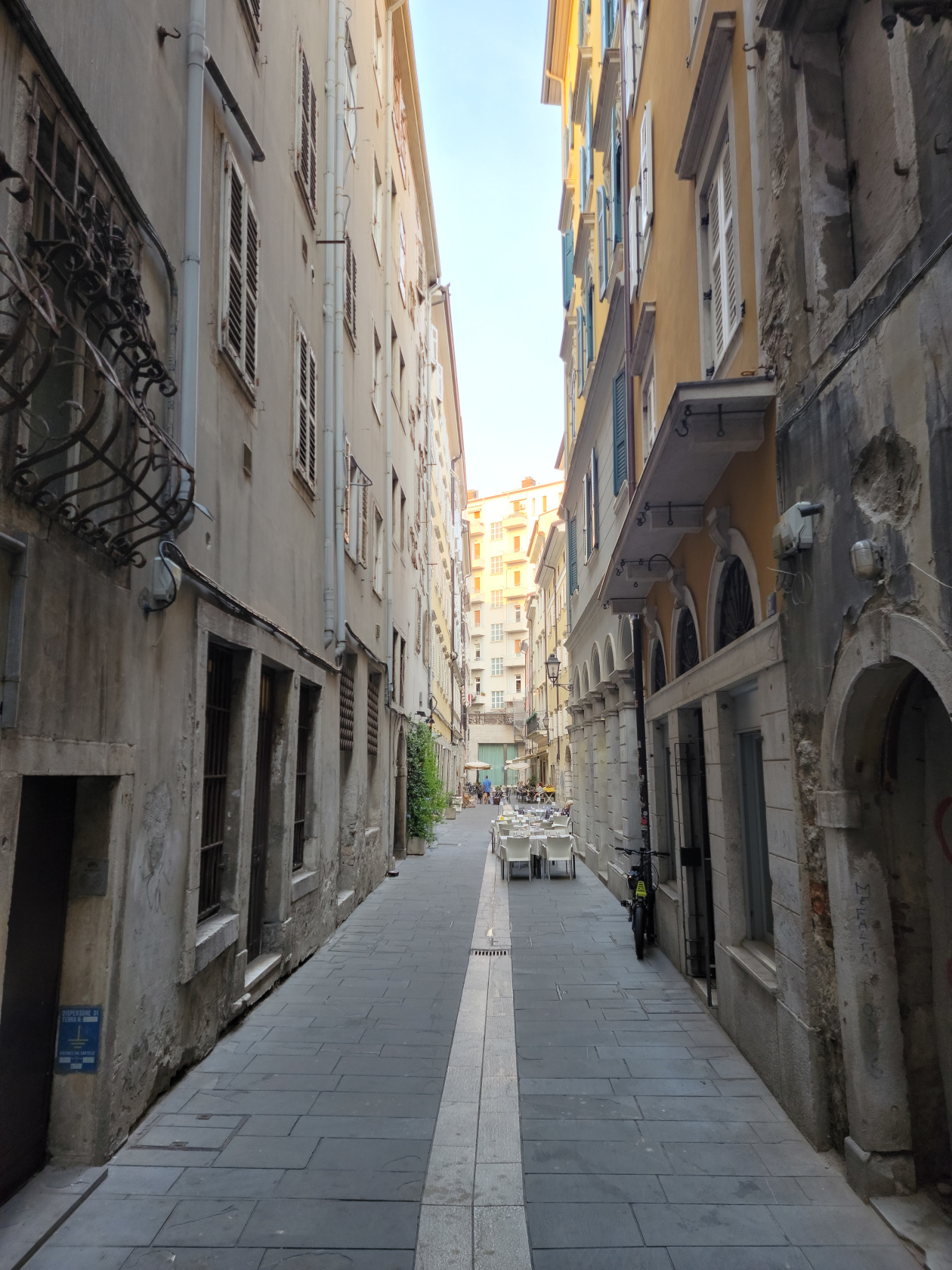
Trieste – The Jewish Ghetto
Trieste – Casa Terni Smolars
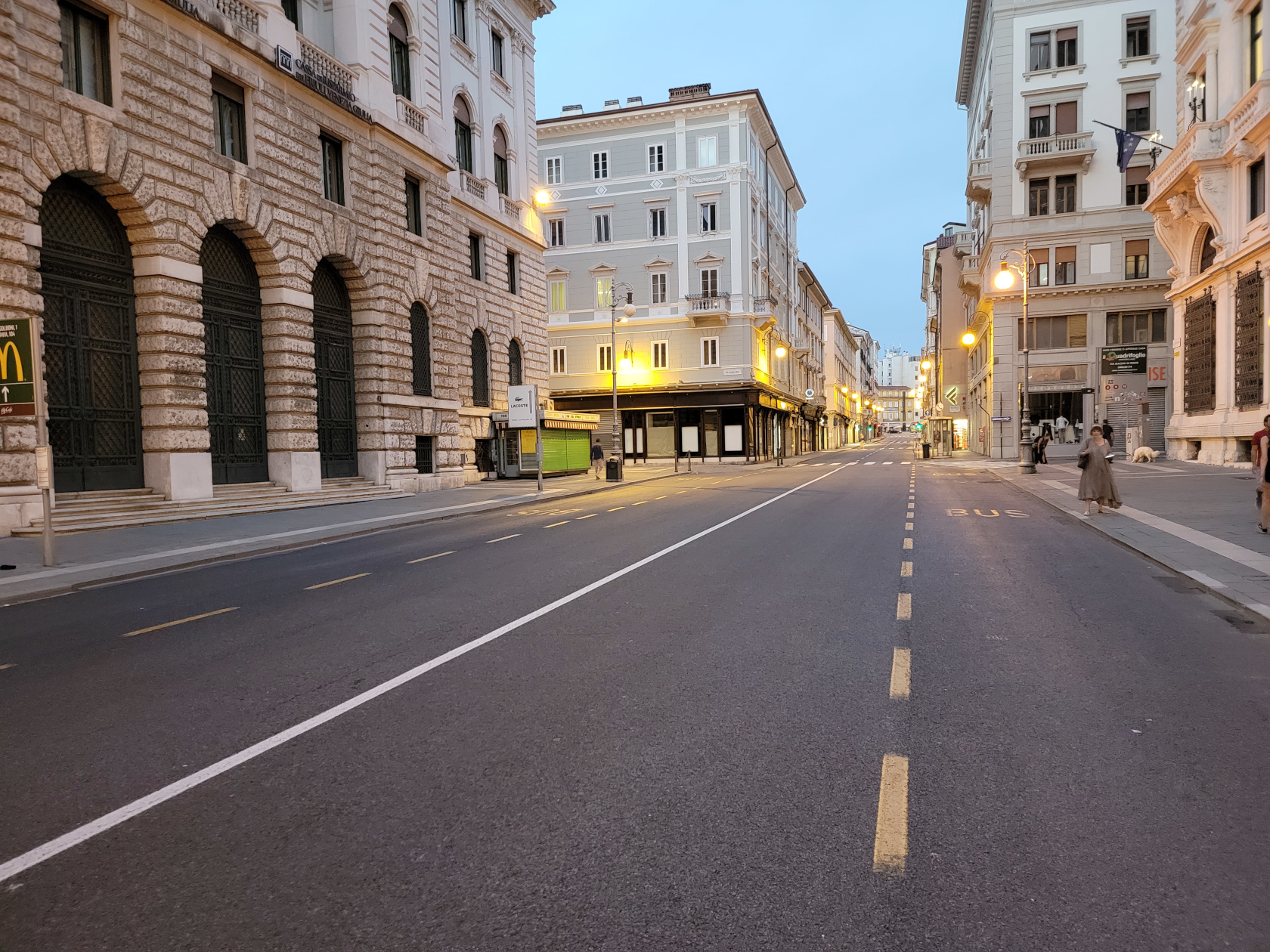
Trieste – Via Mazzini at 9PM – Empty
Trieste – Via Mazzini at 9PM – Empty
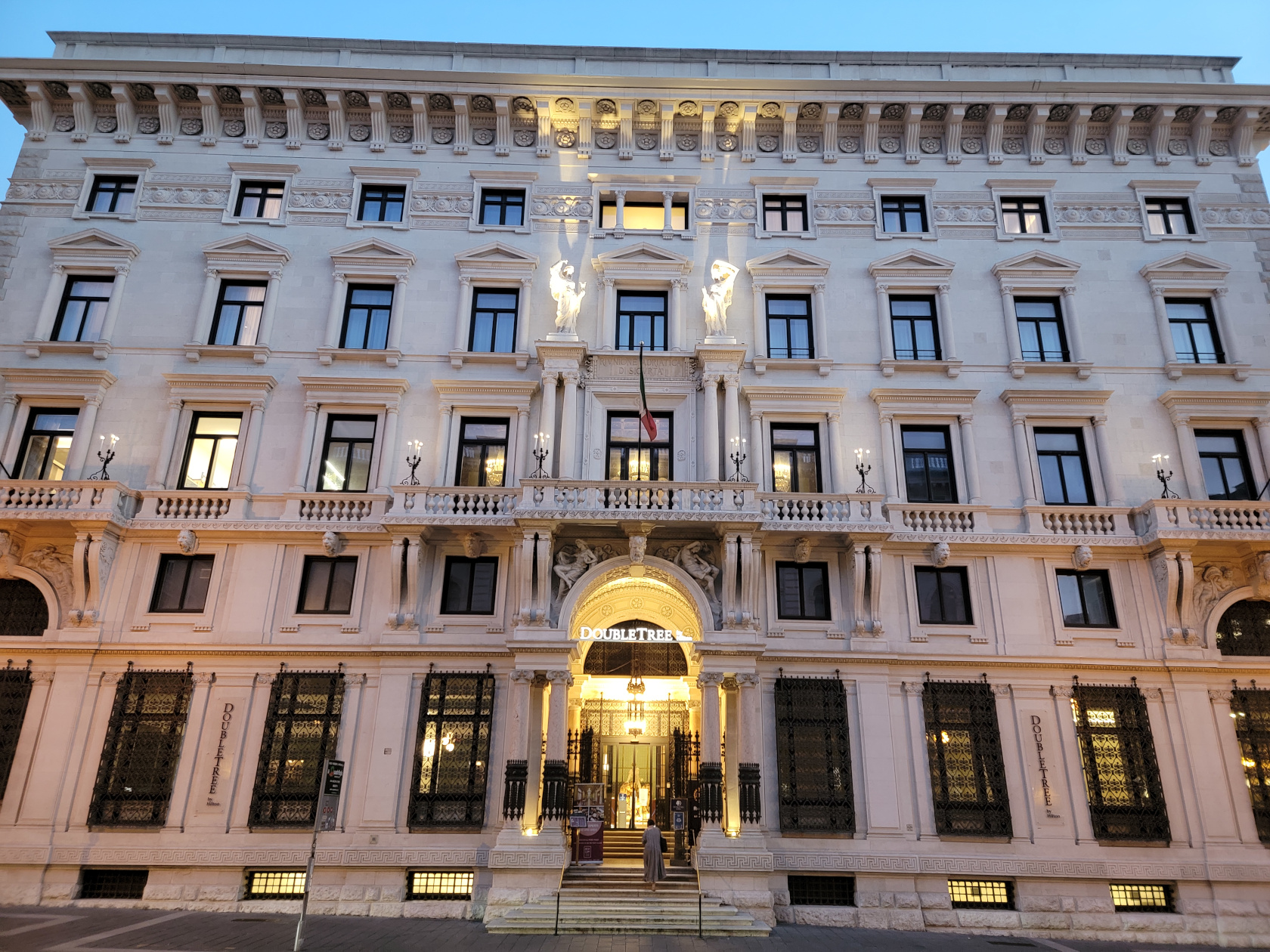
The Hilton Hotel DoubleTree
The hotel is situated at the Piazza Repubblica on via Mazzini and directly in front of a bus stop. It is within eight minutes of the train station and very close to public parking. So any form of transportation you use will get you quickly to the hotel.
Trieste – Piazza Repubblica – Hilton Hotel DoubleTree
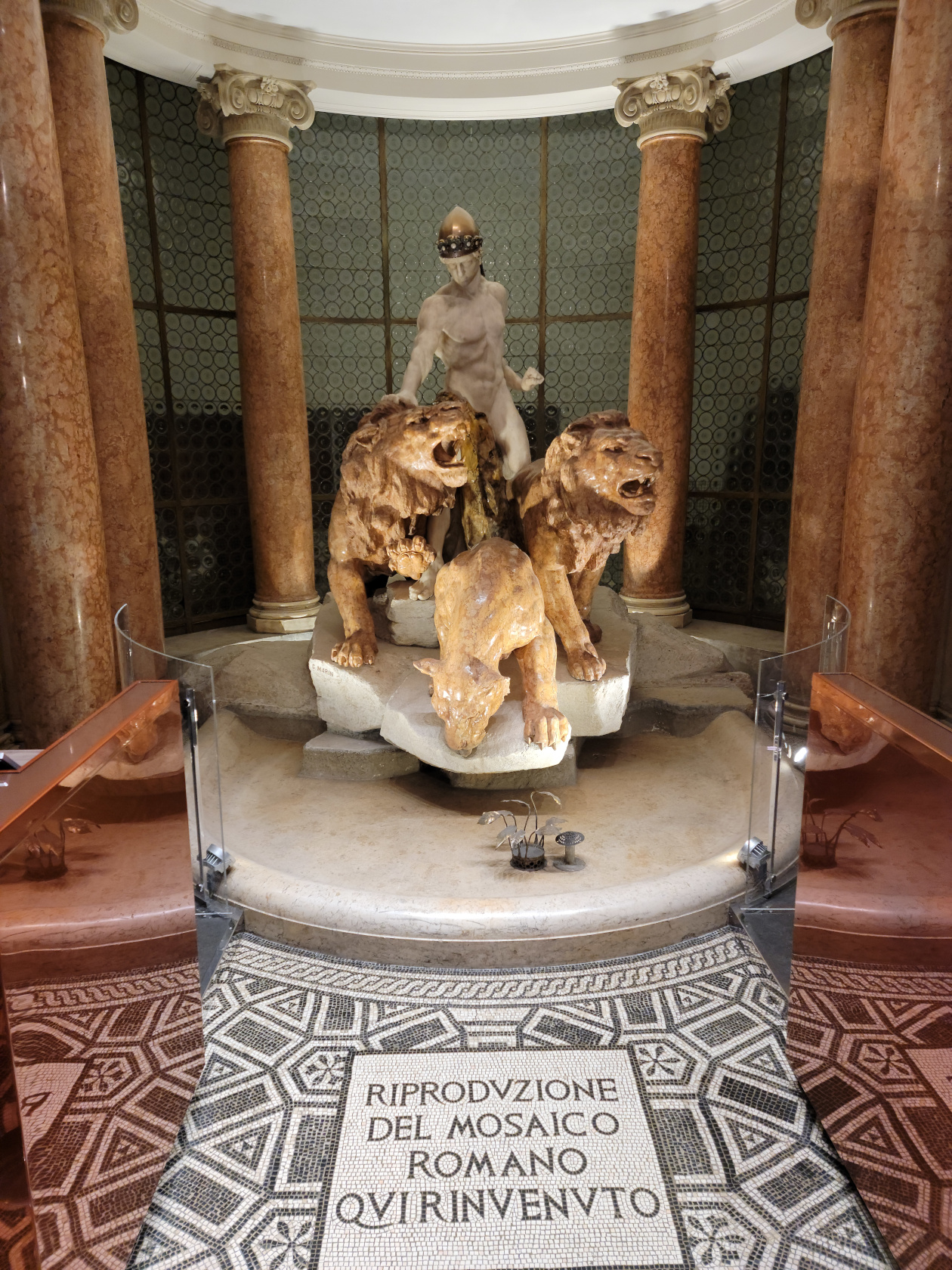
Trieste – Hilton Hotel DoubleTree – Foyer
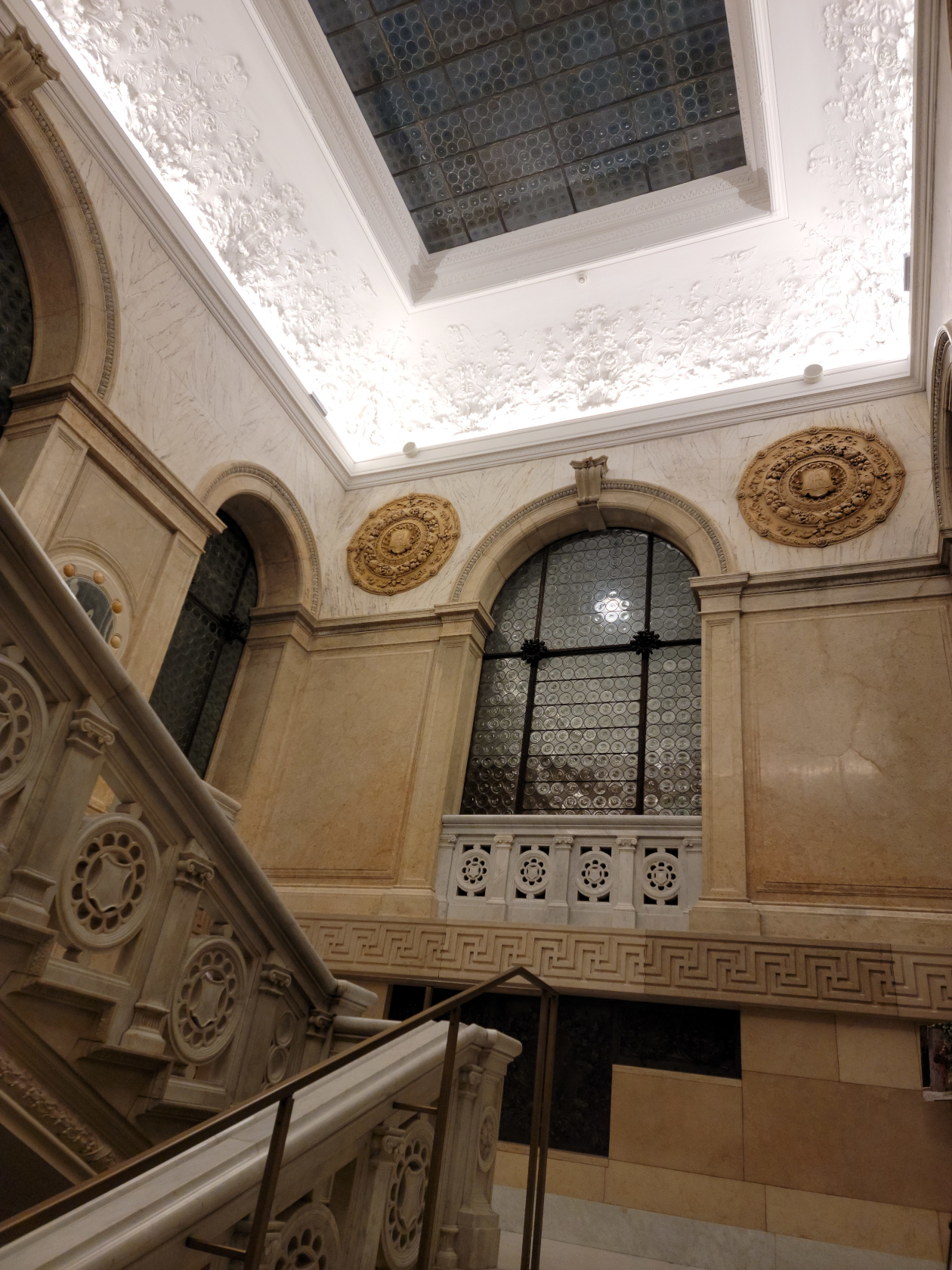
Trieste – Hilton Hotel DoubleTree
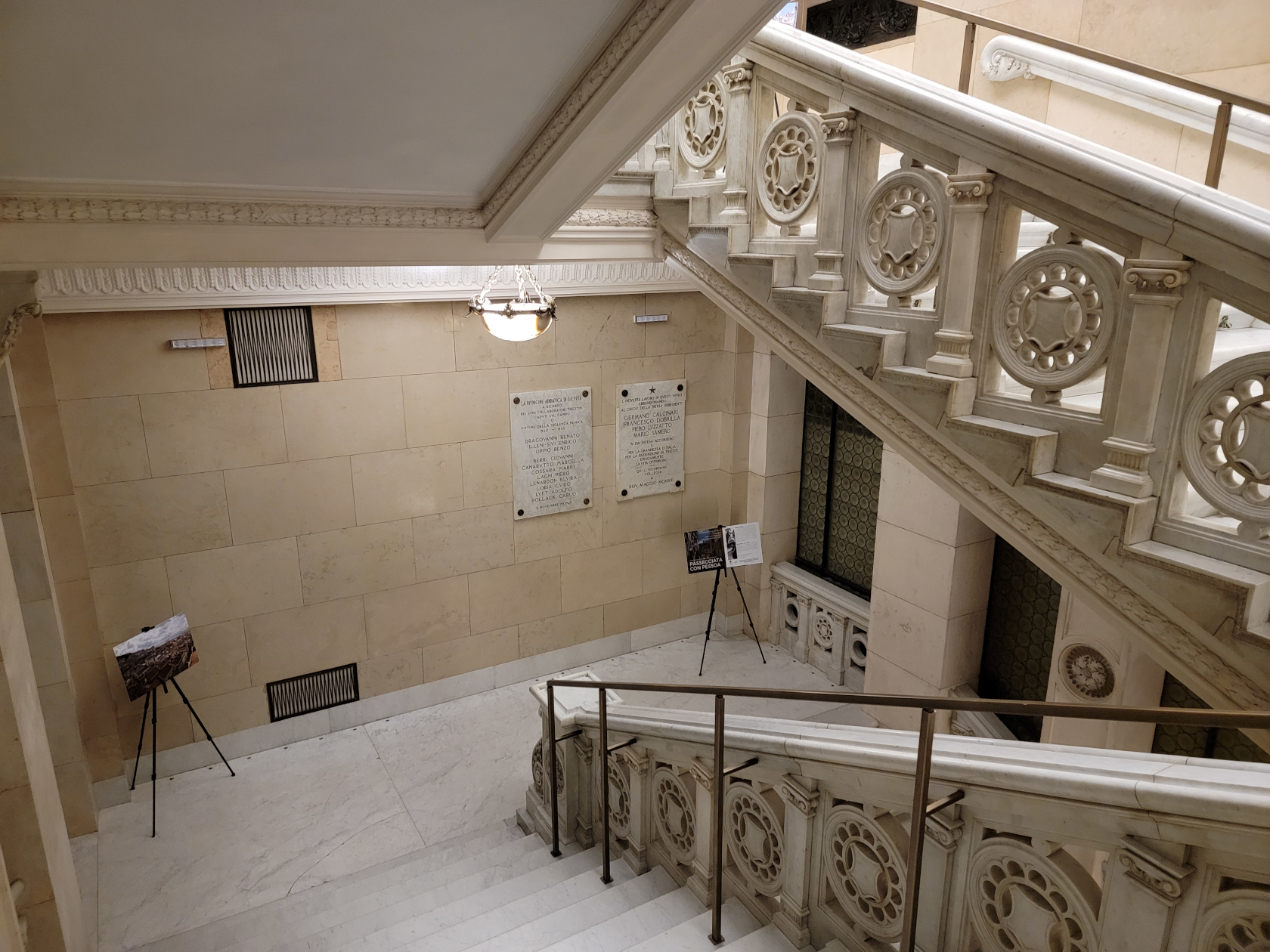
Trieste – Hilton Hotel DoubleTree
Restaurants
Chimerina Ristorante
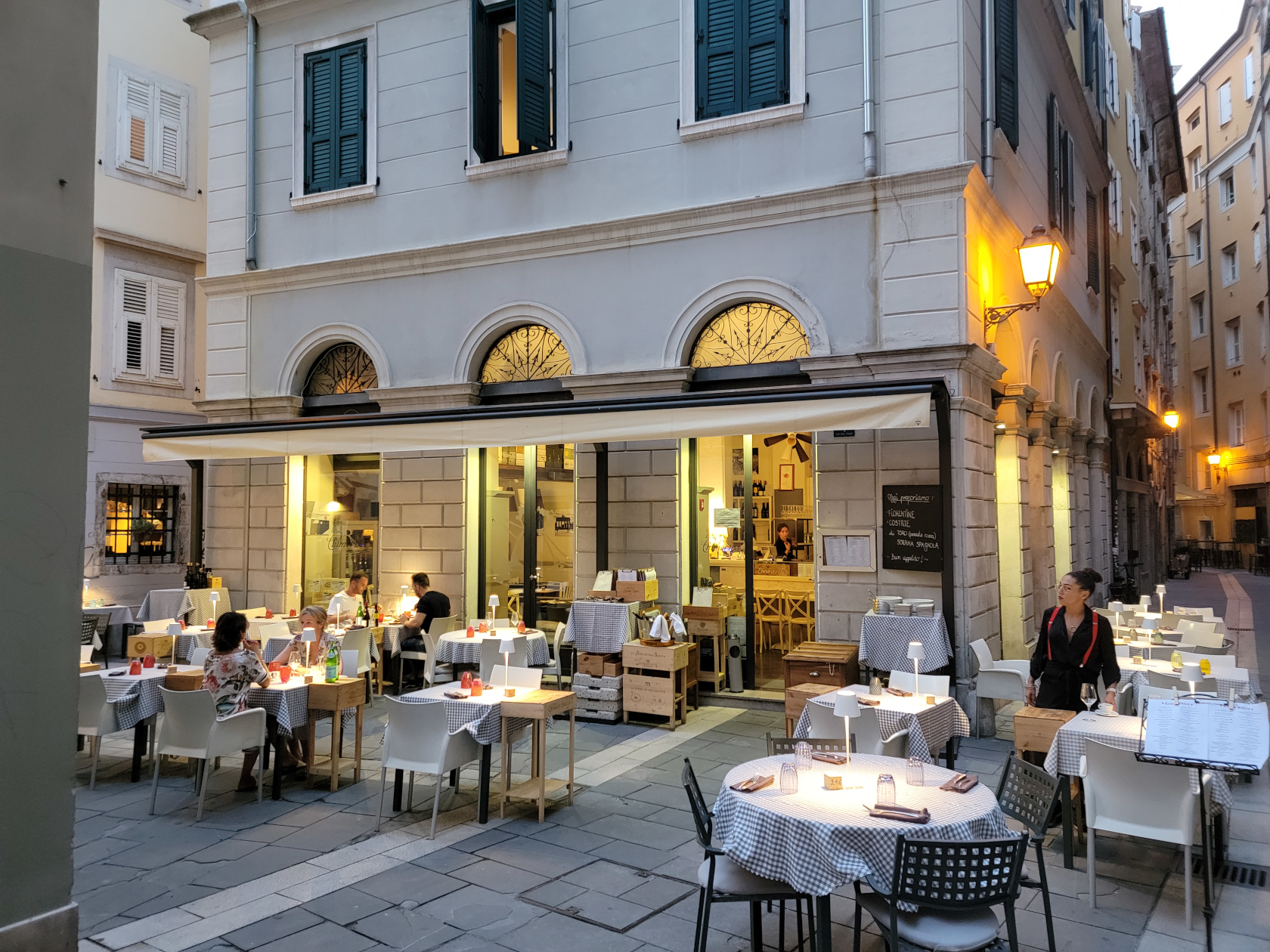
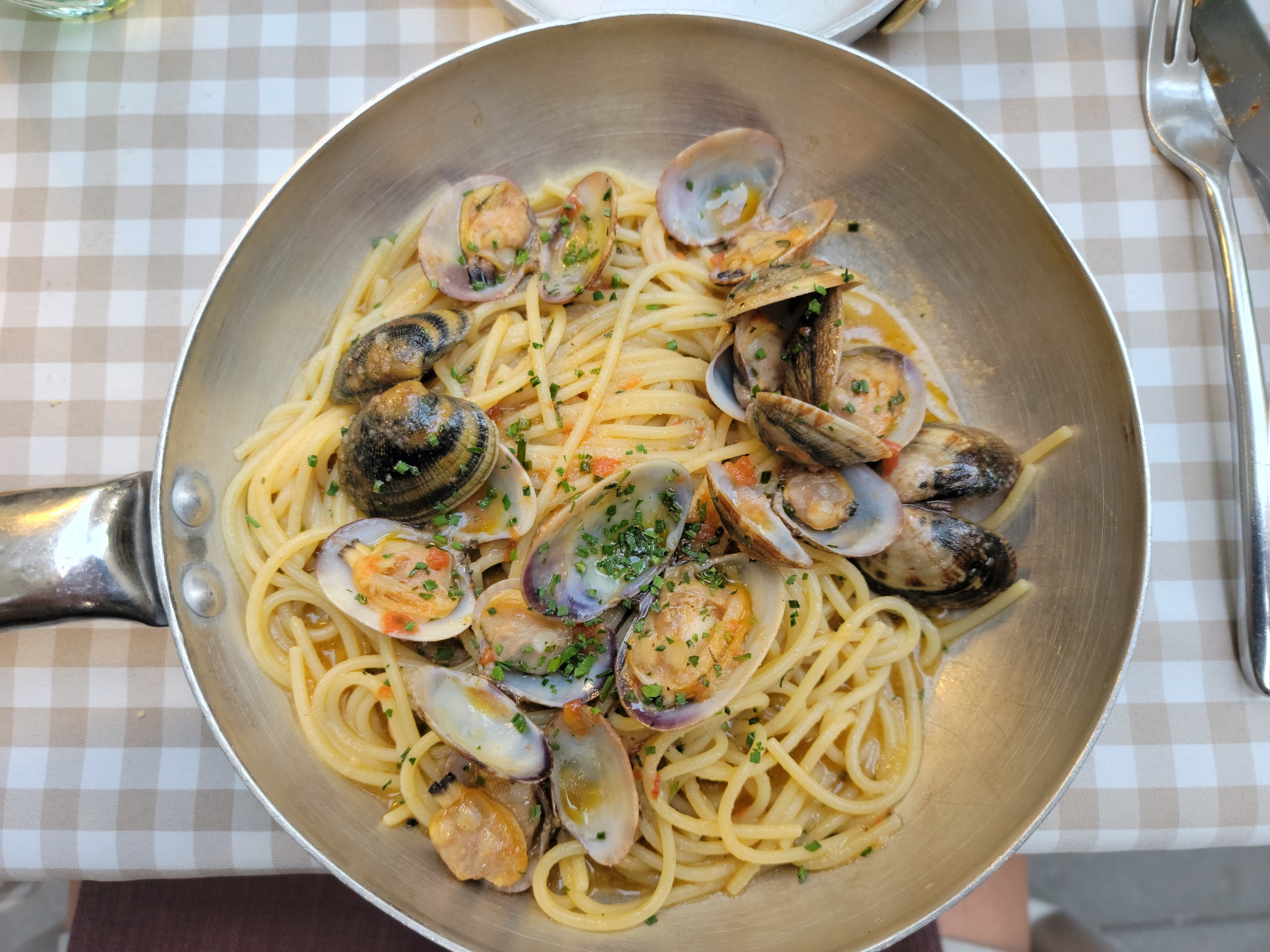
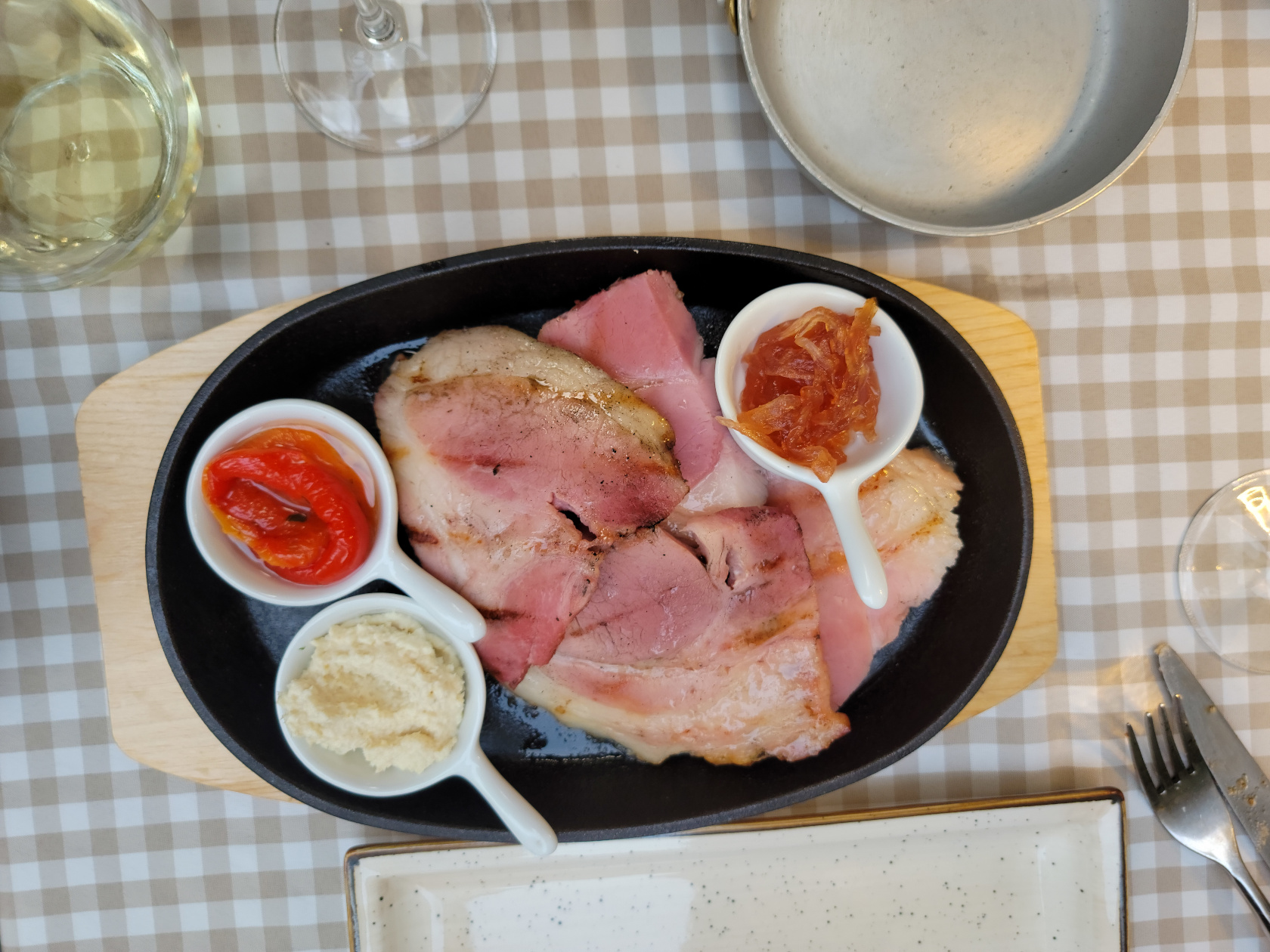
We had a very nice meal at this restaurant. Its cuisine centers around seafood and just very good Italian food. It is located in the old Jewish Ghetto of the city and has that old town feeling. The food is excellent.
Trieste – The Jewish Ghetto – Chimerina Ristorante
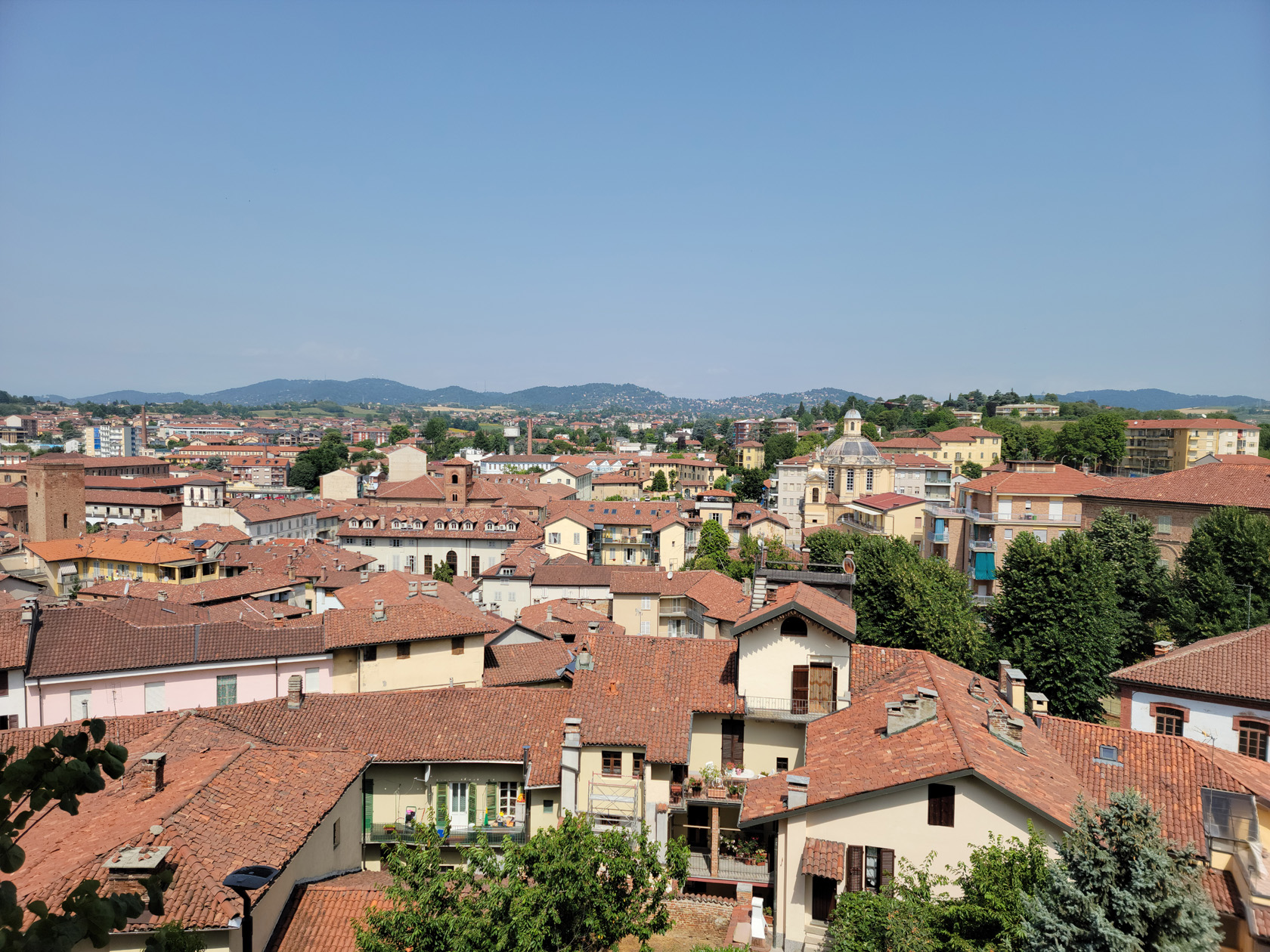
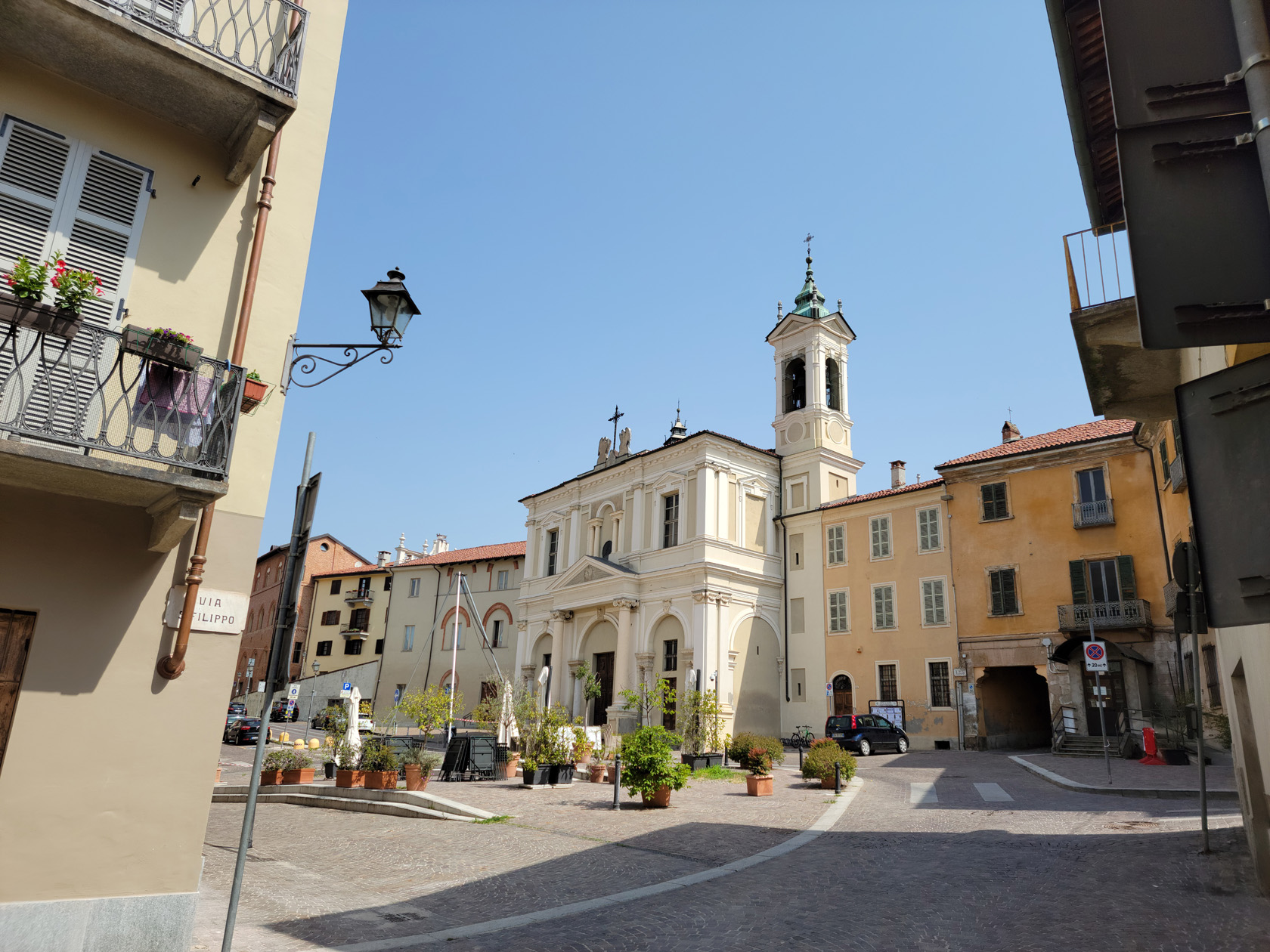
Surrounded on the three sides, by what are generally called the Hills of Piedmont (for which Superga Hill is one), sits the town of Chieri. A town that goes back to ancient times, due to the richness of the area and the Po river valley.
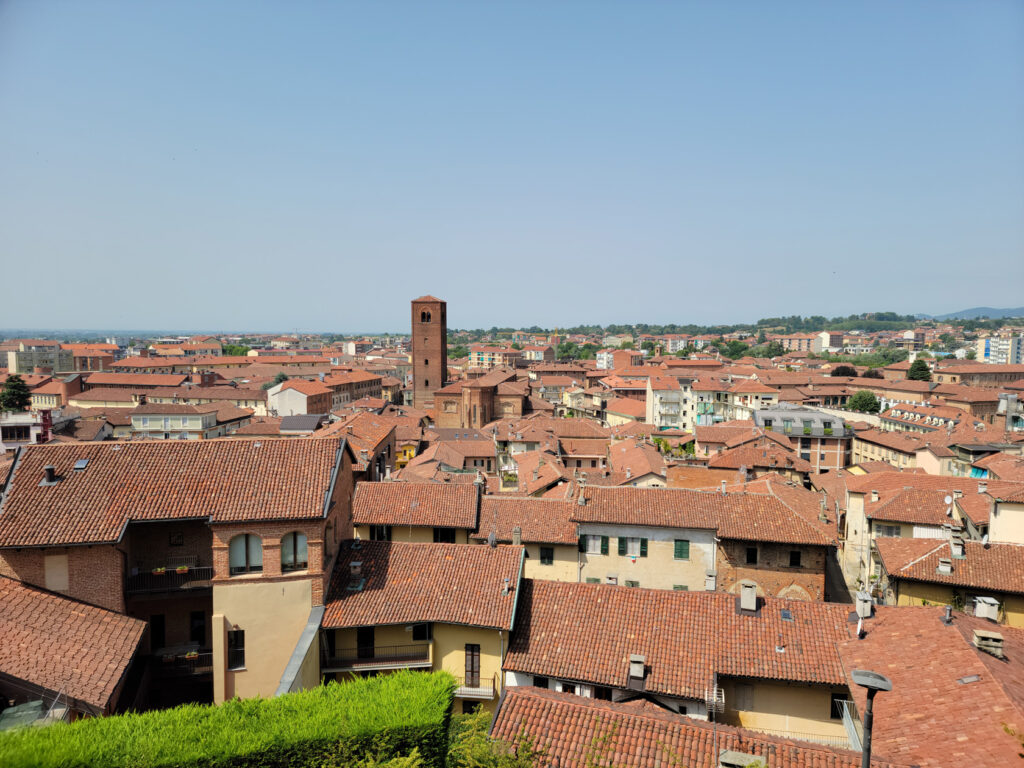
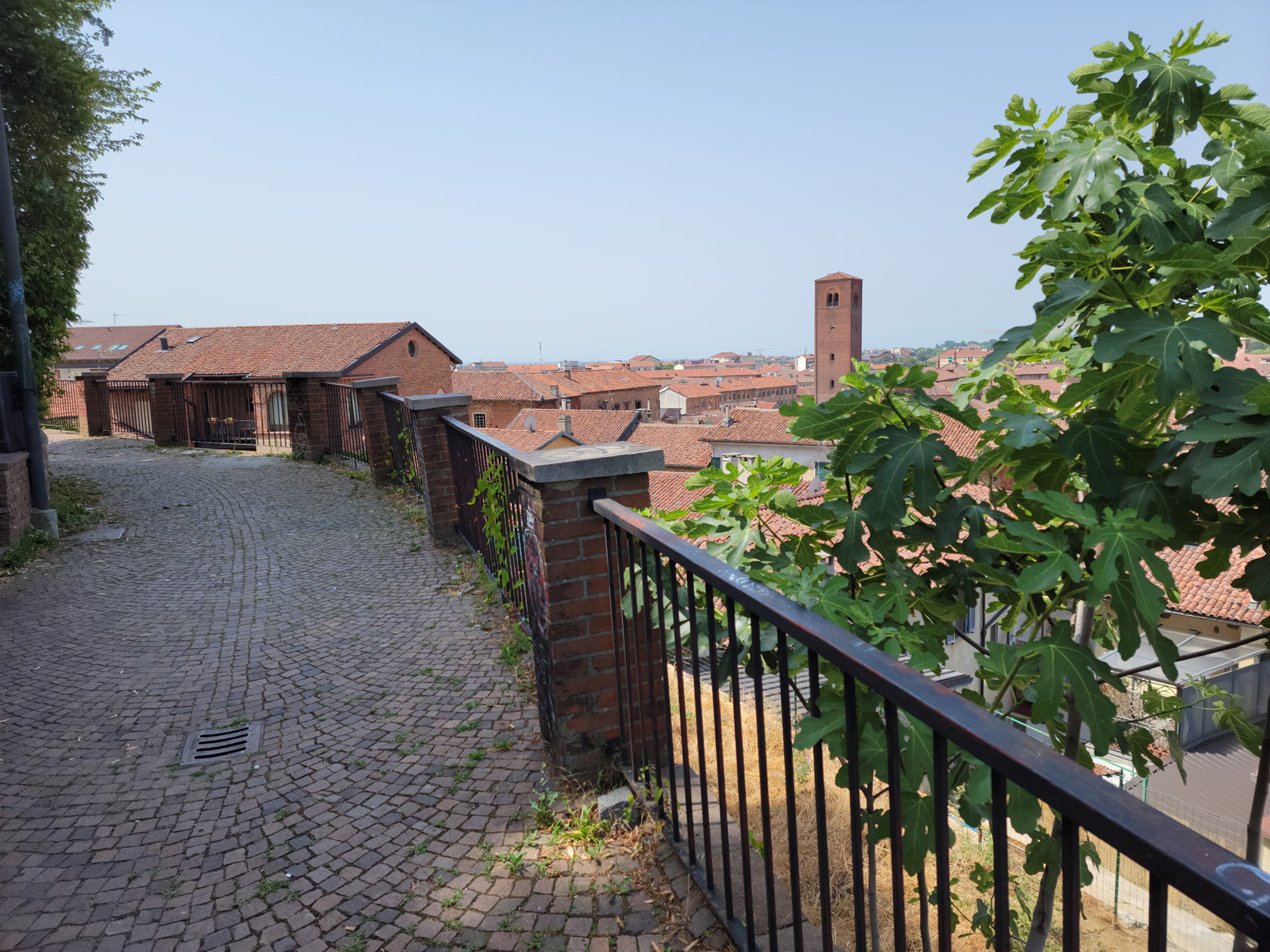
Chieri – Overlook from the Church of Sant Giorgio – Looking west toward Pino Torinese
From Turin it is easy to get to Chieri. One can either take a bus or take the Sfm1 train from Porta Susa, which runs about every thirty minutes, it is about a thirty minute ride to Chieri and the last stop for this train.
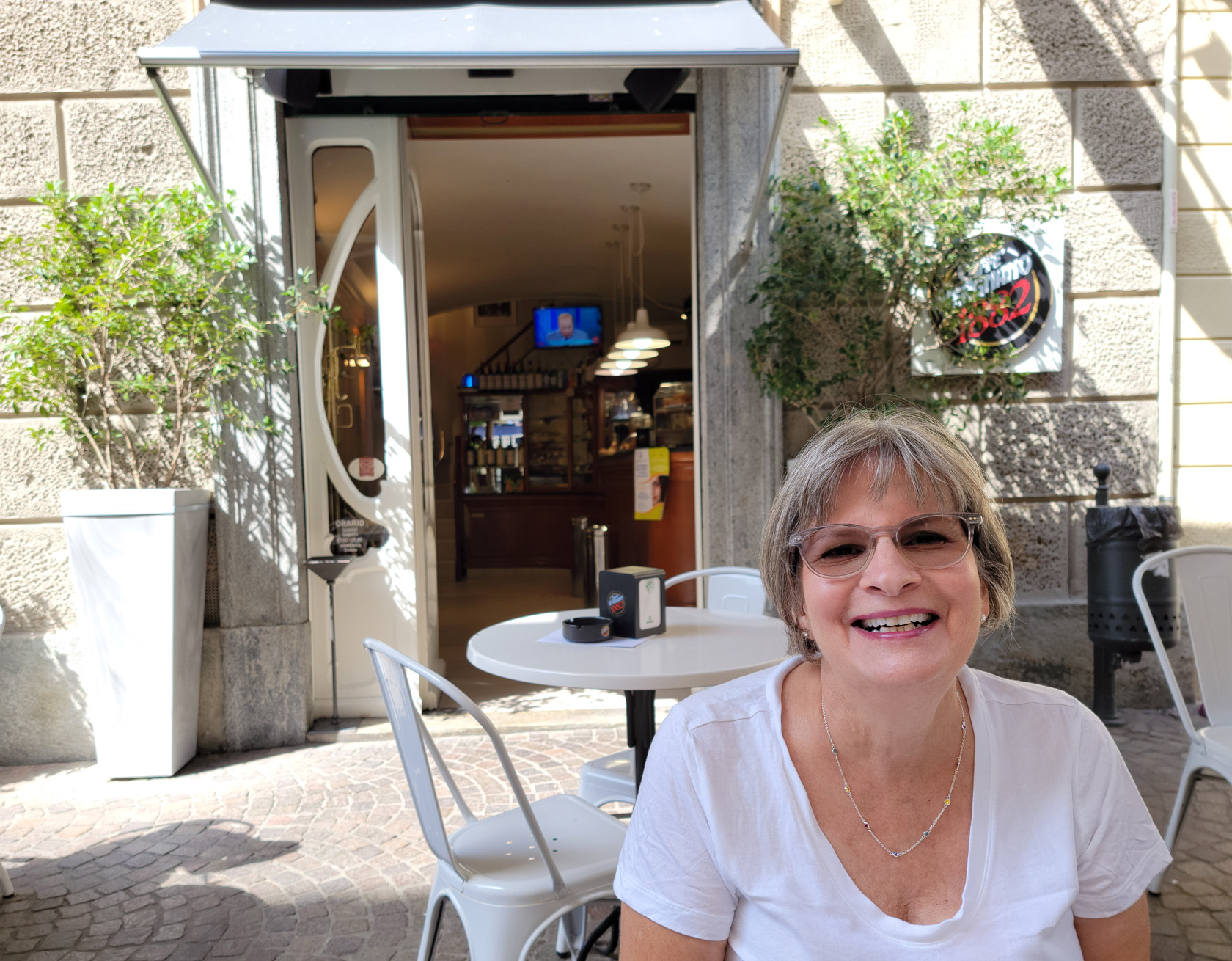
Chieri – Patti at the Tandem Bar on Vittorio Emanuele II
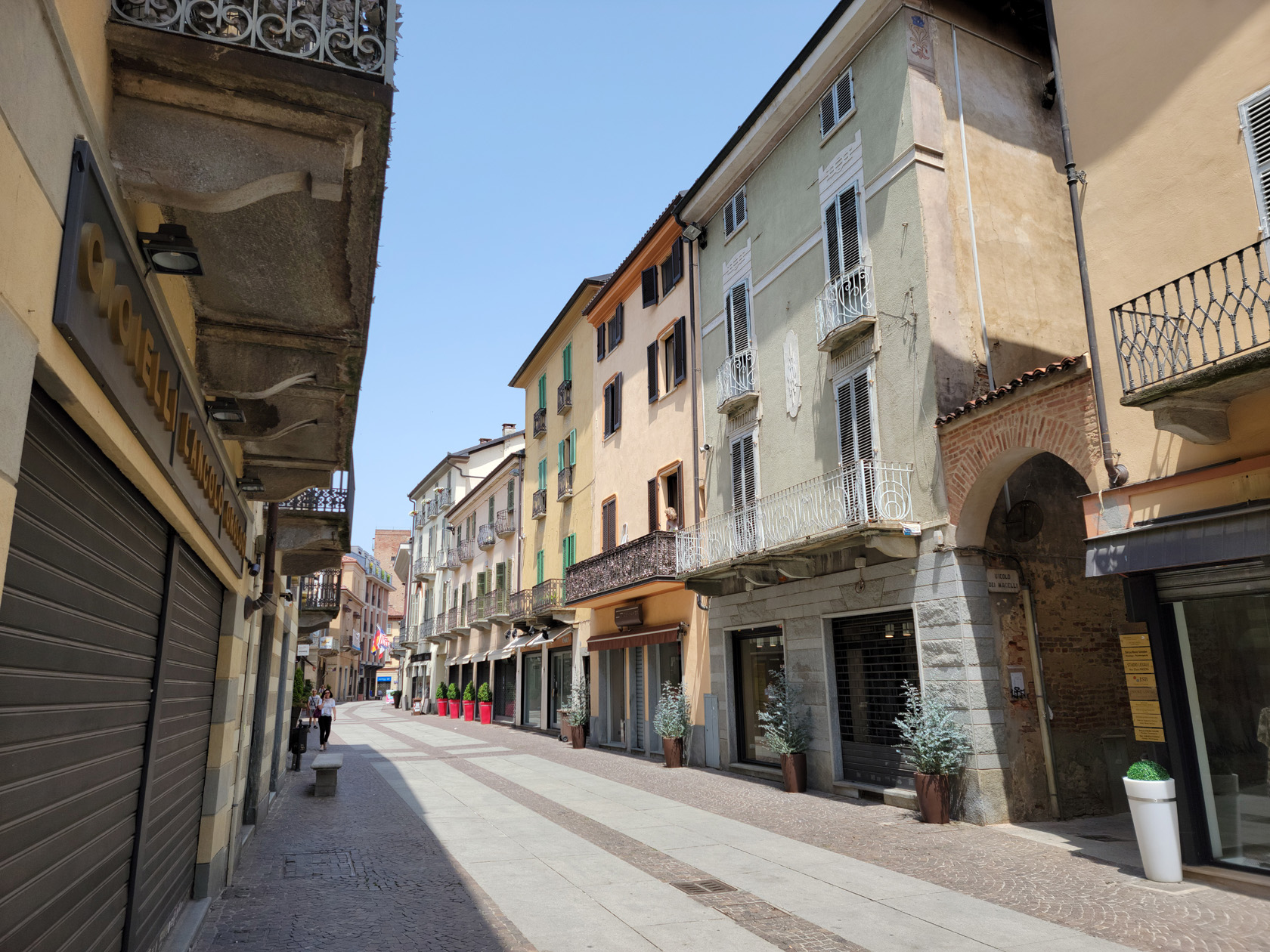
The main pedestrian way, via Vittorio Emanuele II, is a short walk from the train station and has numerous cafes and bars, here you can purchase a coffee or other drink, before you explore this quaint little town.
Town Of A Hundred Towers
During the early middle ages, the town once had numerous towers, especially built into the town wall, which were erected (like in many other towns in Italy) as defensive structures. Most of these were destroyed by Frederick Barbarossa’s army when they laid waste to the town in 1154. However, a few still remain, one of which can be seen below.
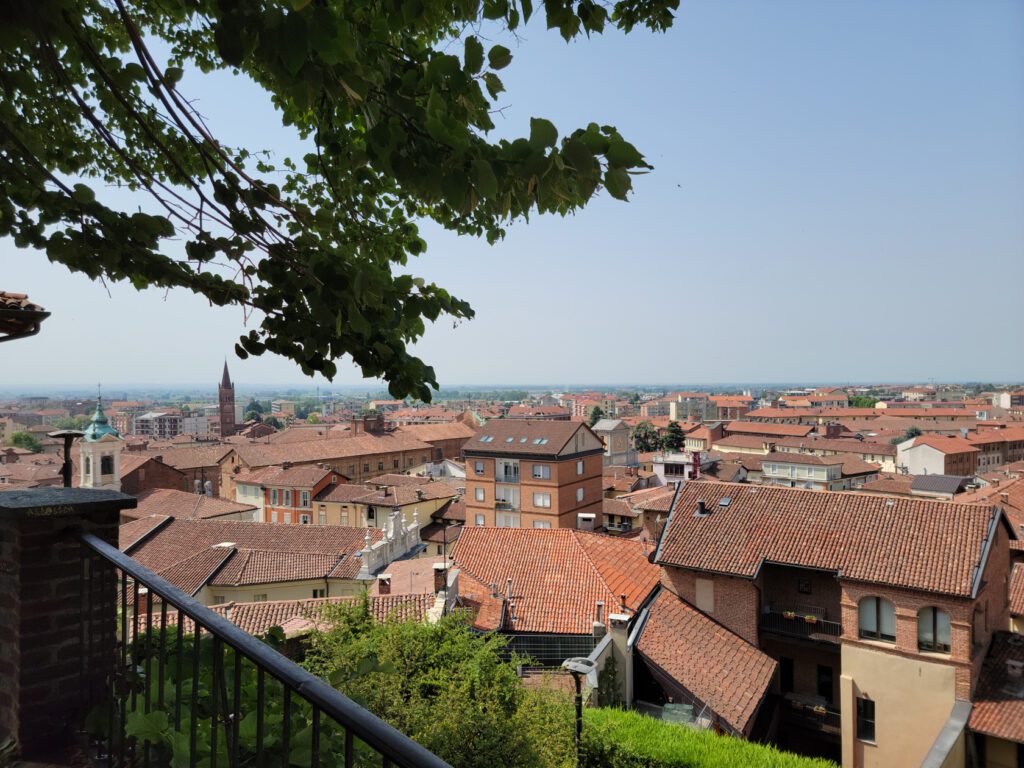
Chieri – Overlook from the Church of Sant Giorgio – Looking south and one of the remaining towers
Chieri – Overlook from the Church of Sant Giorgio – Looking southeast
Church of Sant Giorgio
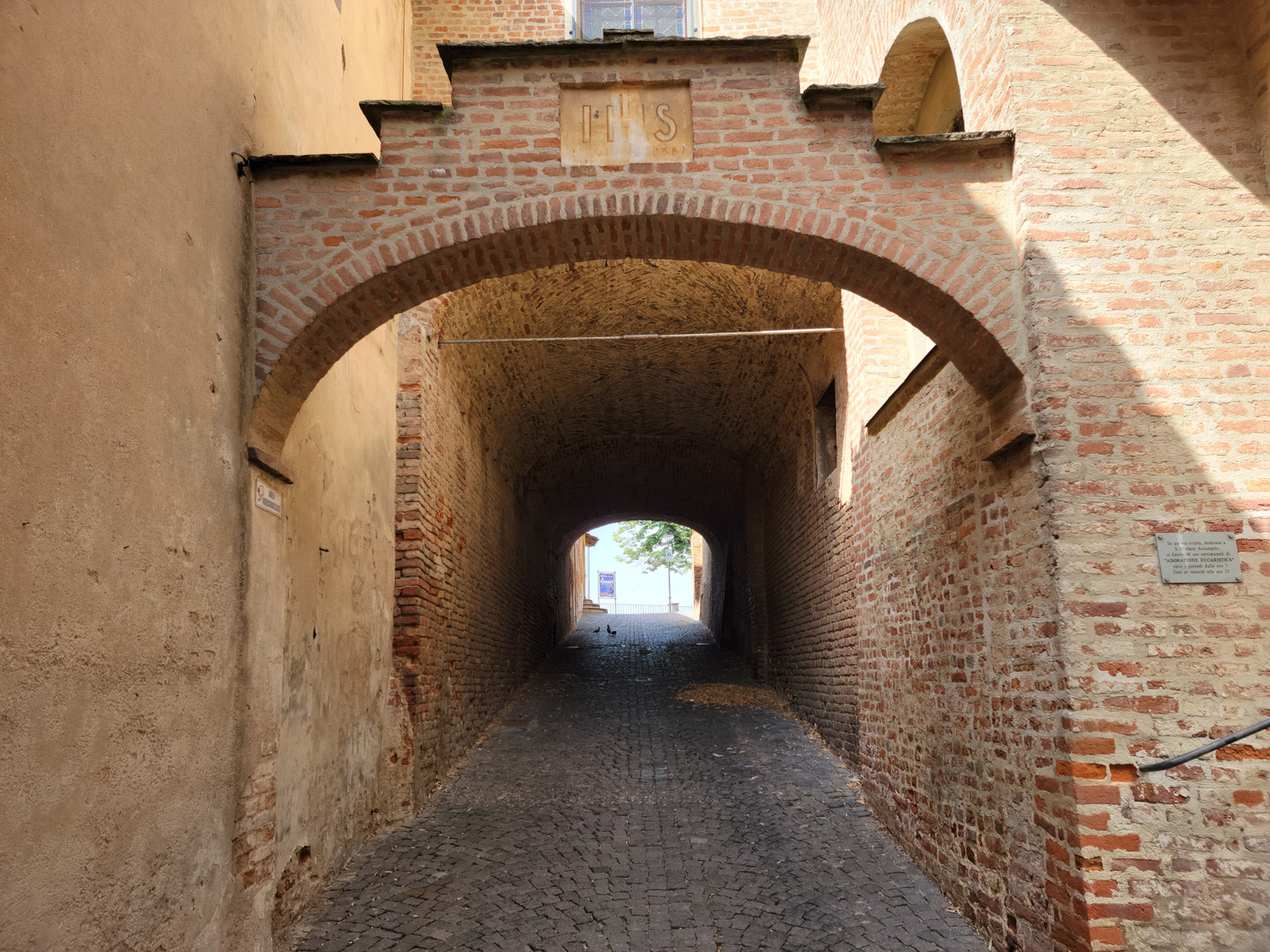
This is the highest point and from here you can get a commanding view of the town, as seen in the two photographs above and the beginning photograph.
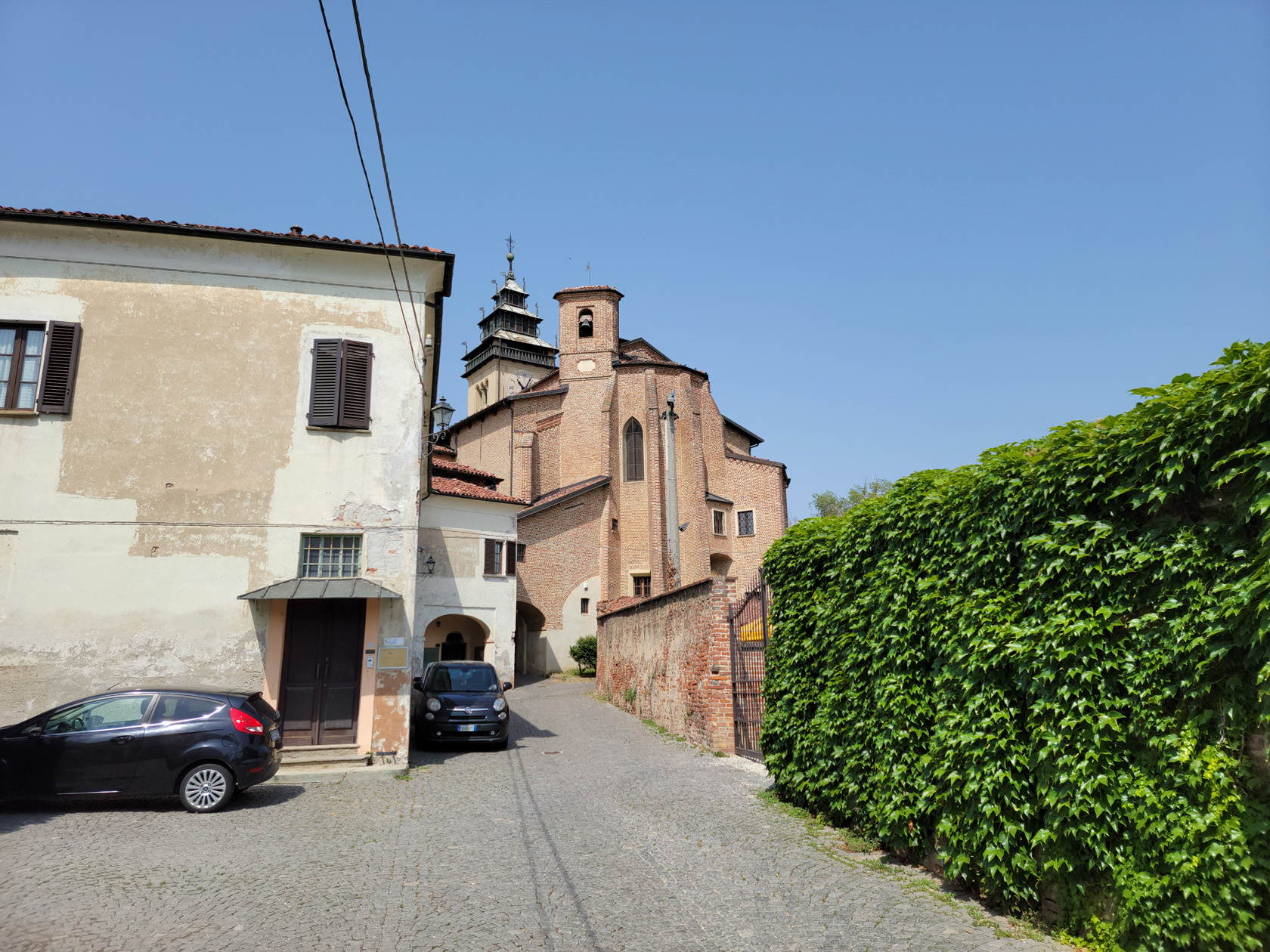
Chieri – Church of Sant Giorgio on the hill
Chieri – Church of Sant Giorgio tunnel to overlook
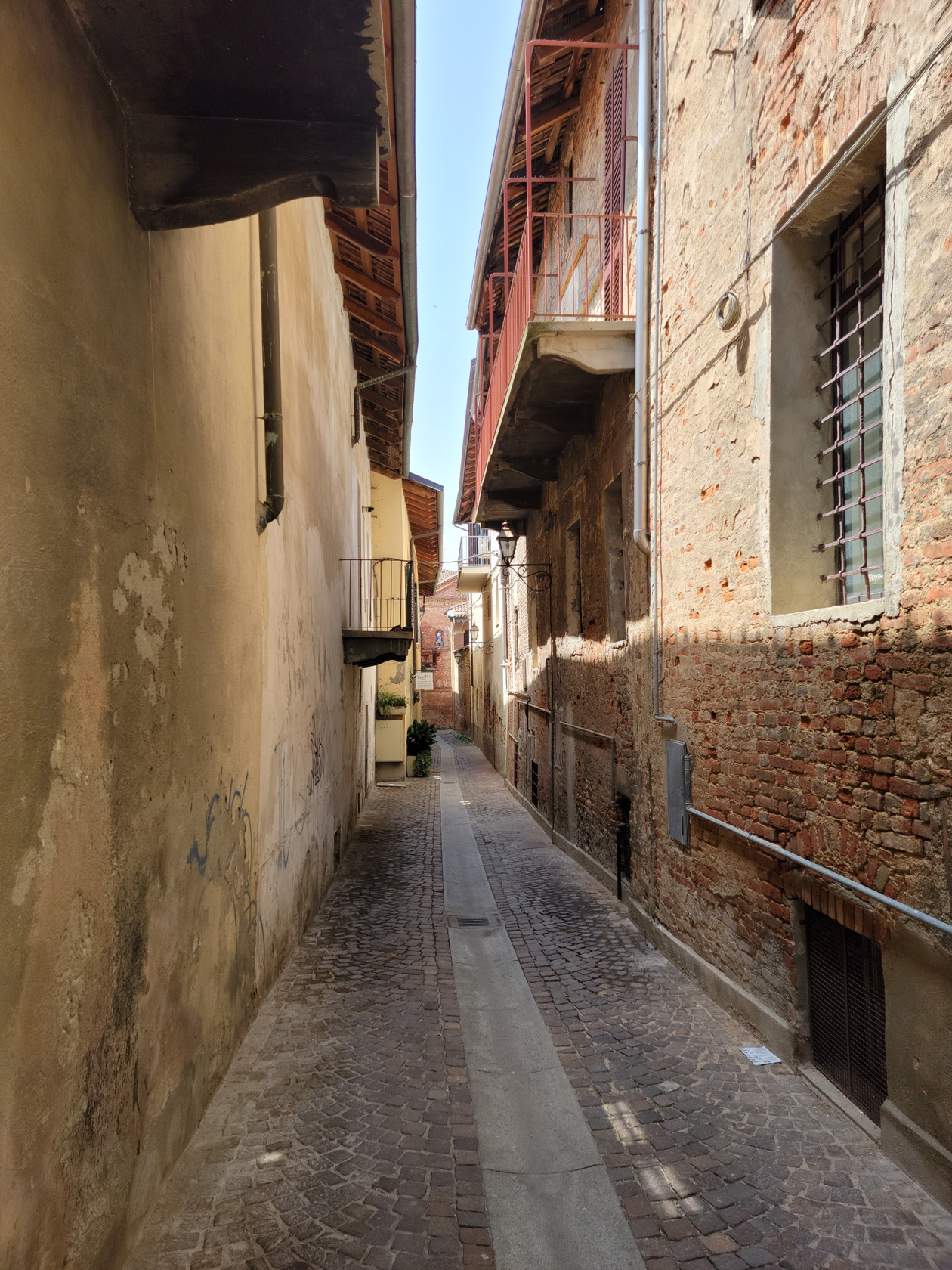
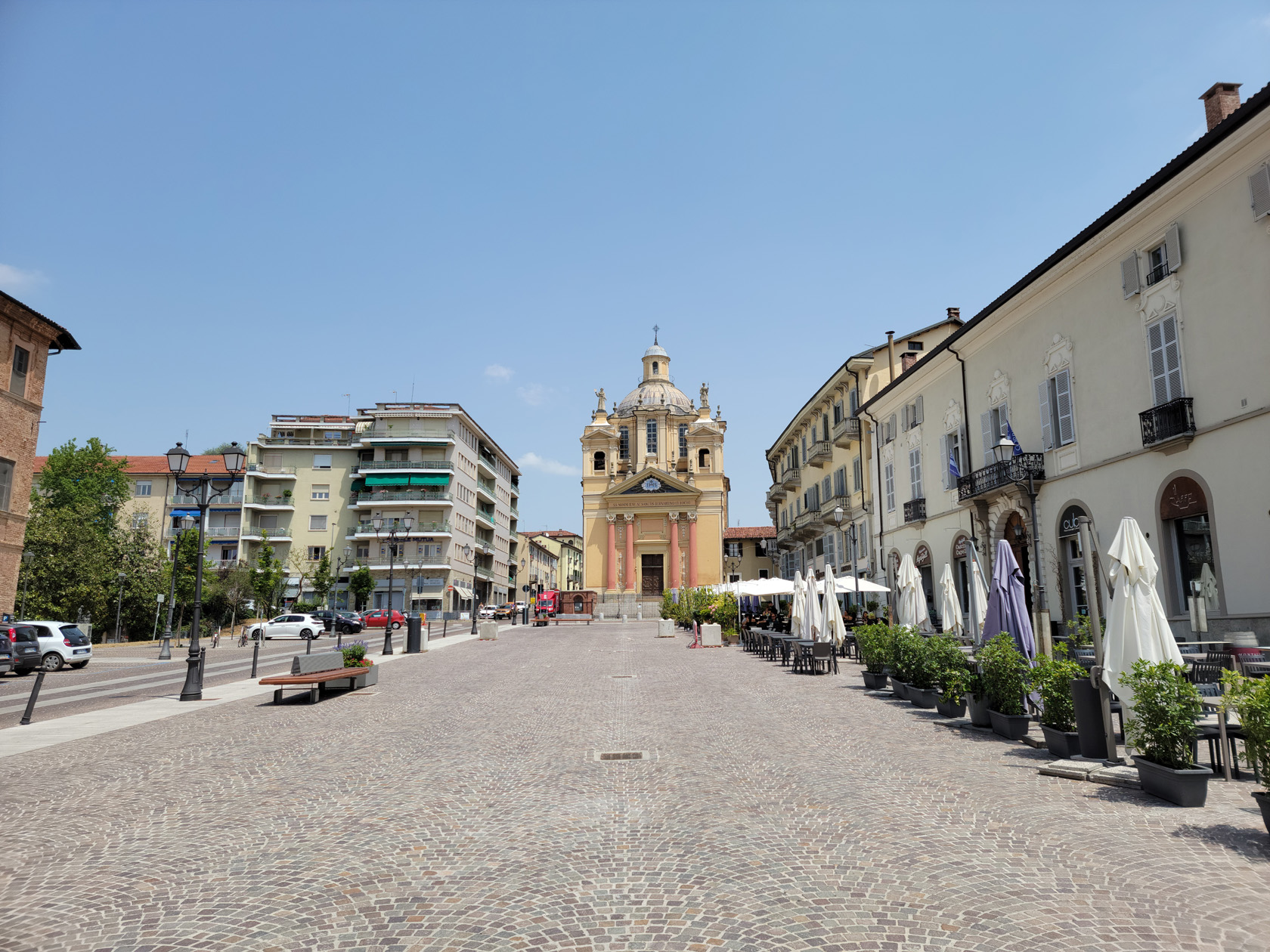
Other than that, there’s not much else to do in Chieri, except perhaps amble through its quiet streets and perhaps do some shopping. Here is a short slide show of some of the other things you can see while here.
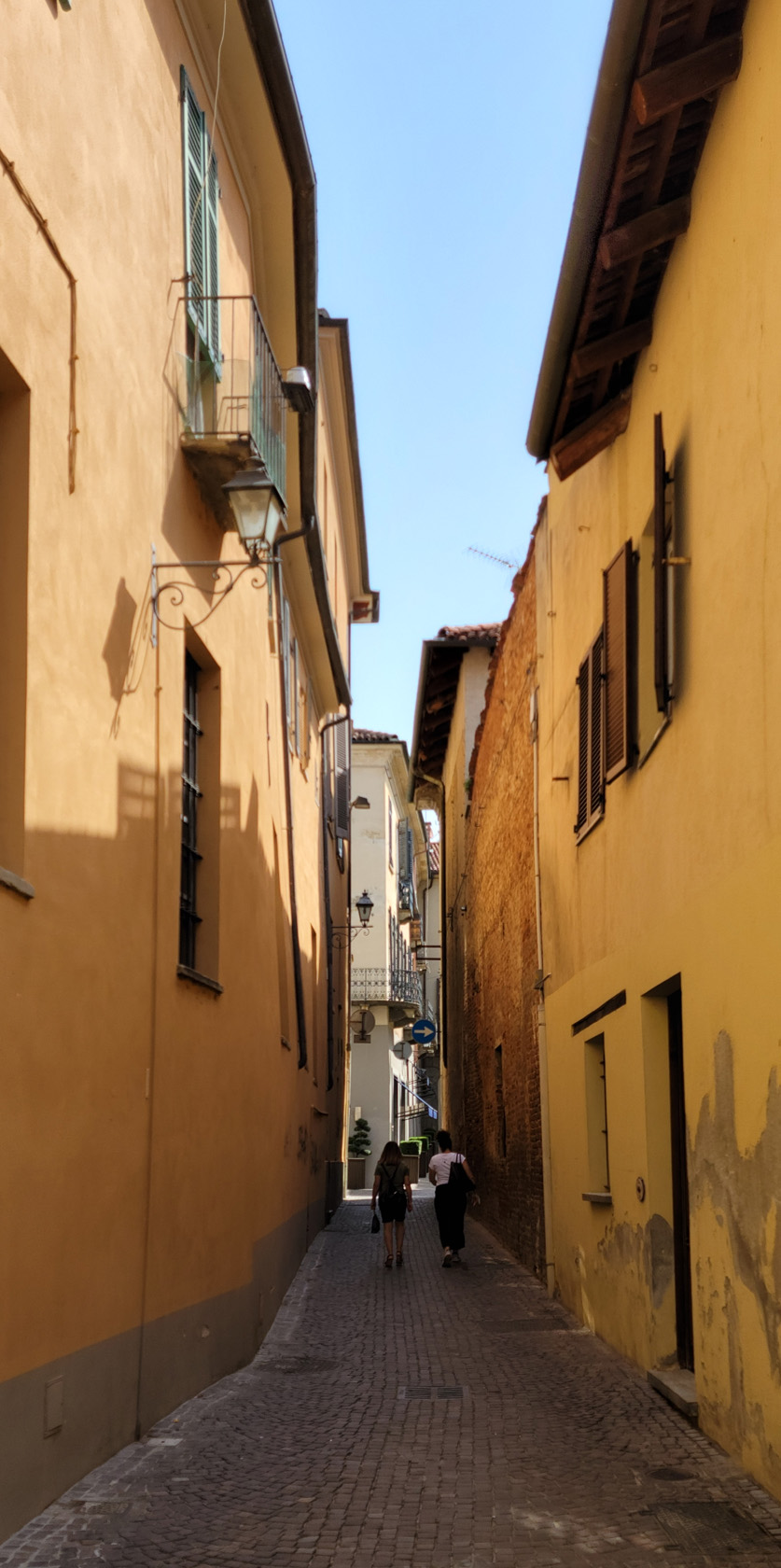
Chieri – Tiny Side Street
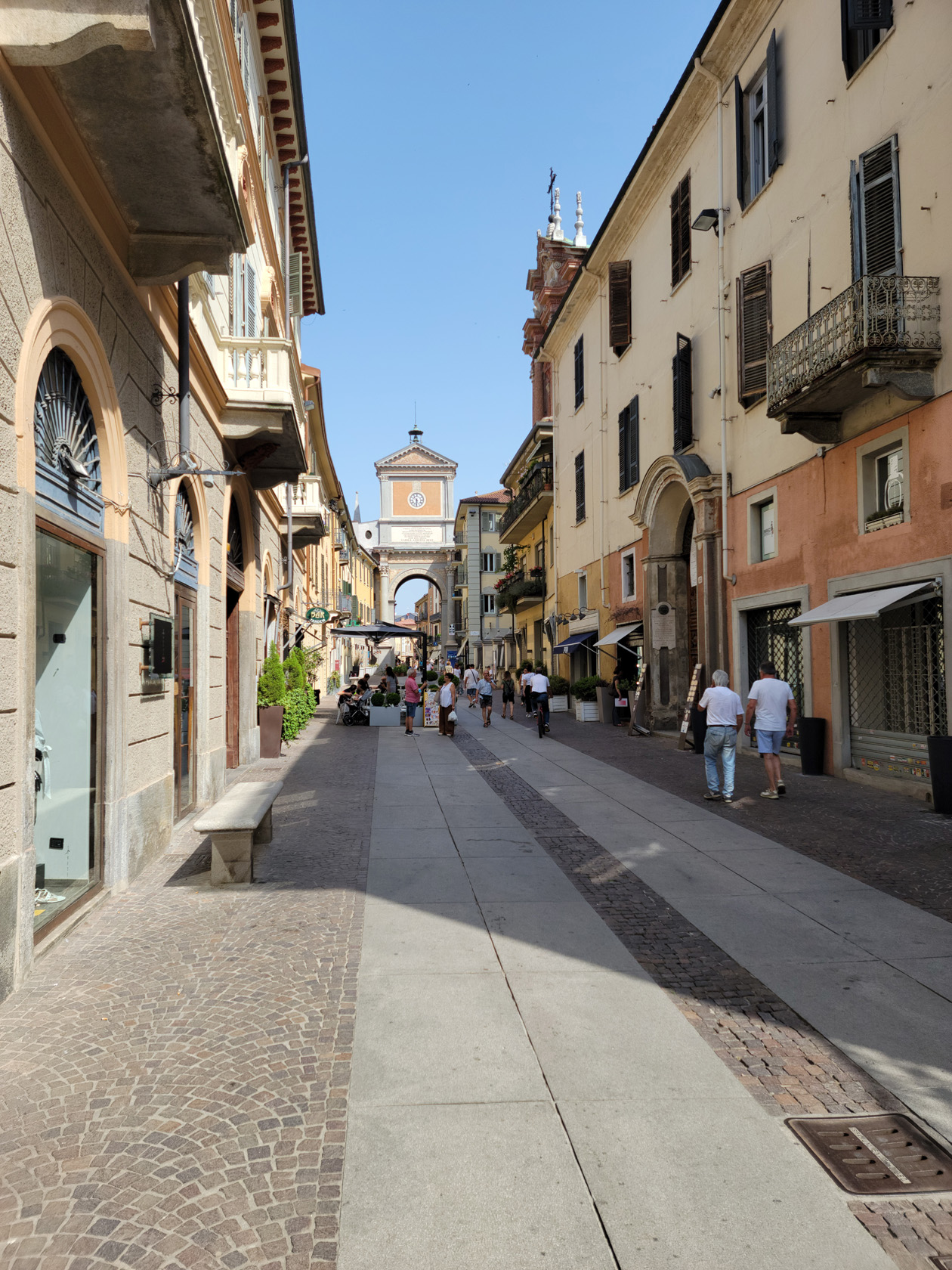
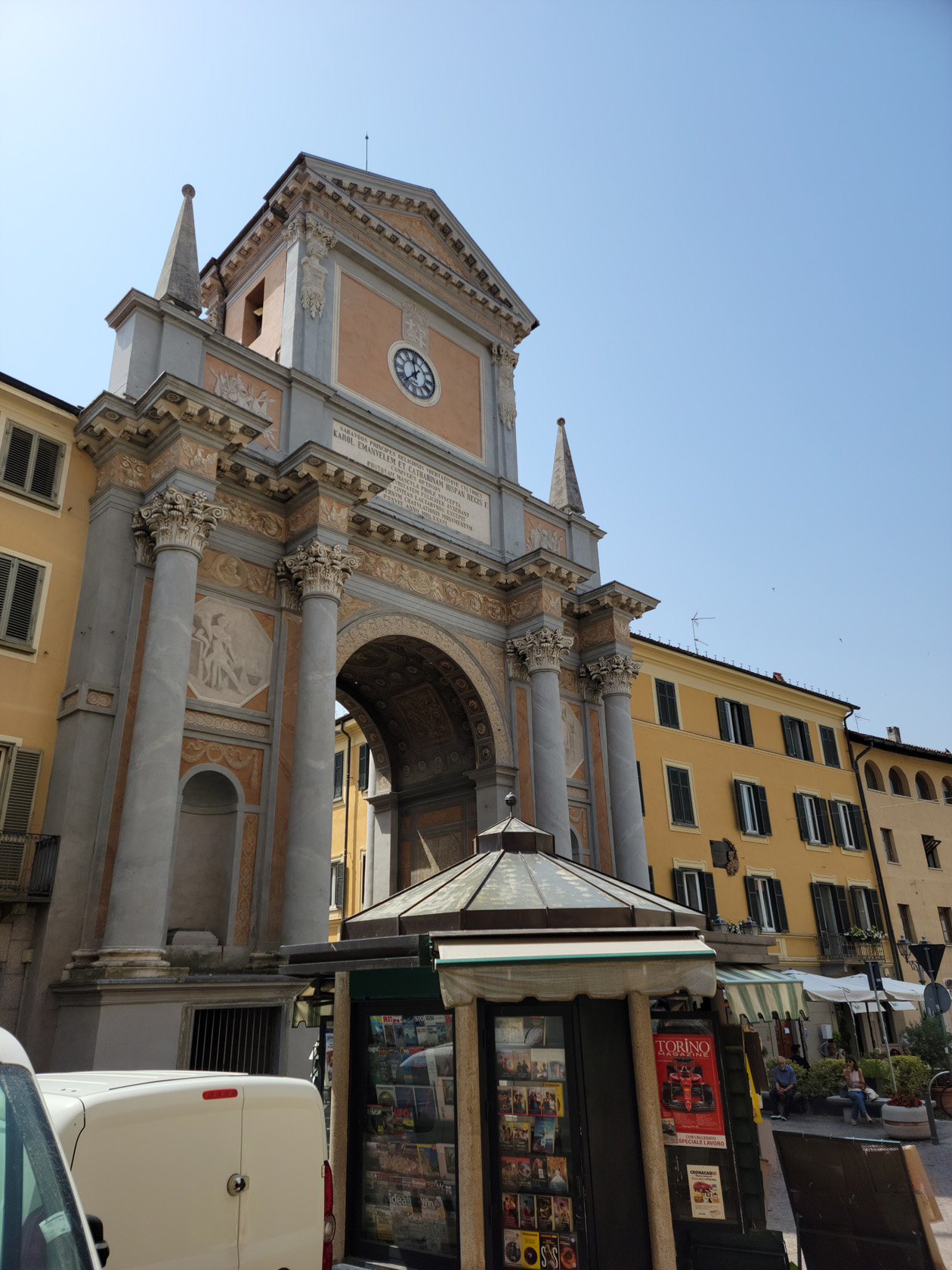
Chieri – via Vittorio Emanuele II and the Arco Trionfale
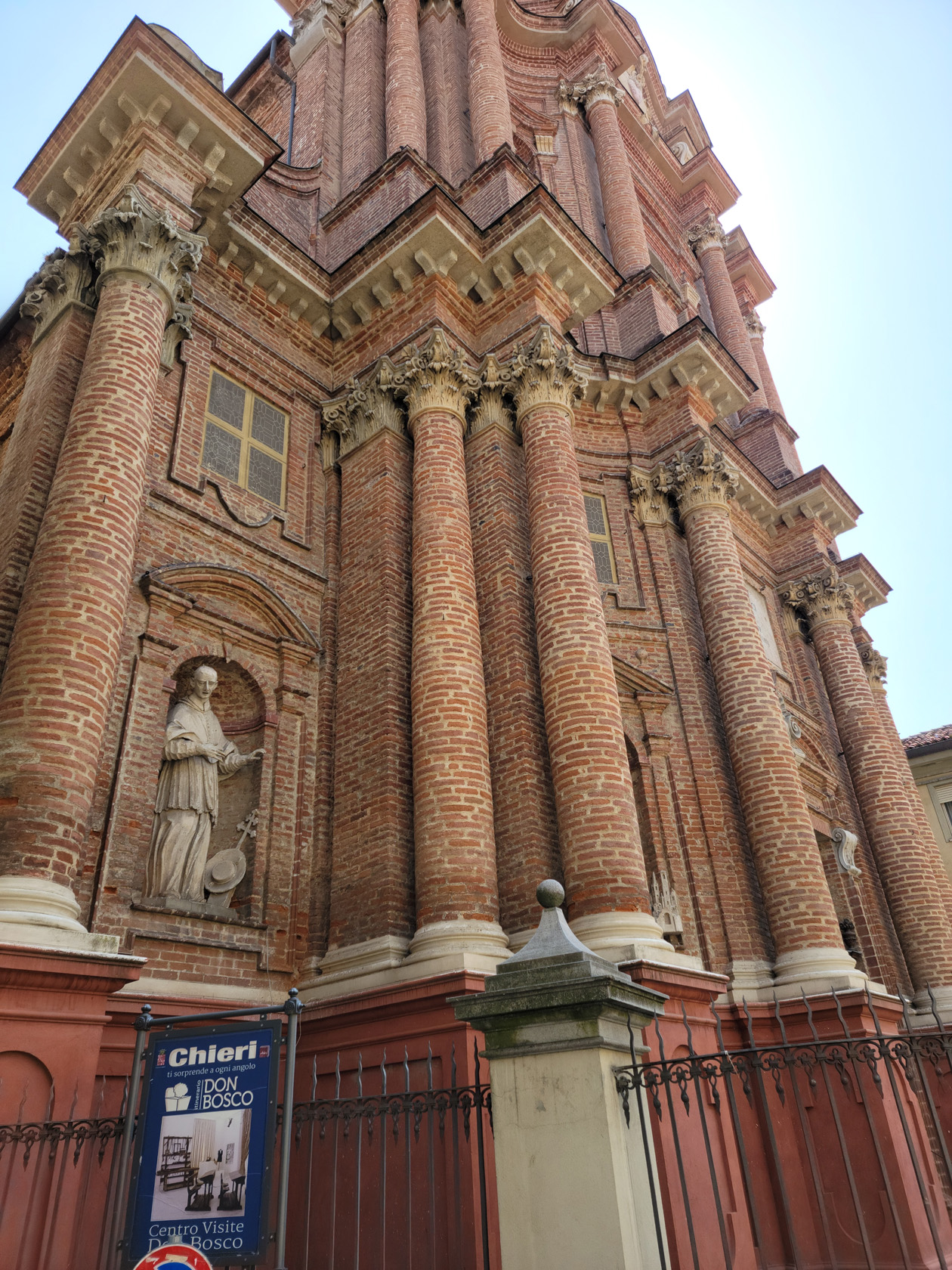
Chieri – Church Don Bosco
Chieri – Piazza Mazzini and the Church of Sant Guglielmo
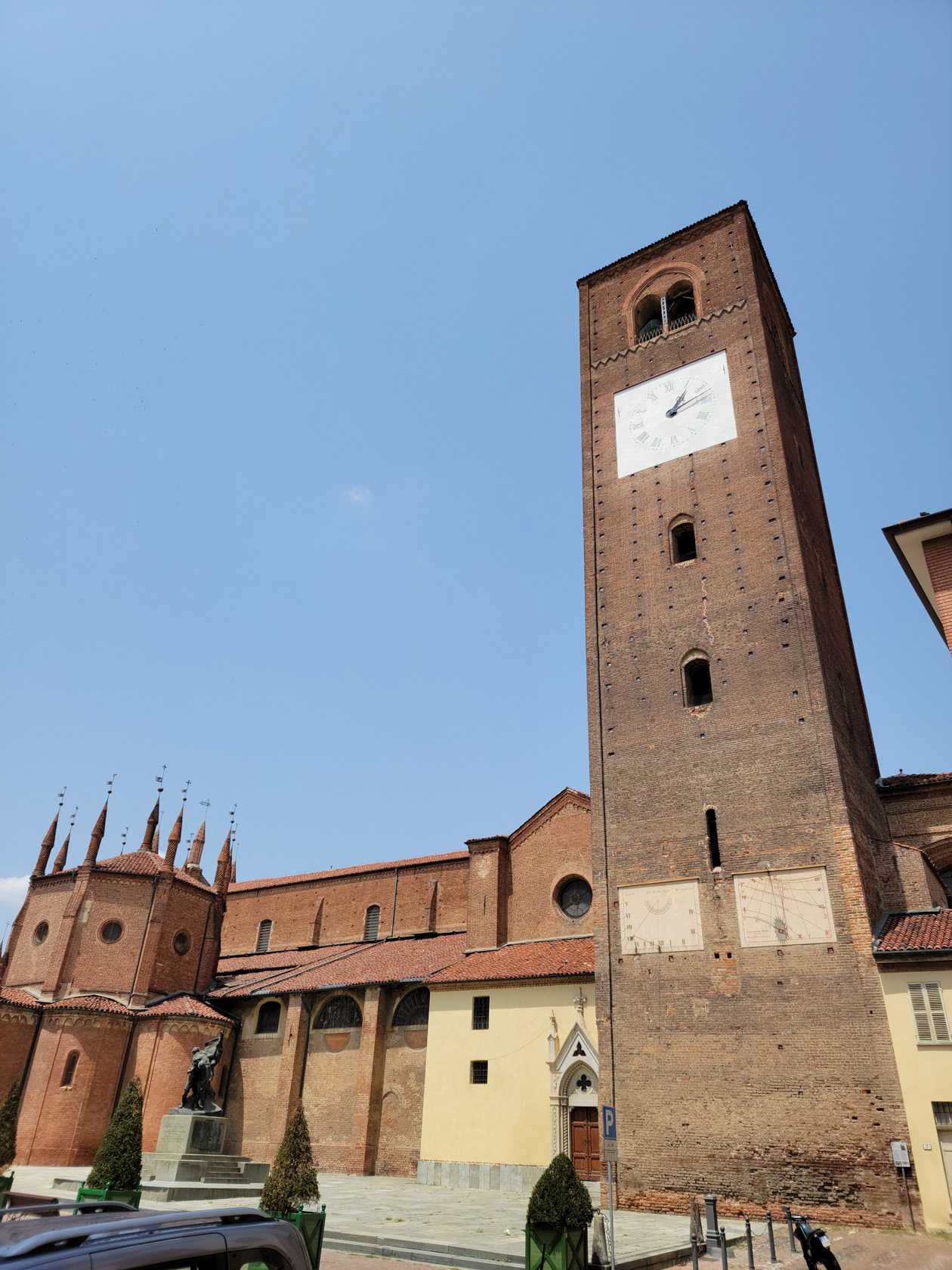
Chieri – Belltower from pathway below the Church of Sant Giorgio
Chieri – Arco Trionfale di Chieri – from Piazza Umberto
Chieri – Torre campanaria del Duomo di Chieri
Chieri – pedestrian way Vittorio Emanuele II
Chieri – small alleyway
Chieri – Piazza Cavour and the Church Ss Nomini Iesi Ac Sanctis Bernardino Et Rocho
Restaurants
With limited time we were only able to visit one restaurant while here, though several that came up on our search were not open until the evening. However, you will find the choice below to be exceptionally good, if and when you have the chance to visit this charming little town in Piedmont.
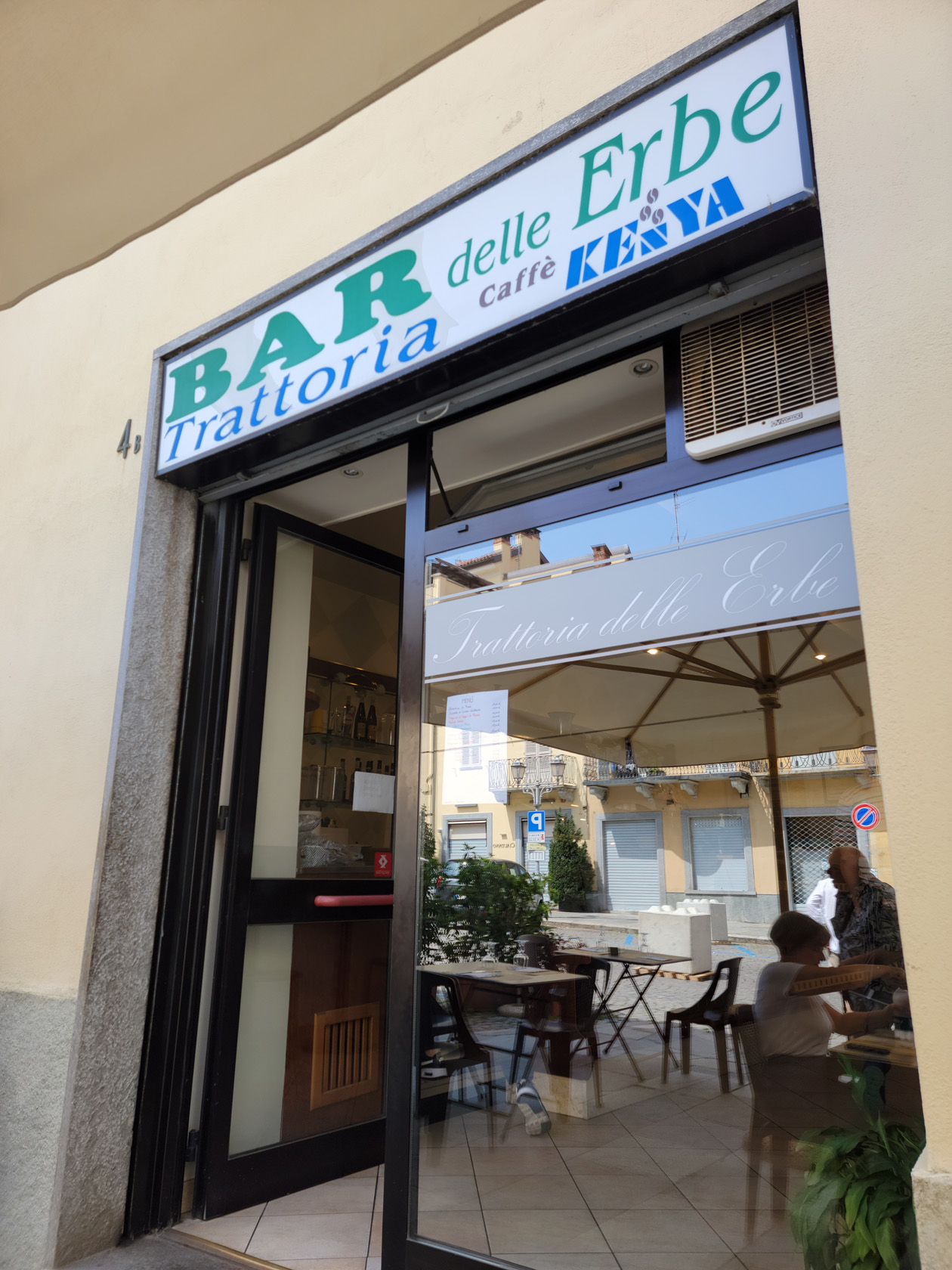
Trattoria della Erbe
Chieri – Trattoria delle Erbe
This trattoria sits on the corner of the Piazza Umberto I and via San Domenico, is fairly non-descript, but the food is authentic Sardinian and quite good.
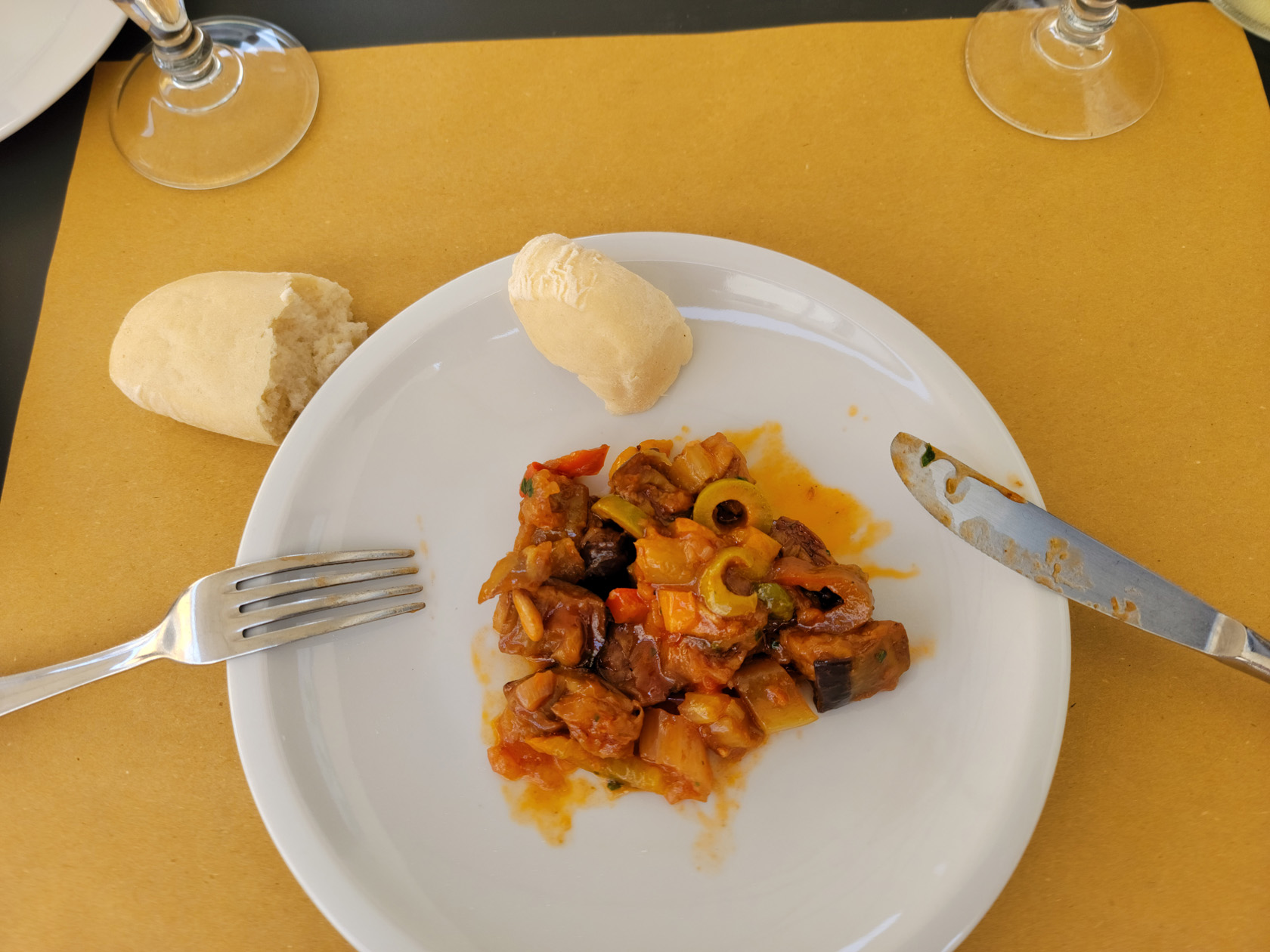
Chieri – Trattoria delle Erbe – Caponata Siciliana
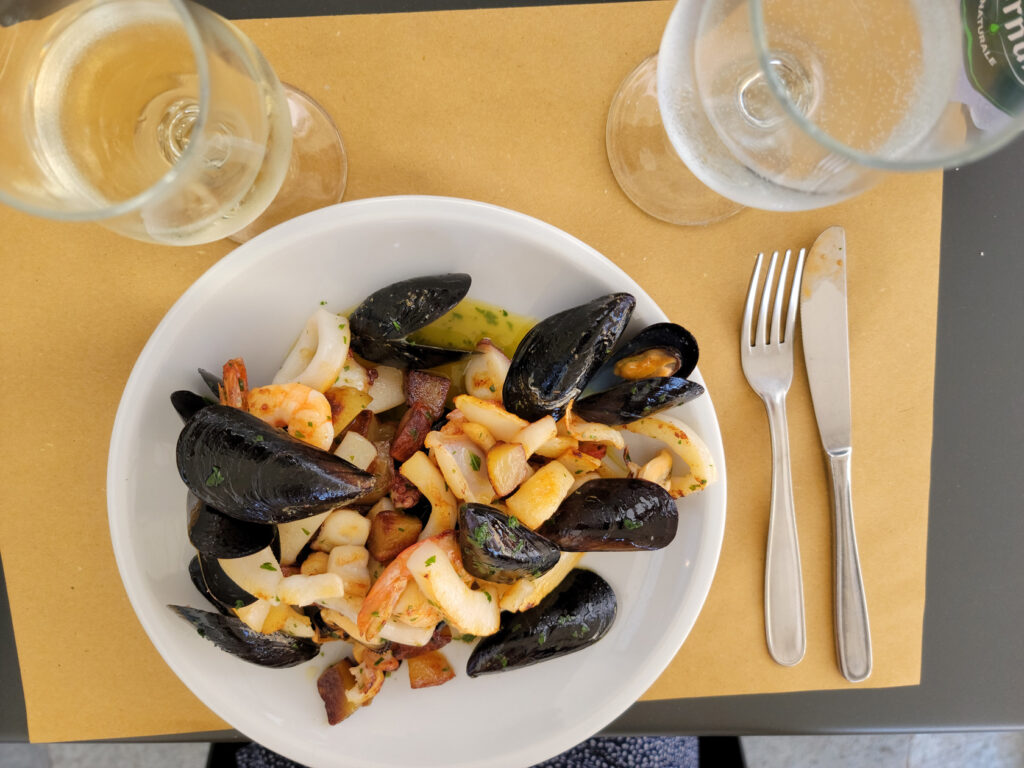
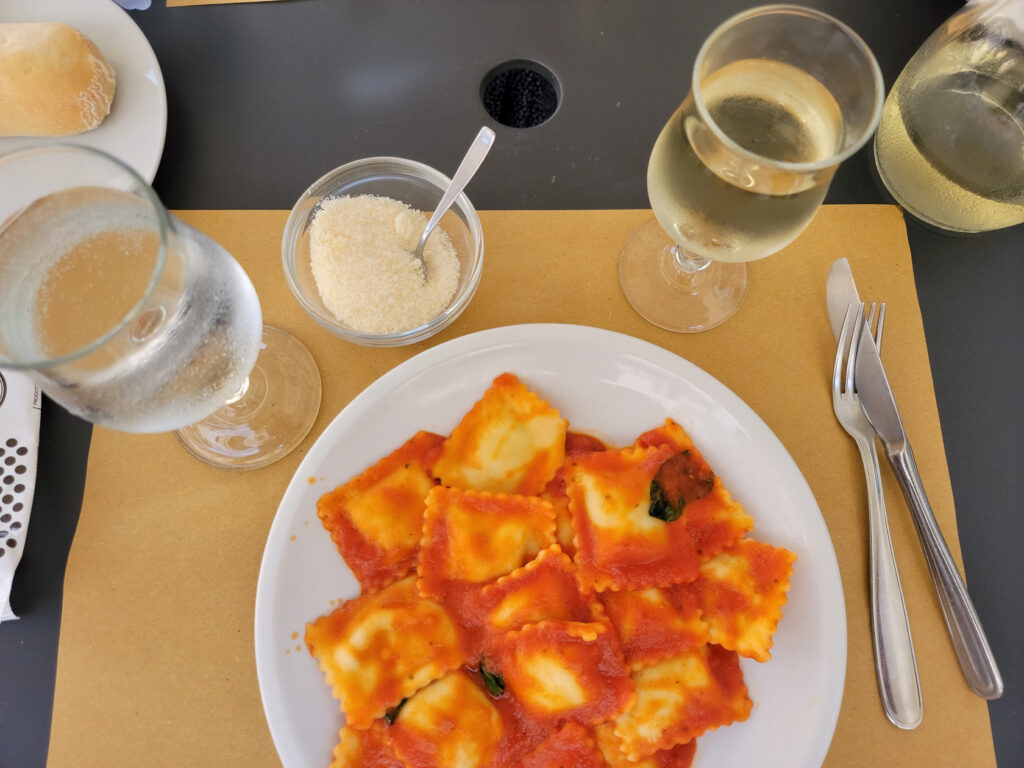
The menu changes daily and is posted on both a board outside and on the window next to the entrance. The menu is restrictive, as for most small establishments like this one, but everything we ordered was quite tasty and delicious. We started with some antipasti, a Caponata Siciliana, served with eggplant, onion, peppers, green olives and other goodies, not hot, but just warmed a bit. A slight tinge of vinegar mixed with the tomato based sauce was just right to get the taste buds to pucker for more. Our mains, or primis, came out a short time after and included the Levantine di Mare for Patti and for me, the Ravioli Sardi. Both were delicious and portioned correctly, just enough to leave a little room for dessert!
Chieri – Trattoria delle Erbe – Levantina di Mare
Chieri – Trattoria delle Erbe – Ravioli Sardi
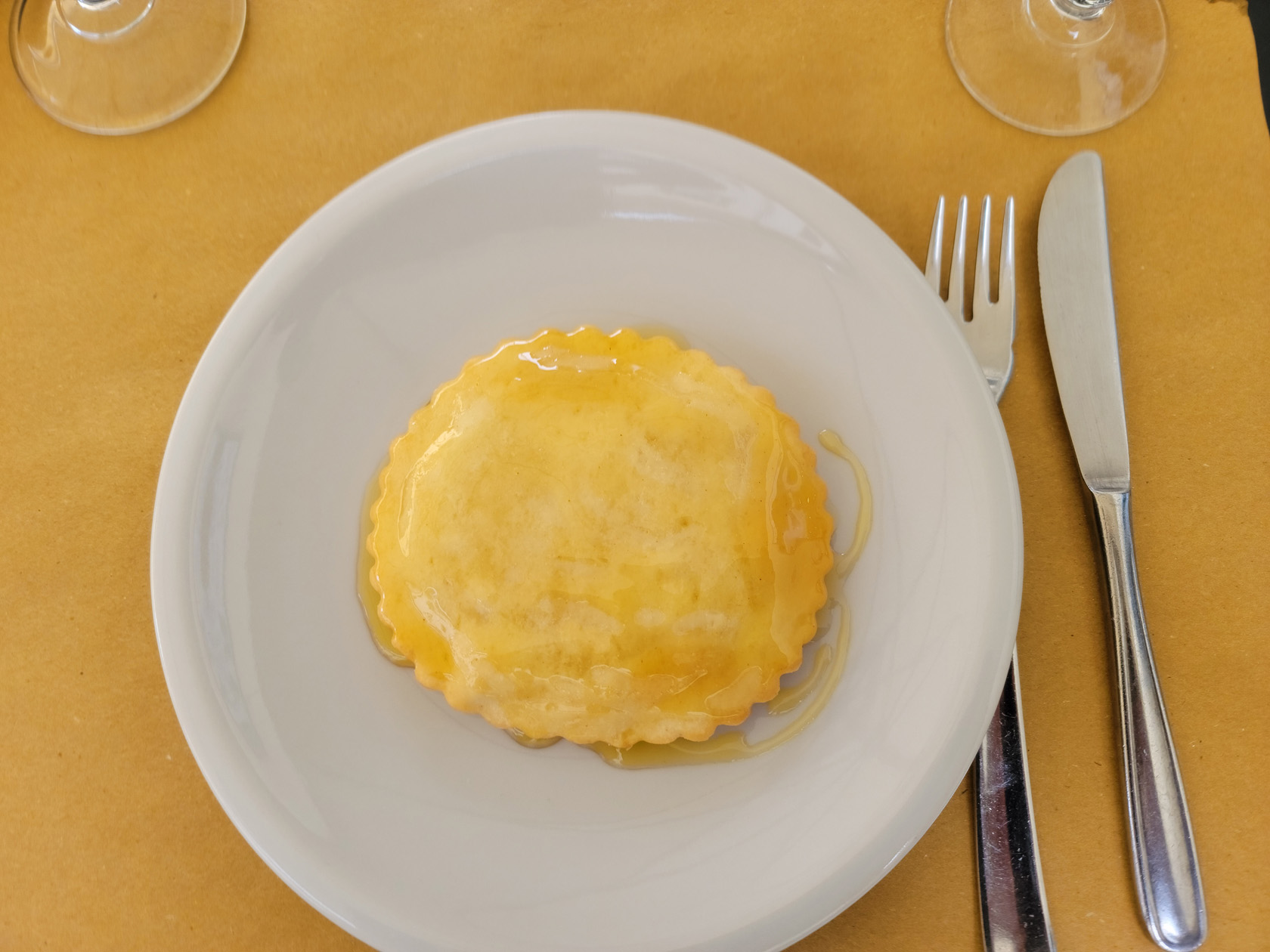
The dessert was actually unexpectedly delicious and savory. A Sardinian Seada or Seadas, that can only be explained as a kind of dough pocket filled with assorted cheese, heated and served with honey. The sweetness of the honey and the saltiness of the cheese make for an unexpectedly tasty treat.
Chieri – Trattoria delle Erbe – Seada or Seadas
Top that off later with a caffè and Sambuca (to make caffè corretto of course) and you have the culmination of the great lunch.
All in all, Chieri makes a great day trip, if only just to walk around and soak up its quiet stillness, after being in Turin for a few weeks. If only to experience some great Sardinian food at this trattoria!
We have been back in Turin for about a week and had to start knocking restaurants off of our list, at least those that we always wanted to visit. After our recent trip to Greece, we decided we had had enough of eating in and it was time to start eating out again. The following are a few special ones we feel we should mention.
Disclaimer: If you are coming from the US, please keep in mind portion sizes in Italy and perhaps most of Europe for that matter, are not like in the States. In Italy there is always Antipasti, a Primi and then a Secondi for those who need more.
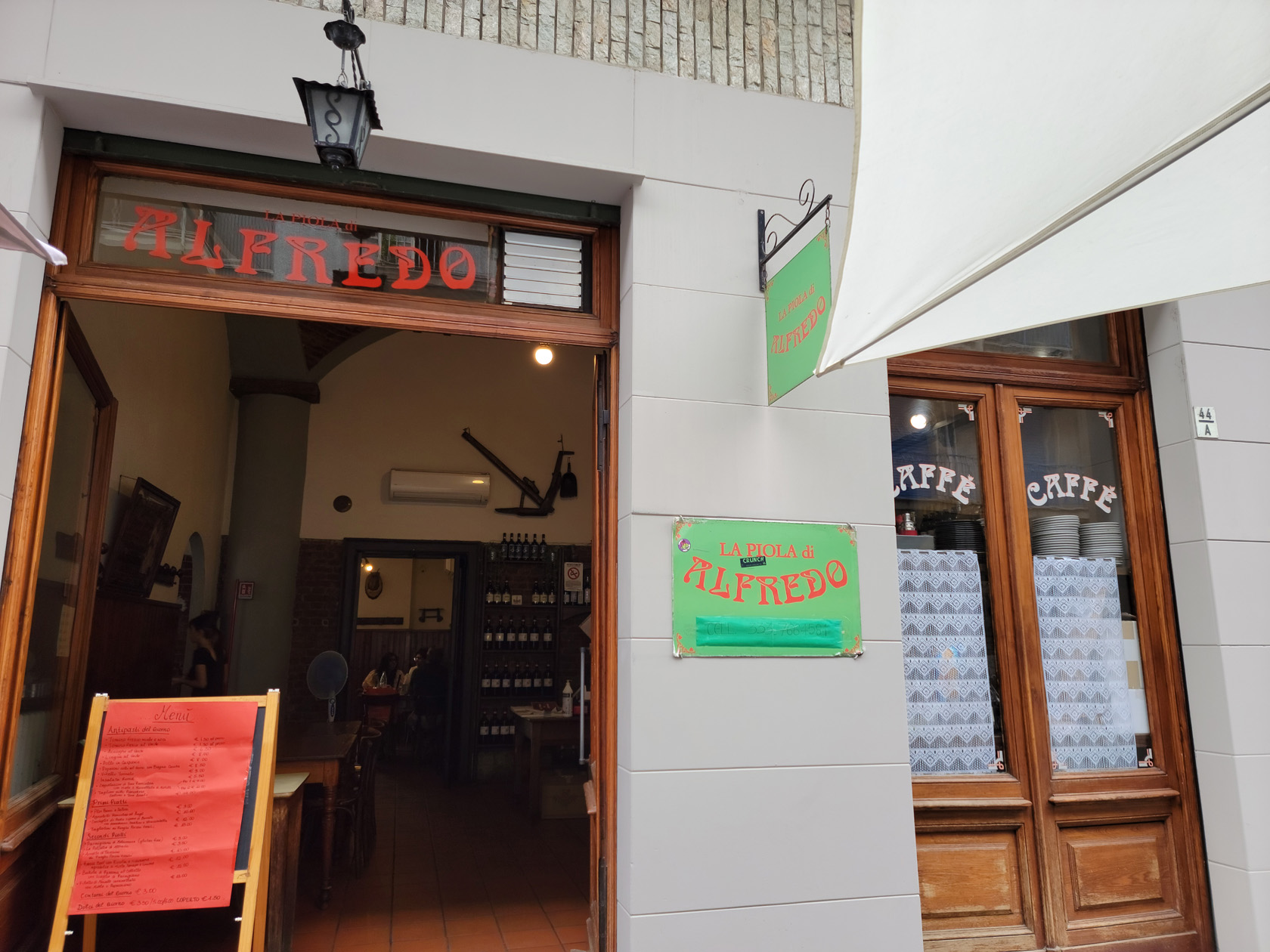
La Piola di Alfredo
When in Piedmont and especially Turin, if you see the word Piola in the name of a restaurant, you are more than likely going to experience some really good local food. You may think of the word Piola synonymous with Trattoria.
La Piola di Alfredo – Turin
The restaurant itself is quietly unassuming and nondescript. The owners and help speak no English, so it is best if you learn at least a little Italian (or your favorite translation application, good luck), or at the very minimum point to what you want.
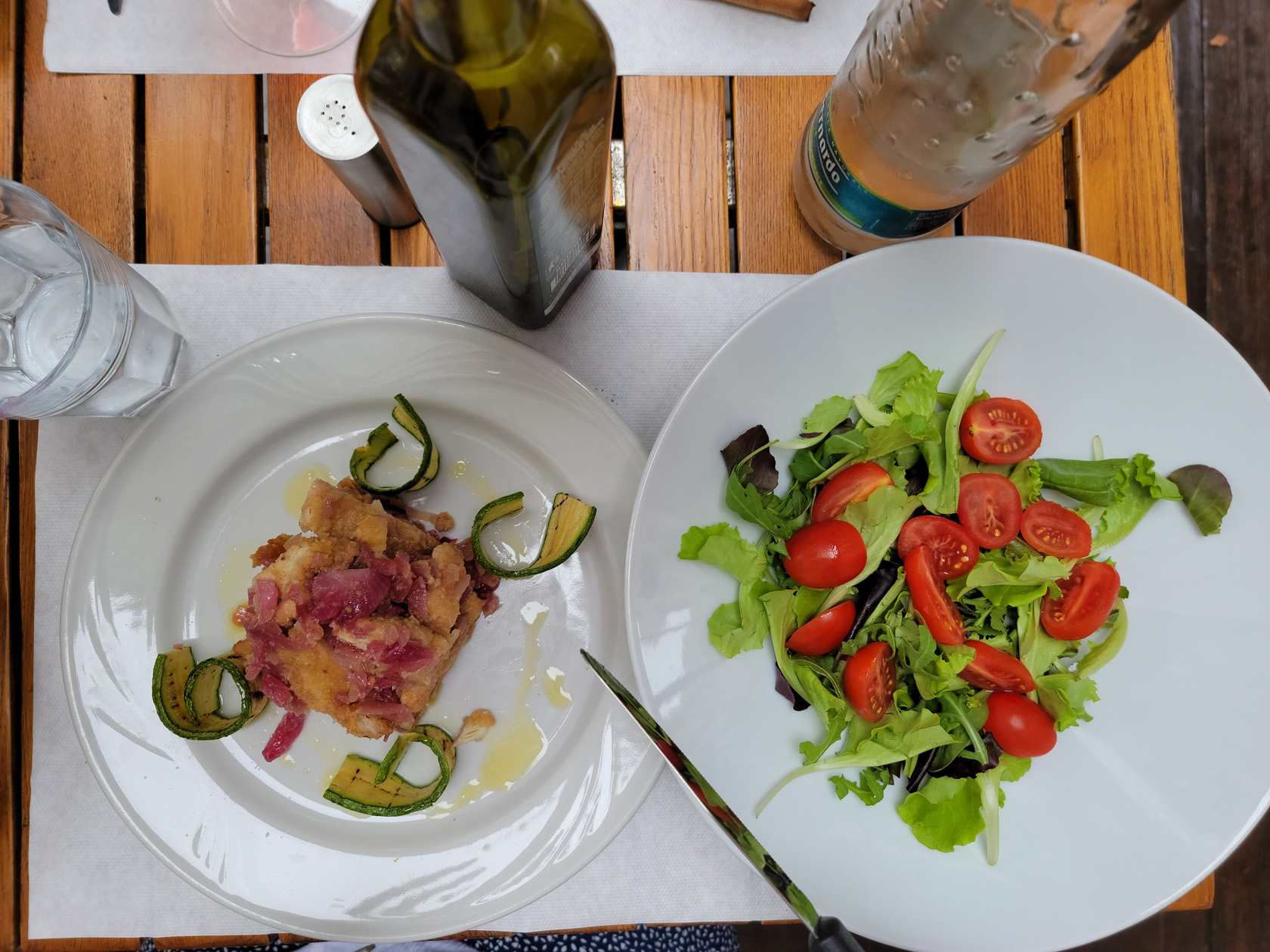
Pollo Carpione with Vinegar Onions and Tomato Salad
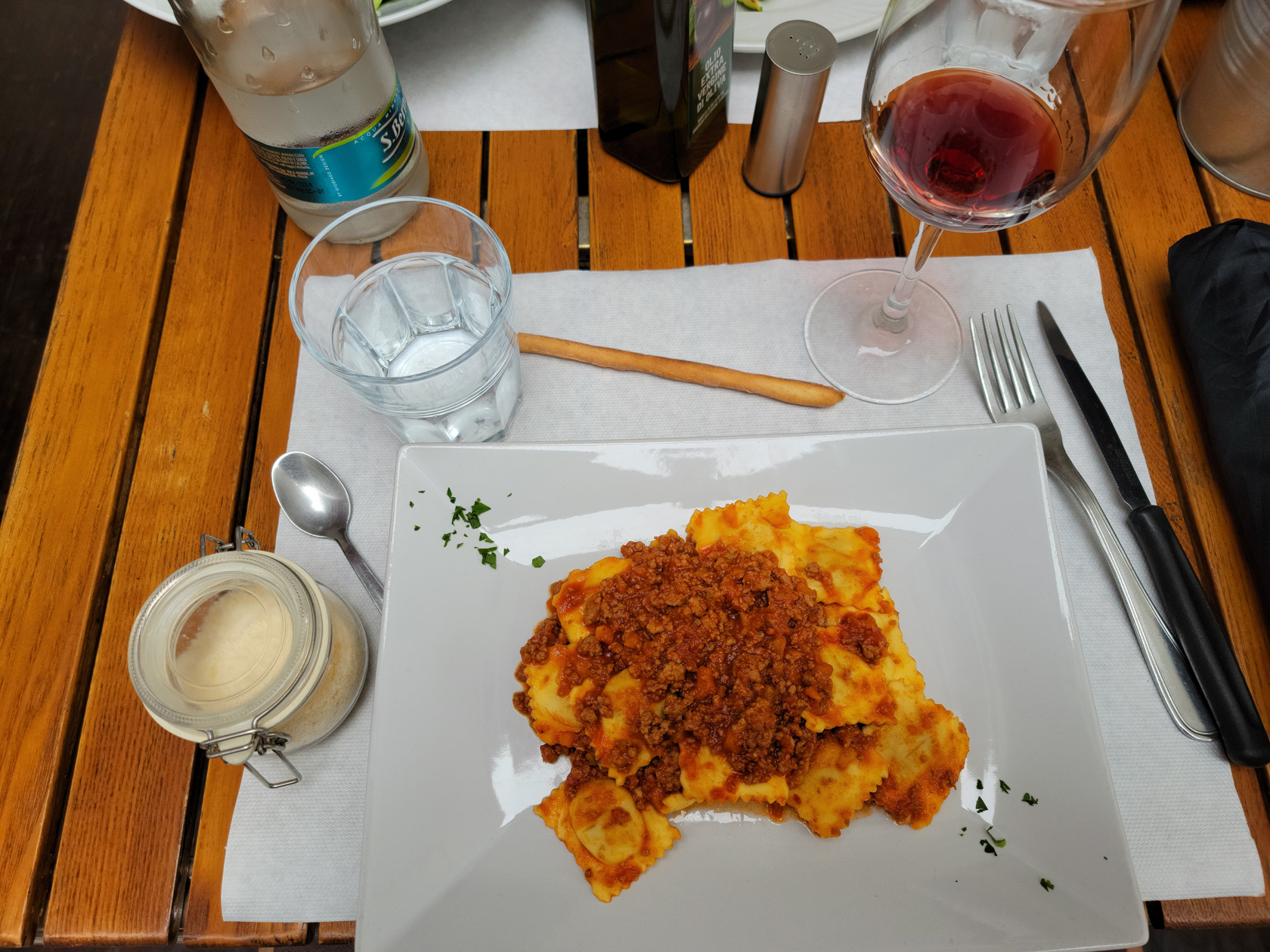
Agnolotti alla Ragu
My wife an I were just interested in something to drink and a simple lunch. Though the bottled Nebbiolo wine by the glass ran about €5/glass and was very good, the cheaper alternative was the Vino Sfuso, or house bulk wine, which can be purchased for €2/glass or €10/Liter and is probably very good (I will make a point of it to try it next time).
Nuovo Zhen Bao Chinese Restaurant
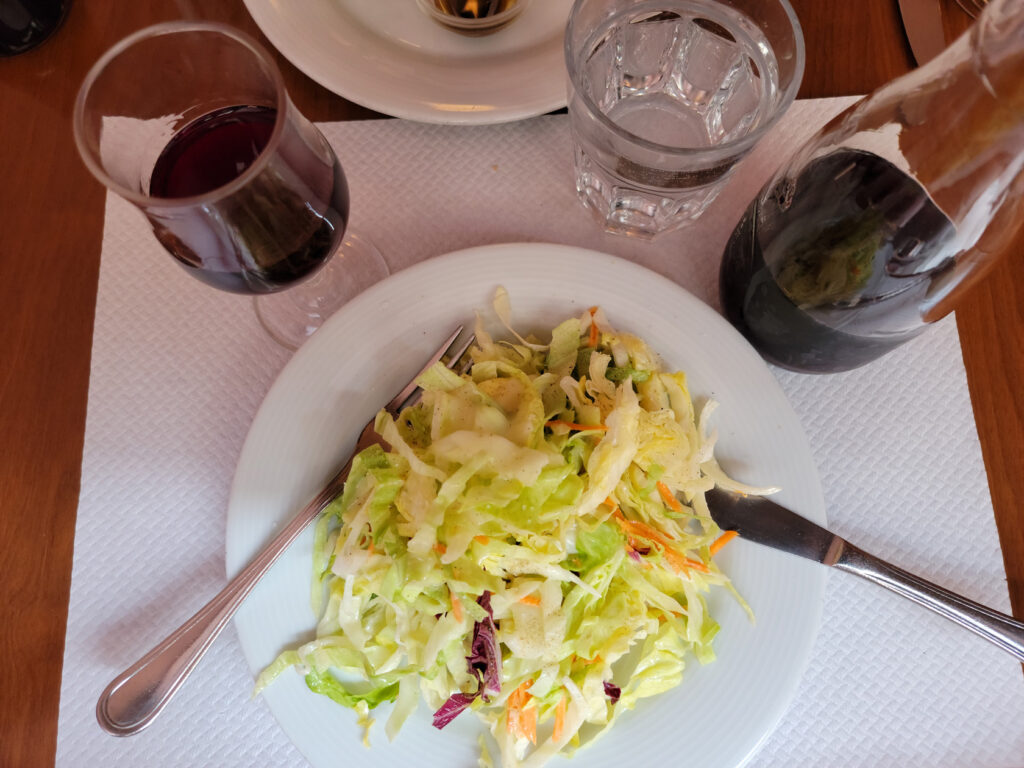
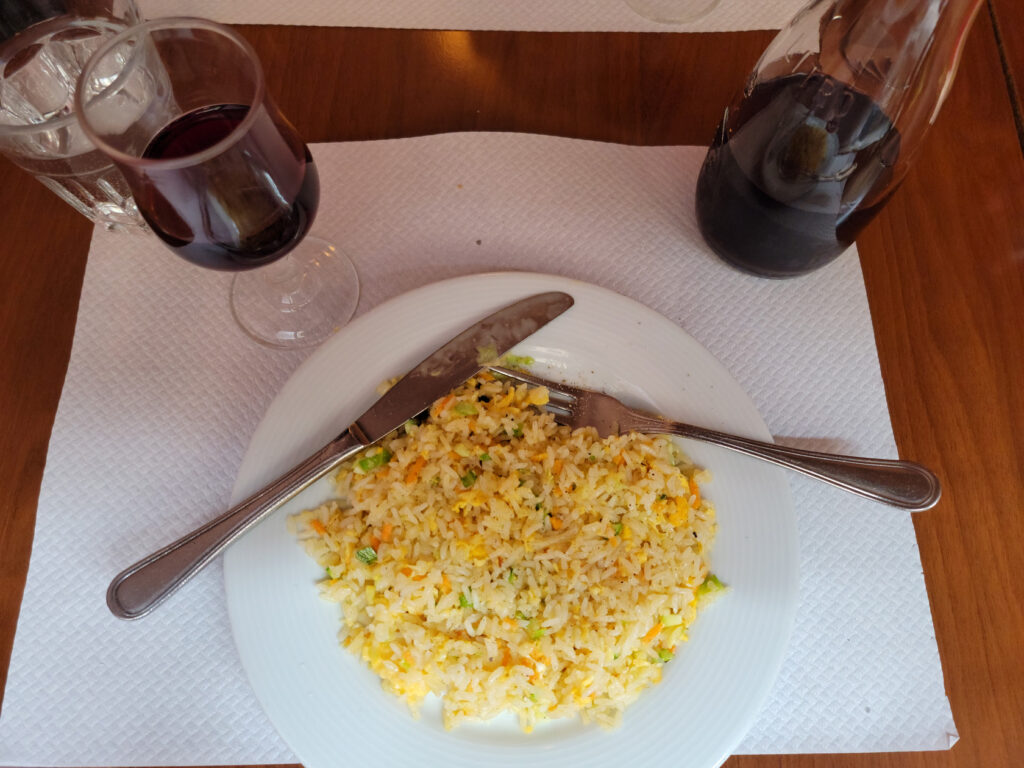
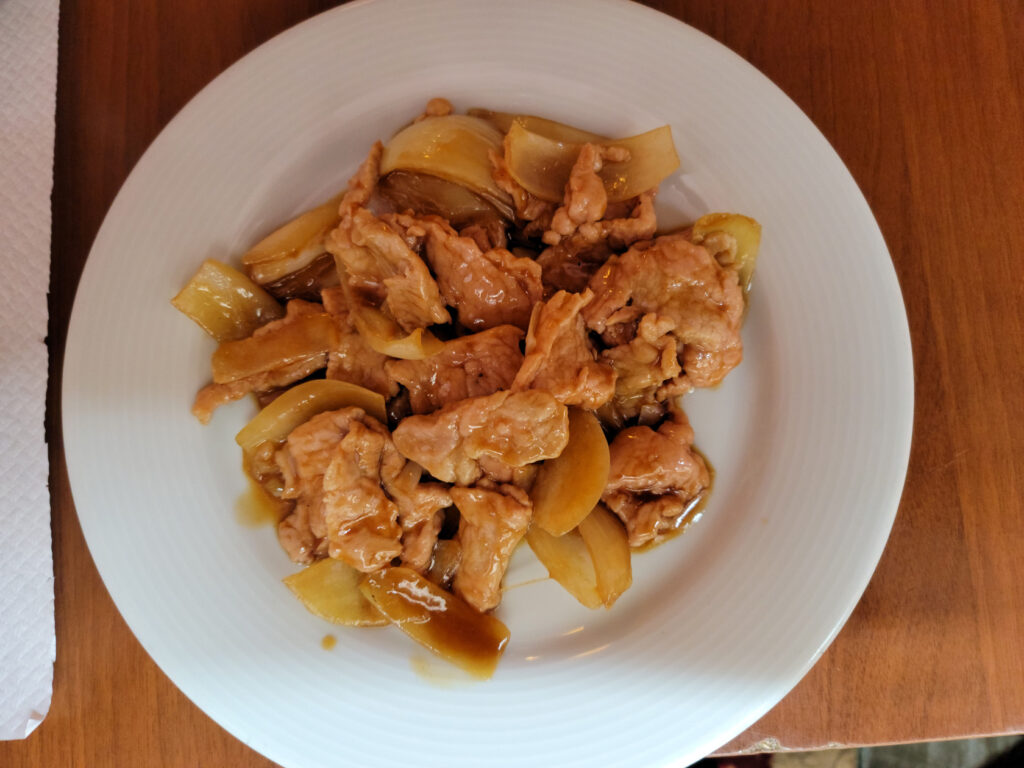
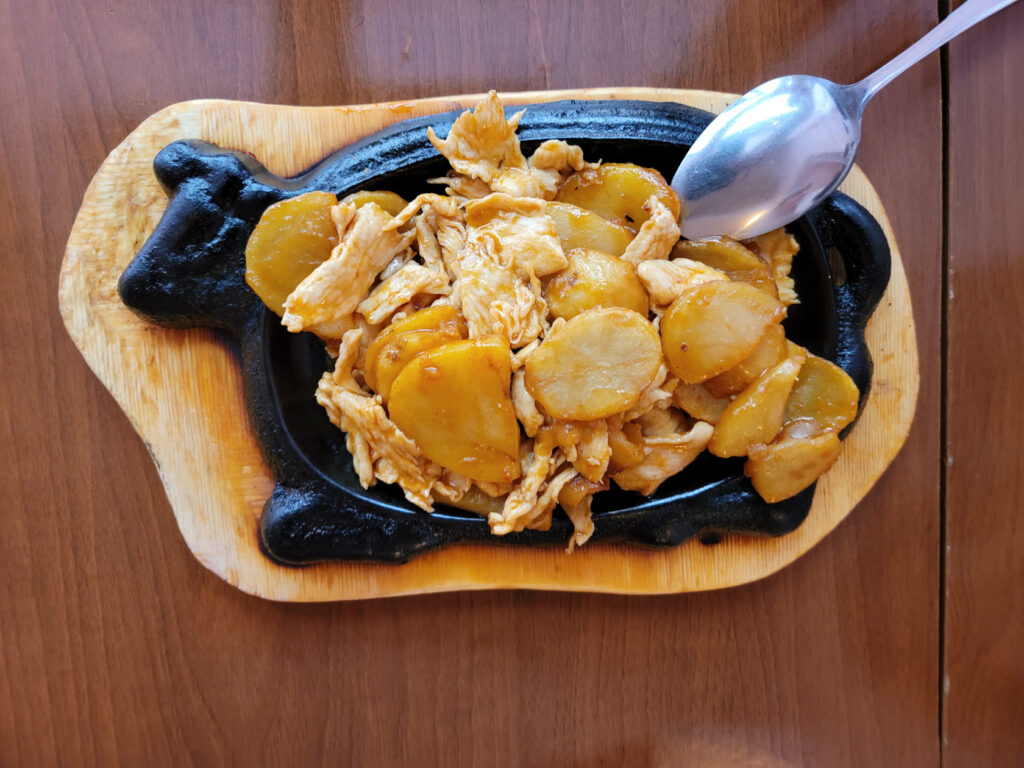
We have written about Nuovo Zhen Bao before and it has become one of our go-to places for Chinese food. We have tried other Chinese restaurants throughout Turin, but none have come close to the delicious salads (especially the dressing on the Insalata Cinese), spring rolls and main courses as does this restaurant. The service is usually first rate and they normally have plenty of help on hand.
They have both outside and inside dining, as well as an excellent lunch (Pranzo) menu for only €10, which includes a bottle of water, appetizer, first and second courses.
Vietnamese Rolls
Chinese Salad
Vegetables Rice
Pork with Onions
Chicken with Potatoes
My Missing Tiramisu
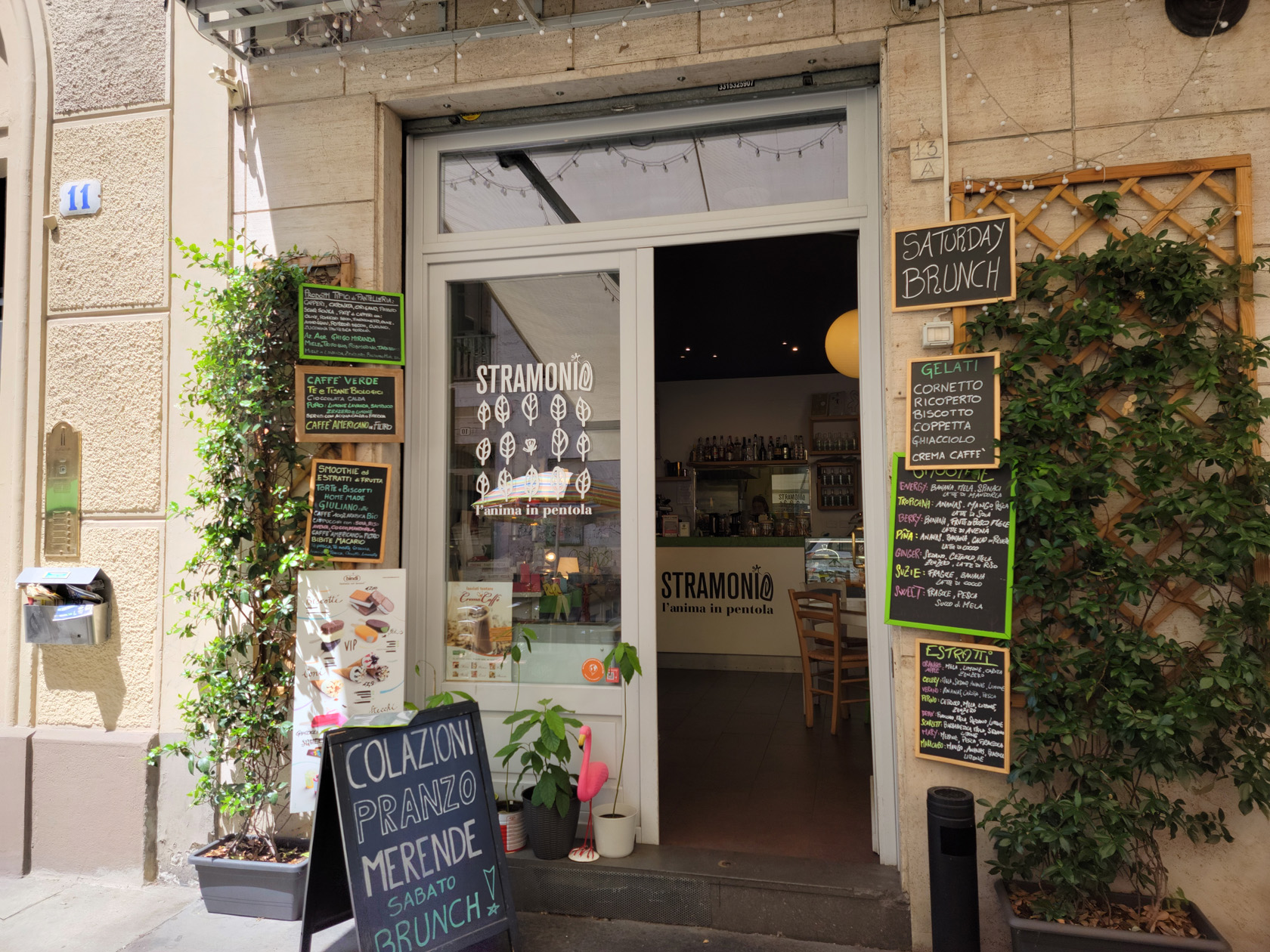
Stimonio
A bistro that serves naturally and bio friendly items from its menu. They have several items, such as sweet and vegan pancakes, as well as other bio- and earth-friendly choices.
Stimonio Bistro
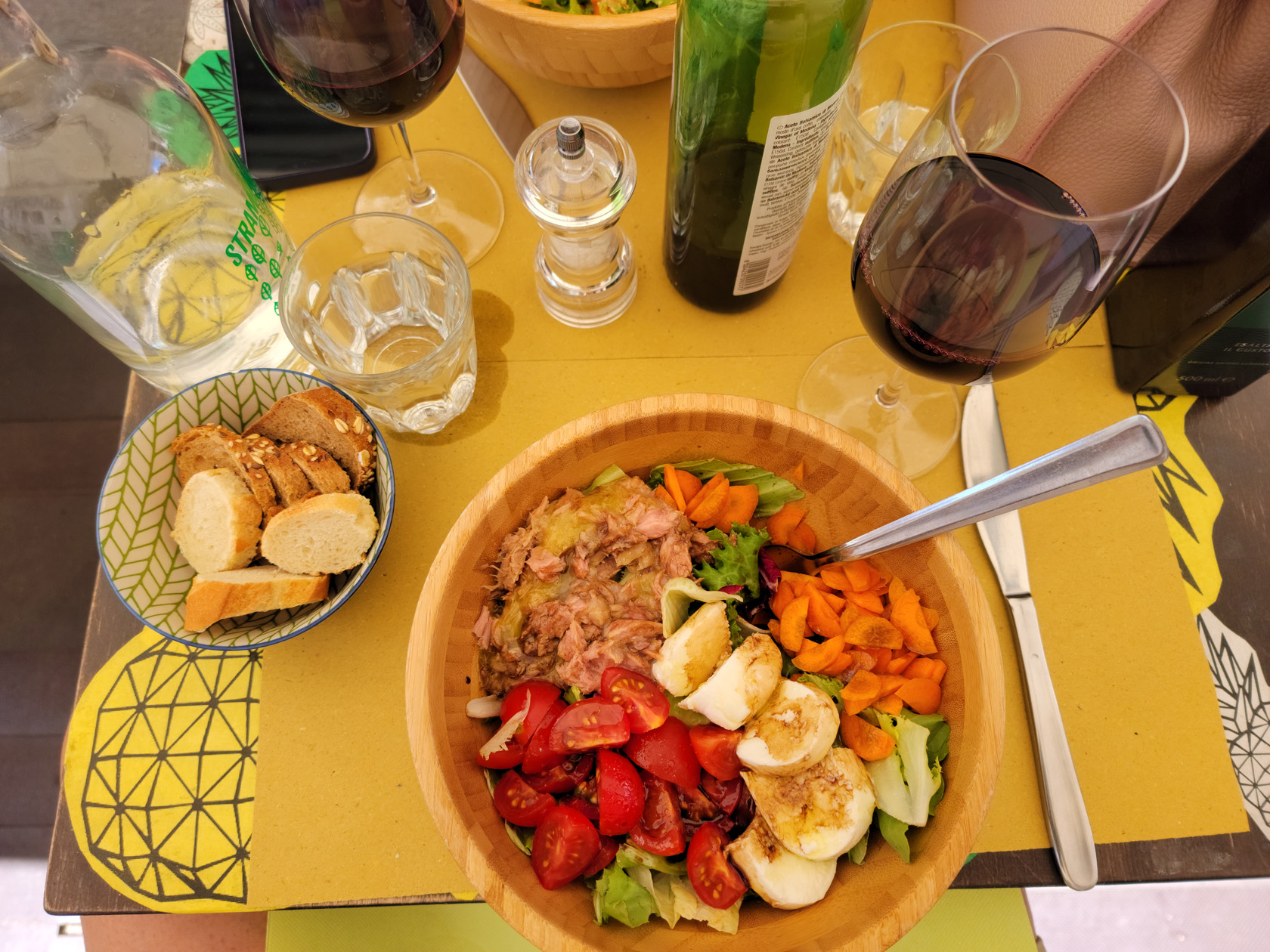
We chose the tuna salad, so they are not exclusively vegan. I had preferred a more complete Piemontese menu, but they do offer a plethora of smoothies and other health friendly items from which to chose. They do not have a house wine or bulk wine (vino sfuso), so wine by the glass can be a bit expensive for Italy at €5/glass (I normally wouldn’t mind, but for that price it isn’t that good).
Ristorante L’Agrofoglio
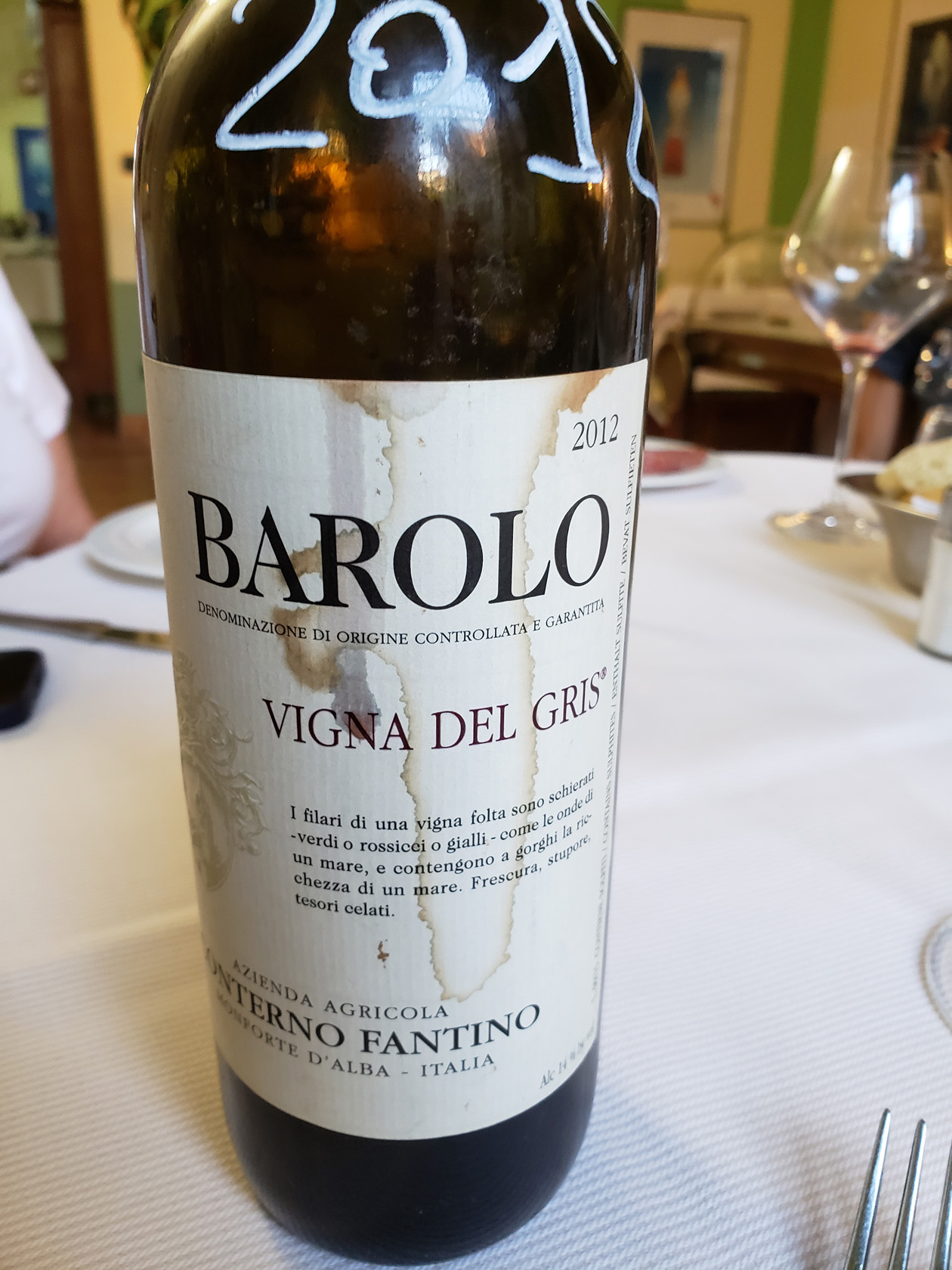
Much to our dismay, we must announce the closure of the L’Agrofoglio Ristorante and Piola. We had reported on their very good menu and excellent wine cellar, only to be saddened by their closure when we arrived back in Turin early this year. A major loss, I will never forget the unbelievable Barolo that we enjoyed there during our Sunday lunch in July of 2021. A wine, I subsequently tried to order a few months later, only to be told it was no longer available. I lamented of course. (We tried the 2013, which sadly, wasn’t quite the same).
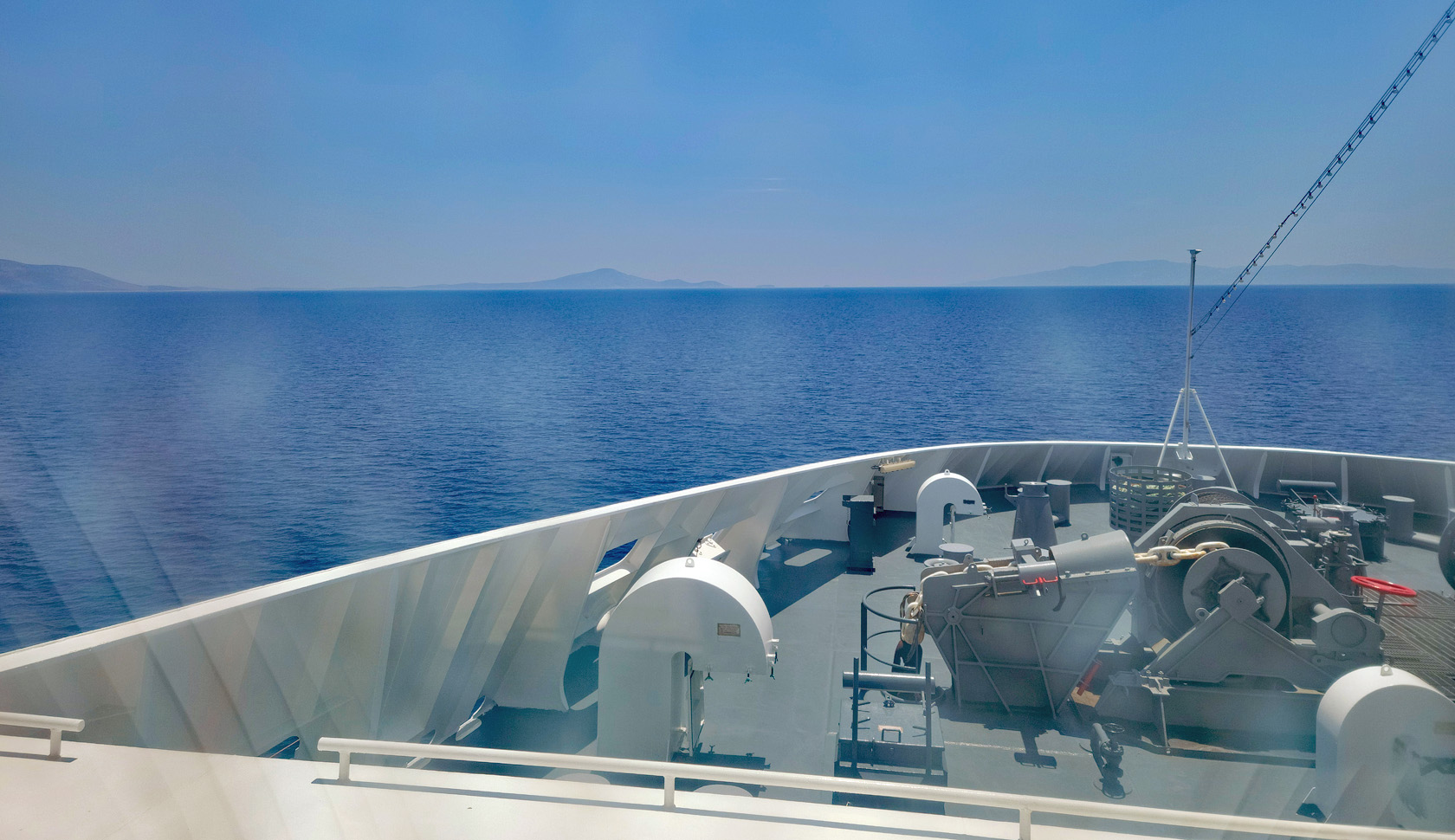
Well we took the ferry from Naxos to Santorini and as luck would have it, it was very smooth. We were kind of worried about it, because the prior days leading up to our excursion, it was very windy and the water was extremely rough. My wife had already related to me, that in rough seas, they sometimes cancel the ferries between islands; we didn’t need any of that. It was bad enough that she had contracted bronchitis and was just getting her voice back. In fact, my son-in-law also had a cold, making their holiday just a bit more annoying than usual.
We were off the ferry in no time and looking for our driver, which with all of the vehicles and people, was actually easier than I had thought it was going to be. After sitting in the car for about fifteen minutes, waiting for the long procession of cars, buses, trucks and other vehicles to make it up the cliff, the road before us had more switchbacks than teeth on a saw. But it was slow going, so motion sickness never became an issue.
Naxos to Santorini – Ferry on the Aegean Sea
Naxos to Santorini – Ferry
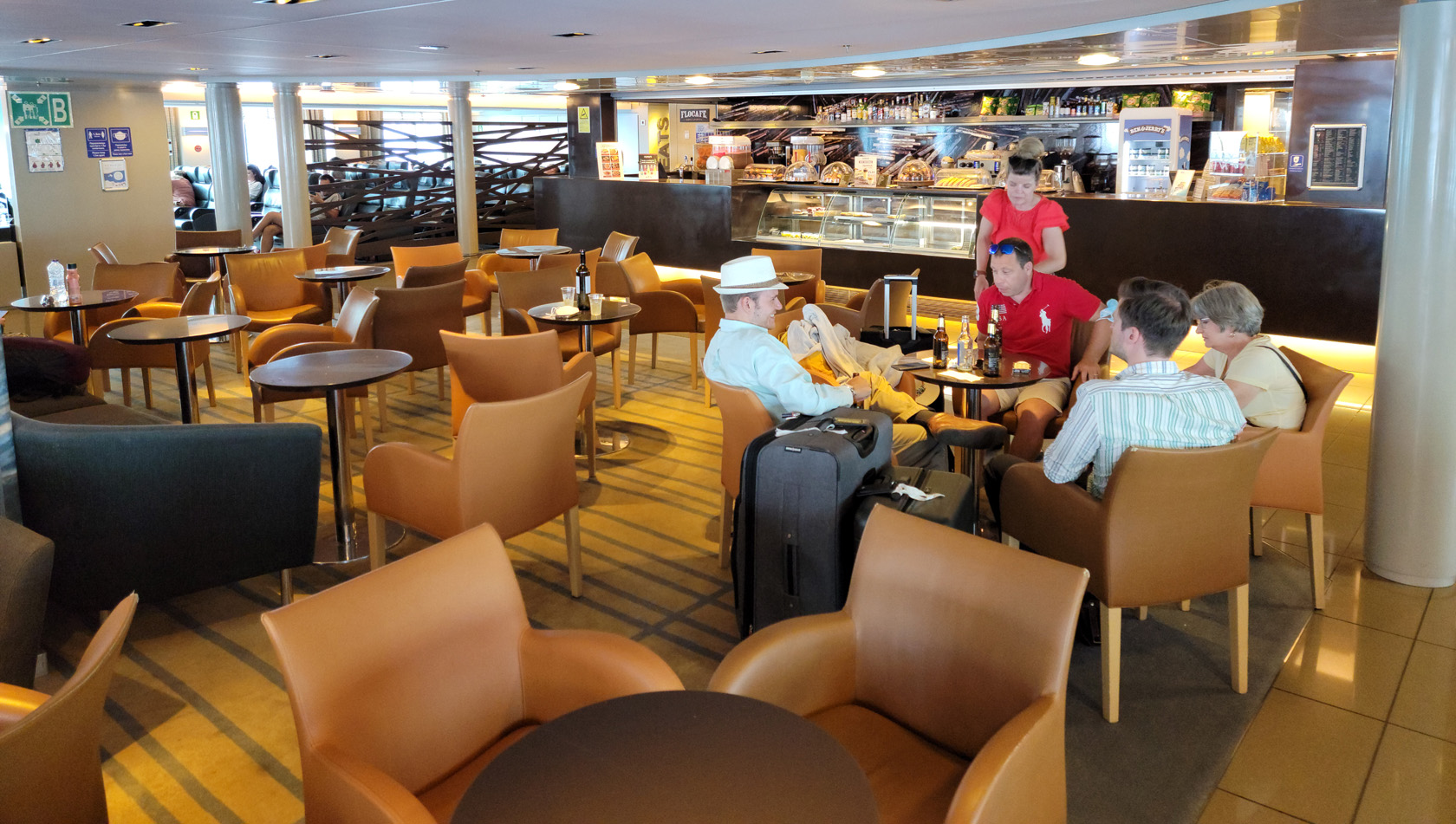
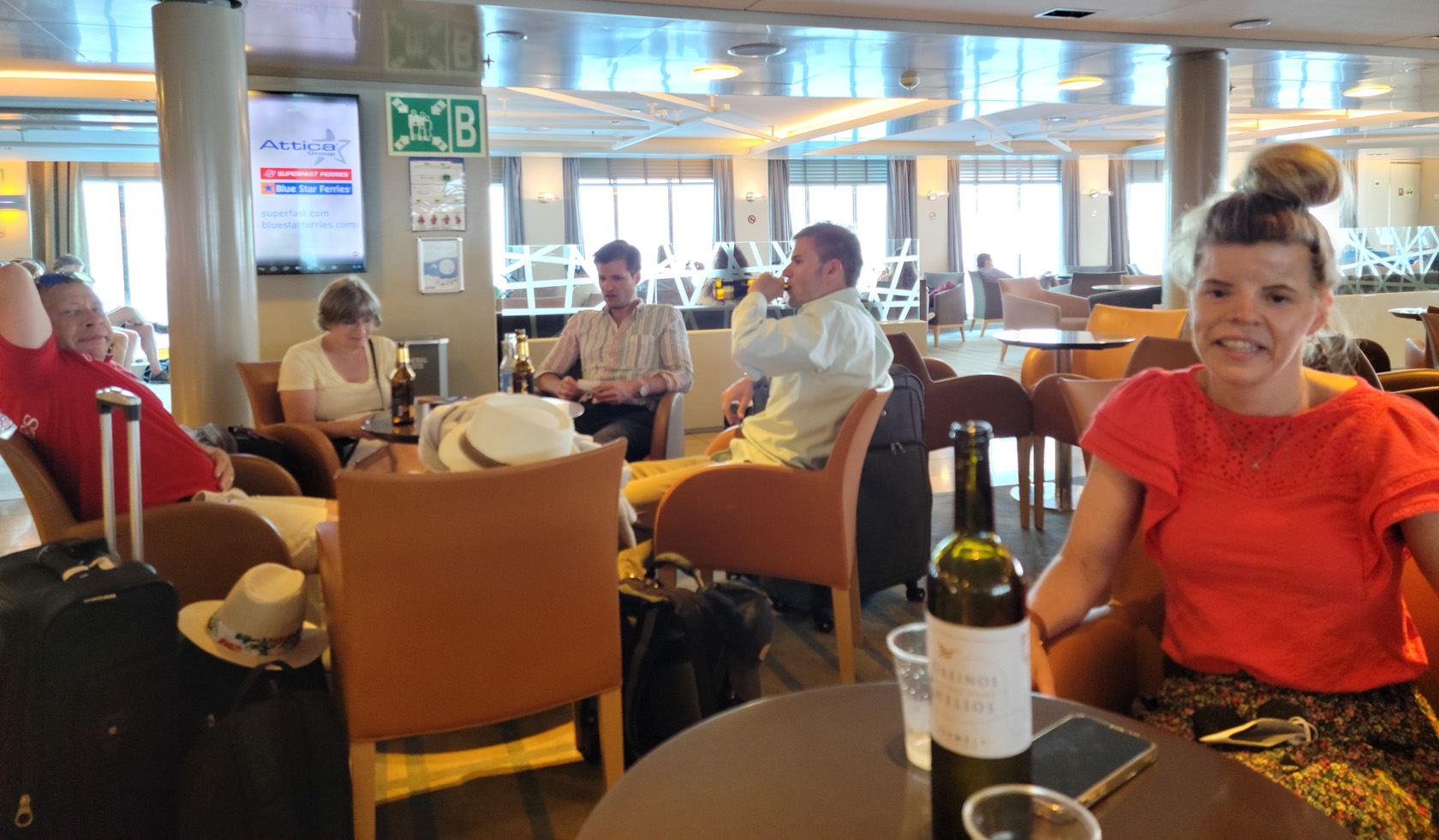
Naxos to Santorini – Gabi, Patti, Dana, Tristan and Ericka
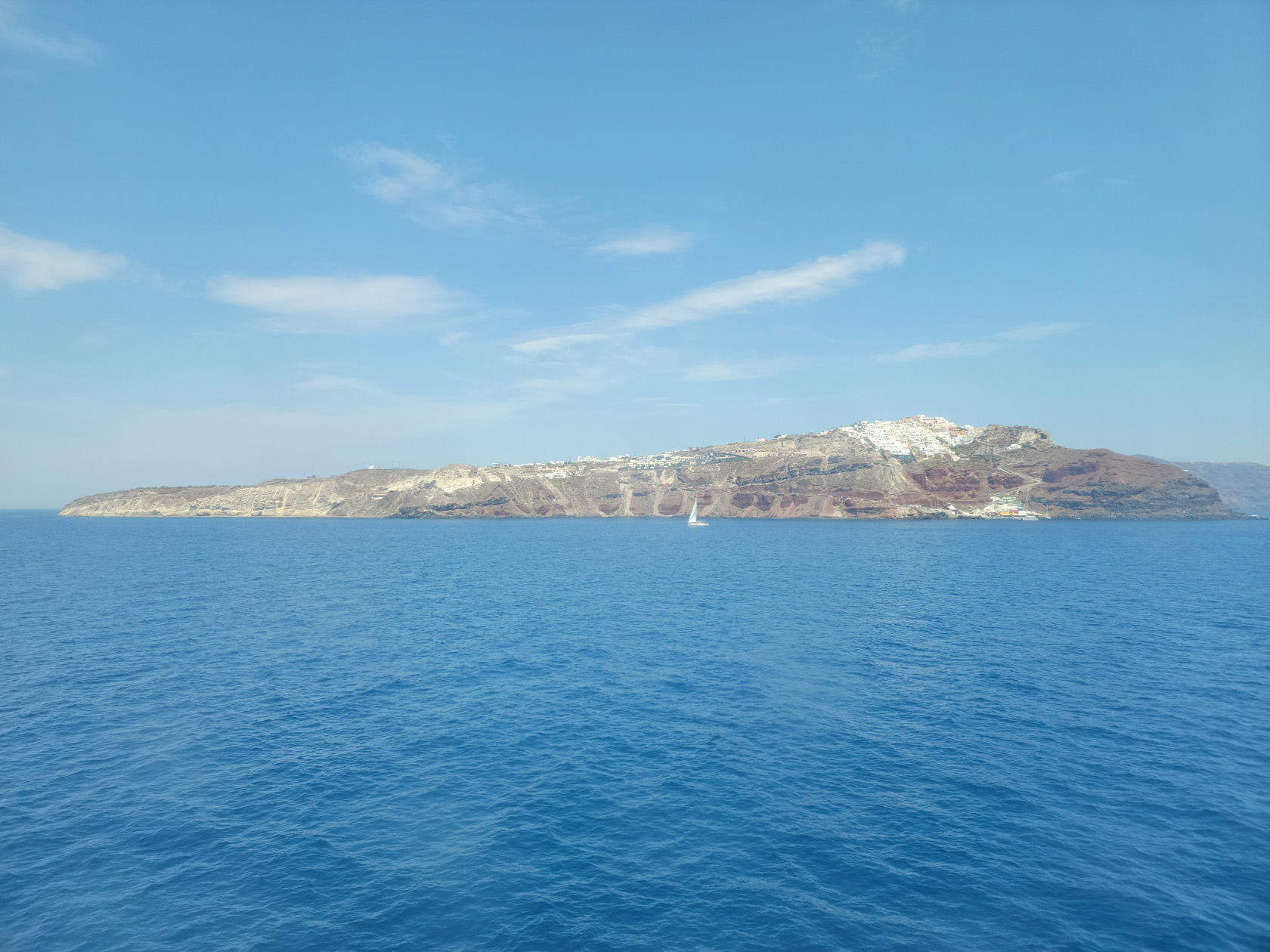
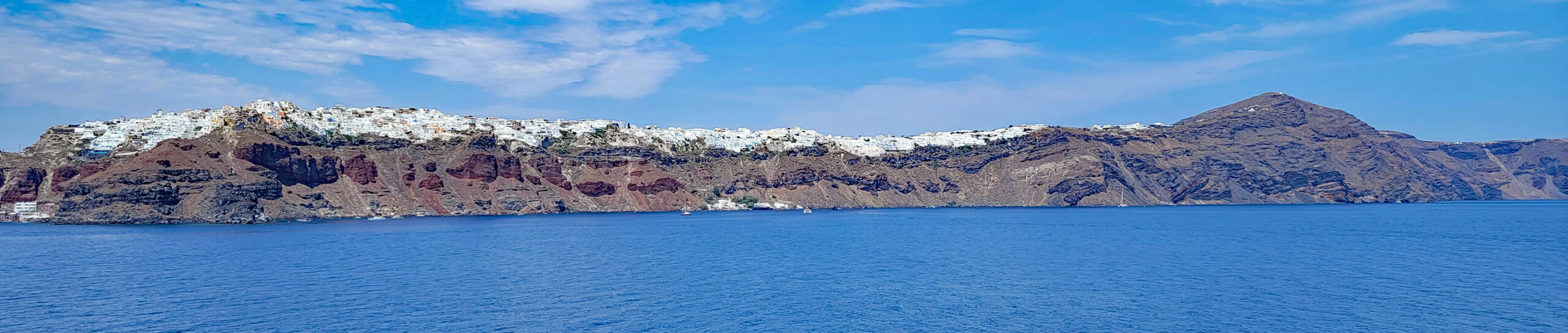
Naxos to Santorini – Oia from Ferry
Once we reached the top and made it through the stop sign, we were in our Heliotopos Hotel in Imerovigli in no time. On Santorini we actually split our vacation between two different hotels, one in Imerovigli and one in Oia. And aside from the driver from the shuttle service driving past our hotel in Oia, for which we had a fairly long walk in the heat, no other problems befell us while on Santorini.
Naxos to Santorini – Imerovigli and Thira from Ferry
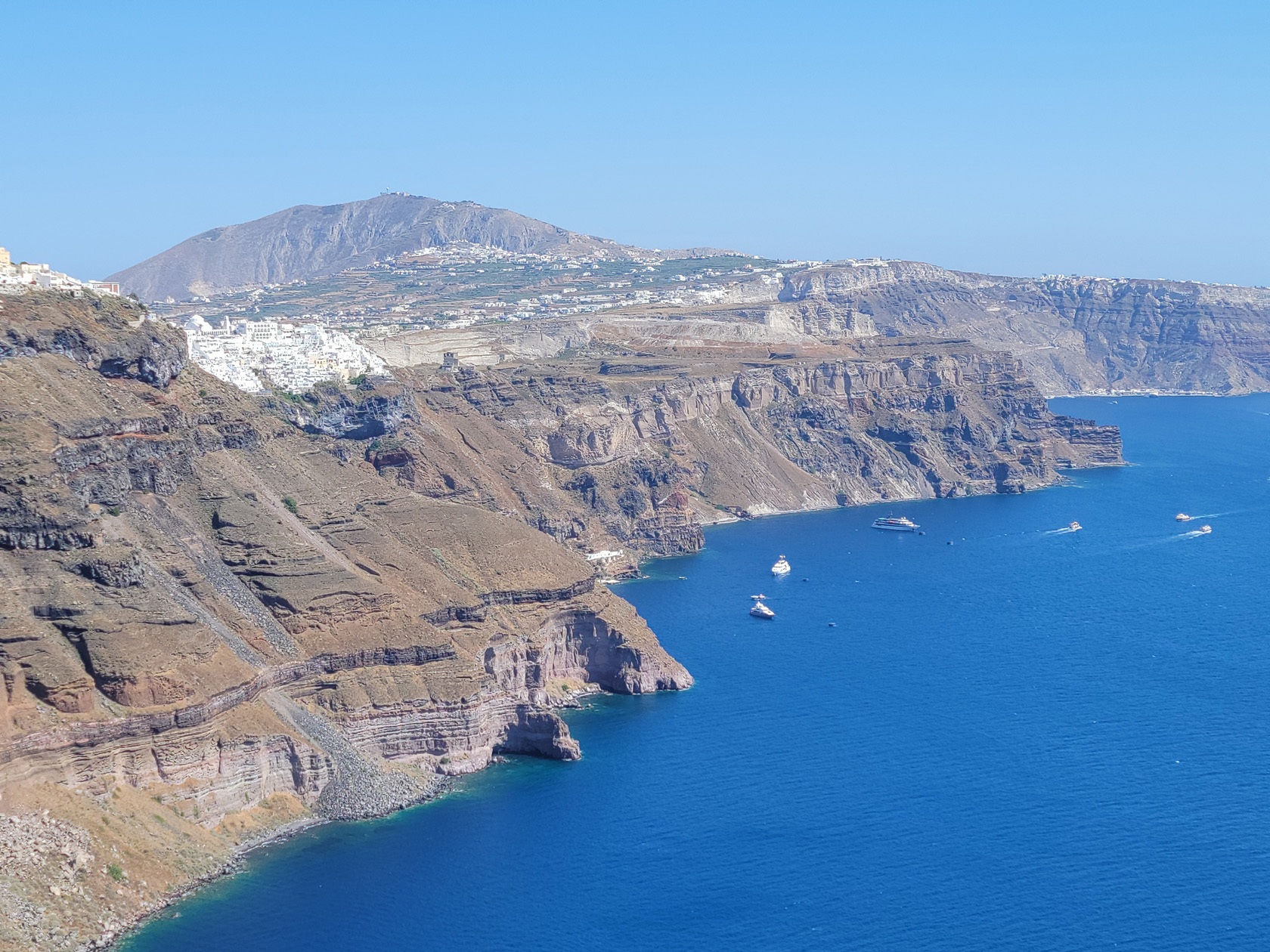
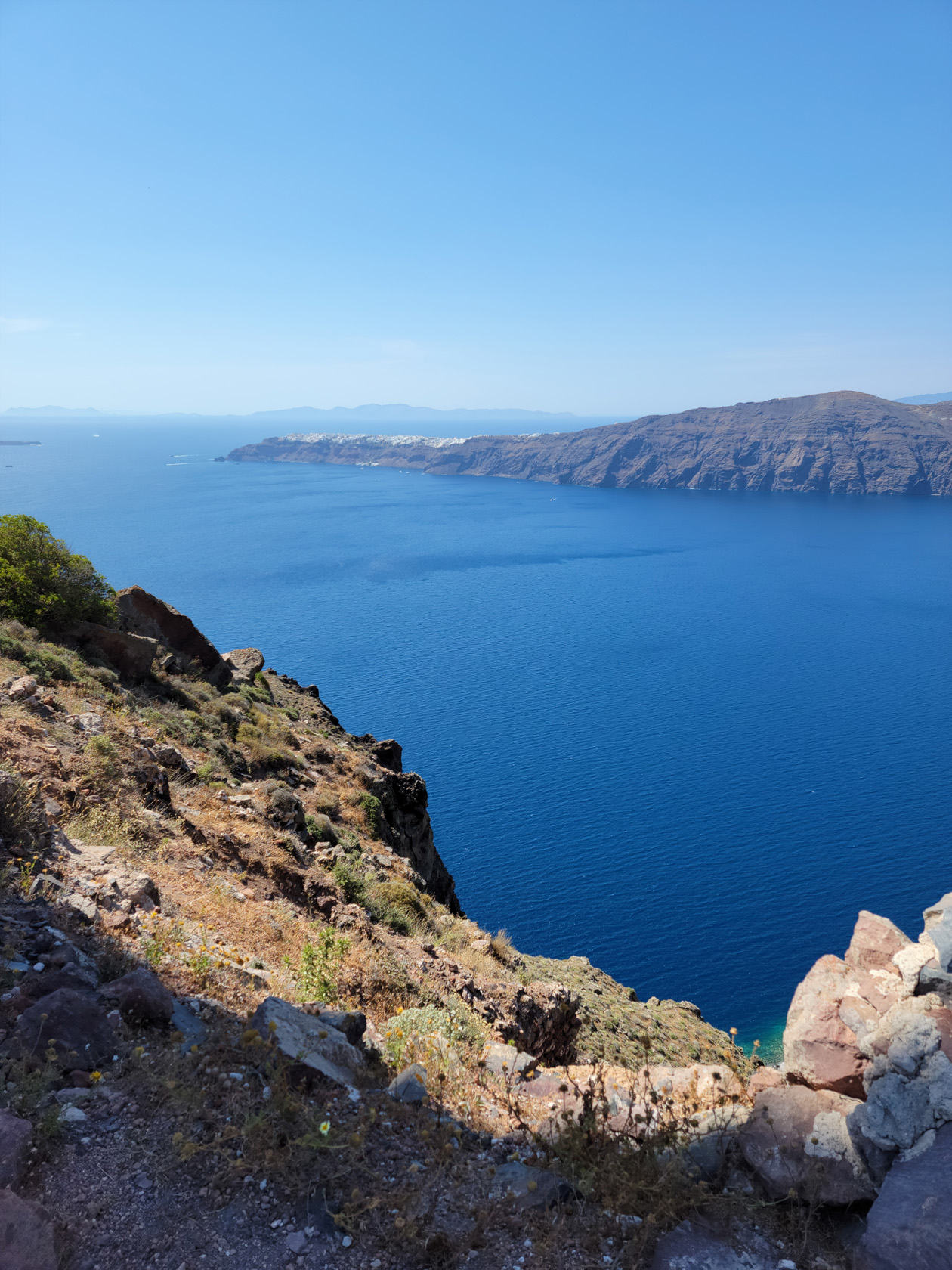
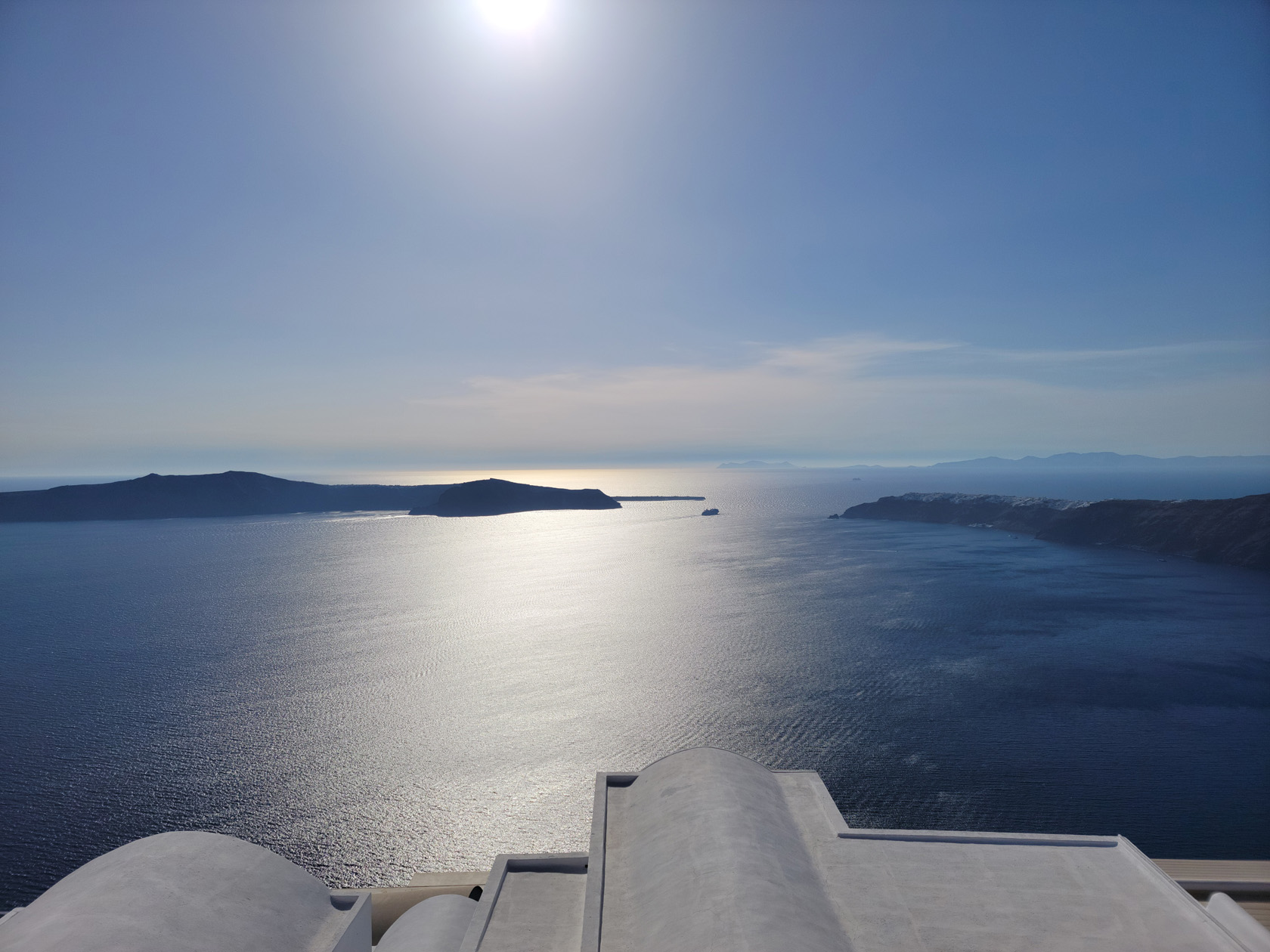
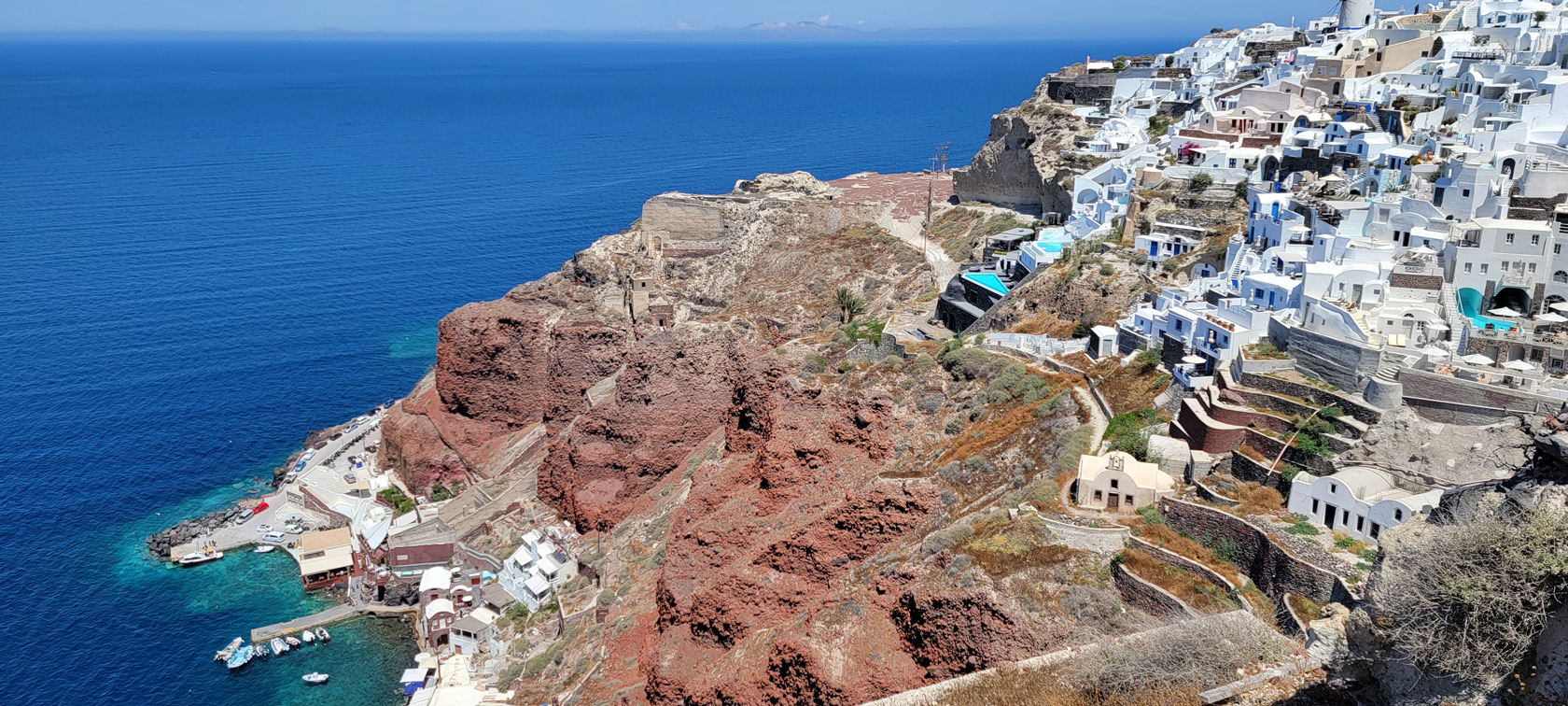
Another island in the Cyclades island chain, Santorini is a large caldera formed from an ancient volcano that blew its top some time around 1450 BCE. When it did, it had a major impact on the Minoan population that had settled on the chain of islands.
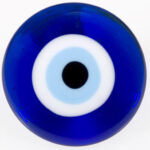
The Greek Evil Eye
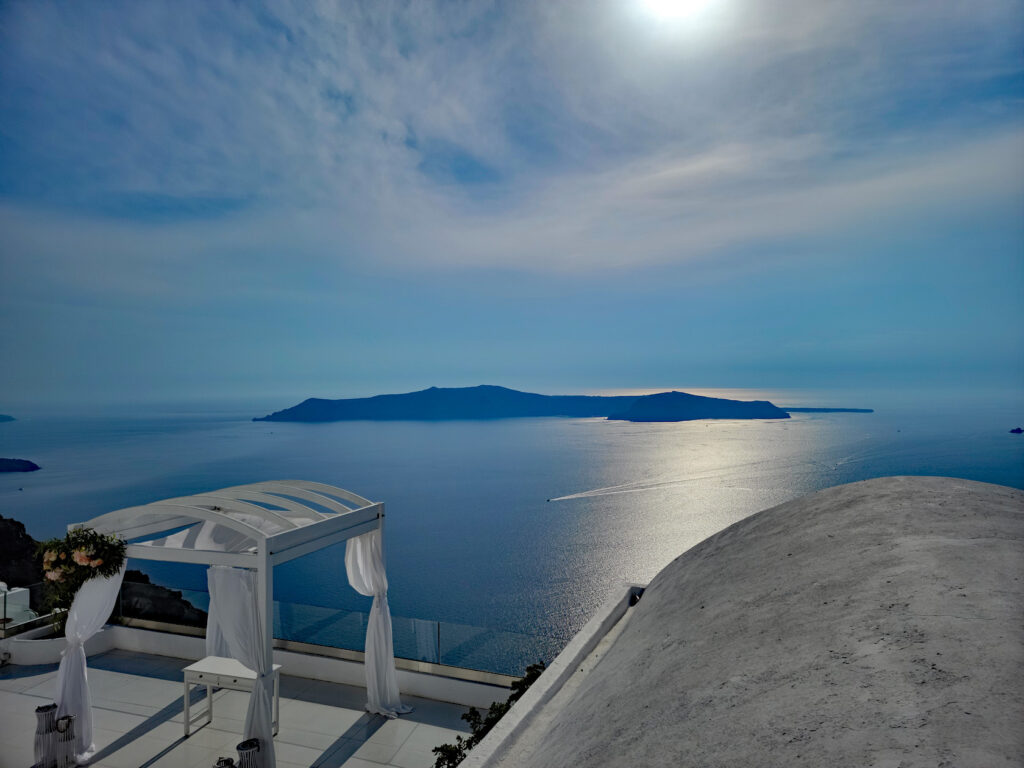
One might say the island of Santorini now looks like a great Greek Evil Eye from the sky. A small ring of islands with a caldera of water and a center made from the remaining two active volcanoes. If of course one is superstitious like that.
Imerovigli – A Volcanic Aerie
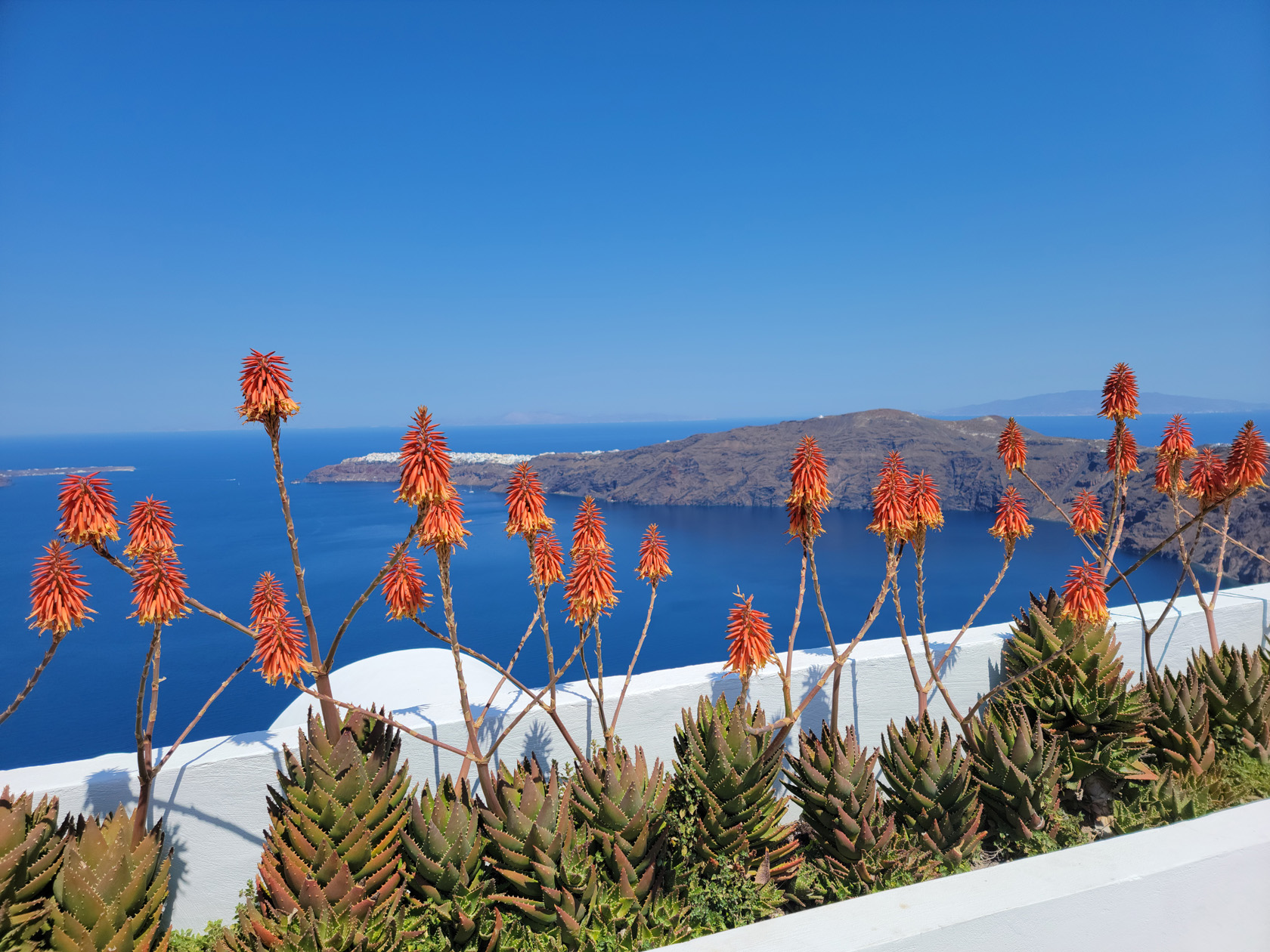
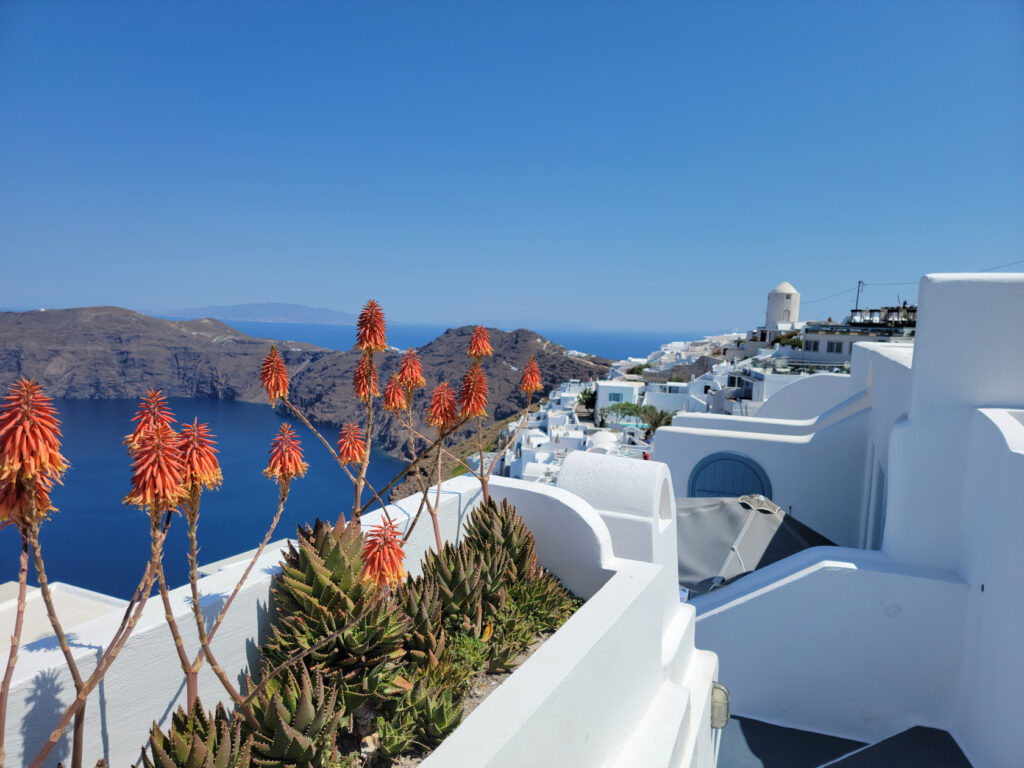
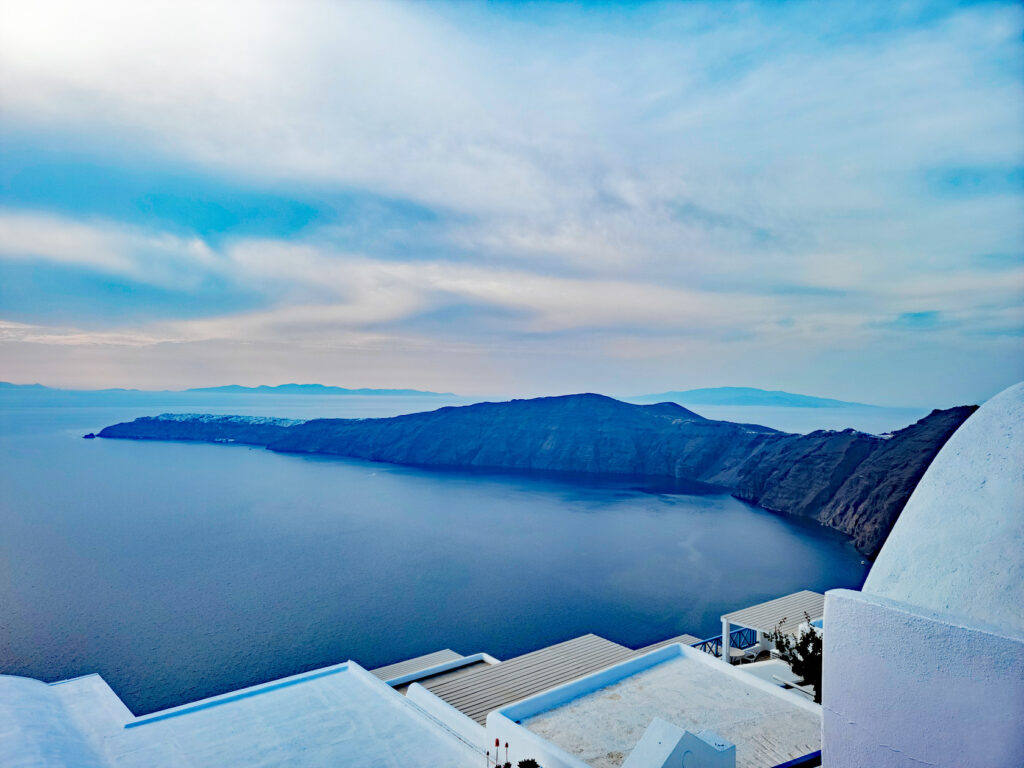
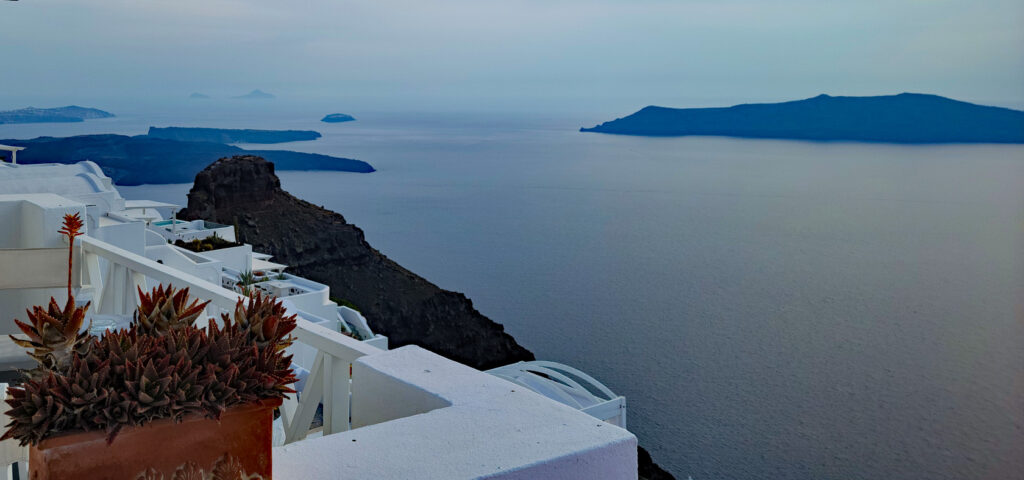
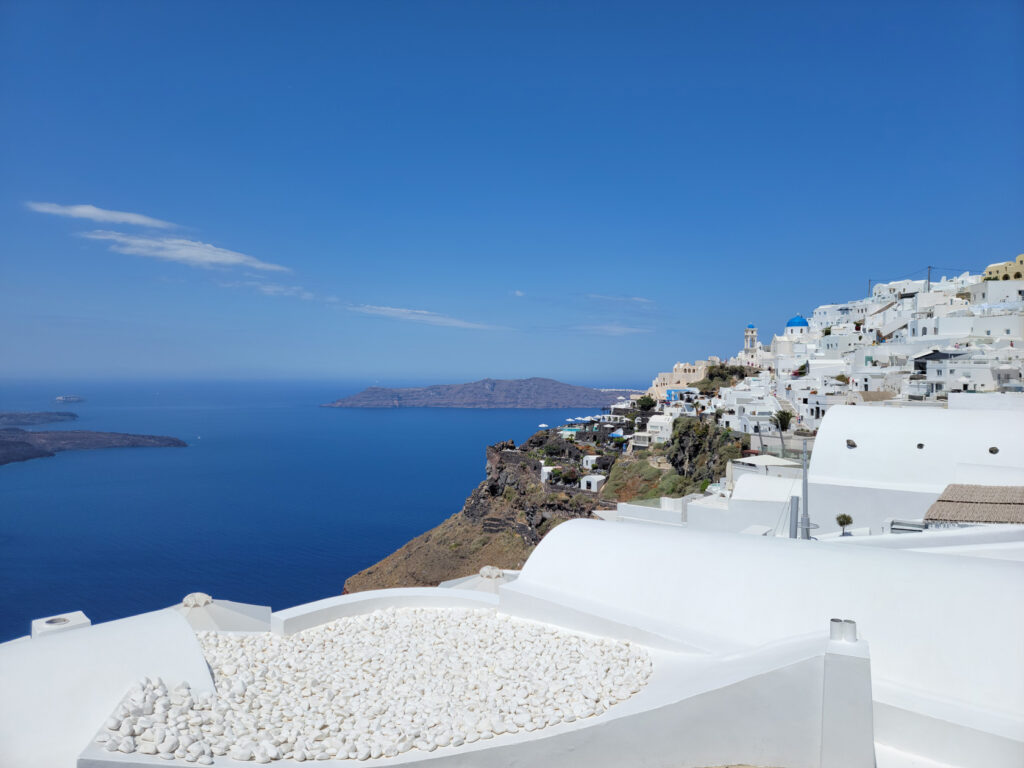
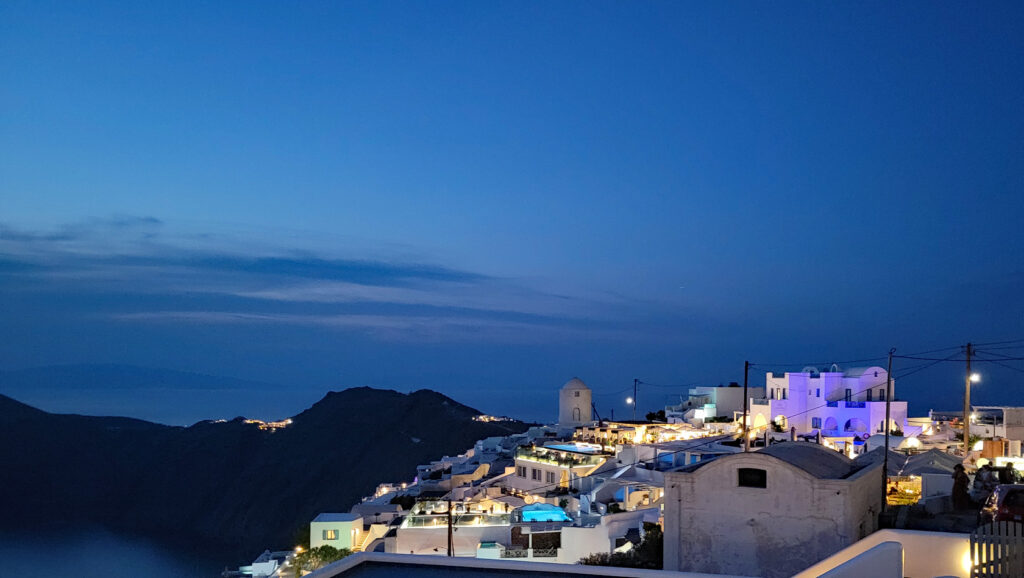
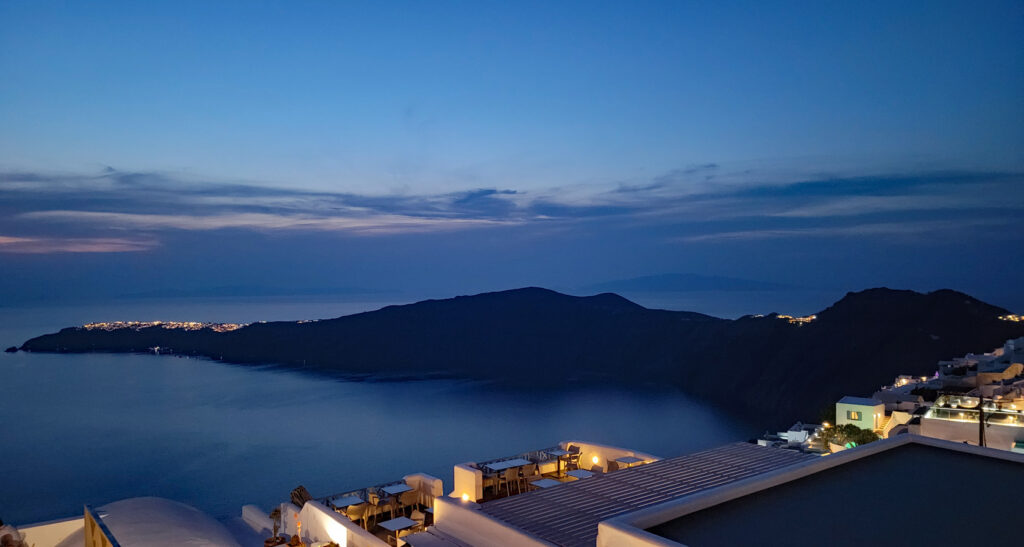
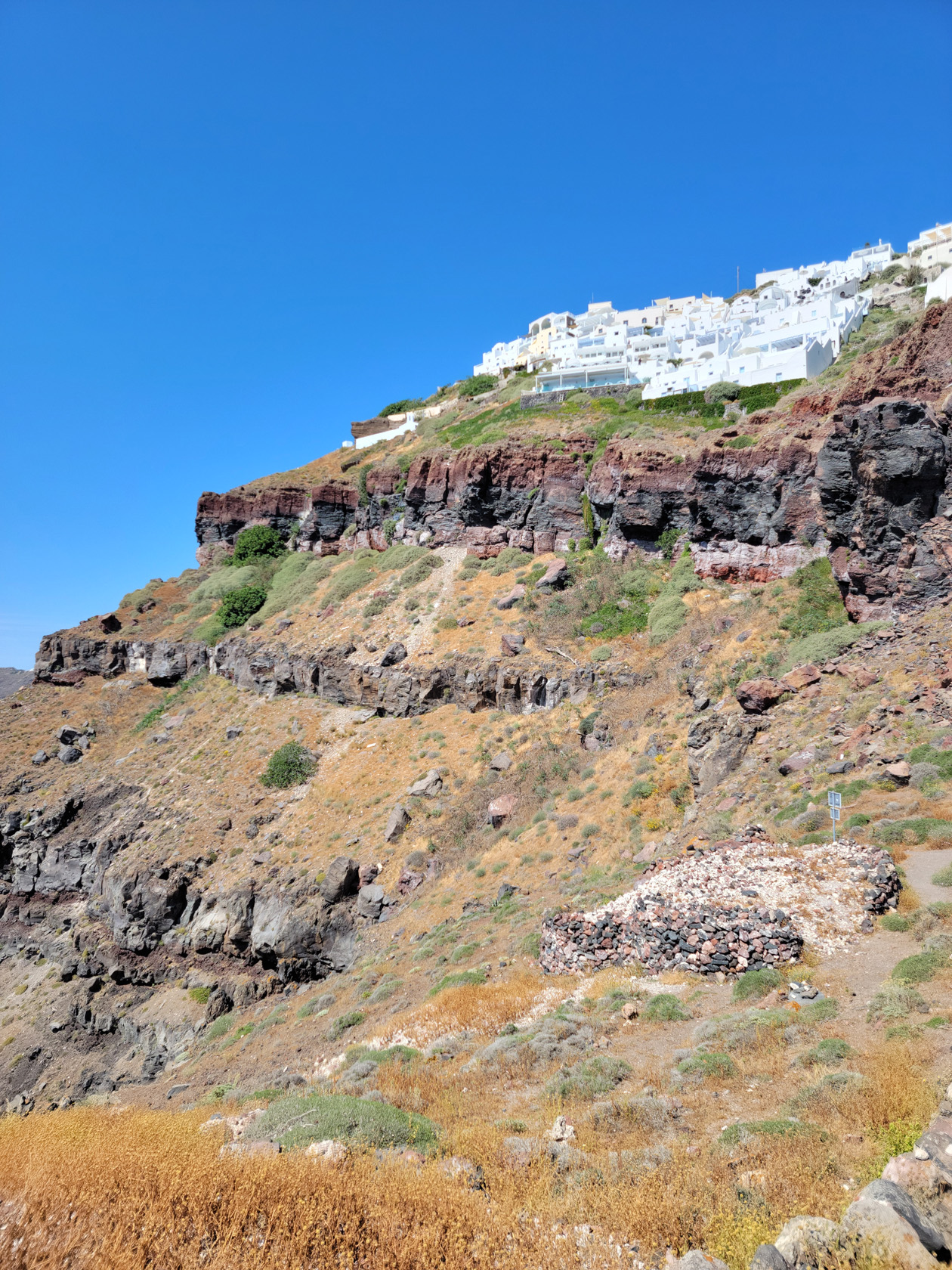
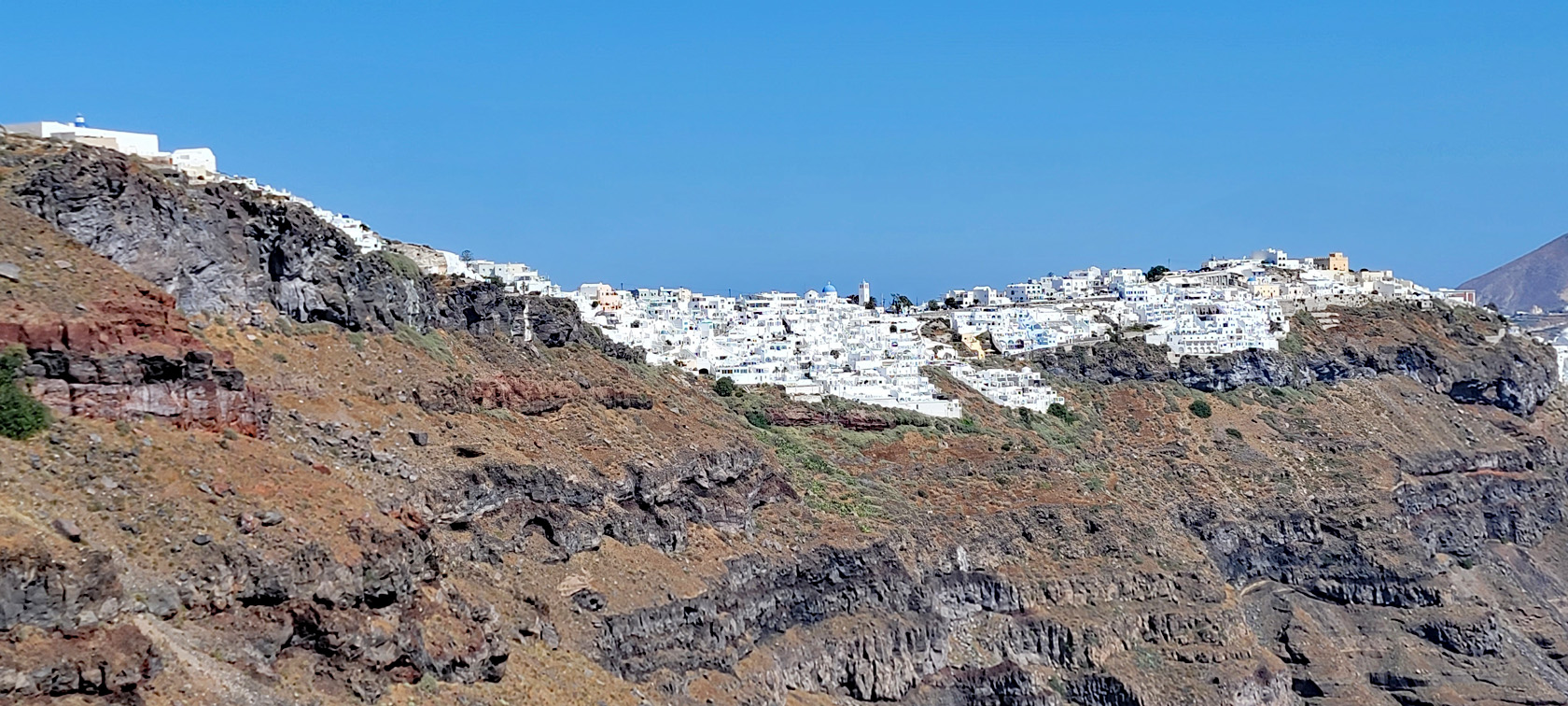
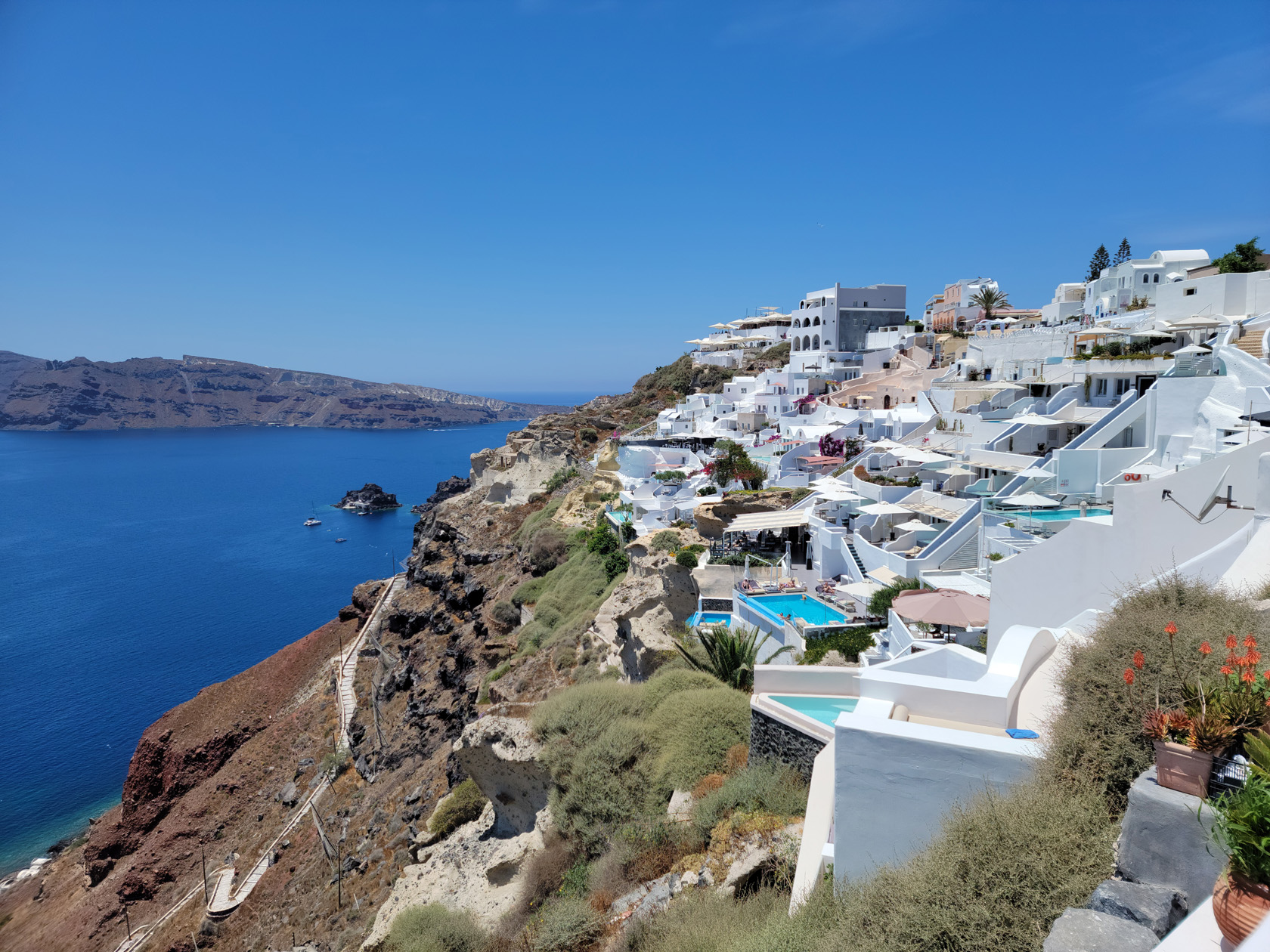
At the highest point on the largest piece of the caldera that still remains, sits Imerovigli. It is perched on and along the cliff, as though some flock of birds had built it. Yet historically most of the initial building were for wine making and production, later repurposed for the tourist industry.
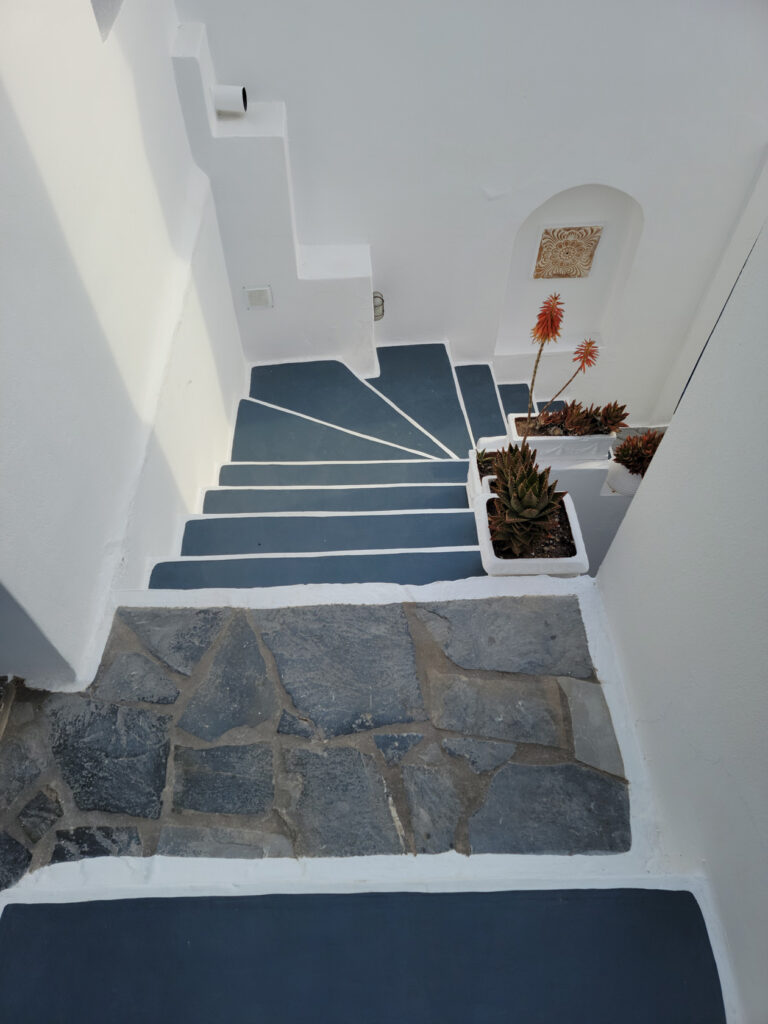
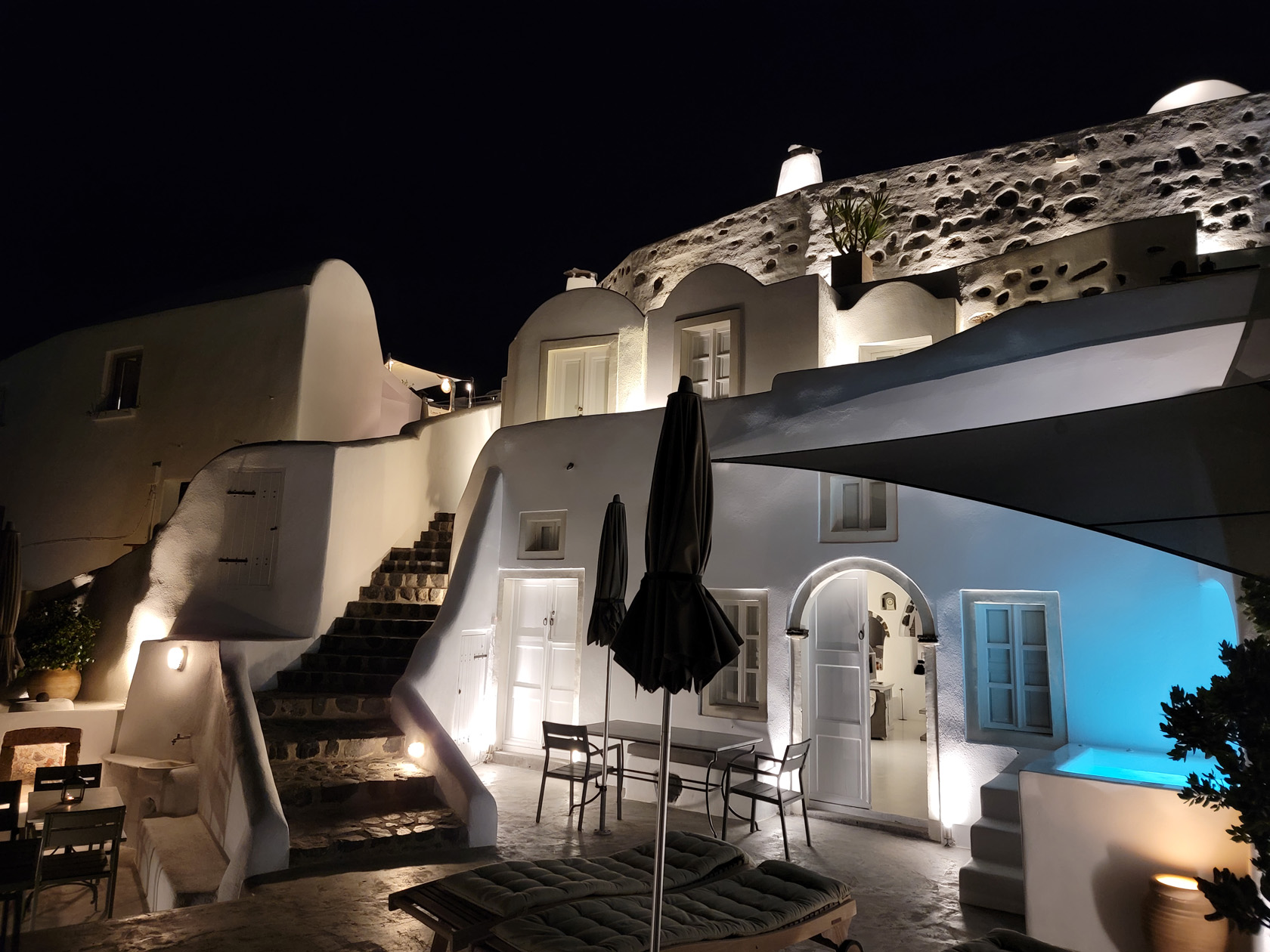
Imerovigli, Santorini – Heliotopos Hotel
It is actually amazing, how after such a catastrophe, that individuals would continue to build on such notorious ground. Though one can imagine, that after a few hundred years with the volcano’s silence, they probably could not resist planting in the rich volcanic soil.
The Heliotopos Hotel
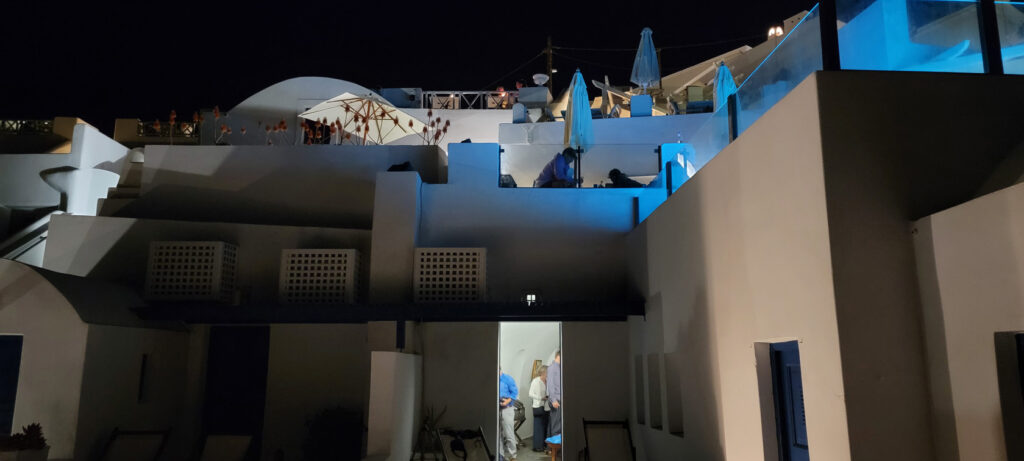
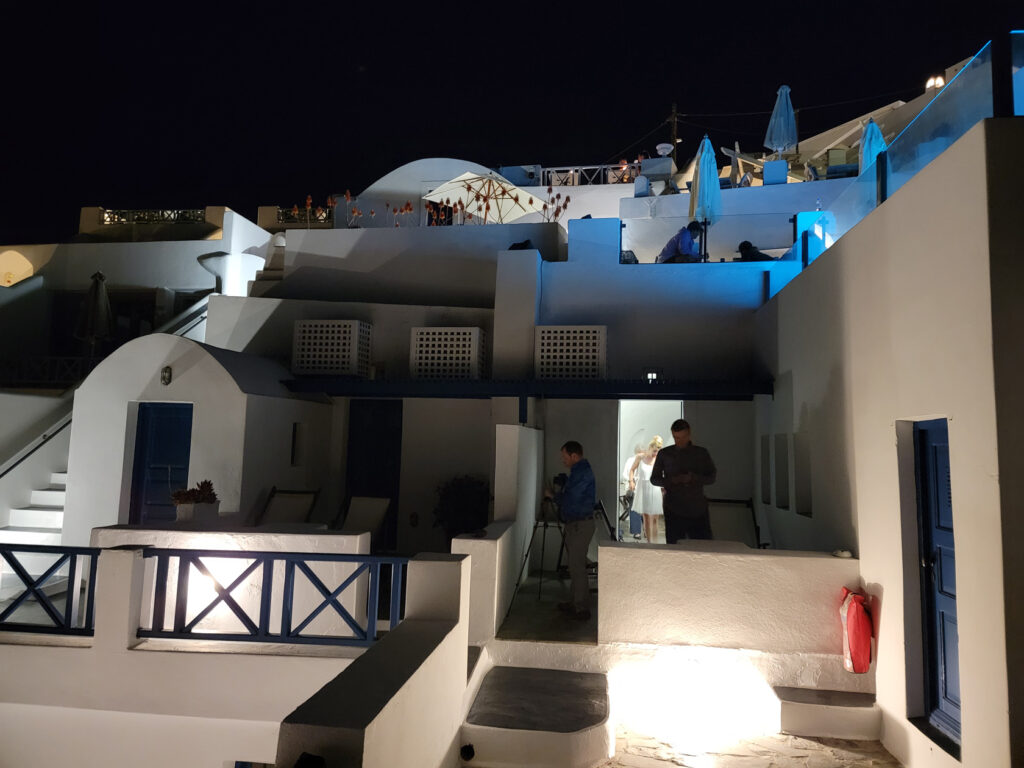
We stayed at the Heliotopos Hotel in Imerovigli, which is strategically located on the footpath to Thira, for those wishing that early morning walk, or just access to the island path that actually goes from Thira all the way to Oia.
Imerovigli, Santorini – Heliotopos Hotel
Imerovigli, Santorini – Heliotopos Hotel
Imerovigli, Santorini – Heliotopos Hotel
Imerovigli, Santorini – Heliotopos Hotel
Imerovigli, Santorini – Heliotopos Hotel
Imerovigli, Santorini – Heliotopos Hotel
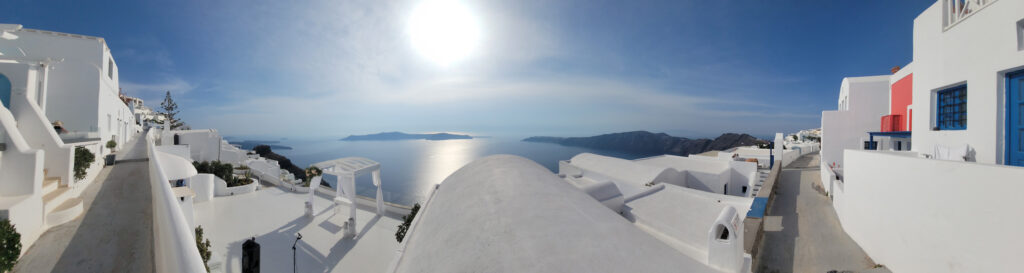
Imerovigli, Santorini – Heliotopos Hotel – Panorama
Imerovigli, Santorini – Heliotopos Hotel
Imerovigli, Santorini – Heliotopos Hotel
Imerovigli, Santorini – Heliotopos Hotel – Caldera Wall
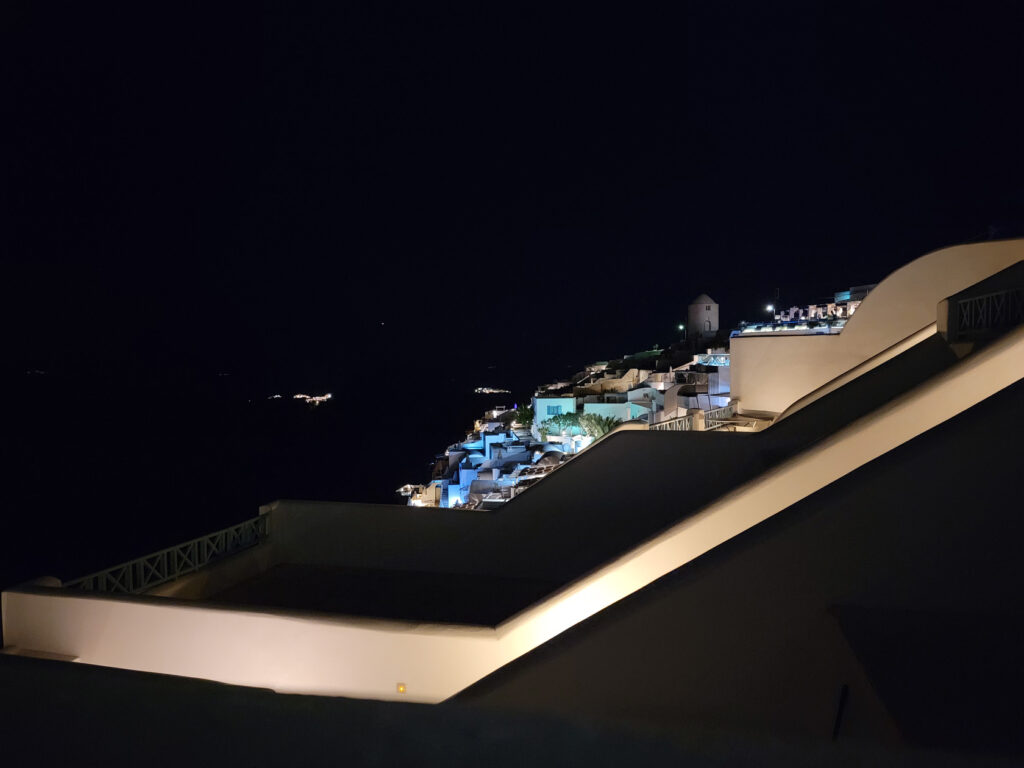
Imerovigli, Santorini – Heliotopos Hotel – After Sunset
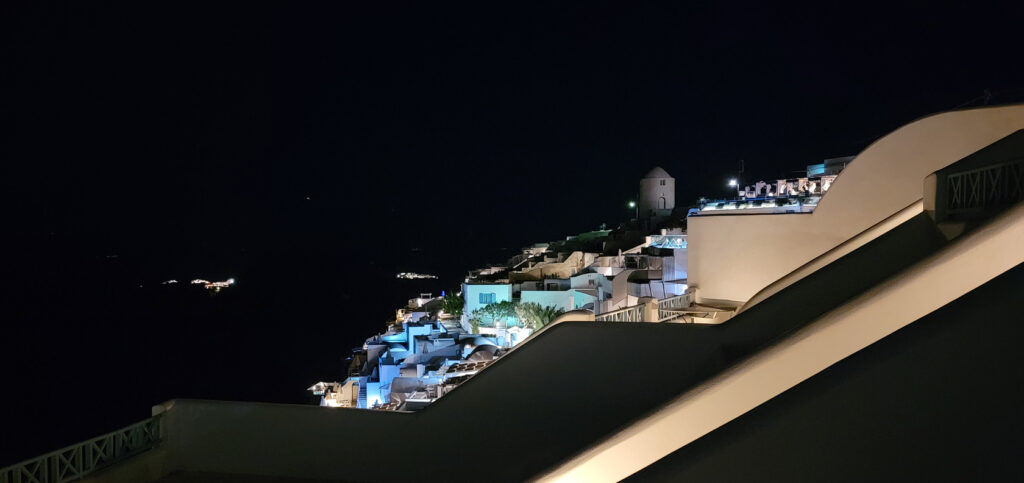
Imerovigli, Santorini – Heliotopos Hotel – At Night
Imerovigli, Santorini – Heliotopos Hotel – At Night
Imerovigli, Santorini – Heliotopos Hotel – At Night
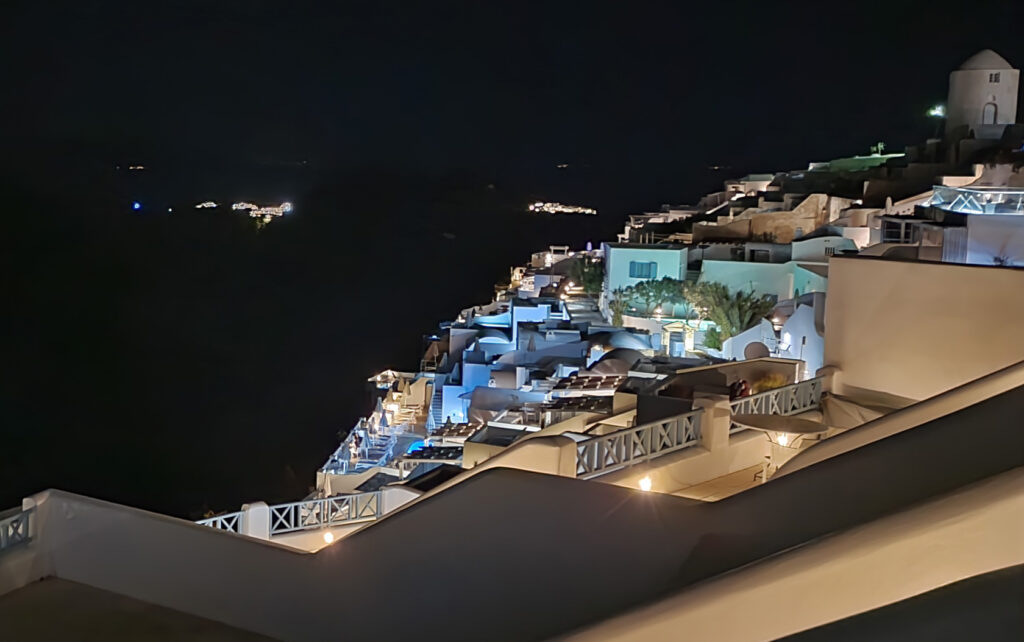
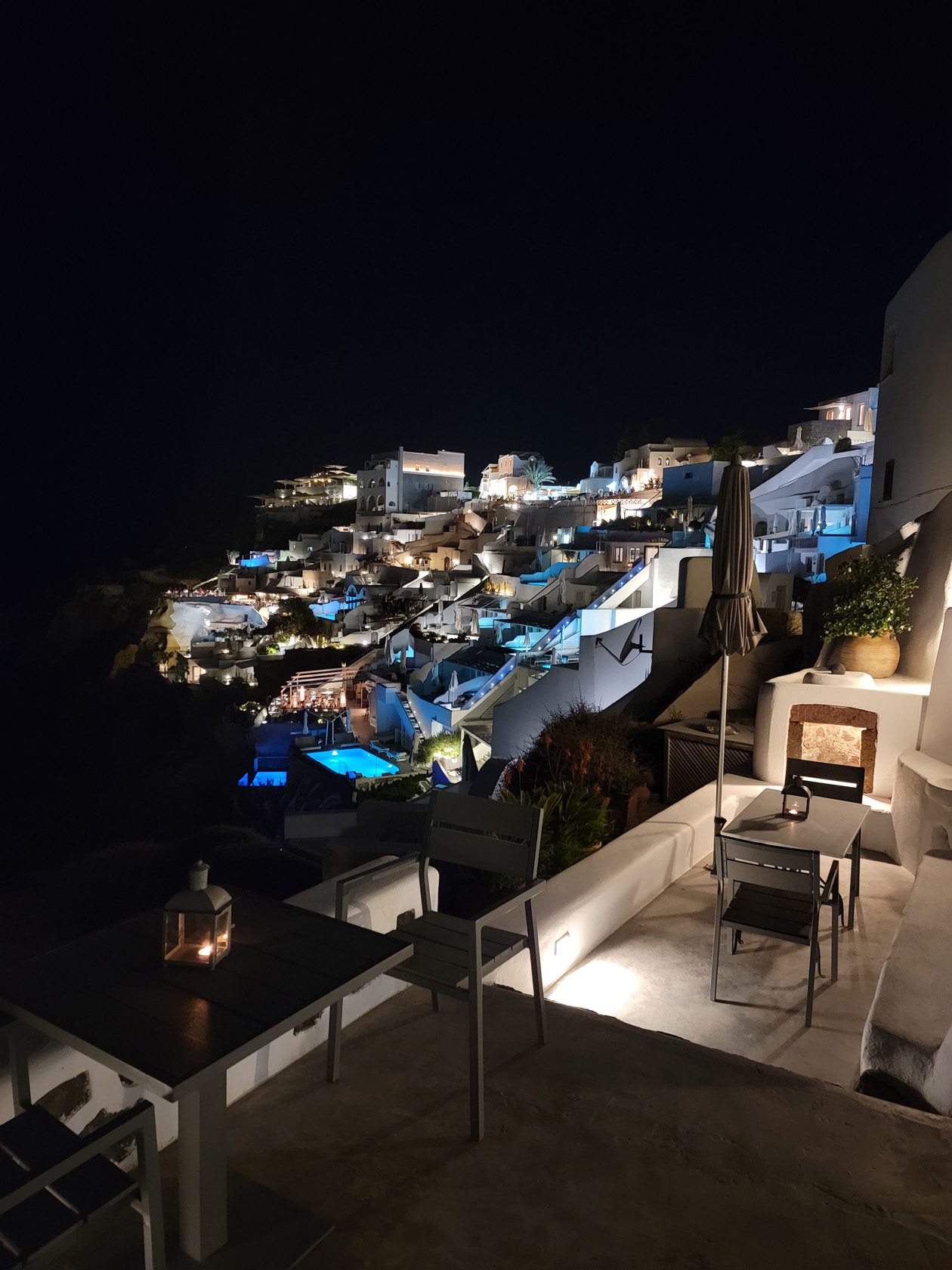
Imerovigli, Santorini – Heliotopos Hotel – Oia At Night
Imerovigli, Santorini – Heliotopos Hotel – At Night
Imerovigli, Santorini – Heliotopos Hotel – At Night
Imerovigli, Santorini – Heliotopos Hotel – At Night
Imerovigli, Santorini – Blue Domes and Churches
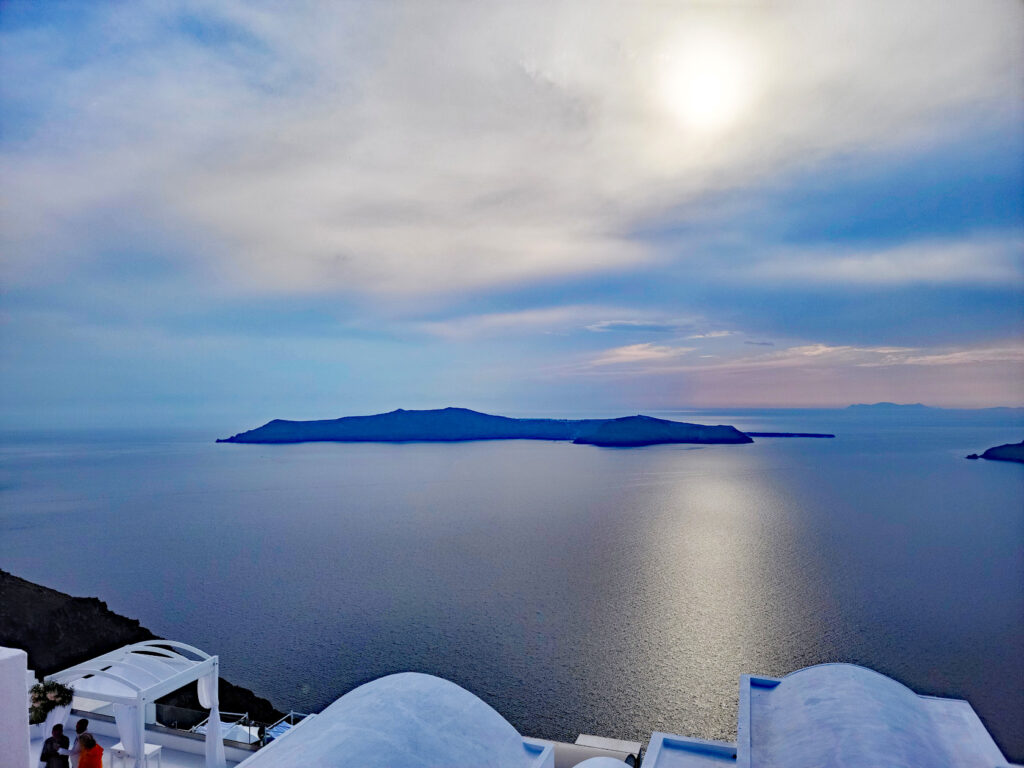
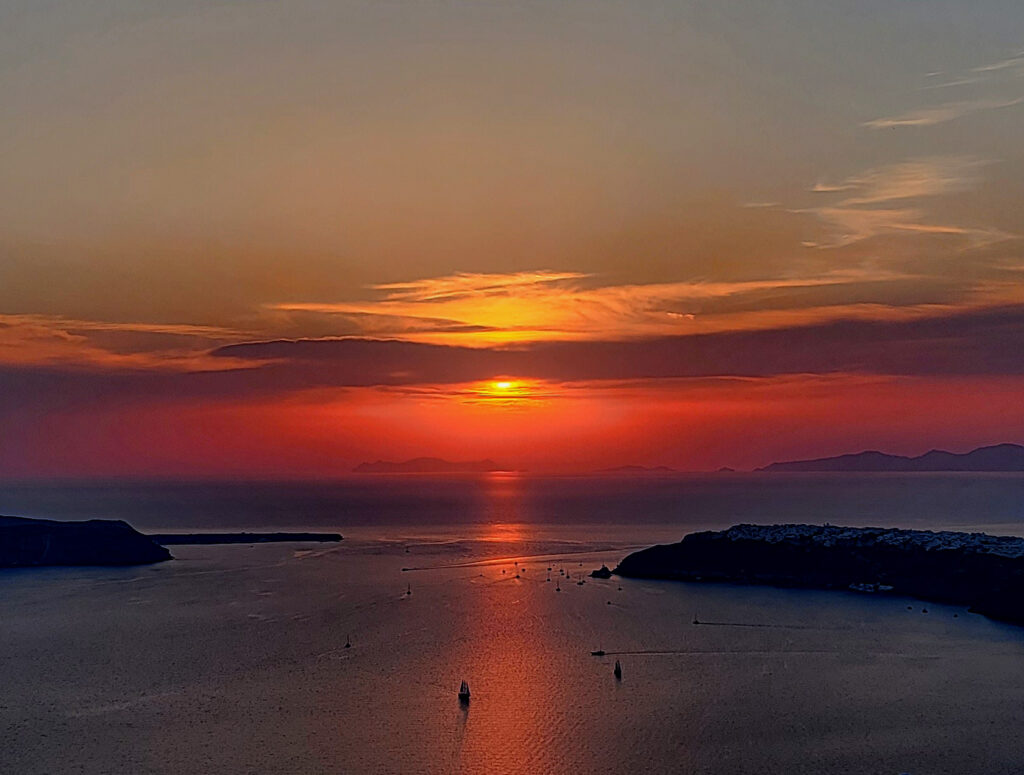
Imerovigli, Santorini – A Sunset
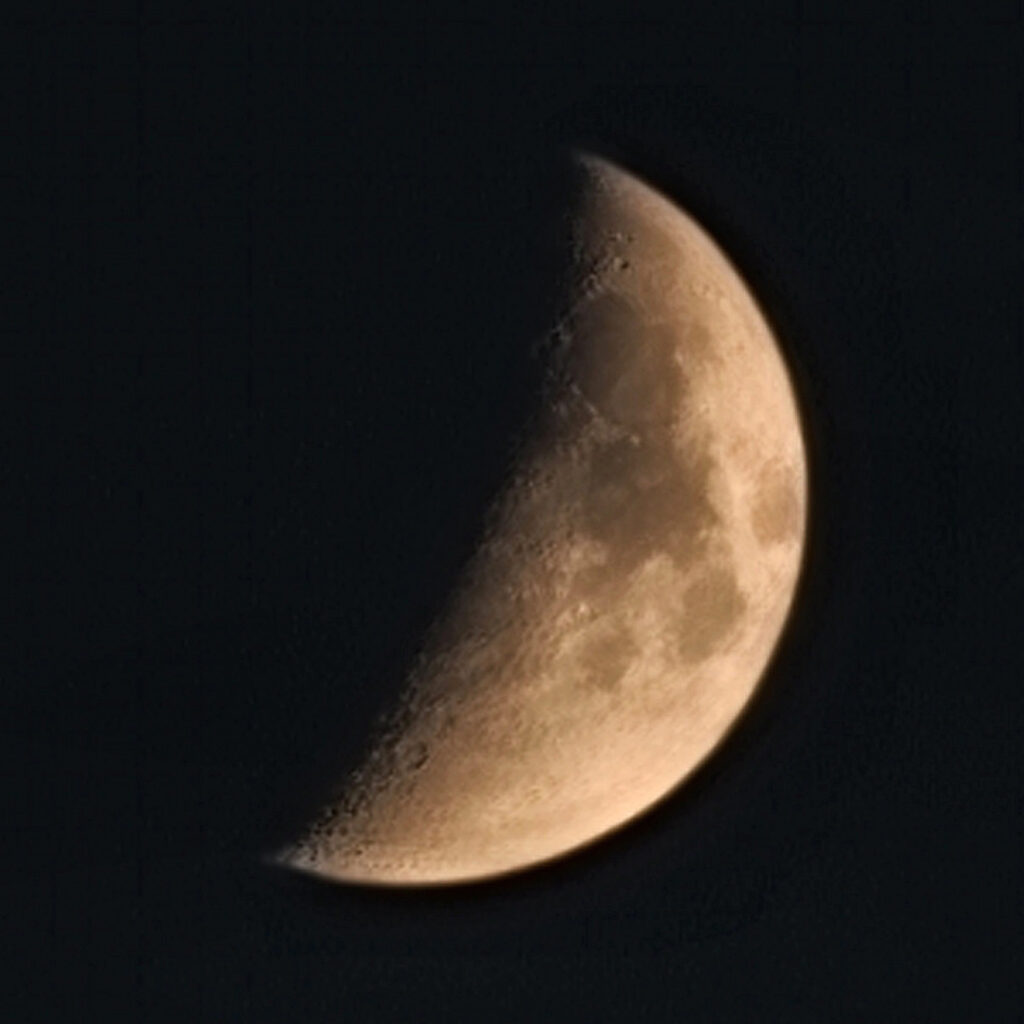
Imerovigli, Santorini – The Moon
Imerovigli, Santorini – At Night
Imerovigli, Santorini – At Night
Skaros Rock
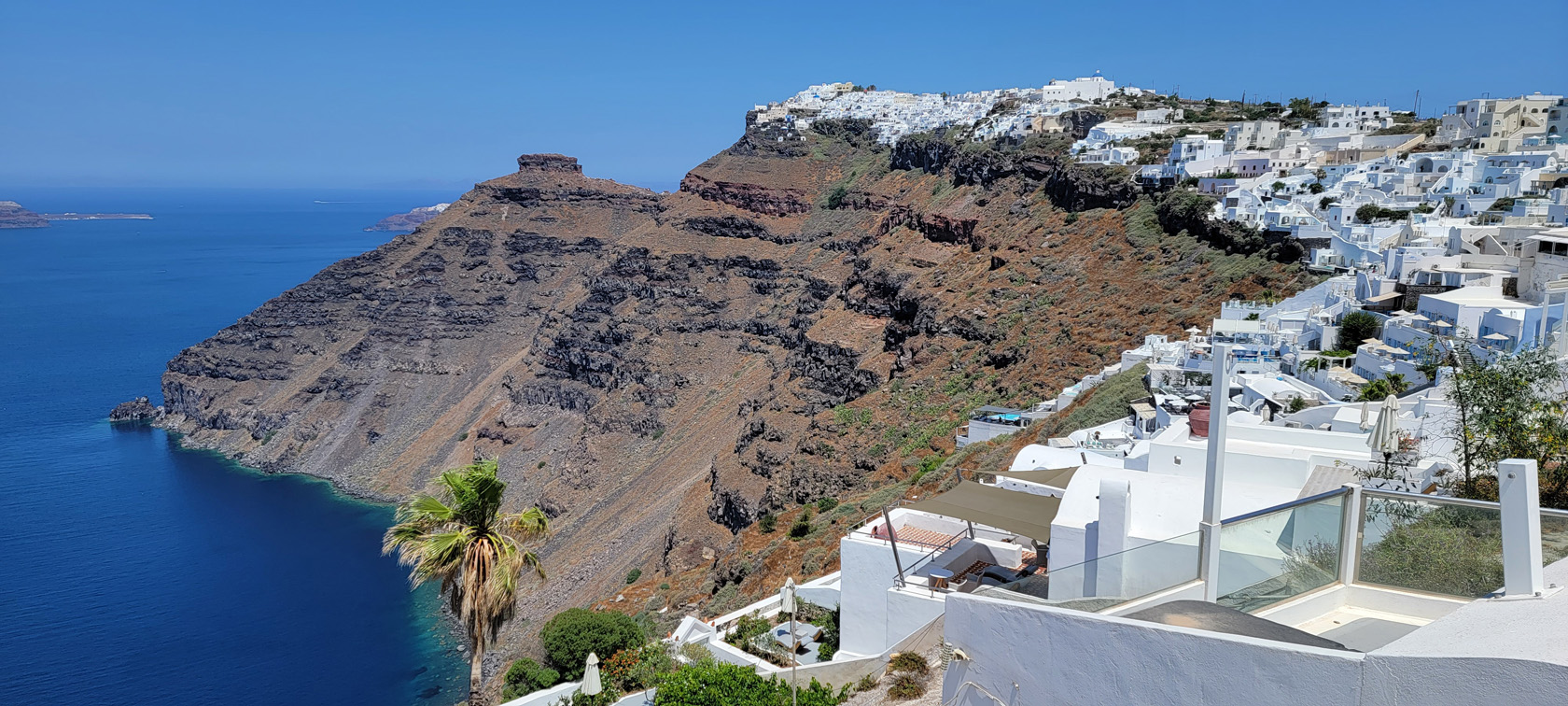
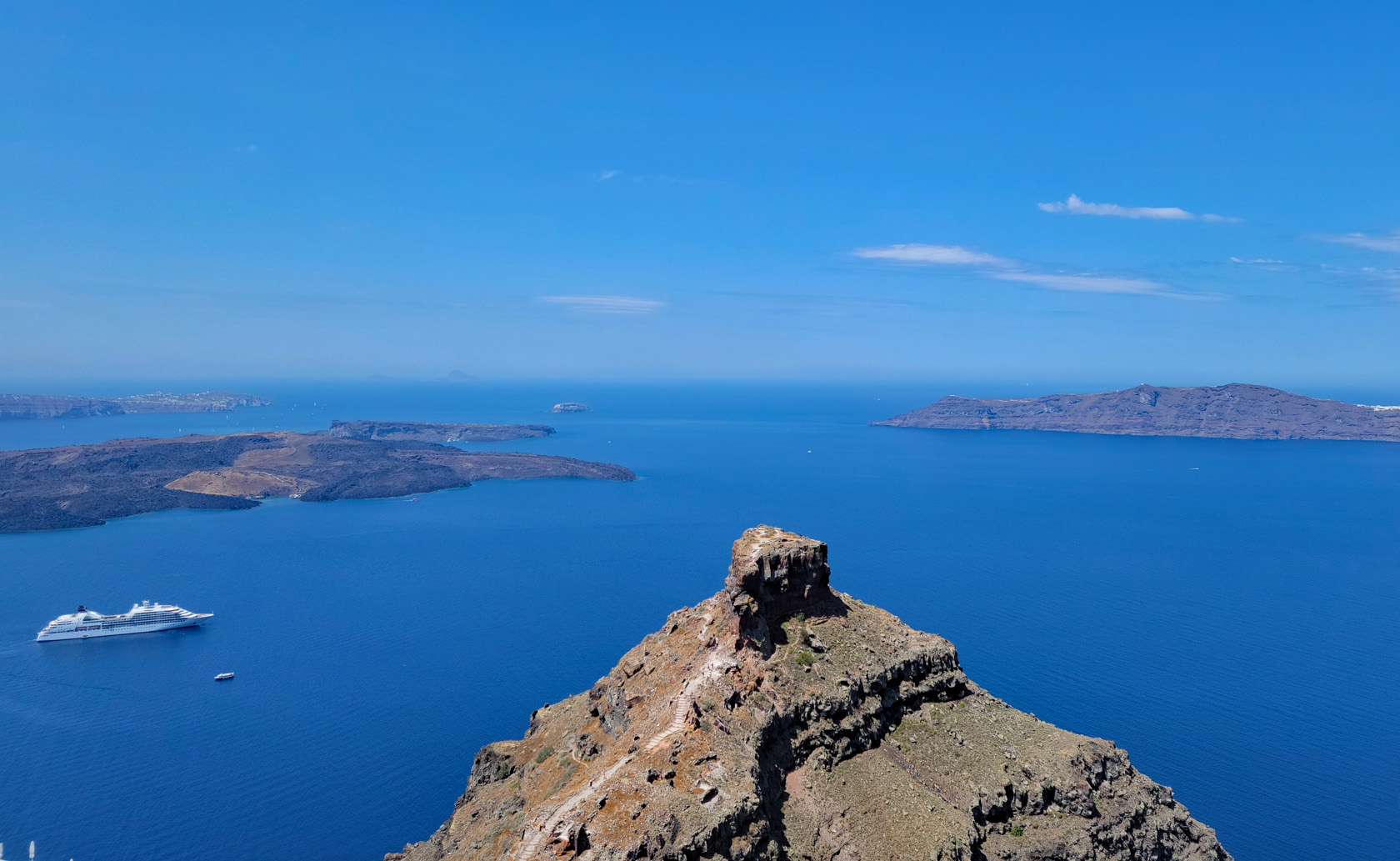
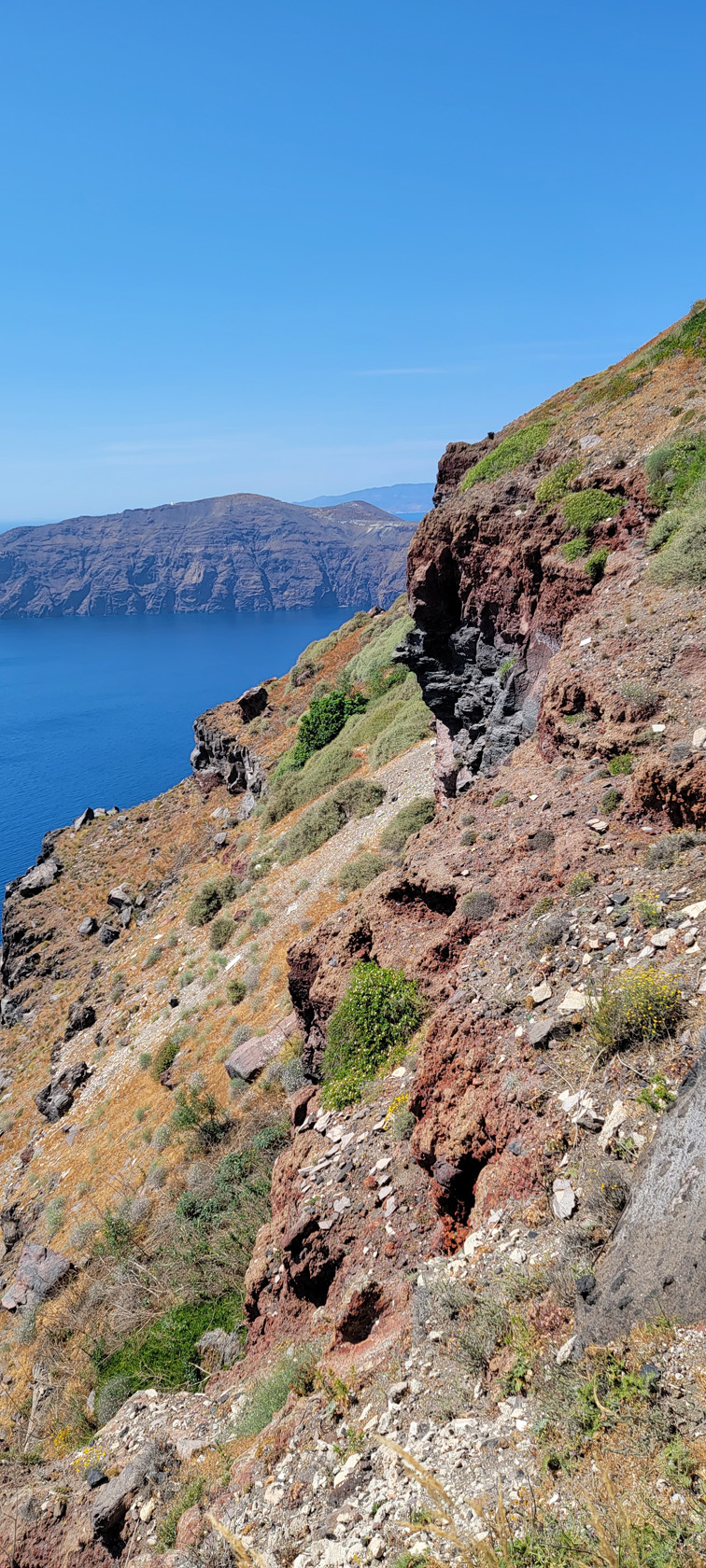
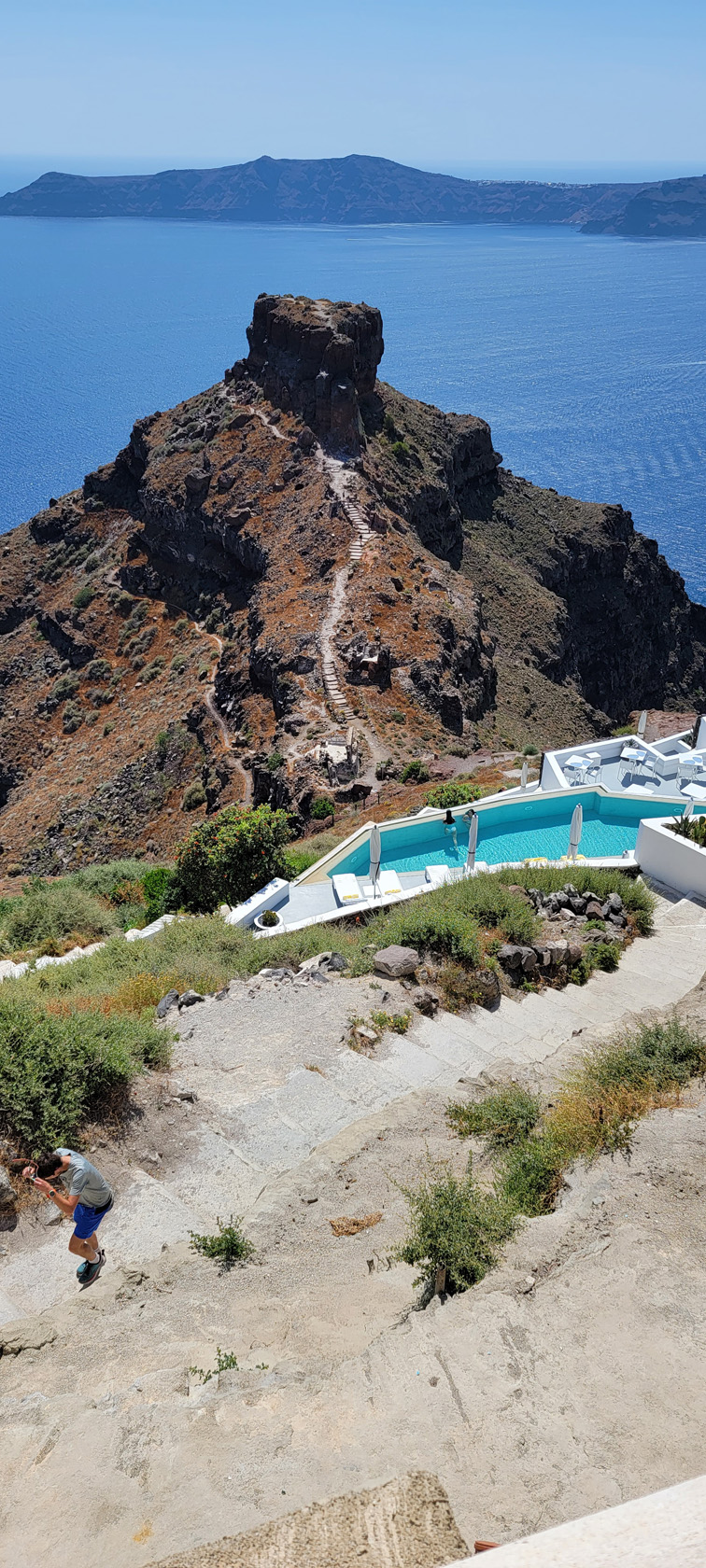
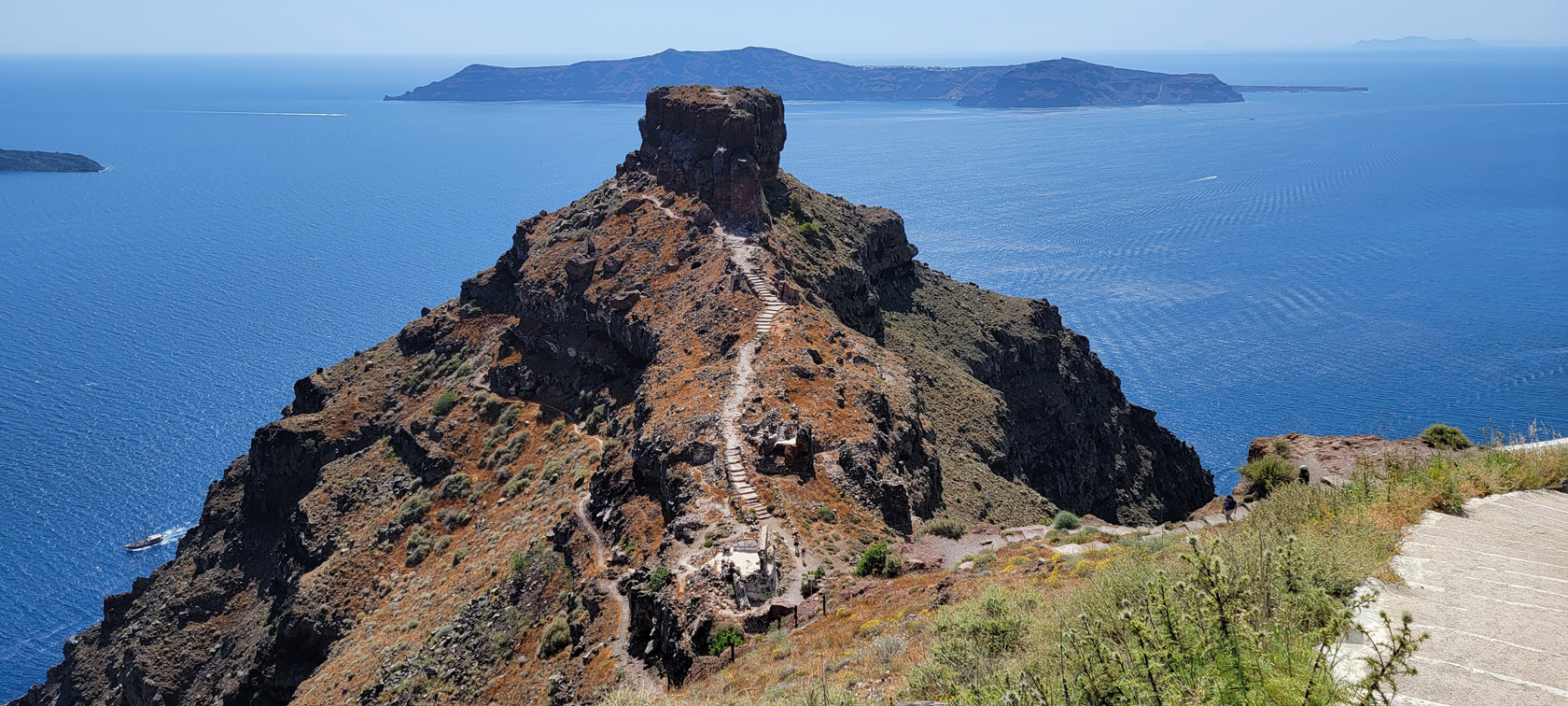
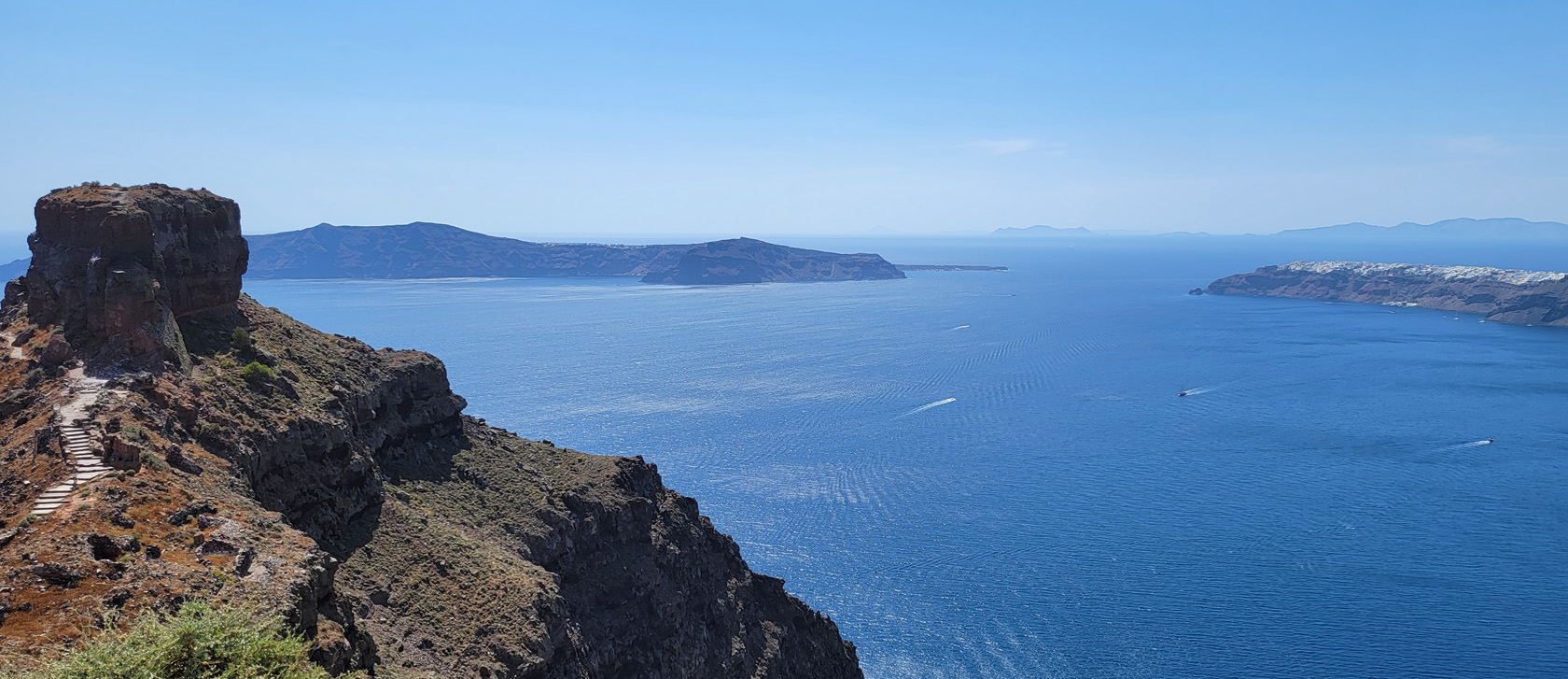
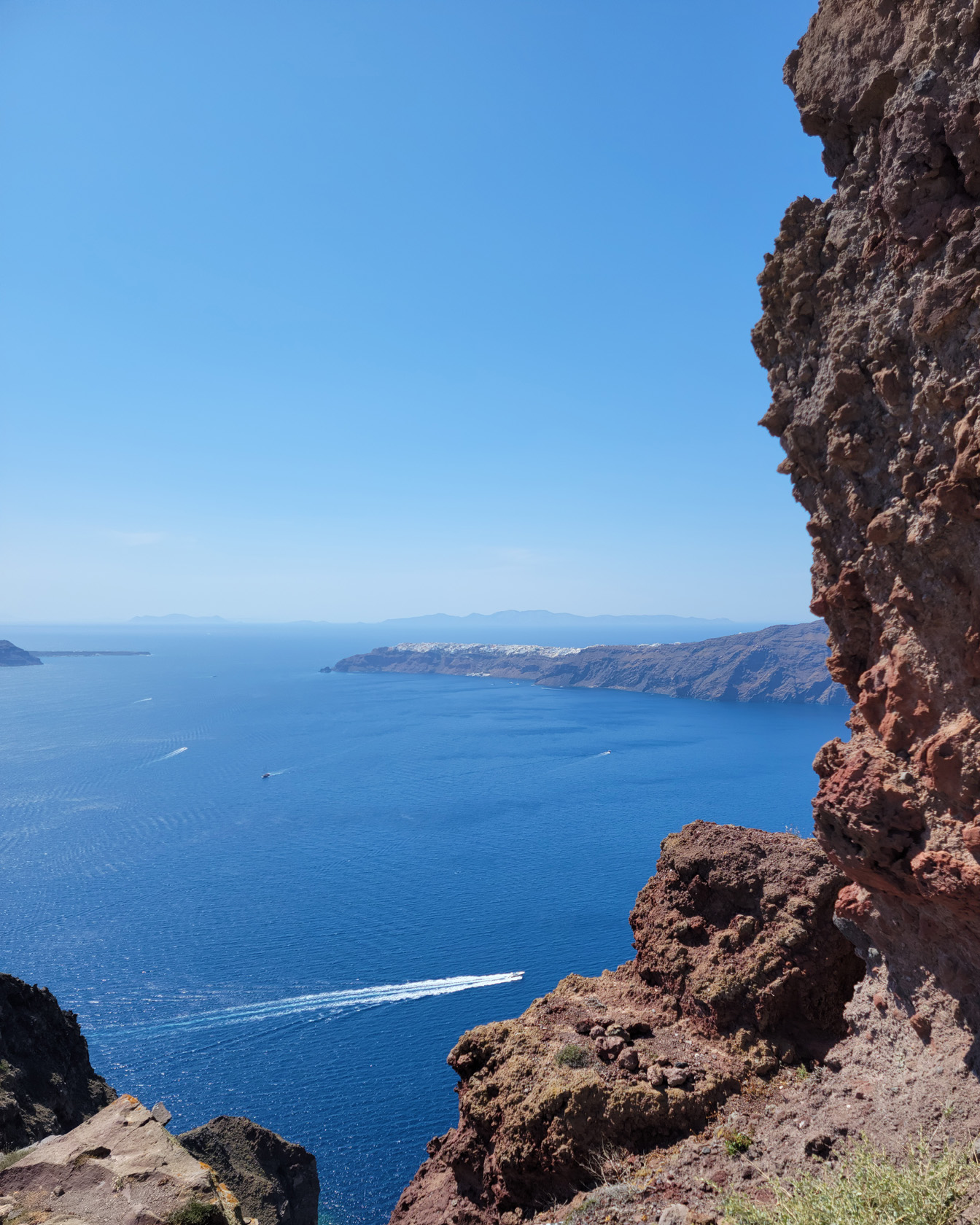
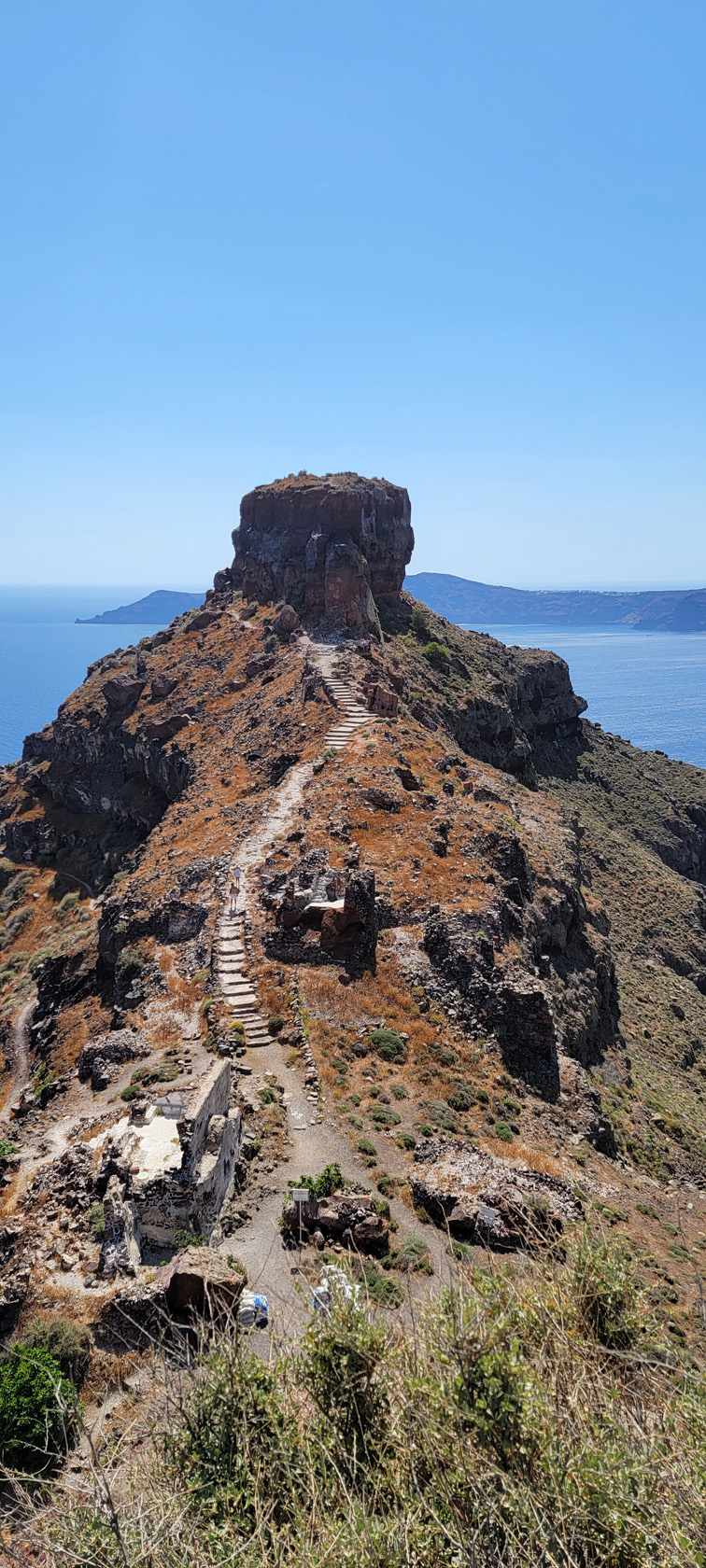
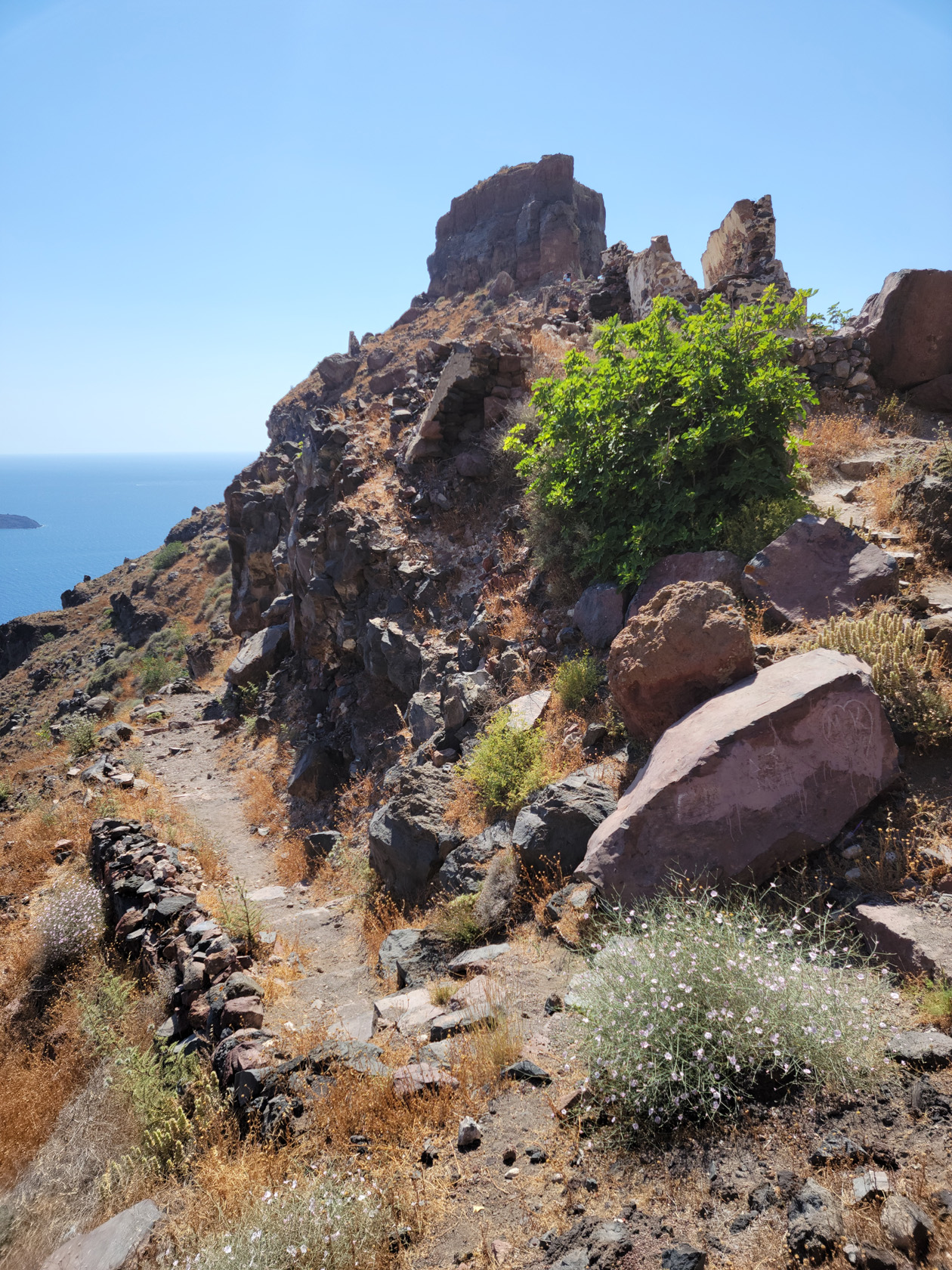
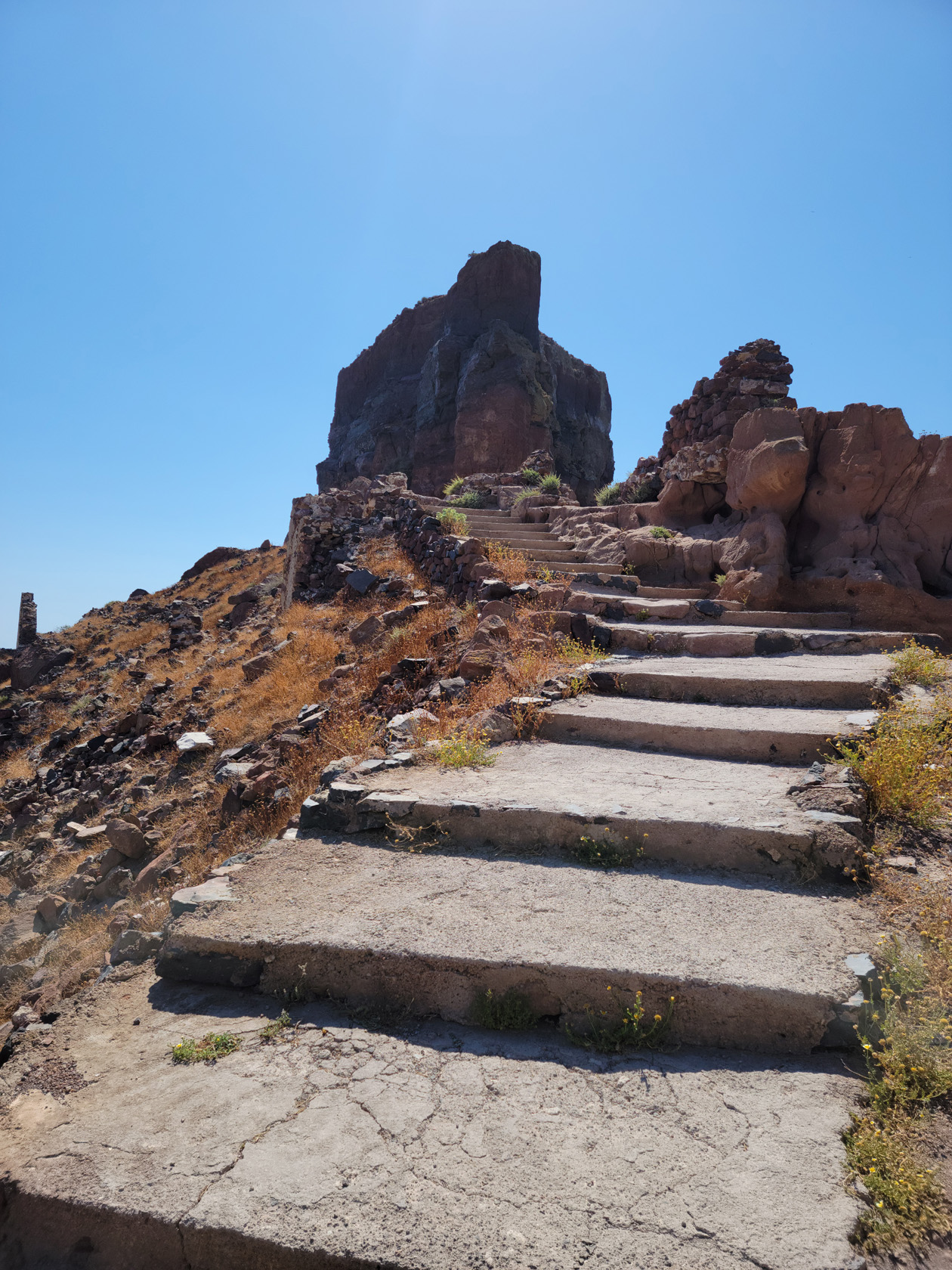
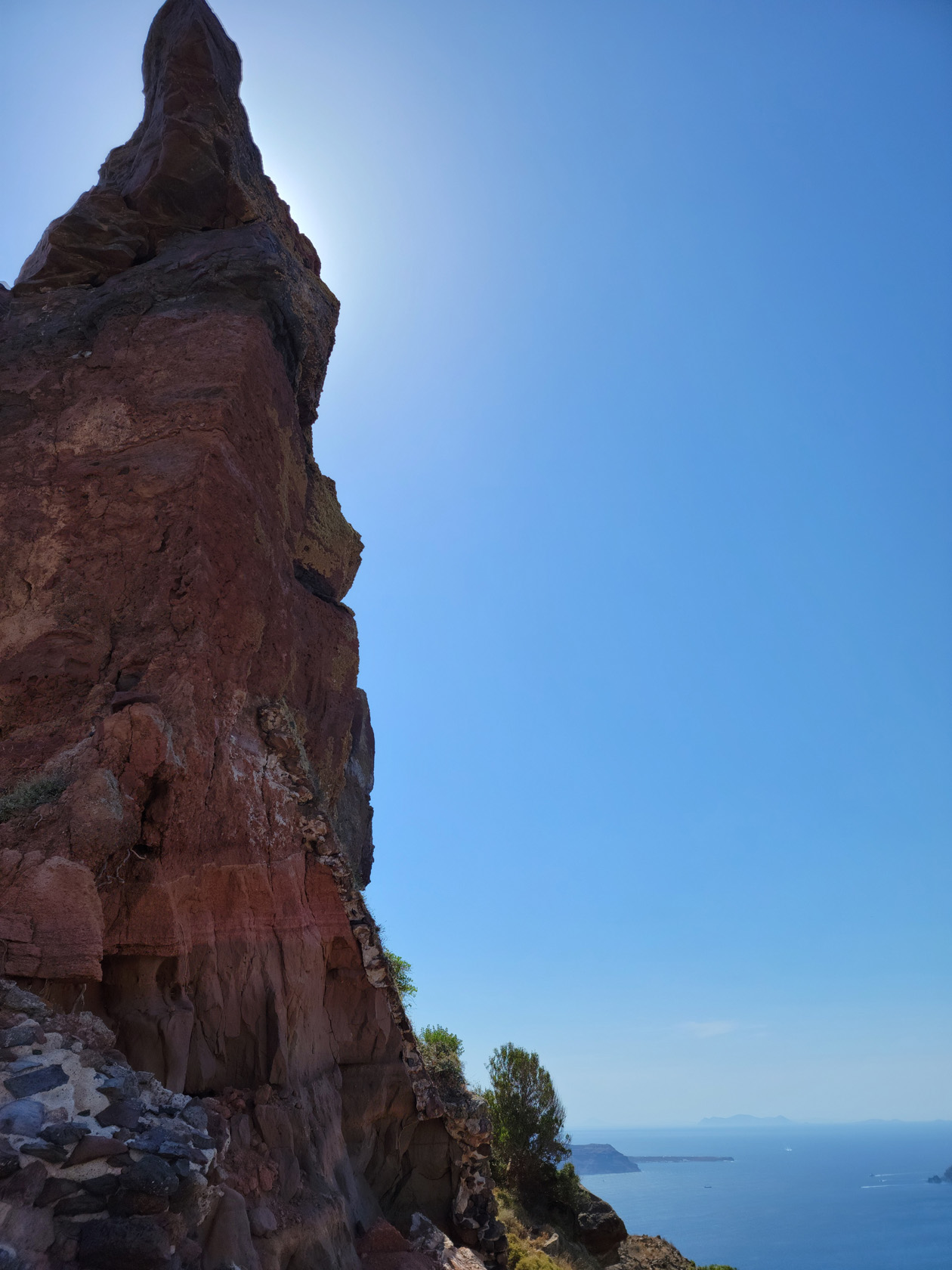
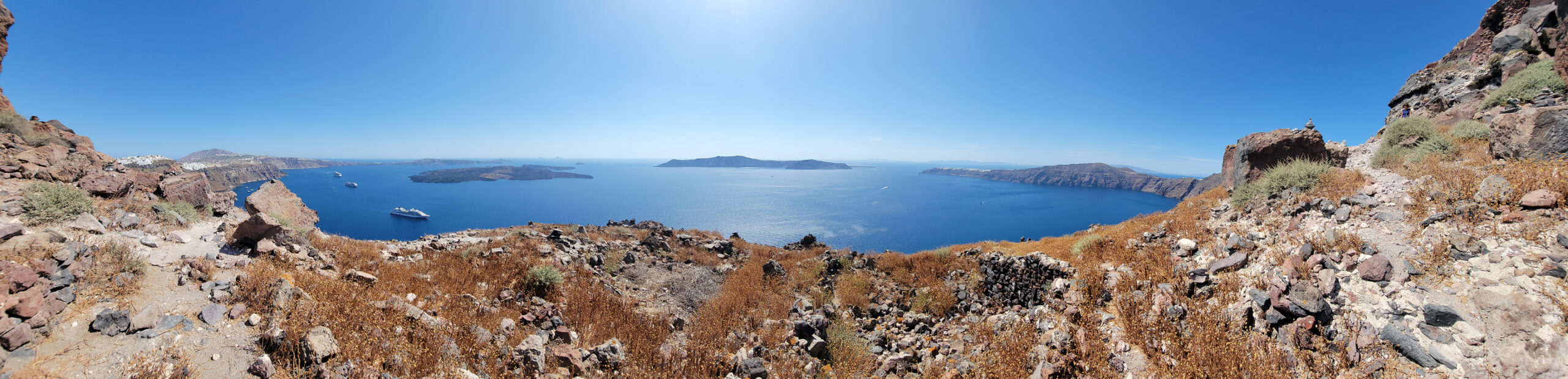
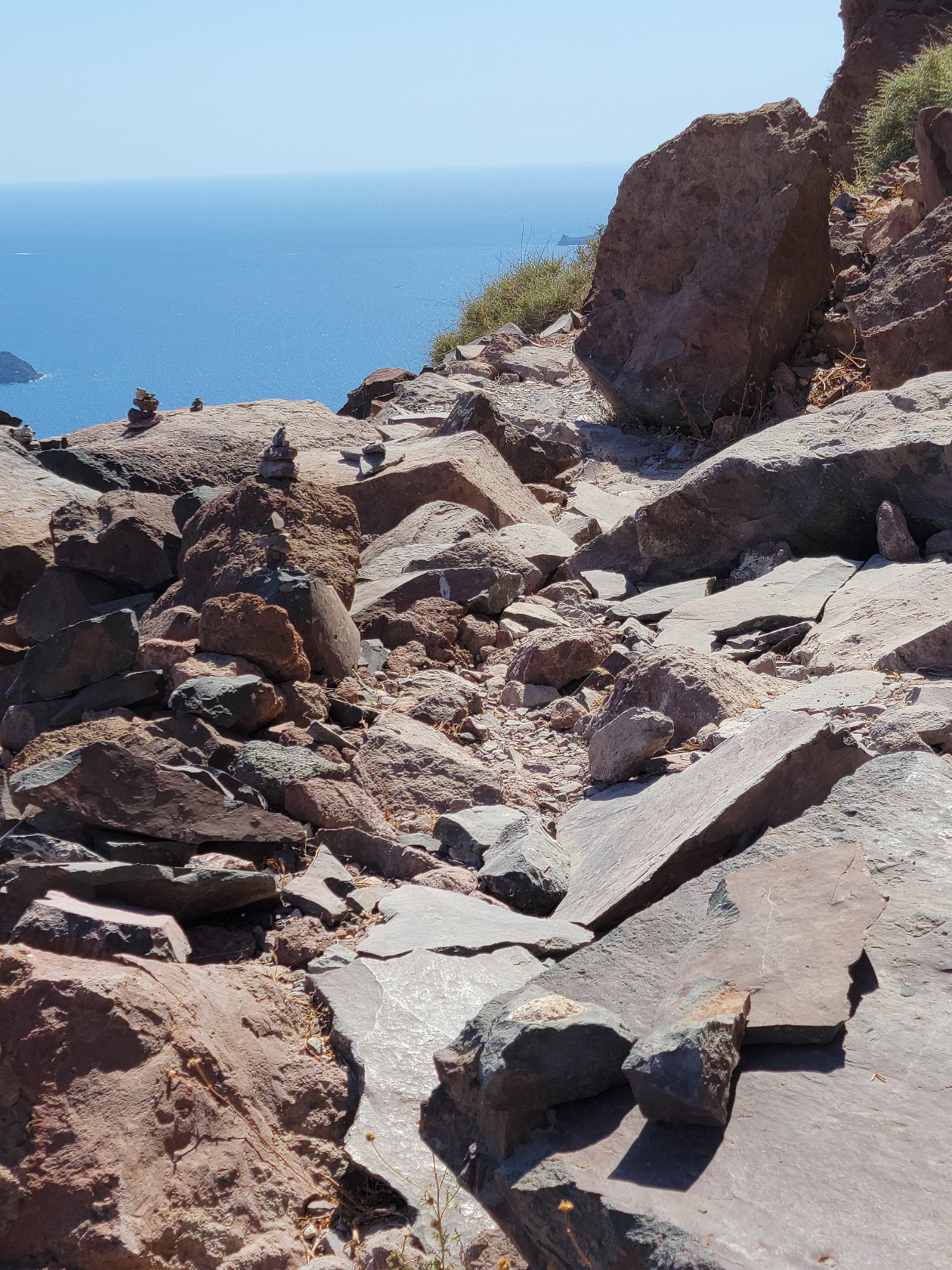
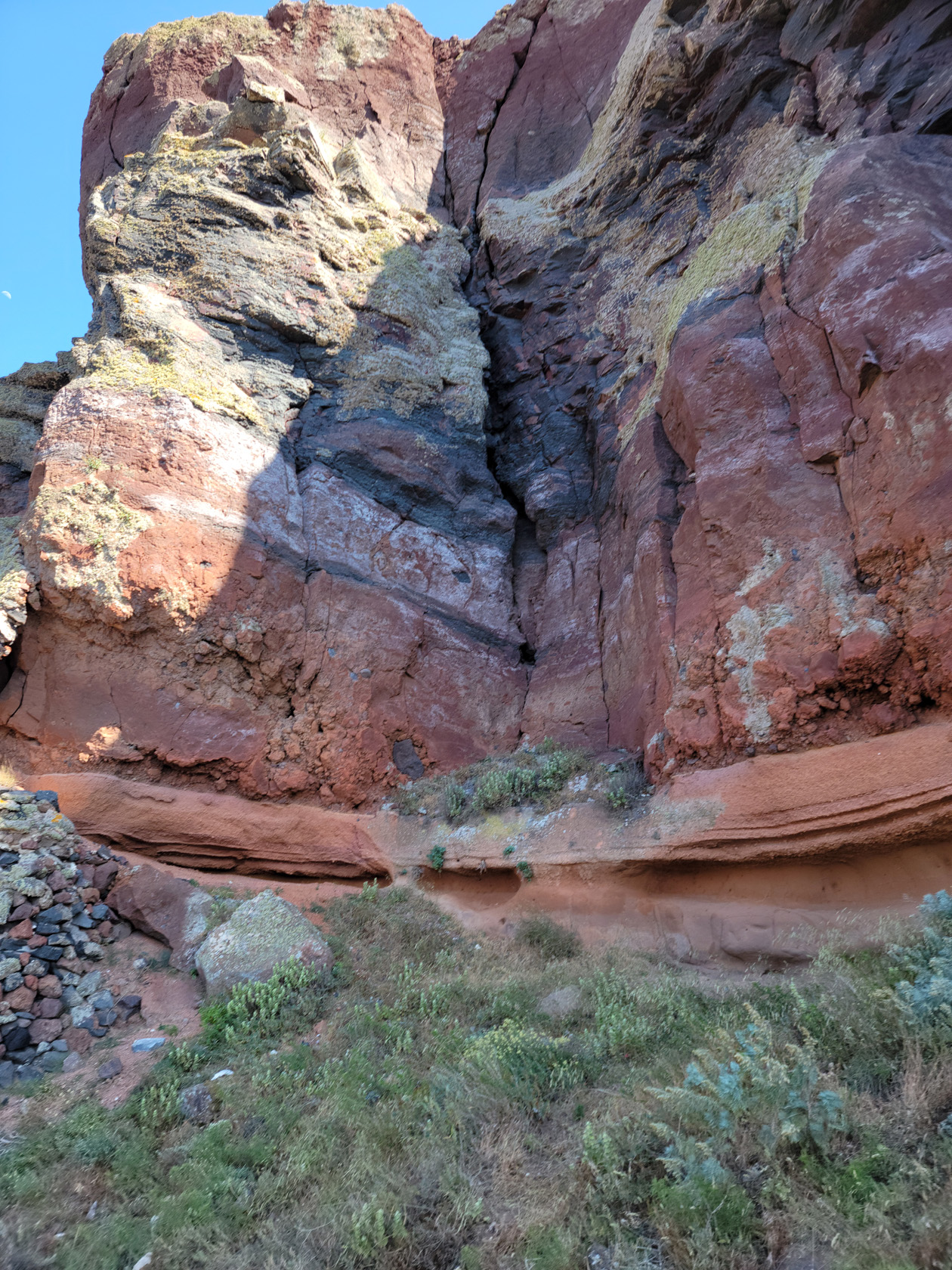
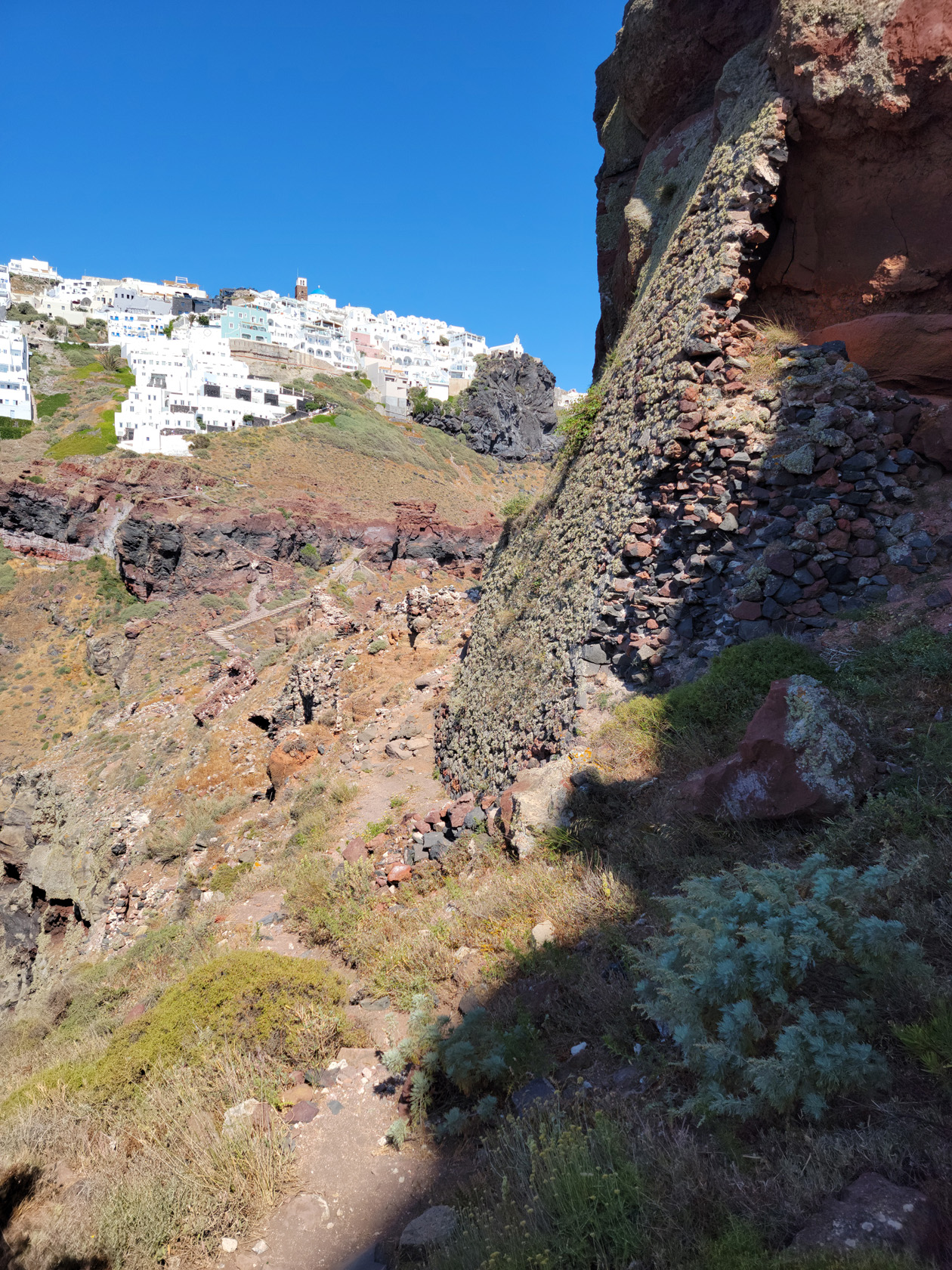
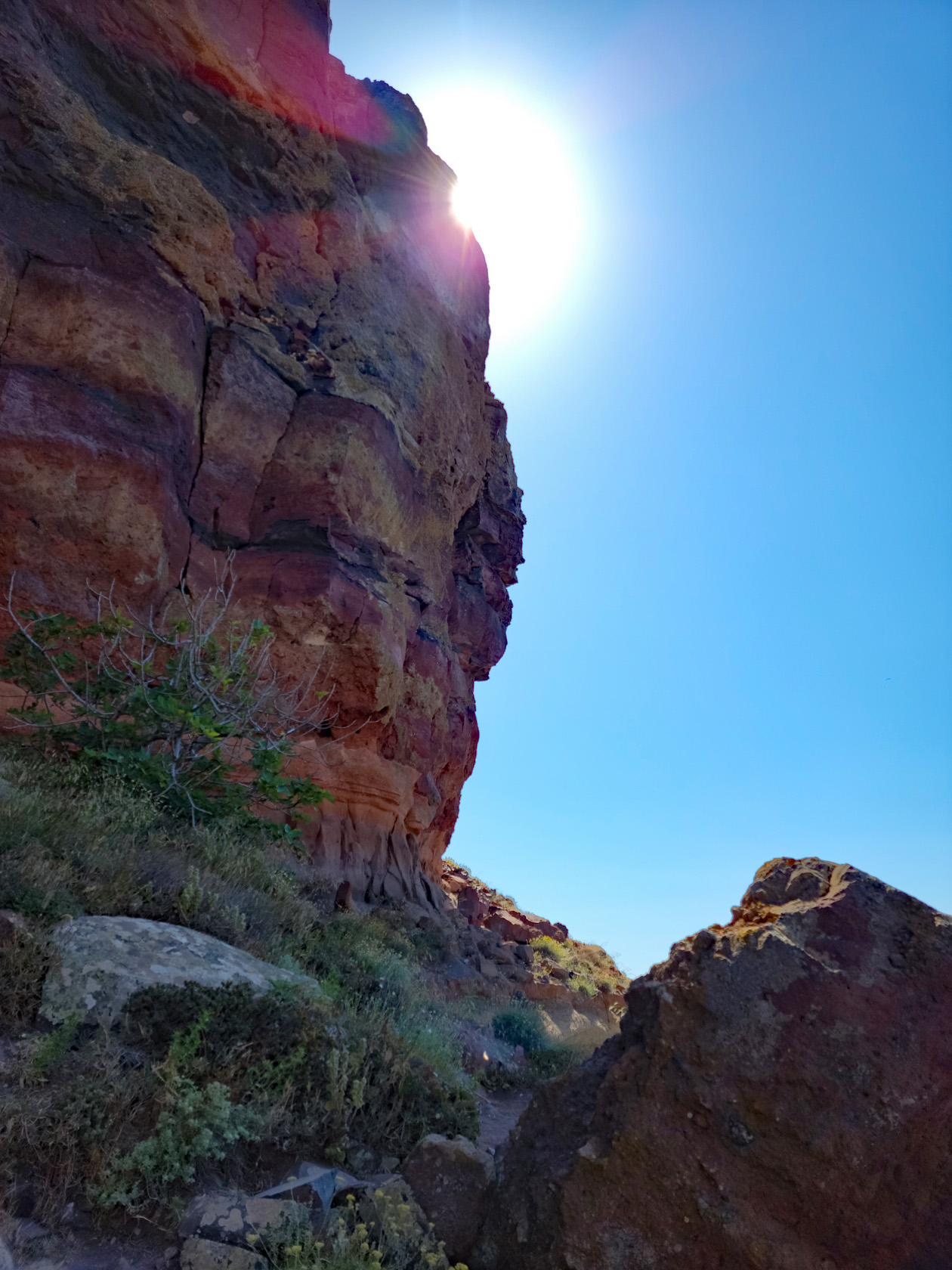
A short twenty minute hike from hotel was Skaros Rock. A broken piece of caldera that looks more like a mesa than anything belonging to a volcano.
Thira, Santorini – Skaros Rock
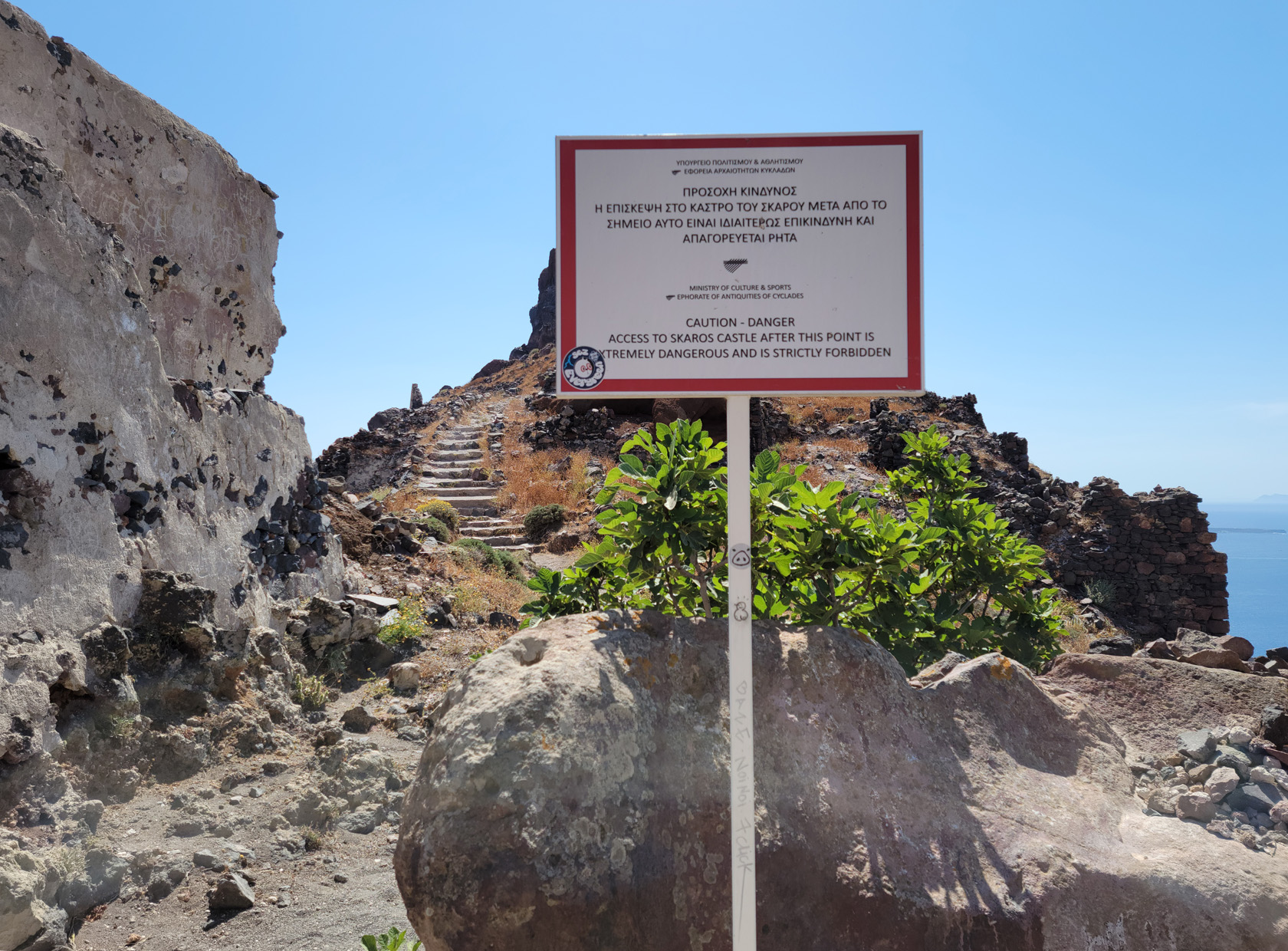
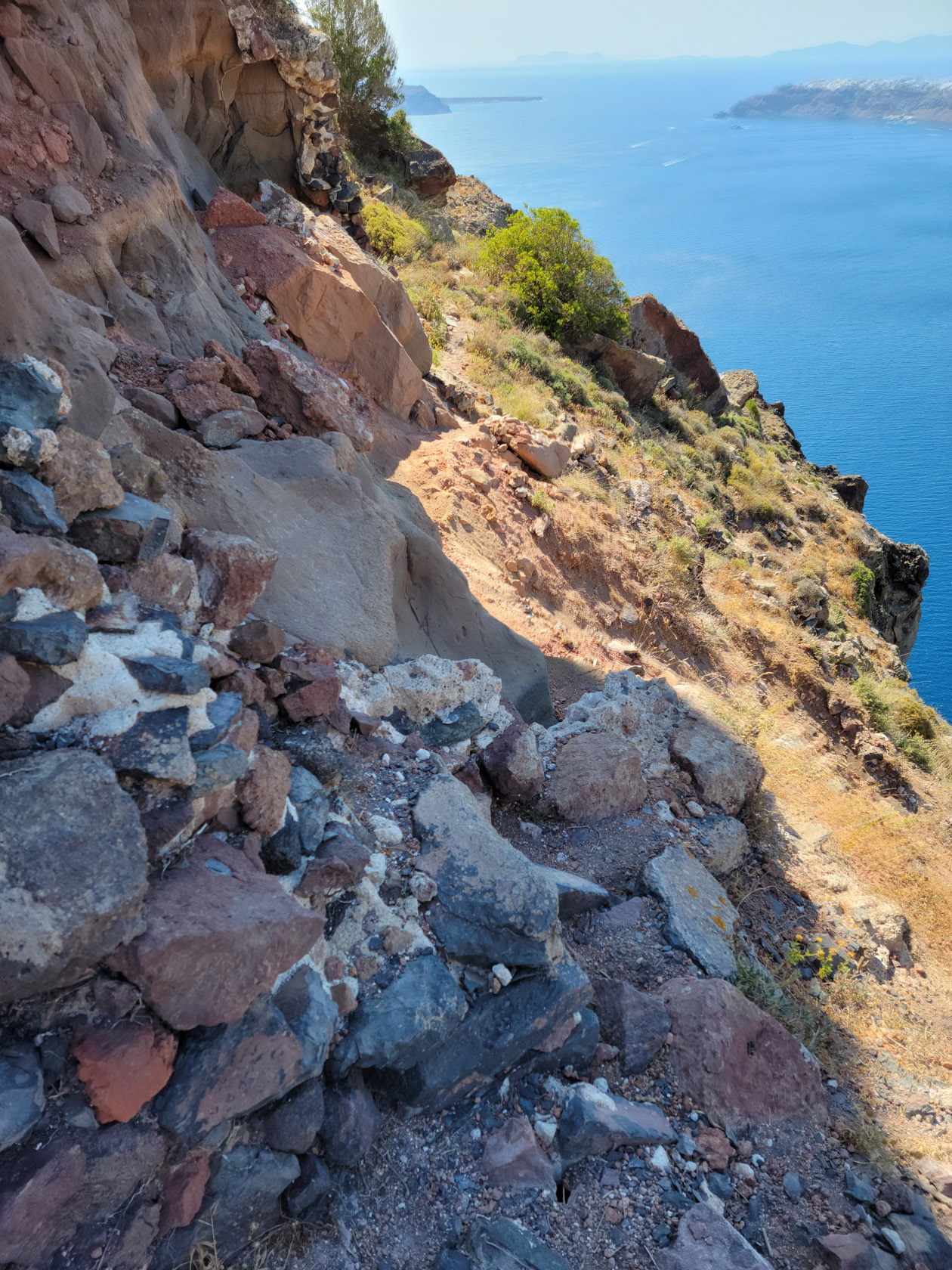
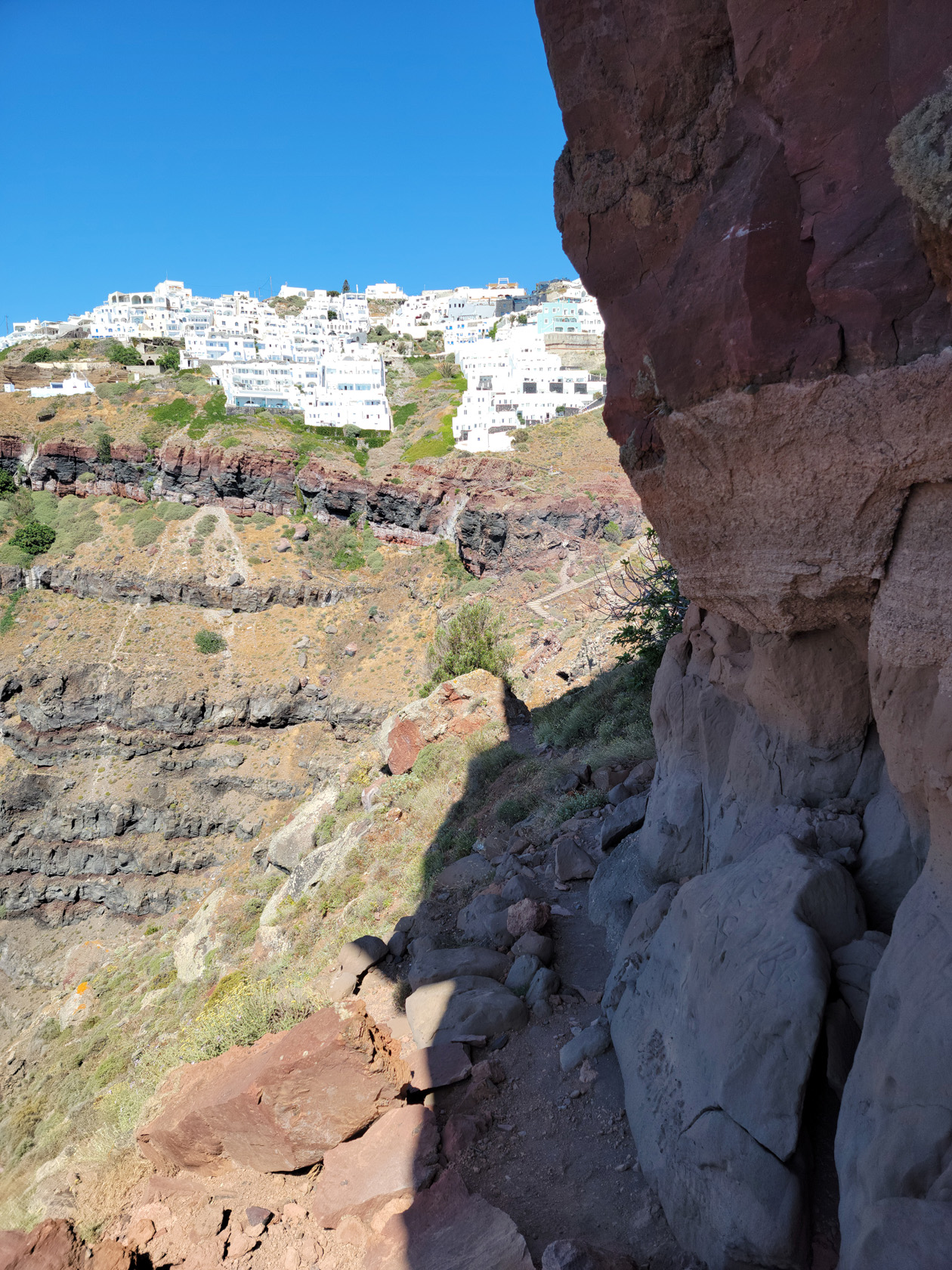
Though thoroughly signed as dangerous, there is nothing preventing anyone from hiking the path around the rocky projection. Read all the signs carefully and make your own decision.
Imerovigli, Santorini – Skaros Rock Hike – The Rock
Imerovigli, Santorini – Skaros Rock Hike
Imerovigli, Santorini – Skaros Rock Hike
Imerovigli, Santorini – Skaros Rock Hike
Imerovigli, Santorini – Skaros Rock Hike – 93 Steps down, walk, 75 more steps down, walk, 55 steps up
Imerovigli, Santorini – Skaros Rock Hike
Imerovigli, Santorini – Skaros Rock Hike – Oia
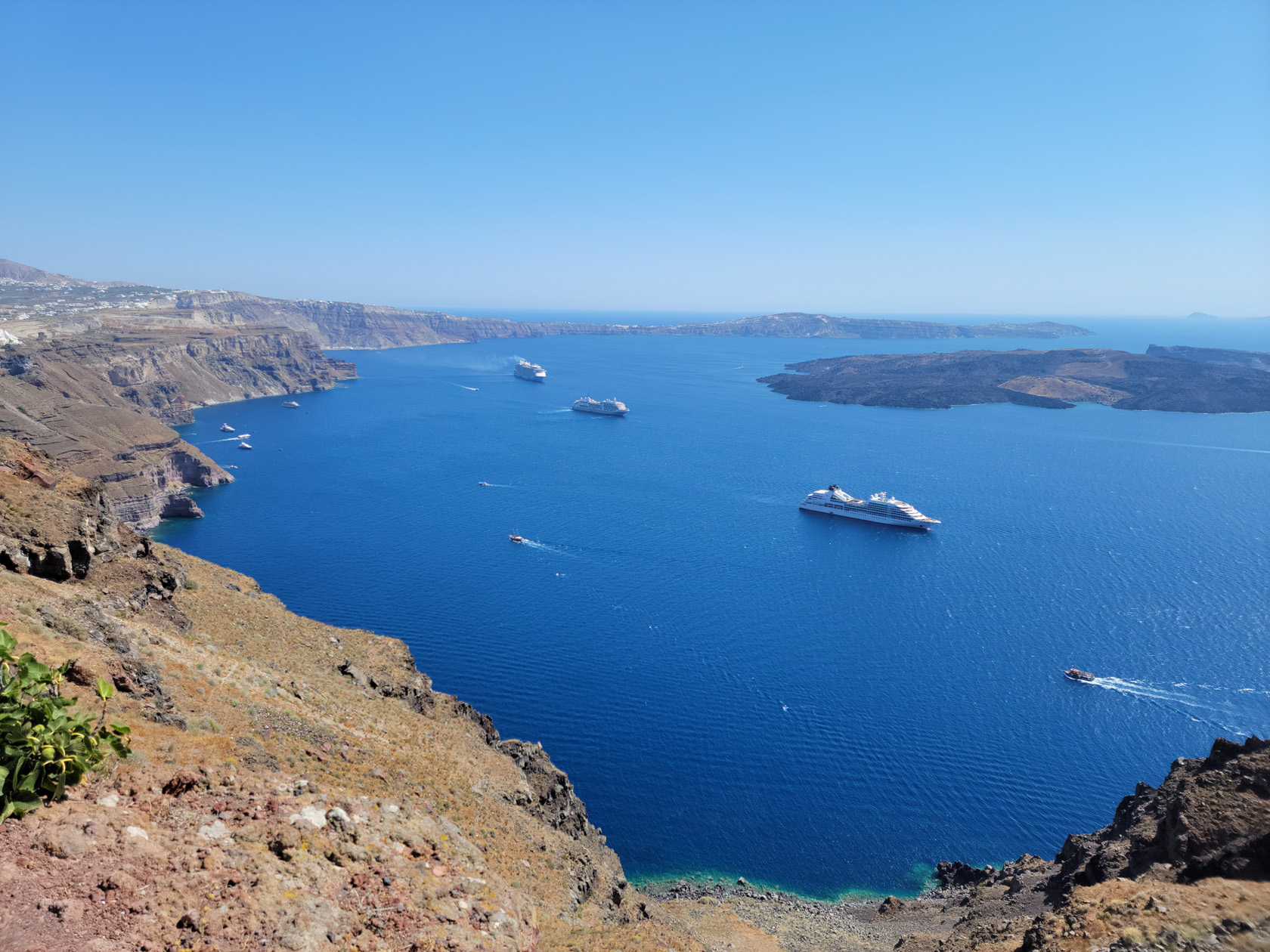
Imerovigli, Santorini – Skaros Rock Hike – Cruise Ships
Imerovigli, Santorini – Skaros Rock Hike – The Rock
Imerovigli, Santorini – Skaros Rock Hike
Imerovigli, Santorini – Skaros Rock Hike
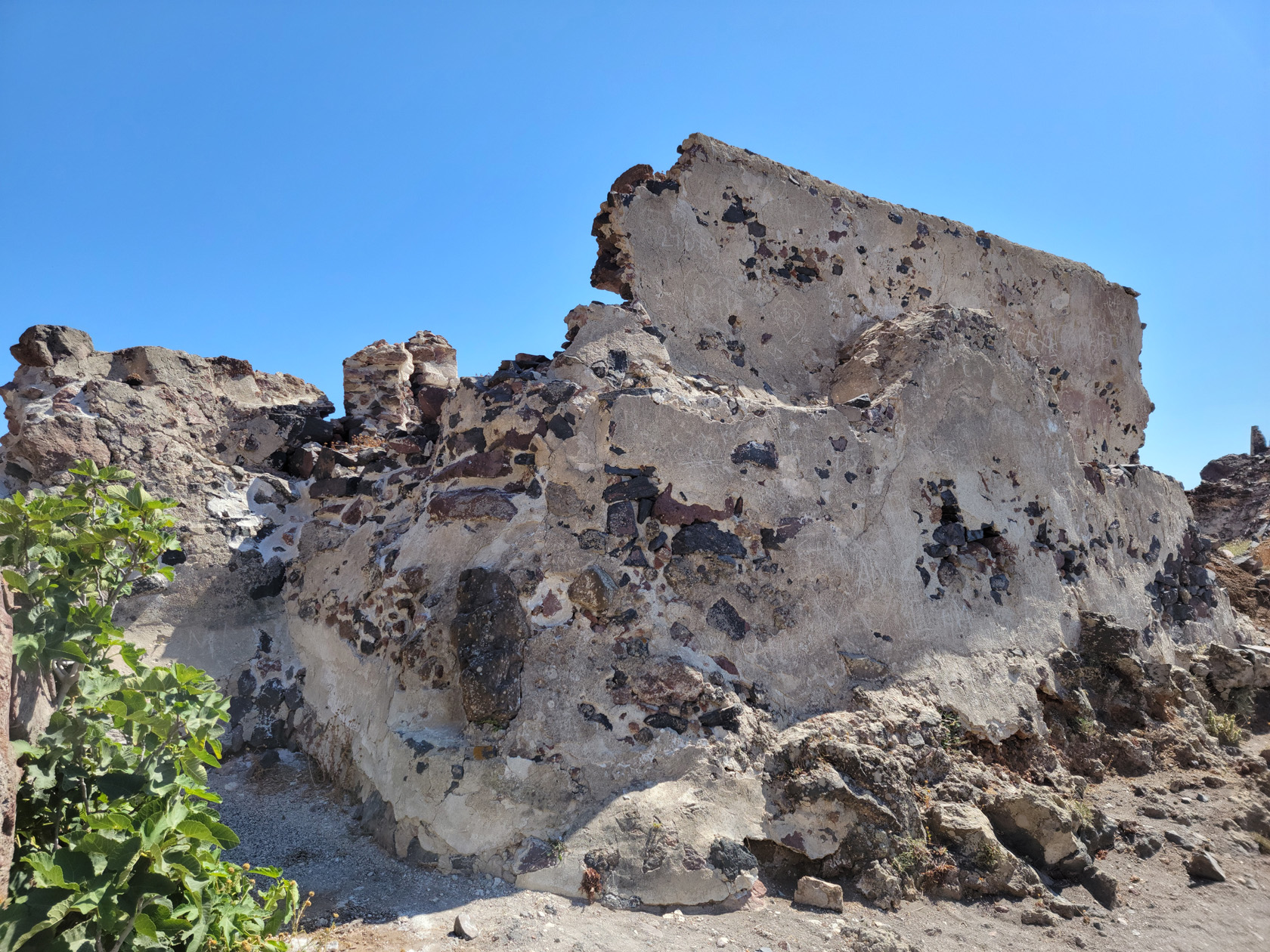
Imerovigli, Santorini – Skaros Rock Hike – Old Fortress
Imerovigli, Santorini – Skaros Rock Hike – Danger
Imerovigli, Santorini – Skaros Rock Hike – More Fallen Rock
Imerovigli, Santorini – Skaros Rock Hike – Cruise Ships
Imerovigli, Santorini – Skaros Rock Hike
Imerovigli, Santorini – Skaros Rock Hike
Imerovigli, Santorini – Skaros Rock
Imerovigli, Santorini – Skaros Rock Hike – Thira
Imerovigli, Santorini – Skaros Rock Hike – Panorama
Imerovigli, Santorini – Skaros Rock Hike
Imerovigli, Santorini – Skaros Rock Hike
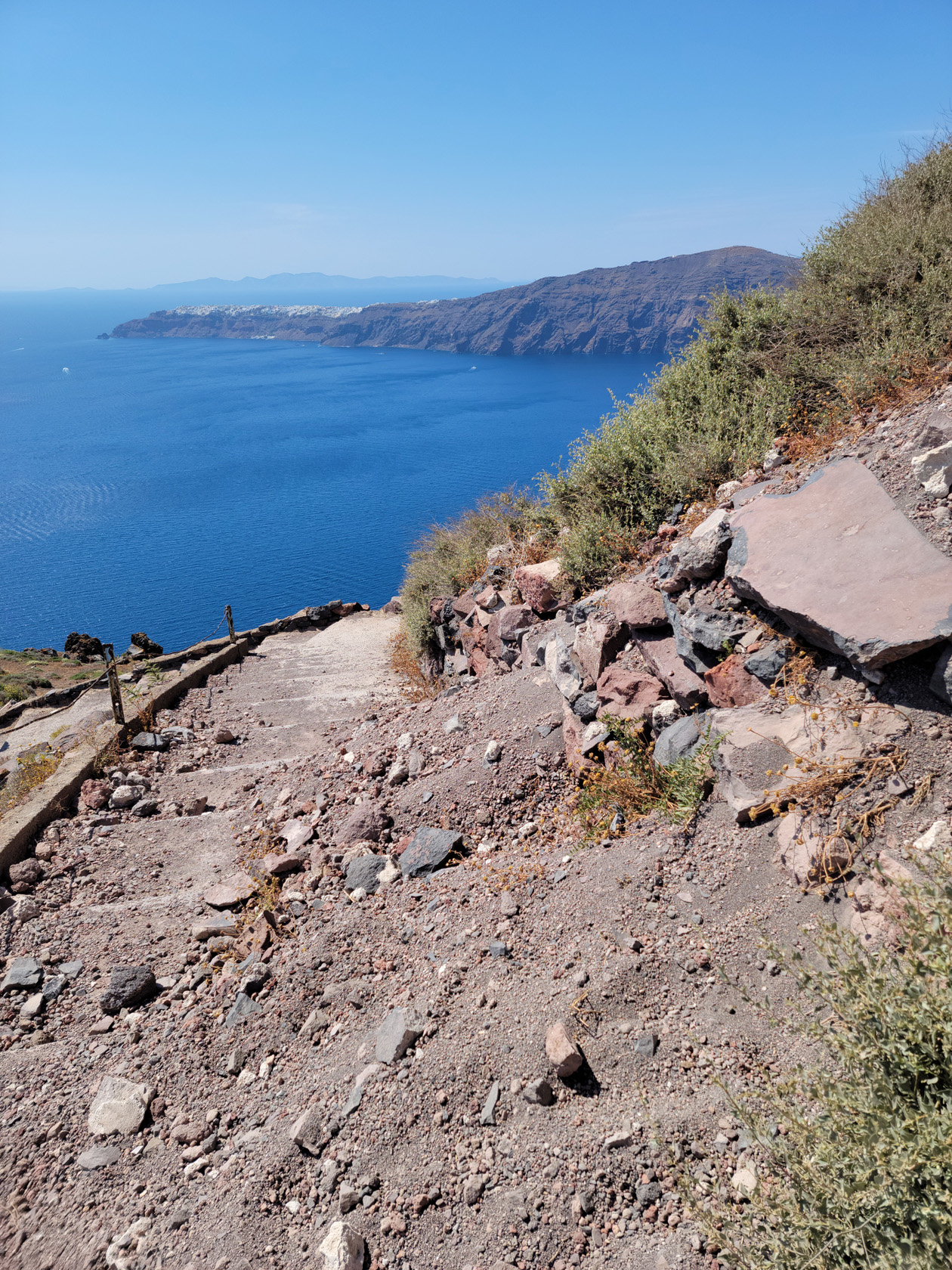
Imerovigli, Santorini – Skaros Rock Hike – Fallen Rock Danger
Imerovigli, Santorini – Skaros Rock Hike
Imerovigli, Santorini – Skaros Rock Hike
Imerovigli, Santorini – Skaros Rock Hike
Imerovigli, Santorini – Caldera
I would caution, the north side is a bit challenging for anyone with balance or other issues, one misstep and one could fall pretty far, perhaps leading to death or serious injury.
Oia – Caldera Cutie
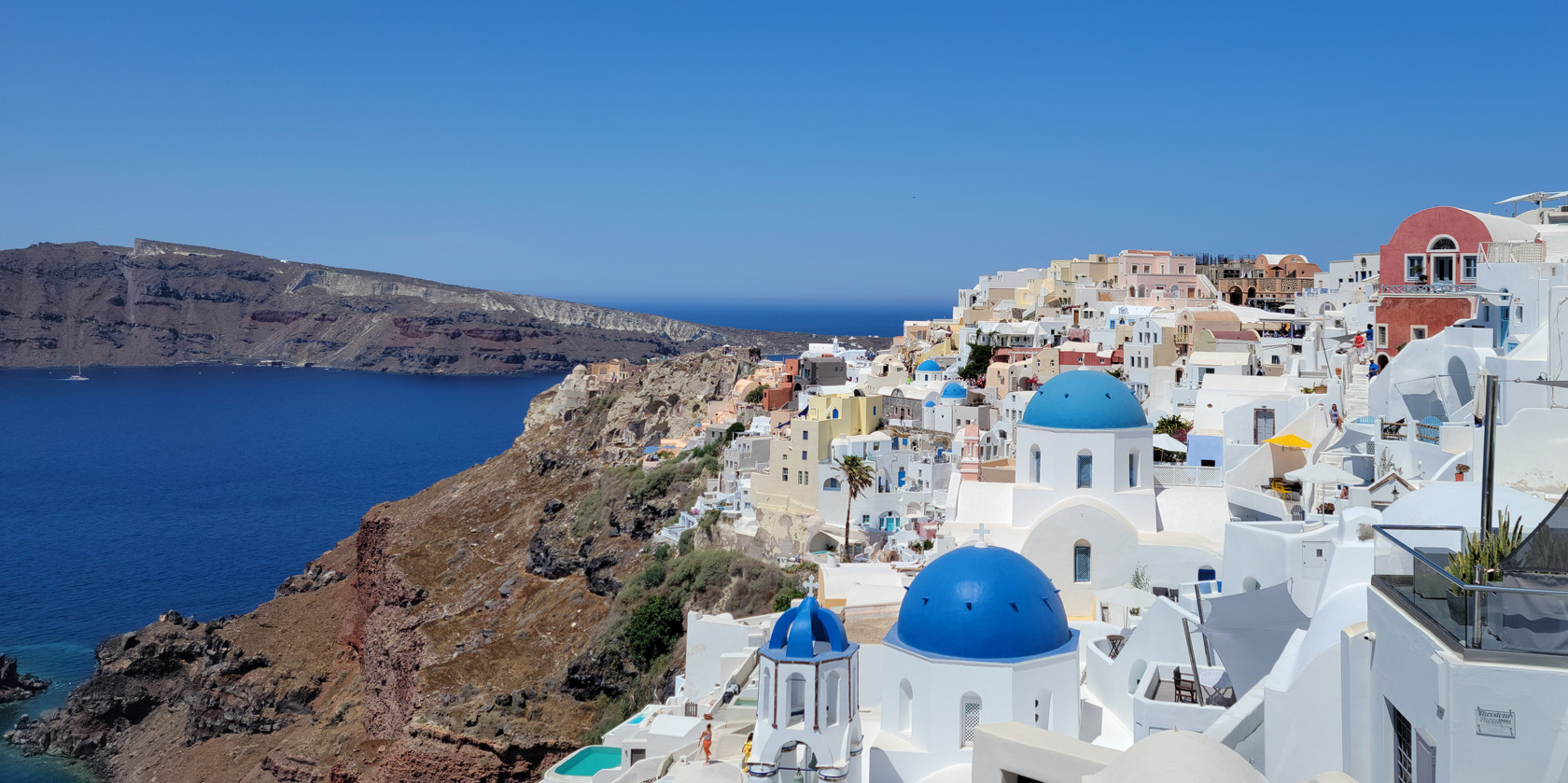
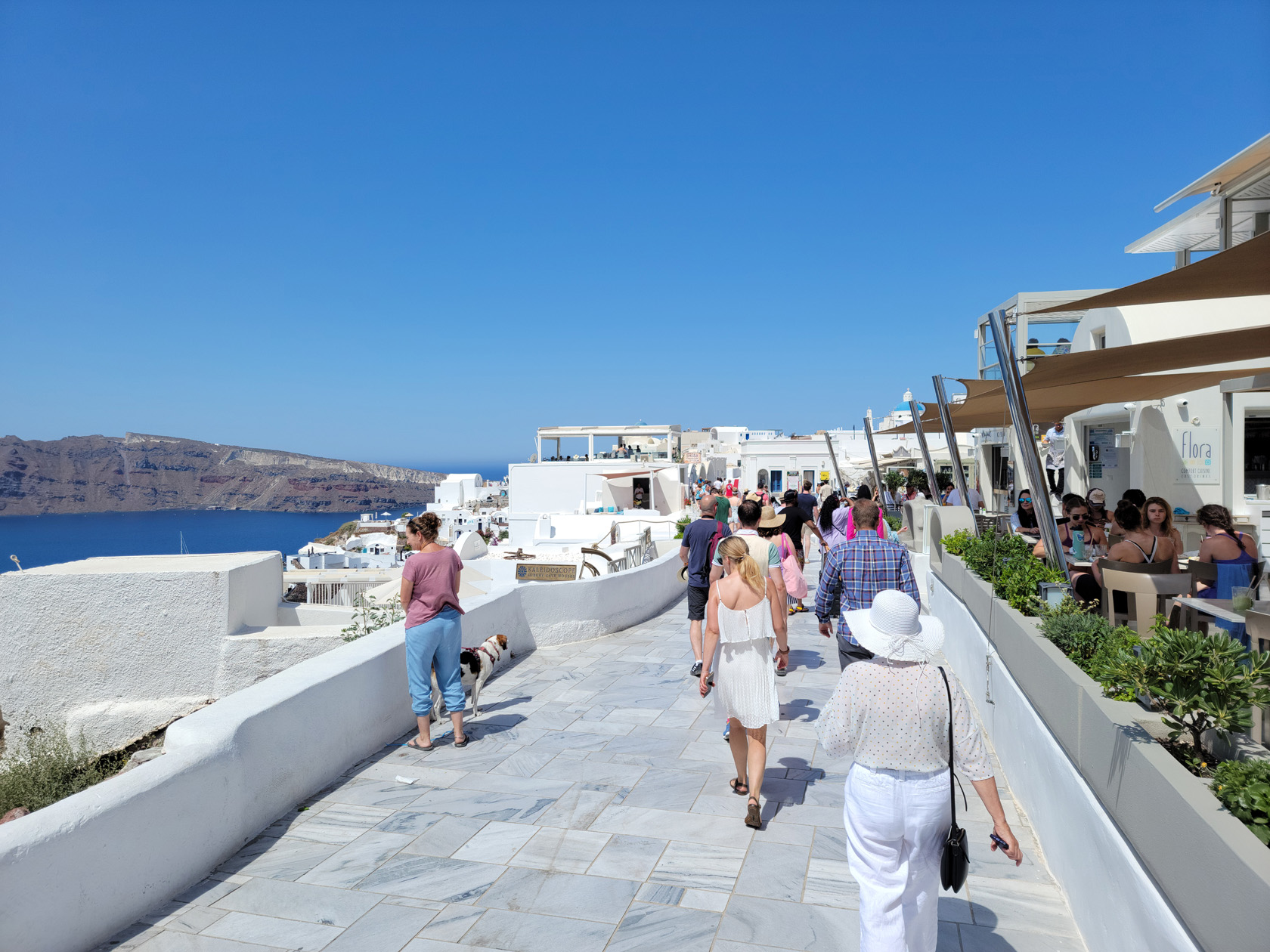
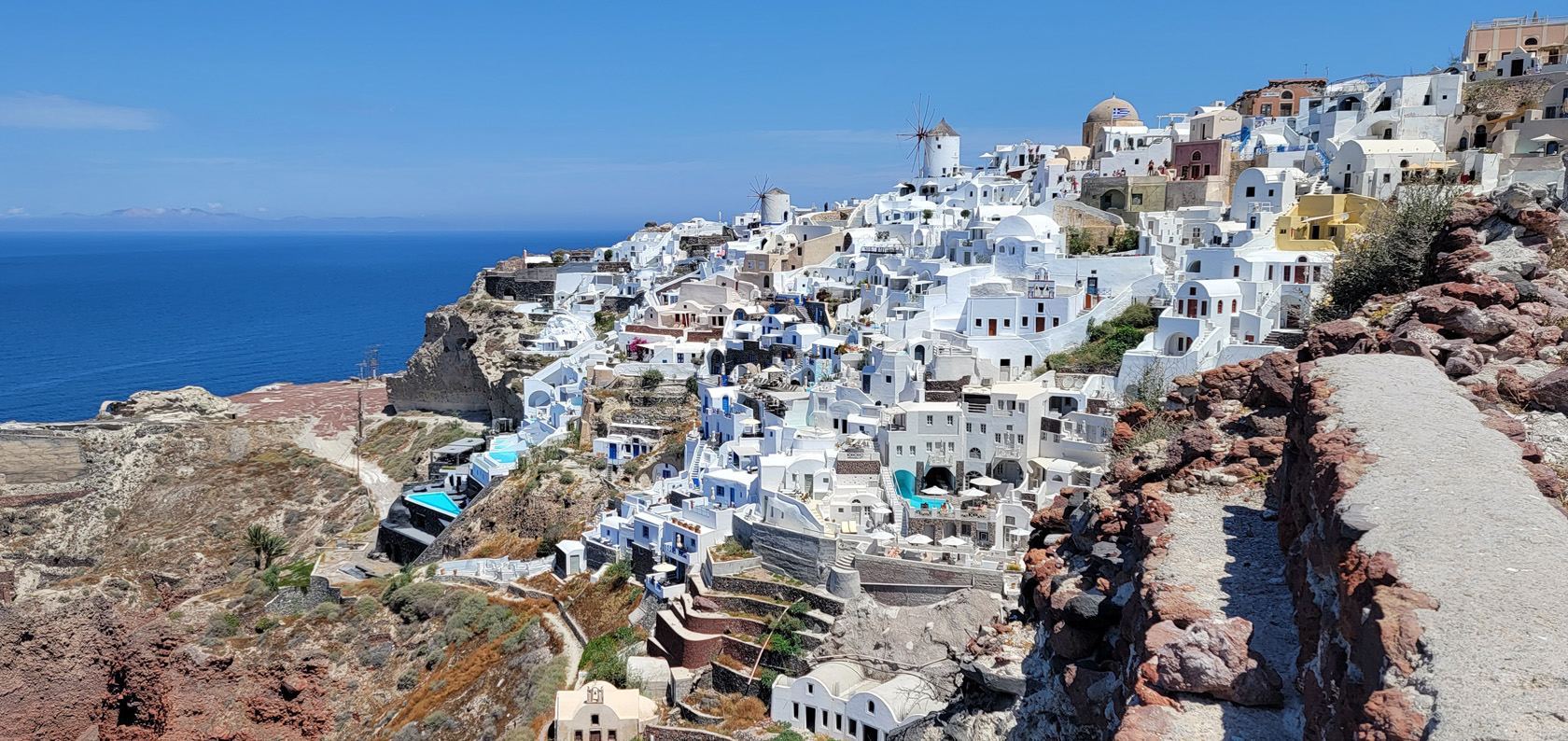
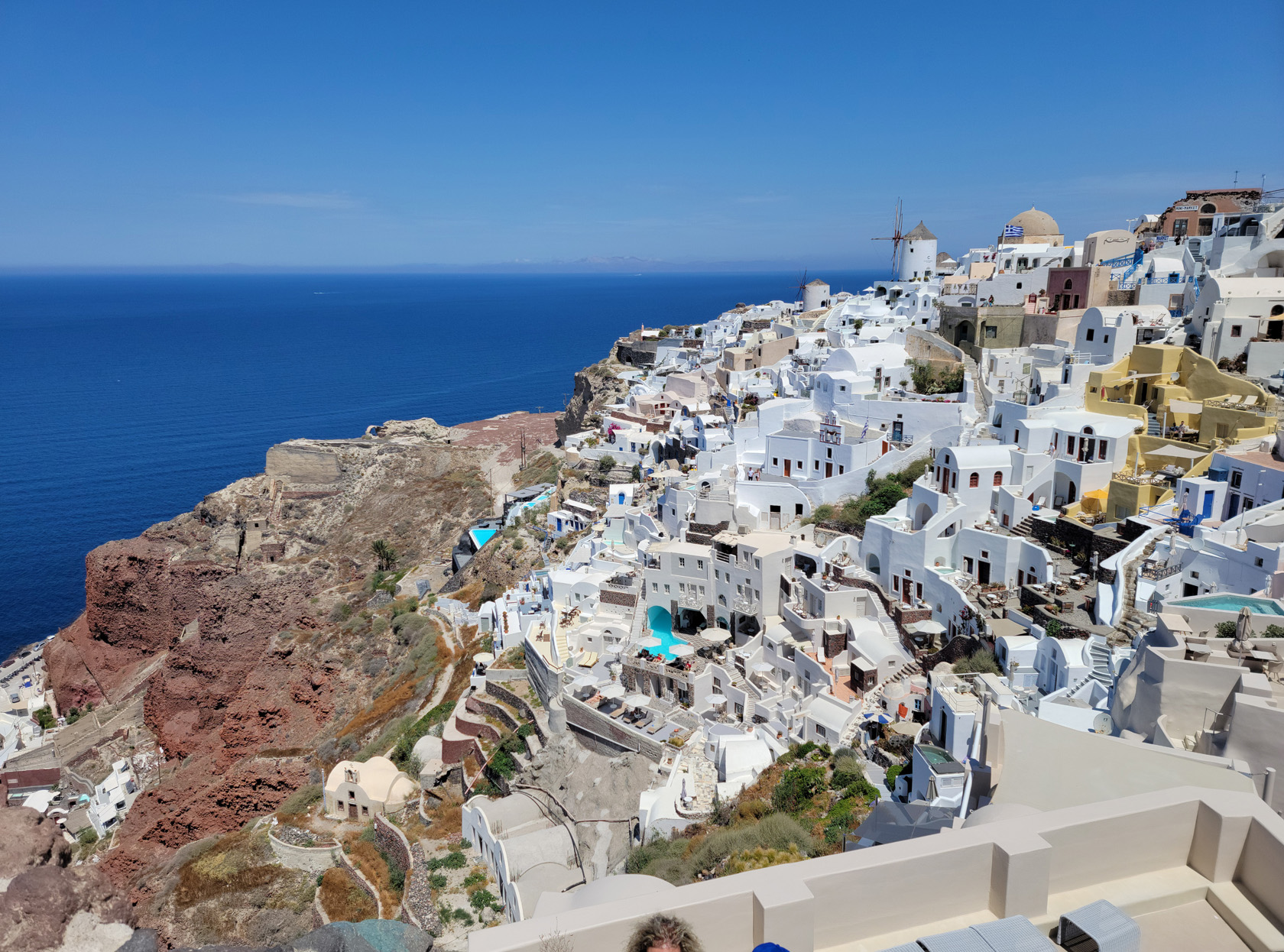
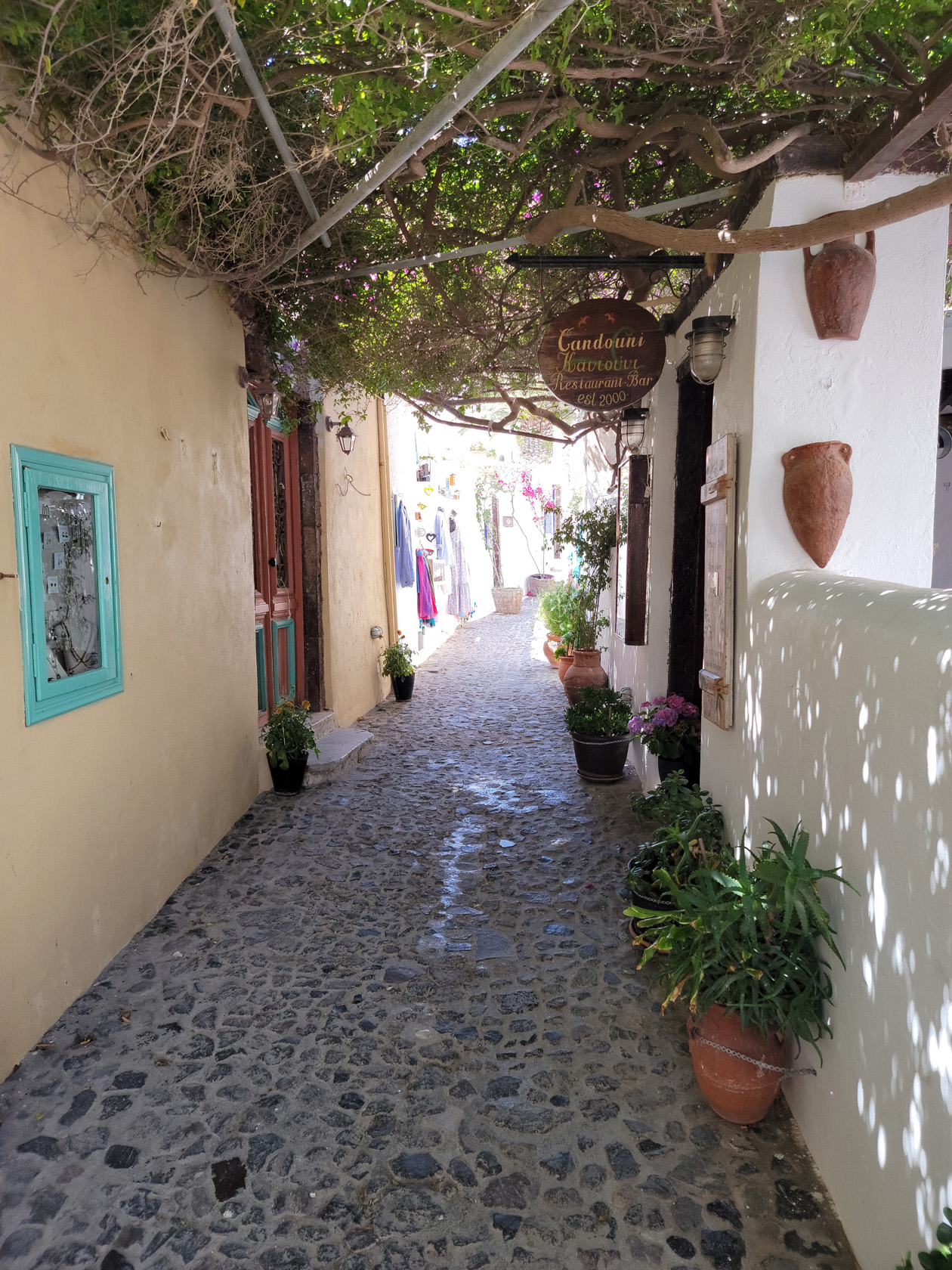
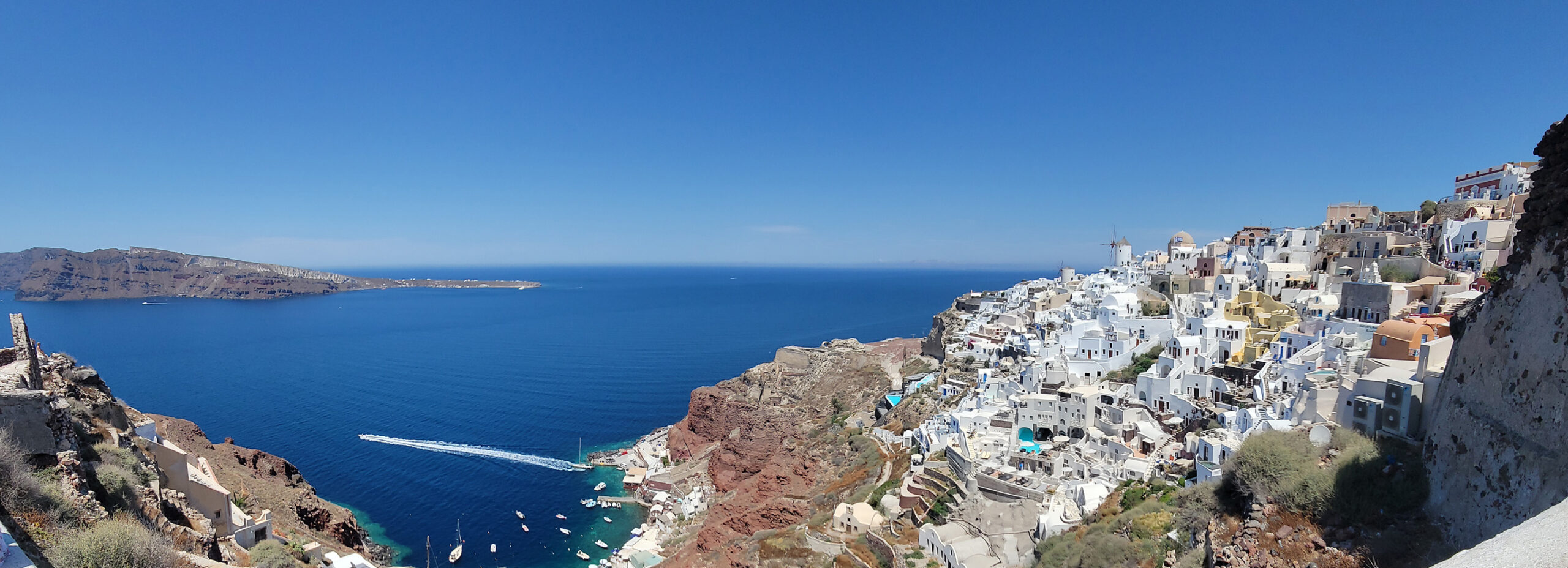
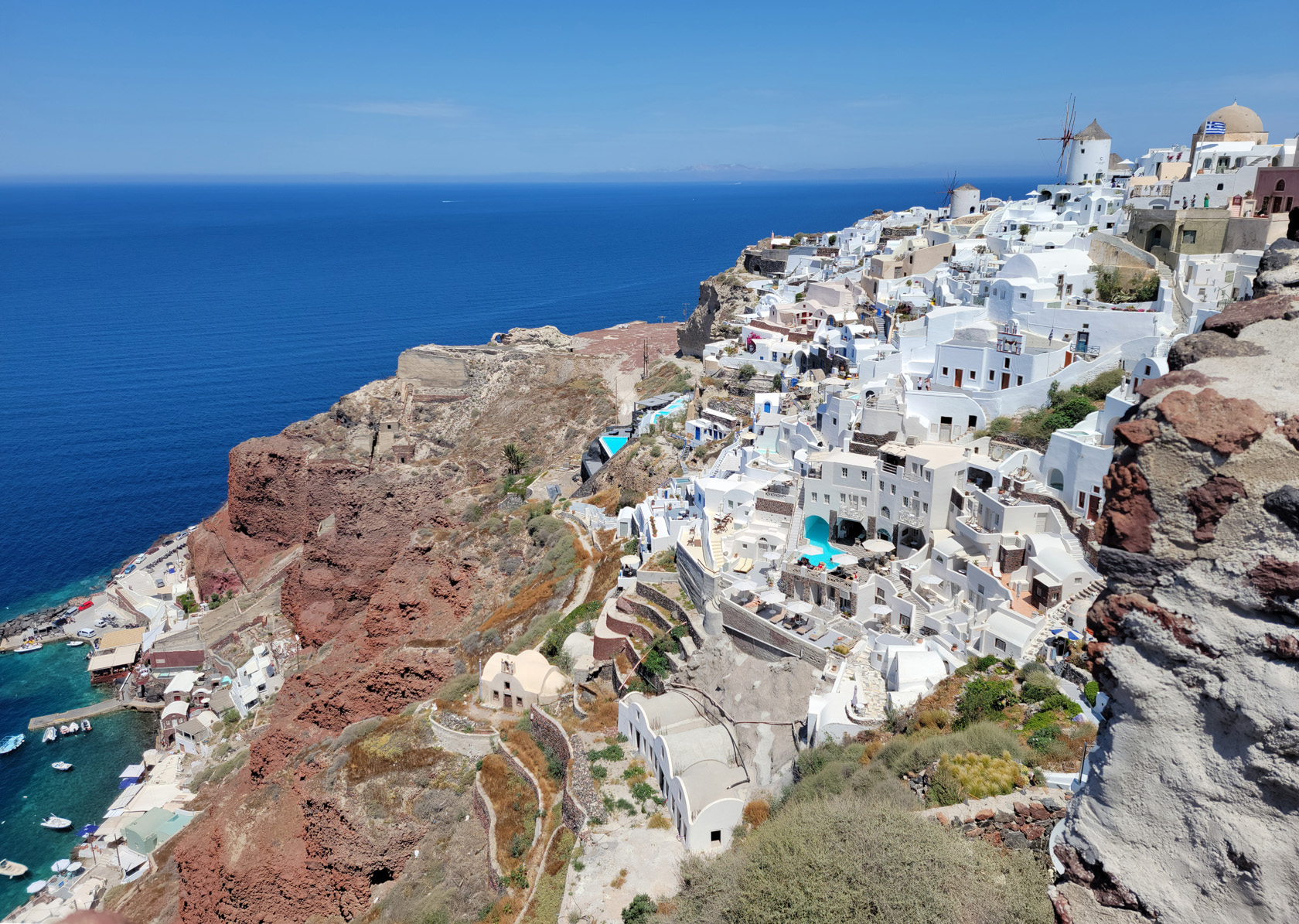
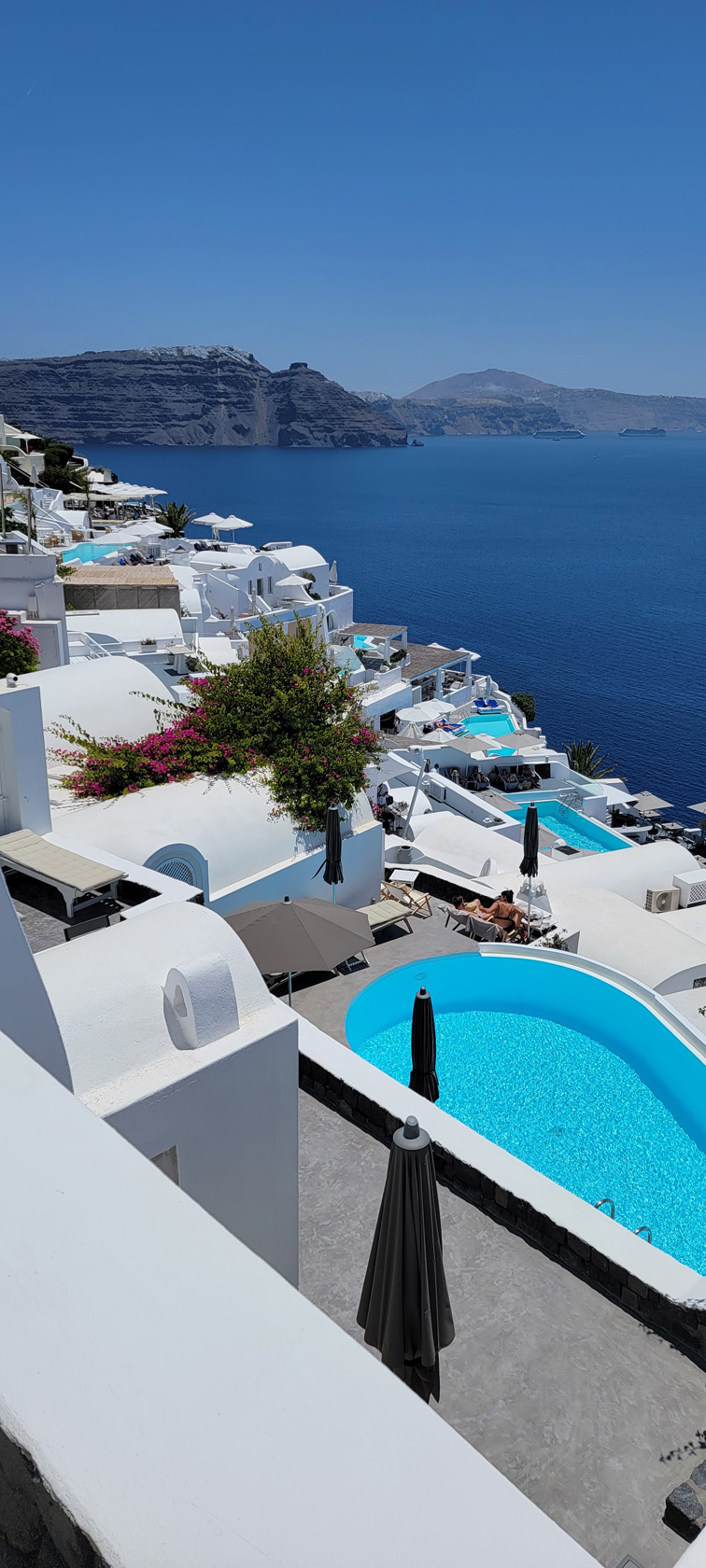
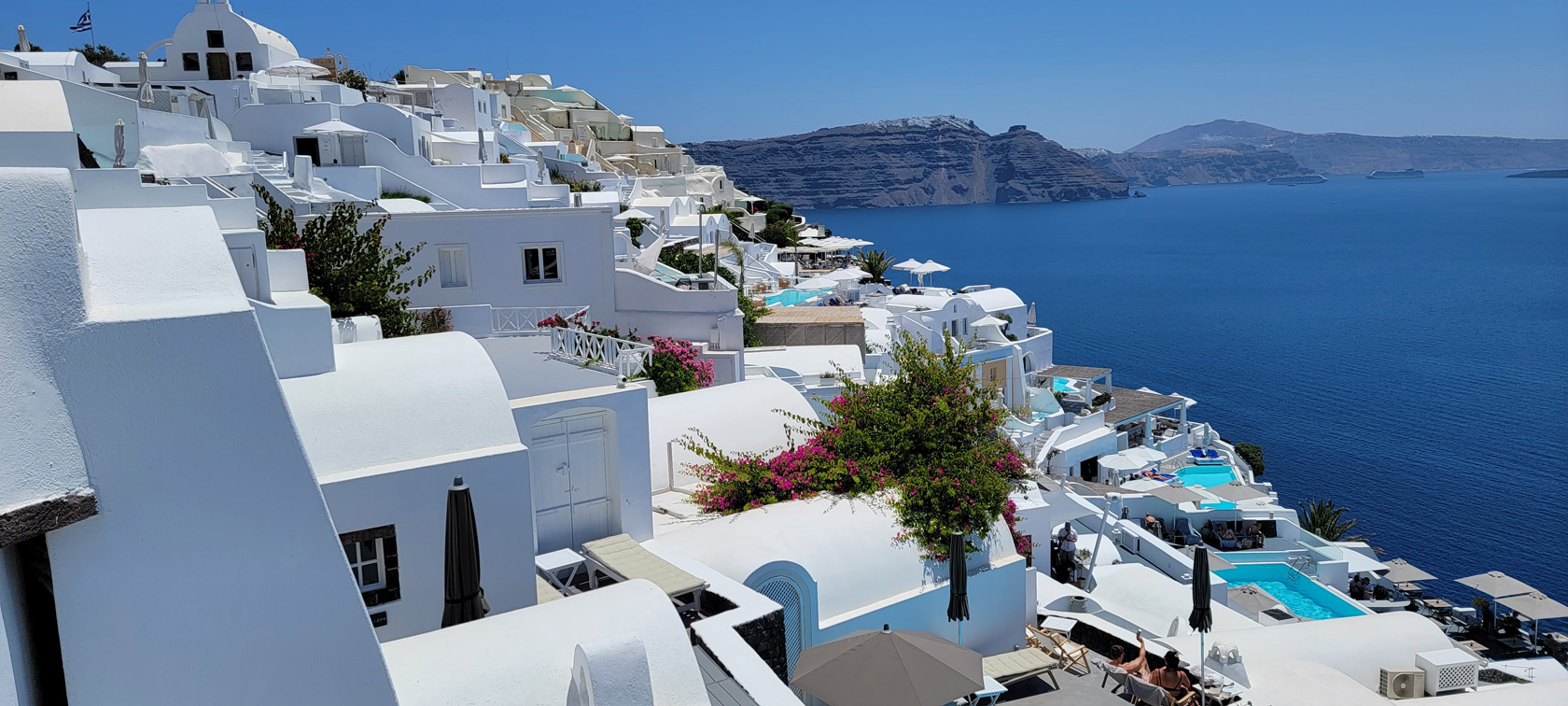
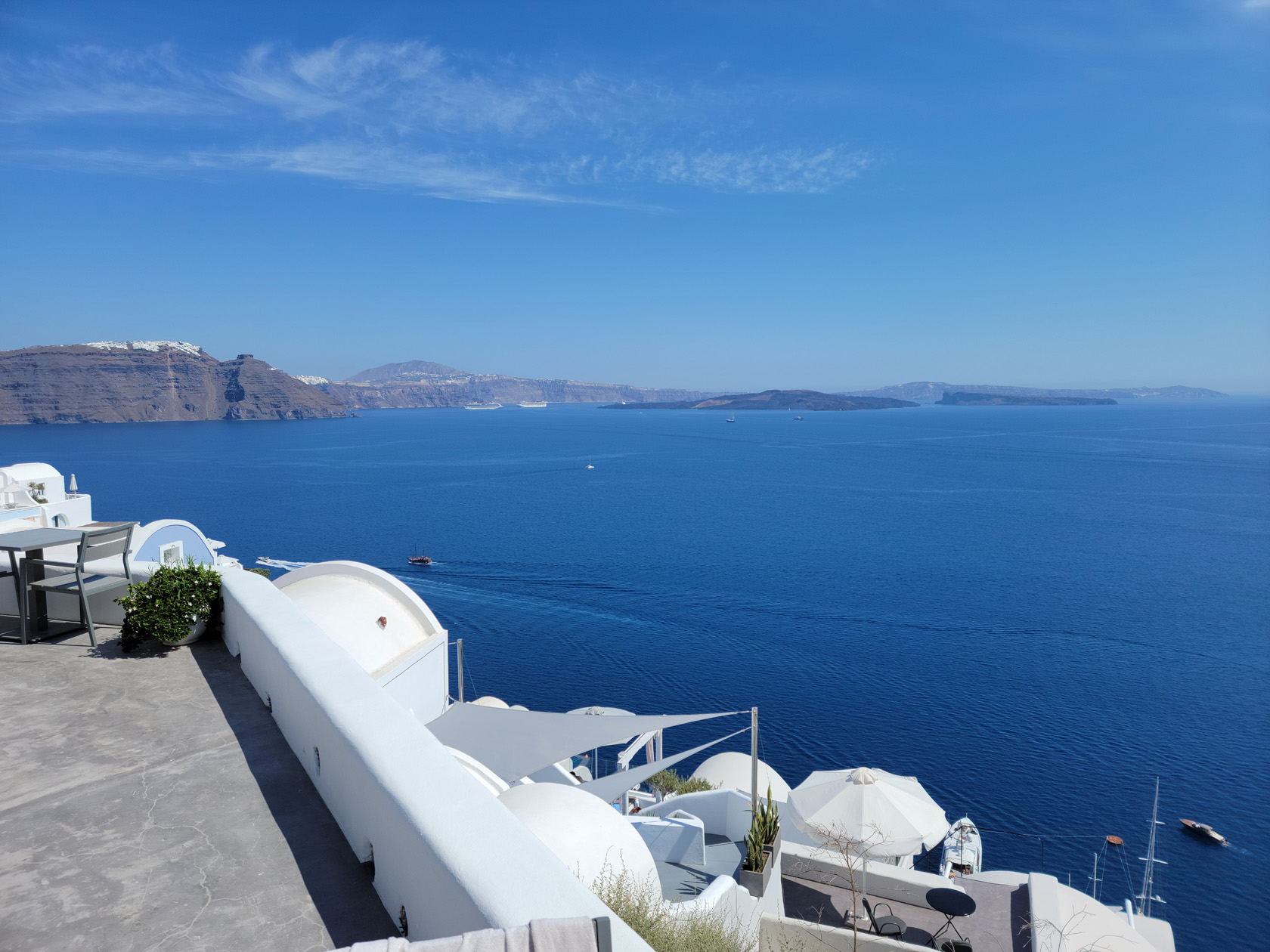
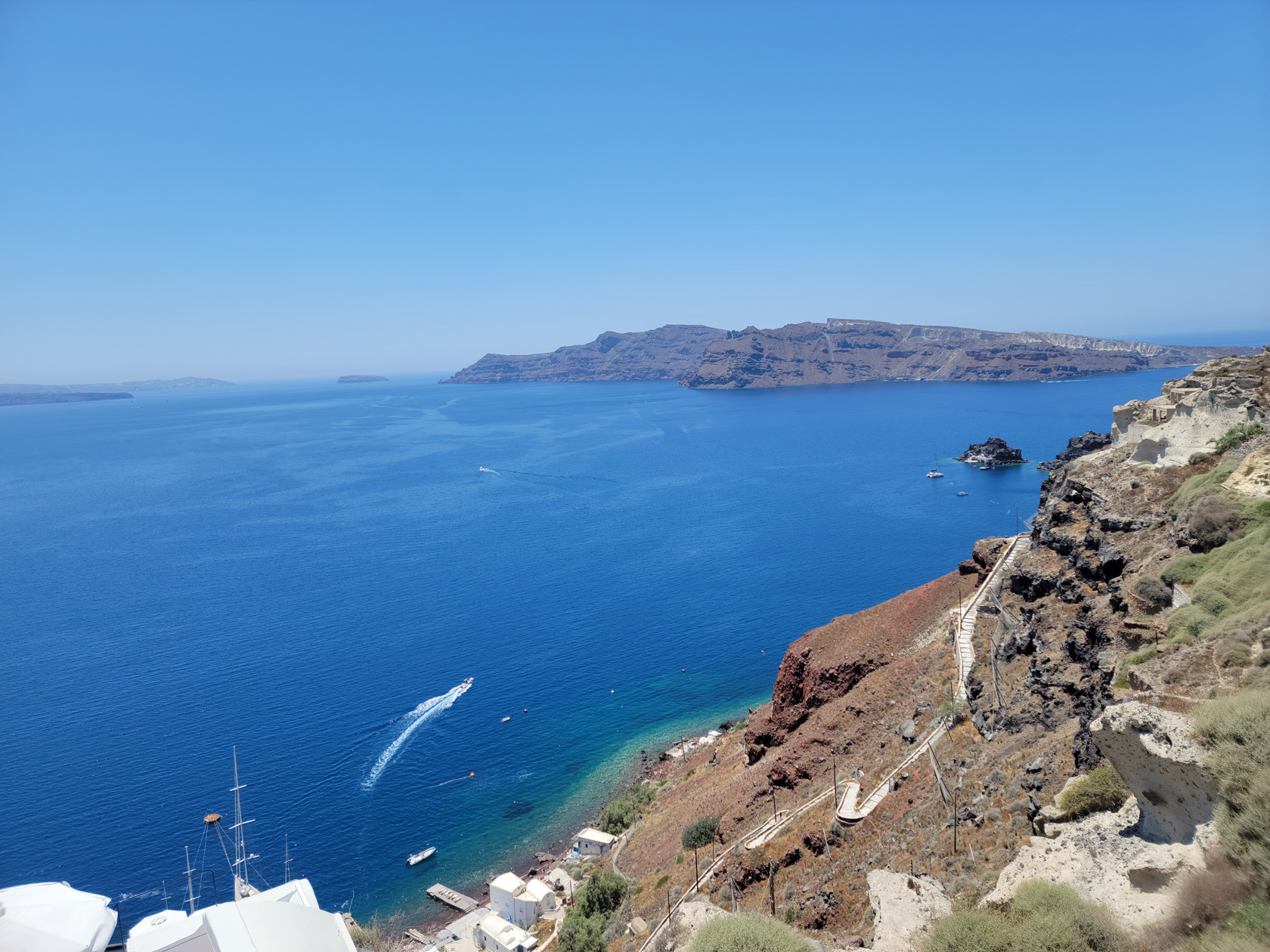
A Greek jewel clad in white wash and white marble is essentially what Oia is to those who visit its tourist filled streets and alleys. Make no mistake, if you visit Oia, there will be crowds; all trying to get that perfect social media photograph. This is especially the case in the evening, when they are all out trying to get their sunset pictures.
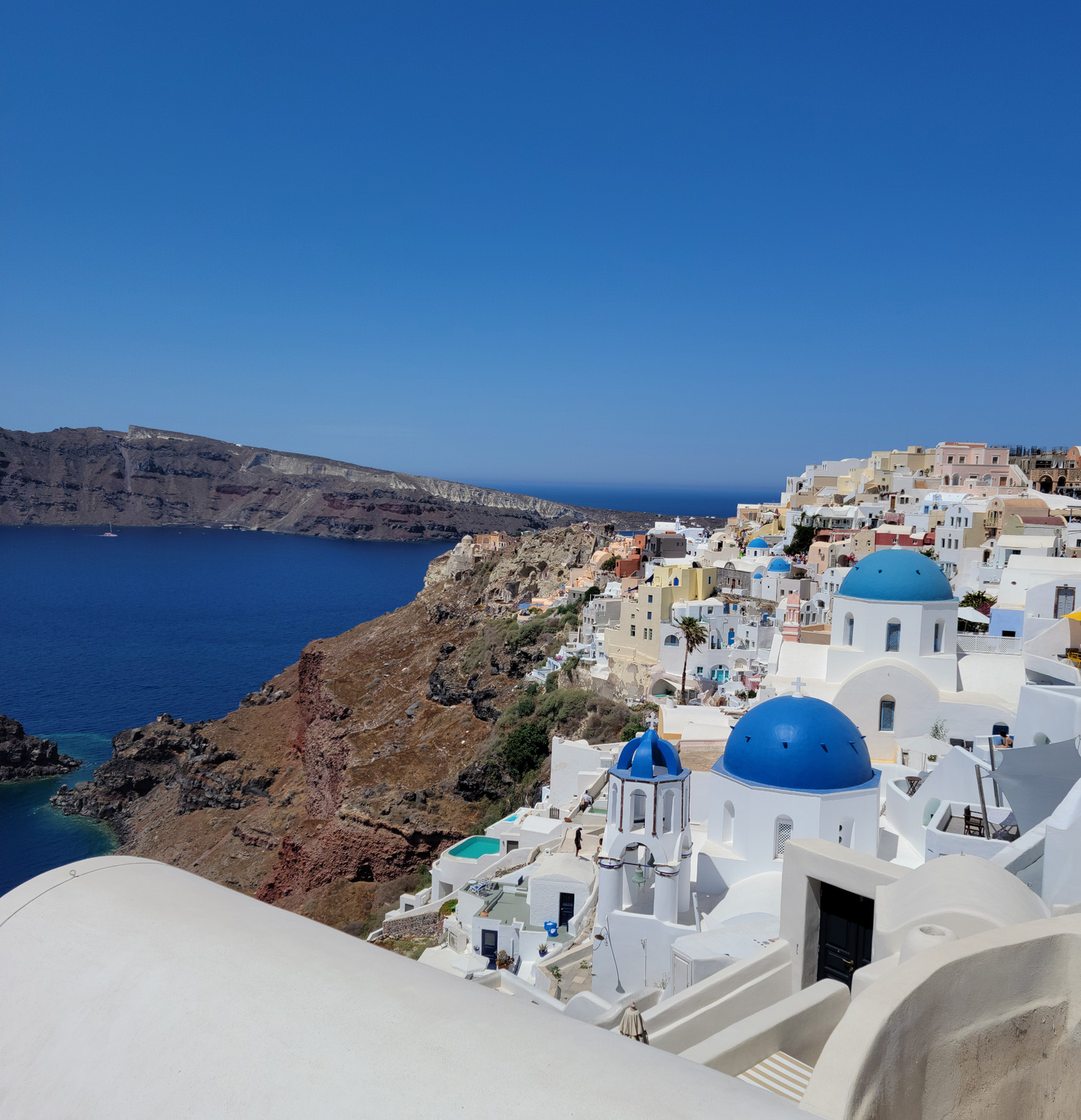
Oia, Santorini – The Three Blue Domes
There is not a lot of real estate in Oia, so some will find it very confining. But it is worth a visit, though I would not spend more than a few days here. Boredom being defined here as a slow Oia drip. If I had to do it over again I would probably just visit it for the day and perhaps have one evening dinner there, the rest is just too touristy for me.
Oia, Santorini – Typical Building Color Scheme
Oia, Santorini – Nik. Nomikou Marble Pedestrian Way
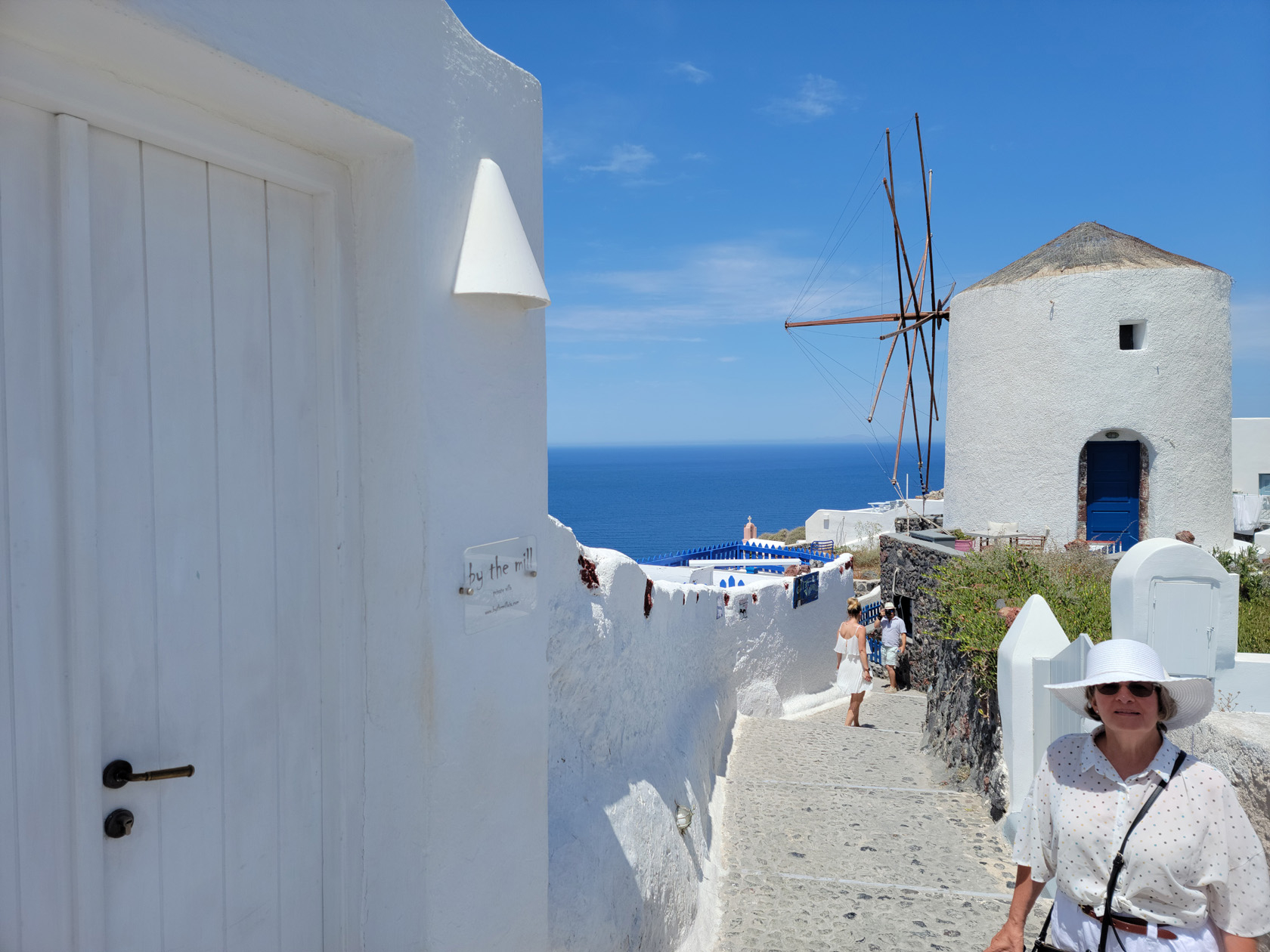
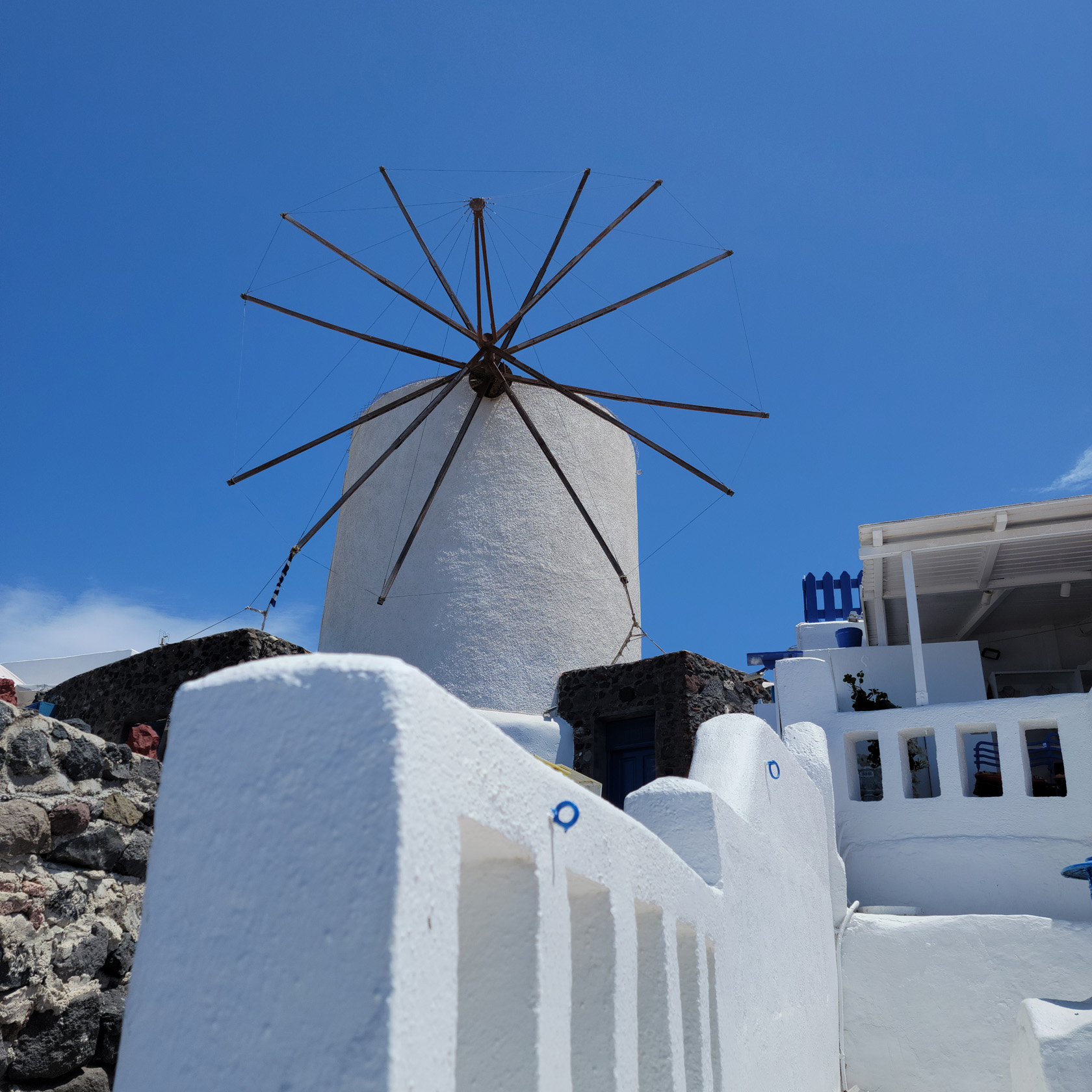
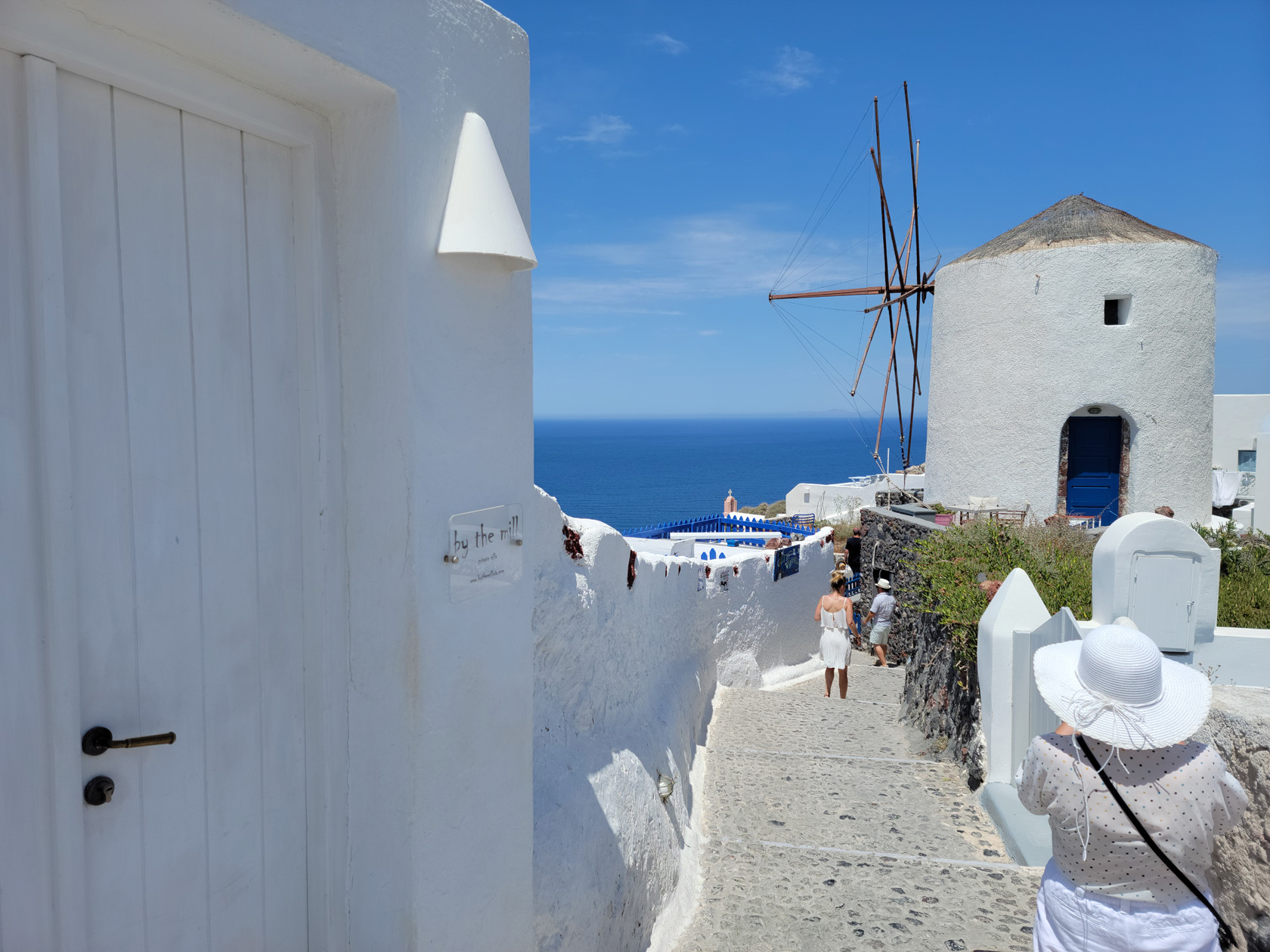
Oia, Santorini – Old Windmill
Oia, Santorini – The Three Blue Domes
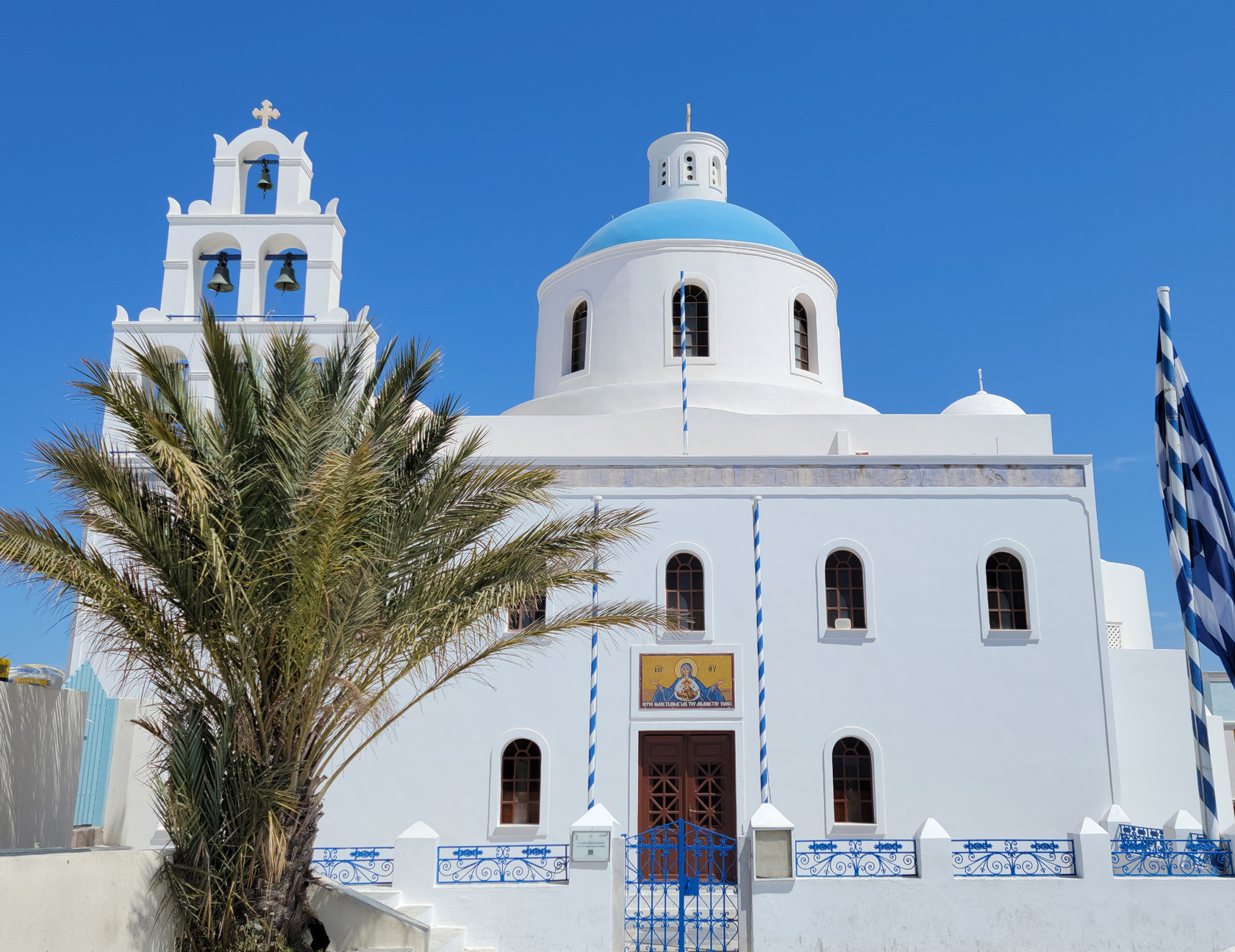
Oia, Santorini – Church of Panagia Akathistos Hymn
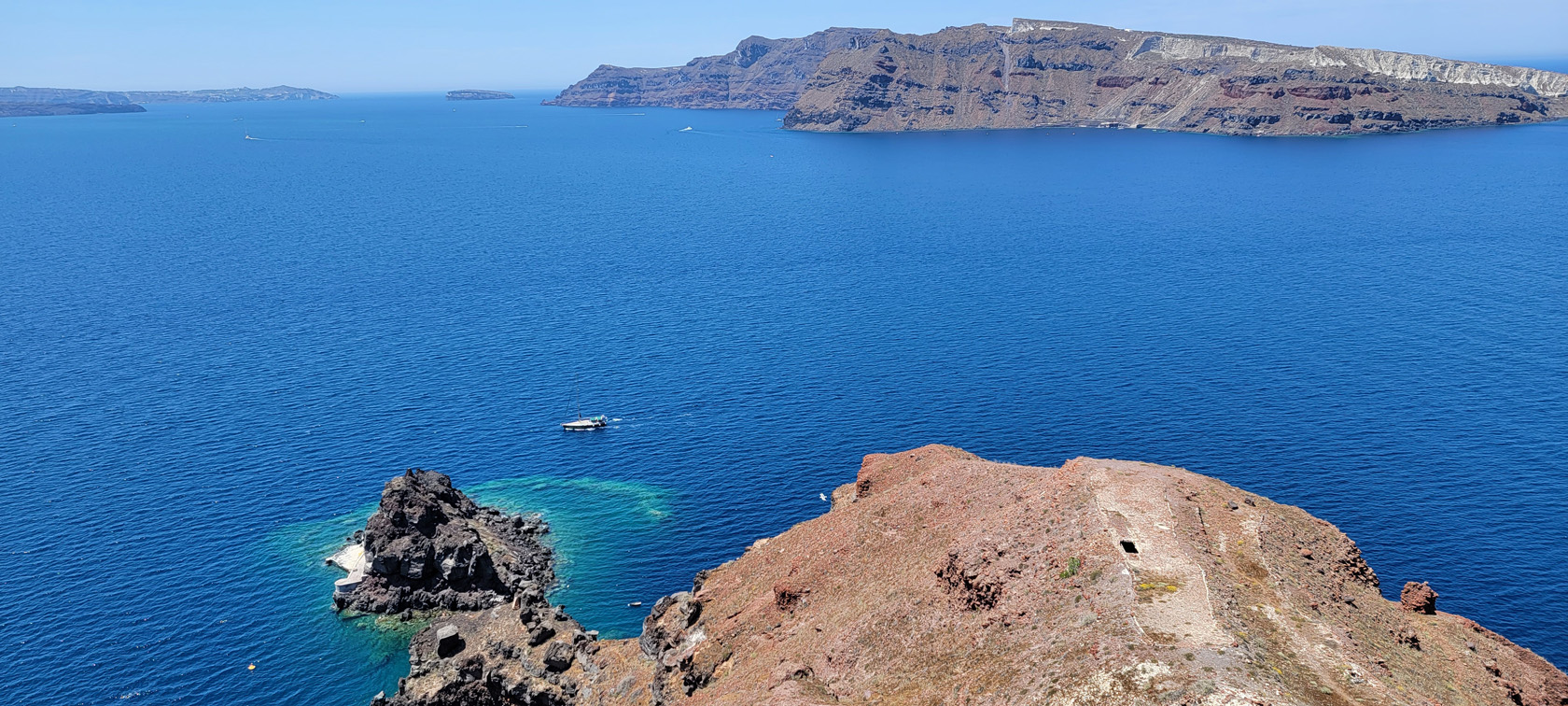
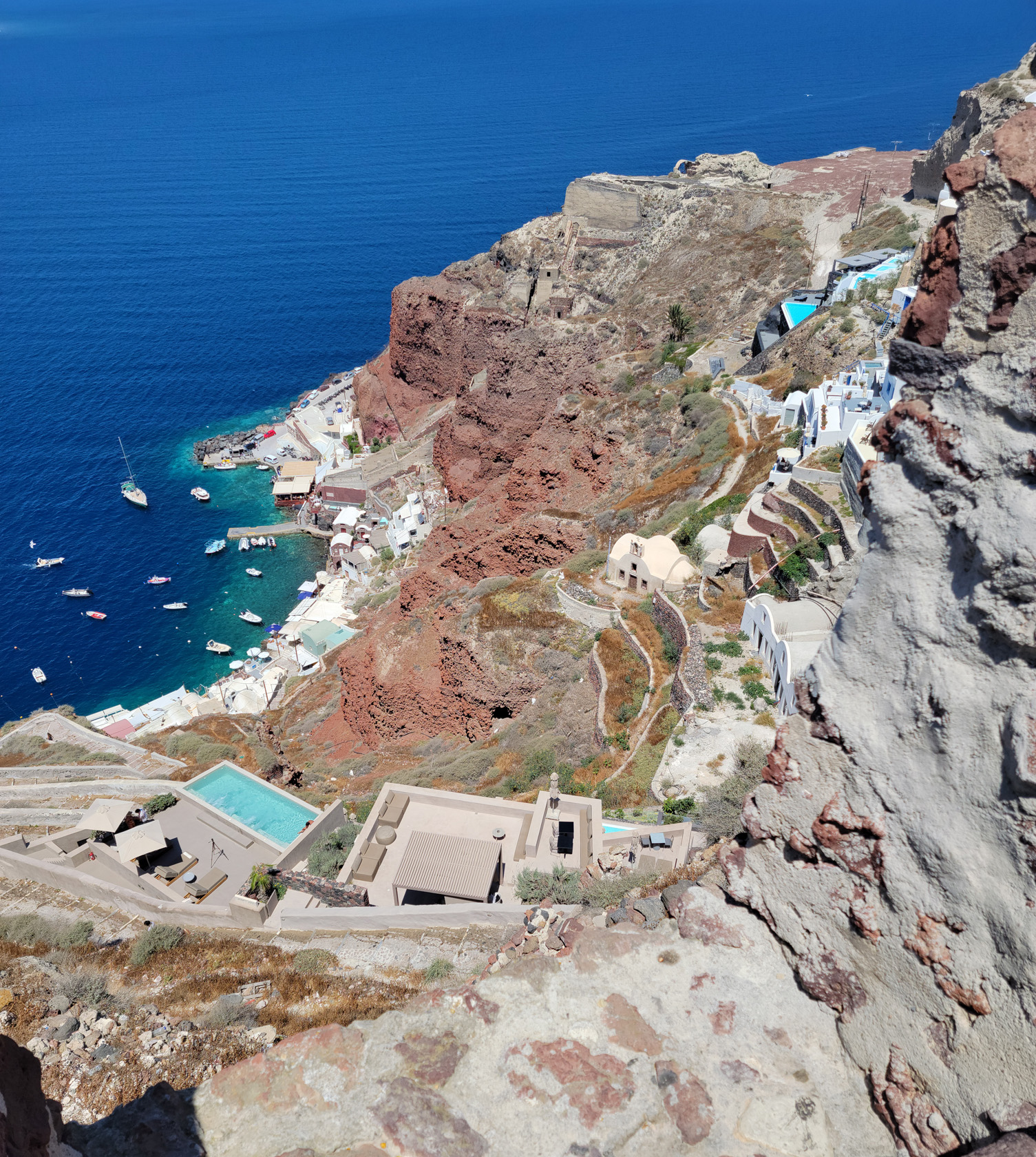
Oia, Santorini – View From Castle
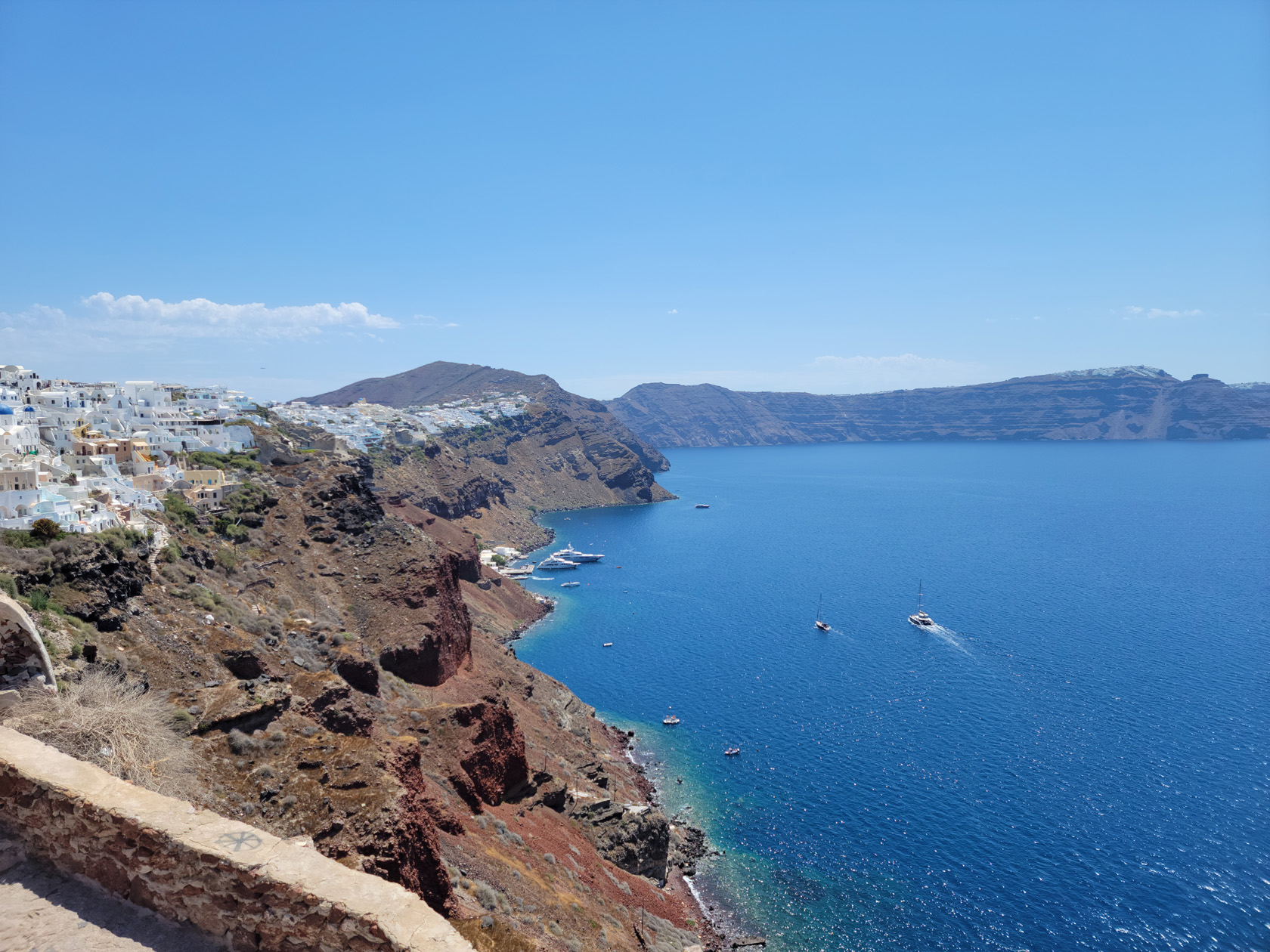
Oia, Santorini – View of Thirasia
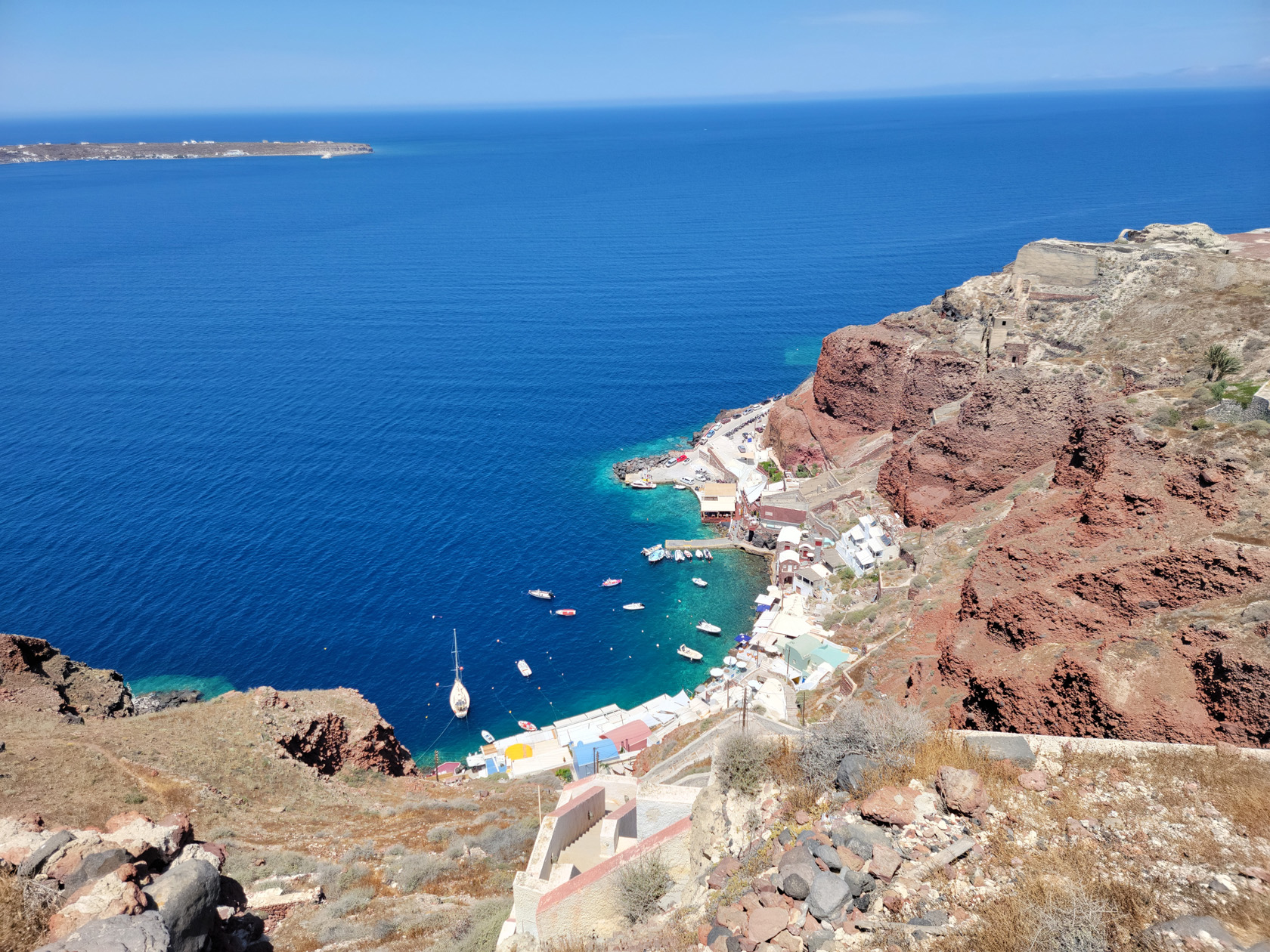
Oia, Santorini – Small Harbor by Oia Steps
Oia, Santorini – Old Windmill
Oia, Santorini – From Castle
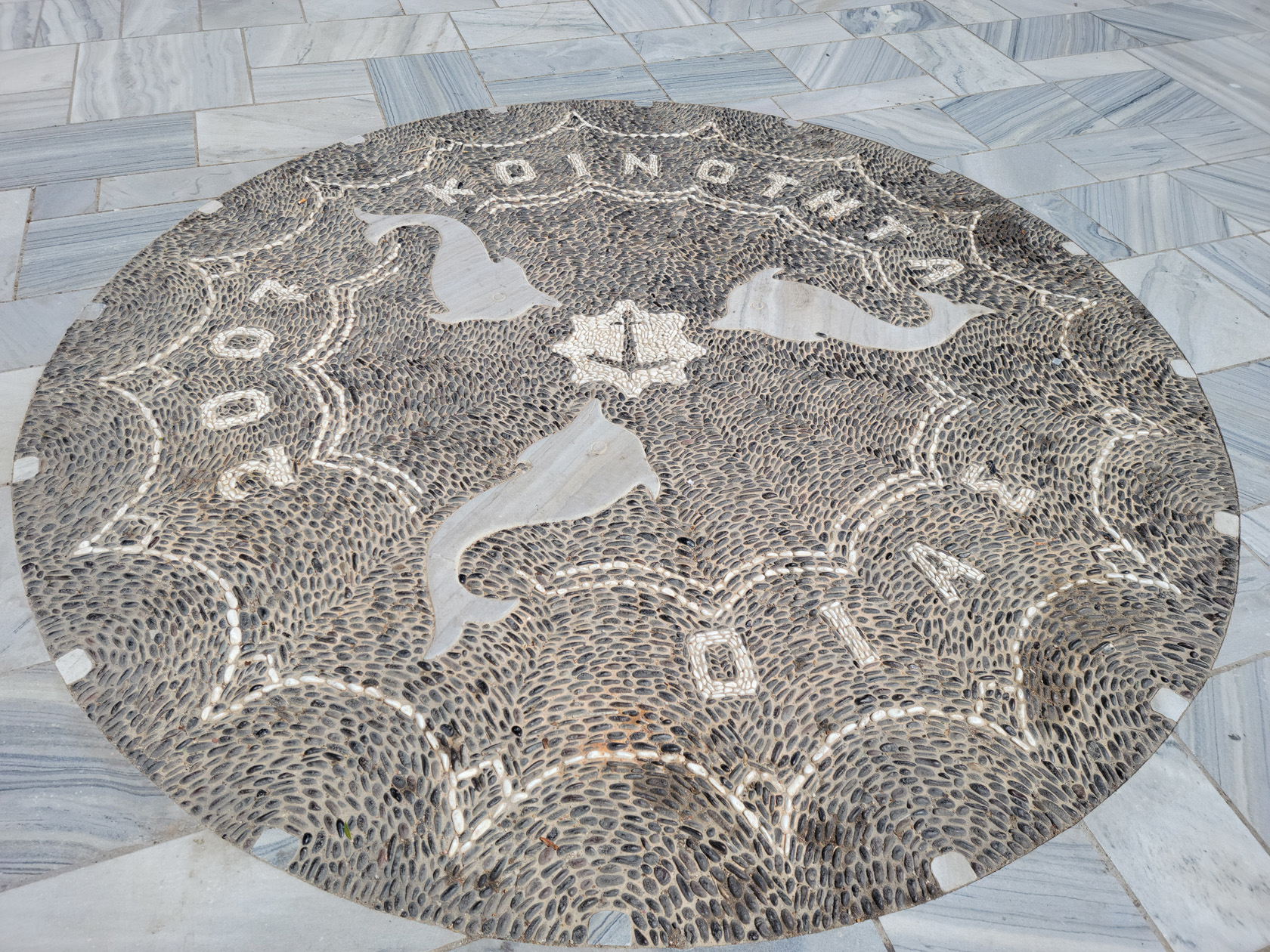
Oia, Santorini – Town Emblem
Oia, Santorini – Looking Toward Old Windmill
Oia, Santorini – The Oia Steps and Harbor
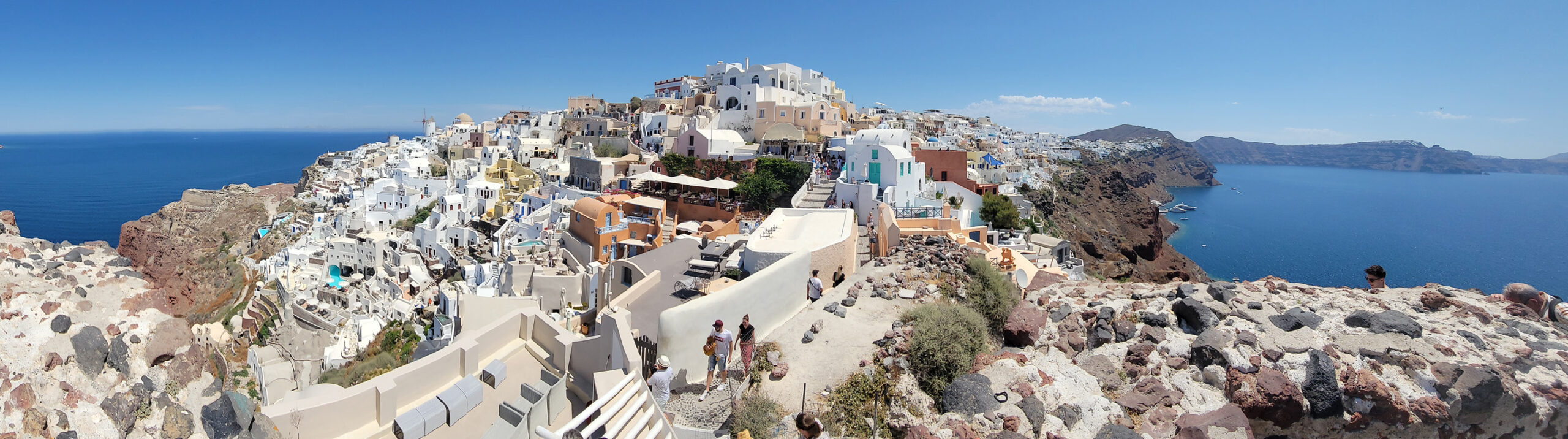
Oia, Santorini – Panorama
Oia, Santorini – Alley
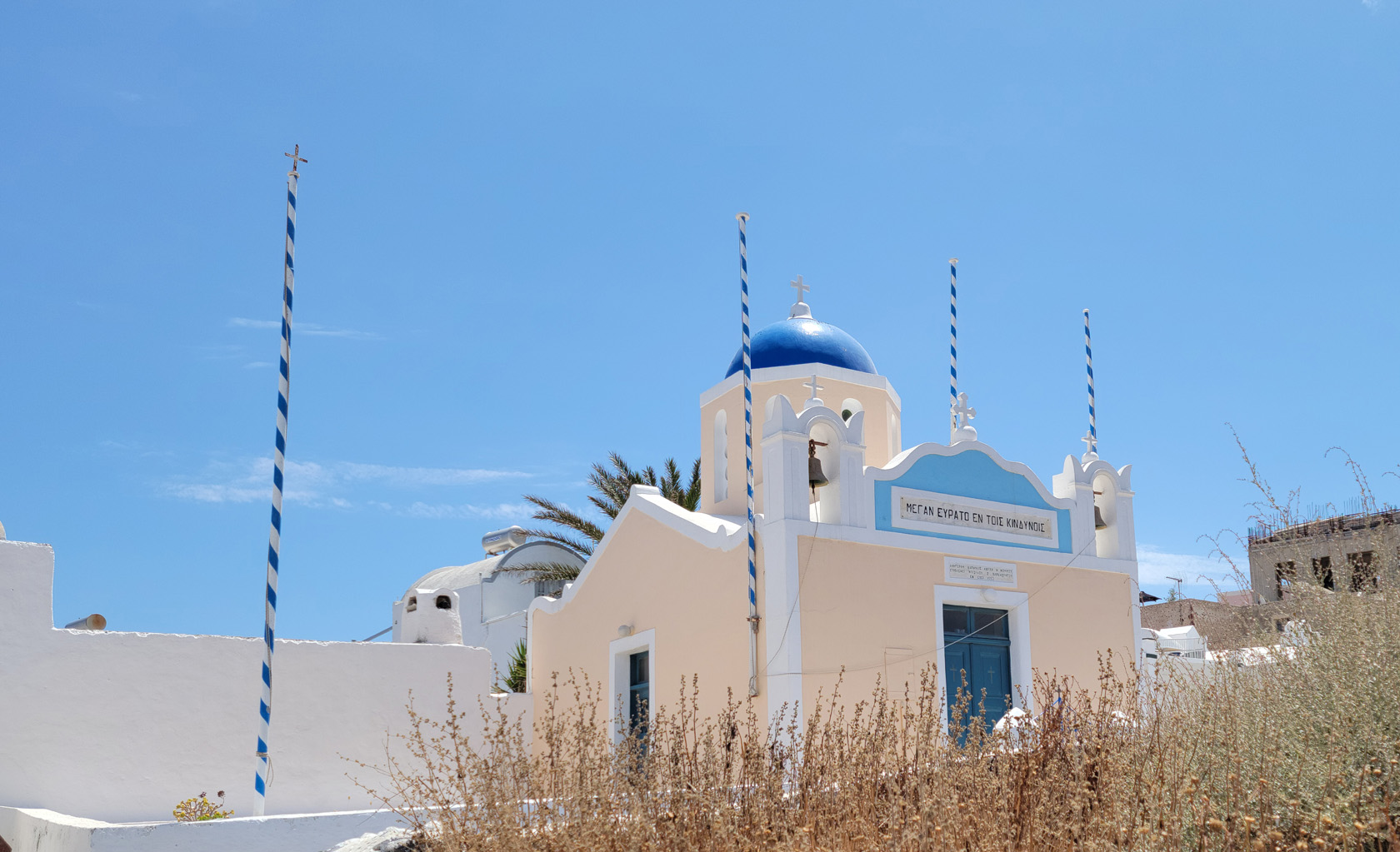
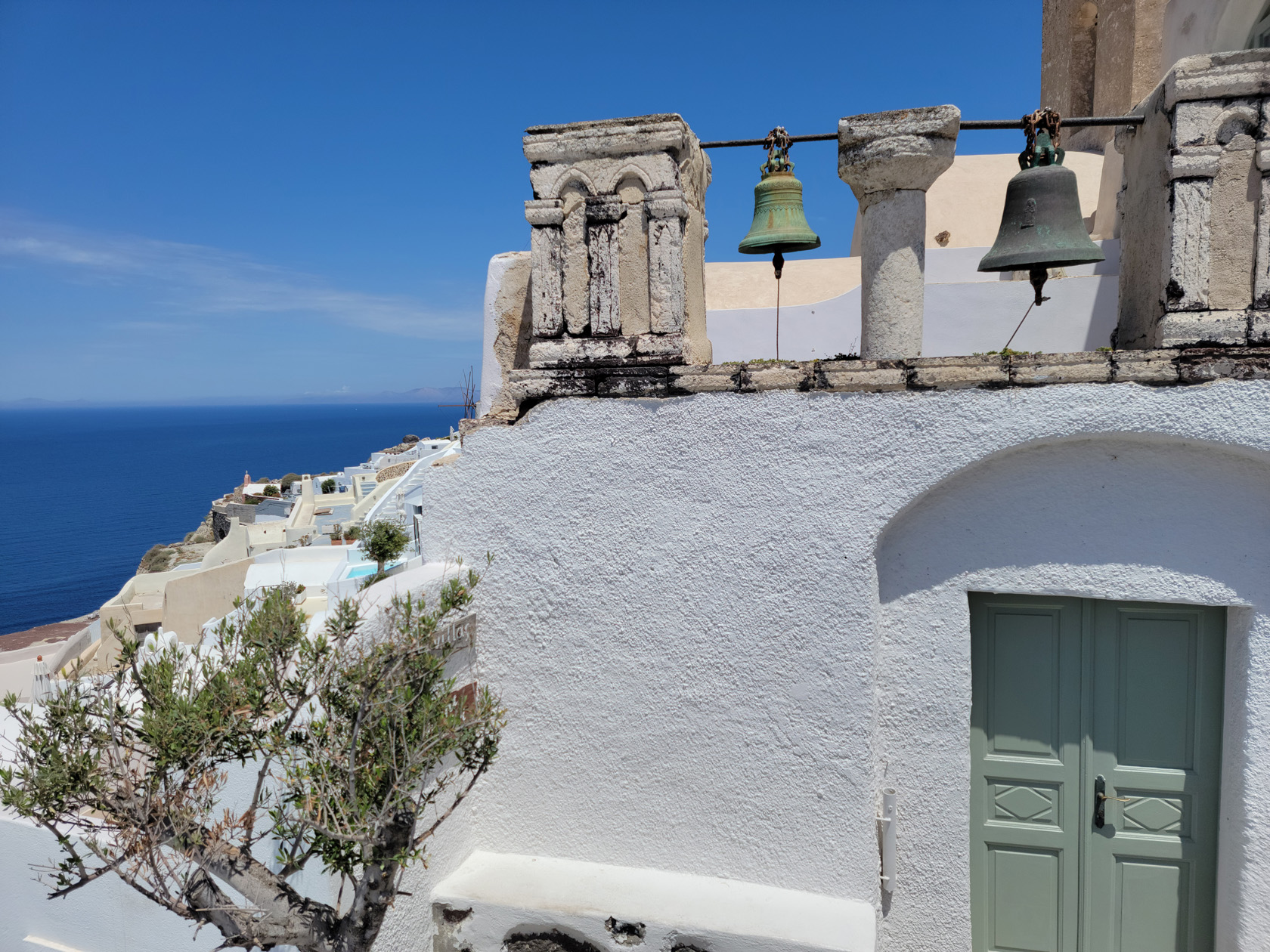
Oia, Santorini – Old Church and Bronze Bells
Oia, Santorini – Old Windmill
Oia, Santorini – Panorama
Oia, Santorini – Ericka and Gabi
Oia, Santorini – Parekklesio Church from Castle
Oia, Santorini – Looking Toward Old Windmill
The Atrina Cavana 1894 Hotel
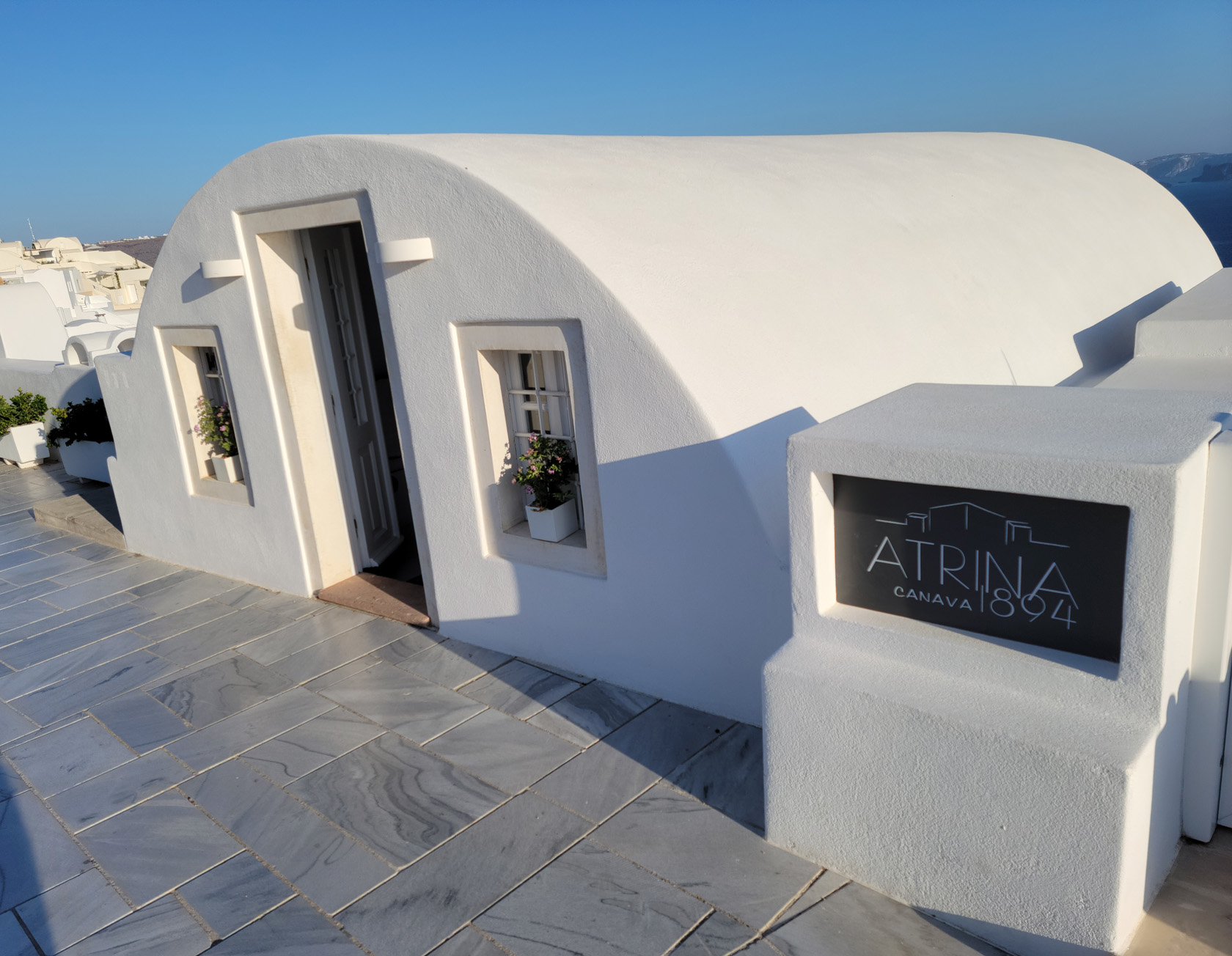
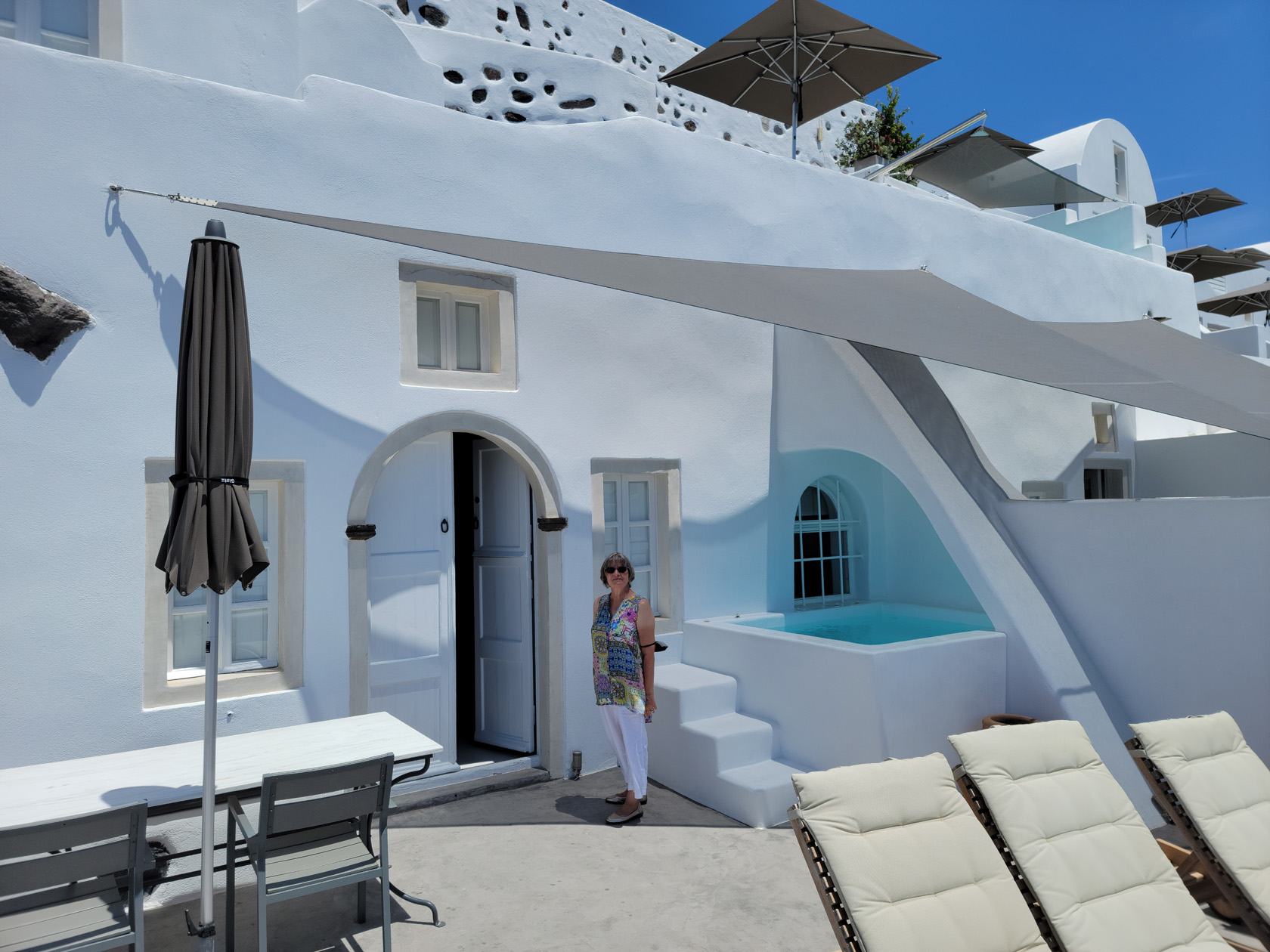
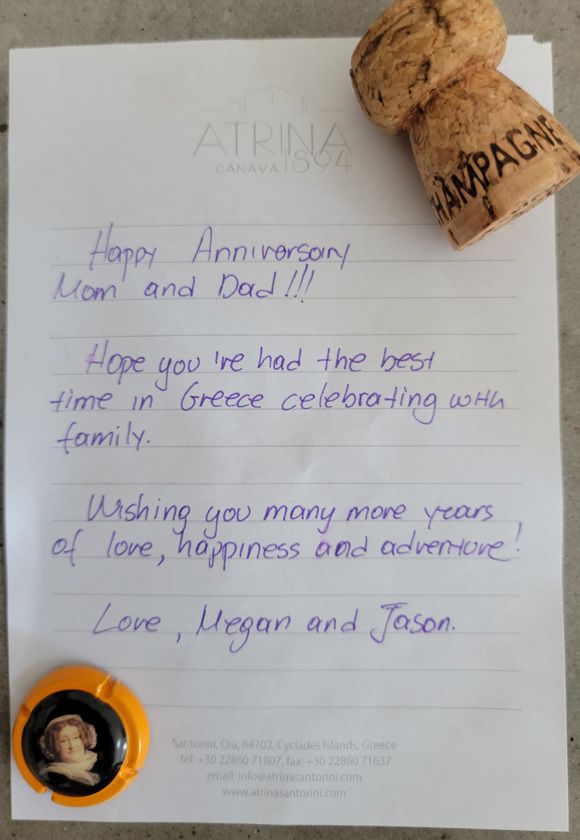
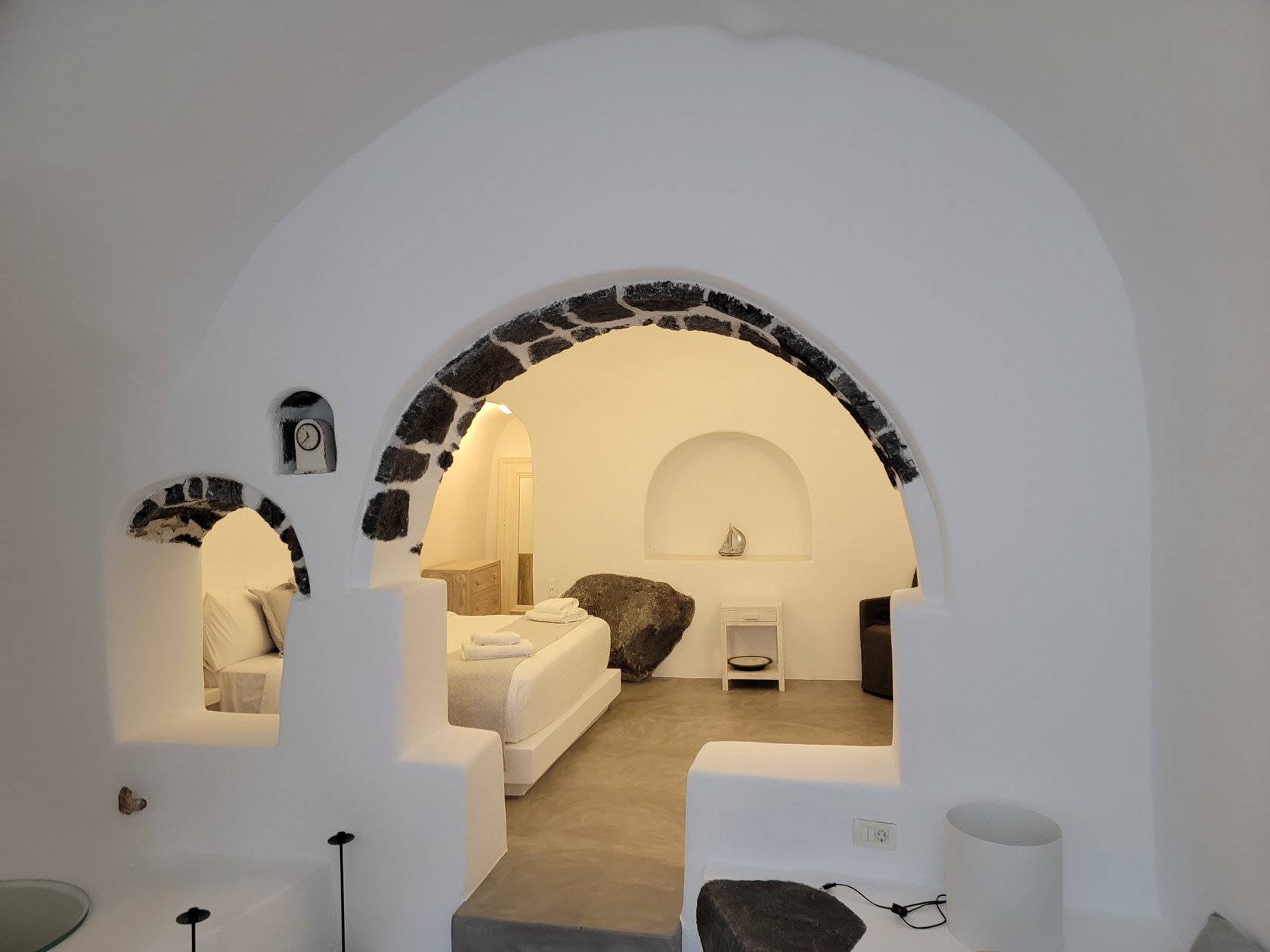
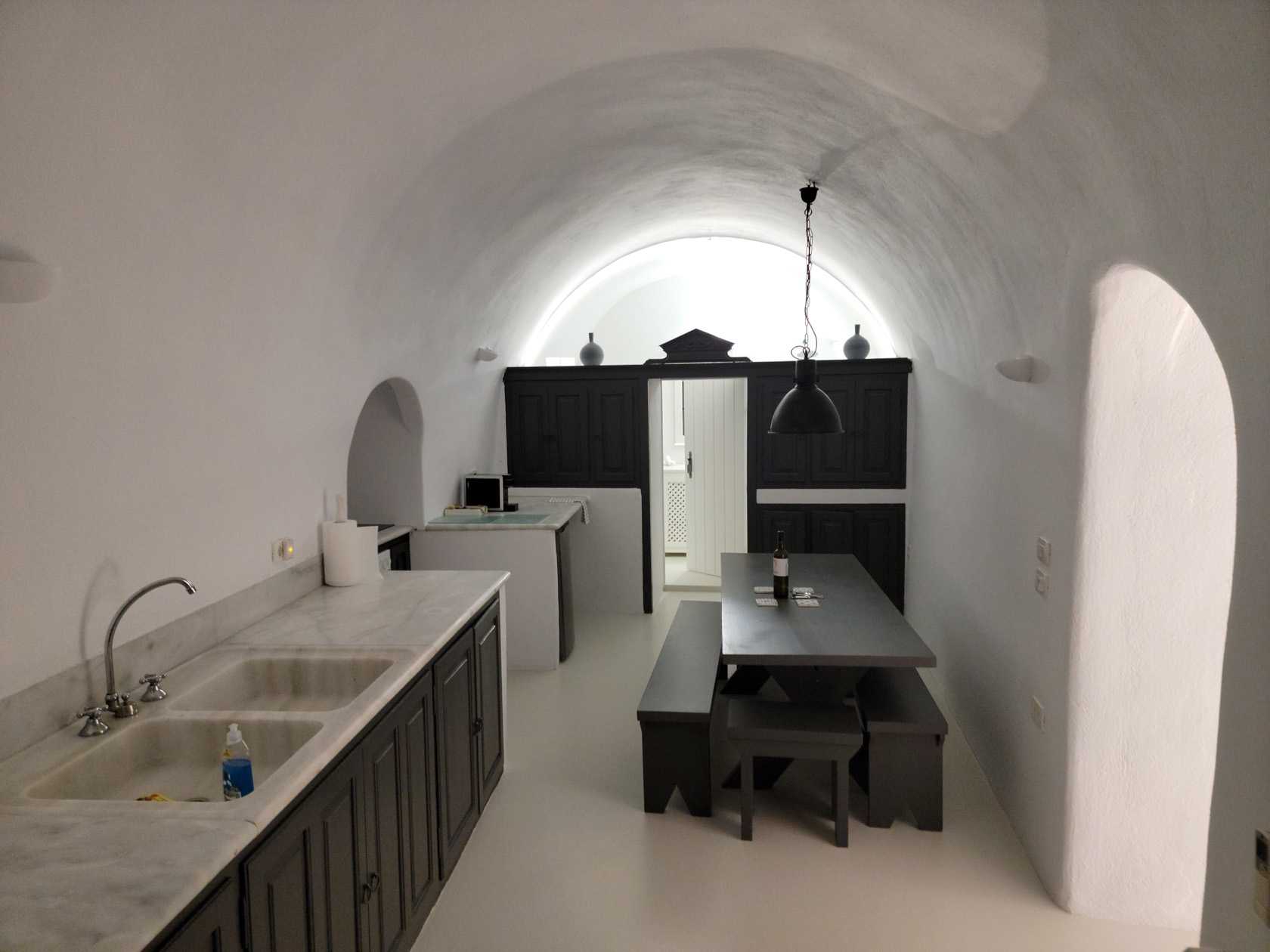
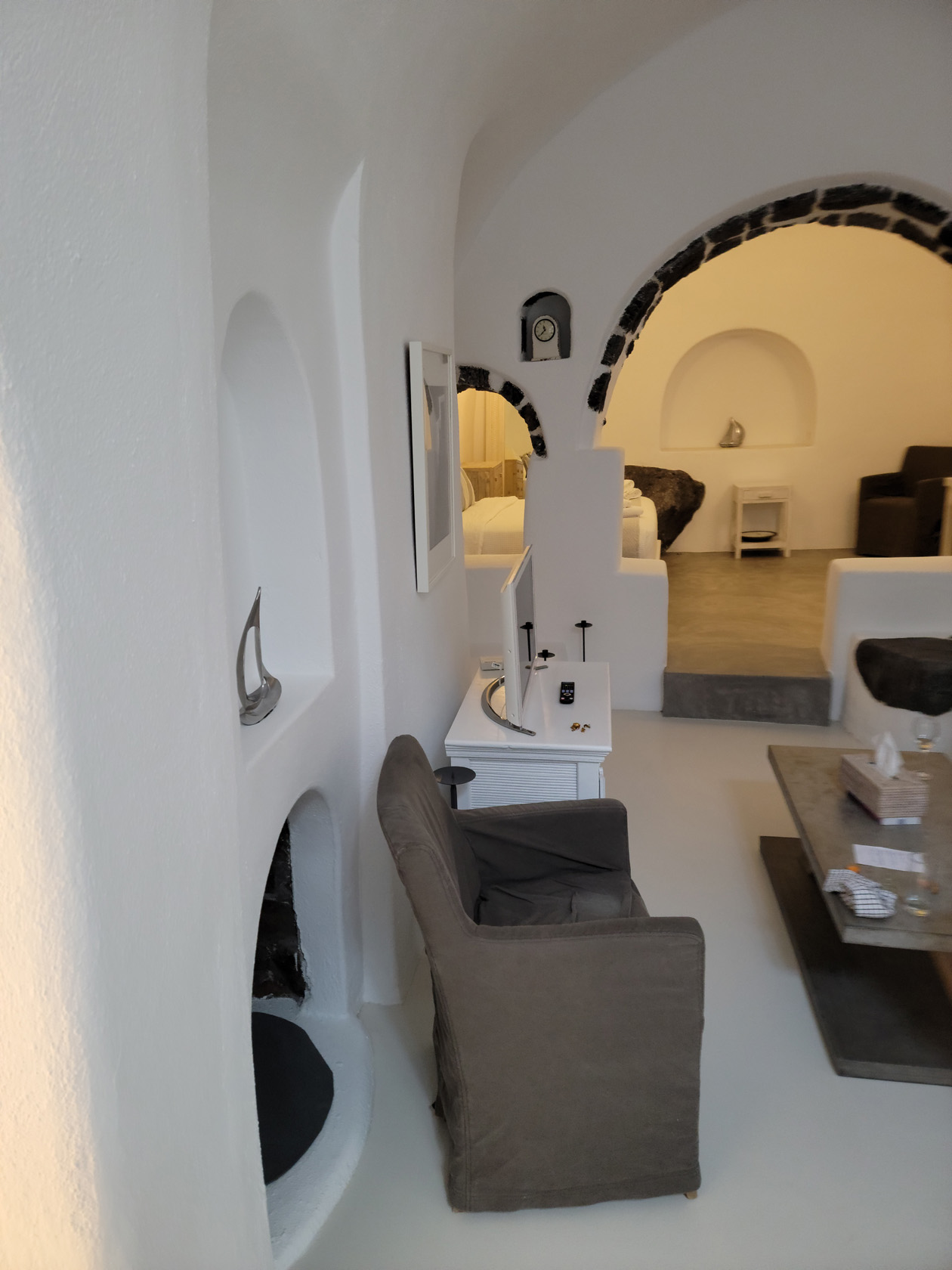
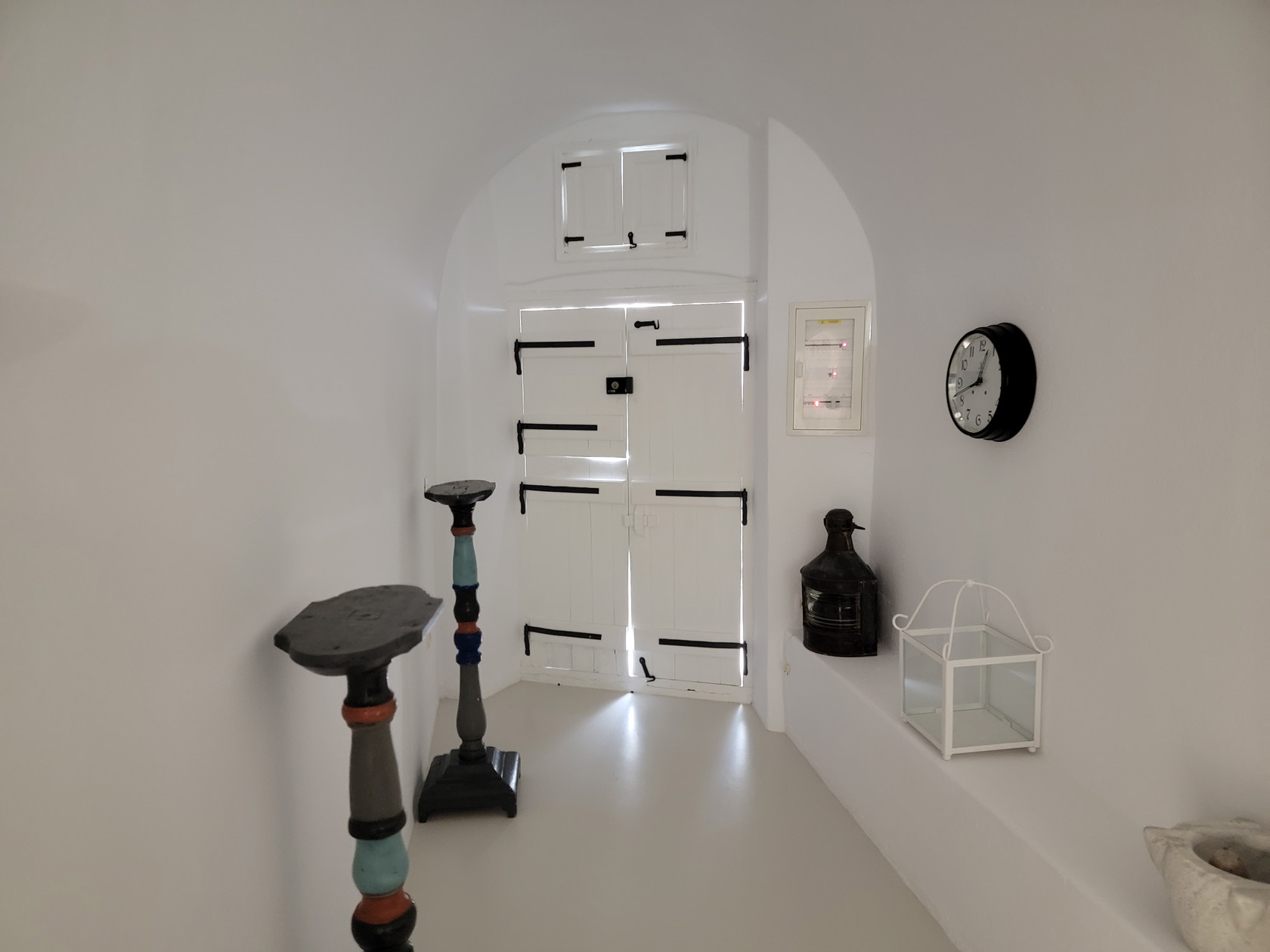
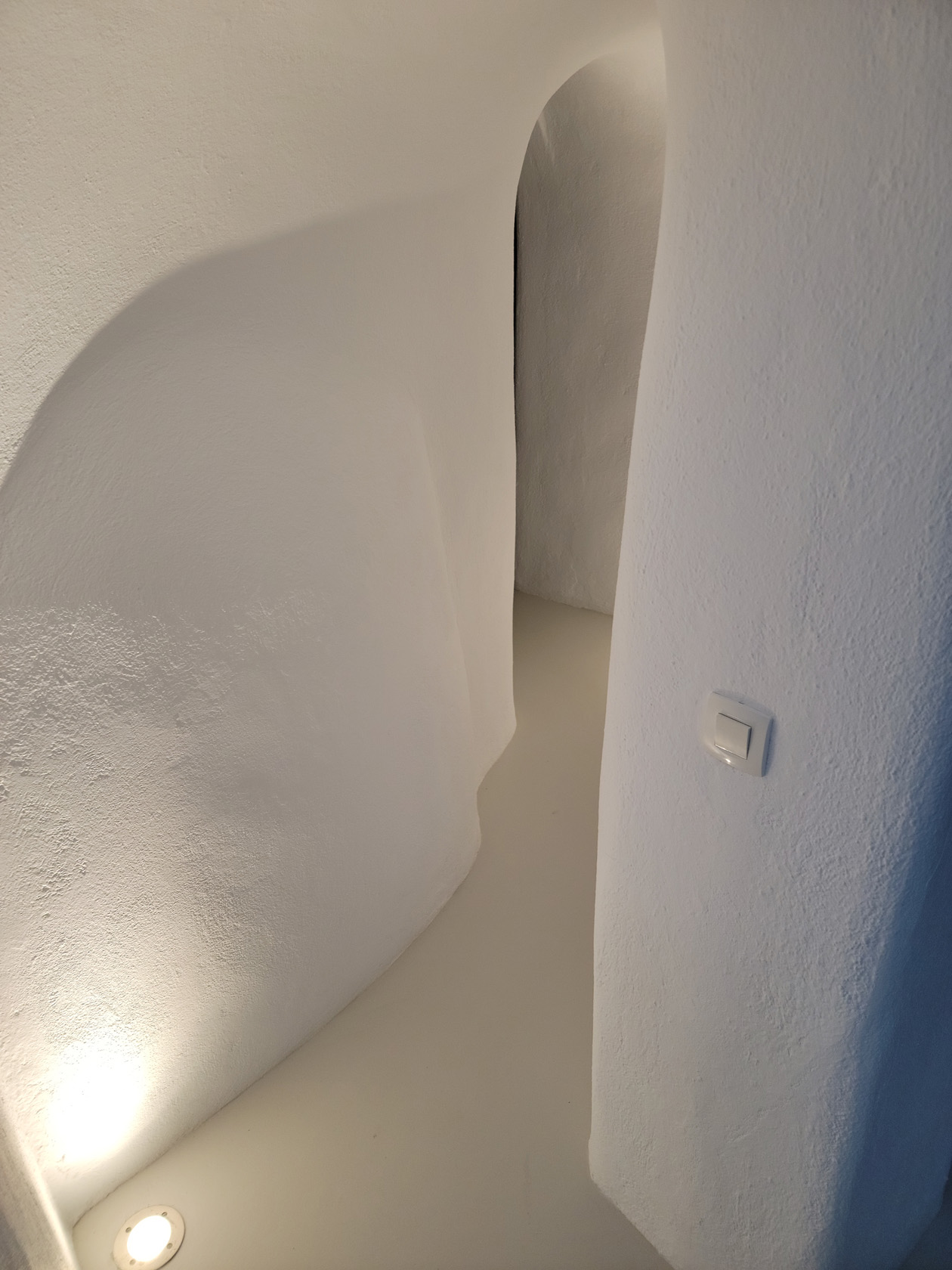
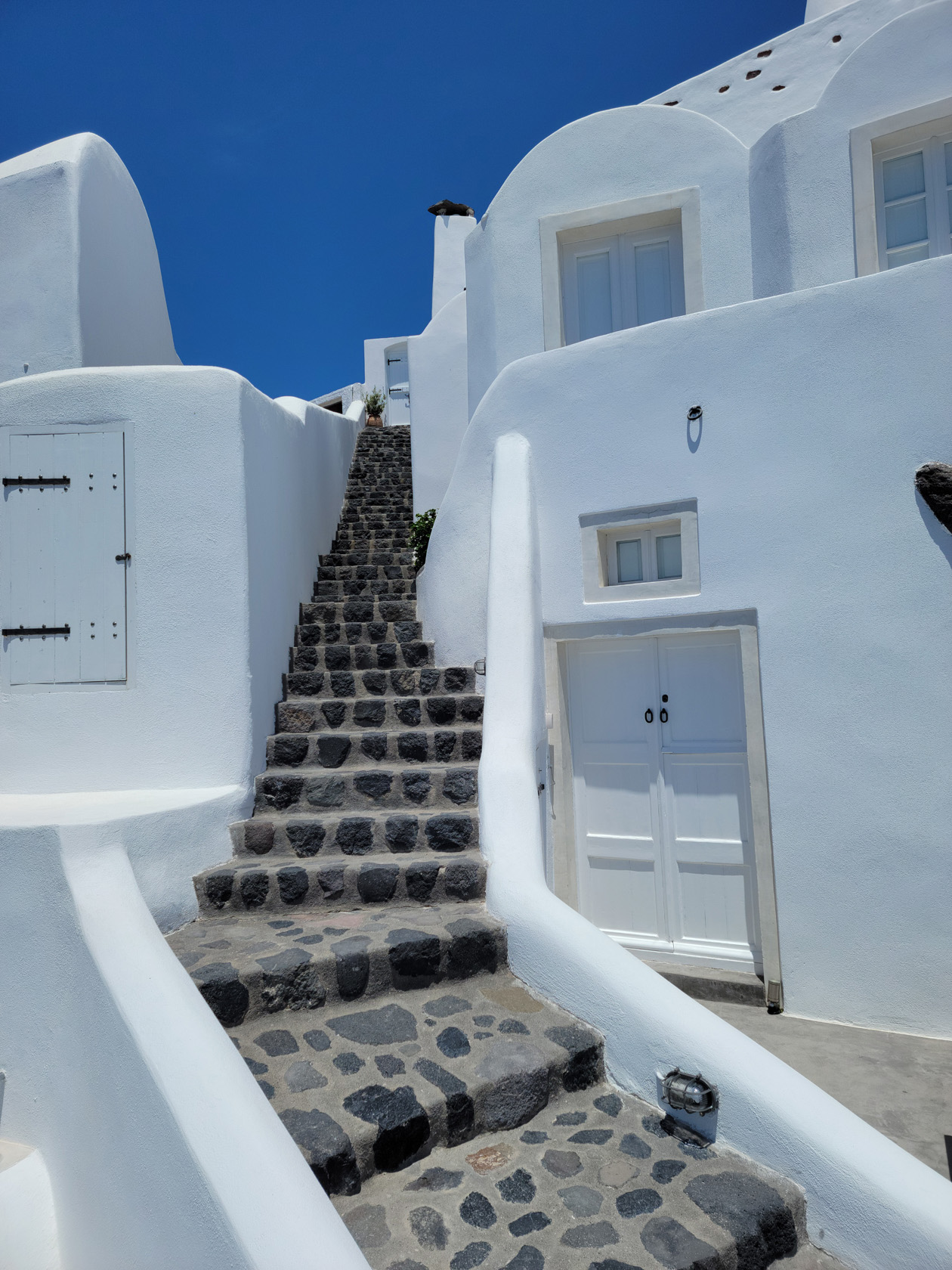
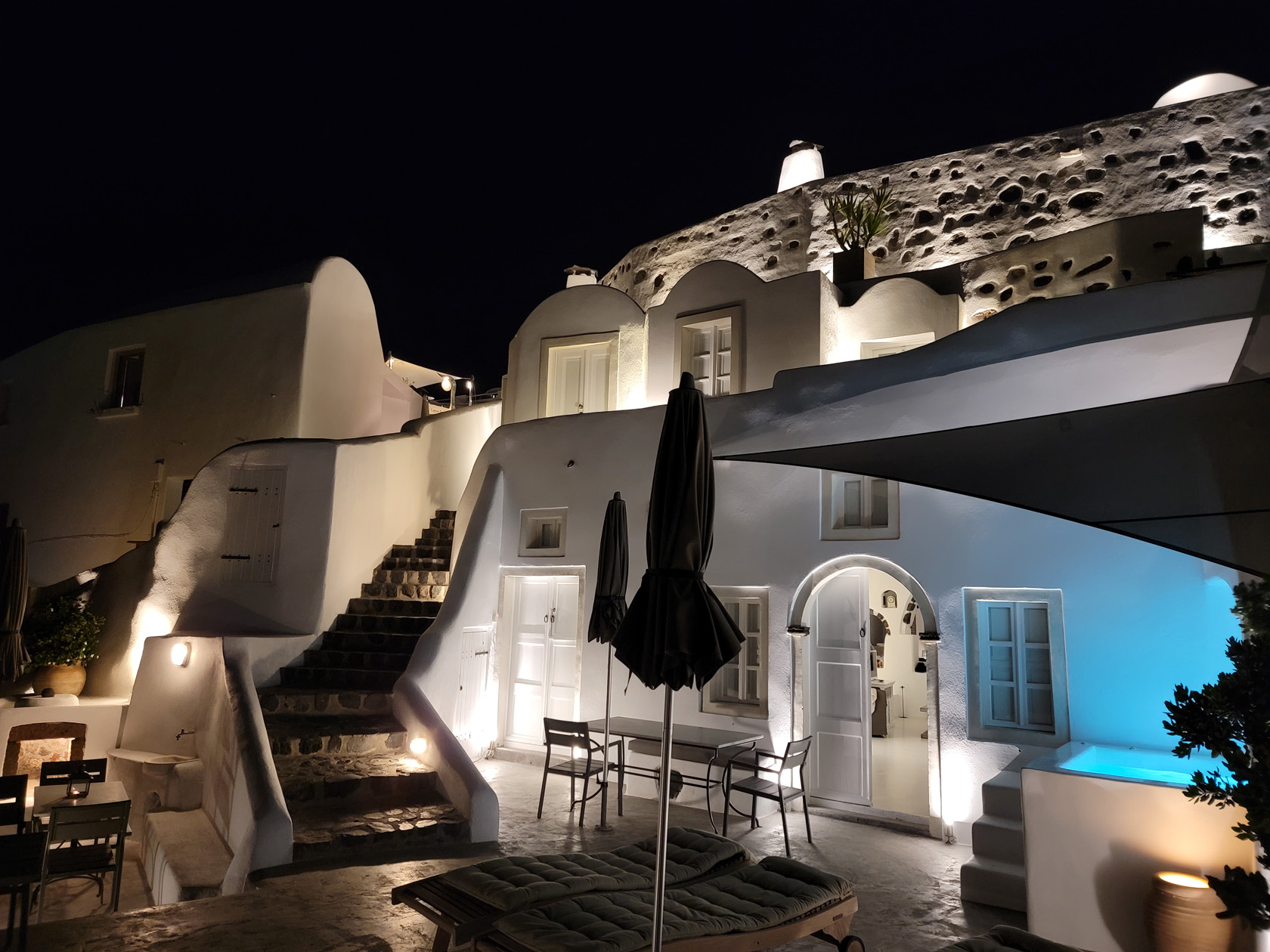
We stayed at the Atrina Cavana 1894 in the Atrina Villa for our anniversary. It was very spacious and has all the amenities one should need, it even has a kitchenette for those who wish to cook in on occasion.
Oia, Santorini – Atrina Canava 1894 – Entrance
Oia, Santorini – Atrina Canava Villa – Patti
Oia, Santorini – Atrina Canava Villa
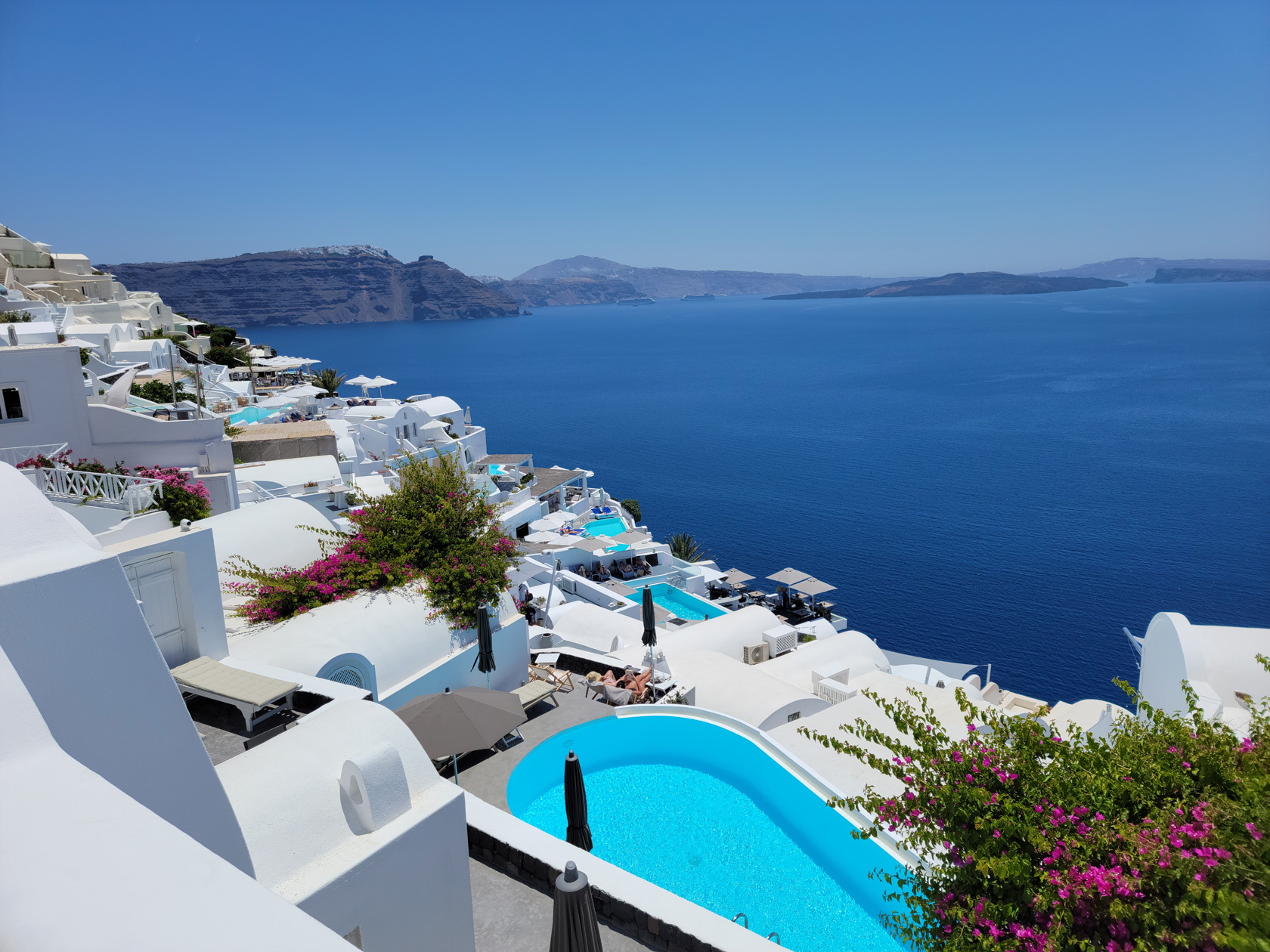
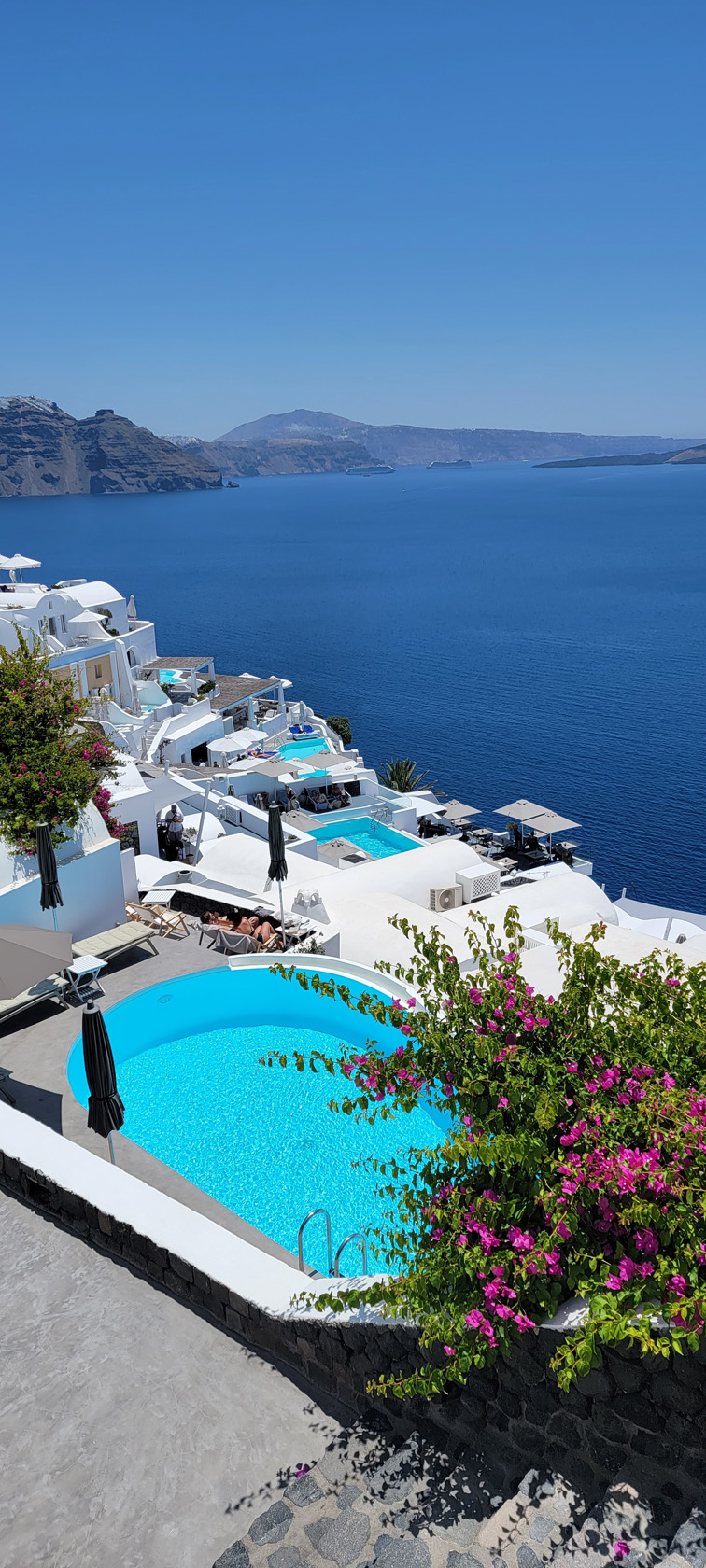
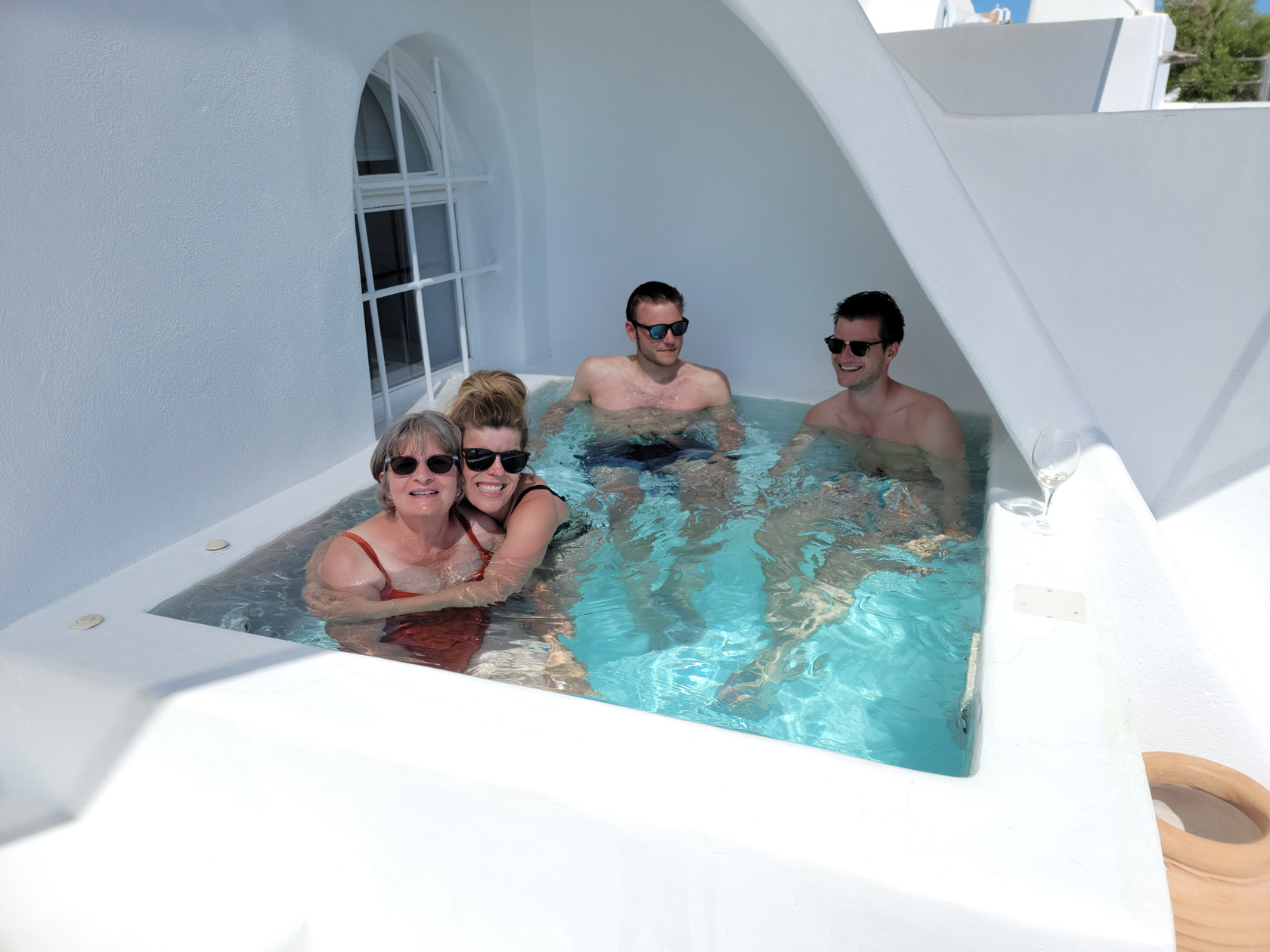
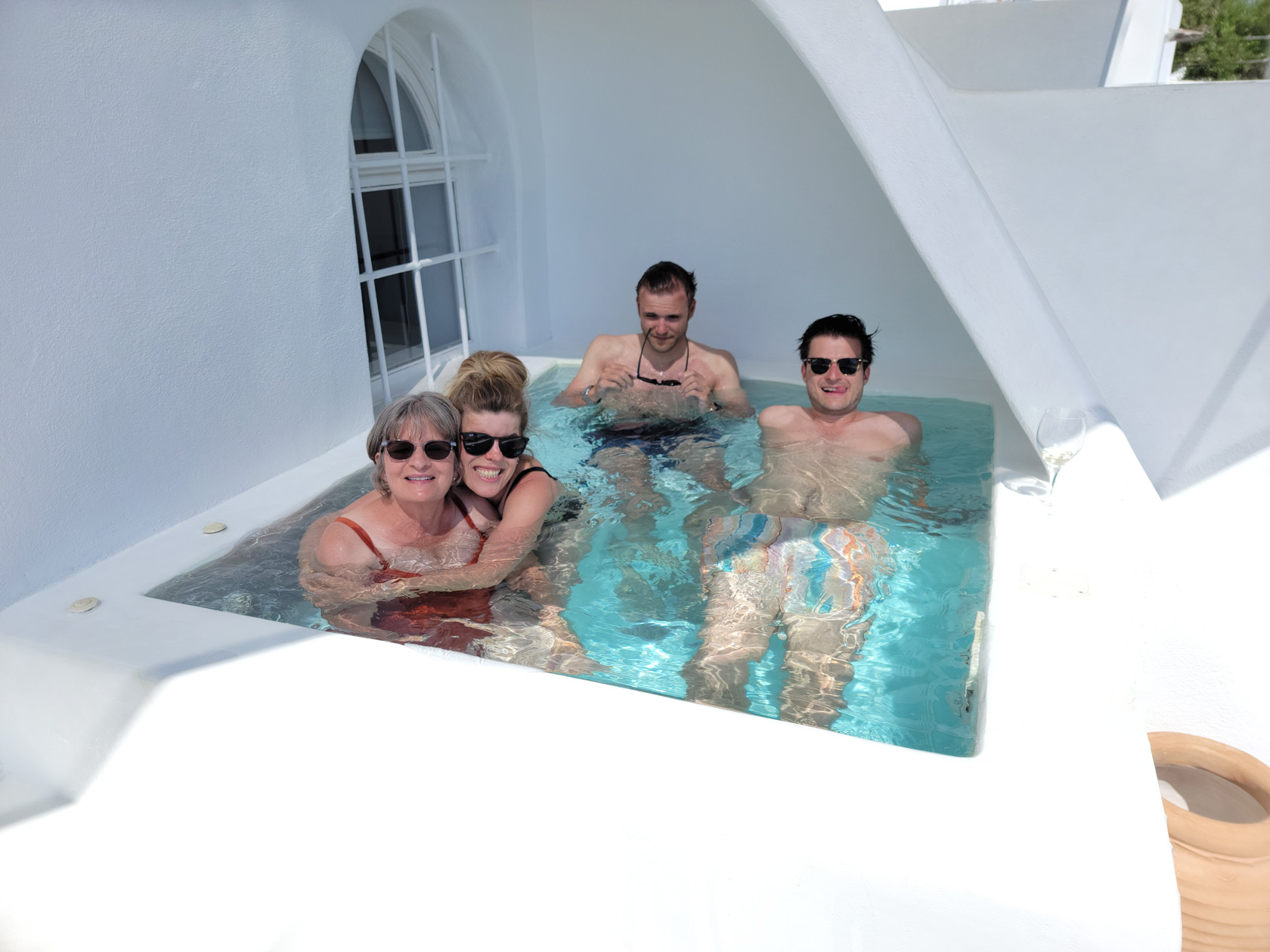
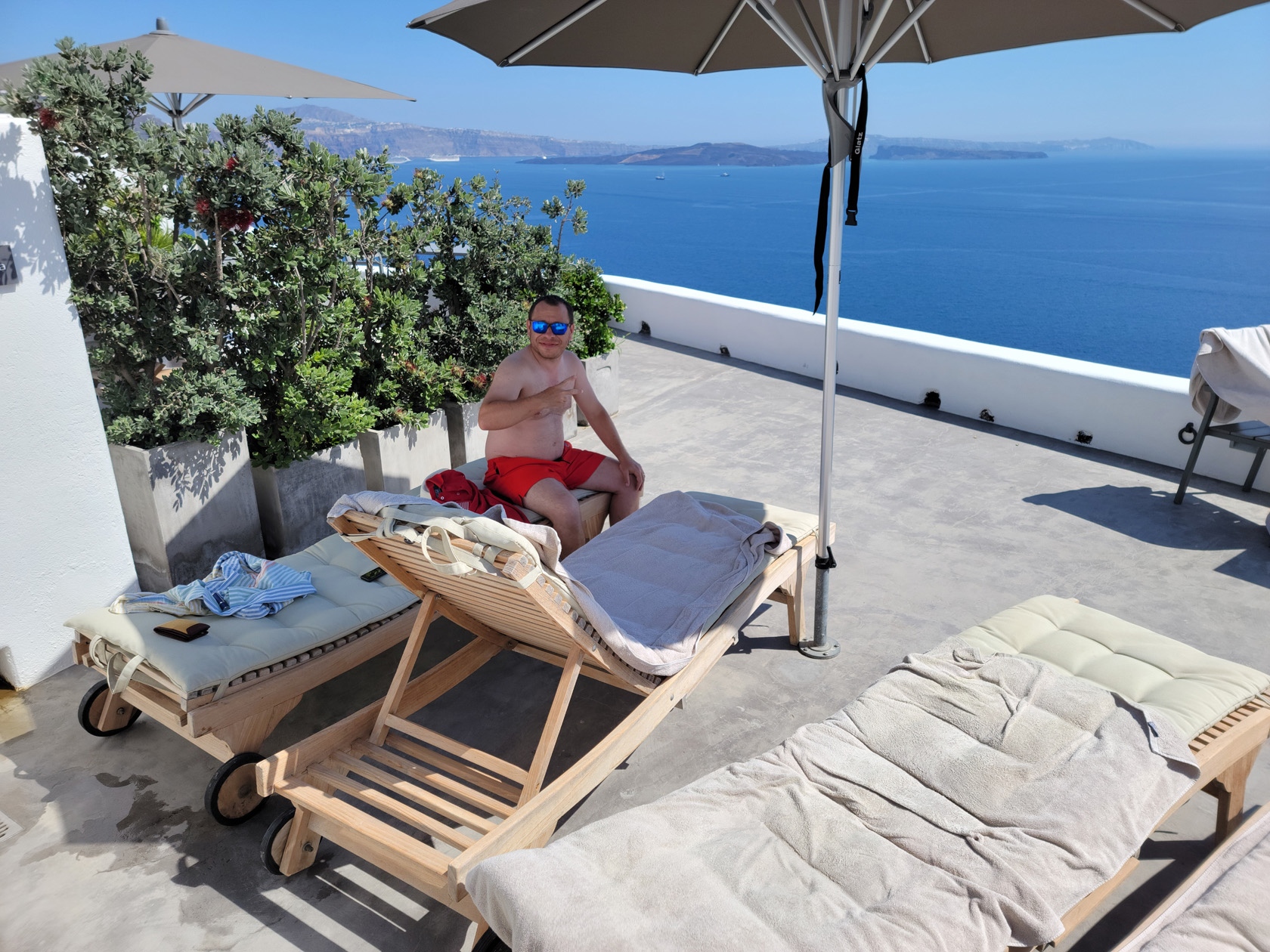
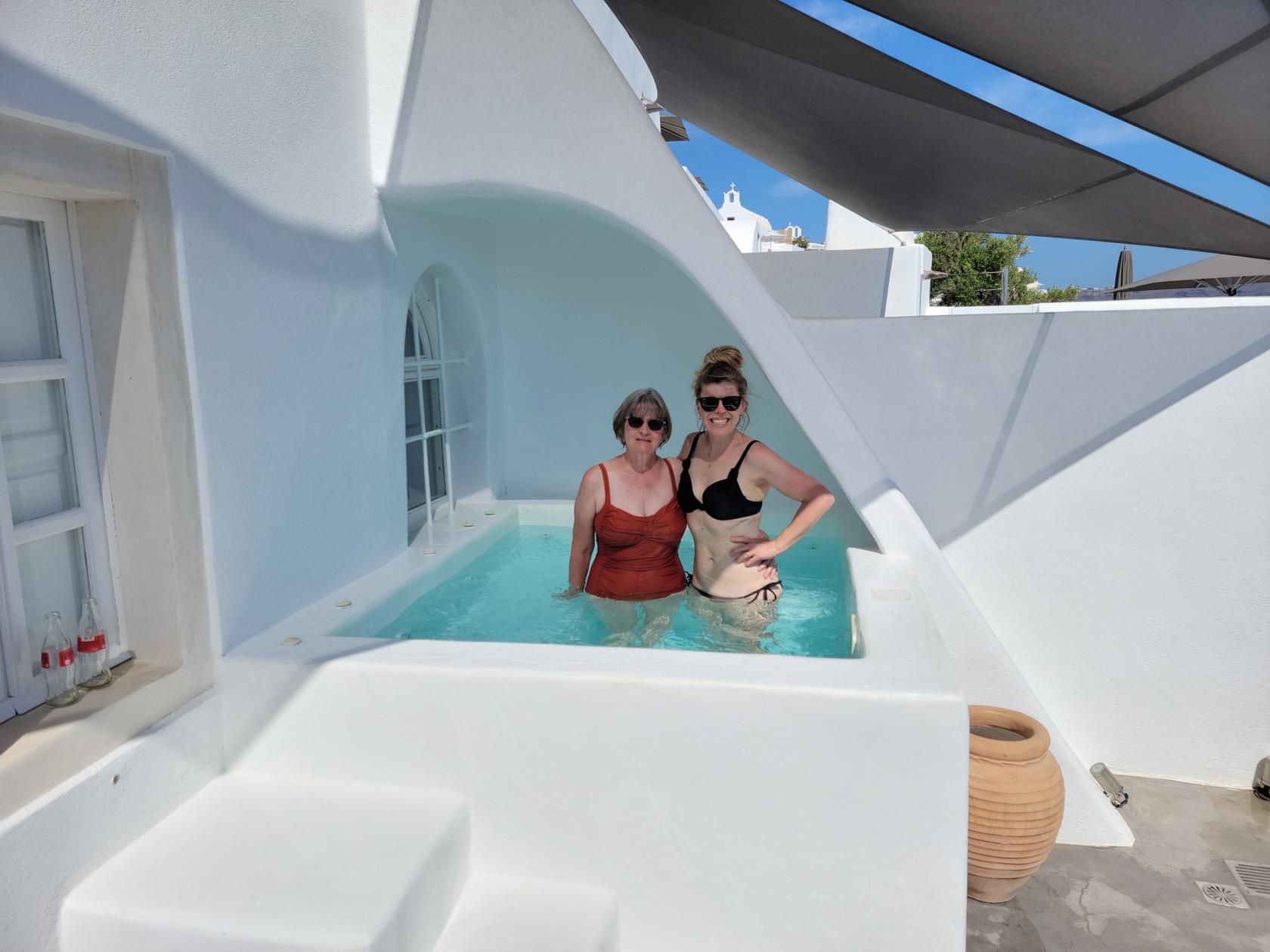
Since real estate is at a premium, not all hotels in Oia have pools, our hotel was probably an exception. Not only did we have access to a pool, but we also had a hot tub with our villa that all of us took advantage. The pool was actually a bit cold and the surface was very slippery. We had fun anyway.
Oia, Santorini – Atrina Canava Villa – Anniversary Message and Champagne
Oia, Santorini – Atrina Canava Villa – Bedroom
Oia, Santorini – Atrina Canava Villa – Kitchen and Extra Bathroom
Oia, Santorini – Atrina Canava Villa – Fireplace, Living Room and Bedroom
Oia, Santorini – Atrina Canava Villa – Kitchen Entrance
Oia, Santorini – Atrina Canava Villa – Connecting Hallway
Oia, Santorini – Atrina Canava Villa – Private Entrance
Oia, Santorini – Atrina Canava 1894
Oia, Santorini – Atrina Canava 1894 Pool
Oia, Santorini – Atrina Canava Villa – Patti, Ericka, Tristan and Dana
Oia, Santorini – Atrina Canava 1894 Pool
Oia, Santorini – Atrina Canava Villa – Patti, Ericka, Tristan and Dana
Oia, Santorini – Atrina Canava Villa
Oia, Santorini – Atrina Canava Villa – Gabi
Oia, Santorini – Atrina Canava Villa
Oia, Santorini – Atrina Canava Villa – Patti and Ericka
Oia, Santorini – Atrina Canava Villa – Stairs to Dock
Oia, Santorini – Atrina Canava Villa – Cliffside
Oia, Santorini – Atrina Canava Villa – At Night
Oia, Santorini – Atrina Canava Villa – At Night
Oia, Santorini – Atrina Canava Villa – At Night
Oia, Santorini – Atrina Canava Villa – At Night
Oia, Santorini – Atrina Canava 1894 Entrance
Restaurants
There are many good restaurants in Santorini, probably only during tourist season, since many do not open until late May or early June. Many cruise ships also visit the island starting in June and ferry passengers near Thira, so it is best to make reservations, at least if you are staying on the island and know your itinerary.
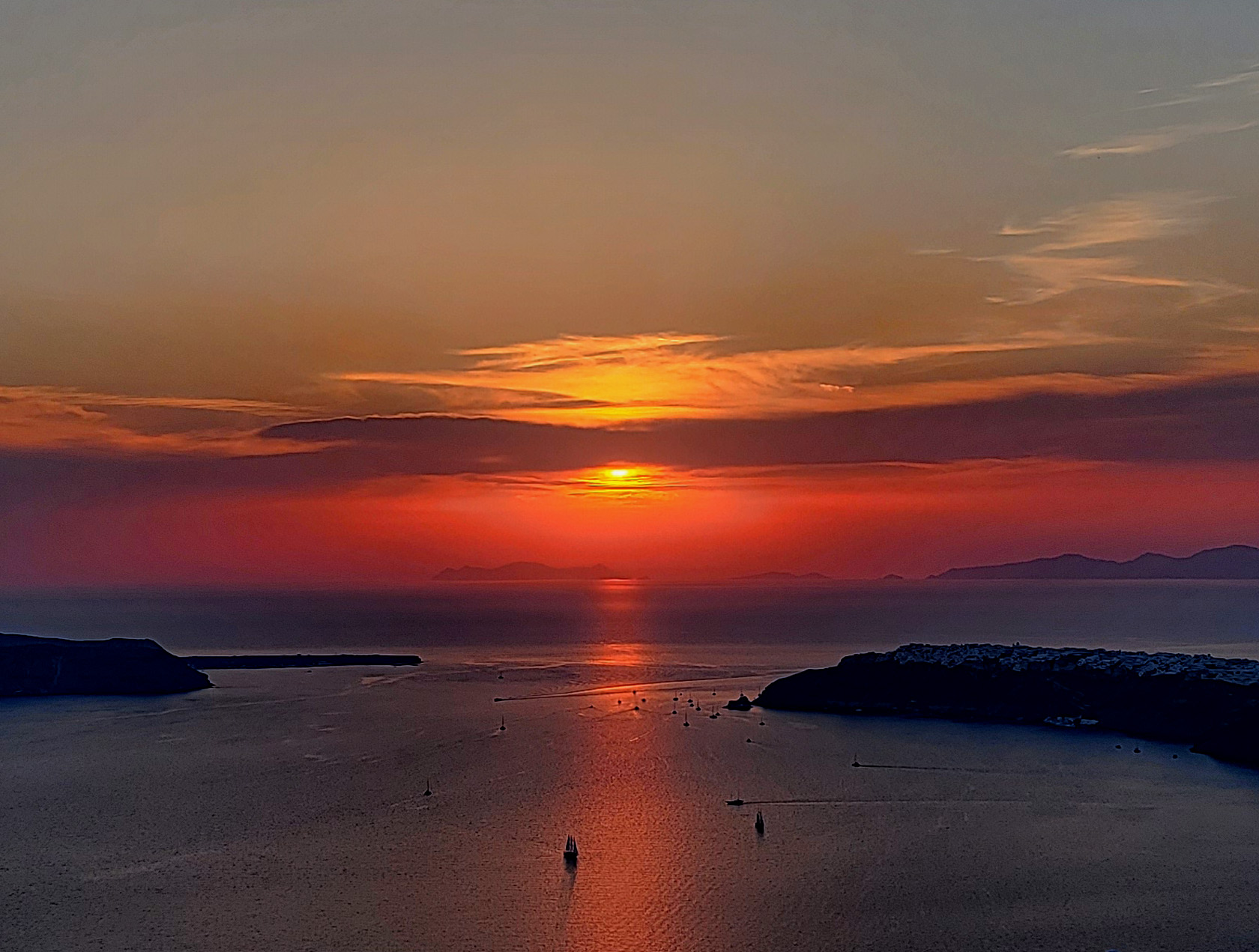
Imerovigli, Santorini – Sunset from Avocado Restaurant
Finding a place in Thira, Imerovigli or Oia, at least one that has both a sunset view and exceptional food, may be challenging, but not impossible. We actually were able to do both, here are a few that we visited for either lunch or dinner.
Avocado
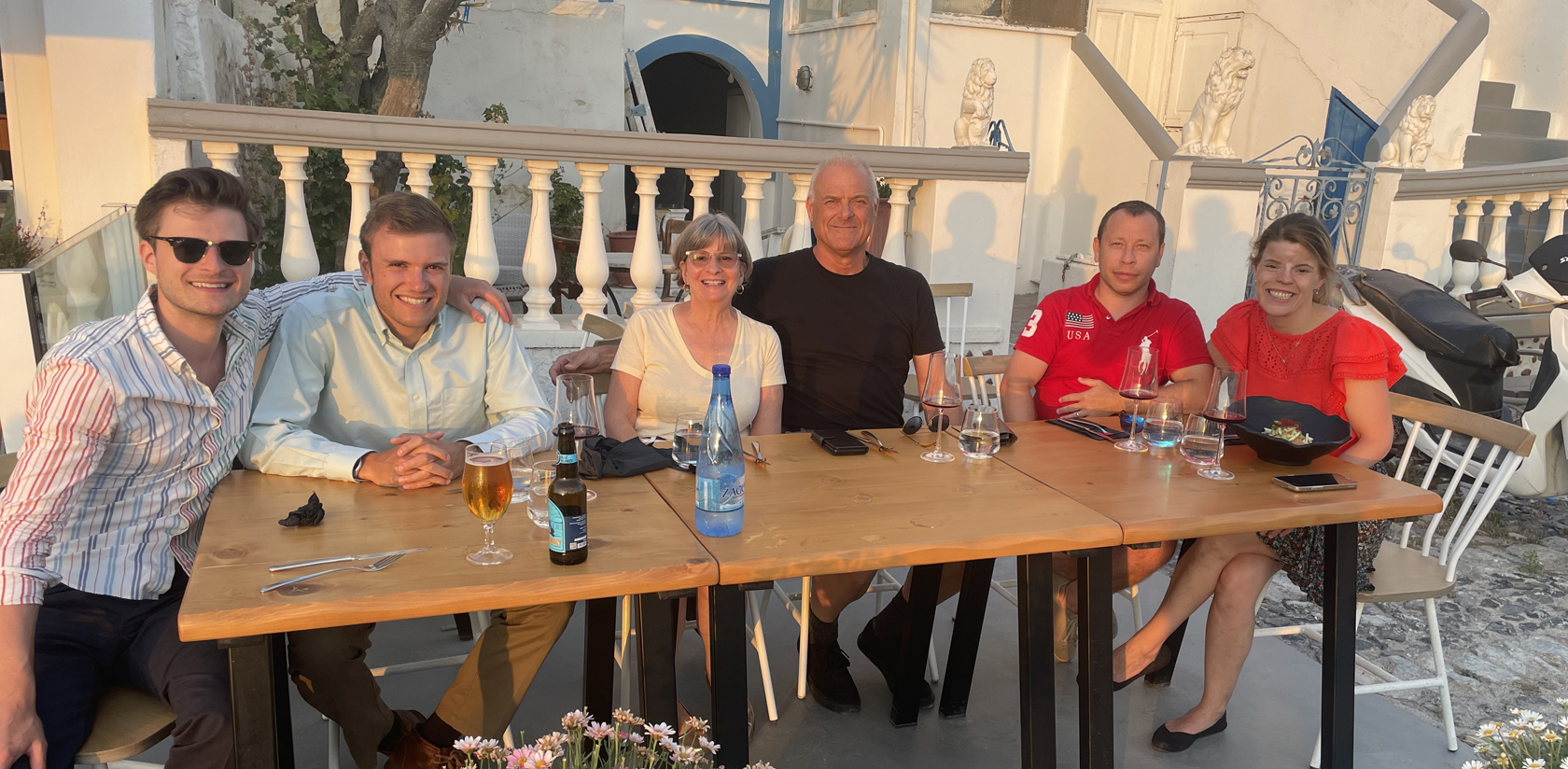
Situated in Imerovigli and not necessarily one of the best places to view a sunset, the Avocado restaurant has good food and a pretty good wine list. We chose it, because it was very close to our hotel and we were all a bit tired.
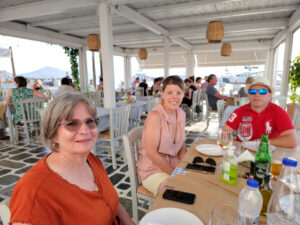
Avocado Restaurant – Group Photograph
The service was as expected and since we sat outside, we were able to enjoy the sunset and had a very nice evening eating and talking.
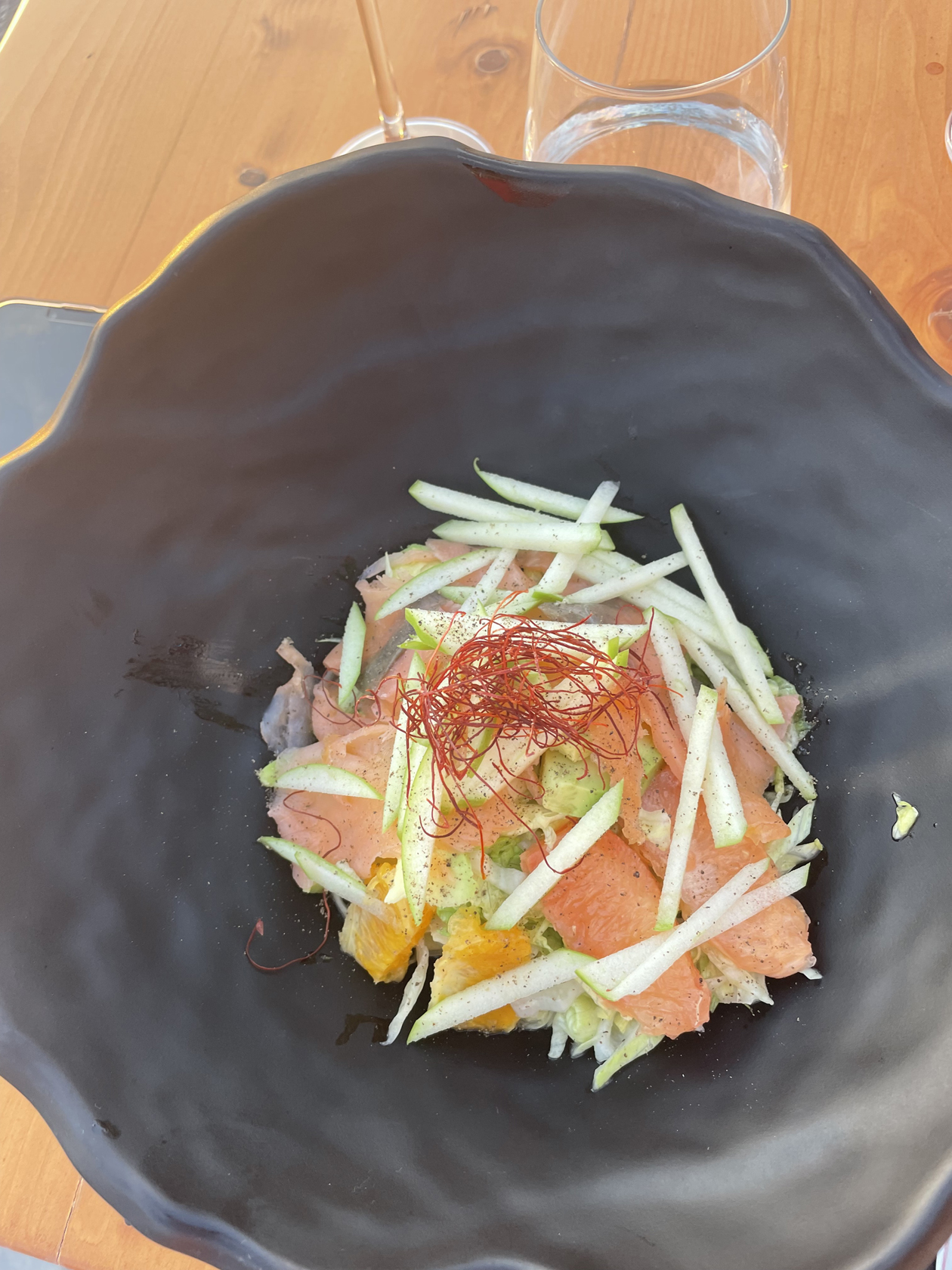
Avocado Restaurant – Salmon Salad
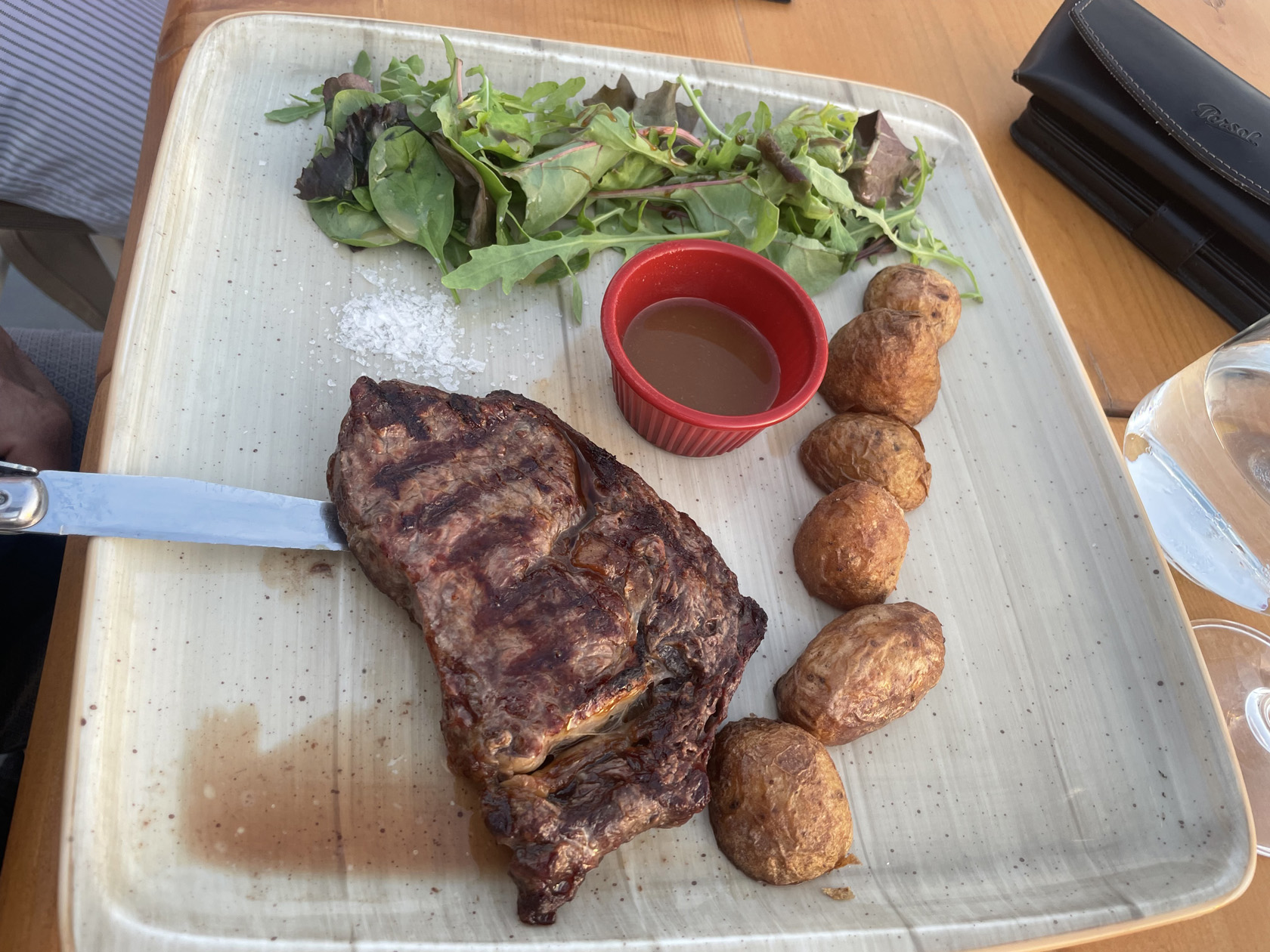
Avocado Restaurant – Ribeye with Potatoes
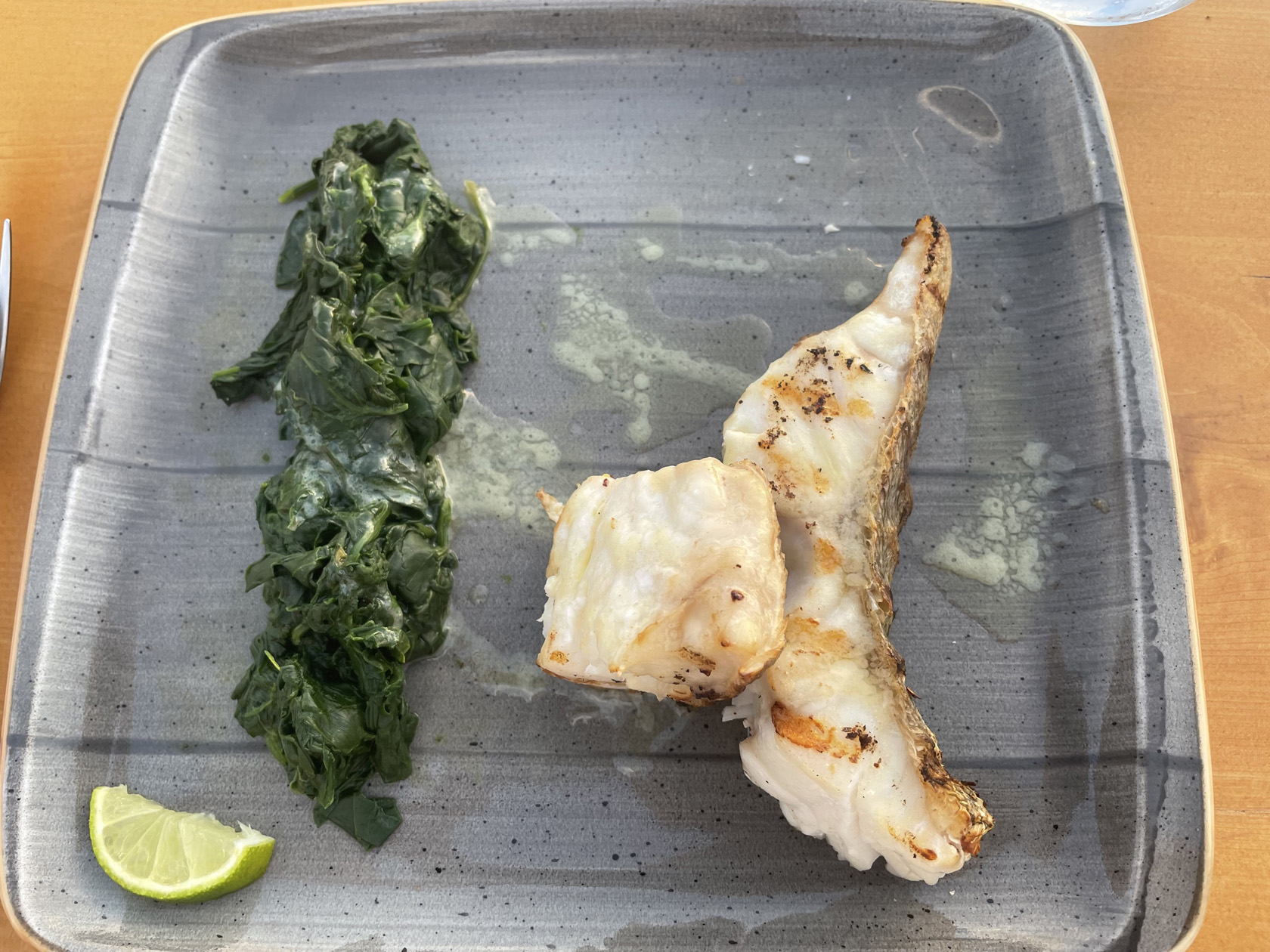
Avocado Restaurant – Snapper with Spinach
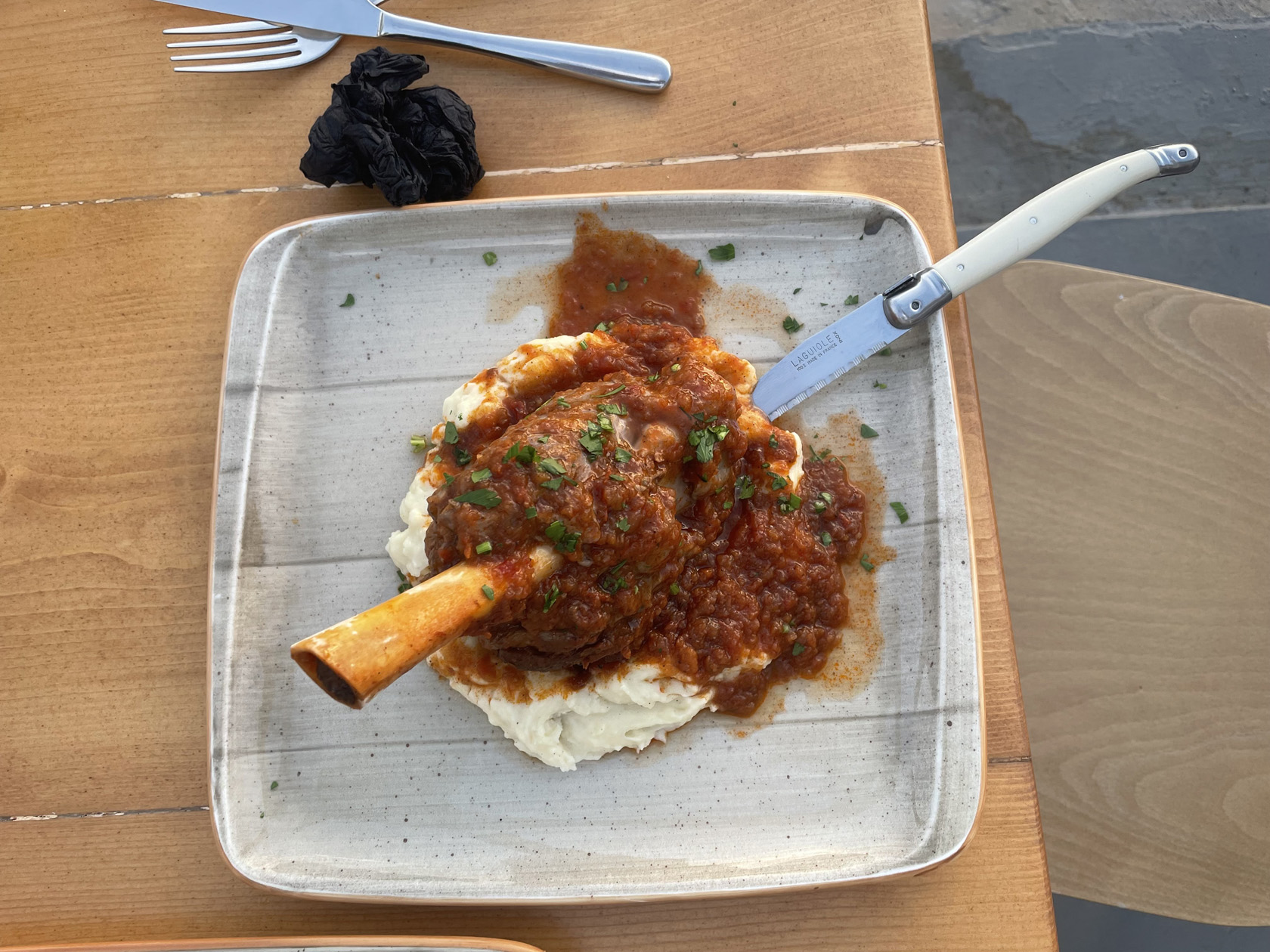
Avocado Restaurant – Lamb Shank on Potatoes
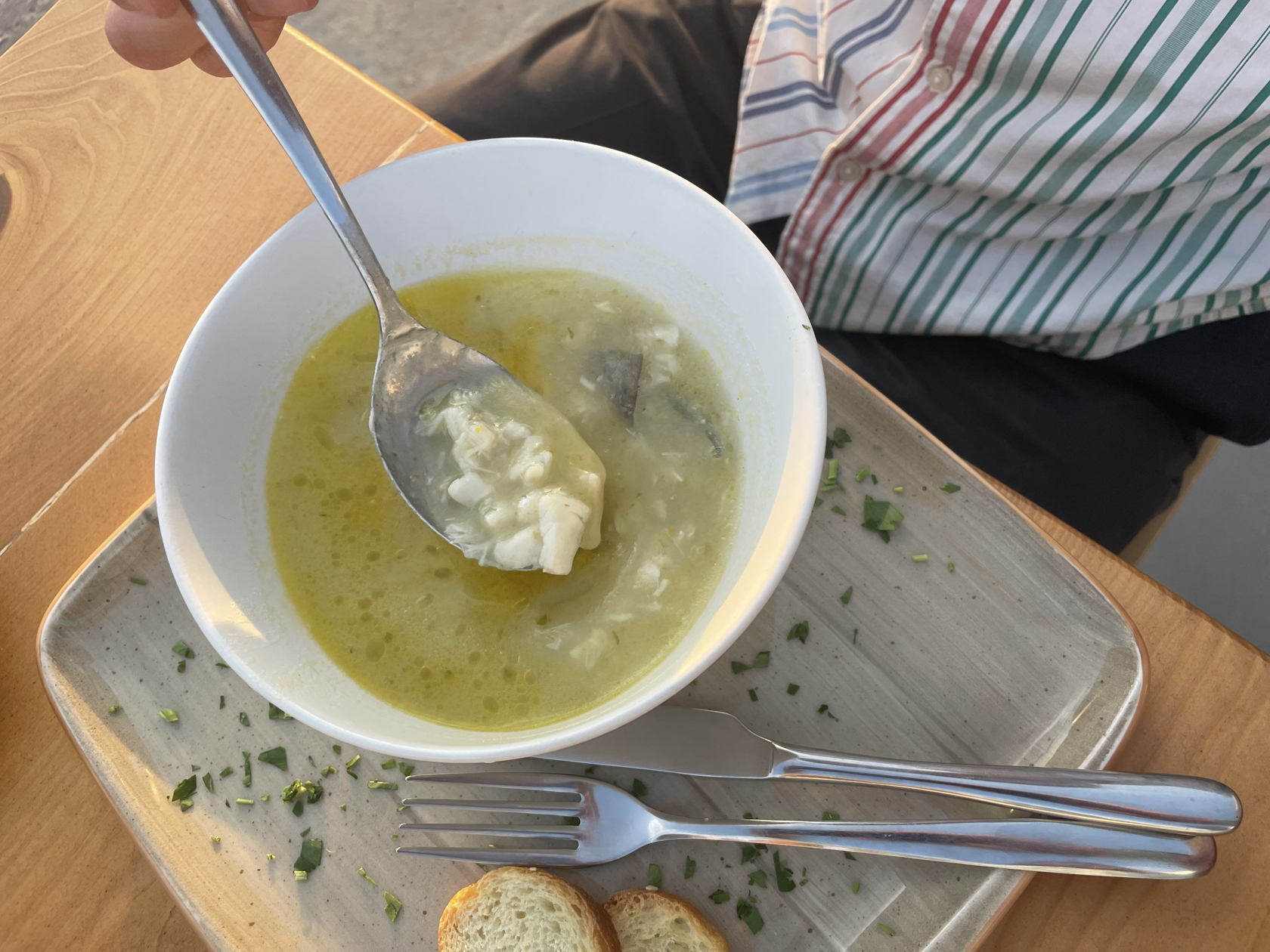
Avocado Restaurant – Soup
Kastro Restaurant
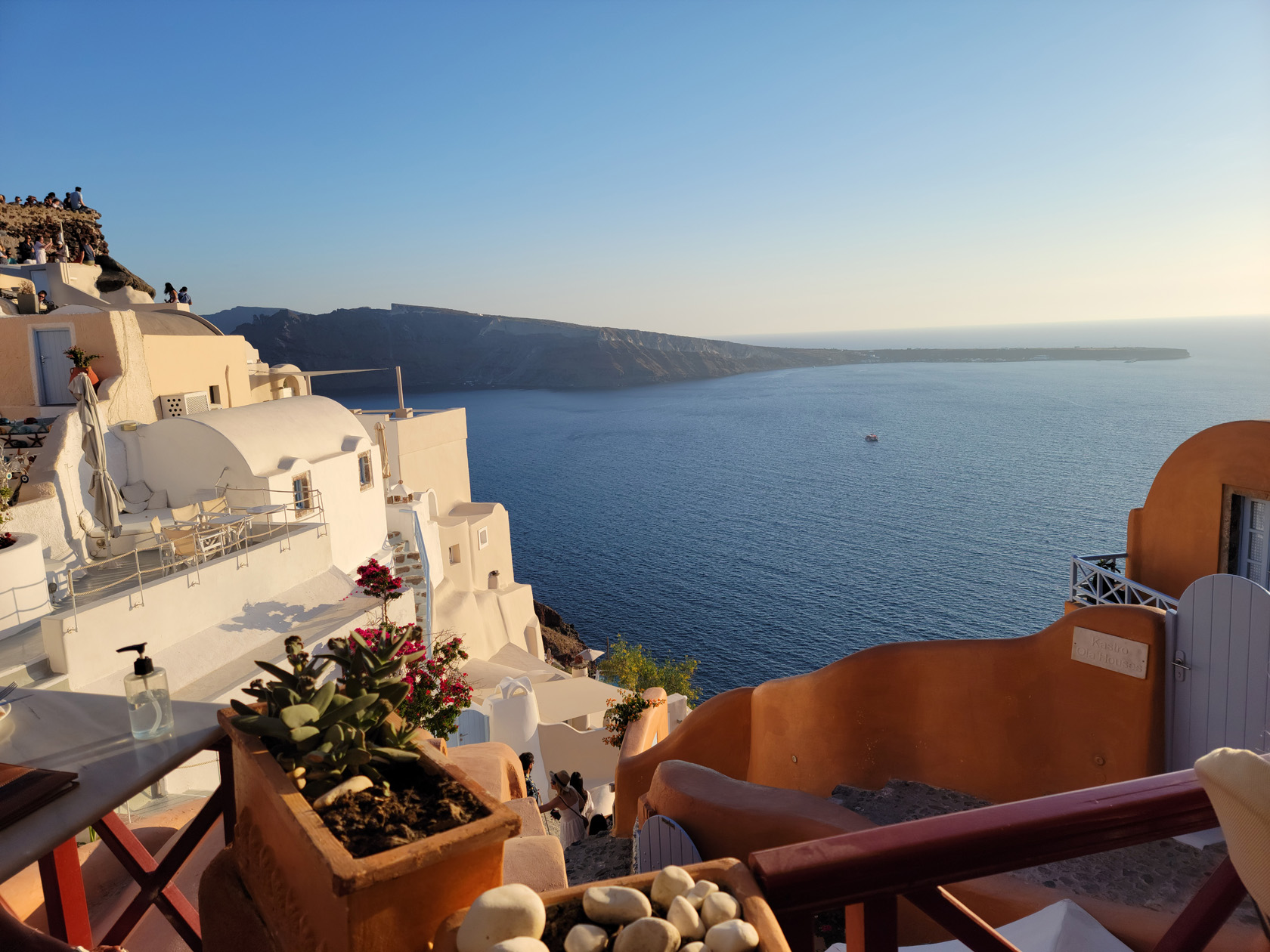
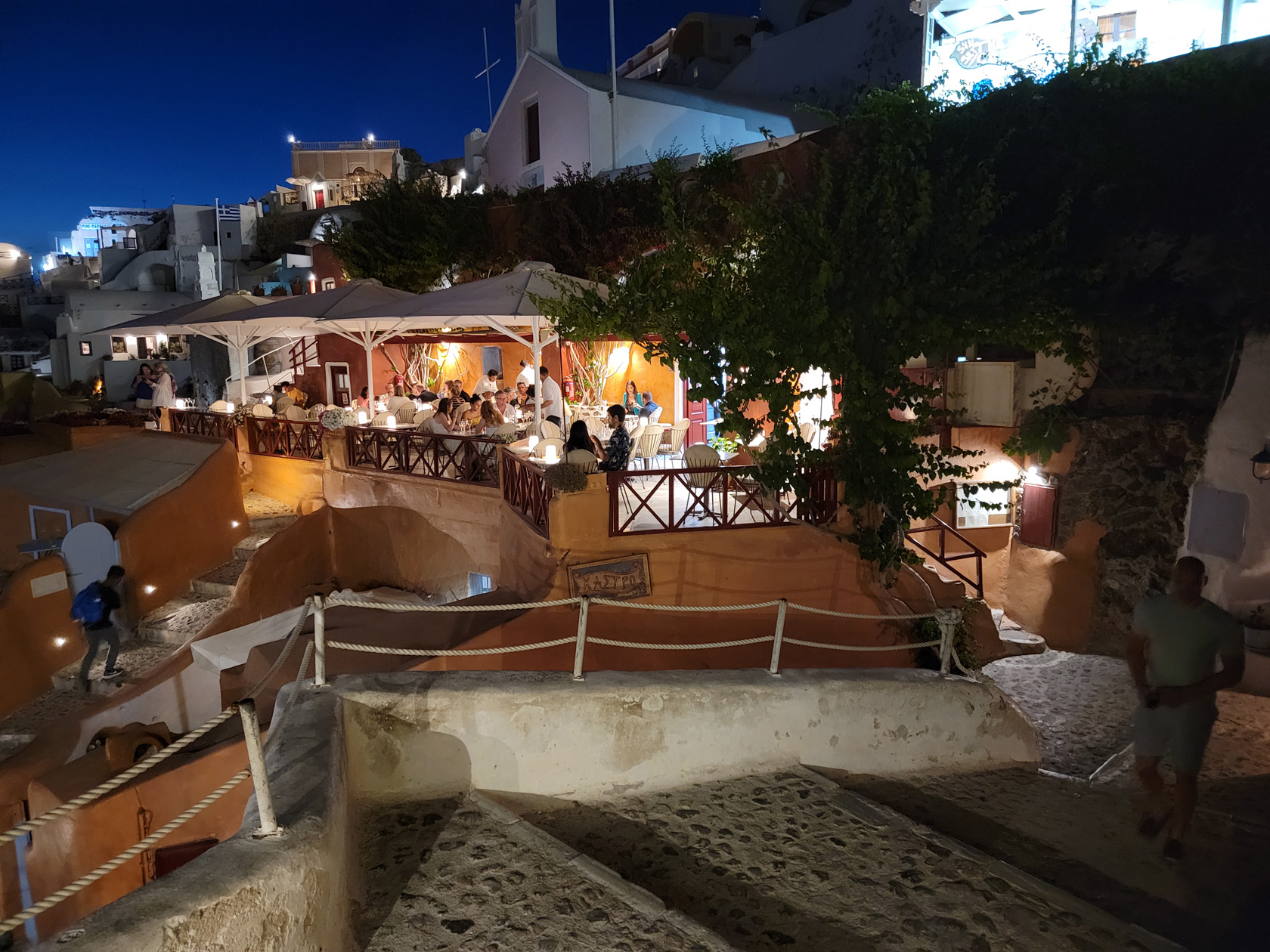
The Kastro restaurant in Oia is known for its amazing sunset venue. Book at table during the summer for around 7:30 and you will have it long enough to the enjoy a beautiful sunset in Oia. The view of the caldera is just fantastic and the food is not bad either. Personally, I didn’t take any sunset photographs here, since I think the sunsets from Imerovigli are better.
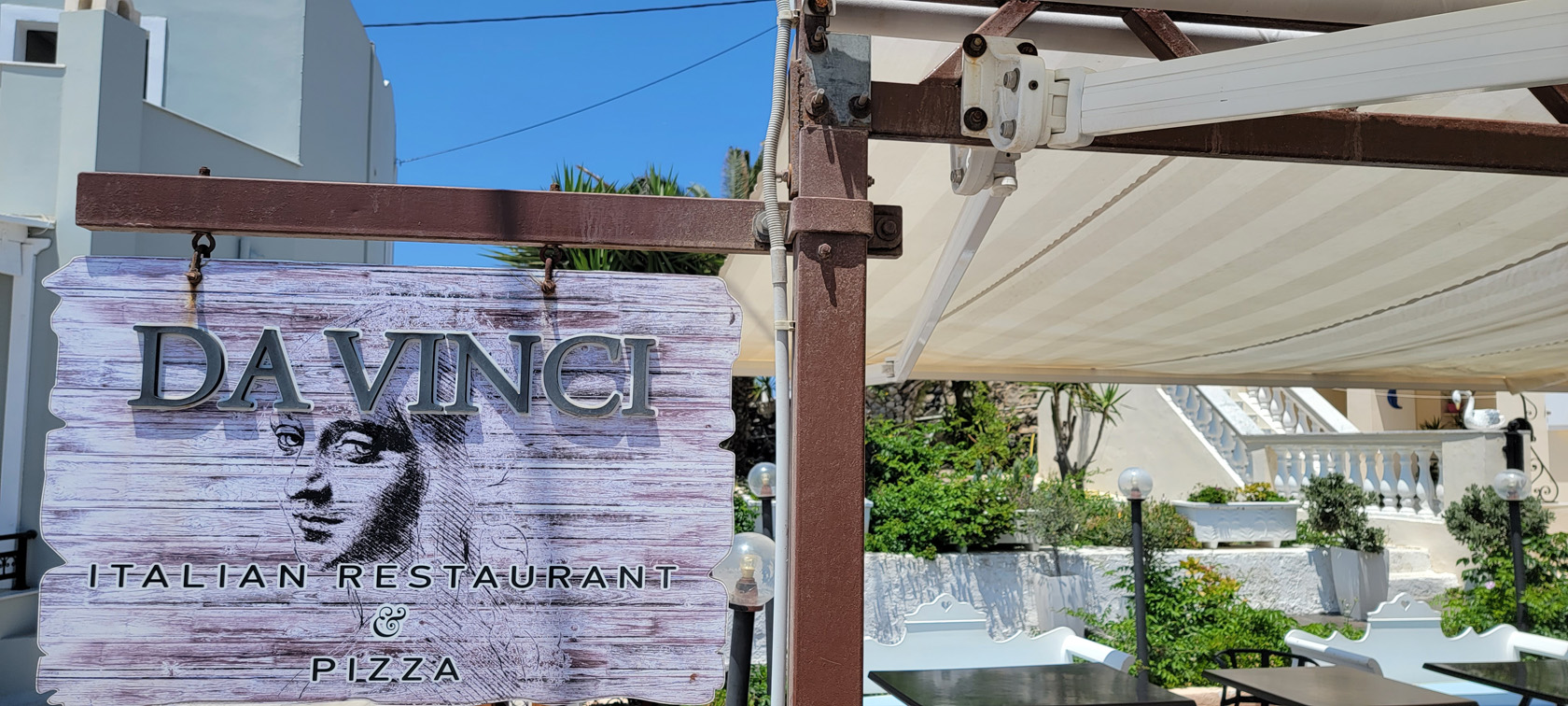
Needing a break from all of the Greek food we found an Italian restaurant called DaVinci’s in Thira. They make traditional Italian food and pizza, as well as the expected Greek gyro or souvlaki. We stopped here for lunch and had a very good meal, at very reasonable prices.
Imerovigli, Santorini – Da Vinci Restaurant
Alexios
A quick change in our plans during our last evening on Santorini led us to Alexios in Oia. Closer to our hotel, it too has a very good outside patio on which to view the sunset. The food was traditional Greek and okay, but at this point I had already seen enough Greek food, which honestly is a bit too meat-centric for my taste.
Alexios Restaurant – Patti and Ericka
Alexios Restaurant – Patti, Ericka and Tristan
Alexios Restaurant – Sailing Ships
Alexios Restaurant – Main Pedestrian Way
Pitogyros Traditional Grill House
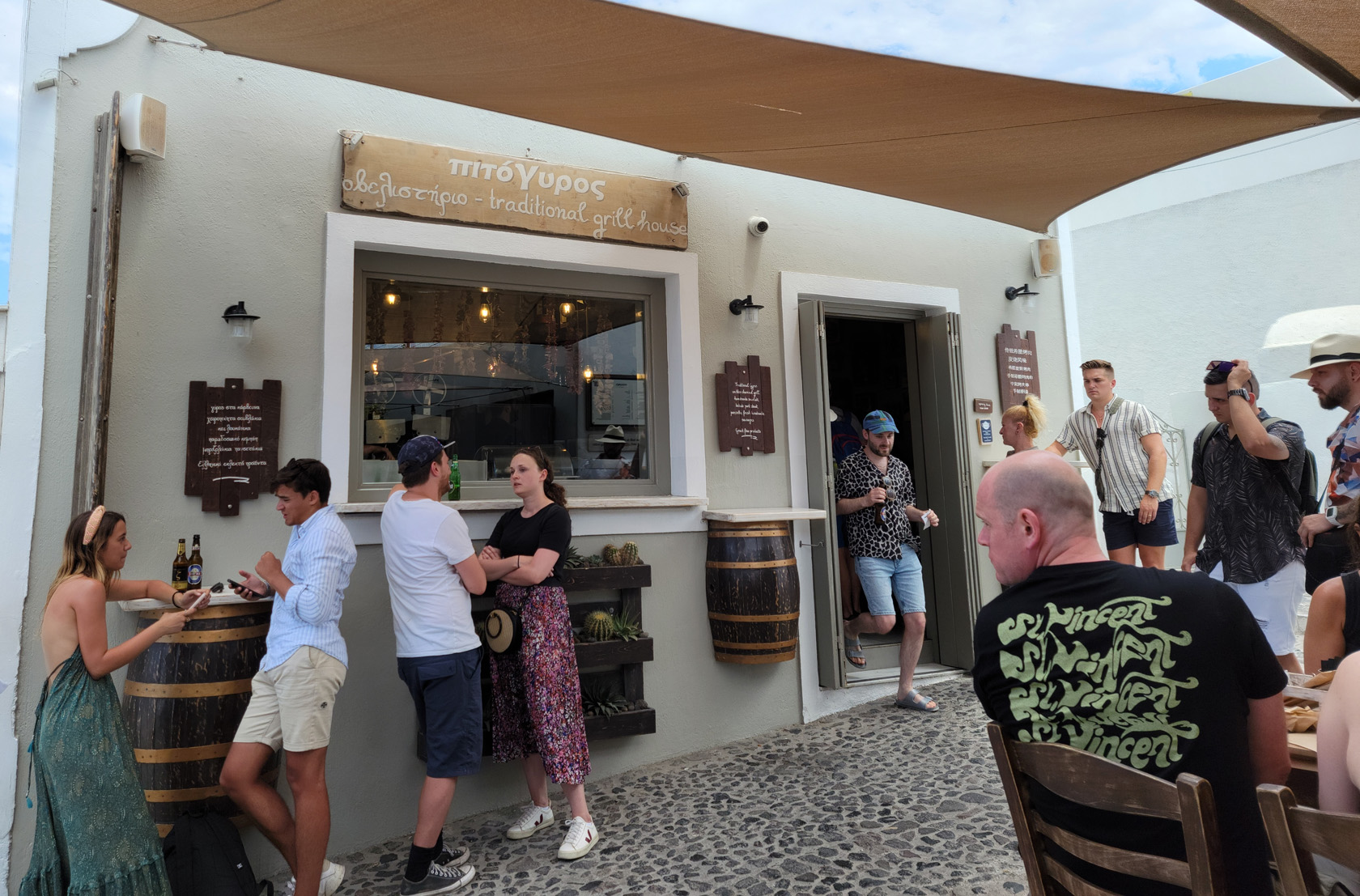
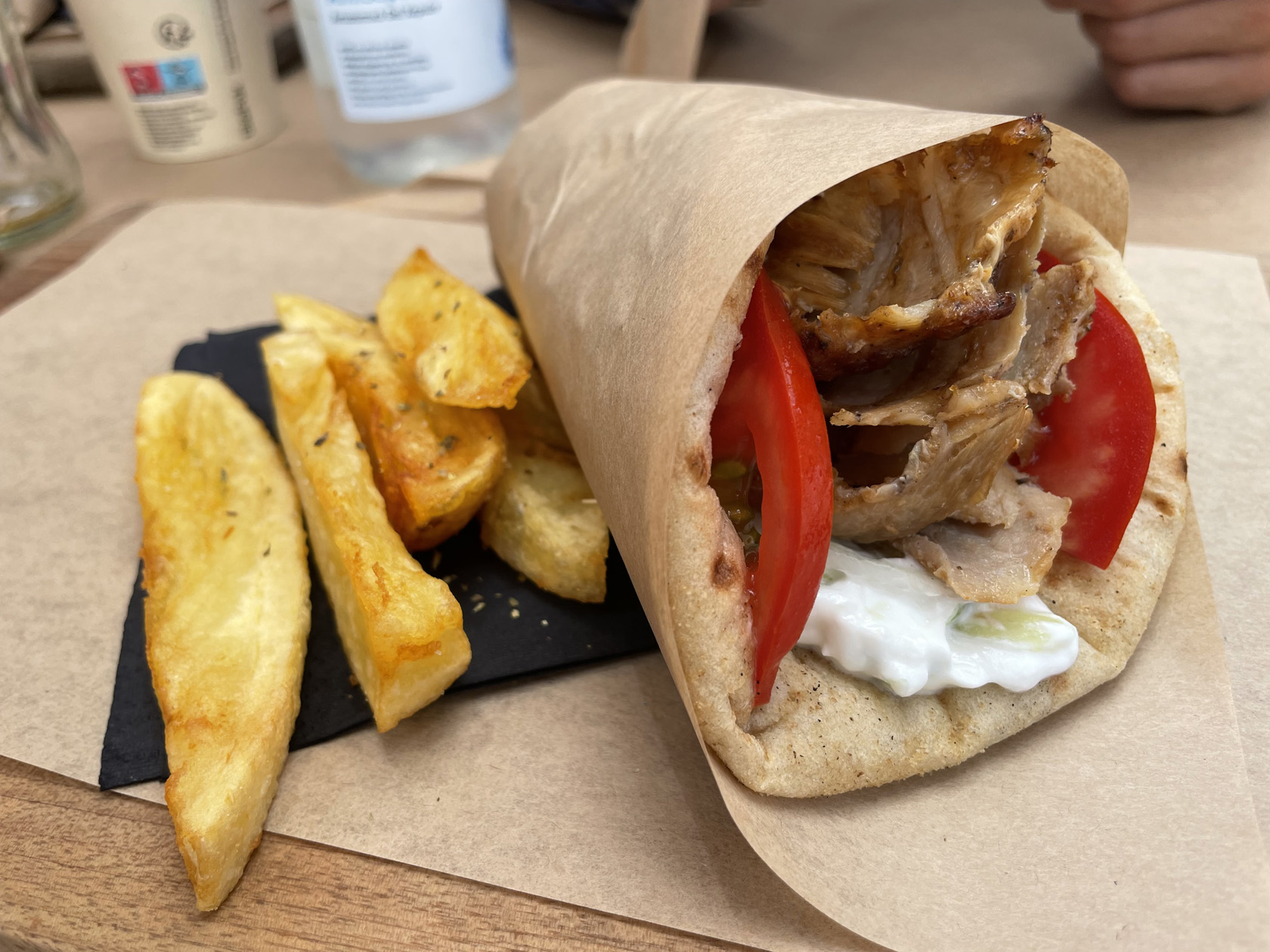
I will be honest, I am not sure what a traditional grill house is in Greece or on Santorini. But, if the number of people trying to get into this place at any given time is any indication, they seem to have named the place right at least. At Pitogyros in Oia, the food is mostly traditional meat gyros and souvlaki served in a pita or a platter, as well as other dishes. Most dishes are served with french fries, with the exception of their salads. A very inexpensive place to eat, if you can get a place to sit. We waited for thirty minutes before our party of six were seated, which honestly probably was not that bad, considering it was around two o’clock in the afternoon.
Pitogyros Traditional Grill House – Front
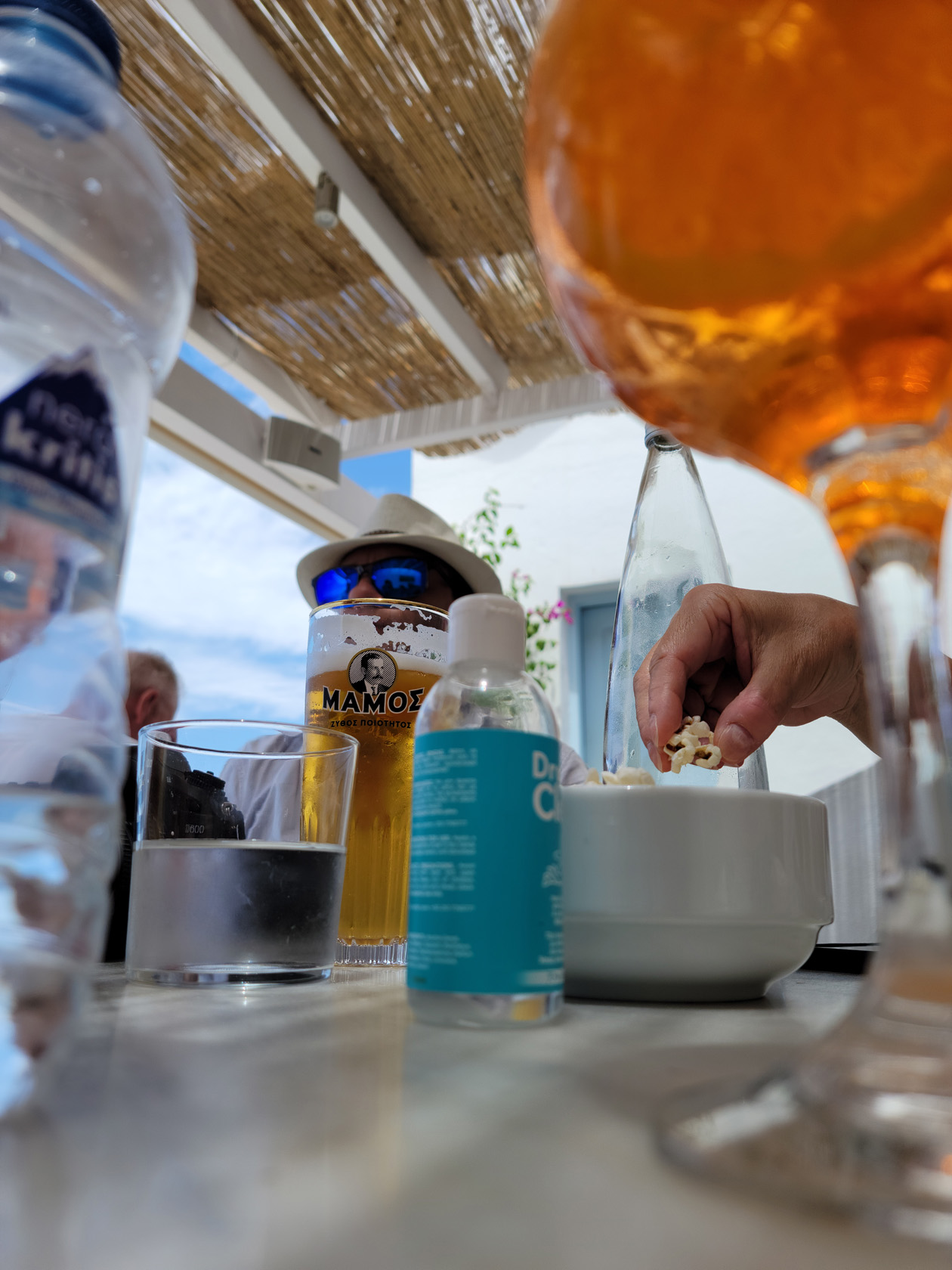
Pitogyros Traditional Grill House – Our Table
Pitogyros Traditional Grill House – Pita Gyros with Fries
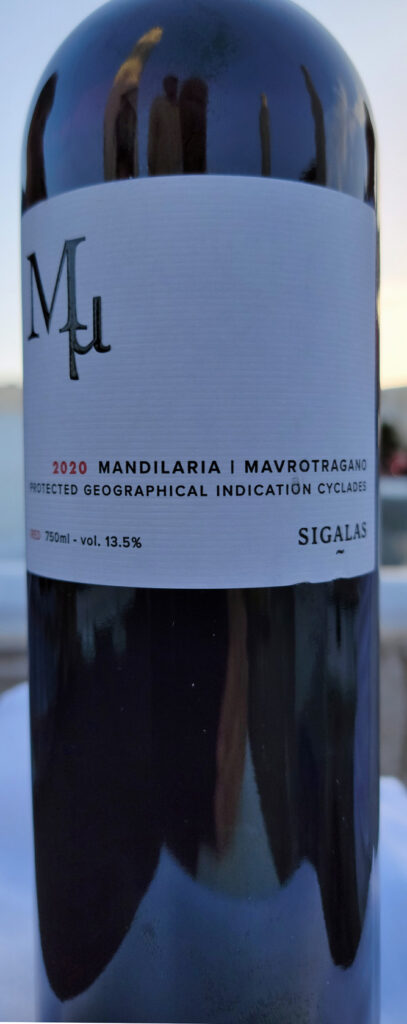
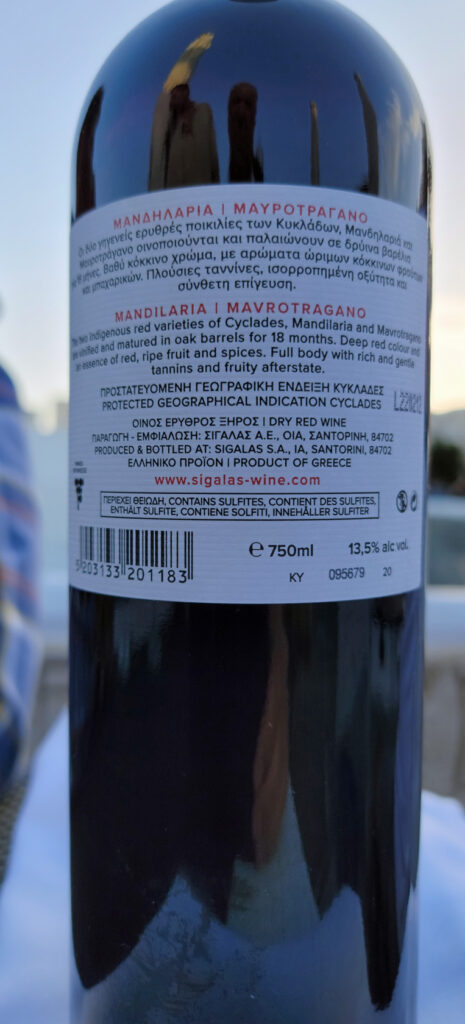
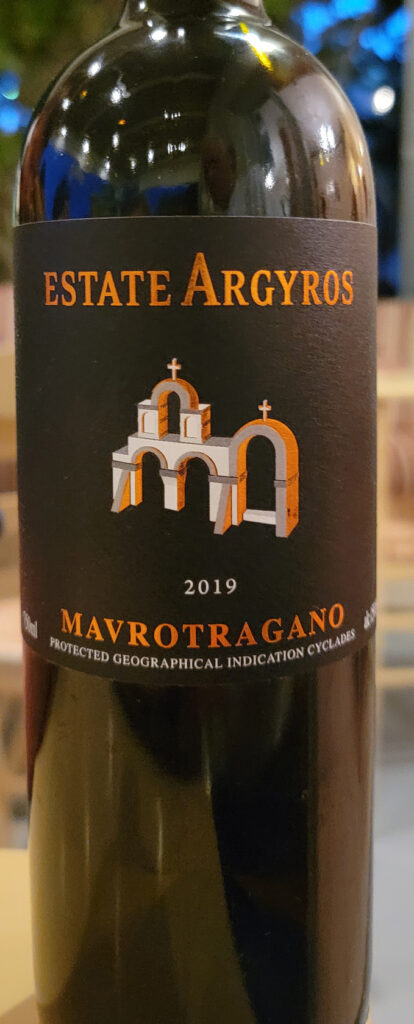
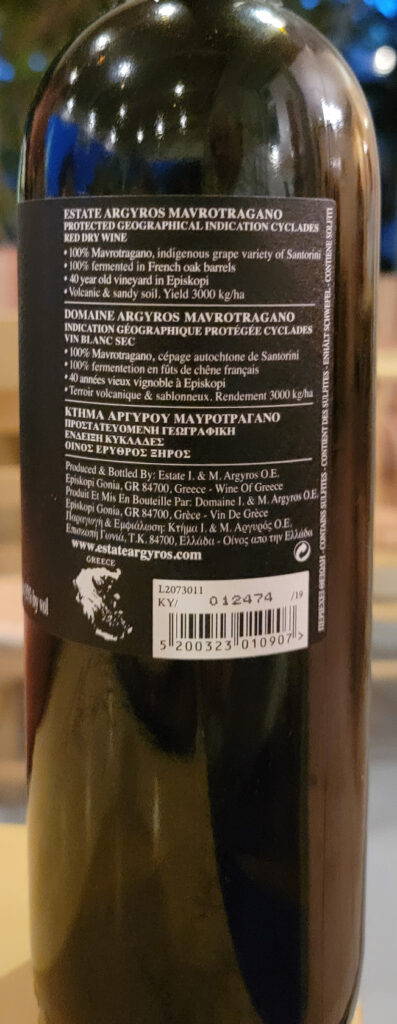
Wines
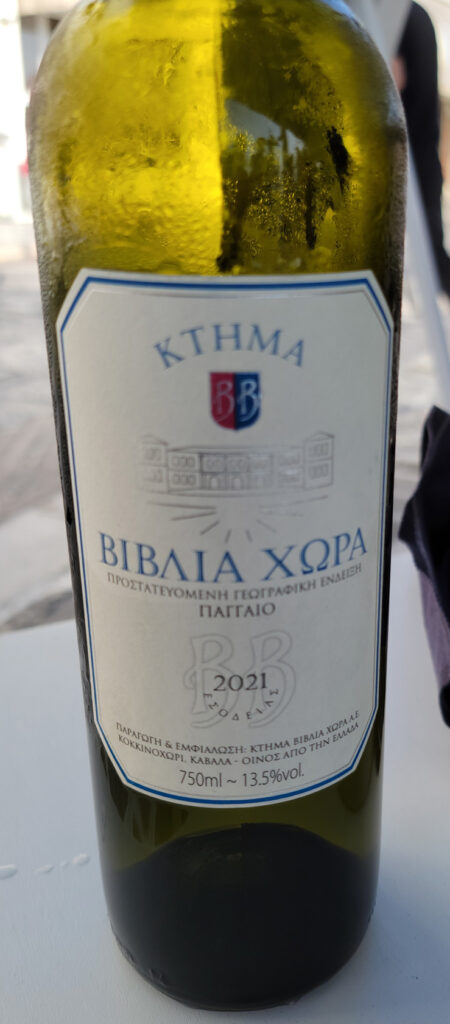
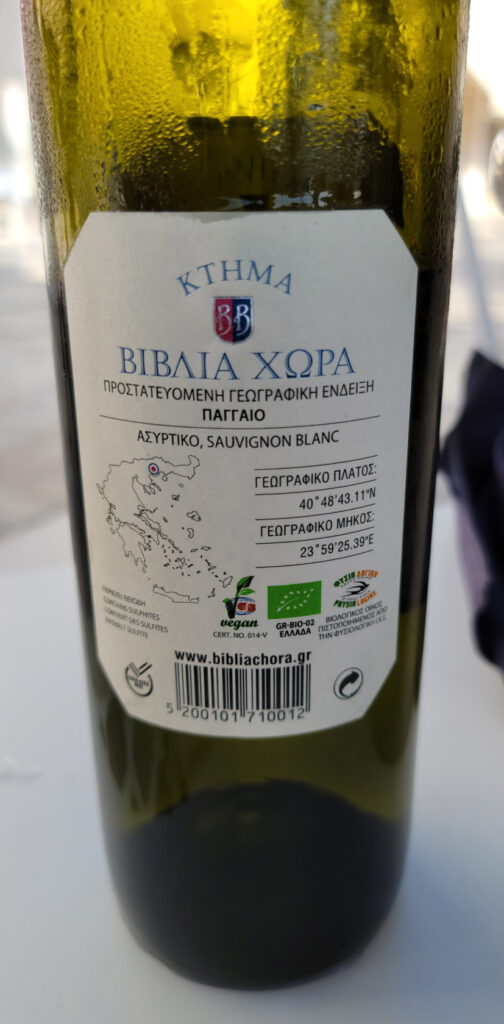
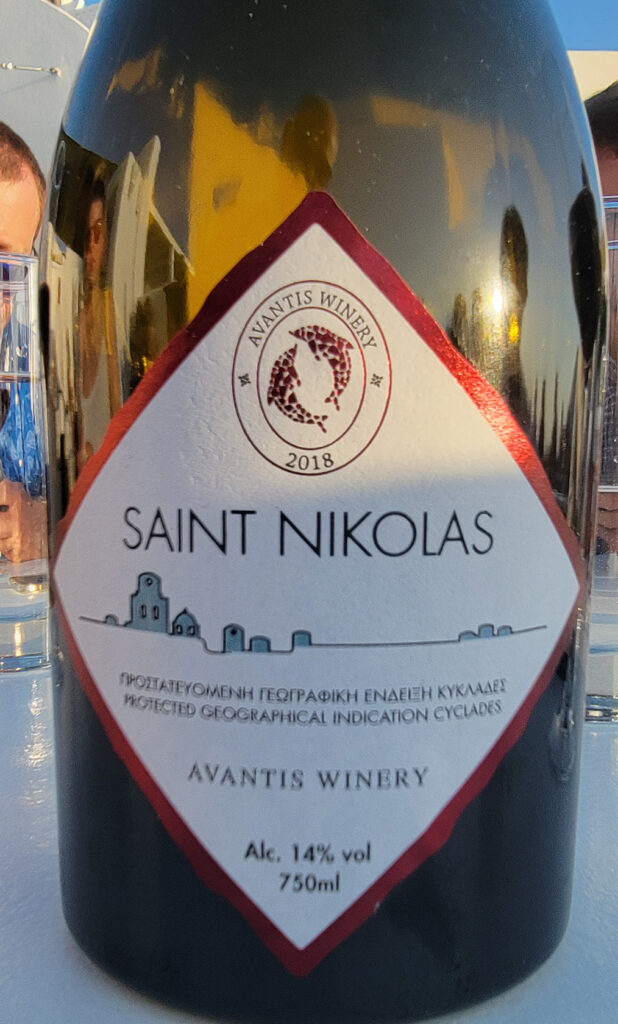
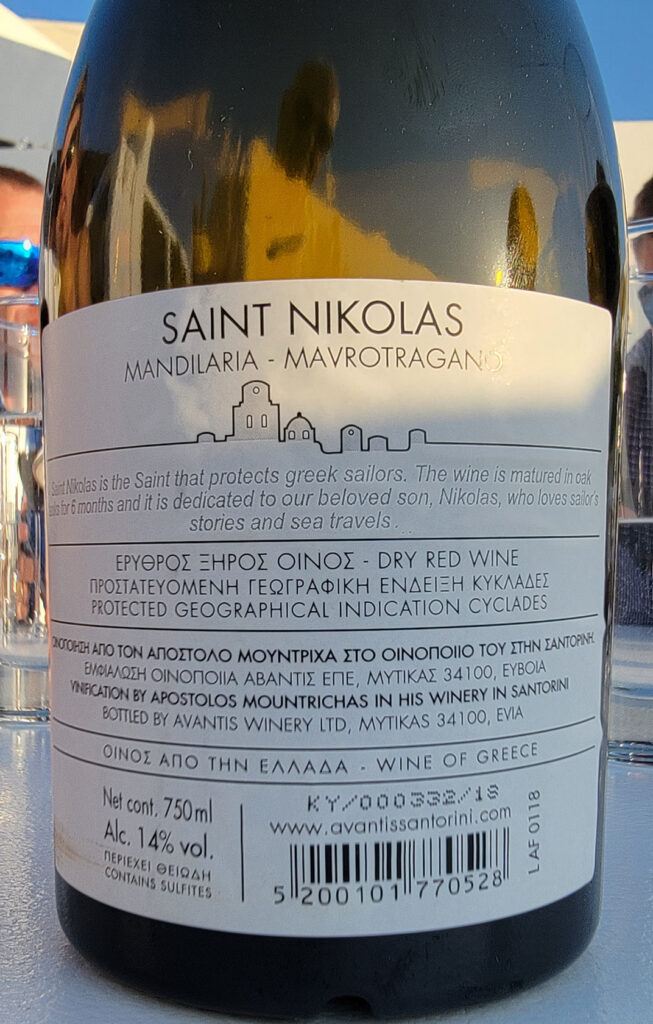
We drank the following wines while on Santorini, along with a few others. But, we feel the following deserve mention.
We finally left Santorini and dropped our sons off at the airport for their flight back to the United States. Of course, the weather had been beautiful for two weeks and we were not complaining. But as Greece would have it, it threw one last punch at us before they left. While we were sitting having lunch in Athens with Ericka and Gabi, thunderstorms had moved in and it poured, subsequently delaying their flight from the airport. Though the delay was over an hour, it luckily did not impact their connecting flight and they made it home perhaps just a little later than expected. After all of the other travel horror stories we have been hearing about, we considered ourselves lucky, even after everything that had happened.
Post Script
If you have any heard horror stories about traveling as of late, they are not fiction, they are probably TRUE. Traveling, due to latent affects of combating Covid, the war in Ukraine and other things, has turned traveling into a true hell.
If you have the ability to wait, I would do so, at least until certain things like airline staffing have been reconciled.
If you cannot wait and have connections, I would suggest booking any initial flights to your destination for a day early. This may cause extra expense and staying overnight in a hotel, but it might save you the headache of missing an important connection, especially on long haul flights that have multiple connections or even a international cruise.
Do NOT trust anything your airline or train service will tell you, it only takes one thunderstorm or some last minute strike to start a massive backlog these days. Good luck!
Well, we had just barely left Athens on our way to Naxos Island, when I discovered the feeling that my phone was not in my back pocket. That usually was not so alarming, since when traveling I often take it out and put it in my backpack, so I wouldn’t forget it in what ever form of transportation we were using. I got no further then reaching for my backpack’s zipper, when a dreadful calm came over me. I knew exactly where it was – and it was not with me.
I looked at my wife, with a short pause and a sigh, then told her that I had left my phone back at the hotel. She retorted immediately if I were sure, I responded that I was and that it was actually worse than I had originally thought. Not only had I forgotten my phone, but I had forgotten to take all our money and valuables out of the hotel room’s safe. Exasperated, I immediately informed our private shuttle driver what had happened and that we had to turn around. He assured us not to worry and that all we be alright.
We quickly called the hotel reception what had happened and they responded that they had been trying to get in touch with us. We then let the driver, who speaks very good English and of course Greek, to help explain the situation. We figured out all of the logistics, so that while he continued to take us to the airport, one of the driver’s colleagues drove to the hotel and picked up all of our stuff (after giving him the security code to the safe). With the hotel staff overseeing everything, they sealed our stuff in a bag and the driver was off to the airport. In less than an hour, we were back in possession of my phone and the rest of our travel documents and money. Wow, that was the first time that has ever happened.
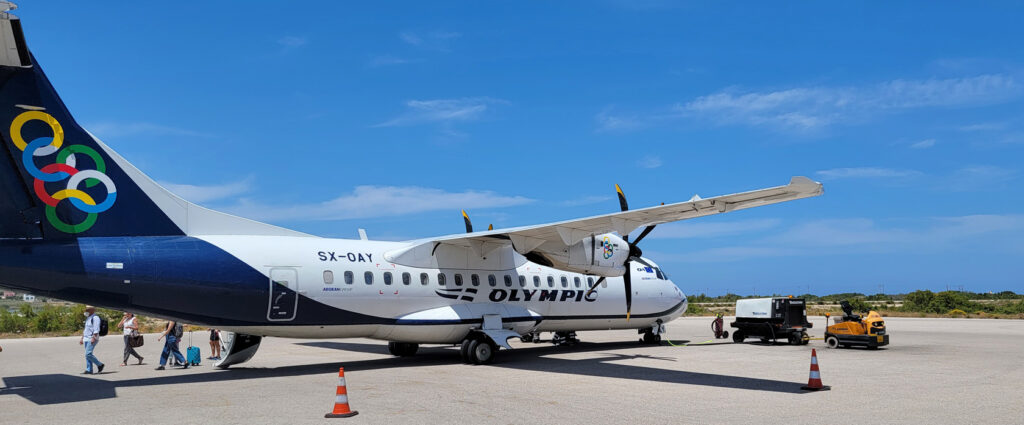
In the meantime, while we were waiting and much to our delight, our flight had been delayed by an hour and twenty minutes. So, we felt comfortable that we had plenty of time to wait for the driver, then check in and check all our baggage for Naxos. As soon as the driver returned and we had all of our stuff, we obtained our tickets and started to check in our luggage at the self-service counter, waiting on line like everyone else. However, just as we were next in line, I noticed that the flight was no longer delayed, it was on time; how can that happen?!
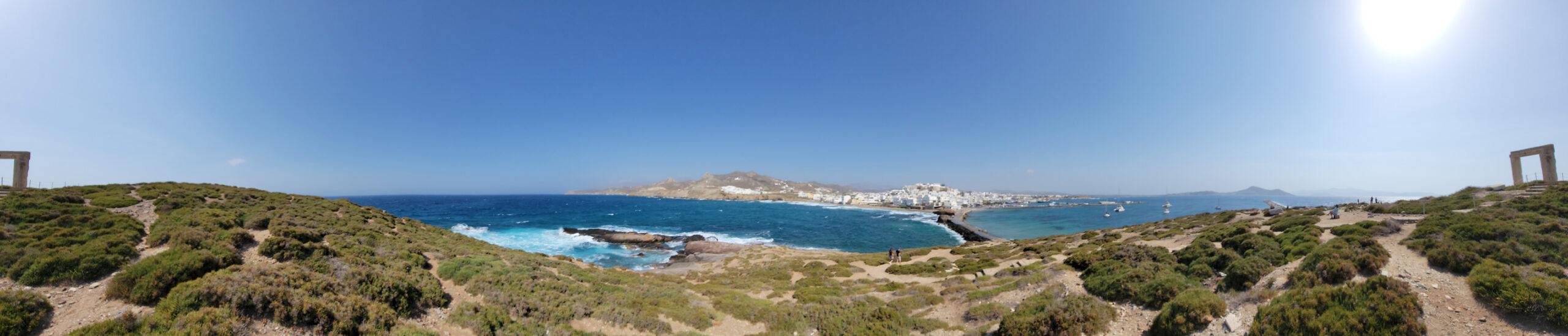
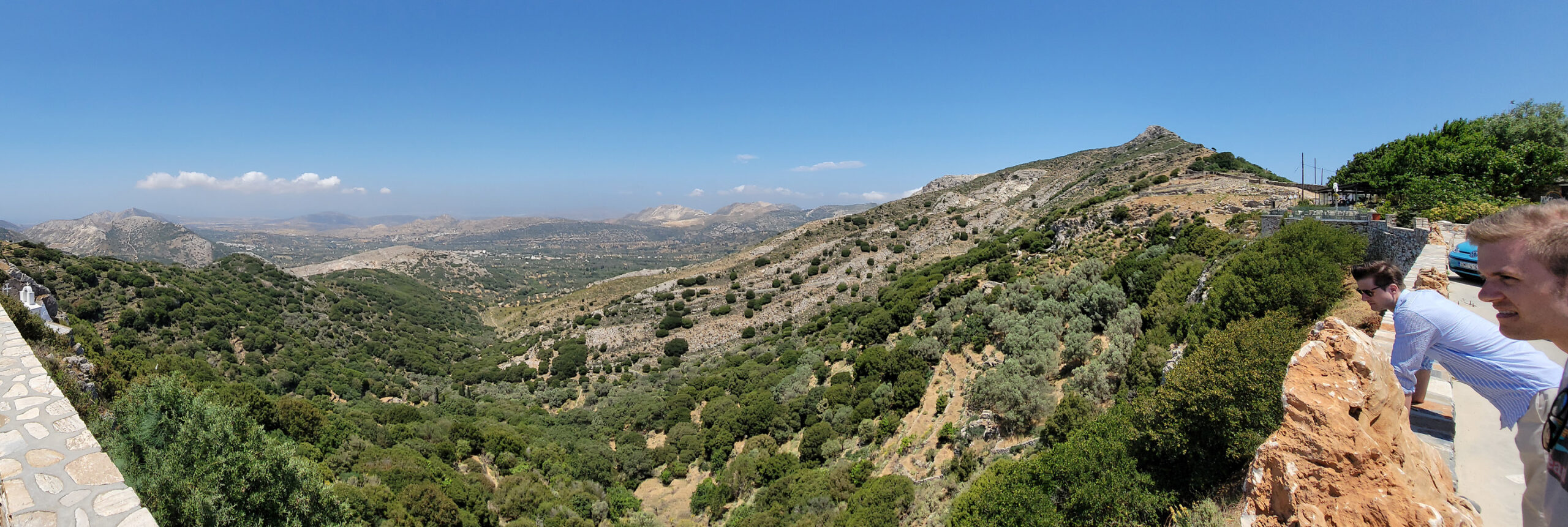
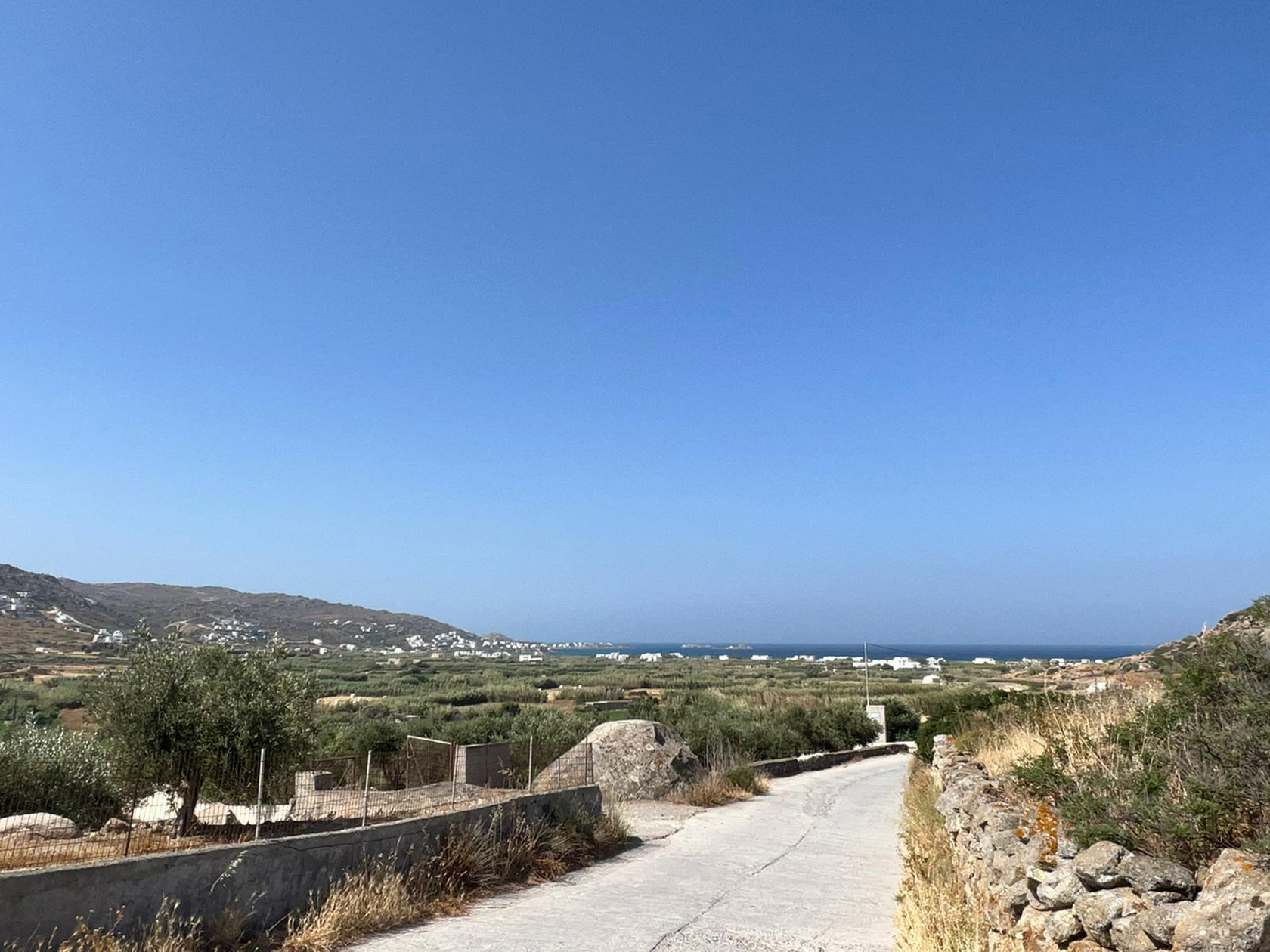
Panorama of Naxos Hills
This left us about thirty minutes to finish baggage self-check in and board the aircraft. Undaunted we pushed on. Two of us were successful self checking our baggage, but as soon as the boarding time for the aircraft arrived, the software locked the rest of us out. What a nightmare. The attendant for Aegean Airlines quickly realized the issue and got us over to another counter so our bags got checked in immediately, with all the proper RUSH stickers applied to them, and we were on our way through security.
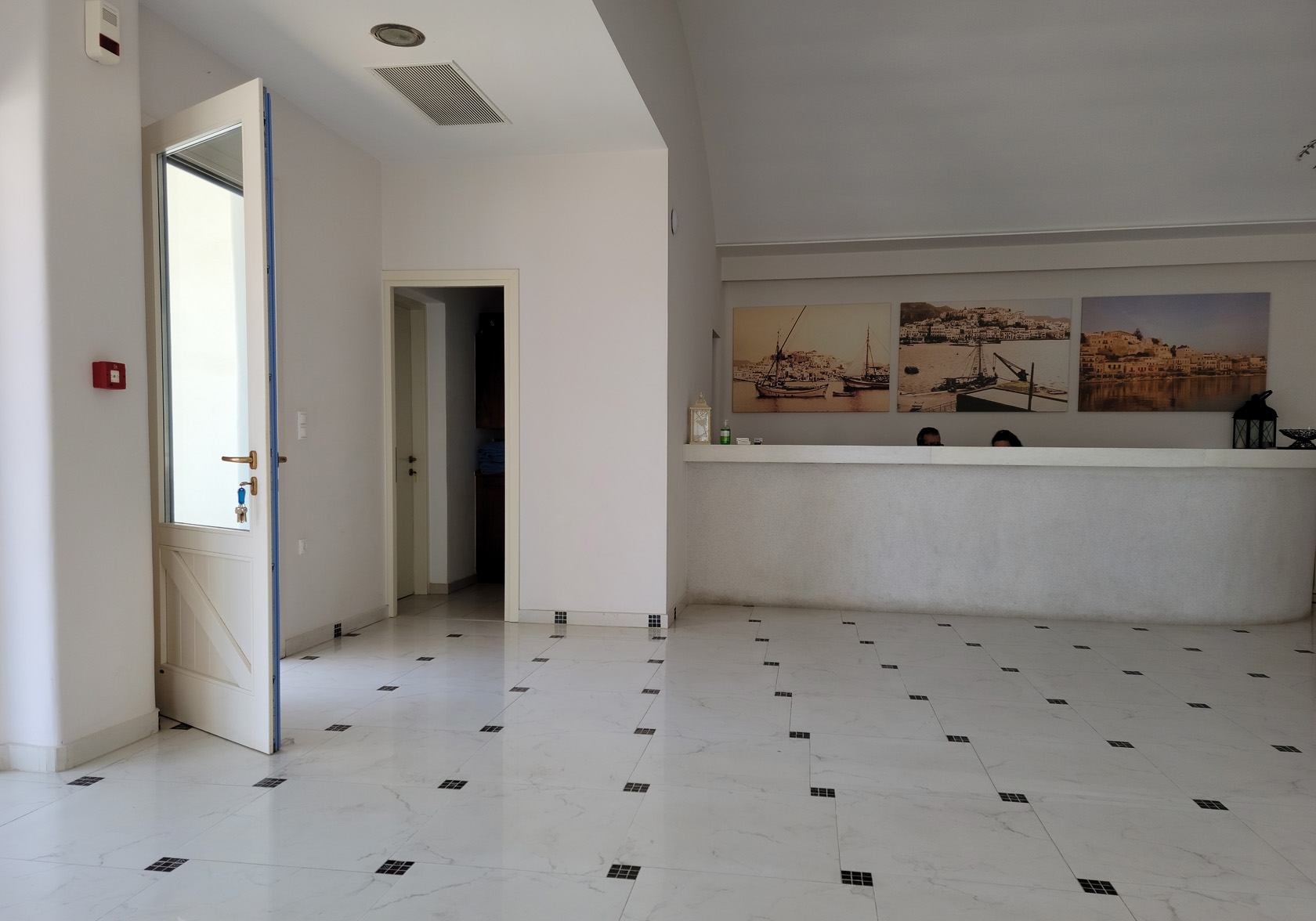
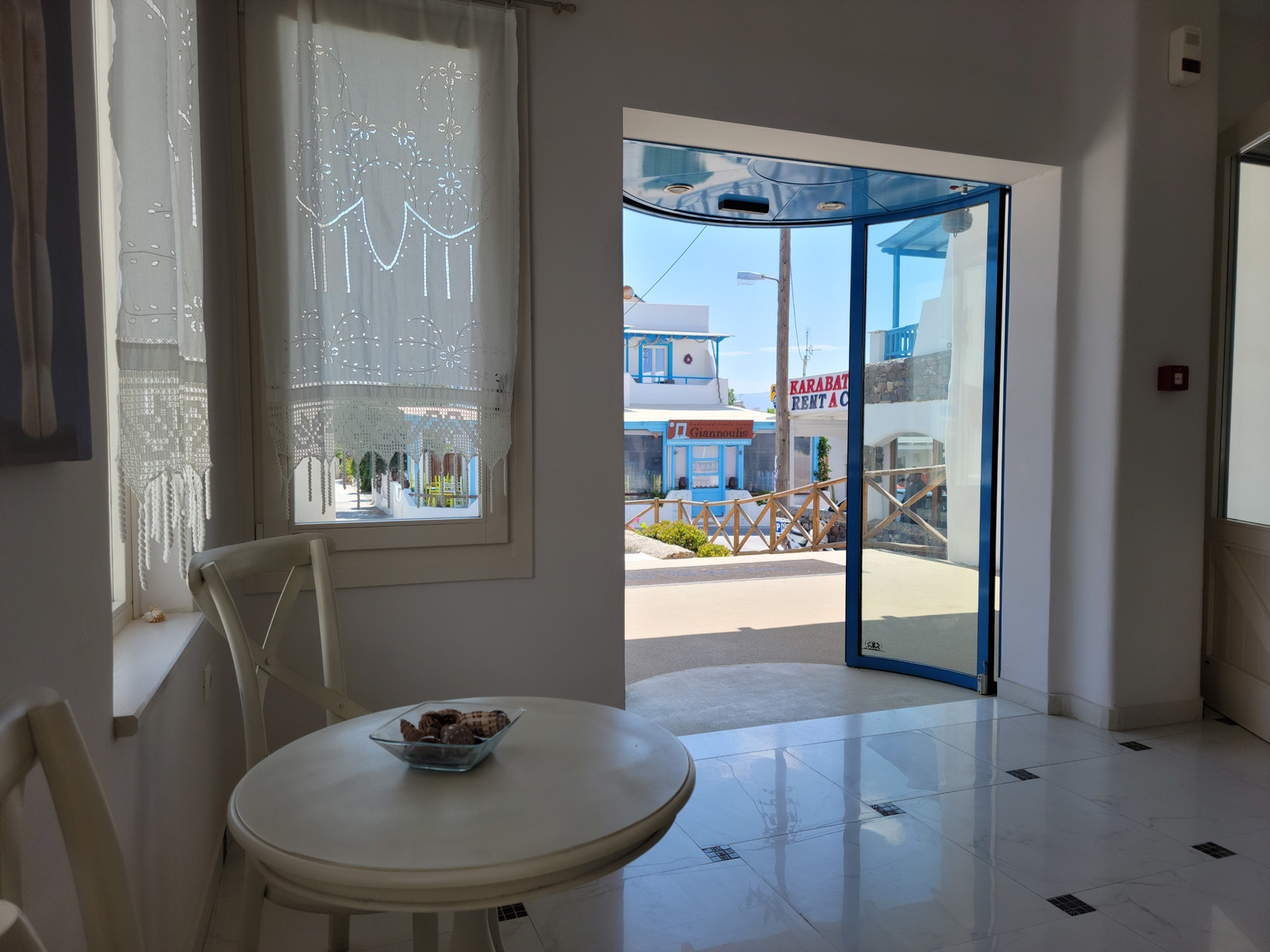
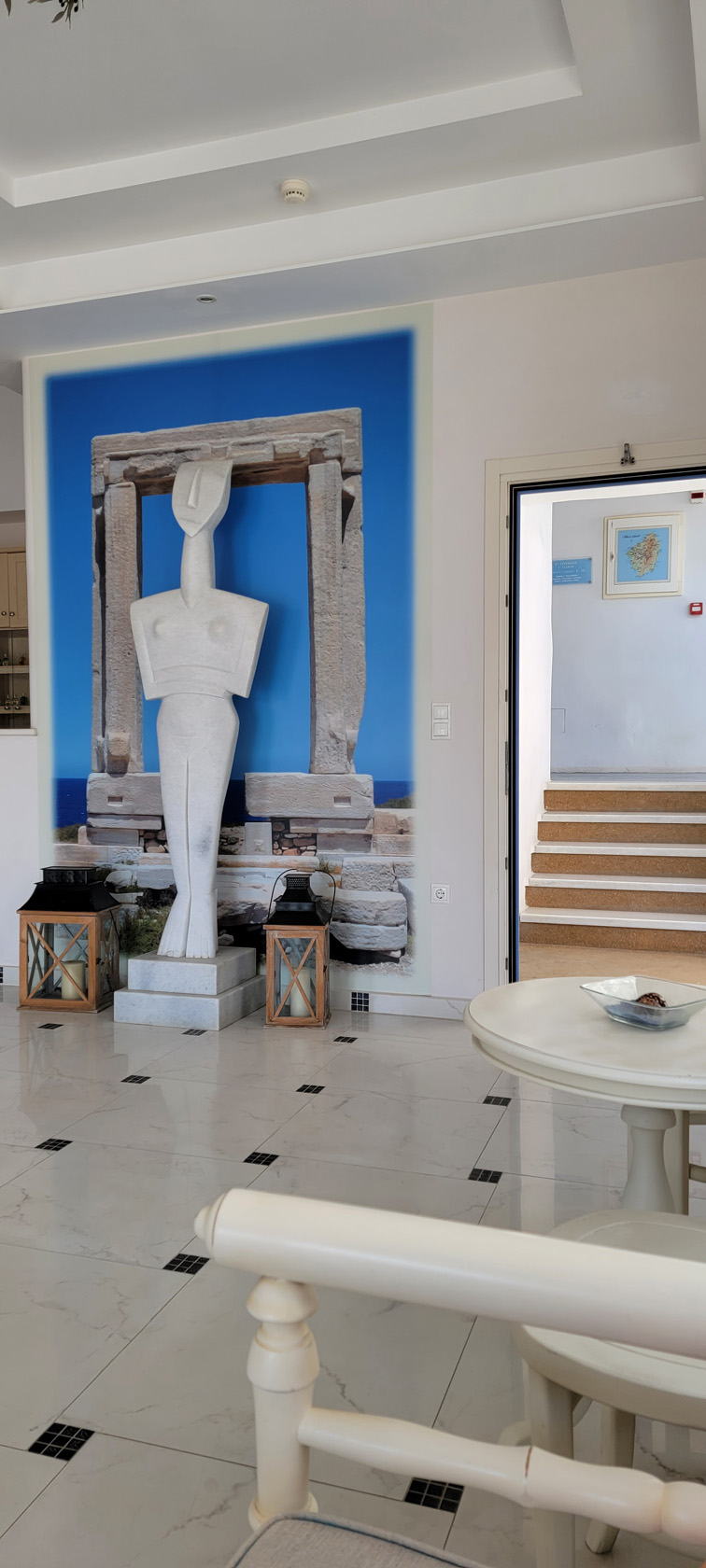
Naxos Island Hotel – Lobby
Naxos Island Hotel – Lobby
Naxos Island Hotel – Lobby
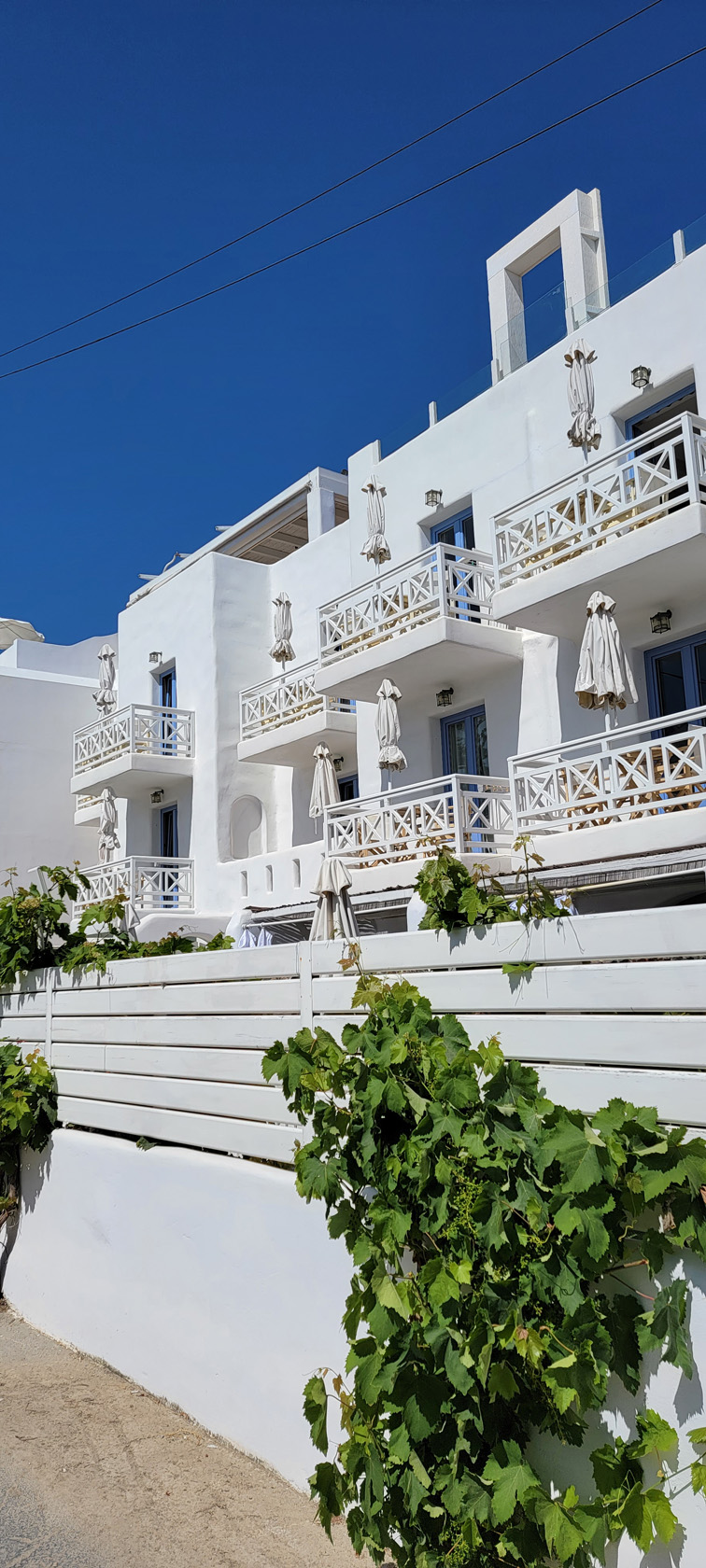
Naxos Island Hotel
Naxos Island Hotel
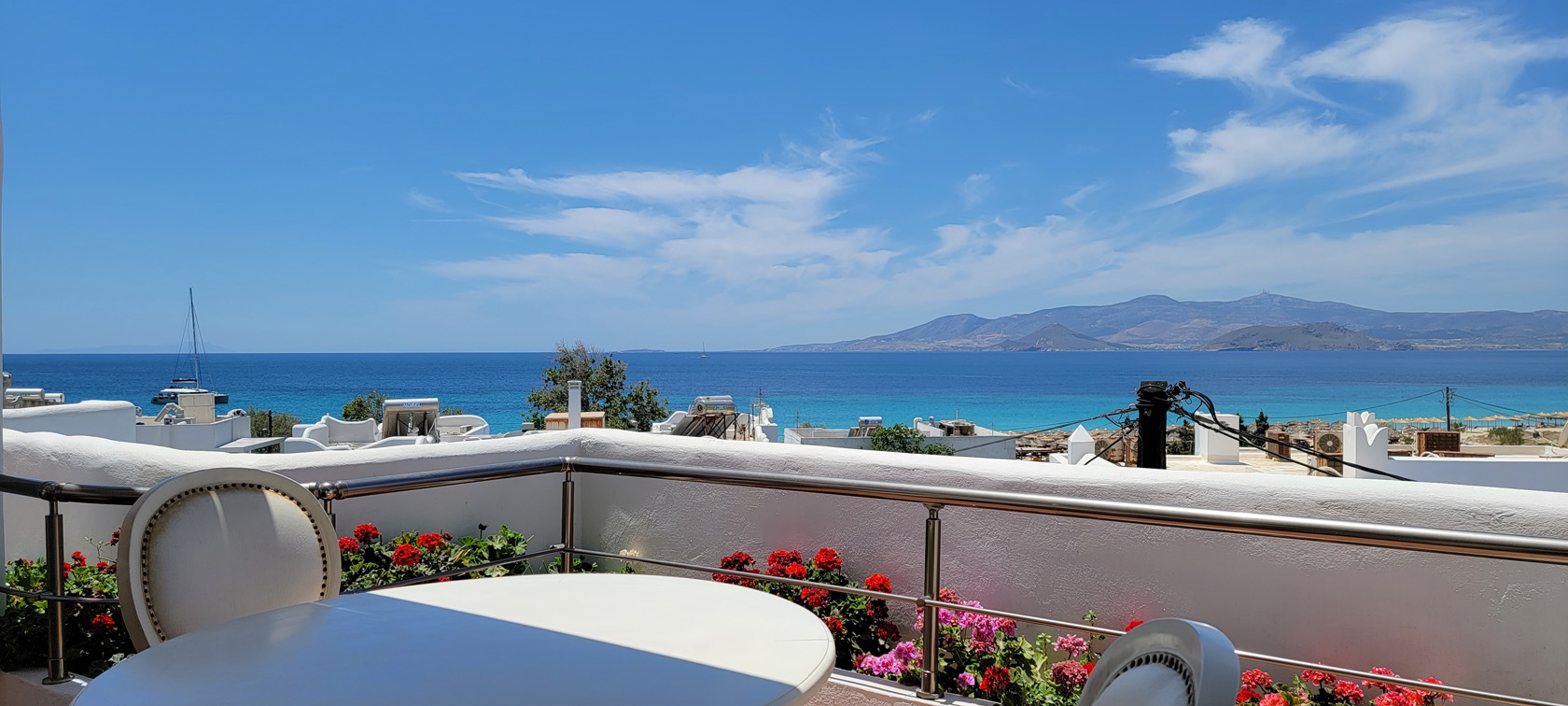
Naxos Island Hotel – View From Rooftop Terrace Restaurant
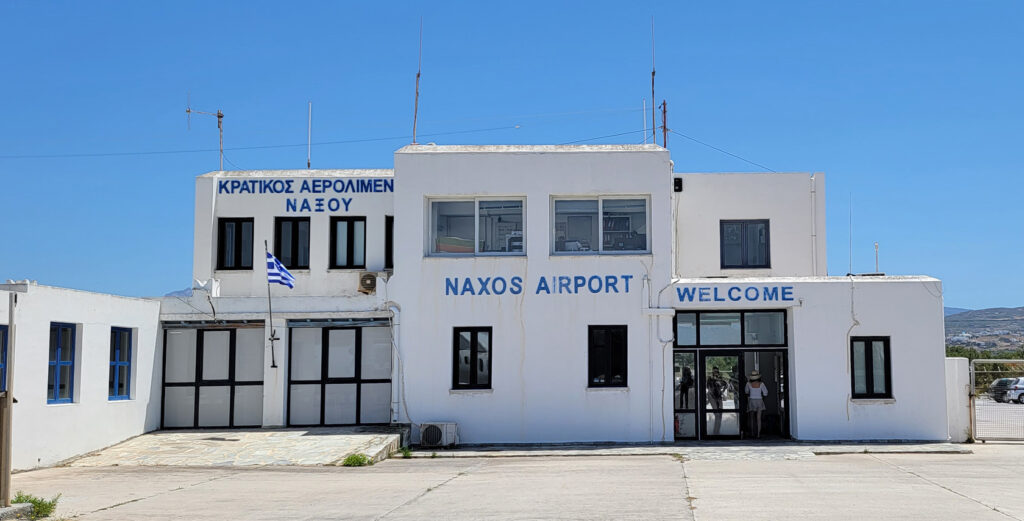
Needless to say, we made our flight and were soon enjoying the hospitality of our hosts at the Naxos Island Hotel. Since our flight was on time, we arrived before the appropriate check in time, but no worries, our rooms were ready and we were hustled to our rooms, bags and all by our hosts. After a quick refresh, we went to lunch. It was time to really be on vacation, but we were all still wondering, what else could go wrong? Unfortunately, things would uncharacteristically continue to happen to us.
Naxos – The Island
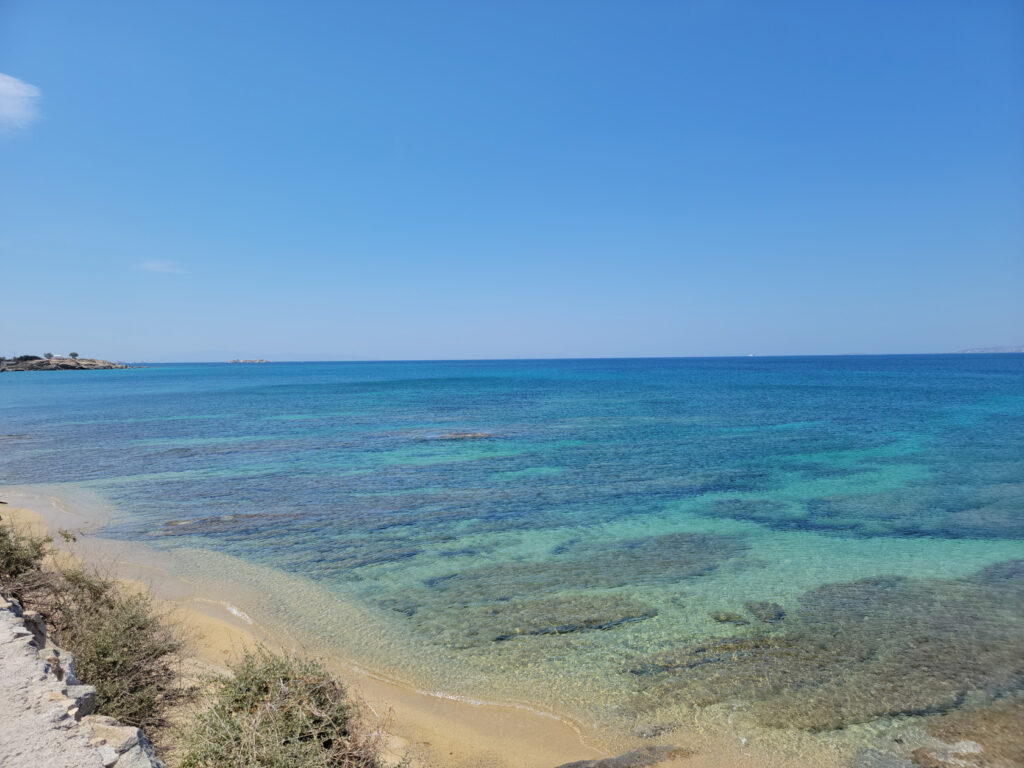
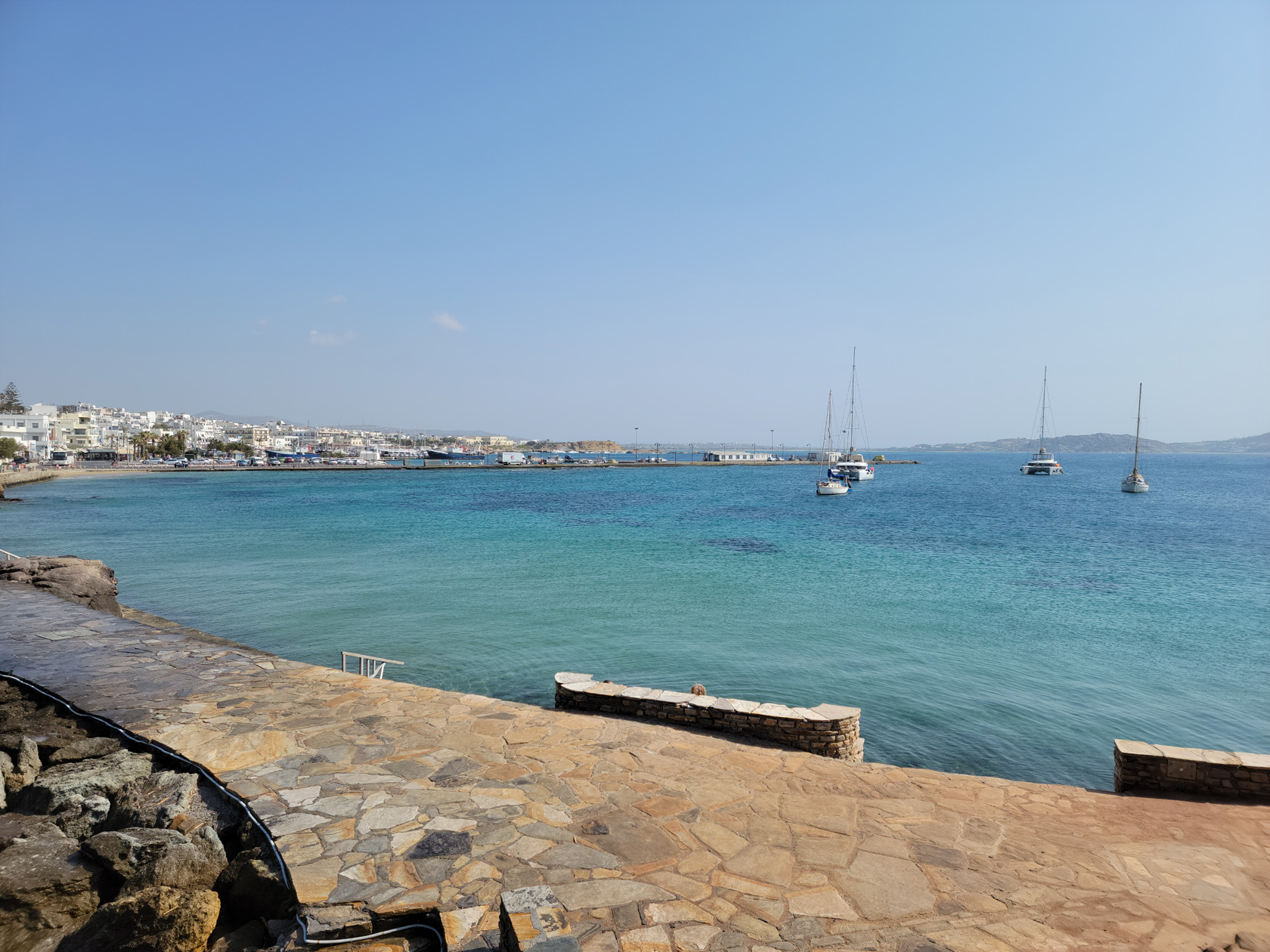
The largest of the Cyclodaes, Naxos is a large oblong island with a central mountainous region with peaks high enough to create their own weather. The island is known for its beaches, most of which are sandy, but the type of sand created from eroded rock and not from reefs, it is therefore fairly coarse to walk on and can become very hot in the sun, so bring your sandals.
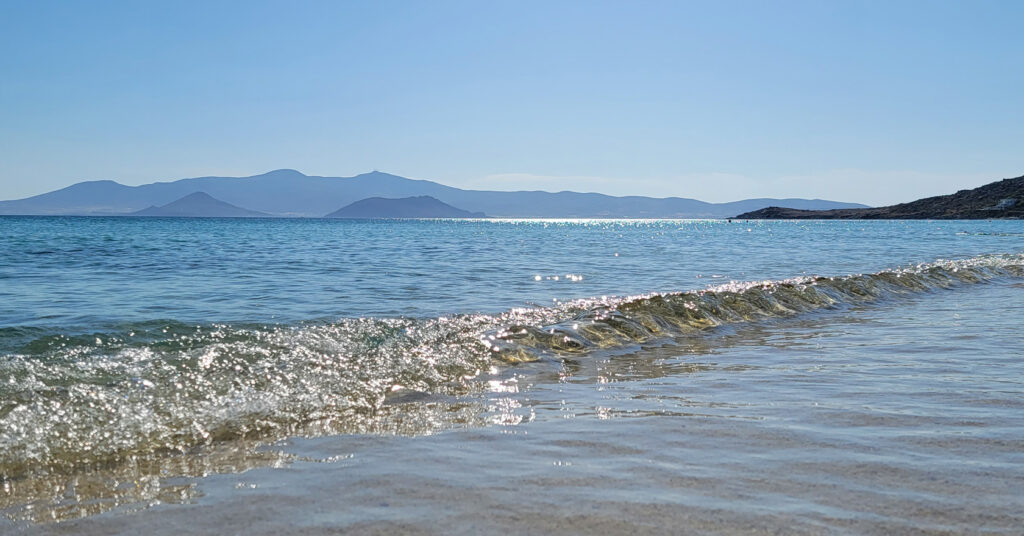
Paros Island – From The Beach
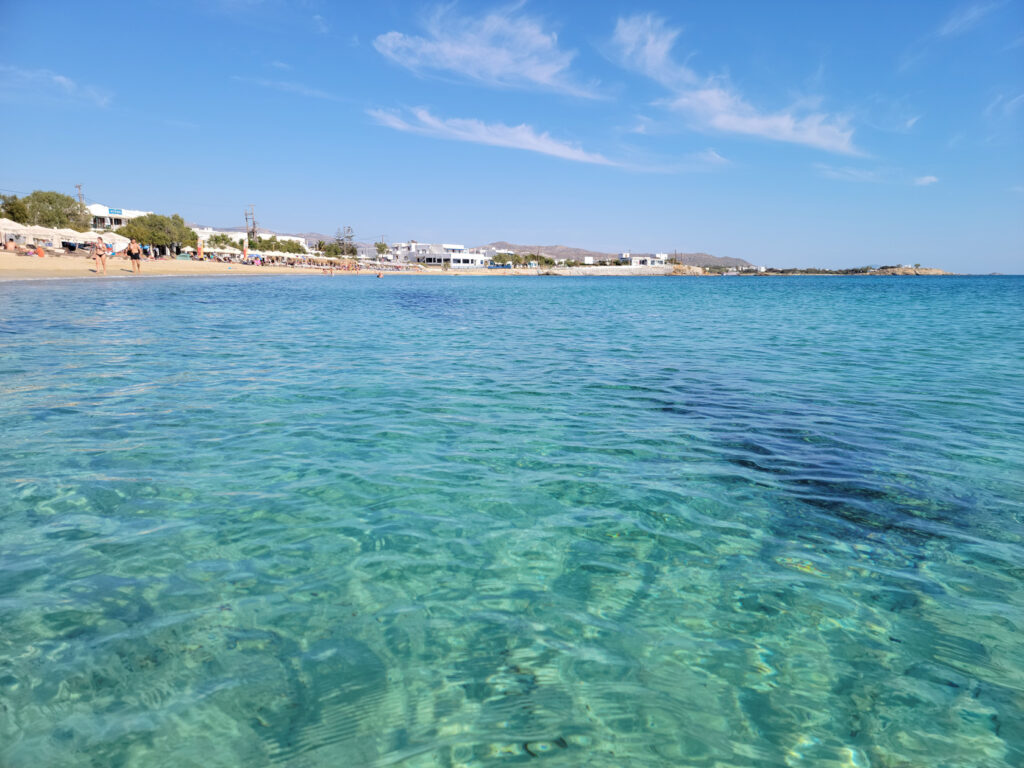
The Beach – A View From The Water
The Blue Aegean Sea
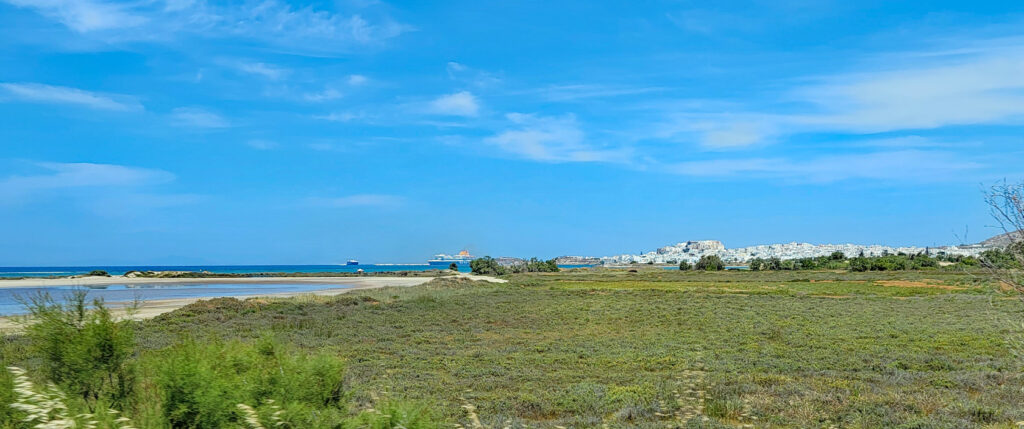
Naxos City – From Airport Road
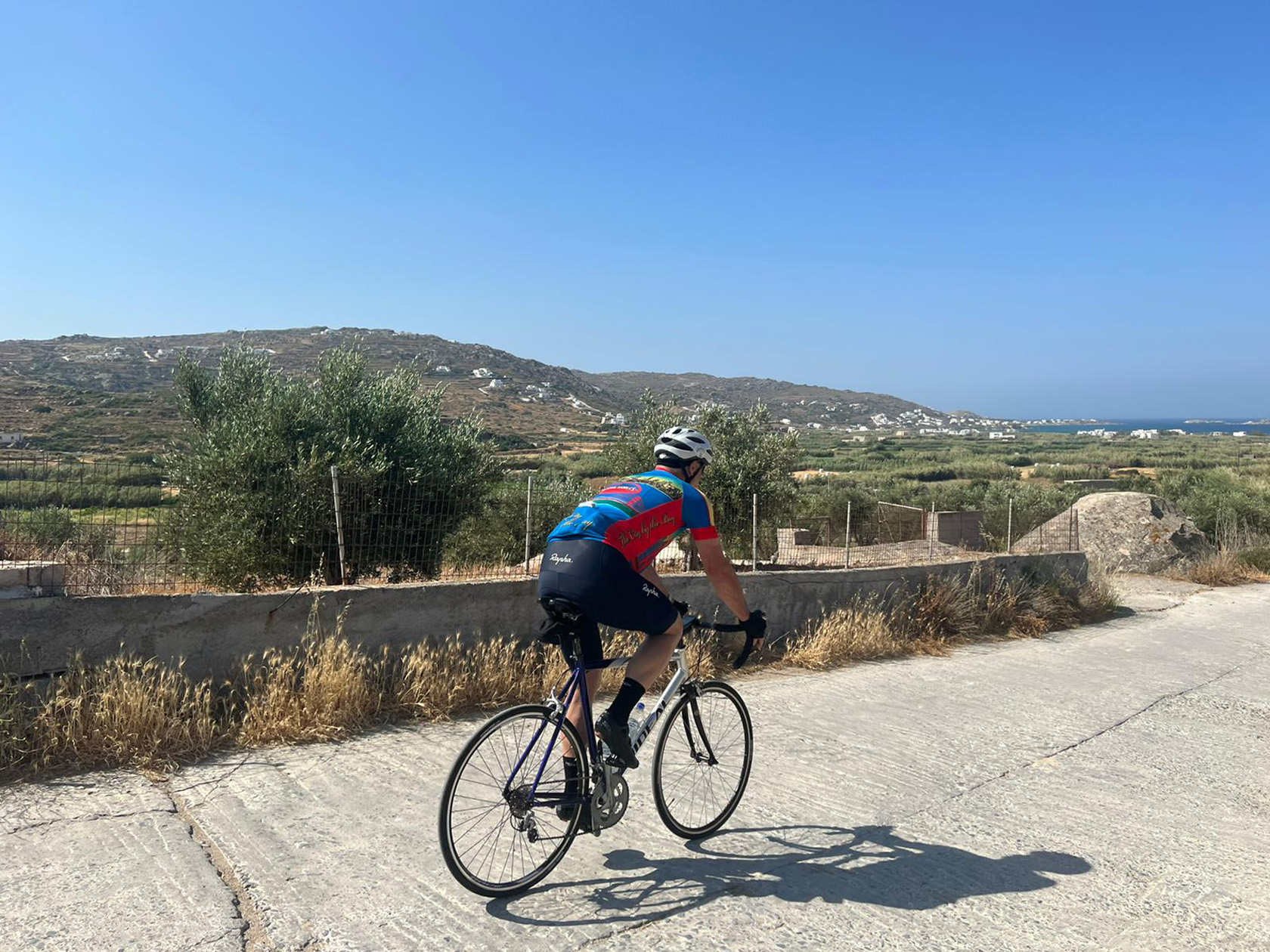
Cycling Naxos
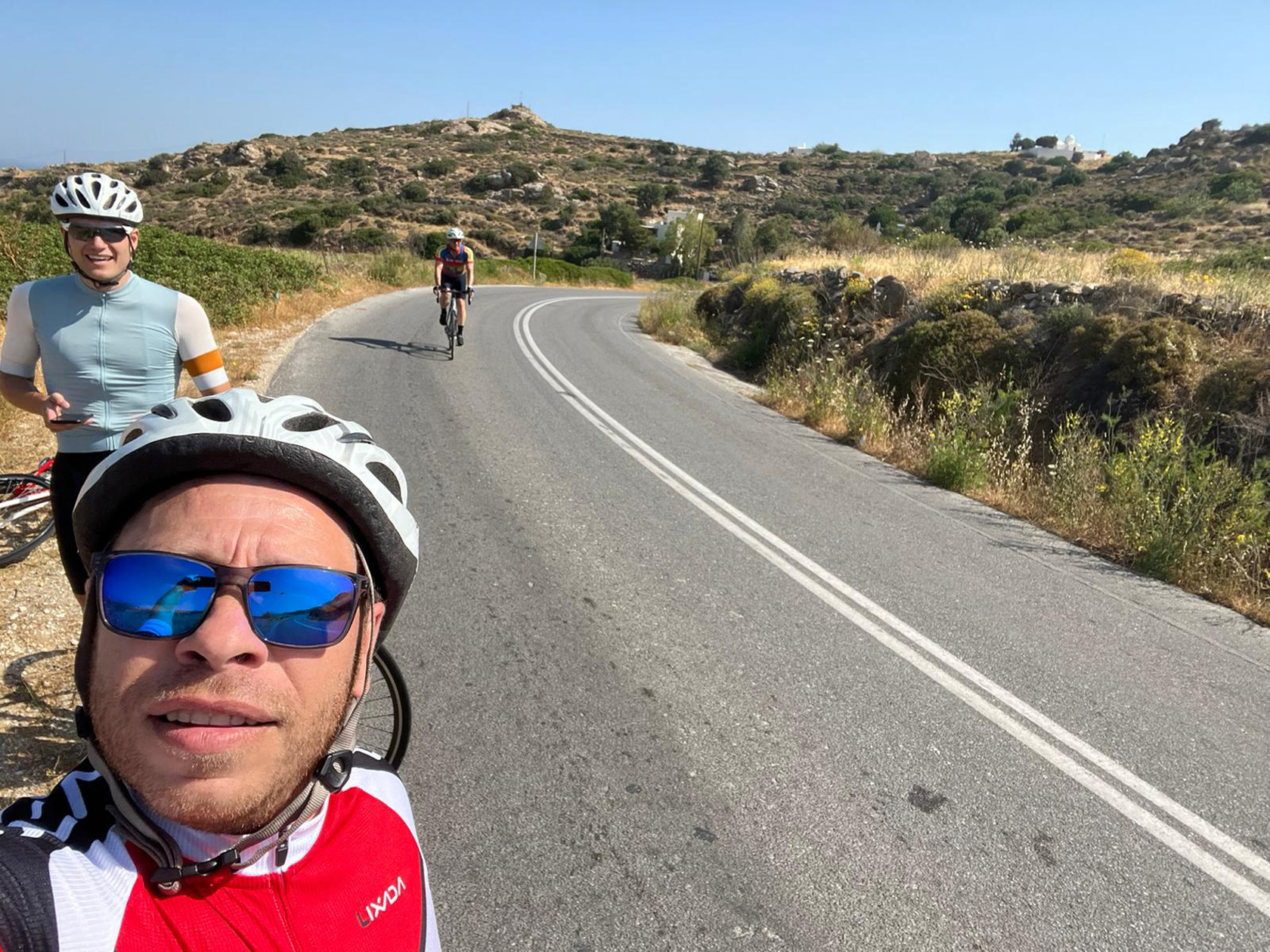
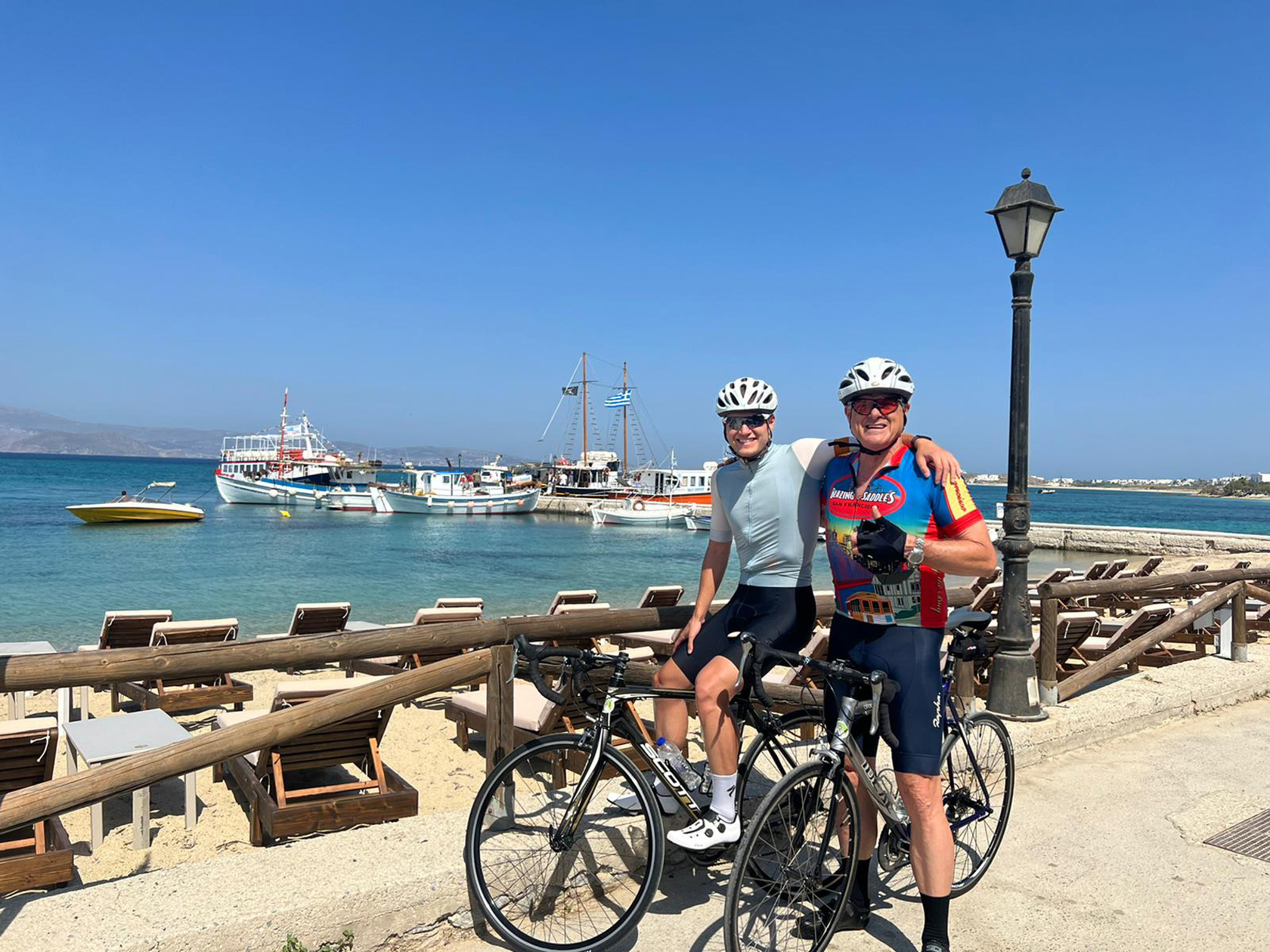
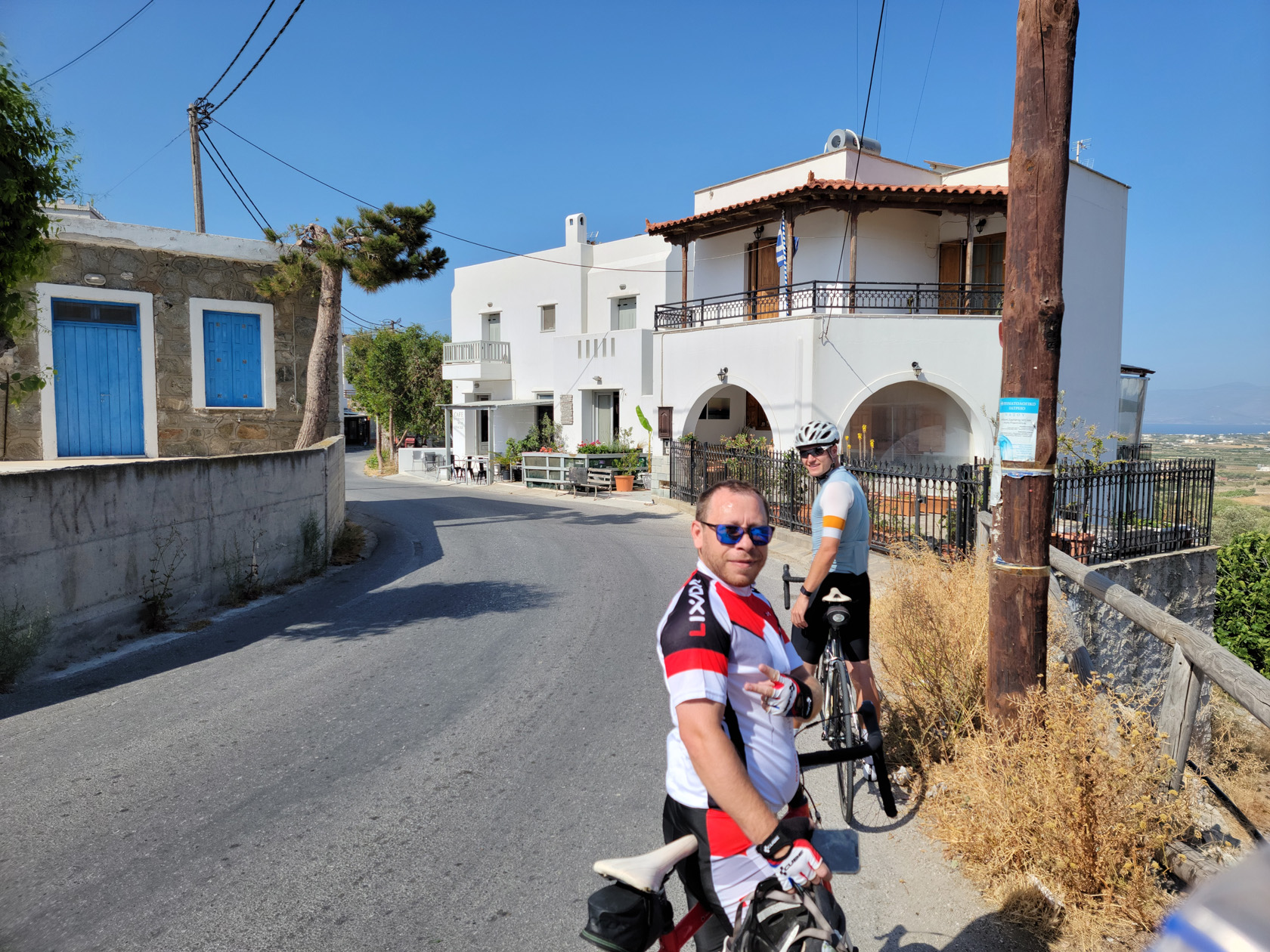
For the adventurous, or those just wishing to get out and explore, Naxos offers some fairly good cycling. There are a few places where you can rent bicycles. However, if you are looking for something more advanced, you should reserve your equipment before you leave.
Cycling Naxos – Gabi, Tristan and Erick – Day 1
We rented our road bikes from Naxos Bikes and were not disappointed. Though a bit dated, all of the bikes performed as stated. The owners were eager to supply enough tubes, pumps and other equipment (helmets) as needed. The only thing we had to bring were our own clothes, shoes and Garmins. They delivered and picked up right at our hotel for a modest fee, so we didn’t have to worry about getting into town prior to our ride.
We really enjoyed touring Naxos, though I would suggest planning your route before you leave your hotel, as not all roads are suitable for road bikes (if you make a wrong turn, you will see what I mean).
Naxos – The City
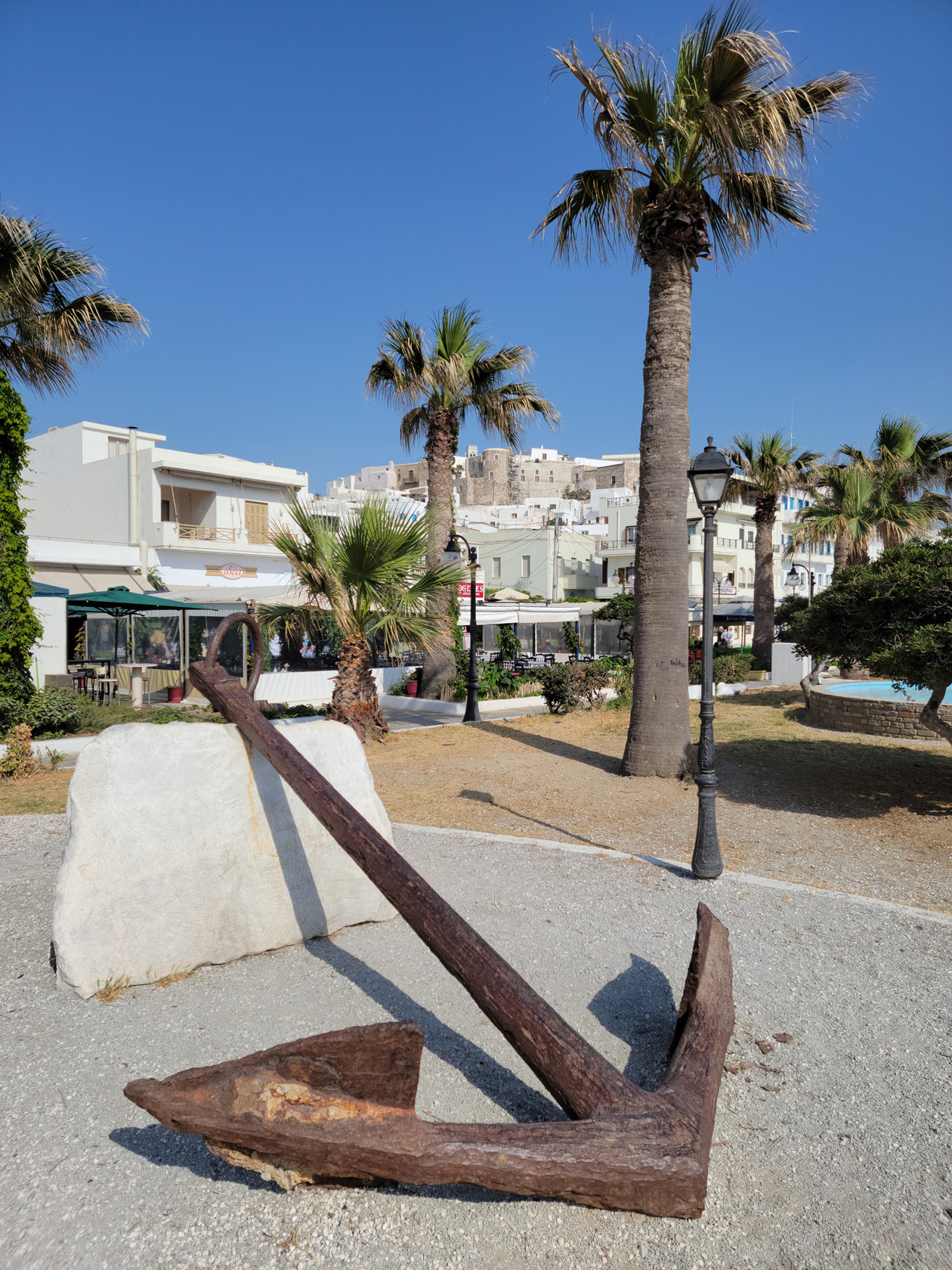
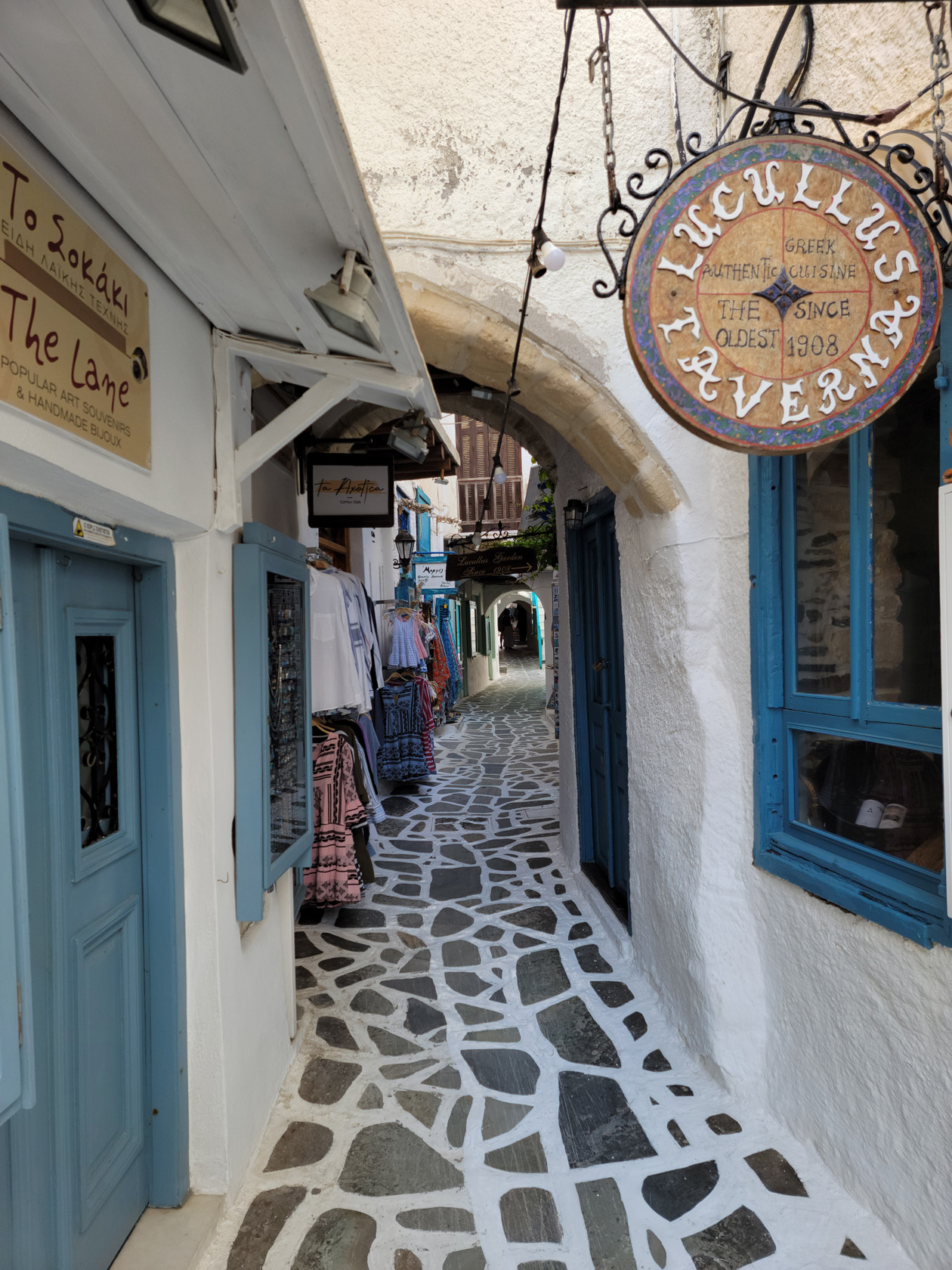
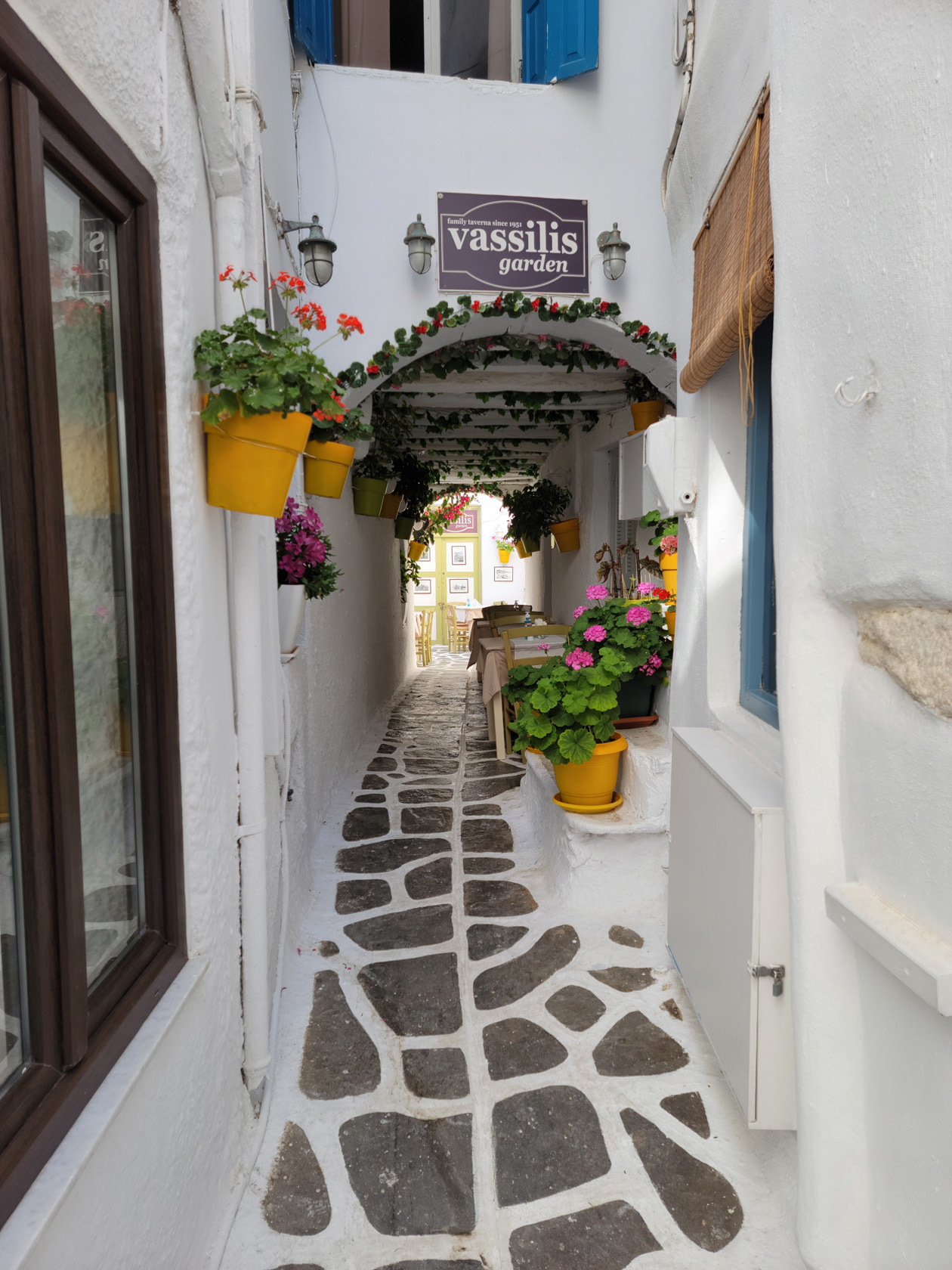
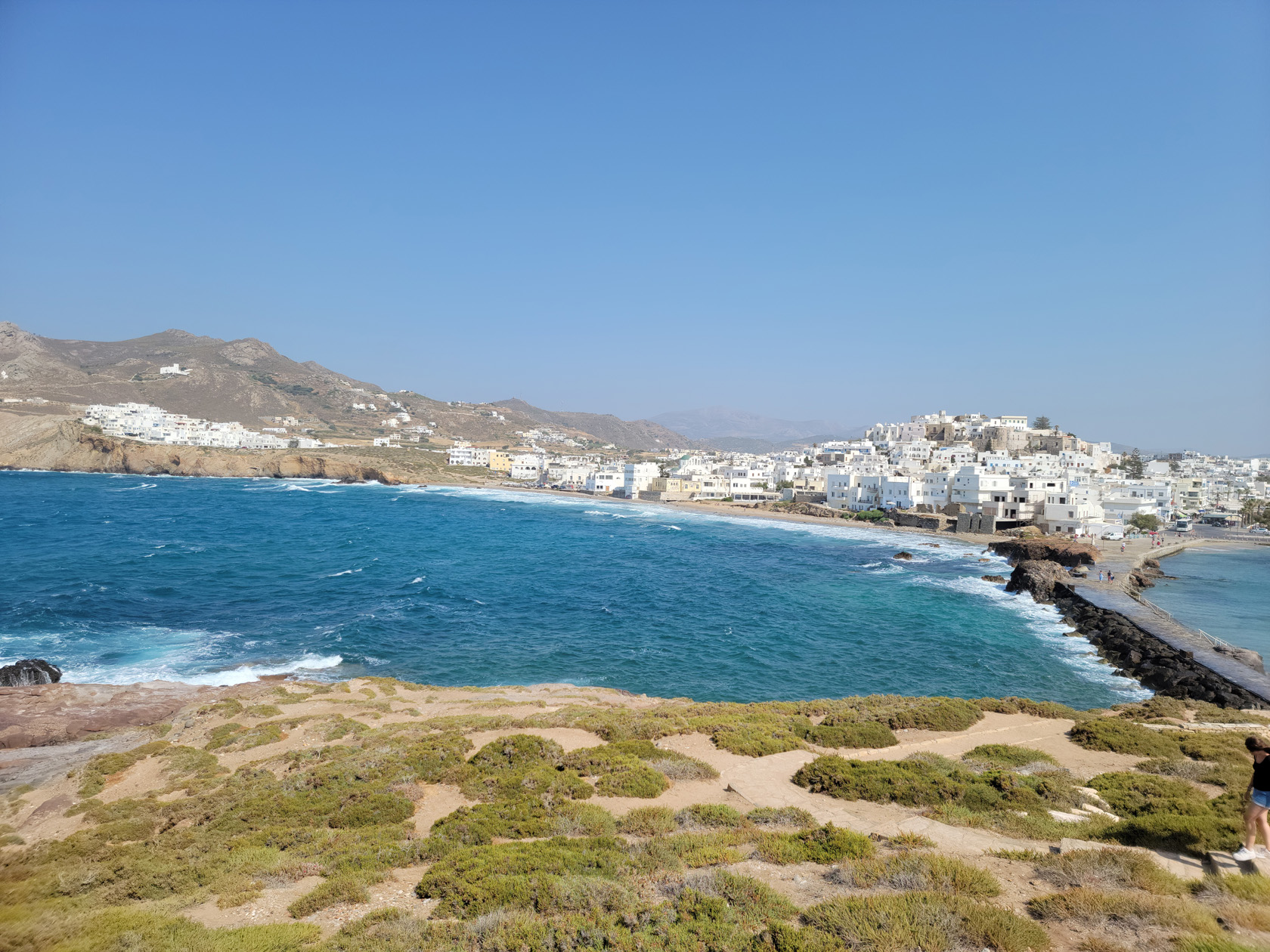
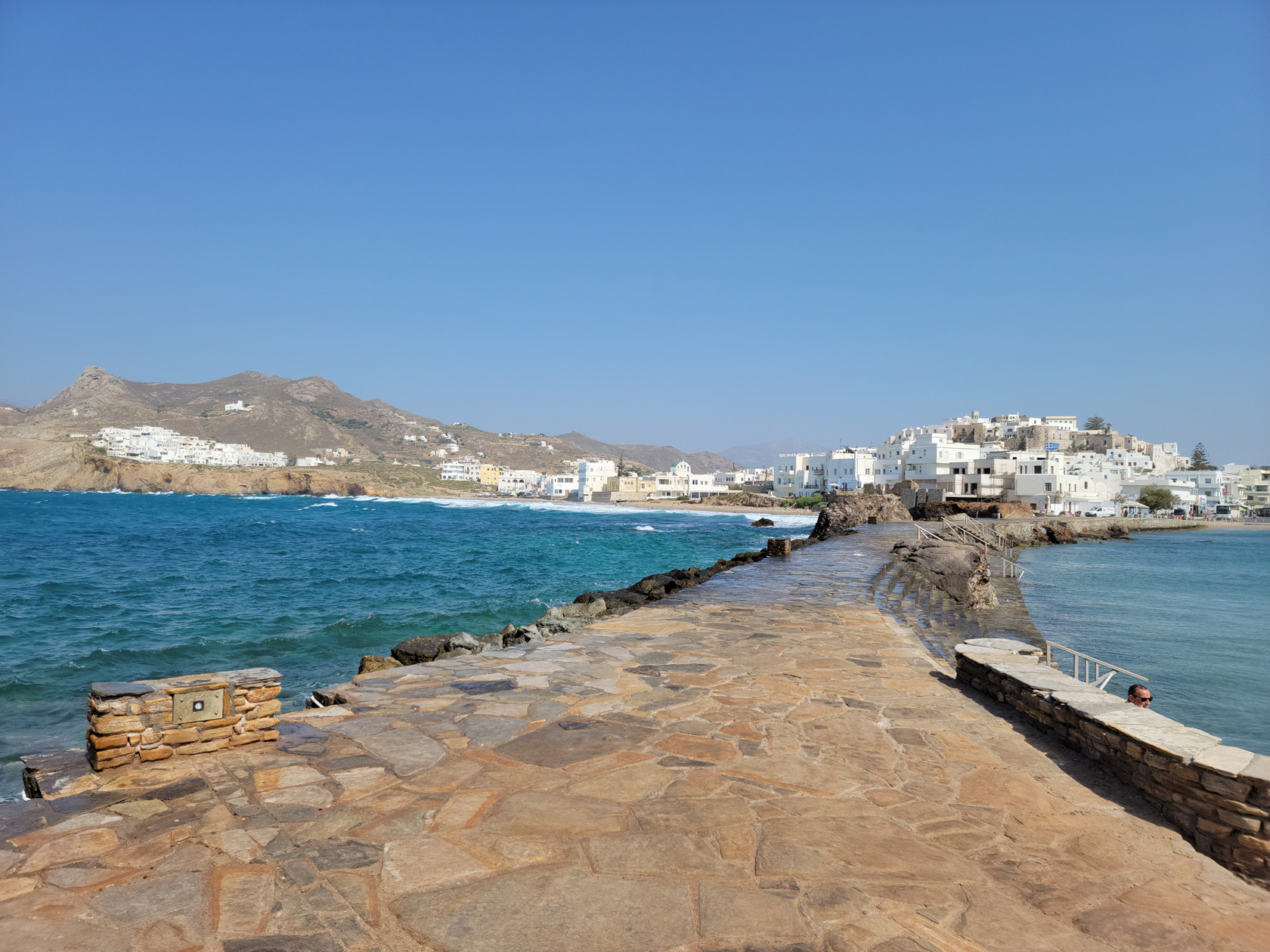
The modern part of Naxos is pretty little port city built into a small hill that of course has a church and castle built on top of it. The hill has very interesting narrow winding streets that one can peruse and occasionally shop at the stores that dot the way.
Naxos, Naxos – The City
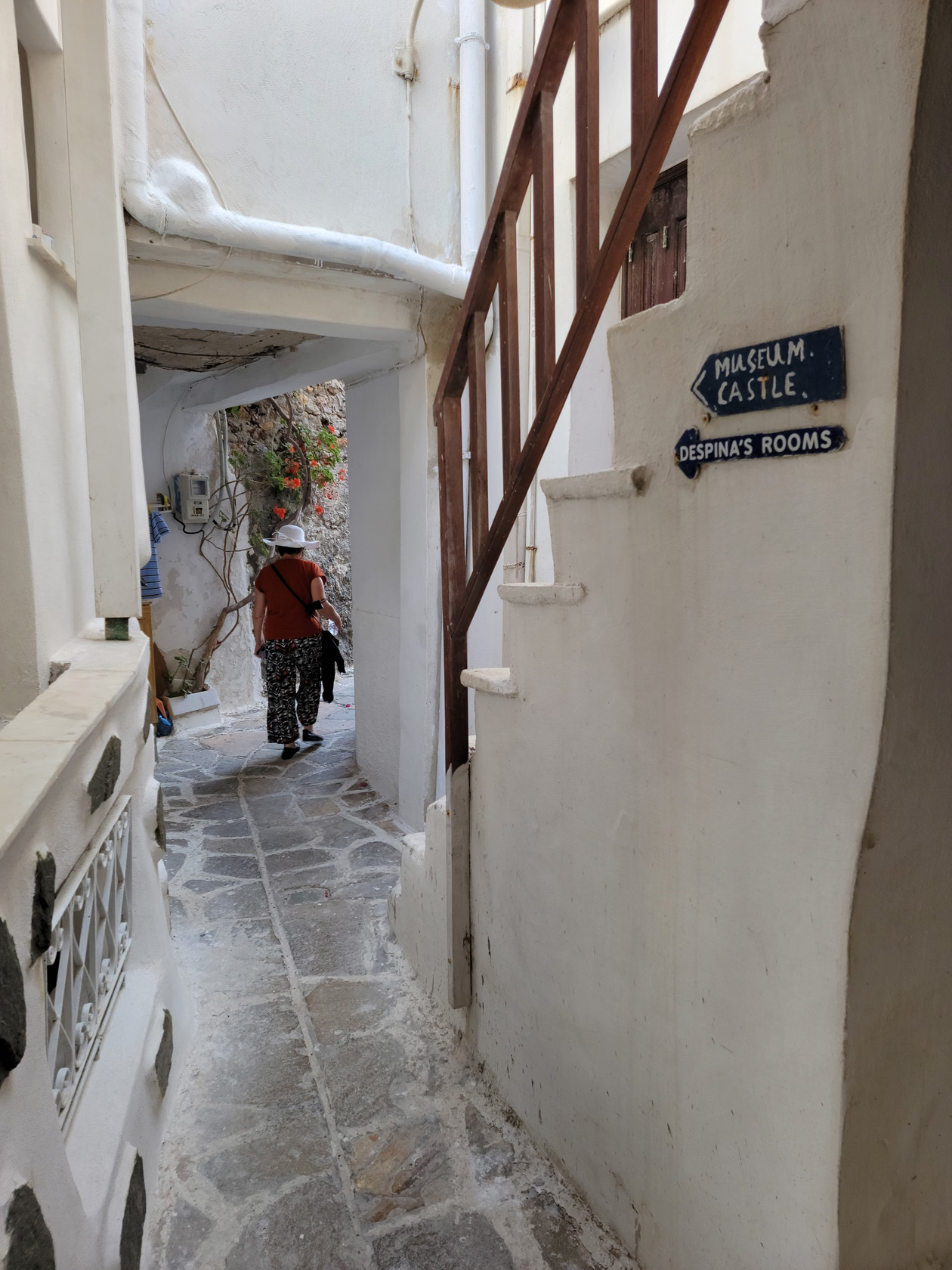
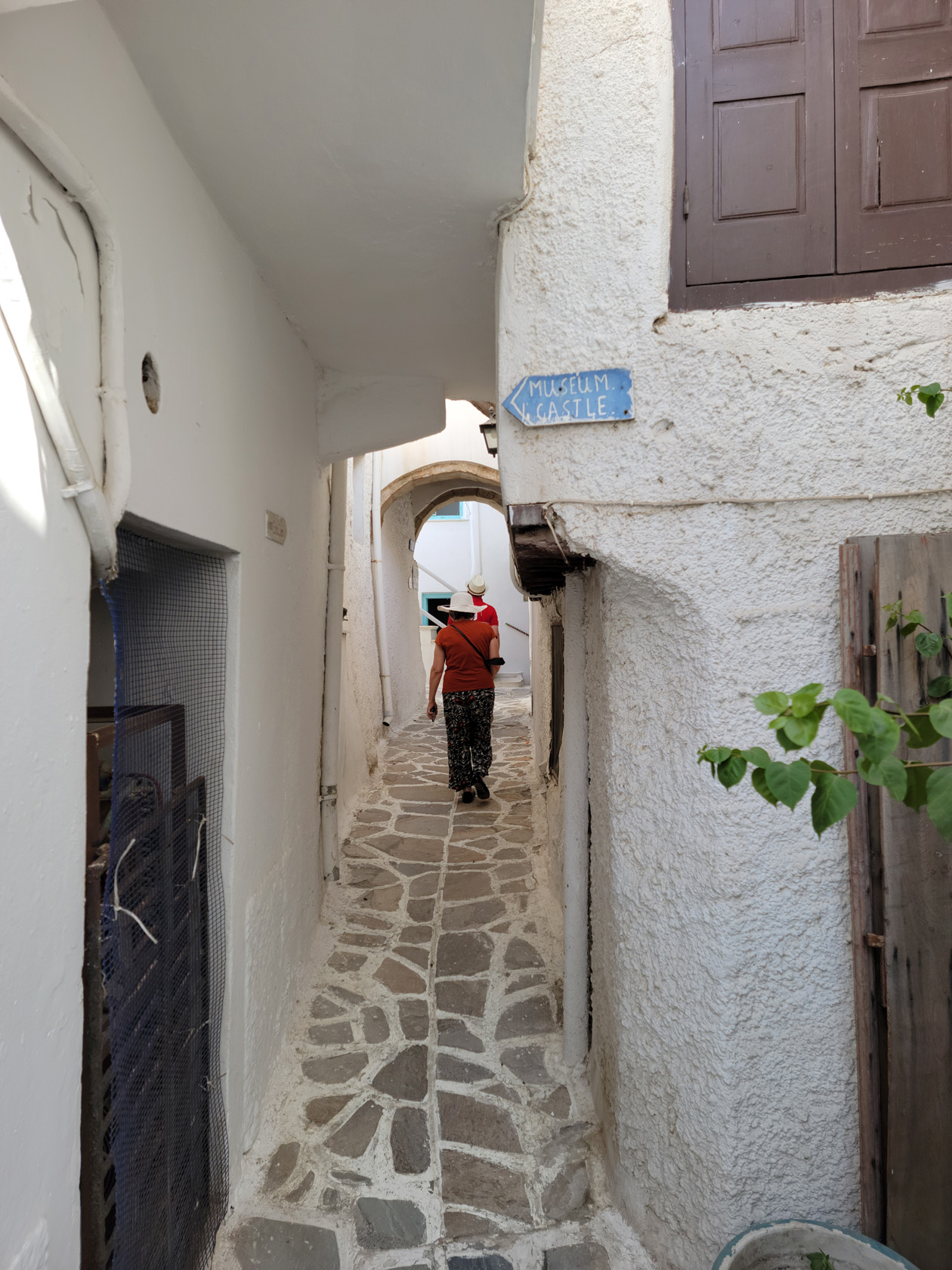
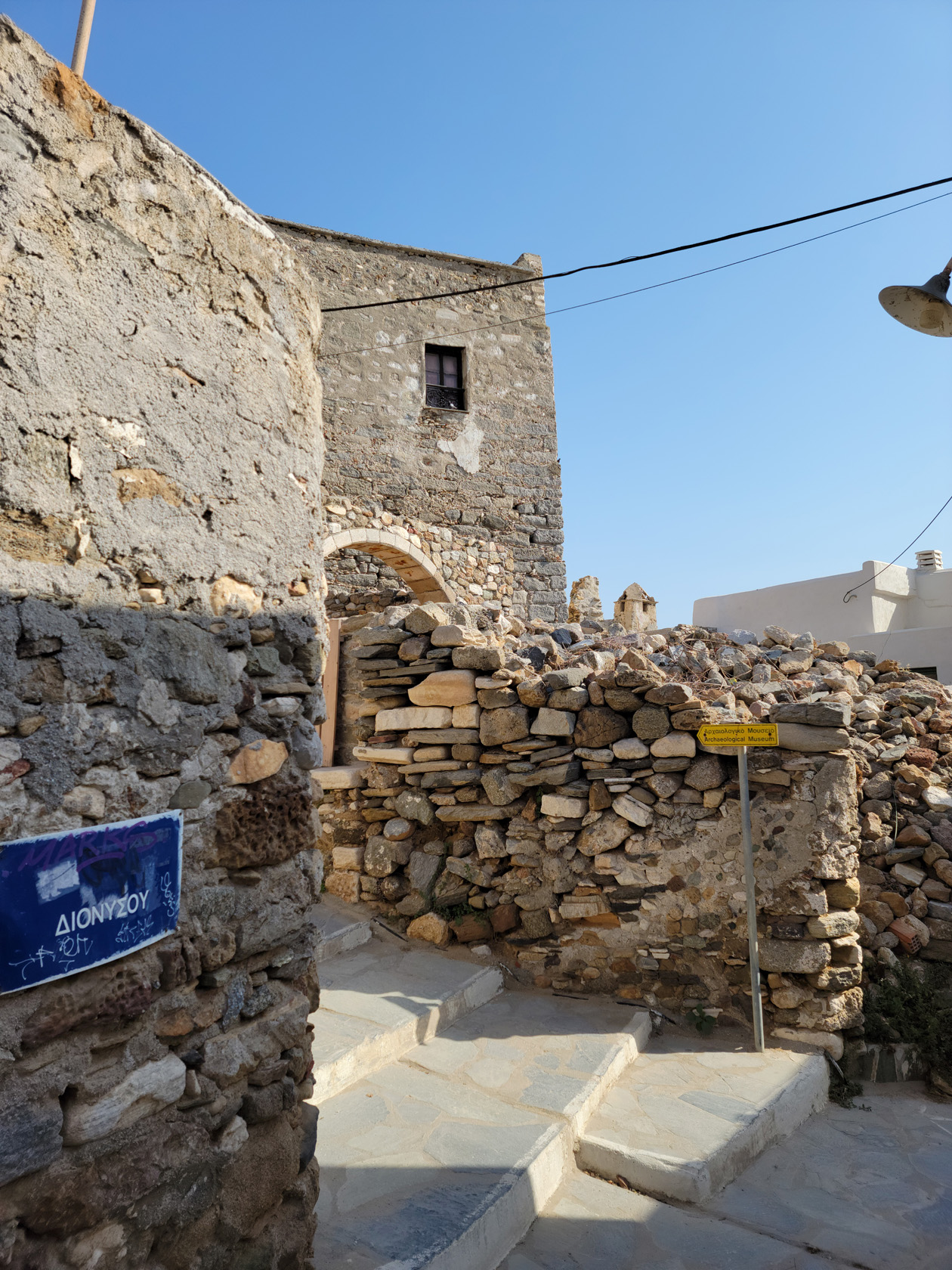
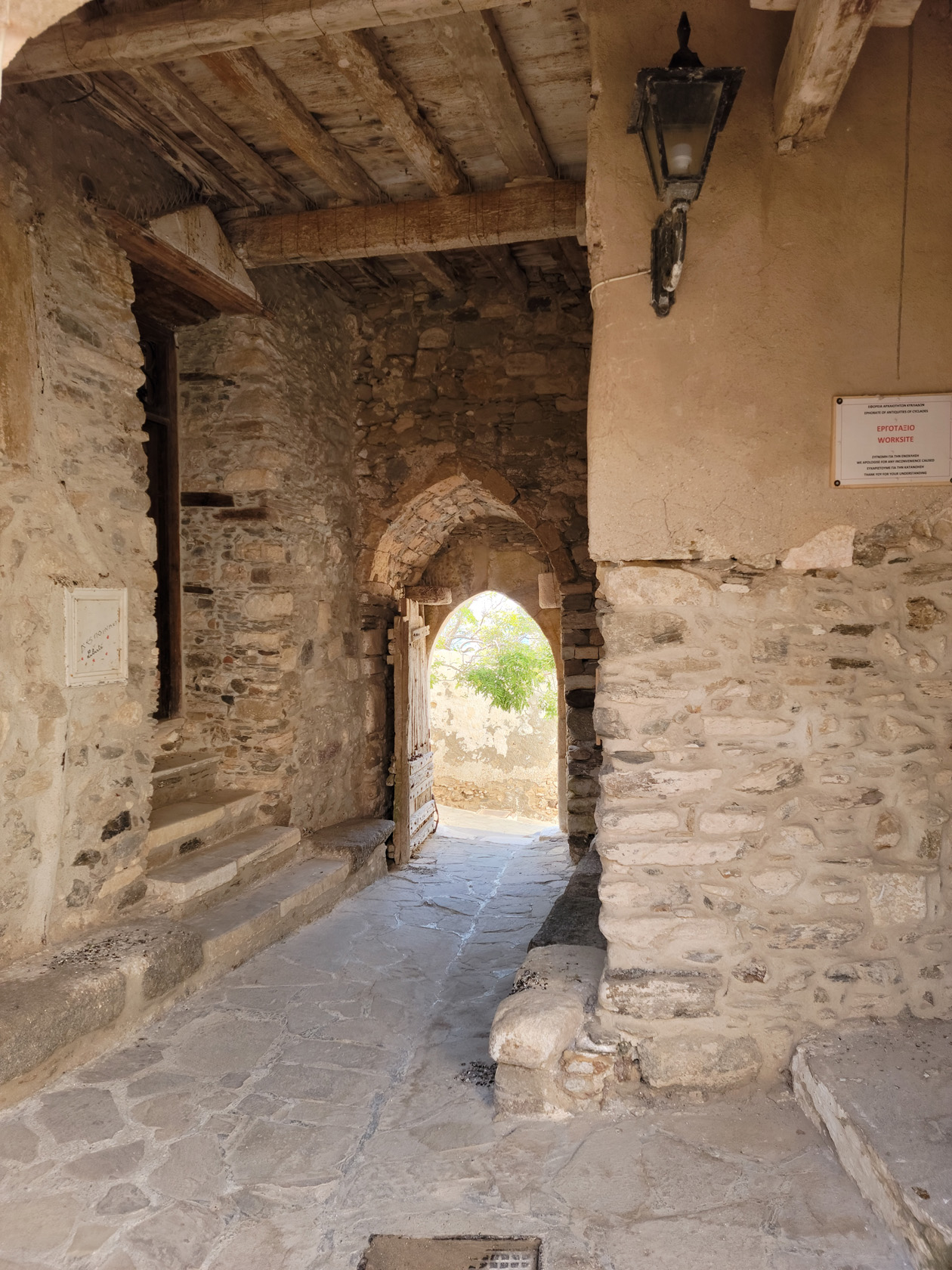
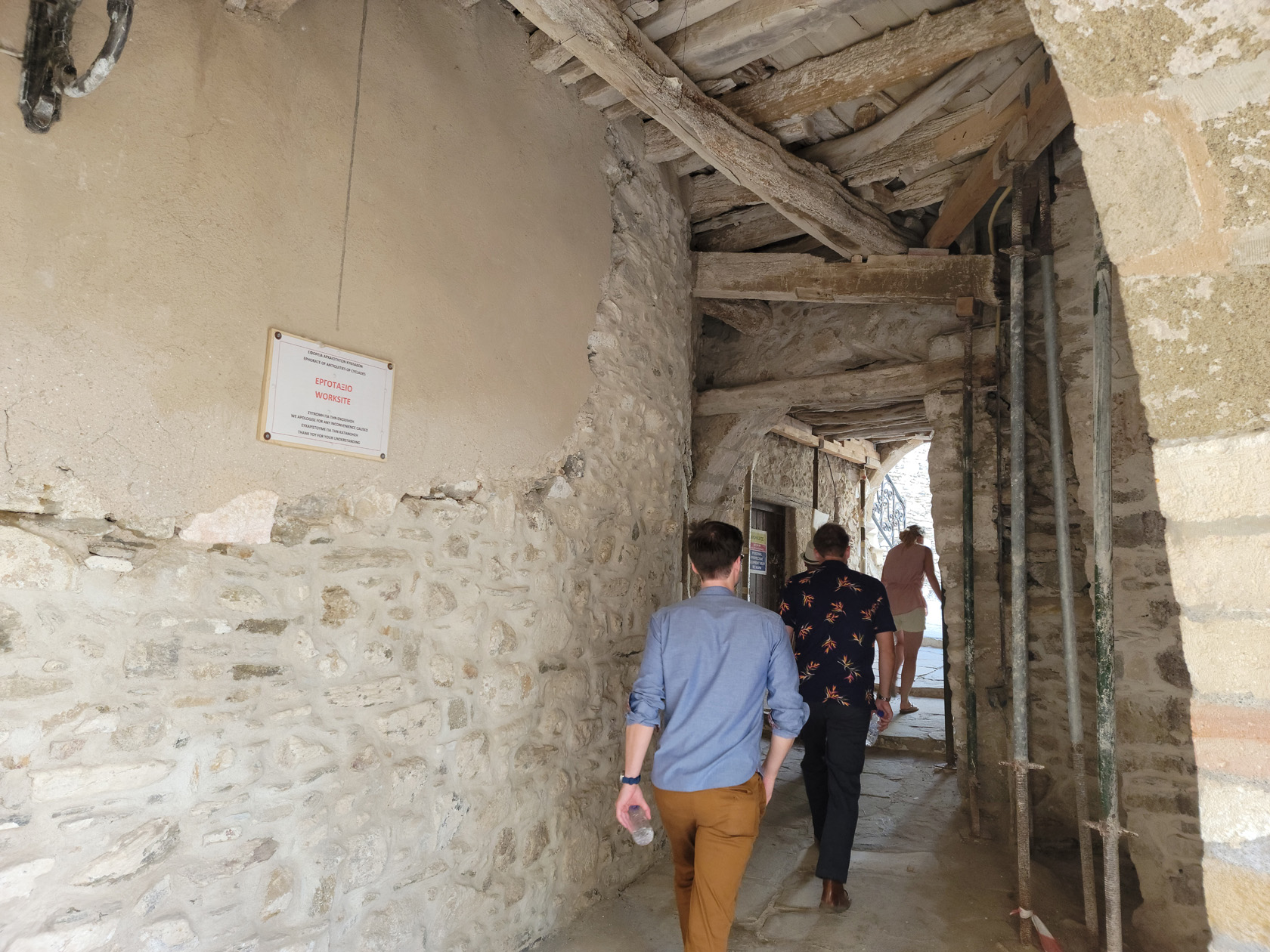
The Venetian Castle of Naxos is not much to look at, and from what we could tell, not open to the public, since all the entrances appear locked, signed and boarded up.
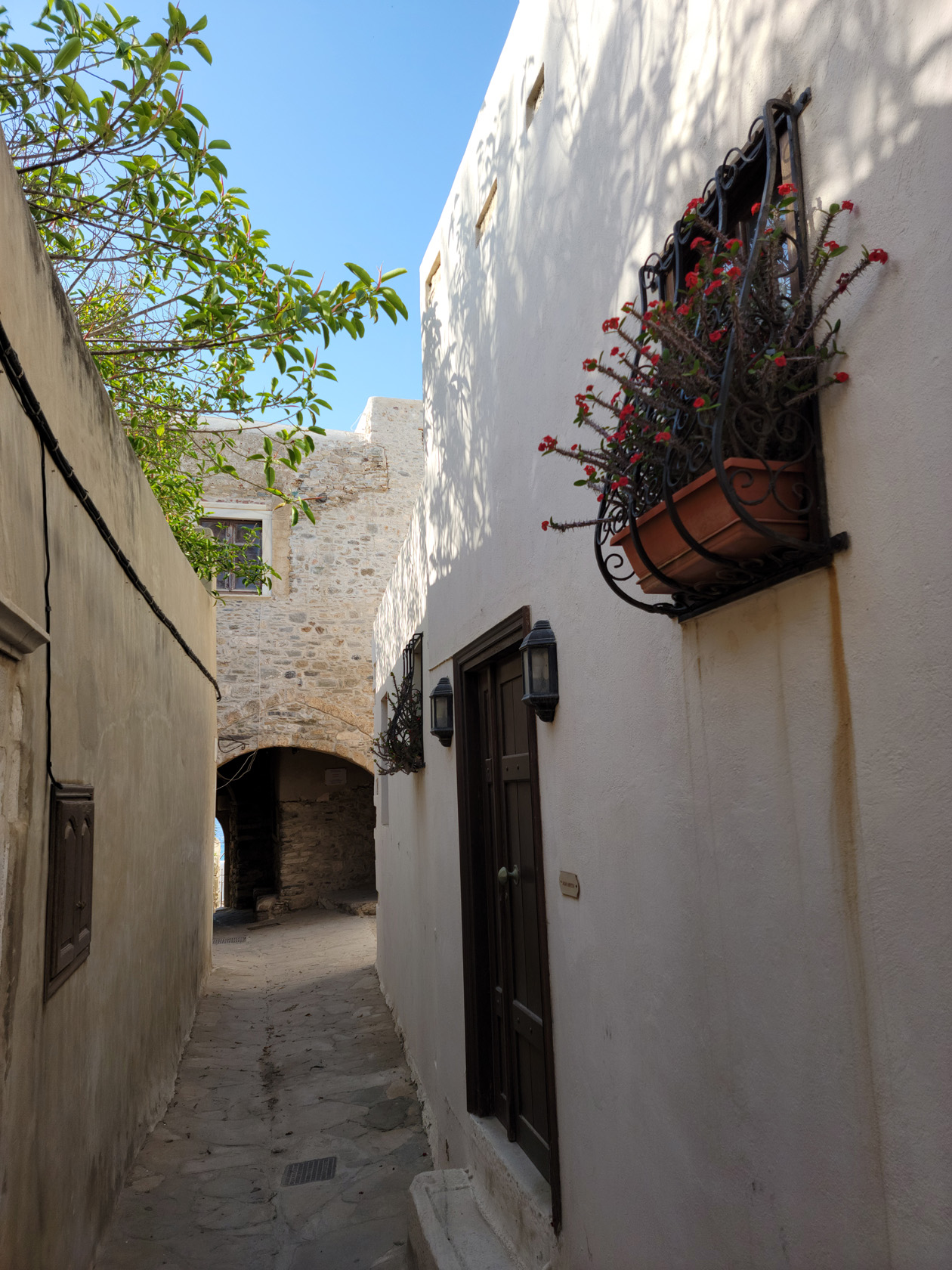
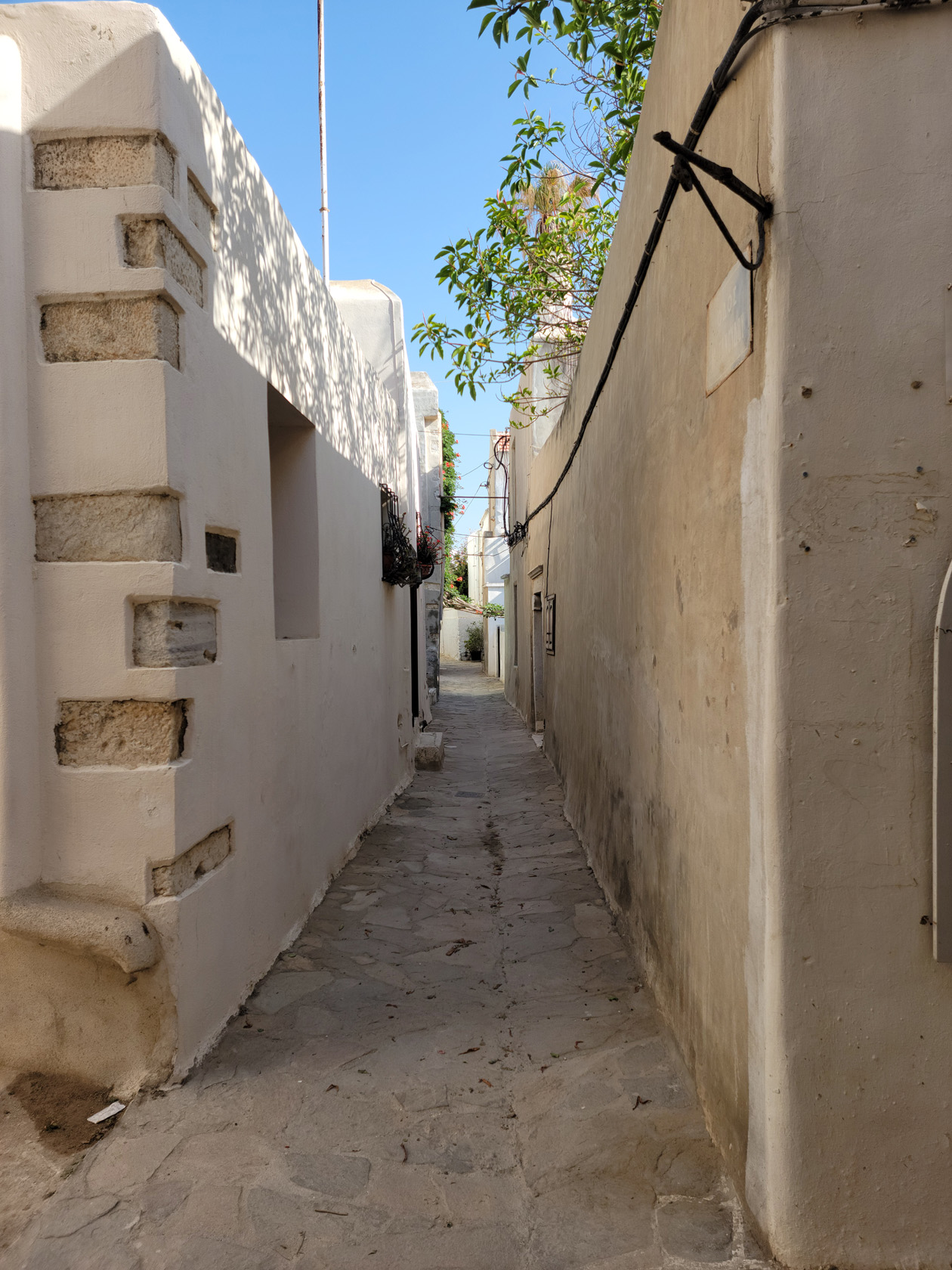
Naxos, Naxos – Alleyway To Castle
Naxos, Naxos – Alleyway To Castle
Naxos, Naxos – Alleyway To Castle
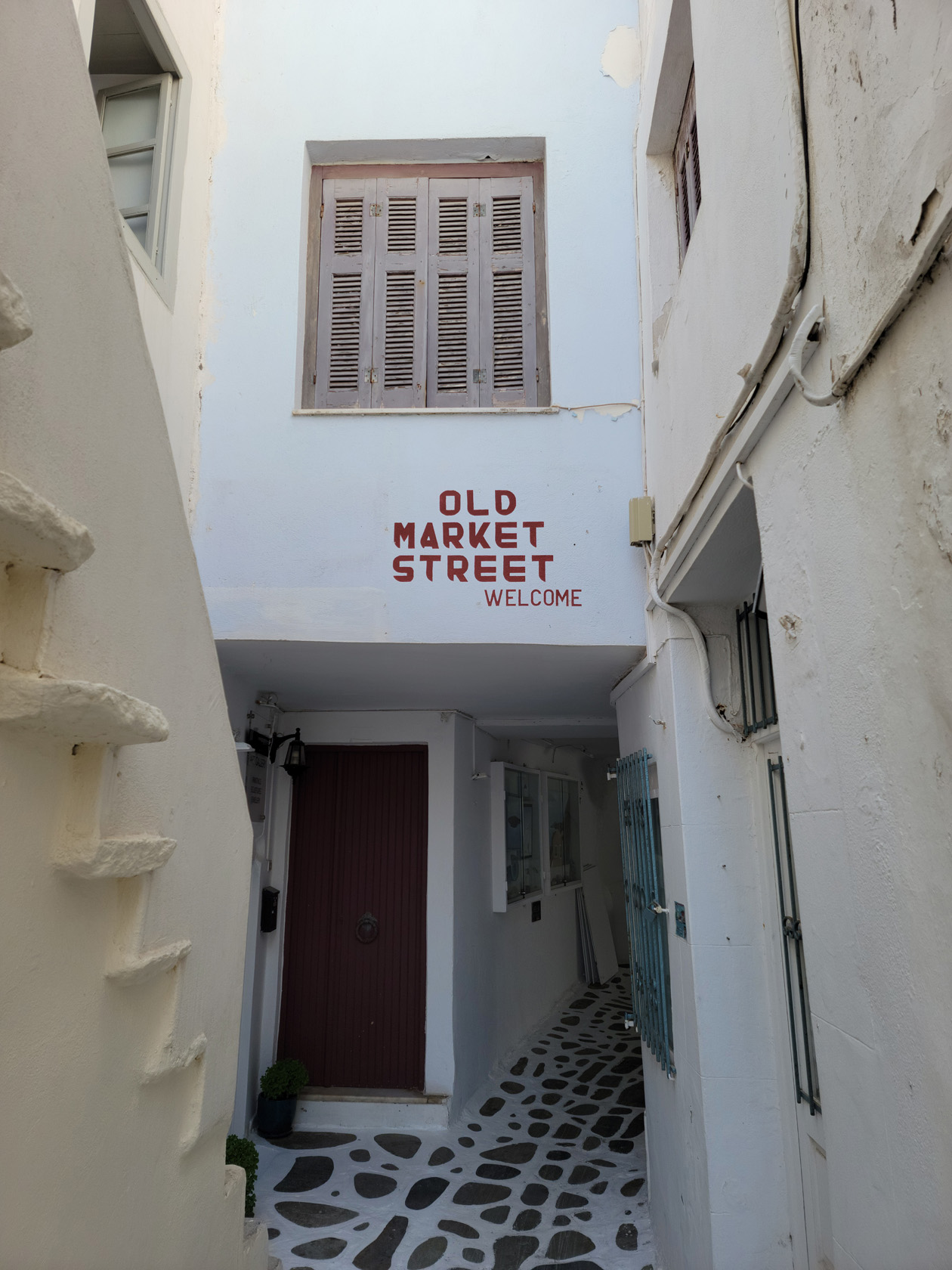
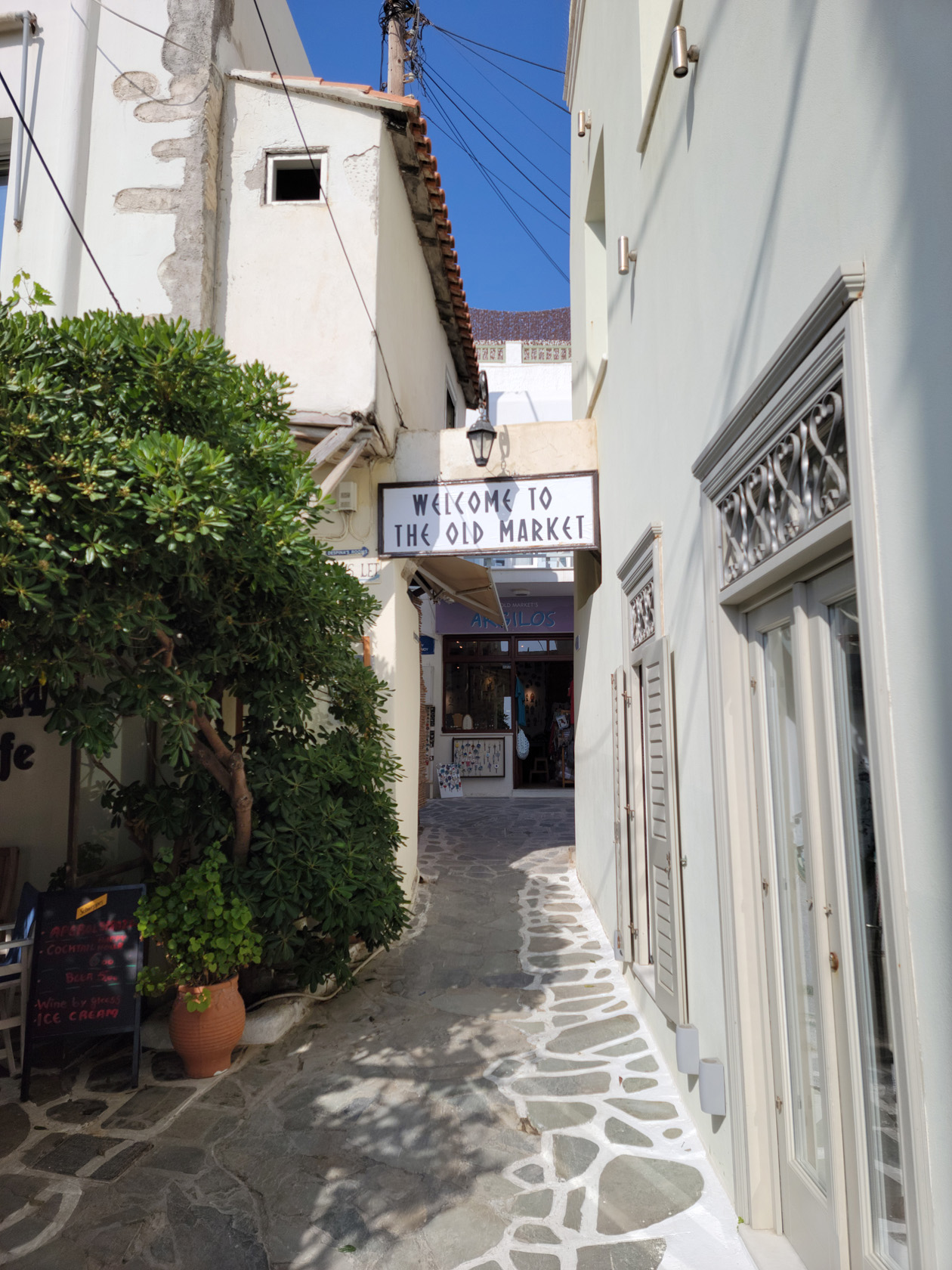
Naxos, Naxos – Alleyway To Castle – Old Market Entrance
Naxos, Naxos – Alleyway To Castle
Naxos, Naxos – Alleyway To Castle
Naxos, Naxos – The Castle
Naxos, Naxos – The Castle
Naxos, Naxos – The Castle
Naxos, Naxos – The Castle
Naxos, Naxos – The Castle – Walking Through Part Of The Castle
The Catholic Cathedral at the top is open to the public, but when we arrived it was during lunch and we were not going to stay until later in the afternoon for them to reopen. It was just a passing thought, since our real intent was to find a place to each lunch ourselves.
The Temple of Apollo
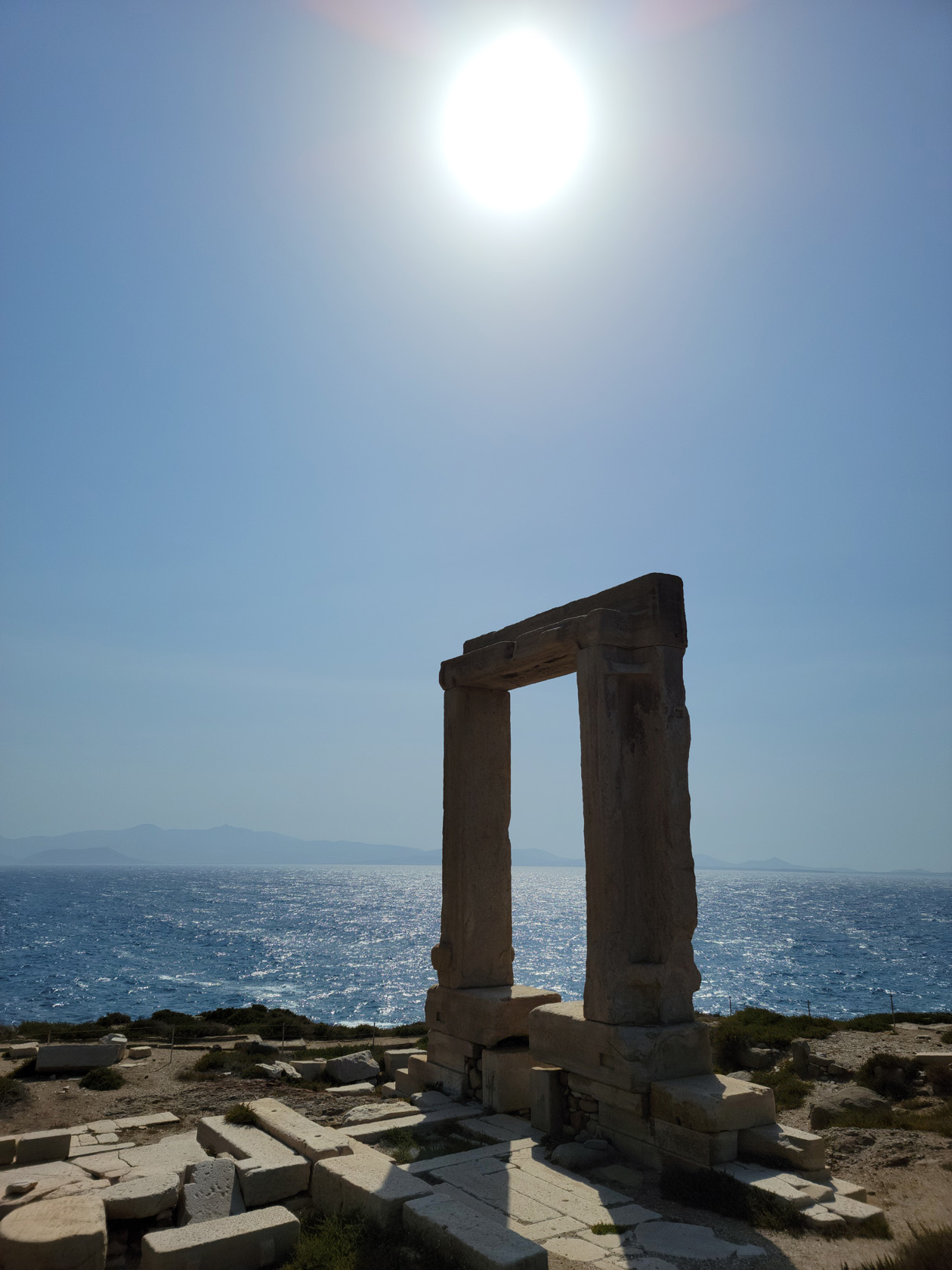
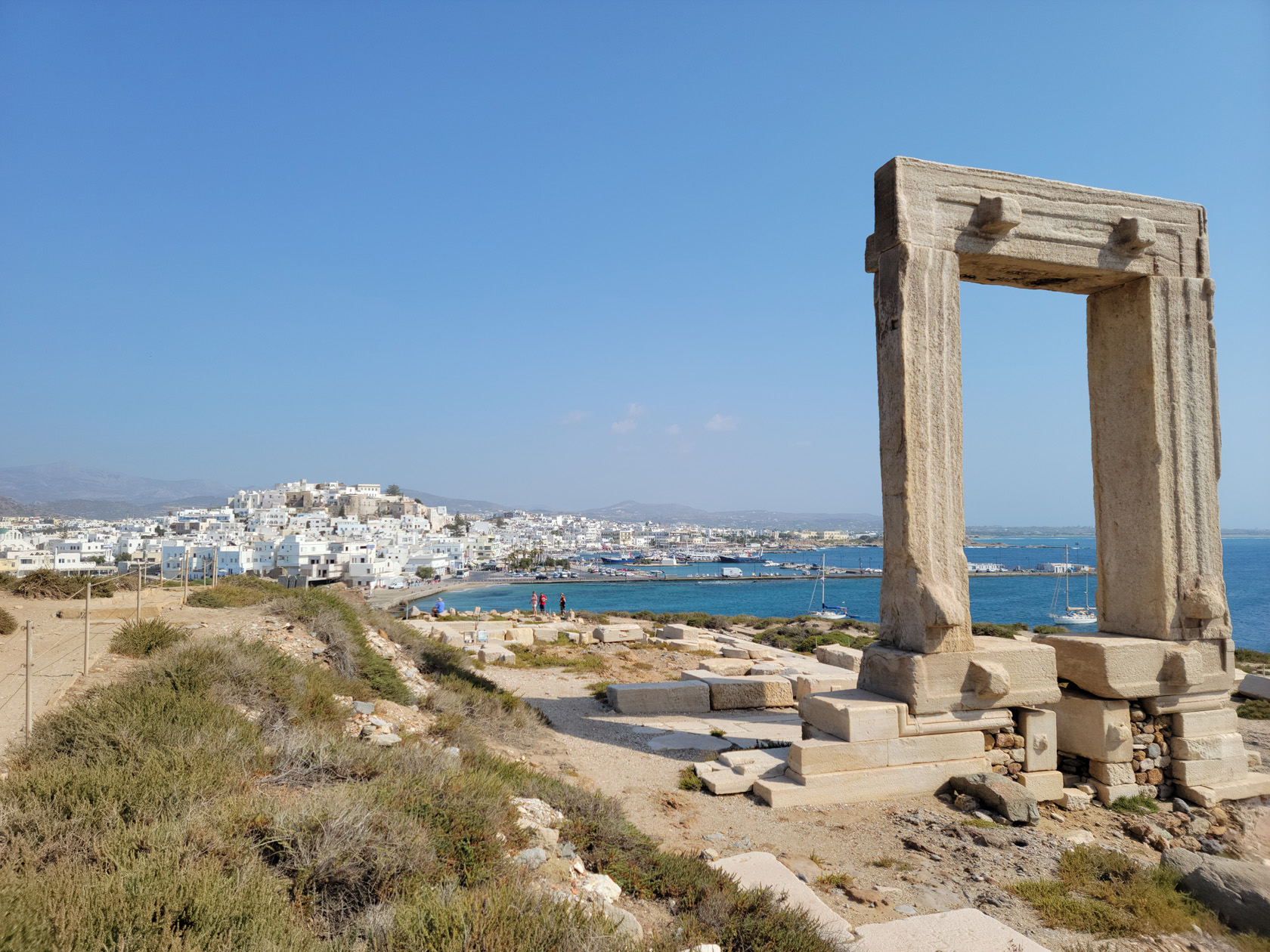
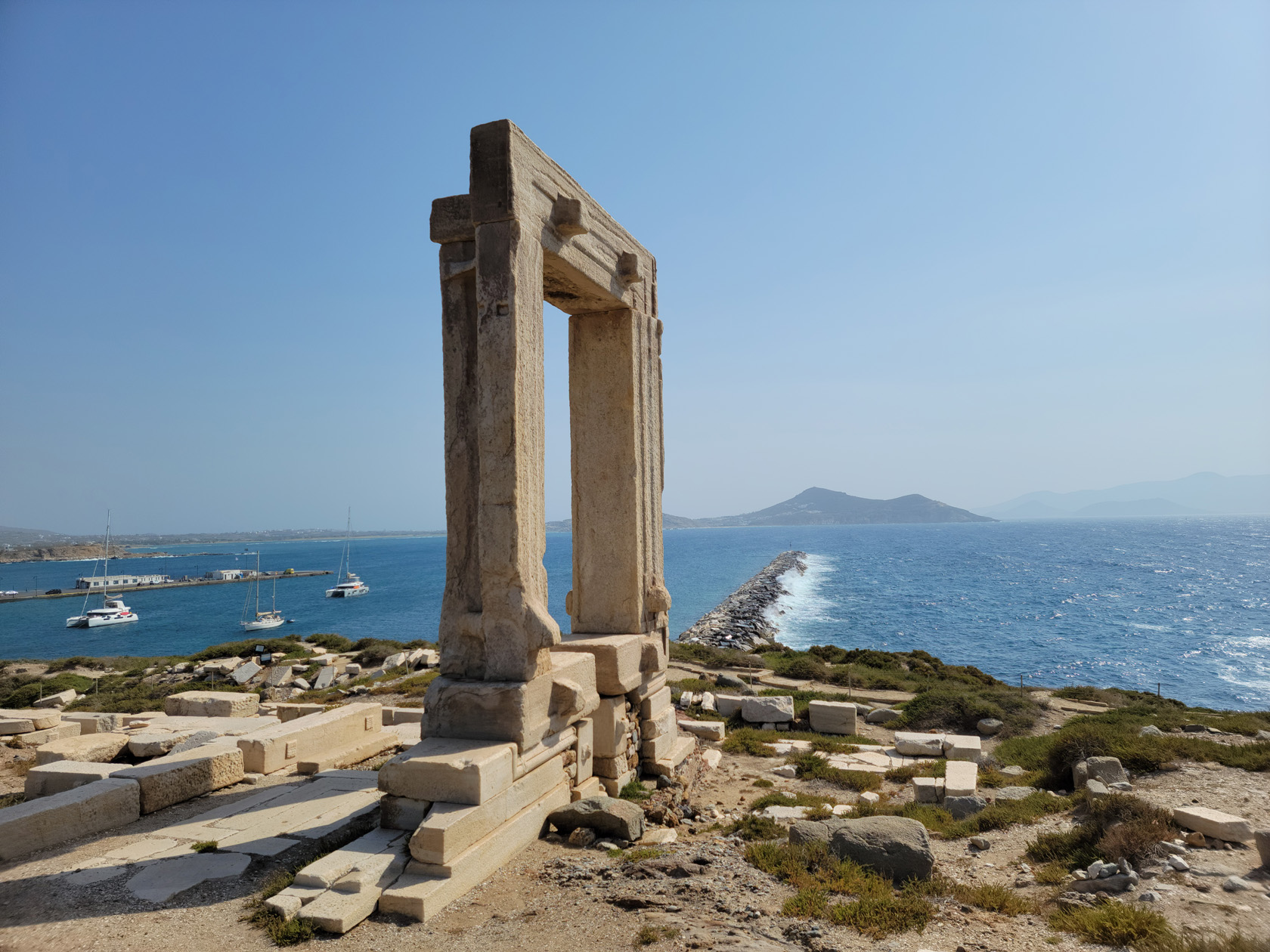
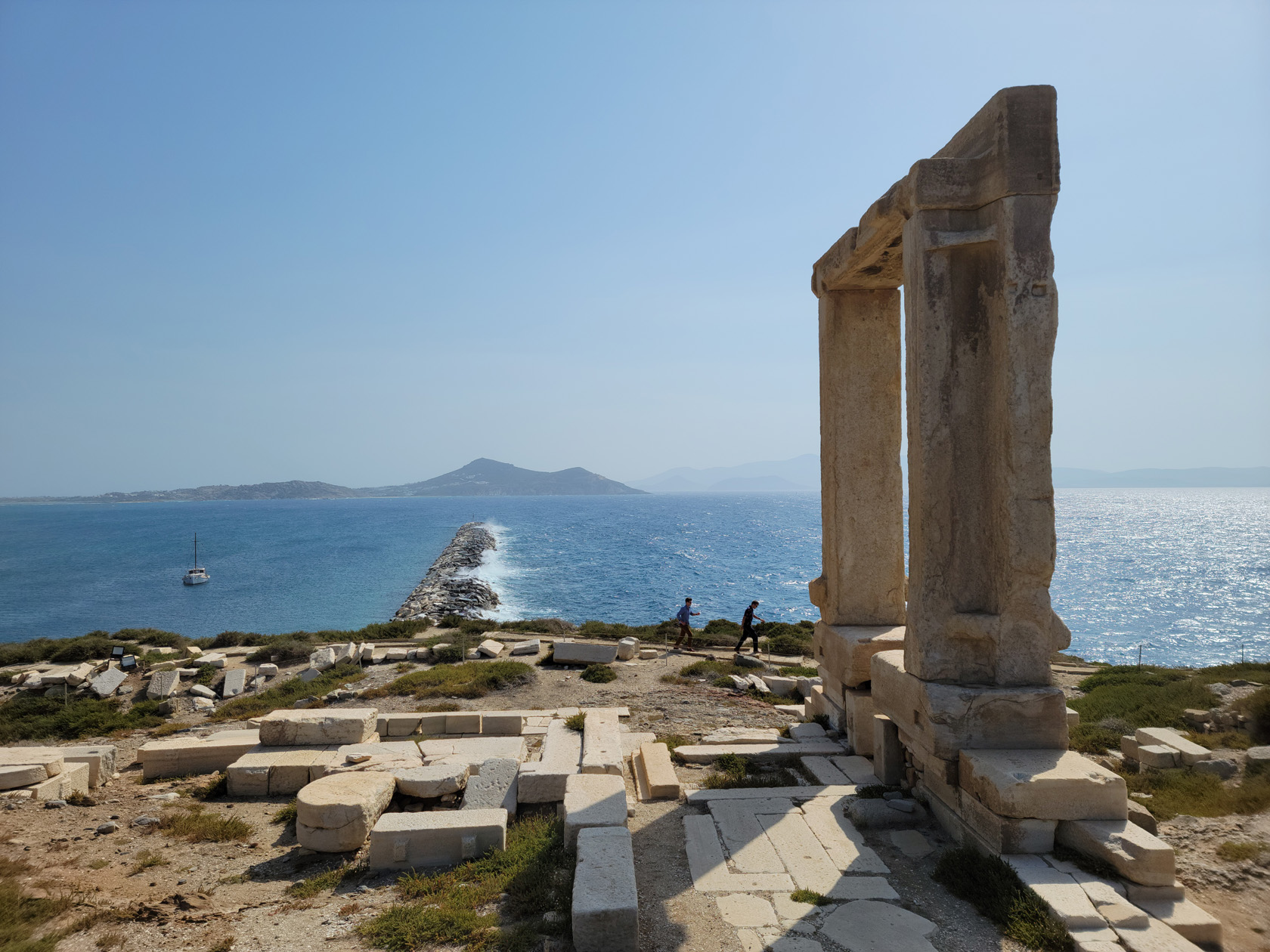
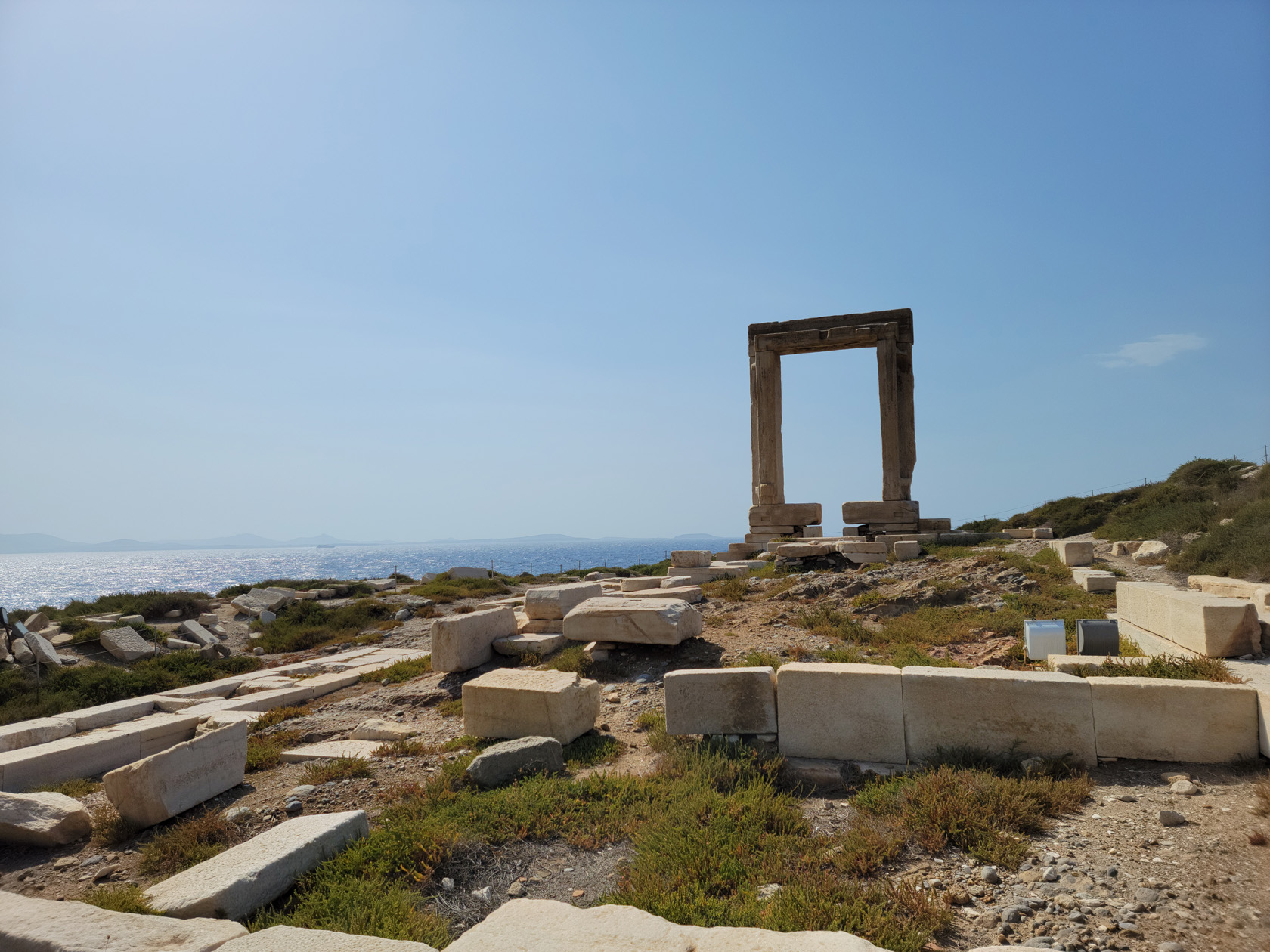
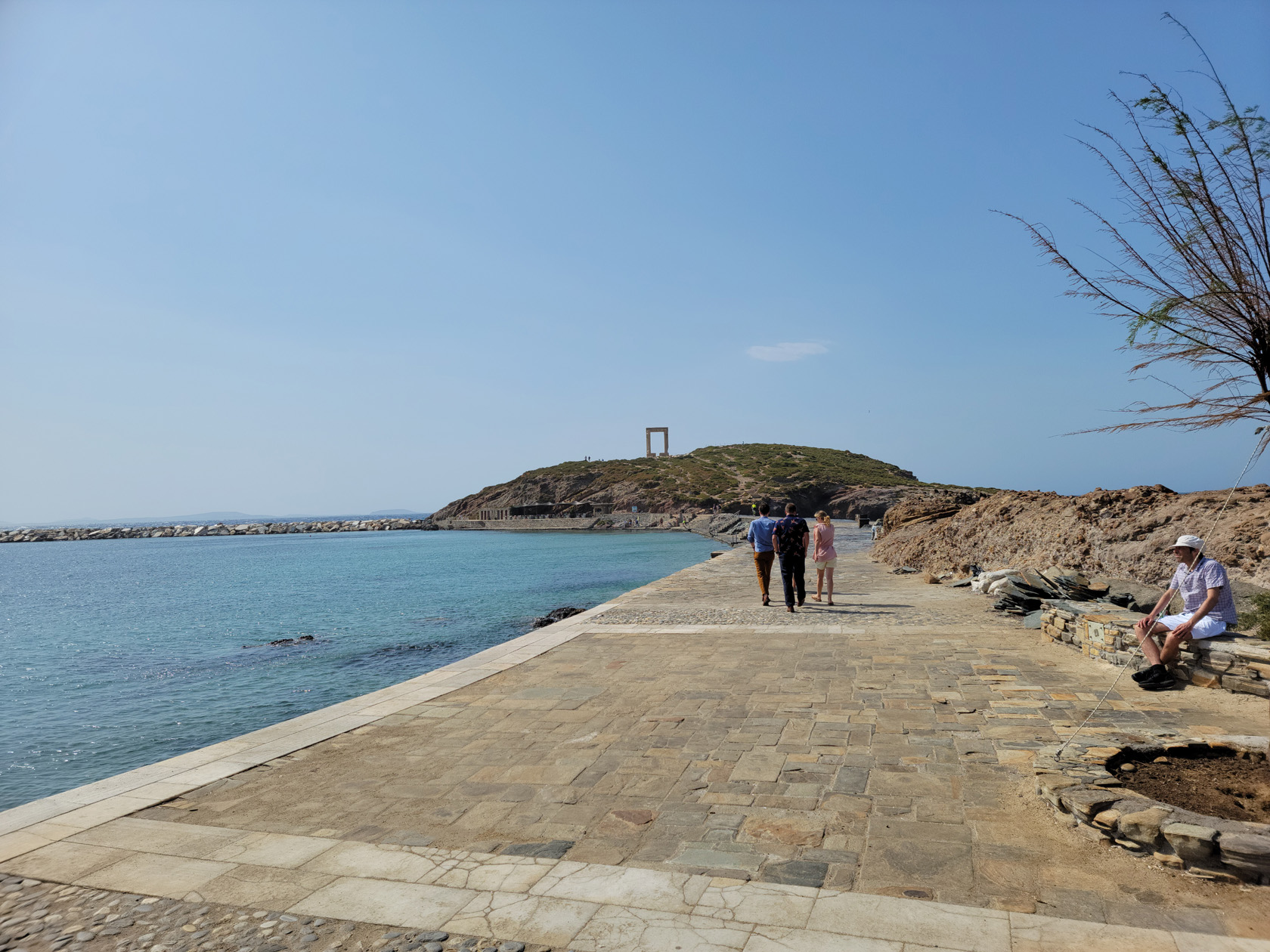
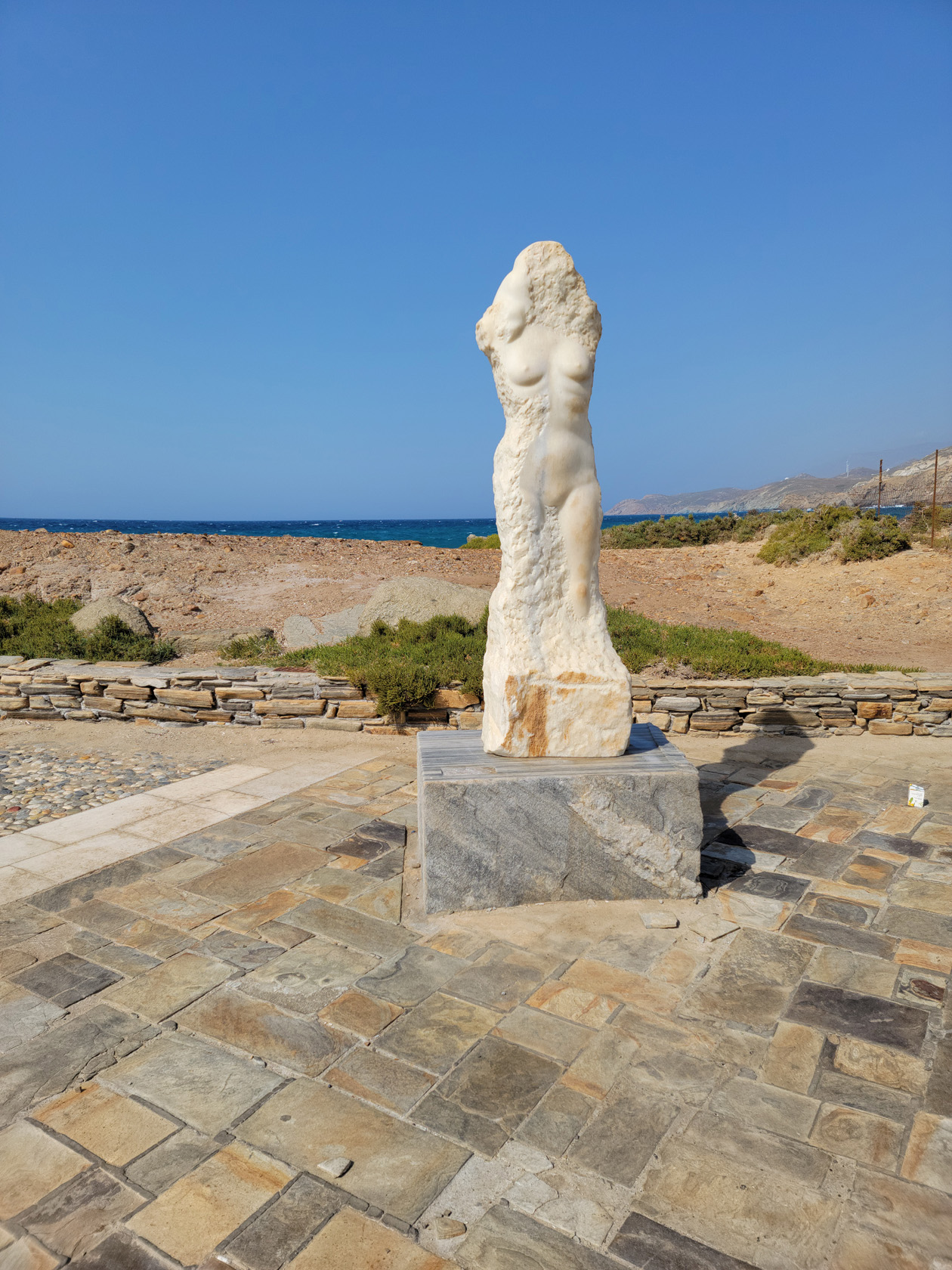
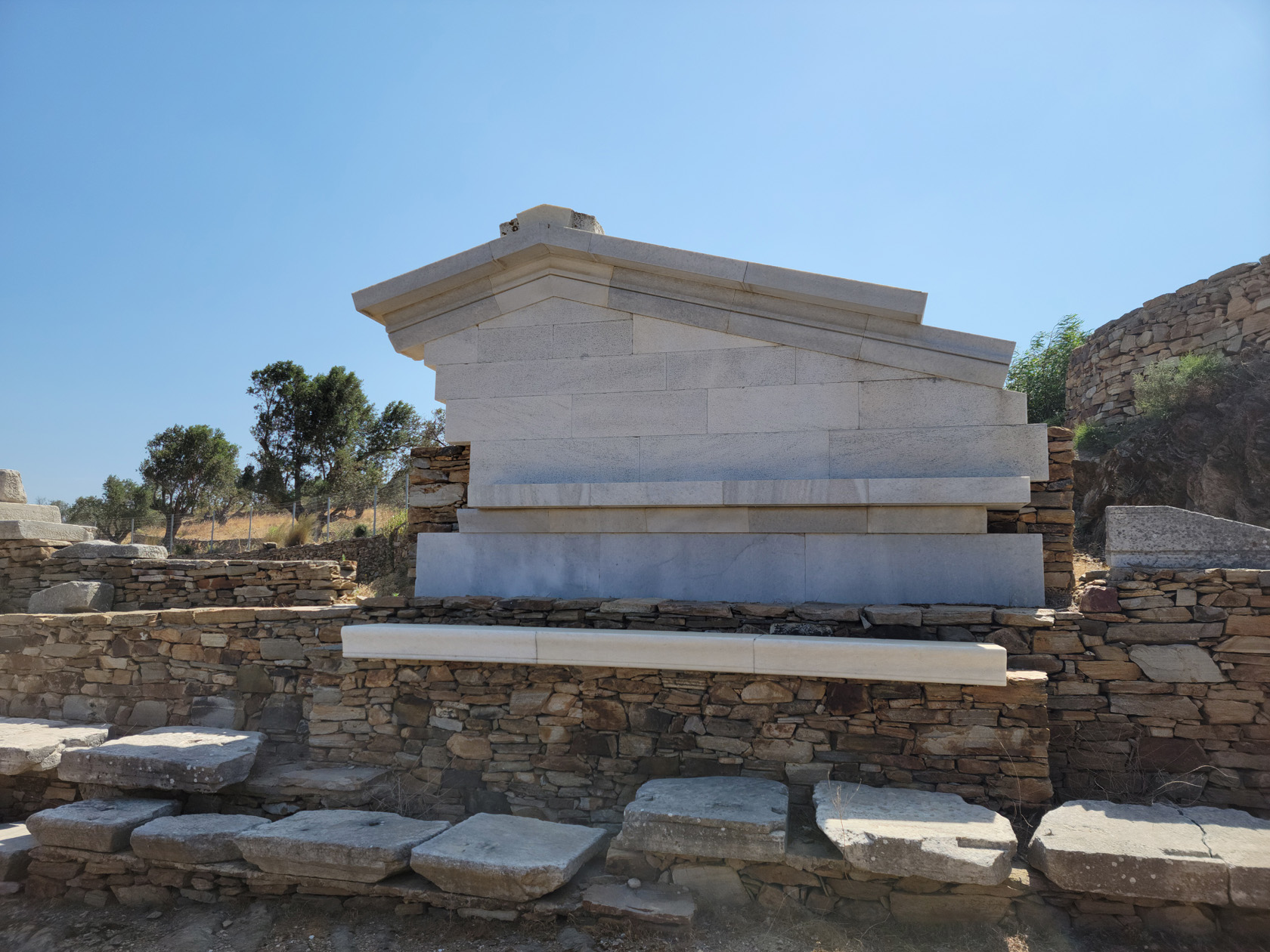
The interesting form that we first came in contact with at our hotel has an actual presence on the island. The Temple of Apollo are the remains of a structure to the god Apollo built by Lygdamis the tyrant in the sixth century BCE on a peninsula just off the harbor of Naxos City. In fact he never actually completed it. Before he could do so, he was conquered by the Spartan army in 524 BCE and never saw power again.
Naxos, Naxos – Temple of Apollo
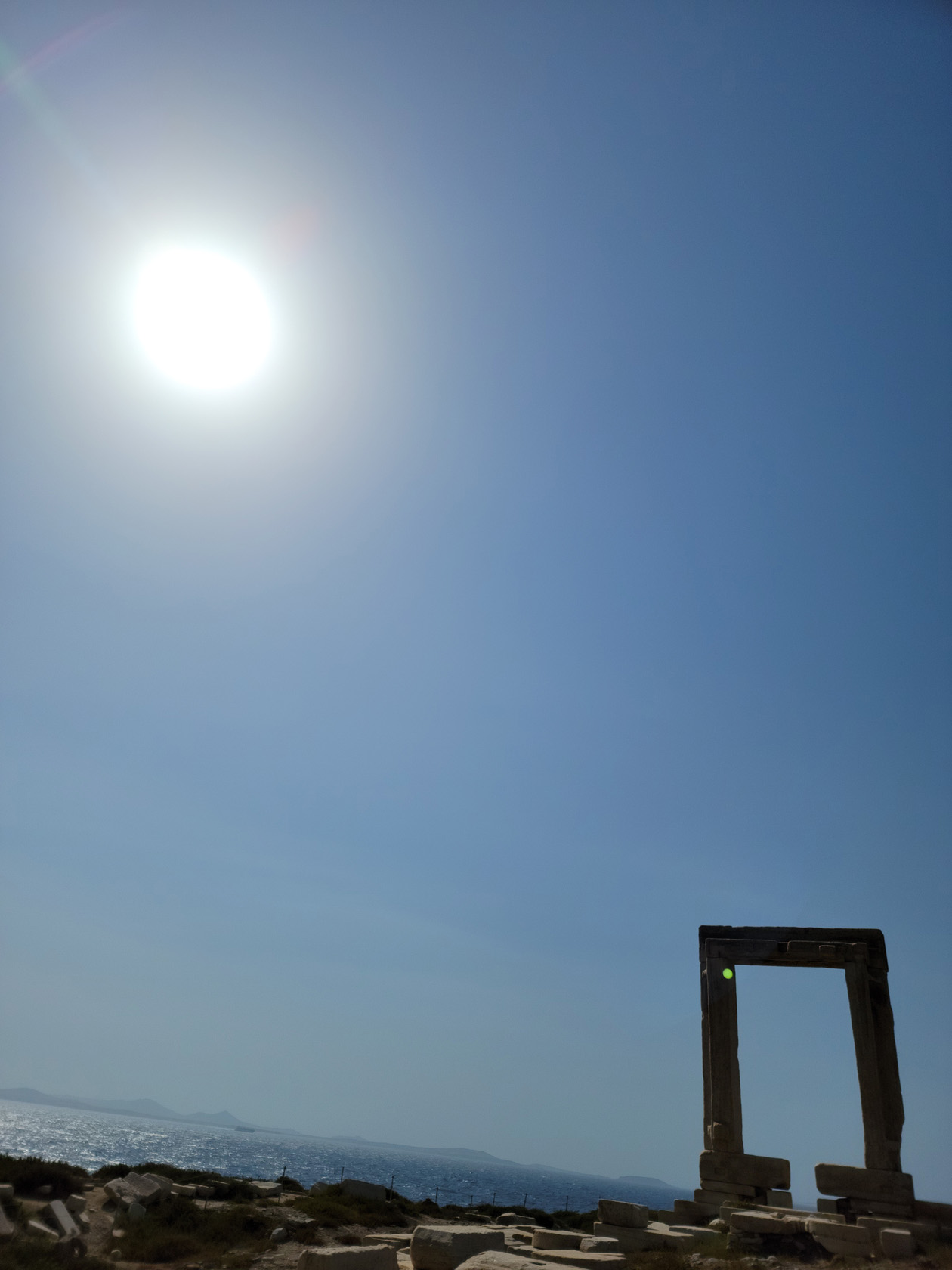
Due to its age and no doubt having been plundered over the millennia, all that stands after repeated excavations and reconstructions, is the gate itself. It stands with its lintel and two sides upright on a small outcropping of rock just to the north of the city against the stark blue Aegean sky.
Naxos, Naxos – Temple of Apollo
Naxos, Naxos – Temple of Apollo
Naxos, Naxos – Temple of Apollo
Naxos, Naxos – Temple of Apollo
Naxos, Naxos – Temple of Apollo
Naxos, Naxos – And Its Jetty From The Temple of Apollo
Naxos, Naxos – The Harbor
Naxos, Naxos – From Walkway
Naxos, Naxos – Temple of Apollo
Naxos, Naxos – Temple of Apollo – Statue outside
Our Day Tour
Naxos being such a large island, requires you to at least spend a day exploring areas other than its beaches. We used Naxos Luxury Transport as our Tour Guides to explore a few sites we wanted to see, as well as some others that were suggested by our guide. The entire tour was six hours, most of which was in a van, but included many stops, including Sangry or Sangri (also known as the Temple of Demeter), Manolis Pottery, Chalkio and the Citron distillery, the Flerio Melanes Kouros Statue, the town of Apeiranthos and the Eggares Olive Oil Museum.
It was right around this time that my wife Patti became very sick with bronchitis. To the point at which, she had lost almost her entire voice before we reached the Olive Oil museum in Eggares. What ever dark cloud or spell we were under, it appeared to have followed us into the Naxos hills. I started to wonder, what else could befall us?
The Temple Of Sangri
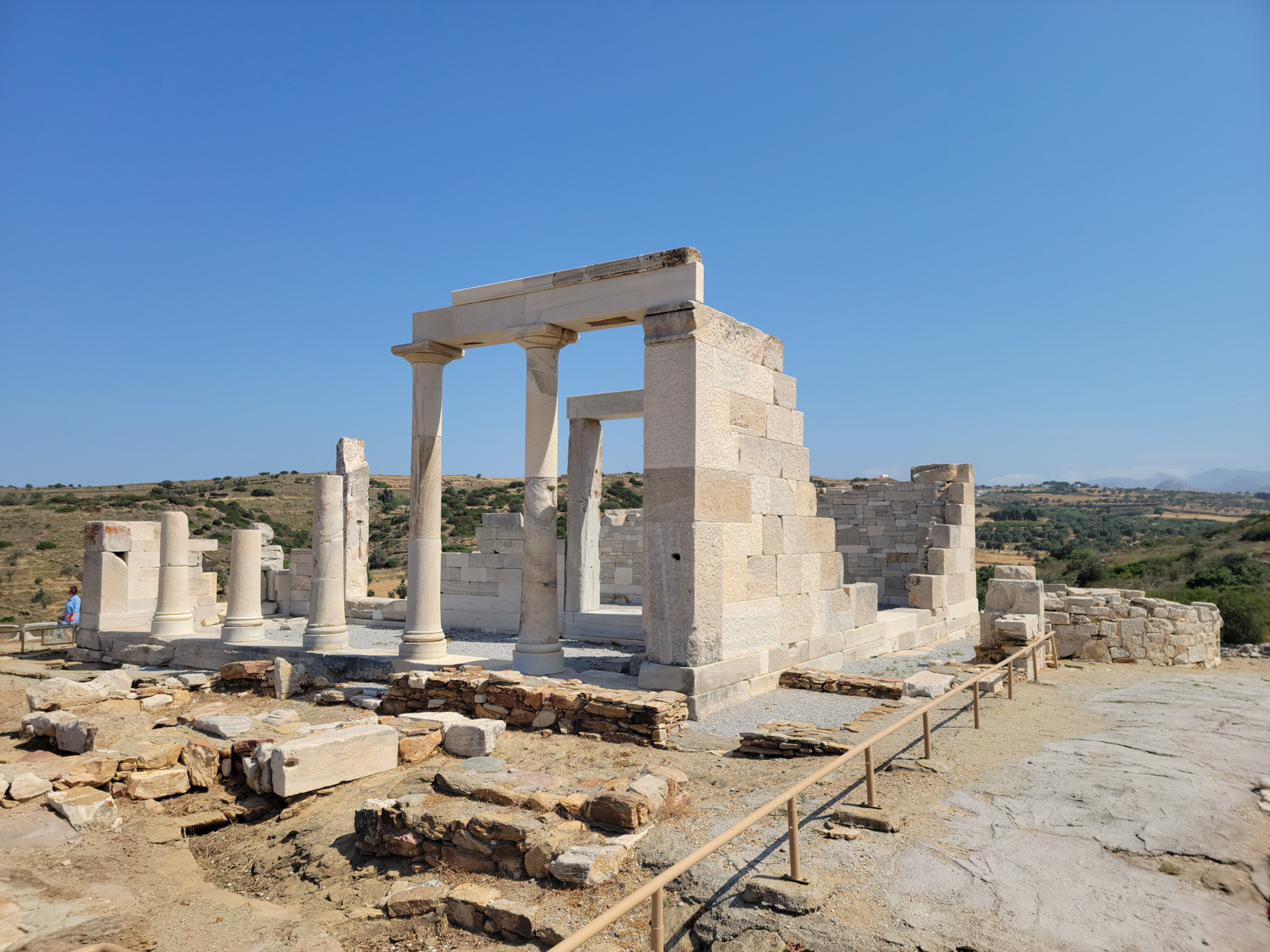
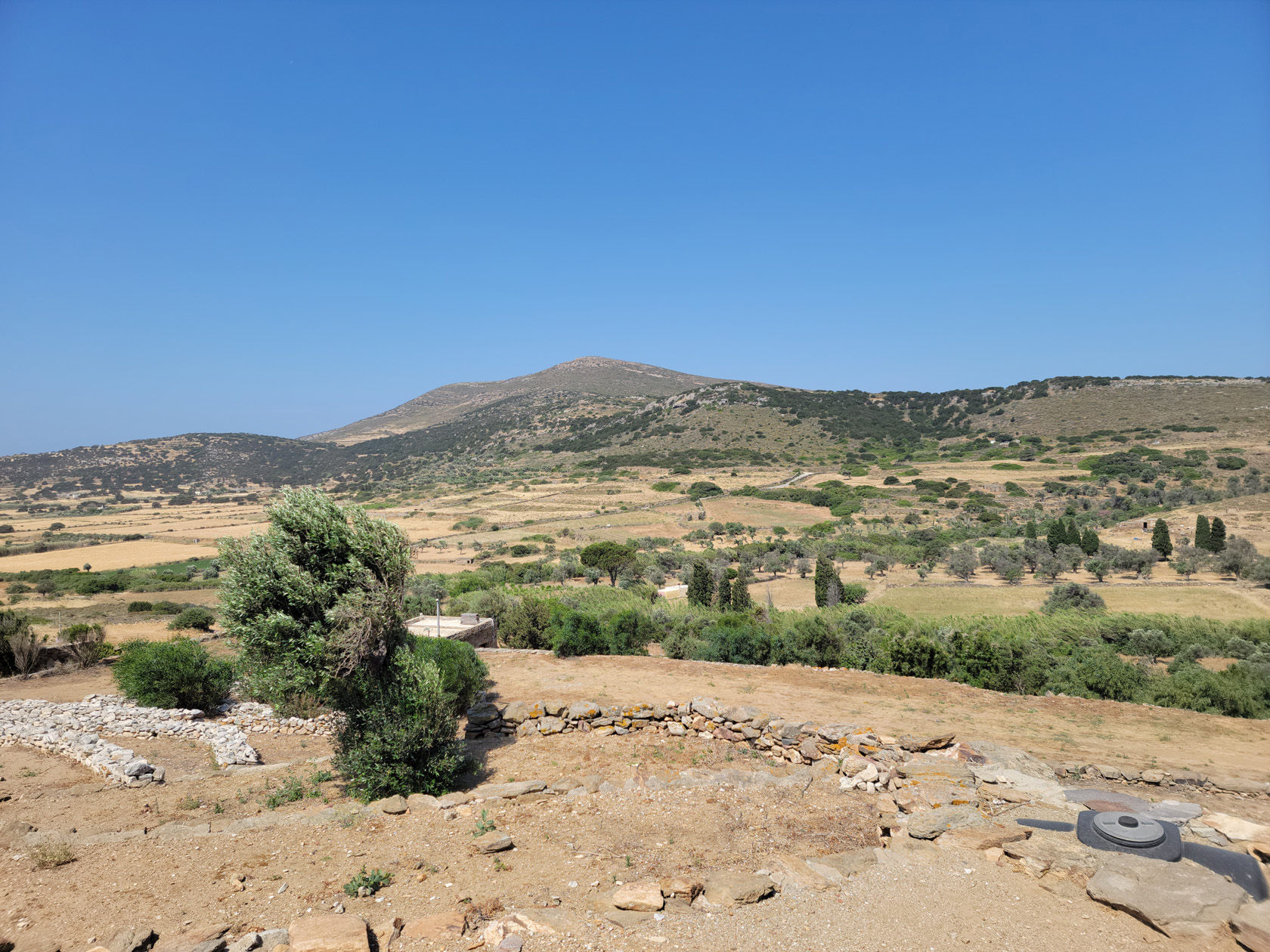
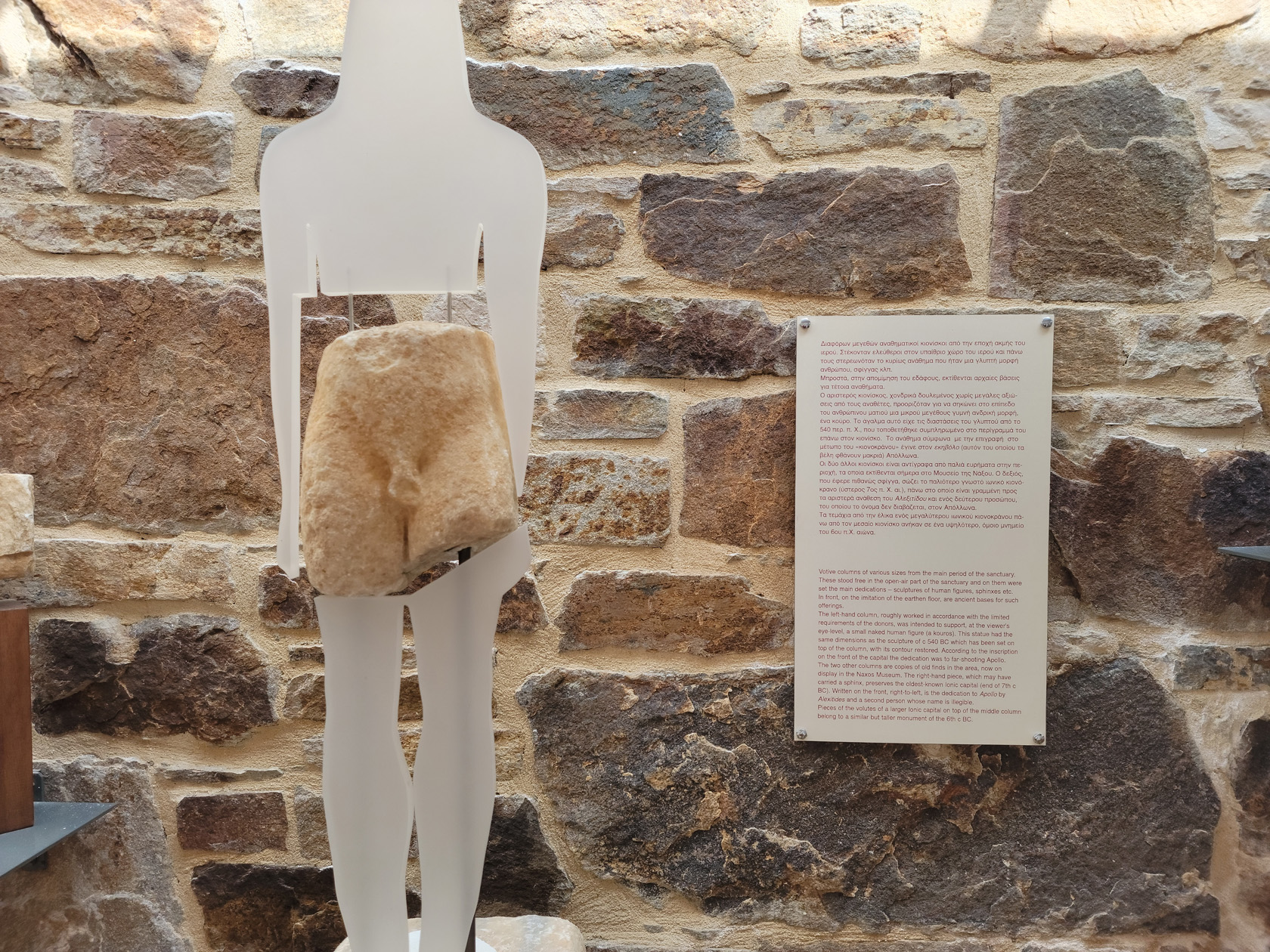
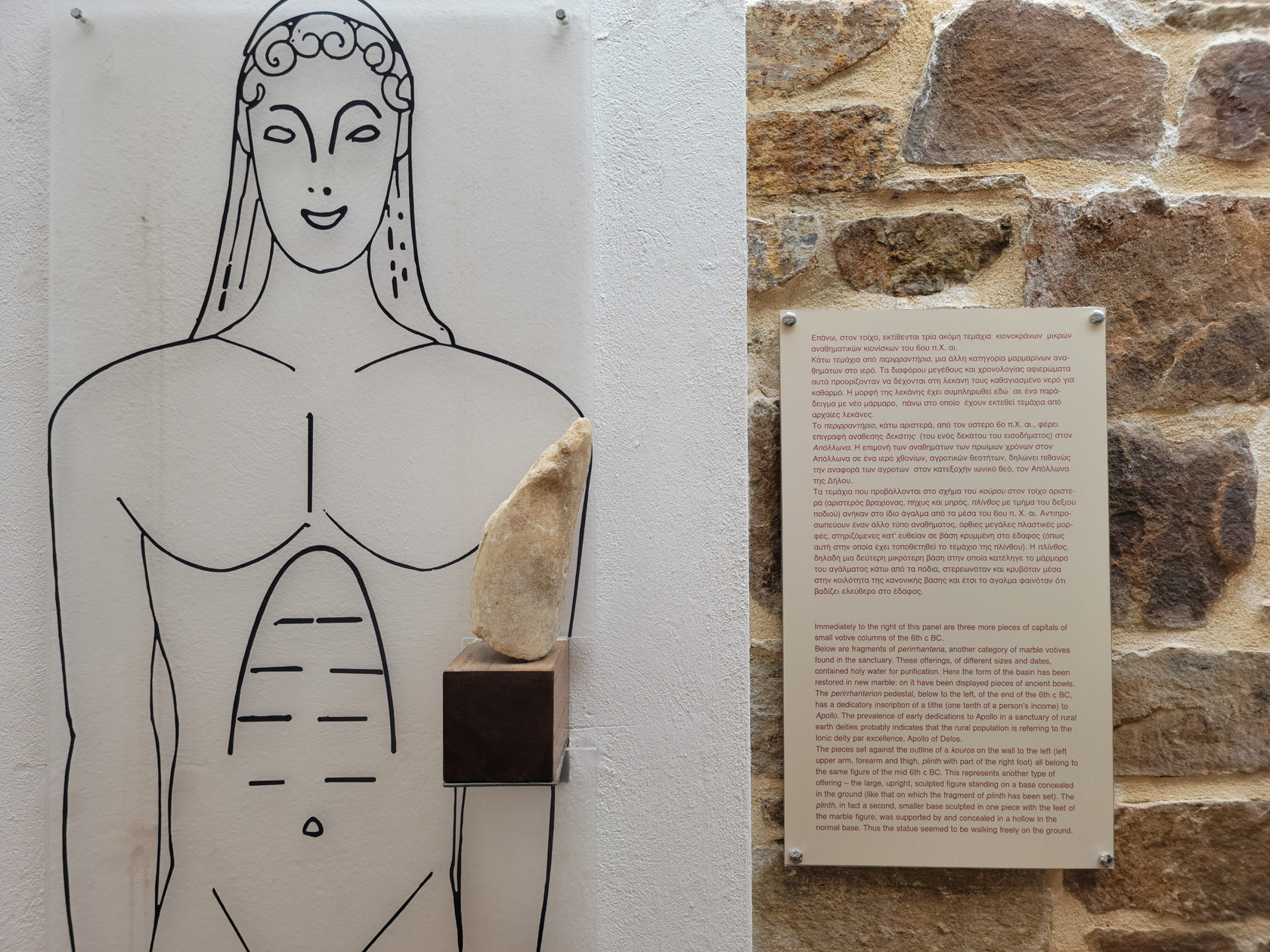
Perhaps a forty-five minute drive from Naxos is the Temple of Sangri. It is also called the Temple of Demeter or the Temple of Kore, there are also signs that the cult of Apollo may have used the site.
Our Day Tour – Sangri Temple
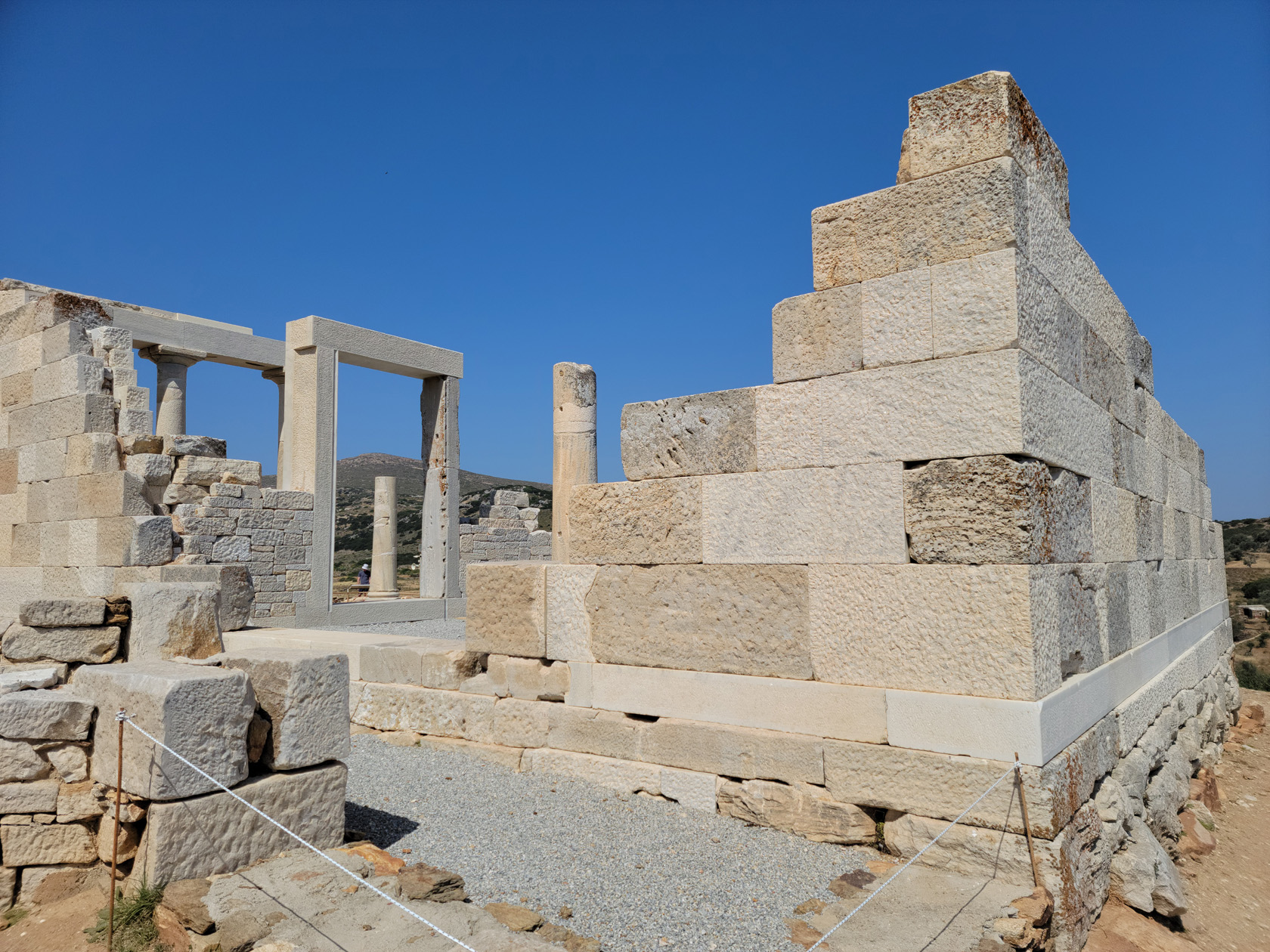
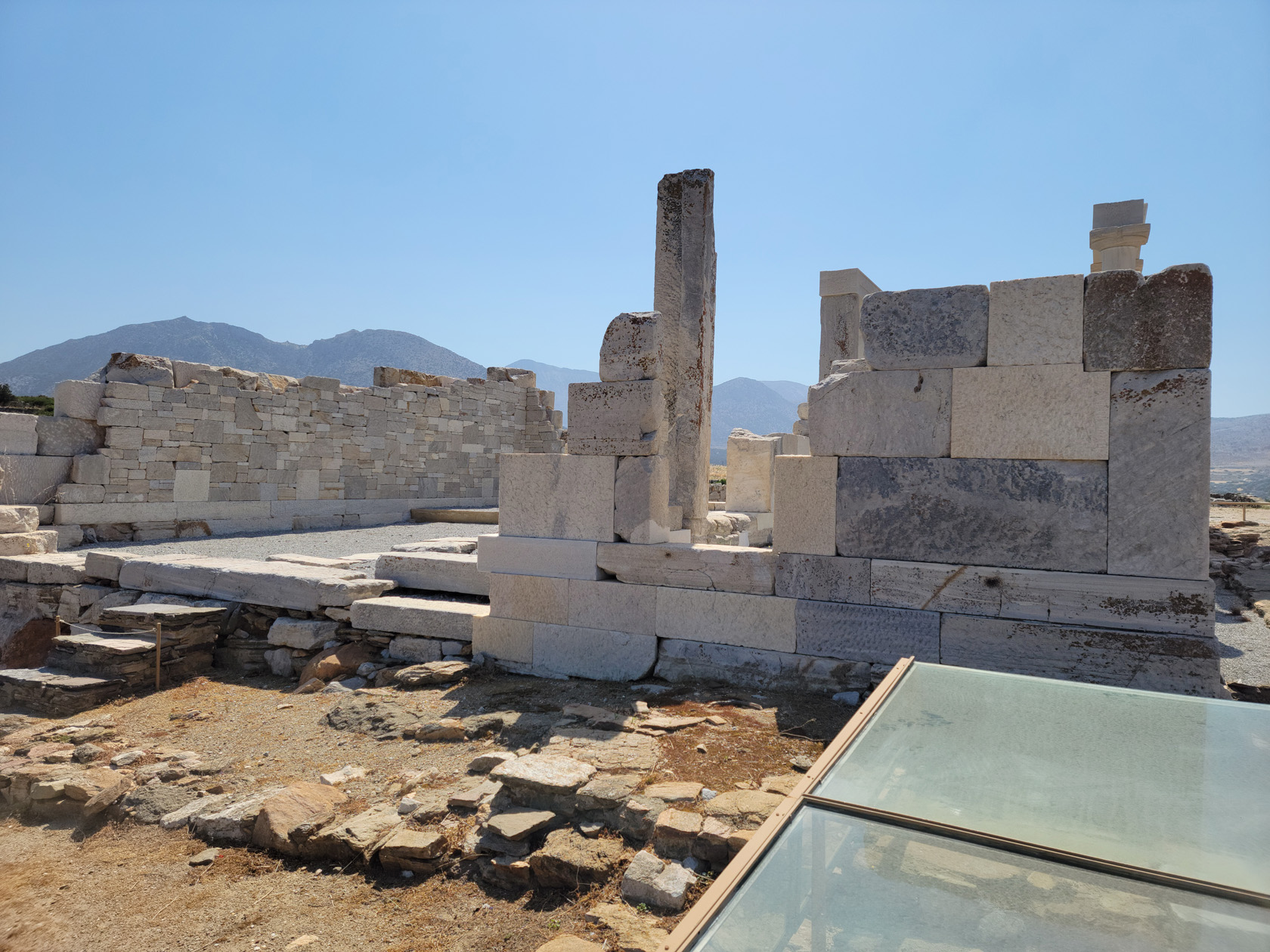
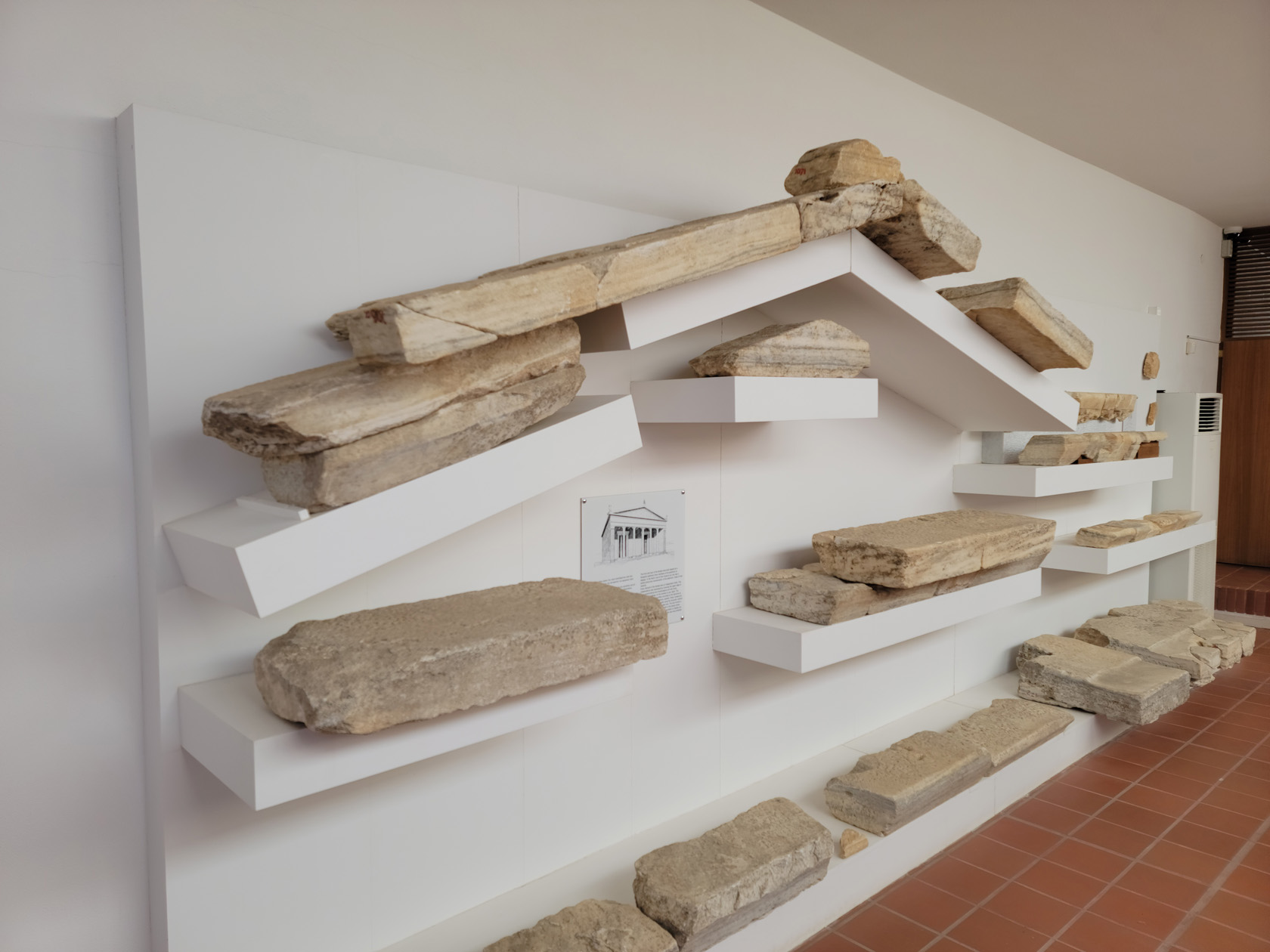
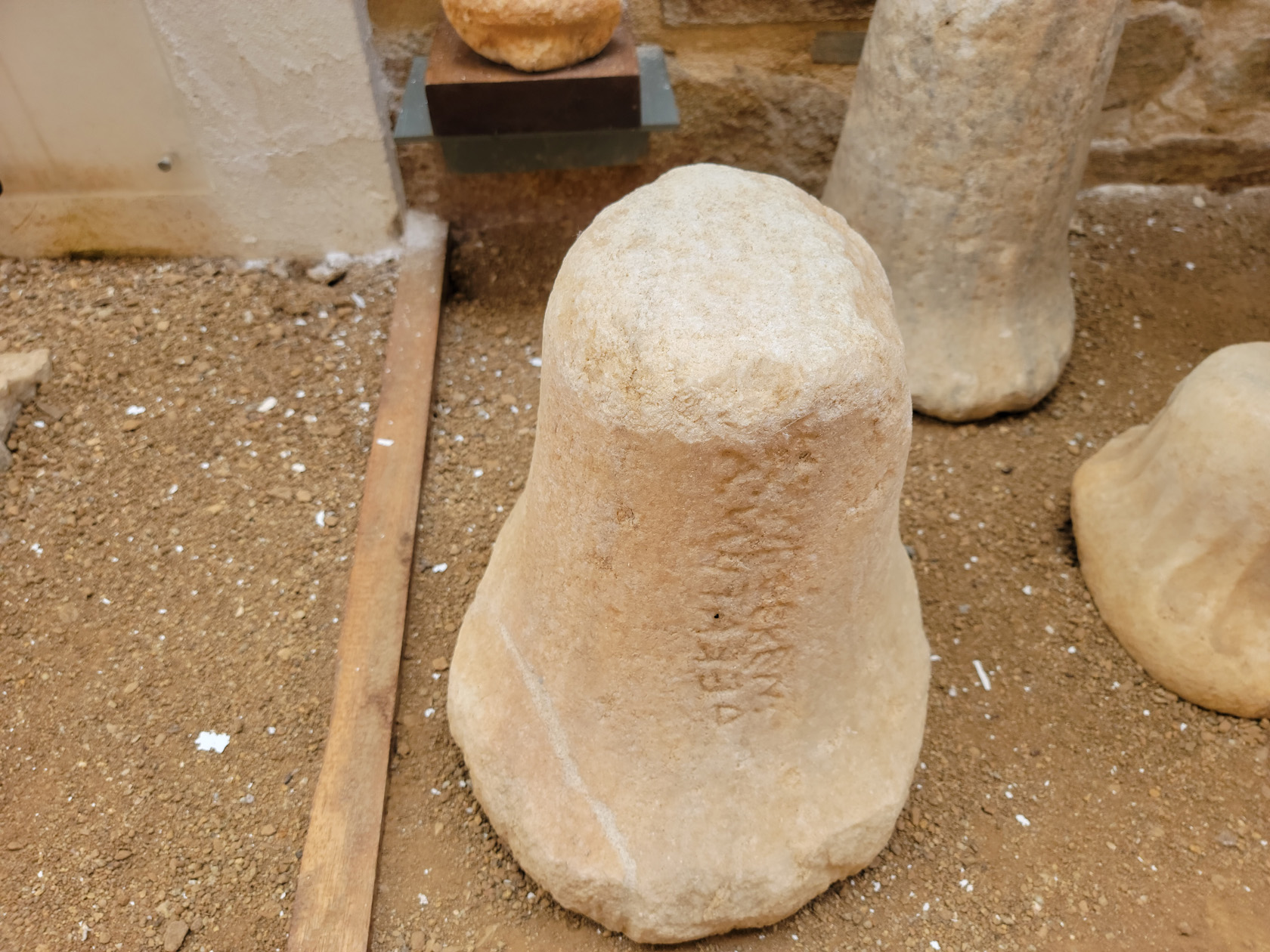
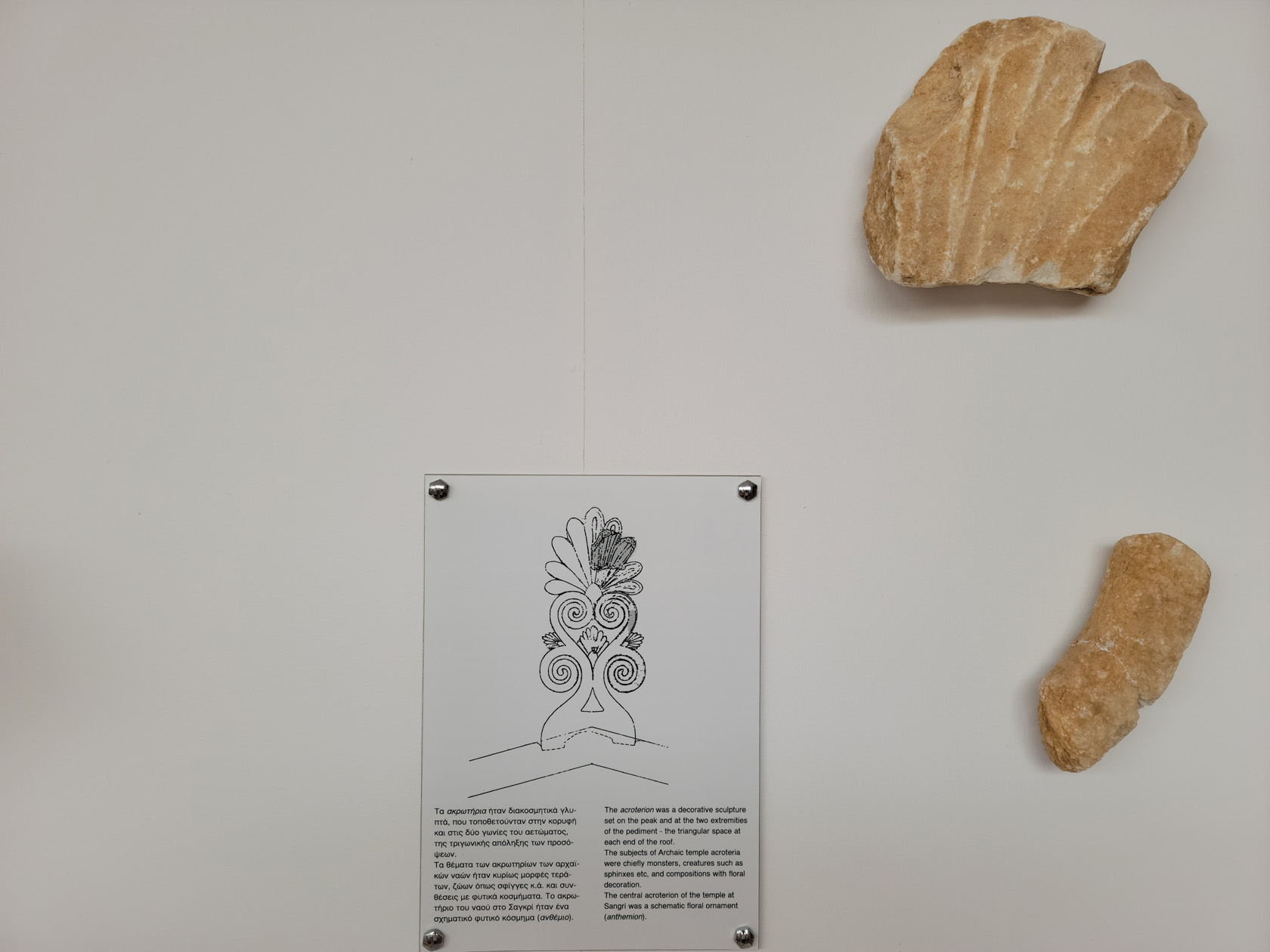
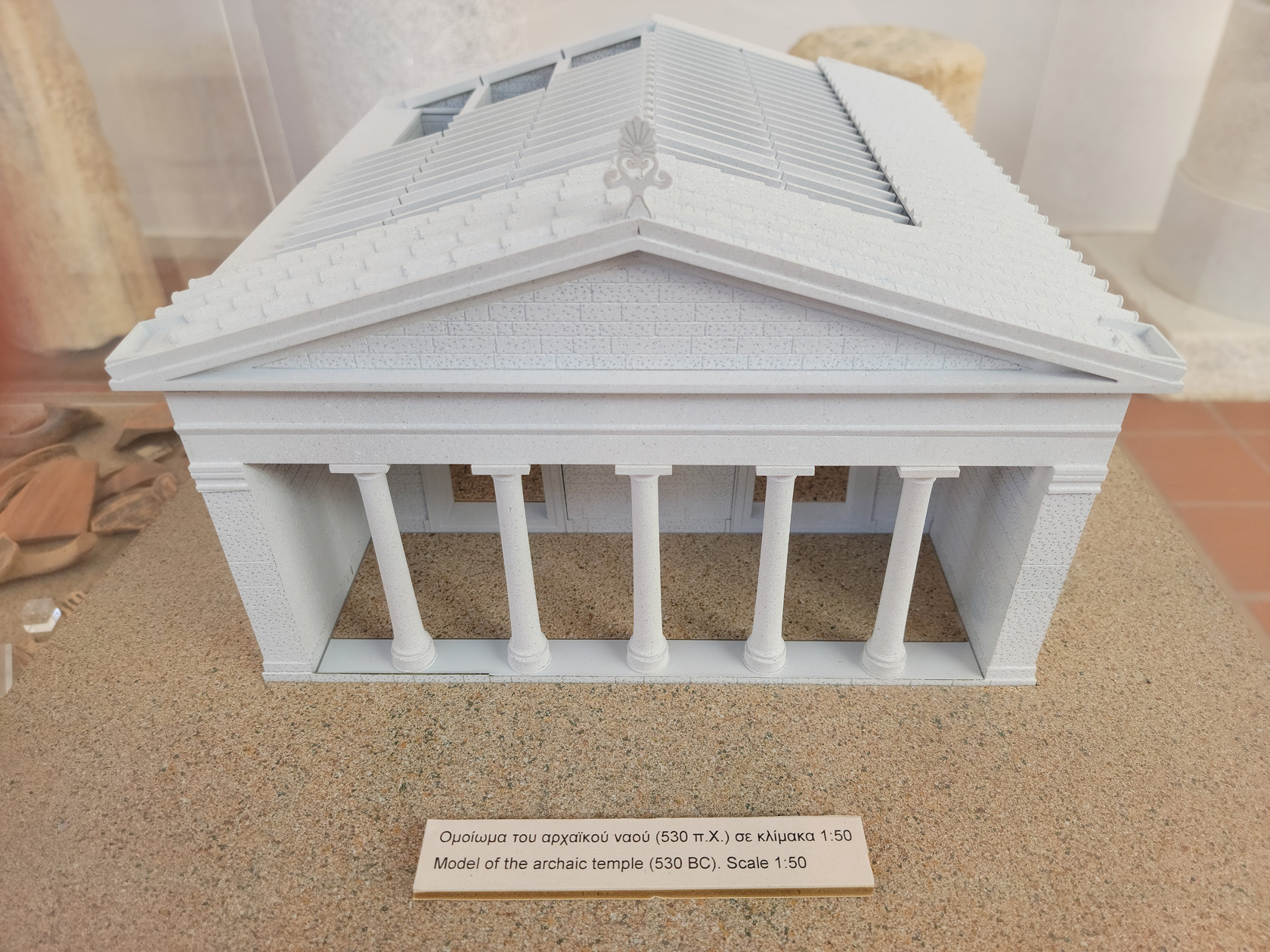
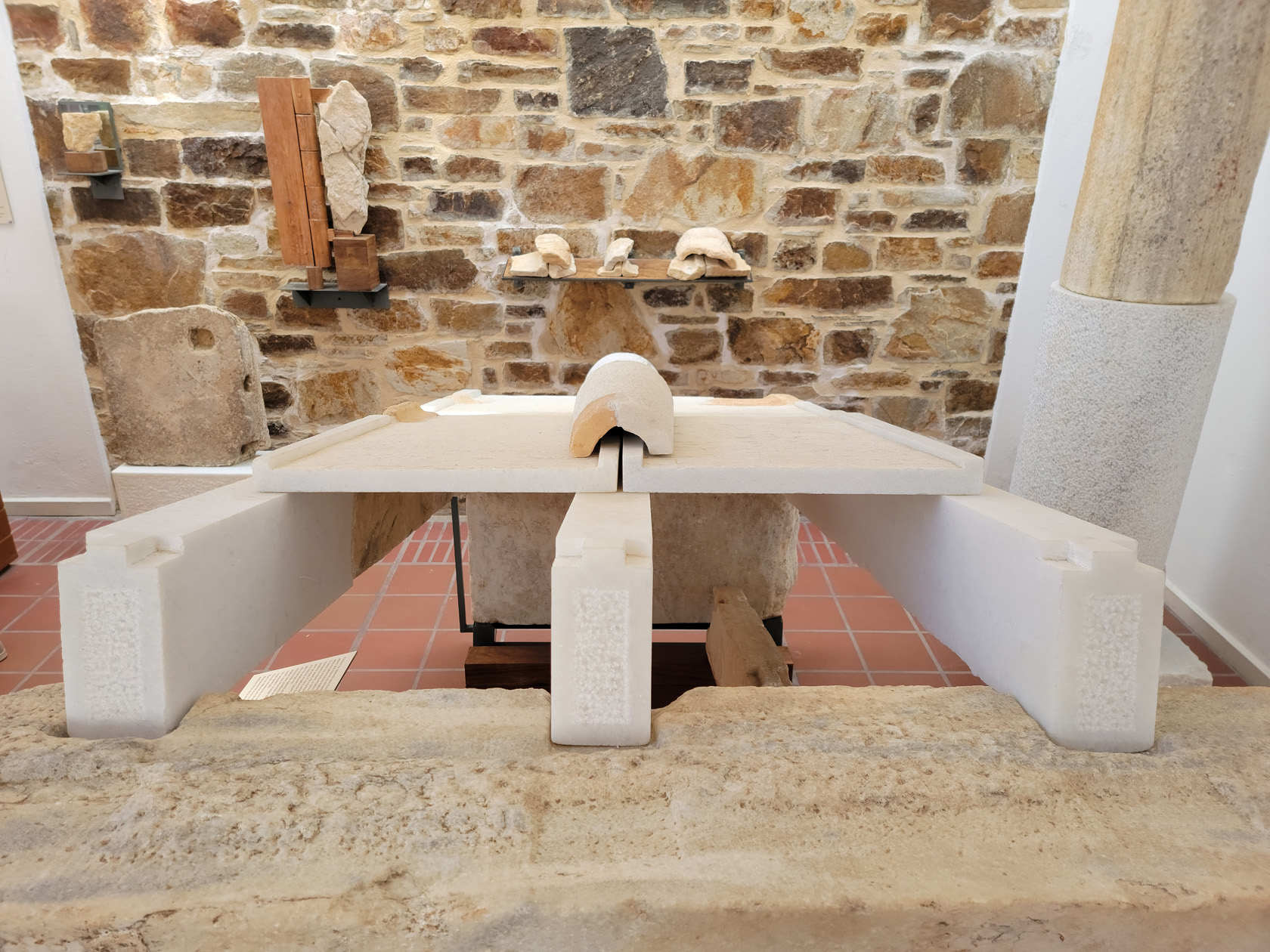
It is an archaic temple that was built on Naxos in the six century BCE. For a Greek temple it is square, rather than the usual rectangular shape. Models that reconstruct its initial design call for a smart, efficient building using internal columns of varying lengths, so that a full marble, translucent roof and ceiling could be accommodated. This provided soft, even internal lighting during the daytime, so that little if any additional lighting was needed.
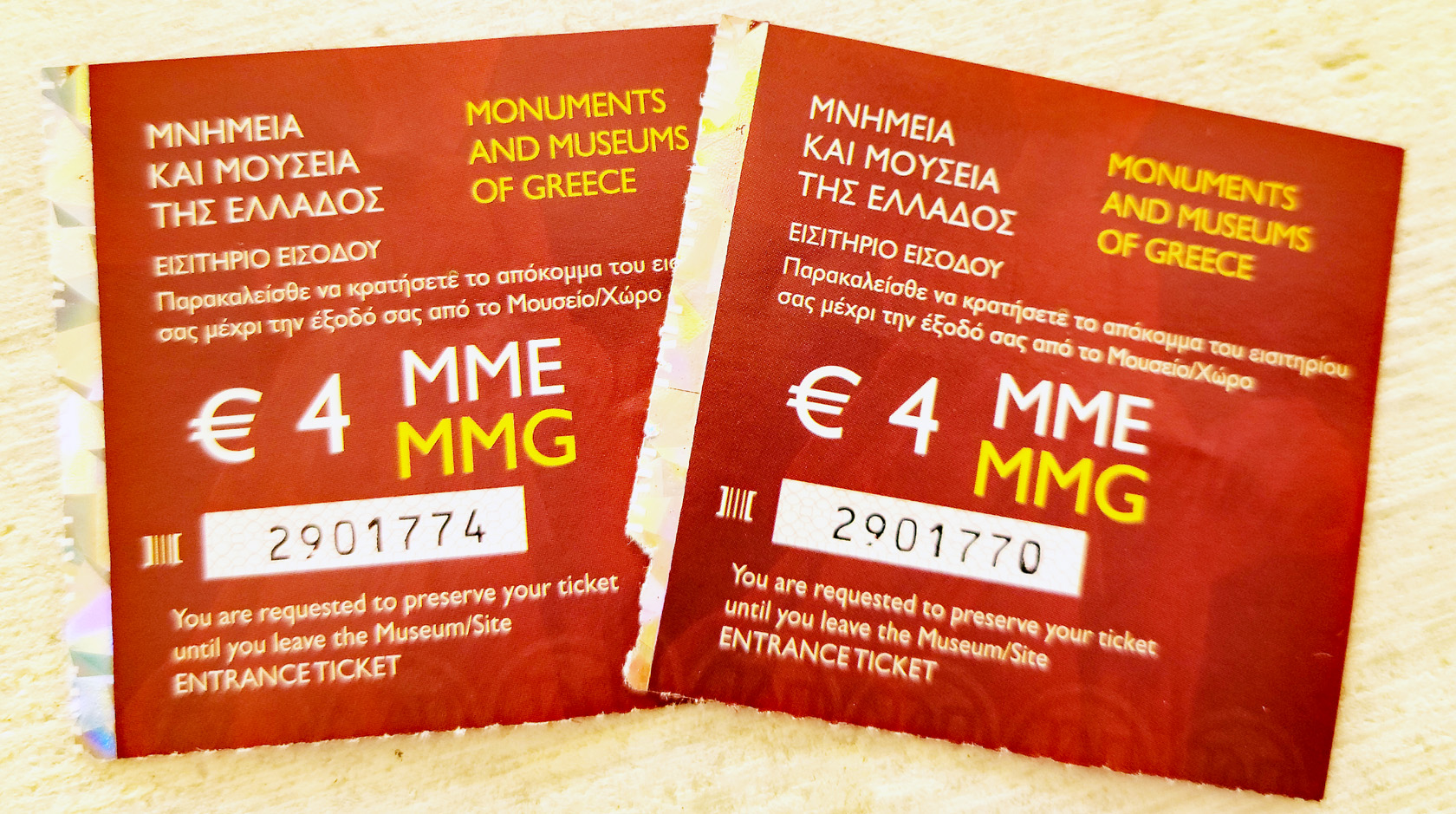
Our Day Tour – Sangri – Tickets For Two
Our Day Tour – Sangri
Our Day Tour – Sangri
Our Day Tour – Sangri
Our Day Tour – Sangri – The Hillside
Our Day Tour – Sangri – The Museum
Our Day Tour – Sangri – The Museum
Our Day Tour – Sangri – The Museum
Our Day Tour – Sangri – The Museum
Our Day Tour – Sangri – The Museum
Our Day Tour – Sangri – The Museum
Our Day Tour – Sangri – The Museum
Our Day Tour – Sangri – The Museum
Our Day Tour – Sangri – The Museum
Our Day Tour – Sangri – The Museum
Our Day Tour – Sangri – The Museum
Our Day Tour – Sangri – The Museum
The Pottery Of Limpertas Manolis
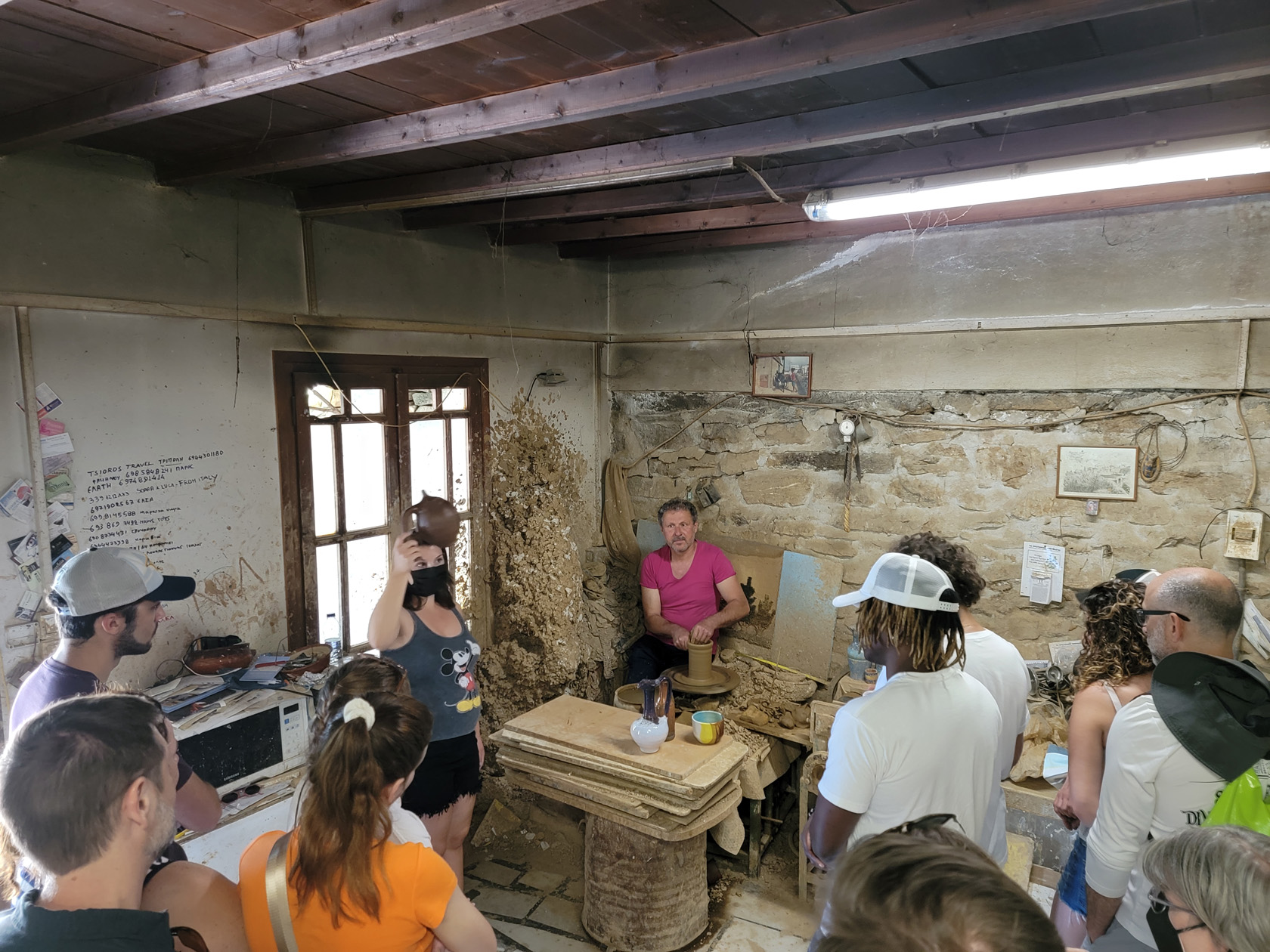
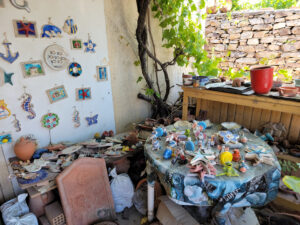
As any typical tour would inject, we visited the local pottery establishment of Limpertas Manolis. His apparent claim to fame was in creating eccentric, yet useful oil decanters and other novel vessels to store things. He also makes the odd spoon holder, vase, cups and saucers.
Our Day Tour – Limpertas Manolis Pottery
Clearly an artist, since his small place was strewn with all kinds of broken and forgotten pieces. Let alone his clear penchant for throwing the odd clay ball at the wall, for which was clearly evident by the definitive and unnatural accumulation growing from the vertical surface from where he sat.
Our Day Tour – Limpertas Manolis Pottery
Our Day Tour – Limpertas Manolis Pottery
Our Day Tour – Limpertas Manolis Pottery
Distillery Vallindras
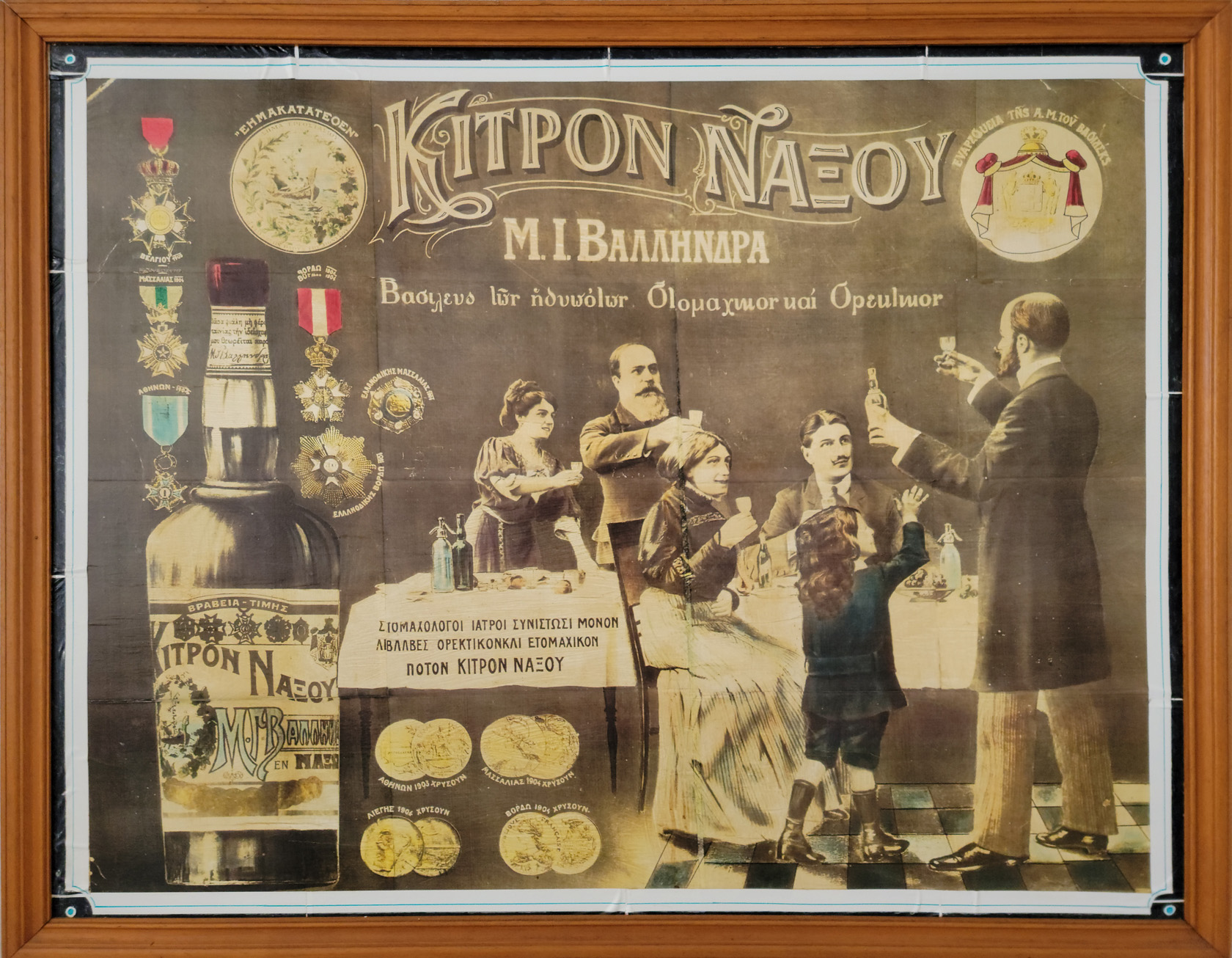
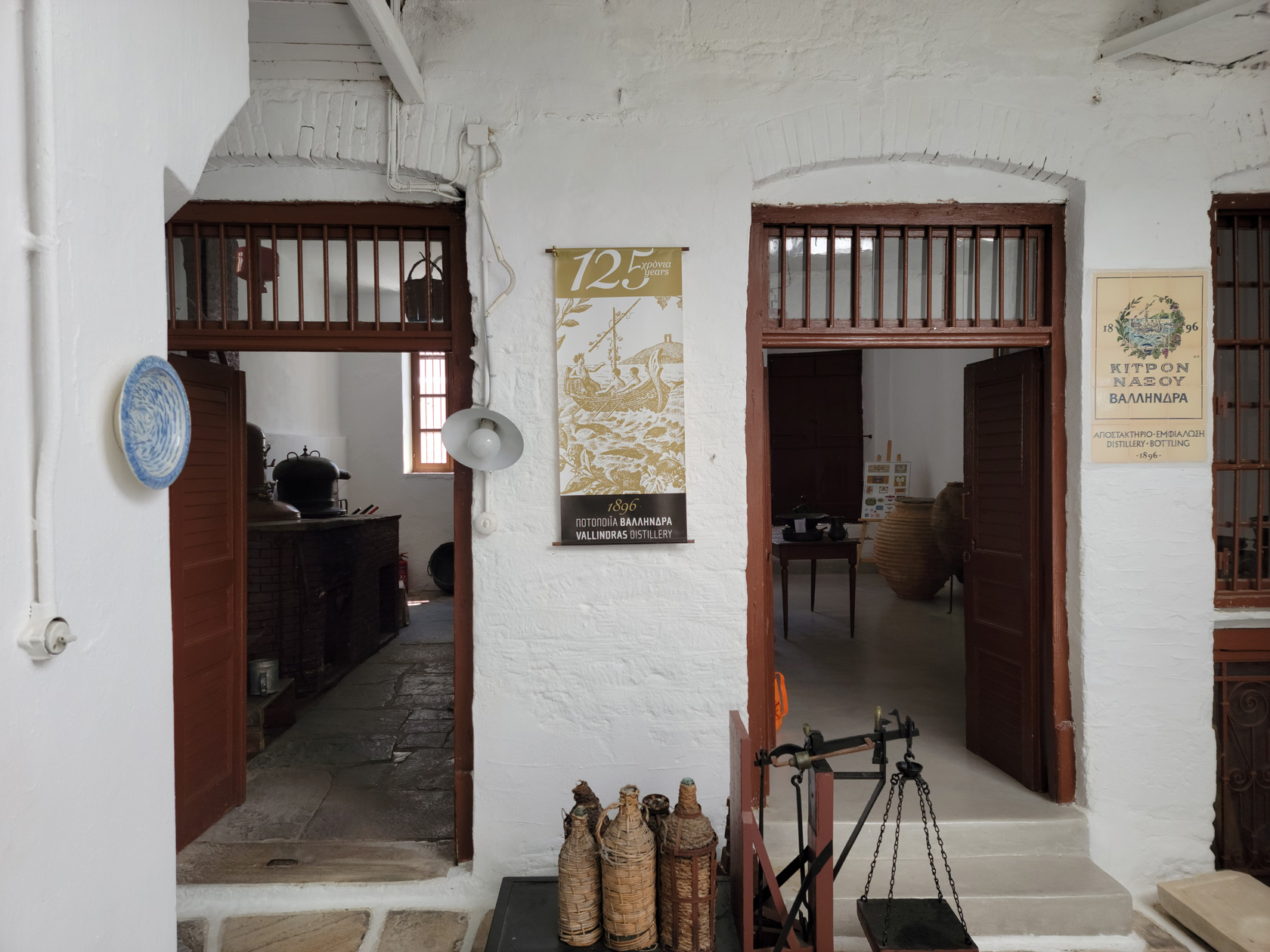
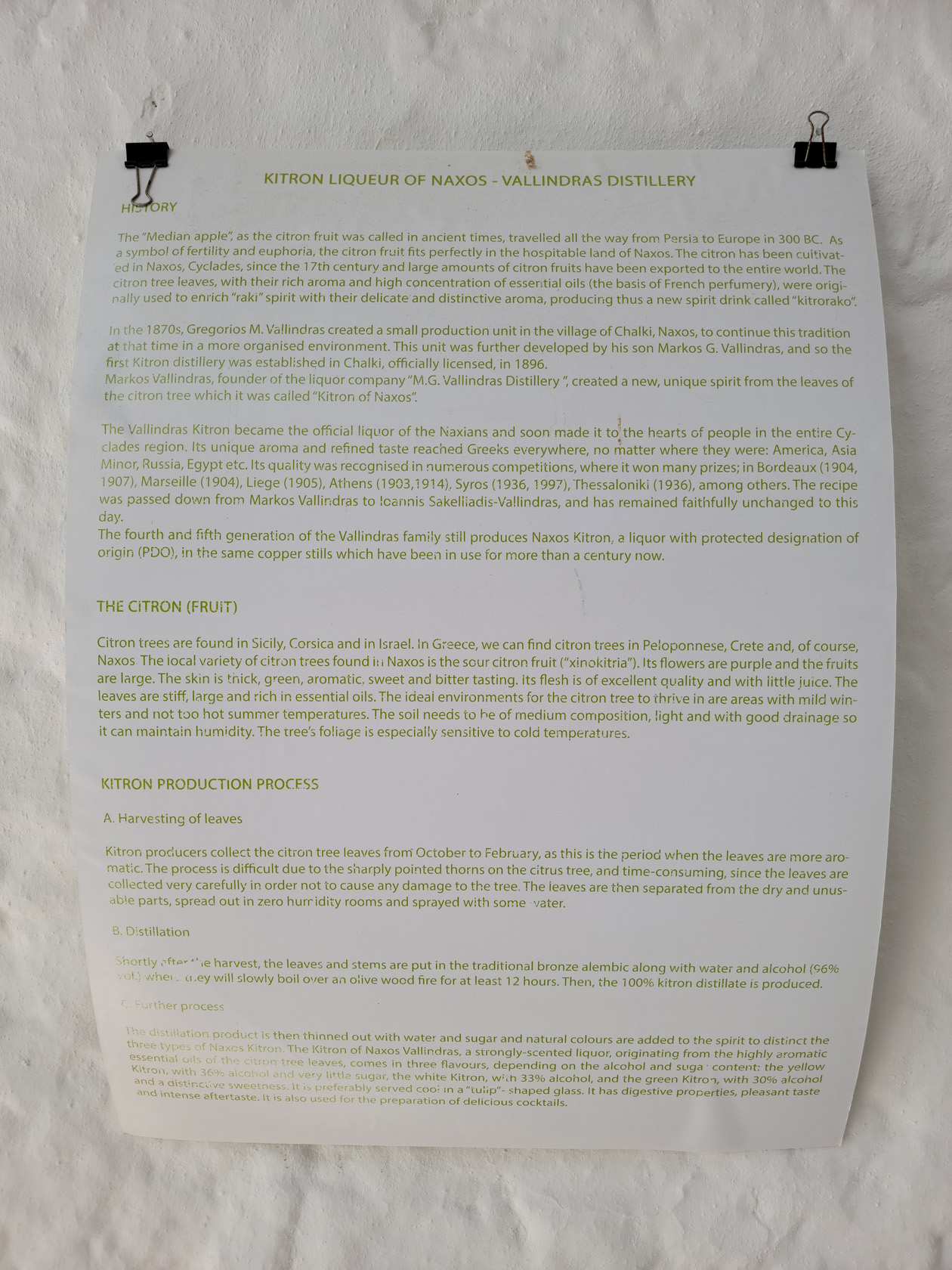
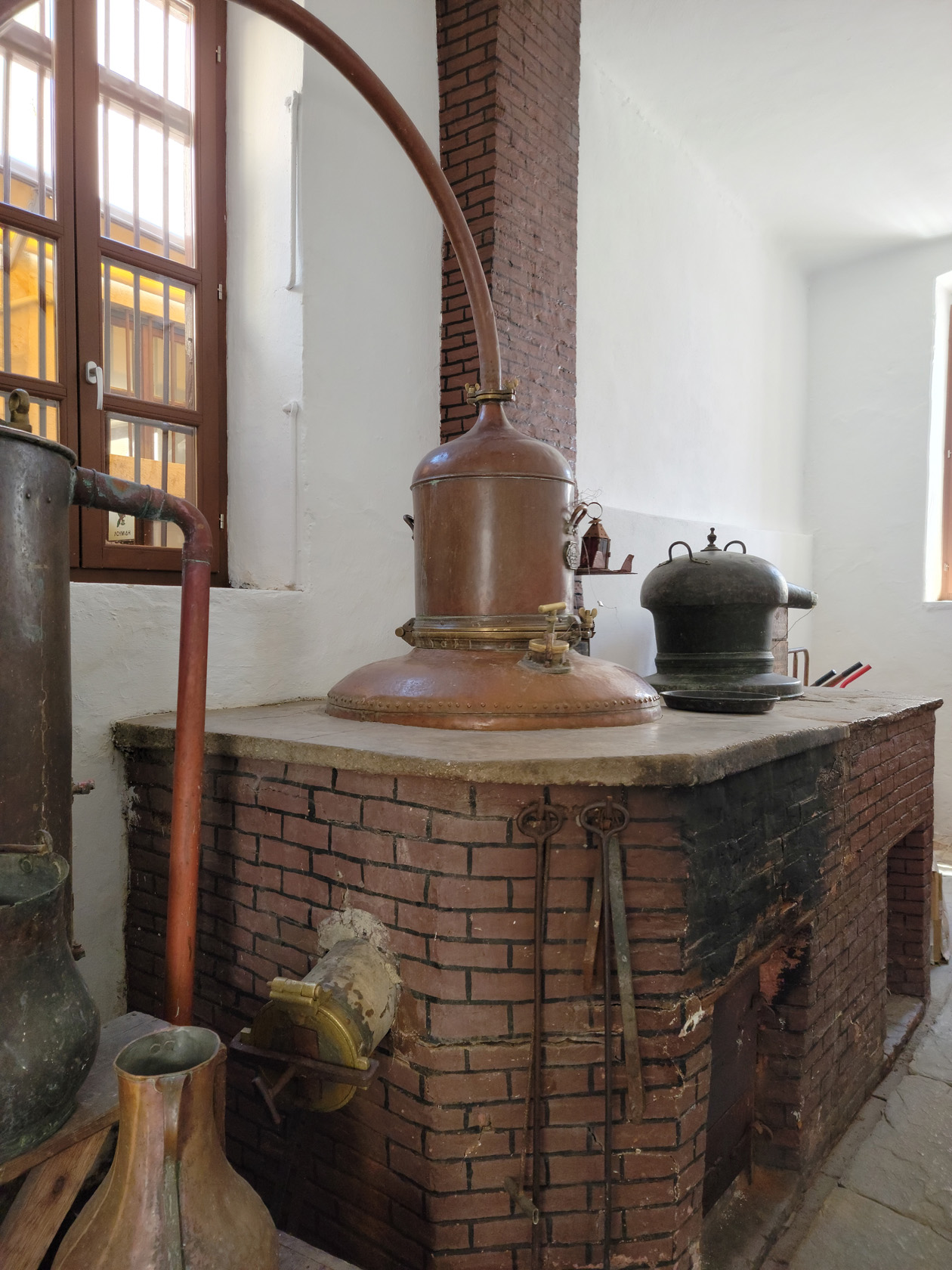
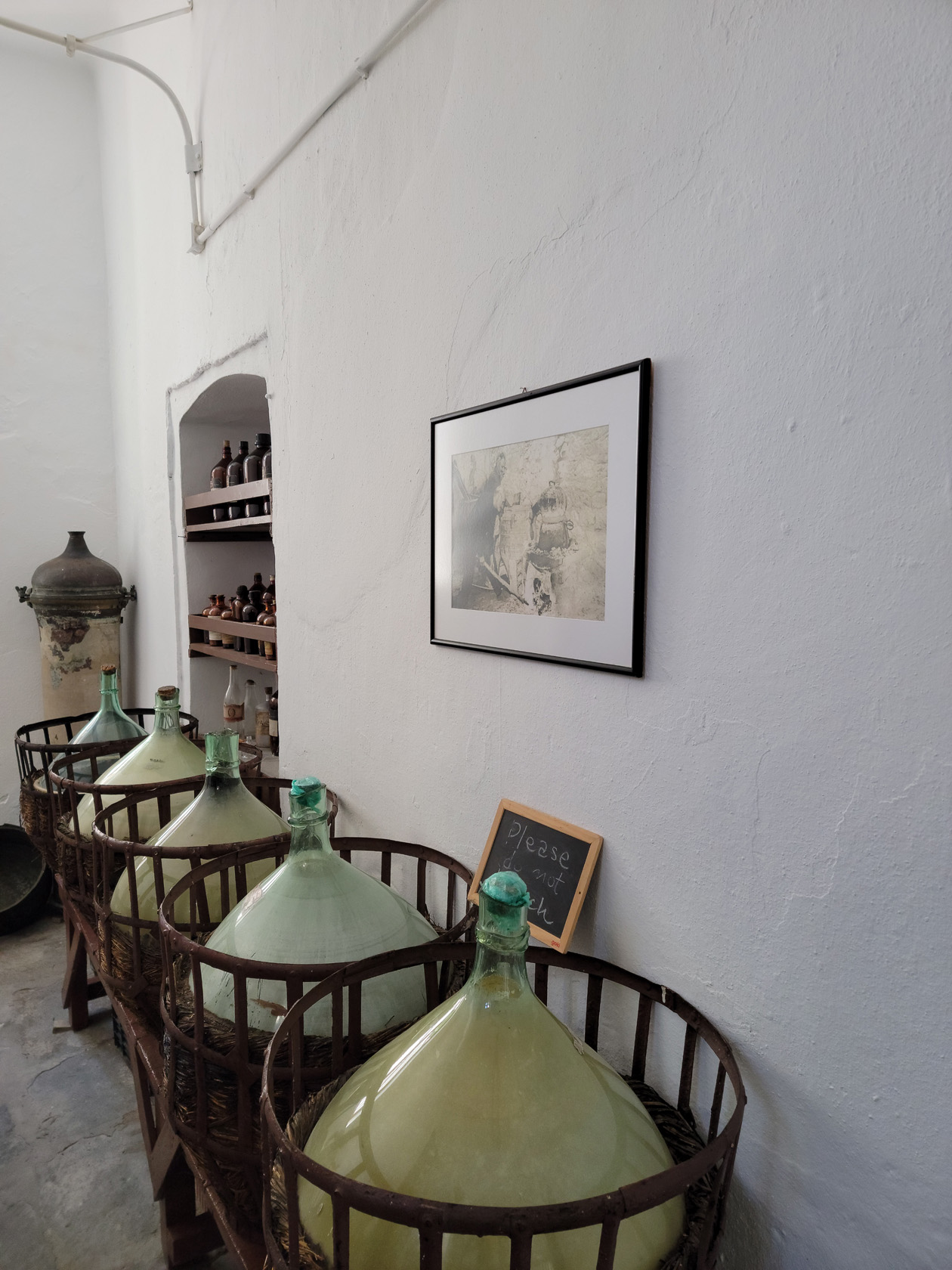
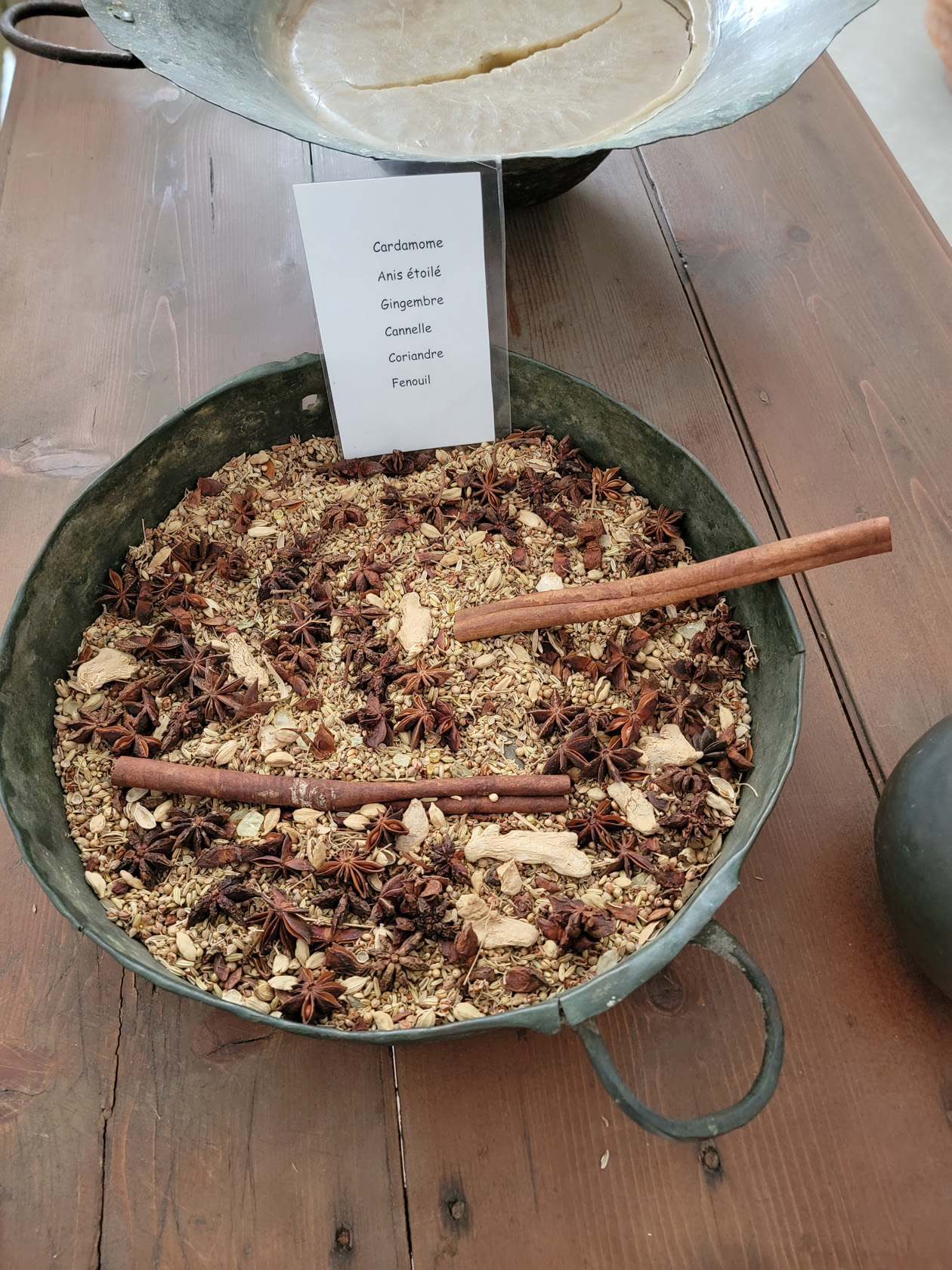
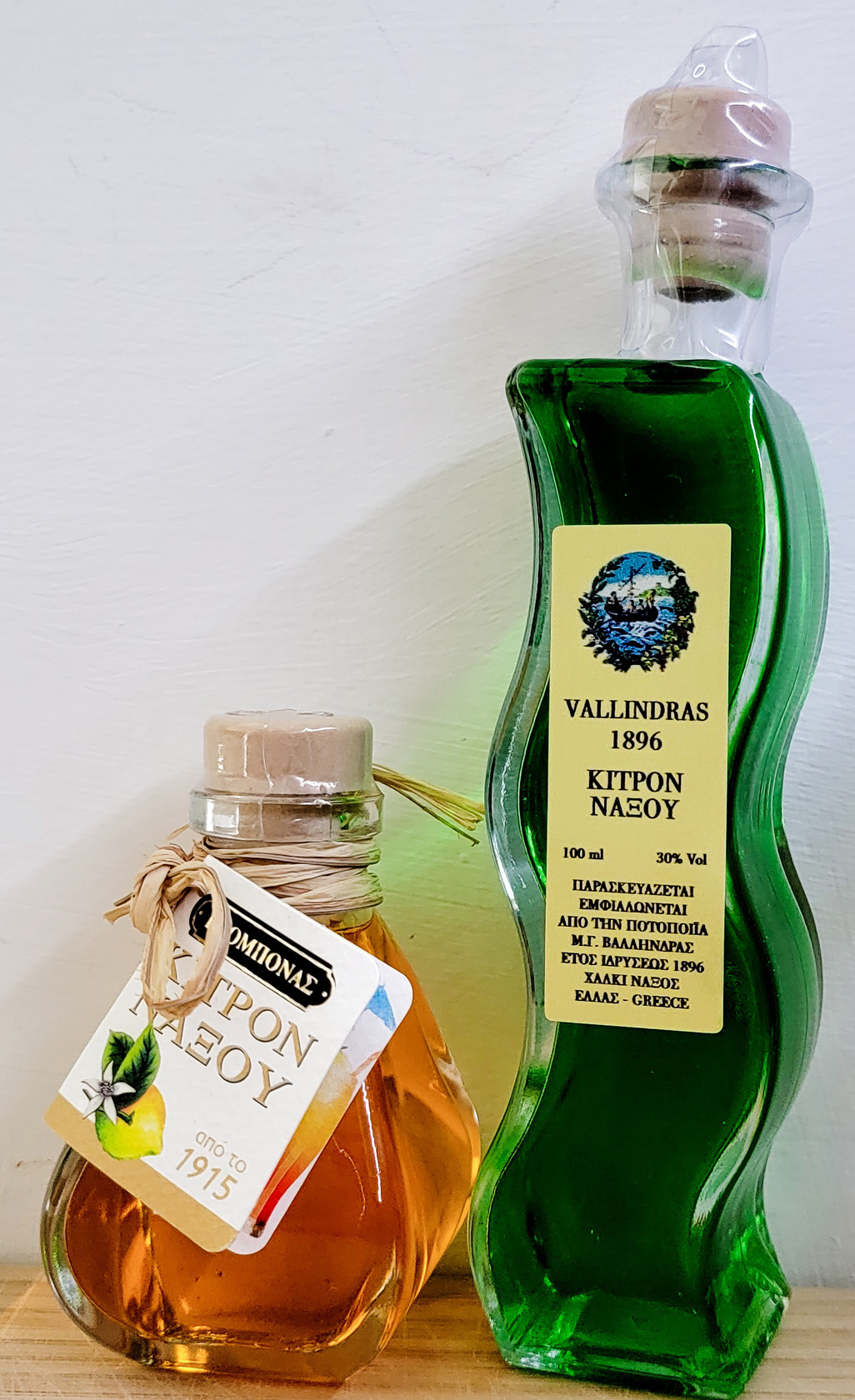
In Chalkio, or Chalki, as some prefer; you can find the distillery M. G. Vallindras. This is an old firm which makes an aperitif widely known throughout Greece, known as Kitron, it comes in three varieties (and colors), depending on the sugar and alcohol content.
Our Day Tour – Chalki – Kipton Distillery
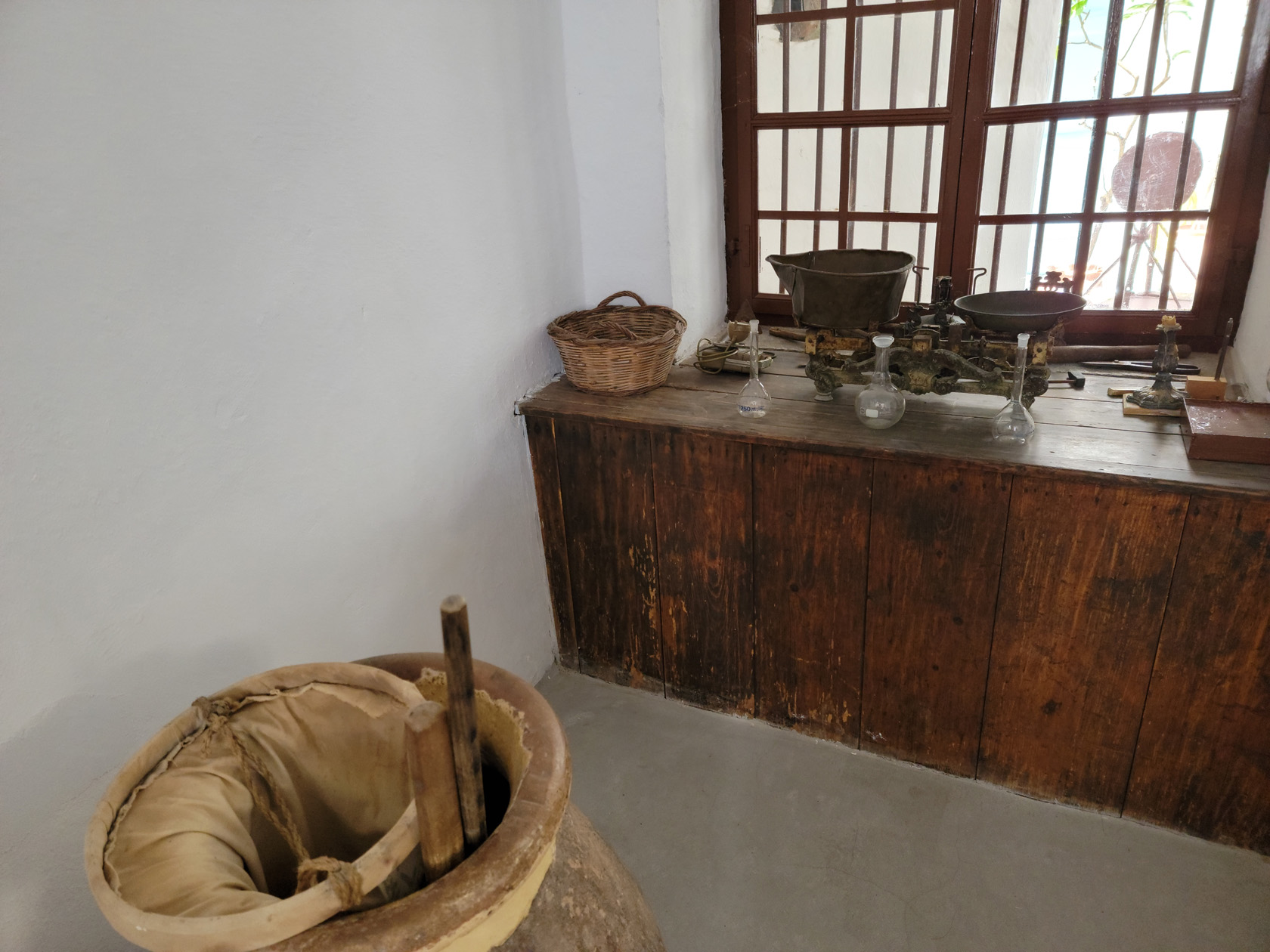
It is a very interesting distillery to visit and learn how this special Greek aperitif is made using Star Anise and other plants. Well worth a stop, if only to pick up a few bottles of their timeless spirits. Most will find the green and yellow varieties more to their liking, they are not as harsh or dry as the clear variety. The taste is more austere than a Molinari Extra or a Ramazzotti, but pleasant after a dinner nonetheless.
Our Day Tour – Chalki – Kipton Distillery
Our Day Tour – Chalki – Kipton Distillery
Our Day Tour – Chalki – Kipton Distillery – Alembic
Our Day Tour – Chalki – Kipton Distillery – Old Bottles
Our Day Tour – Chalki – Kipton Distillery
Our Day Tour – Chalki – Kipton Distillery
Our Day Tour – Chalki – Kipton Distillery – Two of Three Variaties
The Flerio Melanes Kouros
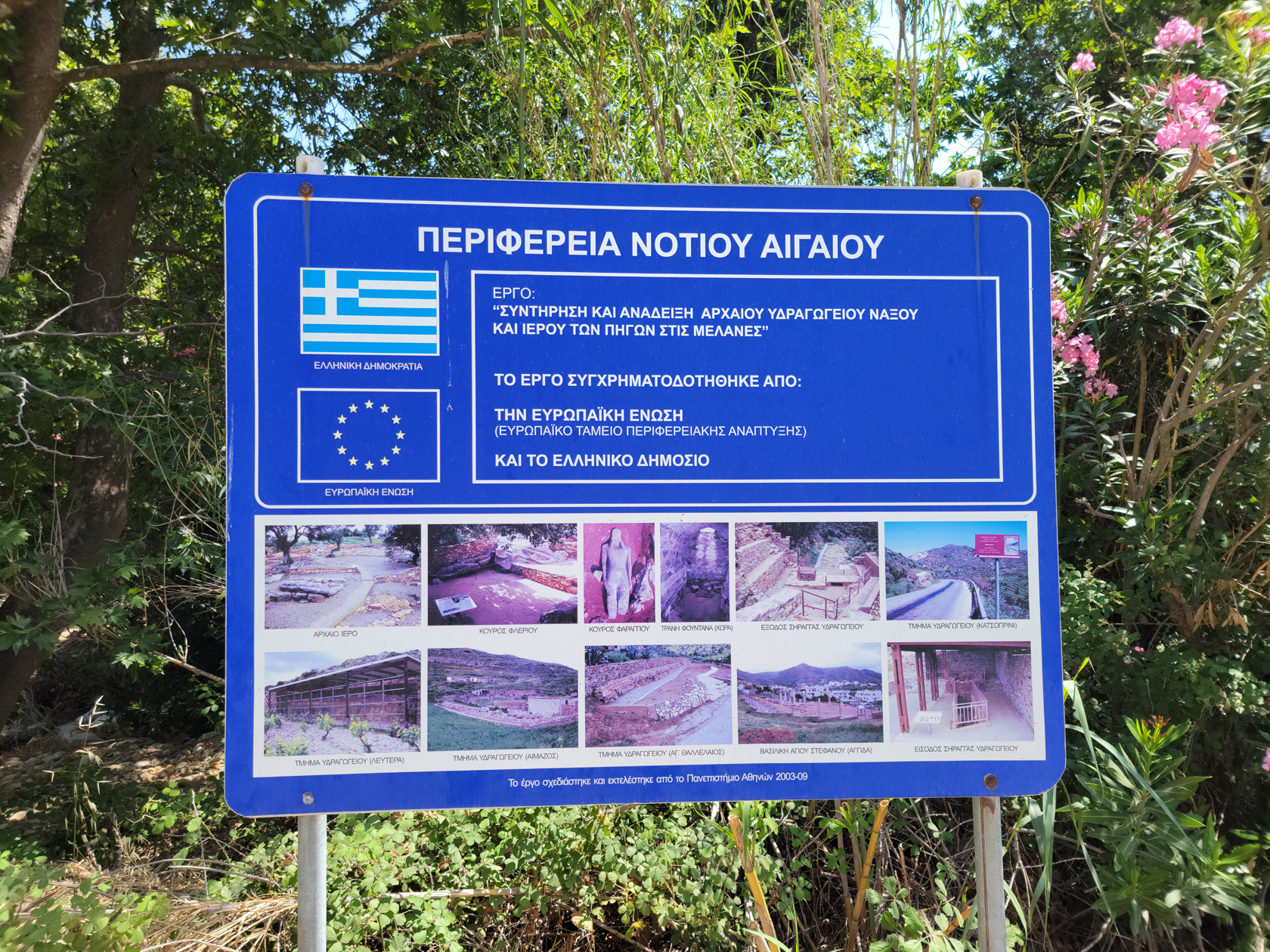
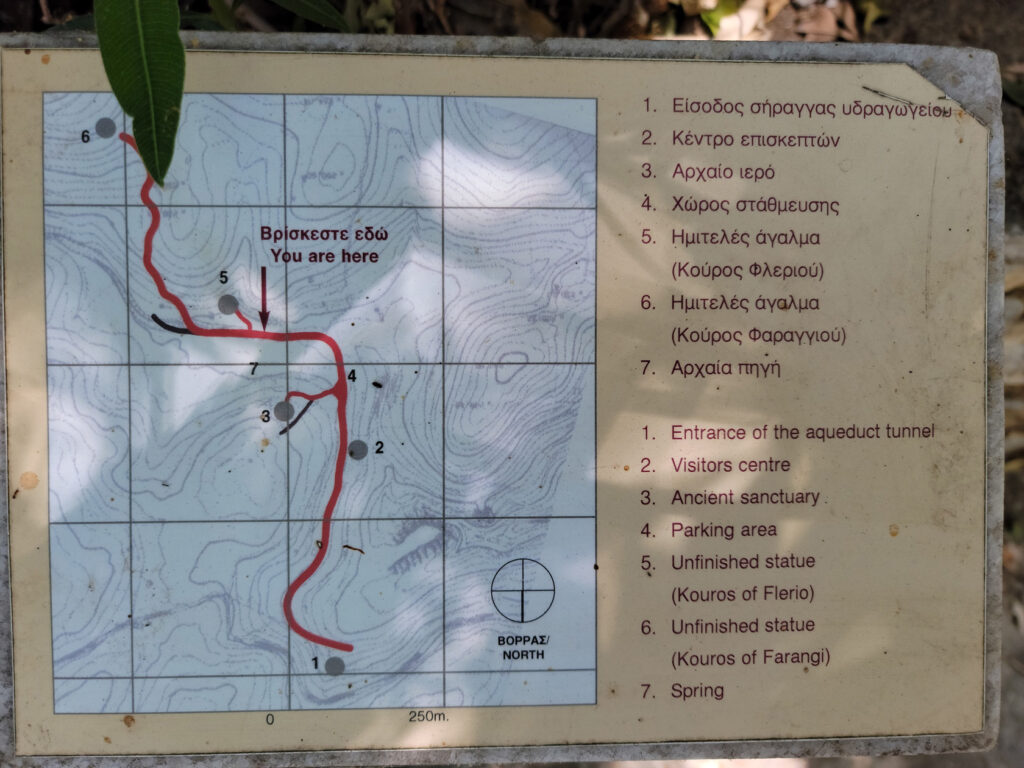
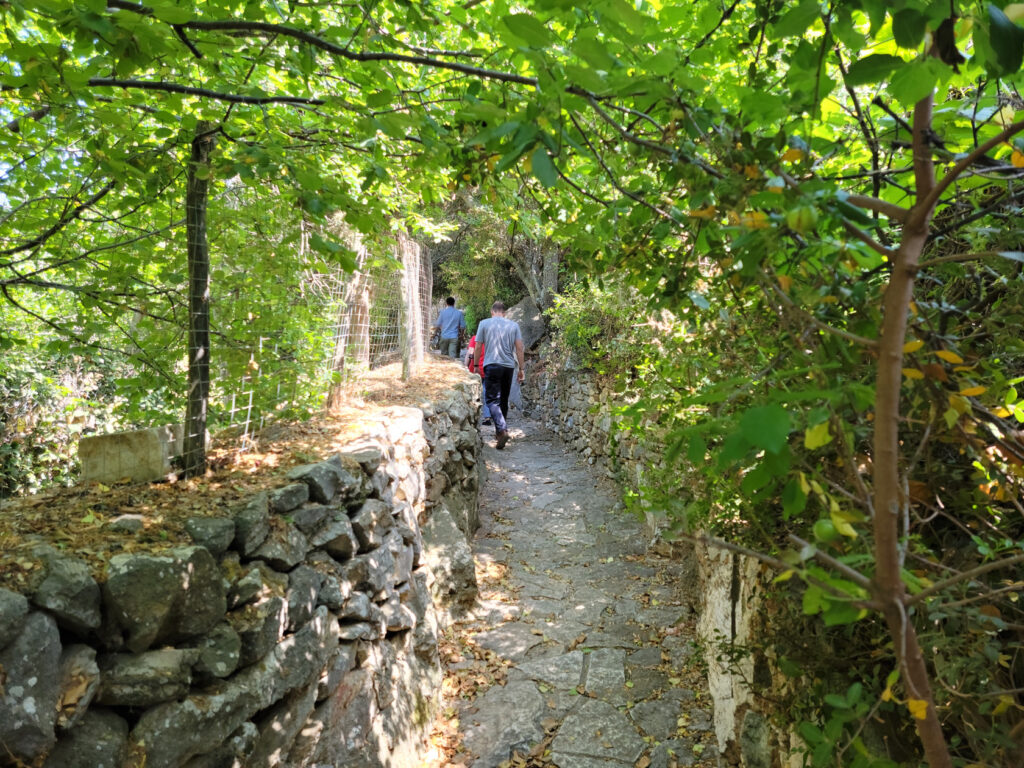
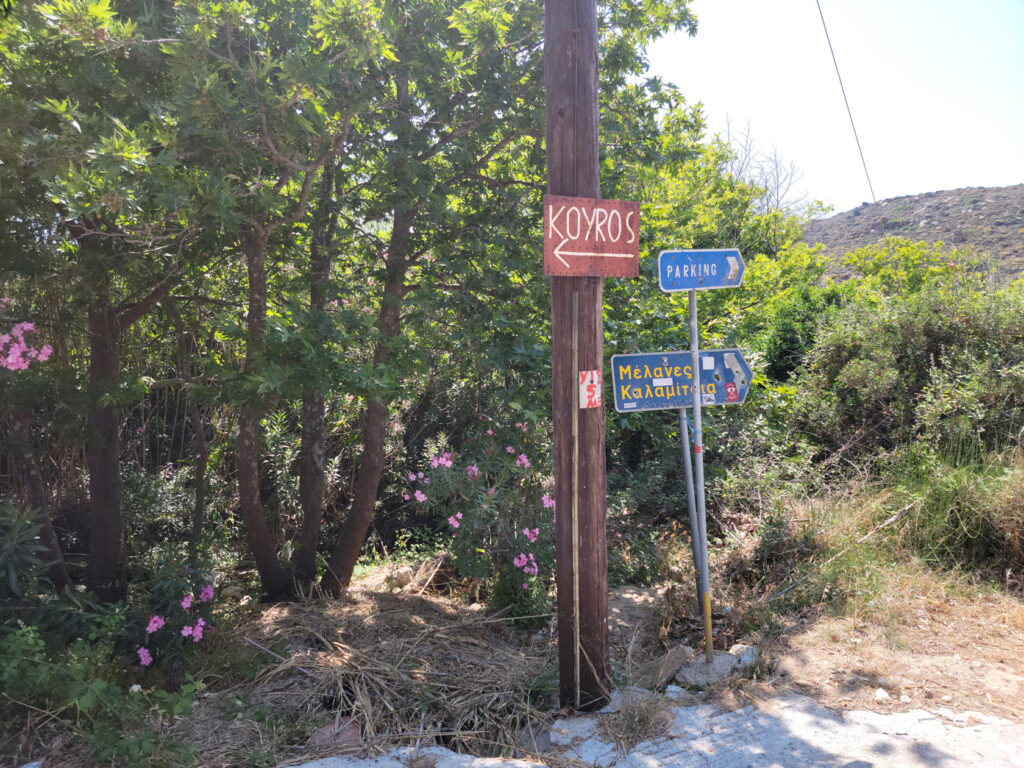
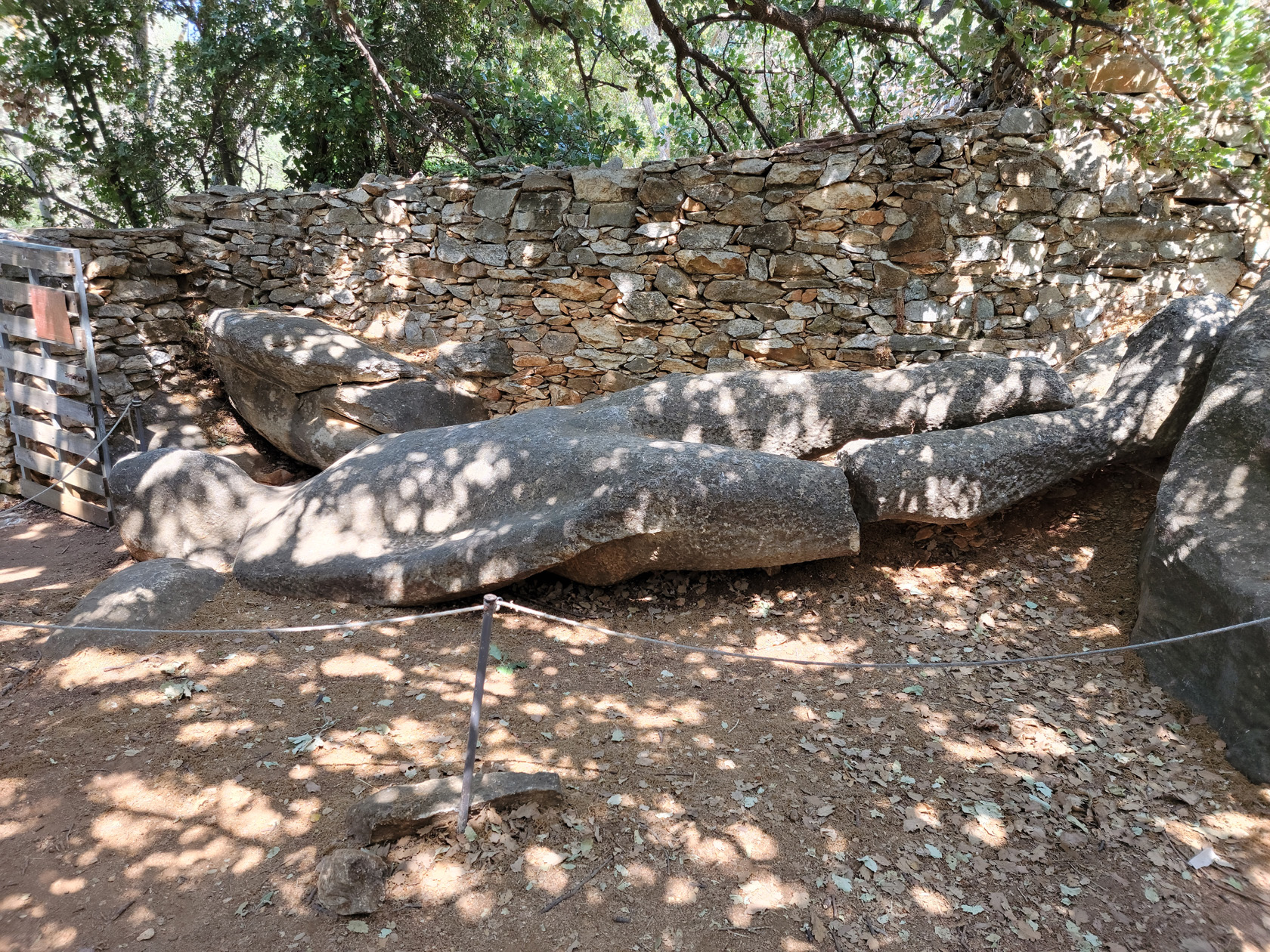
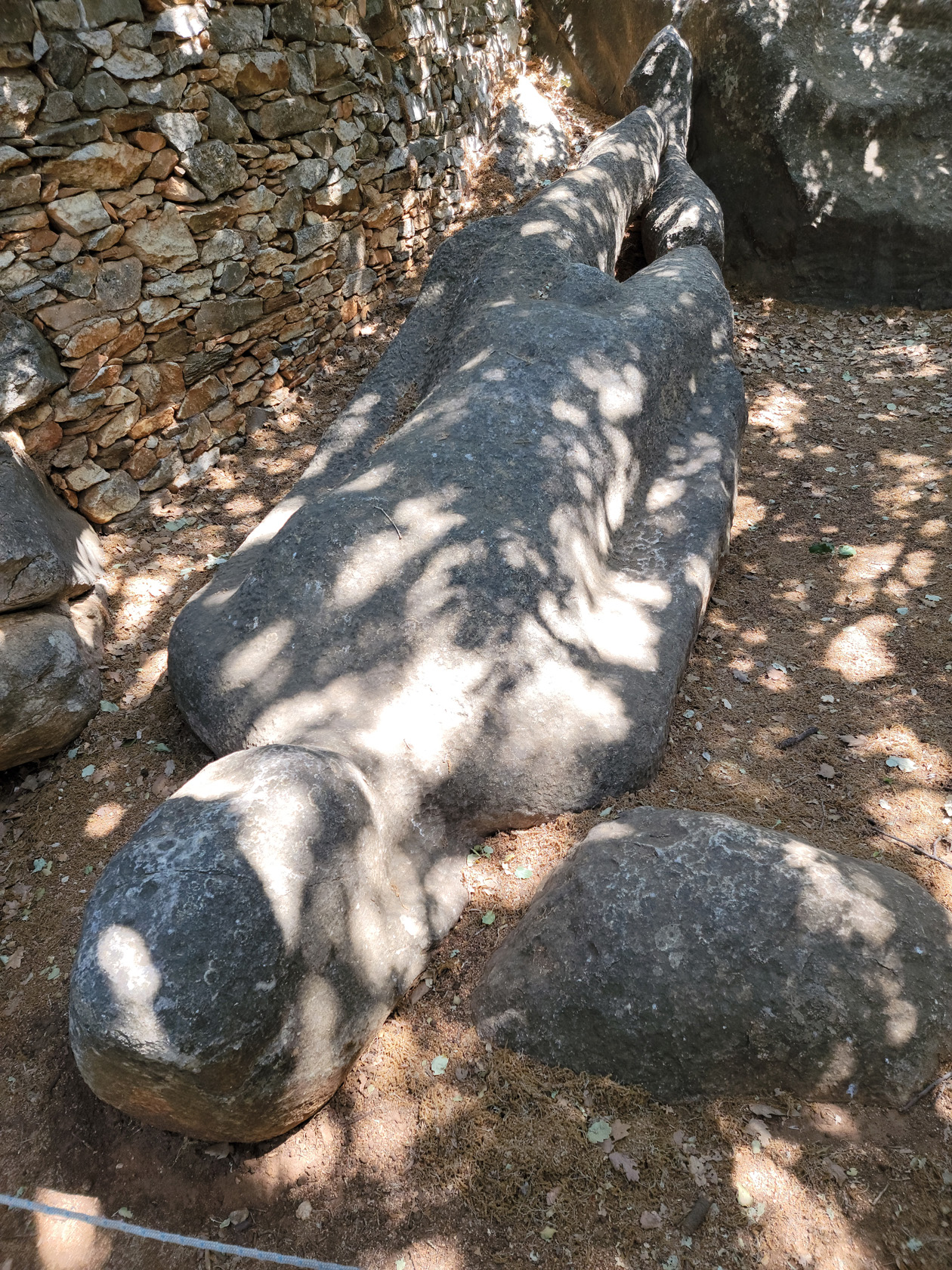
Probable one of the more obscure places to visit archeologically on Naxos is the unfinished Kouros. Located not far from the intersection of the Naxou-Monis and Naxou-Chalkiou roads, you should find a small place to park, it’s rather rural so it should be no problem.
Naxos – The Koyros or Flerio Melanes Kouros Statue
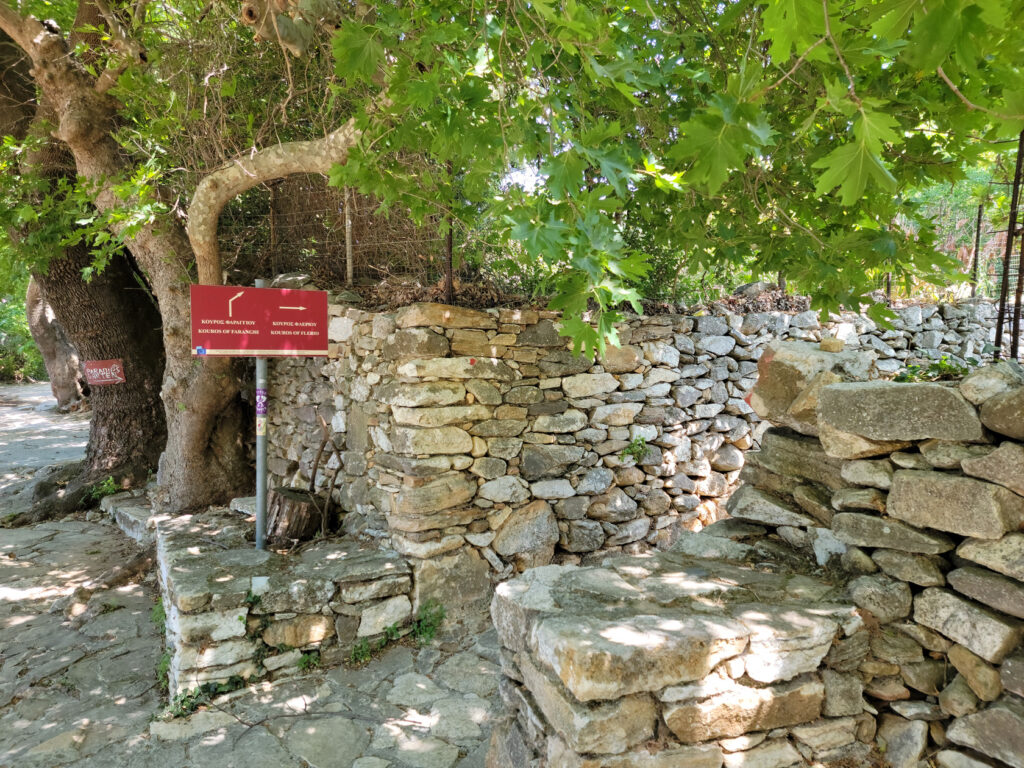
If you are in the right place, there will be some signs indicating the way.
Naxos – The Walkway to Flerio Melanes Kouros Statue
Naxos – The Koyros or Flerio Melanes Kouros Statue
Naxos – The Walkway to Flerio Melanes Kouros Statue
Naxos – The Koyros or Flerio Melanes Kouros Statue
Once found, the Flerio Melanes Kouros is a small walk away up a paved walkway. It appears to reside in a small stone fenced yard, but cannot leave since one of its legs are broken.
Naxos – The Flerio Melanes Kouros Statue
Naxos – The Flerio Melanes Kouros Statue
If you have the time there are a few other things to see in the area. The Faragi Kouros is not far from here and is close to other stones that apparently were chosen for other works, but never started.
Apeiranthos
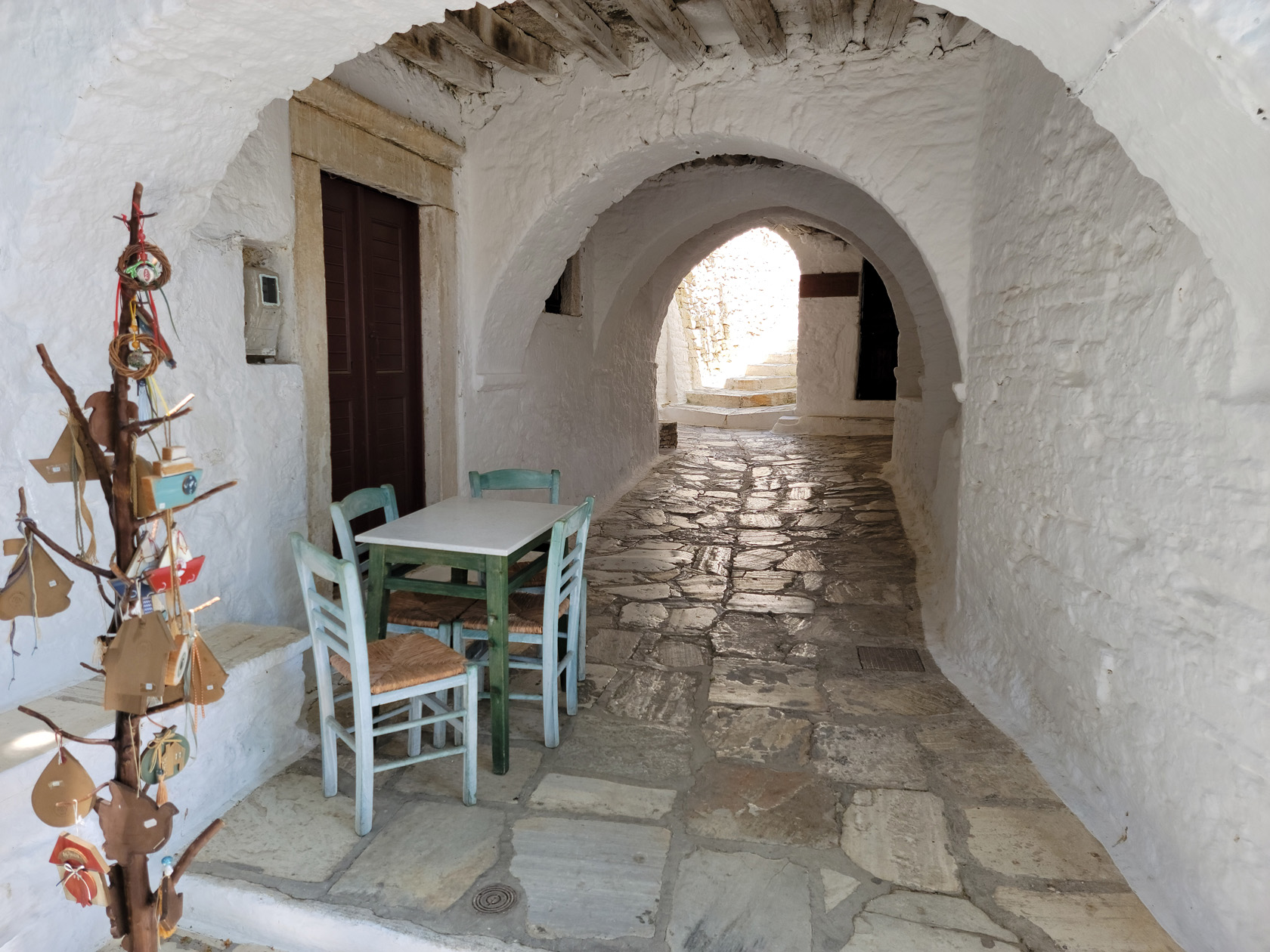
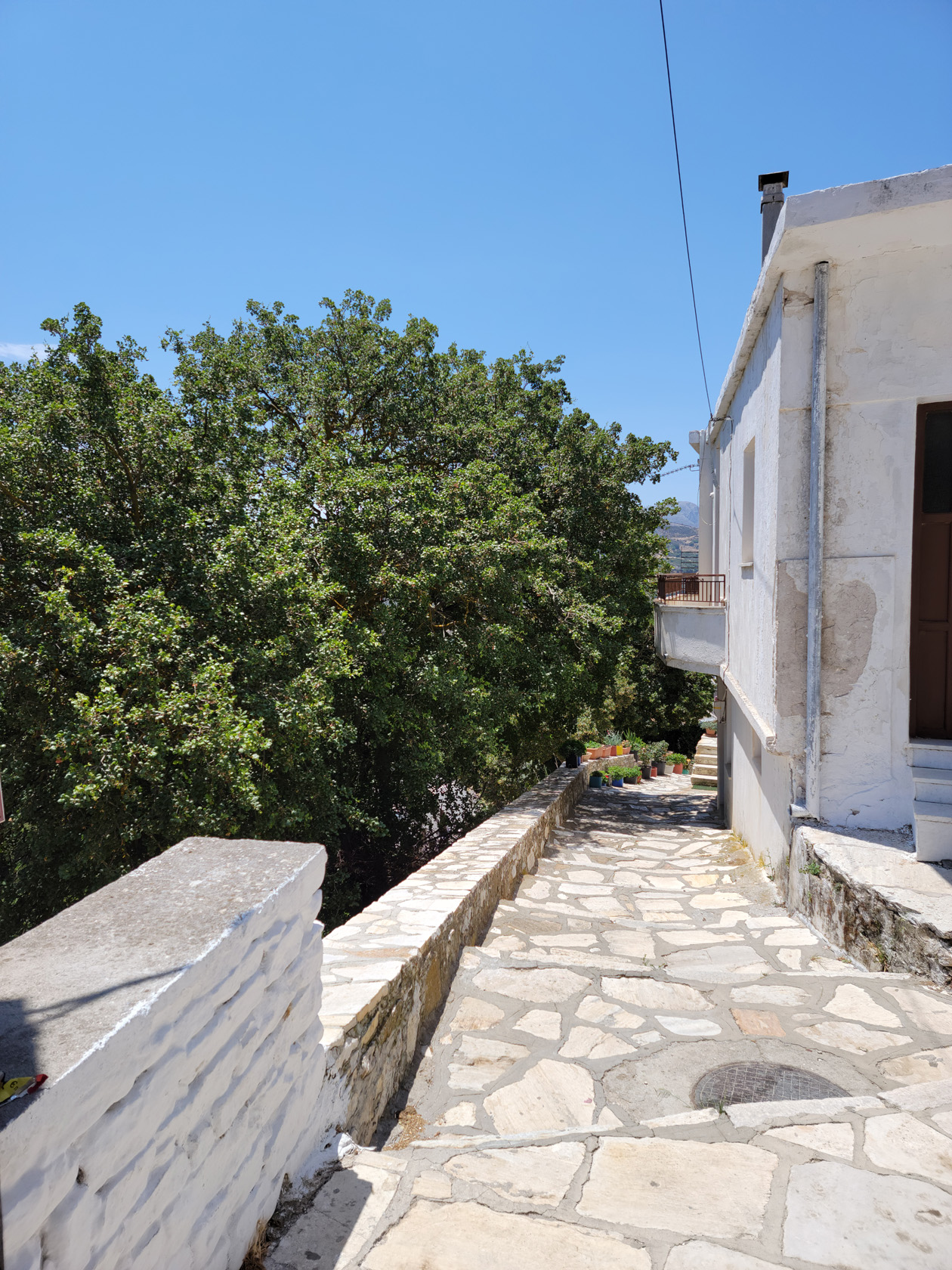
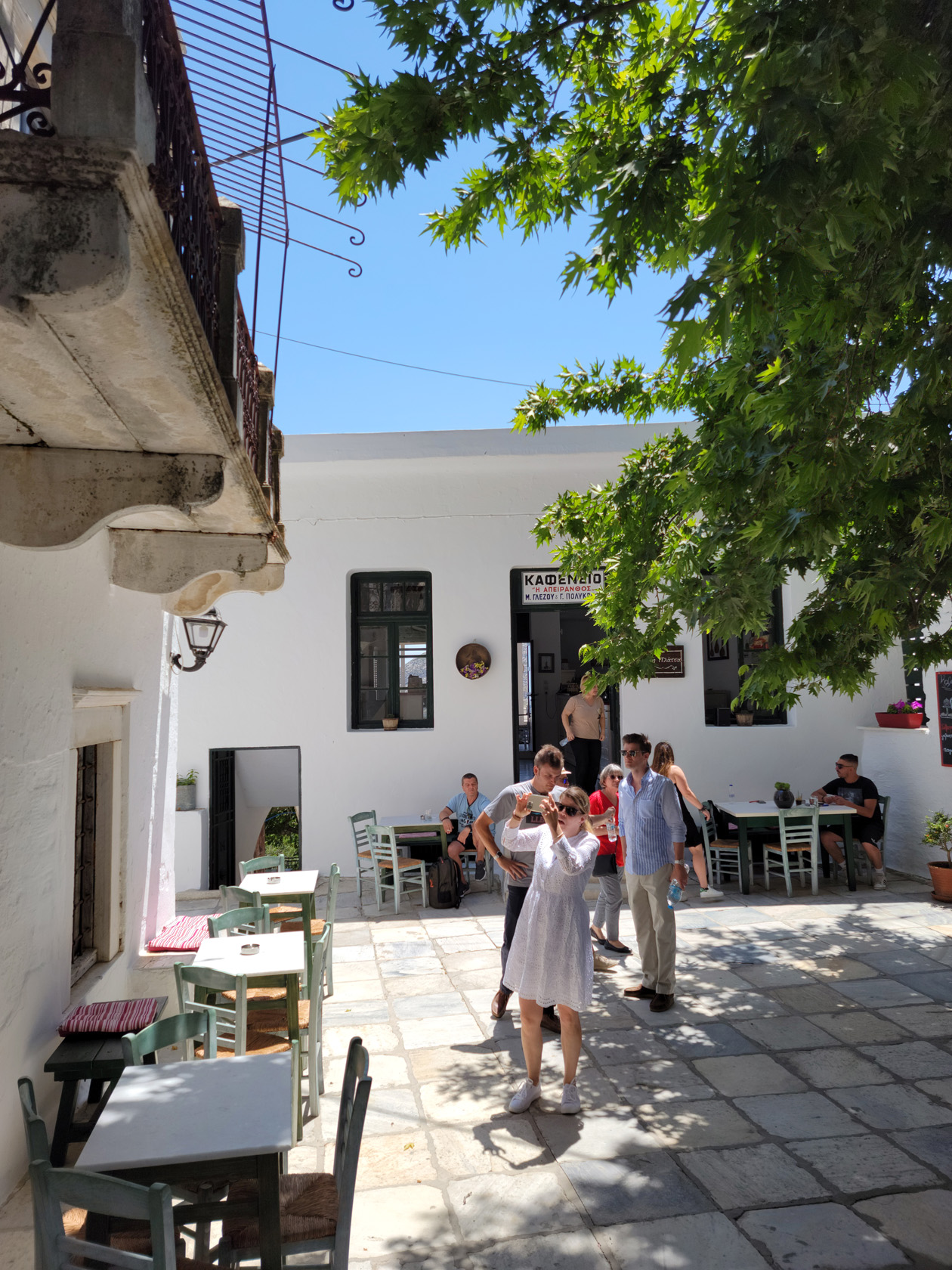
A small town in the hills of Naxos, obtainable only by car, is worth a trip, if only to see its marbled streets and pedestrian ways. If you are on a tour, its a good place to stop for lunch and wander the streets until you are ready to eat. There are many interesting shops to explore and some novel architecture to experience. An hour or two would suffice in order to do both.
Apeiranthos, Naxos
Apeiranthos, Naxos – Looking Out At The Hills
Apeiranthos, Naxos – Marble, marble everywhere
Apeiranthos, Naxos – The middle of town
Apeiranthos, Naxos – Old Stone Arch
Apeiranthos, Naxos – The marble walkways
Naxos – Another Old Grainery Windmill
Apeiranthos, Naxos – Main Pedestrian Way
Eggares Olive Oil Museum
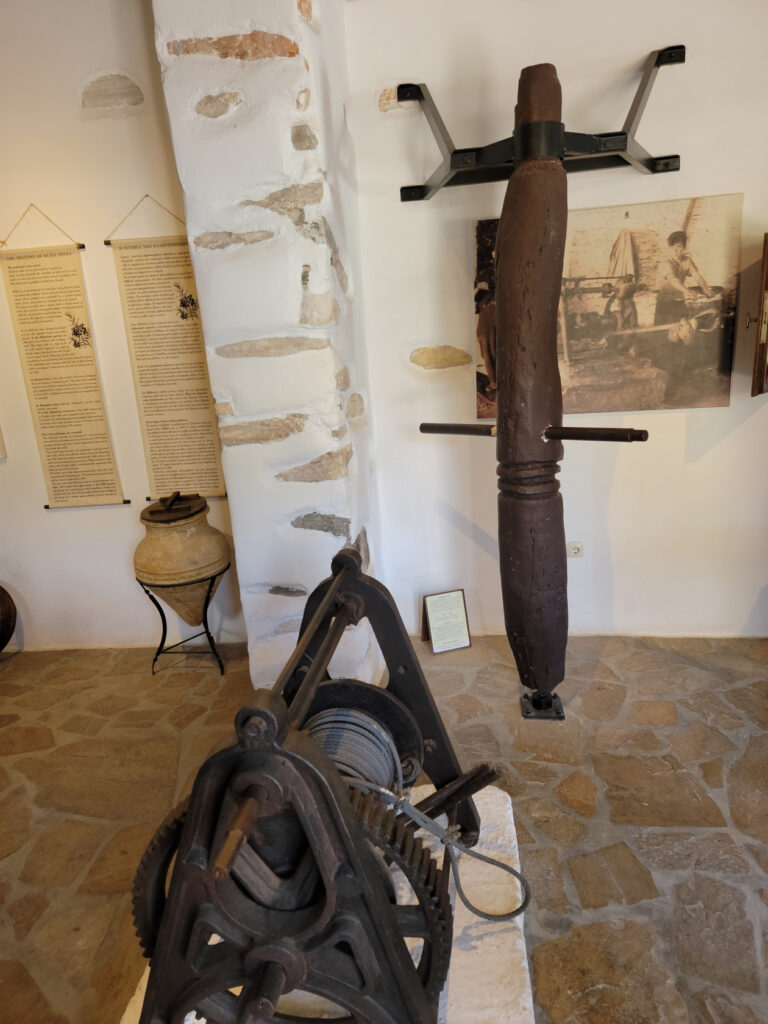
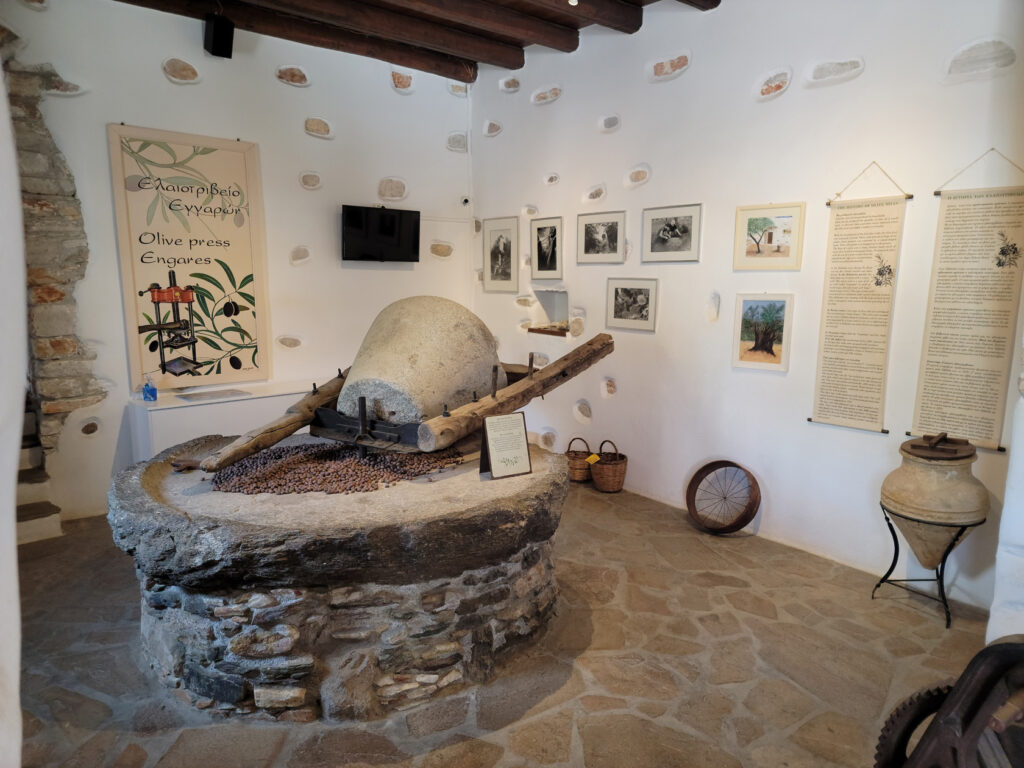
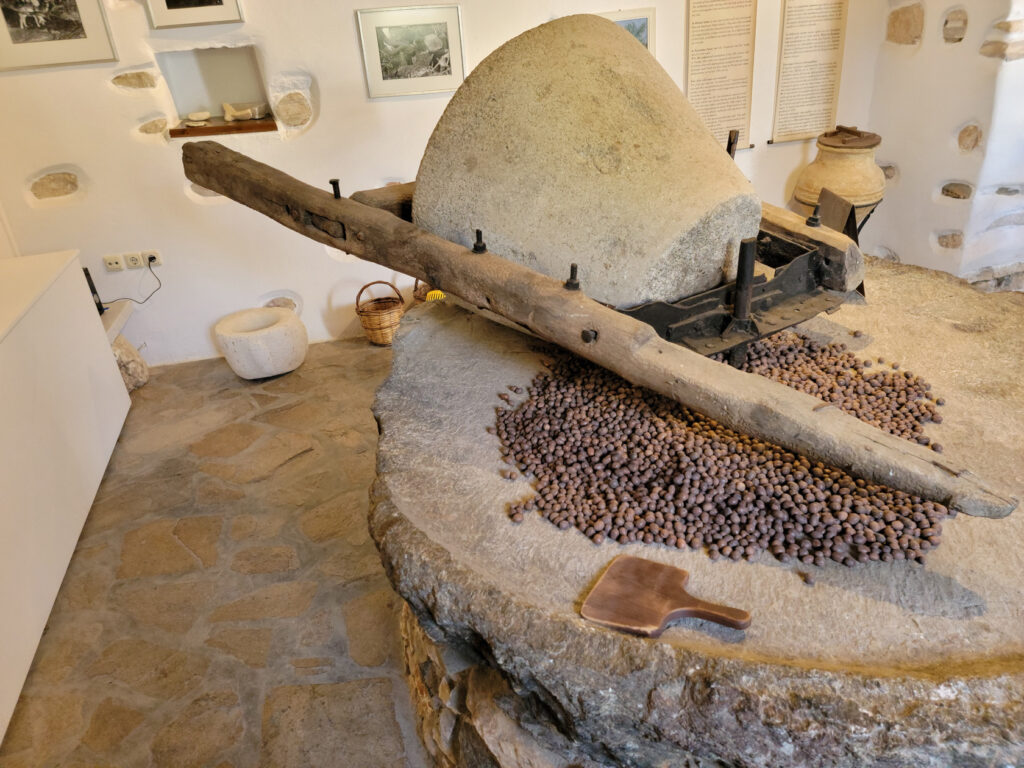
A small private museum showing the discipline of olive oil making can be found not more that a half hour drive from Naxos harbor. The Eggares Olive Oil Museum has a small collection of old oil presses, as well as other tools and the complete history of their firm.
Eggares, Naxos – The Eggares Olive Oil Museum
The museum continues to sell olive oil and olives that it produces in the gift shop. Unfortunately we did not purchase any, since most of the products are not bottled and perhaps not suitable for a return flight. So, instead of taking a chance, we opted out of bringing a sample home.
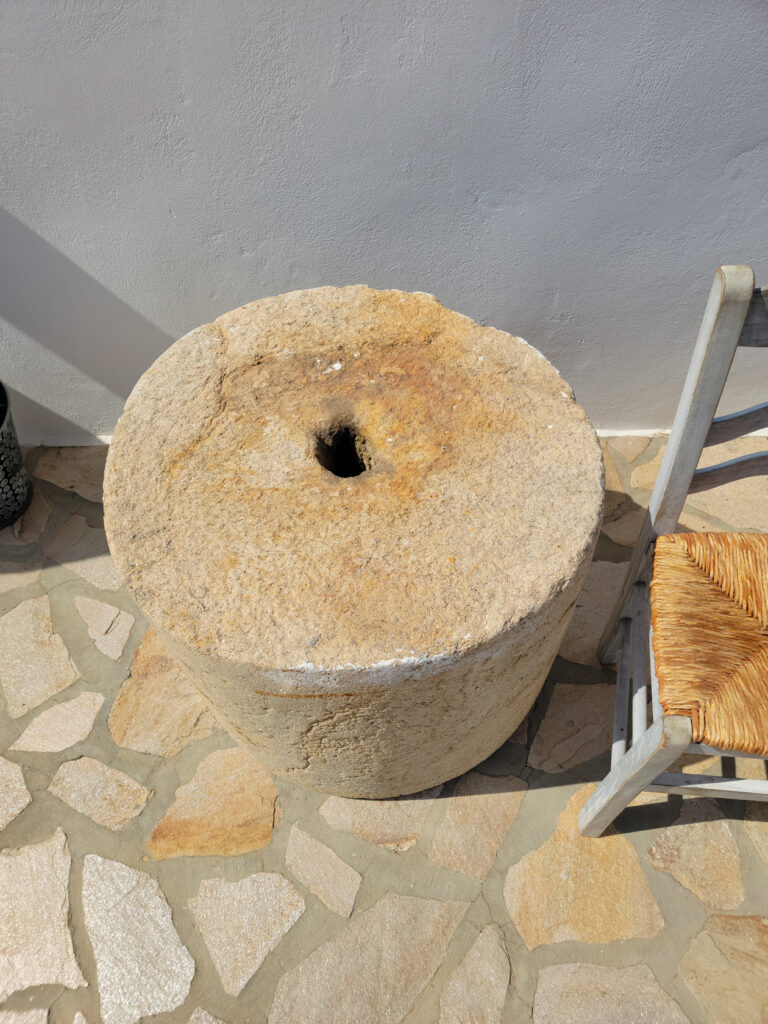
Eggares, Naxos – The Eggares Olive Oil Museum – Old Mill Stone
Eggares, Naxos – The Eggares Olive Oil Museum – Winch Used To Turn The Millstone
Eggares, Naxos – The Eggares Olive Oil Museum – Olive Millstone
Eggares, Naxos – The Eggares Olive Oil Museum – Olive Millstone
Restaurants
The beach where our hotel was situated was well endowed with restaurants. What follows is only a sample of what is available, but all have very good menus and delicious food.
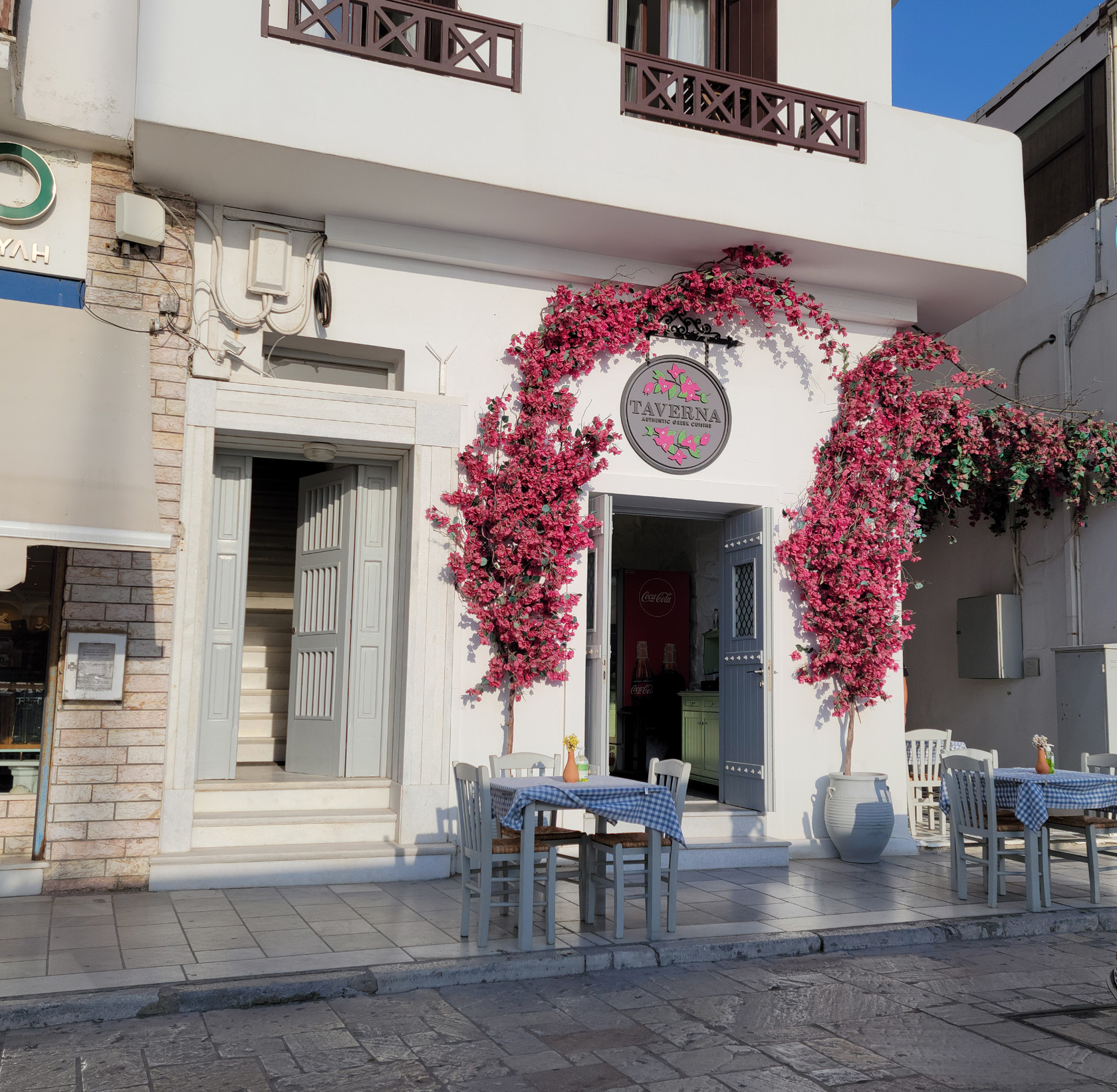
Taverna Authentic Greek Cuisine Restaurant
Though we had reservations at another restaurant, we had all decided that we were hungry and had to eat a little early.
So, we headed back down to the harbor from our sojourn up the hill of Naxos and its castle. There we found the Taverna Authentic Greek Cuisine Restaurant, which as can be imagined, serves numerous authentic Greek dishes.
Naxos, Naxos – Taverna Authentic Greek Cuisine Restaurant – Patti, Ericka, Gabi and Dana
Soon after we arrived, we ate lunch at the Taverna O Giannoulis and enjoyed a very nice meal with water, wine and all the supplements. They have a great Greek menu, the service is very quick and the seating outside is perfect (though we went in June, so heat was never an issue).
Taverna O’ Giannoulis
Taverna O’ Giannoulis – Kitchen
Taverna O’ Giannoulis
Taverna O’ Giannoulis
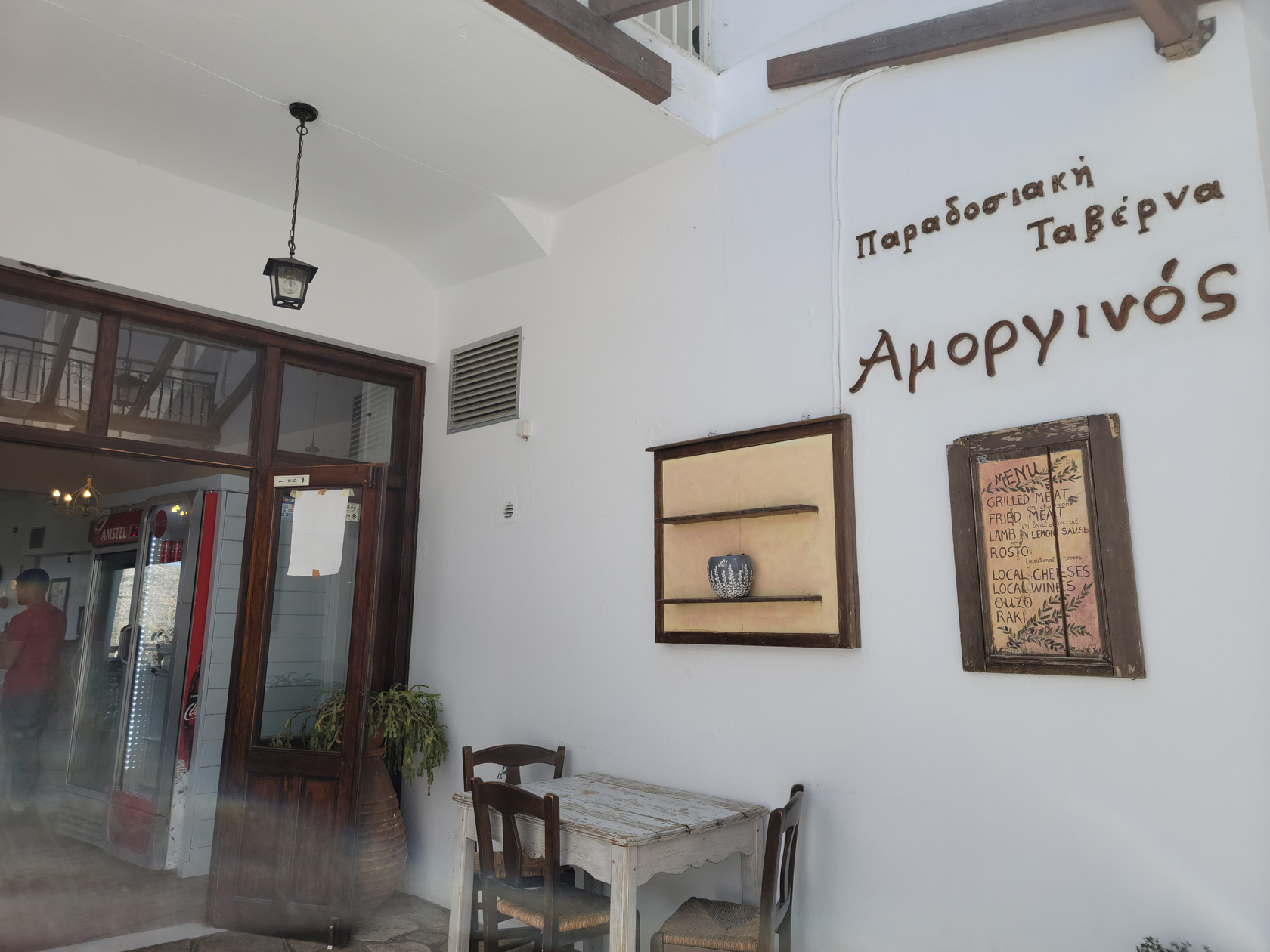
Amorginos Tavern
While on our Naxos day tour, we stopped in the town of Apeiranthos, the one where all the streets and pedestrian ways are made of marble. One of two places recommended by our guide, we chose it for its menu and selection of foods.
Apeiranthos, Naxos – The Amorginos Tavern
There is plenty of outside seating, though we sat just indoors, in order to avoid the midday sun. The service was pretty good, though the food was served randomly, apparently whenever it was ready. Which is good if you ordered something hot, but if you expect your food to come out all at once for your group, you may want to go elsewhere. The food was excellent, as was the local wine and the prices were very reasonable.
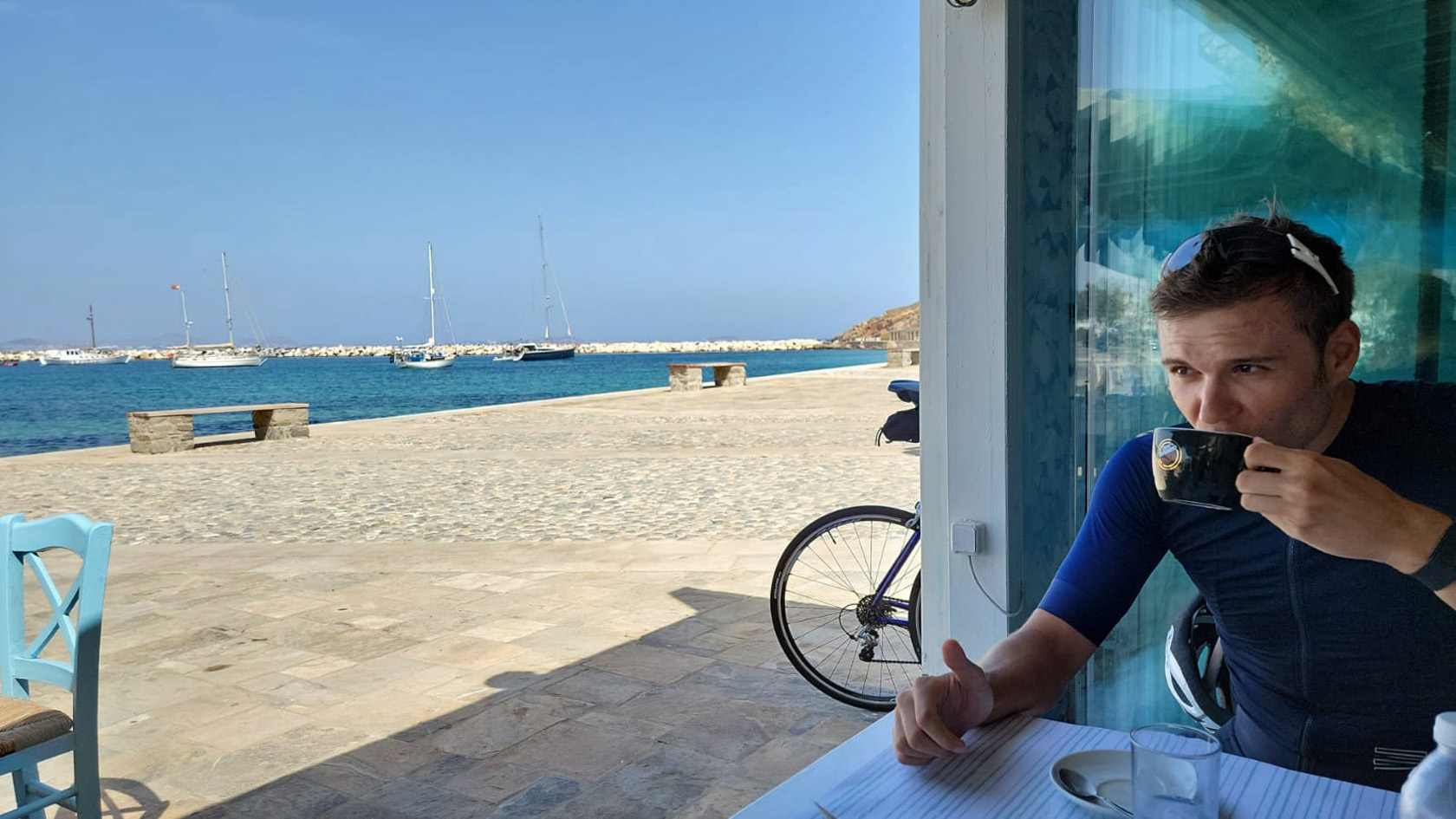
The Relax Cafe
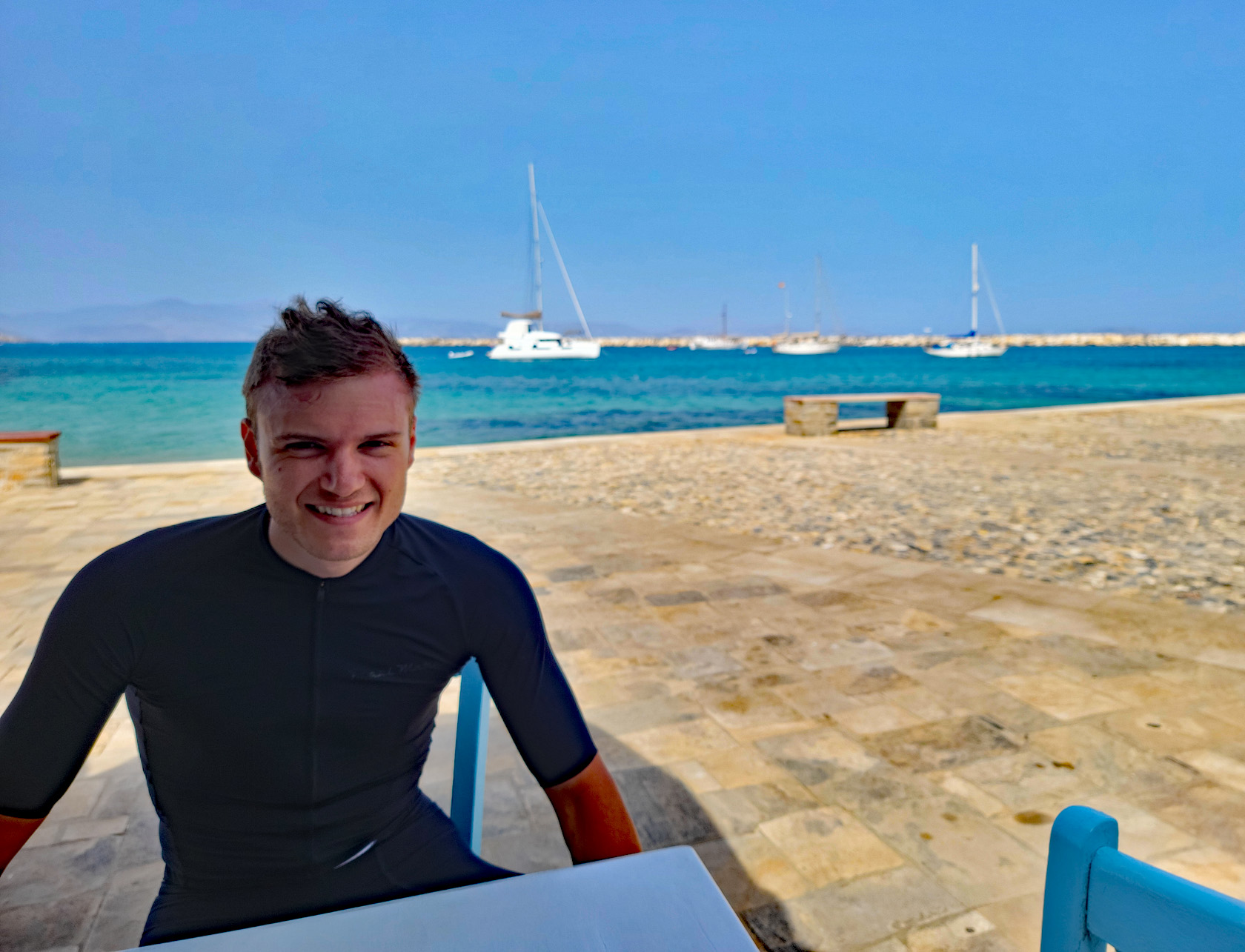
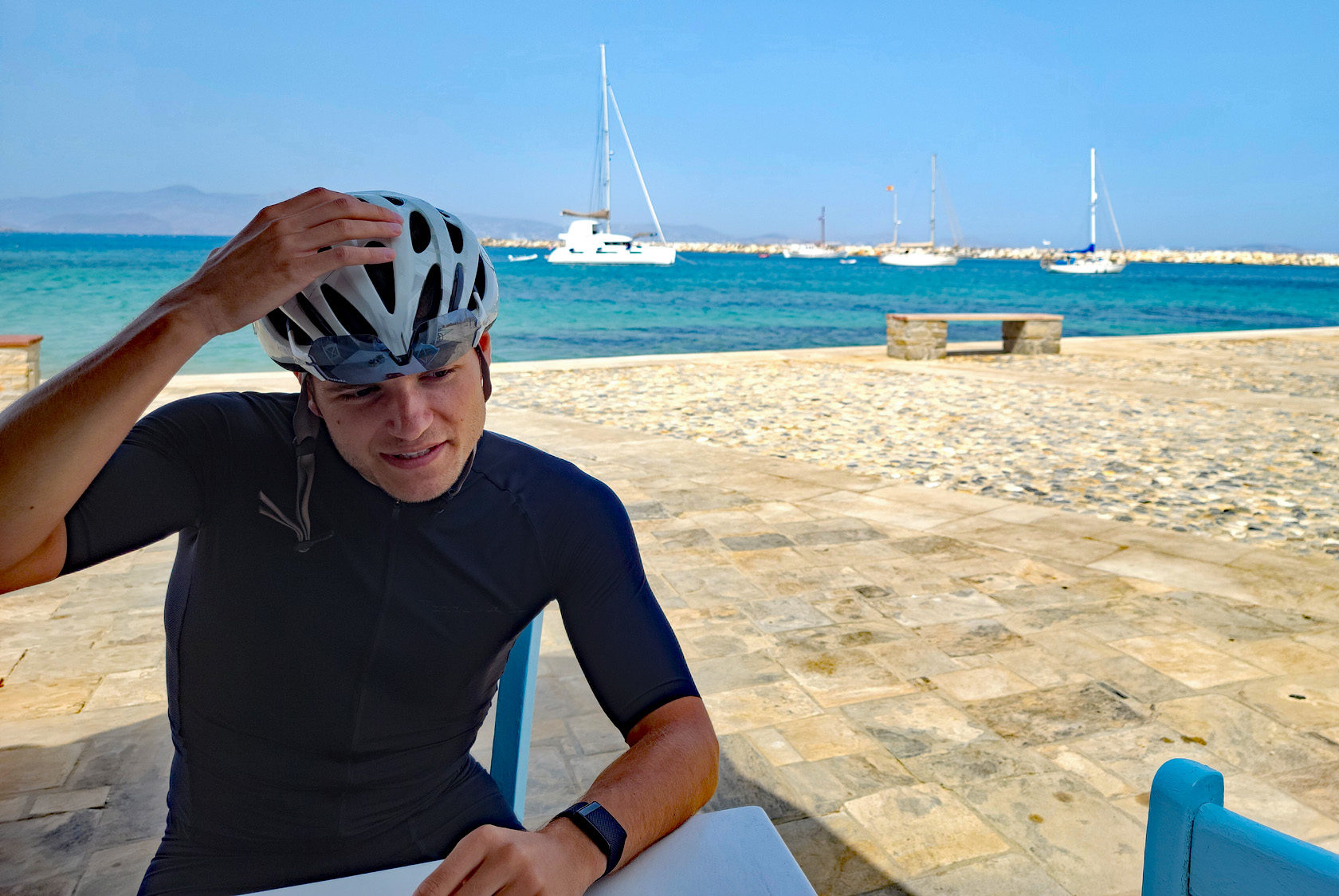
No ride is complete without a coffee stop, and perhaps a bite to eat. After our second morning ride, we decided that we would stop in town, Naxos, and visit the Relax Cafe on the water; not only to enjoy the view, the wind and surf, but also some good coffee and what turned out to be amazing vegetable and cheese omelets (the secret it appears, is not just throwing the freshly cut veggies into the scrambled eggs, but to barbecue or fry them a bit first, infusing them with the burnt taste, yu-ummm).
Highly recommended place for breakfast, unless of course you are timid about calories, as avid cyclist, we aren’t. Enjoy!
Del Mar Cafe
Situated almost in the middle of our strand is the Del Mar Cafe. An Italian restaurant that caters to all needs, especially those nagging Italian taste buds that some of us have. Angela and Marco moved from Italy eight years ago and are excellent hosts, they will ensure your meal is prepared to your expectations. We went here several times for lunch and dinner and used their beach services as well; their wines are also very good, we were never disappointed.
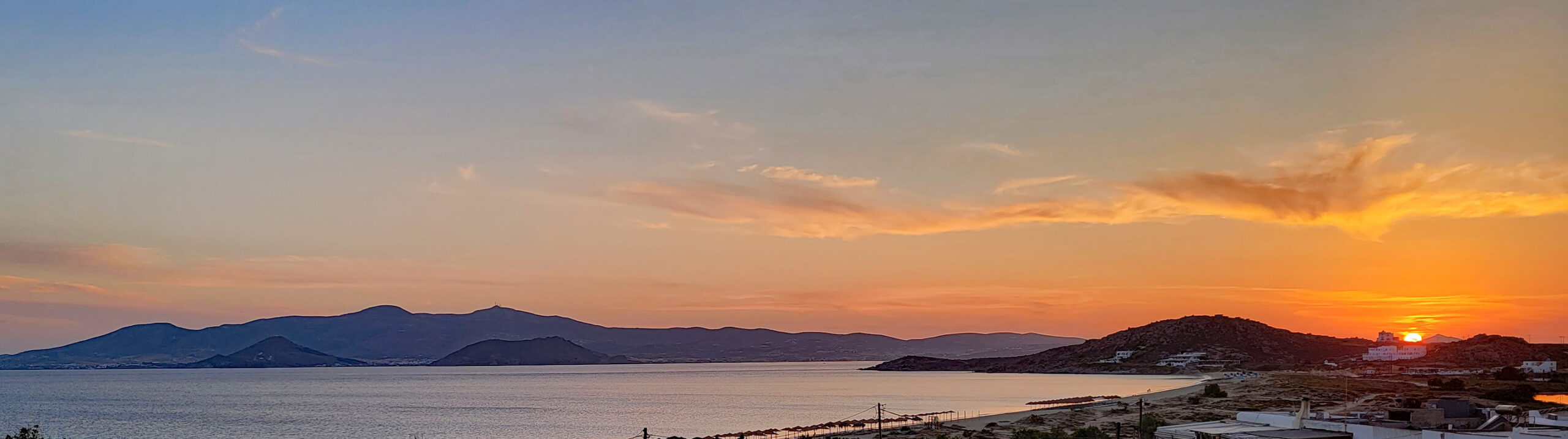
Naxos – A Sunset
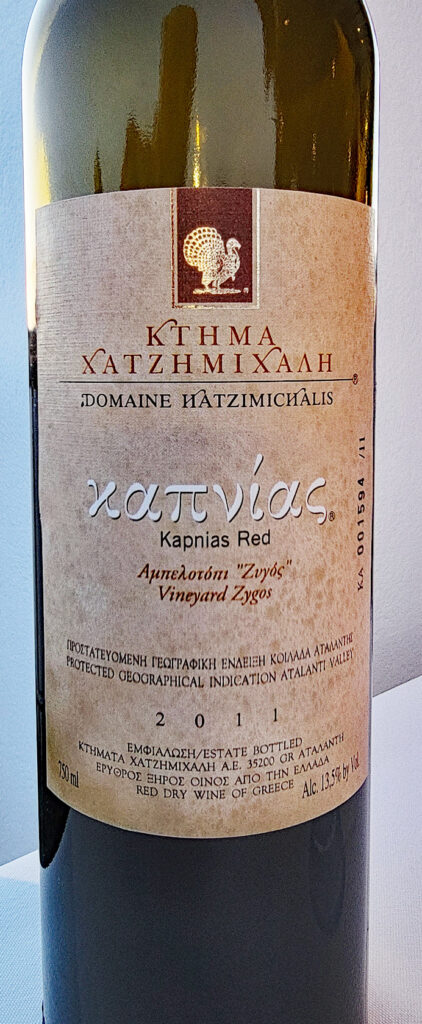
Wines
The following wines we enjoyed while dining in Naxos. Most are inexpensive wines, all are from Greece or the neighboring islands and are completely drinkable and satisfying.
This blog article is split into three separate acts. Not necessarily in homage to the Greek tradition of plays, but more that our trip turned out to be more of a Greek tragedy. A milder version of one of course, but one nonetheless.
We do not know if it’s the land of bad karma, bad juju or what, but for the first time in our long lineage of trips, almost everything that could go wrong did. That is not to say, there is something wrong with Greece as a whole, it could just be us (and probably is), or we just may happened to have had a bad sequence of events occur. However, always being guided by the premise that bad luck runs in threes, we are now beginning to think that is just an arbitrary number, it appears it can also be all sixes and sevens.
To add some preamble here, there were six of us traveling from three different parts of the globe. My wife and I from Italy, Ericka and Gabriel (Gabi) from Germany and our two sons, Dana and Tristan, from the United States.
Flight from Milan Malpensa to Athens
The first sign there would be any trouble was a line of storms that developed the day of travel and stalled along the east coast. Since they were flying into JFK, both of my sons had their flights canceled. They were able to get booked again for the next day, after having wasted their entire Friday sitting in an airport or on an airplane. Luckily, the new logistics worked and they made it to Athens a day late and one vacation day less, but with all of their luggage.
Once altogether, we learned that our son Dana and our son-in-law Gabi had both gotten colds, so right away we were thinking of the possibility of Covid. Luckily, that was not the case either, they were just feeling the effects of common colds brought on by loosening restrictions.
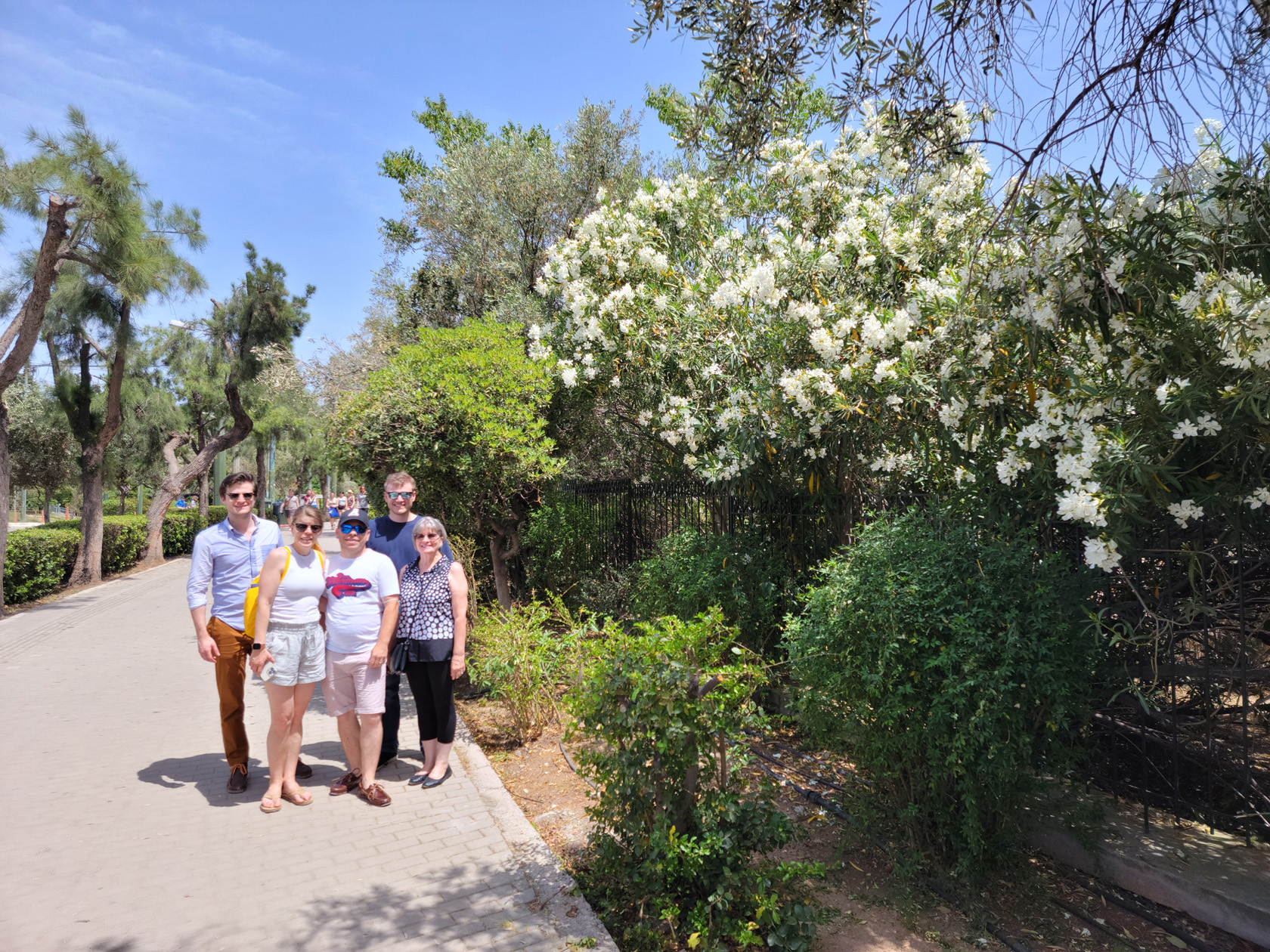
Athens – Group Photograph
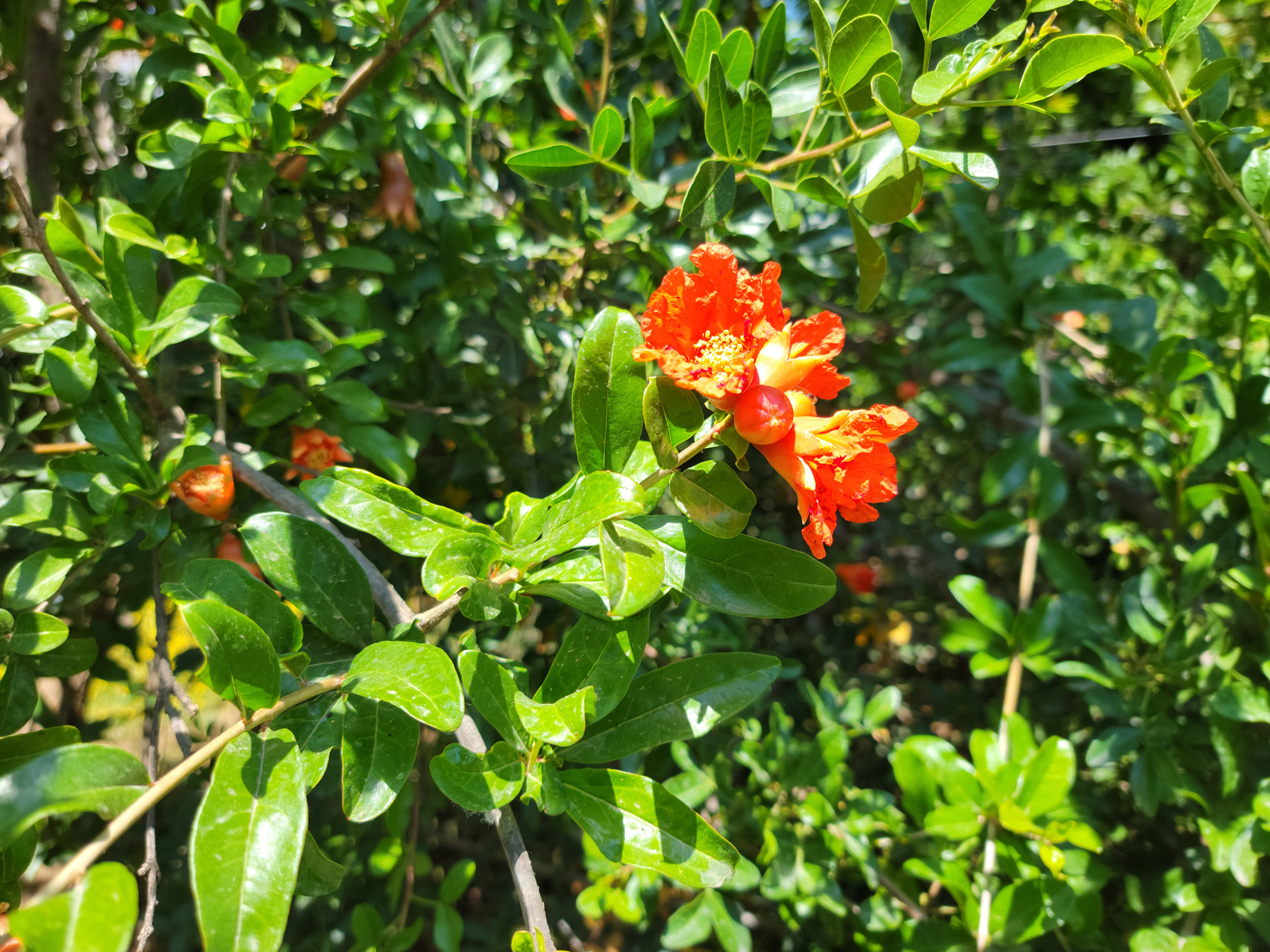
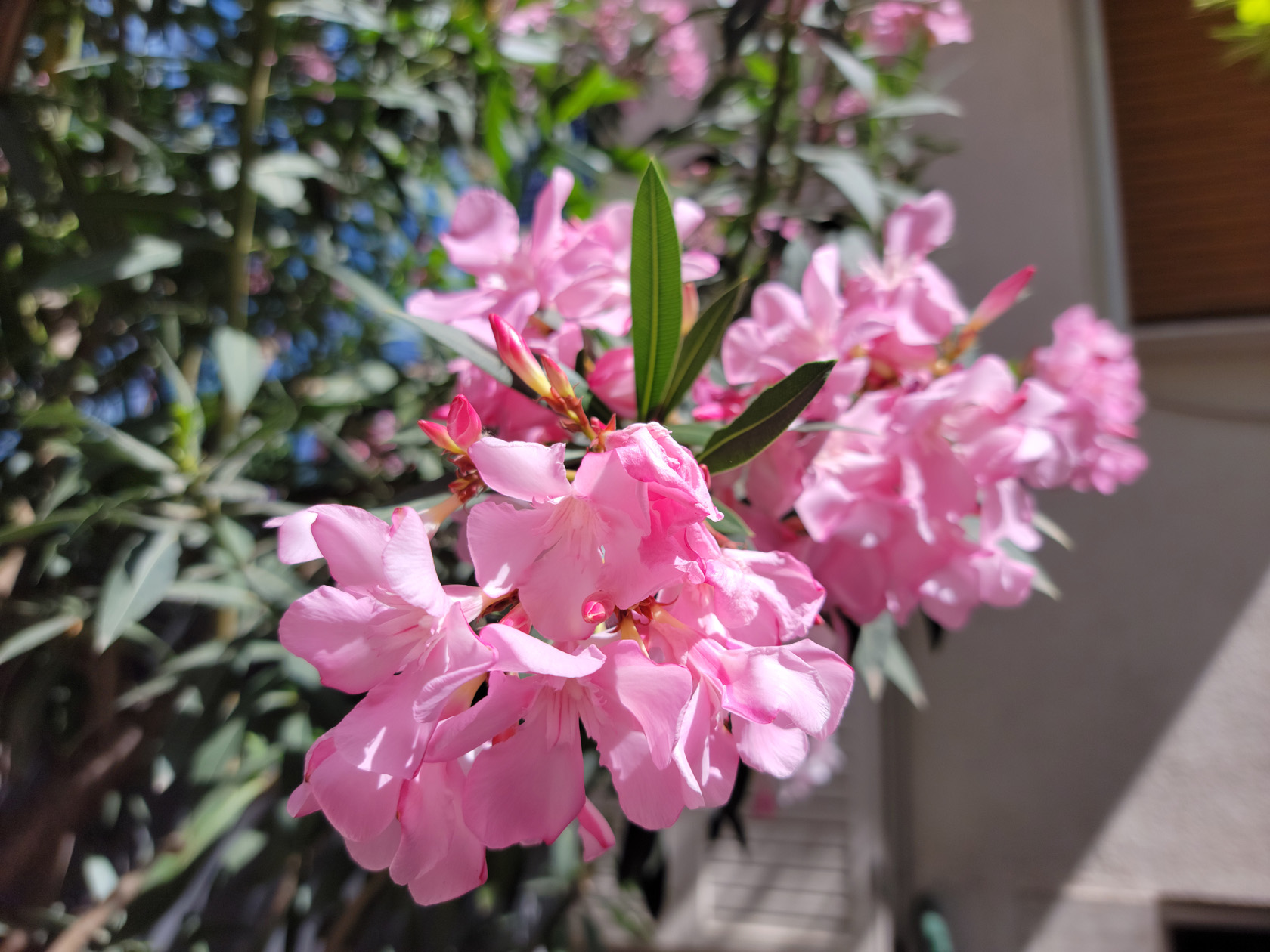
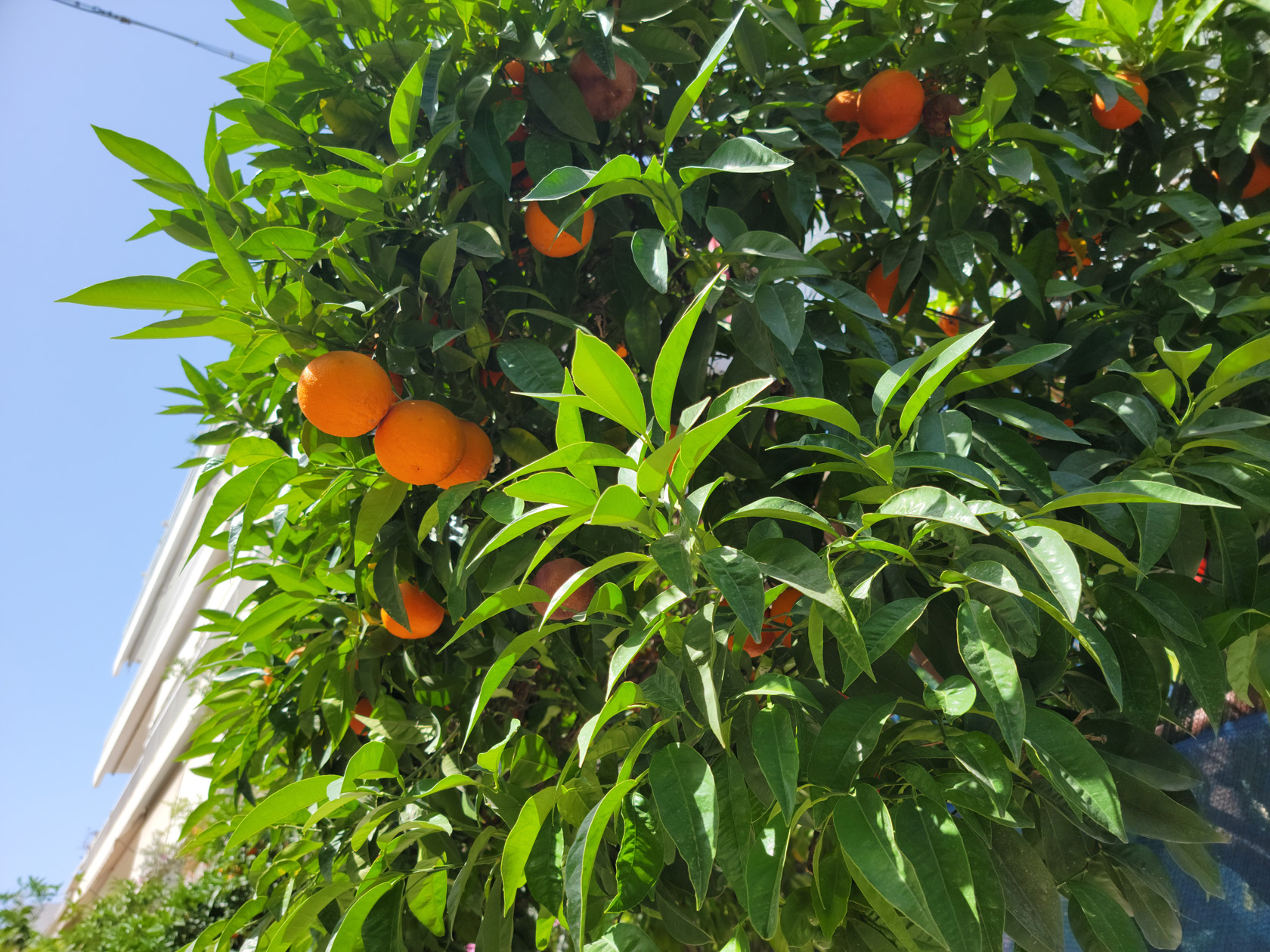
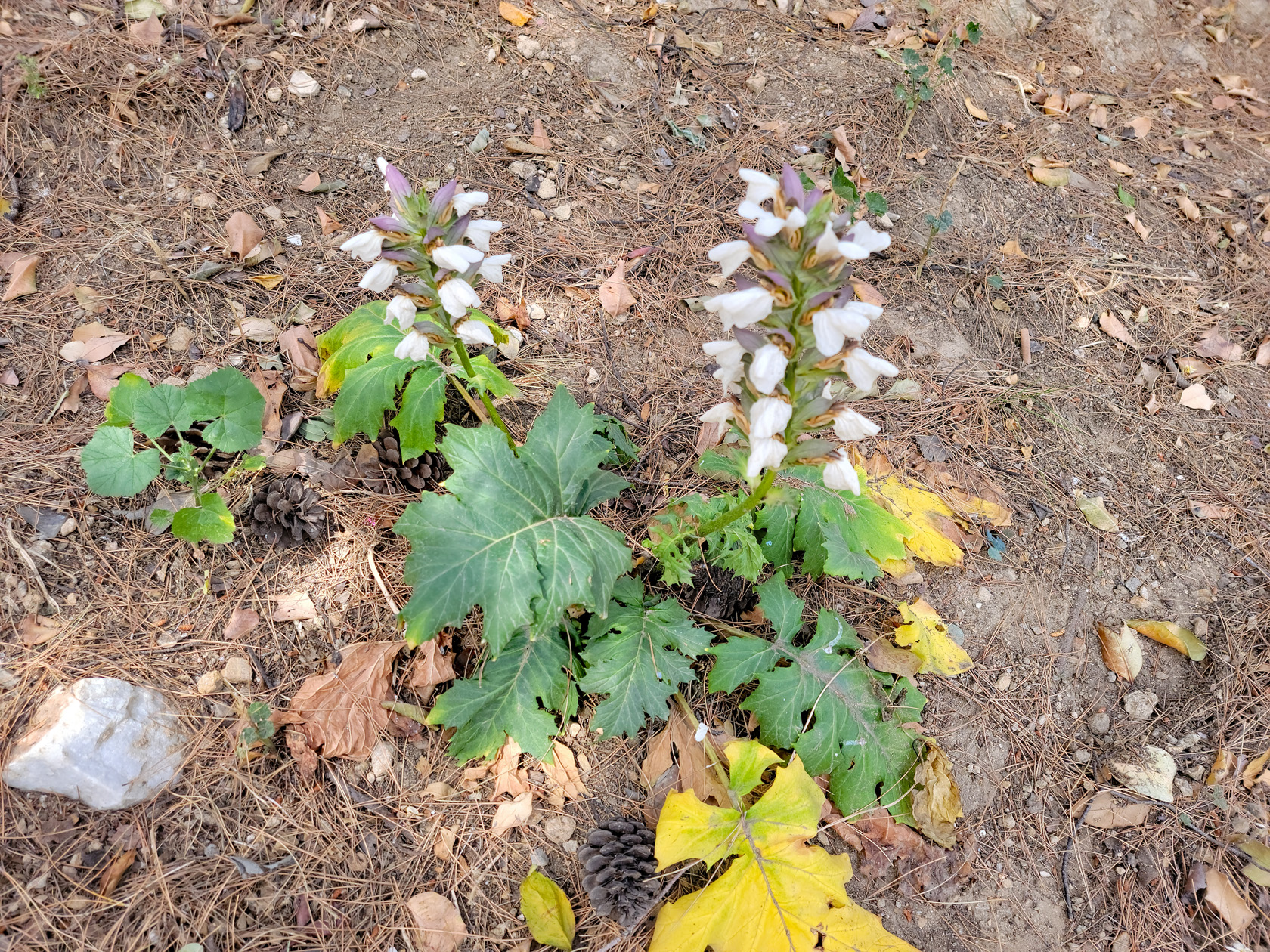
Flowers – Athens
Flowers – Athens
Flowers – Athens
Flowers – Athens
In any event, we pressed on with our vacation. The next day, upon trying to enter a museum, we quickly discovered that I had purchased a five day pass for everyone, which of course did not start until our last full day in Athens. Not sure how I did that, but I just chalked it up to old age and moved on. Luckily, nothing else happened to us the next few day in Athens.
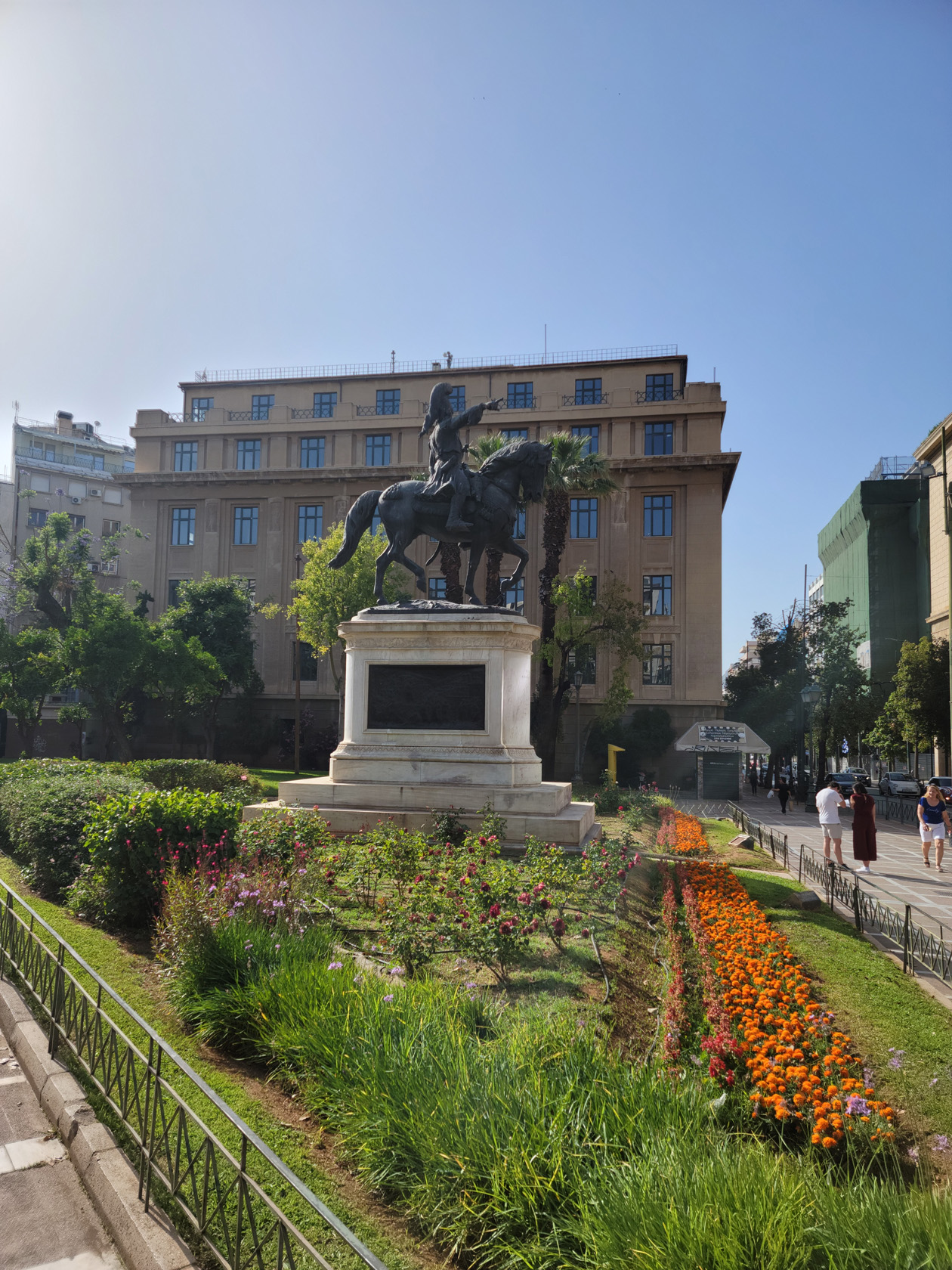
Athens – The City
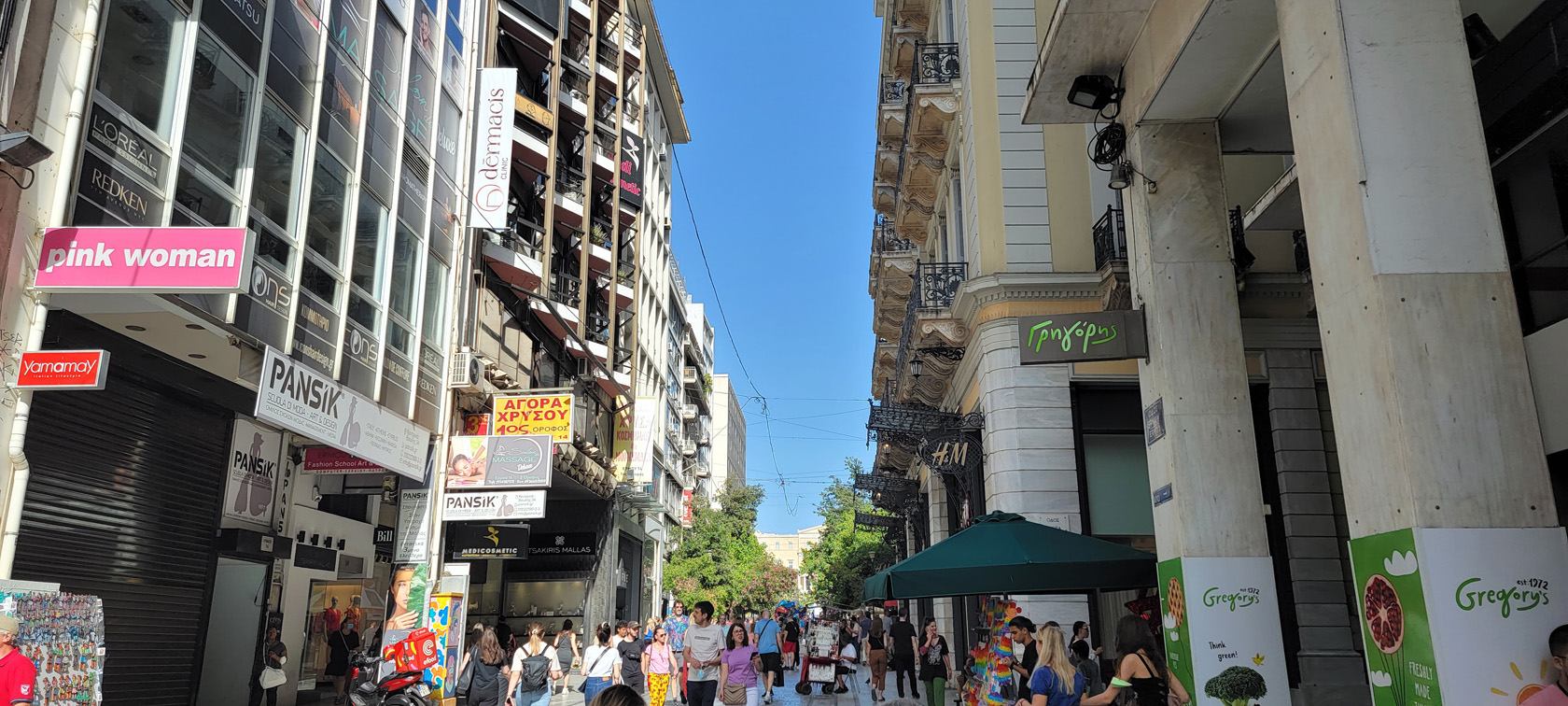
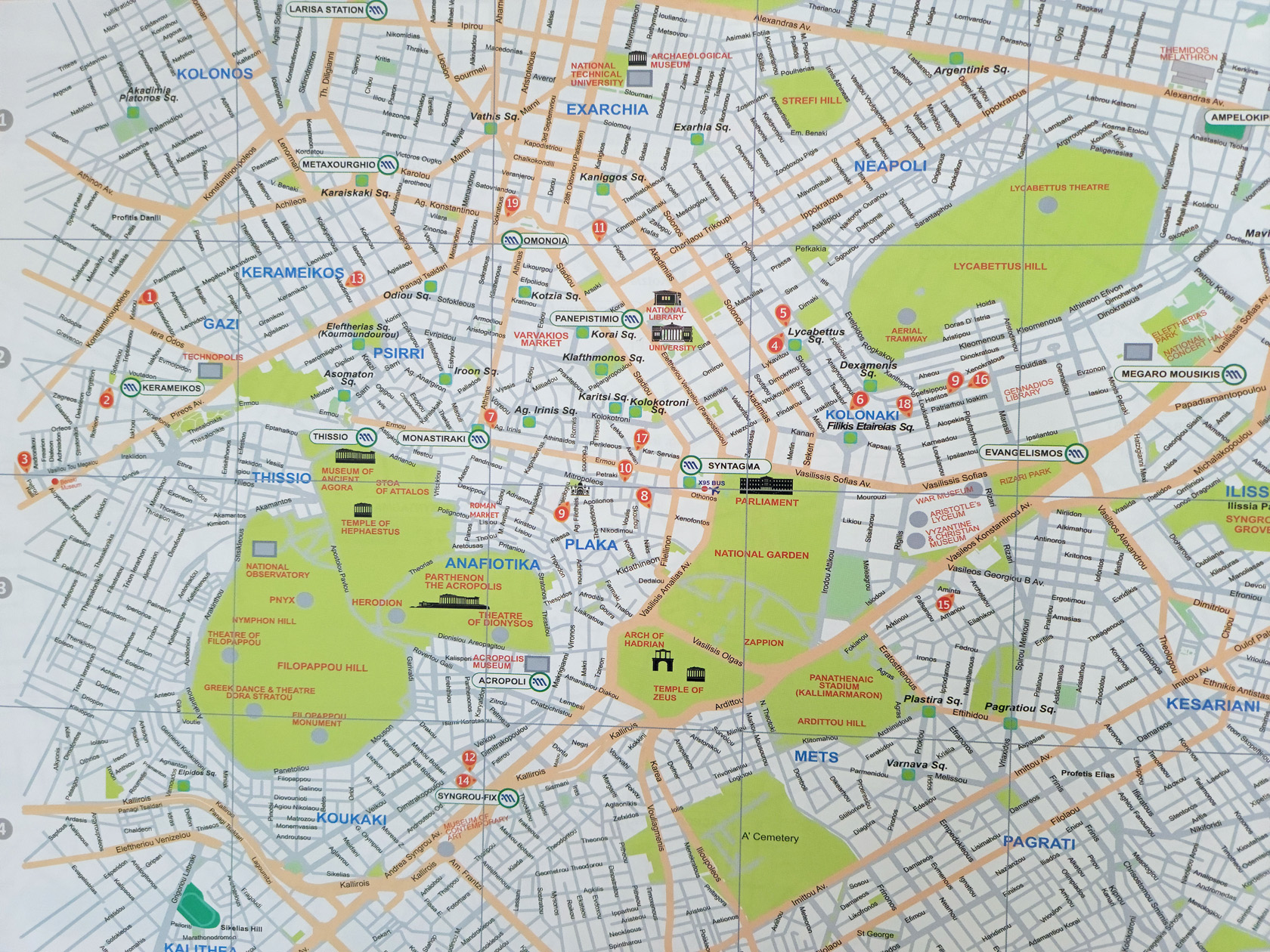
The modern part of Athens is typical city for a city of central Europe, containing a core with upscale shopping surrounded by environs of more modest means and services. In some places it looks like it is in desperate need of planning and repairs. But for the most part things appear to work quite well by Greek standards.
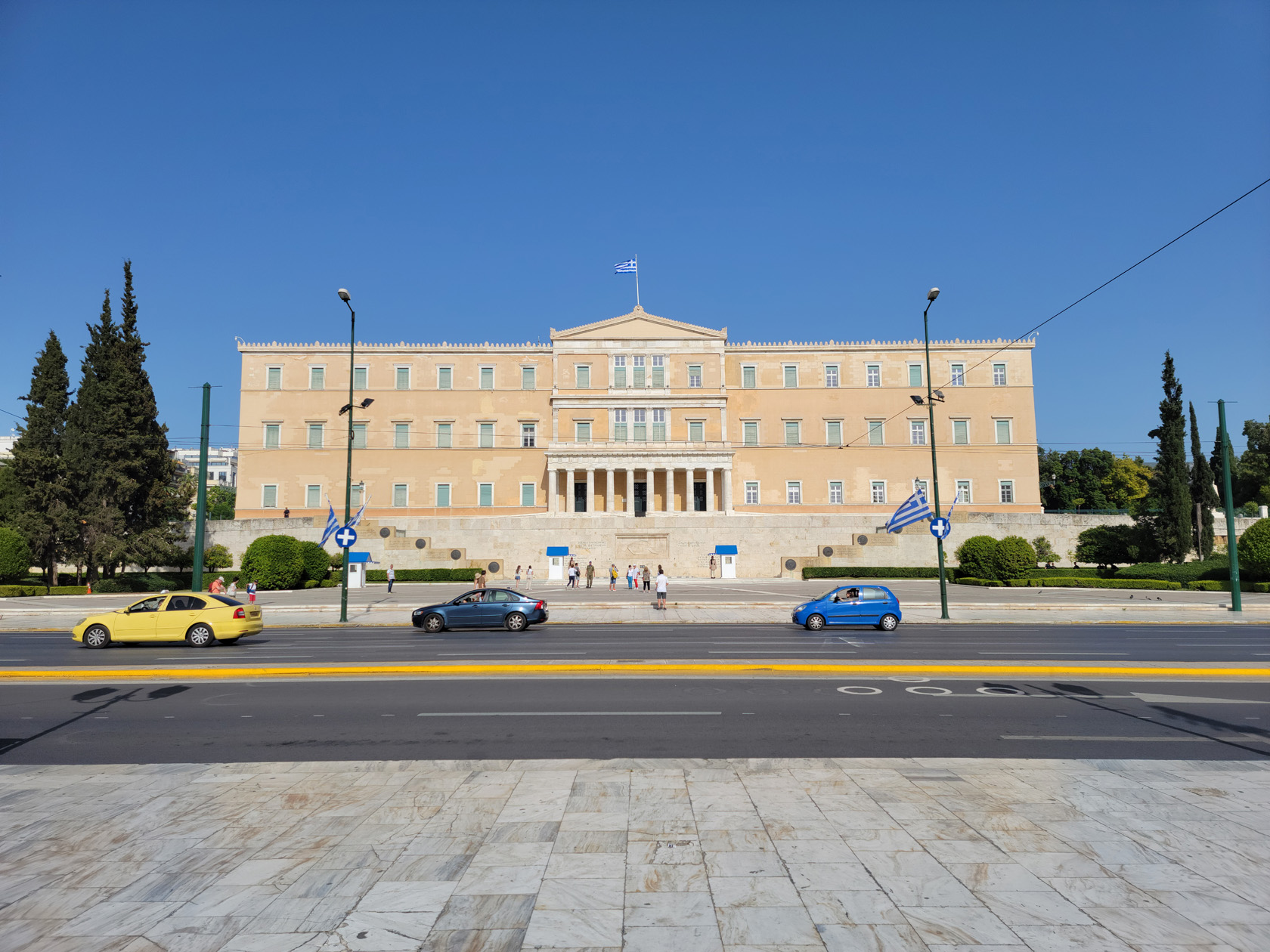
Athens – Memorial for the Unknown Soldier
Athens – Shopping
Athens – Side streets
Athens – Shopping
Restaurants – Plaza Dimopratiriou
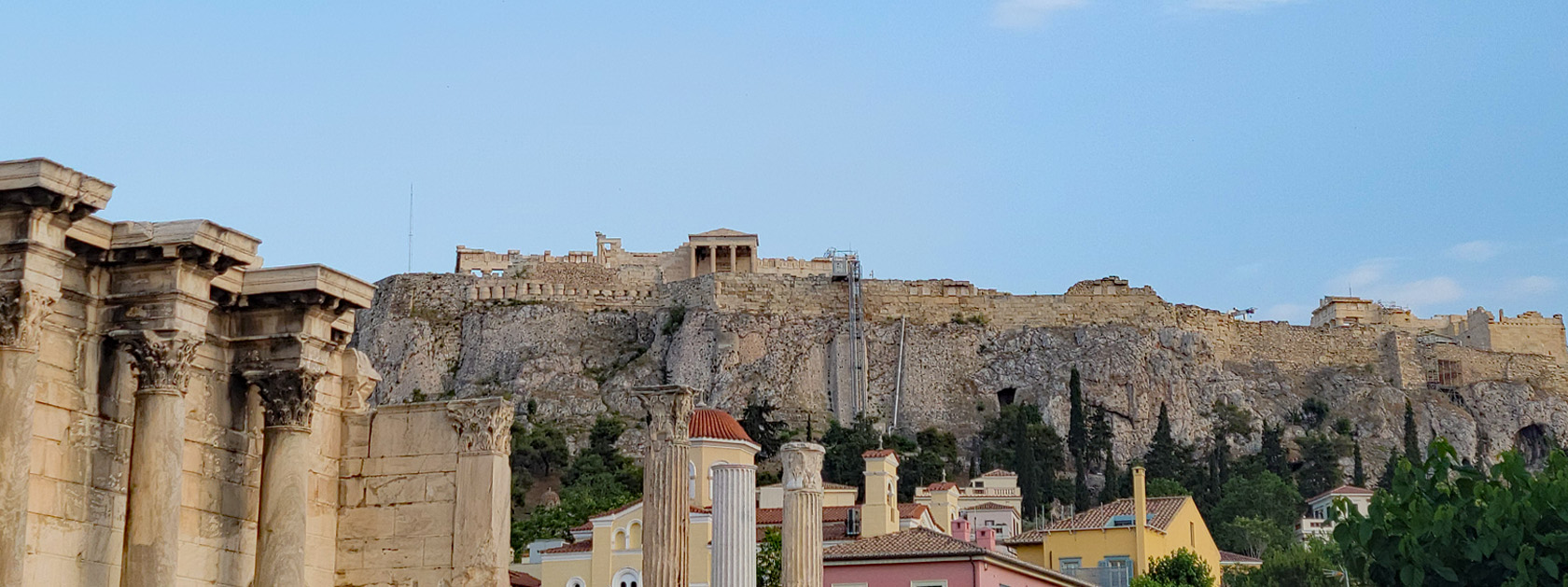
The Acropolis from below
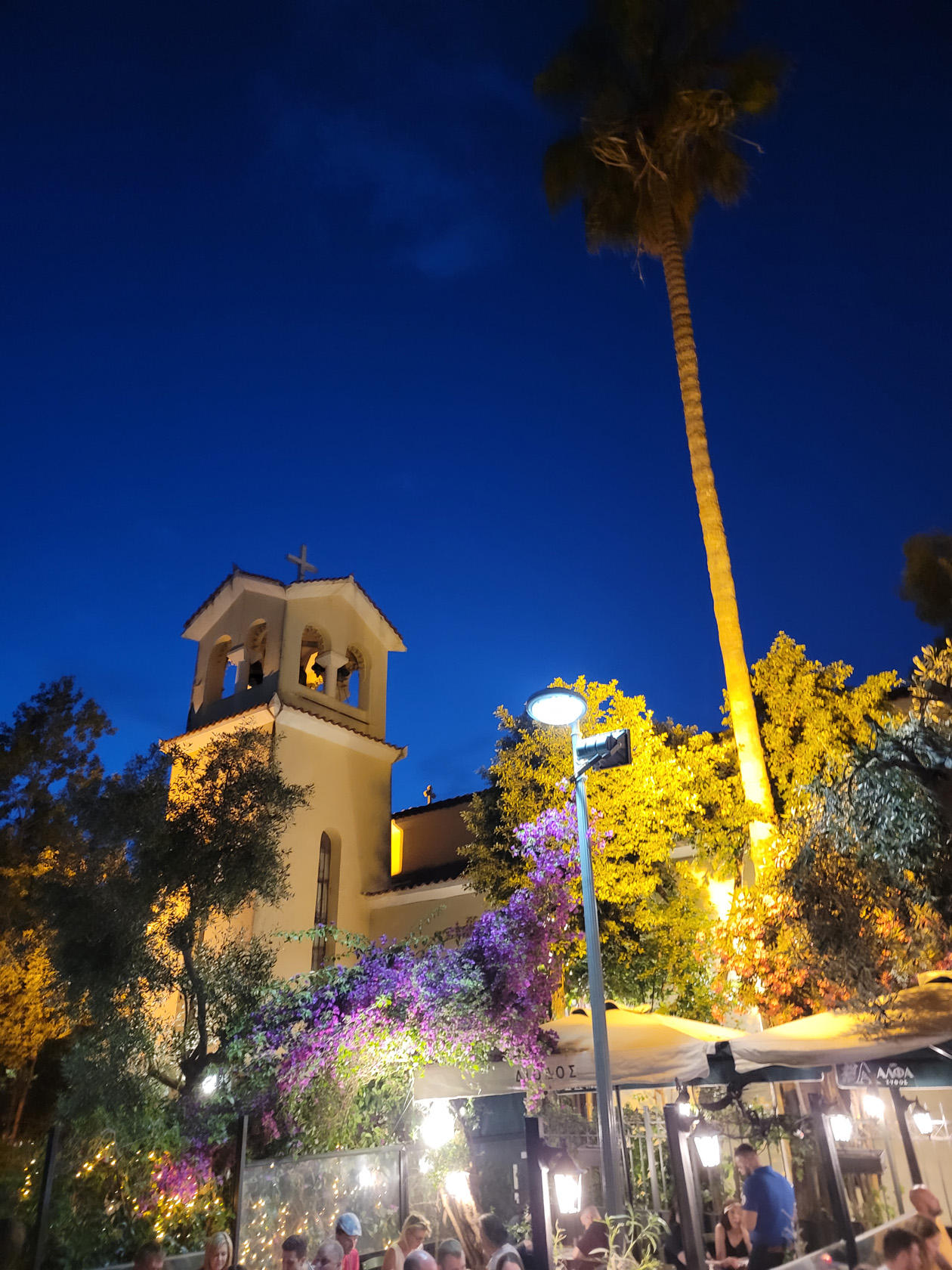
Athens at night
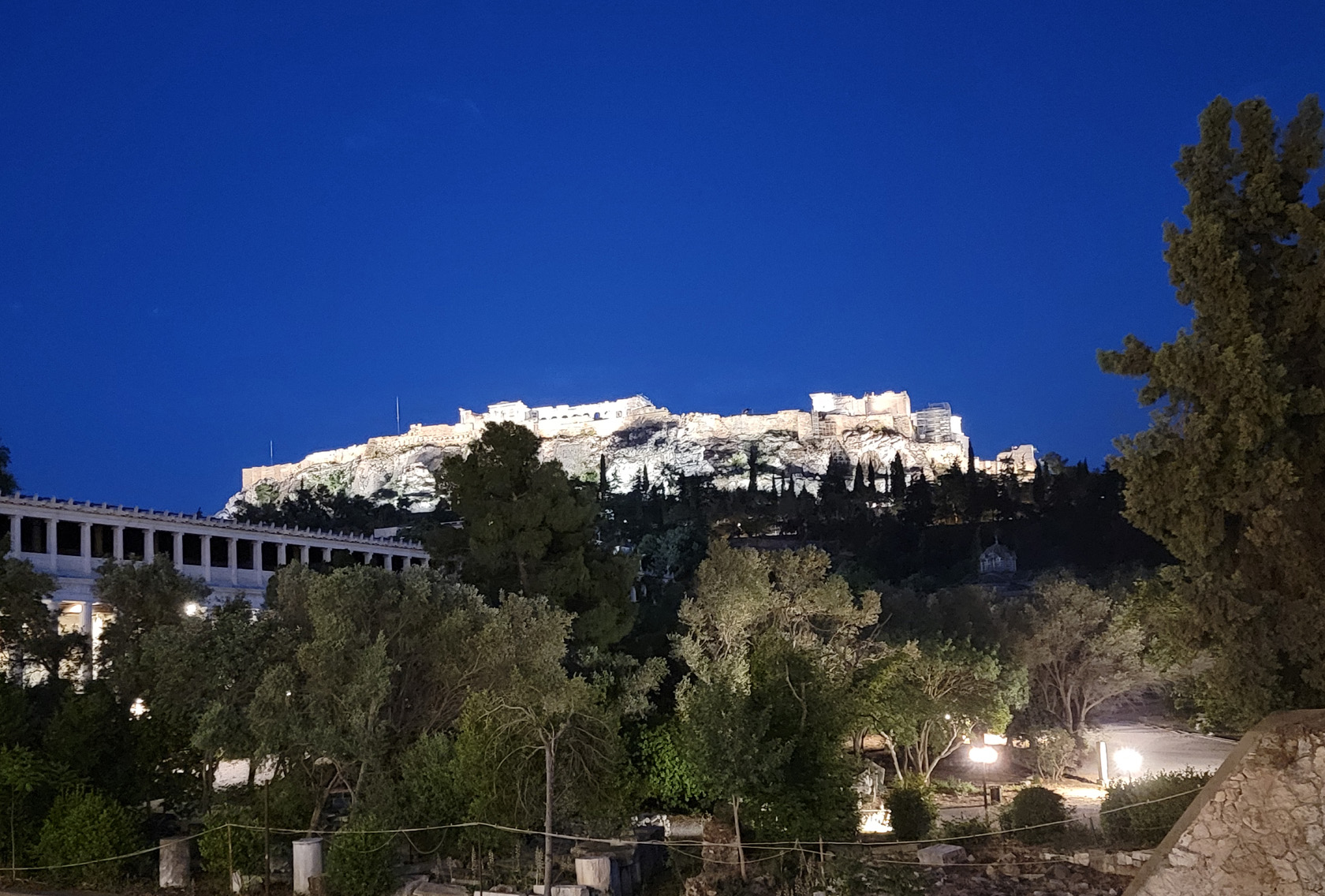
The Acropolis at night
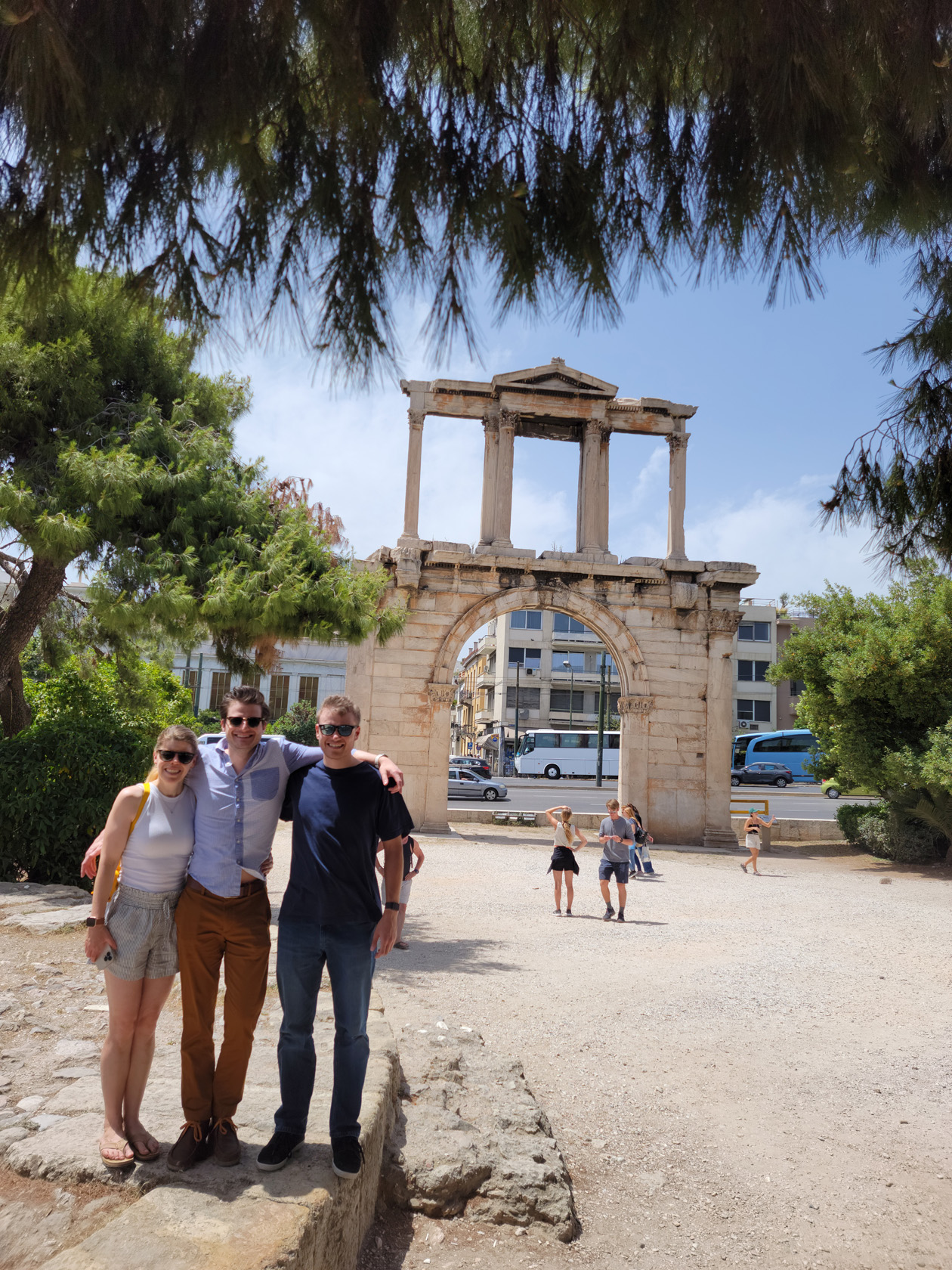
Athens – Hadrian’s Arch – Ericka, Dana and Tristan
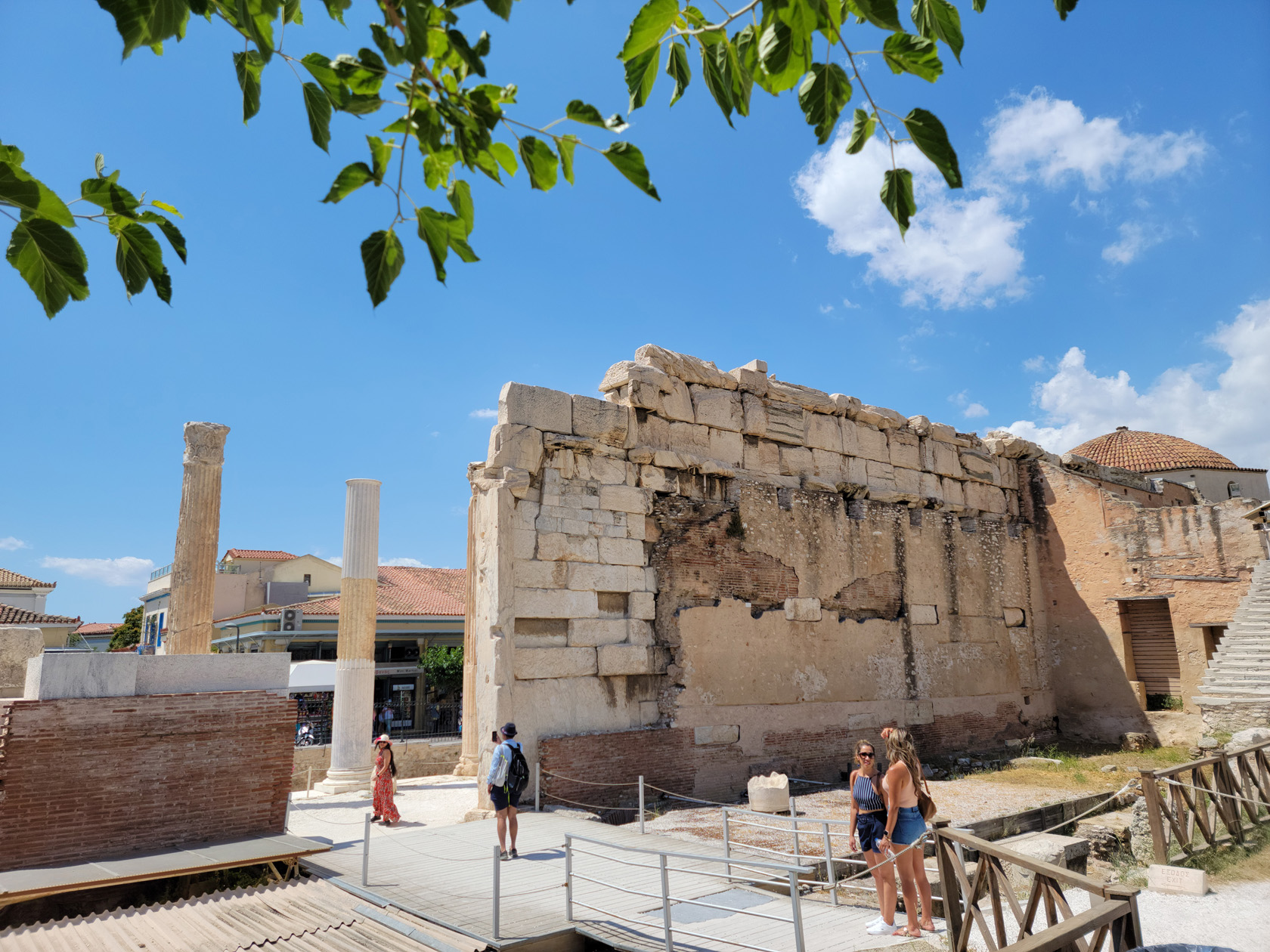
The Great Library of Hadrian
No visit to Athens complete without seeing the changing of the guard at the National Memorial of the Unknown Soldier.
Lycabettus Hill
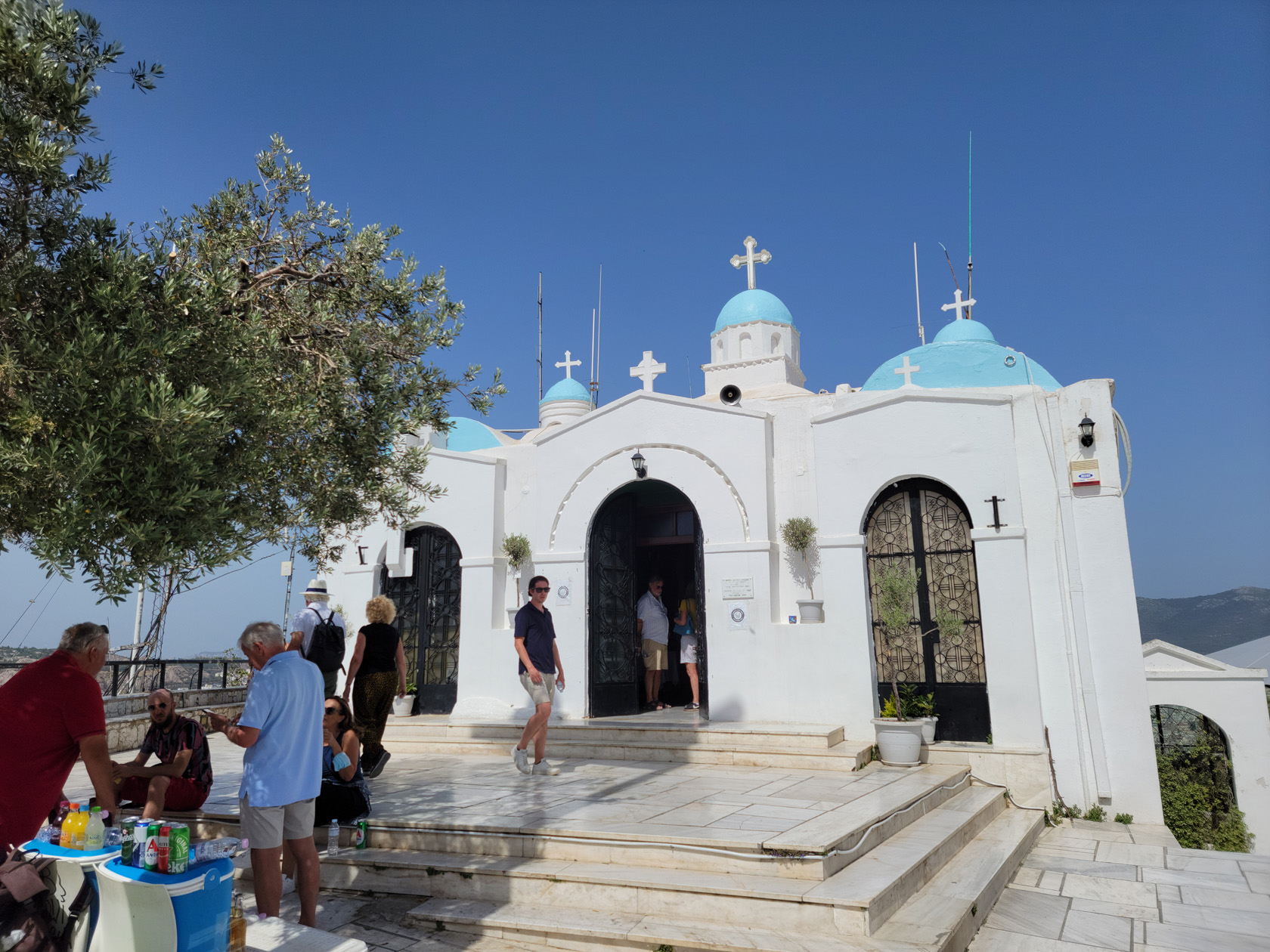
Located northeast of the city center is the hill of Lycabettus, atop which sits the Church of Saint George. About a thirty minute walk from the Monument of the Unknown Soldier you can reach the cable car at Lykavittós and for a modest sum, a ride to the top.
Athens Panorama
The views are pretty good from this vantage point, so you will want to pick a clear day. It is a very good place for a panoramic photograph of Athens.
Athens – Lycabettus Hill – Church and Observation Patio
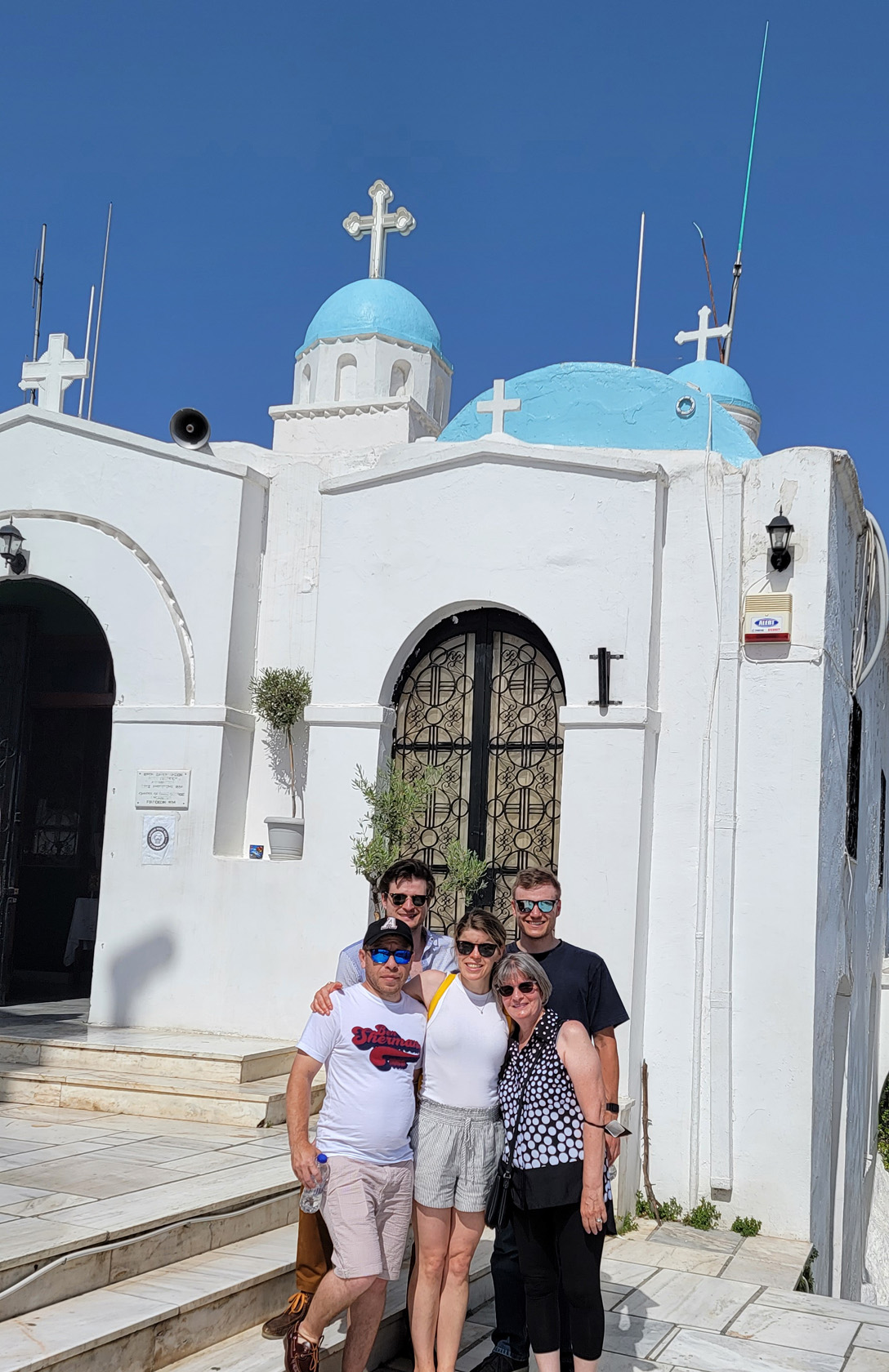
Athens – Lycabettus Hill – Church of Saint George – Group Photograph
You can also visit the church and then have a relaxing drink at one of the many bars on this hilltop.
The Acropolis
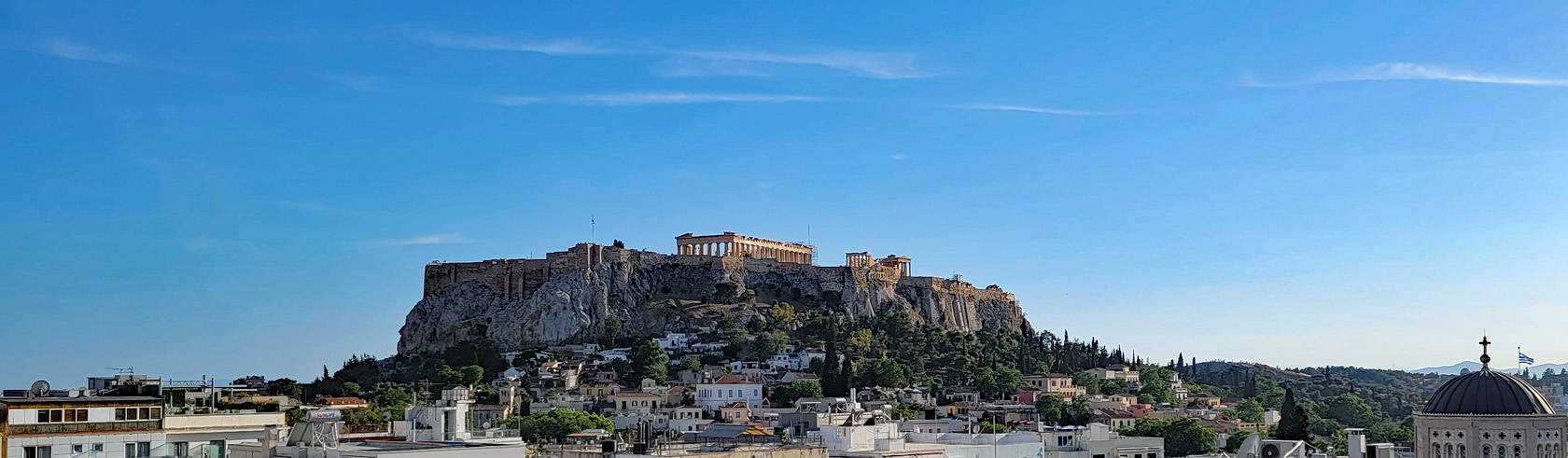
The Acropolis is a historic site with few equals. Perched atop a hill overlooking the rest of Athens, this great structure must have been magnificent in its day. Entering through the Beulé Gate, you ascend the Propylaea with the Temple of Athena Nike to your right.
The Acropolis – Parthenon – From Lower Athens
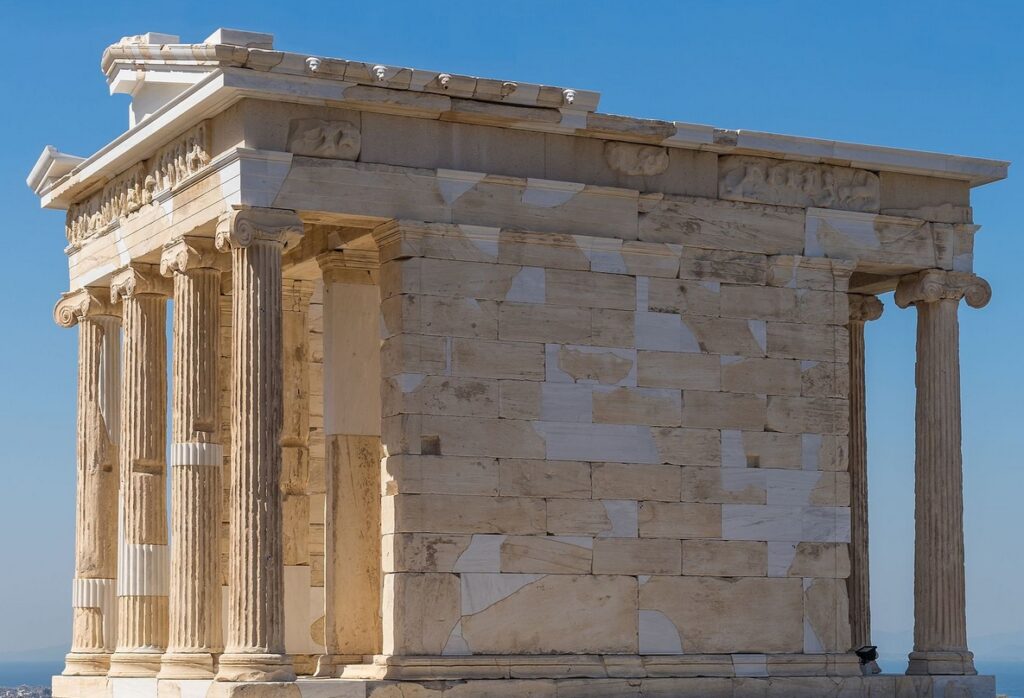
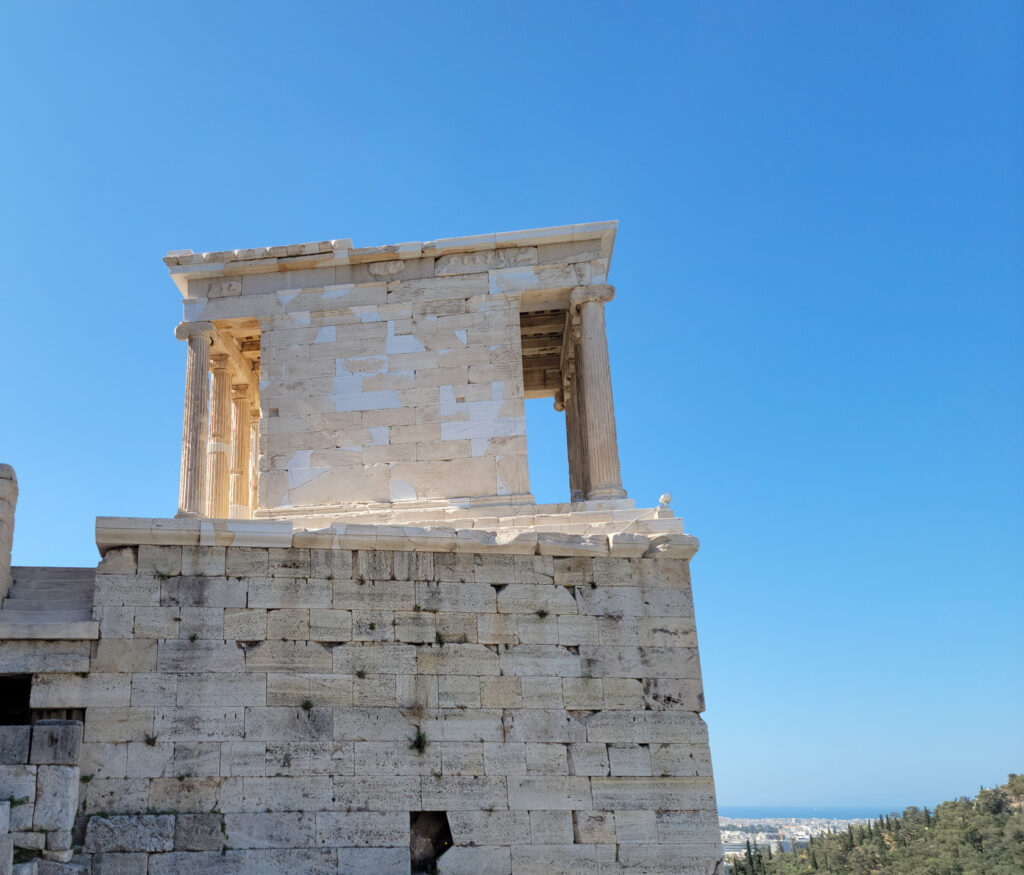
Temple of Athena Nike
The temple stands to the right of the entrance, almost as a sentinel to this very religious place. Situated to the right of the Propylaea, it is the most fully iconic temple in the Acropolis. Unfortunately what we see today is a reconstruction of what it must have looked like before the Turks destroyed the temple in 1686.
The Acropolis – Temple of Athena Nike
The Acropolis – From the Propylaea or Gatehouse – Temple of Athena Nike
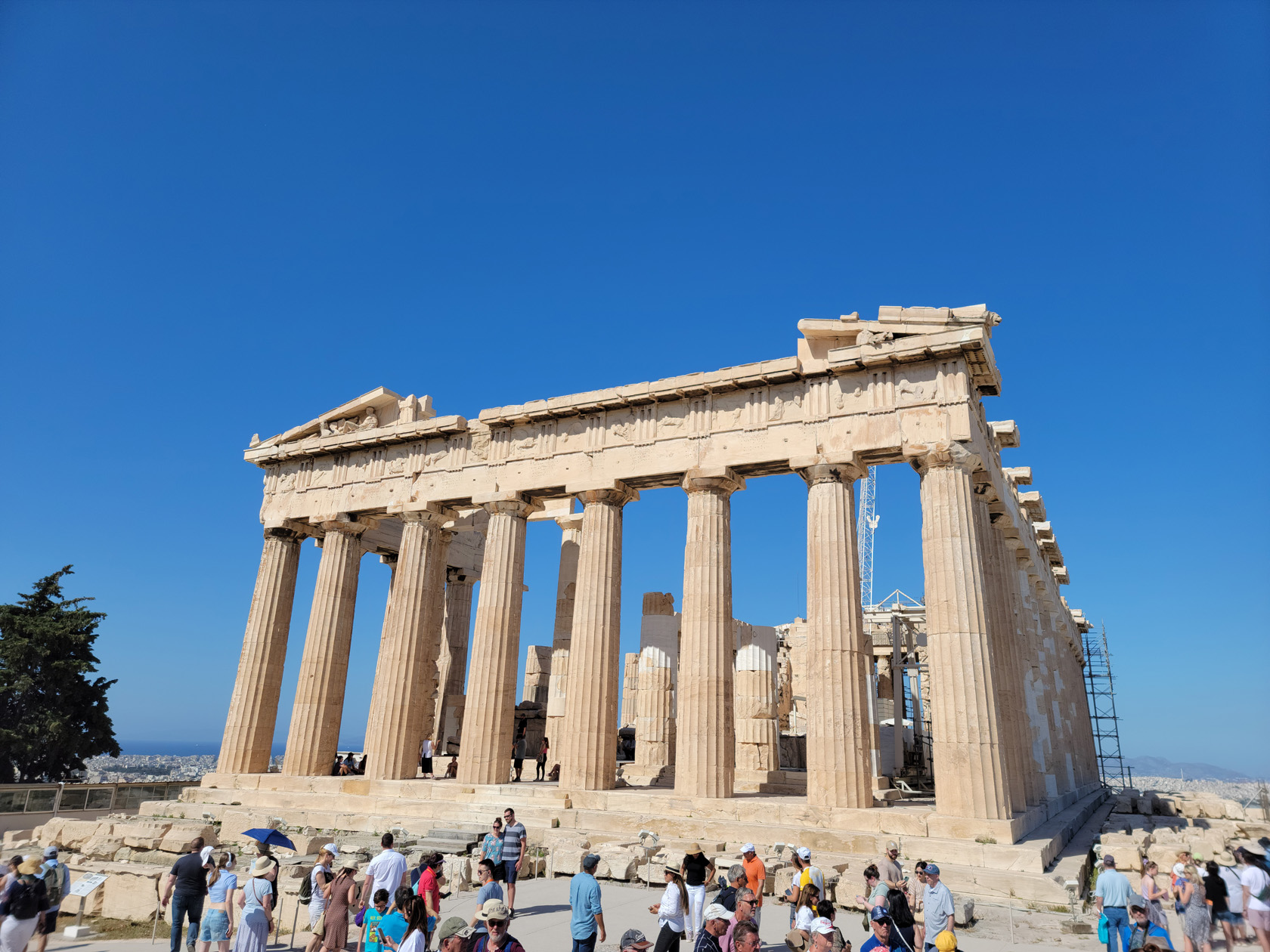
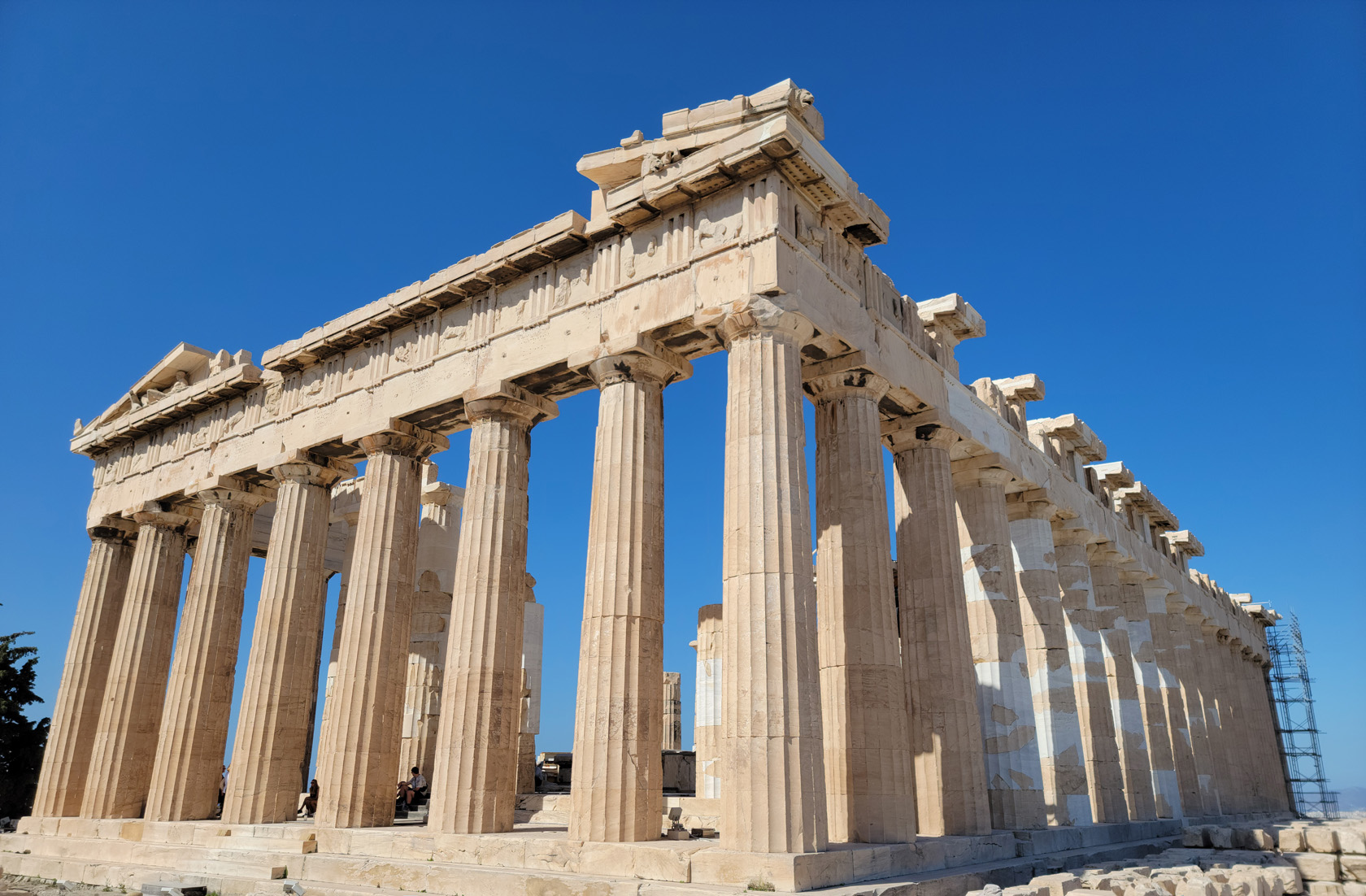
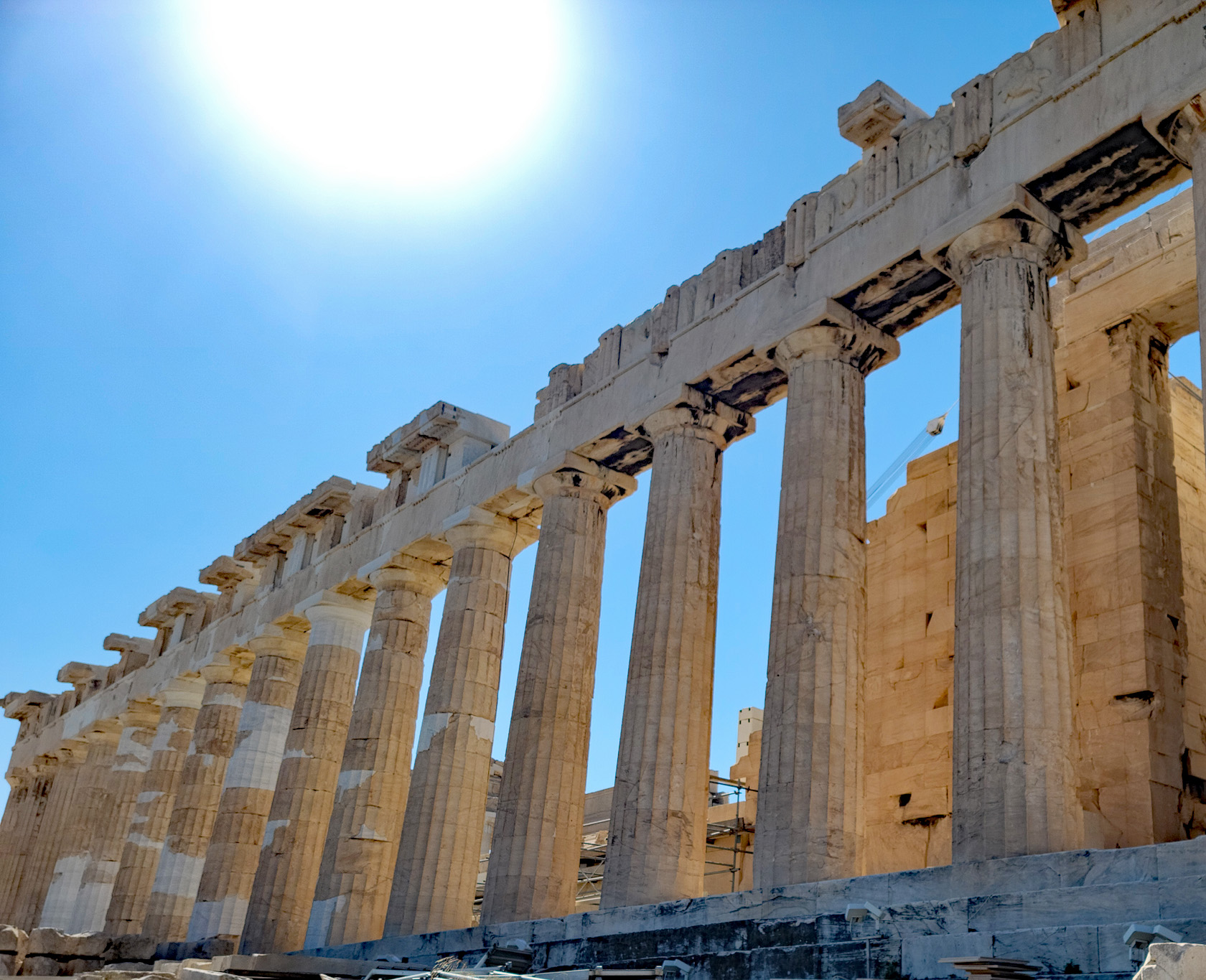
The Parthenon
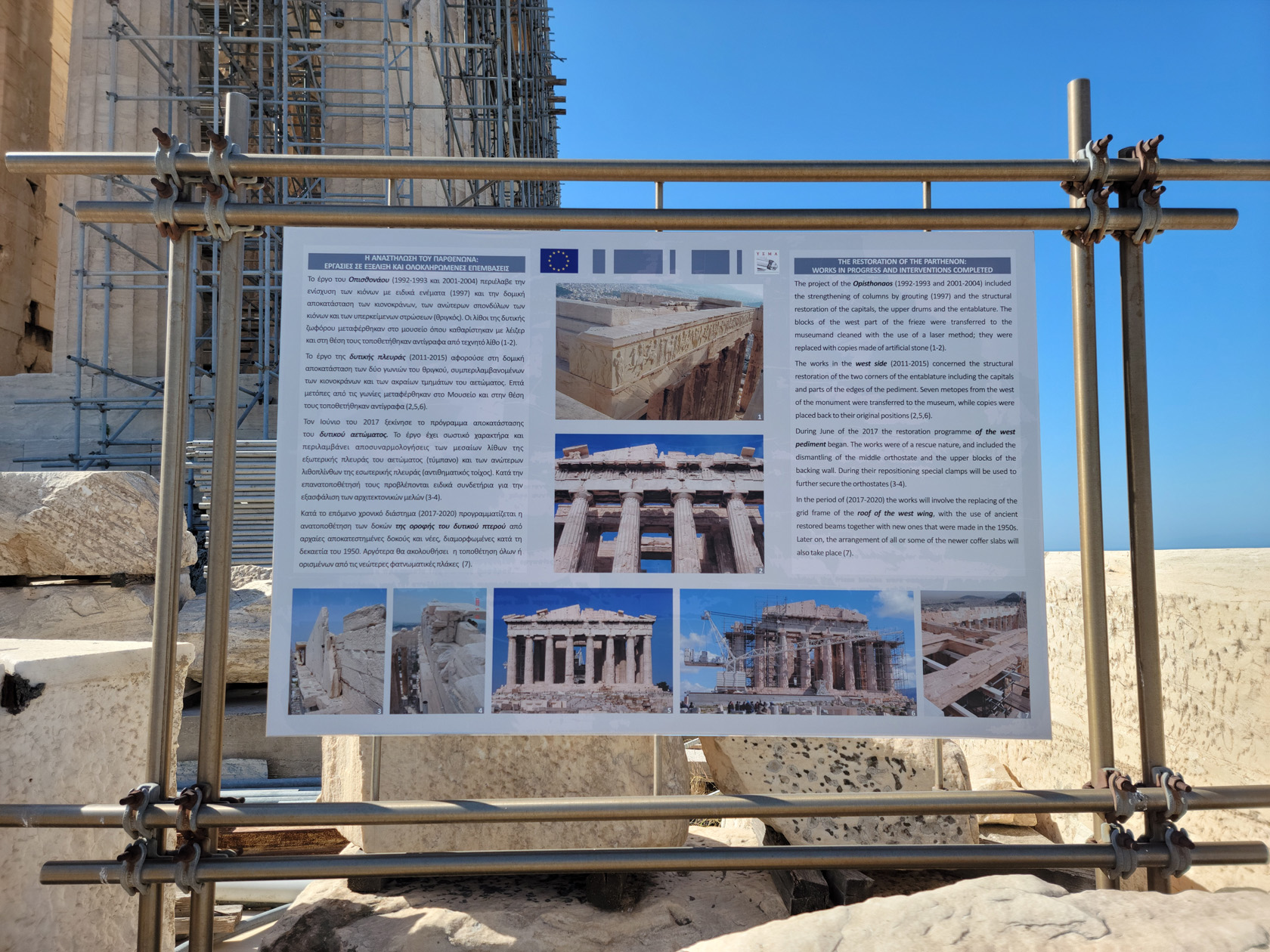
Under a constant state of preservation, repairs and reconstruction the Parthenon is well signed and for the most part well protected from the tourists. It is an impressive structure, when placed behind the backdrop of history, being built more than 2500 years ago.
The Acropolis – Parthenon
The Acropolis – Parthenon
The Parthenon
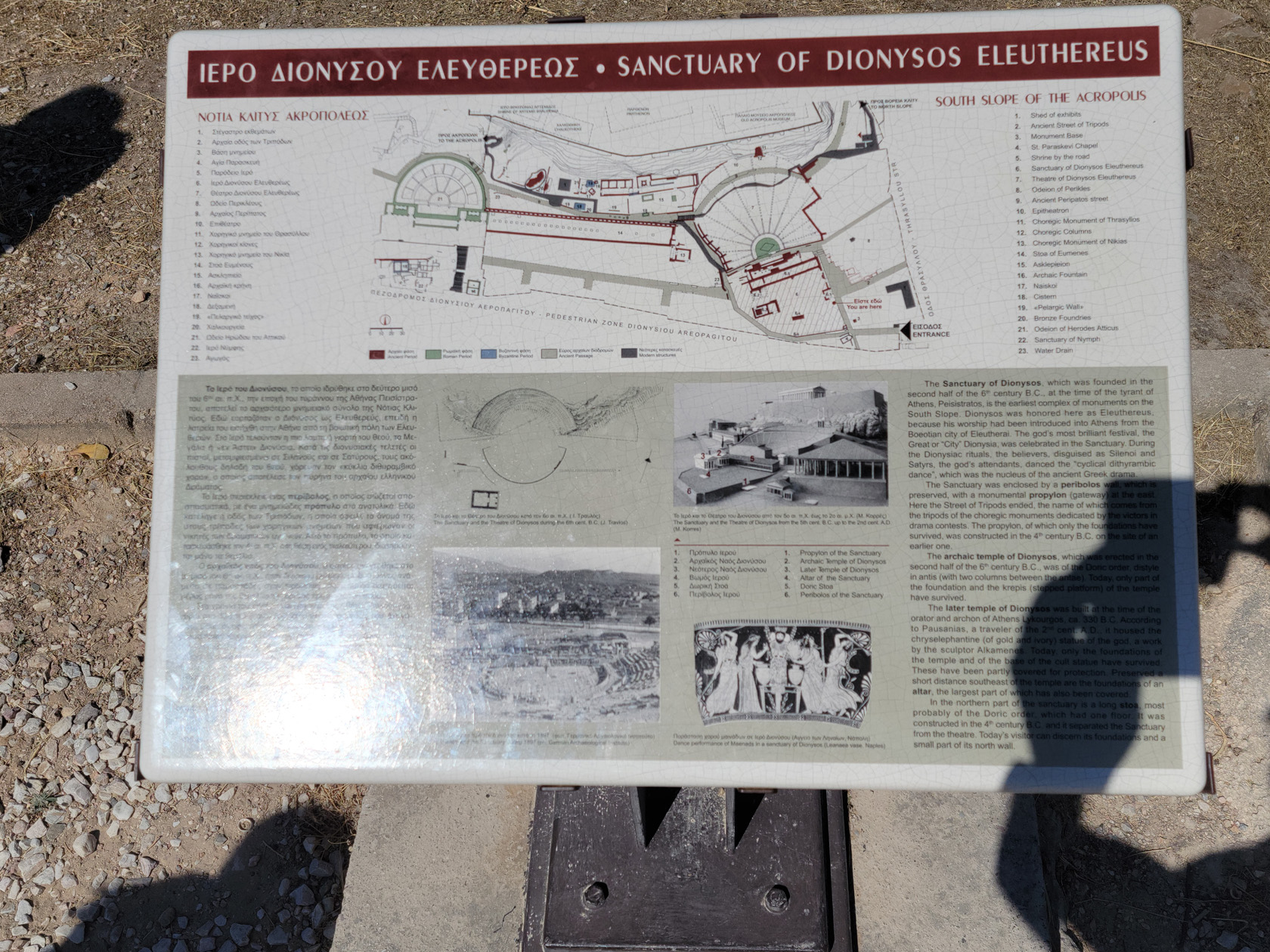
There are a few additional points of interest below the Acropolis, but no less important.
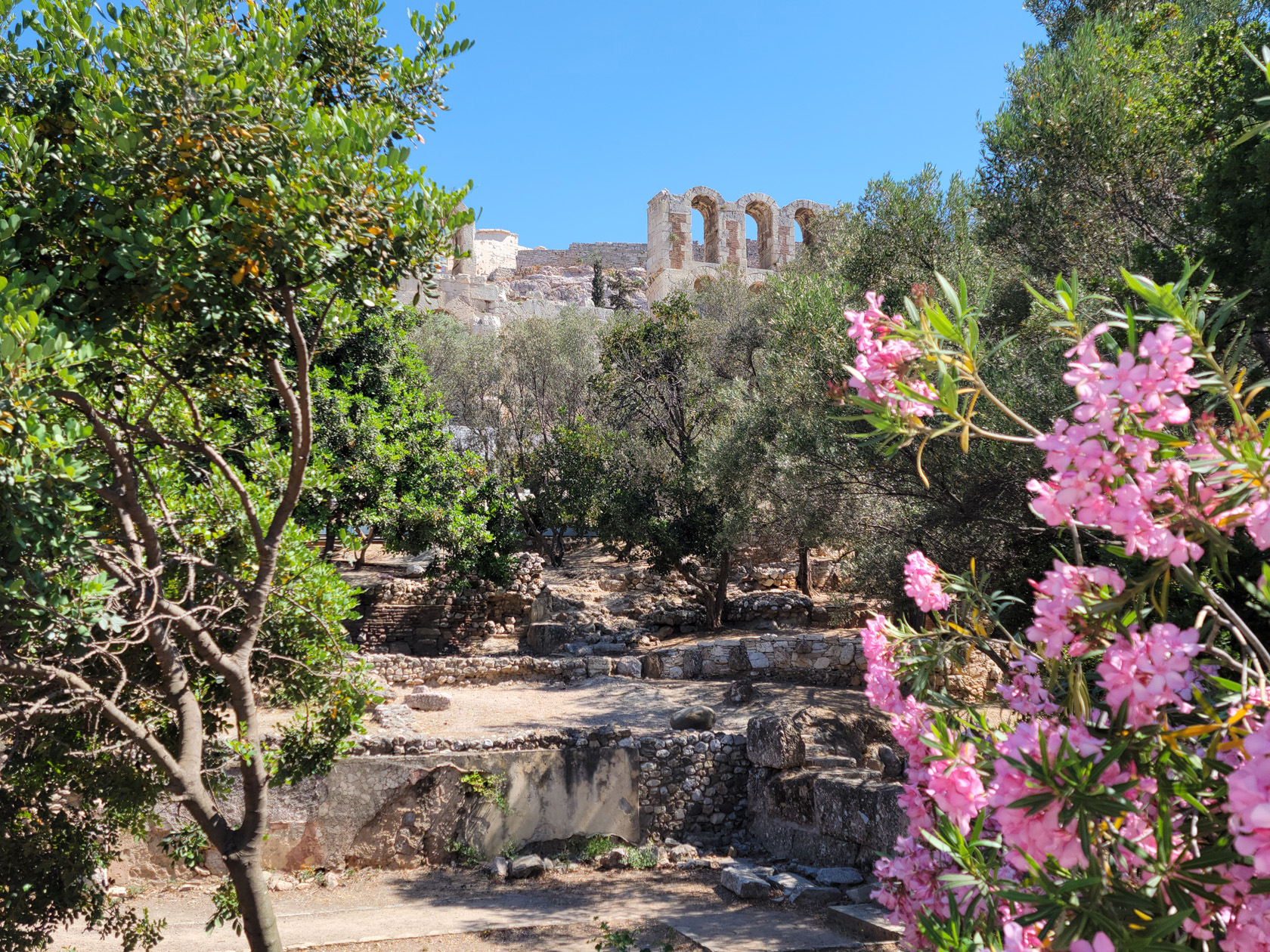
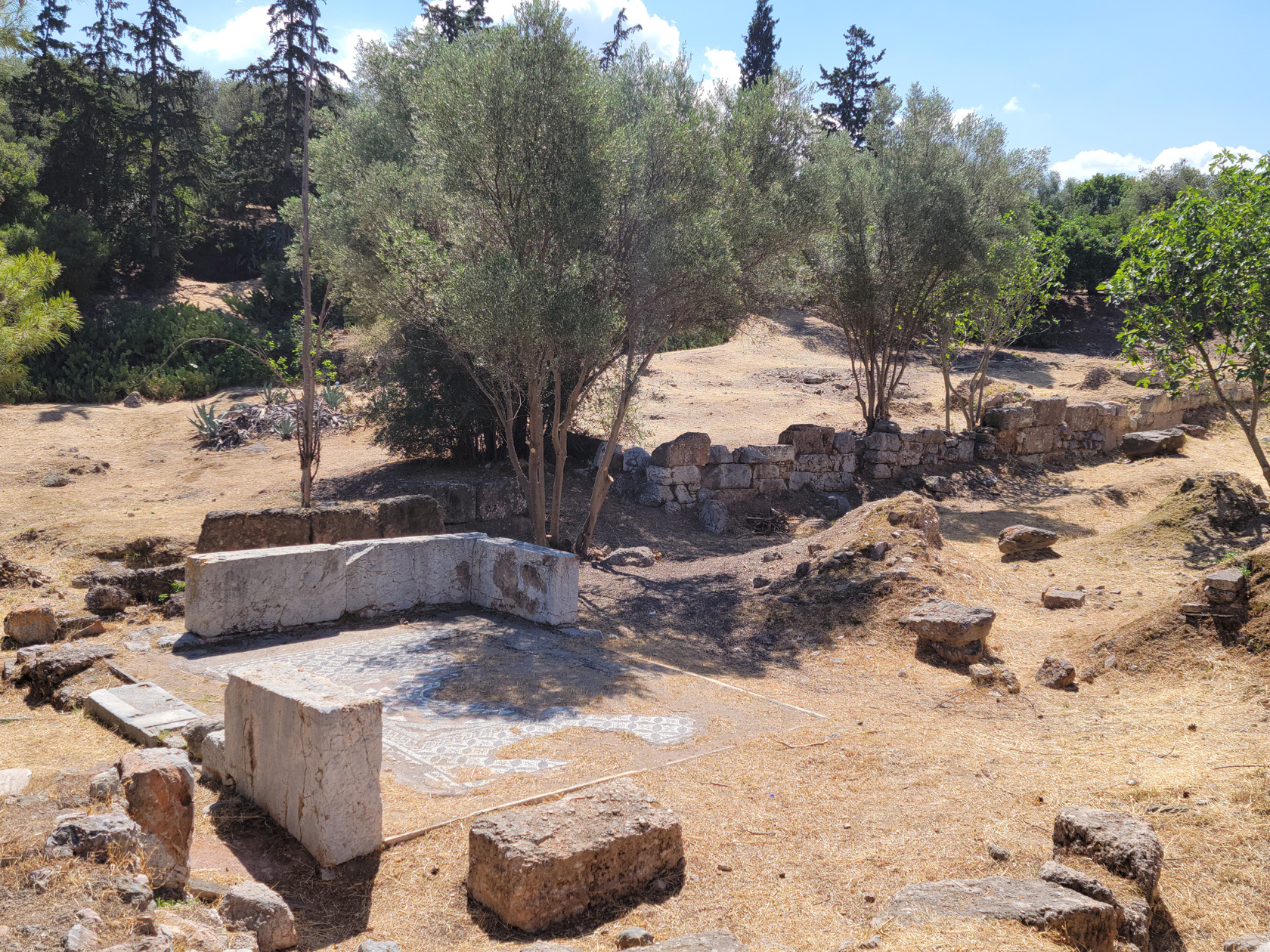
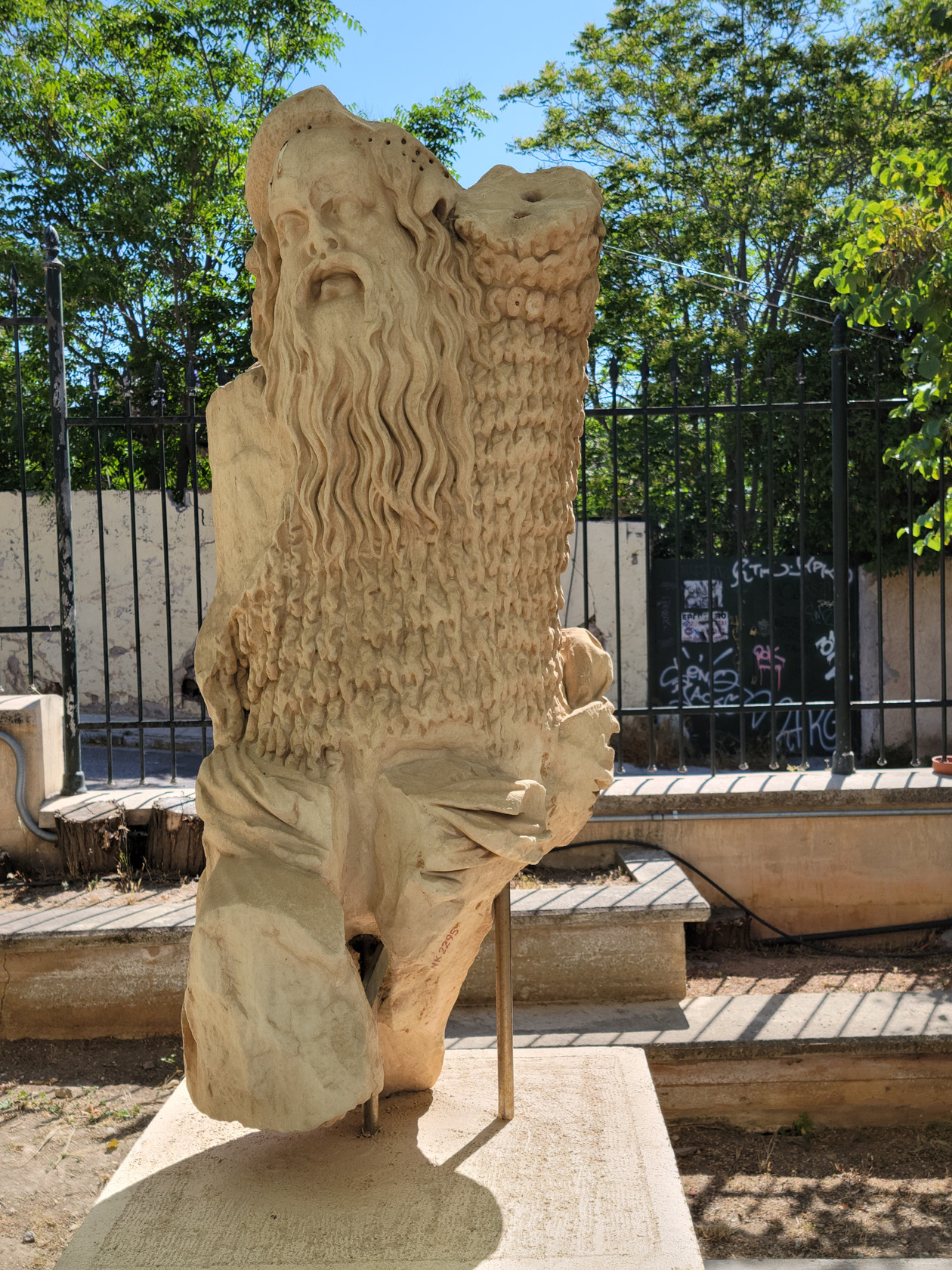
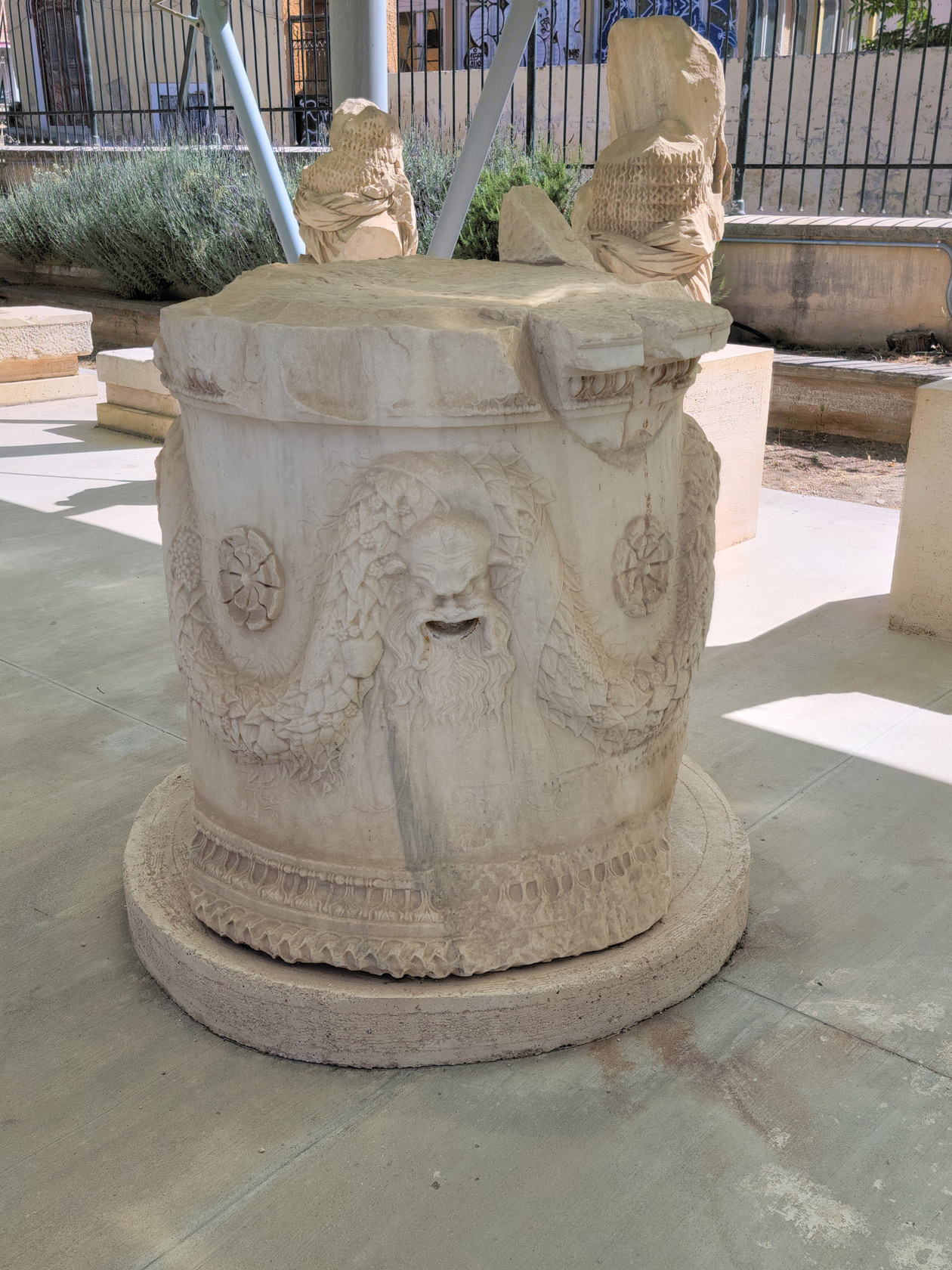
Sanctuary of Dionysos Eleuthereus
The Acropolis Museum – Area of the Dörpfeld Excavations
The Acropolis Museum – Area of the Dörpfeld Excavations
The Acropolis Museum – Large Statue
The Acropolis Museum – Large Statue
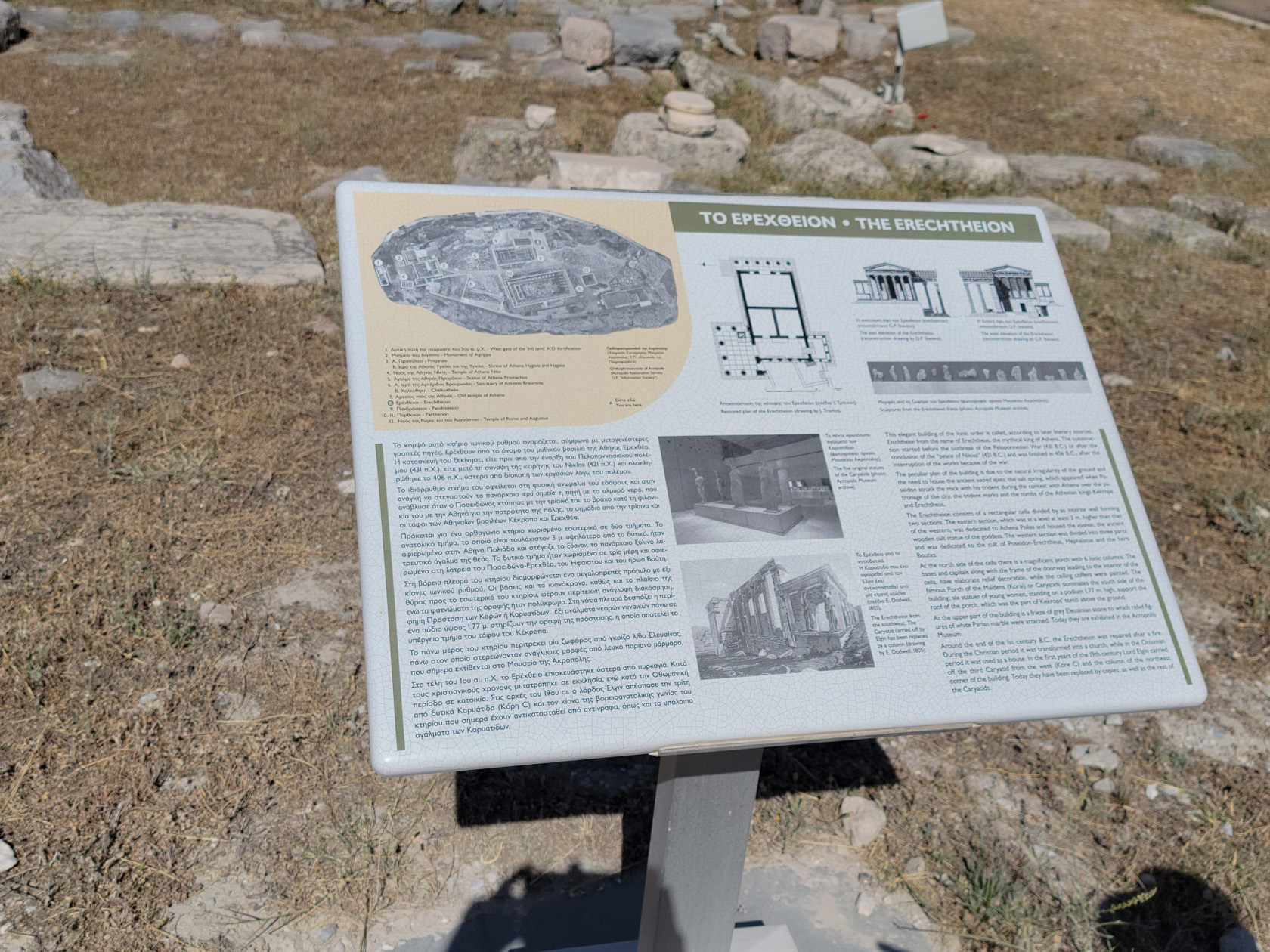
The Erechtheion
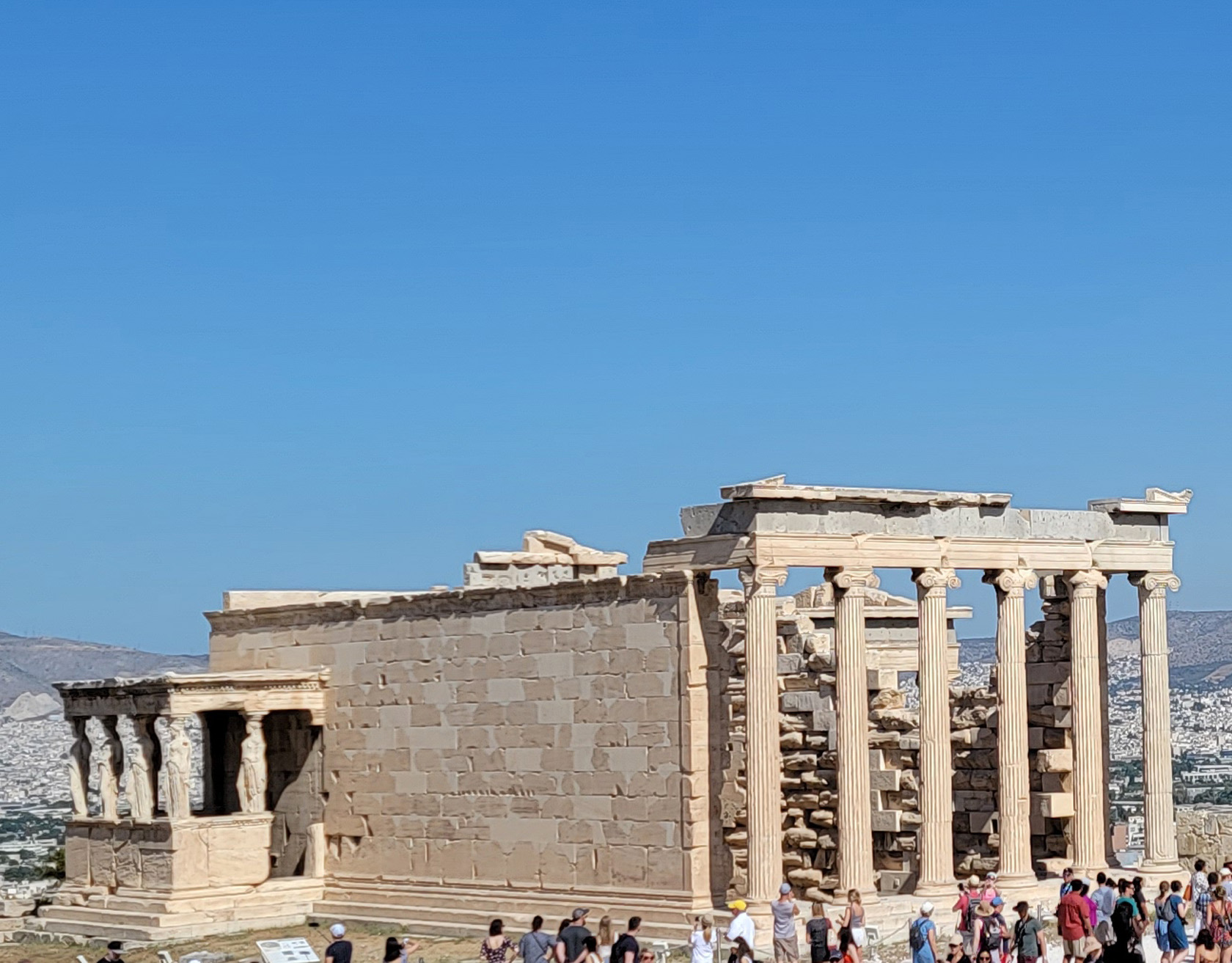
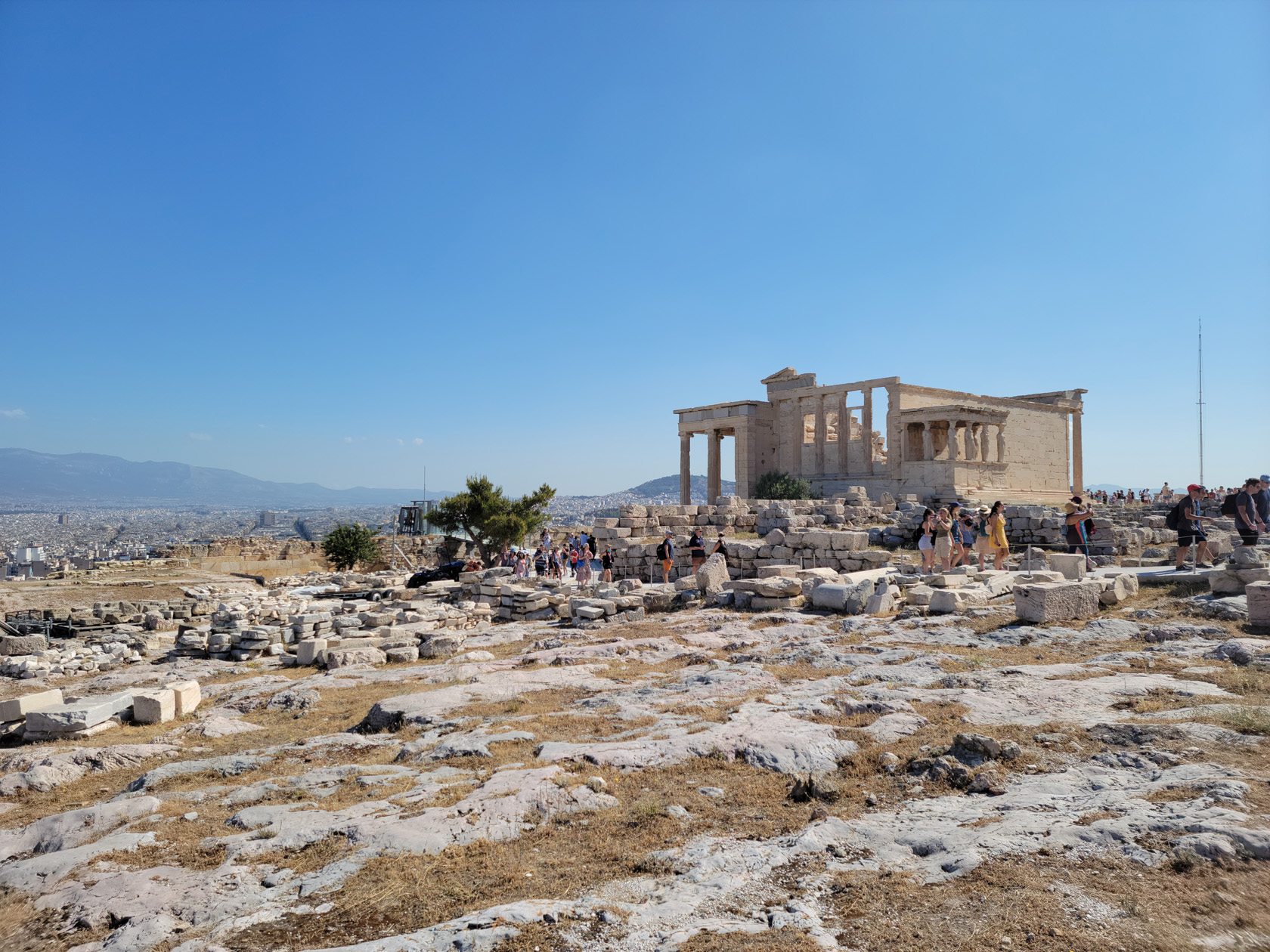
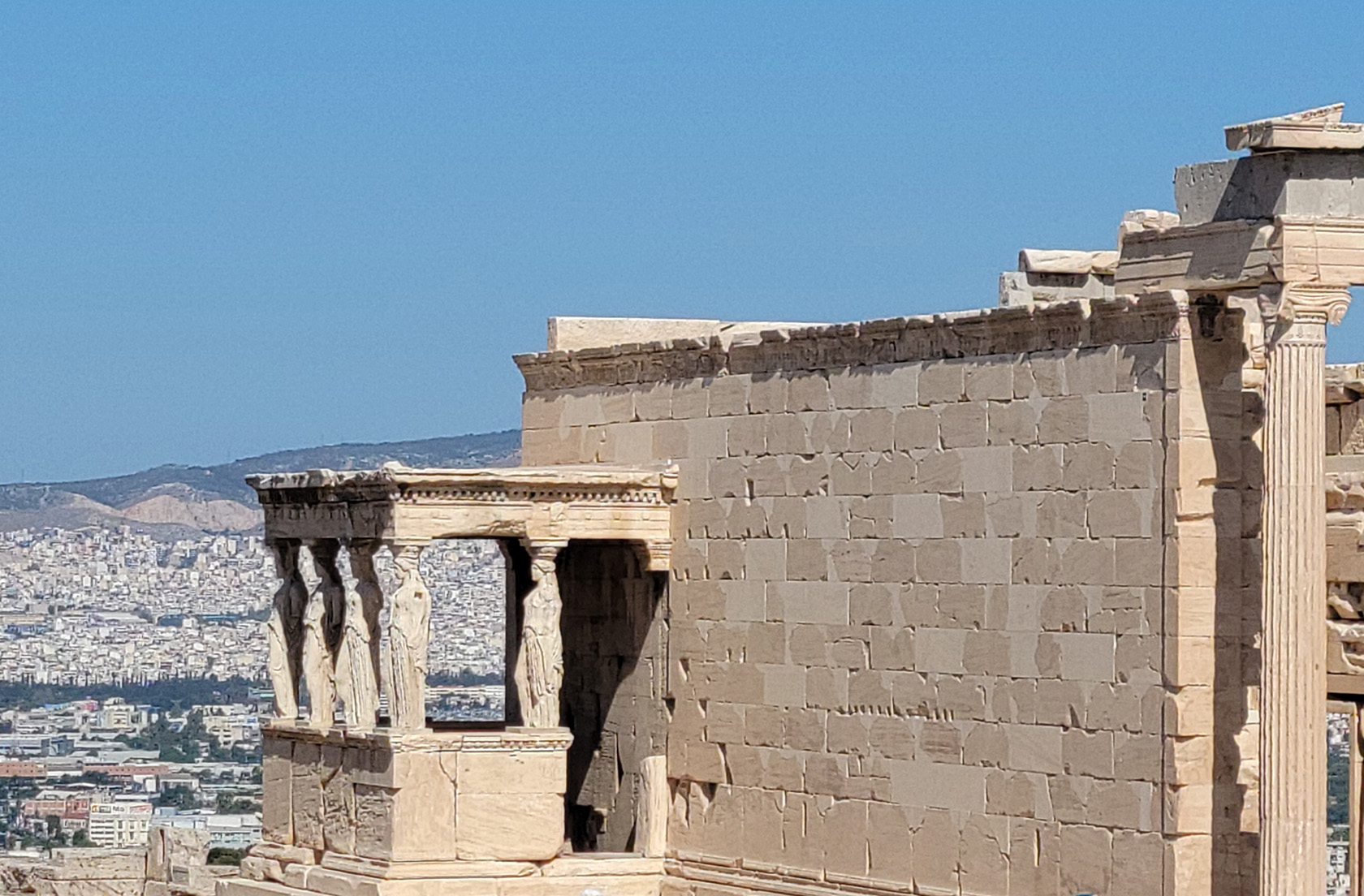
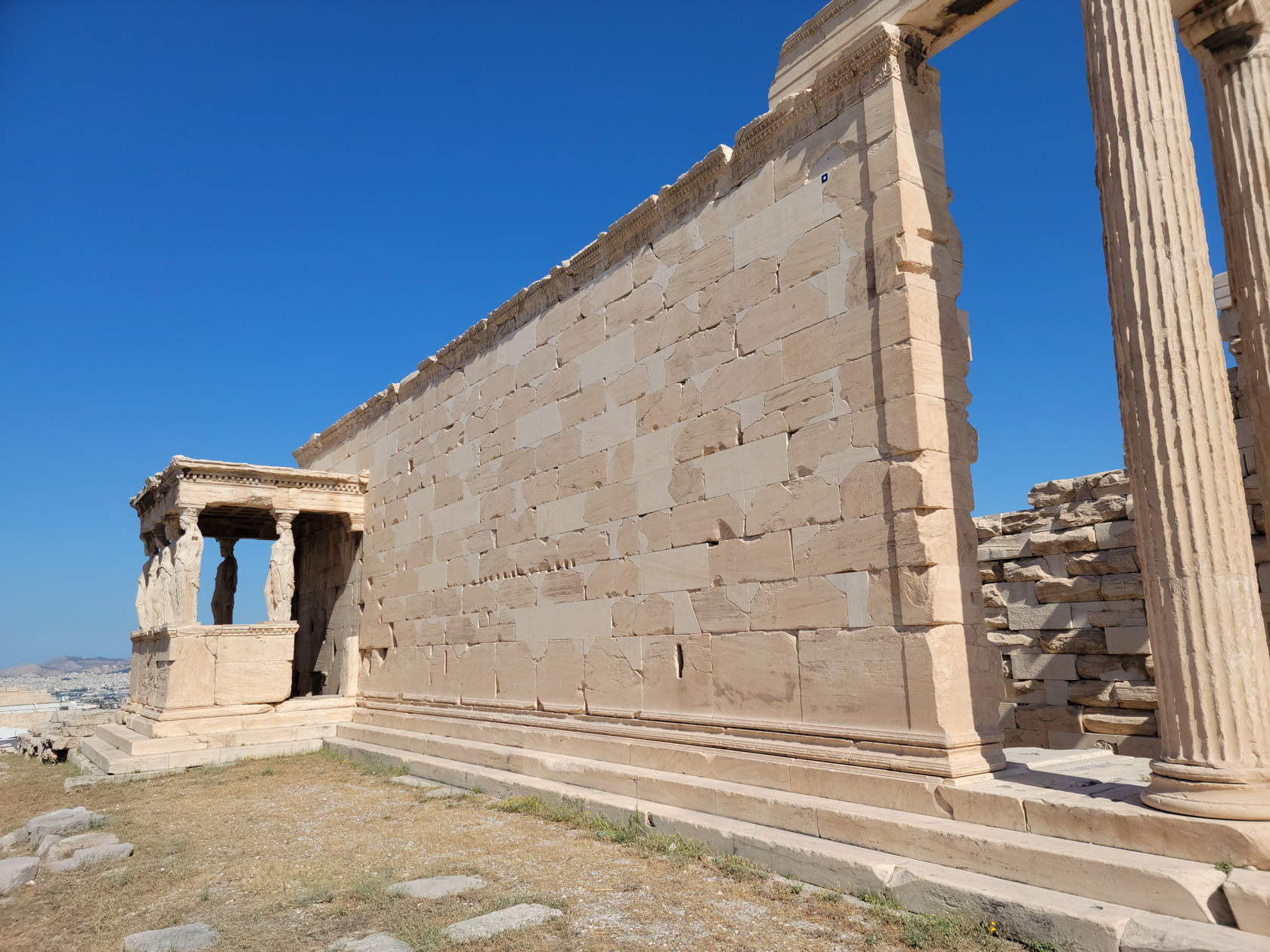
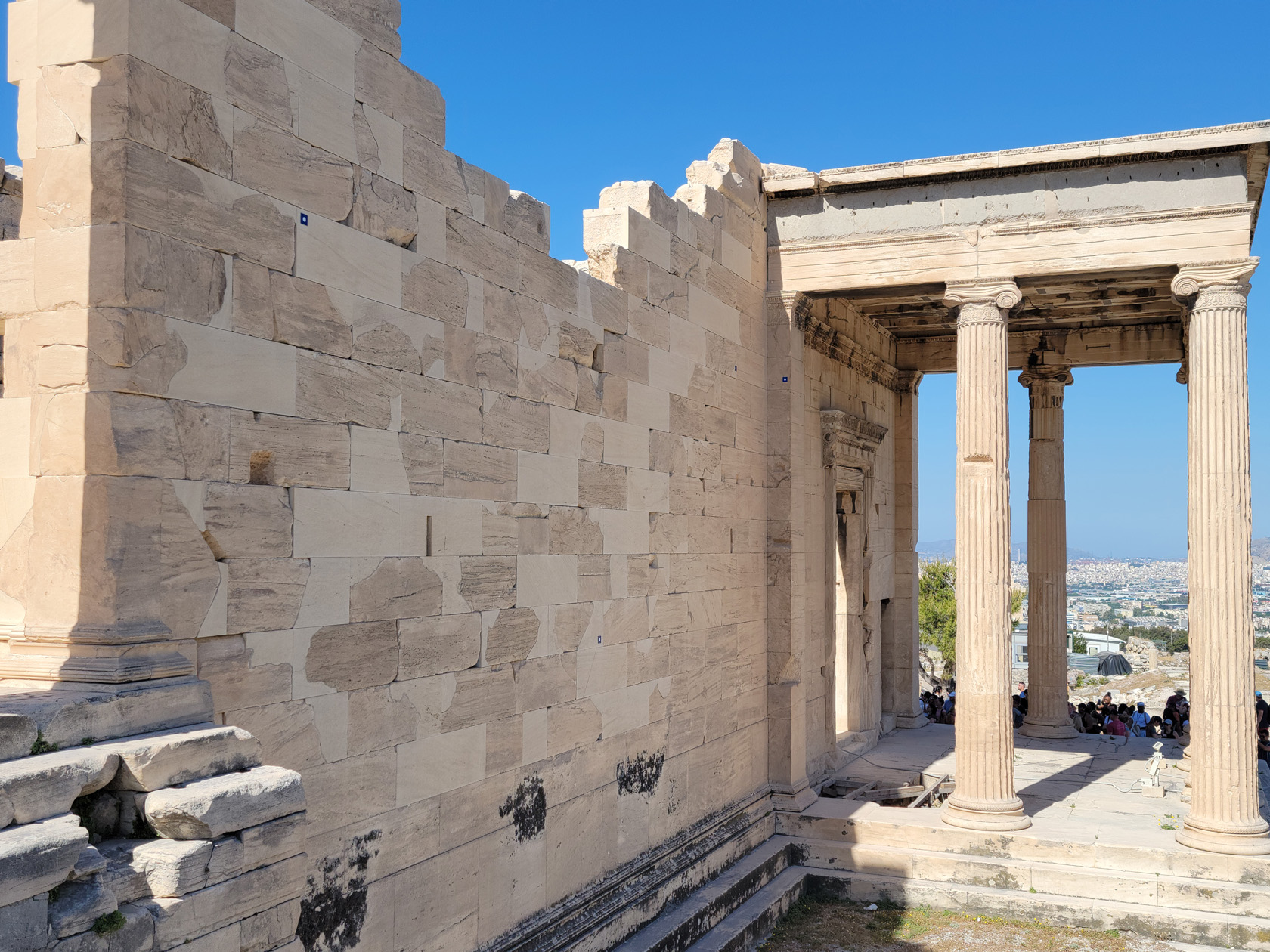
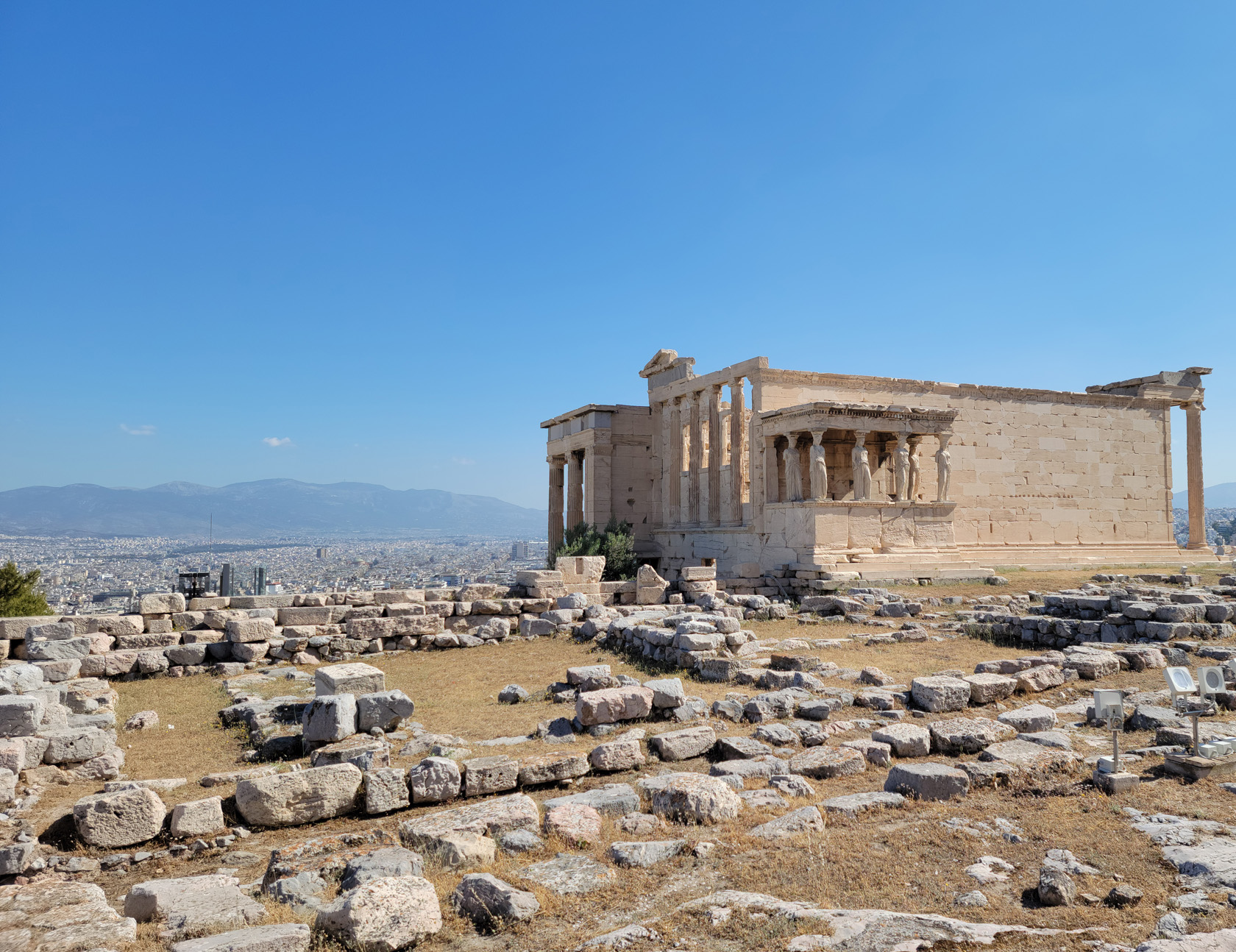
My favorite is the Erechtheion and the Porch of the Maidens, also know as the Caryatid Porch. It is one of the only, if not few, buildings in the Acropolis that does not have a symmetrical architecture. It is theorized this either had to do with the numerous cults that built the structure, or the uneven ground it was built on, making a classic Greek structure impossible.
The Erechtheion and Porch of Maidens
The Acropolis – The Erechtheion – Porch of Maidens
The Erechtheion and Porch of Maidens
The Erechtheion and Porch of Maidens
The Erechtheion and Porch of Maidens
The Erechtheion and Porch of Maidens
From the southeast side the asymmetry is easily seen, with the Porch of the Maidens displaying its most iconic feature.
The Erechtheion – Porch of Maidens – Southeast View
The Agora
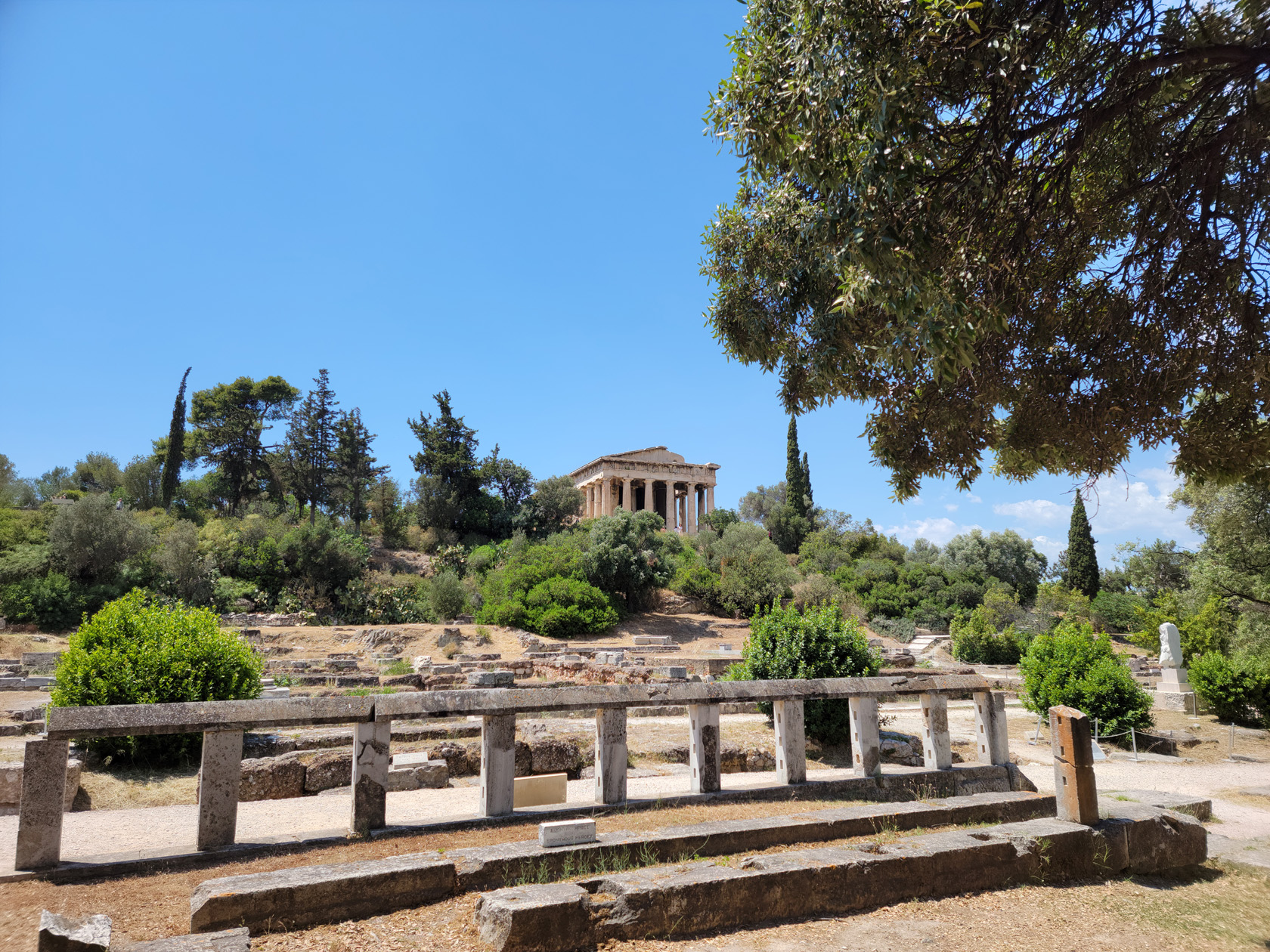
Not far from the slopes of the Acropolis is the Agora, or the central meeting place for all ancient Athenians. Primarily of religious significance, but also used for business, politics and artisans. The main street was called the Panathenaic Way, which ran through the Agora to the main gate of Athens.
Grounds of the Agora, Looking at the Temple of Hephaestus
Grounds of the Agora
Looking at the Agora and Stoa of Attalos
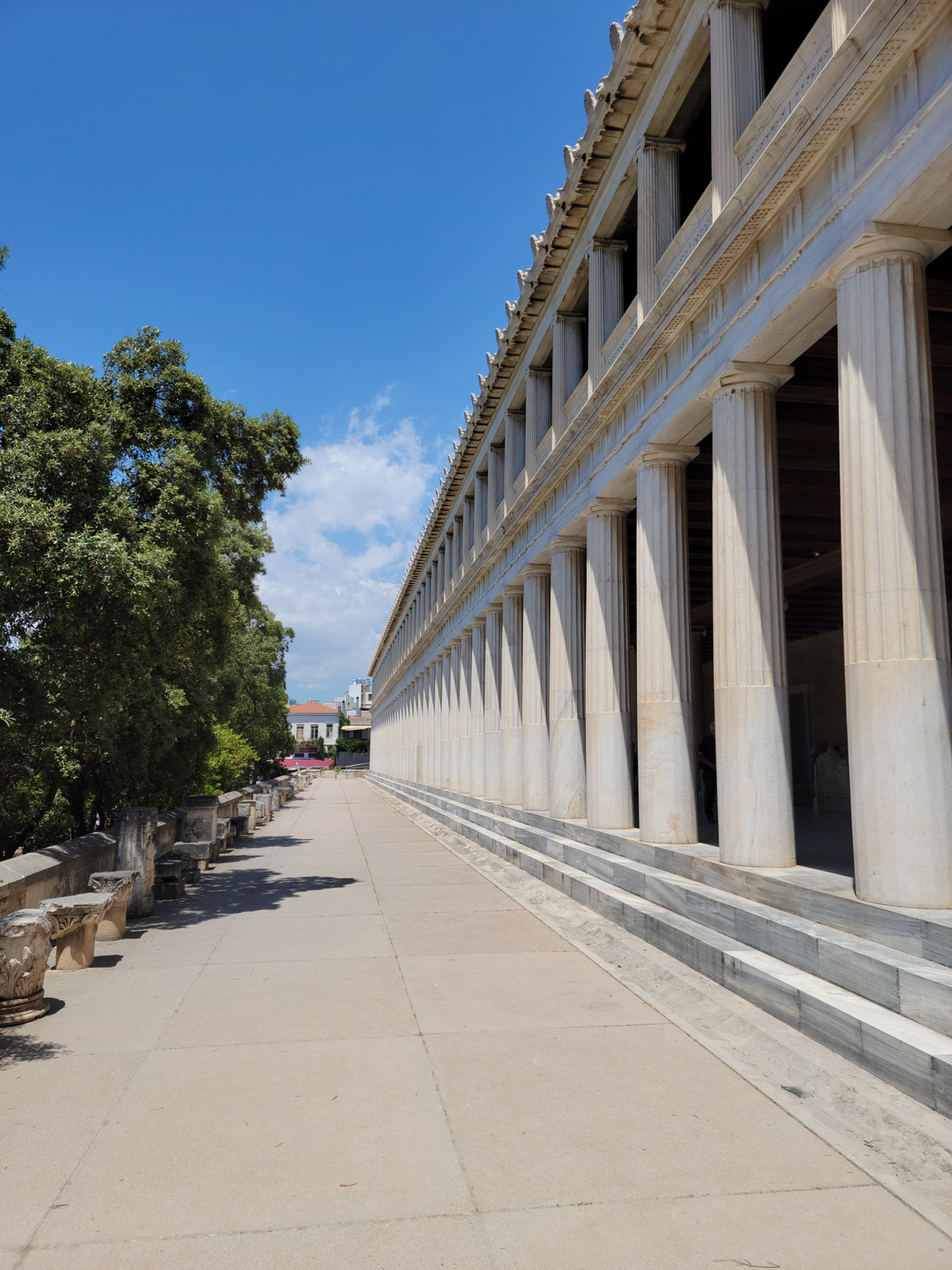
Stoa of Attalos
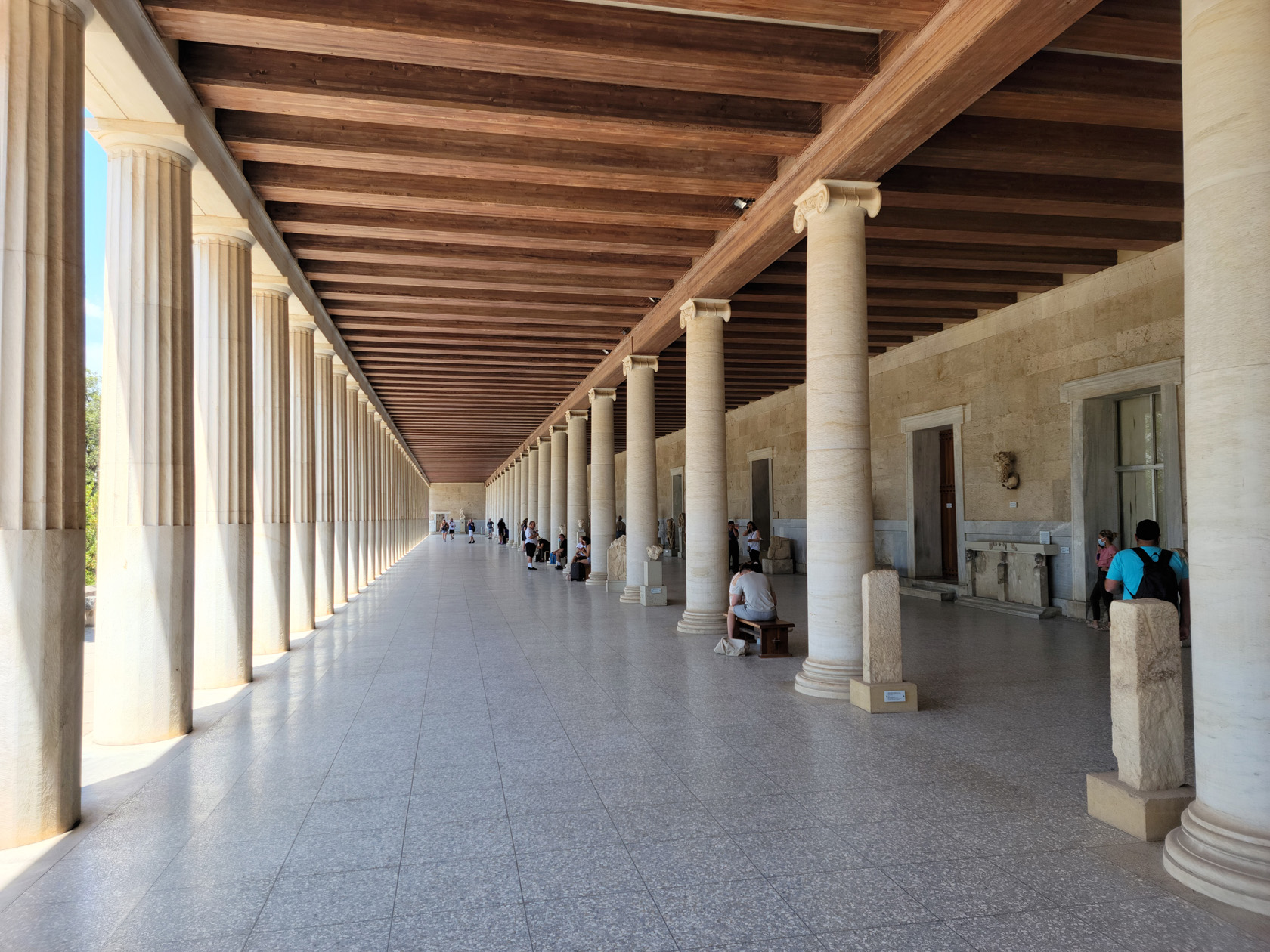
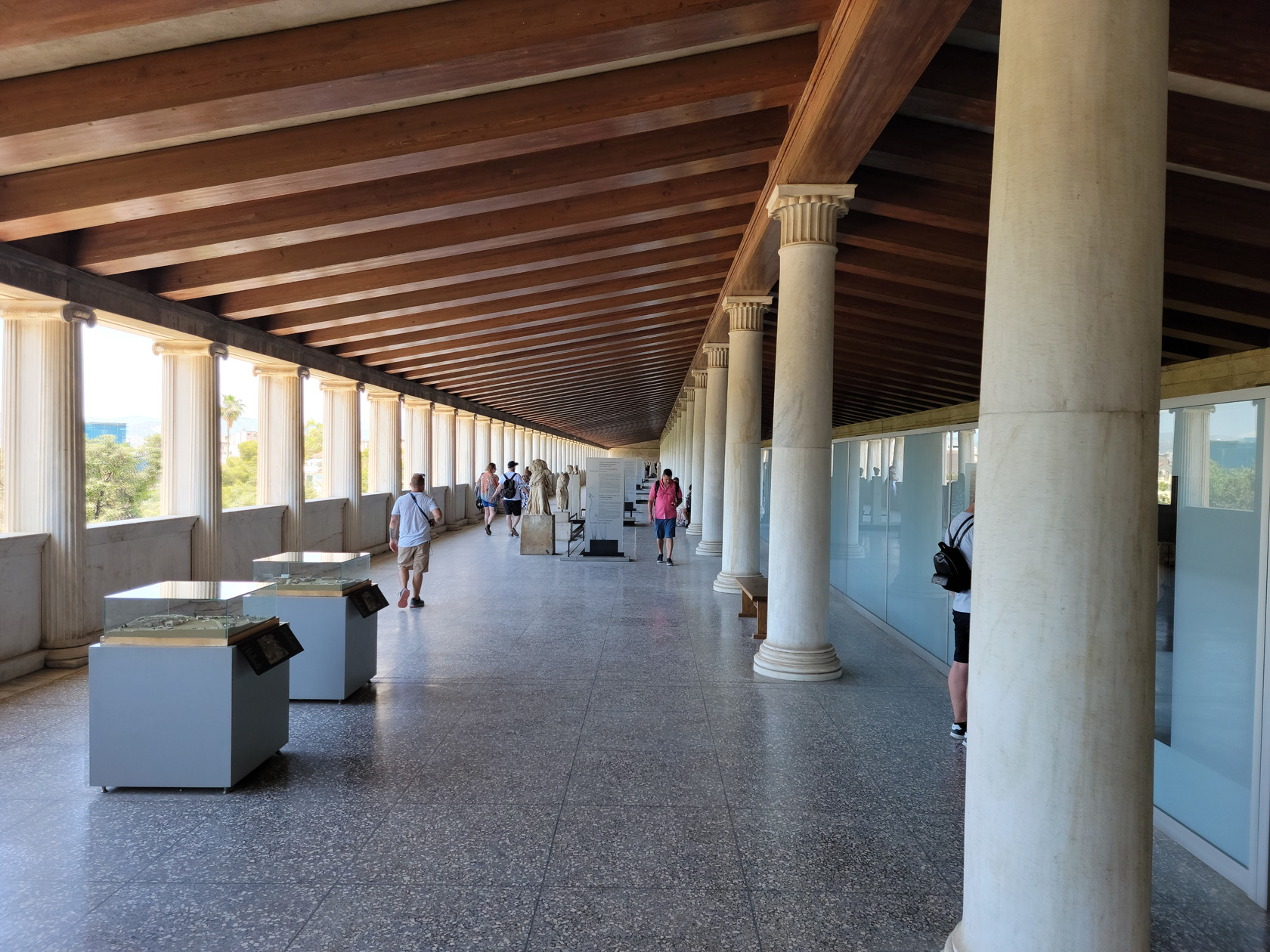
The Stoa of Attalos was central to the Agora and primarily used as a place to conduct business. Stoae are buildings constructed with a portico, as a defense against the sun and weather. It was reconstructed in the 1950s, using many of the original pieces, especially on the north side of the building, but reinforced in the basement area in order to be properly repurposed the building as a museum. Here is where the trades people, artisans and shop keepers could sell their wares and conduct business.
The Stoa of Attalos – The Facade
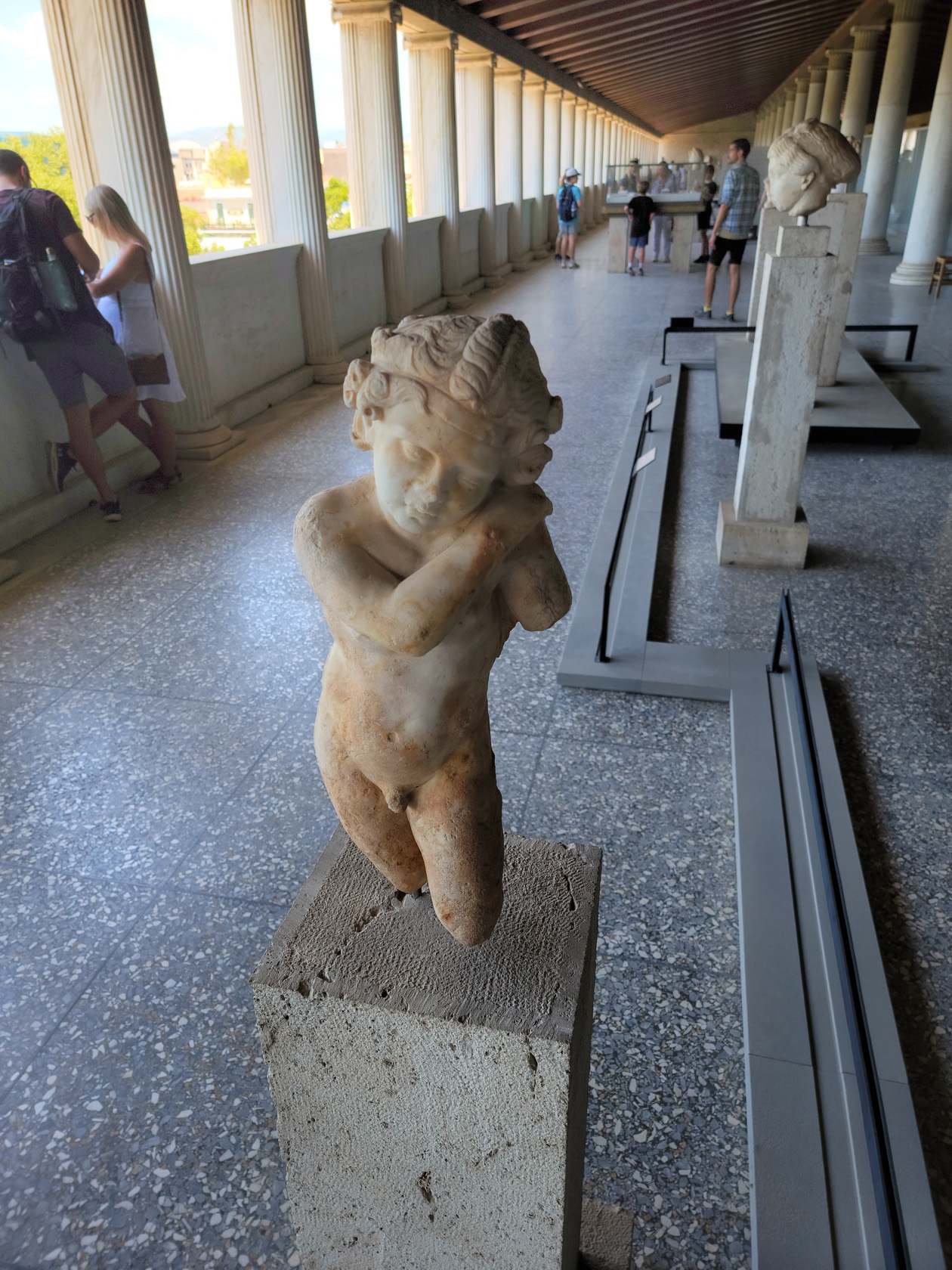
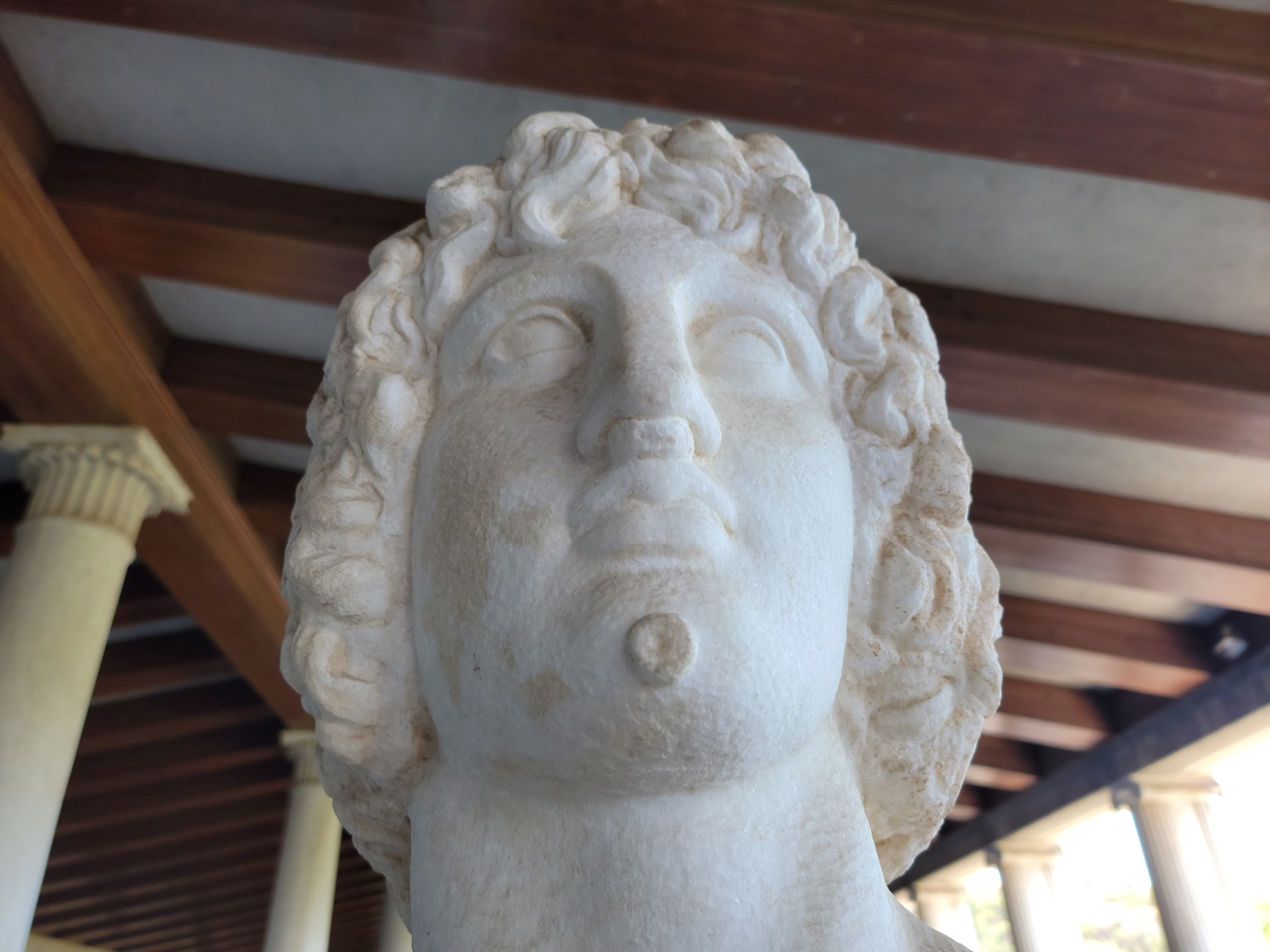
The portico serves as an outdoor museum, while the upstairs serves that same purpose, but provides that more indoor feeling. Many of the pieces are statues and busts of high ranking individuals in ancient Greek society.
The Stoa of Attalos – The Portico
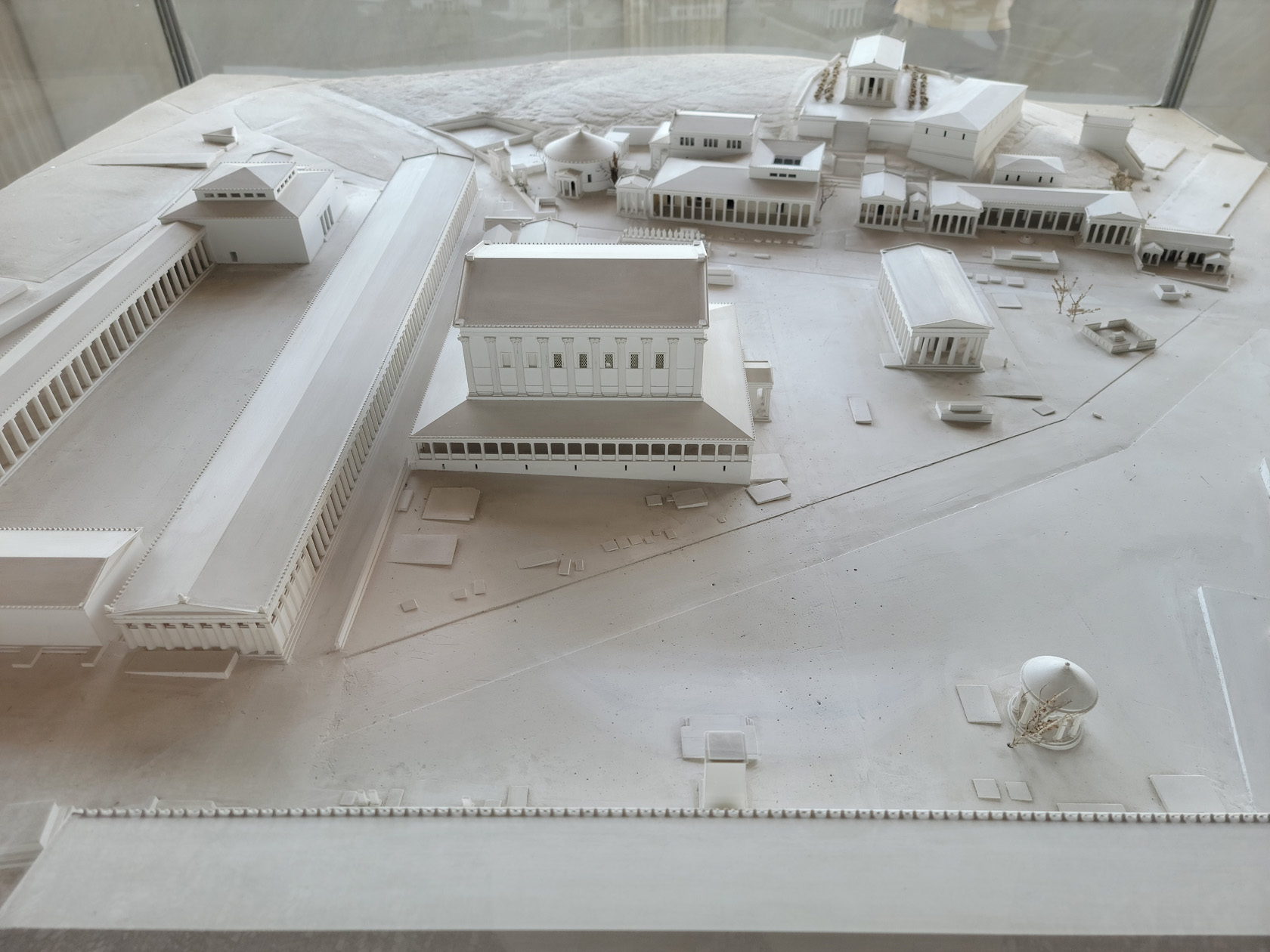
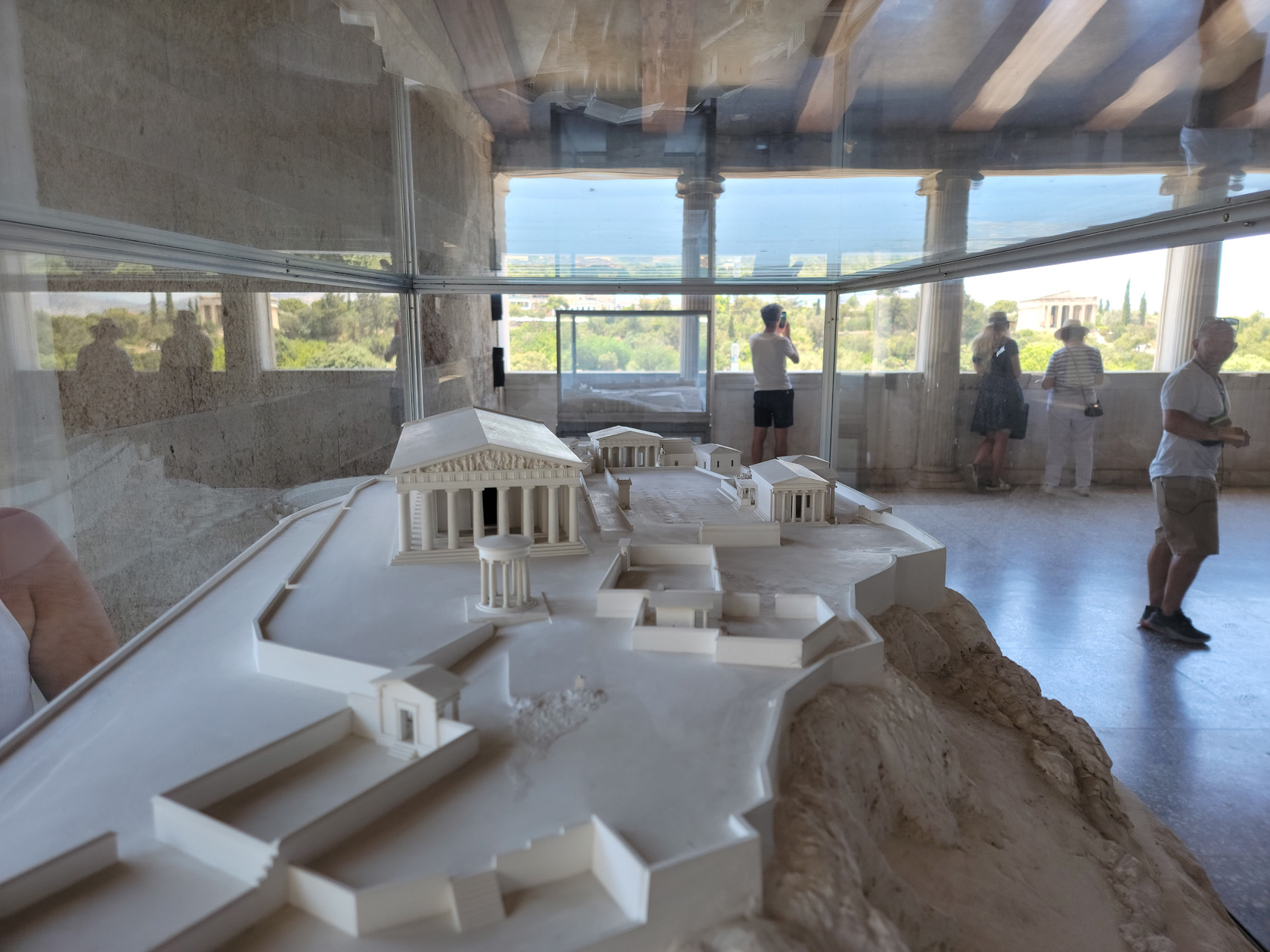
The Stoa of Attalos – Diorama of Buildings, the Agora and Temple
The Stoa of Attalos – Diorama of Buildings
The Stoa of Attalos – The Portico
The Stoa of Attalos – Museum Works
The Stoa of Attalos – Head of Alexander
The Temple of Hephaestus
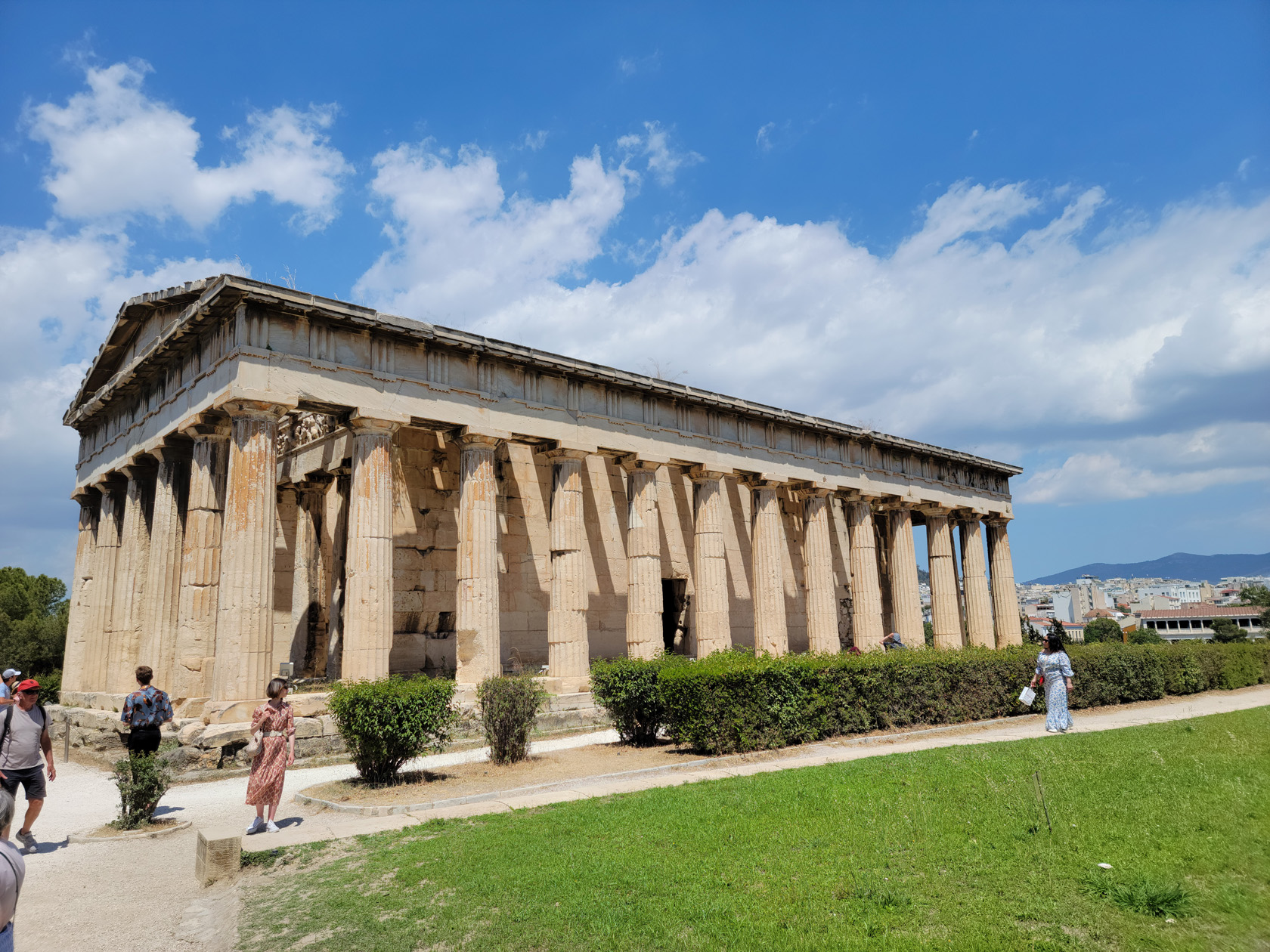
Probably the most well preserved structure on the grounds of the Agora, even parts of the roof are still intact, is the Temple of Hephaestus. Considering its age and that fact that it was never destroyed during a war or plundered for building materials, it stands nimbly on the grounds of the Agora as a testament to Greek architecture.
Grounds of the Agora – The Temple of Hephaestus
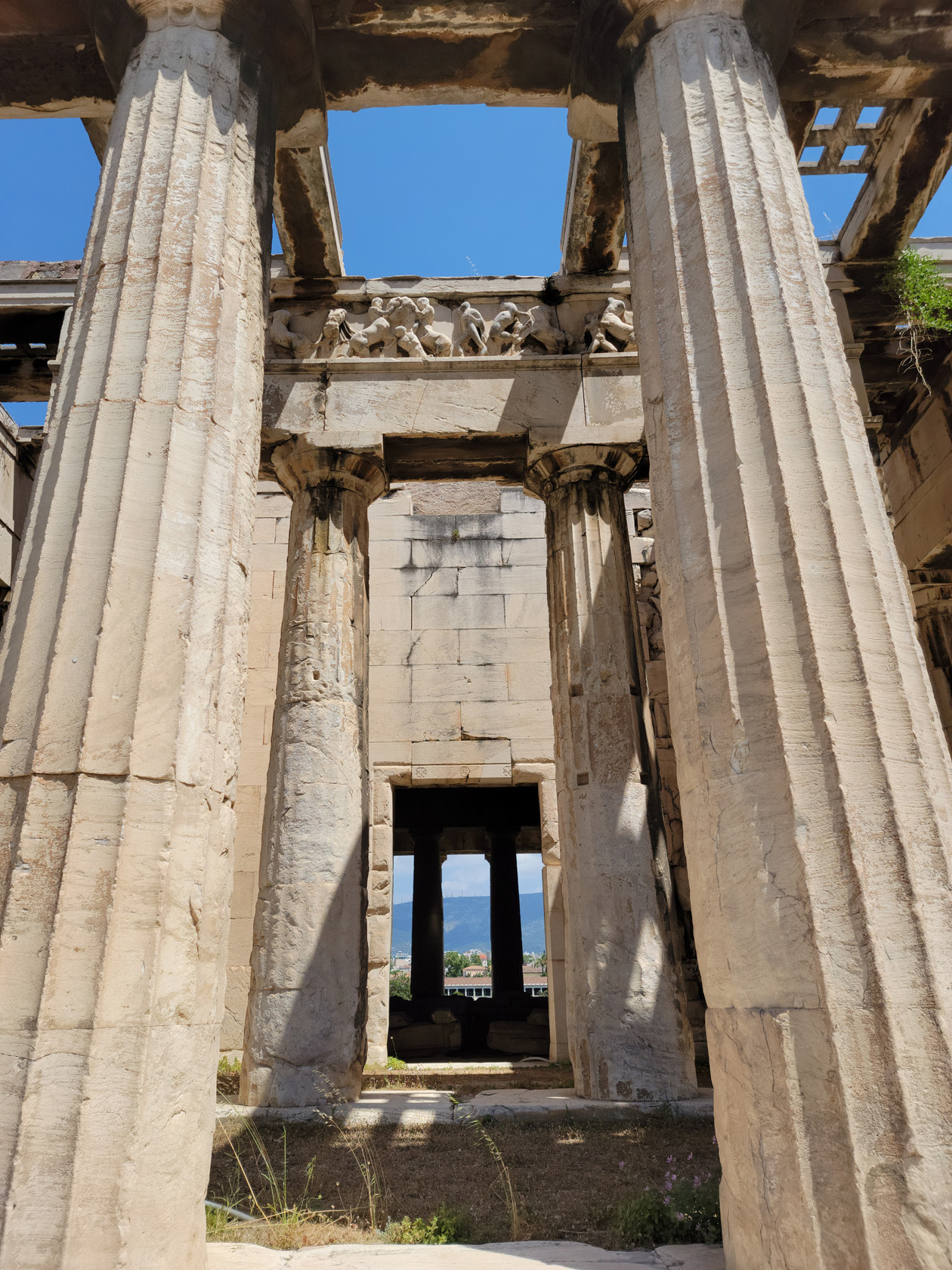
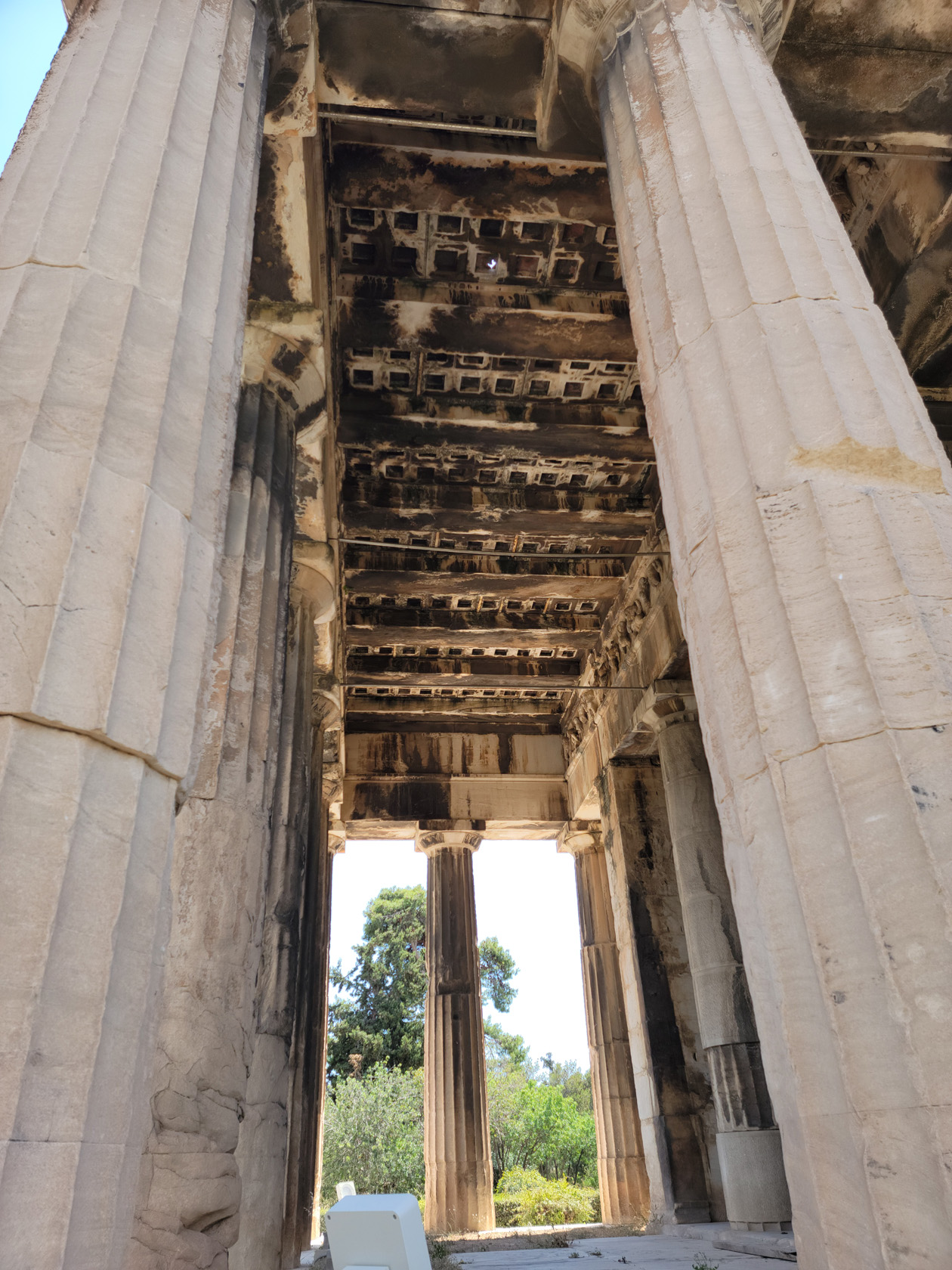
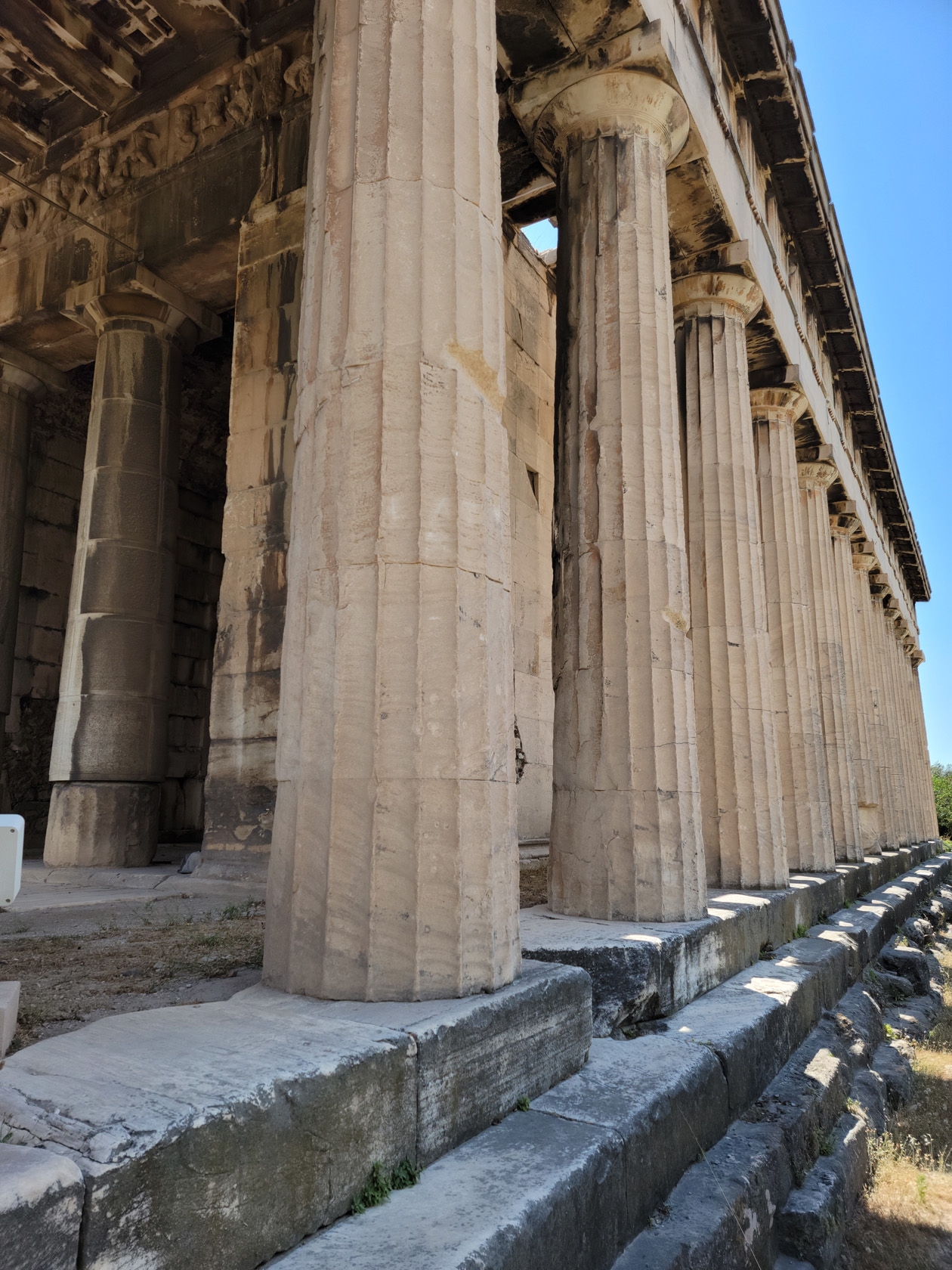
Walking around the structure one can easily take photographs of its interior and columns.
The Temple of Hephaestus
The Temple of Hephaestus – Columns and Inside Details
The Temple of Hephaestus – Ceiling
The Temple of Hephaestus – Columns
The Odeon of Agrippa
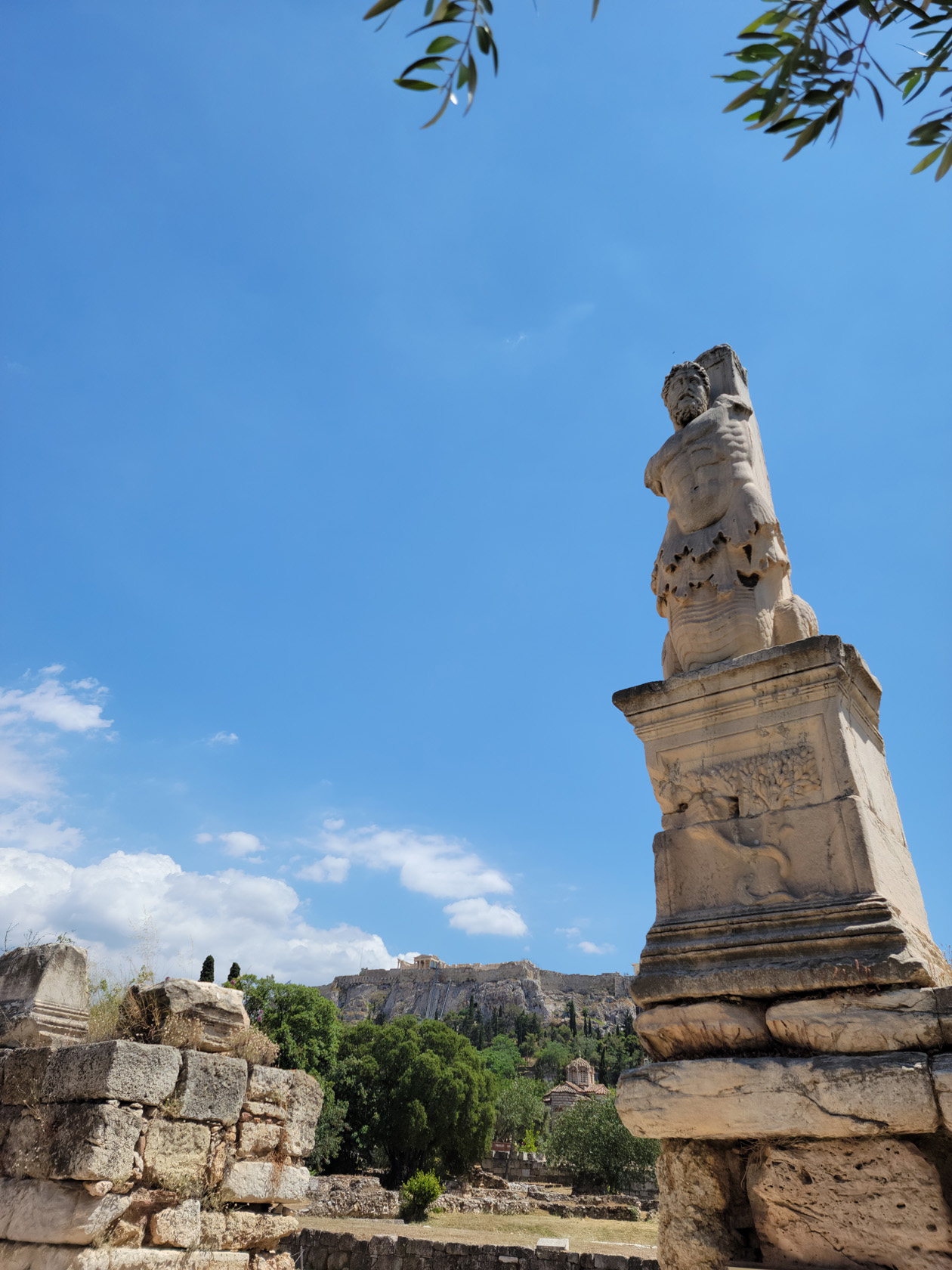
Unfortunately not much of the Odeon of Agrippa structure still exists, with the exception of its magnificent columns. Built in relief, the four columns depicted giants and tritons, all of which are heavily damaged. Initially designed and built as a hall to hold performances in, its structure was not designed like other buildings to endure the ages. It fell into ruin fairly quickly and was rebuilt at some point in the second century and repurposed later as a lecture hall, only to be destroyed by a Herulian raid in 267 CE.
Statues at the entrance to the Odeon and Agrippa
Restaurants
As with any large European city restaurants abound in Athens and it offers a wide range of cuisines and options for anyone’s appetite. With some proper planning and reservations you should have no problem enjoying Greek dining during your vacation. Failure to do so will in most cases result in long wait times and exploring other options.
The Arcadia
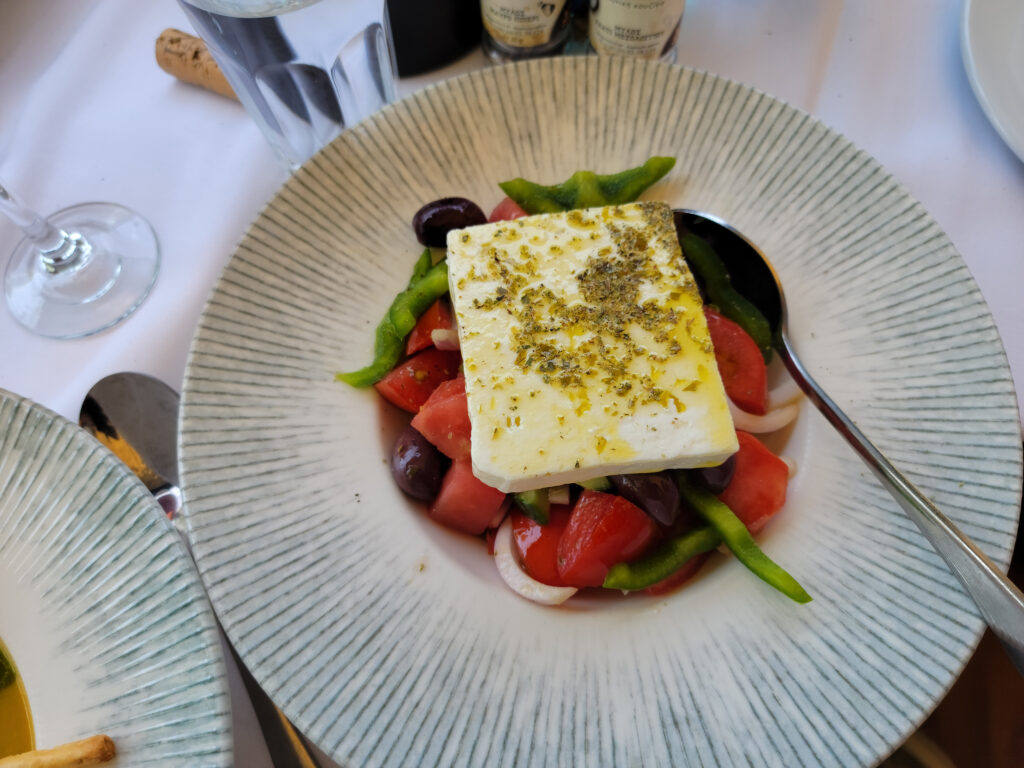
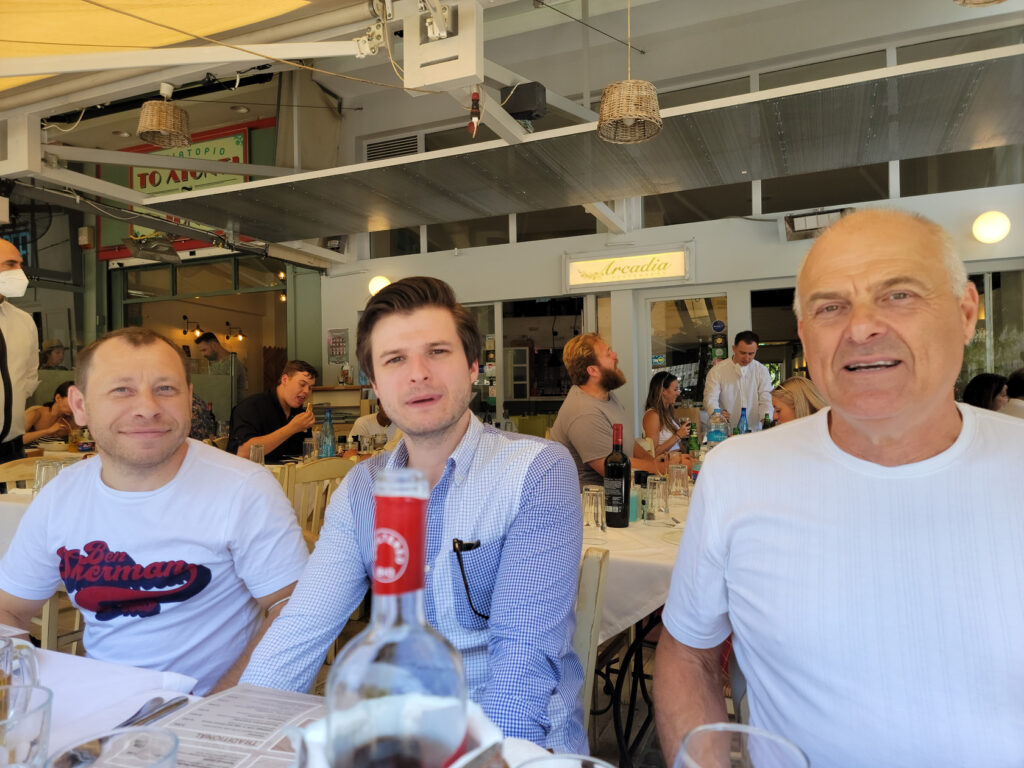
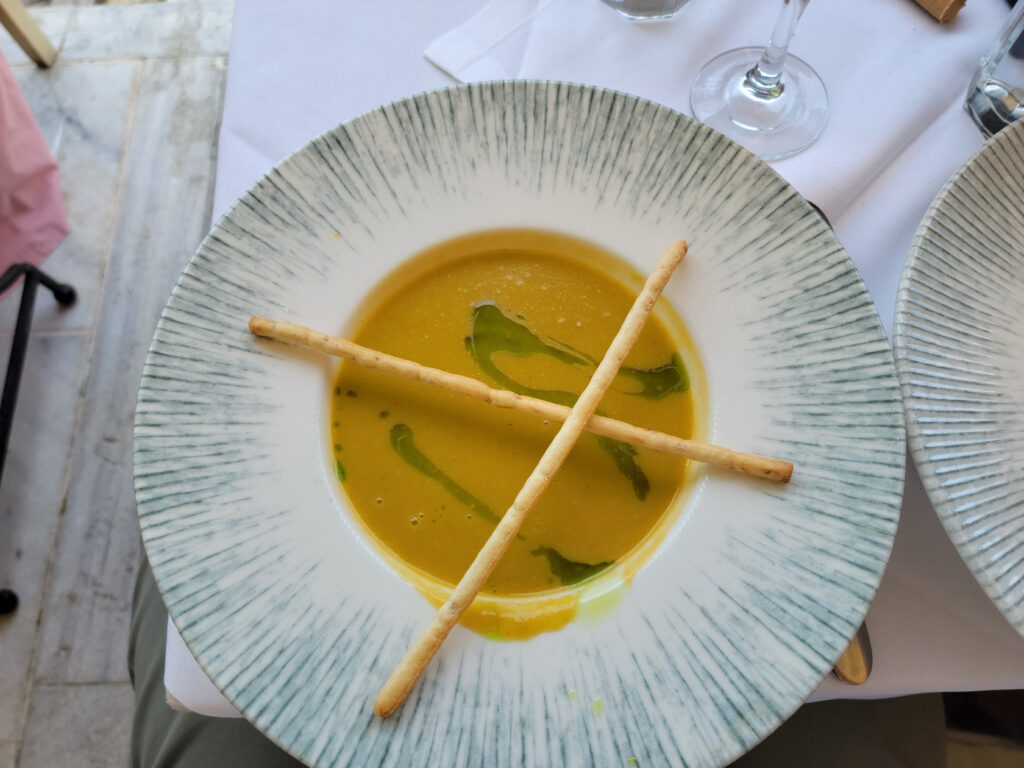
We ate lunch at the Arcadia and enjoyed a very nice meal after a morning of exploring Athens.
The Arcadia Restaurant – Greek Salad
The Arcadia Restaurant – Gabi, Dana and Erick
The Arcadia Restaurant – Patti, Tristan and Ericka
The Arcadia Restaurant – Soup
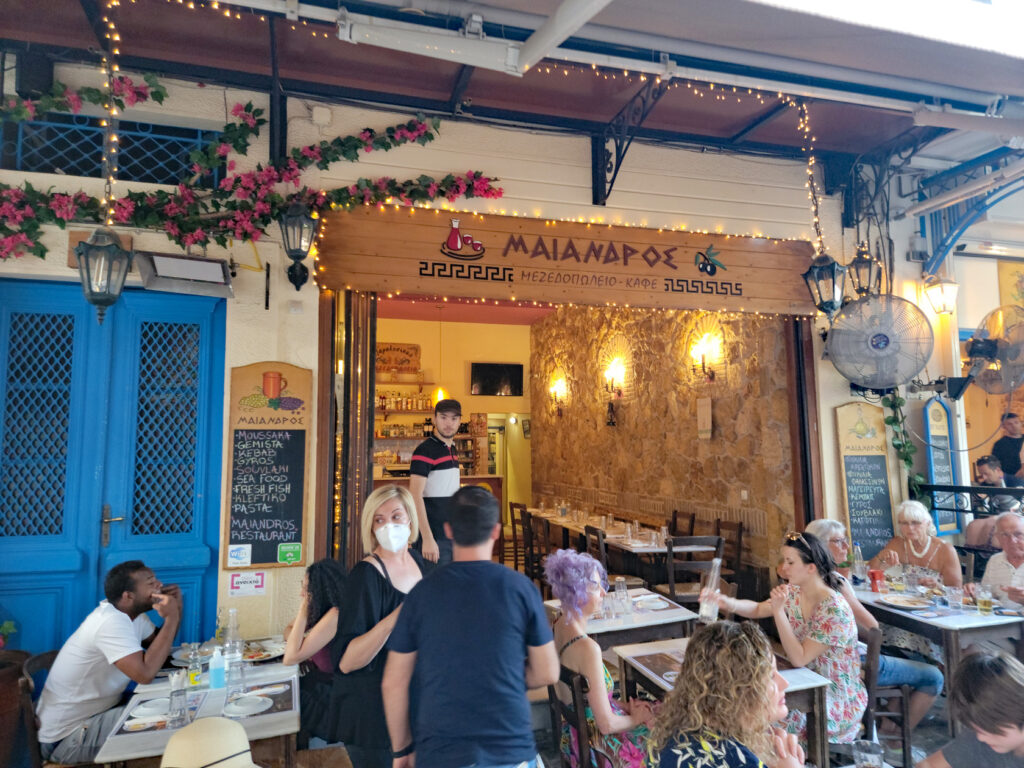
Maiandros
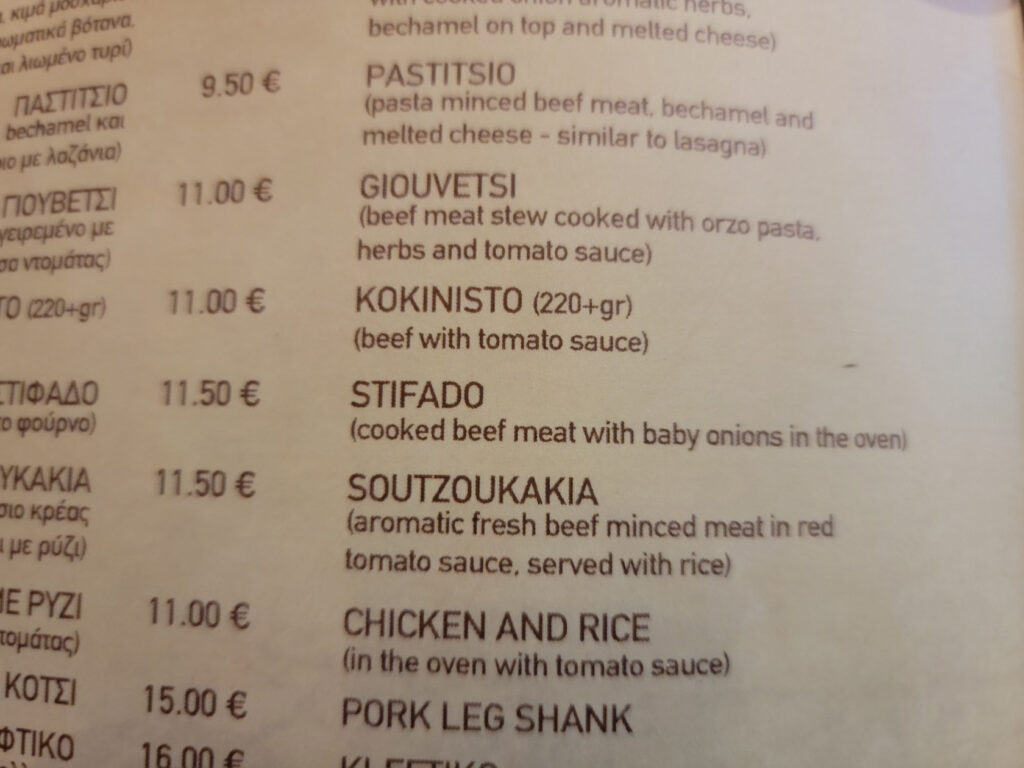
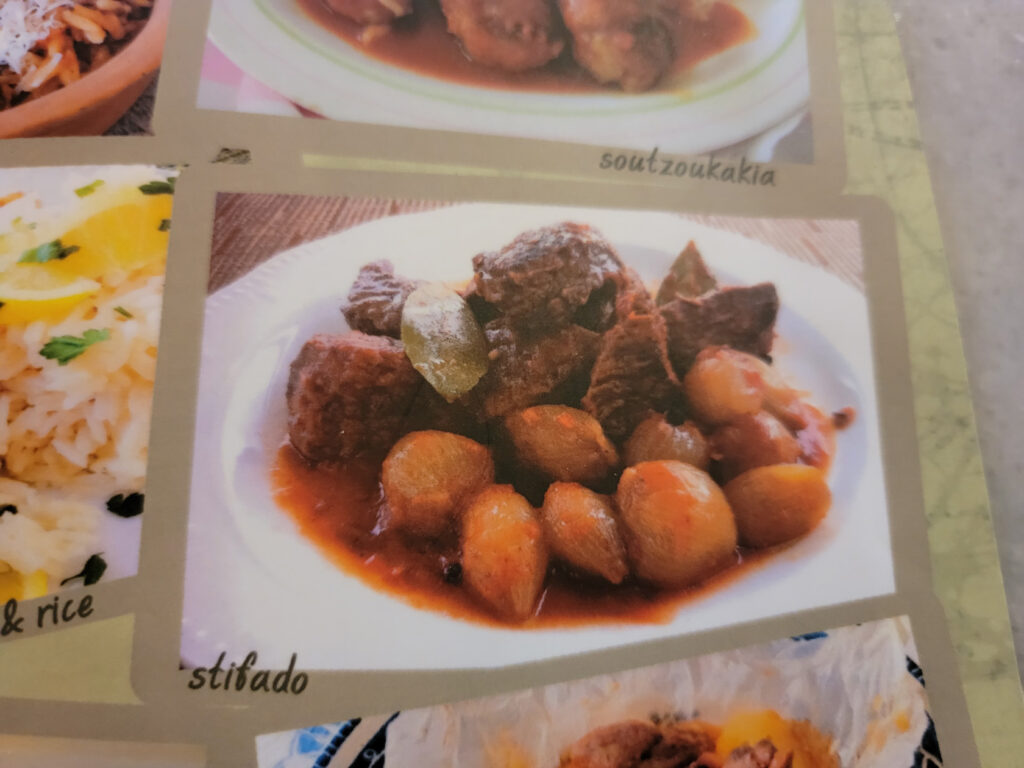
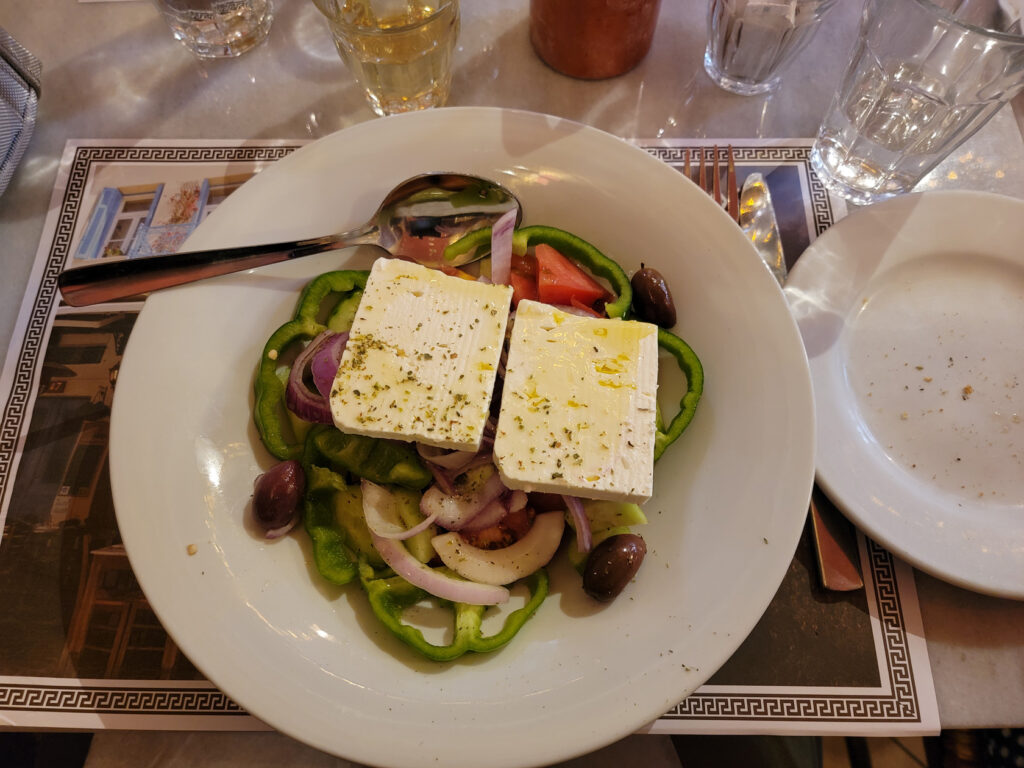
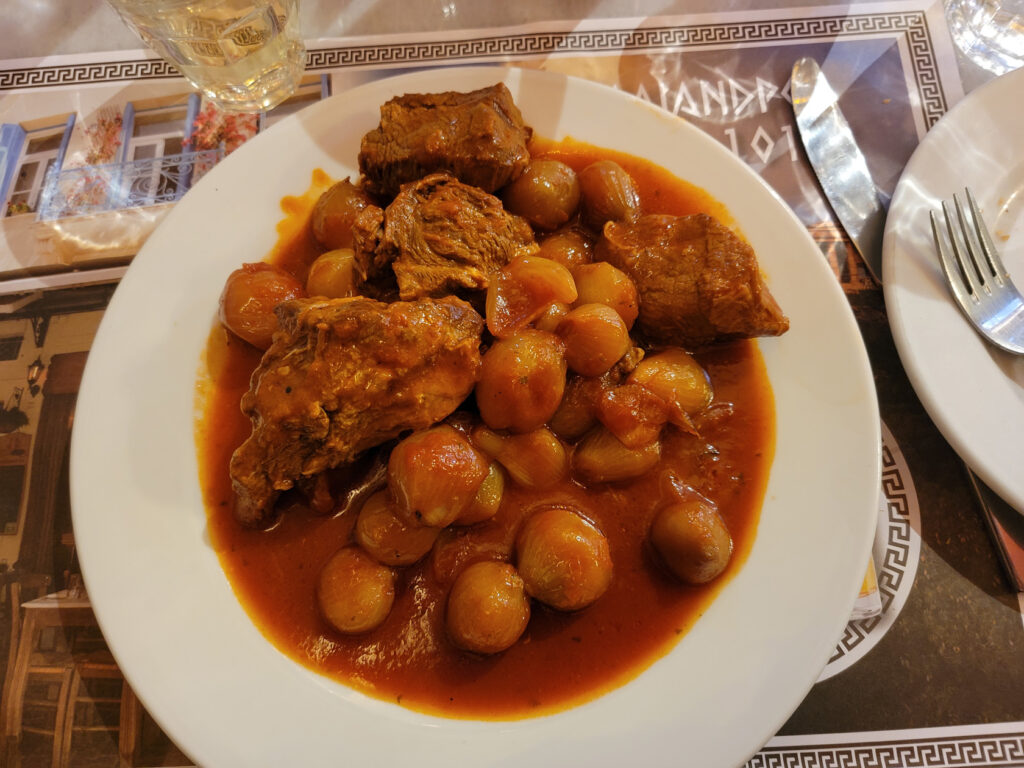
Reservations are a must for this restaurant. The Maiandros Restaurant gets high marks for excellent traditional Greek cuisine and price. If you want to take advantage of its fine cooking and still have money left in your pocket, look no further than this restaurant. I would suggest ordering the Stifado, if you are meat lover (which I am not, but how could I resist), you will not be disappointed.
The Maiandros Restaurant – Store Front
The Maiandros Restaurant – Menu
The Maiandros Restaurant – Stifado
The Maiandros Restaurant – Stifado pic
The Maiandros Restaurant – Greek Salad
The Maiandros Restaurant – Stifado
PalioTetradio
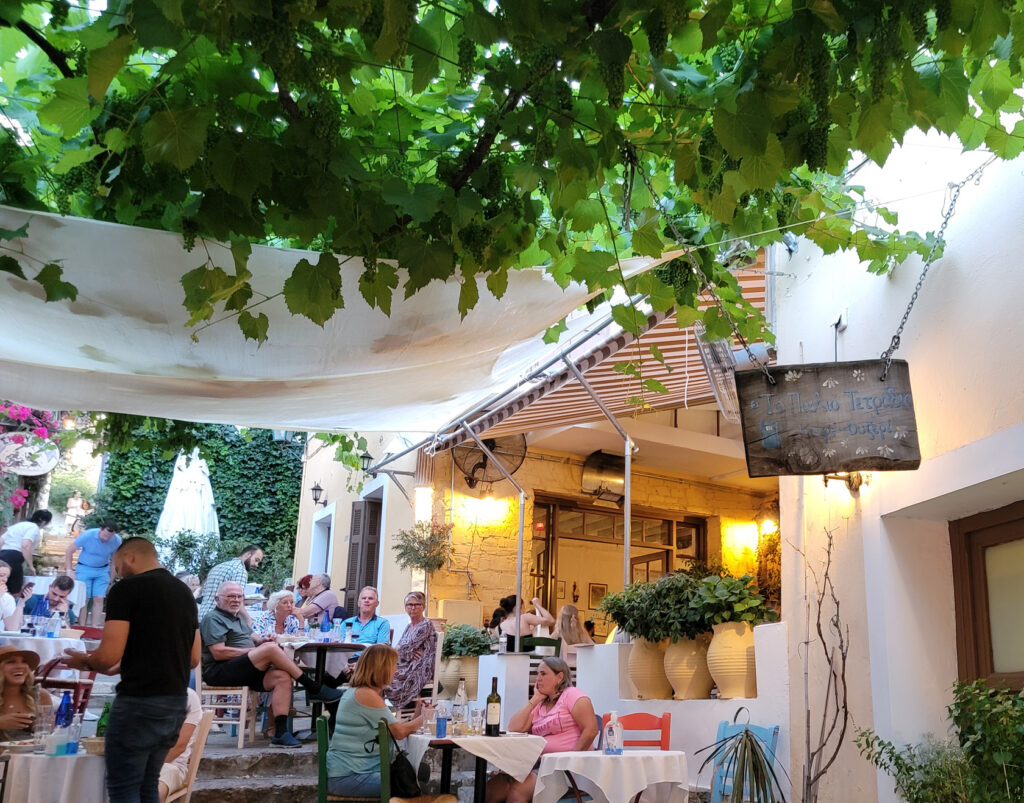
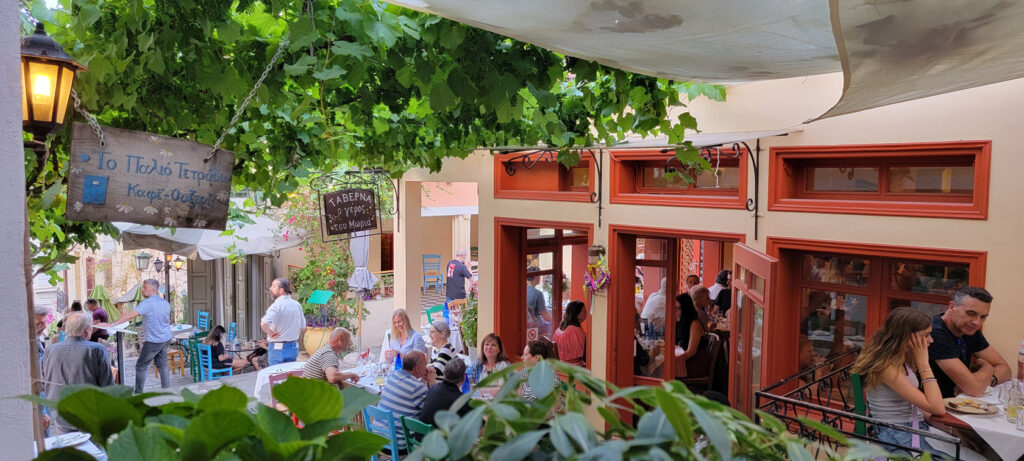
Perched atop a long staircase on the slopes of the Acropolis sits the Palio Tetradio. This little alley and staircase is packed with restaurants and is more of a tourist attraction and known for its ambiance, than its food and service.
The Palio Tetradio Restaurant
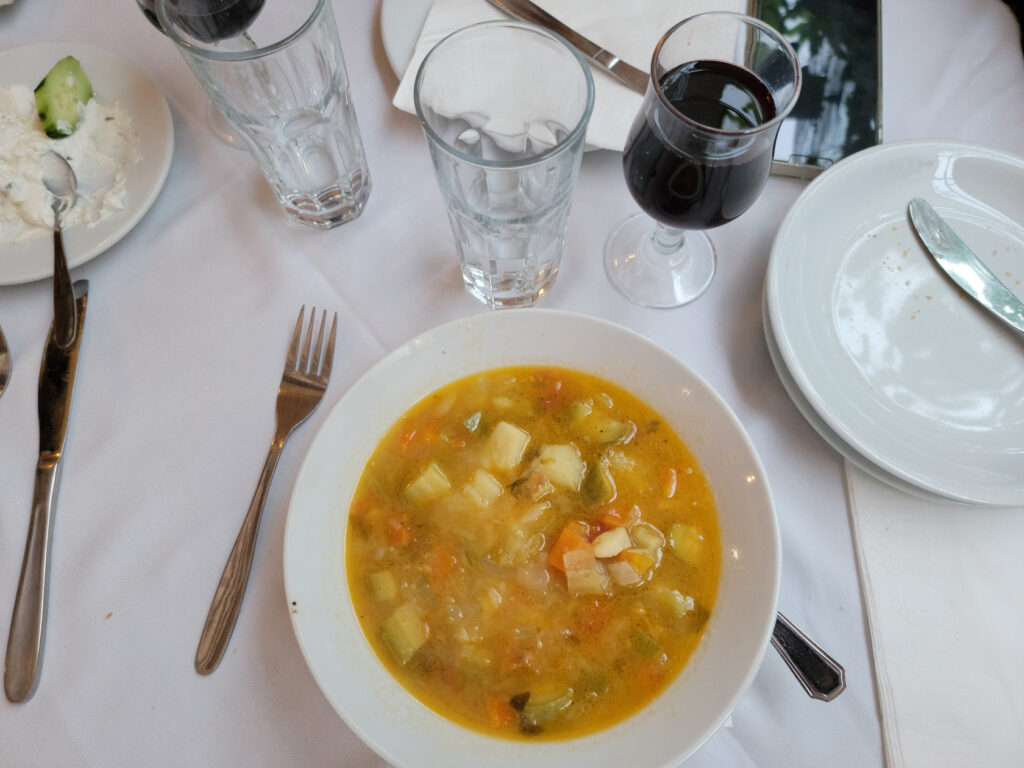
The Palio Tetradio Restaurant – Vegetable Soup
The Palio Tetradio Restaurant – Pork Souvlaki
View From Out Table – The Palio Tetradio Restaurant
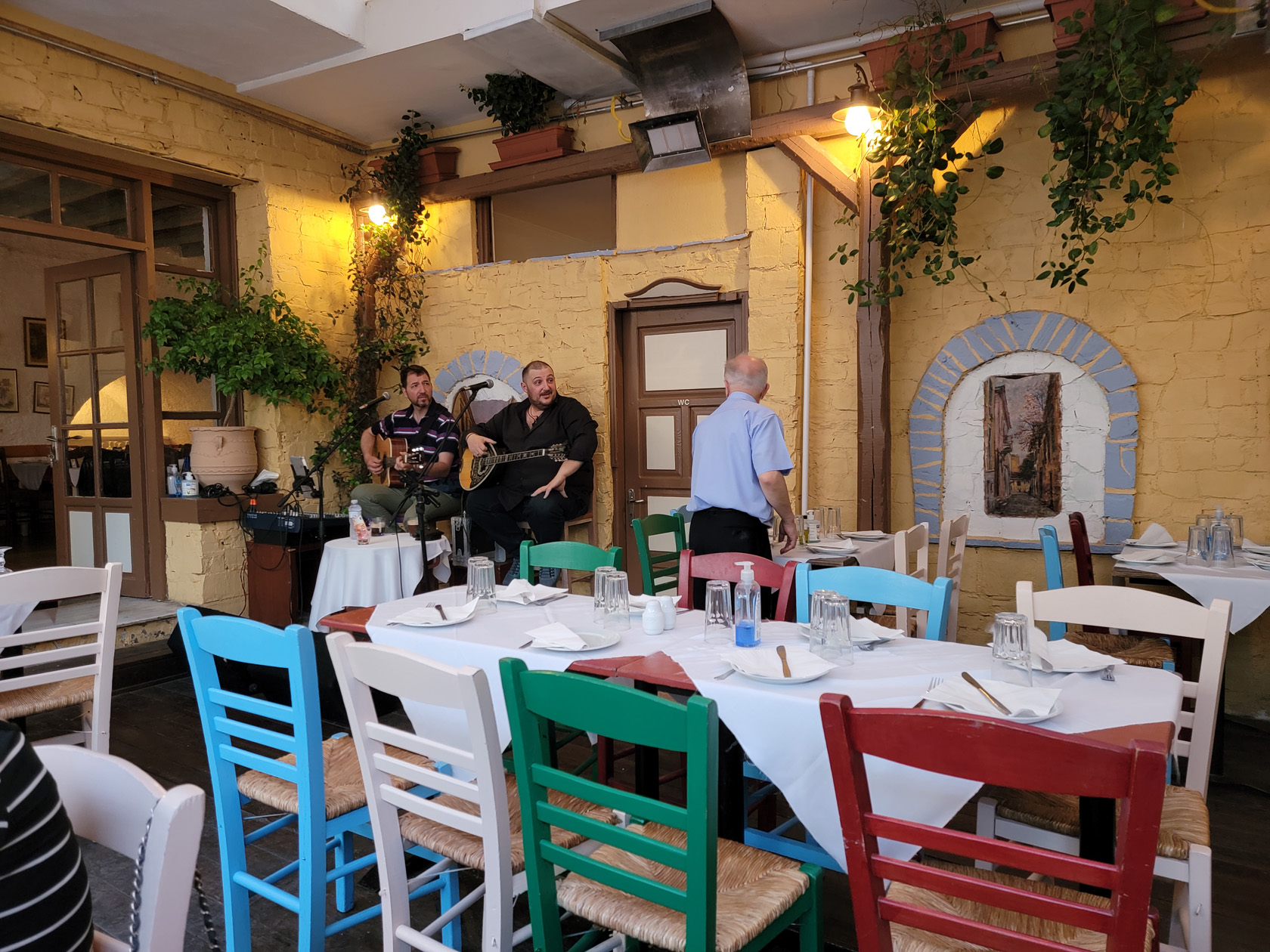
However, they do have live music and since several of the other restaurants have their own musicians, it can feel like dueling musical talents as some points during your dinner.
The Palio Tetradio Restaurant – Musicians
Wines
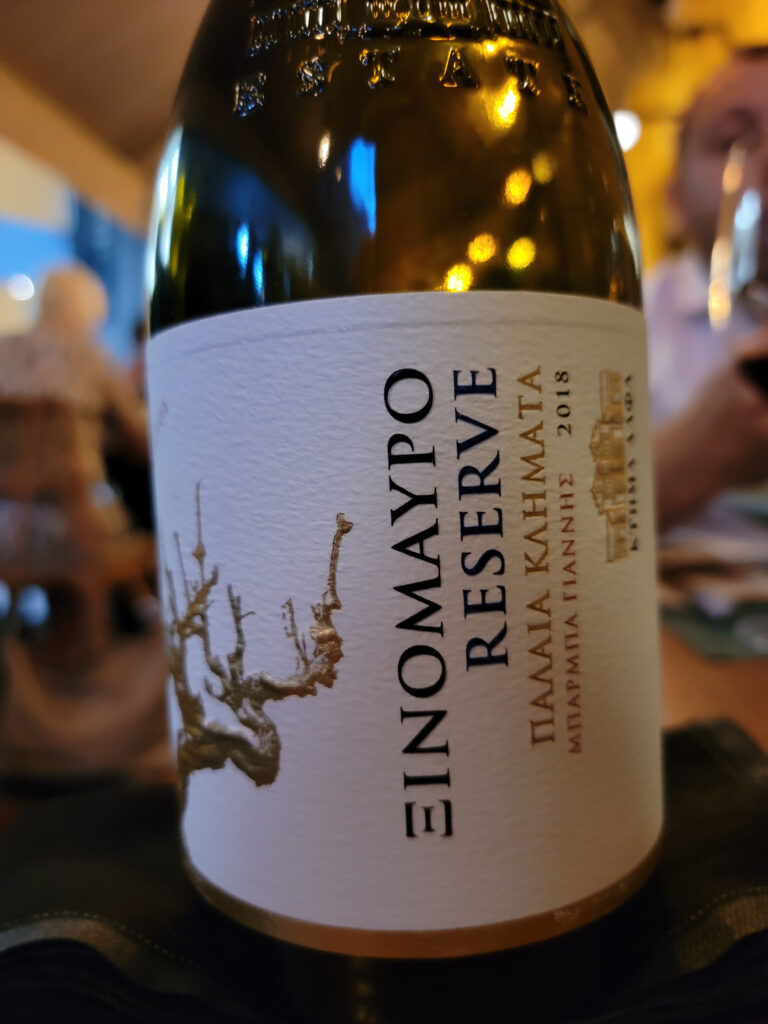
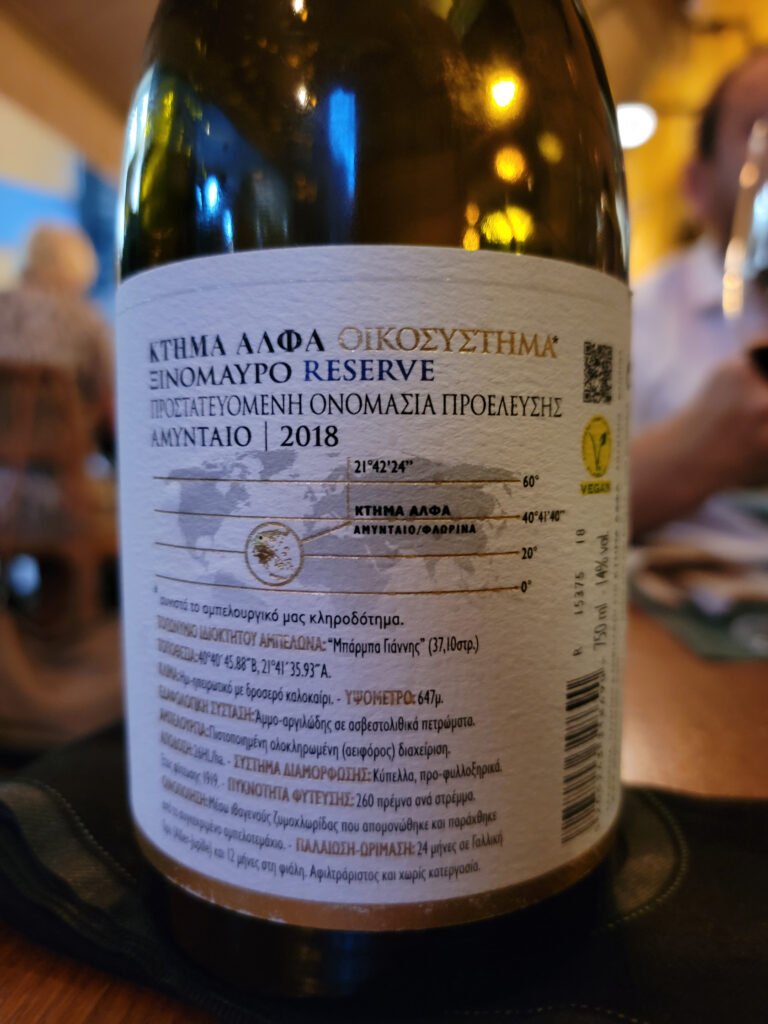
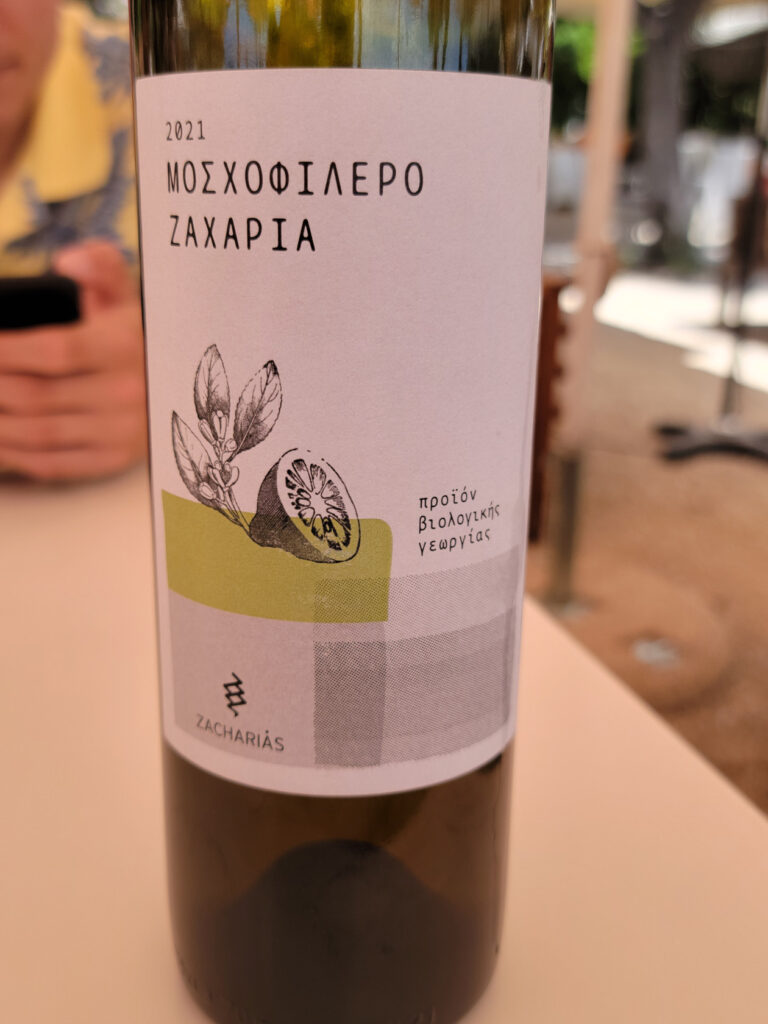
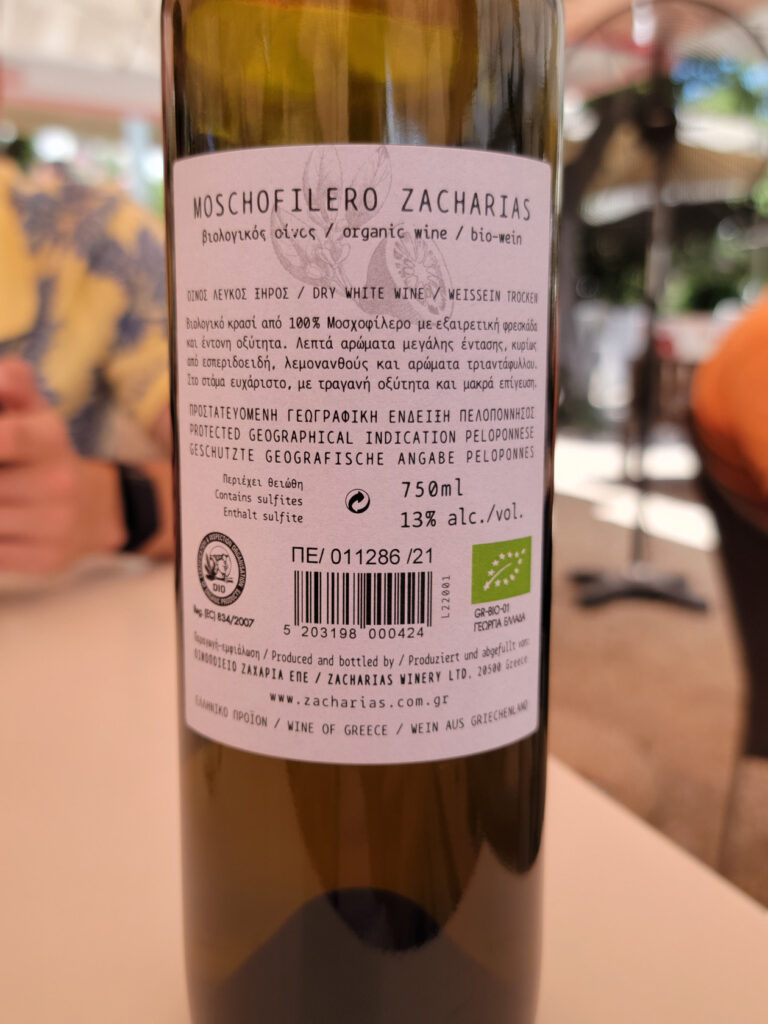
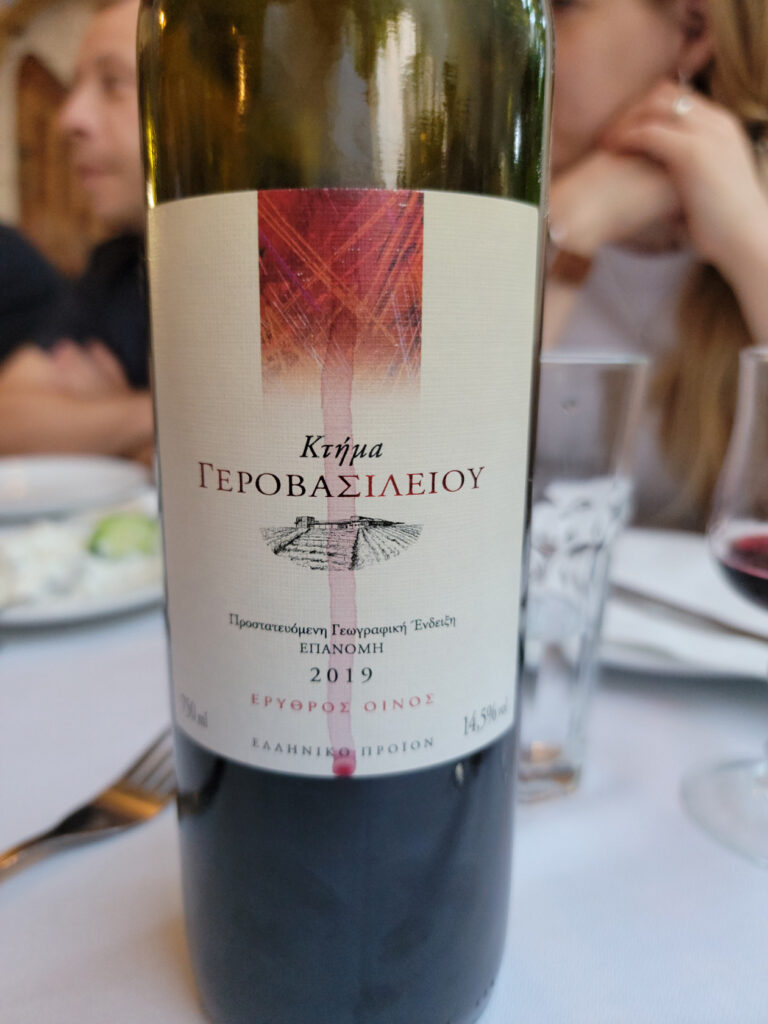
The following wines we enjoyed while dining in Athens. You don’t necessarily have to purchase a very expensive wine, most house wine is completely drinkable and satisfying.
Wines – Einomaypo Reserve 2018 – Front Label
Wines – Einomaypo Reserve 2018 – Back Label
Wines – ΜOΣXOΦIΛEPO ZAXAPIA – Moschofilero Zacharia 2021 – White – Front Label
Wines – ΜOΣXOΦIΛEPO ZAXAPIA – Moschofilero Zacharia 2021 – White – Back Label
Wines – Kτήμα ΓΕΡΟΒΑΣΙΛΕΙΟΥ – GEROVASILEIOU Estate 2019 – Red – Front Label
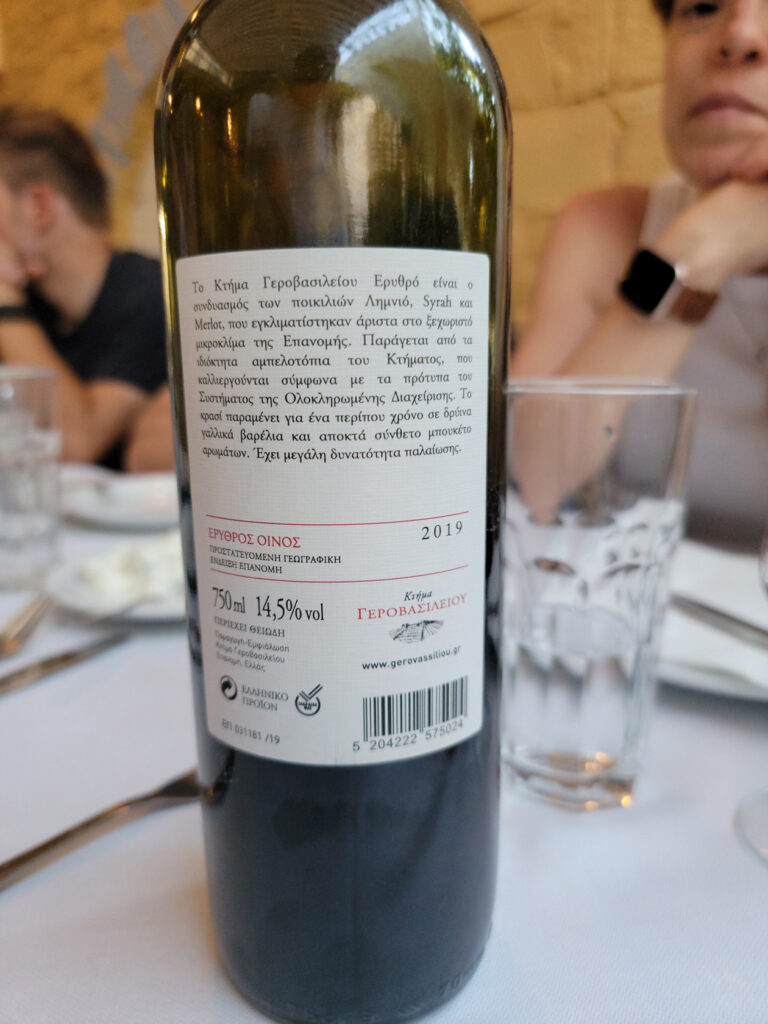
Wines – Kτήμα ΓΕΡΟΒΑΣΙΛΕΙΟΥ – GEROVASILEIOU Estate 2019 – Red – Back Label