Charlie Chaplin called this town his retirement home for the remaining twenty-five years of his life and it is commemorated with a number of statues to that affect. It enjoys that same lazy coastline lifestyle that its sister Clarens to the east enjoys. There are definitely less crowds here than you will find in Montreux. It is also considered the headquarters of Nestlé and where chocolate was first created for the mass market.
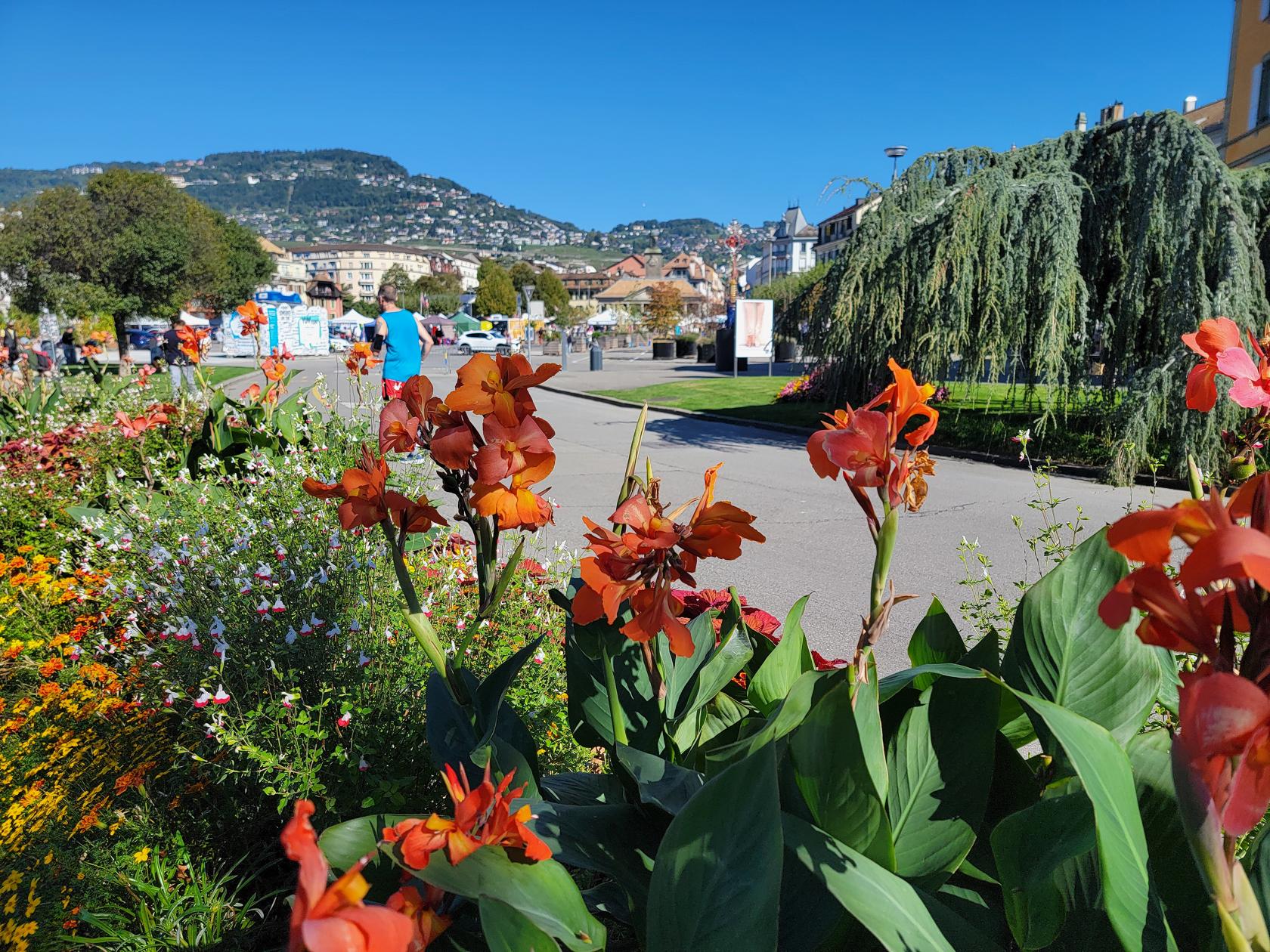
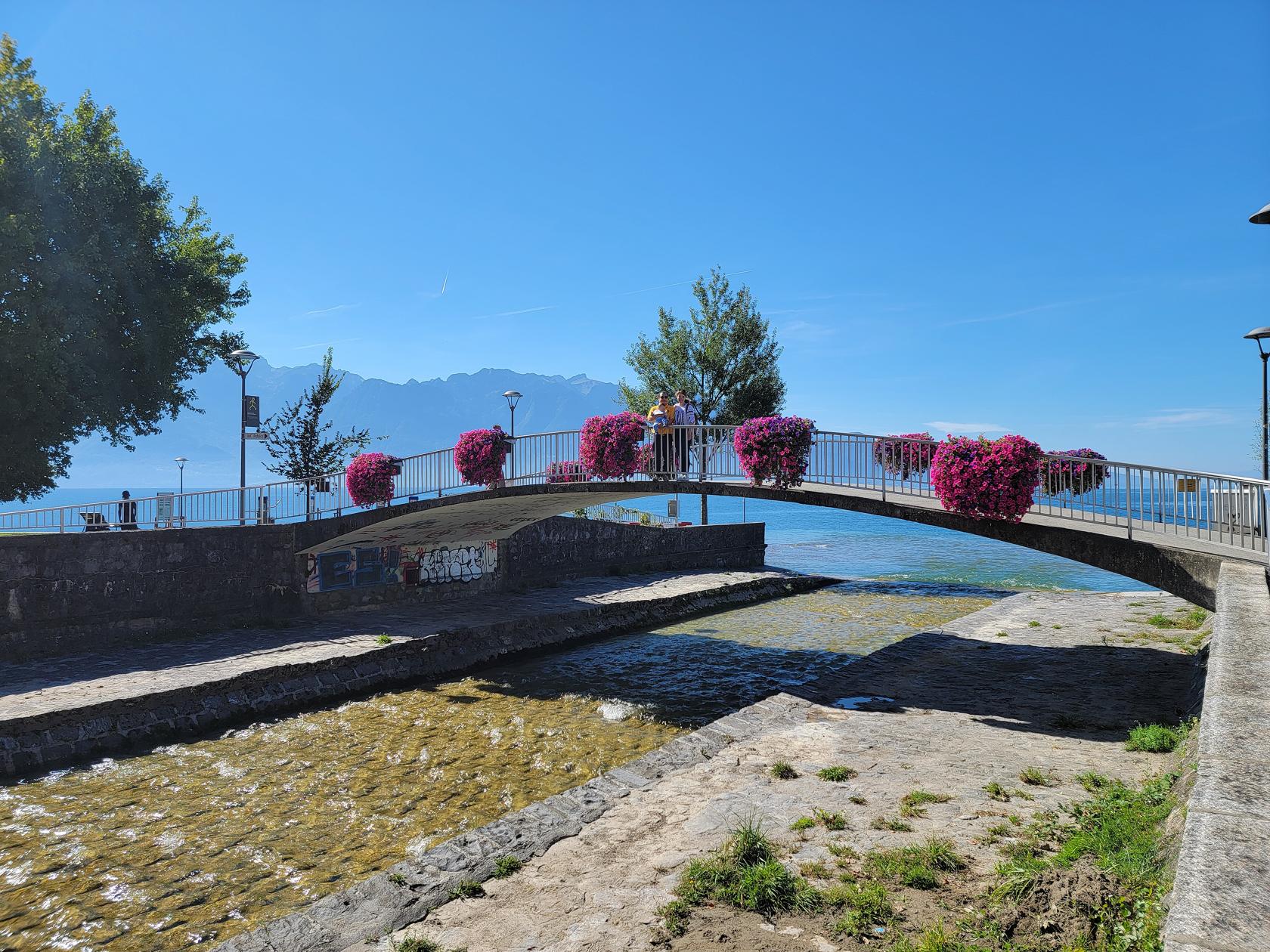
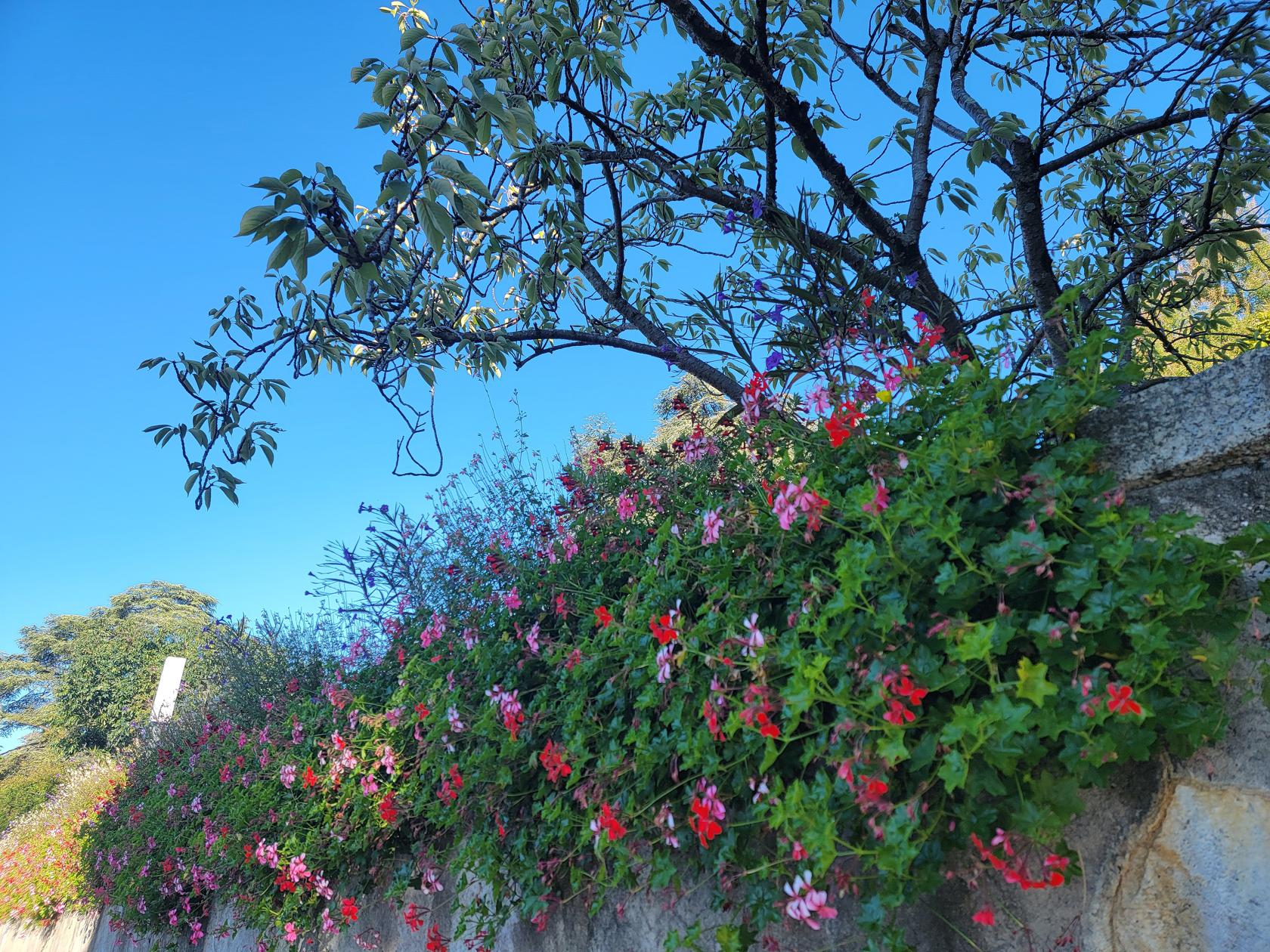
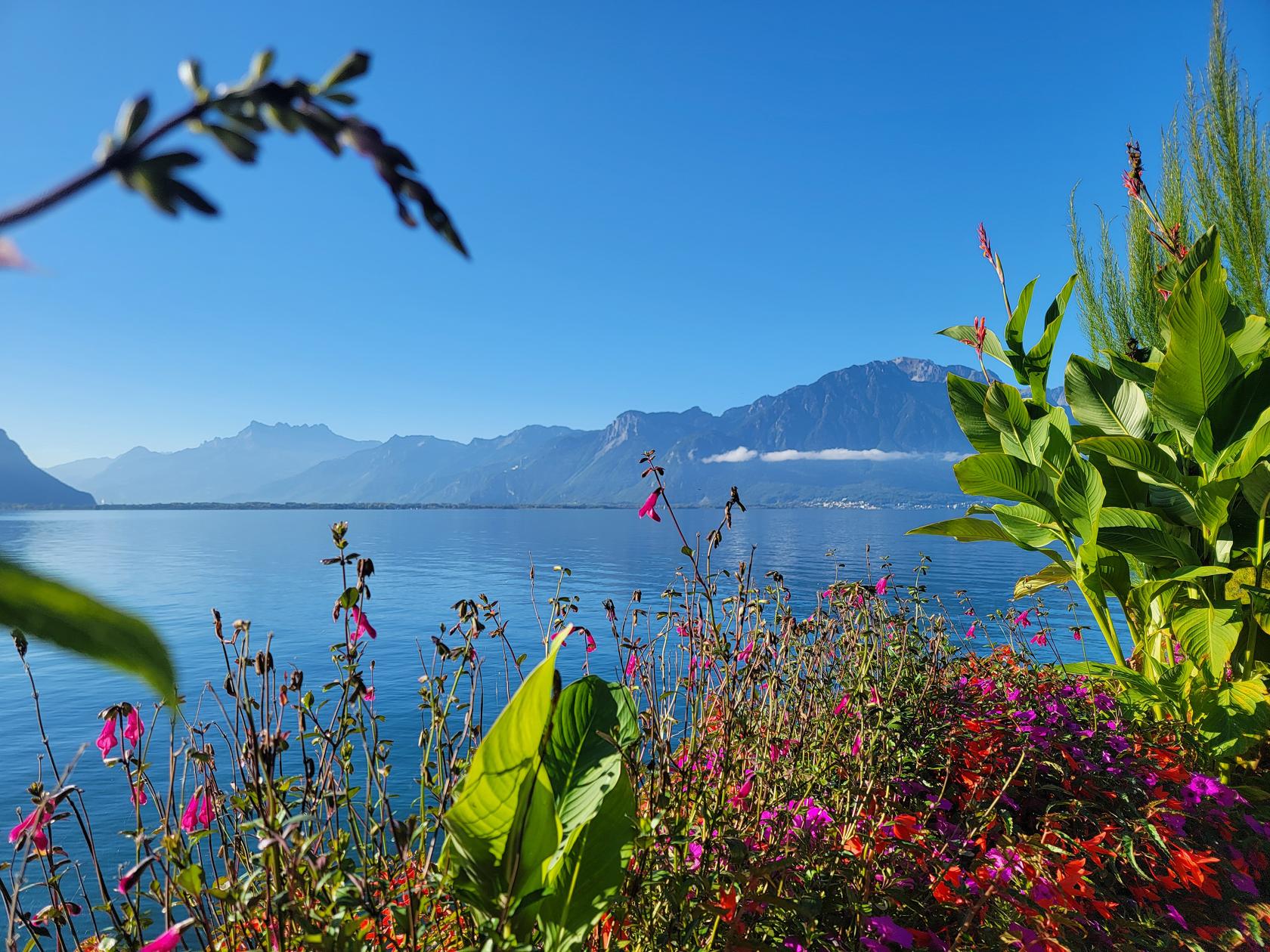
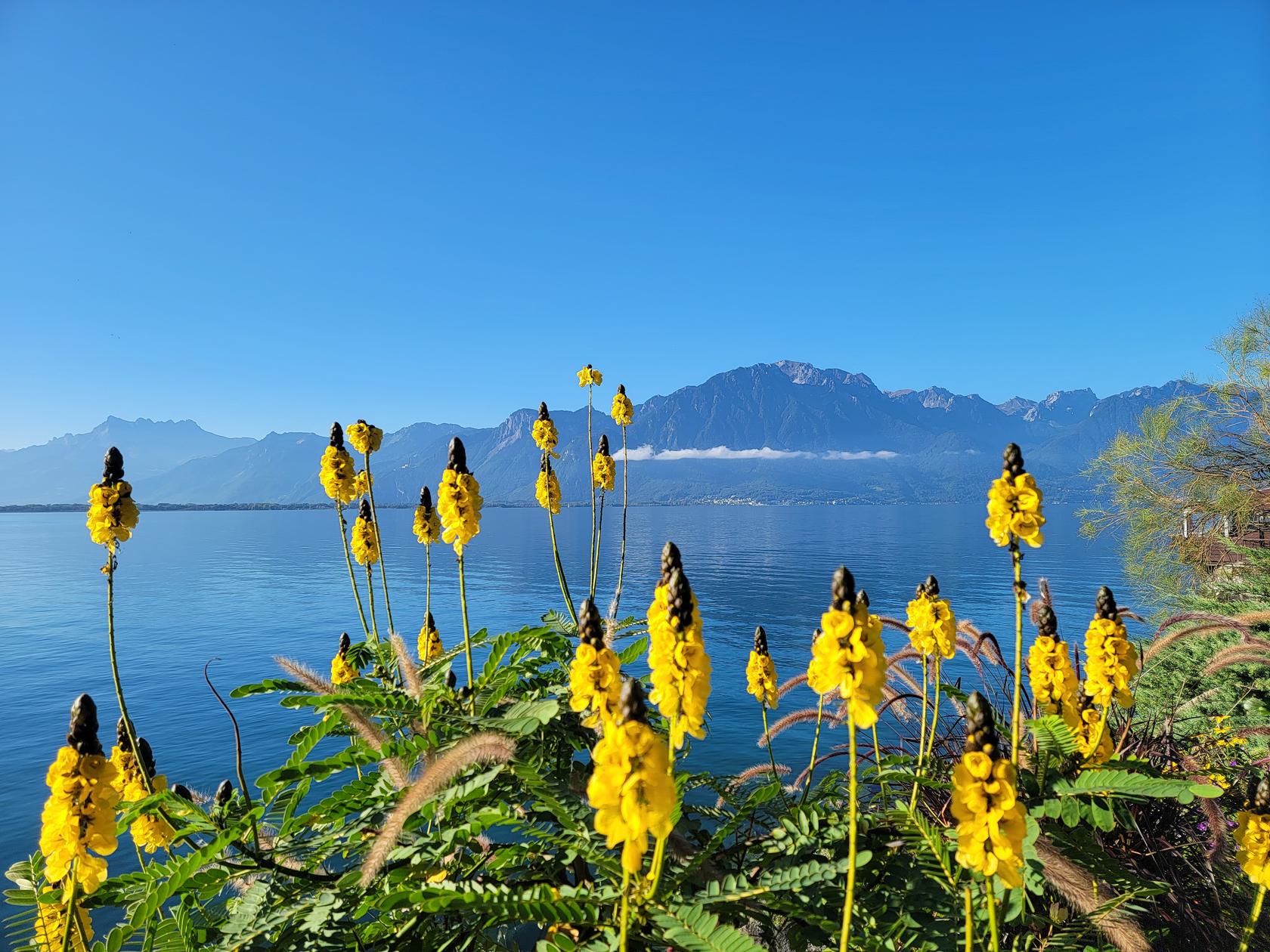
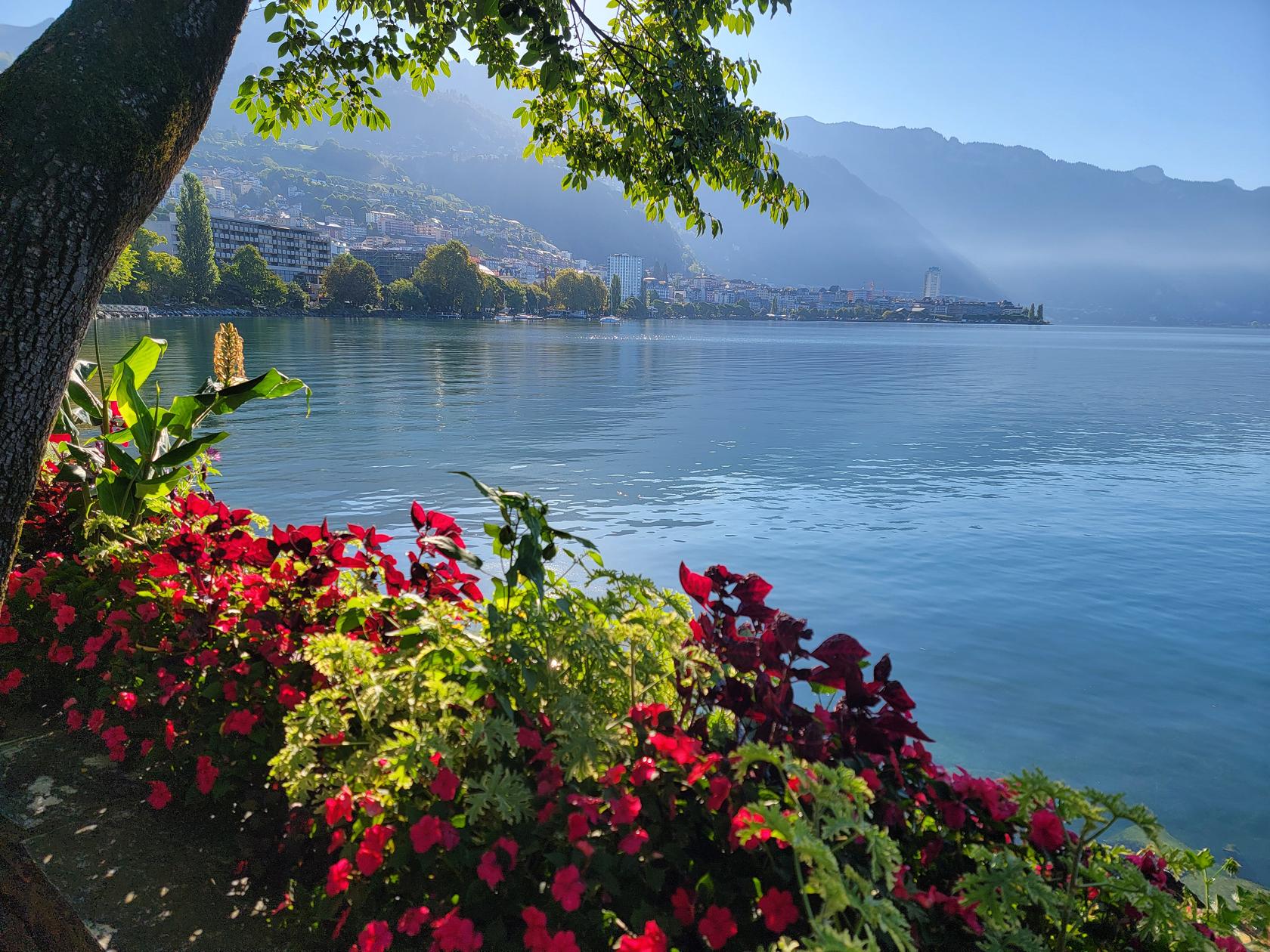
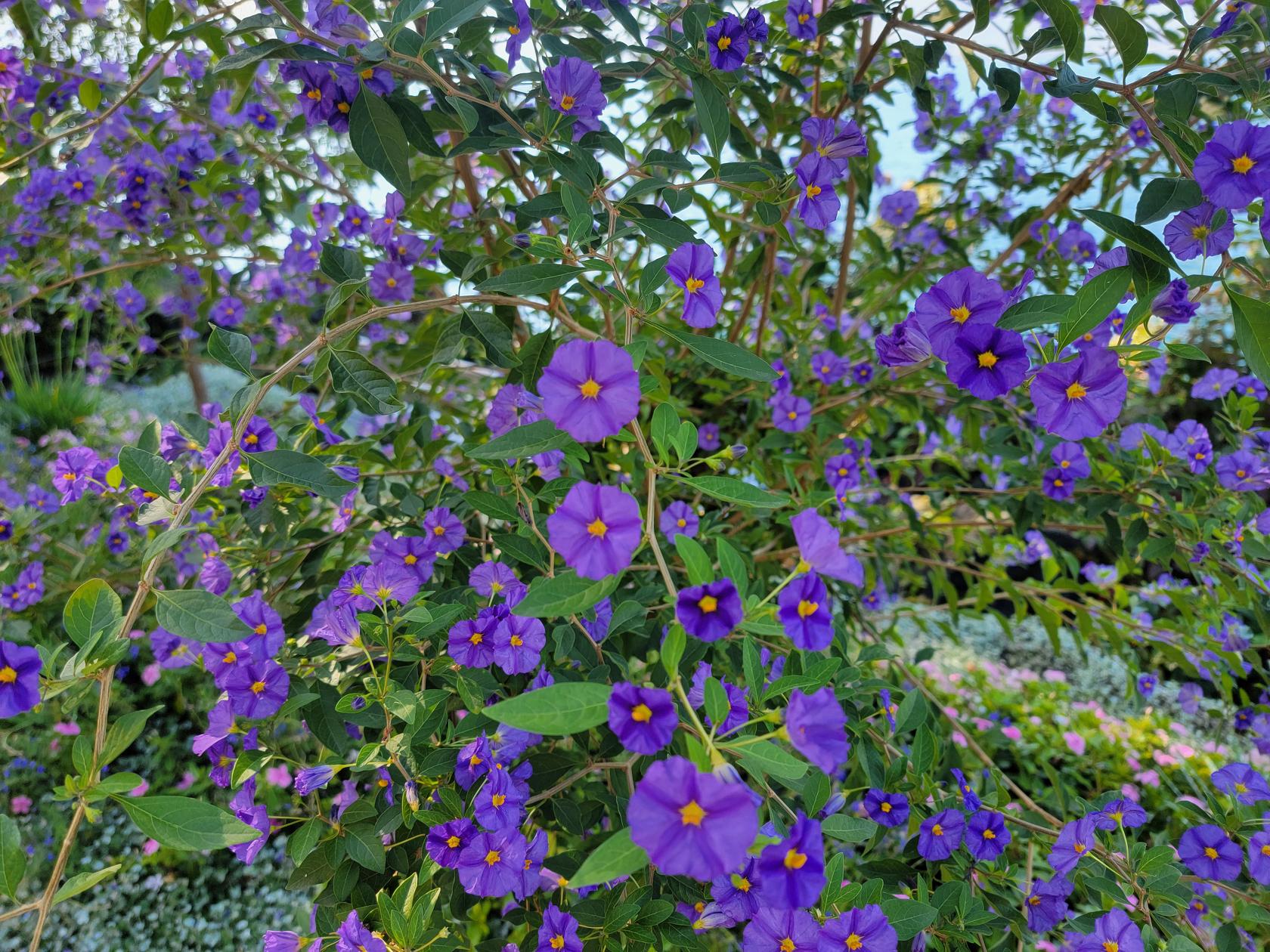
Flowers Along The Quai – Vevey, Switzerland
Getting There
A three mile walk northwest of the town of Clarens is the town of Vevey, Switzerland where you can relax and enjoy a slightly different view of the lake. On a beautiful morning this would be the way to go, with the exception of about a mile where the path turns inward and you must walk more along the road than the lake. However, one can also take a bus, train or ferry to reach this town.
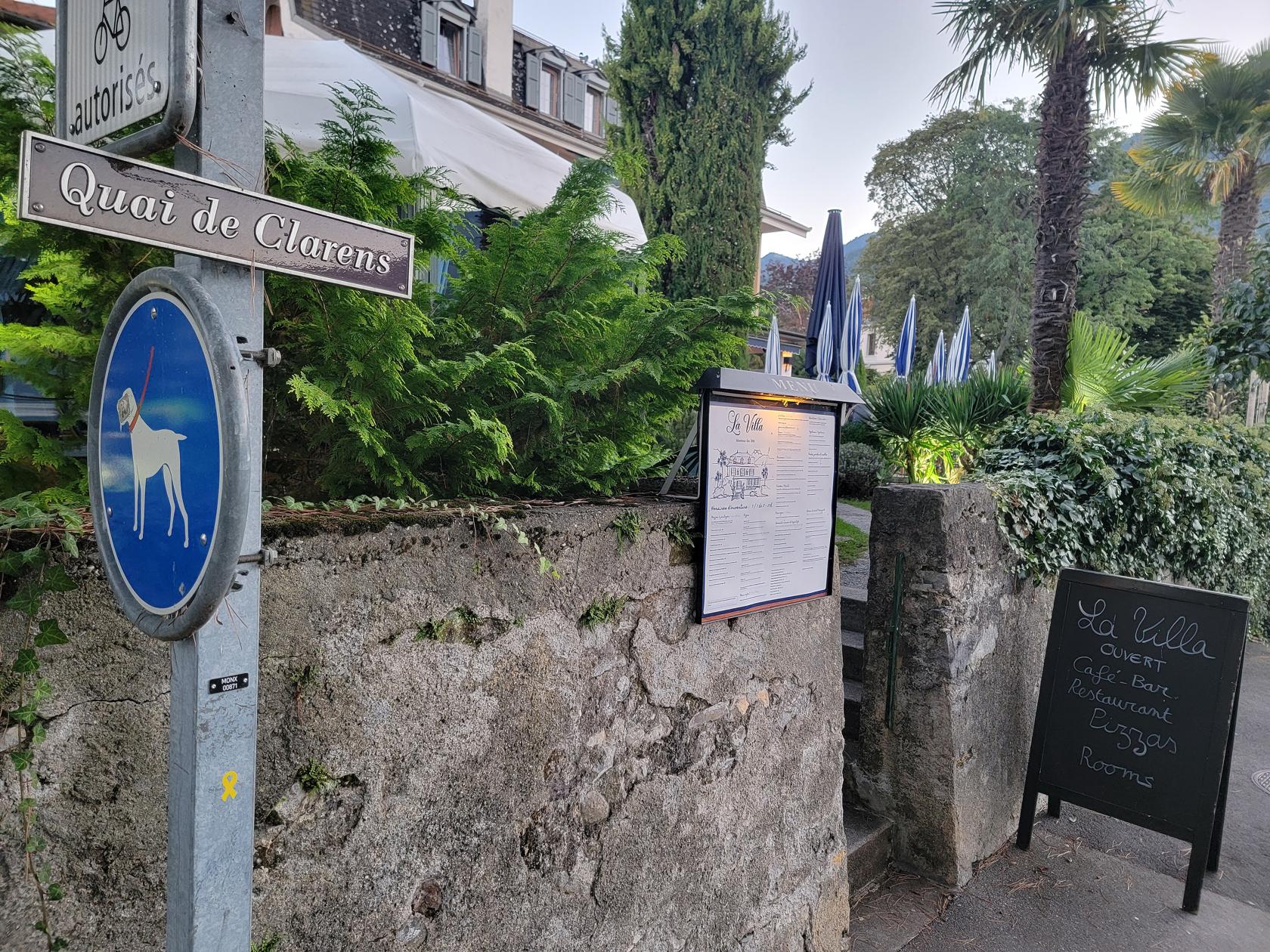
Quai de Clarens – Leaving Our Hotel – Clarens, Switzerland
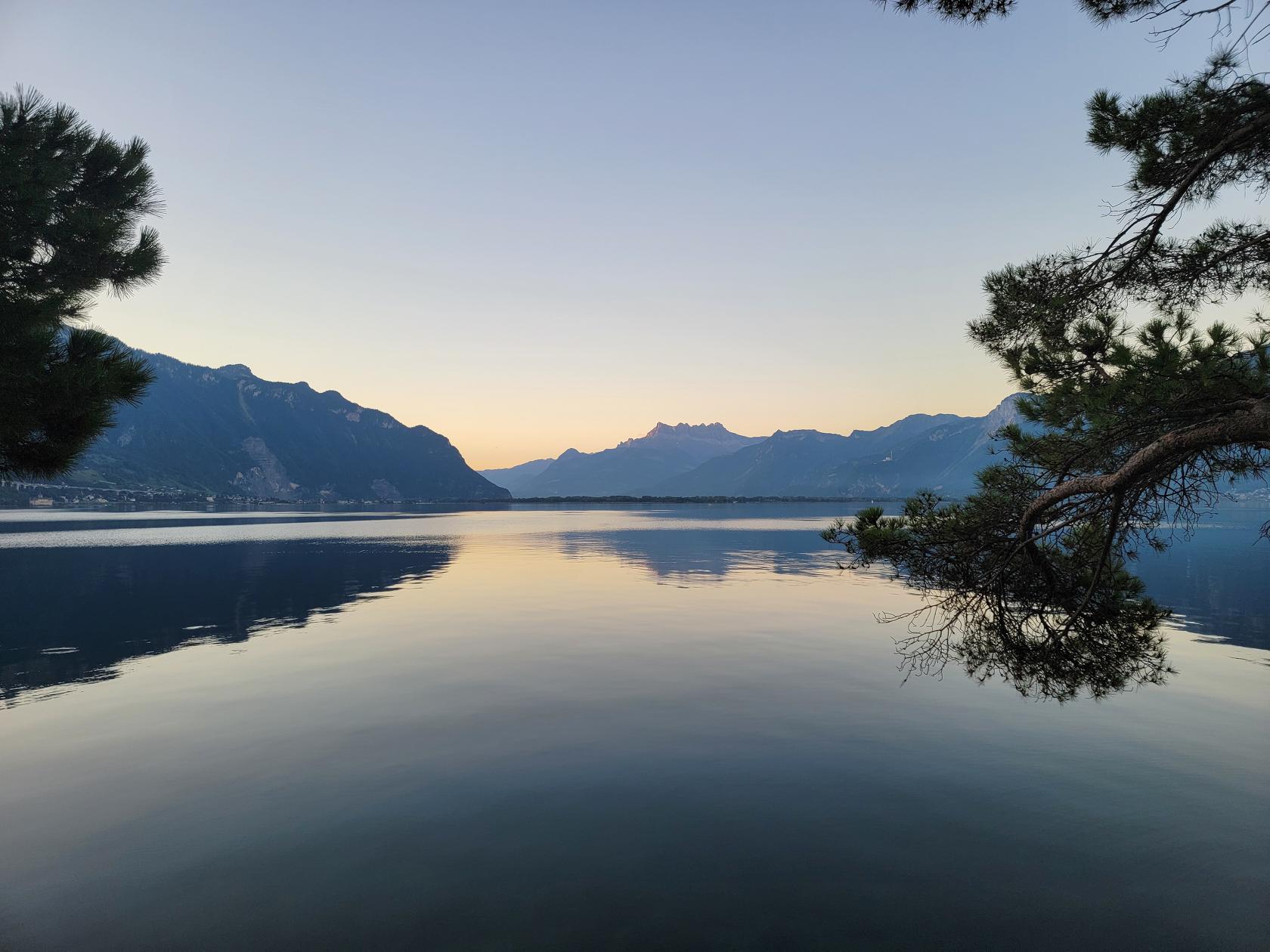
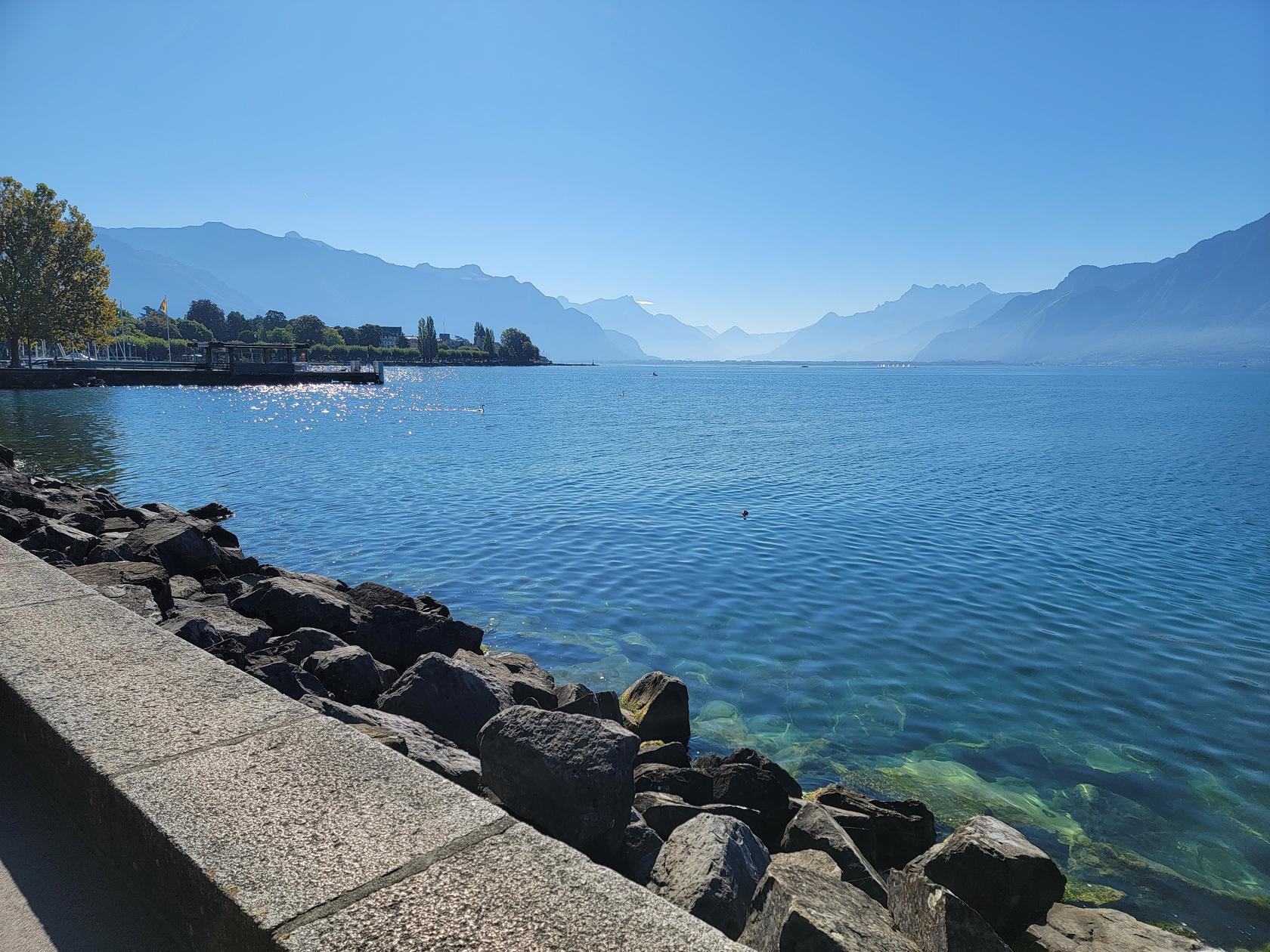
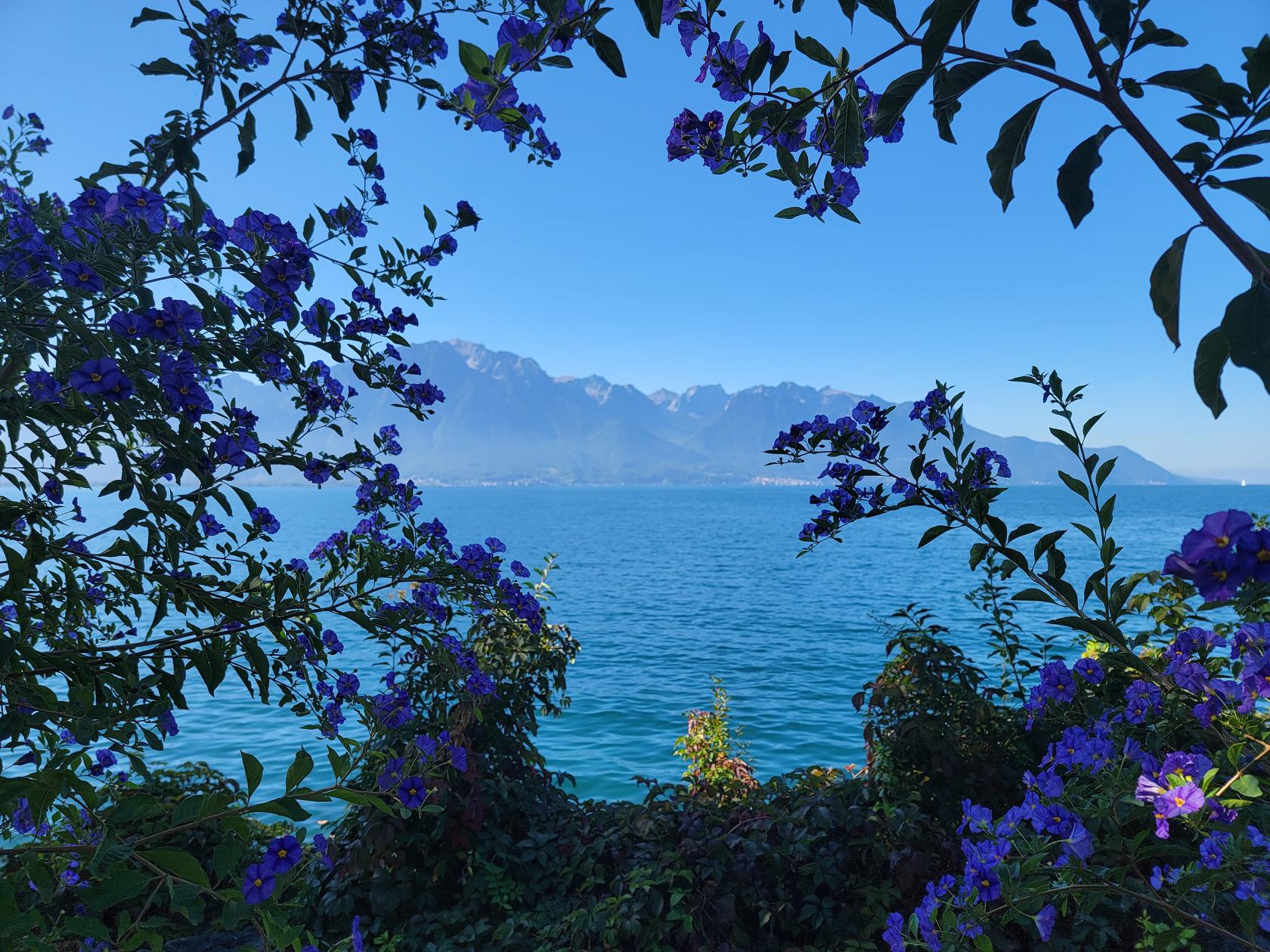
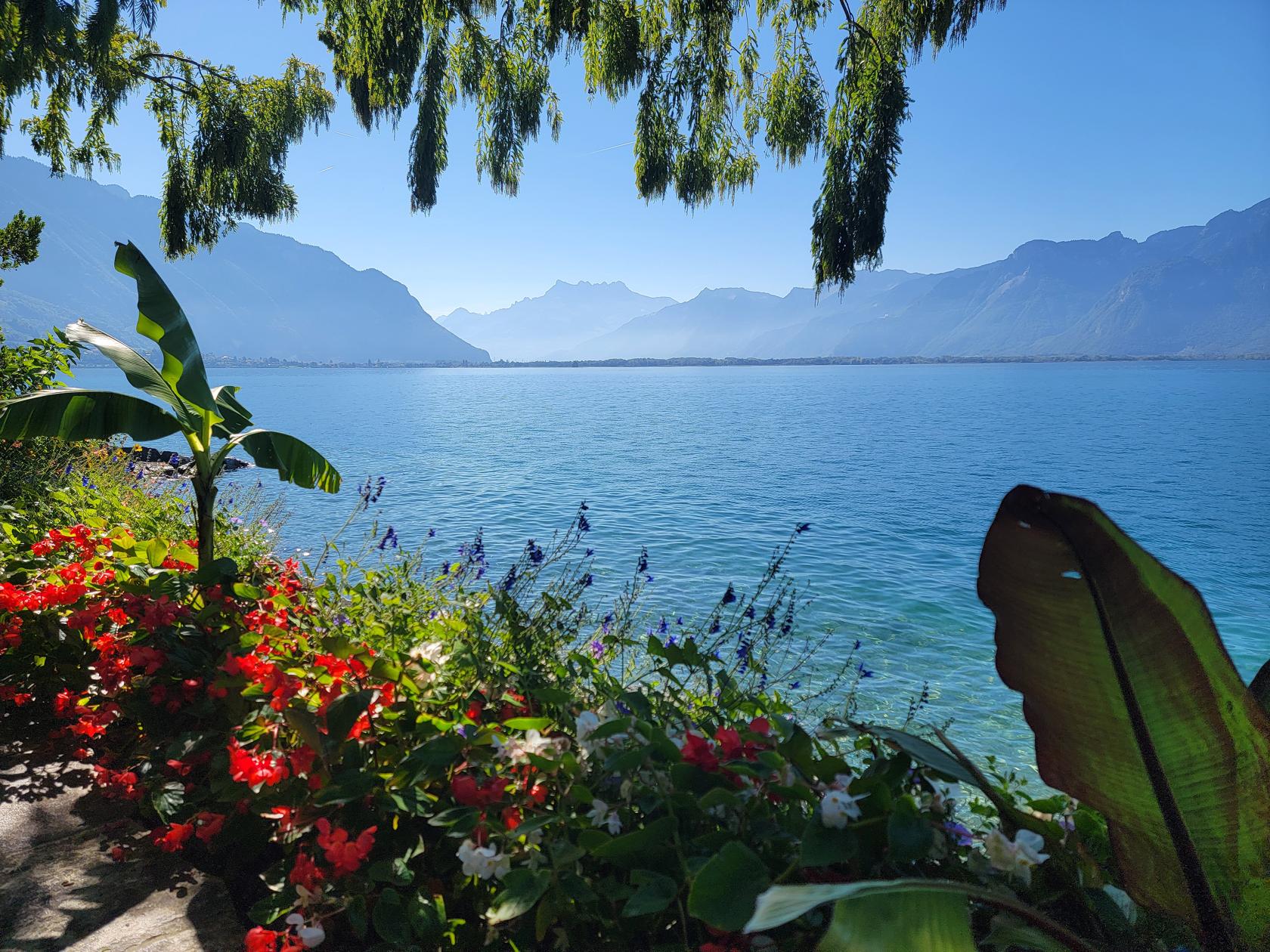
Lake Leman – Clarens, Switzerland
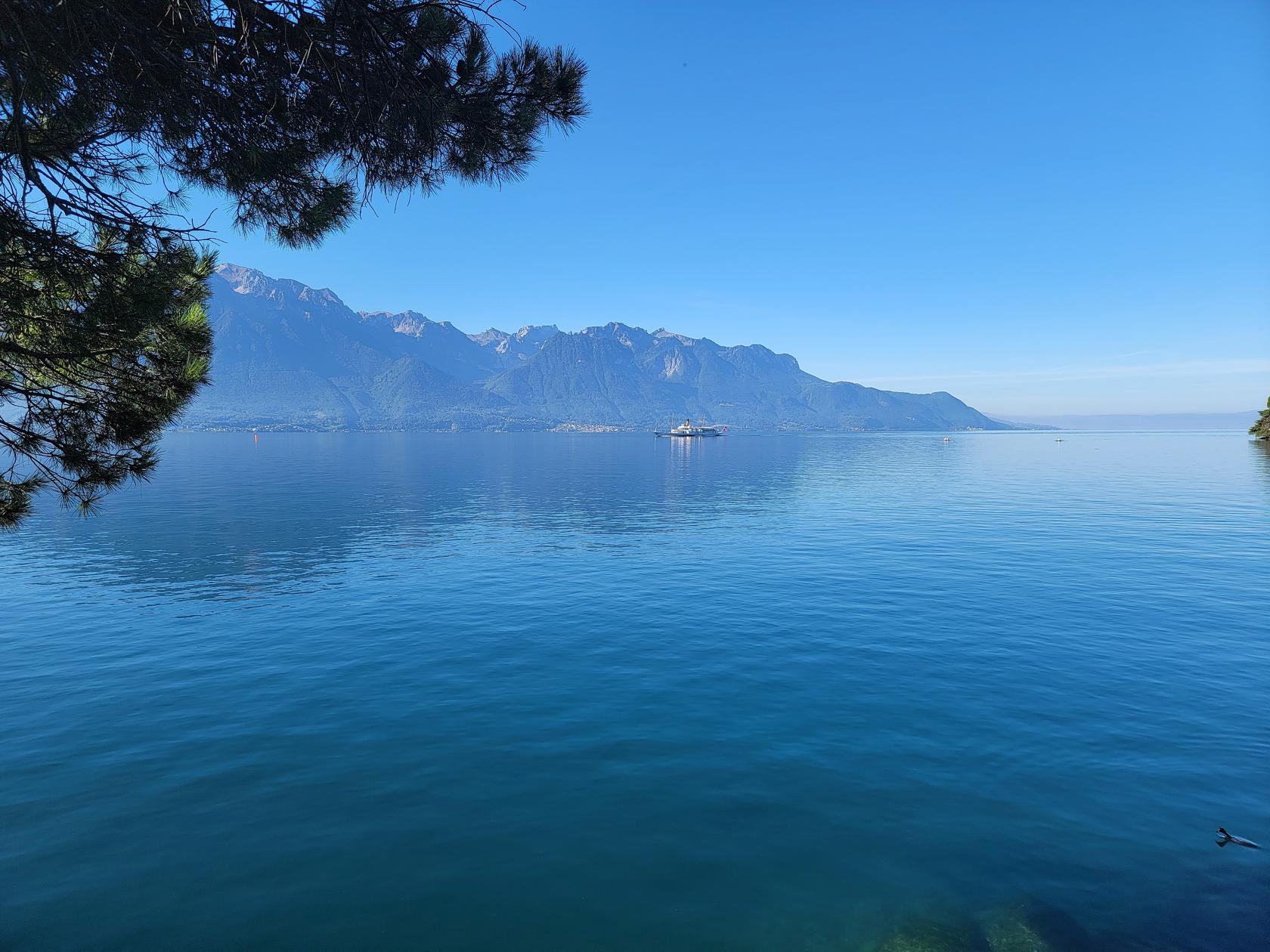
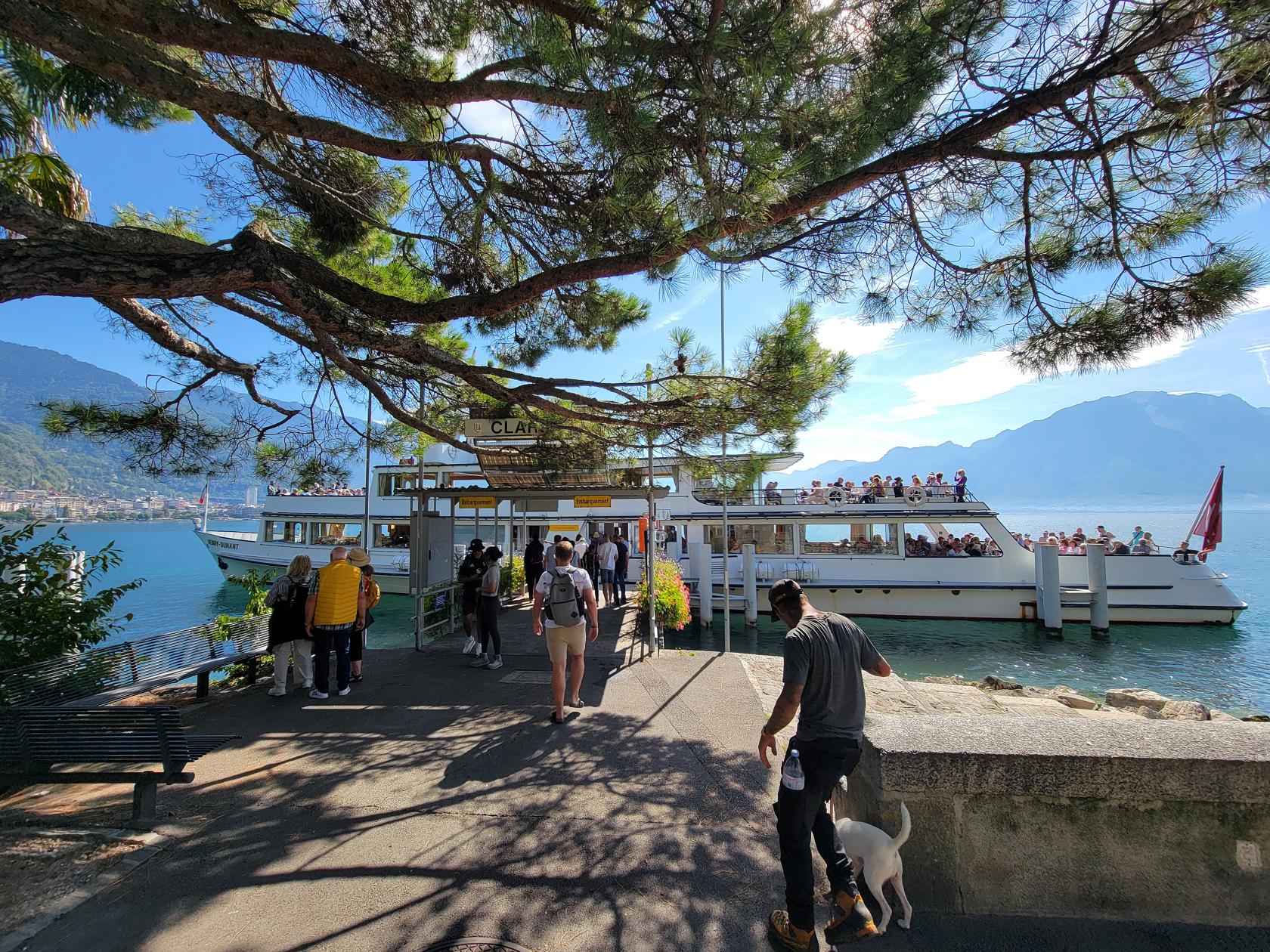
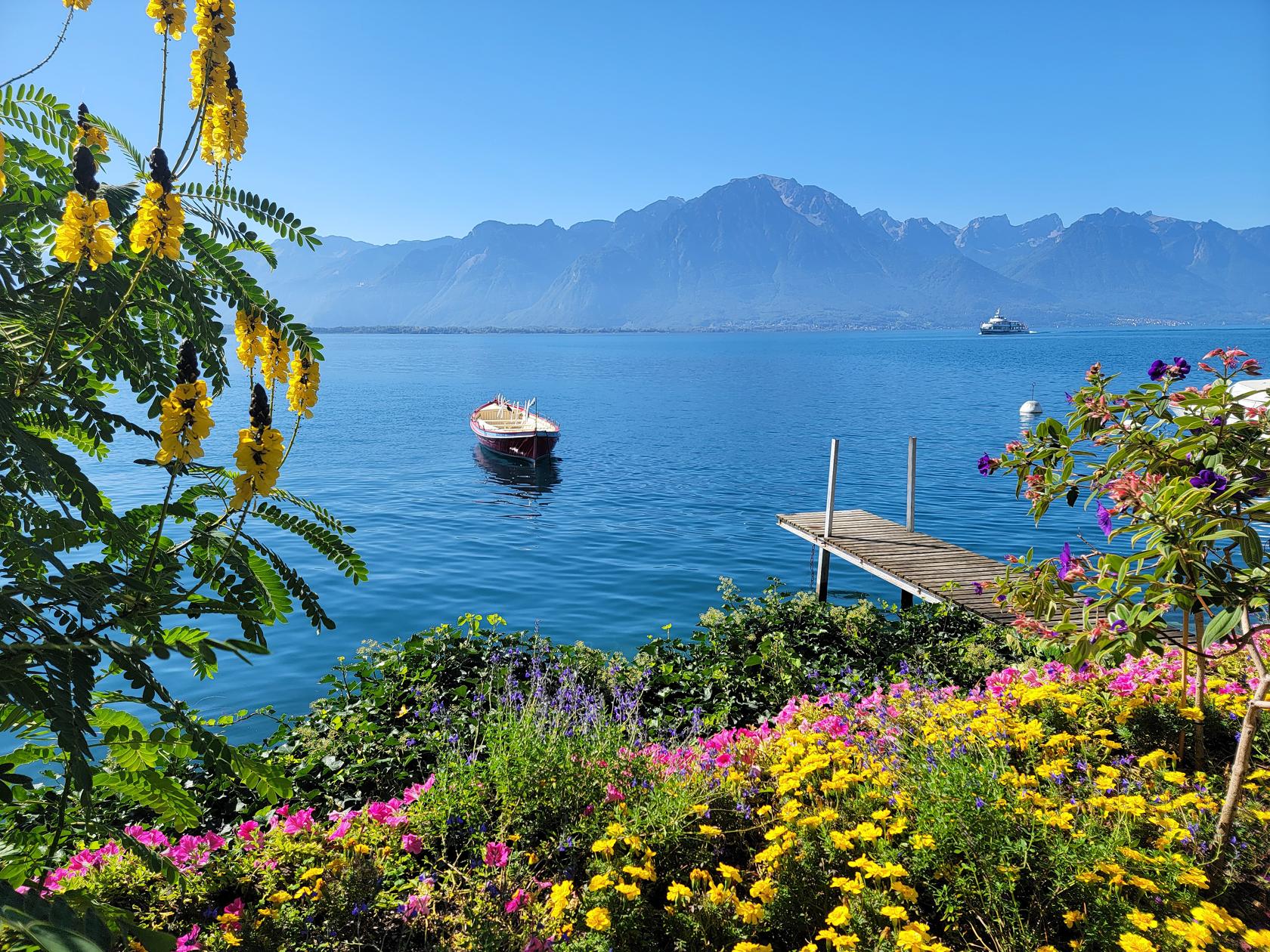
Lake Leman – CGN Lake Ferry – Clarens, Switzerland
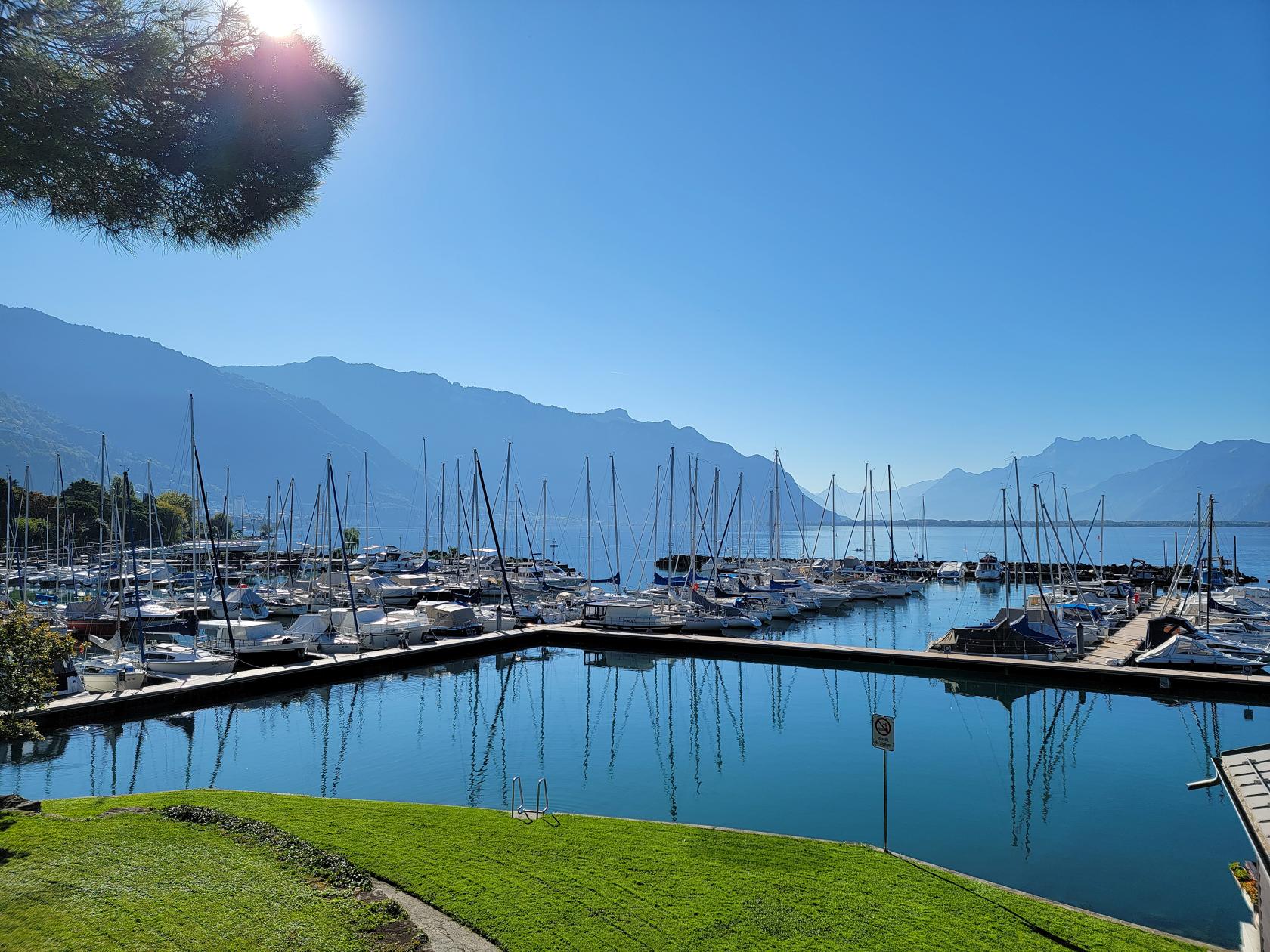
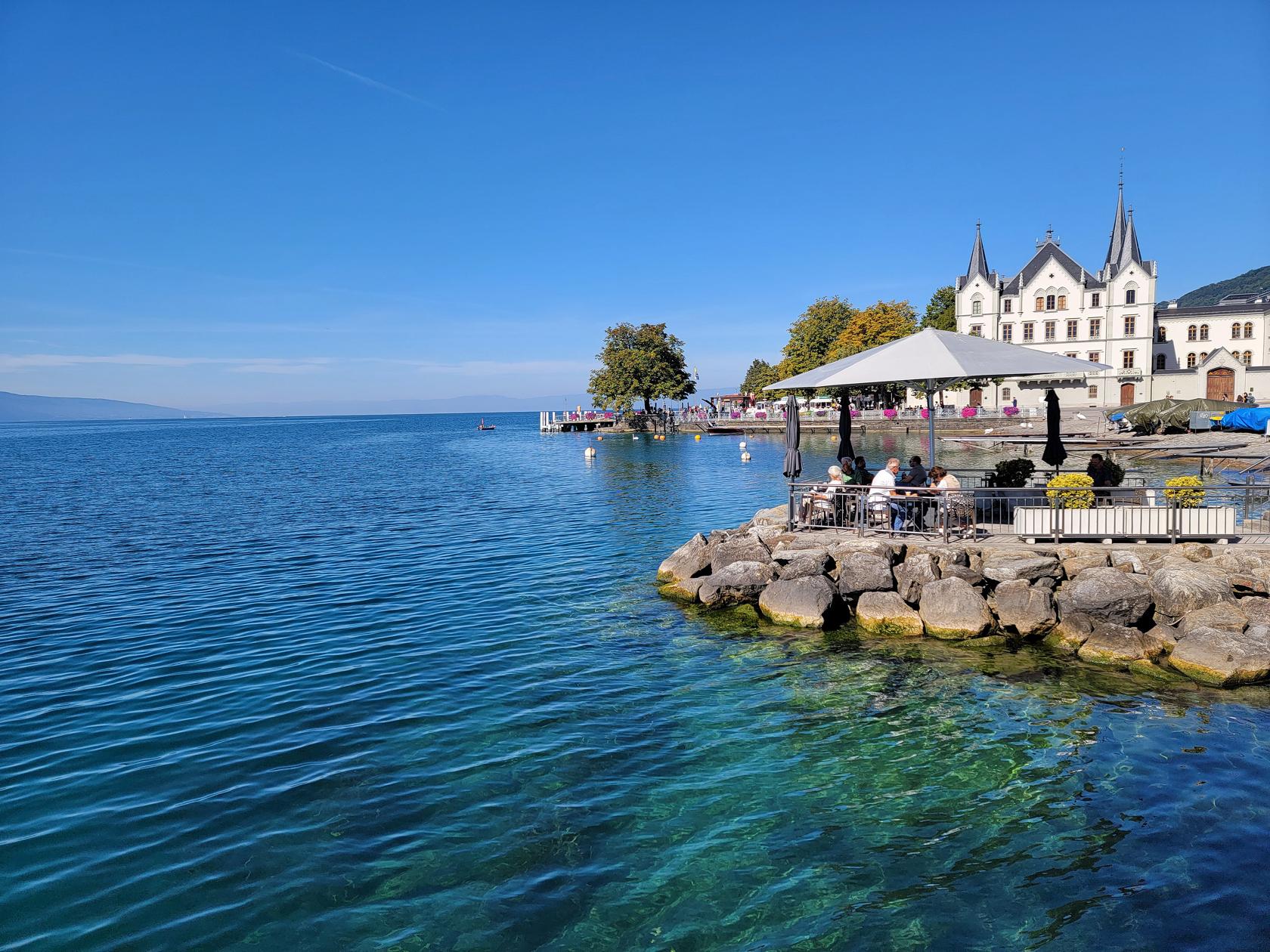
Lake Leman – Ilse de Salagnon Harbor – Clarens, Switzerland
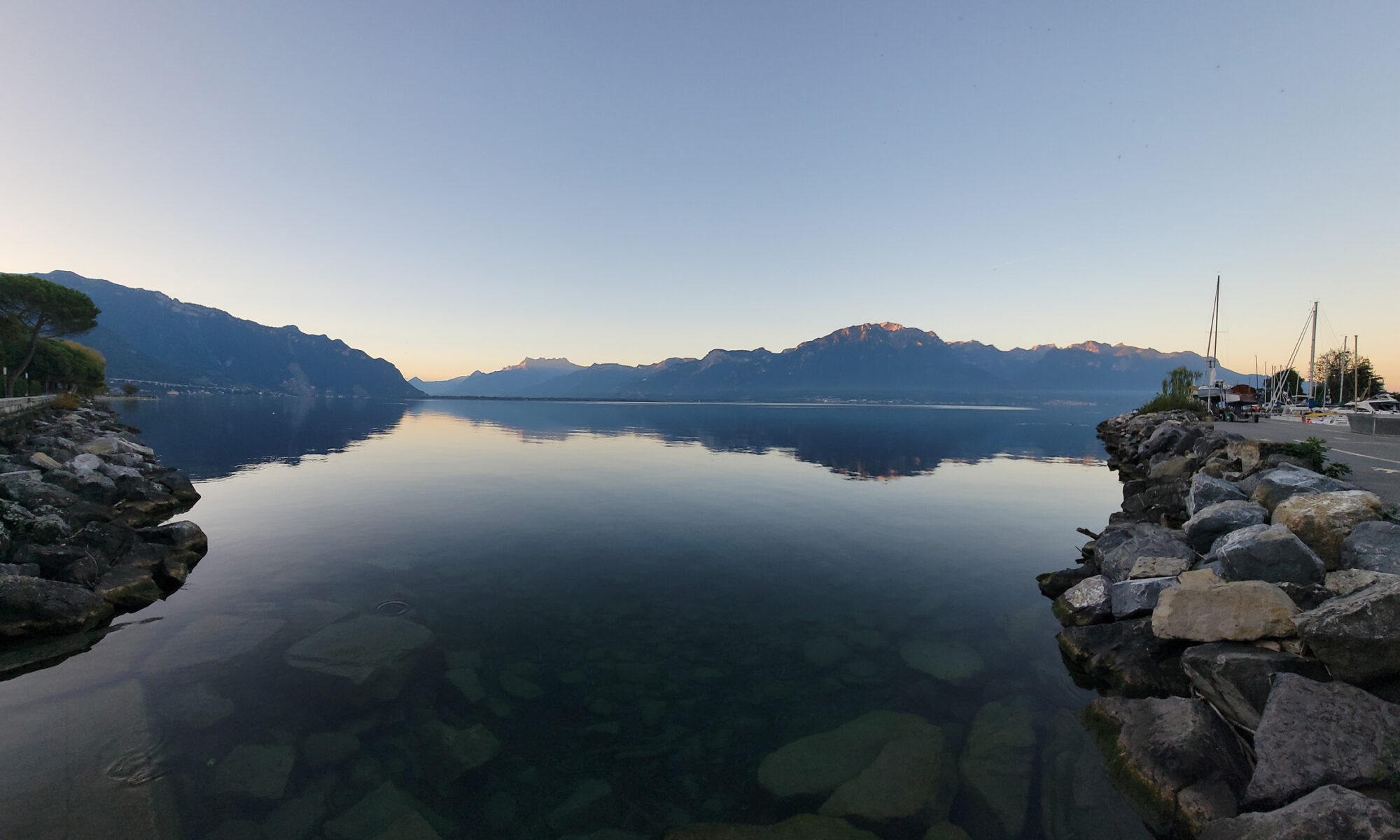
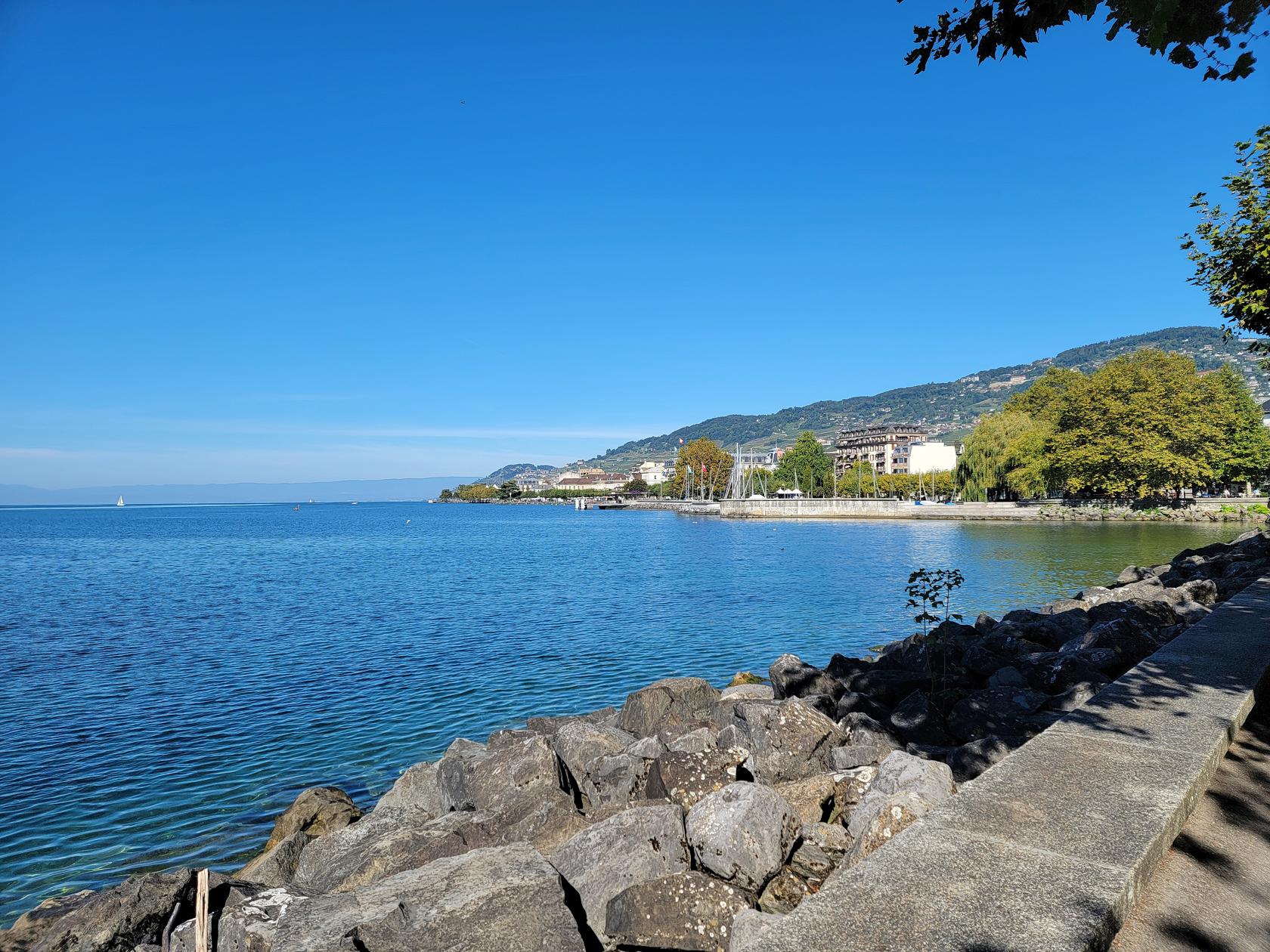
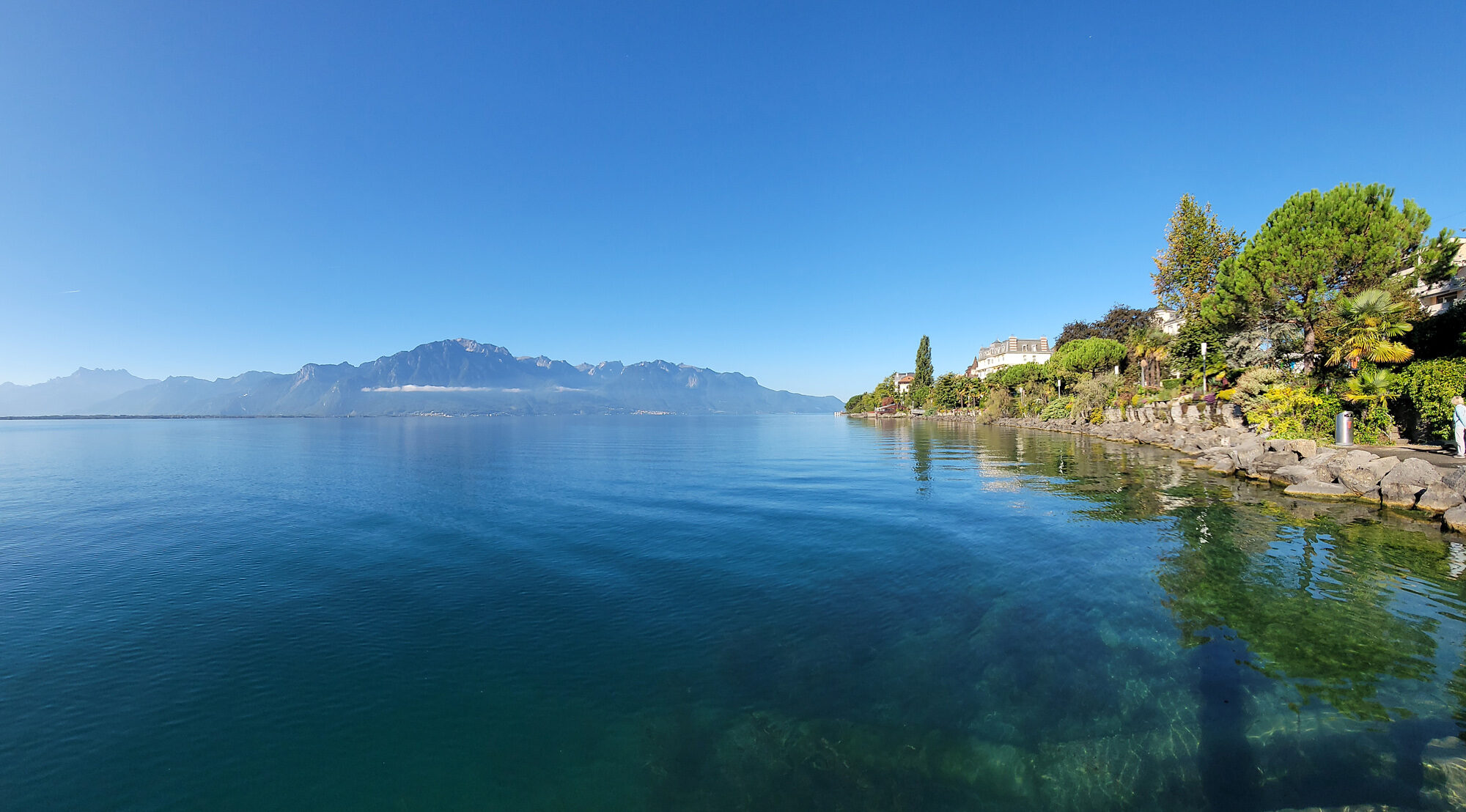
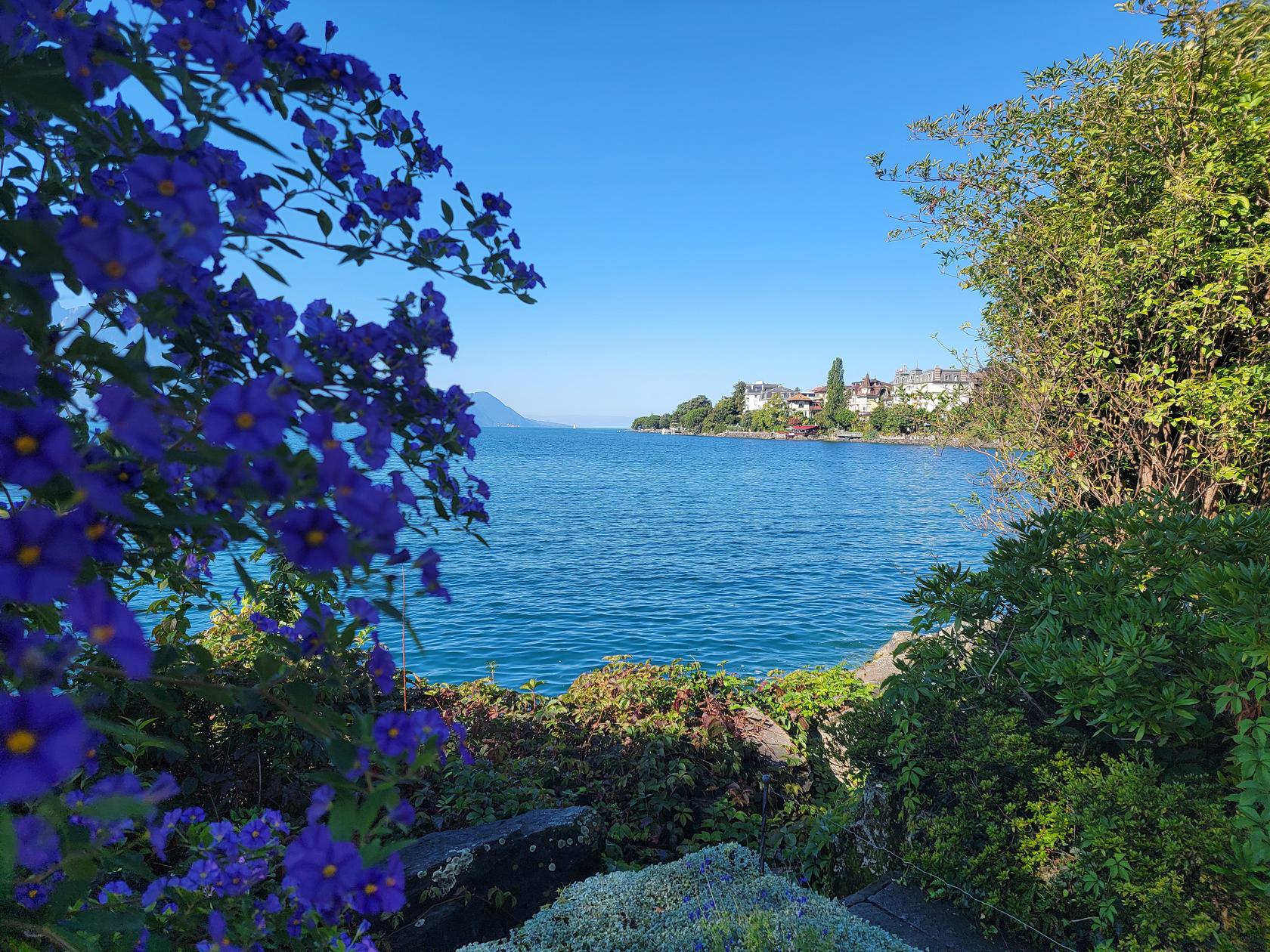
Lake Leman – Looking Toward Vevey – Clarens, Switzerland
Lake Leman – Ilse de Salagnon Harbor – Clarens, Switzerland
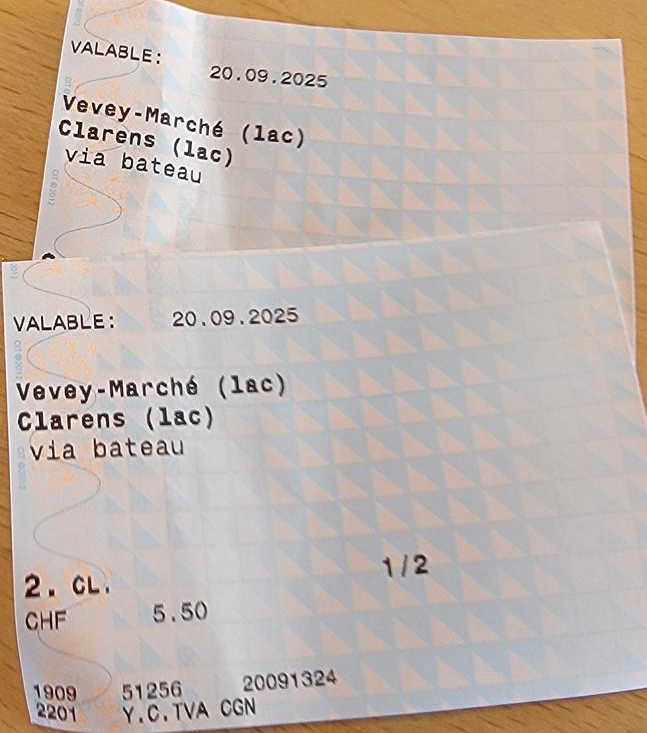
For our return we took the CGN Ferry back to Clarens. While I would normally say it was a relaxing trip back, we had our grandson with us who was overdue for a nap, so we enjoyed a terrible-two meltdown instead!
The old town is a one or two block wide stretch along the lake’s coastline. Though there are still a few old Roman bridges that span the small creek that cuts through the town, there seems to be no evidence of the old fortifications that used to protect it.
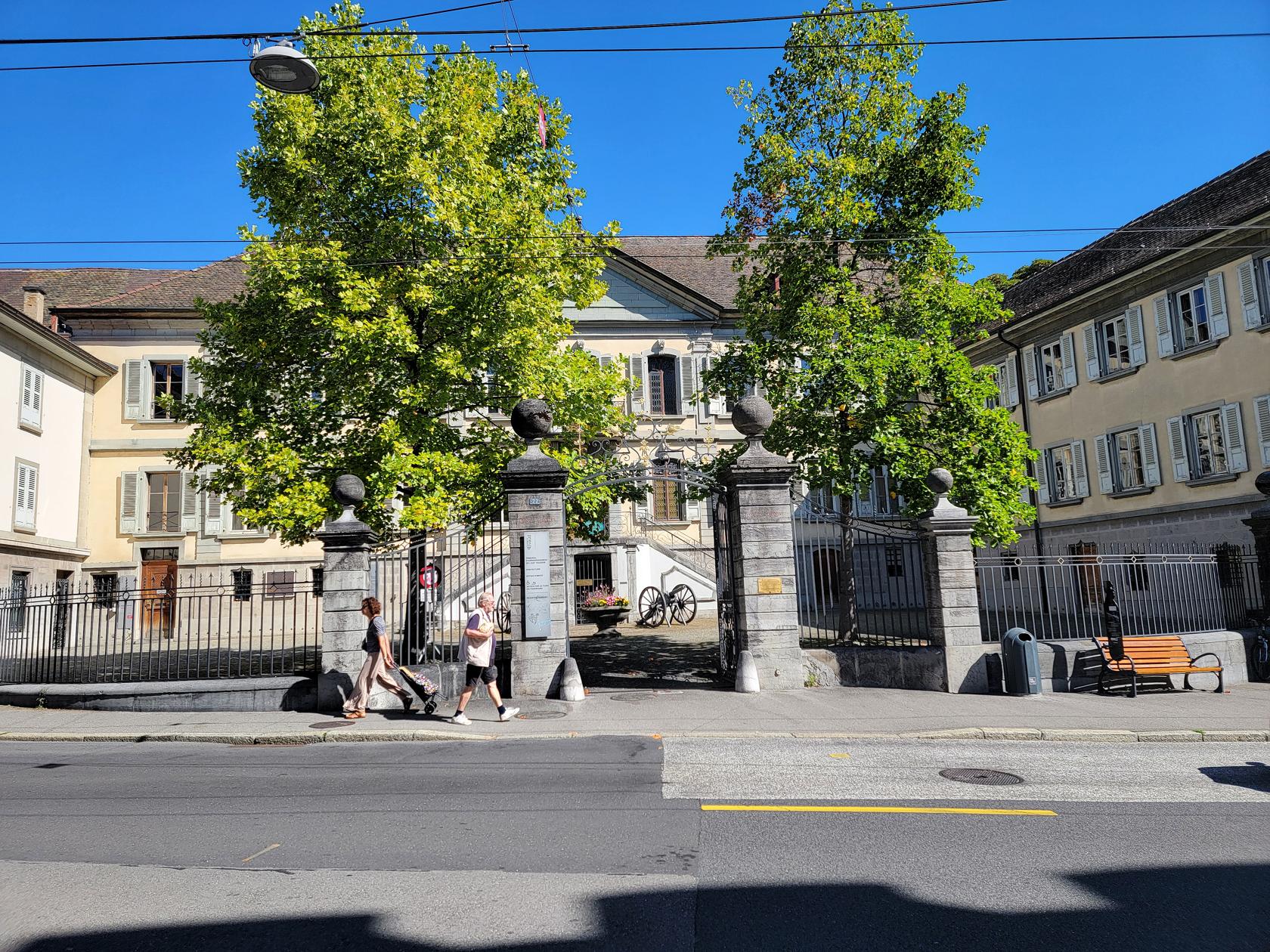
City Hall – Municipal Building – Vevey, Switzerland
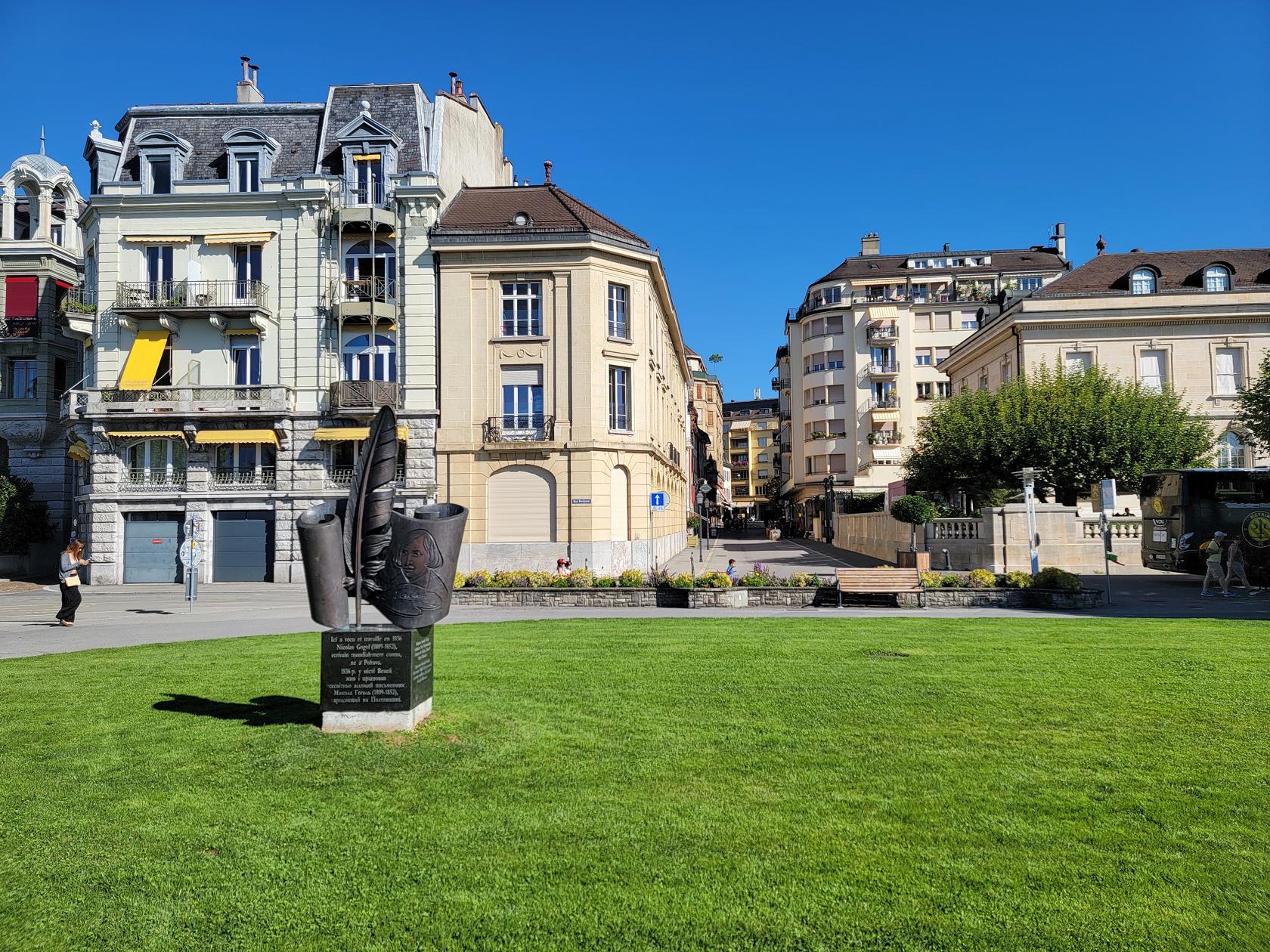
Nicolas Gogol Monument – Vevey, Switzerland
Entering The Town – Vevey, Switzerland
Lake Leman – Ilse de Salagnon Harbor – Clarens, Switzerland
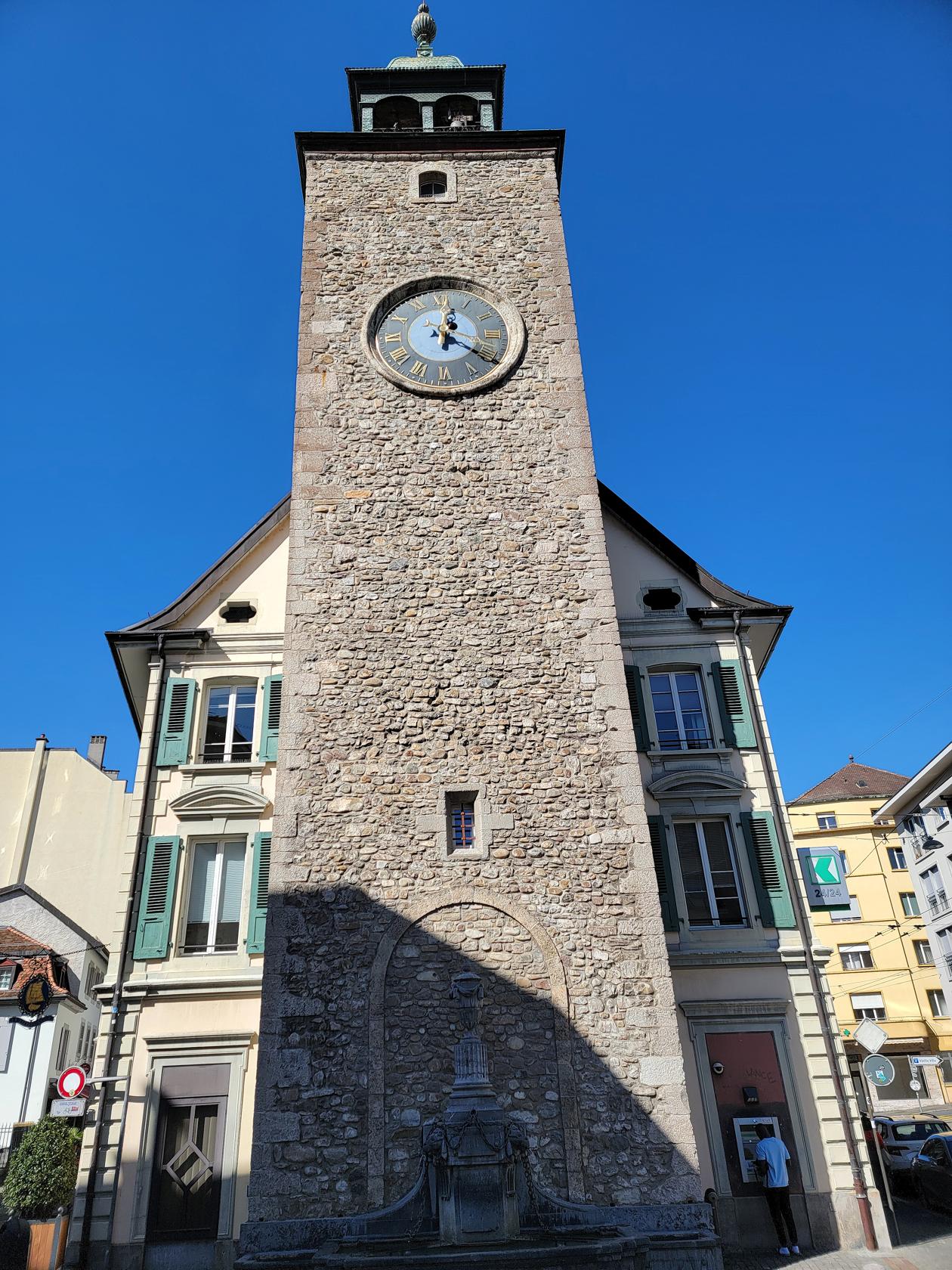
In the central part of town, the Saint Jean clock tower stands sentinel and offers a fountain as refreshment below it.
Saint Jean Clock Tower and Fountain – Vevey, Switzerland
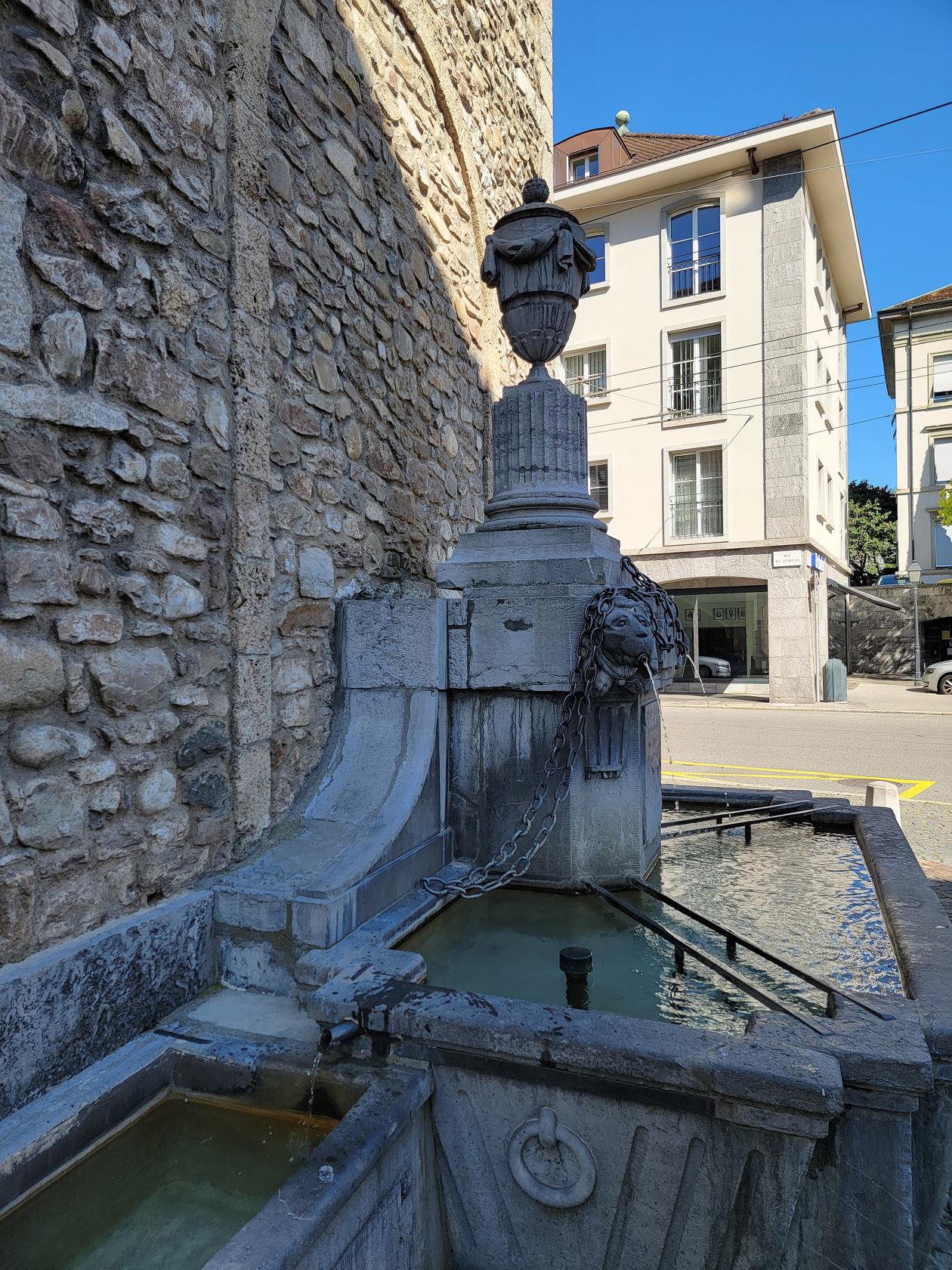
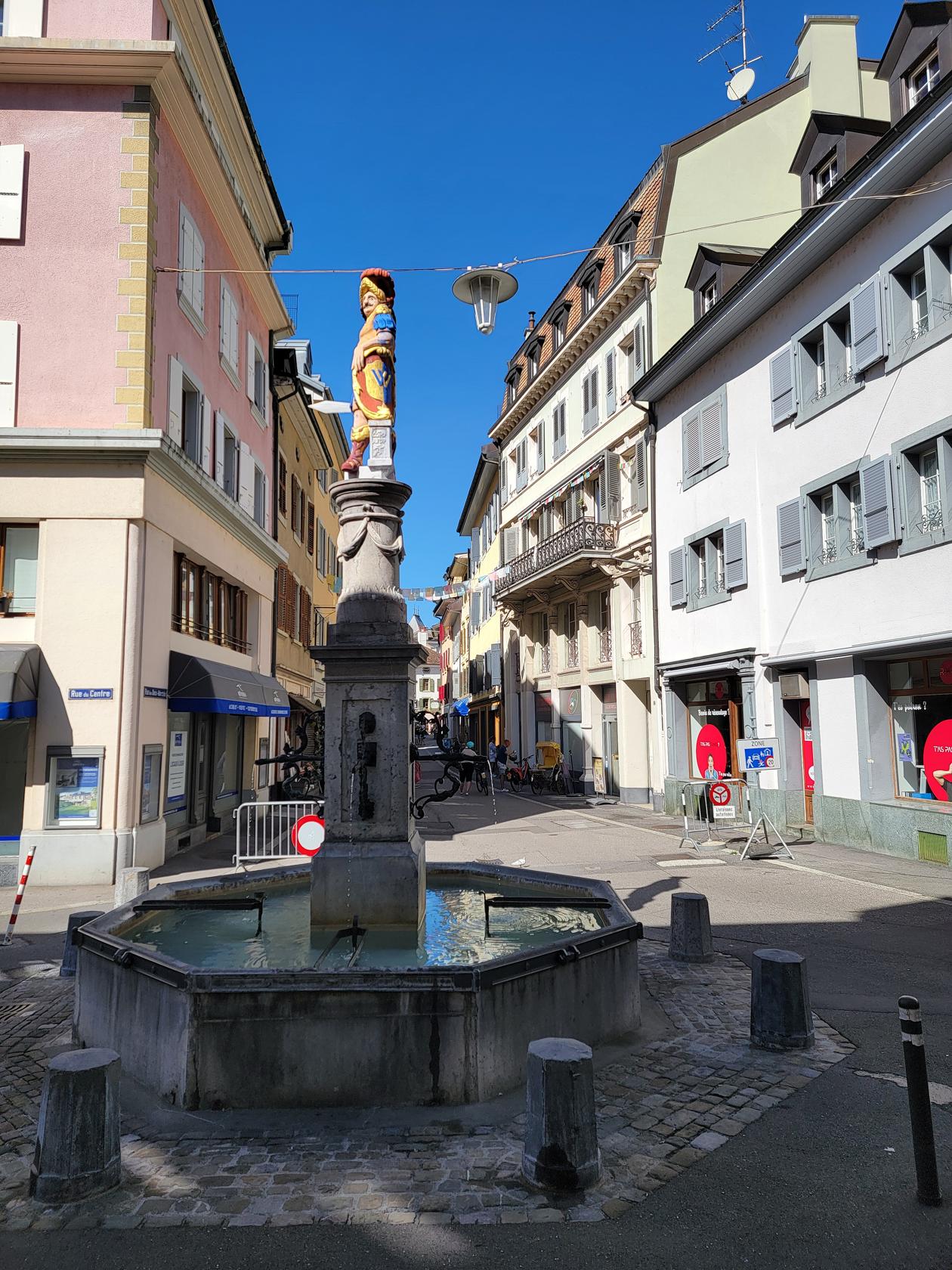
One of many fountains – Vevey, Switzerland
Vevey Vieille Ville Fountain – Vevey, Switzerland
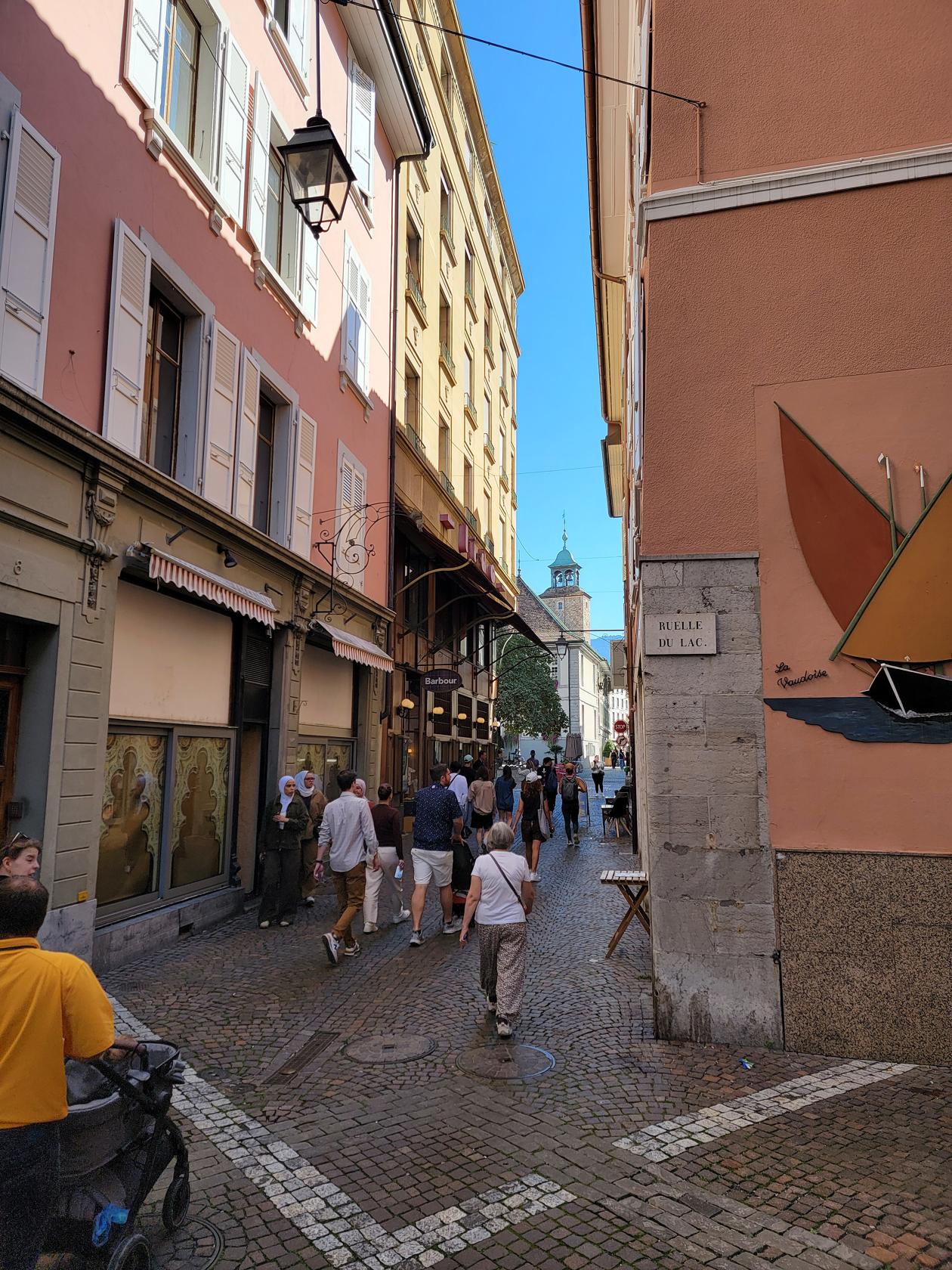
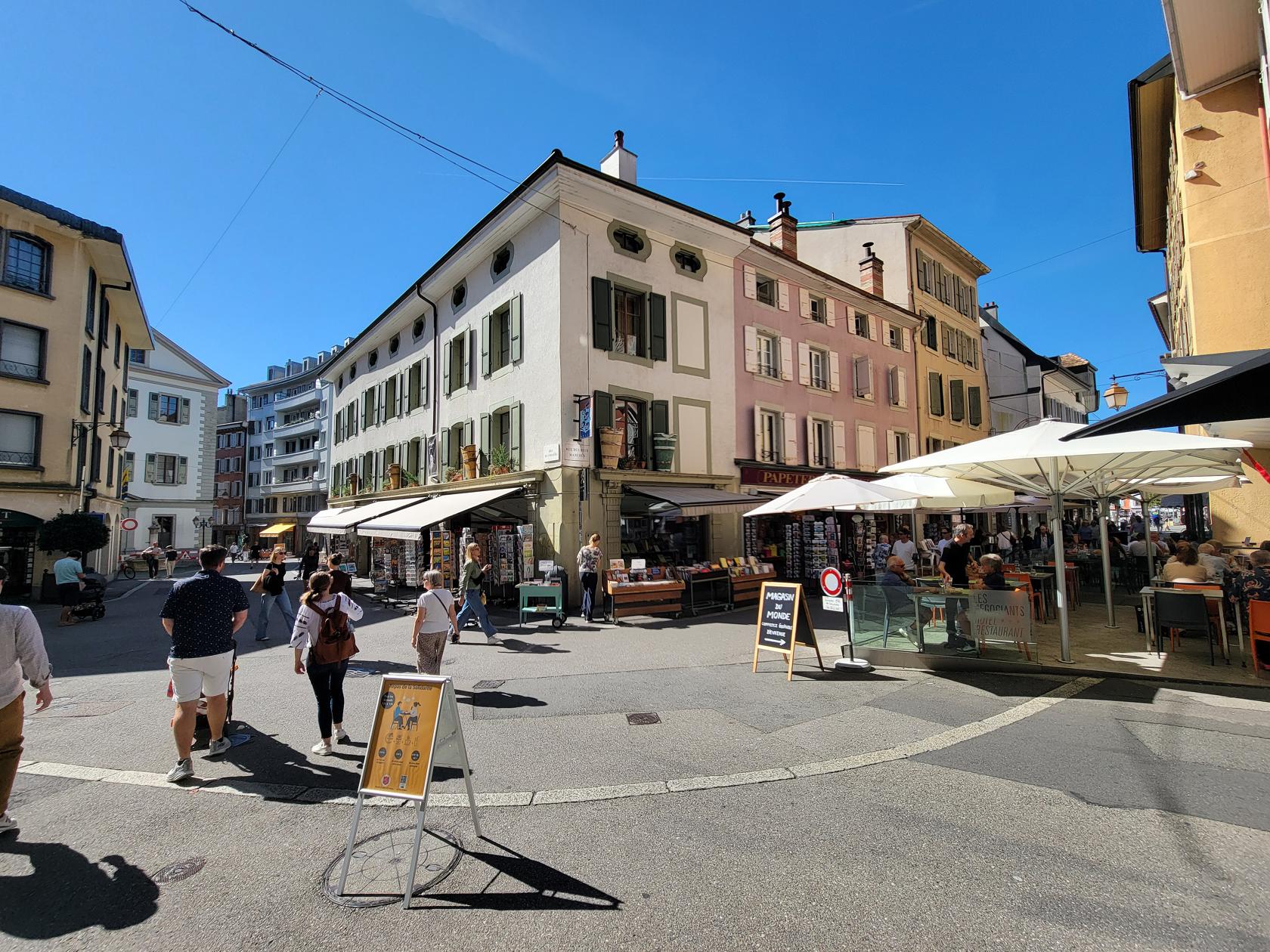
Rue du Lac – Vevey, Switzerland
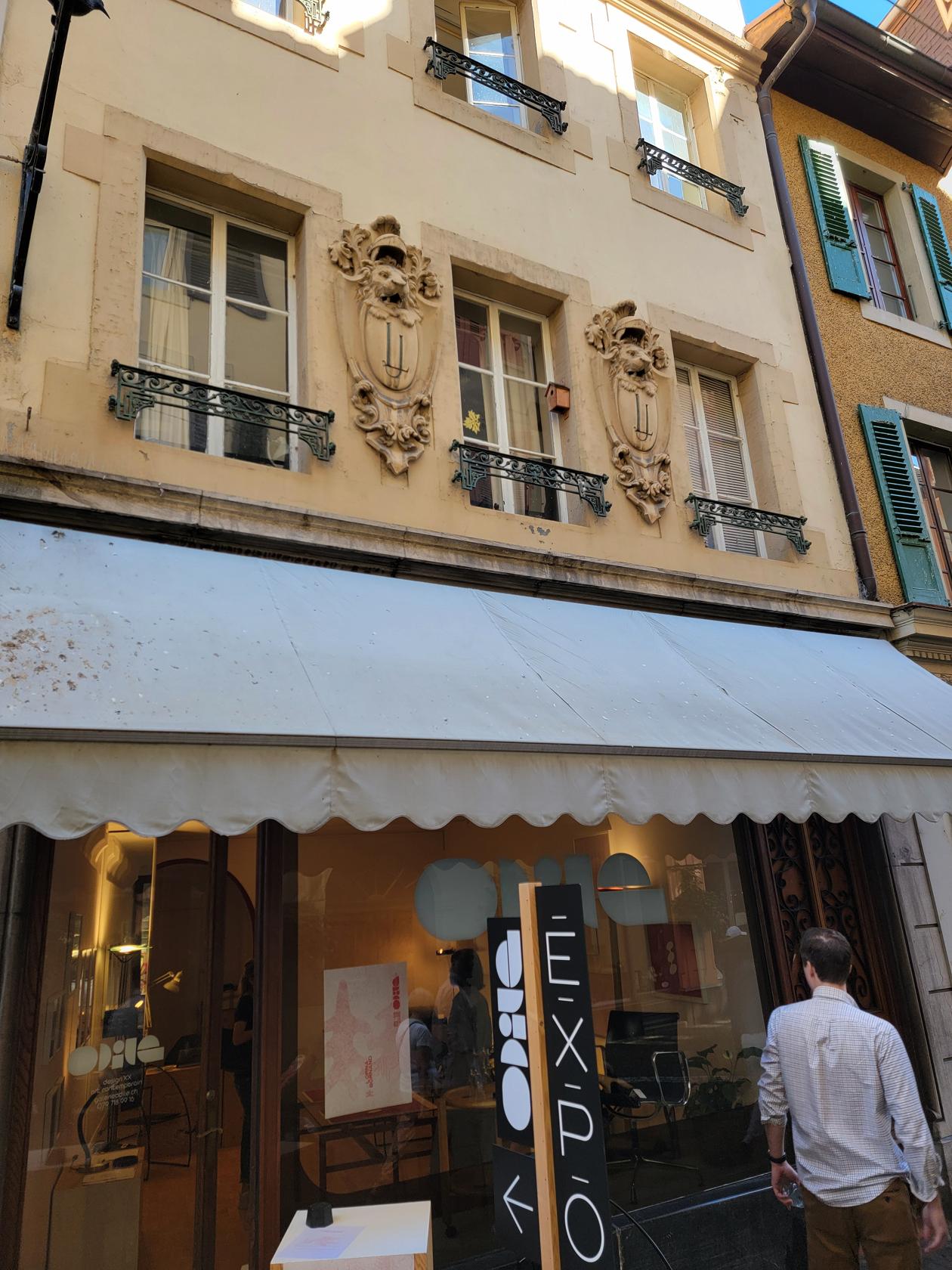
Dana Window Shopping – Vevey, Switzerland
Rue du Lac – Vevey, Switzerland
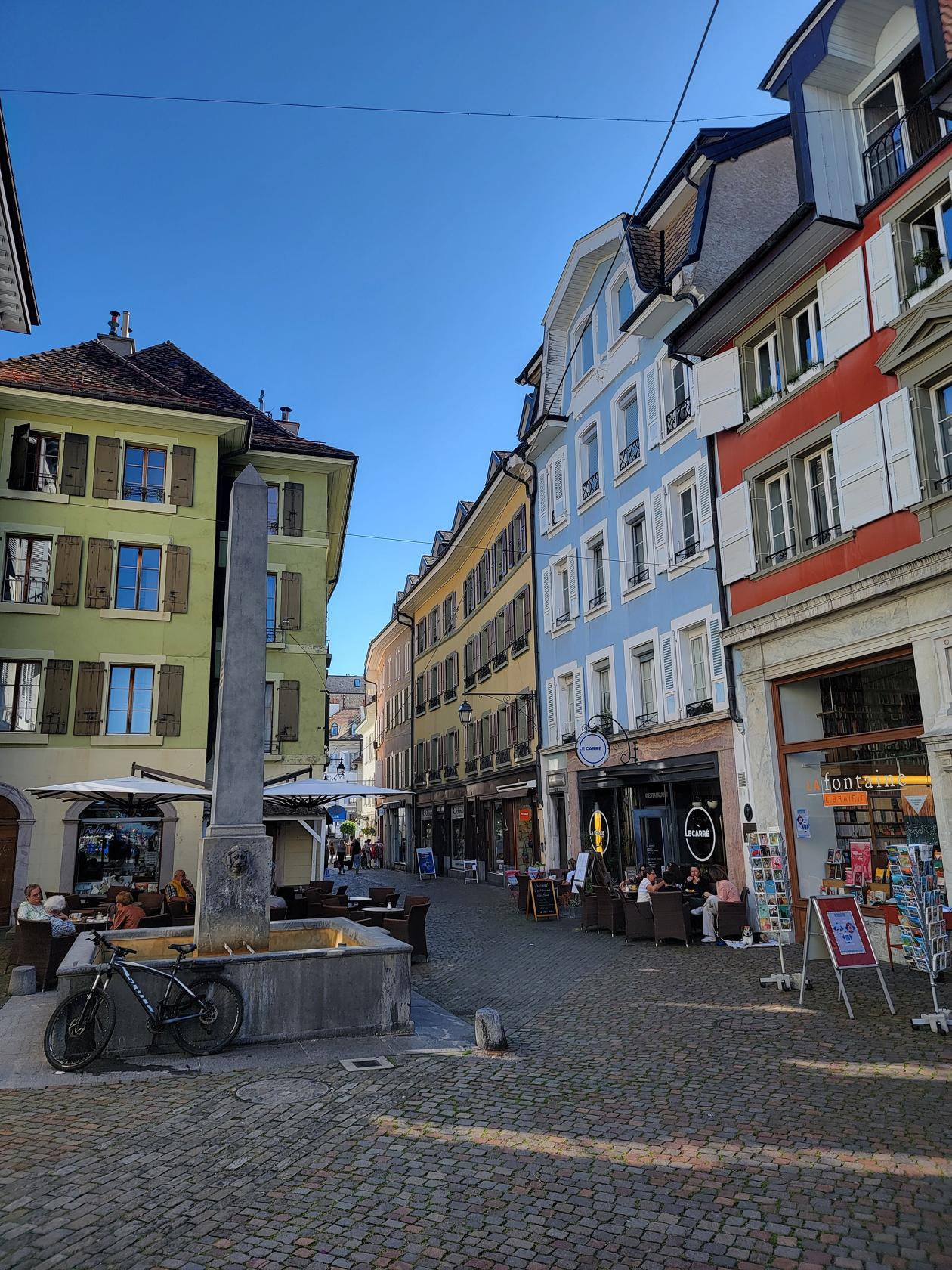
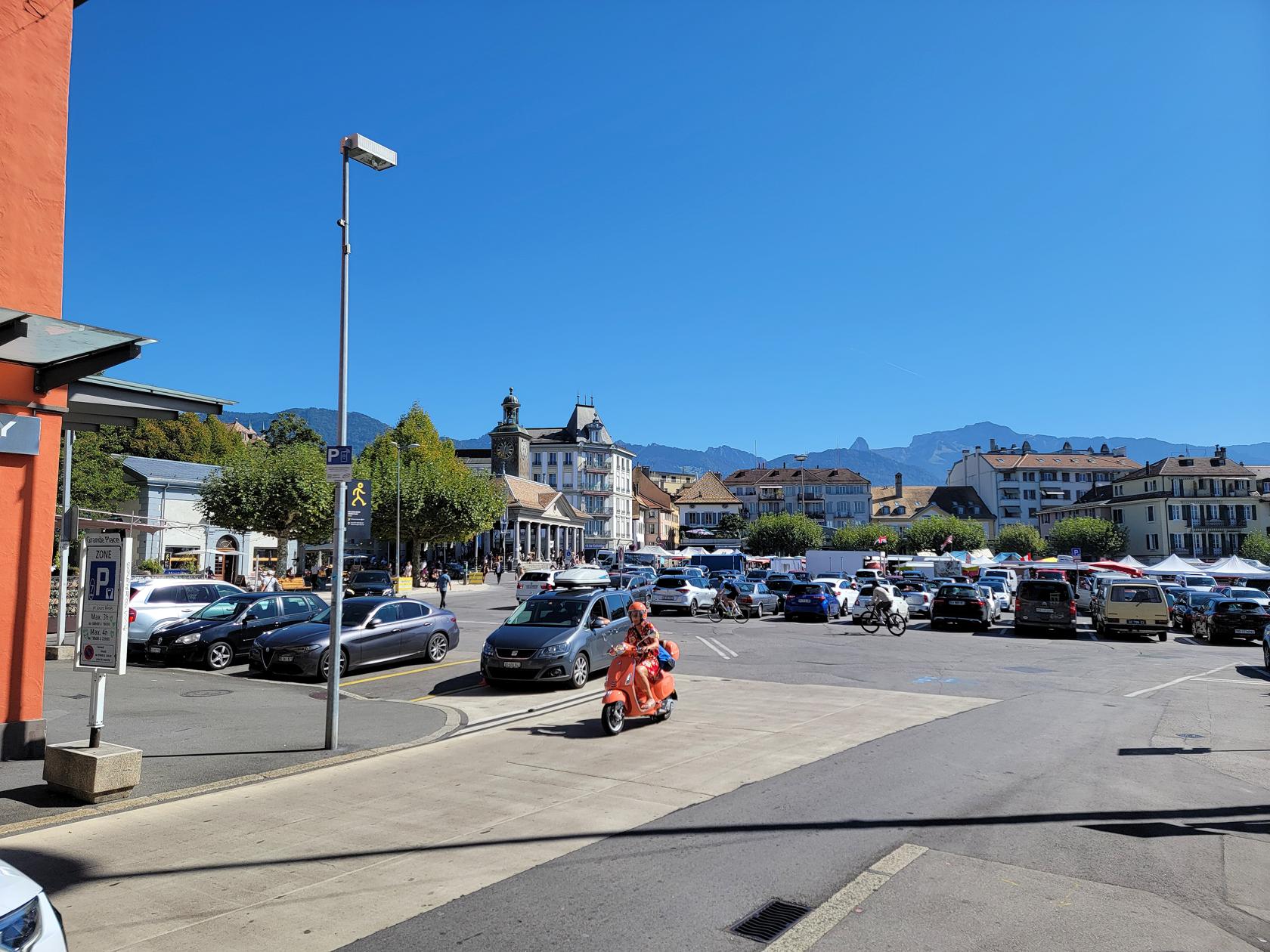
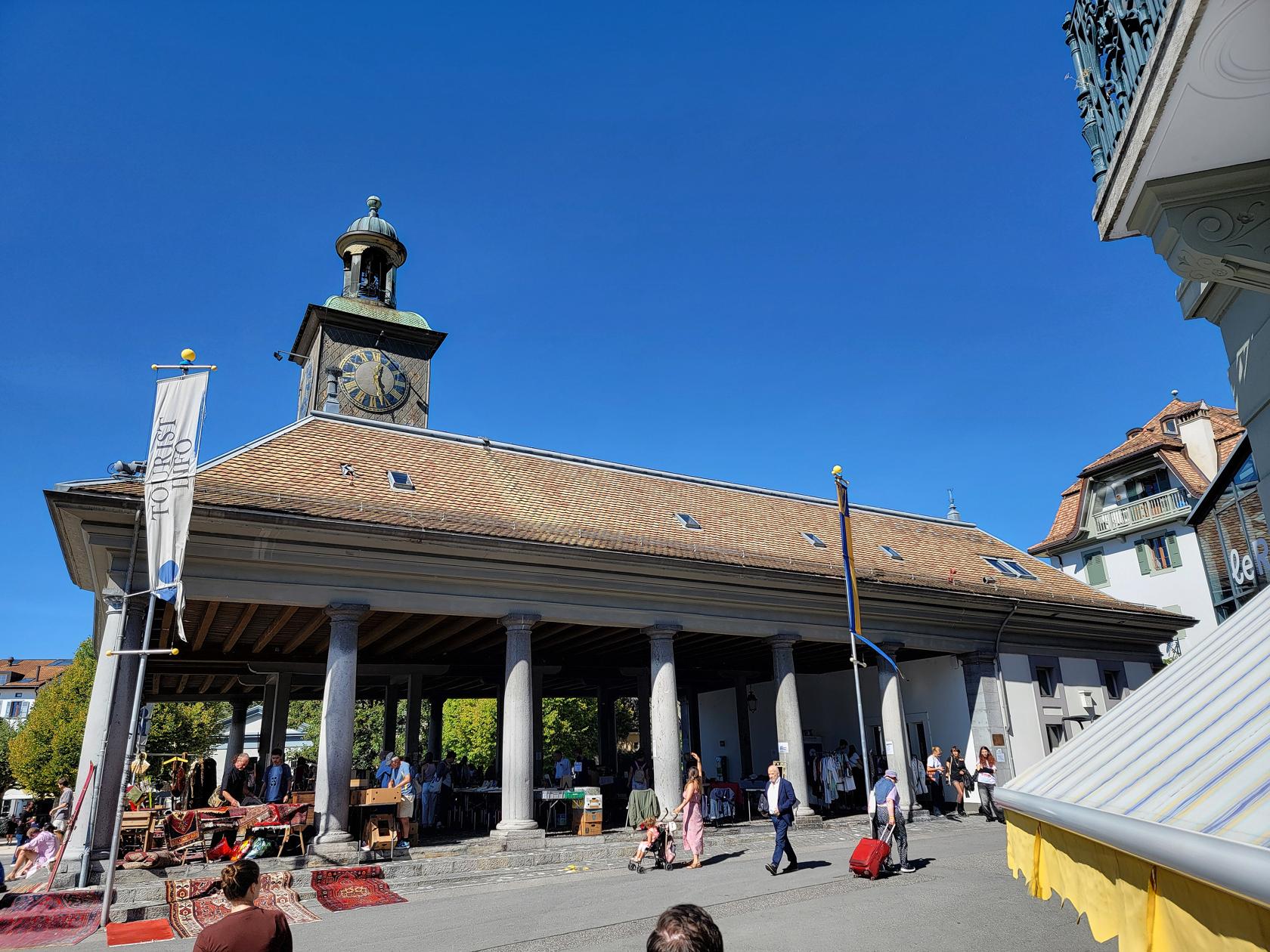
There are numerous shops here and on the right day, the central square or Place du Marché, holds a marketplace where a whole host of goods are sold. Therefore you may not be able to rely on this as a parking lot and if driving look elsewhere.
Plac du Marché – Vevey, Switzerland
La Grenette – Vevey, Switzerland
Busy Town Square – Vevey, Switzerland
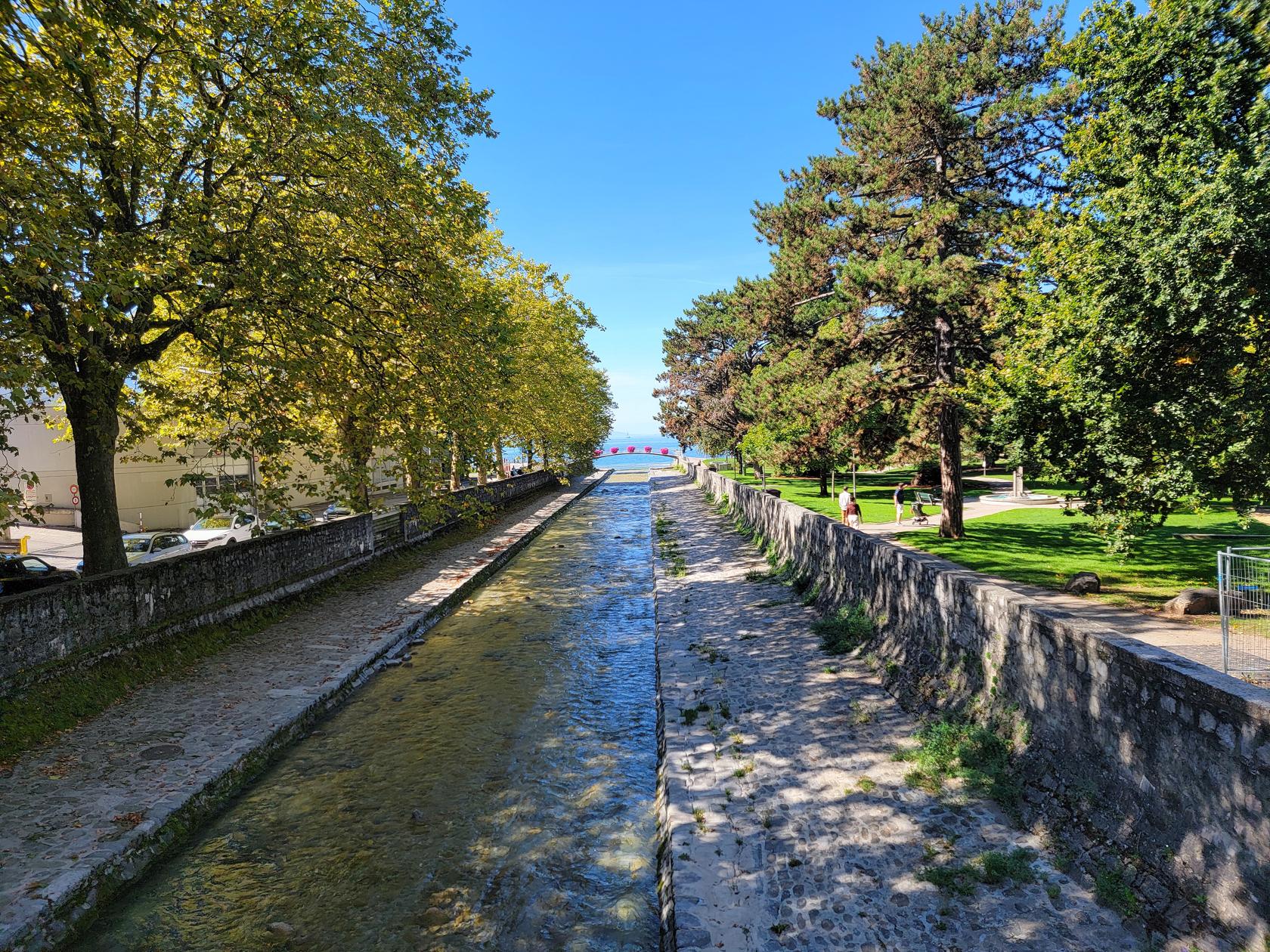
The Jardin Doret or park, has public amenities, as well as a nice playground for small children who need to take a rest from all of the adult walking we like to do on vacation; so for some, a must stop.
Stream with Jardin Doret – Vevey, Switzerland
Gabi, Ericka and Vlad – Place de l’Aviron – Vevey, Switzerland
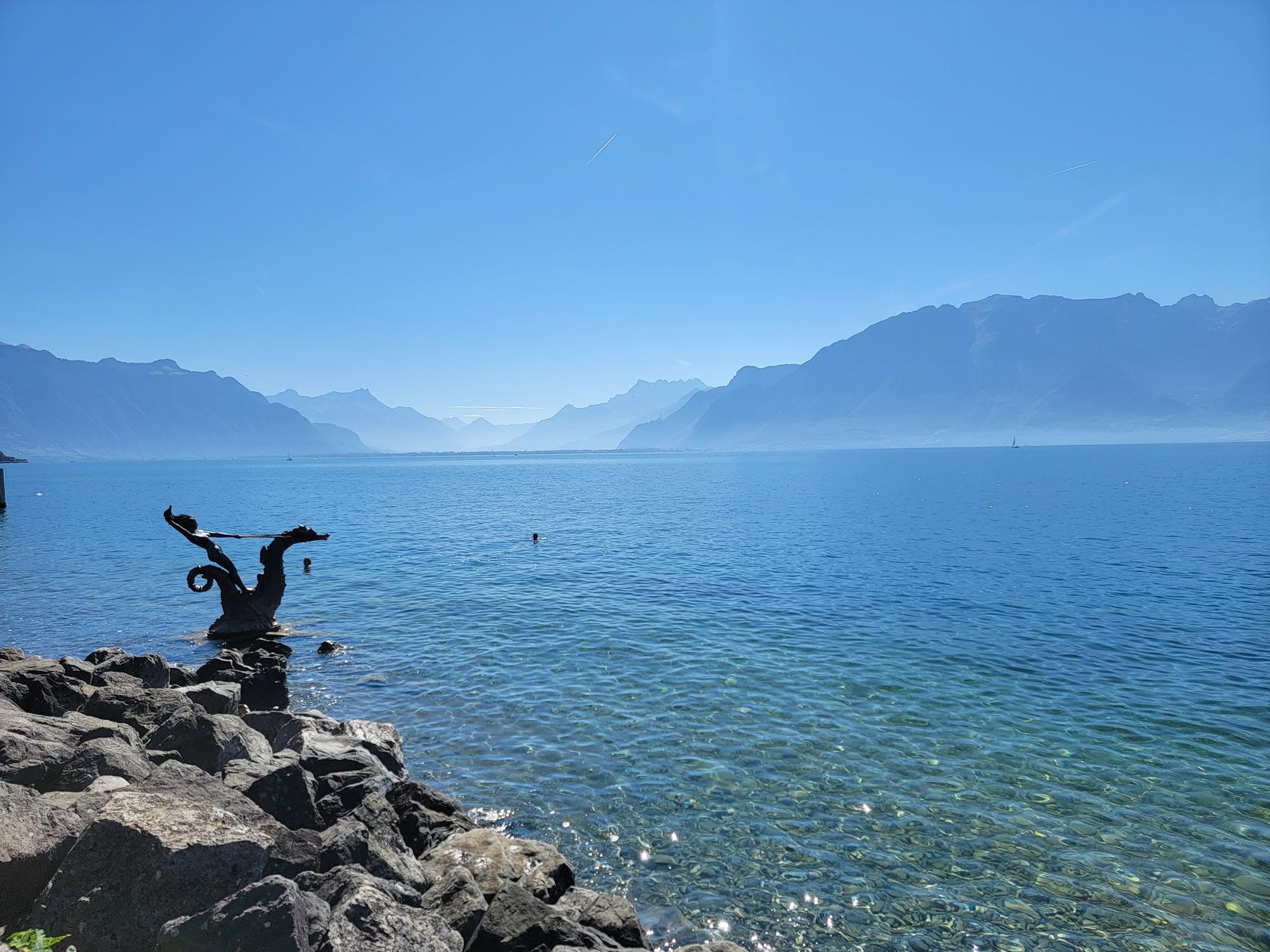
Lake Leman – Seahorse Sculpture – Vevey, Switzerland
From our hotel the Quai de Clarens extends to the left and right. Taking a left while leaving, it turns into the Quai de Vernex within a short time and then it has many other monikers. For an early morning September stroll it is a very picturesque and beautiful walk along the lake, being well maintained by the authorities.
Quai Alfred Chatelanat – Walk To Castle Chillon – Montreaux, Switzerland
Quai Alfred Chatelanat – Walk To Castle Chillon – Montreaux, Switzerland
Quai Alfred Chatelanat – Walk To Castle Chillon – Montreaux, Switzerland
Quai Alfred Chatelanat – Walk To Castle Chillon – Montreaux, Switzerland
Quai Alfred Chatelanat – Walk To Castle Chillon – Montreaux, Switzerland
Quai Alfred Chatelanat – Walk To Castle Chillon – Montreaux, Switzerland
Quai Alfred Chatelanat – Walk To Castle Chillon – Montreaux, Switzerland
Quai Alfred Chatelanat – Walk To Castle Chillon – Montreaux, Switzerland
Quai Alfred Chatelanat – Walk To Castle Chillon – Montreaux, Switzerland
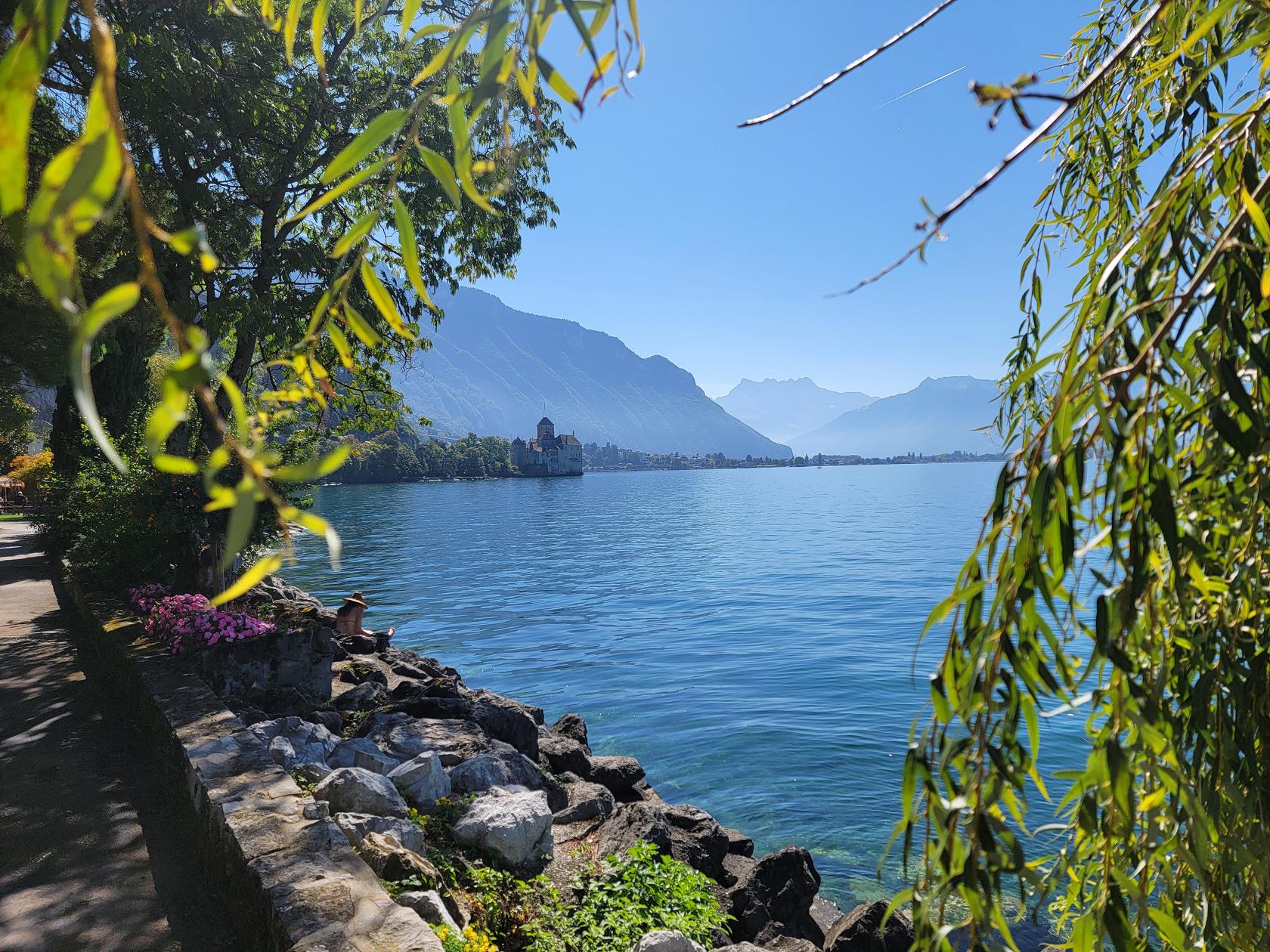
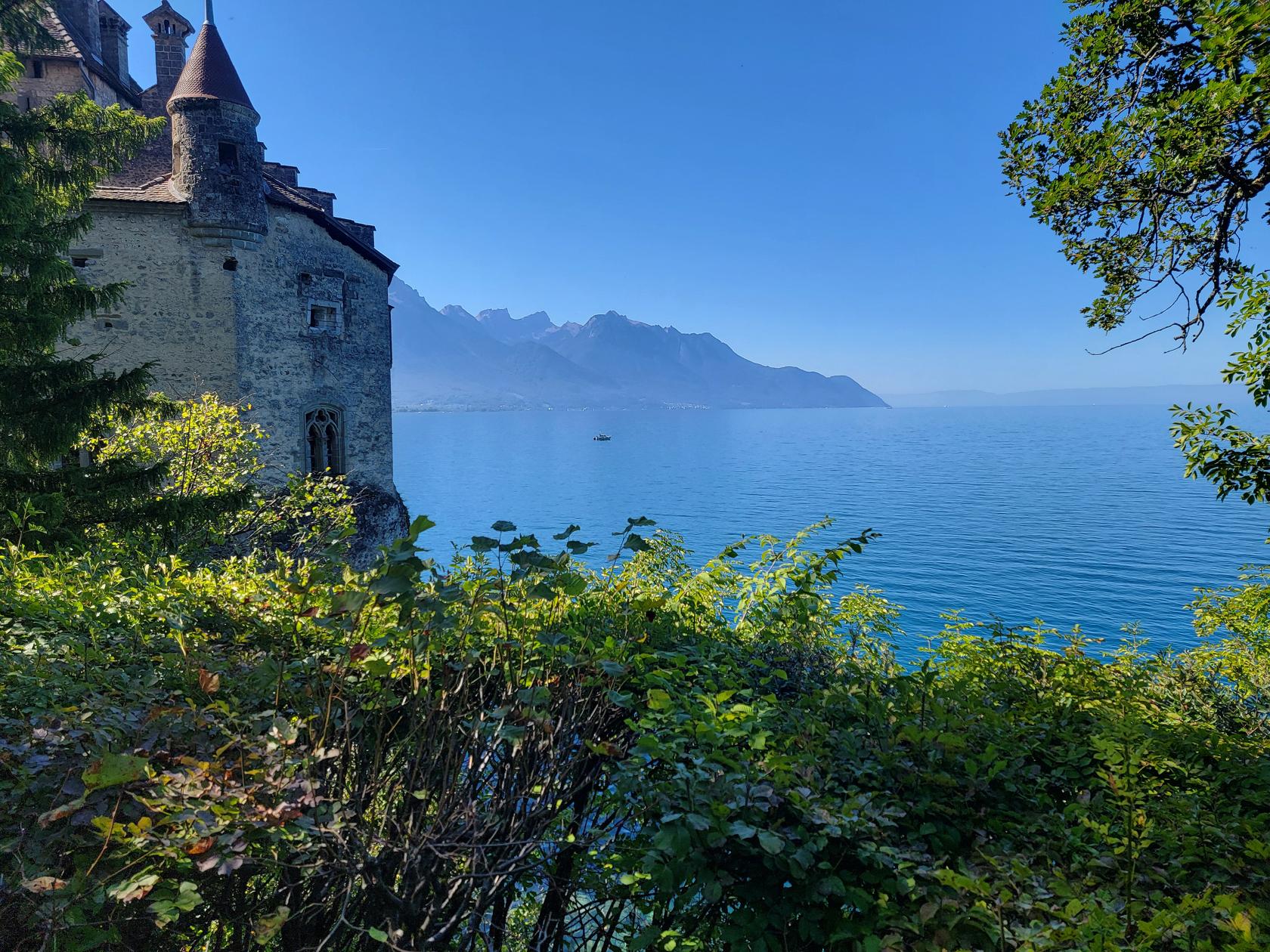
Eventually, as you pass the towns of Montreux and Veytaux, it will turn into the Quai Alfred Chatelanat. It is here you will see the Castle or Chateau de Chillon.
Quai Alfred Chatelanat – Castle Chillon – Montreaux, Switzerland
Quai Alfred Chatelanat – Castle Chillon – Montreaux, Switzerland
Getting There
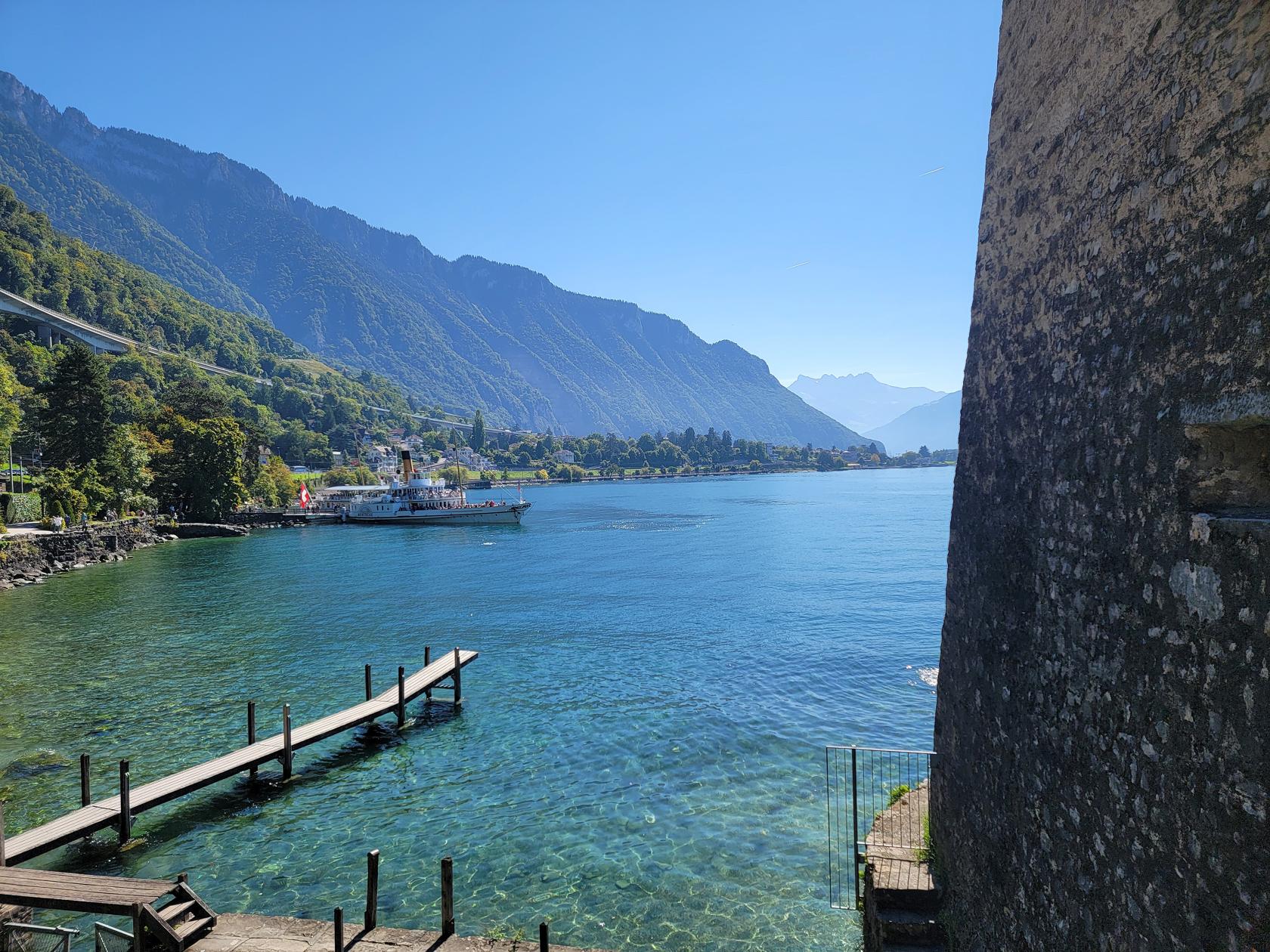
To get to Castle Chillon there are many options. One preferrable one, since the walk along the Quai is fairly long, at least a couple of miles, is taking the boat. It docks at several places and has a rather spotty schedule, so check the authorities and the schedule at your location prior to depending upon it. It does however dock just below the castle and had arrived as we were on our tour of it.
Castle Chillon – Lake Boat Embarking – Montreaux, Switzerland
You can also take the bus. This is probably the easiest option and there are numerous bus stops along the way. The 201 from Clarens to Veytaux comes every half hour. We chose this option to return to our hotel. Tickets can be purchases on the SBB mobile application.
Chateau de Chillon
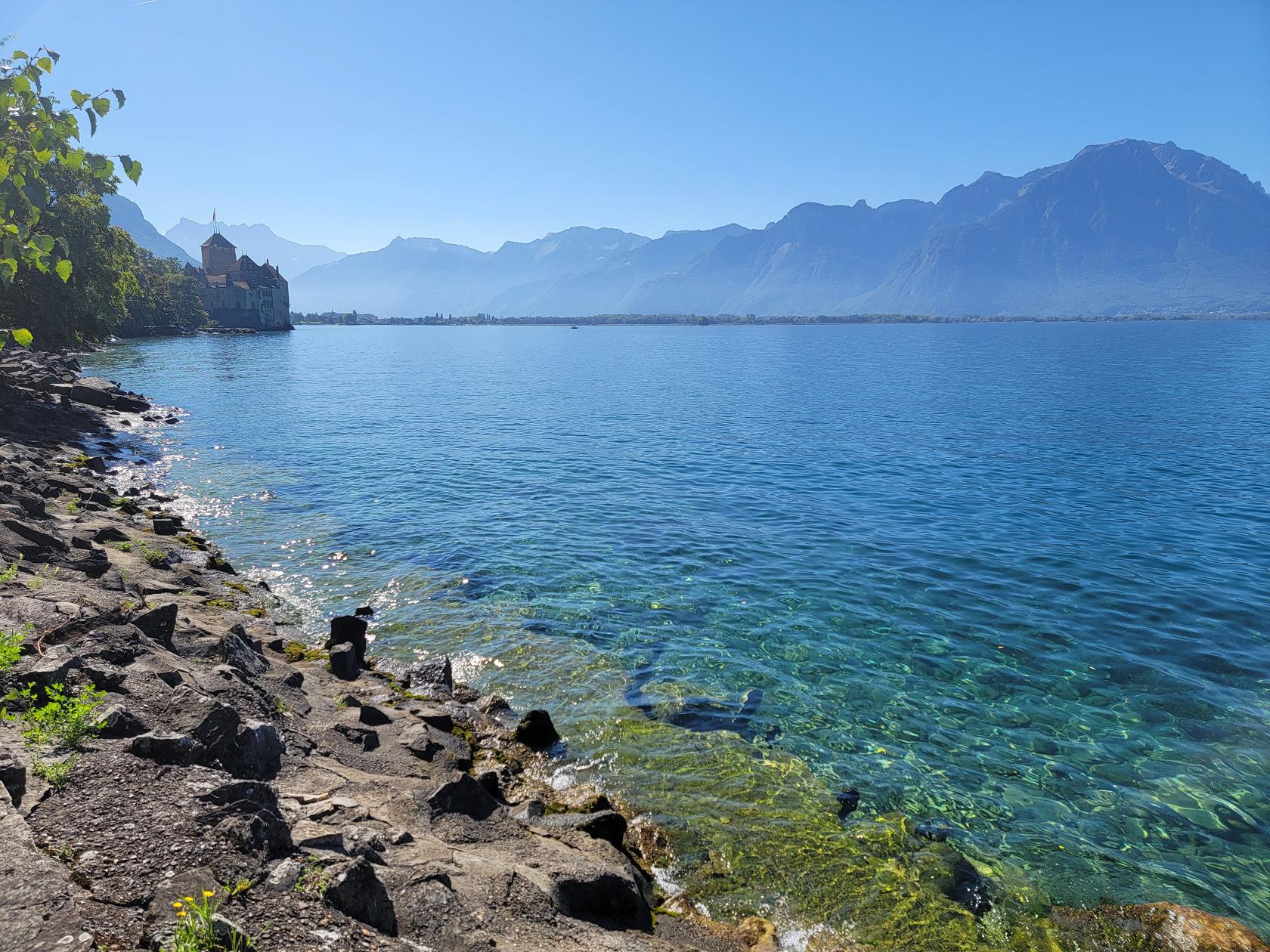
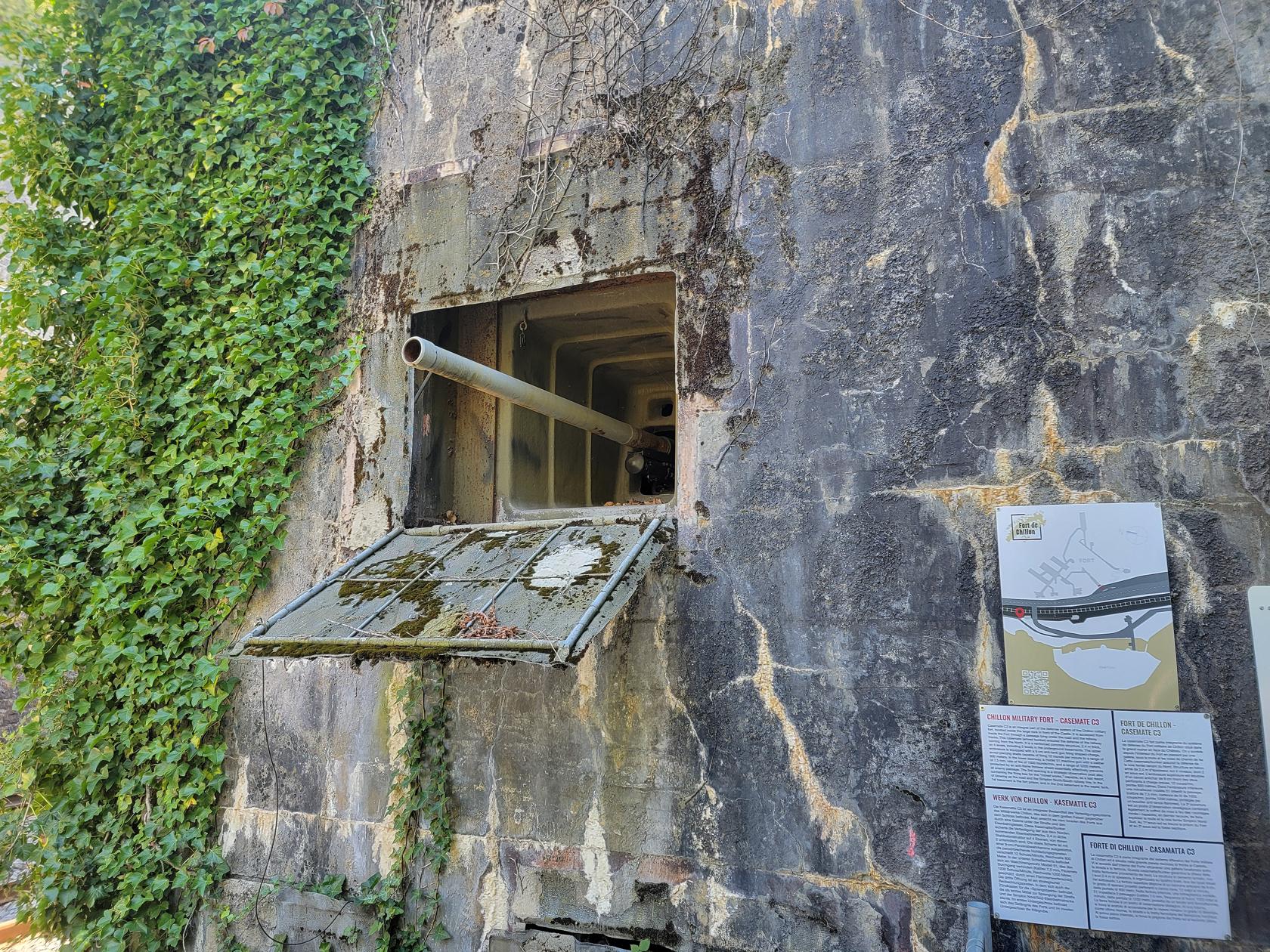
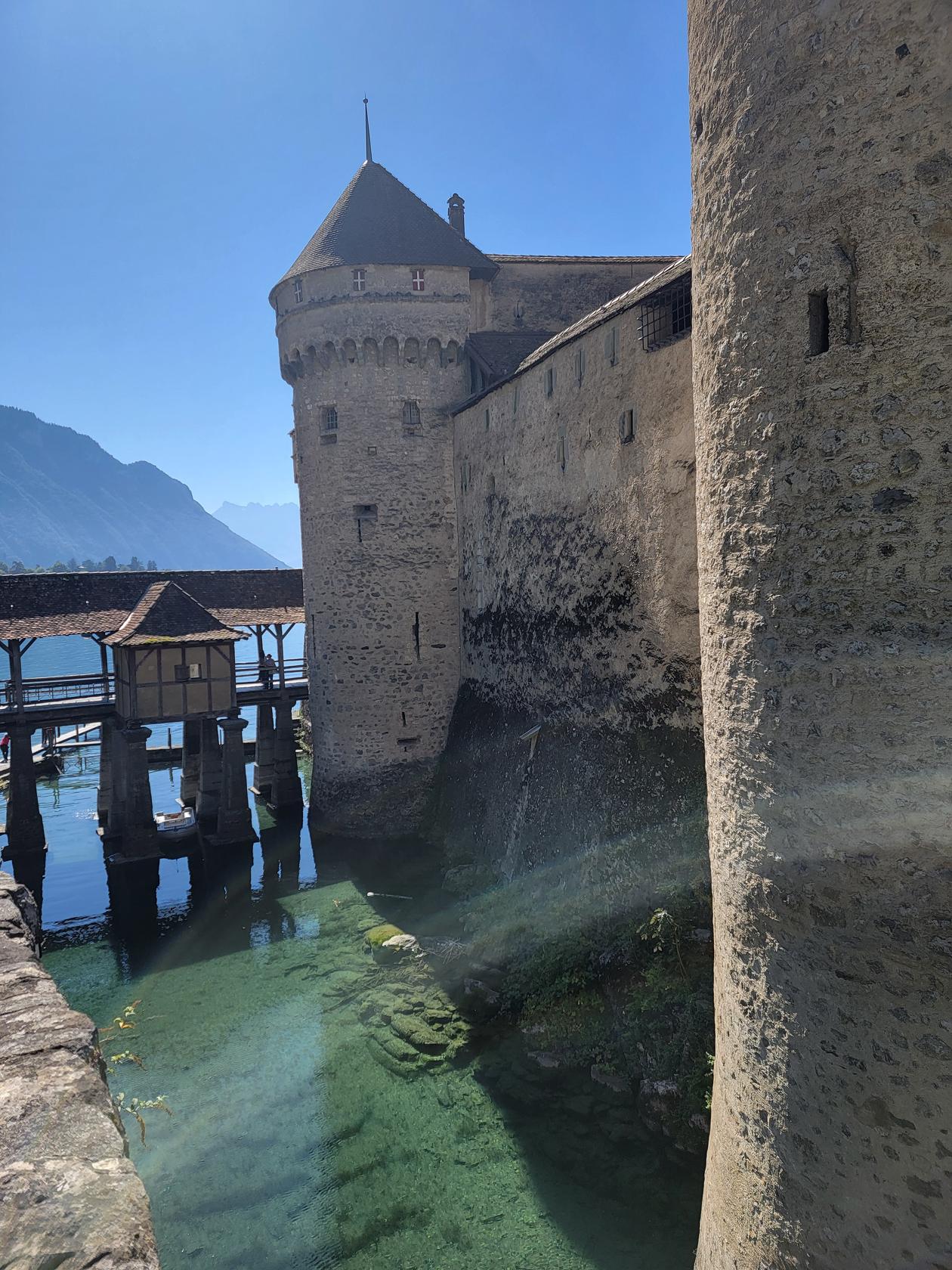
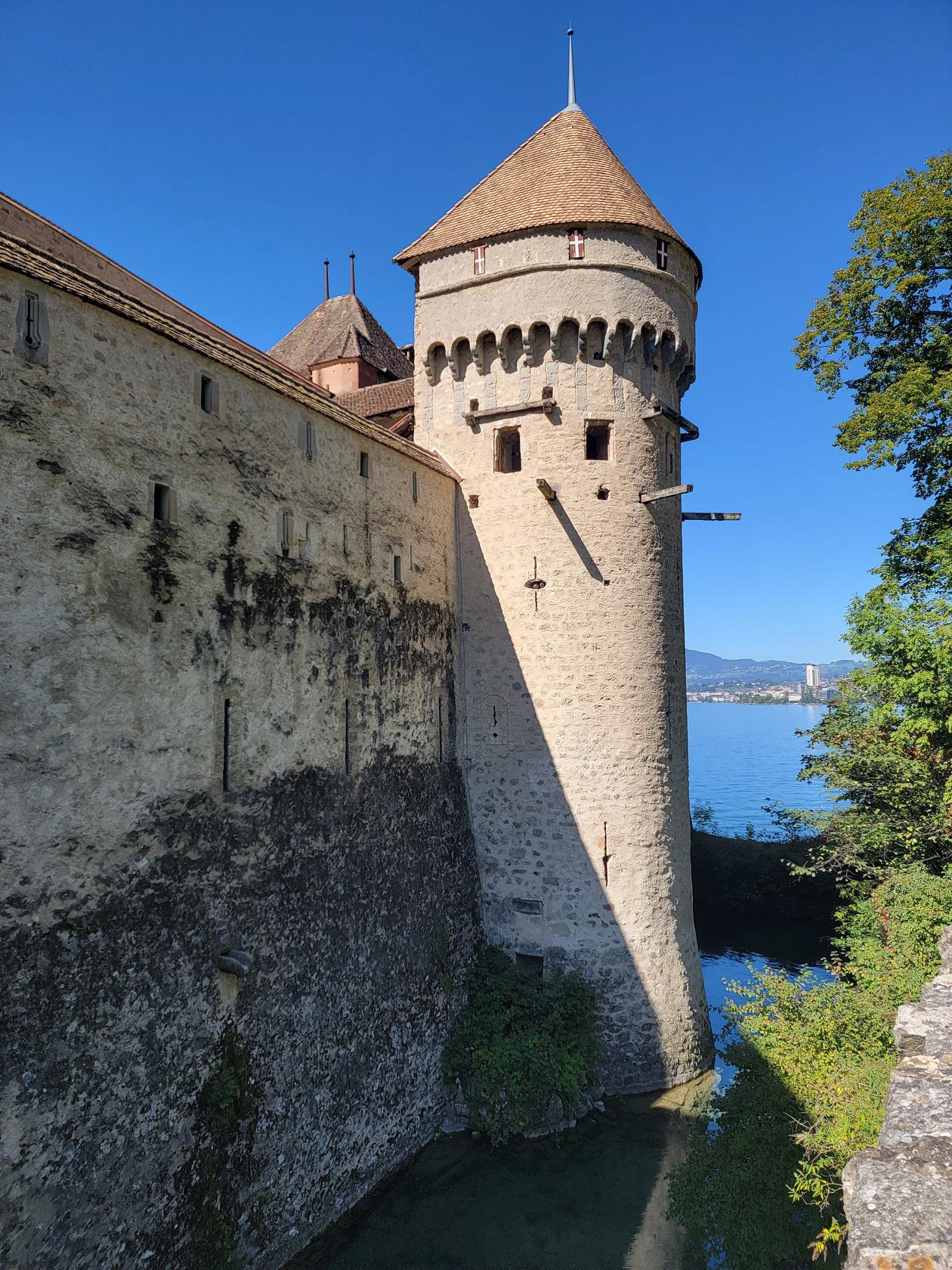
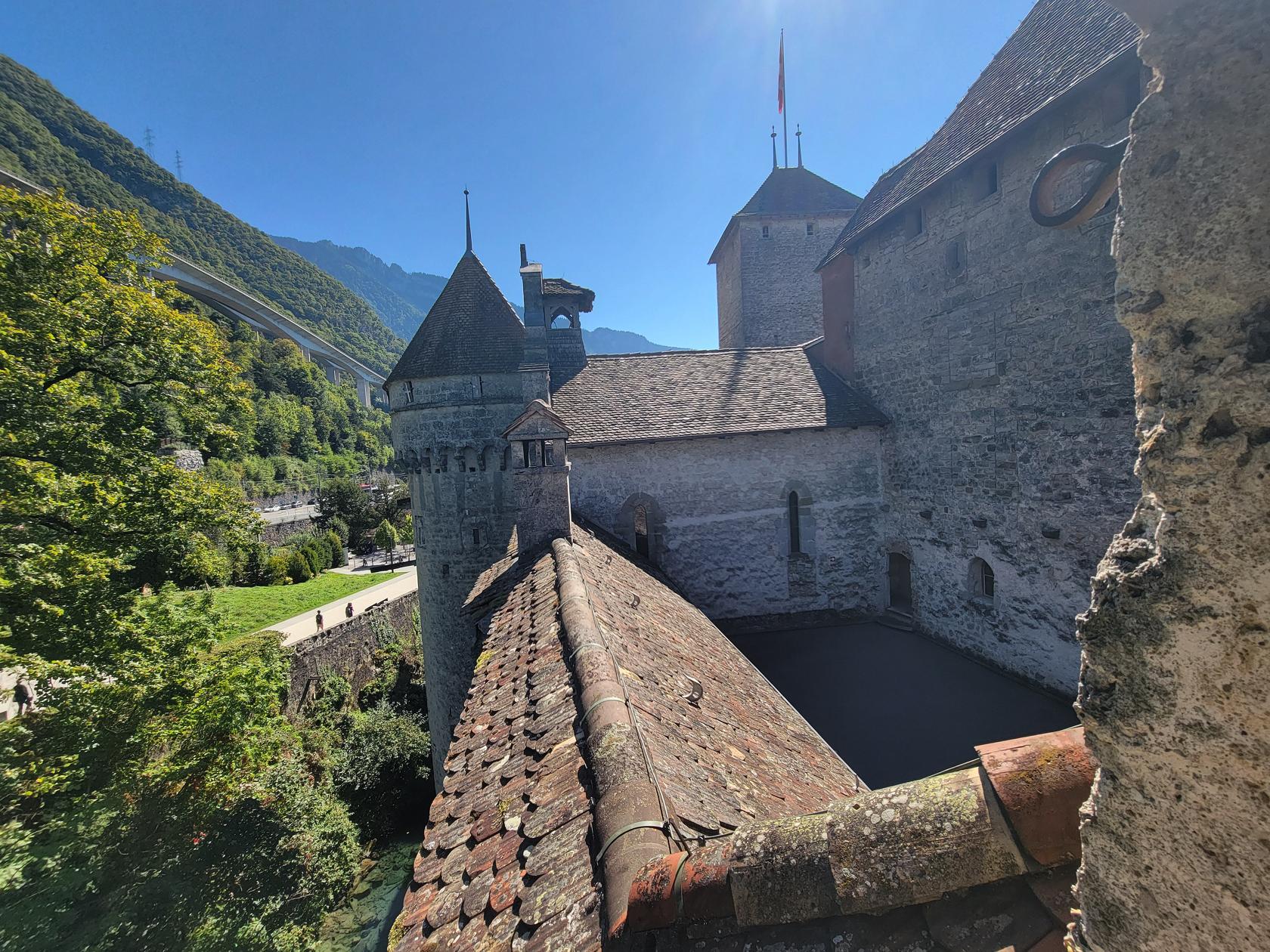
The Castle Chillon was originally built by the Savoy family and has had many different functions since it was first erected. It can be seen in the distance for some time before one notices the gun casement that guards it to the north.
Castle Chillon – Lake Leman – Montreaux, Switzerland
Castle Chillon – Lake Moat – Montreaux, Switzerland
Castle Chillon – Lake Moat – Montreaux, Switzerland
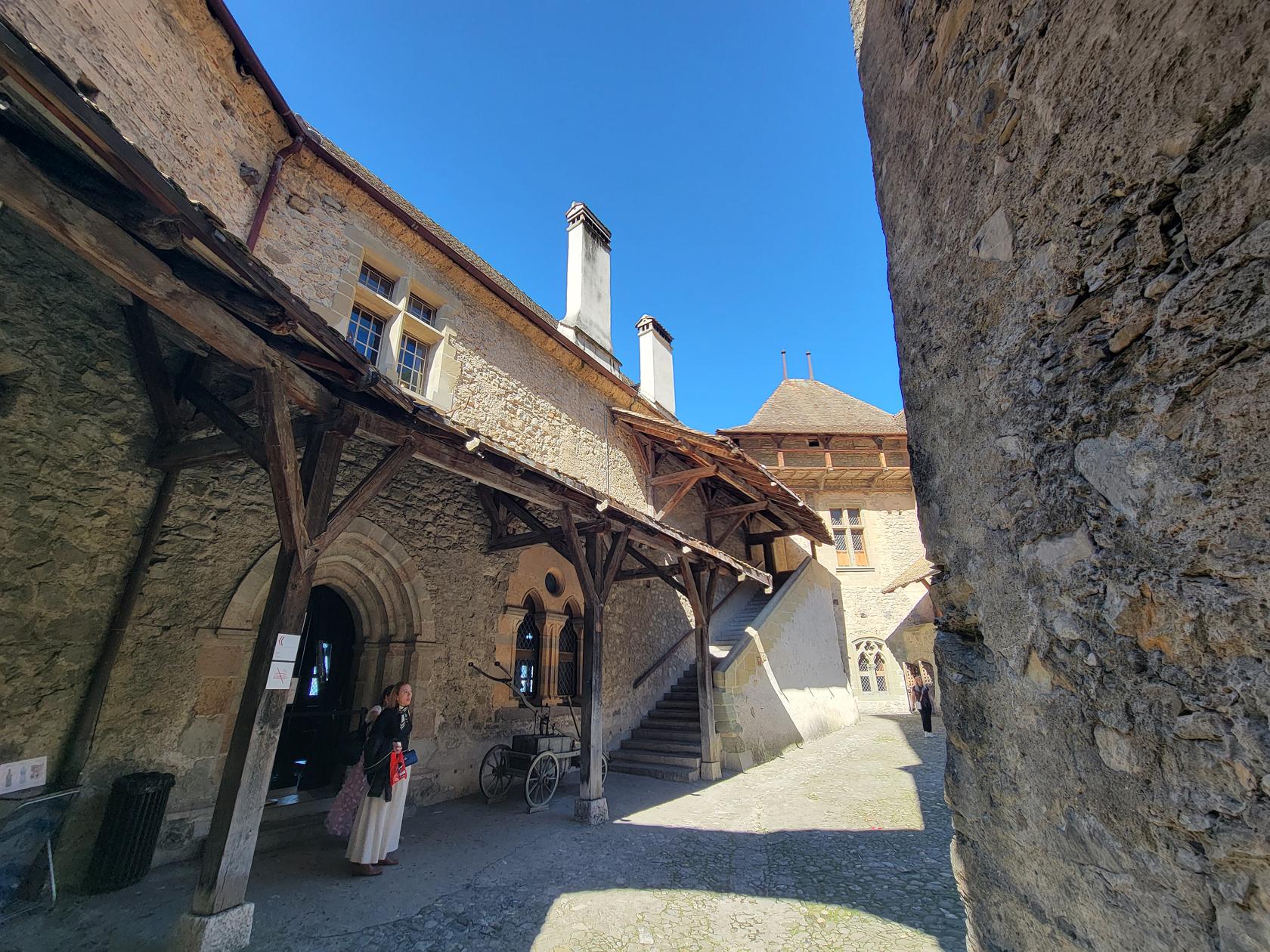
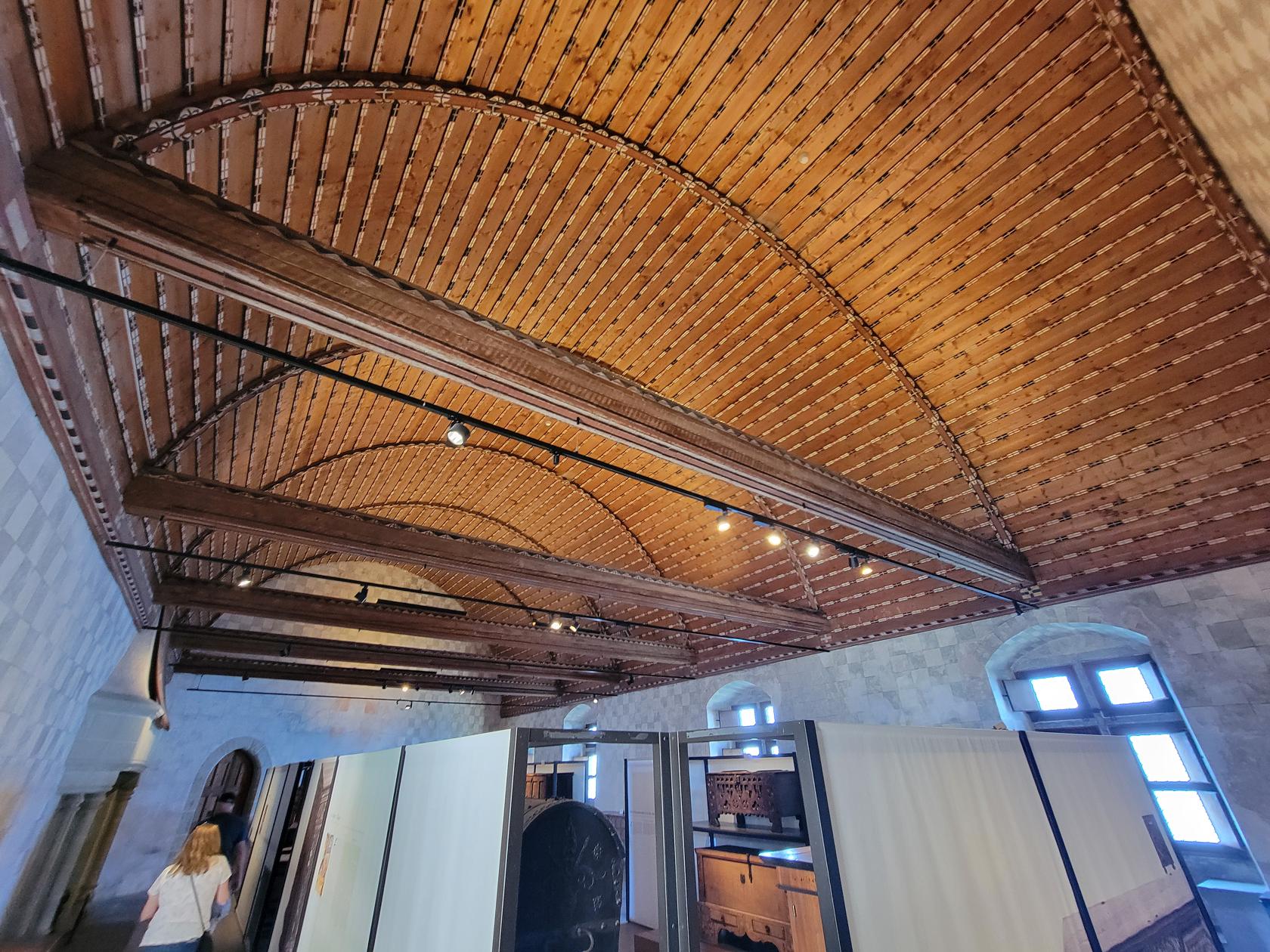
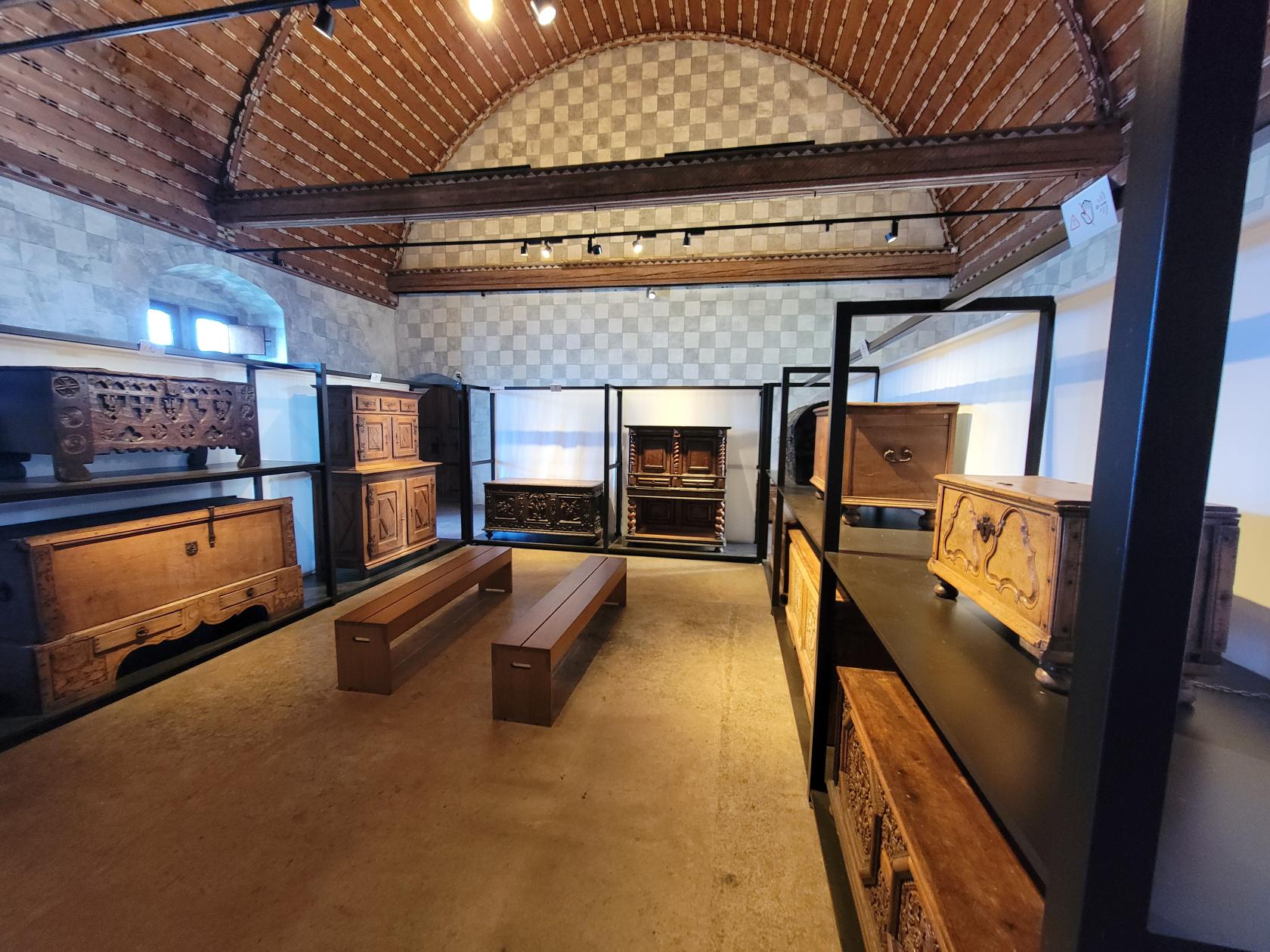
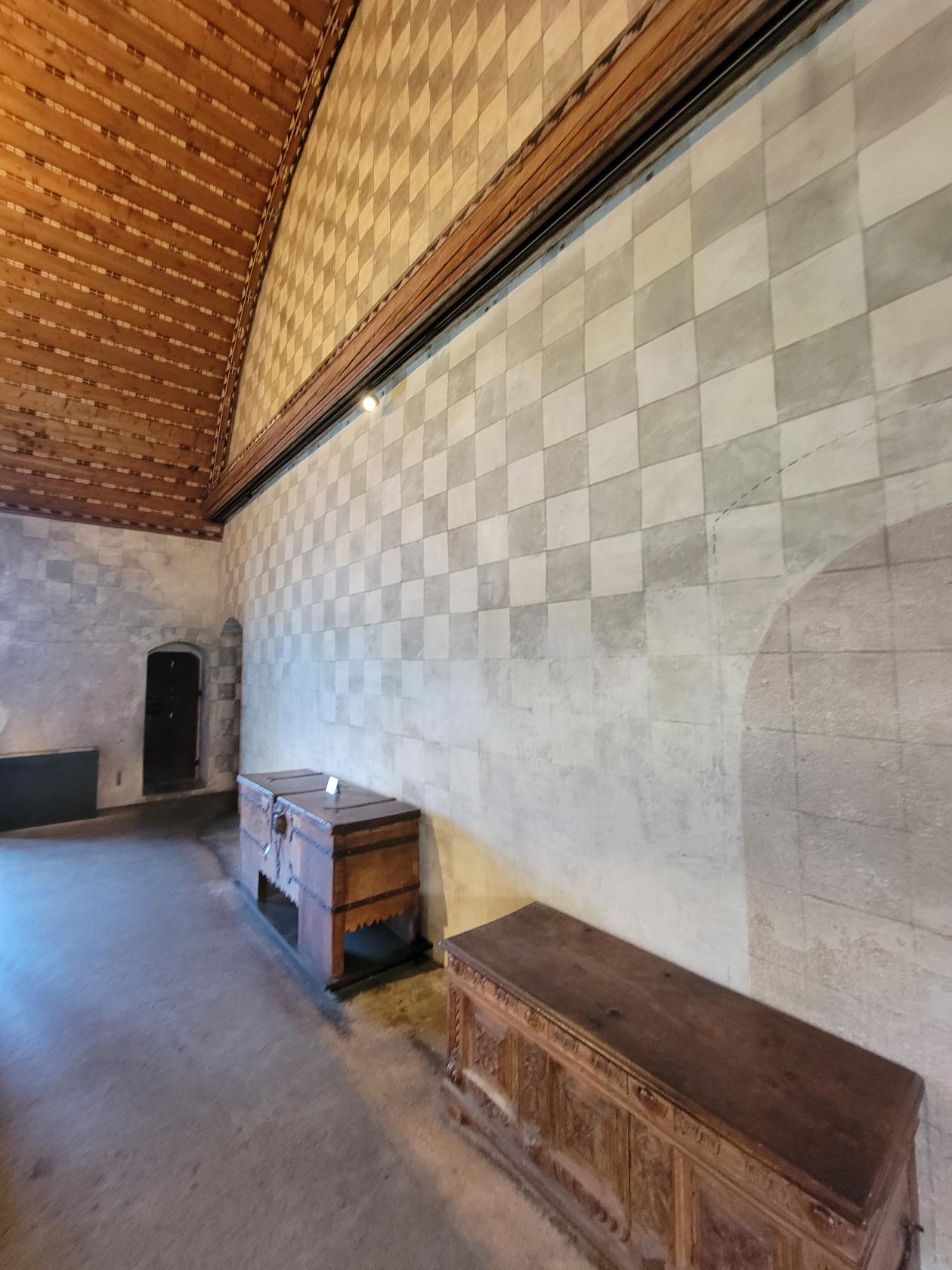
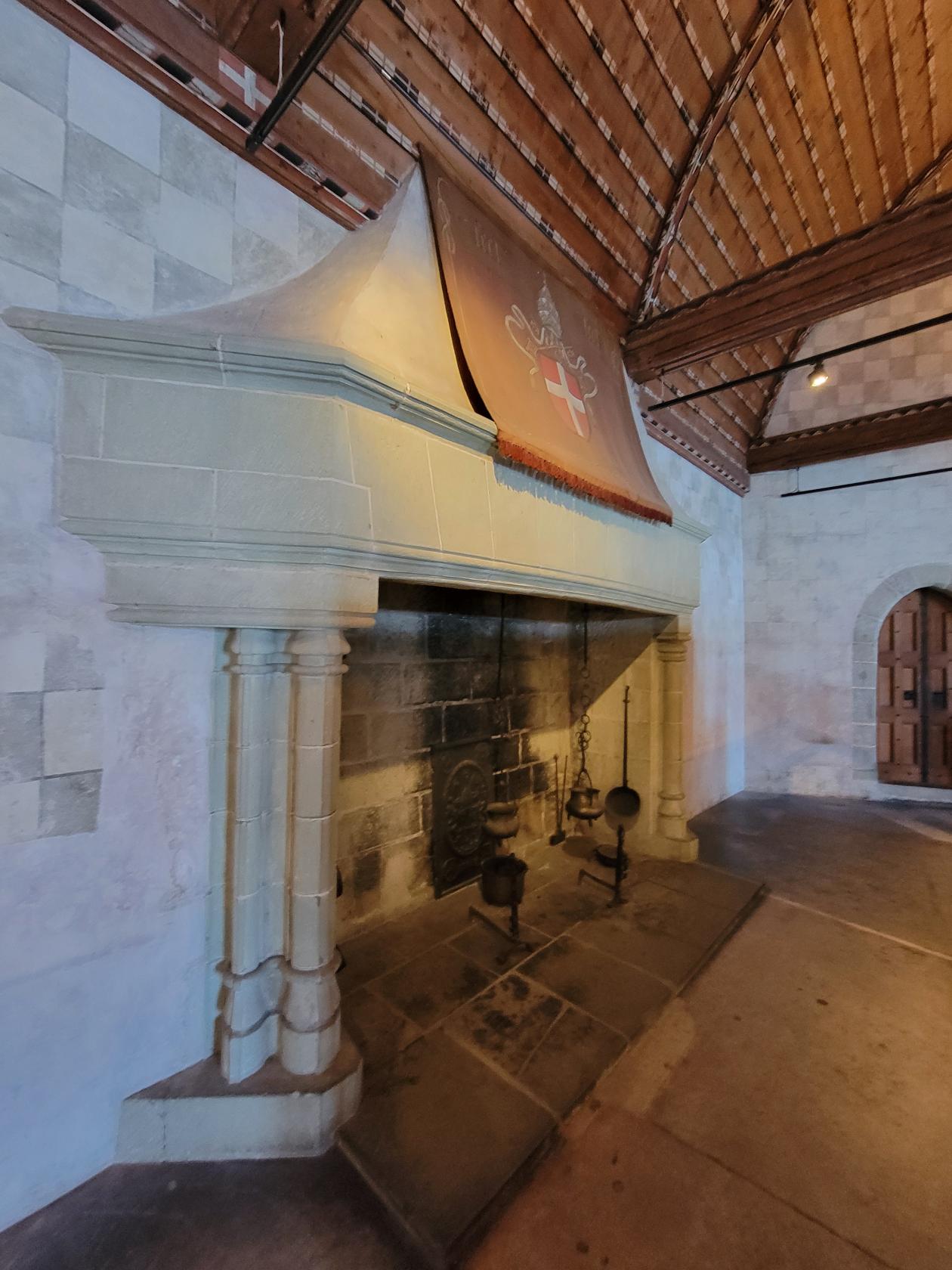
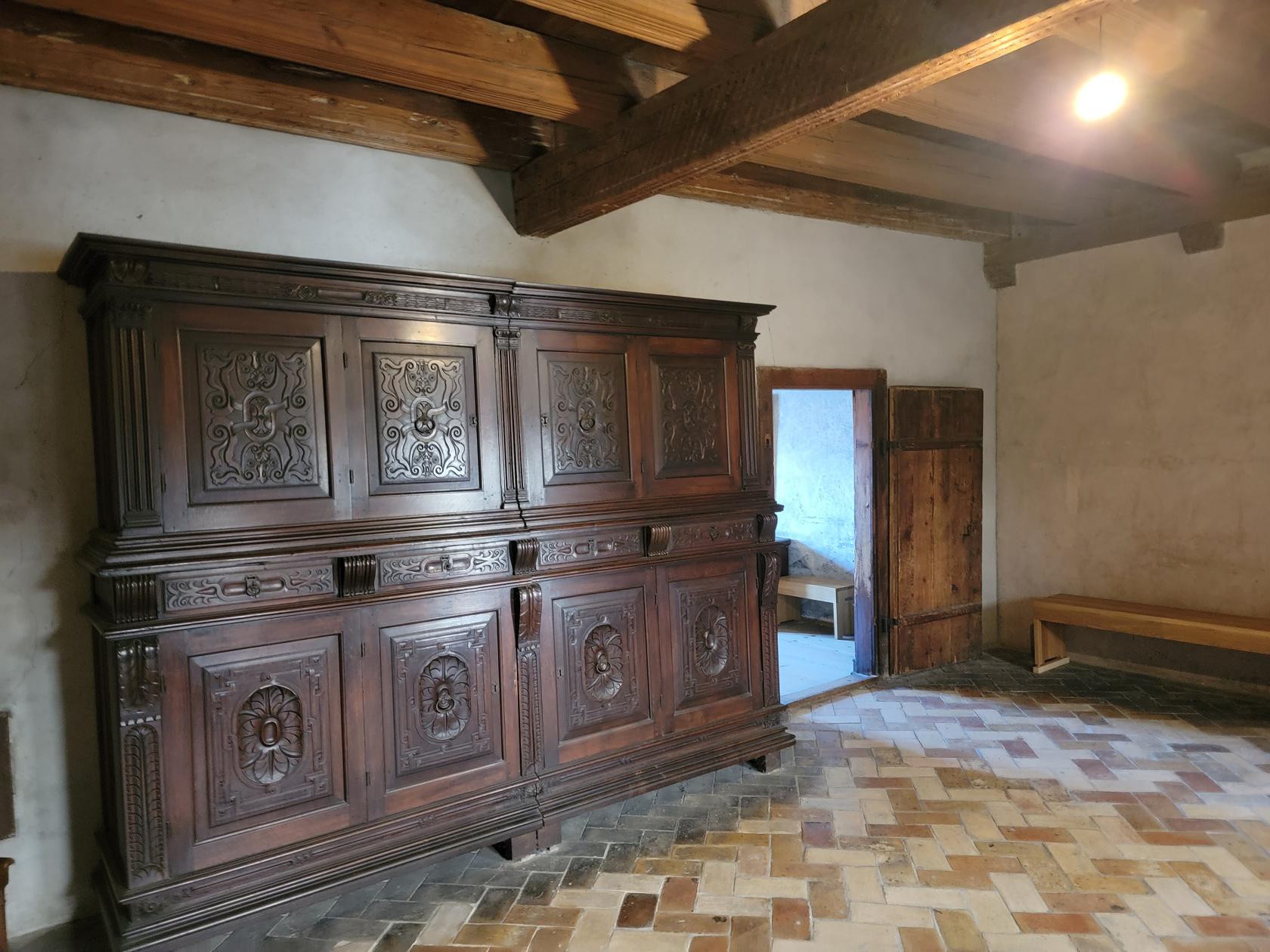
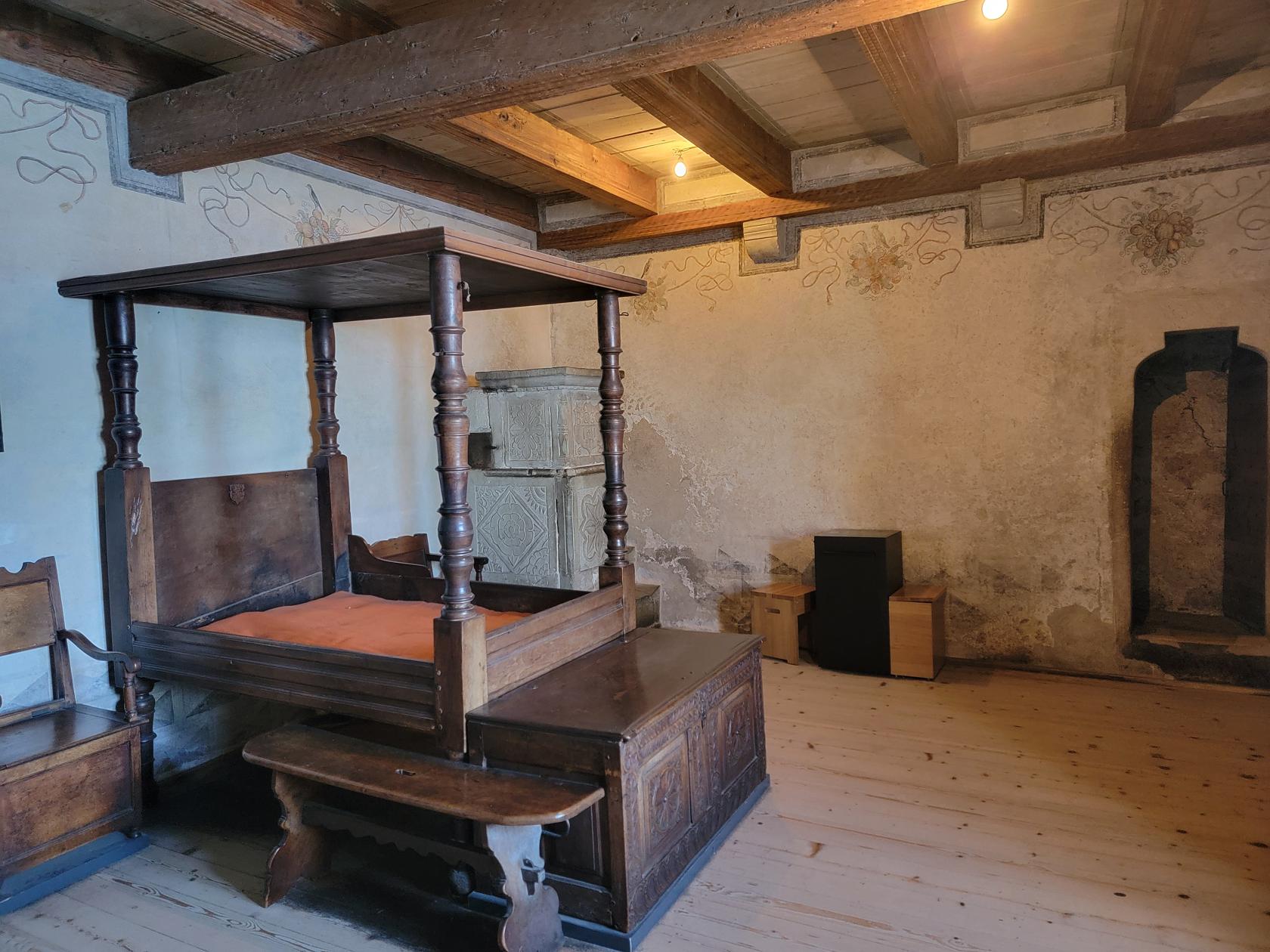
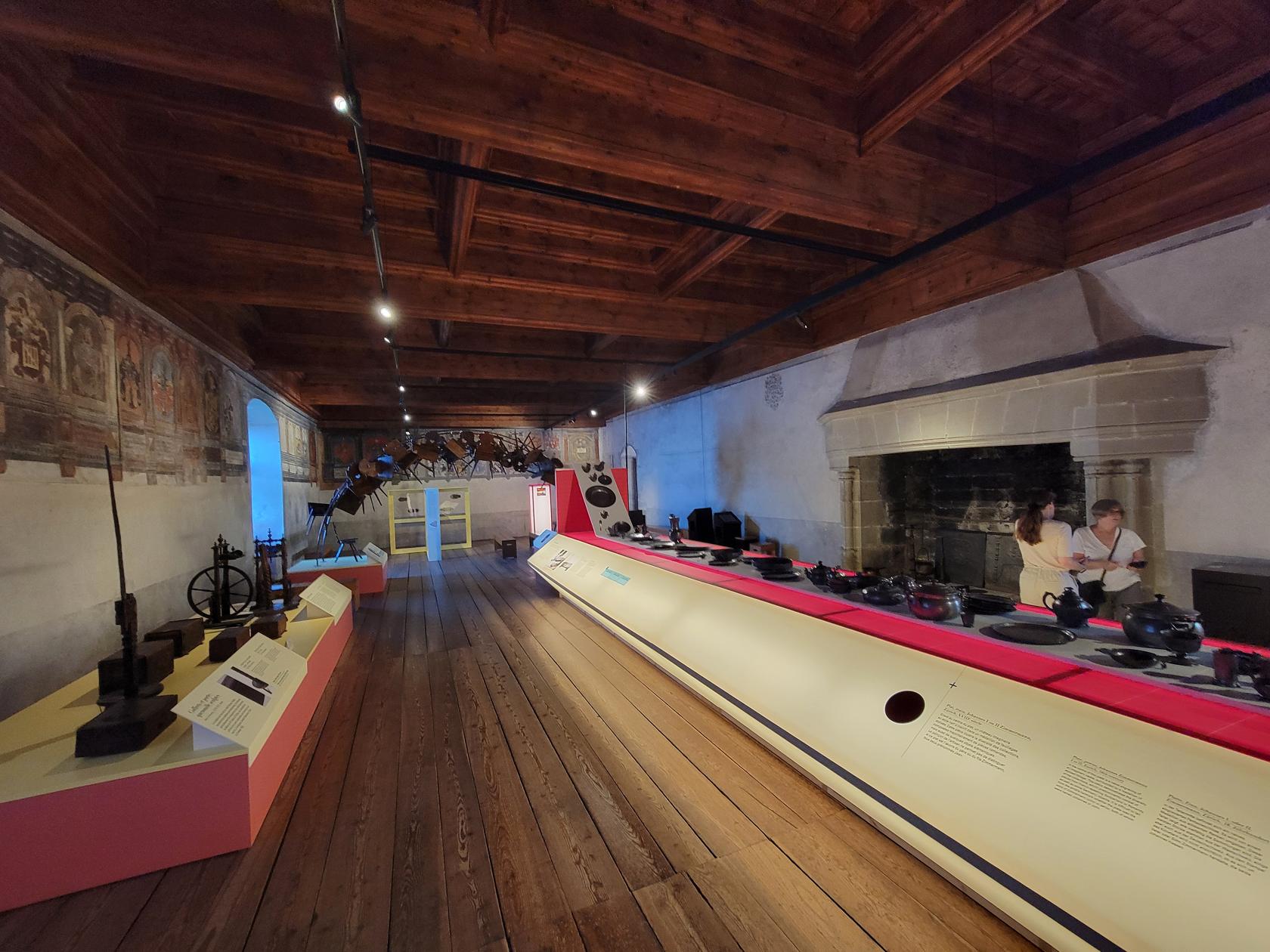
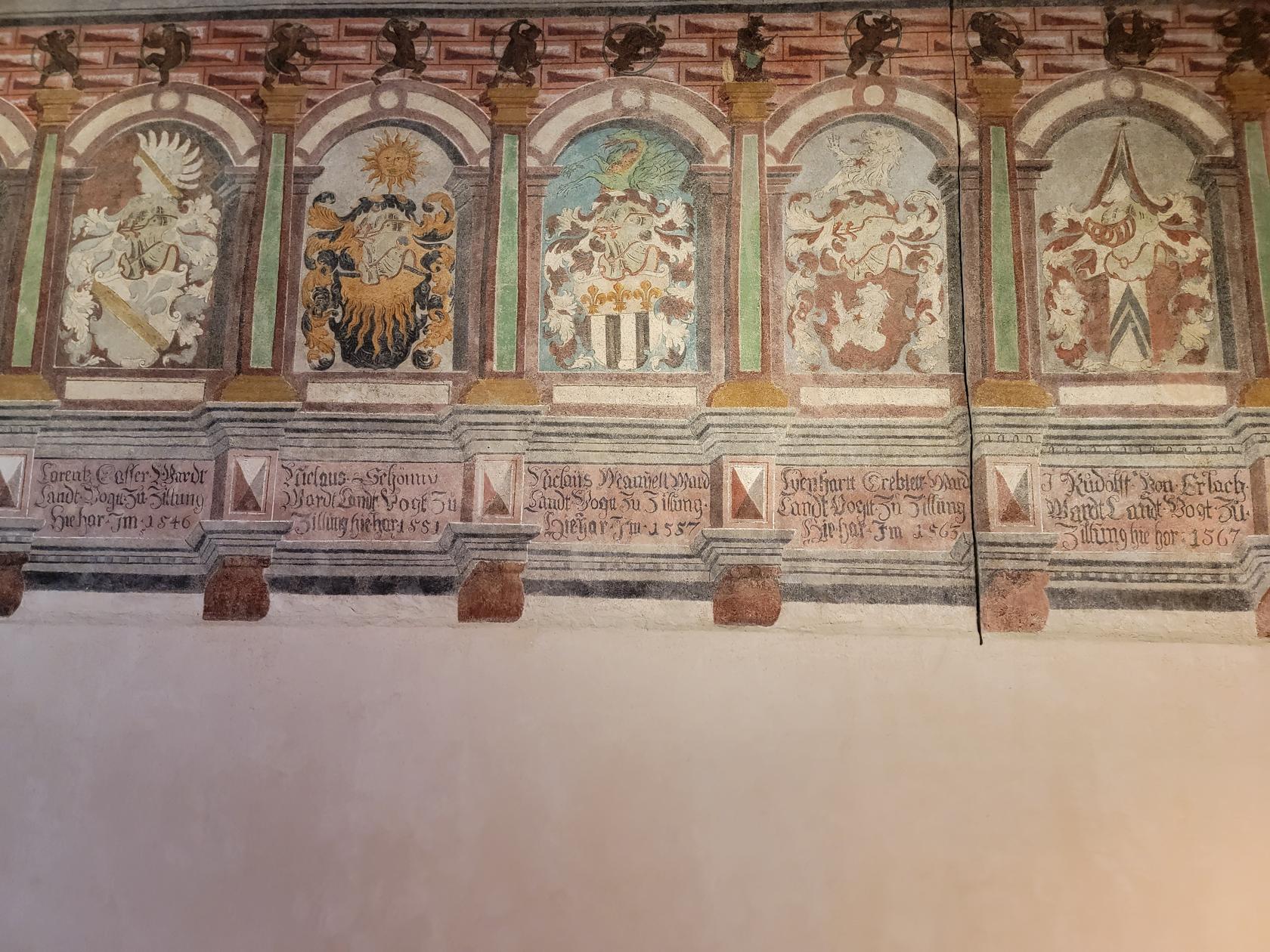
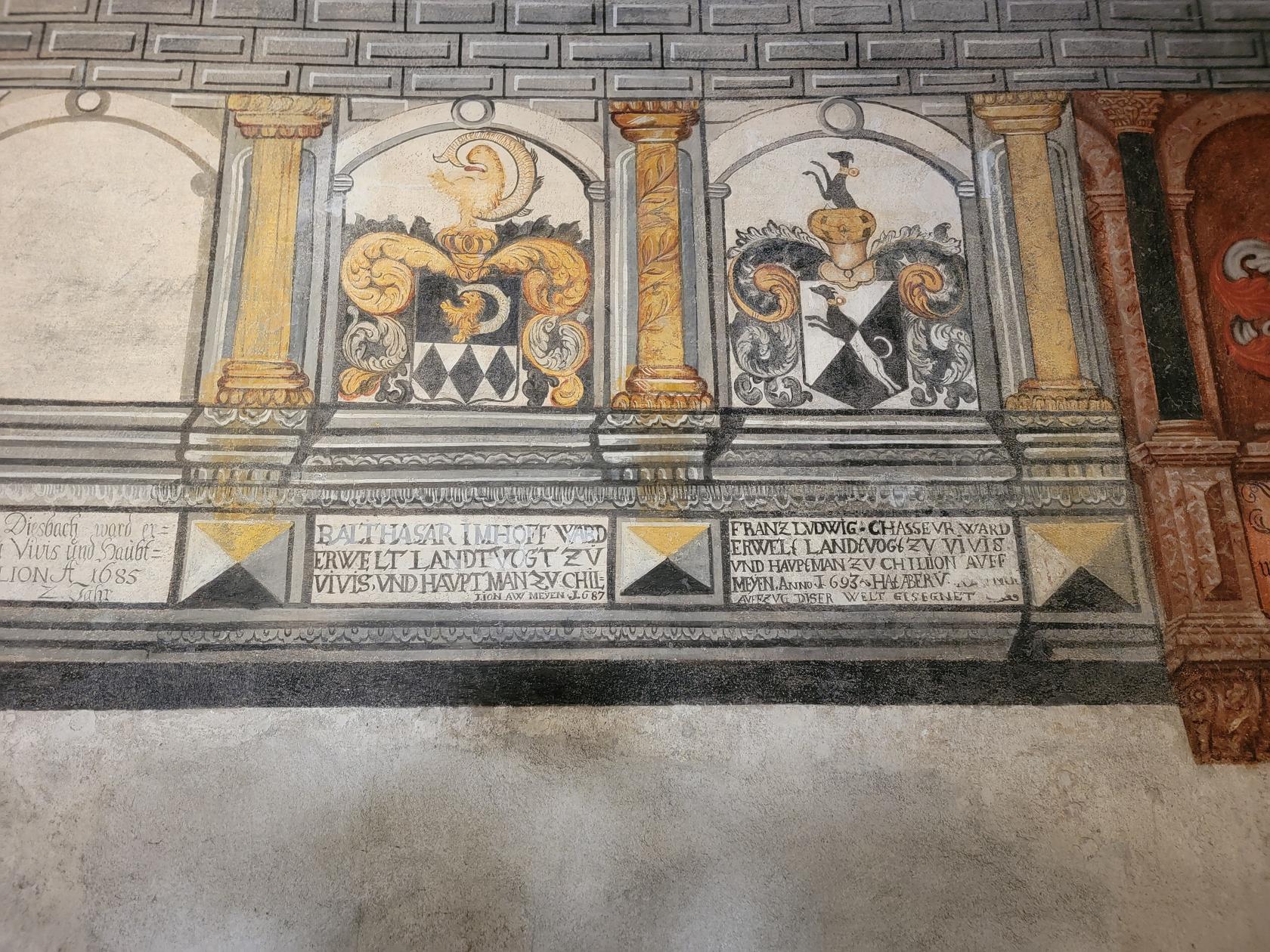
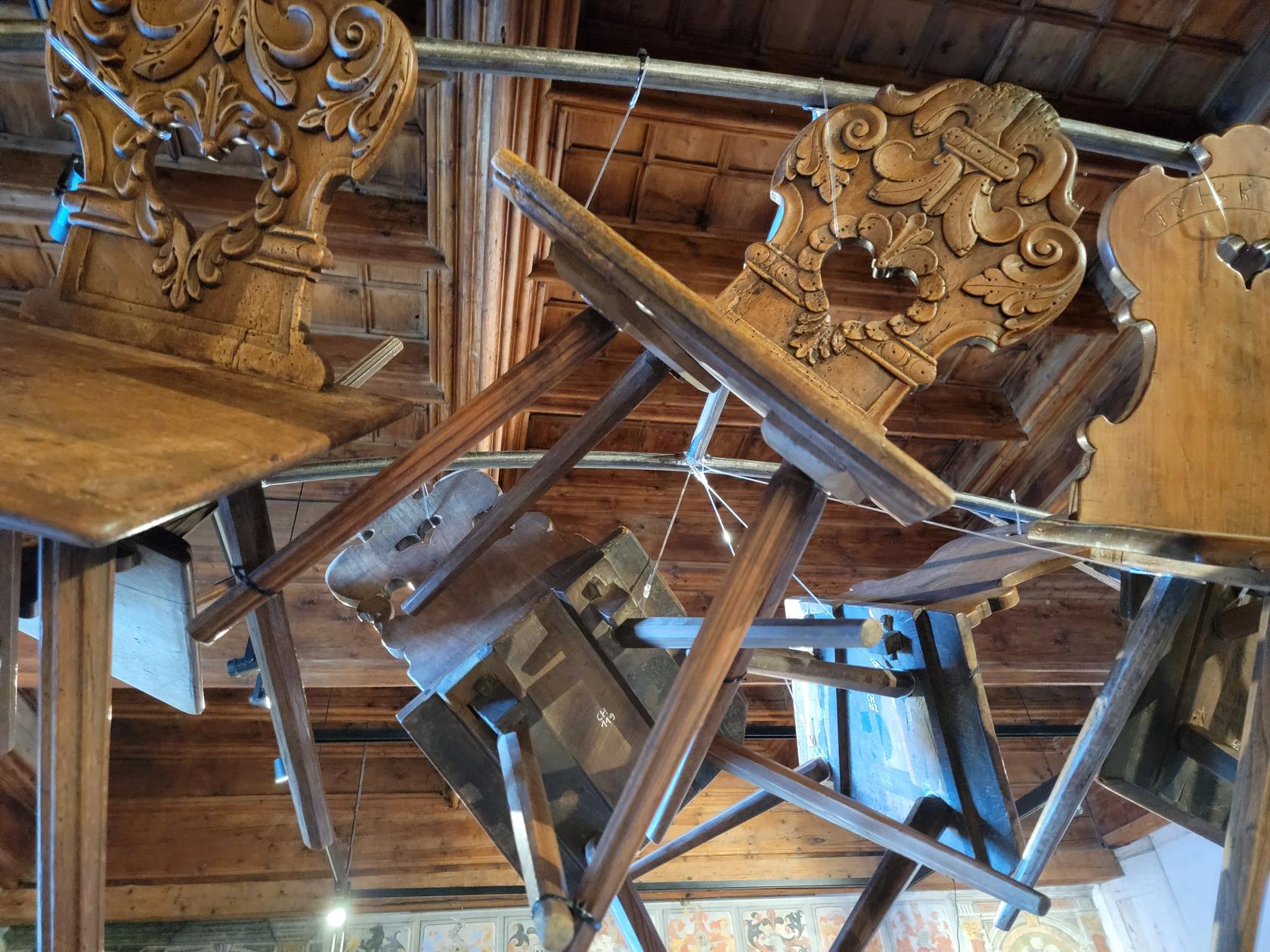
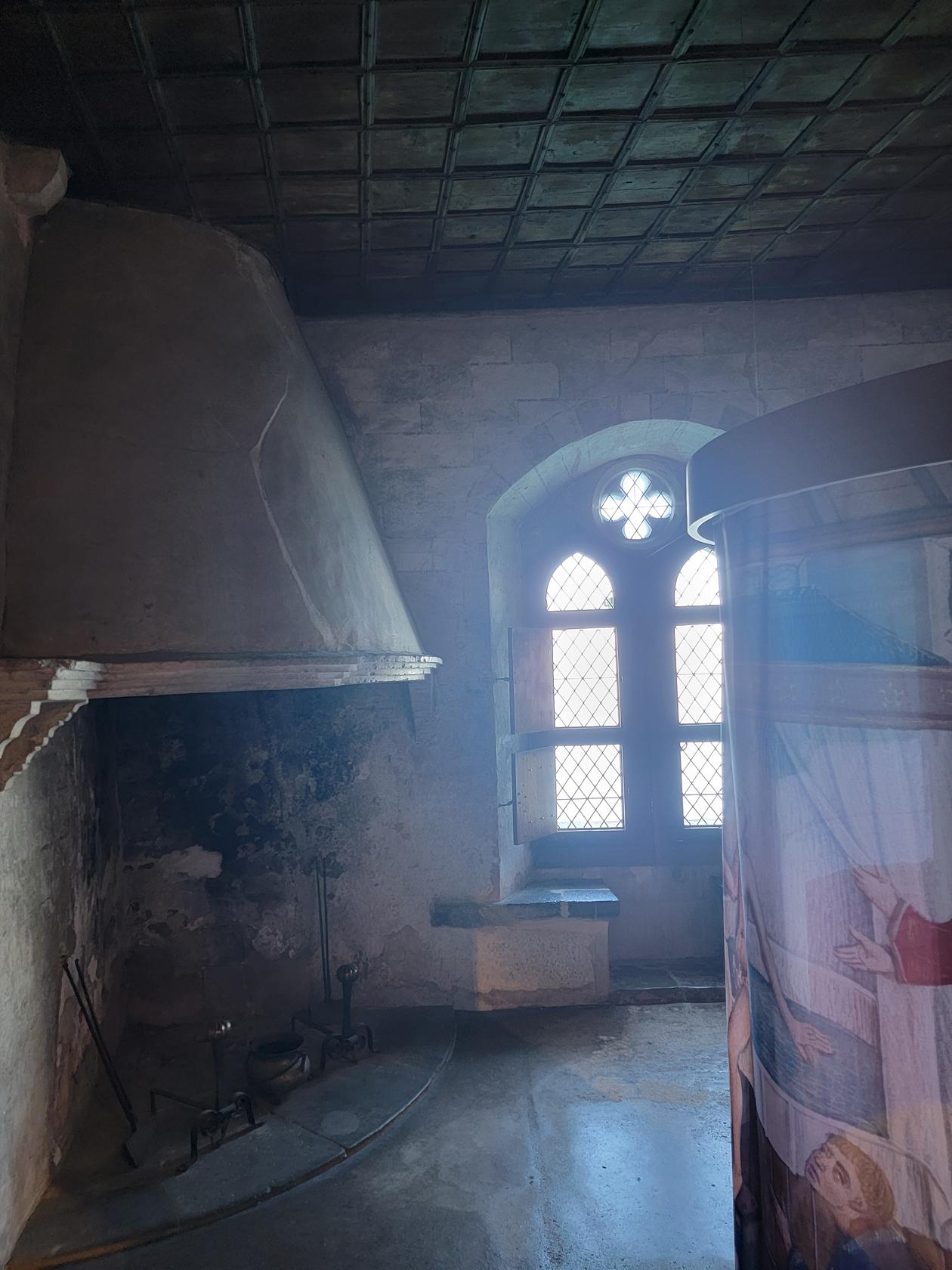
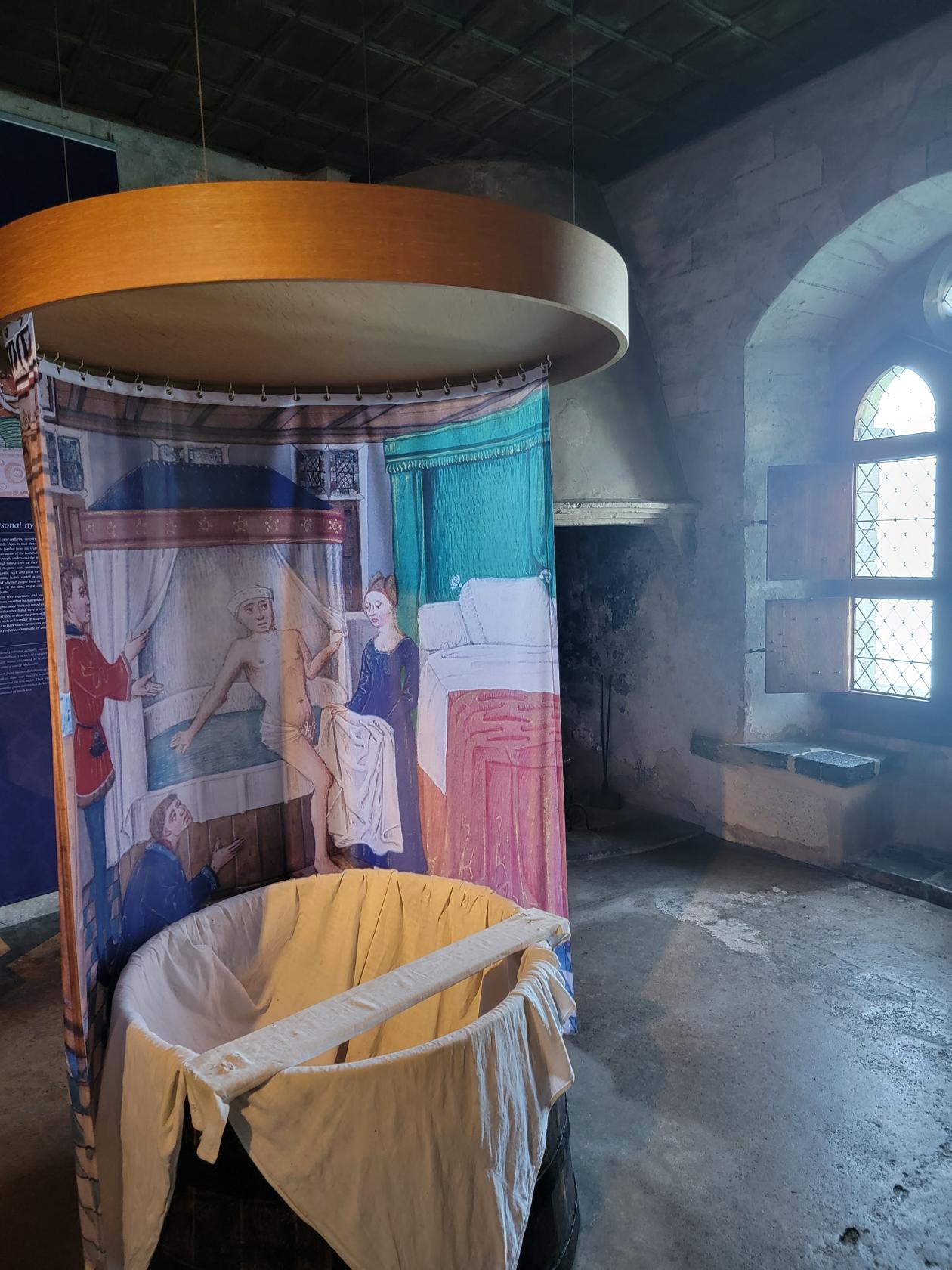
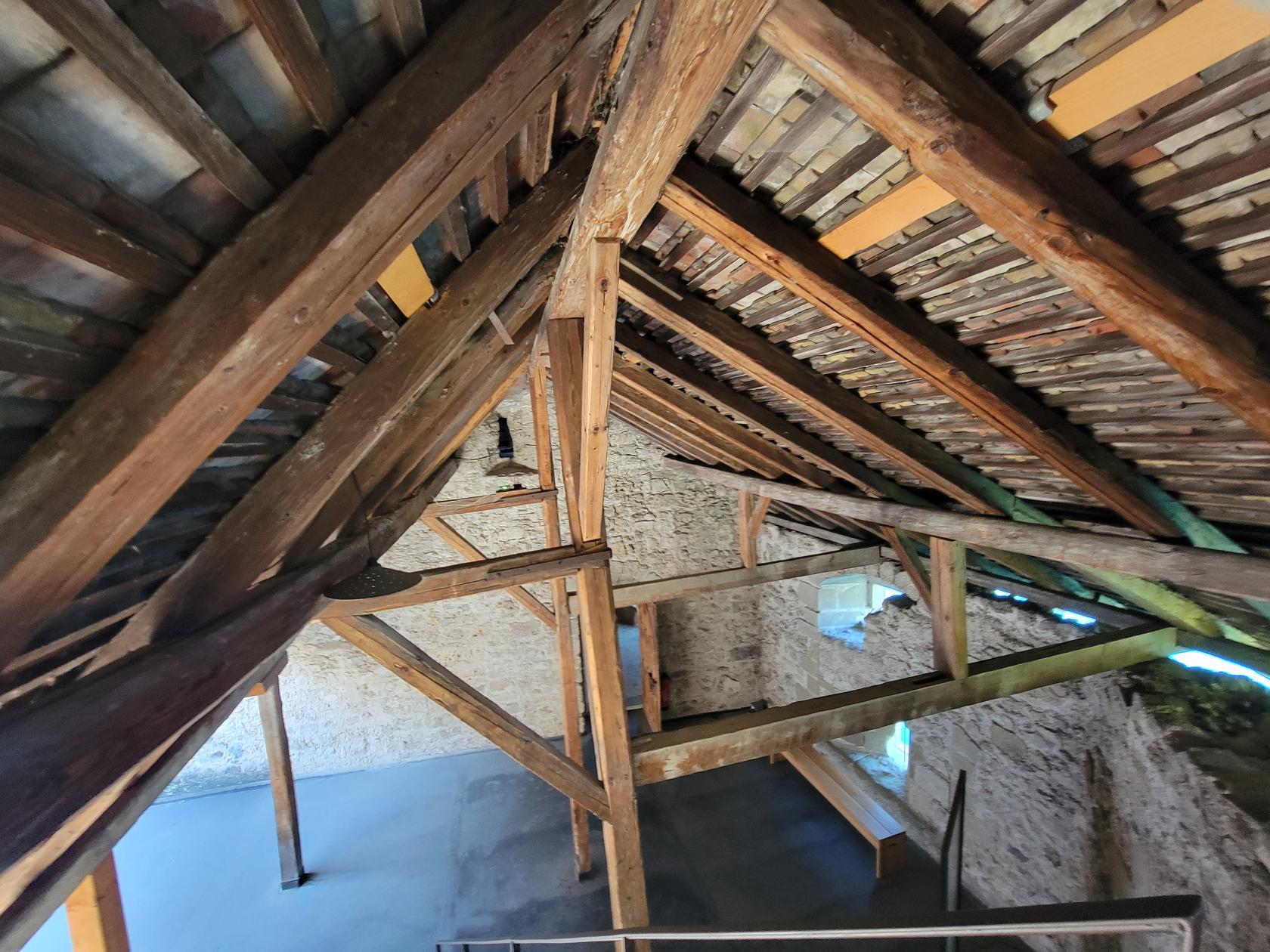
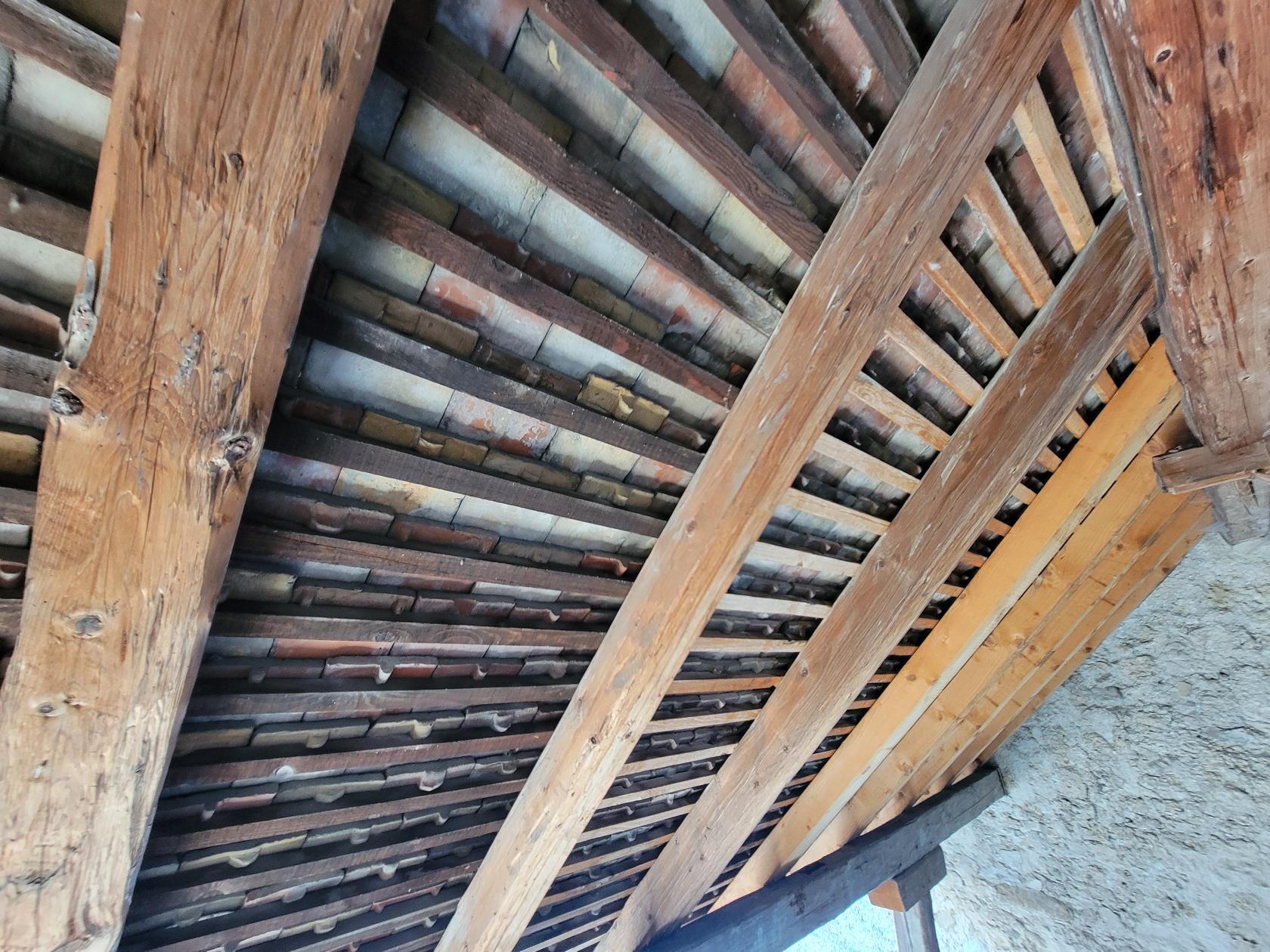
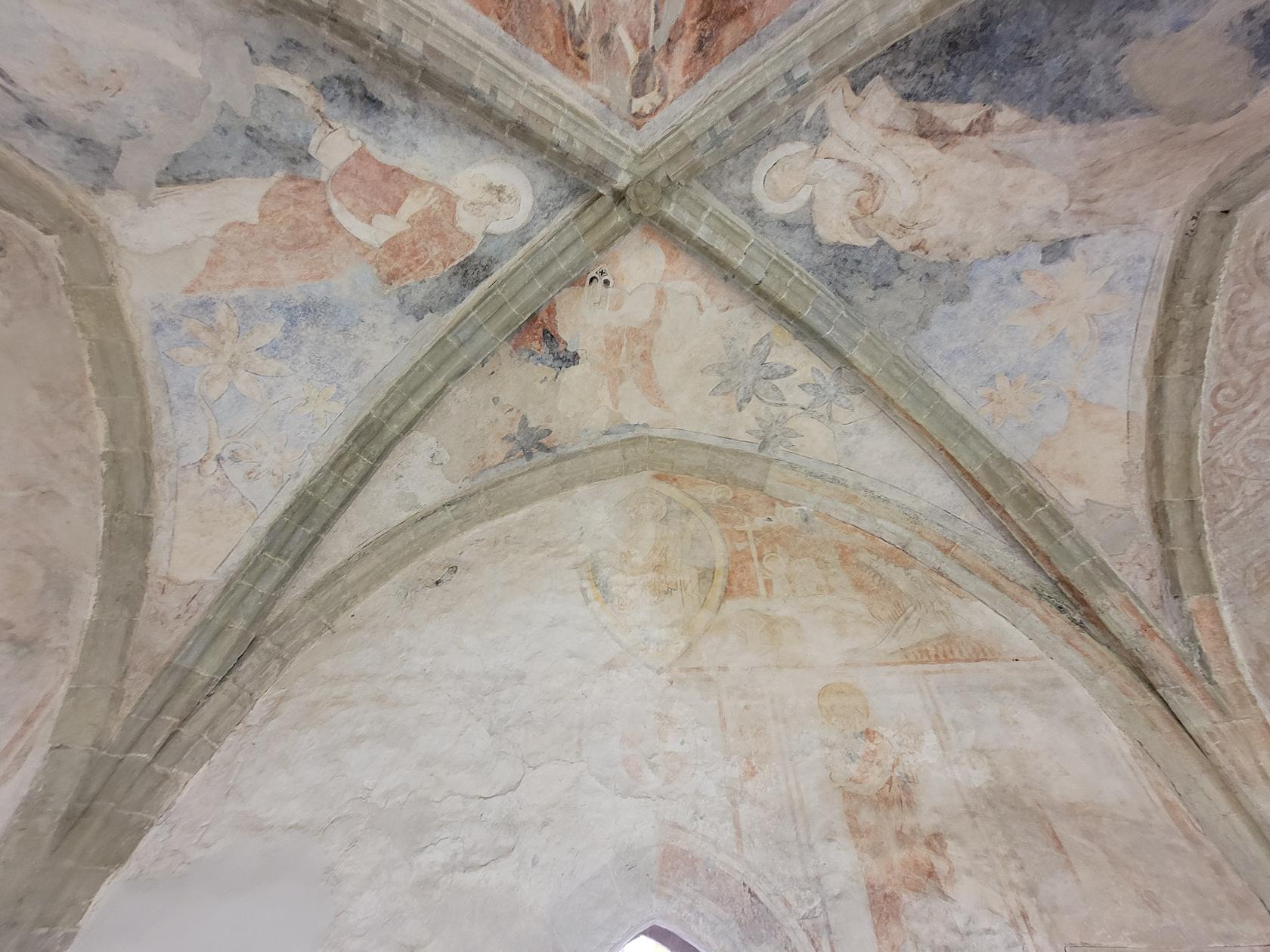
The castle has a number of rooms dedicated to particular themes. Each has a unique story to tell, as well as furnishing that were used in the past by the residents. The following were taken while touring the inside of the castle.
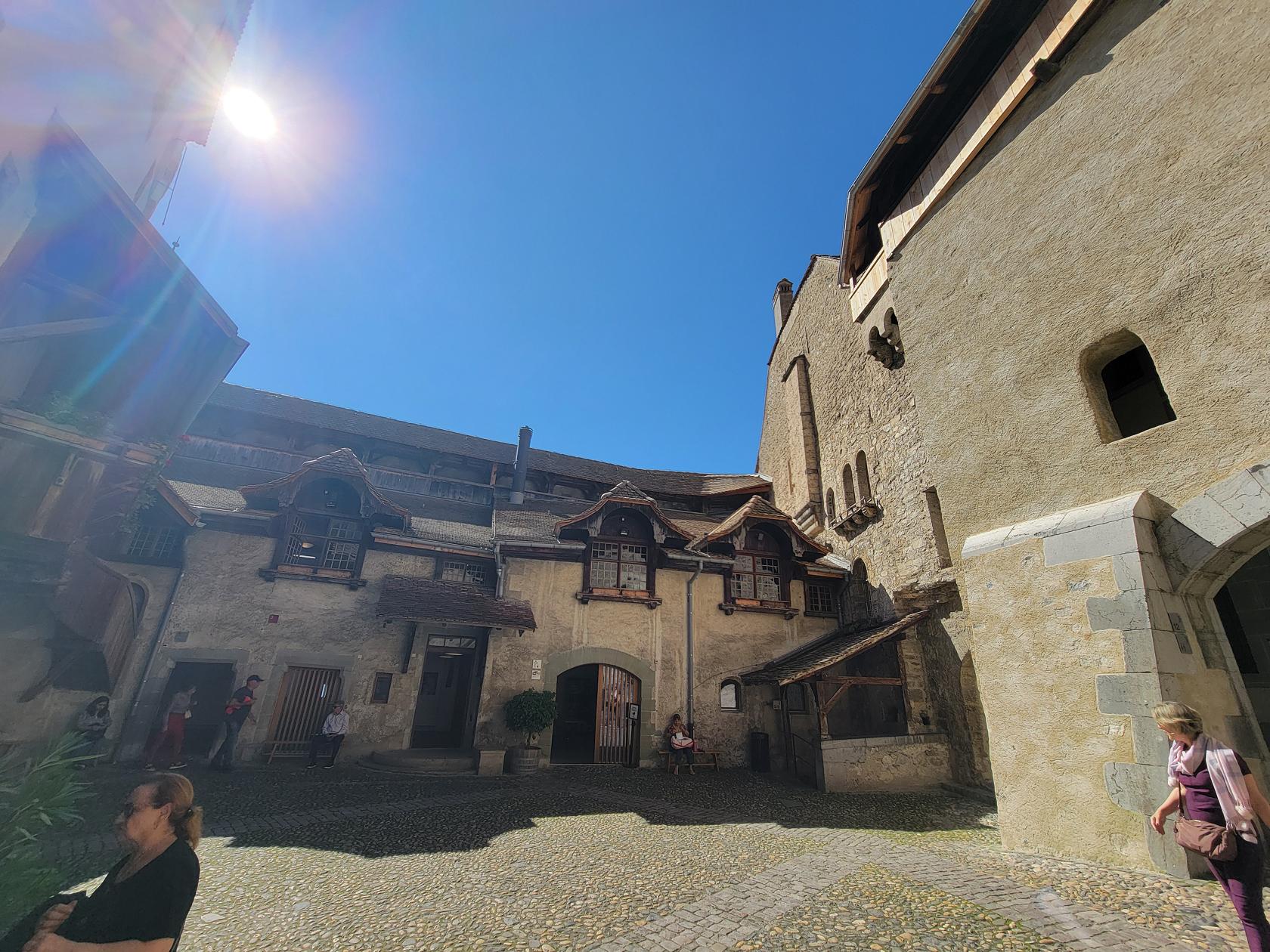
Castle Chillon – Interior Ward or Courtyard – Montreaux, Switzerland
Castle Chillon – Interior Ward or Courtyard – Montreaux, Switzerland
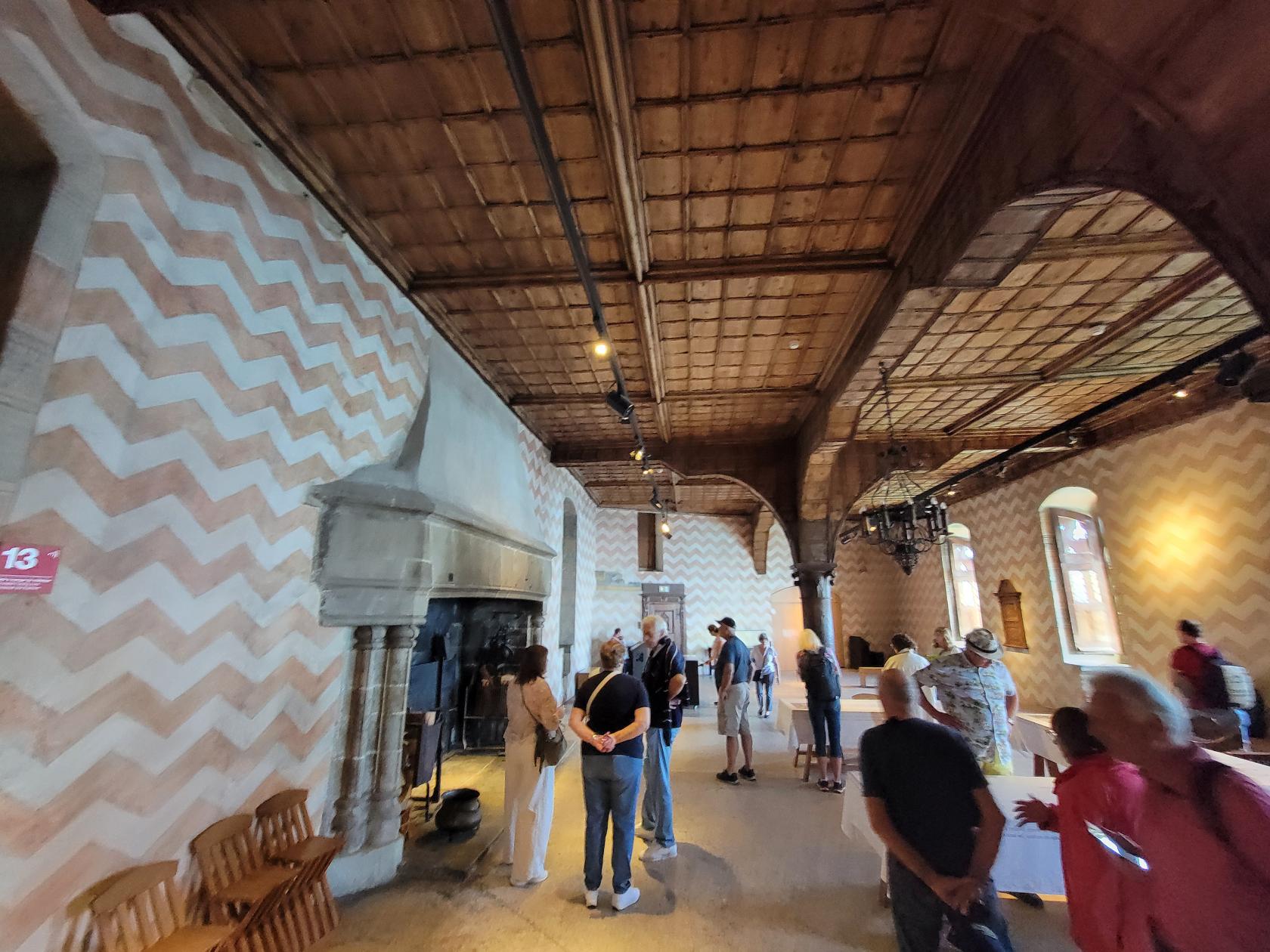
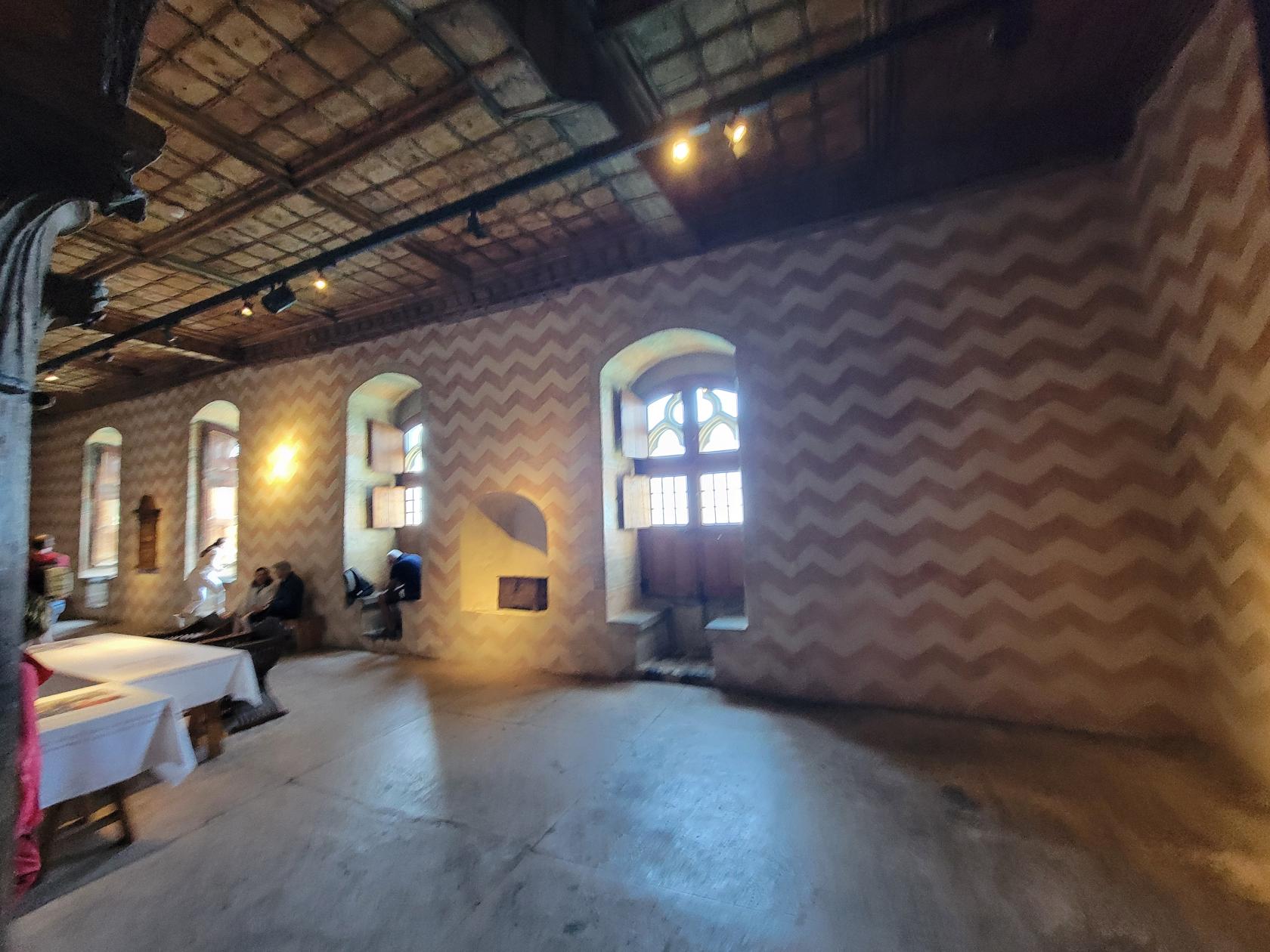
Castle Chillon – Constable’s Dining Hall – Montreaux, Switzerland
Castle Chillon – Constable’s Dining Hall – Montreaux, Switzerland
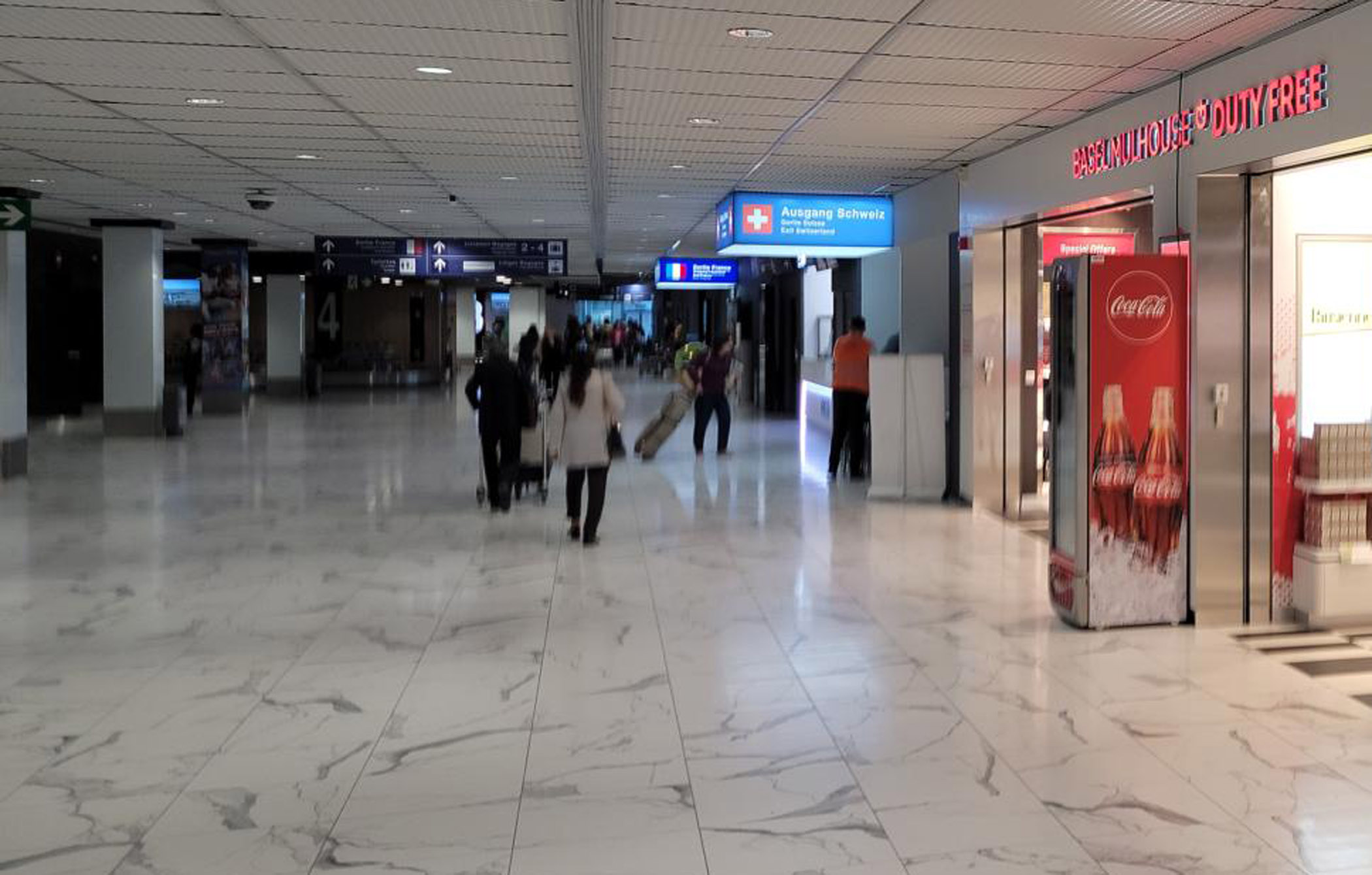
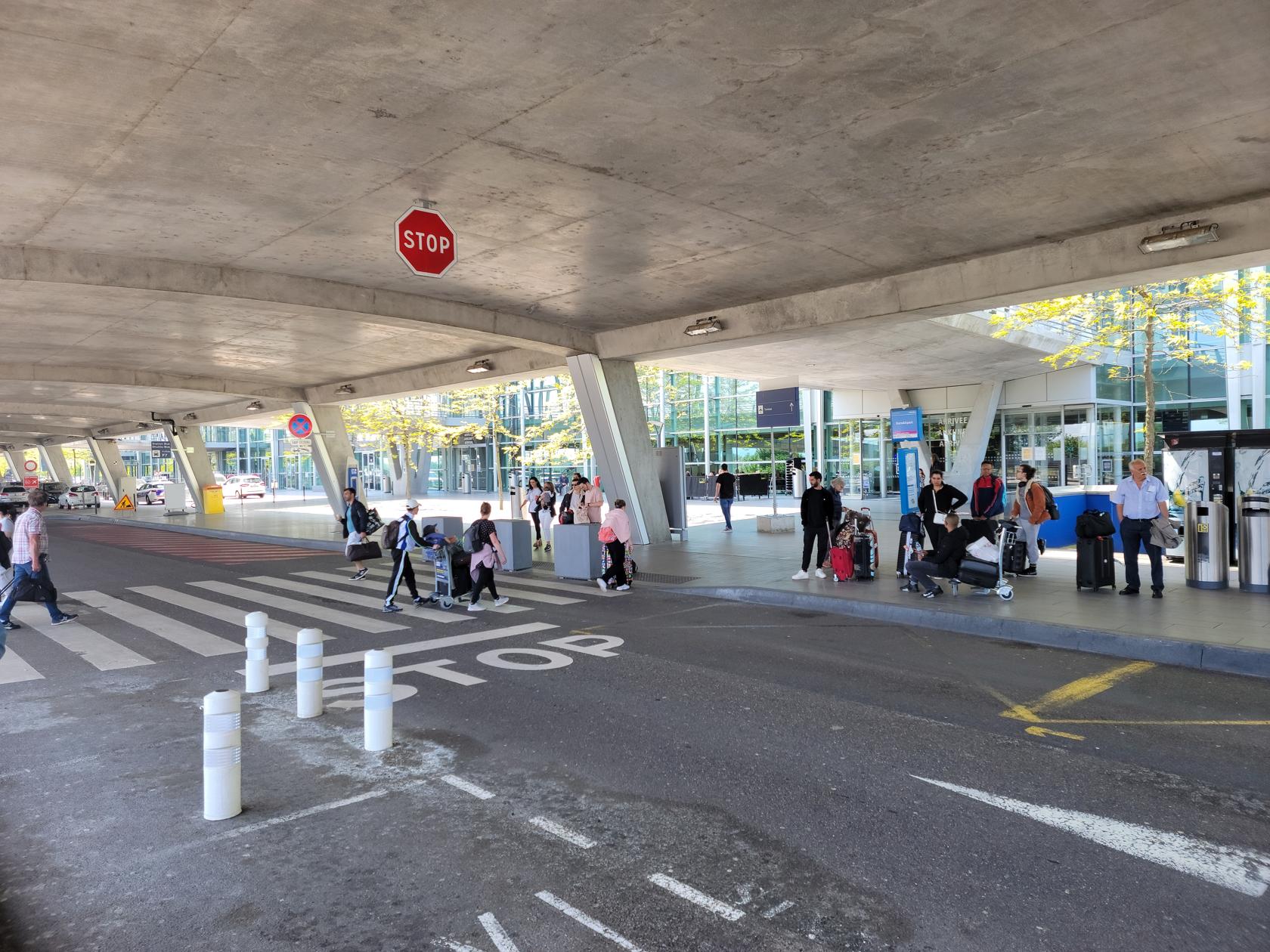
We arrived by plane from Catania, Sicily in France’s EuroAirport, also known as the Basel-Mulhouse-Friebourg airport. You arrive via the air and exit in any one of three countries, Switzerland, Germany or France.
Three exits at airport, Germany, Switzerland and France – Basel -Mulhouse-Freibourg Airport, France
A word of caution though, exiting in France, you may find it difficult to get a taxi. We waited for a half an hour and ended up sharing a ride with a Frenchmen that explained to us that exiting via the France exit has the least amount of taxis. Of course, the airport has no information booth and you can’t of course change your mind once you are out.
French exit – Basel -Mulhouse-Freibourg Airport, France
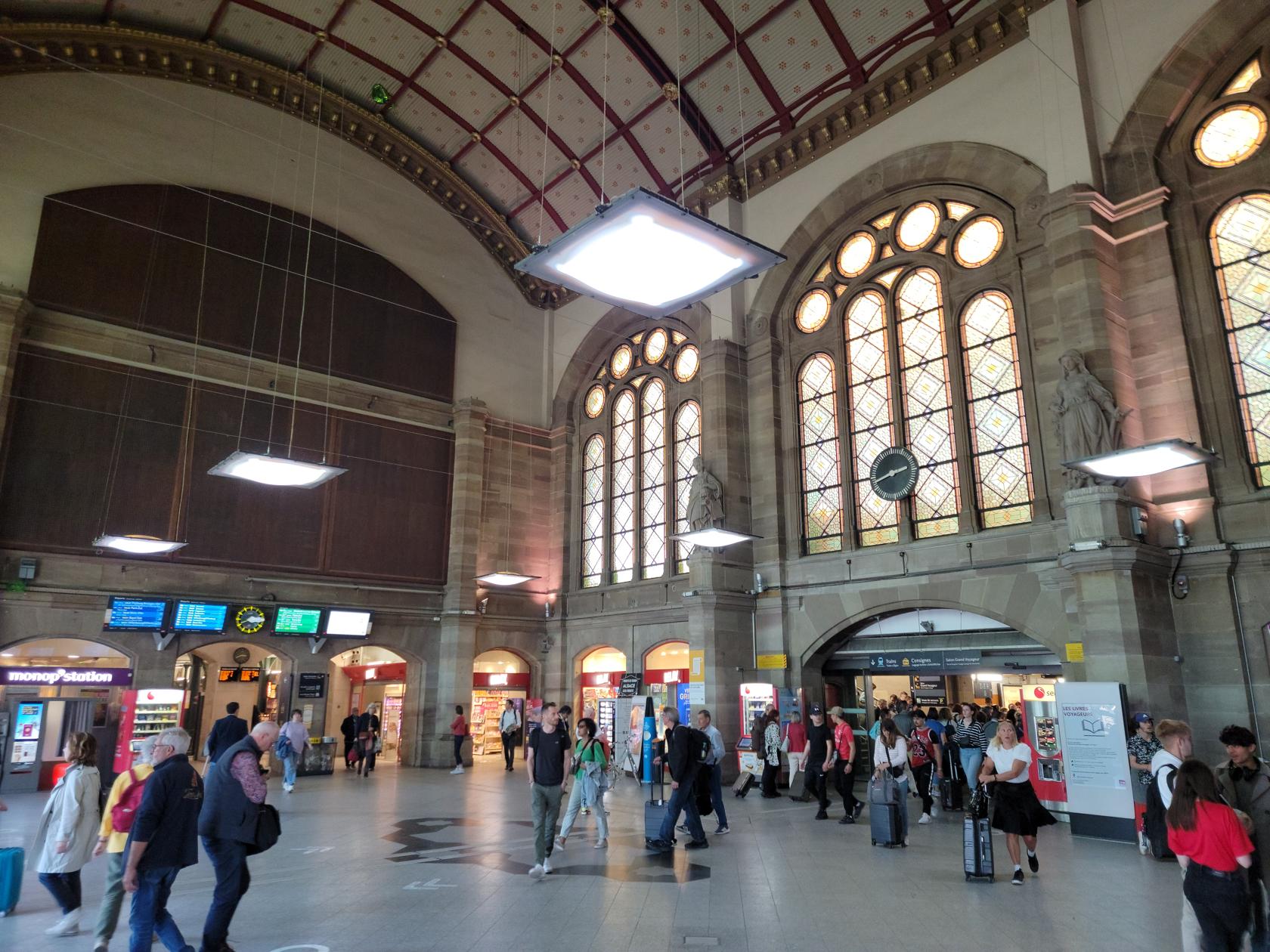
The taxi drive was about five minutes and we were standing at the Saint-Louis la Chaussée train stop, having already purchased our tickets via phone. From there we went to Mulhouse and then on to Strasbourg, again using France’s regional train service, which you can essentially purchase any ticket in the future and still be able to use it for earlier trains.
Main train station – Strasbourg, France
Argantorati
Just barely in France on the border with Germany is the small quaint city of Straßburg, or Strasbourg to the French, and it actually goes by other names to some of the ethnic minorities. The name has German origins and meaning as ‘the town at the crossing of roads‘. It is also the place where the river Ill dumps into the mighty Rhine river.
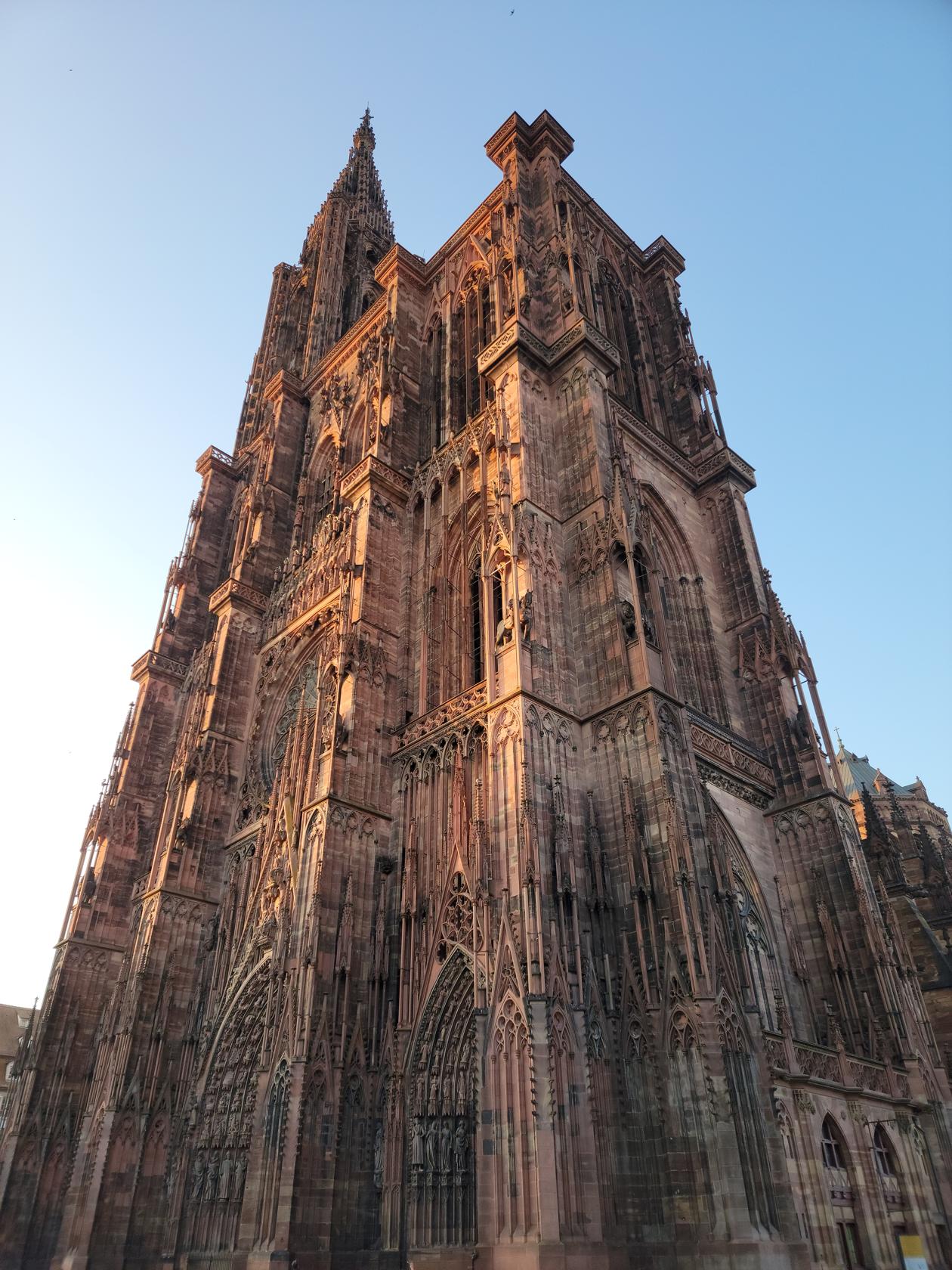
Notre Dame de Strasbourg – Strasbourg, France
The original settlement here before the fifth century CE, was known as the fortified silver settlement, a compound of the Celtic arganto for silver and rati for fortification. It was later latinized into Argentium and Argentina, or city of silver, where it is known in numerous texts. What follows is a slideshow of some of the many amazing sites you will see as you walk the city.
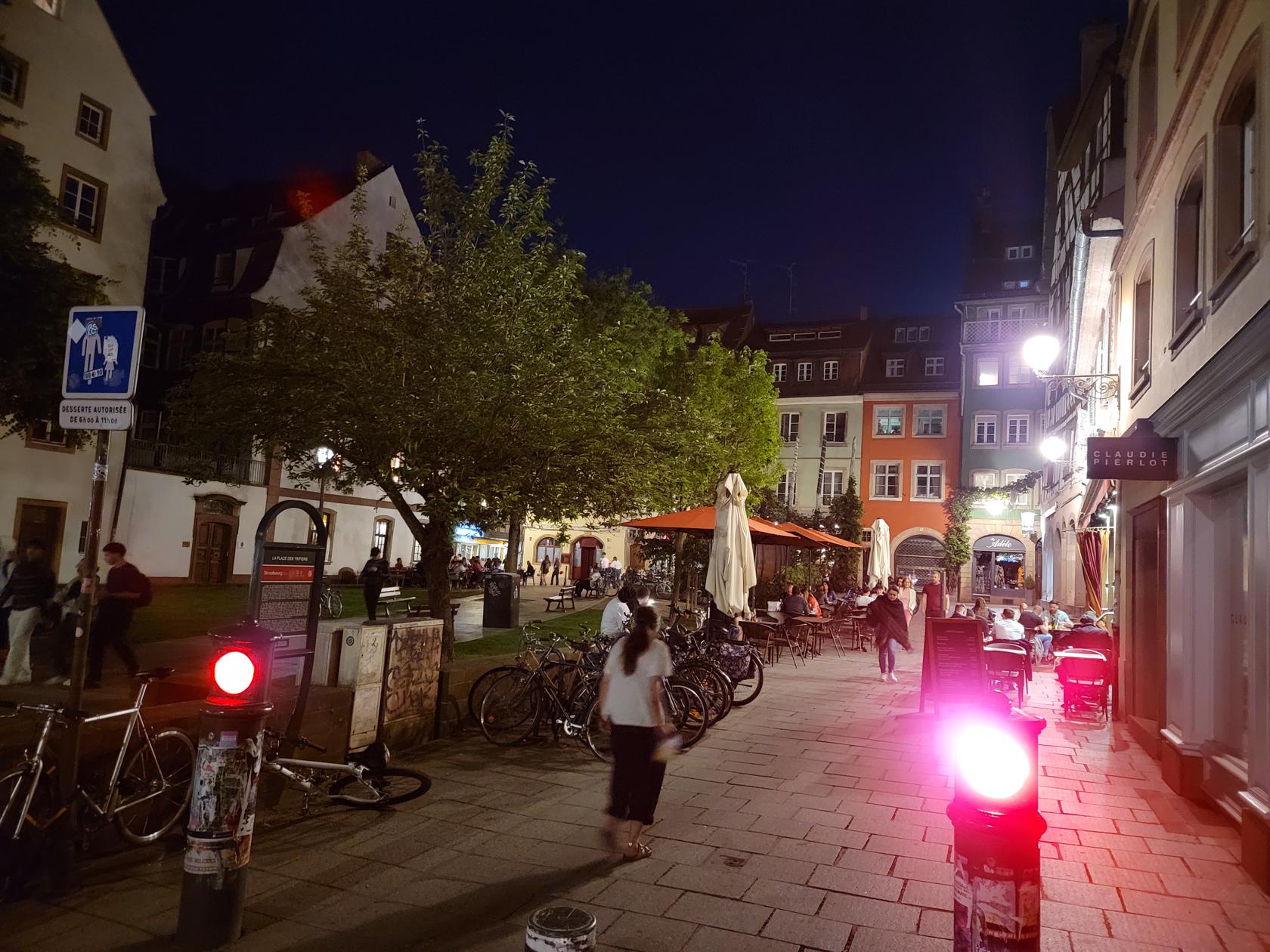
Restaurants in the evening – Strasbourg, France
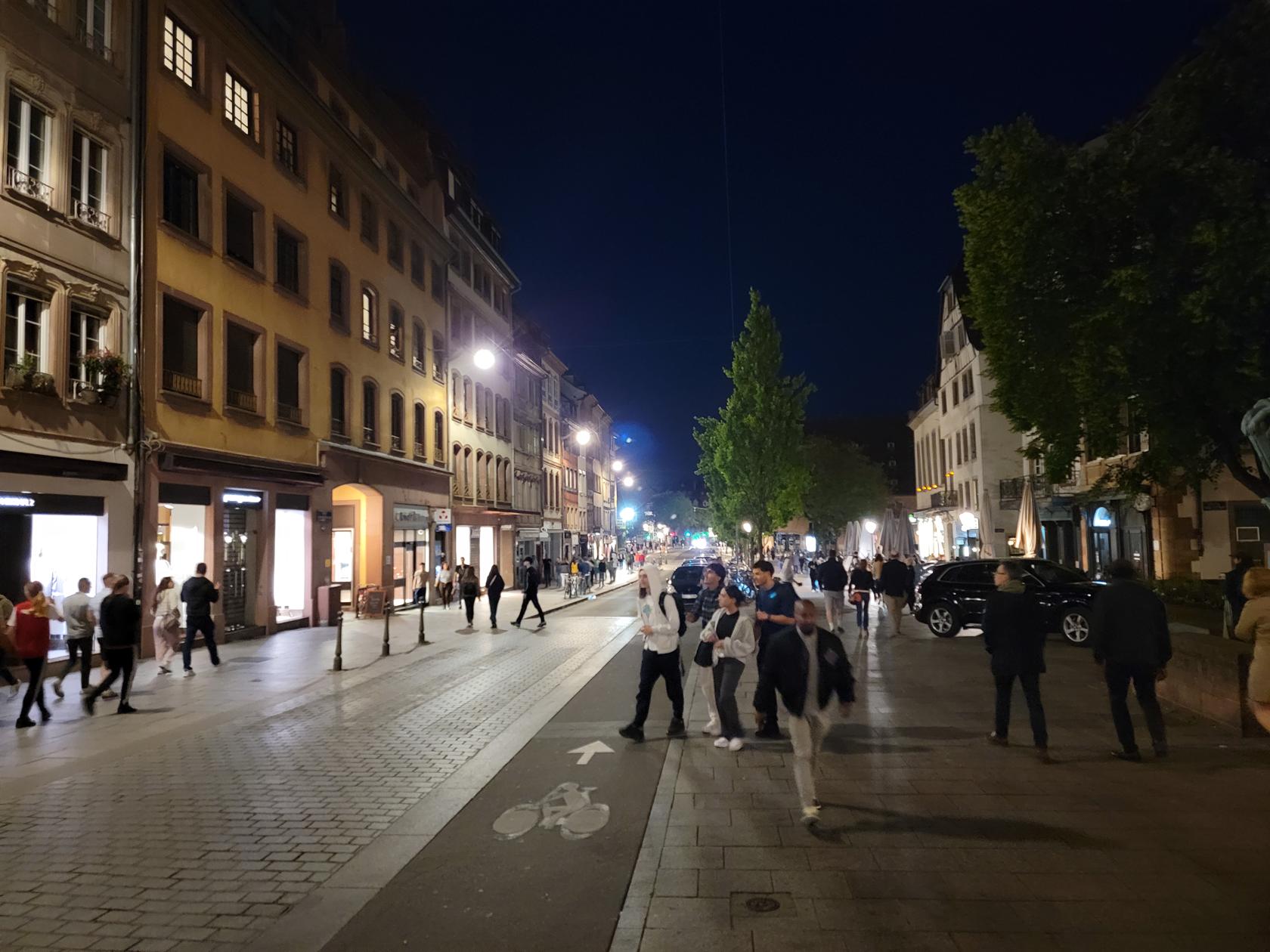
An evening walk – Strasbourg, France
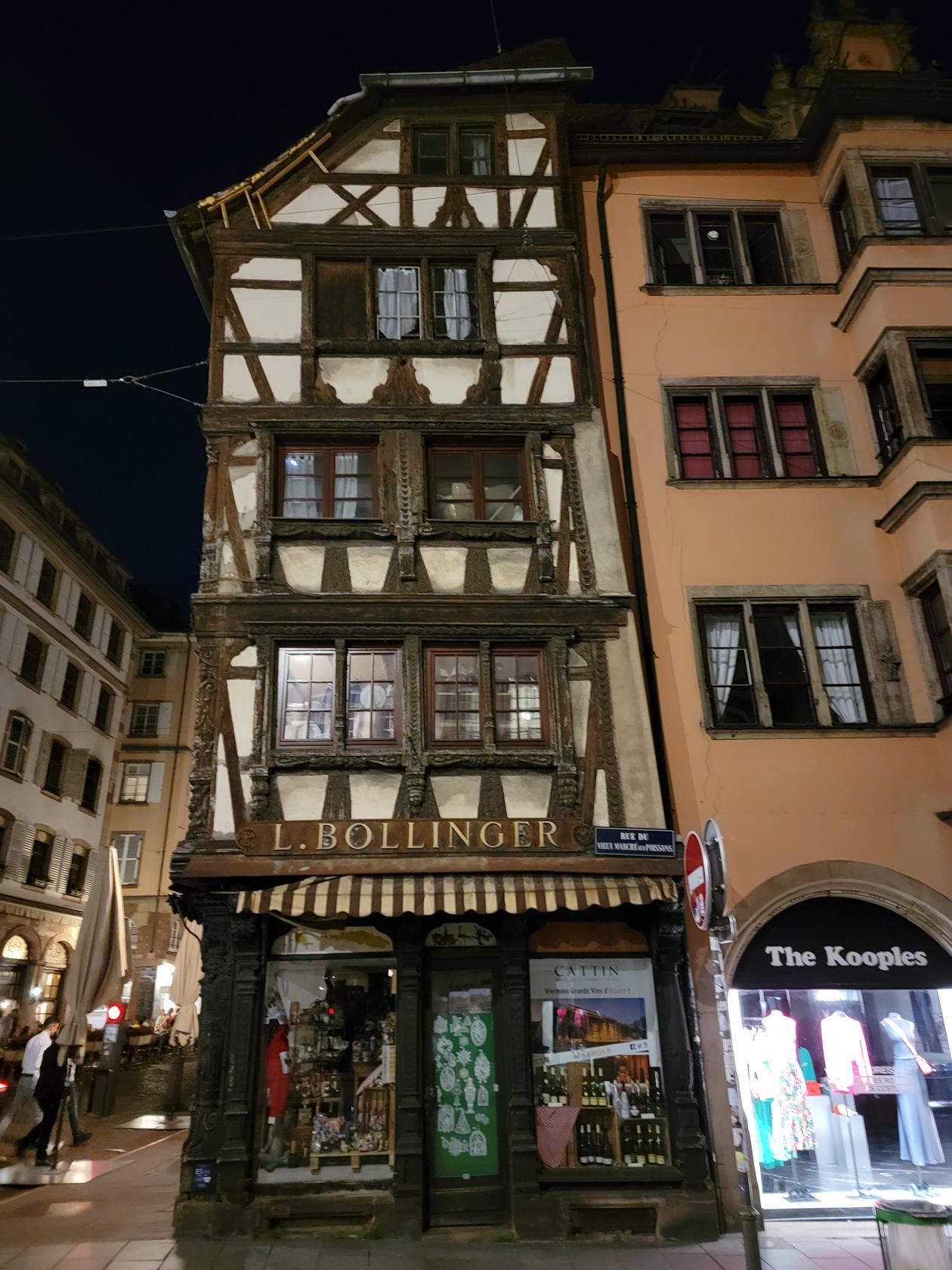
The old Bollinger House – Strasbourg, France
The river Ill from outside the hotel – Hotel Cour Du Corbeau – Strasbourg, France
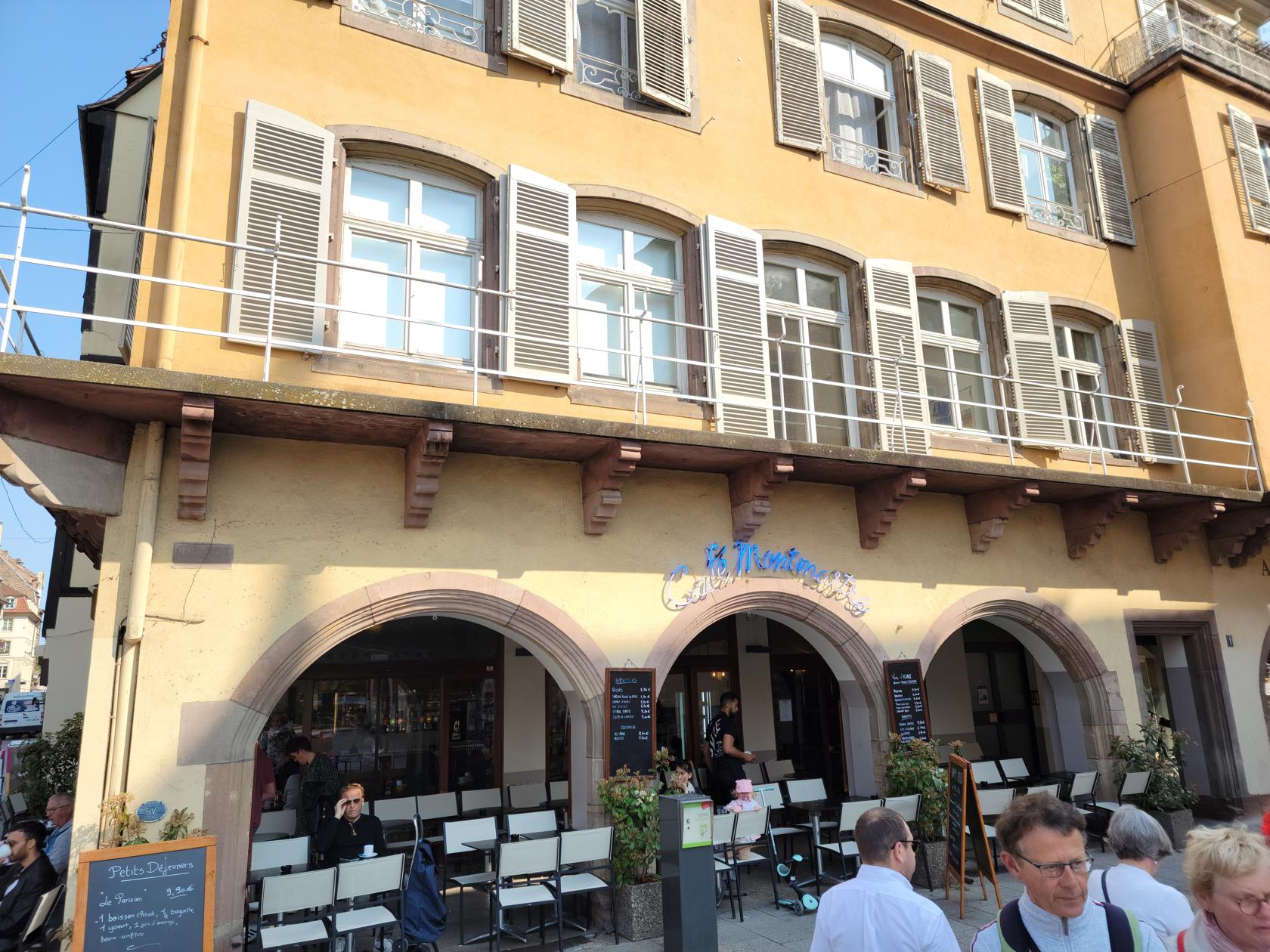
Cafe Mont Martre – Strasbourg, France
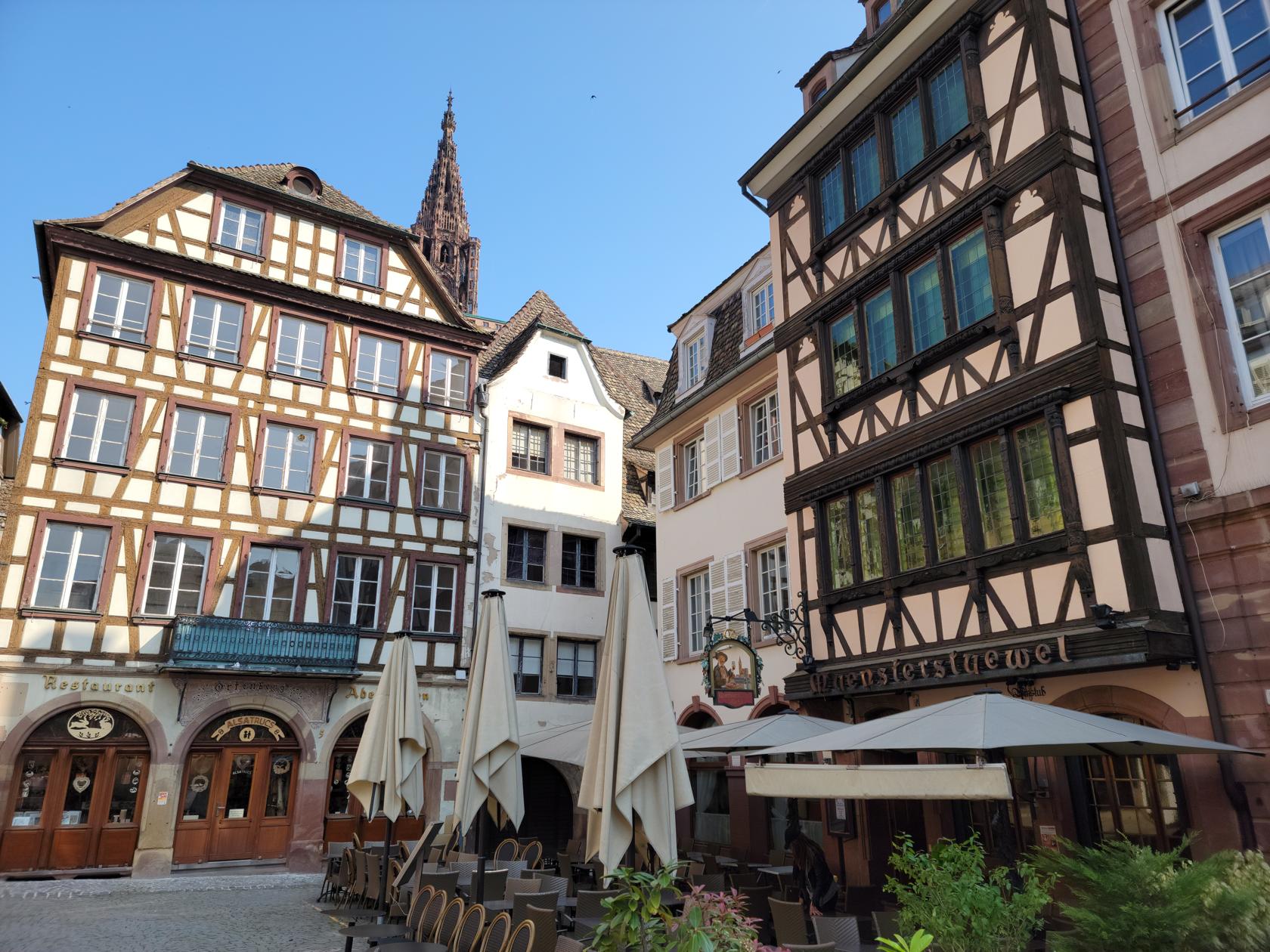
Old wooden framed houses – Strasbourg, France
Old business signs – Strasbourg, France
Another unique wooden framed house – Strasbourg, France
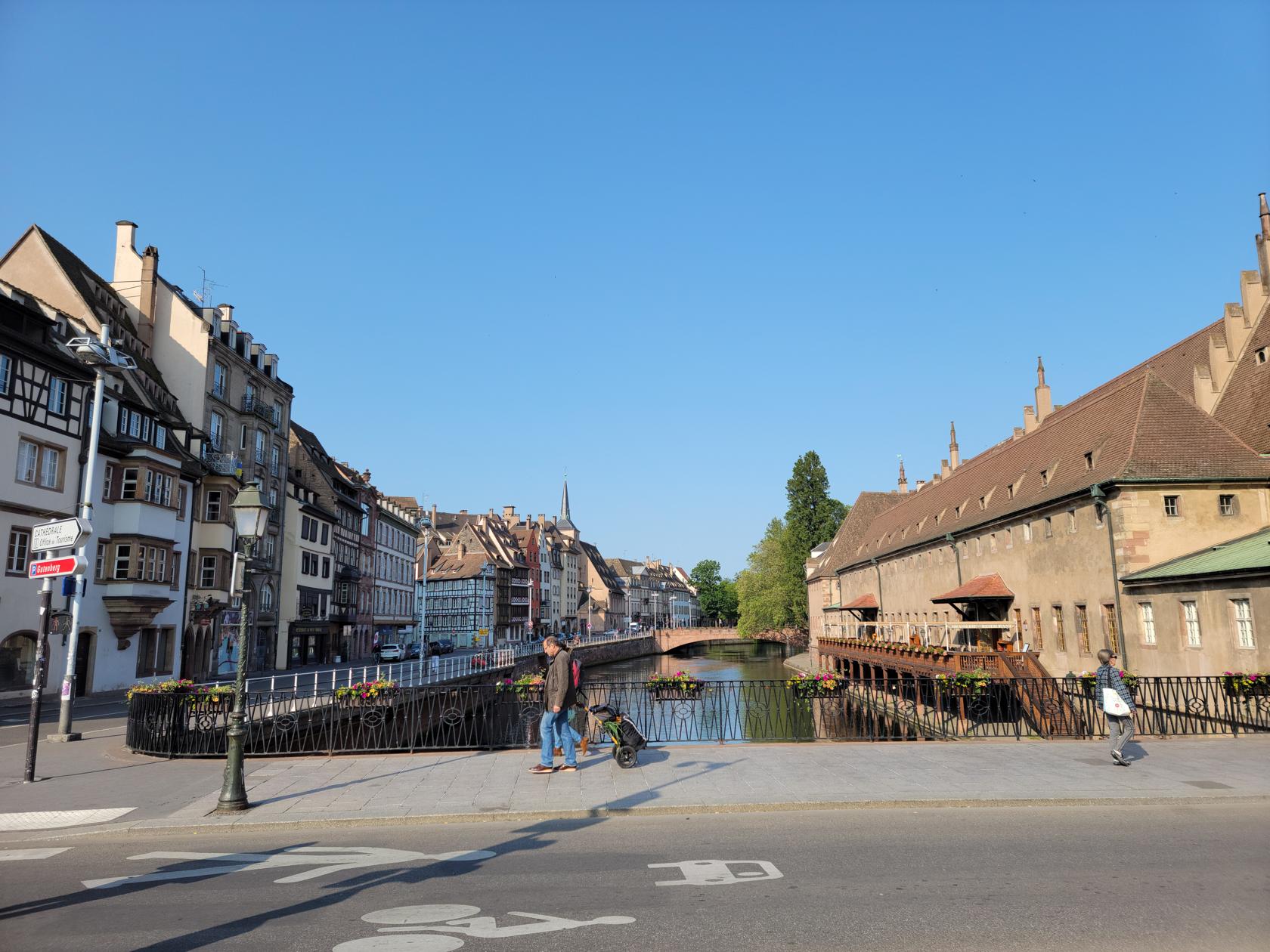
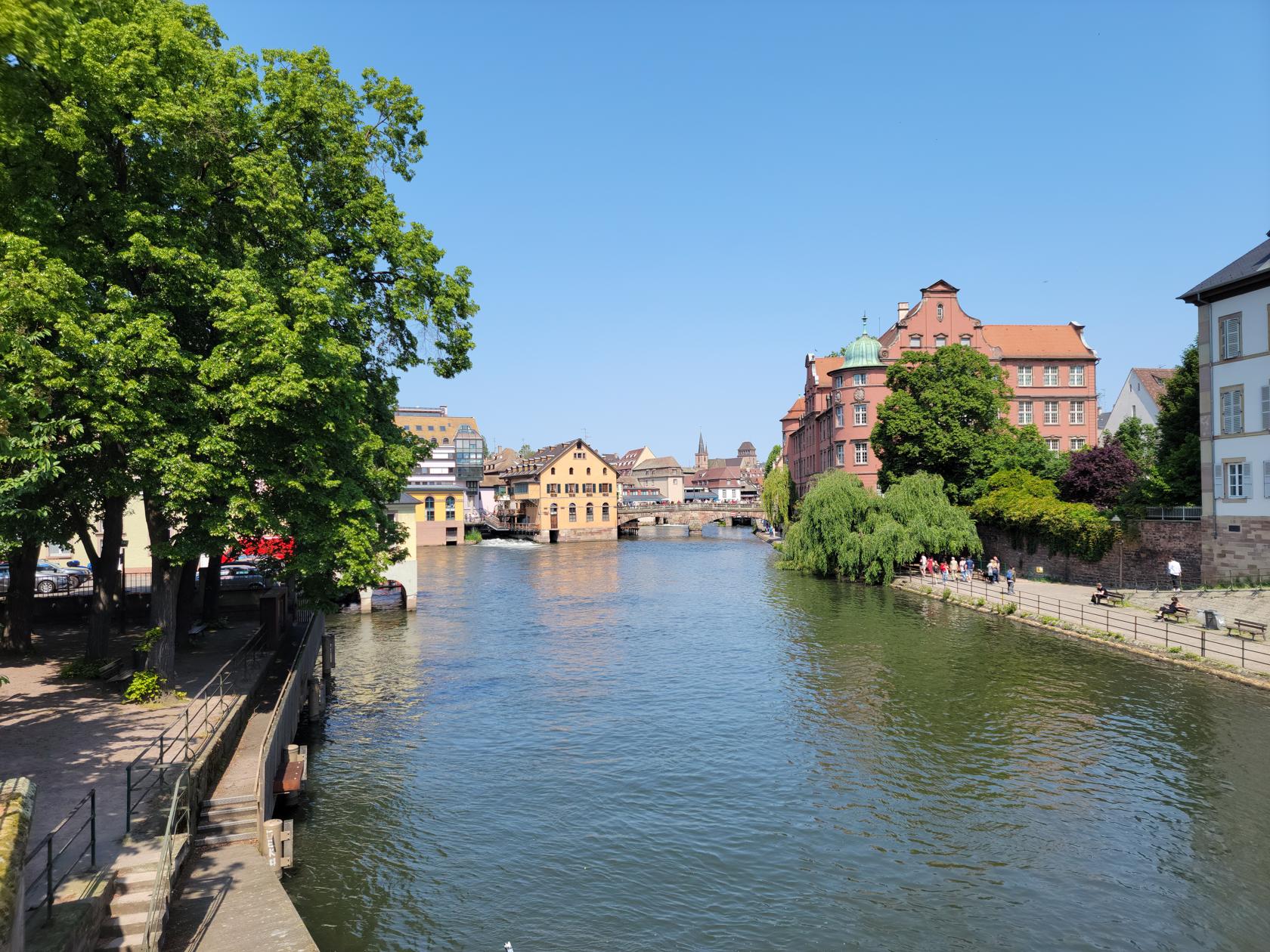
A beautiful day from Pont Saint-Thomas – Strasbourg, France
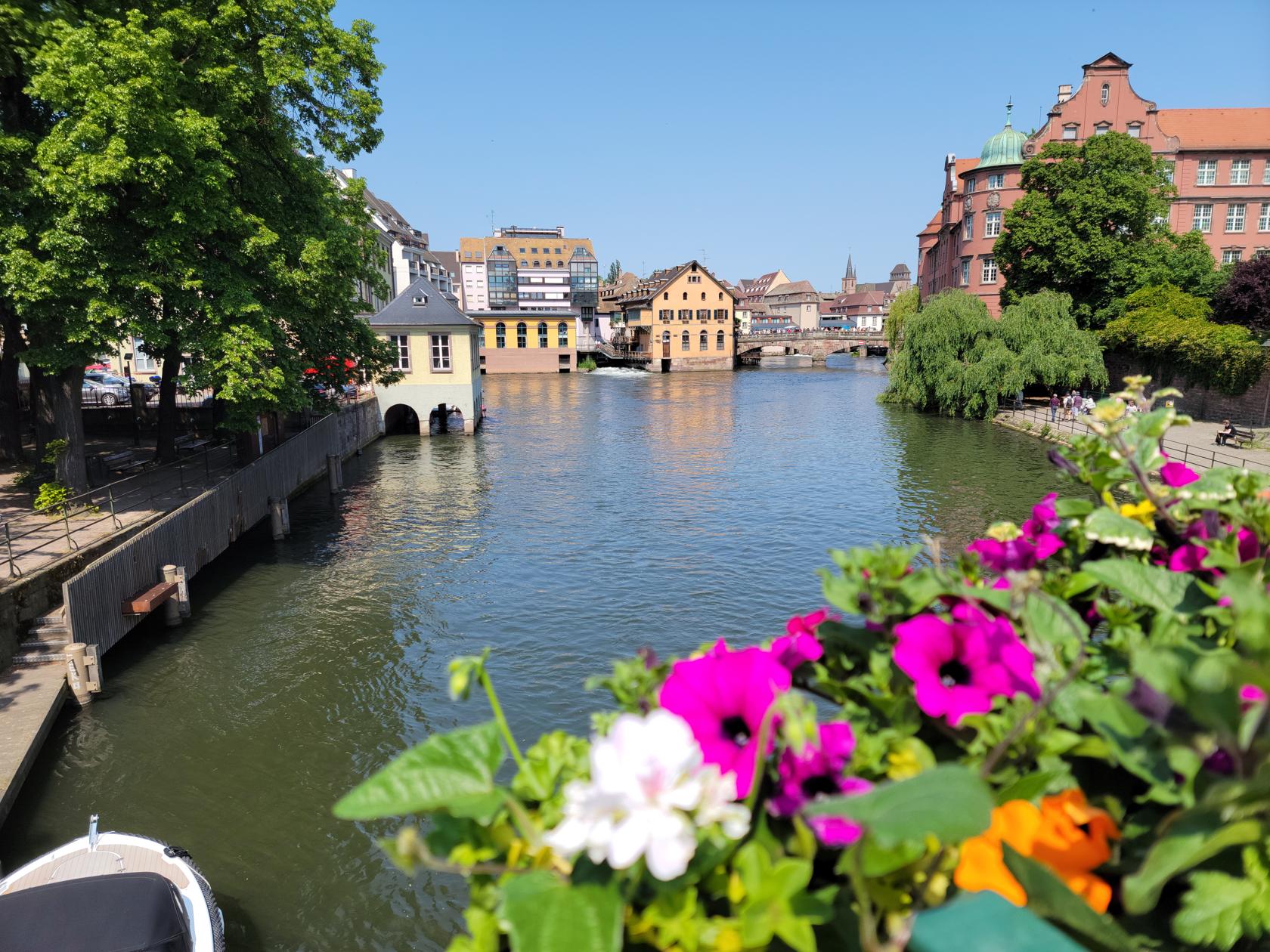
A beautiful day from Pont Saint-Thomas – Strasbourg, France
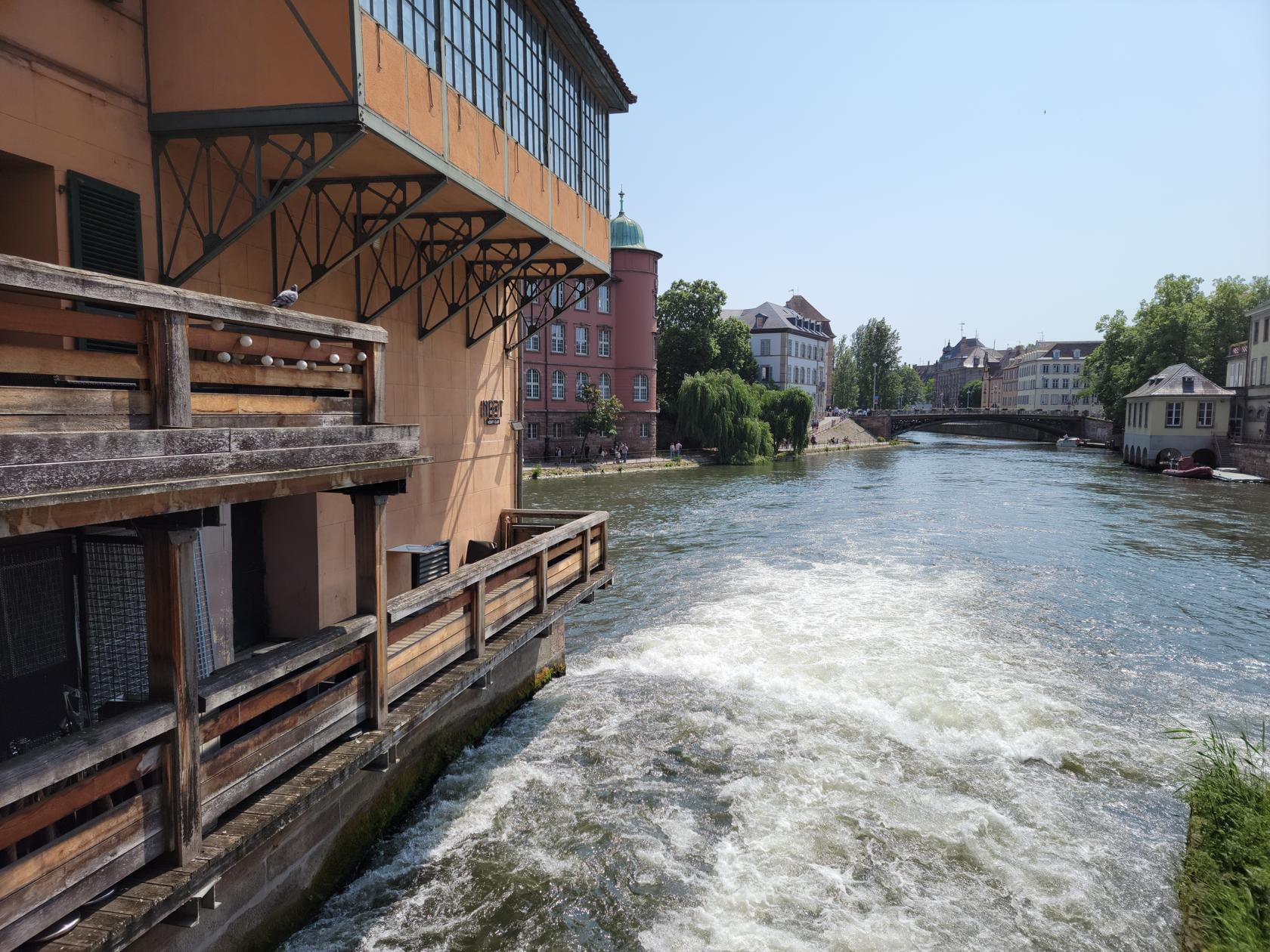
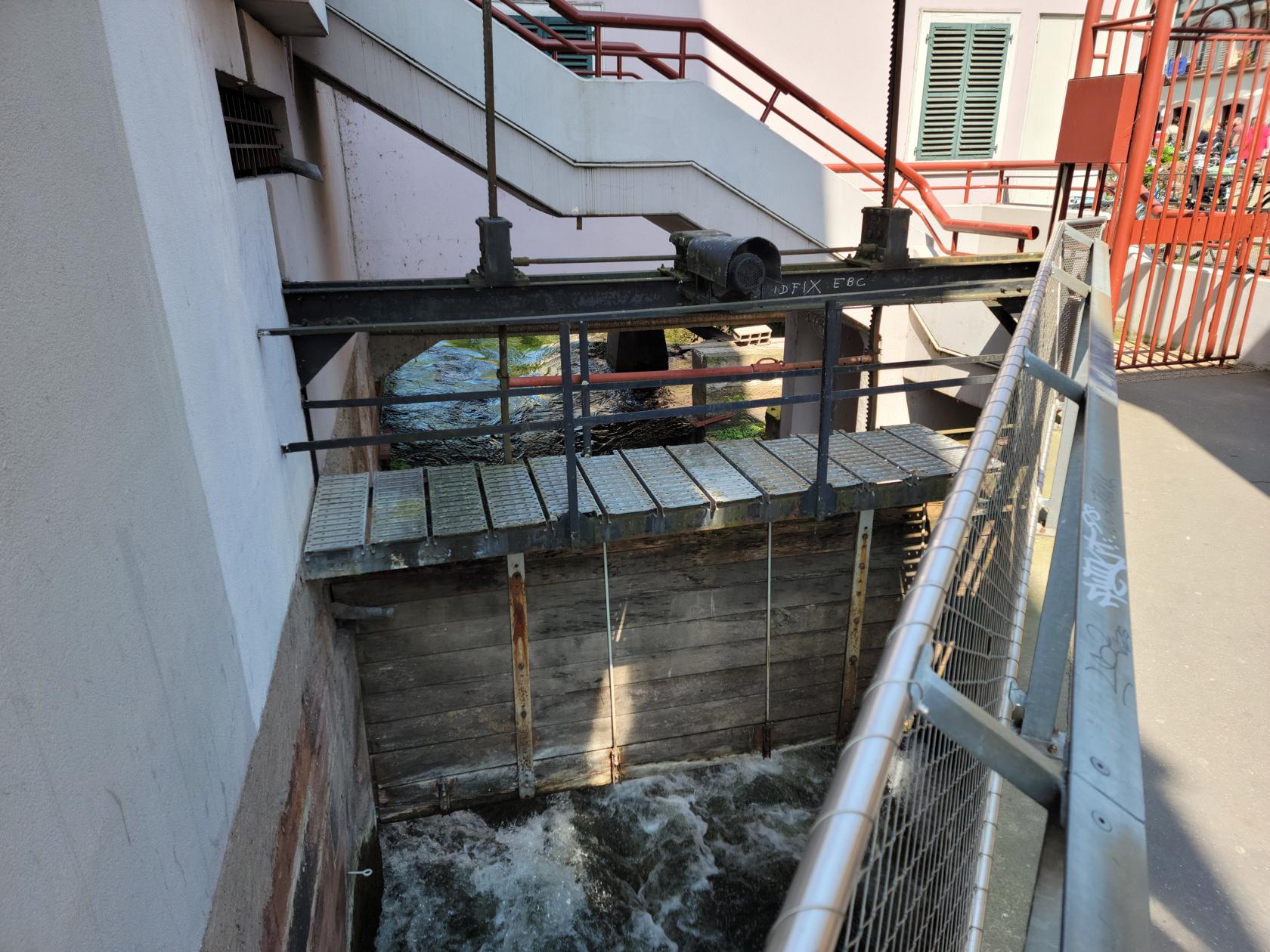
One of the dam overflows – Strasbourg, France
A dam – Strasbourg, France
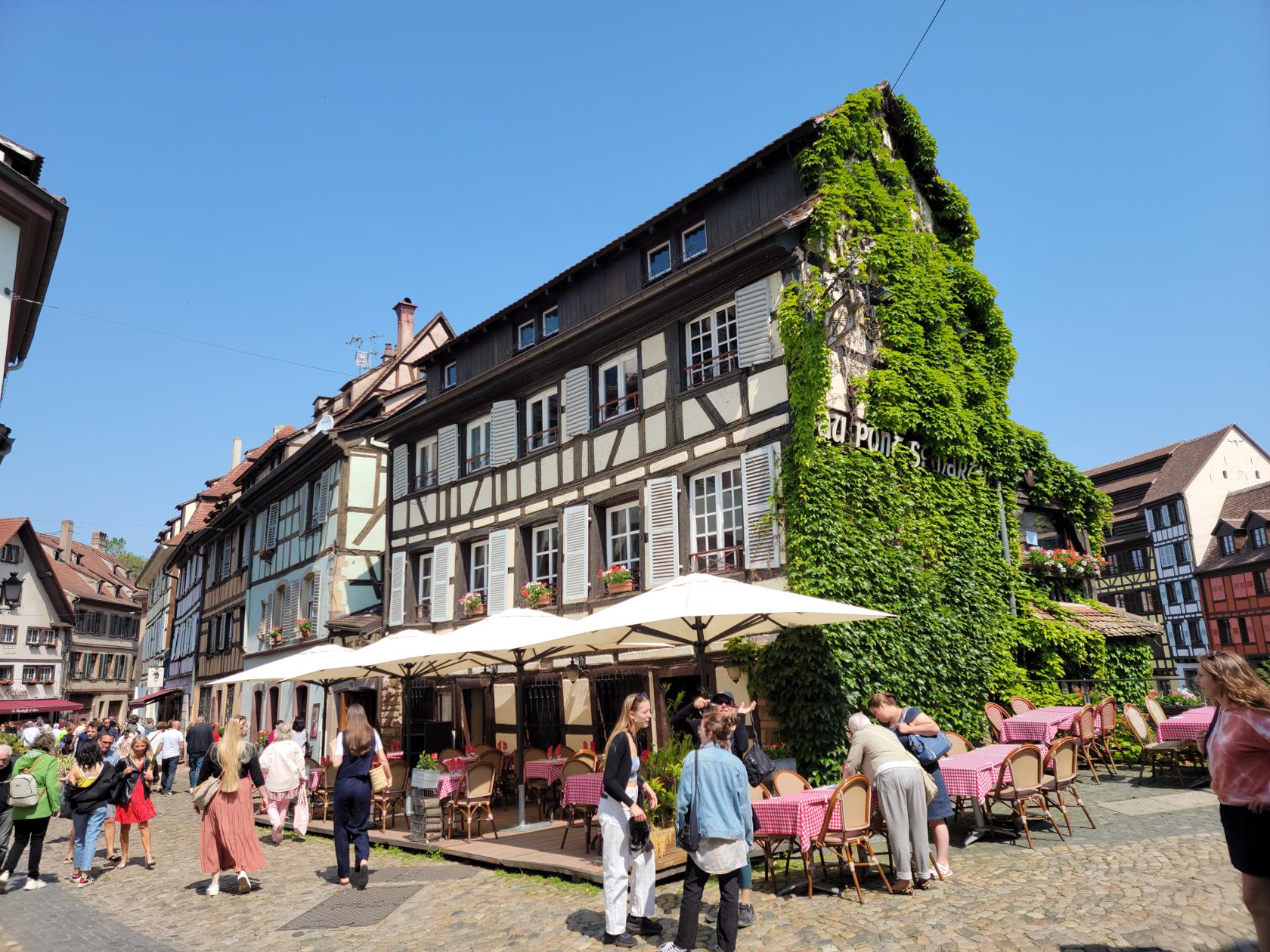
A beautiful restaurant – Strasbourg, France
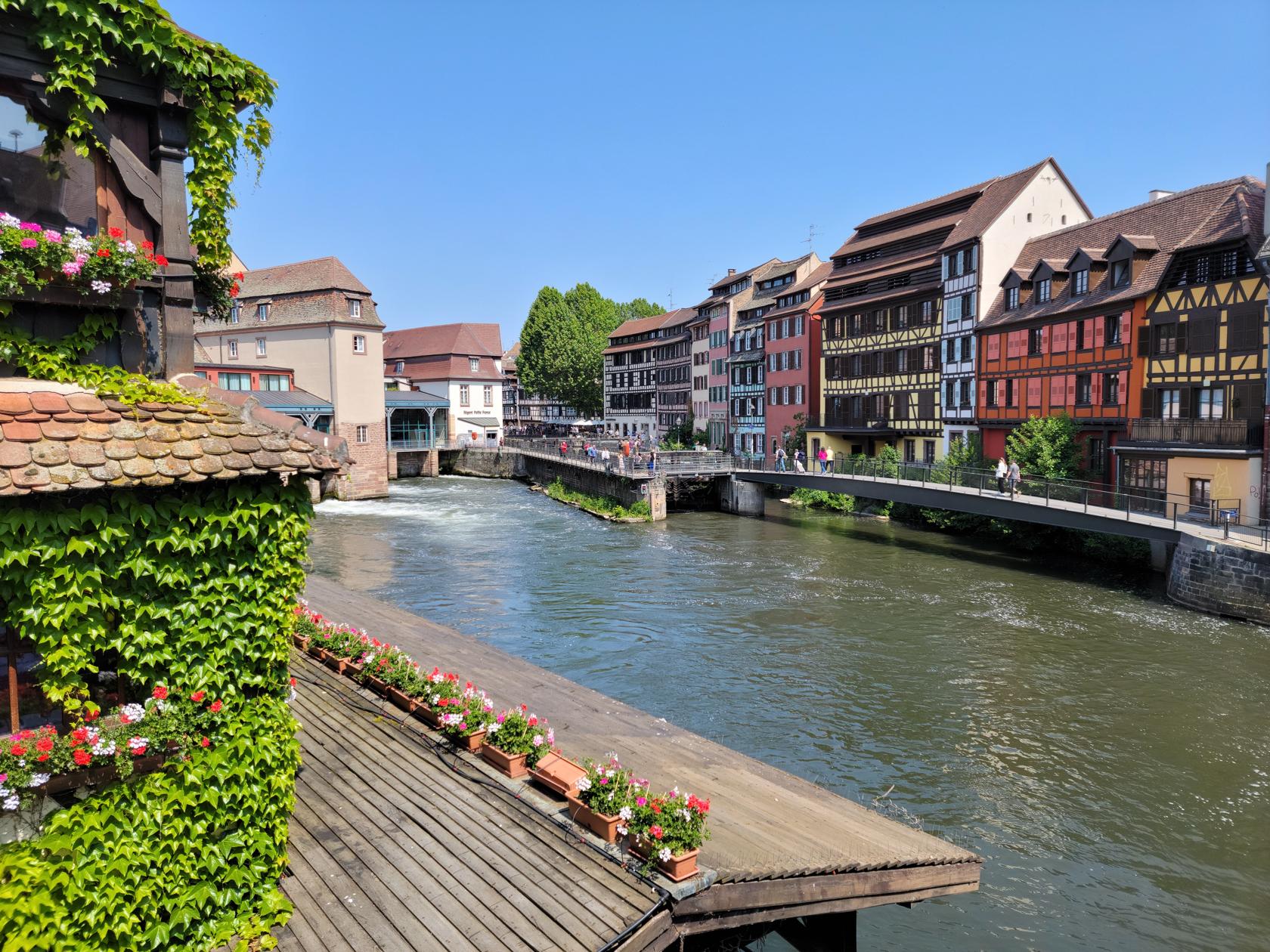
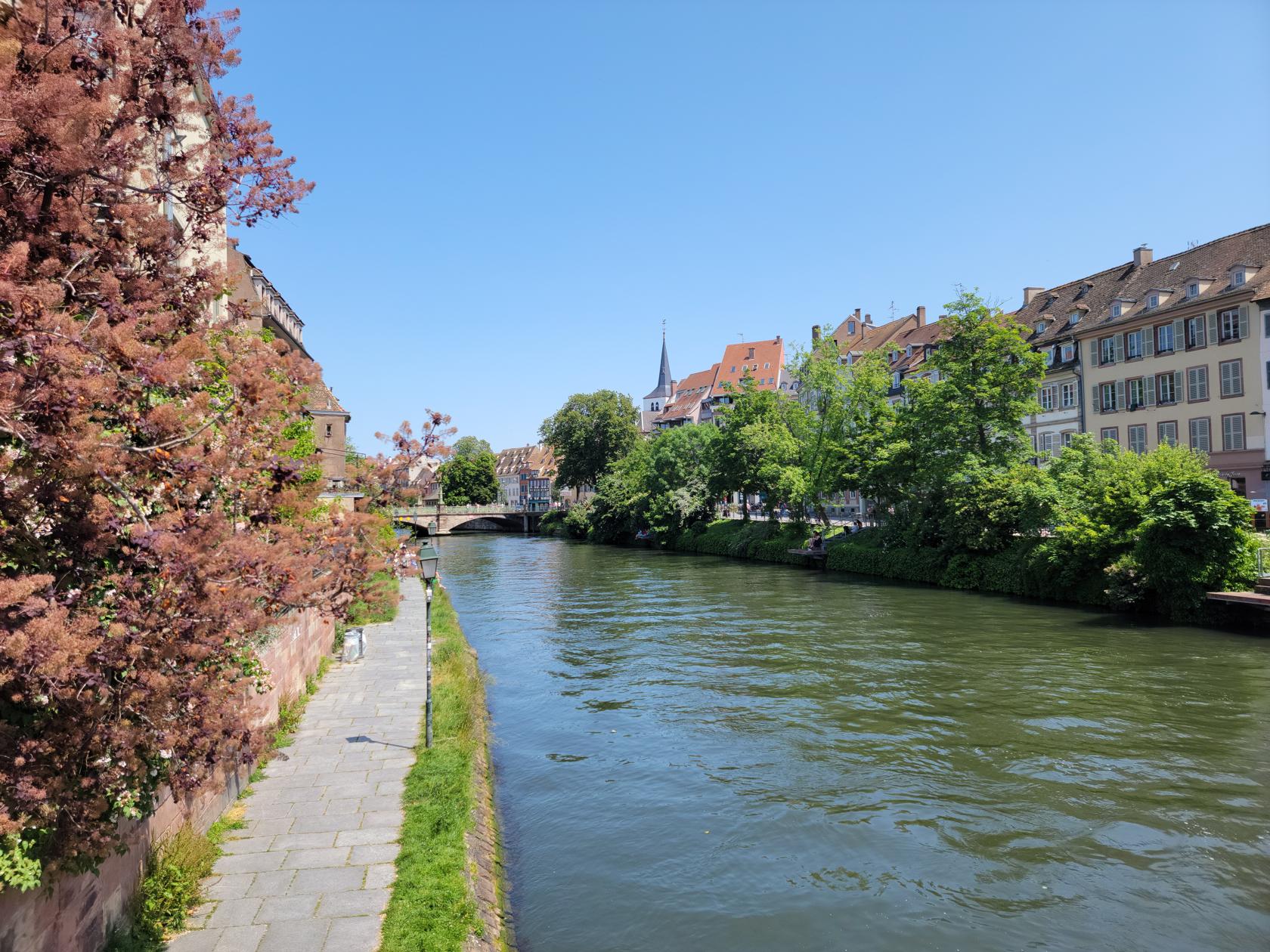
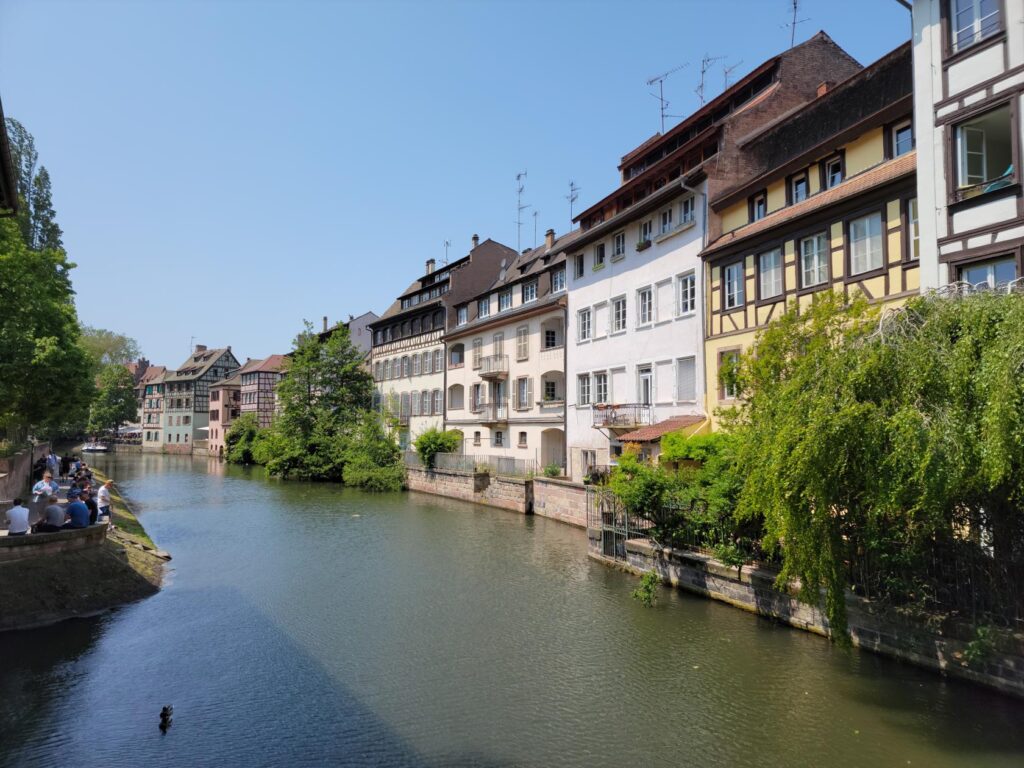
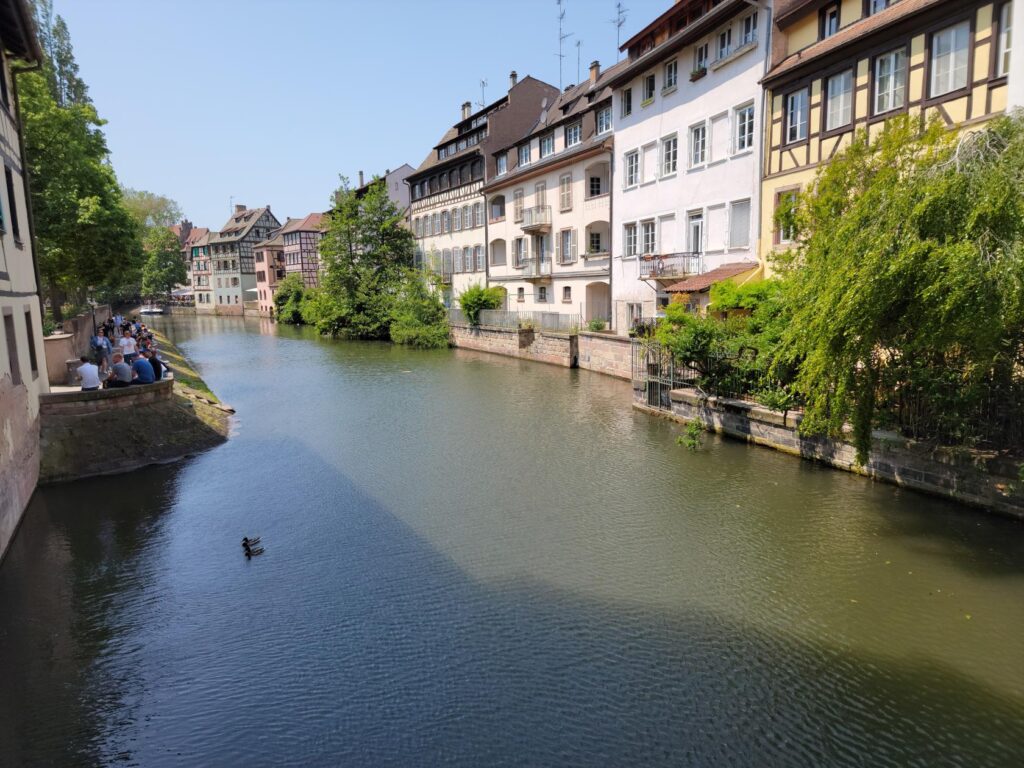
The river Ill – Strasbourg, France
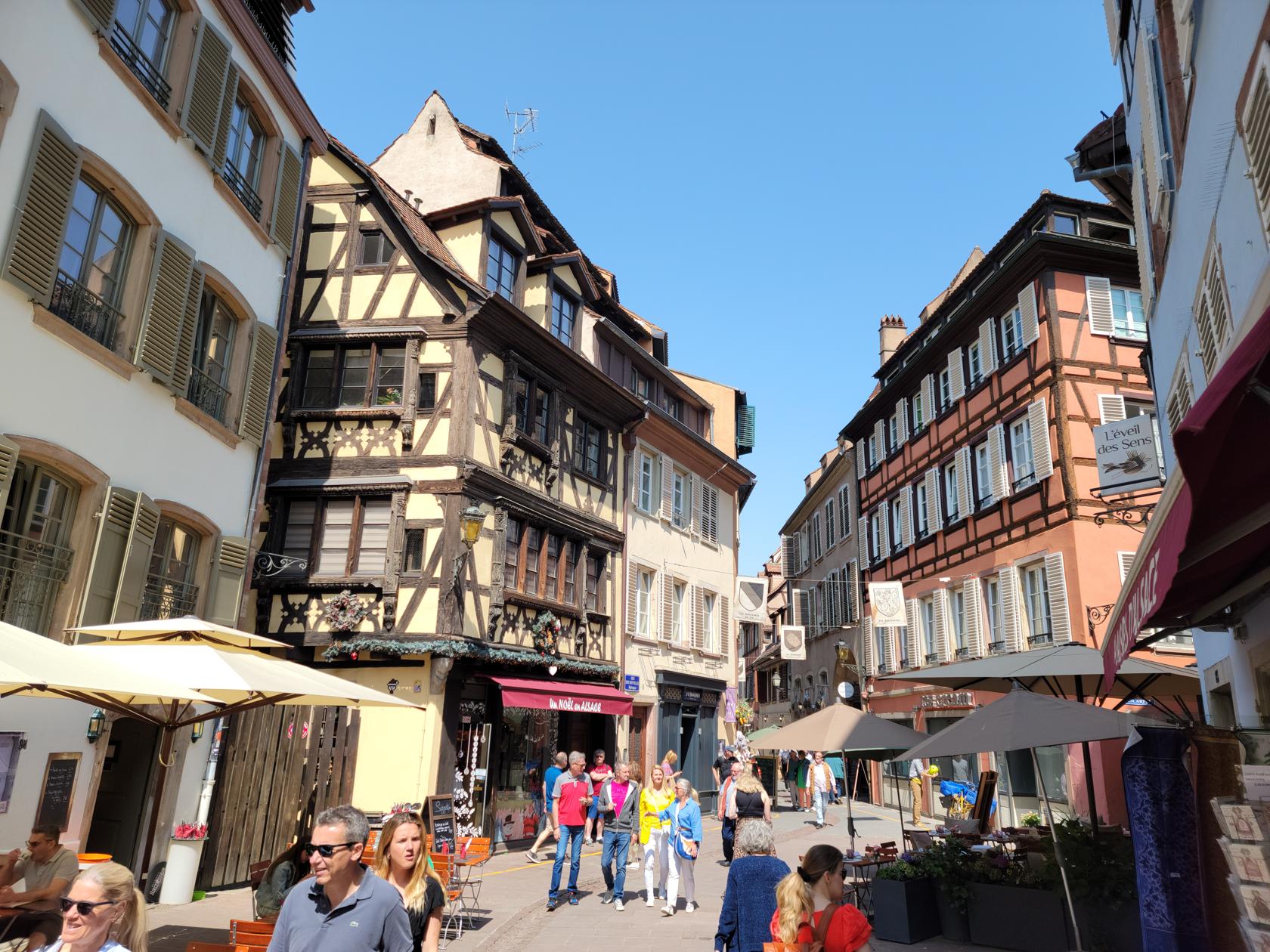
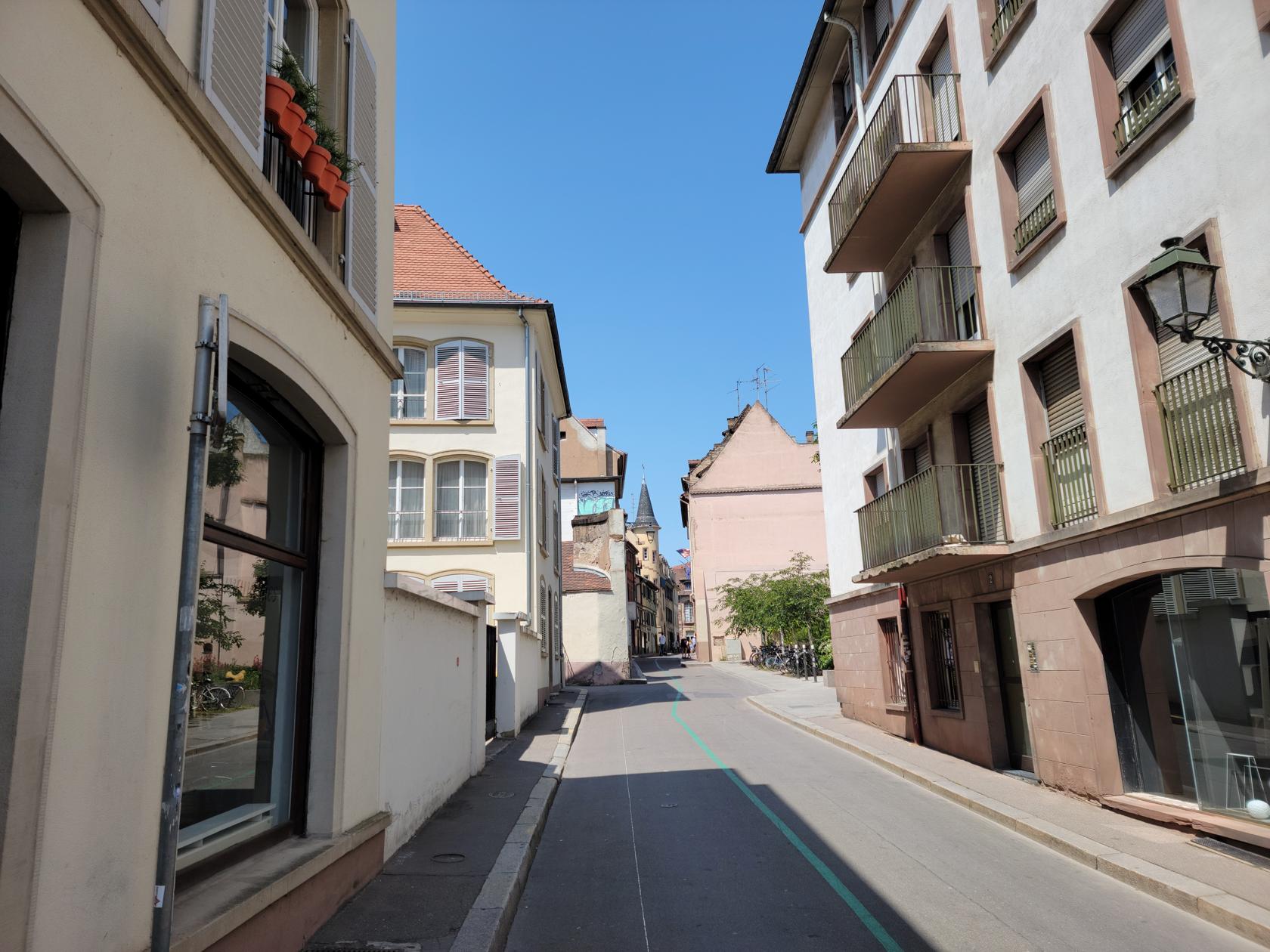
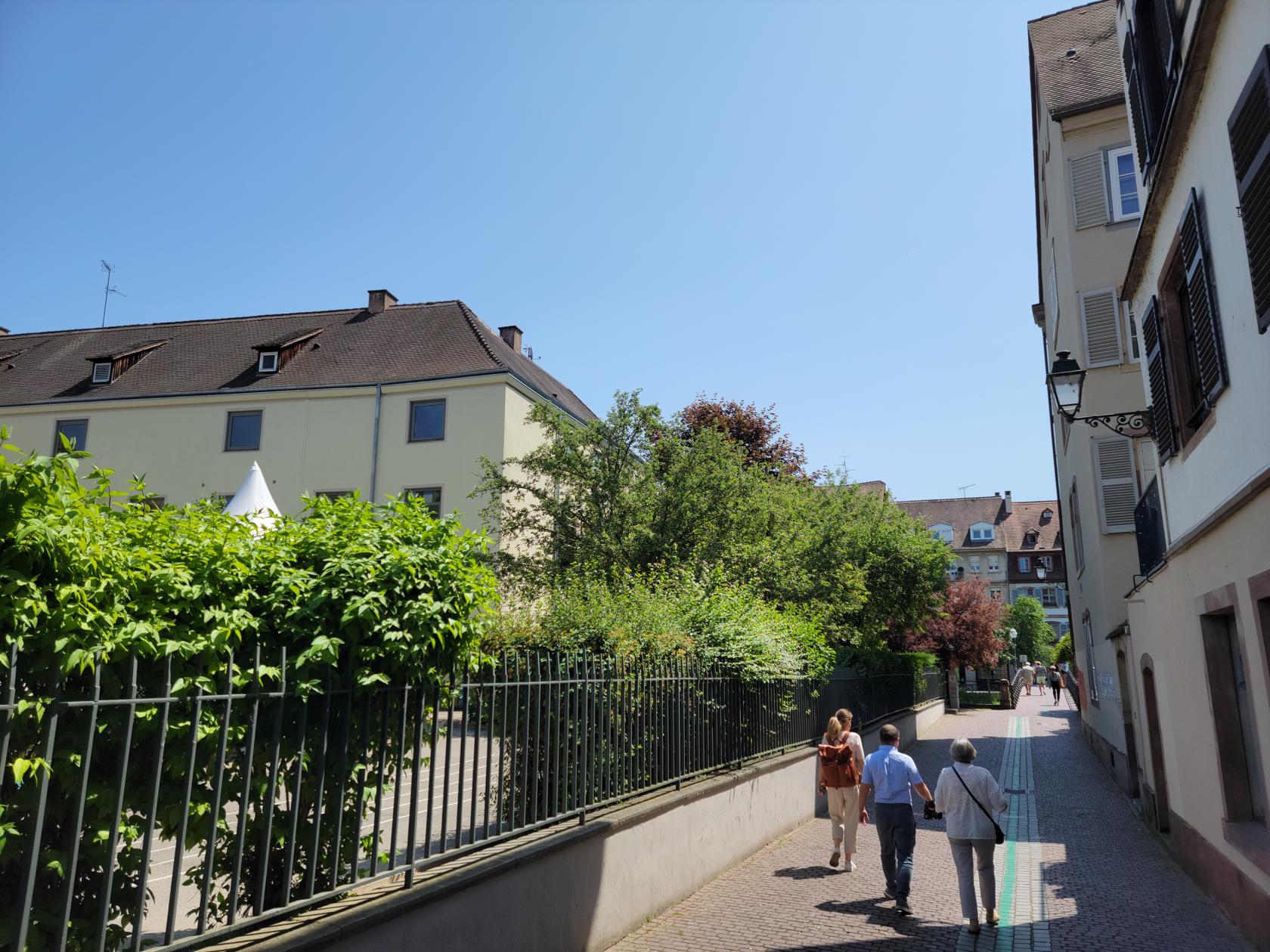
Walking the streets – Strasbourg, France
Town center – Strasbourg, France
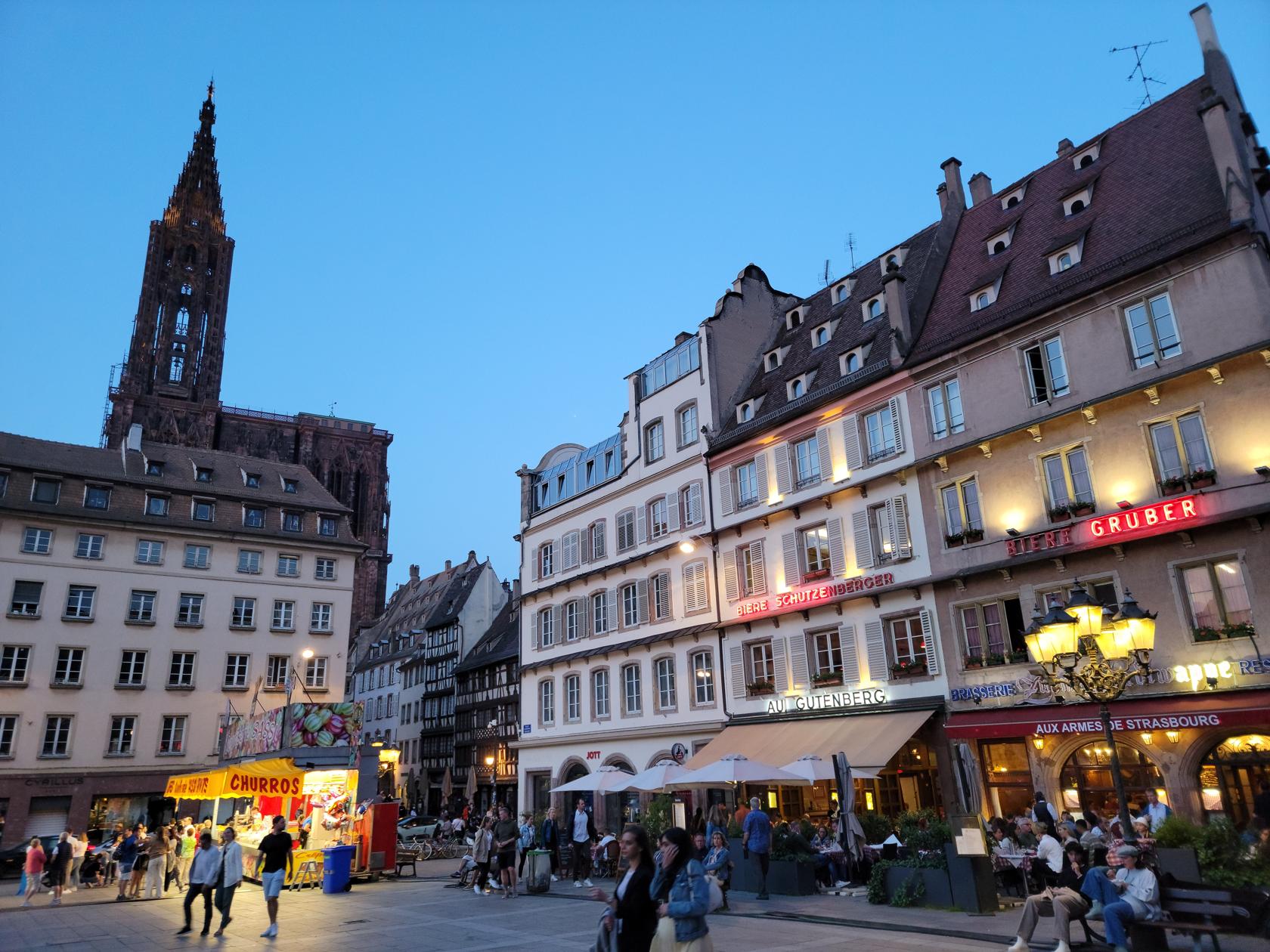
Place de Gutenberg – Strasbourg, France
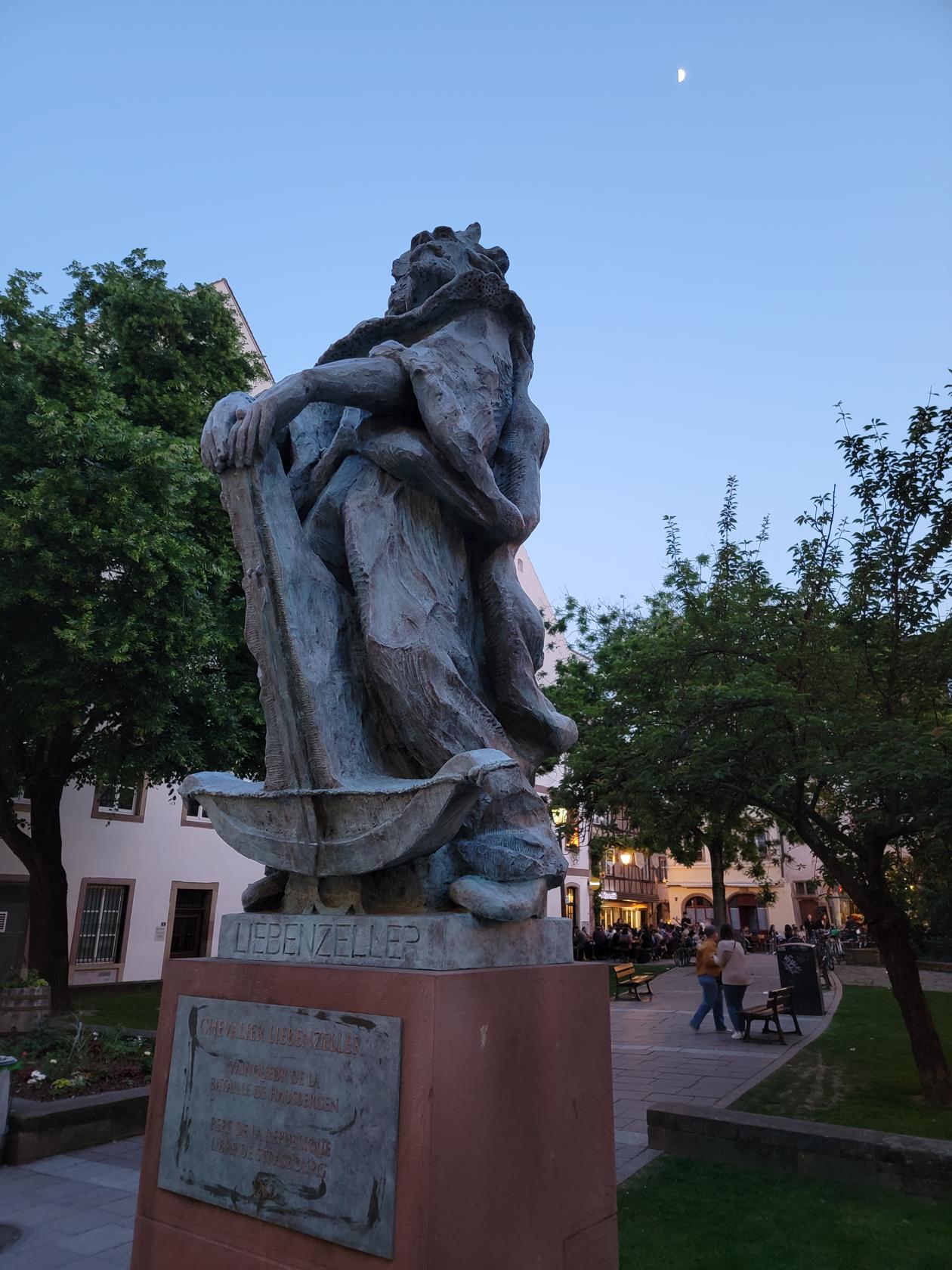
The Liebenzeller memorial – Strasbourg, France
Bierstube – Strasbourg, France
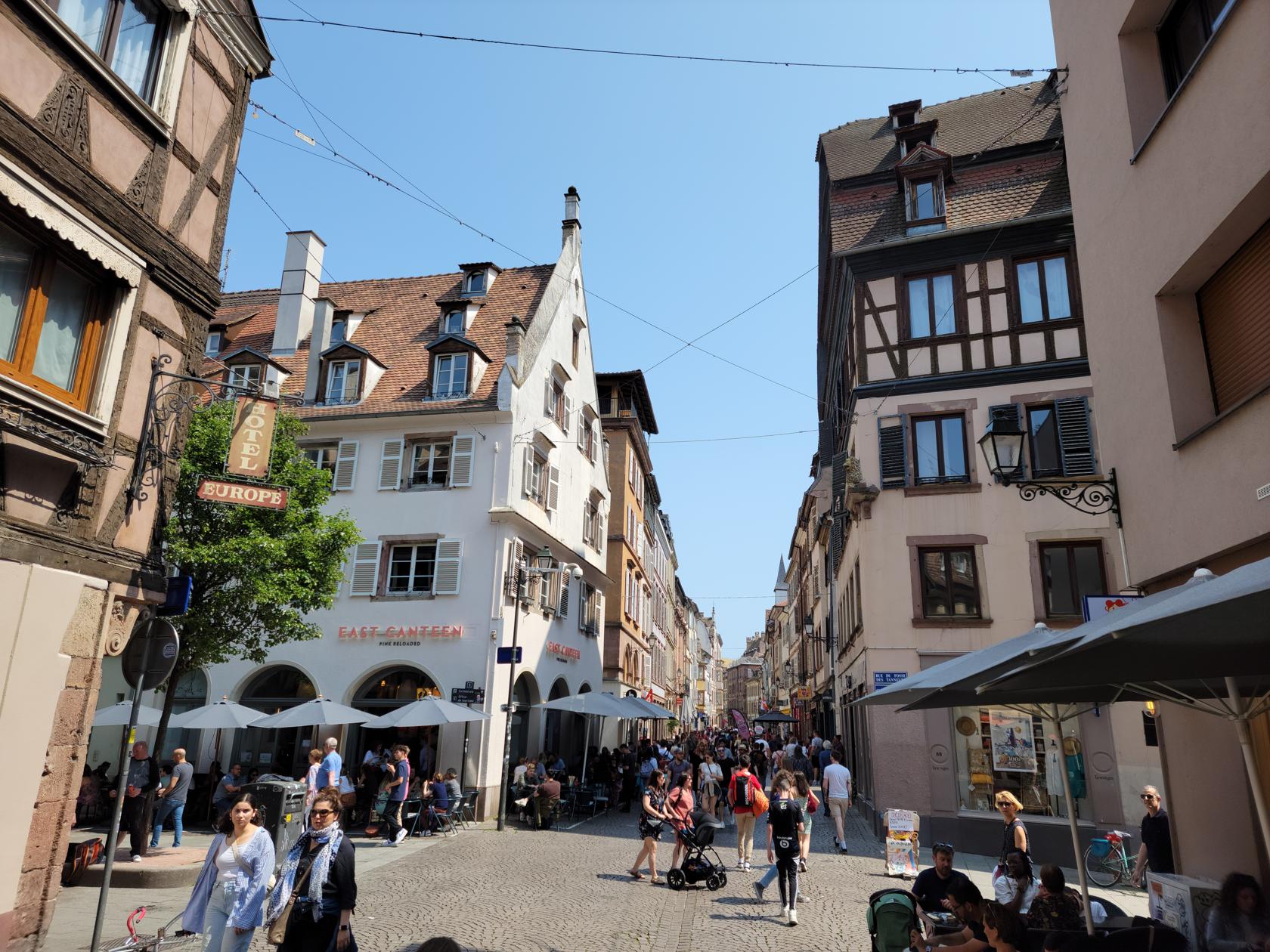
Modern street – Strasbourg, France
The other side of town – Strasbourg, France
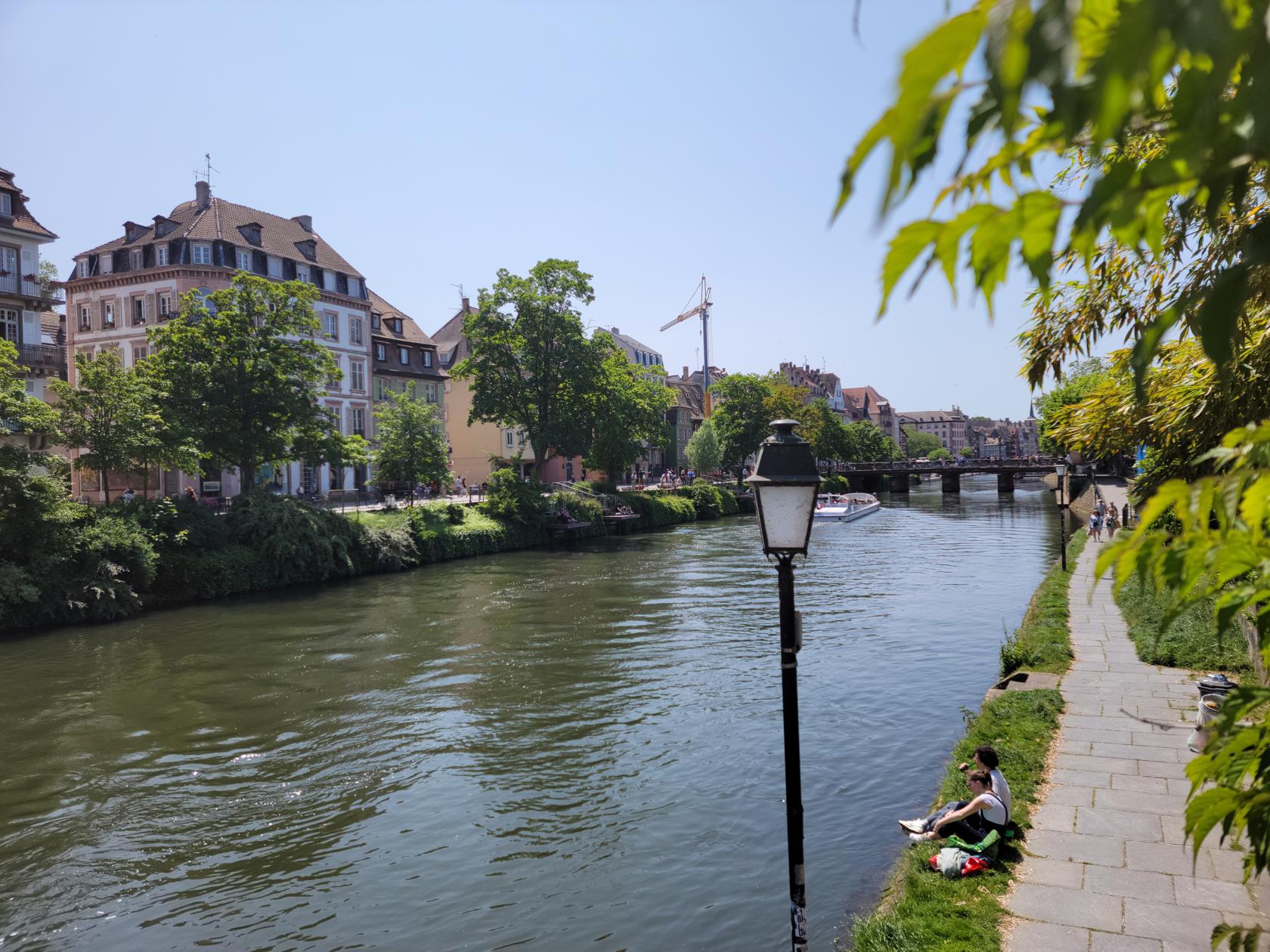
The river Ill on a lazy day – Strasbourg, France
Another view of the Ill – Strasbourg, France
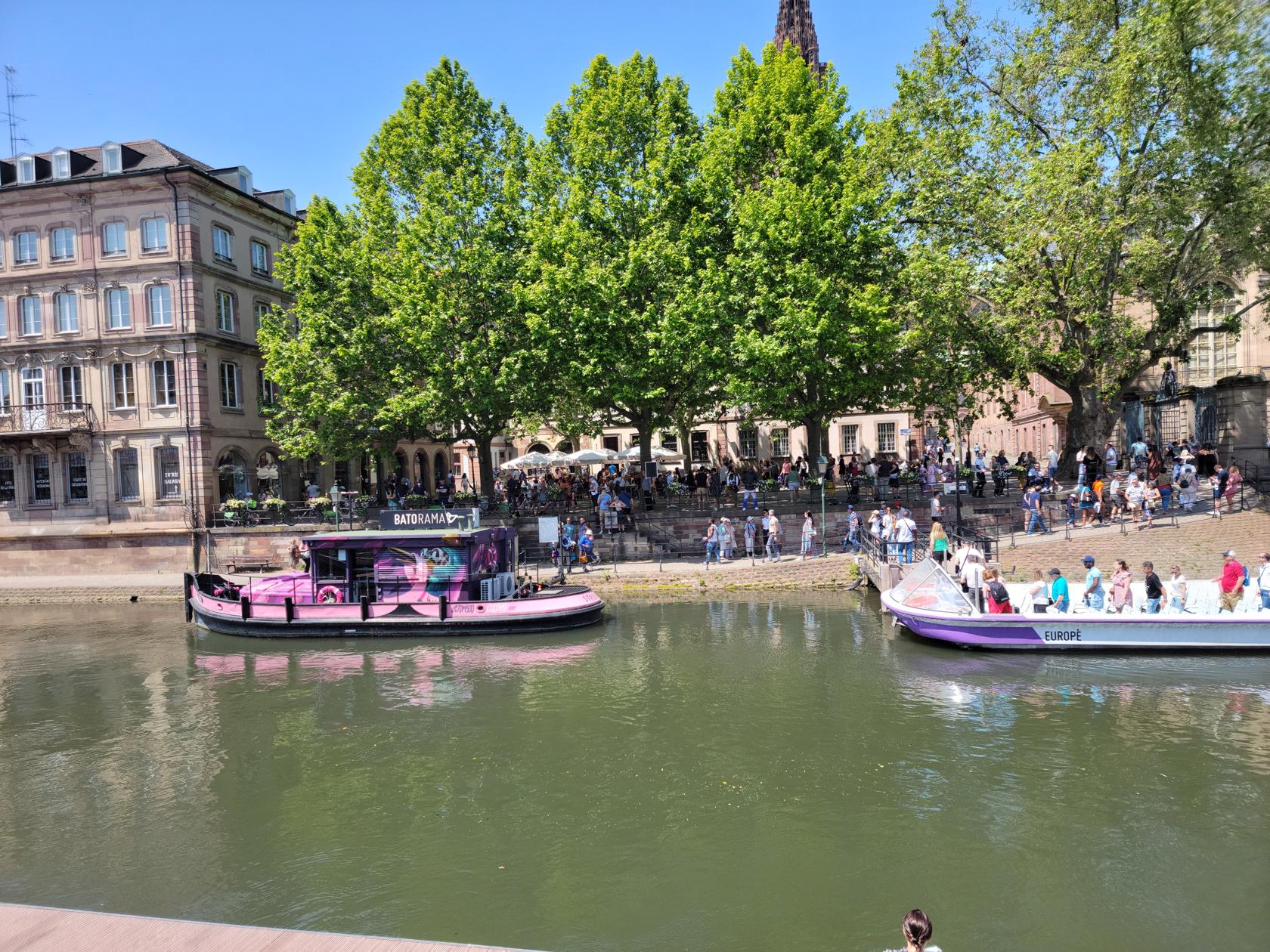
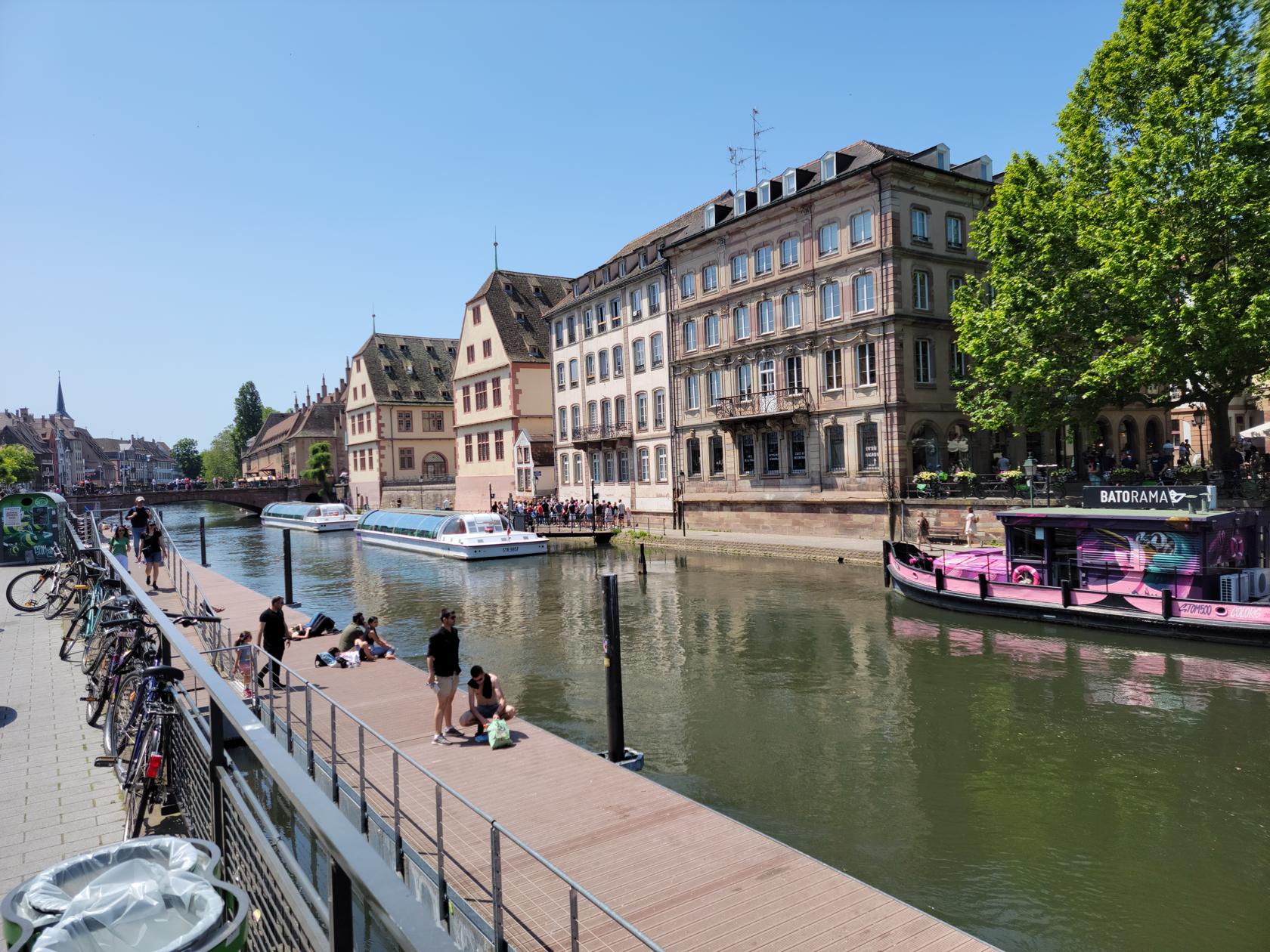
The boat tour anchorage – Strasbourg, France
Boat tours – Strasbourg, France
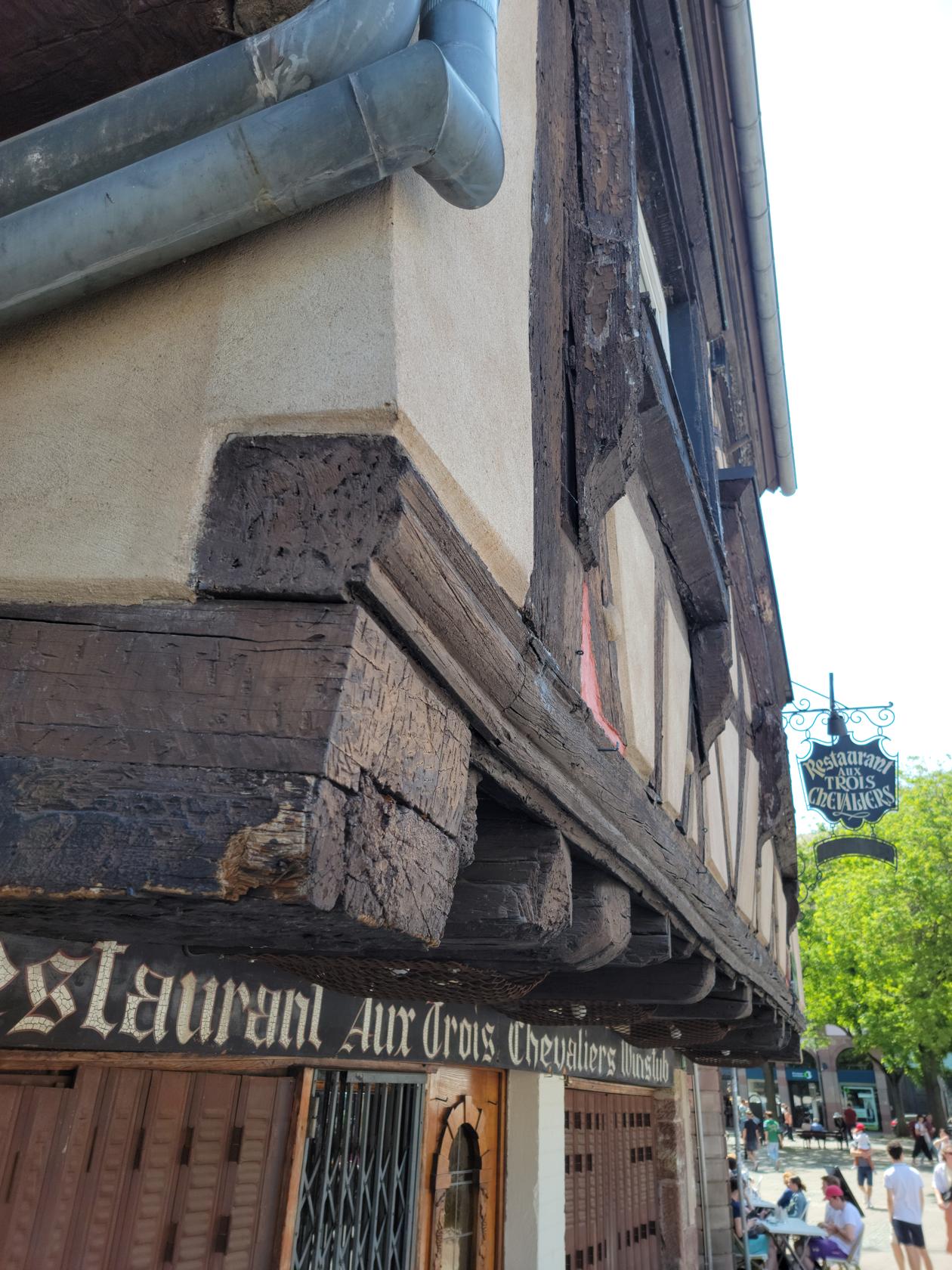
Old wooden beams up close – Strasbourg, France
Notre Dame
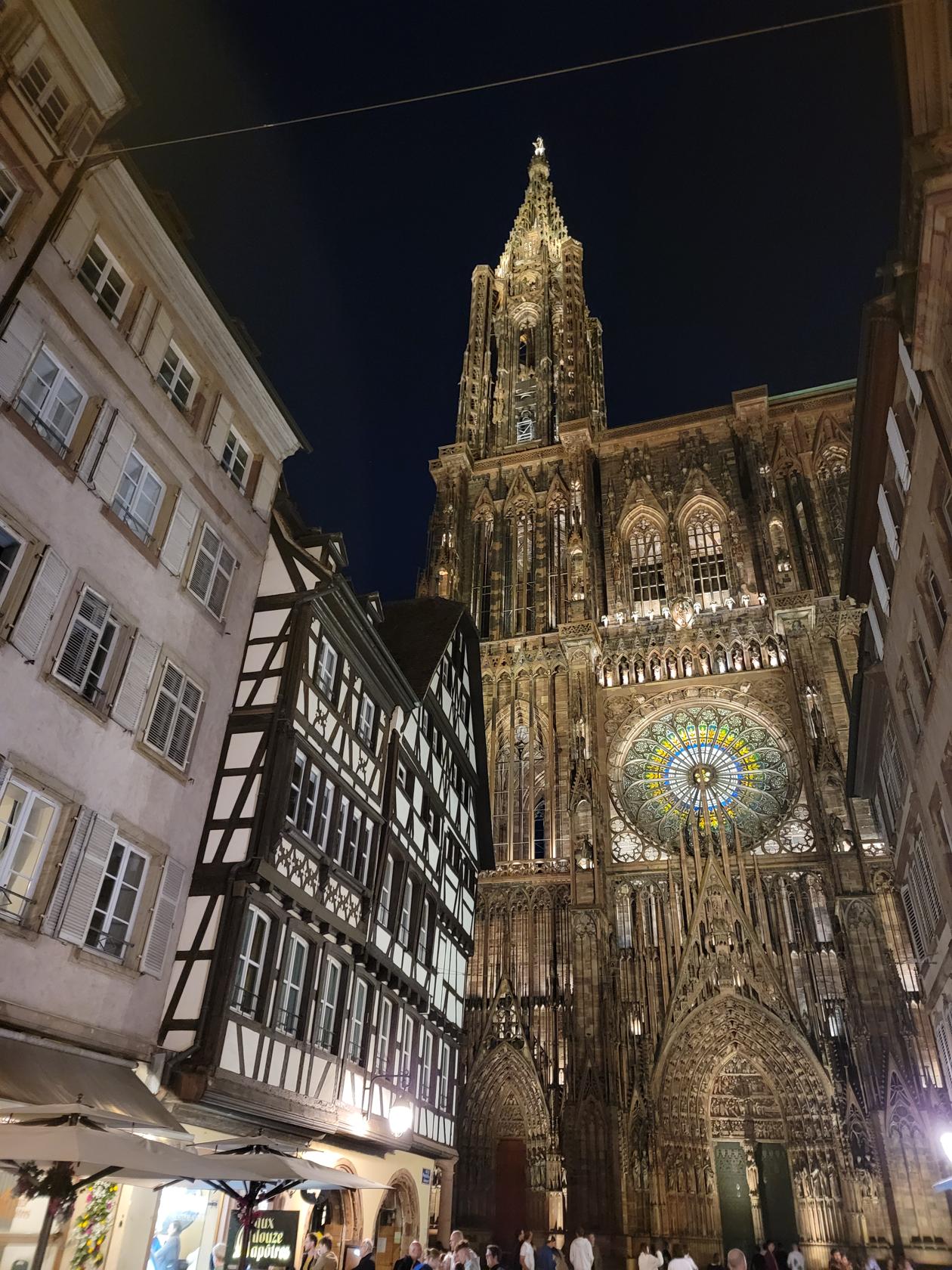
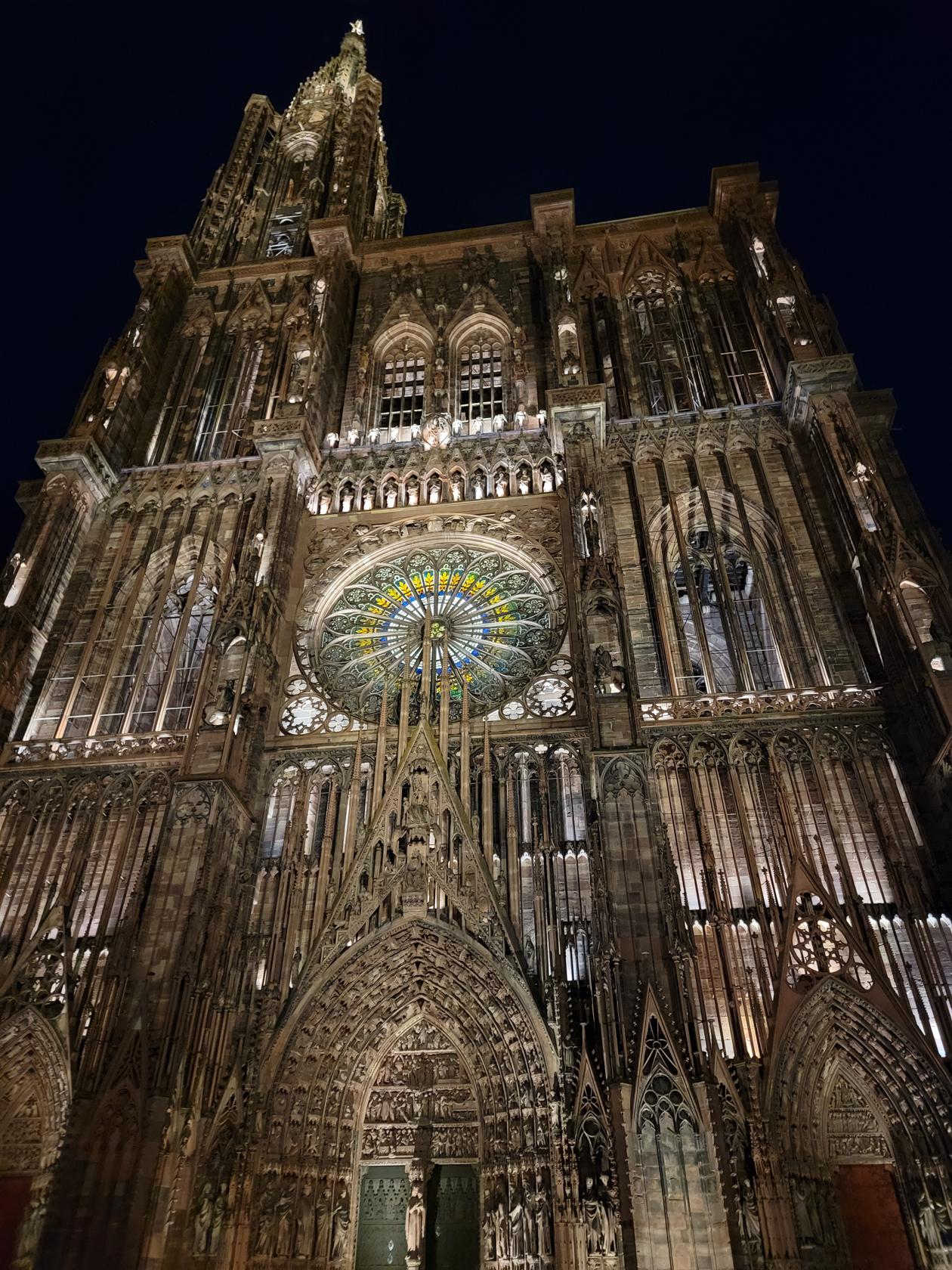
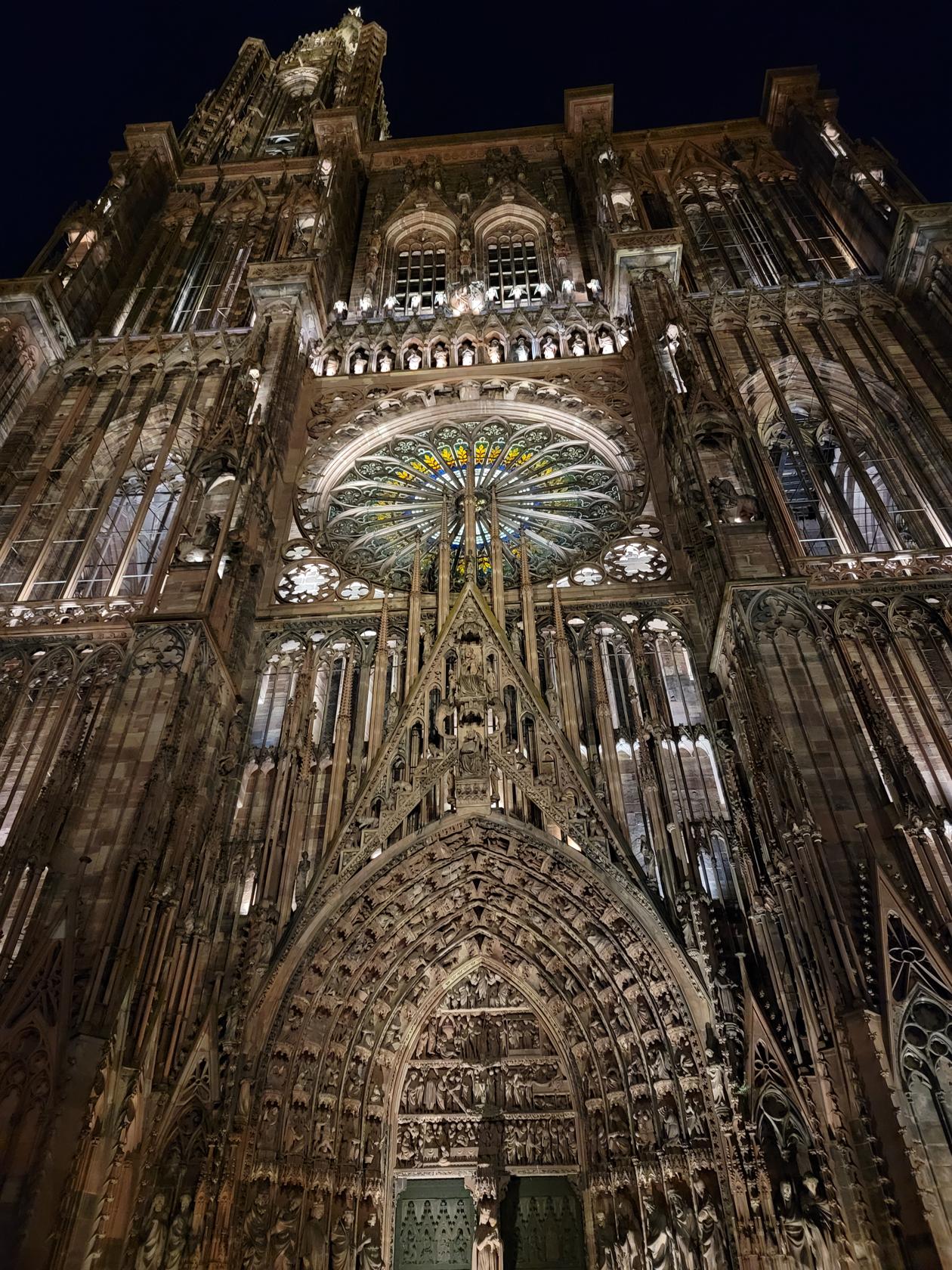
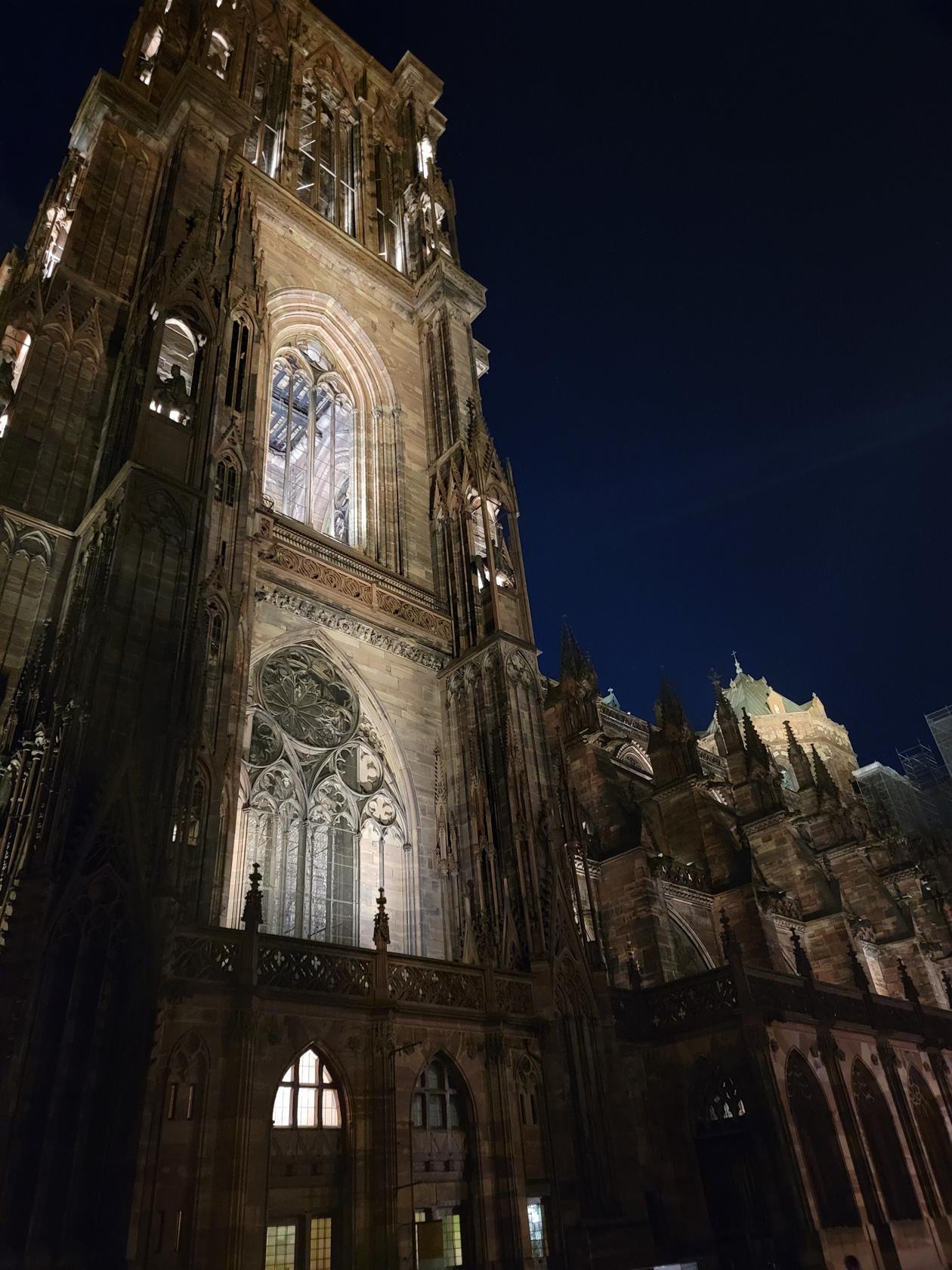
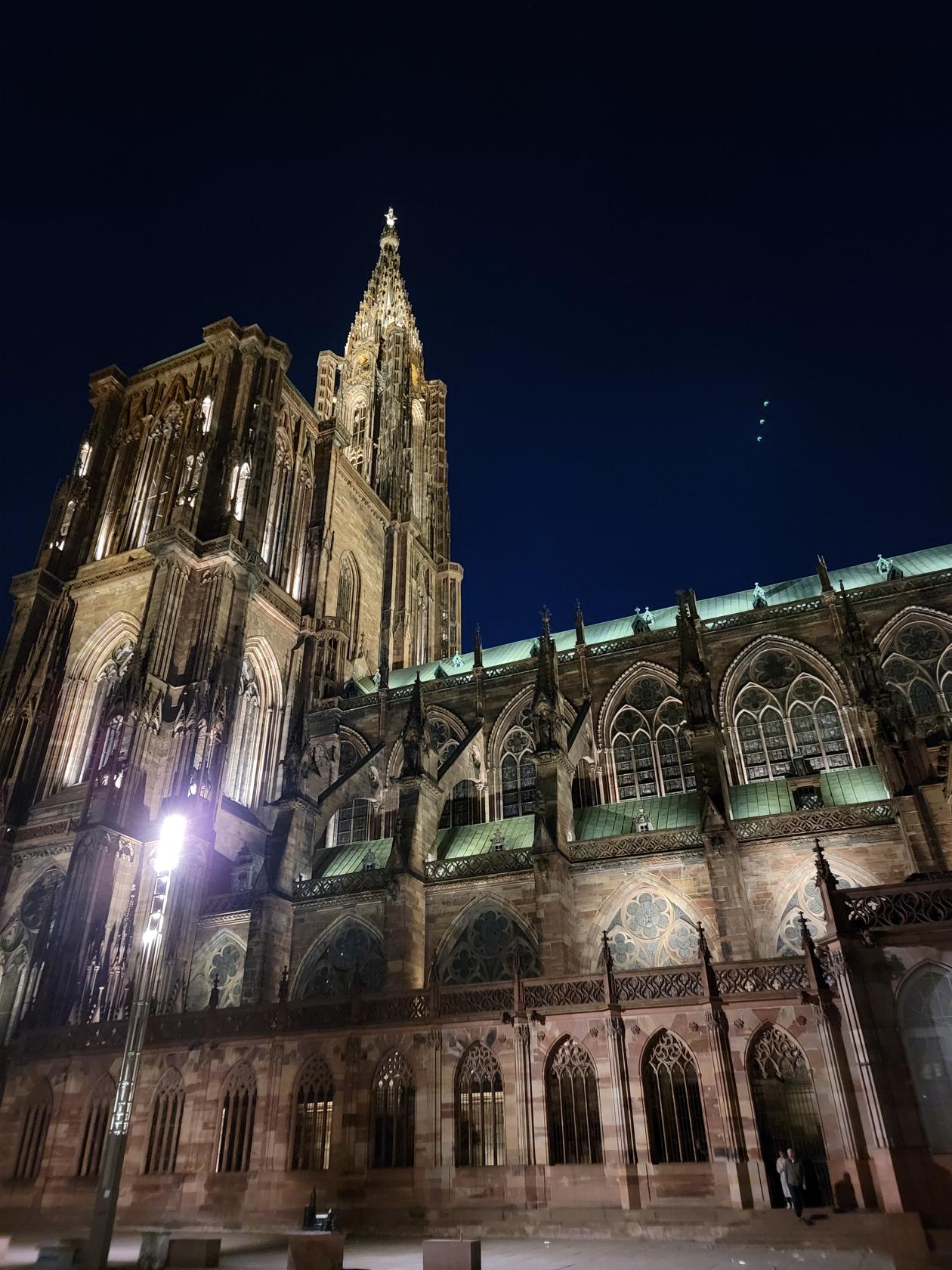
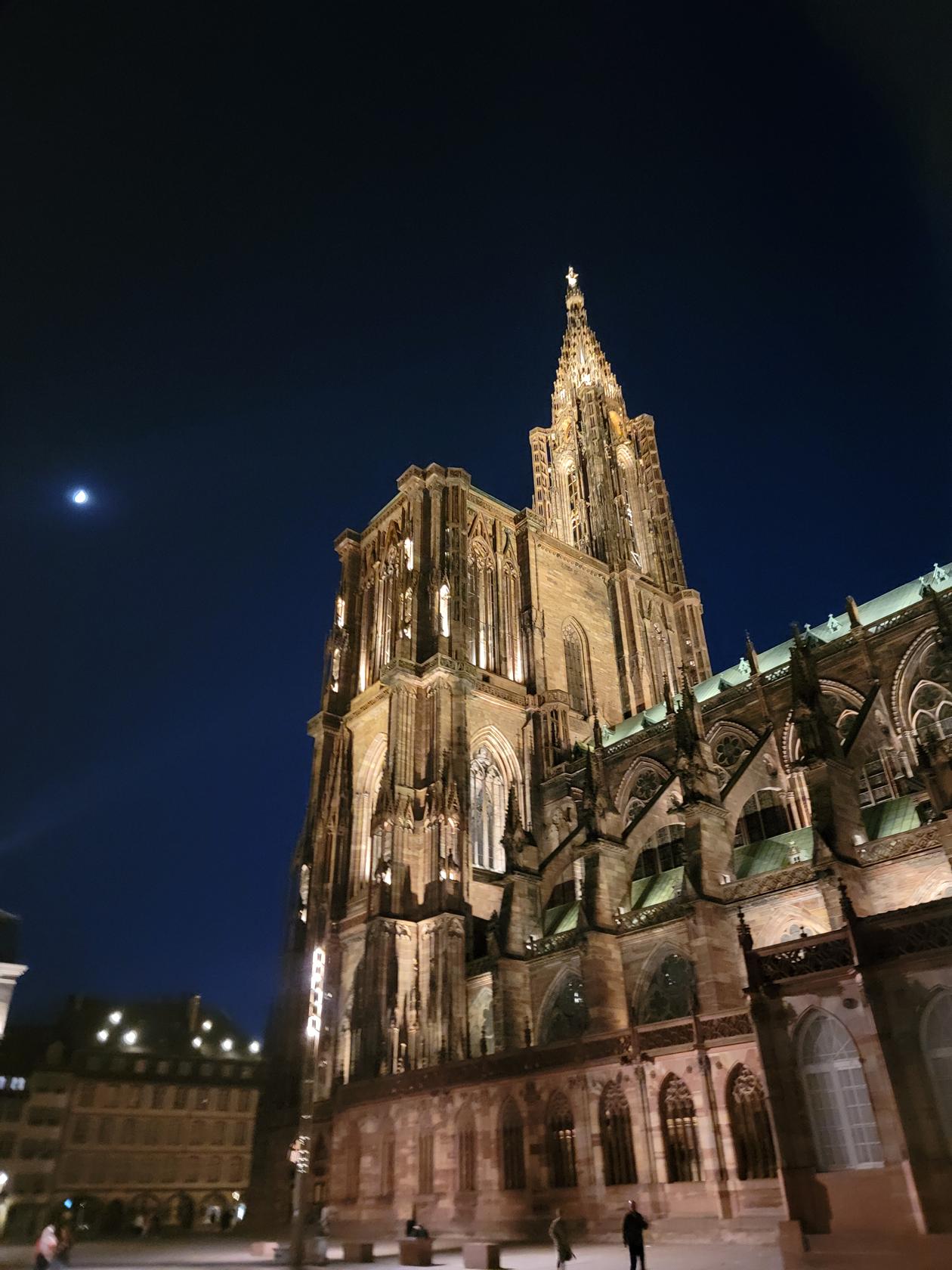
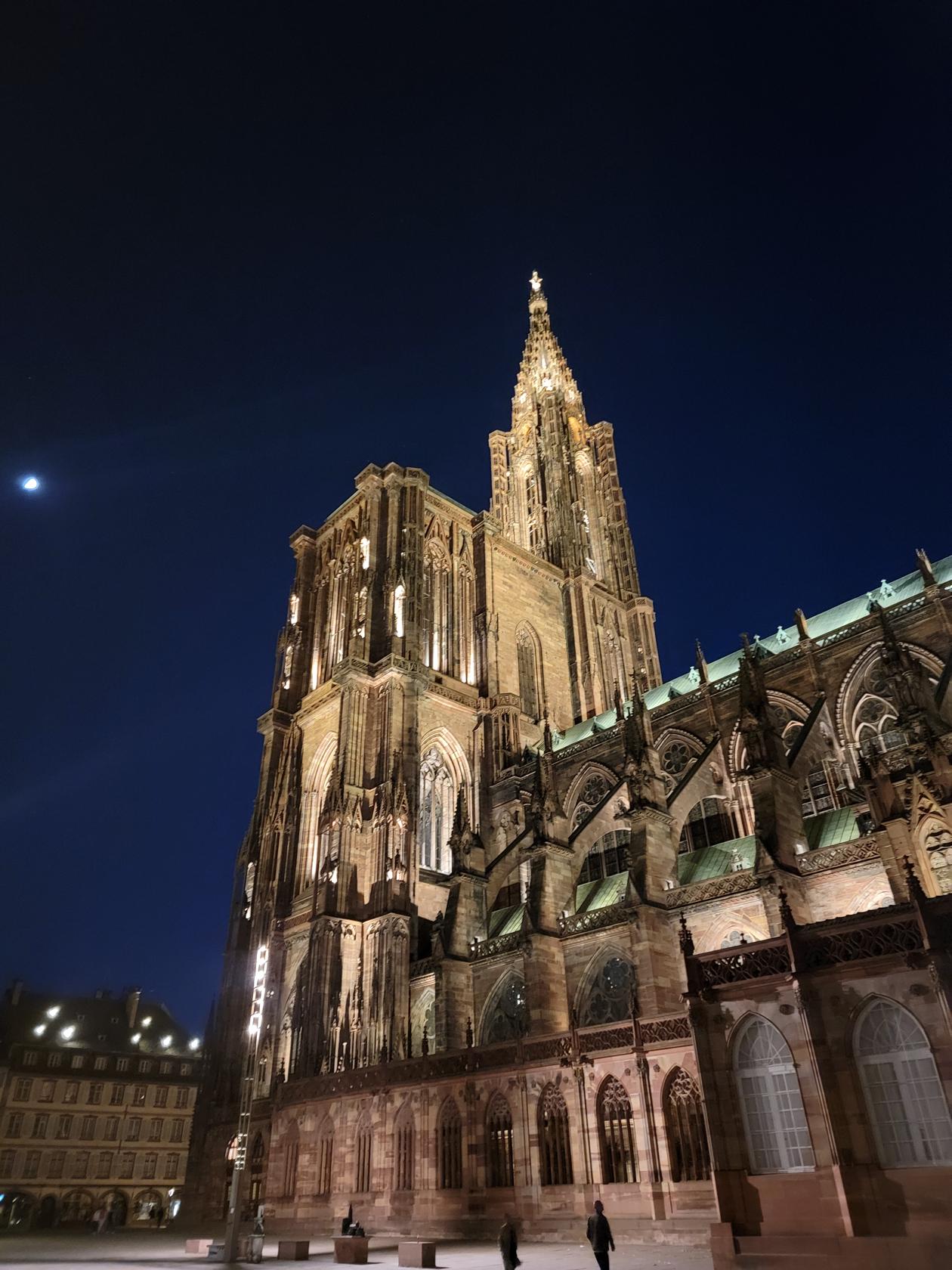
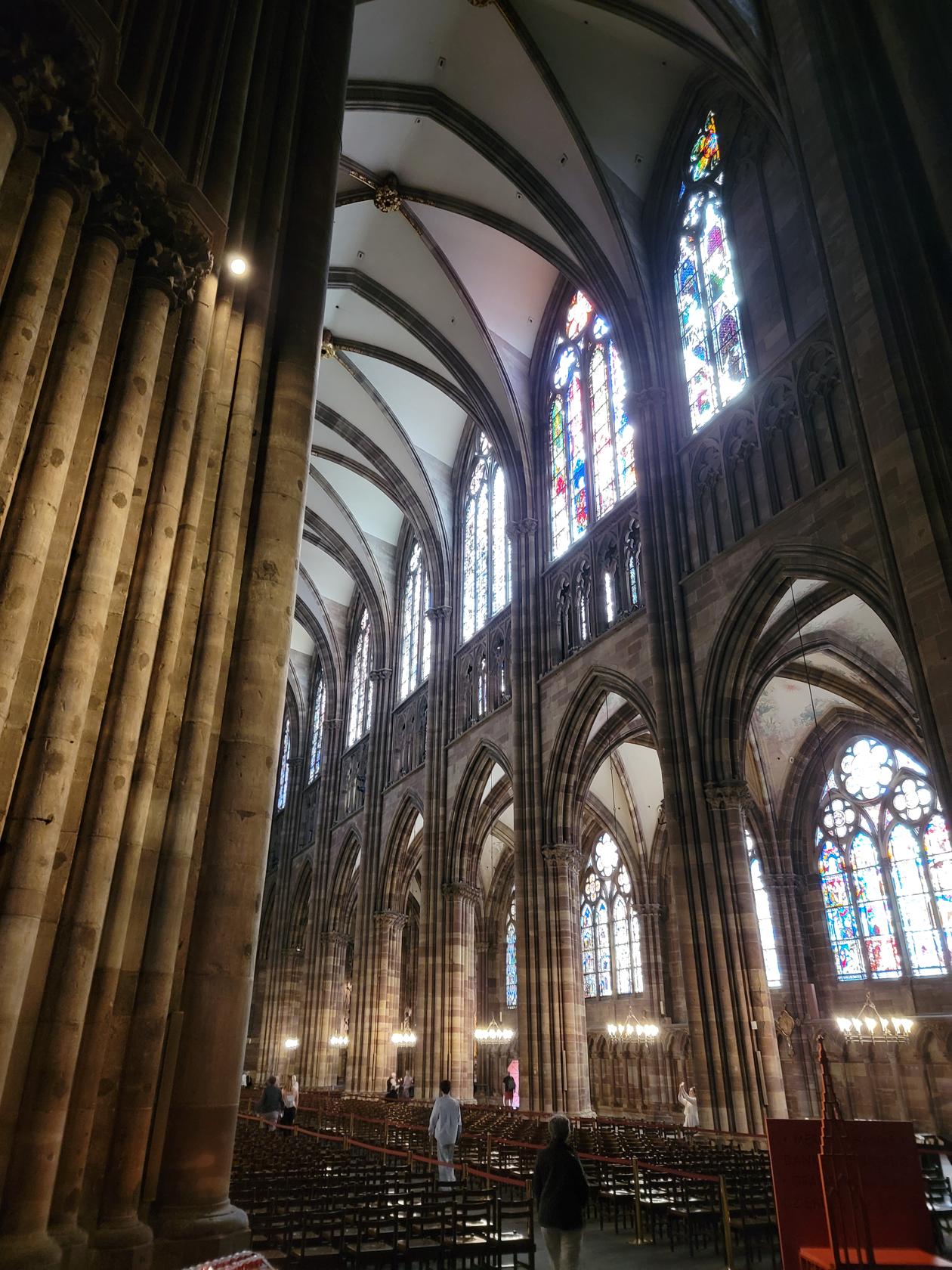
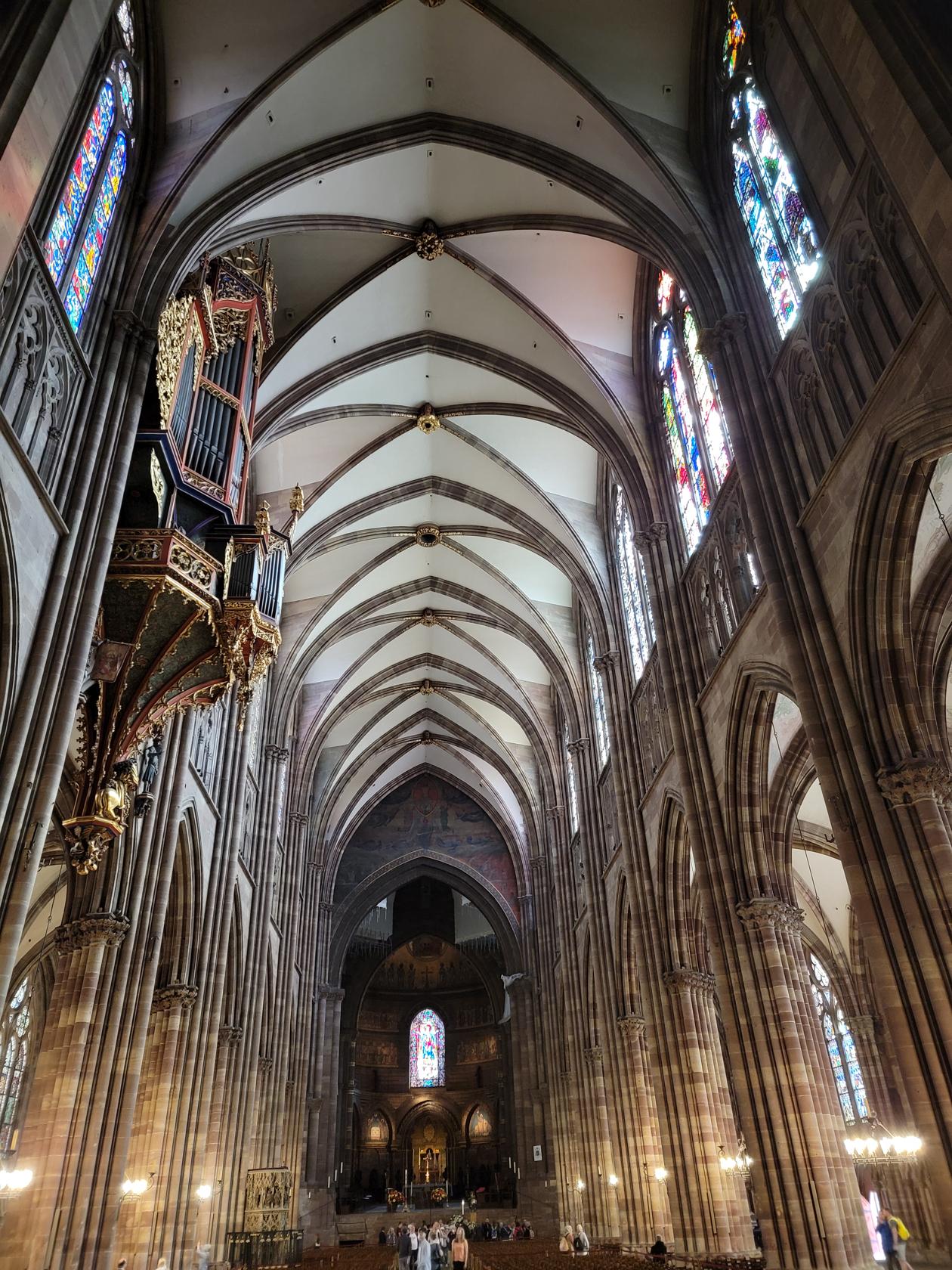
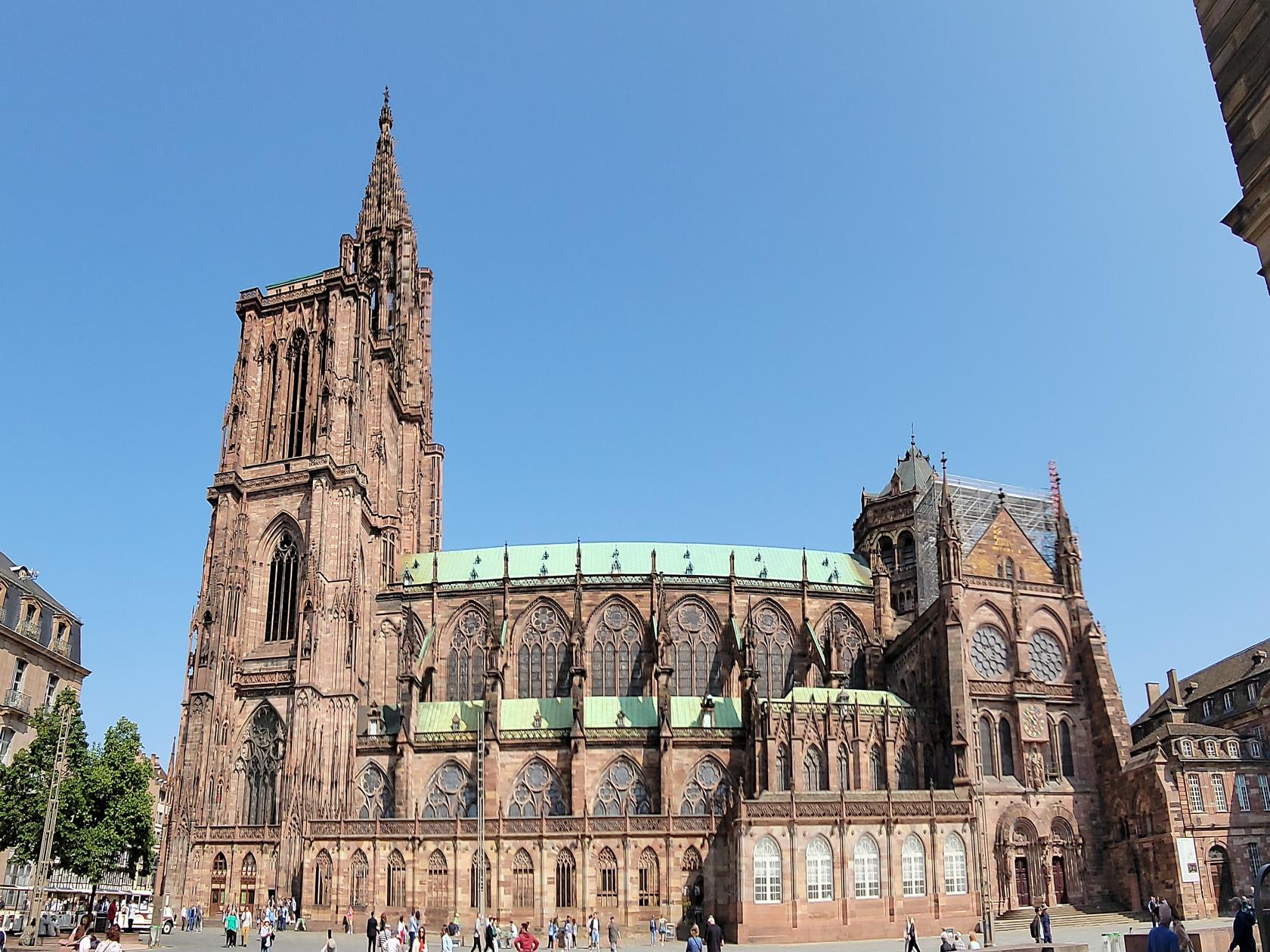
The town has a huge and wonderfully prominent cathedral called Notre Dame de Strasbourg, also known as the Straßburger Münster in German.
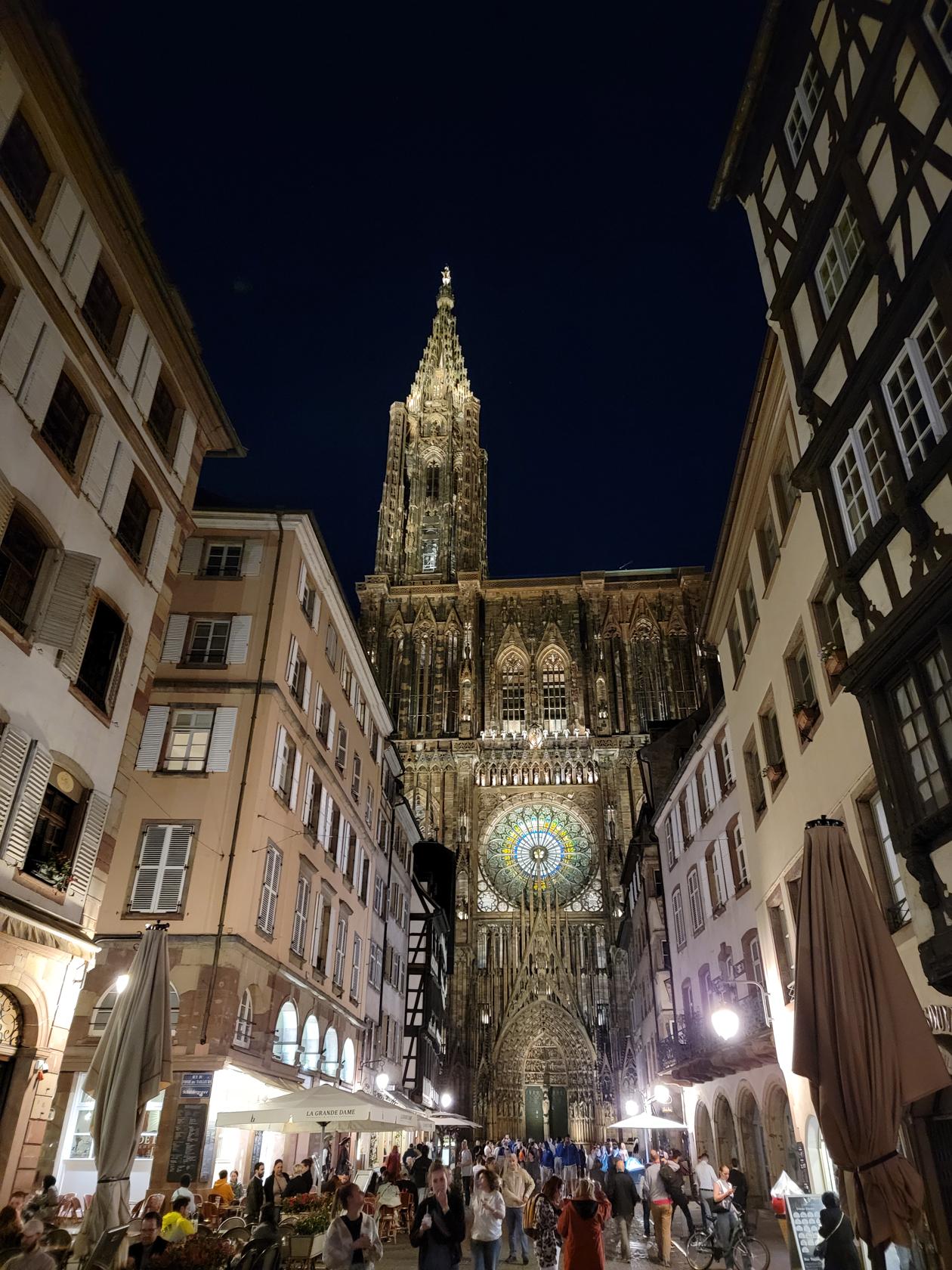
Lit up at night – Notre Dame de Strasbourg – Strasbourg, France
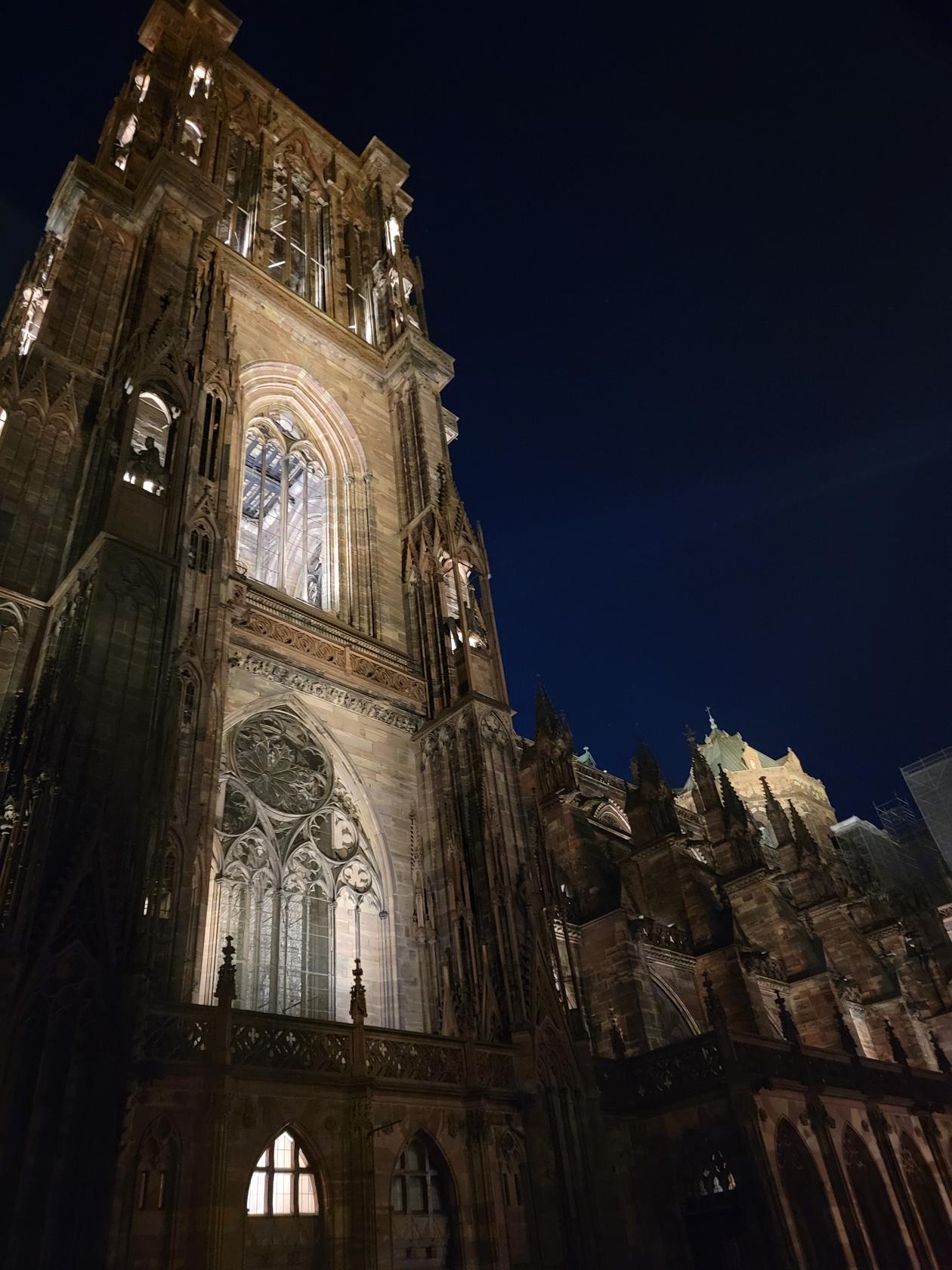
Its construction began in the late twelfth century and its impressive bell tower and spire were added more than 120 years after the start of construction, which I might add was never completed, since the addition of a second right tower and spire never came to fruition. The outside at night is spectacular, the interior and exterior lighting provide an excellent balance to show the real grandeur of this cathedral.
Lit up at night – Notre Dame de Strasbourg – Strasbourg, France
Lit up at night – Notre Dame de Strasbourg – Strasbourg, France
Lit up at night – Notre Dame de Strasbourg – Strasbourg, France
Lit up at night – Notre Dame de Strasbourg – Strasbourg, France
Lit up at night – Notre Dame de Strasbourg – Strasbourg, France
Lit up at night – Notre Dame de Strasbourg – Strasbourg, France
Lit up at night – Notre Dame de Strasbourg – Strasbourg, France
Lit up at night – Notre Dame de Strasbourg – Strasbourg, France
Lit up at night – Notre Dame de Strasbourg – Strasbourg, France
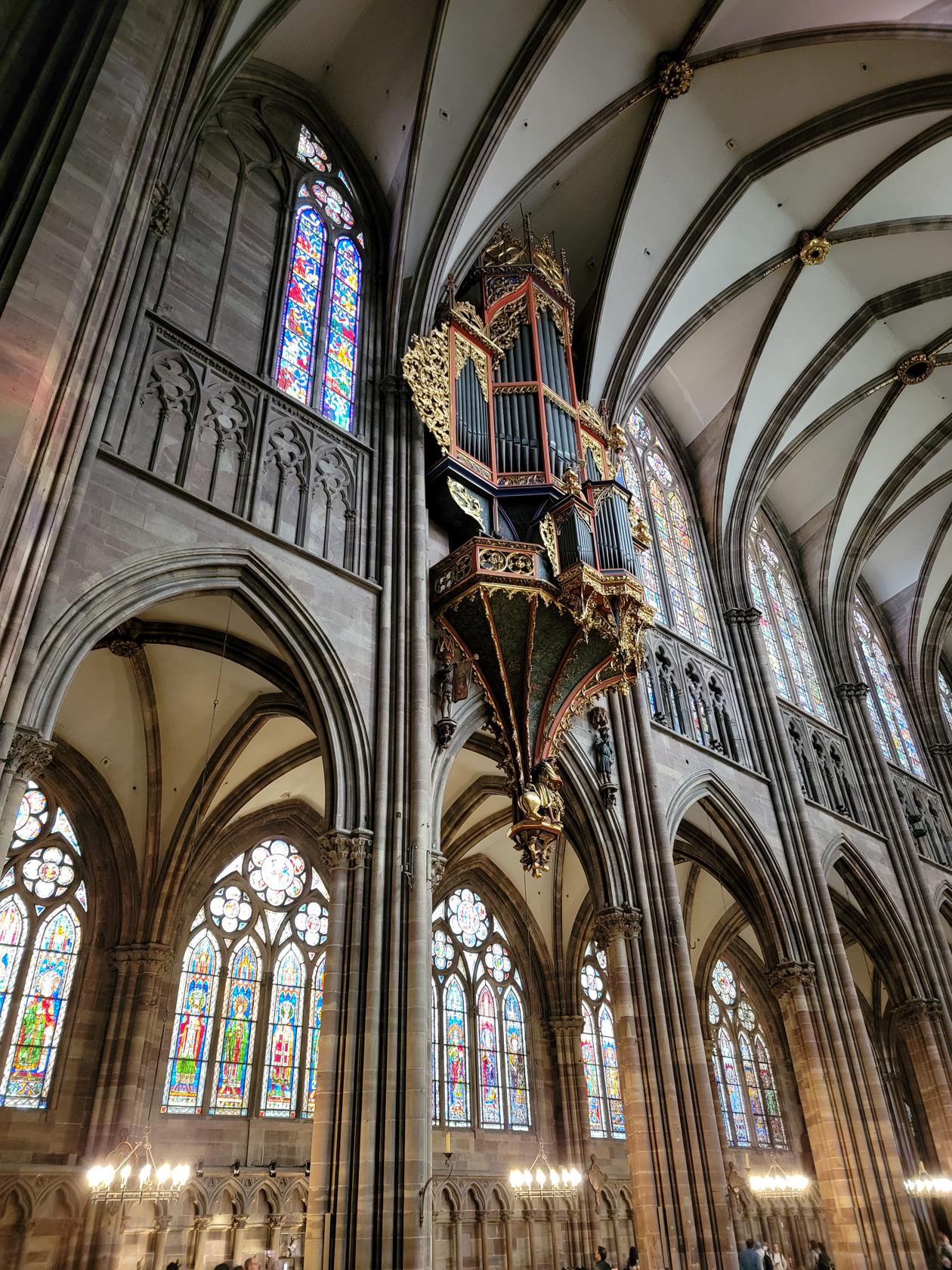
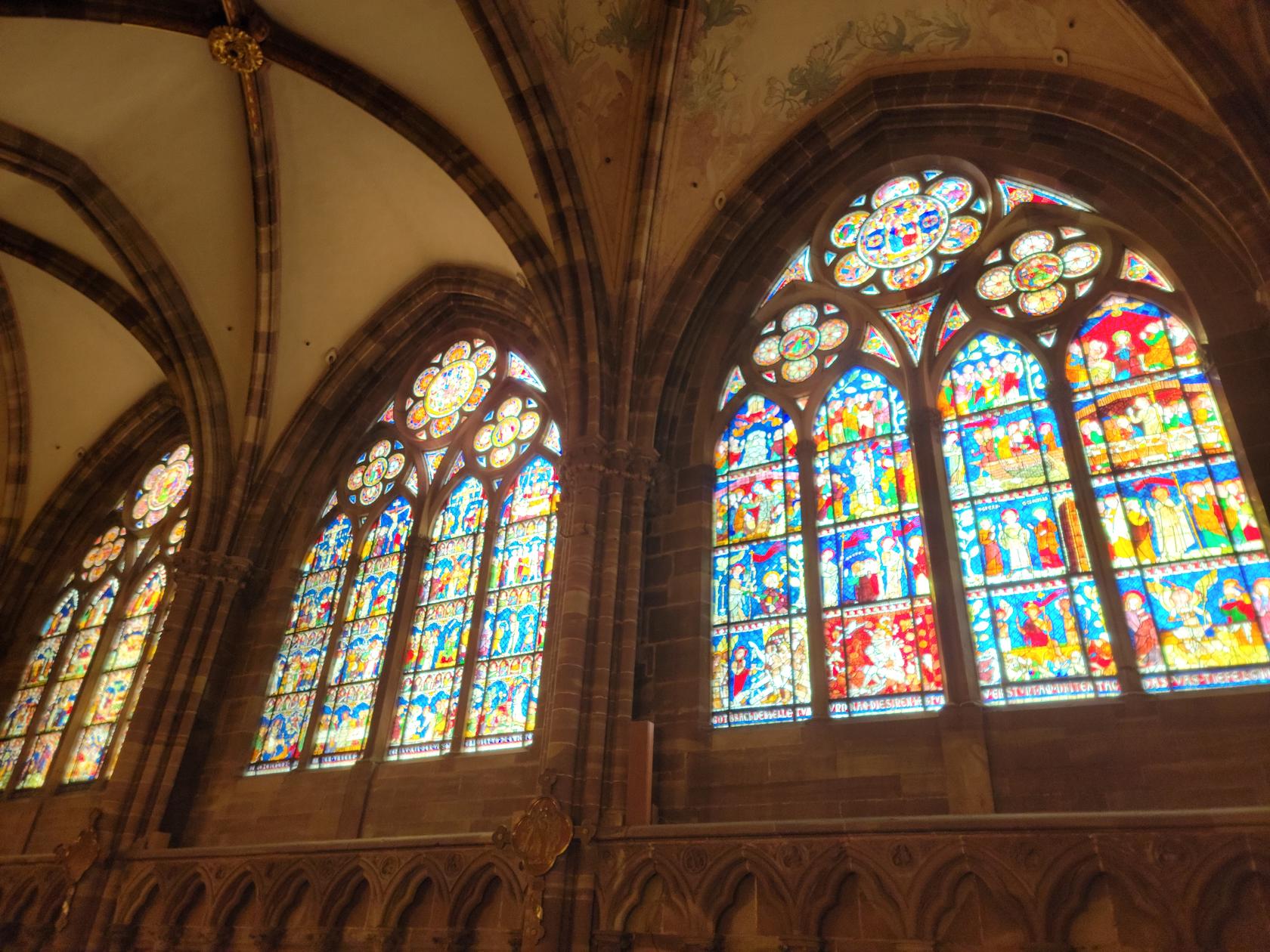
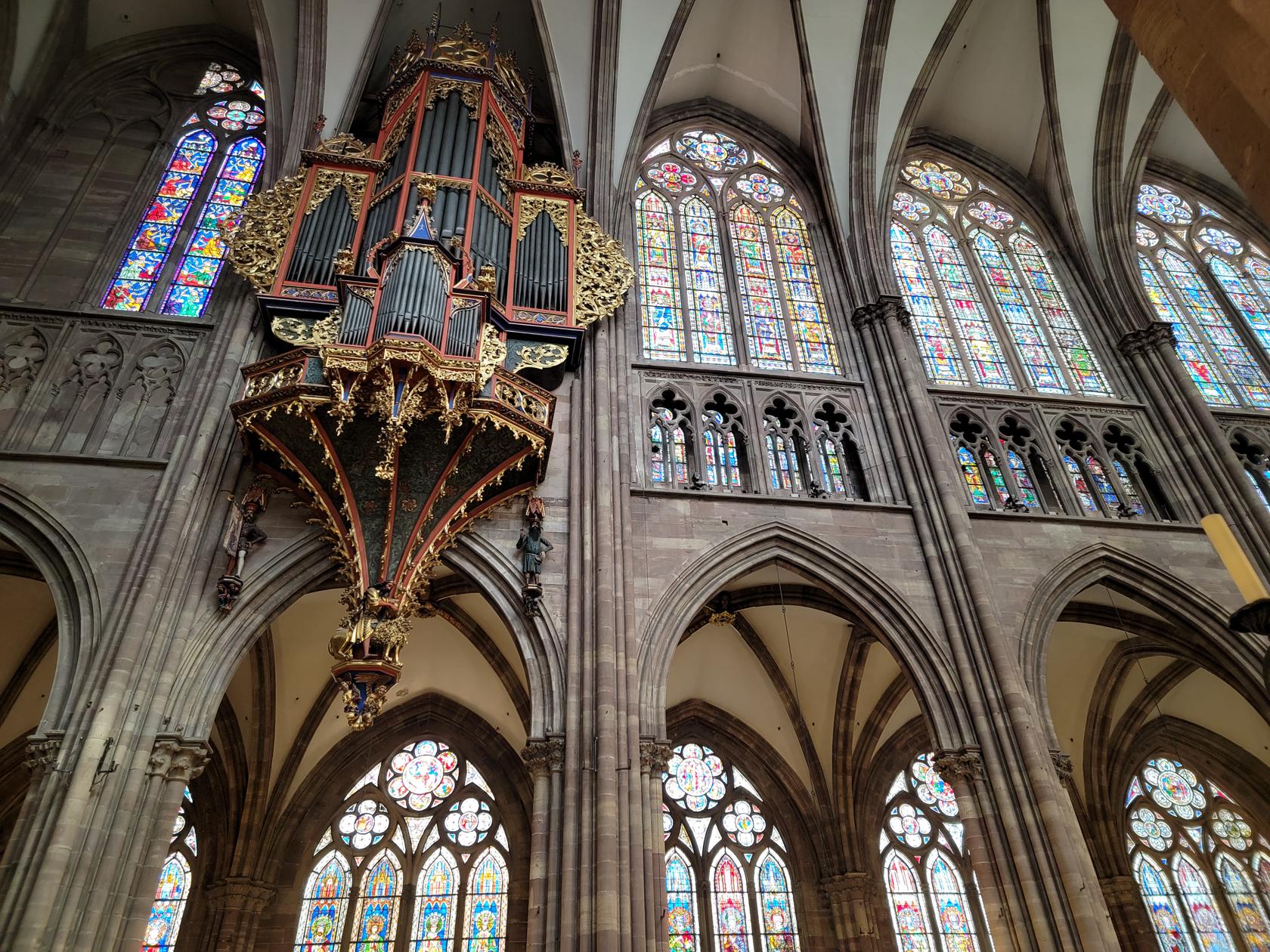
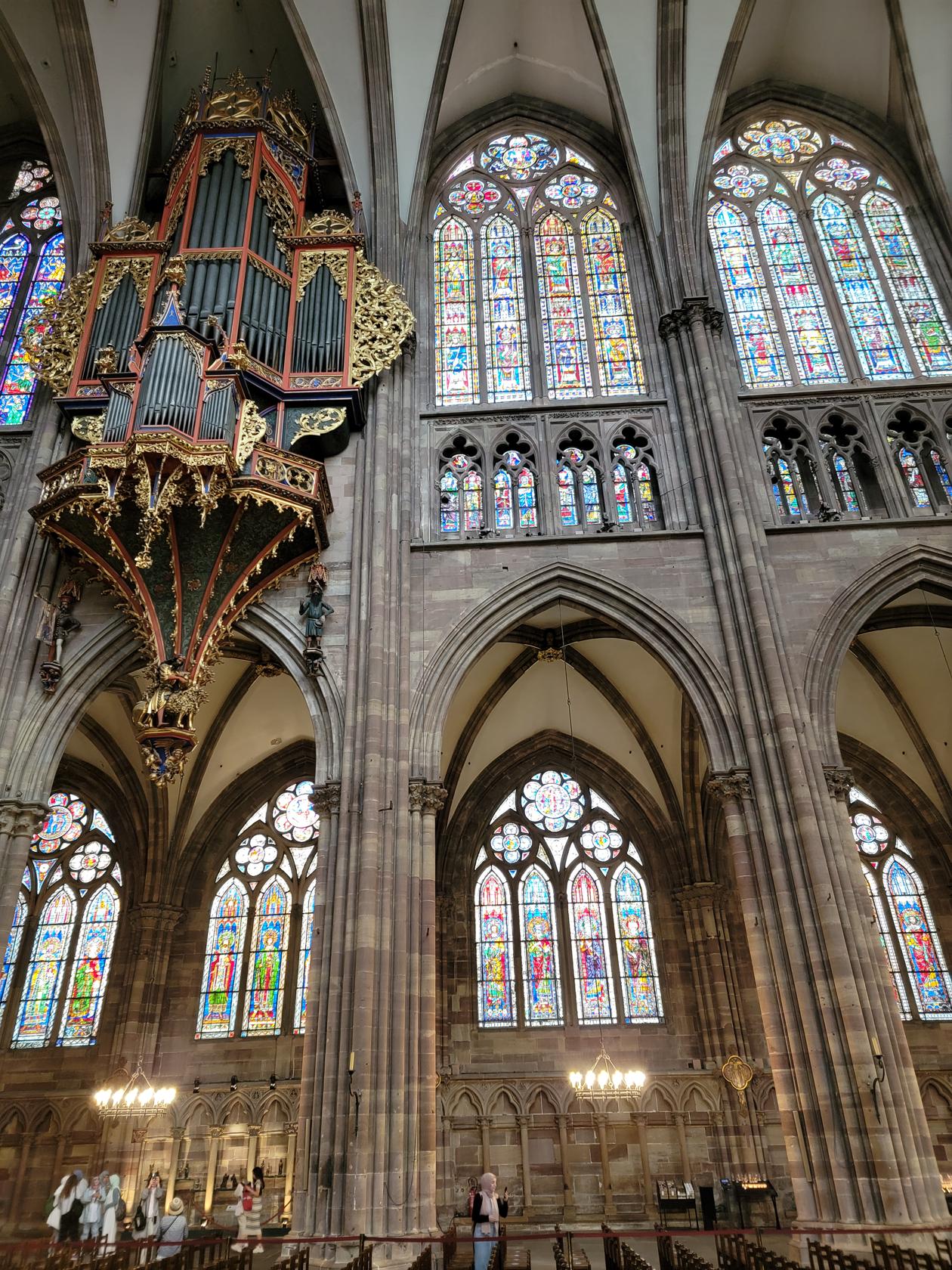
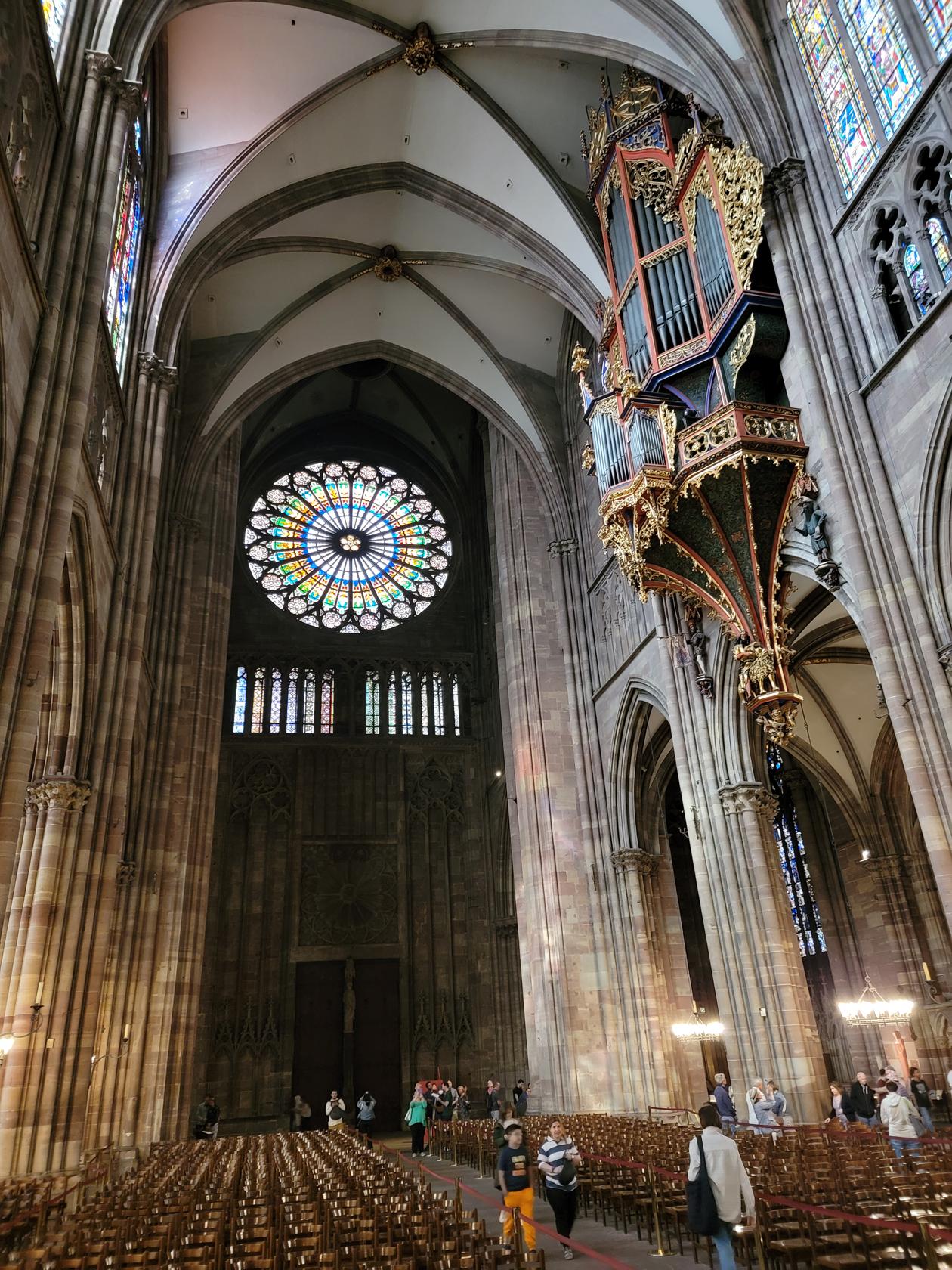
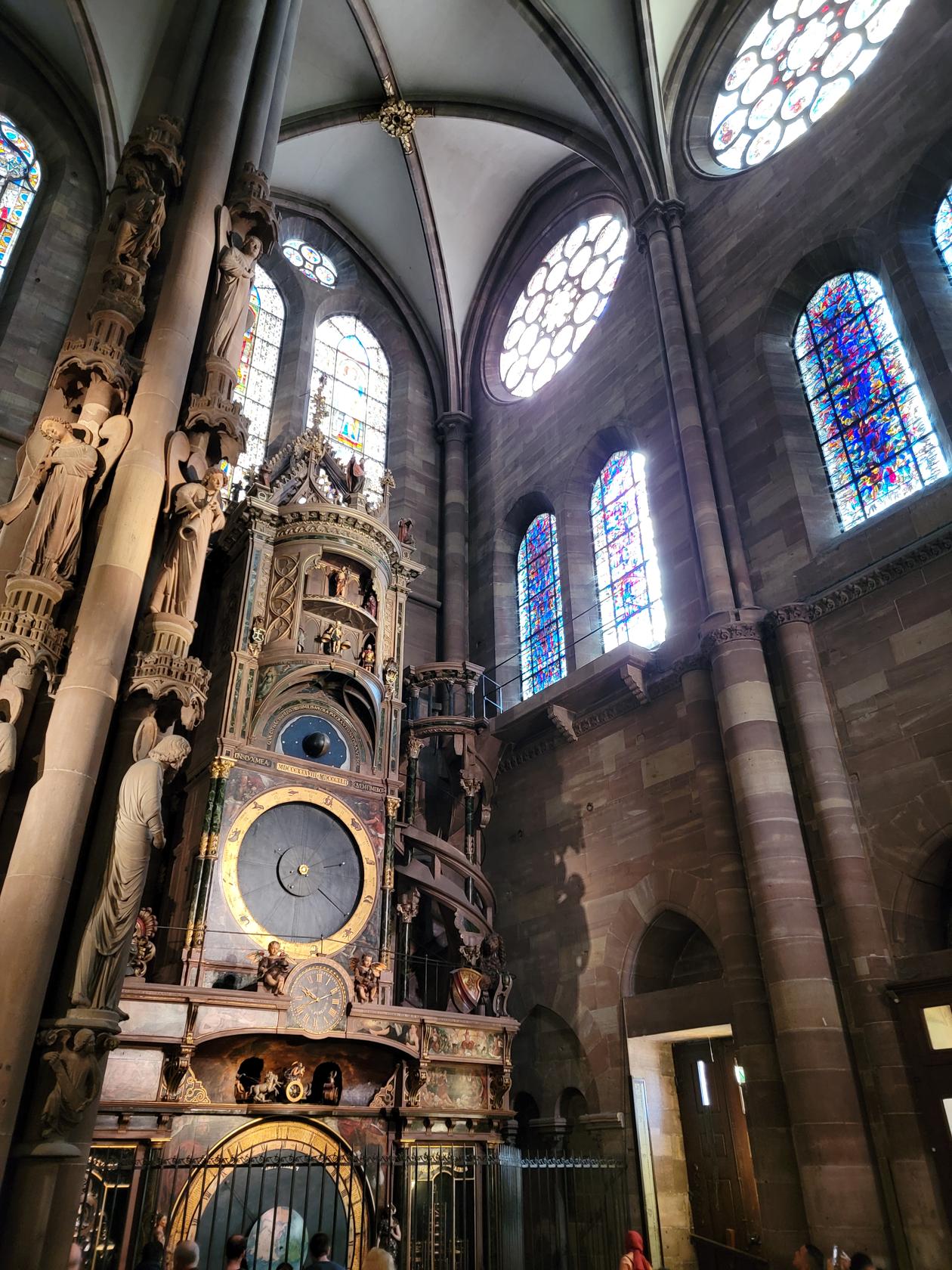
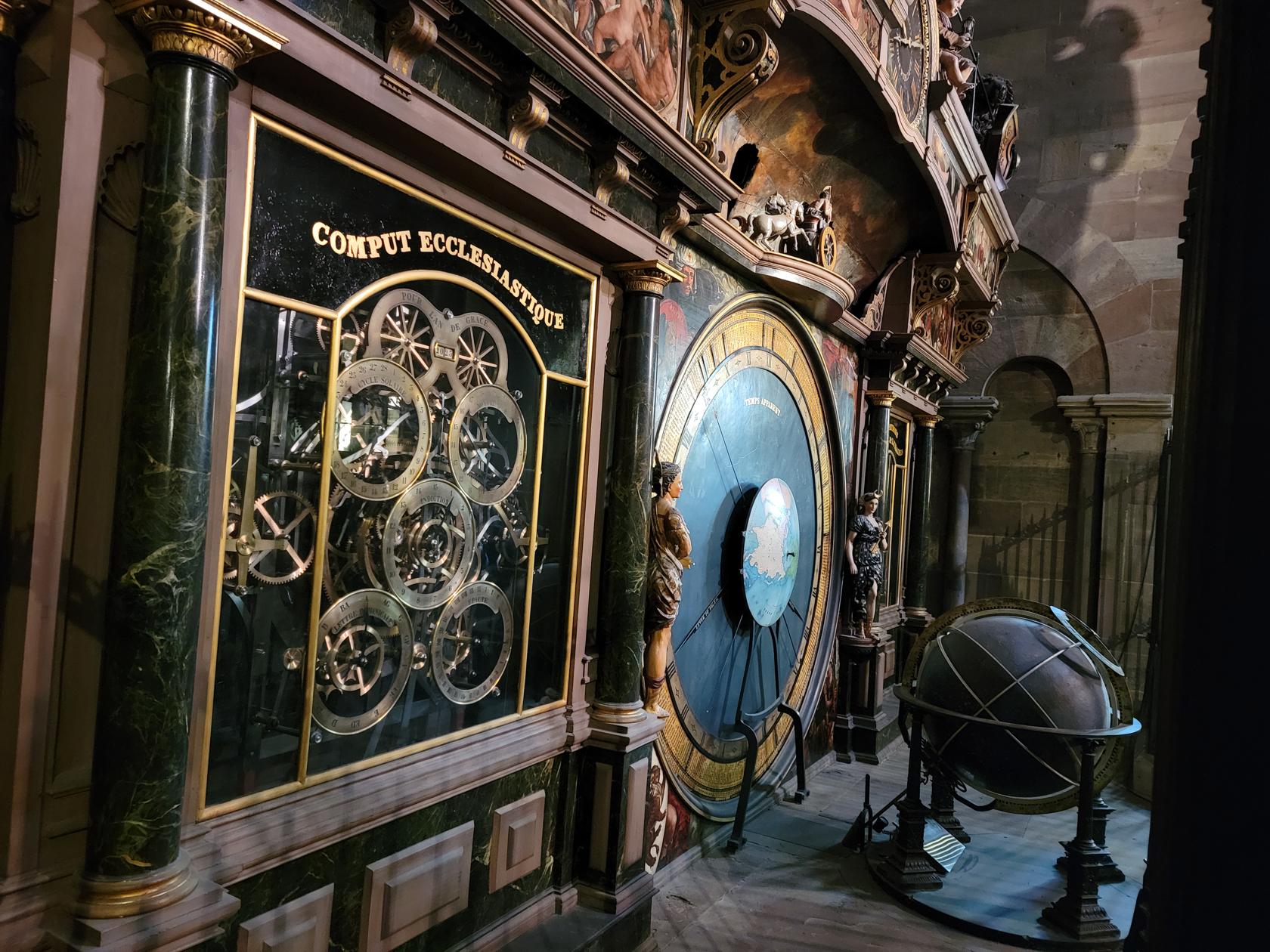
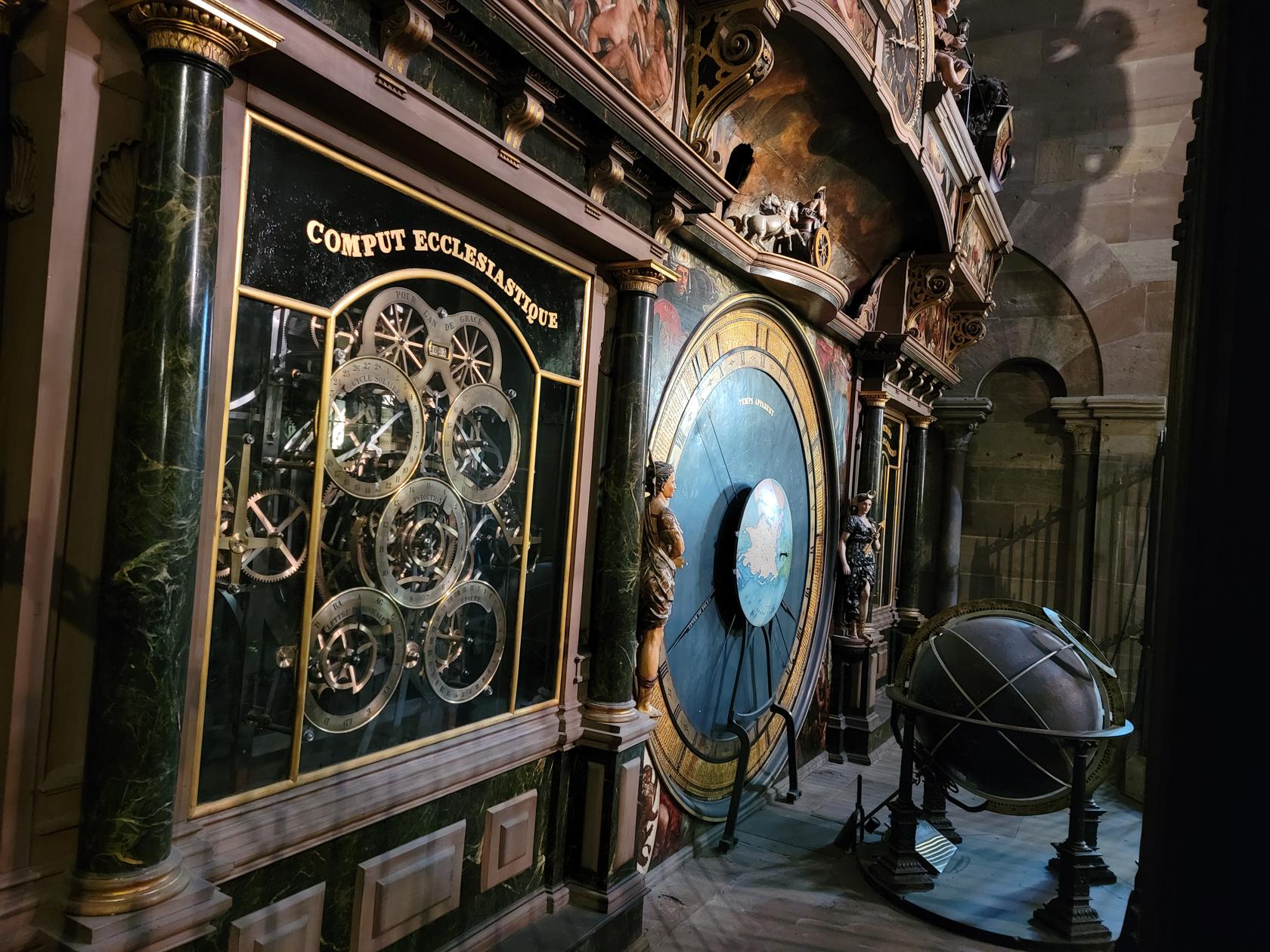
Of course, this is balanced well by the stained-glass windows illuminated by the sun in the early morning hours. The interior also houses an ecclesiastical astronomical clock which was built in the early 1570s.
Inside the cathedral – Notre Dame de Strasbourg – Strasbourg, France
Inside the cathedral – Notre Dame de Strasbourg – Strasbourg, France
The organ – Notre Dame de Strasbourg – Strasbourg, France
Stained glass – Inside the cathedral – Notre Dame de Strasbourg – Strasbourg, France
Organ and stained glassed windows – Inside the cathedral – Notre Dame de Strasbourg – Strasbourg, France
Another shot of organ and glass – Inside the cathedral – Notre Dame de Strasbourg – Strasbourg, France
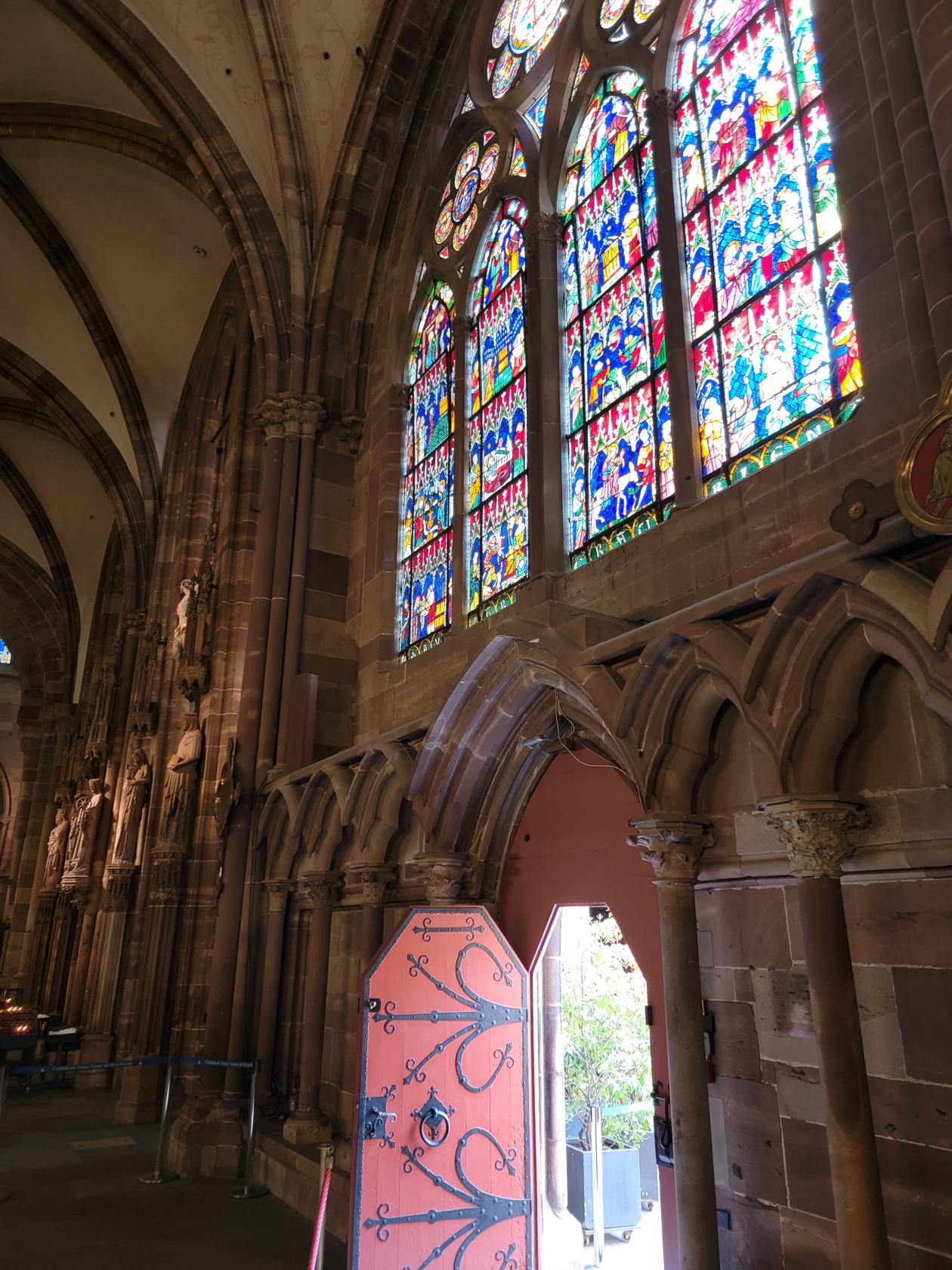
Old renovated side door – Inside the cathedral – Notre Dame de Strasbourg – Strasbourg, France
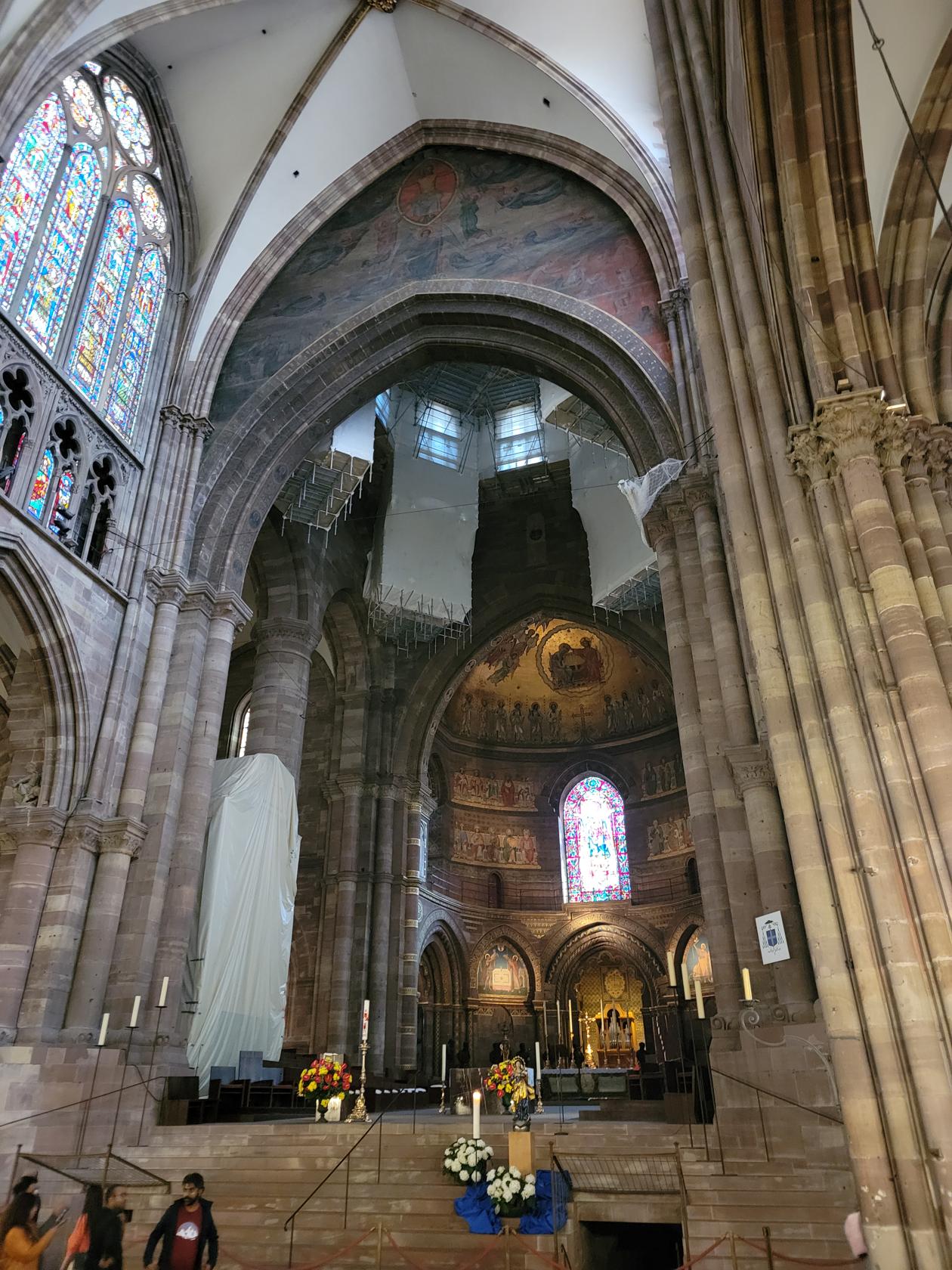
Inside the cathedral – Notre Dame de Strasbourg – Strasbourg, France
The large rosette window – Inside the cathedral – Notre Dame de Strasbourg – Strasbourg, France
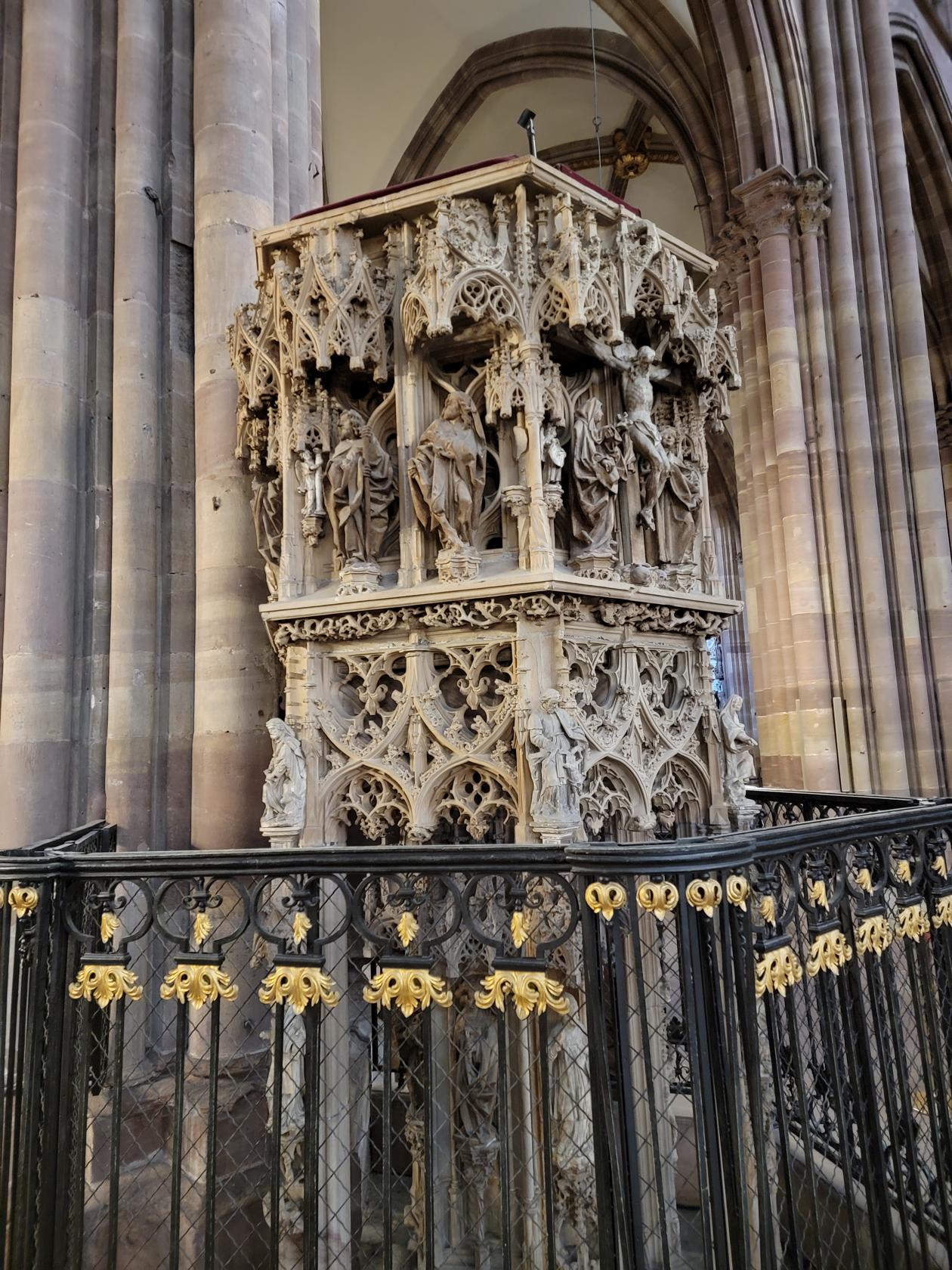
The pulpit – Inside the cathedral – Notre Dame de Strasbourg – Strasbourg, France
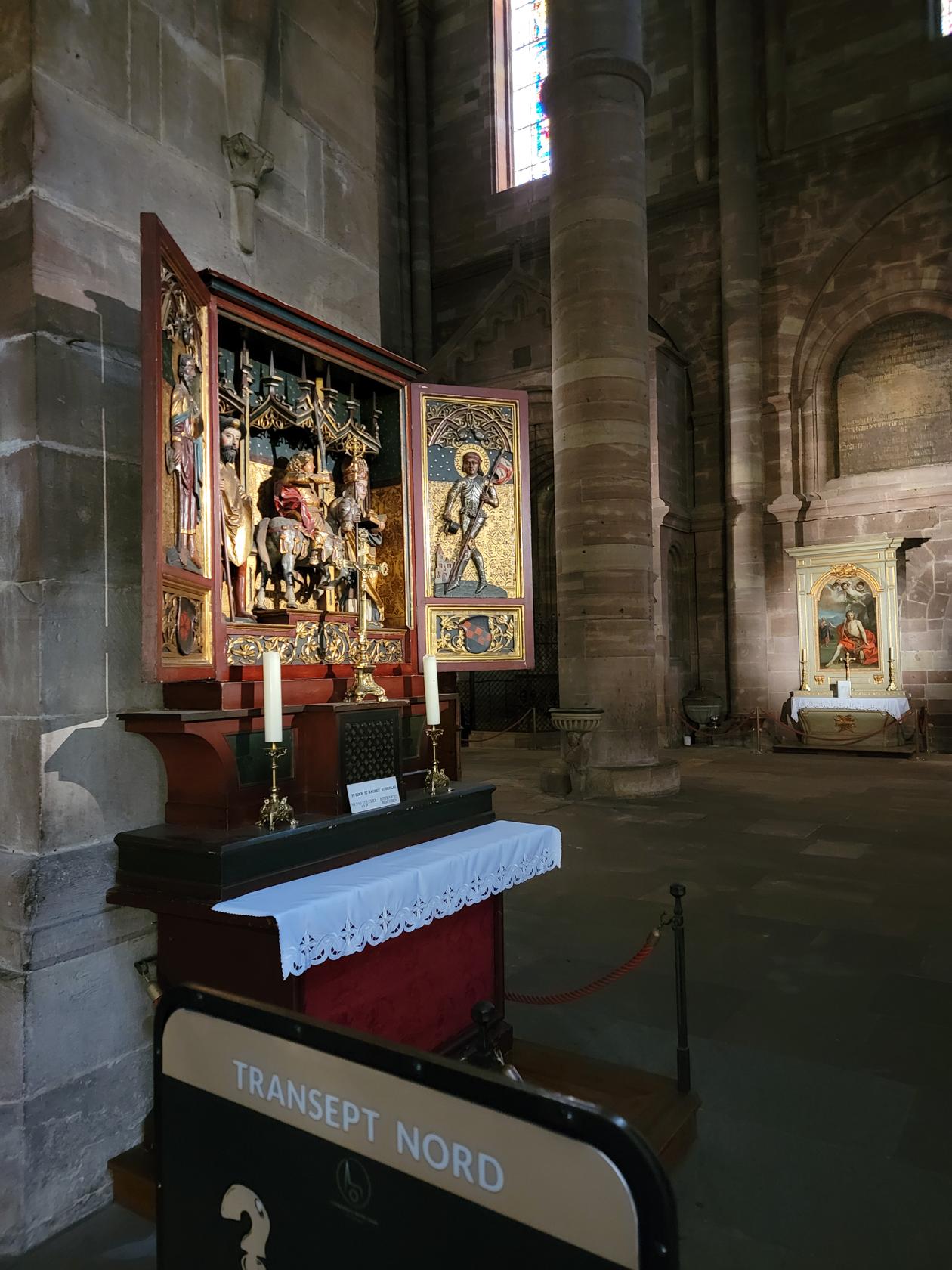
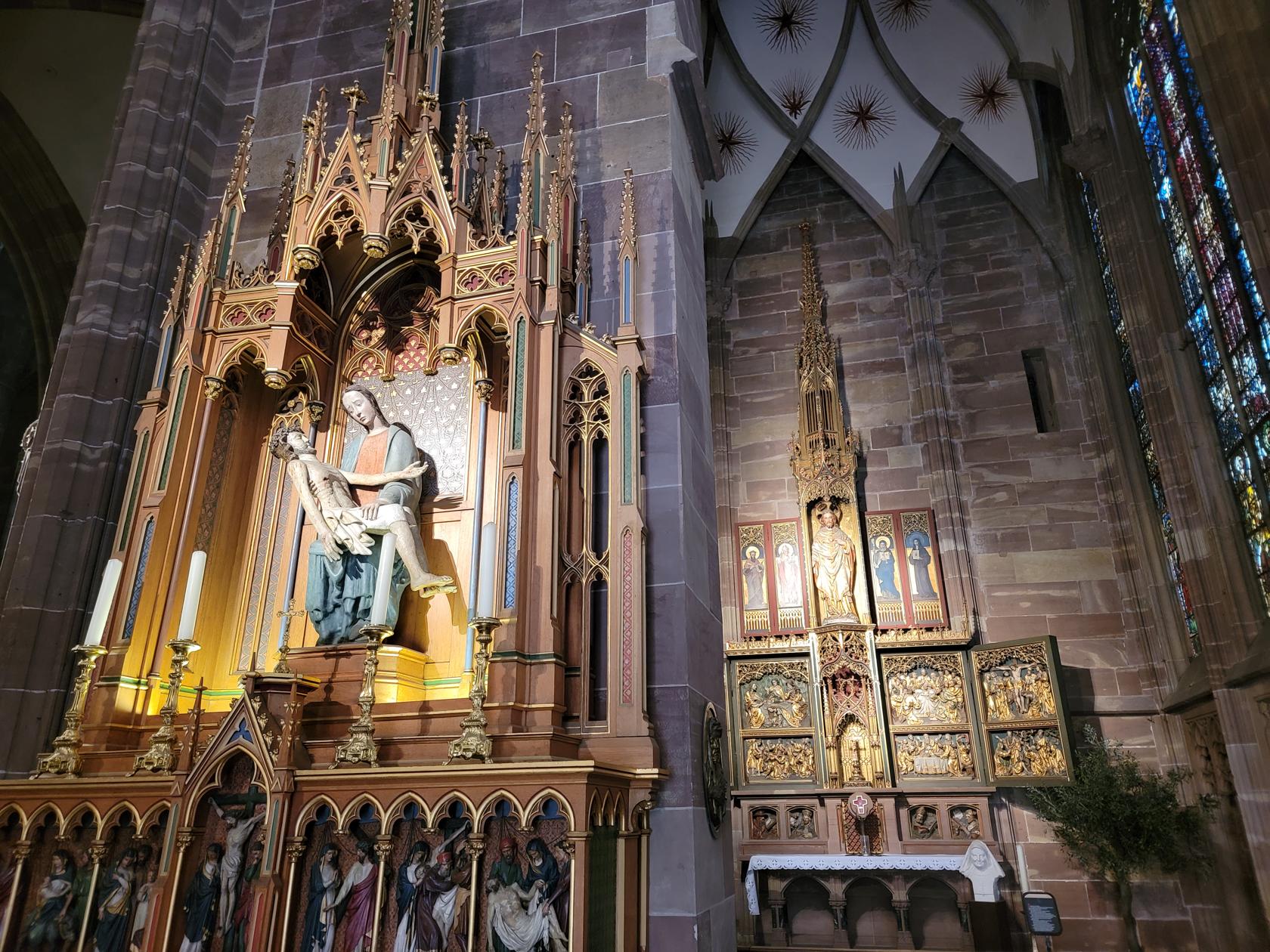
A small side altar – Inside the cathedral – Notre Dame de Strasbourg – Strasbourg, France
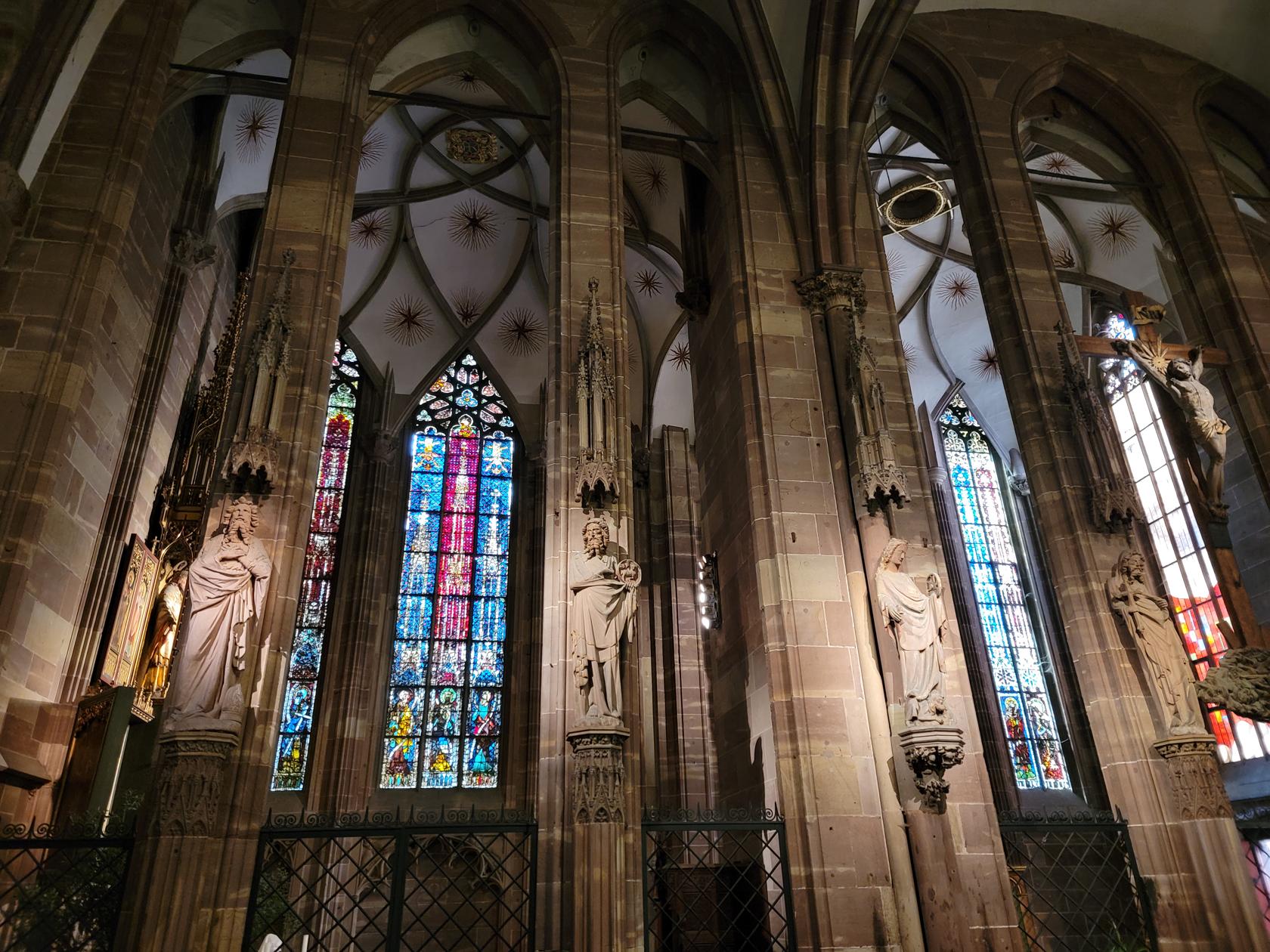
More statues – Inside the cathedral – Notre Dame de Strasbourg – Strasbourg, France
The ecclesiastical clock – Inside the cathedral – Notre Dame de Strasbourg – Strasbourg, France
The ecclesiastical clock – Inside the cathedral – Notre Dame de Strasbourg – Strasbourg, France
Side chapel – Notre Dame de Strasbourg – Strasbourg, France
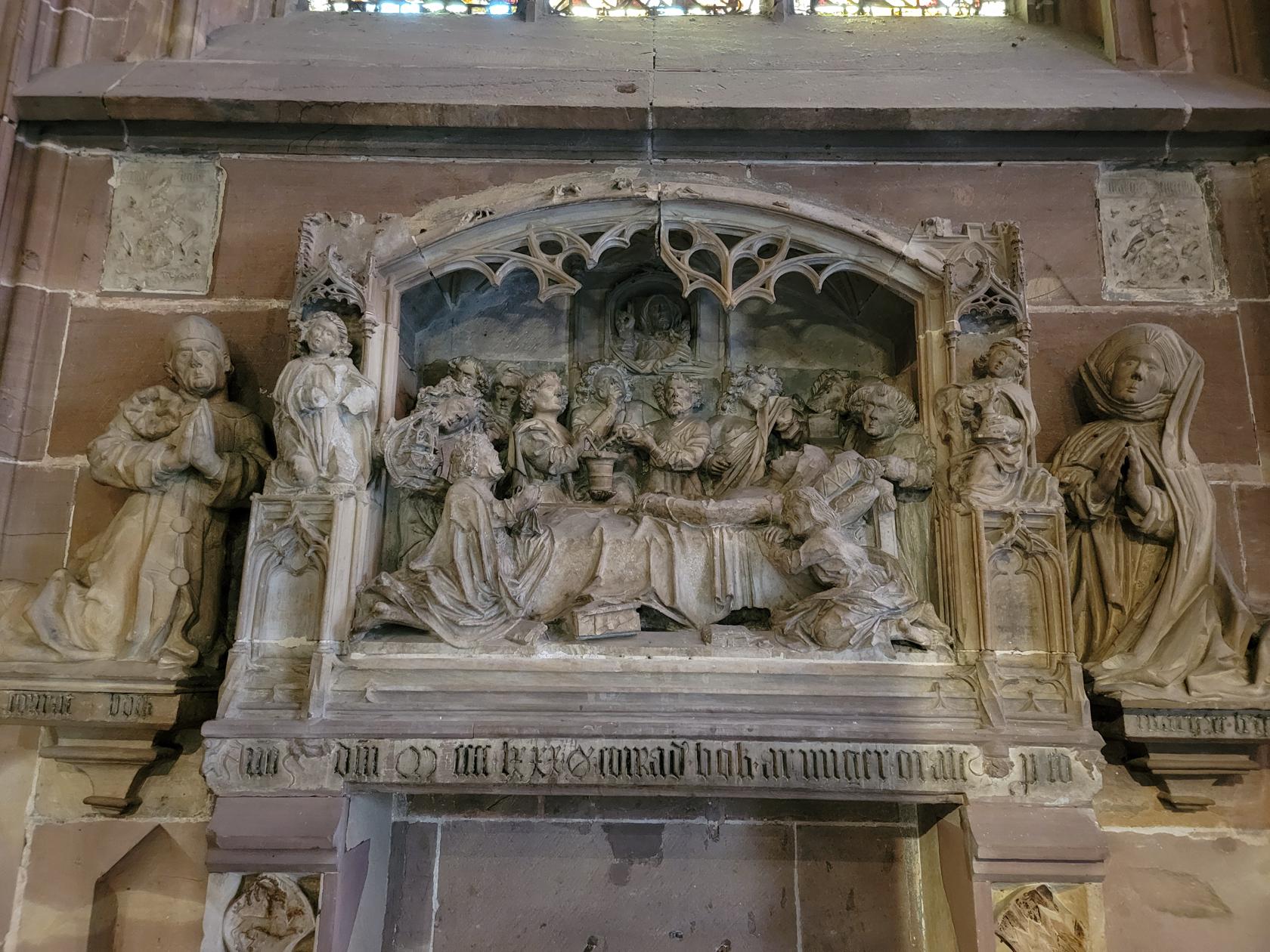
Very old stone carvings – Notre Dame de Strasbourg – Strasbourg, France
An entire view – Notre Dame de Strasbourg – Strasbourg, France
Get here early, usually before ten o’clock, otherwise the tour groups from the Viking cruises start to assemble and you will have little chance, the line often snakes all the way out the courtyard and around the block!
Palace Rohan
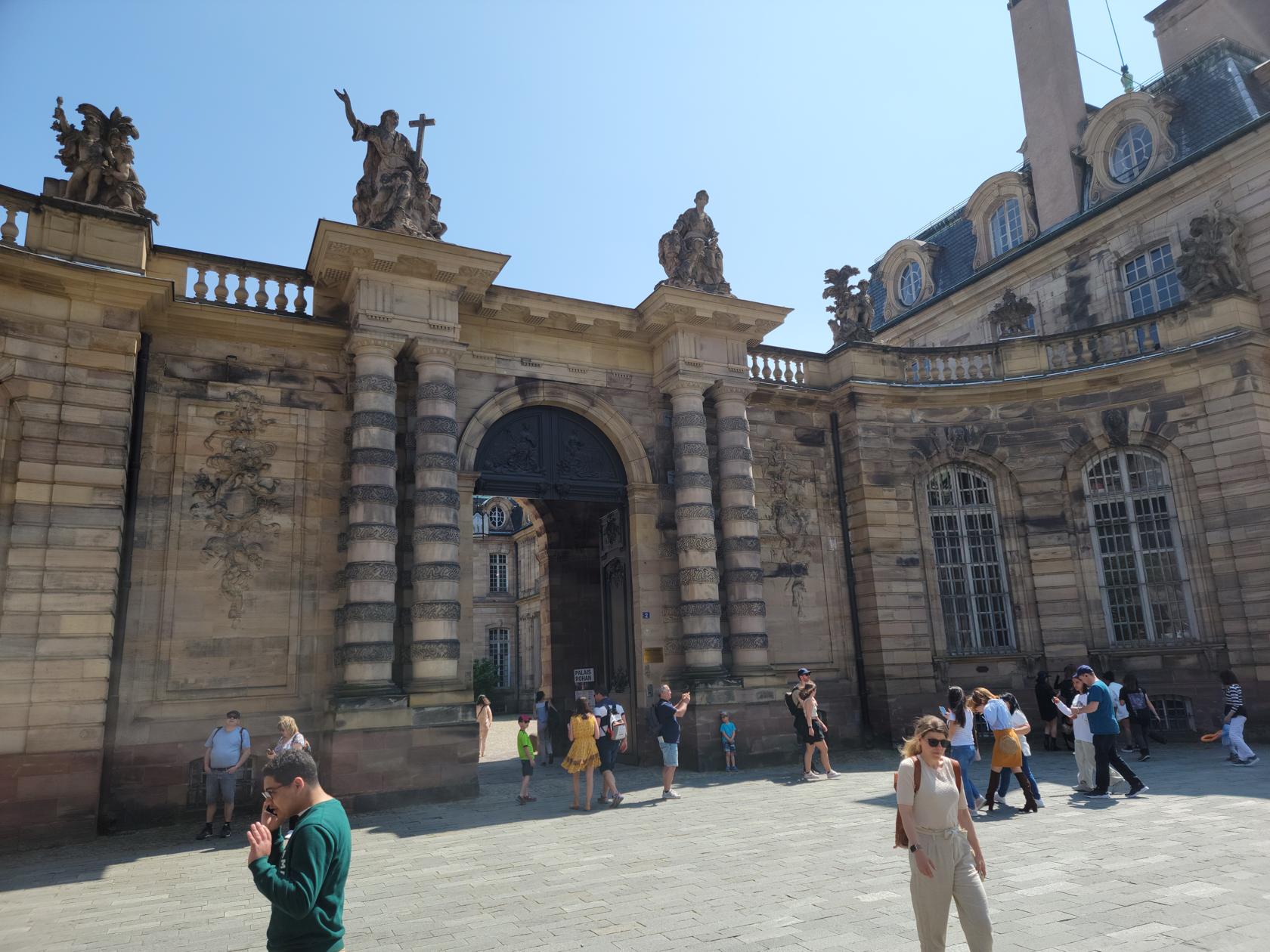
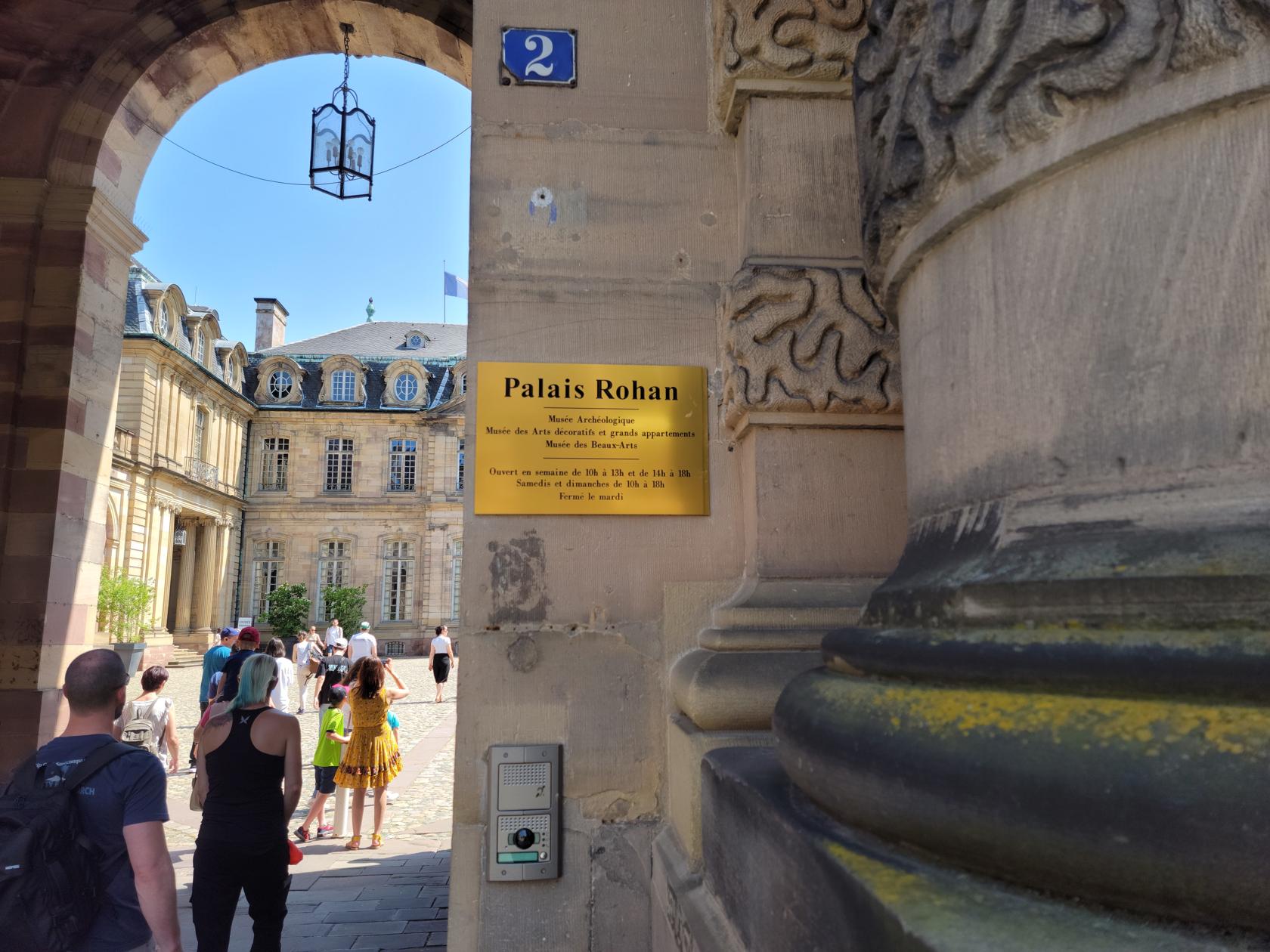
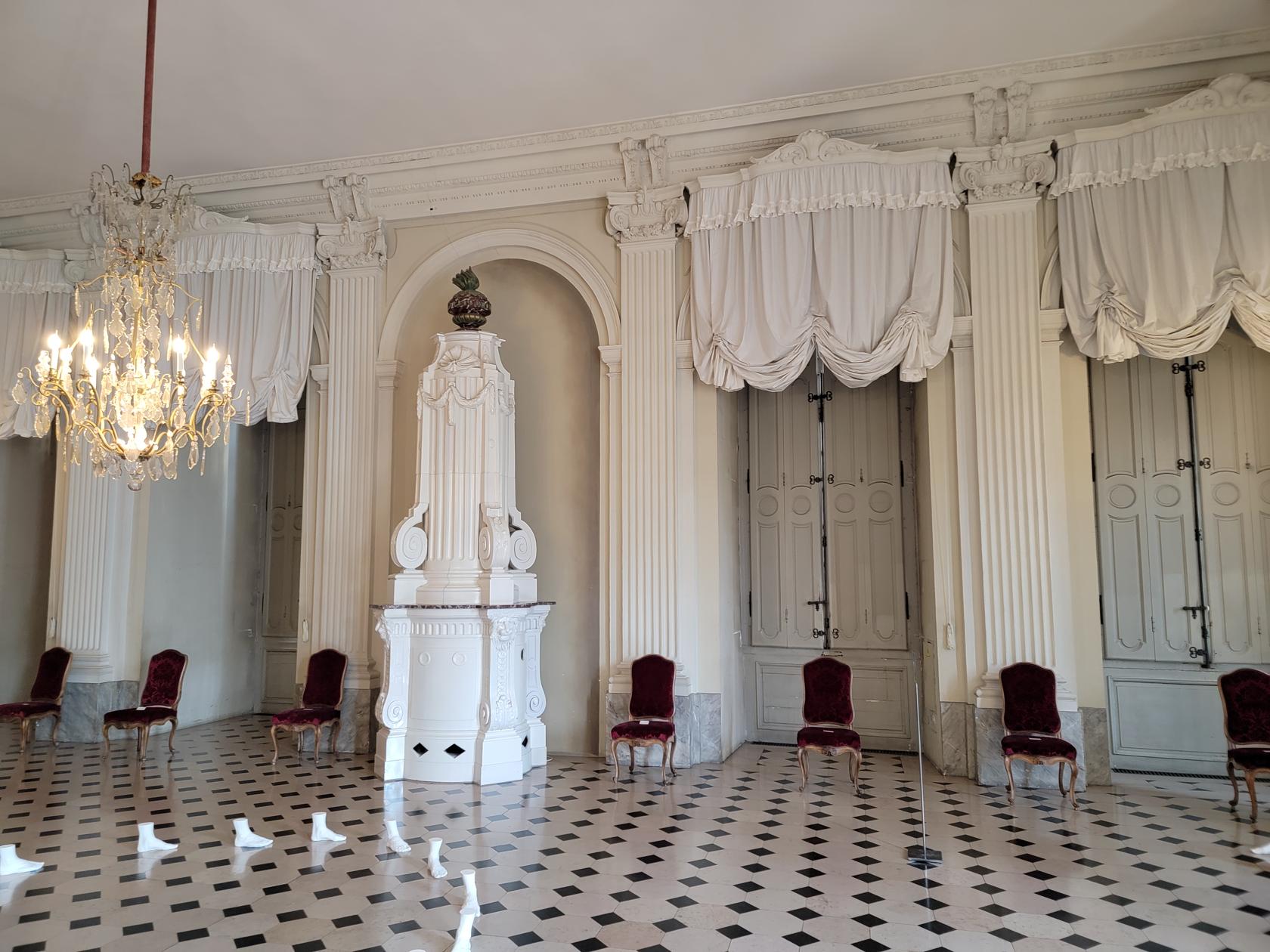
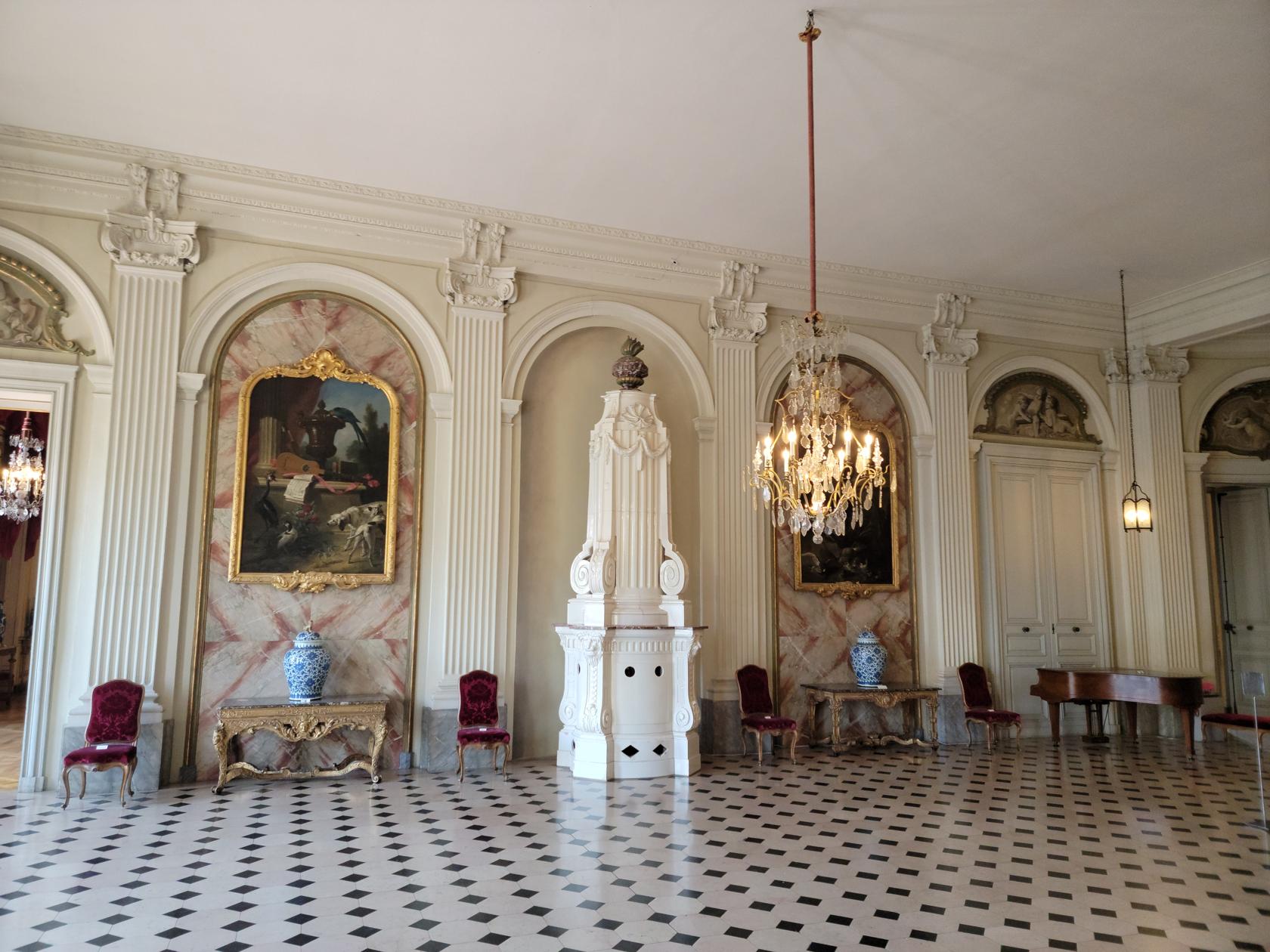
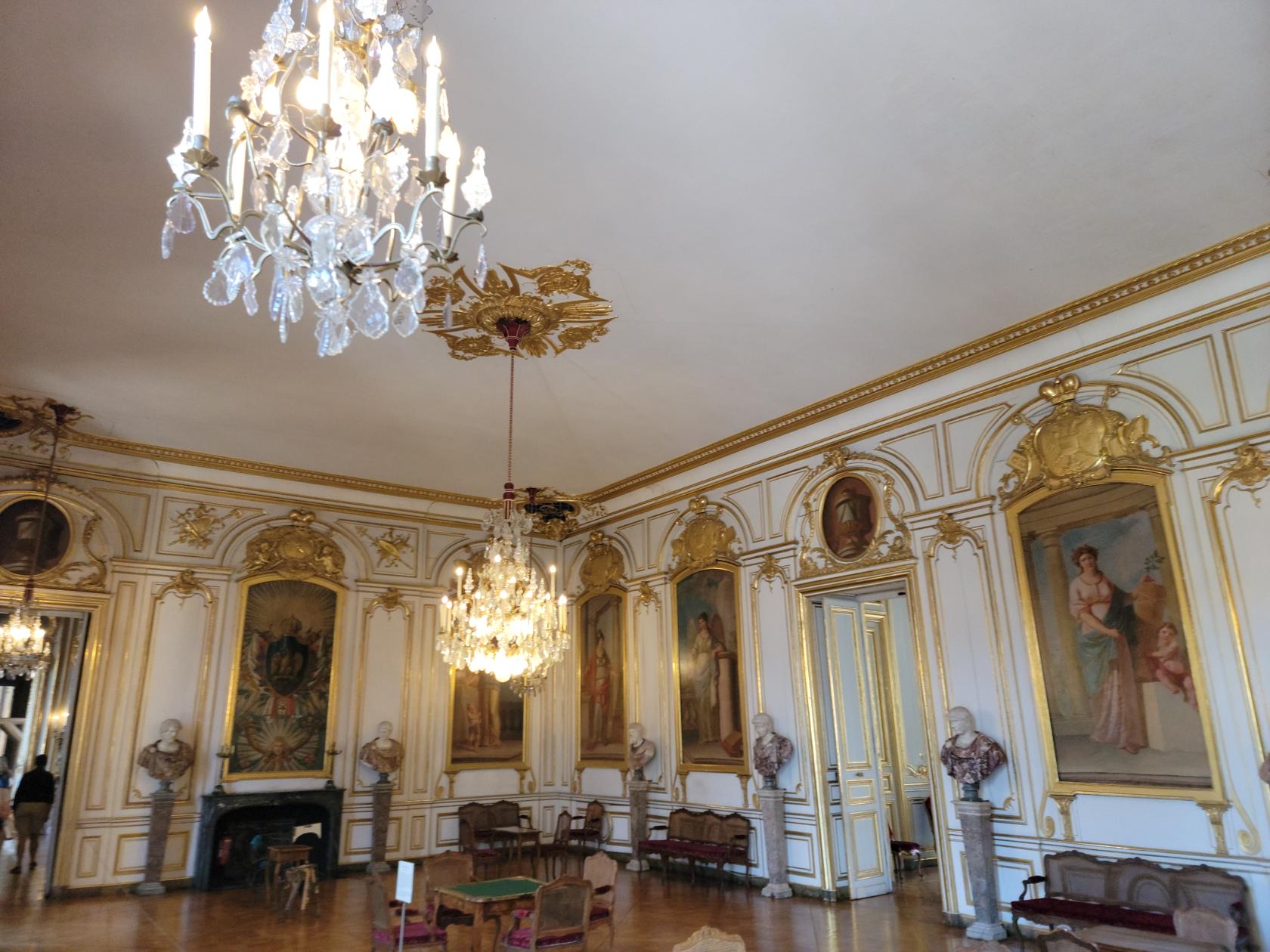
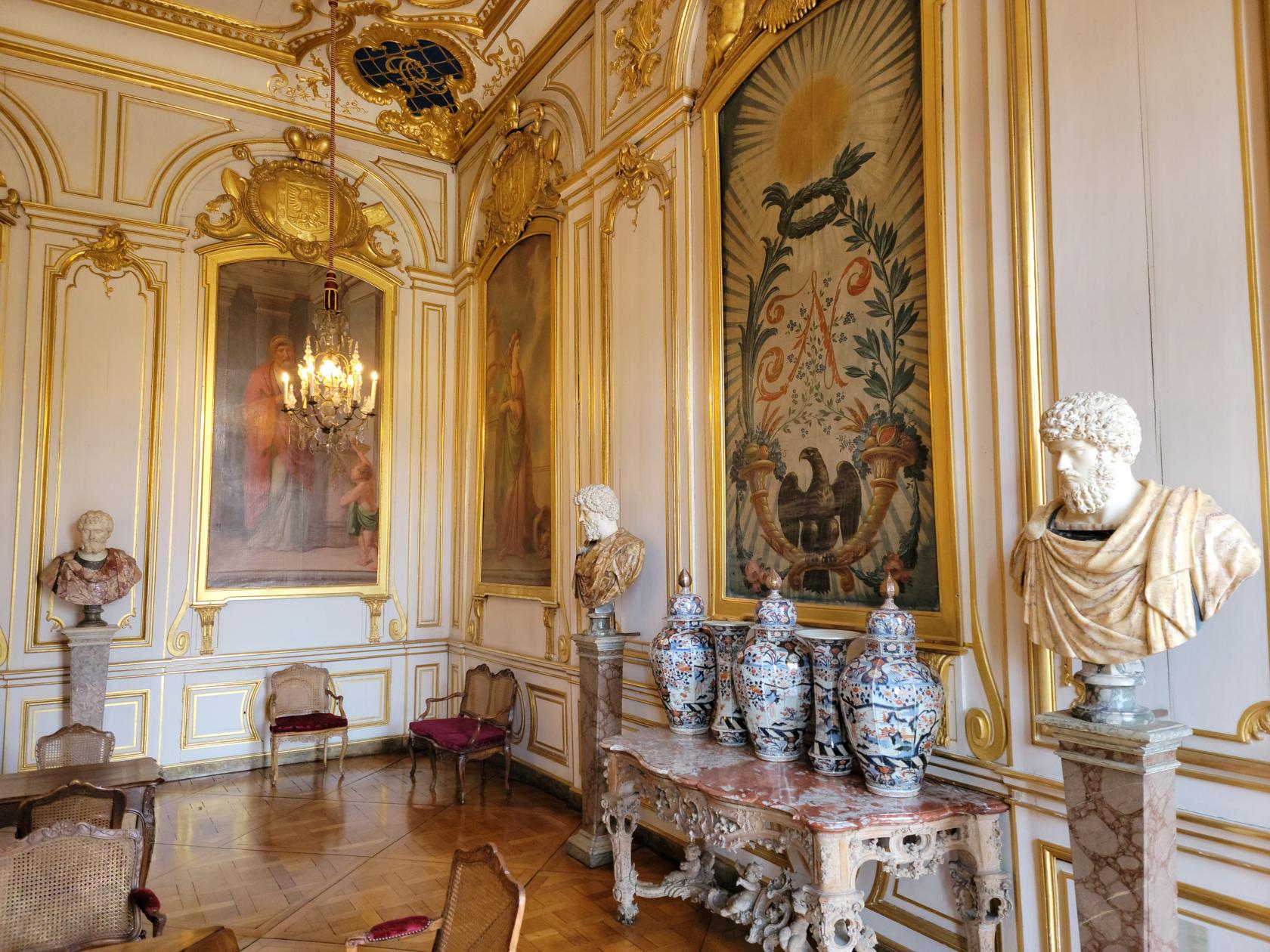
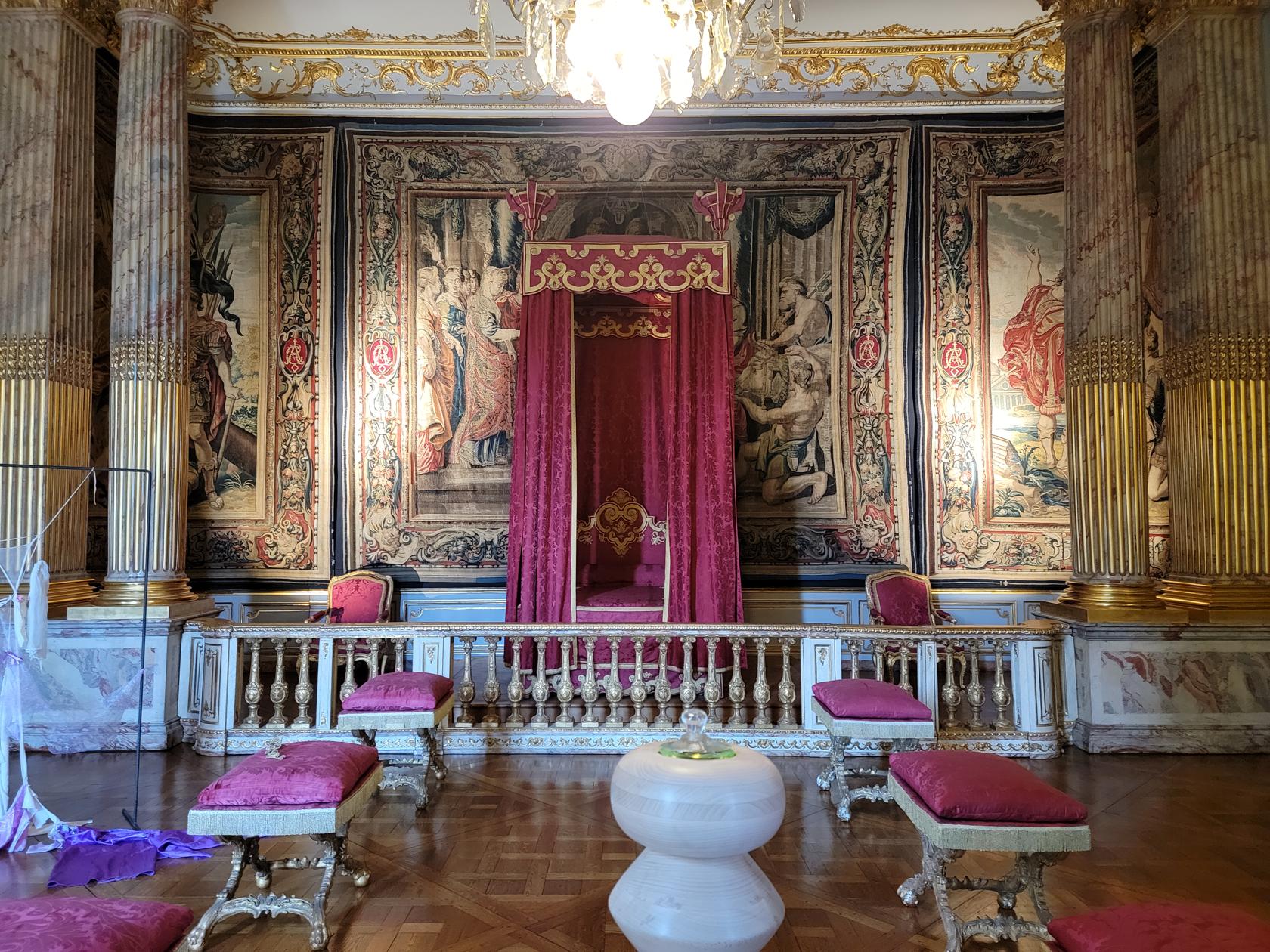
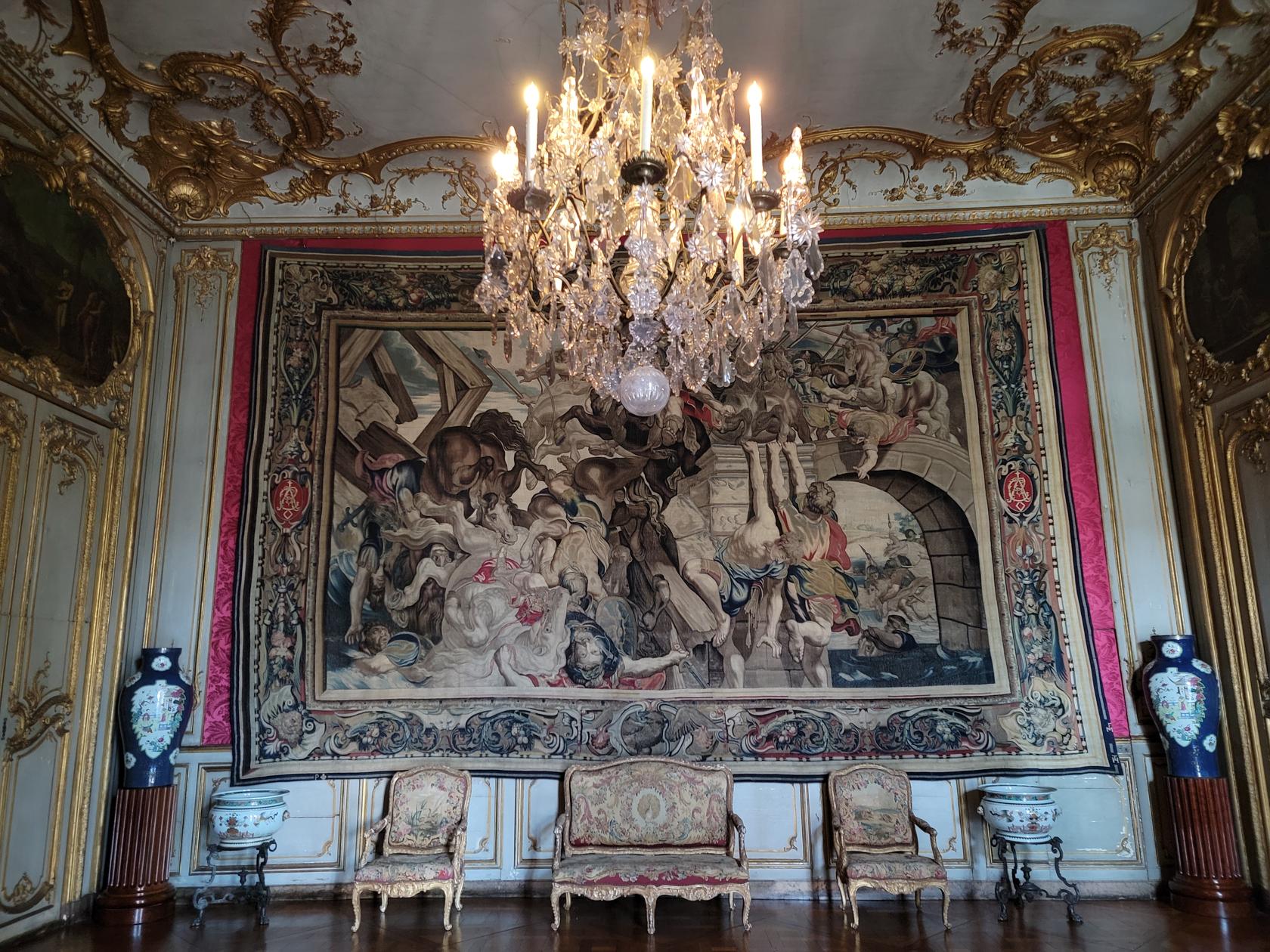
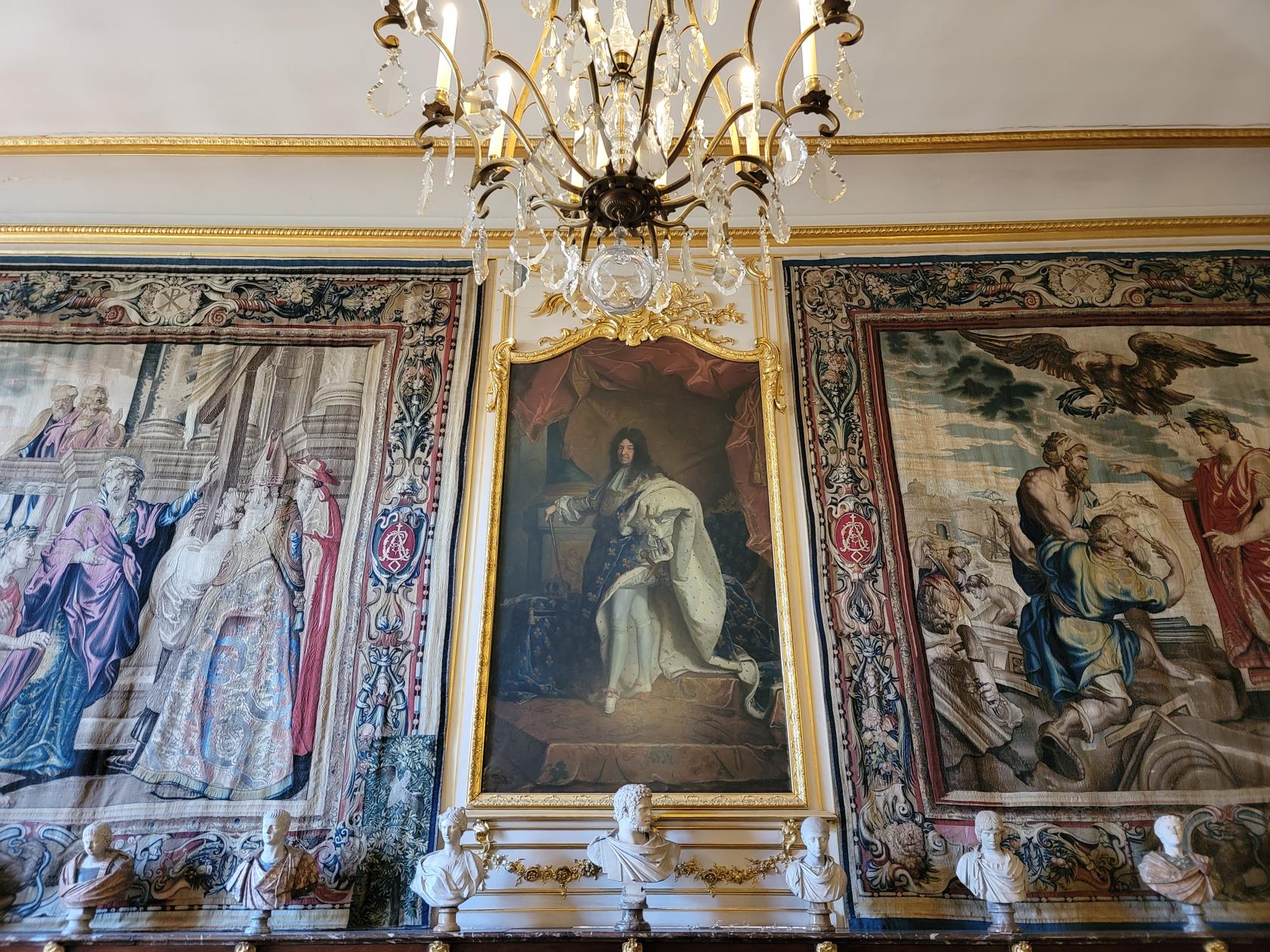
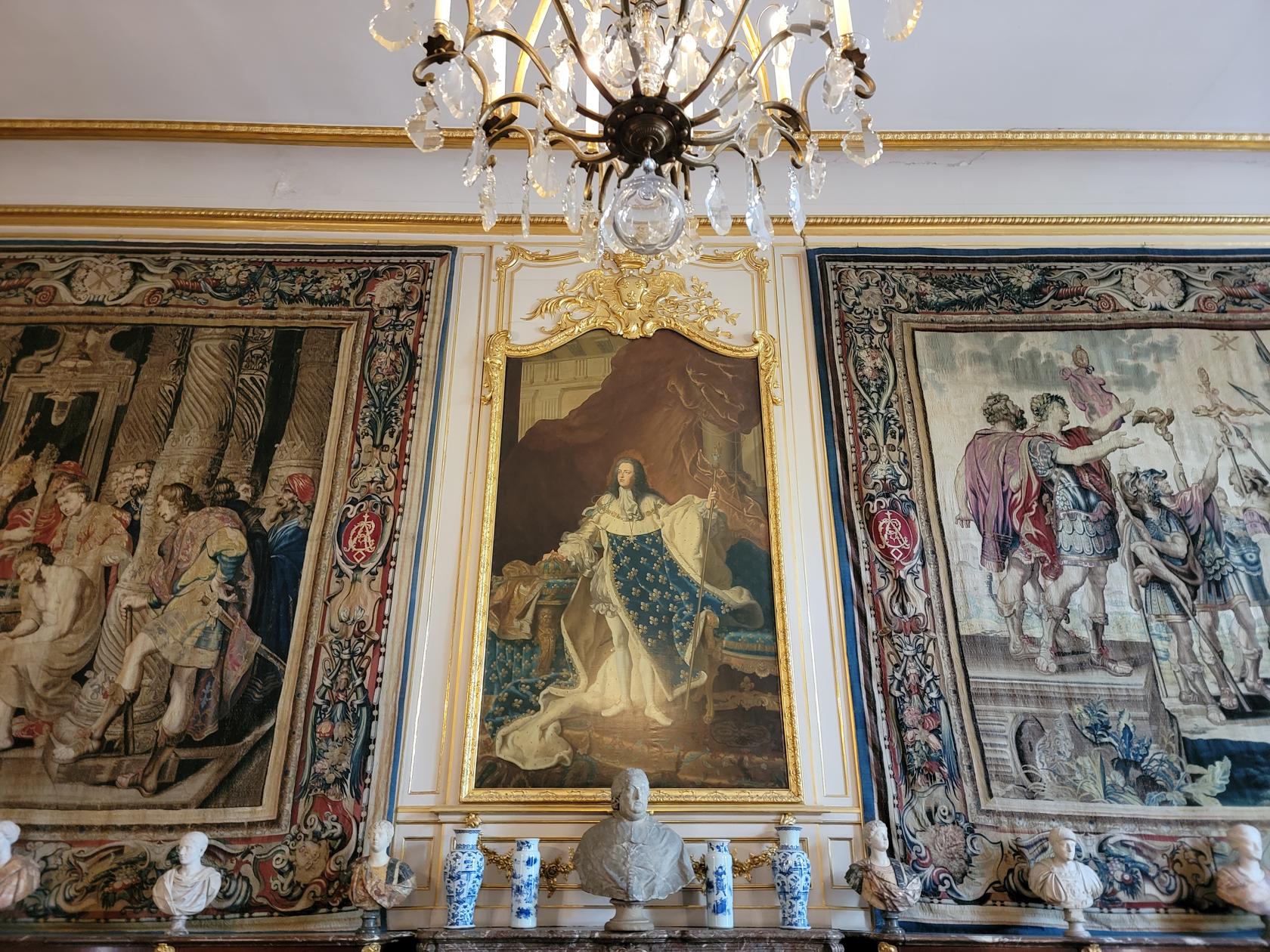
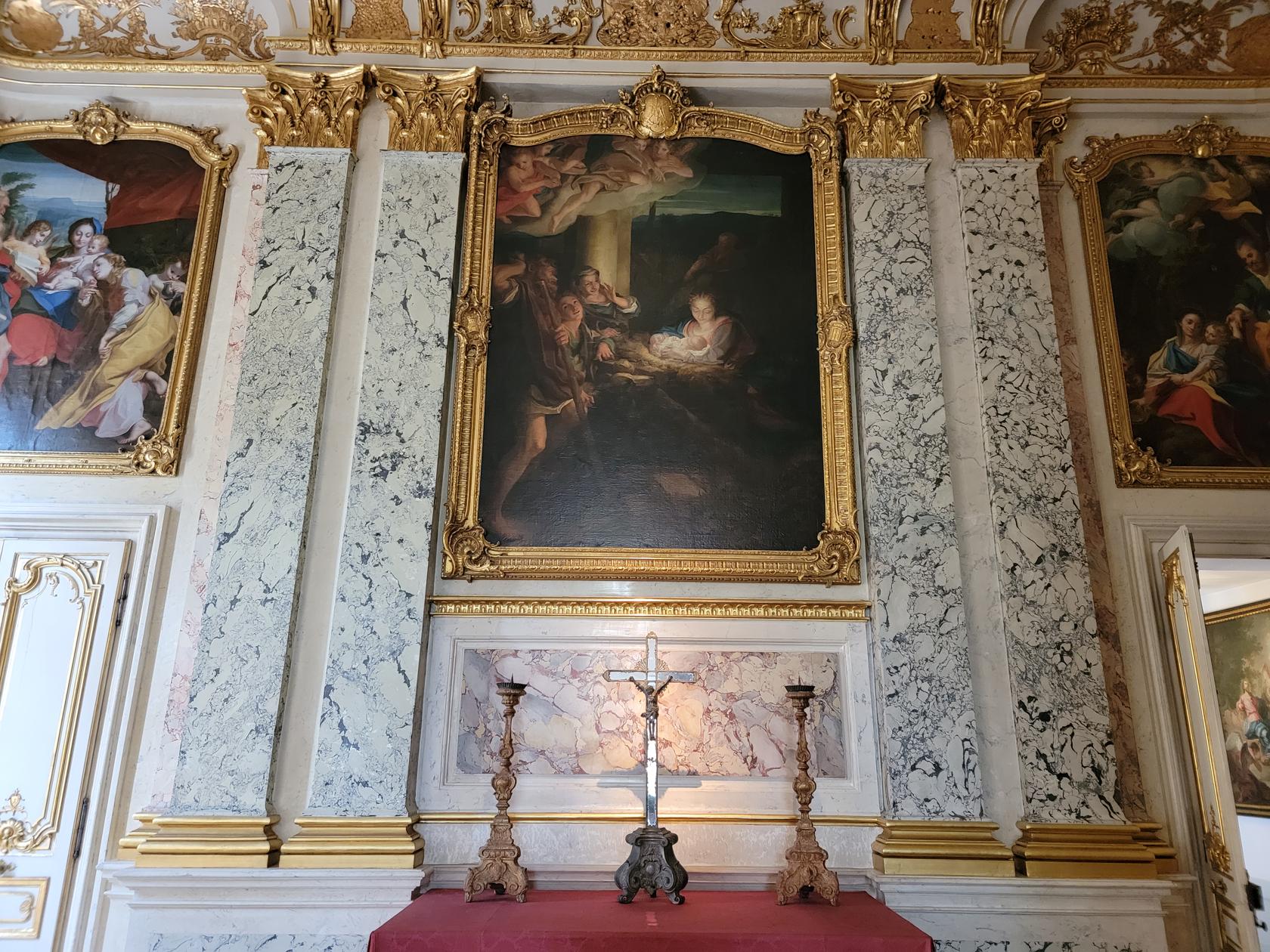
Across the river Ill from our hotel was the Rohan Palace, which houses several museums. We toured the Museum of Decorative Arts, just to get a view of the palace from inside.
Palace Rohan entrance – Strasbourg, France
Palace Rohan – Strasbourg, France
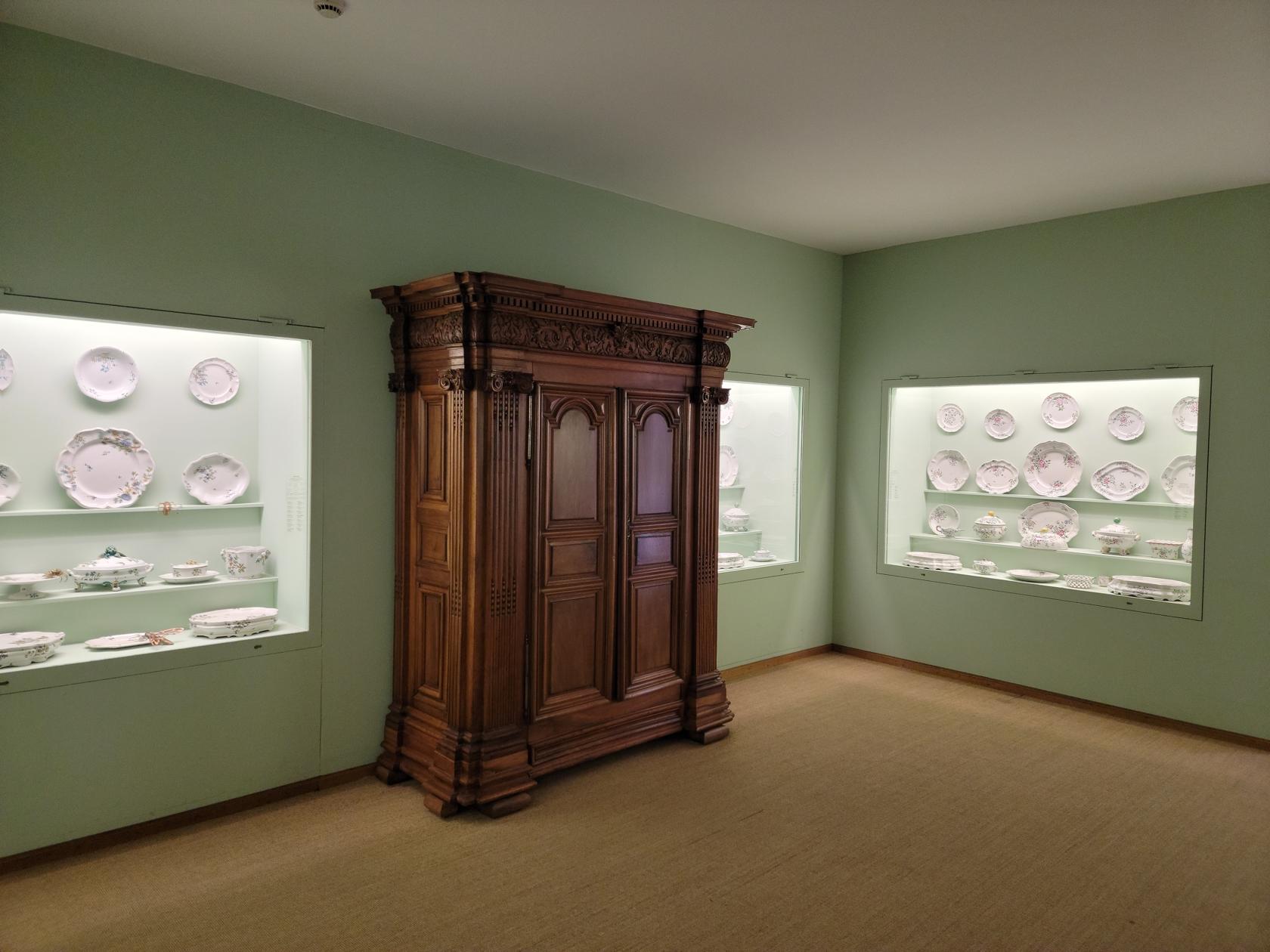
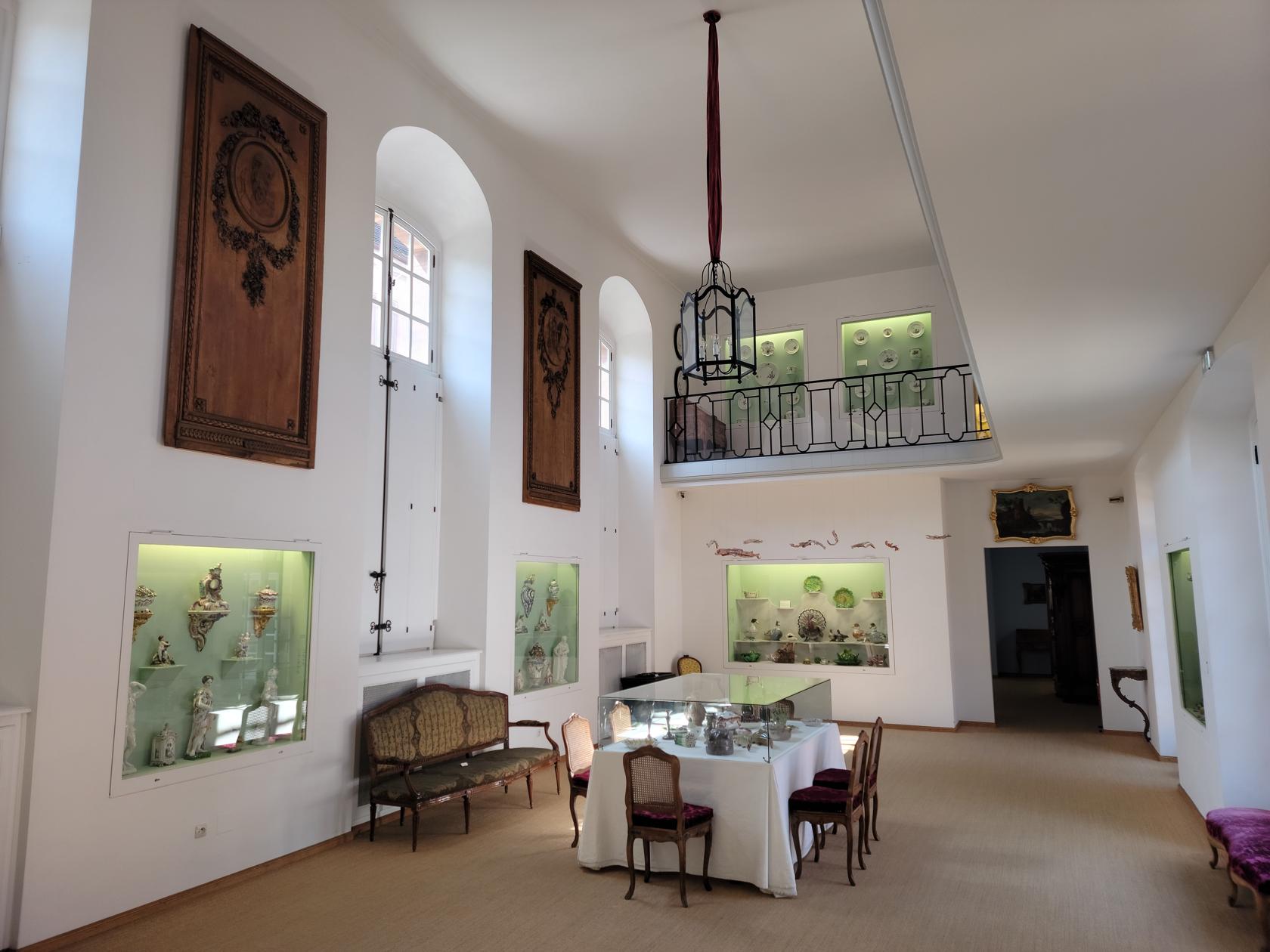
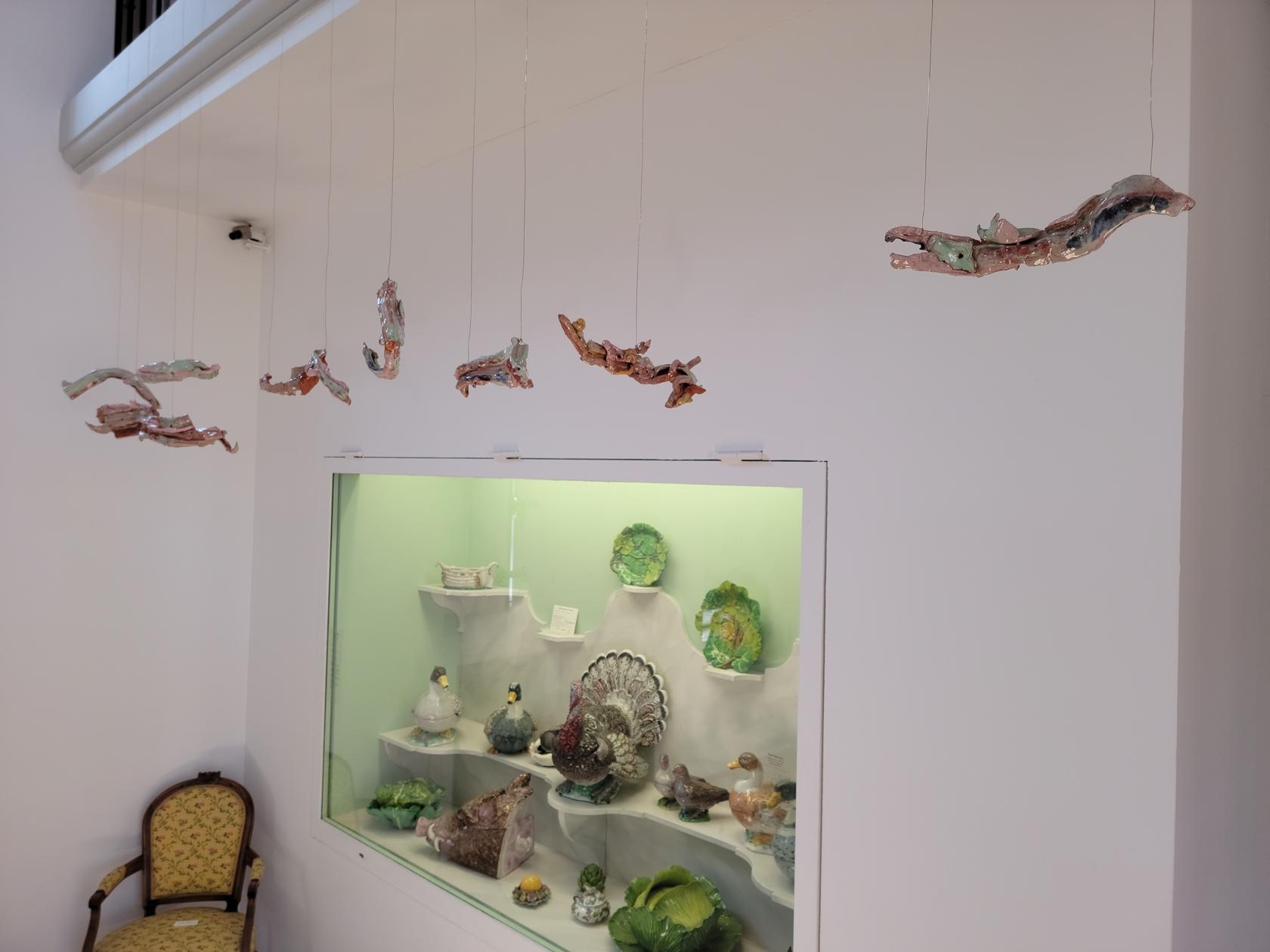
We all found the decorative arts inside the museum a bit avant-guarde for our tastes, but typically French. The interior of the palace for the most part met expectations.
Palace Rohan – Strasbourg, France
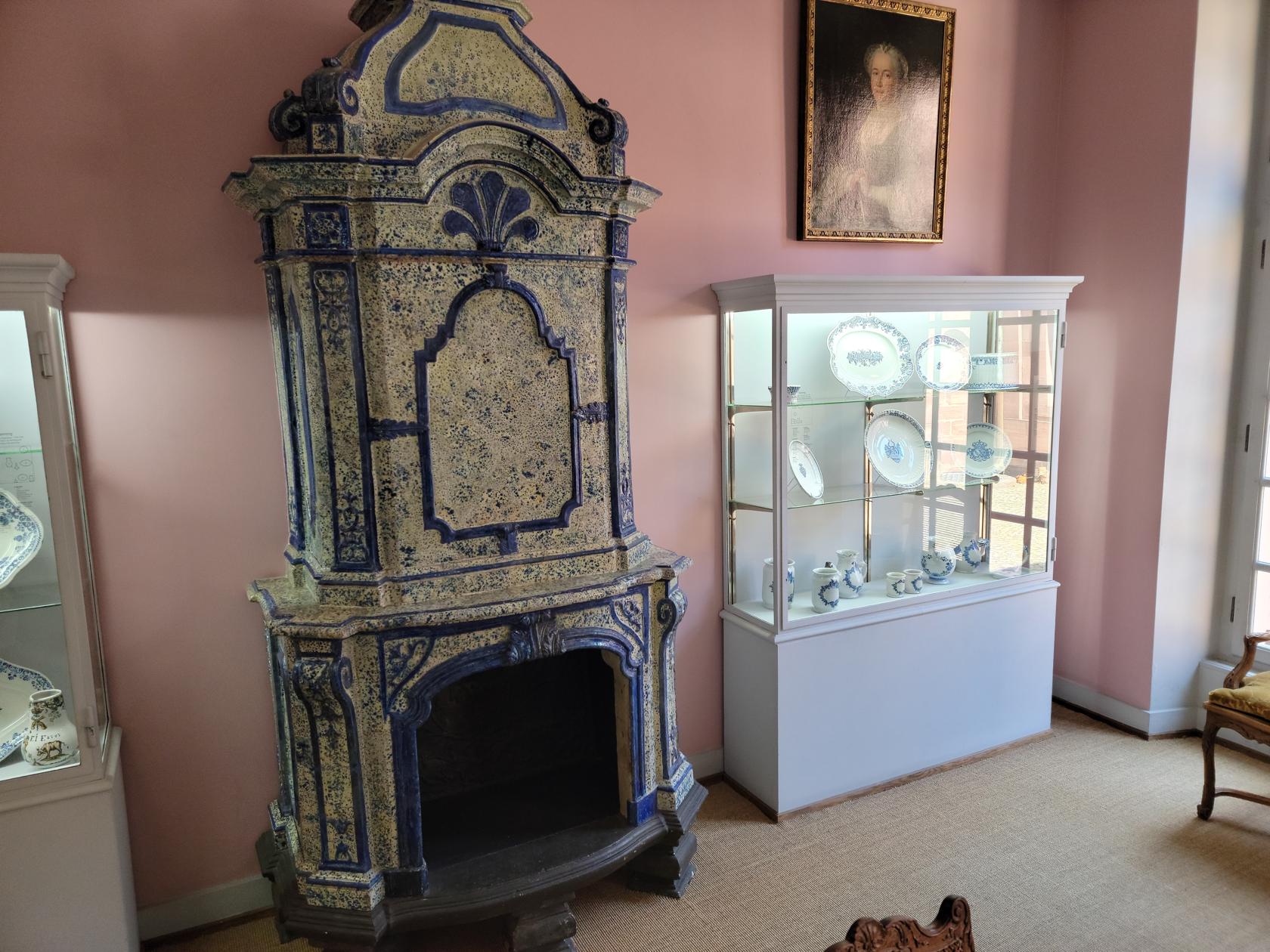
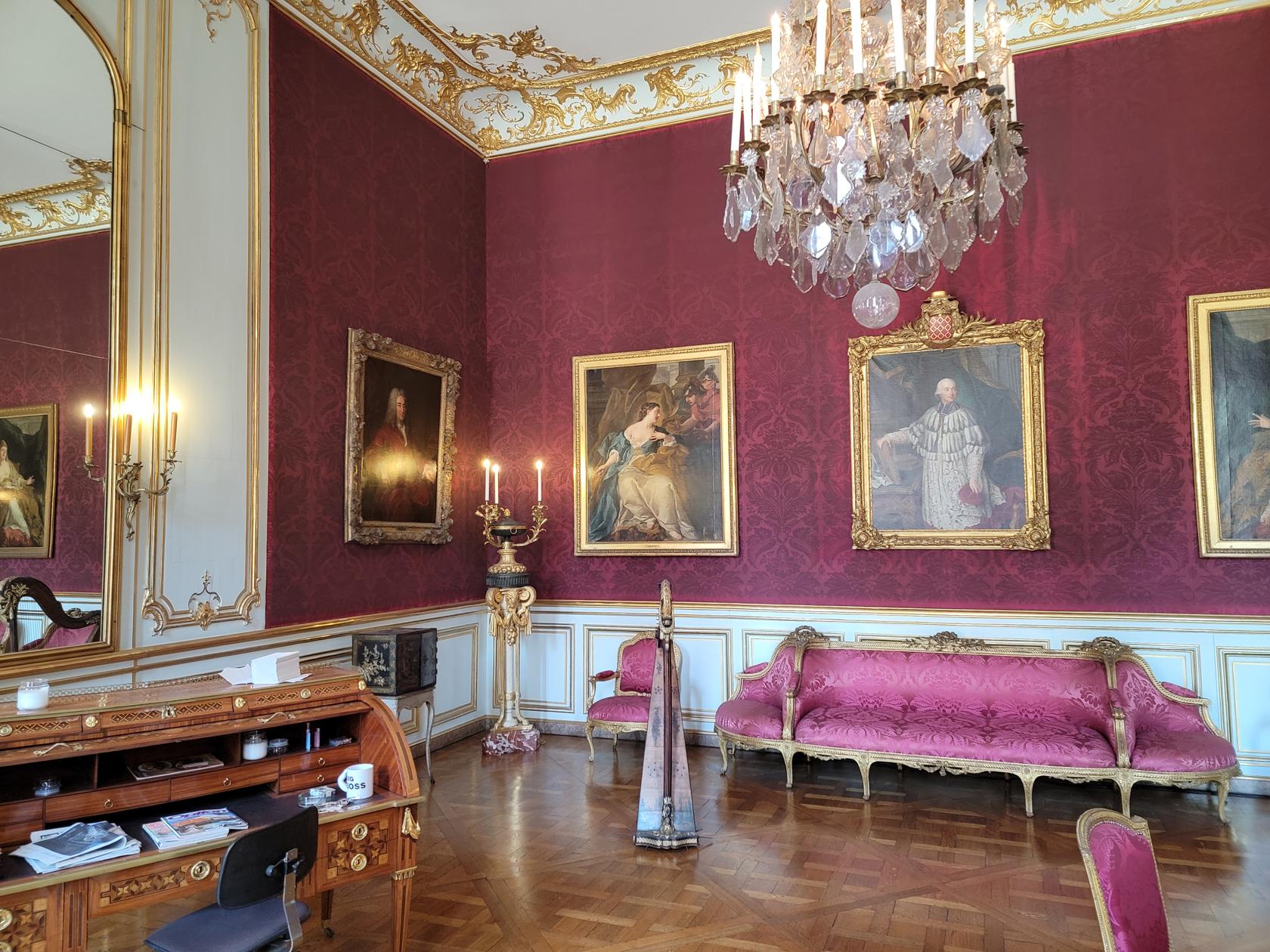
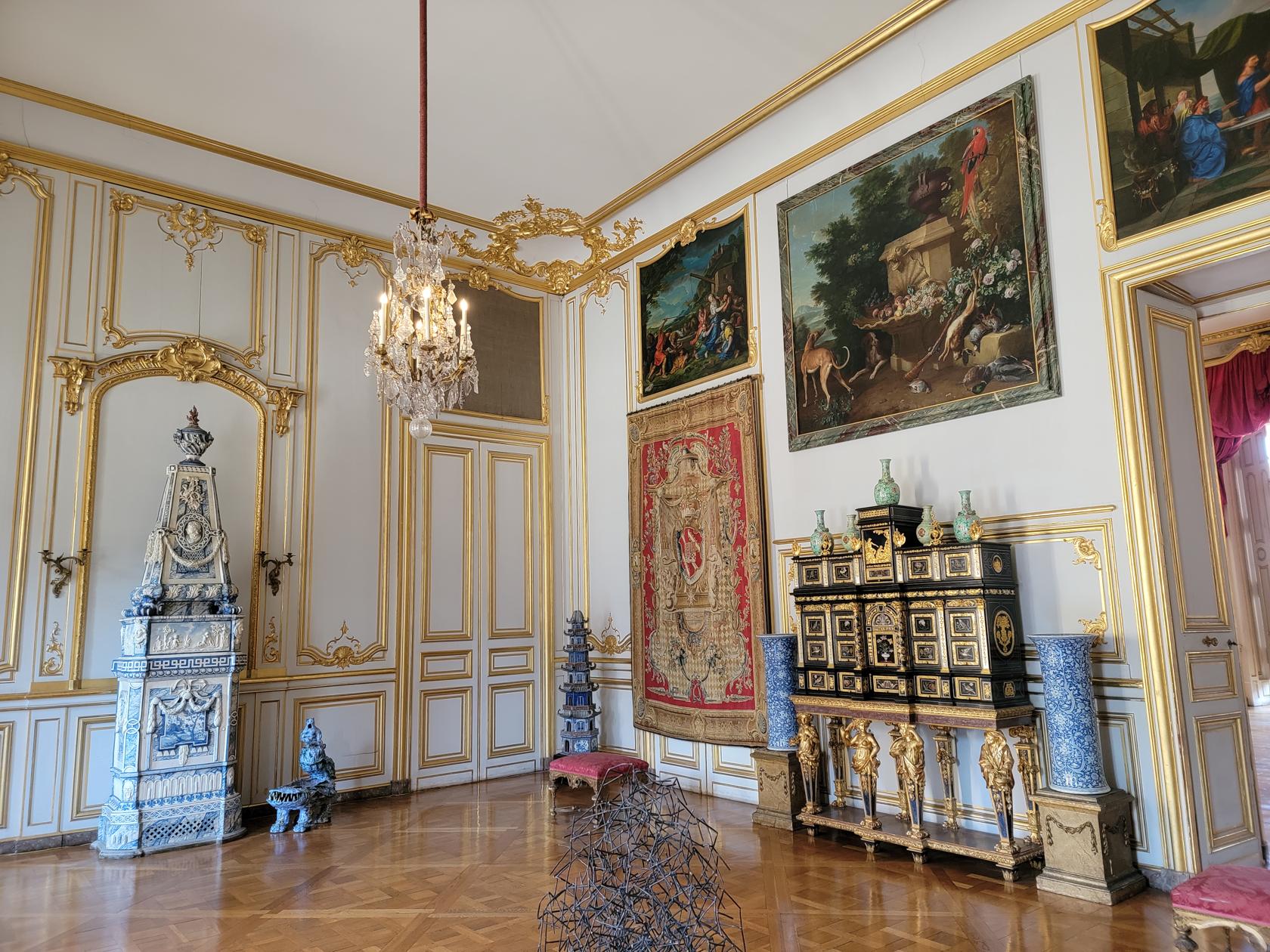
Inside the Decorative Arts Museum – Palace Rohan – Strasbourg, France
Decorative Arts Museum – Palace Rohan – Strasbourg, France
Decorative Arts Museum – Palace Rohan – Strasbourg, France
Decorative Arts Museum – Palace Rohan – Strasbourg, France
Decorative Arts Museum – Palace Rohan – Strasbourg, France
Decorative Arts Museum – Palace Rohan – Strasbourg, France
Decorative Arts Museum – Palace Rohan – Strasbourg, France
Decorative Arts Museum – Palace Rohan – Strasbourg, France
Decorative Arts Museum – Palace Rohan – Strasbourg, France
Decorative Arts Museum – Palace Rohan – Strasbourg, France
Decorative Arts Museum – Palace Rohan – Strasbourg, France
Decorative Arts Museum – Palace Rohan – Strasbourg, France
Decorative Arts Museum – Palace Rohan – Strasbourg, France
Decorative Arts Museum – Palace Rohan – Strasbourg, France
Decorative Arts Museum – Palace Rohan – Strasbourg, France
Decorative Arts Museum – Palace Rohan – Strasbourg, France
Pont du Faisan
Built in 1888 this is a working example of an old hydraulic swing bridge. Below is a short video showing it in operation. First the two ends are closed for traffic, then the operator swings the bridge to allow boats through the gate. We were able to see this as a pedestrian and on the Strasbourg sightseeing tour boat. It is a very interesting piece of engineering and on a small scale, perhaps better than raising a bridge.
Ponts Couverts de Strasbourg
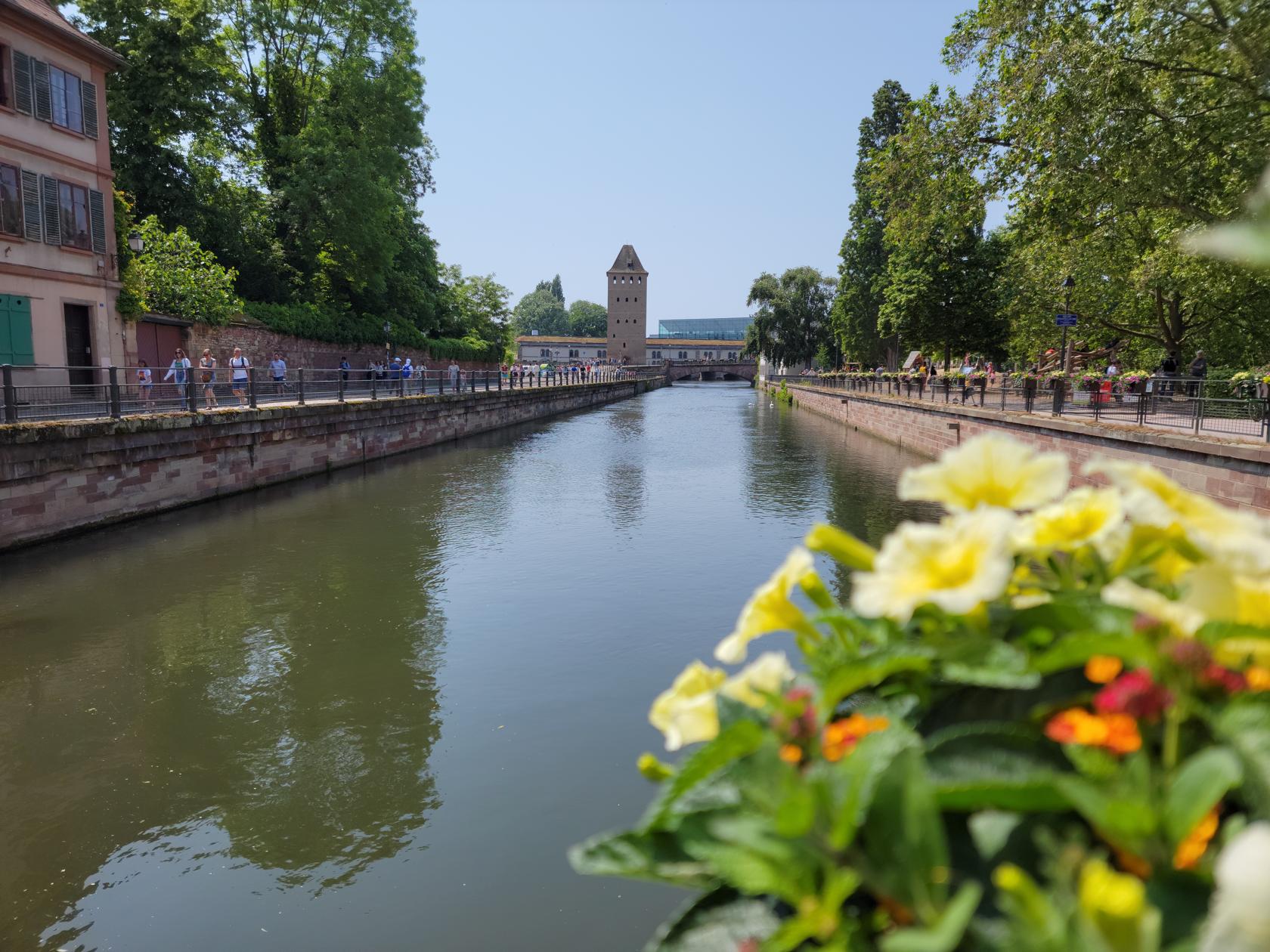
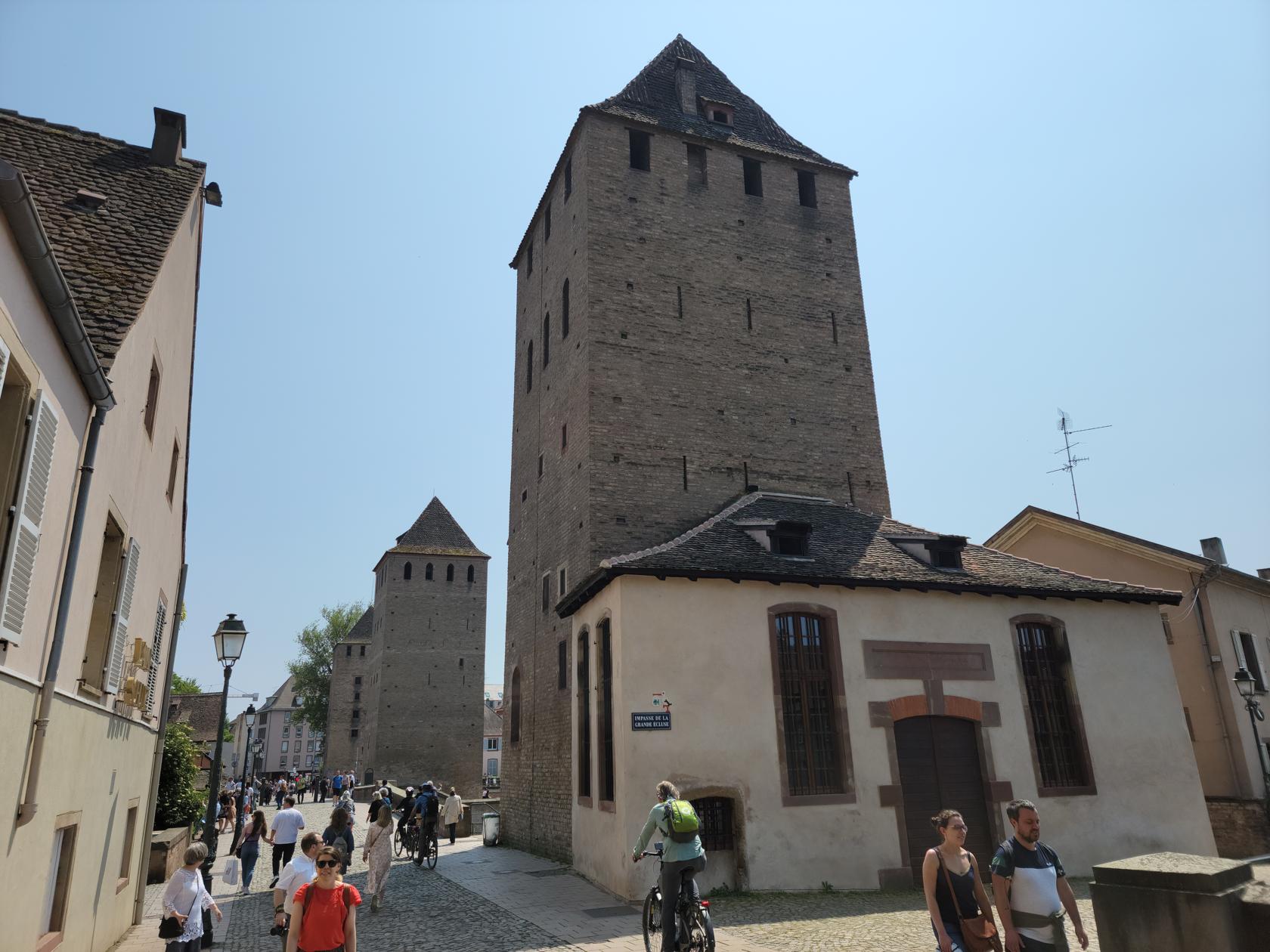
This Ponts Couverts is a set of thirteen century covered bridges and towers on the southwest part of the island. Initially a battlement and constructed of wood, the roofs were later removed and eventually the bridges were rebuilt in stone.
The Pont Courverts – Strasbourg, France
At least one of them was made into a prison and it was later told, though falsely, that executions were also carried out there, though there is no evidence of this happening.
The Courvert Towers – Strasbourg, France
Hotel Cour Du Corbeau
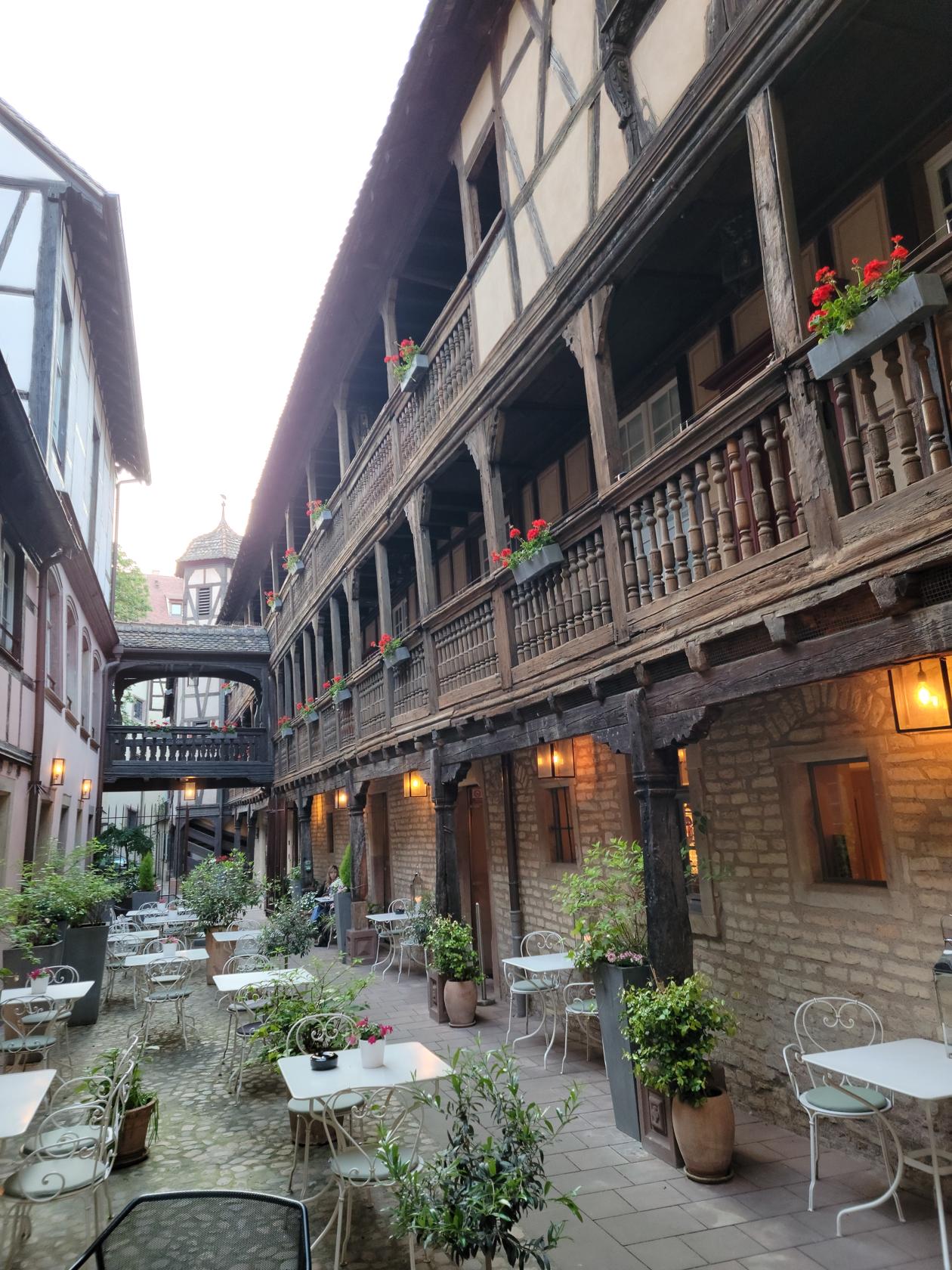
A very good hotel that is strategically located close to the old city center in Krutenau is the Hotel Cour Du Corbeau. It is situated just across the river Ill and two blocks away from the cathedral. Parking for cars is only a block away and many restaurants and cafes are within ten minutes walking distance.
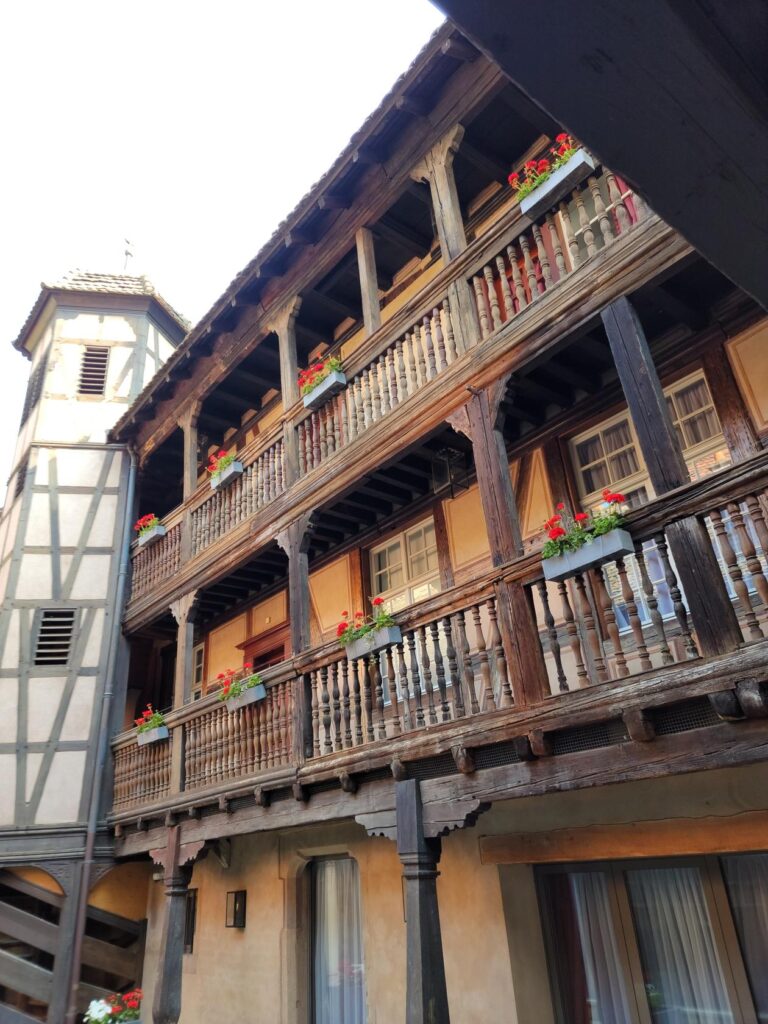
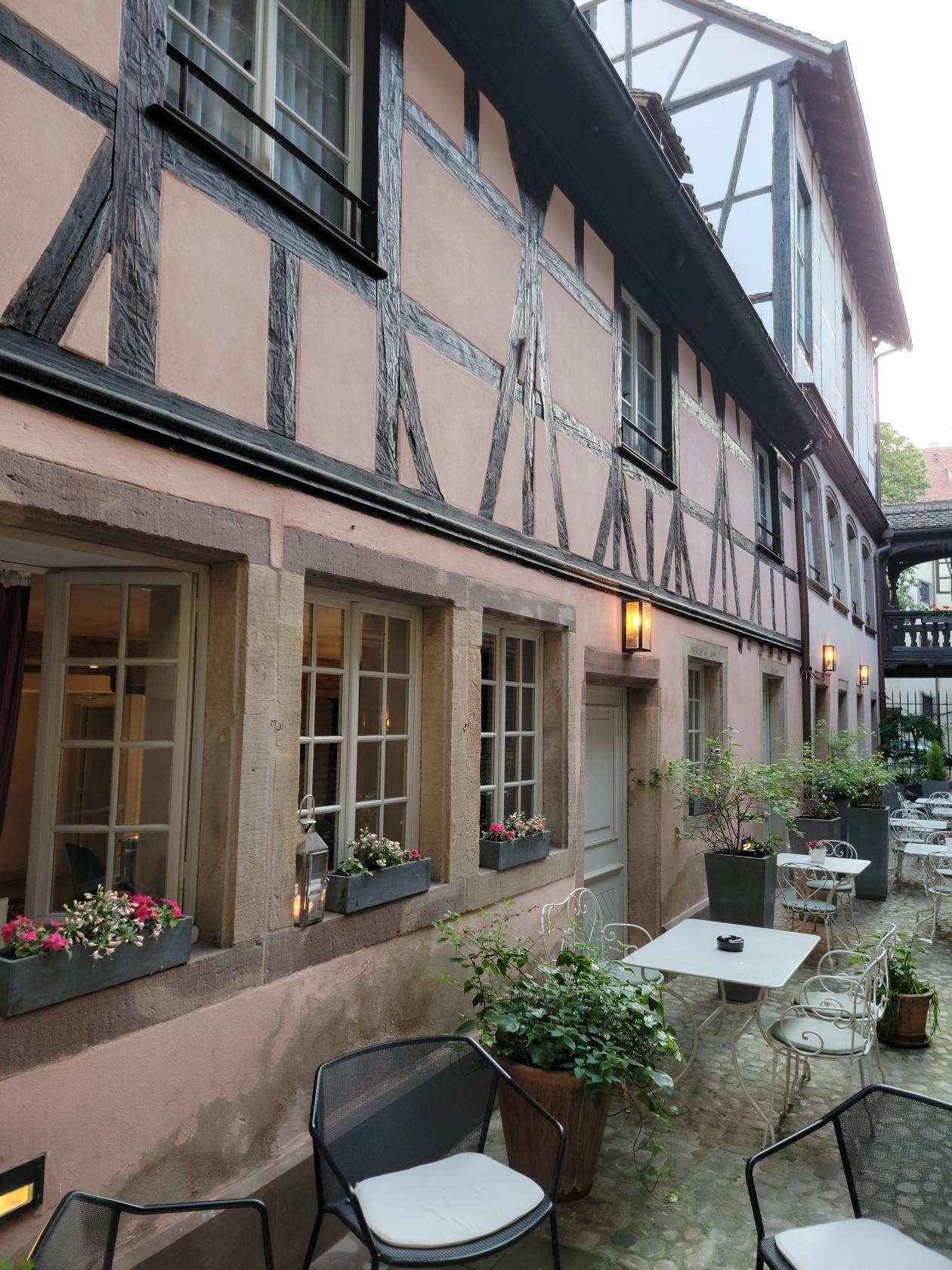
An old inn renovated – Hotel Cour Du Corbeau – Strasbourg, France
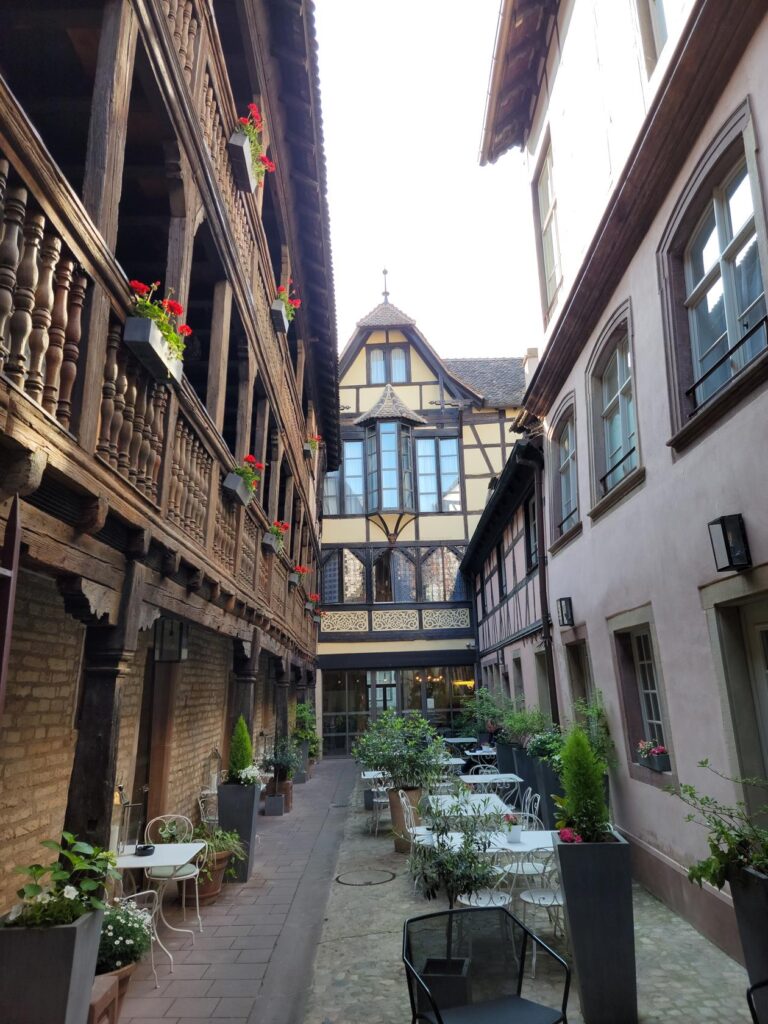
The courtyard and cafe – Hotel Cour Du Corbeau – Strasbourg, France
Old wooden framing – Hotel Cour Du Corbeau – Strasbourg, France
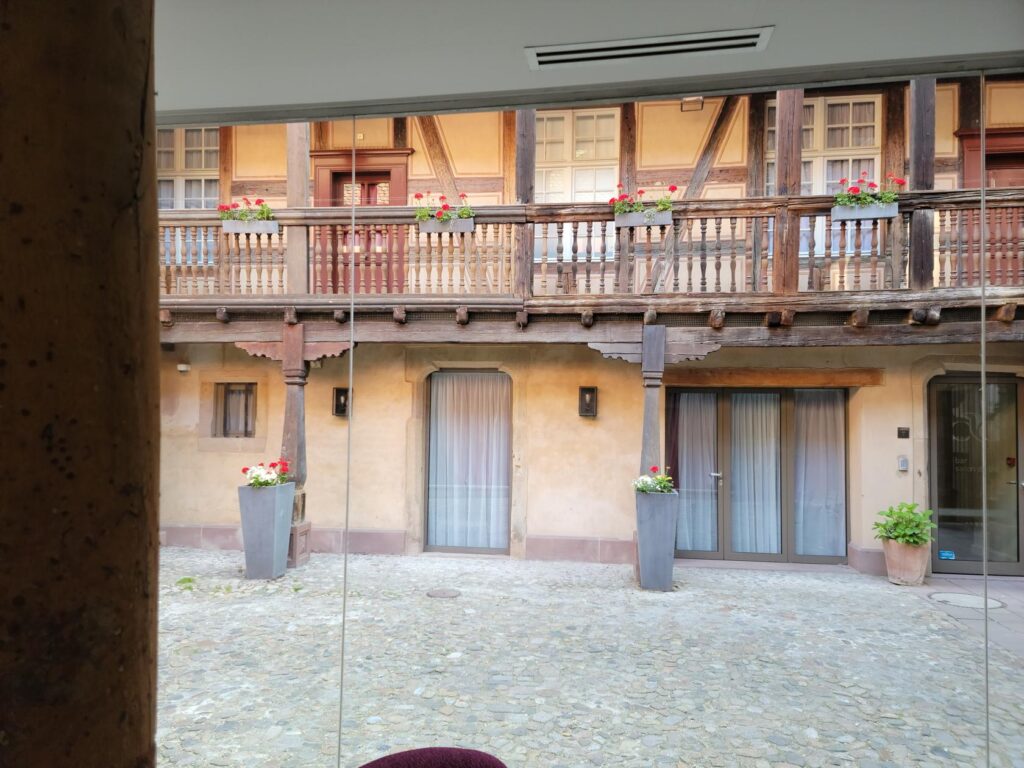
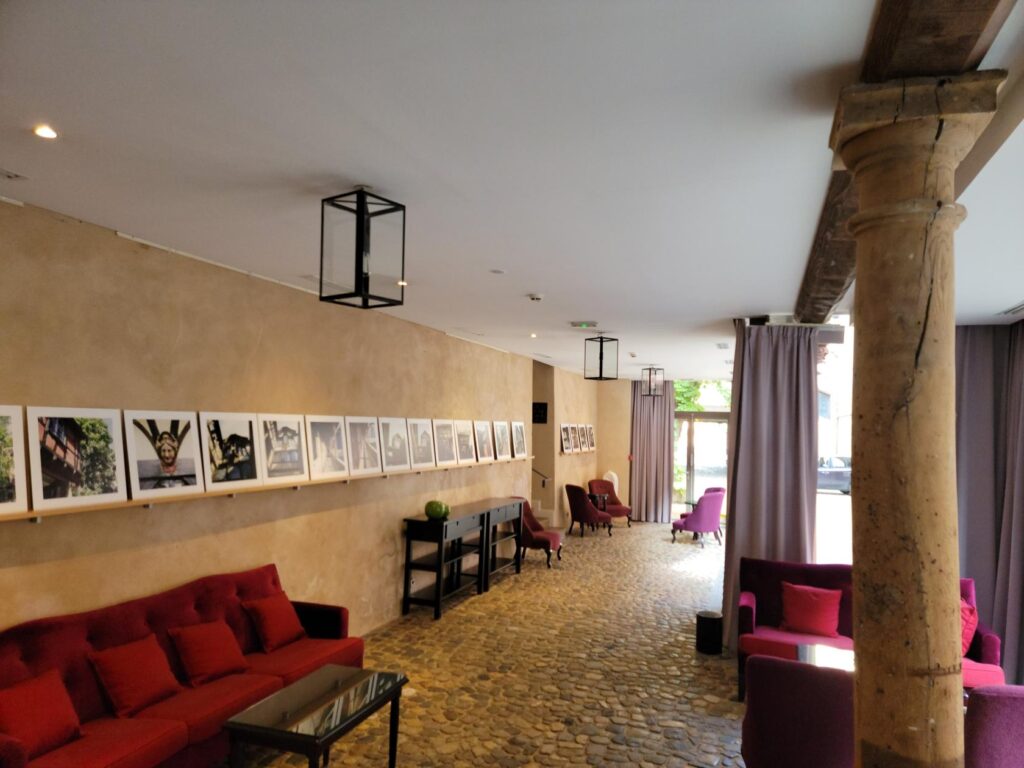
Renovated inside – Hotel Cour Du Corbeau – Strasbourg, France
Since we were arriving by train, we took the D Tram from the Central Station and got off at the Hospital stop. From there we were only a ten minute walk away.
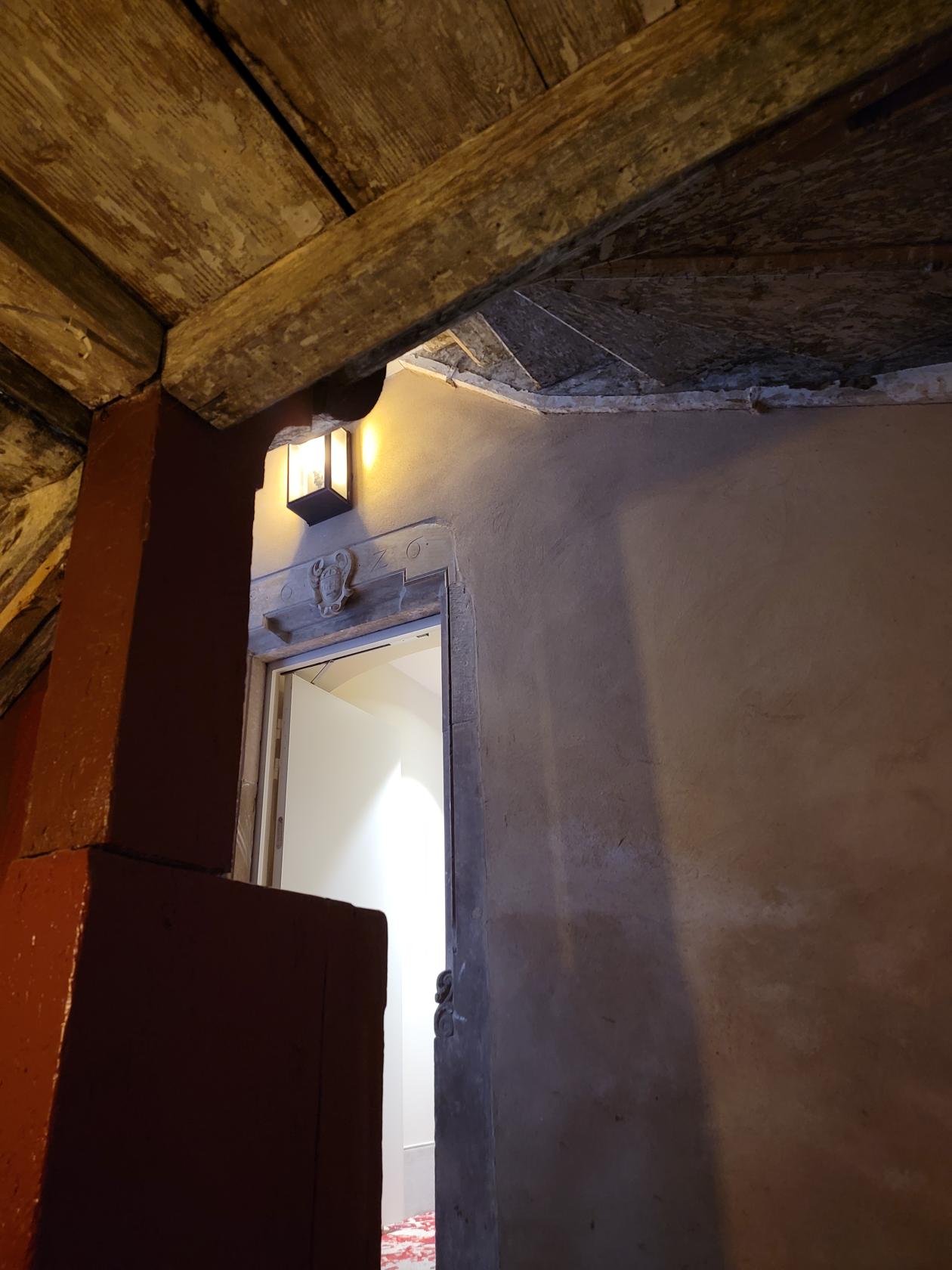
Old spiral staircase – Hotel Cour Du Corbeau – Strasbourg, France
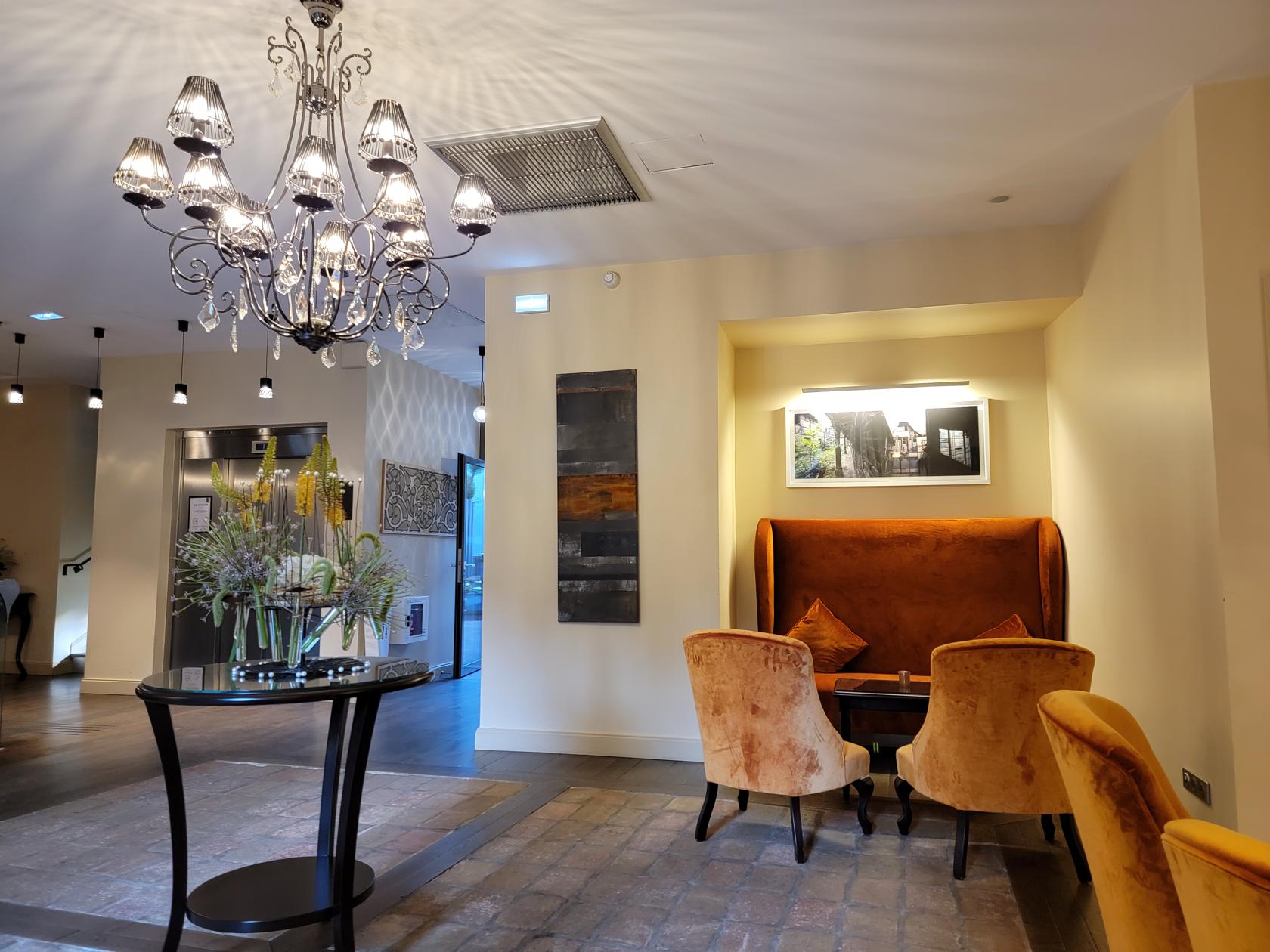
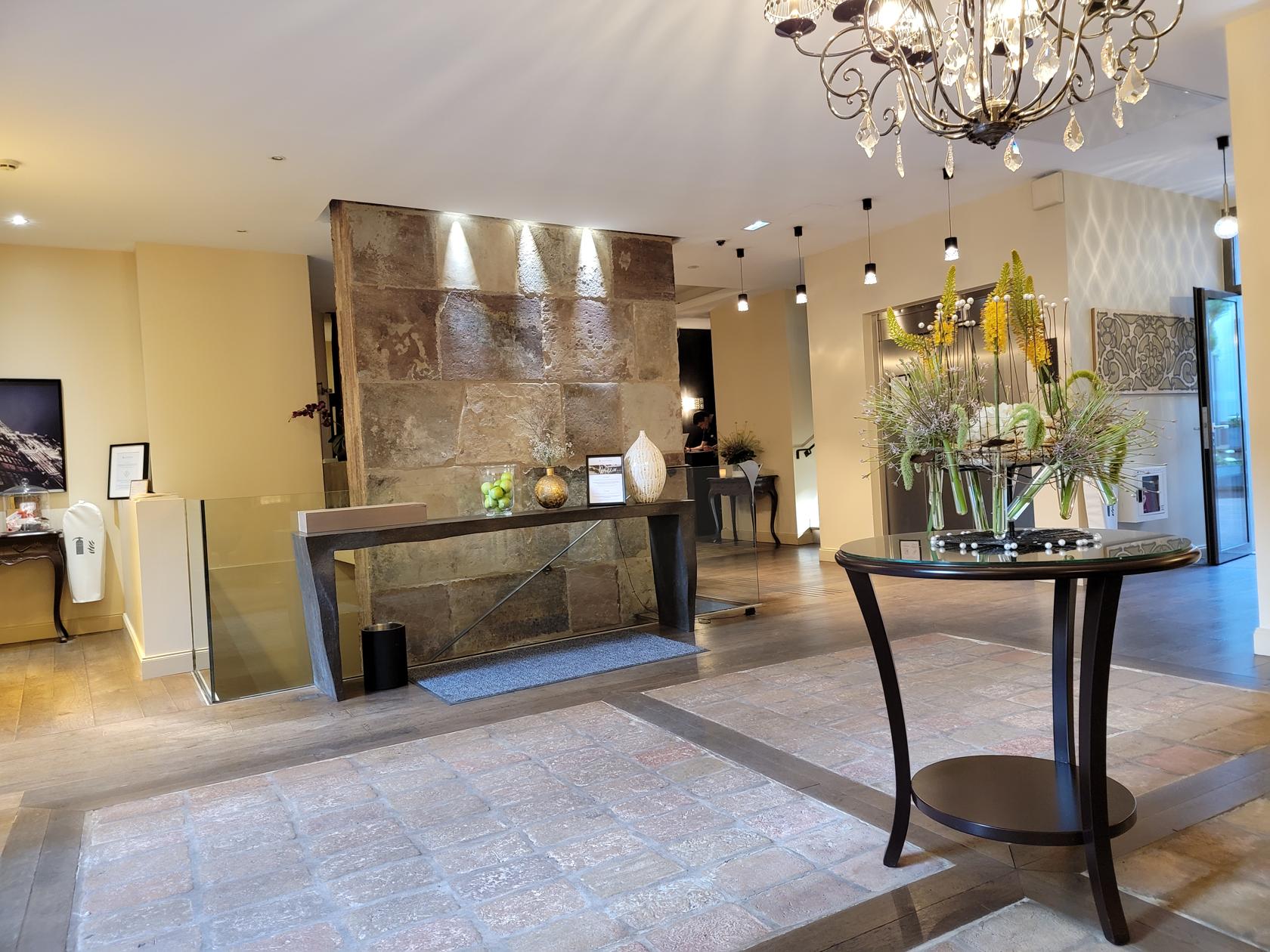
The hotel is a smartly renovated and modernized version of an old inn that was used by workmen that worked at the tanneries and other places throughout the city. It maintains many of the old beams and architectural elements of the old building. However, it includes air-conditioning and many other modern amenities.
The lobby – Hotel Cour Du Corbeau – Strasbourg, France
The lobby – Hotel Cour Du Corbeau – Strasbourg, France
Outside courtyard – Hotel Cour Du Corbeau – Strasbourg, France
Outside courtyard and bar – Hotel Cour Du Corbeau – Strasbourg, France
Although you may initially find their 27€ price for breakfast a bit steep, it is well worth it since they provide both hot and cold buffet items, as well as a wide selection of coffees.
Old spiral staircase – Hotel Cour Du Corbeau – Strasbourg, France
Restaurants
Being a very busy tourist spot, Strasbourg has a plethora of restaurants, anything from traditional Alsatian food, to Chinese and other cosmopolitan cuisines. So you shouldn’t go hungry, even without a reservation.
Maison Des Tanneurs
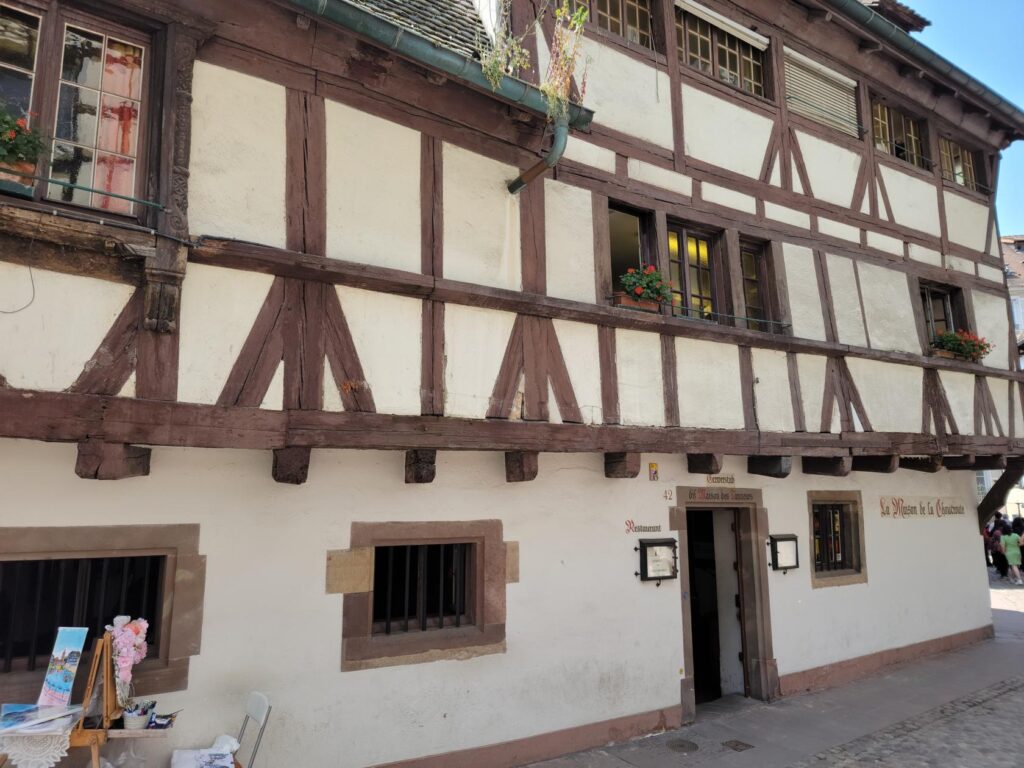
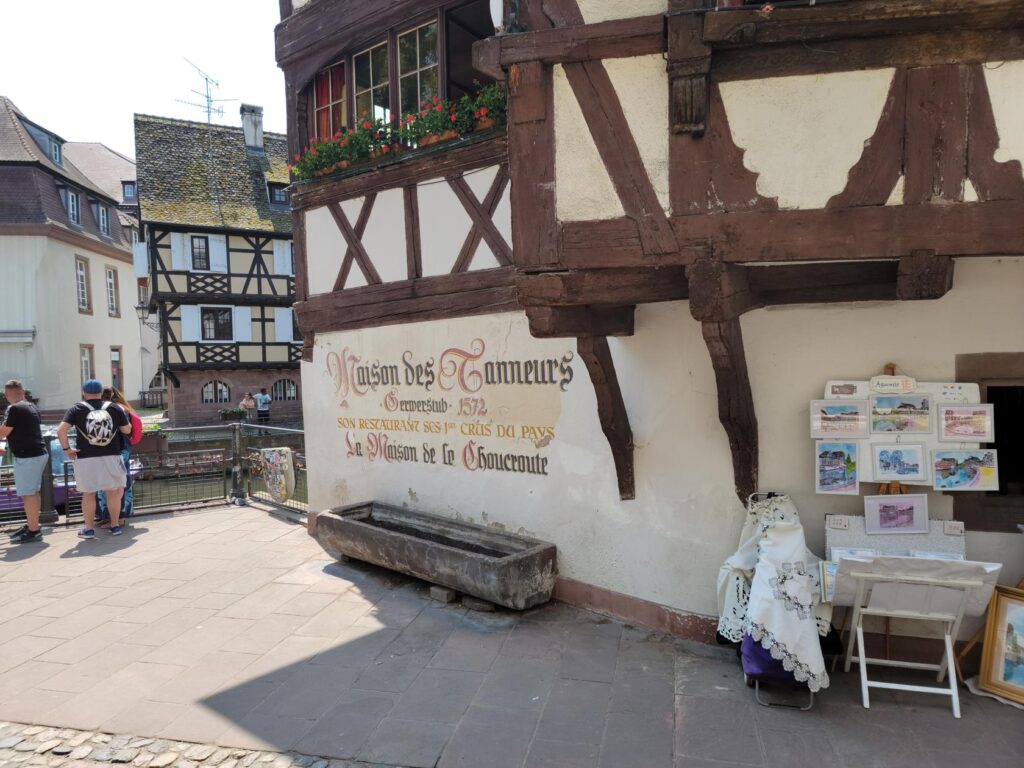
The House of the Tanners restaurant was the furthest of all the restaurants from our hotel and took a good fifteen minute walk to reach.
Restaurant – The House of Tanners – Strasbourg, France
Restaurant – The House of Tanners – Strasbourg, France
Restaurant – The House of Tanners – Strasbourg, France
Former names – The House of Tanners – Strasbourg, France
Located in the far southwest corner of the island and near the Ponts Couverts it commands a nice view of the river Ill. So, if you want window side seat, reserve your seat early, we arrived at our reservation time and the sign was already posted on the menu outside – totally booked this evening.
View from window – The House of Tanners – Strasbourg, France
Inside – The House of Tanners – Strasbourg, France
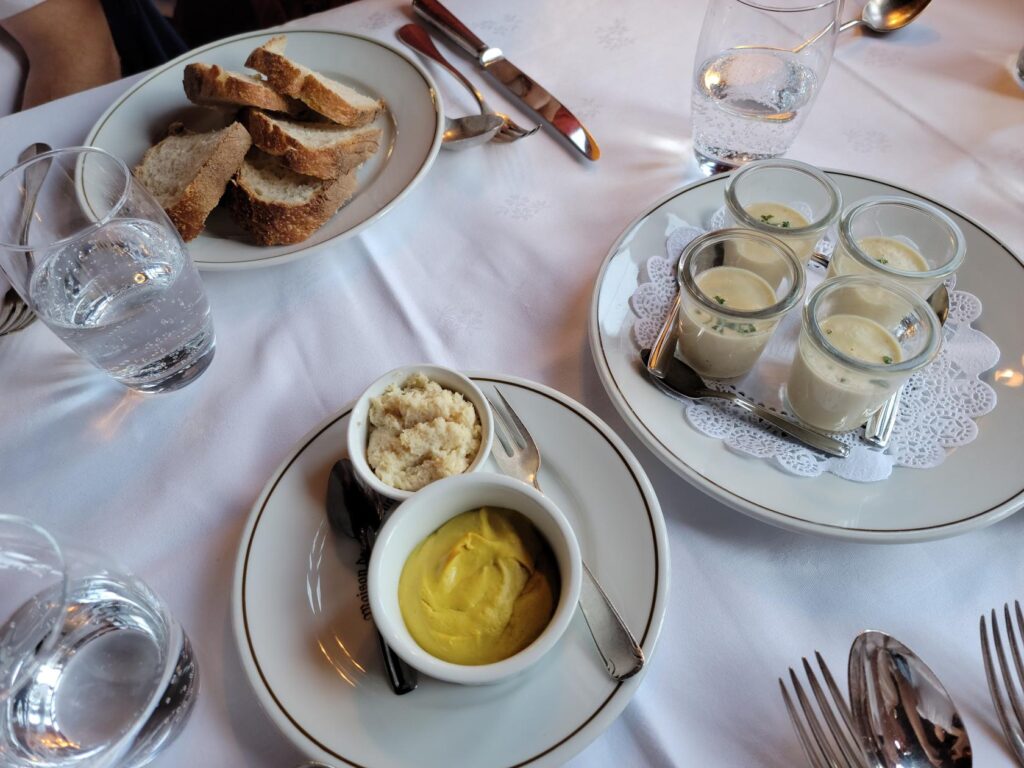
Our appetizers – The House of Tanners – Strasbourg, France
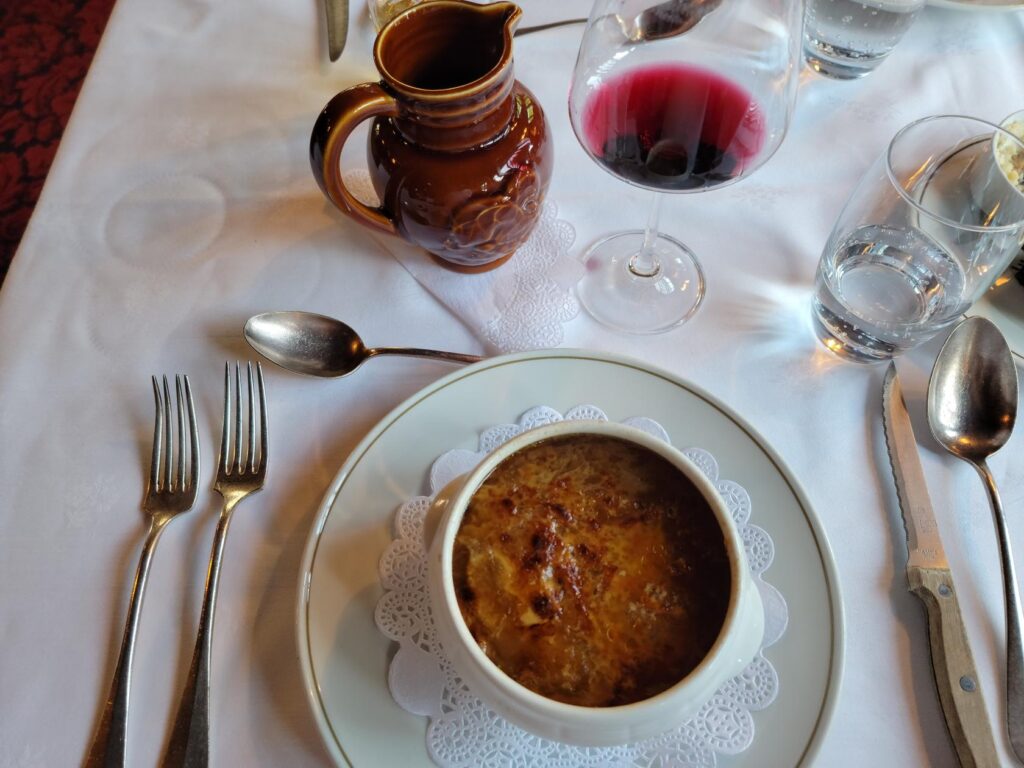
Gulash like soup – The House of Tanners – Strasbourg, France
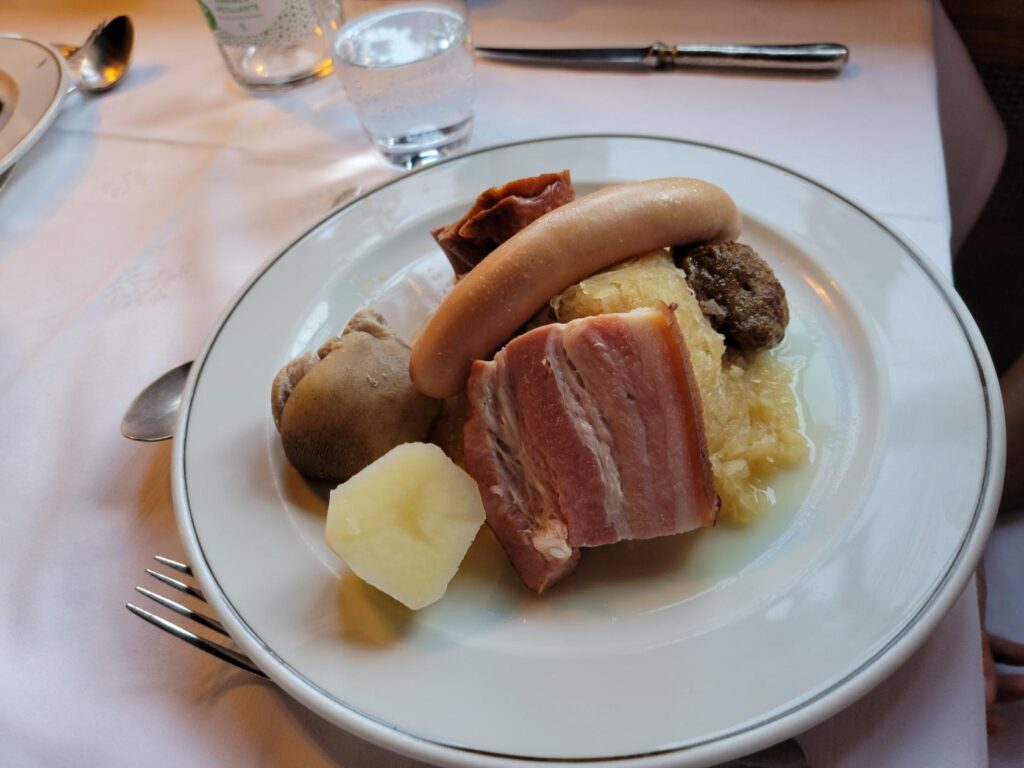
La Choucroute – Heap of sauerkraut and assorted meat – The House of Tanners – Strasbourg, France
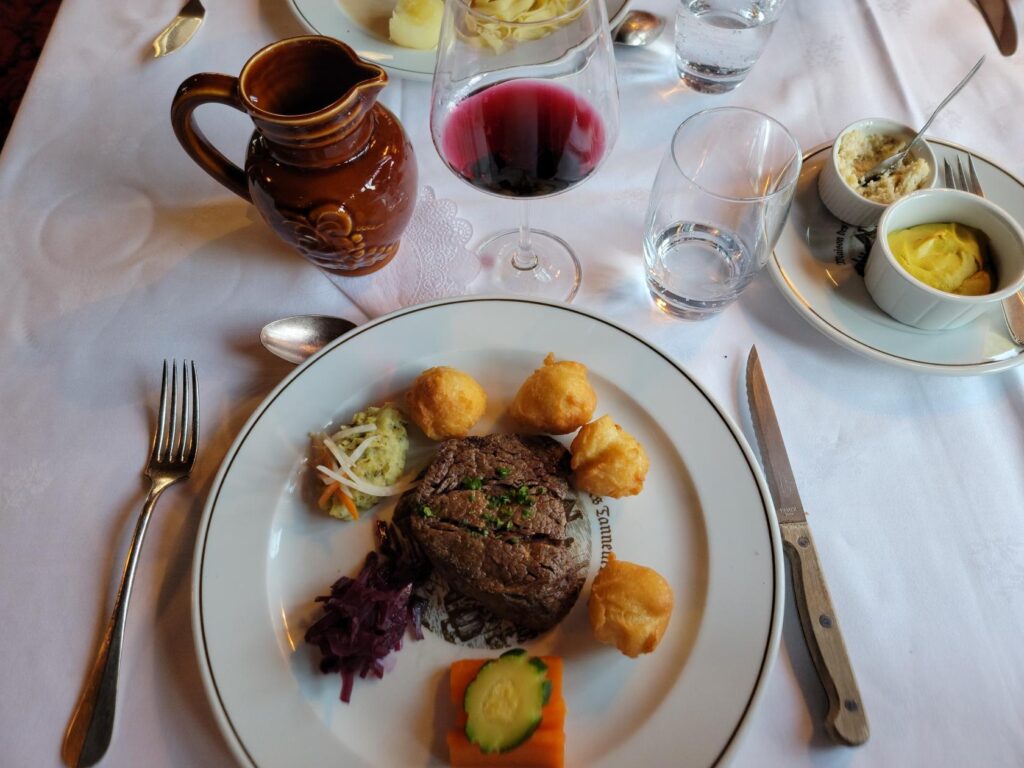
Tenderloin with sauce Bearnaise and potato croquettes – The House of Tanners – Strasbourg, France
Inside – The House of Tanners – Strasbourg, France
The window view again – The House of Tanners – Strasbourg, France
La Piazza
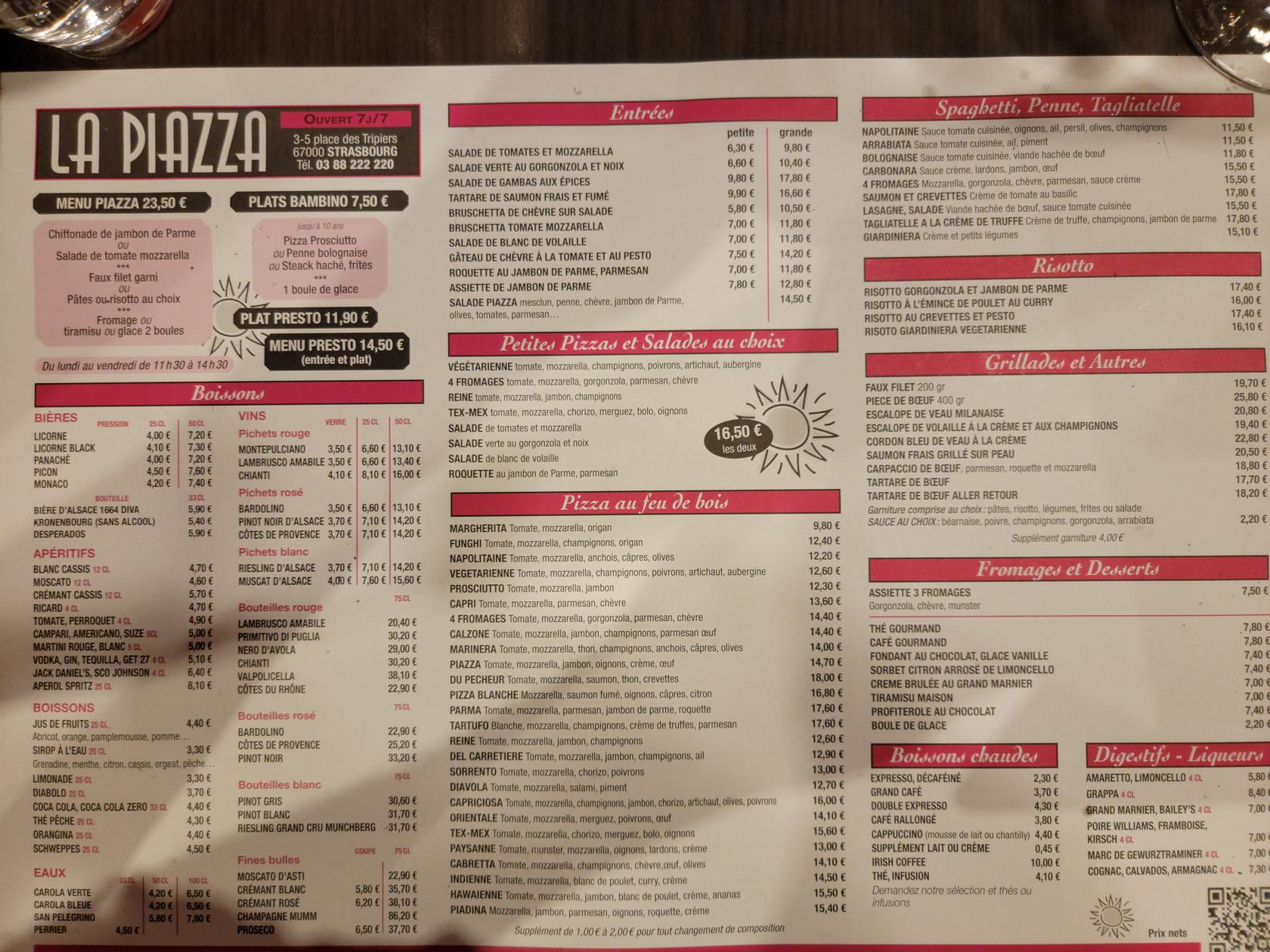
We ate here on a first night and it is a decent restaurant with pretty good Italian food. We sat inside near the wood burning over, so the pizza they made for us was using the traditional method. The service was fine and our drinks met all of our expectations. However, the toilet left much to be desired, I suggest you become prepared to avoid a visit.
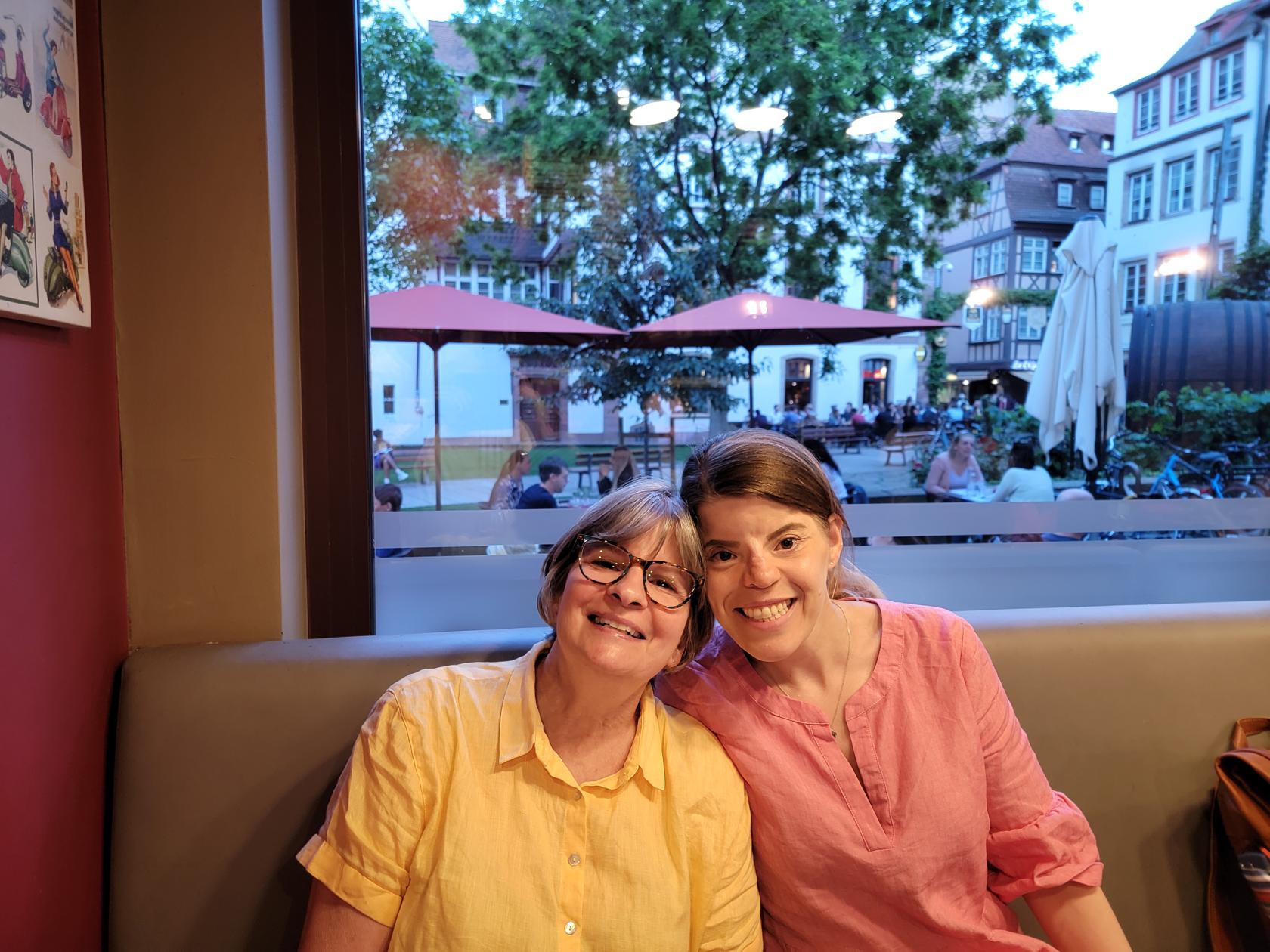
Patti and Ericka – La Piazza restaurant – Strasbourg, France
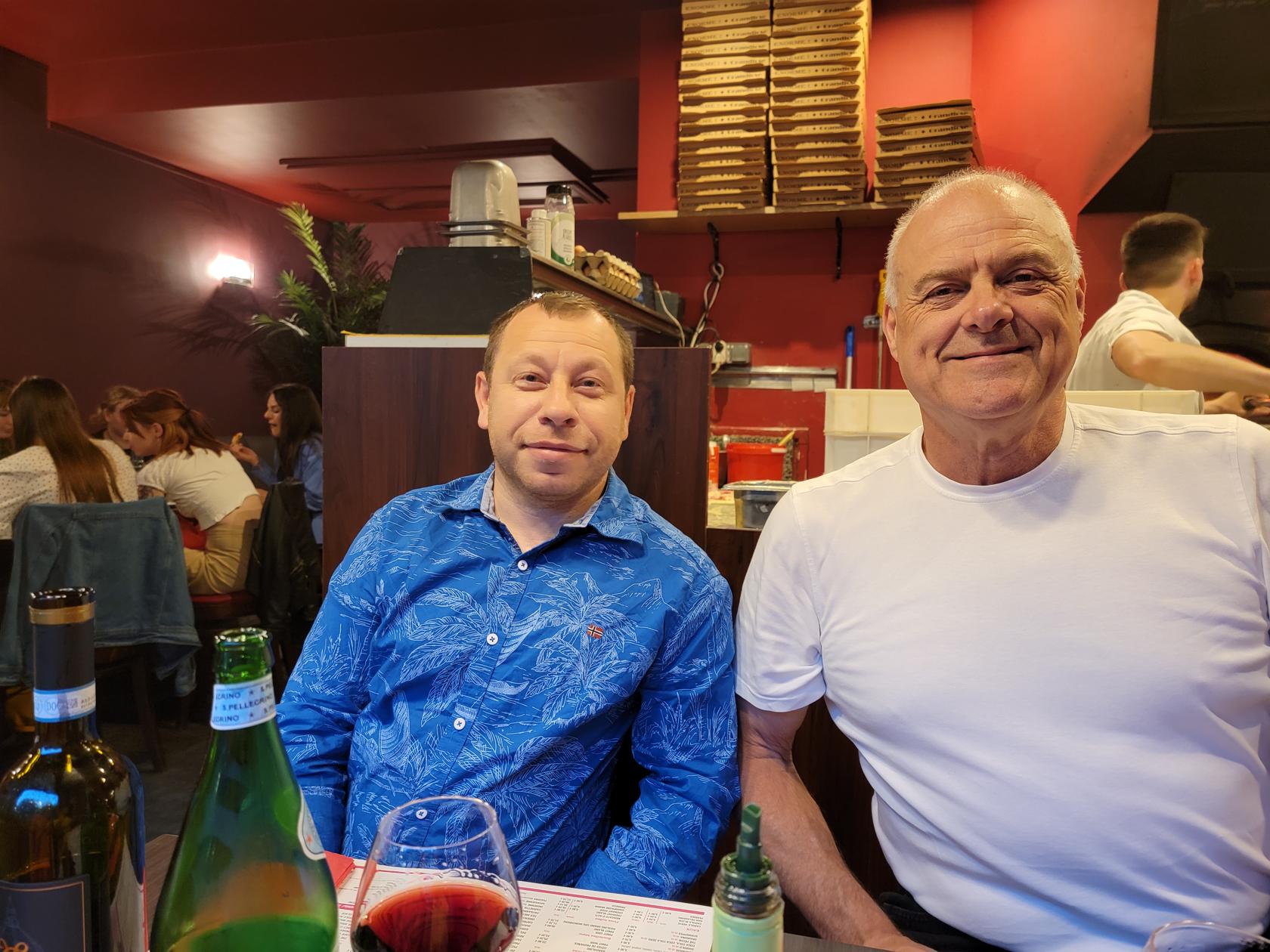
Gabi and Erick – La Piazza restaurant – Strasbourg, France
The menu – La Piazza restaurant – Strasbourg, France
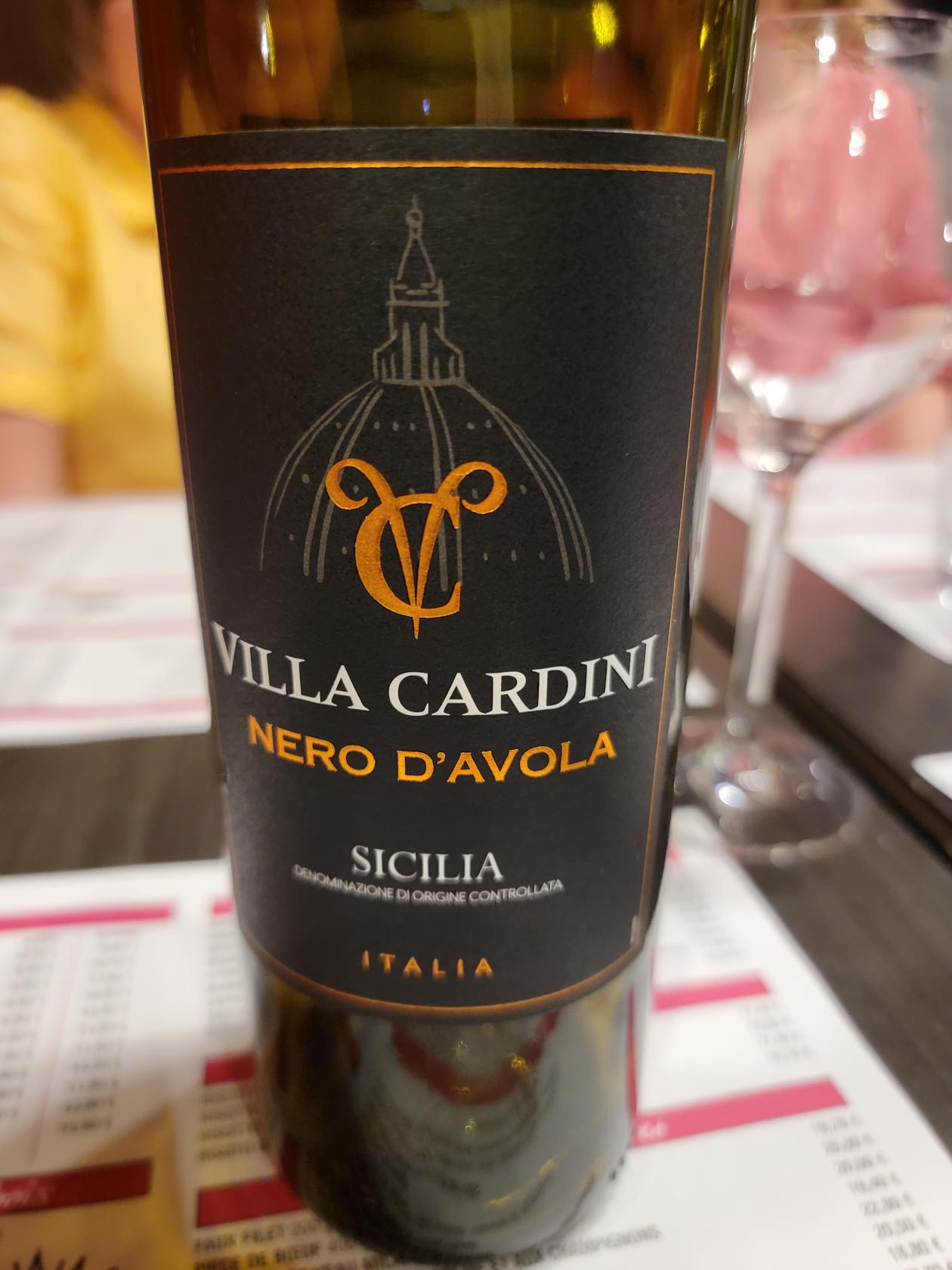
A nice wine – a Sicilian Nero D’Avola – La Piazza restaurant – Strasbourg, France
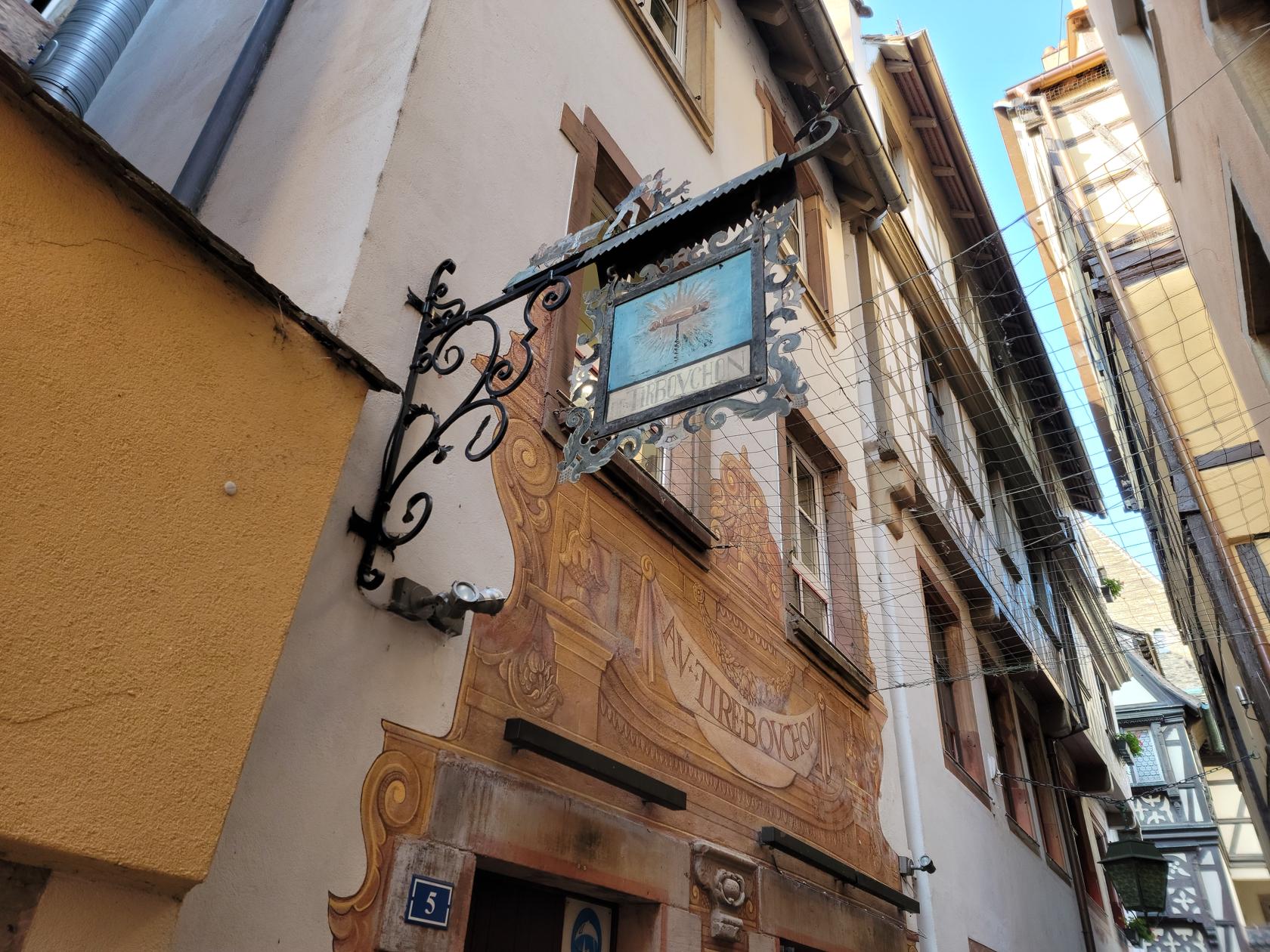
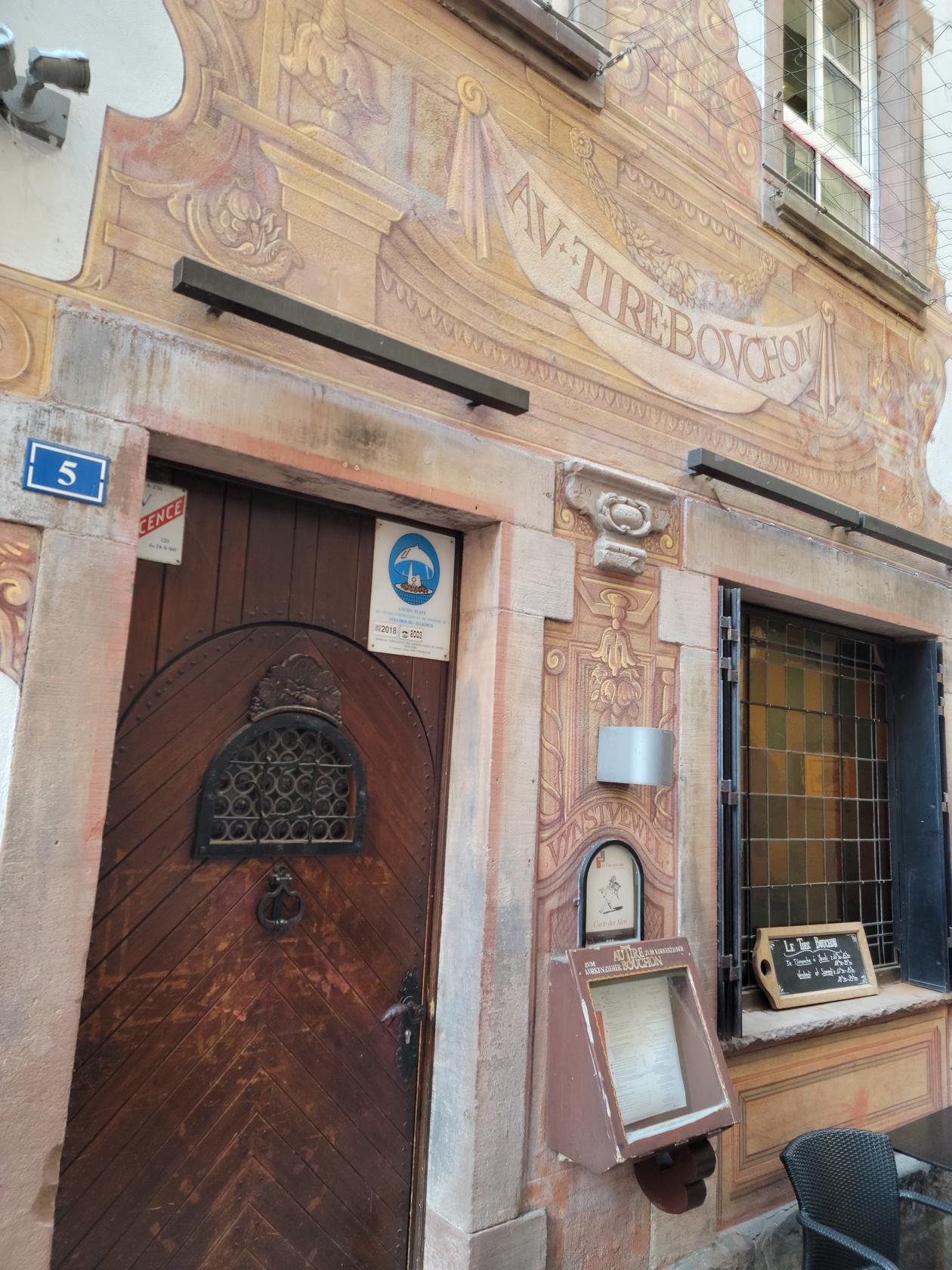
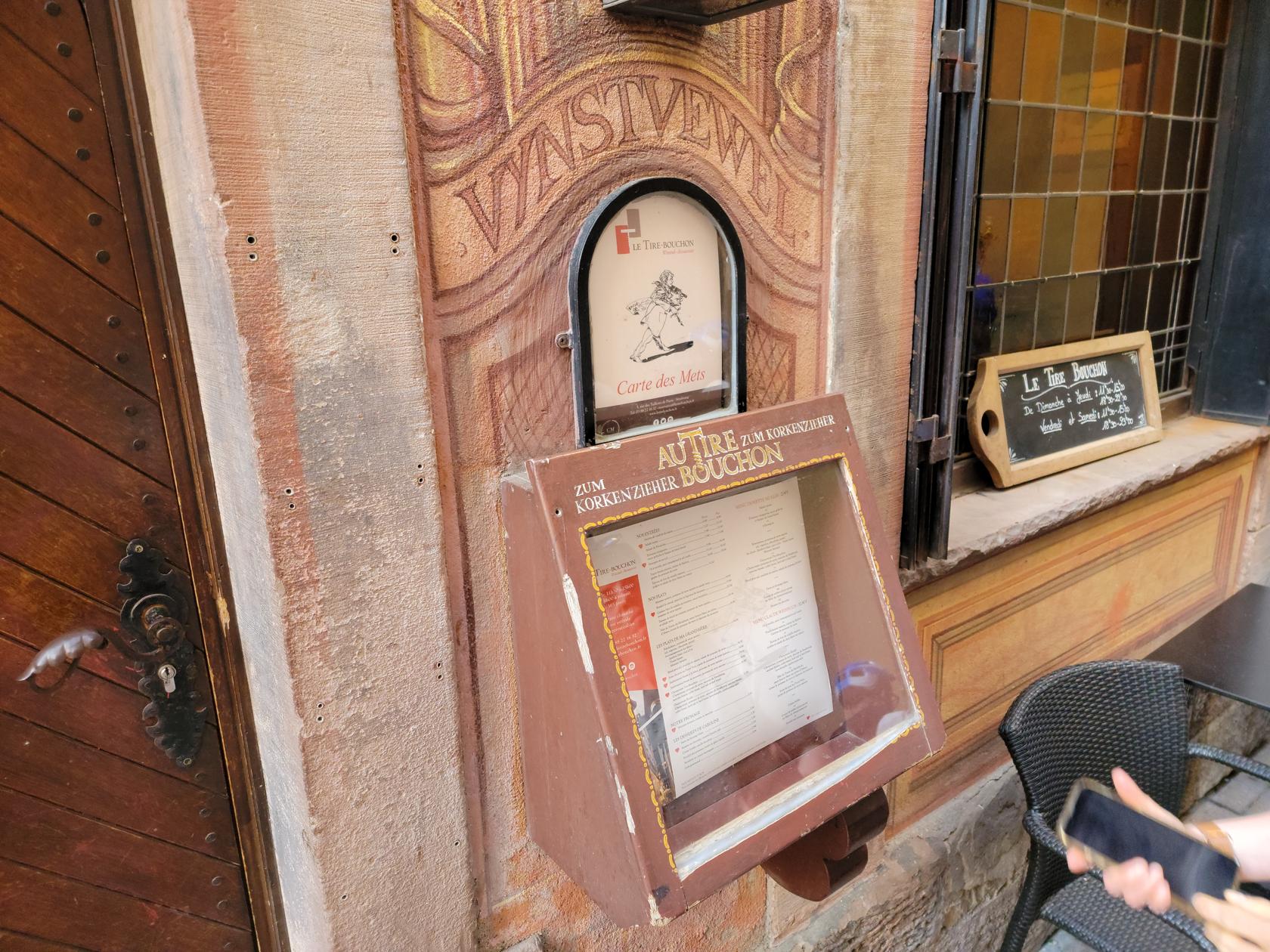
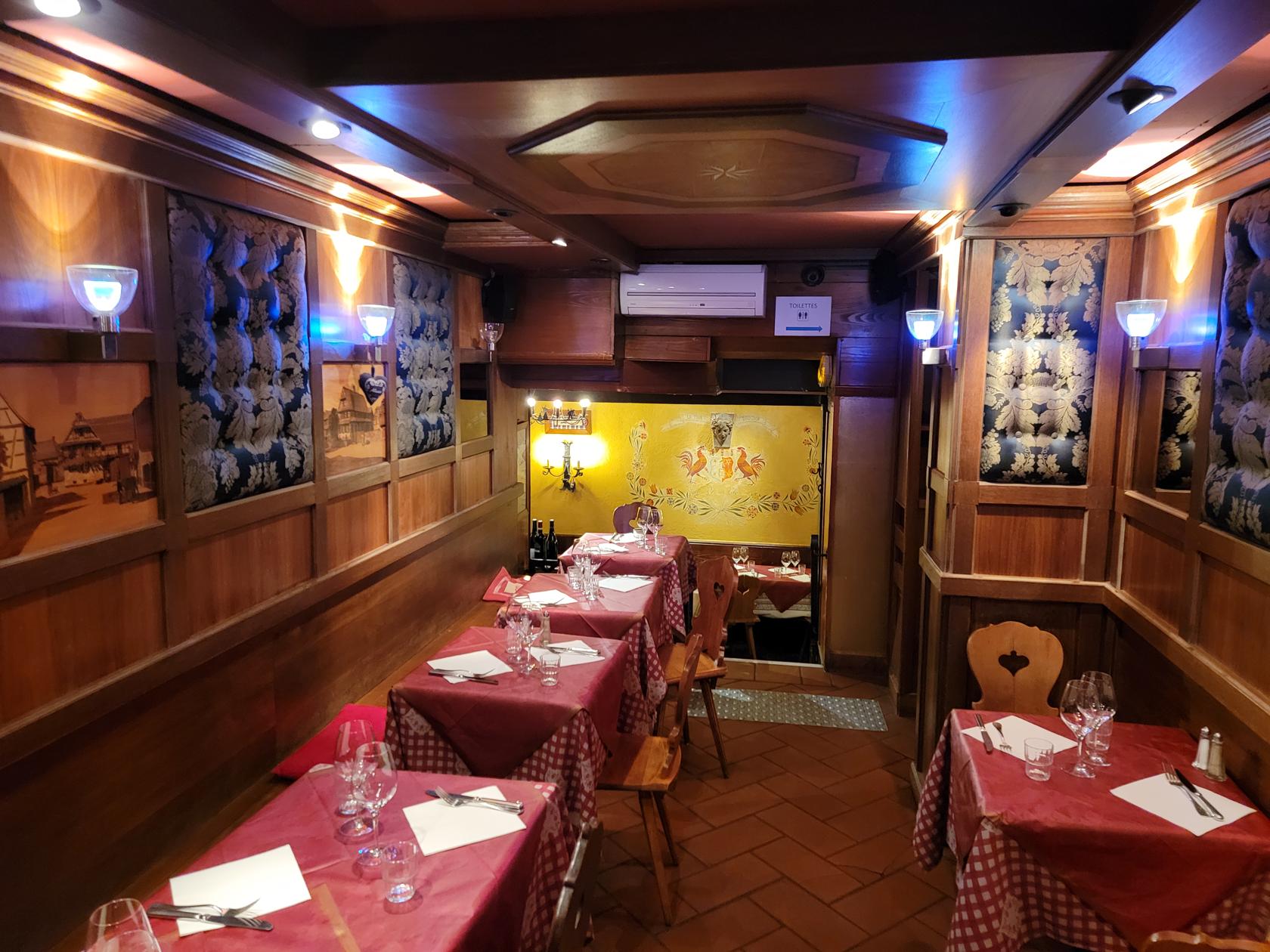
Au Tire Bouchon
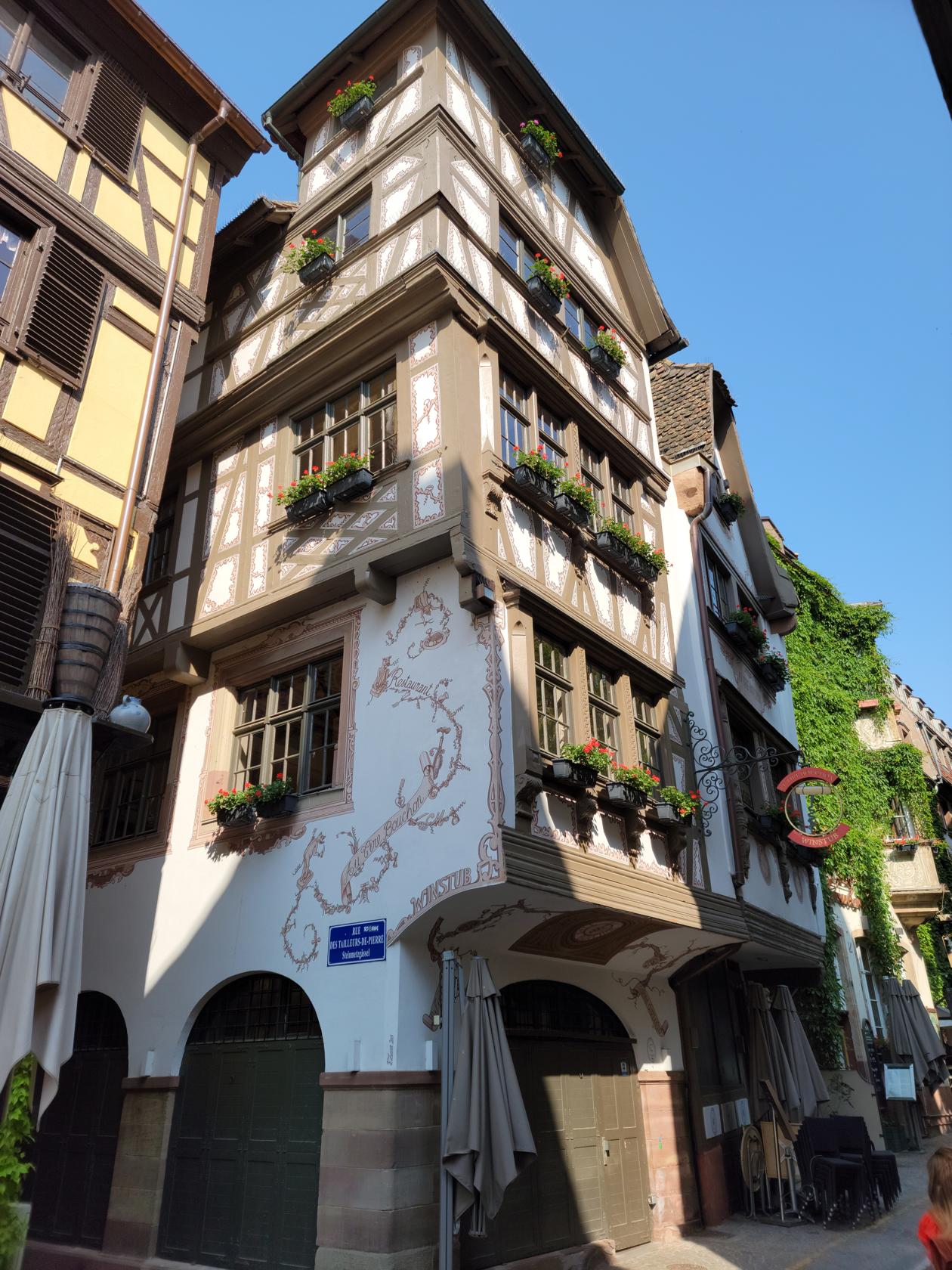
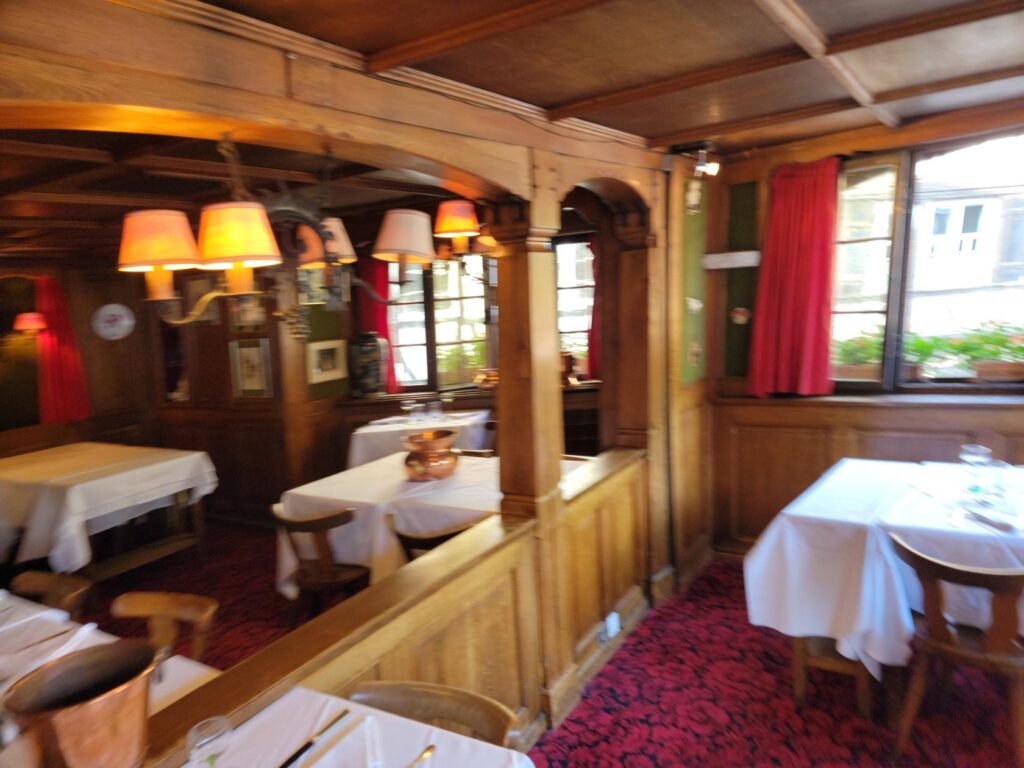
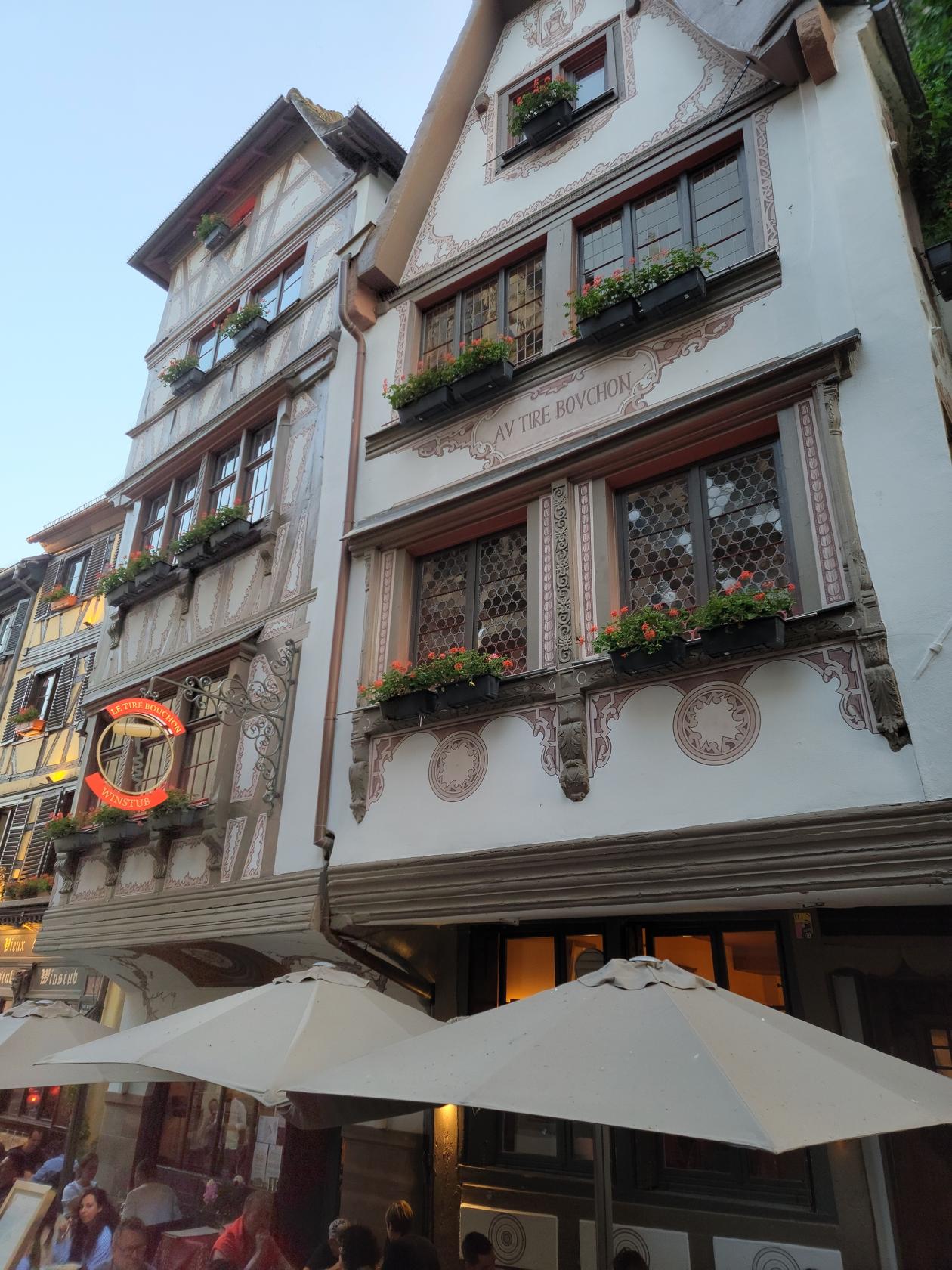
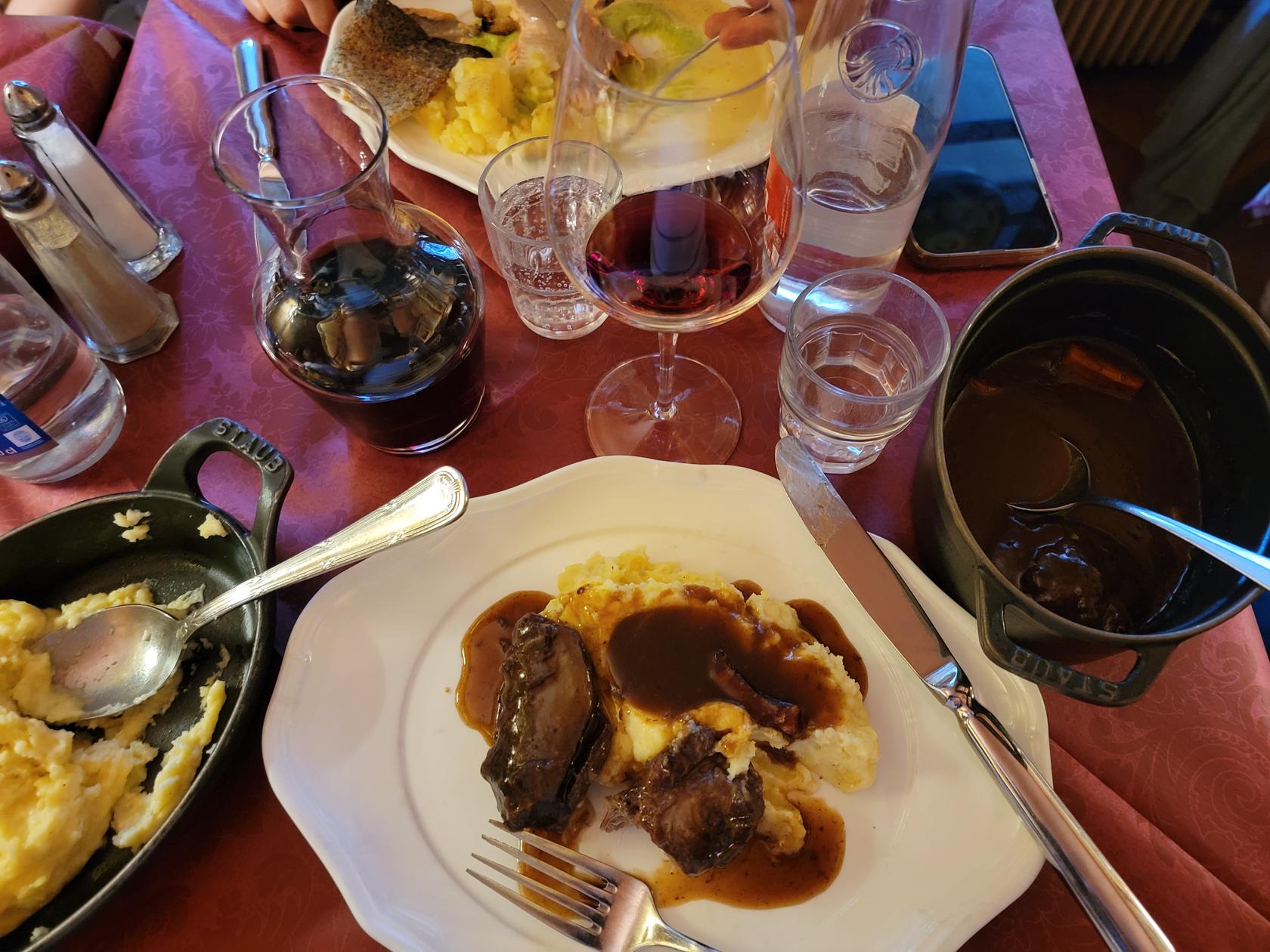
Another excellent Alsatian restaurant choice is the Au Tire Bouchon. Though it does not have the view the House of Tanners provides, the food is on par with that establishment.
Street entrance – Au Tire Bouchon – Strasbourg, France
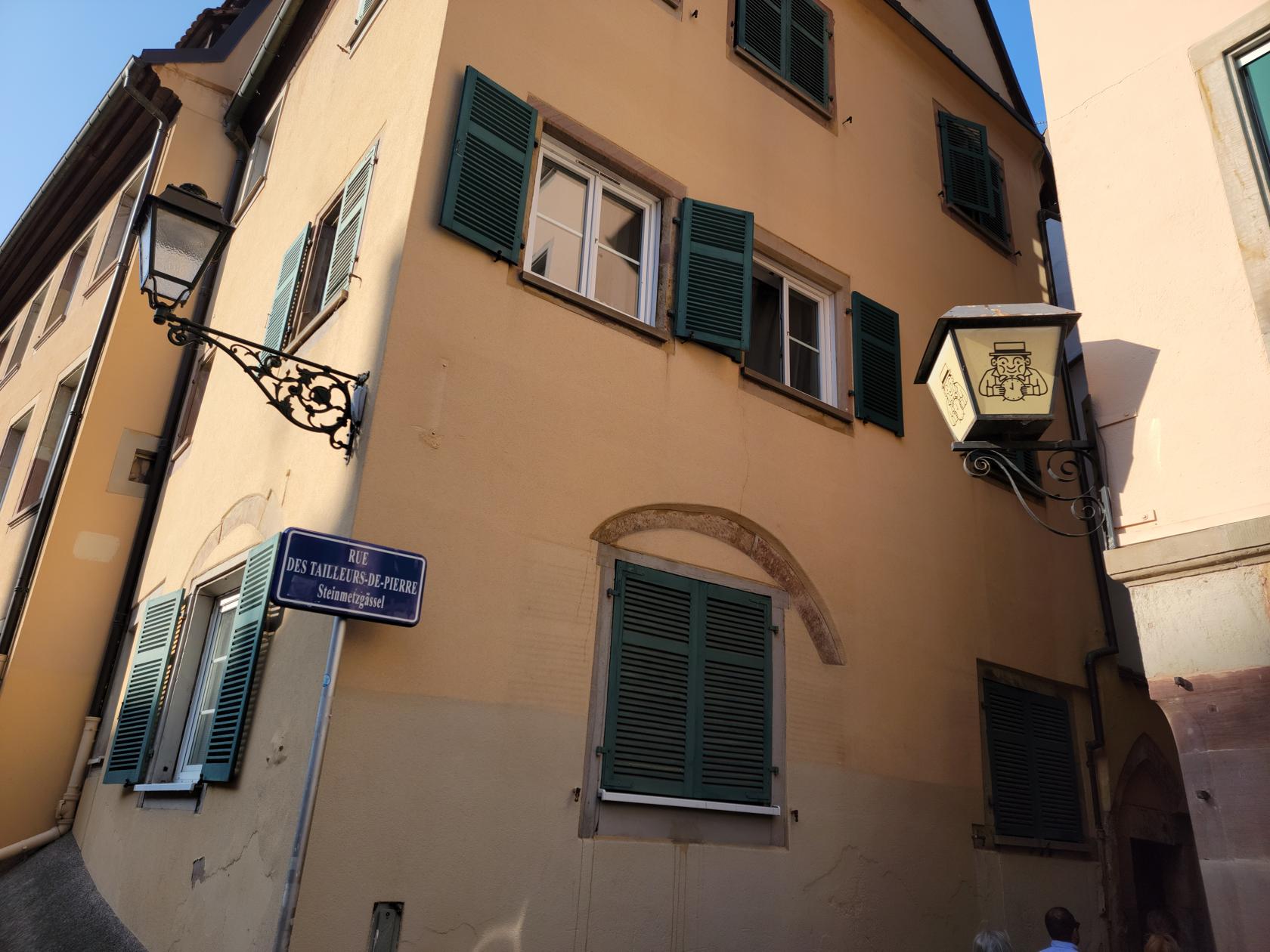
Alley and back entrance – Au Tire Bouchon – Strasbourg, France
Entrance sign – Corkpuller – Au Tire Bouchon – Strasbourg, France
Entrance – Au Tire Bouchon – Strasbourg, France
The menu – Au Tire Bouchon – Strasbourg, France
Inside – Au Tire Bouchon – Strasbourg, France
Beef and mashed potatoes – Au Tire Bouchon – Strasbourg, France