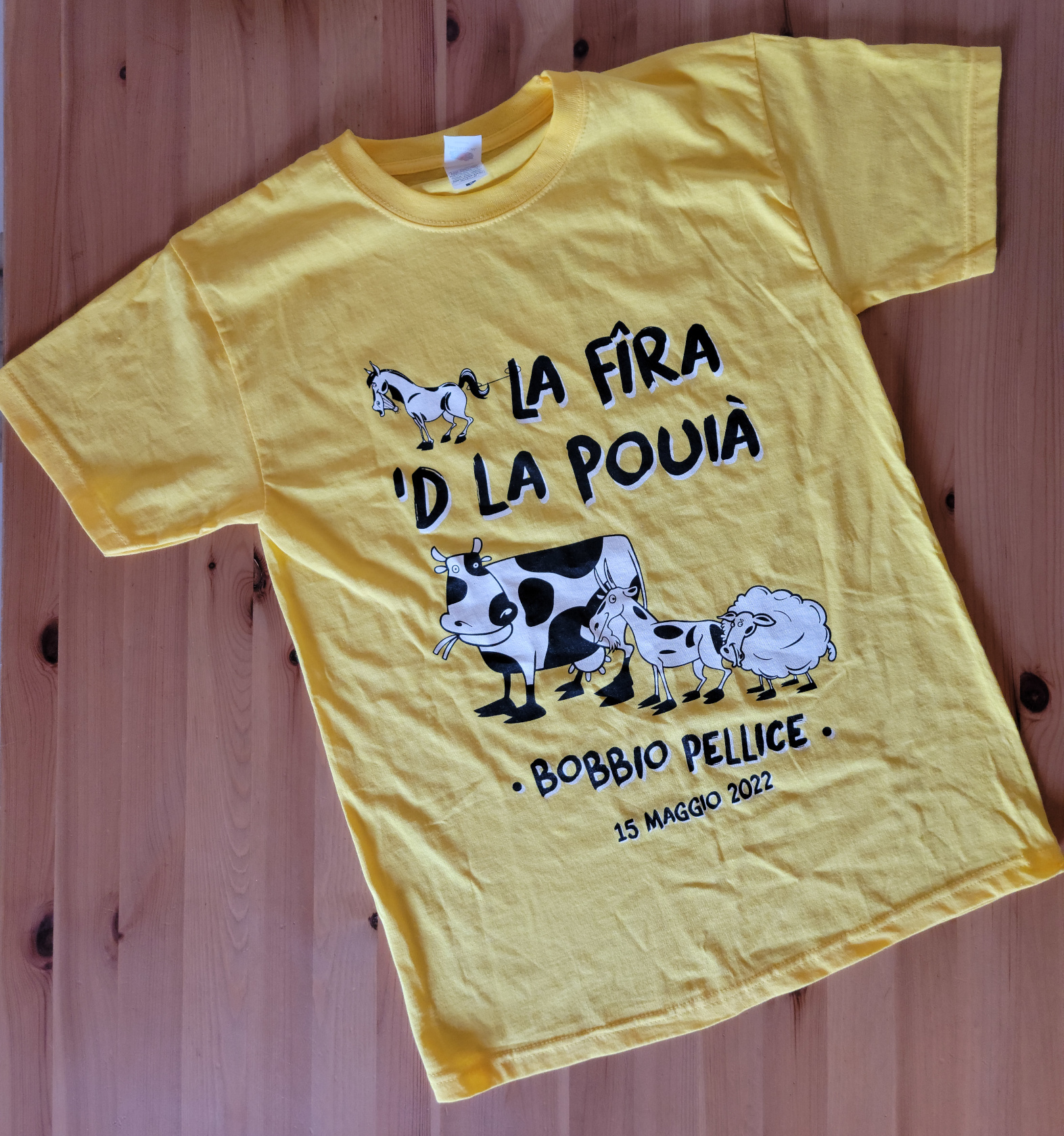
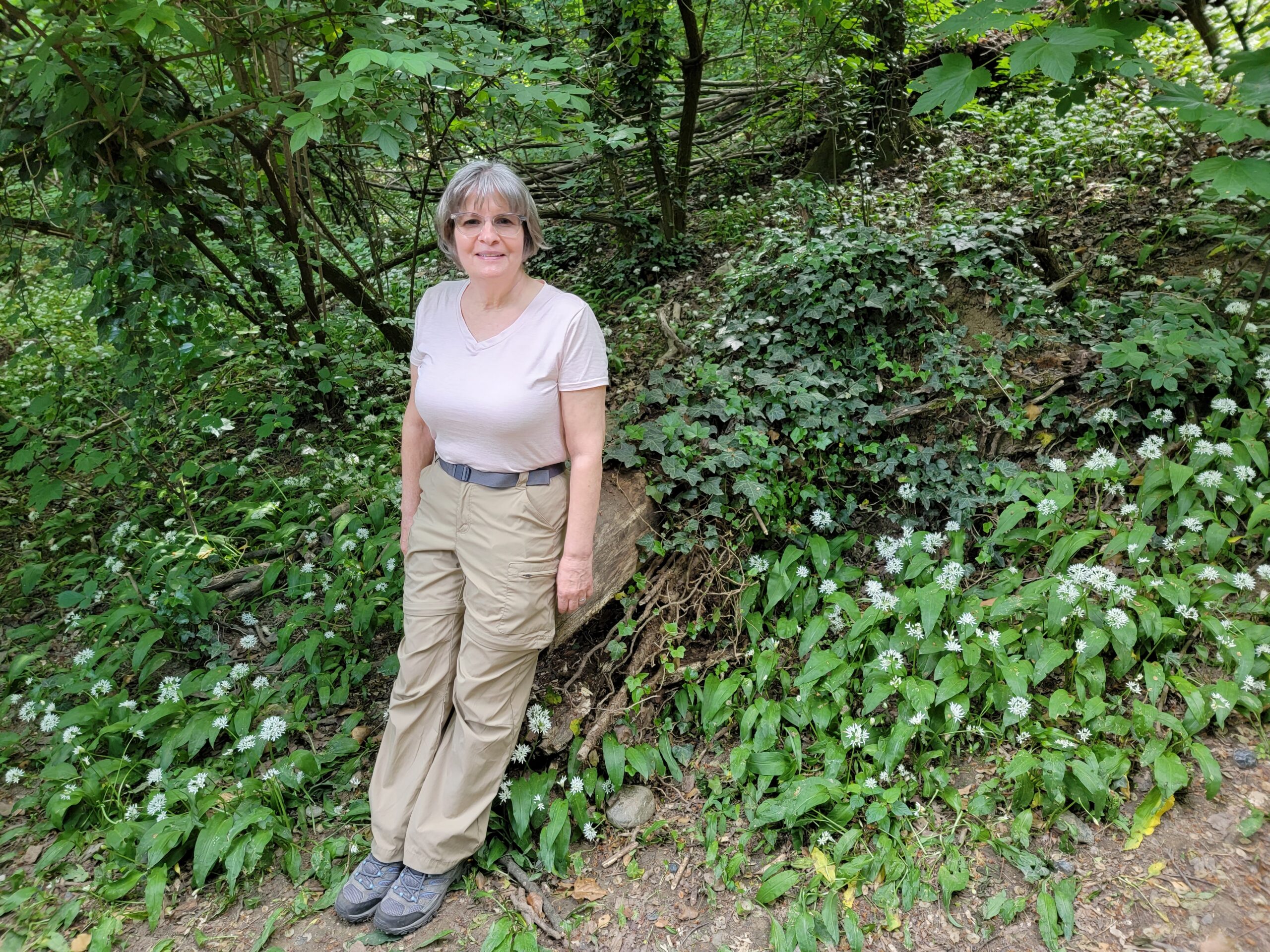
Festival T-Shirt – La Fira ‘d la Pouià – Bobbio Pellice – 2022
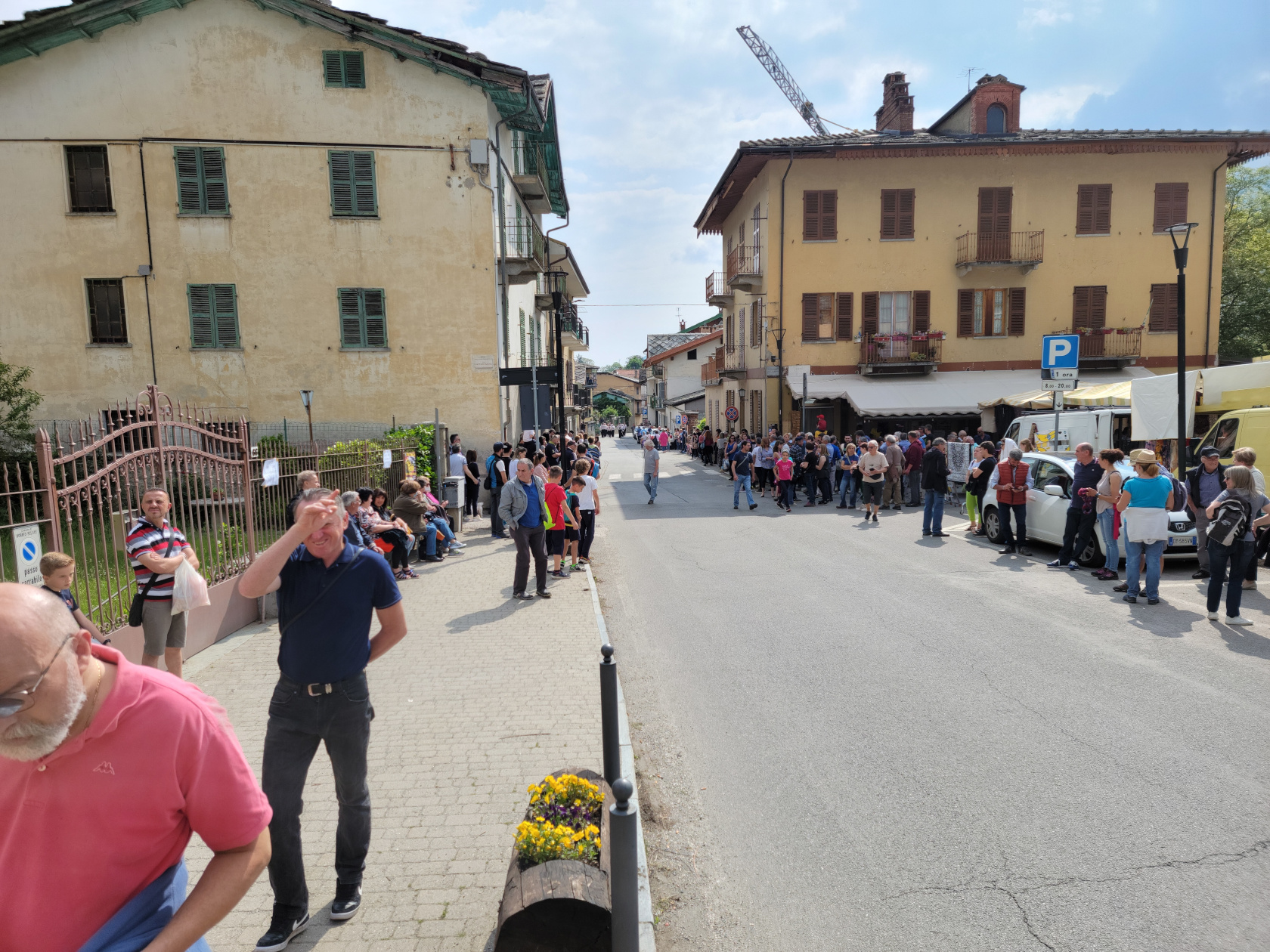
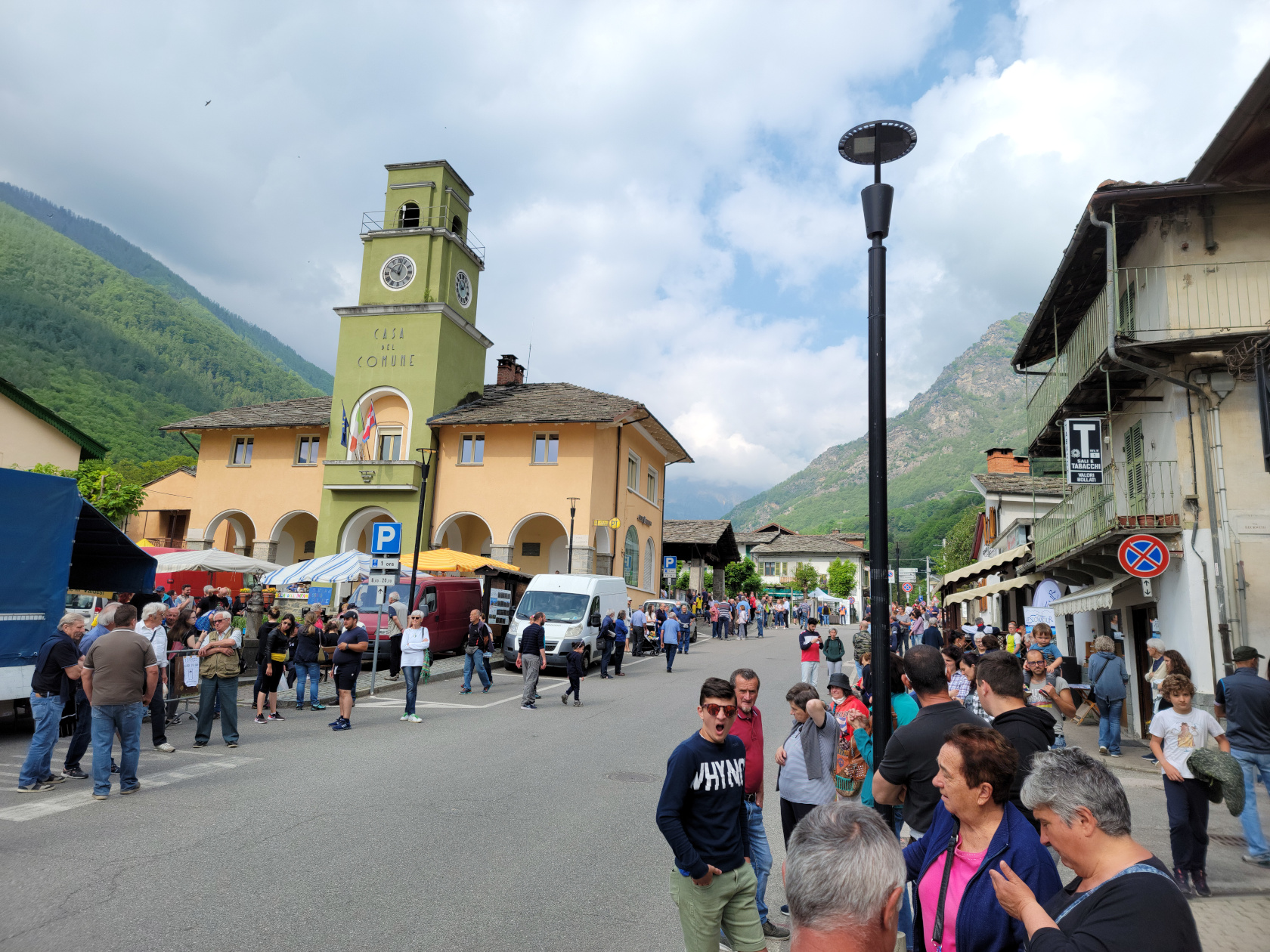
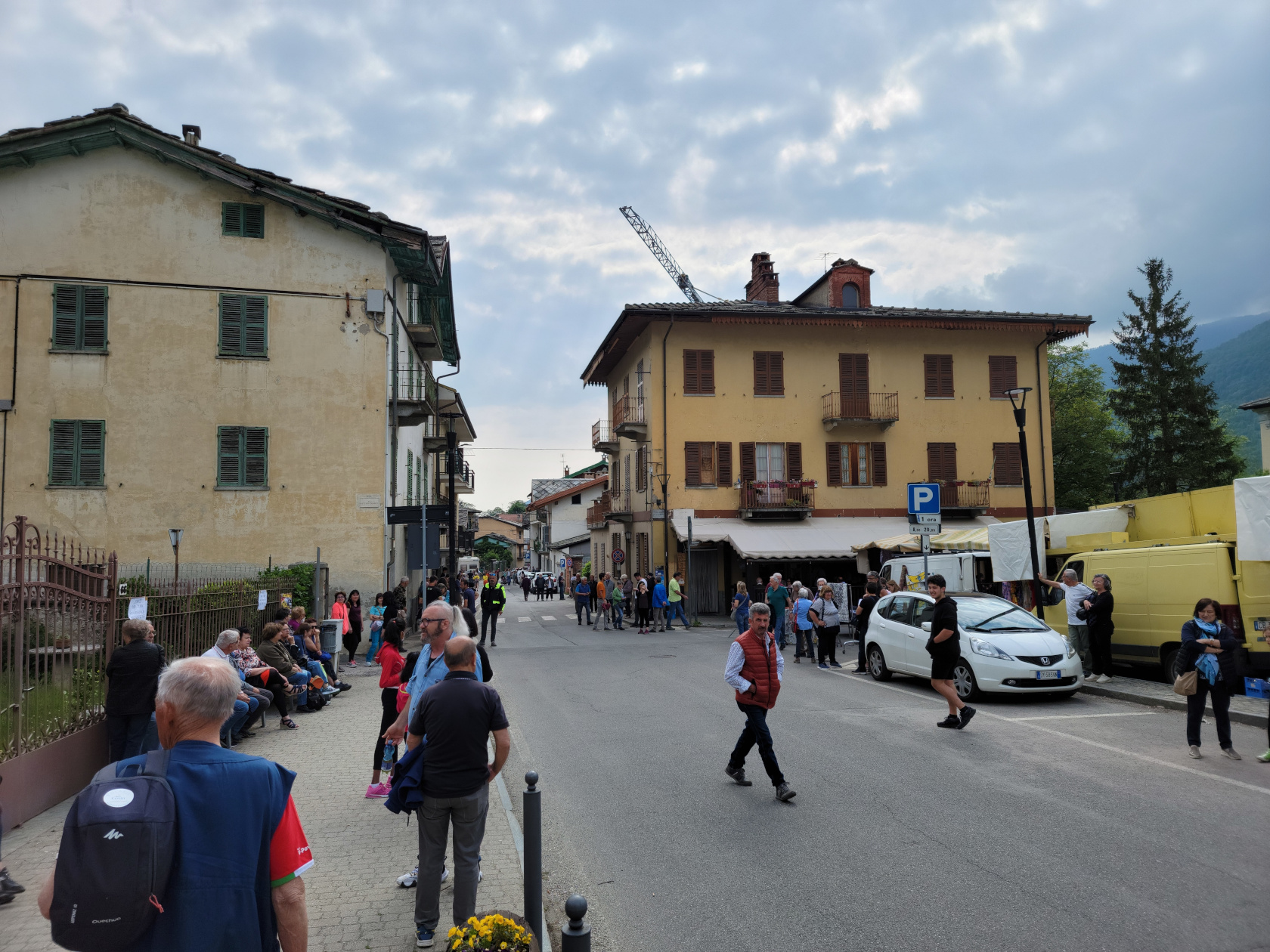
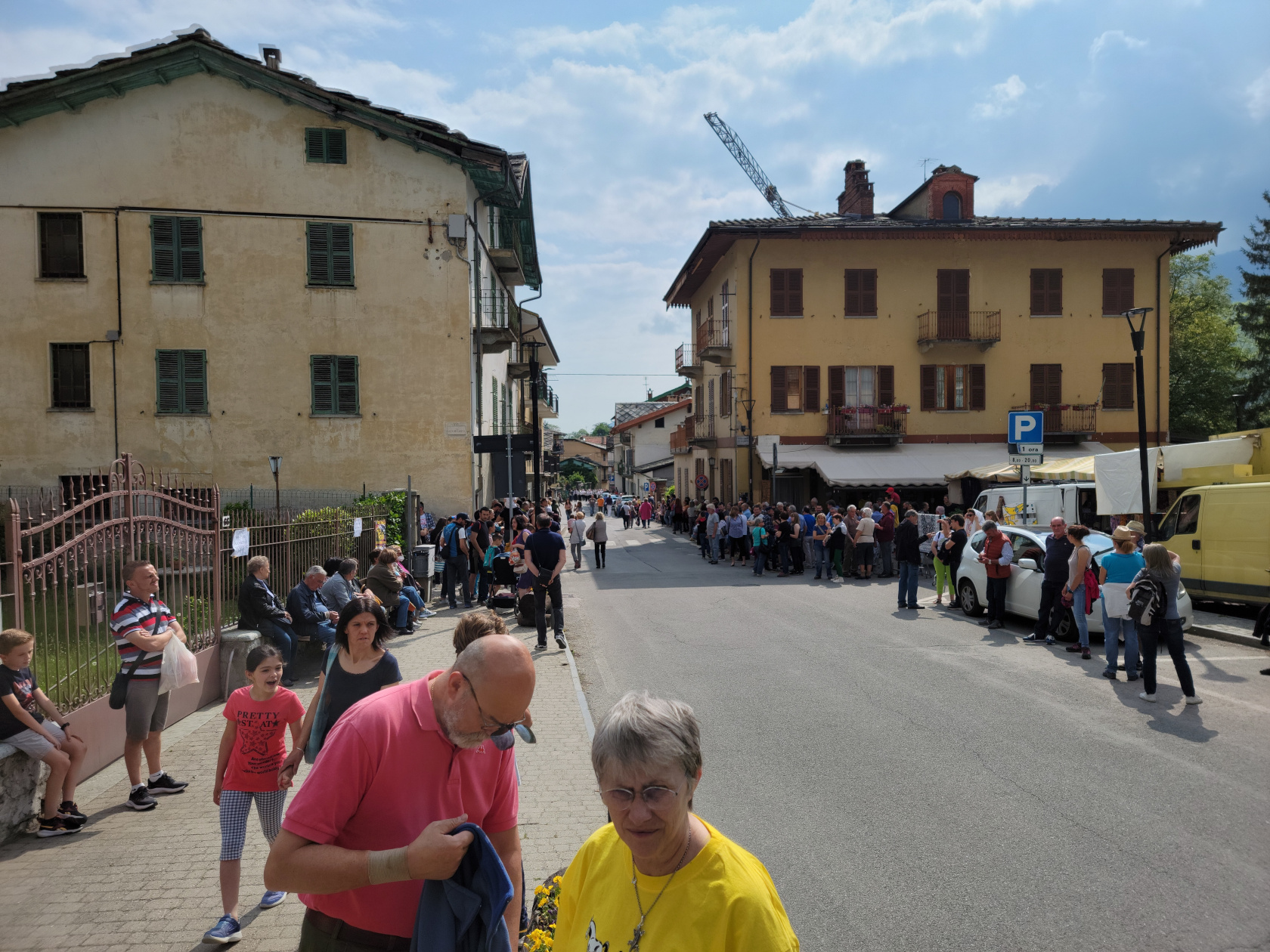
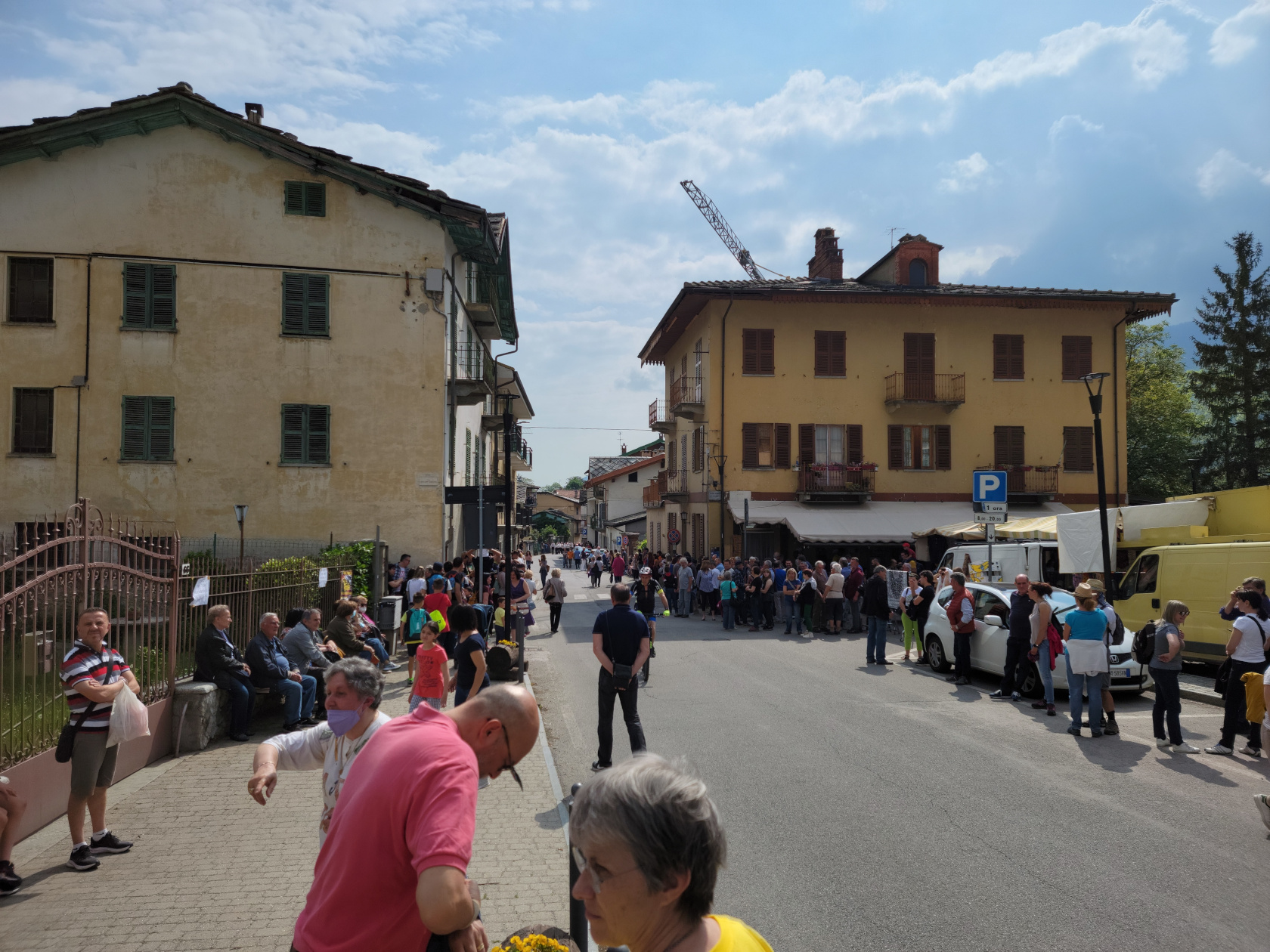
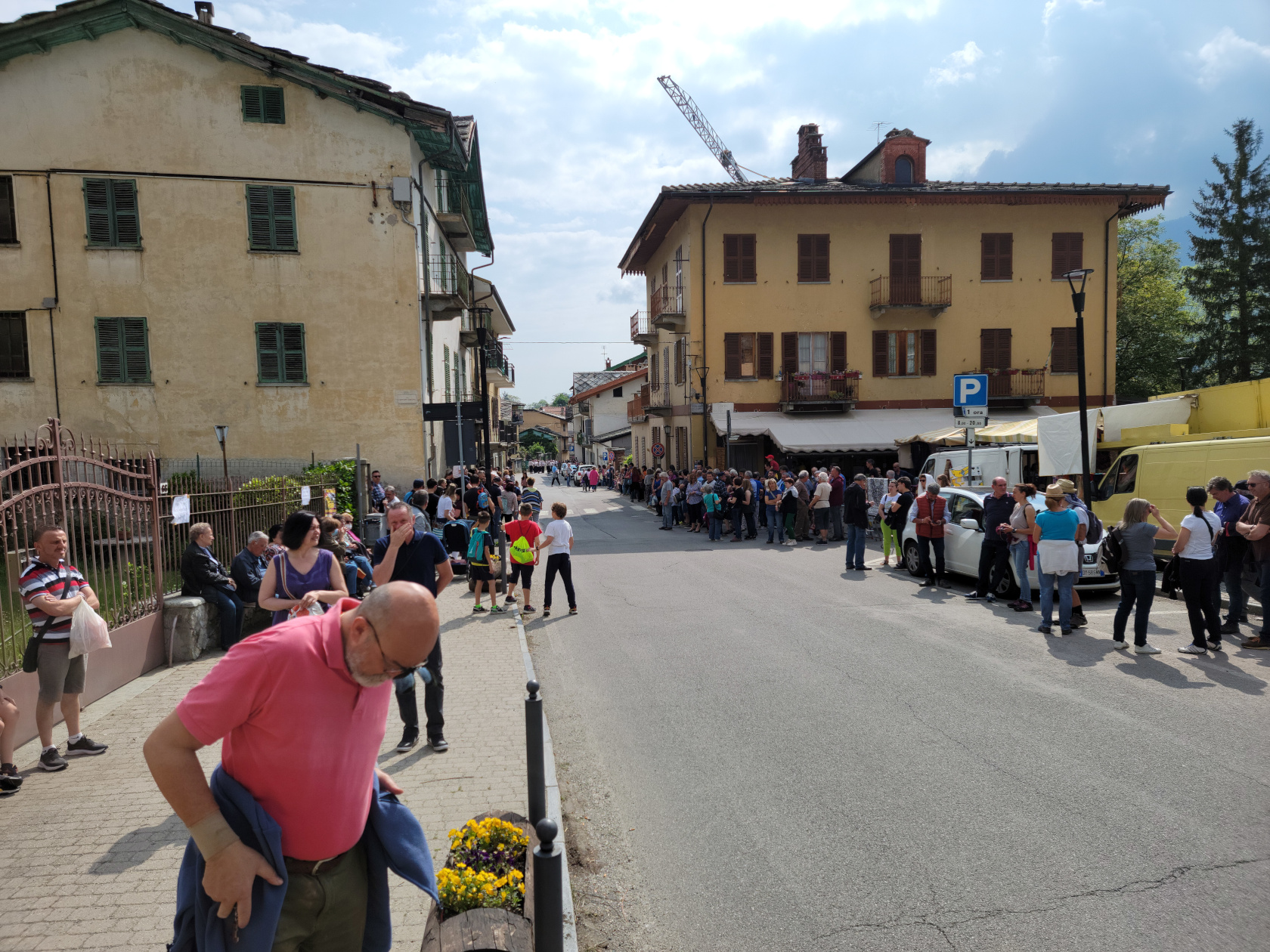
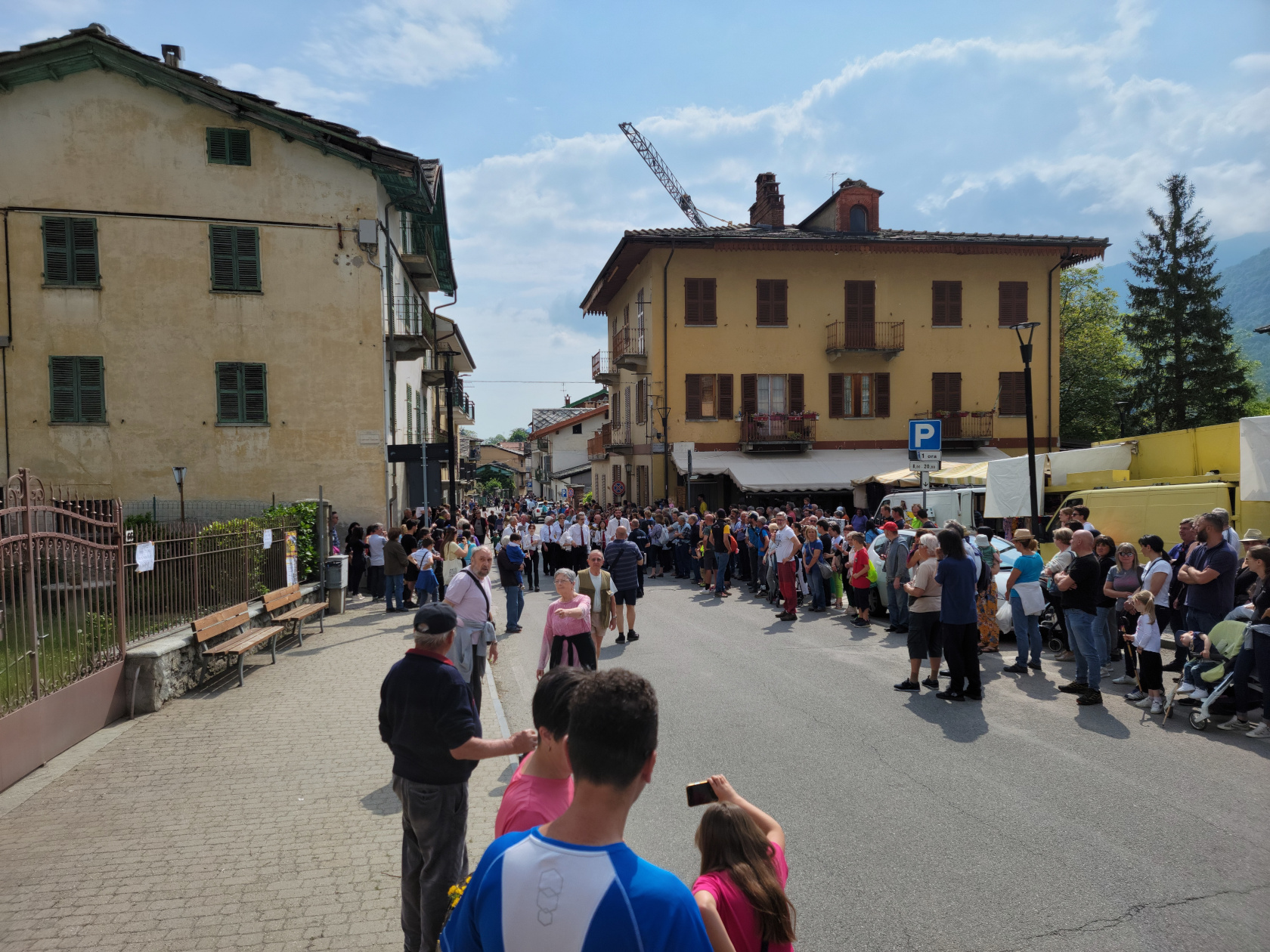
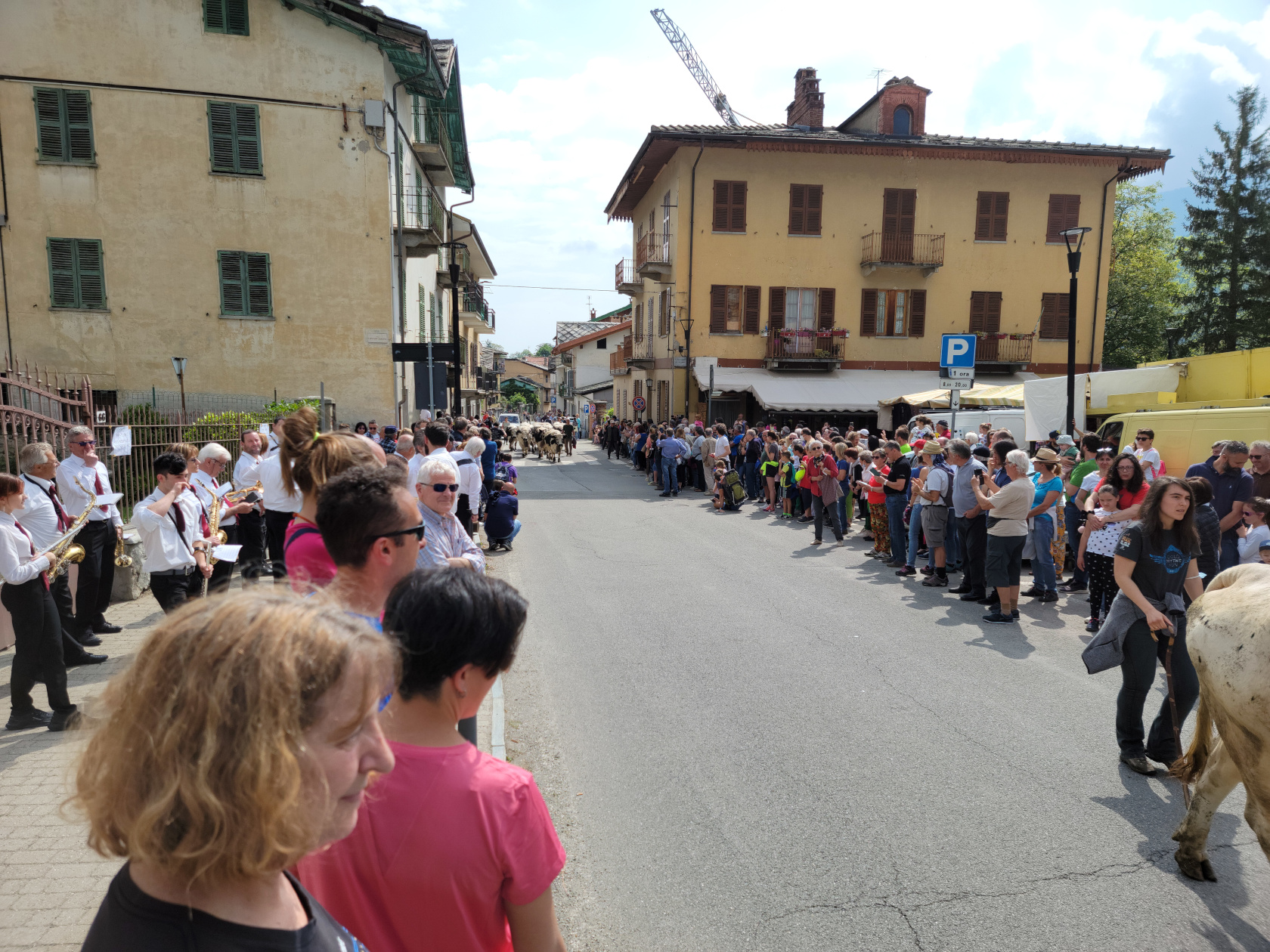
This weekend turned out to be extra special, in that a special festival occurred in the valley known as the “La Fira ‘d la Pouià“, or the fair for the transfer of livestock to their seasonal feeding grounds, also known as transhumance.
La Fira ‘d la Pouià – Bobbio Pellice – 2022
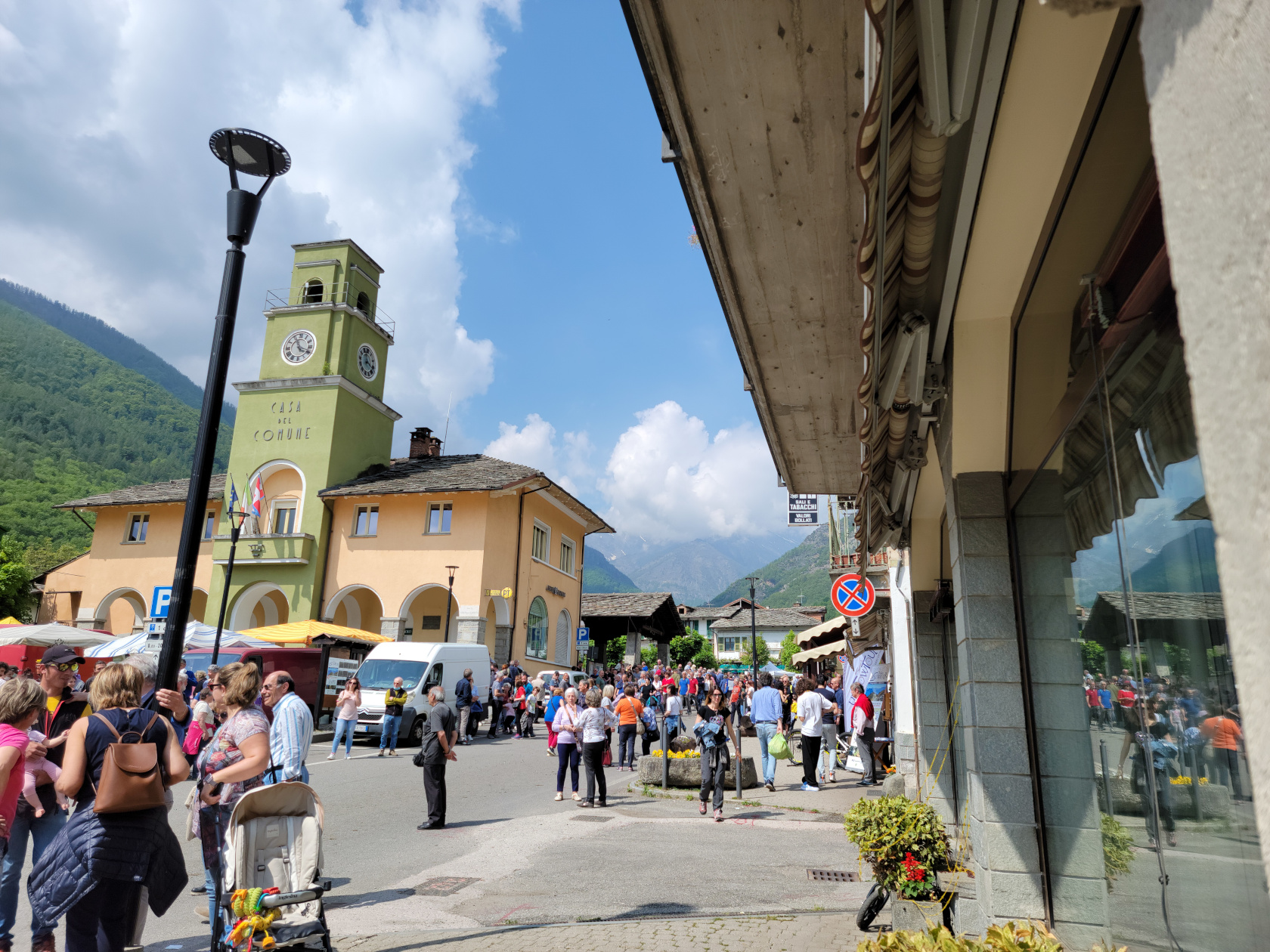
Crowd Gathering – La Fira ‘d la Pouià – Bobbio Pellice – 2022
Anxious Crowd Awaits – La Fira ‘d la Pouià – Bobbio Pellice – 2022
Crowd Gathering – La Fira ‘d la Pouià – Bobbio Pellice – 2022
La Fira ‘d la Pouià – Bobbio Pellice – 2022
La Fira ‘d la Pouià – Bobbio Pellice – 2022
La Fira ‘d la Pouià – Bobbio Pellice – 2022
La Fira ‘d la Pouià – Bobbio Pellice – 2022
La Fira ‘d la Pouià – Bobbio Pellice – 2022
The small town of Bobbio Pellice hosts this event twice a year, once in the spring and once in the fall. Participation by any farm family is voluntary, but many do so, since they have representative booths within the festival grounds. This provides them an opportunity to sell products they make during the year from their farms and animals, like meat, cheeses and other delicacies.
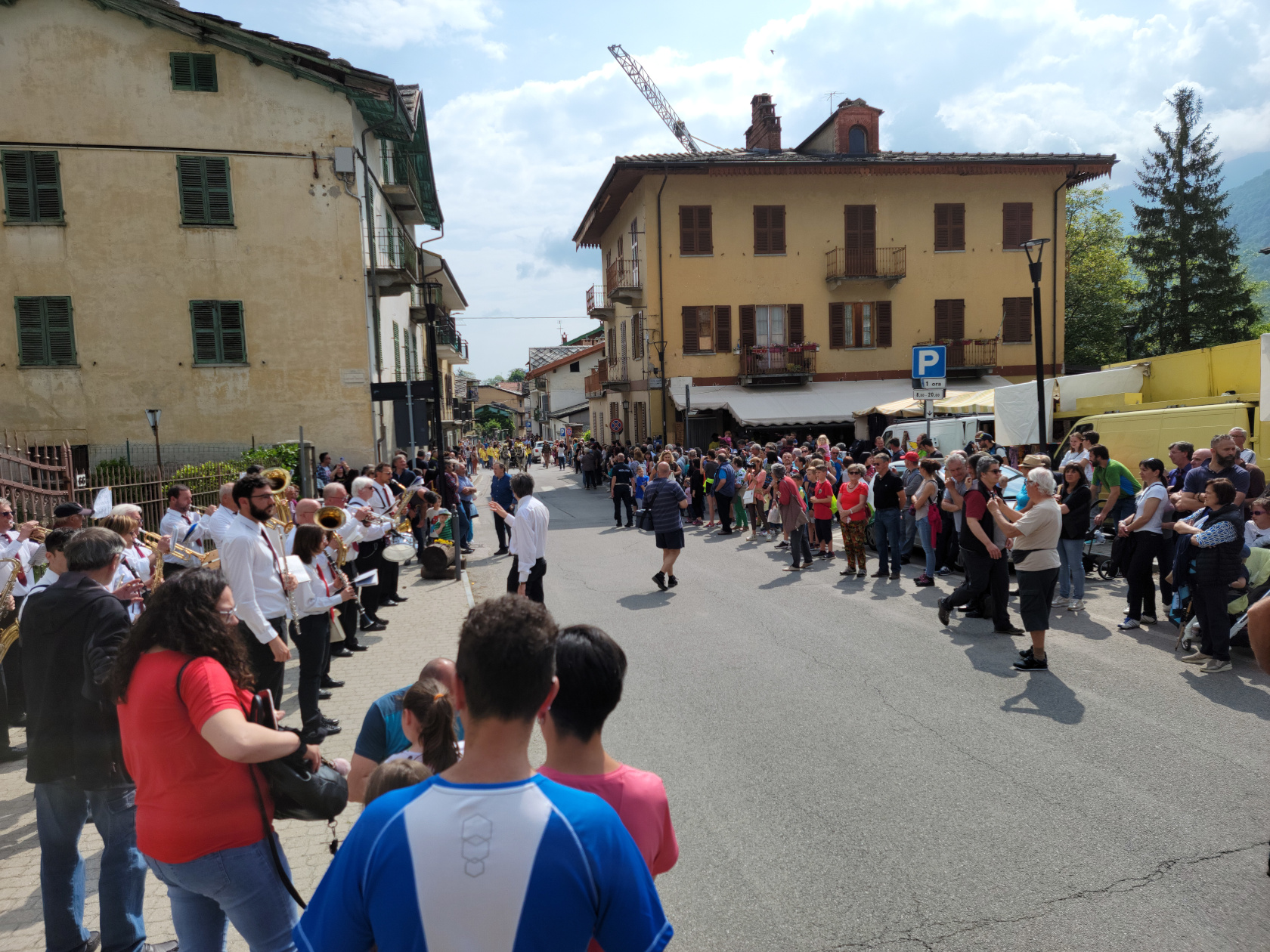
Marching Band Arriving – La Fira ‘d la Pouià – Bobbio Pellice – 2022
It starts with a small marching band that processes up the main street, announcing the arrival of the animals.
Then the children lead a procession down the street, after which one can begin to hear the sound of cow bells.
They remain in the town square for some time playing music until all of the animals, along with their families, have passed.
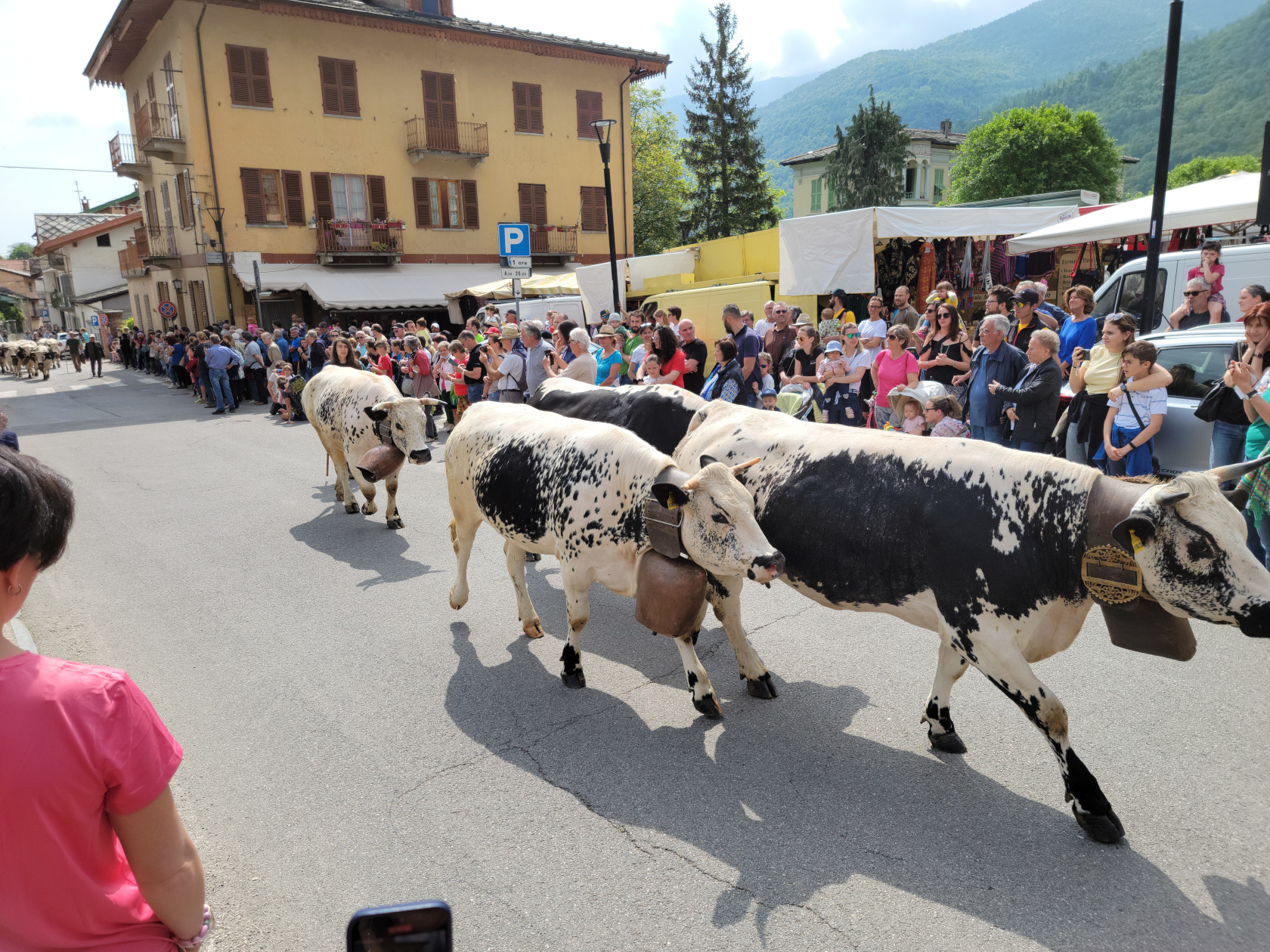
Cows Arriving – La Fira ‘d la Pouià – Bobbio Pellice – 2022
The animals are outfitted with celebration bells, many containing award ribbons that each animal may have won during past fairs, or just fitted with a simpler bell fitting for the occasion.
After they are pastured nearby and judged, these are replaced by smaller and more utilitarian bells which will be worn for the rest of the trip and while they are in their mountain pastures for the summer.
Cows Sporting Their Bells – La Fira ‘d la Pouià – Bobbio Pellice – 2022
When the animals finally come, the parade starts with the larger animals, the cows and later quietly proceeds down to the smaller ones, when the sheep and the goats arrive.
The sheep are customarily under the vigilant eye of a number of dogs, which are trained to watch over them day and night. These animals are not aggressive, but they are very territorial and it is wise to stay away from them and the flock they guard. Rumors have it, they are known to have even killed humans who trespass.
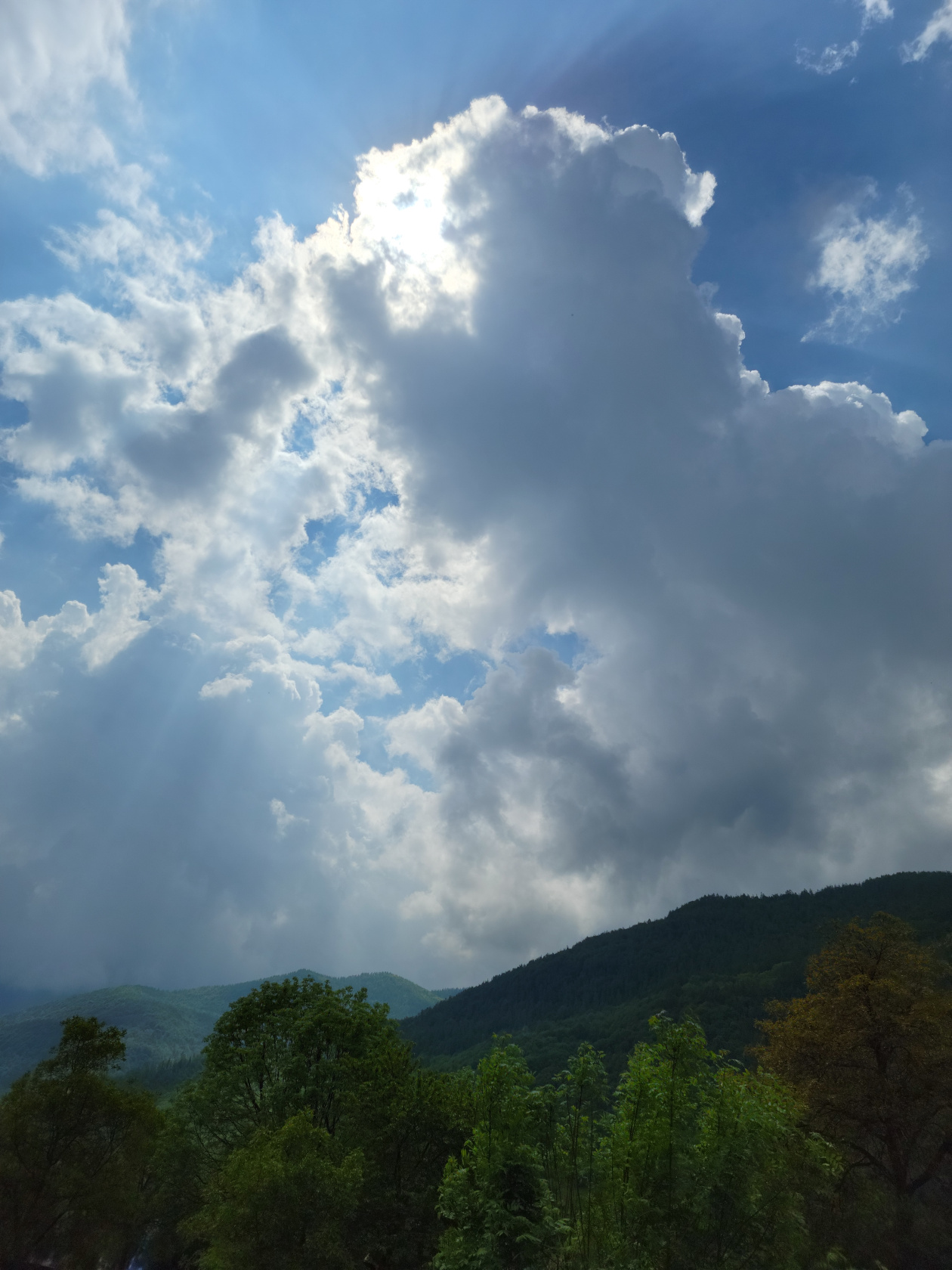
Clouds over Bobbio Pellice
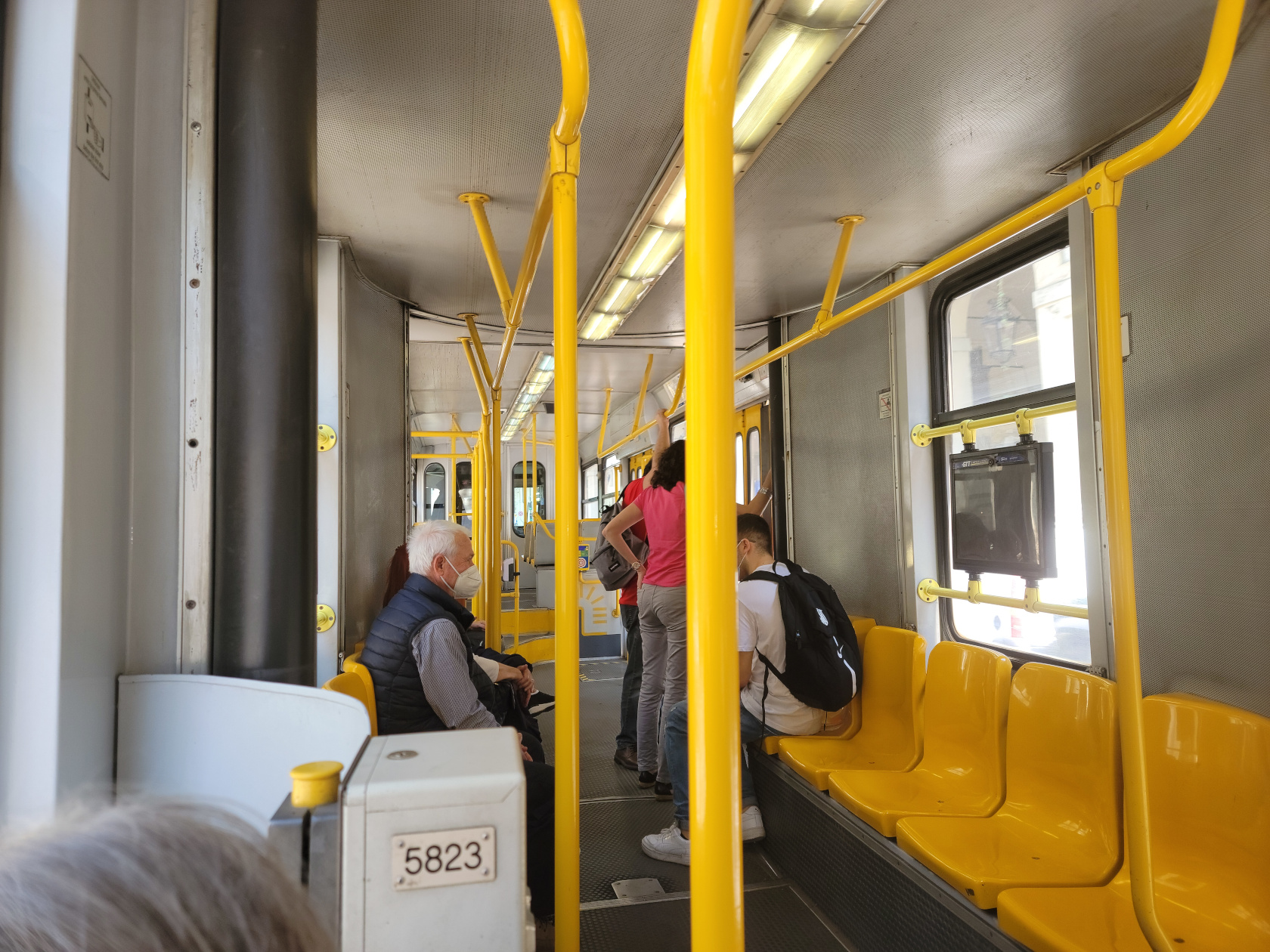
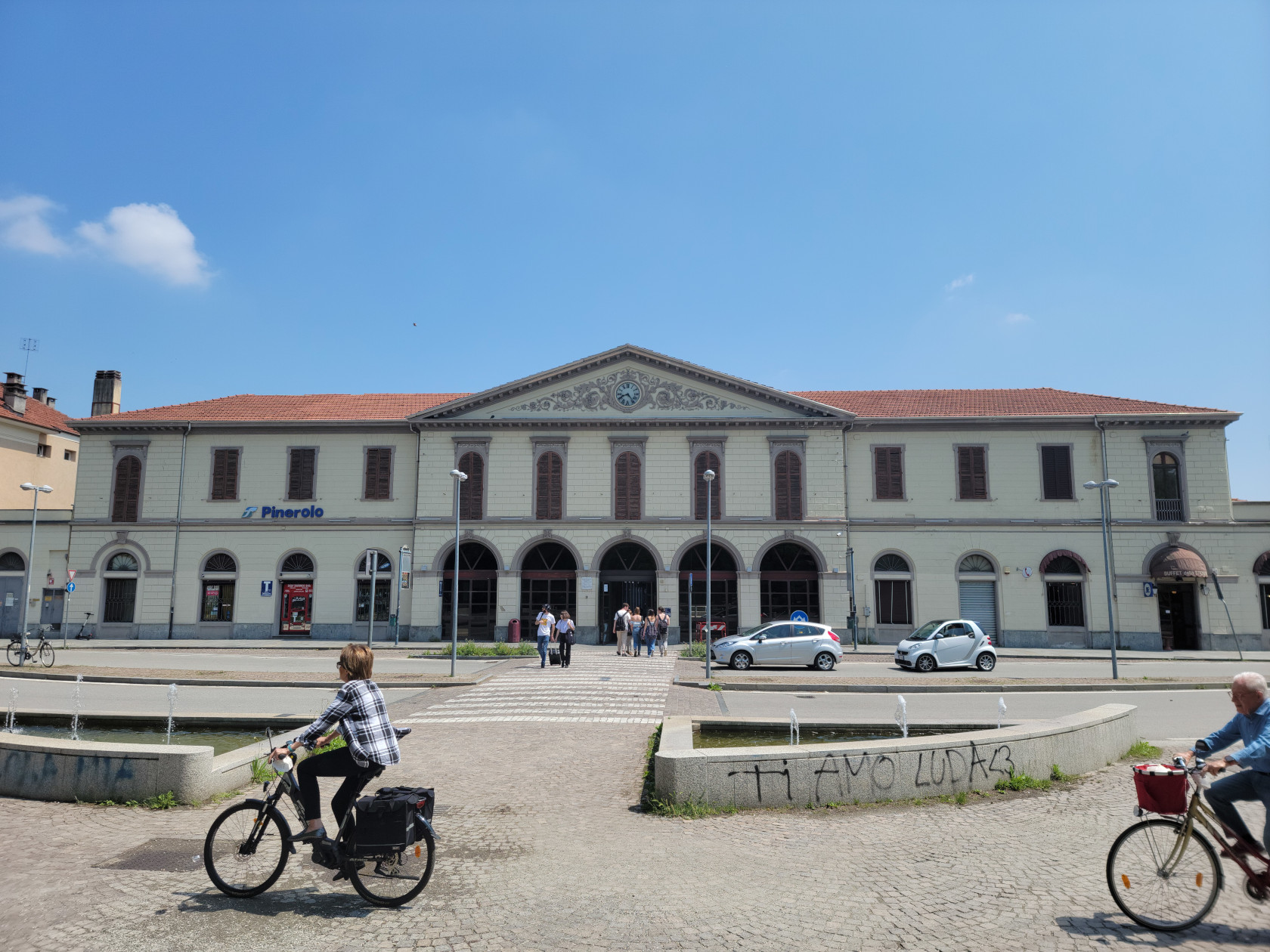
If you are looking for that kind of one off experience and a lover of animals, a trip to Bobbio Pellice to watch this festival is definitely worth it. Many are day trippers who drive to the town, but parking space is extremely limited, so get there early. Since the area offers amazing hiking opportunities, we preferred the slow travel approach and took the train to Pinerolo, then transferred to our Bed and Breadfast here for the week. A short walk down the street would have brought us here, but instead our hosts were going to attend and kindly offered us a lift, which we gladly obliged.
For some time, my wife Patti has been wanting for us to visit her friends in Malpertus. Thankfully with Covid restrictions waning, hopefully along with the virus itself, we finally committed to visiting them this week. In order to get there, we had to take the train from Turin’s Porta Susa terminal, instead of our customary train station, Porta Nuovo. Once on the train, the trip length was about forty-five minutes, which included about eight stops along the way.
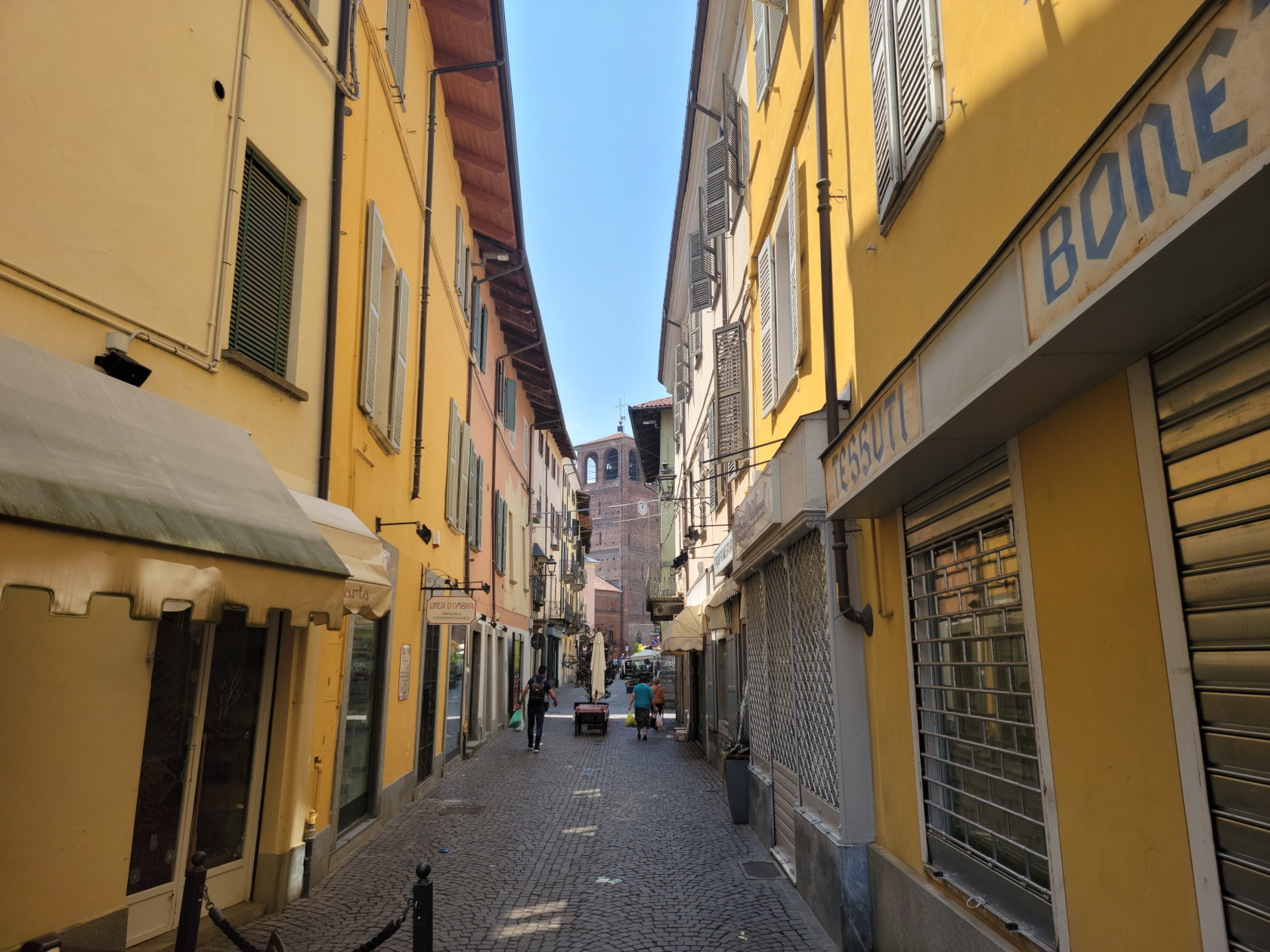
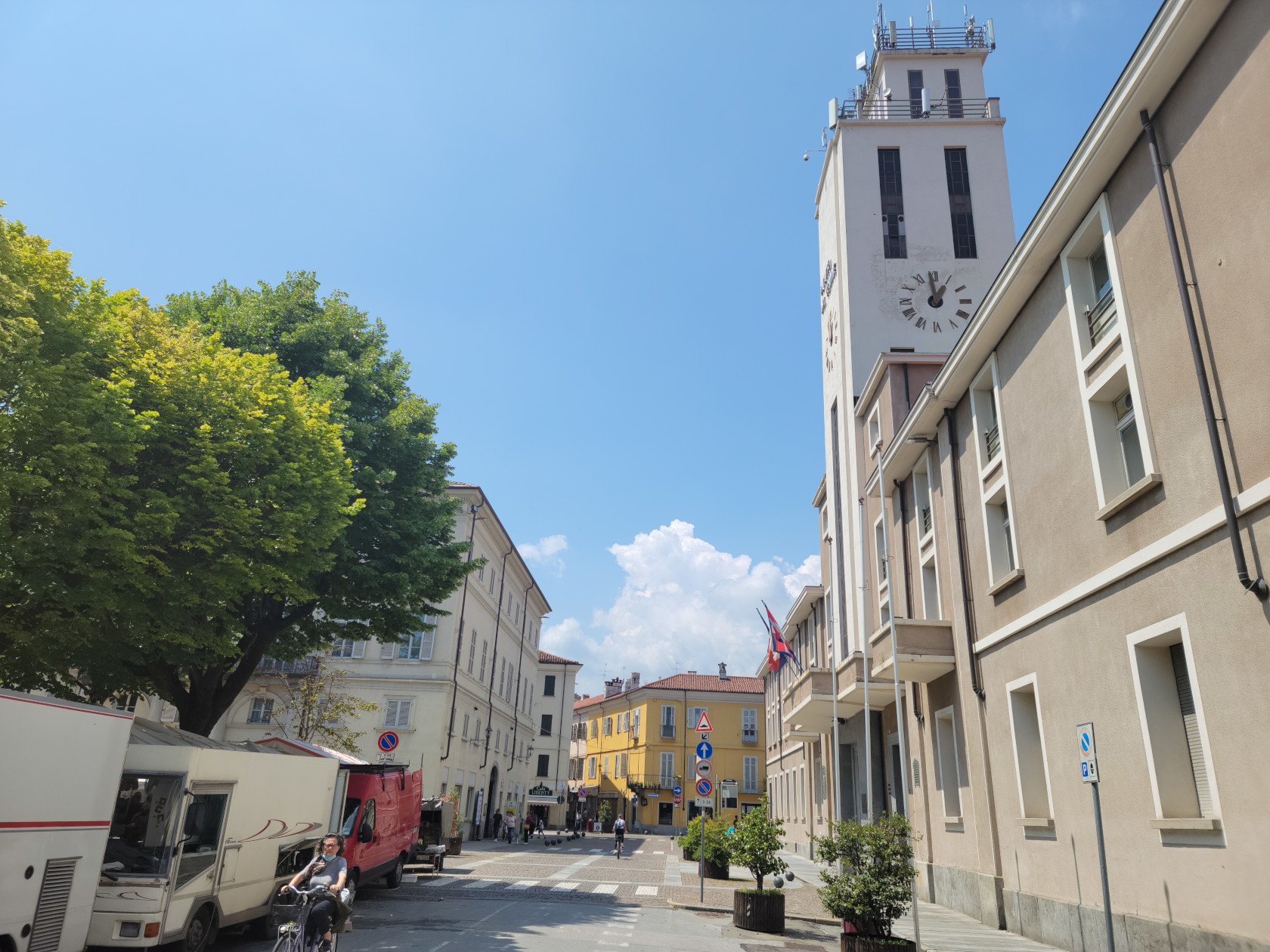
Pinerolo appeared to be fairly quiet and we had noticed most people were preoccupied with the Saturday market place, that was taking place in the main square from the train station. We took little notice of this and continued directly down the main street, via Del Duomo, until we found a suitable place to eat.
Restaurants
Trattobar Kreuzberg
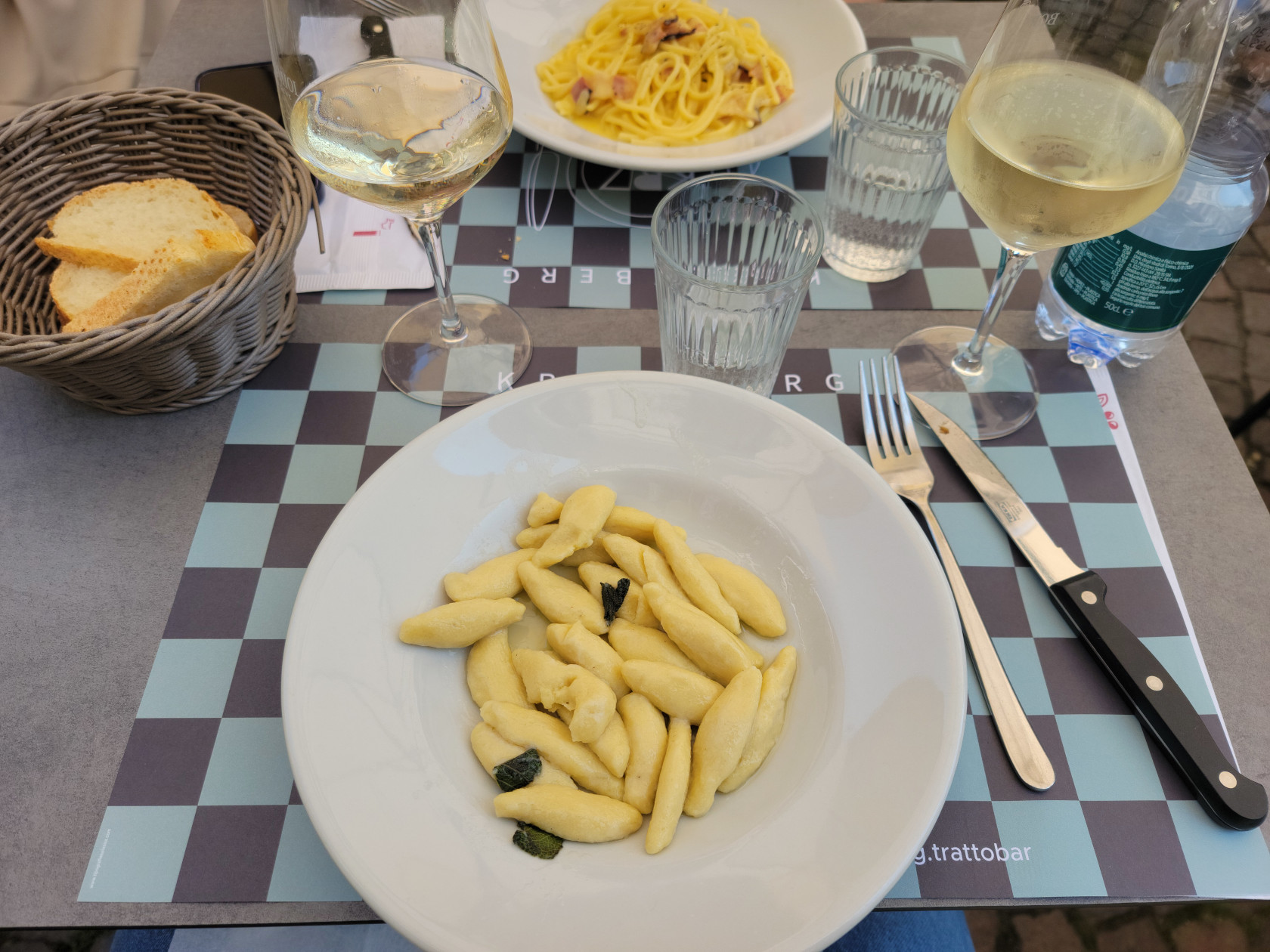
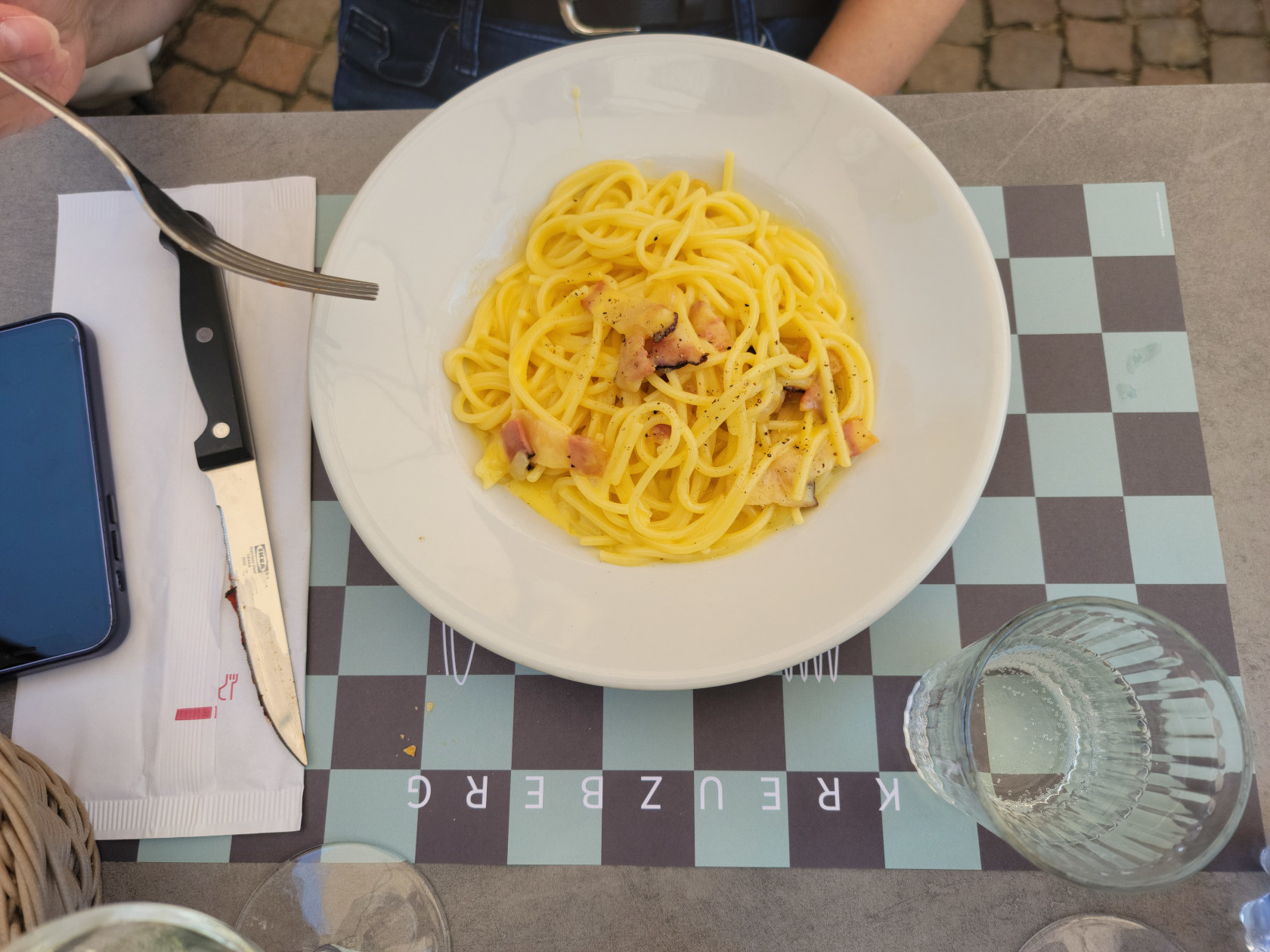
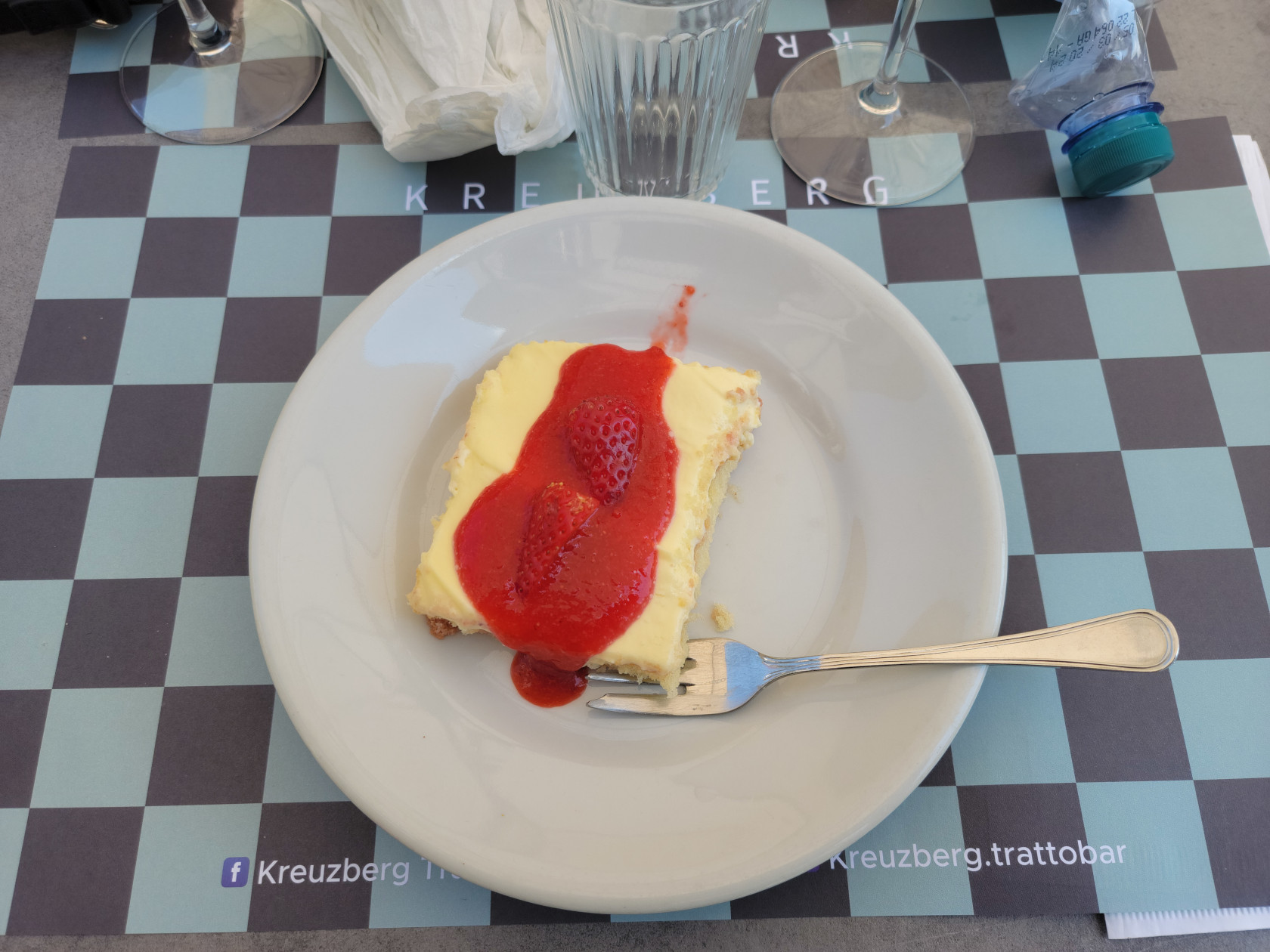
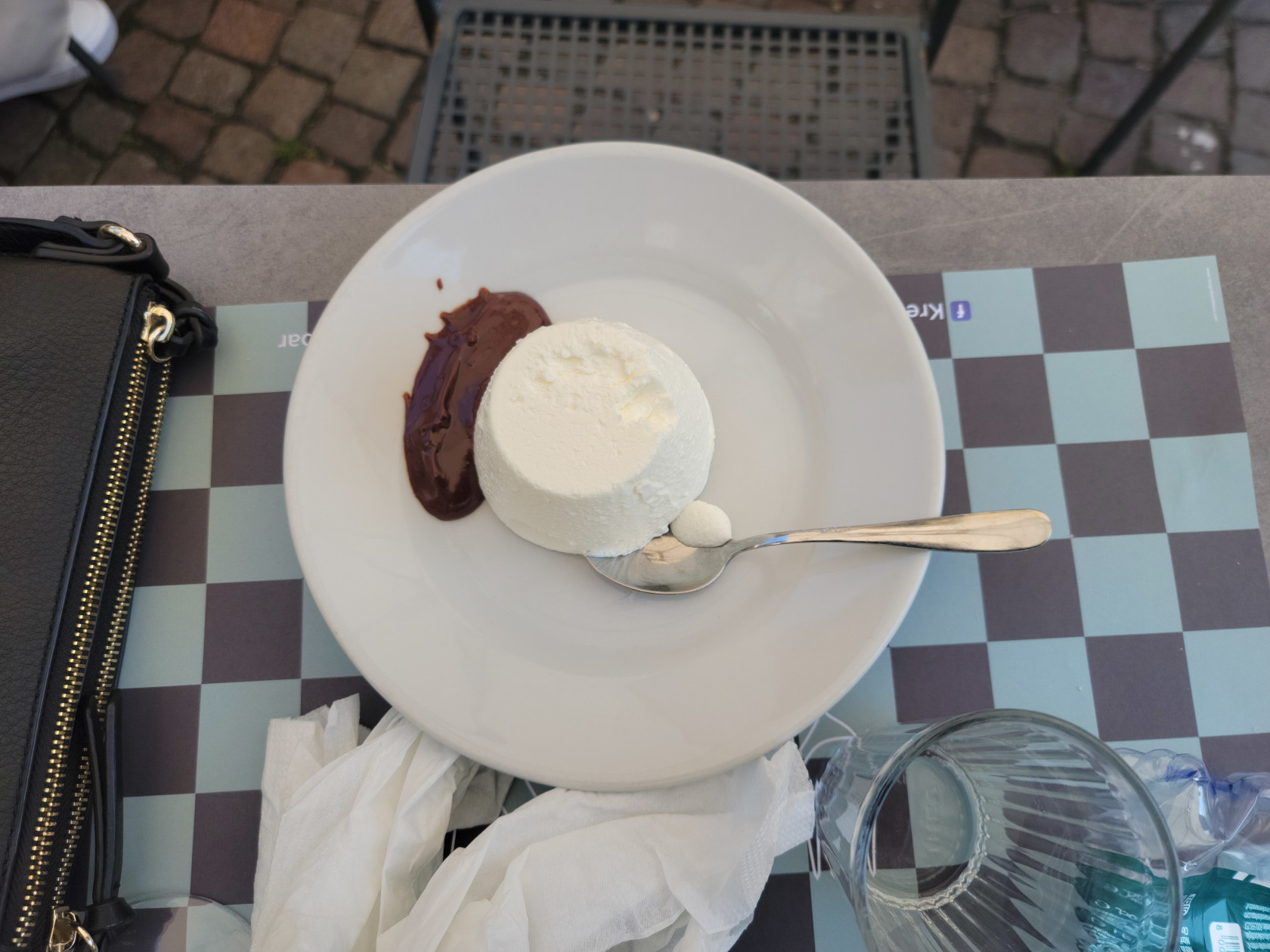
We initially stopped at a pizza place, but they apparently only took orders inside. So, after a quick reconnaissance further up the street we found a trattoria called Trattobar Kreuzberg.
TrattoBar Kreuzberg – Santa Vittoria with Chocolate – Pinerolo
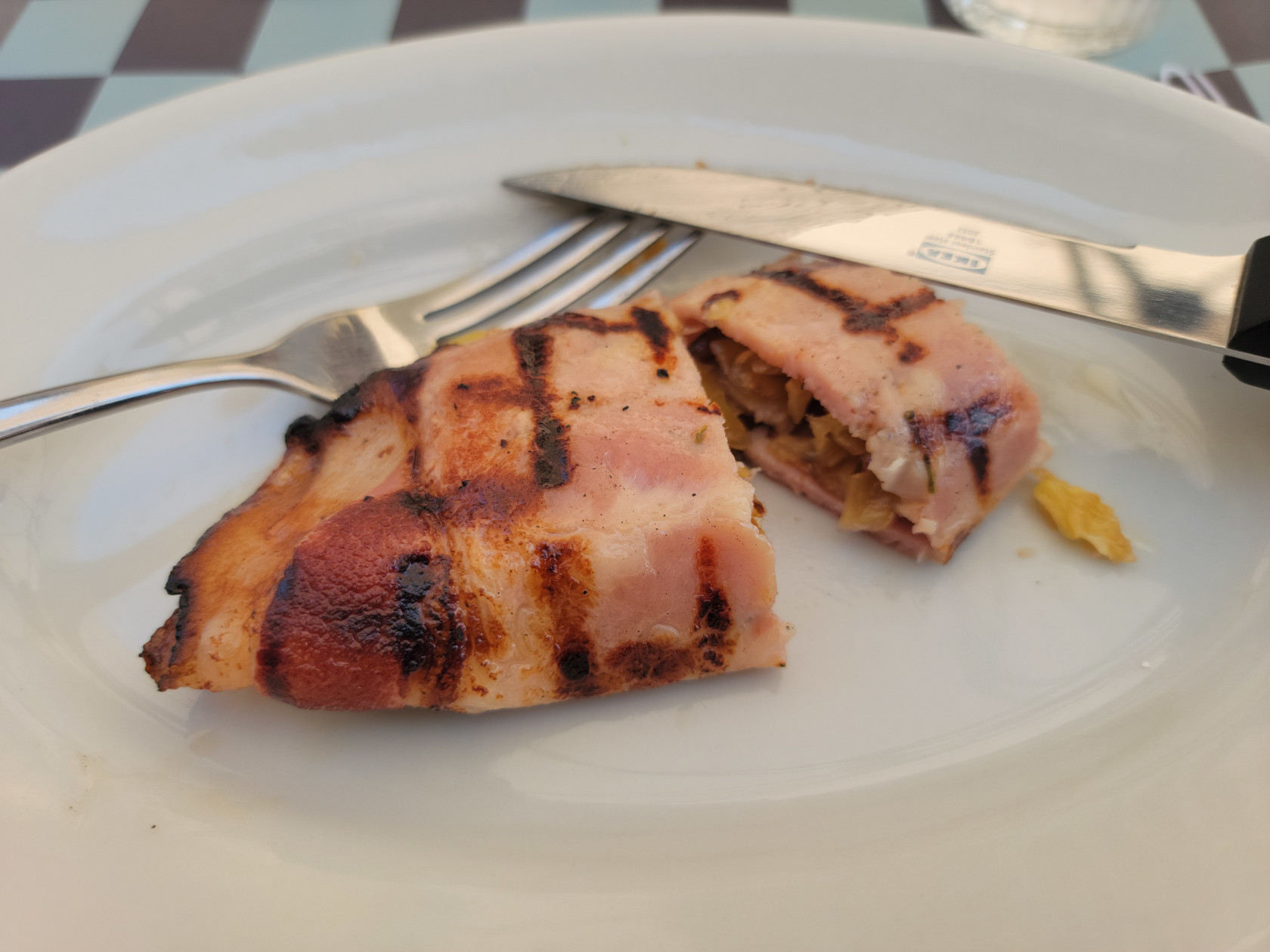
Though the food was very good and for a fair price, the service, even for Italian standards, was very slow. It took us all of three hours to complete our lunch, and we could tell several other clients sitting at tables next to use were not happy either, and they were Italian. So if you are in a hurry, either get seating inside or by the entrance (of course in the hope they will see and not forget you) and not out in the umbrella piazza annex, where we were seated.
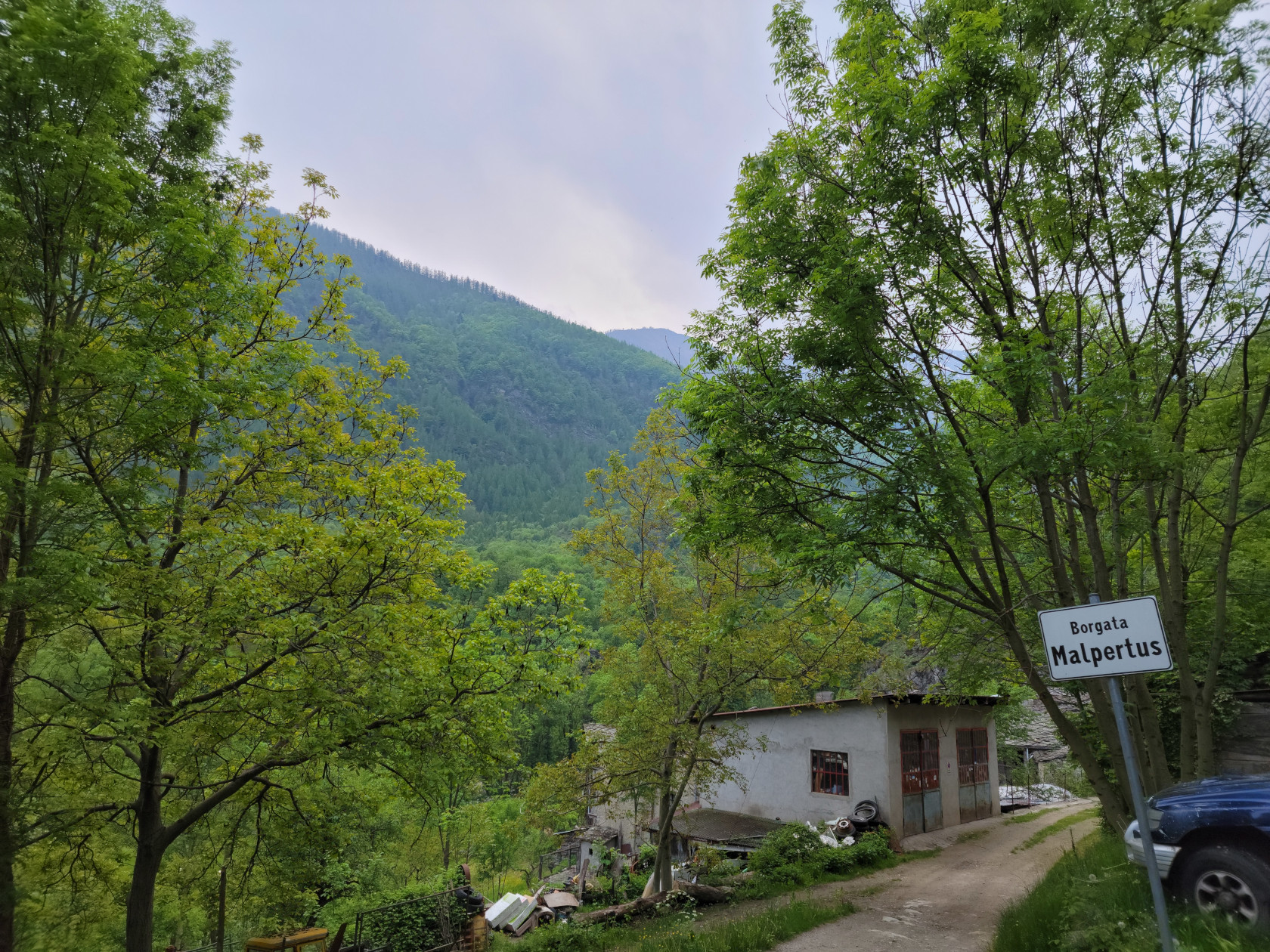
Borgata Malpertus
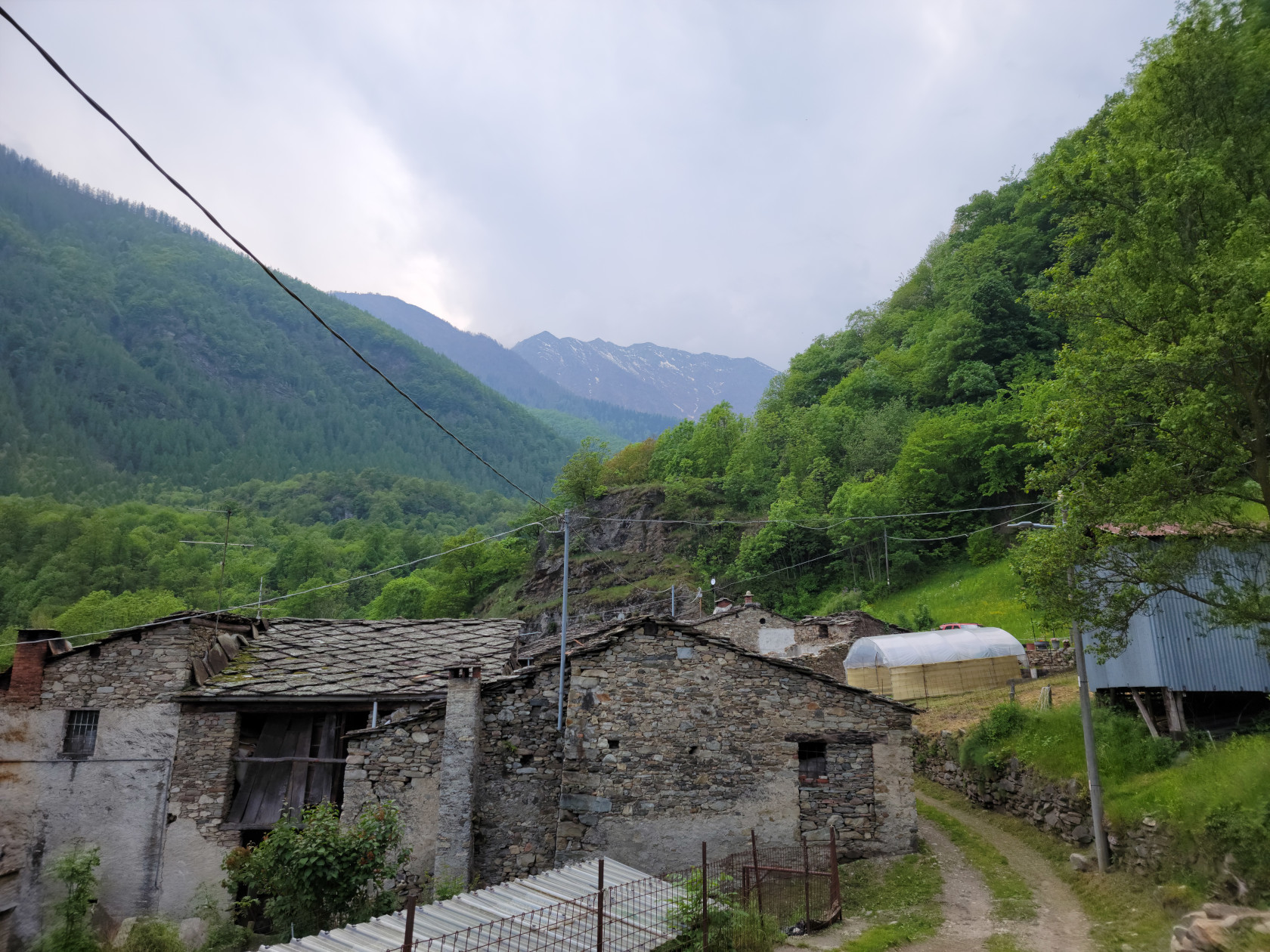
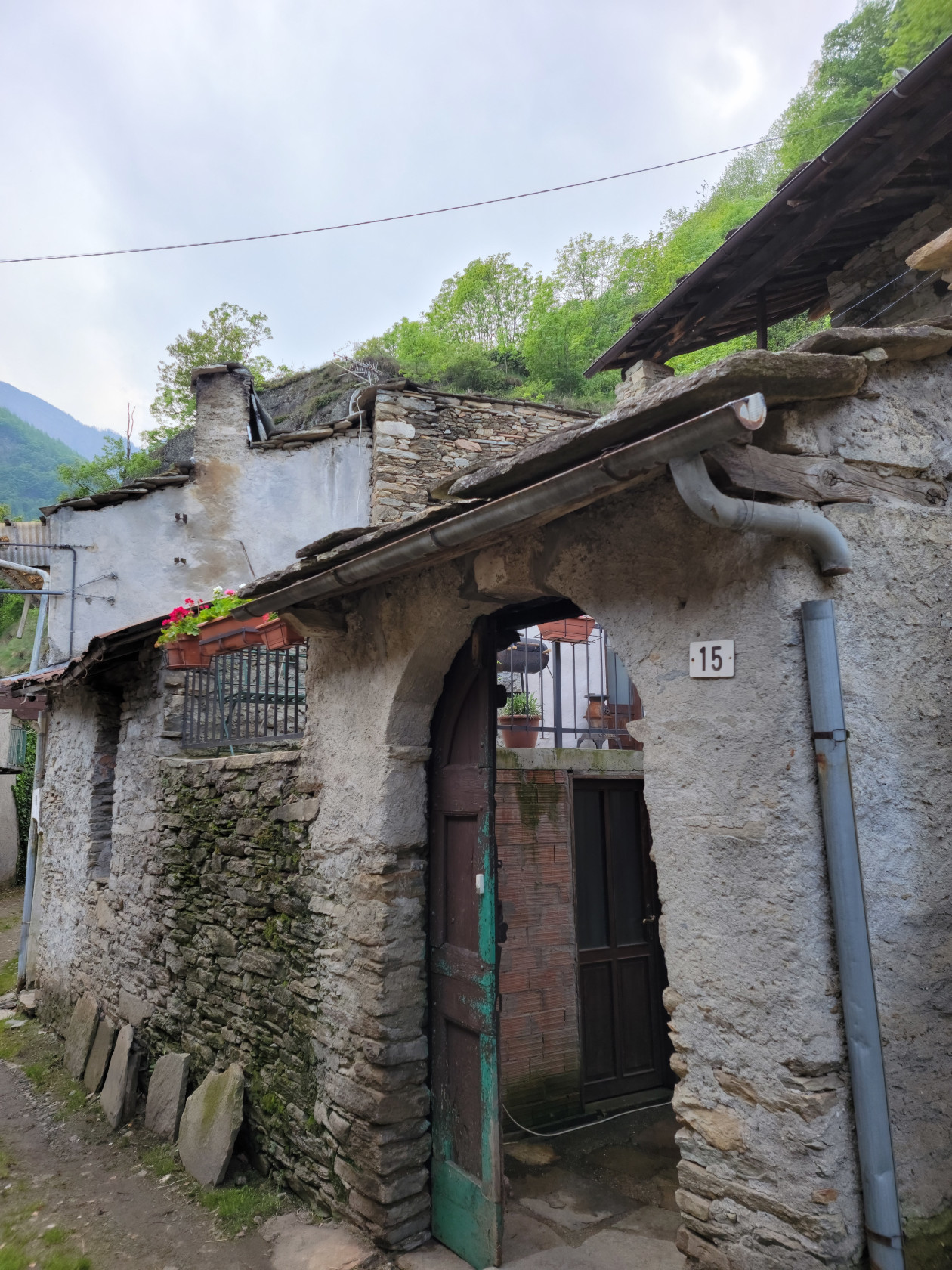
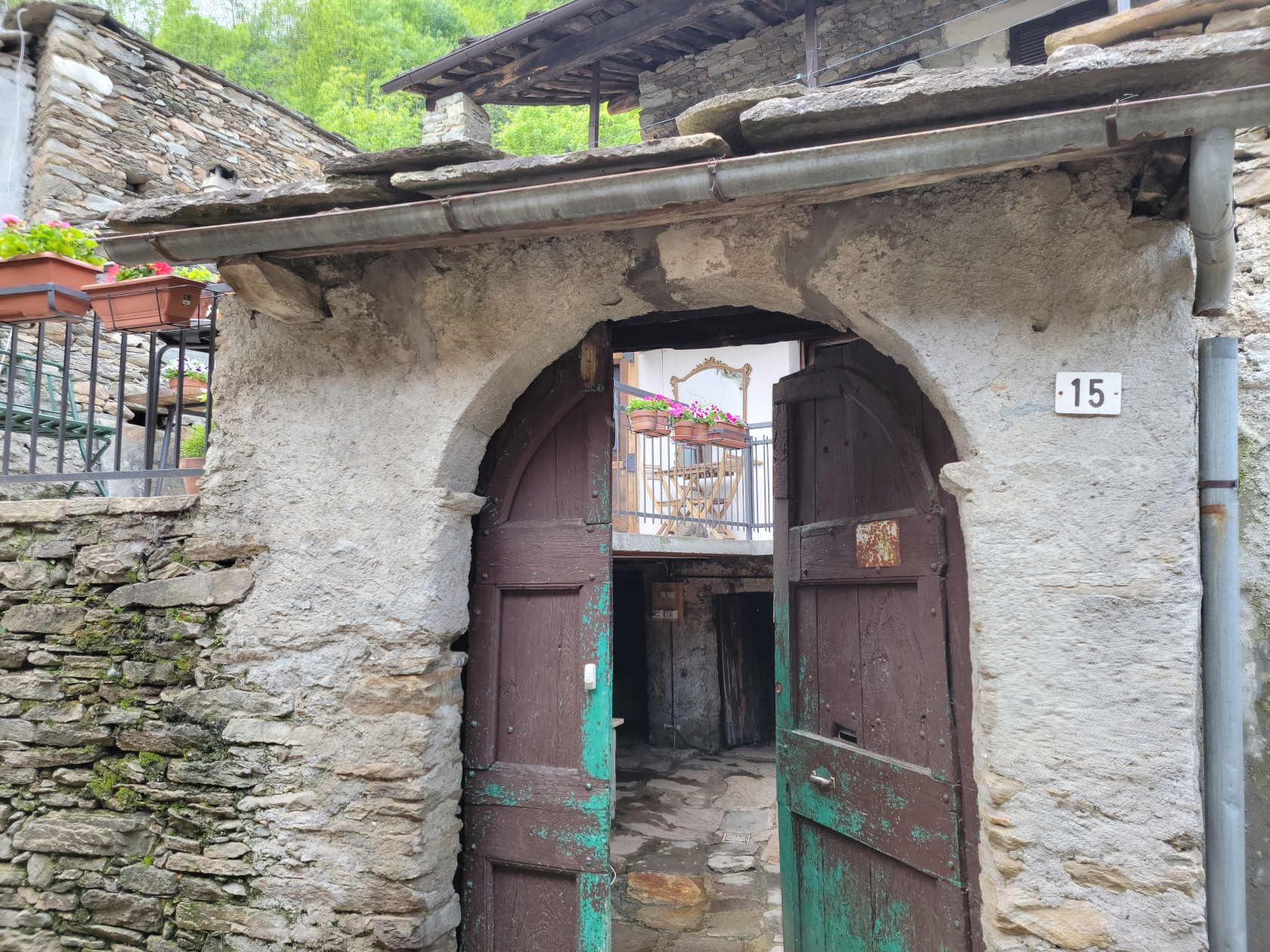
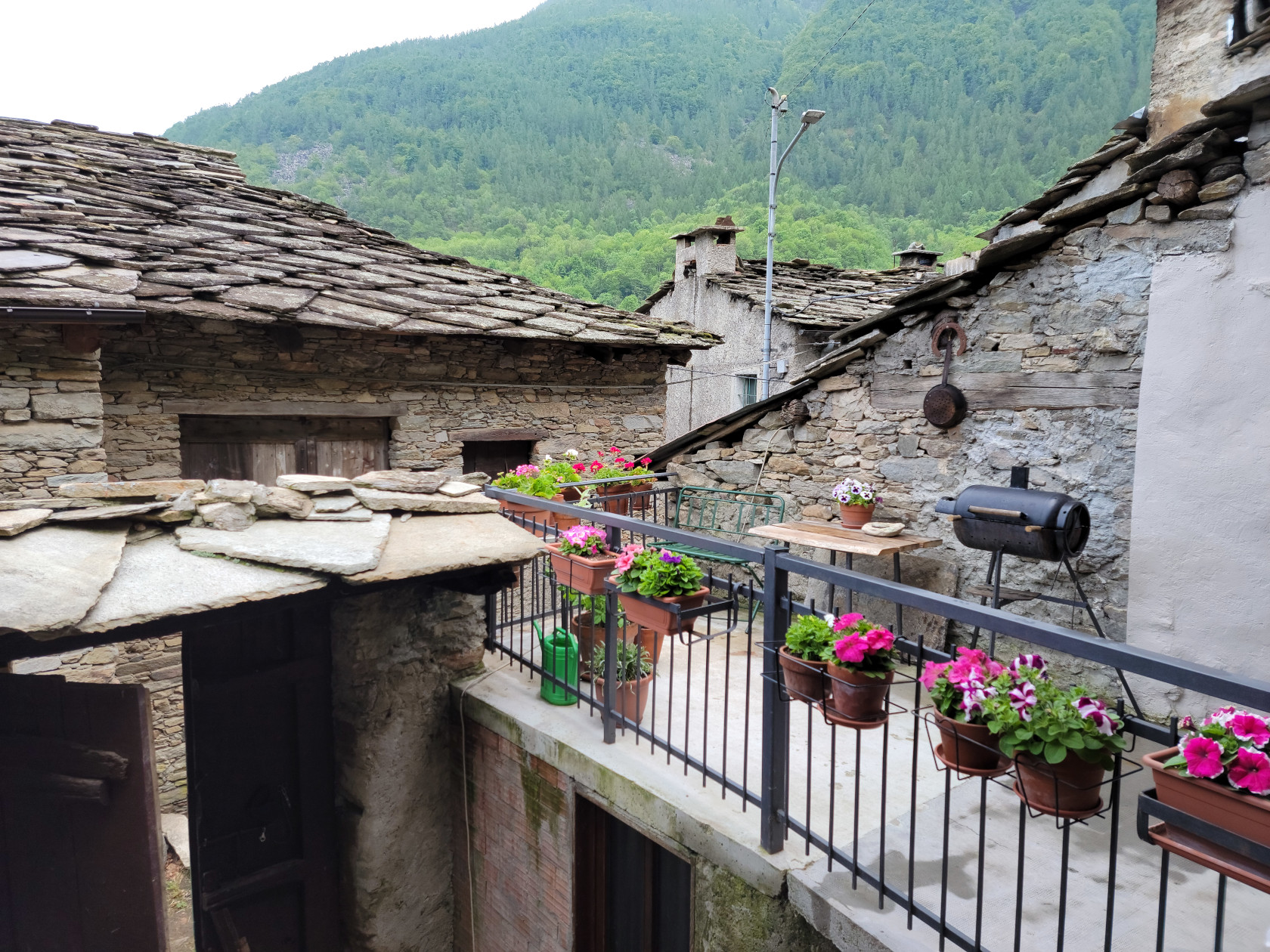
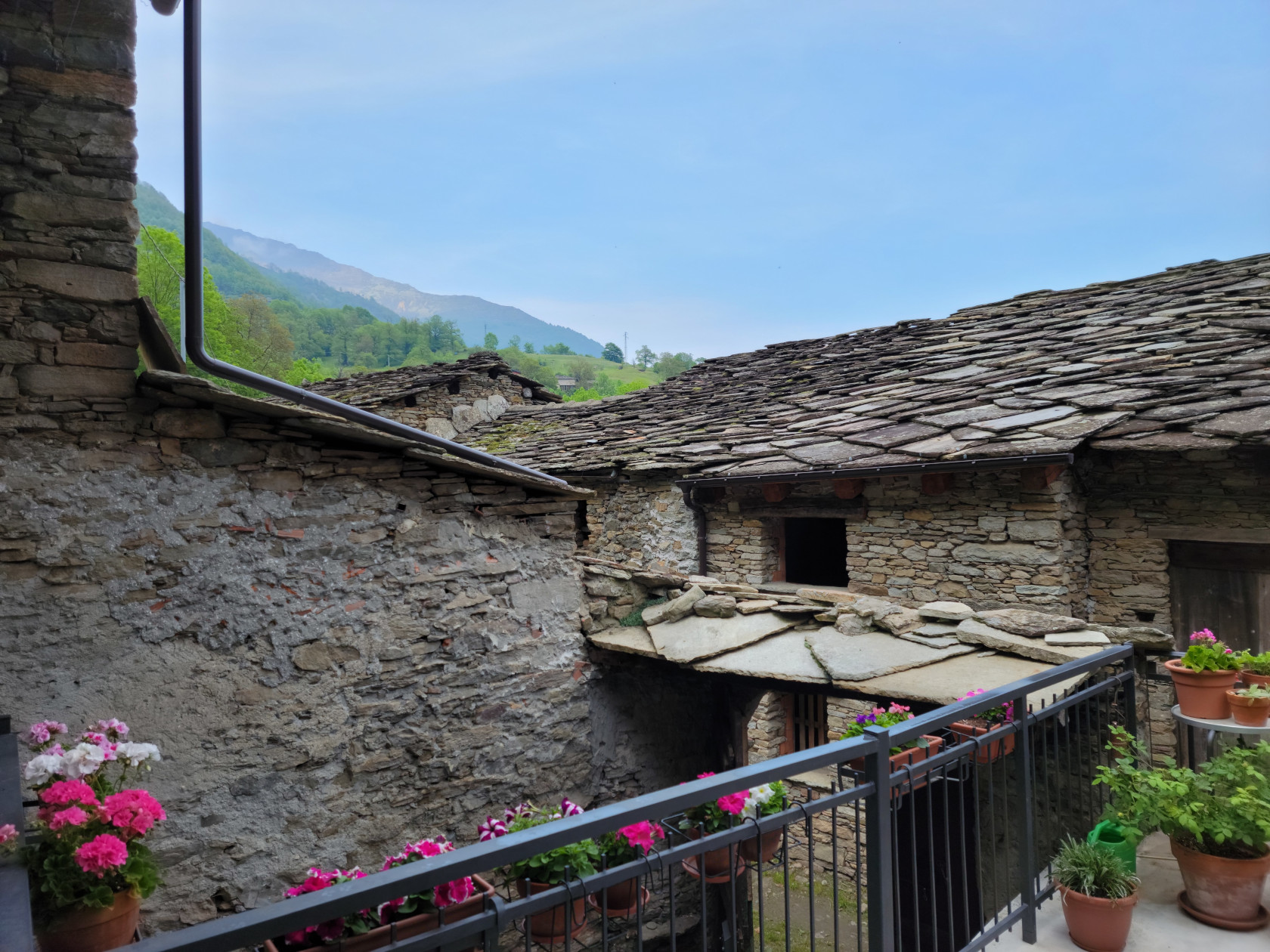
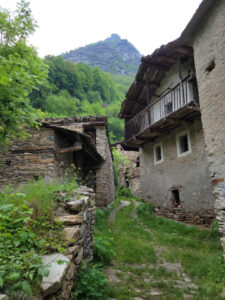
Our hosts live in a very small hamlet called a Borgata. It’s actually just a string of small stone houses collected neatly on the hillside of the Pellice River Valley.
Borgata Malpertus – Pellice River Valley
Borgata Malpertus – Pellice River Valley
15 Borgata Malpertus – Pellice River Valley
15 Borgata Malpertus – Pellice River Valley
15 Borgata Malpertus – Pellice River Valley
15 Borgata Malpertus – Pellice River Valley
The rest of the Borgata is contained within a few roads or alleys, through which anyone can amble at their leisure. There are few residents here and some of the structures are in dire need of repair and restoration.
Borgata Malpertus – Pellice River Valley
Repairs needed – Borgata Malpertus – Pellice River Valley
Borgata Malpertus – Pellice River Valley
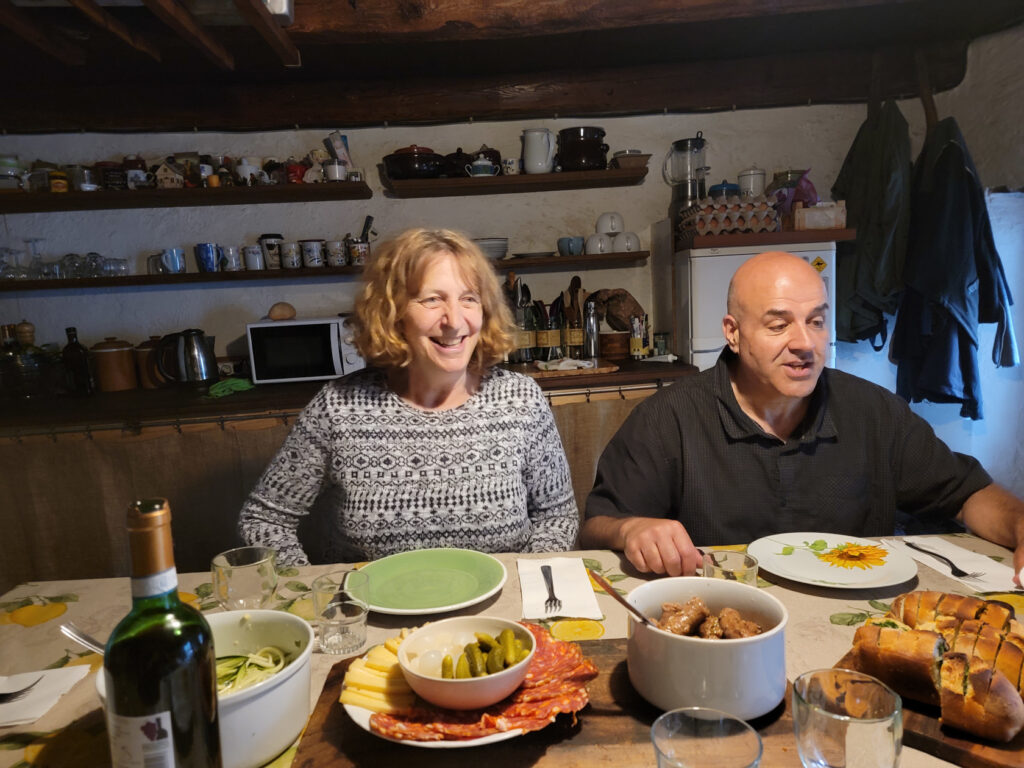
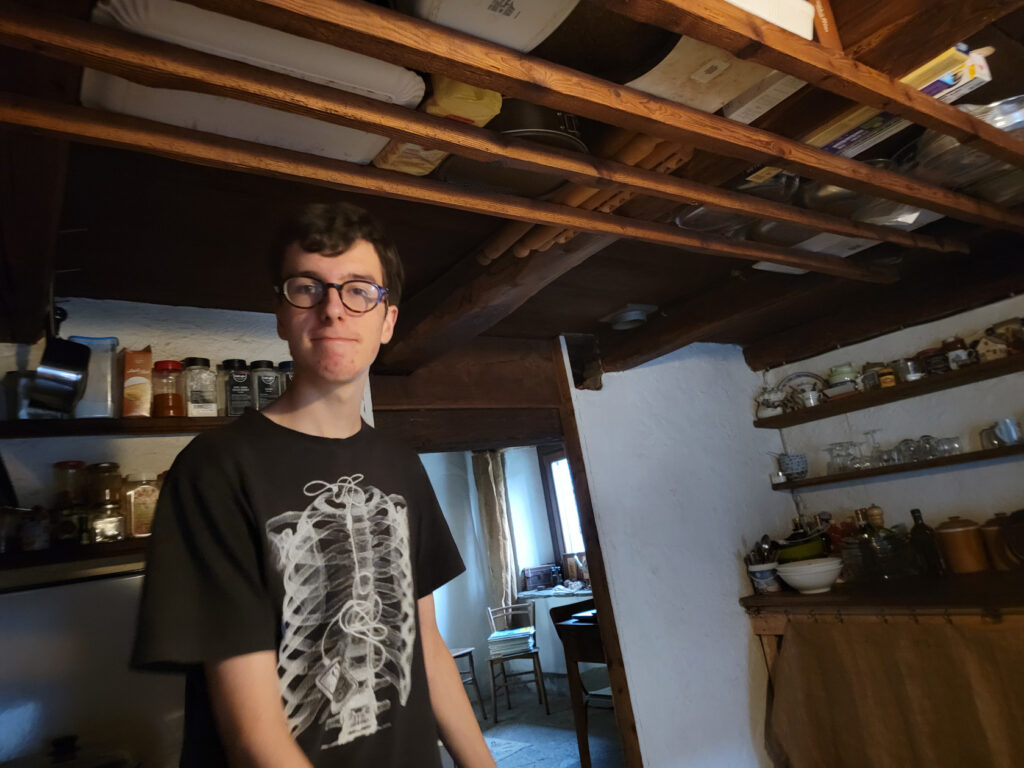
Our host, hostess and their son are great and they have done an amazing job of renovating their own place.
Lisa and Sam Chiodo – Renovating Italy at Borgata Malpertus – Malpertus
Their son Luca – Renovating Italy at Borgata Malpertus – Malpertus
Venturing Out A Bit
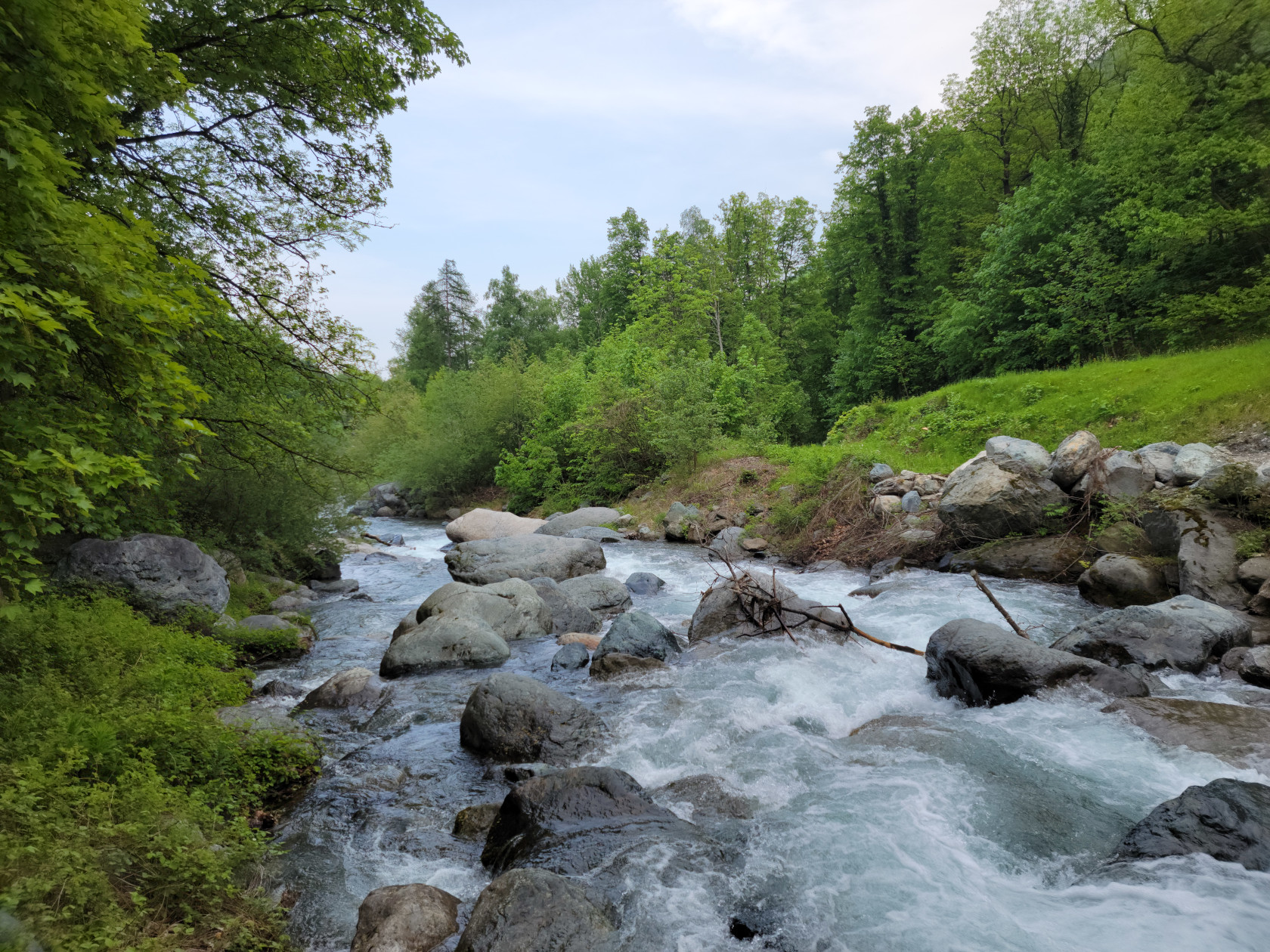
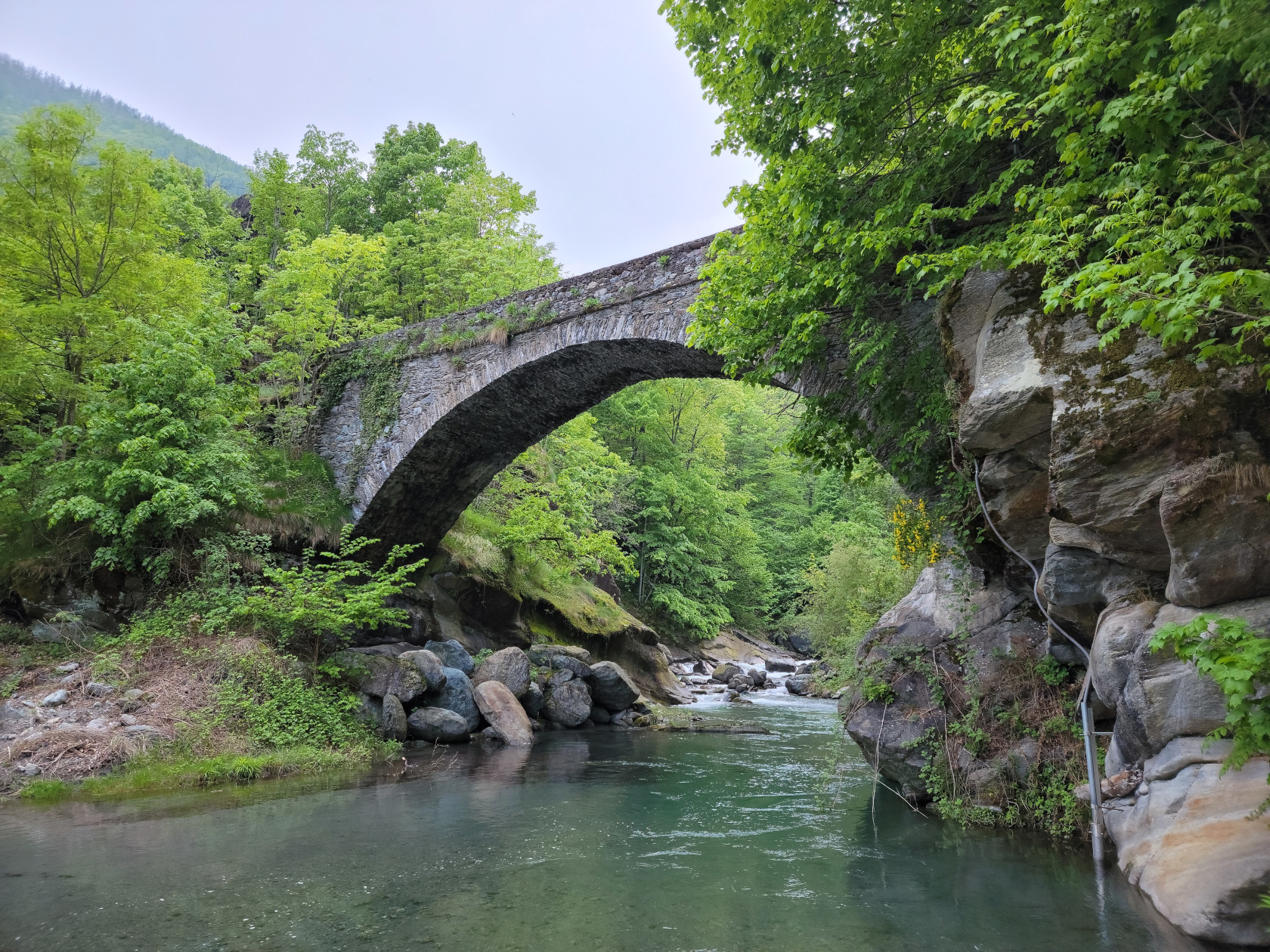
Taking a short walk from the Borgata and a stone’s throw away is Napolean’s Bridge. Of course, Napolean did not build, nor even cross the Pellice River using this bridge. It was built at least a hundred years before he was even born and it is believed that his army never ventured down the valley that far, if in this valley at all.
Pellice River – Napolean’s Bridge – Pellice River Valley
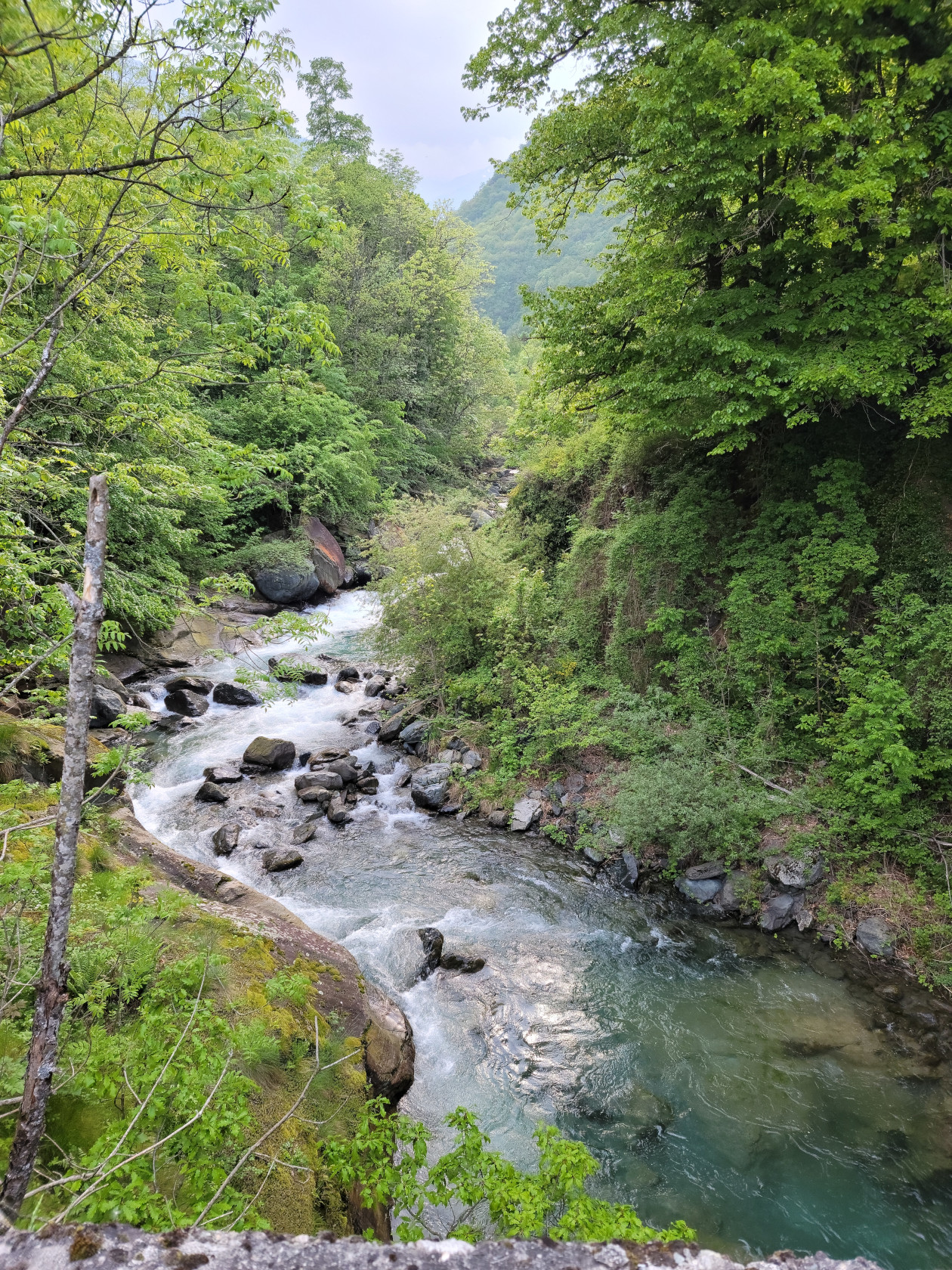
From the Pellice River – Napolean’s Bridge – Pellice River Valley
Pellice River – Napolean’s Bridge – Pellice River Valley
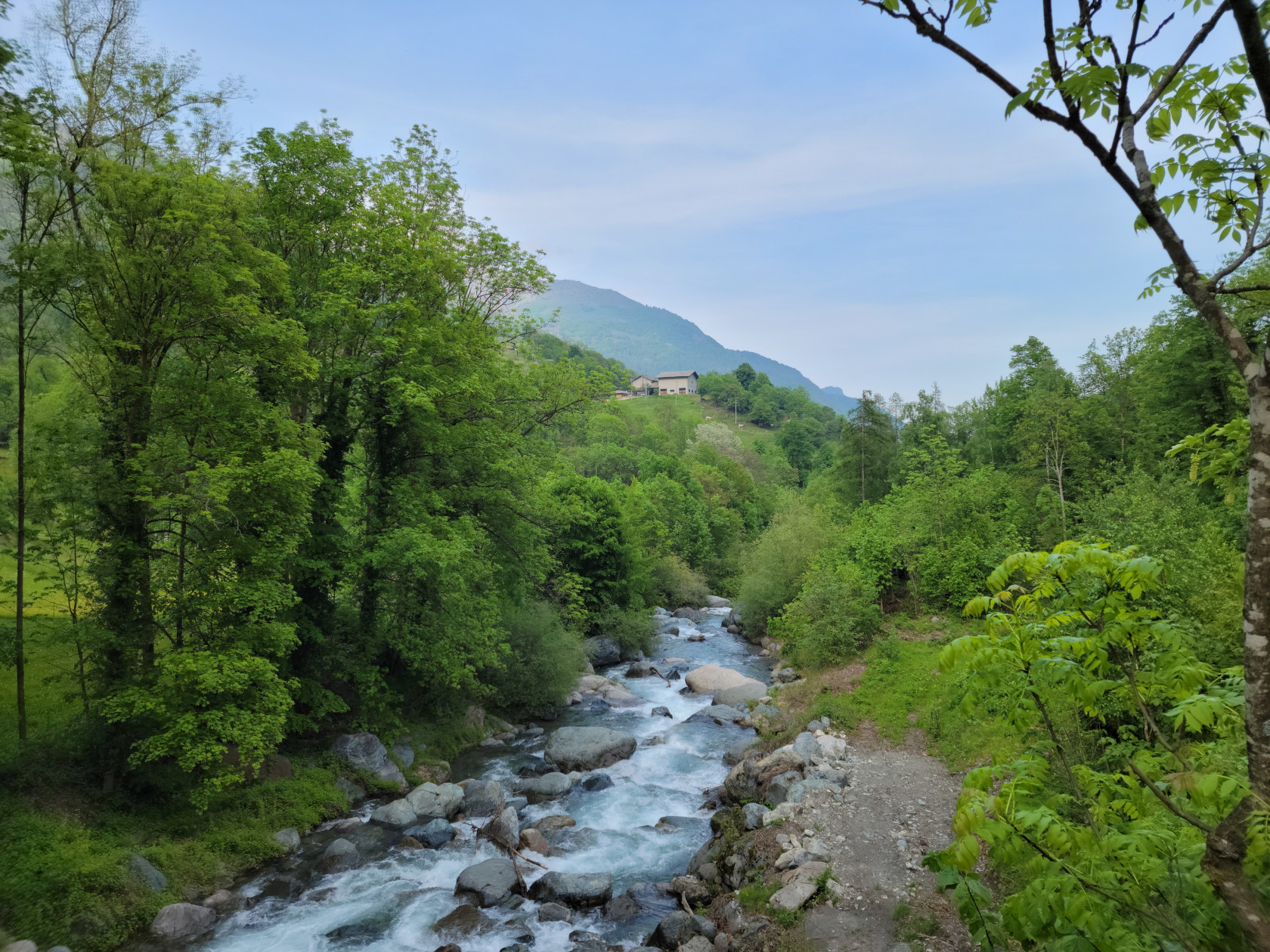
Pellice River – Napolean’s Bridge – Pellice River Valley
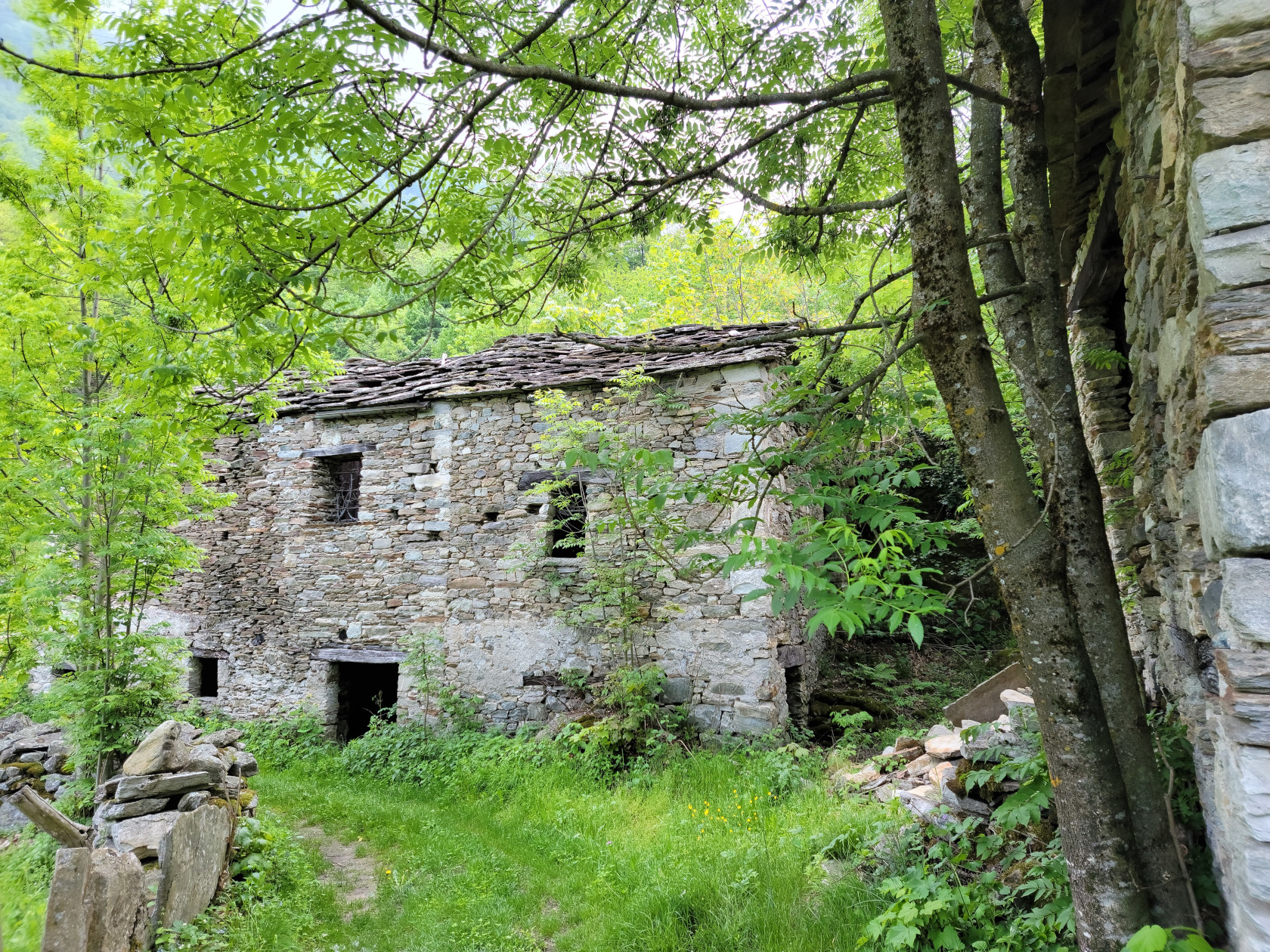
Older Buildings (circa 1600s) – Napolean’s Bridge – Pellice River Valley
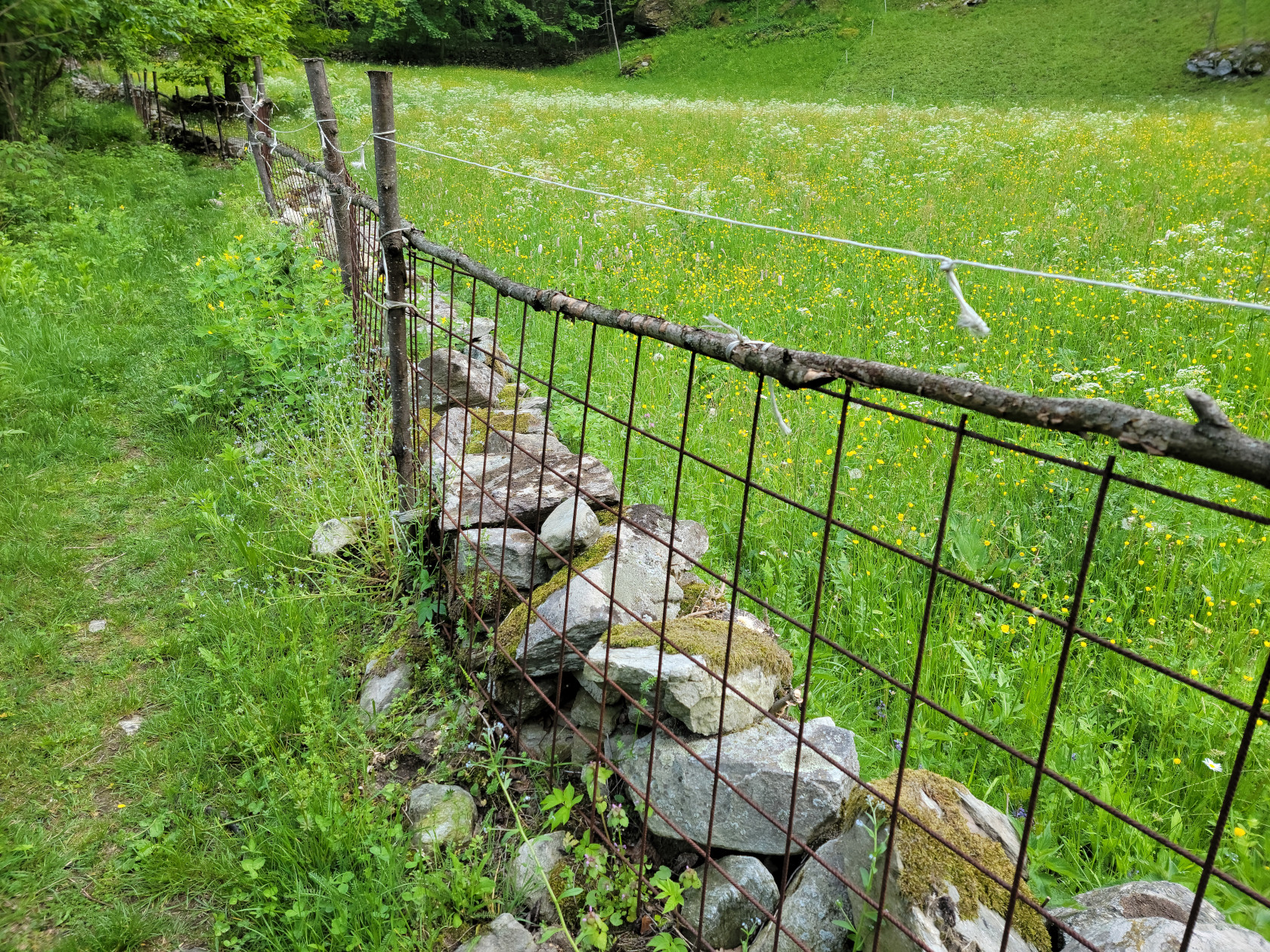
Italian Farm Fencing – Napolean’s Bridge – Pellice River Valley
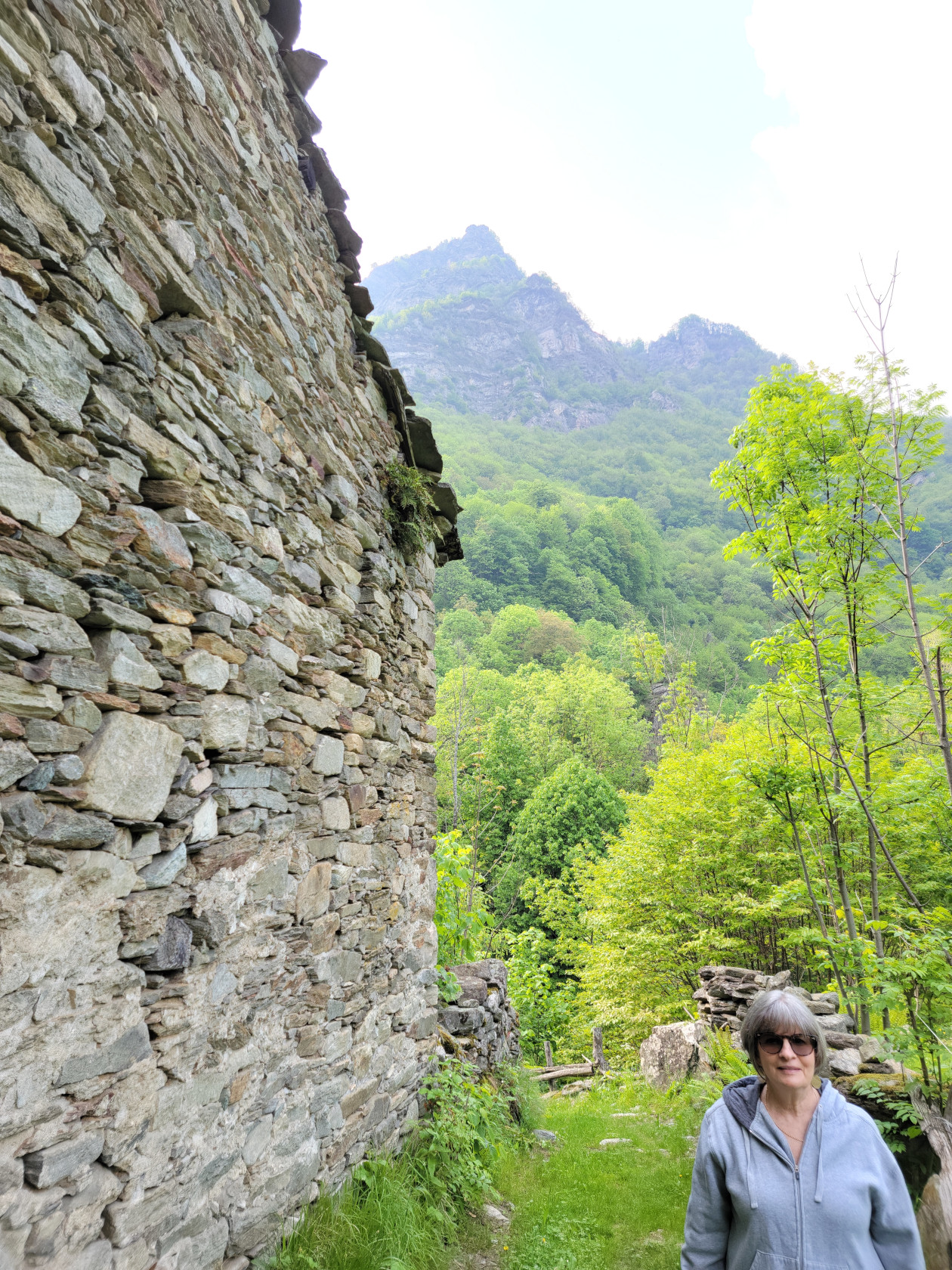
Patti and mountians – Napolean’s Bridge – Pellice River Valley
However, it is a nice walk and an improbable feature of the valley, since it appears to have been built near no know important structure, castle or fortress, yet obviously took a tremendous amount of work to complete.
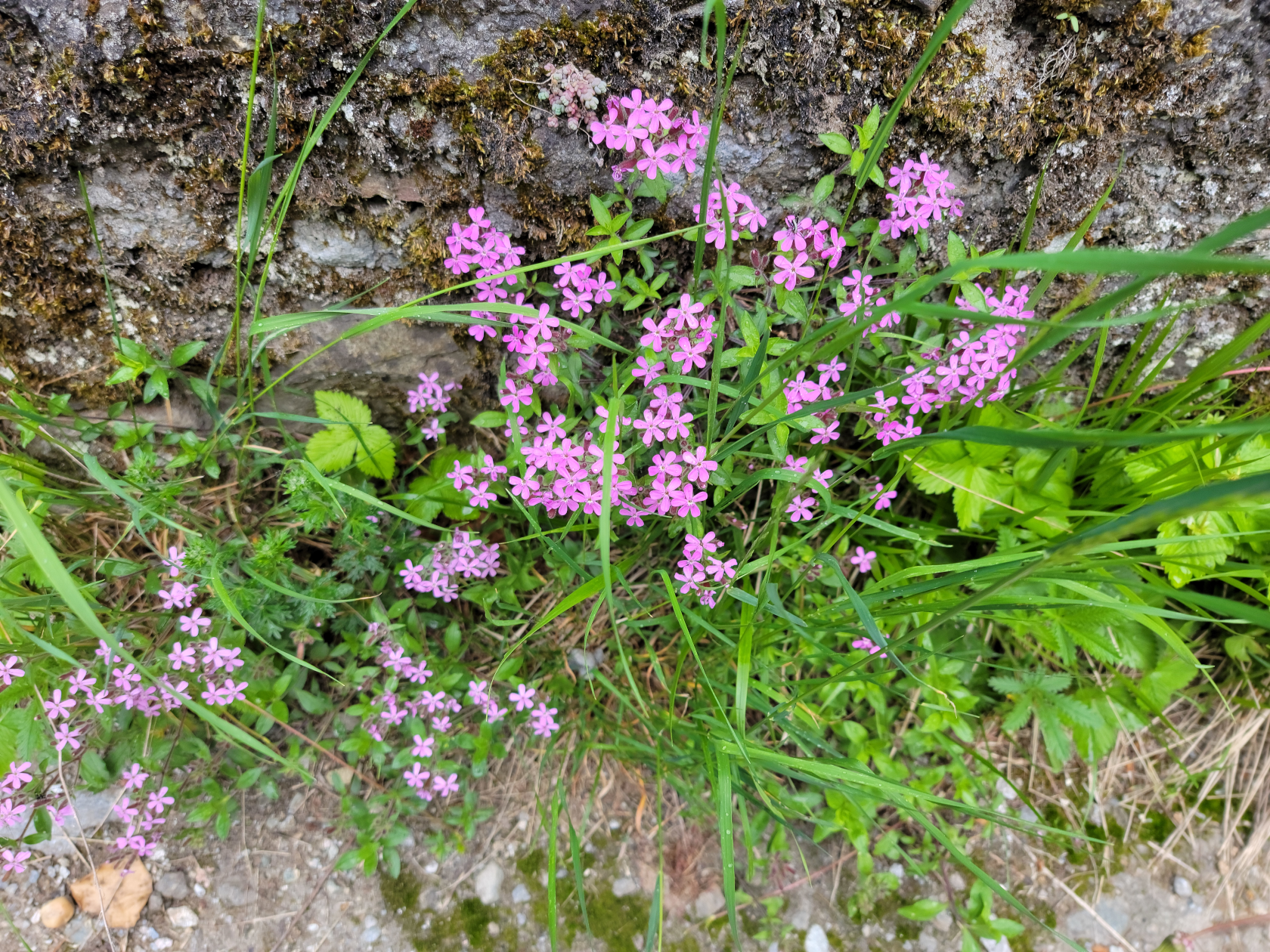
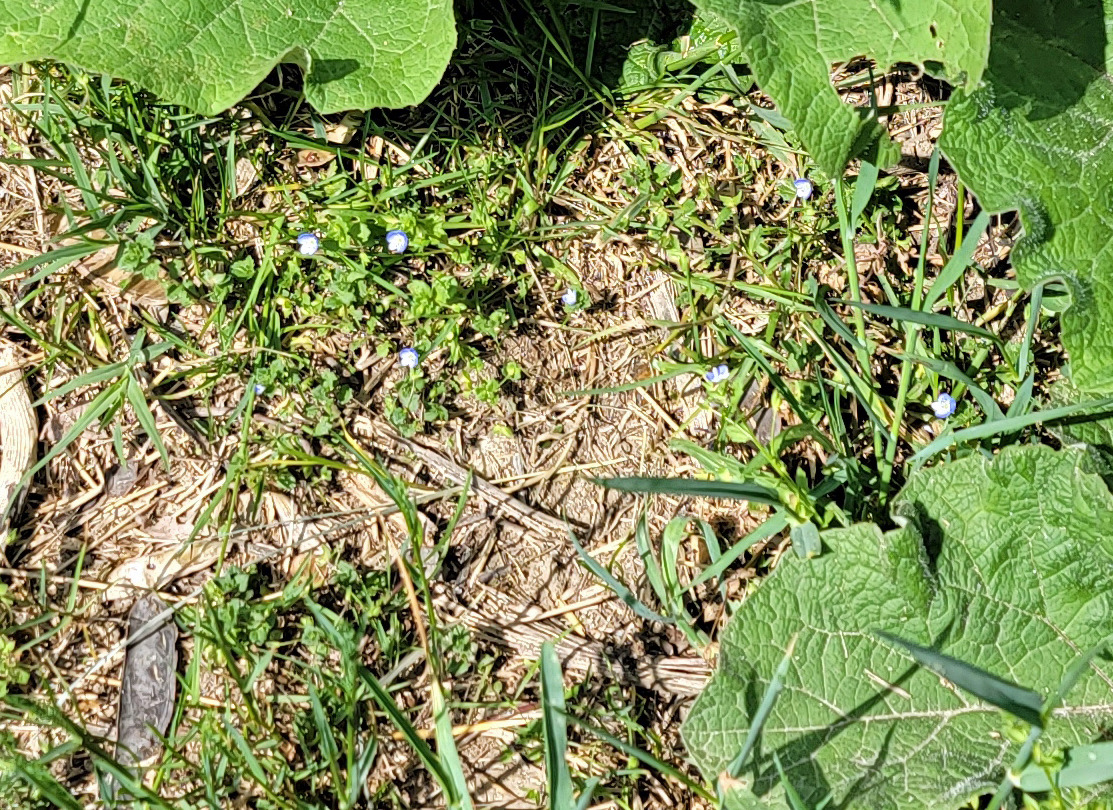
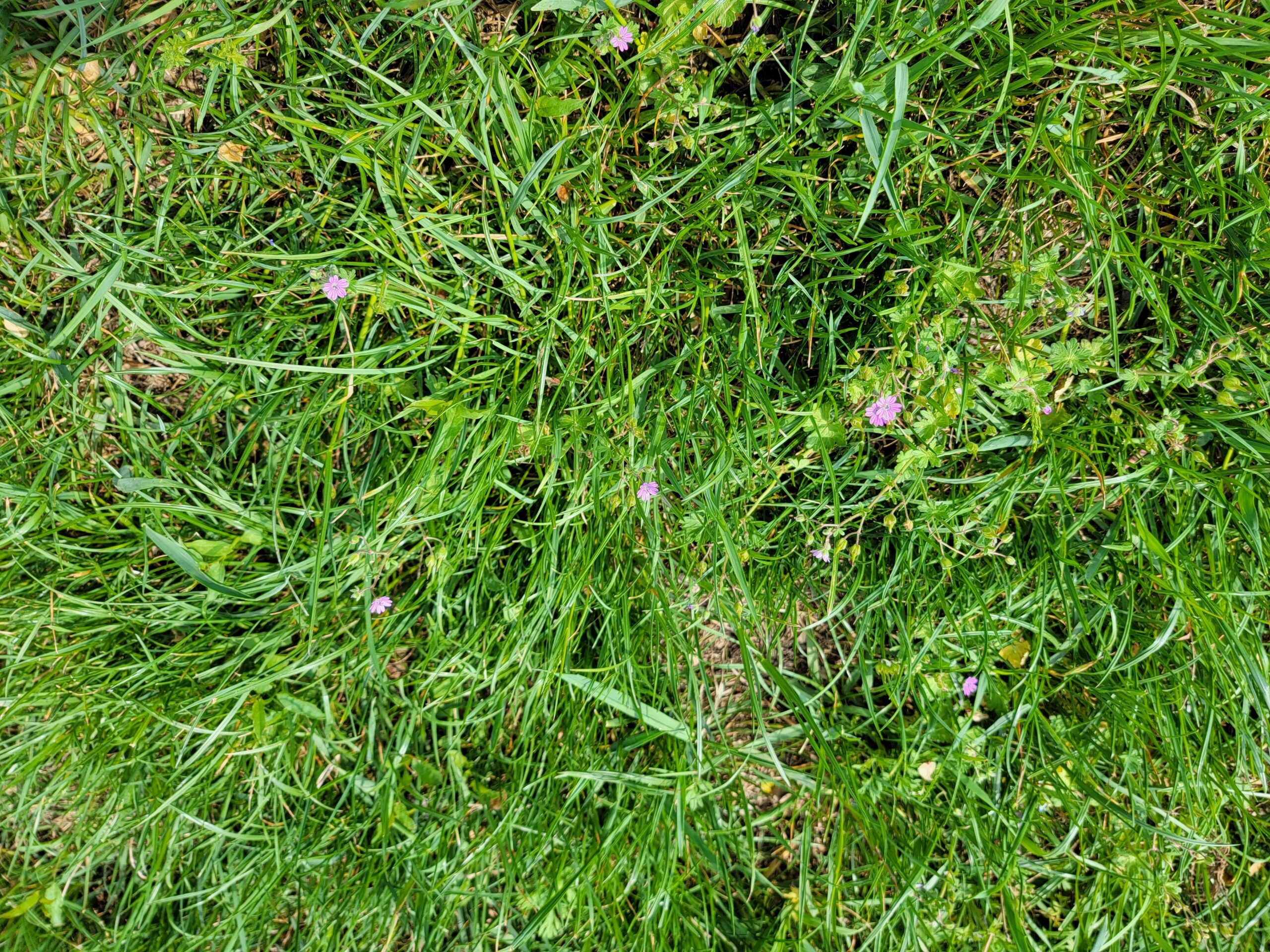
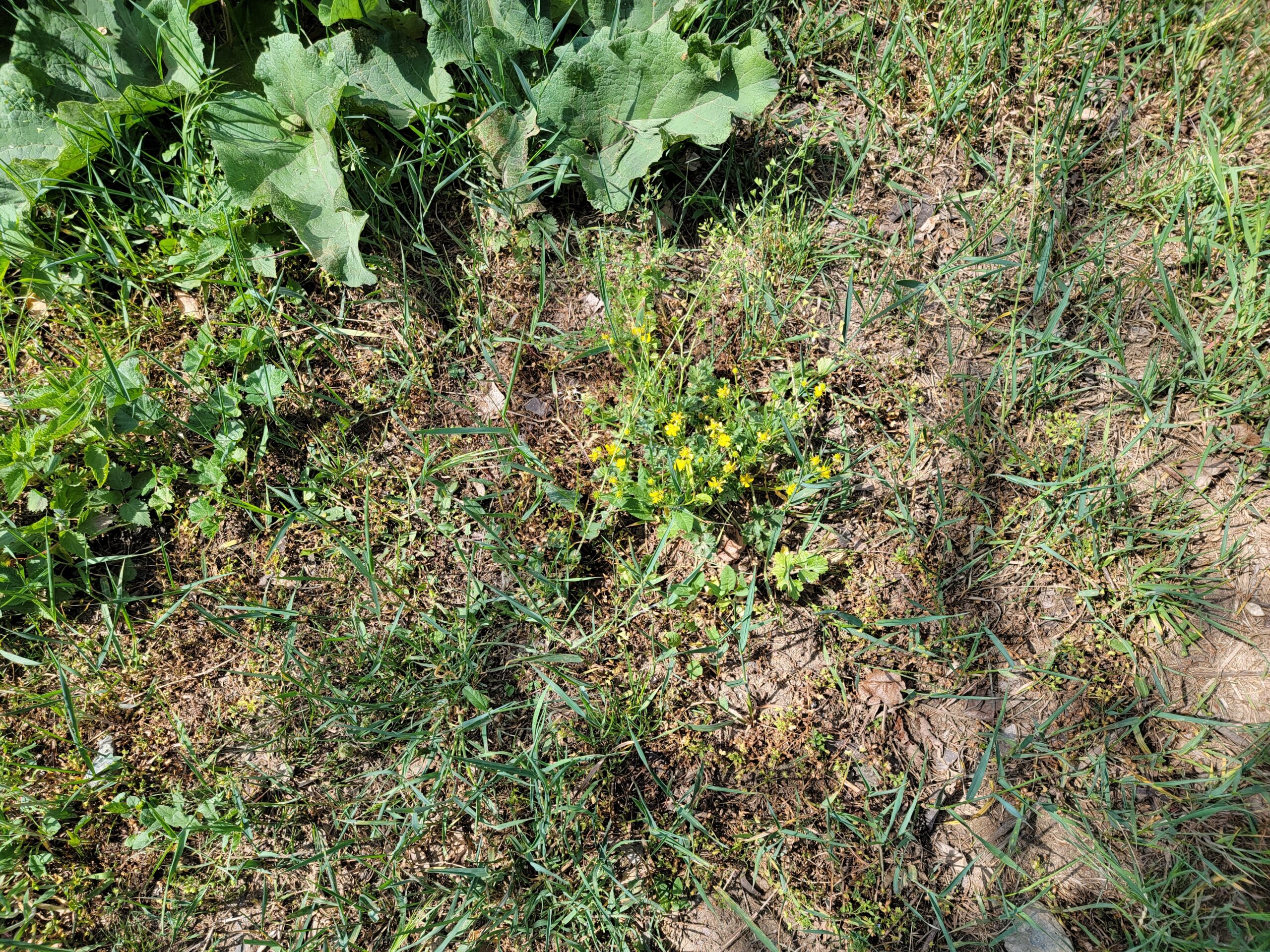
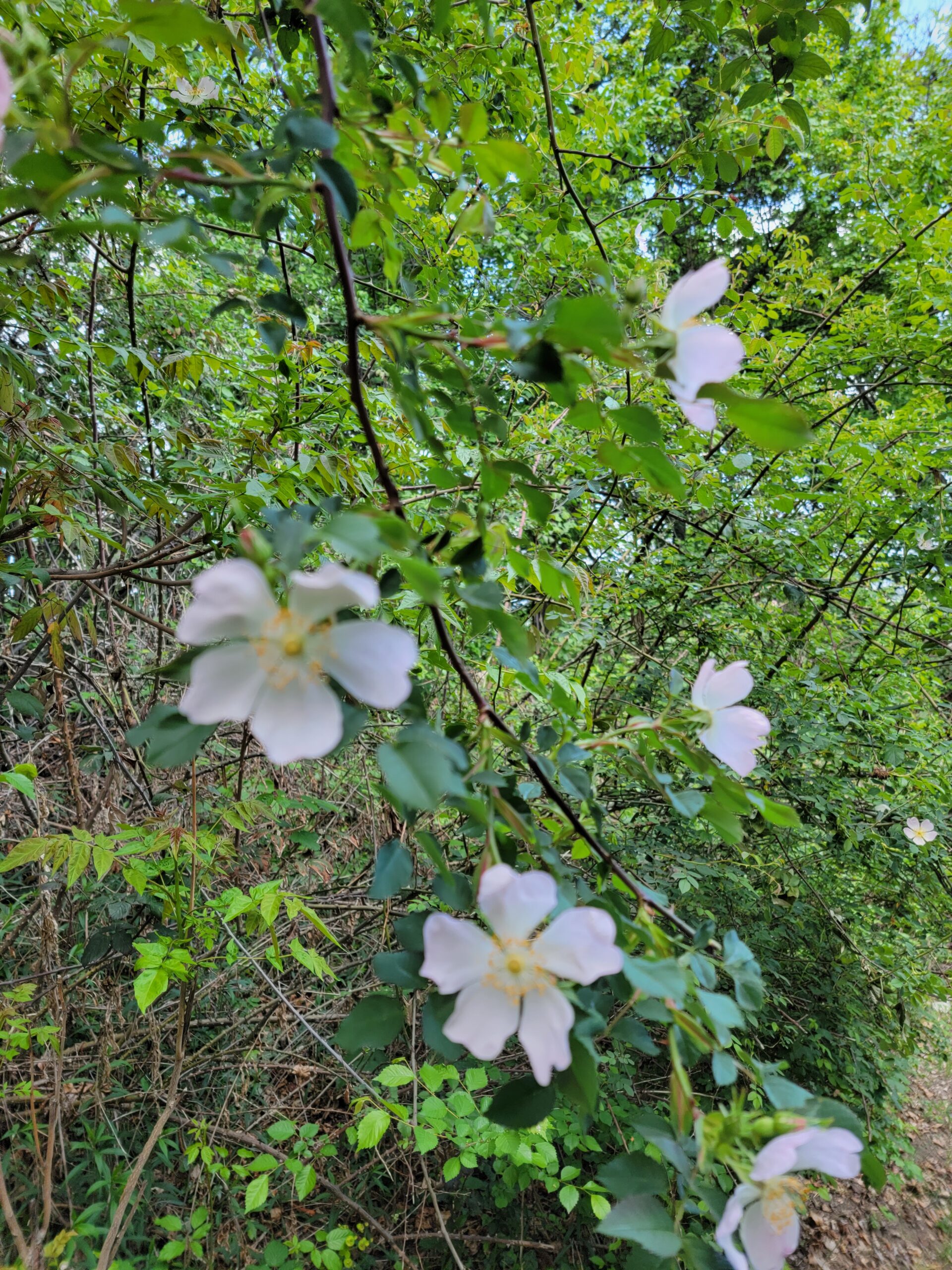
Flowers – Malpertus
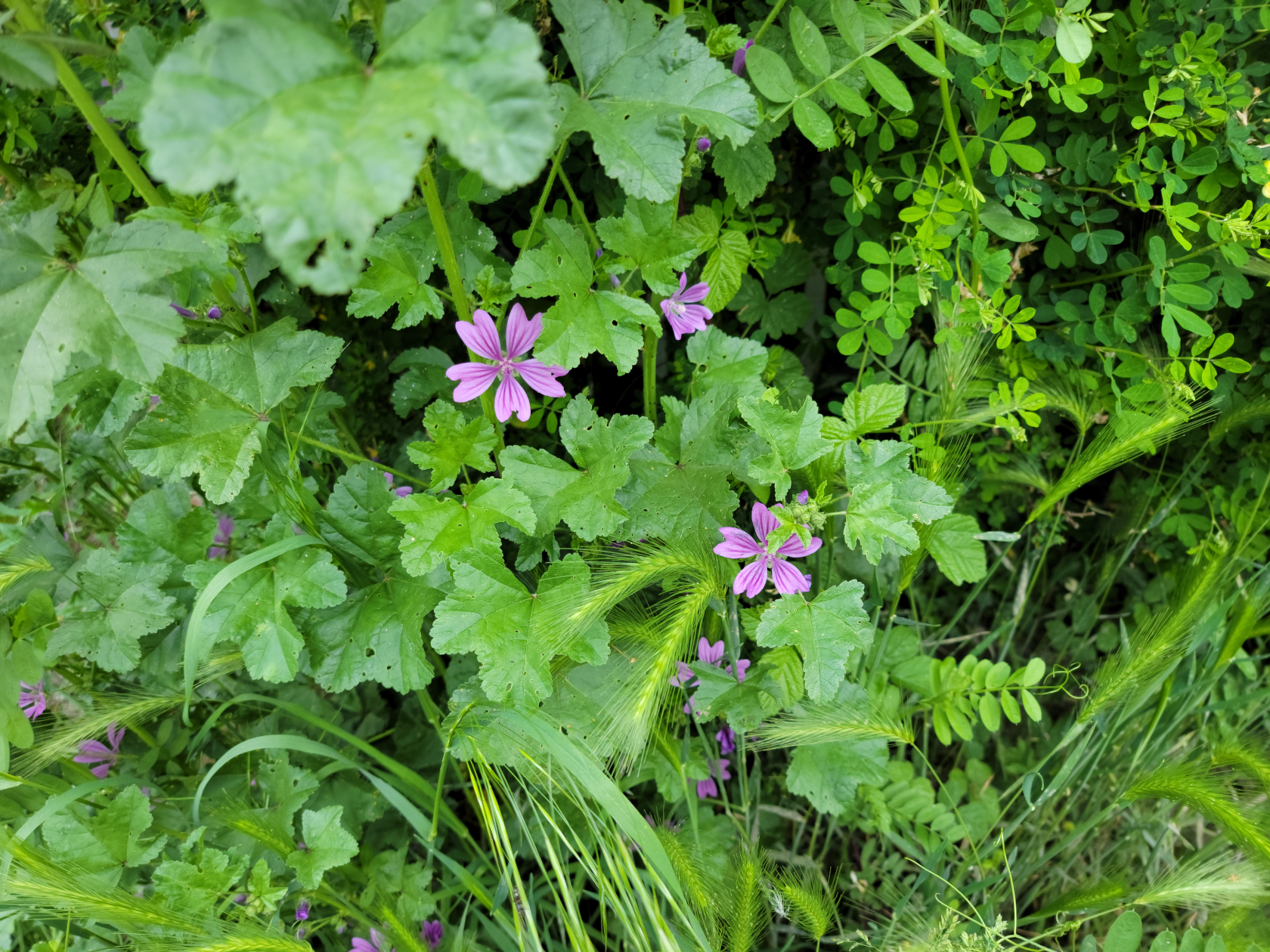
Flowers – Malpertus
Flowers – Malpertus
Flowers – Malpertus
Flowers – Malpertus
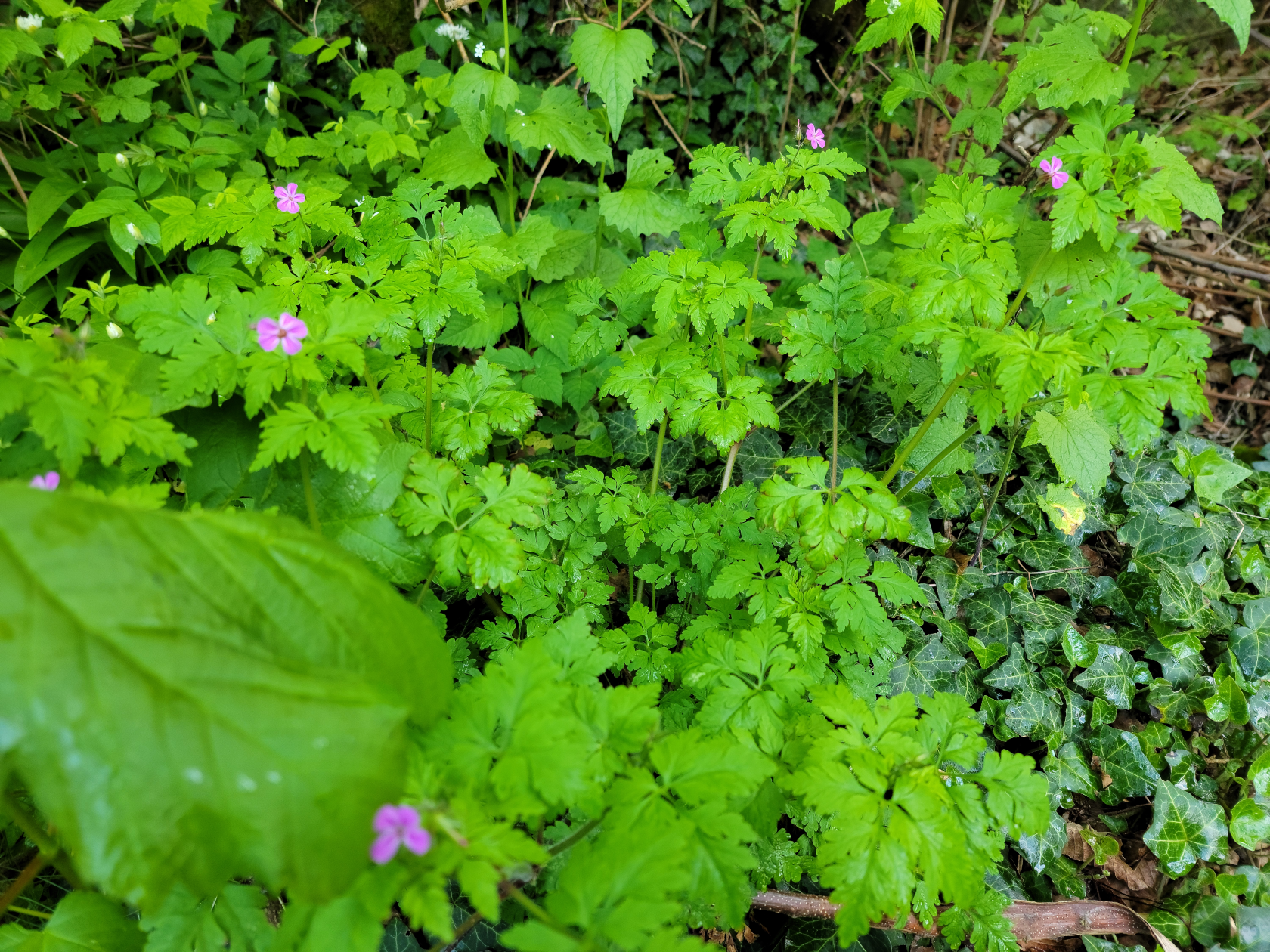
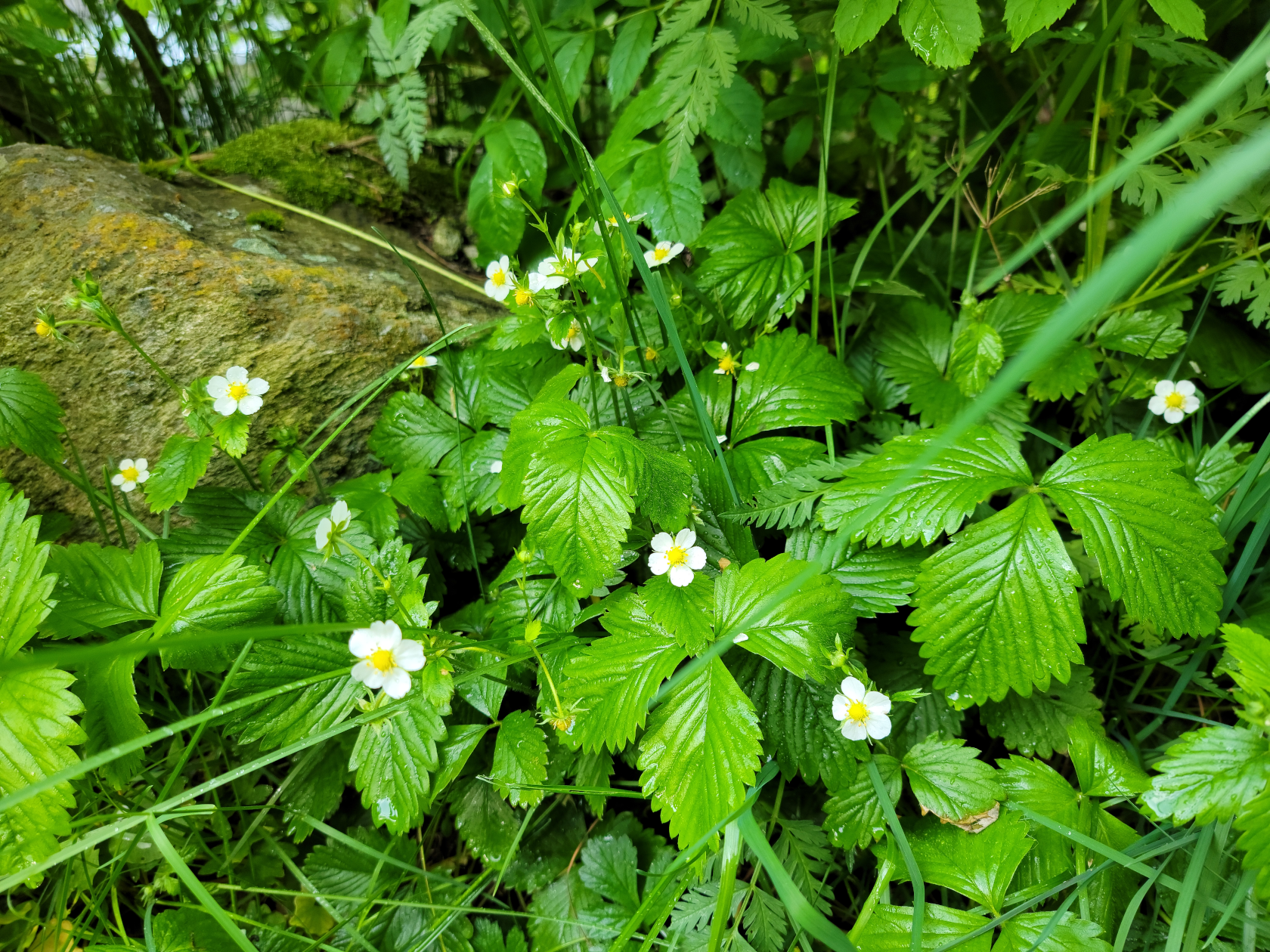
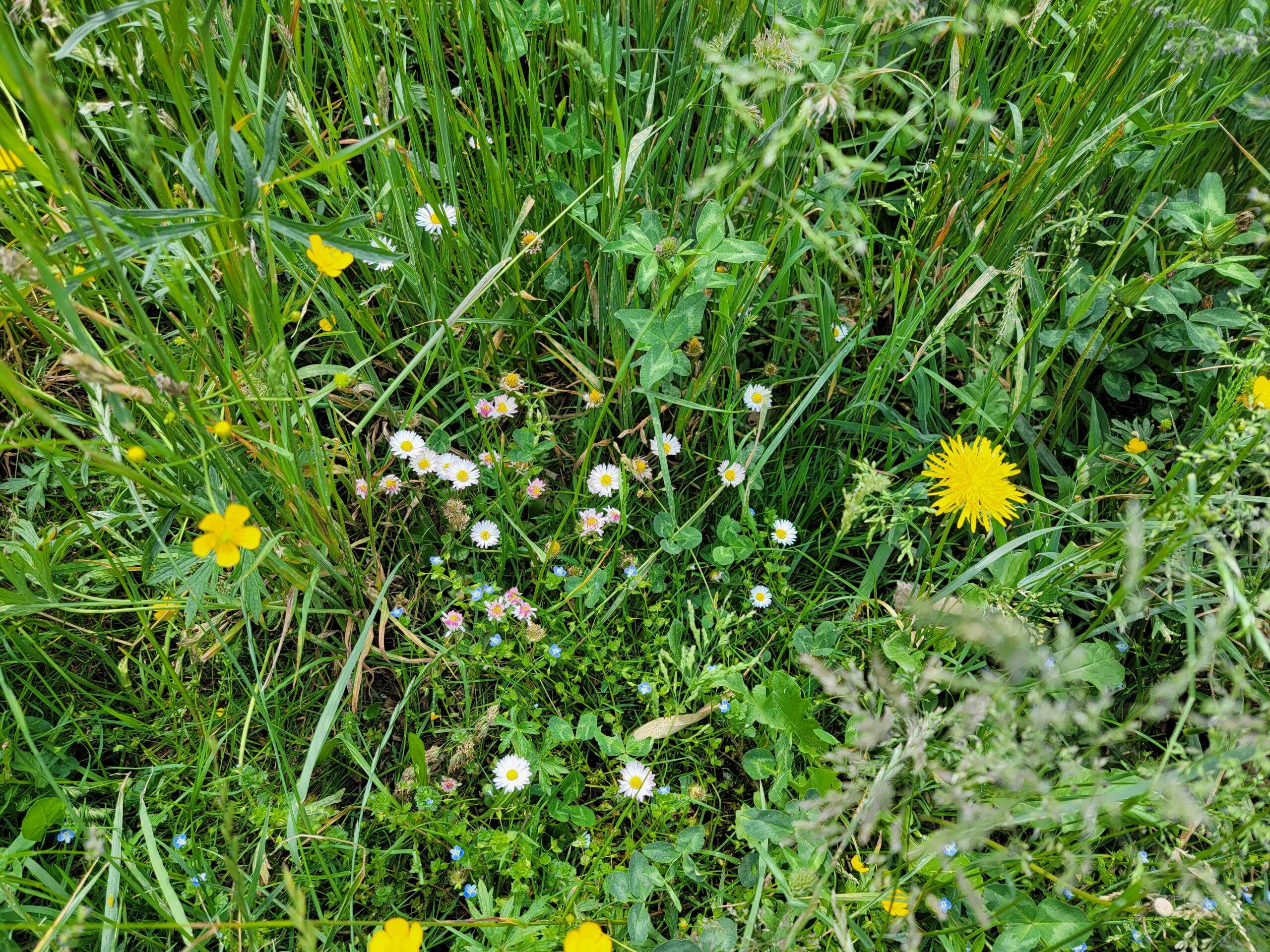
Along the way there are an amazing assortment of flowers and as with other parts of Italy, the fields and pastures are abuzz with this sound of bees and the chirping calls of crickets. So if you are looking for a place for some peace of mind, this might be an appropriate place for you.
Yesterday I had the occasion for a relaxing ride on my bike to Chieri and then Pecetto, both of which sit behind the hills of the Borgo Po from Turin. Although I do not normally post about my riding exploits on my blog, it is spring and this particular ride just struck me as something that others might enjoy, if given the chance.
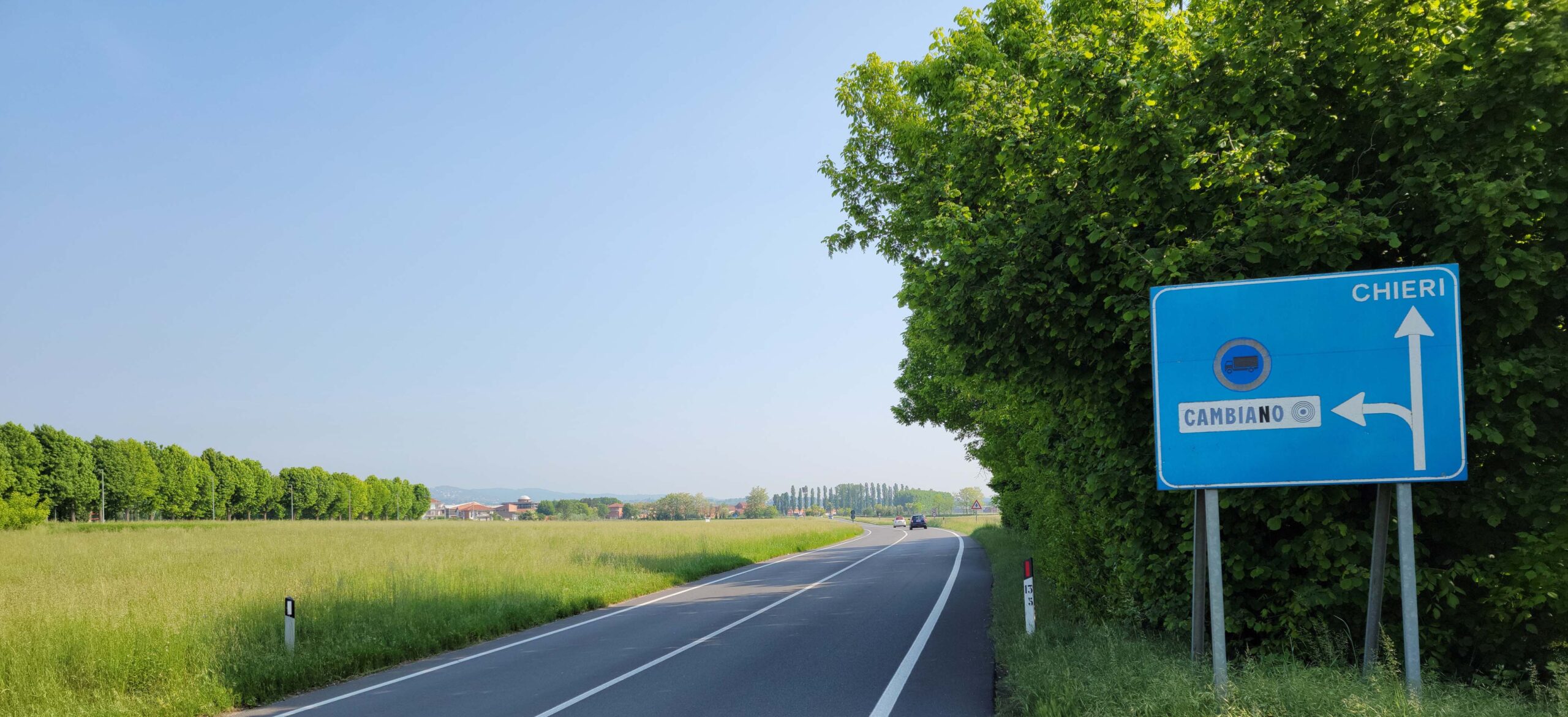
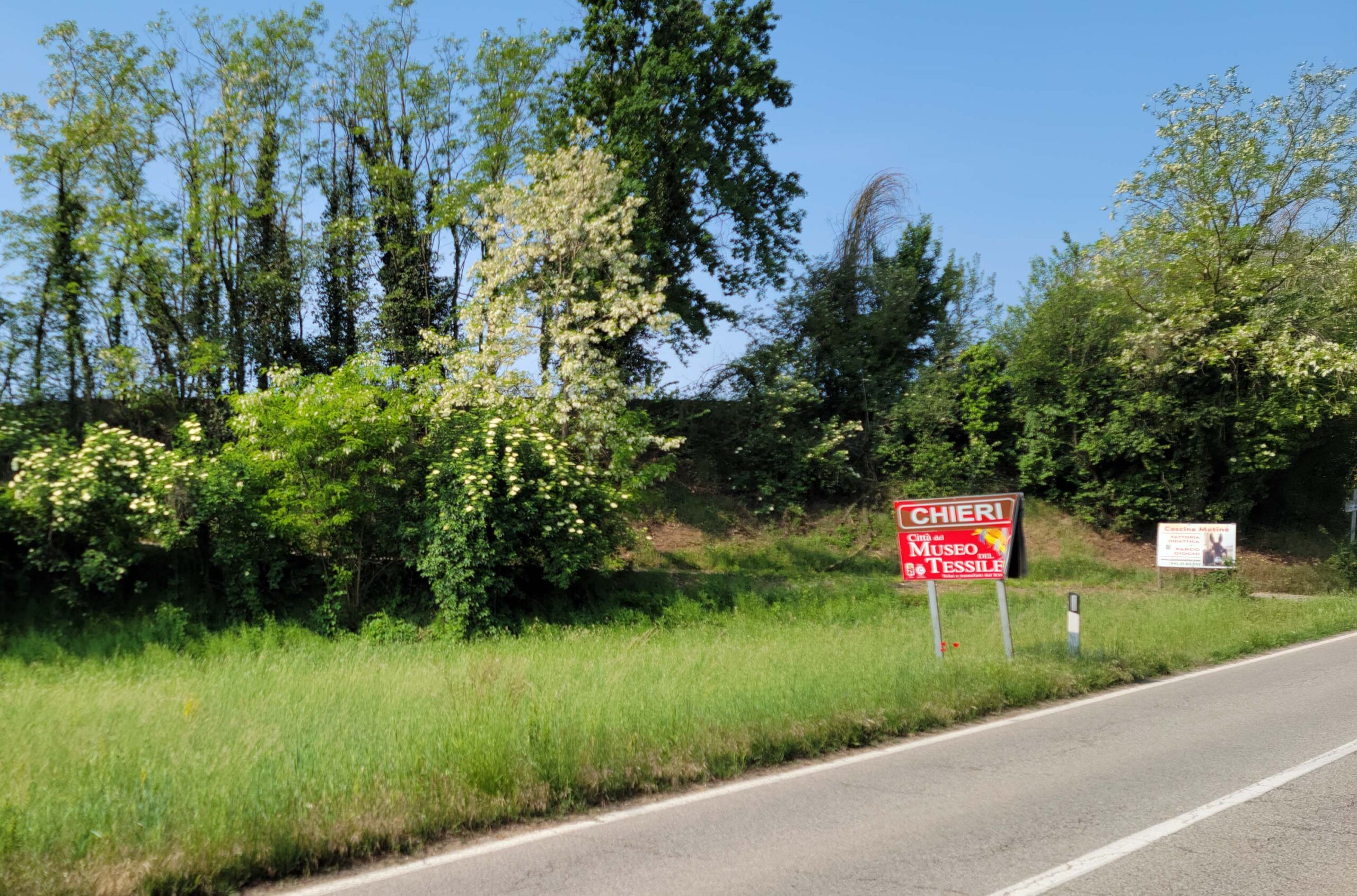
The road to Chieri
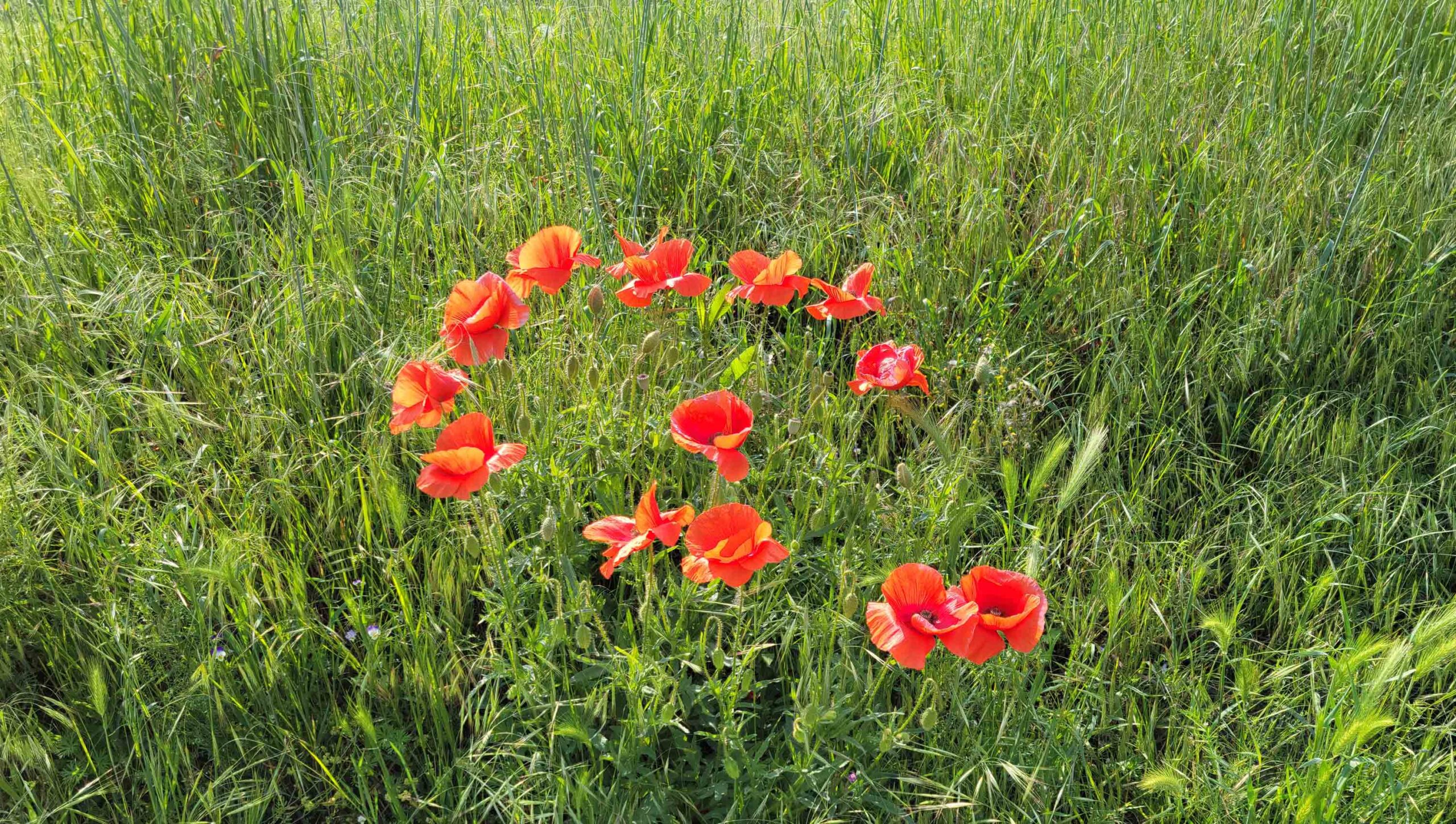
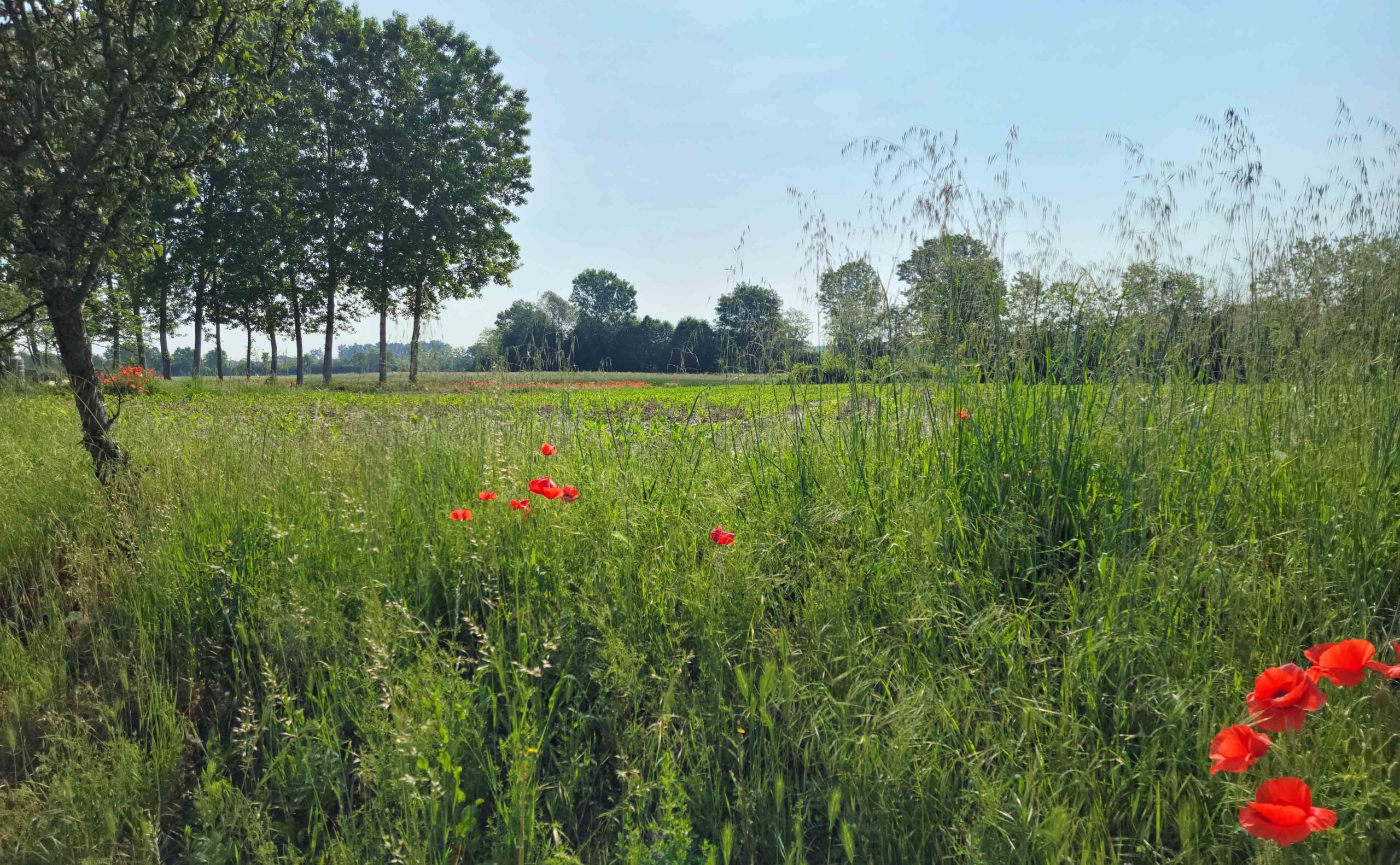
Once outside Turin and out of Moncalieri, it is a nice slow incline into Chieri on SP122 where one can keep a moderate pace until you reach the outskirts of the town. Though I did not enter the town directly and take pictures, it is your typical Italian town connected by one State and a few Local roads. The bucolic countryside reminds me of my youth and where I grew up and the views are full of poppies, which apparently are in season.
There are poppies everywhere
Poppies in the fields
Riding out from Chieri the roads get a bit more technical and there are a few modest climbs along the way, but nothing difficult for anyone in shape.
Leaving Chieri heading towards Pecetto
Finally, one last photograph going into Pecetto, where the climbs for this particular ride stop and a slow descent into Moncalieri begins.
Directions to Pecetto
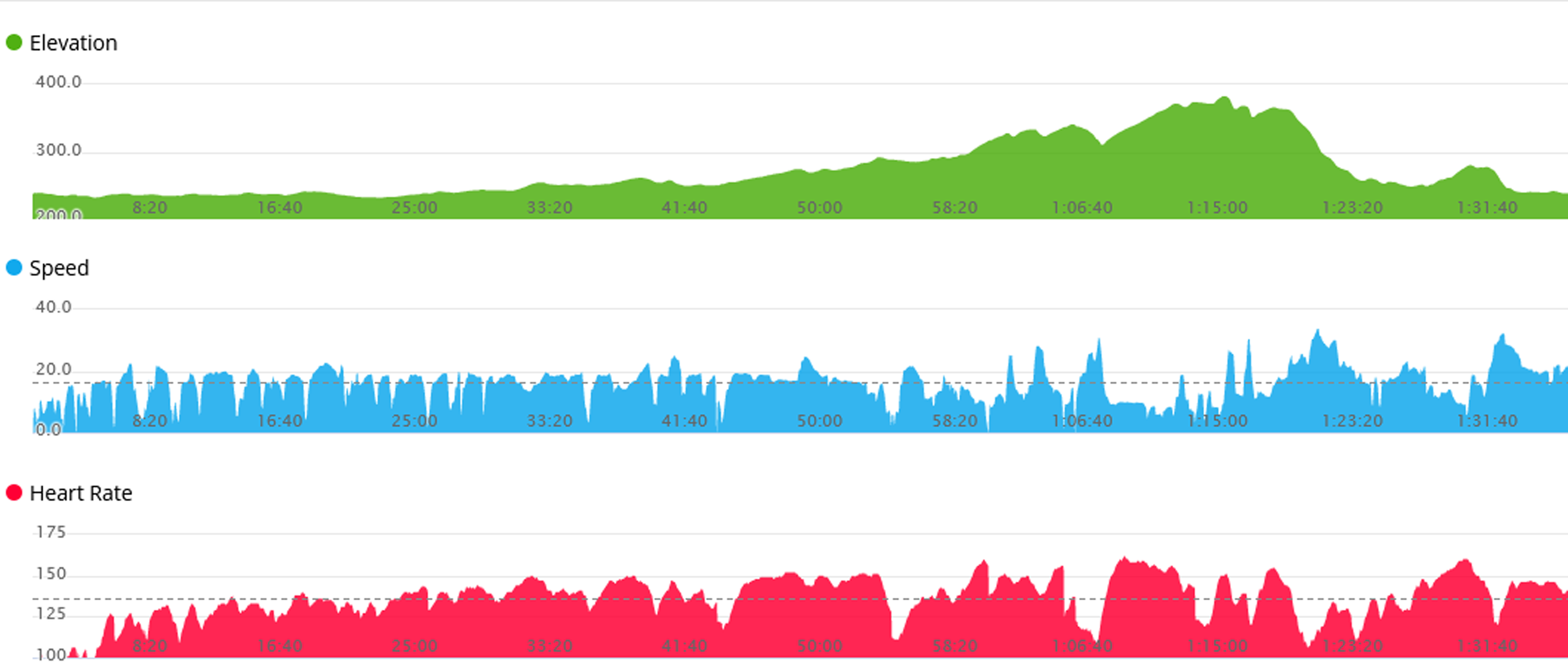
The climb into Pecetto is a bit long and about six or seven percent, so if you do not have a Garmin or similar device, you may want to prepare yourself. All in all, a very satisfying ride. Plenty of exercise, the roads are more or less in good condition, and the views are just fantastic.
Just a Garmin glimpse up to the point of descending into Moncalieri
If you ever get a chance to cycle Italy, and in particular the hills around Turin, do not pass it up. Though some roads can be a bit busy, they are no more so than in many parts of the States. So go out and enjoy, Ciao..!
Usually when visiting one of Italy’s best kept secret cities, you would think that there wouldn’t be much to do for the outdoors enthusiast. But nothing could be further from the truth. Turin has a wealth of parks sprinkled throughout the city. Most are for casual pleasure, walking the dog, strolling the baby carriage or just a good jog.
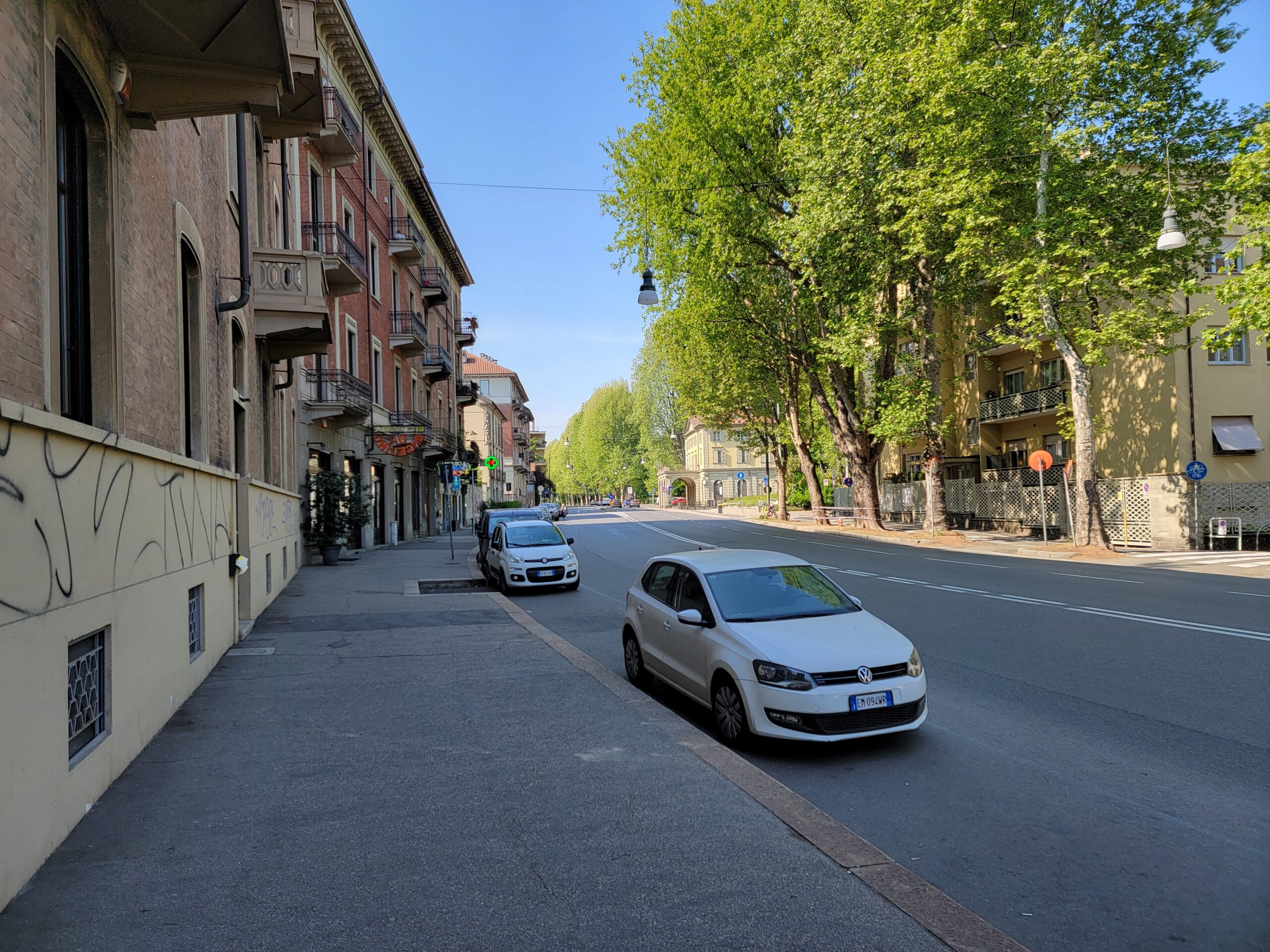
The view from the Borgo Po, Corso Moncalieri, Turin
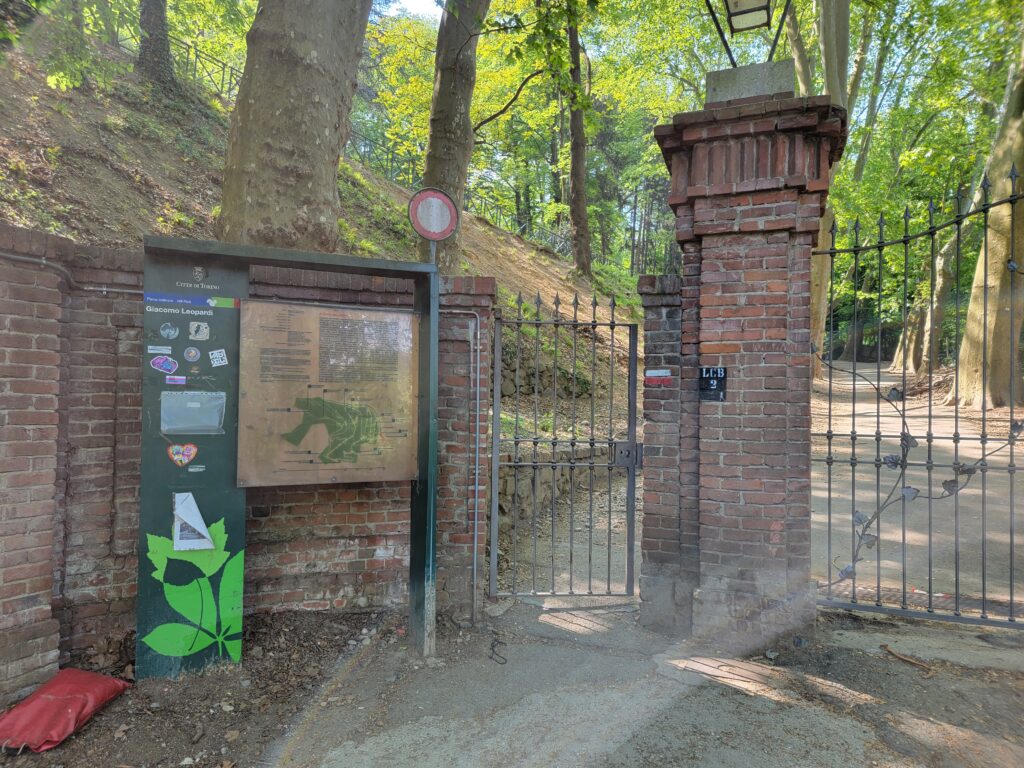
However, just a short mile and a quarter walk from our apartment in Turin is the entrance to Giacomo Leopardi Park. Here one can find a real hiking adventure, if you are so inclined.
Giacomo Leopardi Park
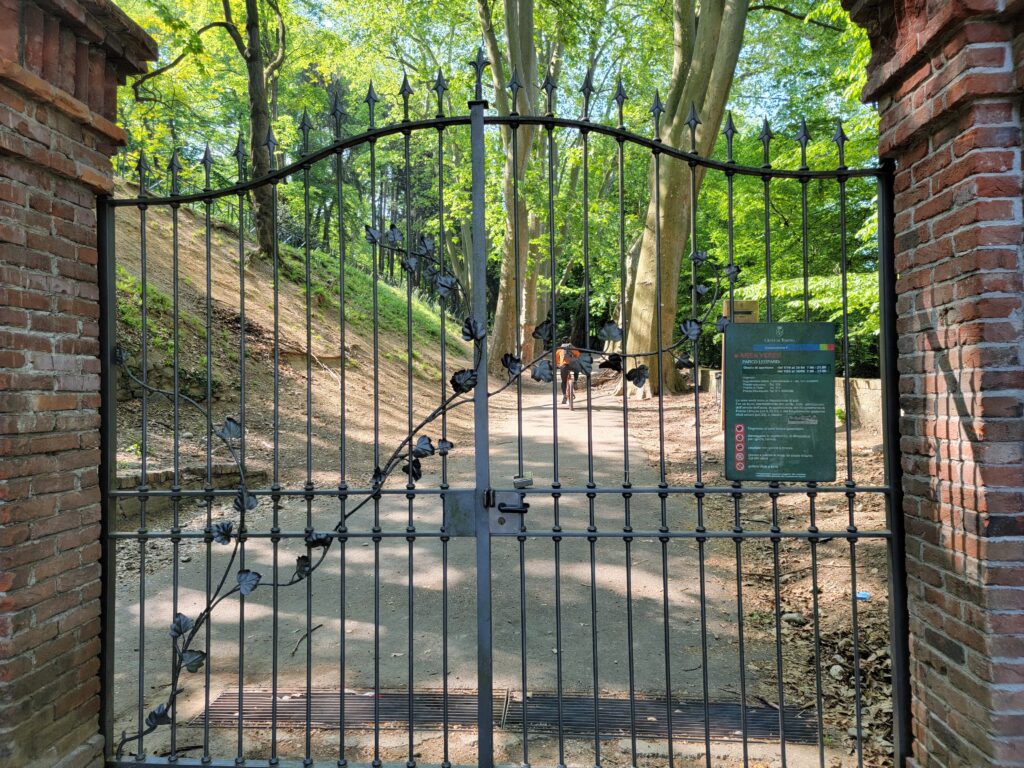
Once accessible via car, it is now only open to the public via the pedestrian access and can be entered by casual walkers, hikers and any cyclists willing to dare its steep slopes.
Giacomo Leopardi Park, Turin – Entrance
Giacomo Leopardi Park, Turin – Entrance
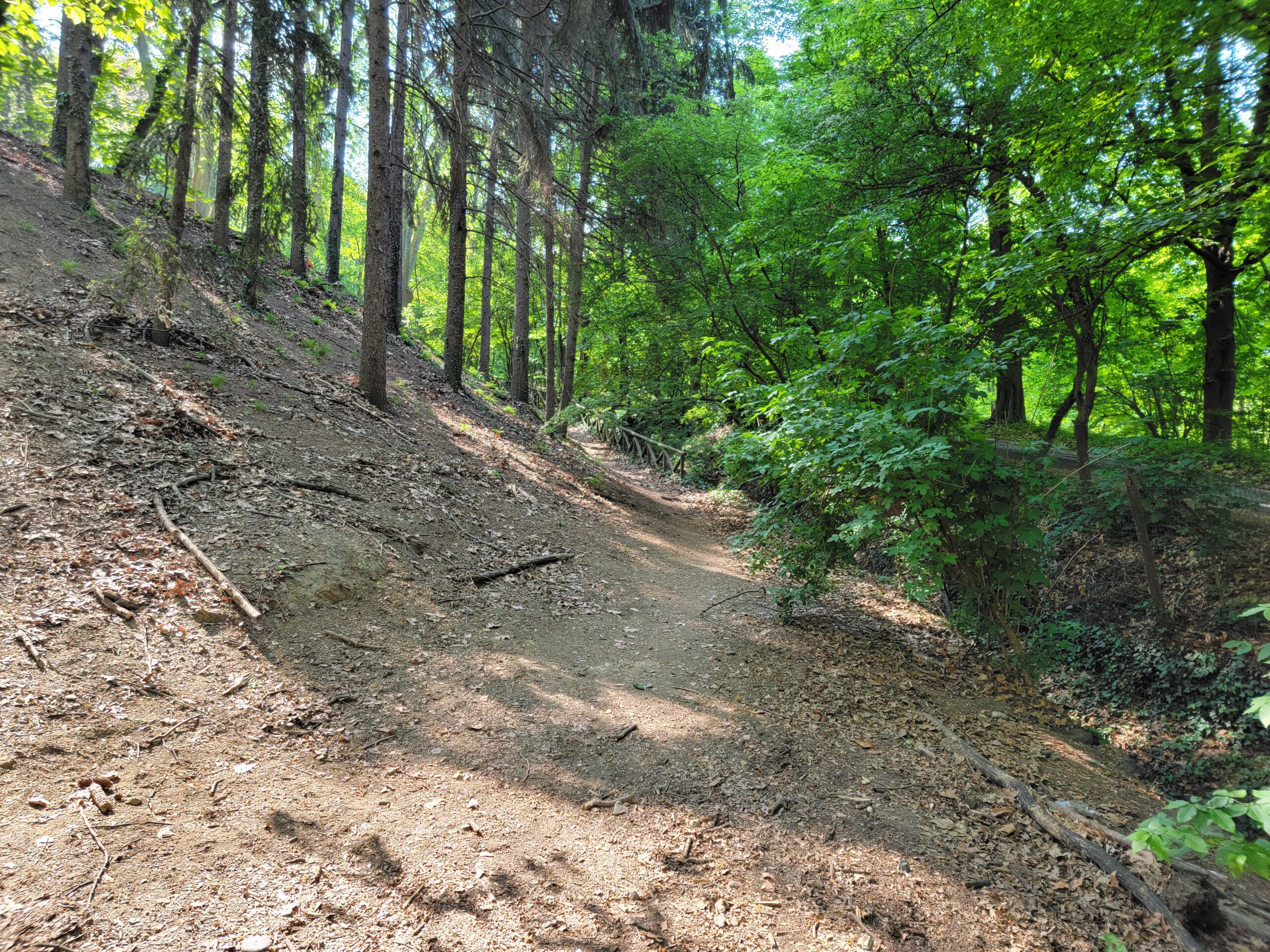
The park still maintains a roadway that may be walked, but for the more adventurous, there are several hiking trails that take a more direct route upwards.
Giacomo Leopardi Park, Turin – The Trails
Our initial thoughts were to make the entire hike up to Mount Eremo, visiting the Parco di San Vito along the way. However, Alltrails Pro, the portable phone application we use, gives only one value, instead of a range, for the length of time it might take you to reach your goal, which of course may not fit into your body’s aerobic or fitness calculus. So you may want to add additional time to any of the ‘moderated accepted hikes’, in order to account for any stops, water or photography breaks.
Hiking the road
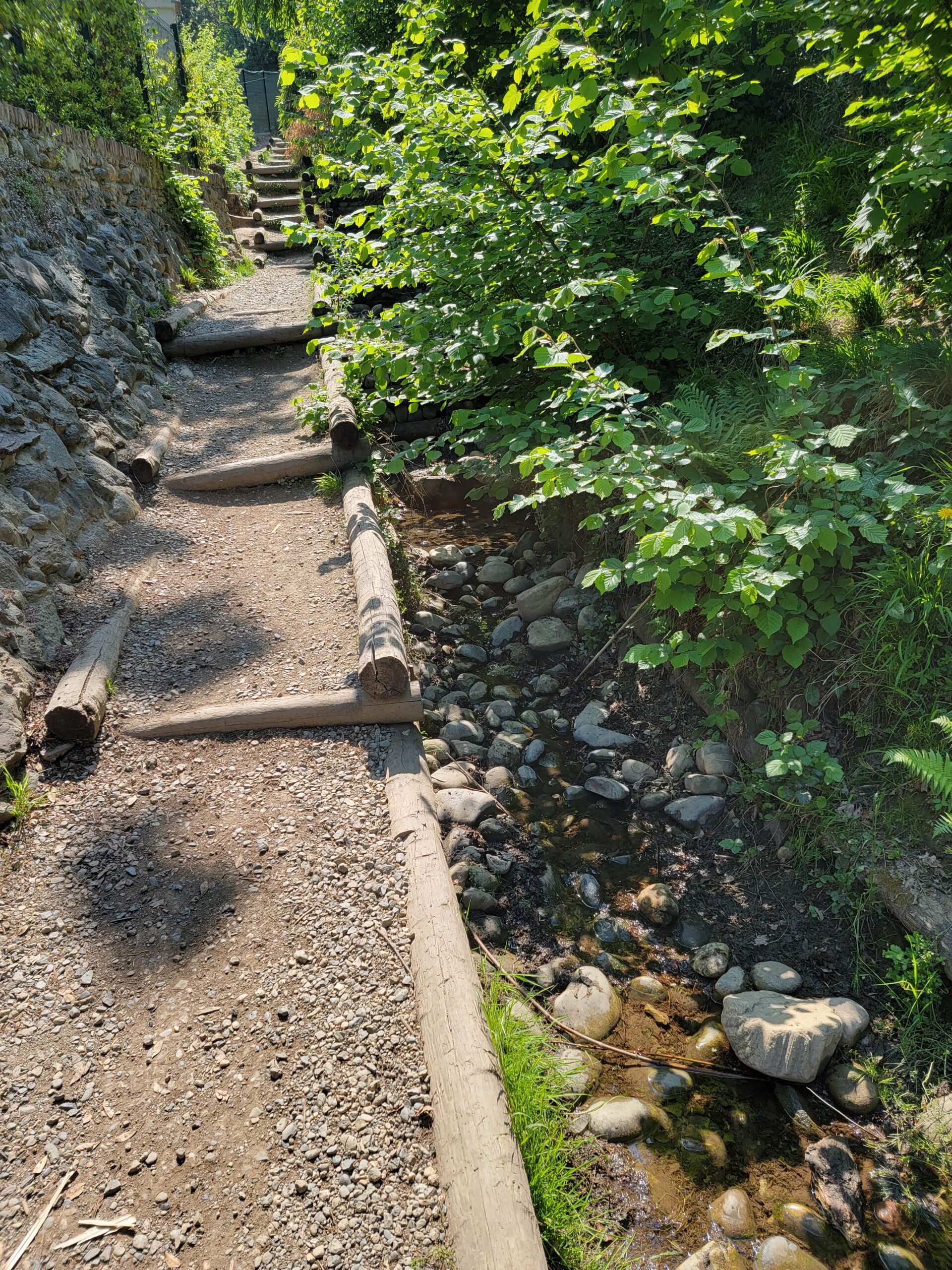
Some stairs to hike
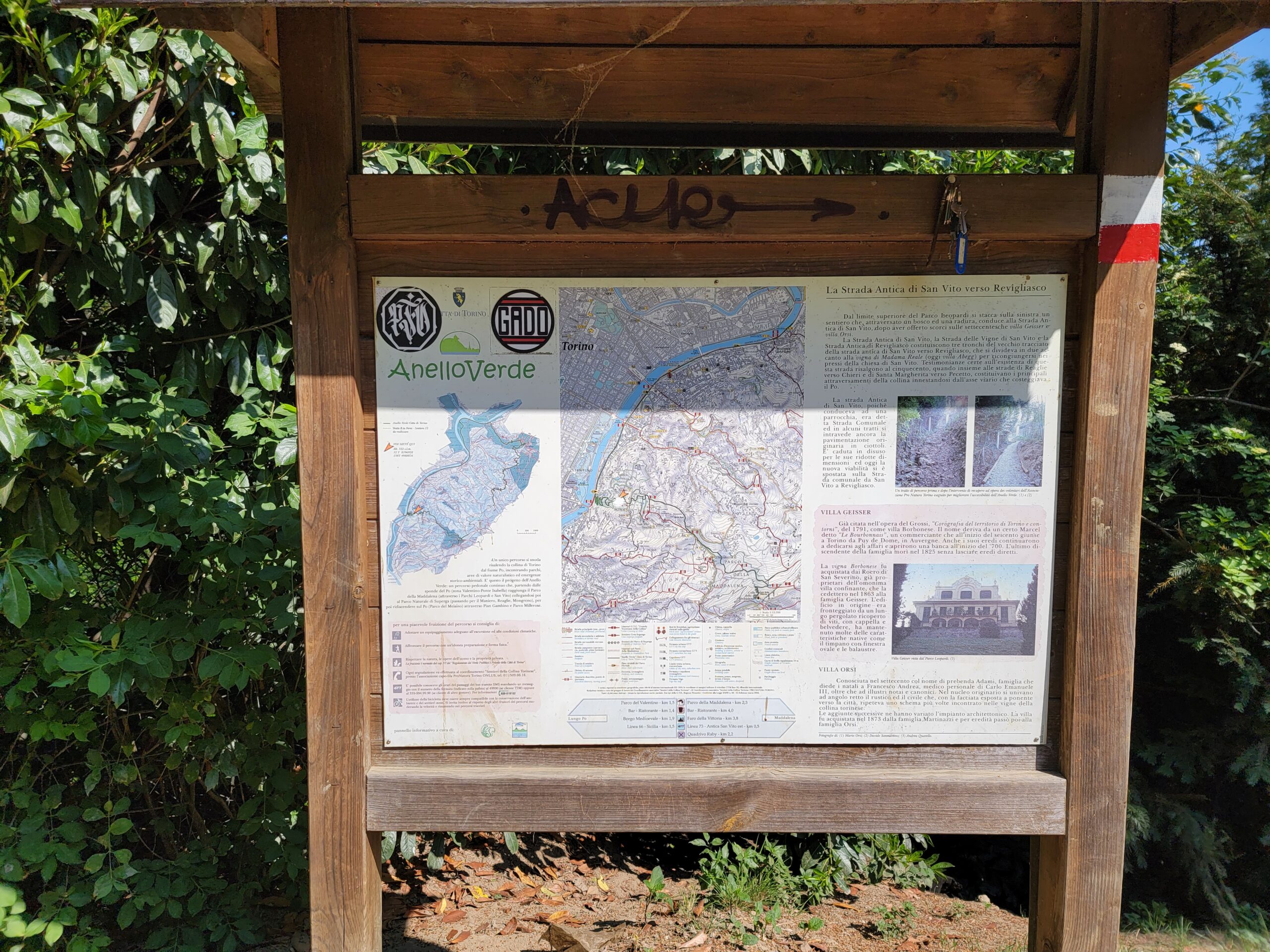
The hiking trail is well signed
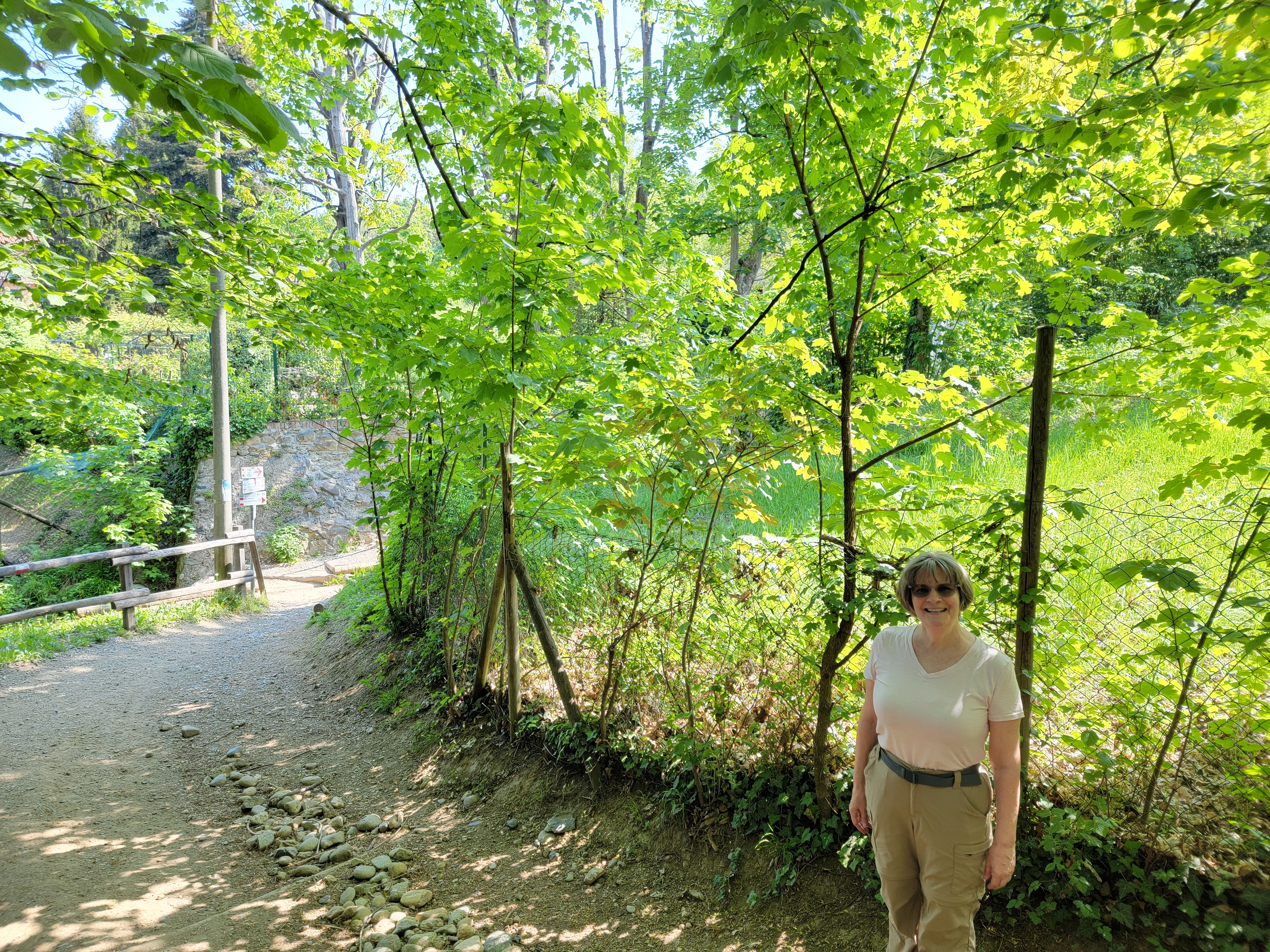
Patti on the trail
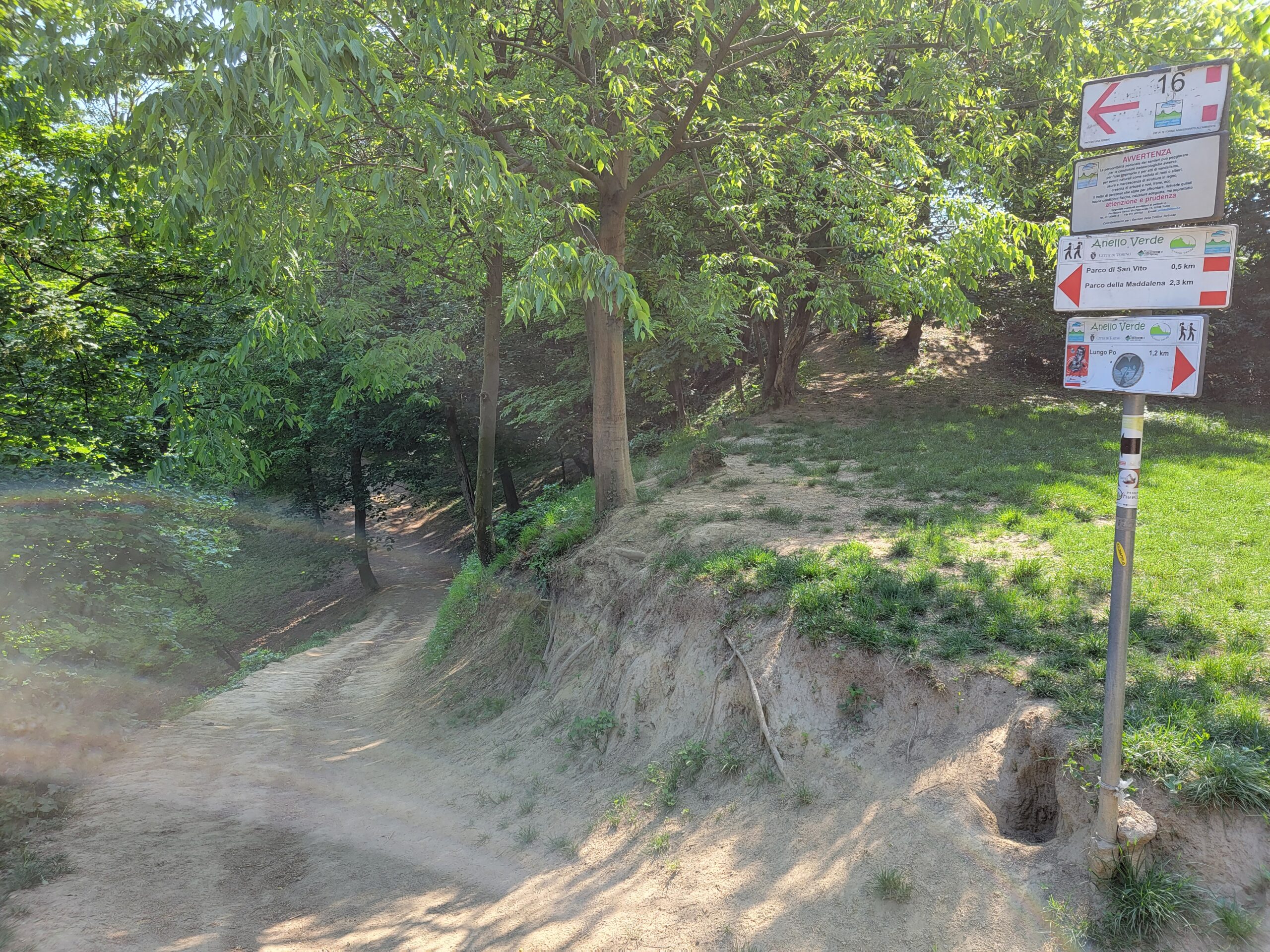
Again, the trail is well signed
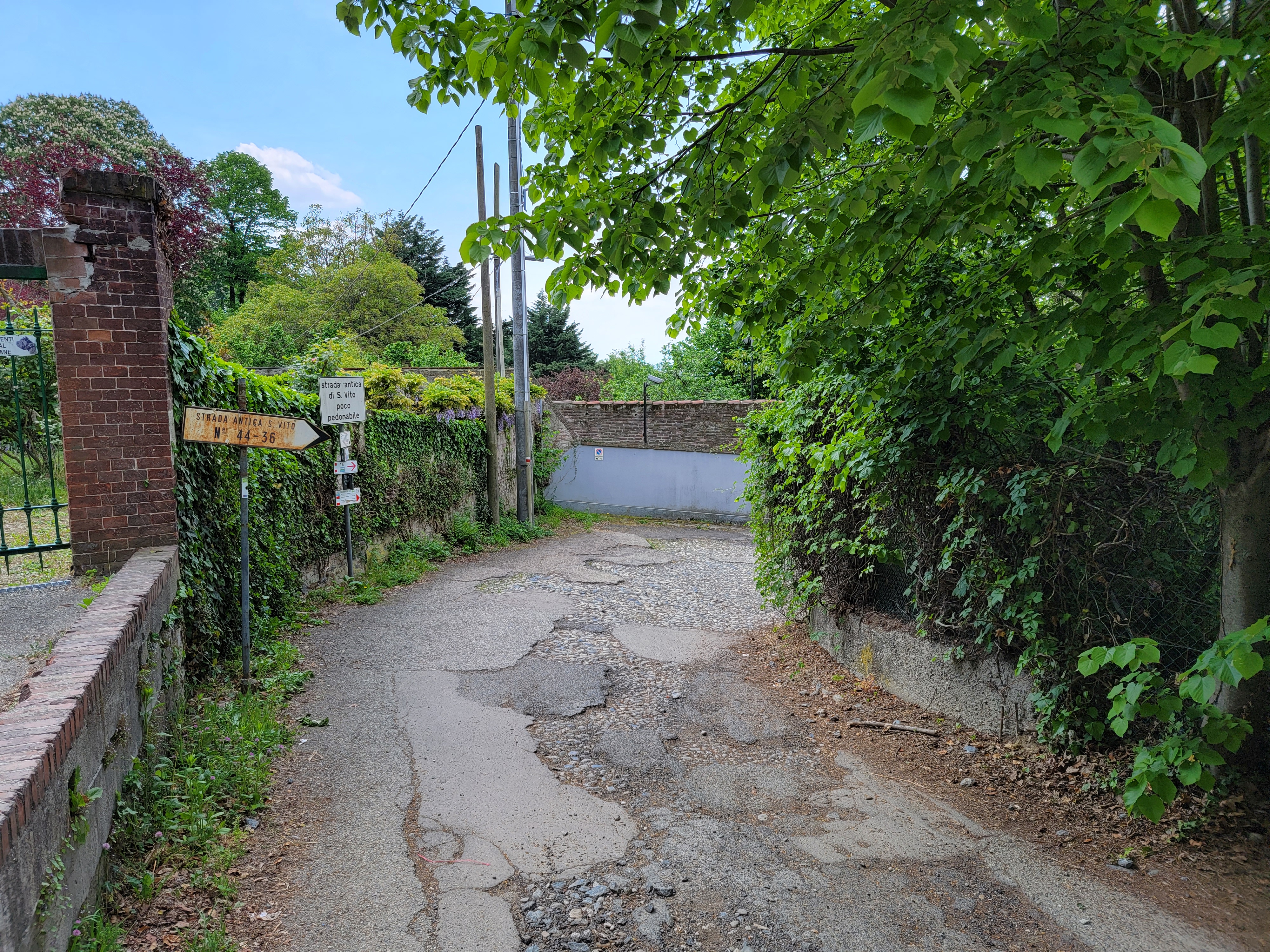
The link between this park and the next one, Parco di San Vito, entails some roads and real hiking.
San Vito Park
You will find the Parco di San Vito about a third of the way up to the Colle della Maddalena, or Mount Maddalena.
San Vito Park
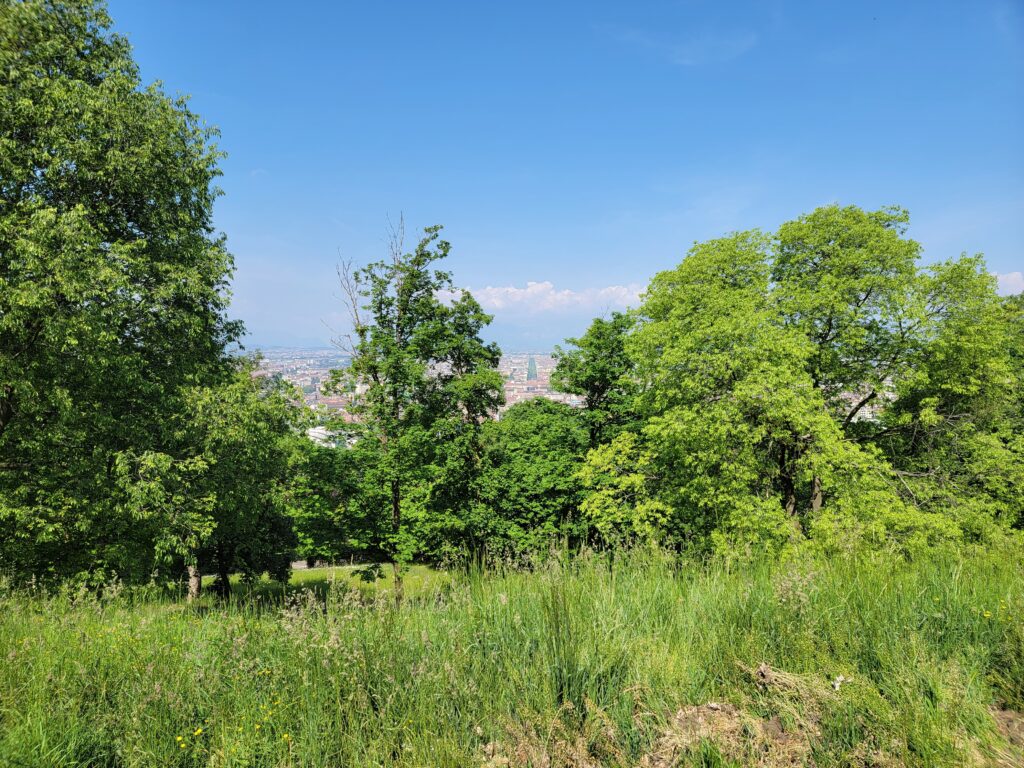
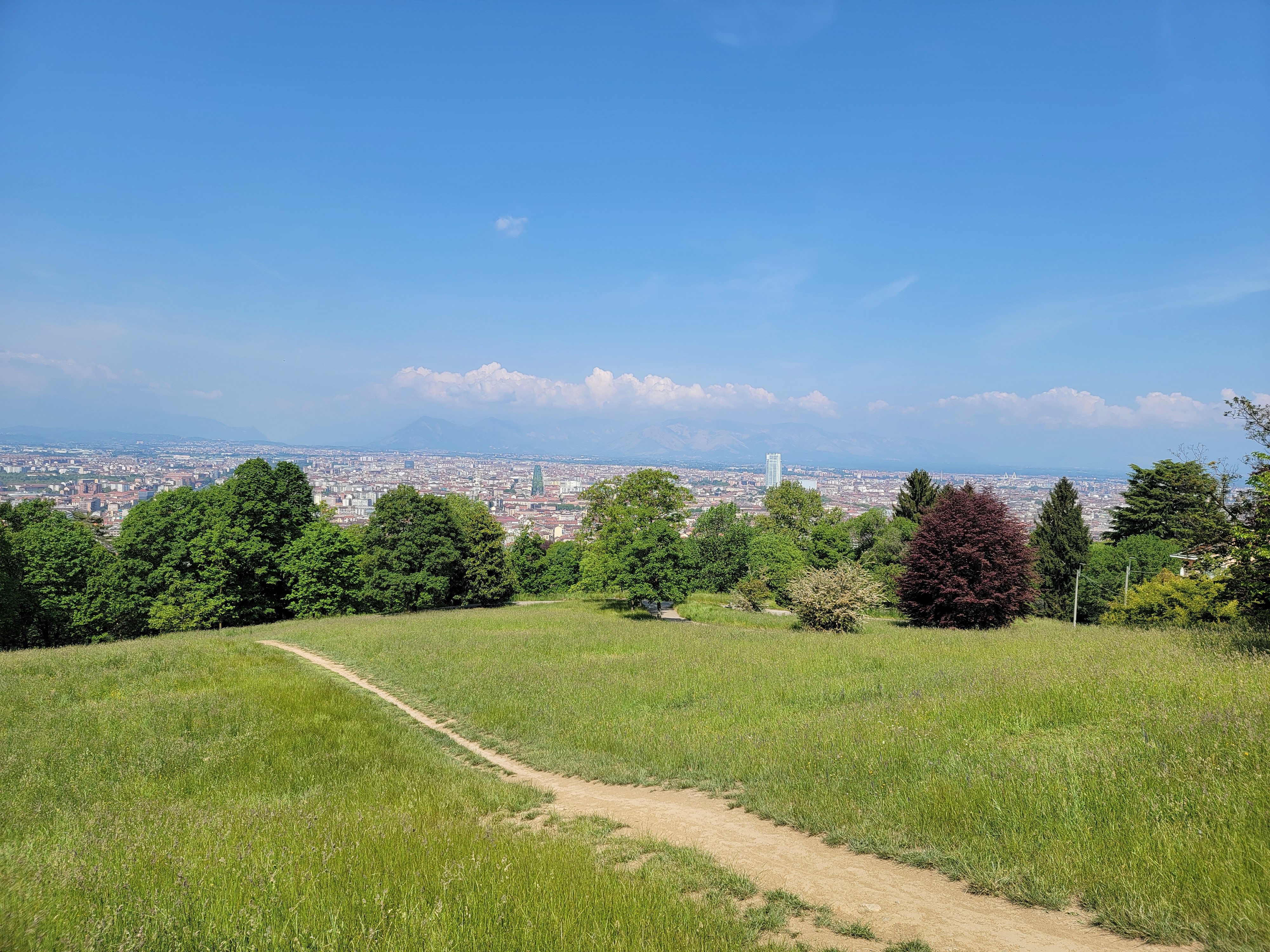
A view of the city from San Vito Park
One of the amazing things about Turin, and Italy in general, is there willingness to not poison everything. Unlike America, they do not run out and get a can of weed killer or herbicide when something springs up that does not look like a sanctioned type of grass. Hence, the fields at the park actually have many types of wild flowers, bees and crickets! So do not expect dead silence when hiking here, like you would in most city parks in America.
After this park, we hiked a bit further up the mountain towards a small picnic area located on the map. Our plans after two hours of hiking modified somewhat, since at this point we were only halfway to our original destination.
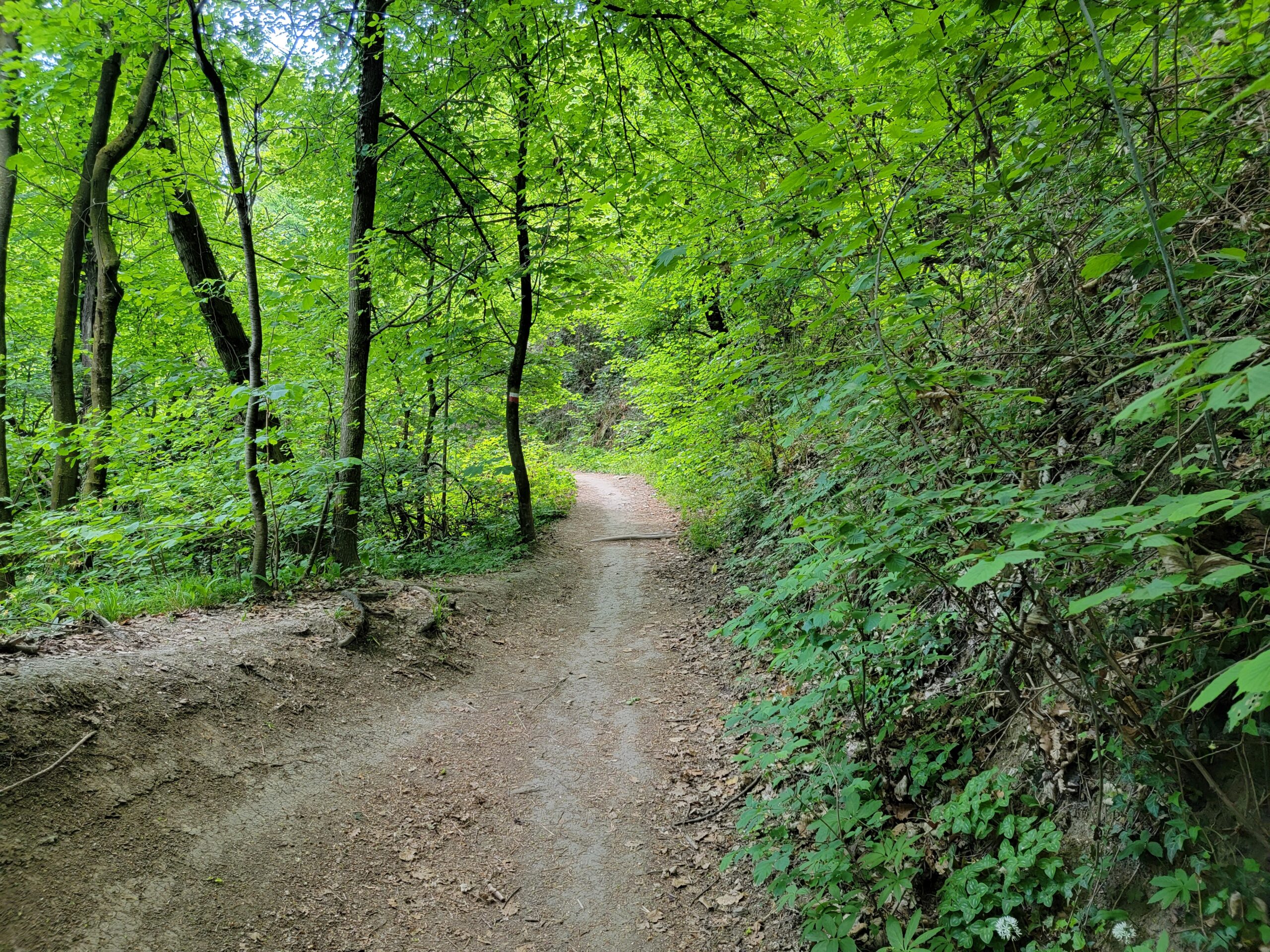
The trail above San Vito
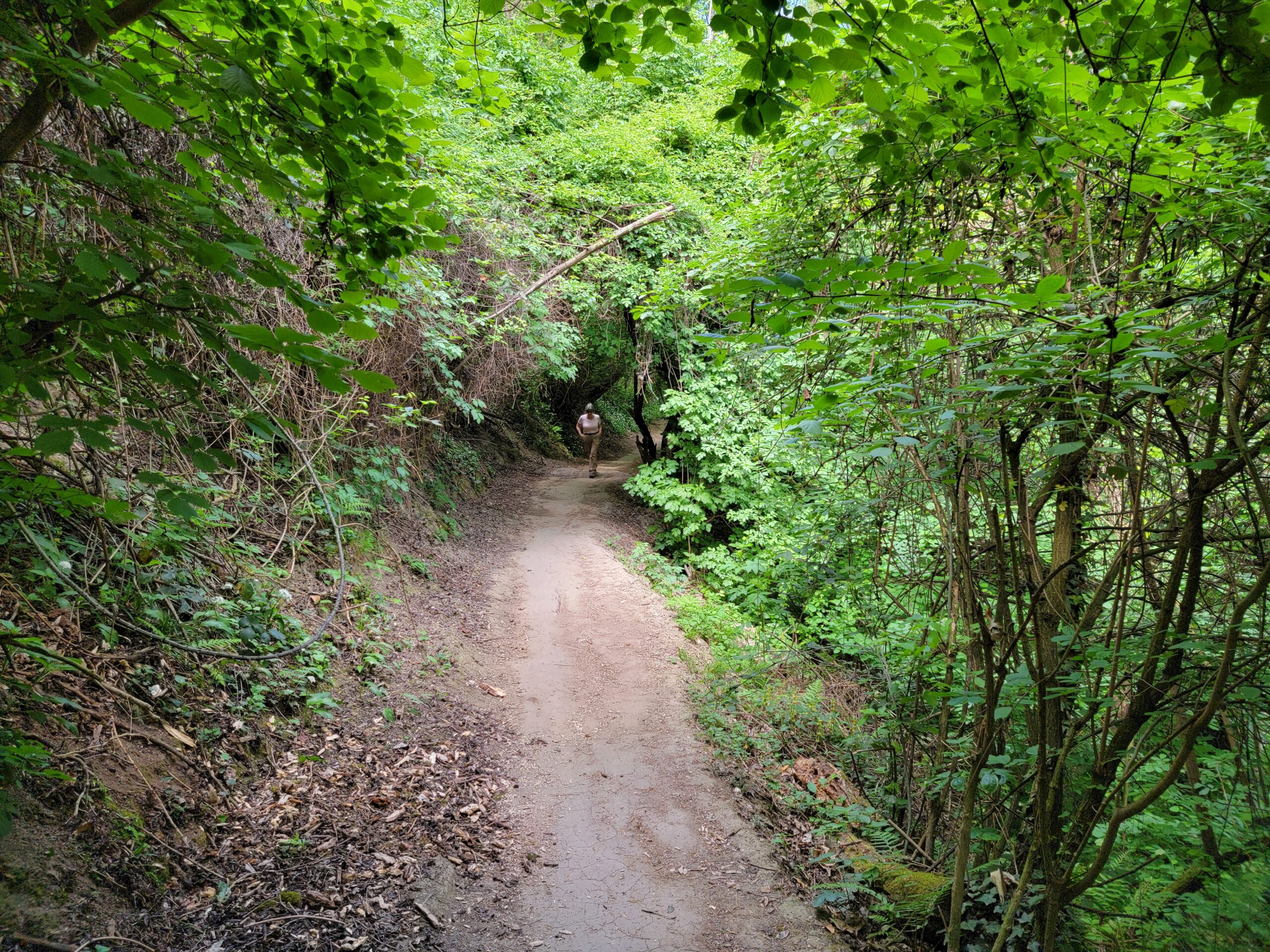
Patti hiking the trail above San Vito
Patti on the trail above San Vito, wild flowers are everywhere
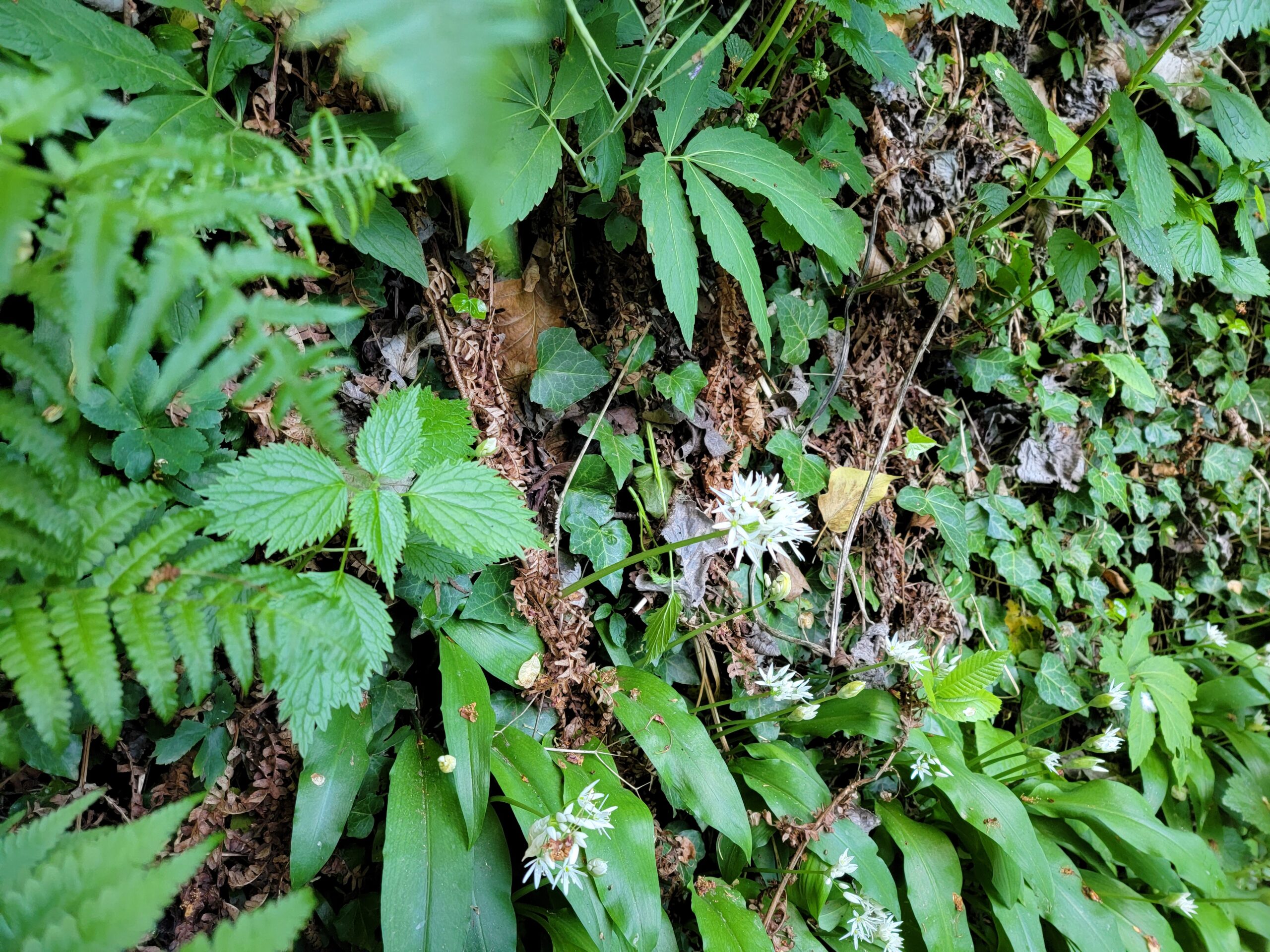
The trails up through this stretch of woods were a bit more undeveloped and natural, the floor of the woods covered with different flowers.
Flowers hiking Turin and Parc di San Vito
Flowers hiking Turin and Parc di San Vito
Flowers hiking Turin and Parc di San Vito
Flowers hiking Turin and Parc di San Vito
Flower at picnic area Bert
Flowers in picnic area Bert
Flowers hiking Turin and Parc di San Vito
Flowers hiking Turin and Parc di San Vito
Flowers hiking Turin and Parc di San Vito
Flowers hiking Turin and Parc di San Vito
The hike through the woods continued for about another three quarters of a mile or so, and we were thinking of modifying our plans for the day.
Picnic Area Bert
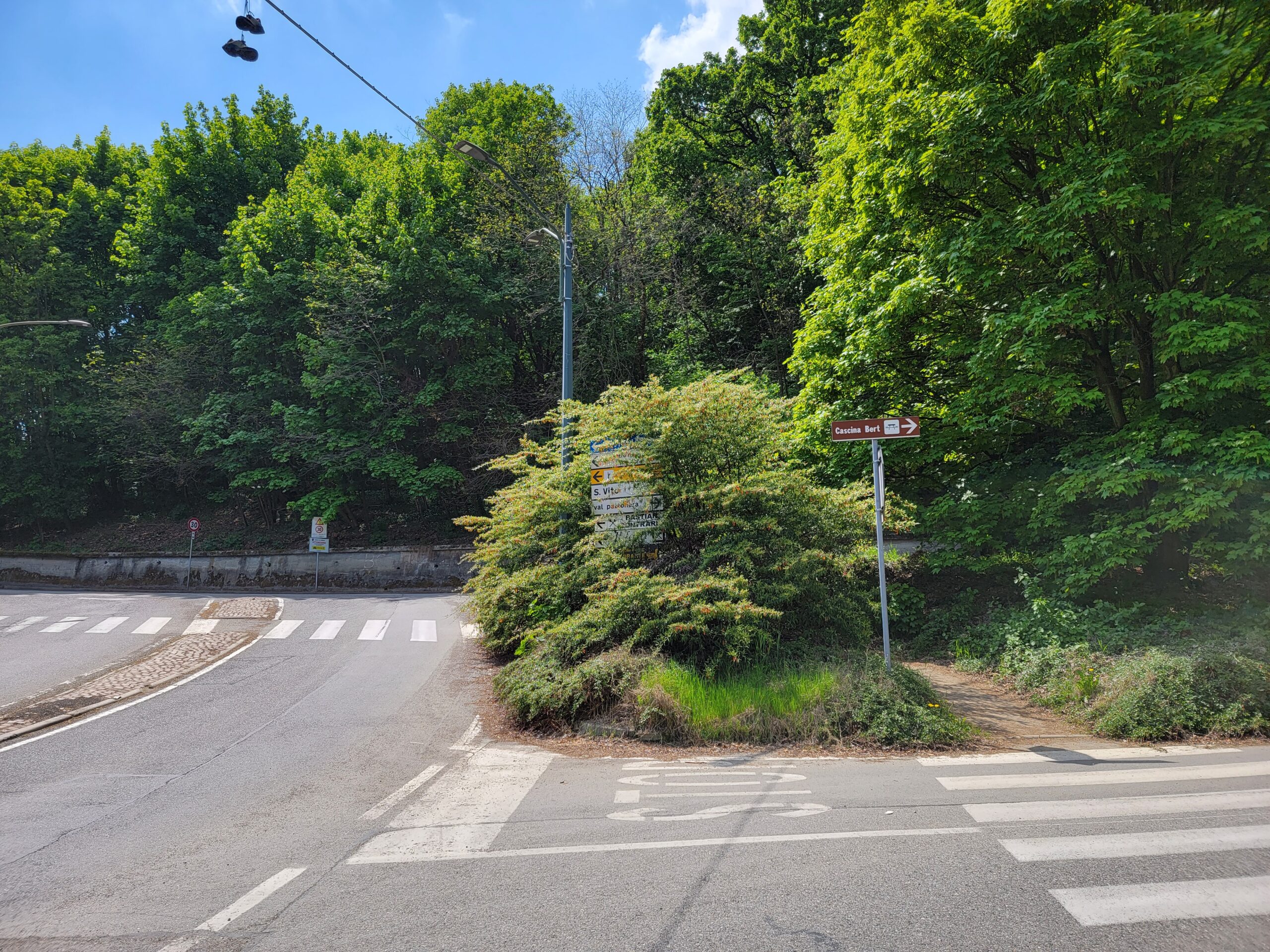
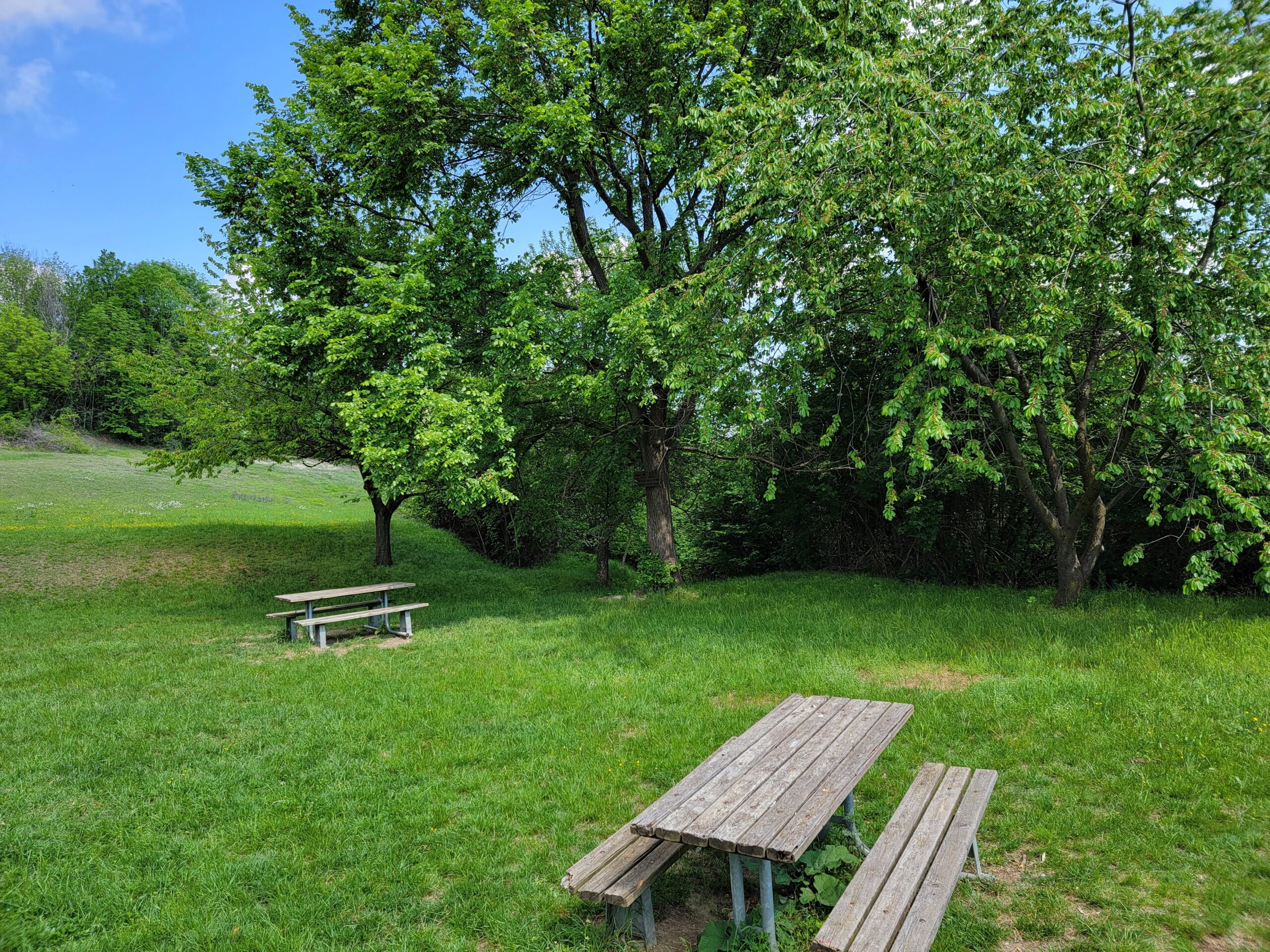
After coming off the trail and turning around a bit on Quadriva Raby, you may head back and get back on the trail from Cascina Natura Pro Natura. A small picnic area on the side of the hill with a small field, some facilities if you are inclined and a picnic bench for lunch, or just a drink of water and a cliff bar.
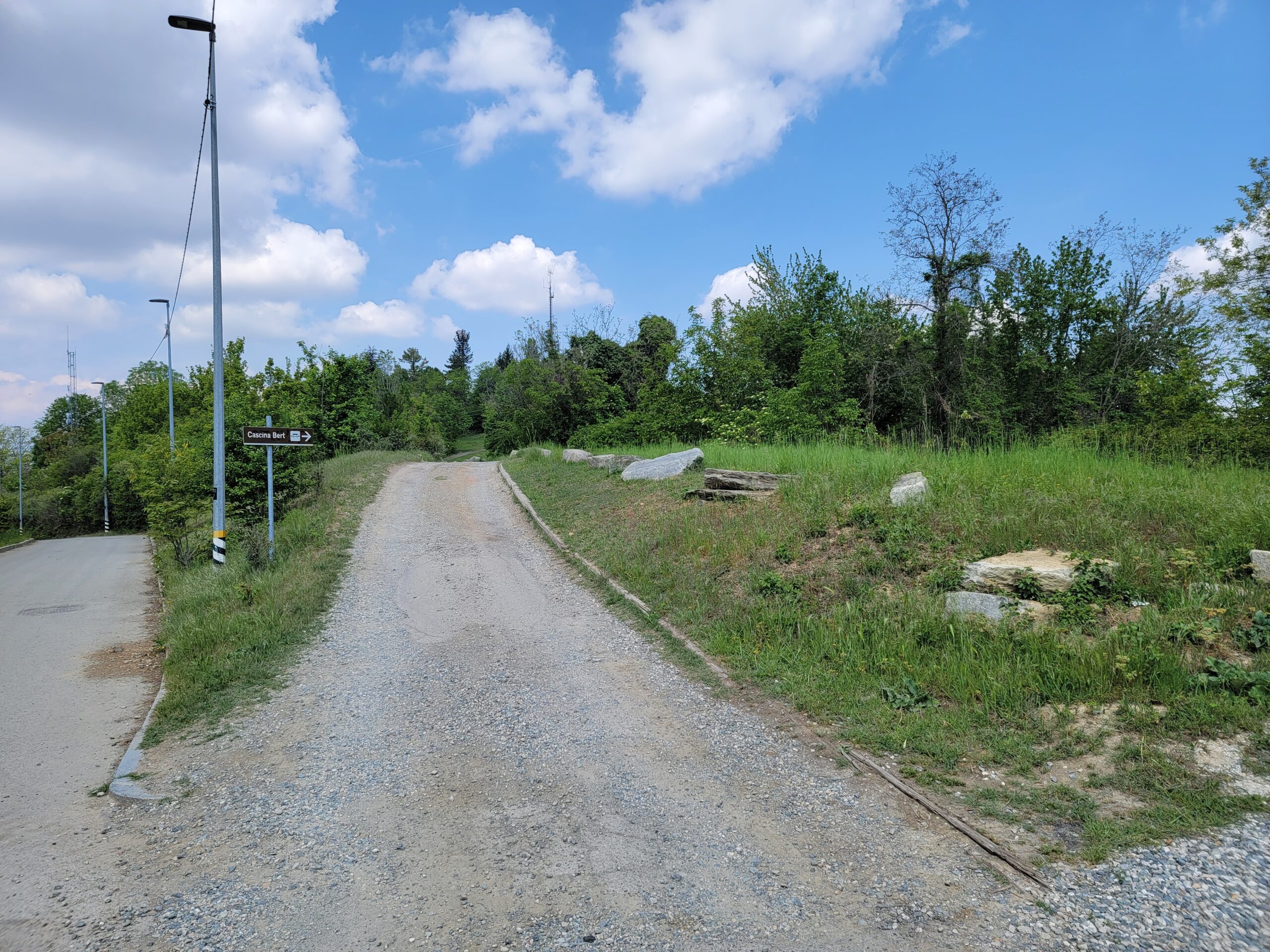
Hiking the road up to Cascina Bert
The road up to the picnic area
Picnic area – Pro Natura Torino – Cascina Bert
The trail head down is located just to the left of that last picnic bench above. A marker can be found on the tree. However, if you miss this, there are signs and a map by the parking lot and buildings that are over to the right.
Bird Song and Fifteen Seconds of Calm
This is actually an amazing hike and you will find yourself stopping frequently just to enjoy the quiet and being out of the city for some respite.
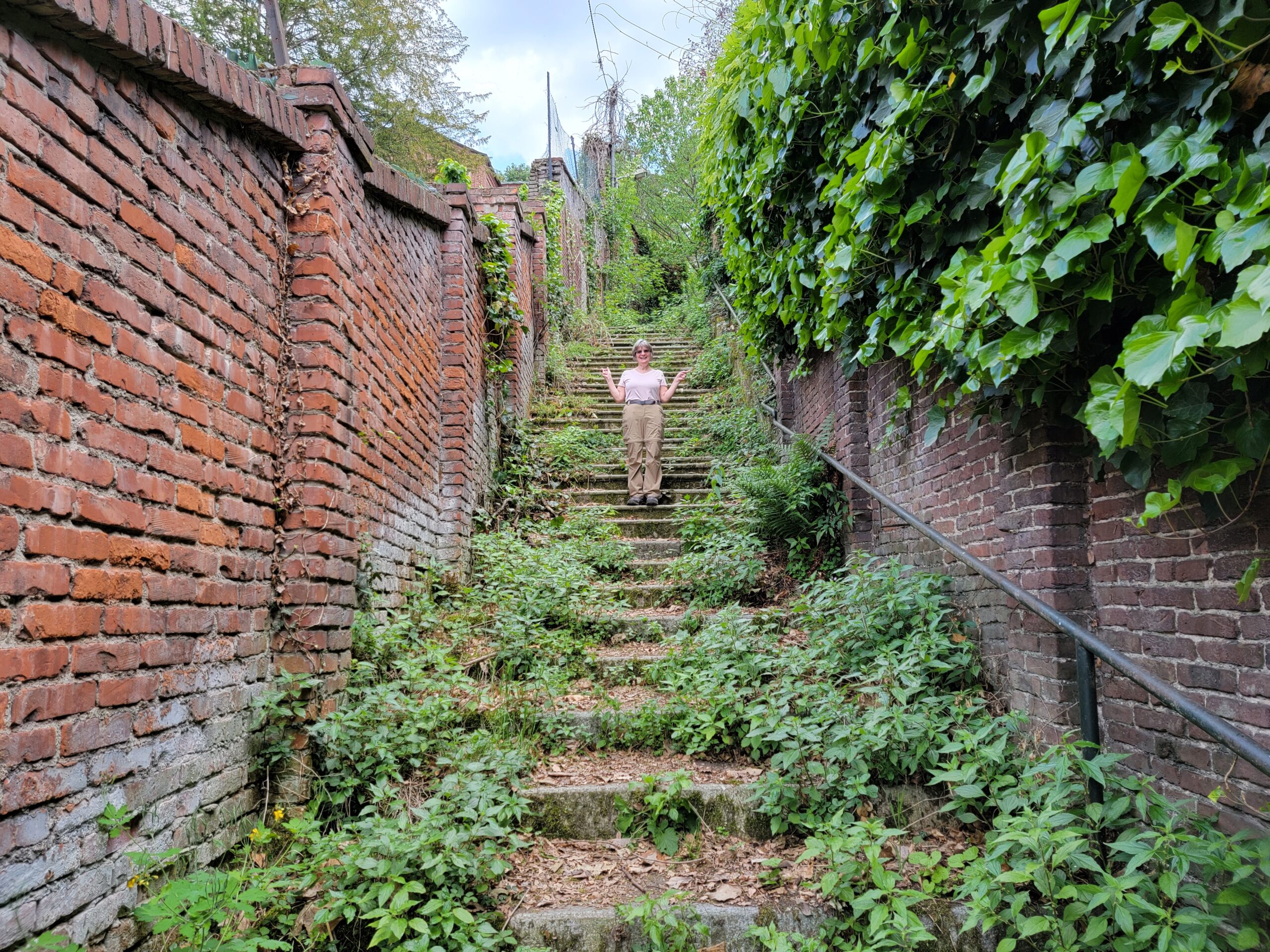
Patti on a city stairwell in the Borgo Po area
Upon returning to Turin after about three and a half hours of hiking bliss, we took some shortcuts and discovered to what extreme Turin is willing to let some things go natural. Just goes to show, without humans around just how fast nature is willing to reassert itself.
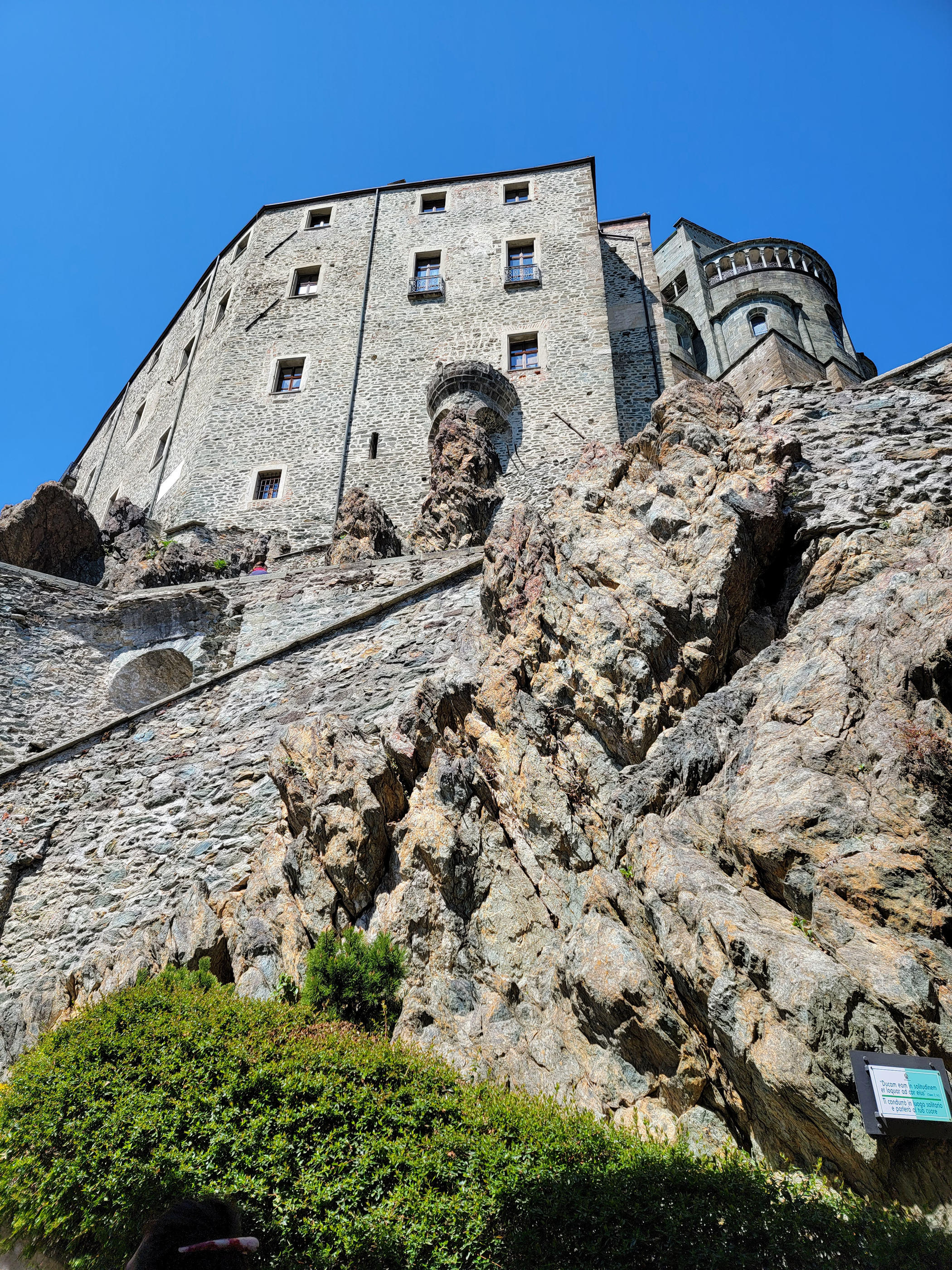
For those wanting and willing to see the Sacra di San Michele and experience this great church and its views, one must hike the three or so kilometers and one kilometer ascent in order to really enjoy what the builders had accomplished here. Not only is it a feat of Middle-Ages engineering and stubbornness, its shear existence defies rationality, and so may I add hiking up to it. Well maybe not exactly, but you should be prepared. We saw many individuals when we were descending wearing the wrong type of shoes, etc. More on that later.
Sant’ Ambrogio – Getting There
A thirty three minute train ride from Turin’s train station Porta Nuova will get you to Sant’ Ambrogio and the beginning of your climb. Let me add, before we begin, that you may drive up to the church; but then you would be among the majority of people there and just mere tourists.
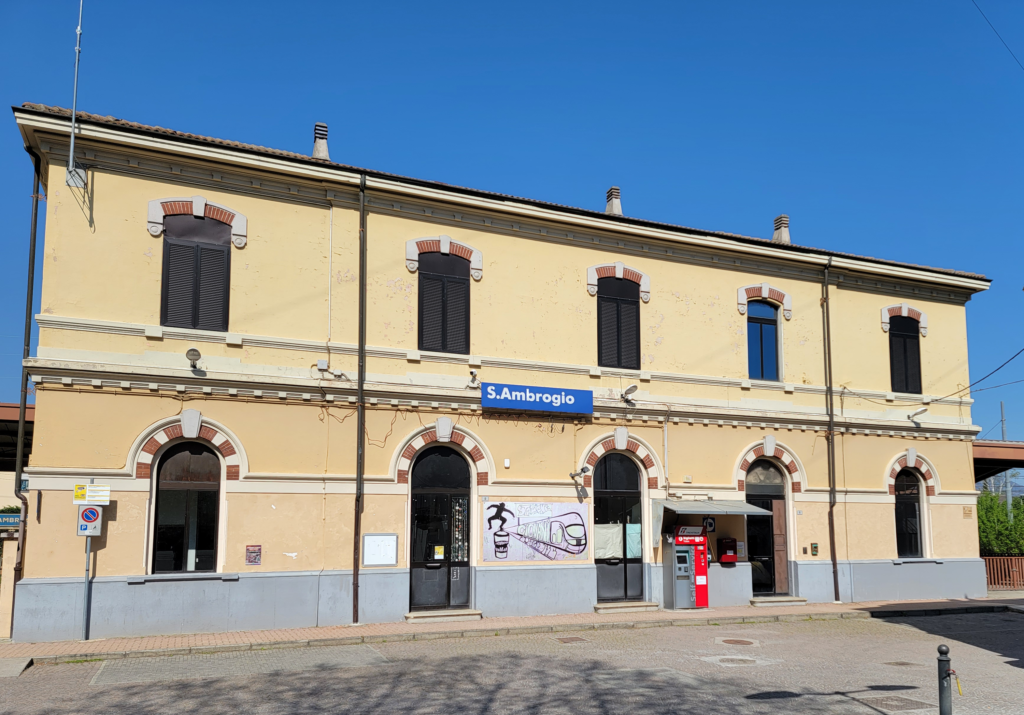
The train station – San Ambrogio
The train station is spartan and leaves you off on track one to enter this small town or hamlet directly. Returning you will have to find the stairwell to the right of the train station and walk under the tracks.
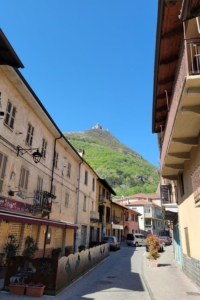
First sight of Sacra di San Michele from train station – Sant Ambrogio
Welcome Sign – Sant Ambrogio
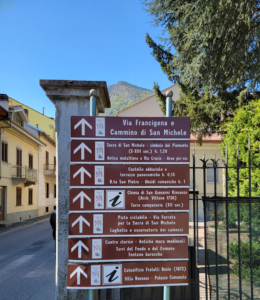
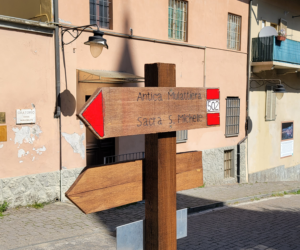
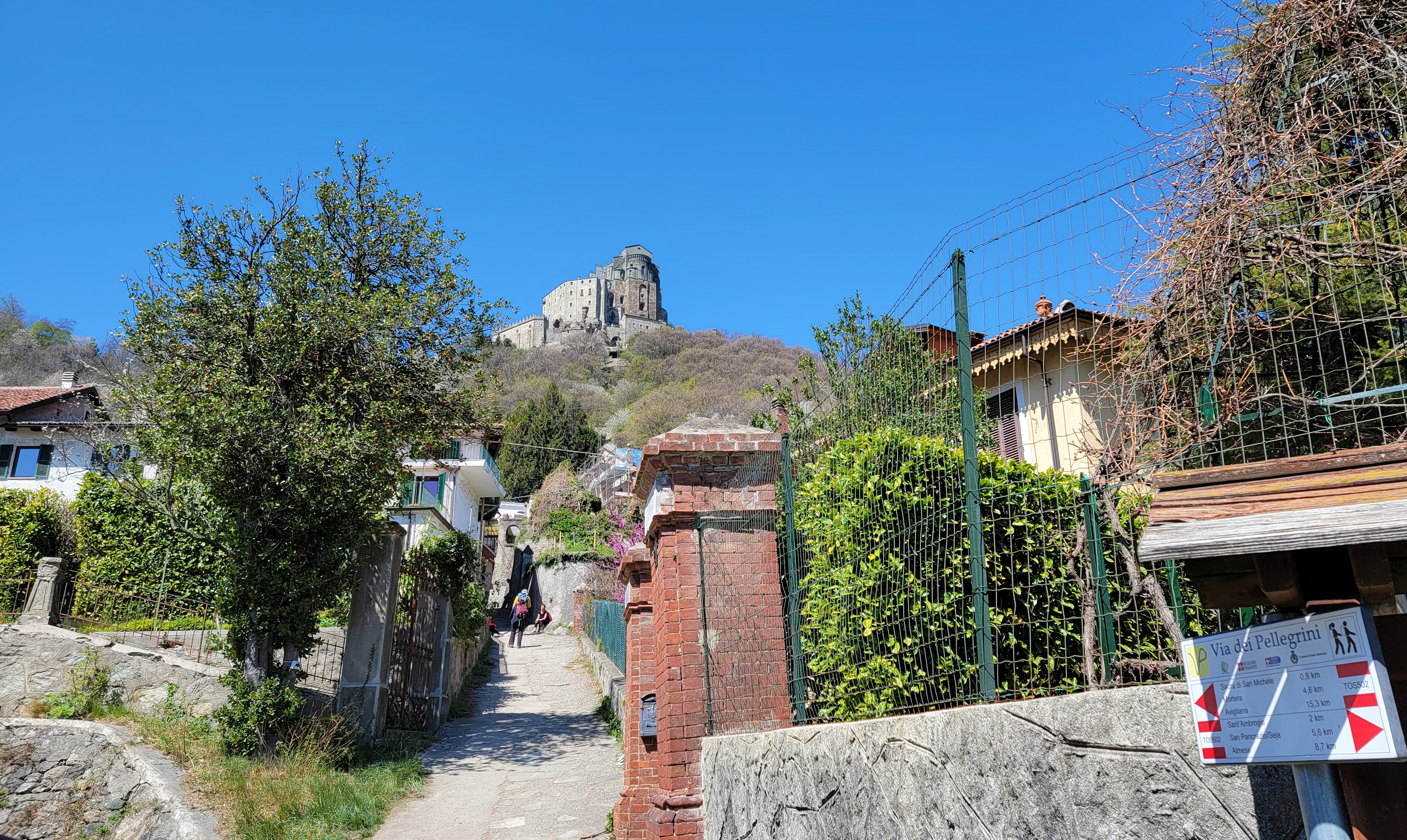
Hiking Trail Signs – Sant Ambrogio
Sacra di San Michele from inside the town – Sant Ambrogio
A sleepy town on Pasquetta (day after Easter) – Sant Ambrogio
A view from the Church of Saint Giovanni Vincenzo – Sant Ambrogio
The trail starts and the Church of Saint Roch – Sant Ambrogio
Follow the signs for two hours – Sant Ambrogio
We arrived the day after Easter Sunday, or as the remembrance in Italy has it for Roman Catholics, Pasquetta [1]Also called, Lunedì dell’ Angelo, which is meant to remember the women of the sepulcher, including Mary Magdalene, who were comforted by an angel when they returned to Jesus’ tomb and found it … Continue reading The town was more or less empty, so our ideas about a quick climb up and back and an early lunch soon vanished.
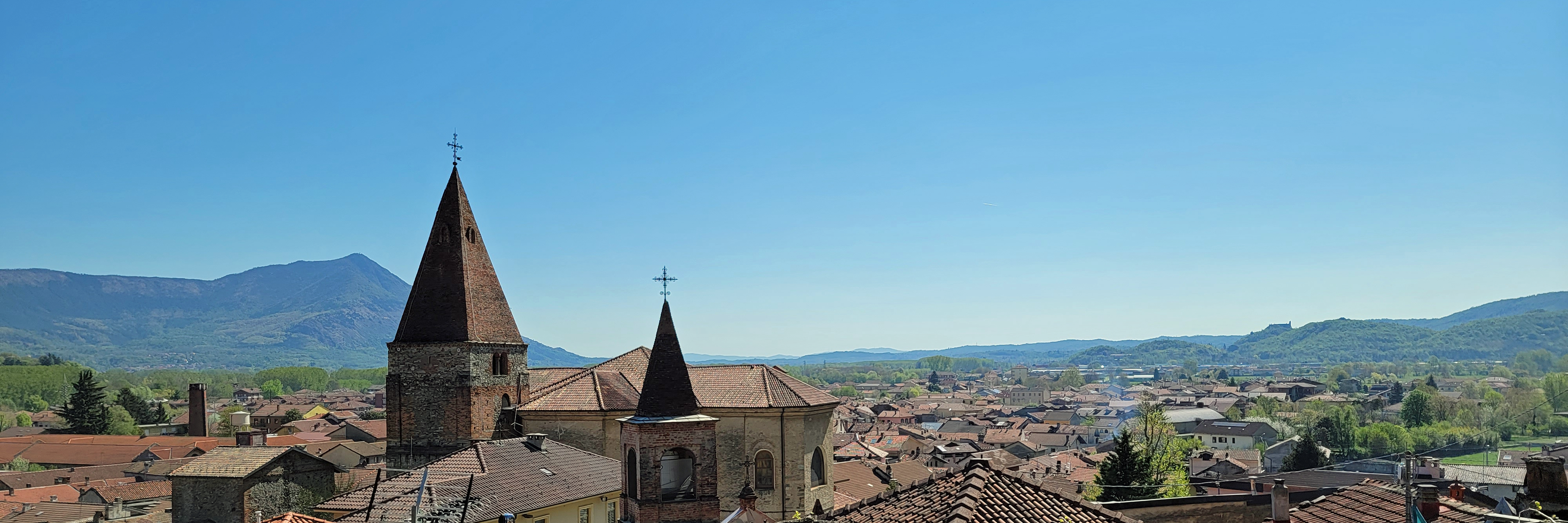
On the way up, the rooftops of the town – Sant Ambrogio
The walk through the town was short and without incident, in fact, we were mostly accompanied by the individuals who left the train with us, residents of the town having already left for the long weekend or enjoying amenities inside and their extra day off.
Parco Naturale Orsiera – Sentiero Trail 502
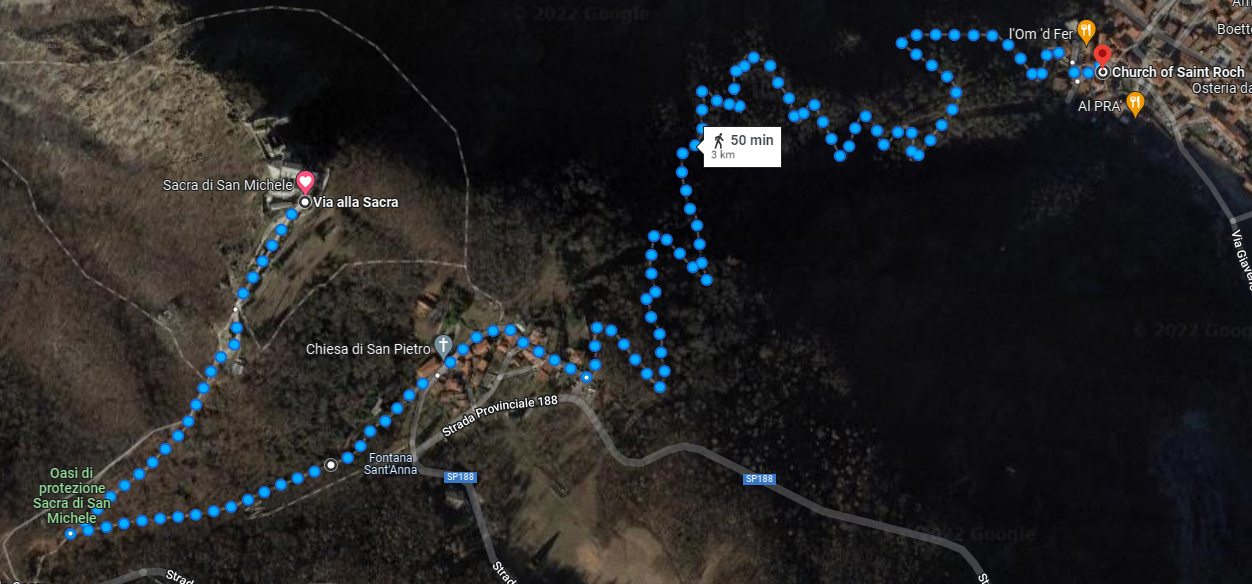
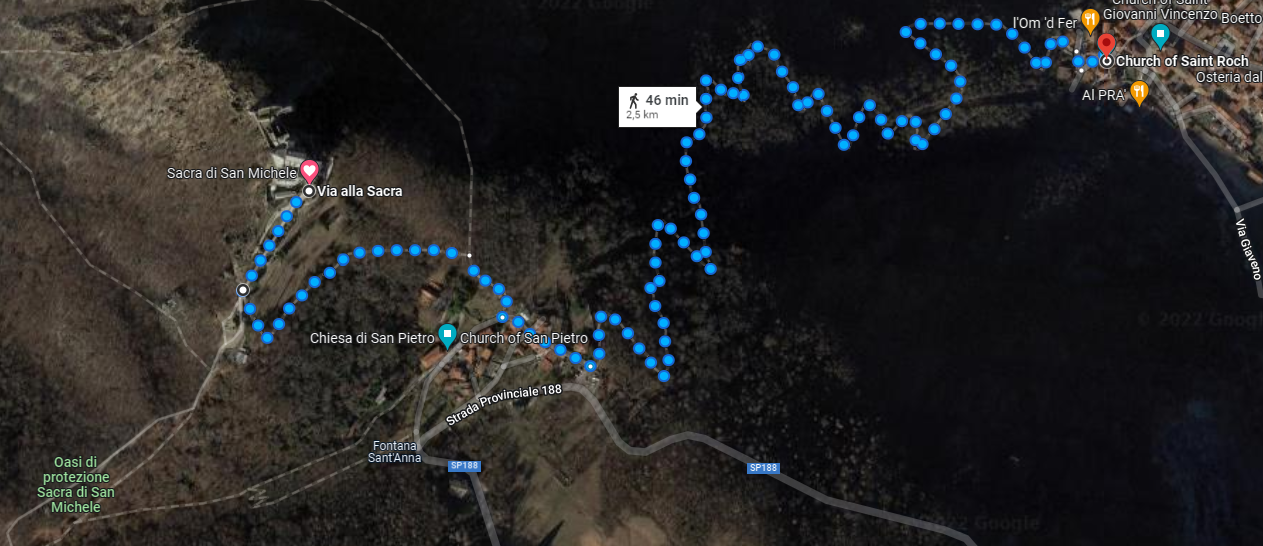
Using the Sentiero Trail 502, or TOS 502, we quickly left the town and started our ascent up the most north-eastern mountain or hill of the Parco Naturale Orsiera. An almost one kilometer ascent for three kilometers with slopes ranging in steepness of three to twenty percent, and I would conjecture most were in the double digits.
This 3 km rises 1000 meters and takes about 1 and a half to 2 hours to hike – Trail Map
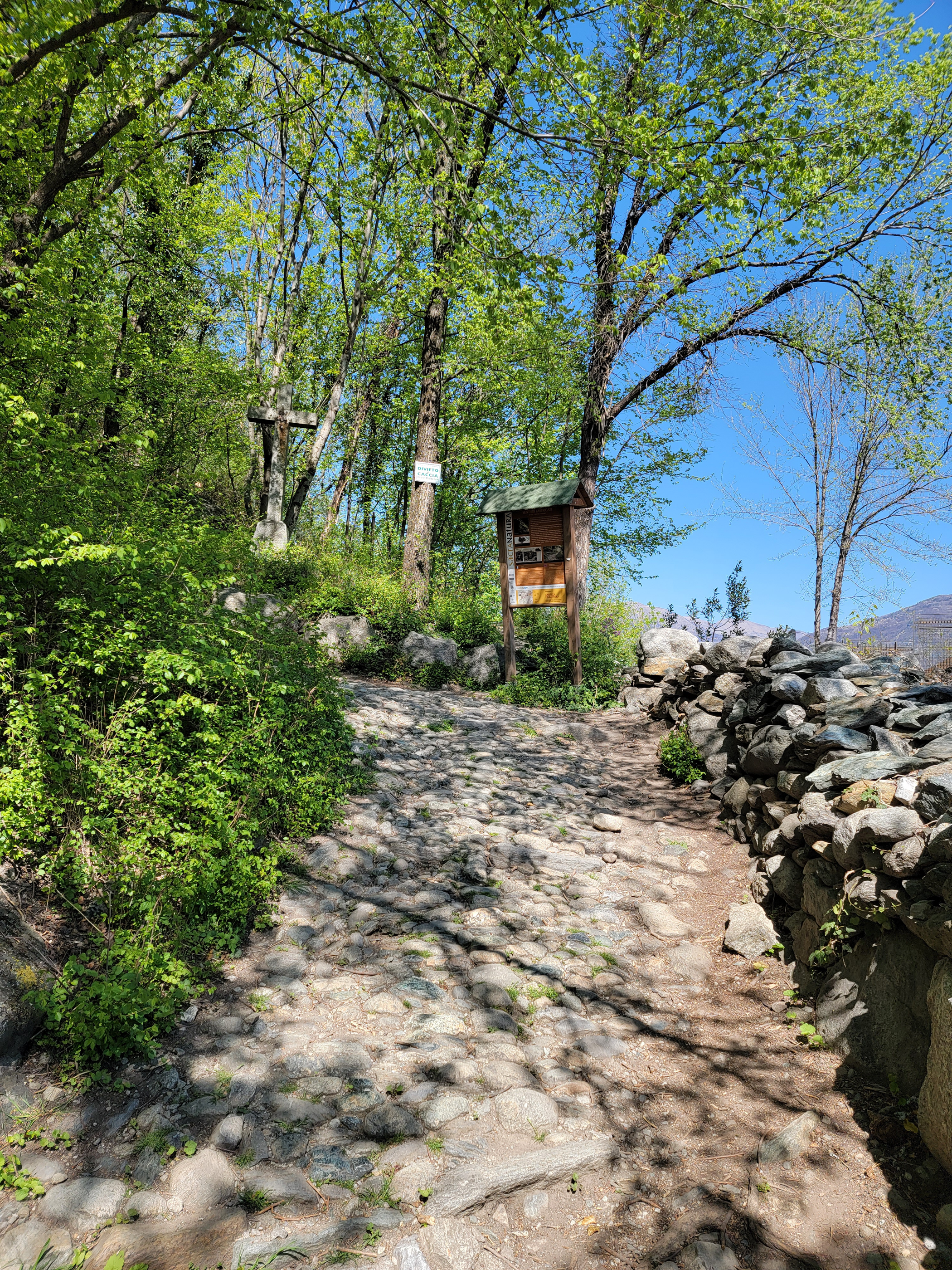
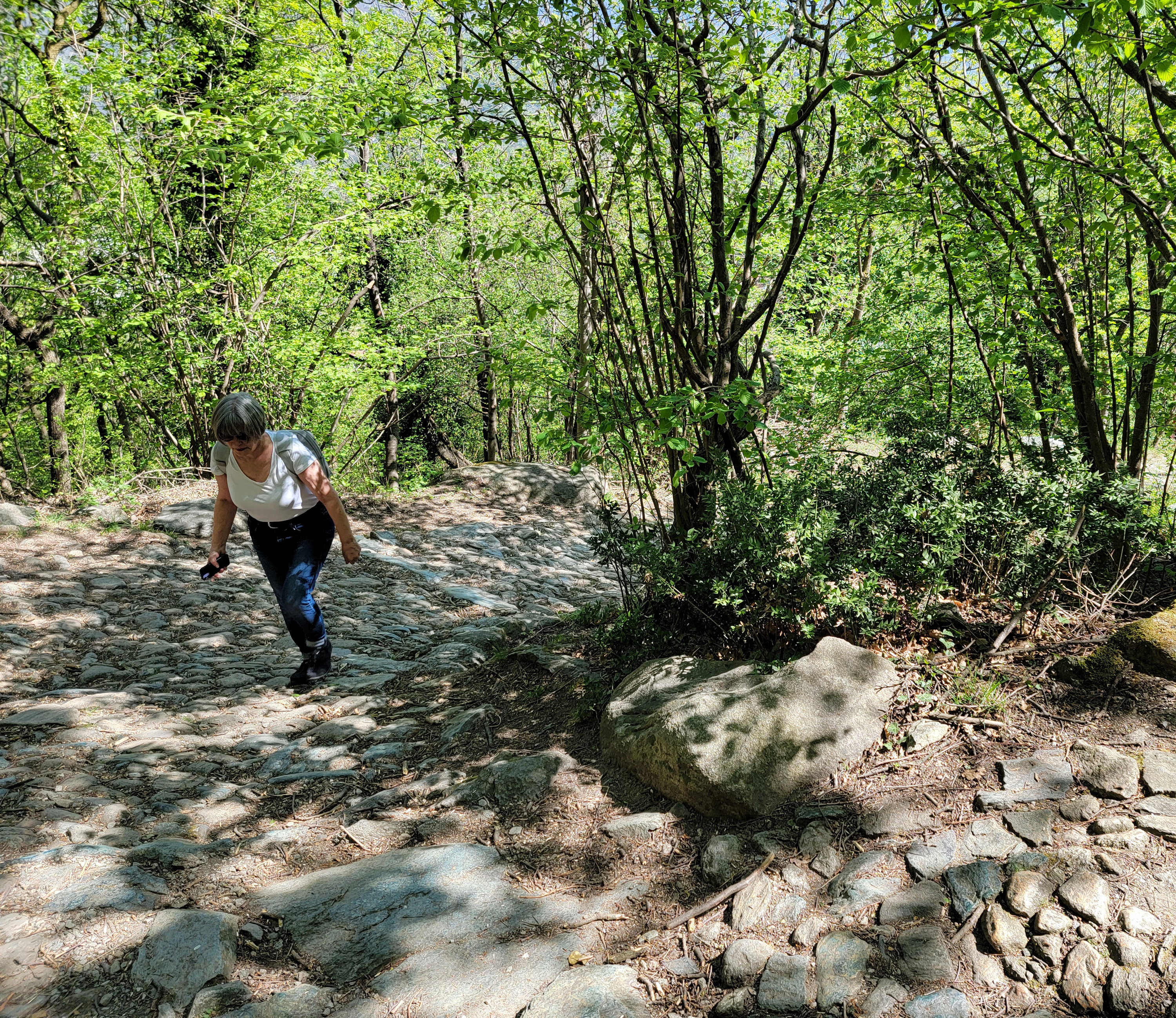
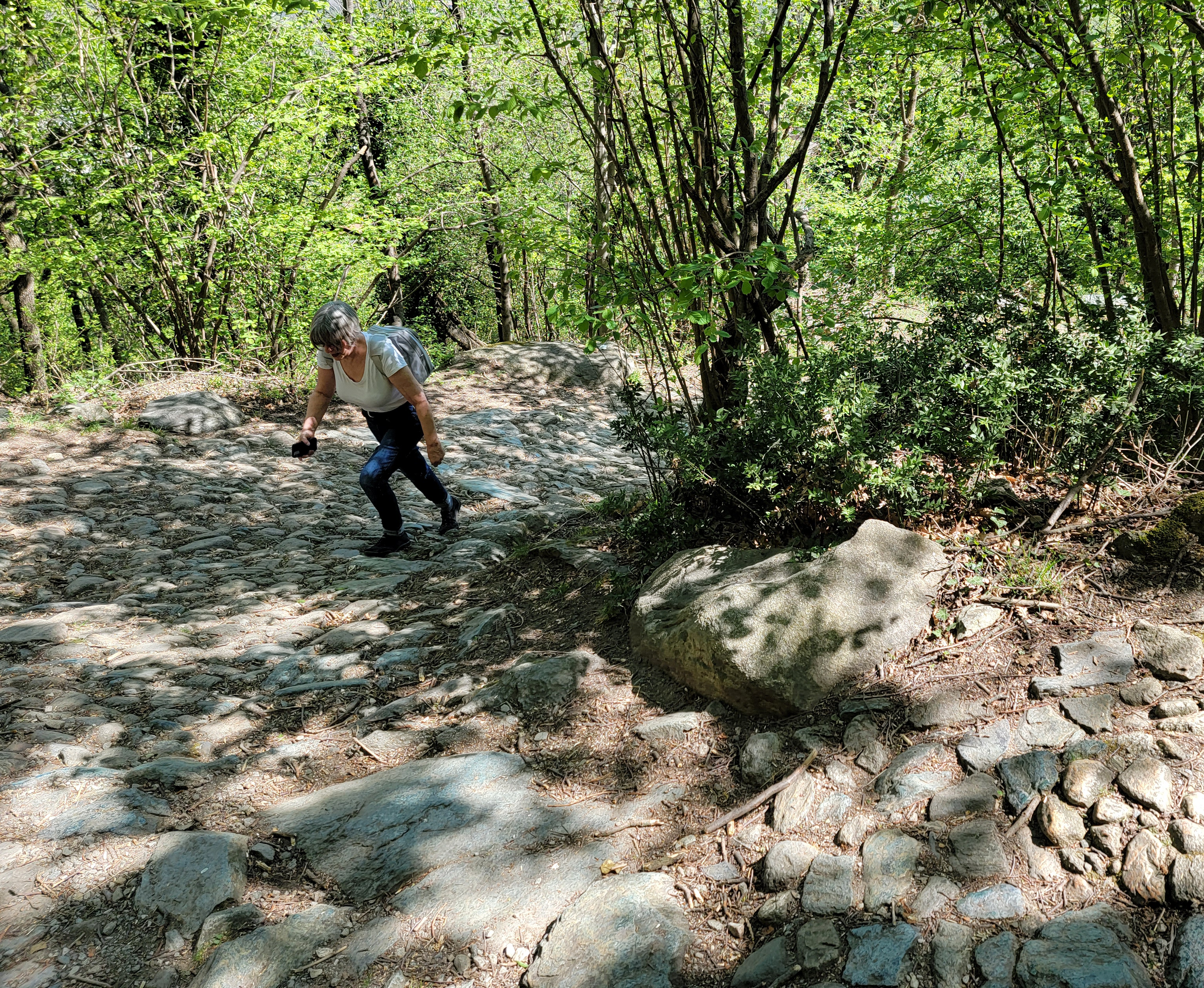
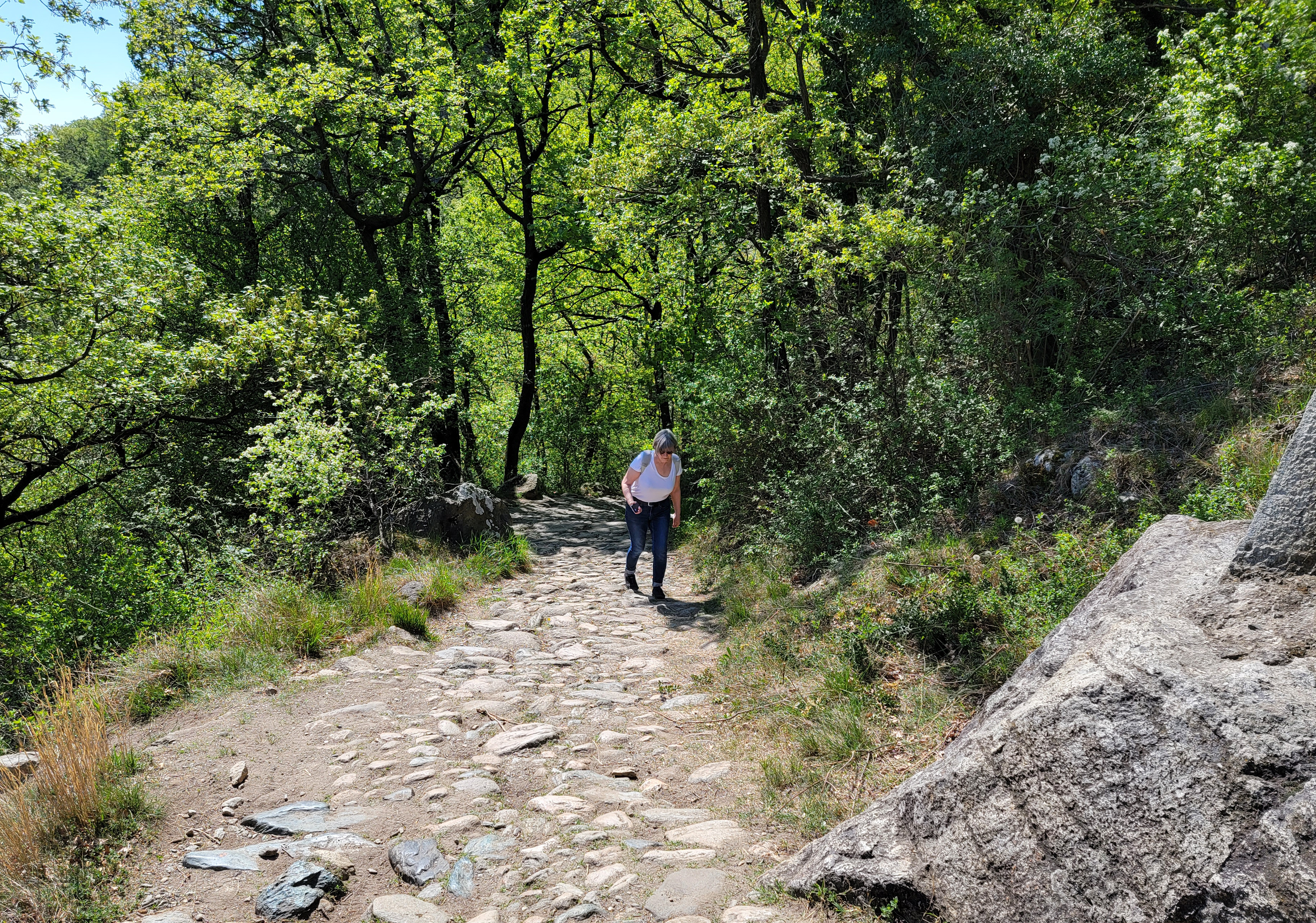
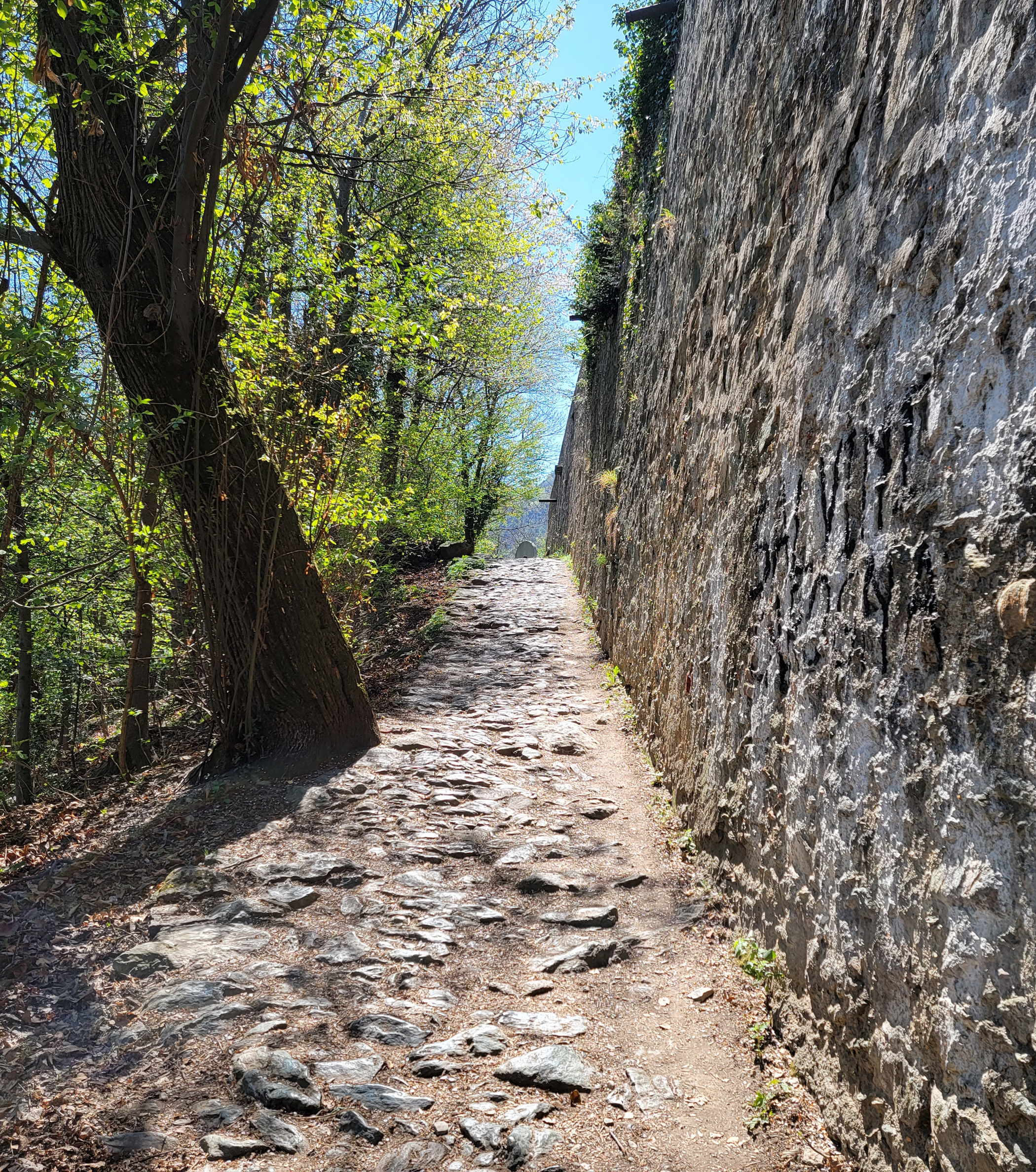
The trail was for the most part cobbled with round and larger stones, some which have a remarkable green color, are shiny and very slippery. Proper shoes are important, though it is possible to navigate the trail with tennis shoes or sneakers.
A welcoming sign, this is the right trail – Sentiero Trail 502
The Trail has Cobble and other Stones all the way up – Sentiero Trail 502
Patti navigating the trail – Sentiero Trail 502
Patti on another turn – Sentiero Trail 502
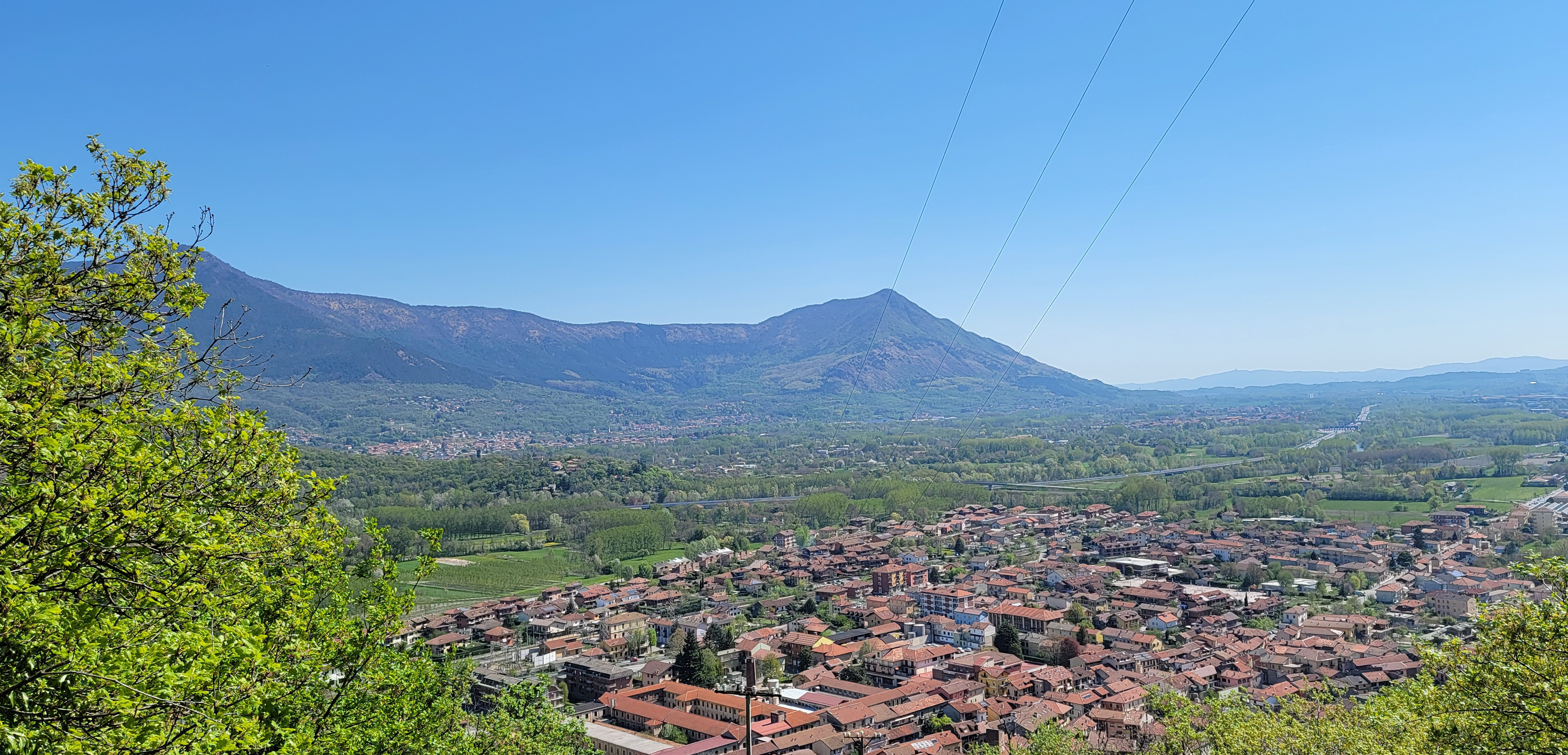
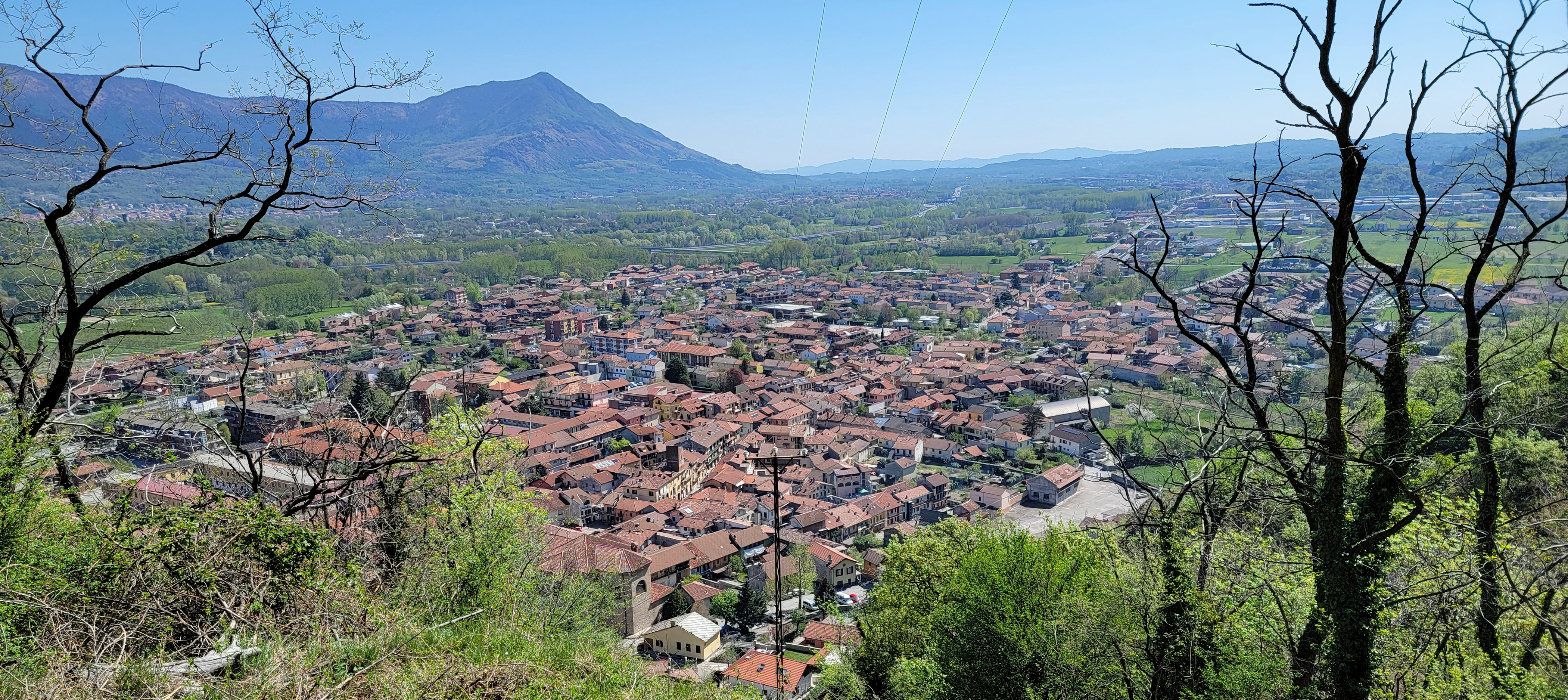
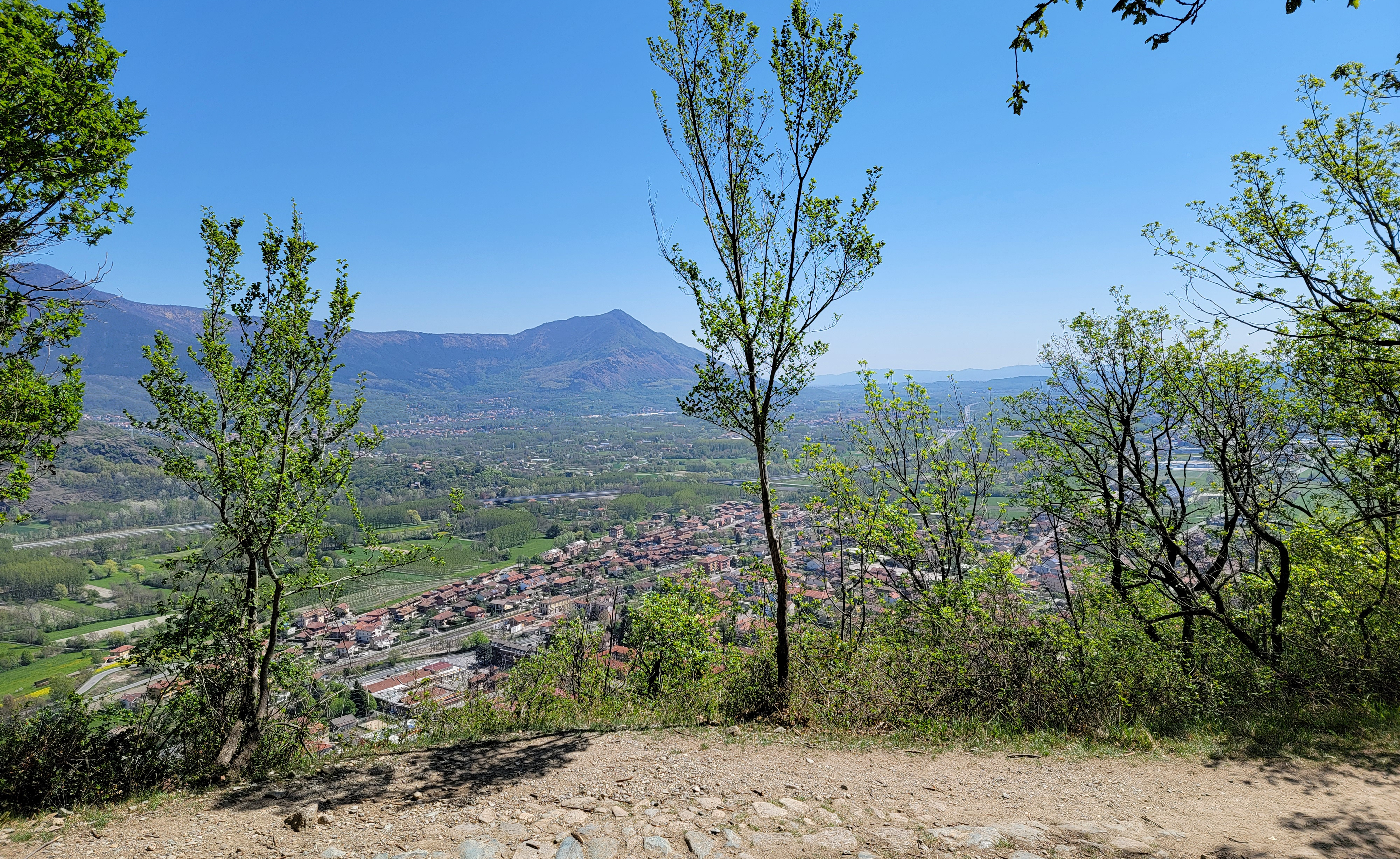
Sant Ambrogio Panorama – Sentiero Trail 502
At a higher elevation, overview of Sant Ambrogio – Sentiero Trail 502
Sant Ambrogio from Sentiero Trail 502
Patti still climbing – Sentiero Trail 502
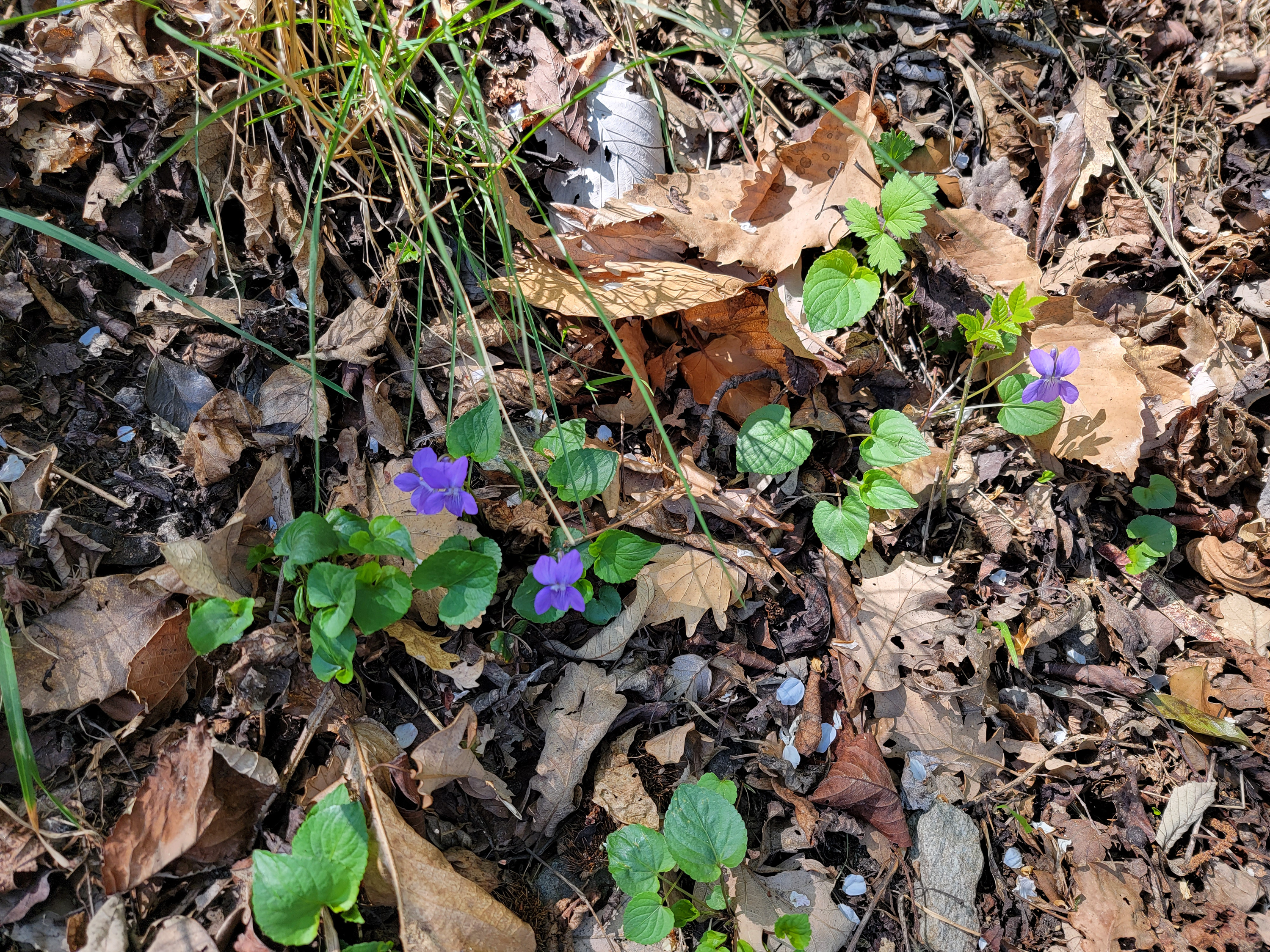
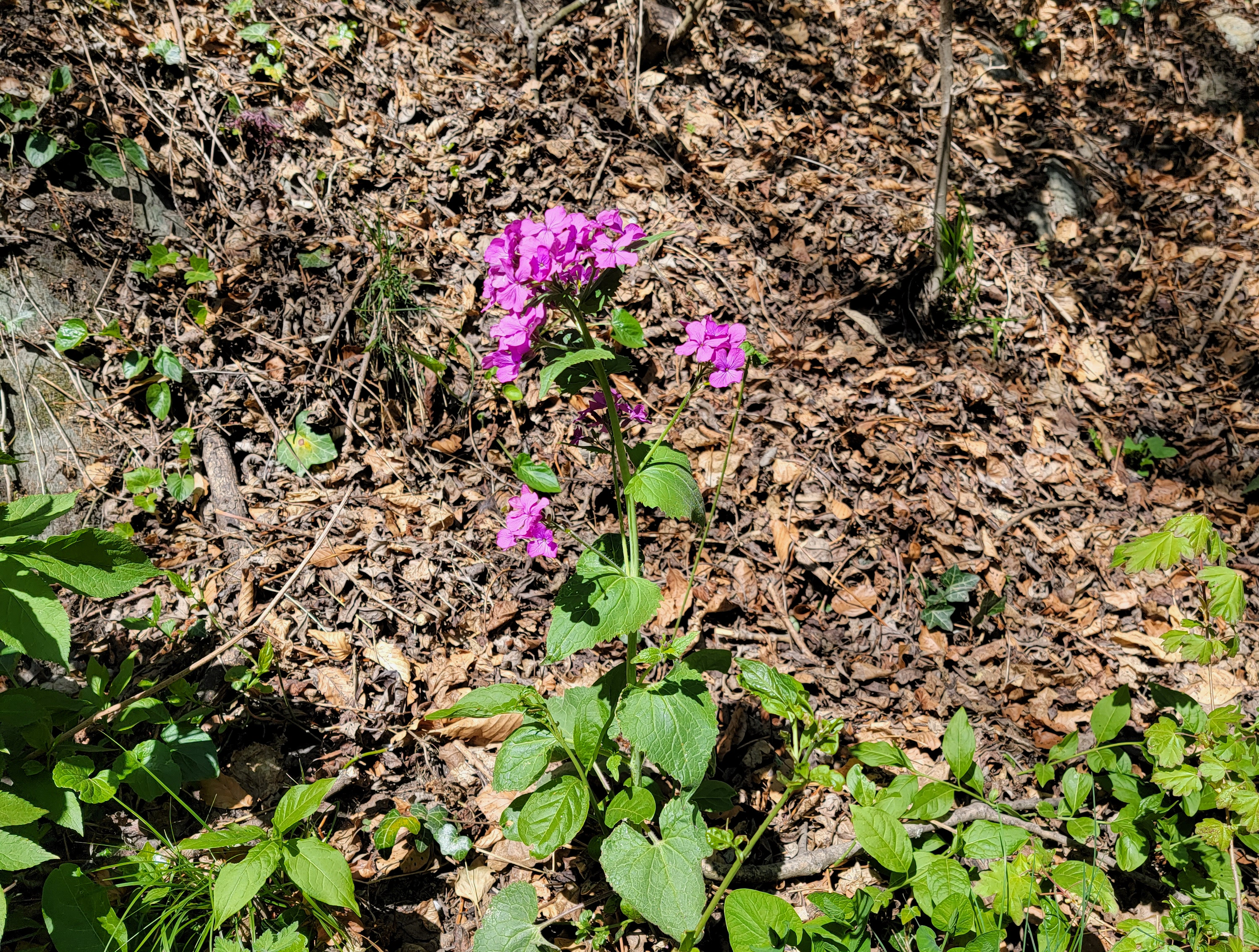
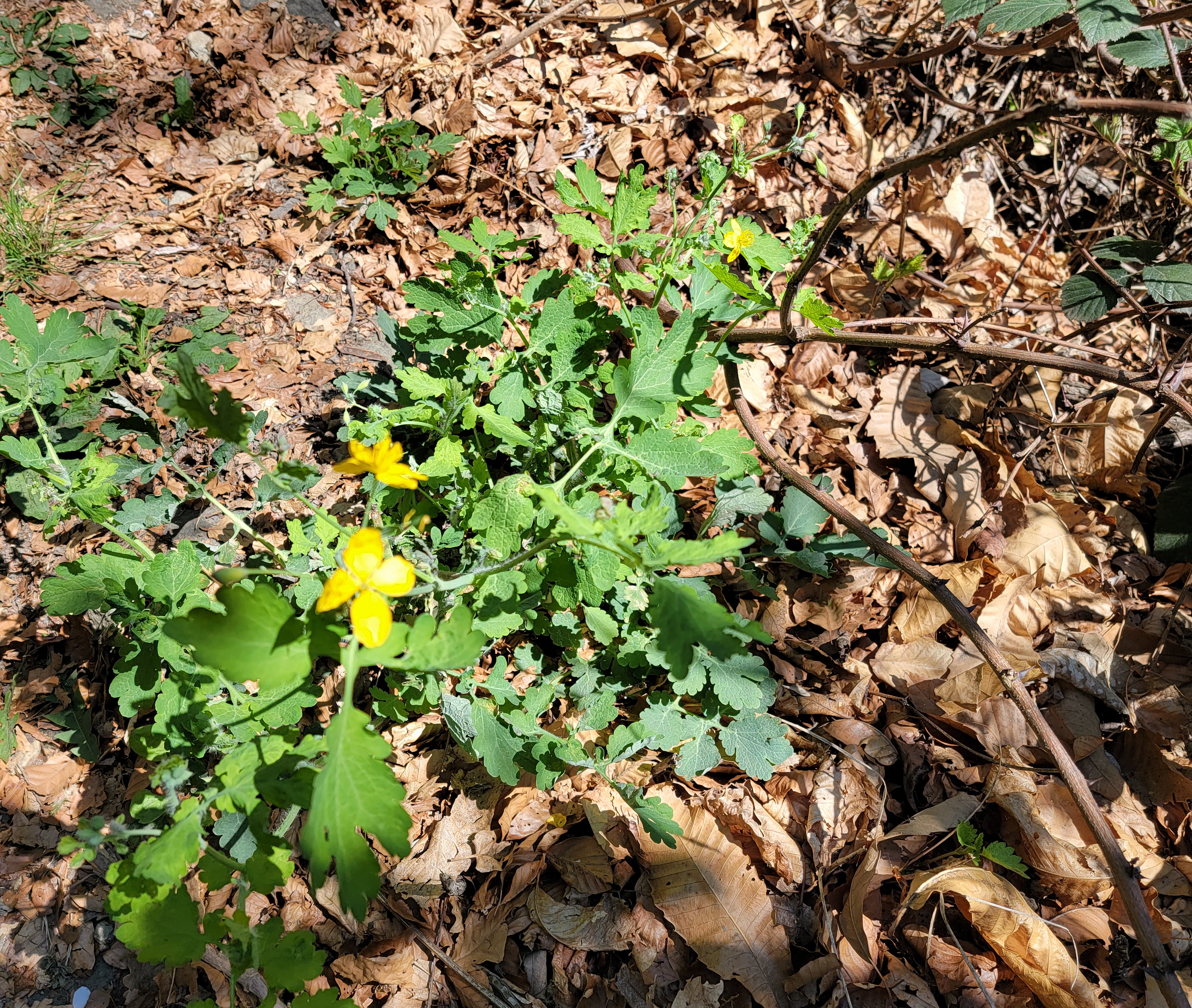
The flowers on the trail – Sentiero Trail 502
The flowers on the trail – Sentiero Trail 502
The flowers on the trail – Sentiero Trail 502
Coming to first ending of trail – Sentiero Trail 502
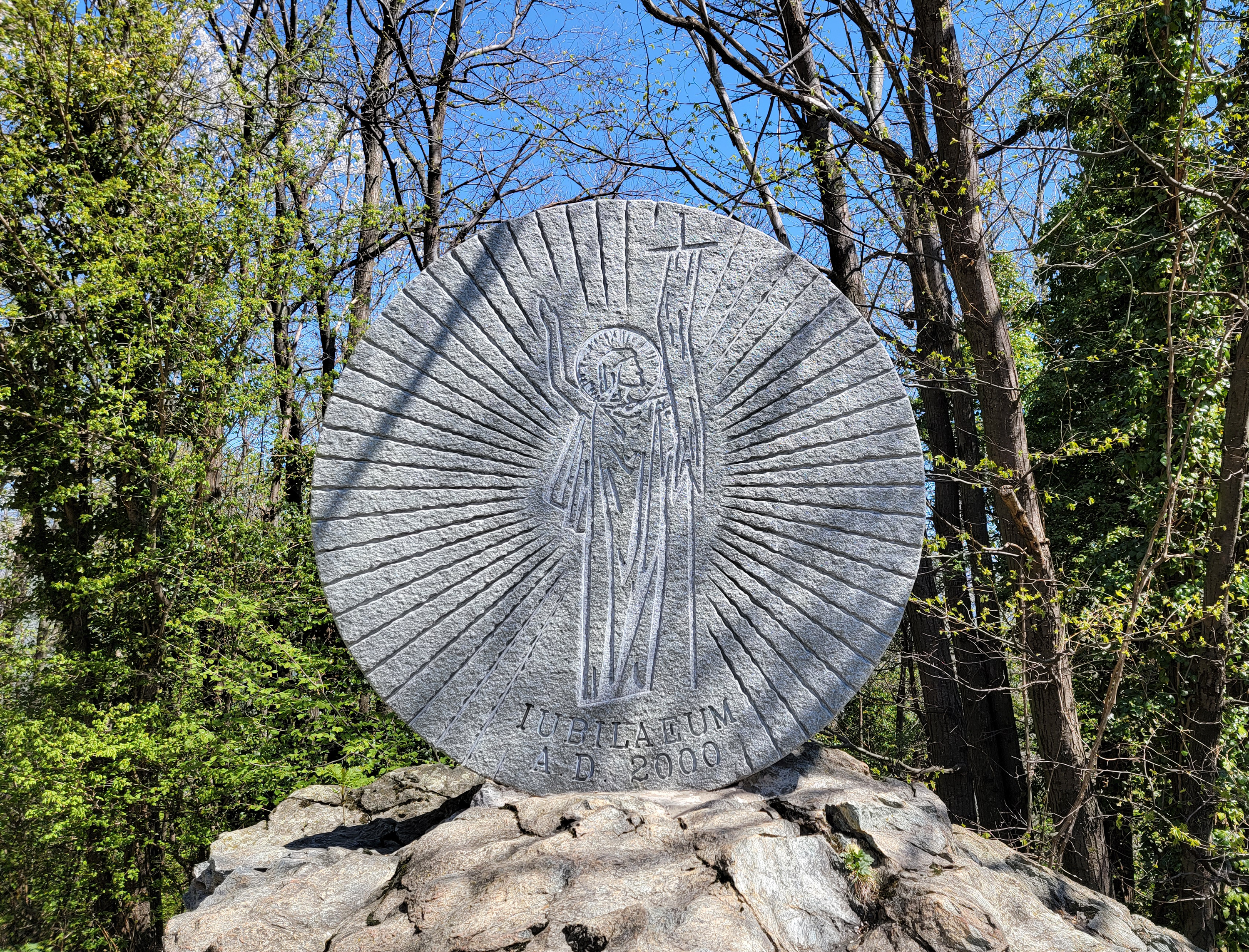
Upon exiting the trail at a collection of houses, and an interim point in the hike, you will find a large commemorative stone.
Commemoration Wheel 2000 – Sentiero Trail 502
Then you will make a hairpin turn and look up, only to see that your hike up is STILL NOT OVER!
Still a long way up to go – Sentiero Trail 502
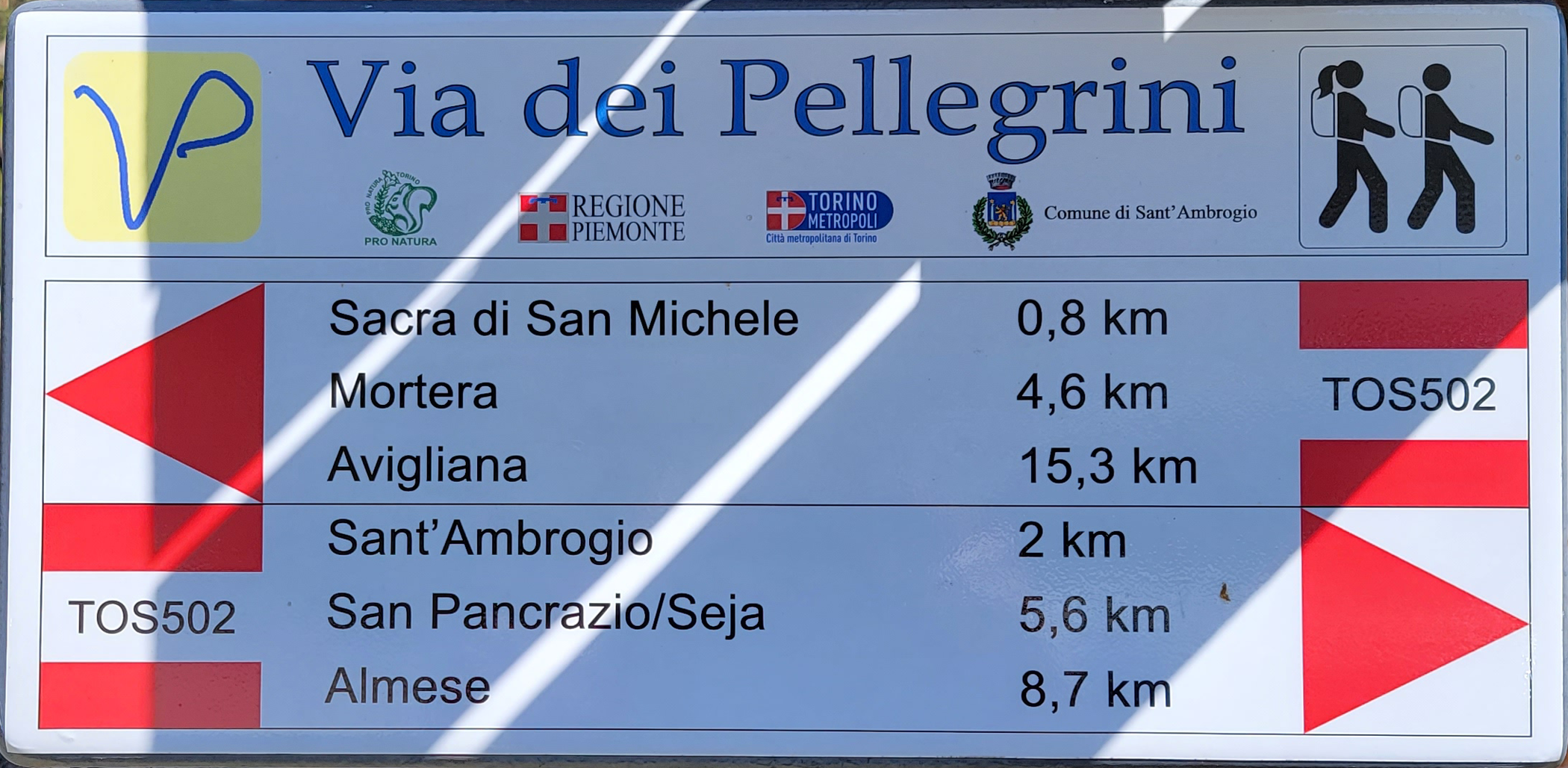
Checking the signs indicate approximately another kilometer to hike, which took us about twenty minutes.
Trail Sign, another .8 km to go – Sentiero Trail 502
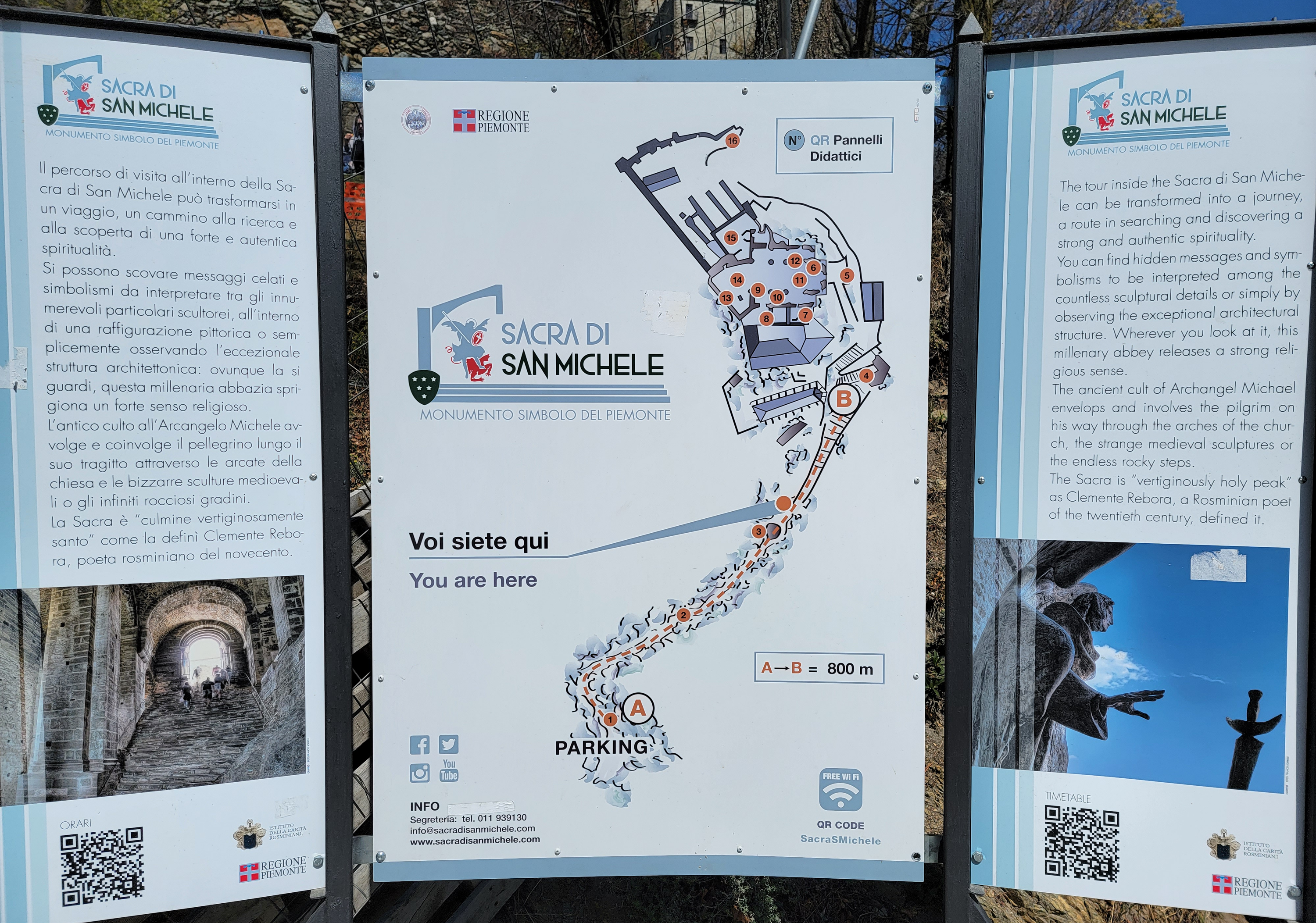
After the last more modest climb you will walk onto a road, where all the other tourists are walking into from the parking lot. The attraction has a large sign explaining the layout of the church and its grounds.
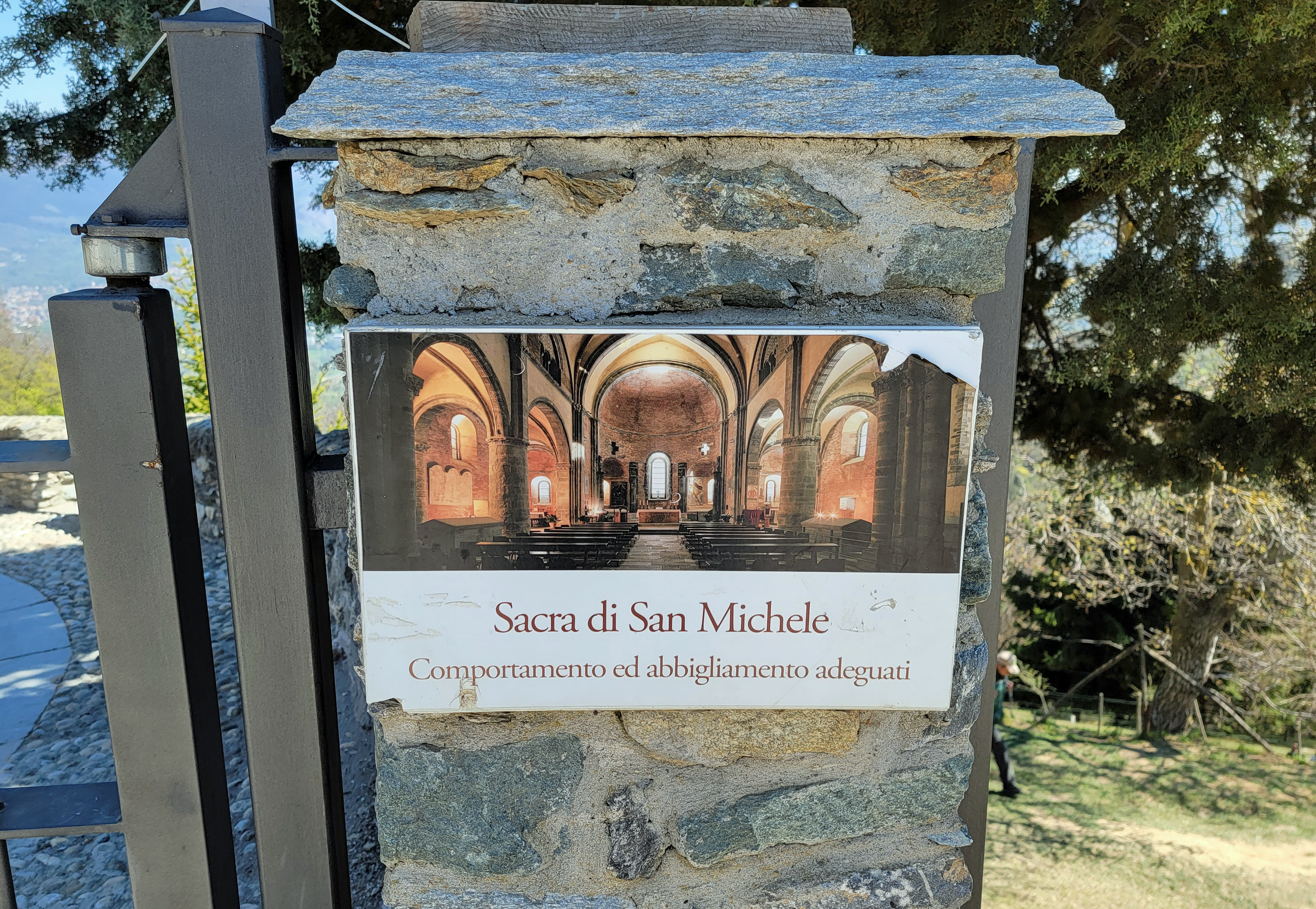
Sign at entry to Sacra di San Michele
Sacra di San Michele
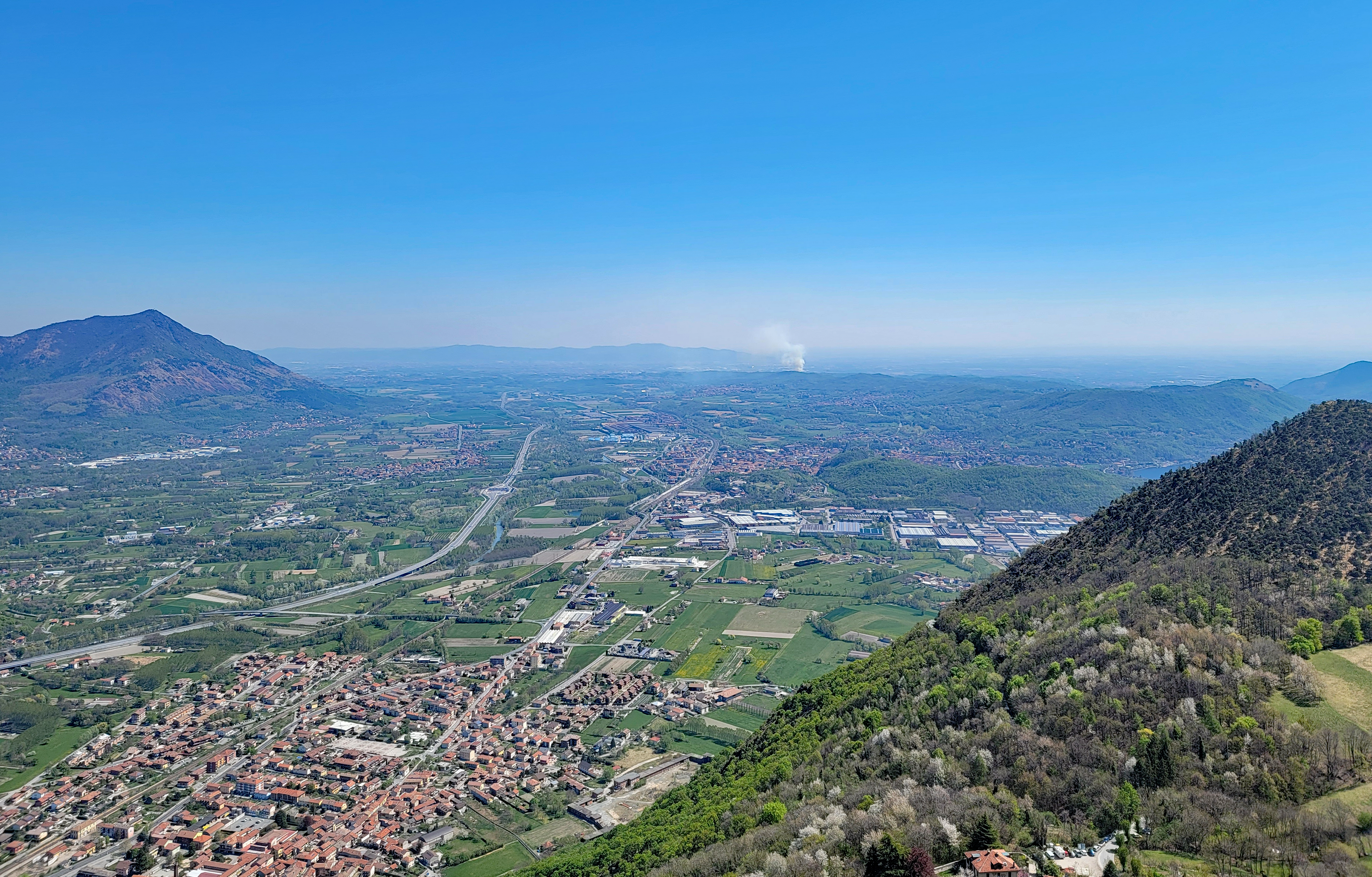
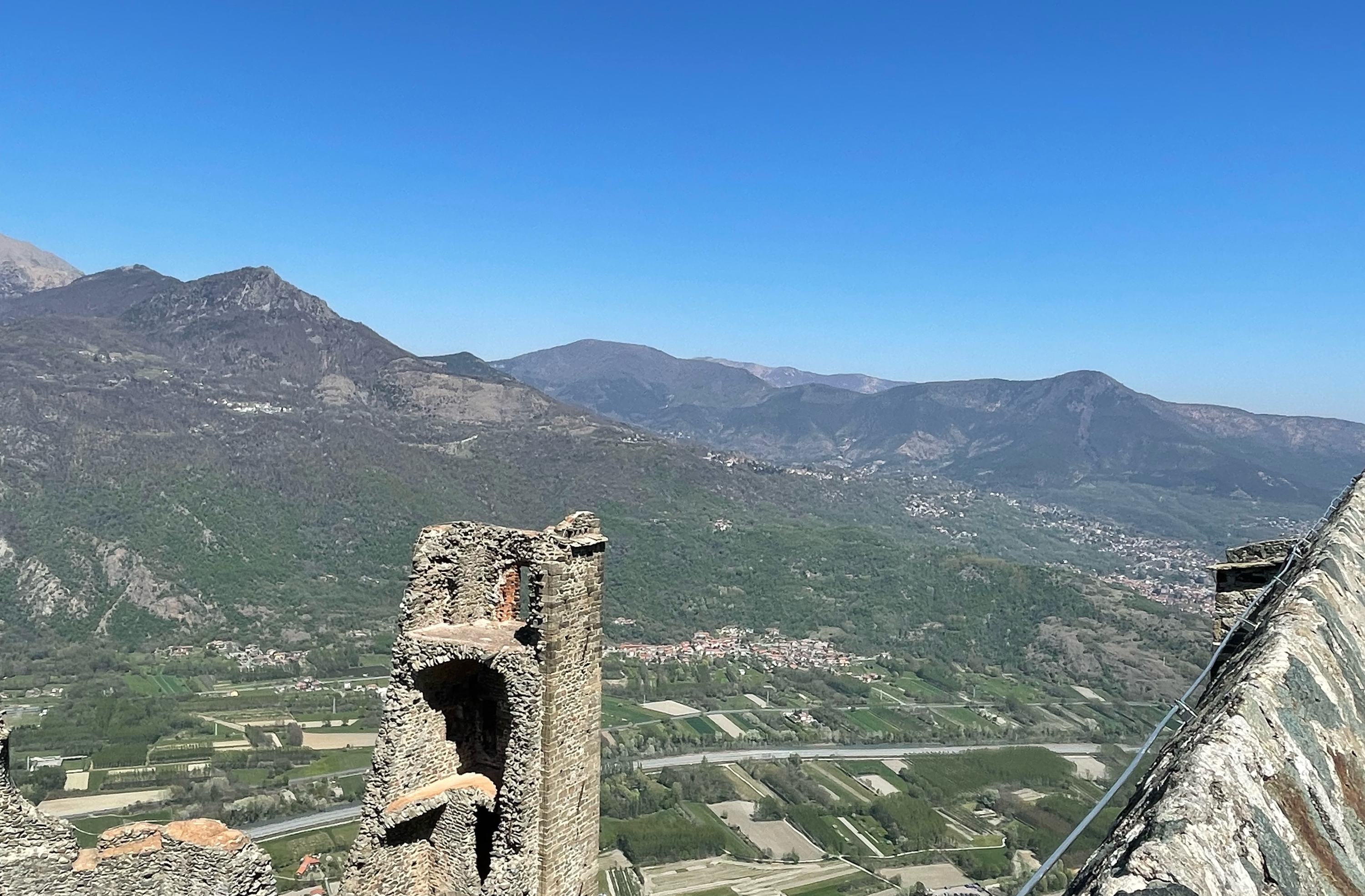
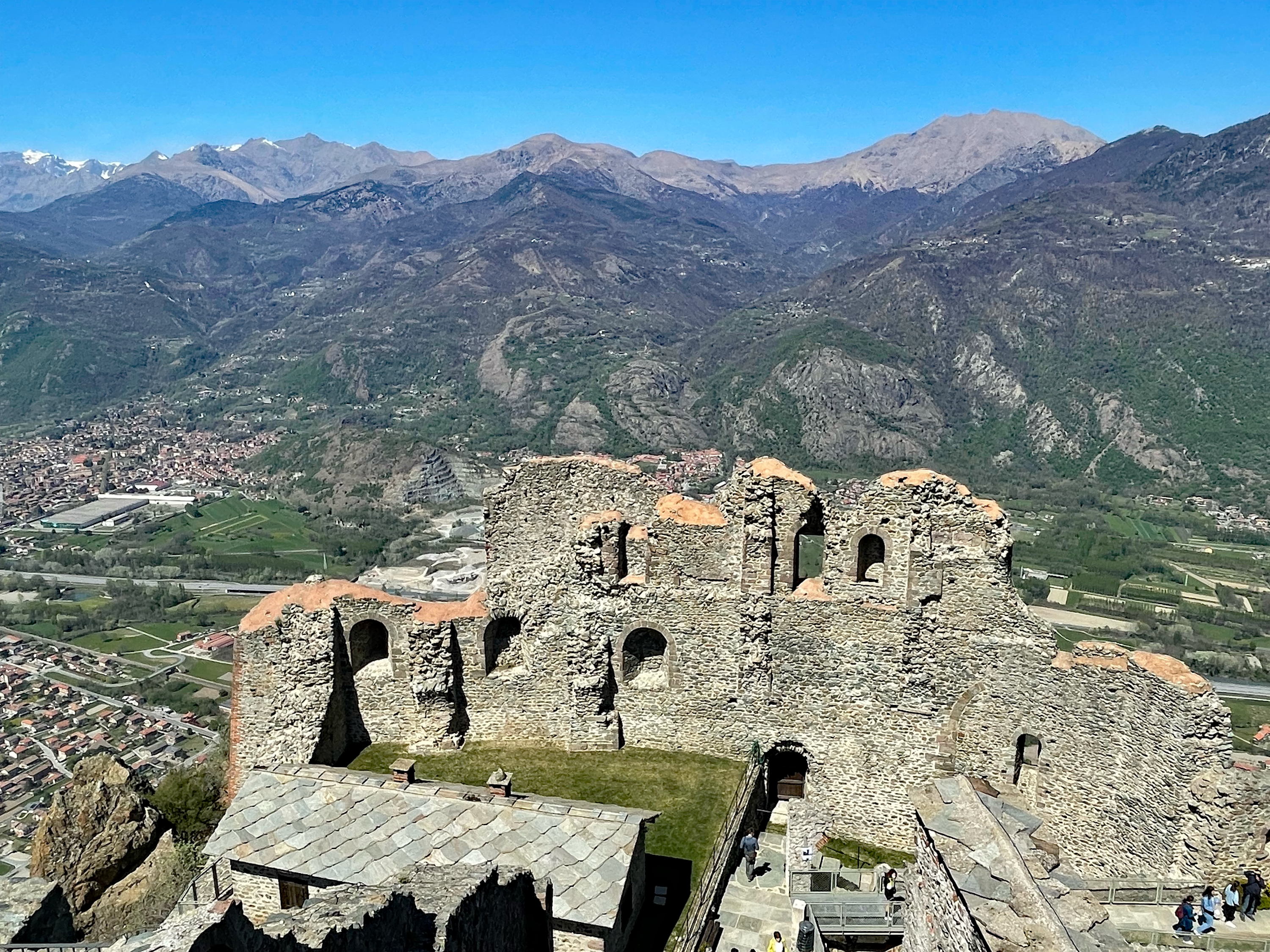
Once near the church of Sacra di San Michele, the magnificent views are apparent. With its perch high on a rocky crag, the church has a commanding view of the valley below.
Panorama before church at end of trail
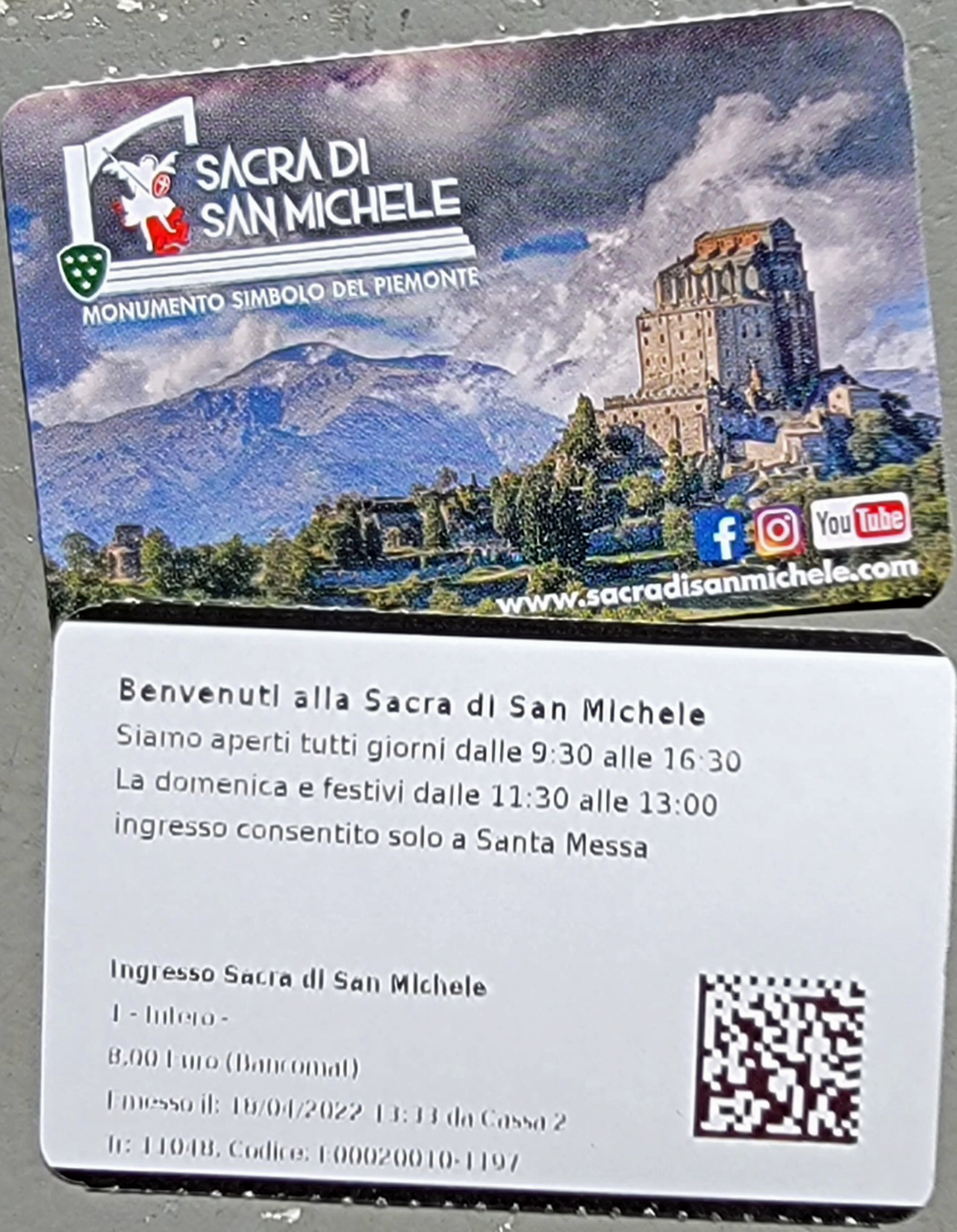
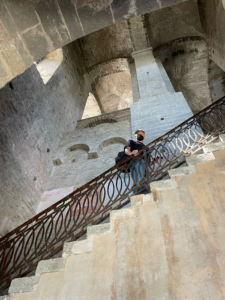
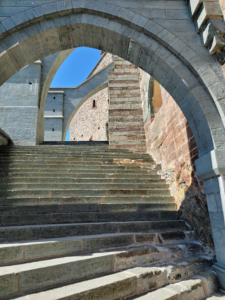
Walking up to the church you will find a small building to the right that sells postcards, other tourist paraphernalia and entrance tickets. Once purchased, a turnstile to the left has a QR code reader that will let you enter, then you must start climbing stairs, an unwelcome sign after our long journey.
Tickets for Two – Sacra di San Michele – Sant Ambrogio
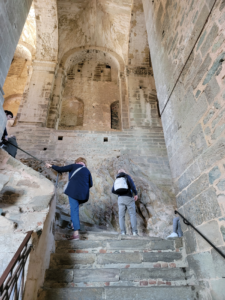
Stairs inside – Sacra di San Michele
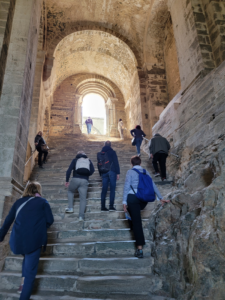
More stairs – Sacra di San Michele
Erick with Covid mask on ascending more stairs – Sacra di San Michele
Again more stairs – Sacra di San Michele
The remainder of our visit consisted of just enjoying the church and the beautiful views. My wife chose this day because the weather promised to be wonderful, we were not disappointed, it was sunny and in the low 60°s Fahrenheit, perfect for hiking.
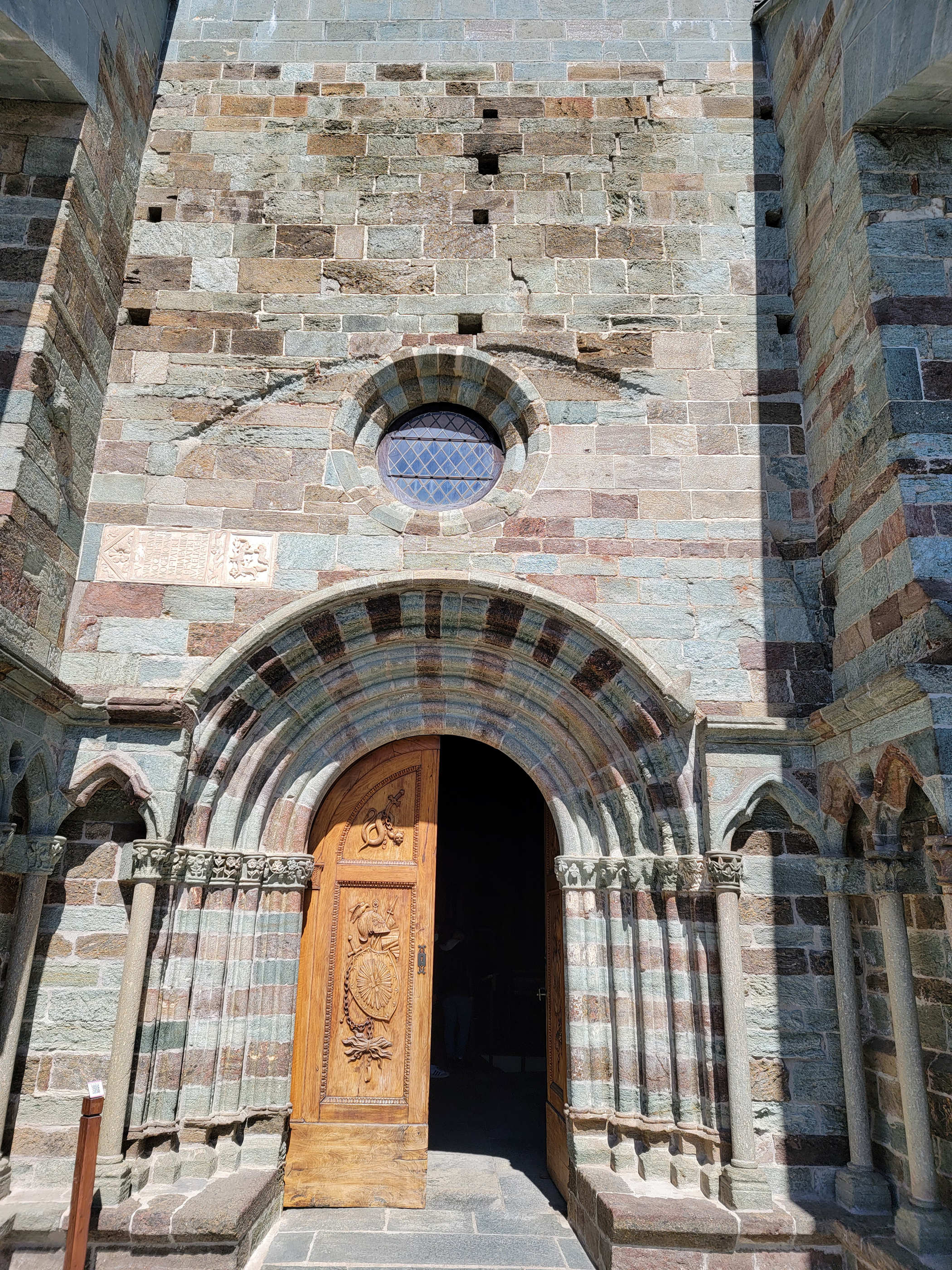
Finally, the entry – Sacra di San Michele
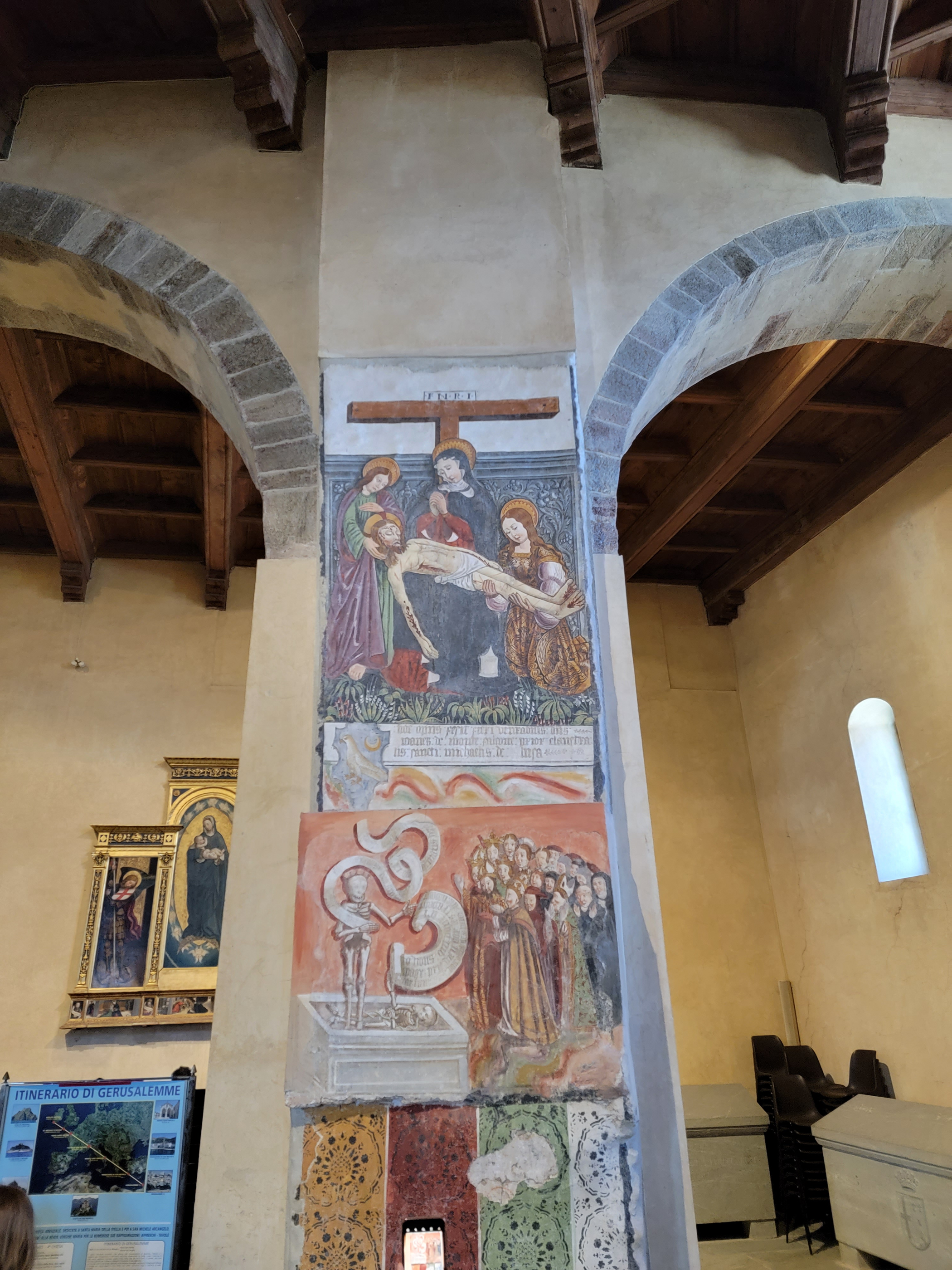
Mosaics on walls – Sacra di San Michele
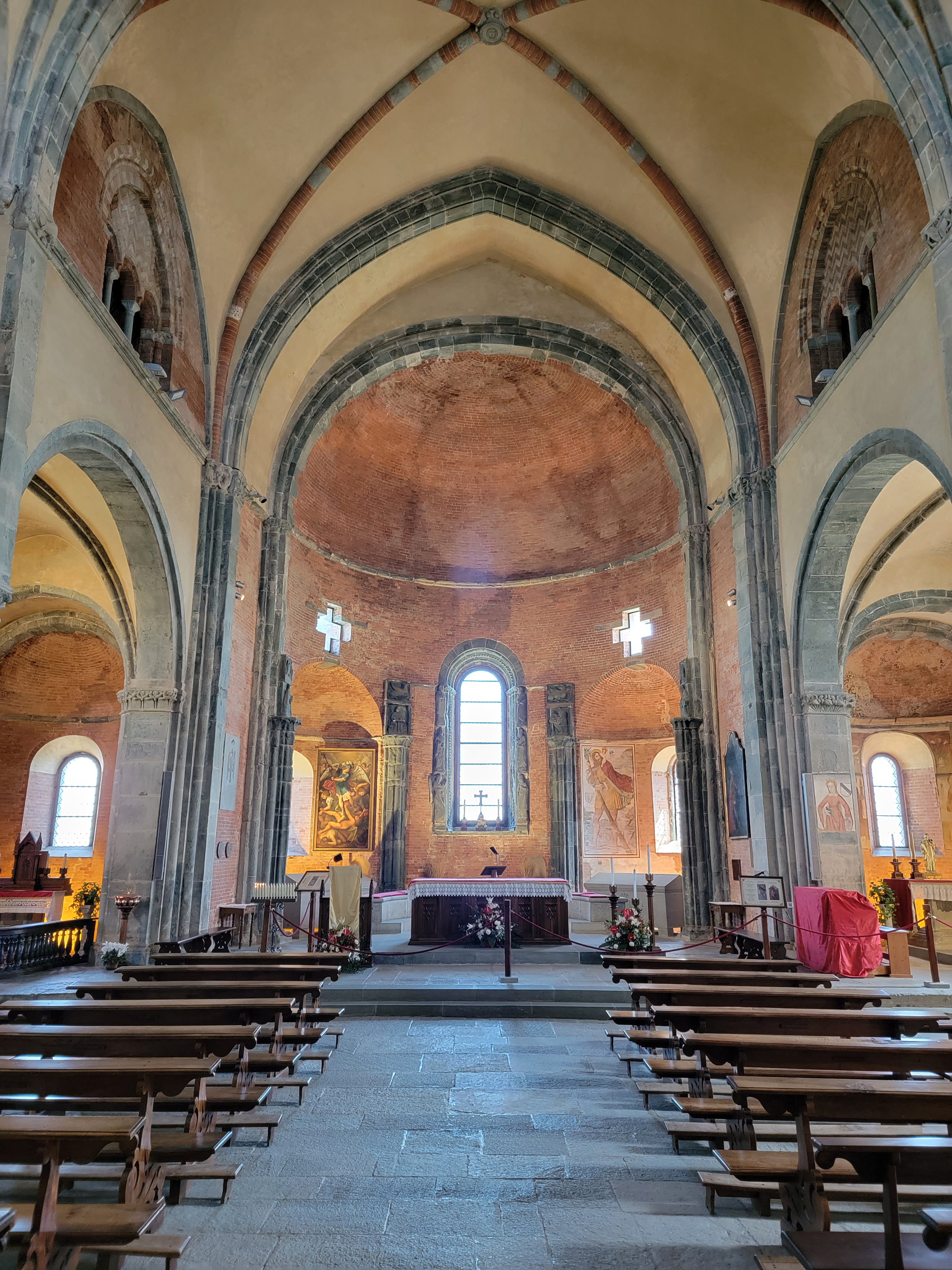
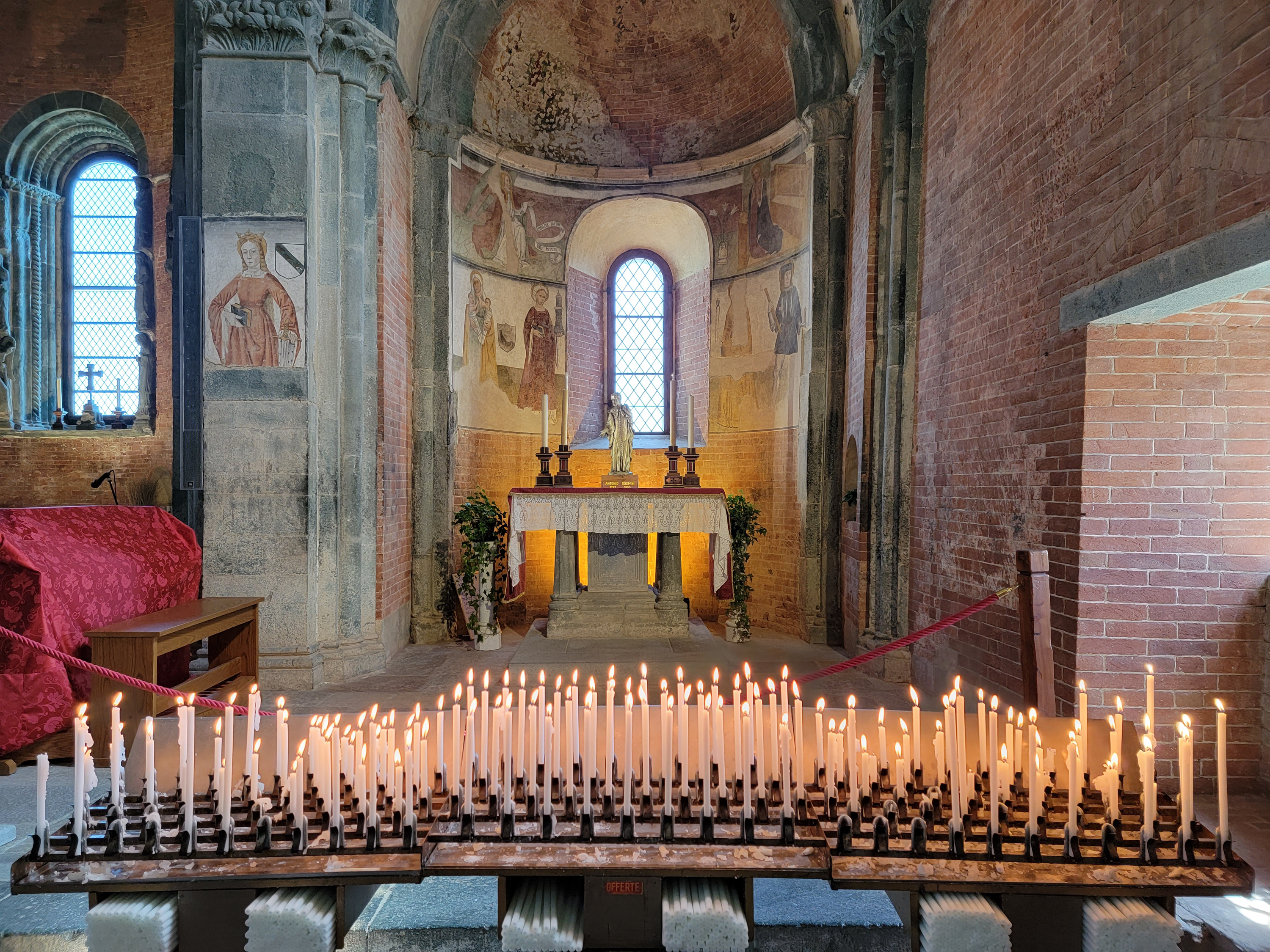
The main altar – Sacra di San Michele
Commemoration of the Crucifixion – Sacra di San Michele
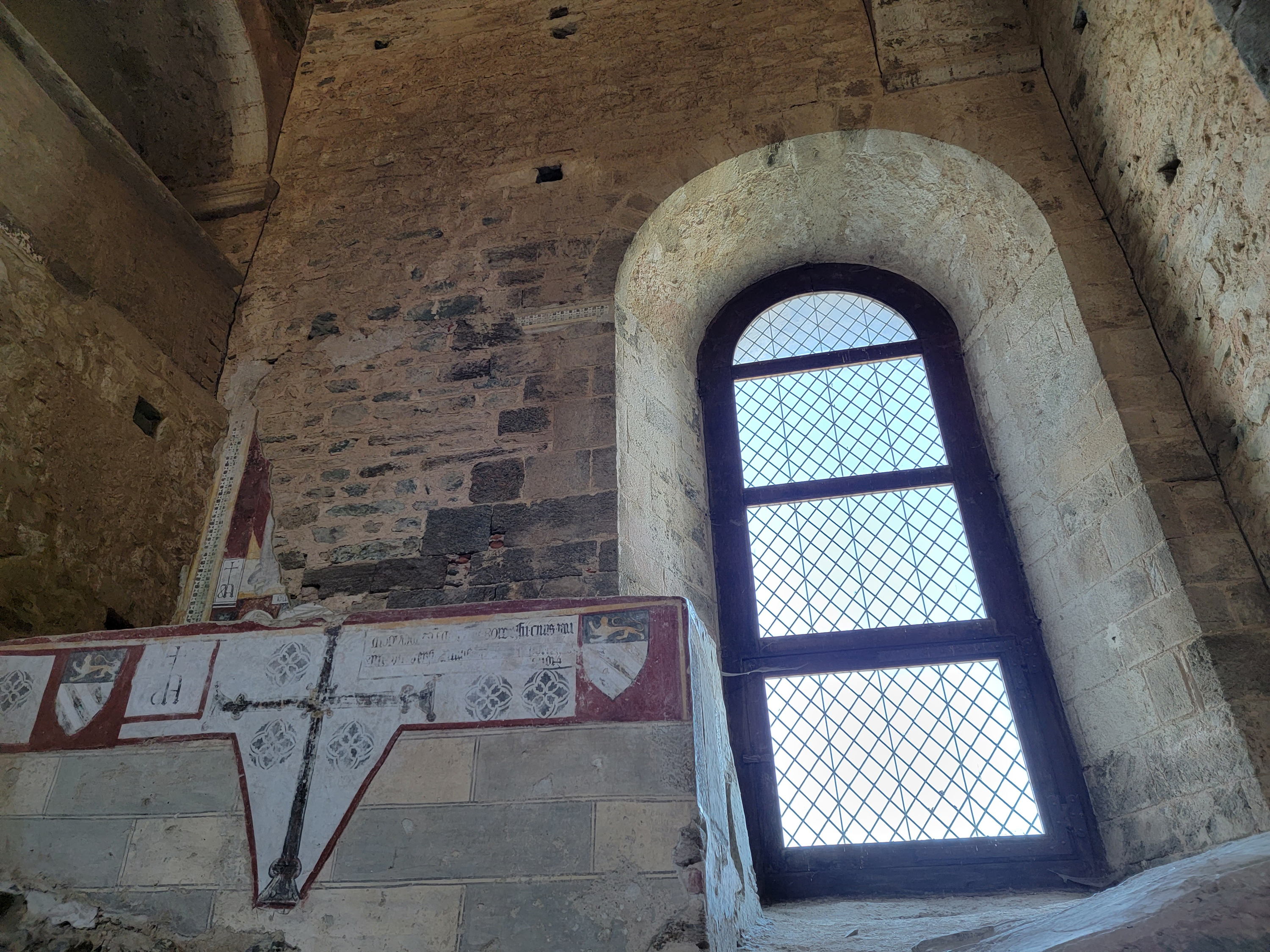
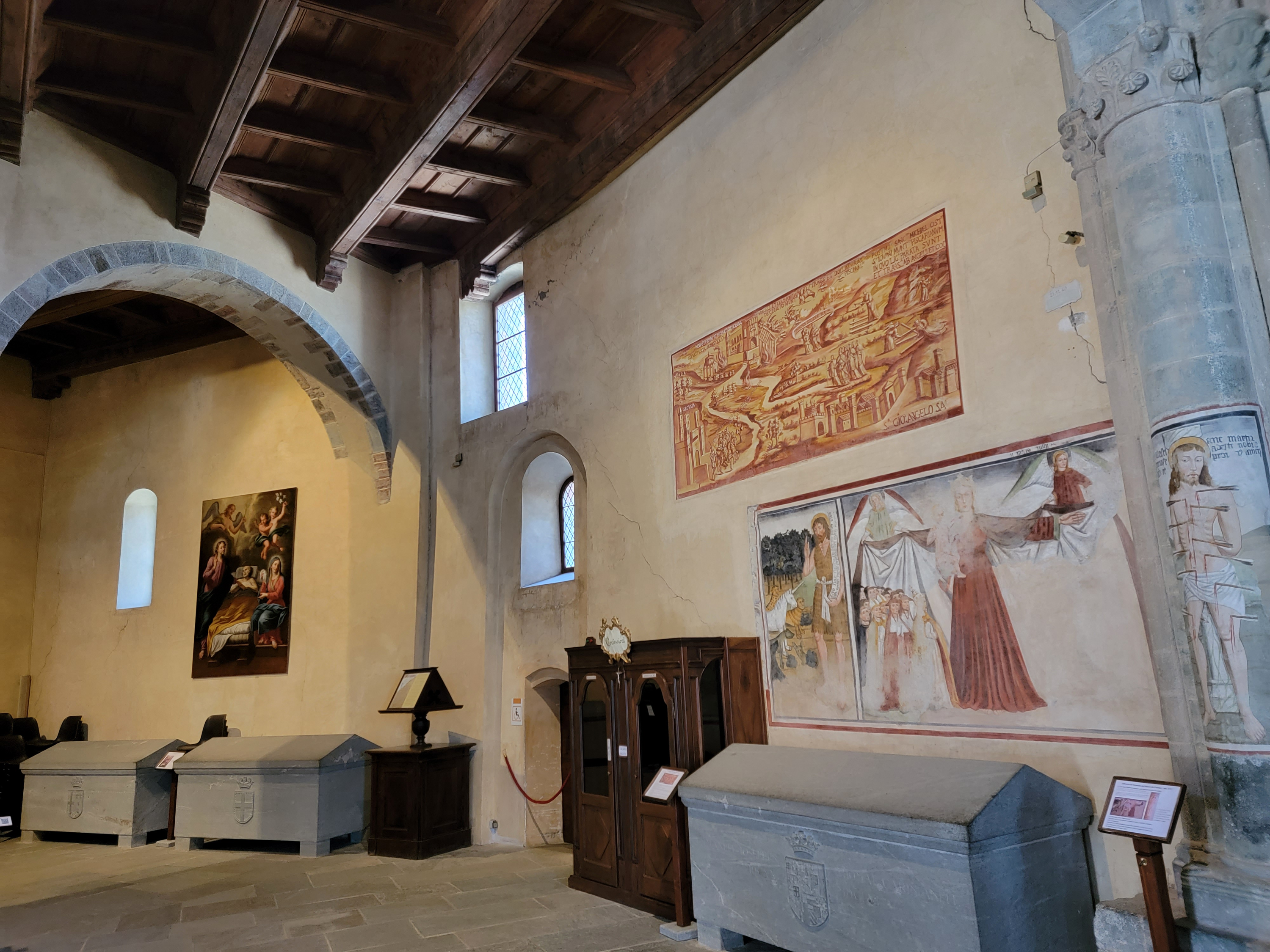
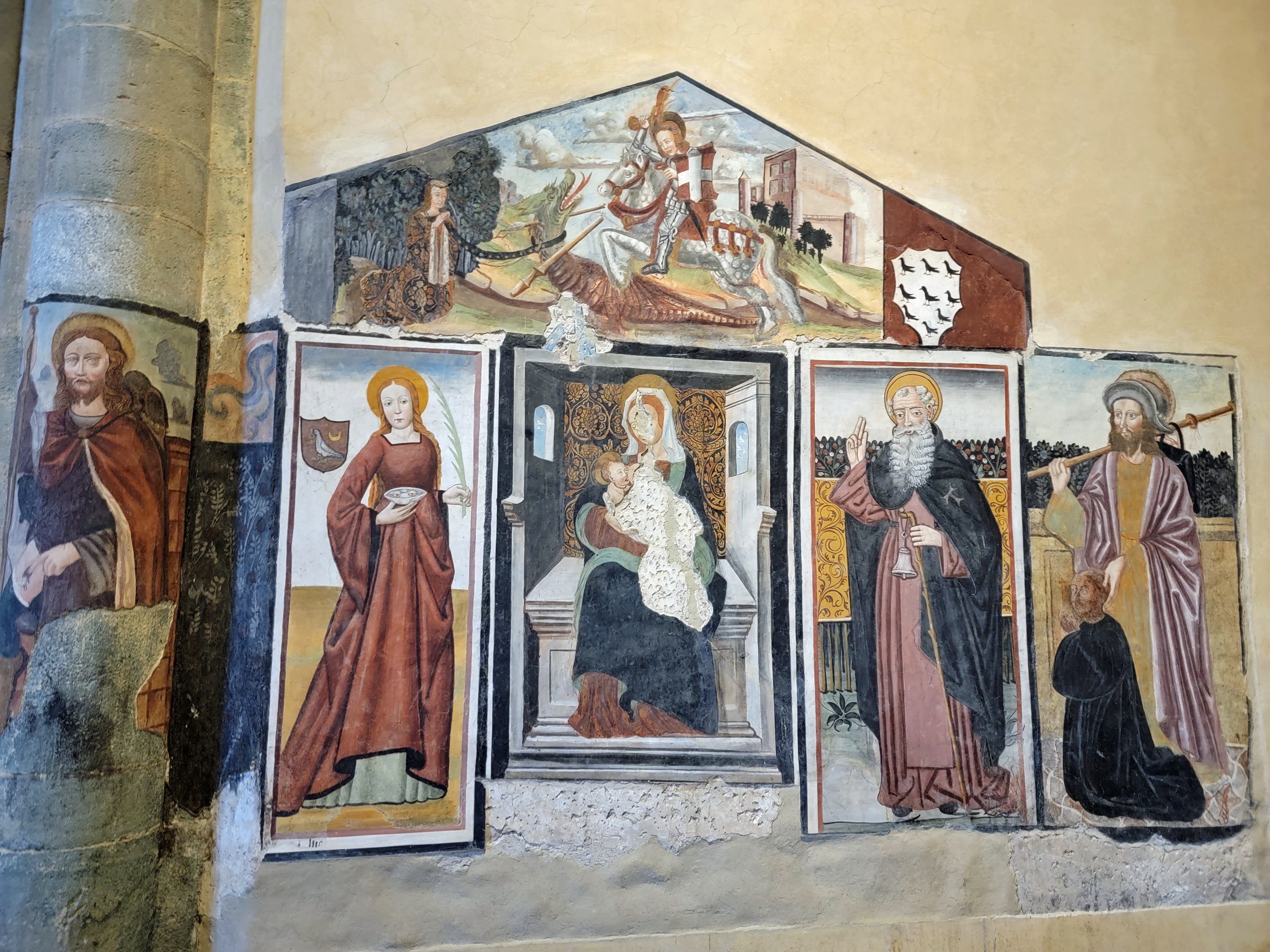
Inside the church – Sacra di San Michele
Portraits – Sacra di San Michele
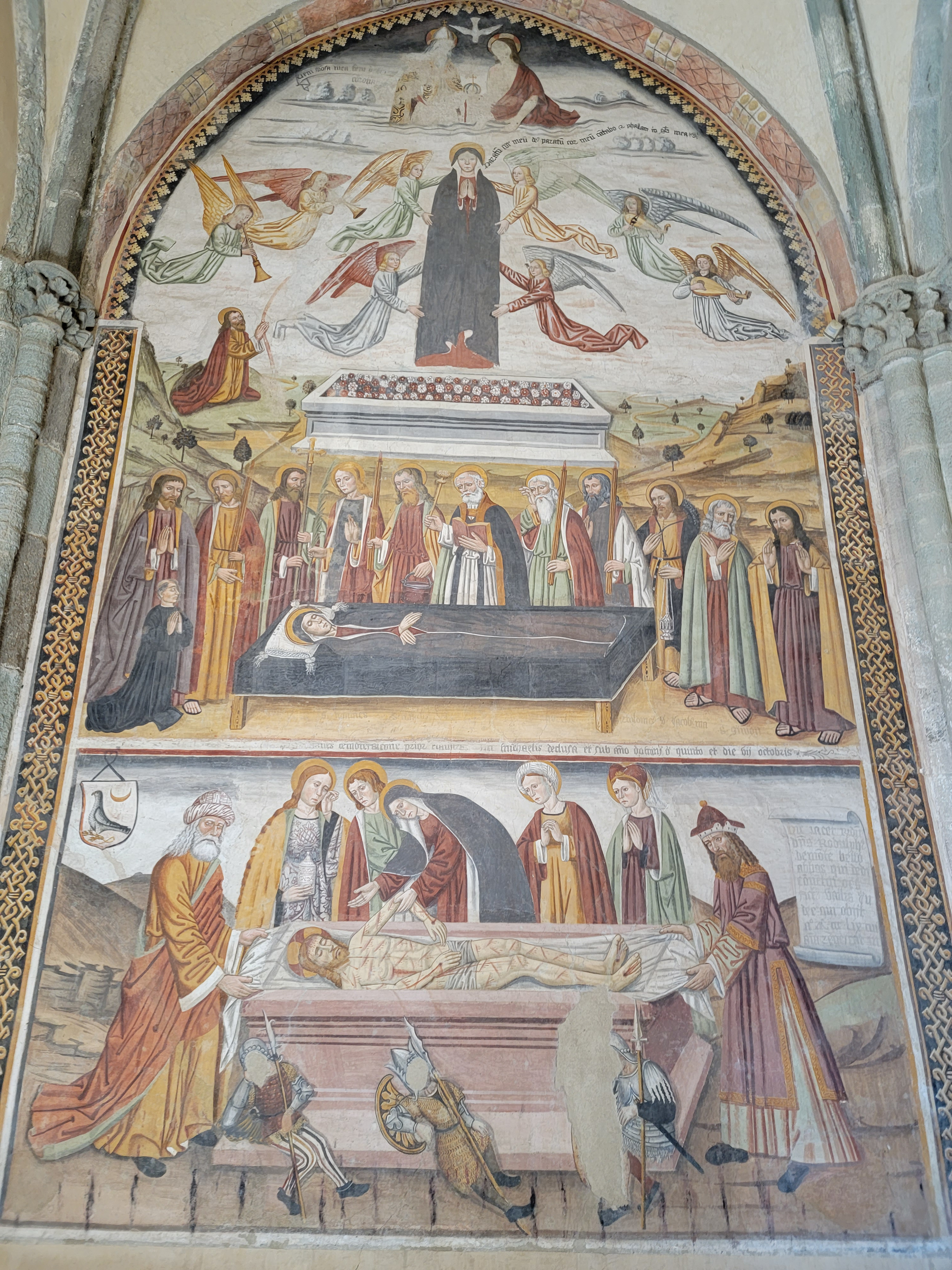
Large Fresco – Sacra di San Michele
Altar – Sacra di San Michele
Spectacular views, by the entrance of the church doors – Sacra di San Michele
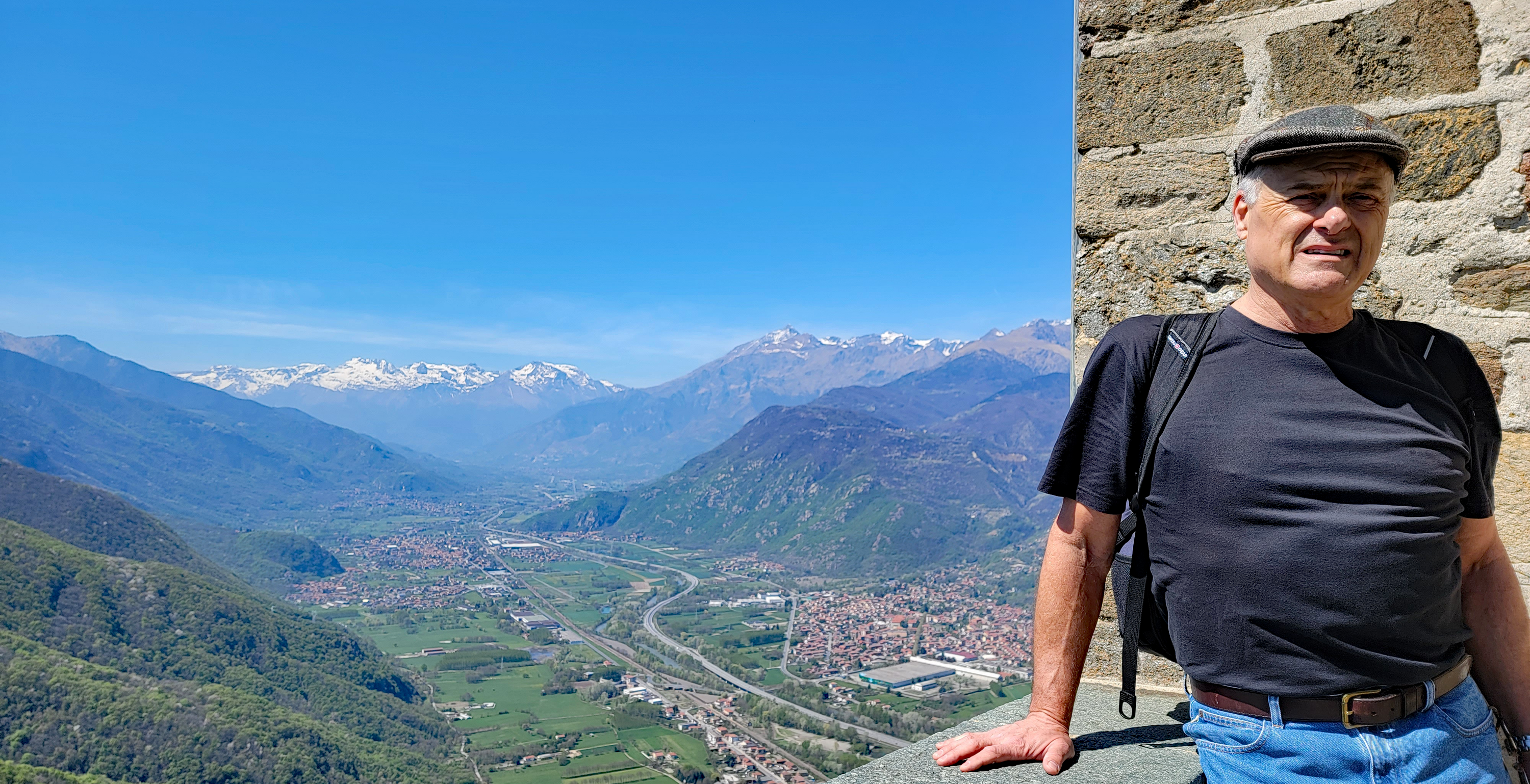
Erick and a view of the Cottian Alps by the church entrance – Sacra di San Michele
The end of the valley and a view toward Turin
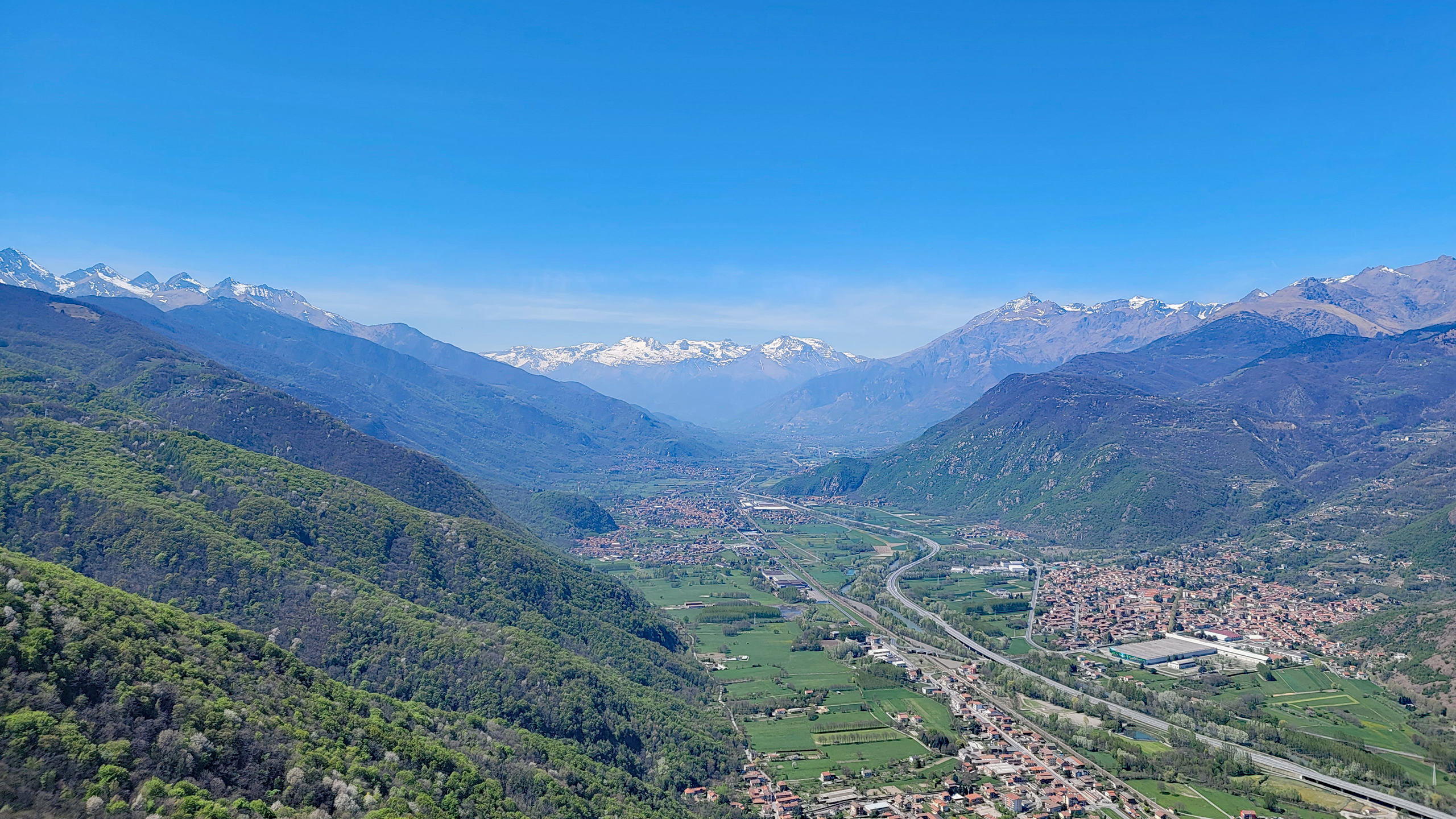
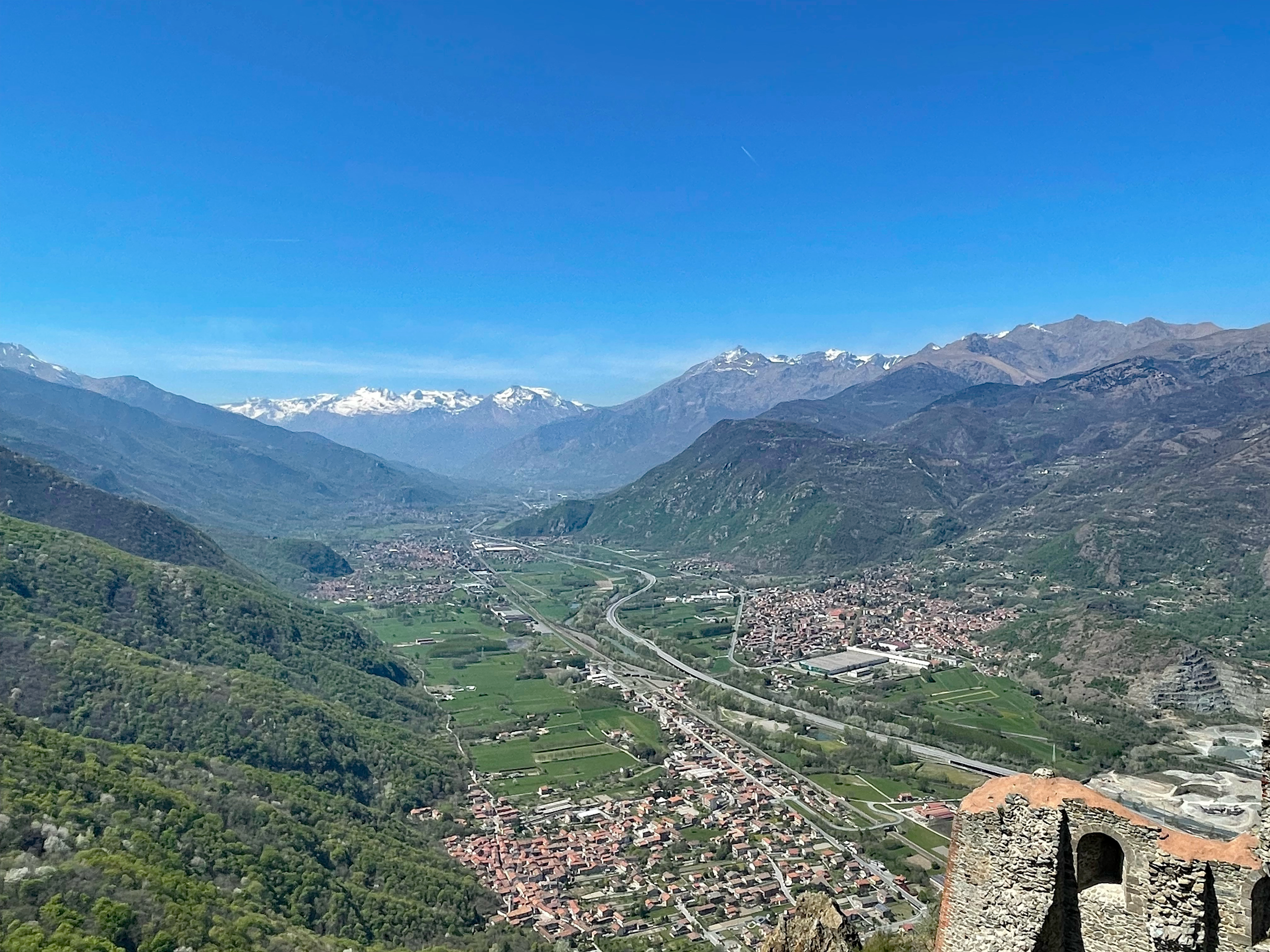
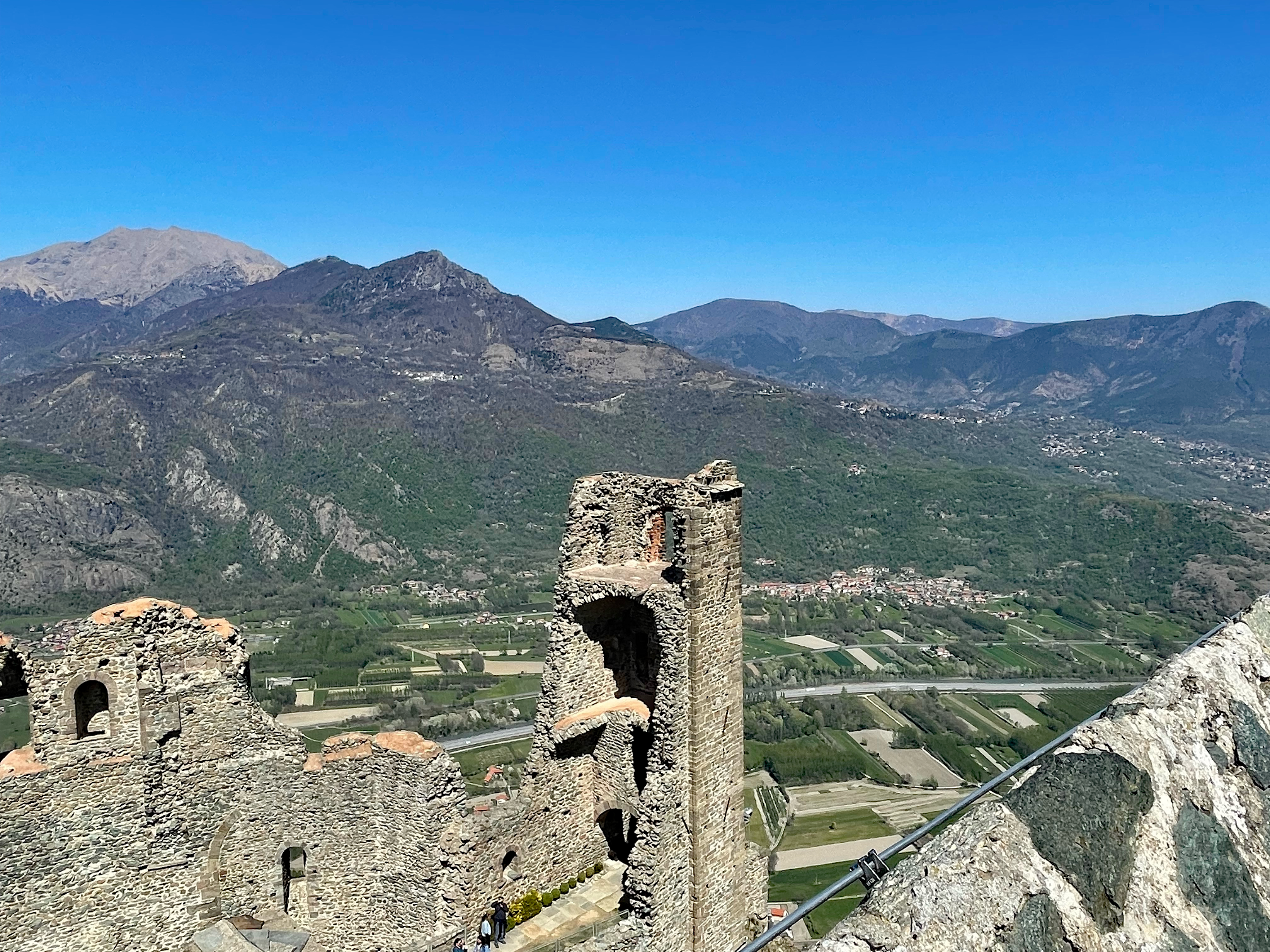
The Cottian Alps and the valley floor looking towards Susa, taken by the church entrance – Sacra di San Michele
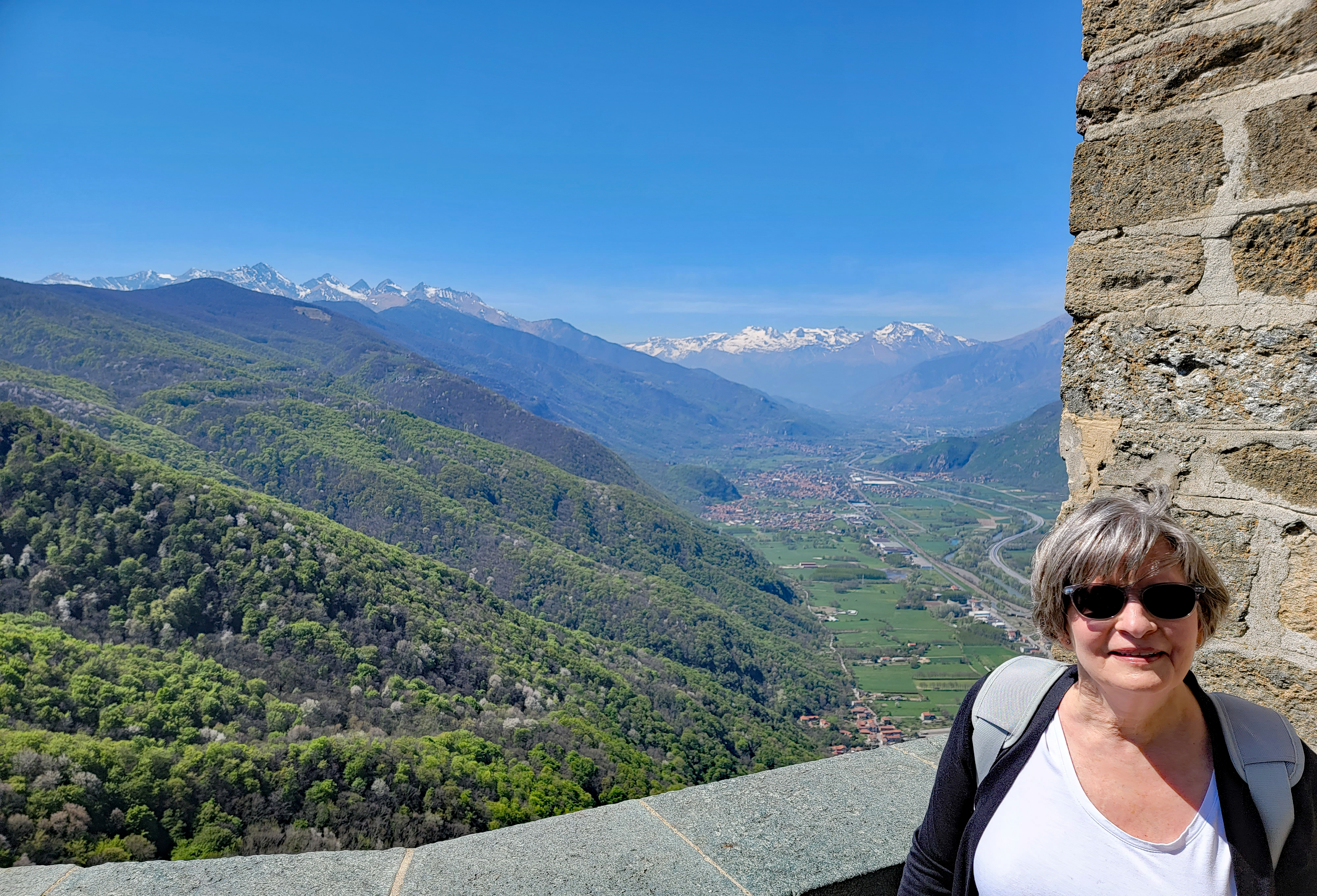
Patti and a view of the Cottian Alps by the church entrance – Sacra di San Michele
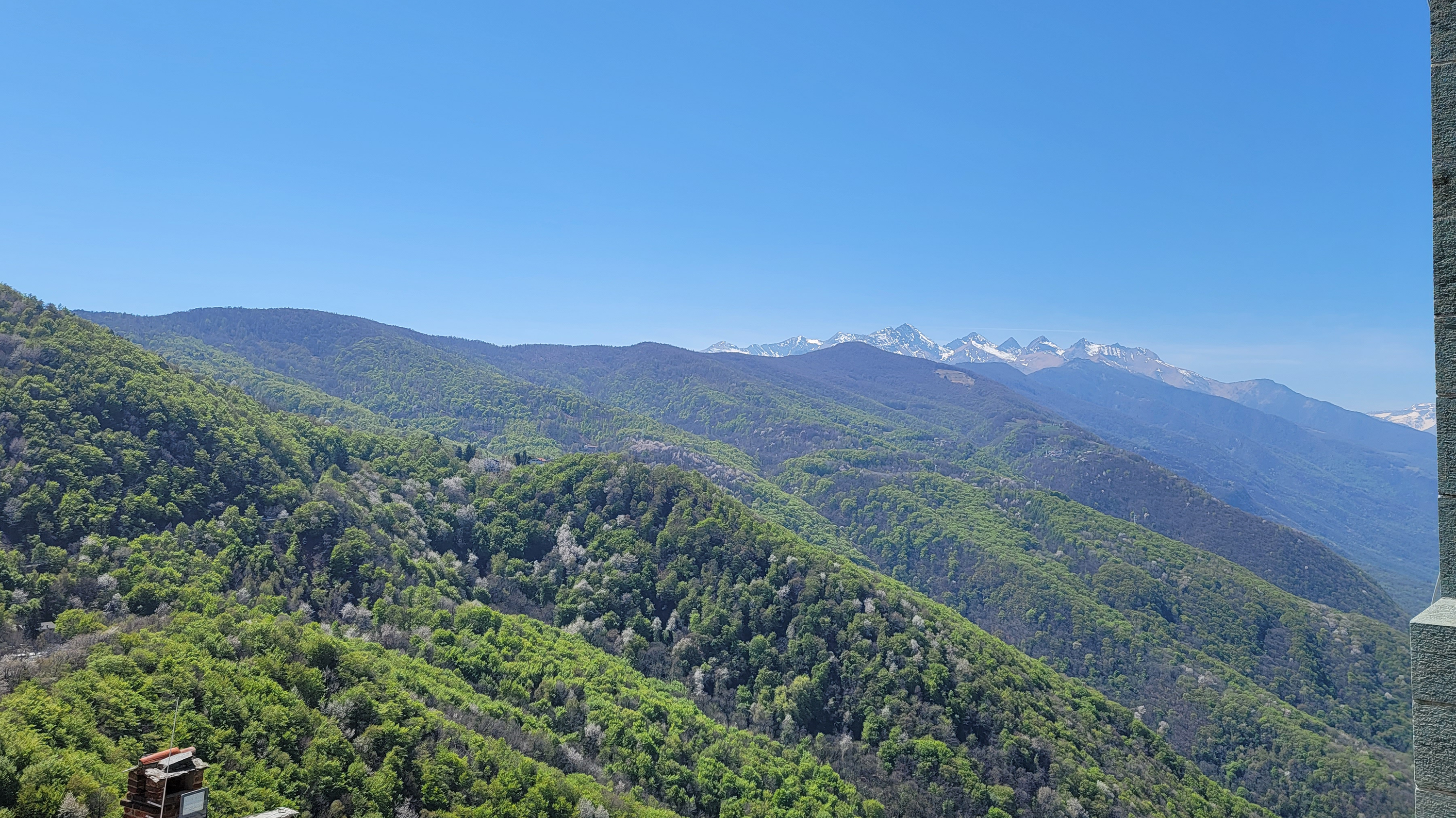
The Susa Valley and Cottian Alps from behind the church – Sacra di San Michele
Looking across the valley from behind the church – Sacra di San Michele
The ruins and Cottian Alps from behind the church – Sacra di San Michele
More ruins and alpine foothills from behind the church – Sacra di San Michele
Leaving we took our last look up at the great church and descended along the more difficult trail, due to its increase in steepness, it promised to cut some time off our descent, which it did.
Going down is a bit more treacherous and only 2.5 km, but still takes about 1 and a half hours to hike – Trail Map
However, the first part of this trail is VERY steep and not for anyone ill-prepared or wearing the wrong hiking apparel, so caution! We were actually having second thoughts until we realized it was more difficult to go back up, then to press on and continue downward.
A view of the church descending – Sacra di San Michele
We arrived back in Sant’ Ambrogio almost five hours later, hungry and fairly tired from our experience. Once on the train, we relaxed and started to compare which part of our legs hurt more. However, we were both happy we were able to meet our sacred vertical pilgrimage with a great sense of accomplishment. It was our first big hike of the season, hopefully not our last and if anyone is thinking of doing this or a similar hike, keep the following in mind, we will next time.
Prepare for your hike, research the route and understand how technical it is
Bring a water bottle, the trail has two or three places to refill, this is especially important
Bring lunch or something to eat, there is nothing above except some vending by the ticket counter, but do not count on that
Wear the correct clothing (light and layered) and shoes, hiking shoes would be preferred but thick soled tennis shoes or sneakers will do
Pace yourself, unless you are young be mindful of your body and do not over-exert, you do not want to get into medical trouble on that trail, it will take some time for them to get to you
Go in good weather, unless it’s your intent as an experienced hikers not to
And last but not least.., enjoy yourself, there are amazing things to see and hear on the trail, the flowers and birds are in abundance.
Also called, Lunedì dell’ Angelo, which is meant to remember the women of the sepulcher, including Mary Magdalene, who were comforted by an angel when they returned to Jesus’ tomb and found it empty.
Tucked along the eastern bank of the River Po and within the confines of the Metropolitan City of Turin sits Moncalieri. No more than a fifteen minute bike ride for me down the Corso Moncalieri from our apartment in Turin, it took us a twenty minute walk to the train station, followed by a twenty-five minute train ride, with a change in Lingotto. Of course, there are other options, but none that we could take conveniently from where we live in Turin.
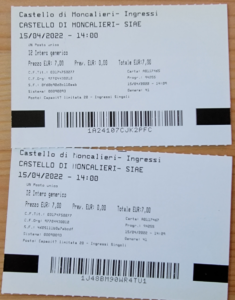
Tickets for Two – Moncalieri – Turin
Moncalieri – The Town
A quick hop off the train and you may bump into the weekly market, if you travel there on the weekend. This is the traditional market that most places in Italy entertain at least once a week, so that locals can buy everything from household goods, cheap everyday things like sponges, to more exotica like gold coins and older things, some would like to call antiques.
Train station – Moncalieri, Turin
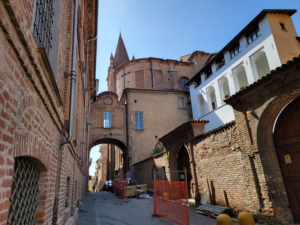
Once you have left the train station and navigated the small Borgo Navile, where the market is held, you will find the center of town by walking the via San Martino.
Municipal Building – Moncalieri, Turin
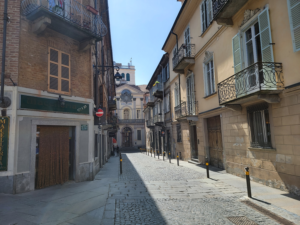
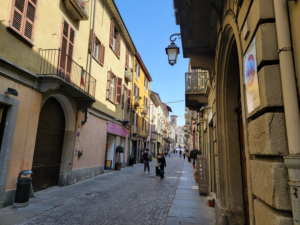
Via S. Martino – Moncalieri – Turin
Church overpass of street – Moncalieri, Turin
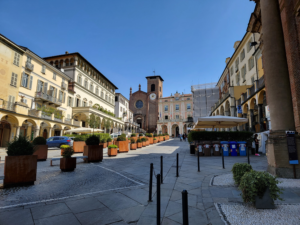
Piazza VIttorio Emanuele II – Moncalieri Center – Turin
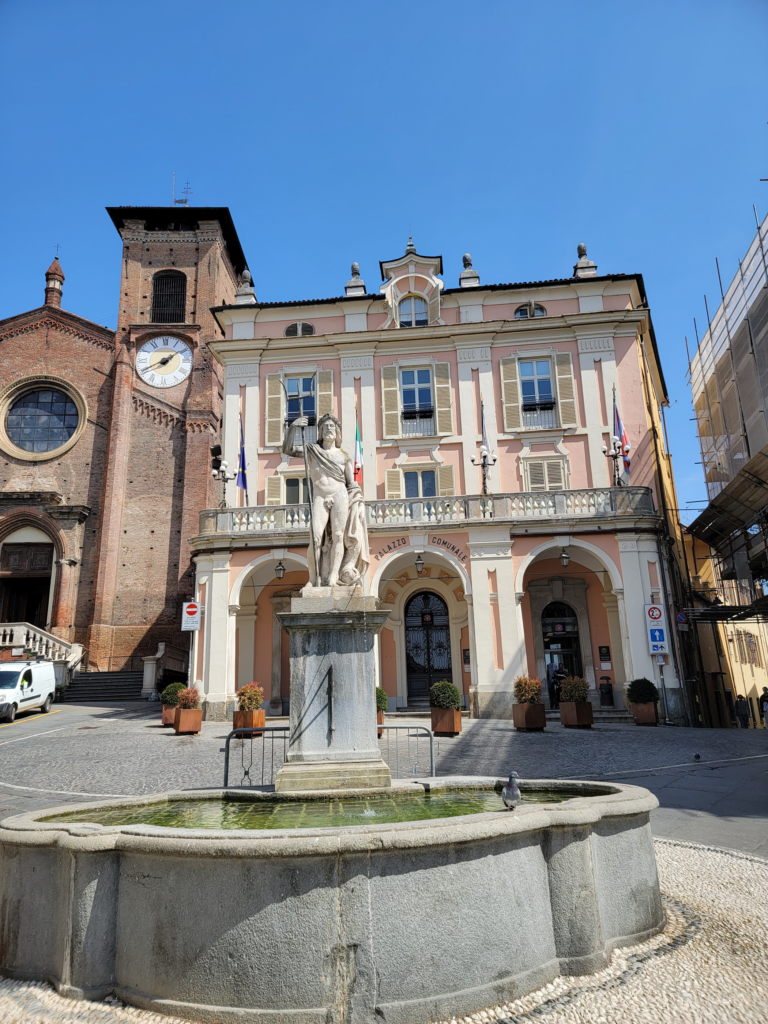
At the end of this short journey you will find the Piazza Vittorio Emanuele II[1]Named after the King of the same name, the castle of Moncalieri was his favorite summer retreat, the town’s main fountain and the Comune Building for Moncalieri. The significance of the Roman God Neptune is unclear, other than he was the Roman God of Fresh Water and the Sea, and that the fountain was most likely the main source of water before indoor plumbing for the town’s people.
Neptune Statue – Comune Building in Moncalieri Center – Turin
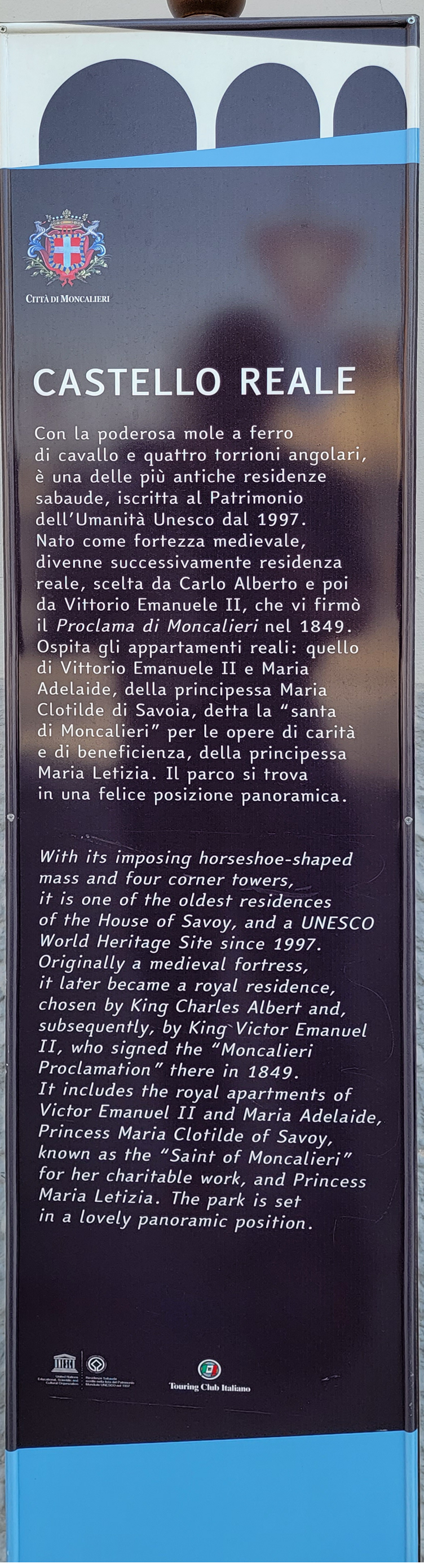
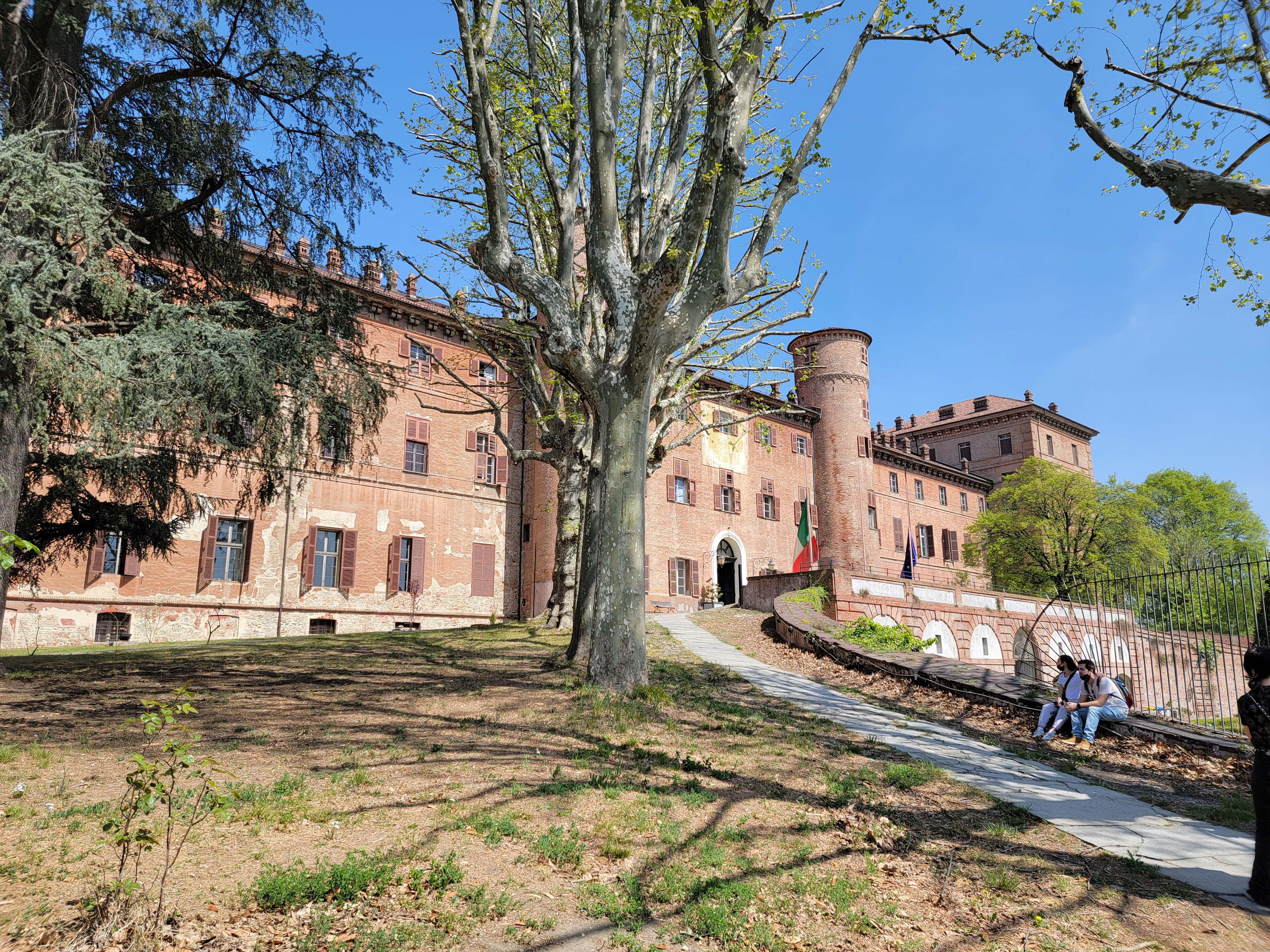
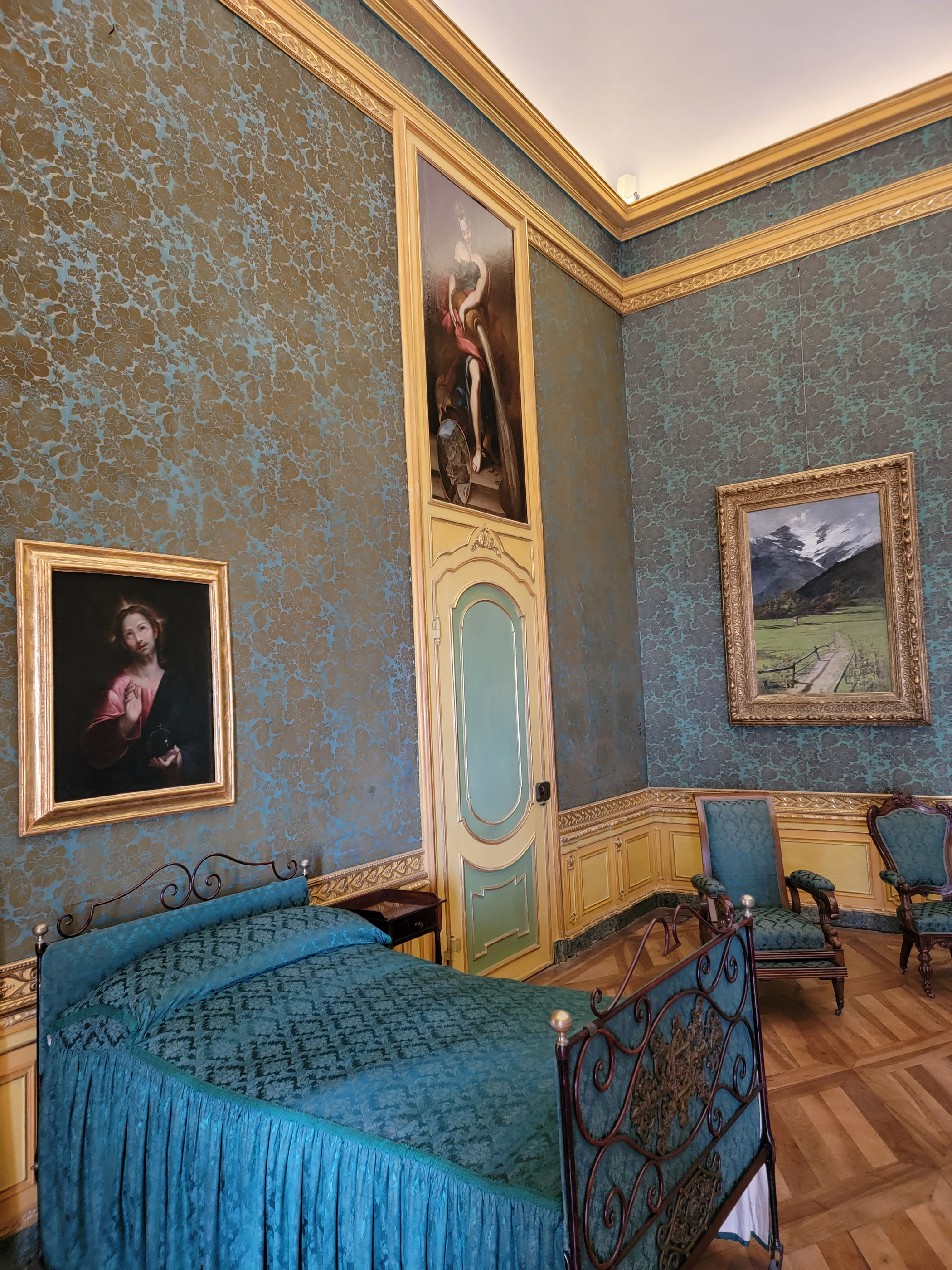
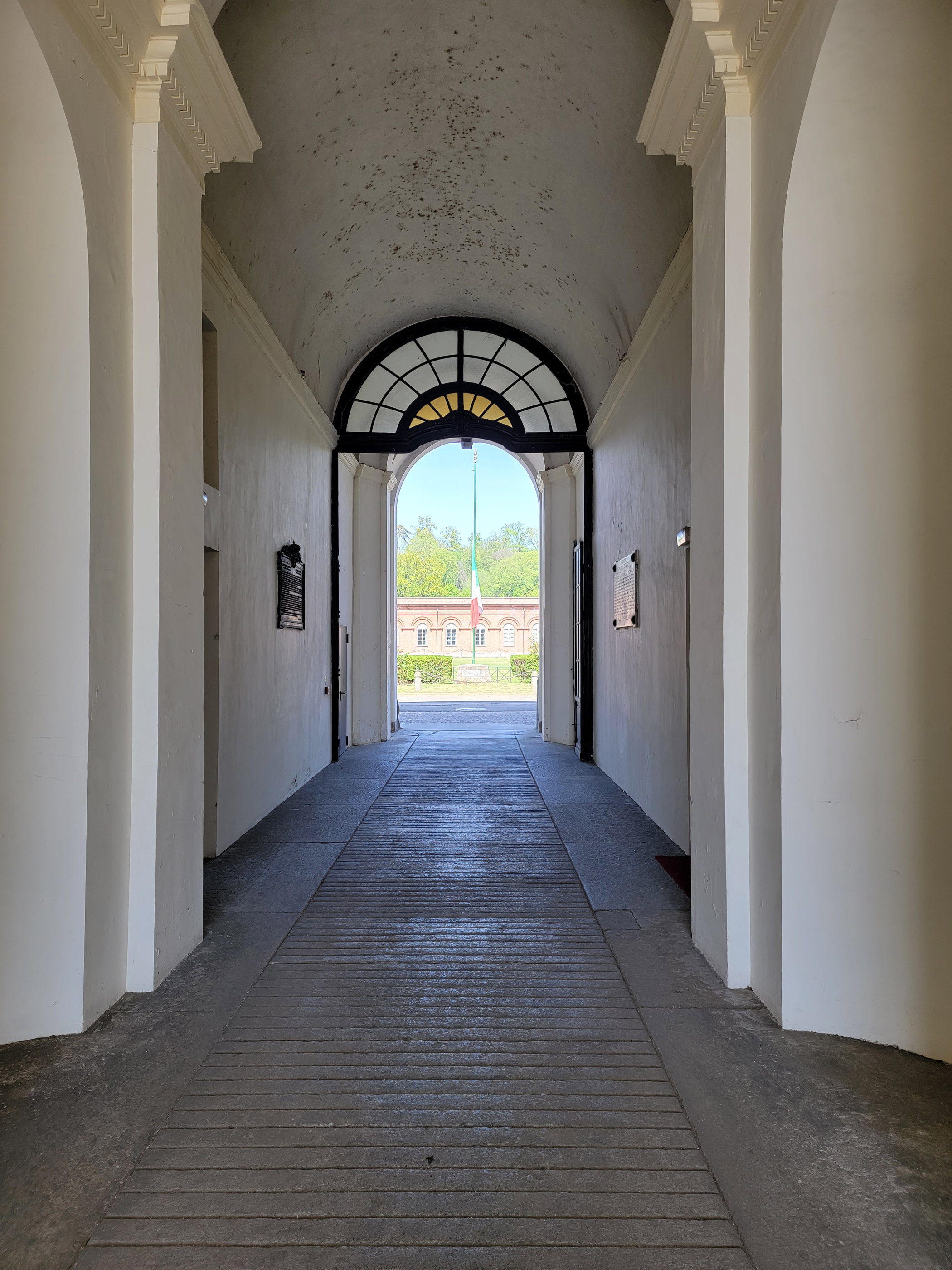
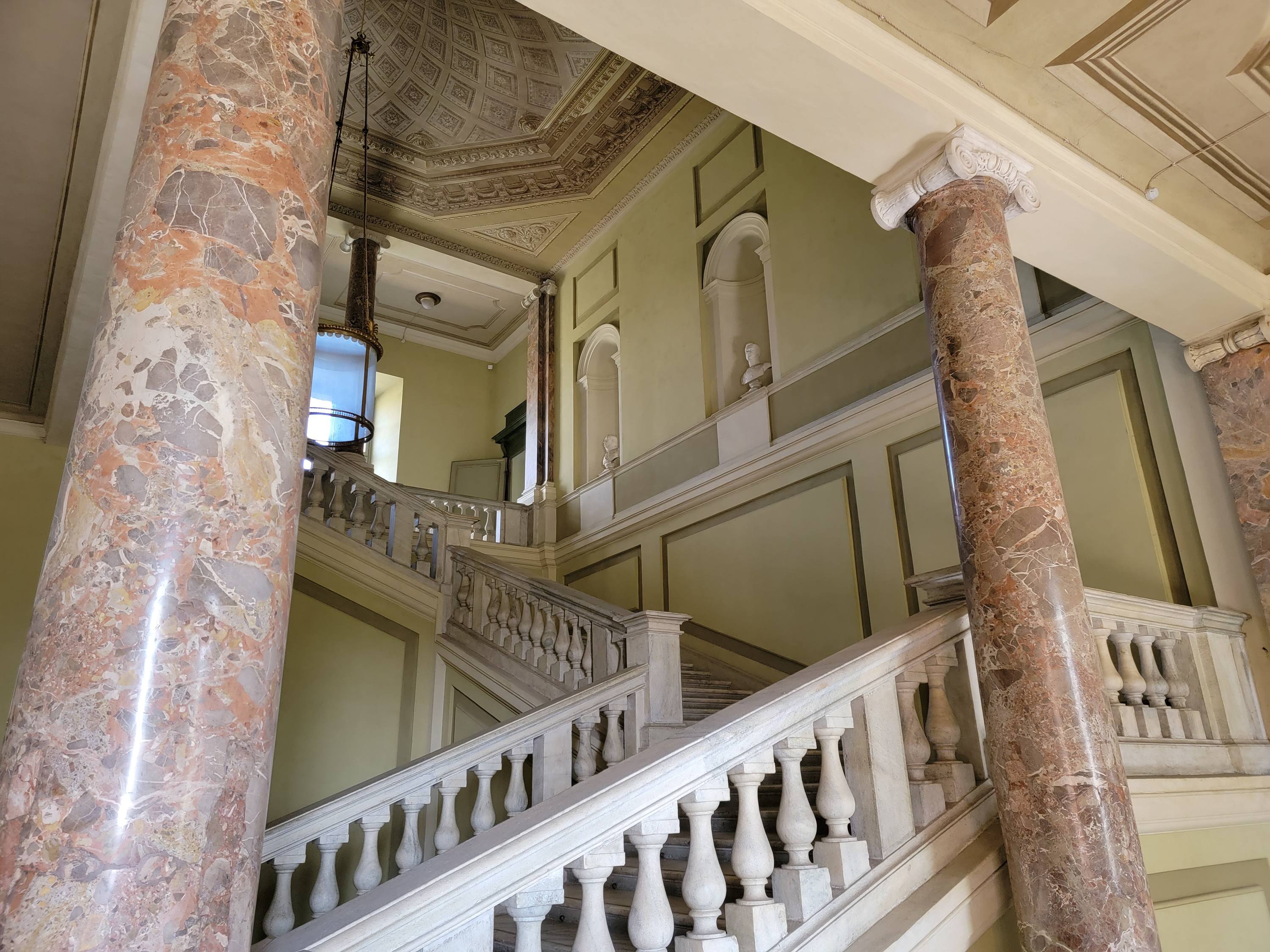
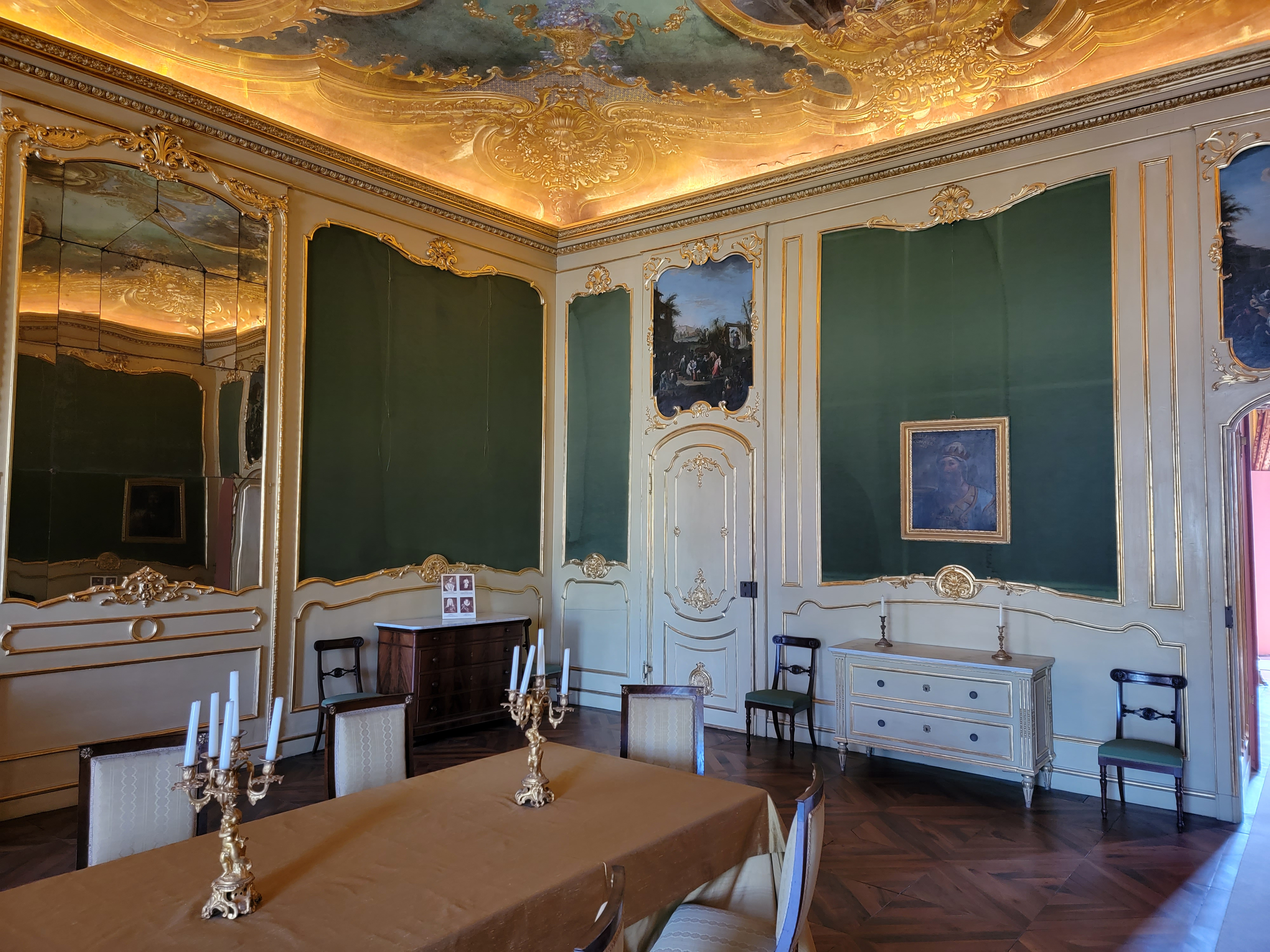
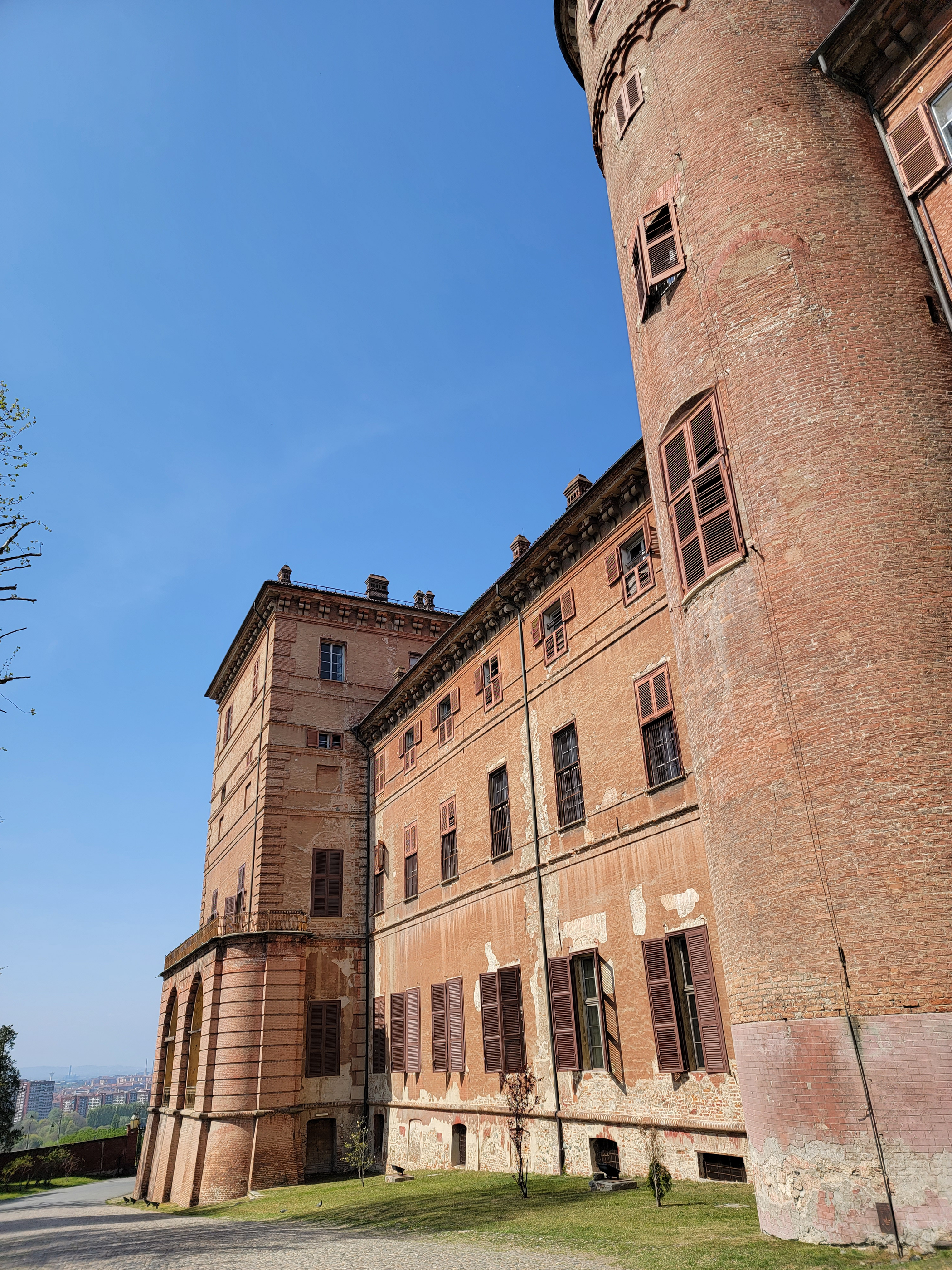
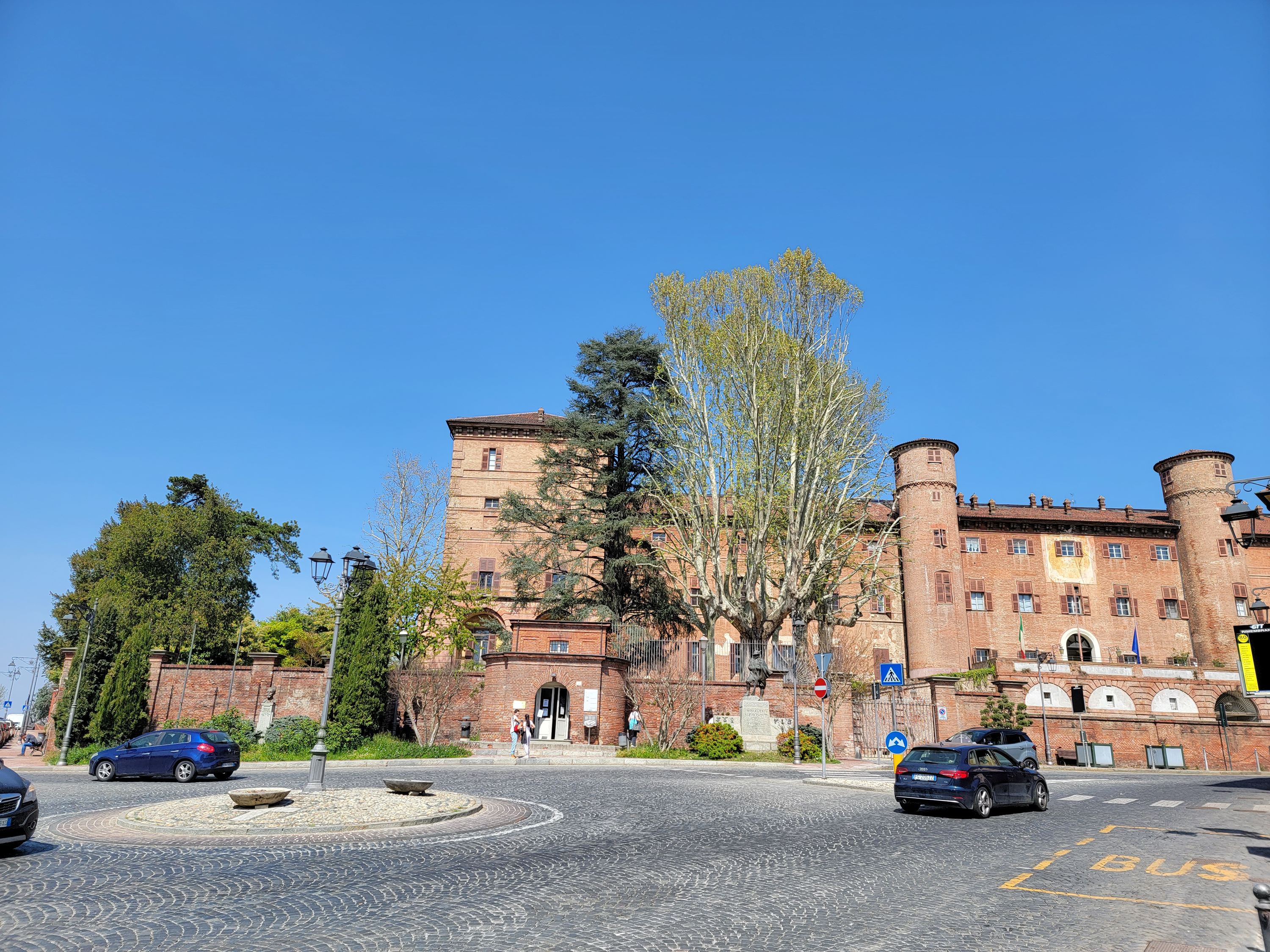
Castello Reale di Moncalieri
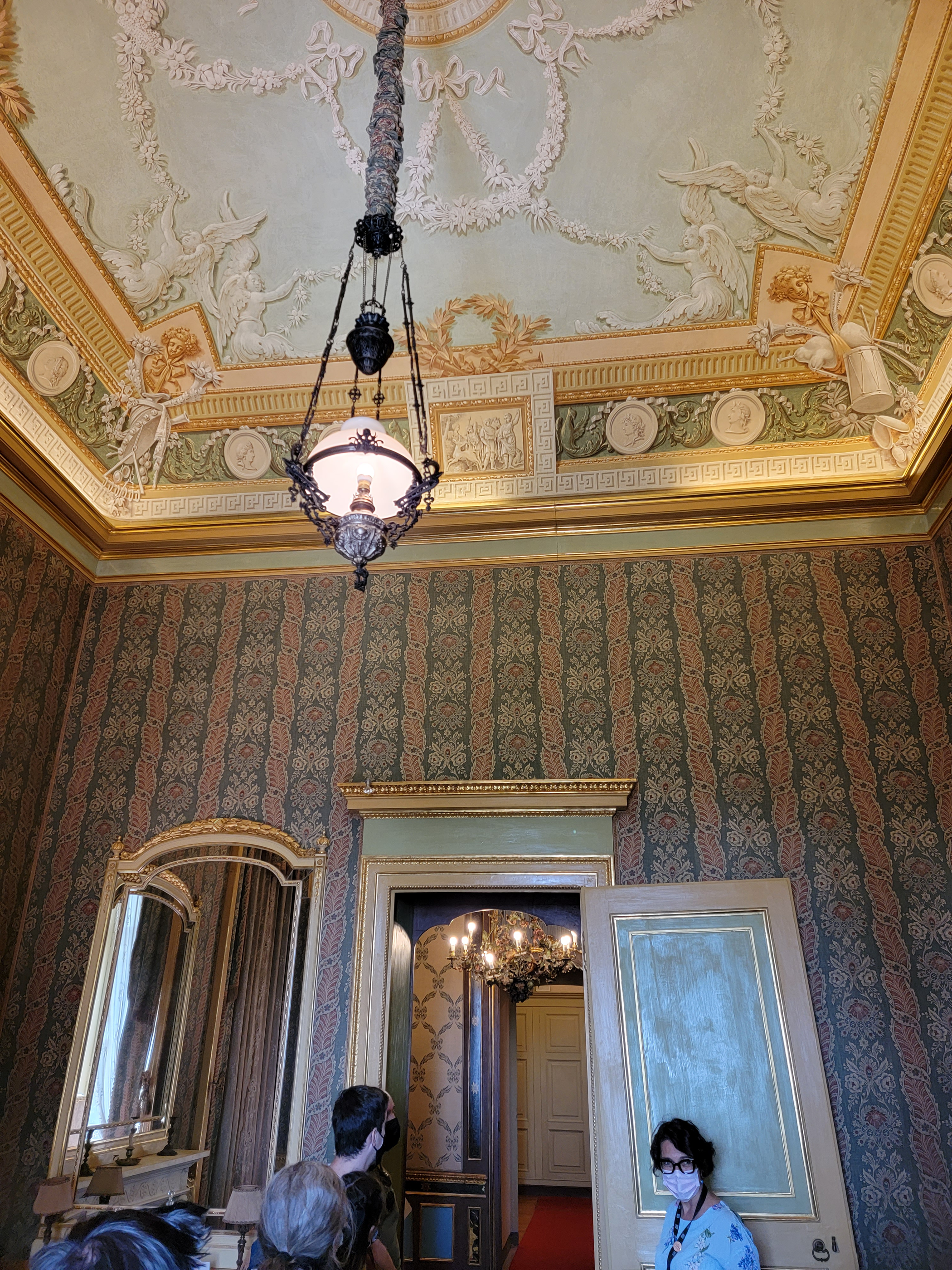
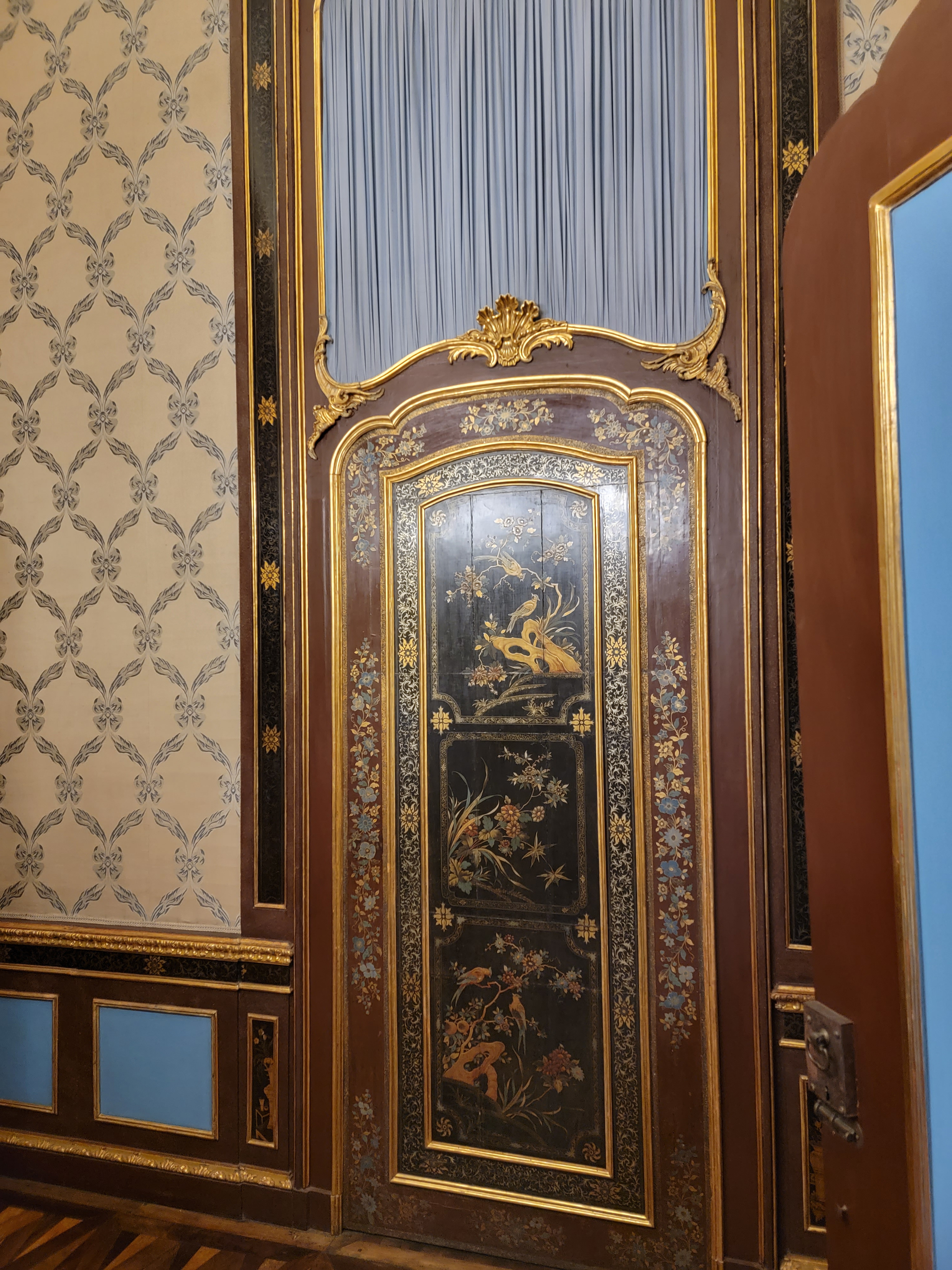
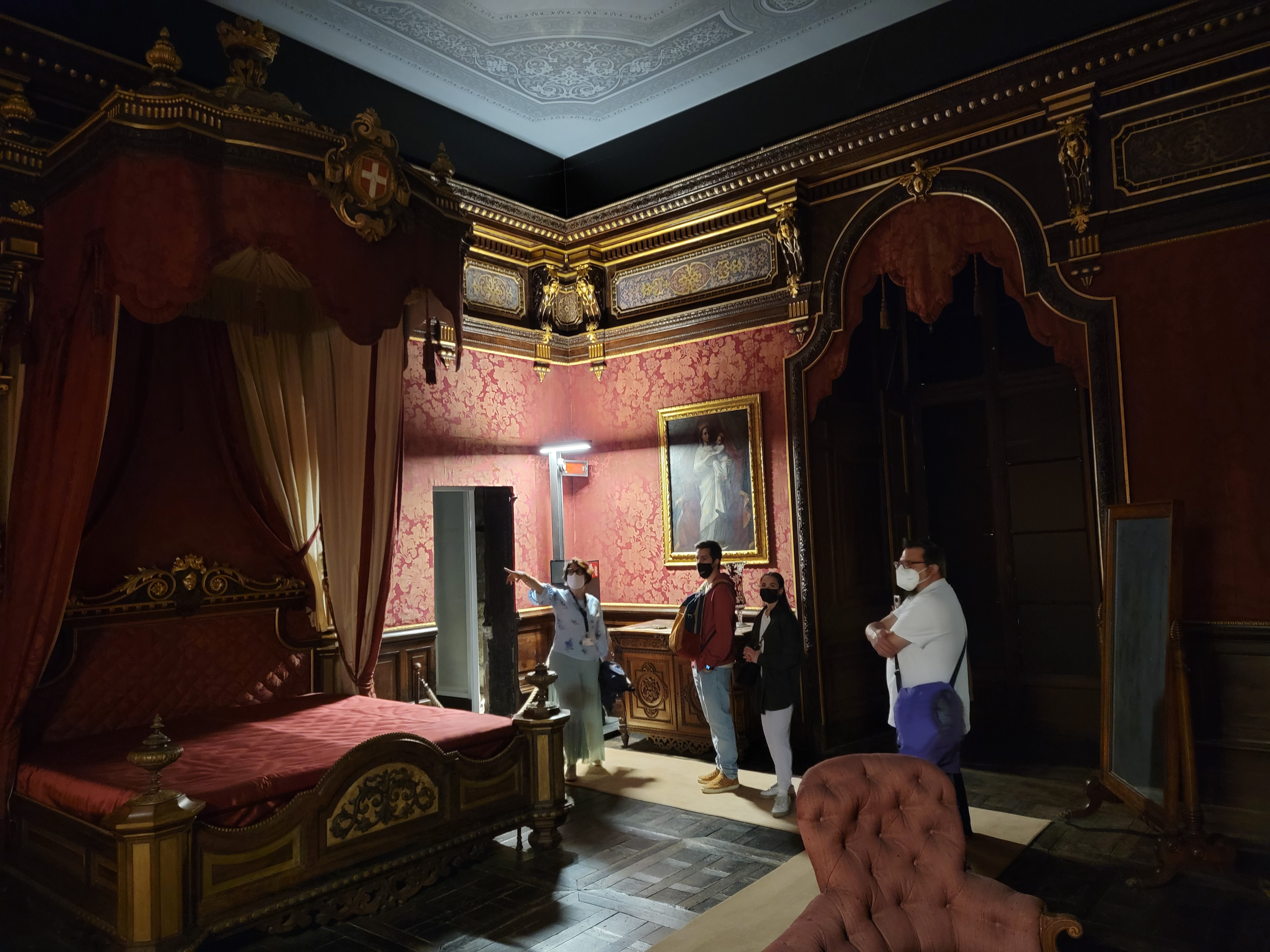
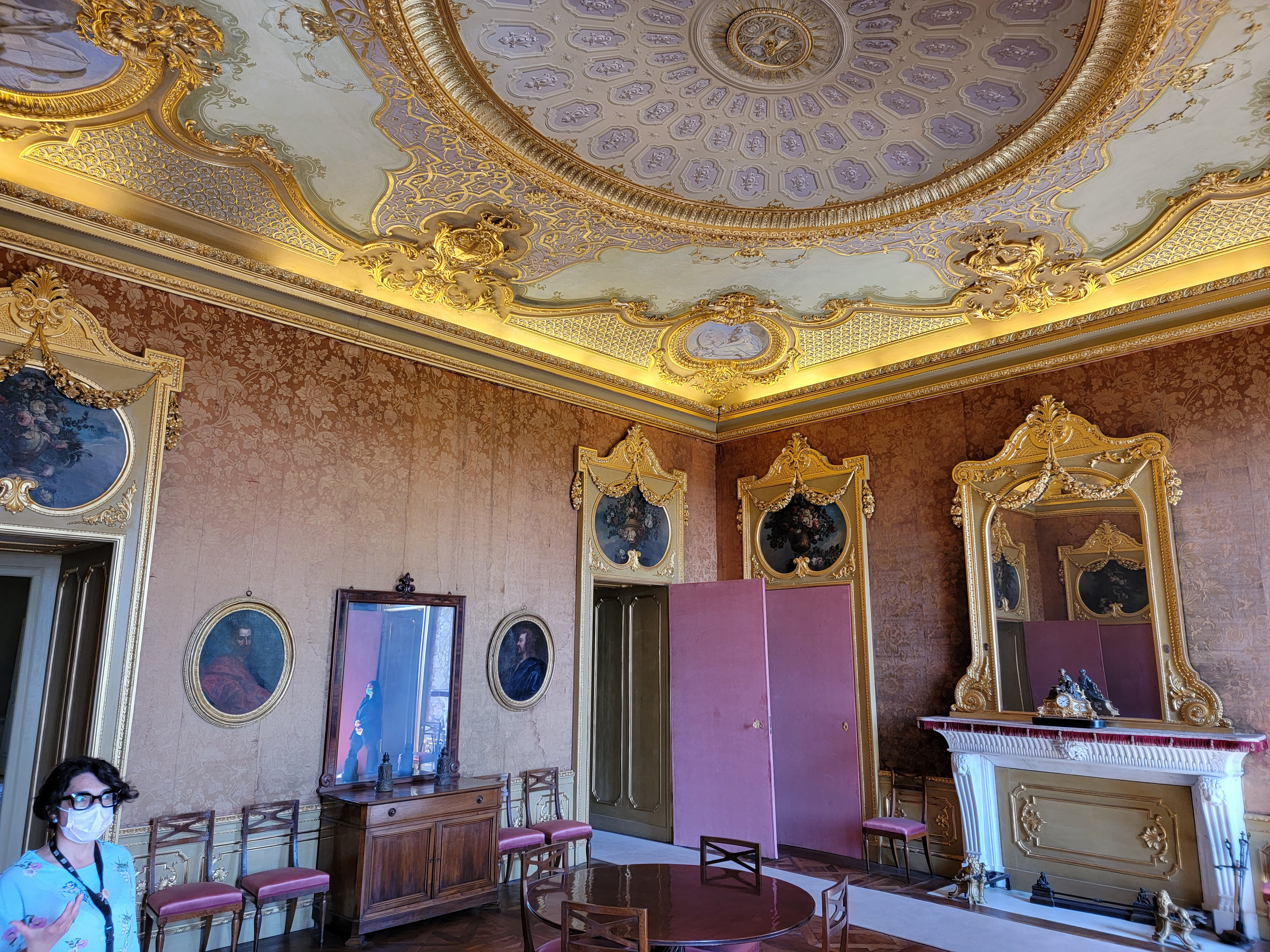
A must see when visiting here is the large and private Castle Real of Moncalieri. For a modest fee you can enter the castle, which experienced a fire in 2008[2]The fire destroyed several rooms on the upper floor and was contained, but most of the damaged was just contained and never renovated., and take the guided tour, which is only in Italian. Fear not, there are enough references in the story for most people to follow and our tour guide did speak english and filled us in while walking on the more important points.
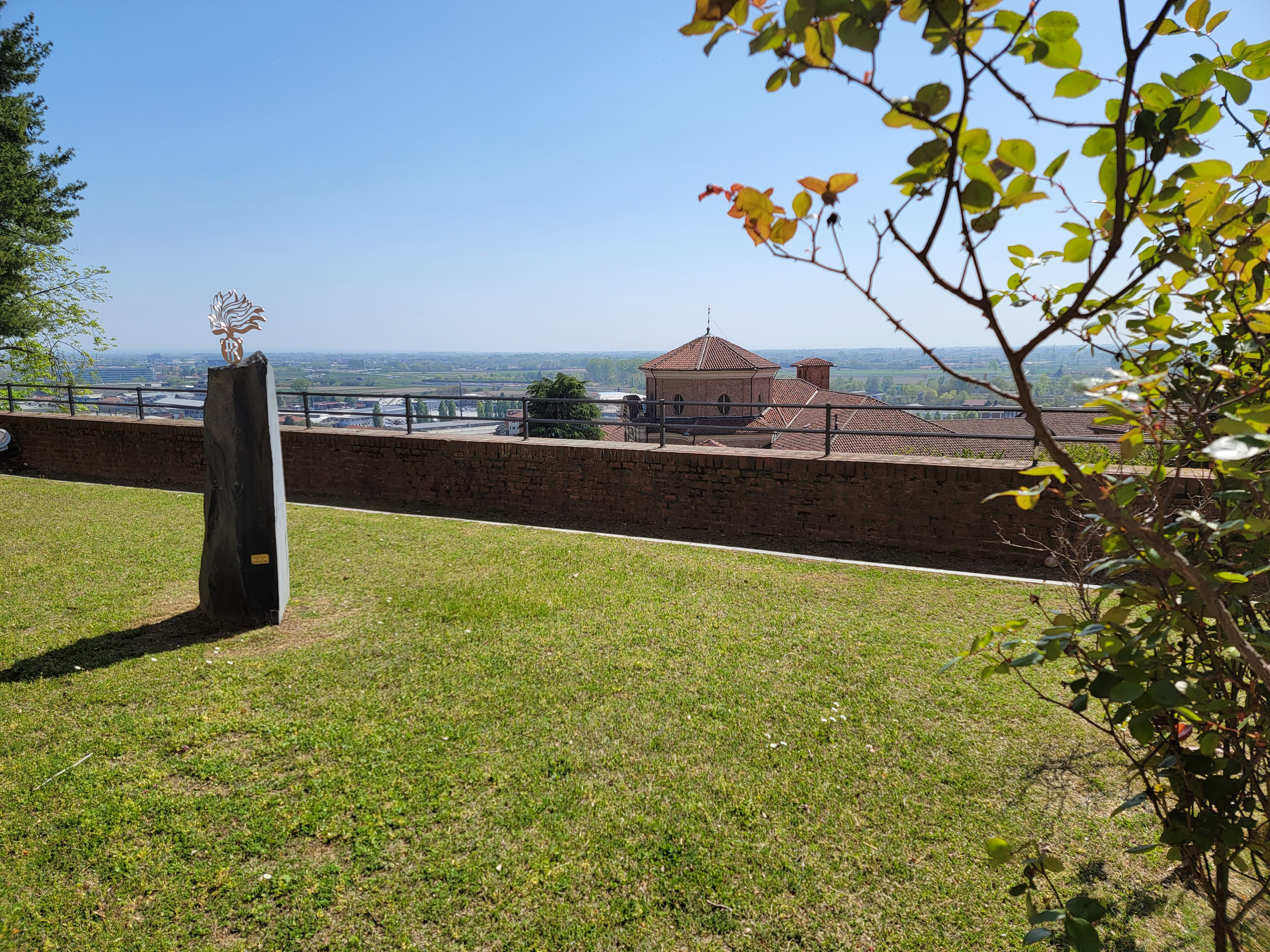
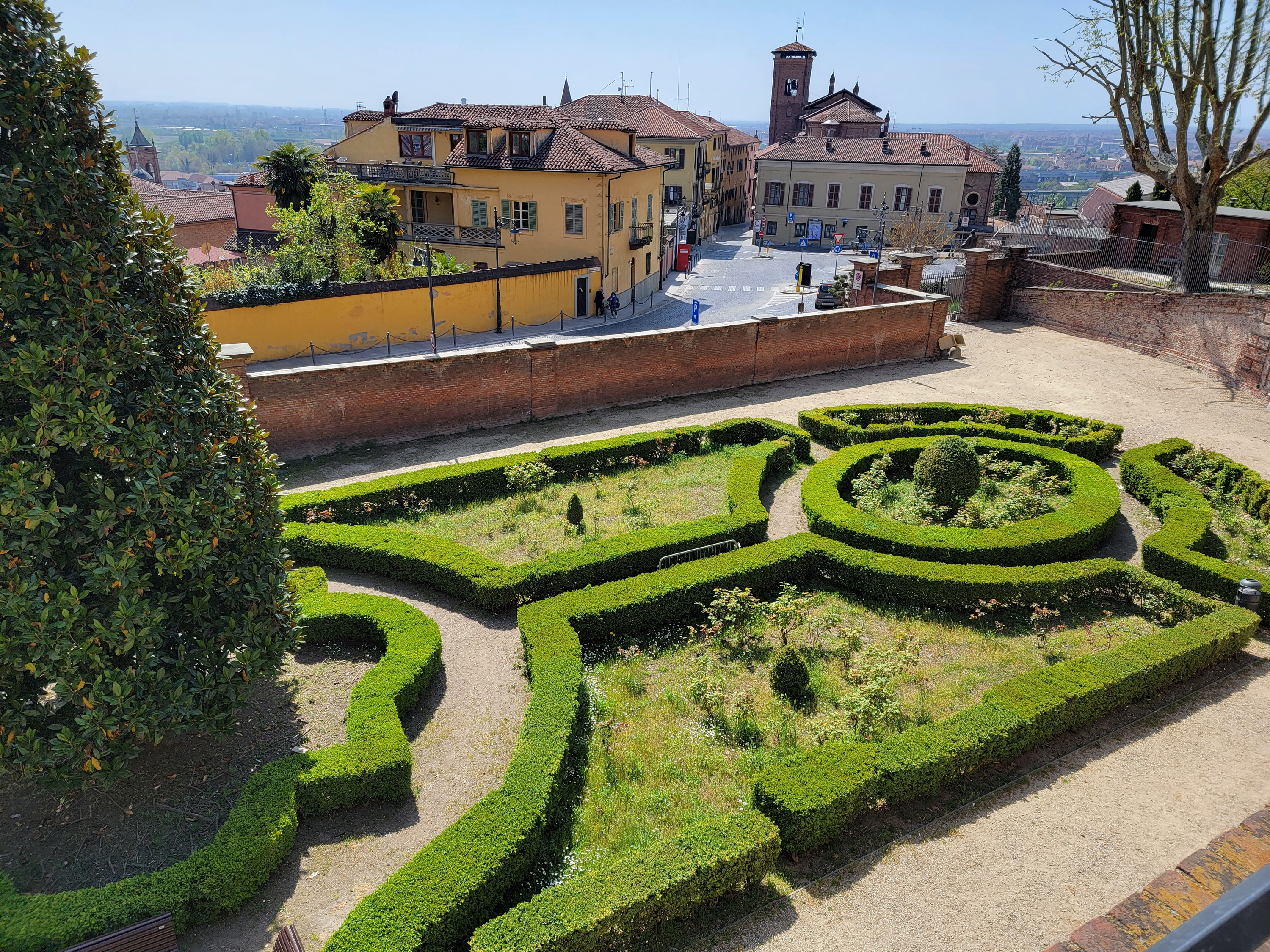
Garden and View – Castle of Moncalieri – Moncalieri, Turin
Garden – Castle of Moncaliere – Moncalieri, Turin
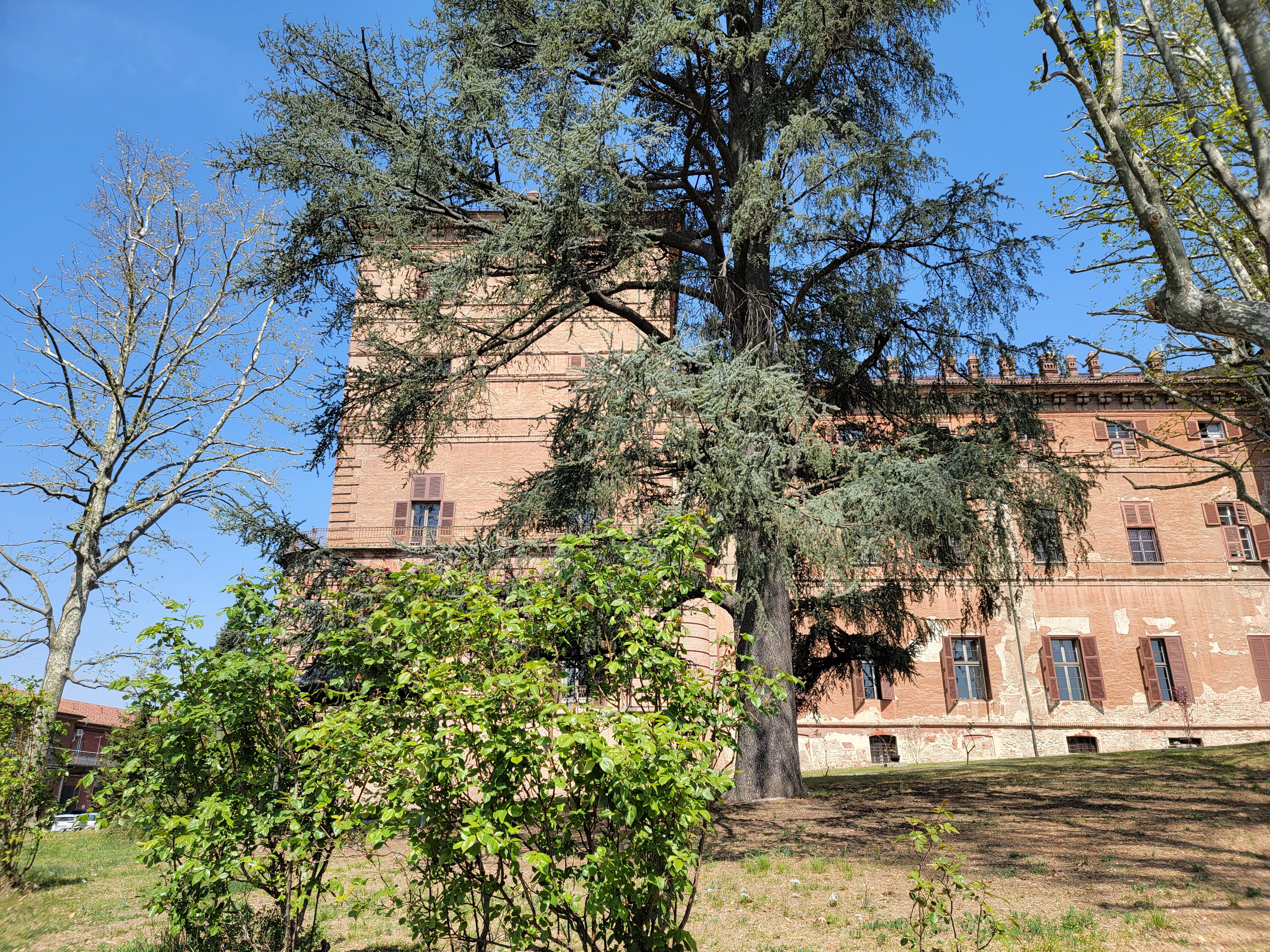
Castello Reale – Moncalieri, Turin
Restaurants
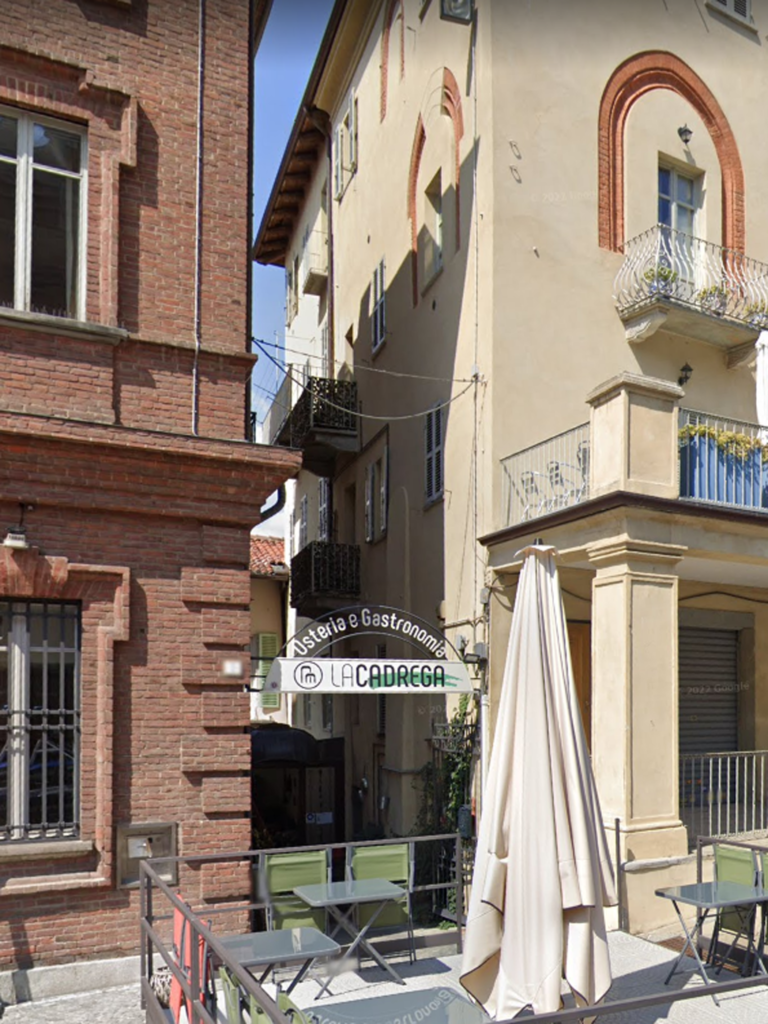
Osteria e Gastronomia
Tucked between the UniCredit Bank and an apartment building off the beginning of Piazza Vittorio Emanuele II is a very good restaurant, the Osteria e Gastronomia. It was already lunch time, so we grabbed a small two person table right in the alleyway and were immediately greated by our hosts. A quick view of the menu and we were ready for some delicious Piemontese food.
Osteria e Gastronomia – Moncalieri,Turin
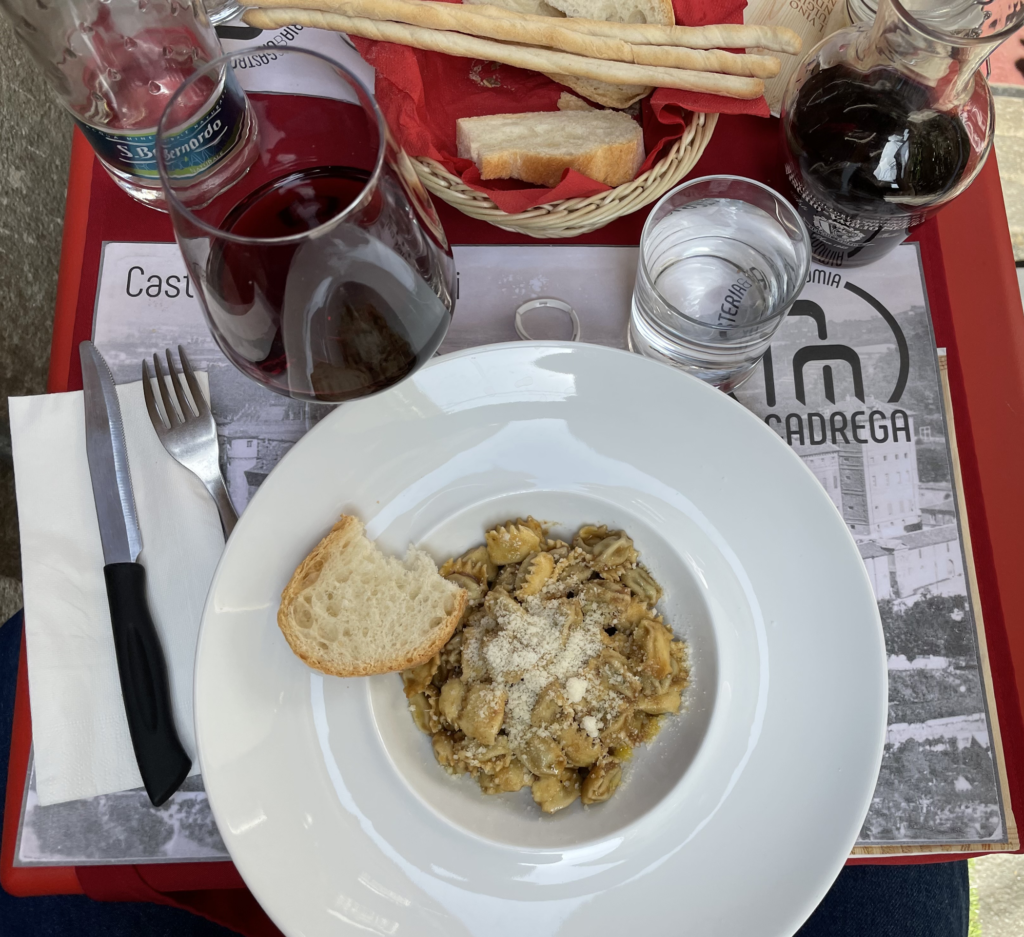
I ordered the Agnolotti del plin tradizionali con sugo d’arrosto, a typical Piedmont dish of very tiny ravioli stuffed with meat in a meat sauce, very tasty! It doesn’t look like much, but is actually very filling. Along with some bread, a glass of Nebbiollo alla spina, and water, how can you go wrong for lunch?
Agnolotti del plin tradizionali con sugo d’arrosto
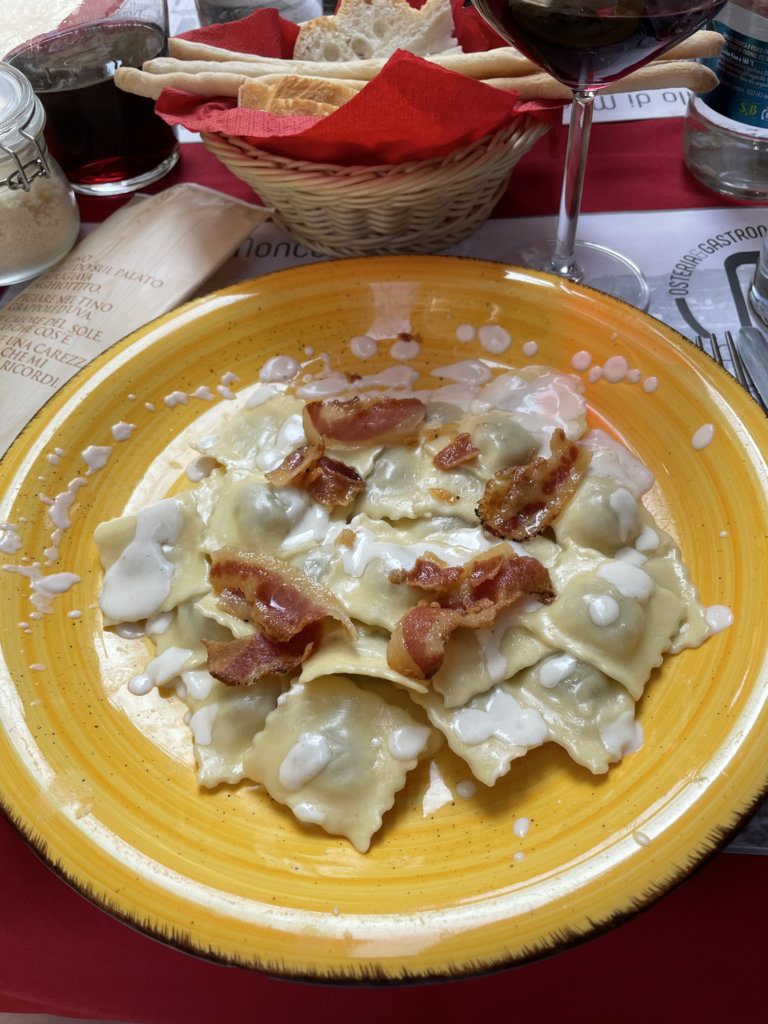
Patti ordered the Agnolotti con salsiccia di Bra e porri con crema di parmigiano e guanciale croccante, which are larger ravioli made with sausage from Bra and leeks, topped with Bacon. A little Parmesan and you have a great lunch.
Agnolotti con salsiccia di Bra e porri con crema di parmigiano e guanciale croccante
Well, we hope you enjoyed our adventure to Moncalieri, because we did and were actually surprised. Though it took longer to get there than we had originally hoped, it wasn’t all that bad and definitely worth the trip, if only for the food!
Well we are finally back in Turin and enjoying the weather, food and getting our lives back together. Our first week consisted of maintenance, paying bills and getting some chores done, typical things that have to be done after being away so long. So for our first short entry, a small video clip on picking up a roasted chicken at our favorite place, Girarrosti Santa Rita, located across the river Po, next to the Chiesa Parrocchiale della Gran Madre di Dio. This is a great place for picking up a roasted chicken with potatoes, then bring it back to your apartment or hotel room and enjoy. Though the price has gone up to about 10€, from its former price of about 7€, we still think it’s a great buy, especially when you are starving and do not want to cook. Enjoy!
Restaurants
Trattoria D’Agata
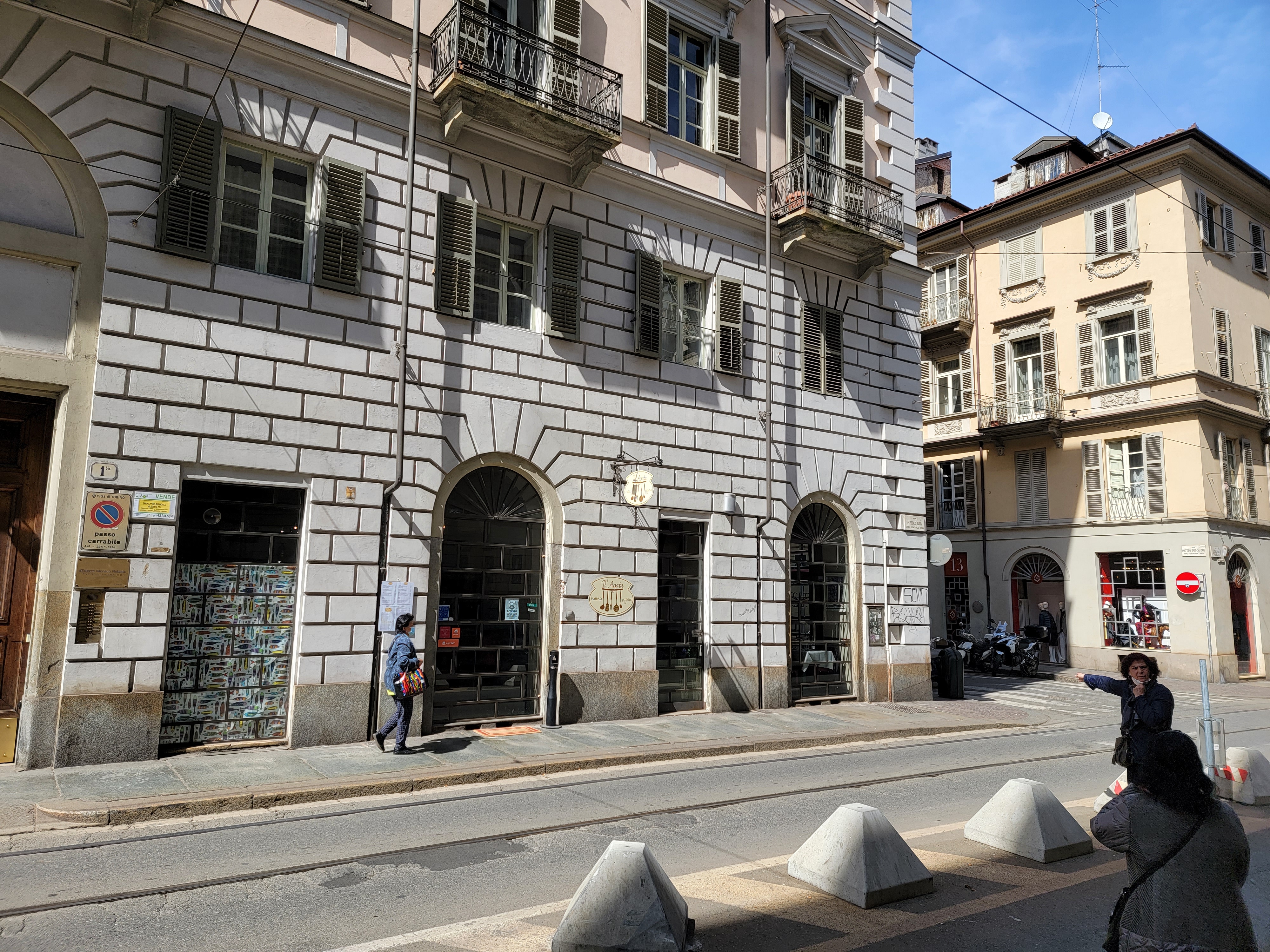
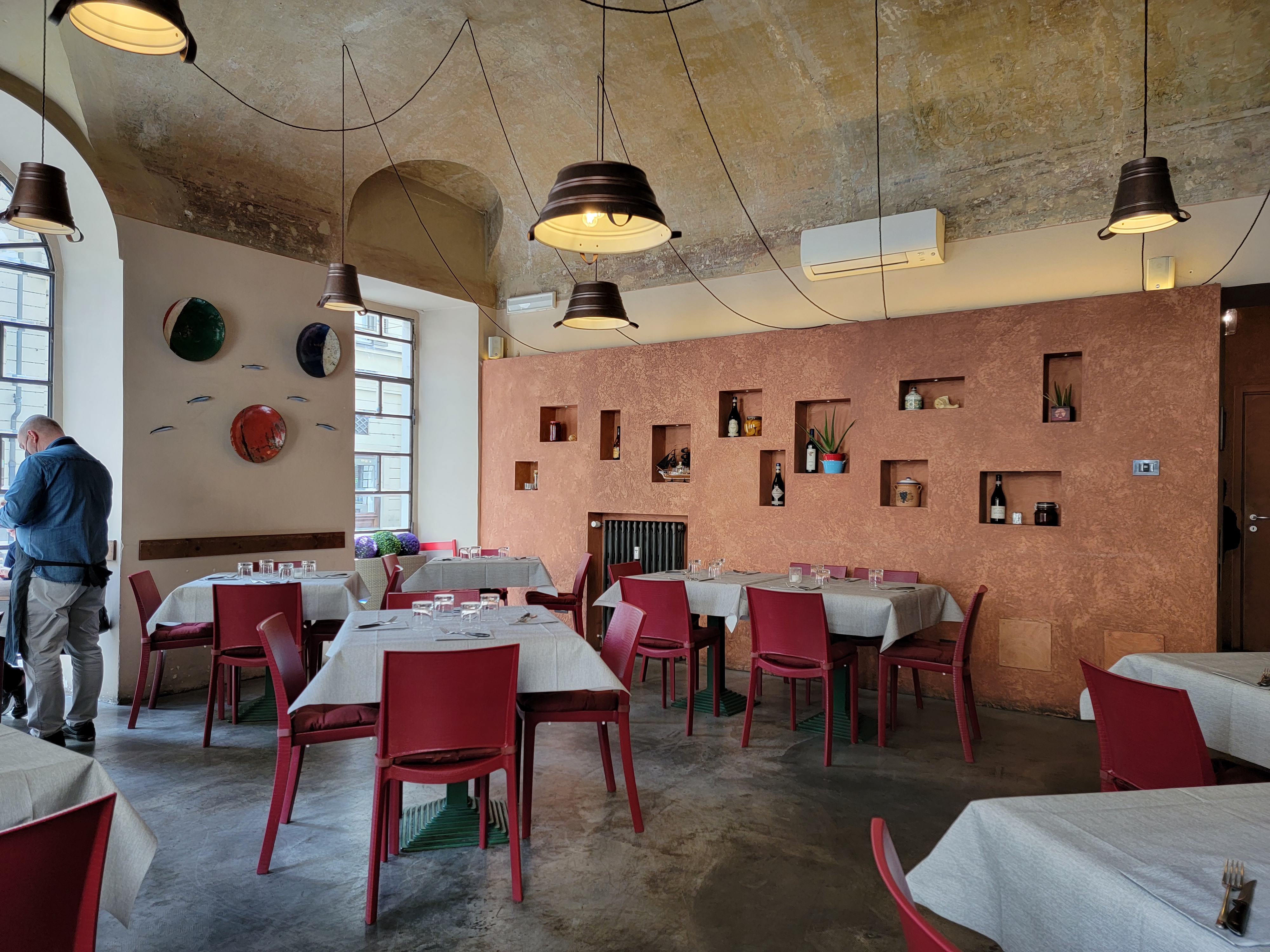
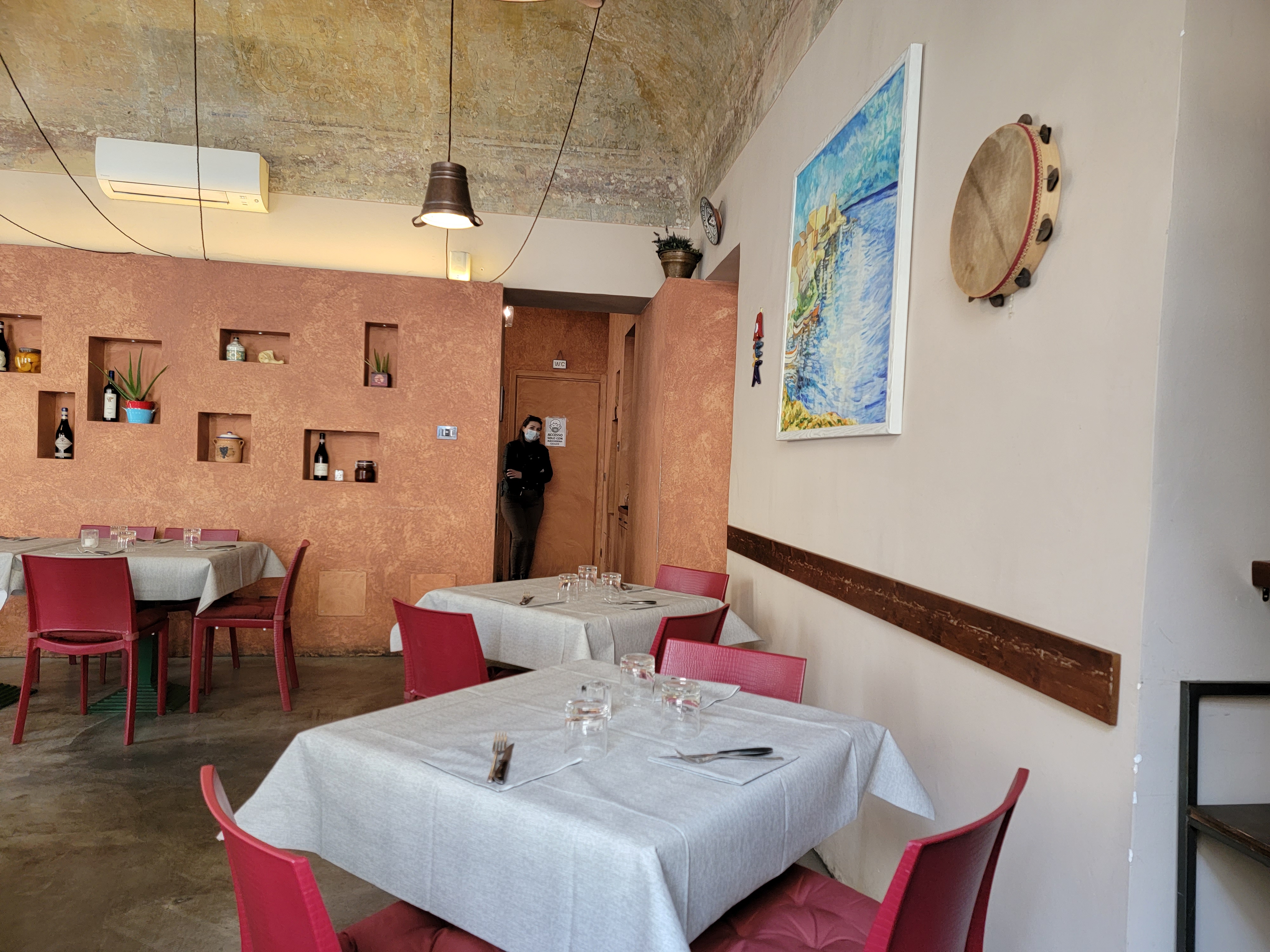
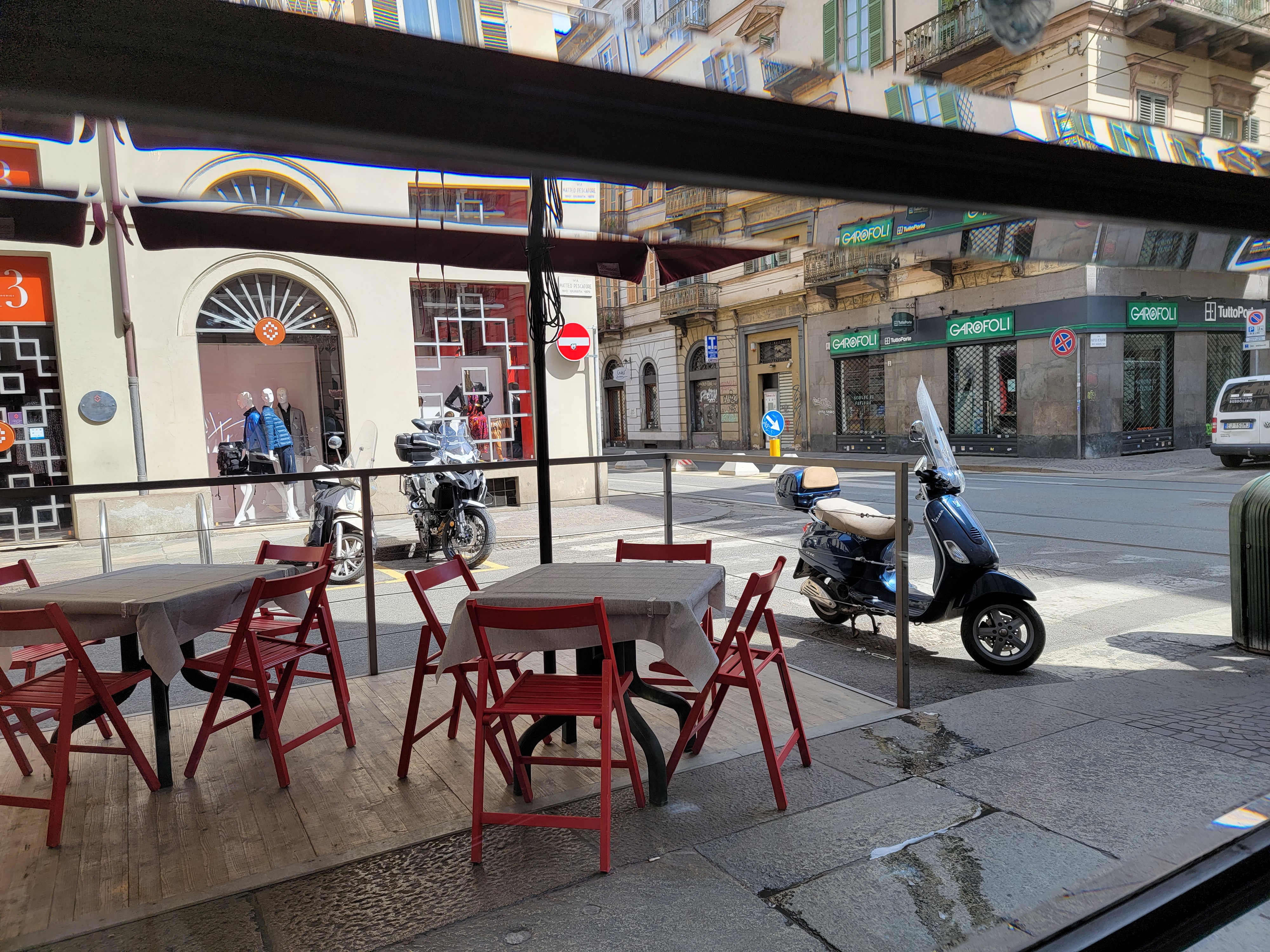
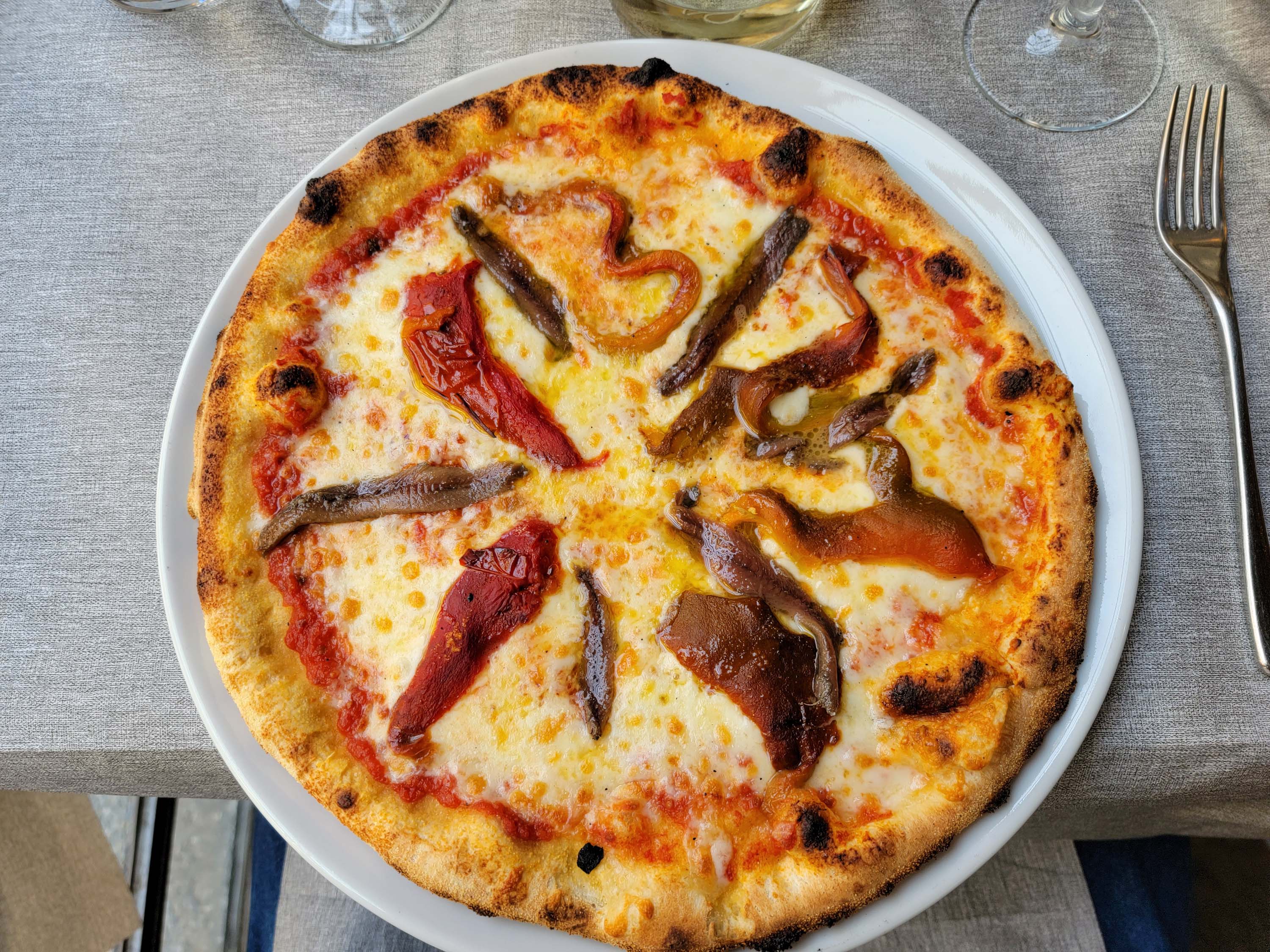
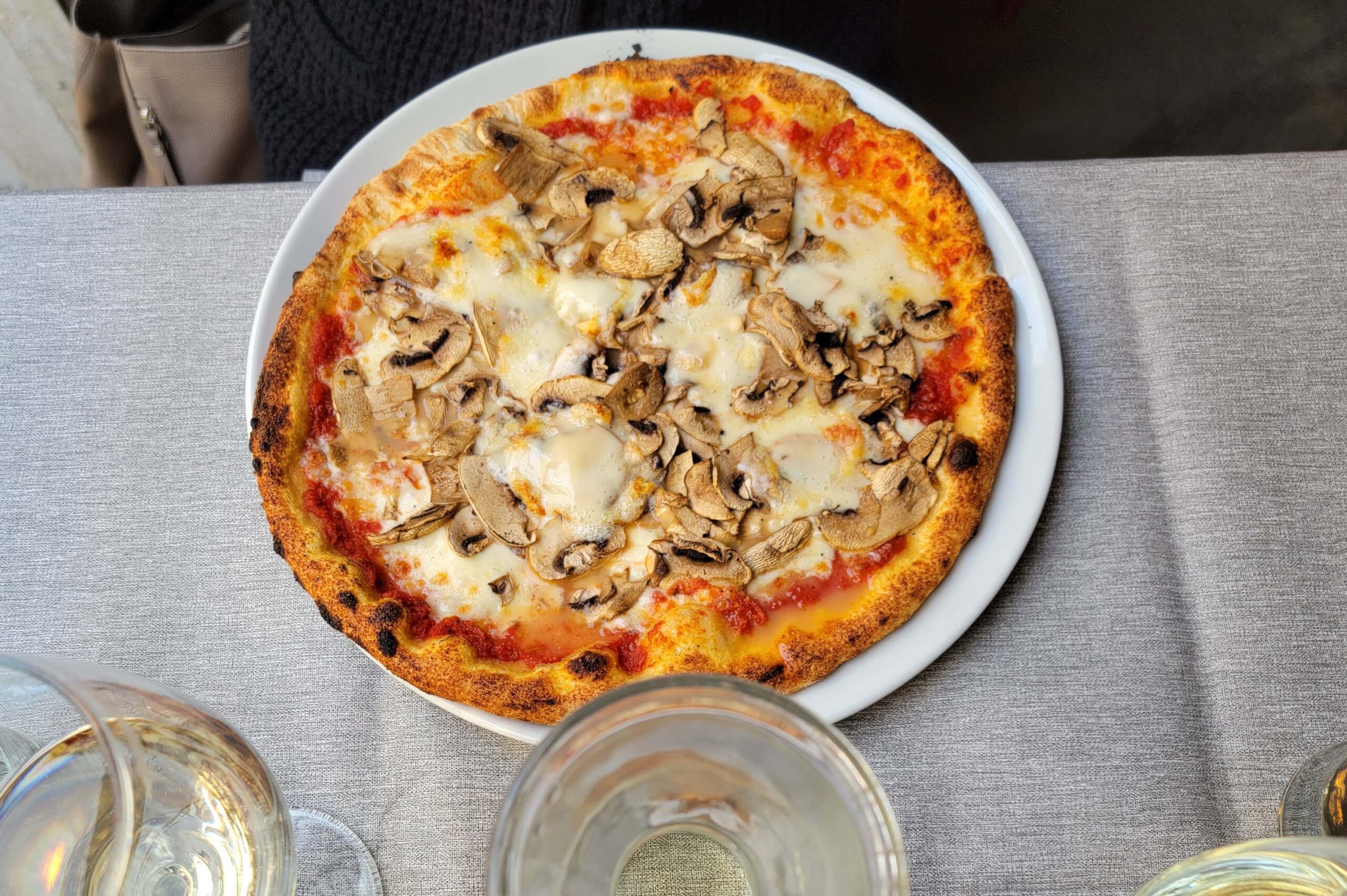
One on our way to purchase plumbing supplies, to fix our bathroom drain which had gone bad in our absence, we were hungry for Pizza. Having already visited Pizzium on via Eusebio Bava, we decided to try Trattoria D’Agata across the street and were not disappointed. Patti had the Taleggio e Funghi pizza, with Taleggio a local cheese, tomatoes, Fiordilatte (cow’s milk mozzarella) and mushrooms; and I had the Napoli, with tomatoes, Fiordilatte, oregano and Acciughe (Anchoivies).
Front of Trattoria D’Agata
Inside Trattoria D’Agata
Inside Trattoria D’Agata
Outside Seating Trattoria D’Agata
Pizza Napoli – Trattoria D’Agata
Pizza Taleggio (cheese) and Mushrooms – Trattoria D’Agata
In October 2021, during our travels in and around Naples, we quickly planned and later took a day trip to the small town of Pratola Serra[1]The town’s name is actually one of great confusion, most likely because of all of the municipal and governmental changes through the years. Its actual name, at least when one looks back into the … Continue reading in the province of Avellino, region of Campania, Italy, the ancestral home of my wife’s paternal family. While there, we had a delightful discussion, through our guide and interpreter, with perhaps a very distant family member of this family, though it is impossible to know for sure. She was cafe and store owner with the same surname of De Cicco.
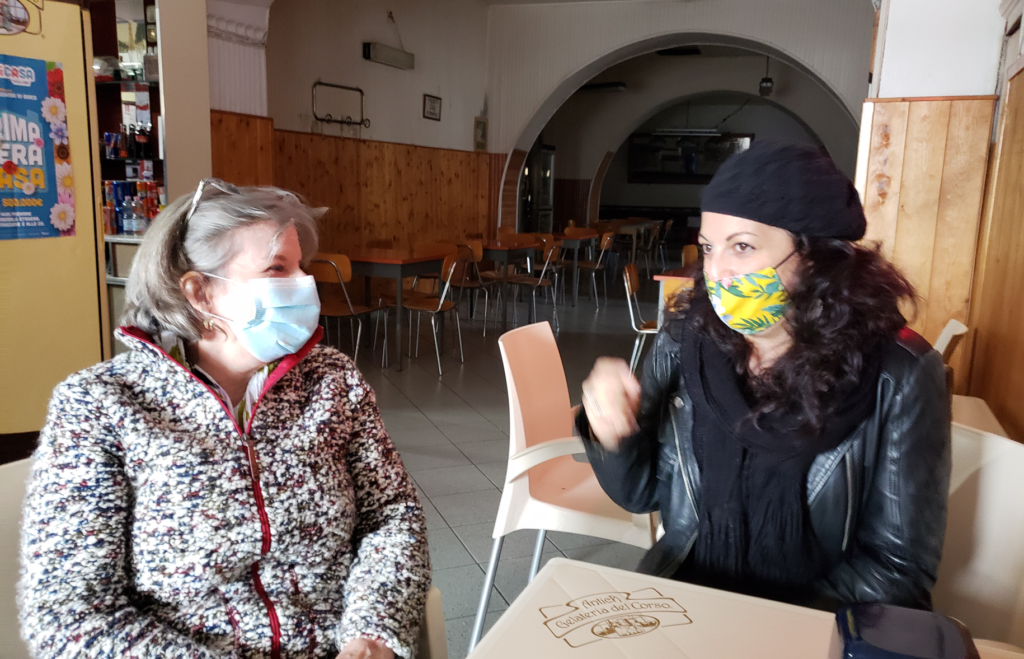
Bar Centrale – Antonia De Cicco’s Cafe – Pratola Serra – Oct 2021
Patti And Federica Talking – Pratola Serra, Corso Giuseppe Garabaldi, DeCicco’s Bar Centrale – Oct 2021
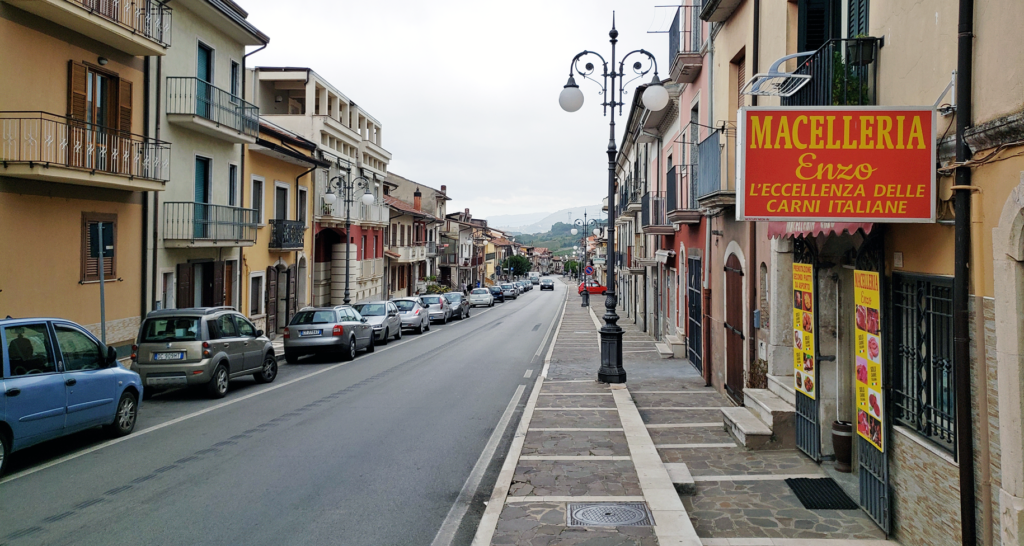
Pratola Serra – Avellino, Italy – via Nazionale (SS 371) – Oct 2021
Before she returned, we had a midday coffee at her cafe and discussed what we wanted to actually ask her, when and if she returned. We thought most of the questions should center around the small family tree we had brought with us and where we might be able to find lost family members, including where any might be in local cemeteries. In the meantime, we left the cafe temporarily to walk the streets of this small town and locate what we thought might be the old address of my wife’s paternal grandfather. After taking numerous photographs of the town’s main street and some of its more interesting buildings.
House Number 63 – SS 371, Pratola Serra – Oct 2021
The most pressing problem was the street, now called Strada Statale 371 (S.S. 371), and is no longer named via Nazionale(or for that matter never was called via Nazionale, it could be the wrong street) as it was in the Civil Records for this town back in the early twentieth century. As though that weren’t enough, we couldn’t be certain that even if we were on the correct street, and I thought we were, the numbers of the buildings were most probably wrong and could not be trusted. However, we took a photograph of the suspected building number 63 on S.S. 371, which appeared to be abandoned nonetheless, returning to the cafe after a short while in a light rain.
The Interview
The interview was done entirely in Italian and involved, for the most part, our guide and interpreter Frederica, from MindTheNap, and the Cafe Centrale’s owner Antonia De Cicco, with occasional statements and questions posed by our driver Fabio and my wife Patricia. No attempt has been made to separate voices of the different individuals speaking in the video. Moreover, the recording of each was taken by a phone at some distance, so the quality is not great and the volume may have to be adjusted to hear and understand what is being said. Additionally, in both cases, the recordings were started after the conversation had already begun. Lastly, the times on the left are approximate and may be off by quite a bit, depending on how the software that was used to analyze this recorded it. It was later re-edited by our guide with no changes to the time marks.
Interview Transcription And Translation
What follows is a transcription by our guide of the conversation as recorded, along with a fair translation into English, which isn’t perfect but good enough to understand what the conversation was about.
Transcript of PratolaSerra_DeCiccoInterview_Part1_Okt2021
[00:00:00] E sono morti qui a Pratola. I figli invece sono andati in America. E questo corrente è il nonno della signora,
And they died here in Pratola. Instead, the children went to America. And this current is the grandfather of the lady,
[00:00:08] Poi si è trasferito insomma.
Then he moved in short.
[00:00:10] Il Nonno della Maria Beatrice.
The grandfather of Maria Beatrice.
[00:00:12] No della Signora qua, questo è il nonno.
Not the Lady here, this is the grandfather.
[00:00:13] Il nonno, si.
The grandmother, yes.
[00:00:14] Benvenuto was your grandfather right? Yes, he was born here.
[00:00:19] Forse bisognava andare in Comune.
Perhaps it is necessary to go to the town hall.
[00:00:21] Ma non li hanno aiutati tanto, c’era il Signor Paolo
But they didn’t help them much, there was Mr. Paul
[00:00:23] Quella Paolo è un poco…Prima c’era un’altra signora che aiutava molto. Adesso no. Eh..Poi c’è un’altra folta…Molto i De Cicco sono in una frazione di Pratola Serra che si chiama Saudelle, la sono quasi tutti De Cicco o Di Cicco.
That Paul knows a little … Before that, there was another lady who helped a lot. Not now. Eh … Then there is another thick … A lot of the De Cicco are in a fraction of Pratola Serra which is called Saudelle, almost all are De Cicco or Di Cicco.
[00:00:47] Okay.
[00:00:47] Poi molti di questi De Cicco si sono spostati verso Monte aperto che prima era collegata con noi. Là c’è un’altra folta comunità di De Cicco diciamo.
Then many of these De Cicco moved to Monte Aperto which was previously connected with us. There is another large community of De Cicco, let’s say.
[00:01:02] Di questi nomi. Allora questo Antonio Di Cicco deceduto a Napoli nel 1859.
Of these names. Then this Antonio Di Cicco who died in Naples in 1859.
[00:01:10] Si sono sposati nell’82 quindi stiamo parlando comunque di quasi due secoli fa.
They got married in 1982 so we are talking about almost two centuries ago anyway.
[00:01:13] E quindi, ahhhhhh
And so, ahhhhhh
[00:01:16] Infatti quello è il problema, purtroppo ovviamente siamo molto indietro nel tempo.
In fact that is the problem, unfortunately we are obviously far behind in time.
[00:01:19] E Si, pensi che io sono nata nel 1959 quindi sono nata un secolo dopo.
And yes, when you think I was born in 1959, so I was born a century later.
[00:01:26] Non ma infatti stavo dicendo loro stavo dicendo loro che non avendo i parenti di questi quì che sono scesi che forse sono ancora a Pratola.
No, but in fact I was telling them, I was telling them that not having the relatives of these here, who have come down that maybe they are still in Pratola.
[00:01:32] Forse forse se Paolo aiutava, tra parentesi, uno poteva risalire ai parenti di Antonio Di Cicco e Maria Beatrice di Fabrizio, Di Fabrizio e quindi vedere quali erano i parenti e quindi risalire alla…
Perhaps, perhaps if Paul can help, by the way, one could go back to the relatives of Antonio Di Cicco and Maria Beatrice di Fabrizio, Di Fabrizio and then see which were the relatives and then go back to …
[00:01:53] Si perchè siccome loro sono tutti e tre andati in America il loro ramo della famiglia si è fermato a Pratola, non ha continuato. Però ora secondo me questo può aver continuato.
Yes, because since all three of them went to America, their branch of the family stopped in Pratola, it didn’t continue. But now, in my opinion, this may have continued.
[00:02:00] Sicuramente, sì. Per quello che mi ricordo io di questi Aniello, Fiore e Benvenuto di questi io non ho un ricordo ma…di questi nomi no. Antonio De Cicco ce ne sono ancora adesso svariati a Pratola, Di Cicco, De Cicco. Però secondo me le origini partono da Saudelle perché il ceppo là è nato diciamo che di questi..di questa si.
Surely. From what I remember, I don’t have a memory of these Aniello, Fiore and Benvenuto, but, I don’t remember these names. Antonio De Cicco there are still several in Pratola, Di Cicco, De Cicco. But in my opinion the origins start from Saudelle because the stock was born there let’s say that of these… of this one [family].
[00:02:31] Ok, perfetto, grazie mille.
Ok, perfect, thanks a lot.
Transcript of PratolaSerra_DeCiccoInterview_Part2_Okt2021
[00:00:00] Di passaggio
Passing
[00:00:01] Diciamo. Però i De Cicco venivano tutti da queste zone queste frazioni di Pratola via Saudelle oppure Serra di Pratola, ok un’altra cosa quindi, quindi poi dopo si è formato Pratola Serra…perché vedendo quando è nato 1859.
Let’s say. But the De Cicco family all came from these areas, these hamlets of Pratola via Saudelle or Serra di Pratola. Okay, one more thing then, then later Pratola Serra was formed… because seeing when he was born 1859.
[00:00:18] Potrebbe essere. E un’altra cosa signora, perché loro hanno recuperato il certificato di nascita del Nonno e dice che è nato a via Nazionale…via Nazionale é San Michele di Pratola e un’altra frazione di Pratola.
Could be. And another thing madam, because they have recovered the birth certificate of their grandfather and says that he was born in via Nazionale … via Nazionale is San Michele di Pratola, another hamlet of Pratola.
[00:00:32] C’è proprio via Nazionale. La strada che é via Nazionale. Okay, Via Nazionale sarebbe San Michele di Pratola Serra quindi la parte di là, la parte alta di…Perché Pratola Serra ha tre frazioni, Serra di Pratola che era il Comune originale, poi c’è San Michele di Pratola da noi comunemente detto masserie perché erano tutte masserie che sarebbe questa Zona qua.
There is just via Nazionale [she points to a street on the map]. The street that is via Nazionale. Okay, Via Nazionale would be San Michele di Pratola Serra so the part beyond, the upper part of… Because Pratola Serra has three hamlets: Serra di Pratola which was the original municipality, then there is San Michele di Pratola commonly used by us said farmers, because they were all farms that this area would be here.
[00:00:58] Se ho ben capito bene questa San Michele di Pratola è la strada che sale di fronte alla Fiat giusto?
If I understand correctly this San Michele di Pratola is the road that goes up in front of the Fiat [meaning the Fiat manufactorer in Pratola], right?
[00:01:03] No quella va a Serra di Pratola.
No that goes to Serra di Pratola.
[00:01:05] No quella è Serra di Pratola.
No that’s Serra di Pratola.
[00:01:06] Là sopra dove c’è il Castello che era il vecchio comune originale. San Michele di Pratola si sale di qua. Okay si sale di qua. Invece Via Saudelle. Salendo di qua dove c’è il c’è il plesso scolastico qui si va in campagna…dove c’è il cimitero dall’altro lato.
Up there, where there is the Castle [this must be the ruins of Casa dell’Orco], was the original old town. San Michele di Pratola, you go up from here. Okay go up here. Instead Via Saudelle. Going up from here, where there is the school complex, here you go to the countryside… where there is the cemetery on the other side.
[00:01:24] Okay però siccome lei ha detto via Nazionale allora è San Michele di Pratola
Okay but since you said via Nazionale, then it is San Michele di Pratola.
[00:01:30] Okay andiamo a controllare lì perfetto, grazie mille signora, Lì c’è un altro bar a San Michele…voi salite sopra…Allora andate al cimitero non il cimitero questo.
Okay, let’s check, there perfect [points to map on phone], thank you very much lady, there is another bar in San Michele… you go up… then go to this cemetery, not this cemetery.
[00:01:40] Quell’altro vecchio.
That other old one.
[00:01:41] Voi forse se volevate vedere qualcosa dovevate andare al cimitero quello vecchio.
Maybe if you wanted to see something, you have to go to the old cemetery.
[00:01:45] Ma ci hanno detto che non c’era niente là. No perché questo nuovo diciamo tra parentesi è stato aperto nel periodo del terremoto intorno agli anni ottanta diciamo quindi sicuramente i vecchi non c’erano qua perché il cimitero era quello.
But they told us there was nothing there. No, because this new one, let’s say in brackets, was opened in the period of the earthquake around the eighties, let’s say so surely the old ones weren’t here because that was the cemetery.
[00:02:00] Quello là vecchio sopra.
The old one over there.
[00:02:01] Salendo per il cimitero vecchio. Voi l’avete visto. Allora andate al cimitero vecchio dopo cento metri c’è un bivio. Sono le due varianti, voi andate dritto sopra e arrivata a San Michele di Pratola che in realtà è una strada lunga arrivate nella sommità dove c’è la chiesa c’è un bar là magari trovare qualcuno che vi vuole dare una mano.
Going up to the old cemetery. You have seen it. Then go to the old cemetery after a hundred meters there is a crossroads. There are two choices, you want to go straight up and then will arrive in San Michele di Pratola, which is actually a long road.
[00:02:25] Gentile come lei insomma.
In short, as kind as you are.
[00:02:27] Grazie signora. Grazie mille.
Thank you Madam. A thousand thanks.
The Municipal Building
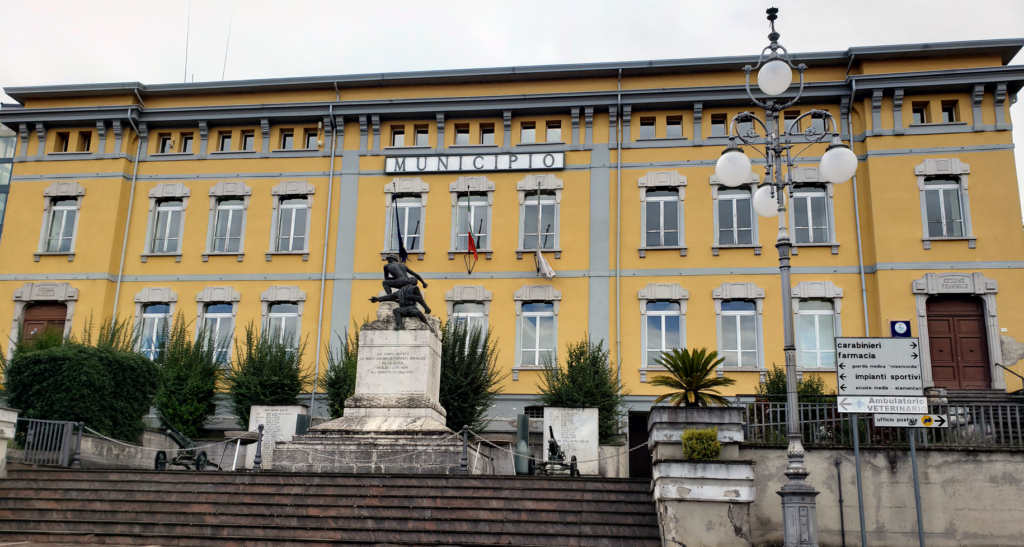
Municipal Building – Pratola Serra – Oct 2021
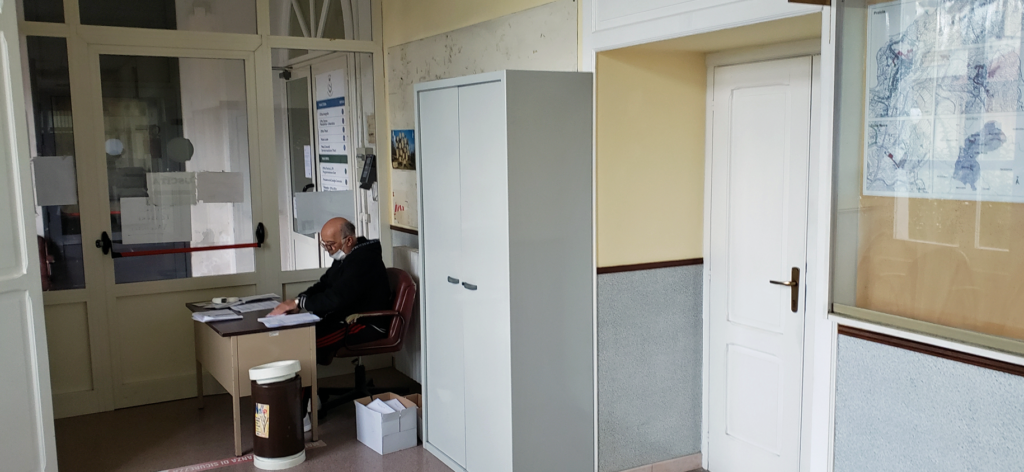
After our nice conversation at the bar we visited the local Municipal Building, where the public records are held. We had to hurry, because it was getting late and nearing lunchtime, and we all know what that means in Italy. There, we checked in with the local hall monitor and waited in line, since there was already someone in the office and there were Covid restrictions in place.
Municipal Building – Pratola Serra – Receptionist
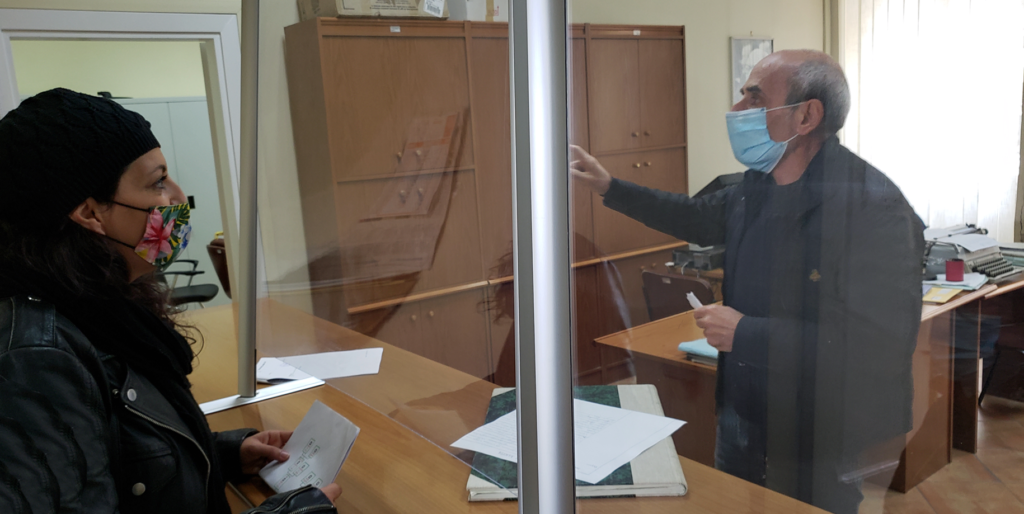
Once inside, it took our guide some time to convince the gentleman that was to help us, that we had come a long way and only needed a bit of information. At first, he was very resistant and complained mildly that he had to close in twenty minutes and was not sure he could help us in that time. However, after some cajoling and seeing that family tree that we had given our guide, his interest was piqued.
Frederica and Paolo (Paul) – Municipal Building – Pratola Serra – Oct 2021
Federica, our guide, slowly got him to open up on whether he could help us at all. He admitted that his local historic knowledge was not that great and that they had been sending many of the old historical civil documents to the main Municipal Building in Avellino.
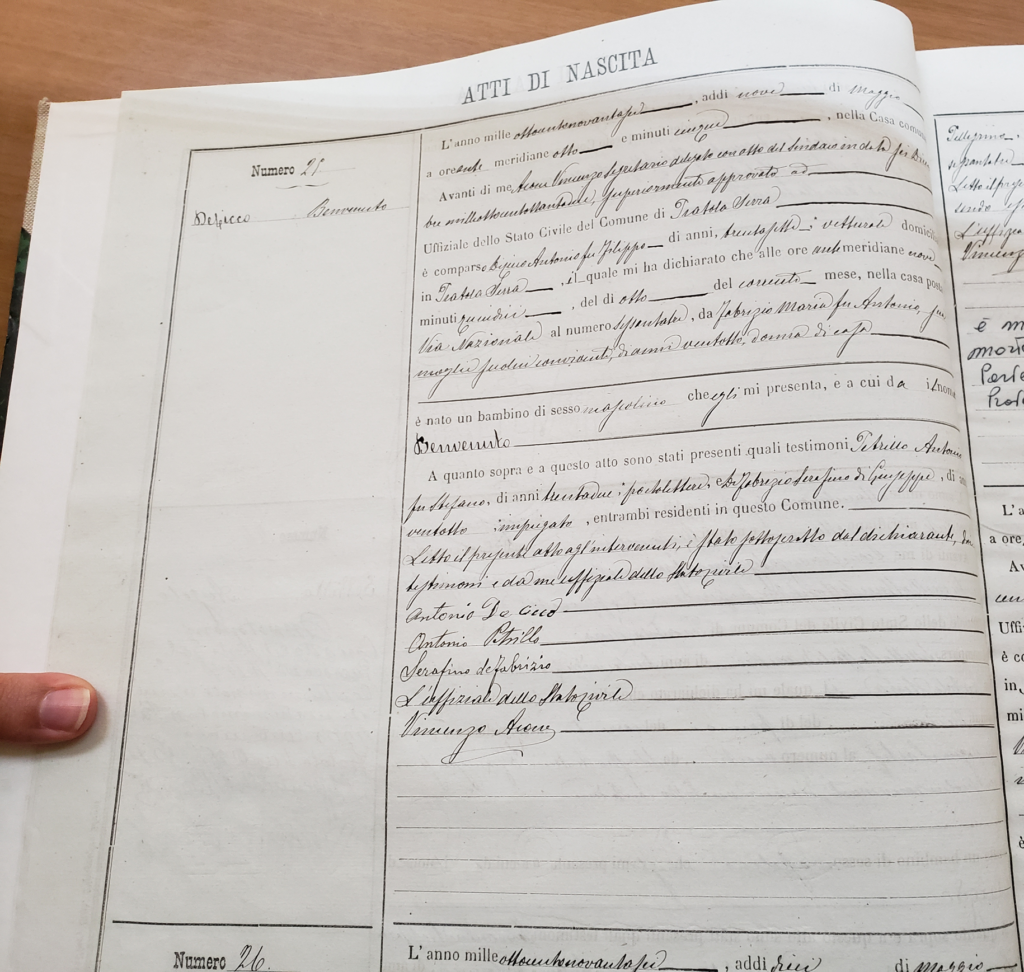
Luckily, after perusing the family tree and seeing Benvenuto De Cicco’s name and his birth date, he went into the back room and emerged very quickly with a large ledger. He opened it and within a matter of seconds had Benvenuto’s birth record in front of us. Though I had already found this in the electronic archives that Italy has, I nonetheless took a photograph, if only to show him he hadn’t wasted his time with us.
Benvenuto De Cicco – Birth Record – Municipal Building – Pratola Serra – Oct 2021
It appeared after taking our photograph we had exhausted our time and it was also time for his lunch break.
The Old Cemetery
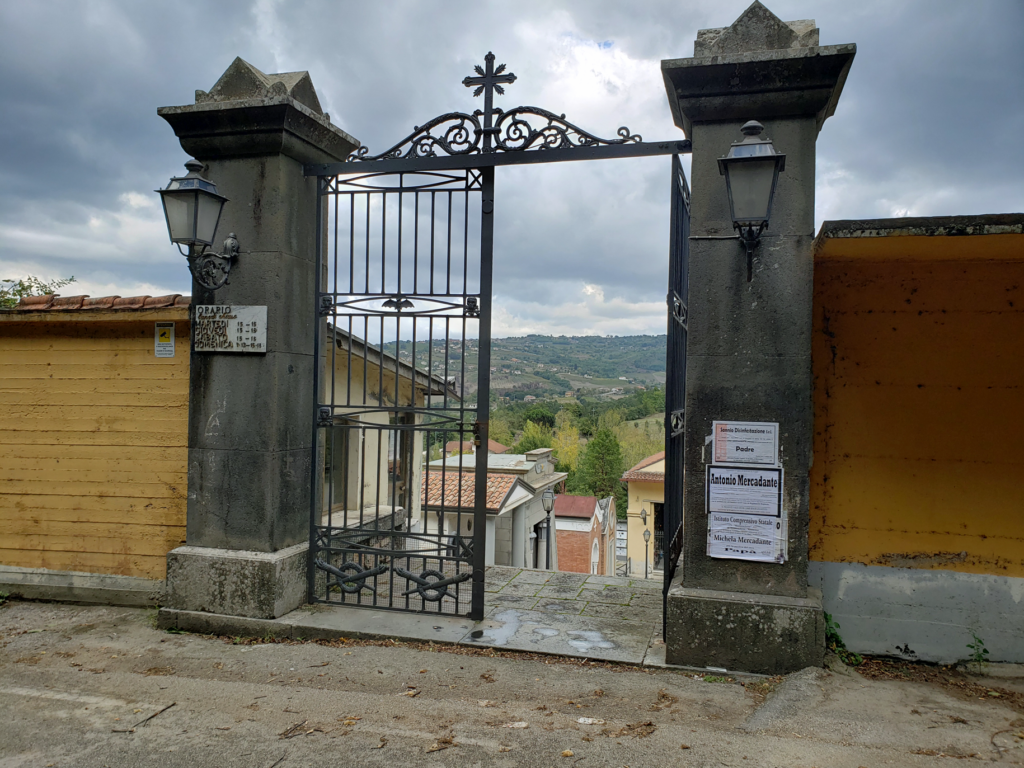
De Ciccos — St Michele Cemetery – PratolaSerra, Avelino – Oct 2021
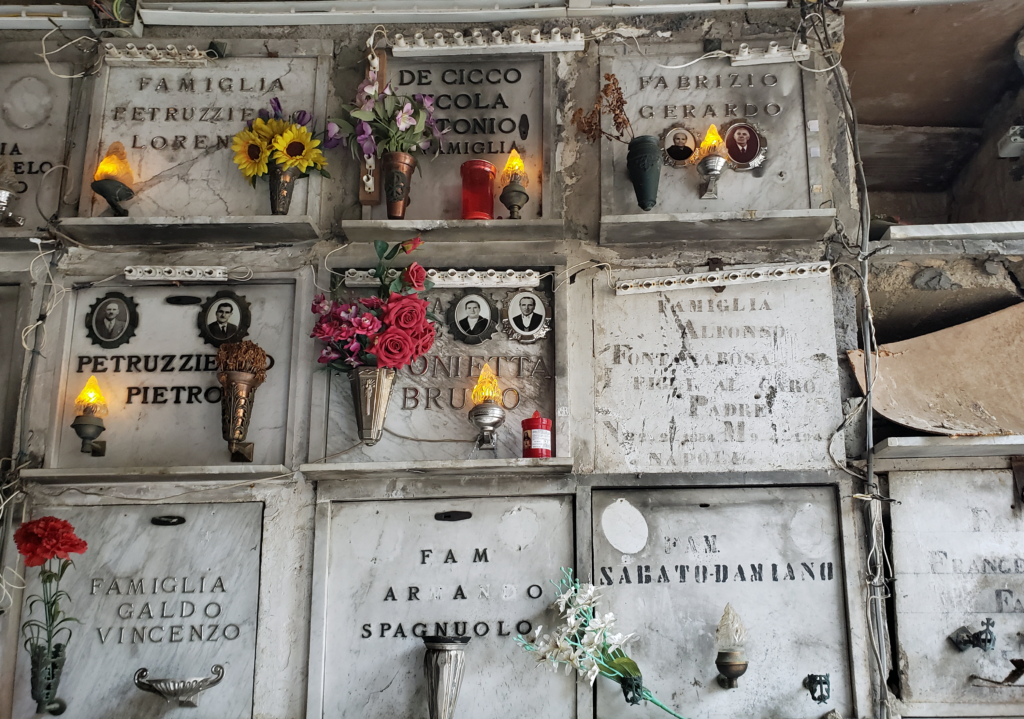
The old cemetery is located on the outskirts of Pratola Serra on via Provinciale 61, or SP 61, in the direction of San Michele di Pratola. When we arrived, it happened to be open and though it was very cold with the threat of rain, we parked and went inside quickly to take as many photographs as we could. There was no doubt, there were a lot of De Ciccos and Fabrizios interred there, but after a thorough search no direct relations.
Saint Michele Di Pratola Cimitero – PratolaSerra, Avelino – Oct 2021
Restaurants
Valleverde Ristorante
Inside Restaurant Valleverde, Atripalda Avellino – Oct 2021
To complete our trip, our guide Frederica suggested lunch at a local restaurant on the way back to Naples. Located on Via Pianodardine, in Atripalda Avellino, the Valleverde Ristorante was a welcome sight after a day of exploring and investigations. We had a simple lunch that included water, wine and a pasta dish. And, as per usual with most restaurants in Italy, the food was delicious, well prepared and very reasonably priced. We had a great time and discussed what we thought we learned from the trip and what might be our next steps in our search for my wife’s living relatives, distant or otherwise. Again, Frederica and Fabio, at MindTheNap, did an excellent job and if you are ever in the Naples area and looking for a local guide, look them up, they are exceptional. Until next time, Ciao..!
The town’s name is actually one of great confusion, most likely because of all of the municipal and governmental changes through the years. Its actual name, at least when one looks back into the 19th and 20th centuries, is Pratola di Serra. This makes perfect sense, since there is a commune called Serra not far away. It is most likely that at one time it was just called Pratola and belonged to this commune and not Avellino, a change made later by governmental bodies.
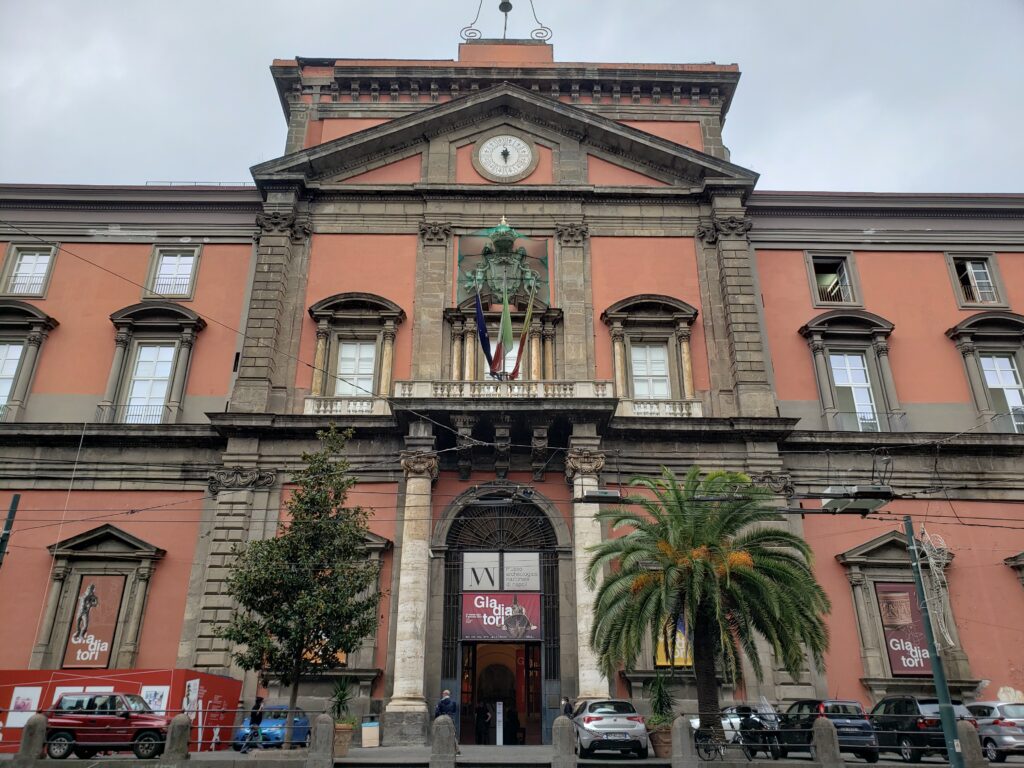
If you are an archaeological nut and ever have enough time to spend in Naples, you must visit the National Archaeological Museum. It houses an impressive collection from ancient Naples, from its ancient Greek roots through its Roman and Sicilian Empire phases, to the present. It also has a fabulous collection of artifacts from Pompeii and the Roman Period. It is found on the interesection of Piazza Cavour and Via Enrico Pessina. At the time of this writing, it can no longer be gotten to by the Museum Metro Stop, which has been closed for some time, but rather from the Piazza Cavour Metro Stop and then a short walk along that street.
National Archaeological Museum – Main Entrance
The Ground or First Floor – Main Gallery
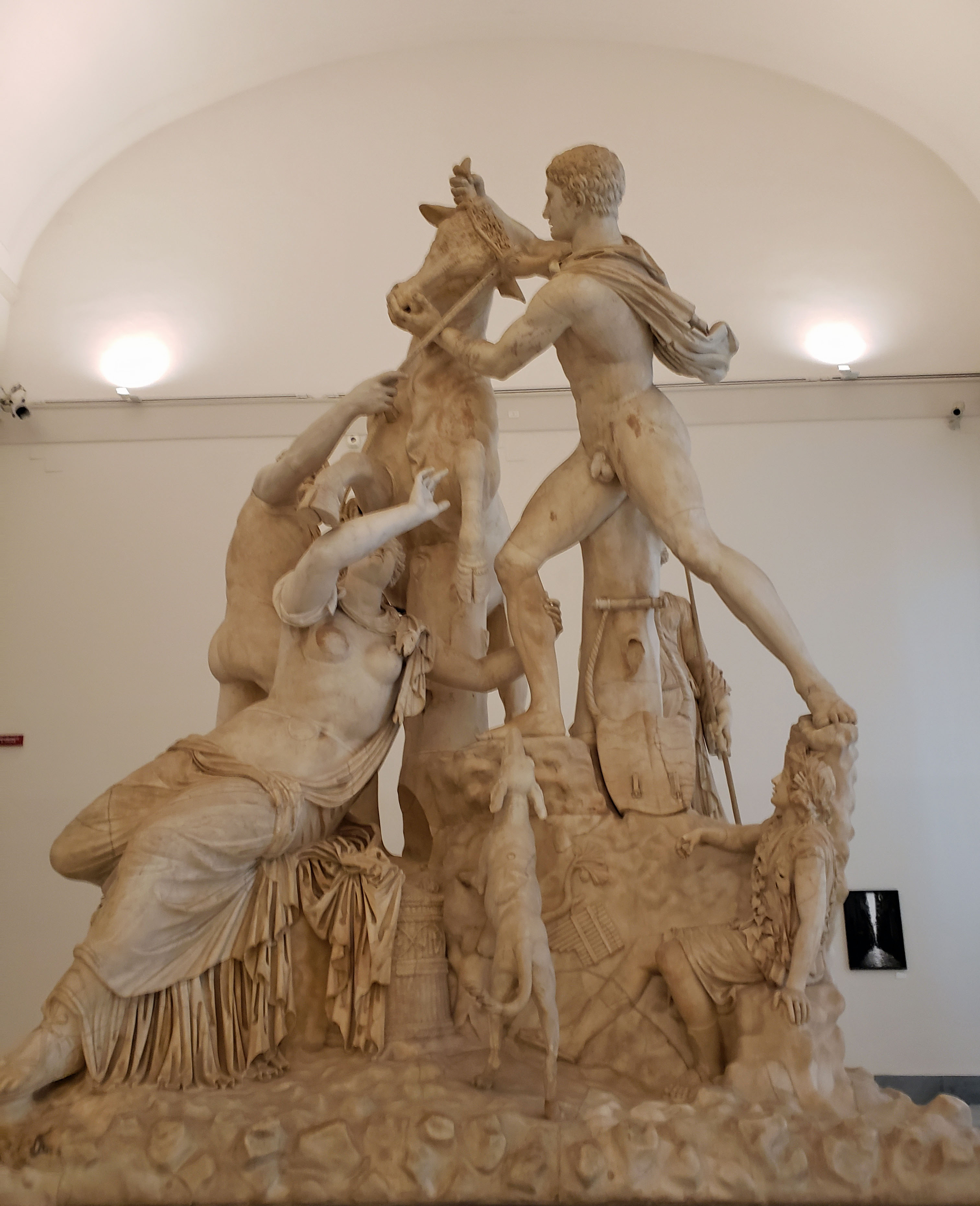
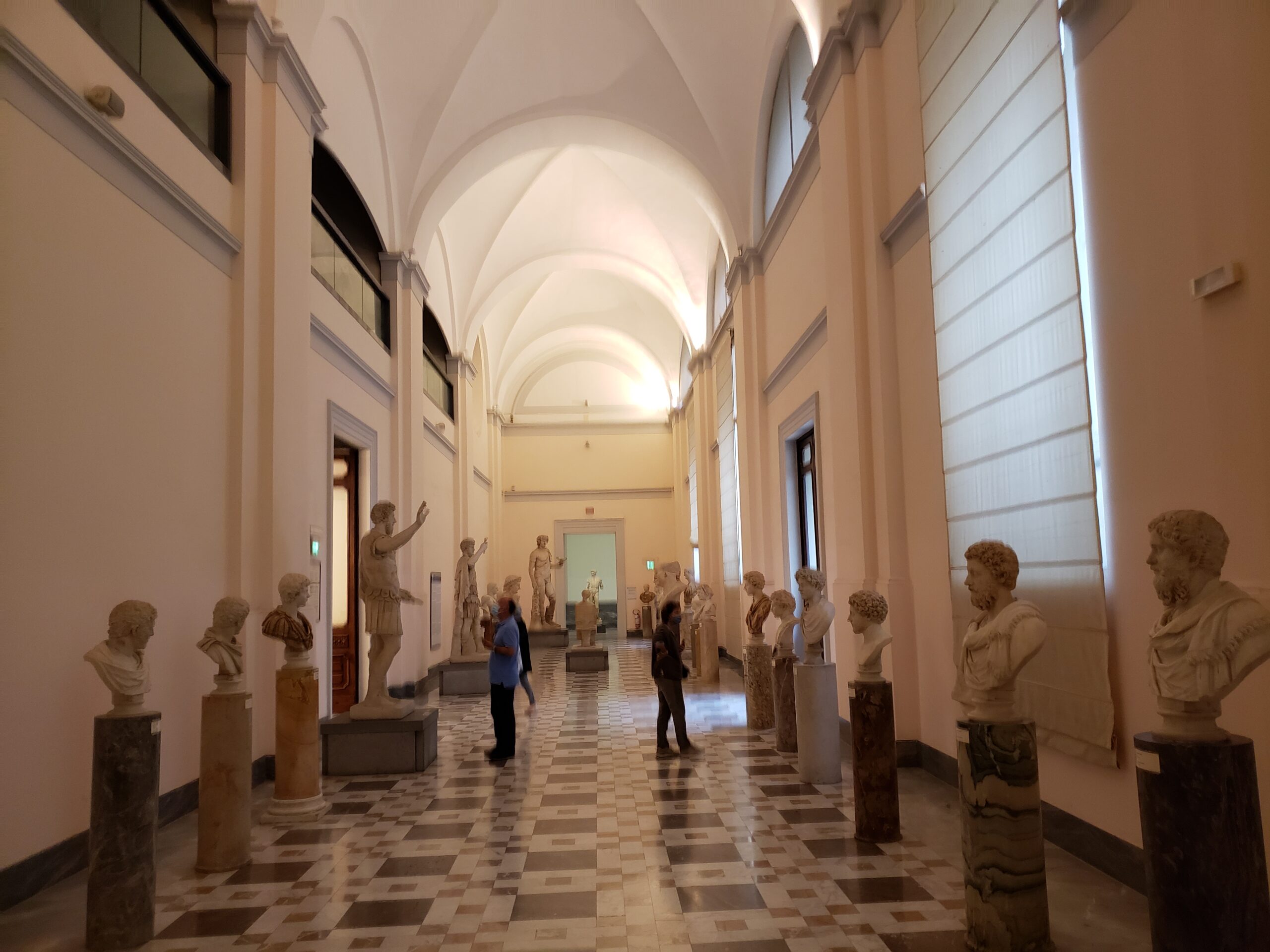
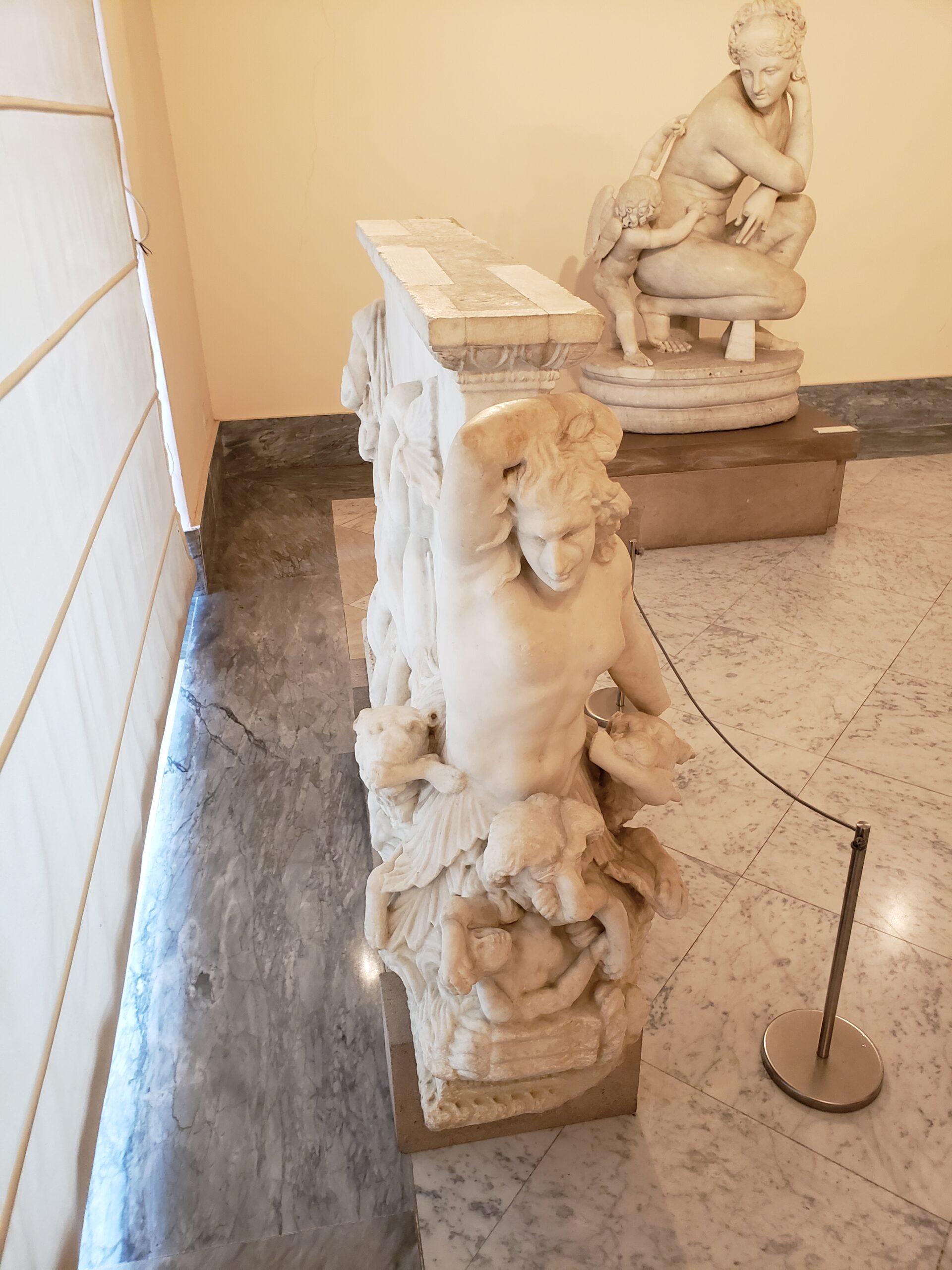
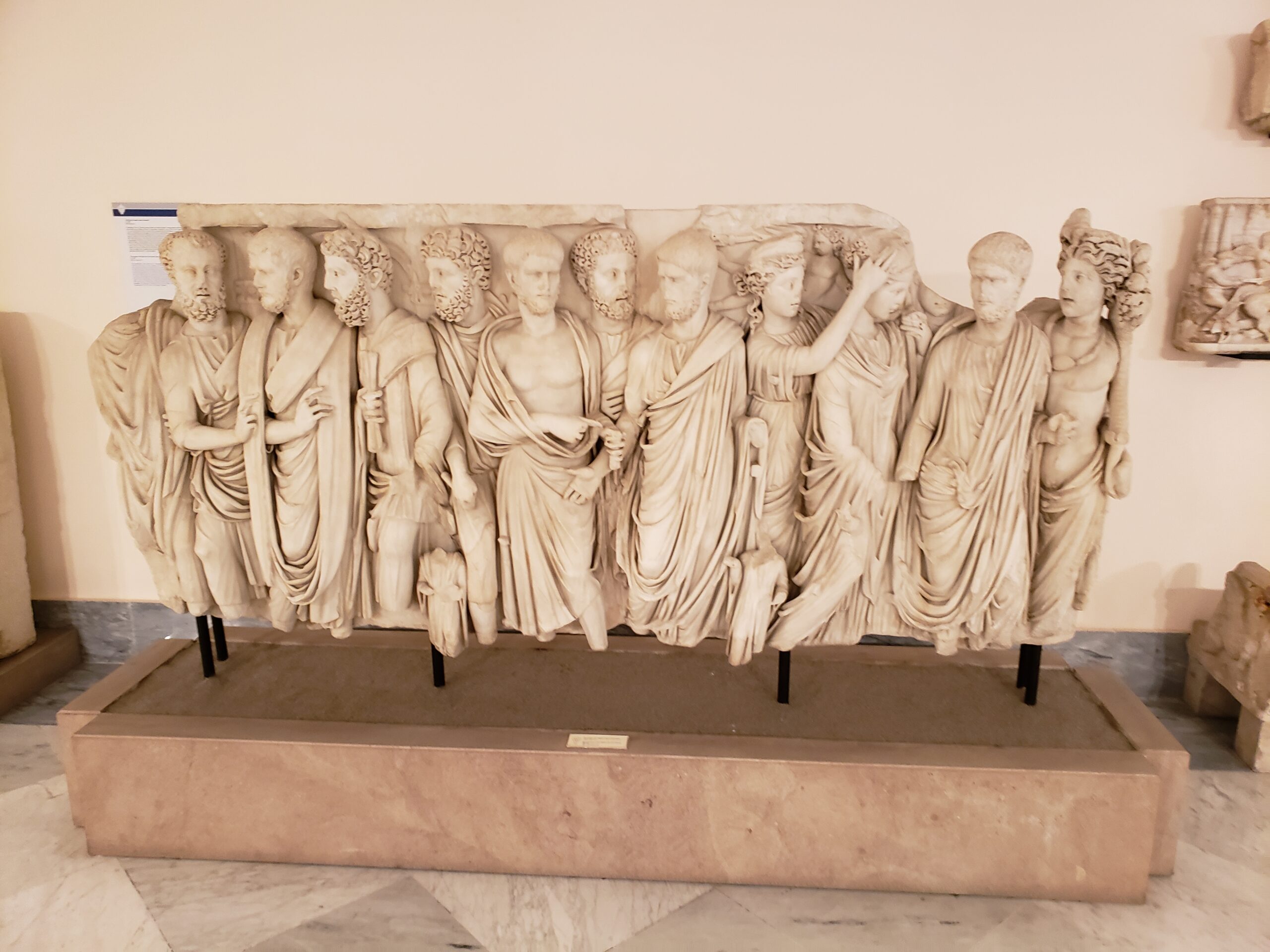
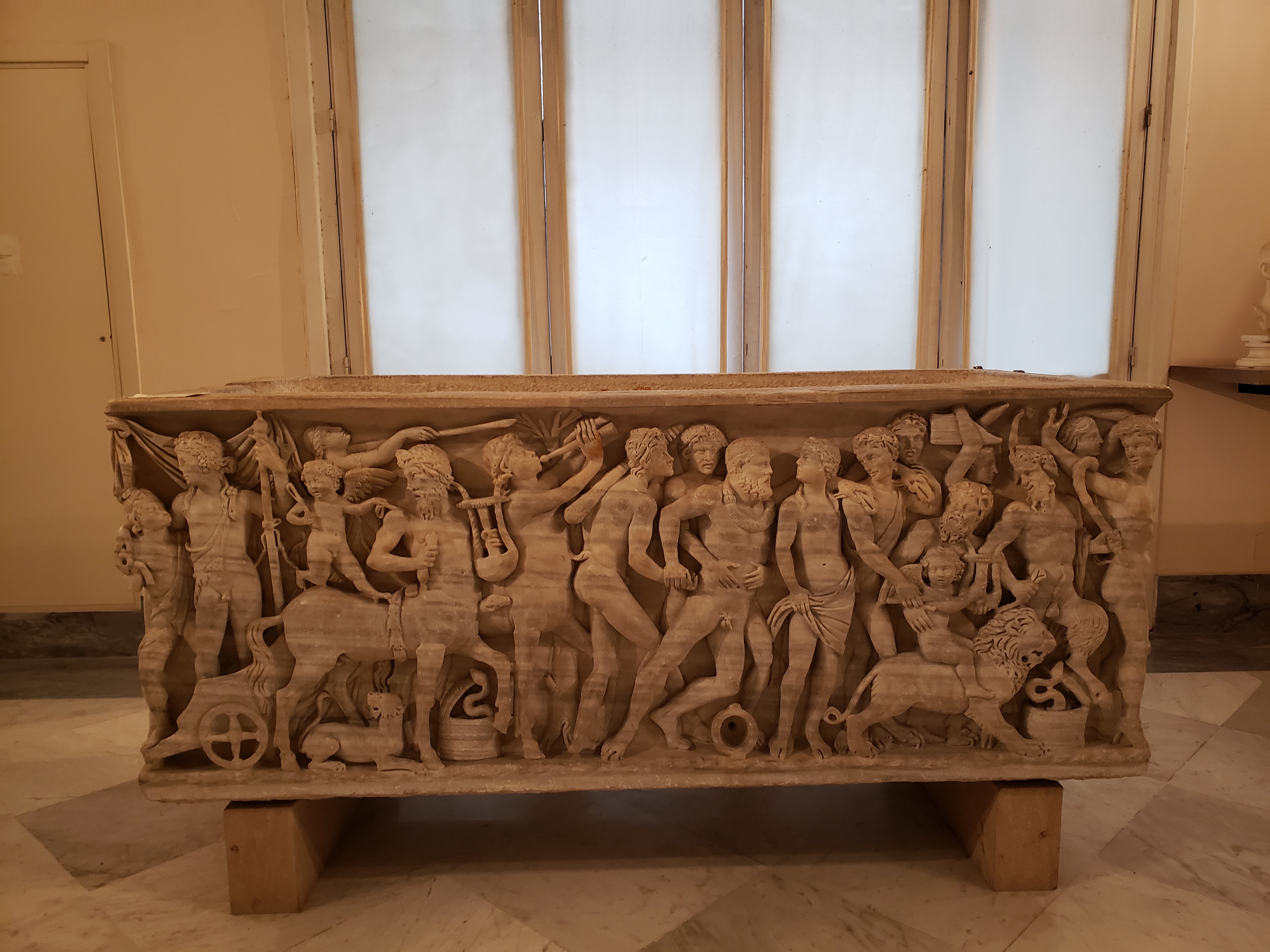
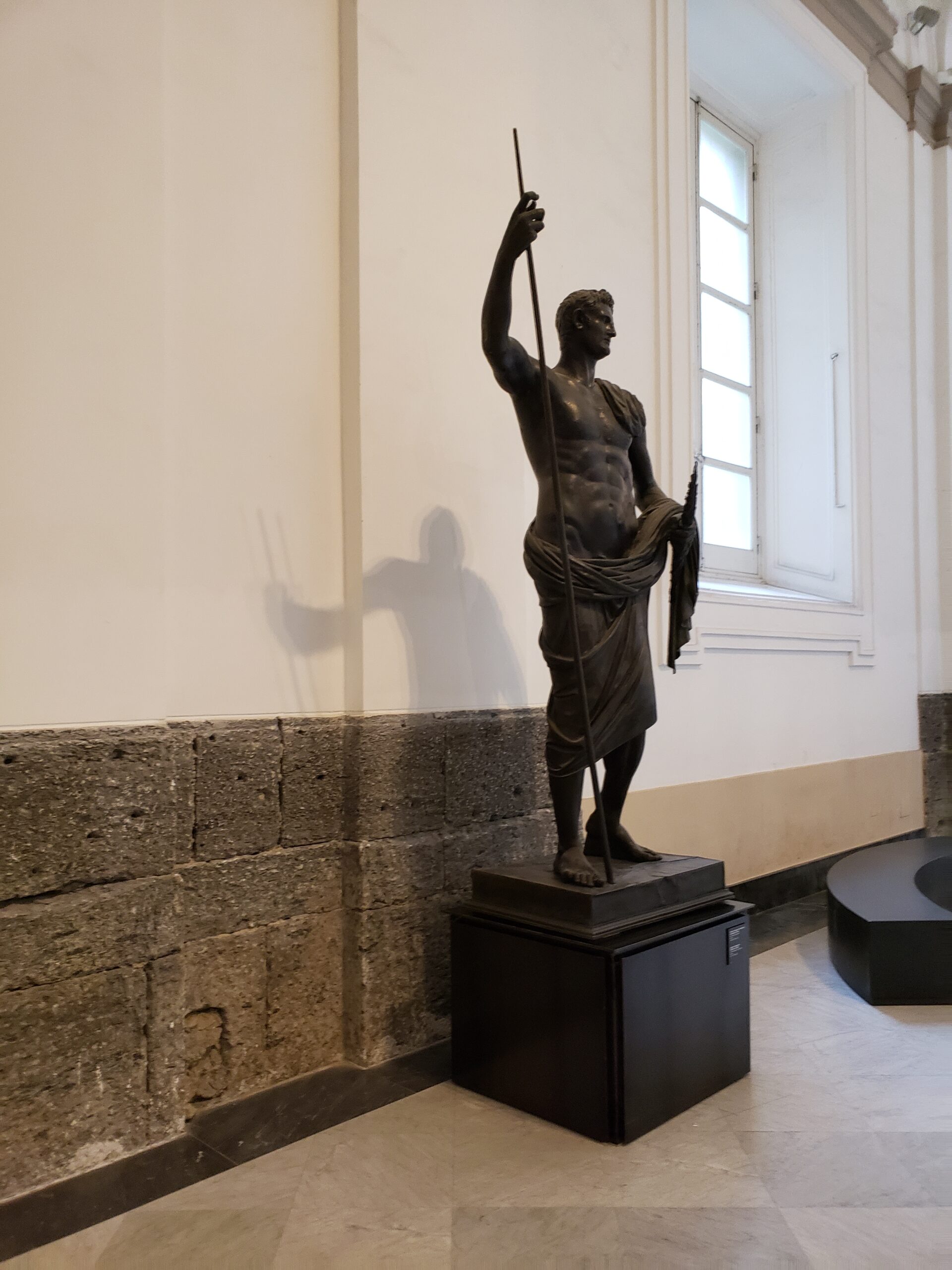
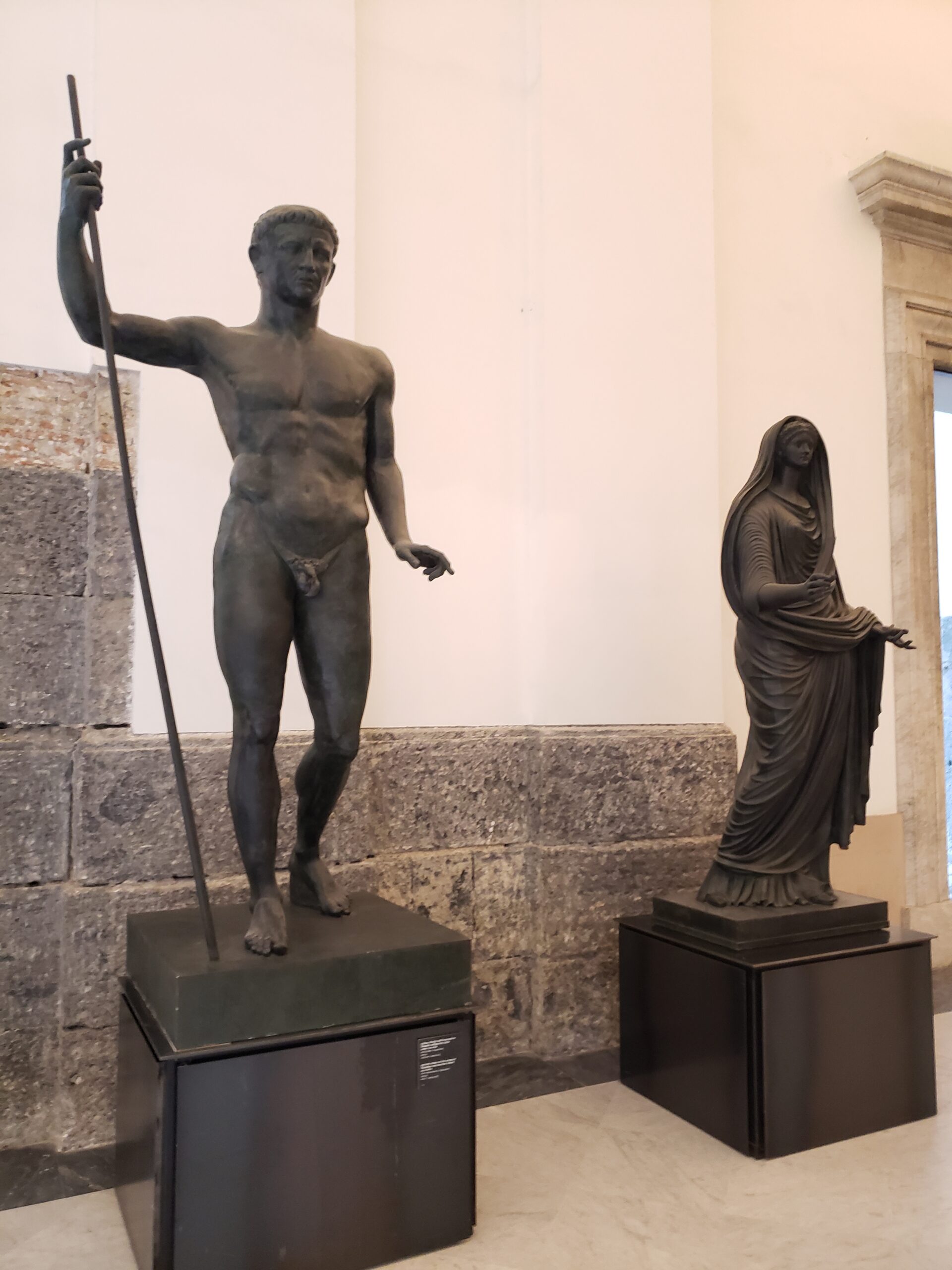
The main gallery on the ground floor has a unique and amazing collection of statues, mostly from the Roman Period, but there are also more ancient sculptures as well. It features in the back of the hall the Farnese Bull from Roman times.
National Archaeological Museum – Statue Hall – Bull – Farnese Collection – Largest Sculpture from Antiquity
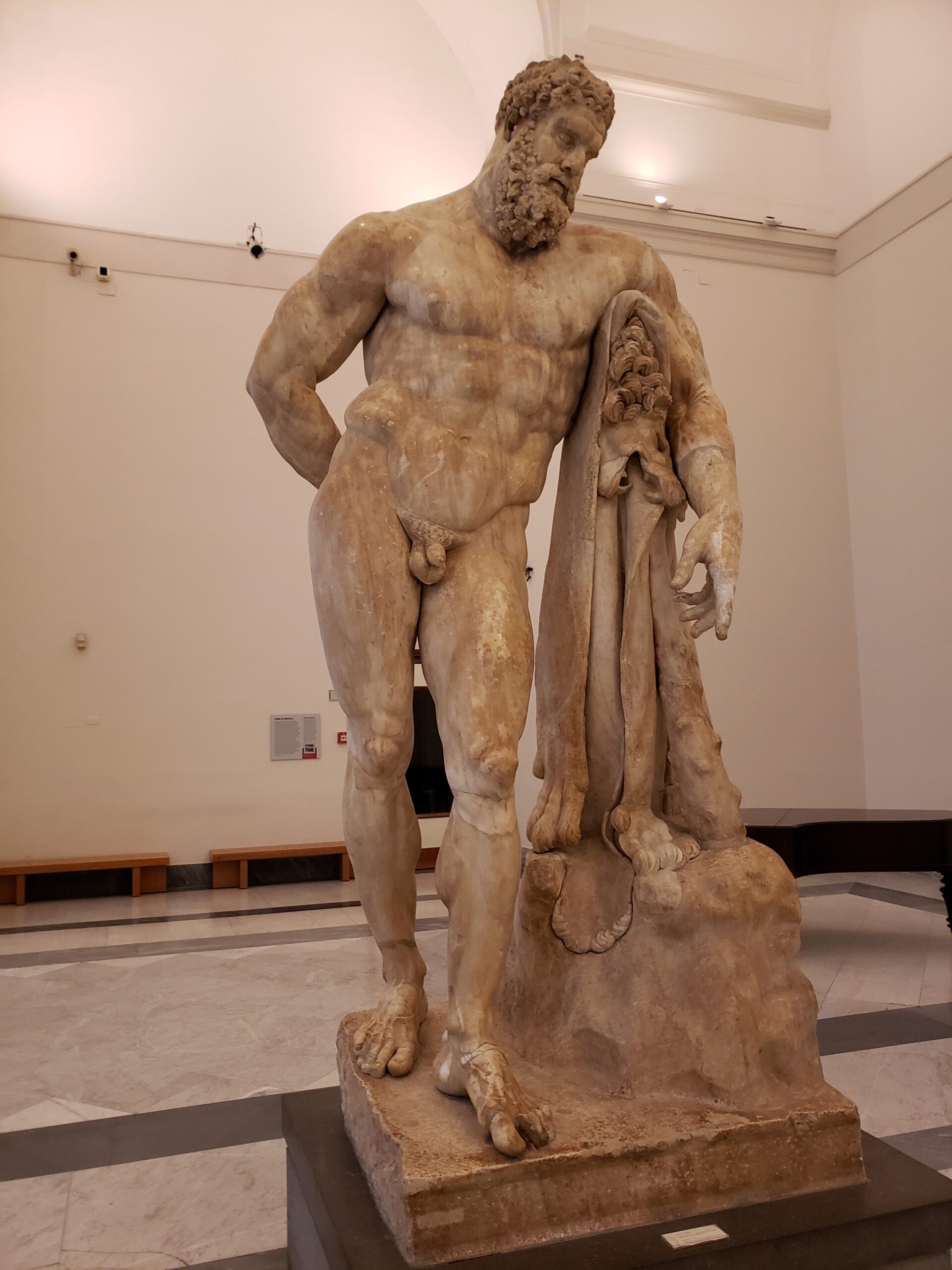
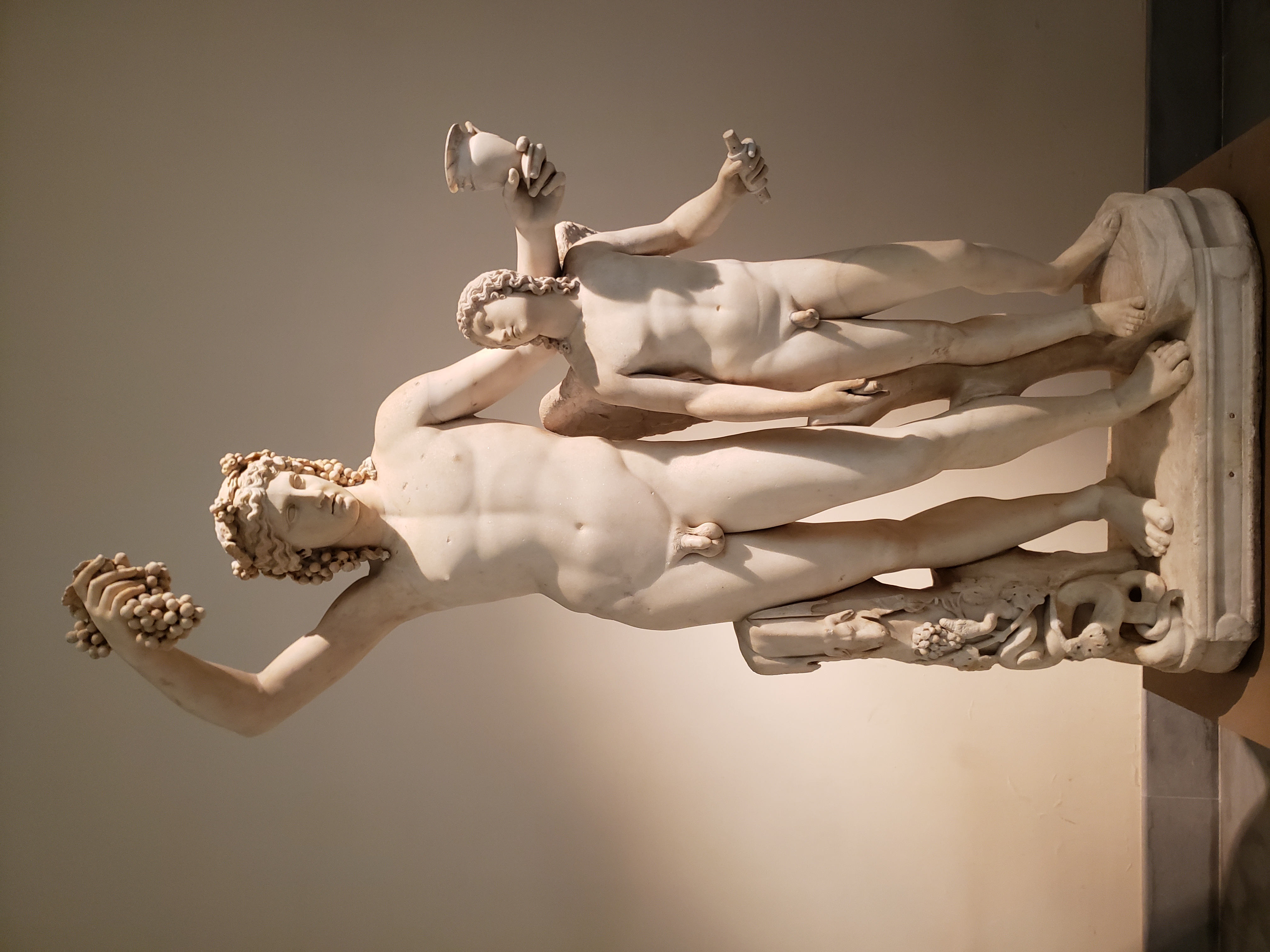
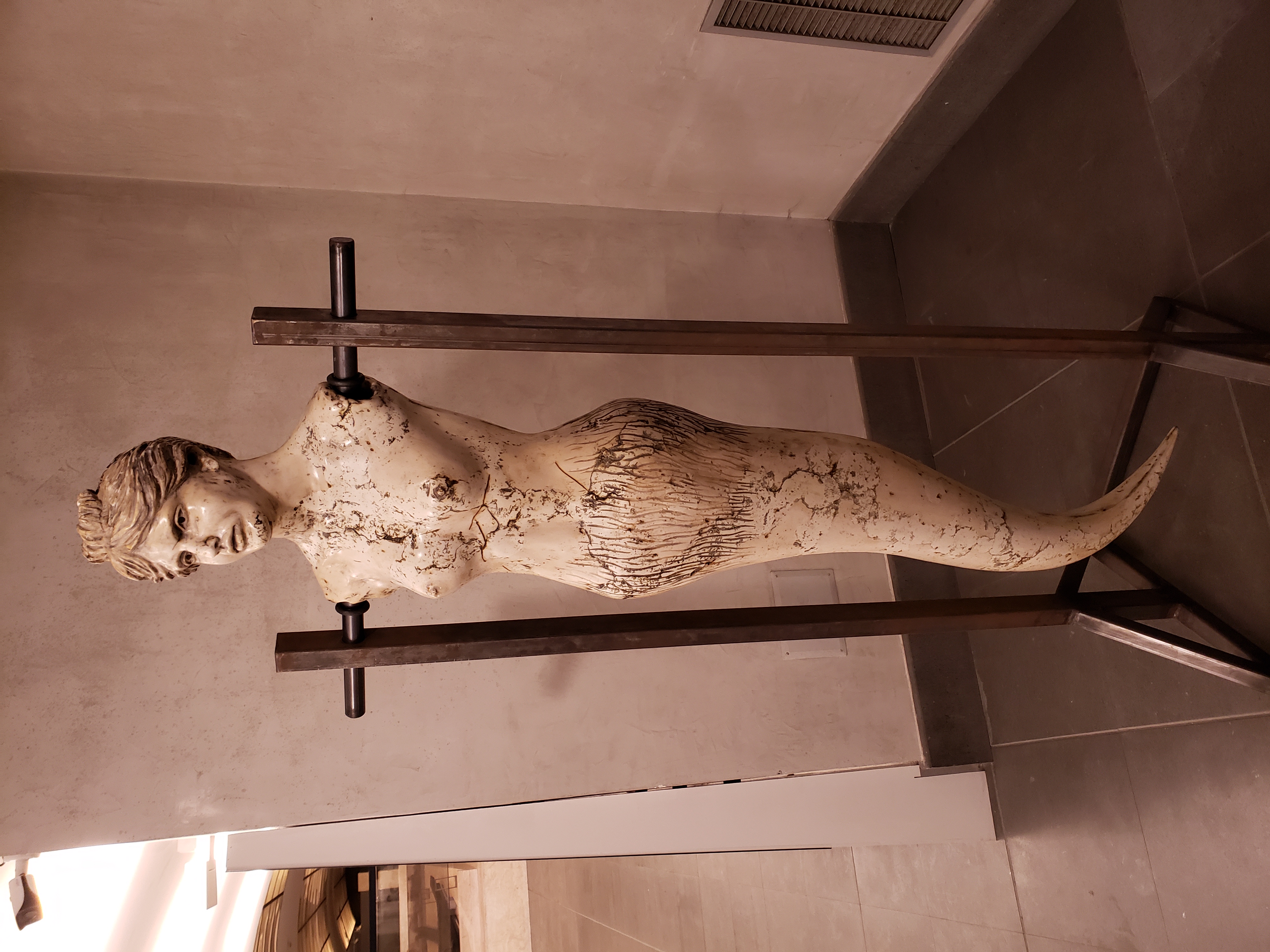
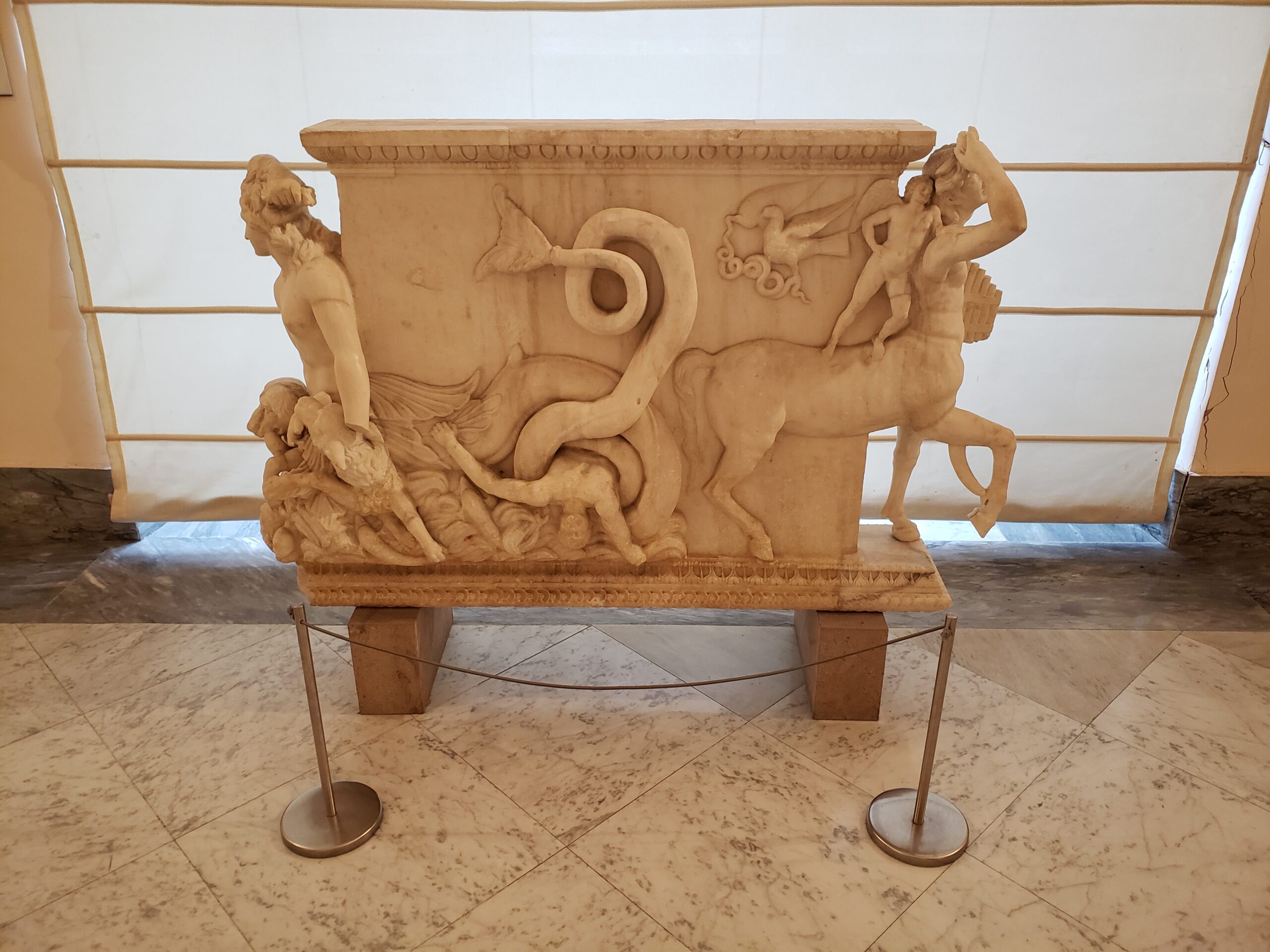
There are also a few other examples from the Farnese Collection, including Hercules and others. This section is definitely worth a quiet, long walk through with plenty of reading and afterthought. Examination of any one of these magnificent works reveal detail that someone in today’s day and age would think otherwise superfluous, and yet it would not be the work it is today without that fine attention to detail.
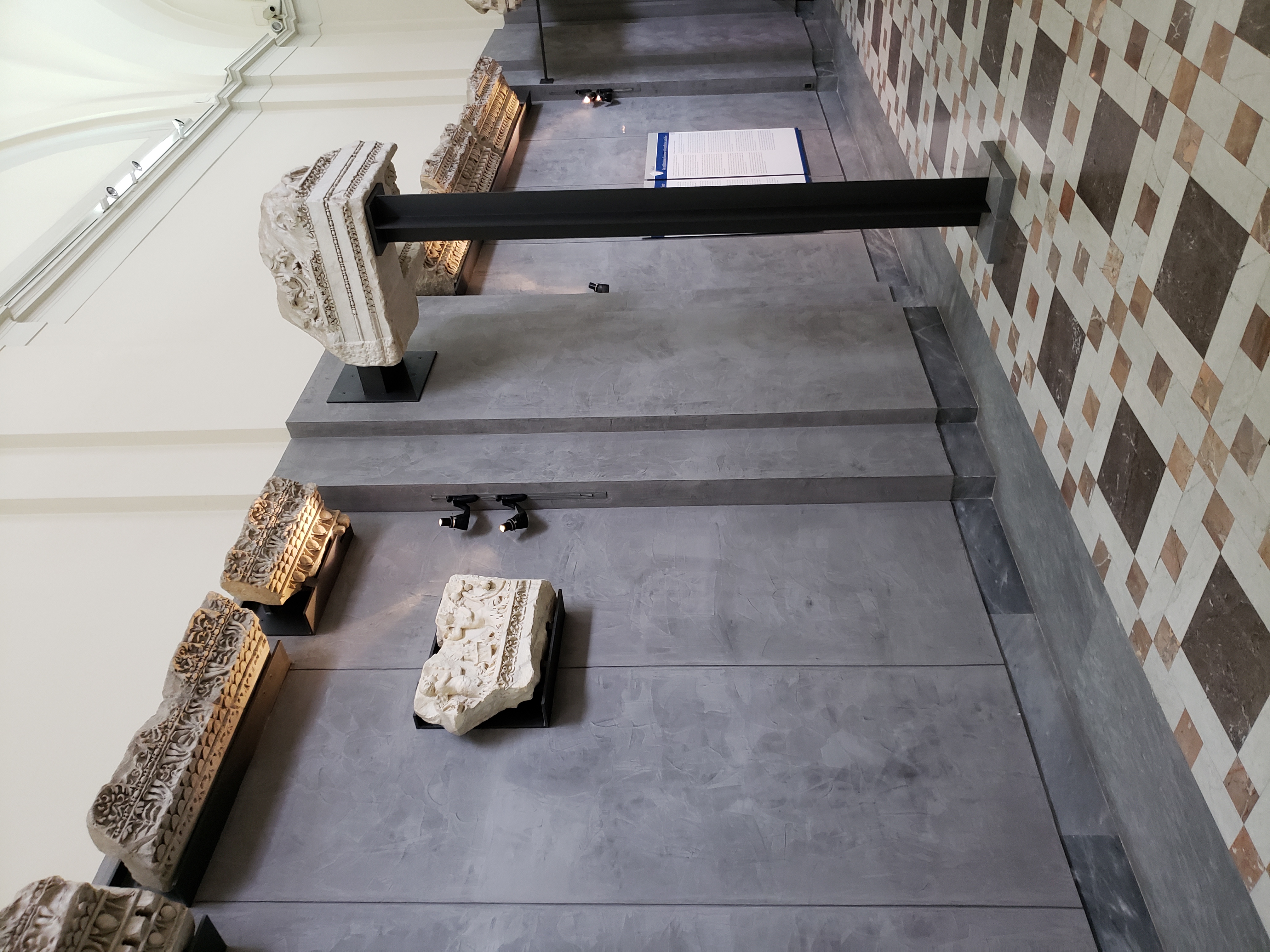
National Archaeological Museum – Statue Hall – Architectural Elements
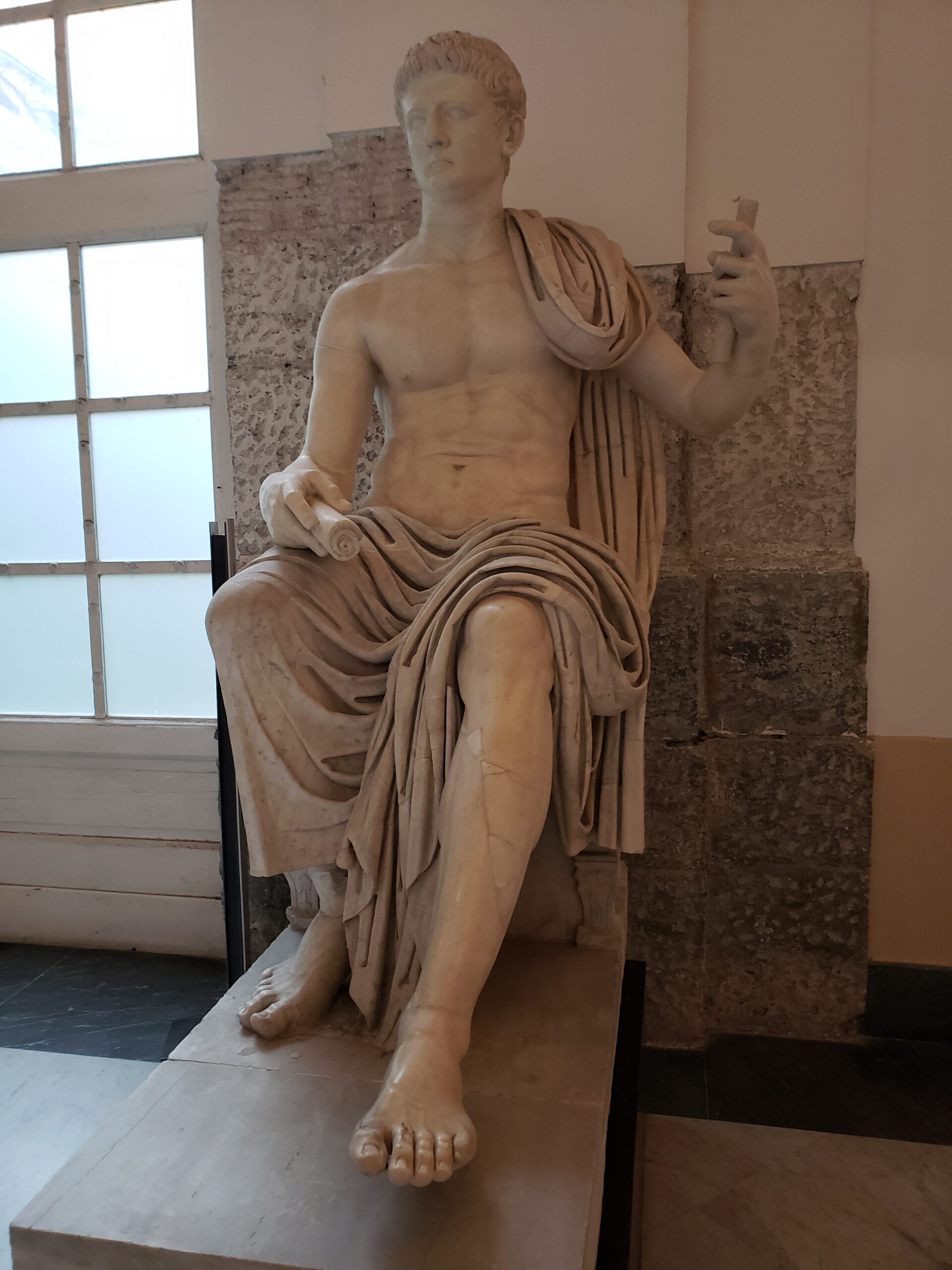
National Archaeological Museum – Statue Hall – Large Statues – Roman
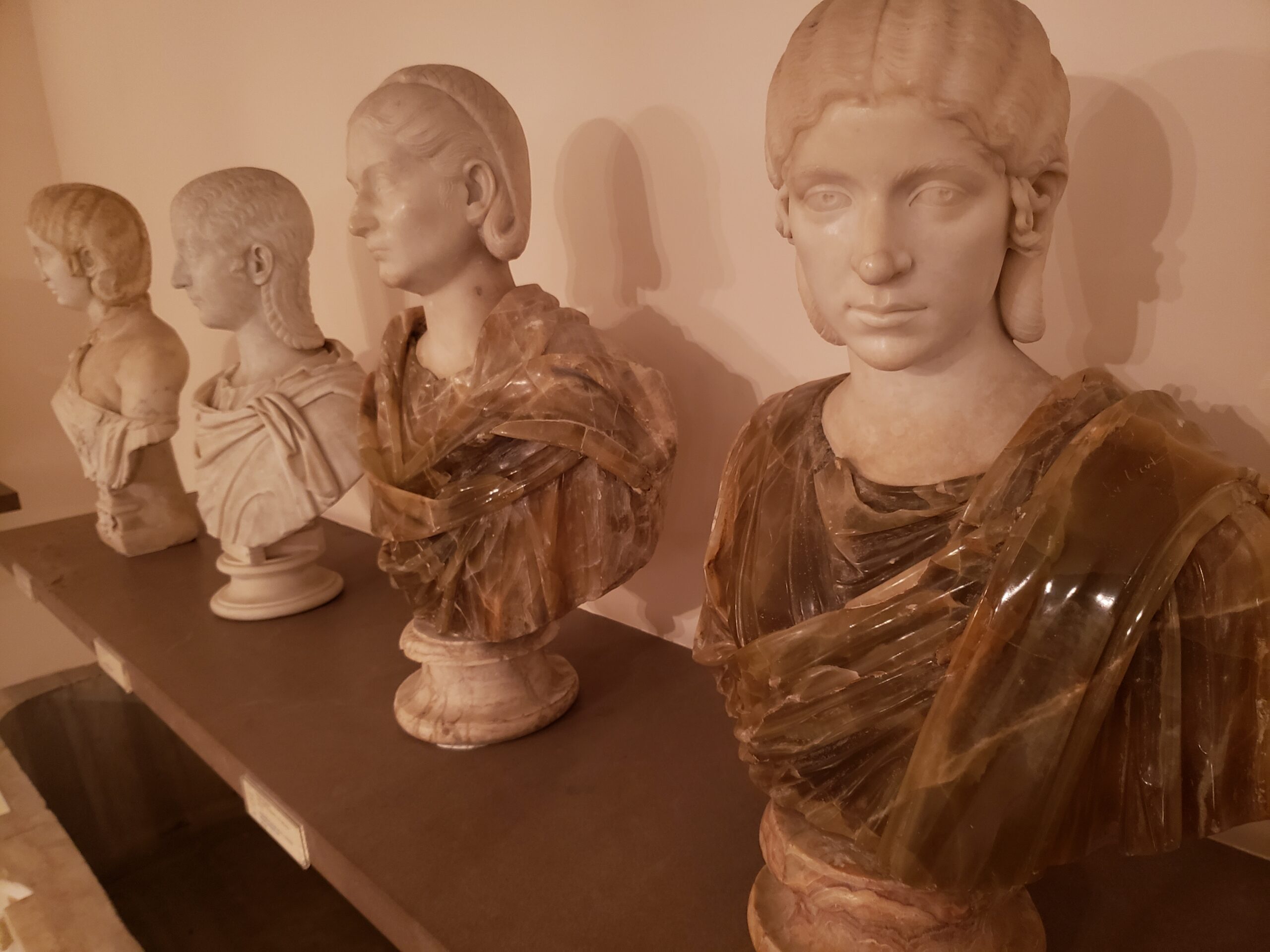
National Archaeological Museum – Statue Hall – Women Busts
National Archaeological Museum – Statue Hall – Hercules – Farnese Collection
National Archaeological Museum – Statue Hall – Dionysus and Eros
National Archaeological Museum – Statue Hall – Mermaid
National Archaeological Museum – Statue Hall – Busts of Leaders
National Archaeological Museum – Statue Hall – Relief
National Archaeological Museum – Statue Hall – Trapezium Table Support – Villa Madama – Homeric myth of Scylla gripping Ulysses’s sailors
National Archaeological Museum – Statue Hall – Relief
National Archaeological Museum – Statue Hall – Sarcophagus
National Archaeological Museum – Statue Hall – Large Statues
National Archaeological Museum – Statue Hall – Large Statues
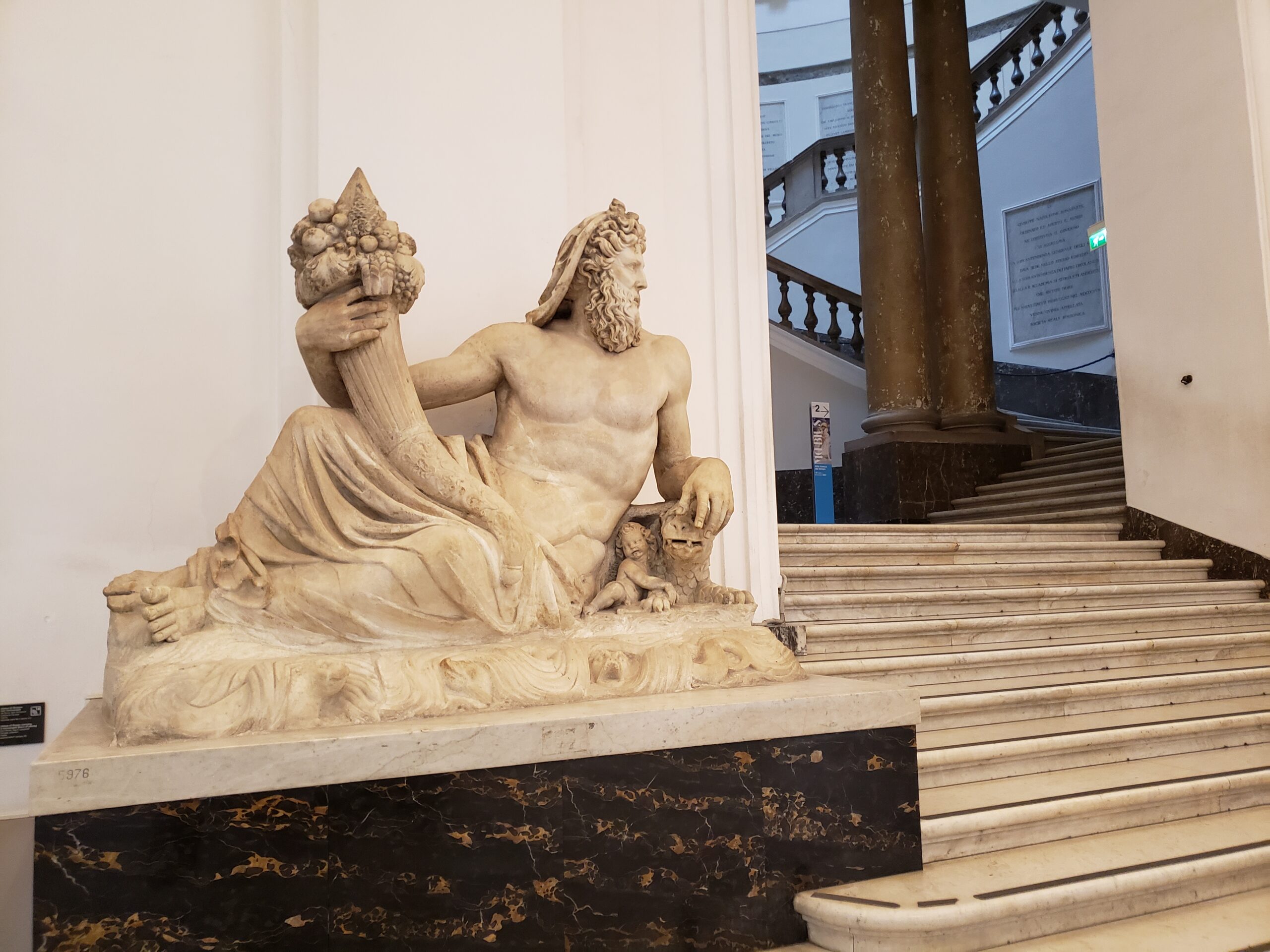
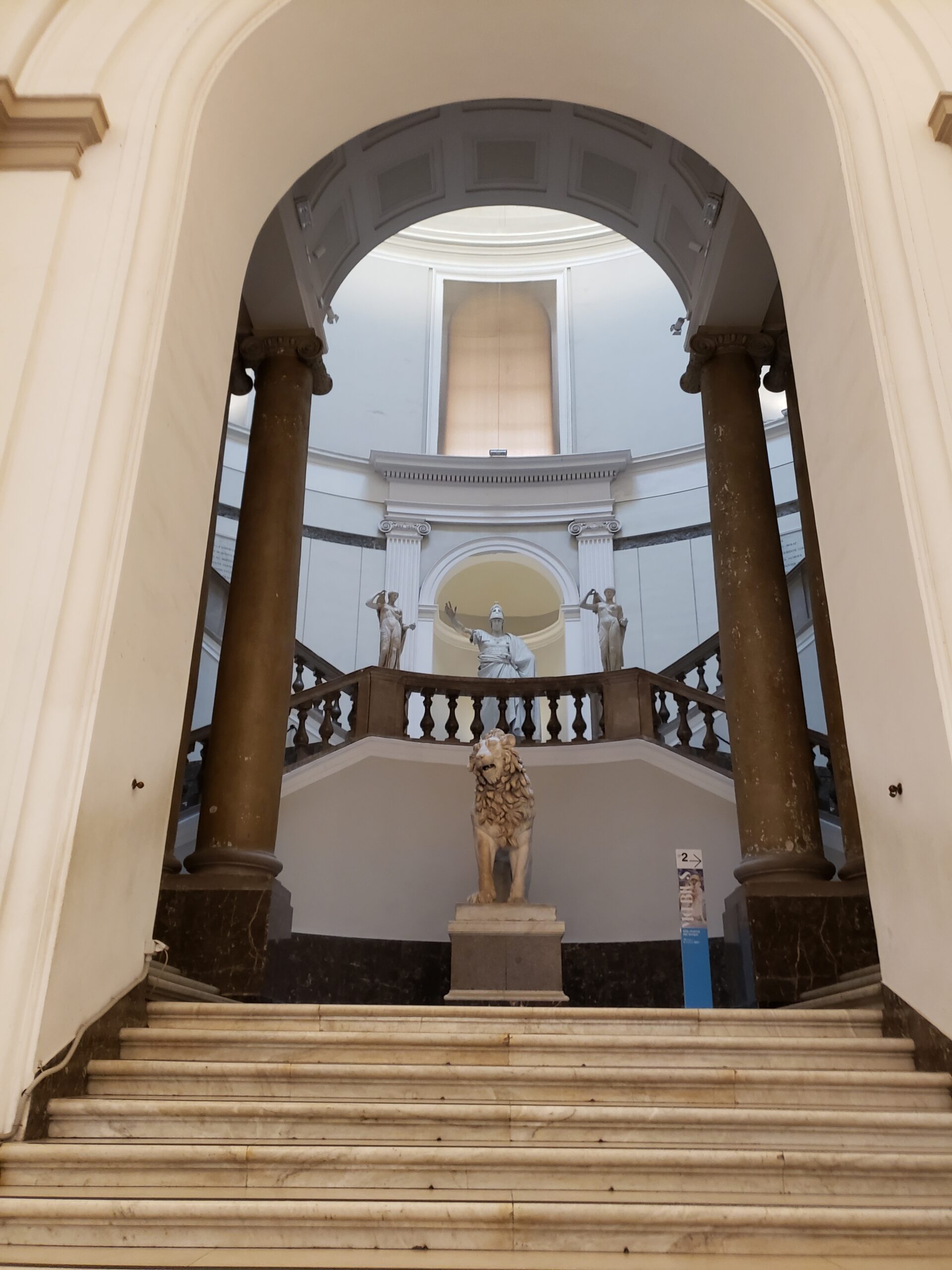
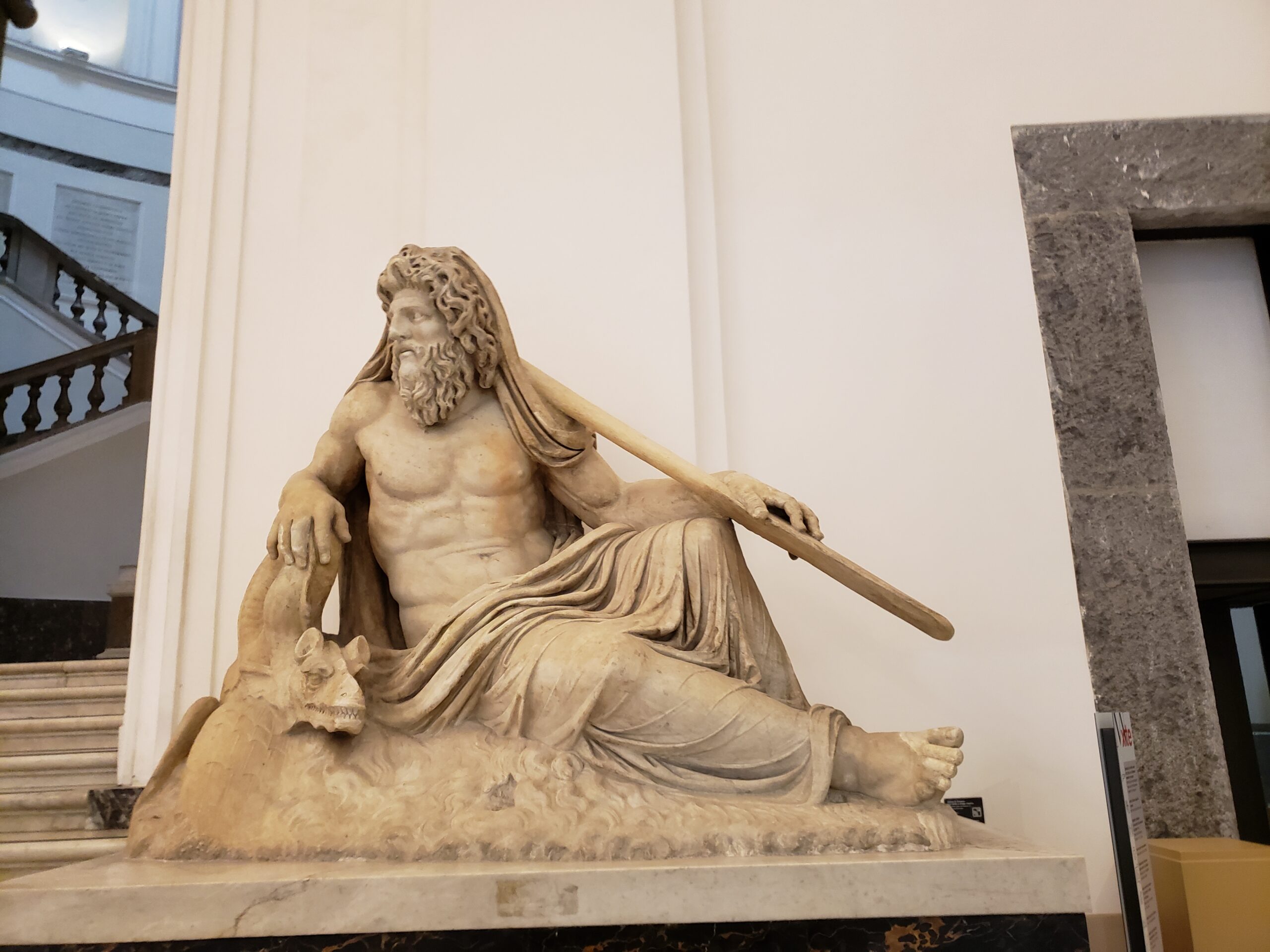
Leaving the main gallery and proceeding upstairs you pass the two dominant representations of Ocean or Oceanus, the god the ultimate river – the oceans. It is still not none precisely the etymology of this word and therefore it may not have any antecendents. However, one look at these two figures and you can tell that whomever this god represented, he was a very serious fellow, he had to be the dominate force for all water.
National Archaeological Museum – Statue Hall – Large Statue of Ocean holding a cornucopia – Entrance to Upstairs
National Archaeological Museum – Statue Hall – Entrance to Upstairs
National Archaeological Museum – Statue Hall – Large Statue of Ocean holding an Oar and a Sea Dragon – Entrance to Upstairs
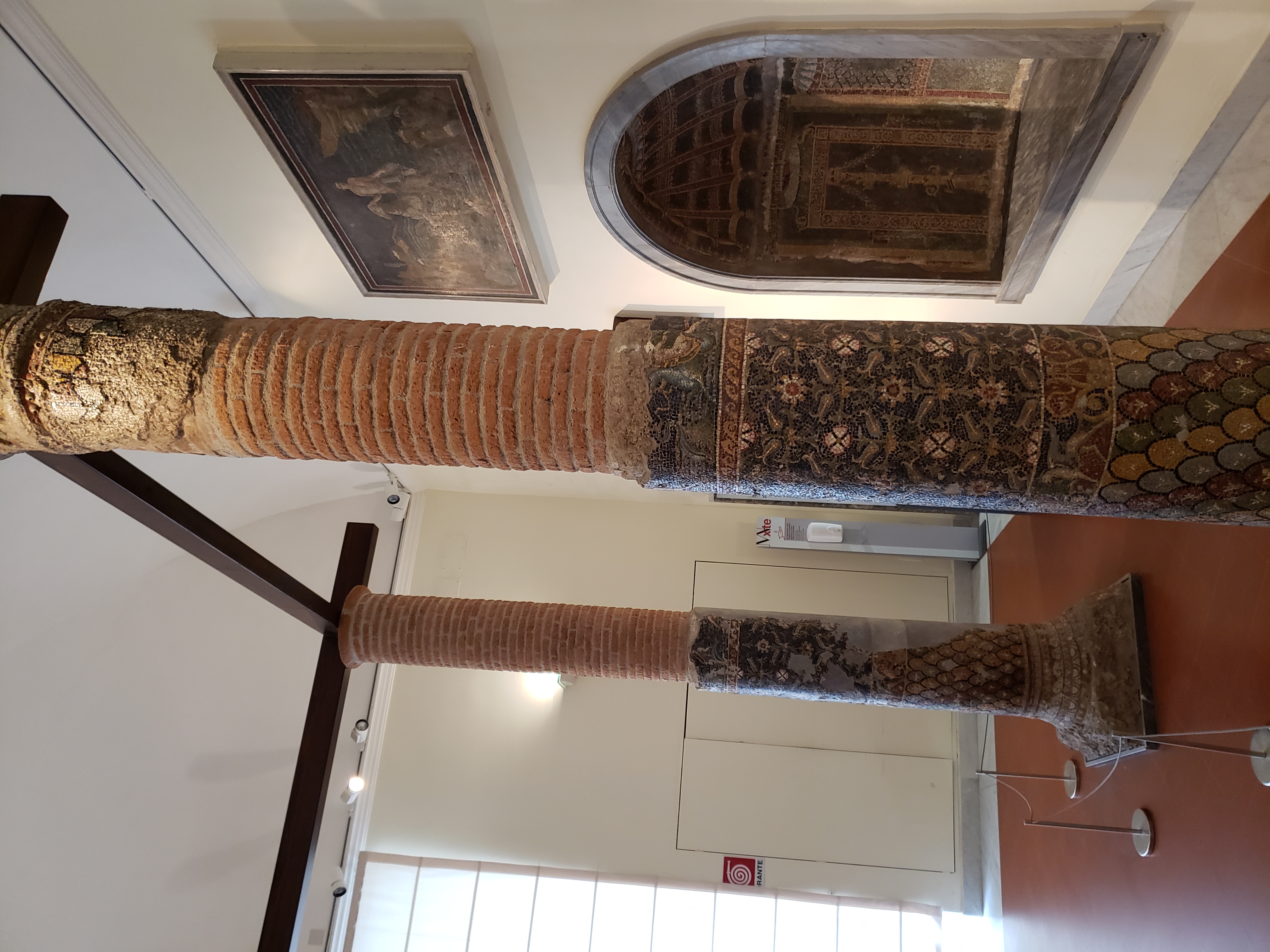
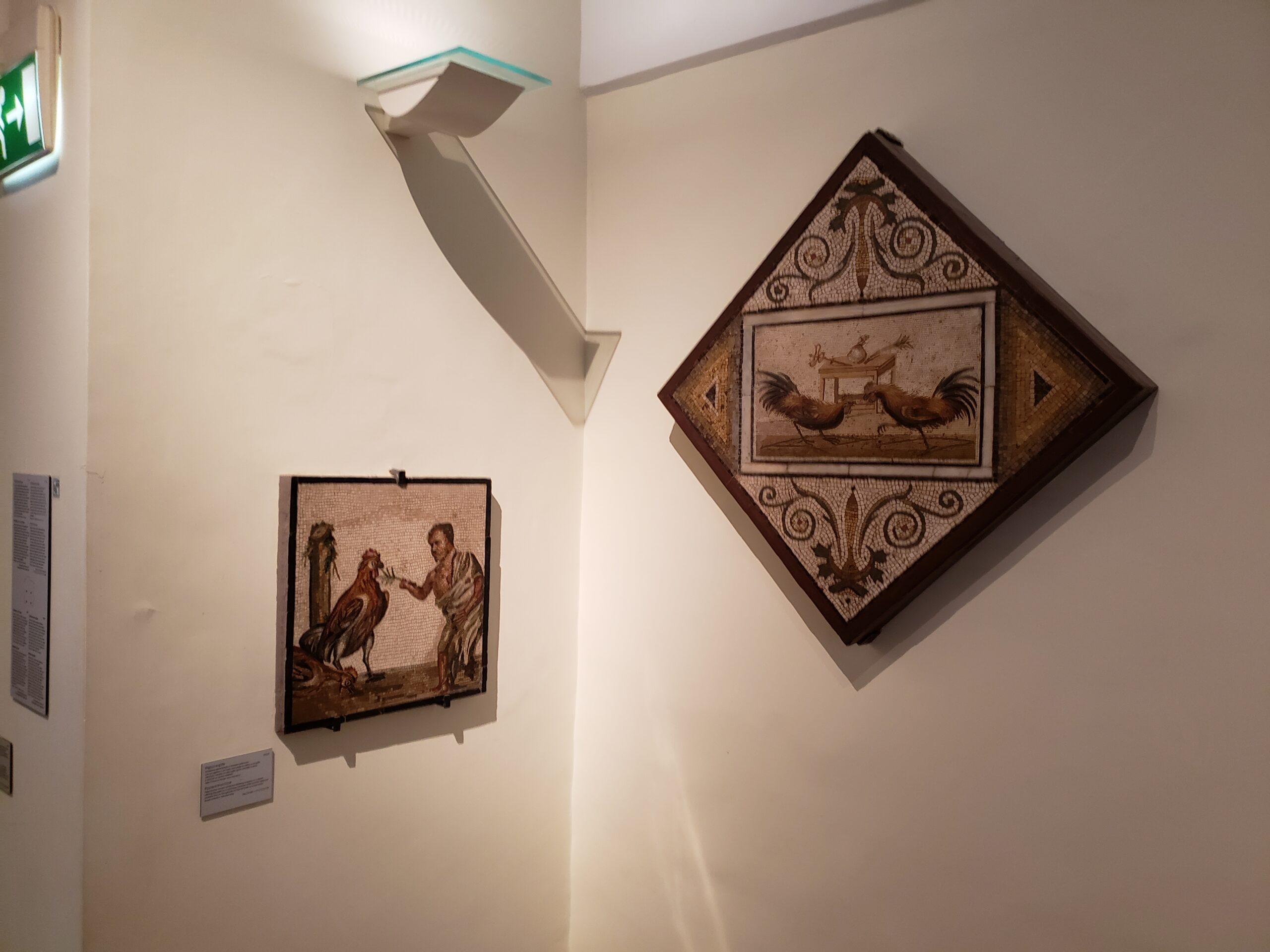
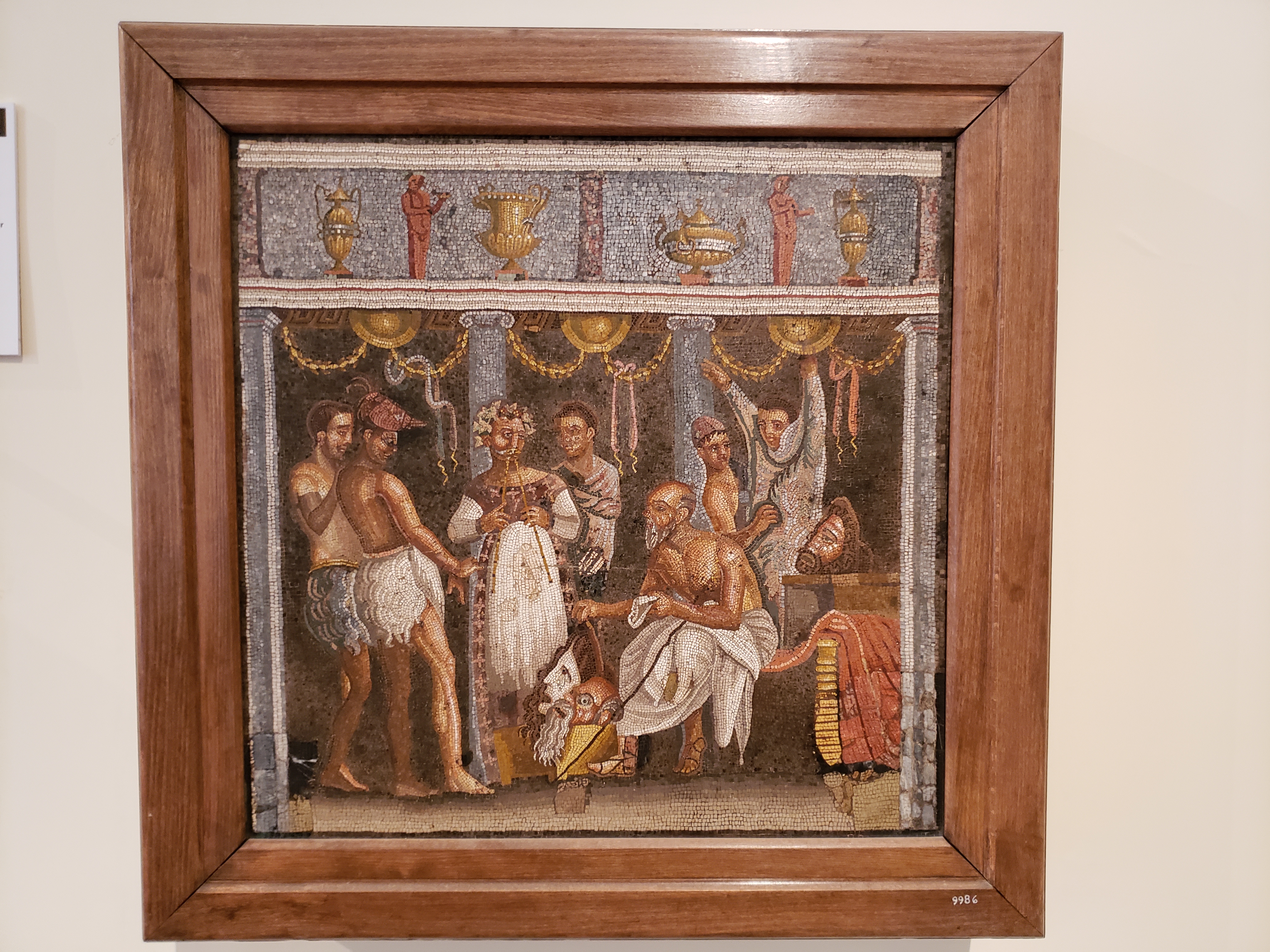
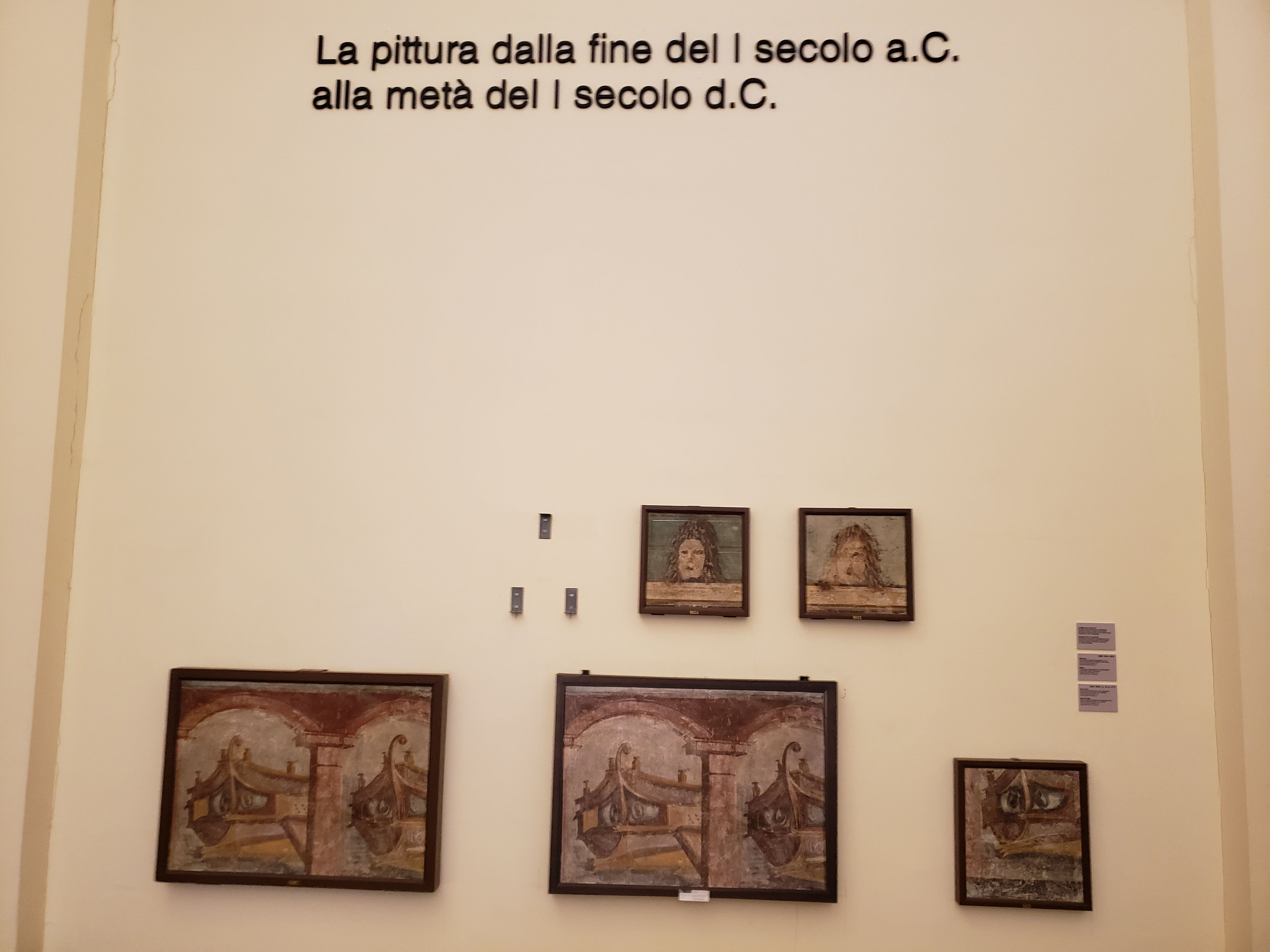
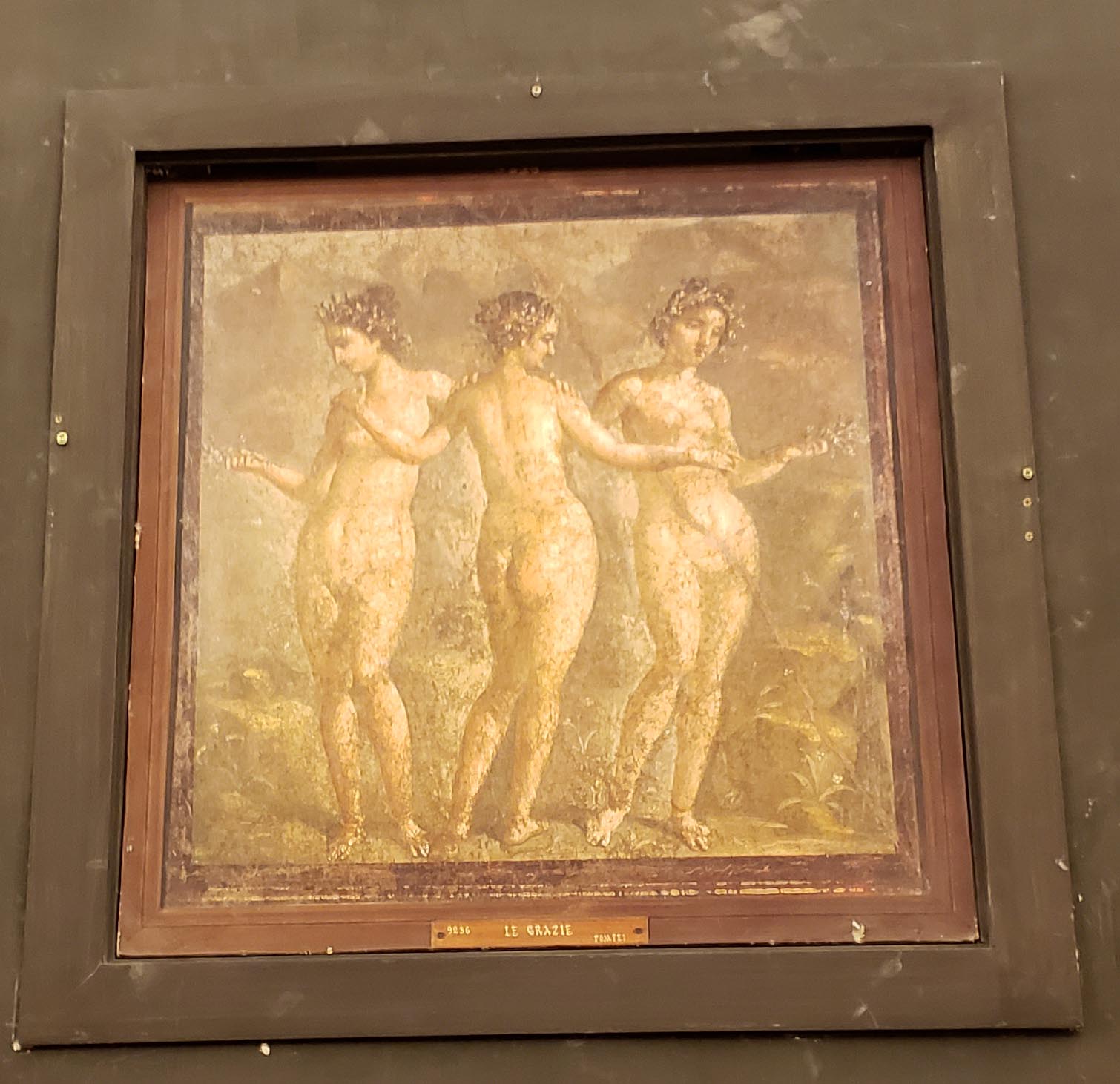
The First Floor – The Mosaic Gallery
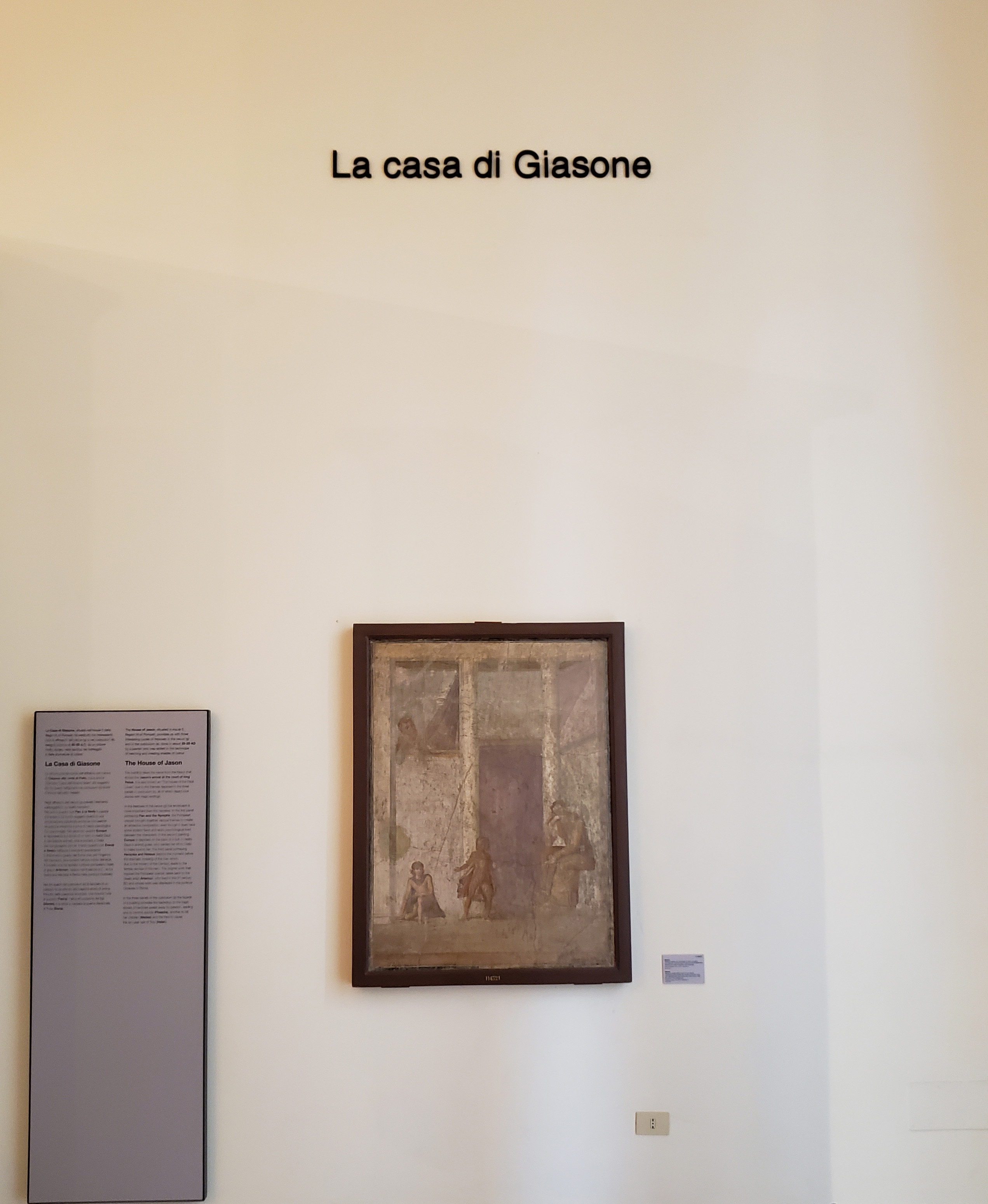
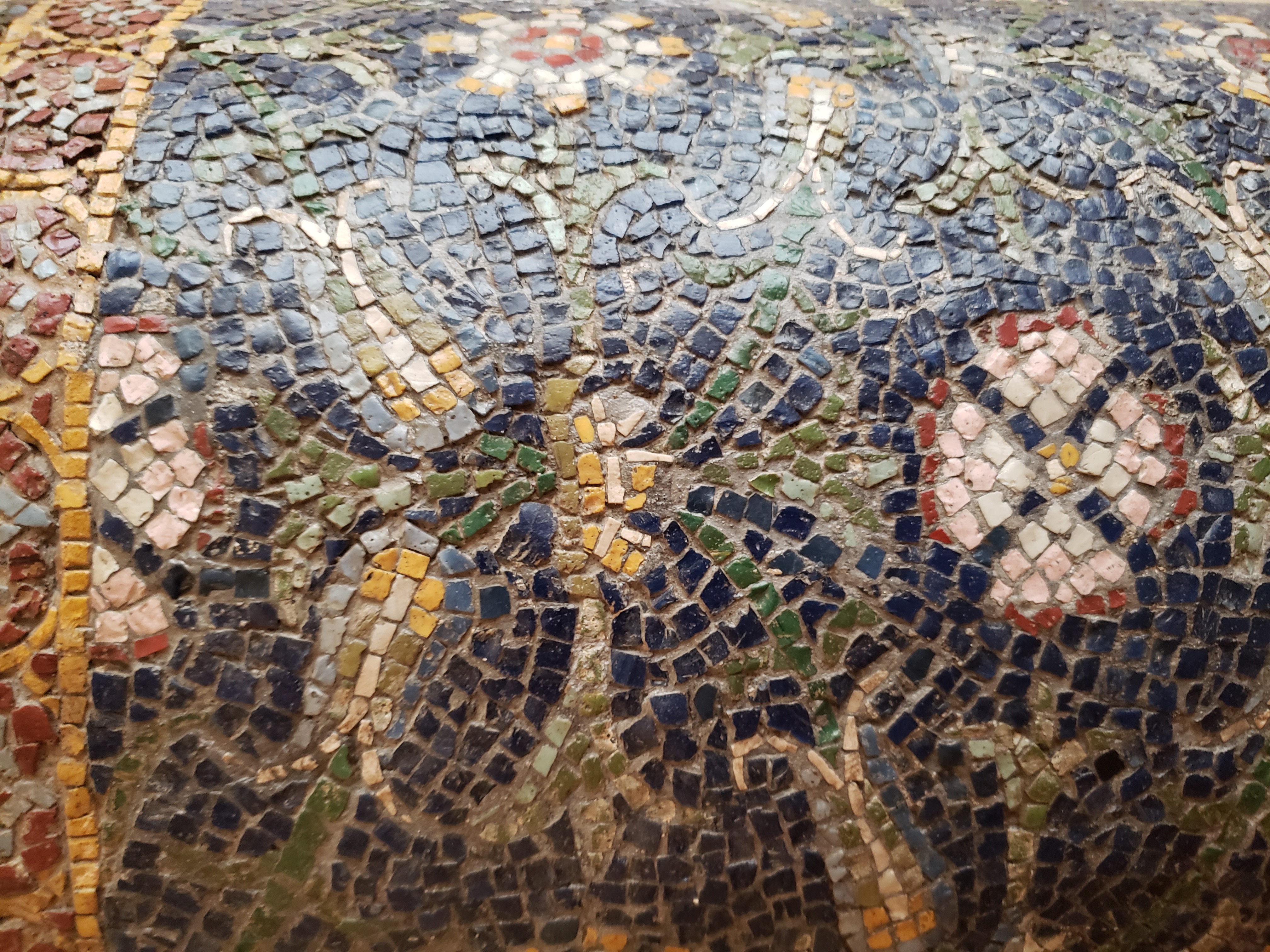
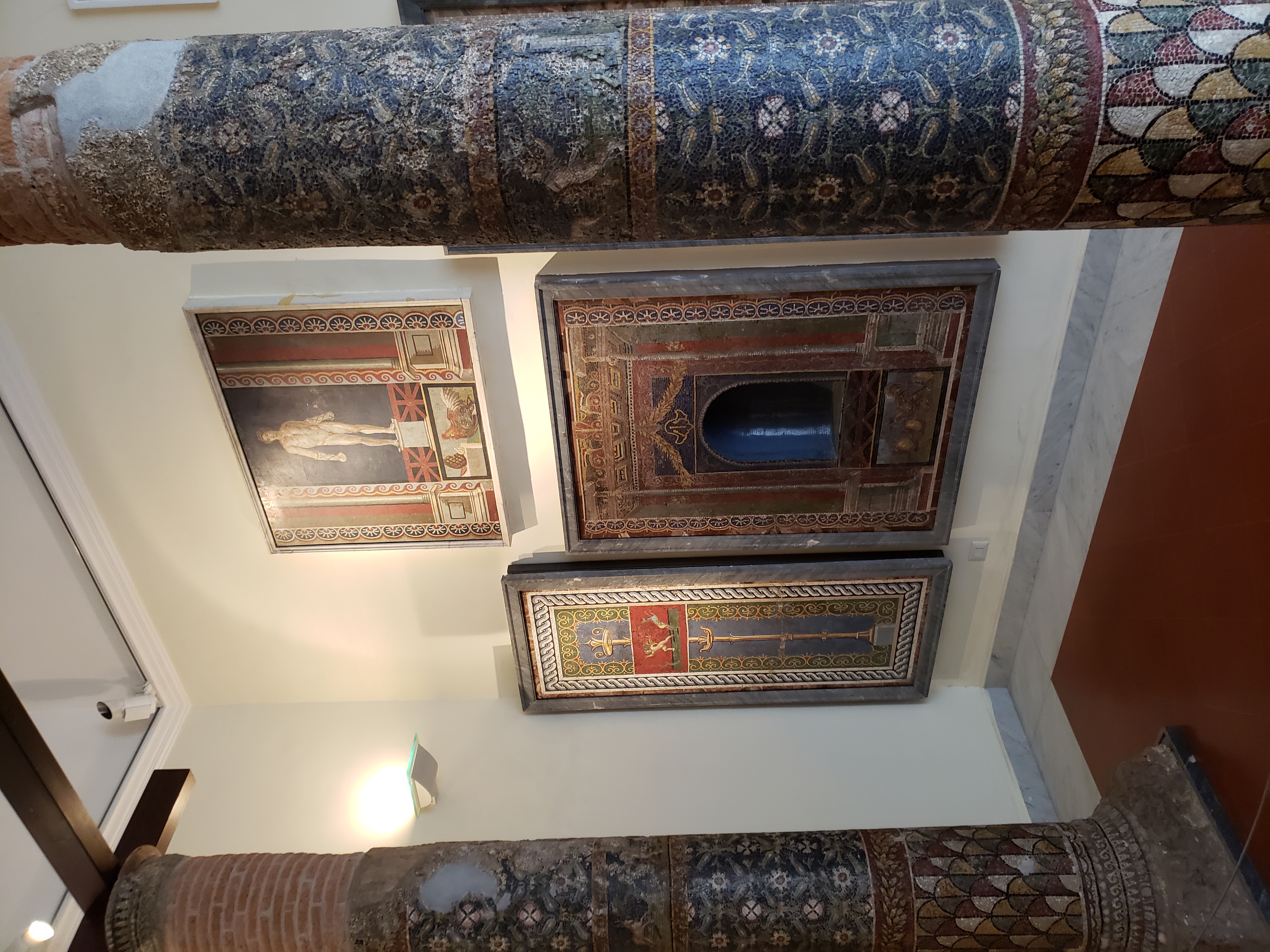
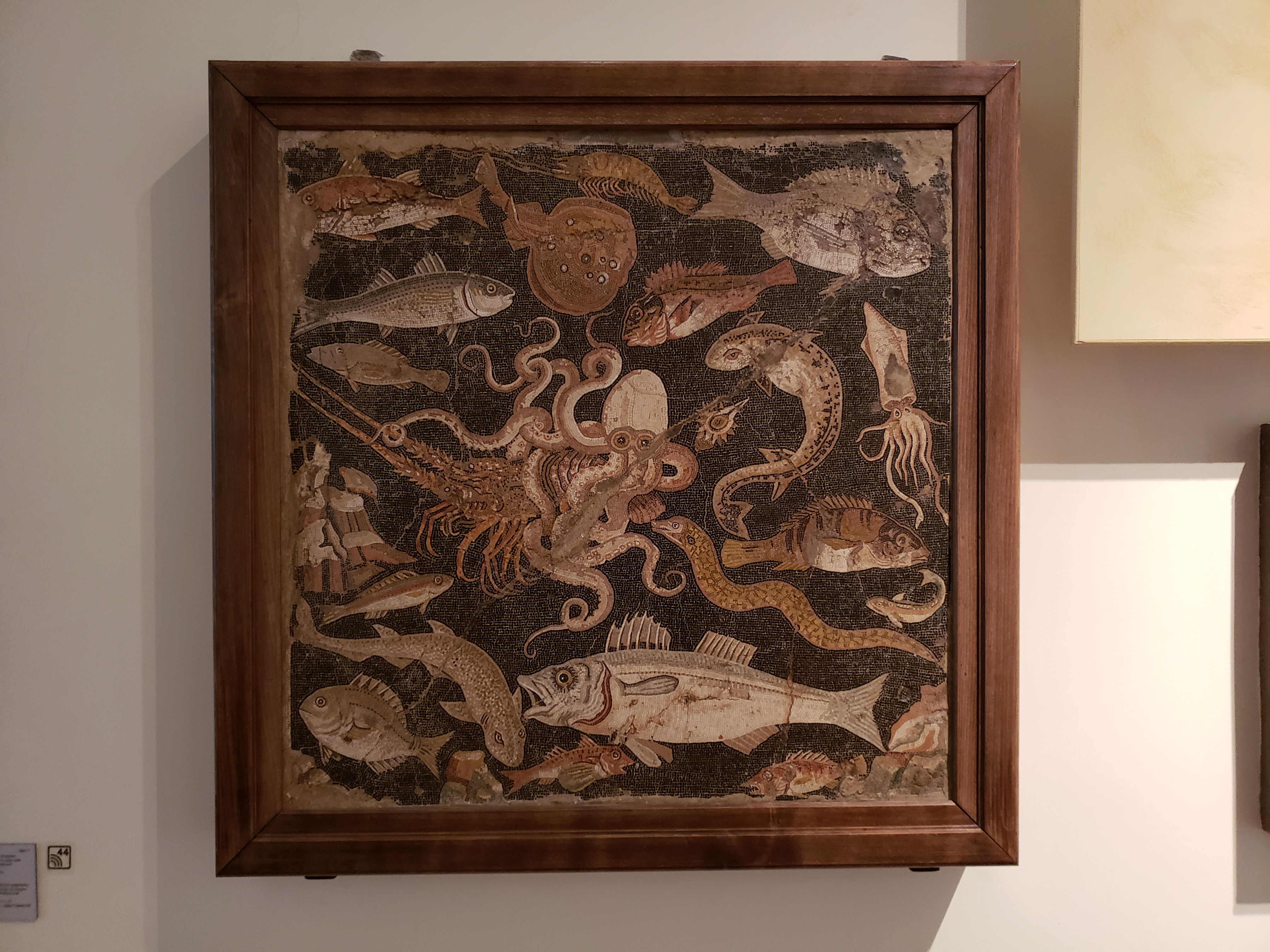
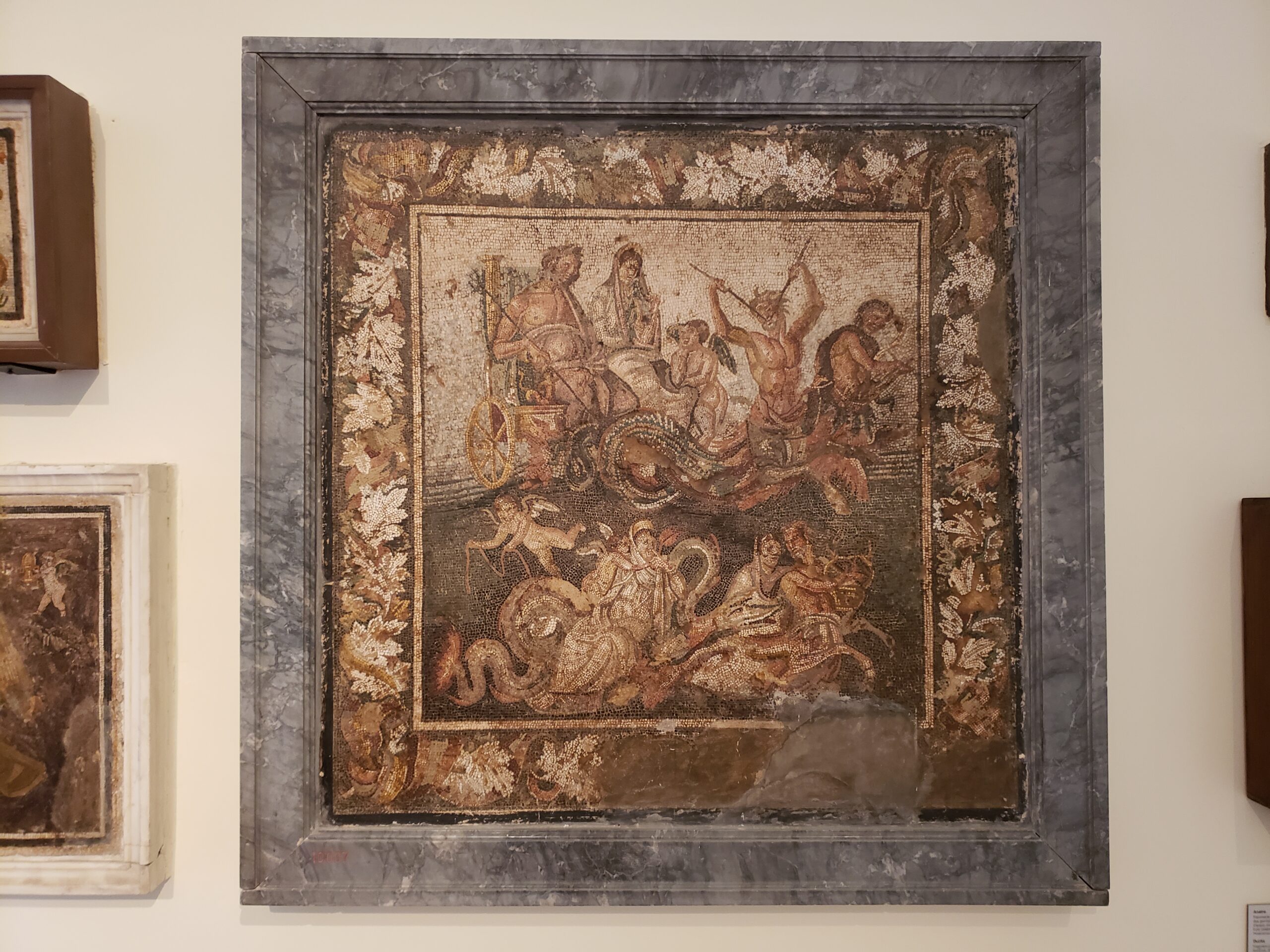
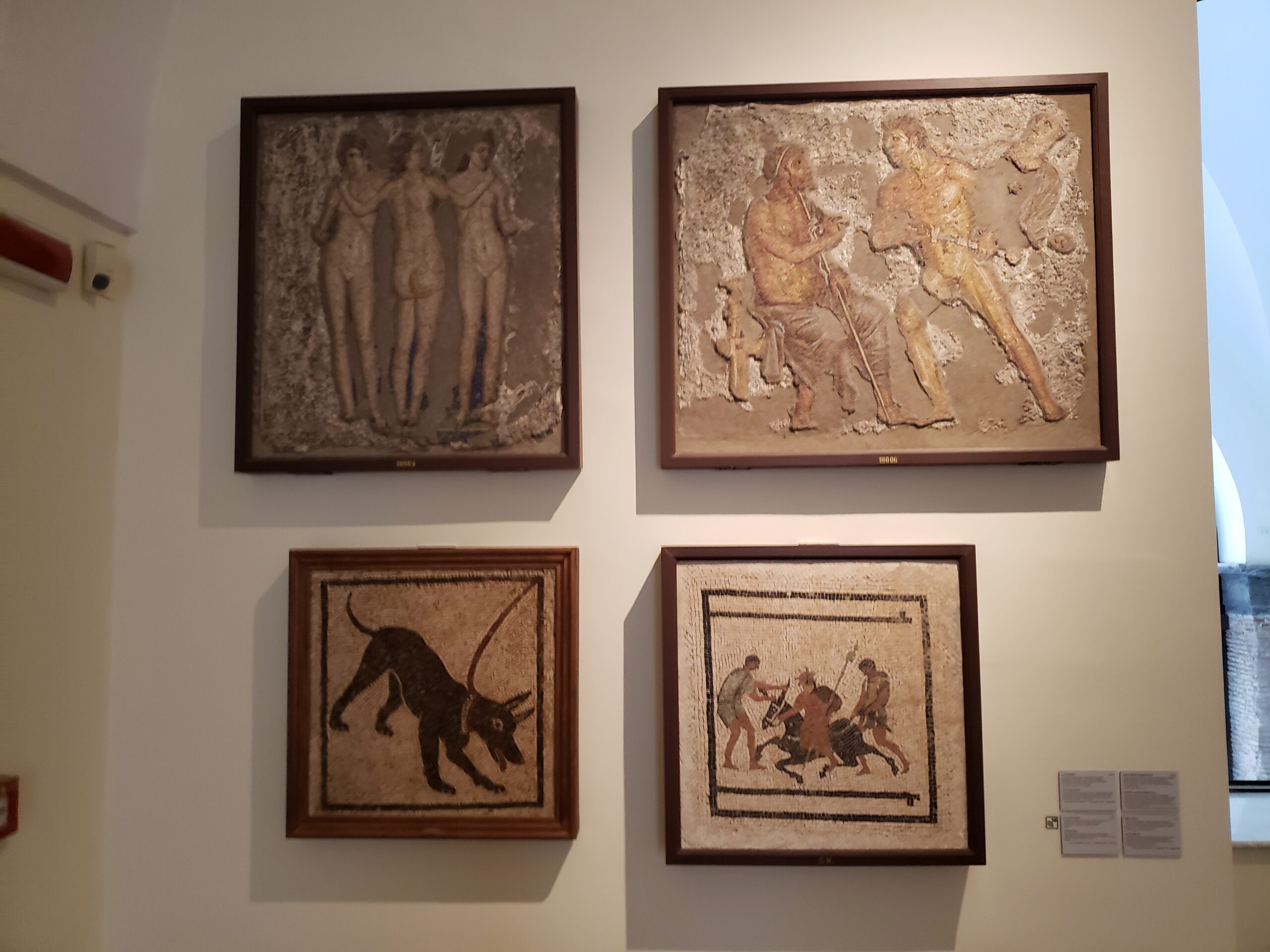
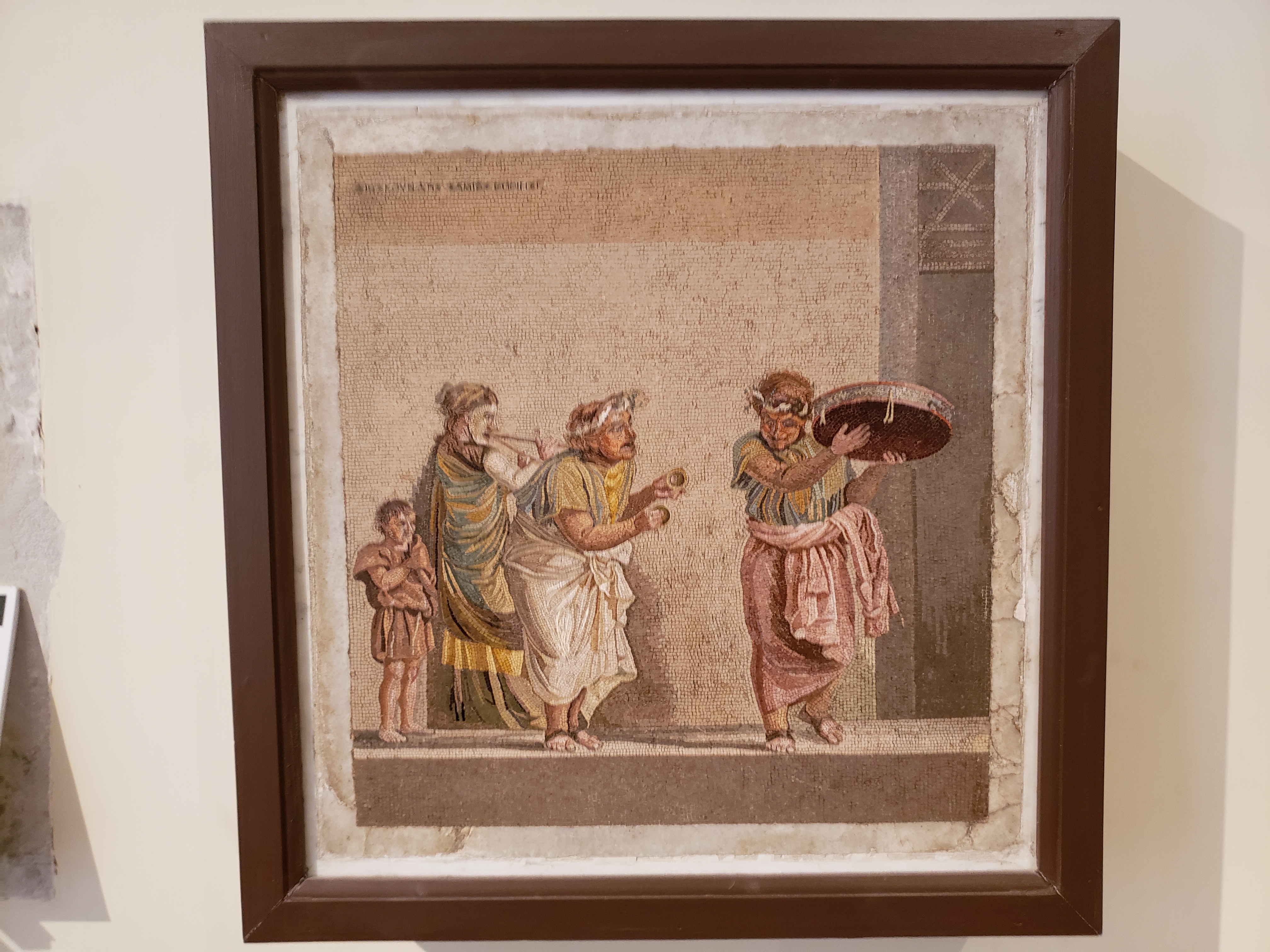
Here one can find all sorts of ancient mosaics, however most are from Pompeii. Made of paste and ceramic all are equisitely done in the form of a story to tell the onlooker.
National Archaeological Museum – Mosaic Hall
National Archaeological Museum – Mosaic Hall
National Archaeological Museum – Mosaic Hall
National Archaeological Museum – Mosaic Hall – From Houses
National Archaeological Museum – Mosaic Hall – Mosaics made with Glass and Paste
National Archaeological Museum – Mosaic Hall – Mosaics made with Glass and Paste
National Archaeological Museum – Mosaic Hall – Mosaics made with Glass and Paste
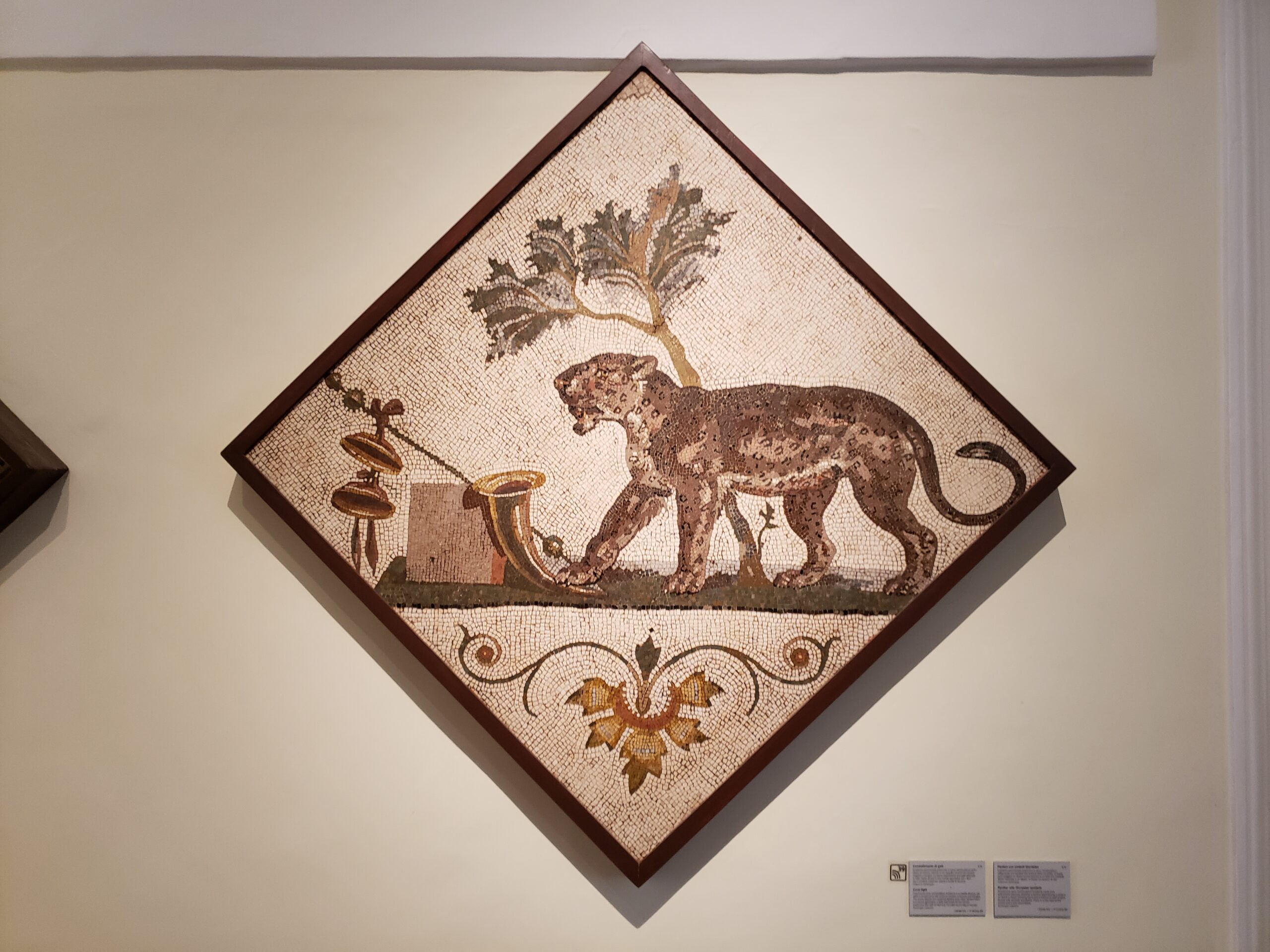
National Archaeological Museum – Mosaic Hall – Leopard
National Archaeological Museum – Mosaic Hall – Numerous Household Examples
National Archaeological Museum – Mosaic Hall – Mosaics made with Glass and Paste
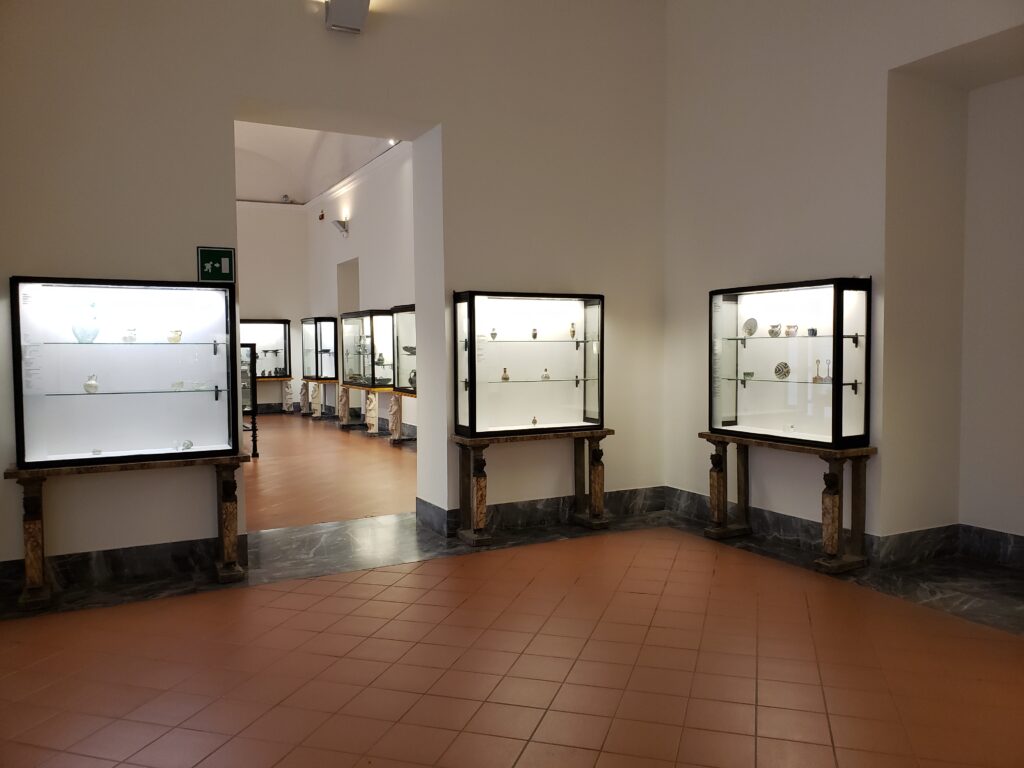
The Third Floor – The Glass Gallery
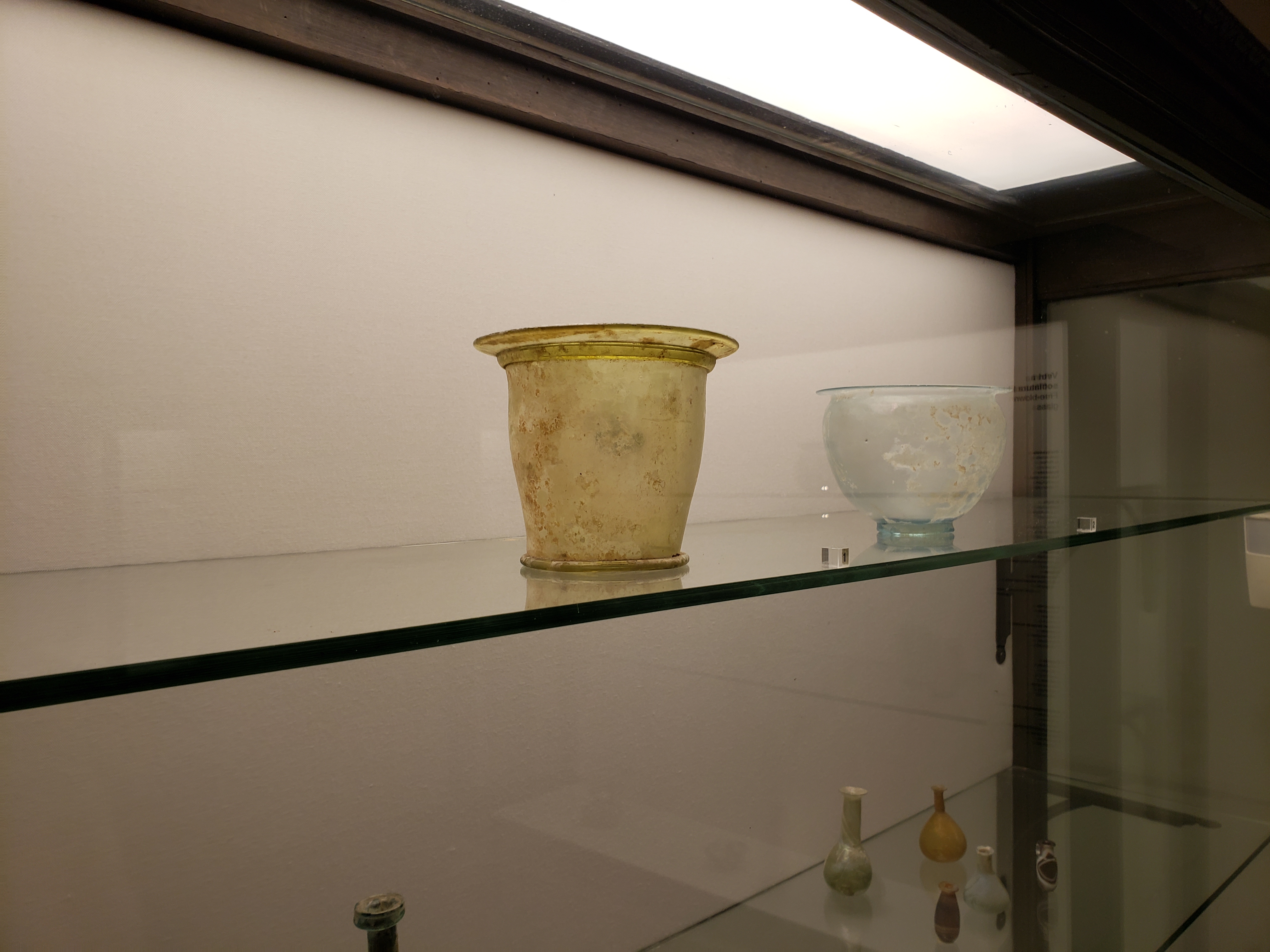
Has a small, succinct, but very important collection of ancient glass made during the Pompeiien and Roman periods. Some have handwork and detail that cannot be rivaled today.
National Archaeological Museum – Glass Gallery
National Archaeological Museum – Glass Gallery
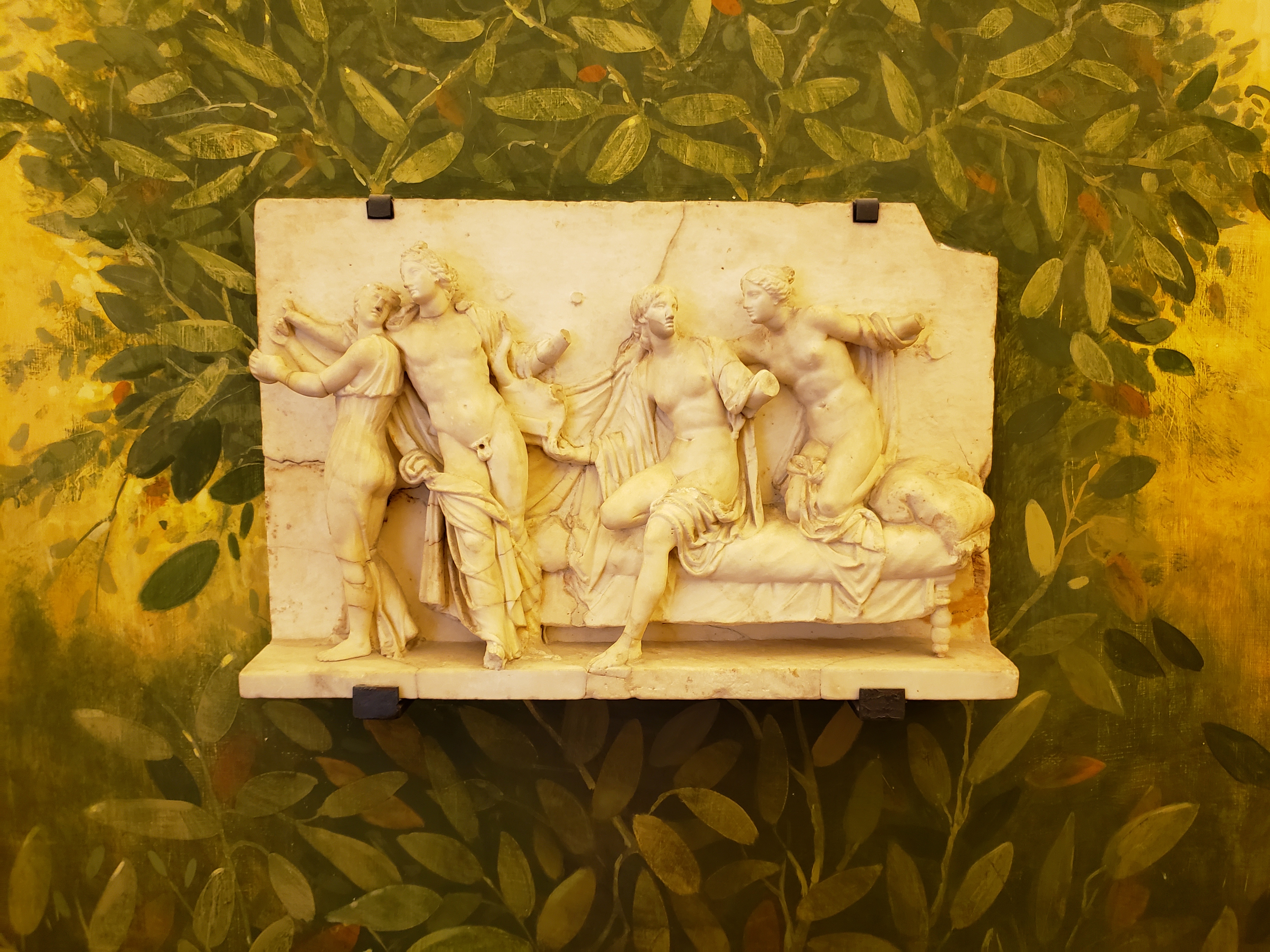
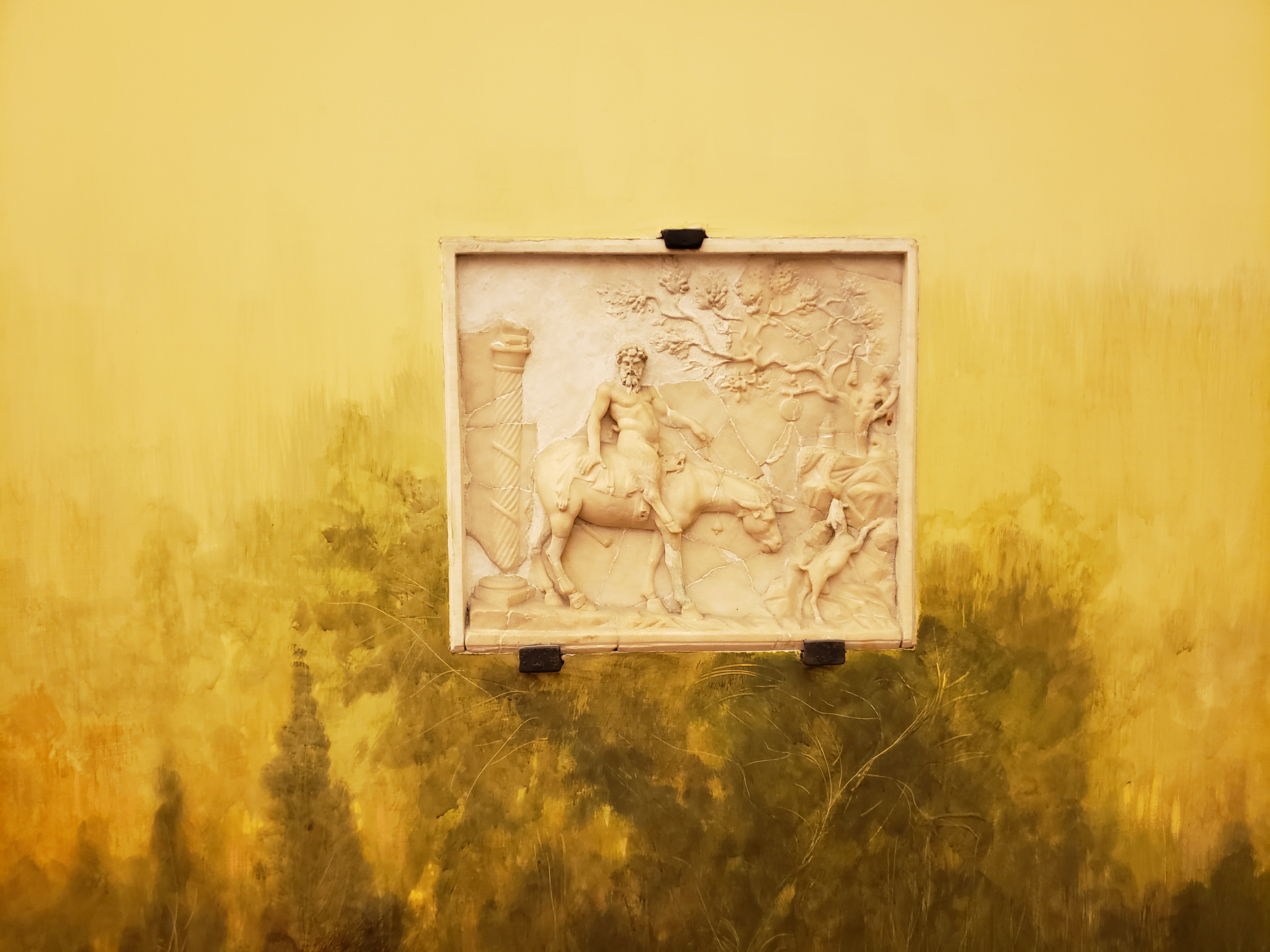
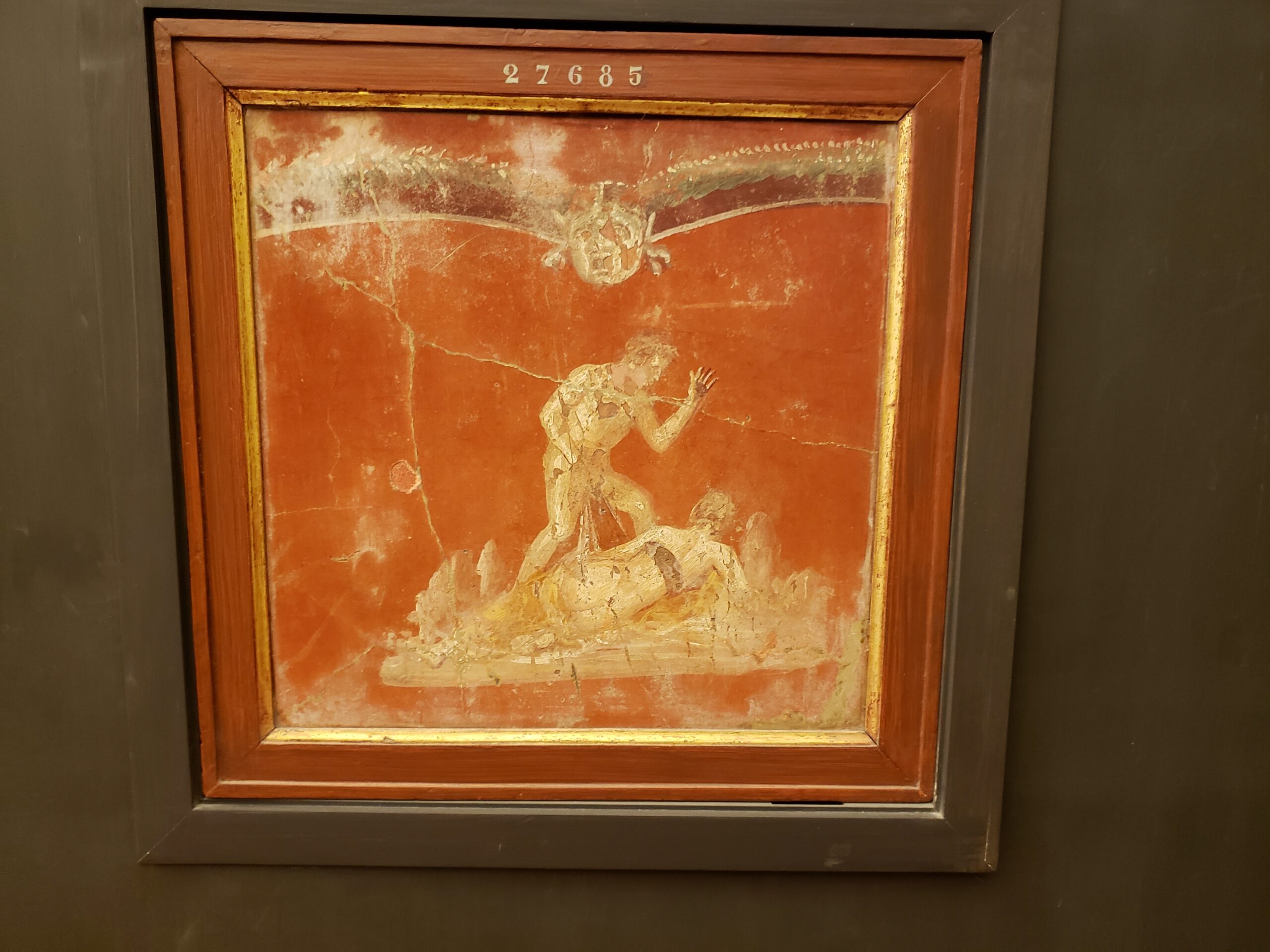
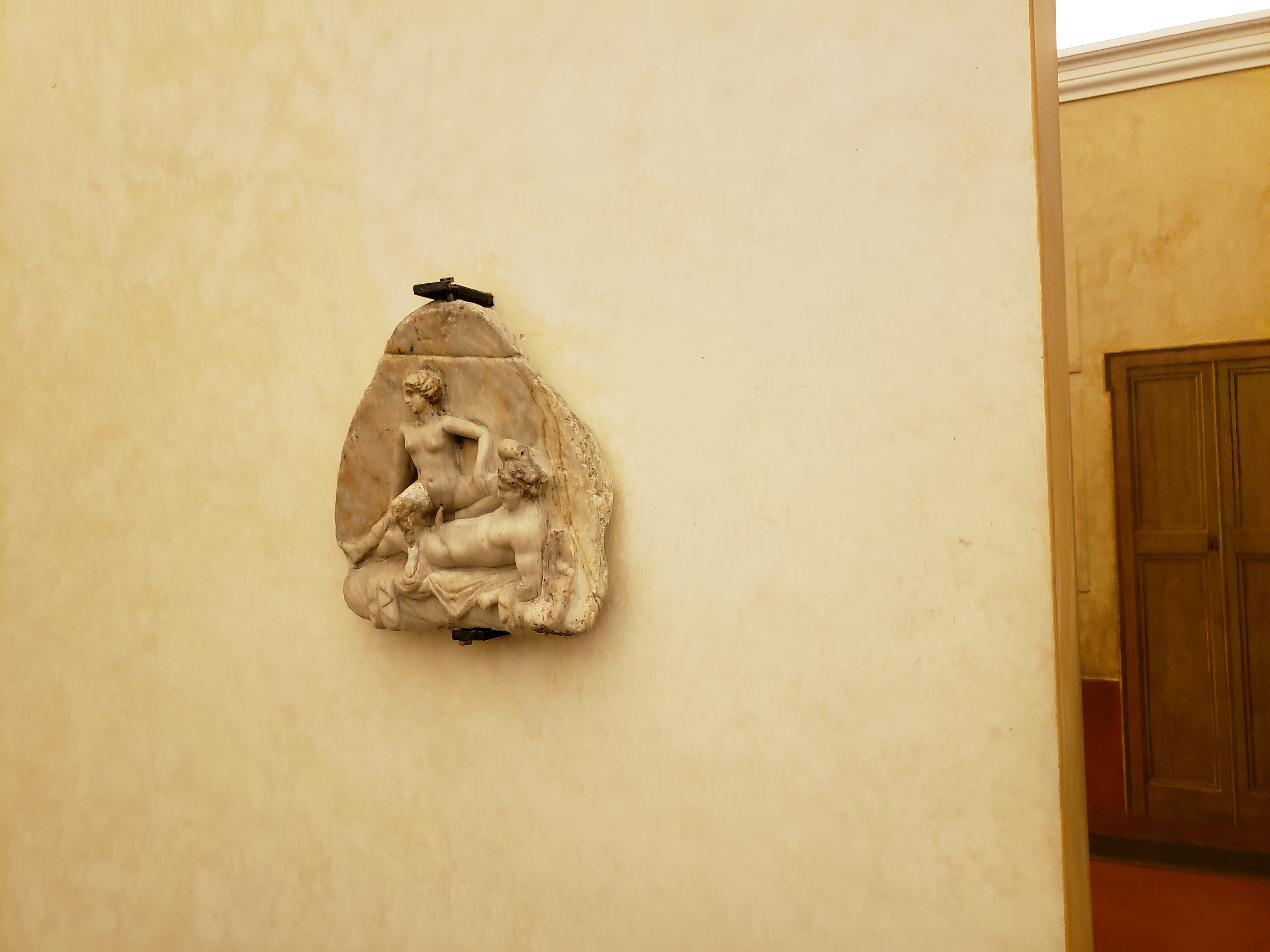
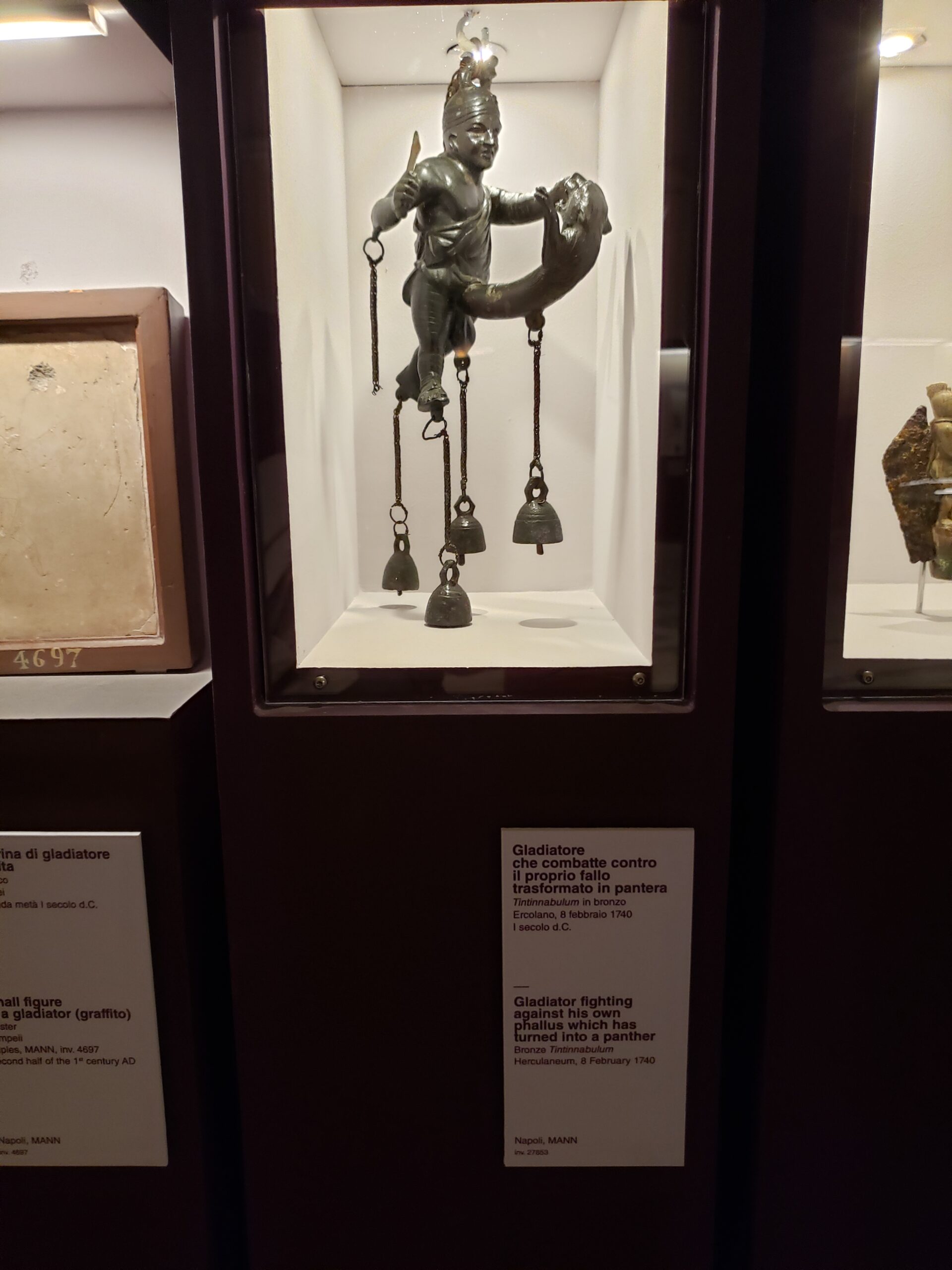
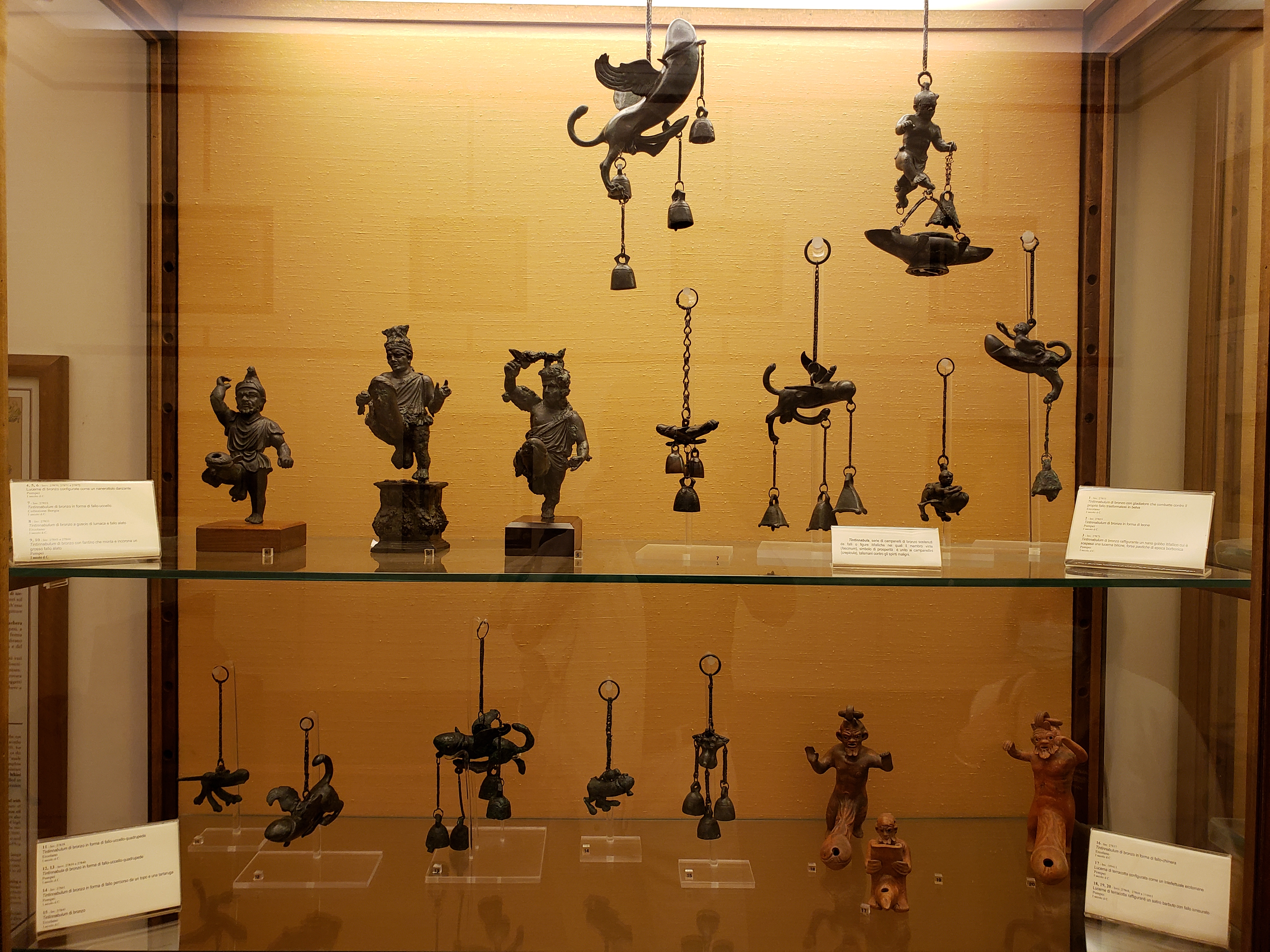
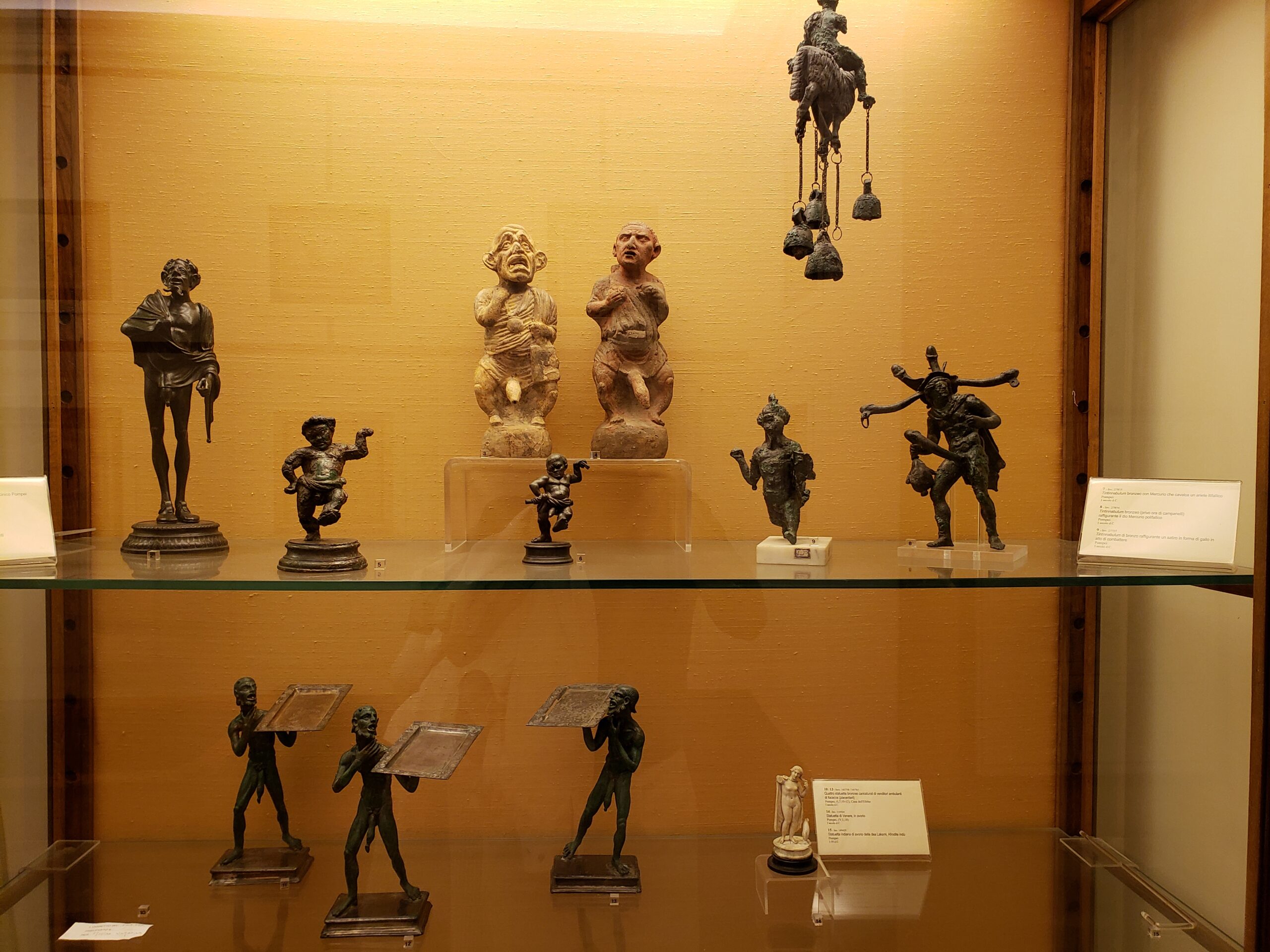
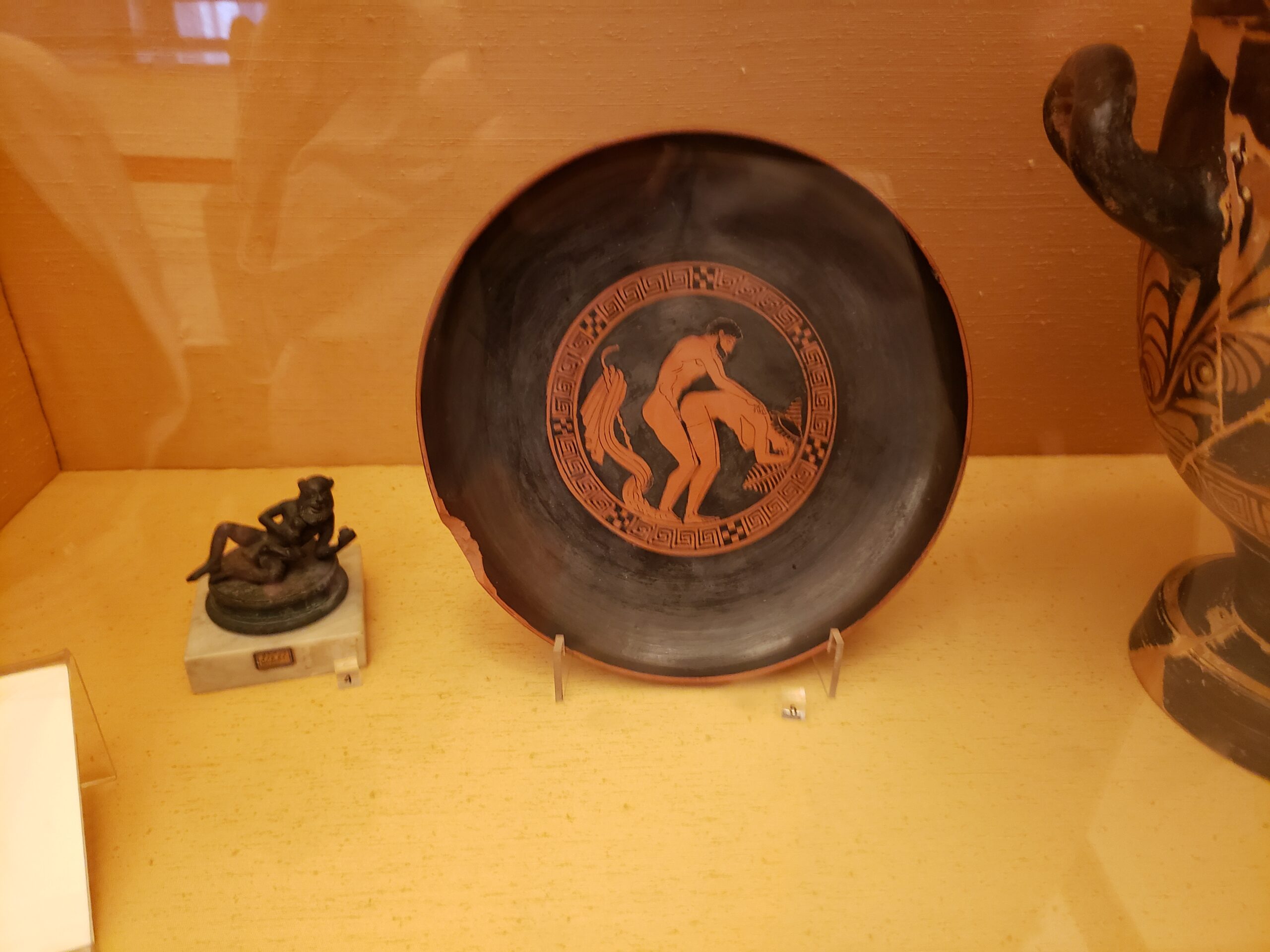
The Gallery of Pompeiien Erotica
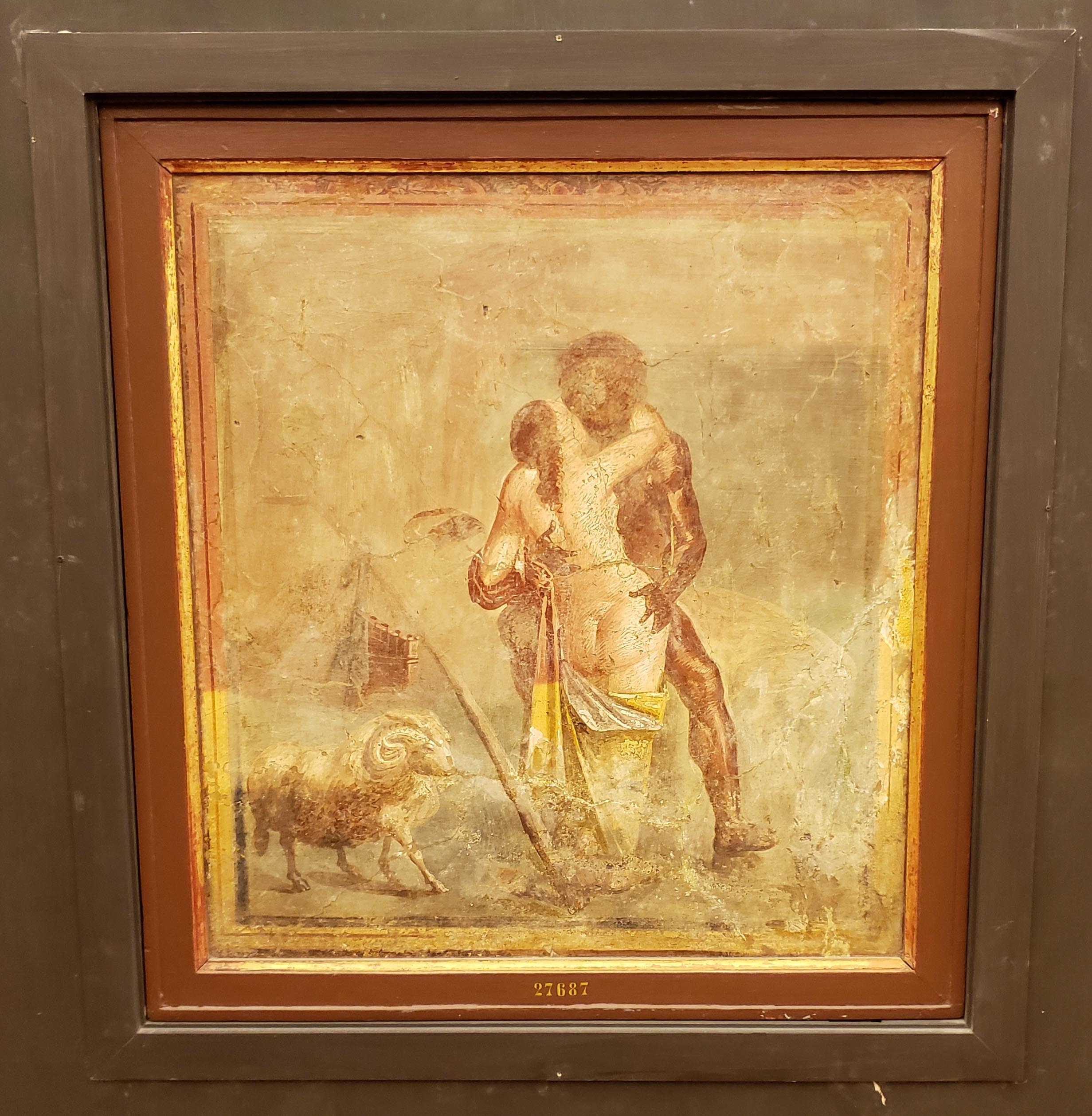
No visit would be complete without a visit to the erotic gallery, where all manner of erotica are on display from the dead city of Pompeii. The Quakers and the Puritans would have had a field day in this city at its peak. Not only was prostitution flaunted as an everday fact in everyone’s face, but the public had personal art created for display and enjoyment in their own houses. Without much else to say the following is shown as a slideshow, feel free to opt-out if you are not up to the intellectual and spiritual challenge.
National Archaeological Museum – Erotic Art
National Archaeological Museum – Erotic Art
National Archaeological Museum – Erotic Mythological Paintings
National Archaeological Museum – Erotic Art – Household Items From Pompeii
National Archaeological Museum – Erotic Art – House Doorbells From Pompeii
National Archaeological Museum – Erotic Art – Household Items From Pompeii
National Archaeological Museum – Erotic Art – Household Items From Pompeii
National Archaeological Museum – Erotic Art – Dish and Small Bronze
The Basement Floor – The Maritime Archaeological Gallery
All things maritime are located in the basement floor. A wide collection of maritime artifacts and archaeological specific display can be found in this section. There are also displays from the escavations of Pompeii having to do with the city itself, including is ancient public plumbing.
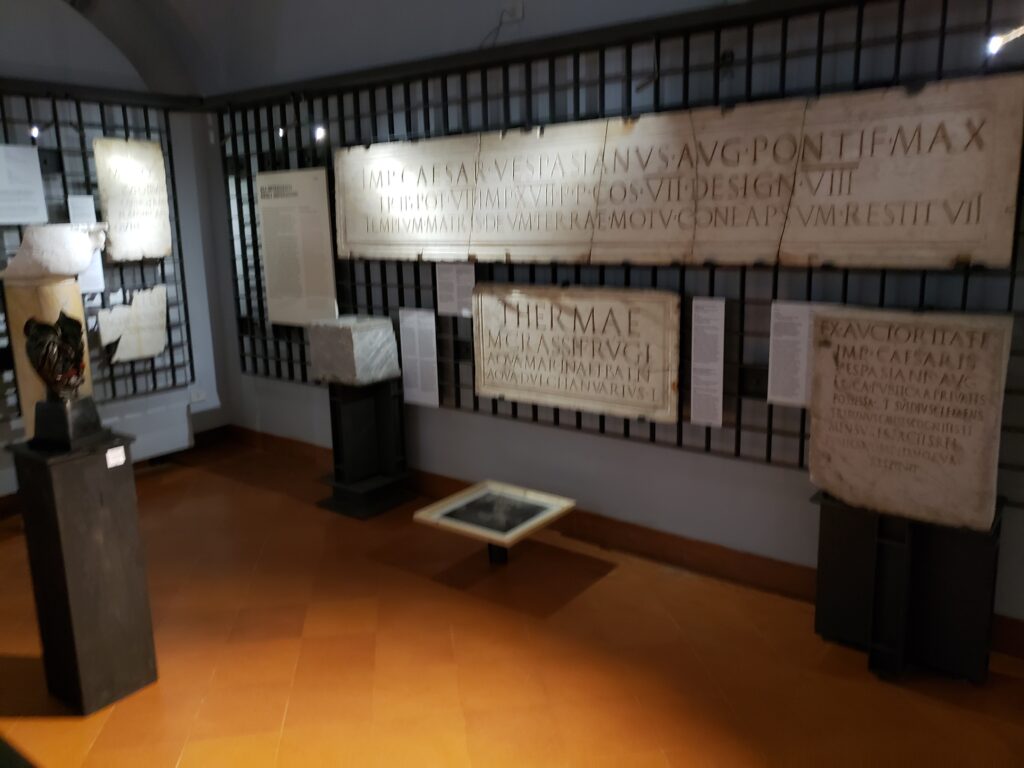
National Archaeological Museum – Maritime Hall – Old Signs
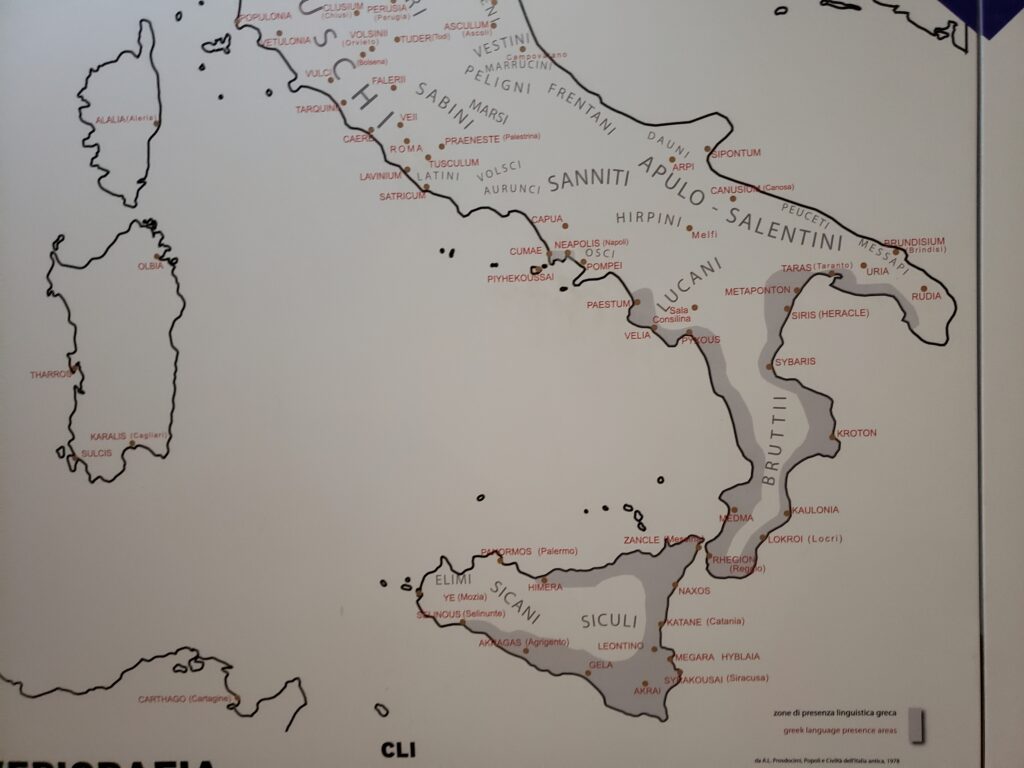
National Archaeological Museum – Maritime Hall – Ancient Trading Ports and Important Cities
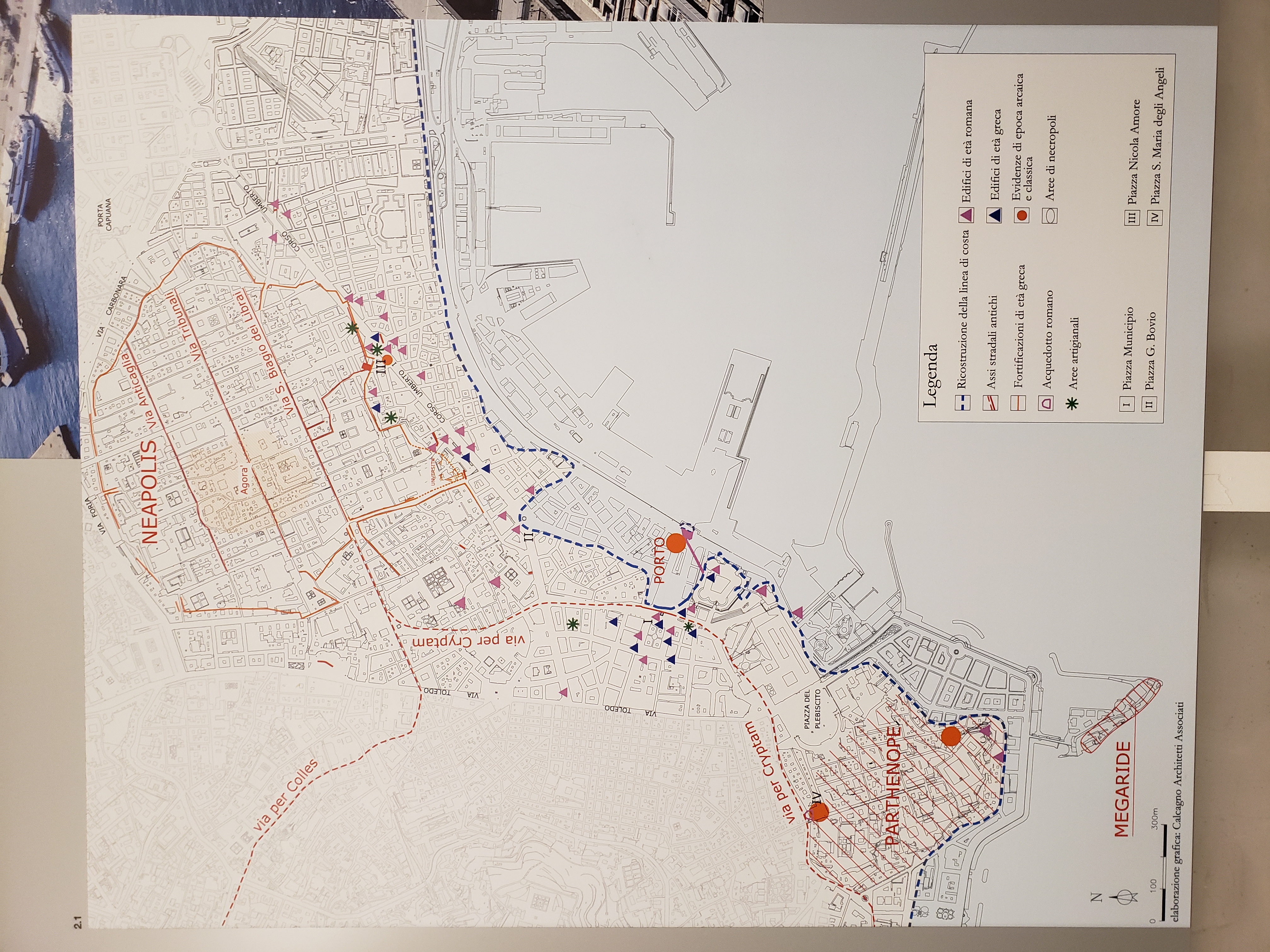
National Archaeological Museum – Maritime Hall – Archaeological Map of Parthenope
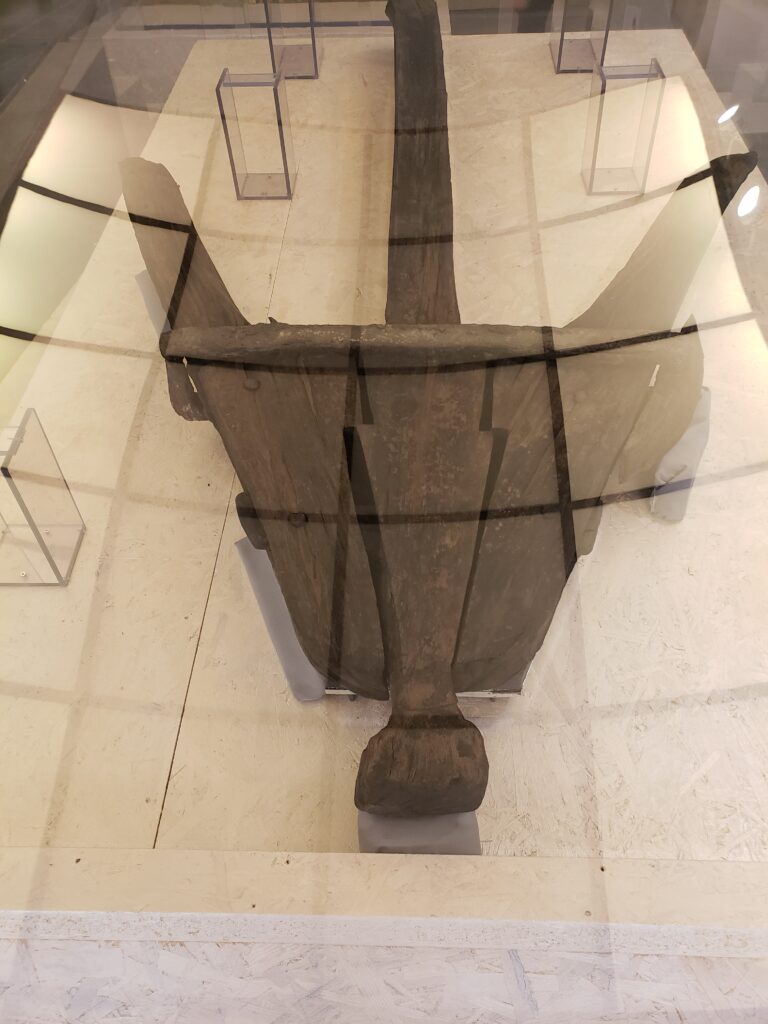
National Archaeological Museum – Maritime Hall – Large Anchor
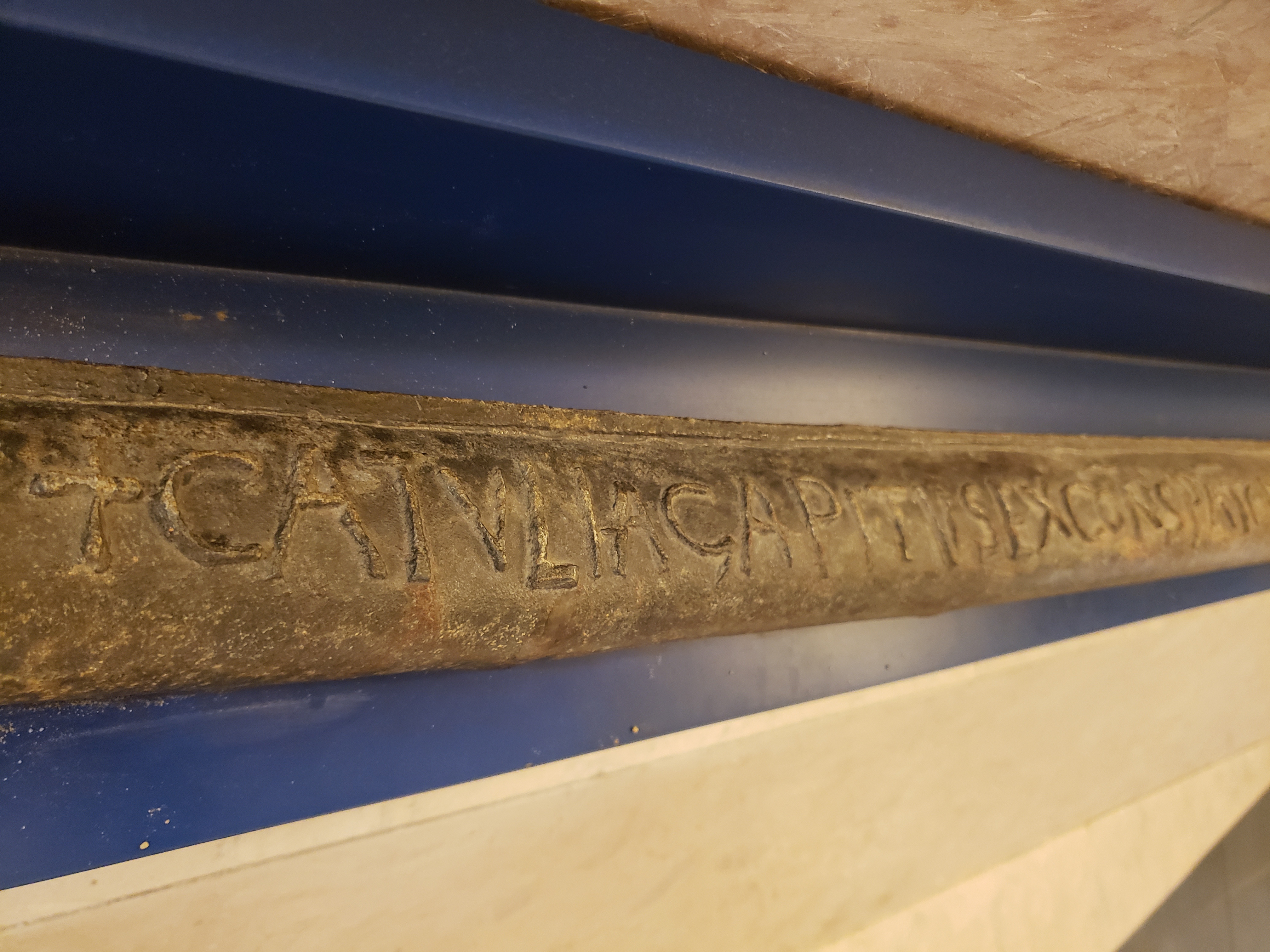
National Archaeological Museum – Maritime Hall – Old Lead Pipe
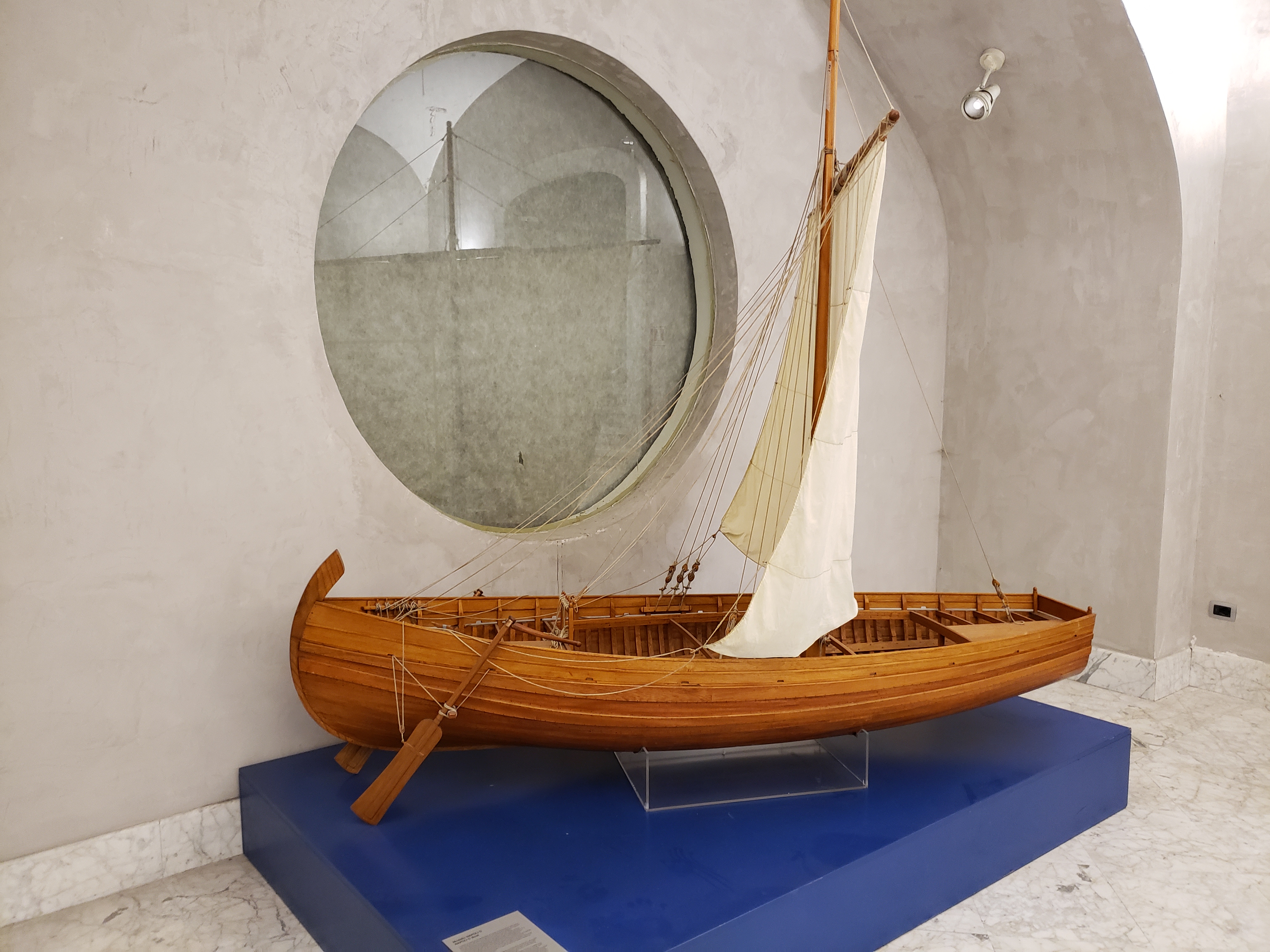
National Archaeological Museum – Maritime Hall – Reproduction of an Ancient Bark from Campania
Restaurants
Ristorante Demeter Ristotrattoria
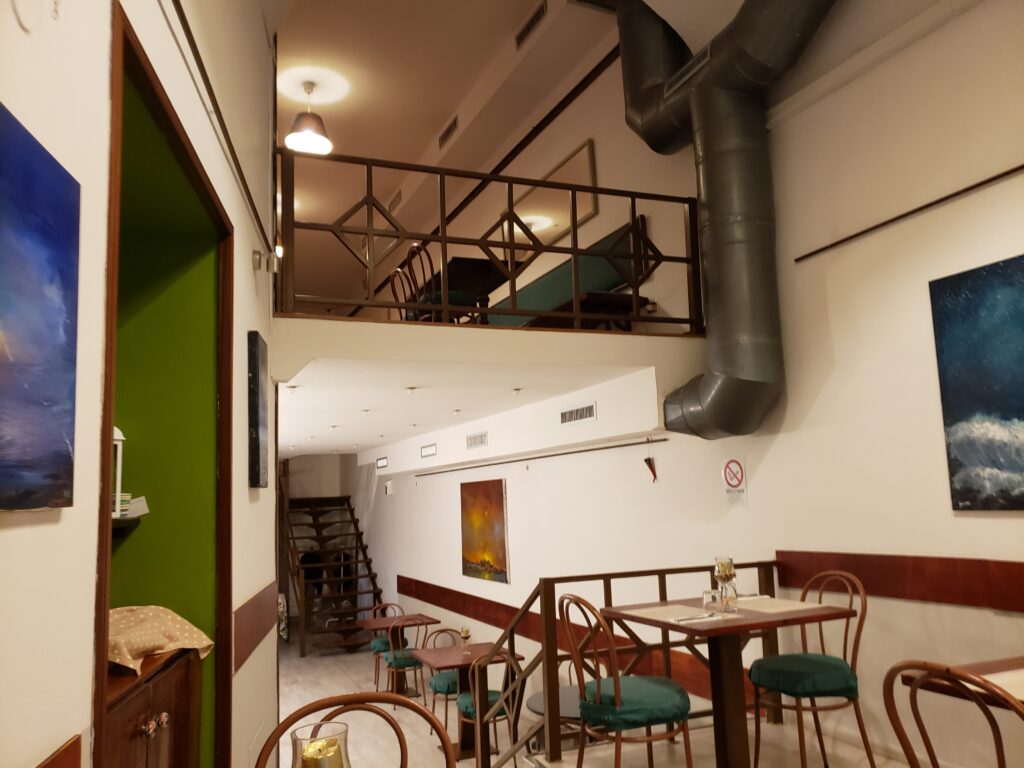
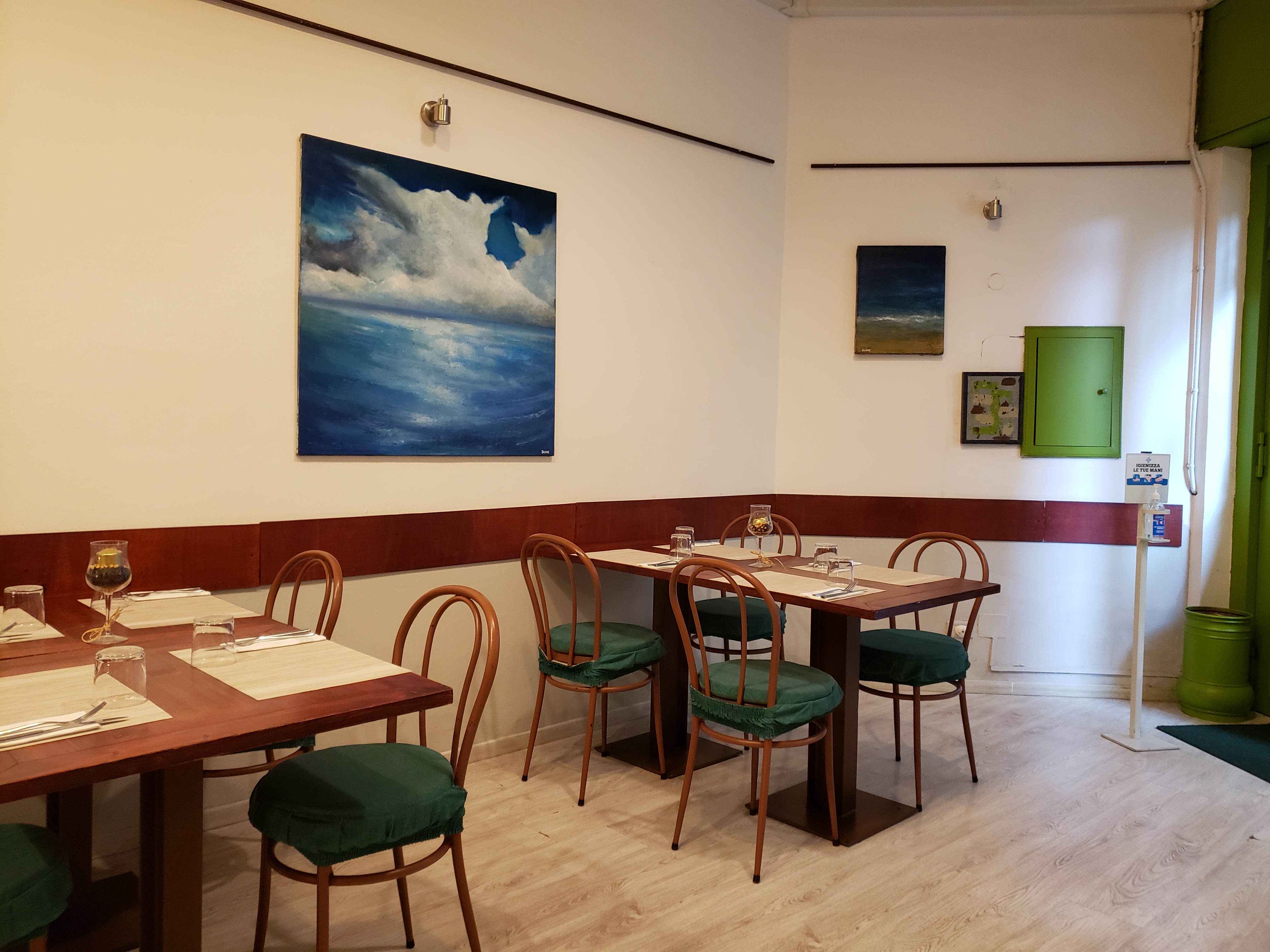
A short fifteen minute walk away from the museum, down the Via Santa Maria di Costantinopoli, Via San Sebastiano and Via Santa Chiara (all the same street mind you), you will find Ristorante Demeter Ristotrattoria. Another exceptional place with homemade creations to tempt most palettes. We entered this restaurant just before it started raining and were not disappointed, a fine place to visit with nice staff that is definitely NOT a tourist trap.
Naples, San Guiseppe – Ristorante Demeter Ristotrattoria – Inside
Naples, San Guiseppe – Ristorante Demeter Ristotrattoria – Inside
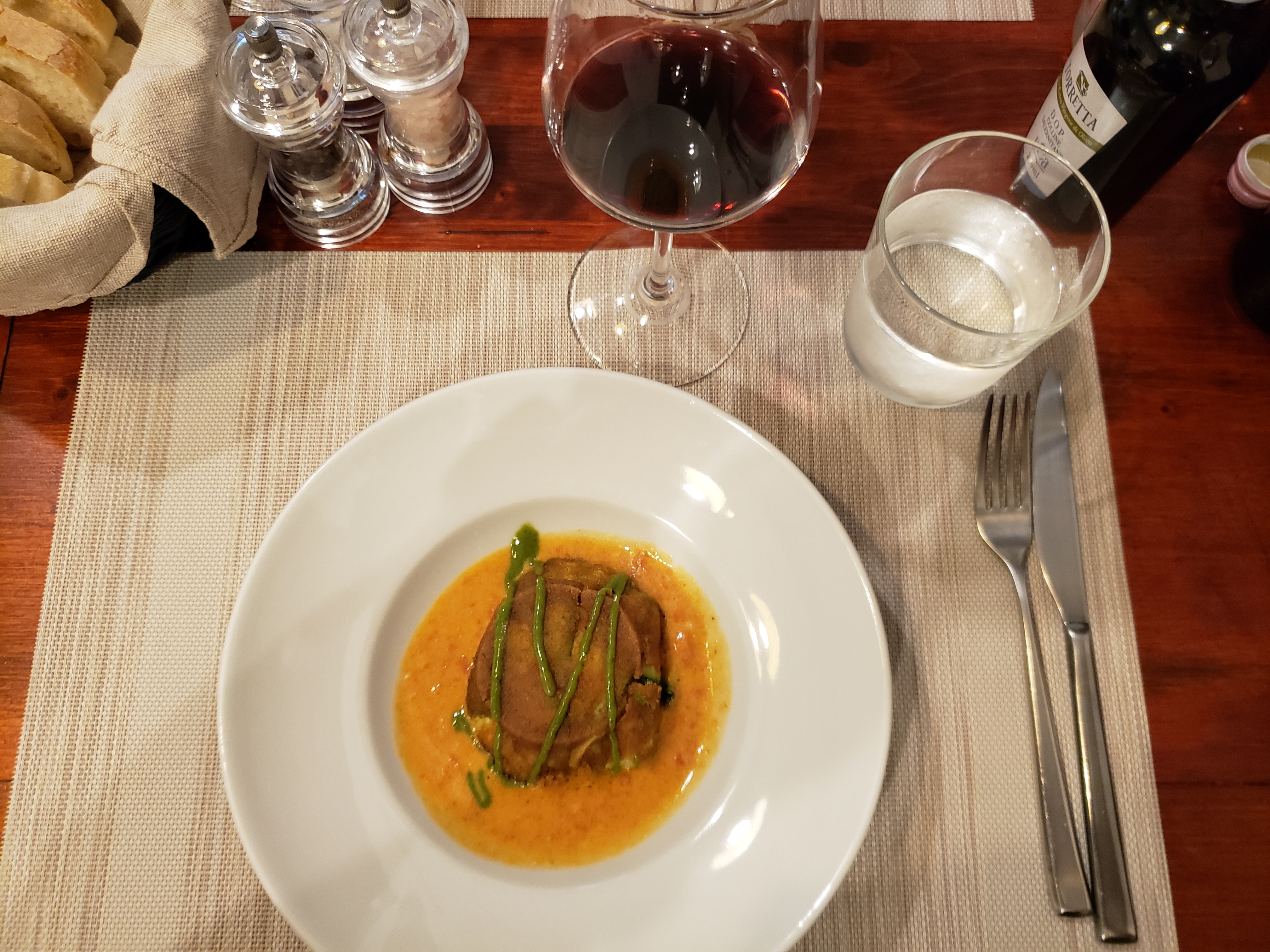
Naples, San Guiseppe – Ristorante Demeter Ristotrattoria – Fried Eggplant in a tomato reduction with pesto
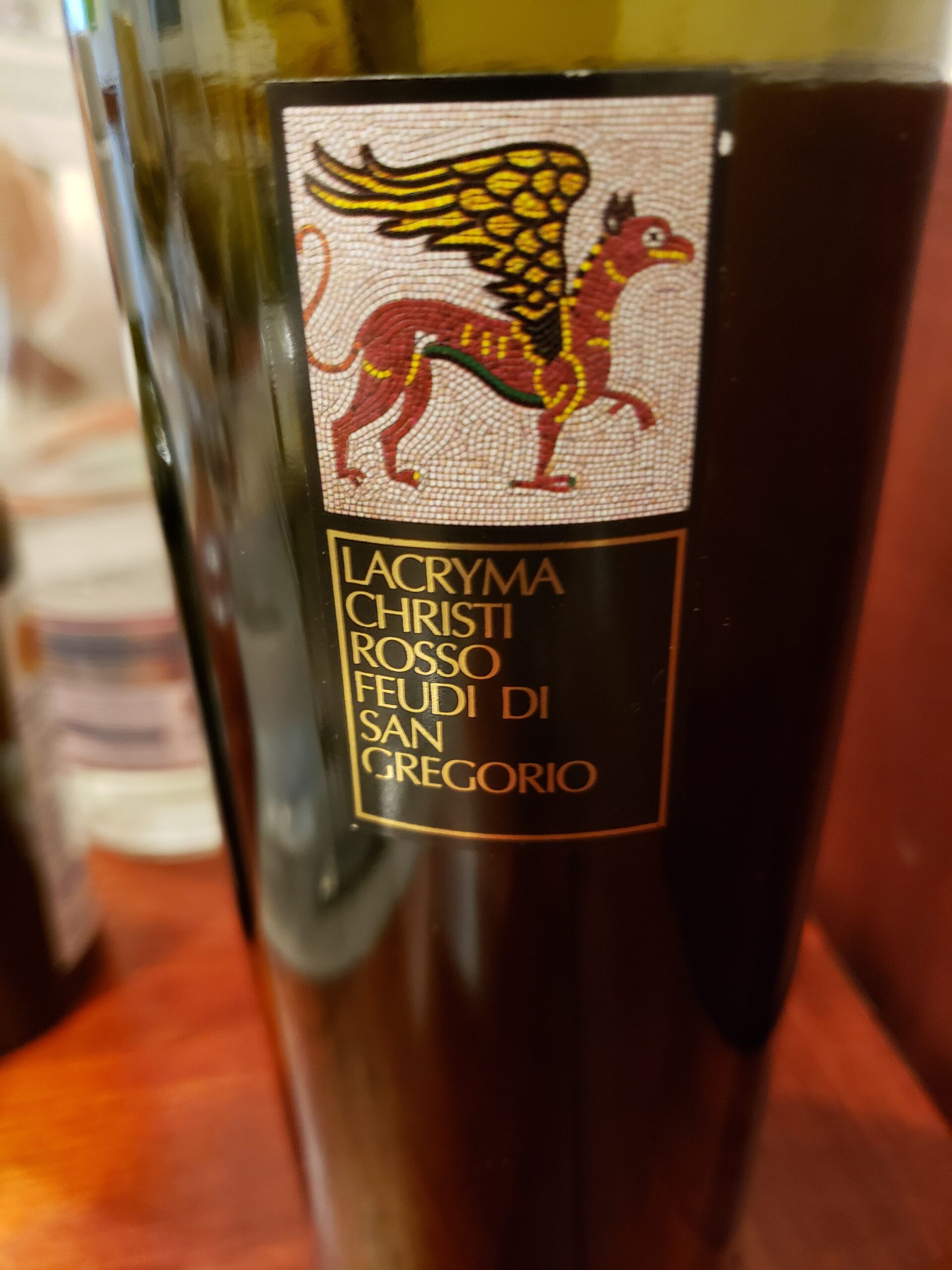
Naples, San Guiseppe – Ristorante Demeter Ristotrattoria – Lacryma Red
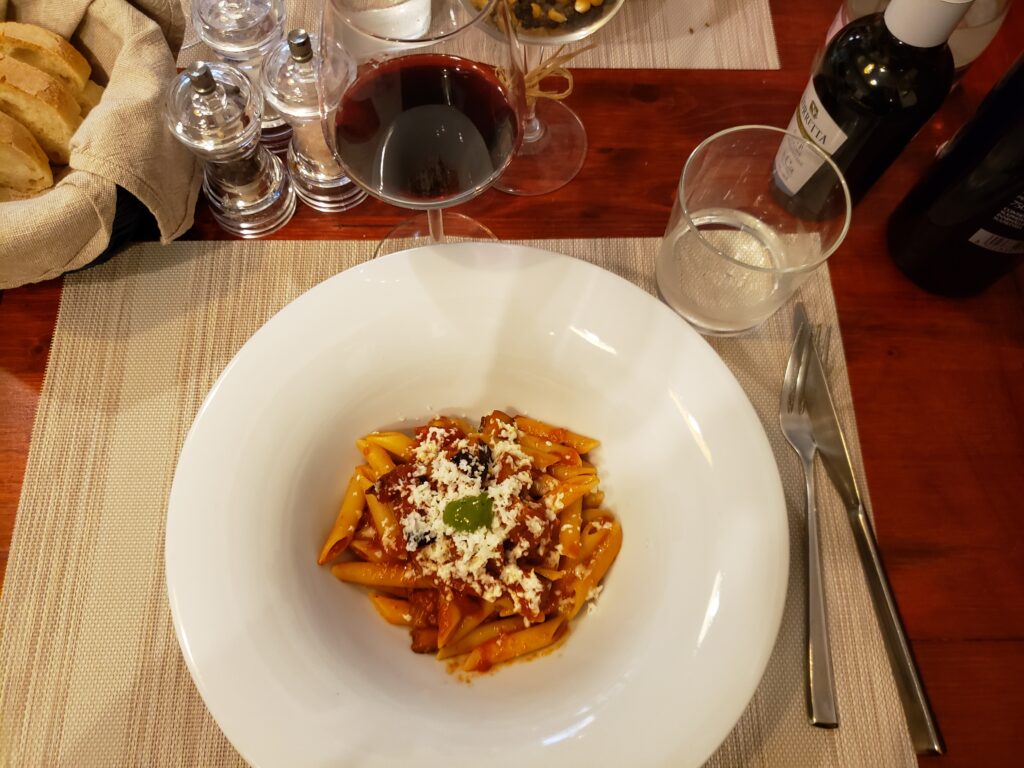
Naples, San Guiseppe – Ristorante Demeter Ristotrattoria – Pasta Norman
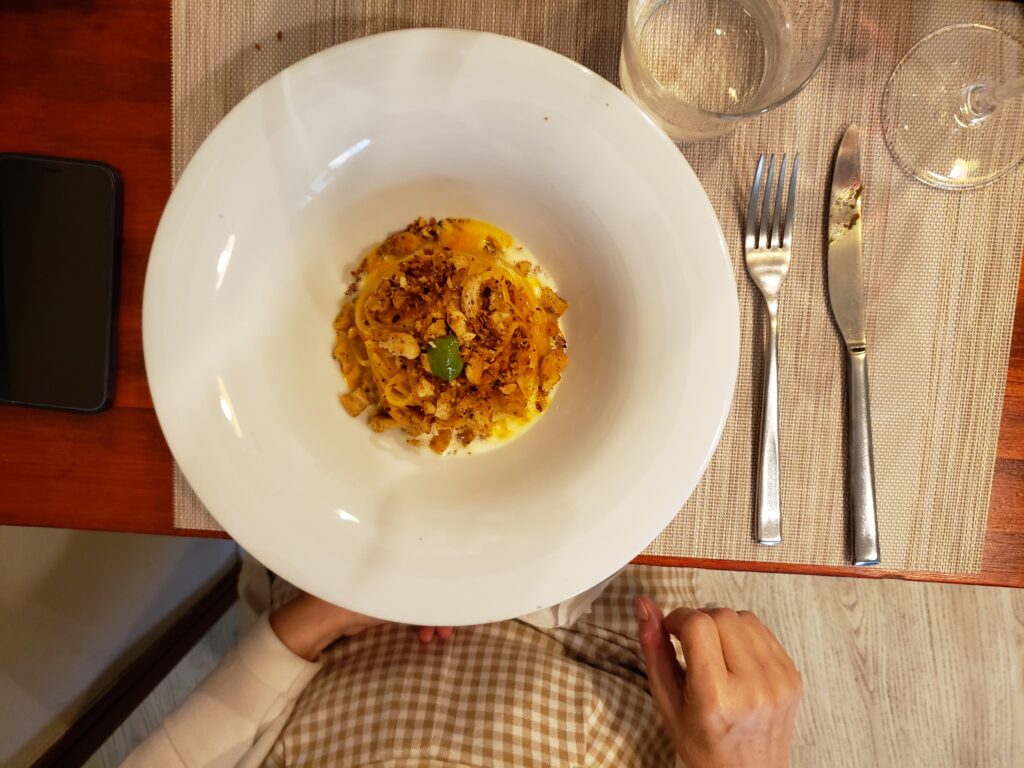
Naples, San Guiseppe – Ristorante Demeter Ristotrattoria – Pasta with Peppers and Taralli
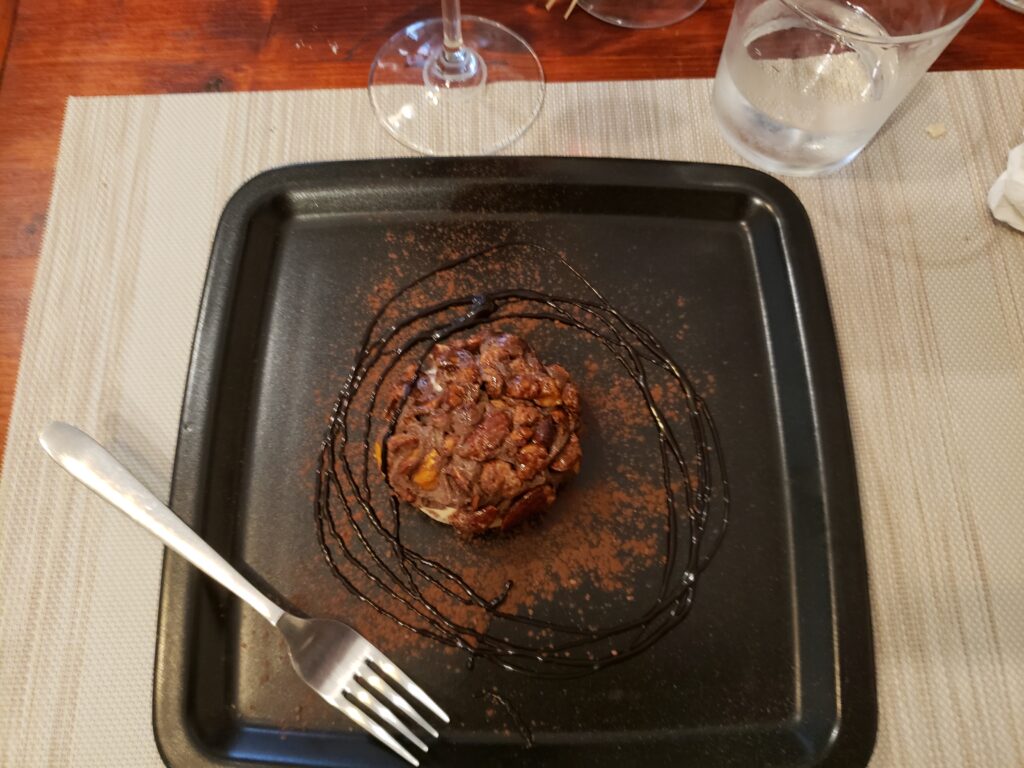
Naples, San Guiseppe – Ristorante Demeter Ristotrattoria – Tart with Pecans
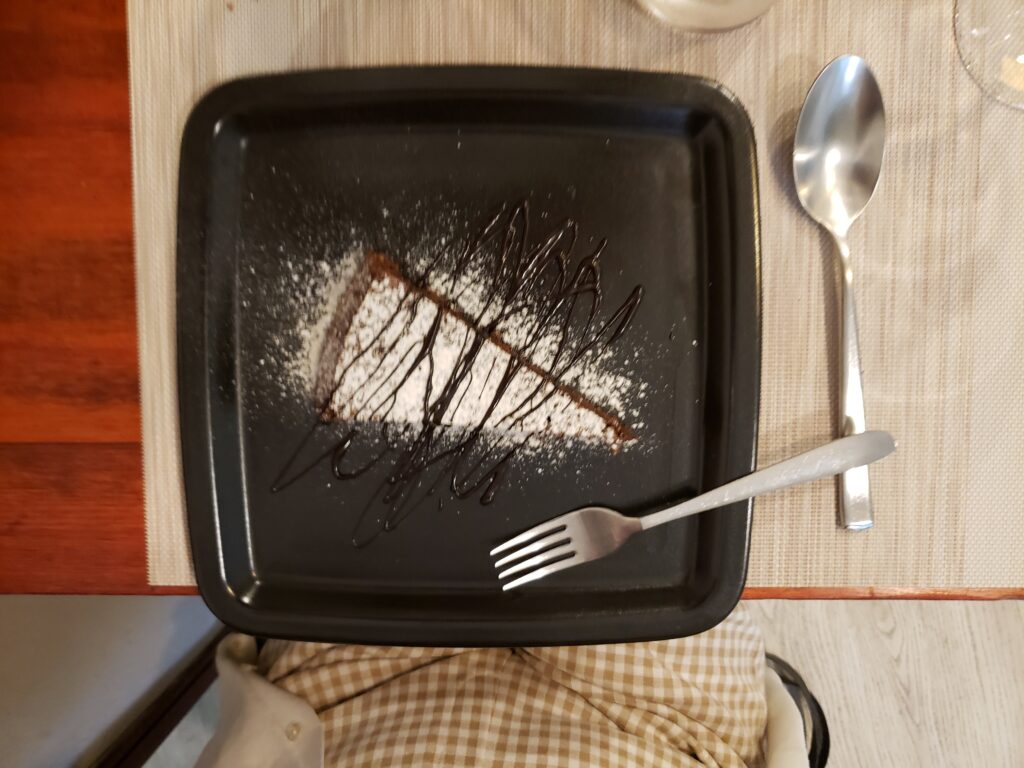
Naples, San Guiseppe – Ristorante Demeter Ristotrattoria – Chocolate Cake with powdered sugar
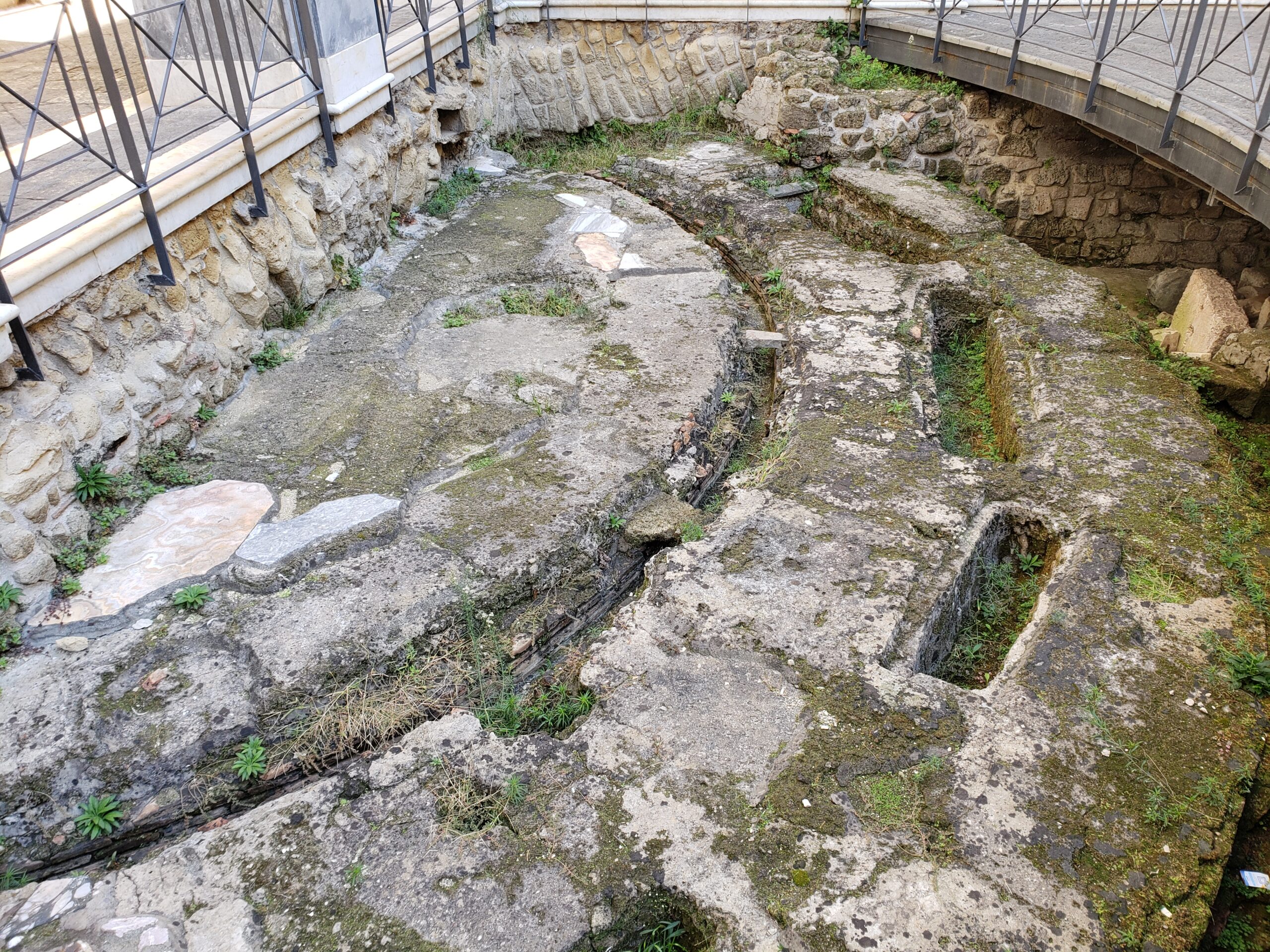
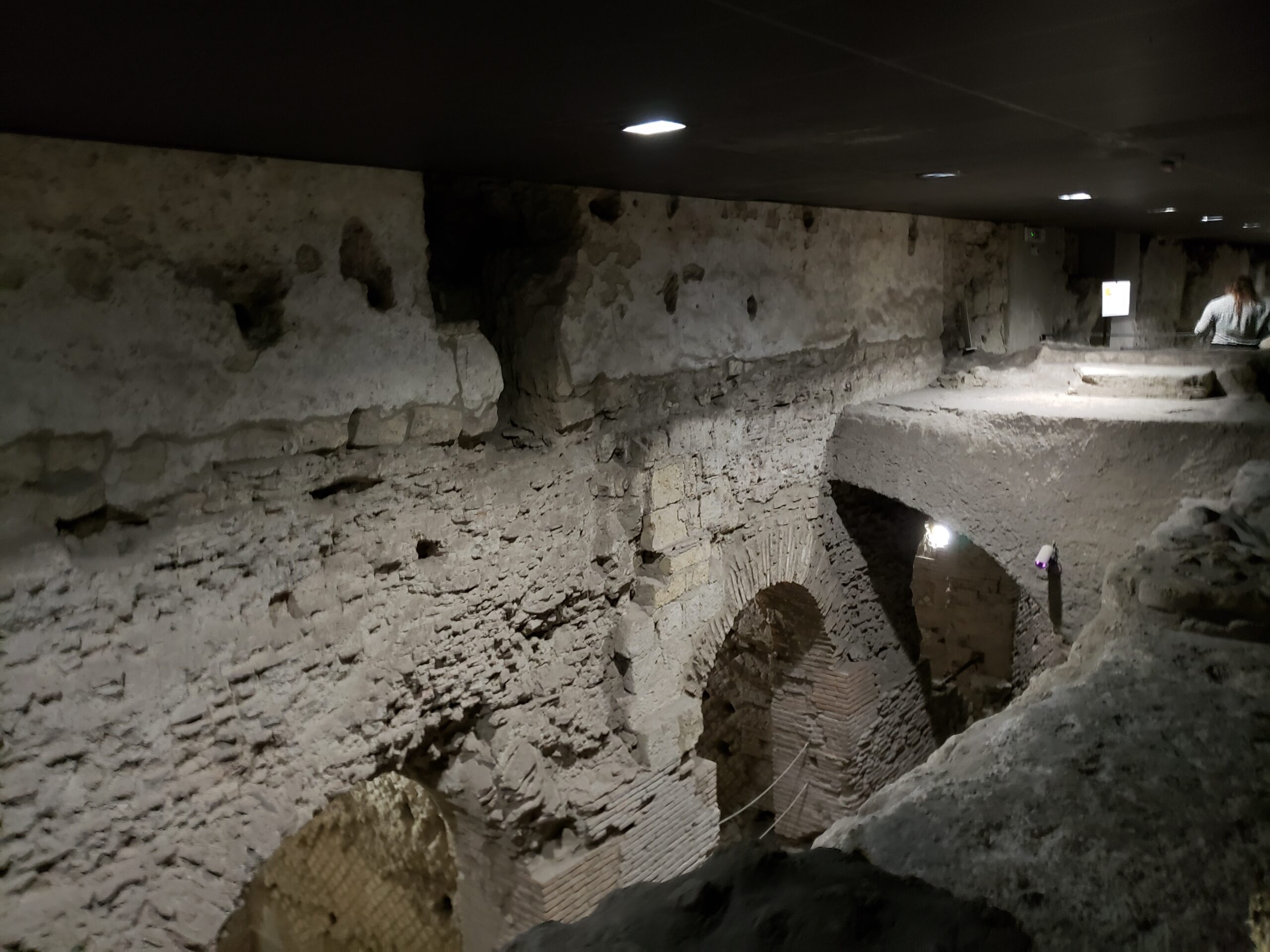
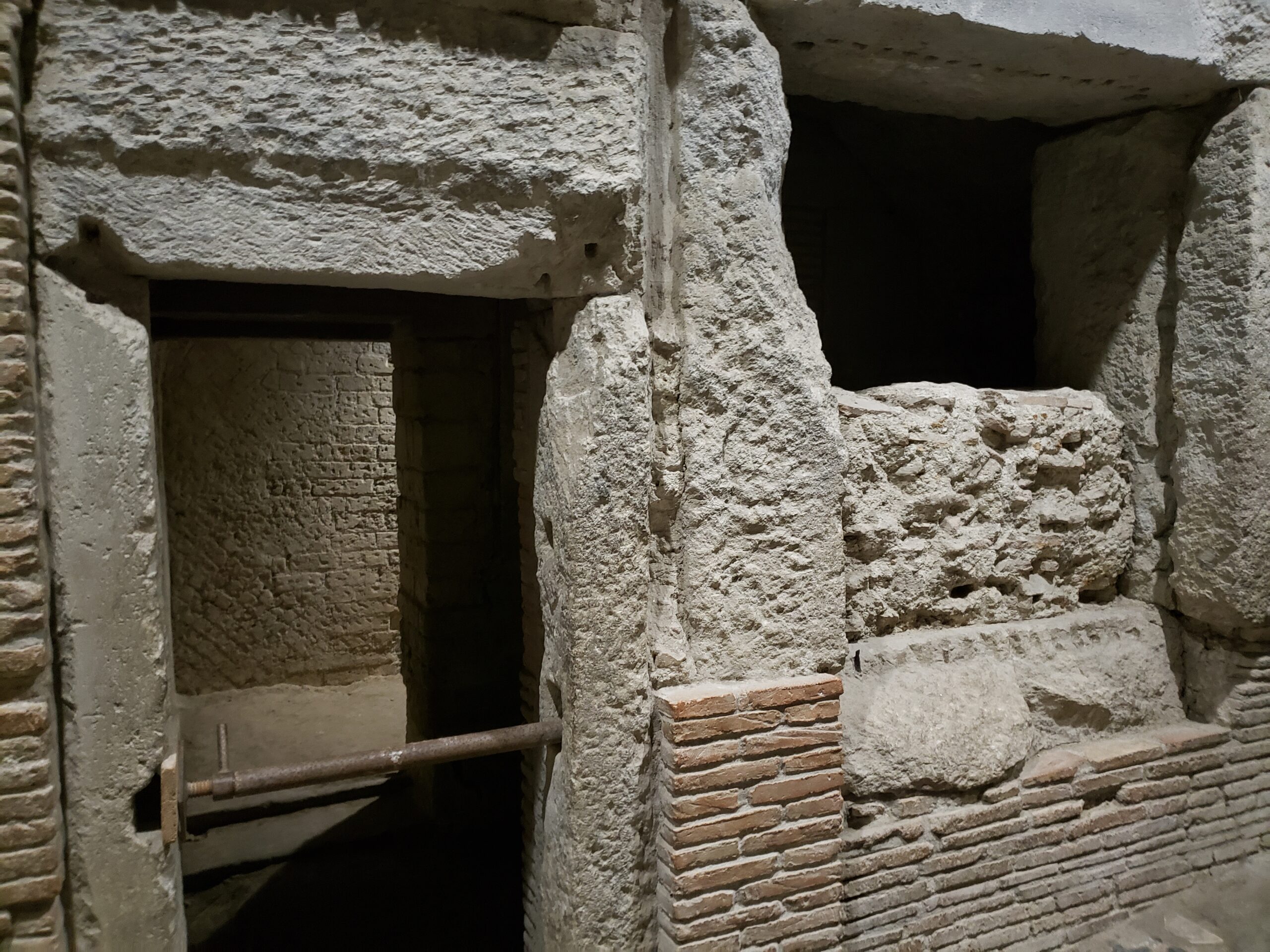
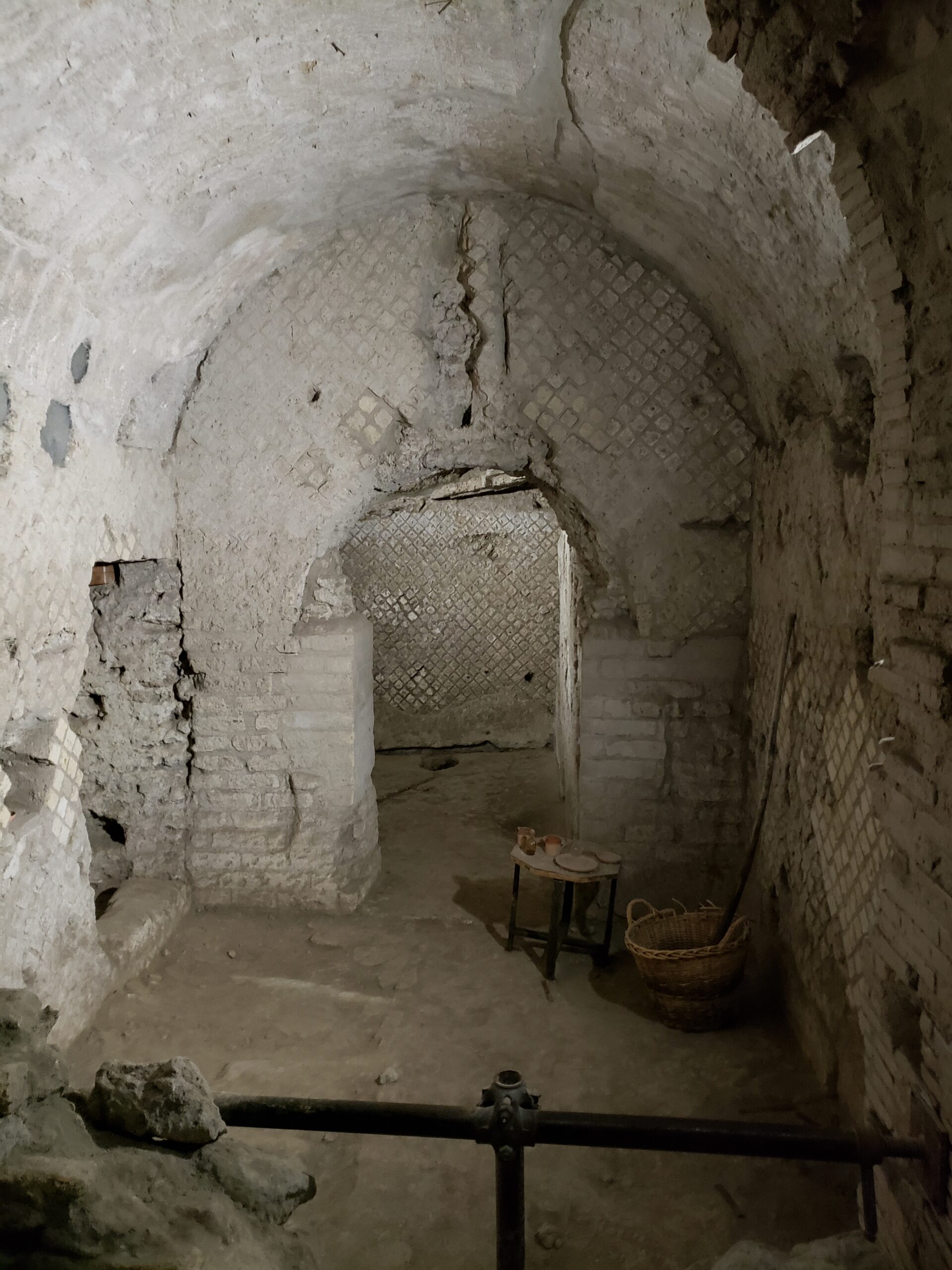
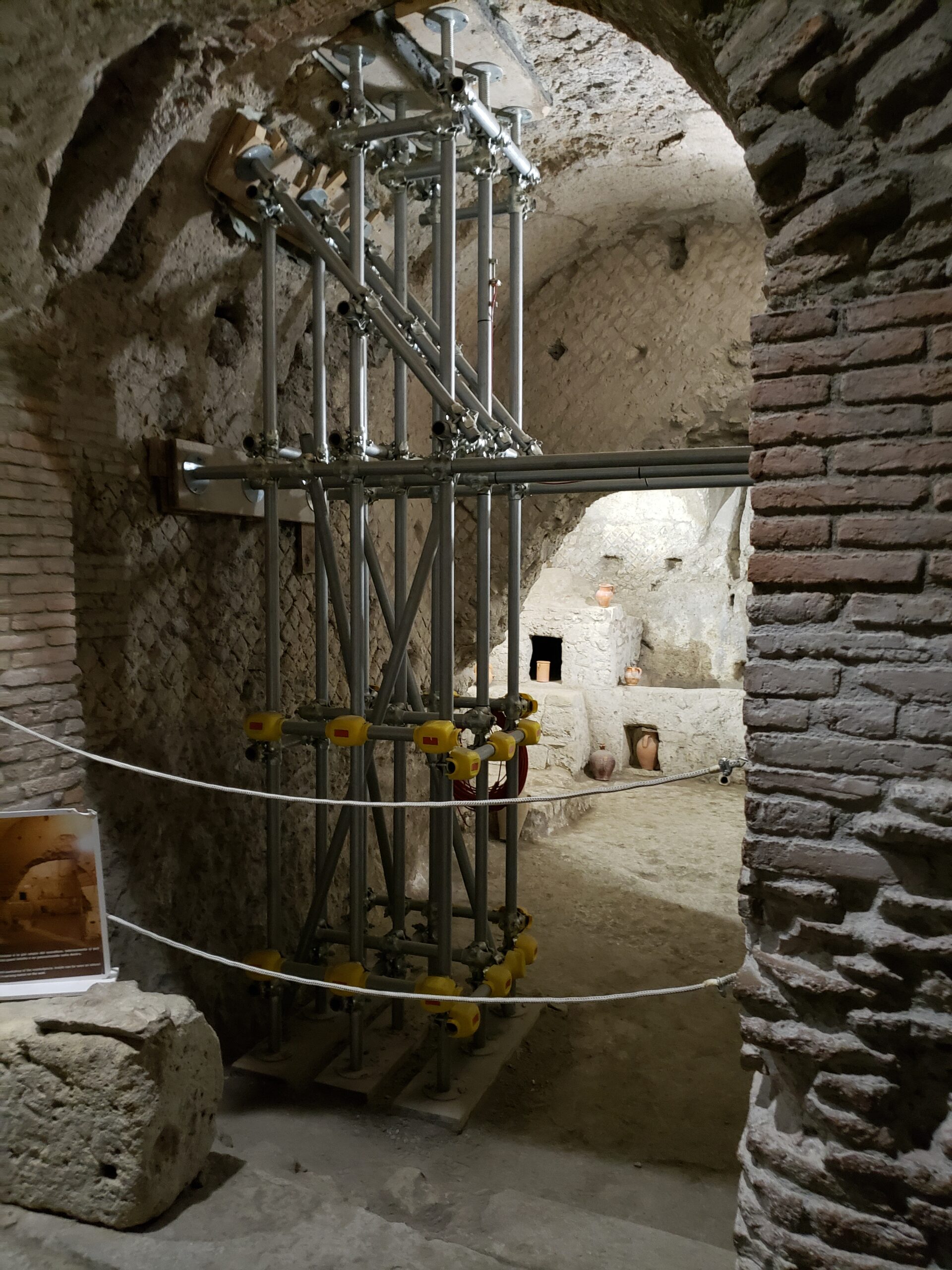
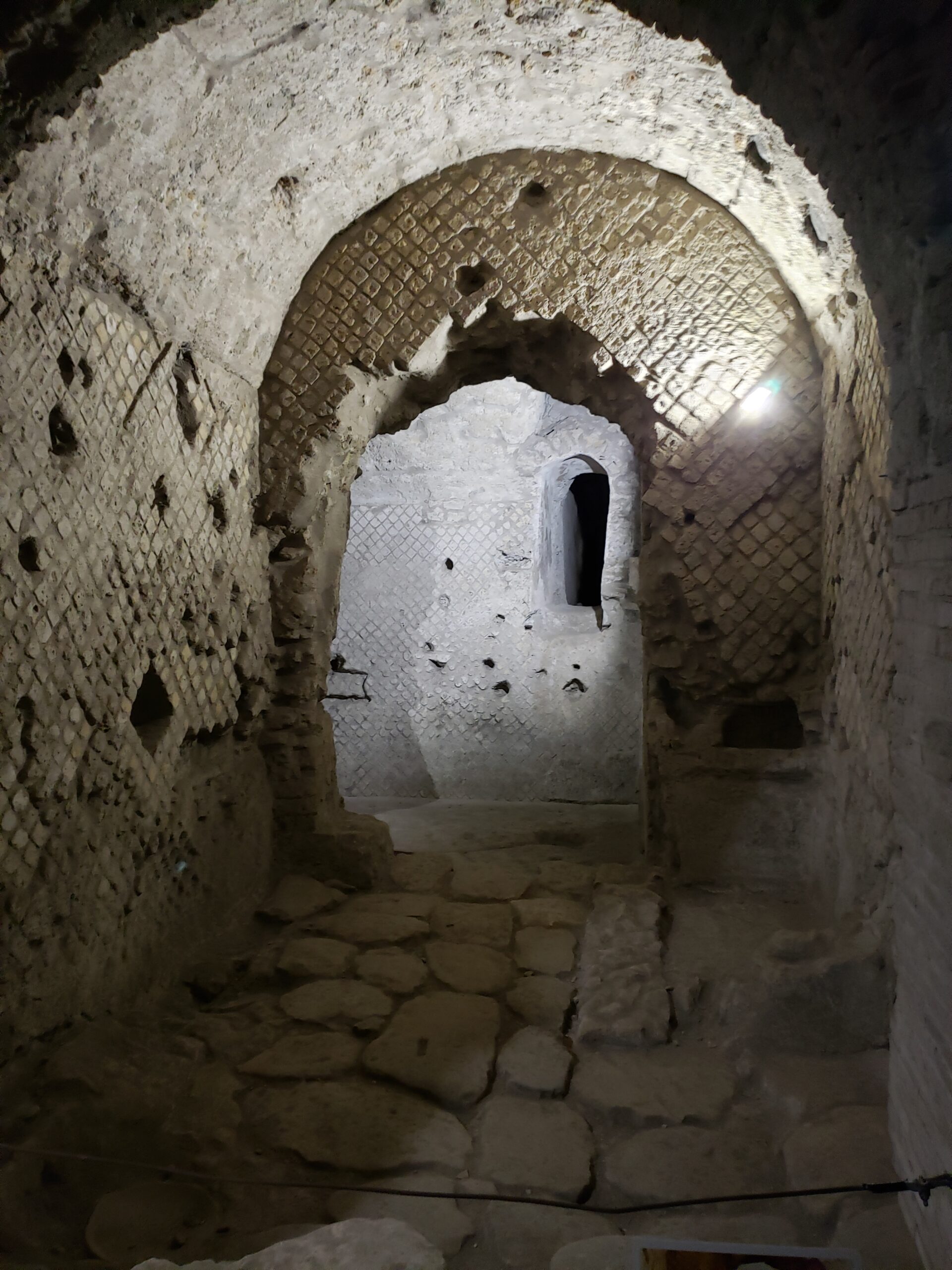
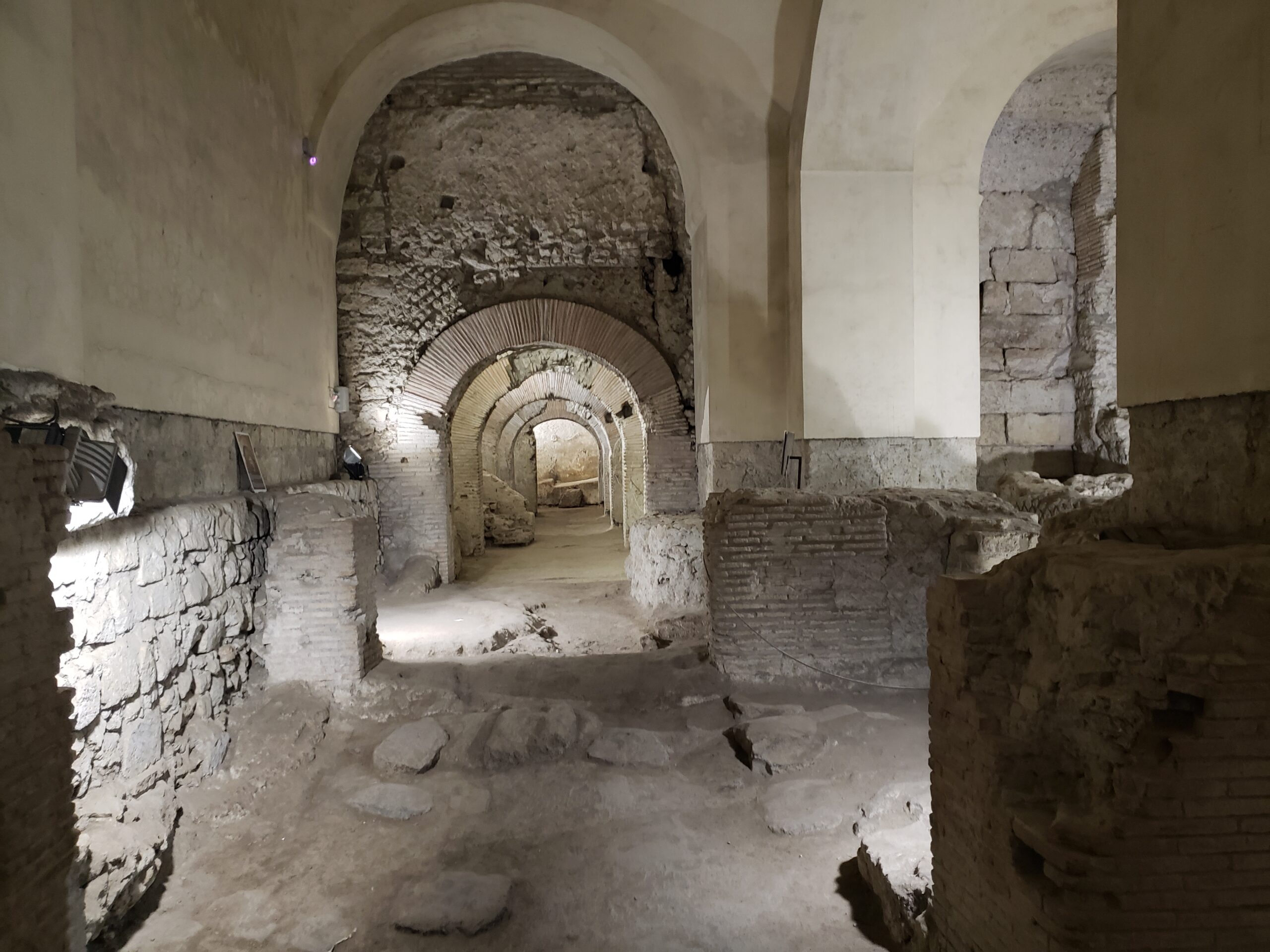
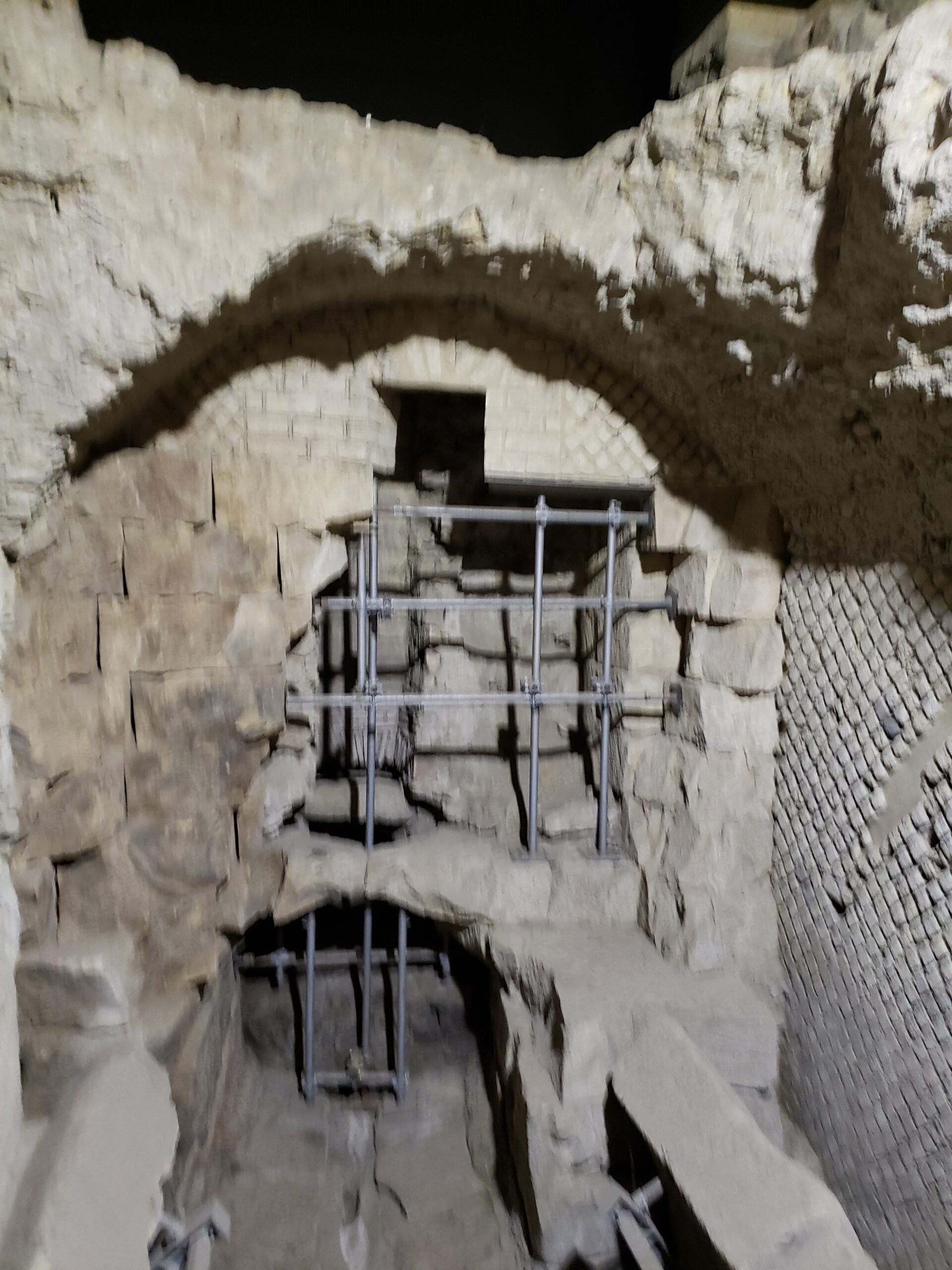
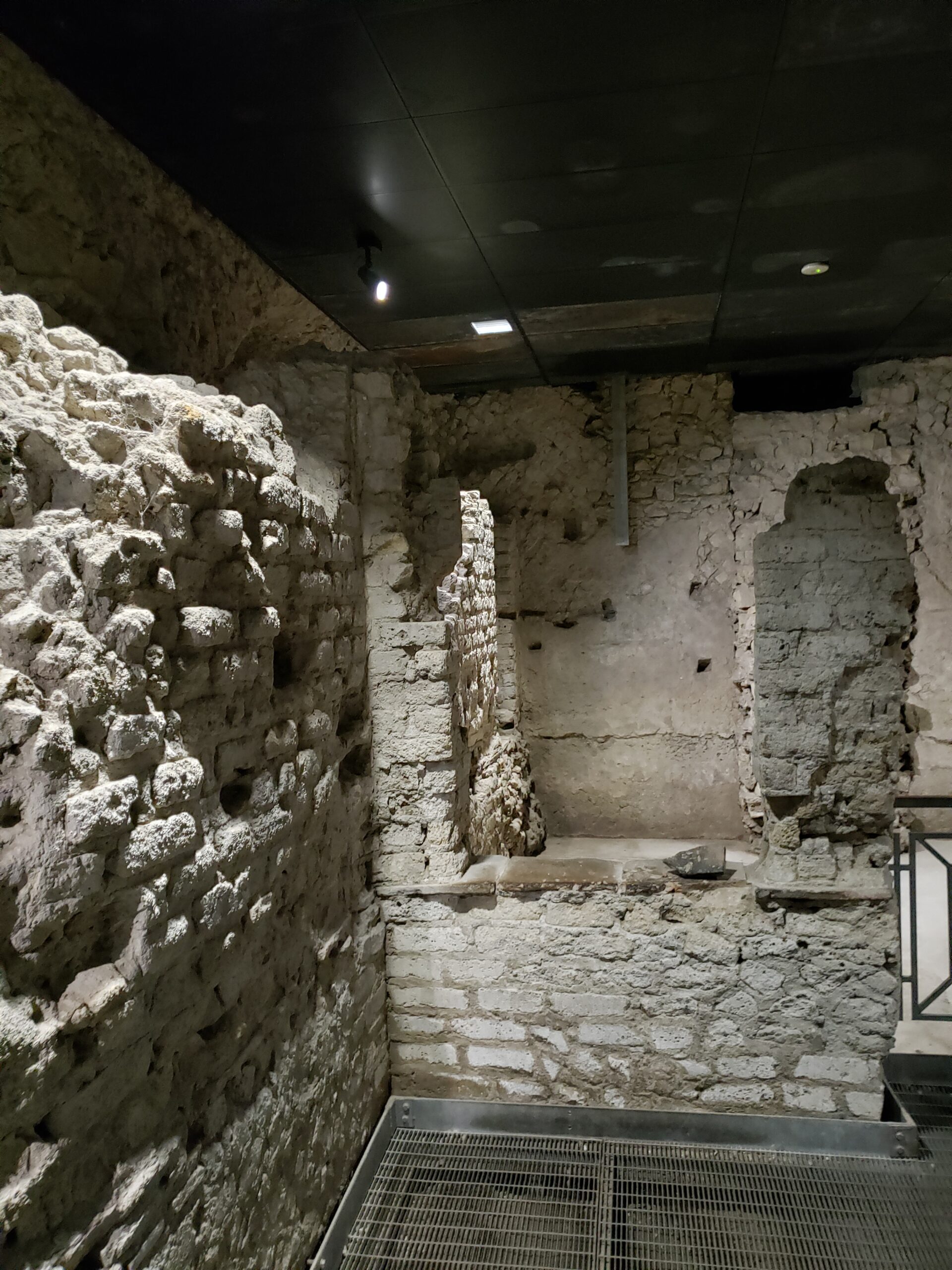
In the back of Piazza San Gaetano, alongside the tower, you will find the entry point to a very interesting treat, and a very historically important place for understanding Naples as a city, especially its age. Here you will find the La Neapolis Sotterrate, or the ancient underground marketplace.
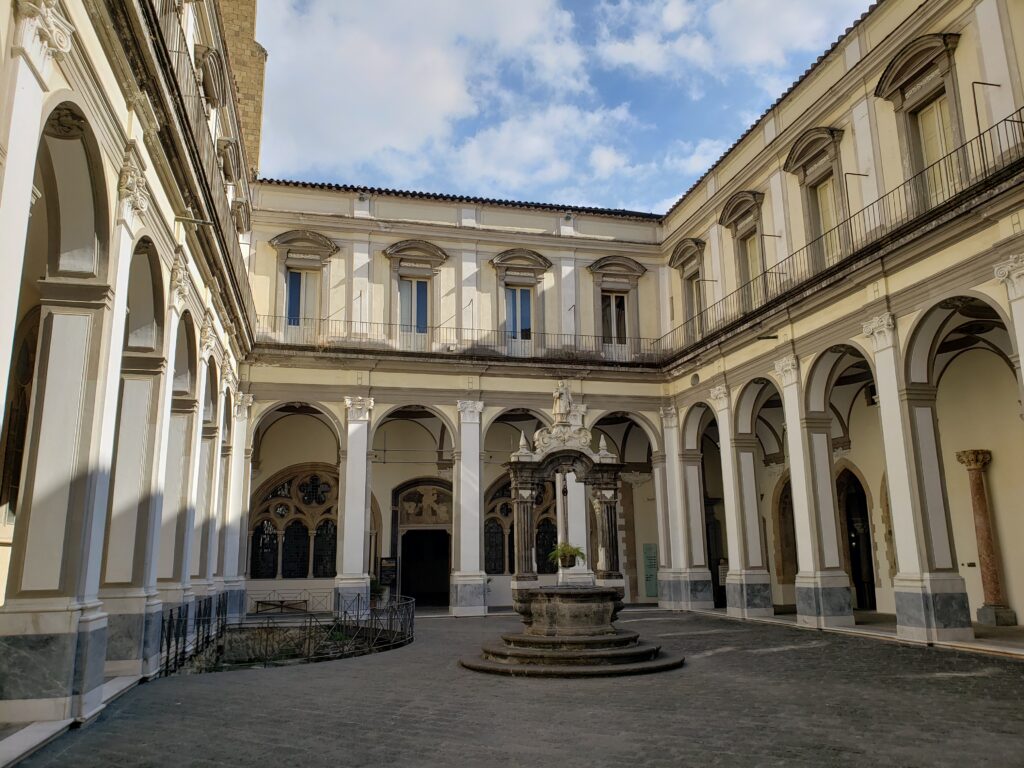
La Neapolis Sotterrata – Internal Palazzo with well
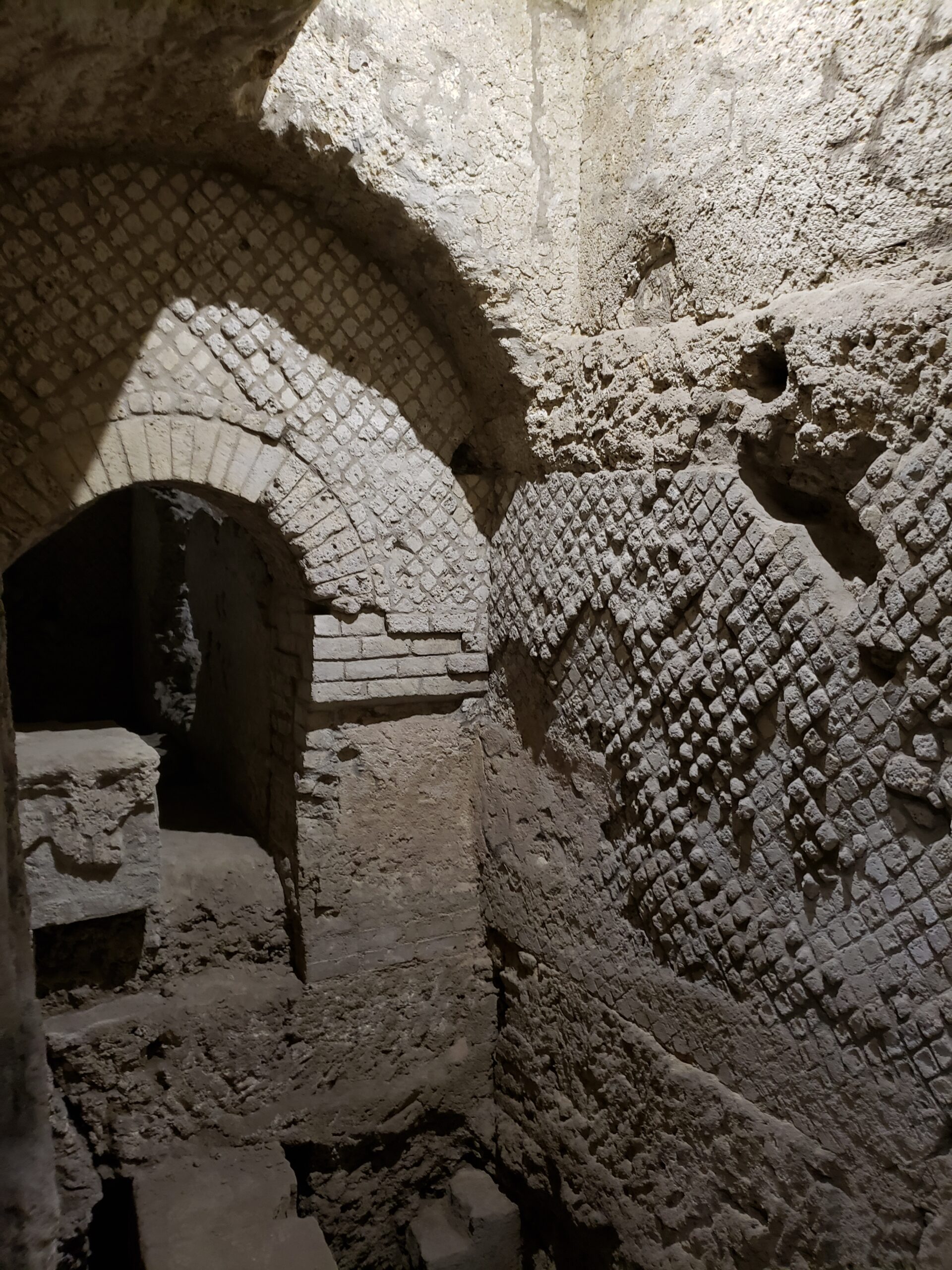
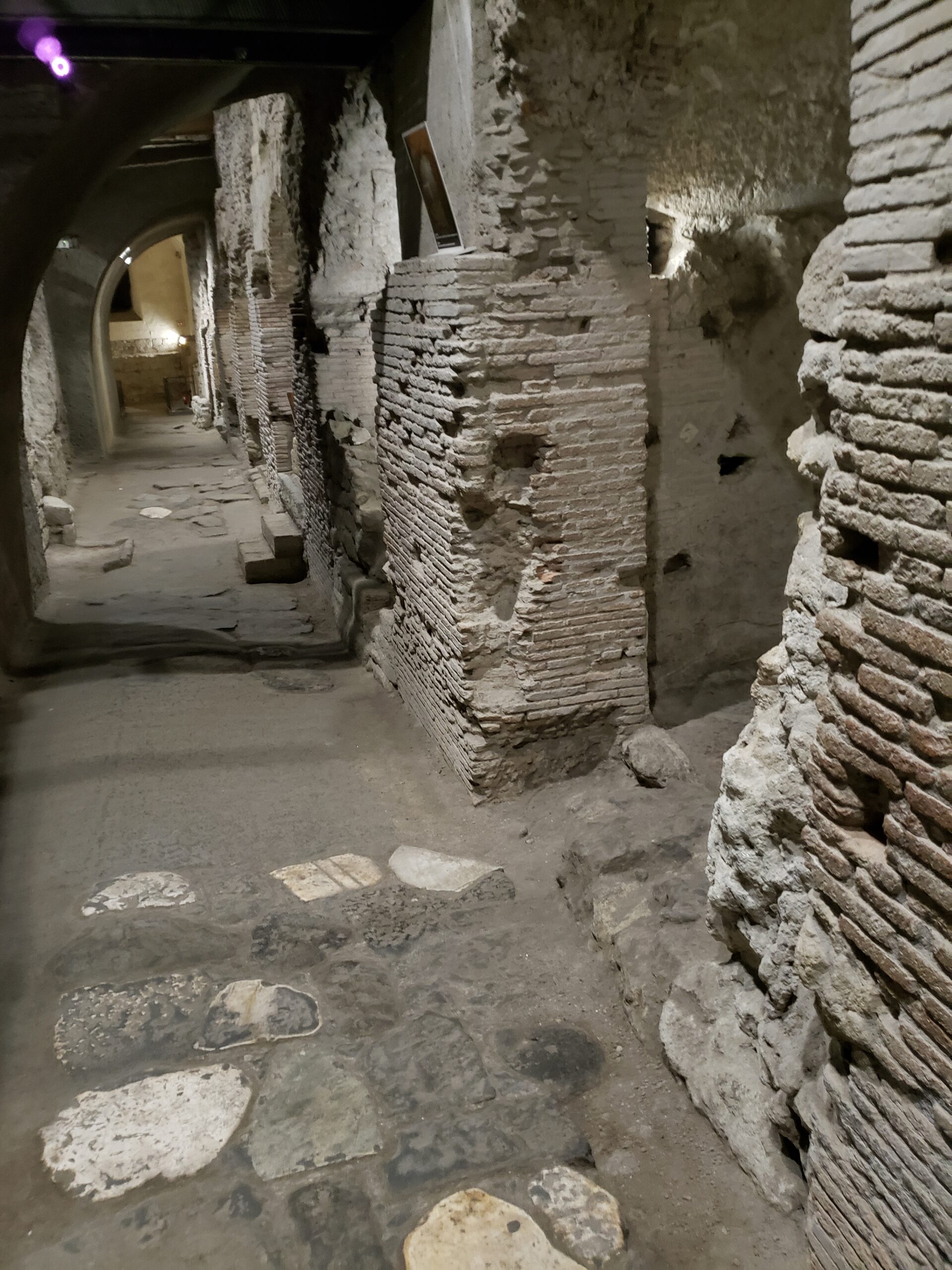
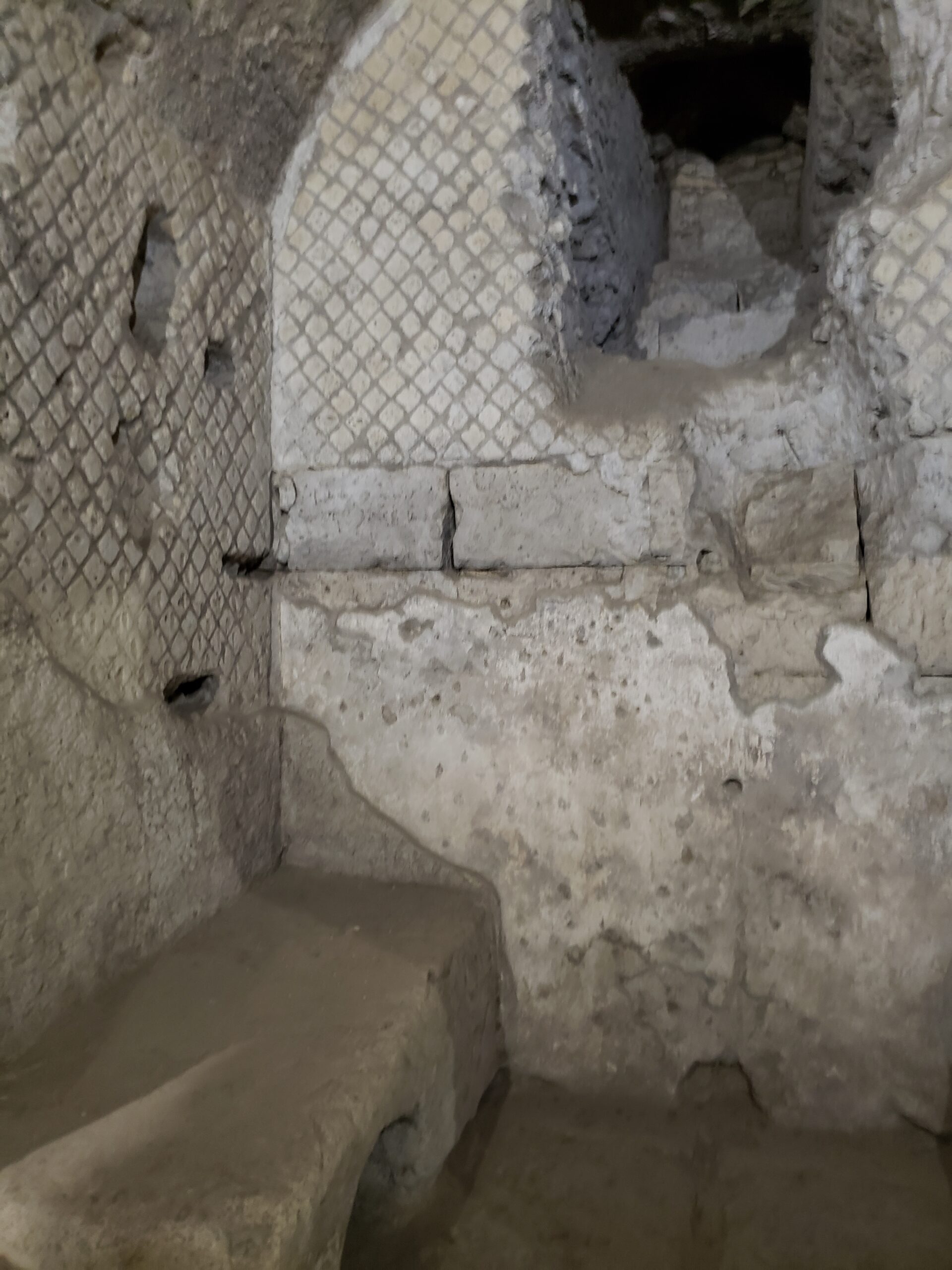
The Ancient Neapolis was founded back in the fifth century BCE by the Greeks. Many of the artifacts and architecture of this place date back to this time. The market, or Macellum, was a two story structure that ran along underneath the current structure of the convent which now stands over top of it. Many of the streets in this area start with Vico and not Via, indicating the ancient Greek origins (all streets that start with this have a corresponding ancient road structure beneath them).
The entry fee is minimal and they have guided tours available in English. We found the tour very informative and important in trying to appreciate the age of city of Naples. Here is a slide show with what you will see if you have time to consider this historical adventure.
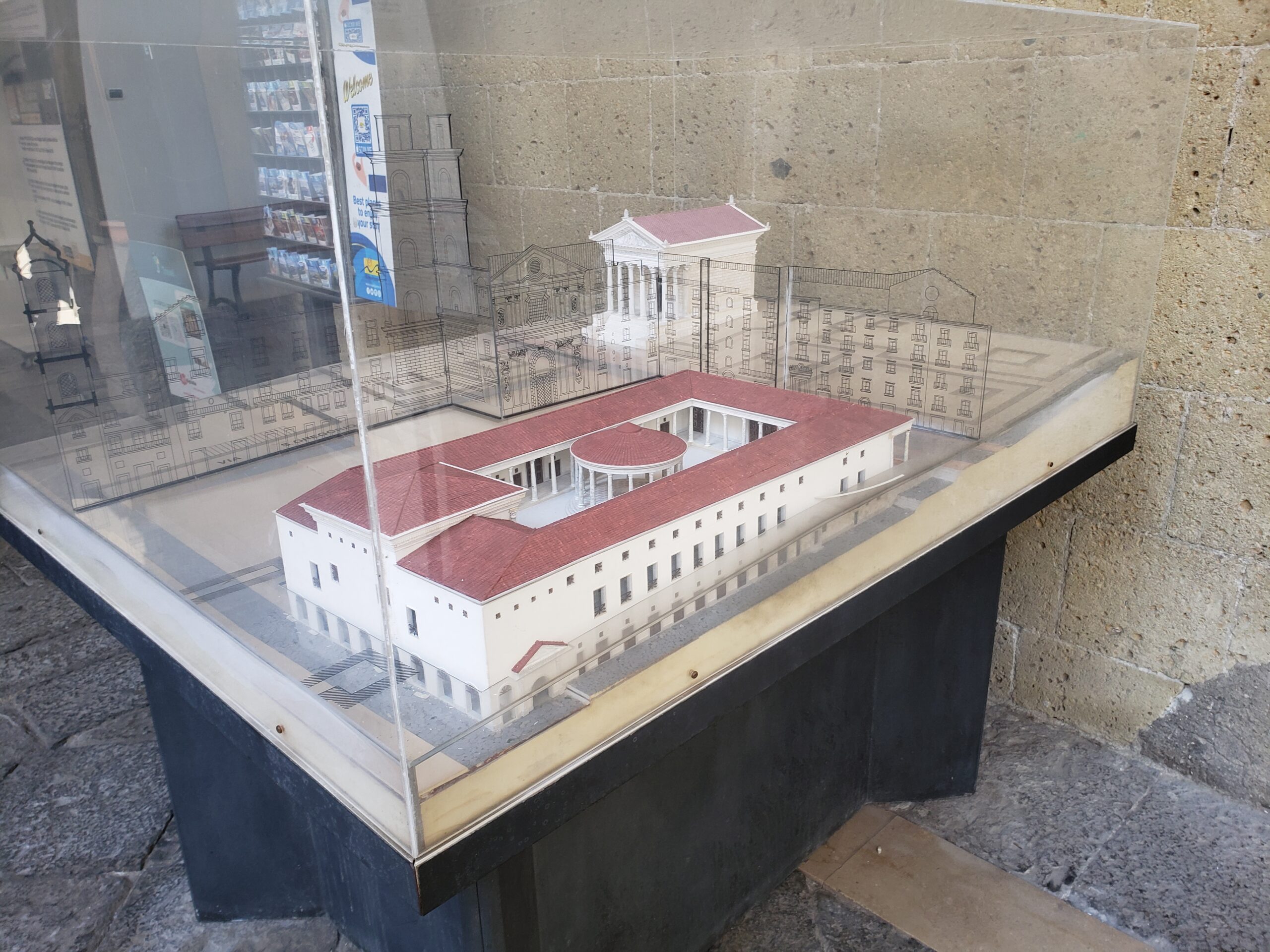
La Neapolis Sotterrata – Model and Diorama
La Neapolis Sotterrata – Ancient Graves unearthed in the palazzo
La Neapolis Sotterrata – Entering Ancient Underground Marketplace
La Neapolis Sotterrata – Ancient Underground Marketplace – Detail of pyramidal bricks
La Neapolis Sotterrata – Ancient Underground Marketplace – Main Street or Vico
La Neapolis Sotterrata – Ancient Treasury
La Neapolis Sotterrata – Ancient Underground Marketplace – Laundry
La Neapolis Sotterrata – Ancient Underground Marketplace – Typical Two Room Store Layout
La Neapolis Sotterrata – Ancient Underground Marketplace – Ancient Store
La Neapolis Sotterrata – Ancient Underground Marketplace – Ancient Access Point
La Neapolis Sotterrata – Ancient Underground Marketplace – Side Cul du Sac
La Neapolis Sotterrata – Ancient Underground Marketplace – Ancient Bakery
La Neapolis Sotterrata – Ancient Underground Marketplace
La Neapolis Sotterrata – Ancient Underground Marketplace – Current Escavations
La Neapolis Sotterrata – Ancient Underground Marketplace
La Neapolis Sotterrata – Ancient Underground Marketplace
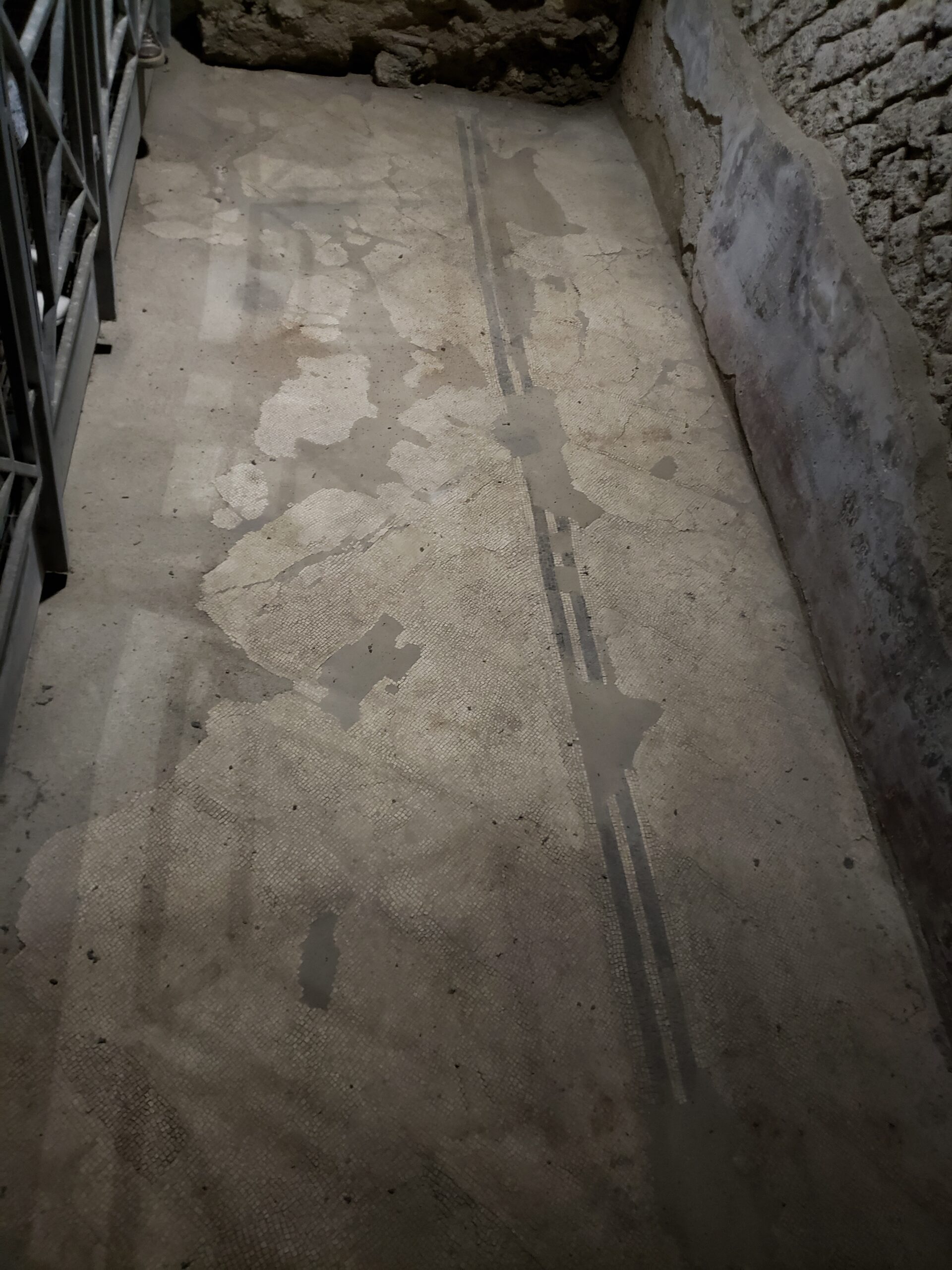
La Neapolis Sotterrata – Ancient Underground Marketplace – Old Mosaic Floor
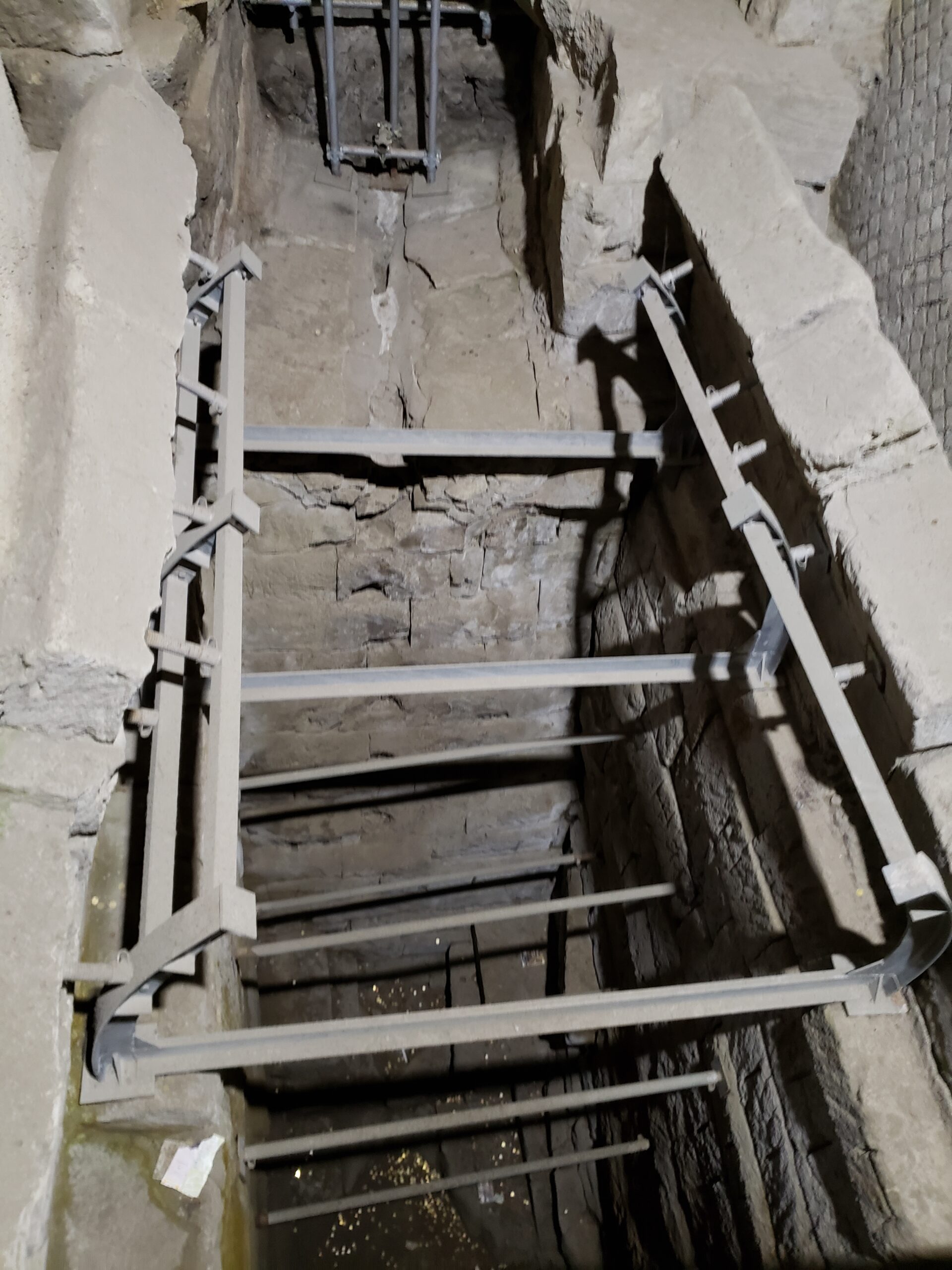
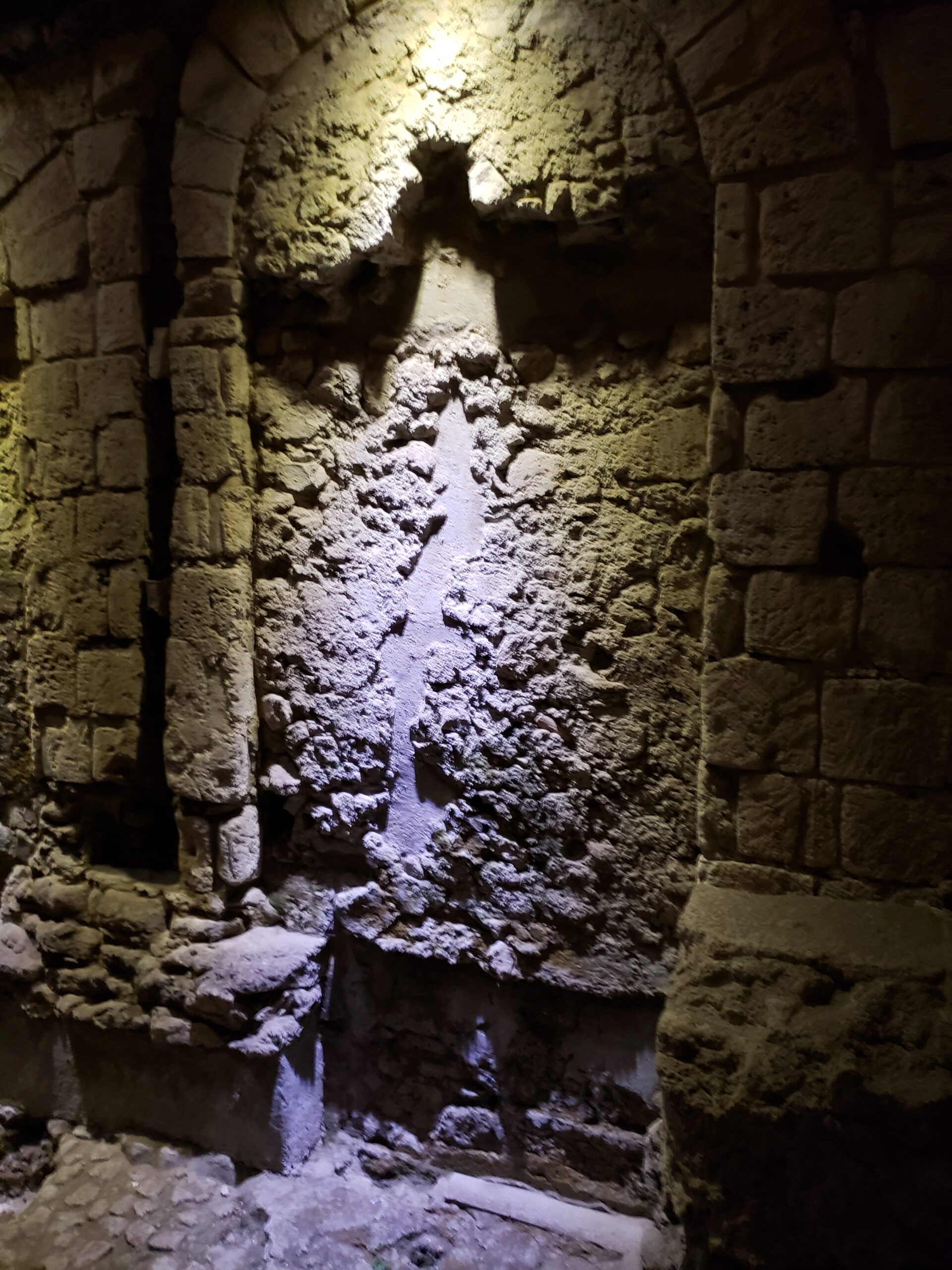
La Neapolis Sotterrata – Ancient Underground Marketplace – Aqueduct Entry Point