A stone’s throw from Colmar is the small Zwiebelstadt of Eguisheim[1]In German it is spelled Egisheim, France. Here you will enjoy what a small medieval Alsatian town feels like.
Equisheim
The germans use the term Zwiebelstadt to denote any small medieval town that is formed like an onion. Though typically they have eight sides with concentric alleys bisected by a Grand Rue, or main street, they may be circular or oval as well. In the center of it all you will usually find a church or main plaza.
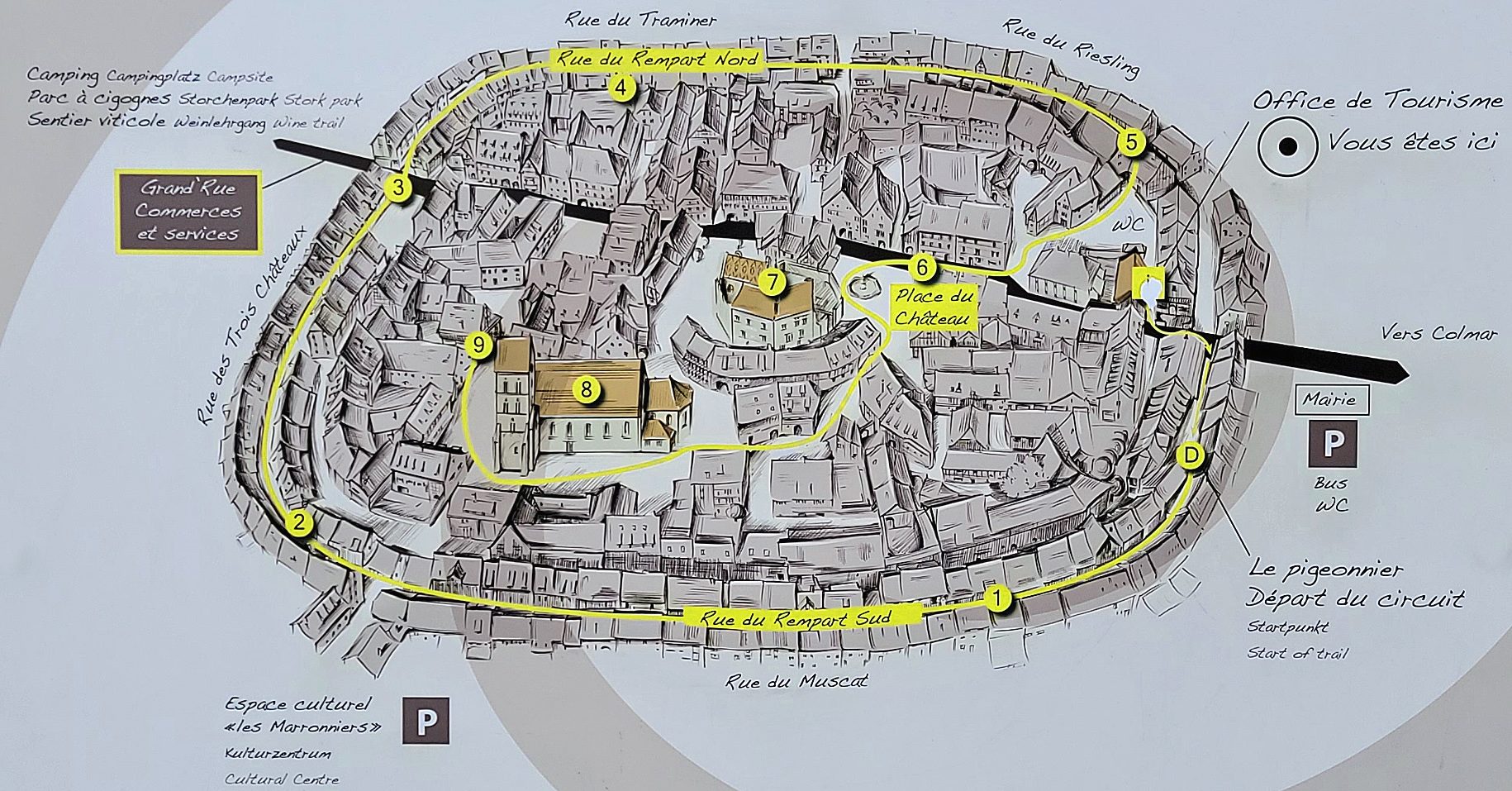
In the above the following are noteworthy, according to town officials, starting at (D) with the Pigeon Loft.
-
-
- Rue de Ramport – The colors of Eguisheim
- Rue de Ramport – Round and round the town
- The gates of the town
- The town’s inscriptions
- Stone engravings
- The chateau
- The host of the chapel
- The virgins of Eguisheim (the church)
- The tithe courtyards
-
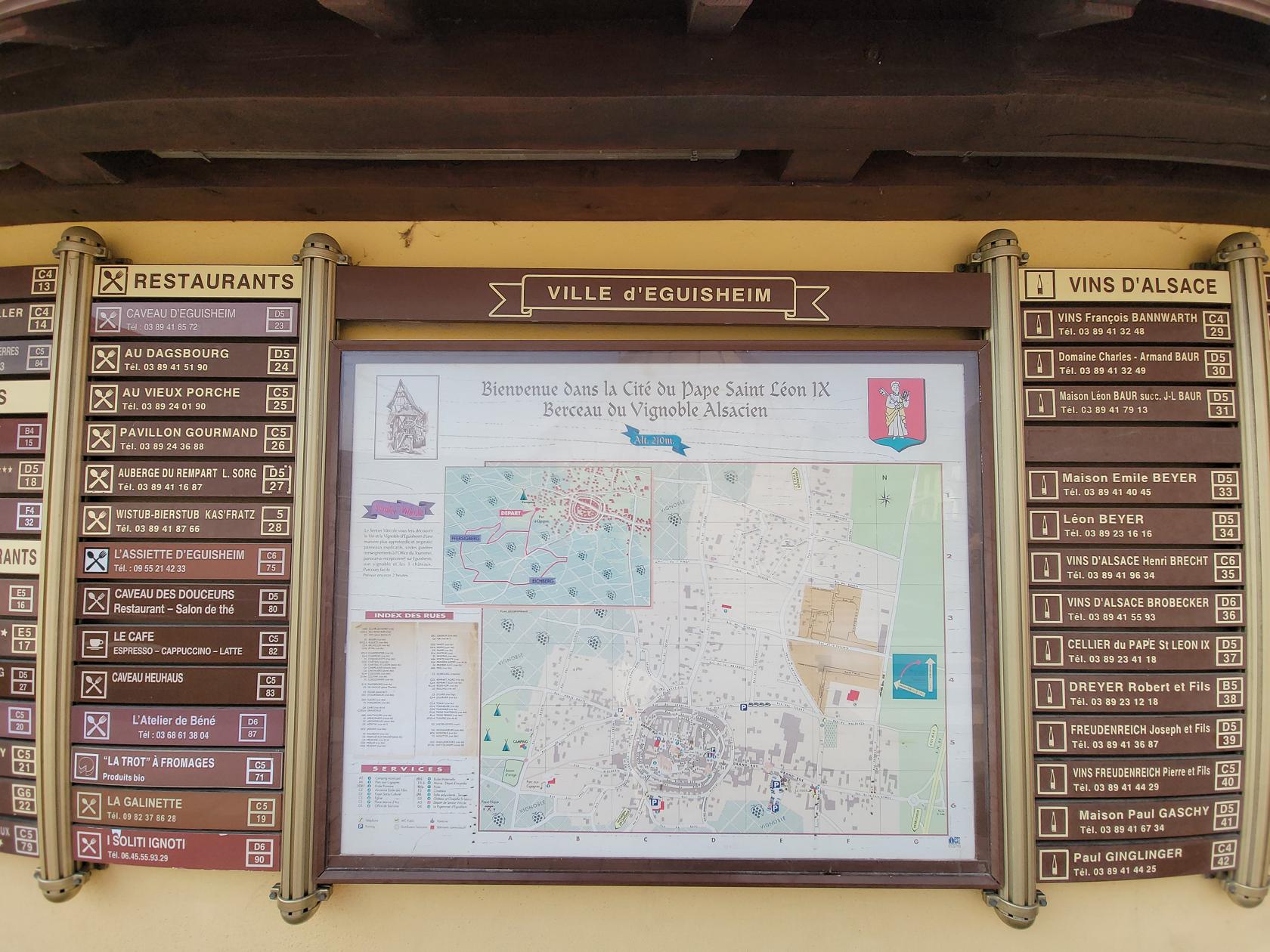
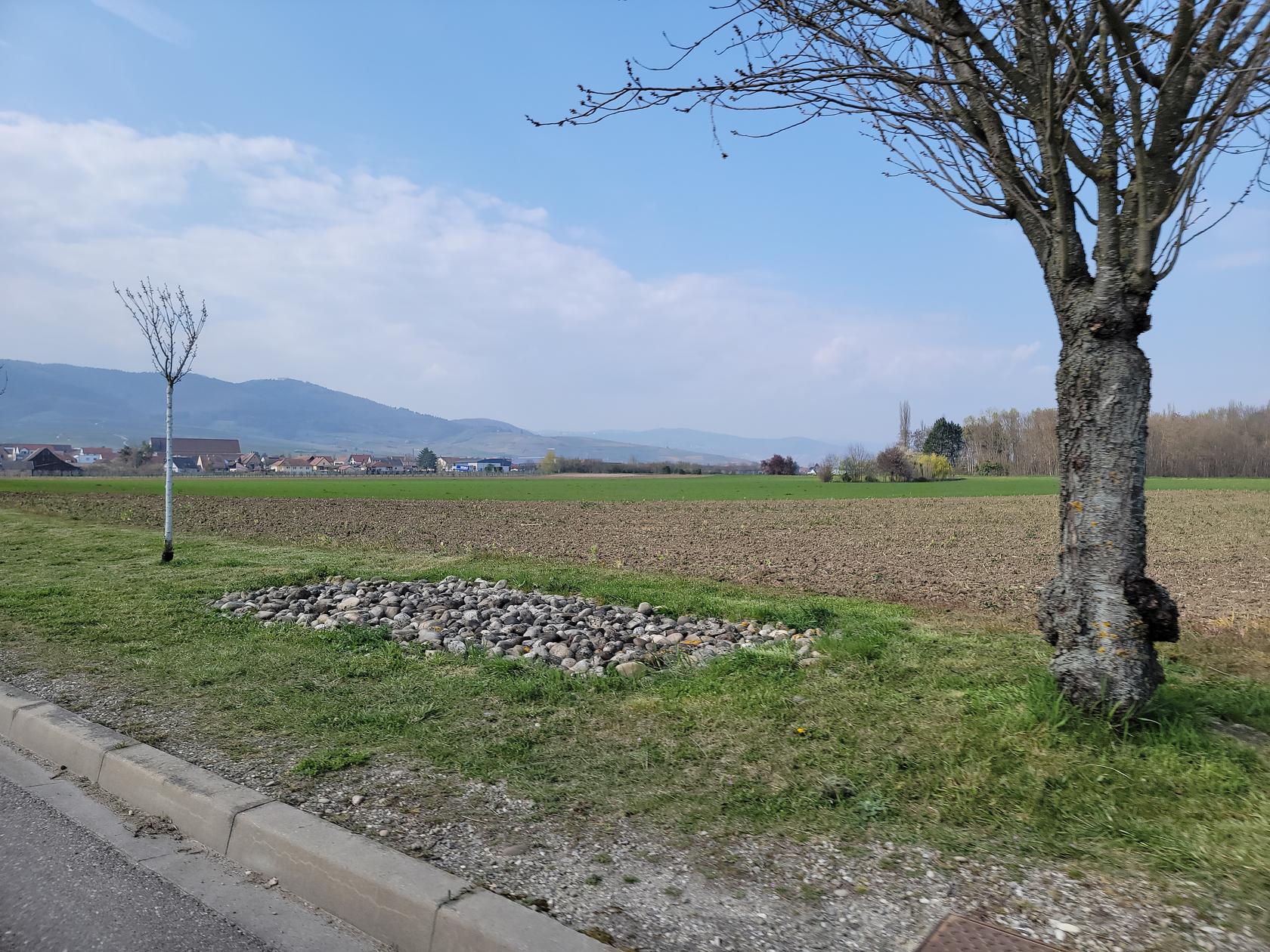
The area around the town is noted for its excellent alsatian wines. Upon entering the town visitors can see a record of the vineyards proudly displayed along with restaurants and a map of the town.
Getting There
From Colmar a quick drive down the Rue de Tiefenbach or the Route de Rouffach puts you on the D83 for a short time before you reach one of the many small roads that will take you into town, though typically it would be the Rue de la 1er Armée.
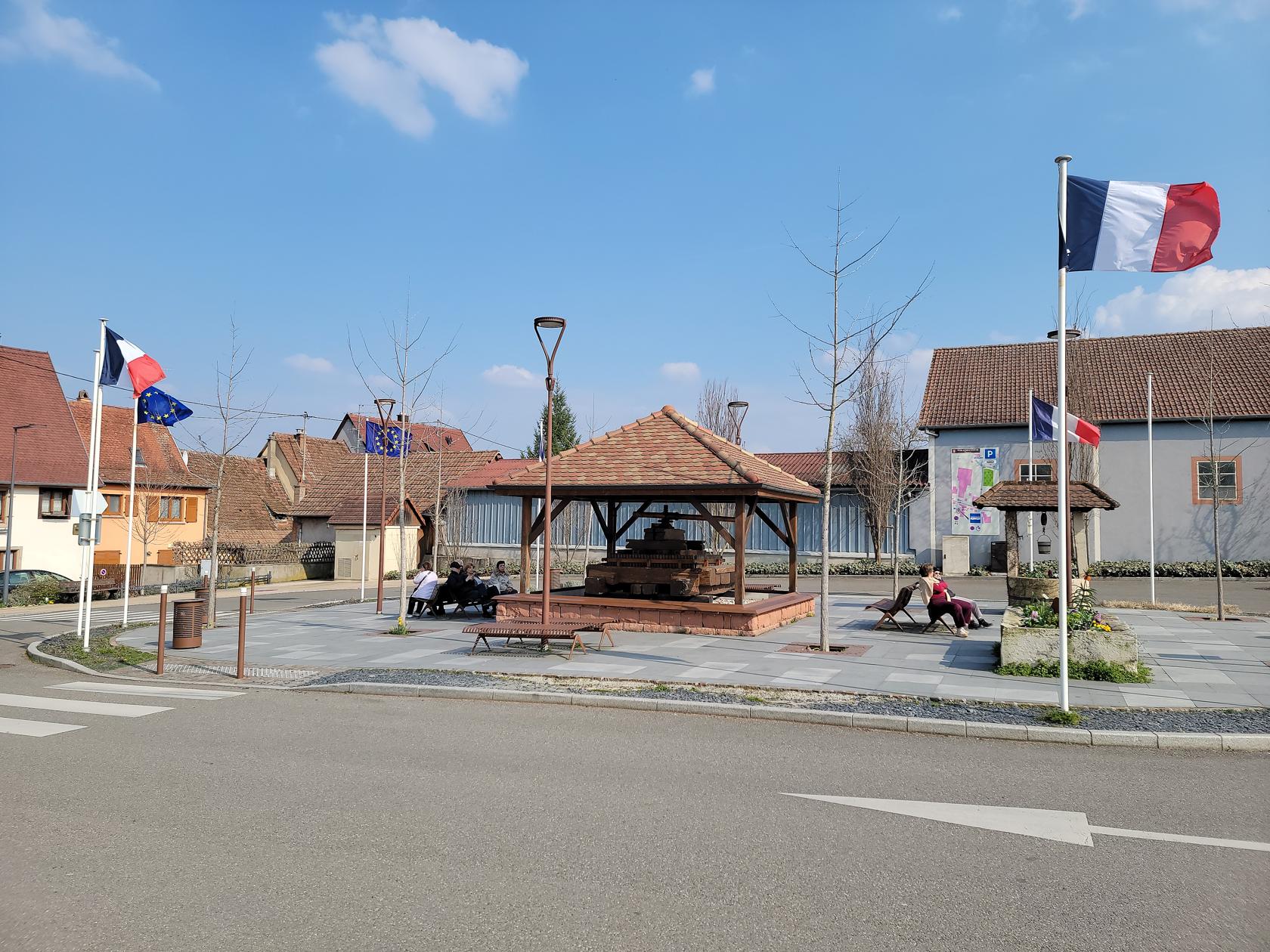
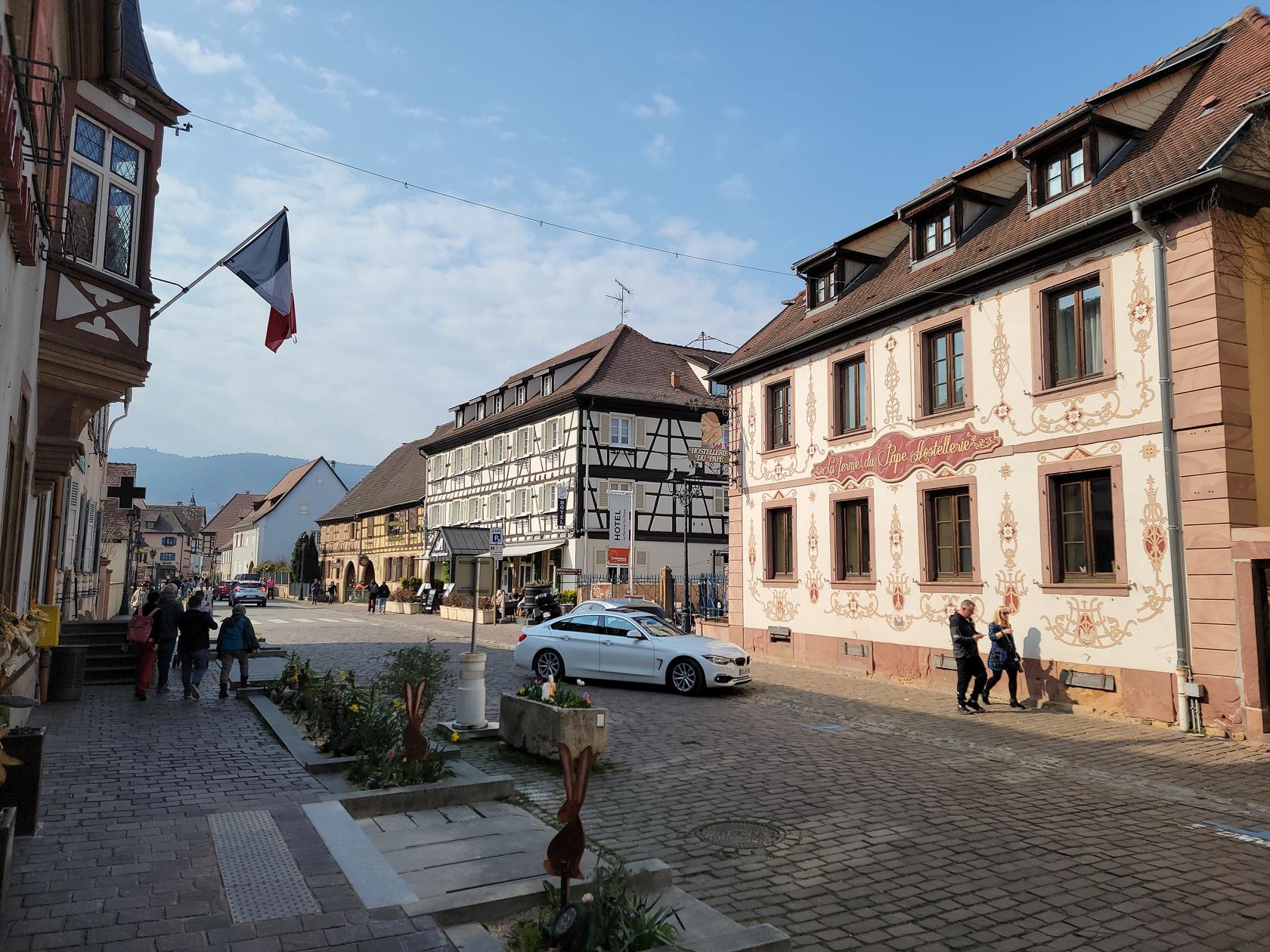
Grand Rue
Cutting through the center of town is the Grand Rue, or main street. Here is where you will find most all of the shops and many of the wineries.
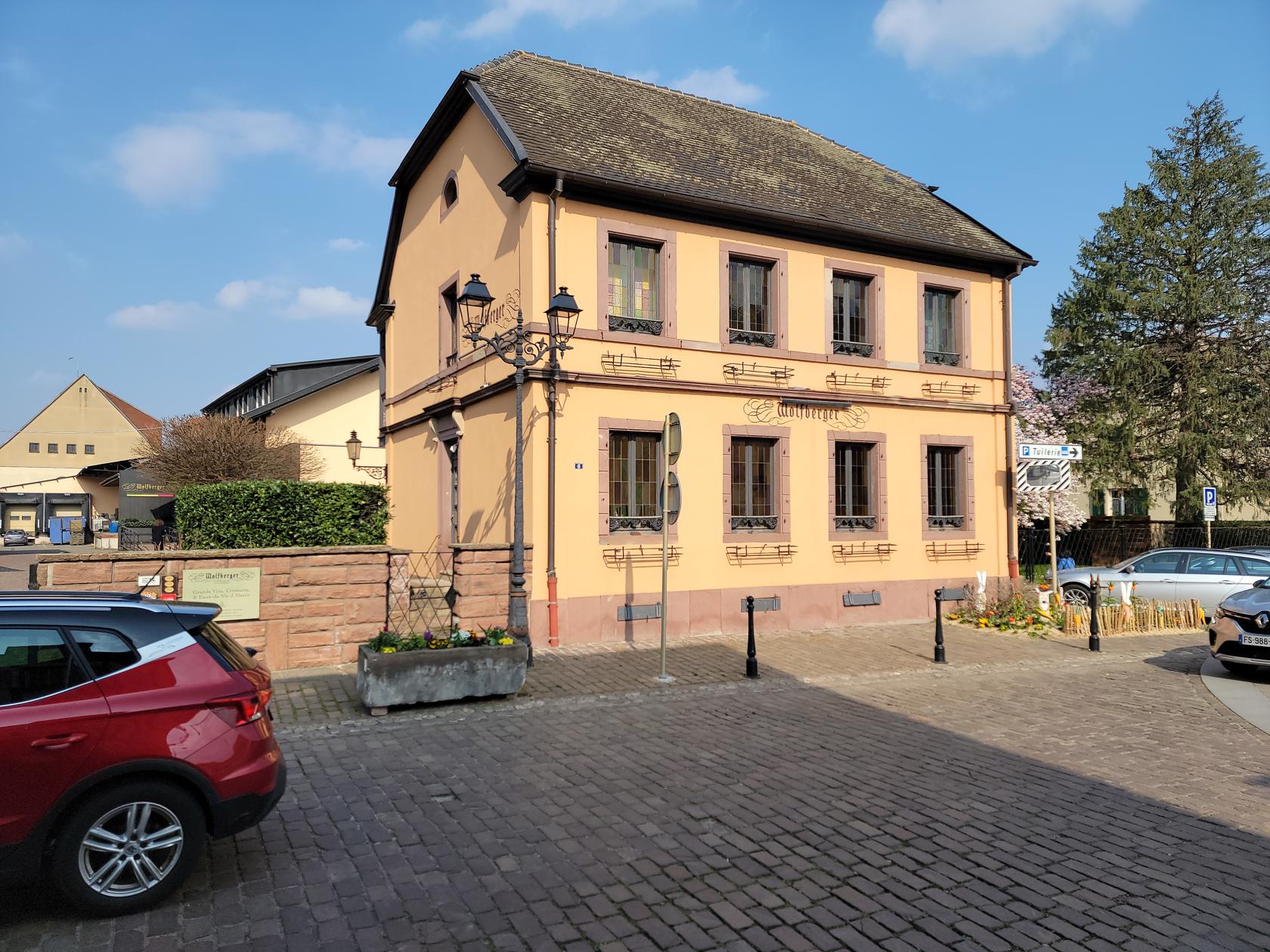
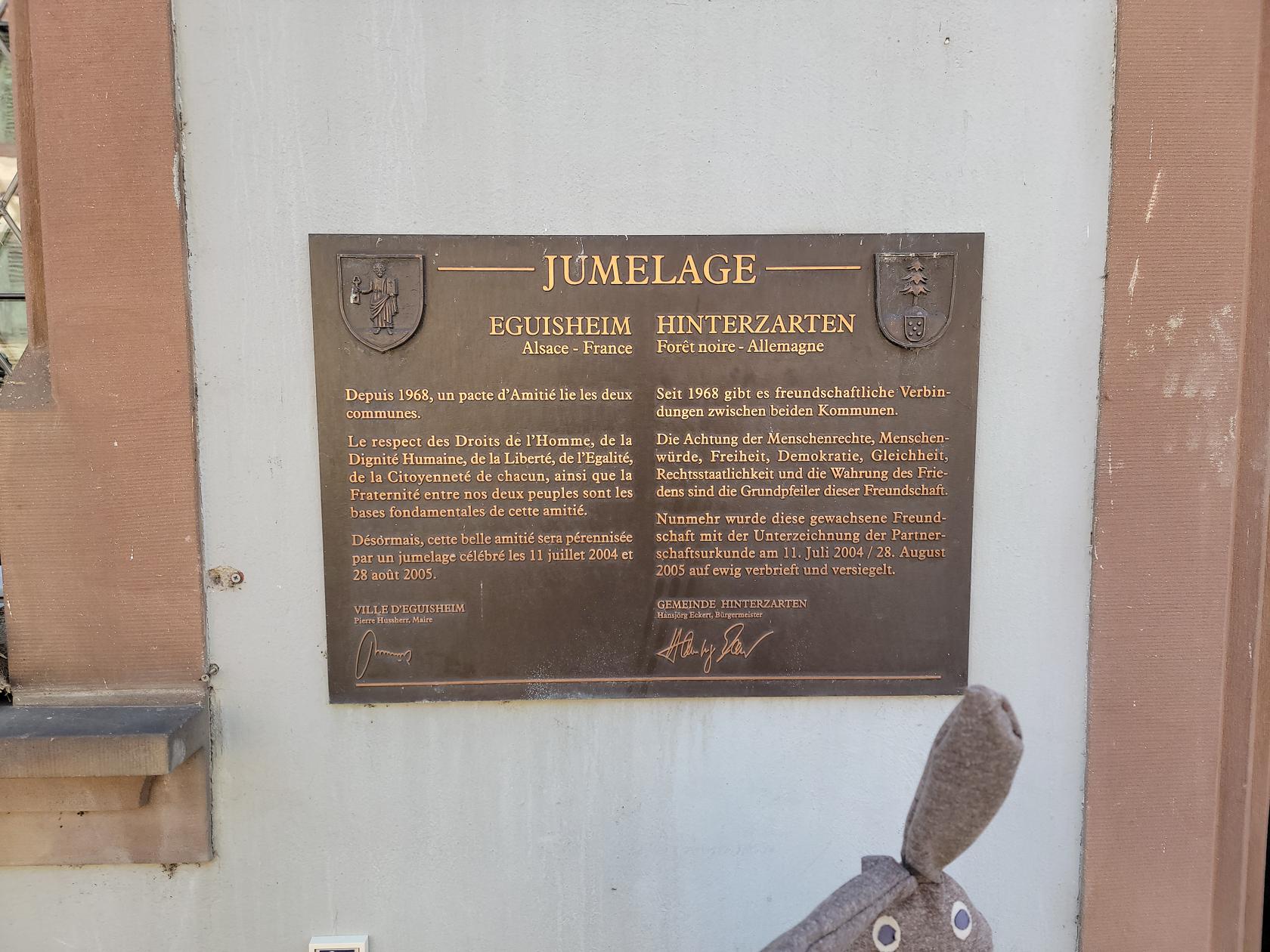
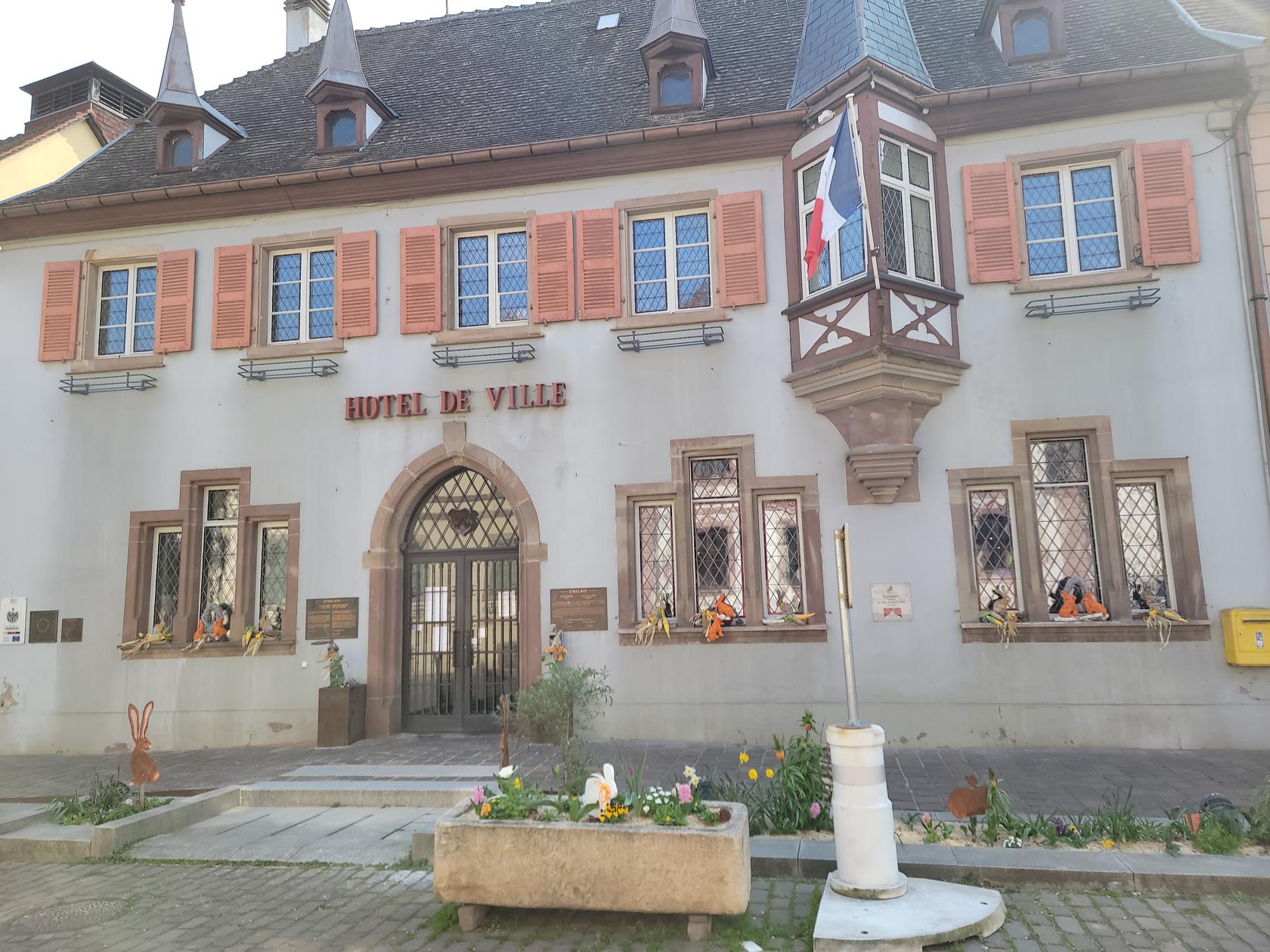
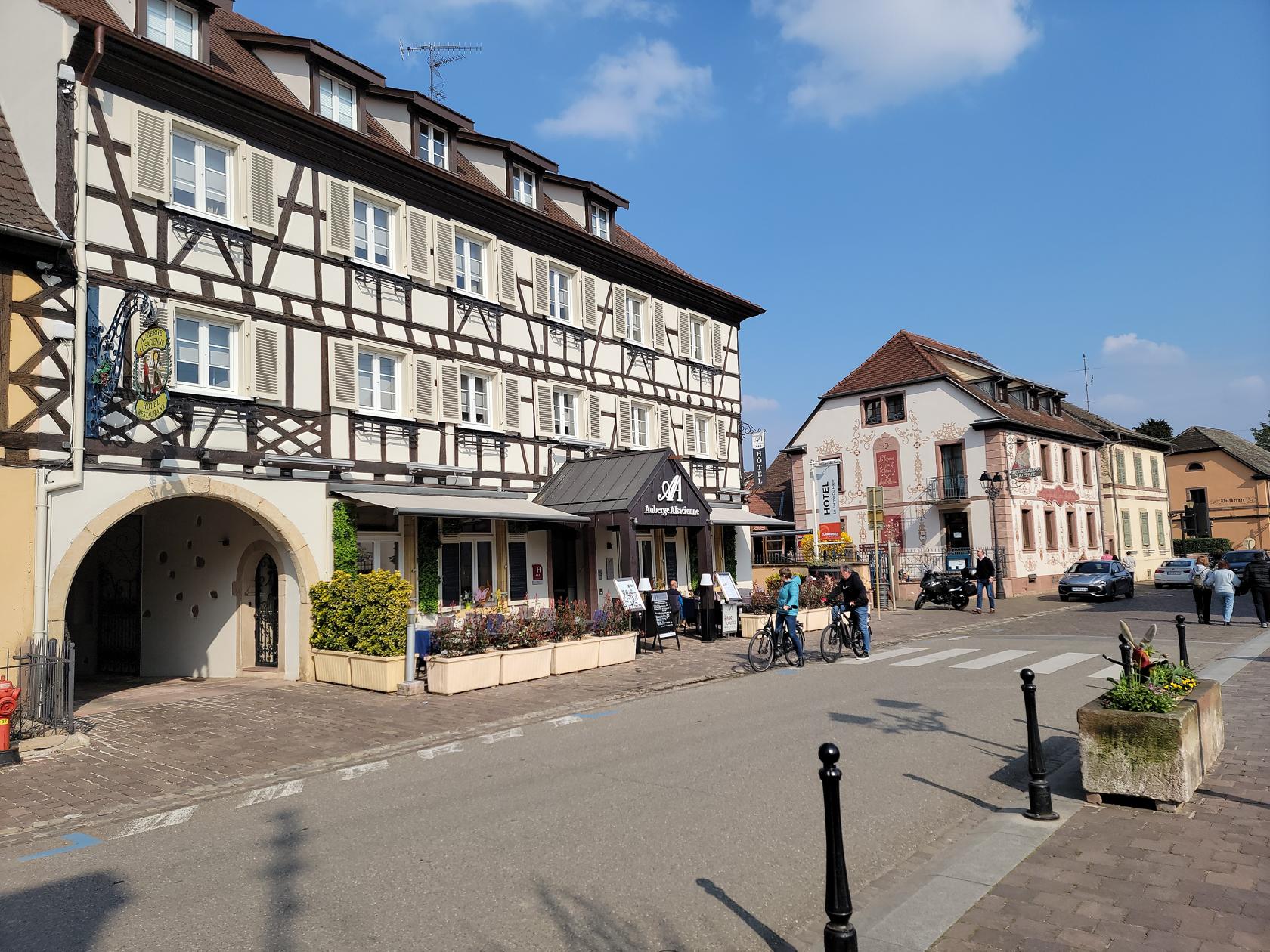
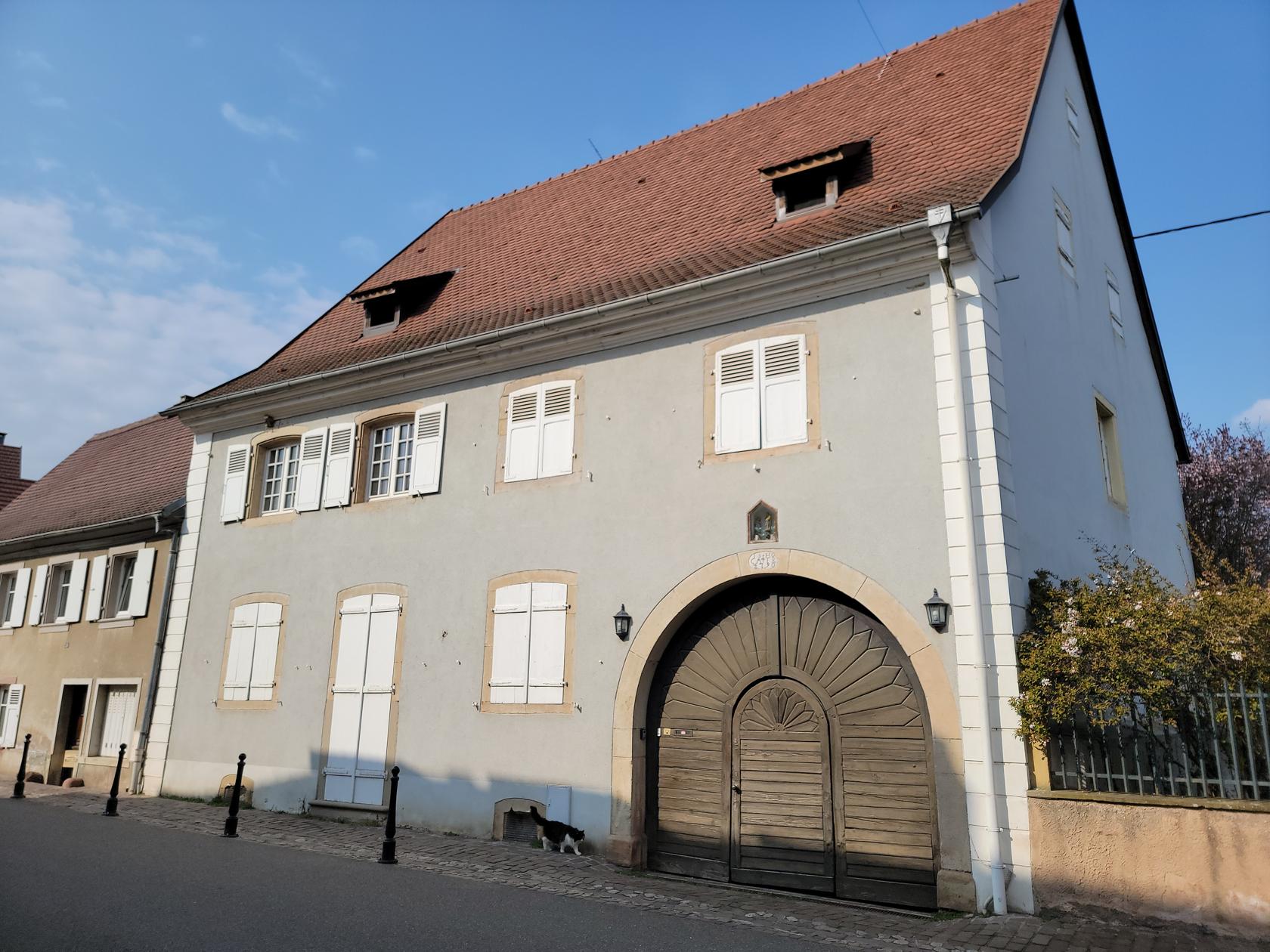
The tourism office is close by the Eguisheim Fountain, so once you locate that, it’s just a stone’s throw away.
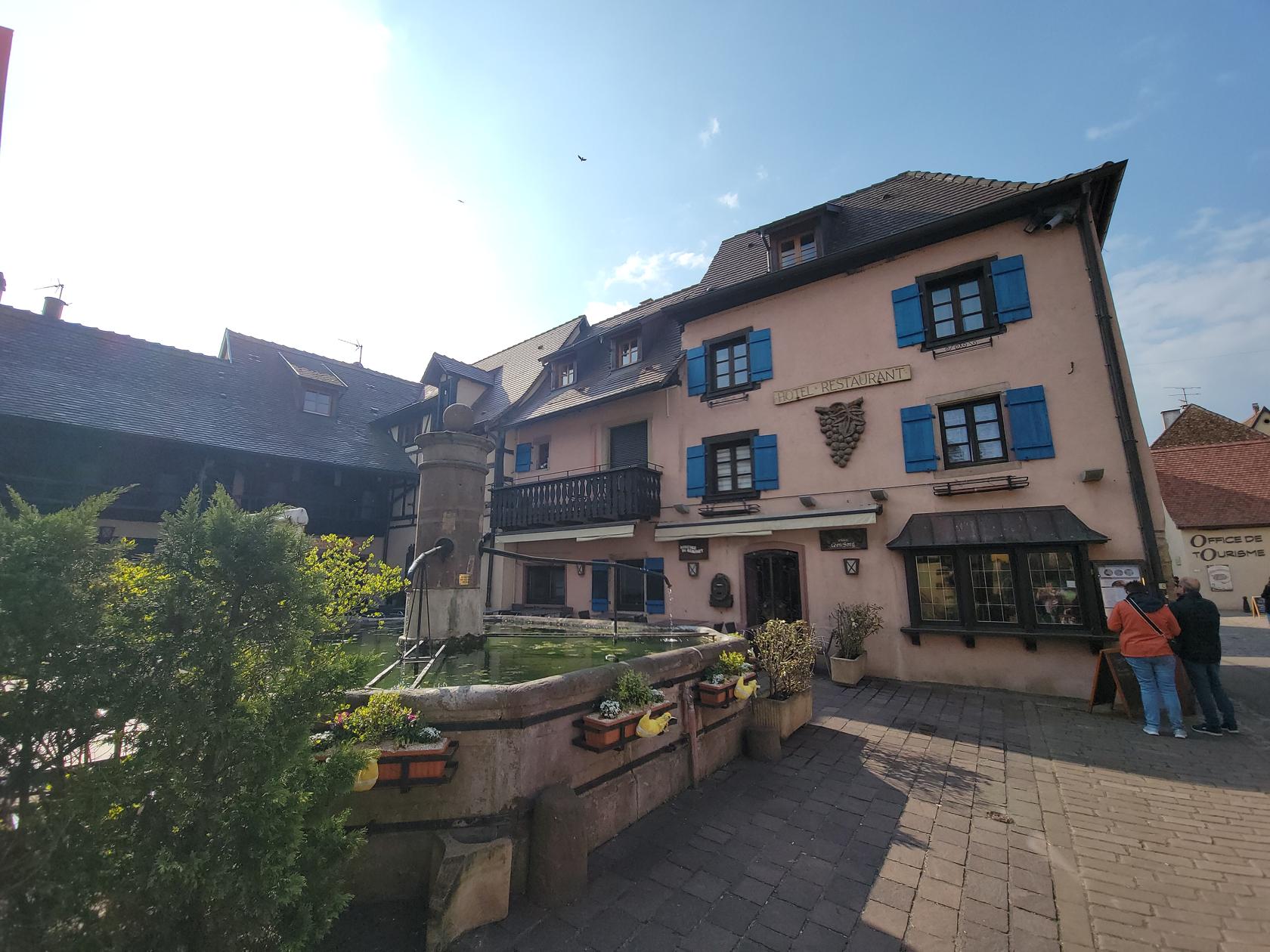
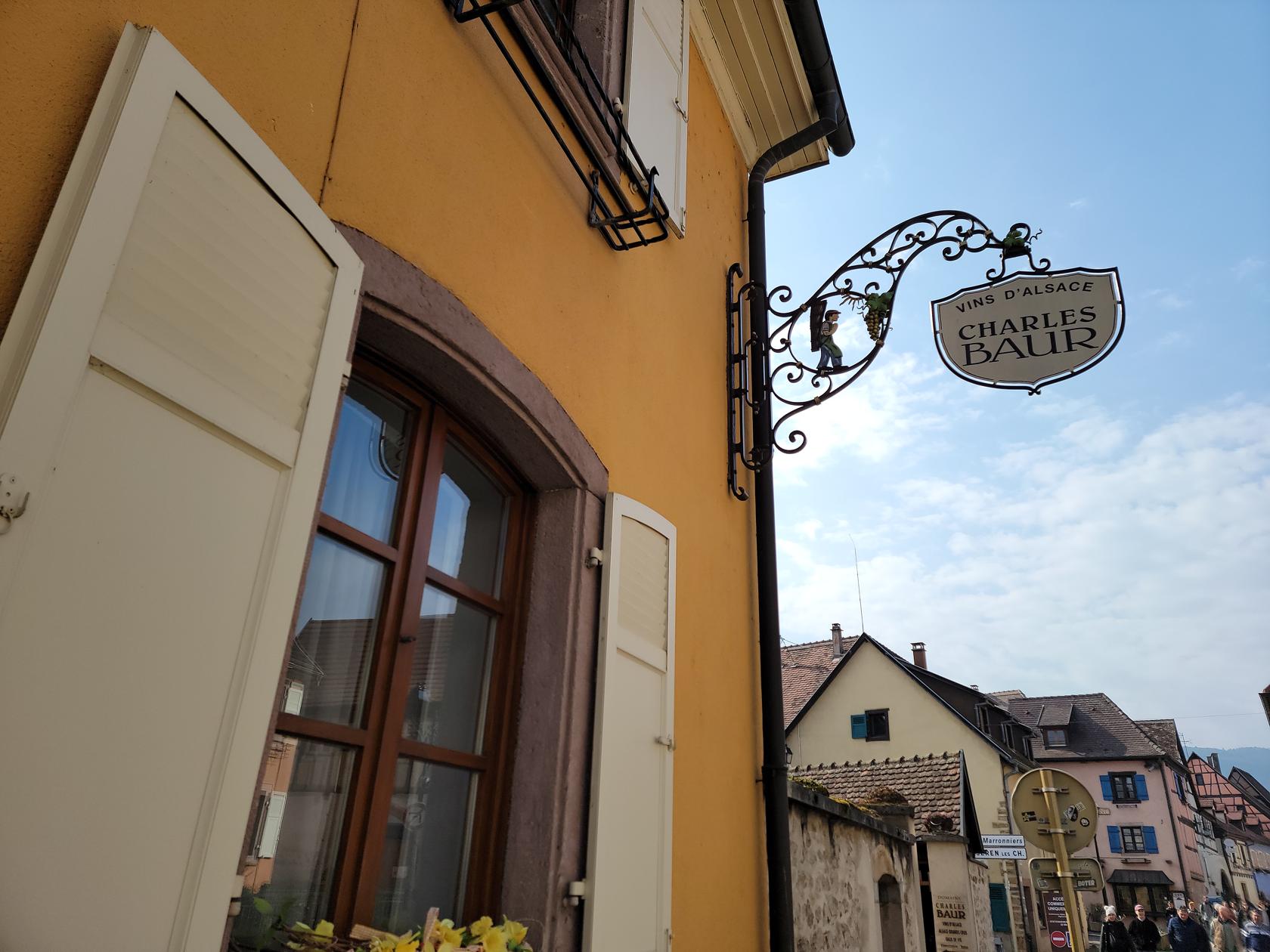
Rue de Rempart
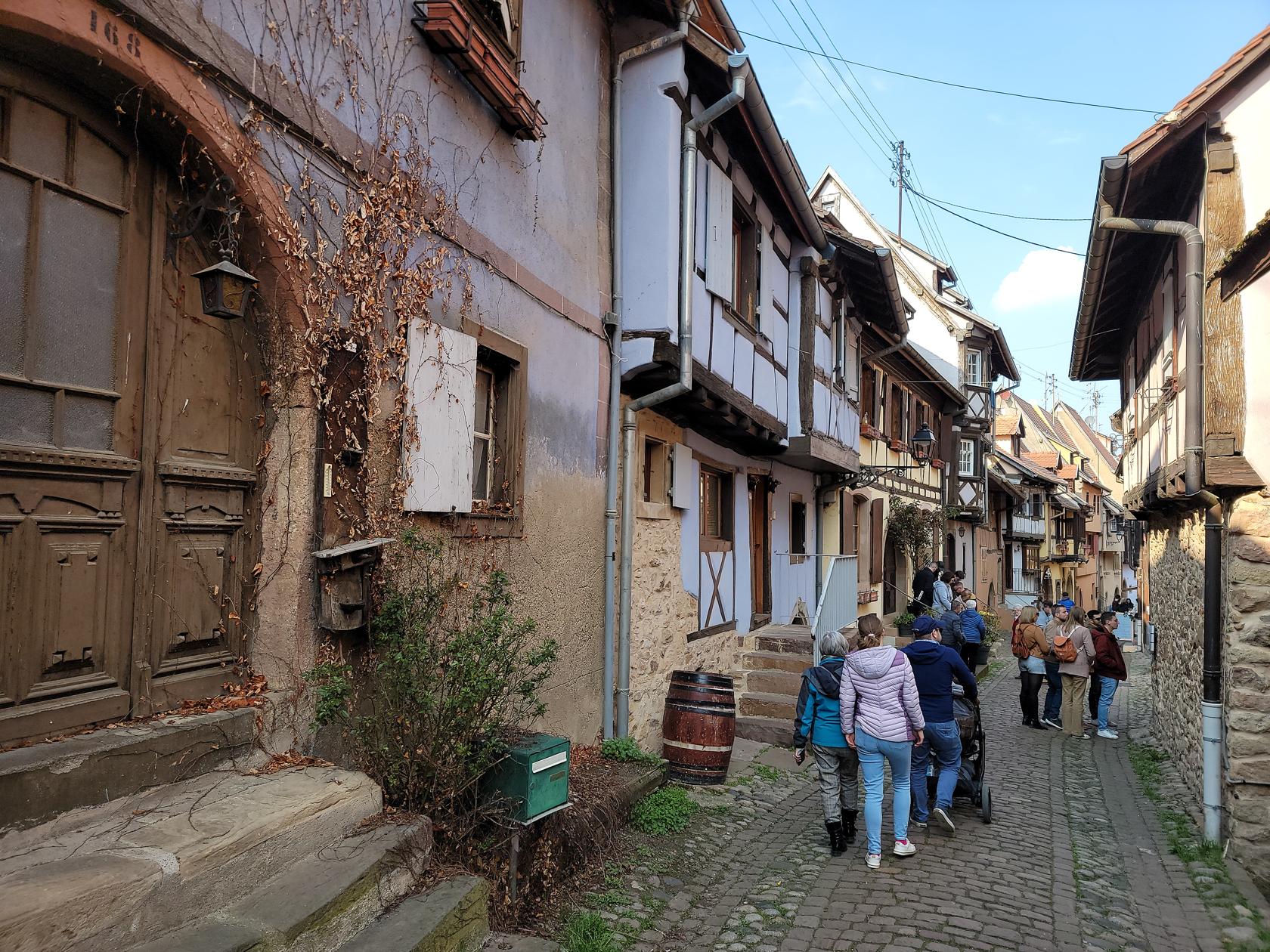
We spent most of our time walking this alley, which circumnavigates the town. Since the town is laid out like an onion, you will eventually come back to where you started.
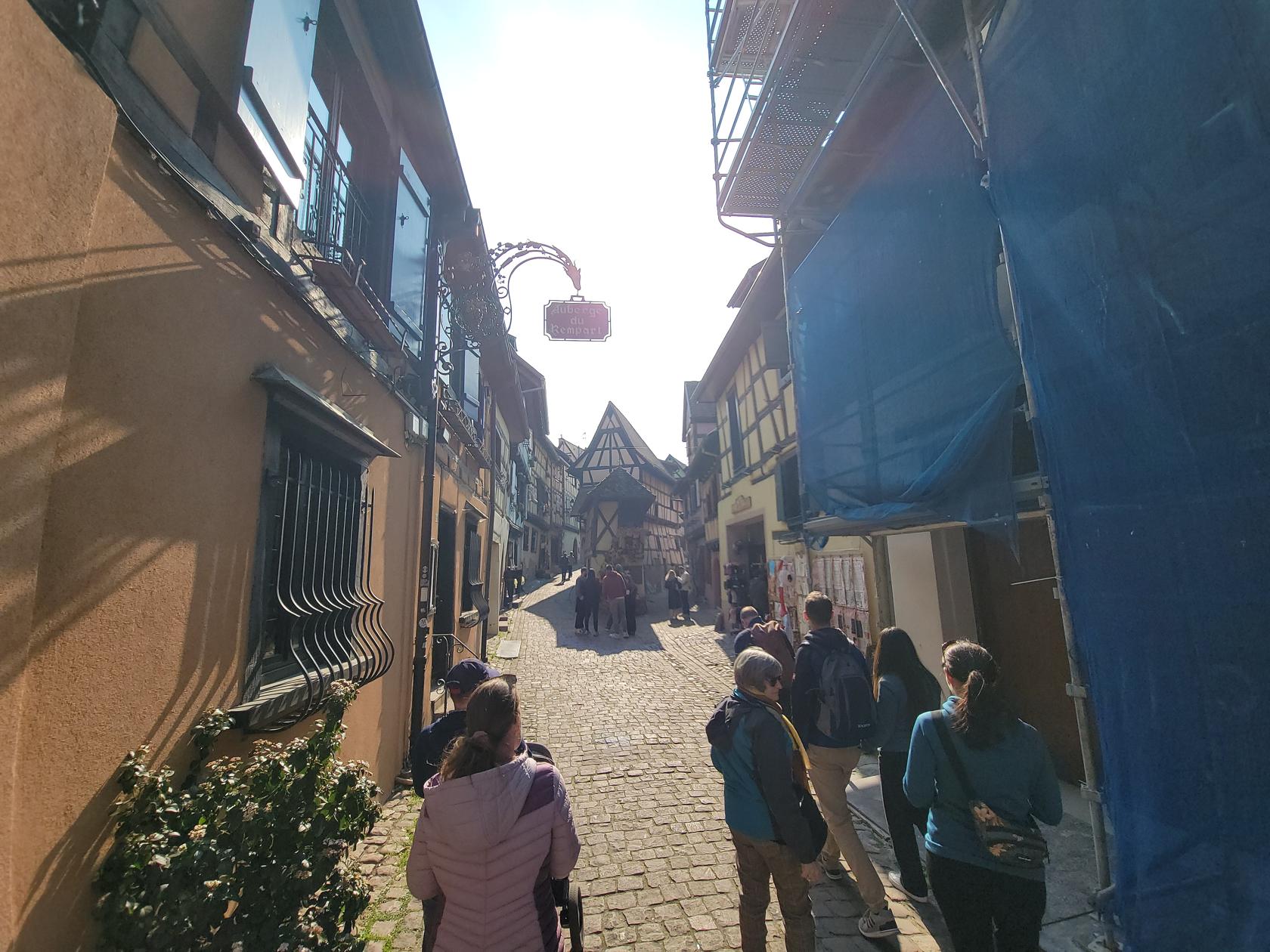
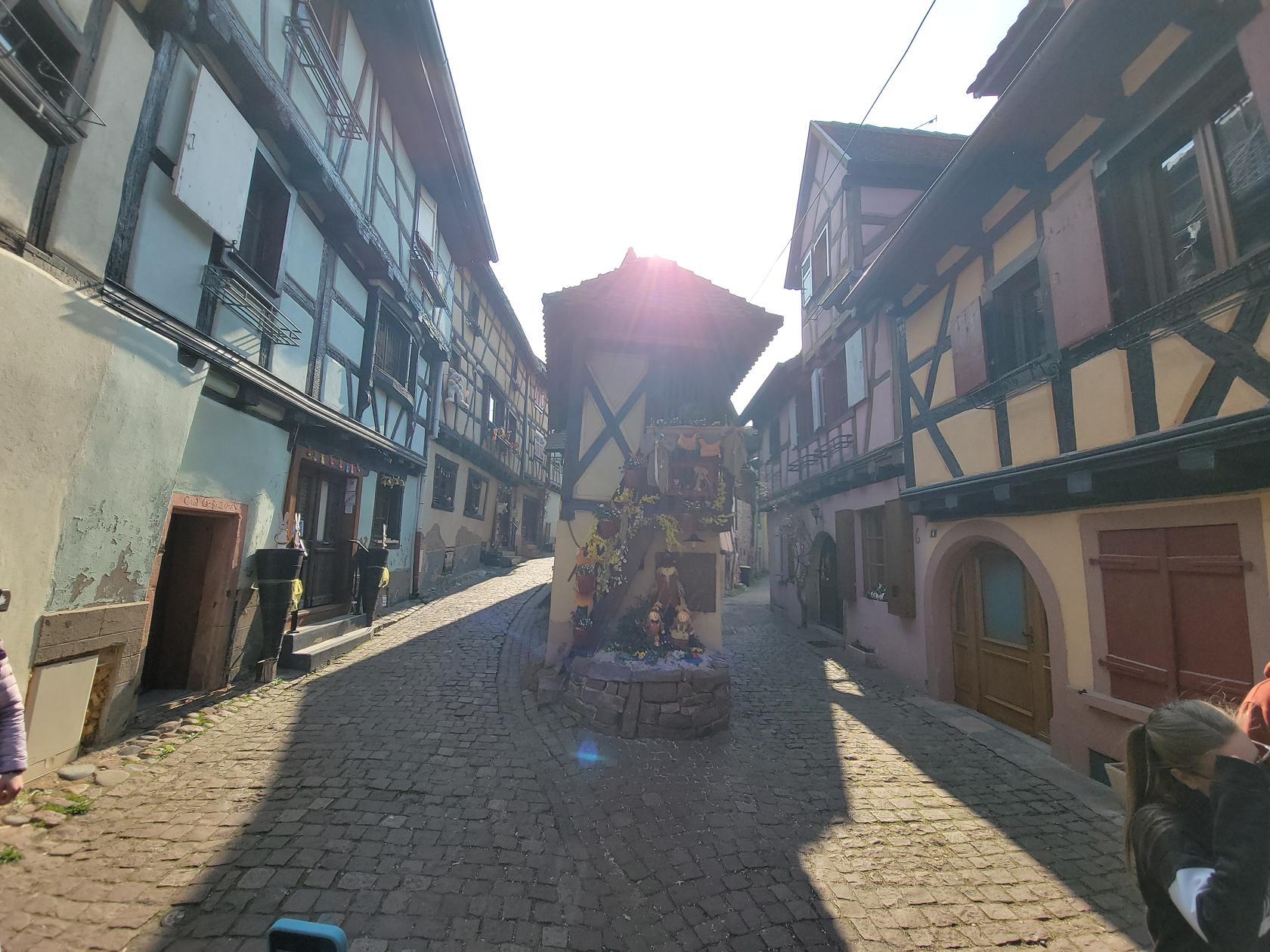
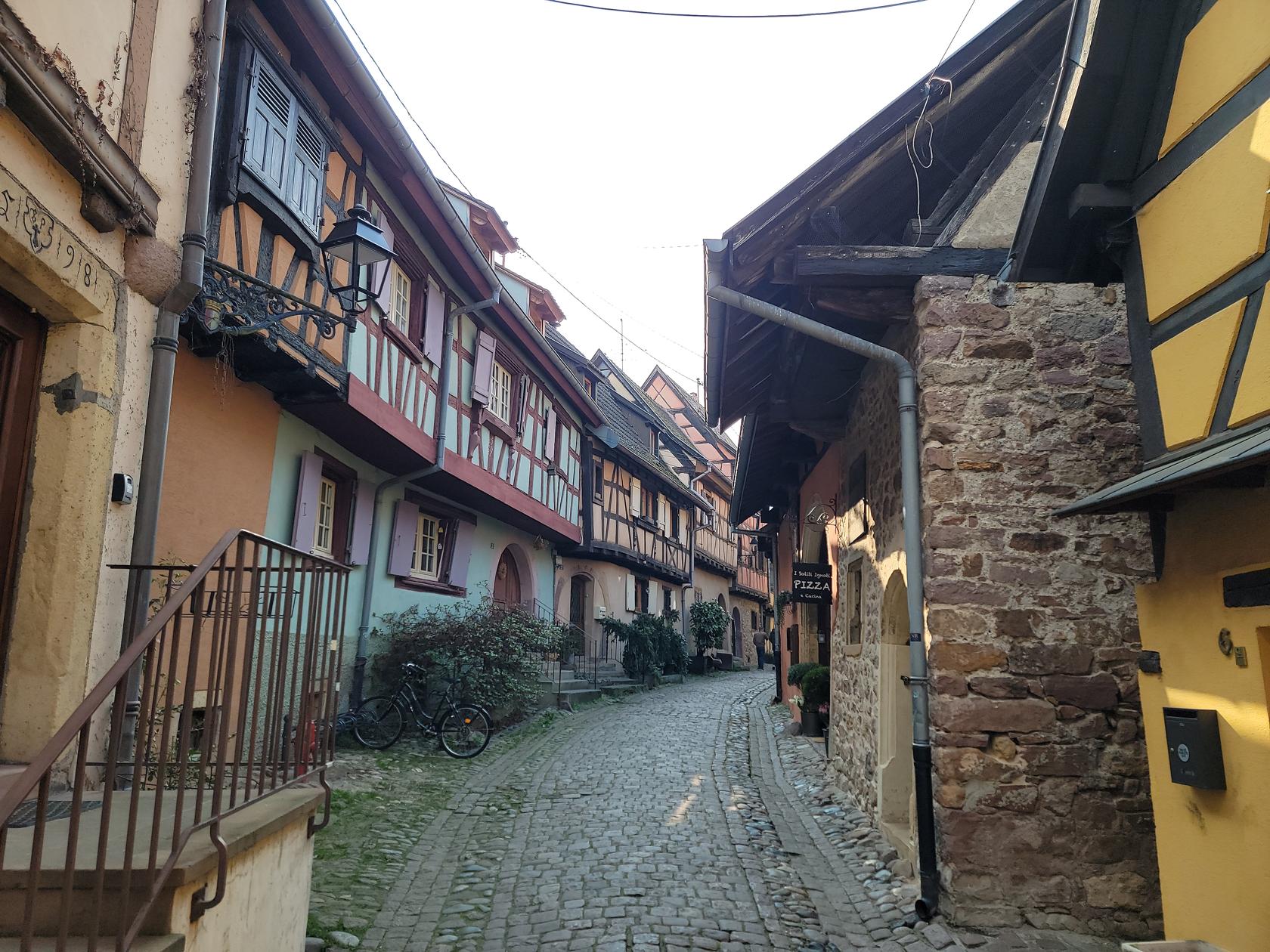
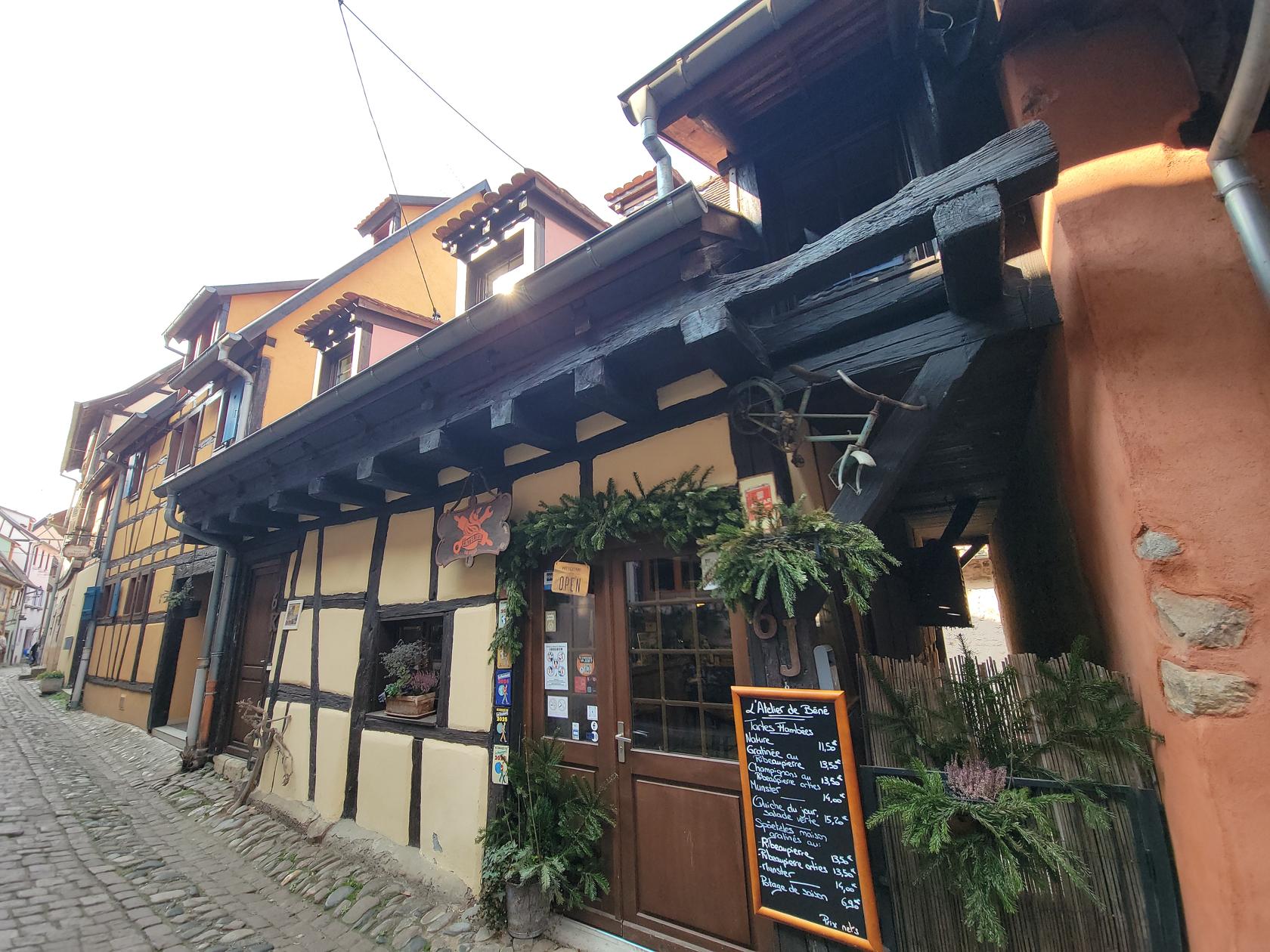
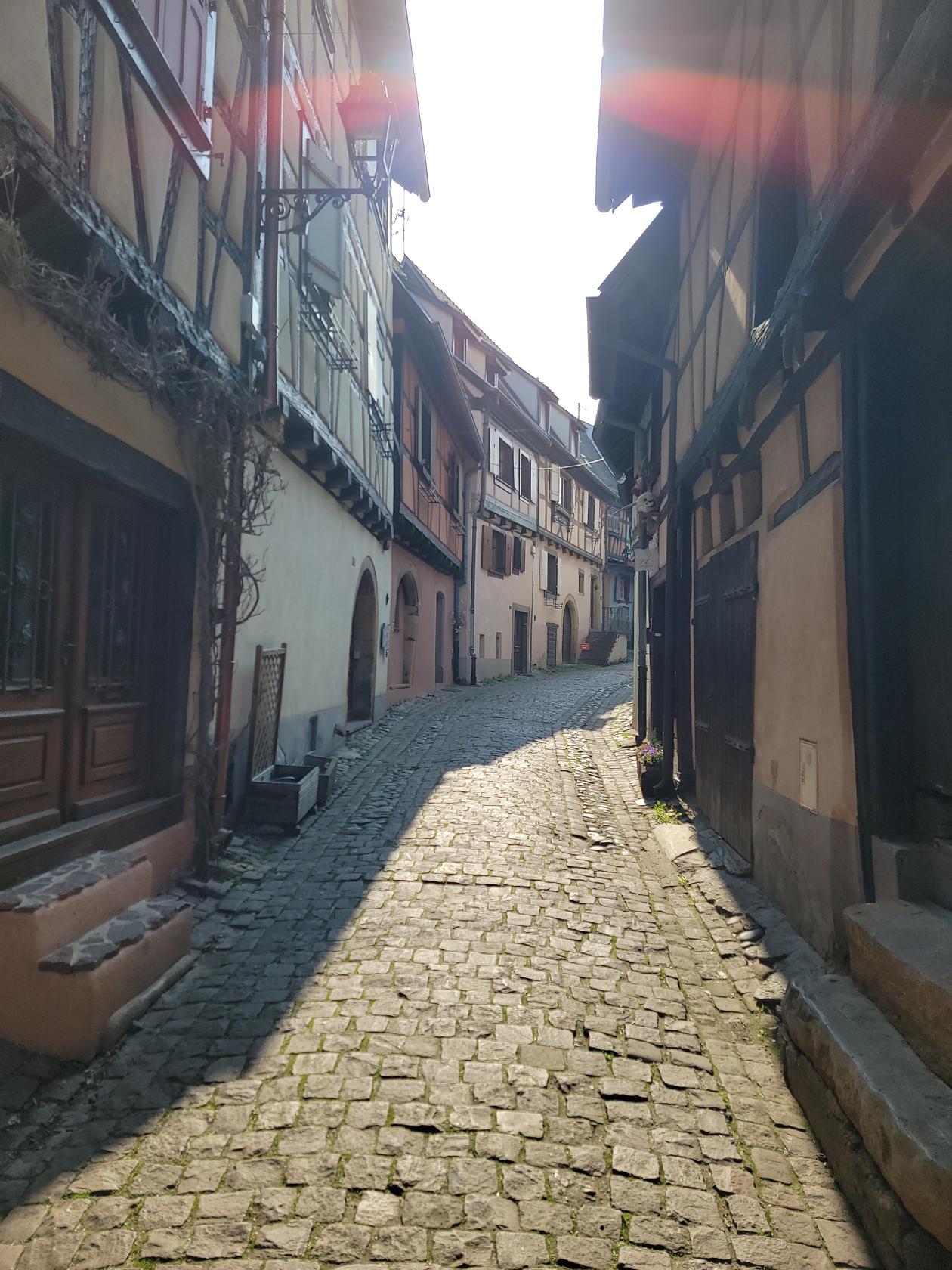
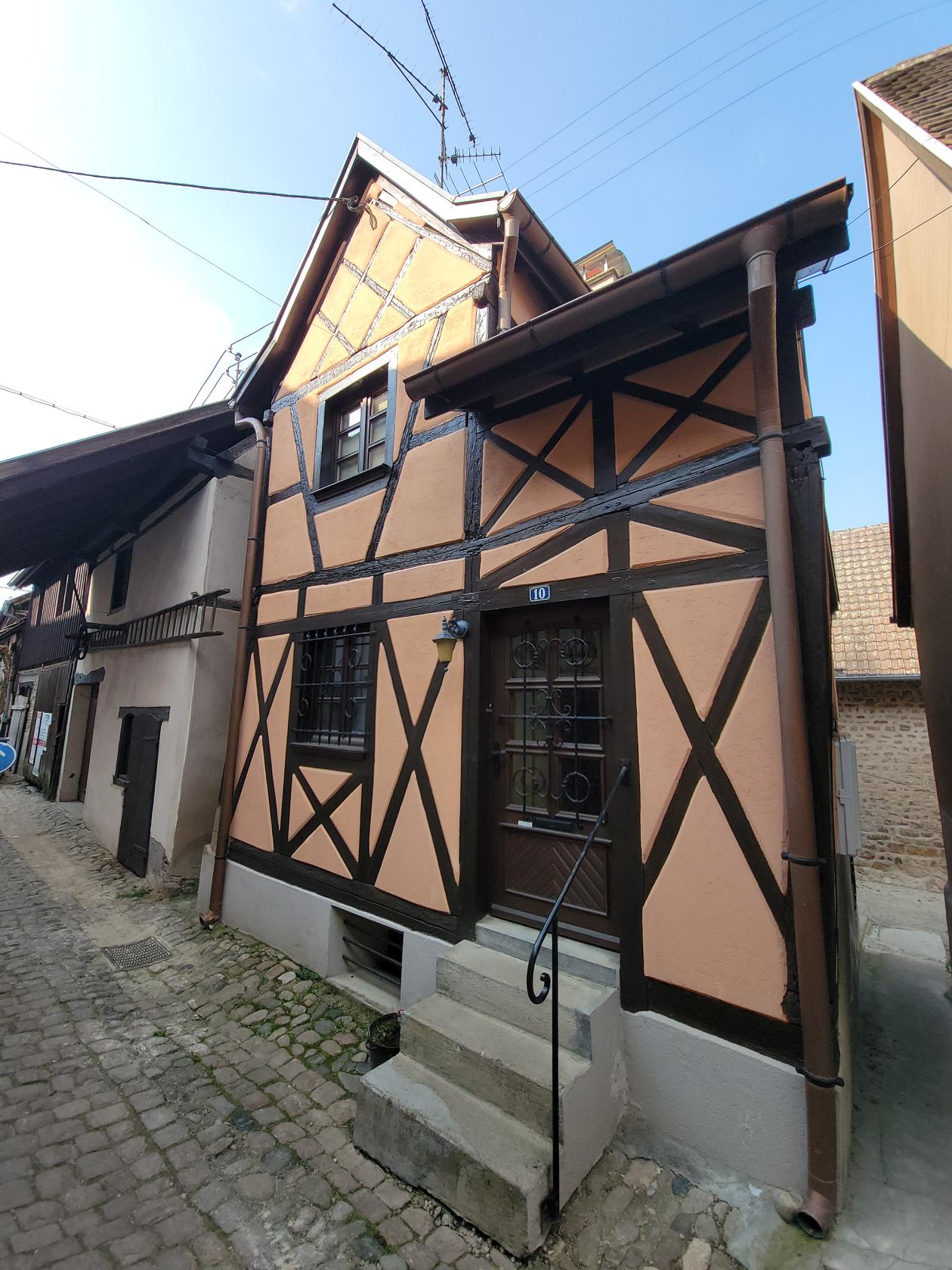
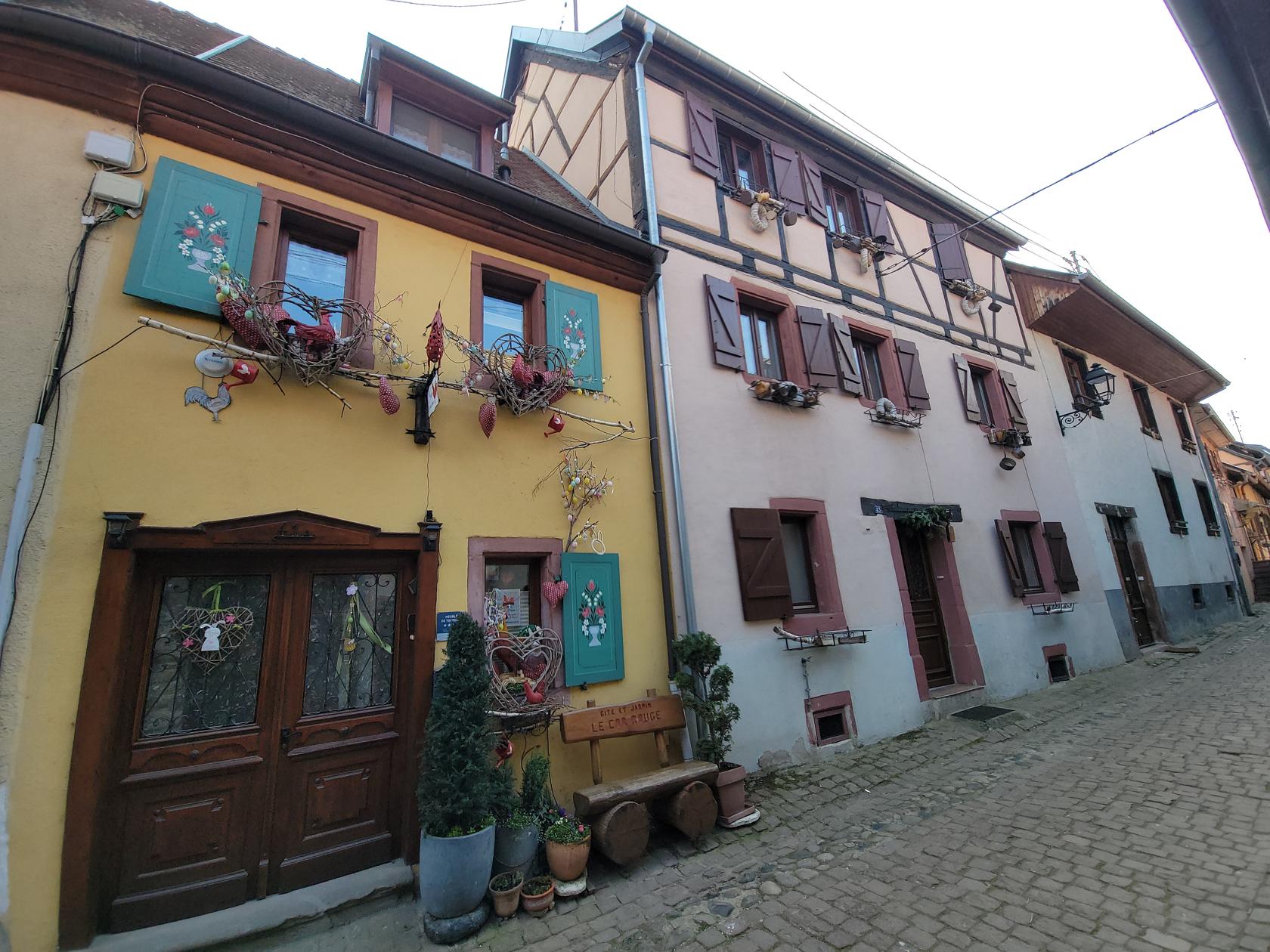
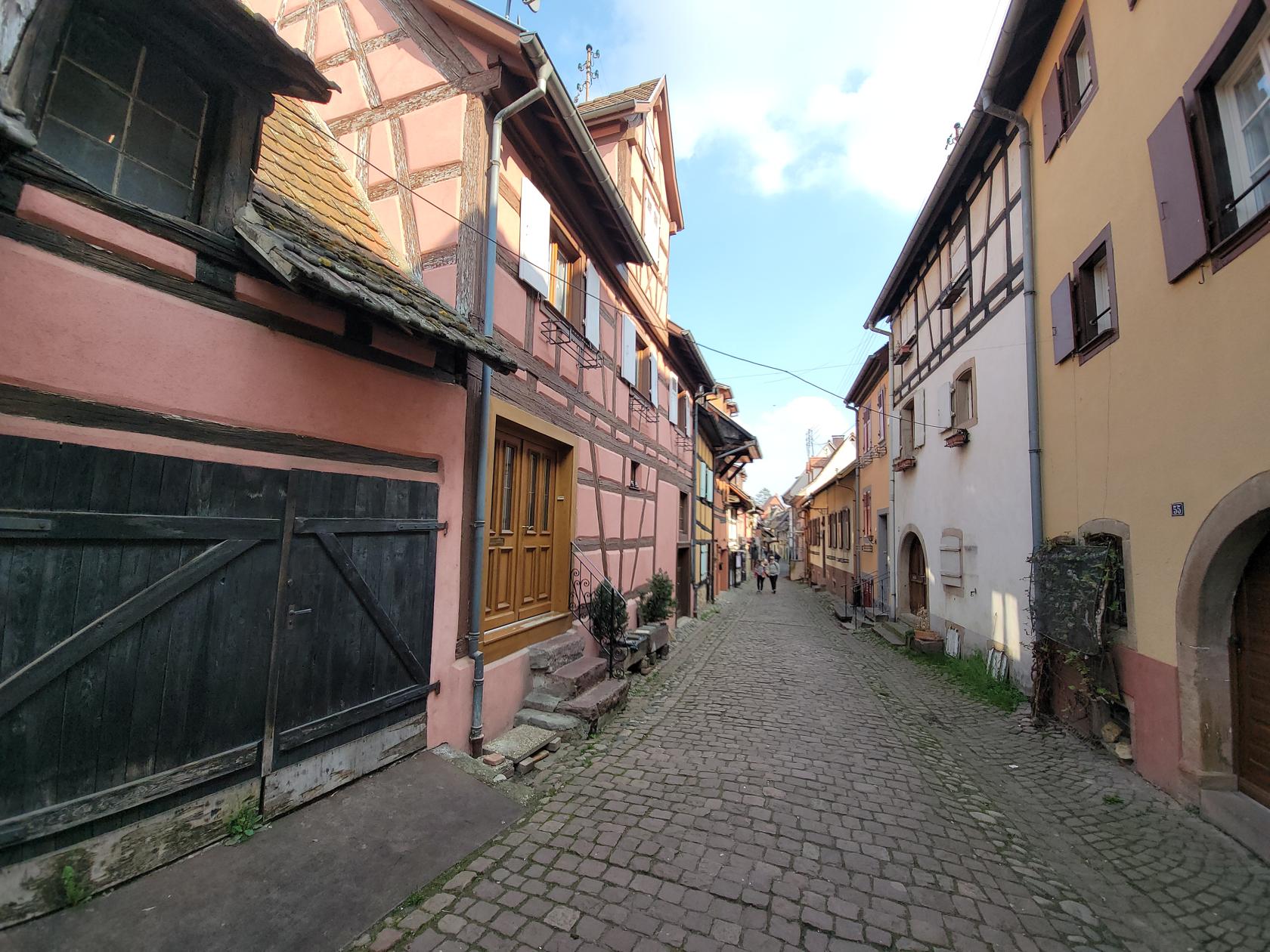
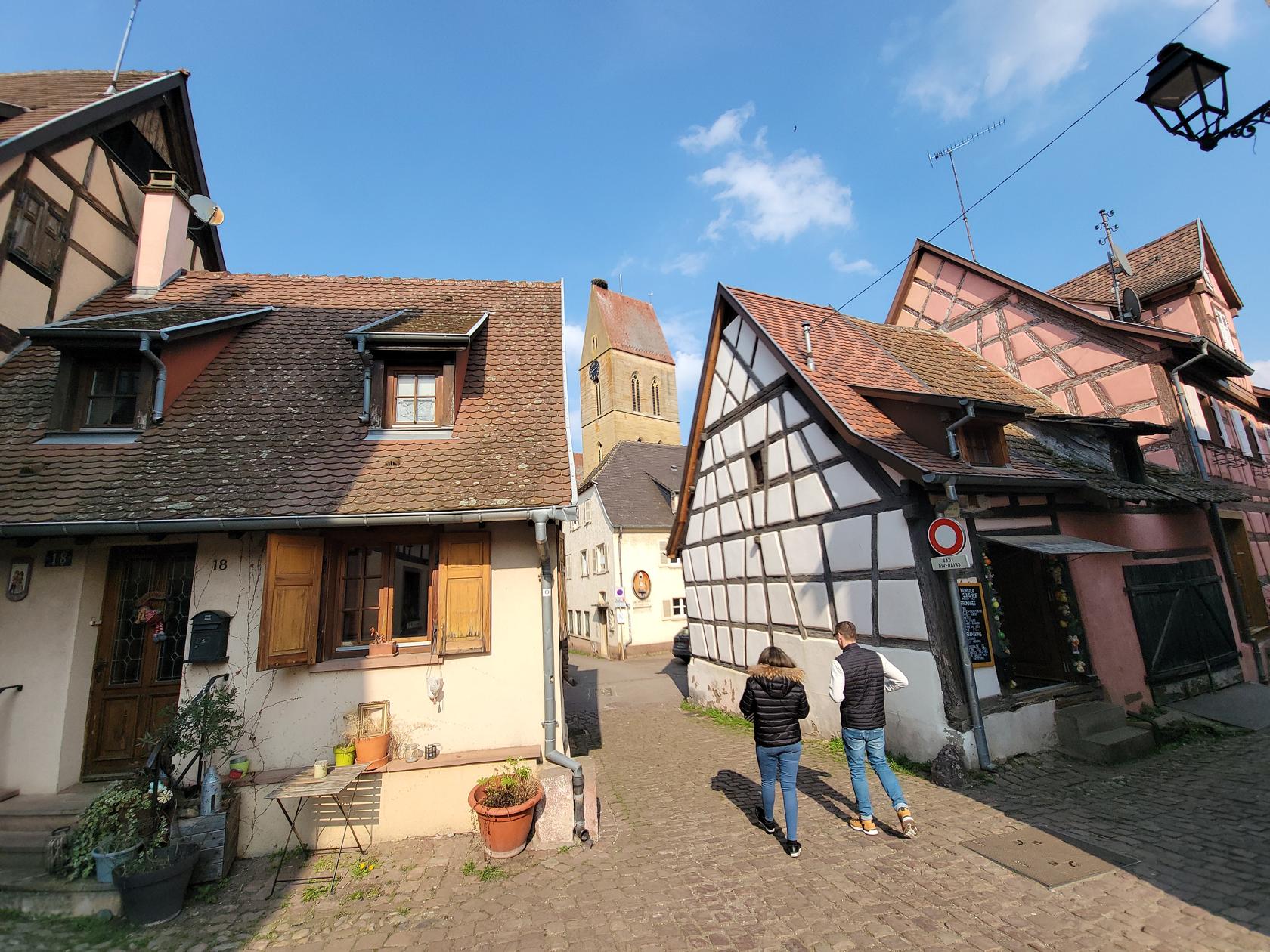
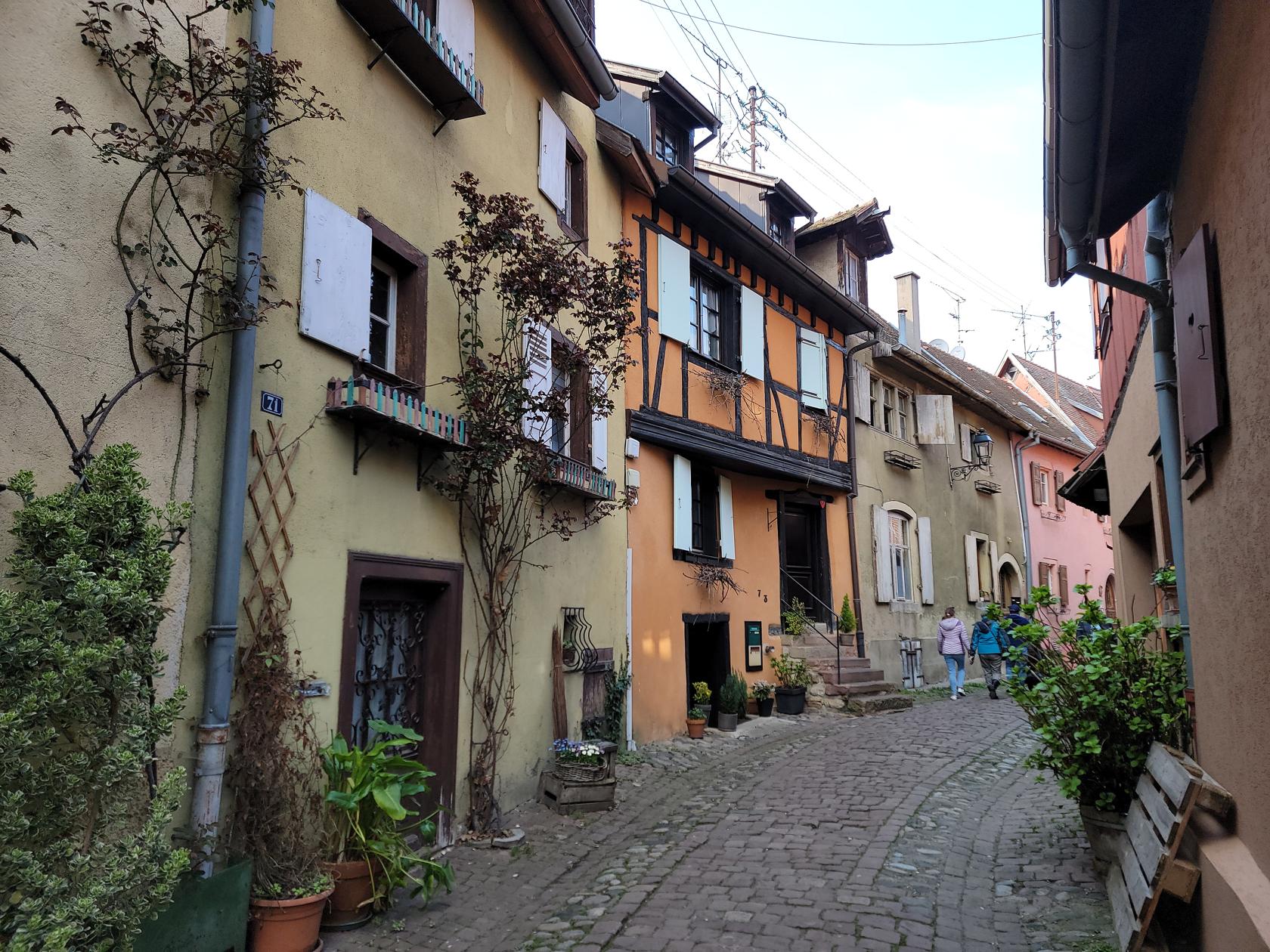
The Rue de Rempart creates two rows of buildings that acted like fortifications for the town. Since the town was not initially meant to be a fortress, but was more economical in nature, the outside wall turned into another row of houses some time in the sixteenth century.
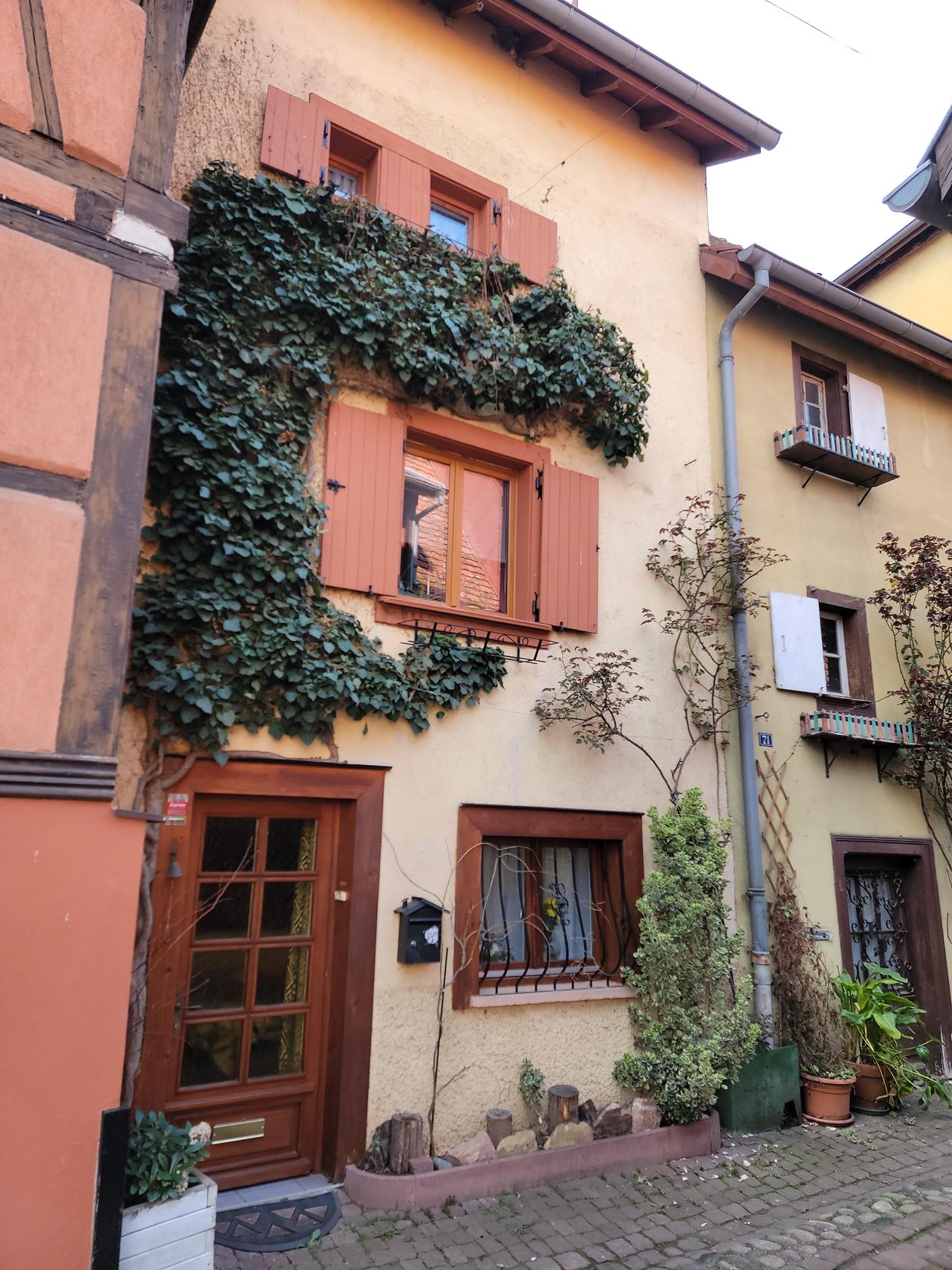
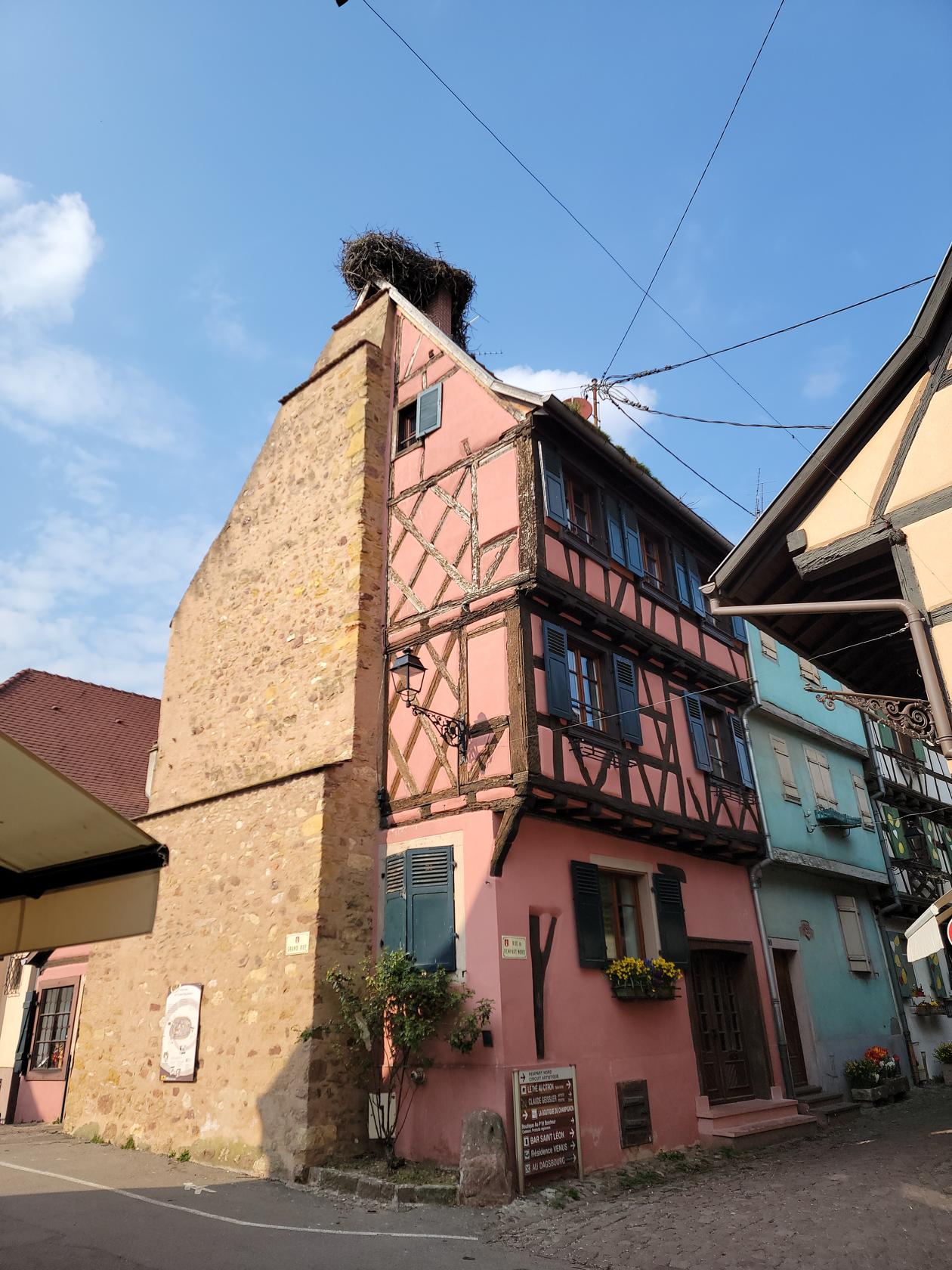
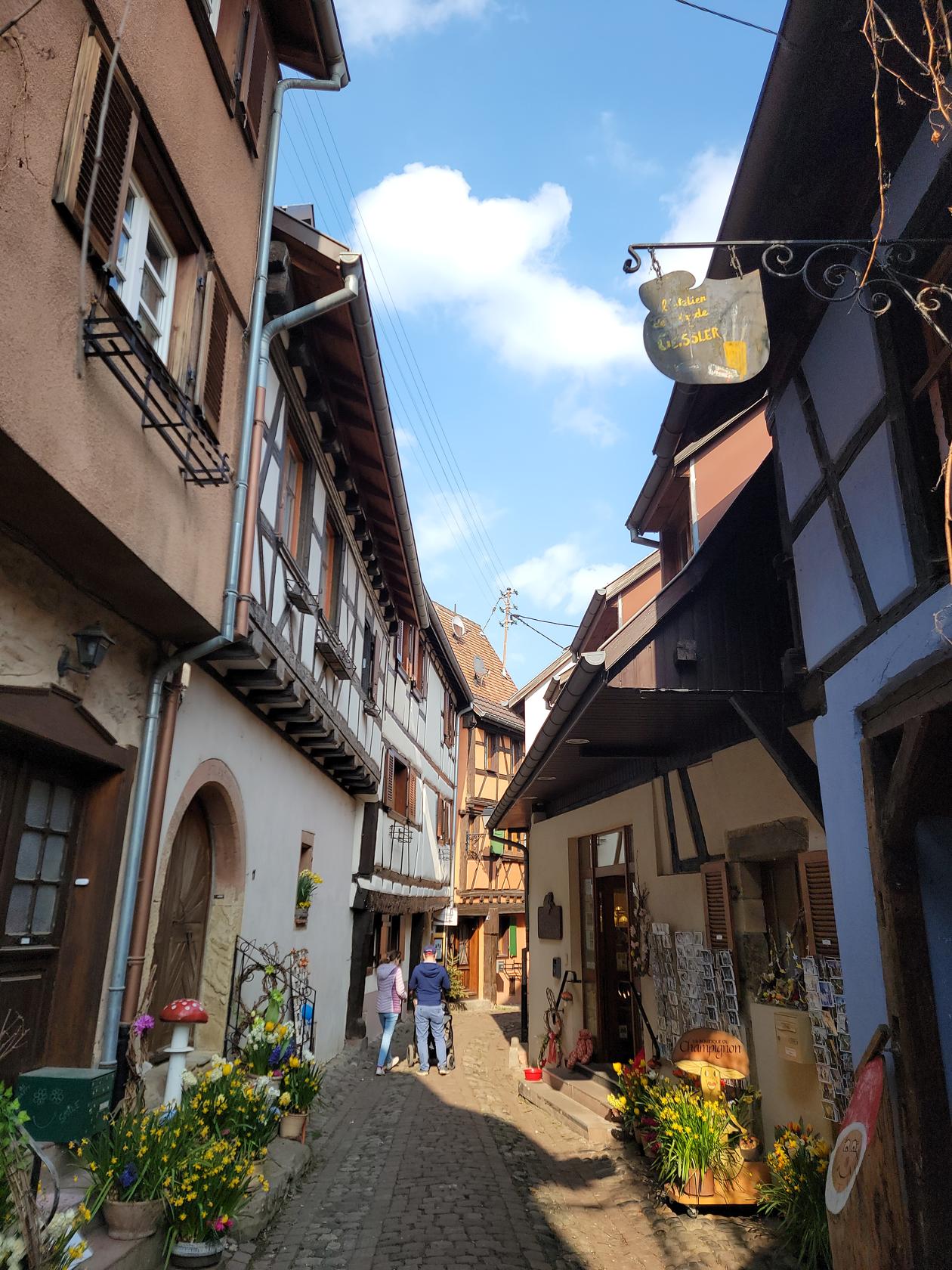
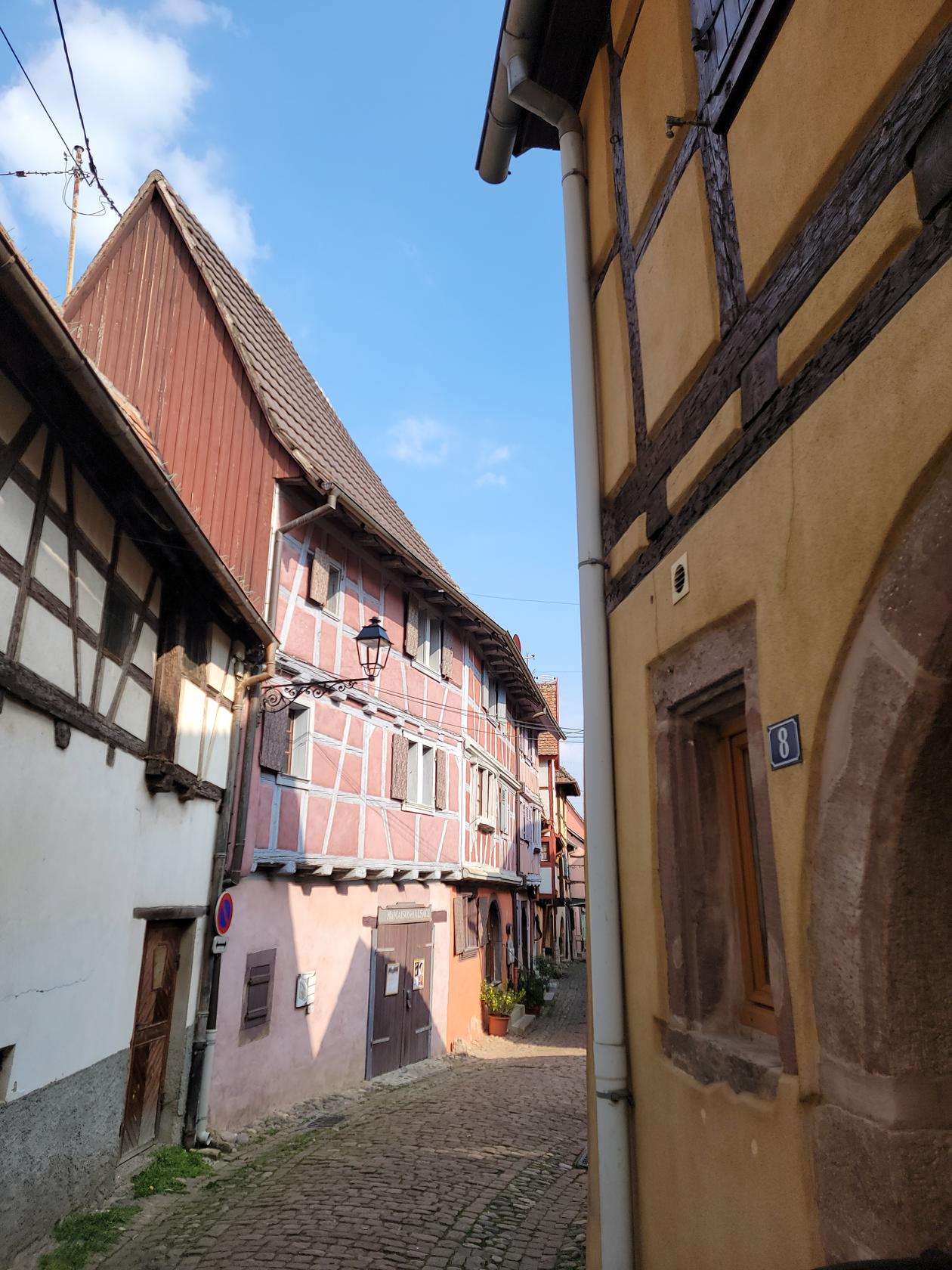
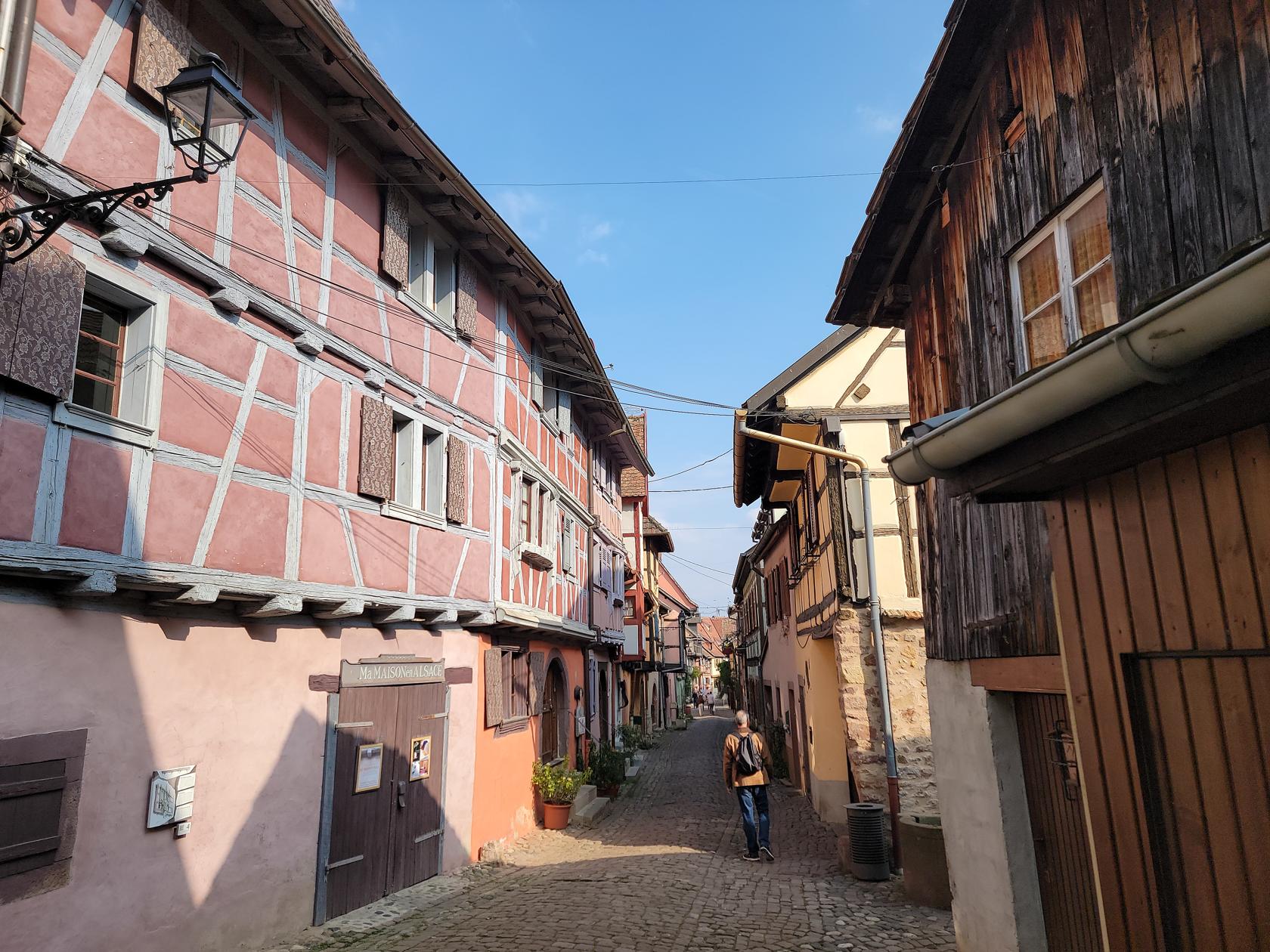
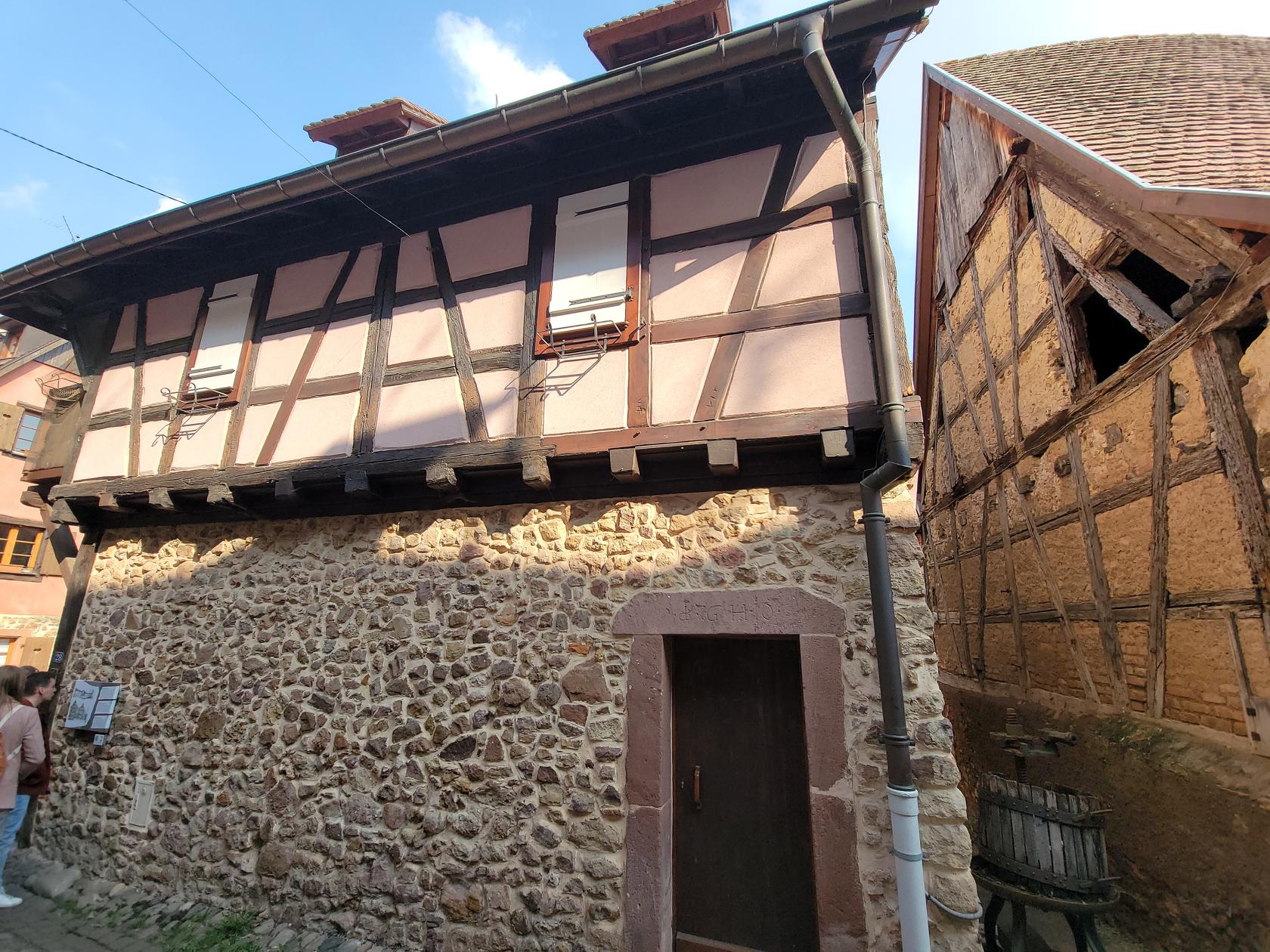
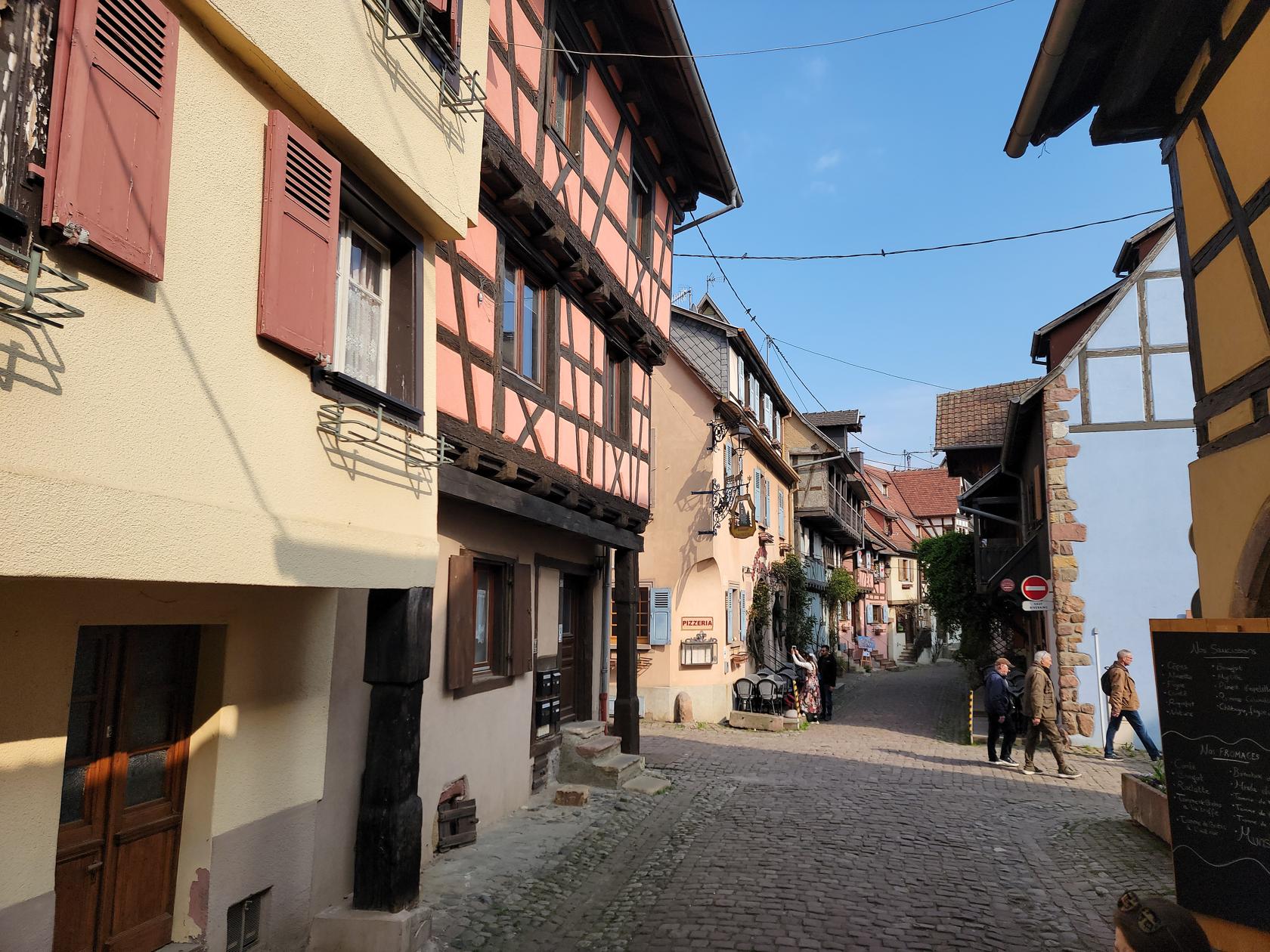
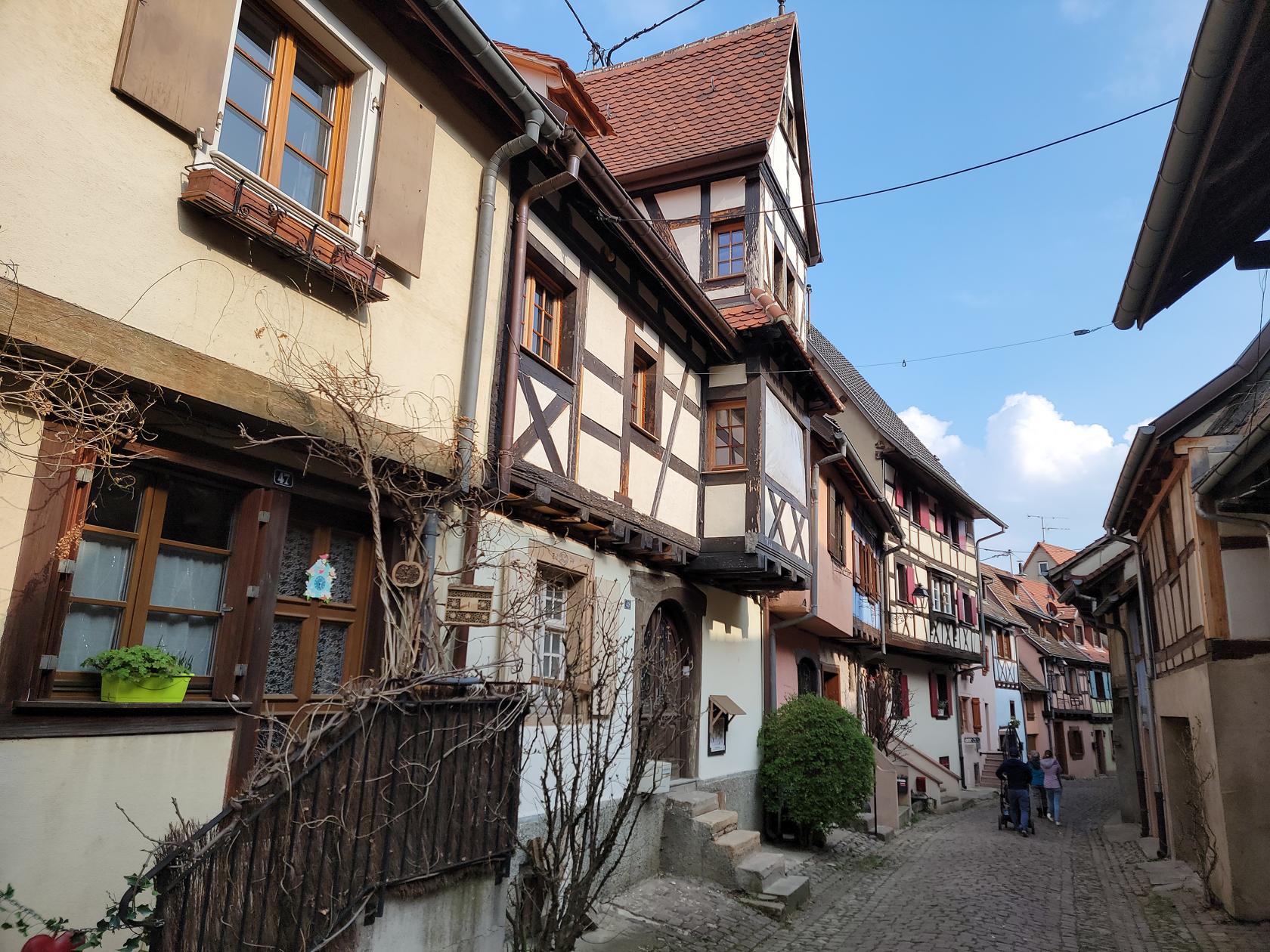
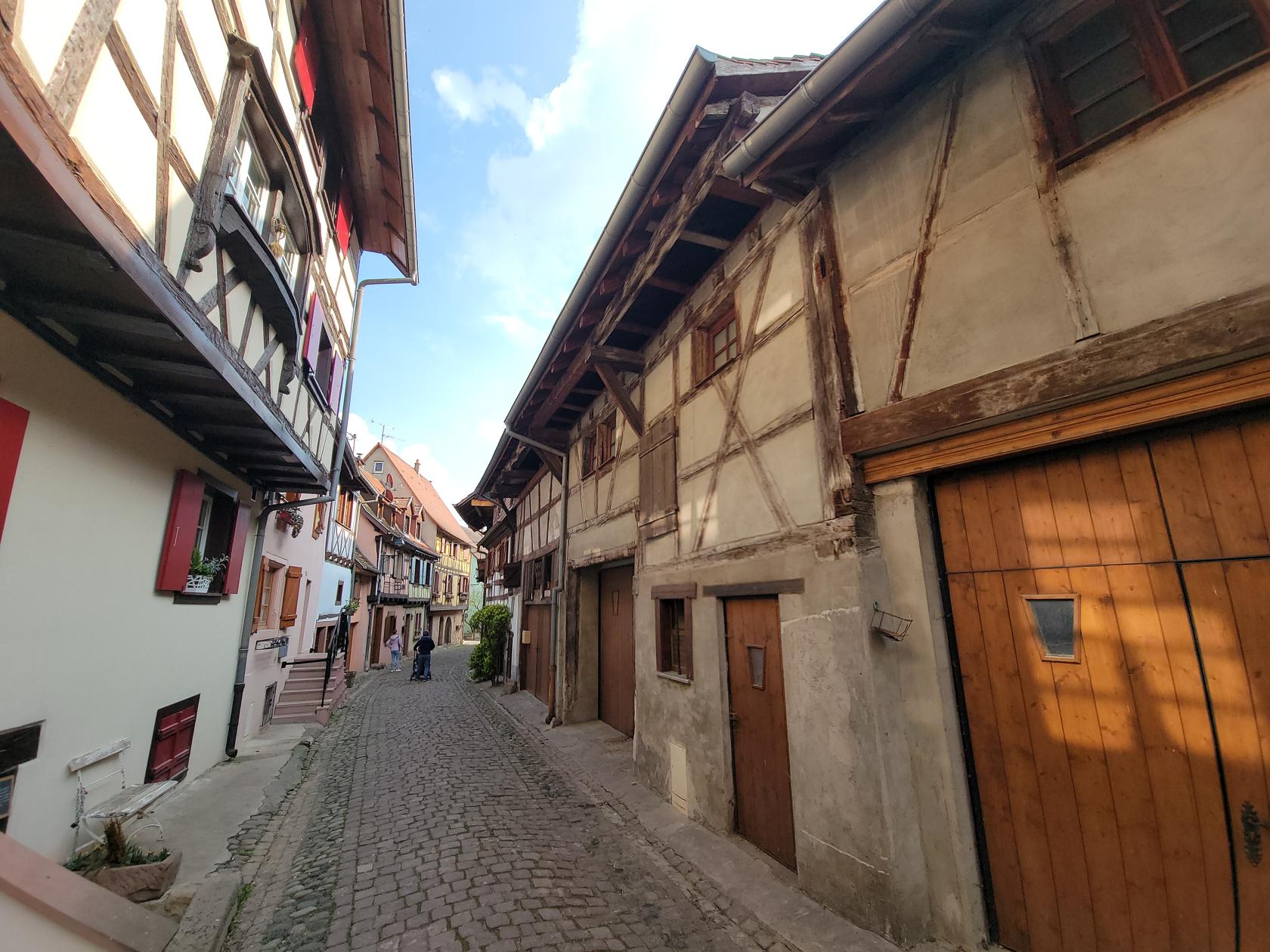
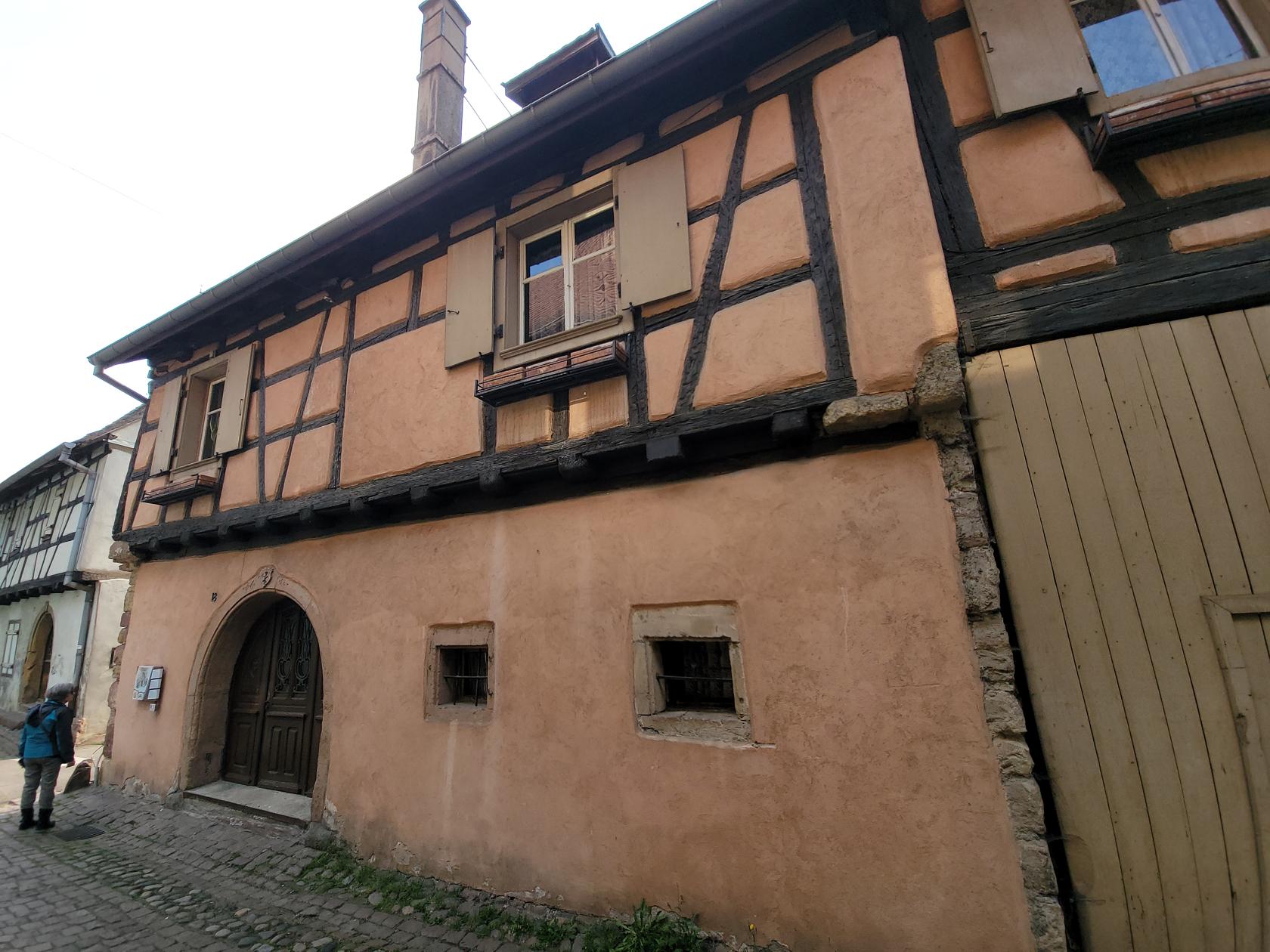
Many buildings in the town are also adorned with coats-of-arms. Many of the pediments and lintels are decorated with them and other engravings, usually left by the stone masons themselves. In most cases the coat-of-arms indicated who lived in the house according to their profession, a butcher’s block for a butcher for example. However, a sword crossing a shield would indicate a master craftsman in that profession.
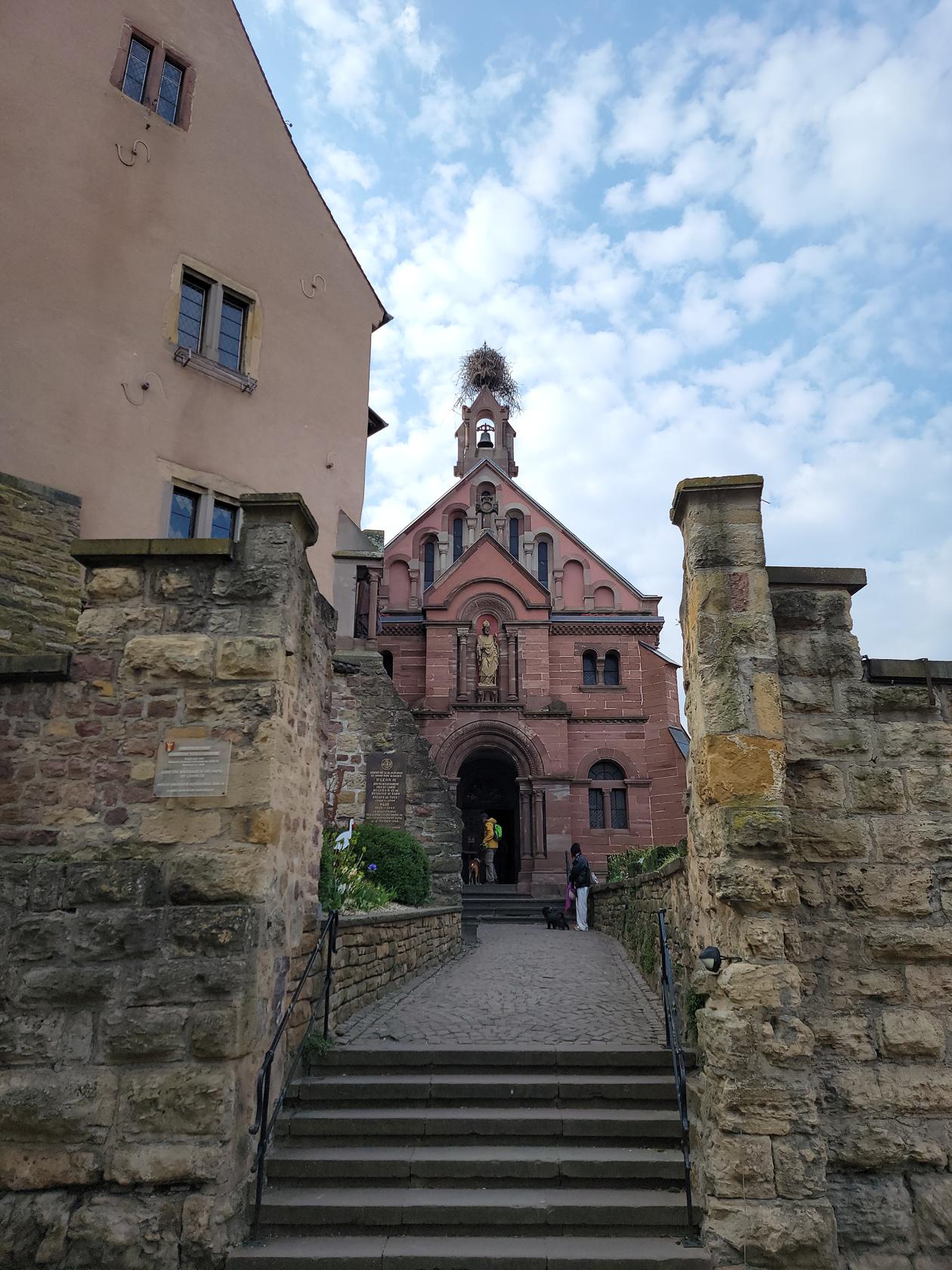
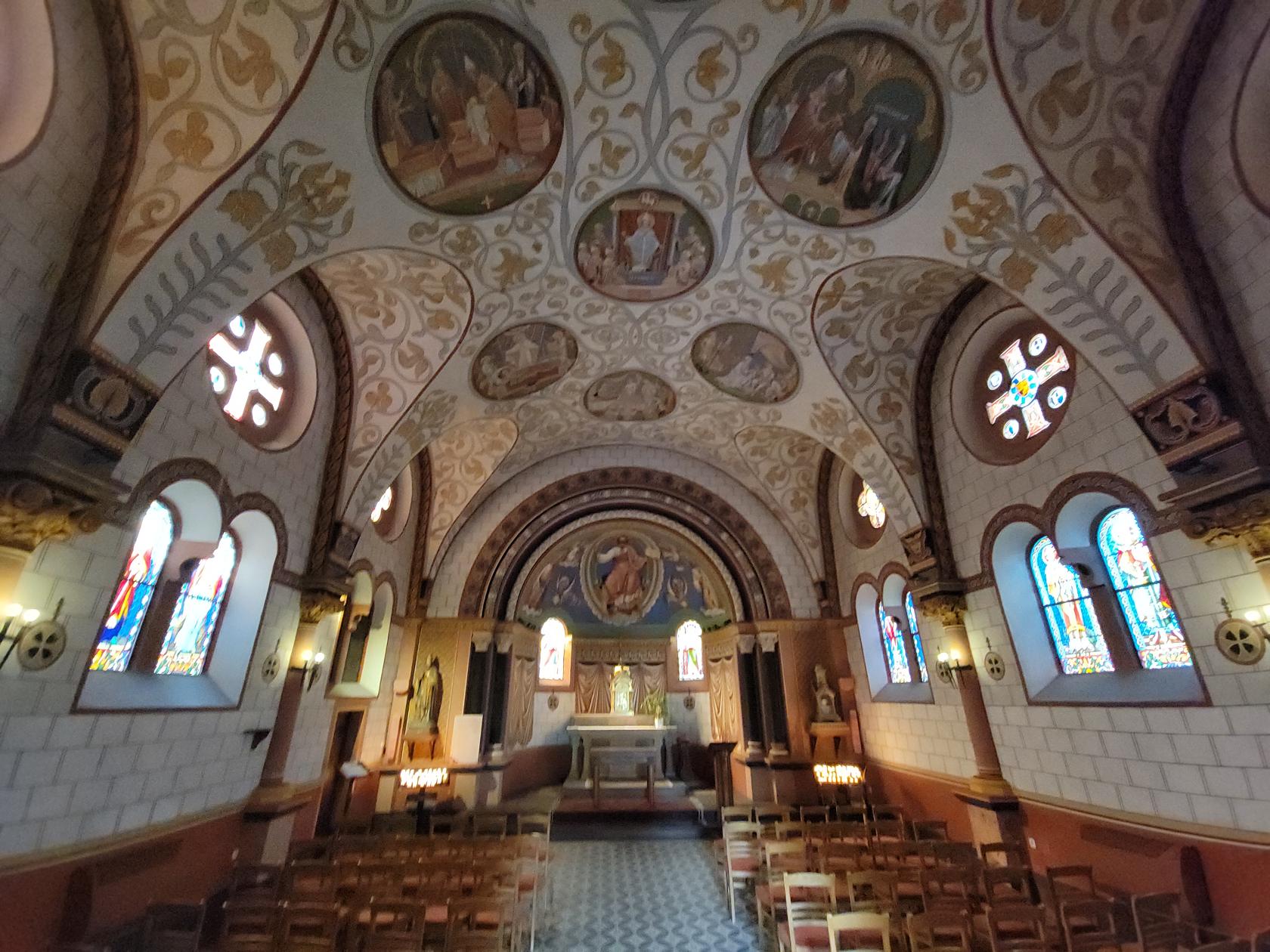
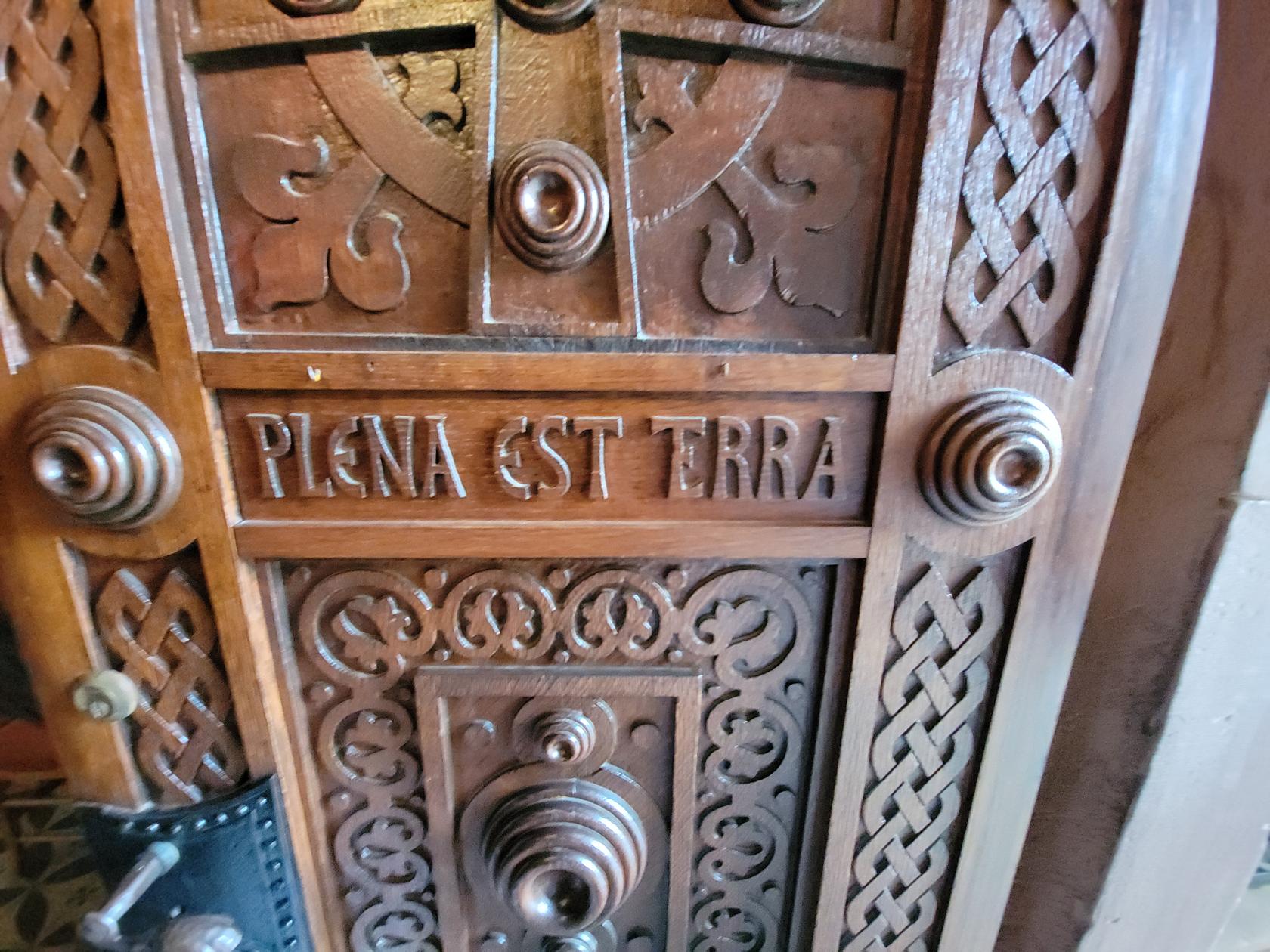
Chapelle Saint-Léon IX
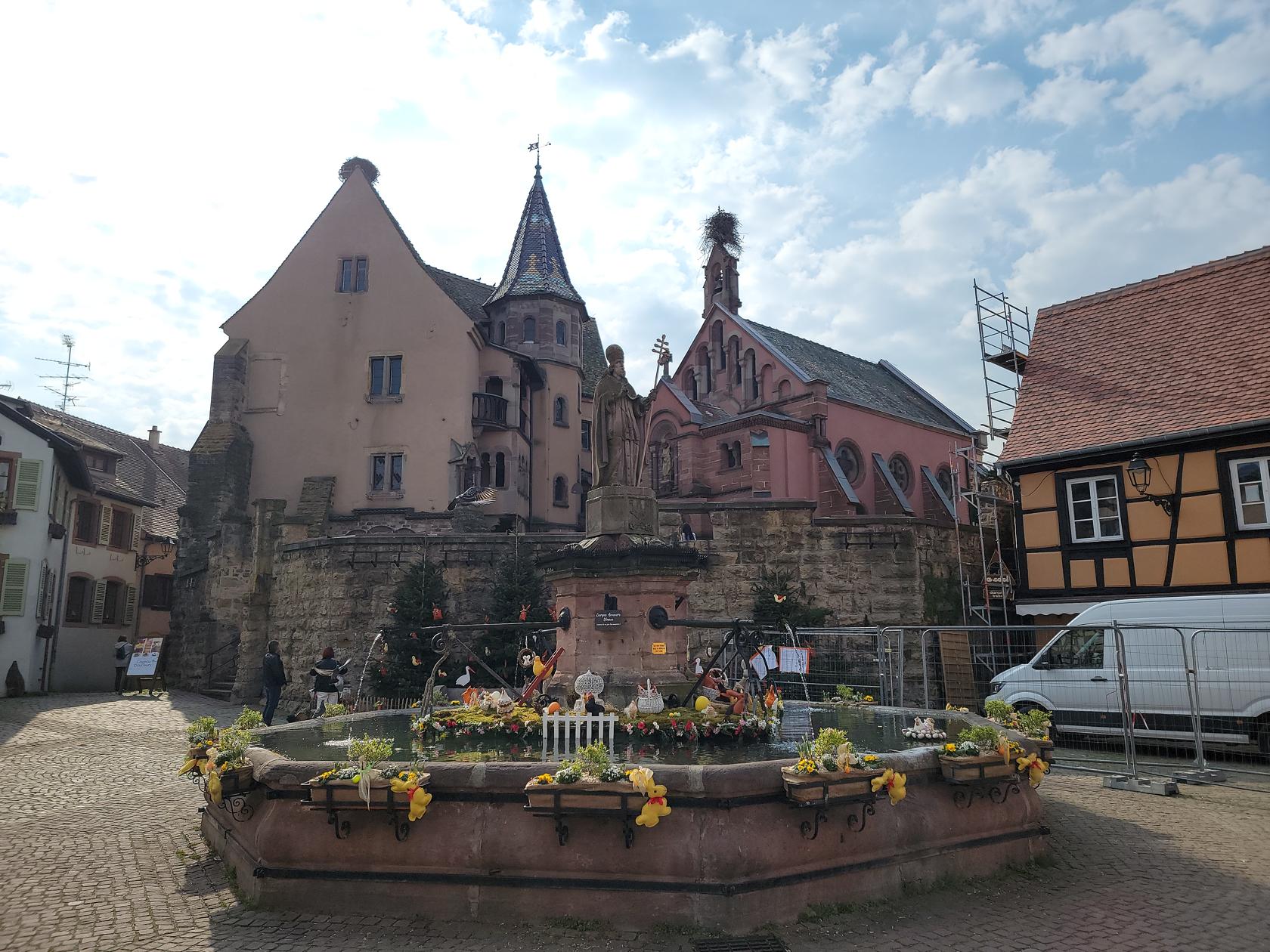
Along with the chateau that is close by, the Chapel of Saint Leon IX is a central sight. The fountain of Saint Leon is directly below the stairs to the chapel.
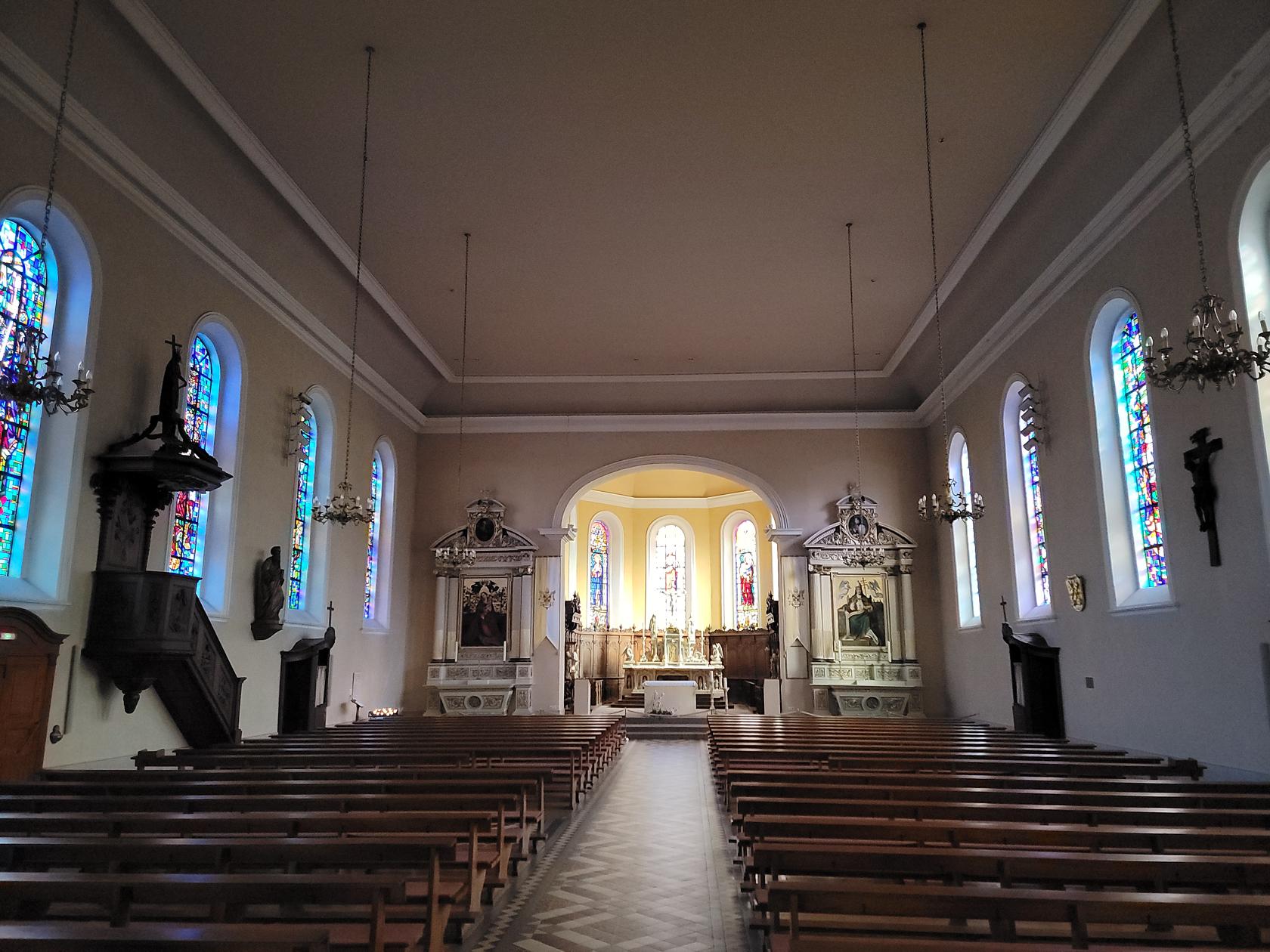
Église Saints-Pierre-et-Paul
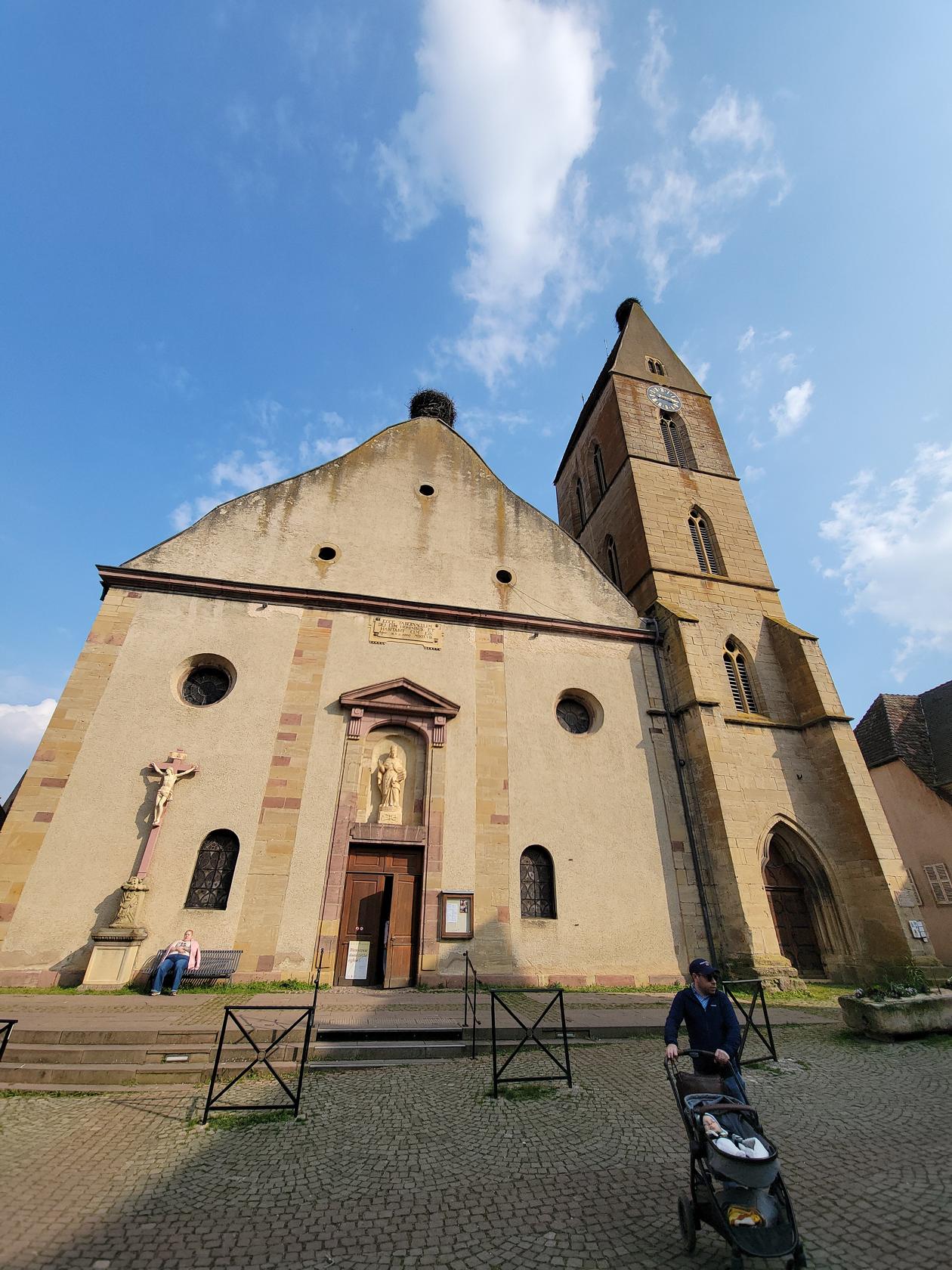
Off on another street is the Church of Saints Peter and Paul. Though larger than the chapel, the outside and inside are more austere.
Other Sights
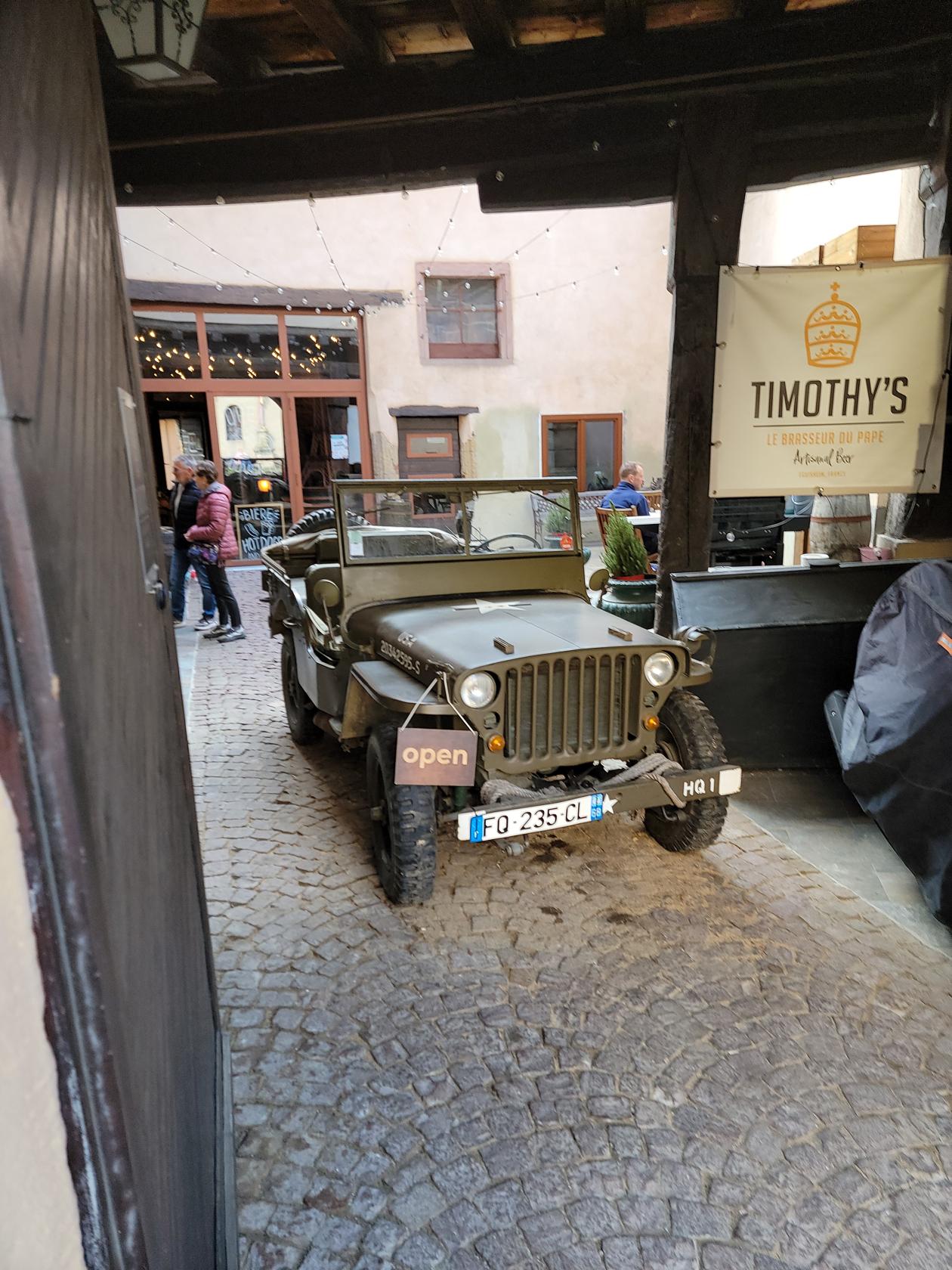
If you walk enough you will find an old American Willeys Jeep left over from the war. There are also several other wineries of the main streets as well.
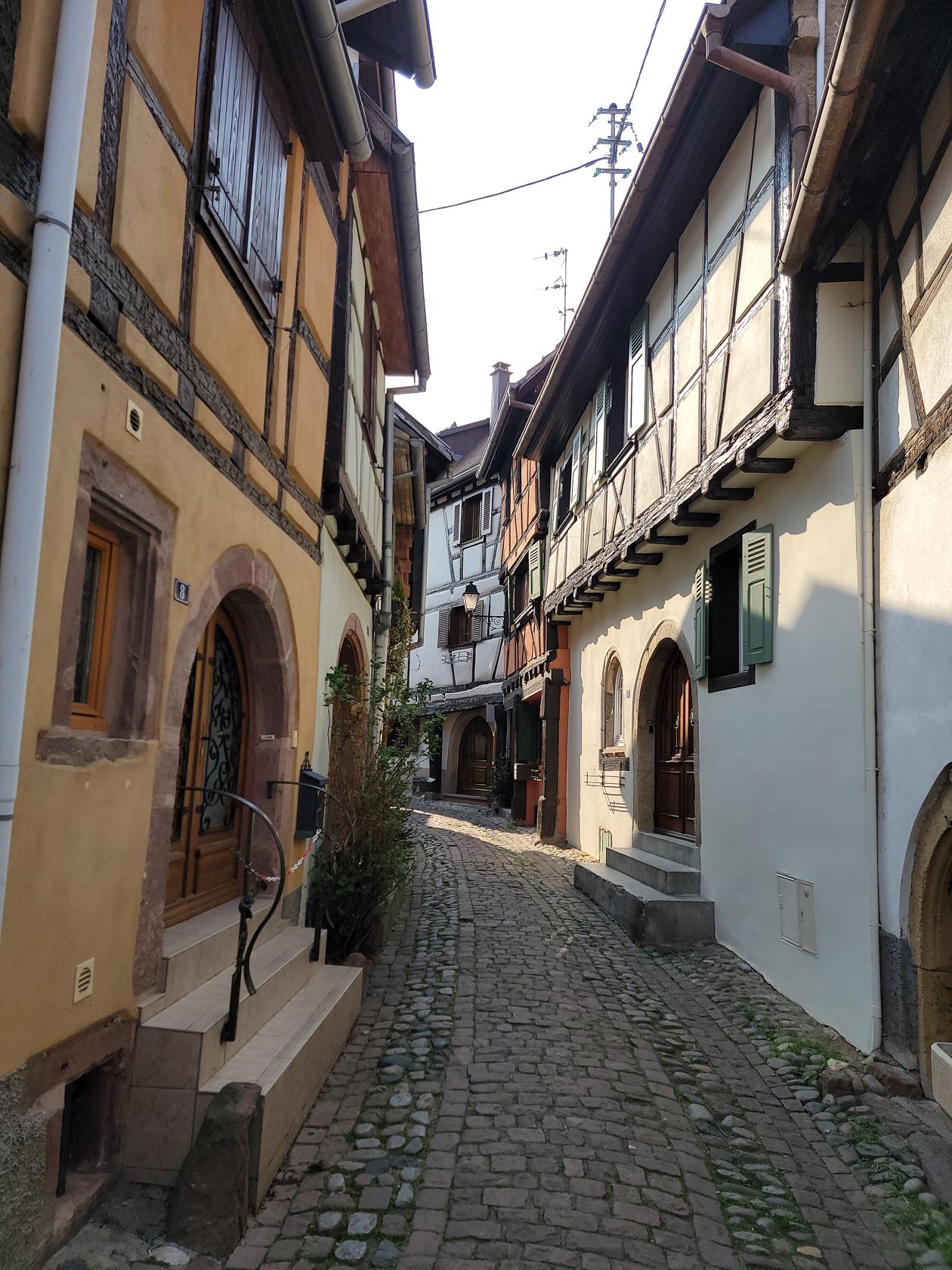
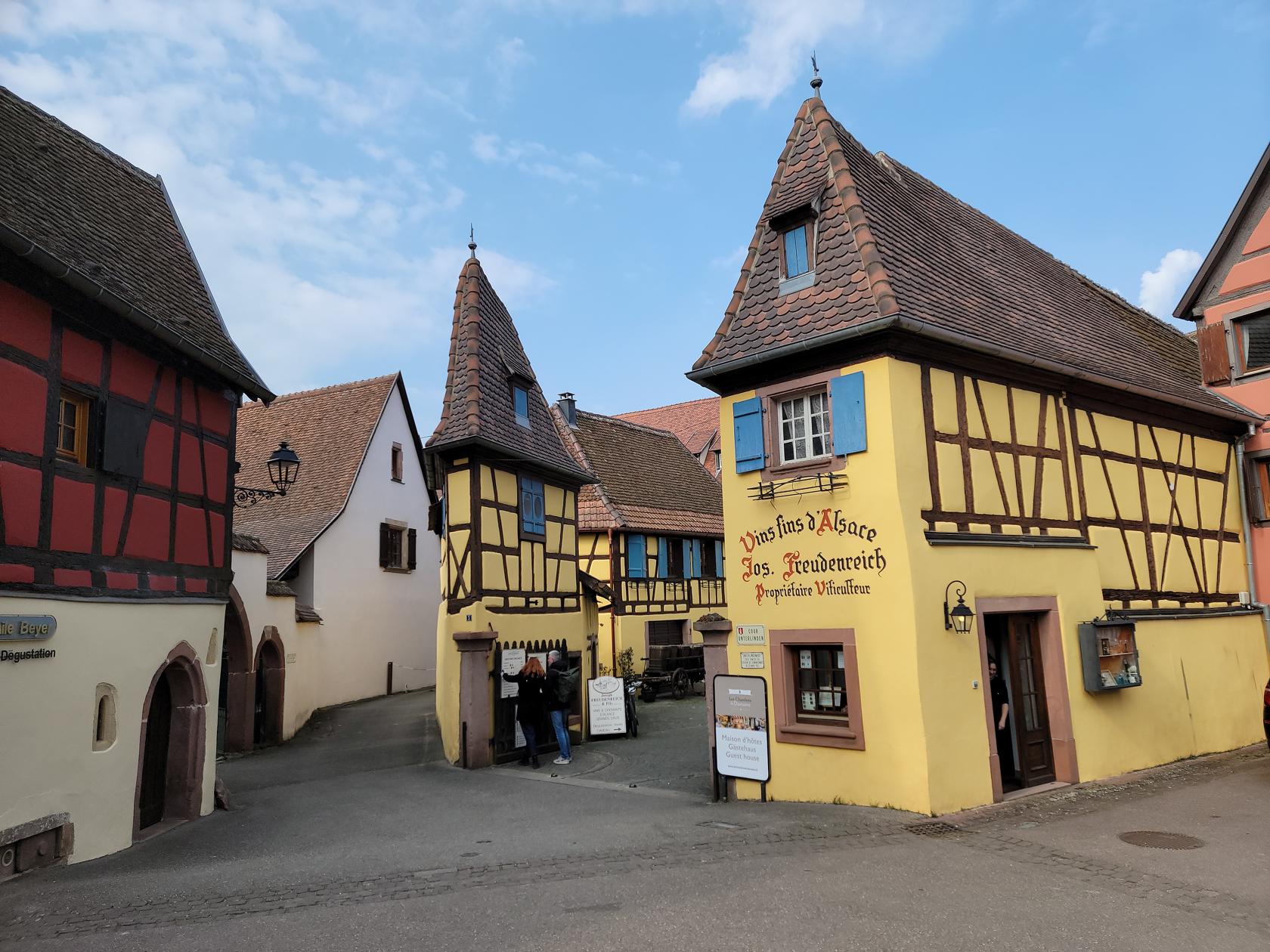
Though we only spent a few hours here, we thoroughly enjoyed it, especially since the weather was very nice. It might make more sense though, to stay a bit longer and enjoy a wine tour throught he vineyards and one or two wine tastings. In any event, it is a great place to stop and is highly recommended.
Restaurants
Unfortunately, we cannot commend a place to eat or drink, since we did neither in Eguisheim. A wine tasting might be commended though, since it is at the center of Alsatian wine country!
References
| ↑1 | In German it is spelled Egisheim |
|---|