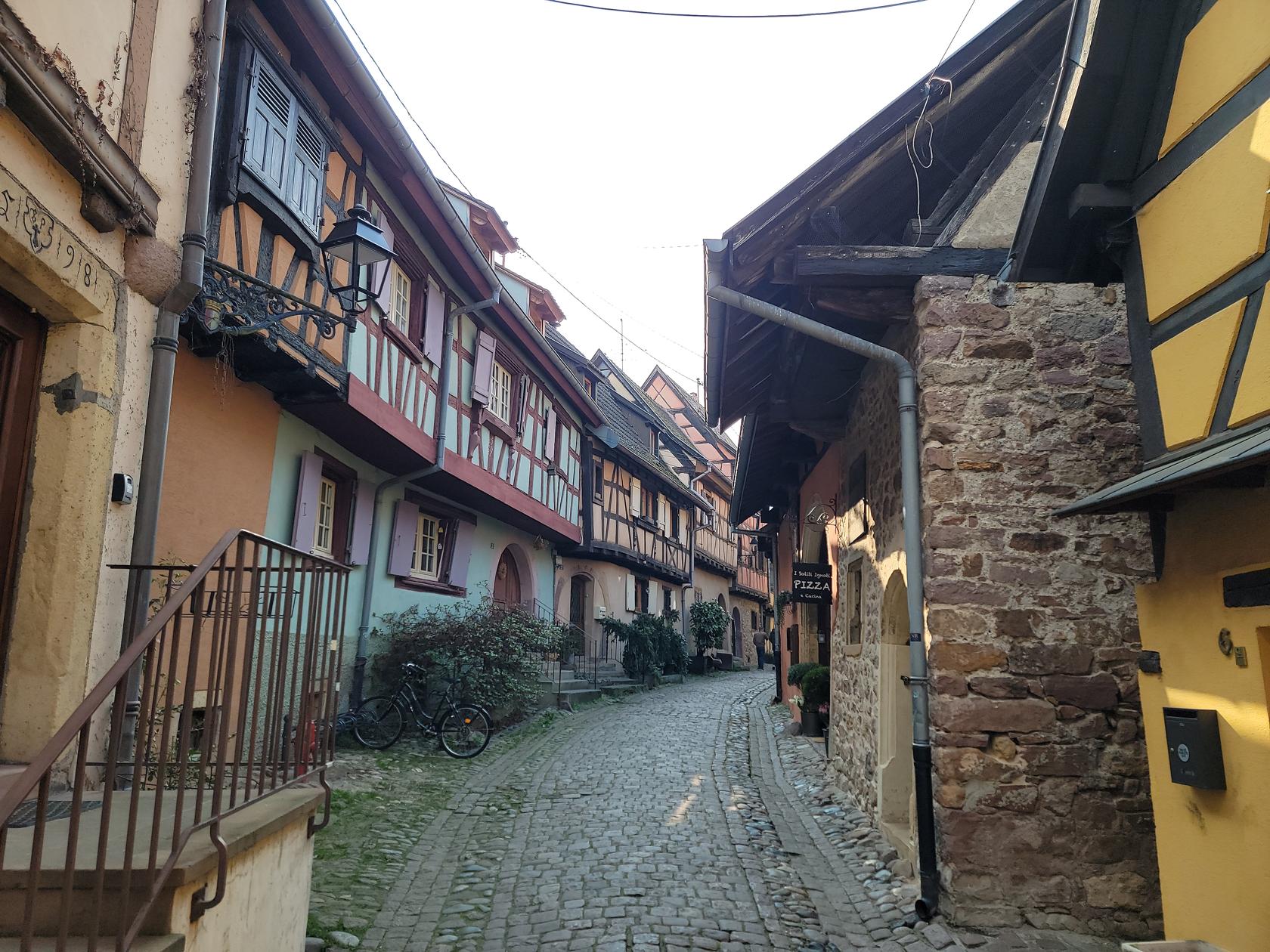
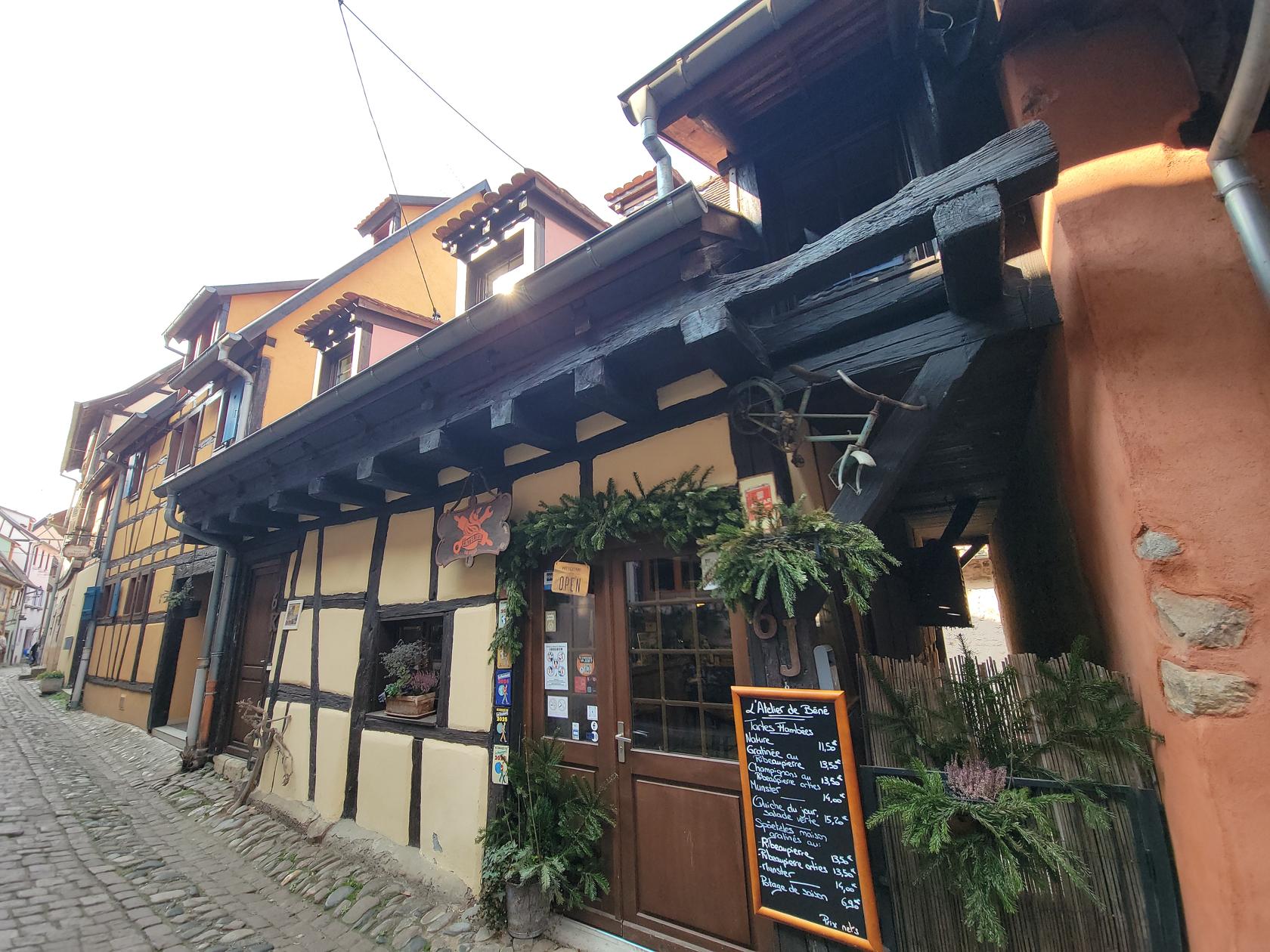
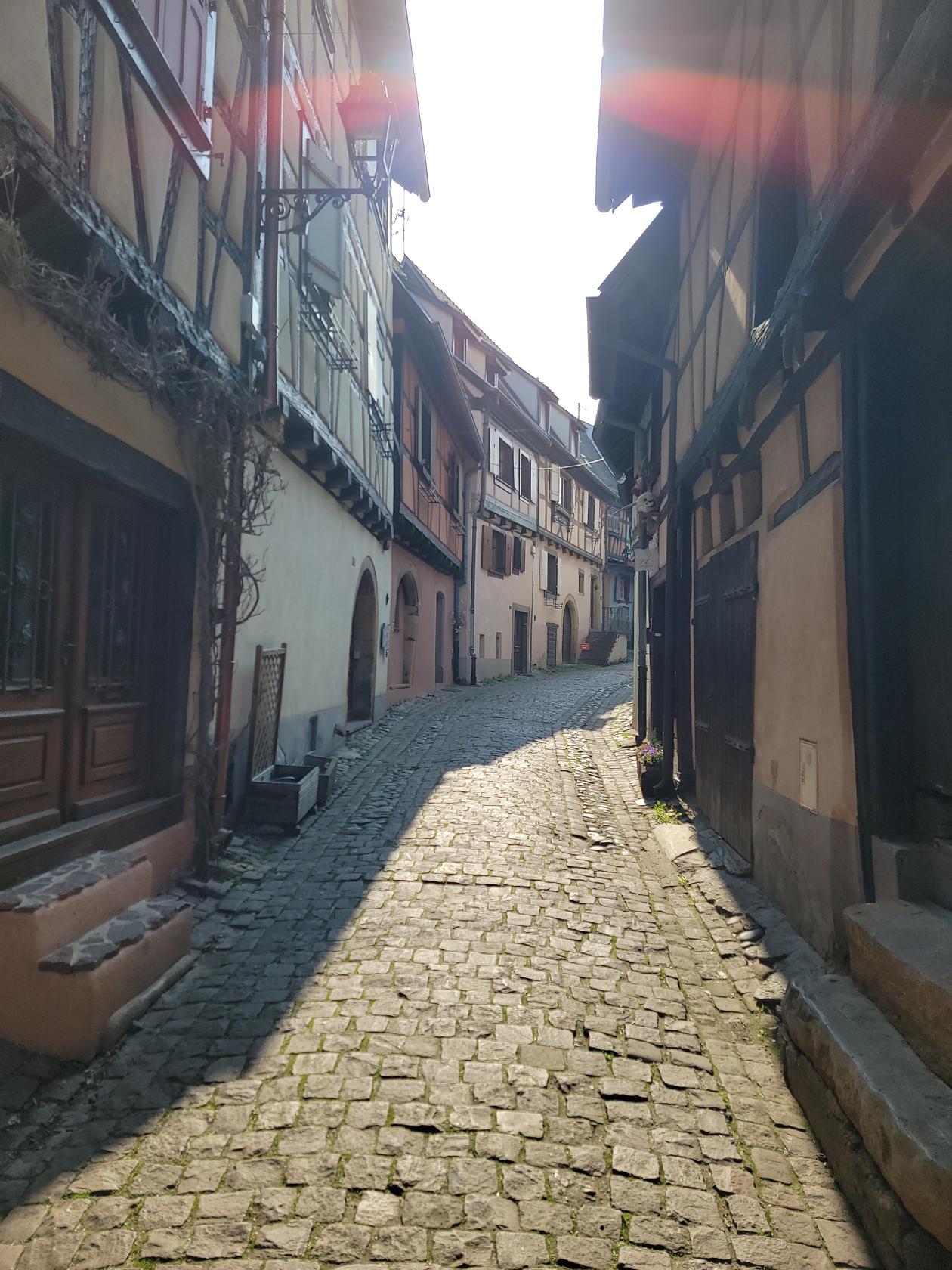
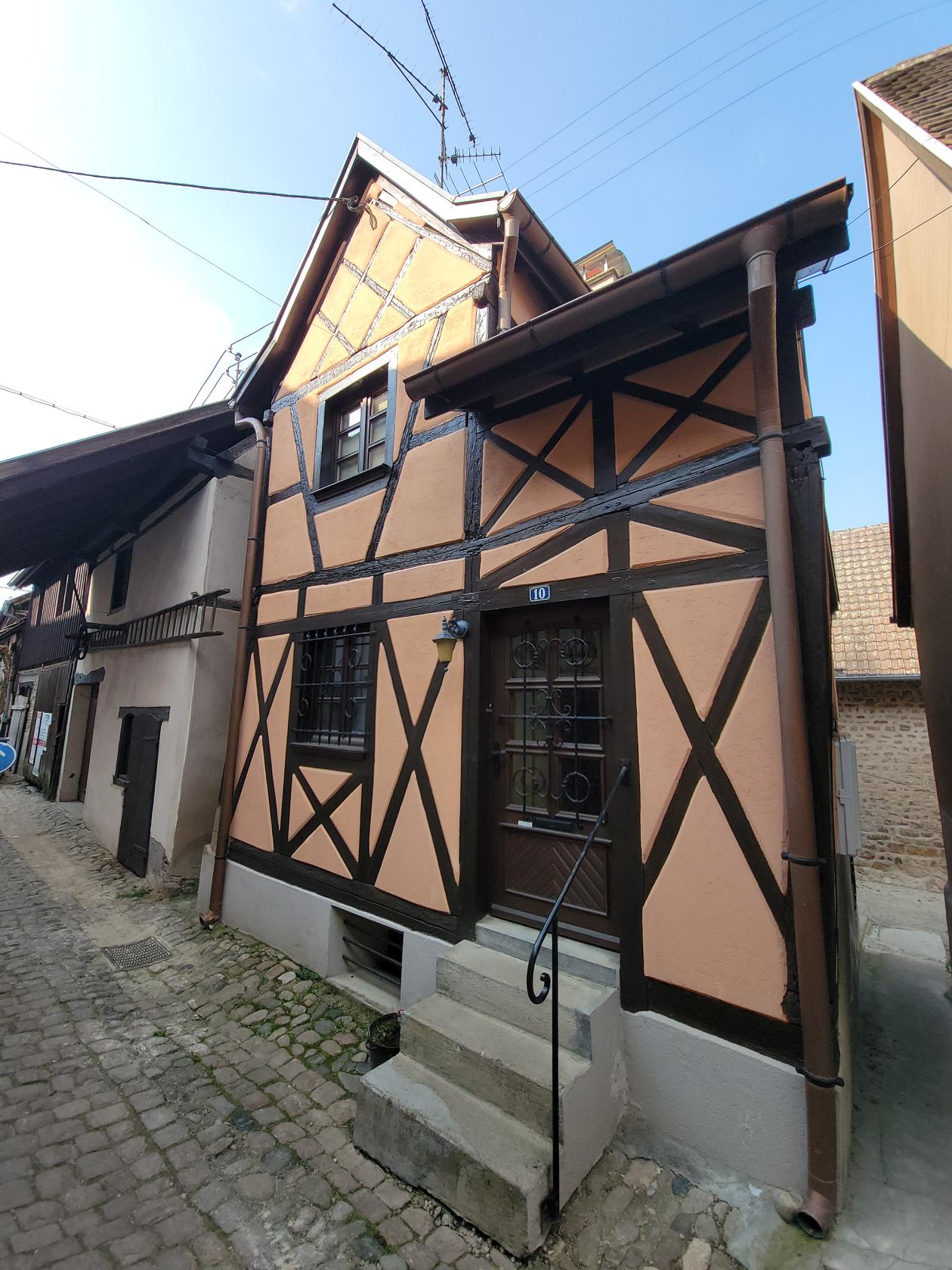
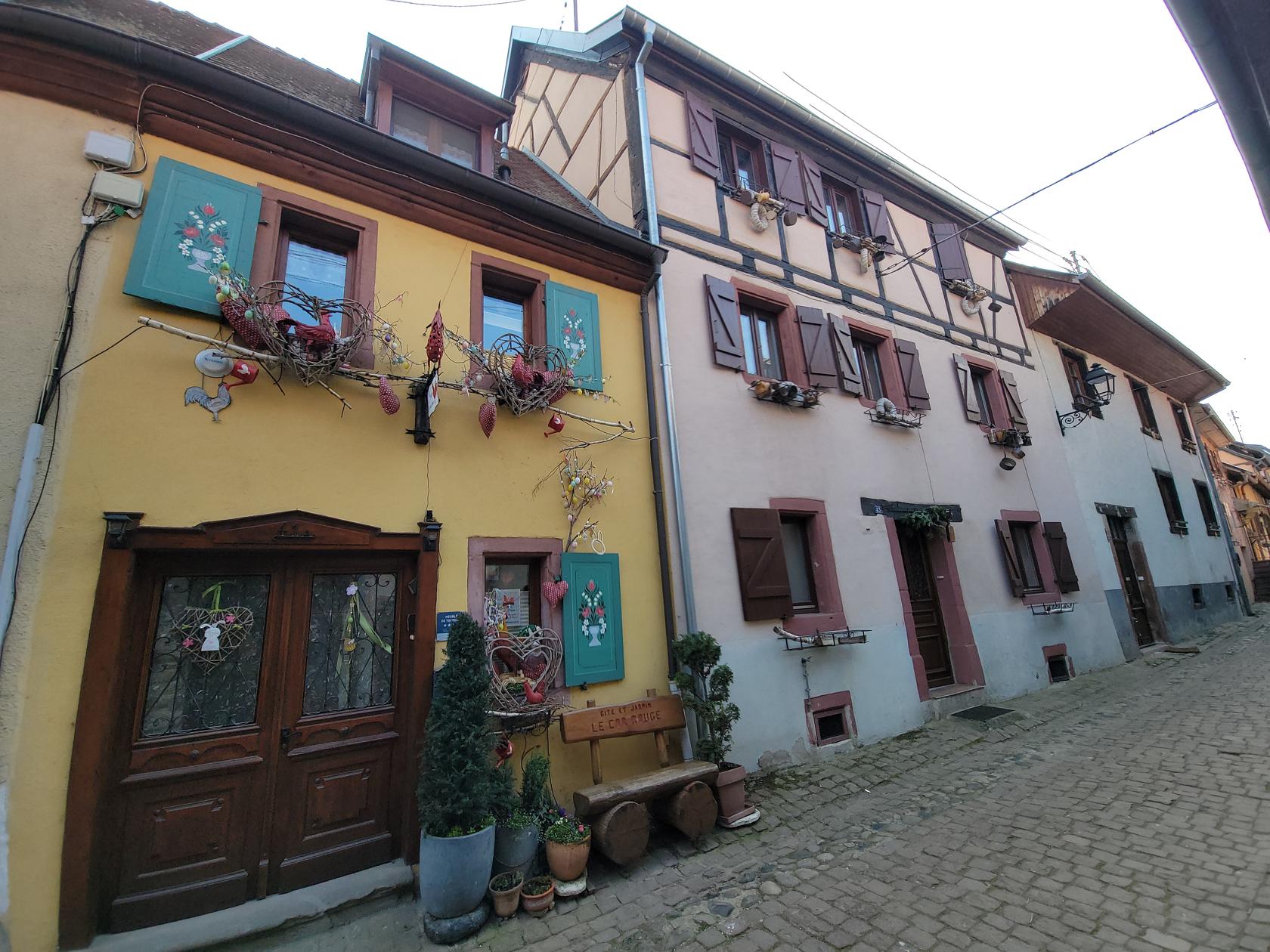
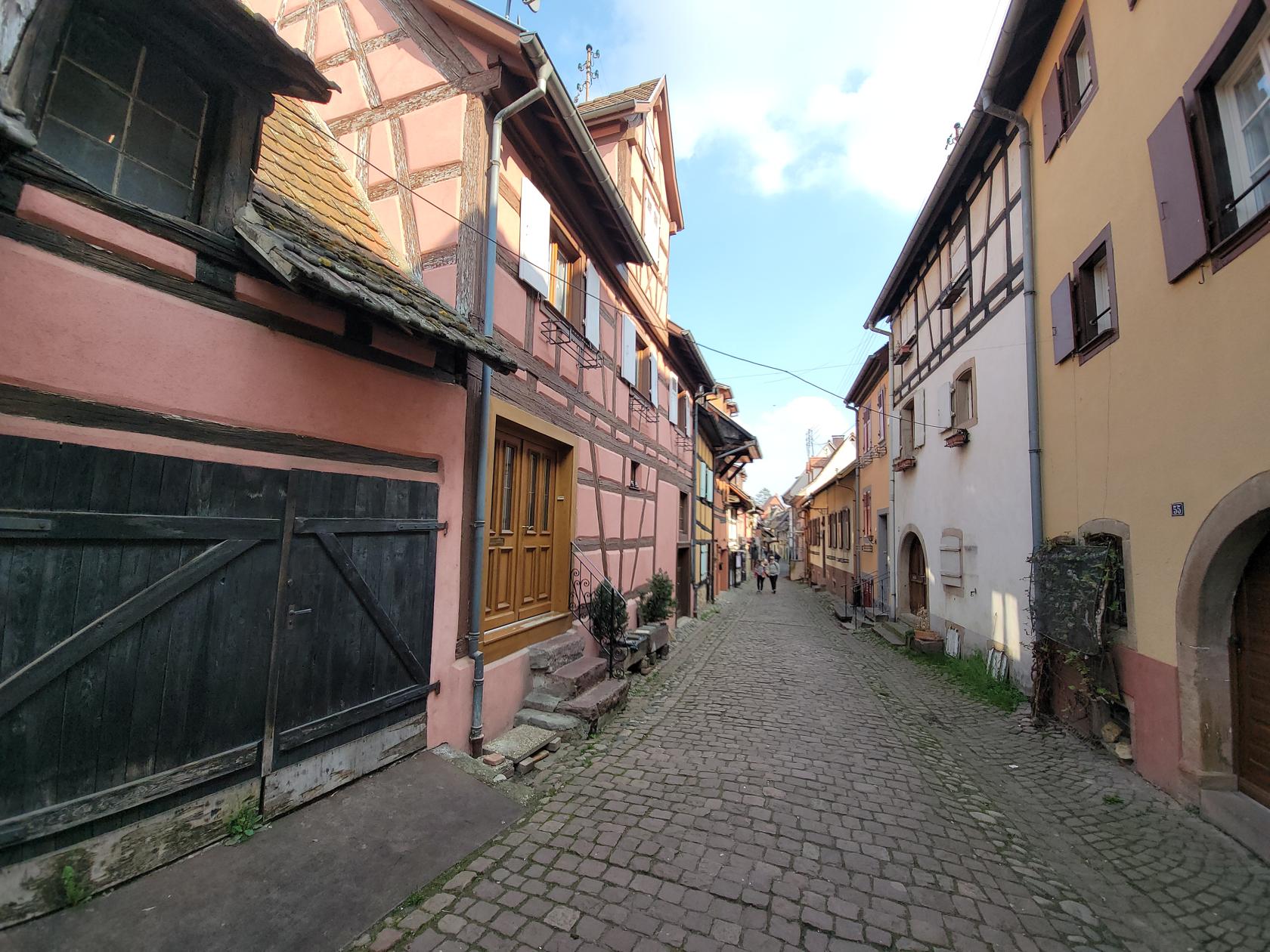
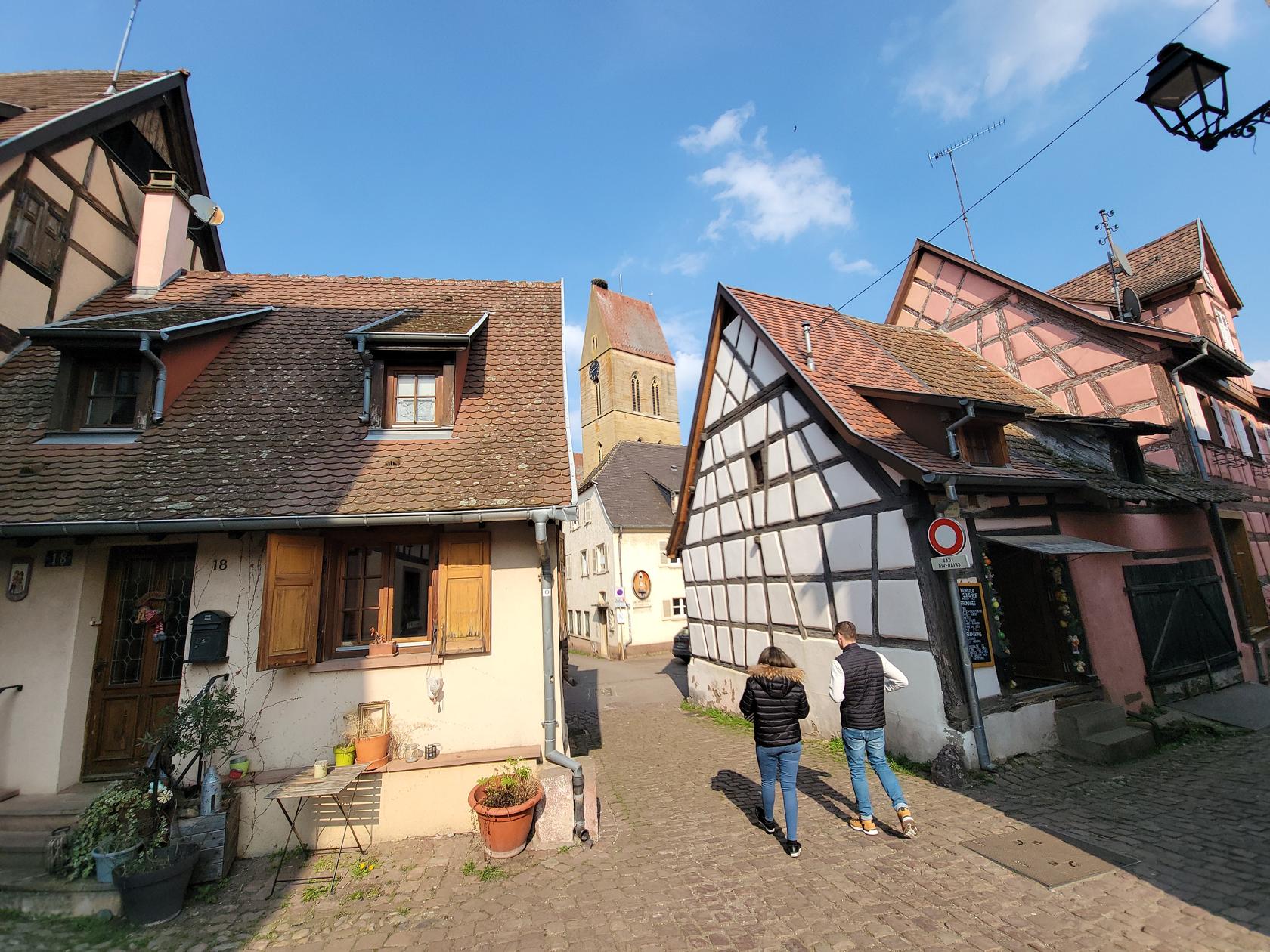
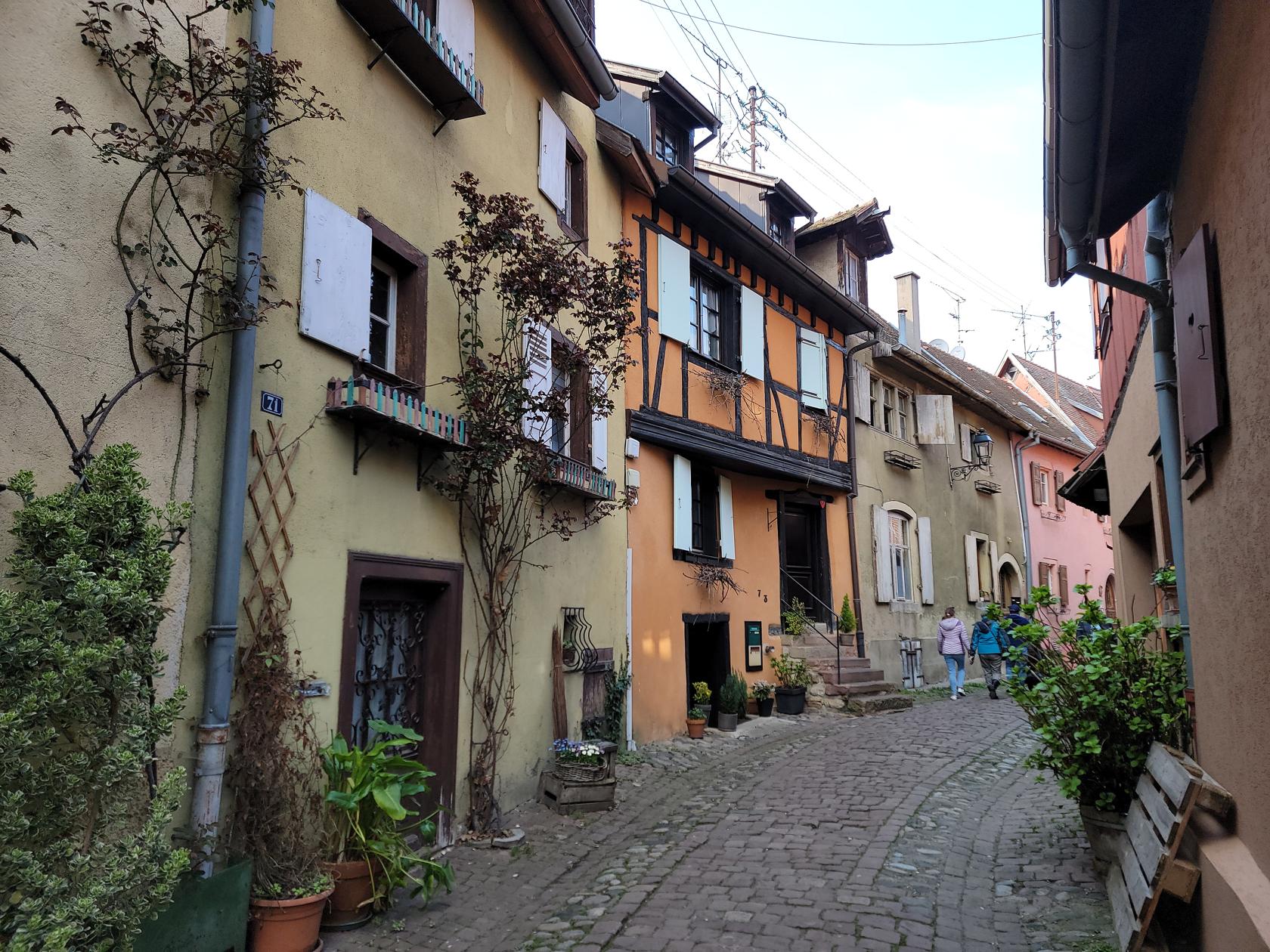
A stone’s throw from Colmar is the small Zwiebelstadt of Eguisheim[1]In German it is spelled Egisheim, France. Here you will enjoy what a small medievalAlsatian town feels like.
Equisheim
The germans use the term Zwiebelstadtto denote any small medieval town that is formed like an onion. Though typically they have eight sides with concentric alleys bisected by a Grand Rue, or main street, they may be circular or oval as well. In the center of it all you will usually find a church or main plaza.
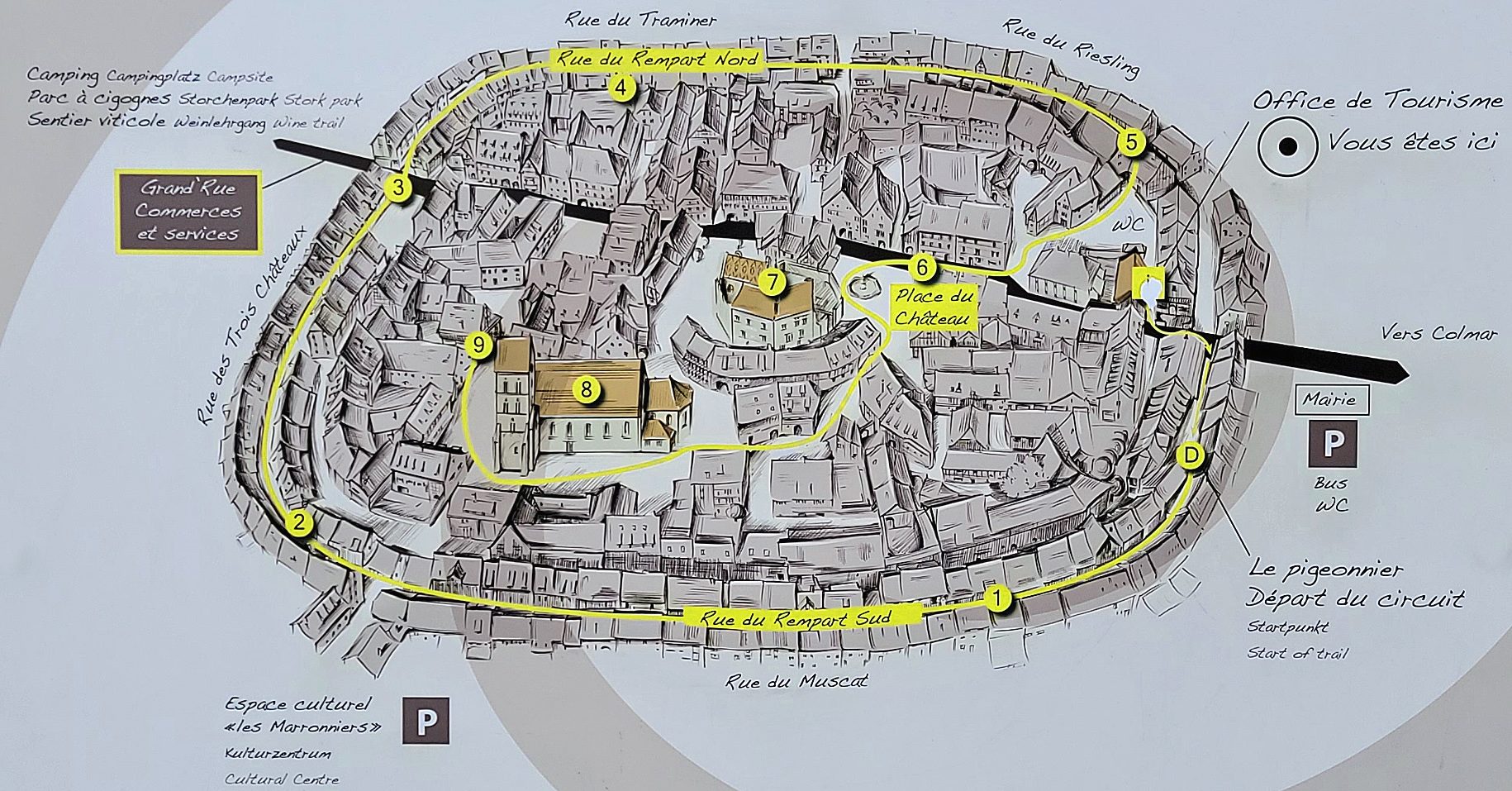
City Map – Stadtplan – Eguisheim, France
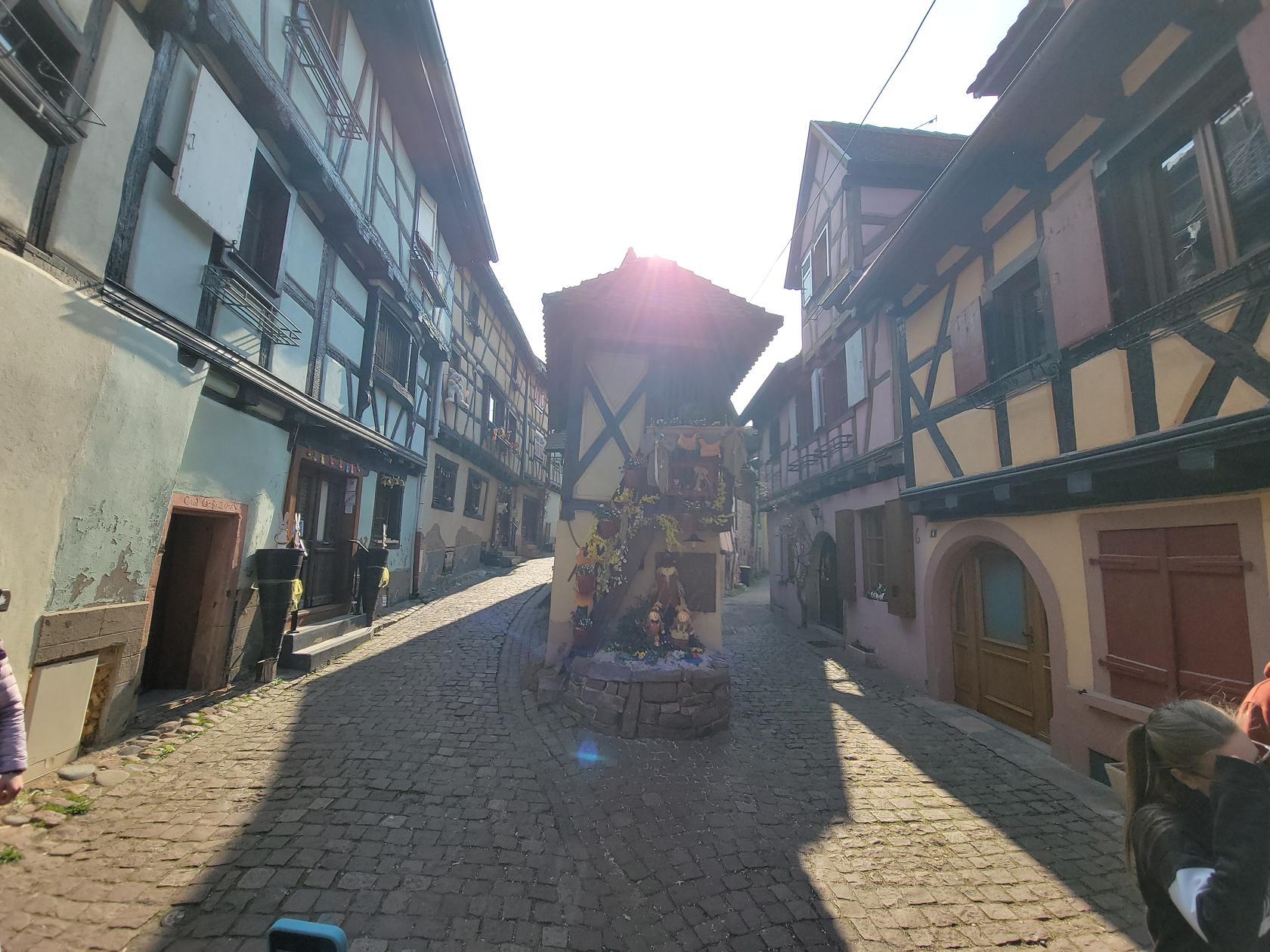
In the above the following are noteworthy, according to town officials, starting at (D) with the Pigeon Loft.
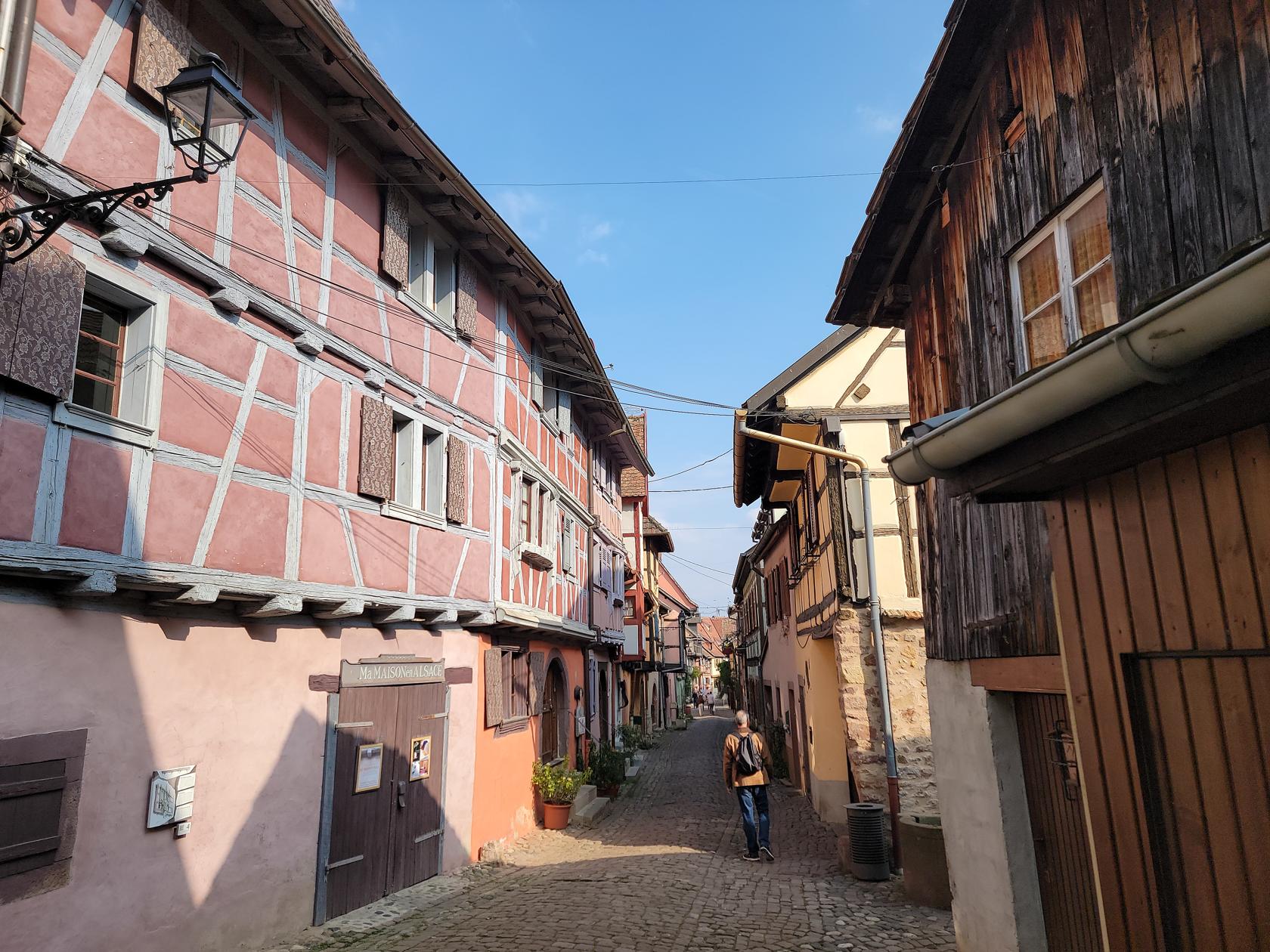
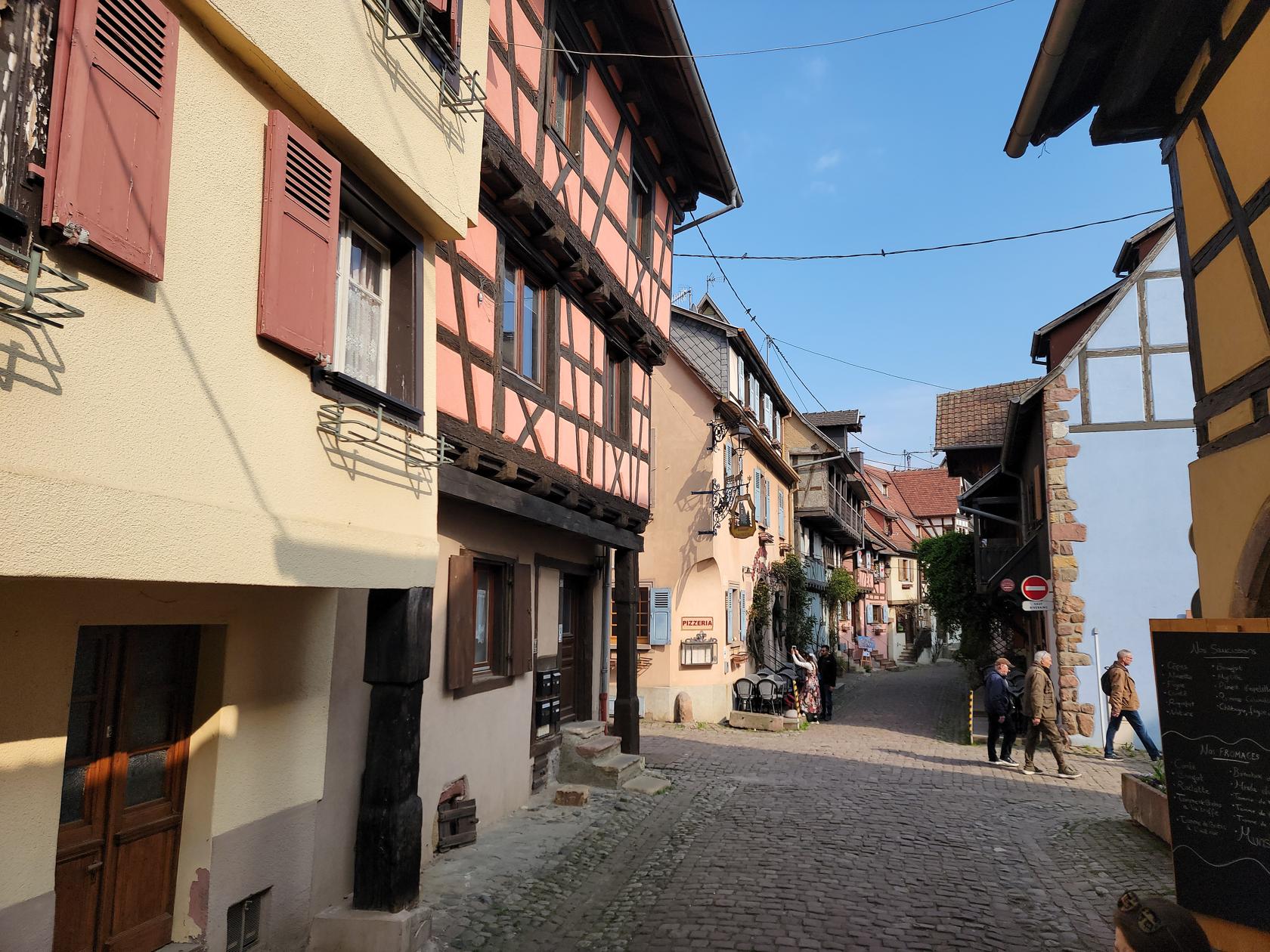
Rue de Ramport – The colors of Eguisheim
Rue de Ramport – Round and round the town
The gates of the town
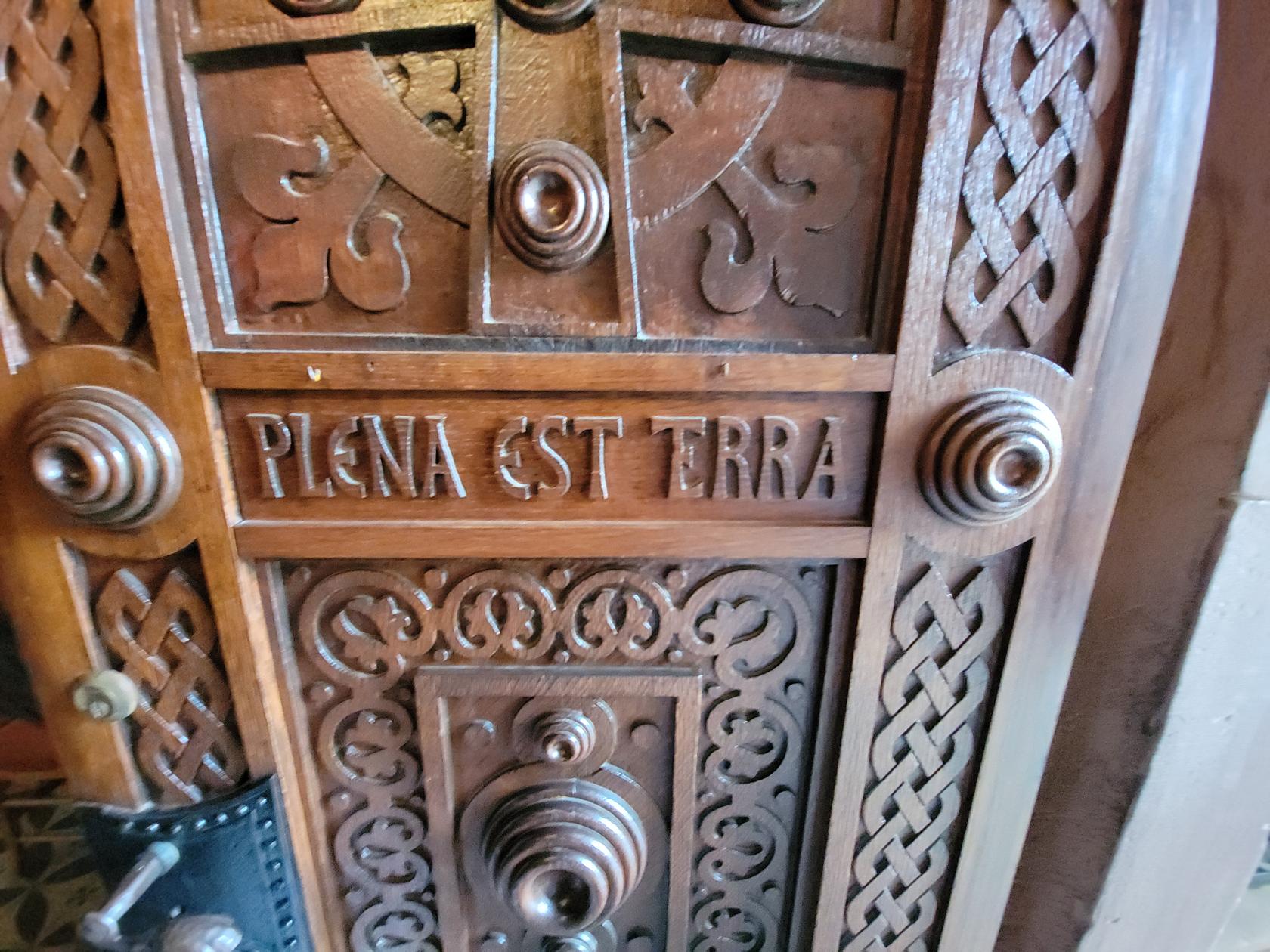
The town’s inscriptions
Stone engravings
The chateau
The host of the chapel
The virgins of Eguisheim (the church)
The tithe courtyards
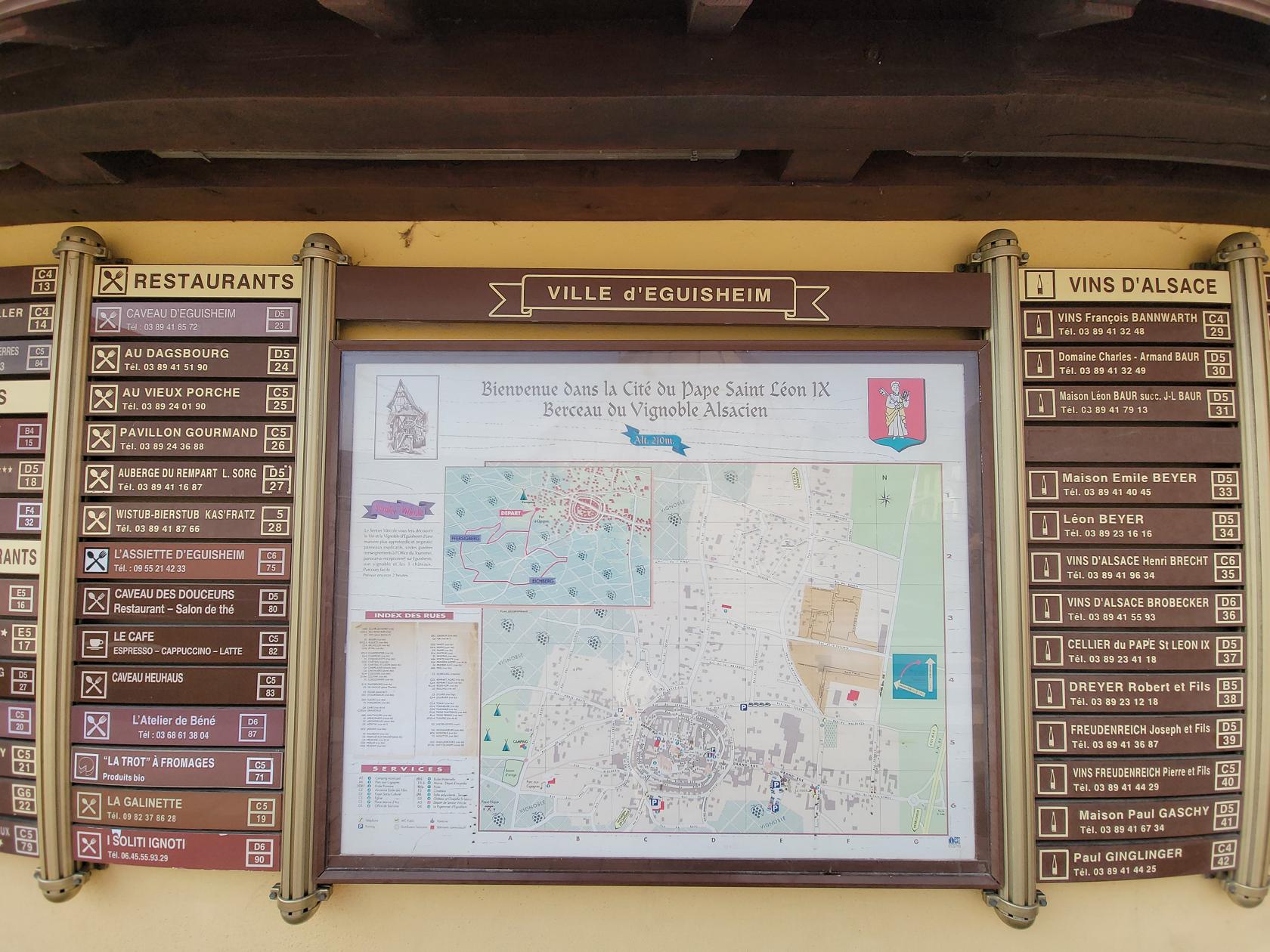
The area around the town is noted for its excellent alsatian wines. Upon entering the town visitors can see a record of the vineyards proudly displayed along with restaurants and a map of the town.
Alsatian WIneries – Eguisheim, France
Getting There
From Colmar a quick drive down the Rue de Tiefenbach or the Route de Rouffach puts you on the D83 for a short time before you reach one of the many small roads that will take you into town, though typically it would be the Rue de la 1er Armée.
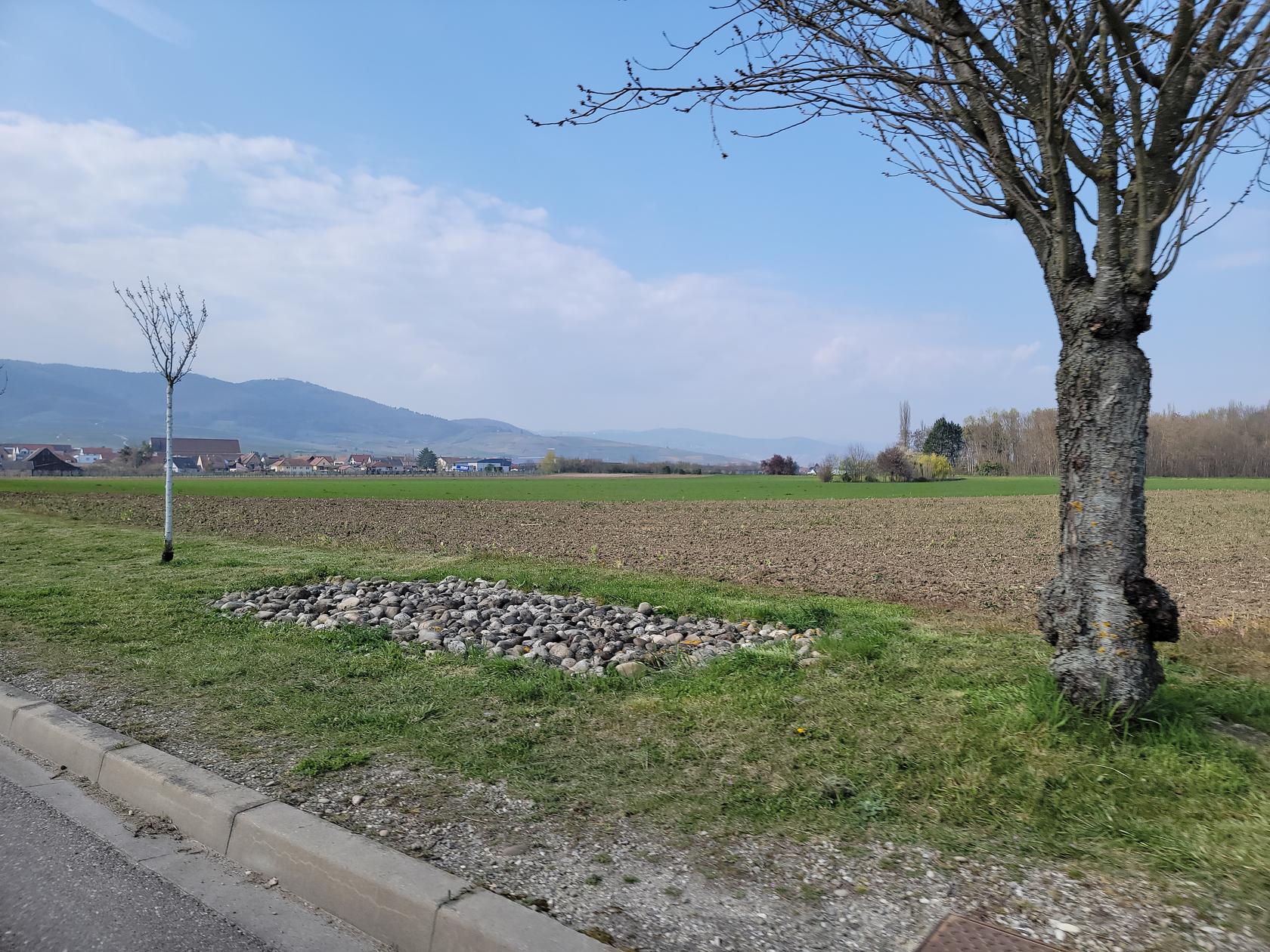
The fields outside – Entering the town – Eguisheim, France
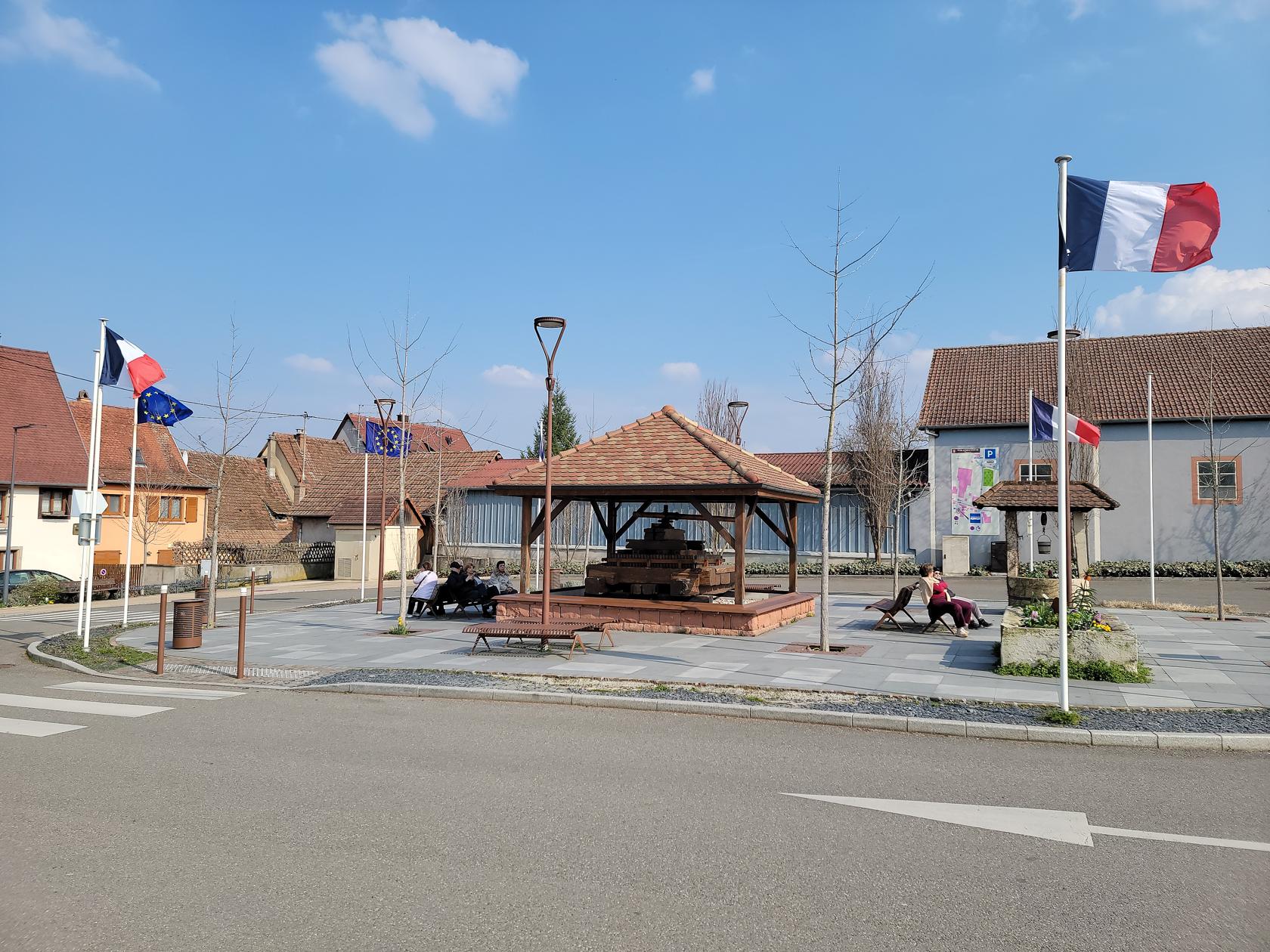
Wine press near parking lot – Eguisheim, France
Grand Rue
Cutting through the center of town is the Grand Rue, or main street. Here is where you will find most all of the shops and many of the wineries.
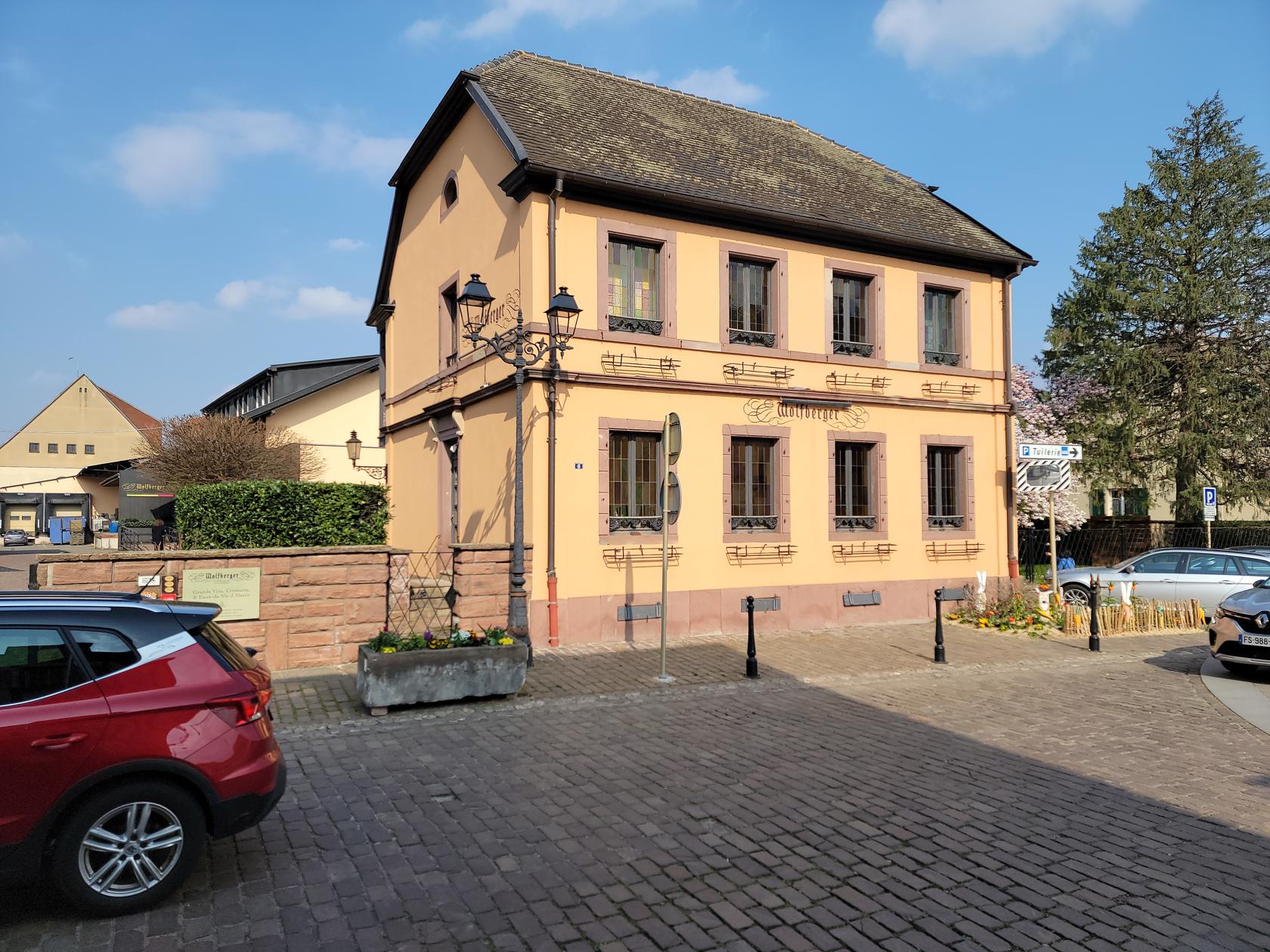
Typical winery on the edge of town – Eguisheim, France
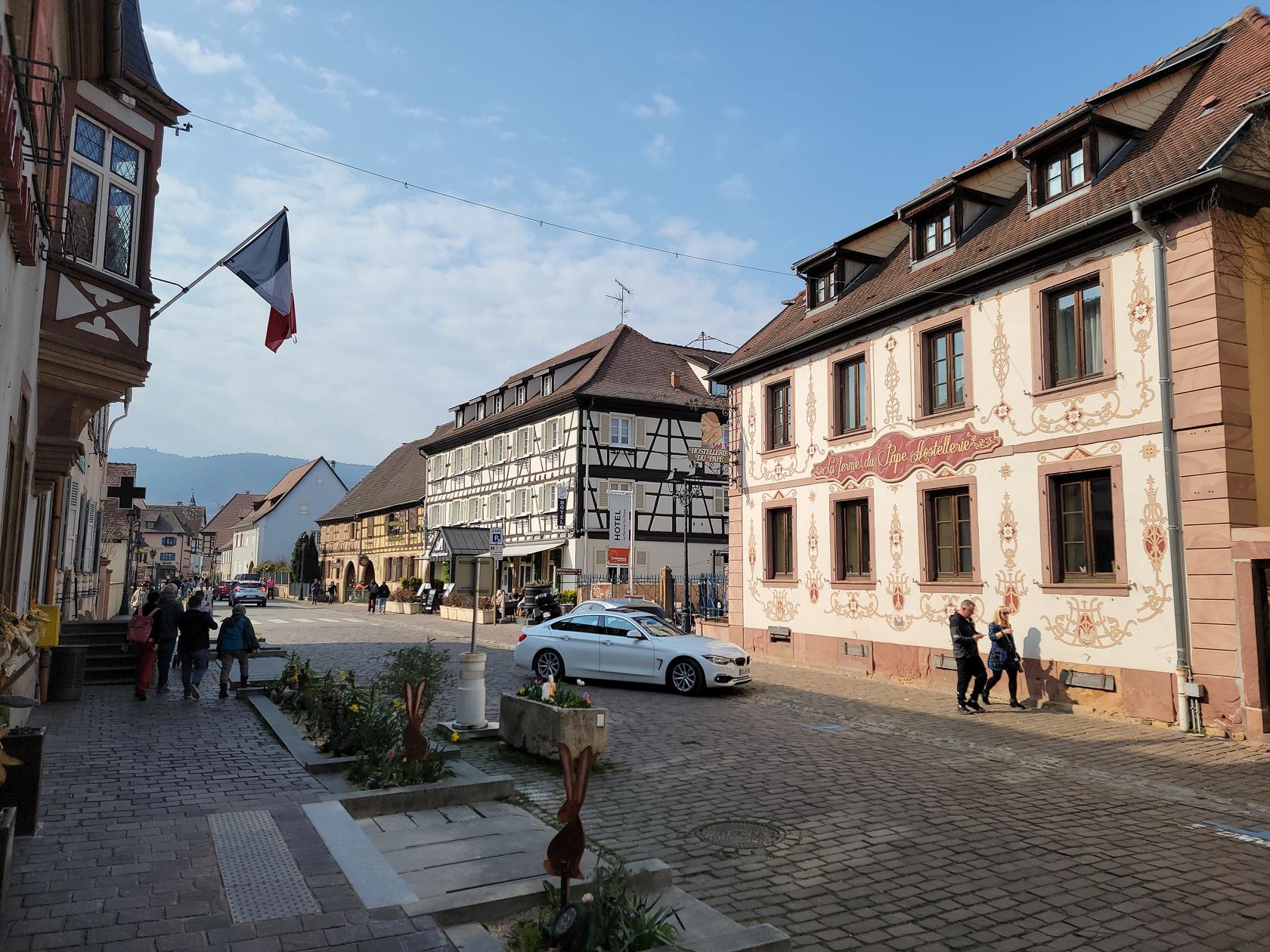
Entering town – Grand Rue – Eguisheim, France
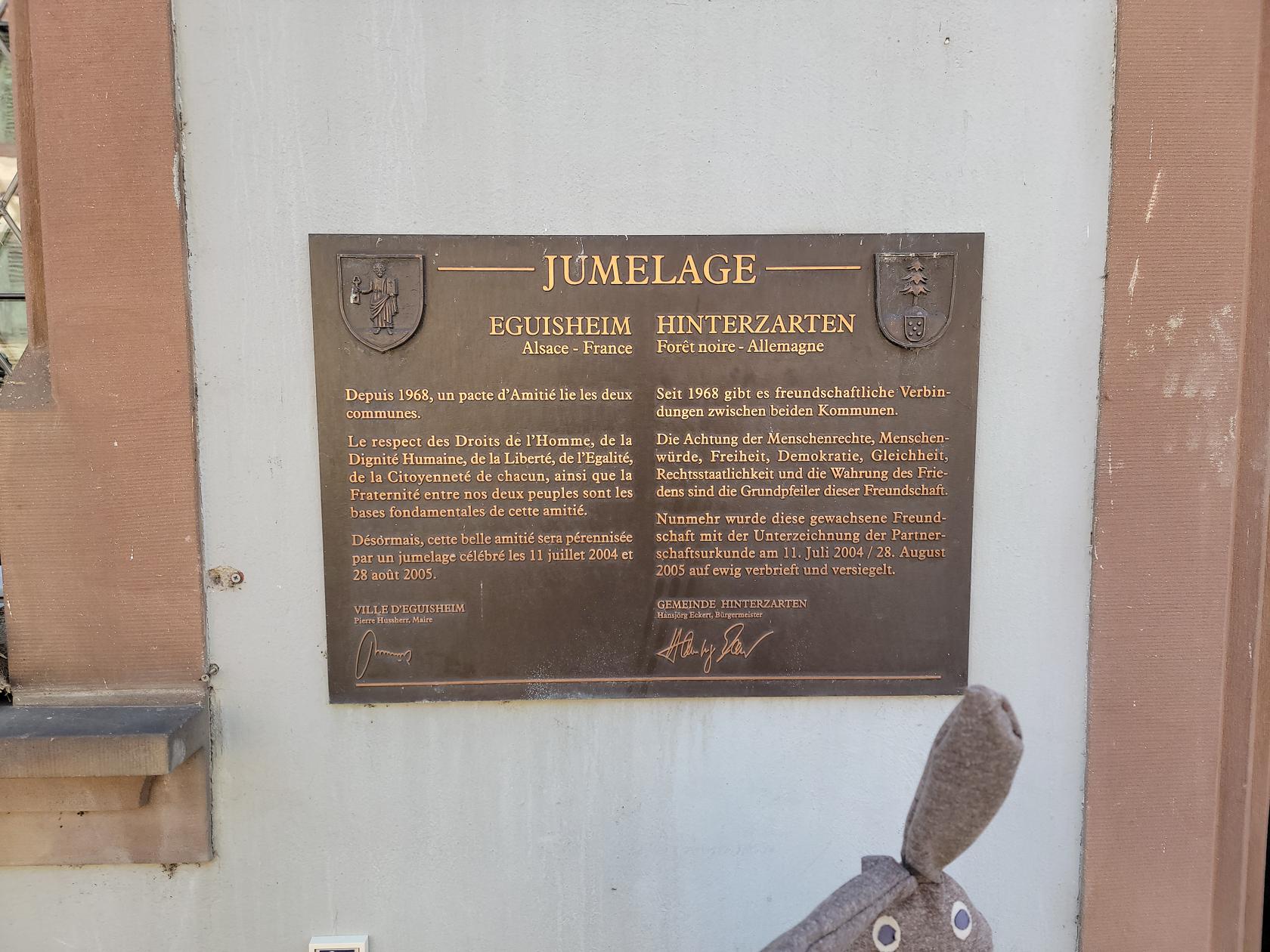
Paired towns Eguisheim and Hinterzarten – Grand Rue – Eguisheim, France
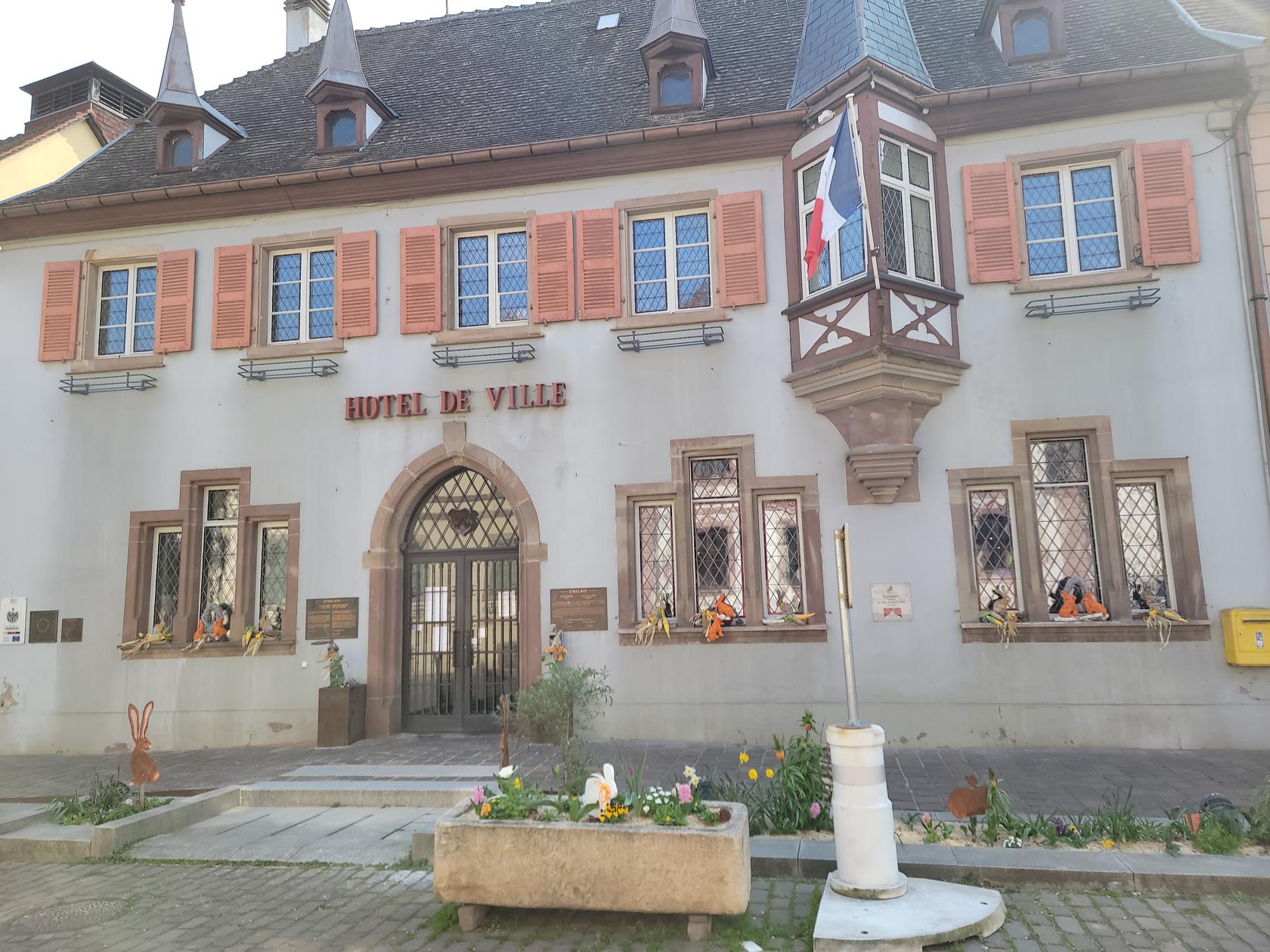
Hotel de Ville – Grand Rue – Eguisheim, France
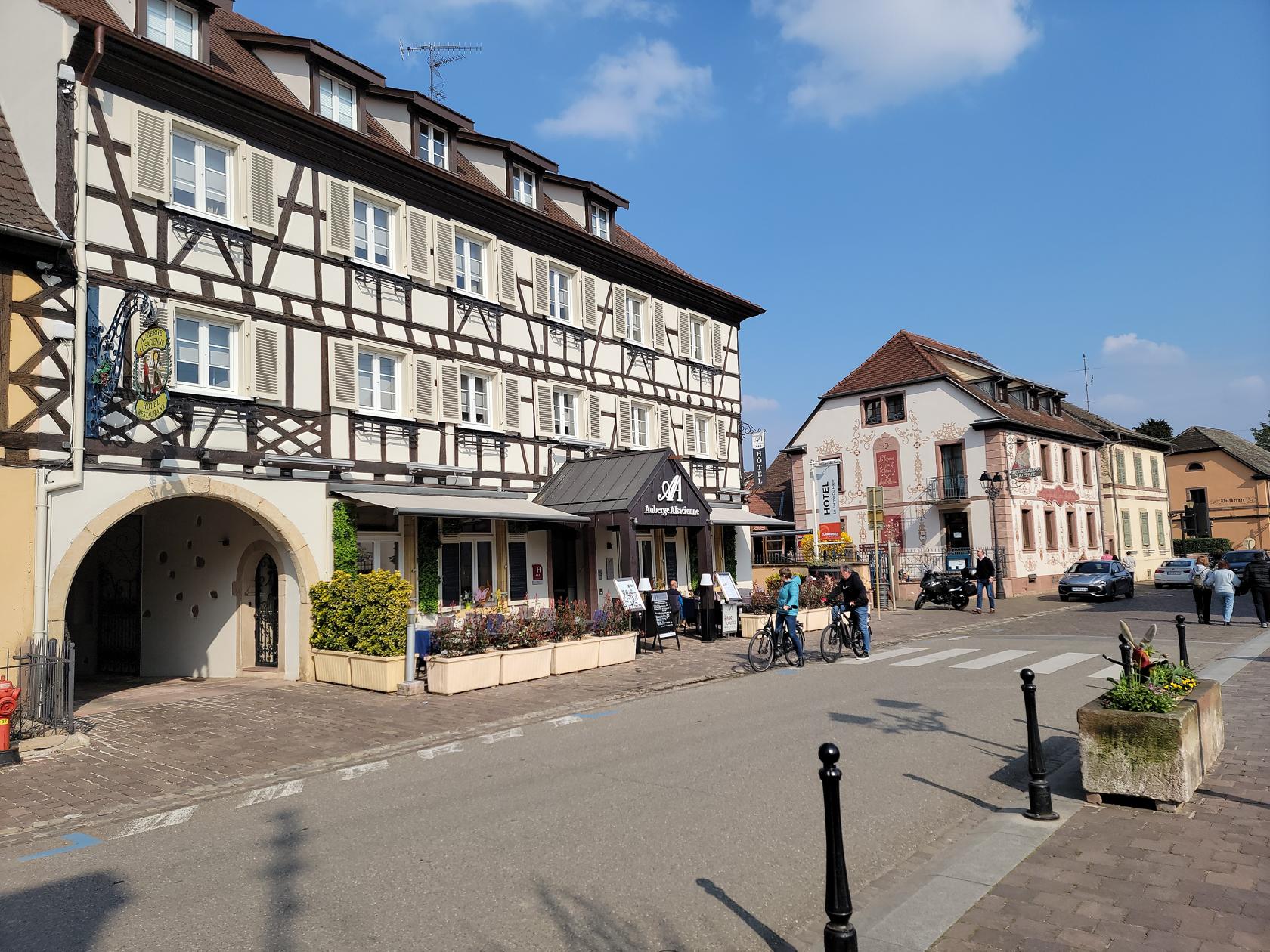
More hotels – Grand Rue – Eguisheim, France
Winery – Grand Rue – Eguisheim, France
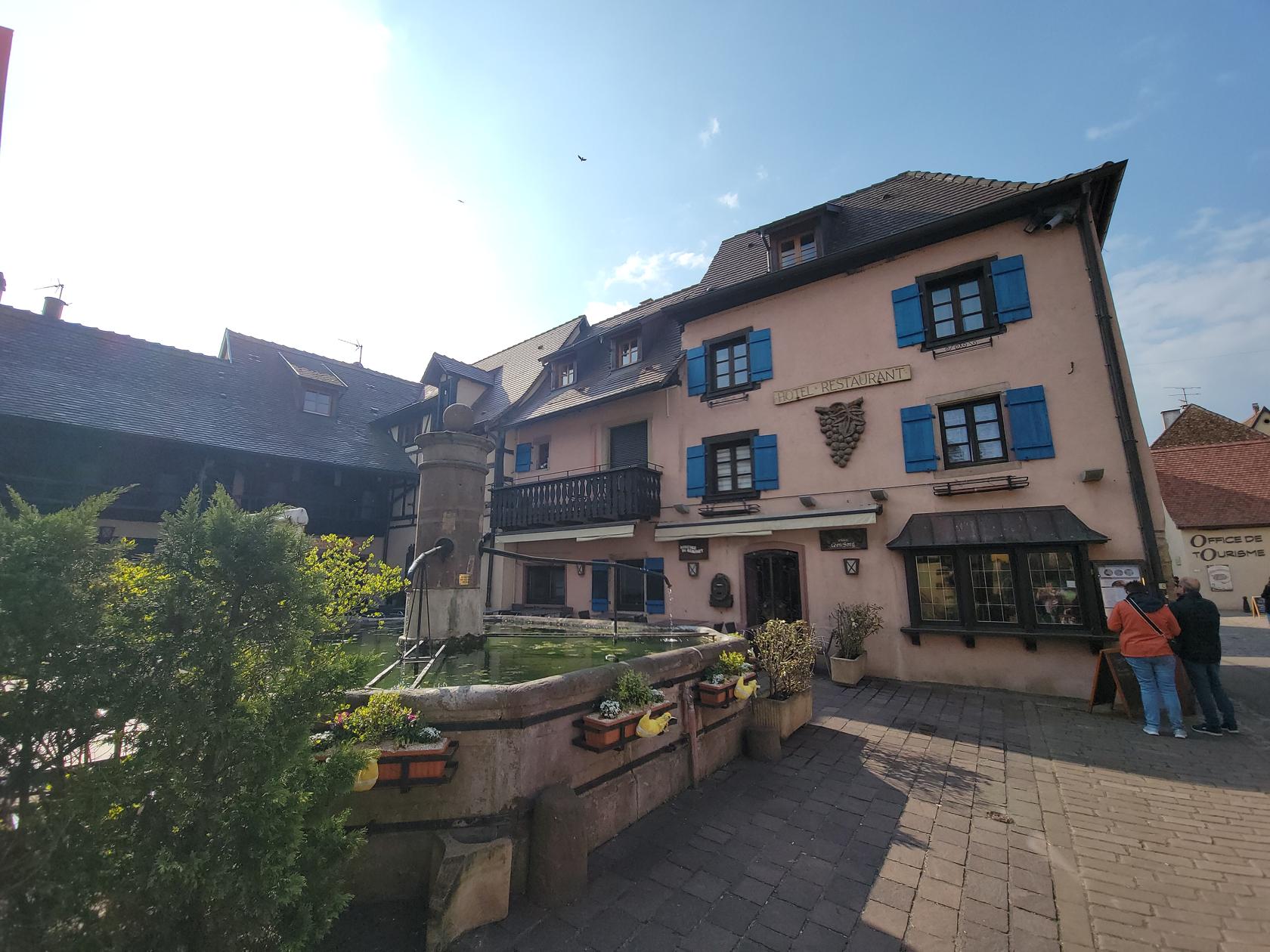
The tourism office is close by the Eguisheim Fountain, so once you locate that, it’s just a stone’s throw away.
Fountain of Eguisheim – Grand Rue – Eguisheim, France
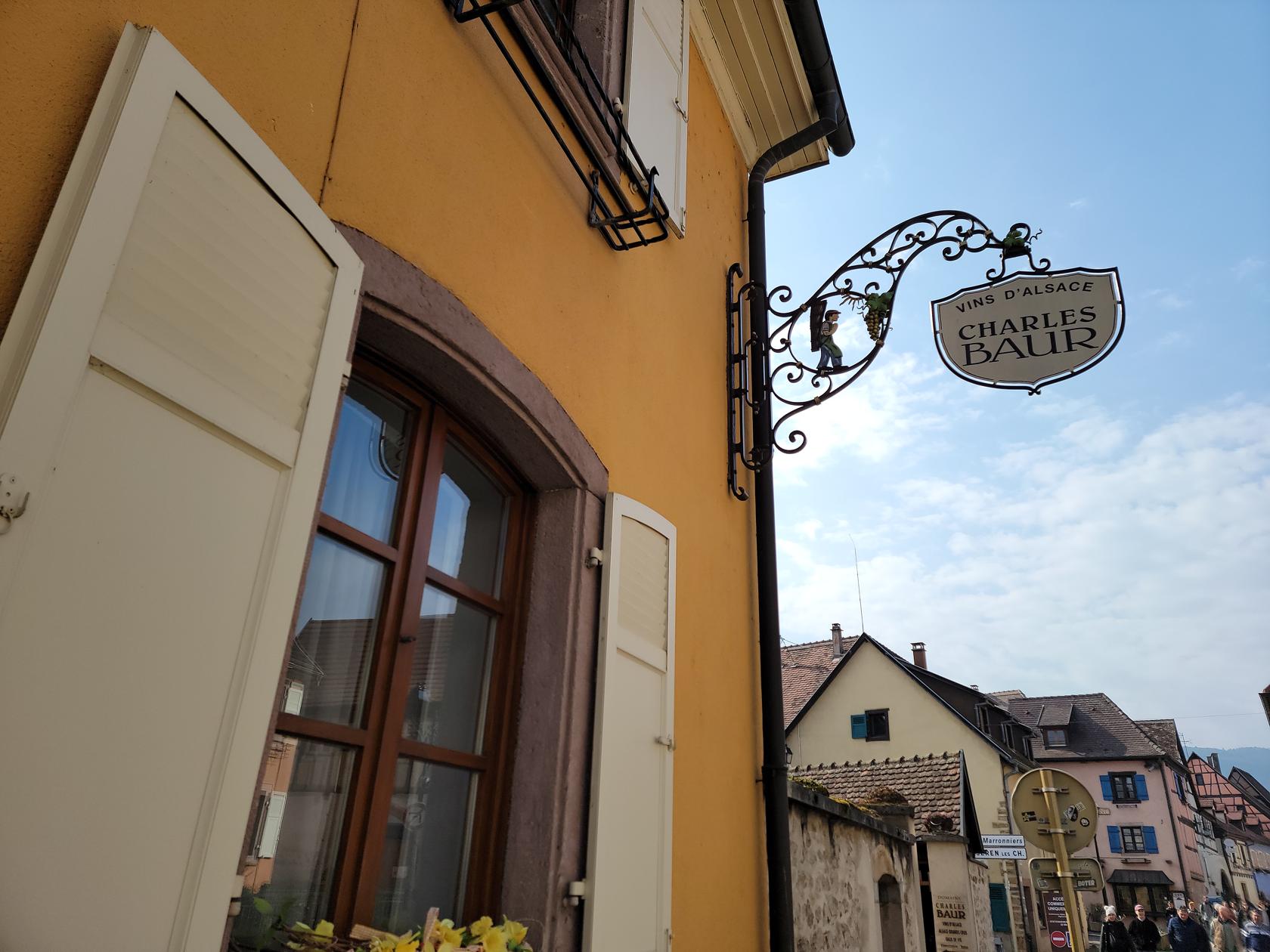
Charles Bauer winery – Grand Rue – Eguisheim, France
Rue de Rempart
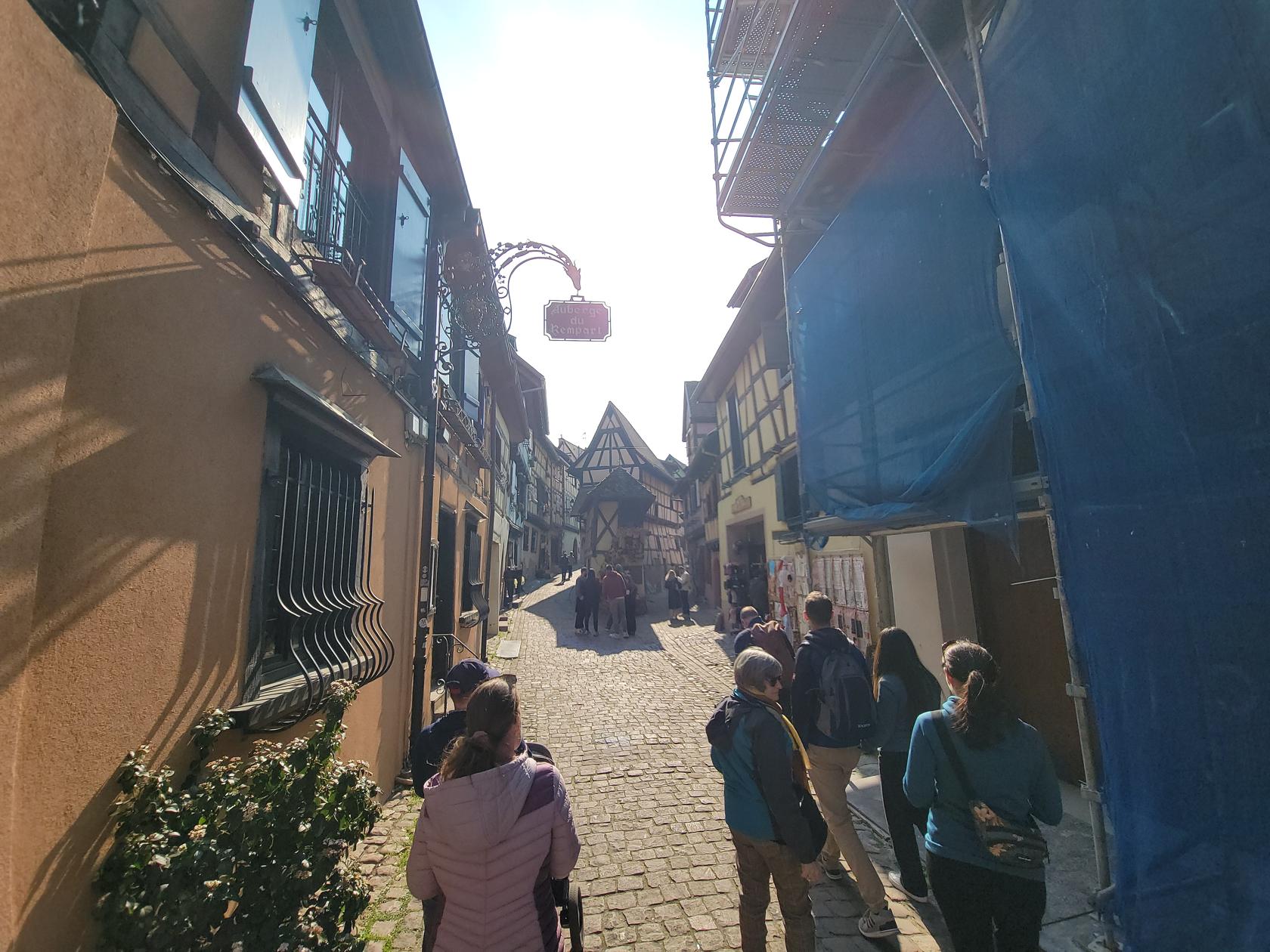
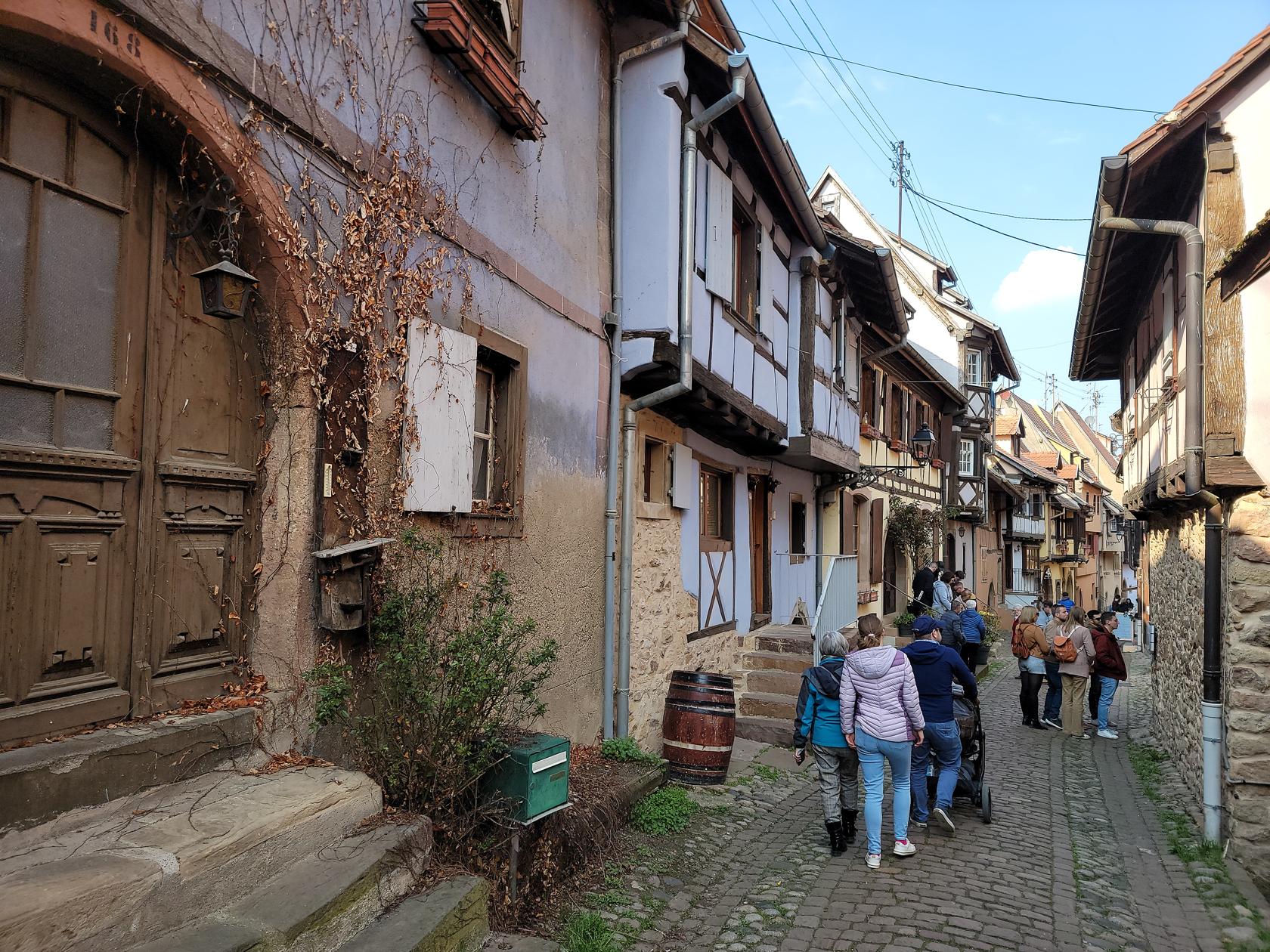
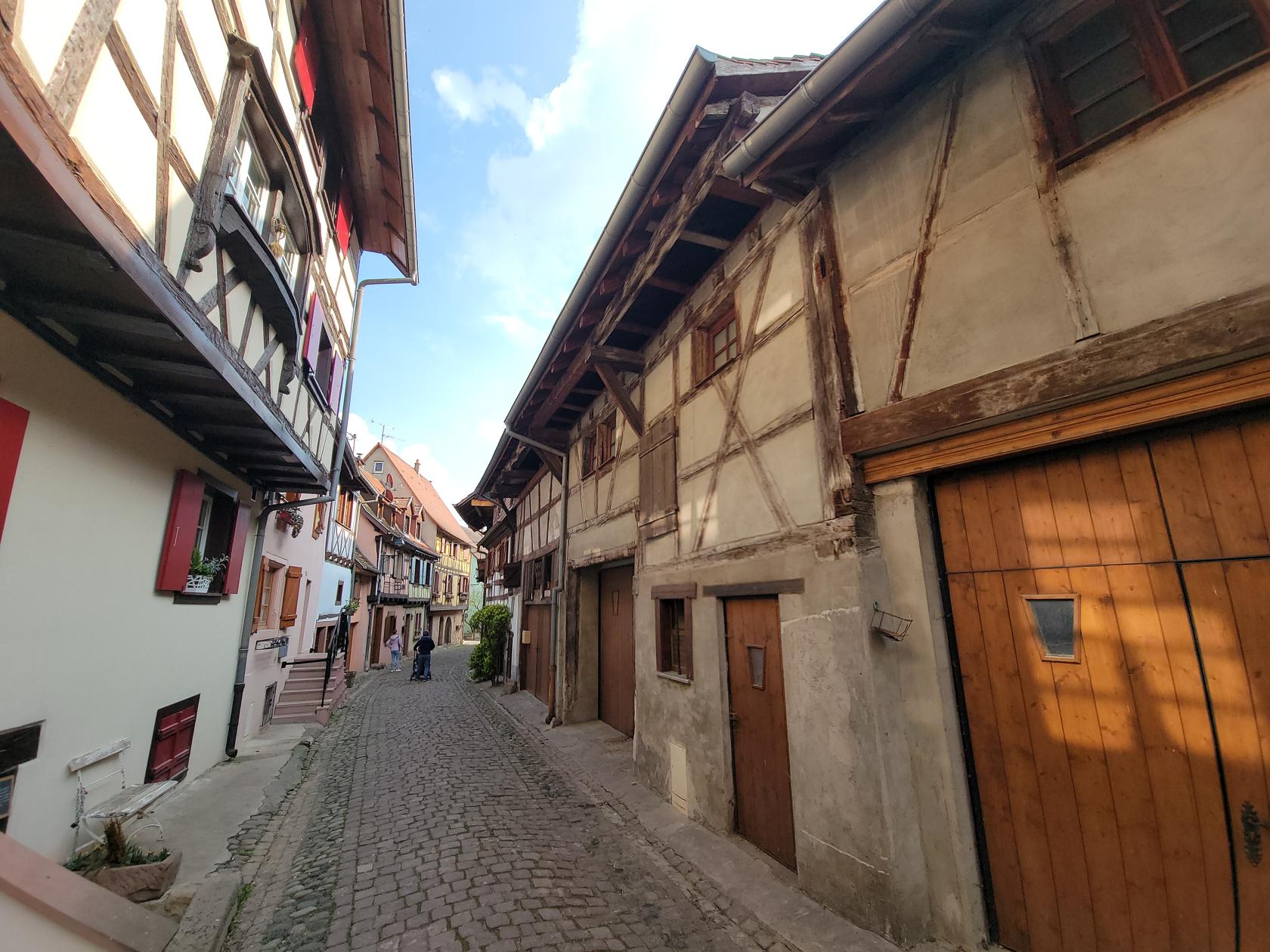
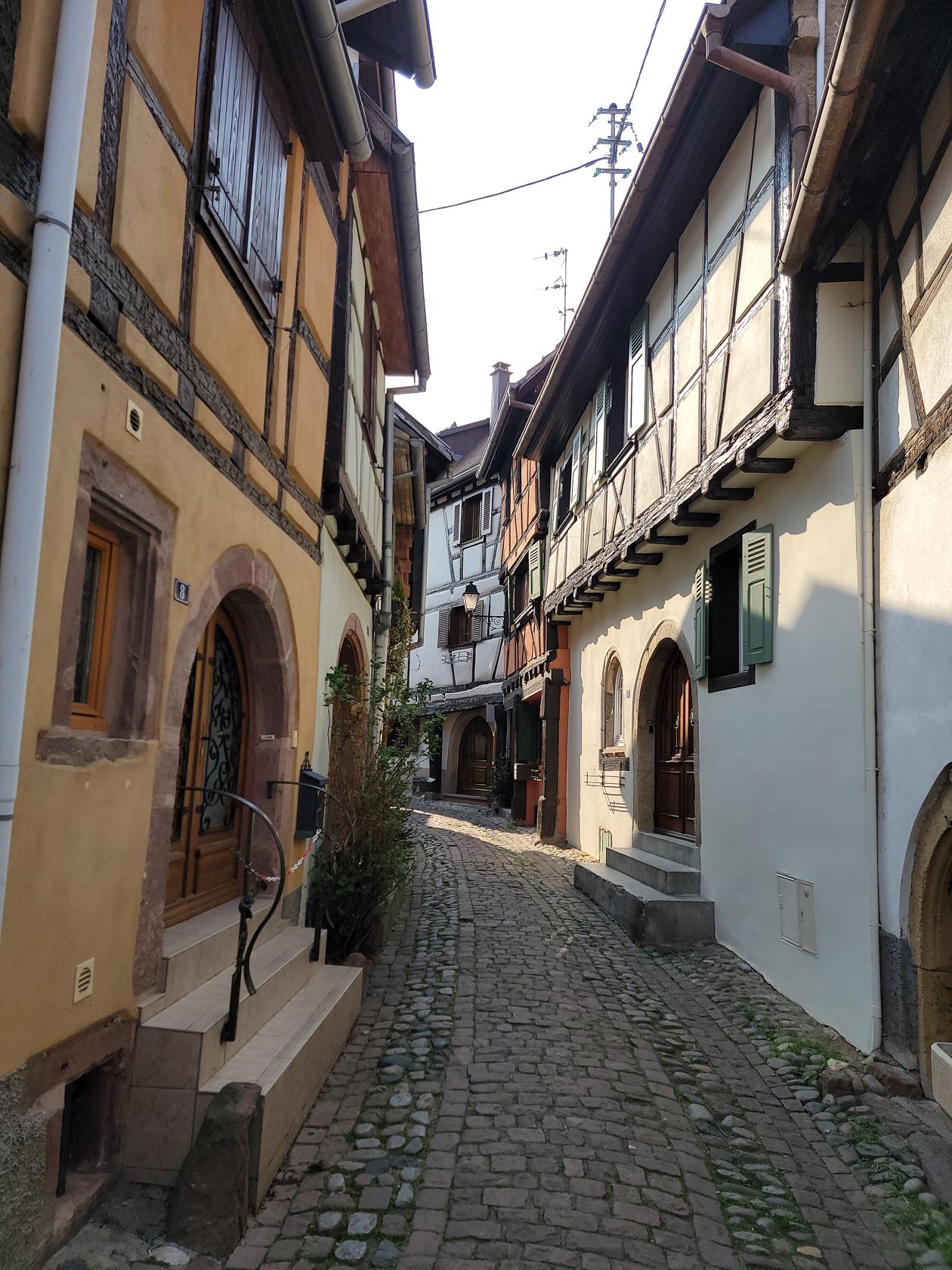
We spent most of our time walking this alley, which circumnavigates the town. Since the town is laid out like an onion, you will eventually come back to where you started.
La Grange de Eguisheim – Rue de Rempart – Eguisheim, France
La Grange de Eguisheim – Rue de Rempart – Eguisheim, France
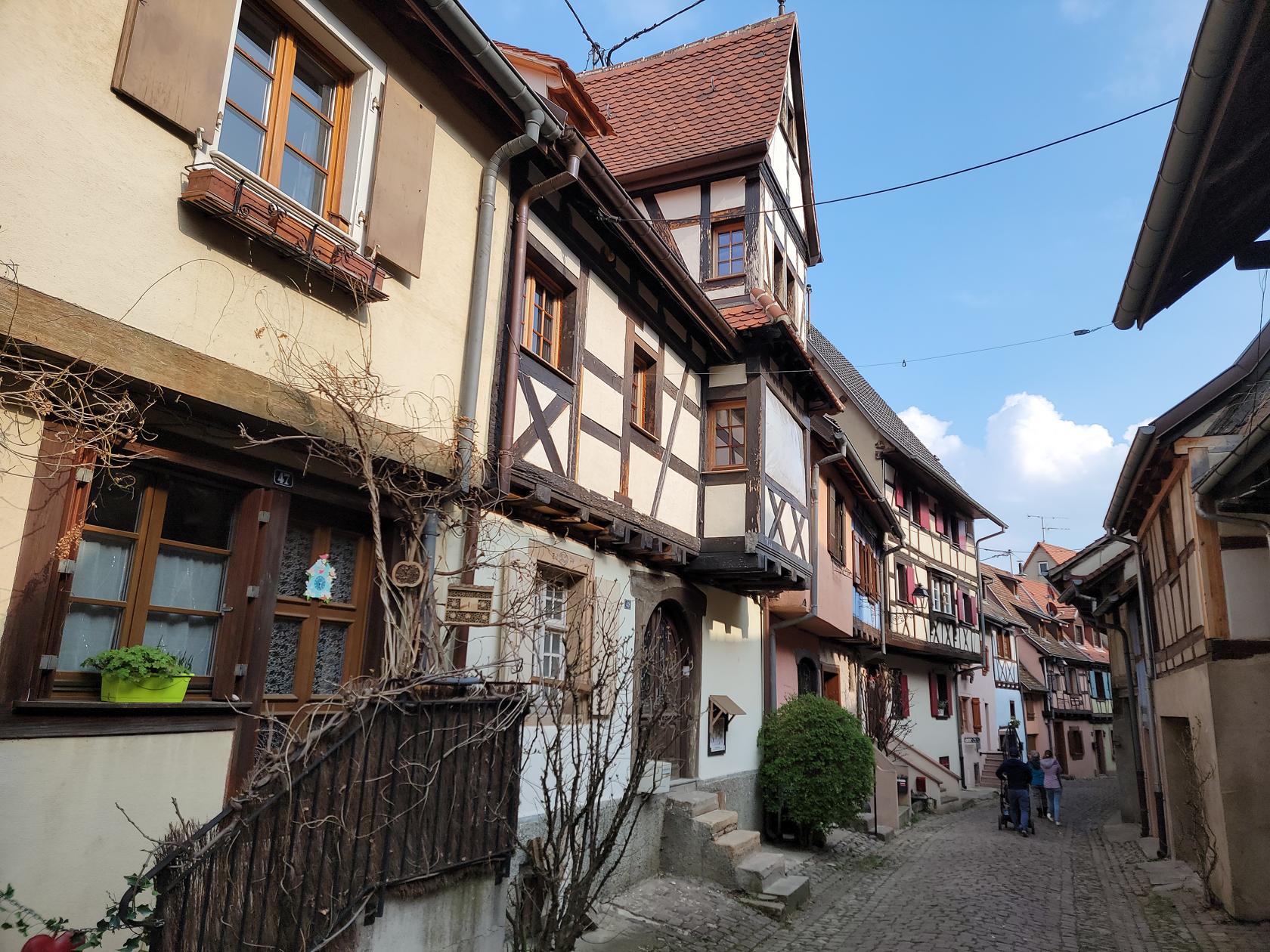
Timber Houses – Rue de Rempart – Eguisheim, France
Quaint cafe – Rue de Rempart – Eguisheim, France
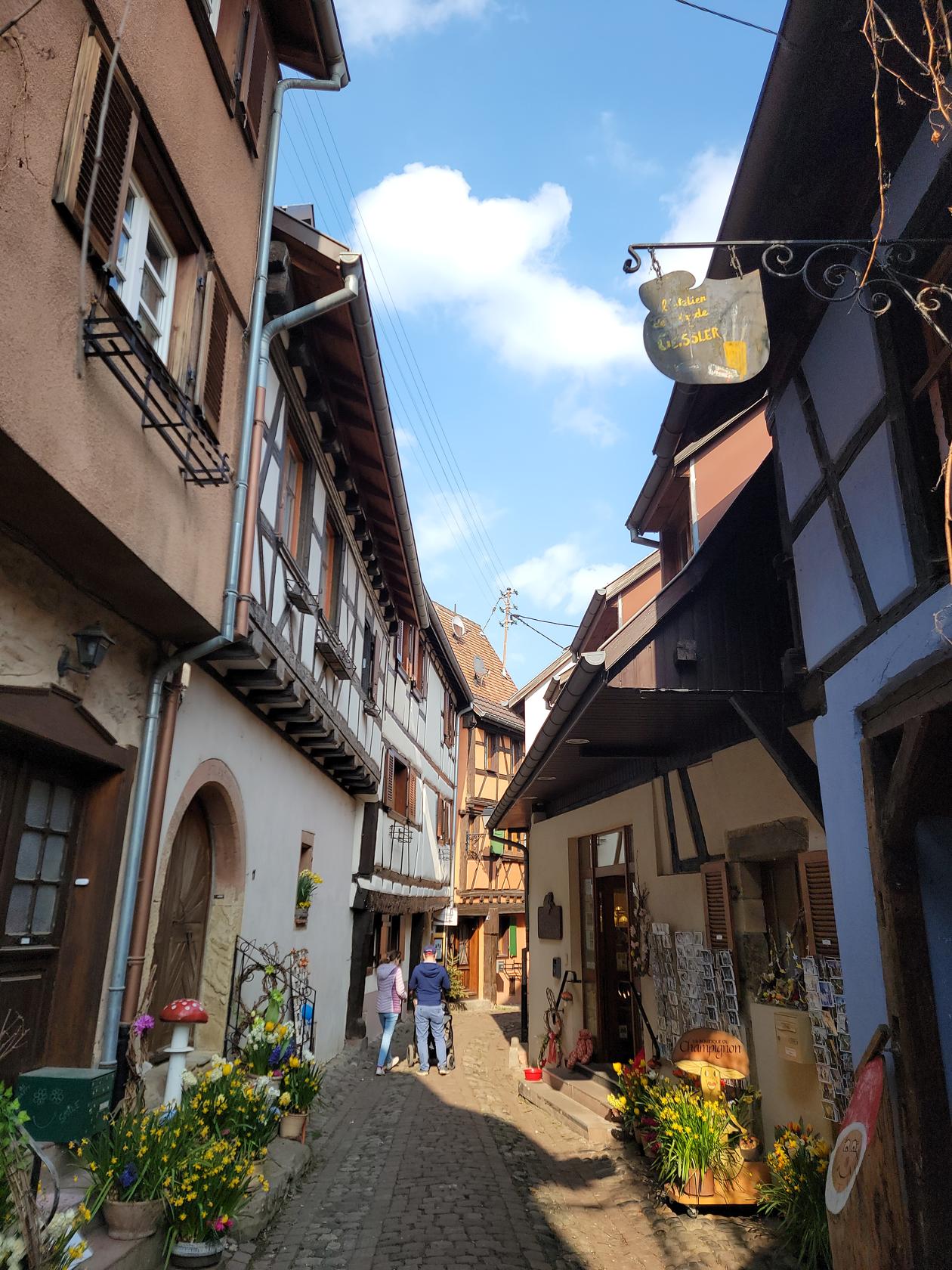
Cobbled alley – Rue de Rempart – Eguisheim, France
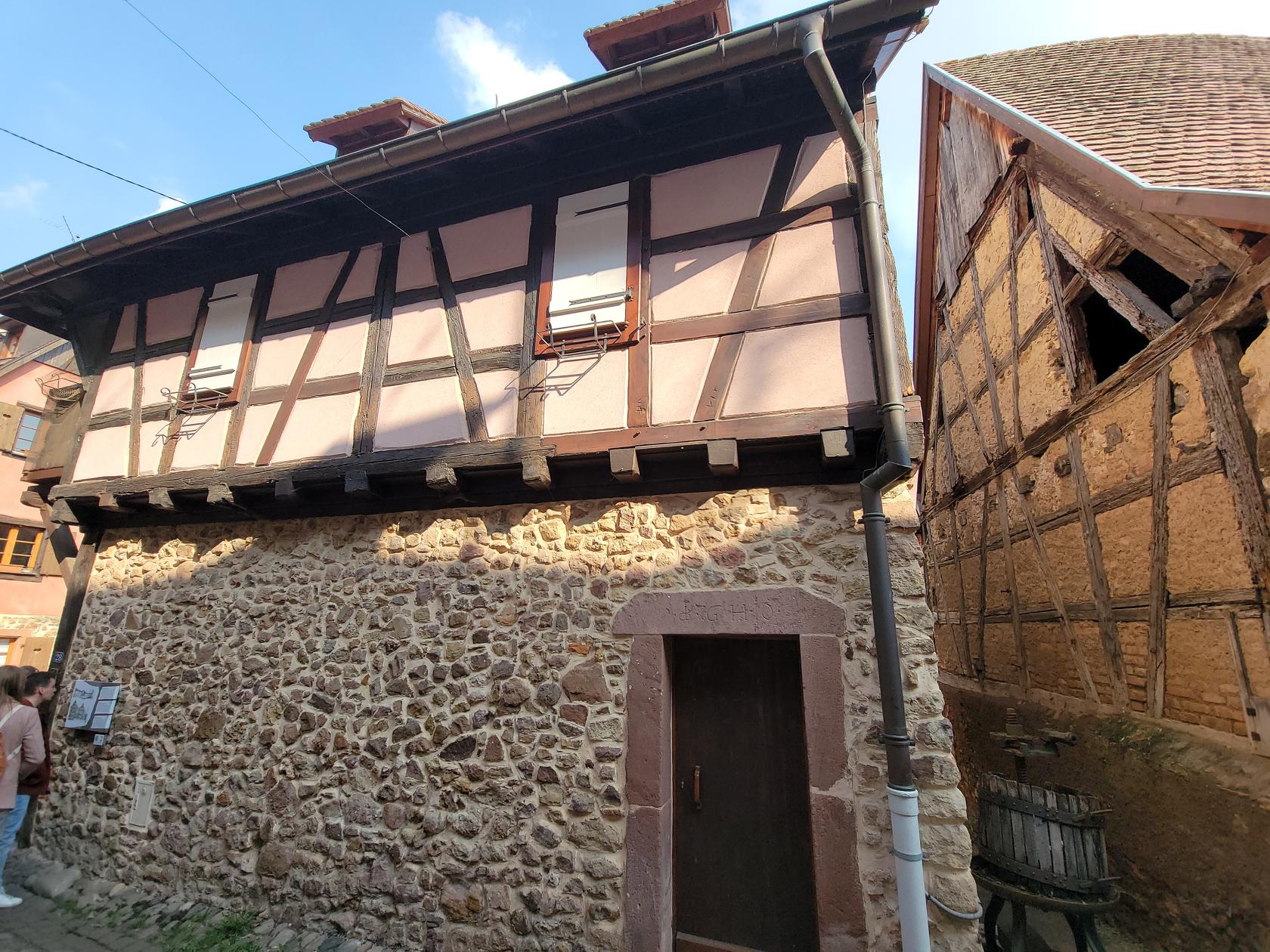
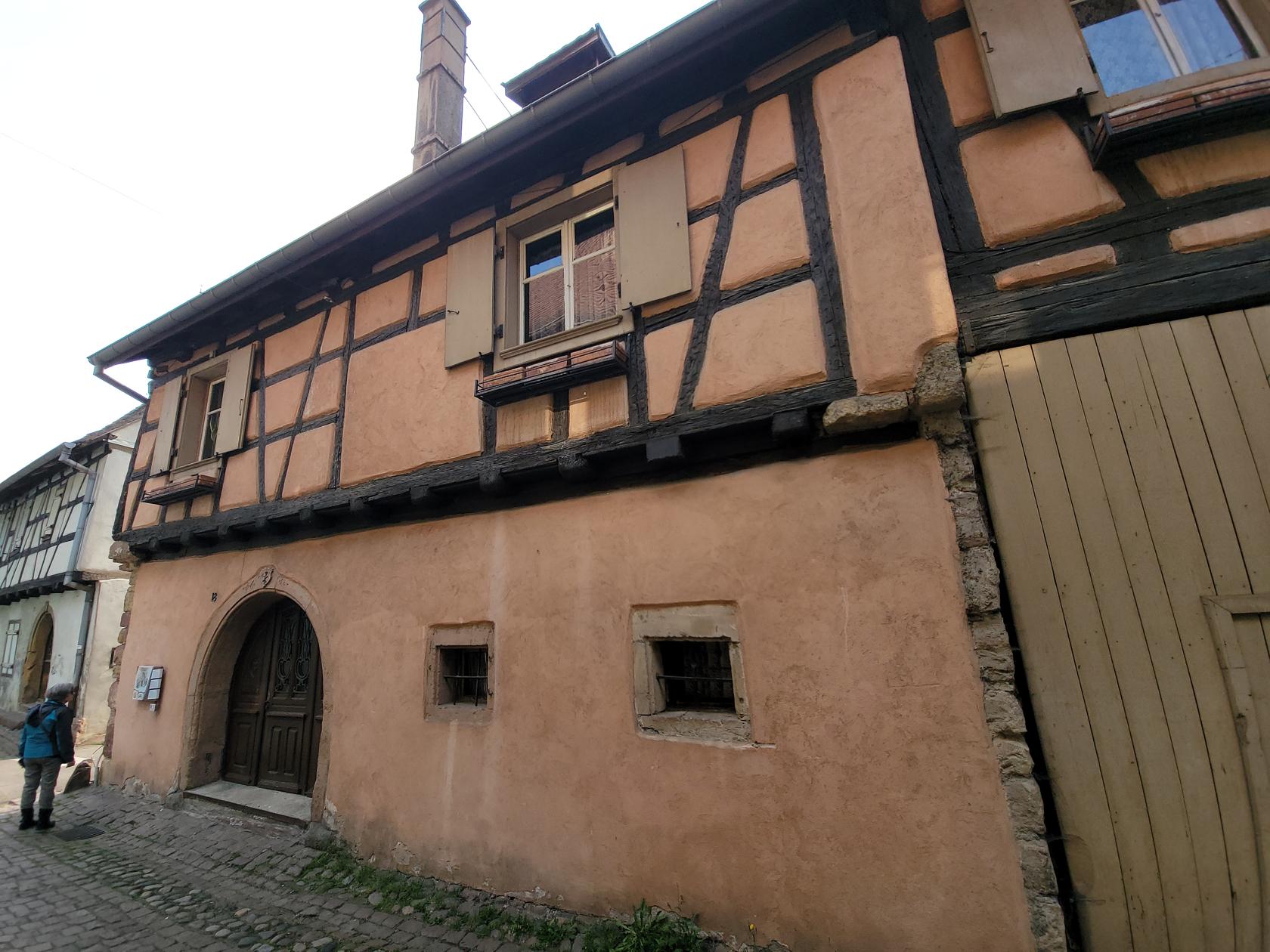
Small timbered house – Rue de Rempart – Eguisheim, France
More timbered houses – Rue de Rempart – Eguisheim, France
Walking along – Rue de Rempart – Eguisheim, France
Tower of Église Saints-Pierre-et-Paul – Rue de Rempart – Eguisheim, France
Ericka, Gabi, Vlad and Patti walking ahead – Rue de Rempart – Eguisheim, France
The Rue de Rempart creates two rows of buildings that acted like fortifications for the town. Since the town was not initially meant to be a fortress, but was more economical in nature, the outside wall turned into another row of houses some time in the sixteenth century.
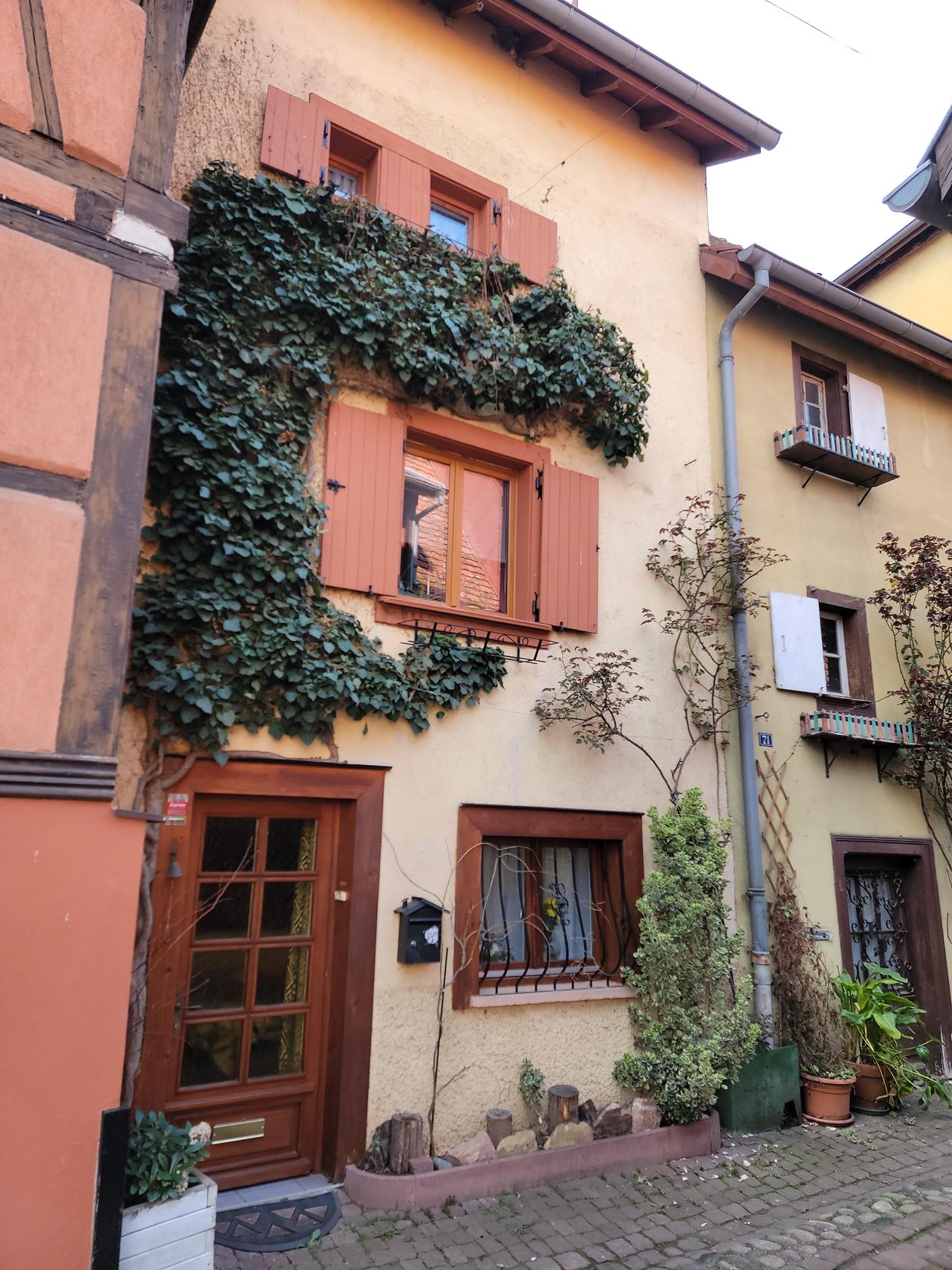
Ivy on house – Rue de Rempart – Eguisheim, France
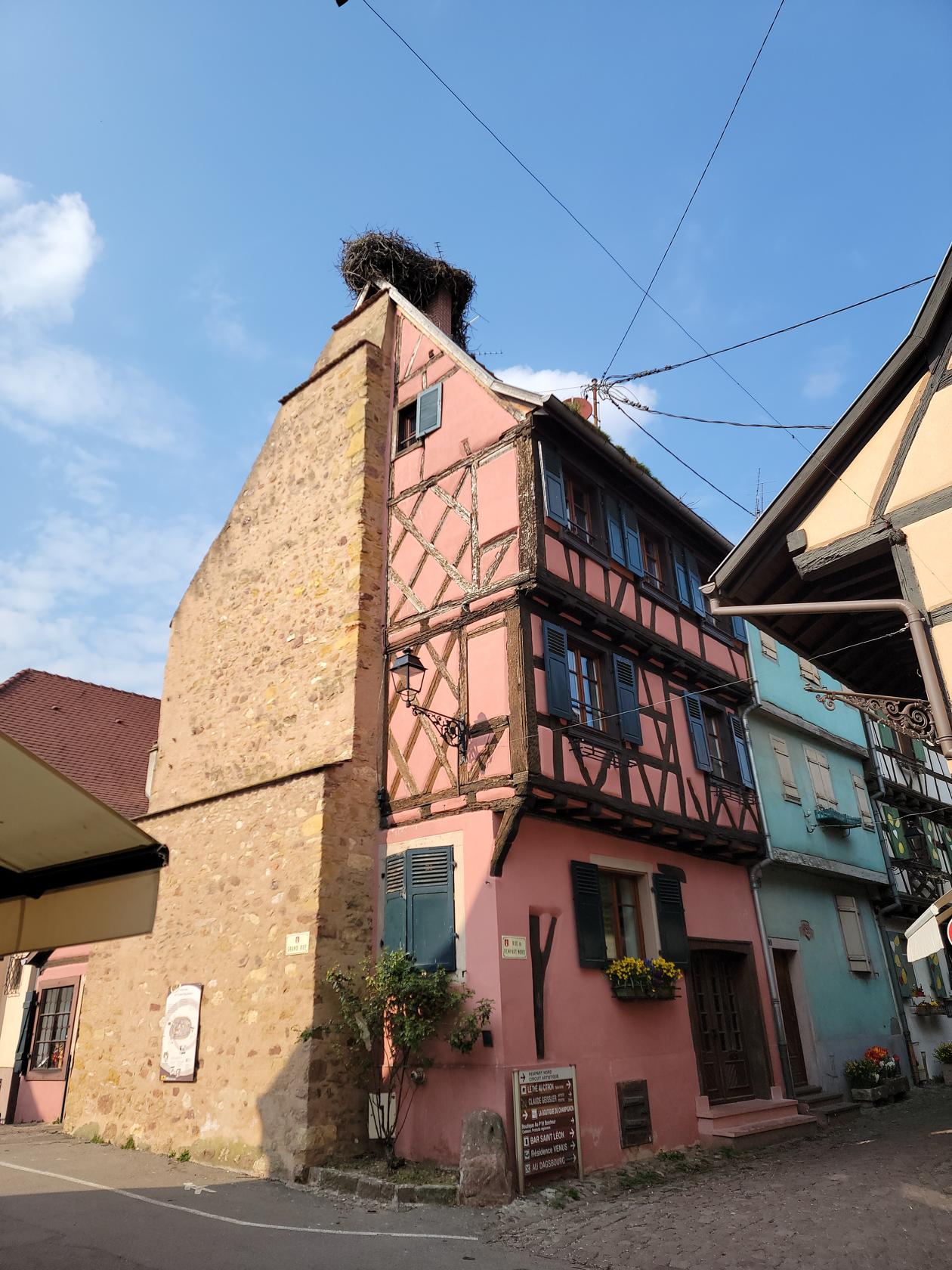
Storks are everywhere – Rue de Rempart – Eguisheim, France
Shops – Rue de Rempart – Eguisheim, France
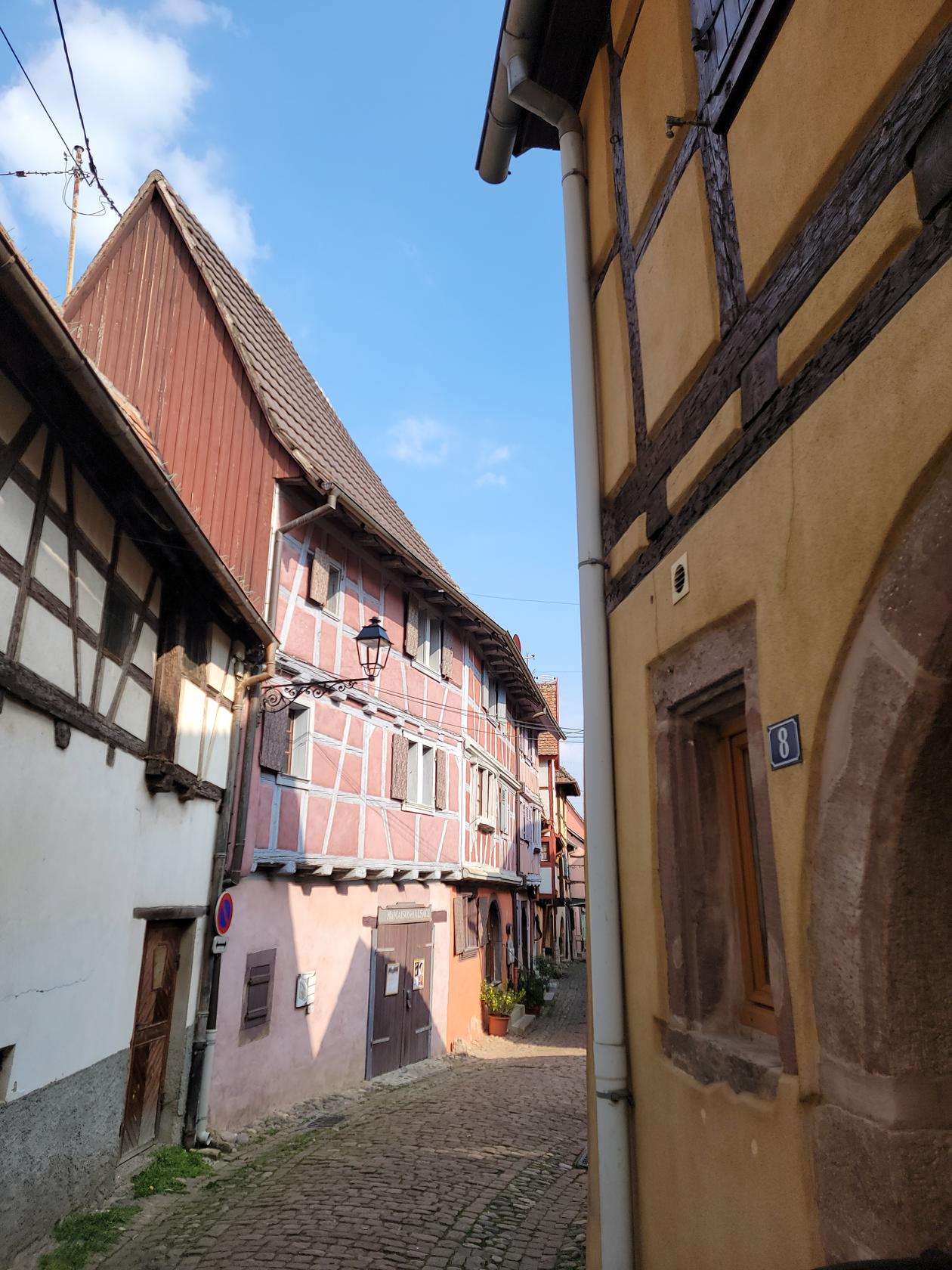
Houses that formed the outter wall of the original town – Rue de Rempart – Eguisheim, France
Houses that formed the outter wall of the original town – Rue de Rempart – Eguisheim, France
Round and round Eguisheim – Rue de Rempart – Eguisheim, France
Intersection of Grand Rue – Rue de Rempart – Eguisheim, France
And on it goes in a great circle – Rue de Rempart – Eguisheim, France
Ericka, Gabi, Vlad and Patti walking ahead – Rue de Rempart – Eguisheim, France
Less renovated houses – Rue de Rempart – Eguisheim, France
Many buildings in the town are also adorned with coats-of-arms. Many of the pediments and lintels are decorated with them and other engravings, usually left by the stone masons themselves. In most cases the coat-of-arms indicated who lived in the house according to their profession, a butcher’s block for a butcher for example. However, a sword crossing a shield would indicate a master craftsman in that profession.
Coats of arms on buildings and other markings – Rue de Rempart – Eguisheim, France
Chapelle Saint-Léon IX
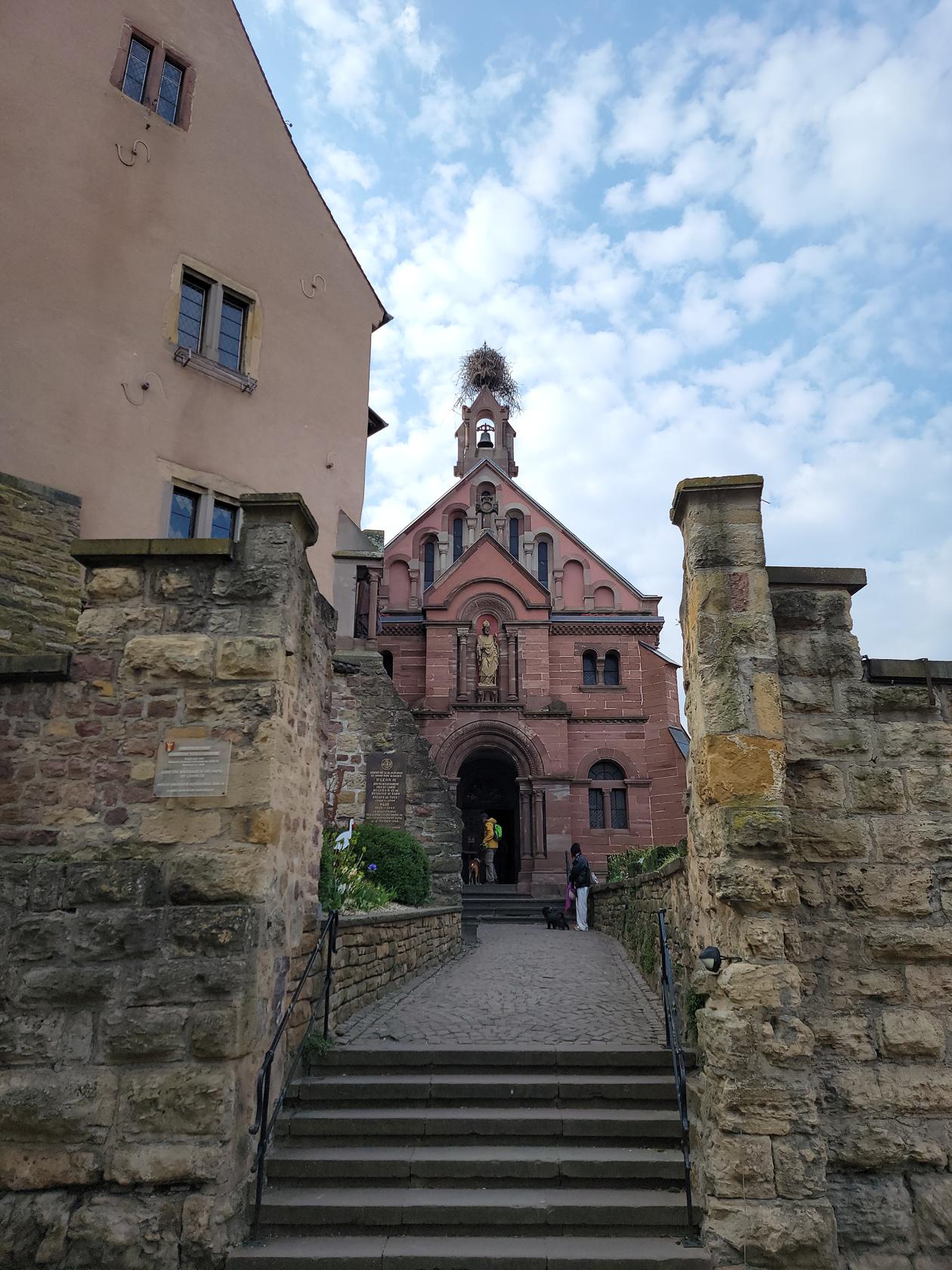
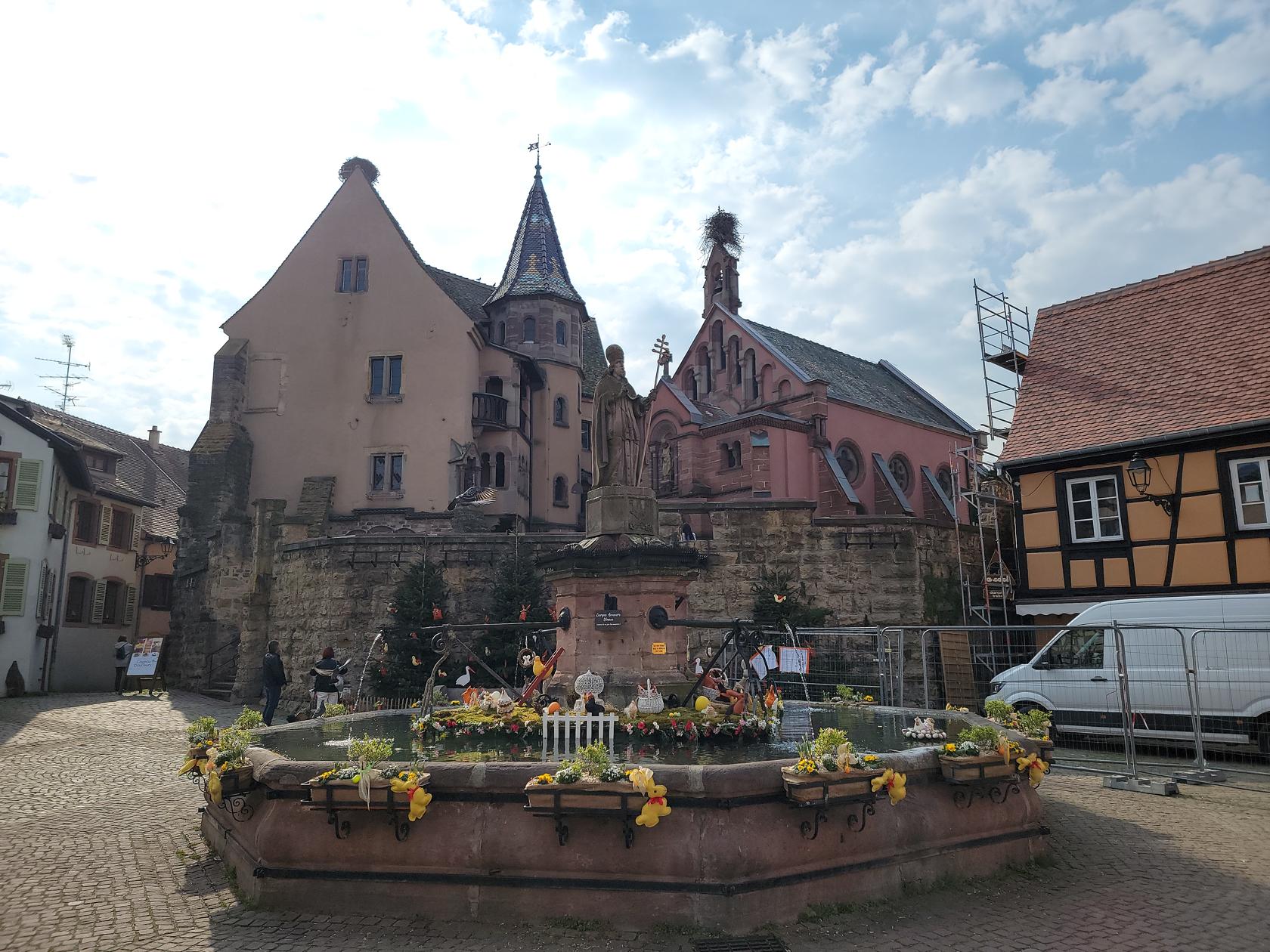
Along with the chateau that is close by, the Chapel of Saint Leon IX is a central sight. The fountain of Saint Leon is directly below the stairs to the chapel.
Chapelle Saint-Léon IX – Place du Château Saint Léon – Eguisheim, France
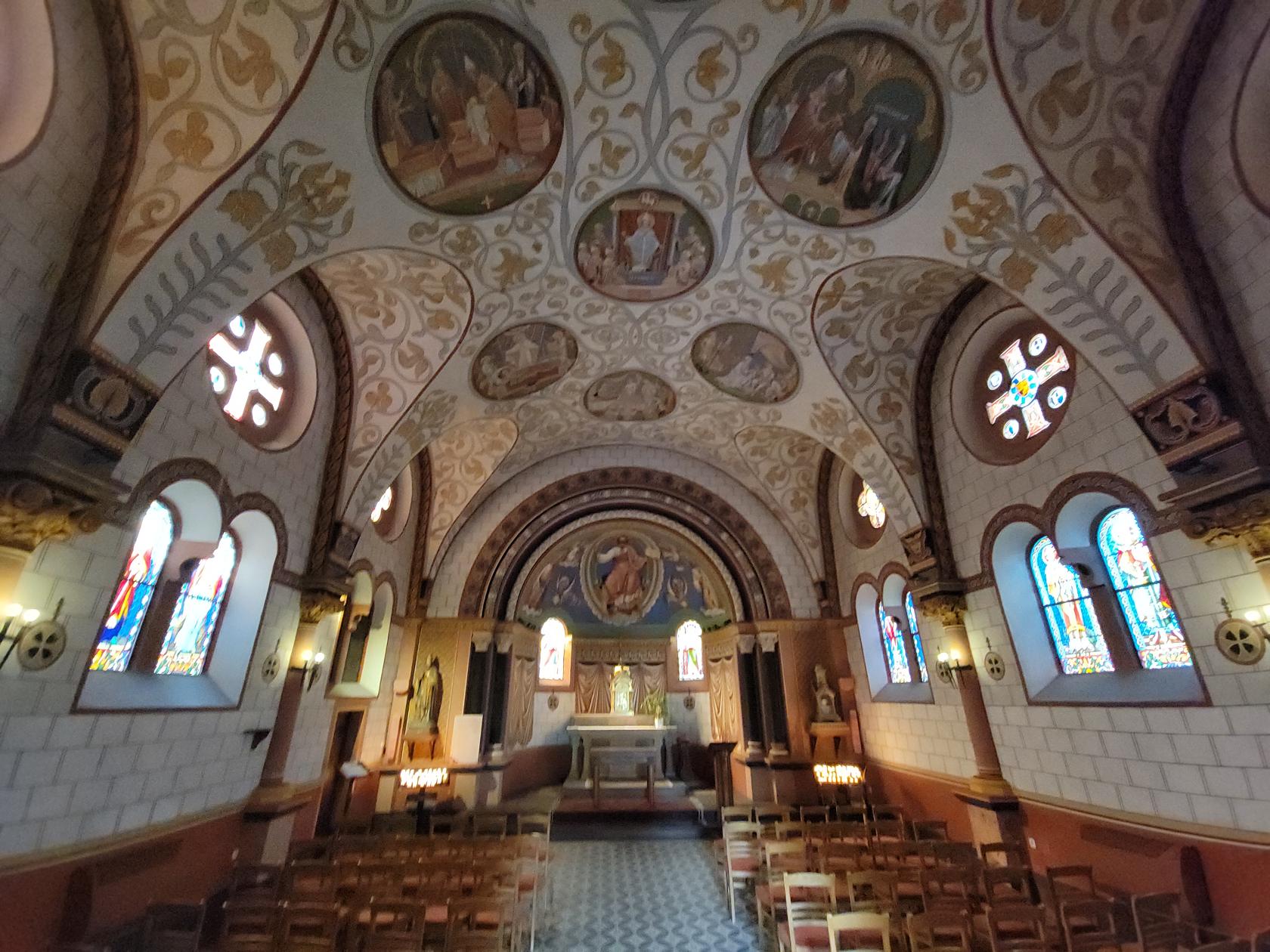
Chapelle Saint-Léon IX – Inside – Place du Château Saint Léon – Eguisheim, France
Chapelle Saint-Léon IX – Main Entrance – Place du Château Saint Léon – Eguisheim, France
Place du Château Saint Léon – Eguisheim, France
Église Saints-Pierre-et-Paul
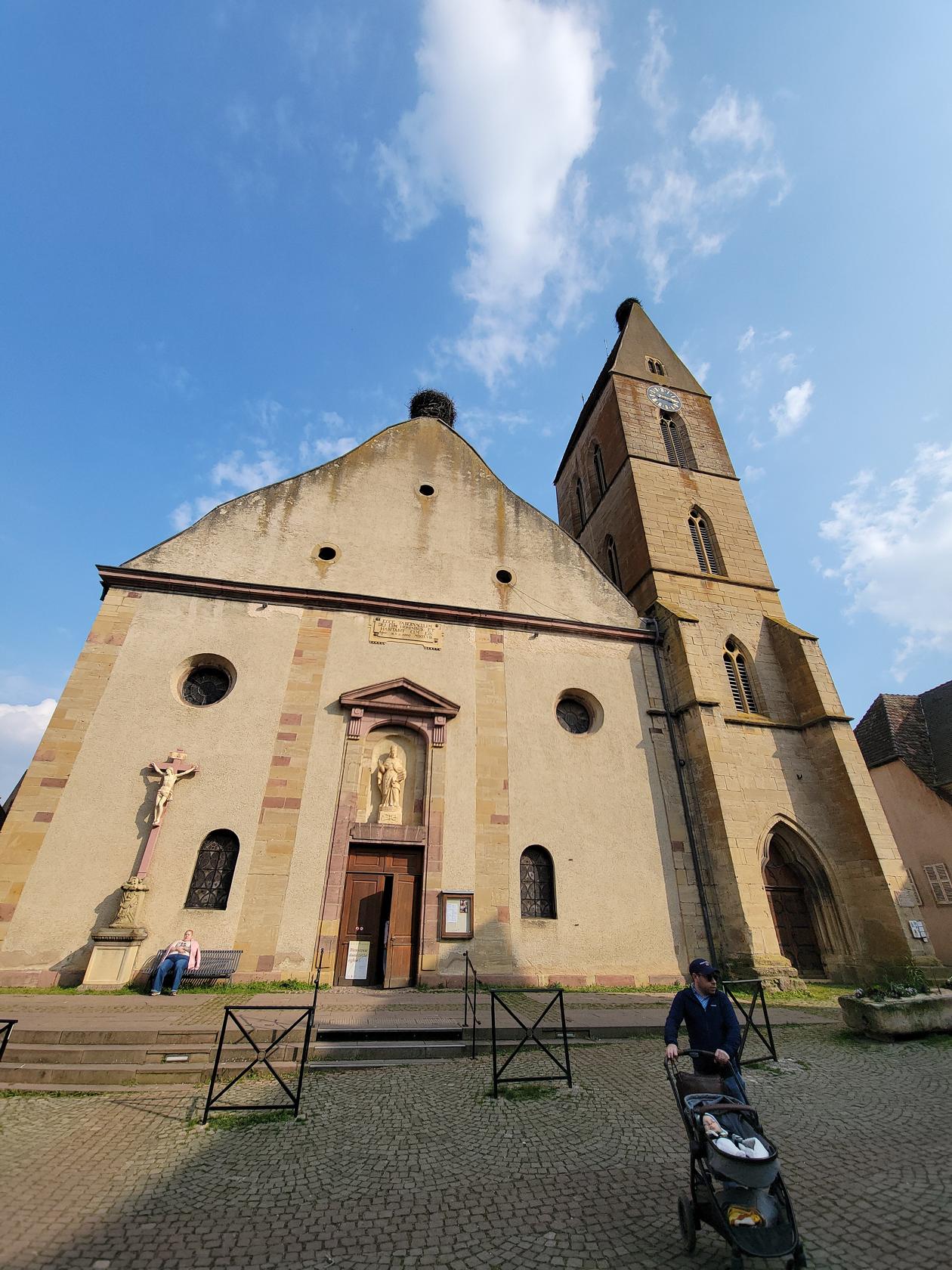
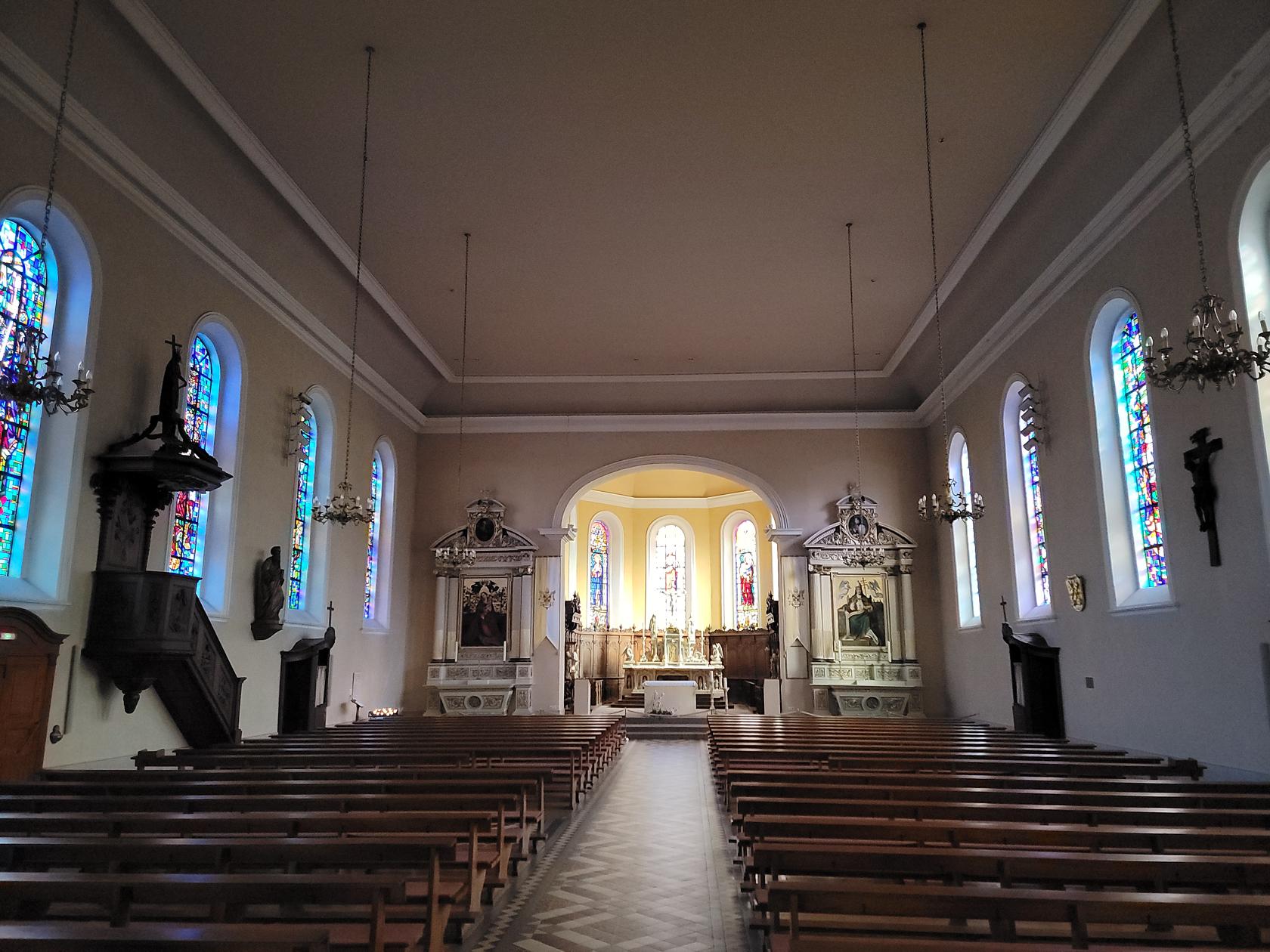
Off on another street is the Church of Saints Peter and Paul. Though larger than the chapel, the outside and inside are more austere.
Église Saints-Pierre-et-Paul – Eguisheim, France
Église Saints-Pierre-et-Paul – Inside – Eguisheim, France
Other Sights
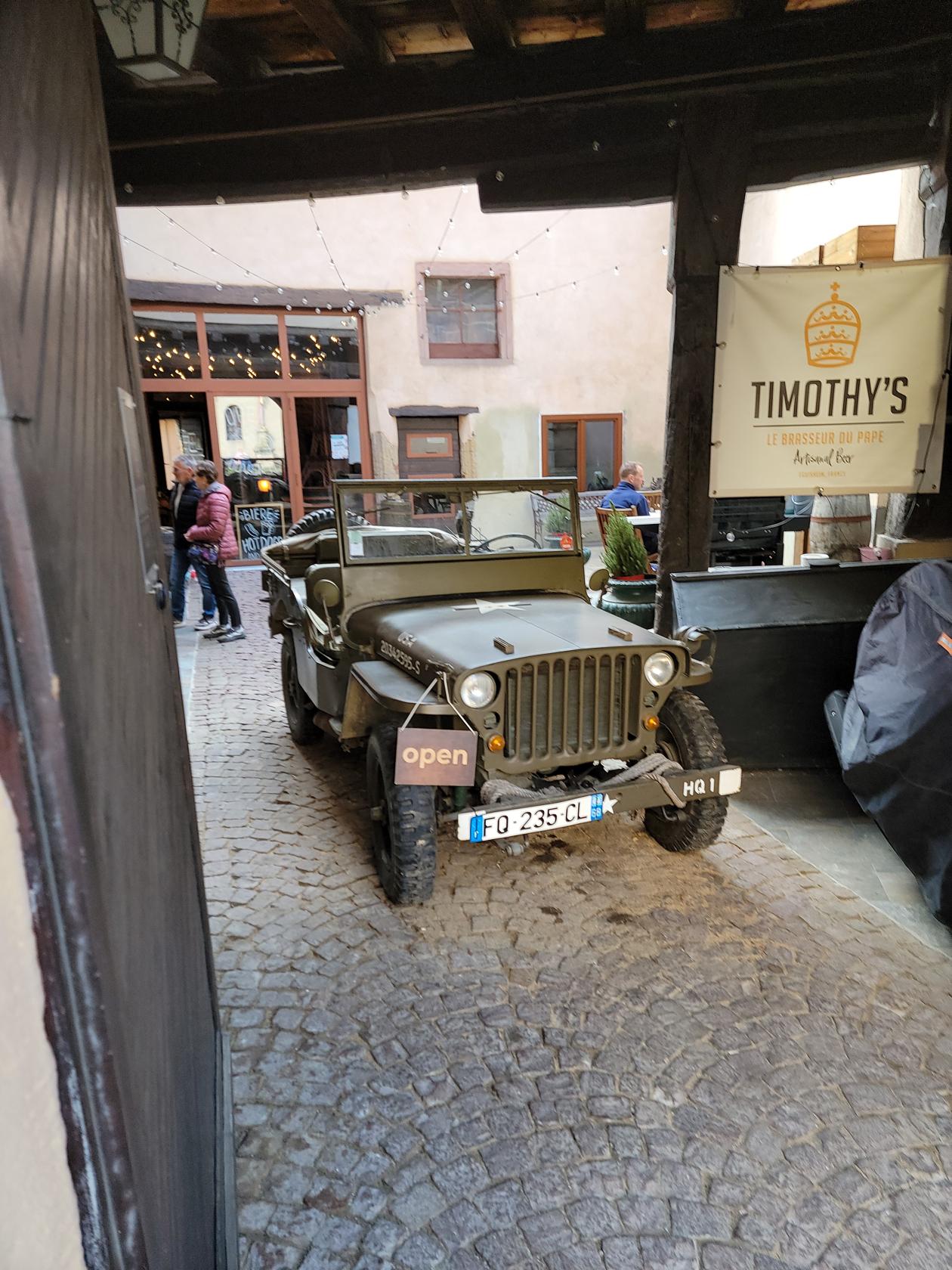
If you walk enough you will find an old American Willeys Jeep left over from the war. There are also several other wineries of the main streets as well.
One last view – Eguisheim, France
Old American Willeys Jeep – Eguisheim, France
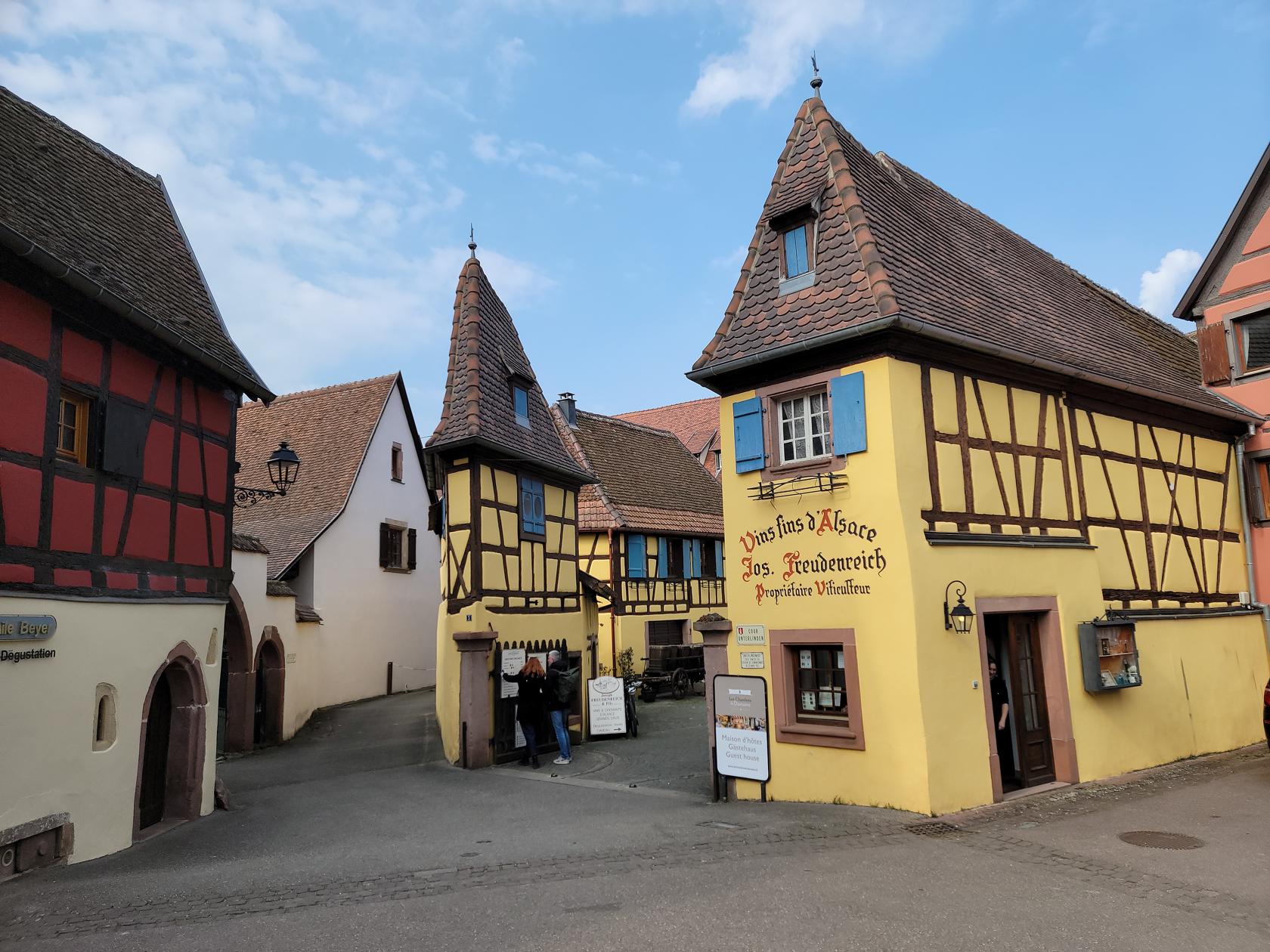
Jos. Freudenreich Winery – Cour Unterlinden – Eguisheim, France
Though we only spent a few hours here, we thoroughly enjoyed it, especially since the weather was very nice. It might make more sense though, to stay a bit longer and enjoy a wine tour throught he vineyards and one or two wine tastings. In any event, it is a great place to stop and is highly recommended.
Restaurants
Unfortunately, we cannot commend a place to eat or drink, since we did neither in Eguisheim. A wine tasting might be commended though, since it is at the center of Alsatian wine country!
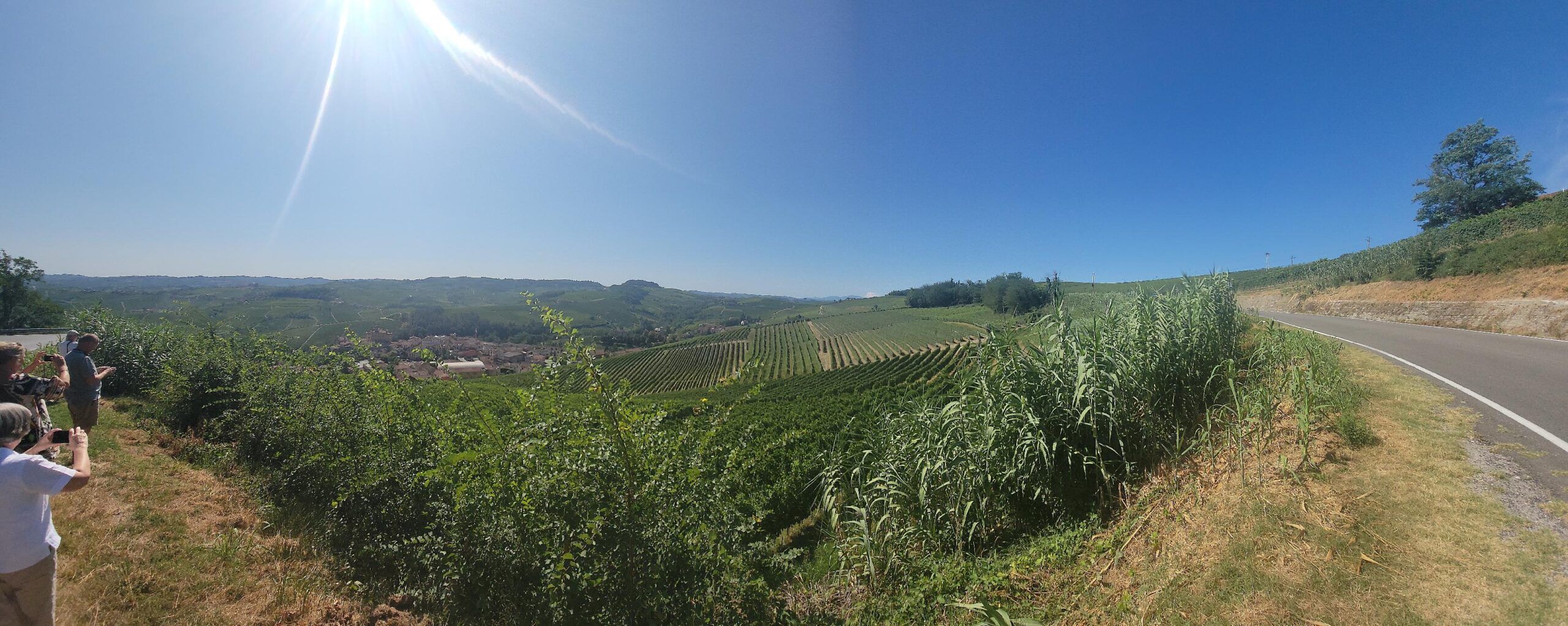
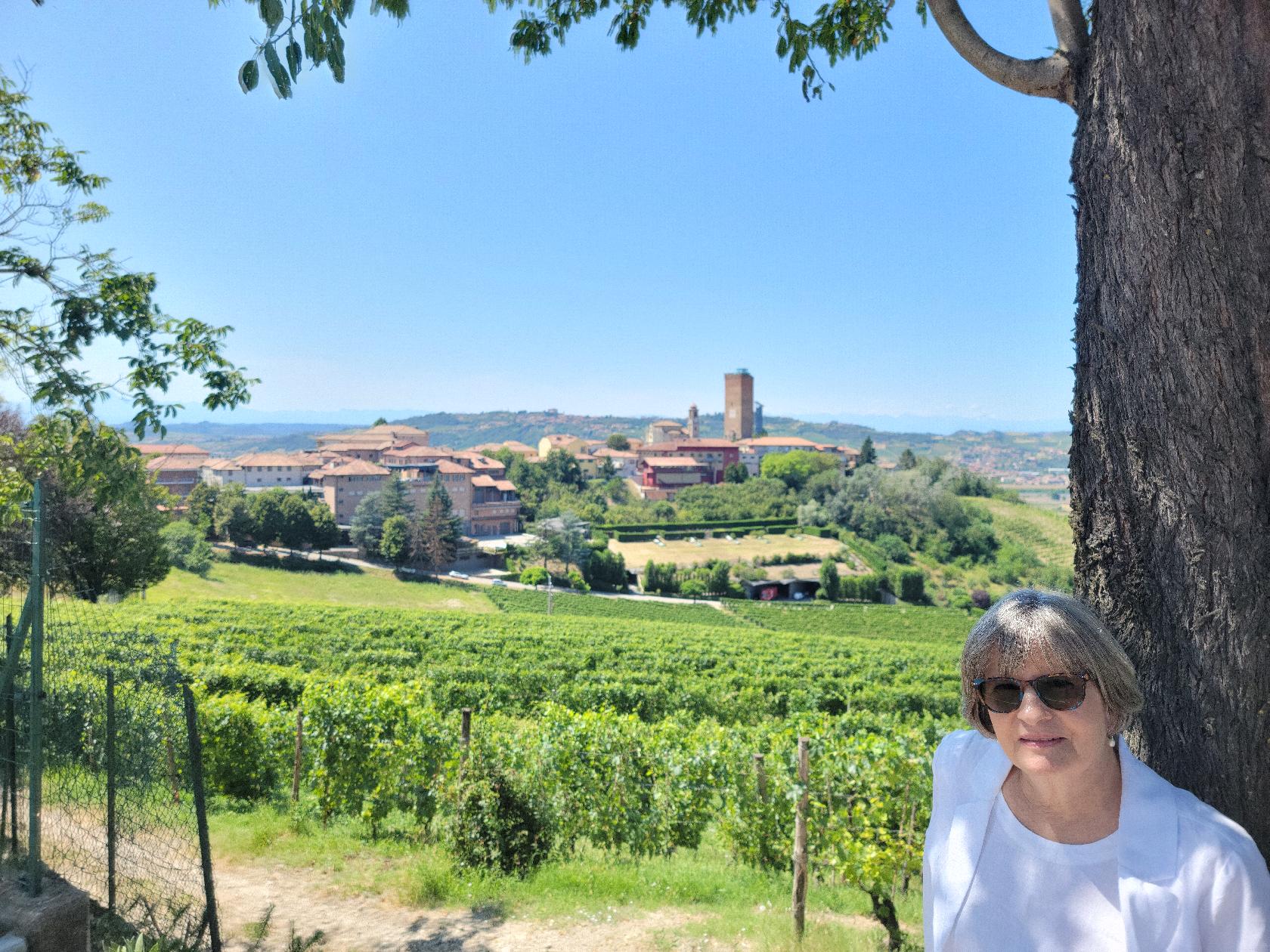
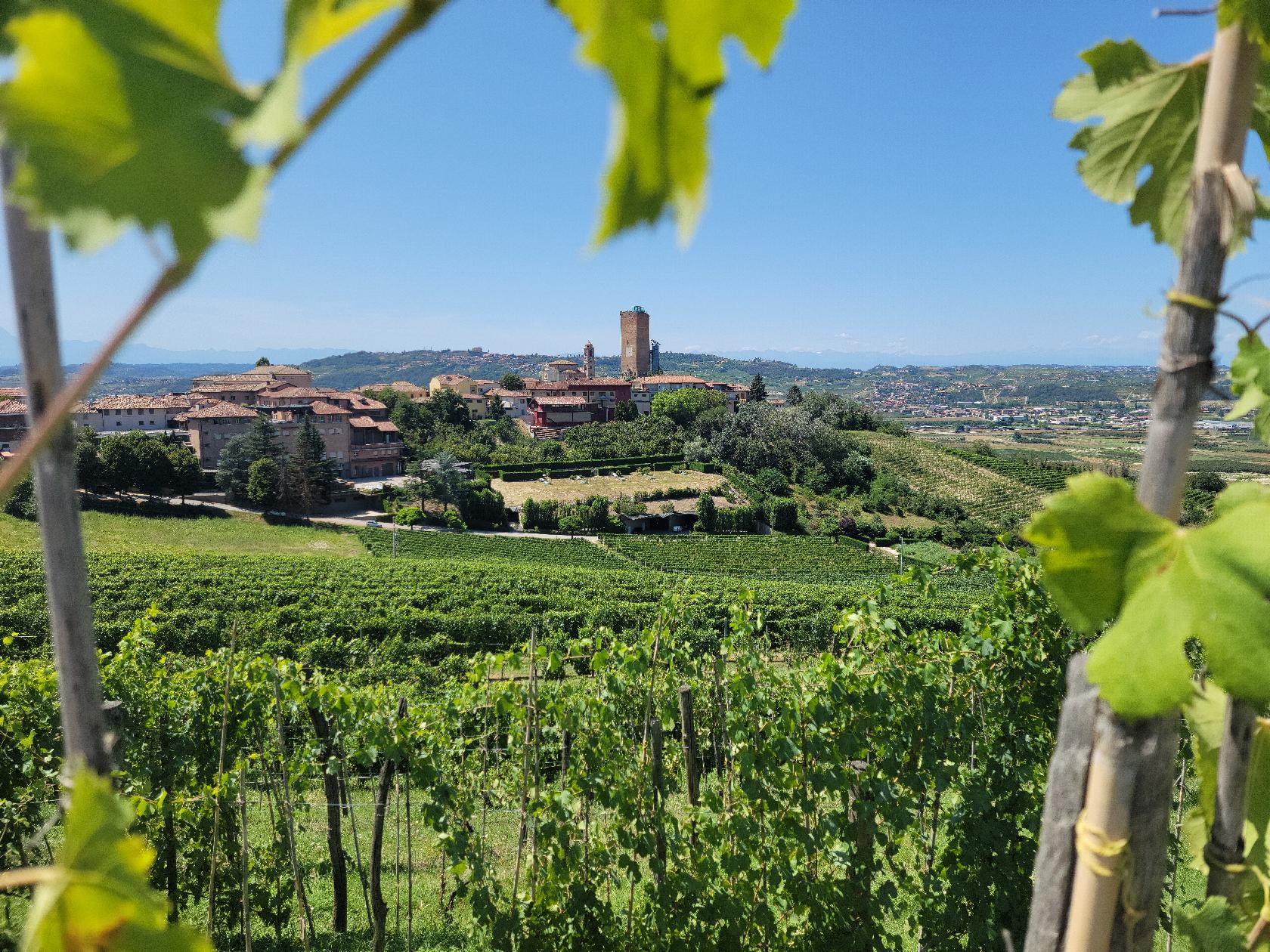
South of the river Tanaro is the wine region of Langhe and the two of the most well known Italian wine towns, Barolo and Barbaresco. For any wine enthusiast, it is an important stop on par with the fabled wineries of Napa Valley in California, the Saône river valley of Burgundy and the Gironde river valley of Bordeaux in France.
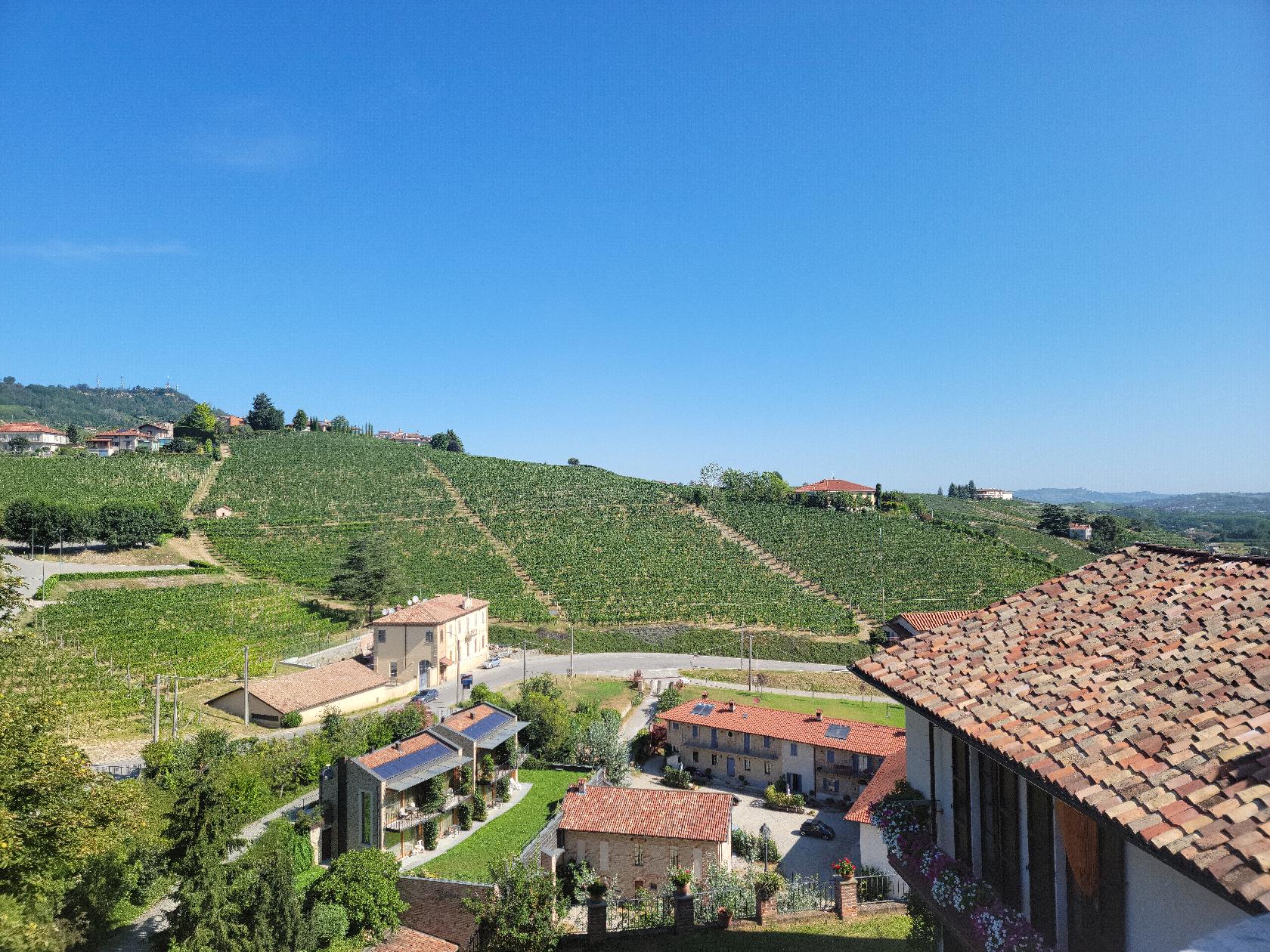
Barolo and its vineyards – Barolo, Italy
Langhe
For the Piedmont this region is by far the most important place for wine and truffles. Every year during the fall, people flock to this small region in Italy to enjoy the Italian harvest of truffles, both black and white, and naturally the wines that are produced in this region. Our recent summer trip concentrated on the wines and to enjoy a wine tour with other wine enthusiasts from Germany and Denmark. Though we did sample the black truffles while here, I can only say we are not fans. So wine it is..!
First, some background. The wine production and labeling in the area is controlled by a Control Denomination of Origin, or Denominazione di origine controllata, as it is in the rest of Italy. Structured after the French model and adopted by the European Union (EU), there are essentially four designations for Italian wines:
Denominazione di origine, or DO, this is rarely used
Indicazione geografica tipica, or IGT, this is used to designate wines typical of the region
Denominazione di origine controllata, or DOC, to indicate wines controlled and designated for the area
Denominazione di origine controllata e garantita, or DOCG, to indicate wines controlled and guaranteed to be from the area
The last two appellations are the most important, since they both assure a rigid and specific level of government oversight, as well as control over the labeling and the origins of the grapes in the wines of these designations.
It should also be noted that no IGT wines are produced in Piedmont or Valle D’Aosta.
DOC
Originally there were only the first three designations, DOC being the highest of them. However, the Italian food industry quickly decided that its designation was far too liberal and included other foodstuffs within the standard, so they requested a more rigorous standard, thus DOCG came into being for wine only and superseded DOC.
Much like DOCG, the DOC requirements demand that such wines use only certain grape varietals, are aged properly, have a certain alcohol content and be produced within certain areas or regions. Though the number of bottles that may be produced for a given wine is somewhat restrictive, the wines do not have the direct governmental wine panel oversight or trails of paper found in the higher classification.
Wines of this category are Barbera, Dolcetto and Nebbiolo, all of which are designated grape varieties and may be identified as such on a bottle marked as DOC.
DOCG
DOCG is by far the more rigorous designation and is controlled to such a degree, that the vintner is forced to follow rigid rules regarding the care and quality of the wines throughout its production, all the way down to the number of labels they will receive for their bottles for each wine.
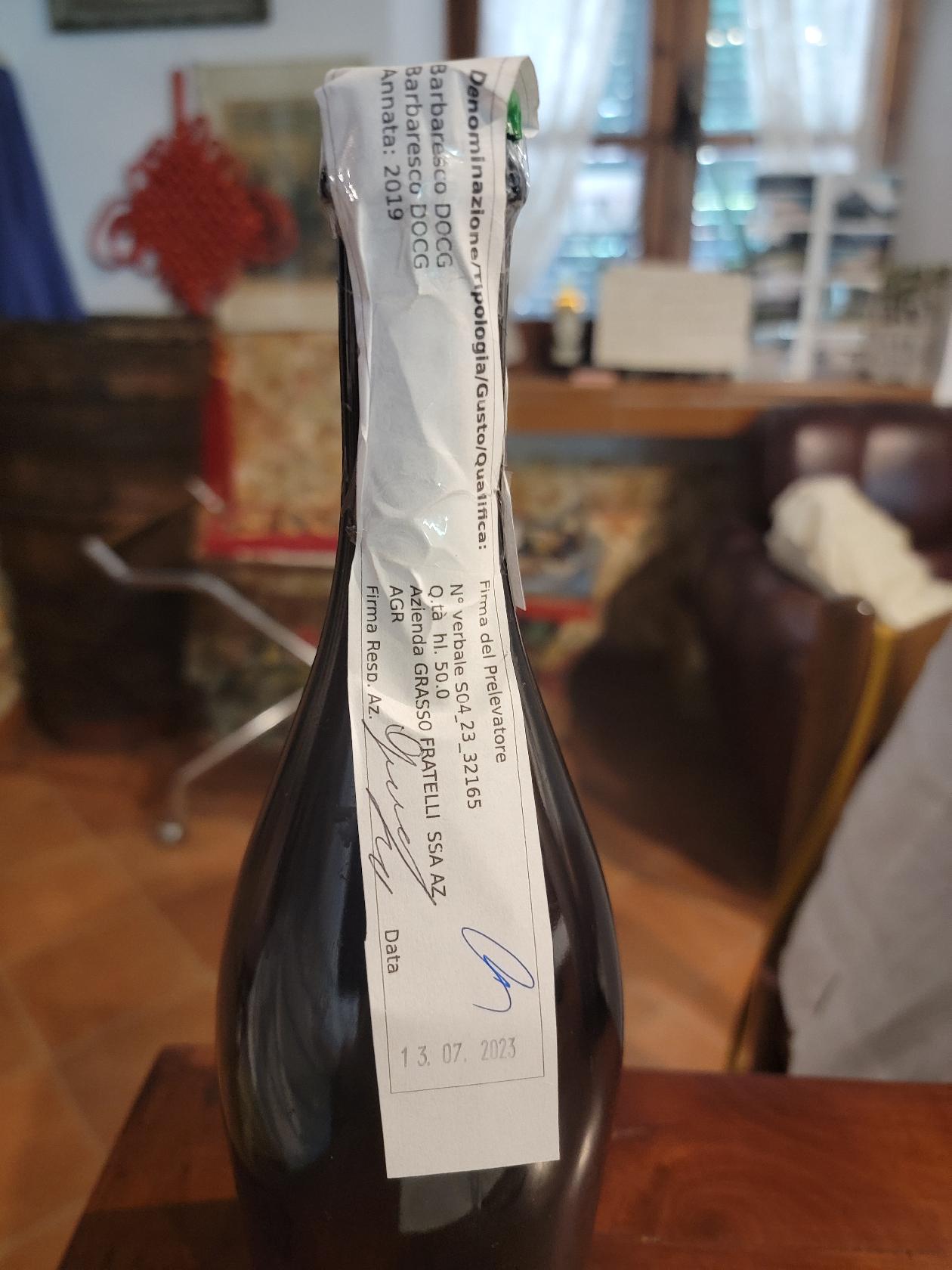
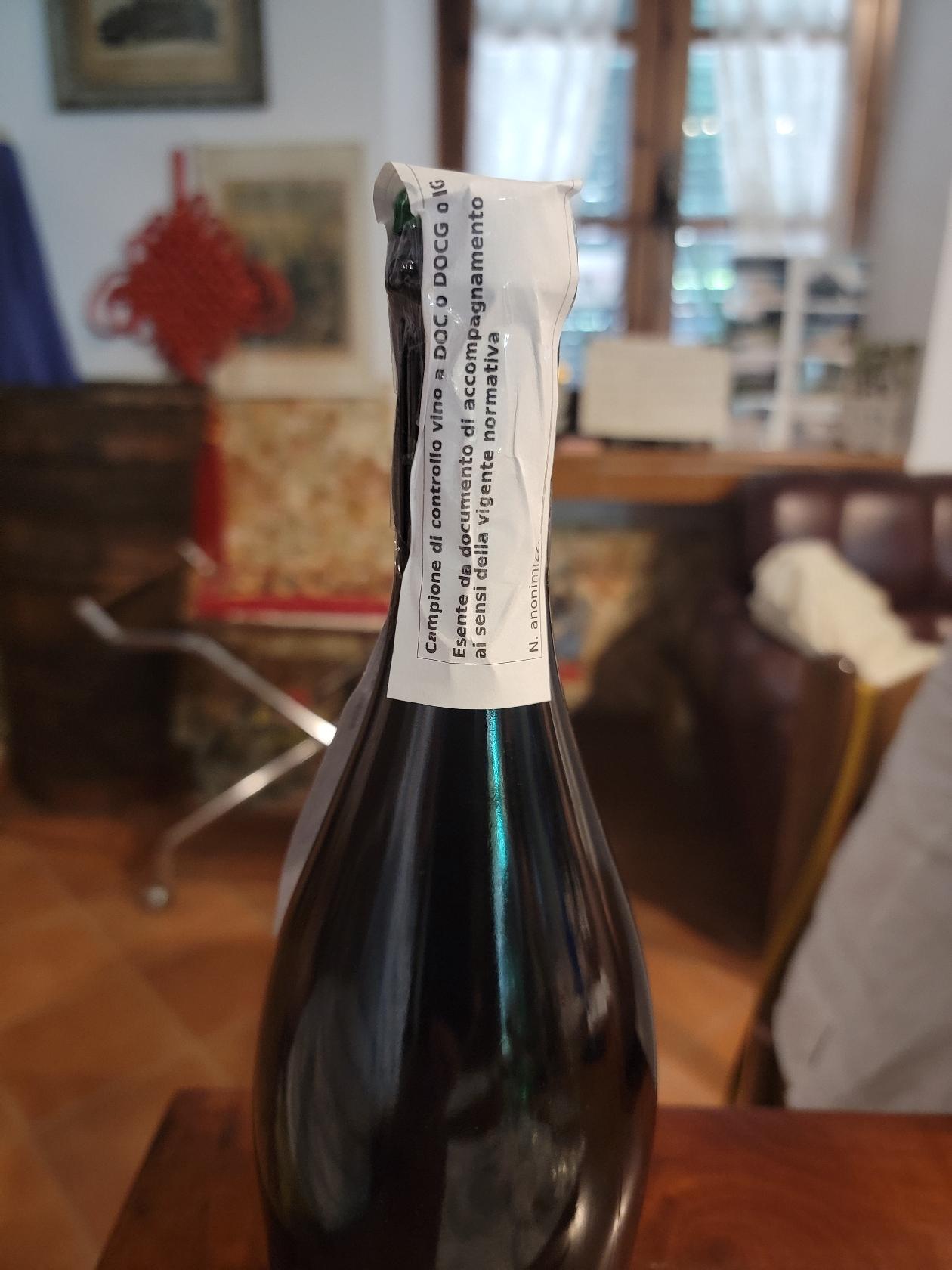
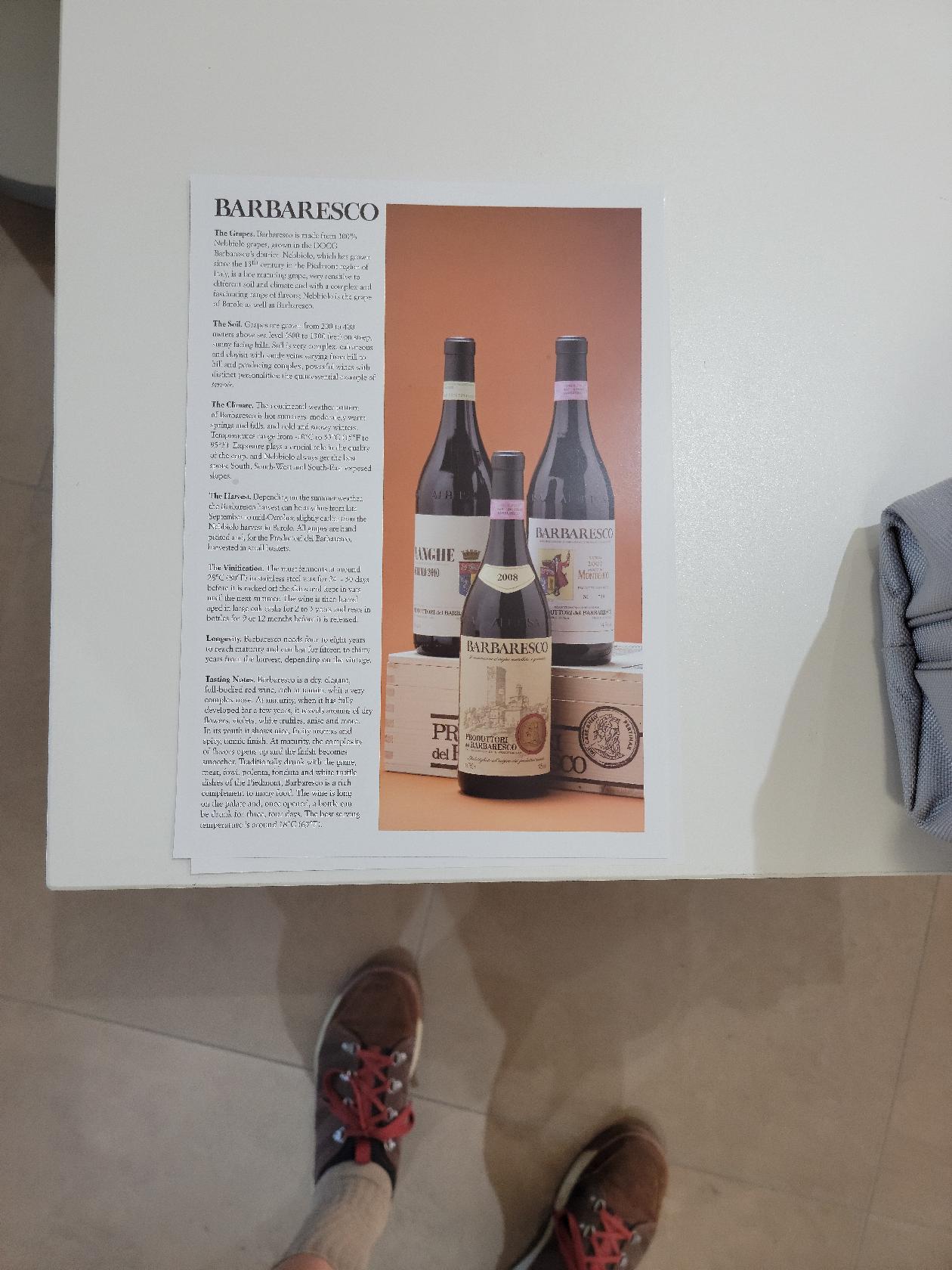
Once the wine is produced, a batch of five (5) bottles are processed, corked, sealed and labeled for the authorities. All of which have the CDO label across the corks, signed, sealed and documented. Four of the bottles are taken for lab analysis and a wine panel judges them to ensure quality, clarity and that the wine produced meets the standard set for DOCG for that wine and region. One bottle is left with the produced. An example from the Grasso Brother vineyard in Barbaresco is shown below.
The Grasso Brothers – One of five bottles the DOCG leaves with proprietor – Barbaresco, Italy
The Grasso Brothers – One of five bottles the DOCG leaves with proprietor – Barbaresco, Italy
Our Wine Tour
For our wine tour we chose Alba Wine Tours. We tried to arrange a private tour, but they only offer group tours of up to six people. The cost for us for a one-day tour of Barolo and Barbaresco was 220€/person. Yes, a bit expensive, but unlike our experience in the United States at such venues, we tasted more than 25 wines. Moreover, our hosts were more than happy to provide us with second tastings or additional wine, if we enjoyed it and felt a certain wine was exceptional.
For each wine taste, they dispensed between 5-10dl, which is not bad considering a normal glass of wine is typically around 20dl. Typically in the States you barely get enough wine to get a nose on it, let alone taste it. Which probably shows that most wineries in the States are more interested in mitigating costs, then in pleasing theirs guests and trying to sell their product. This usually indicates to me that their products are typically not good enough to sell to begin with, let alone taste.
Unfortunately, as is true of most wine tastings, most of the wine was dumped. However, by the end of the day, it was very evident that we all had more than our fair share.
Barolo
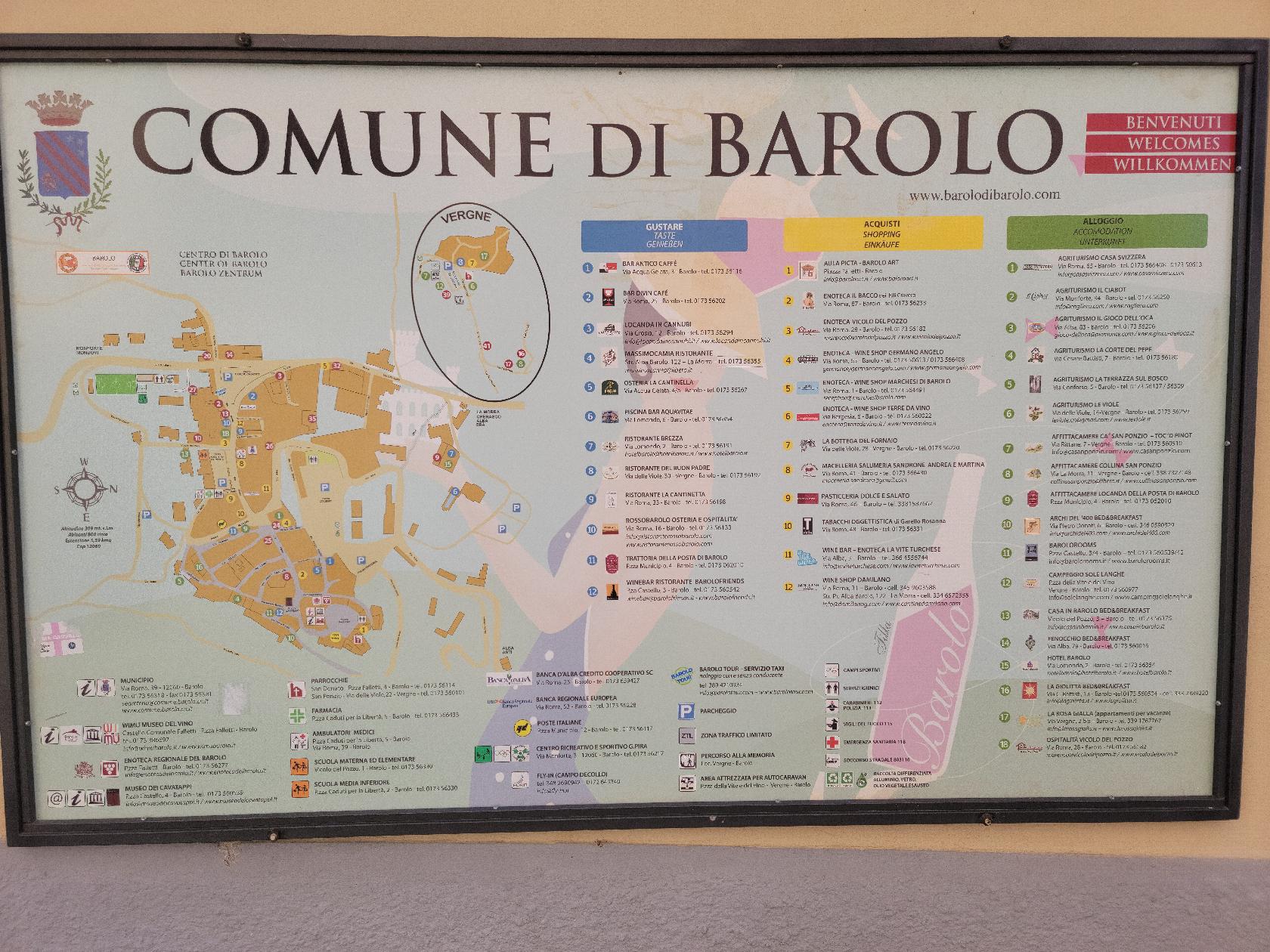
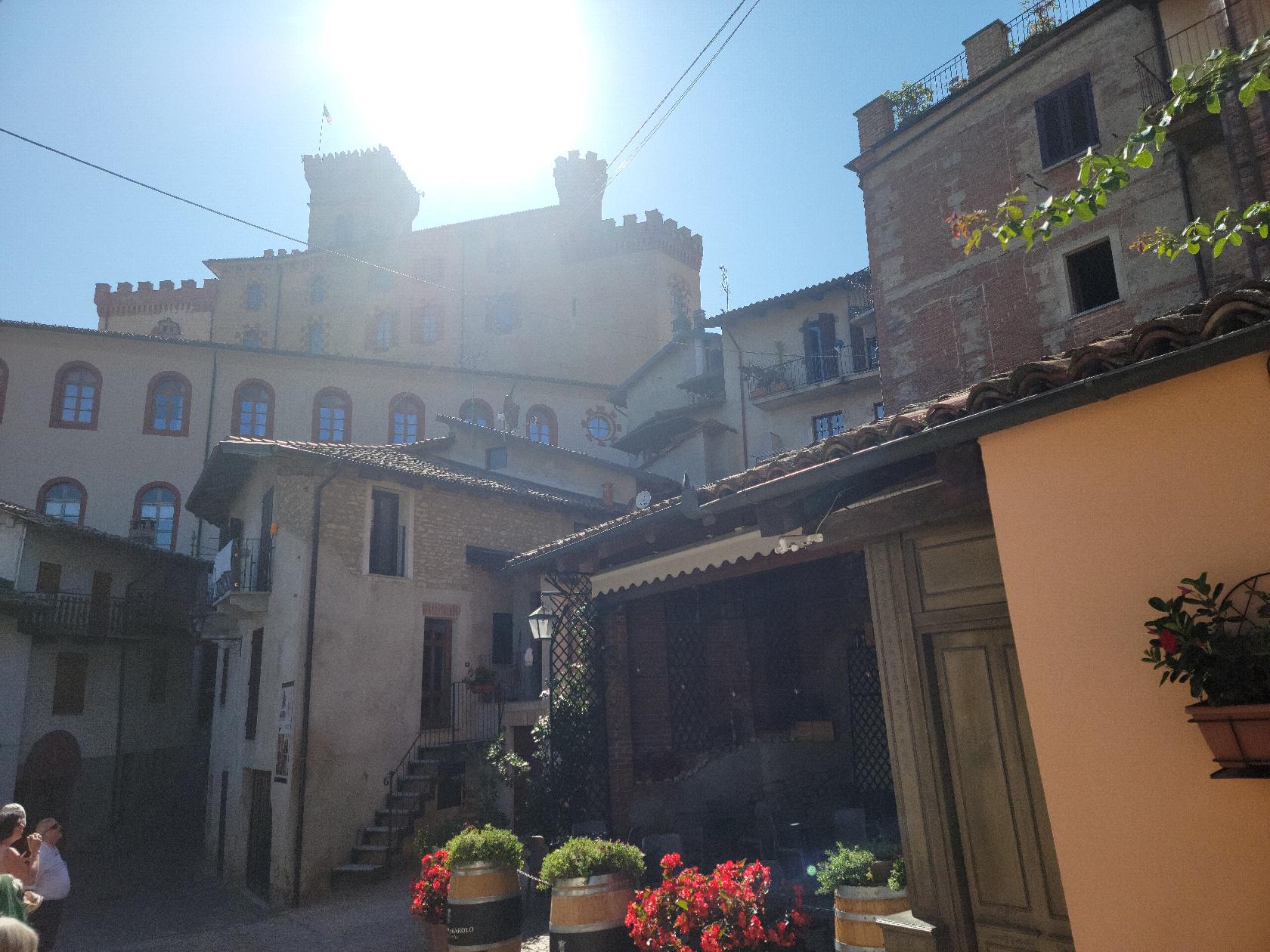
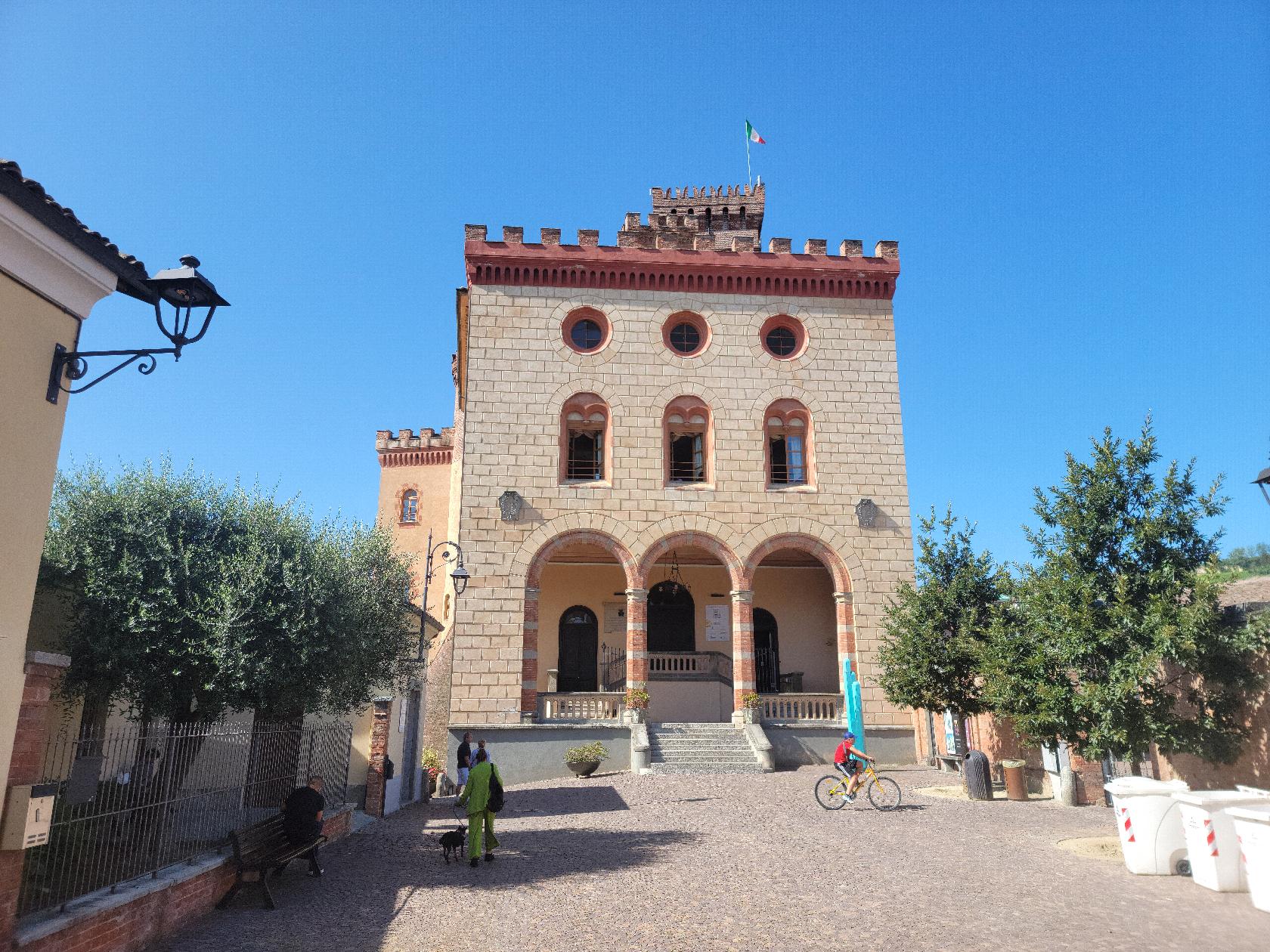
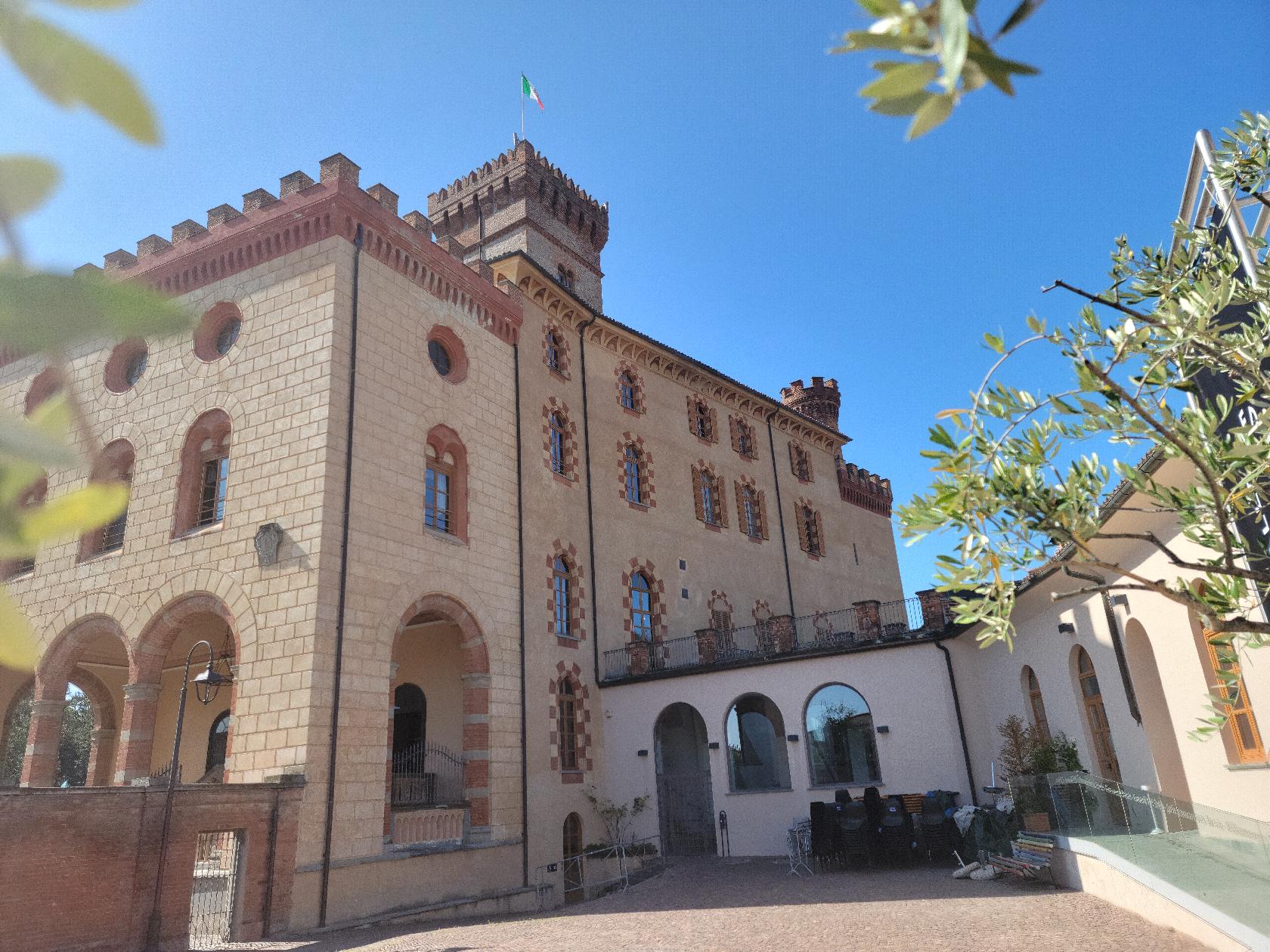
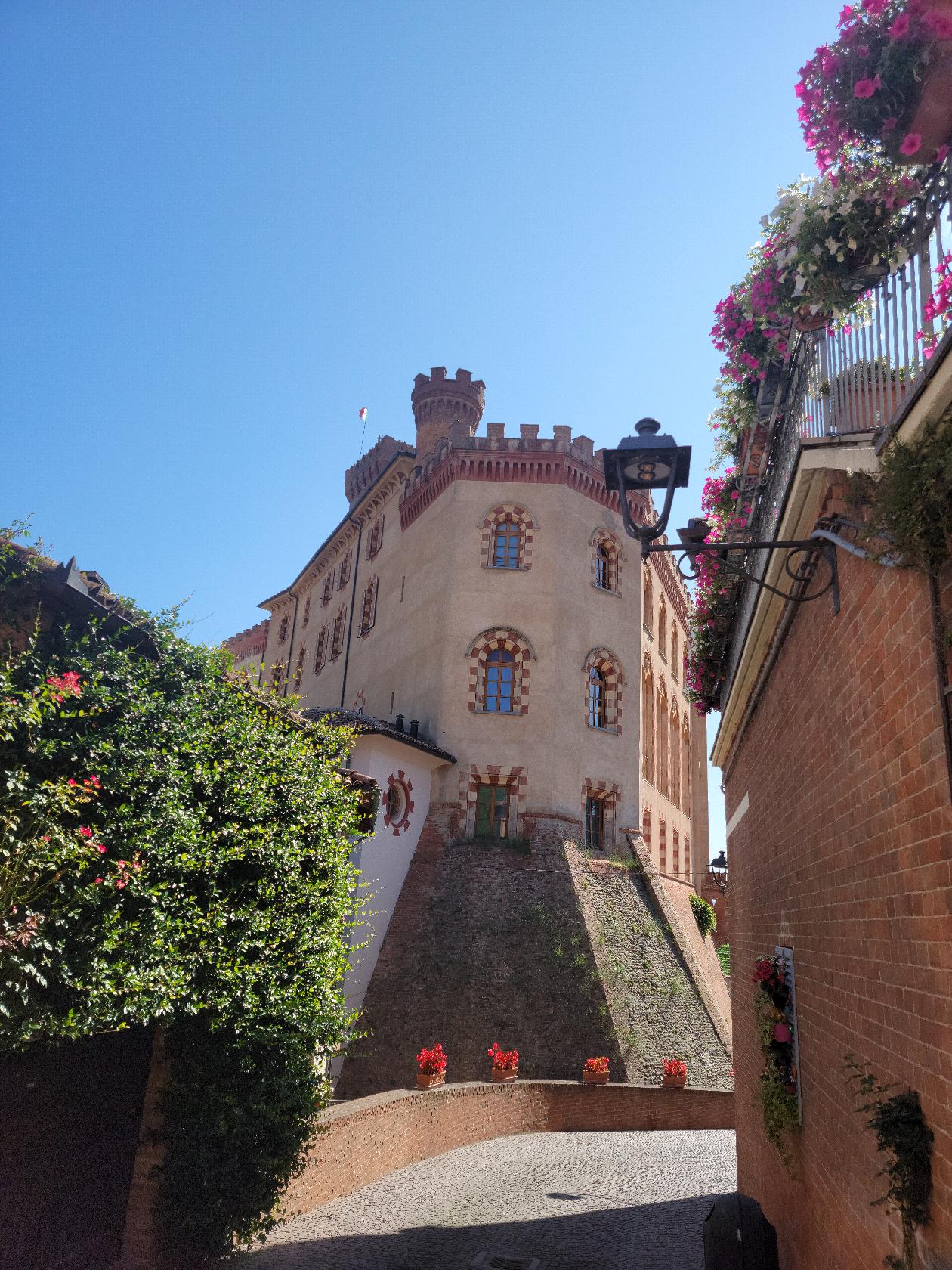
Our first stop was in the small town of Barolo, a castle turned museum being its most prominent feature. There are of course numerous wine stores, most belonging to vineyards in the region, which have tastings and sell wine. We only stopped to see the town and to continue to our first stop, the Azienda Agricola Stra, also known as Stra Winemakers with Foresteria.
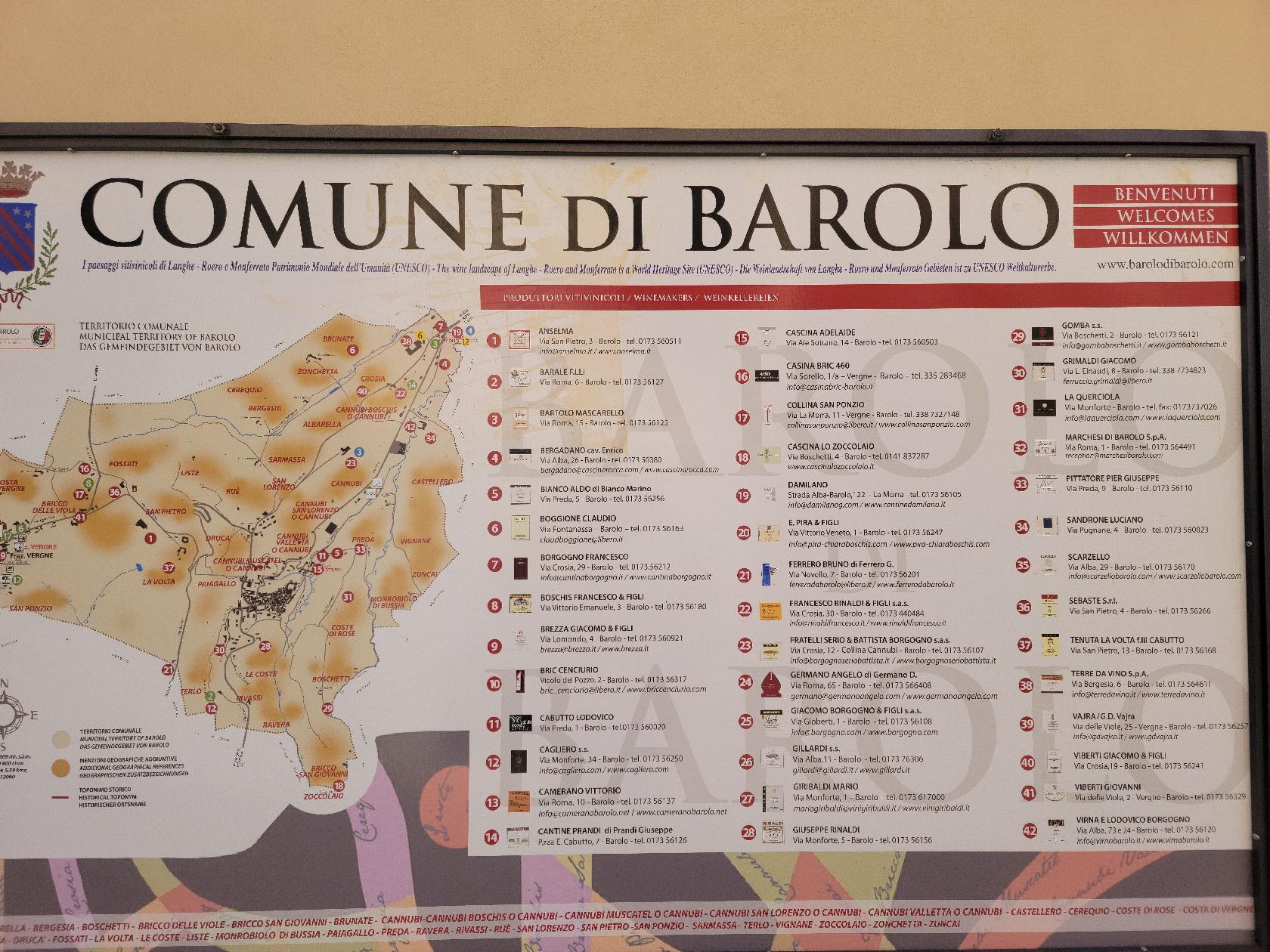
Commune of Barolo – Town Map – Barolo, Italy
Commune of Barolo – Sights – Barolo, Italy
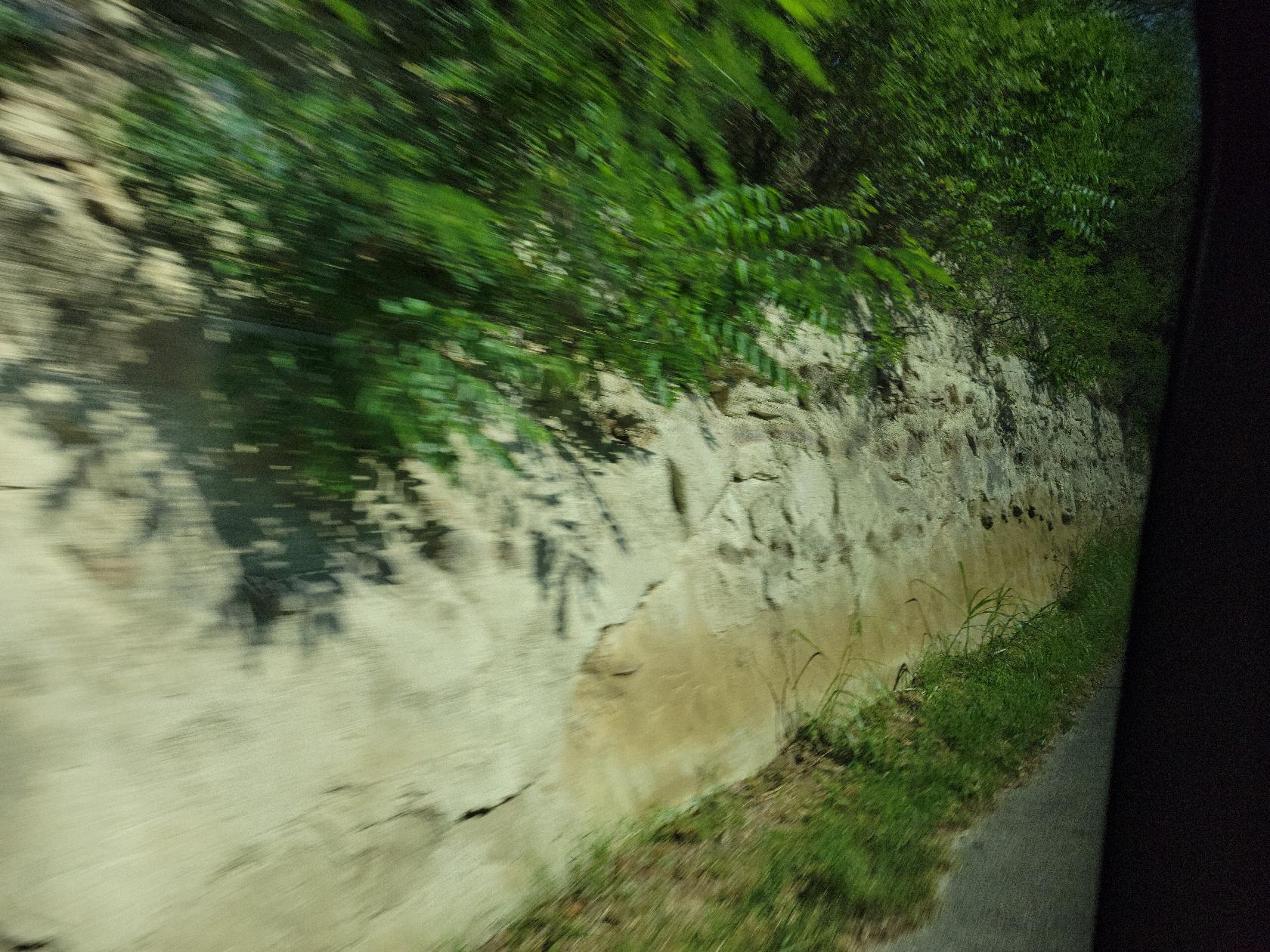
One of the most notable features of Barolo is its soil and topology. Not only is the soil a kind of hard-pack mixture of sand, clay and other components, its valleys are steep and almost treacherous.
The chaulky, silty and sanding earth of Barolo – Barolo, Italy
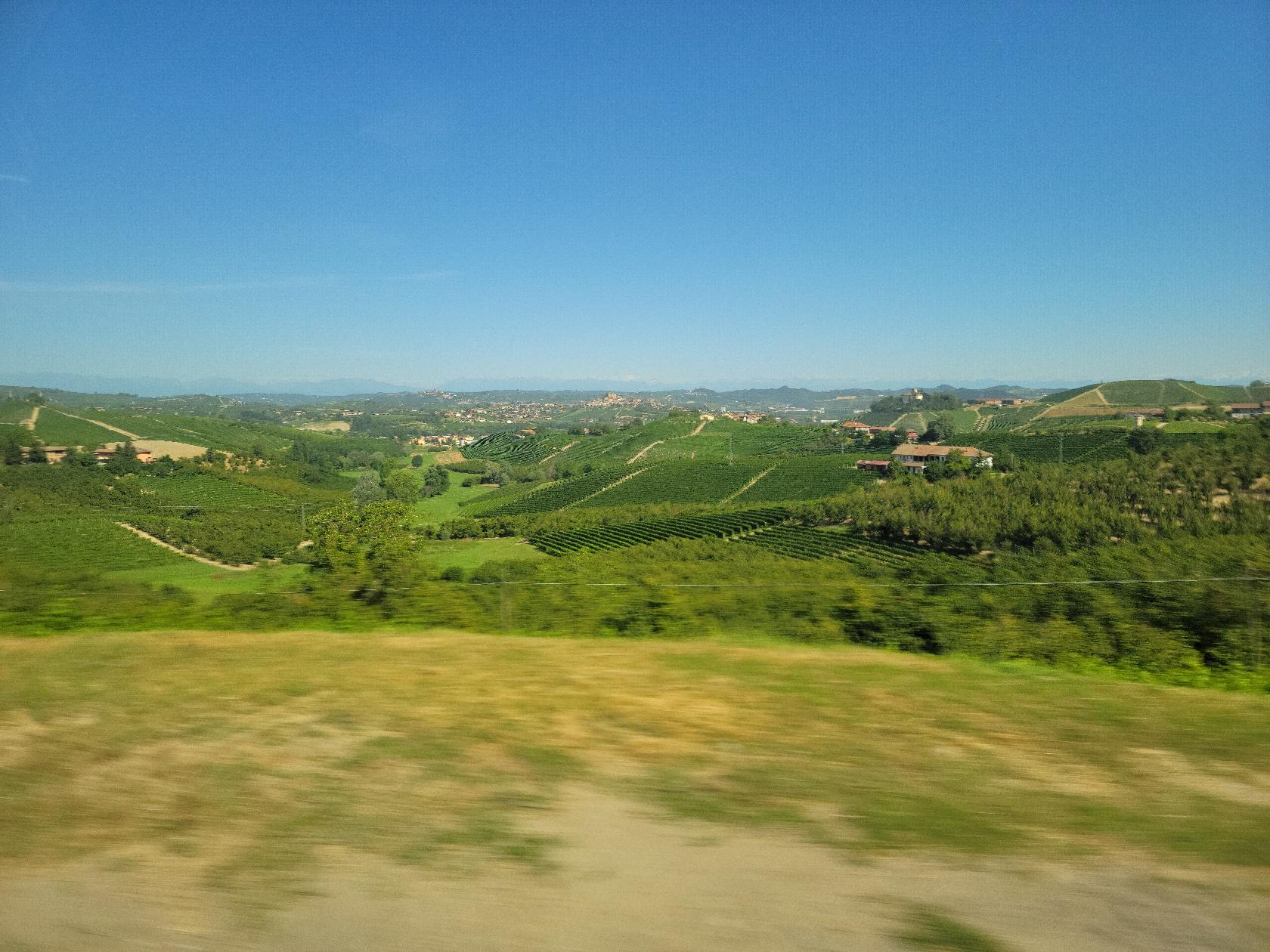
Alba in the distance – Barolo, Italy
The town – Barolo, Italy
Castello Comunale Falletti di Barolo – Barolo, Italy
Castle and wine museum – Barolo, Italy
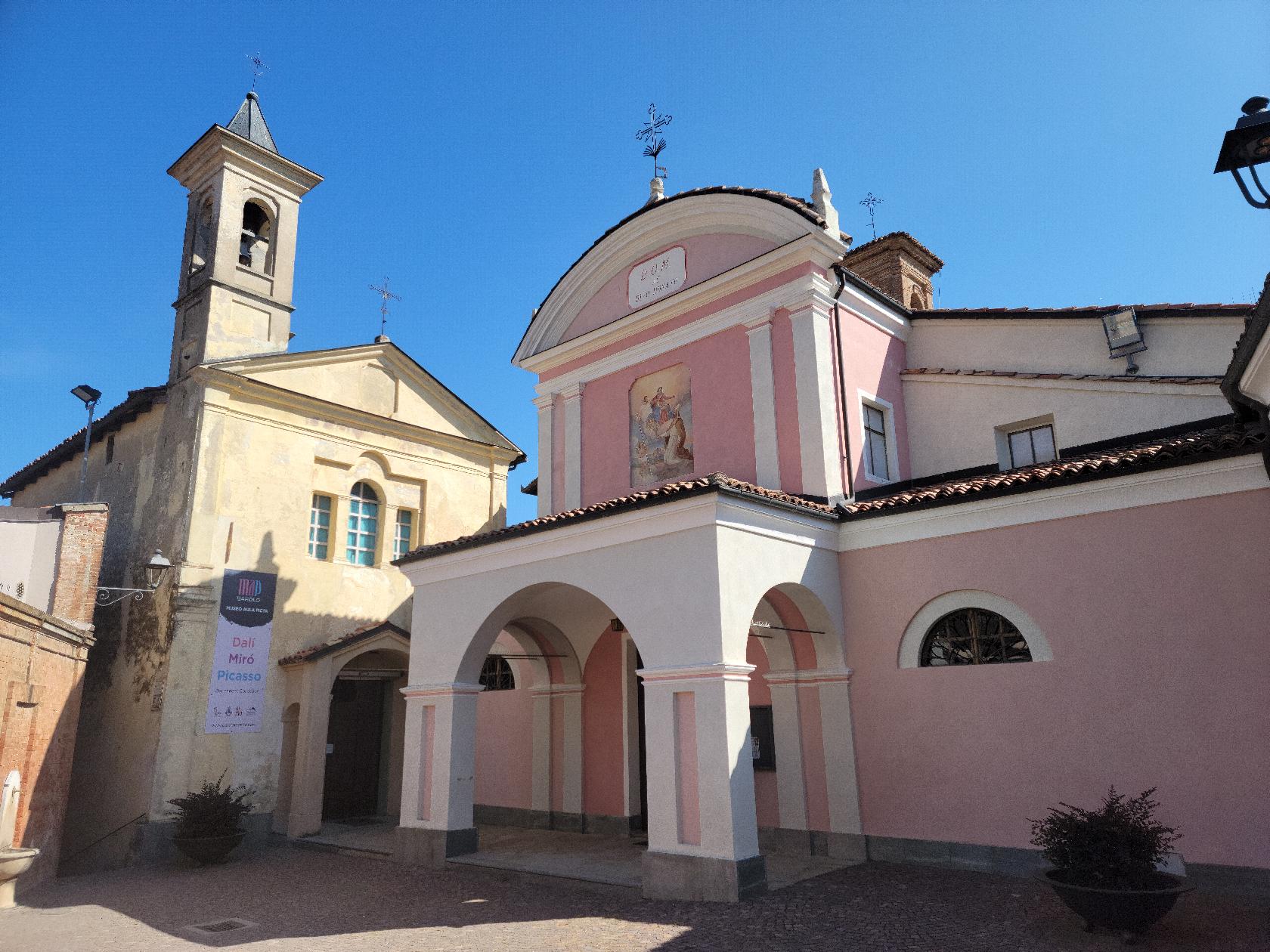
Church of San Donato – Barolo, Italy
Vineyards – Barolo, Italy
Castello Comunale Falletti di Barolo – Barolo, Italy
Castello Comunale Falletti di Barolo – Barolo, Italy
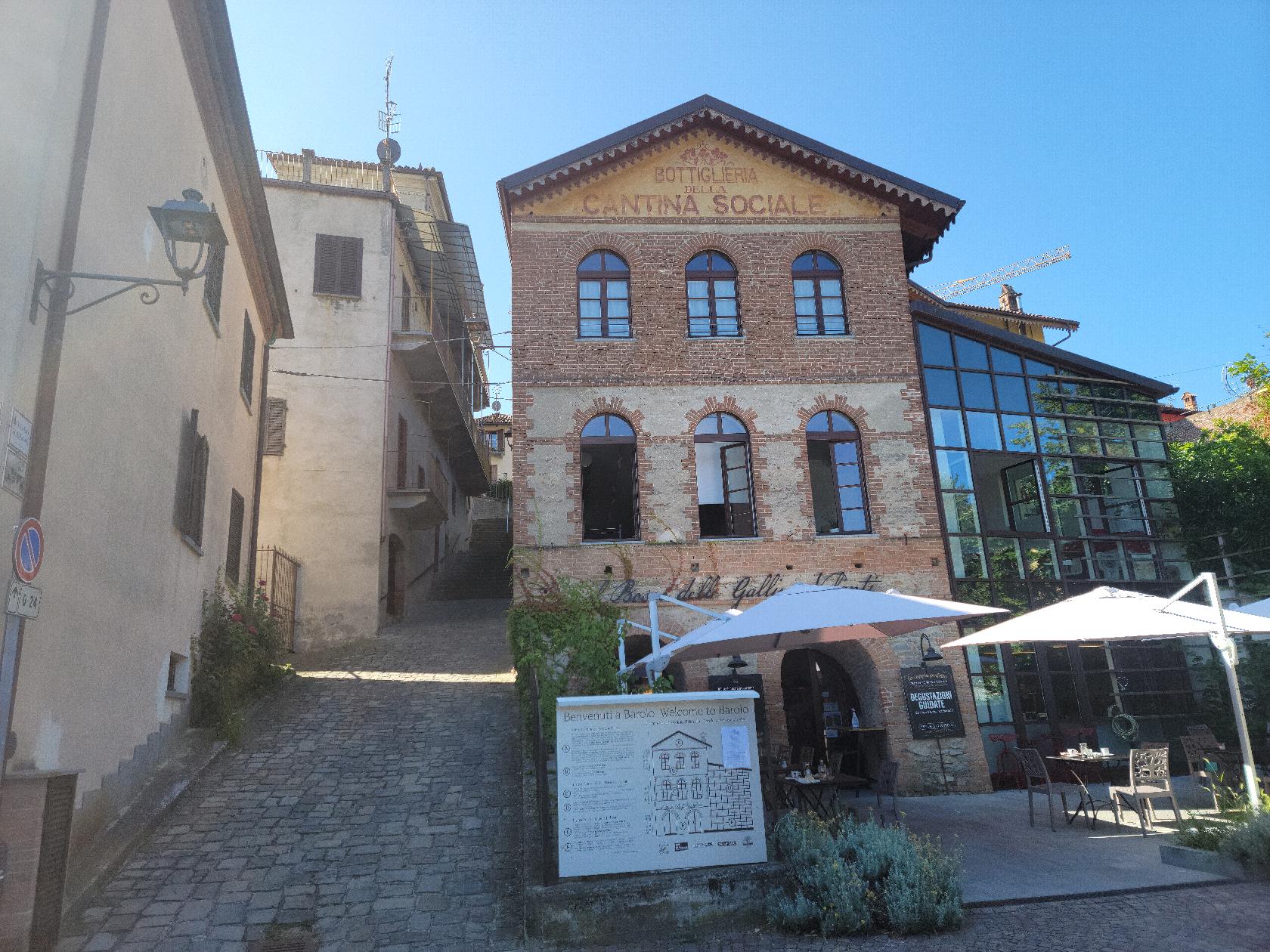
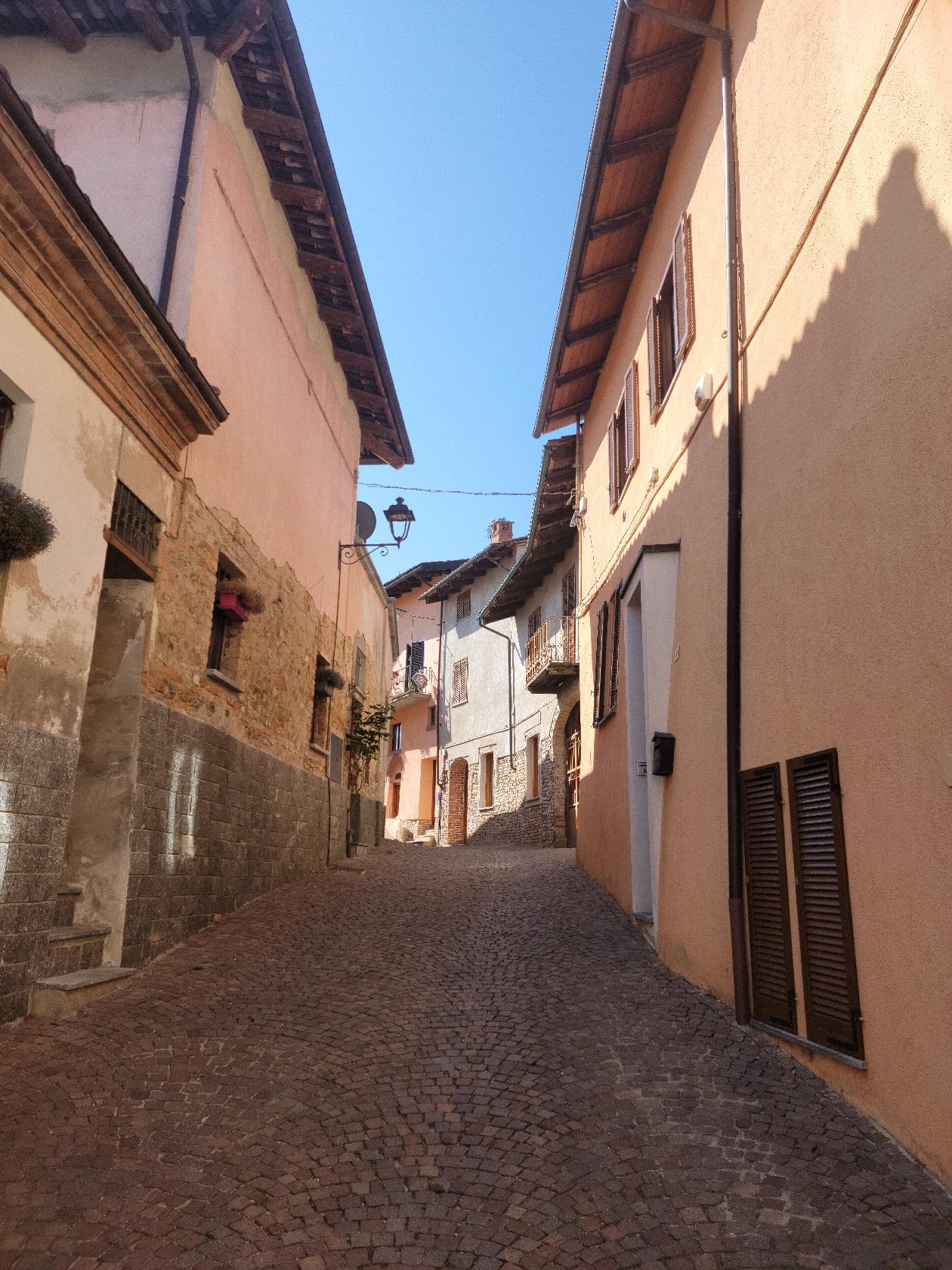
Town streets – Barolo, Italy
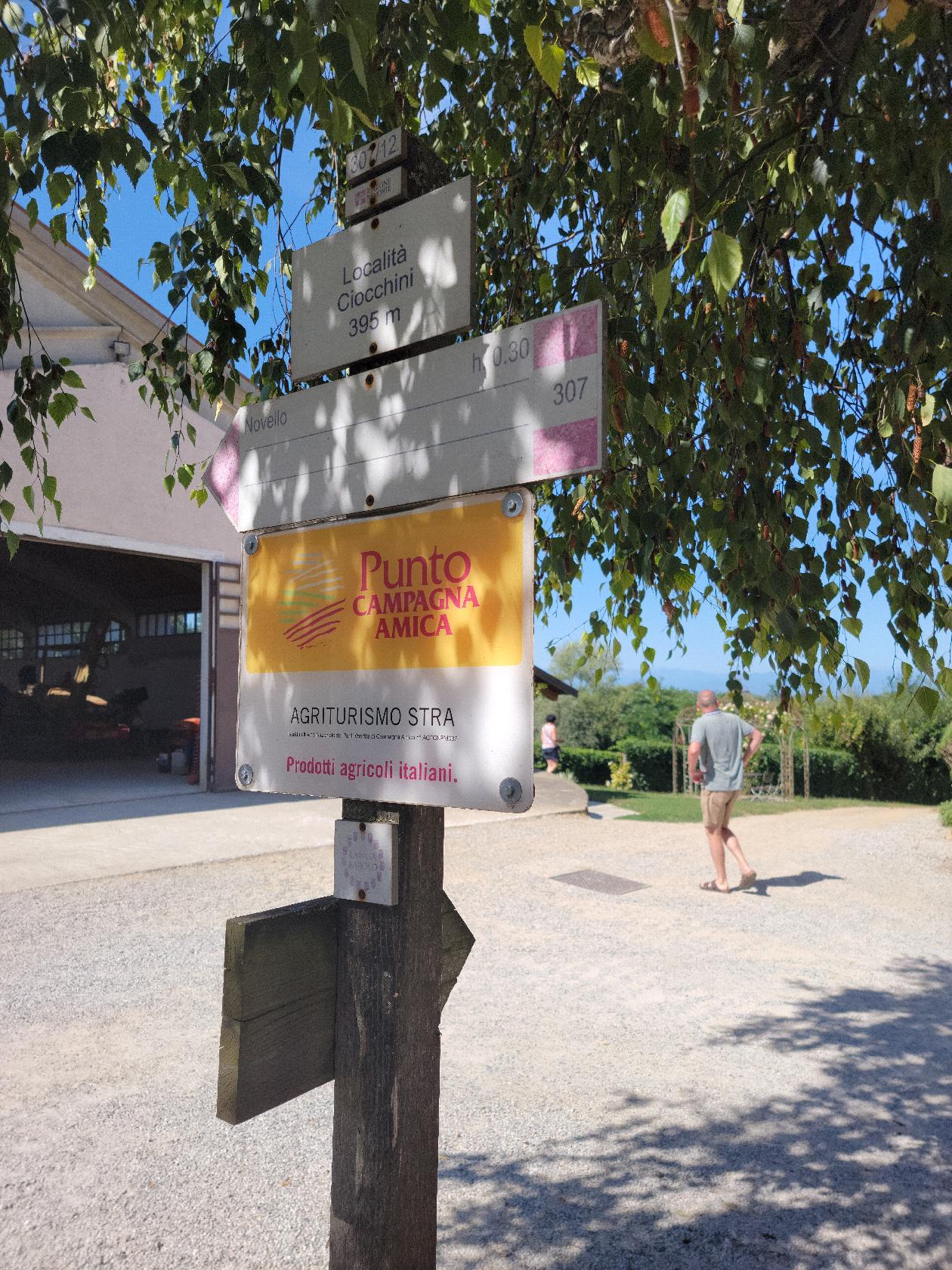
Azienda Agricola Stra
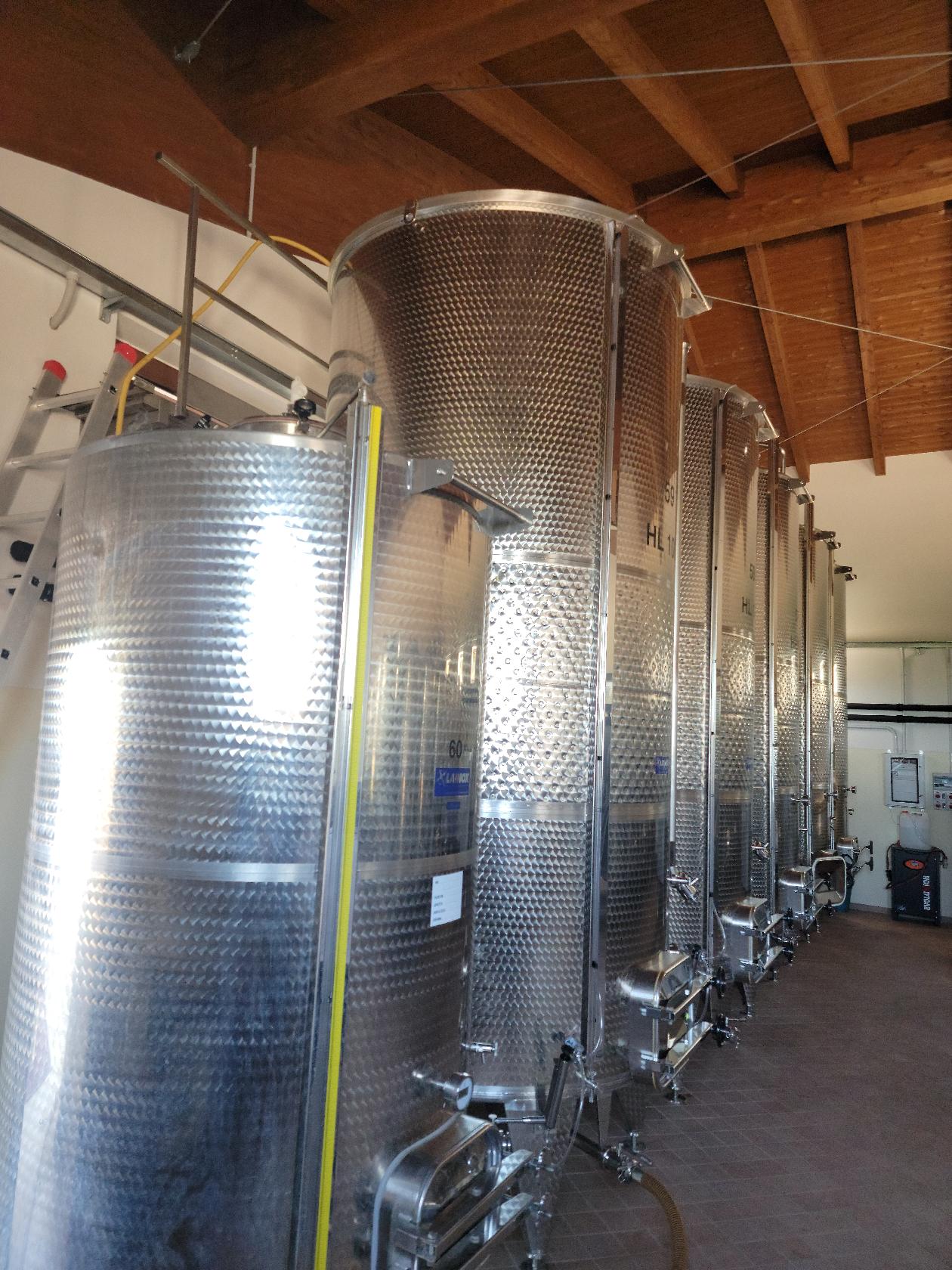
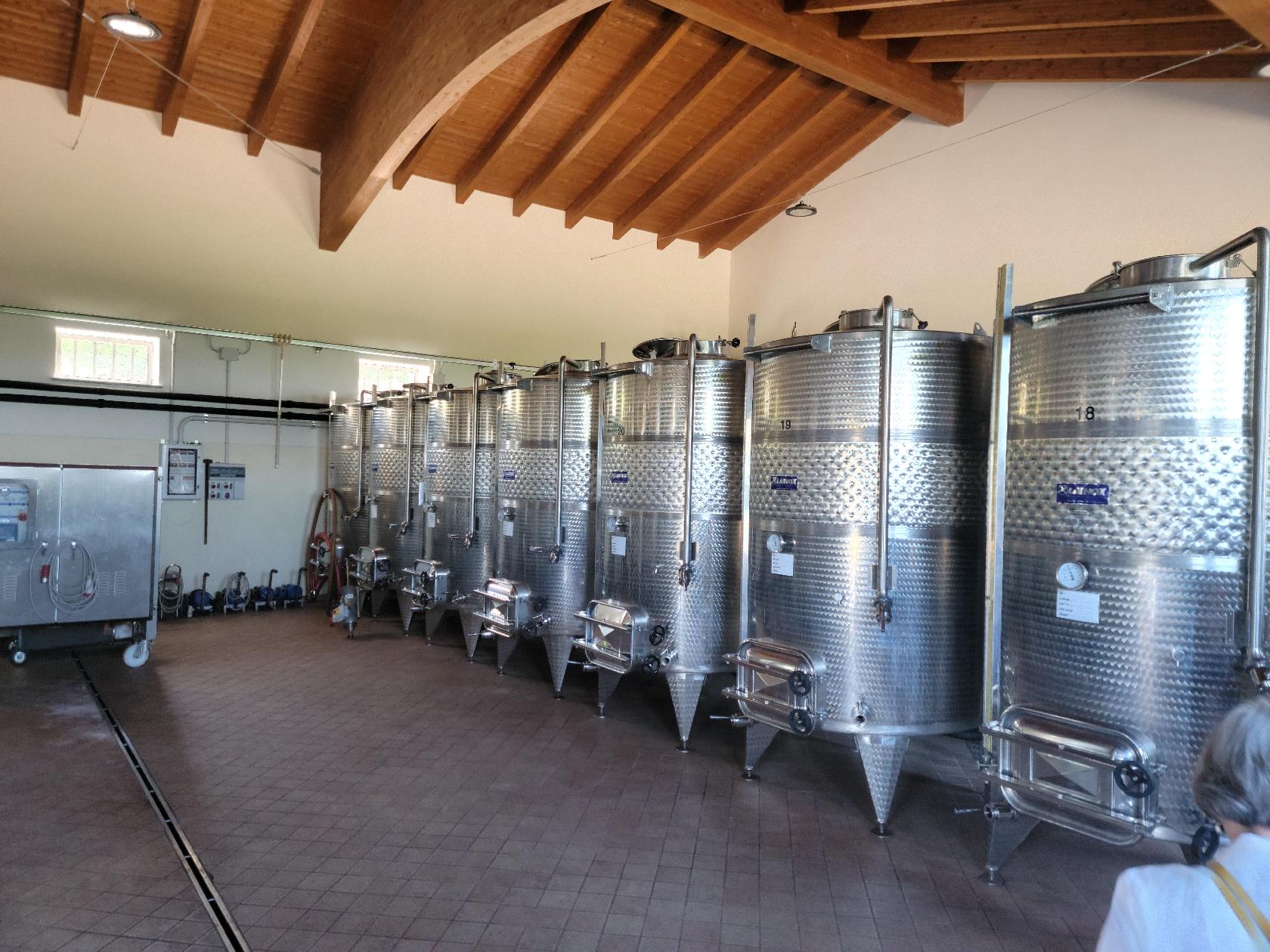
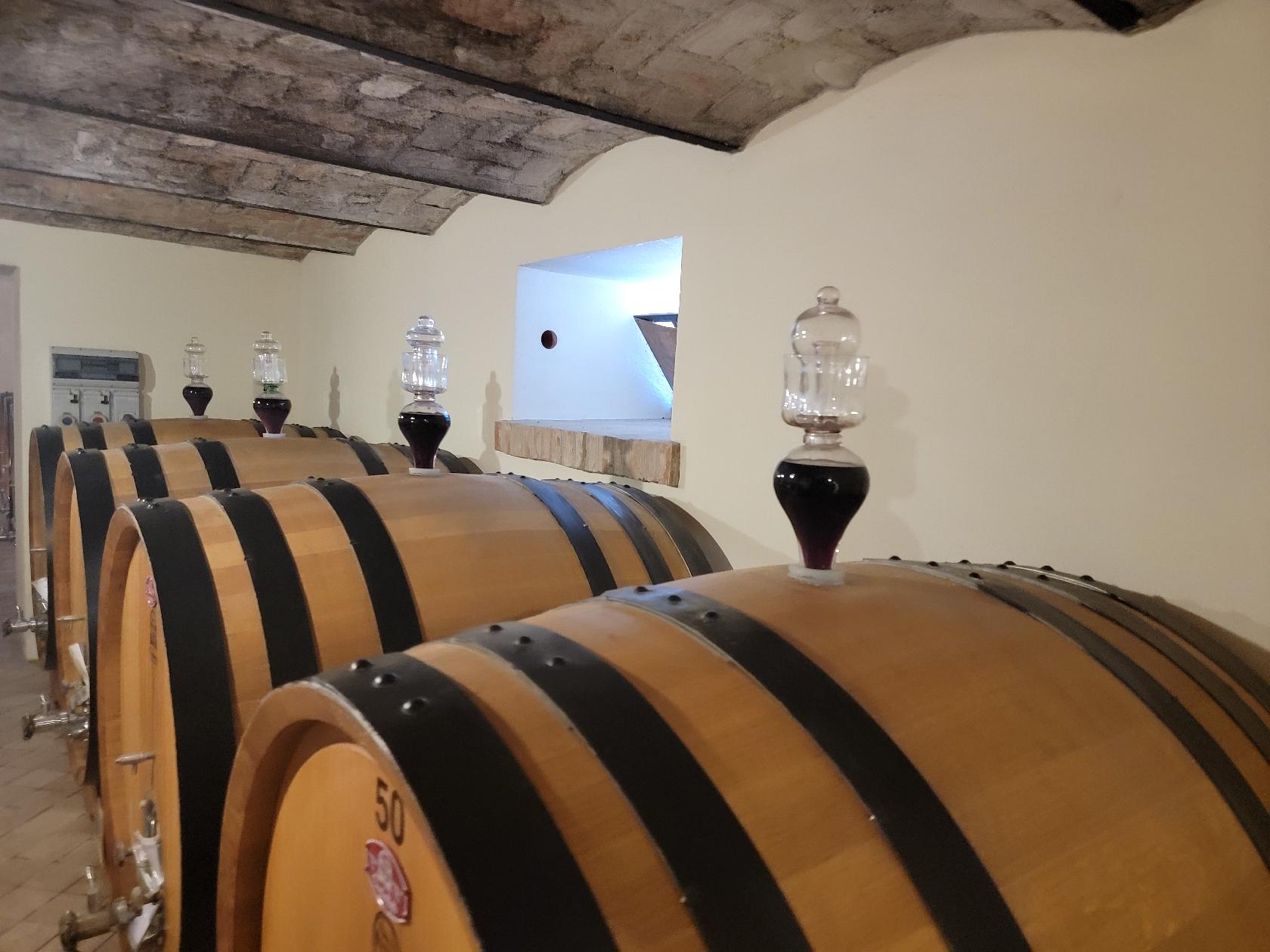
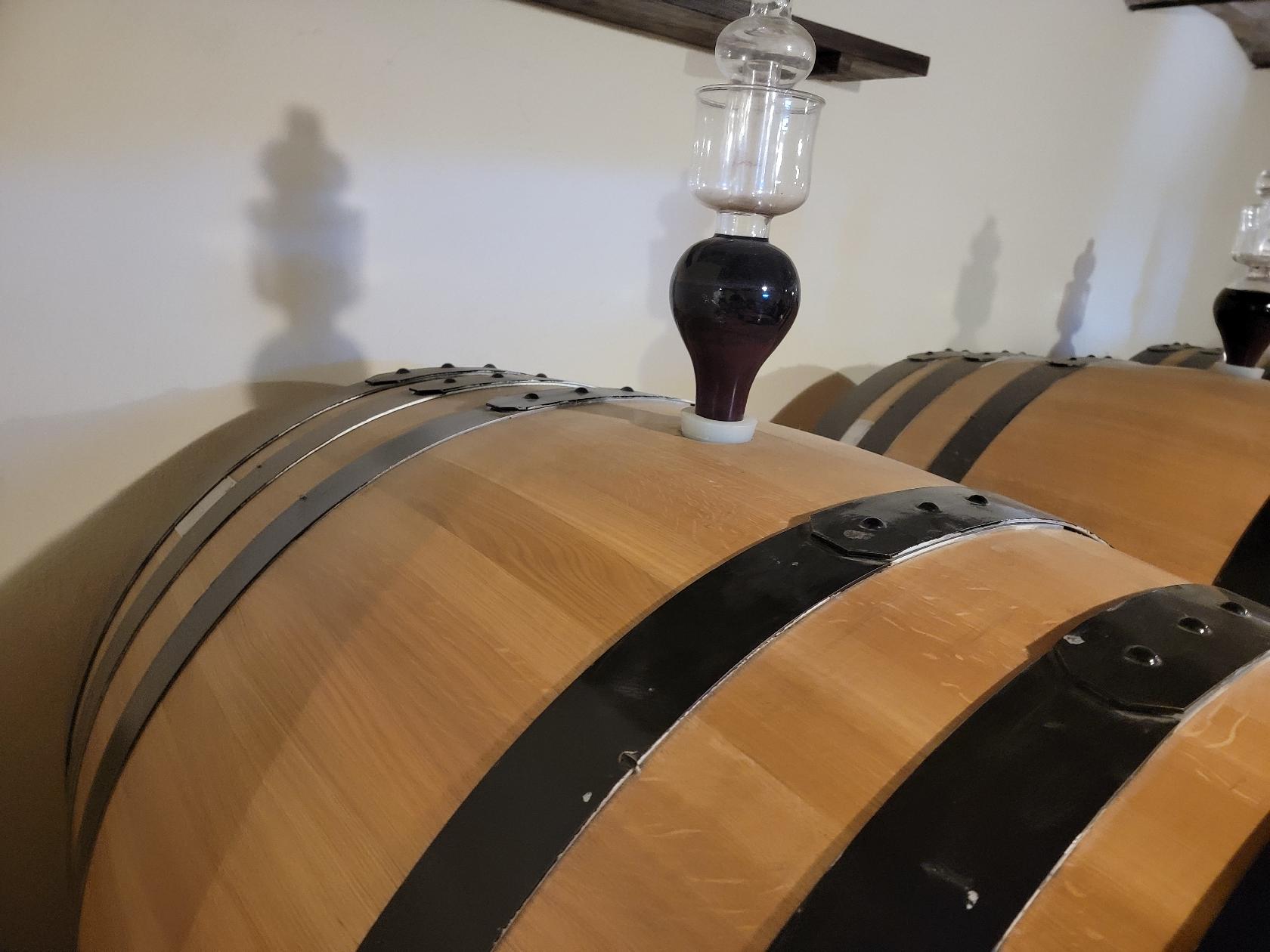
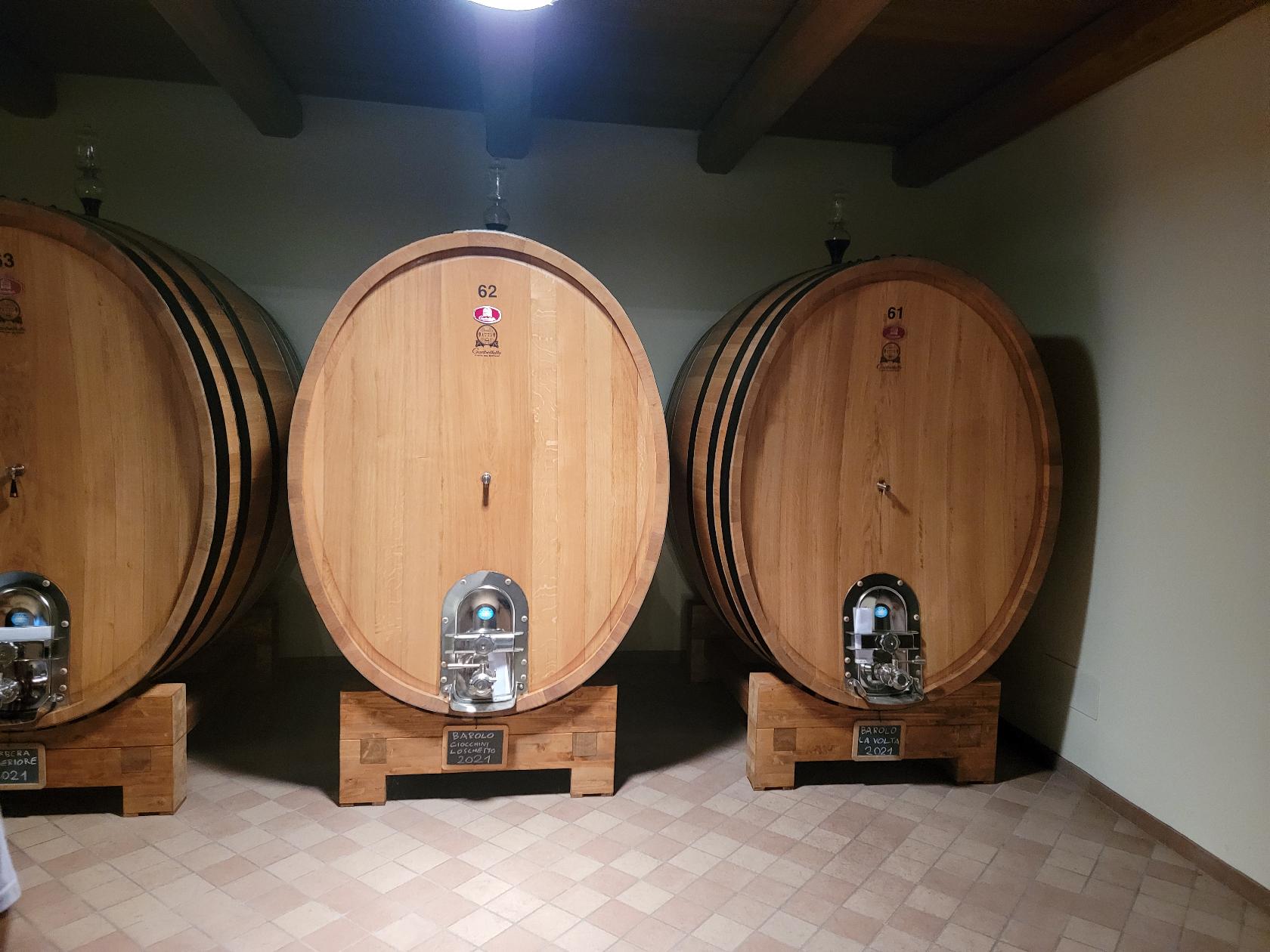
Our stop at Agritourism Stra was very informative and our hosts, including our tour driver, Saverio Molinai, were very instructive about the wines and the process to make them. This included a tour of the wine producing facilities and their cellars, where the wines are stored and kept during the aging process.
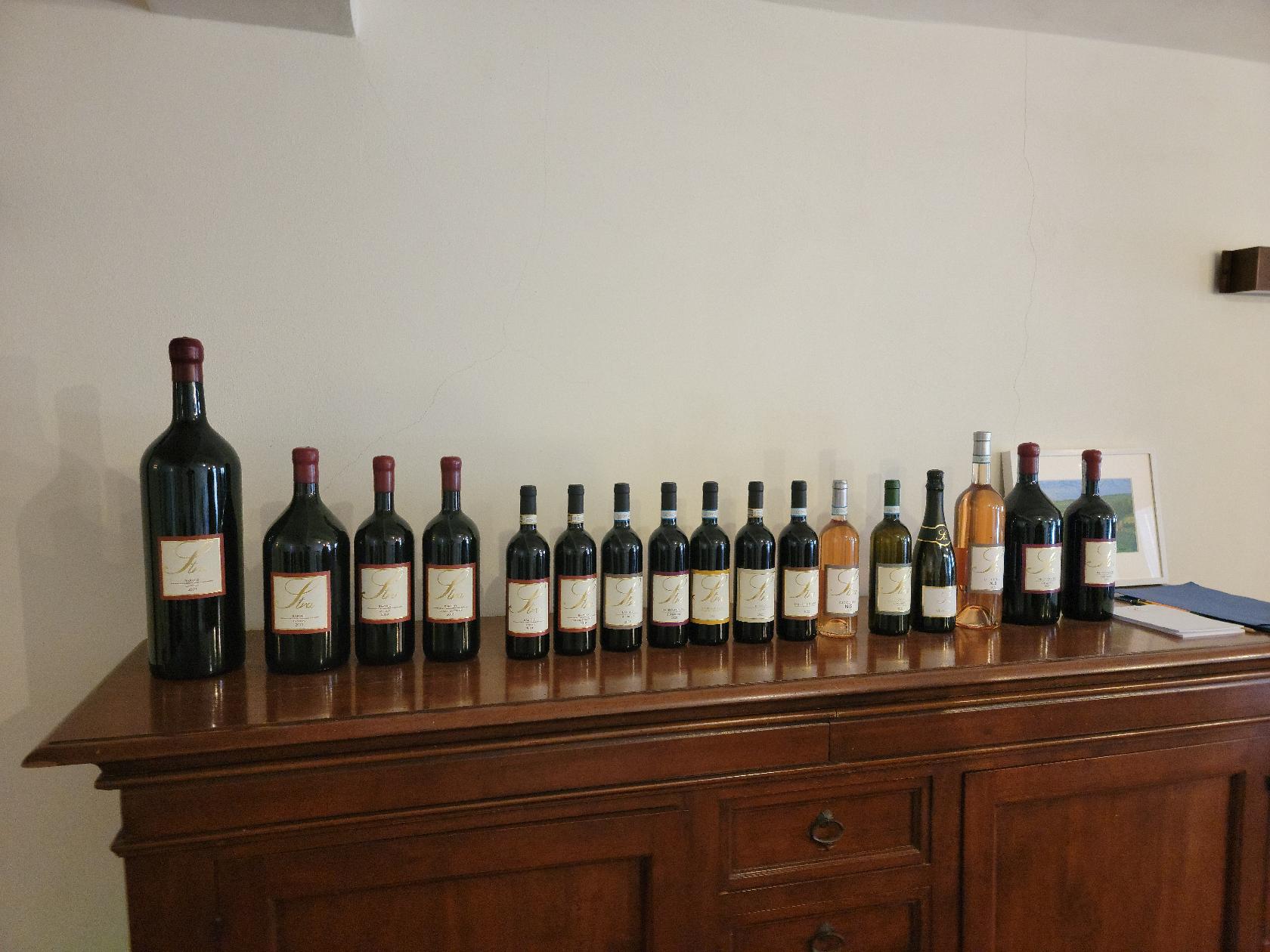
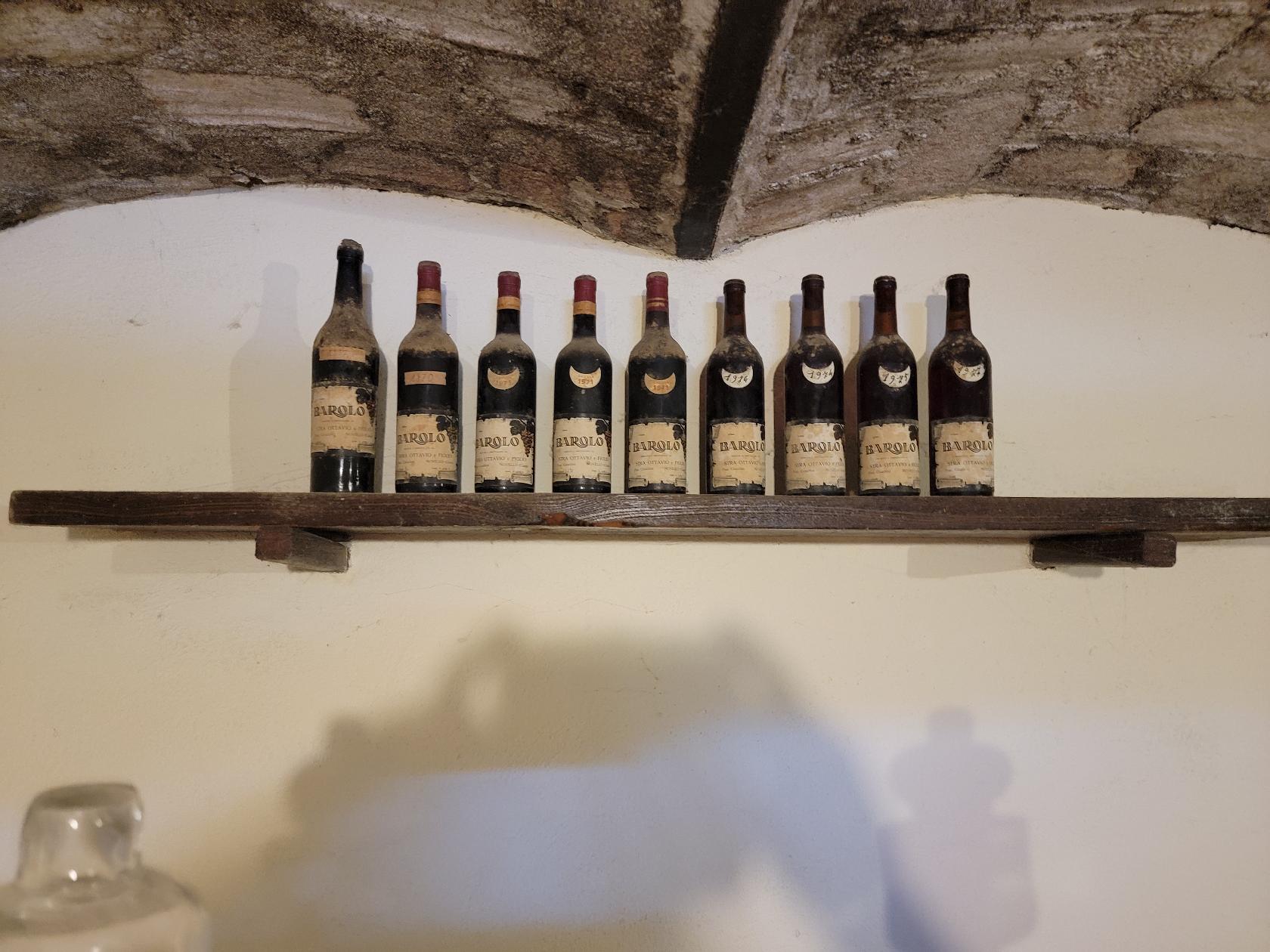
Agritursimo Stra – Old wines from the vineyard – Barolo, Italy
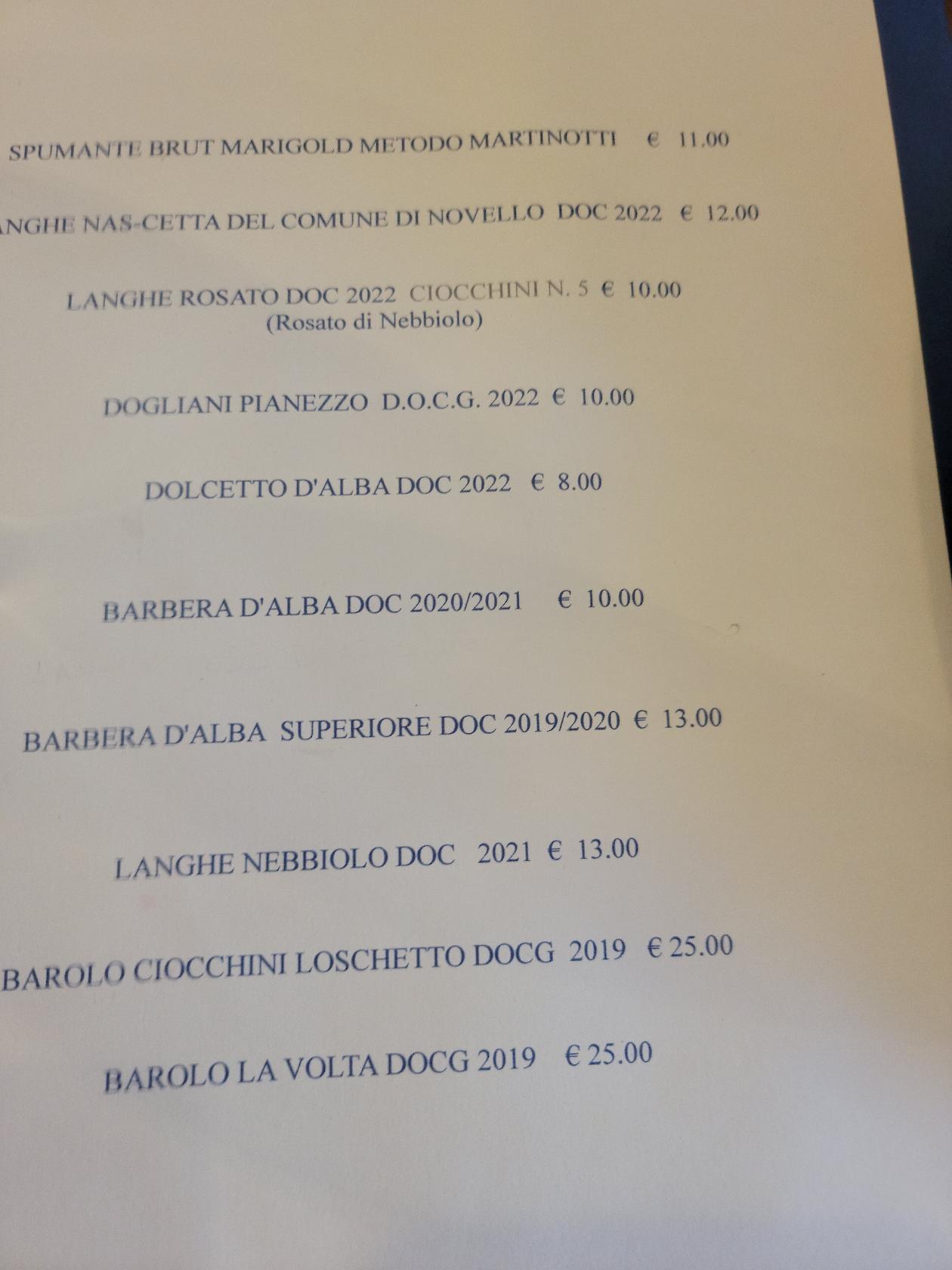
The tasting included a flight of all the wines they produce, with one exception, the Dolcetto 2022 for 8€. The list below shows some of the wines offered and we essentially when from the top of the list to the bottom.
Azienda Agricola Stra – Initial Tasting List – Barolo, Italy
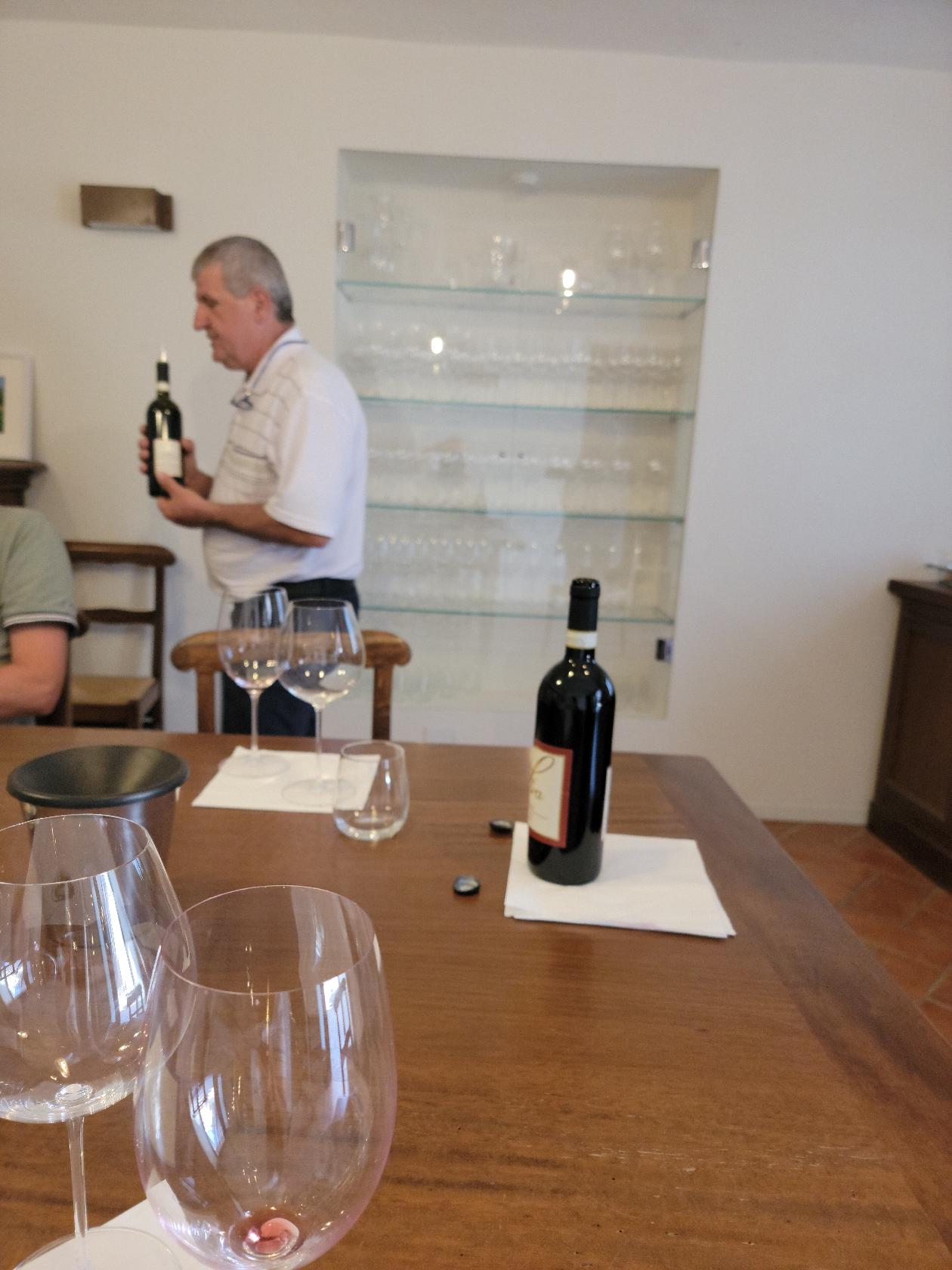
All during our tasting, our tour guide explained the various aspects of Barolo, its soil, the wines and the wine making process they used. He was actually very knowledgeable and when he was not sure about something that was particular to this producer, he would ask our host and she provided the necessary explanation.
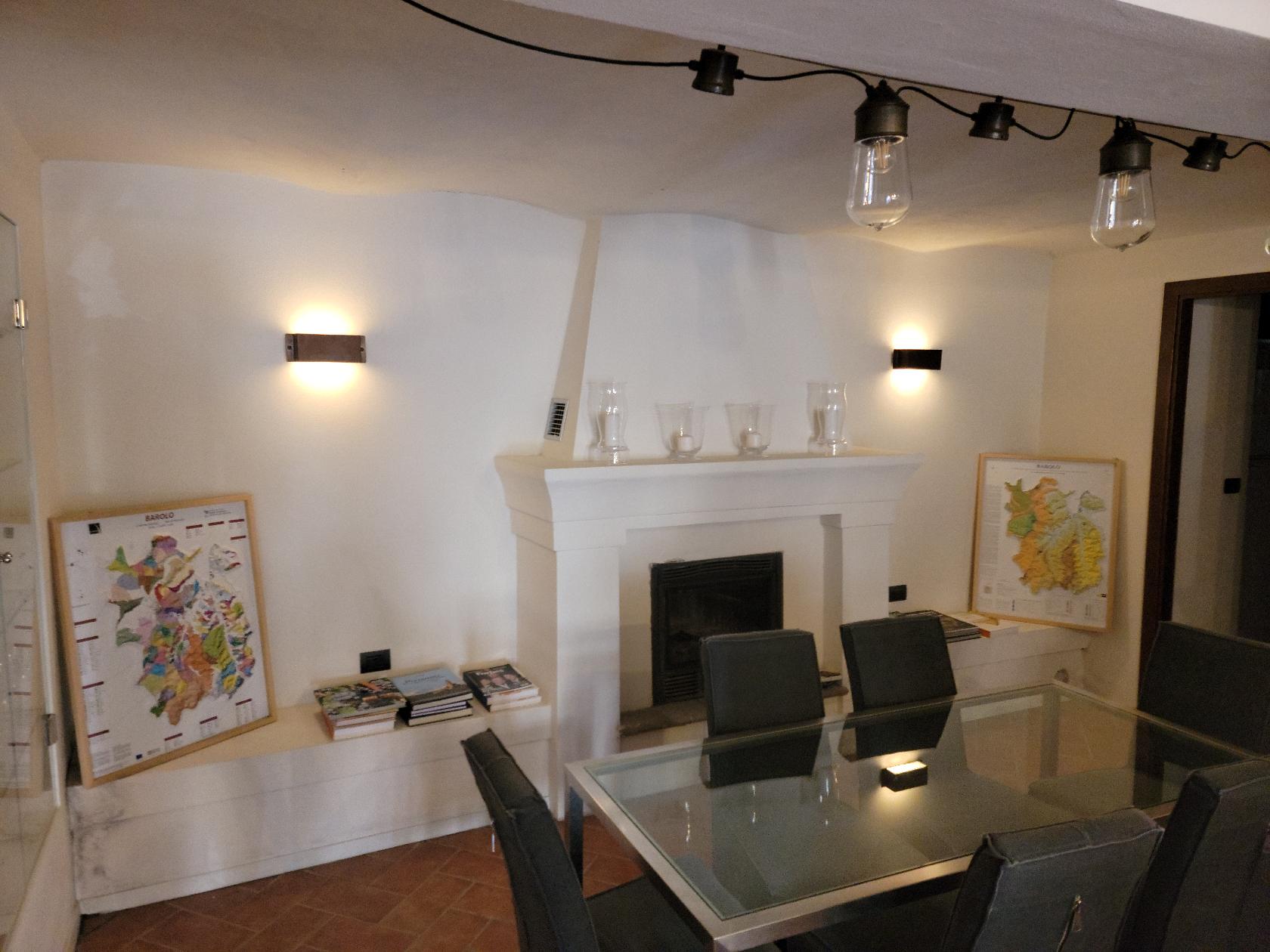
Agritursimo Stra – Tasting room – Barolo, Italy
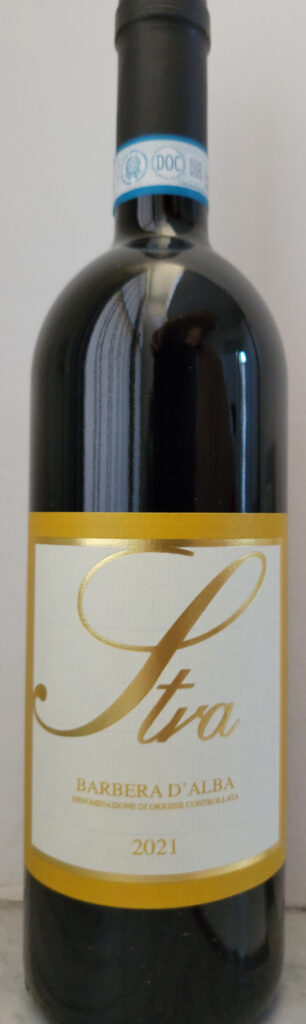
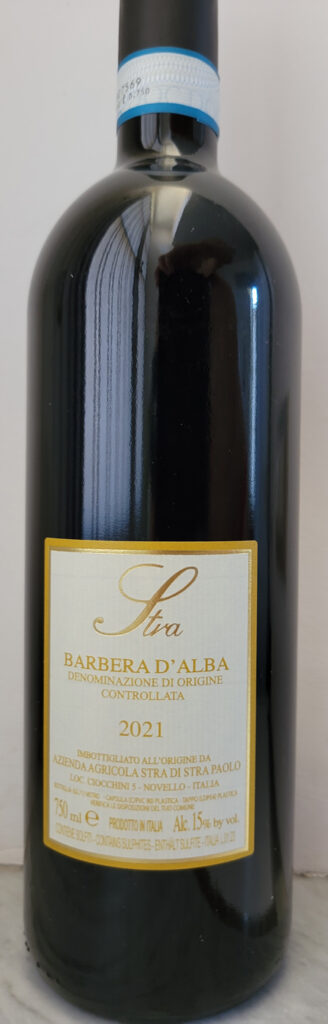
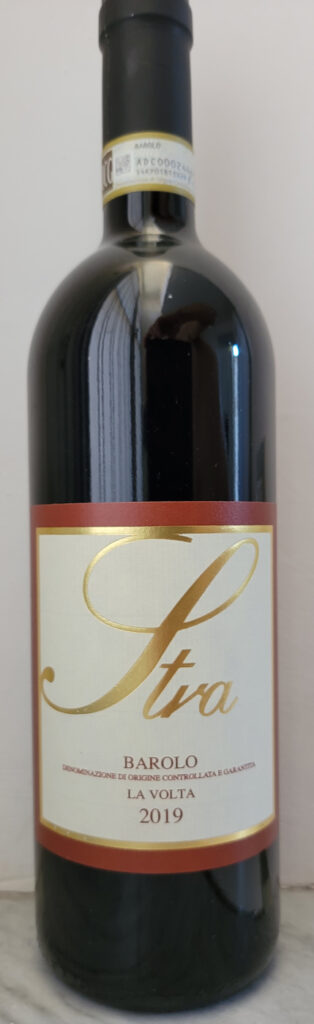
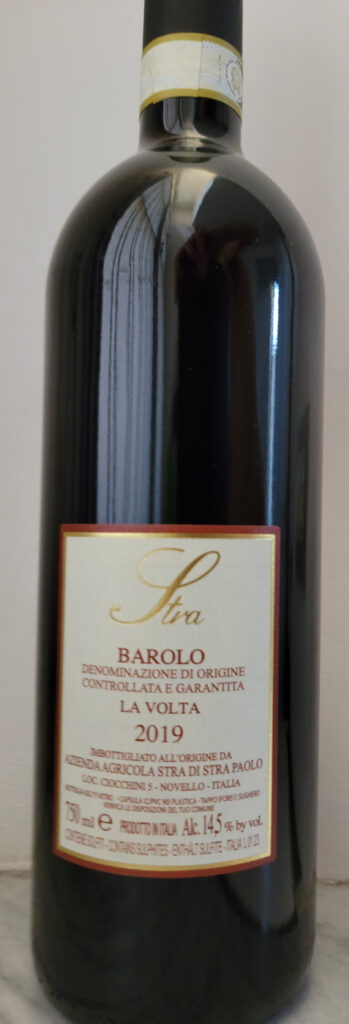
Impressed with the quality of the wines, we purchased almost half a case of five bottles, two bottles of DOCG Stra La Volta 2019 Barolo and three bottles of DOC Stra Barbera D’Alba 2021. Of course, the Barolo is kind of young to drink right now and needs a handful of years to mellow. But the Barbera is young and fruity, with plenty of tannin, cherry and tobacco overtones and ready to drink now. It would be great with a nice steak or any other dish that could compete with its strength.
Azienda Agricola Stra – DOCG Barolo La Volta 2019, Front – Barolo, Italy
Azienda Agricola Stra – DOCG Barolo La Volta 2019, Front – Barolo, Italy
The last thing that we tried here that was not on the list was their Grappa. I actually forgot what they labeled it as and what the year was, but for a grappa is was very good. Most grappa can be a bit strong, even harsh, this one was actually a pleasure to drink, even Patti liked it, and she doesn’t even like grappa.
Barbaresco
Our stop in Barbaresco included two stops, one in town for a tasting at Produttori del Barbaresco S.A.C., or the commune wine store; the other at the Grasso Brothers to the south of Barbaresco in Giacoso. The town, Barbaresco, is unmistakable from a distance, due to its distinct tower which is so prominent on the horizon.
Patti with the town in the distance – Barbaresco, Italy
The town – Barbaresco, Italy
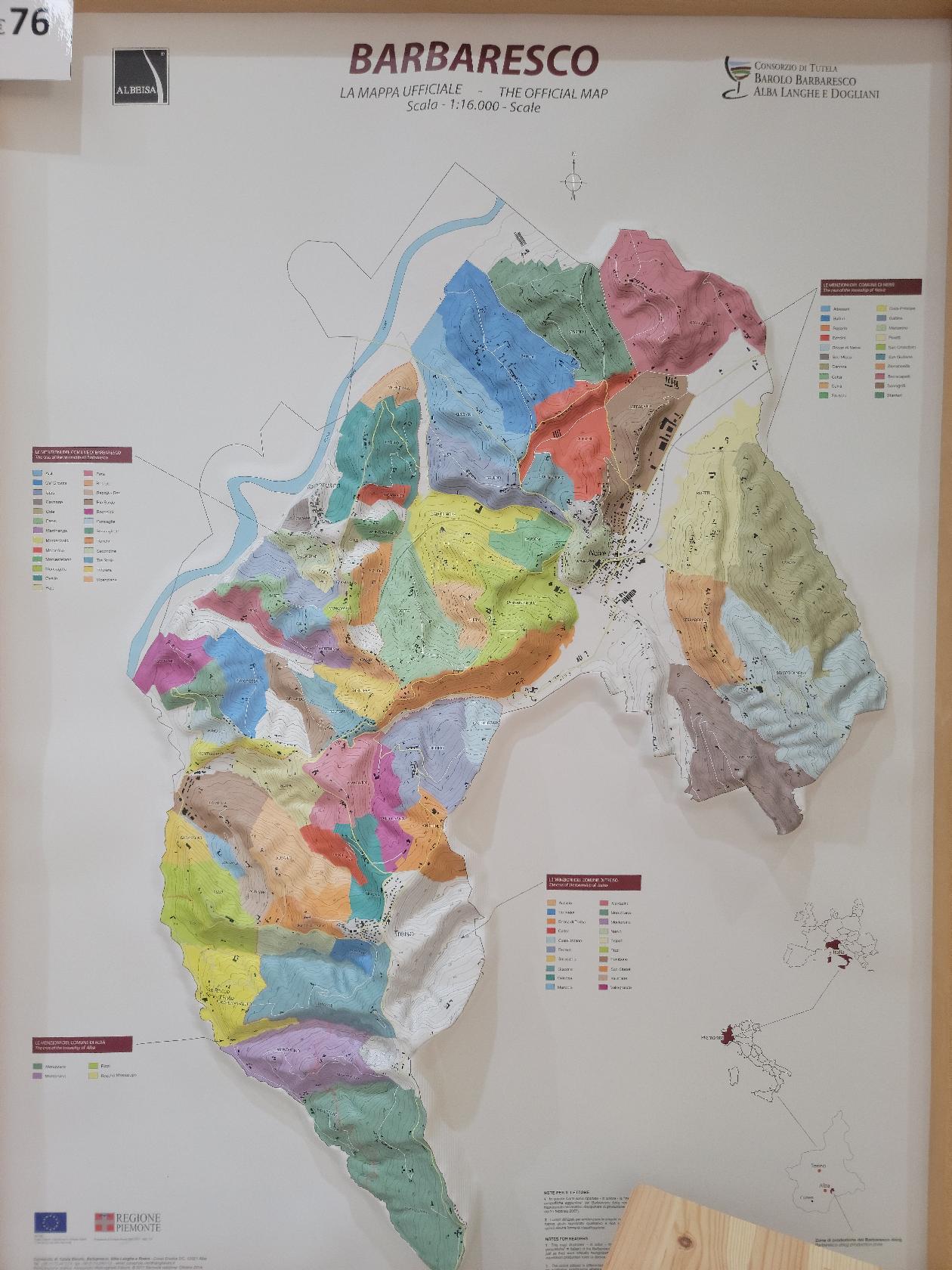
Commune wine shop map – Barbaresco, Italy
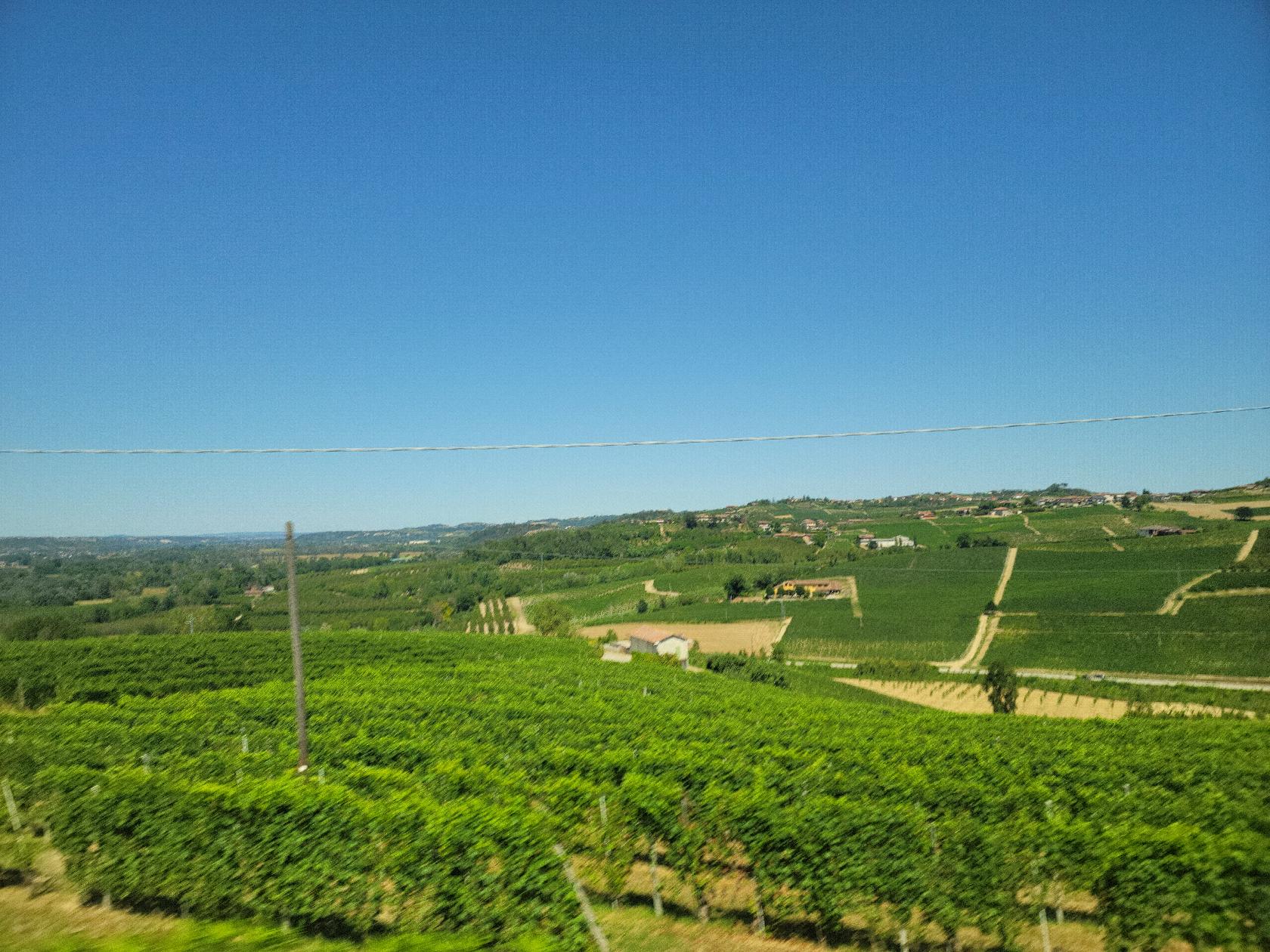
The land here is flatter and clearly more rolling than in Barolo. The valleys are not as steep and the vineyards appear to be able to employ more of their land to grapes. However, our guide told us that the primary reason some of the land still has trees was for truffle production in the area, its not necessarily unproductive, just used for another purpose.
Traveling to Barbaresco – Barbaresco, Italy
Vineyards of Barbaresco – Barbaresco, Italy
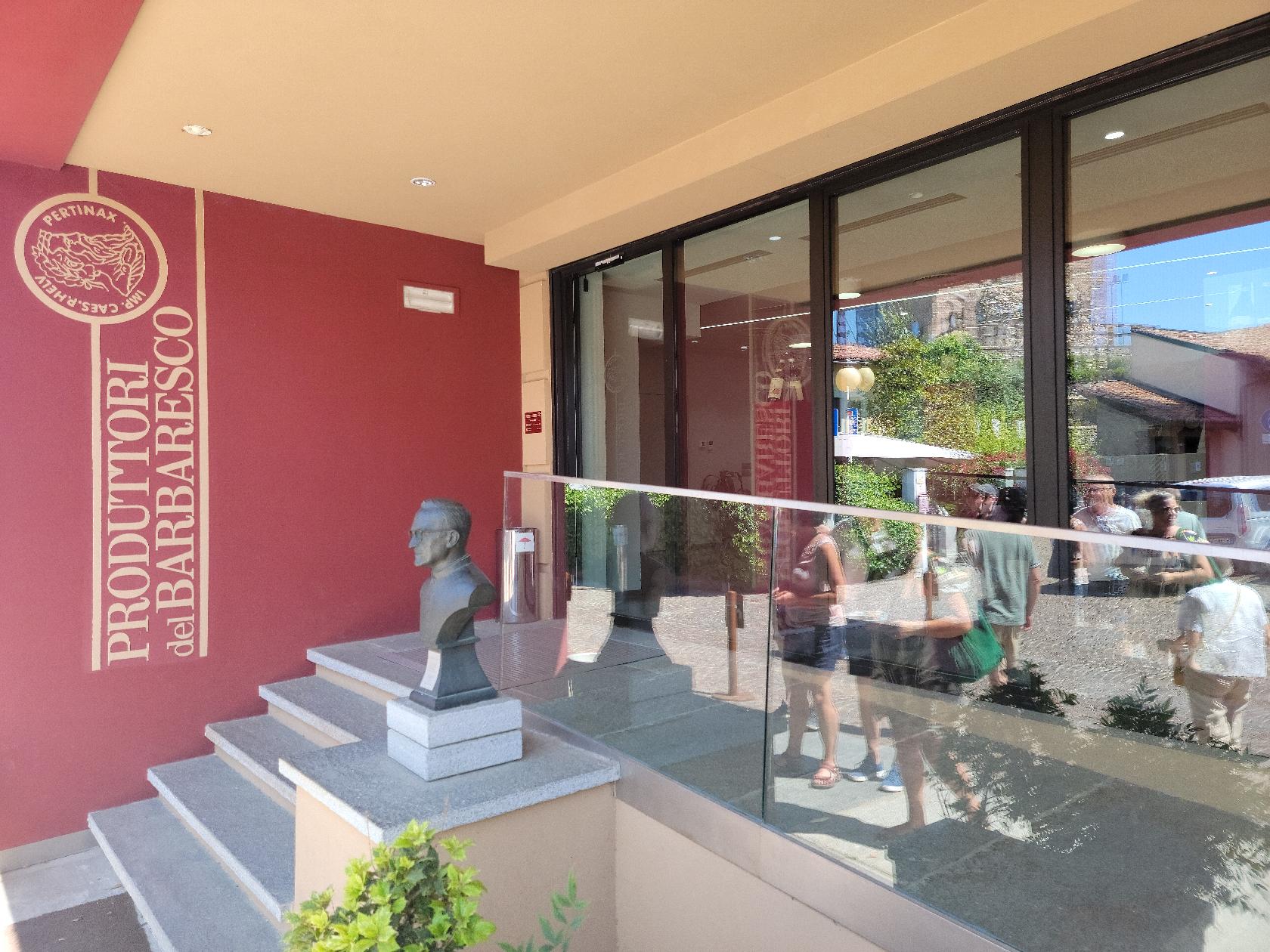
Produttori del Barbaresco S.A.C.
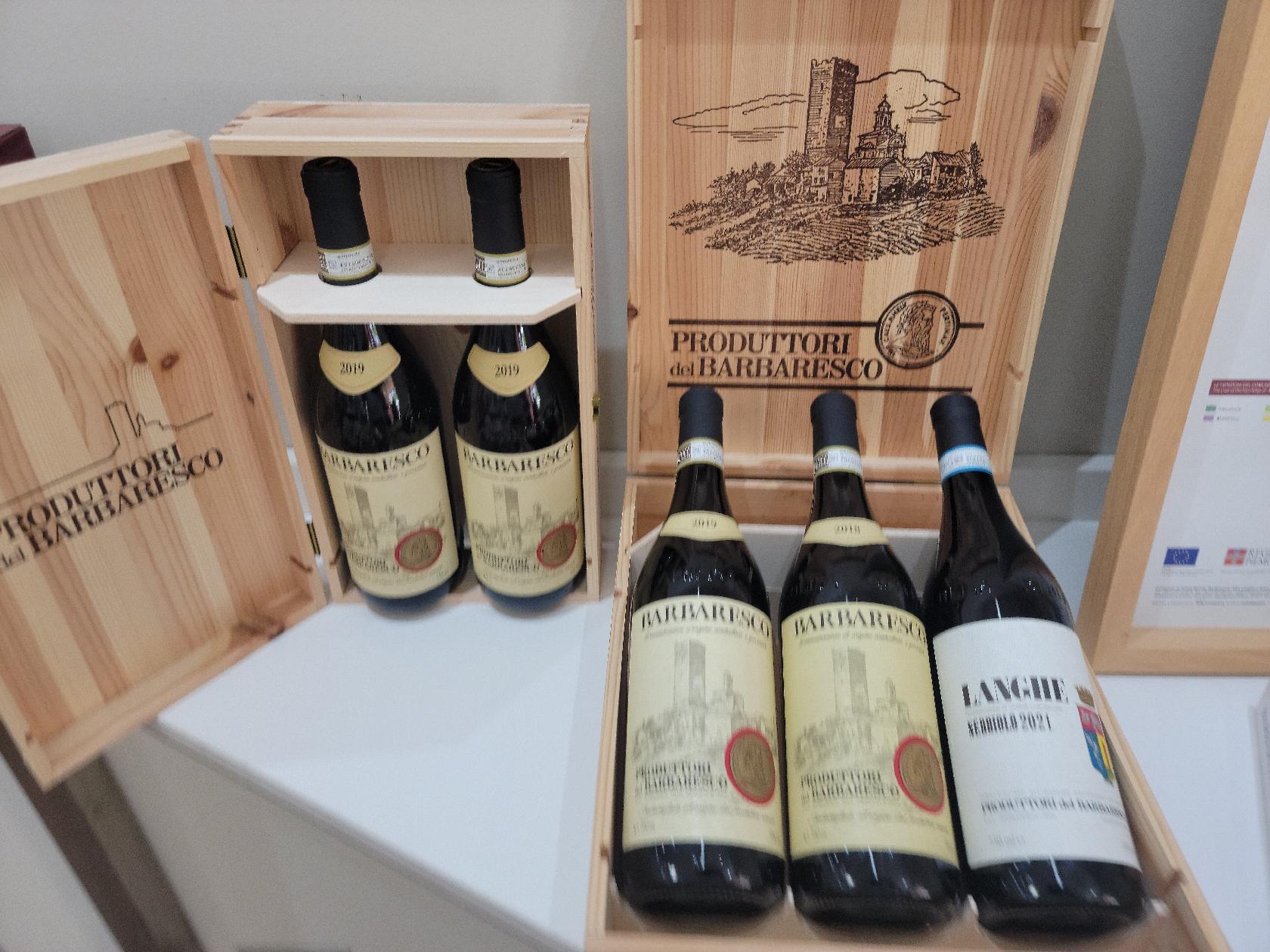
The inside of this store is rather modern, almost sterile in a contemporary way. Here we tasted the DOC Langhe Nebbiolo 2021 and two DOCG Barbarescos, a 2018 and a 2019. The nebbiolo was rather dry with little fruit and unimpressive, but clear with a crisp ruby color and a distinct nose. The 2018 and 2019 Barbarescos were a bit disappointing. Although they were typical of a nebbiolo varietal for Barbaresco, there price was rather high. I felt I could find a similar one that was less expensive in Turin.
Commune wine shop – Barbaresco, Italy
Commune wine shop wines – Barbaresco, Italy
Commune wine shop map – Barbaresco, Italy
Commune wine shop – Barbaresco, Italy
The last thing we tried was their Grappa. It was typical for grappa, lots of alcohol and perhaps a bit harsh. So this stop was a bit disappointing, but we got to see that town.
Vineyards of Barbaresco – Barbaresco, Italy
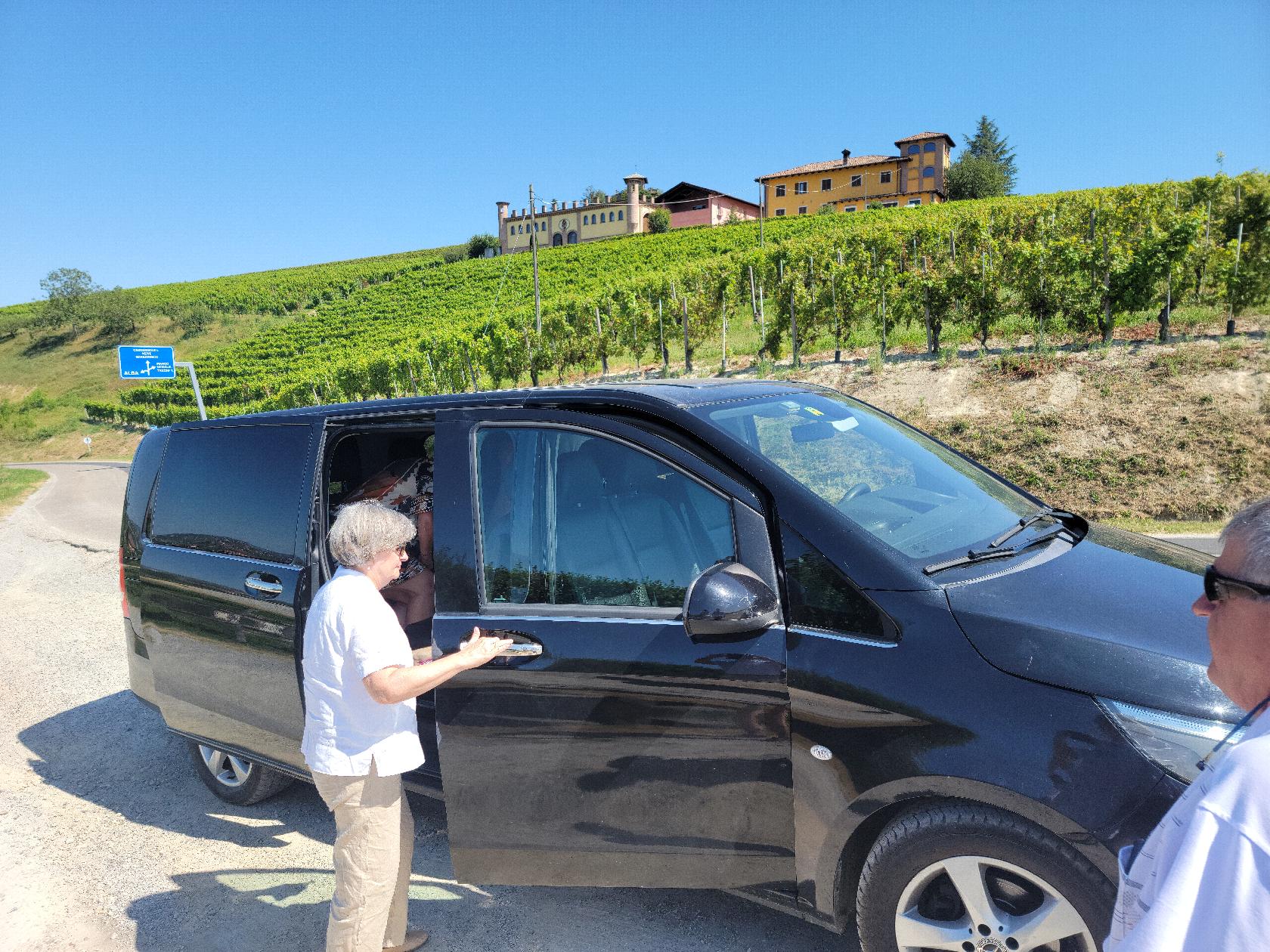
Patti getting into our vehicle – Barbaresco, Italy
We left here without purchasing anything.
Azienda Agricola Grasso Fratelli
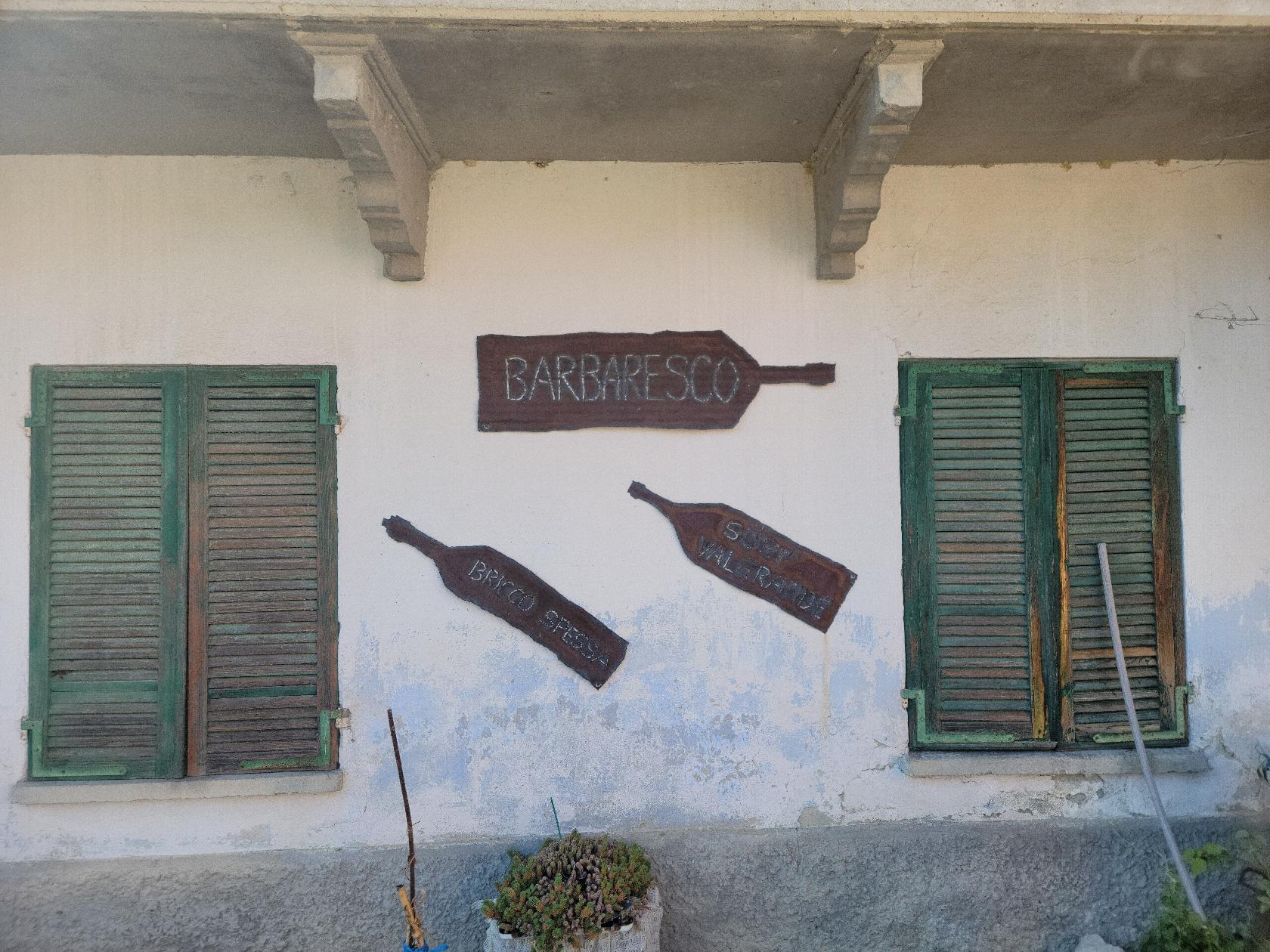
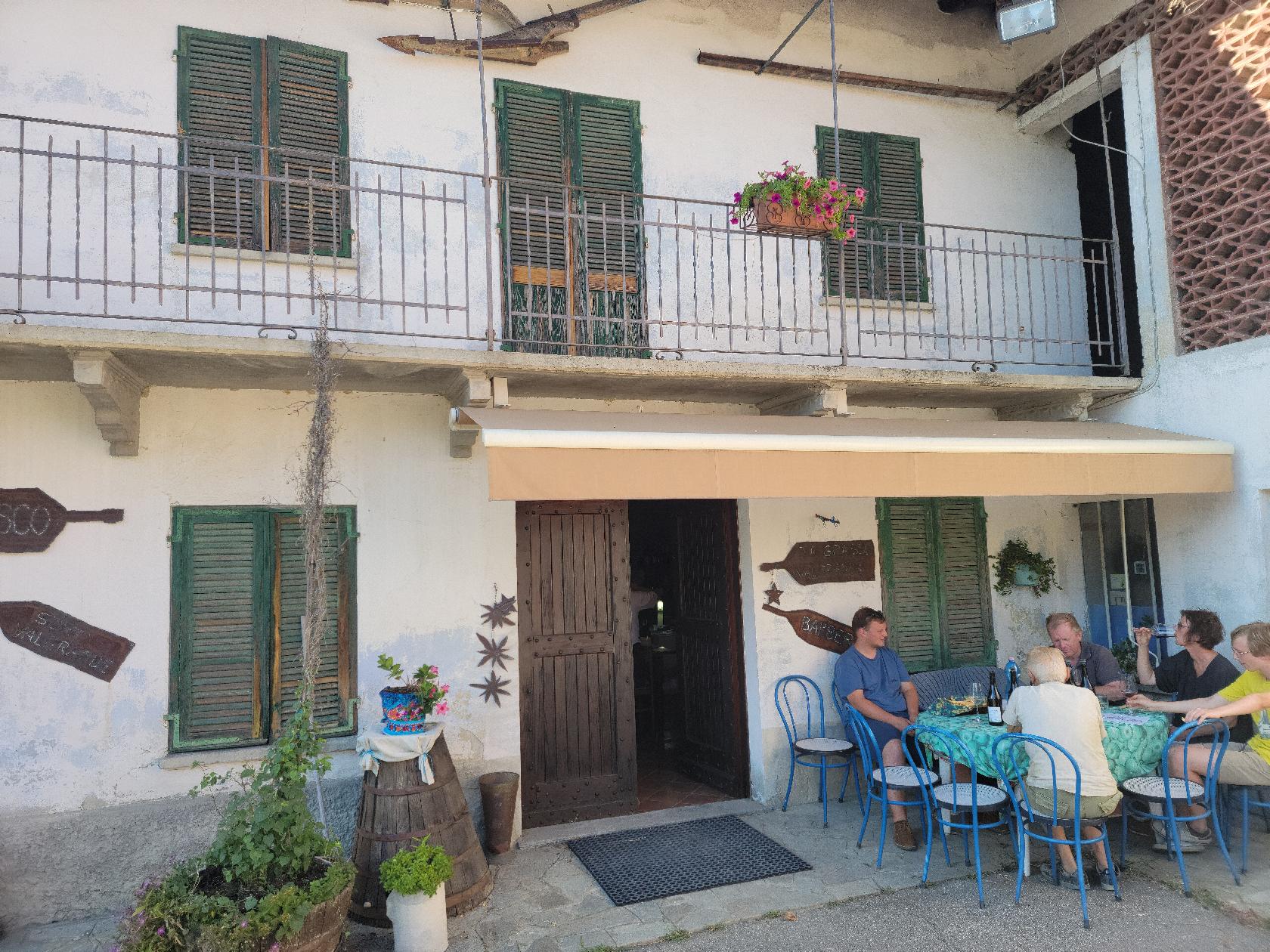
The Grasso Fratelli, or Grasso Brothers, have a rather unassuming winery. From the outside the construction is typical for Piedmont and it is adorned with signs of the wines they make, like Barbaresco, Bricco Spessa, Barbera, etc. One could call it a typical farm.
Grasso Brothers – Barbaresco, Italy
Grasso Brothers – Barbaresco, Italy
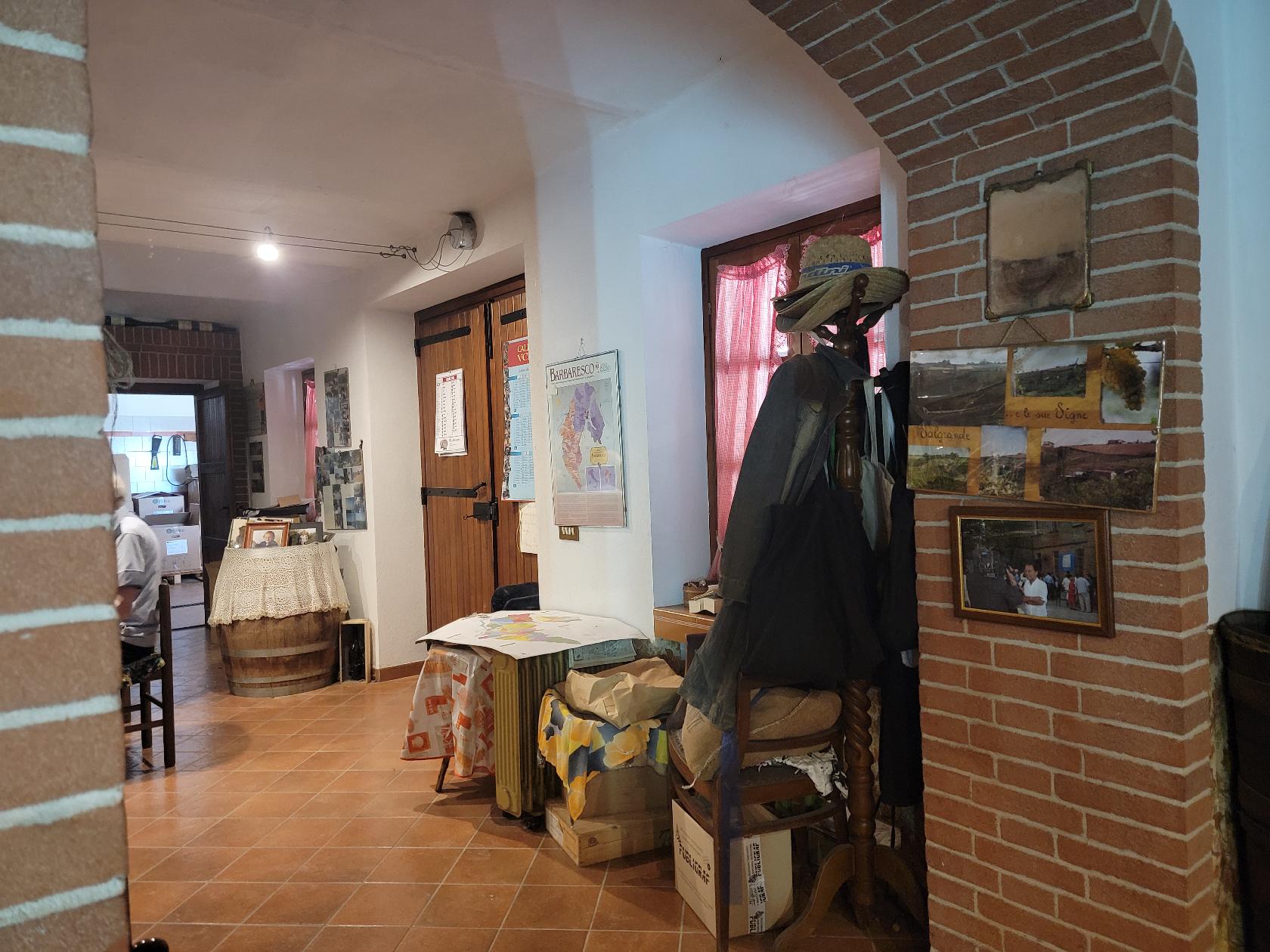
The Grasso Brothers – Inside the bodega – Barbaresco, Italy
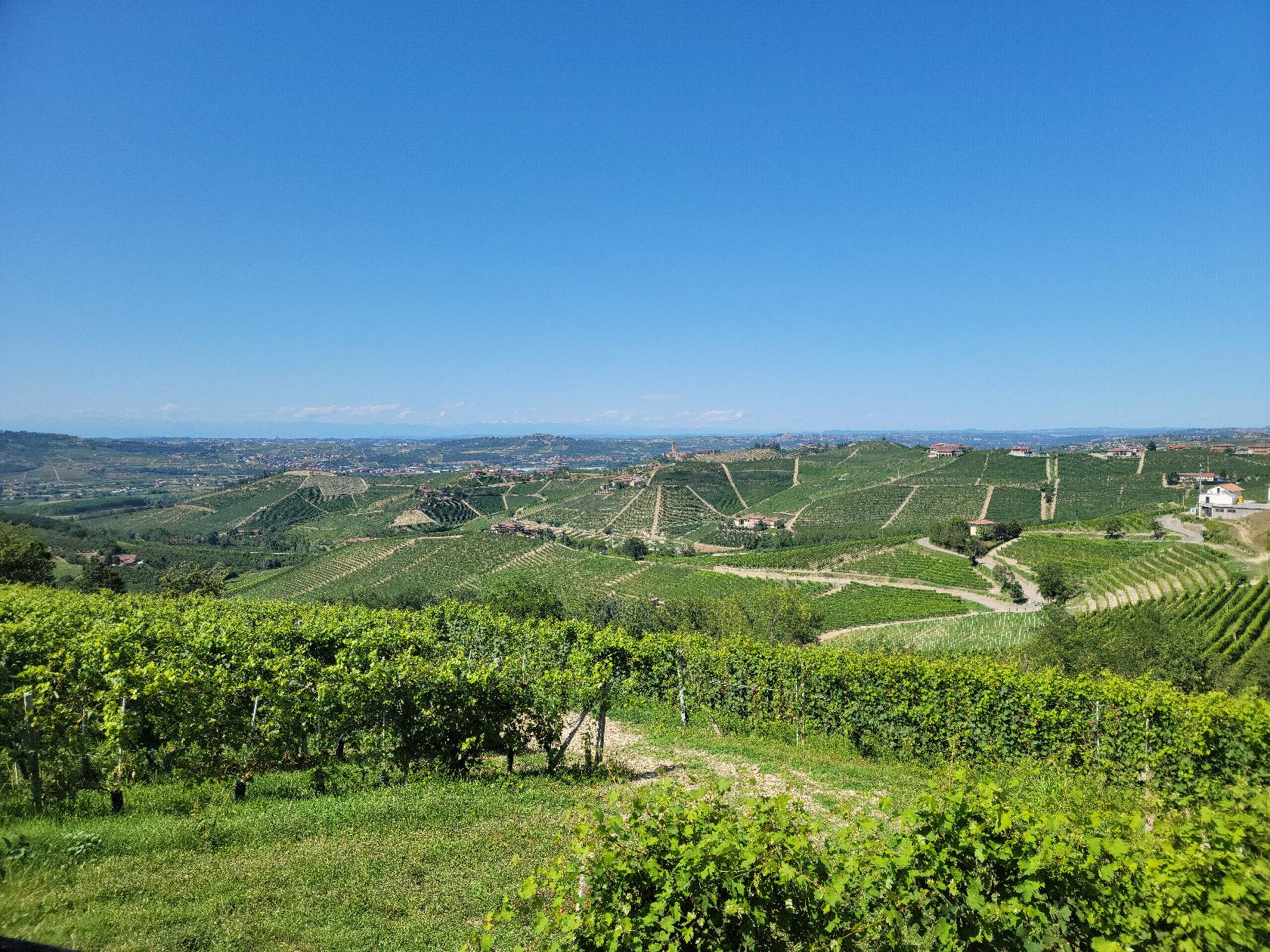
The vineyards – Barbaresco, Italy
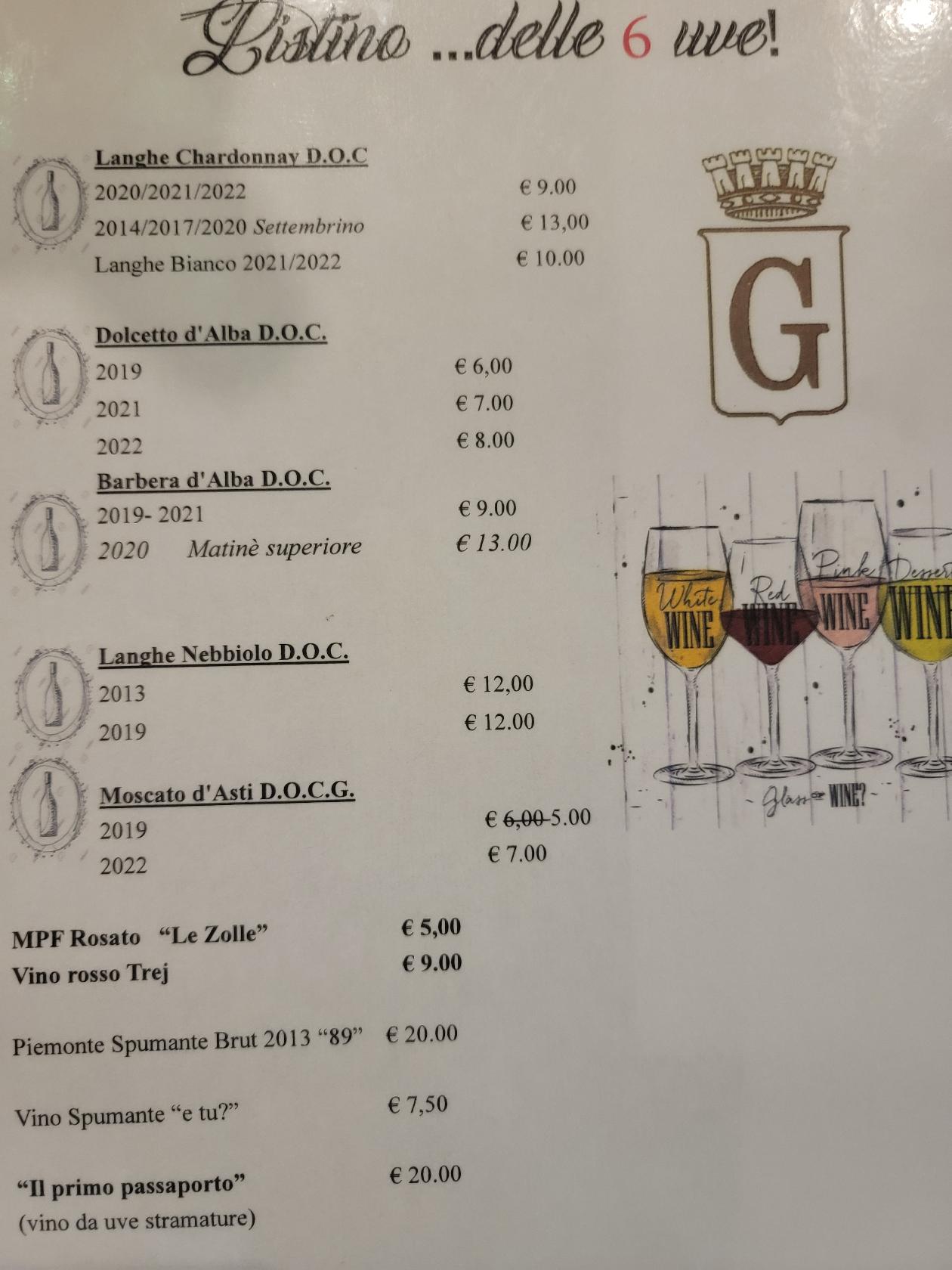
The building houses two large rooms for tasting and the atmosphere is rather laid back. The wines for the tasting contained Chardonnays, Dolcettos, Barberas, Nebbiolos, a Moscato, a Rosato and a wine called Vino rosso Trej. All of these wines were very good, including the Chardonnays which I thought were very clean and not overly oaked, like most complain about in the United States.
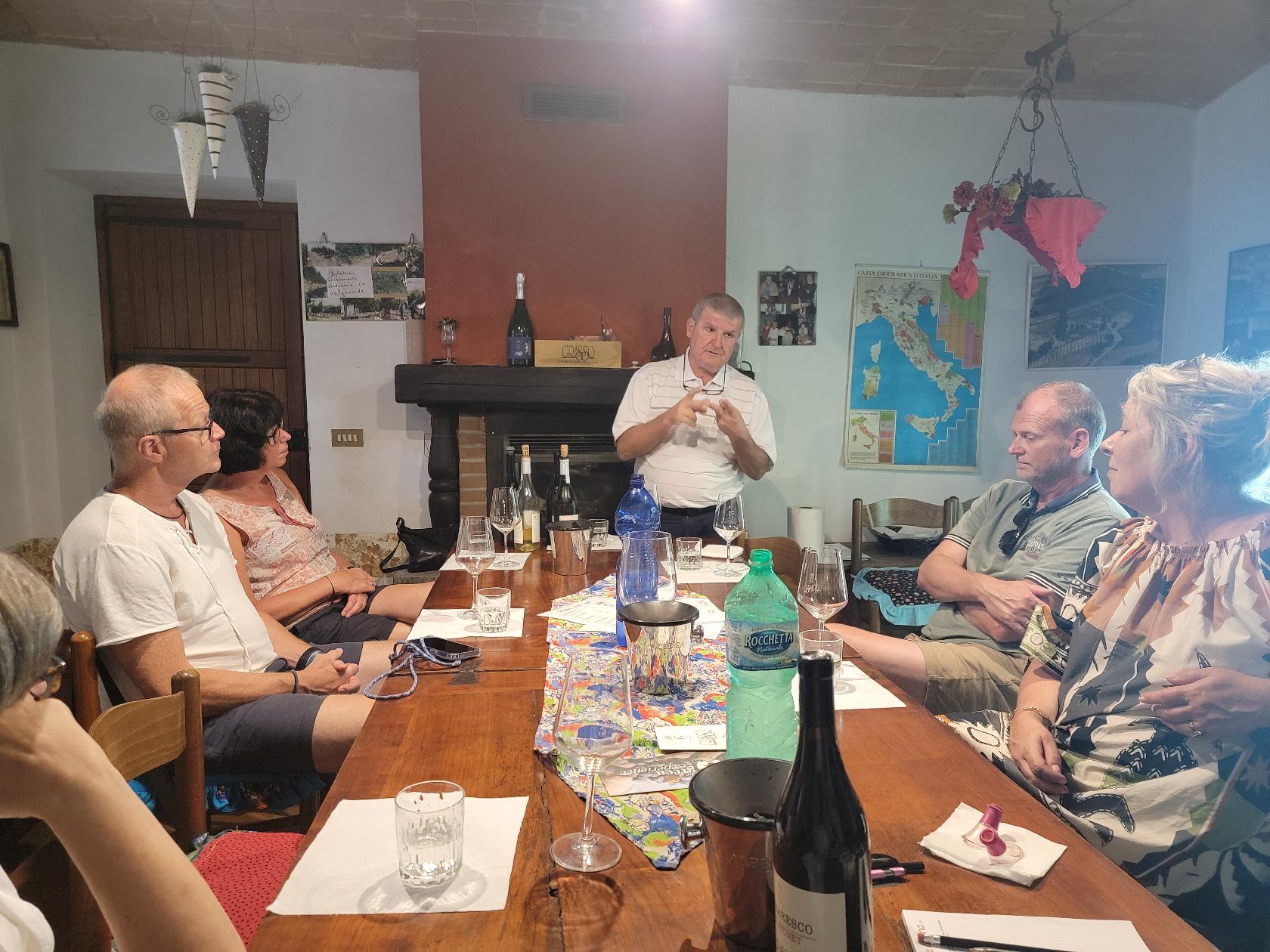
The Grasso Brothers – Our group and Saverio Molinari, our tour guide, explaining Barbaresco wines – Barbaresco, Italy
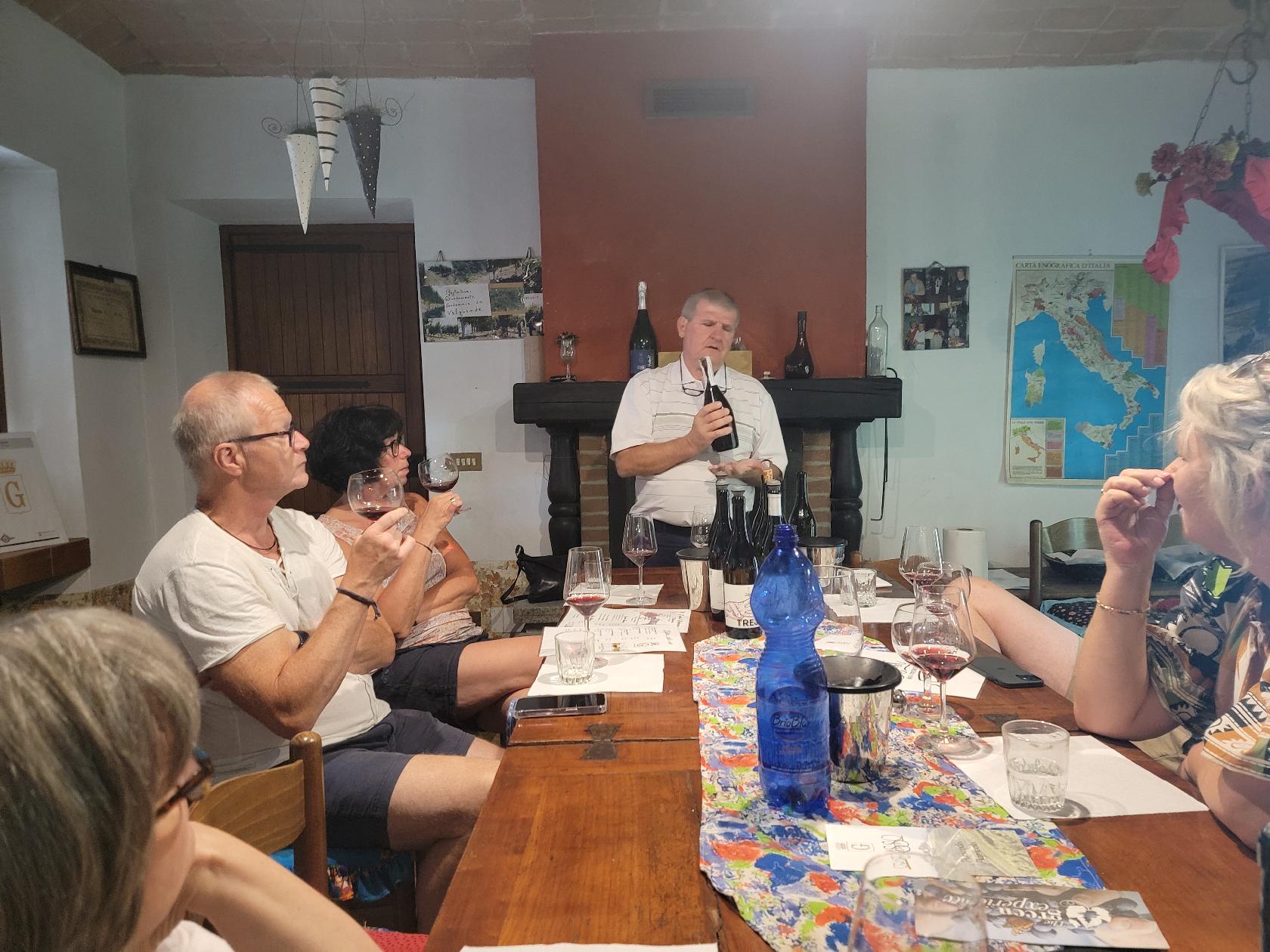
The Grasso Brothers – Saverio Molinari, explaining DOCG rules and requirements – Barbaresco, Italy
There were however no Barbarescos on the list to taste, so we were all a bit taken aback. Once we mentioned this, our host and driver Saverio went to retrieve a few bottles for us to try
The Grasso Brothers – Initial Tasting List – Barbaresco, Italy
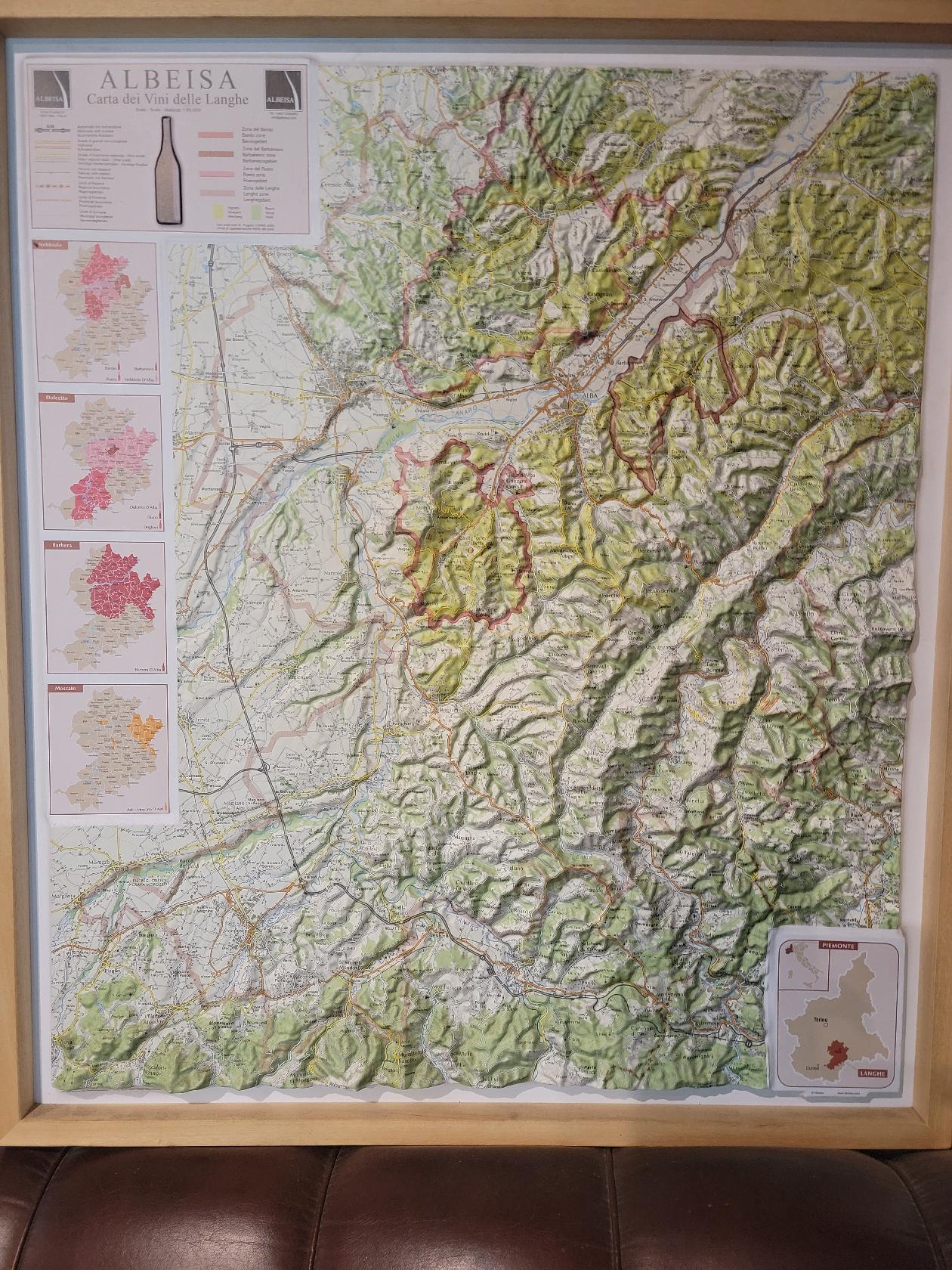
A map of Barbaresco – Barbaresco, Italy
There was an immediate reaction and the brothers appeared, looking a bit hesitant. However, Saverio convinced them that if they don’t let people try the wines, they won’t sell them.
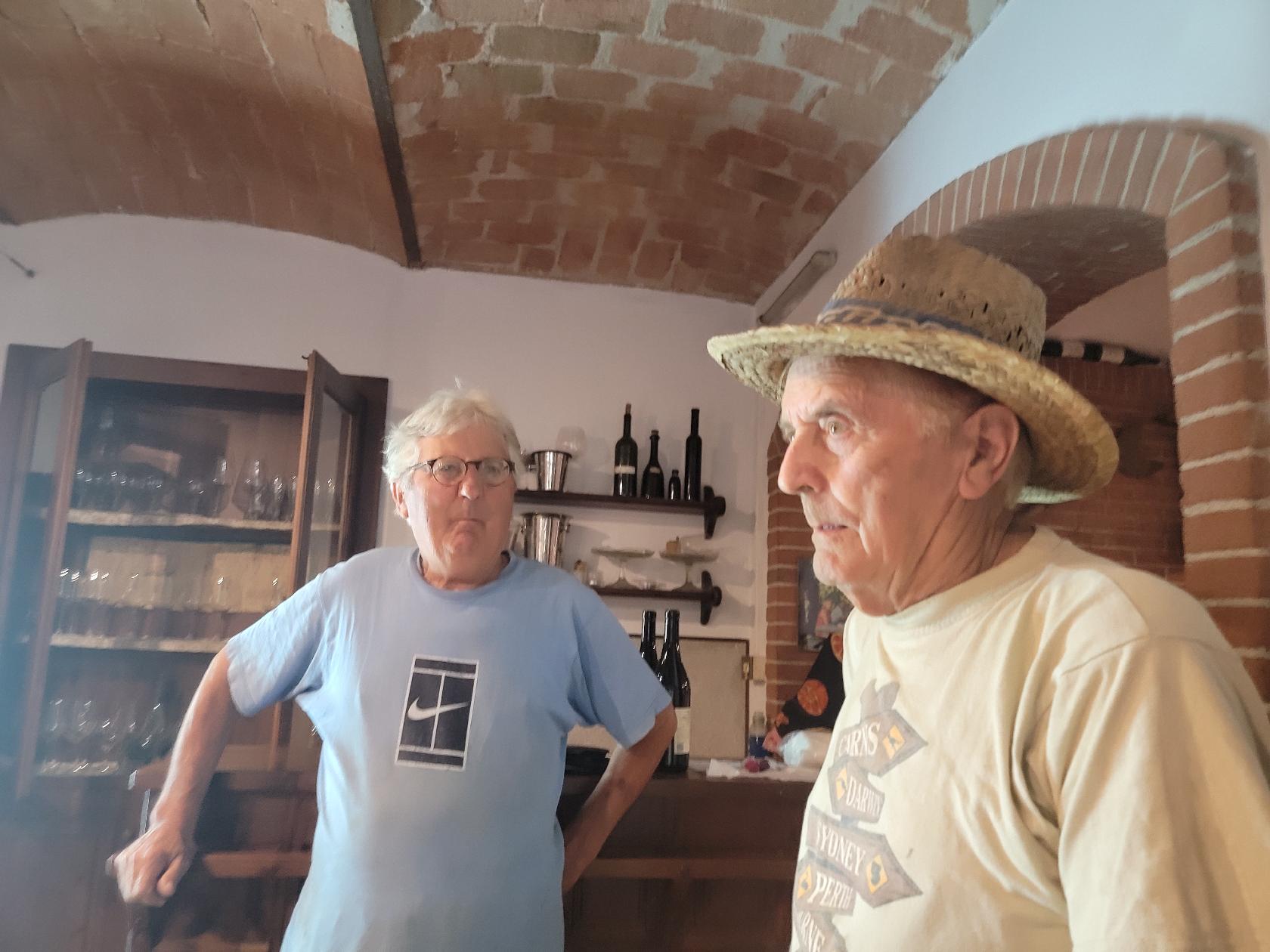
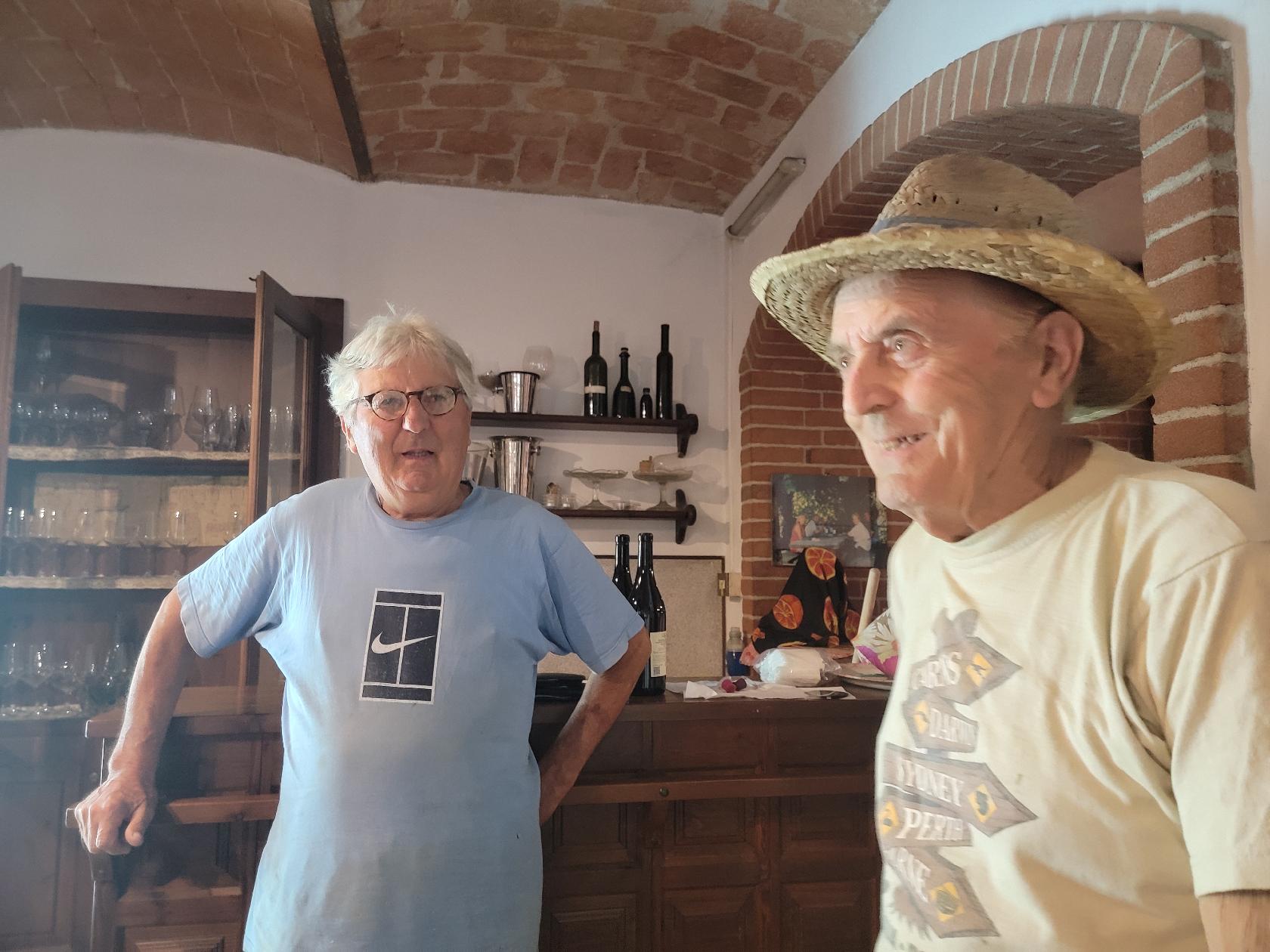
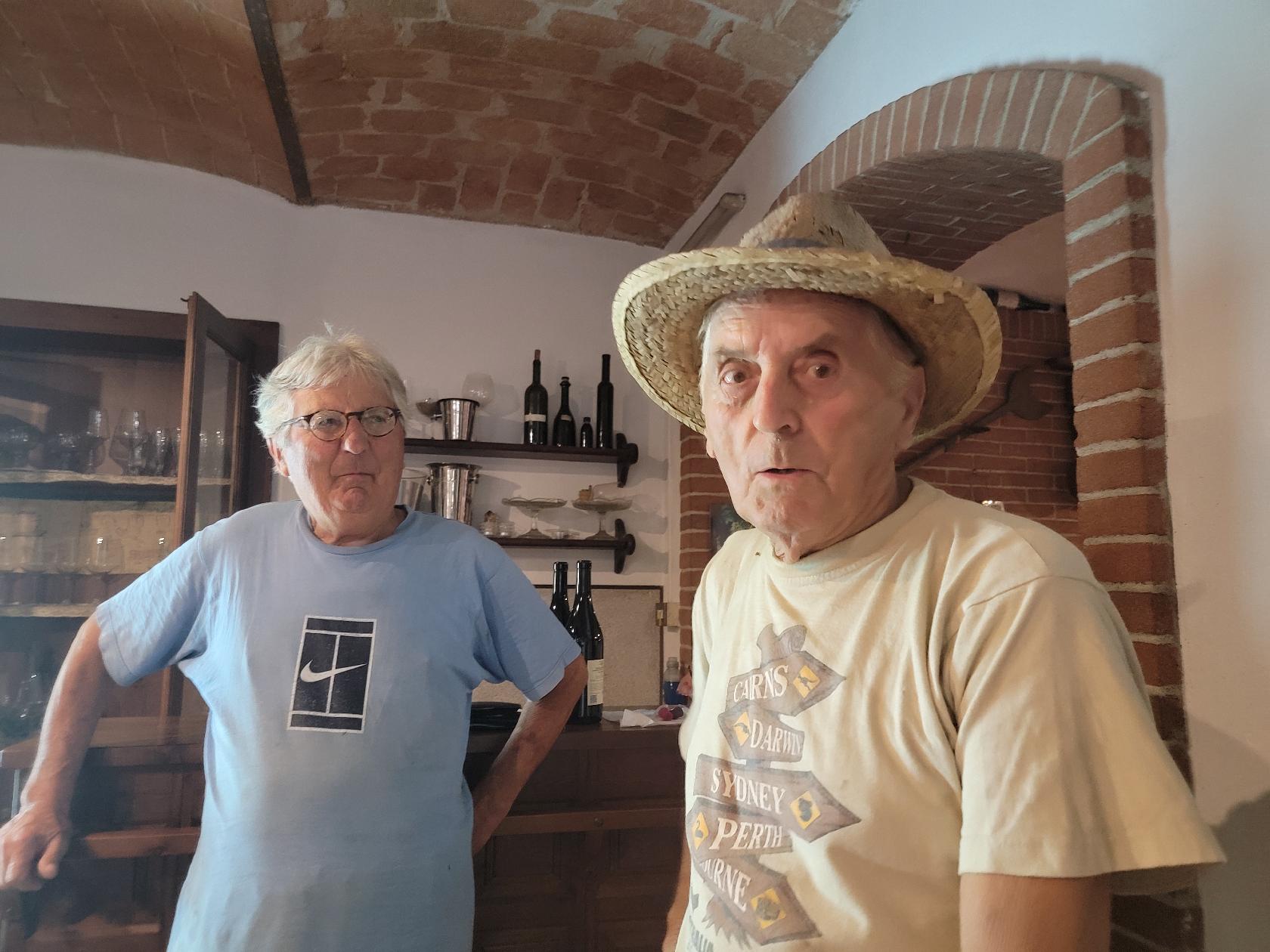
The brothers have never marries and still work on the farm, though some of the work is done by the cooperative. They have been working their plot of land for over sixty years. The eldest, Alfredo, is eighty-two (82) years old this year and the other brother, Luigi, about ten years his junior. The two brothers came to the table and talked with our guide, while we tried the wine.
The Grasso Brothers – Luigi and Alfredo Grasso – Barbaresco, Italy
The Grasso Brothers – Luigi and Alfredo Grasso – Barbaresco, Italy
The Grasso Brothers – Luigi and Alfredo Grasso – Barbaresco, Italy
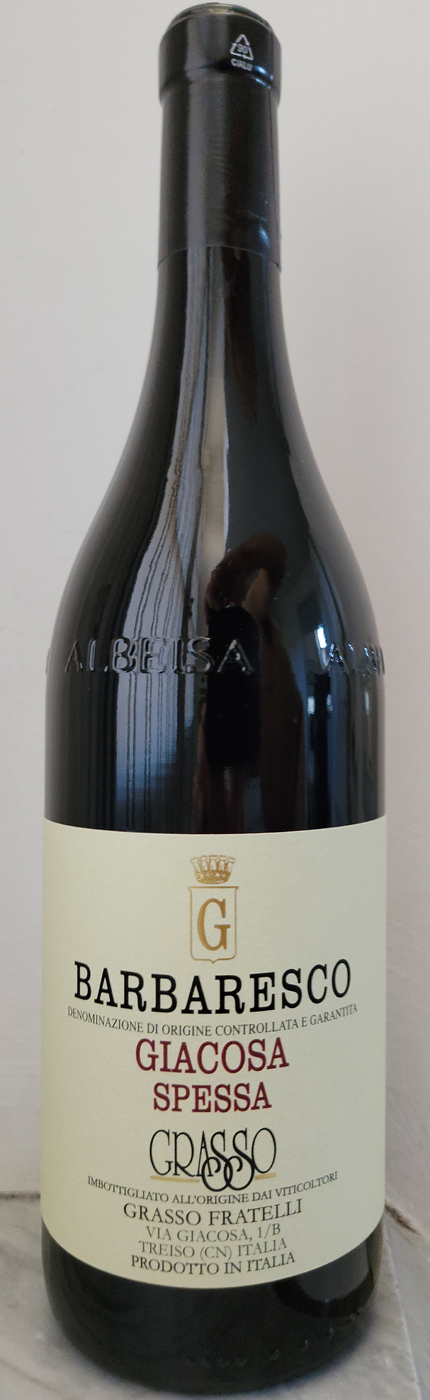
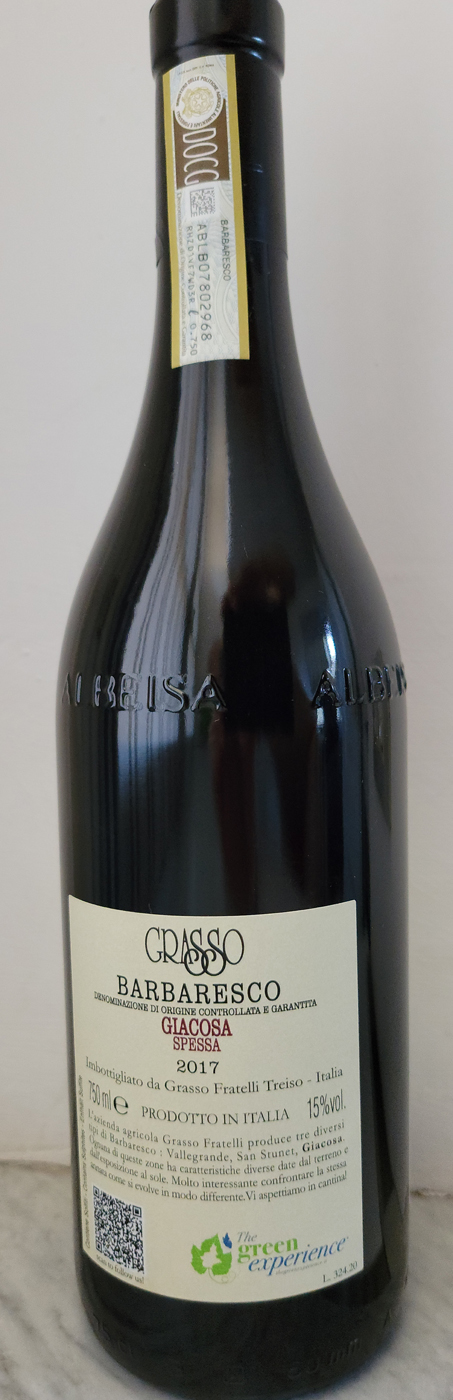
The best bottle was their DOCG Giacosa Spessa Barbaresco 2017. This is an amazingly good wine, full of cherry and other fruity undertones along with plenty of alcohol for longevity, coupled with an amazing nose and a rich red color typical for a nebbiolo, and best of all, ready to drink now. The vines that it is produced from are of the oldest in the vineyard, being planted by Alfredo when he was only twenty years old. This means that the roots of these vines have driven over a meter deep into the ground, allowing them to access different soils and salts. It is so good, I had to purchase two bottles. Unfortunately, I was not able to carry more, so I had to keep to that limit. A planning mistake I will not make again in the future.
The Grasso Brothers – DOCG Giacosa Spessa 2017, Front – Barbaresco, Italy
The Grasso Brothers – DOCG Giacosa Spessa 2017, Back – Barbaresco, Italy
Restaurants
We visited one restaurant for lunch, which we had to inform the tour operator in advance of how much we wanted to spend. At the time, the limits were 30€/person, 50€/person and 70€/person, for which the unnamed restaurant would provide a basic lunch with appetizer and primi, or a heavier lunch with appetizer, primi and secondi, or a culinary delight of the same, but made personally by the chef. We both thought it was overpriced. So we went off-menu and ordered from the daily specials and only what we wanted.
Locanda La Gemella
For lunch we stopped at Locanda la Gamella on the edge of town. A very nice, I would say upscale restaurant with a very dynamic menu. They also have daily and chef’s specials, so there seems to be something for everyone.
We went a la carte with the special Tajarin al ragu, some still water and a glass of wine. Our total bill came to 51€ total for the both of us, which wasn’t too bad, but still a bit pricey. Unfortunately, neither myself nor my wife took any photographs of our dishes or the place, though they were kind of normal and not very special for the Piedmont.
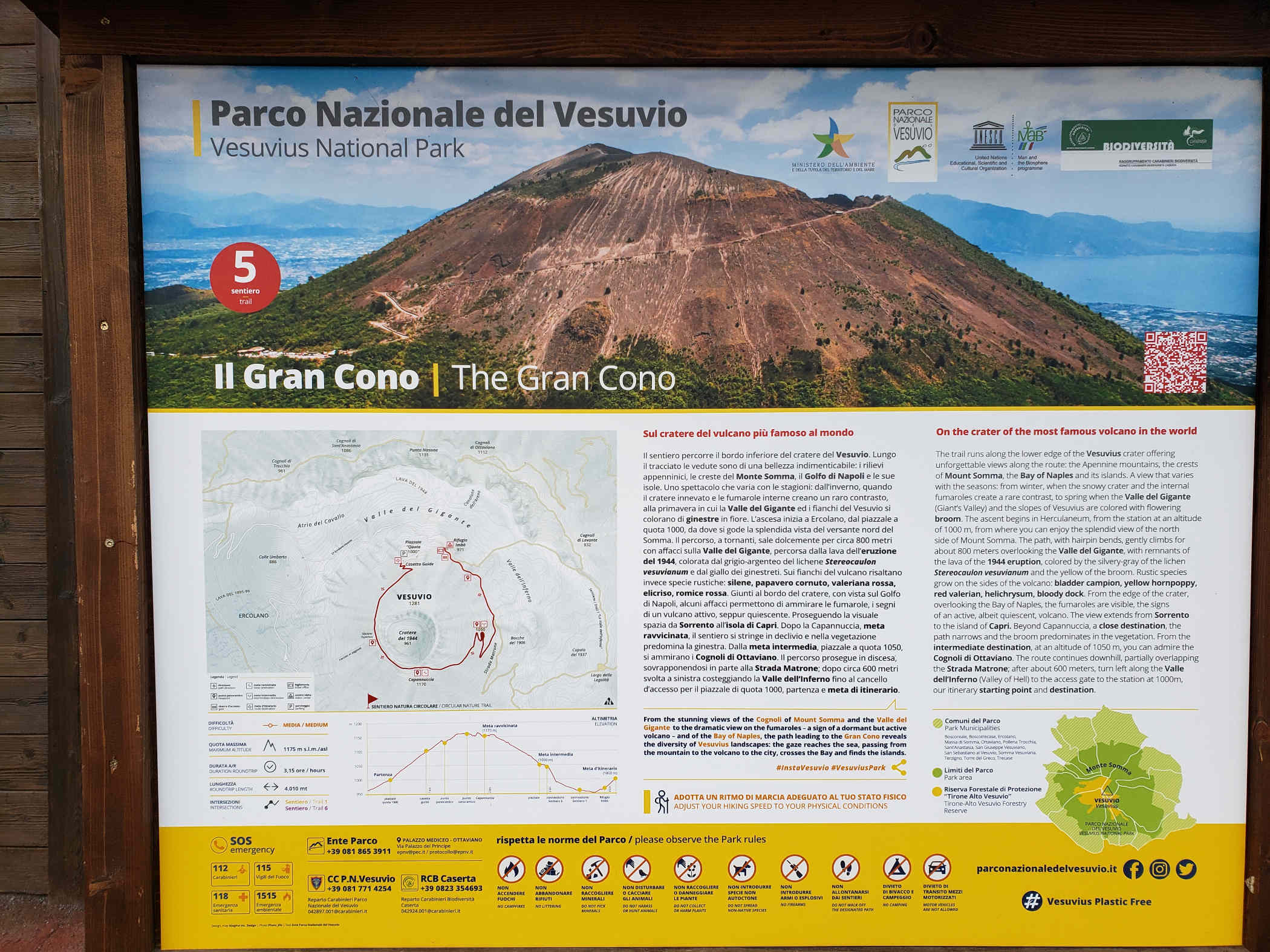
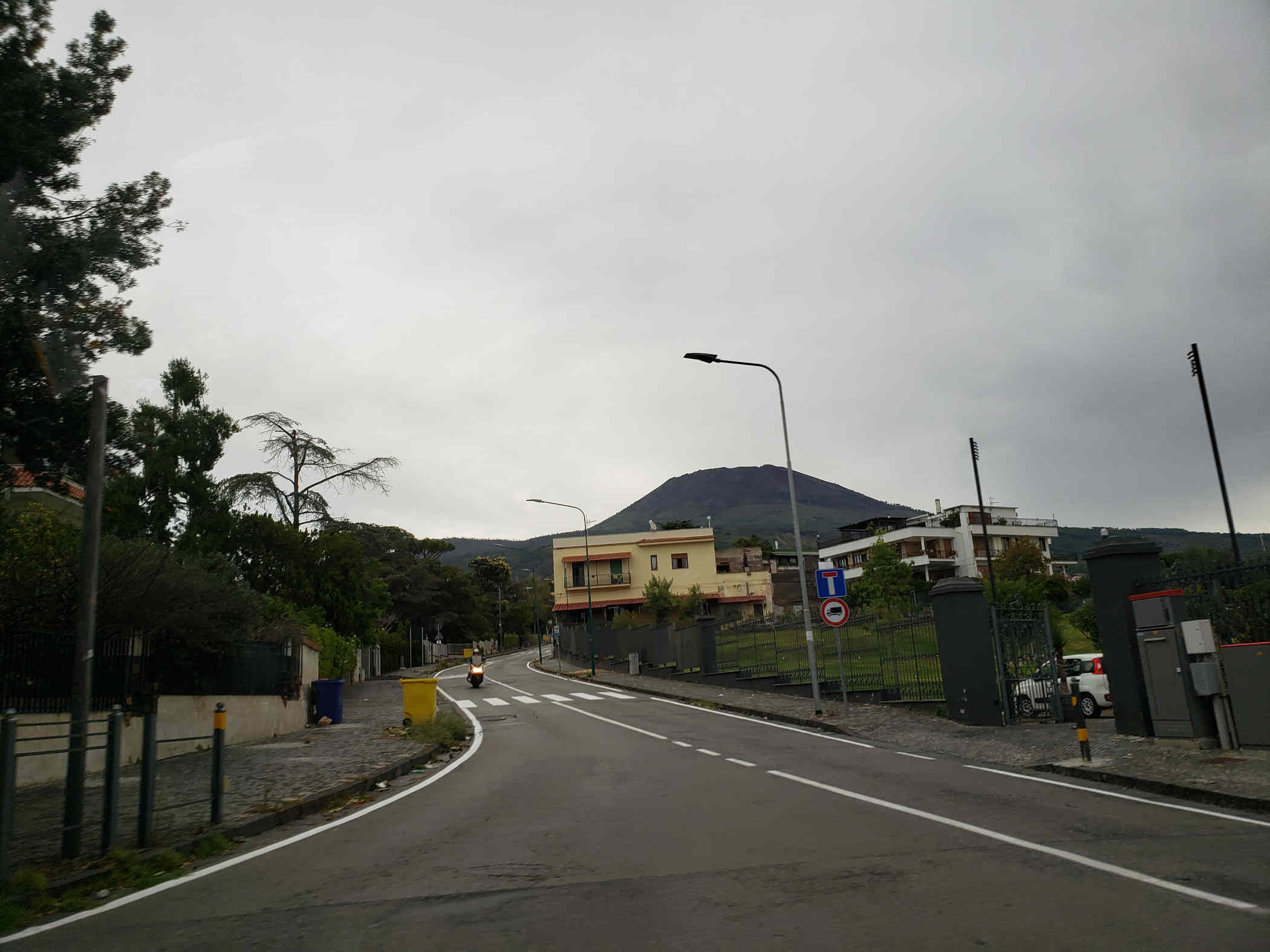
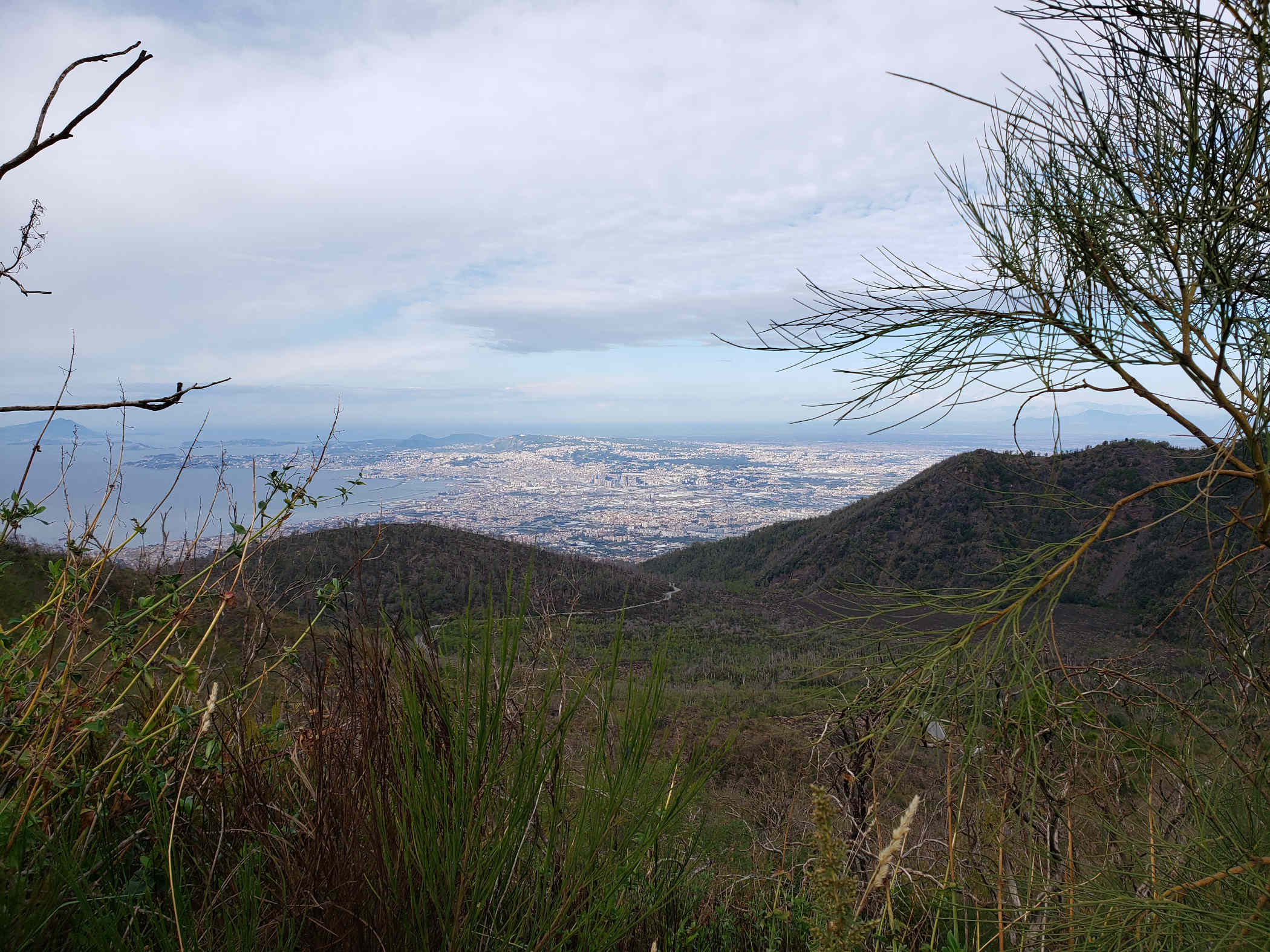
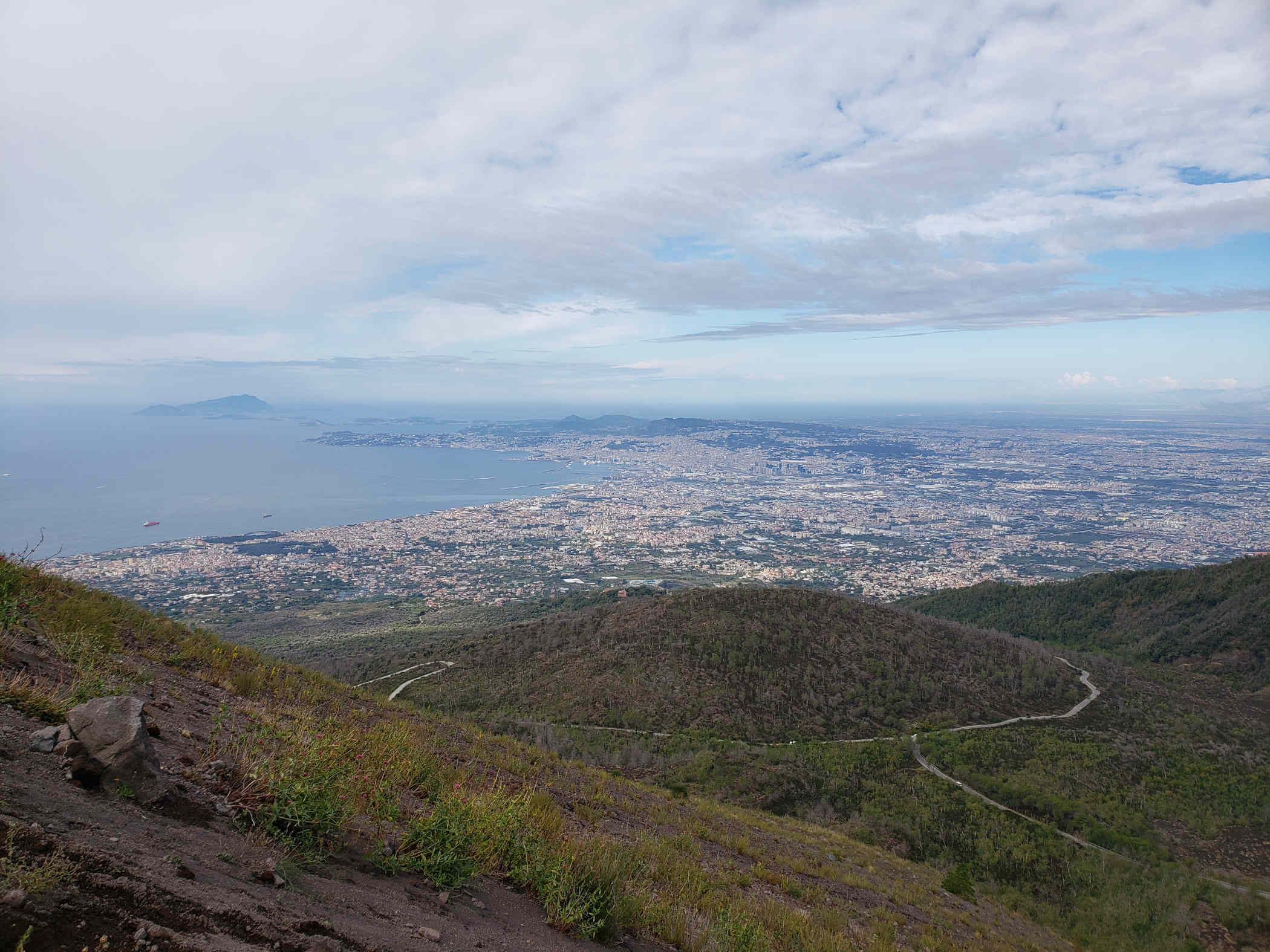
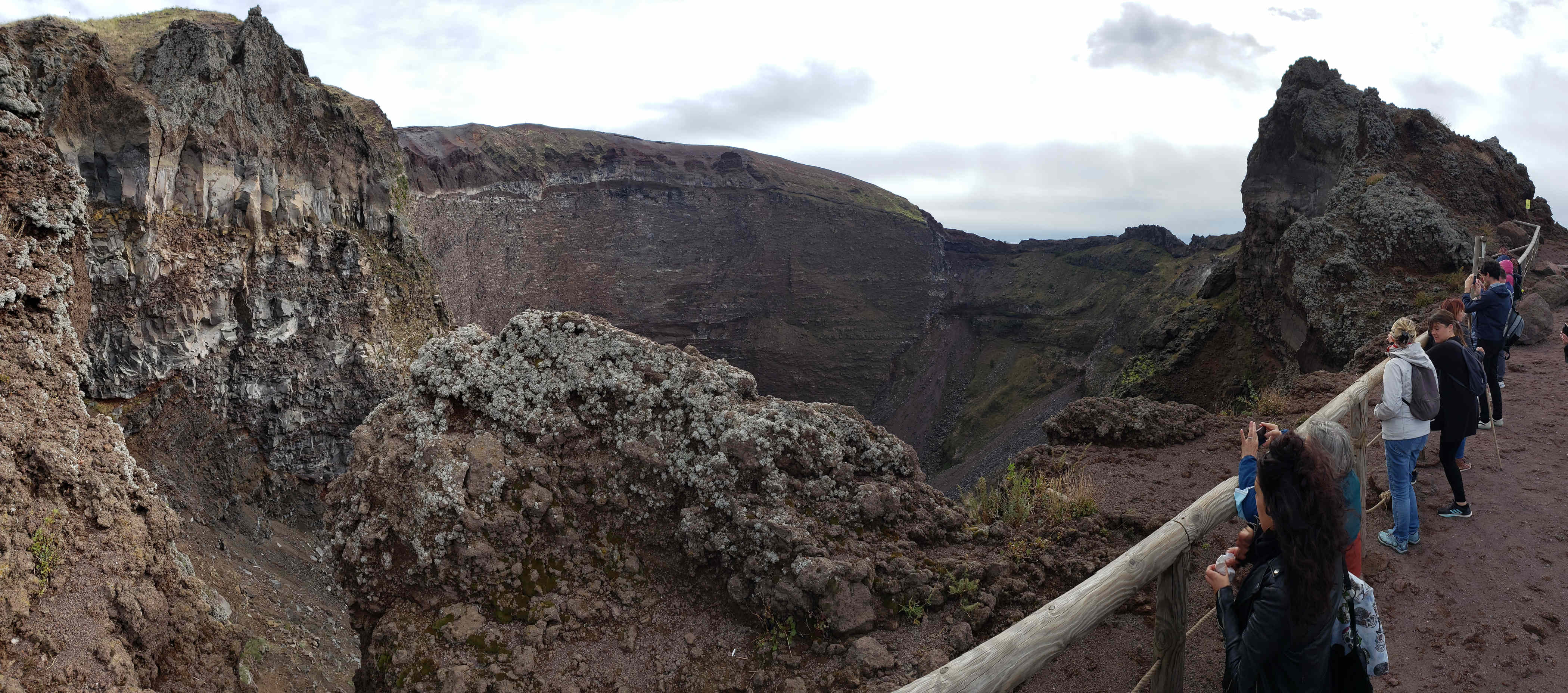
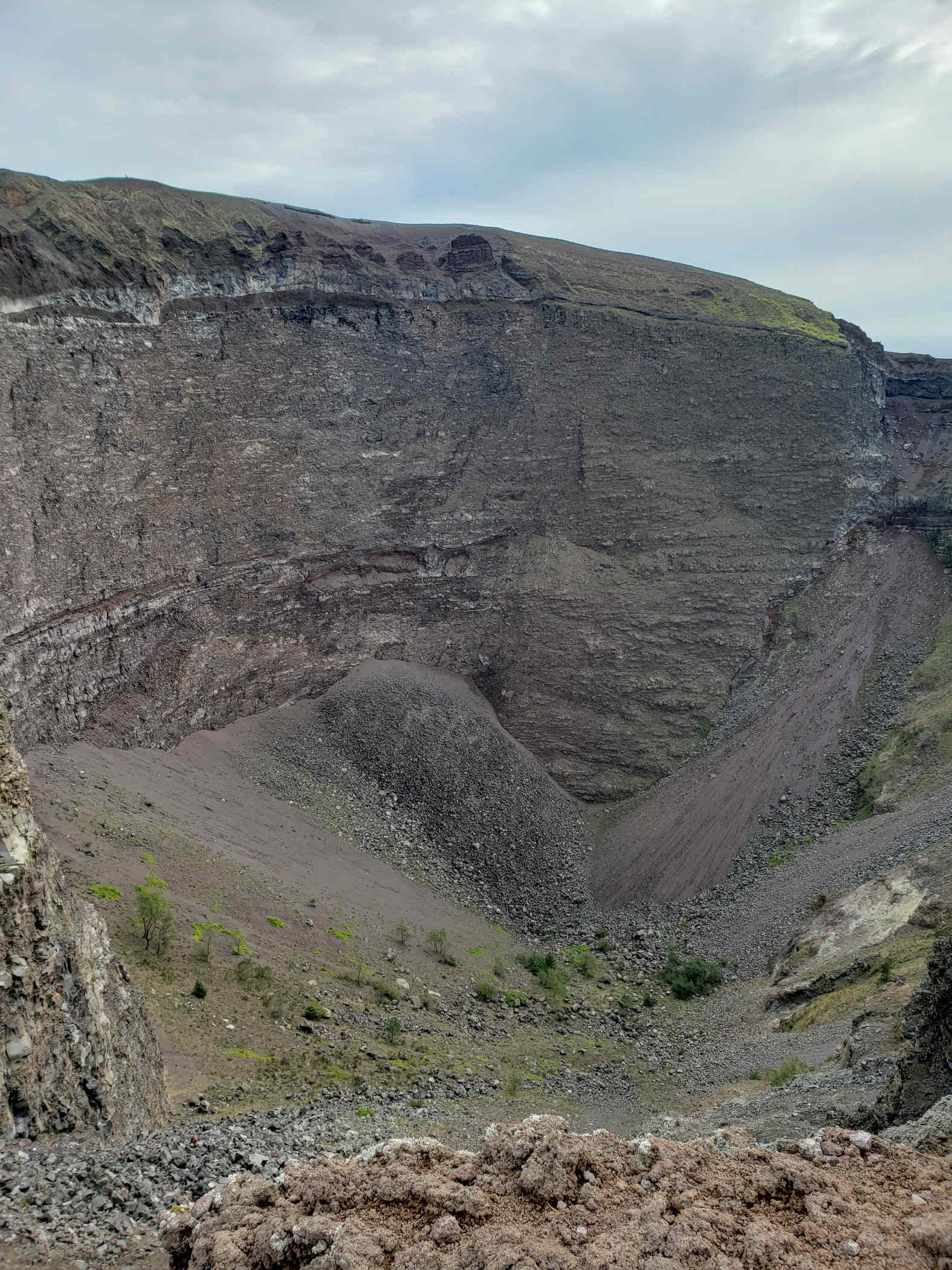
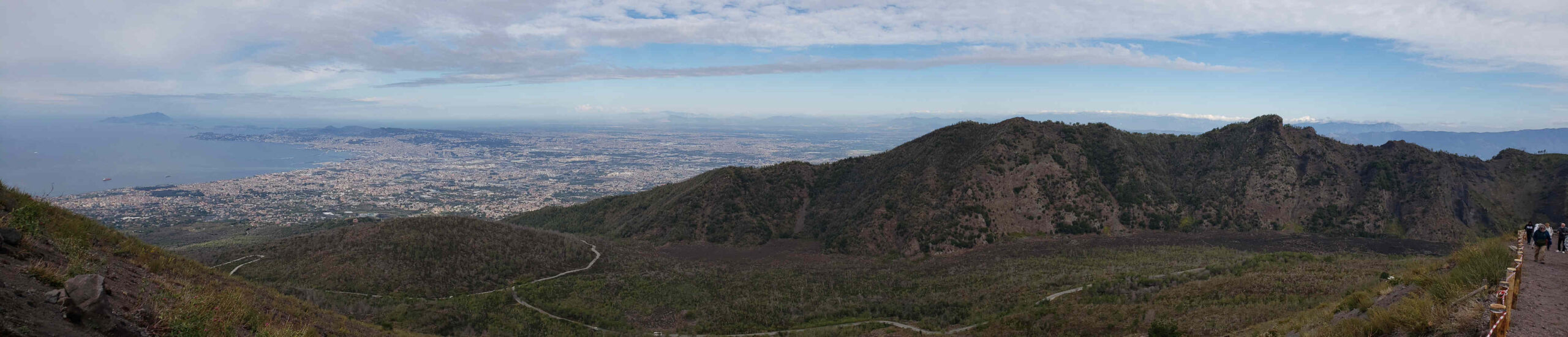
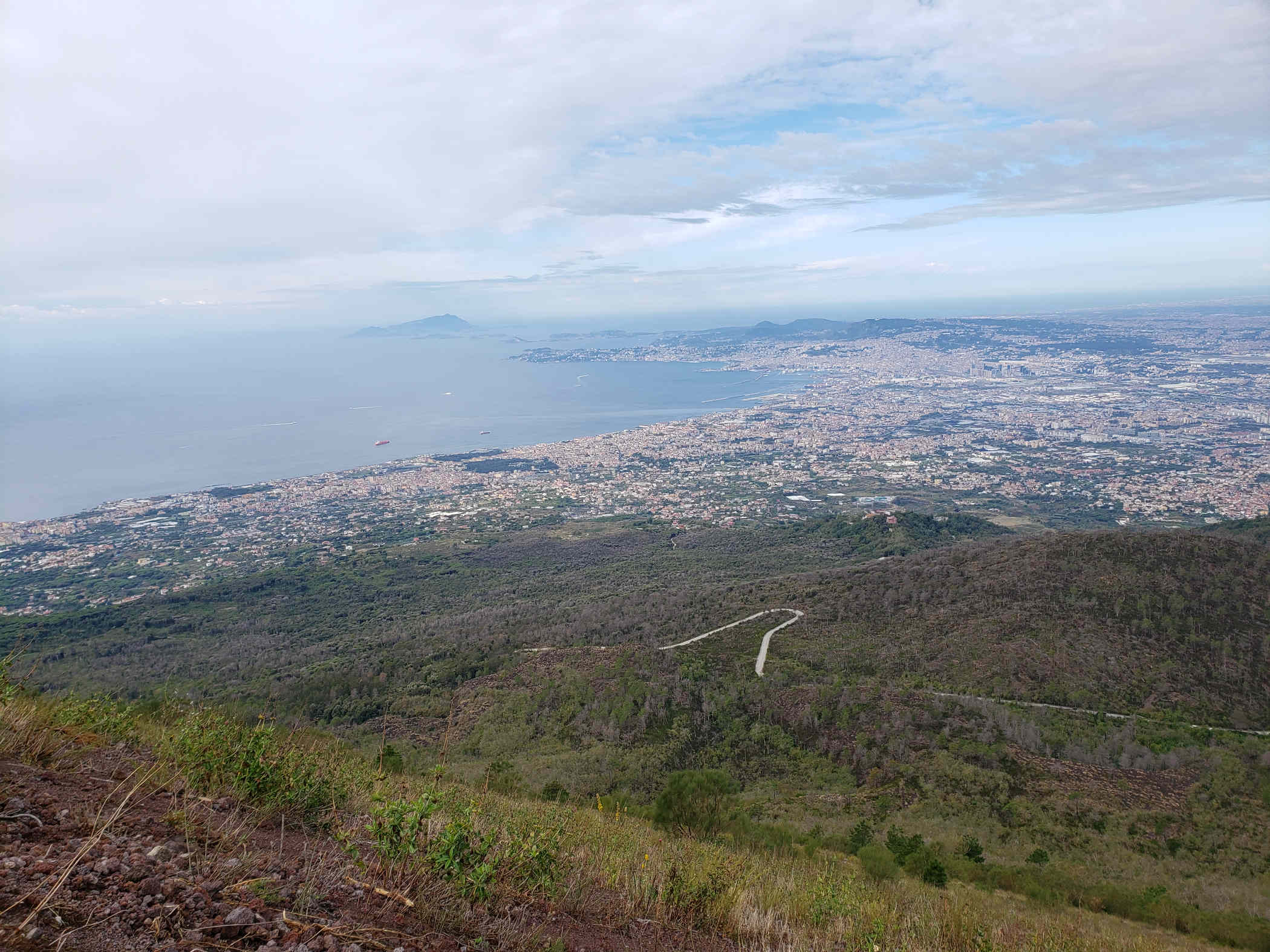
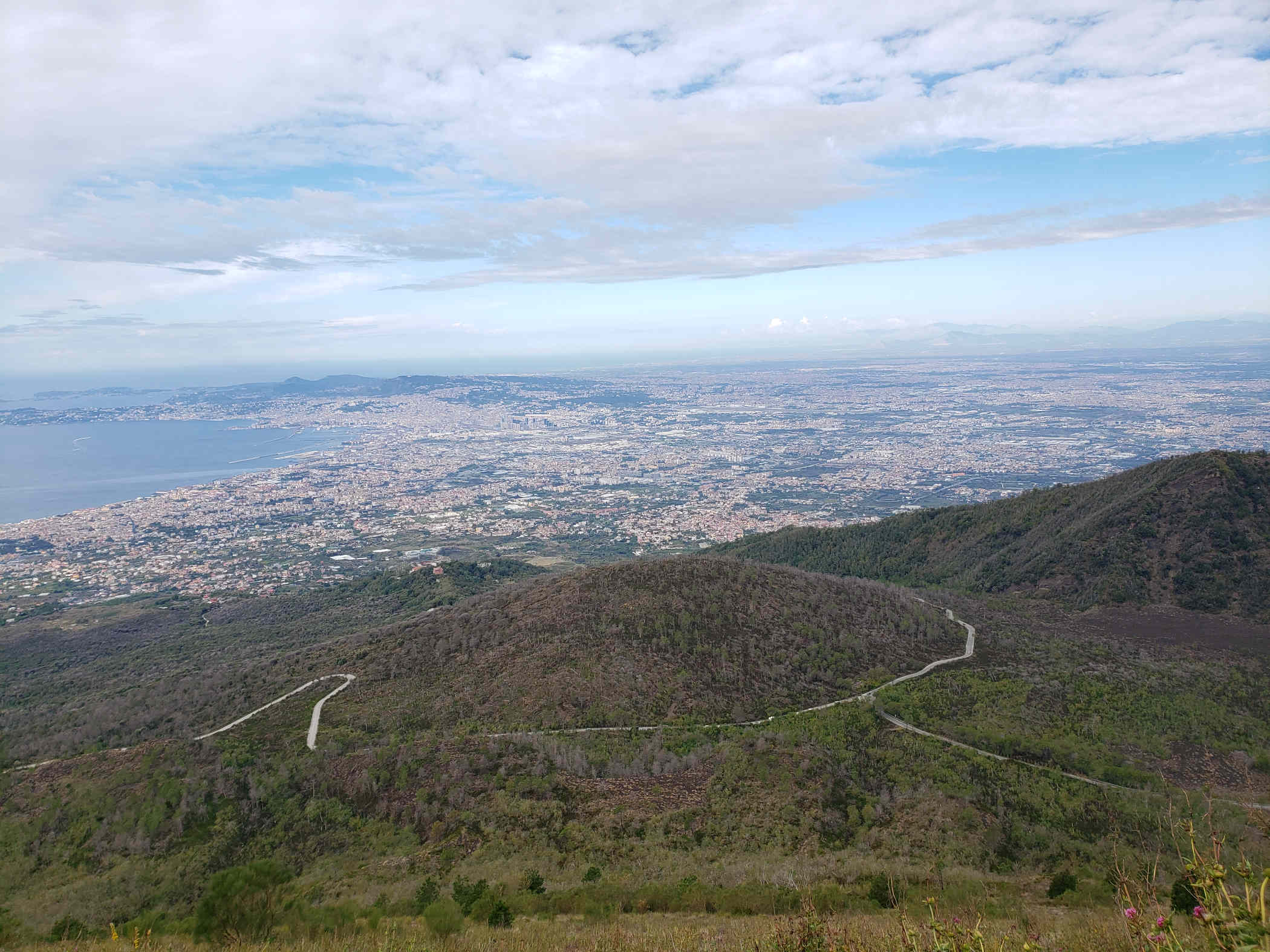
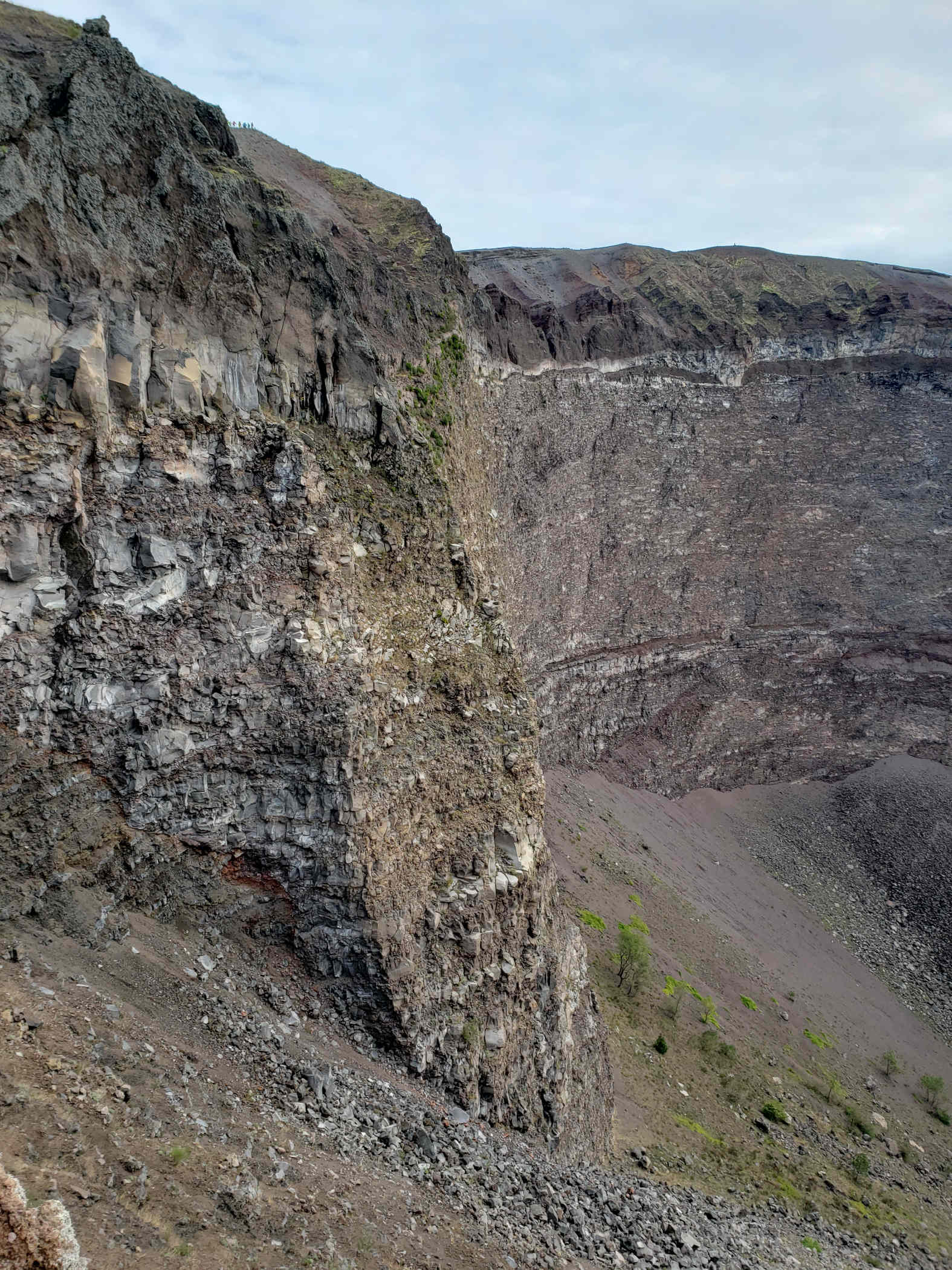
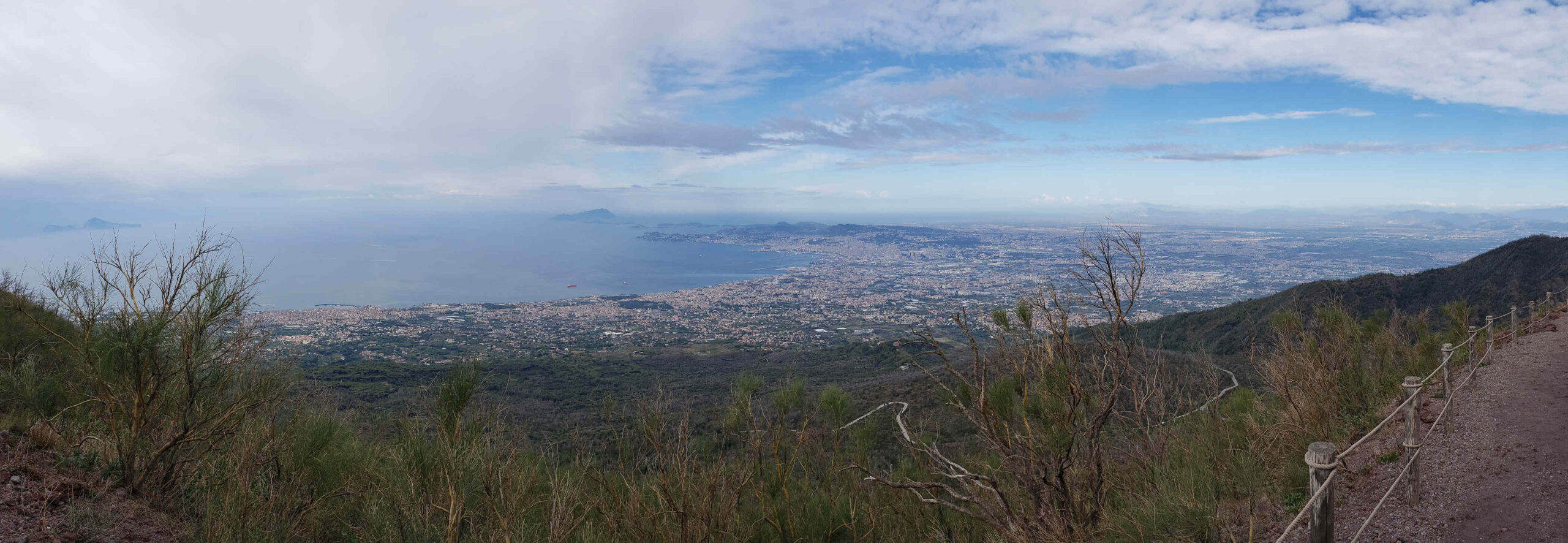
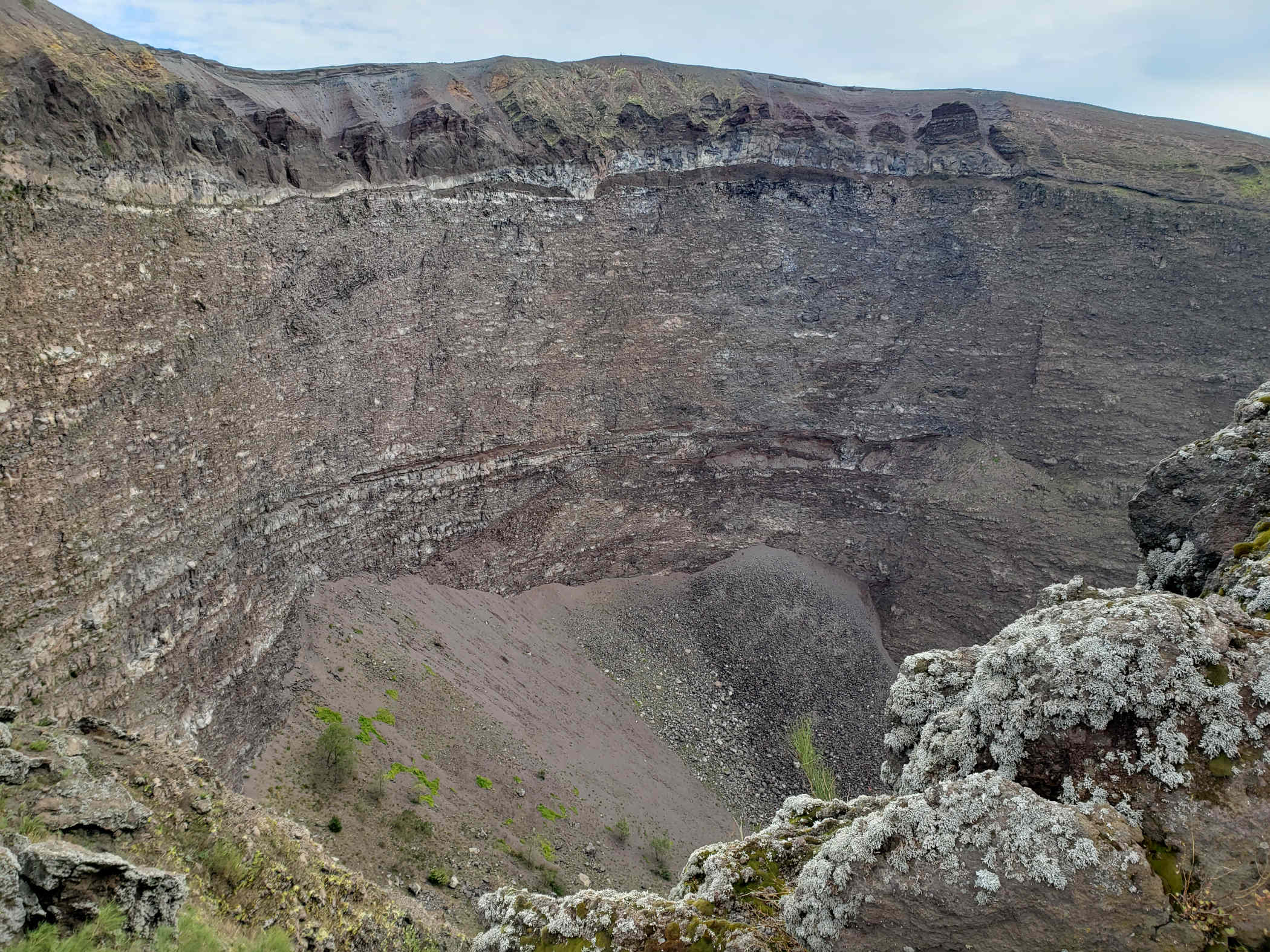
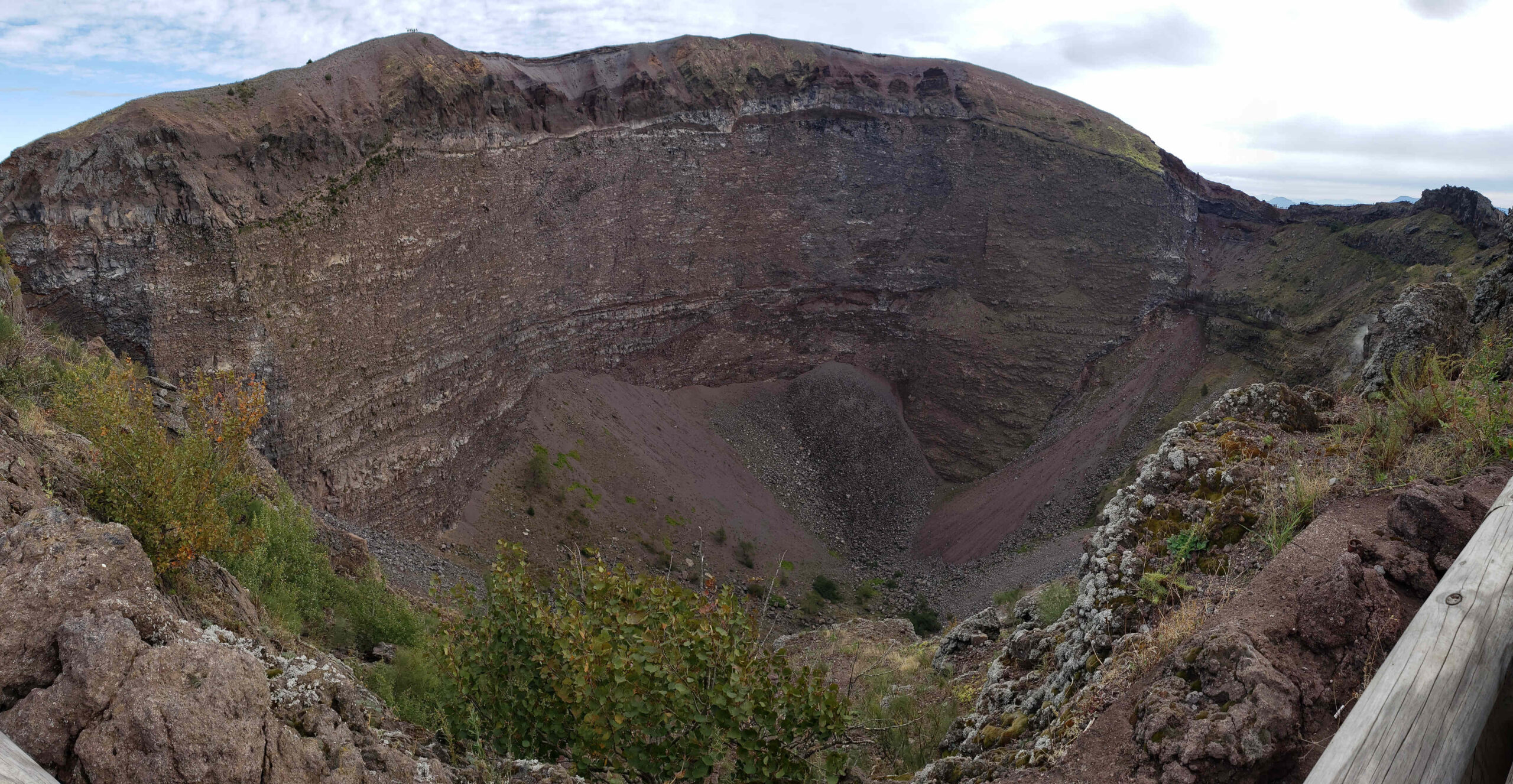
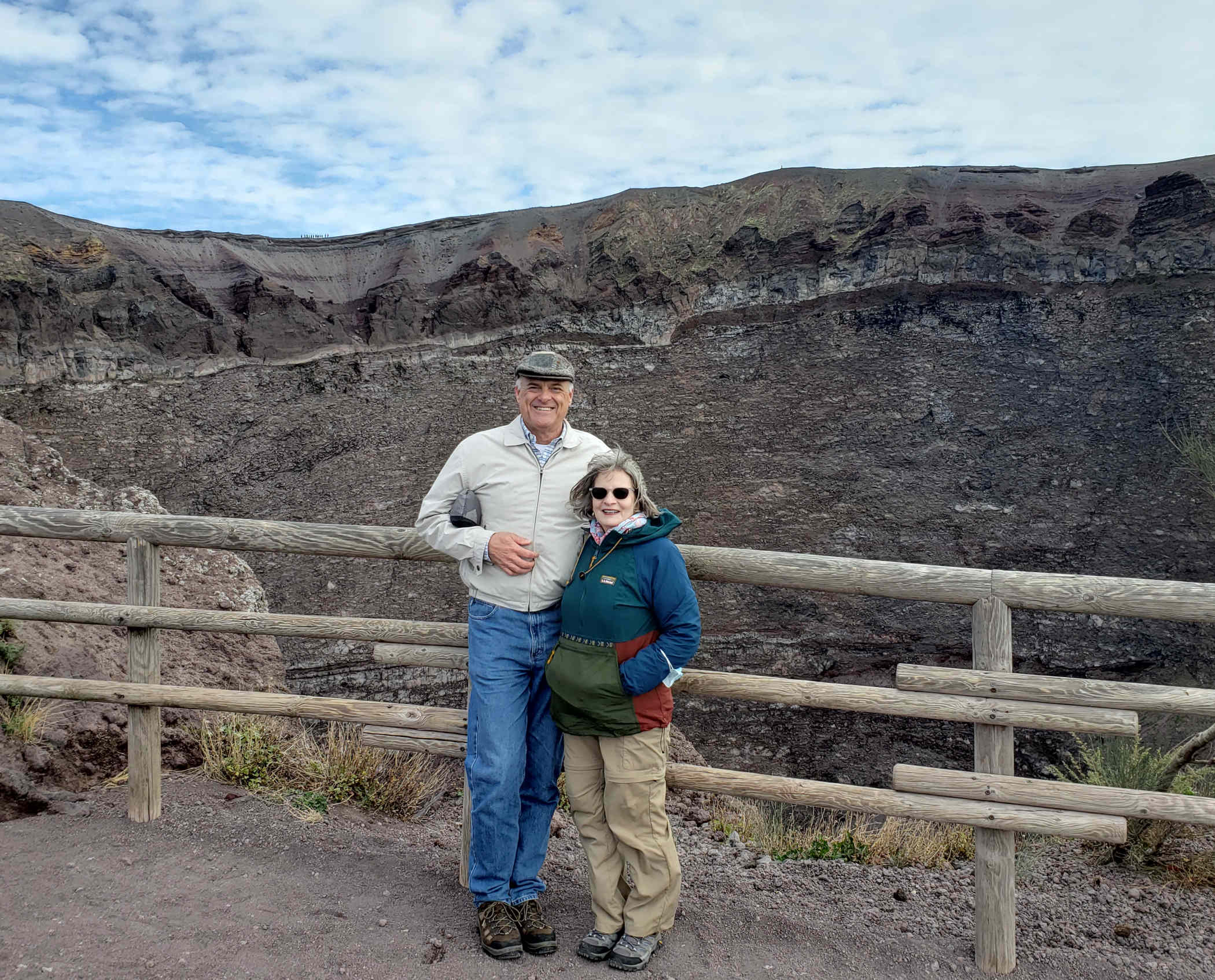
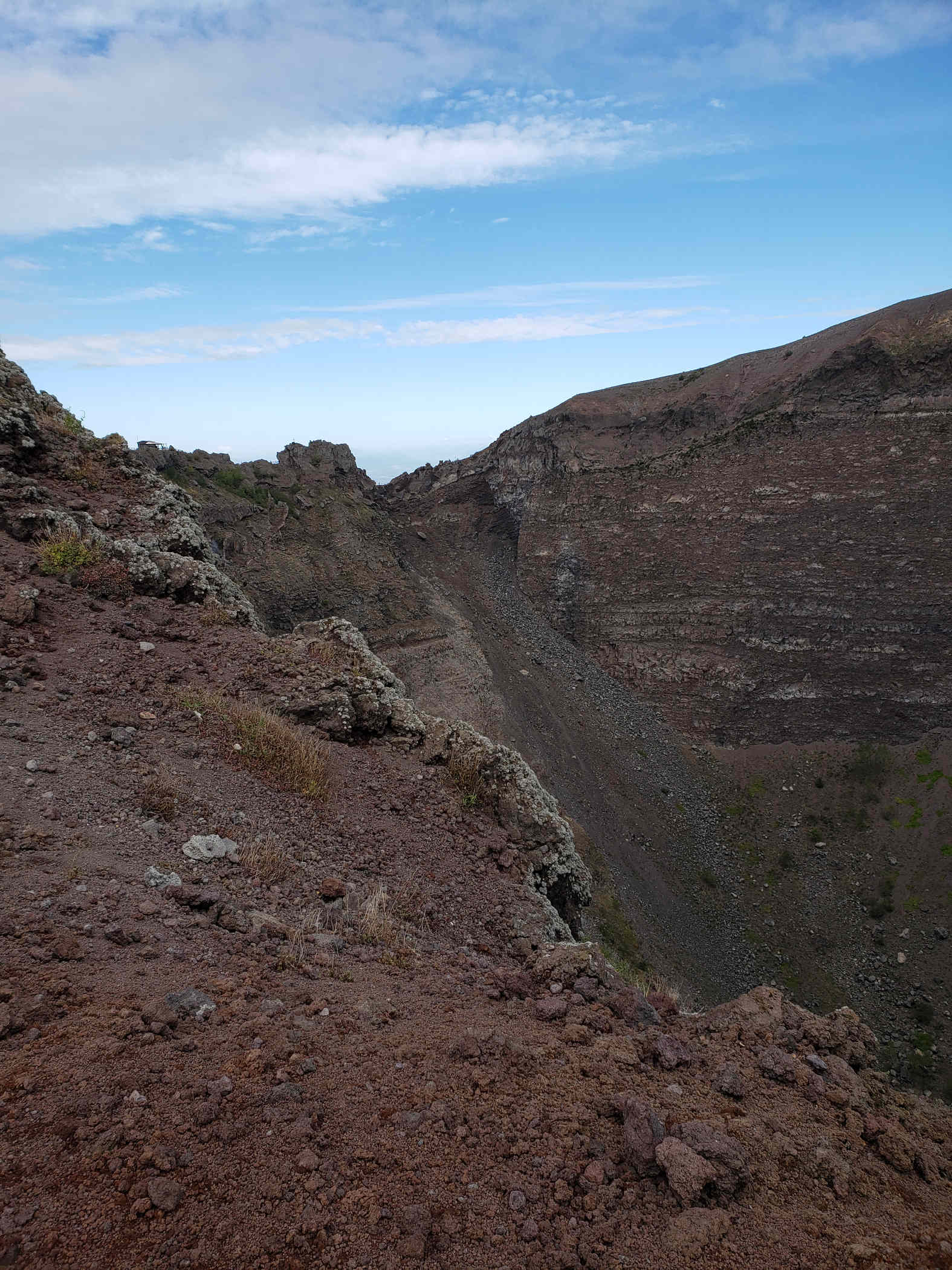
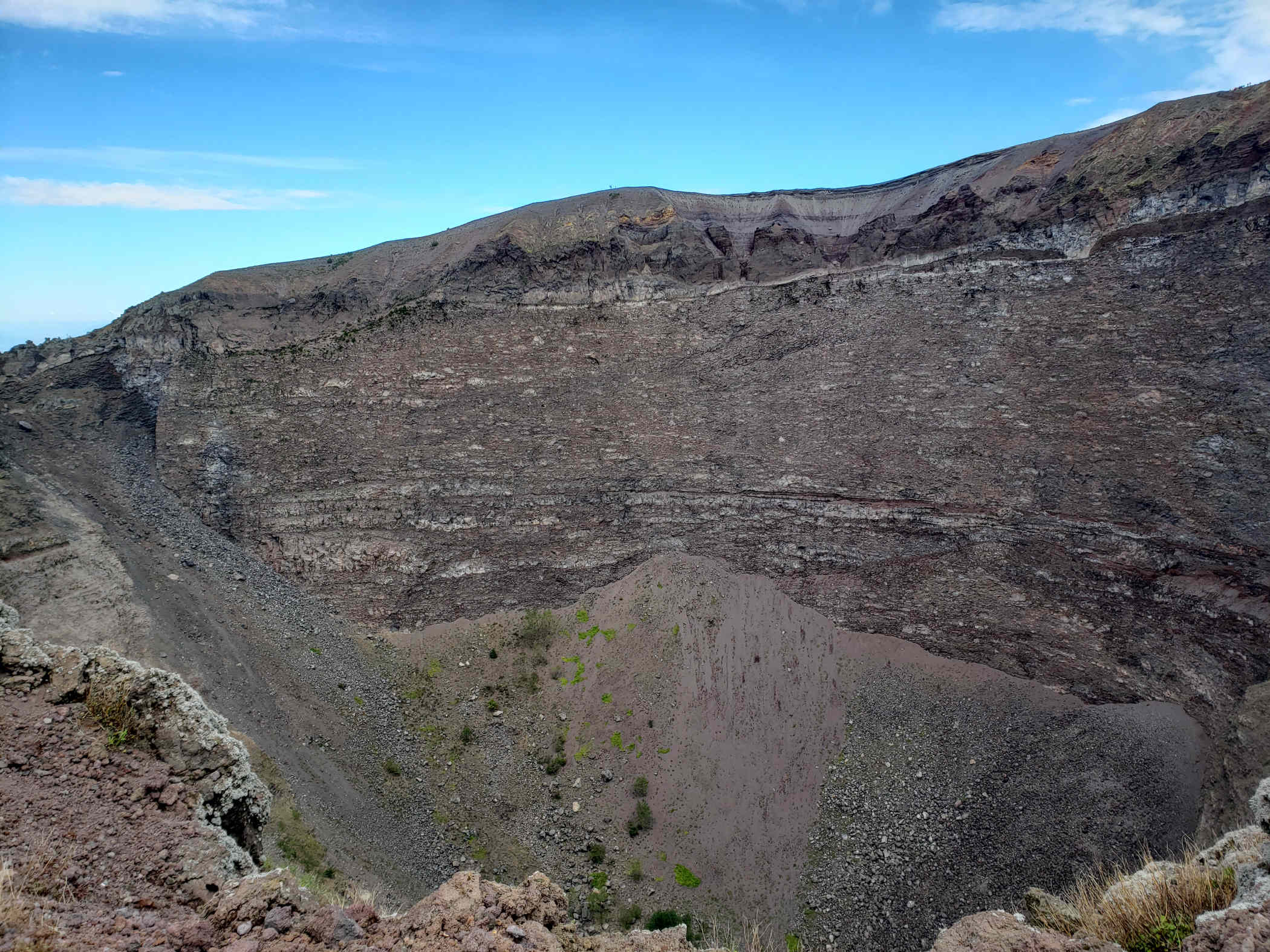
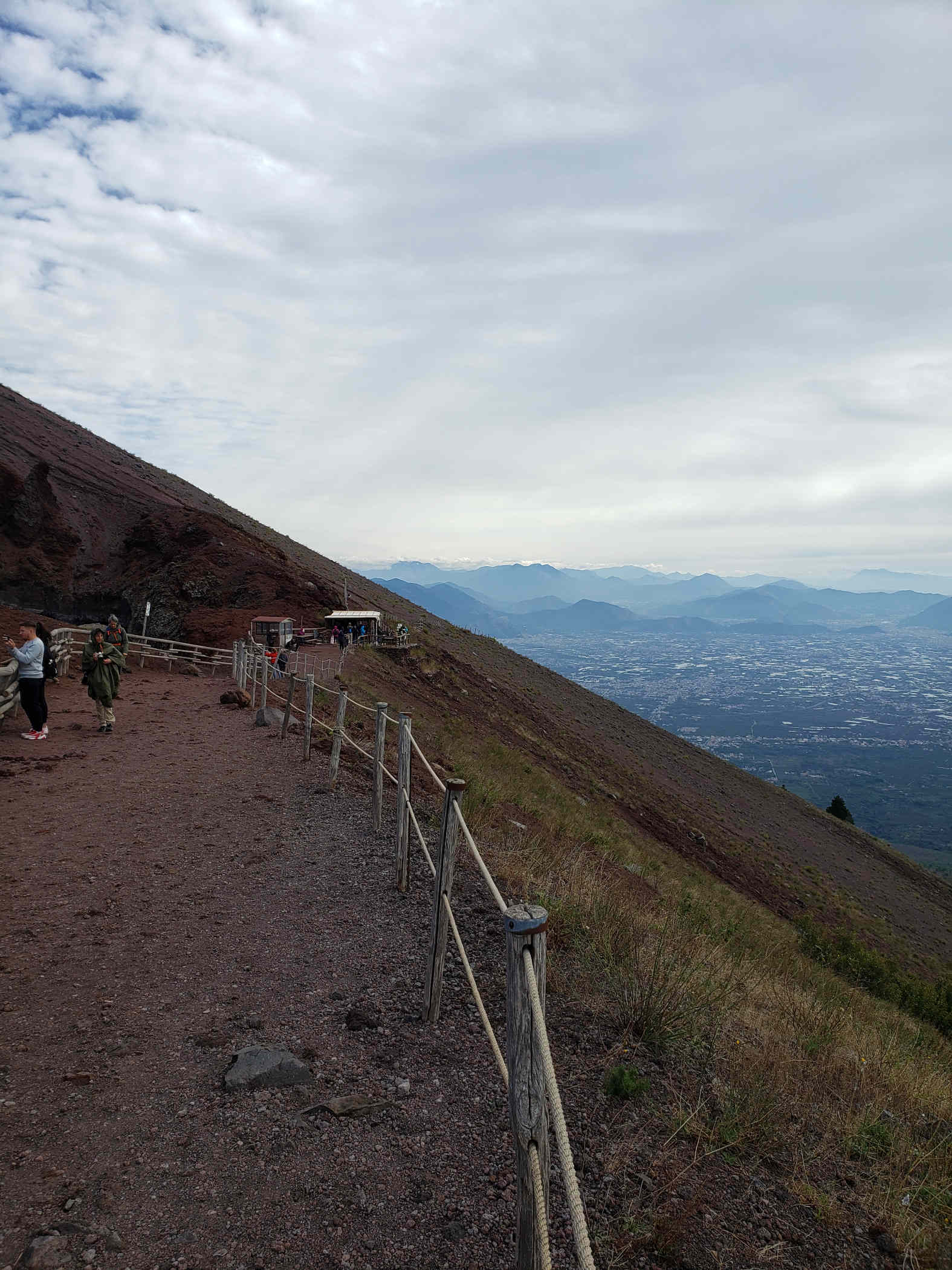
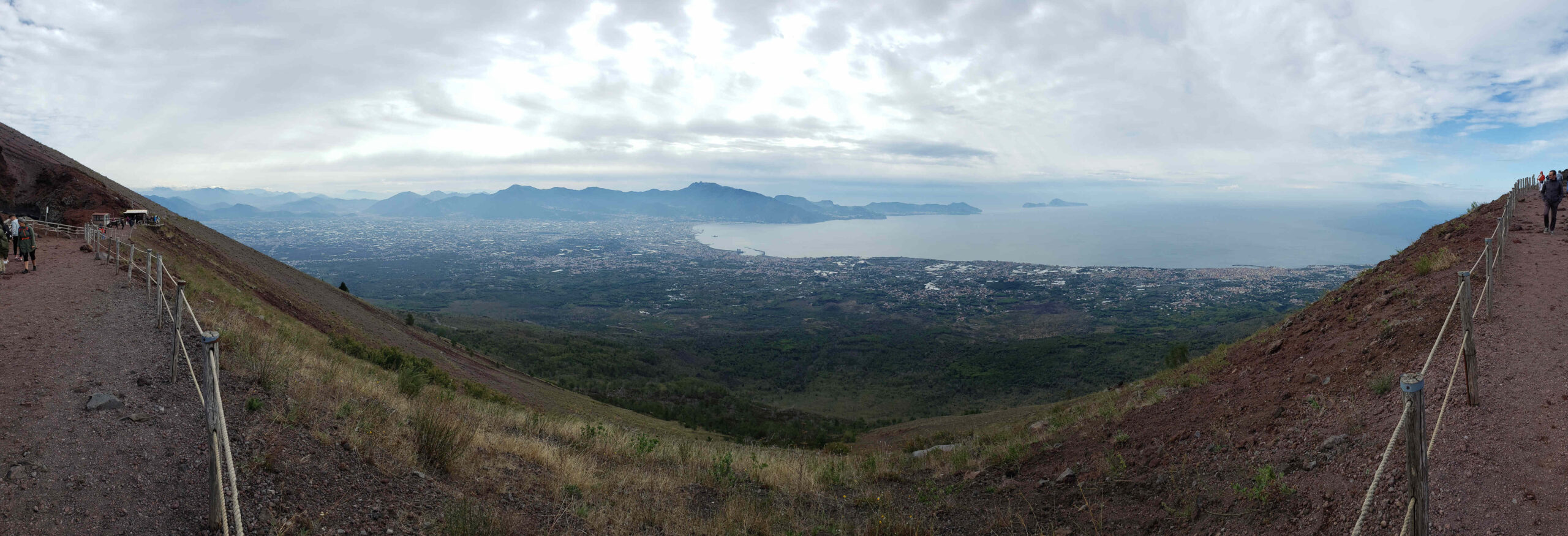
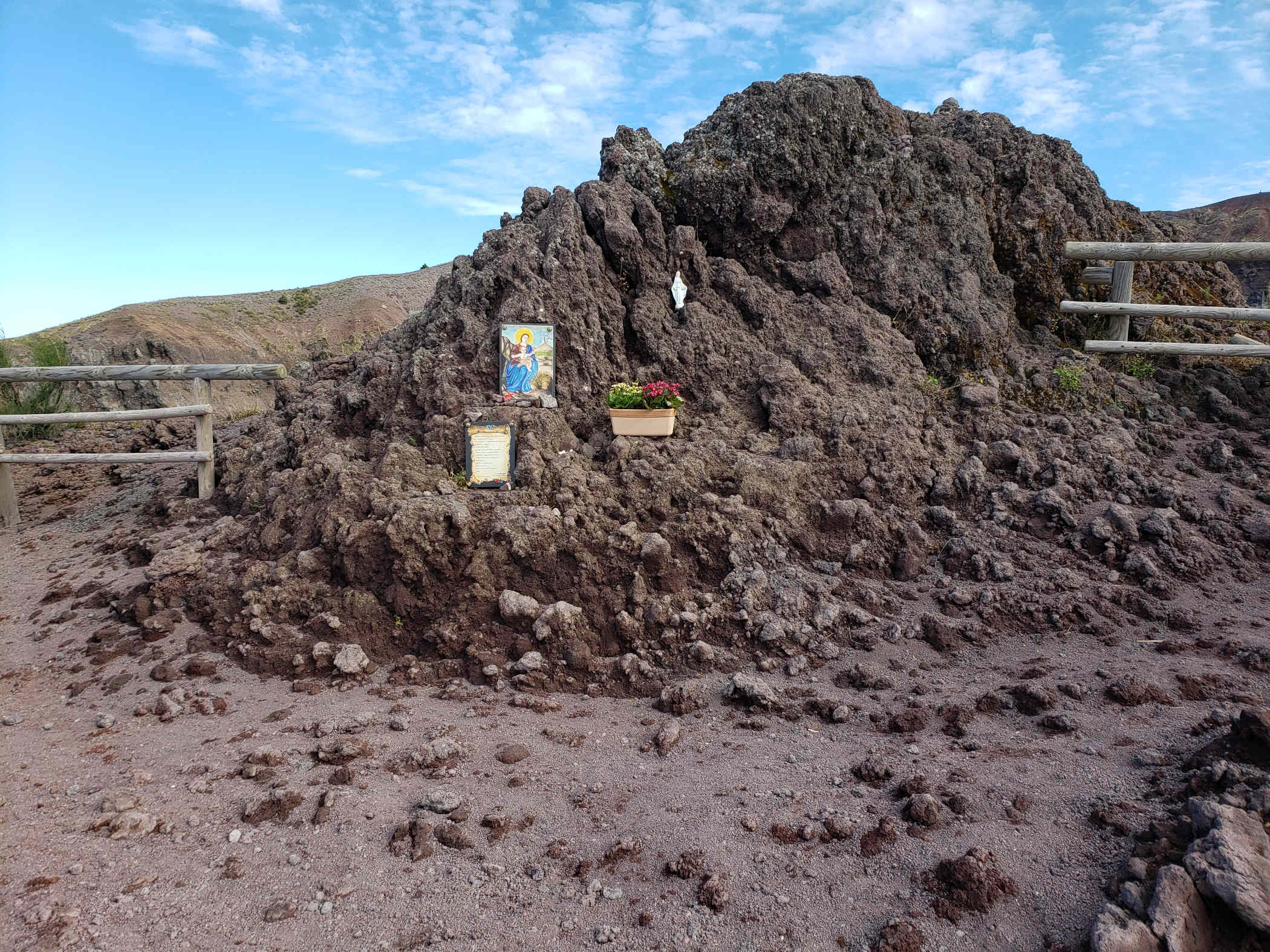
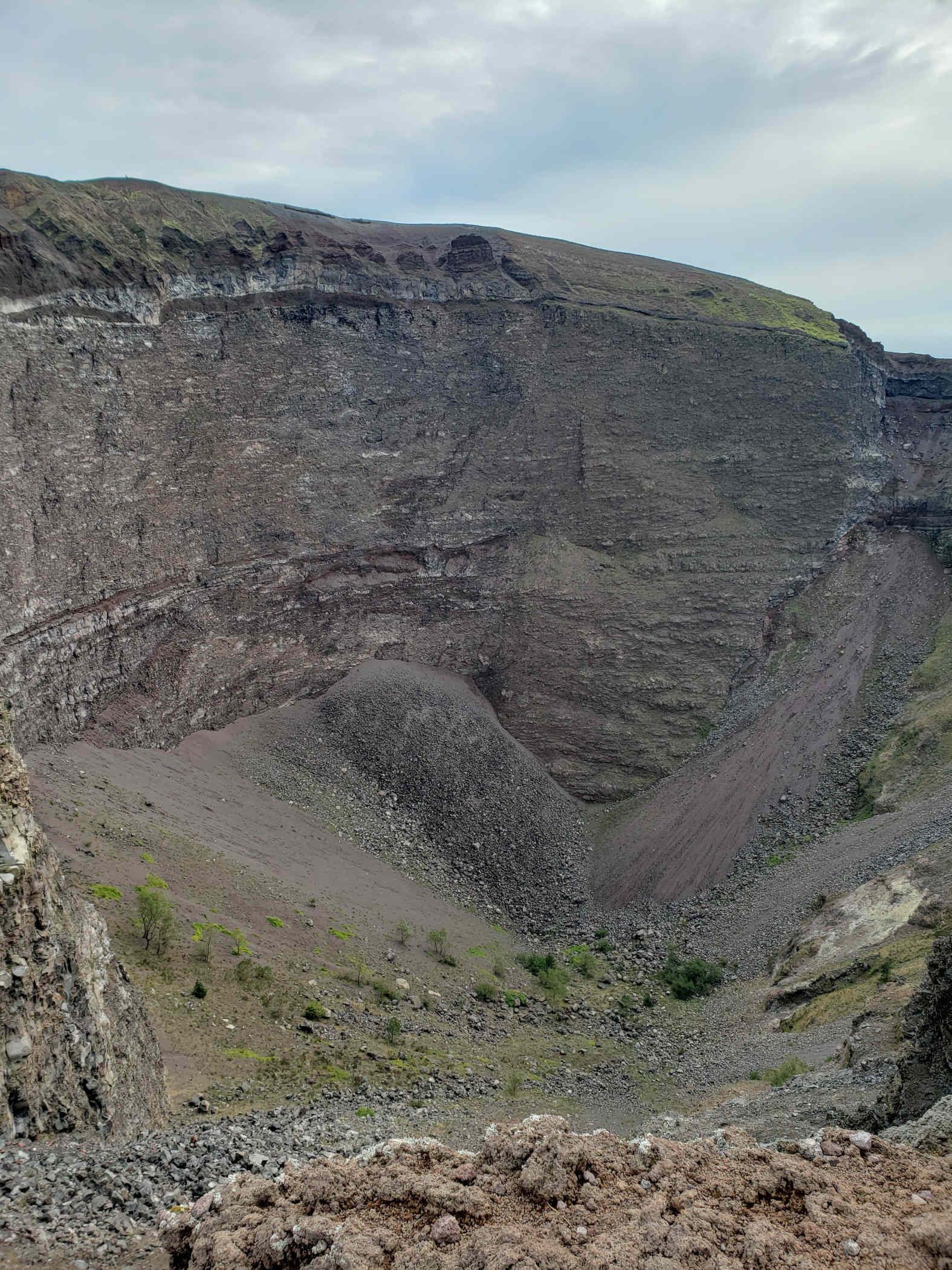
It is possible to hike to the summit of Mount Vesuvius. For a modest fee you can put on your best walking of hiking shoes and climb to the summit from within a few hundred meters in elevation. On a clear day, it is totally worth it, not only for the views of Naples but also for that curious look at what might be going on inside the crater. Our guide Federica, from MindTheNap Tours, along with Pasquale our driver took us there for the day. She has excellent knowledge of the volcano, its history and all its eruptions, as well as other off beat information regarding the consecration of the volcano by the church.
The Climb
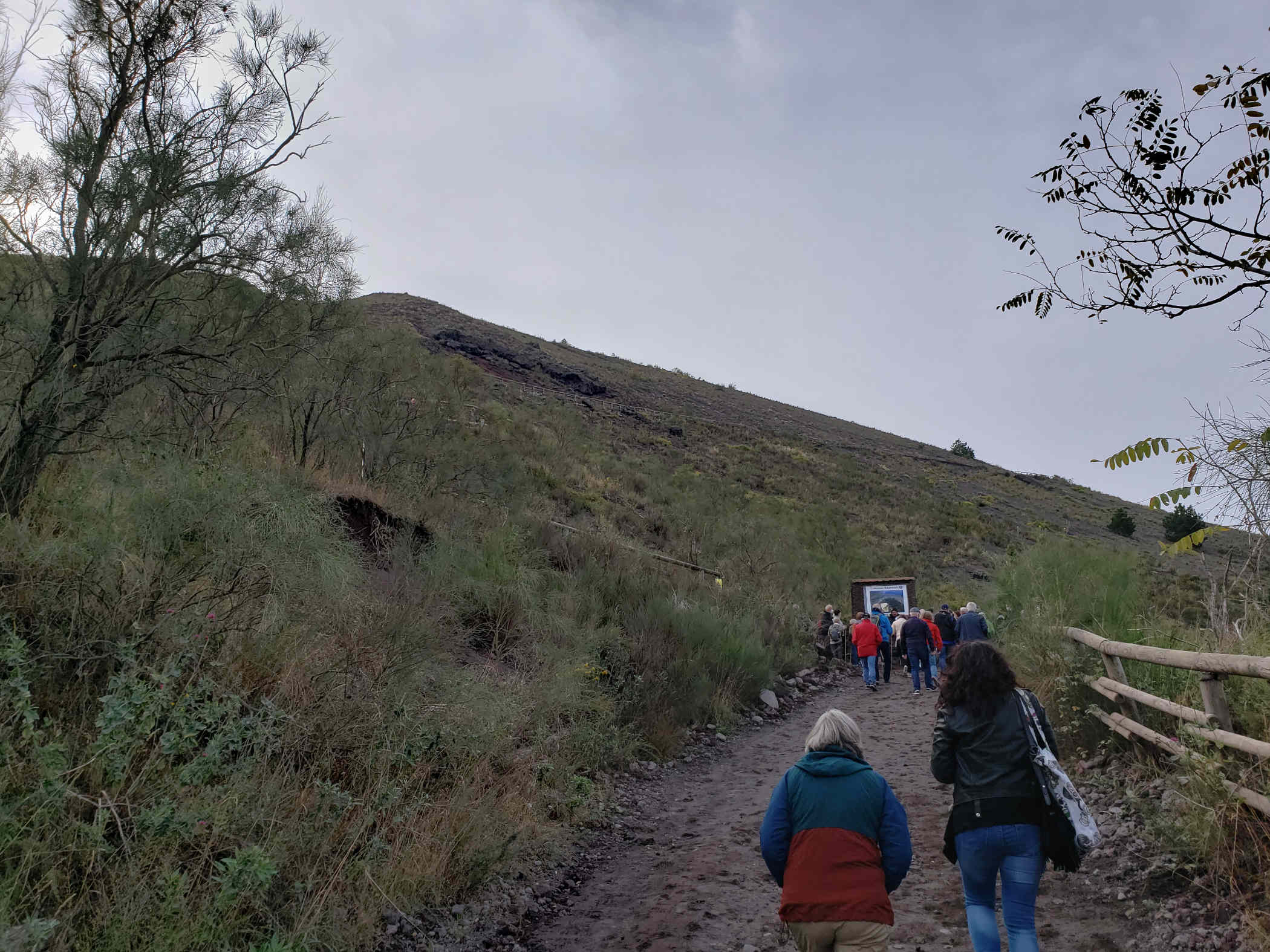
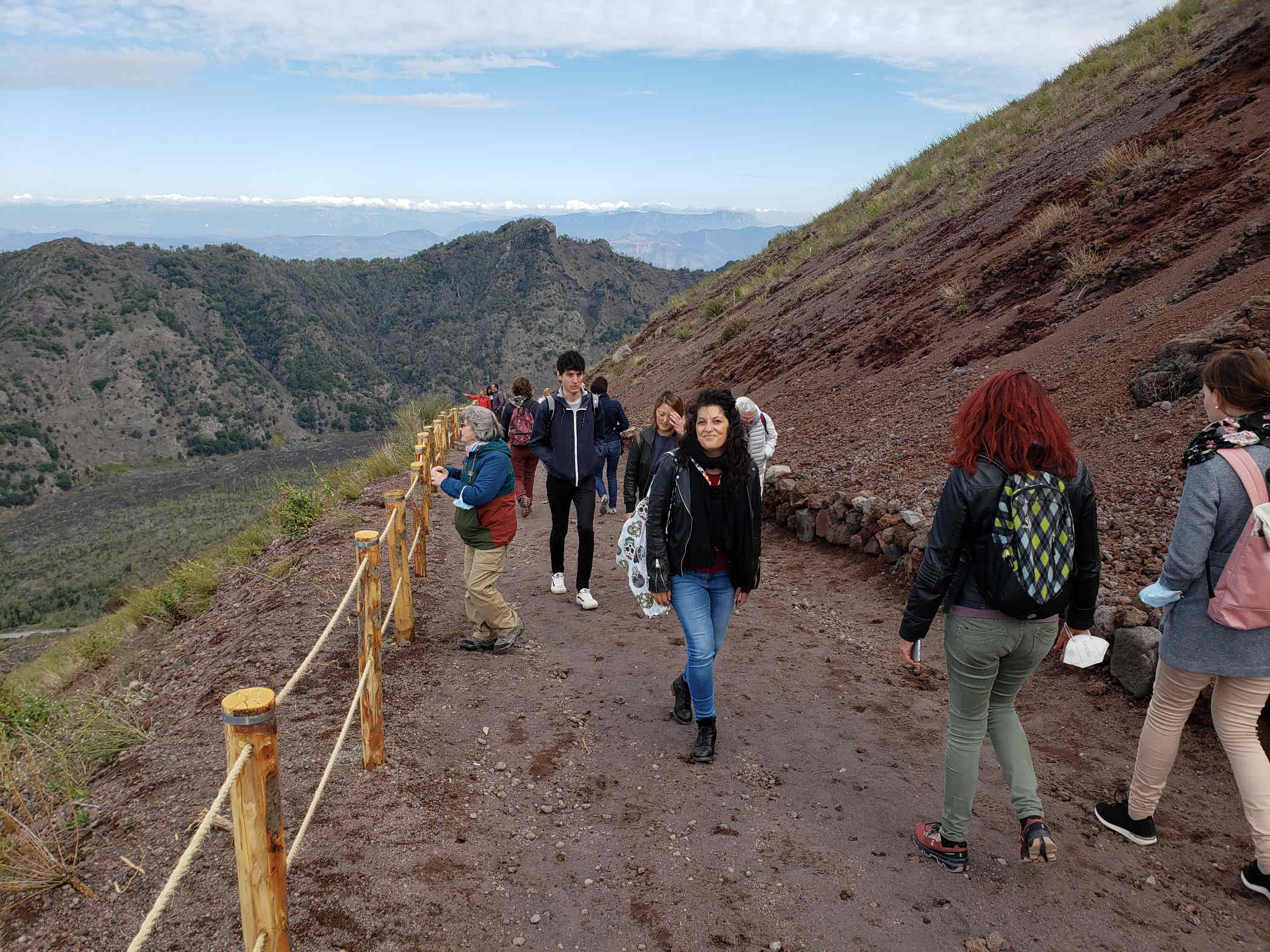
The ascent is not very rigorous, there are plenty of old people walking up and they do hand out walking sticks, if you are so inclined. Now, on to the slide show for which I have not captioned anything, since most should be self explanatory.
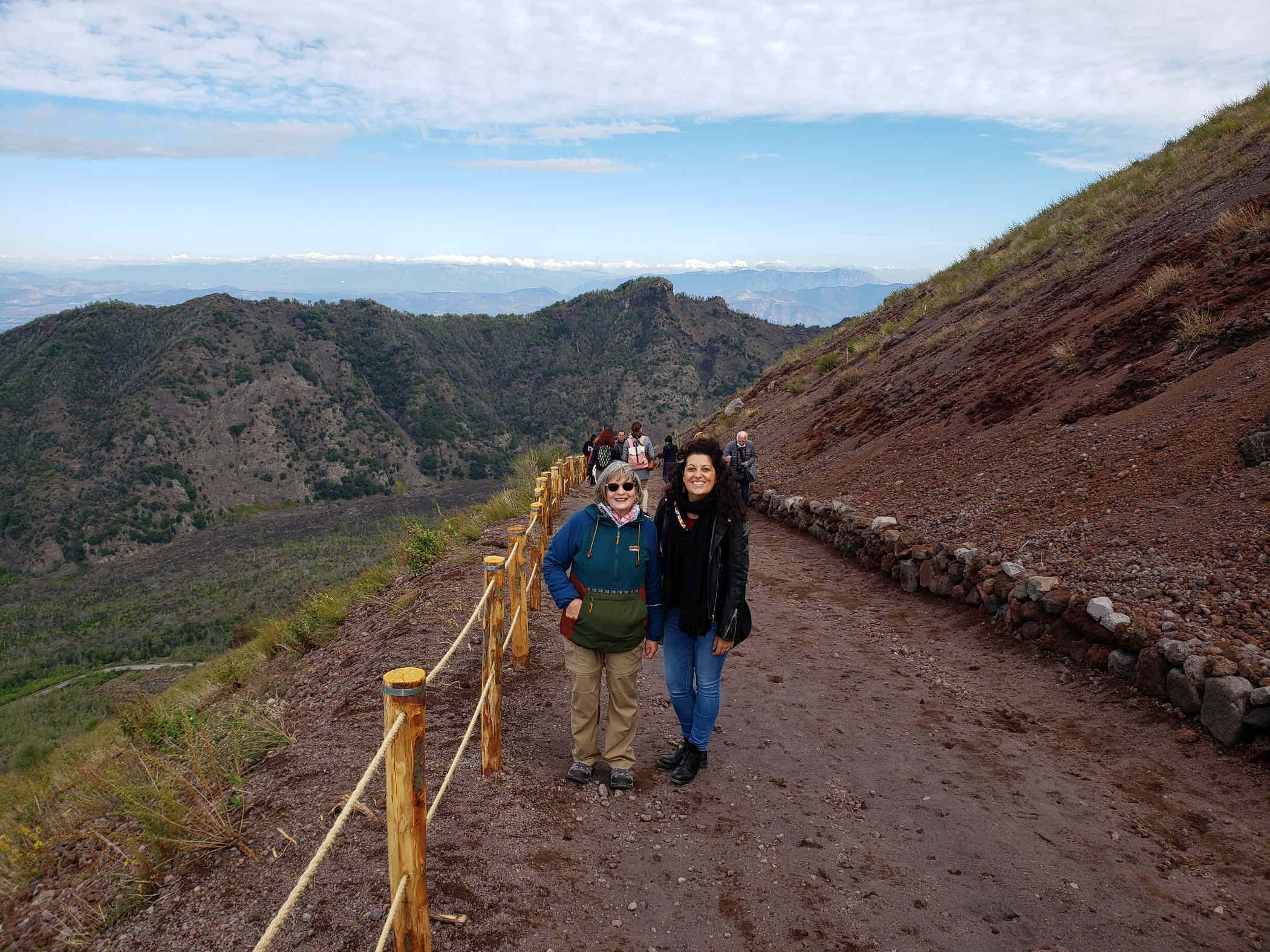
Patti and Federica walking behind me
Patti and Federica
Erick
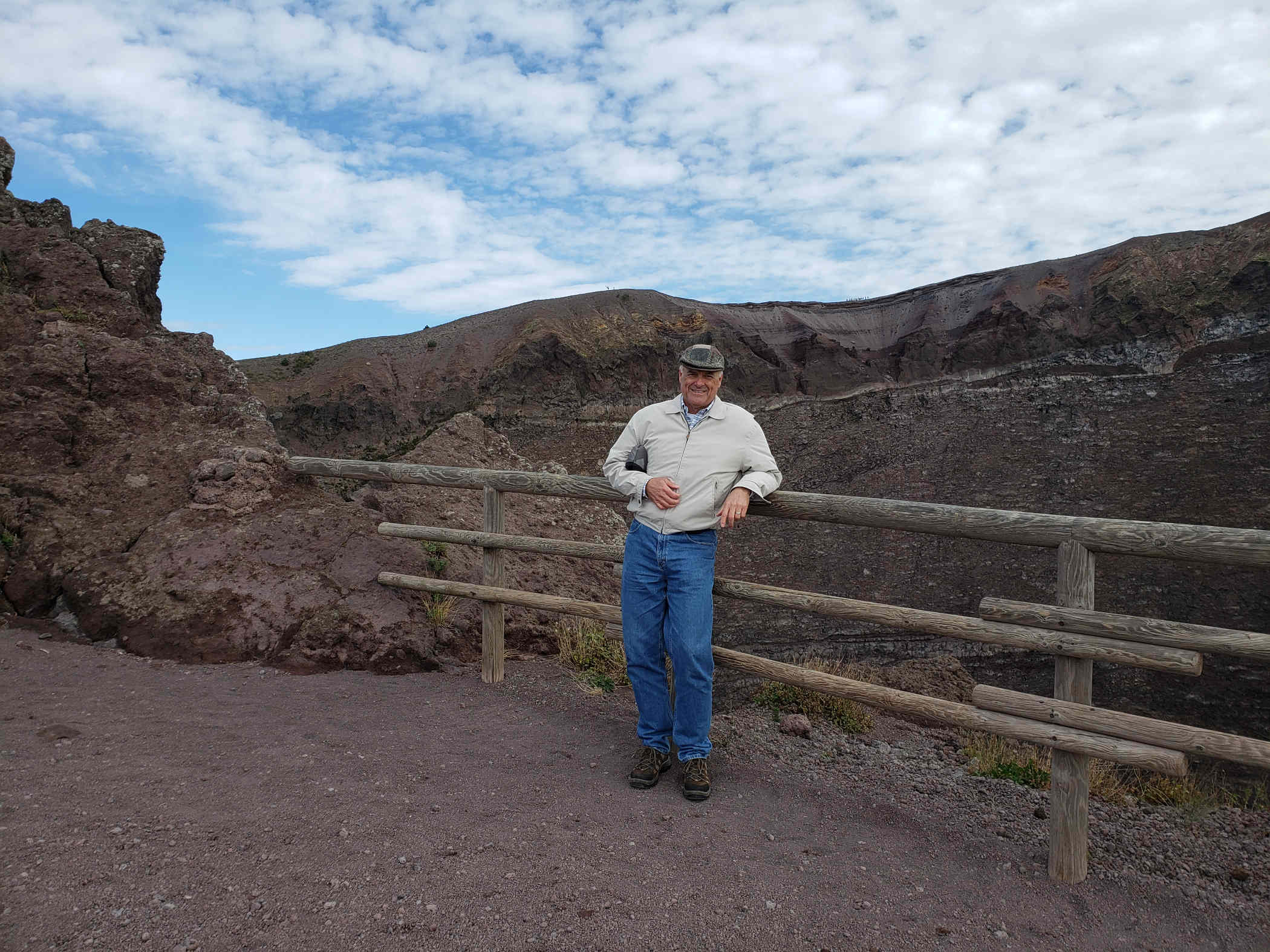
Erick and Patti on top of Vesuvius
A few short videos while we were on the way up and at the summit. The audio is probably terrible, it was very windy and cold that day.
The trip up, around the crater wall and back down took us a little over an hour. But it can be completed faster, we just happened to take our time. The drive there on the other hand depends on traffic, which as you can imagine can be problematic in Naples.
Wineries
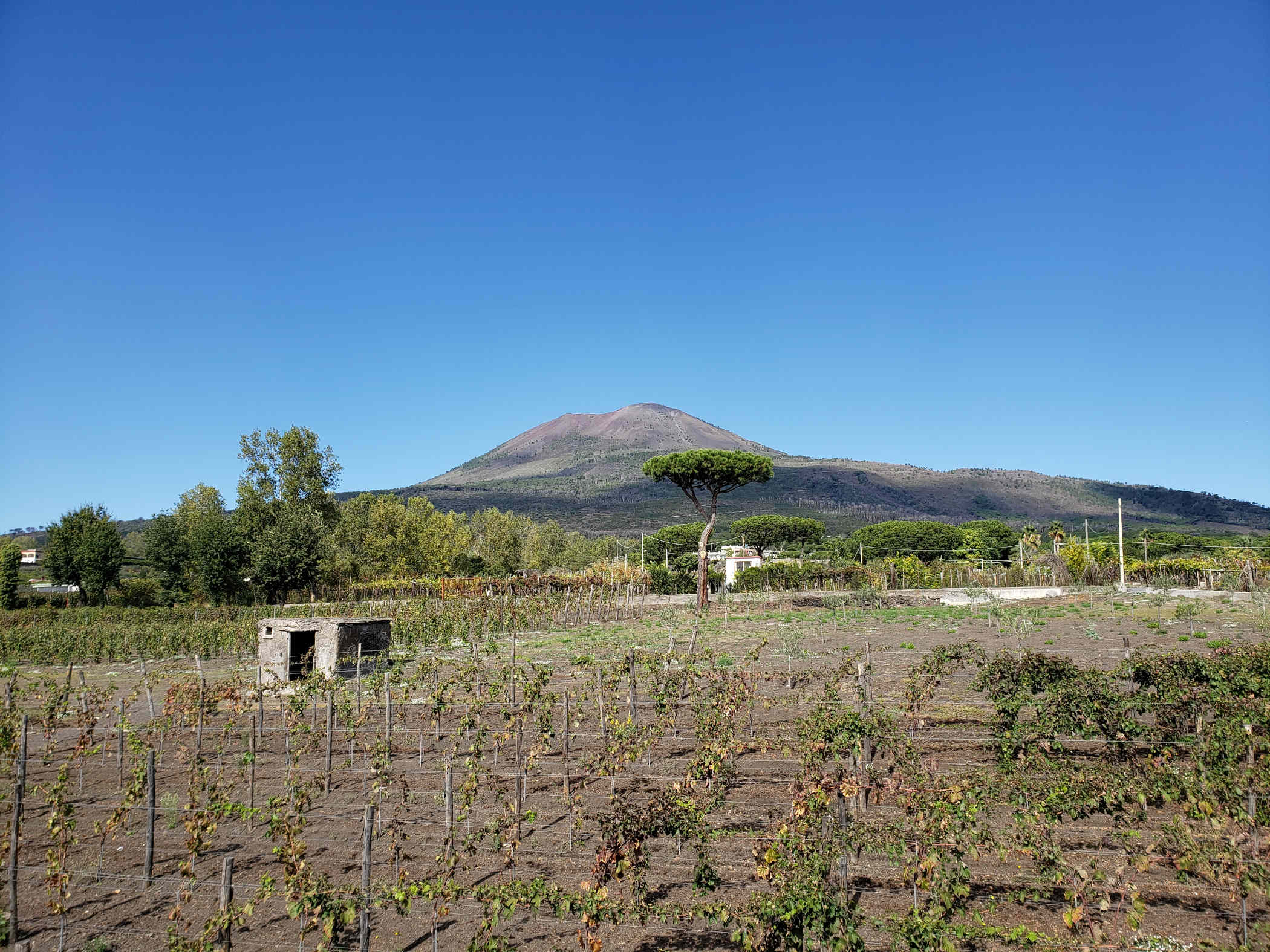
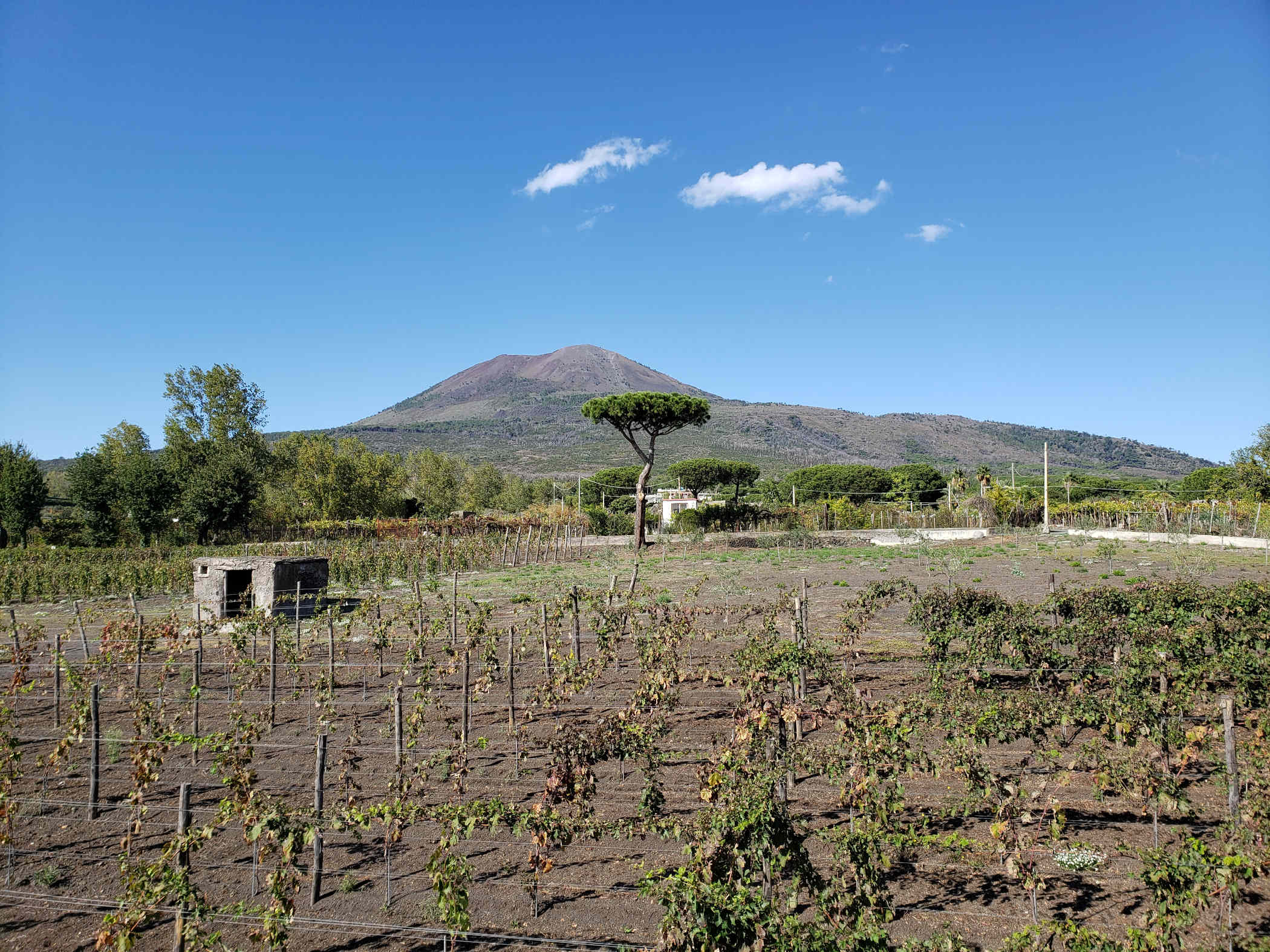
At the foot of Mount Vesuvius are many wineries, which grew certain types of varietals, aglianico, caprettone and piedrosso, that work well with the volcanic soils.
Cantina Del Mount Vesuvio Winery Russo Family
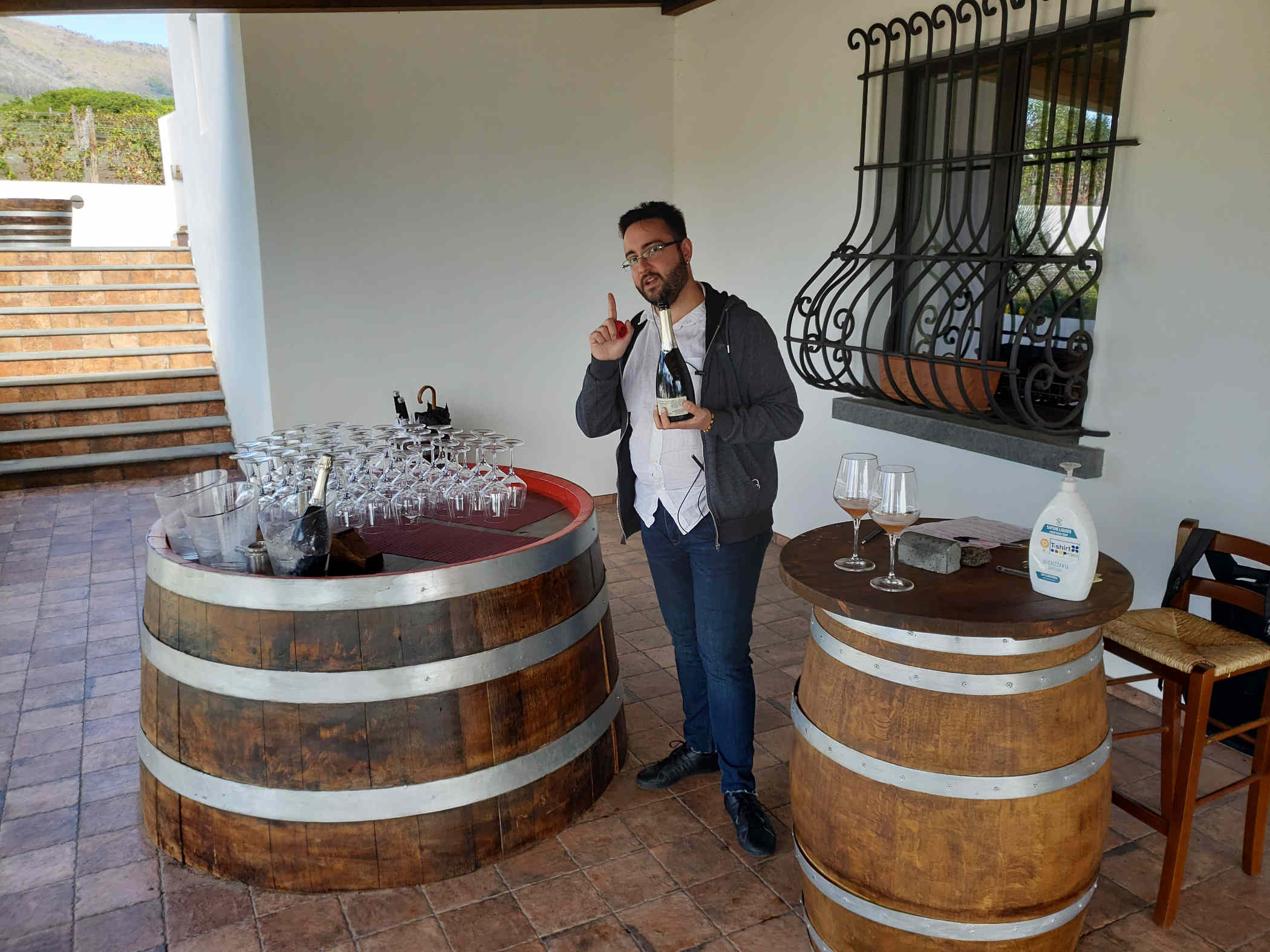
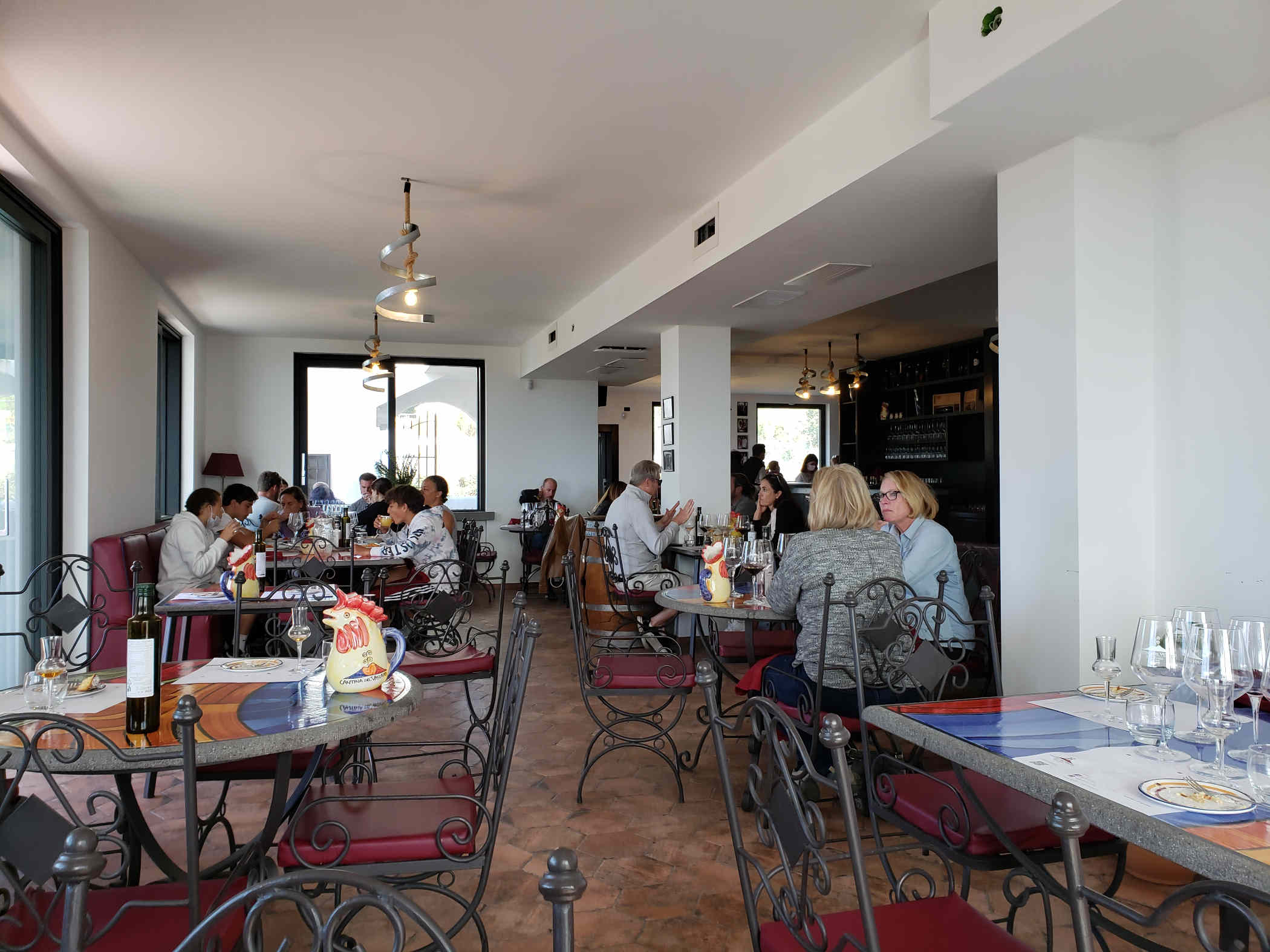
After our ascent up the mountain we spent a few hours in the afternoon having a tour, wine tasting and lunch at the Cantina Del Mount Vesuvio Winery of the Russo Family. We tasted the following before and during our lunch.
– Rosè Sparkling Wine (100% aglianico grapes)
– Lacryma Christi del Vesuvio Bianco DOP (100% caprettone grapes)
– Lacryma Christi Rosato DOP (100% piedirosso grapes)
– Lacryma Christi del Vesuvio Rosso DOP (100% piedirosso grapes)
– Lacryma Christi Riserva (80% piedirosso e 20% aglianico grapes)