

When I was in my youth in the sixties, there wasn’t much around to do to earn some money, especially if you were grade school age living in upstate New York. Frequently this had to do with either coaxing your mom to give you a few pennies, or finding employment elsewhere, usually doing something for my grandfather, who lived next door to us and down the hill in a large white farmhouse with my grandmother.

One task that comes to mind is collecting earthworms. My grandfather wasn’t an avid freshwater fisherman, but fished frequently enough, that he would ask us to catch some worms for him, at a penny for a full worm.
Traditional Forms Of Catching Worms
The traditional way, or the one that most frequently comes to mind and is probably used the most, is to take a shovel and dig in the ground. After turning the soil over, you would then break the pile of dirt apart and scope up any worms that were readily available, if there were any at all! The problem with this method is the worms can actually sense you coming and burrow deeper as you dig. You might get lucky the first couple of times, but quickly your catch will dwindle and you will end up with a hole in the ground and little for your efforts.
Hunting Worms
Perhaps a method used less often, since I have never heard anyone else speak of it, is to hunt them at night while they are above ground. First we would obtain a coffee can, usually Maxwell House or Chock Full of Nuts, and put a handful or two of dirt in the bottom, along with some grass for cover and leaves for food. Then we would wait for nightfall and the Milky Way to appear.
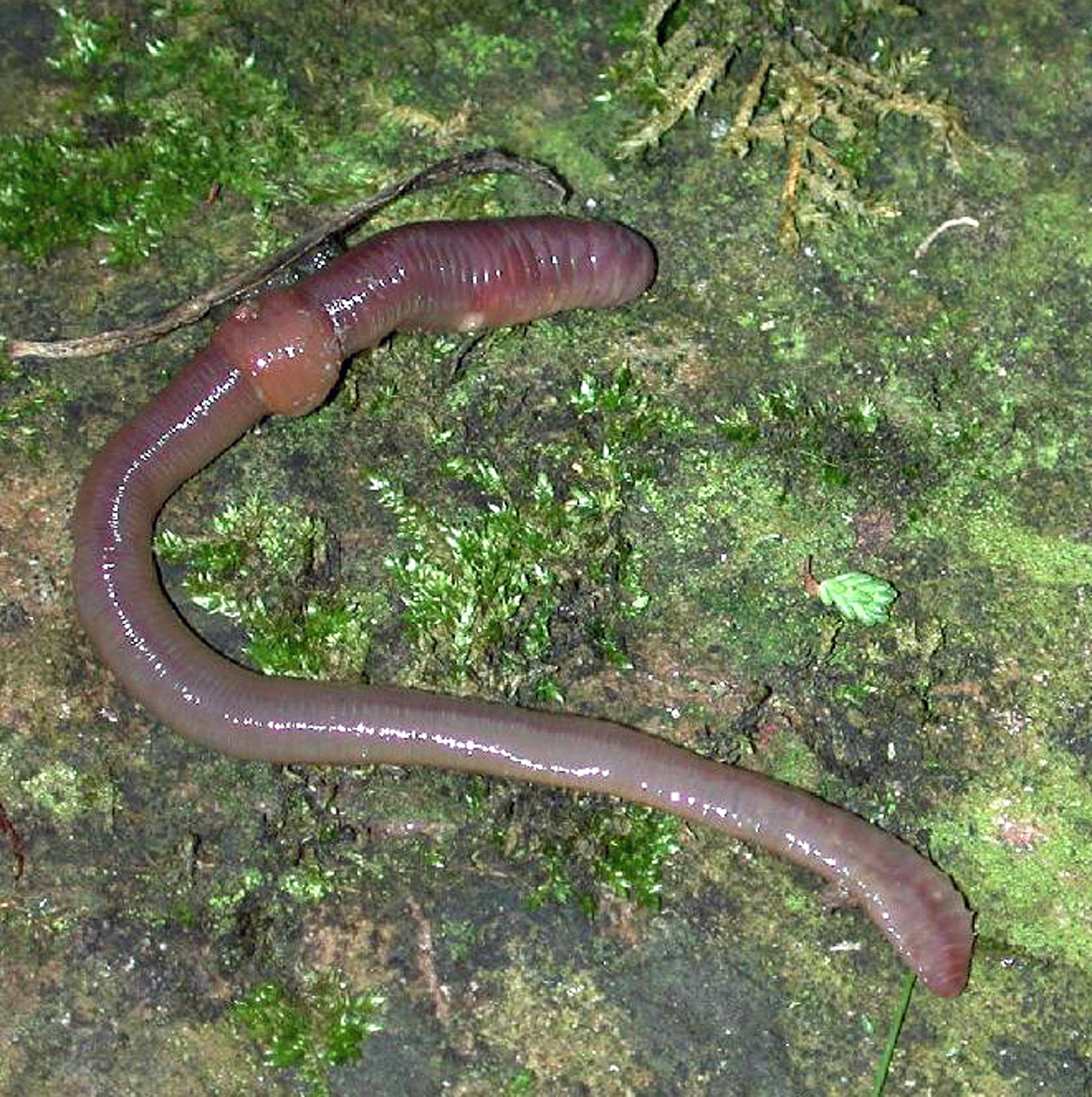

Hunting earthworms, or most specifically Lumbricus Terrestris of native Western Europe, required patience, a flashlight, some cunning and good reflexes. Earthworms of this species come out during the warmer months of the year to reproduce and forage. Any food they find, preferrably leafy material from Ash, Maple and some other varieties, is pulled back into their burrows and consumed below ground. Reproduction however slows everything down, including their terrestrial movements. This occurs more often in the warmer months of Summer and you can usually find two earthworms, side-by-side, in an inch or two embrace, for which they are very reluctant to break. Catching two embracing worms at the same time is not for beginners and probably, for the earthworms sake, should not be attempted until you are skilled at catching one without difficulties.
Use Of The Flashlight
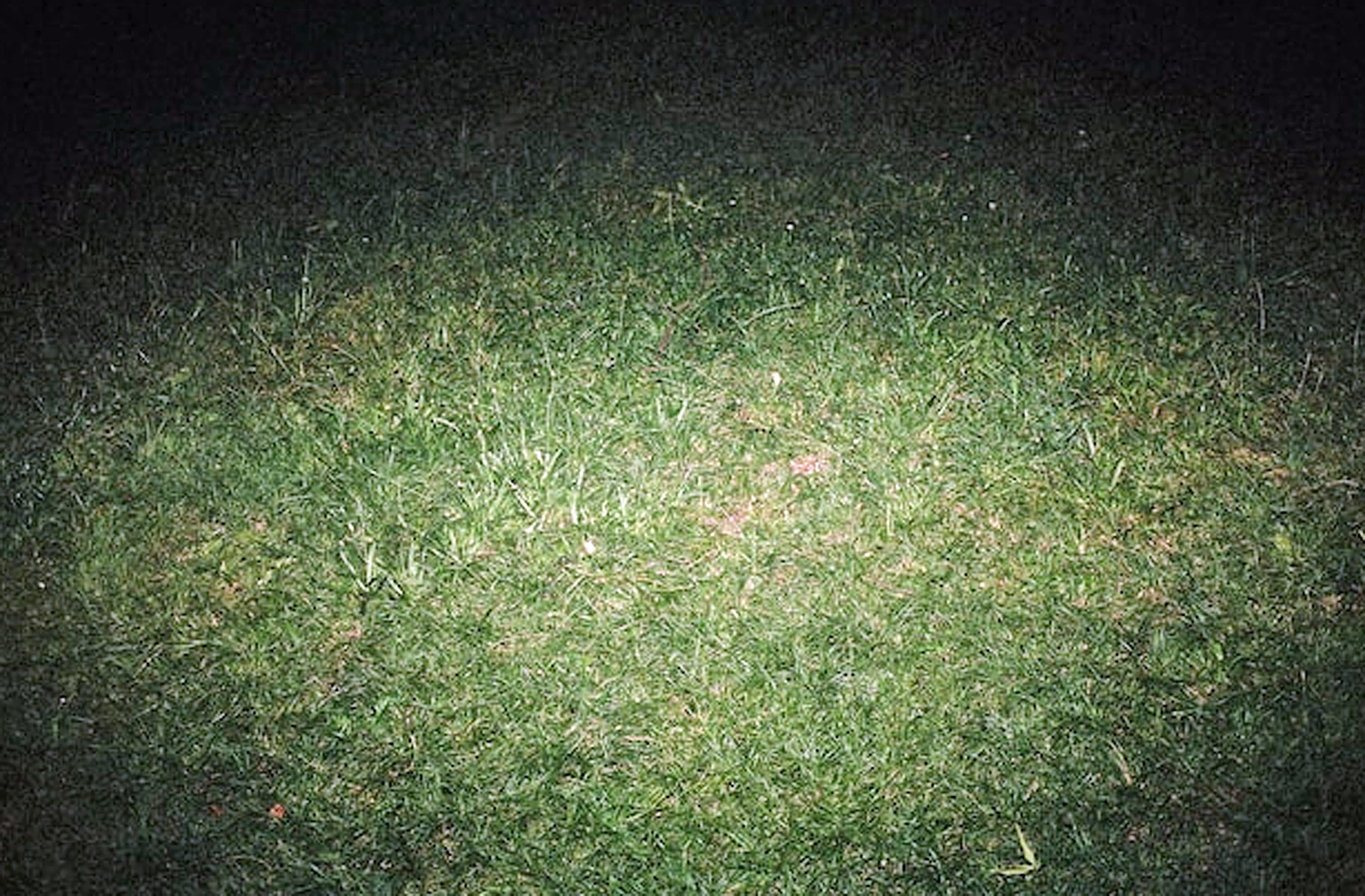
The trick of the hunt is to try and prevent them escaping back into their burrows. This is particularly tricky, in that, they normally will keep their back-end firmly inside their burrow’s hole. As far as light is concerned, they are very sensitive to it, and can tell the difference between starlight, moonlight and other intense light from the sun or a flashlight. Therefore, you must first give up some ground to start, usually the part you are standing on, when you first turn your light on. When this is done, the keen eye will noticed that if there are any worms in the lightbeam, they quickly retreat to their holes and are gone. Normally, it is the direct light that they sense; for they have photoreceptors that alert them. However, the indirect light is more of a problem and their photoreceptors therefore must have some threshhold over which if met, triggers their reaction and hastens the retreat. It is in the penumbra of the flashlight, where the grass is actually casting a shadow on them and sometimes at the very limit of your own eyesight, in which you must hunt.
Stopping The Worms Retreat
Once you have mastered how to hold the flashlight and finding them without them leaving for thier holes, catching them is the next trick. This is done by trying to determine which end is actually in the hole. Normally the darker part of the worm of this genus is the head and the lighter portion of the worm tends to be anchored in the hole. It is this lighter part of the worm that is the target. Taking two fingers, like you are going to pinch someone, you quickly block its retreat by placing your two fingers right where the worm and its hole meet. One of few things now happens, either you missed trapping it, or you got the wrong end, or it sensed your movement and the worm quickly dissappeared, or the worm tried to retreat and has now recoiled up against your two fingers.
Extraction And Collection
Now comes the tricky part of extraction. Worms are like any other animal and will get tired. So, for the first tens of seconds – relax. Then with the other hand grab the other portion, usually the head, that is sticking out and flailing about. Now the difficult part comes, since you have to use a method of pulling and relaxing to extract the worm, that only comes with experience. Once you stop pinching the worm by the hole and grab its body, the worm will pulsate in an attempt to let’s say, worm its way back into its hole. It is after each pulsating action that the hunter must act in gently pulling the worm a little bit at a time. It can often take more than a minute to successully extract a worm. But once done correctly, other successful catches will follow in quicker succession. At first they will often break, which in most cases has no severe consequences for the worm, since they can normally live through this event. But for my grandfather, he only paid for whole worms. So, we either kept it and he got something for free, or we just let the worm go to tend its wounds.
Conclusion
On any given summer evening in upstate New York, we could usually harvest at least a few dozen, if not more worms. Poking holes with a knife in the plastic lid of the coffee can was usually that last step, before placing the lid on the can. Earthworms are notoriously agile and adept climbers, so don’t leave your can open, they will get out. The holes are more for you then for the worms, since they exchange gases through their skin and do not breath. Keep them moist but not wet, this is where the grass clippings and a little sprinkle of water comes in handy. My grandfather wouldn’t pay for dried out worms either.
Hope you enjoyed this aside and recollection of my youth. Luckily, we would get a quarter if everything went right. Our grandfather usually paid us without many questions as to the number of worms in the can. Obviously reluctant to go about the messy business of counting them. But if he came back later and thought the count were wrong, we definitely heard about that and any counted parts of worms. Which no doubt ended up with deductions after our next collection.
Unfortunately, with all of today’s consumerism and modernity, this is probably another skill or task that is very rarely used, let alone, thought of anymore. Well at least, I have fond memories of having done it.