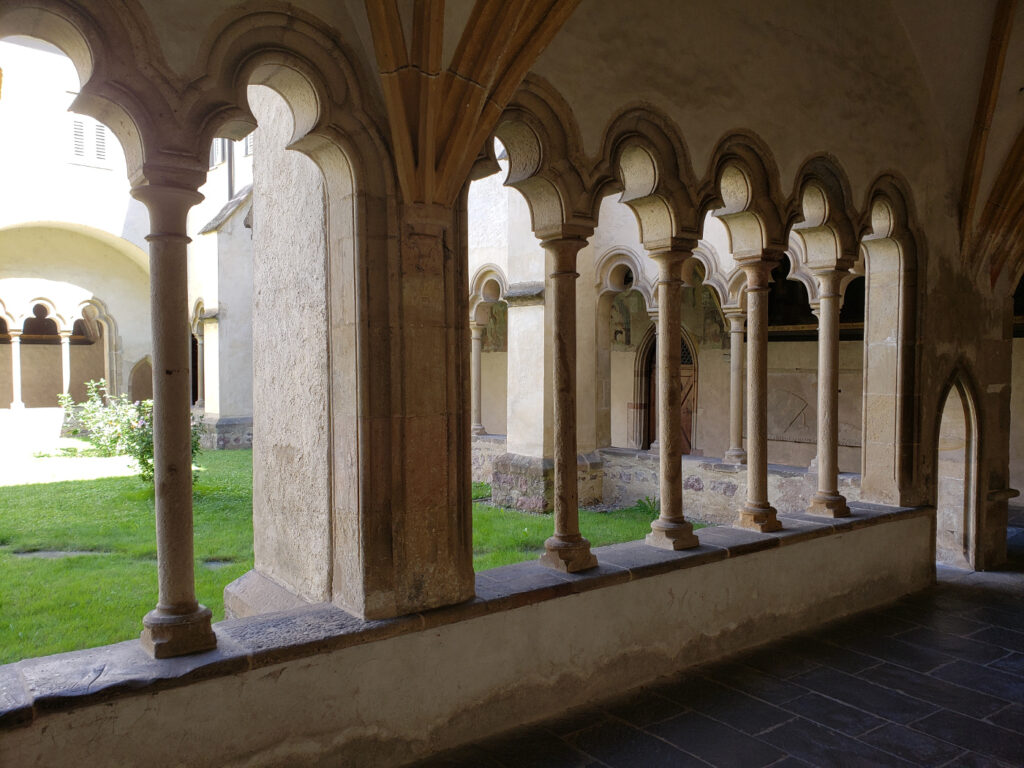
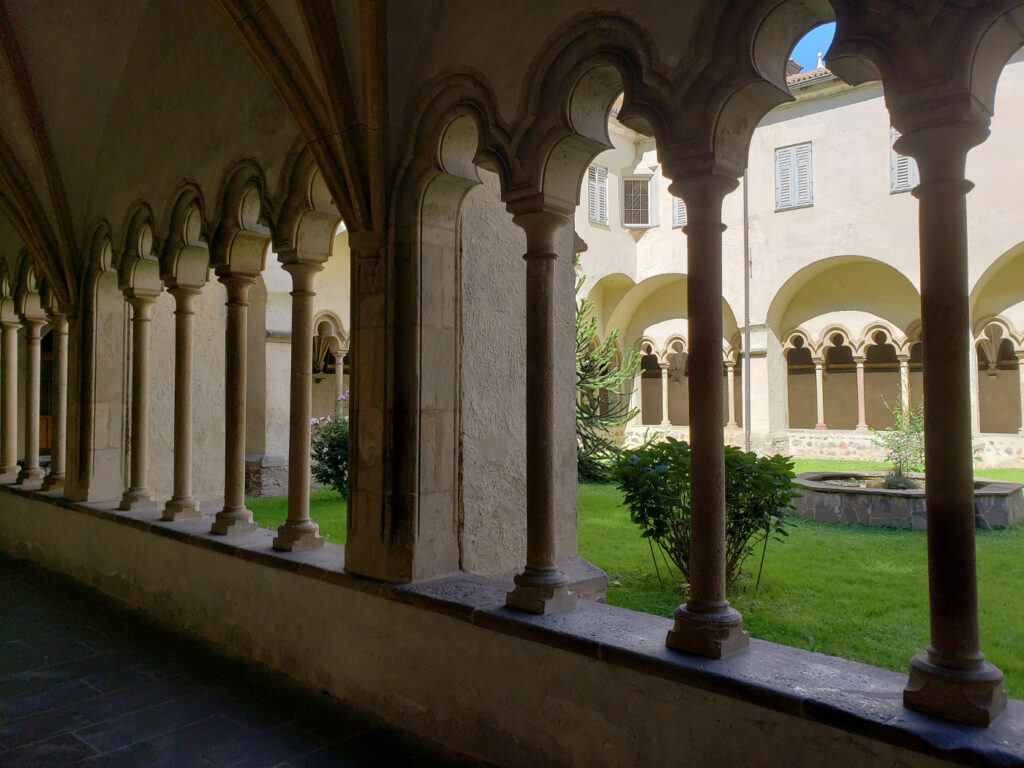
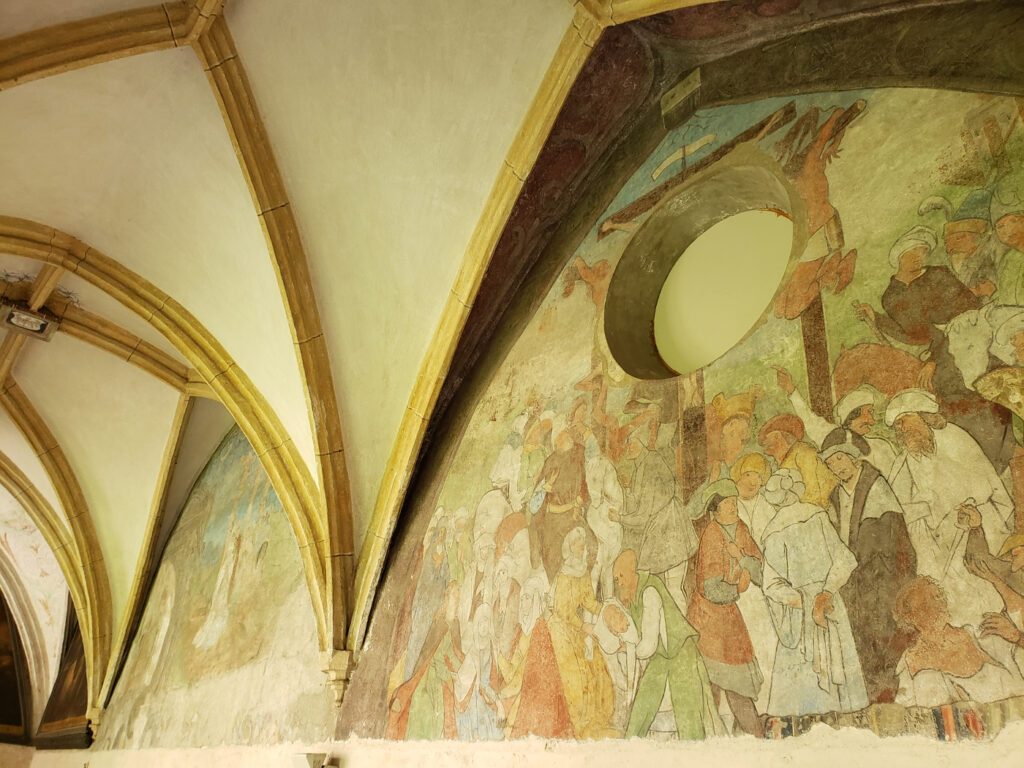
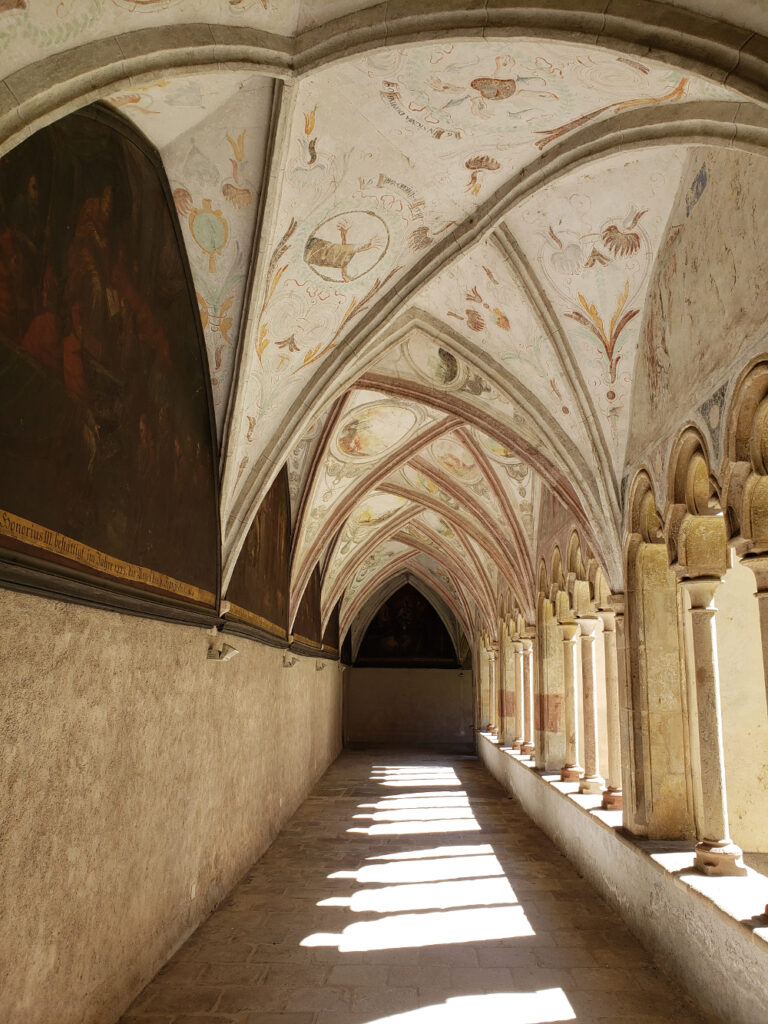
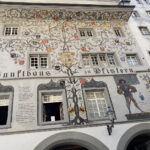
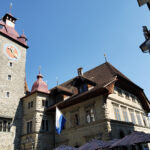
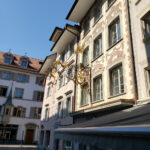
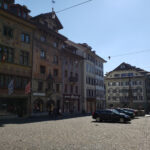
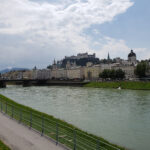
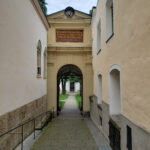
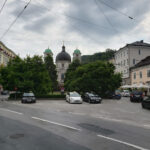
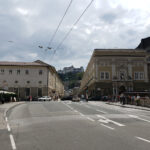
Continuing our adventure in Bolzano, we found it has a number of good museums and many castles to visit, actually one of the denser areas for castles in Europe. We were lucky enough to have time to see two great museums and one of the better castles. If you are ever in Bozen/Bolzano, these are all great places to visit.
Museums
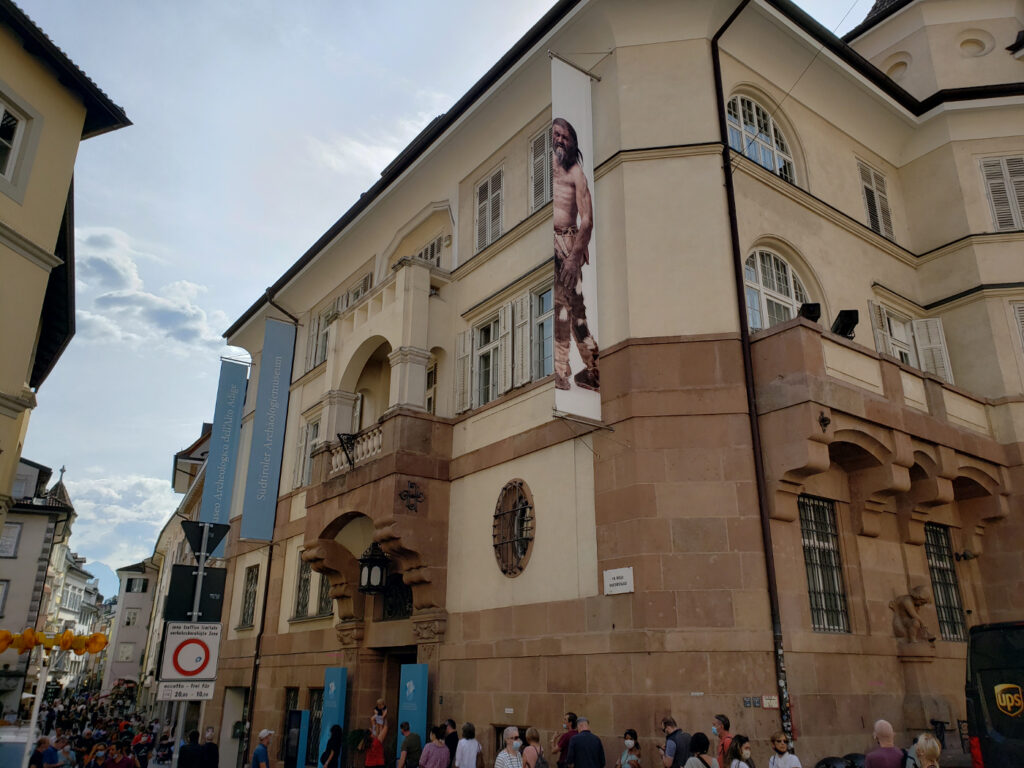
Südtiroler Archäologiemuseum
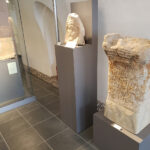
The South Tyrolean Museum of Archeology is the present home of Ötzi, the five thousand and three hundred year old man that was found frozen in an alpine mountain pass.
Südtiroler Archäologiemuseum
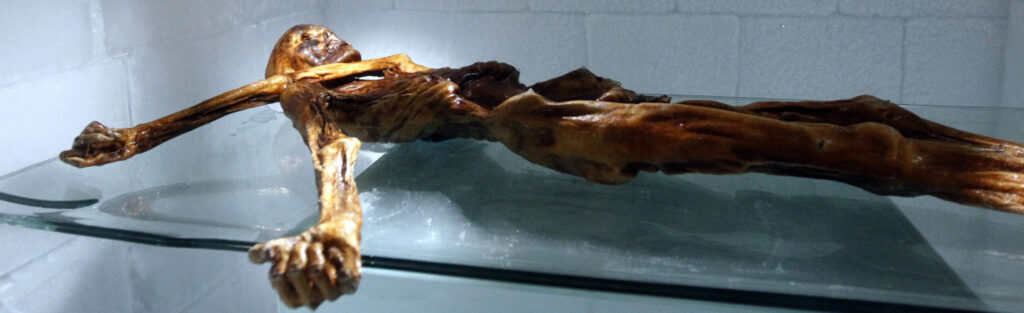
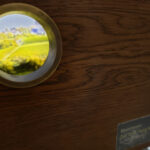
Visitors will learn who made the discovery and how, as well as many keen facts on the later removal and care for the iceman. It is amazing how many artifacts were found along with the body, all of which can be seen in the exhibits. Ötzi himself is viewable from a portal of glass, though which you can see most of the details of his frozen form. The room keeps him at the conditions in which he was found on the mountain-top.
Ötzi
Naturmuseum Südtirol
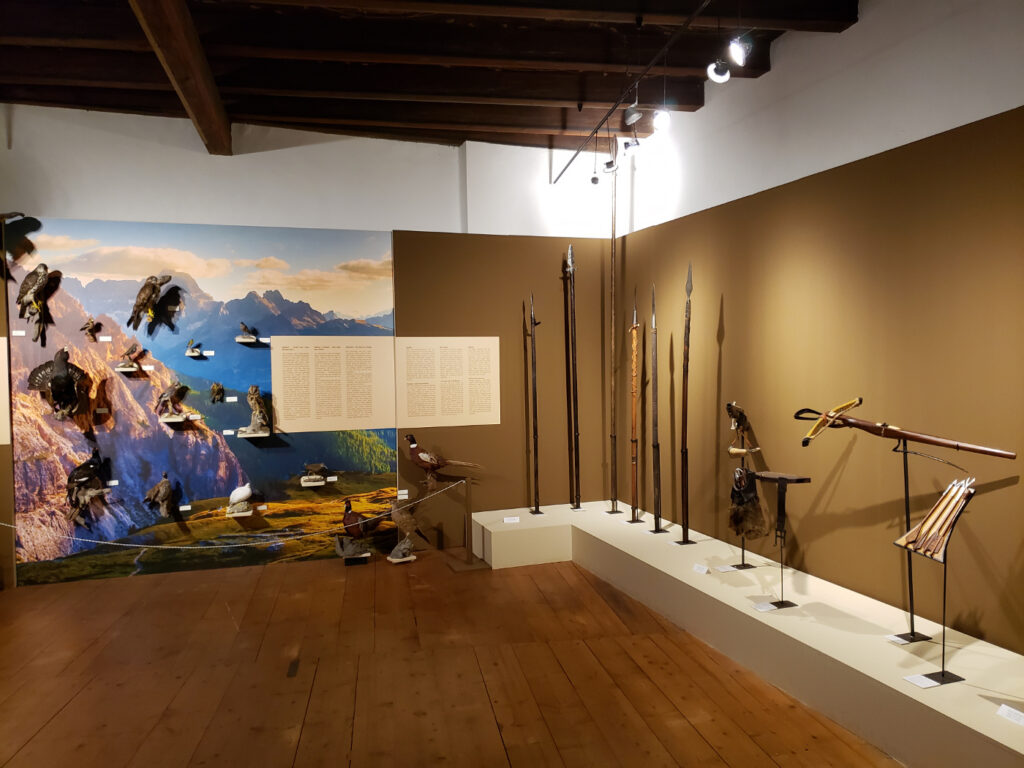
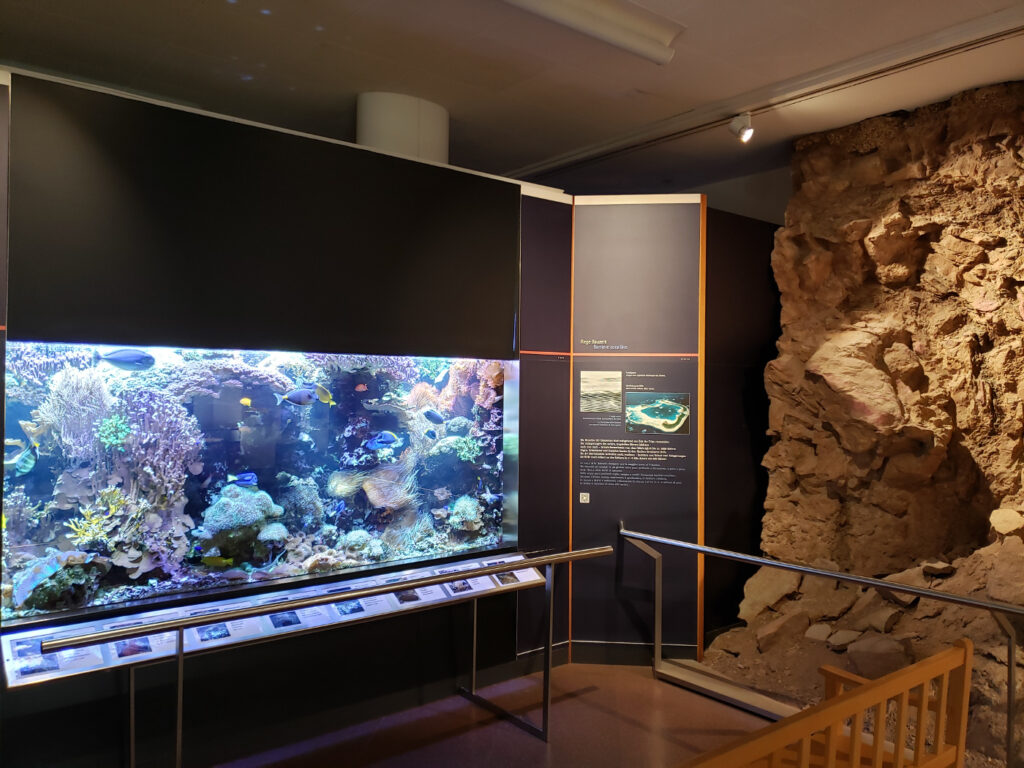
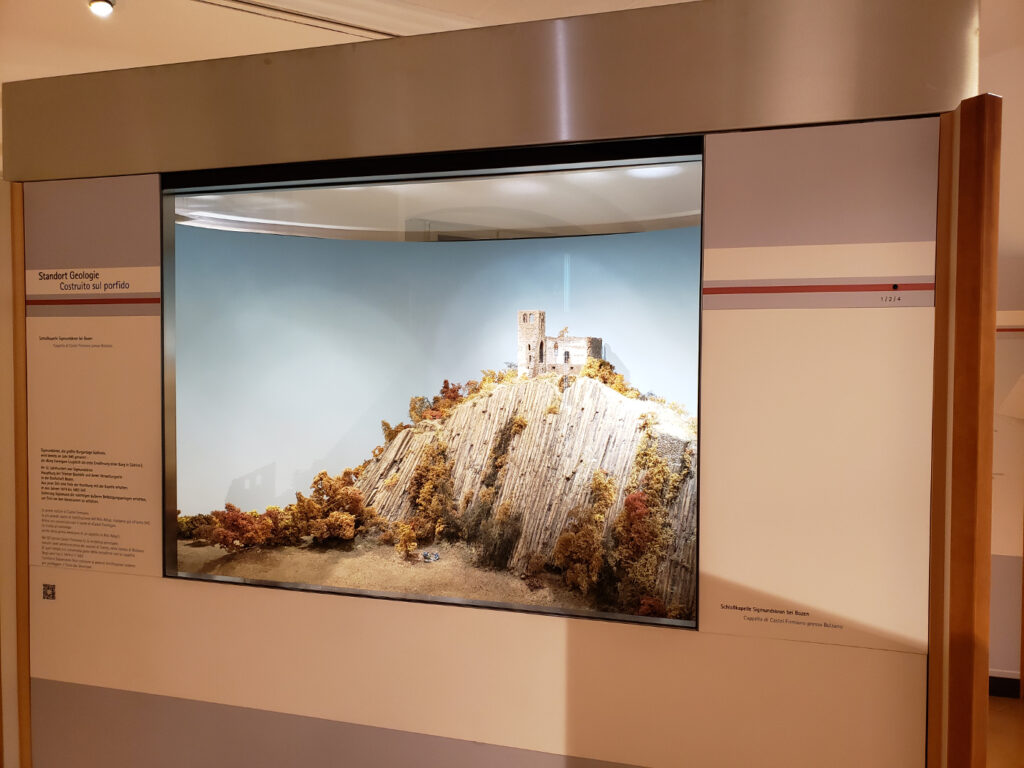
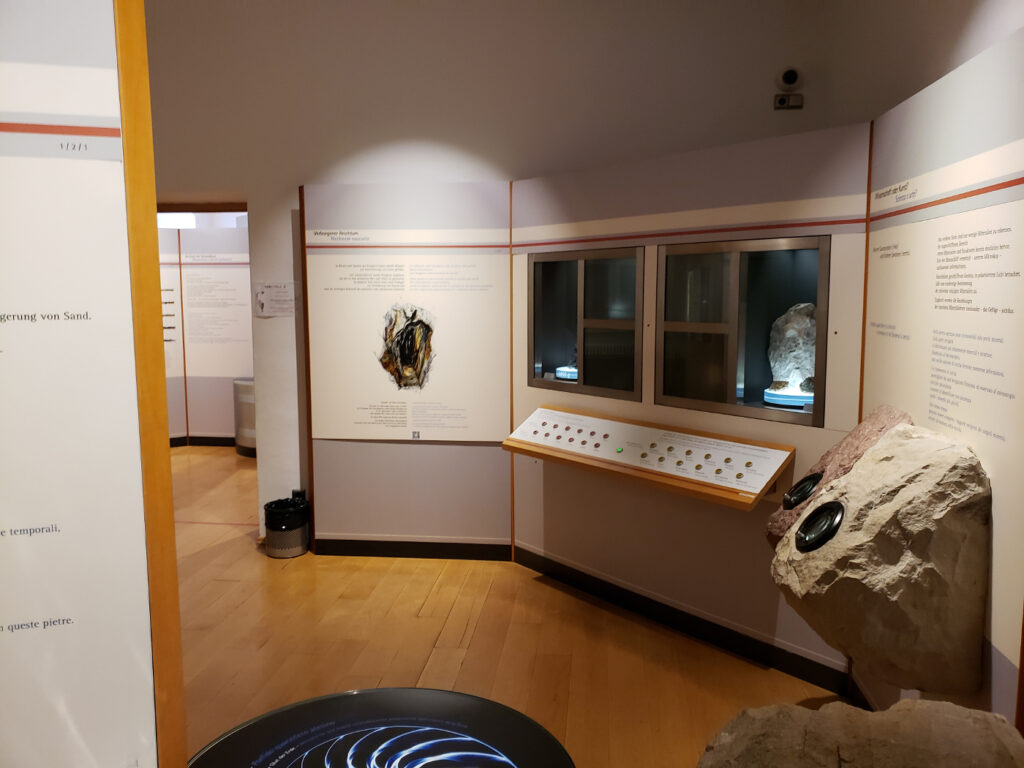
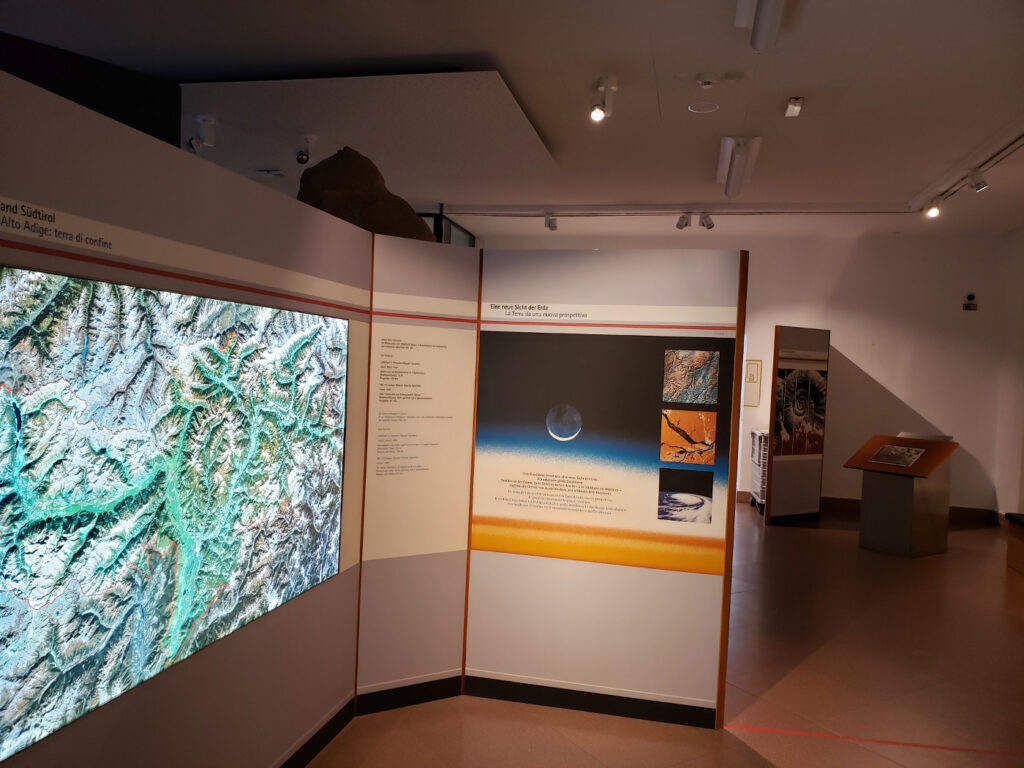
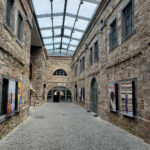
The South Tyrolean Museum of Nature is a rather small museum that provides a good educational foundation for the natural areas surrounding Bolzano. You can learn about all of the habitats and ecology of the forests and fields of the neighboring countryside, as well as its geology and climate.
Hunting Implements
Tropical Fish
Diorama
Interactive Exhibits
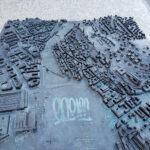
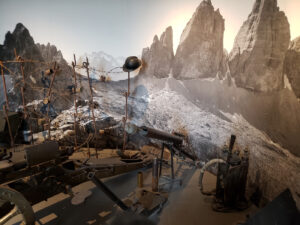
Map Showing Topology
There are many hands-on exhibits for children, most of which are still accessible with the proper attention to hygiene, in this time of pandemic.
Castles
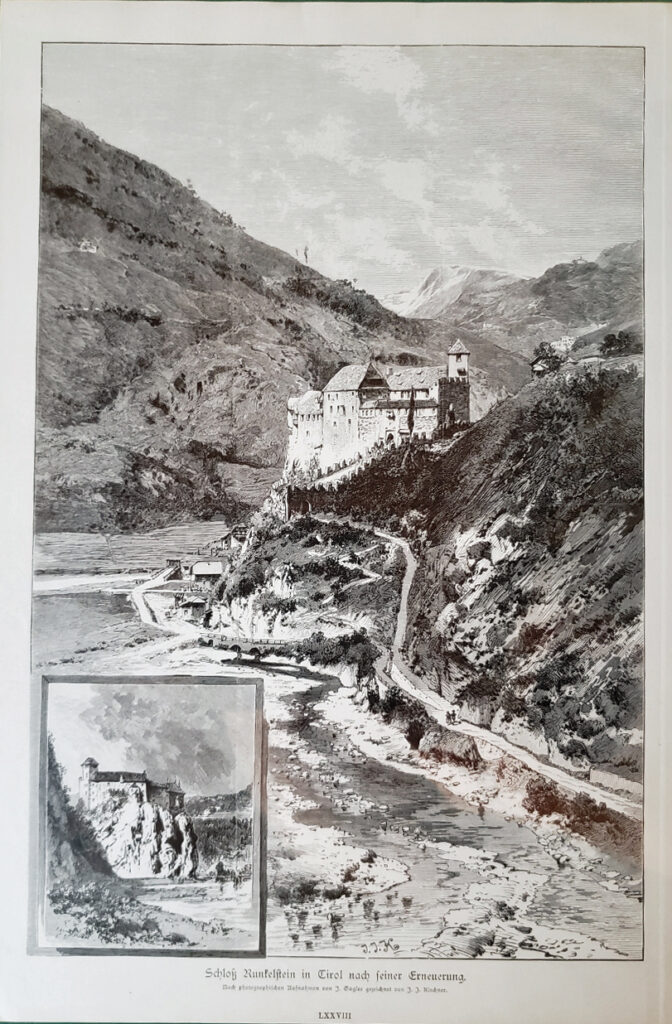
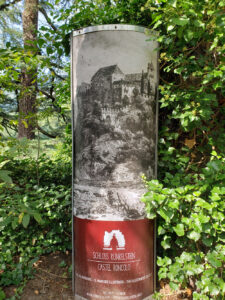
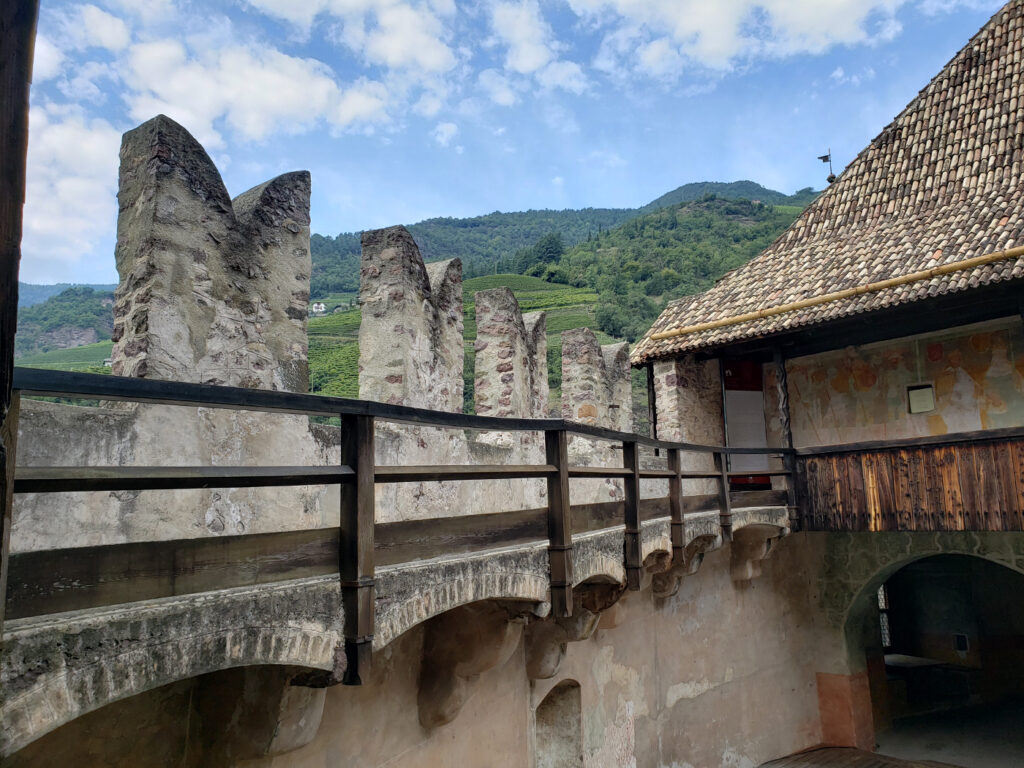
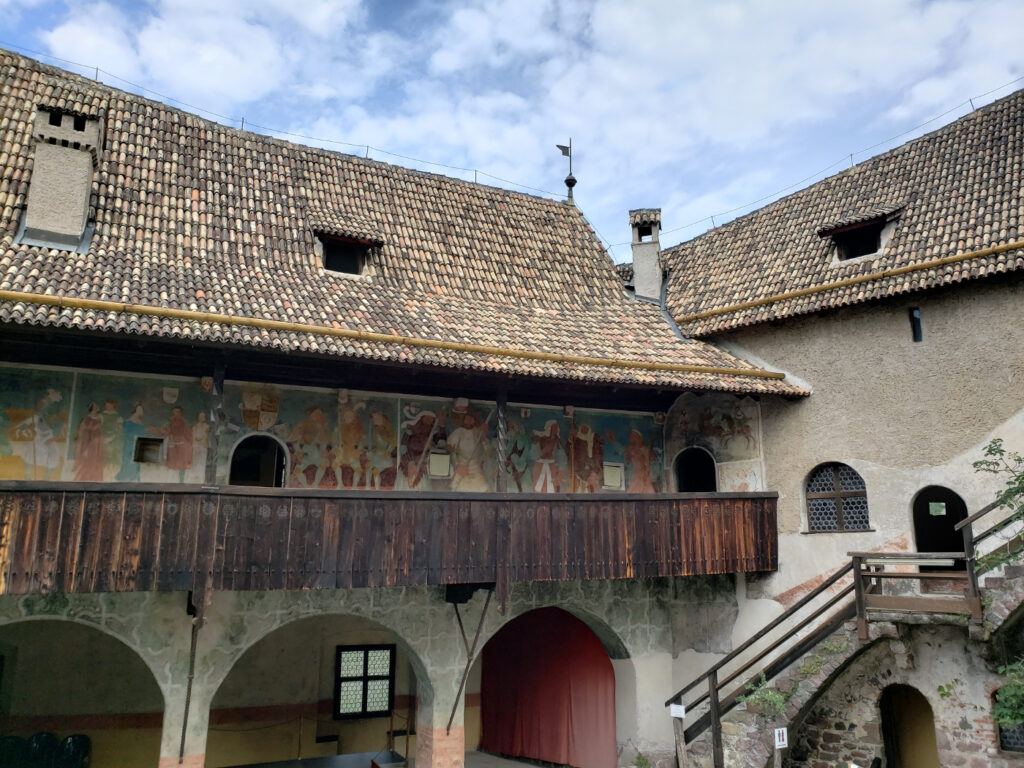
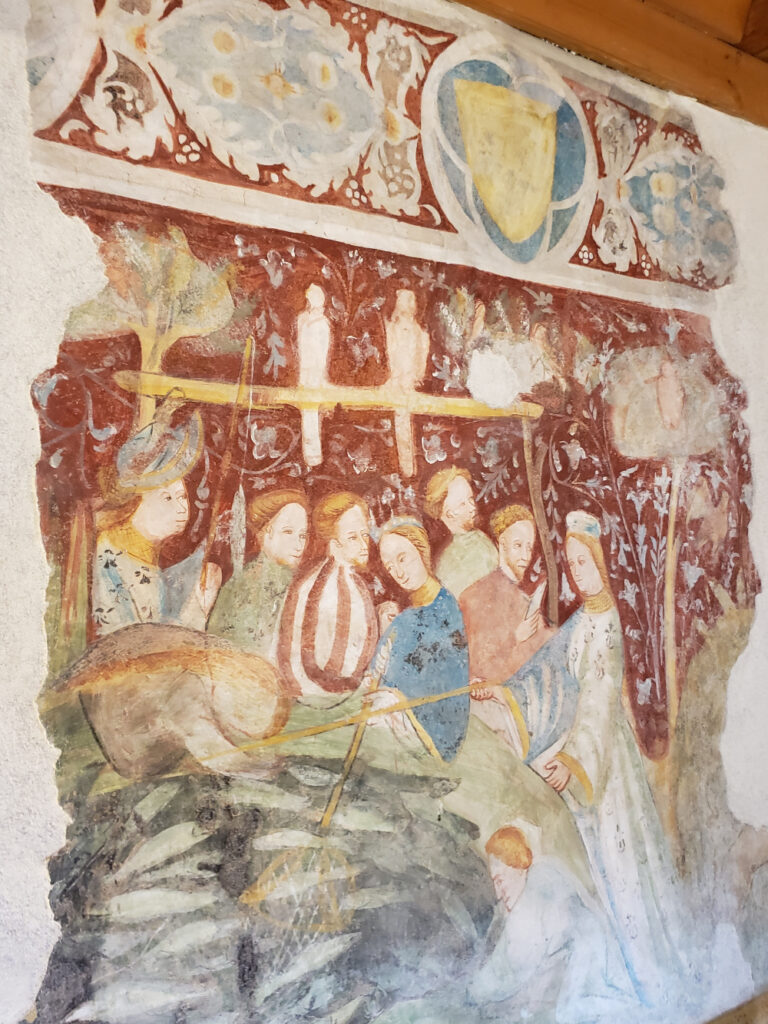
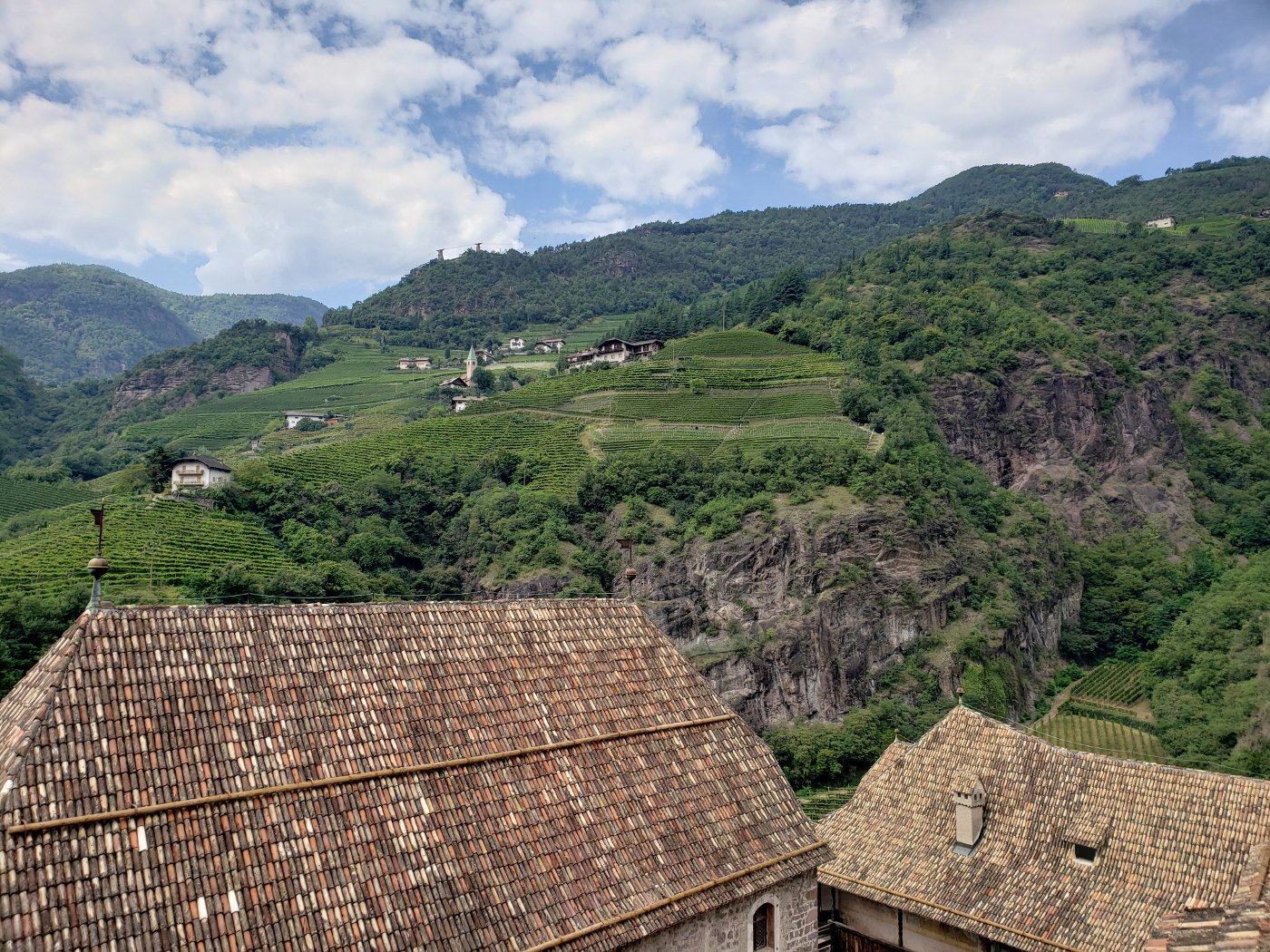
Schloss Runkelstein
Schloss Runkelstein
If you walk from Bozen/Bolzano to the castle, you will note that it is not just a thirty minute walk, but rather more like forty-five minutes.
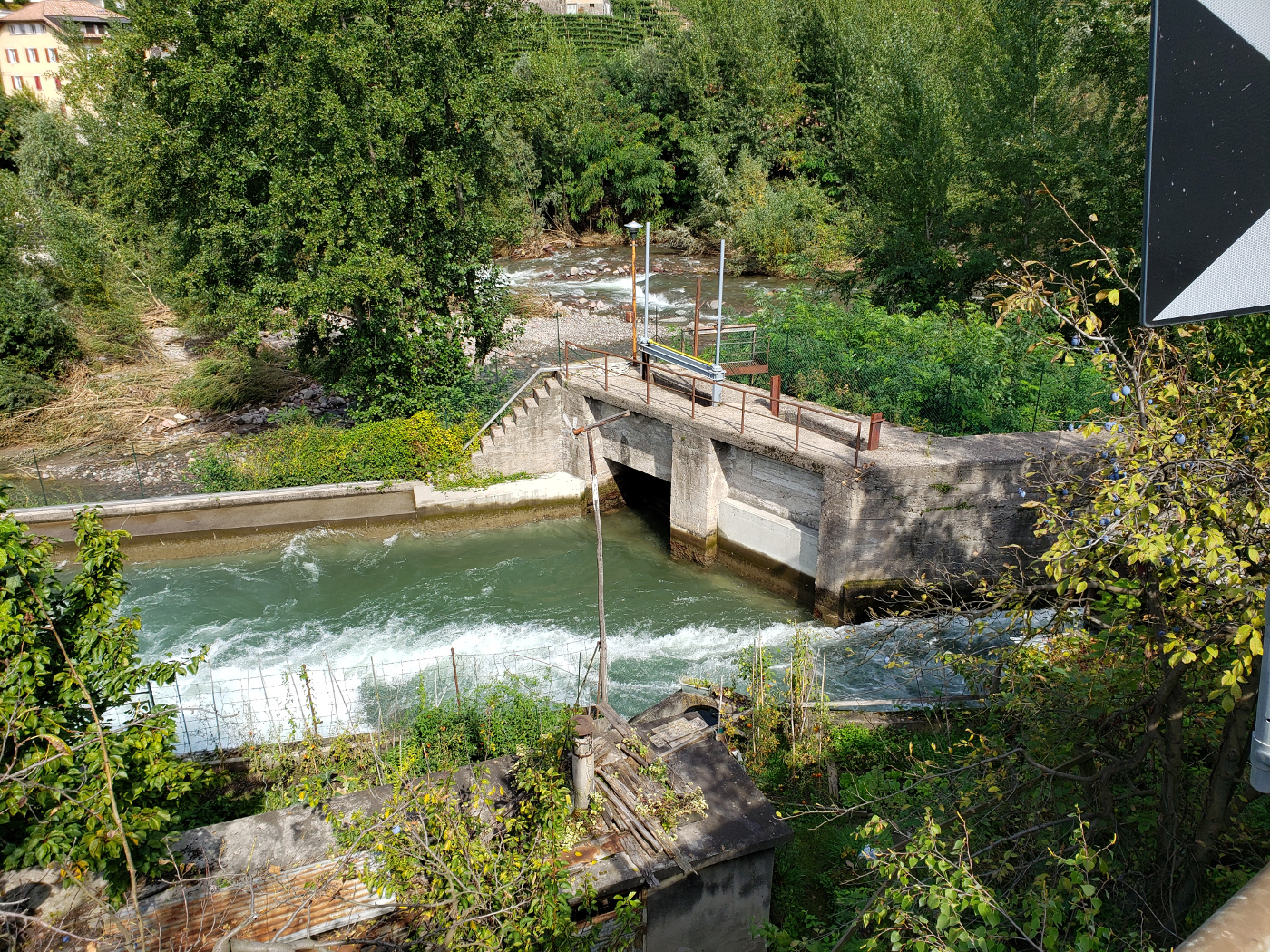
You will pass the old Electric Dam
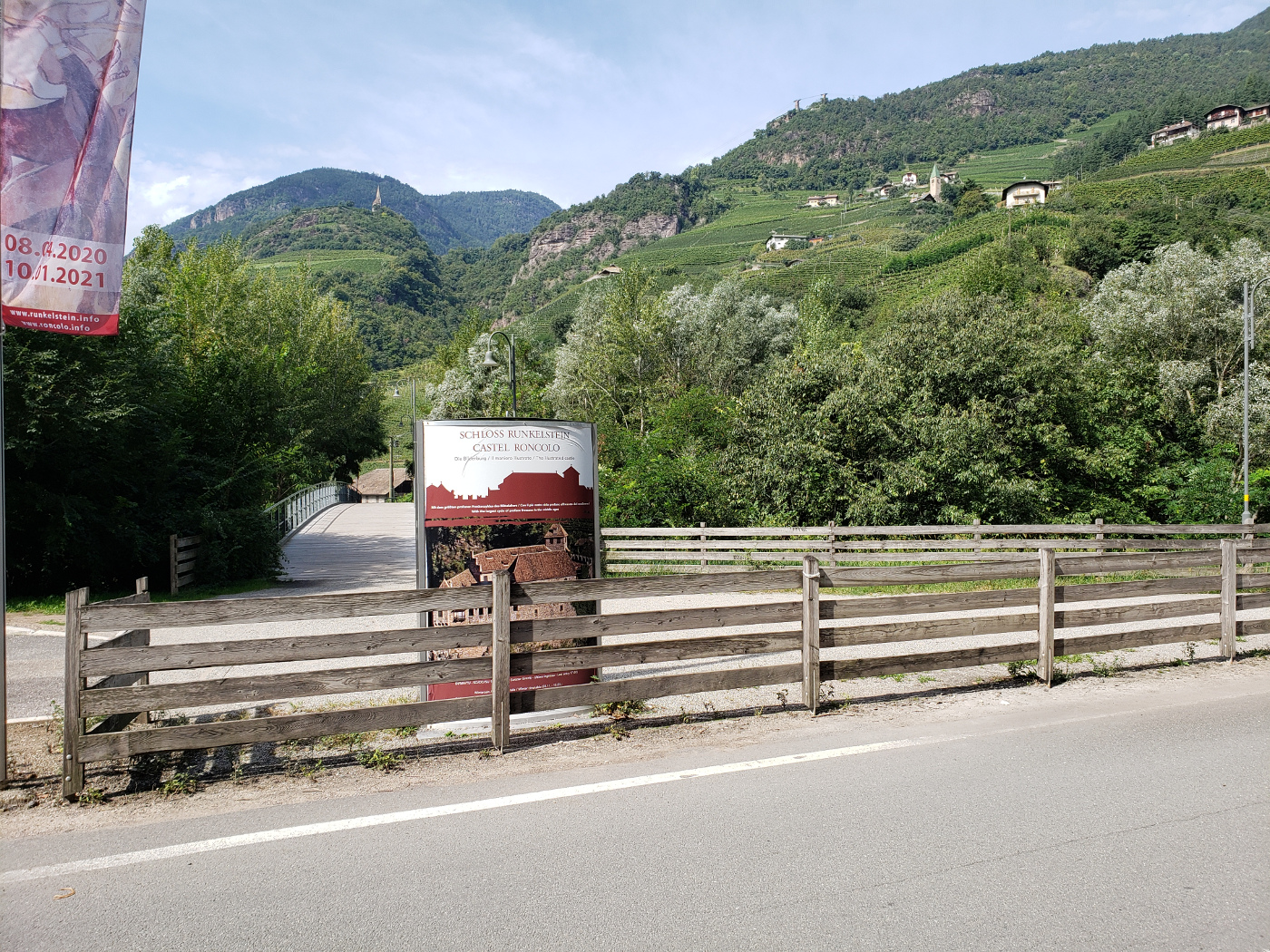
The parking lot across the street from entrance
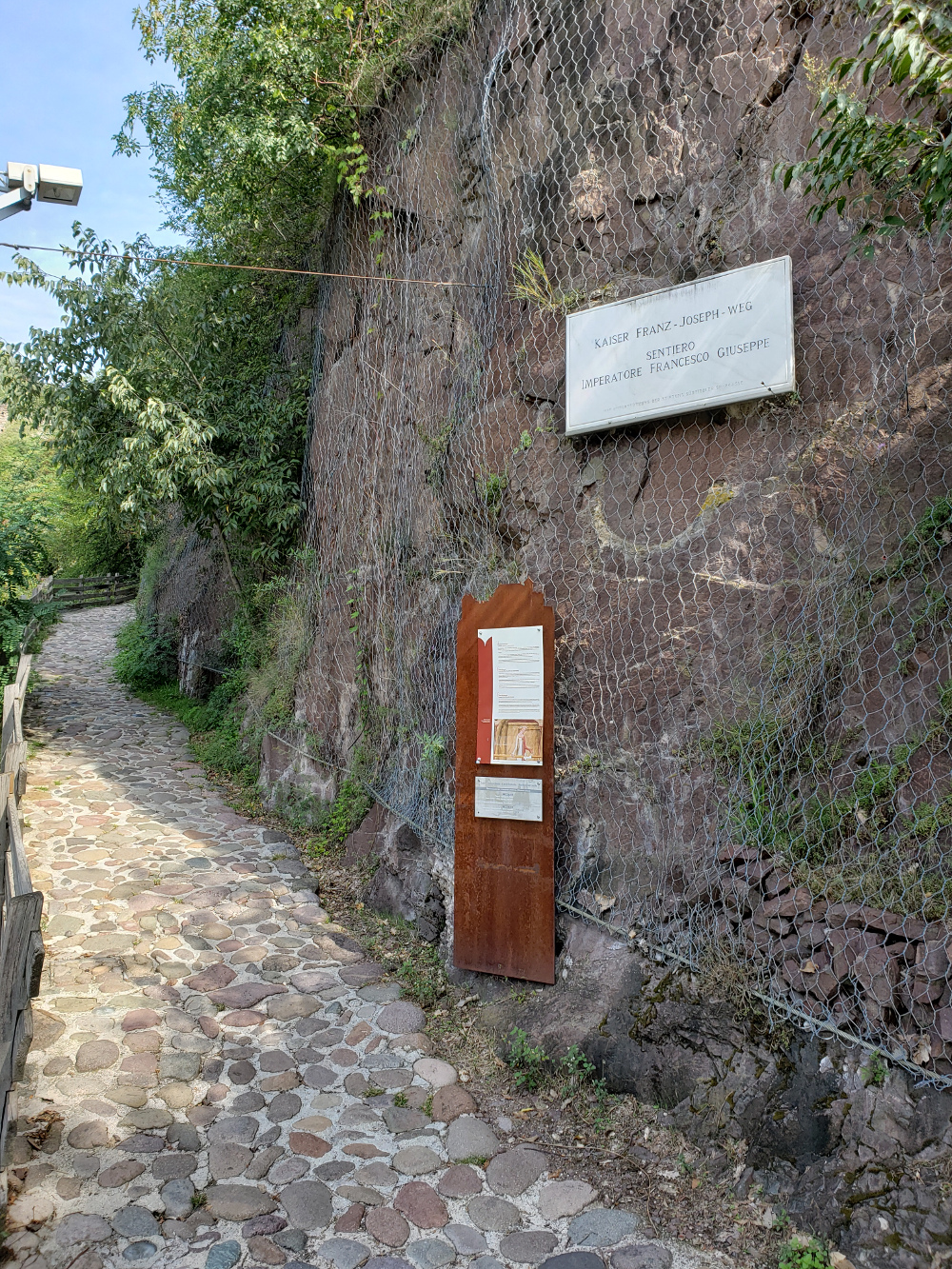
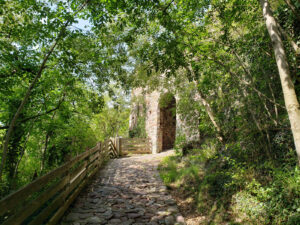
The entrance and trail up
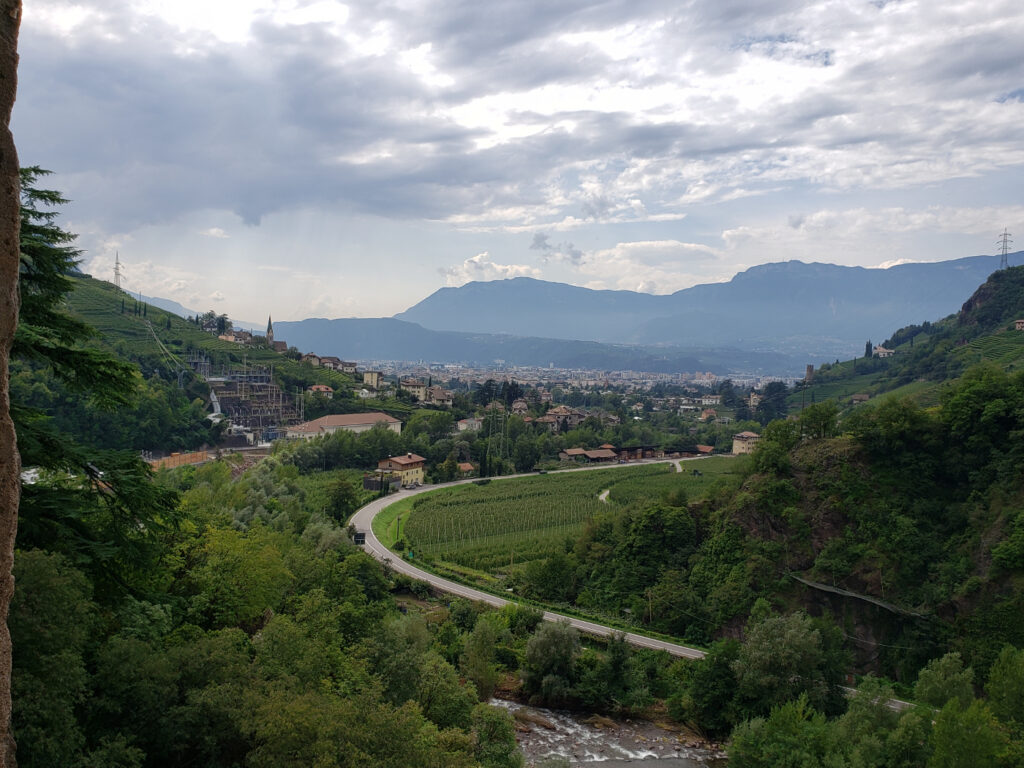
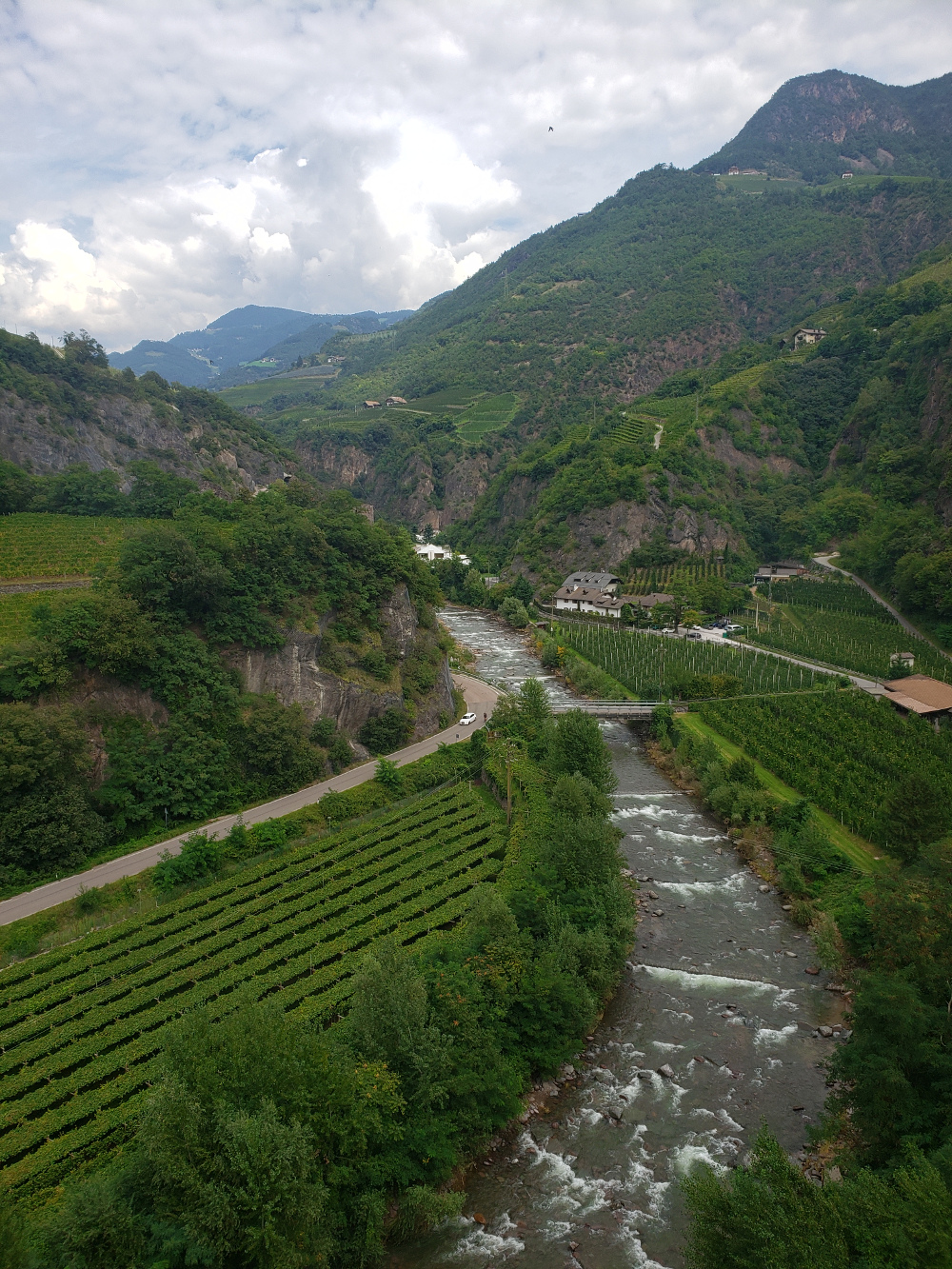
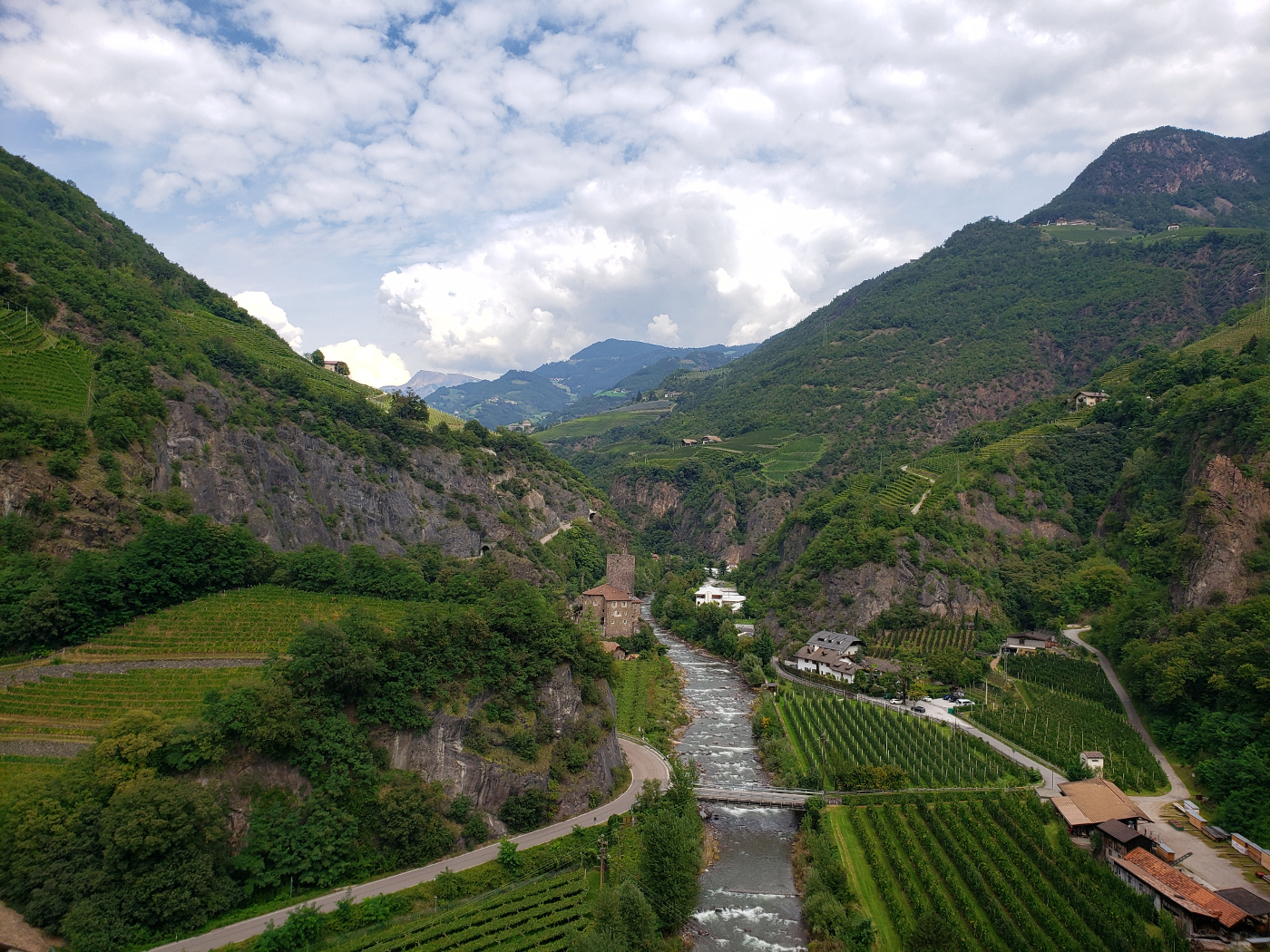
Probably one of the larger castles in the area, with a location right next to the Talferbach, one of the many rivers (what we would call a stream in the States).
Gate in surrounding wall
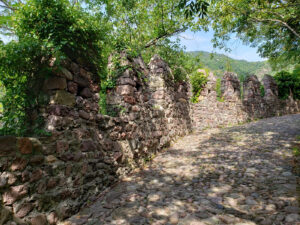
The fortress wall
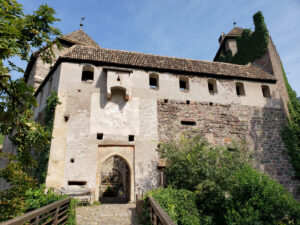
Entrance to Castle
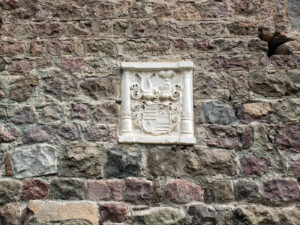
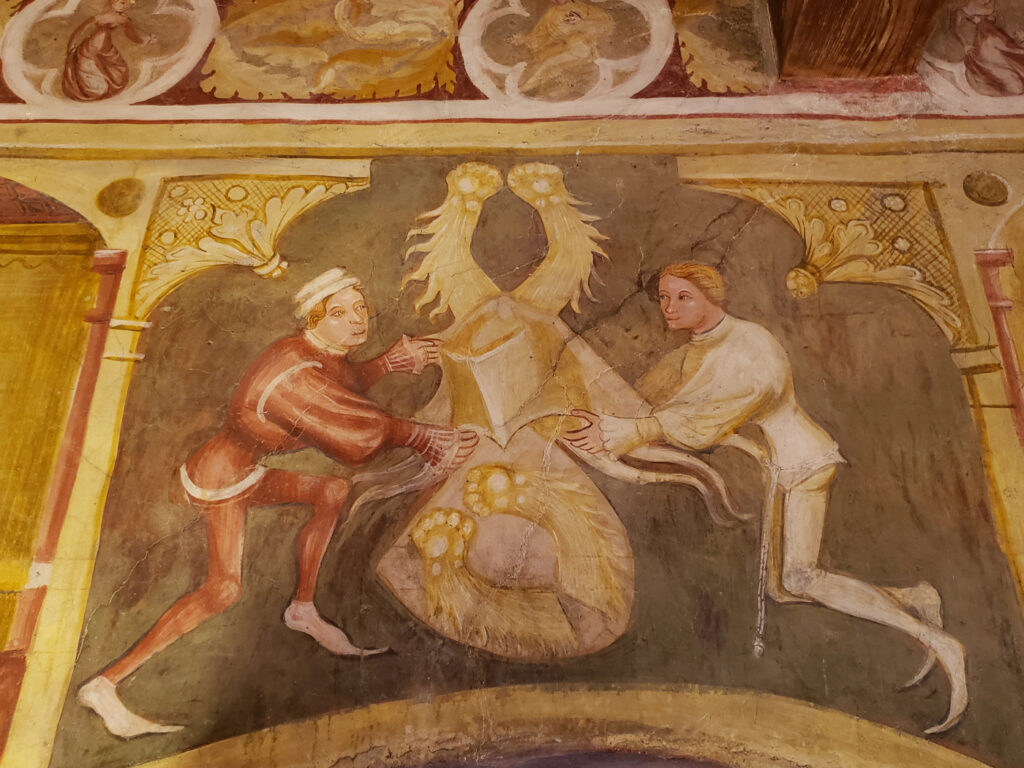
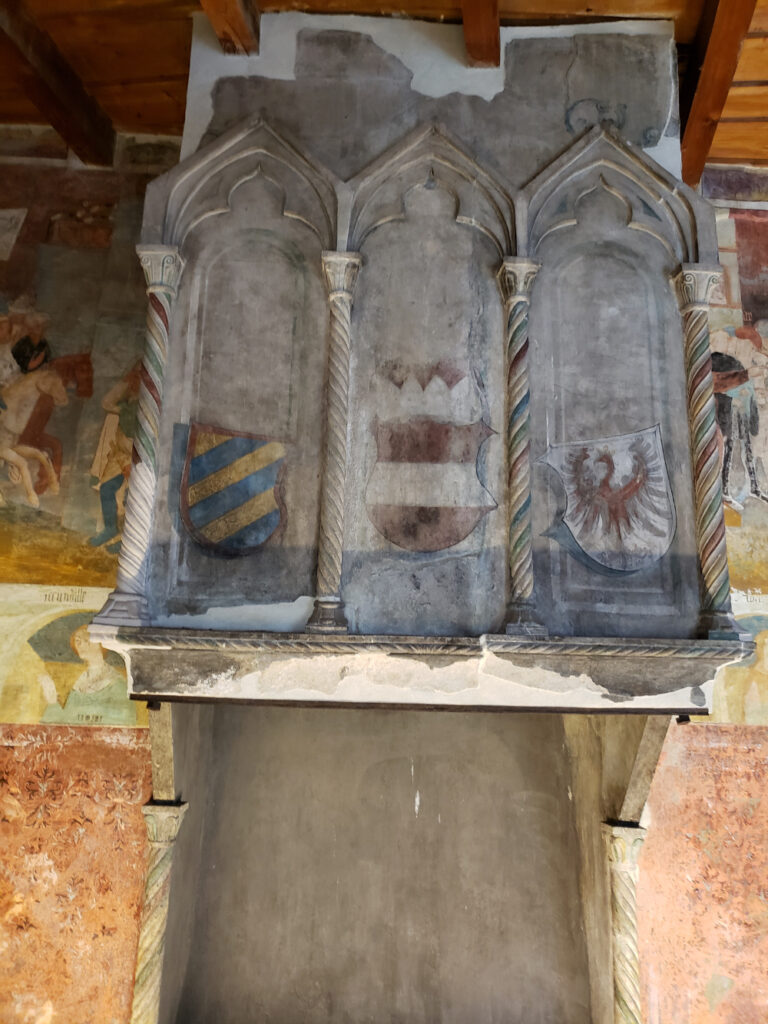
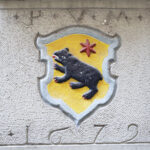
Coat of Arms
Display and Marker
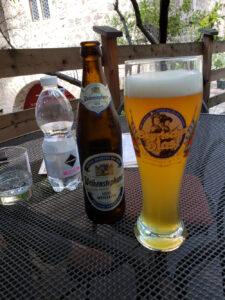
After 45 minute walk in the sun, Weizenbier
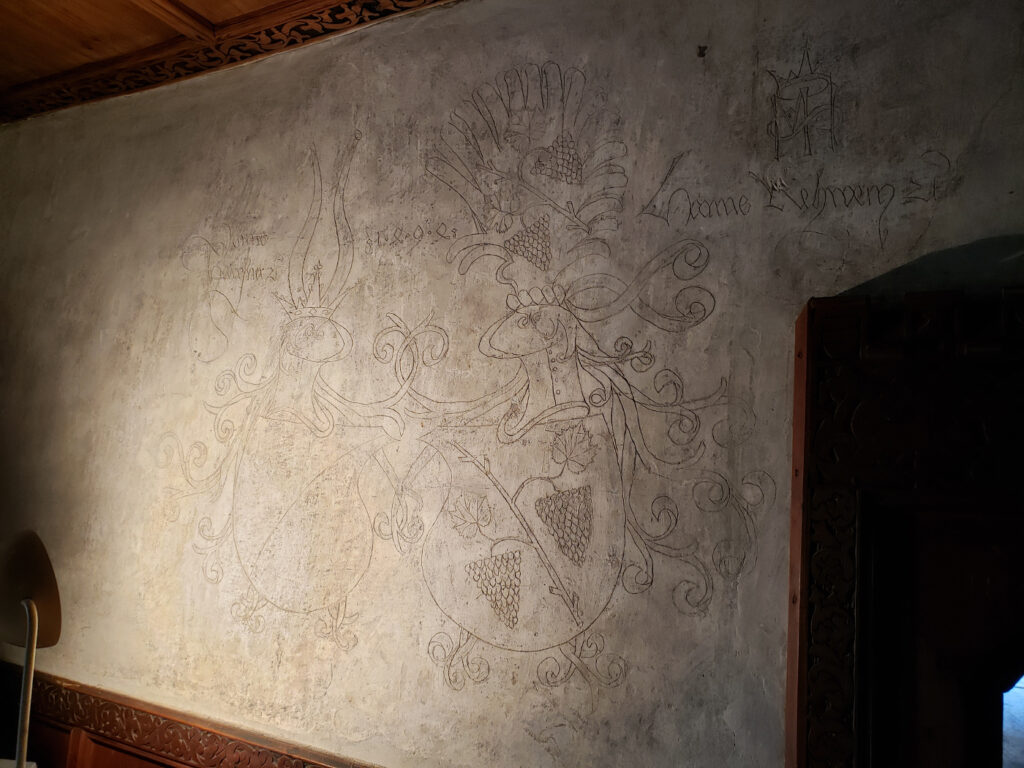
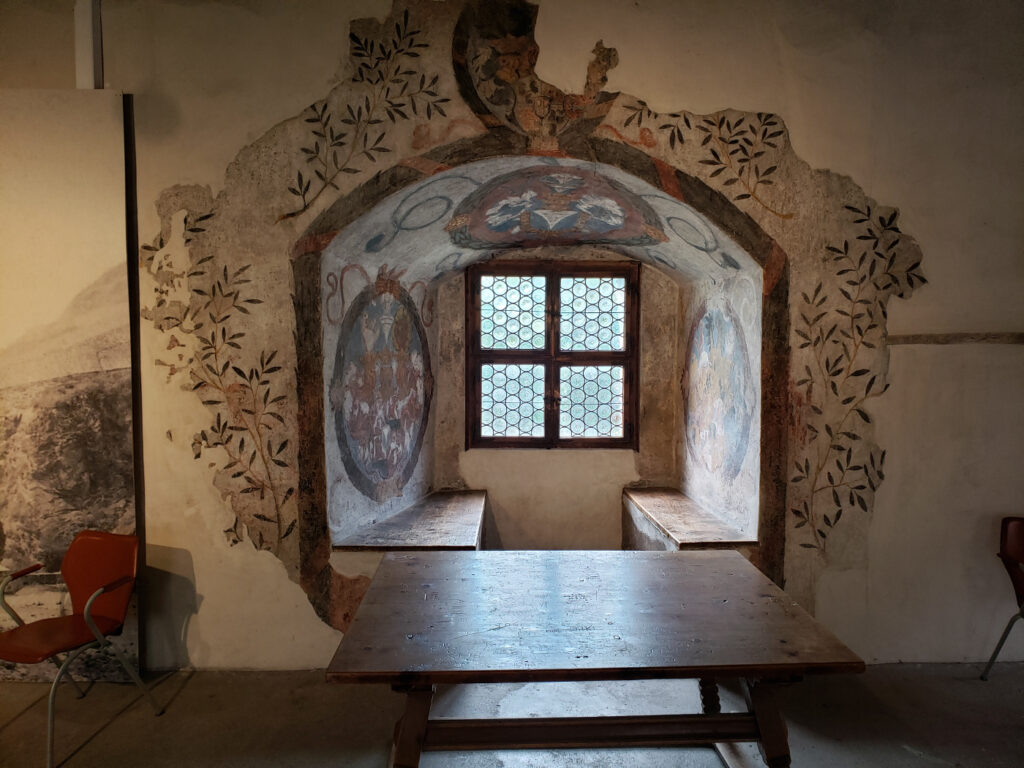
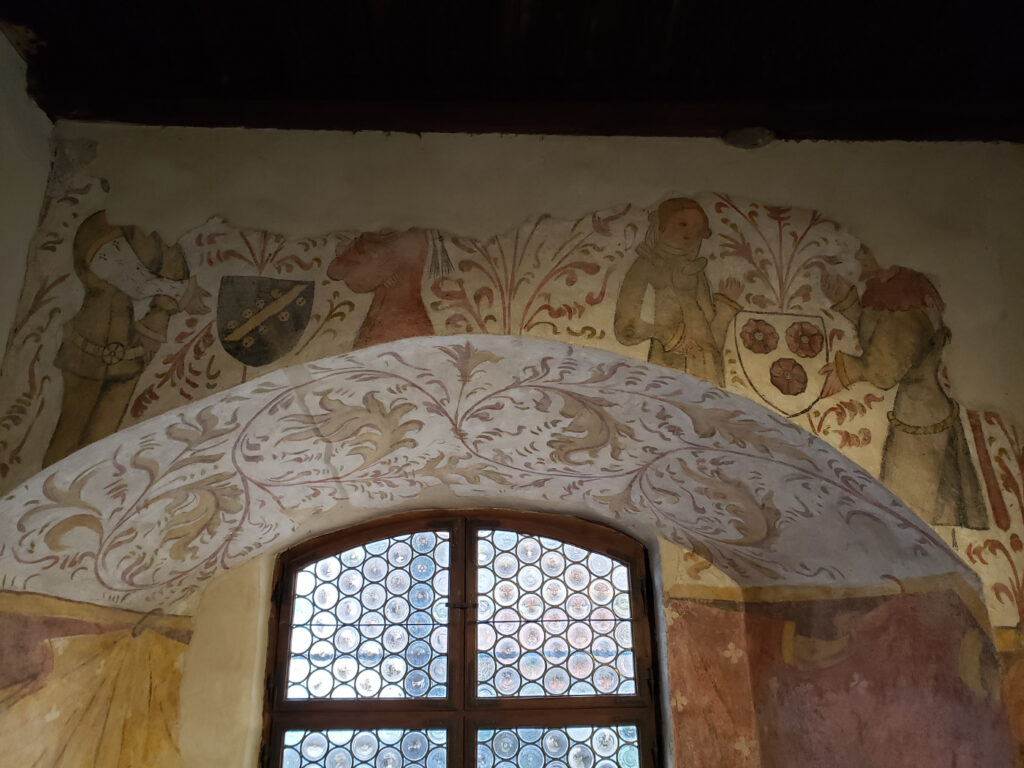
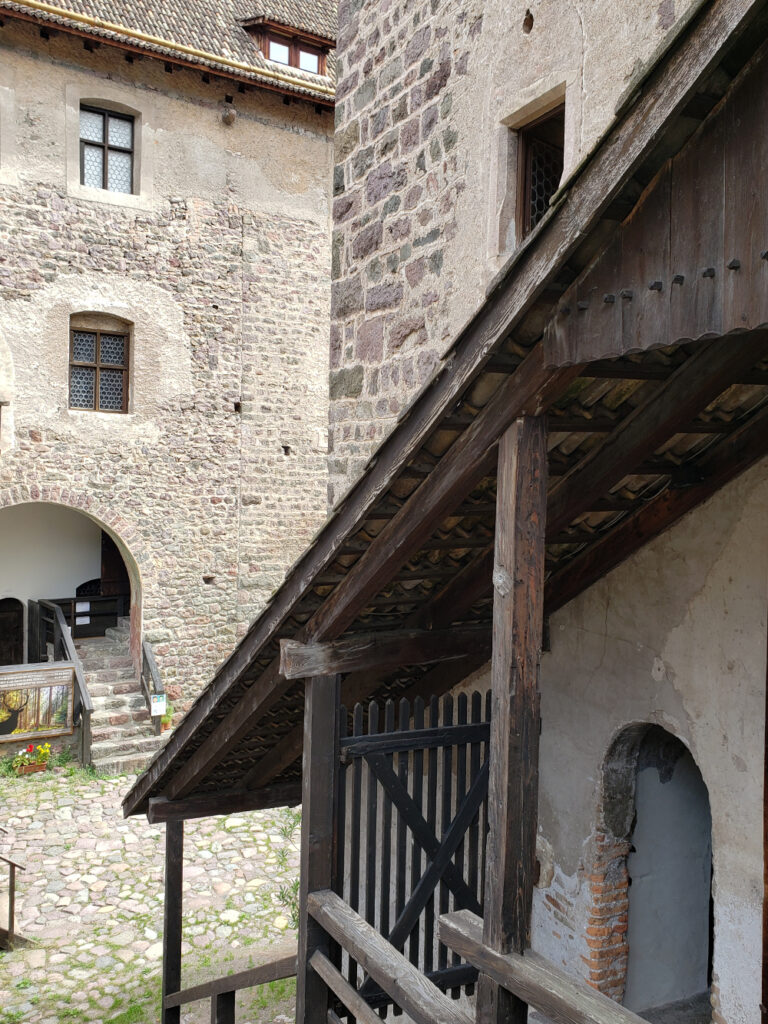
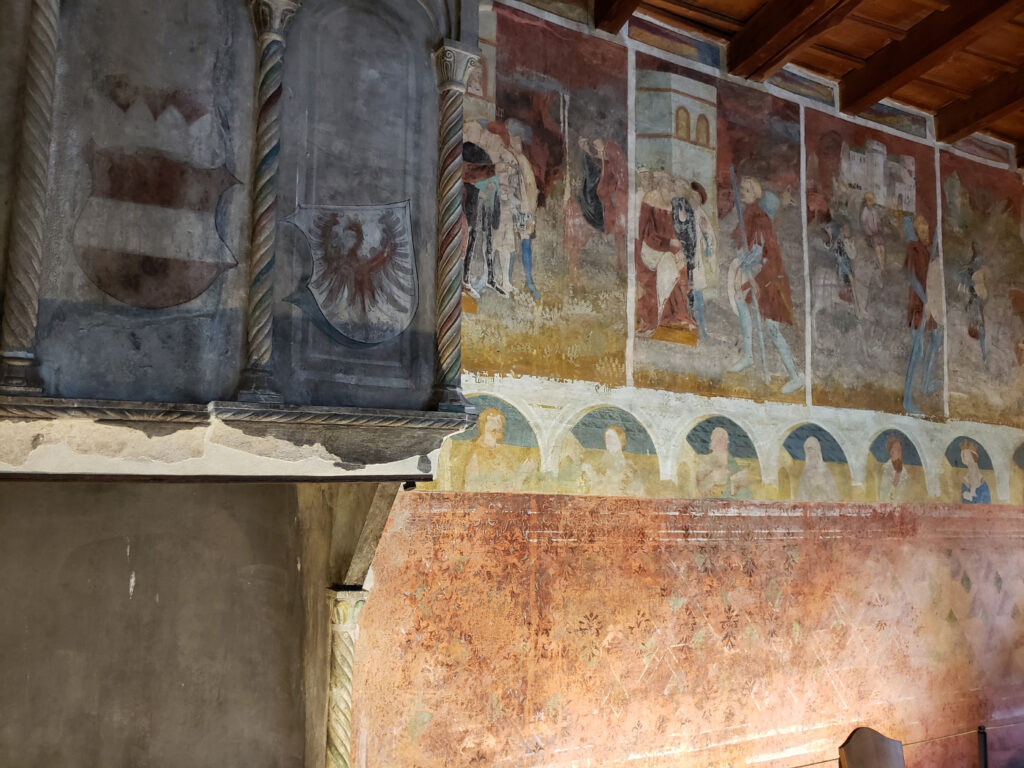
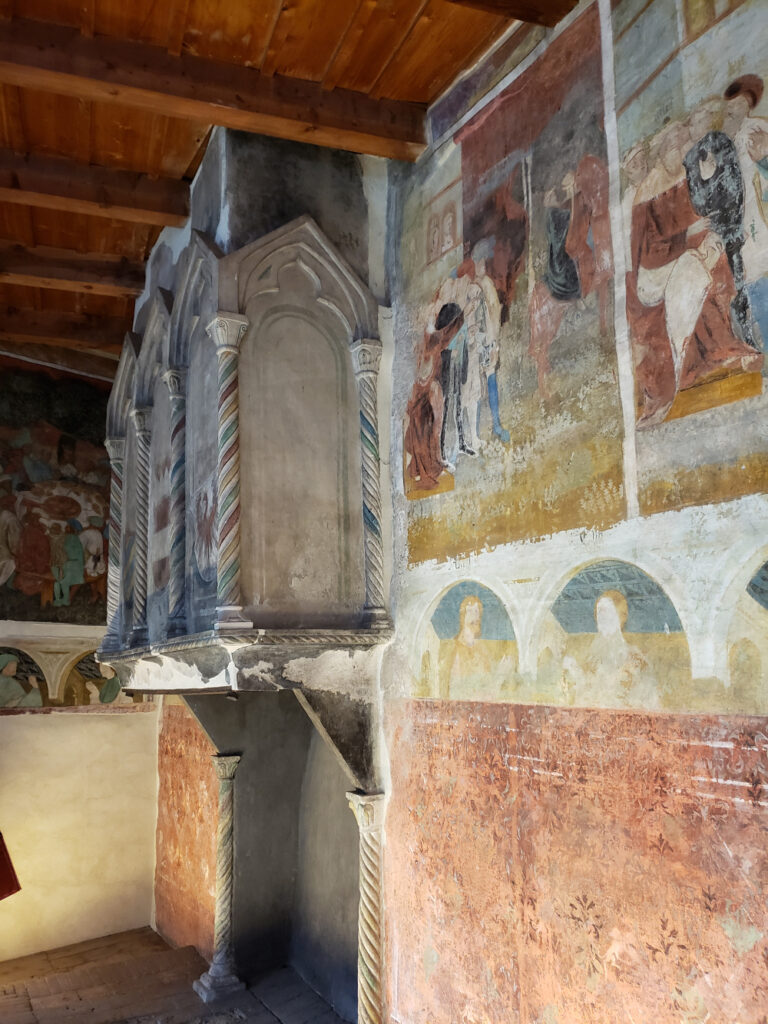
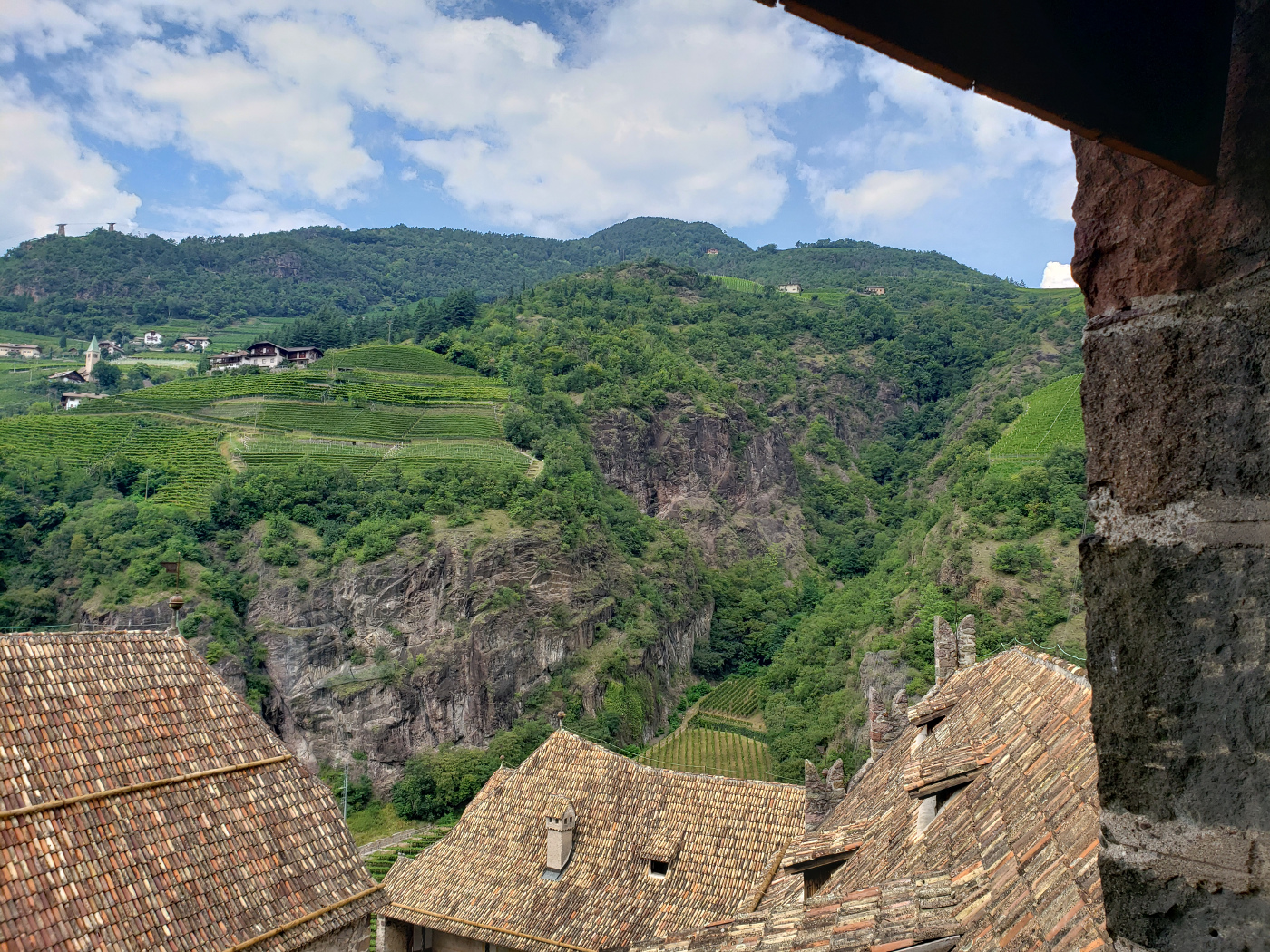
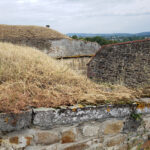
Schloss Runkelstein was built in 1237 near the road that north of Bozen up to the Ritten plateau, or Ober-Bozen. This was to avoid the Eisack river gorge. However, the road eventually passes through this very gorge and on through to the Brenner pass, making it a valuable piece of real estate for trade. It was actually built as a fortress to protect the local population. Not until the 14th and 15th centuries was it then converted by aristocracy into a castle.
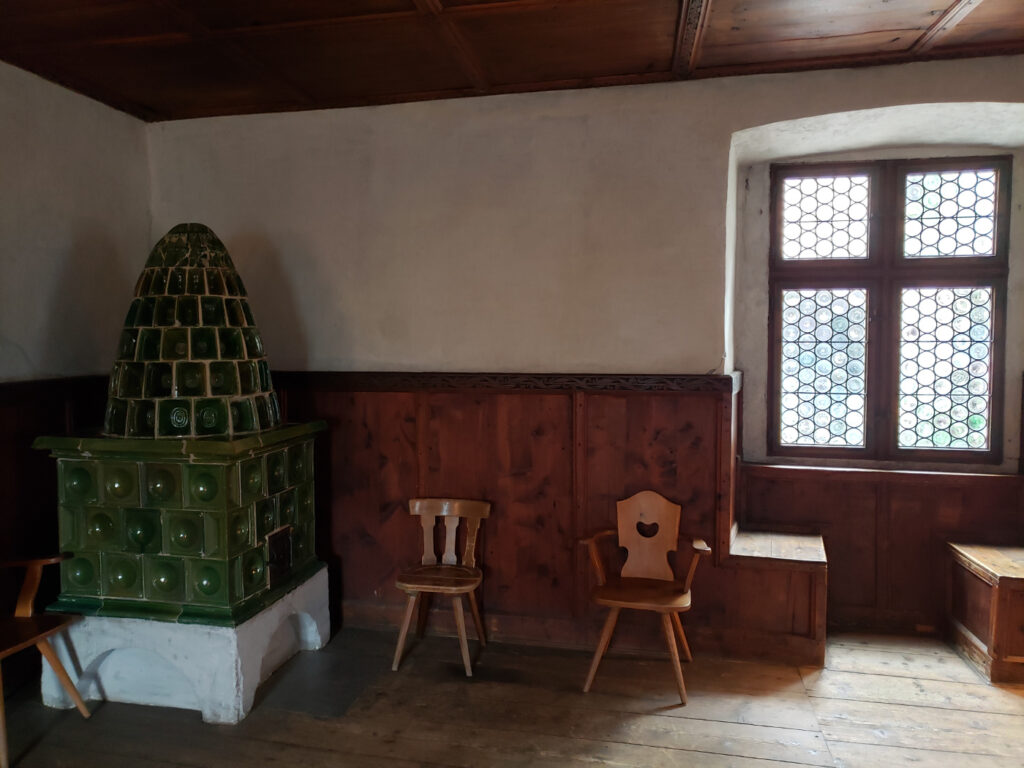
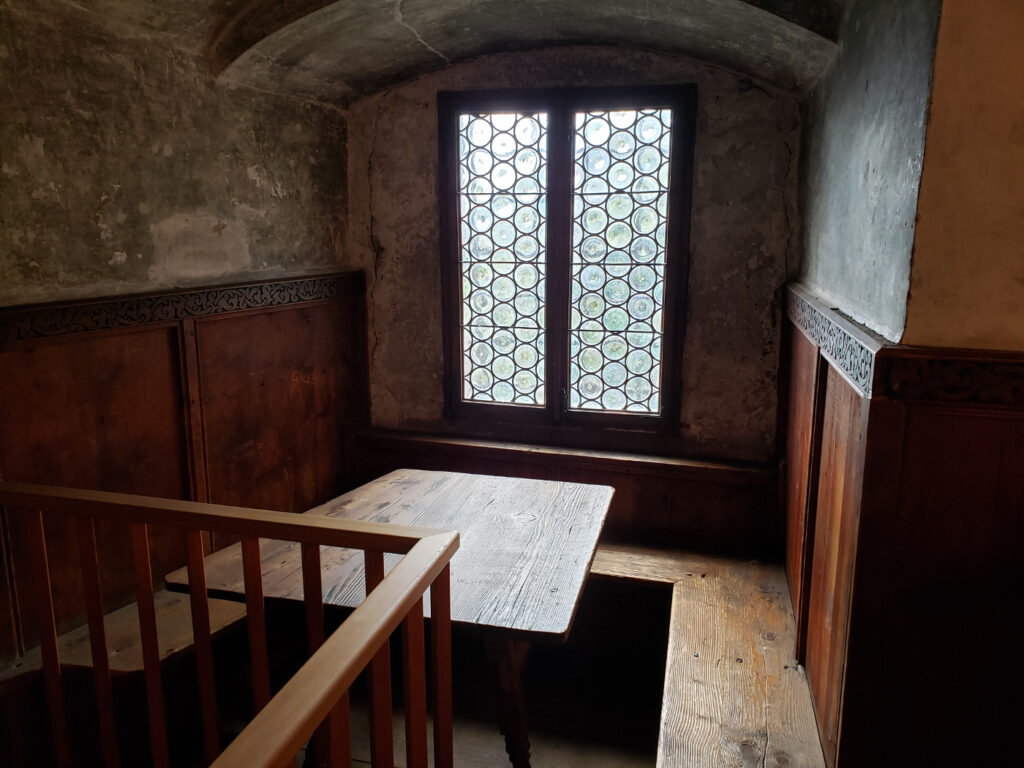
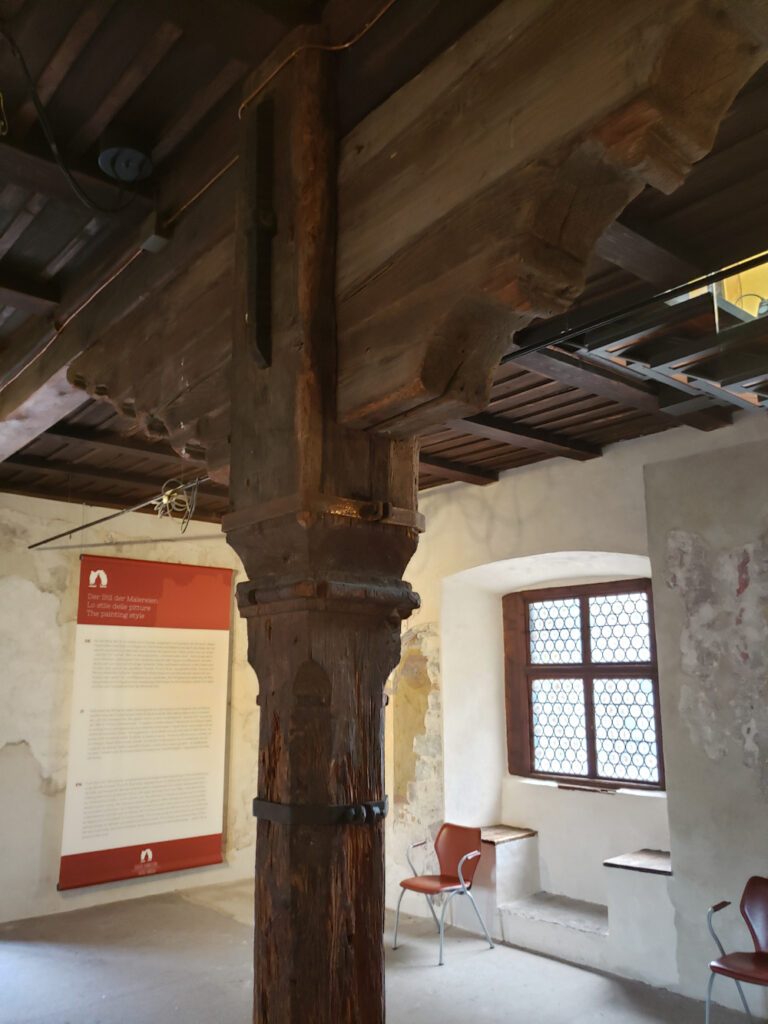
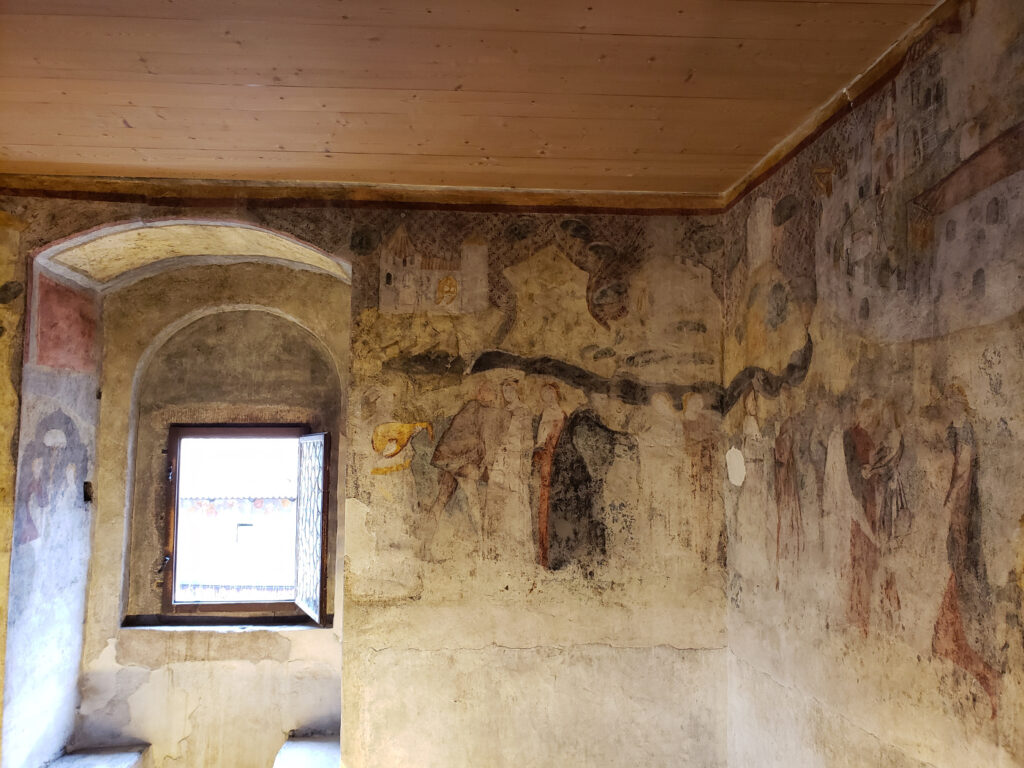
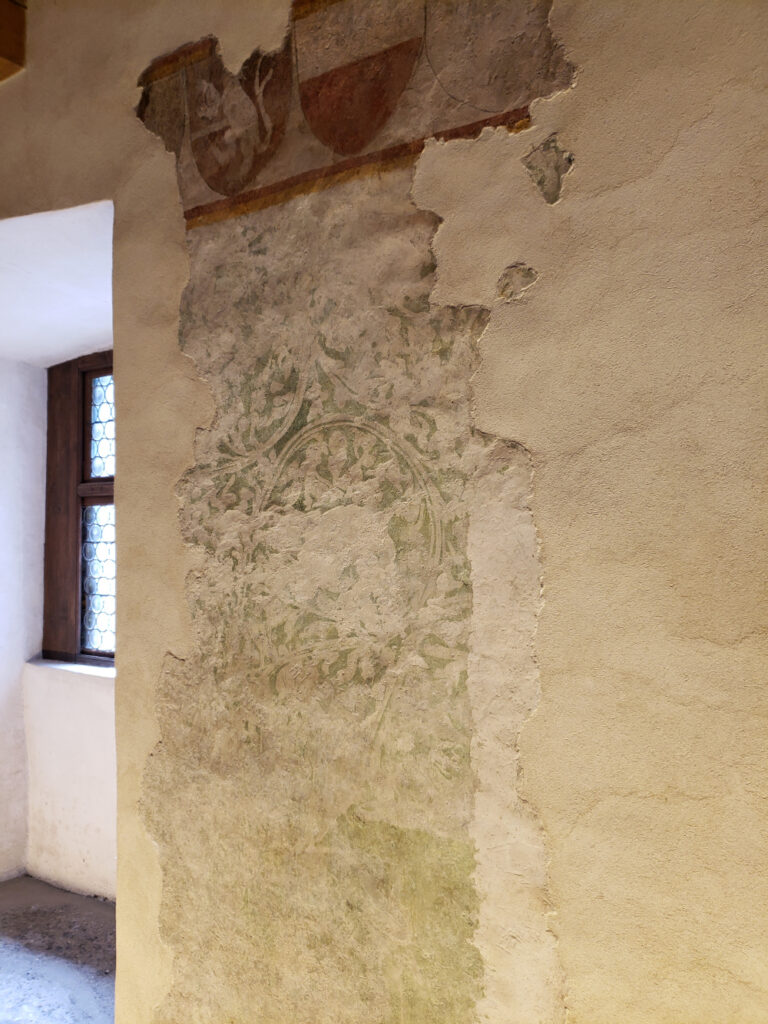
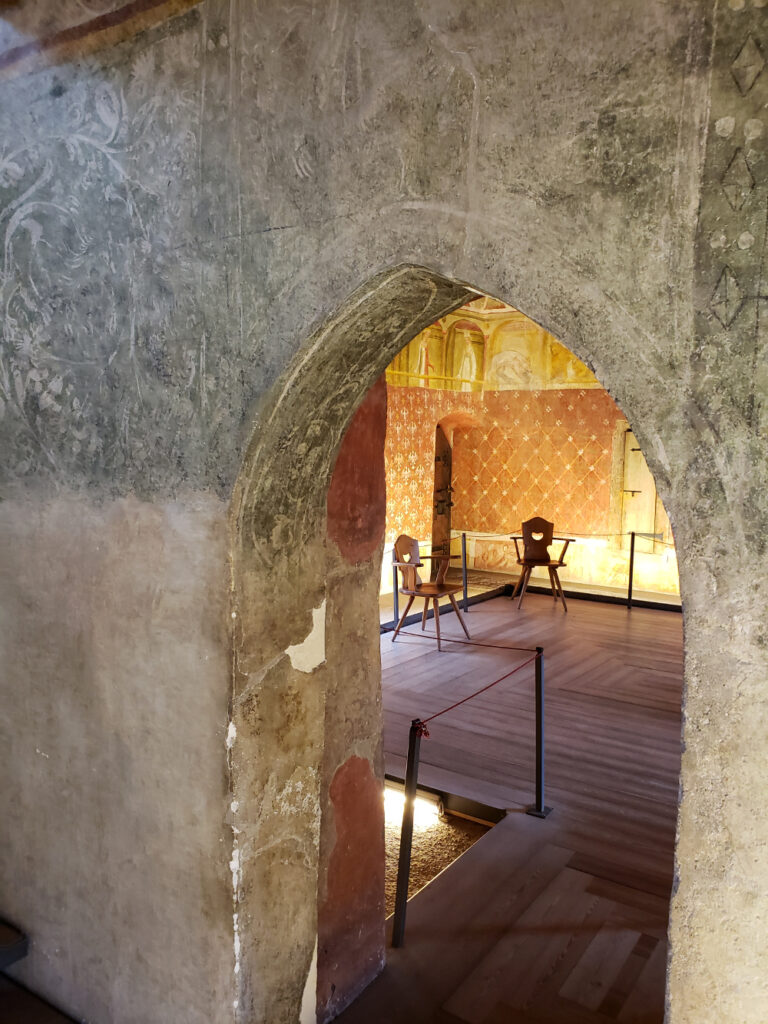
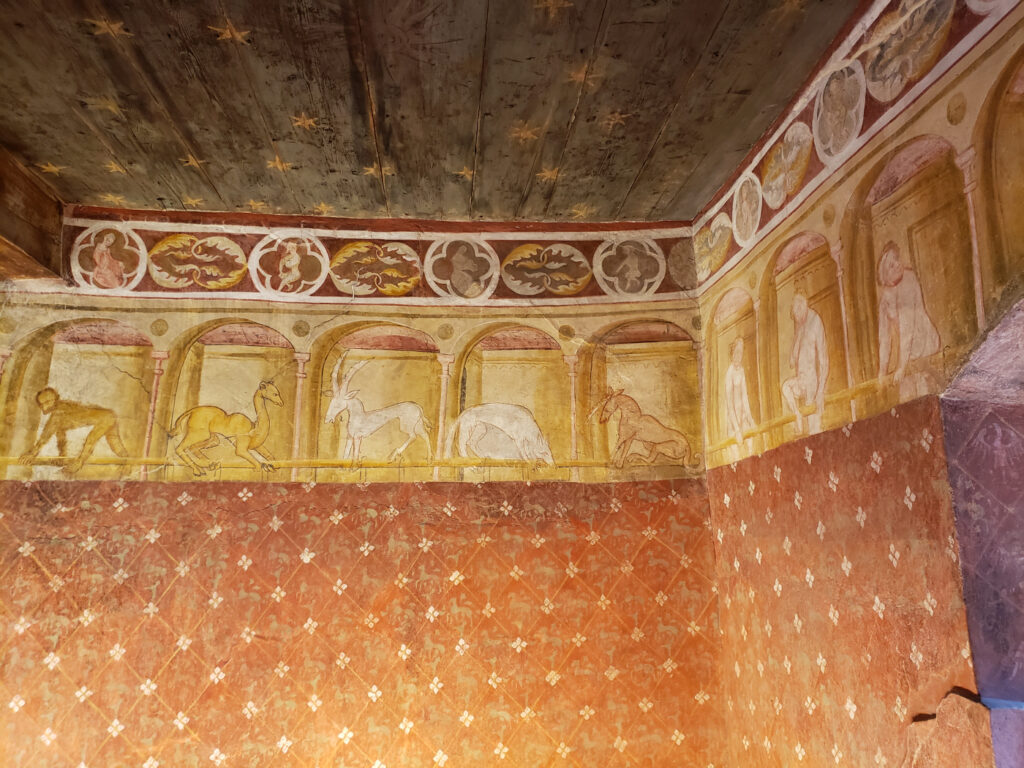
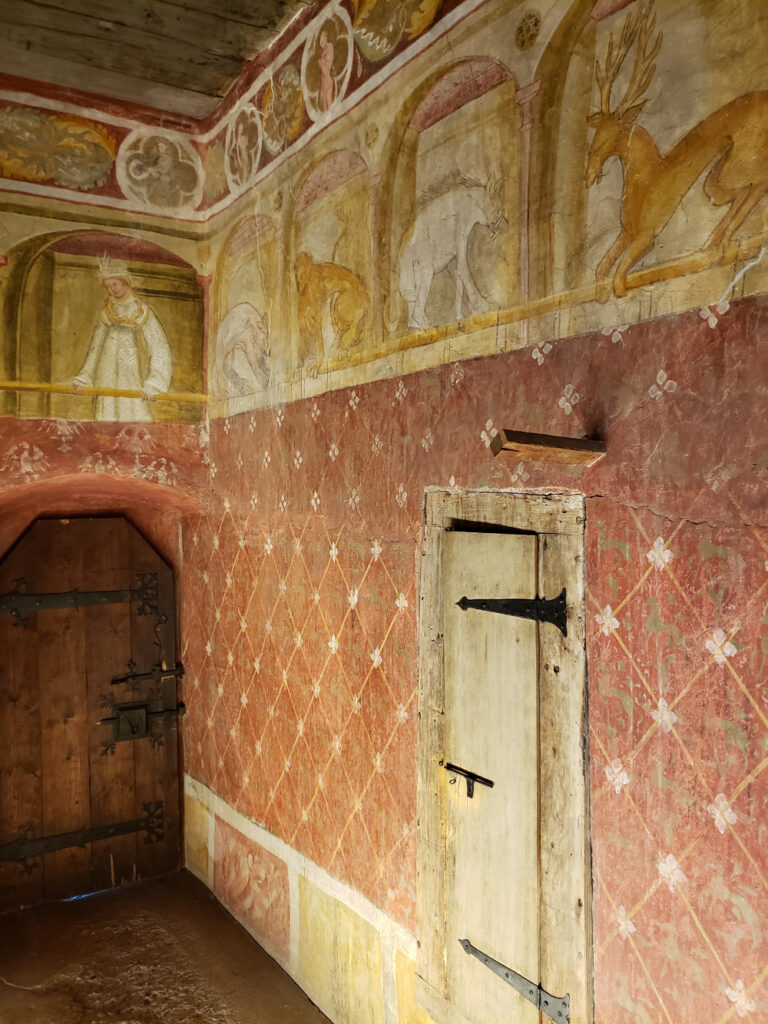
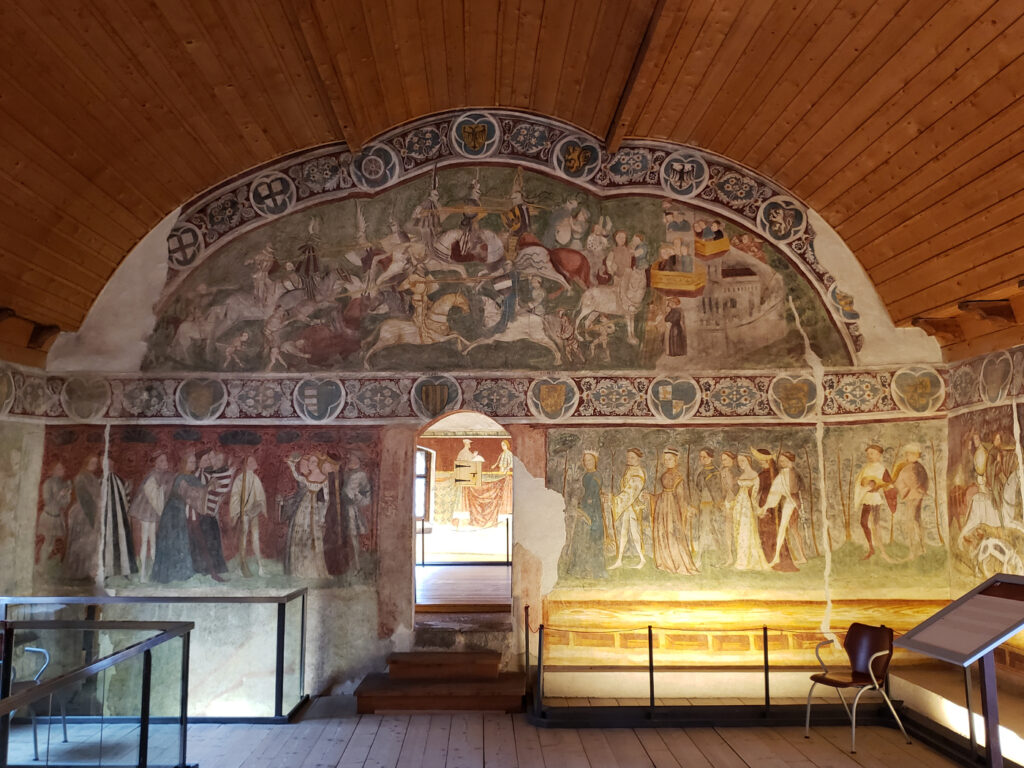
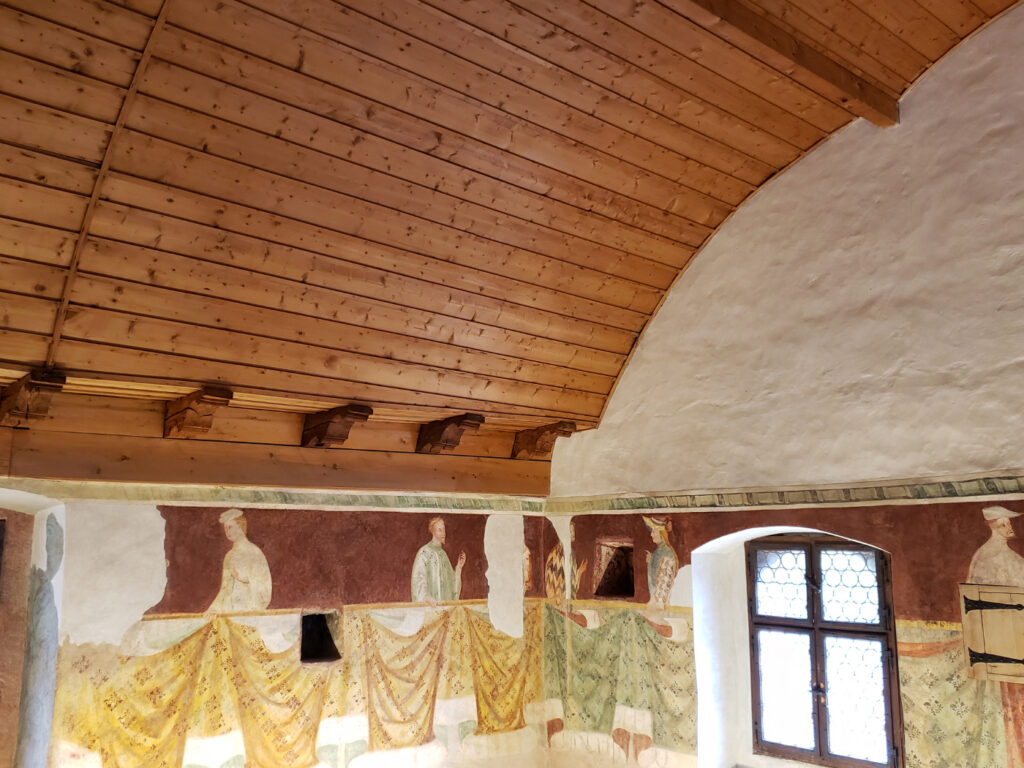
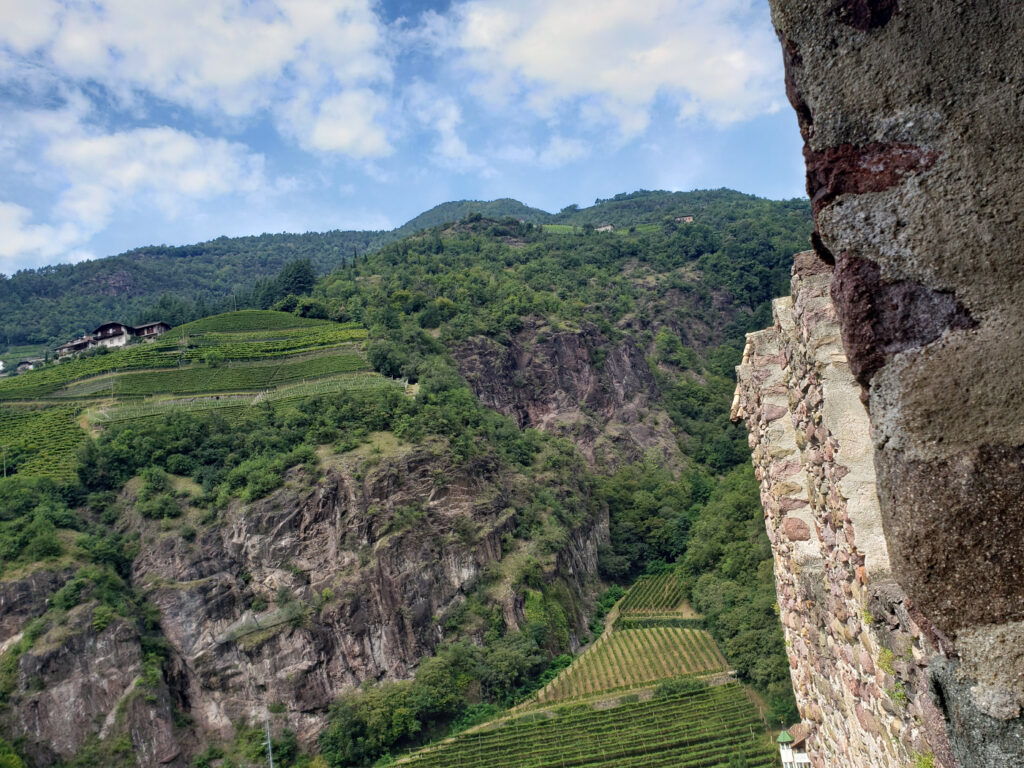
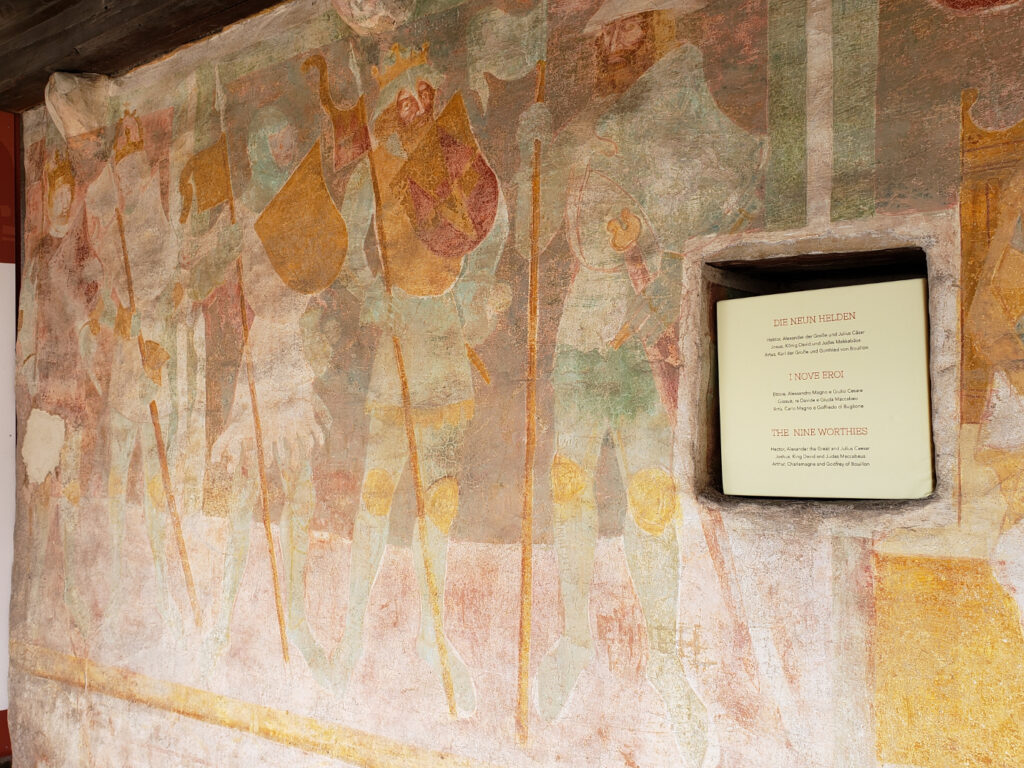
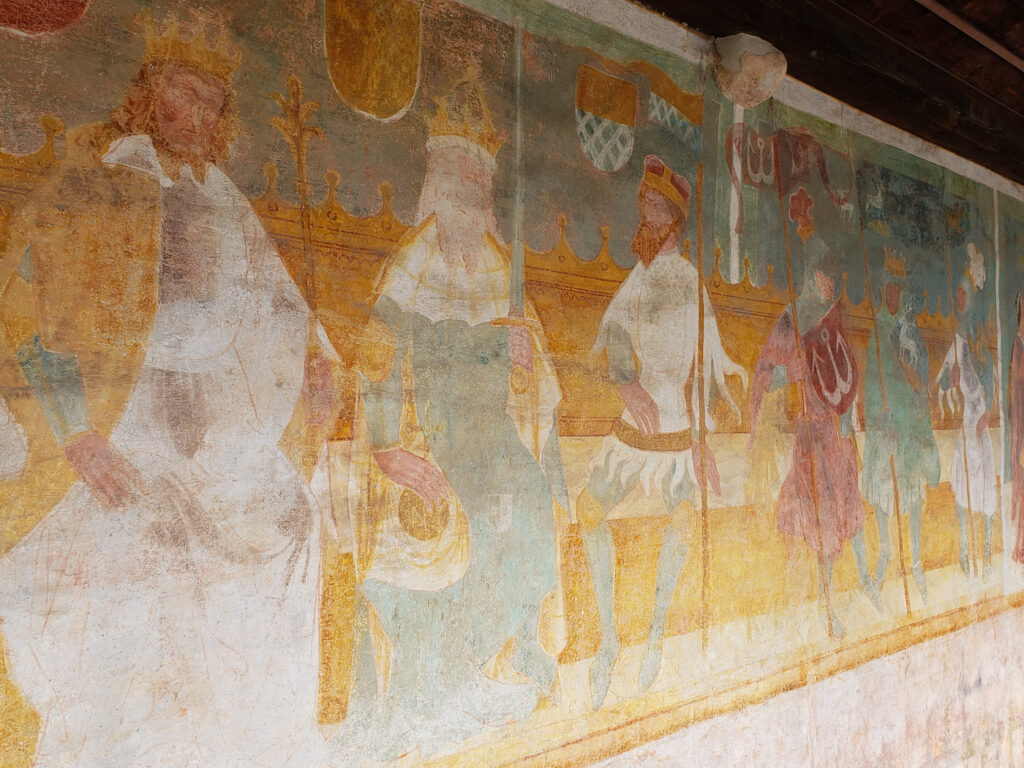
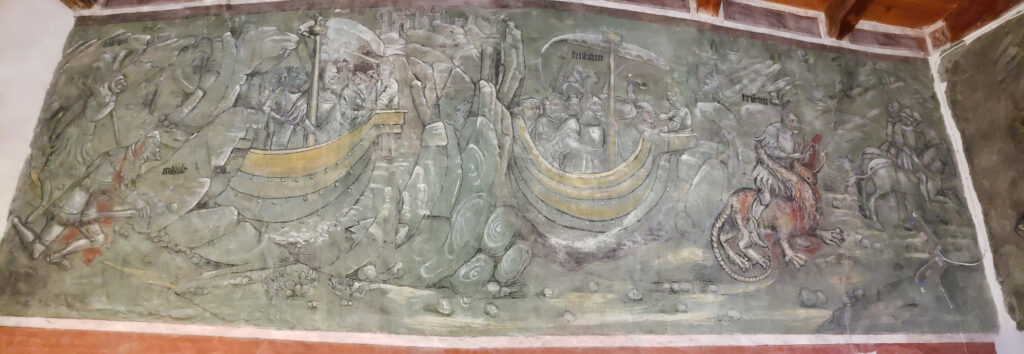
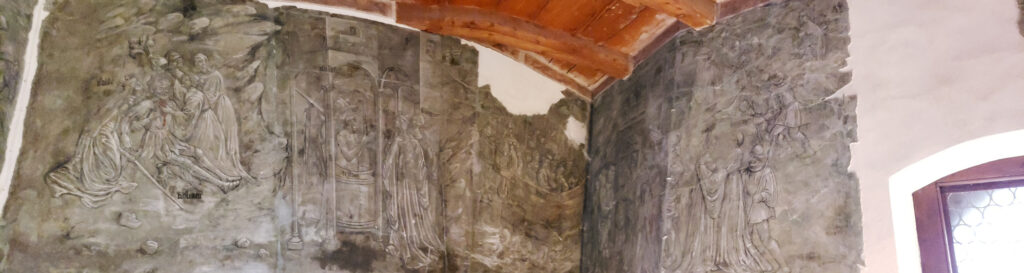
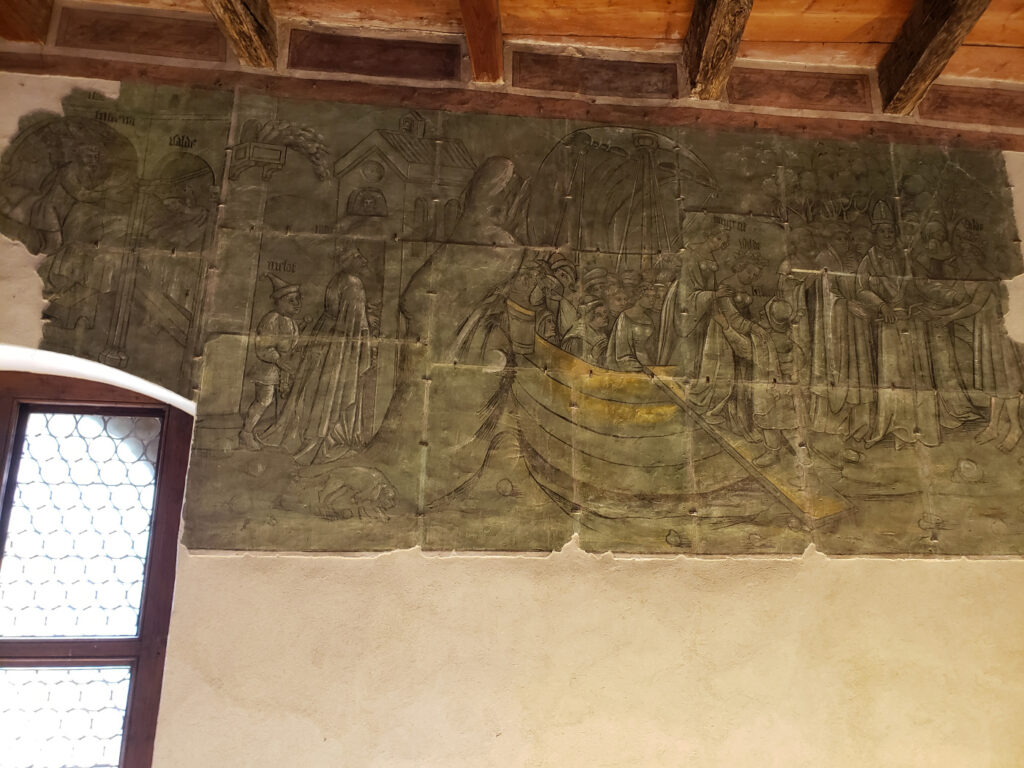
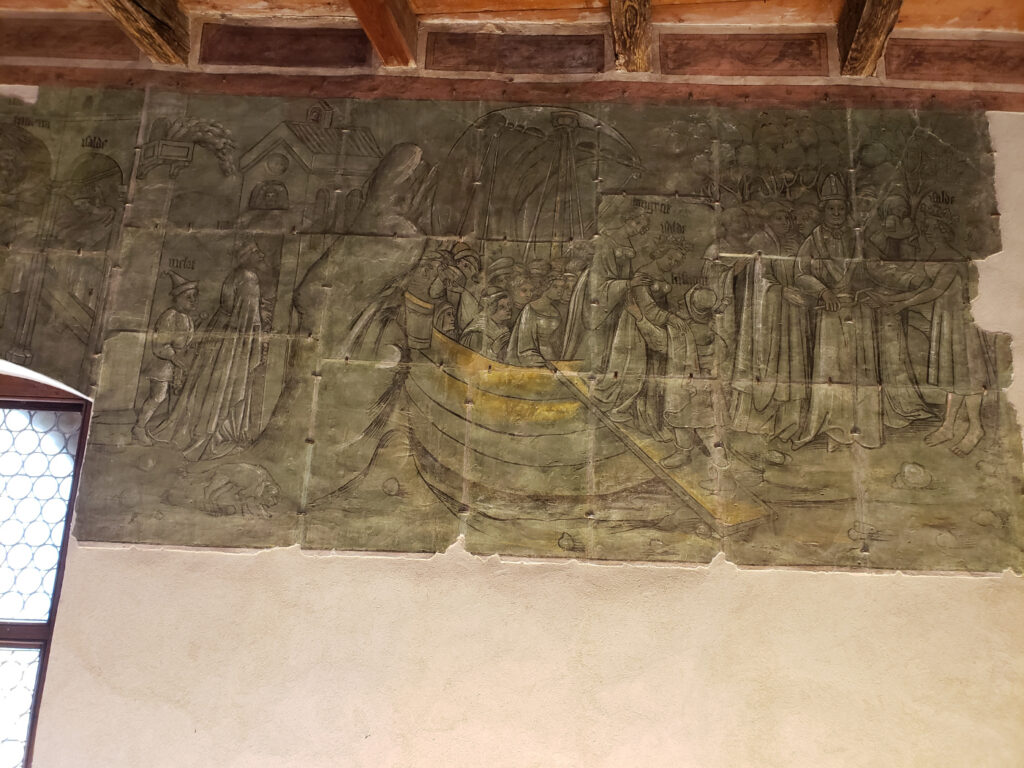
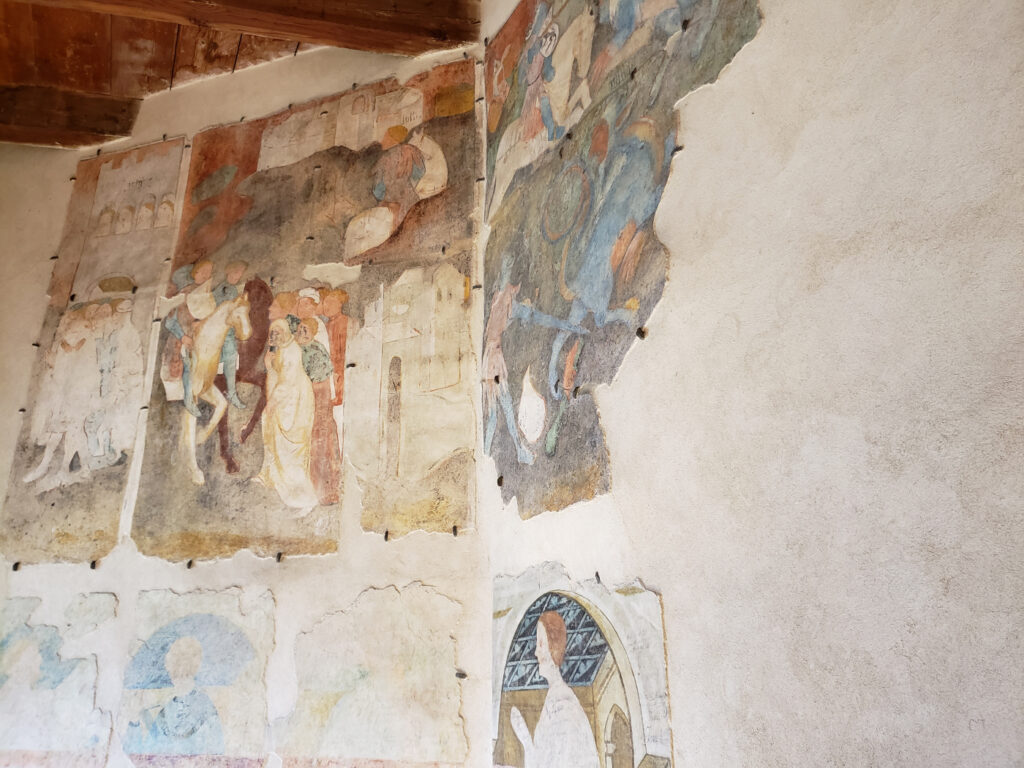
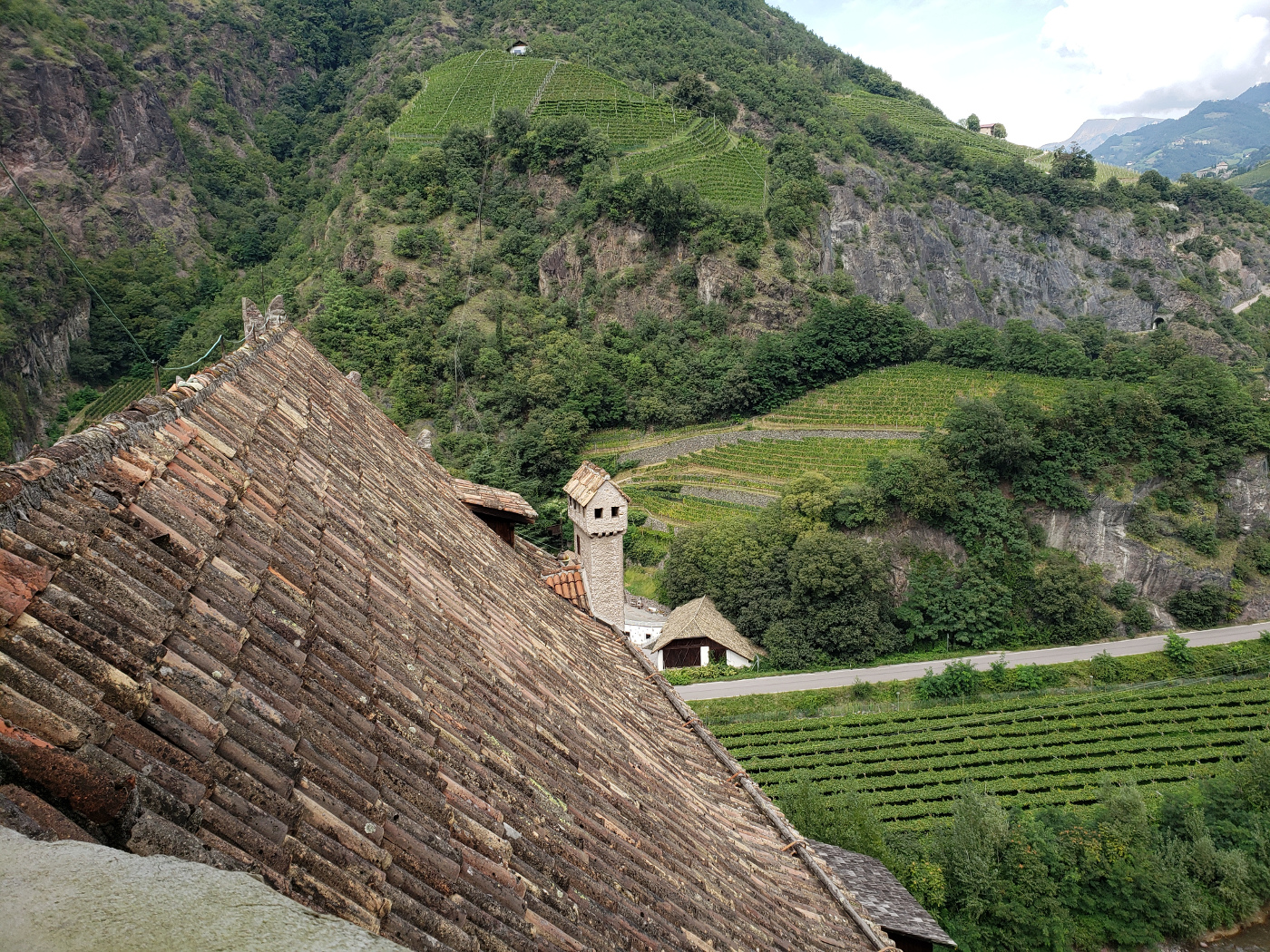
The castle contains great stories about Tristram and knights of the round table. There are several very good frescoes to enjoy and some very interesting period architecture. With any good castle, this one will take about forty-five minutes to hour to thoroughly discovery all it has to offer, including the views.
Our next blog will detail out hiking trip to Ober-Bozen and the Earth Pyramids.
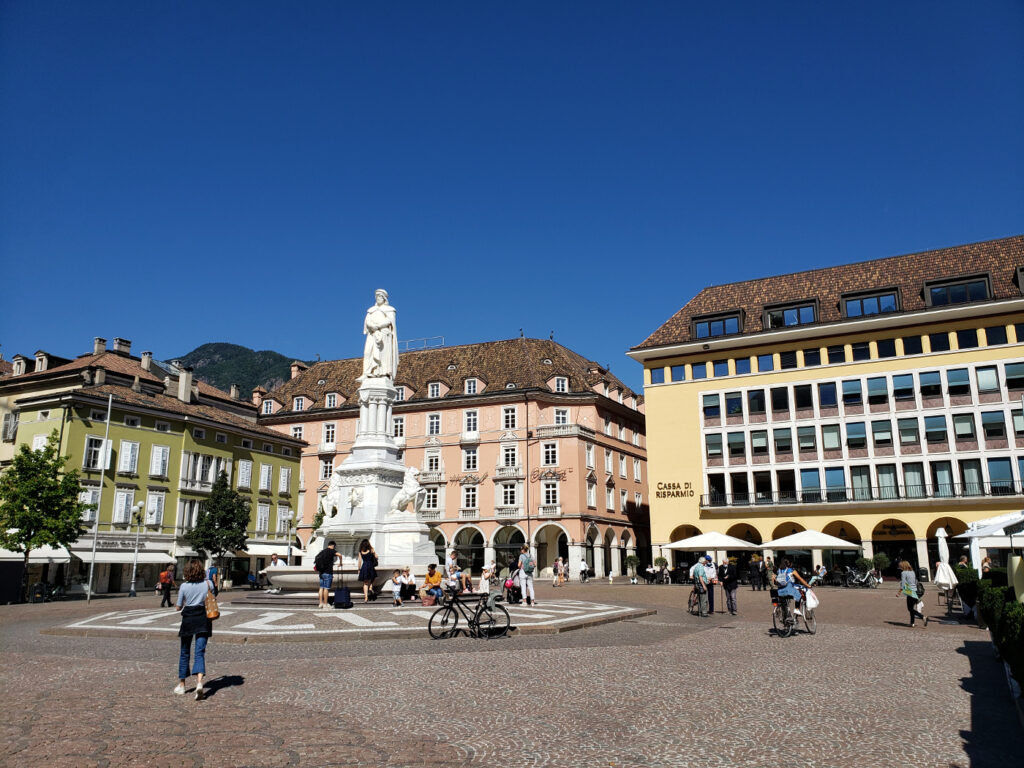
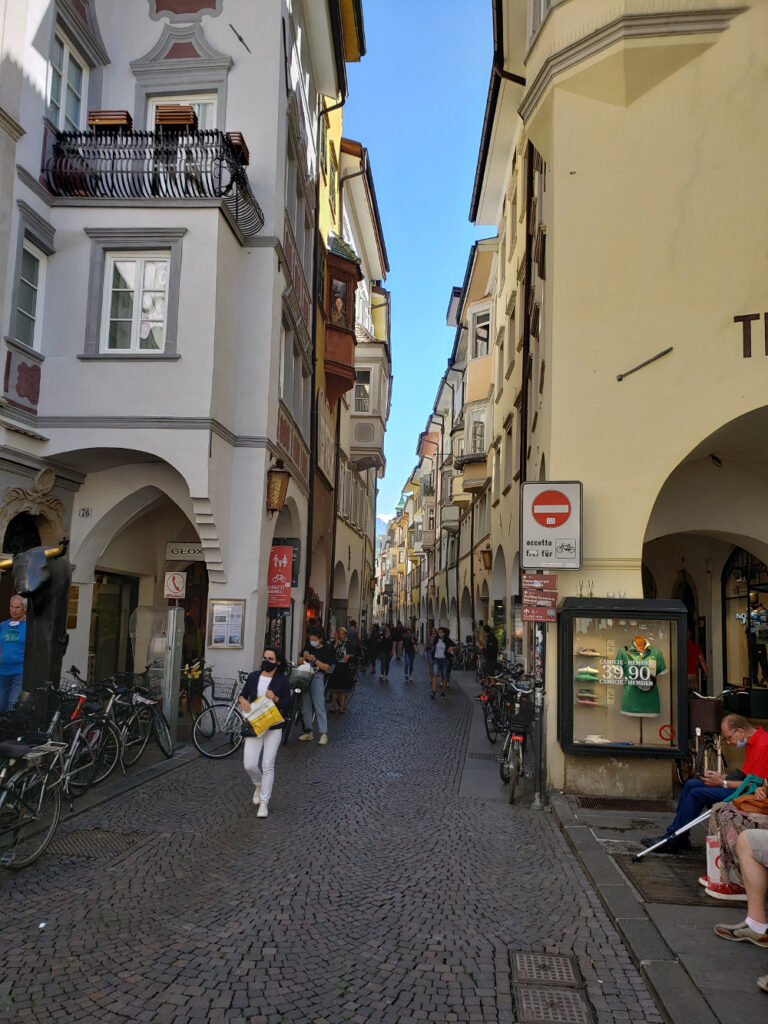
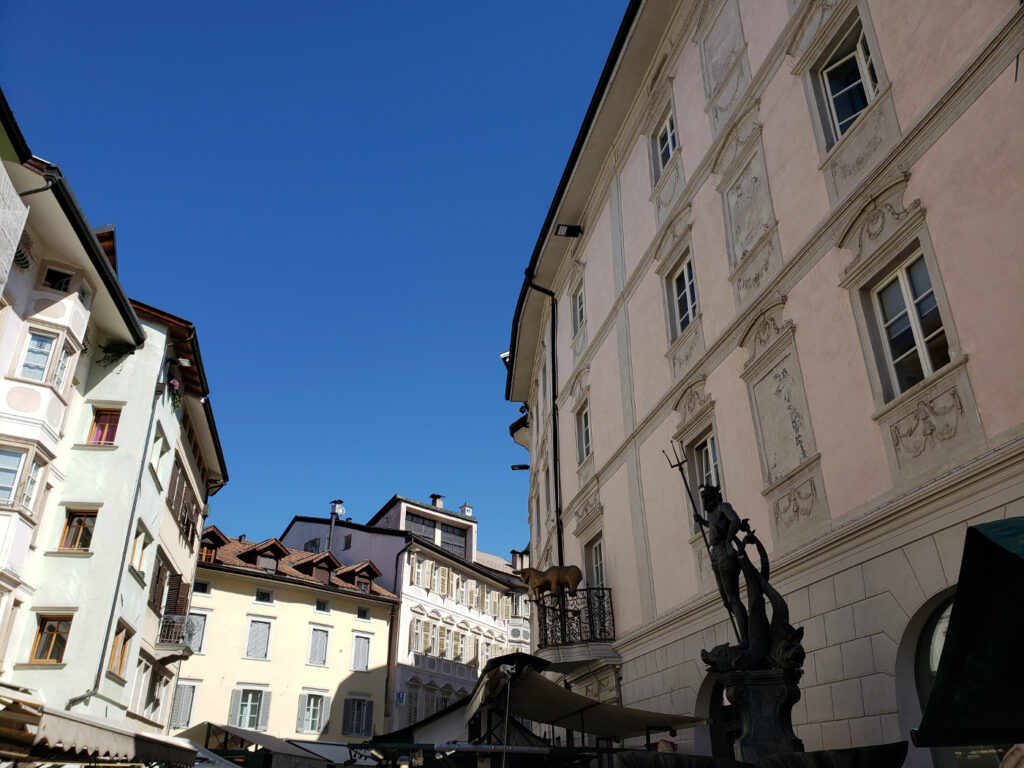
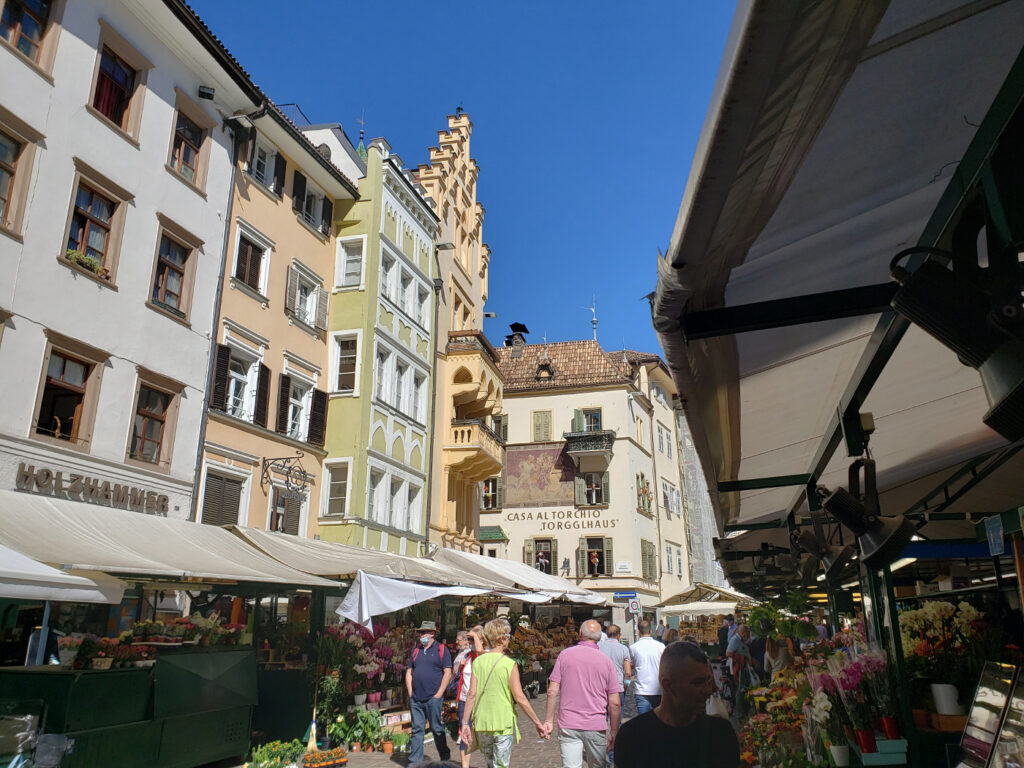
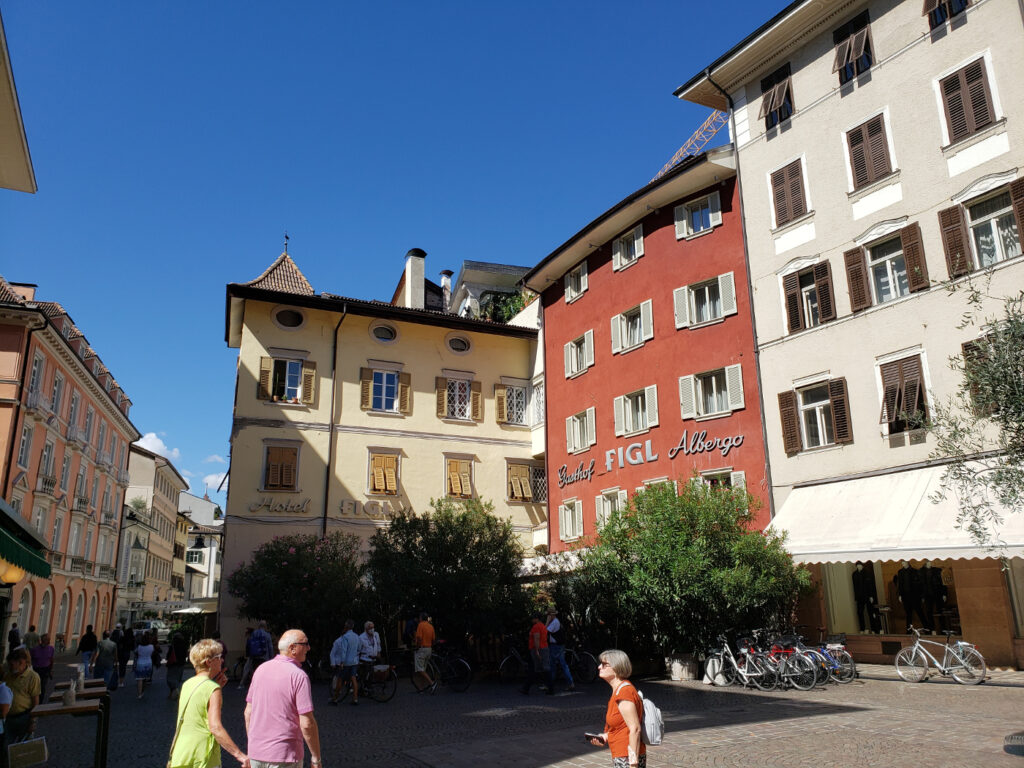
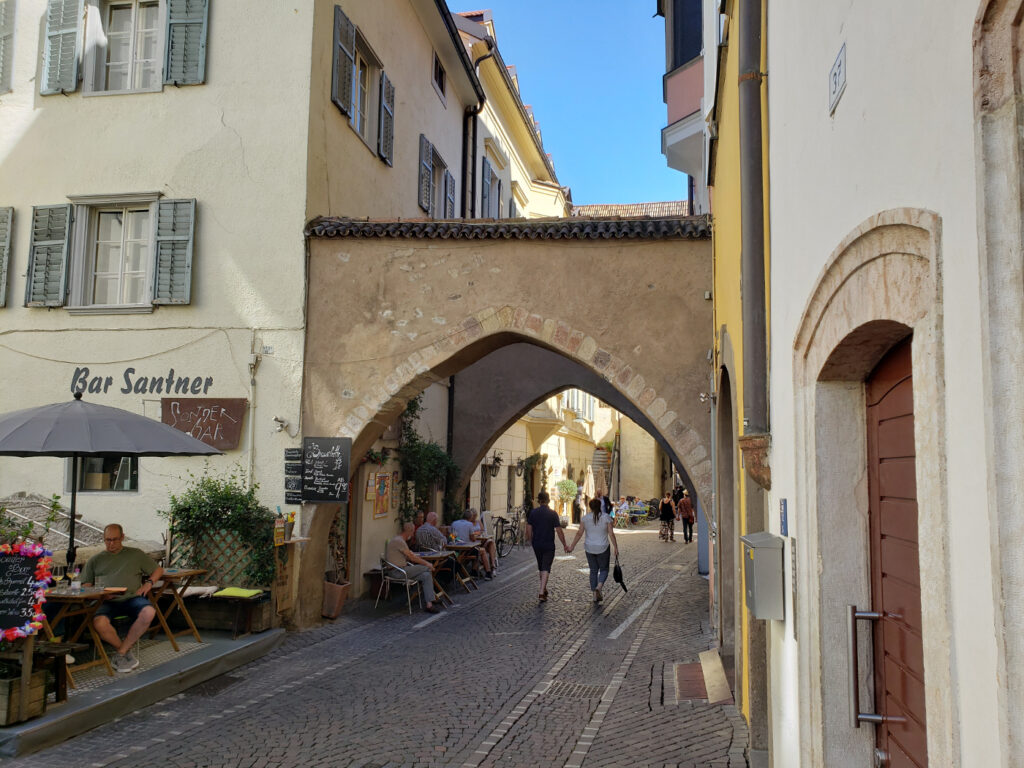
The city of Bolzano, or Bozen, is a very modern city, fully equipped with everything that a modern person would want, trendy shopping, restaurants, very good transportation facilities and some very good hotels with all the creature comforts. It is more or less in the heart of South Tyrol.
Piazza Walther
The Tickets
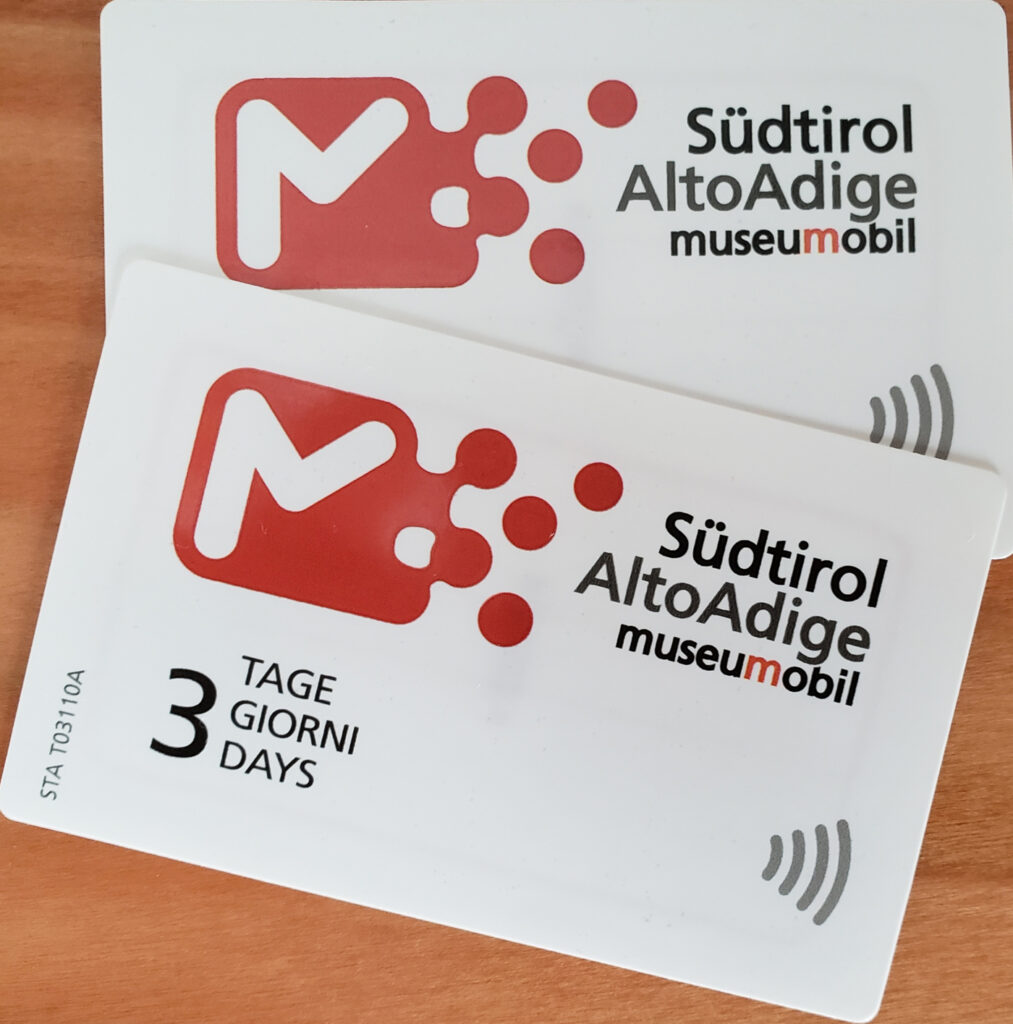
Bozen/Bolzano offers a very good ticket package for travel and entry into many museum, castles and other venues in the surrounding area. The tickets are also good for the cable car and many trains, including the train that runs to Meran/Merano. The three day pass cost €30 at the time of this writing, but you will find that after a few cable car rides and museums, it has already paid for itself.
Südtirol AltoAdige MuseoMobile – Tickets For Two
The City
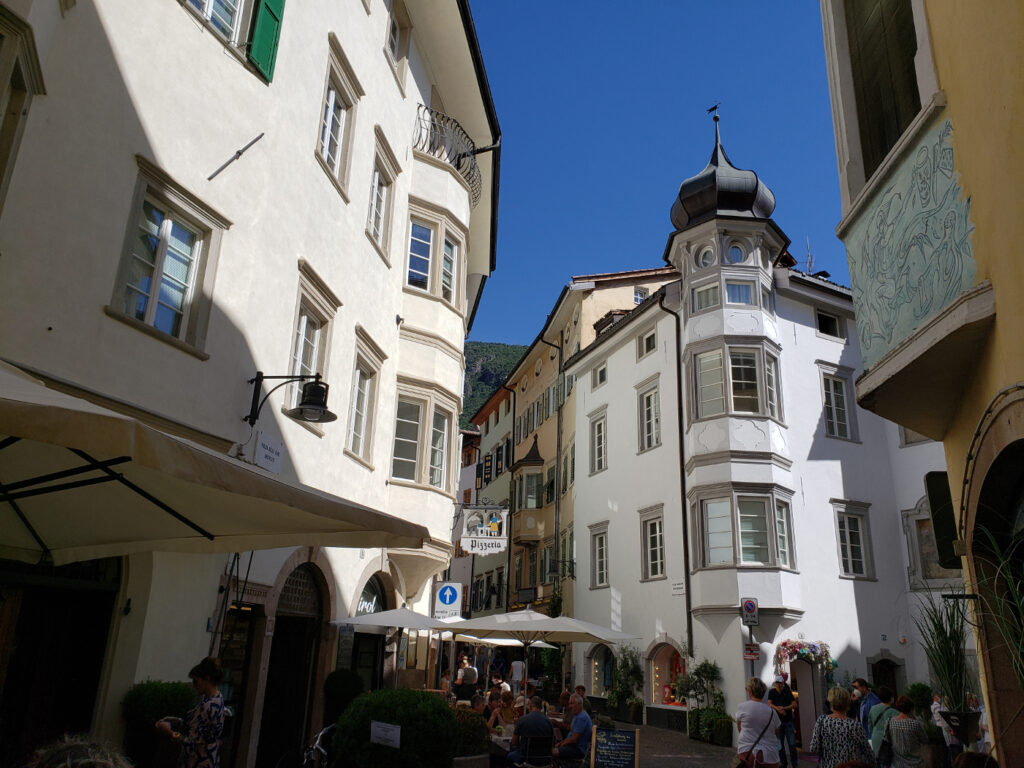
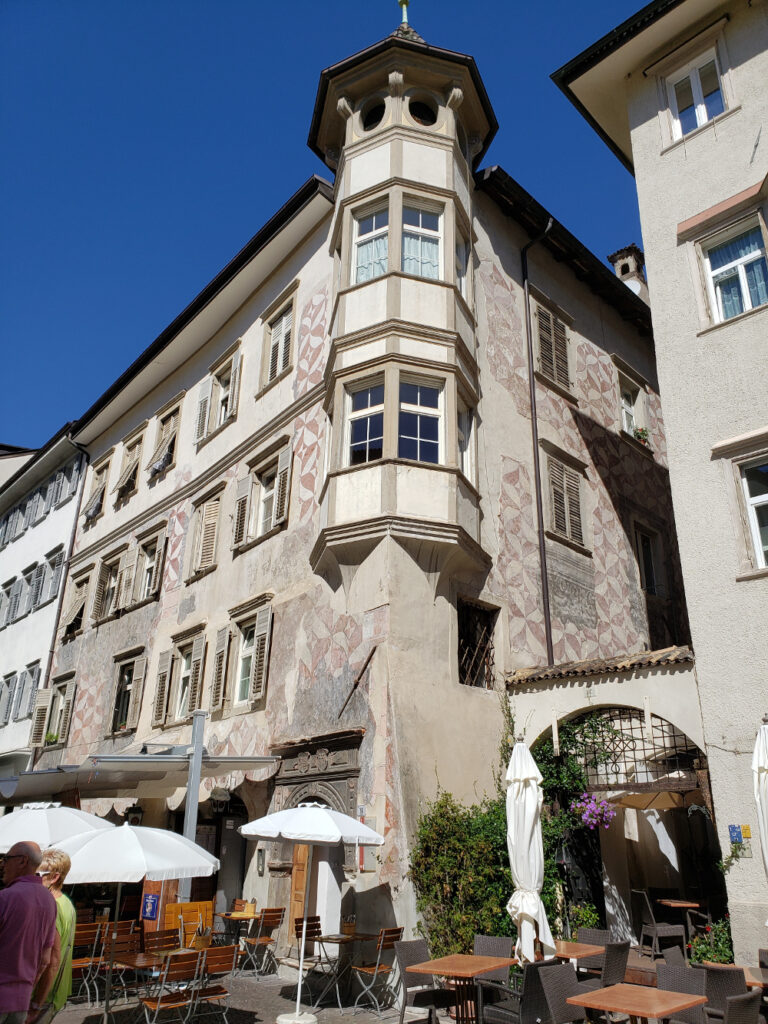
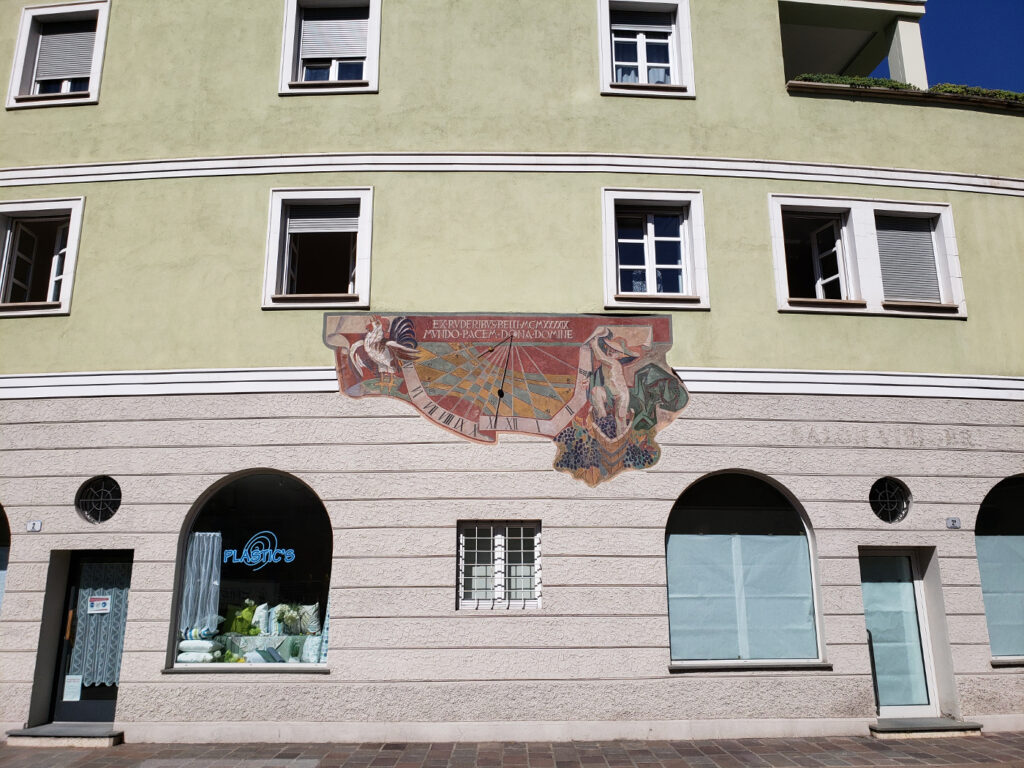
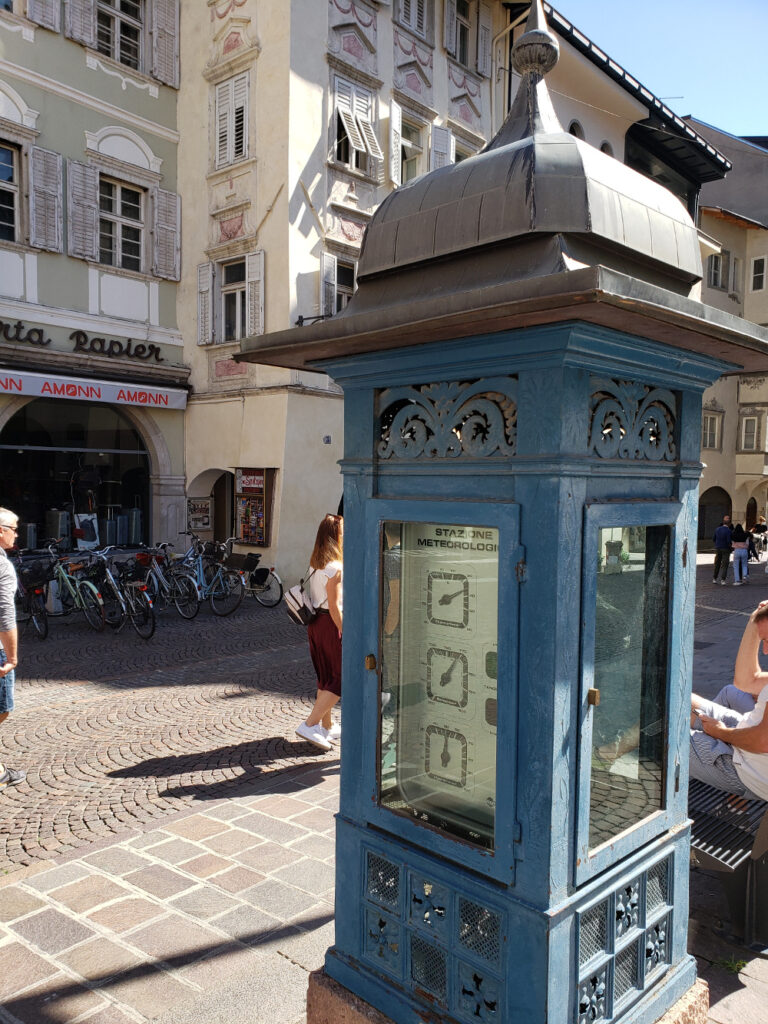
A mixture of the modern and the past, they have cleverly sculpted modern buildings, museums and stores into the fabric of past buildings. Of course, keeping in mind the past at all times, even the old hotels protect frescoes and other art when renovating, this is even evident outside.
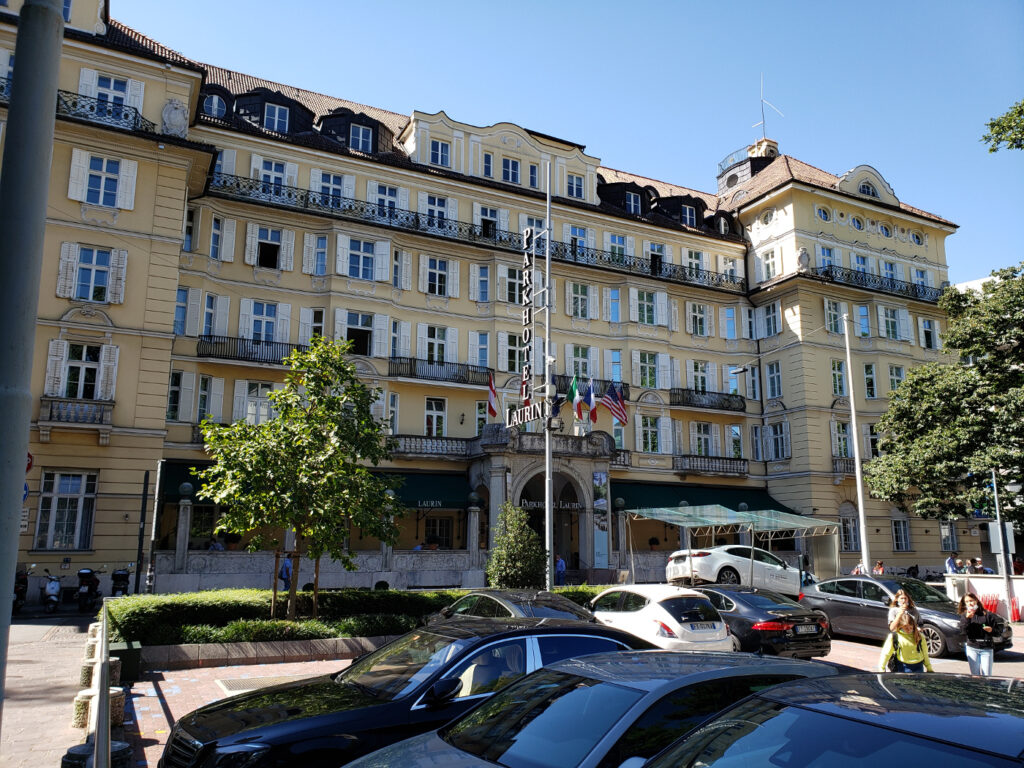
The Laurin Hotel
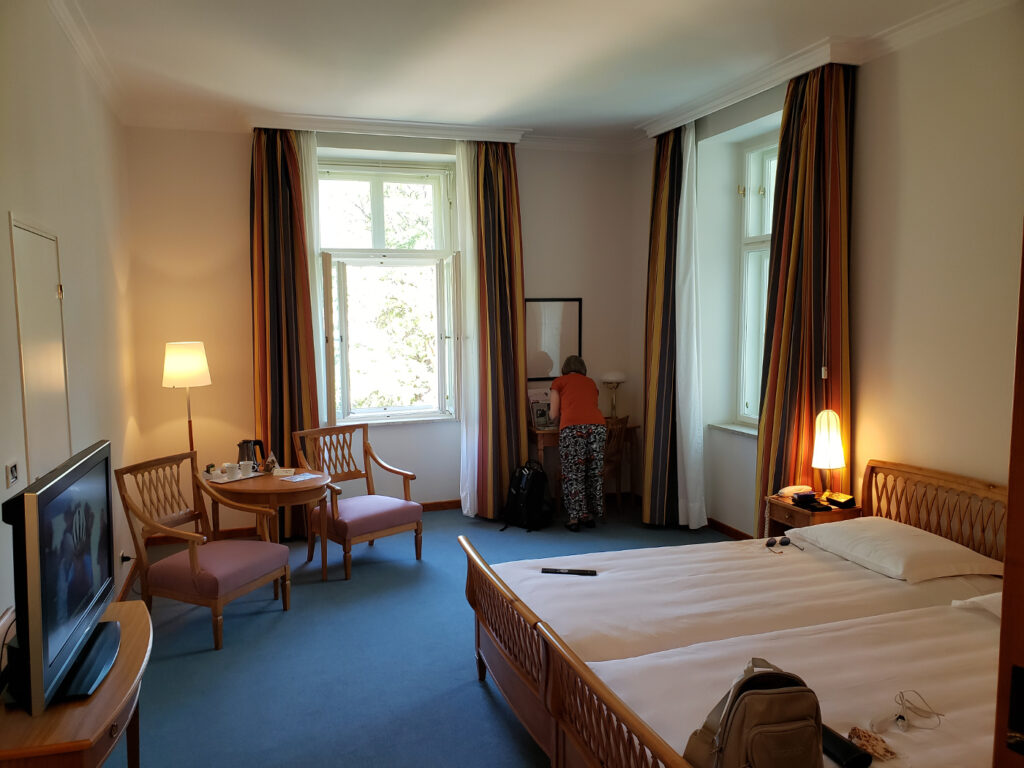
Our hotel stay was at the Laurin, a beautiful four star hotel near the center of the city. It has all of the comforts of home and more.
The Hotel Laurin
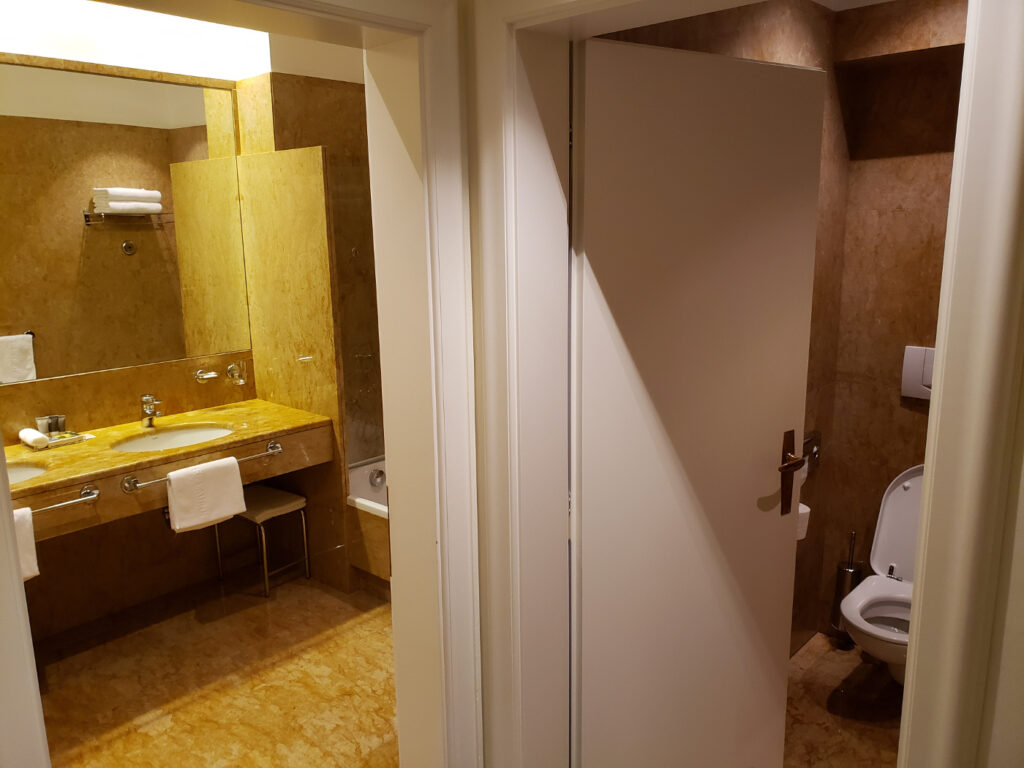
The rooms are spacious and full of amenities, including slippers and spa robes. So if you are looking for a place in Bolzano to pamper you, this hotel should be on your list.
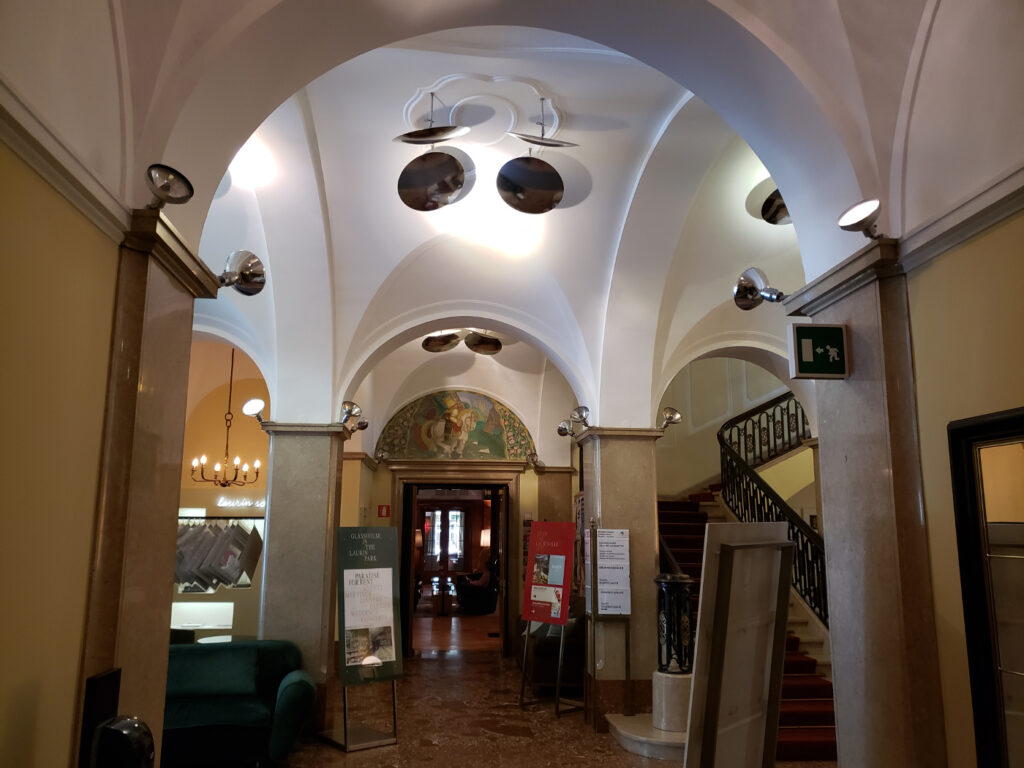
The Foyer
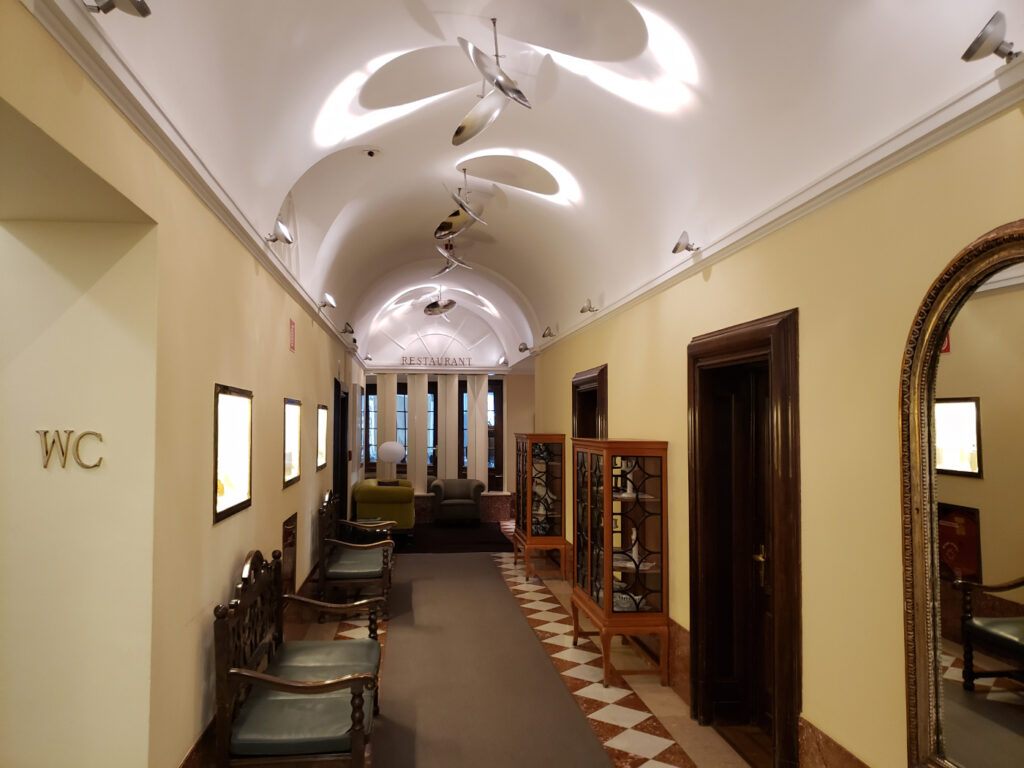
Hallway to Breakfast
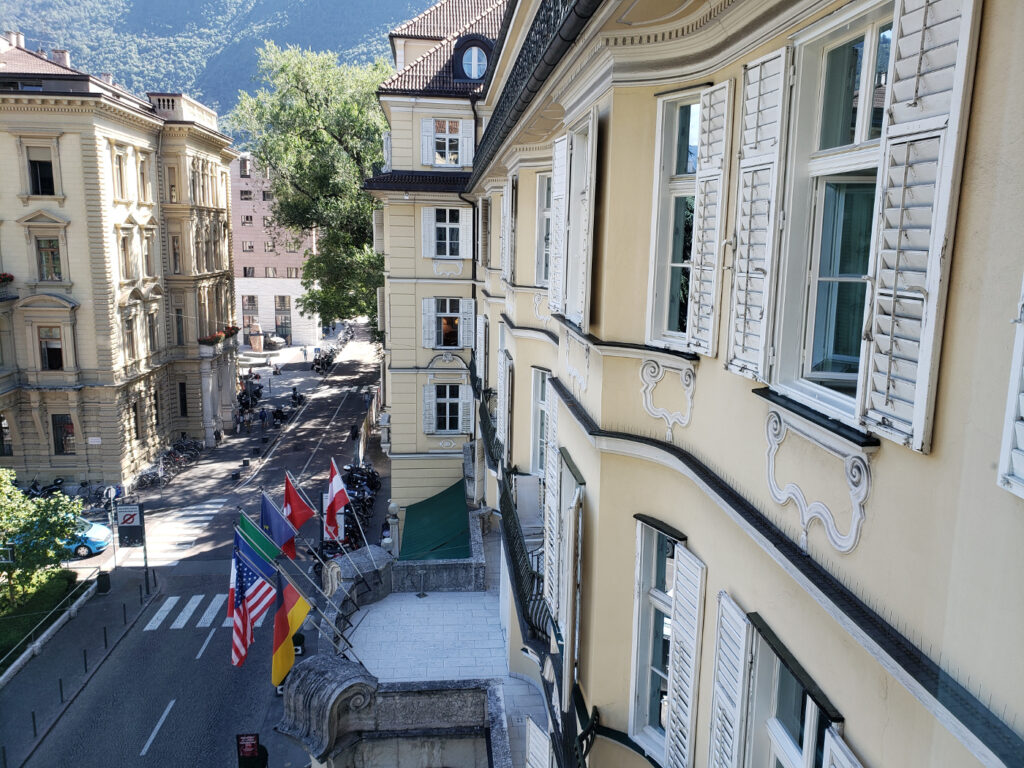
Outside our Room Window
Our Room
The Bath
The Franciscan Monastery
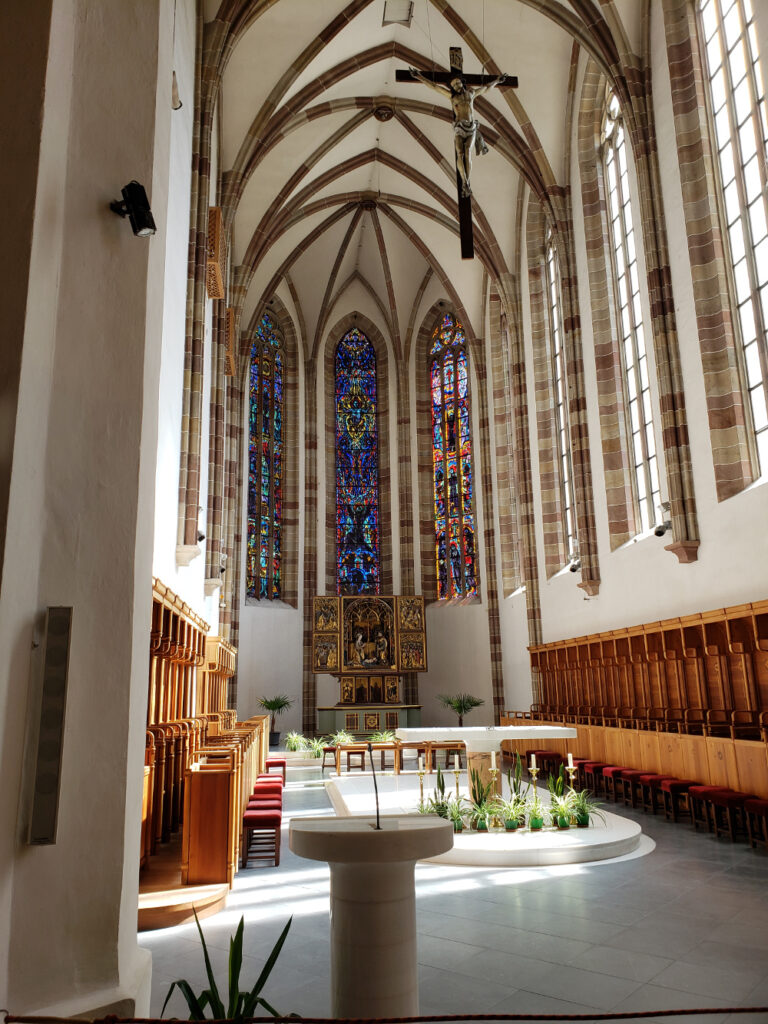
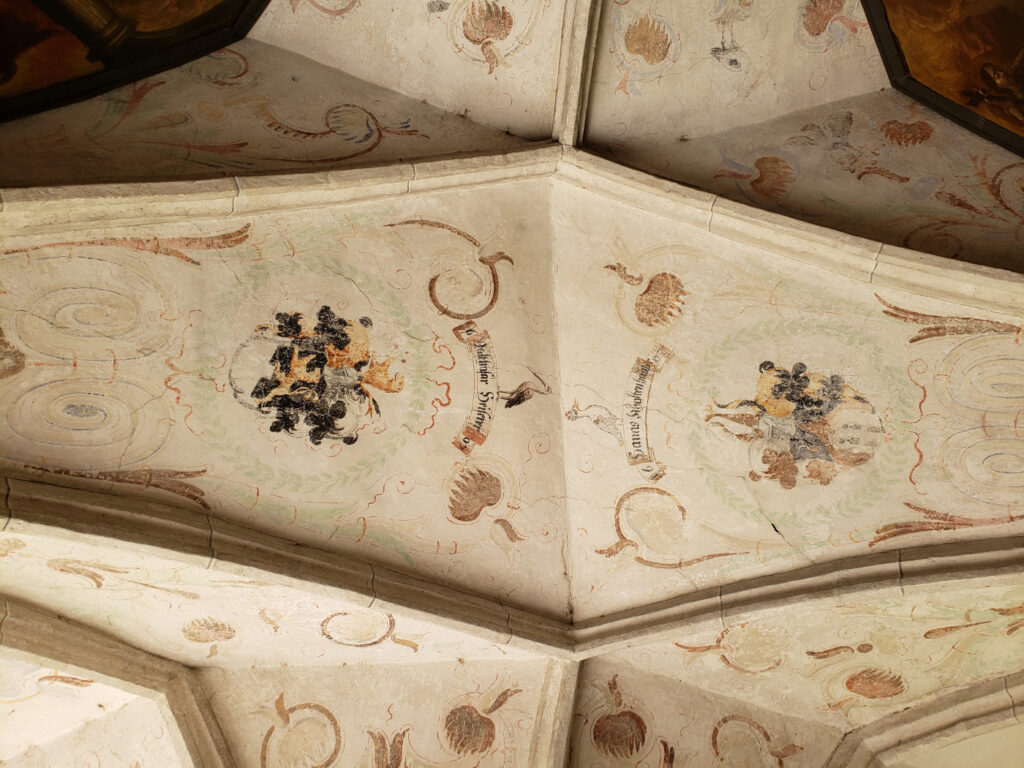
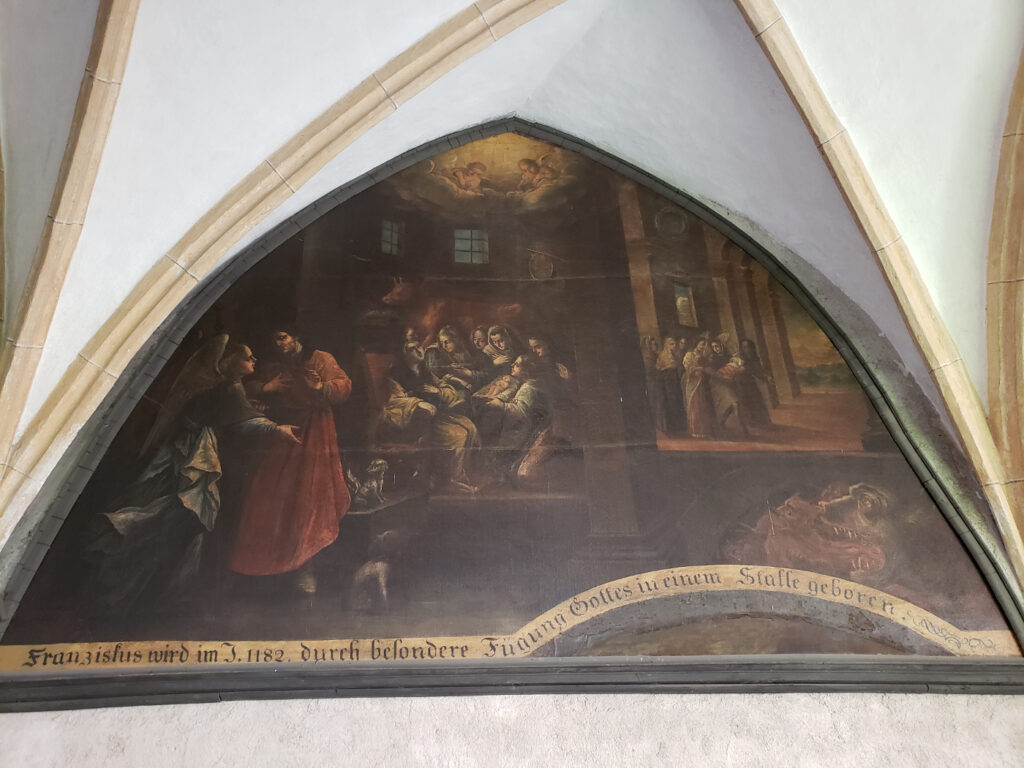
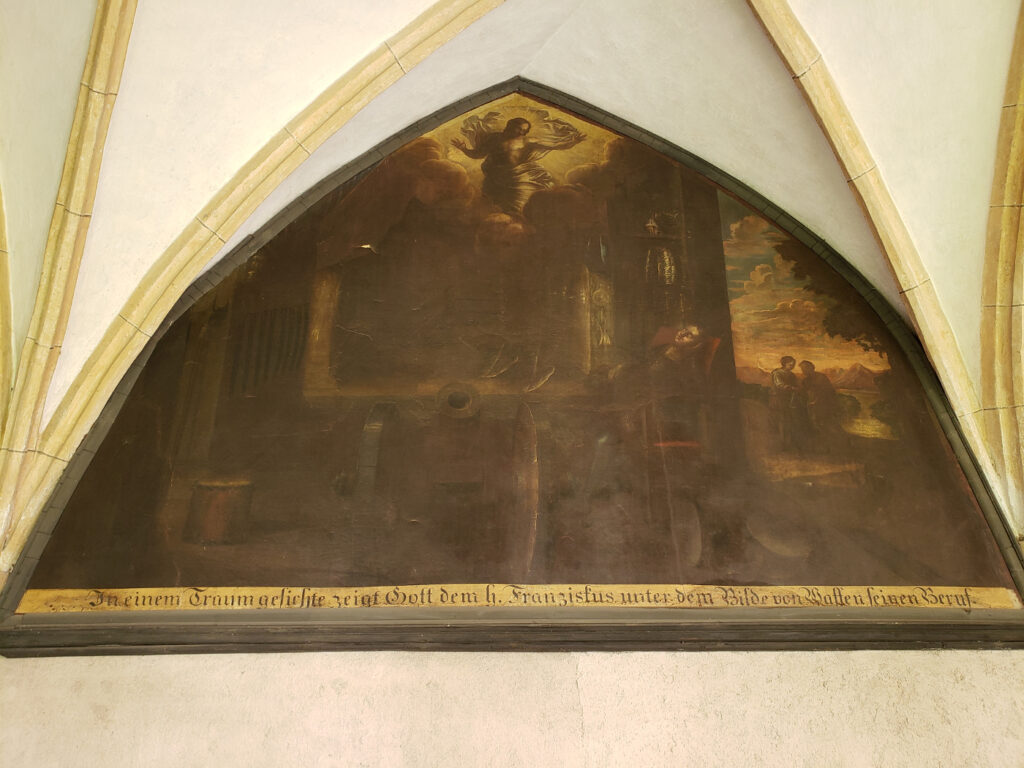
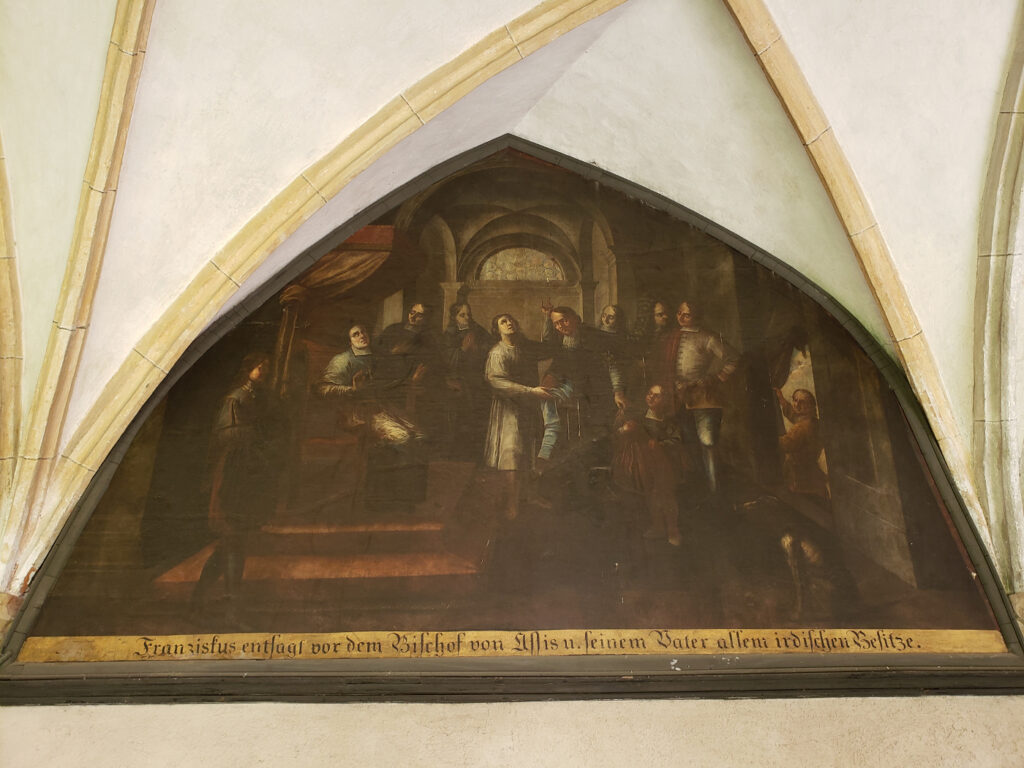
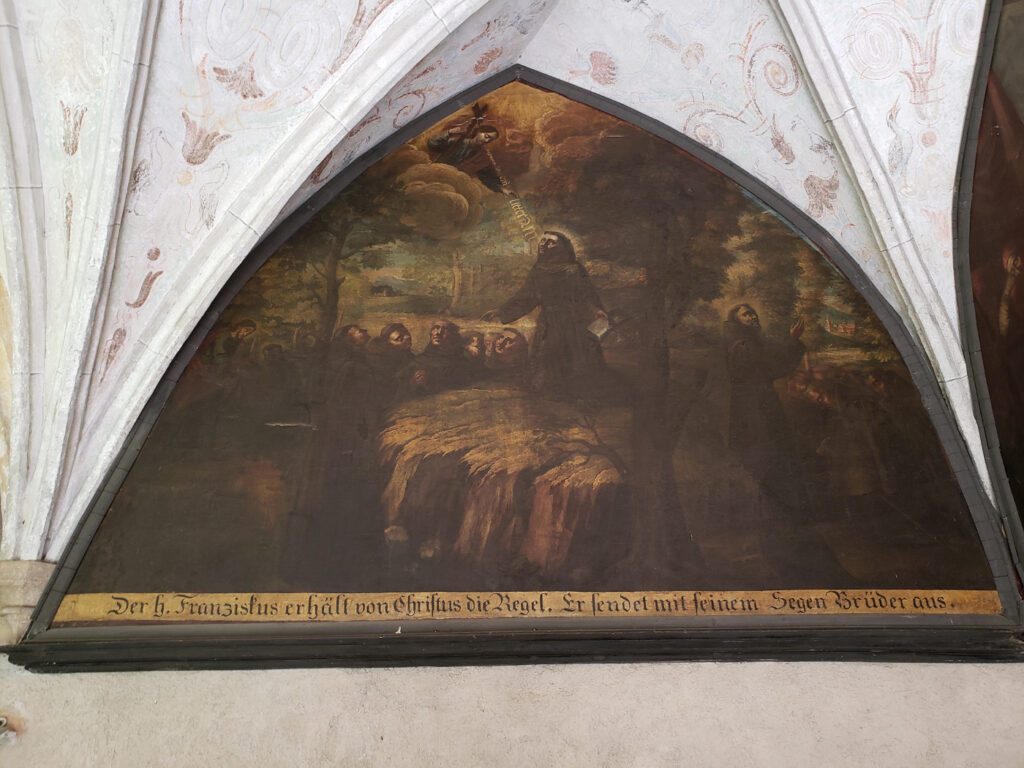
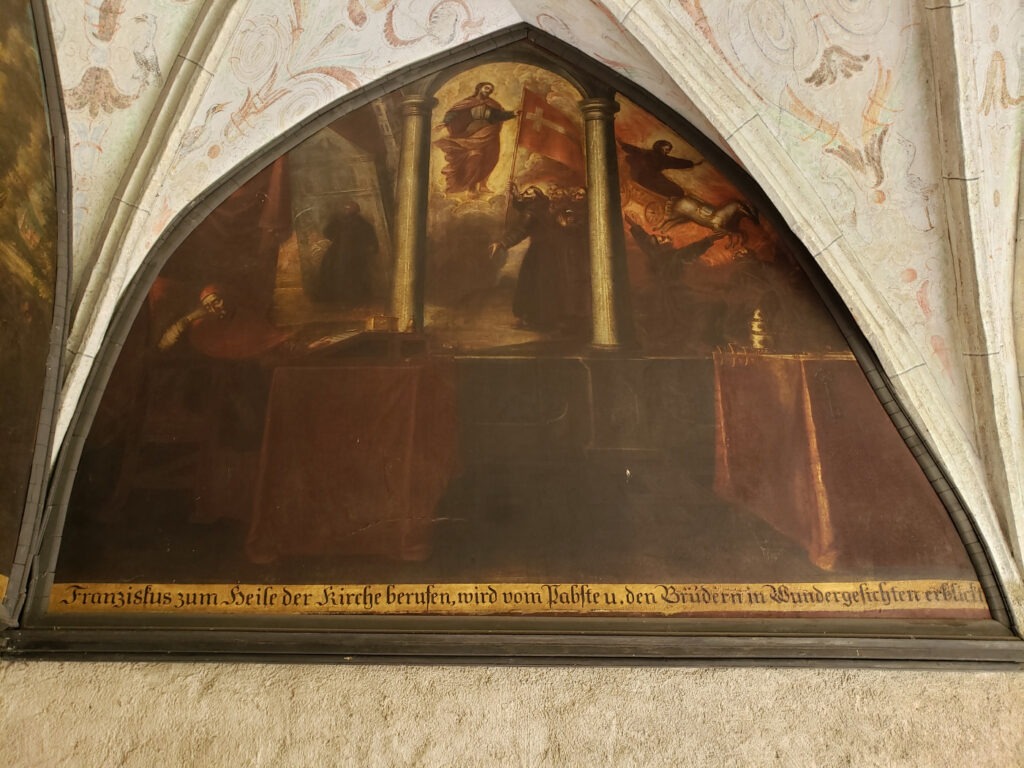
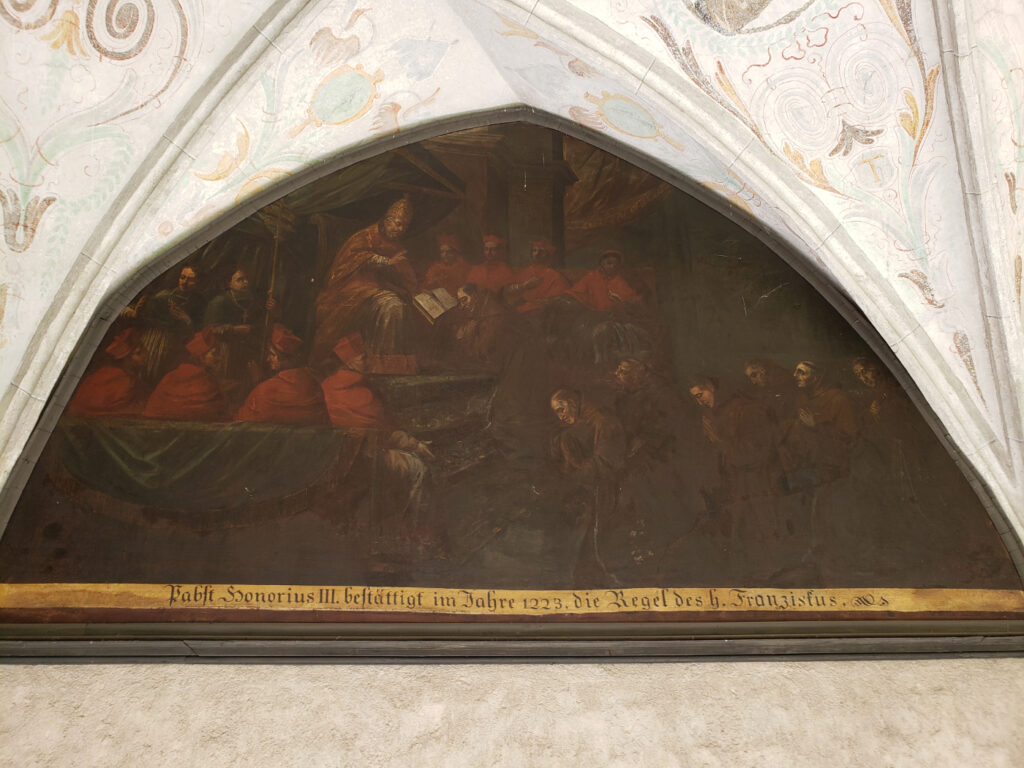
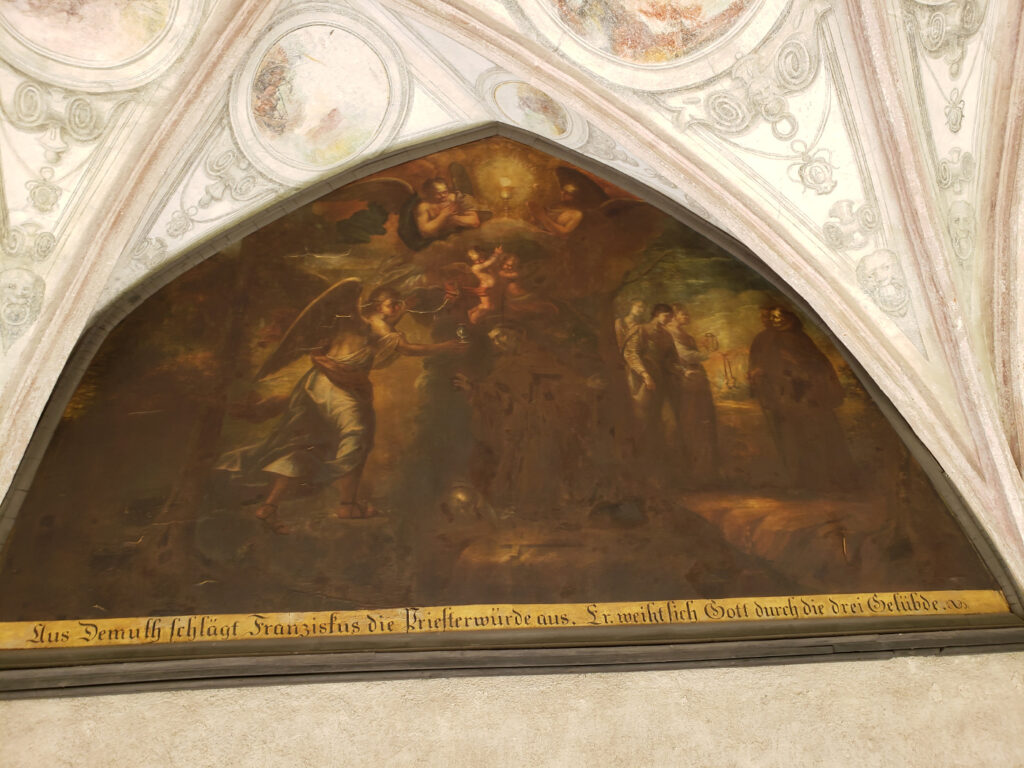
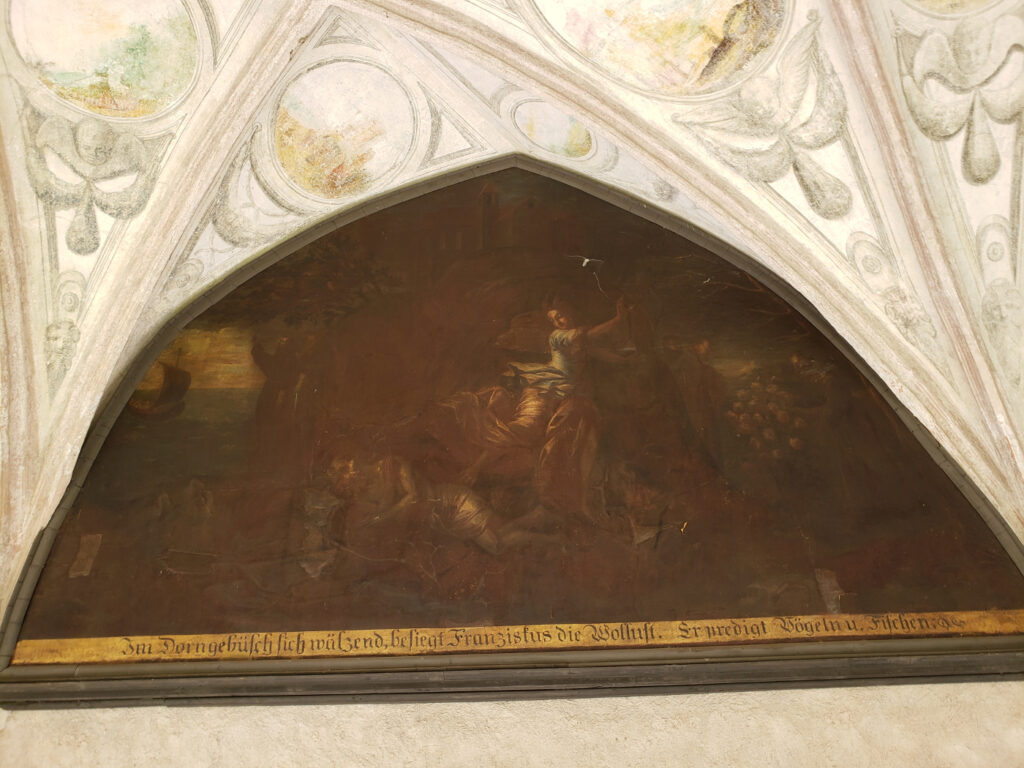
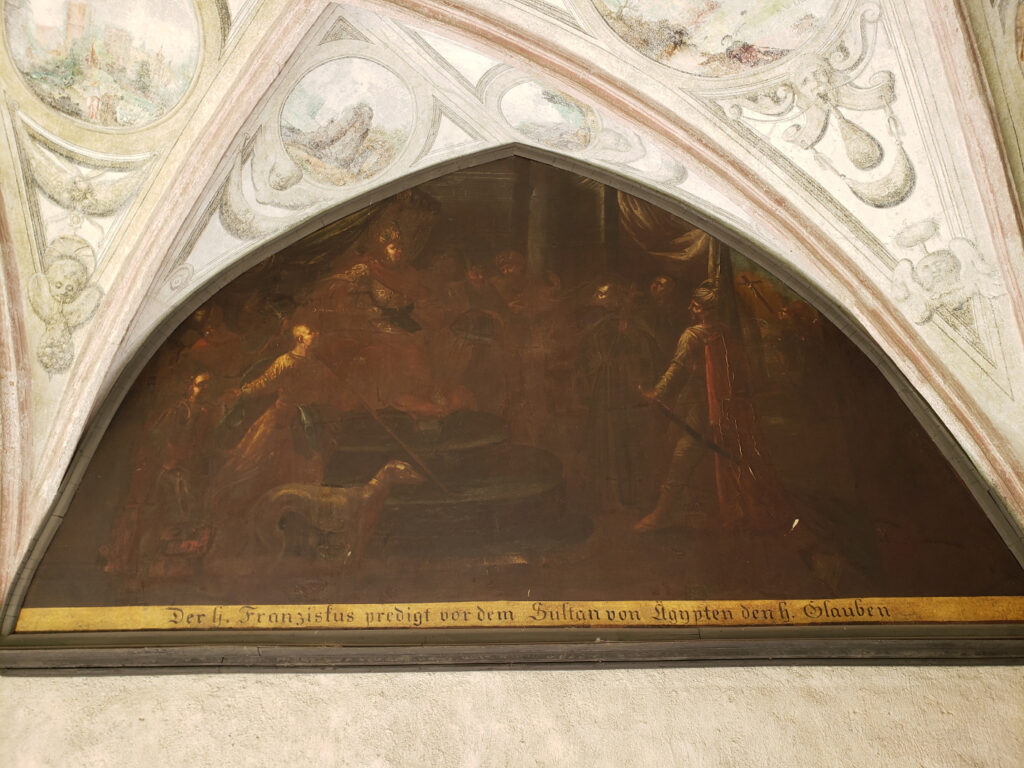
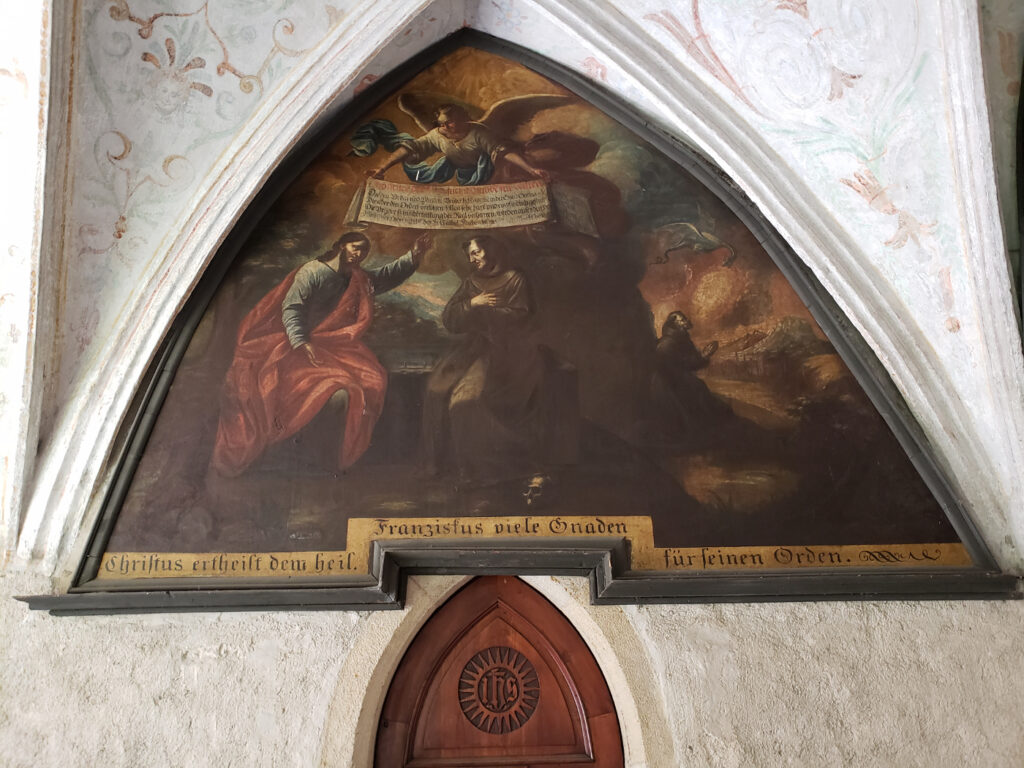
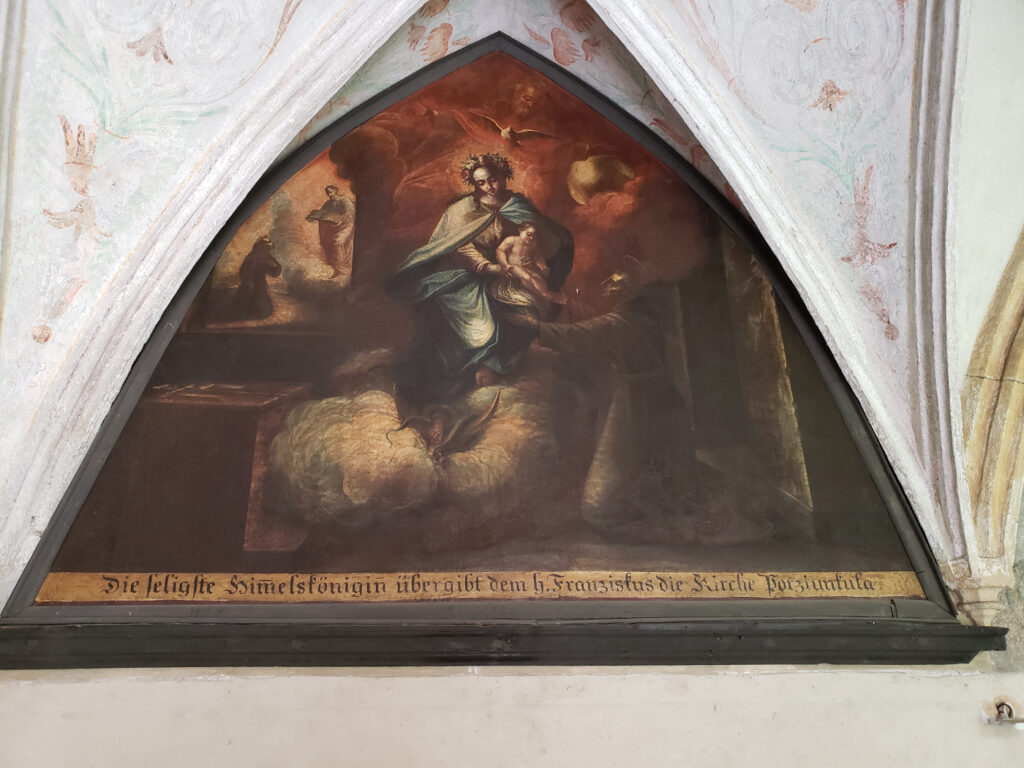
The monastery is in very good condition with a portico that has a painted ceiling and several frescoes that depict the establishment of the Franciscan church.
The Franciscan Story
The following frescoes can be found in the church and offer a pedagogical study of the monastery and its teachings.
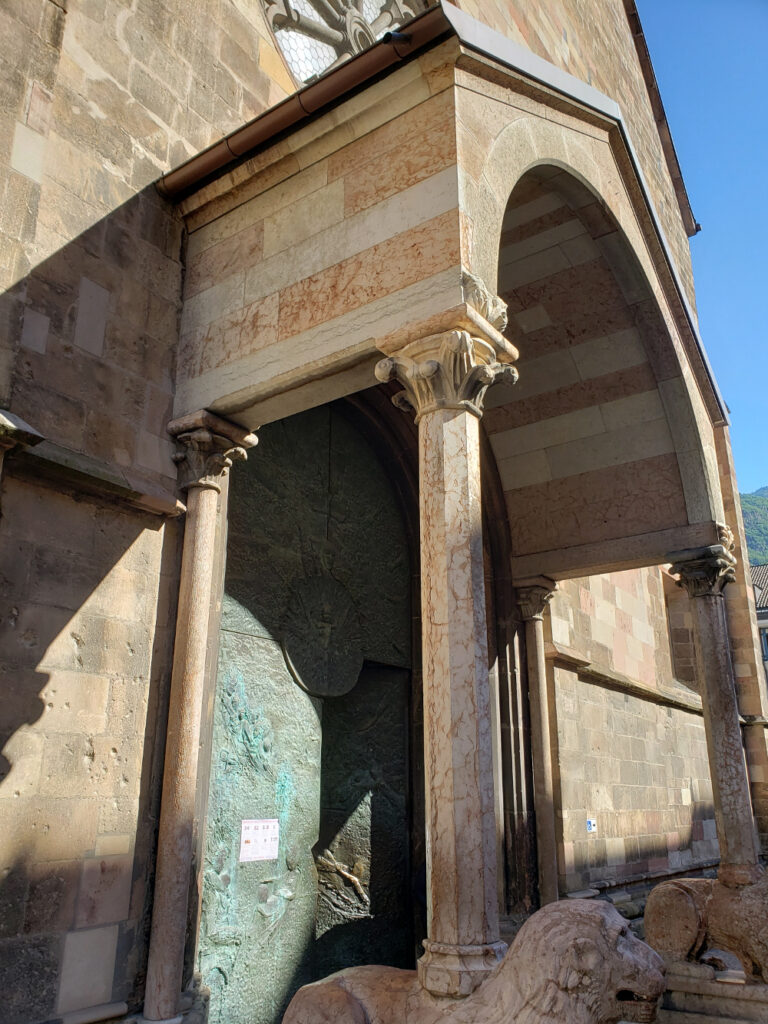
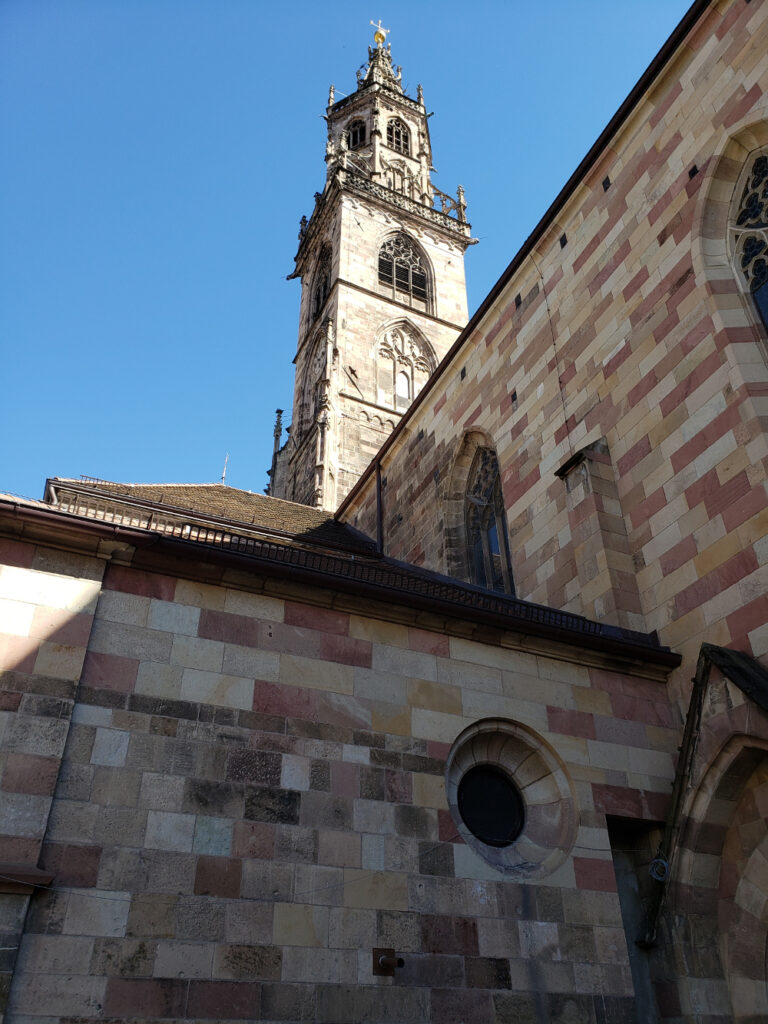
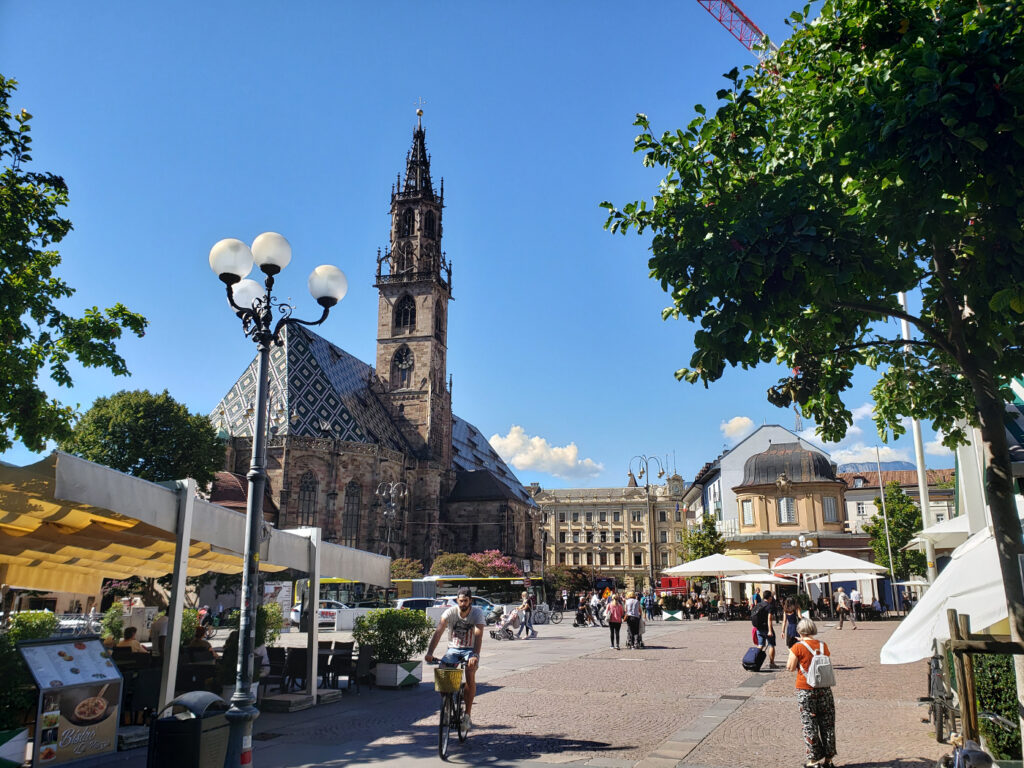
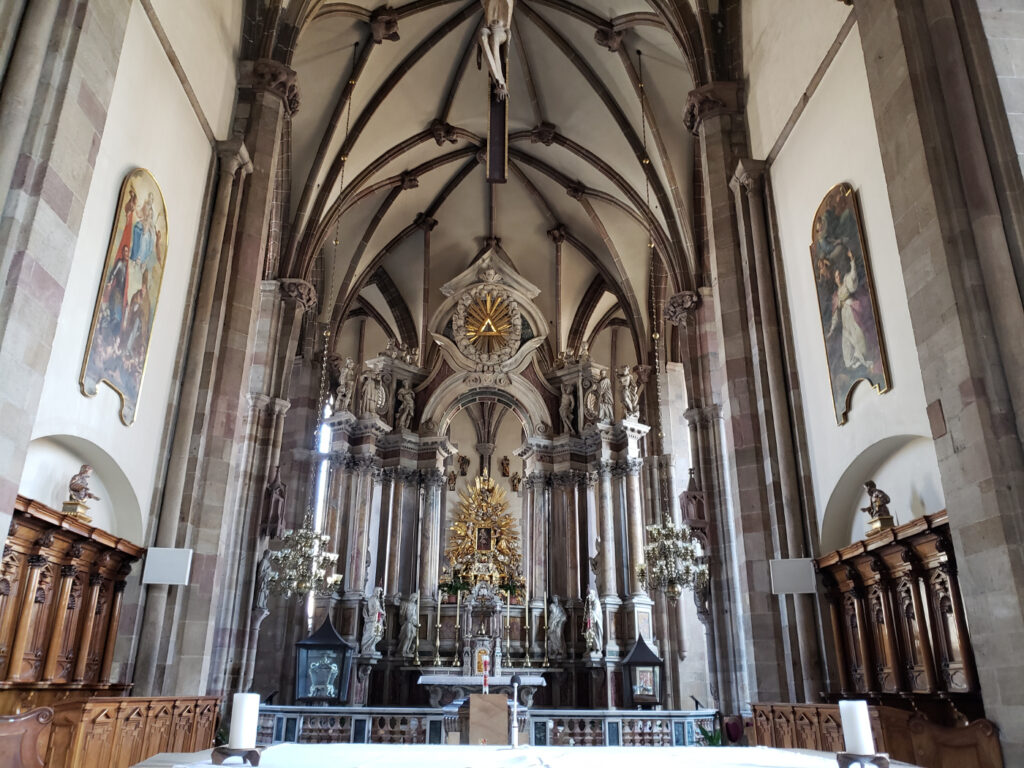
Bolzano Cathedral
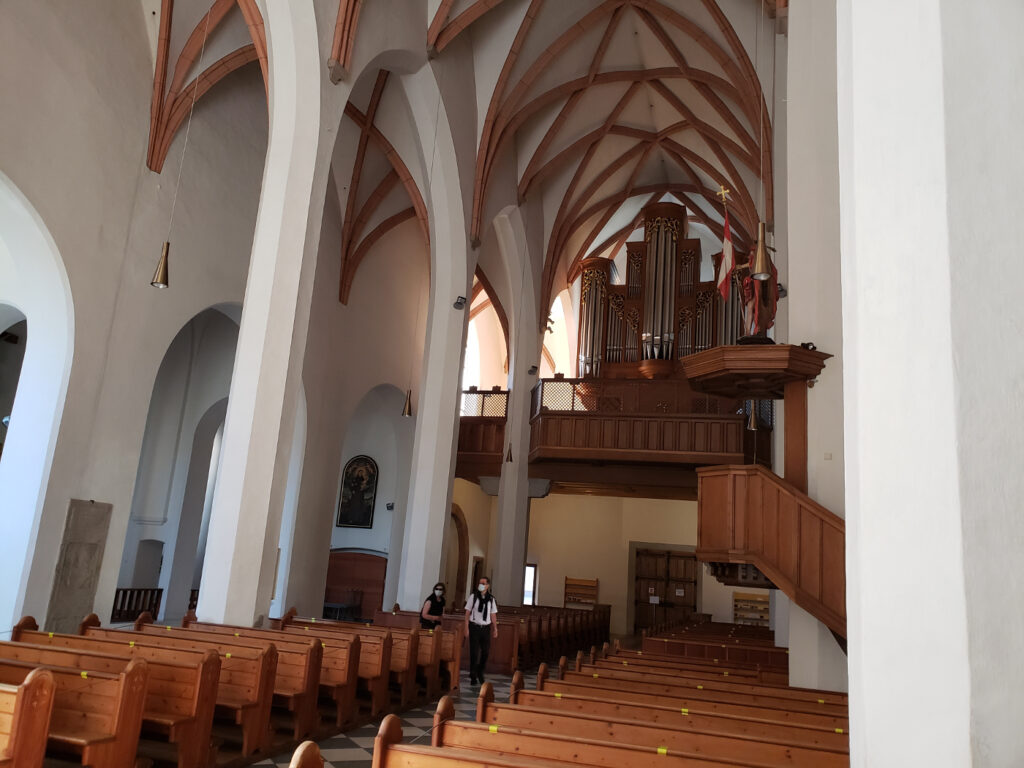
This cathedral is known for its colorful roof and it does have one with a very distinctive pattern.
The Large Bronze Doors
Tower up close
The Roof from the Piazza
The Beautiful Altar
Restaurants
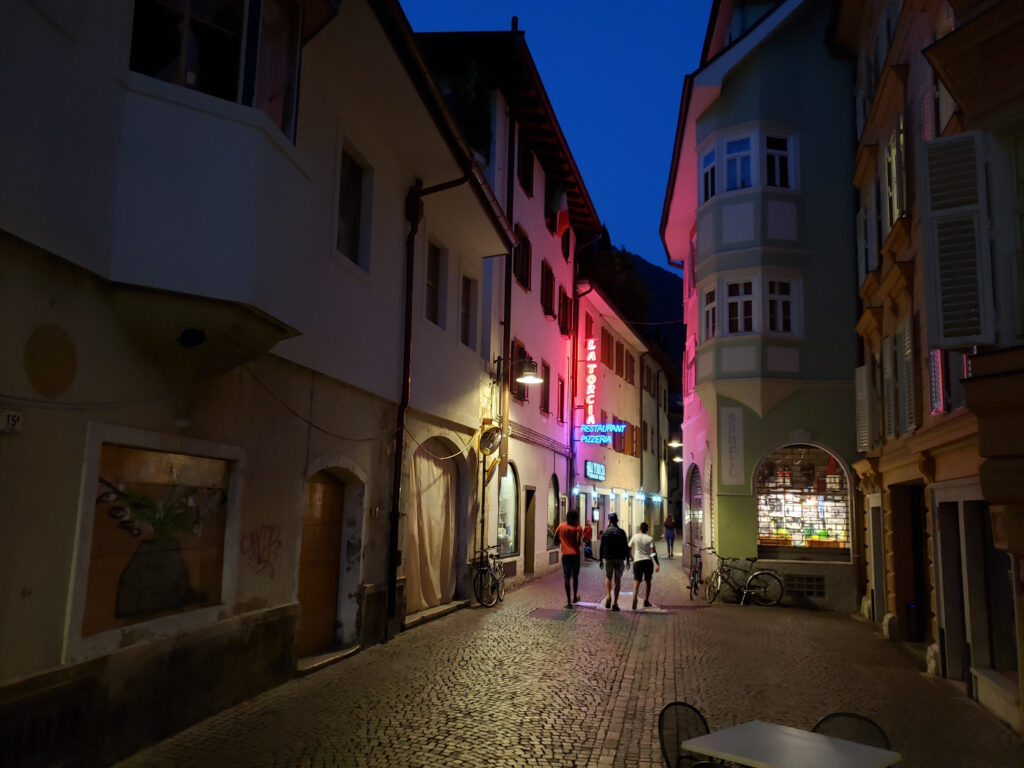
La Torcia
Very good Italian pizza and food for a very good price. They have the traditional wood fired pizza oven and very good wine from the tap.
Ristorante La Torcia
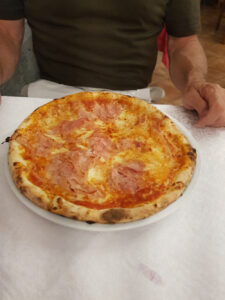
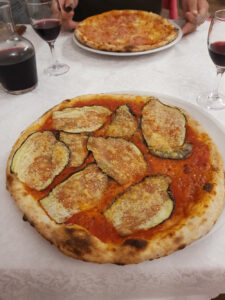
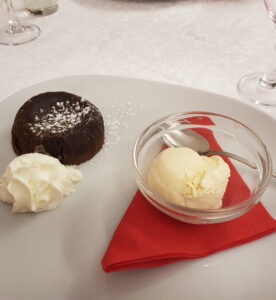
As you can see below the pizza looks amazing and it was delicious as well. The desserts, like most desserts in Tyrol, are amazing.
Pizza Prosciutto
Pizza Melanzane
Profiterole
Gelato and Lava Cake
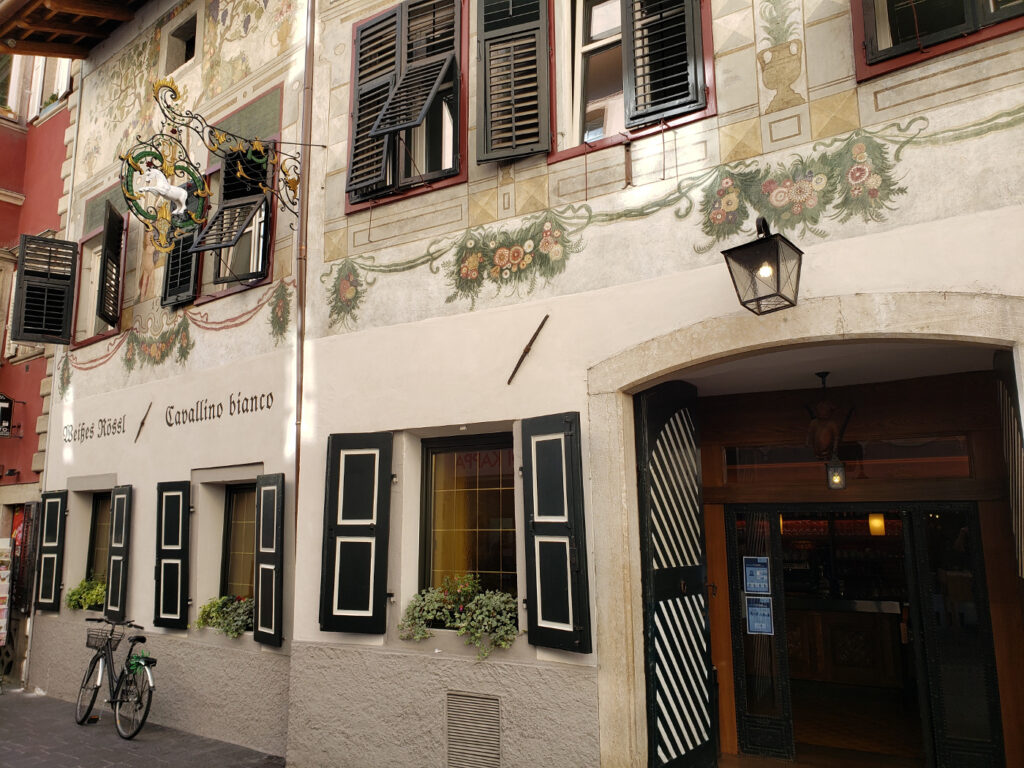
Der Weisser Rössl
A Tyrolean restaurant offering all of the local special. It is actually rather large inside and probably can handle hundreds of locals and tourists at a time. However, while we were here they hardly filled the back garden area and a few tables inside, a sad sign of the times.
Weisser Roessl
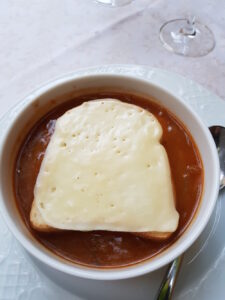
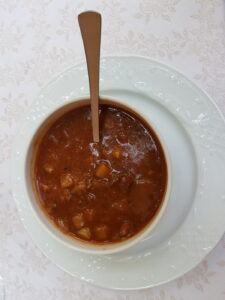
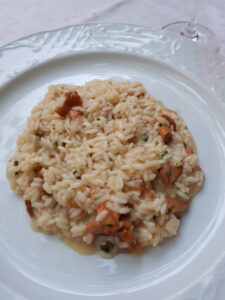
The food however is actually quite good. I particularly enjoyed the Hungarian Gulash soup.
Onion Soup
Hungarian Gulash
Risotto
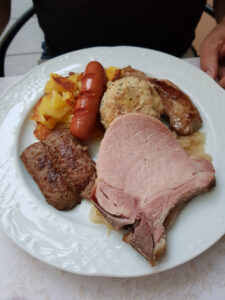
Wurst Teller
The Franziskaner Stuben
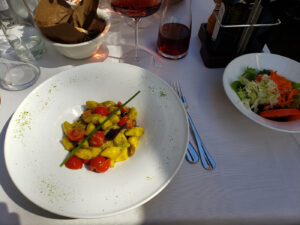
We ate at this restaurant for lunch and enjoyed it thoroughly. Try the Gnocchi plate or any pasta dish, they are great.
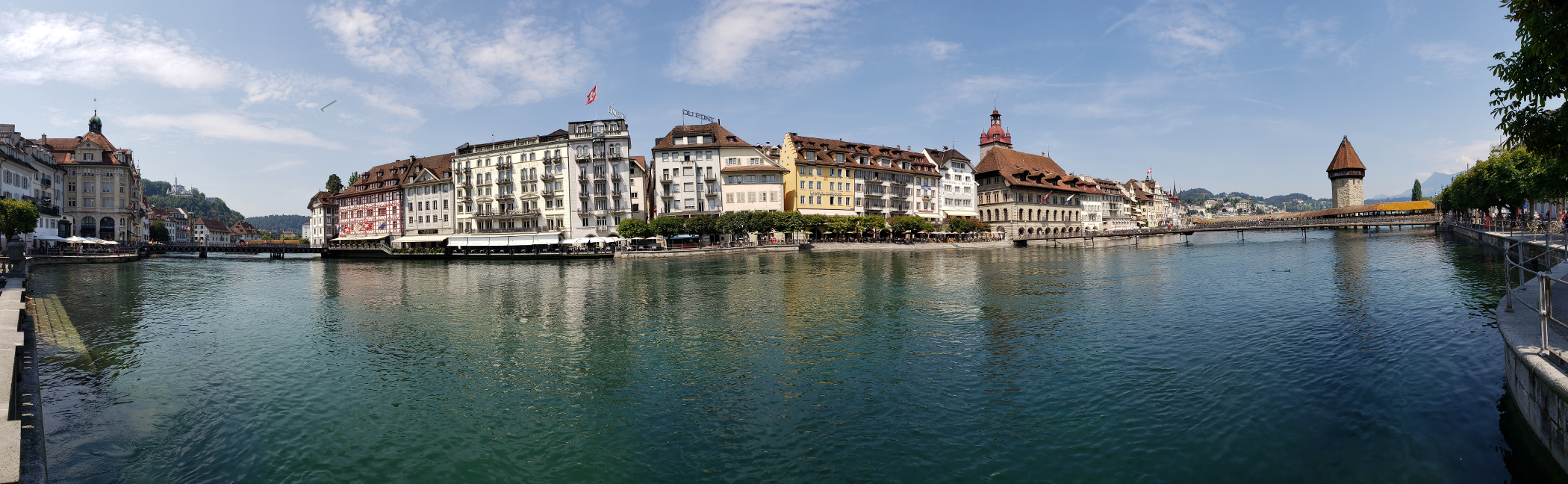
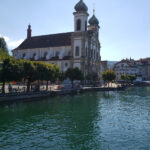
The fourth largest city in Switzerland and split by the Reuss river on the Vierwaldstättersee, or Lake Lucerne, lies Luzern. A pretty little city with ample bridges and pedestrian streets, where one can easily spend a few days relaxing and enjoying the fine Swiss hospitality of the people here, who speak a dialect of German called Alemannic. I found it impossible to understand and difficult sometimes even when they spoke High German, their dialect’s influence on their pronunciation being that profound.
Luzern On The River Reuss
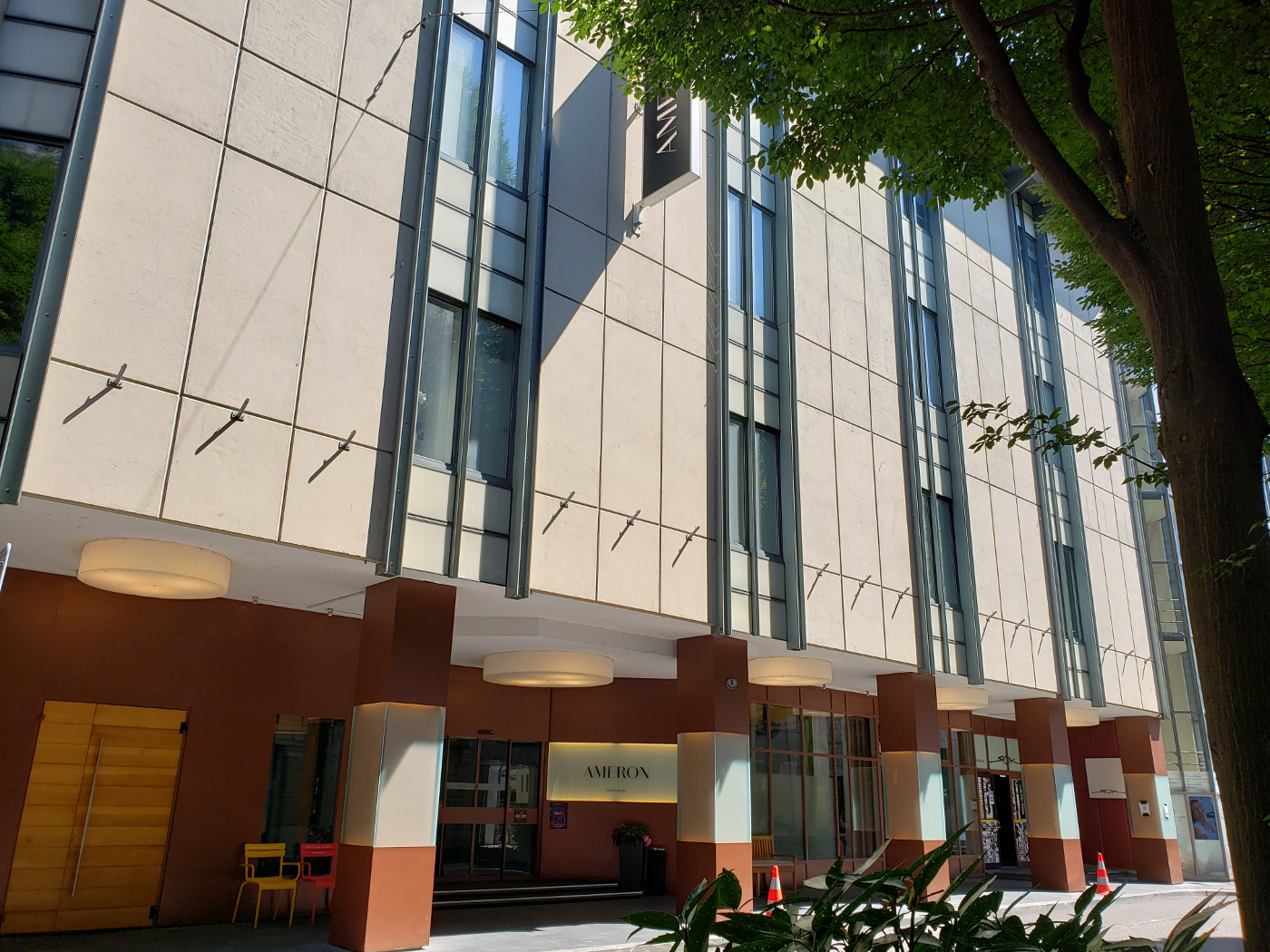
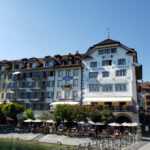
Hotel Ameron
Our hotel was rather well situated. A block or two got us to the train station one way, the other we can cross the famous Kapellbrücke, or Chapel Bridge. So, it is an excellent place to start a tour of the city.
Hotel Ameron
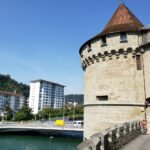
The Chapel Bridge
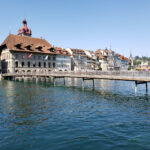
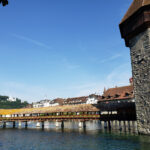
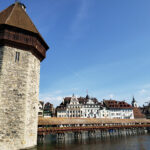
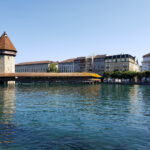
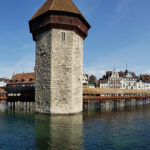
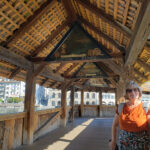
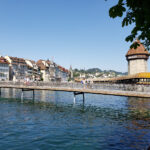
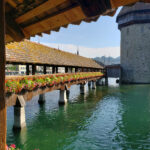
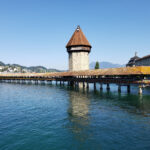
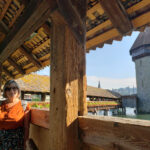
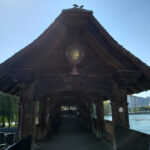
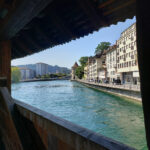
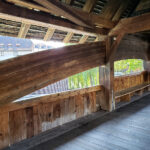
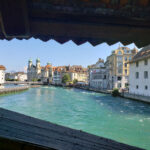
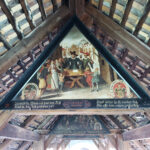
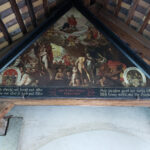
The first, and most conspicuous point of interest to see, is the Kapellbrücke. Restored in 1993 after a major fire, some of its paintings survived and can be enjoyed with a casual walk across it to see its namesake church, Saint Peter’s Chapel, or just to get to the other side.
The above is a slideshow of the bridge and its adjacent water tower, or Wasserturm, but the tower has nothing to do with holding water. Rather, it is named so, because it is standing in water. It has had several uses in the past, but recently it now has a tourist shop located within, which is currently temporarily closed due to lack of tourism in the area.
The Spreuer Bridge
This Spreuer Bridge also spans the Reuss river and has a more interesting structure adjacent to it, a turbine house and assembly for generating electricity. It is no longer in use, and was closed in the 1970s due to high maintenance cost and difficulties finding parts.
Entrance To Spreuer Bridge
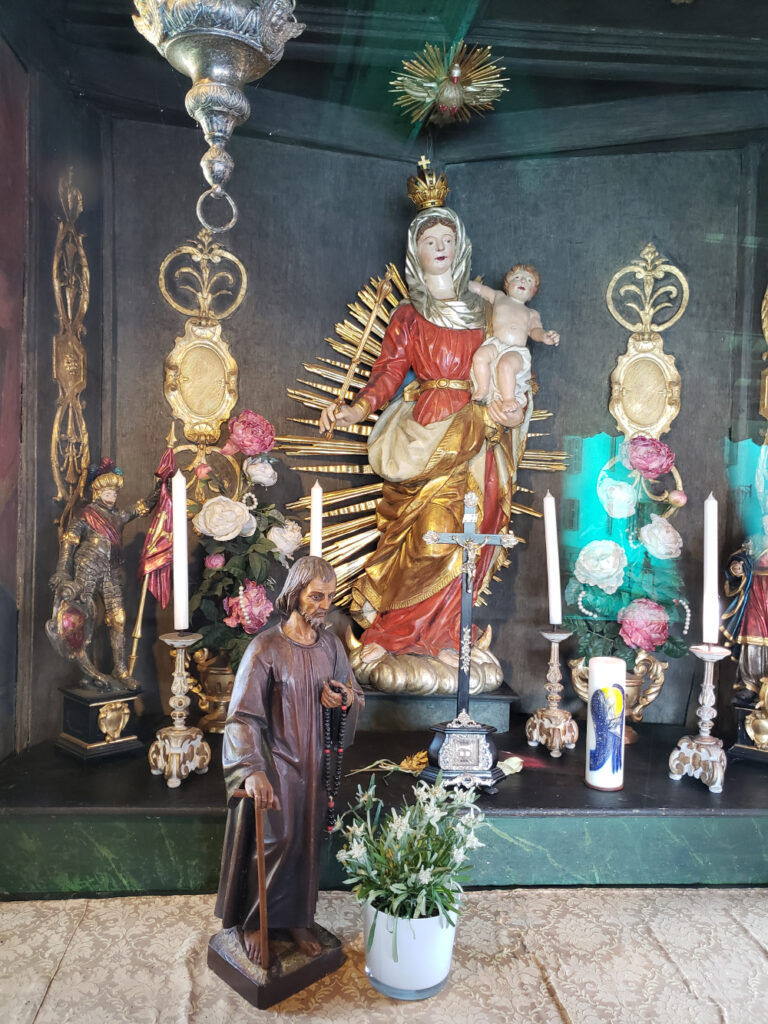
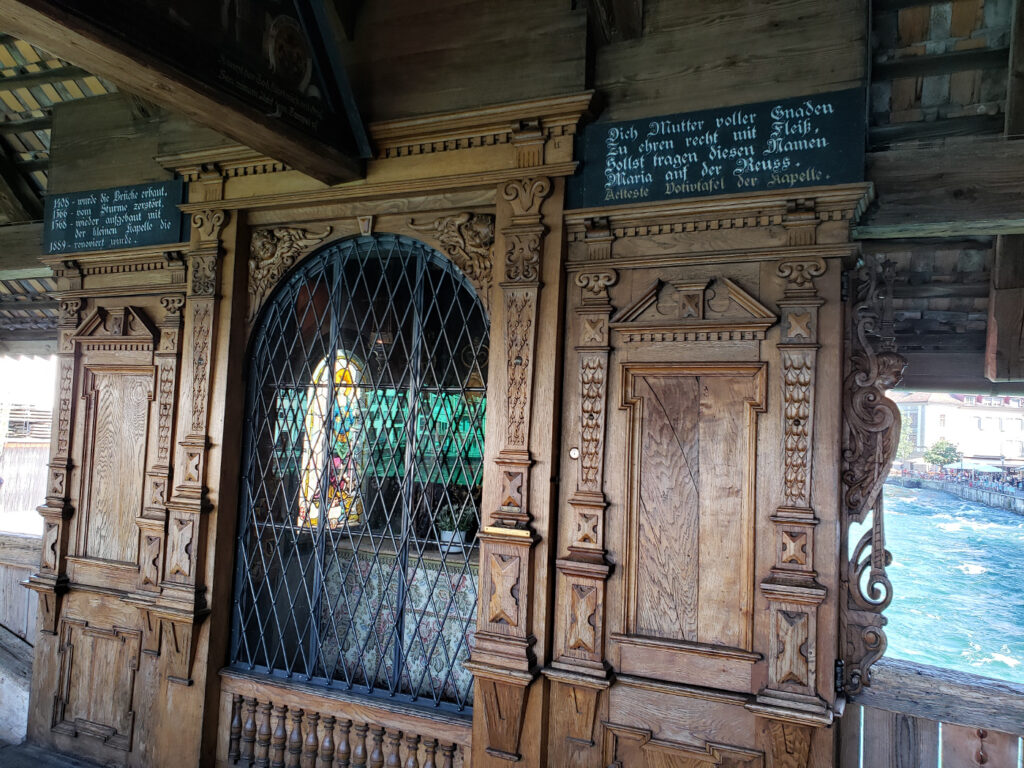
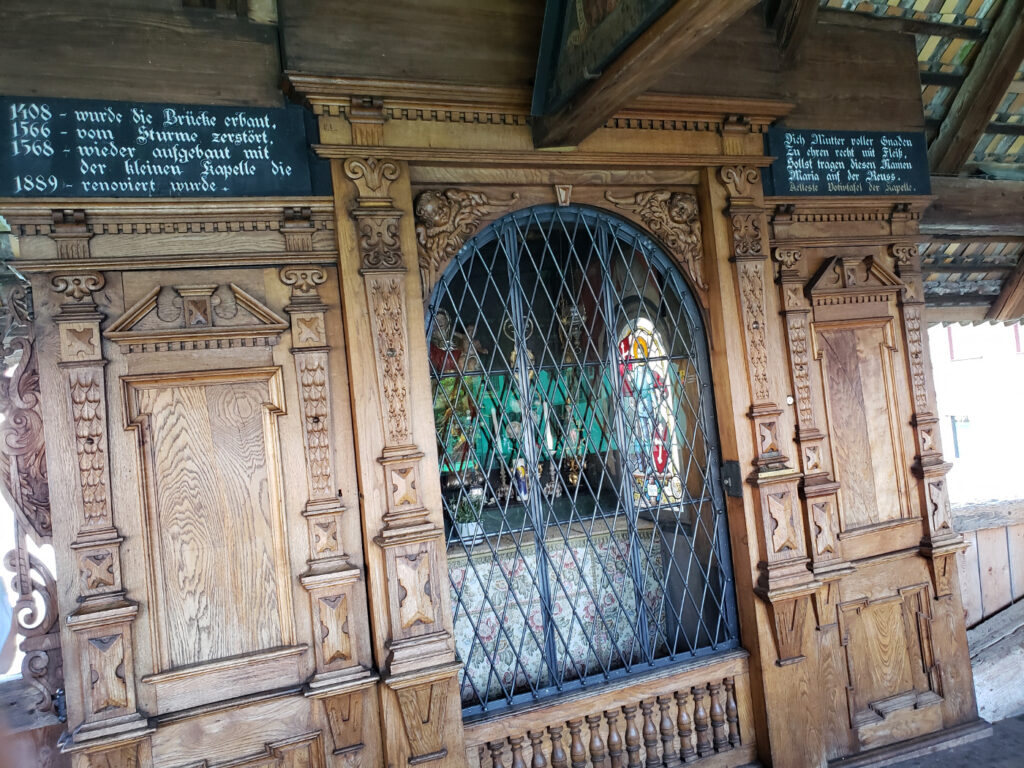
The bridge also contains the similar paintings as can be found on the Chapel Bridge, along with a small altar celebrating the Madonna.
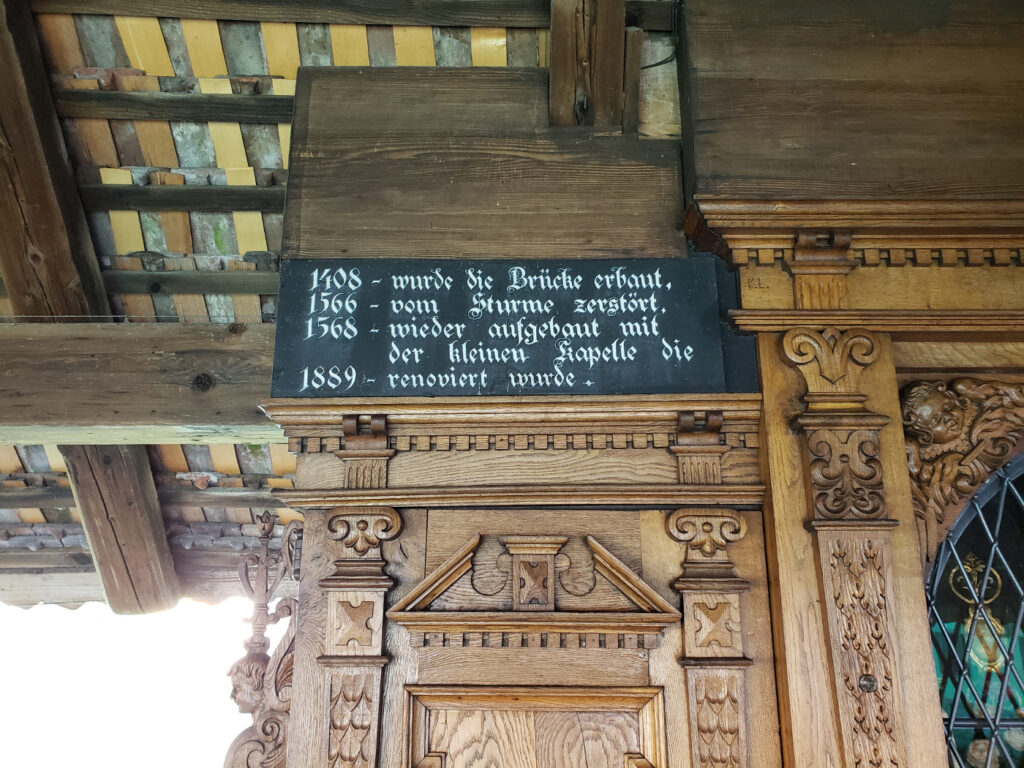
When it was originally built, the destroyed by a storm, then rebuilt, then renovated
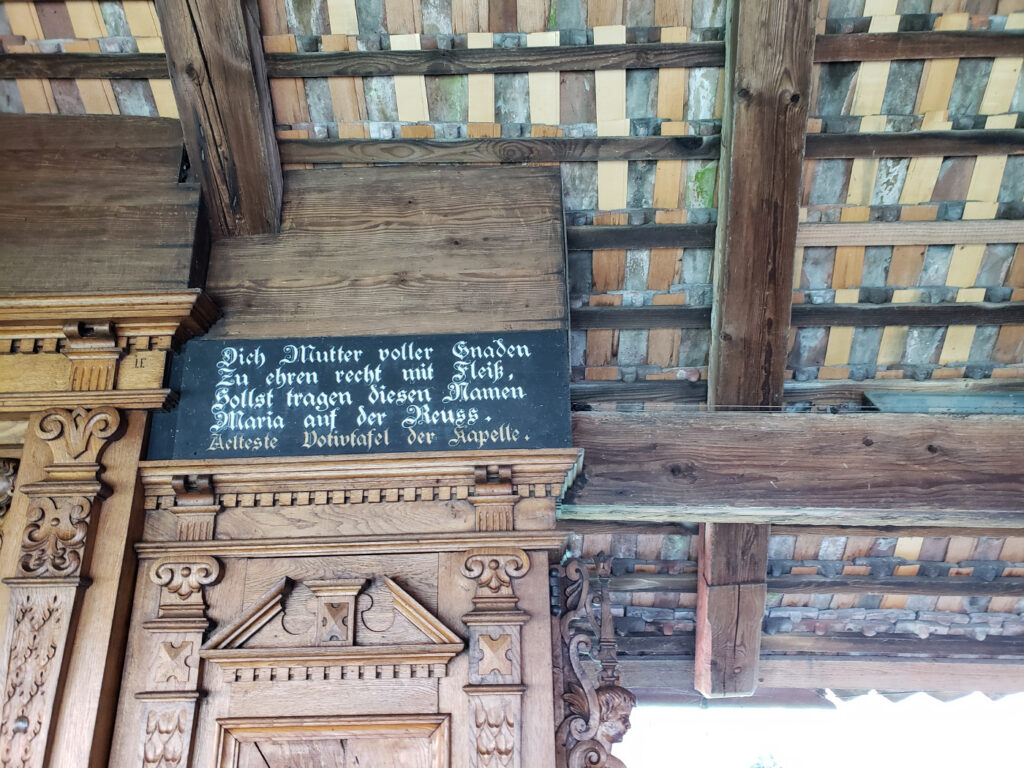
A short poem
Maria and baby Jesus
The Altar Chapel
The Altar Chapel
The water from the Reuss picks up speed rapidly after this bridge, as it is confined to a smaller space for the turbine to use. The rapids are swiftly moving and create quite a noise. Unfortunately in the video below, I thought the bridge was the Chapel bridge at the time, since it does have a small chapel or altar within it, so please ignore that comment.
The Musegg Mauer
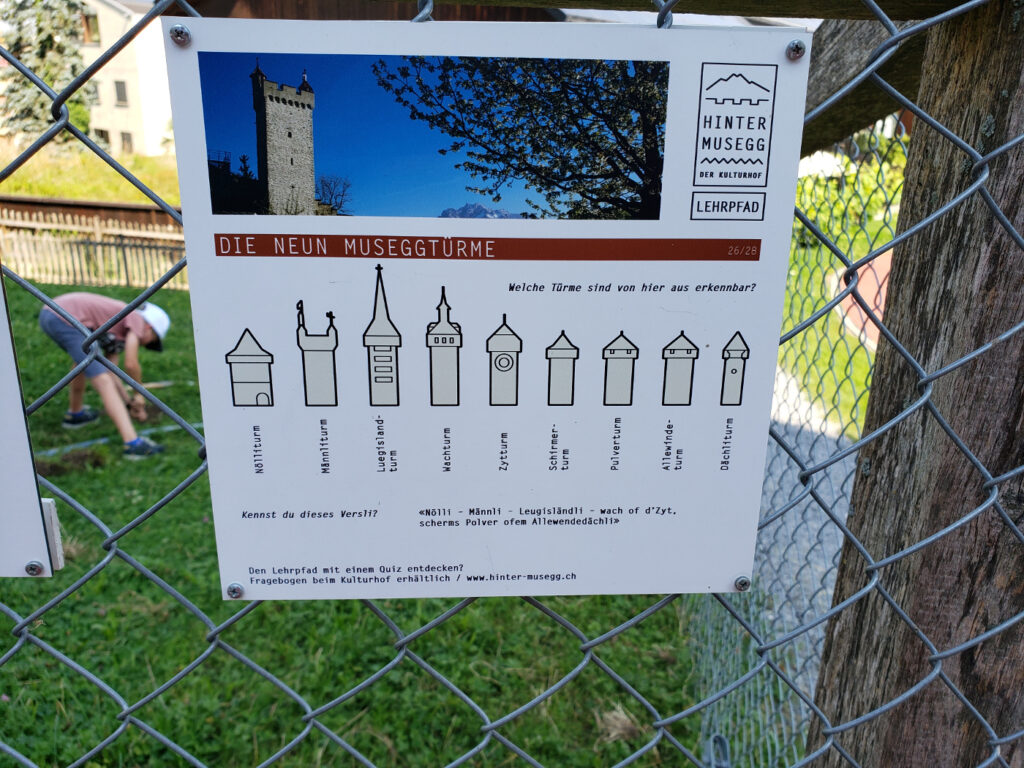
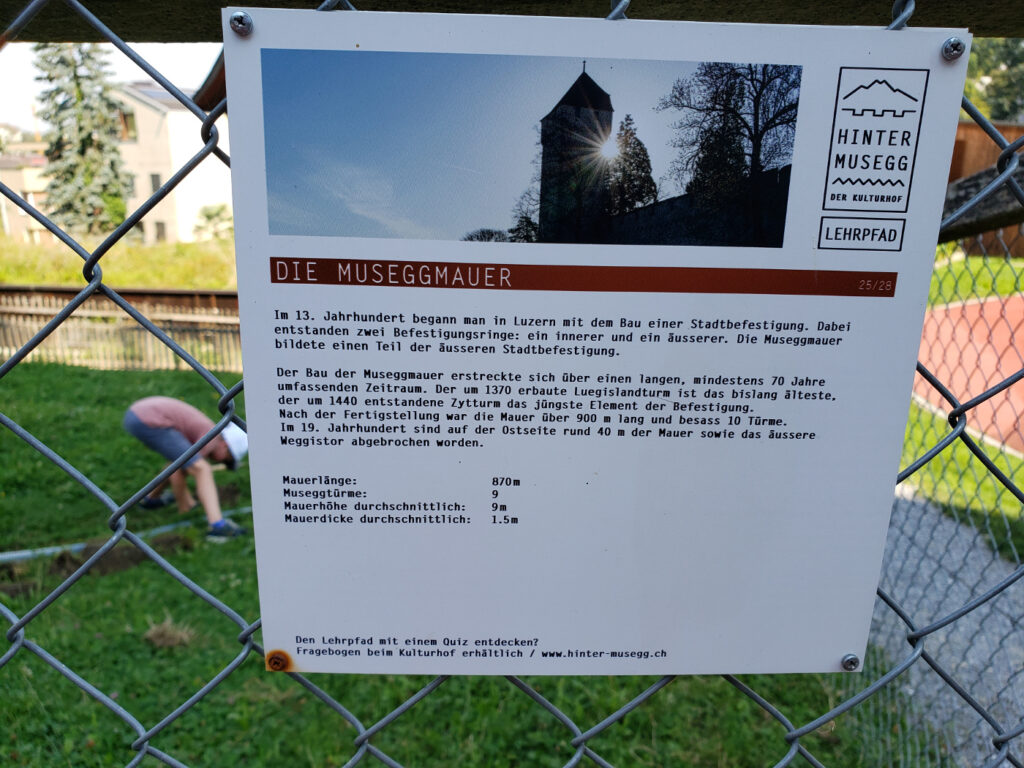
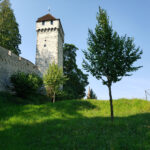
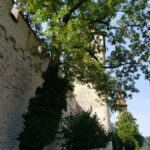
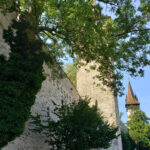
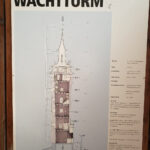
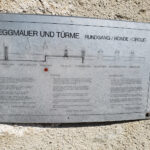
The Musegg Mauer, or wall, is a long and imposing edifice of the city. It climbs the hill rapidly on the side of the Spreuer Bridge, starting at the Nölliturm, and ends almost at the other side of the city before Zürichstrasse, with the Dächliturm. The towers are arranged as seen below, some of which, like the Wachturm, can be visited.
The Towers and Their Arrangement
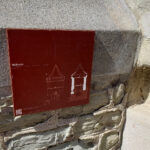
Information about the wall
Here is a short slideshow of our walk around the wall, up the Wachturm and along the top of its wall for some way.
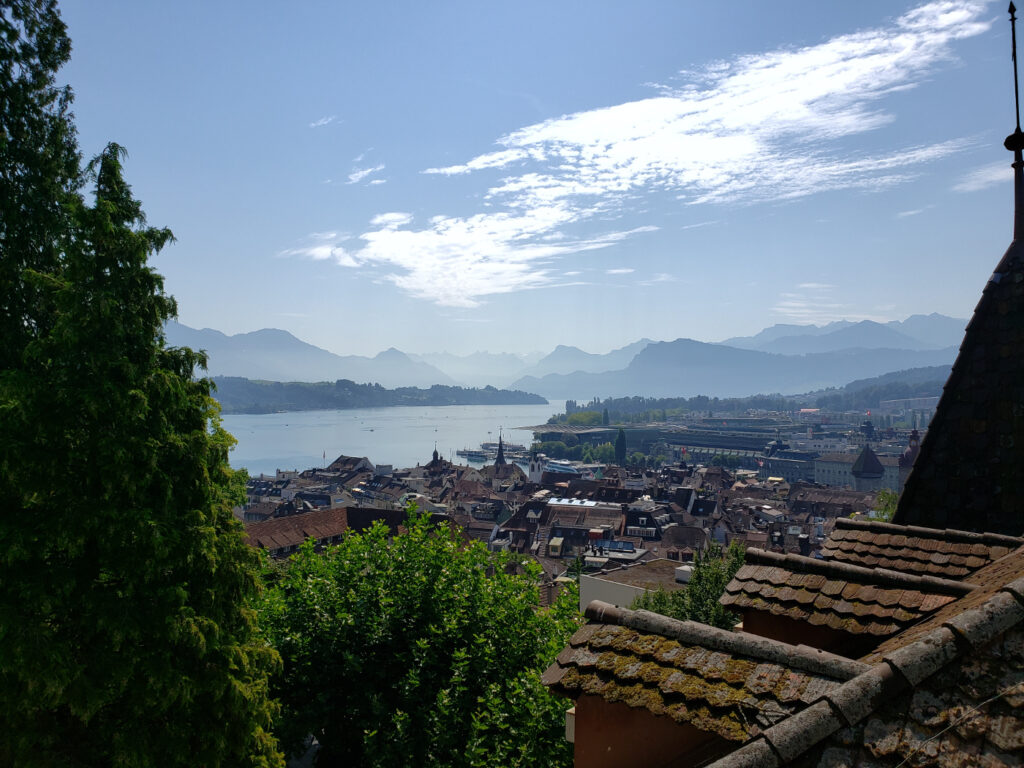
Overlook of Luzern
Using the legend provided above, you should be able to identify each tower by its unique shape.
Luzern The City
The rest of the city is geared toward shopping, eating and tourism. It is clear that some shops have fallen on hard times have closed, others are temporarily closed or are opening on modified schedules. Here are some views as you walk through the city.
Interesting Doors
Old Shoemaker
Old Pharmacy
Old Pharmacy Exhibit
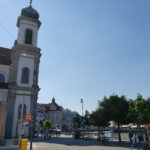
Franciscan Church
Interesting Doors
Interesting Doors
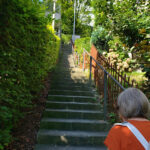
The Steps Always Go Up
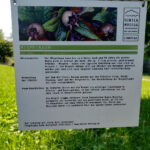
Mispel Baum
Mispel Baum
One thing to note, the city is full of interesting looking doors and cornices. If you keep your eyes open you may see a few things you likely not see elsewhere.
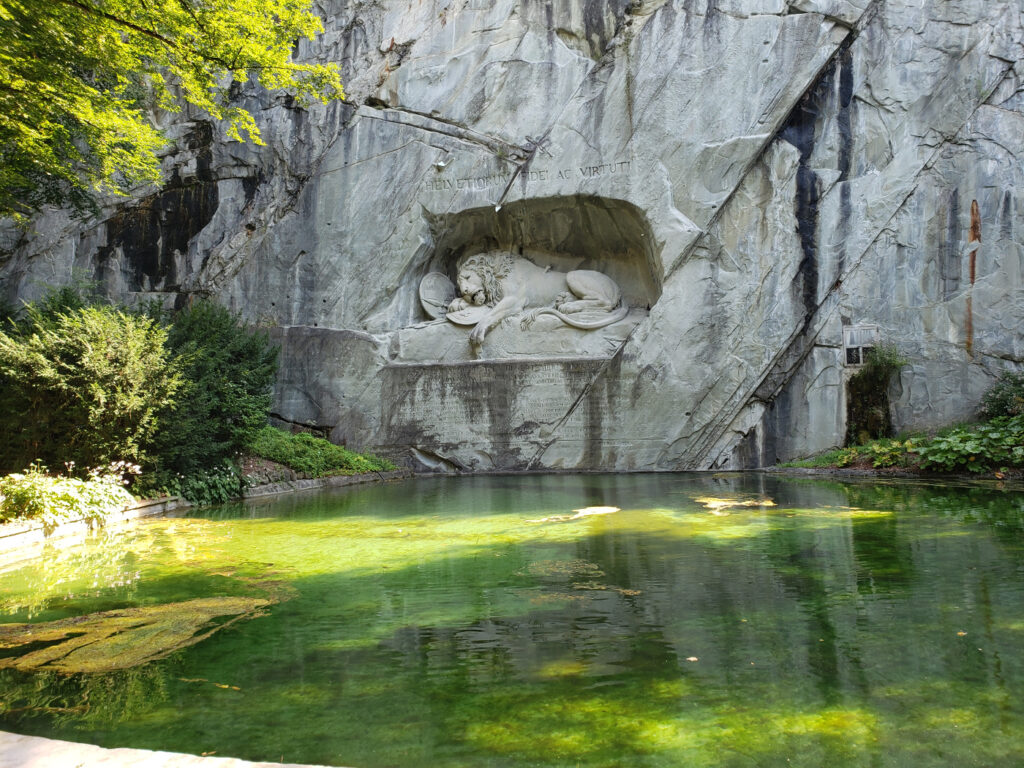
The Lion Monument
Hidden across the Zürichstrasse and in the same area as the Glacier Garden, is the Lion Monument of Luzern. A carving out of solid rock in a very quiet and tranquil place in the middle of a city.
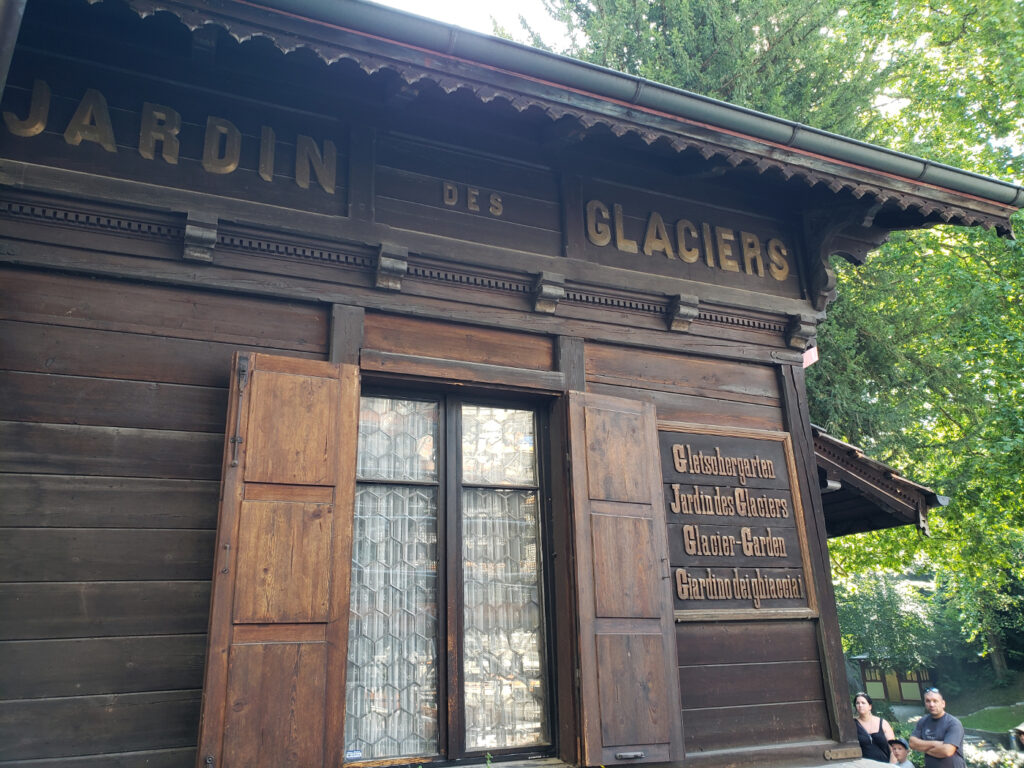
Glacier Gardens
The Lion Of Luzern
So, if you are looking for a relaxing spot to end your day of walking the town, this park will provide the quiet you need. It is open to the public for free, however, for the Glacier Gardens, there is a fee of 12CHF per person.
Overlook of Luzern
Restaurants
The Rathaus Brauerei
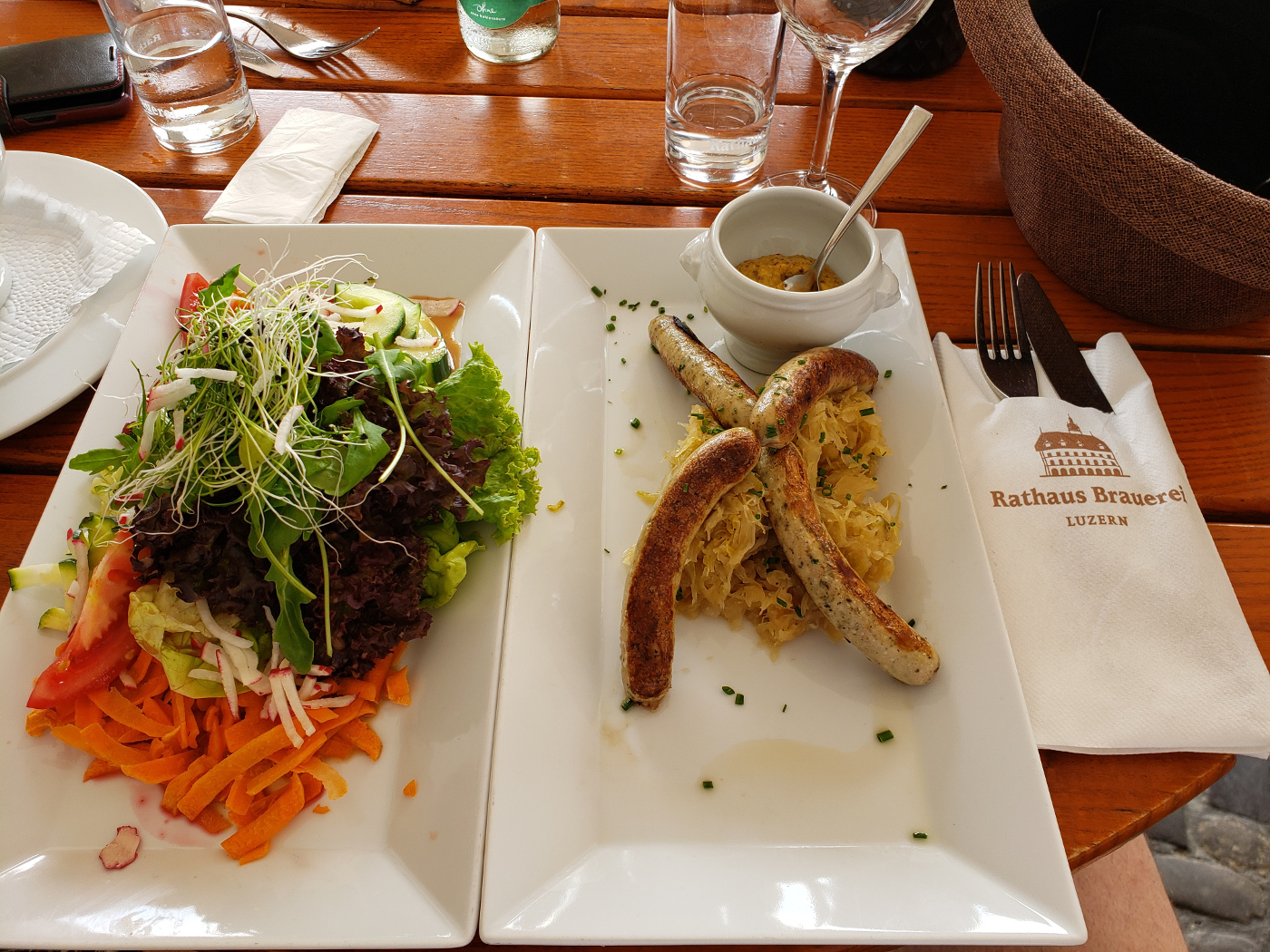
If you are hungry and need a bite to eat while walking around, or just need some good Swiss food, the Rathaus Brauerei may fit your needs. It has customary Swiss fare at a reasonable price. They even have expresso and a good selection of wine and beer to wash it down. We had soup, water, wine a large mixed salad, an order of Wurst with Sauerkraut, expresso and Sambuca, all for the reasonable Swiss price of 63CHF. I say reasonable, because all food in Switzerland is expensive. By the way, they have great mustard here, enjoy!
My Salad and Wurstchen Plates
Well that’s it for what we call a whirlwind tour of Luzern. Normally, we like to stay awhile in a place to get the real feel for it, but it was more of a waypoint for us on our way back to Turin. We were glad we stopped by to enjoy what it had to offer, even though it was still very quiet due to the affects of the pandemic.
After our stay in Offenbach, we headed to Switzerland using Germany’s ICE service. We of course experienced the customary breakdown, or what they like to call a Technische Störung, a German euphemism for someone committing suicide on the tracks, or just the Deutsche Bahn not being able to run a railroad. We have actually not ridden an ICE that did not have an issue, and from the comments we heard from the other Germans, they haven’t either.
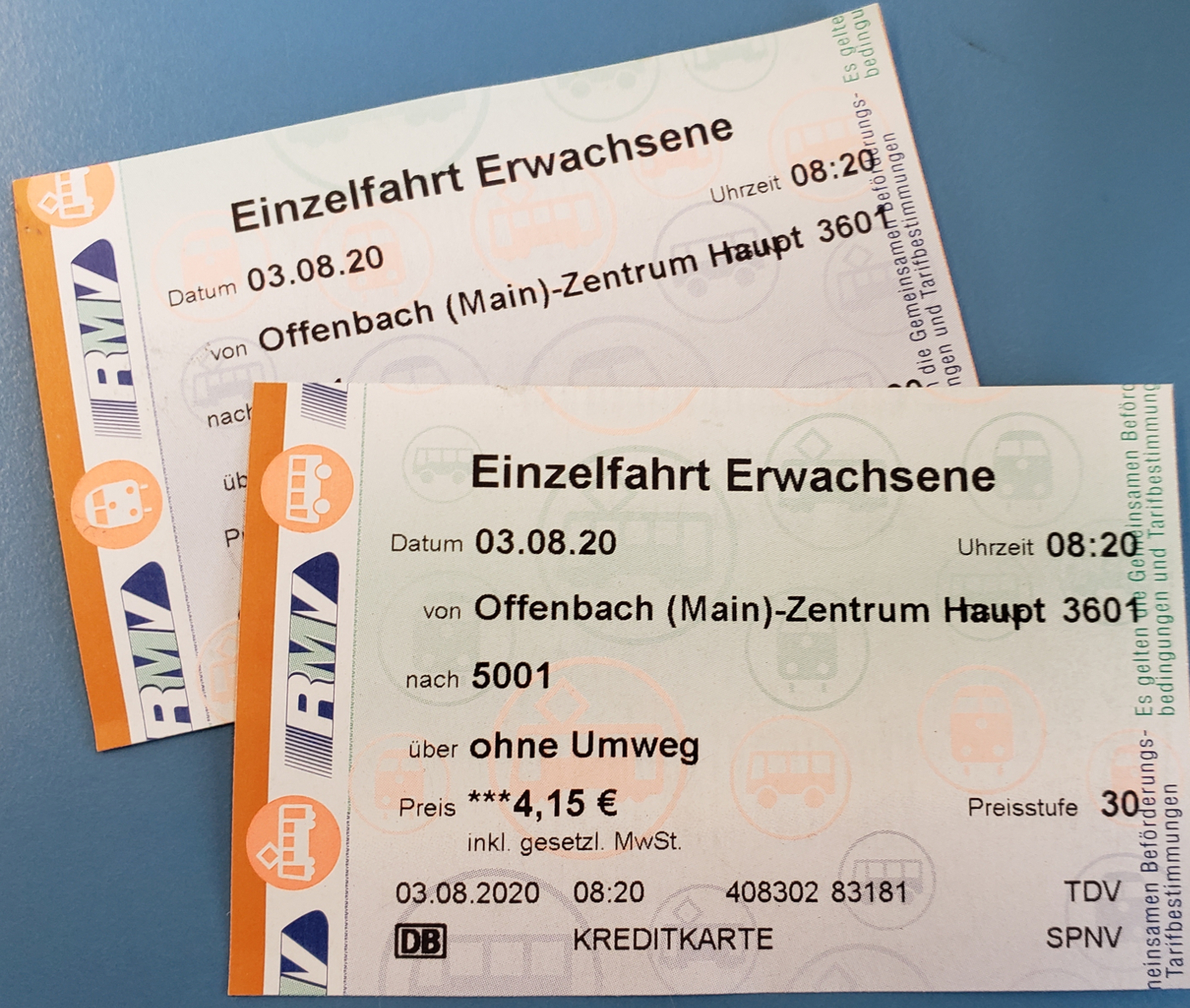
Tickets For Two – Offenbach To Frankfurt
We arrived in Basel SBB too late for our connecting train, so after waiting a further half an hour, we finally made it to our destination, Interlaken, our stepstool to the Alps. Interlaken is a small city, sitting between two rather large lakes, the Thunersee and the Brienzersee.
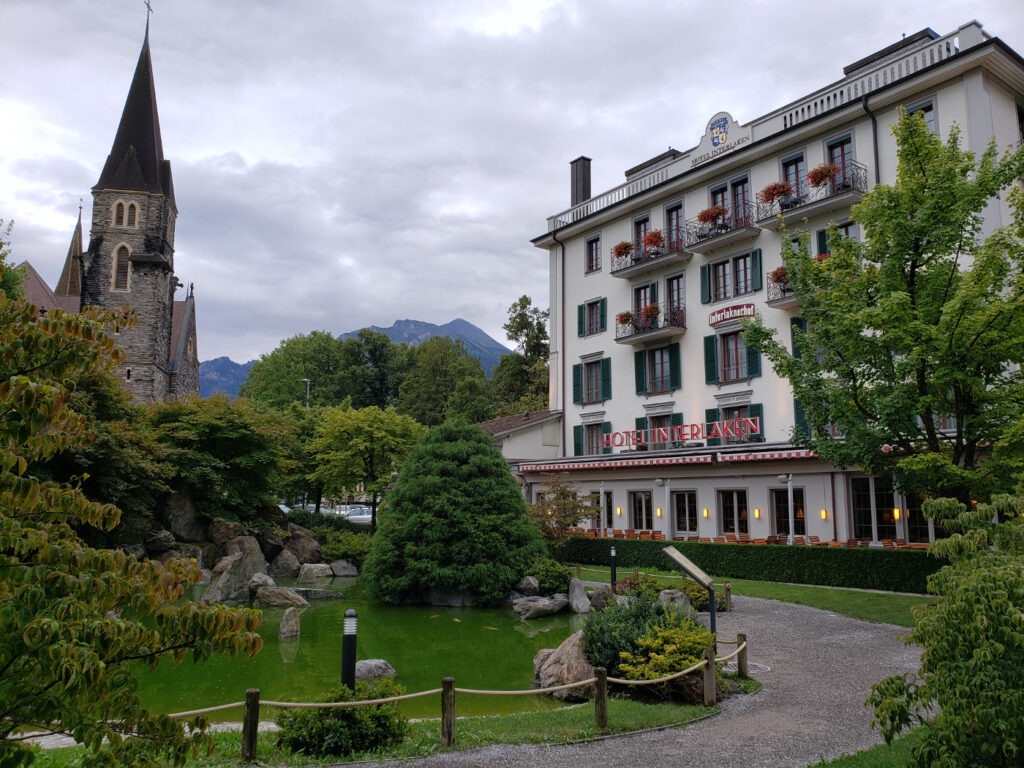
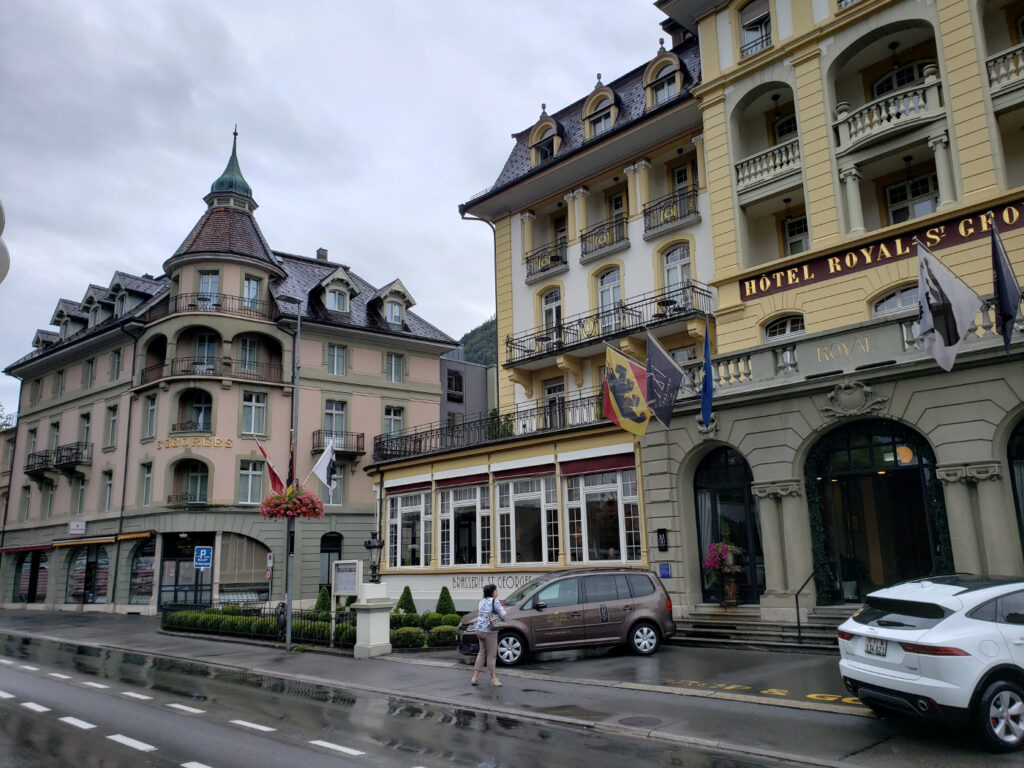
Hotel Interlaken
Hotel Interlaken
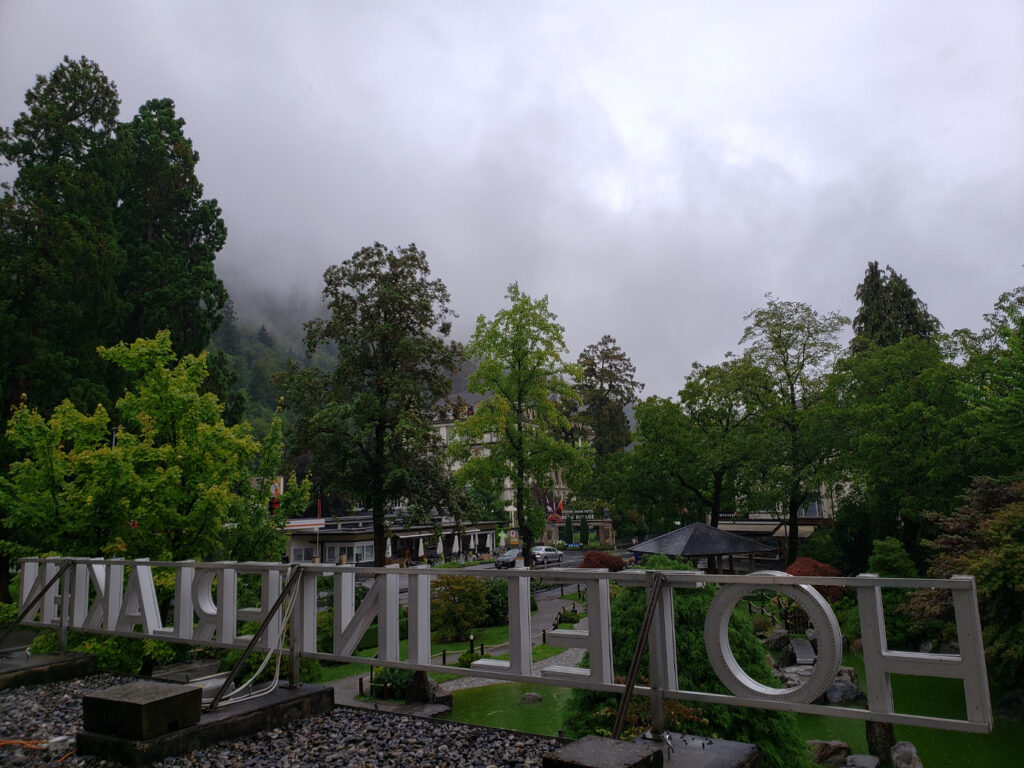
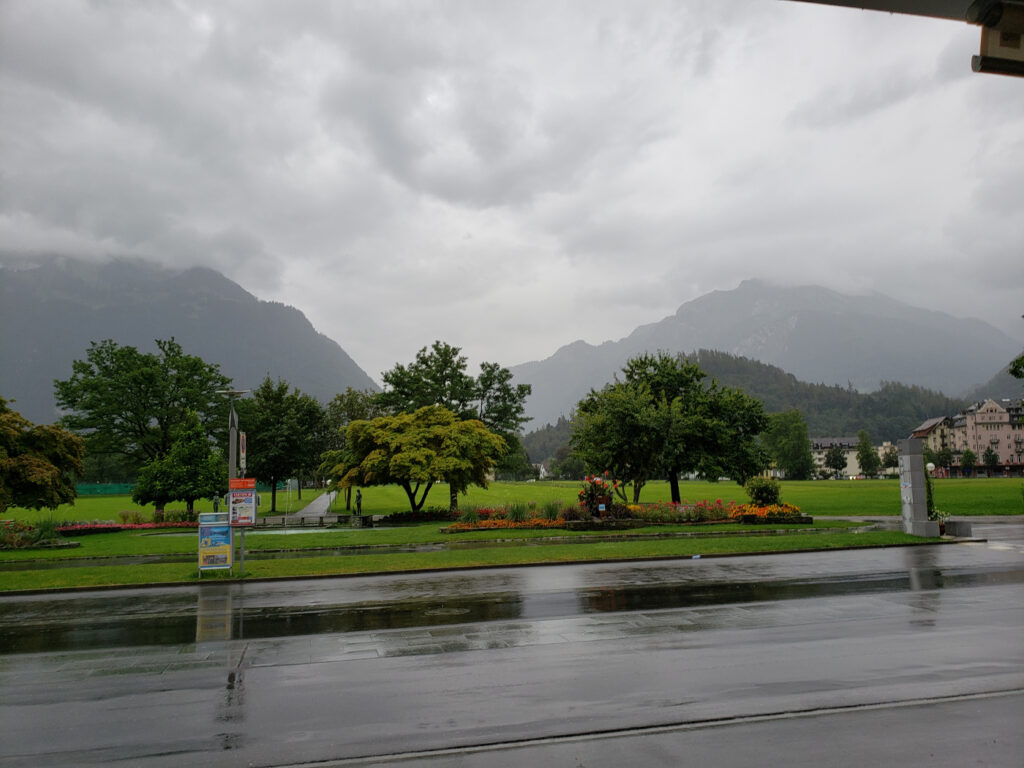
Hotel Interlaken – Rainy Day In The Alps
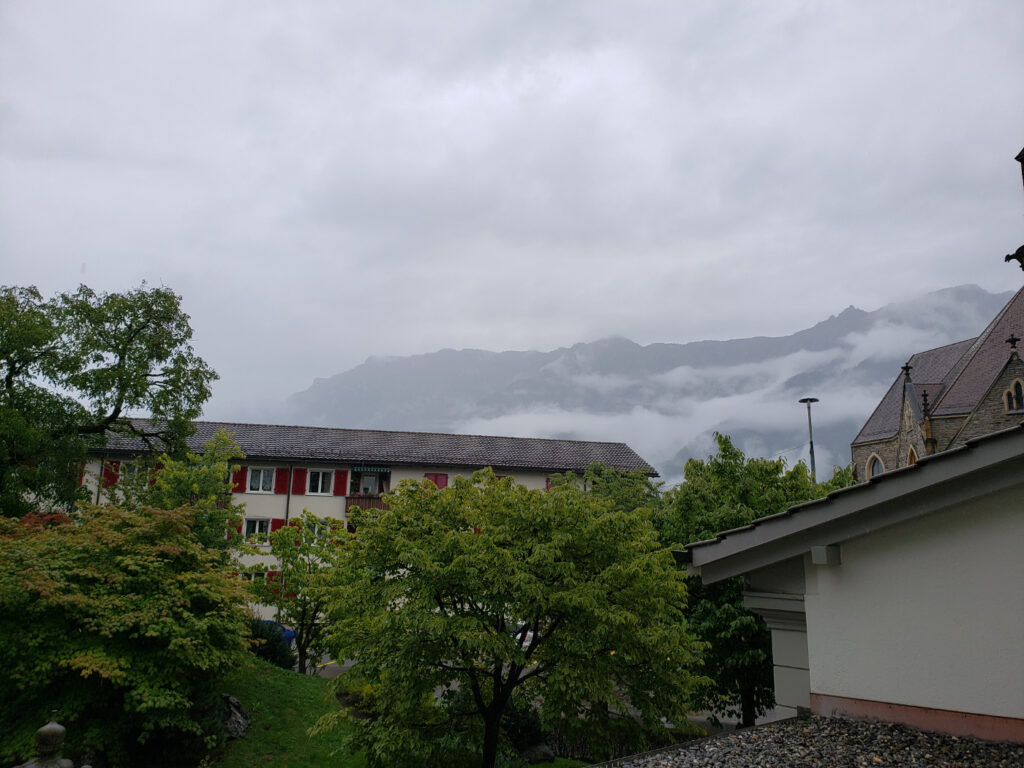
Interlaken – Rainy Day In The Alps
Interlaken – Rainy Day In The Alps
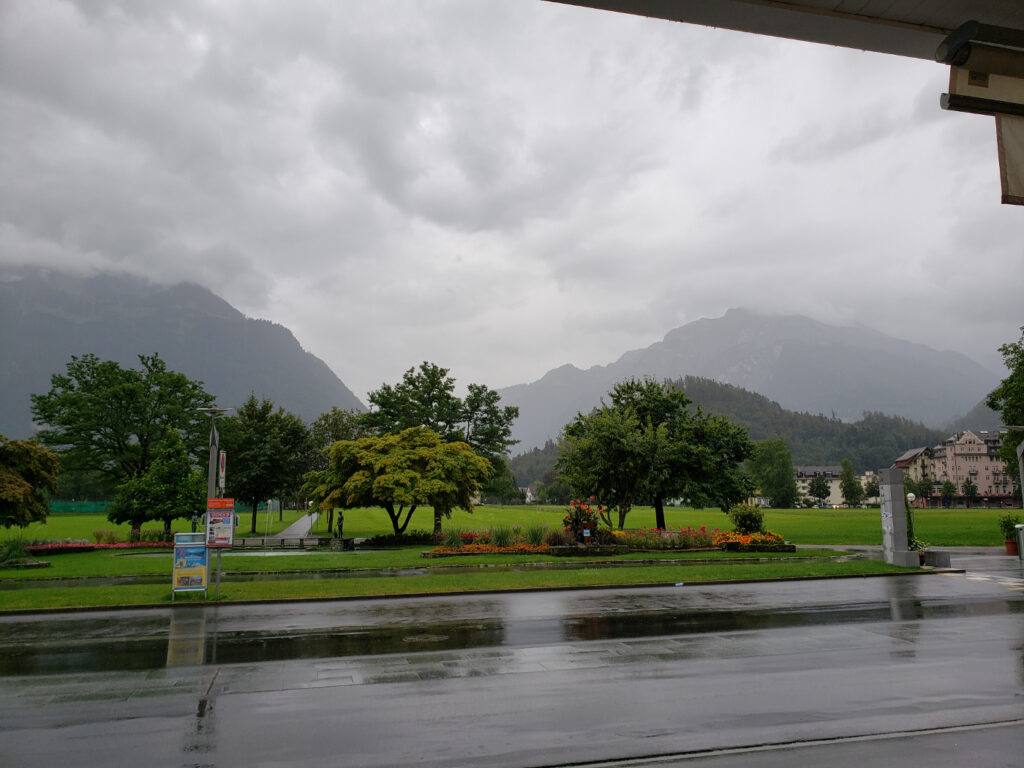
Interlaken – The Main Park
We stayed at the Hotel Interlaken, a four star hotel half way between the train station and the center of town, and handsomely situation across from the main park. Though it worked out well because of the rain, you should not worry about the location of any hotels in Interlaken, the city is not large enough to be too far away from either the Interlaken-West or Interlaken-Ost train stations.
Interlaken – The City
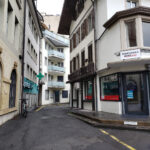
The actual city is what I would call confused. It appears, it does not know its identity, or what it wants to be. It appears to be conflicted between being a tourist town, a normal town for residence, or just a waypoint on someone’s map (train stop).
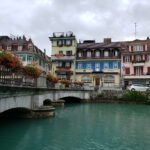
The Streets Of Interlaken
The Streets Of Interlaken
The Streets Of Interlaken
The Streets Of Interlaken
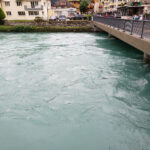
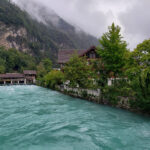
The Rain Swollen Aare
The Streets Of Interlaken
The Streets Of Interlaken
Typical Italian Restaurant
The Streets Of Interlaken
The Streets Of Interlaken
The Rain Swollen Aare
The Rain Swollen Aare
The Rain Swollen Aare
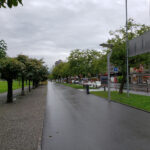
The Park Walkway In Interlaken
It has both expensive hotels, restaurants and casinos, and then less fortunate areas within a block of one another. Several areas look destitute, some historic (like around the tourist museum), others more disconsulate – where stores have actually closed.
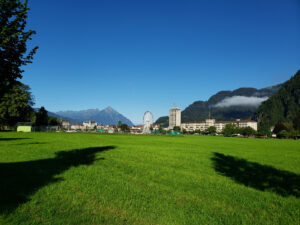
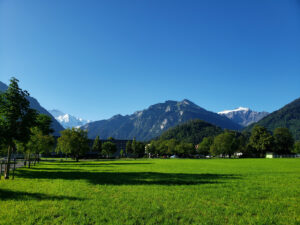
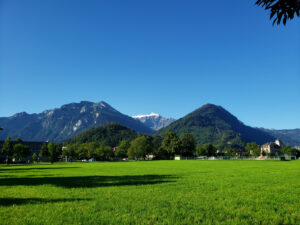
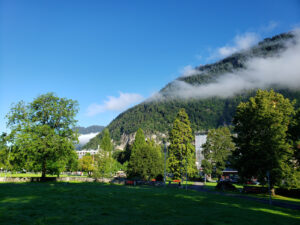
Amazing Views Of Interlaken – Without Clouds
Loucherhorn, Sulegg and Morgenberghorn – From The Main Park
Loucherhorn, Sulegg and Morgenberghorn – From The Main Park
End Of Augstmatthorn
Unfortunately, while we were there, all it did was rain for two days. But, I would rather have it rain in Interlaken, than in Grindelwald, which was our ultimate destination on this trip. To be fair, we were using it as a rest stop anyway, so no fuss, no foul. In any case, we got one day, the day we left, to get some amazing photographs of the mountains without clouds surrounding them.
As for recommending any restaurants in the area, we cannot. There are a lot of closed restaurants, an affect of the virus. The ones that are still open are fine, overpriced, like all food in Switzerland, but none remarkable. Hopefully others that travel behind us may have better luck when the city recovers a bit more. Now, on to Grindelwald, the Eiger and the Jungfrau, Tschüß!
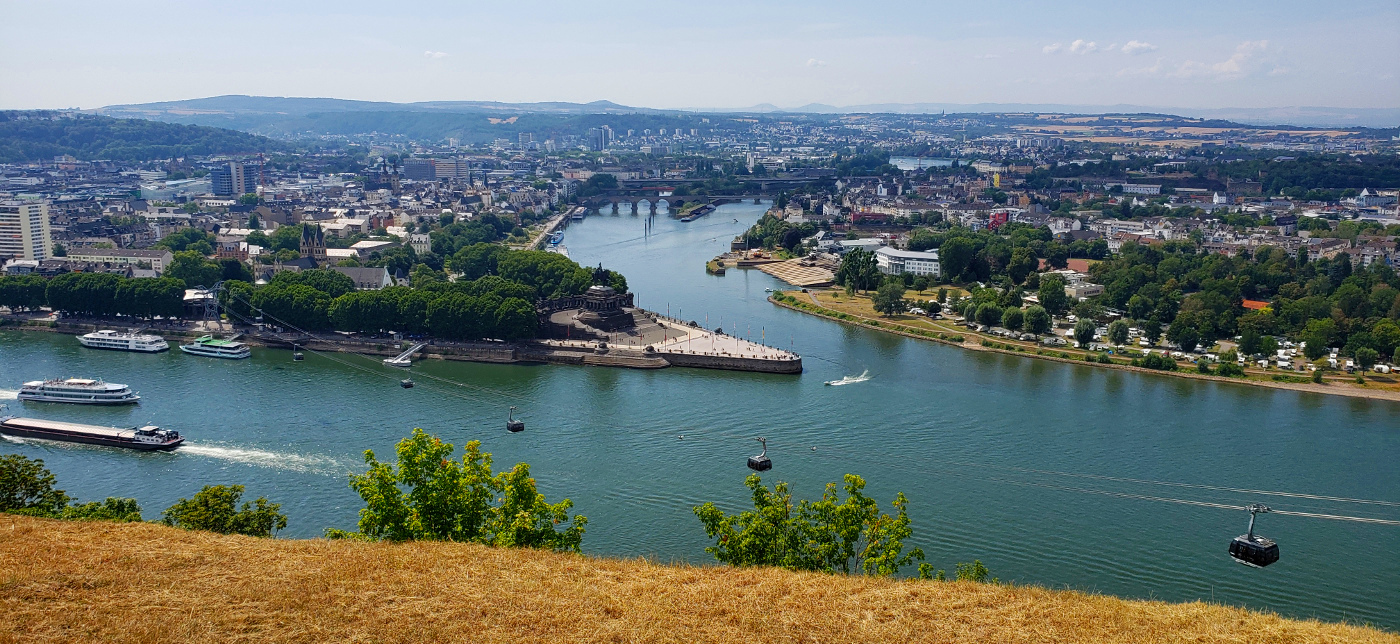
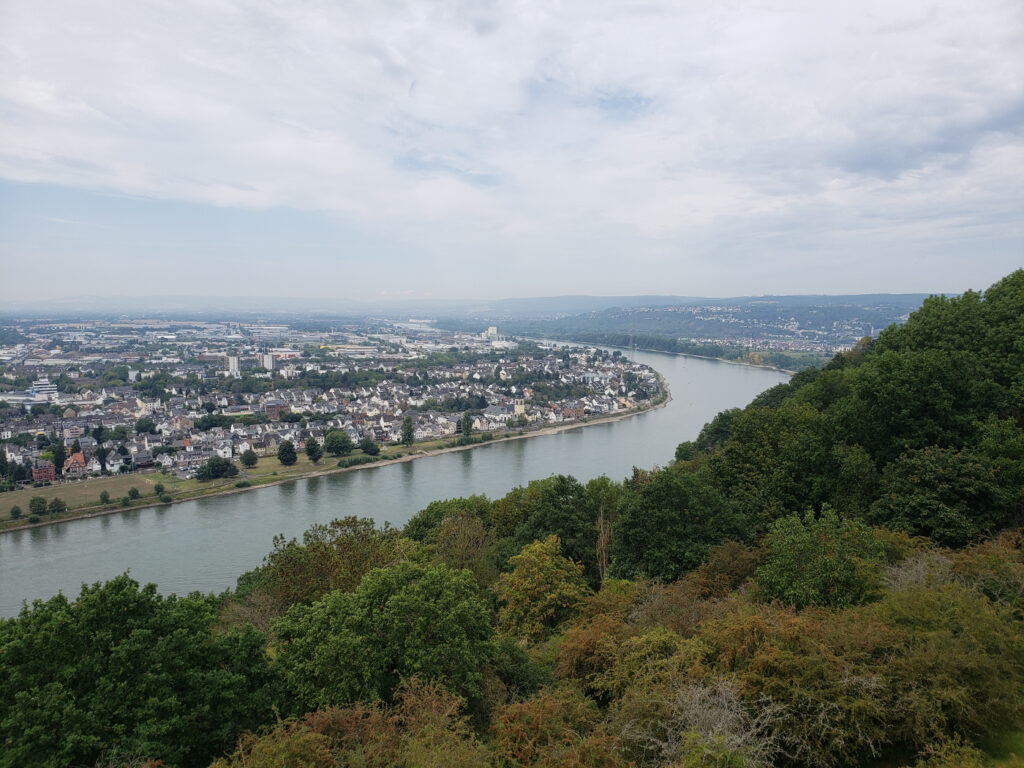
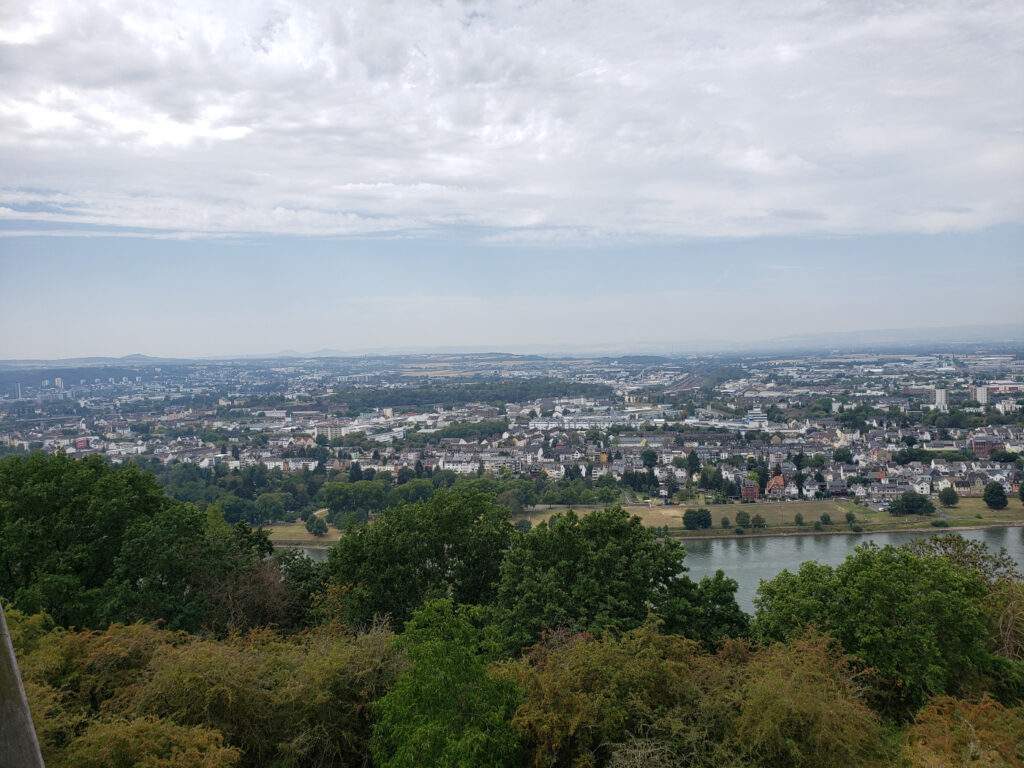
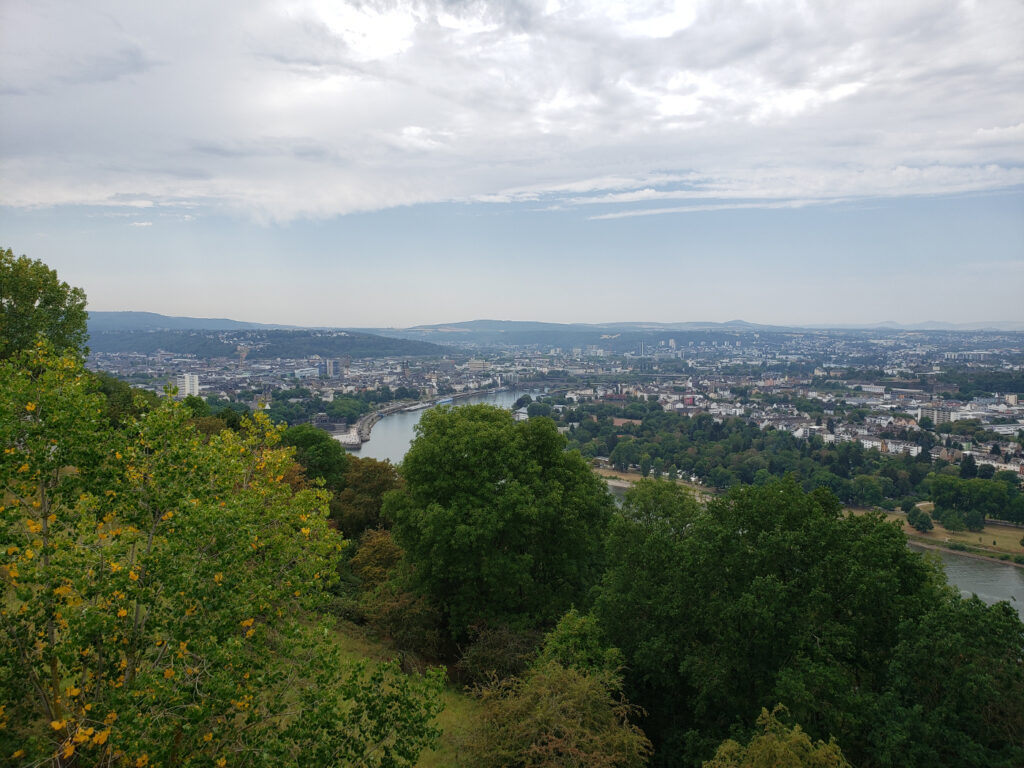
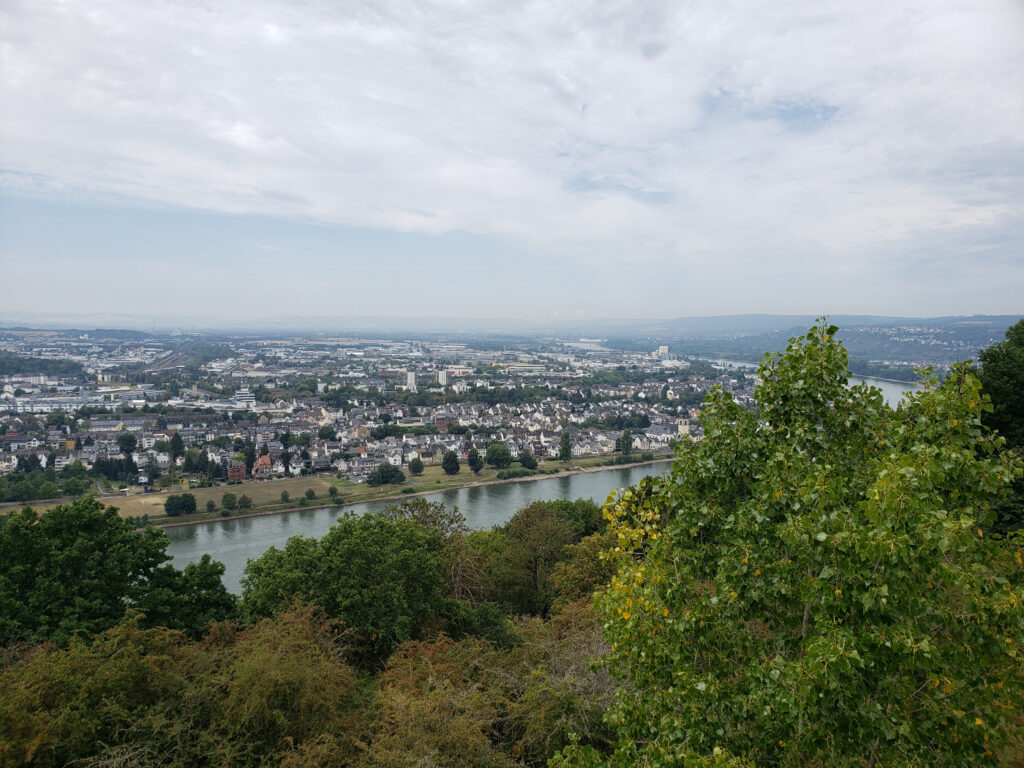
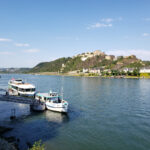
Situated between the confluence of the Moselle and Rhine rivers sits the city of Koblenz. The city, having been repeatedly bombed during the war, has been rebuilt and in some sections in the old style.
Koblenz – The Rhine and Moselle – Overlook From The Restaurant Casino – Ehrenbreitstein
We began our whirlwind tour of Koblenz in Ehrenbreitstein, the location of the Fortess that overlooks the two rivers.
Festung Ehrenbreitstein
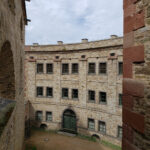
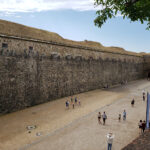
The Festung Ehrenbreitstein, or Fortress Ehrenbreitstein, is located atop of the hill across the Rhine from Koblenz, with a commanding view of both. There is a very nice park there, called the Festungspark, which includes an overlook of the rivers and several walking paths.
The fortress itself is about a half of a kilometer away from the parking for the park. But, there is also parking for it as well, if you continue to drive past the park. The problem with the parking is it get’s rather full quickly, and there is also a charge. But there is ample parking along the access road, so avail yourself of that if the parking is full.
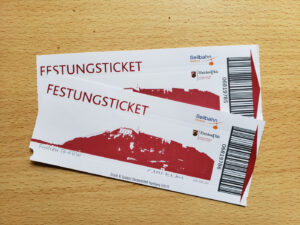
Fortress Tickets For Two
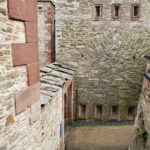
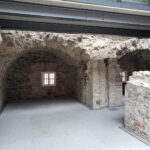
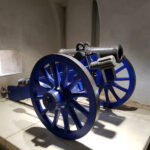
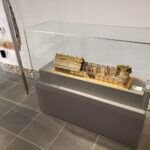
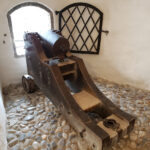
The fortress has several interesting floors of exhibits, dedicated to the buildings history and its uses. The exhibits go back to the Roman times and there are several examples of Roman currency, pottery and other tools. Additionally, there are more modern examples of cannon and other military weapons. Here is a short slideshow of some of the exhibits.
Outside Battlements
Reconstruction of Old Weapons
Exhibits
Fortress Interior
Fortress Interior
Fortress Interior
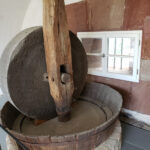
Old Wine and Grain Wheel
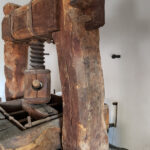
Wine Press
Wine Barrel Cart
Old Ink Display
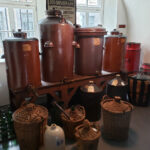
Exhibits on Different Vessels
Old Slides of the Area
More Slides of the Area
Old 7pdr
Old 22Pdr Cannon
Fortress Interior
Diorama of old Buildings
Roman Exhibits
Fortress Roofing
Diorama of Ancient Times in the Area
Koblenz – Parts Of The City
We were not able to see all of the city, due to some constraints on our time, but we still saw enough of it to get the feeling it’s a very vibrant city.
Historical Koblenz
There are plenty of tourists and with numerous cafes and restaurants, there are no problems to sit down and have a drink or something to eat.
There are also stark differences between the old and newer sections, one trying to hold onto the past by cobblestones and fachwerk houses, the other marching into the future with malls and boutique stores, supplied by a seemingly busy bus network.
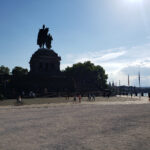
Deutsches Eck
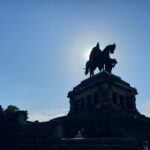
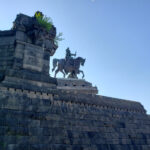
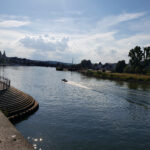
The Deutsches Eck, or German Corner, is the point at which the confluence of the Rhine meets the Moselle. There is also a large park here and several landmarks to visit.
Monument to German Unification
Deutsches Eck
Monument to German Unification
Monument to German Unification
Deutsches Eck
Up The Moselle
Deutsches Eck
Boats
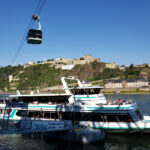
Cable Car to Ehrenbreitstein
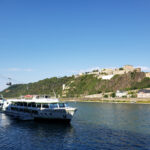
River Cruises
Deutsches Eck
Park Near The Deutsches Eck
It is also the launch point for several Rhine river boat tours, including the familiar Viking River Boat Cruises. We enjoyed our day in Koblenz, it holds many interesting places to visit, too many for a single day tour. But even with one day, there is plenty to do and enjoy.
Salzburg is the name for both the state and capitol of Salzburg. It is also the birthplace of Wolfgang Amadeus Mozart, arguably a genius and the most accomplished musician and composer of all time.
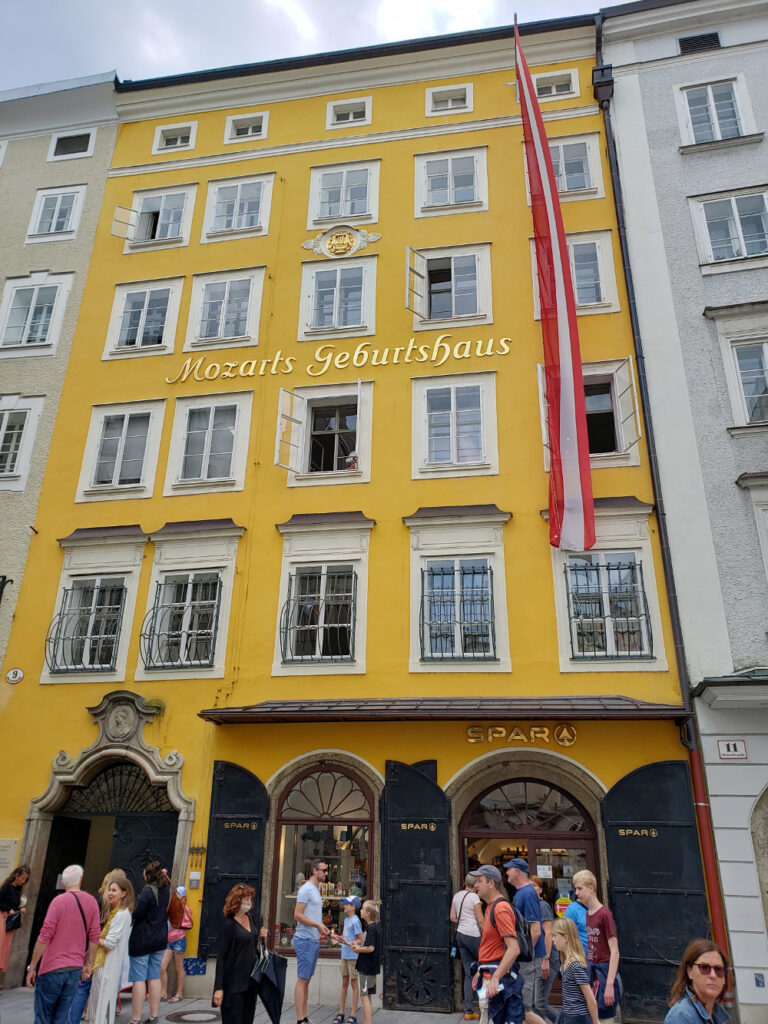
Mozart’s Birth House
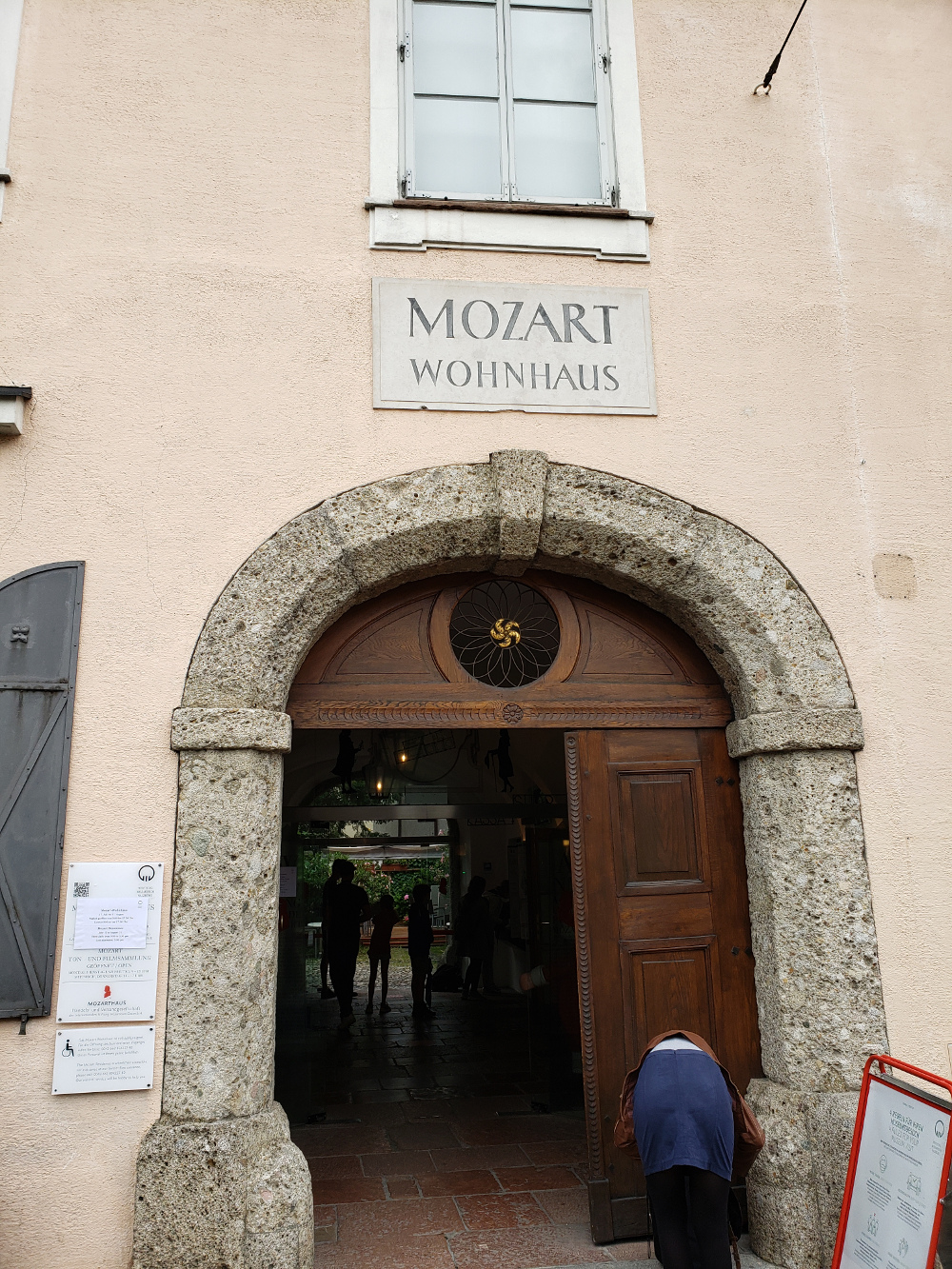
Wolfgang Amadeus Mozart also lived in Salzburg, along with his family. One can visit the Mozart Wohnhaus, which today is a museum. The cost for entry is around 12€ per person, 10€ for senior citizens. There are also family and group rates. The fee comes with an audio guide which is filled more with music than biographical data. The museum has quite a collection of artifacts from his life, especially numerous letters he wrote to his wife. One can go through the entire six rooms in less than an hour.
Mozart’s House
While in the museum you will learn some interesting facts about the composer, for example his stature. He was on one and half meters, or fifty-eight, fifty-nine inches or about five feet tall. I guess what he lacked in height he gained in his ability to play and compose extraordinary pieces of music. Worth a visit if you have the time.
A Walkable City
Salzburg is by every measure, very walkable. The city also enjoys a very robust electric bus system and plenty of alternative forms of transportation, including bicycles, electric personal scooters and even river boats.
Entrance
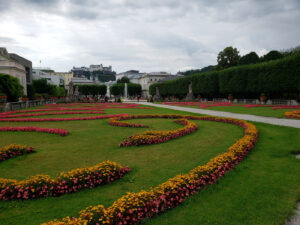
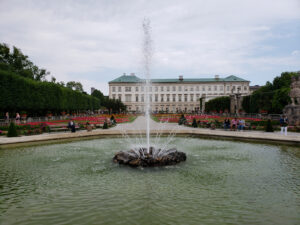
Mirabellgarten
The Mirabellgarten in Salzburg is a great place to take some time back from walking and the general hustle and bustle of seeing the sights. It is located toward the river Salzach on the East side of the city.
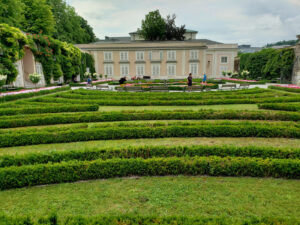
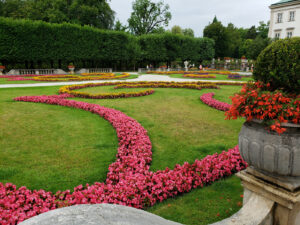
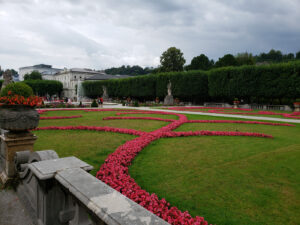
The garden belongs with the Schloss Mirabell, which is an imposing structure and site. It has ample seating and benches along its borders to sit and enjoy the flowers and its grand fountain, the Vier-Elemente-Brunnen.
Hohensalzburg Fortress
The Hohensalzburg Fortress sits atop the Festungsberg, or fortress hill, of Salzburg. It has a commanding view of the city and the countryside. Apparently build in four stages it became a formidable fortress in its hayday.
The View from Festung Hohensalzburg
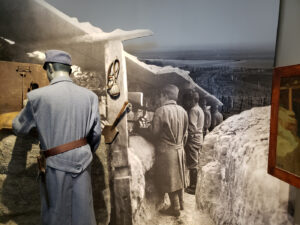
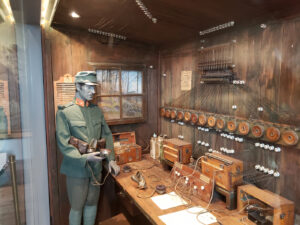
For around 12€, the basic entry pass get’s a trip on the fernicular rail to the top and back and entrance in to most areas of the castle, excluding the bishop’s quarters. The entire reason for even having a fortress is to command military might in the region, the fortress has several rooms around this theme.
Examples of World War I Soldiers and Outposts
Examples of World War I Soldiers and Outposts
Examples of World War I Soldiers and Outposts
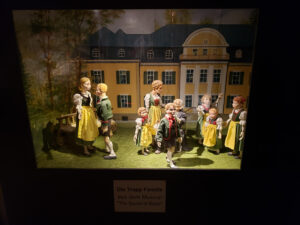
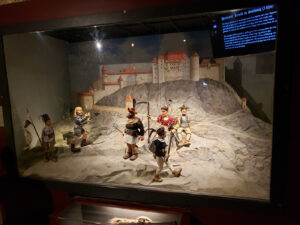
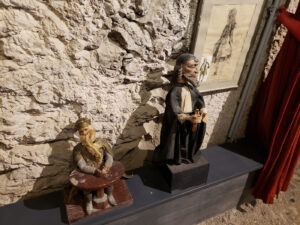
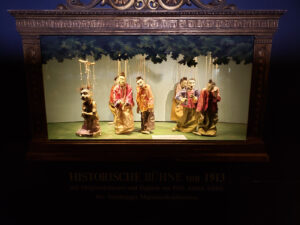
There is also a Marionette or Puppet Museum on the premises. It has several works by a famous Puppeteer Master and several diorama around their history and use. A very interesting museum for the younger audience.
The remainder of the fortress includes the history of the actual structure, how people lived inside its walls and the involvement of the church in it’s operations. Here are some additional scenes from the fortress.
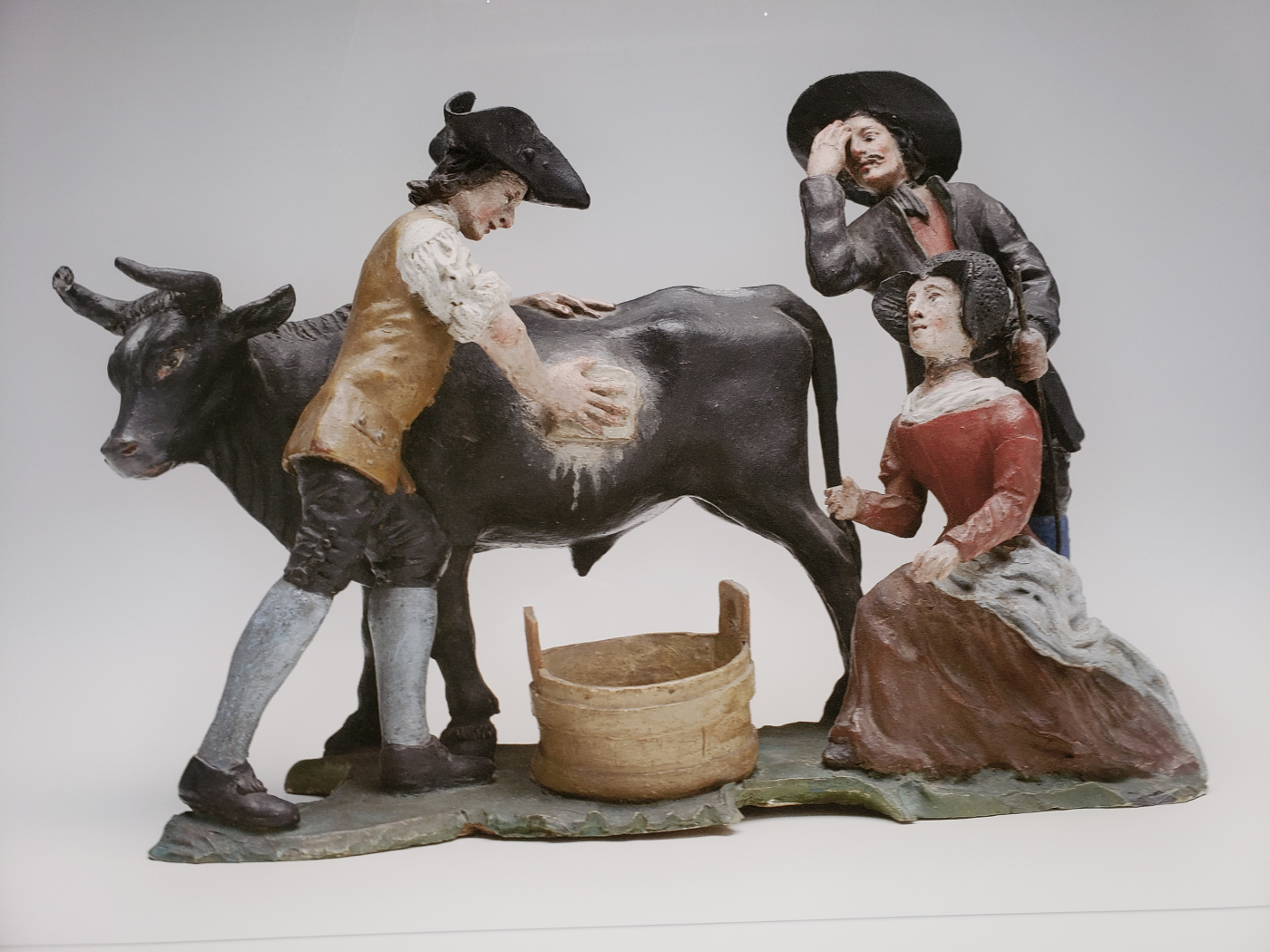
Finally, residents of Salzburg are often referred to as Stierwasher or “Bull Washers”. This epithet comes from a tale out of the Siege of the Fortress during the great Peasants’ Uprising. Apparently the fortress was staring to run out of food and one soldier had a great idea. He took the bull that was left and painted it a color, then he went down and show his enemies the bull. He did this for several days, painting the bull a different color each day. At some point the enemies decided the fortress still had too much food and they would never be starved out, so they retreated and left. A happy ending, I guess, except it took the population several days to wash all the paint that had accumulated on the bull, giving them the name Bull Washers!
Salzburger Bull Washers
Kapuziner Kirche Und Kloster
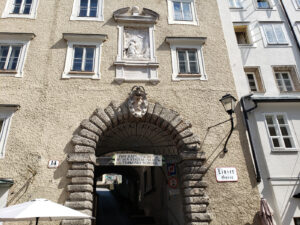
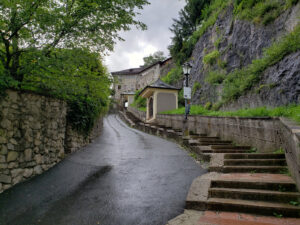
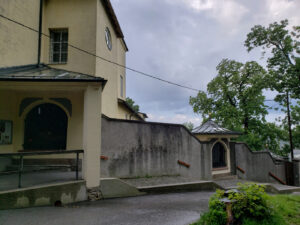
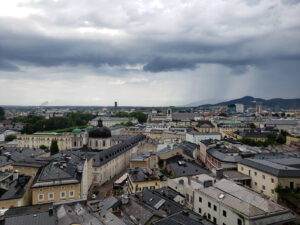
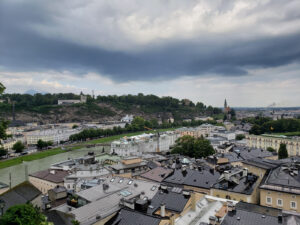
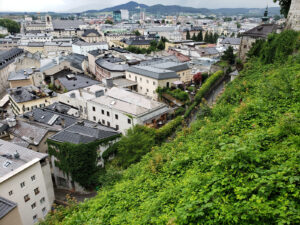
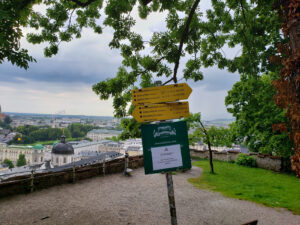
The Kapuziner Kirche and Kloster sits atop of Salzburg, with an amazing overlook of the city. There is a short climb to get up there, but once there, the overlook is great.
Entrance
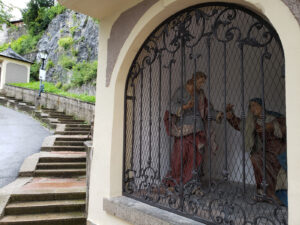
Religious Stations Along The Way
Steps – The Way Up
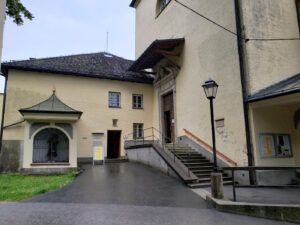
Kloster
Church
Salzburg
Salzburg
Salzburg And The Way Up
Trails On Top Of Kapuzinerberg
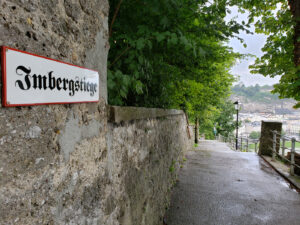
Imbergstiege – The Way Down
Unfortunately, we had a rather rainy morning when we ascended to take our photographs, but they still came out pretty well.
Restaurants
While in Salzburg we visited the following notable restaurants.
Gasthof Alter Fuchs
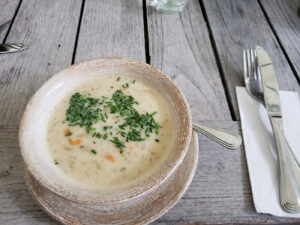
The Gasthof Alter Fuchs is a typical Austrian restaurant, serving typical cuisine for the area. They have, “die beliebten Klassiker der österreichischen Küche“, or the most beloved classic of Austrian cuisine, Wiener Schnitzel and more on the menu.
Potato Soup
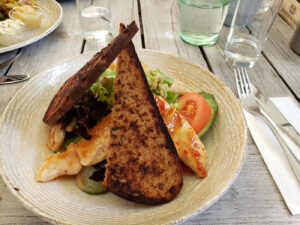
Mixed Salad with Chicken and Toast
Boiled Beef with Vegetables
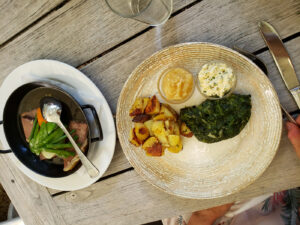
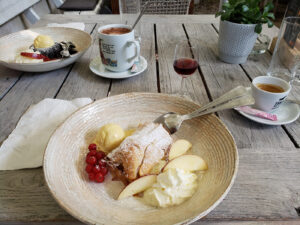
Apfelstrudel
Everything we ordered was delicious and with wine and water it all came to less than 50€!
Sternbräu Biergarten
The Sternbräu Restaurant and Biergarten is billed as delivering authentic Austrian cuisine. Their menu seems to be full of unfamiliar items, for example Salzburger Nockerl, and many favorites like Bratwurst. A very busy and large place that seems to have many servers, but even so, you may find service a bit slow.
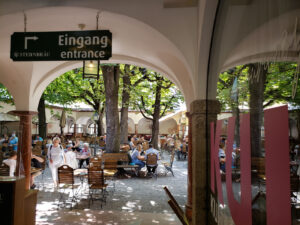
Beer Garden Entrance
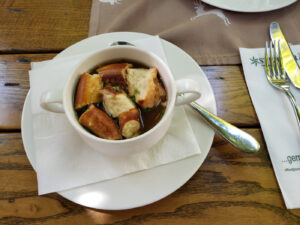
Soup with Pretzel
Patti enjoying Lunch
Ready to eat Bratwurst
Bratwurst Platter
Salzburger Nockerl
We were hungry, so had a rather big lunch that included wine, water and the items shown above. Budget-wise, this place is a bit more expensive than some others, so be prepared to pay a small premium for wine and perhaps even beer. Our entire lunch came to 69€.
Cafe Tomaselli
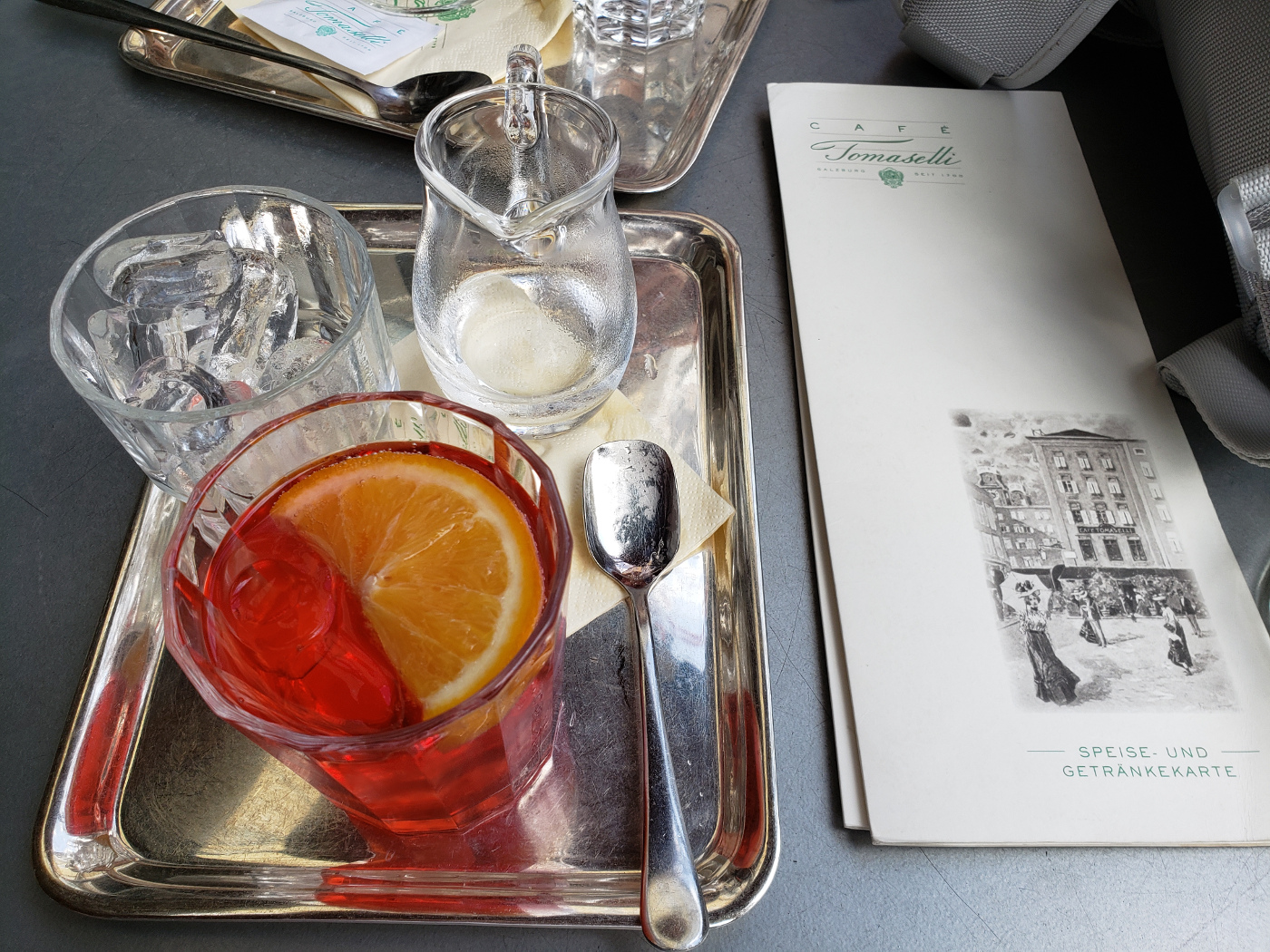
Apparently one of the places for a drink to go in Salzburg is Cafe Tomaselli. They also serve breakfast and some other small things like ice cream. We stopped here for a quick drink and found the prices fair and drinks very good.
Campari and Soda – The Elegant Way
We ordered an Iced Coffee with Vanilla Ice Cream and a Campari with Soda and the bill came to 11.60€
Gasthof Wilder Mann
Another great place for lunch is the Gasthof Wilder Mann. The Eintopf, or soup we can say is fresh and first rate. We had the Vegetable Beef Eintopf, which came with a lot of beef, yellow and orange carrots and thin spaghetti noodles. It was spiced just right and delicious.
Gasthof Wilder Mann
Eintopf
Mixed Salad with Chicken
We also order water, white wine, a Mixed Salad with Chicken, coffee and schnaps, and our bill came to 44€.
Our last day in Munich completes itself with a trainride to Heidelberg via Stuttgart. Taking the inter-city IC trains was a snap using the trainline-eu phone app.
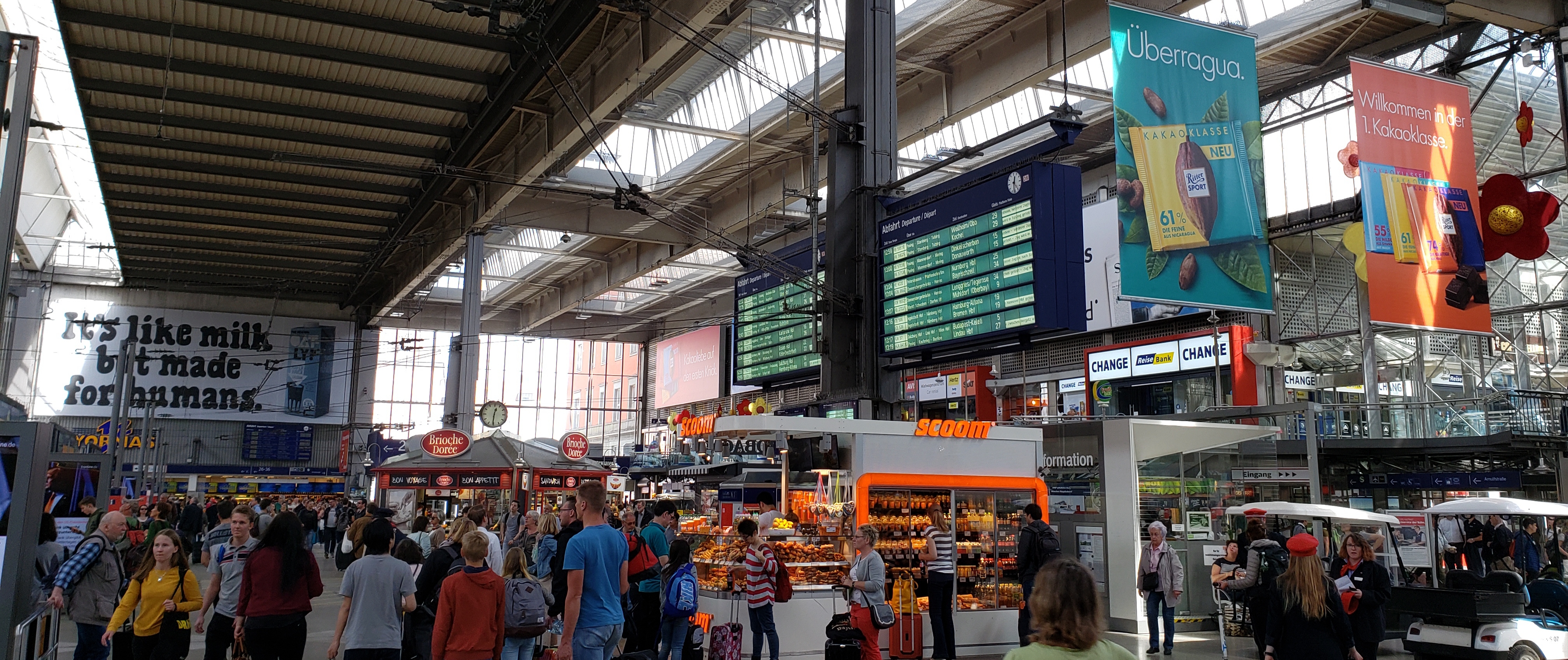
Munich HauptBahnhof
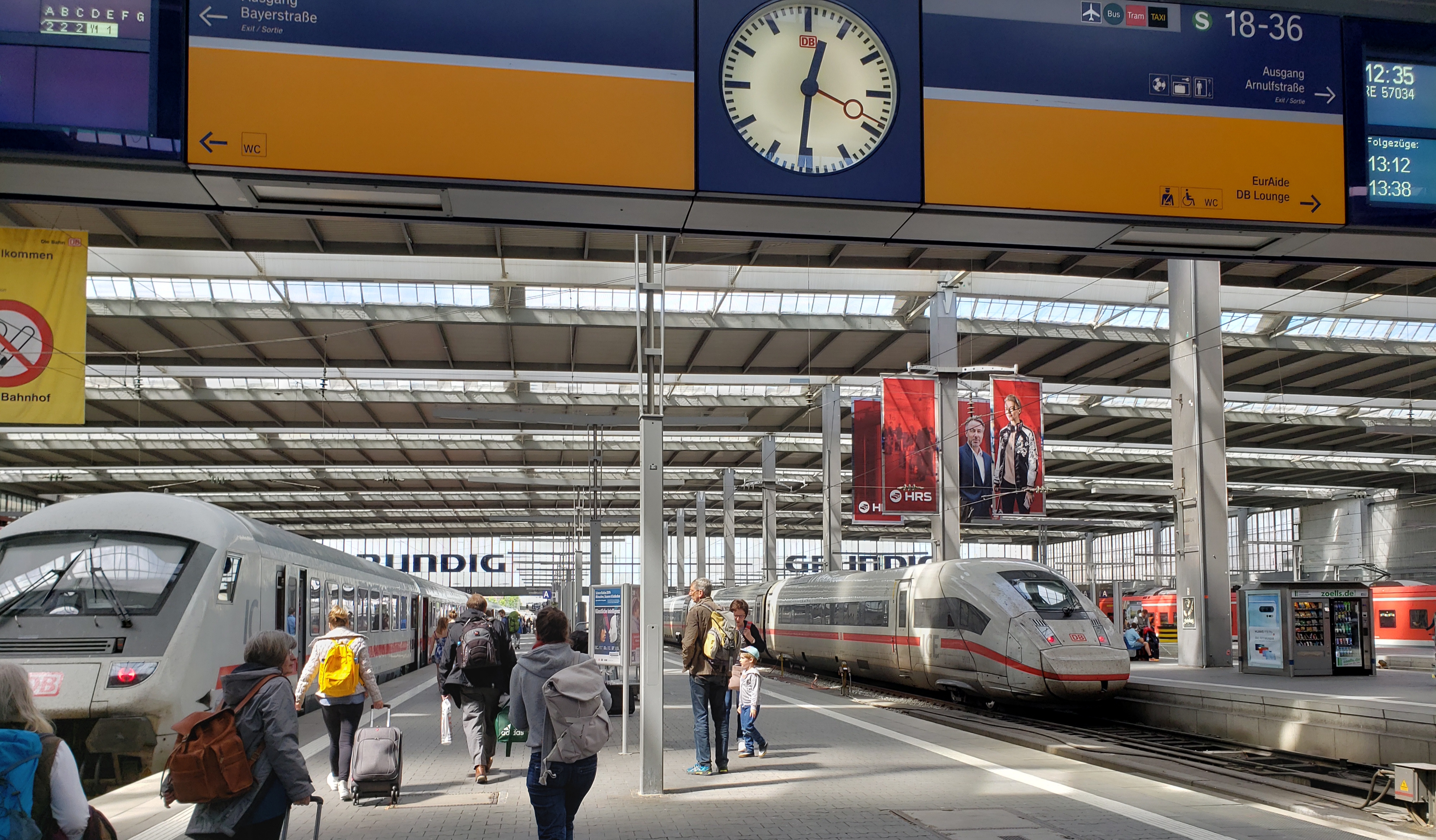
Munich Hauptbahn is my favorite train station, leaving it behind is both a memory and an auf wiederschauen.
Munich Hbf platforms
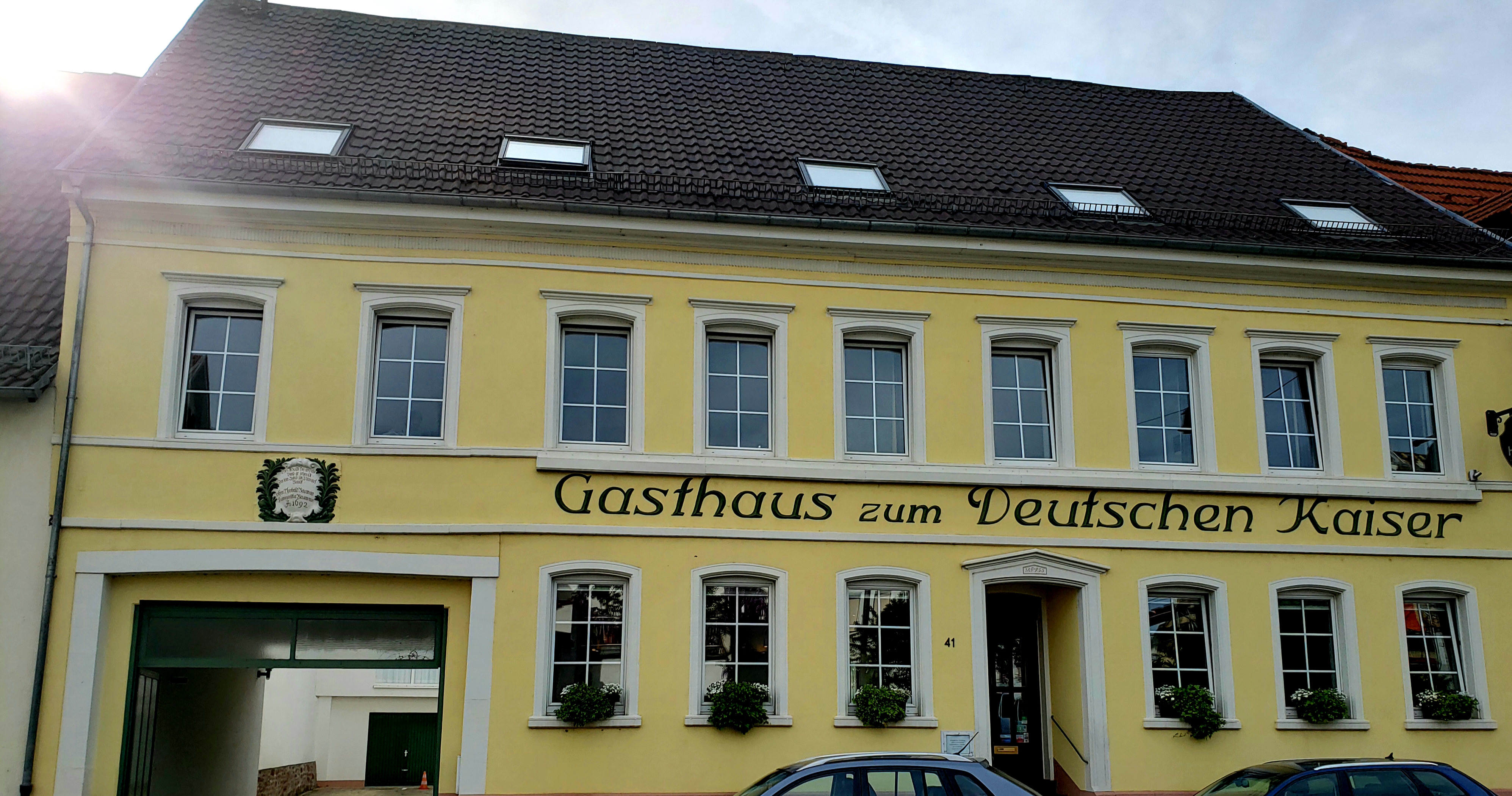
We arrived on time and took streetcar 24 to Mühltalstrasse and the Gasthaus zum Deutscher Kaiser hotel.
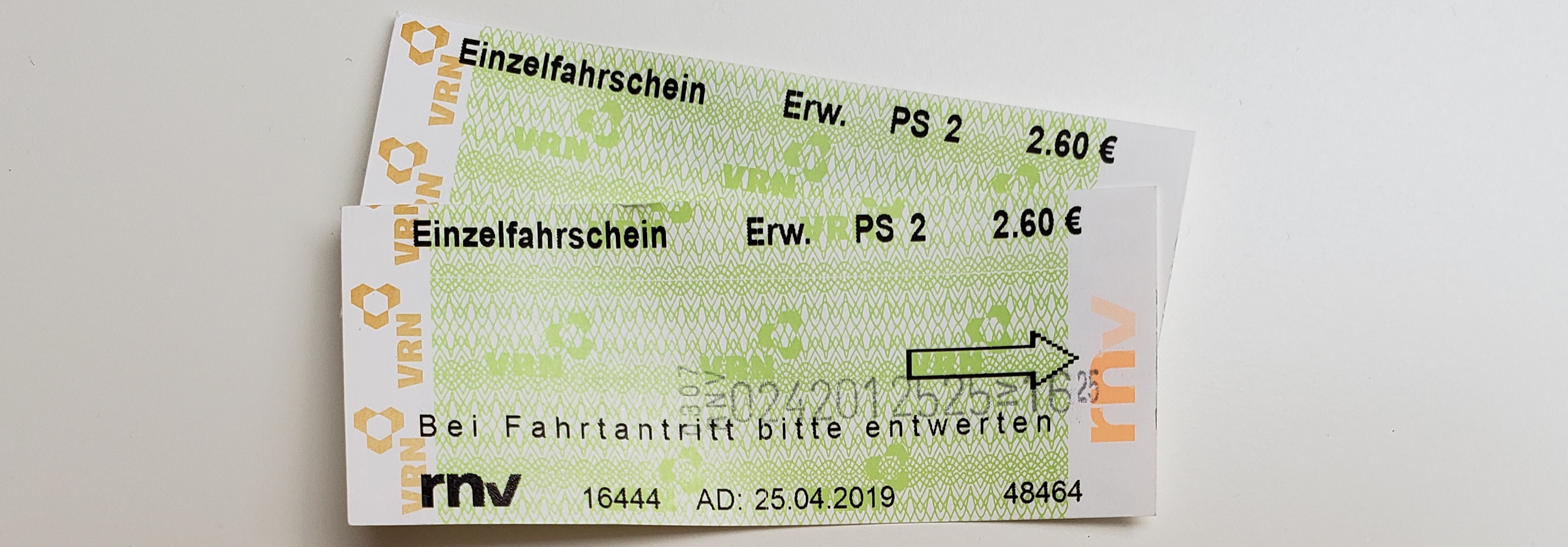
Two tickets to Handshuhsheim
A quaint, newly renovated, nothing to speak of personally owned hotel, with breakfast included.
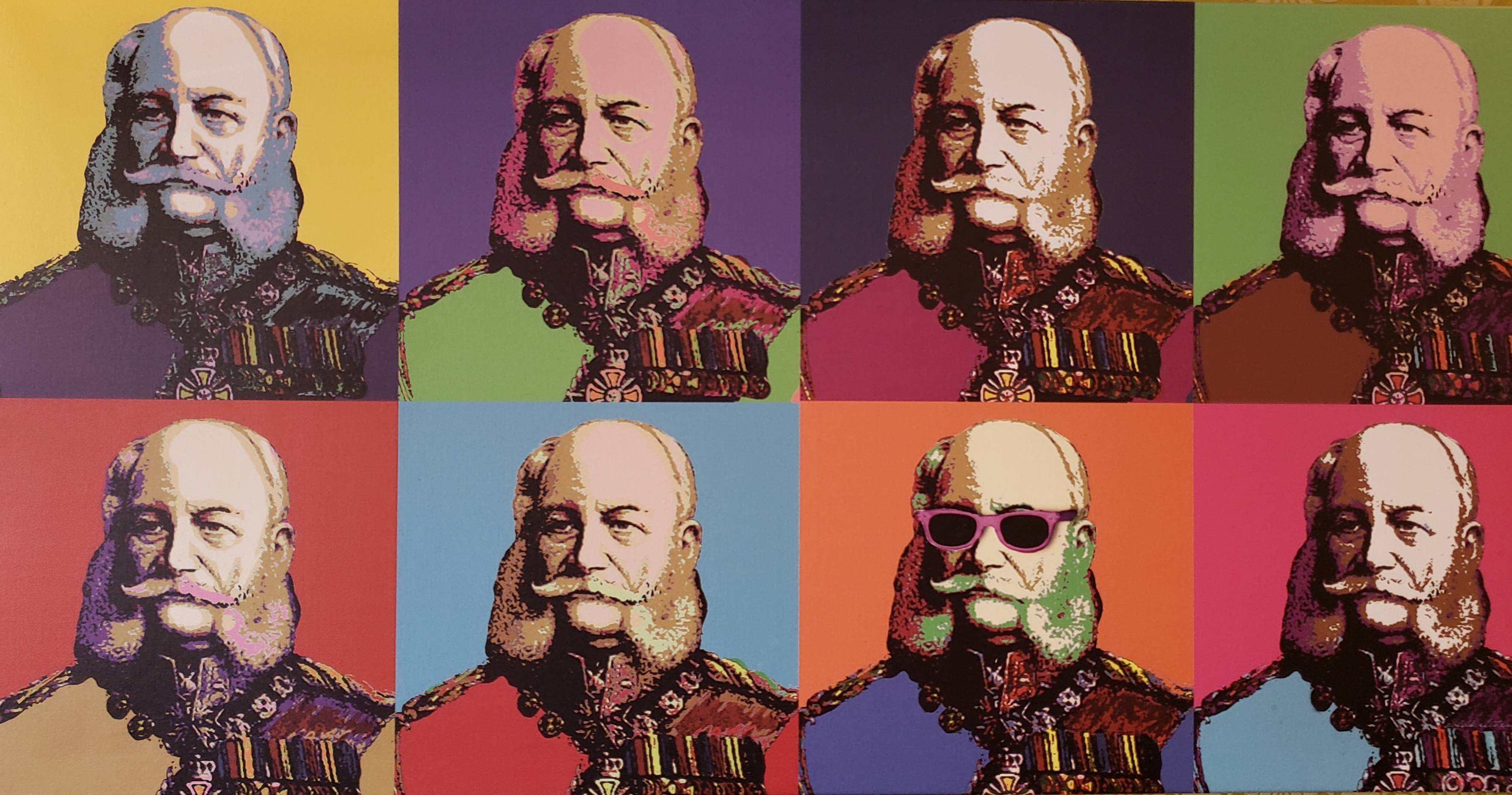
Gasthaus zum Deutscher Kaiser
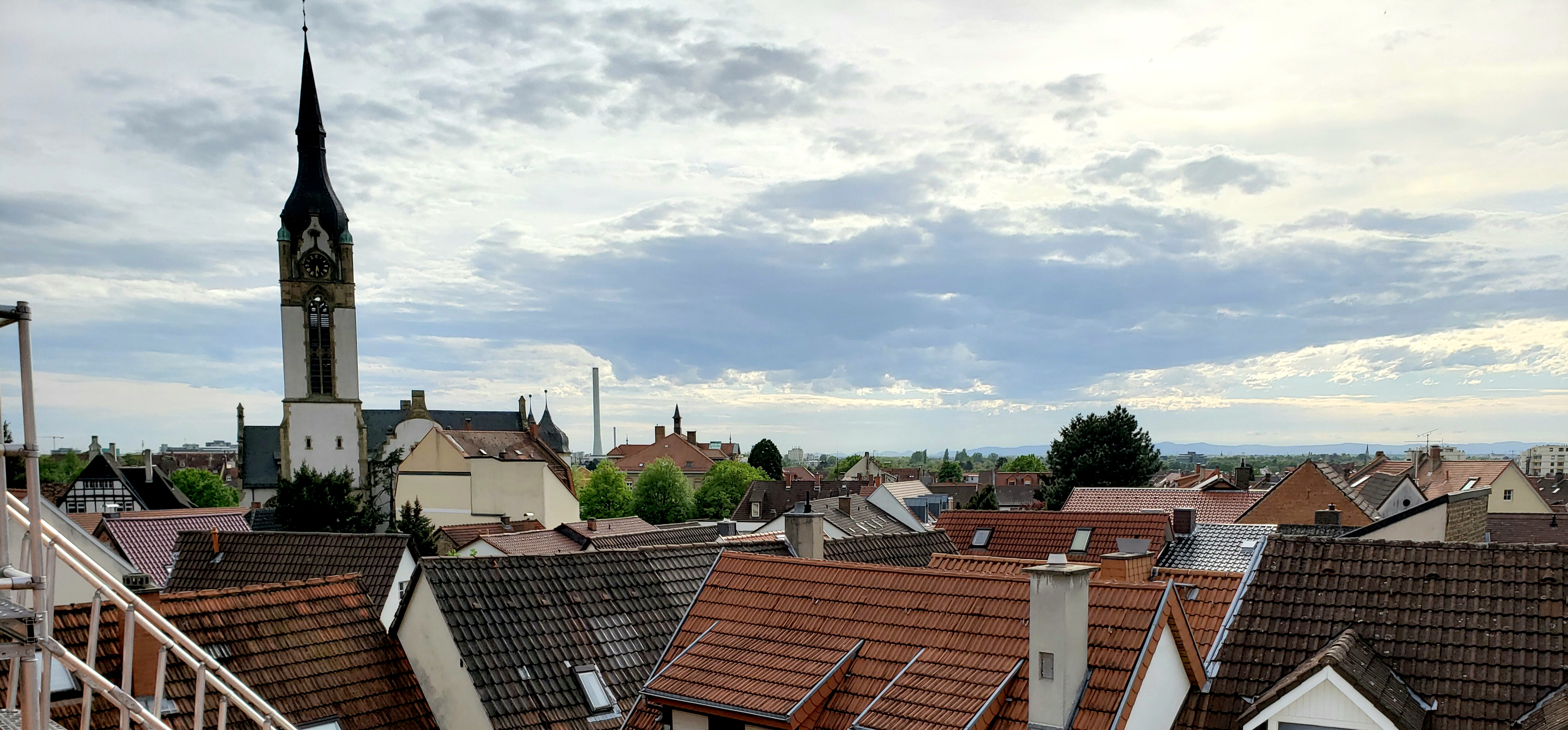
Our Gasthaus is situated one mile as the crow flies from Heidelberg altstadt.
A view of Handshuhsheim from our hotel rooftop window
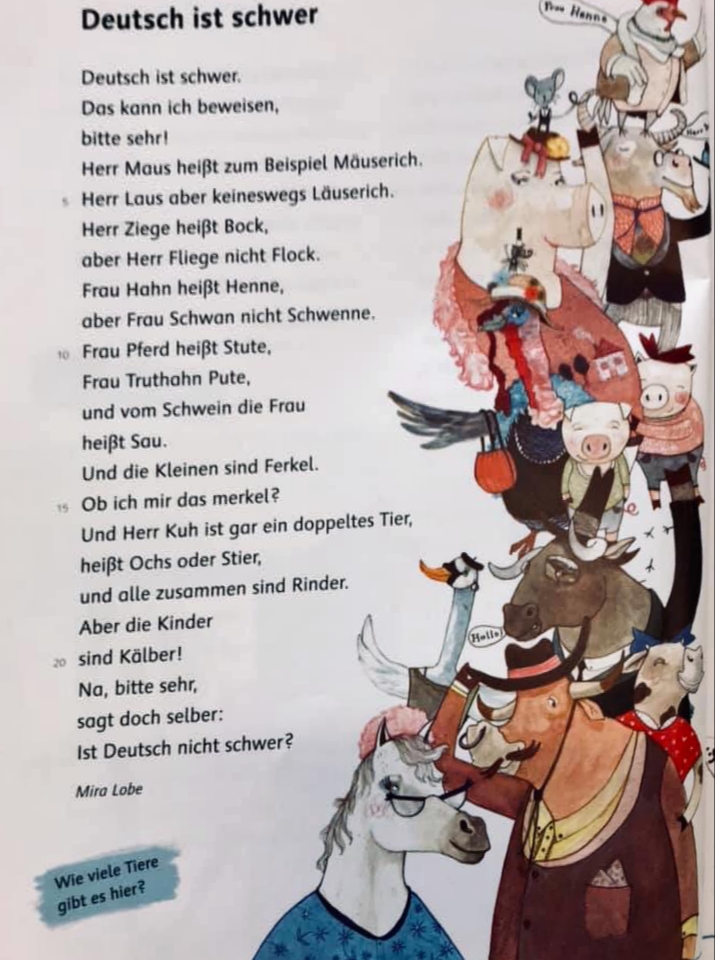
Als ich durch die Gassen und Strassen von Sachsenhausen, Frankfurt und Offenbach geschlendert und an jeder Strassenbahn- und Busshaltestelle gestanden ist die nachfolgende Gedichte mir immer ergreifend. Enjoy!