Known for balsamic vinegar, it also has a variety of other things to see and enjoy. Though we both couldn’t see spending more than a day here, unless of course the purpose is using it as a homebase for day trips elsewhere. The irony of it all is, you would think we would have at least tried balsamic while we were here, we did not.
Modena
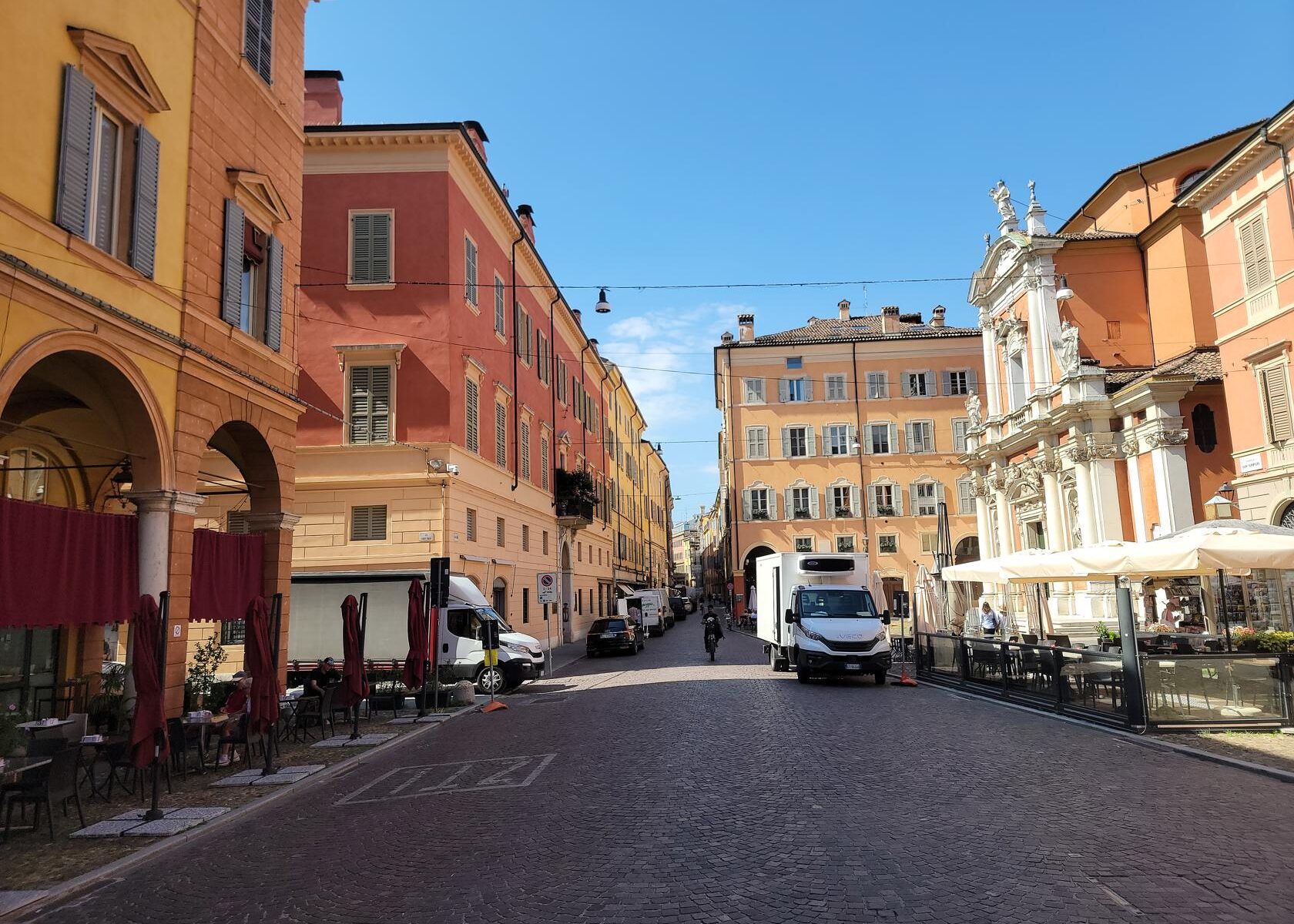
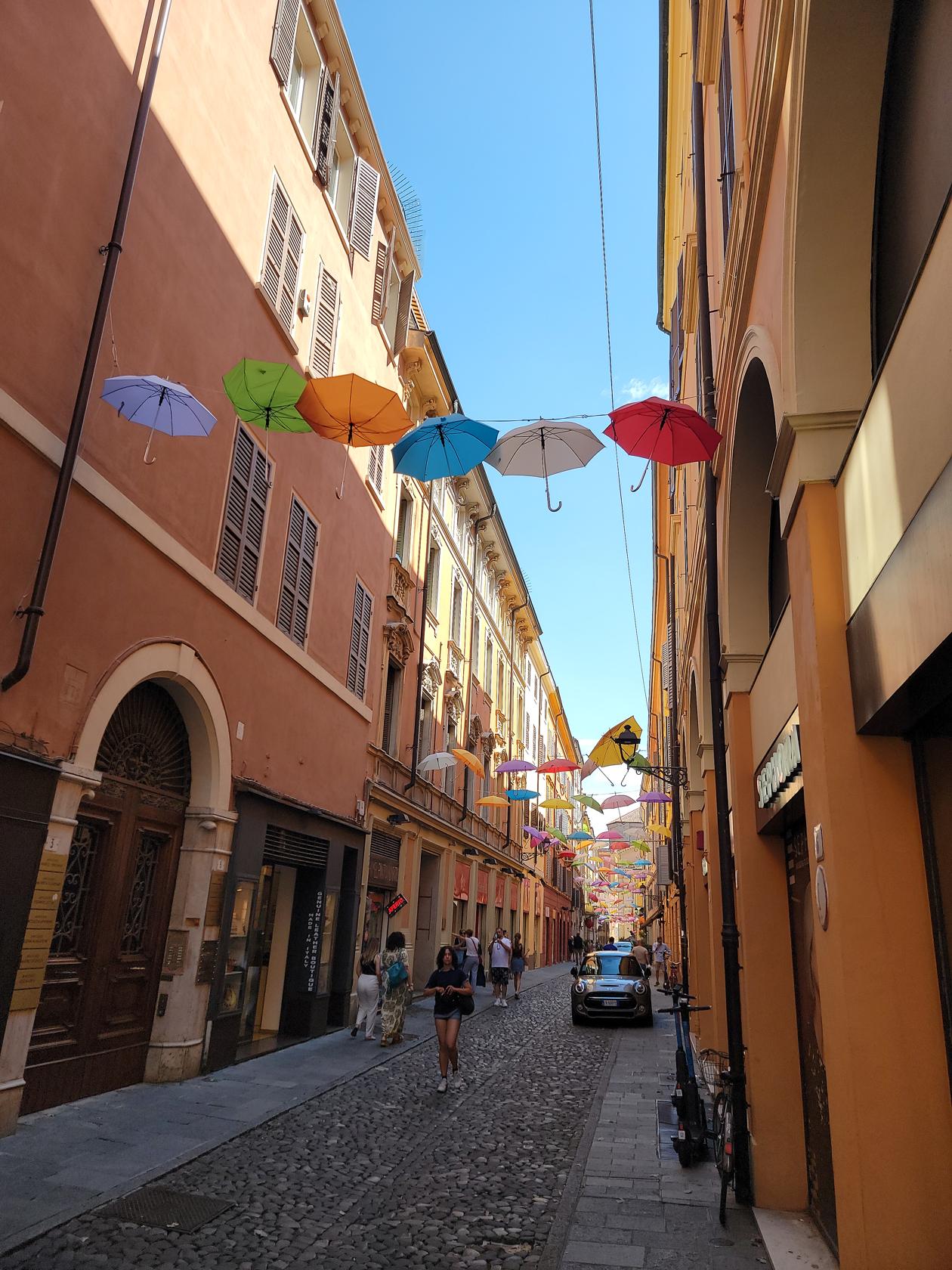
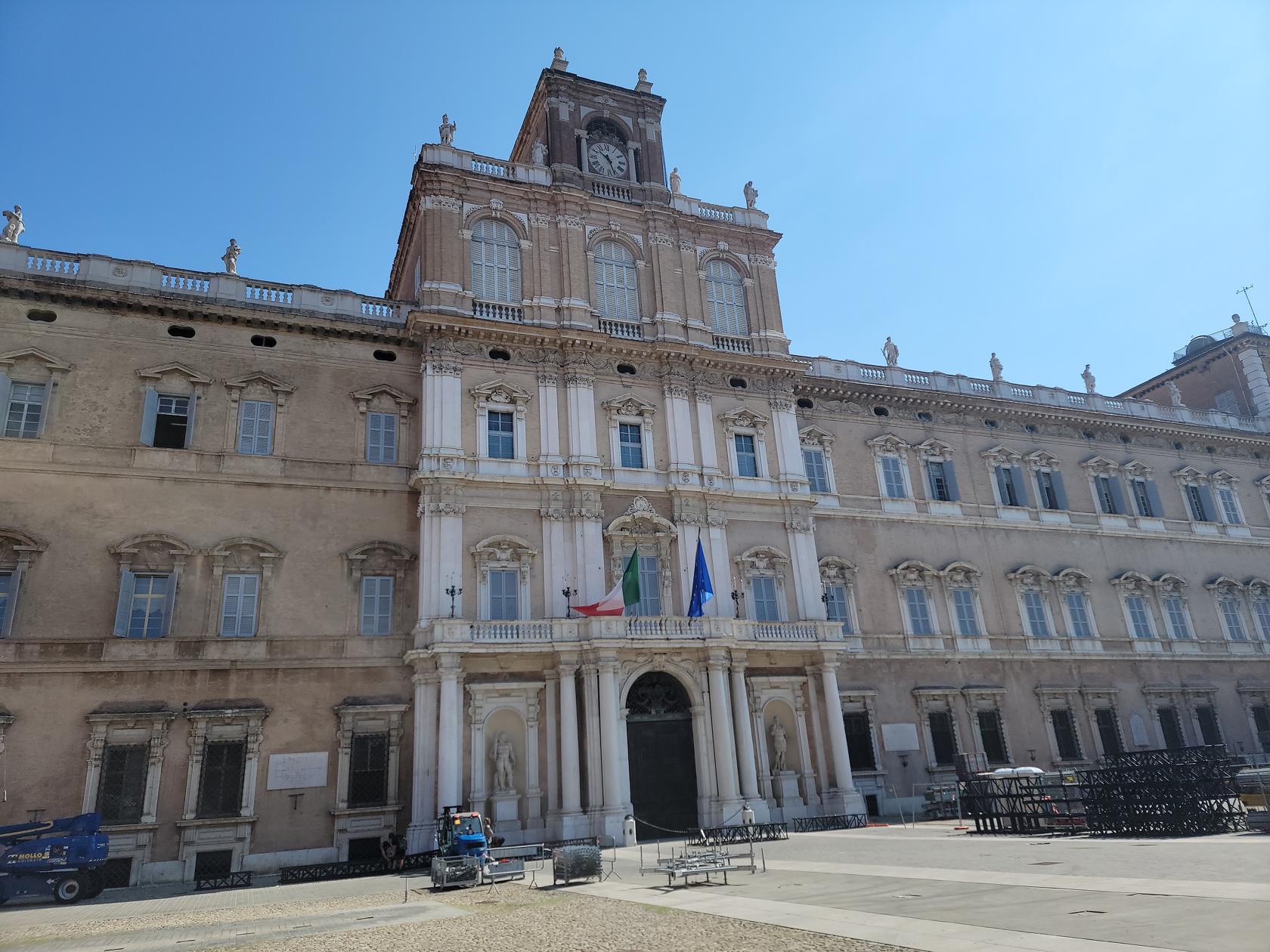
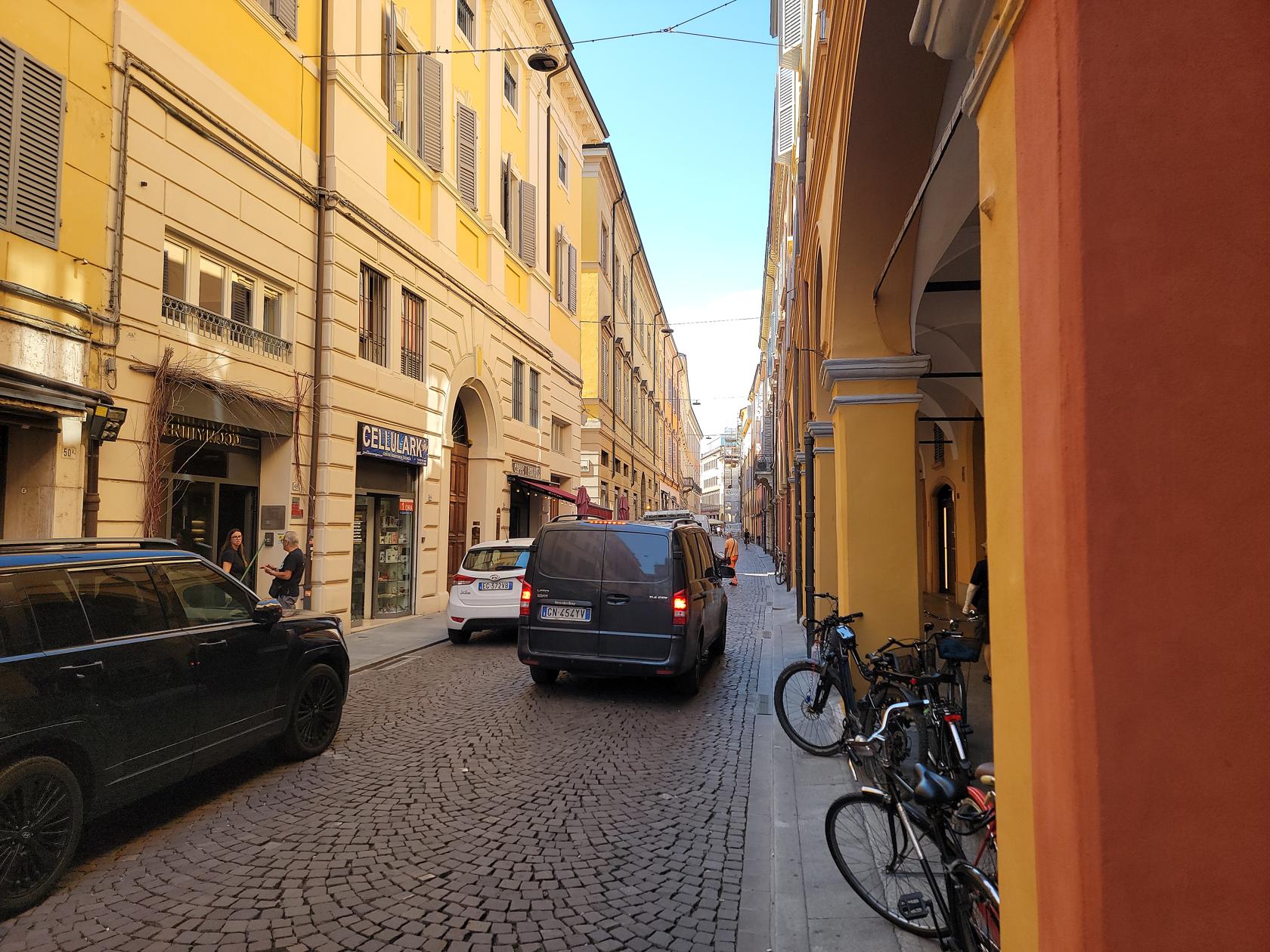
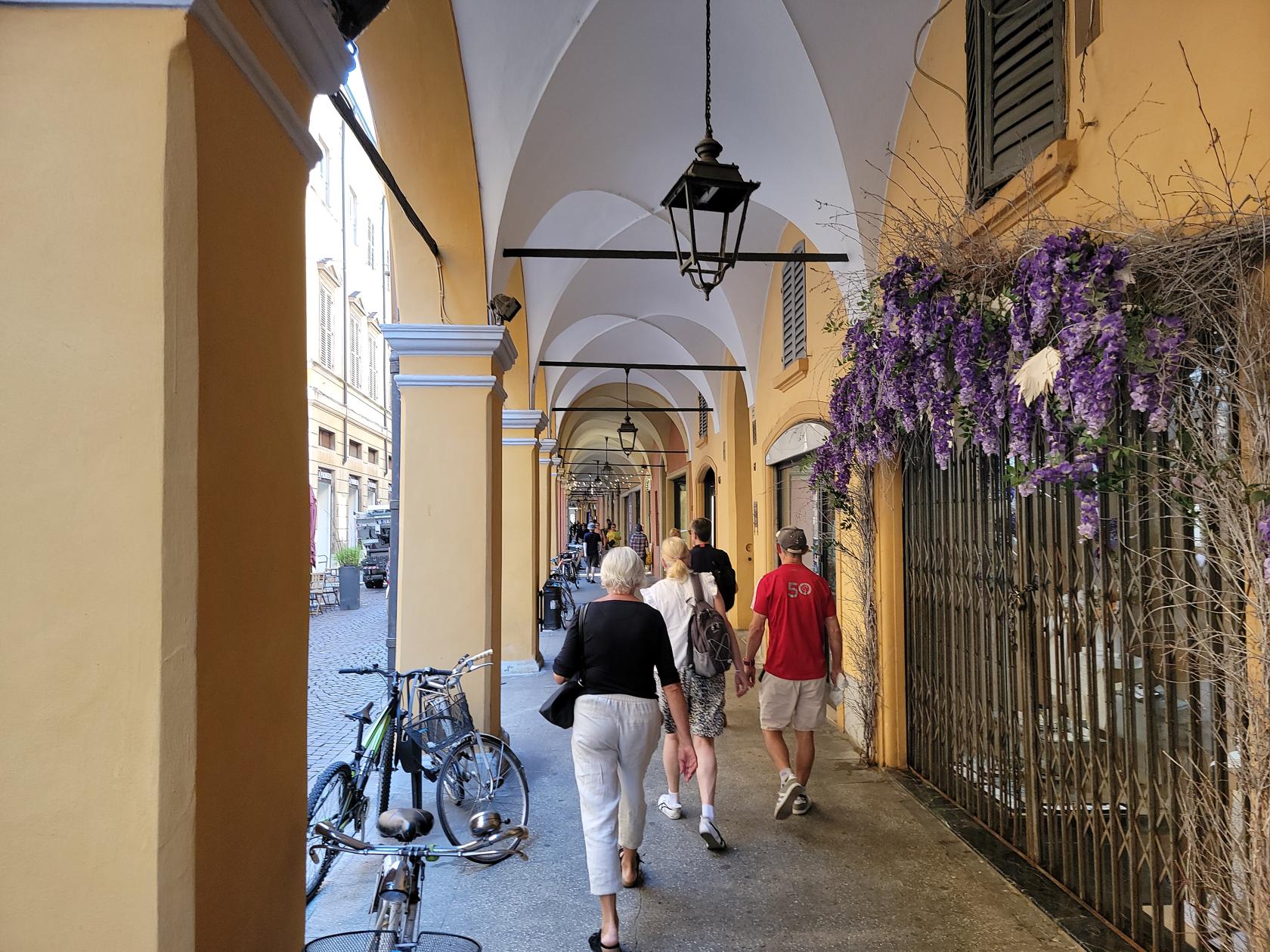
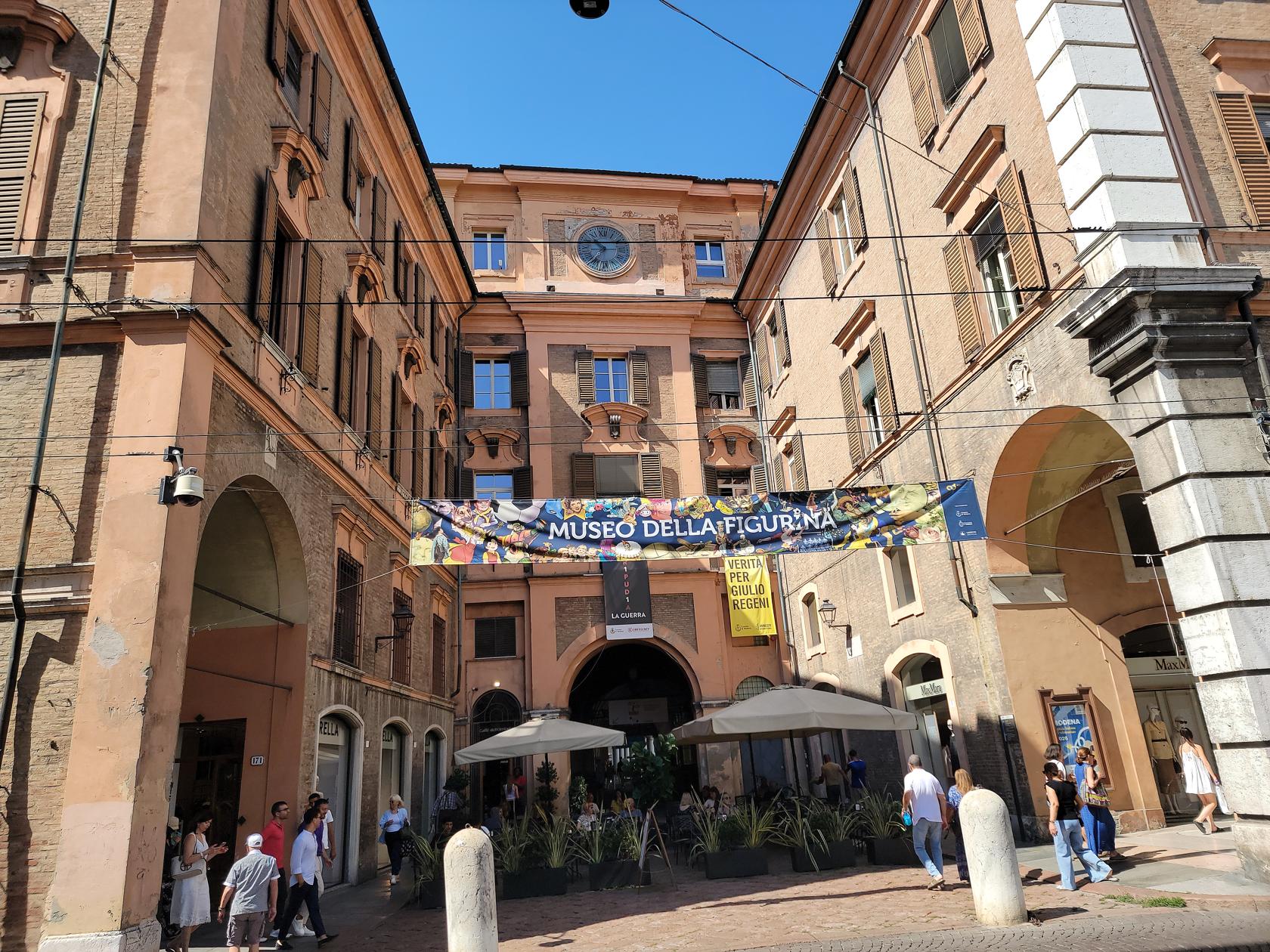
Famously known for balsamic, Modena contains a few other points of interest, it twelfth century cathedral, as well as its own leaning tower. It has a market place, similar to other Italian towns and cities, which is actually inside for the most part and appears to function every day. The main street for shopping is most likely via Emilia Centro, it has porticos on one side and appears to have all the brand name shop one would expect to see.
Getting There
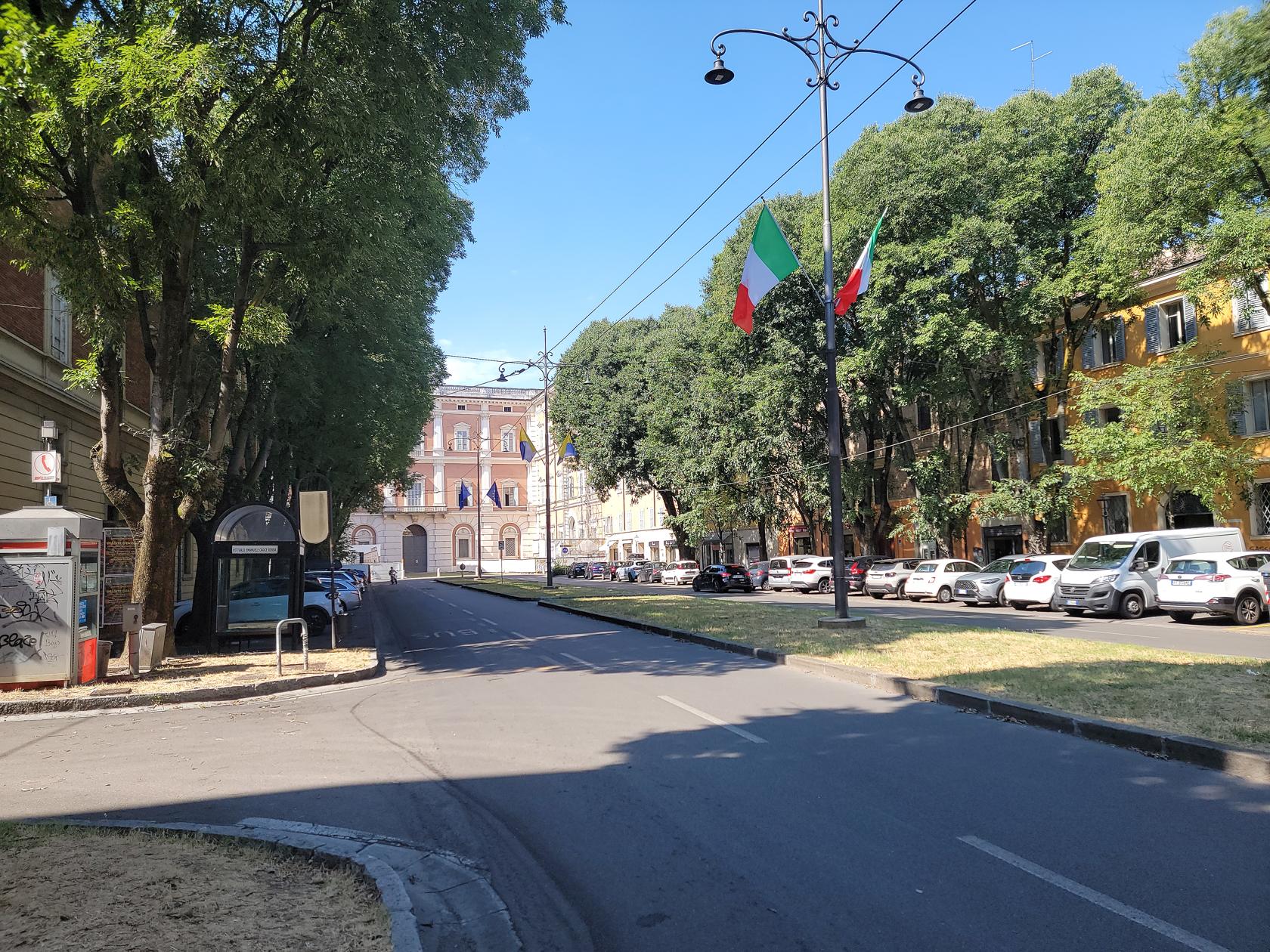
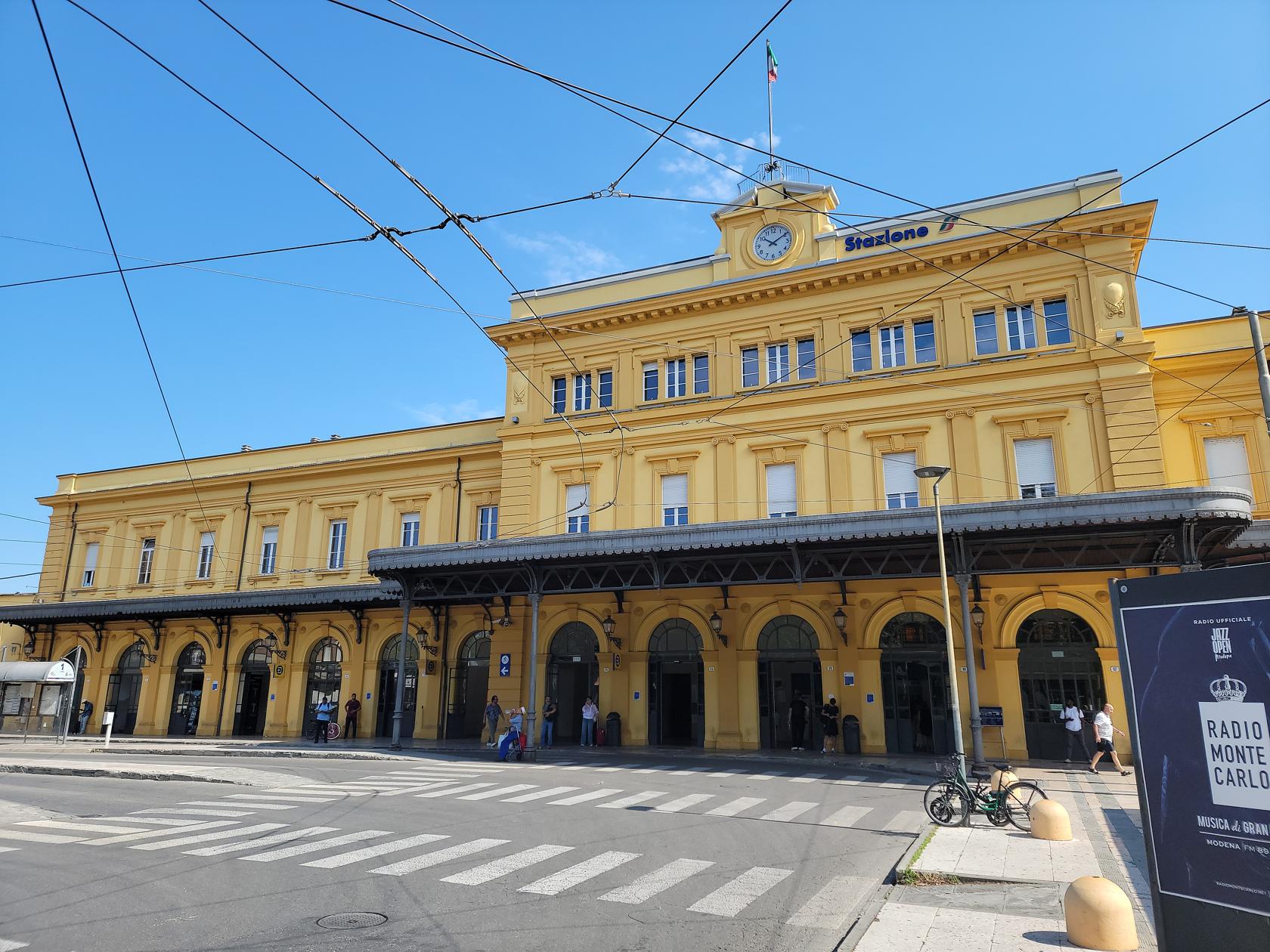
Thirty to forty minutes from Parma by train, Modena can be reached with only a few stops along the way for the regional train, or one stop if the InterCity train is used as an option. The train station in Modena and spartan and clean, as well as the neighborhood around it.
Comunale Palazzo
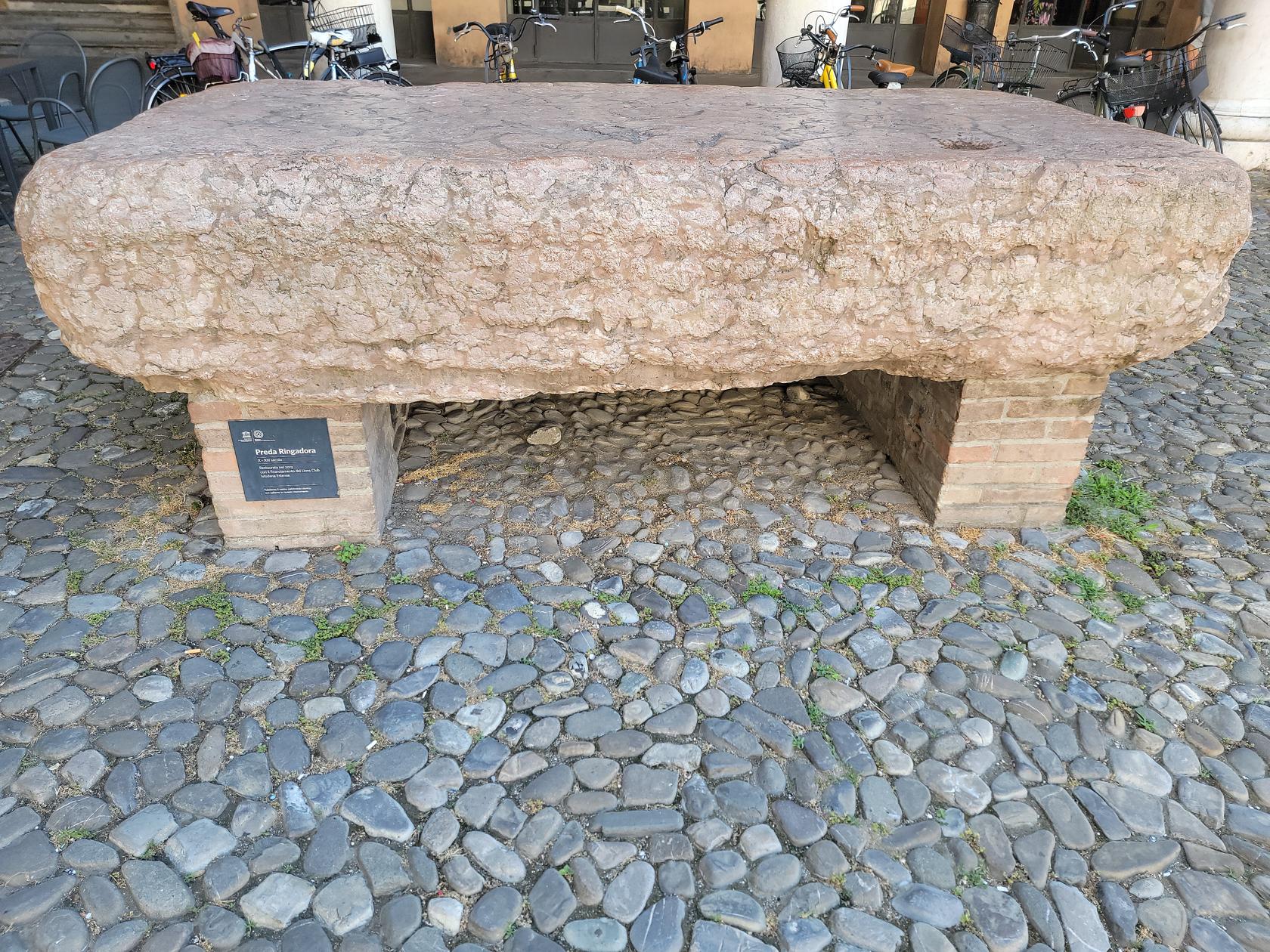
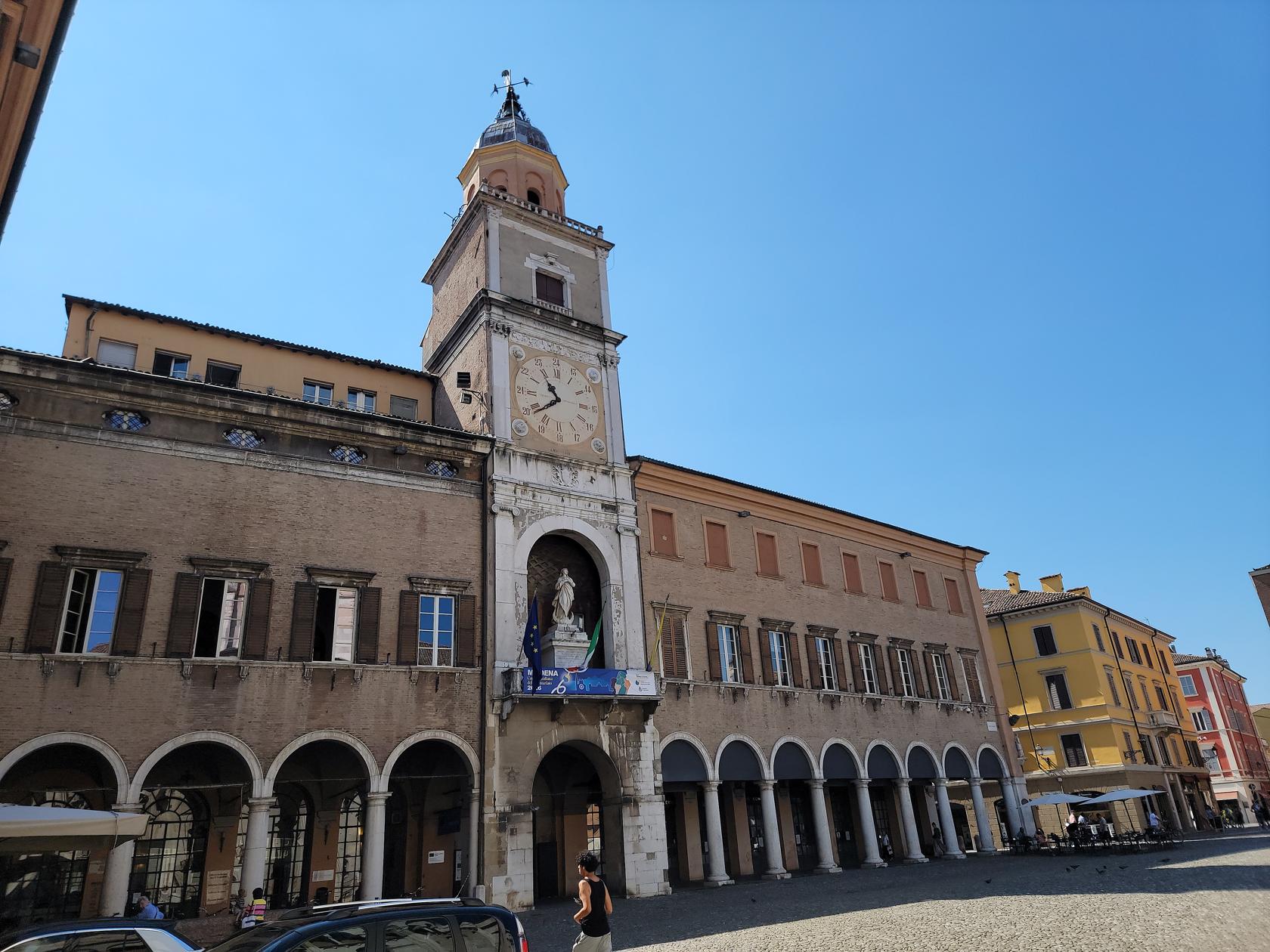
A civic building known as the Comunale Palazzo, was used in the past by the town council for official business and ceremonies. Outside and to the left of it, is the Preda Ringadora, a large piece of marble from Roman times used as a speaker’s platform; its present day means to “orate”. However, historians also say it was likely used as a pillory and also used to identify corpses which were laid out on it. In any case, it is commonly used today as a seat and a place of repose.
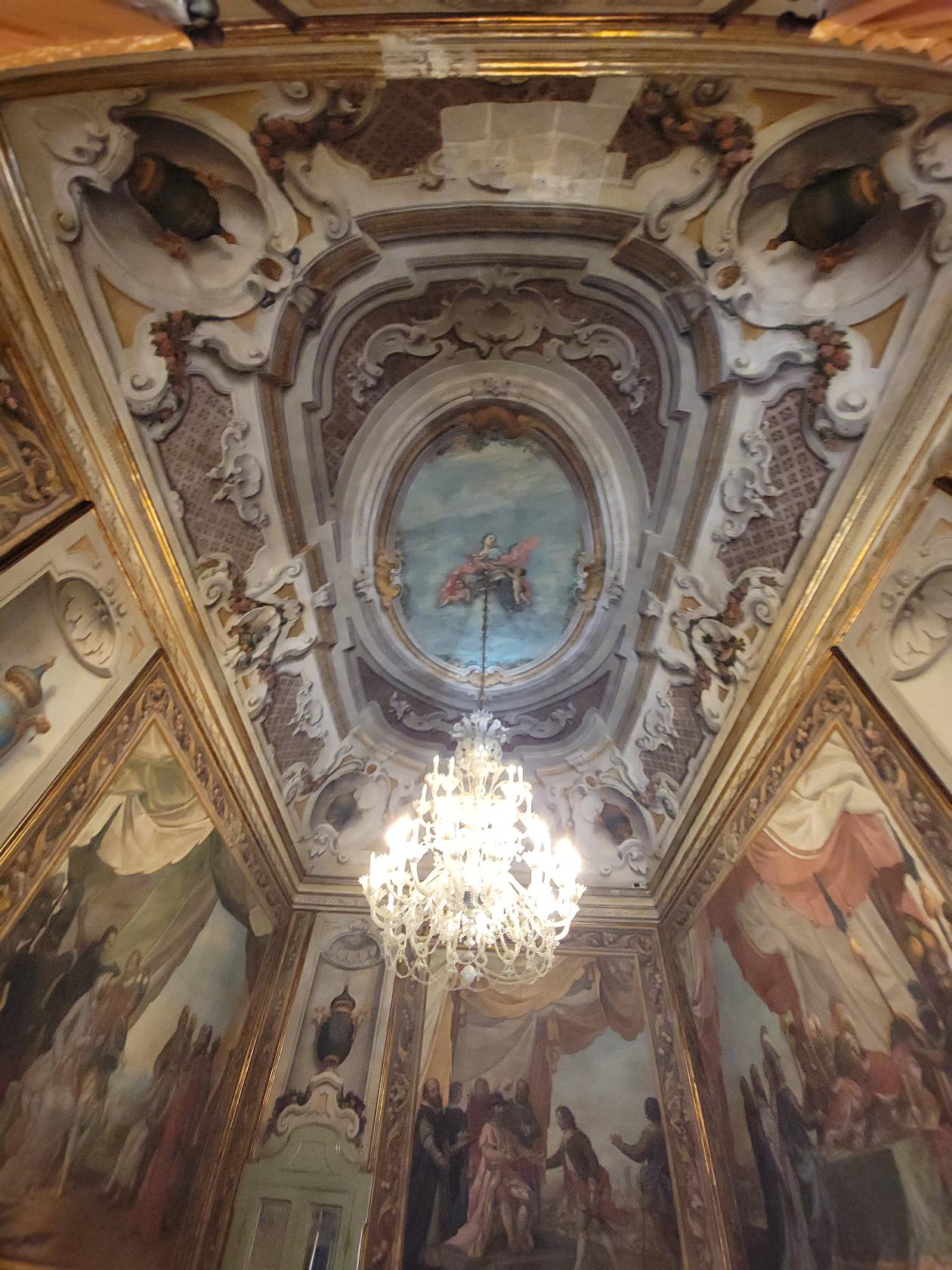
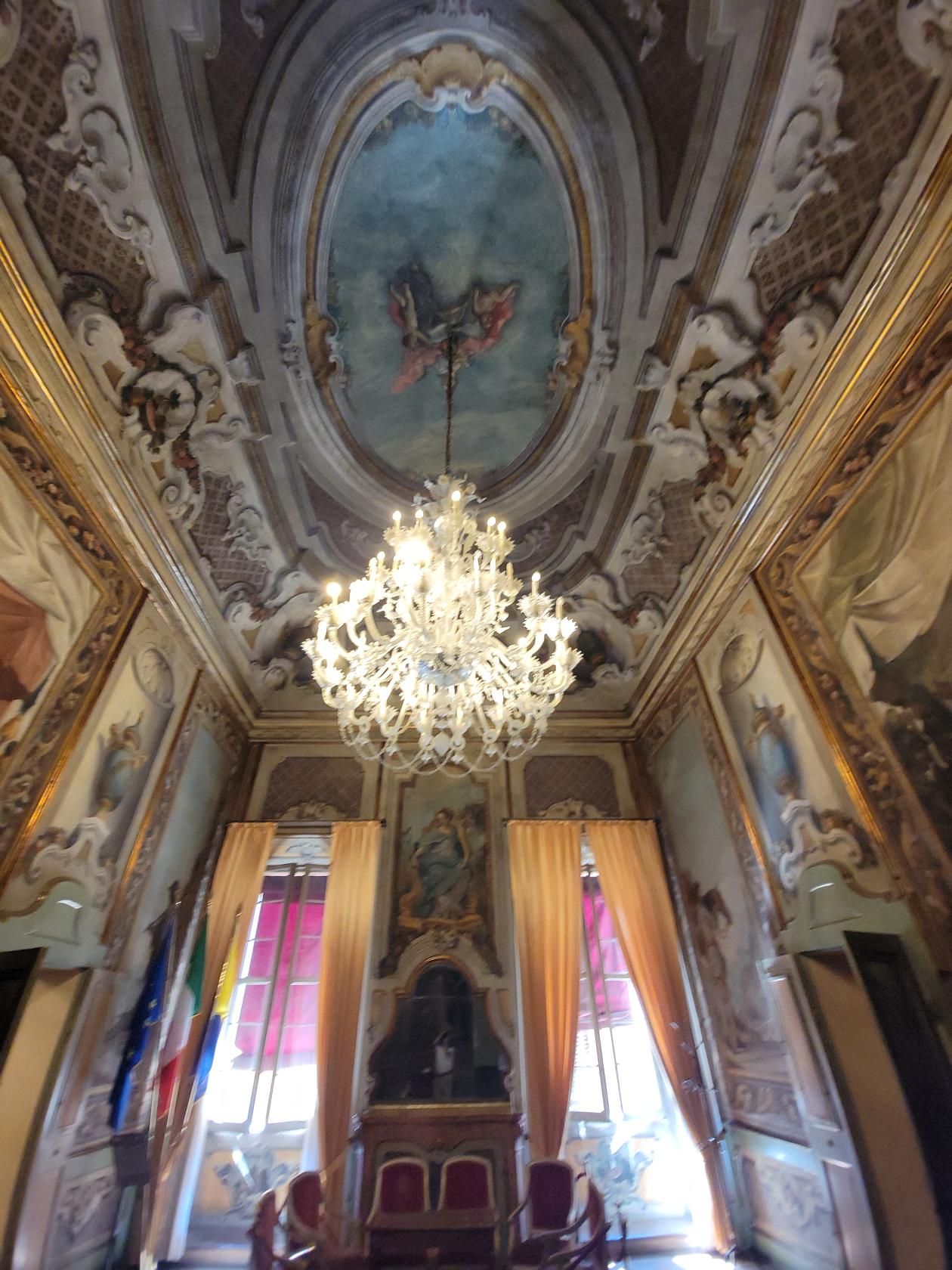
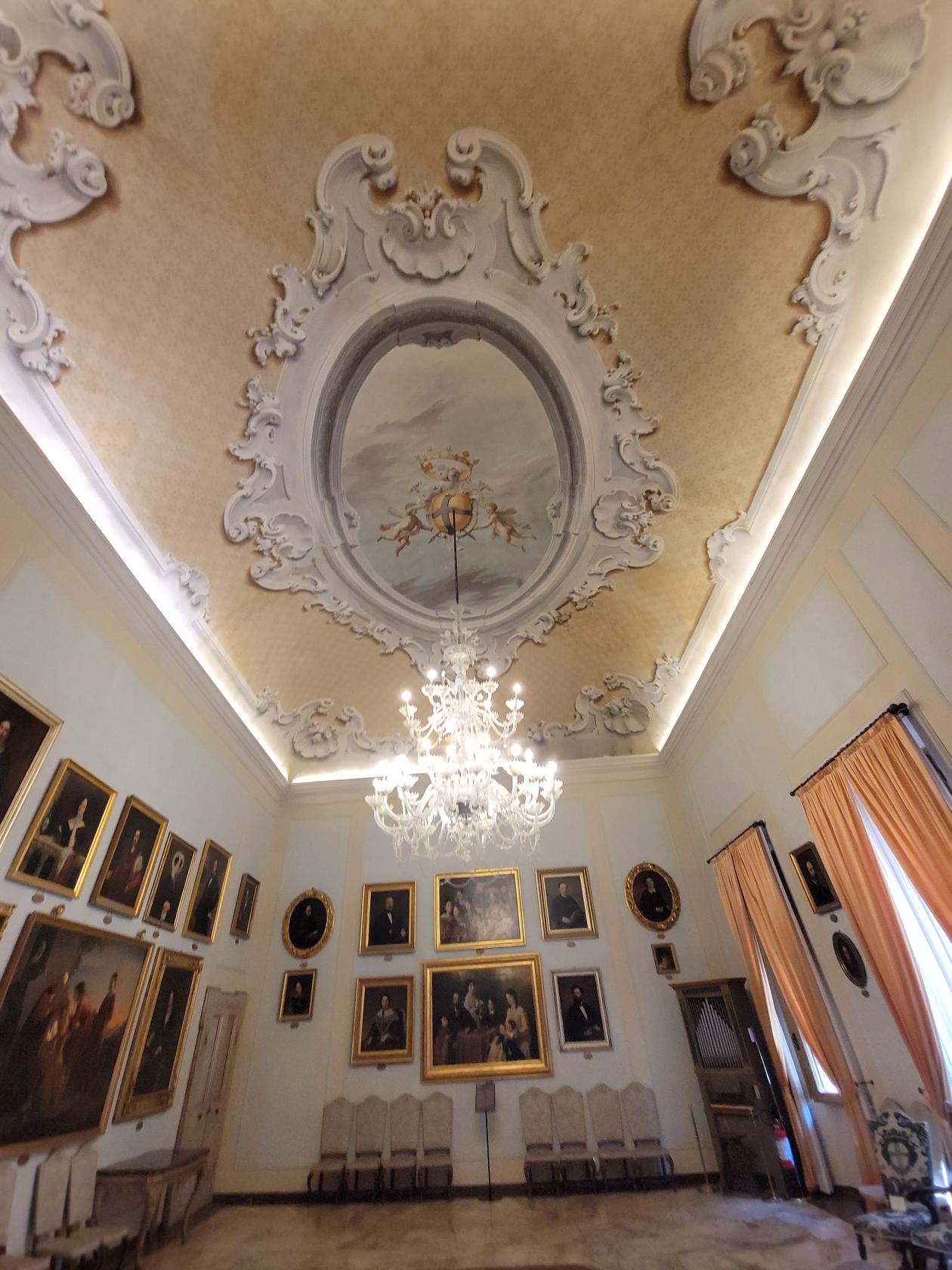
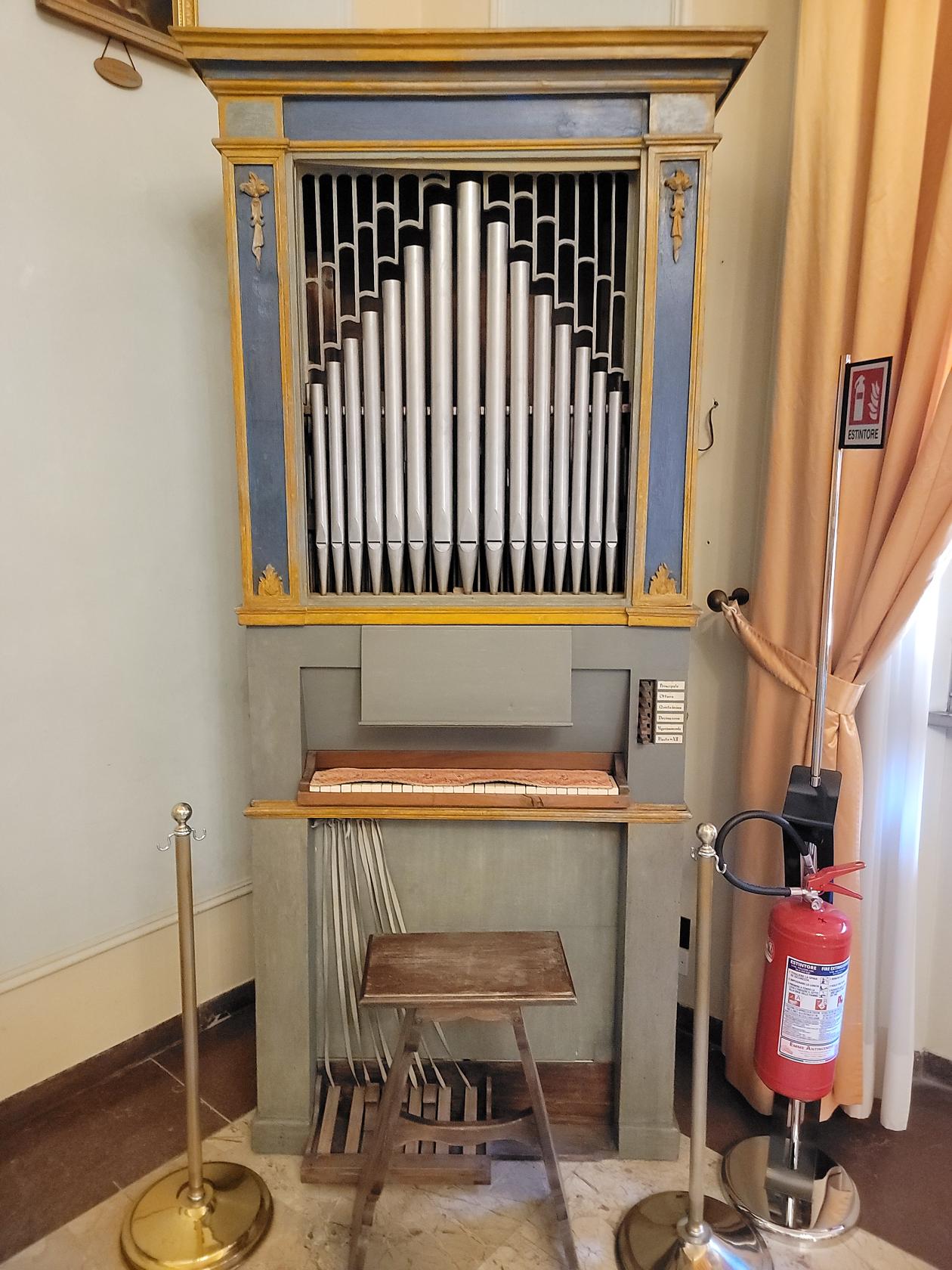
It is open and free to the public and has a handful of rooms that may be visited, which contain frescoes.
The palazzo is best known for its Hall of Fire. It is a term of endearment, assigned to it by the public to indicate that it was the hall containing the fireplace where back in the day, they could collect hot coals to warm themselves on the street during cold winter evenings. However, it is better known for the paintings that adorn the ceiling and walls that are the most impressive. Painted in the middle sixteenth century by Nicolò dell’Abate which depict episodes in Roman history that affected Modena as a town and city.
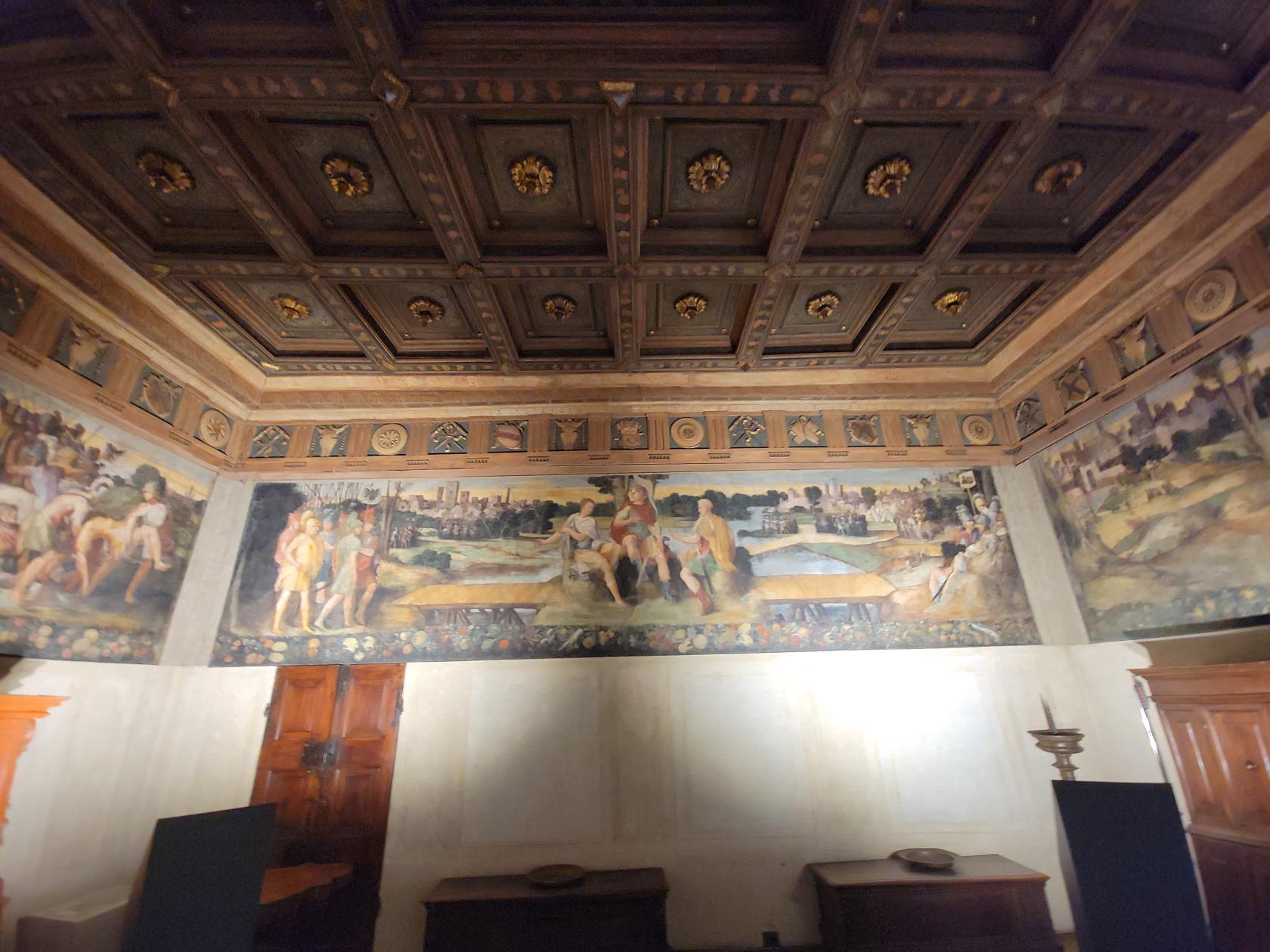
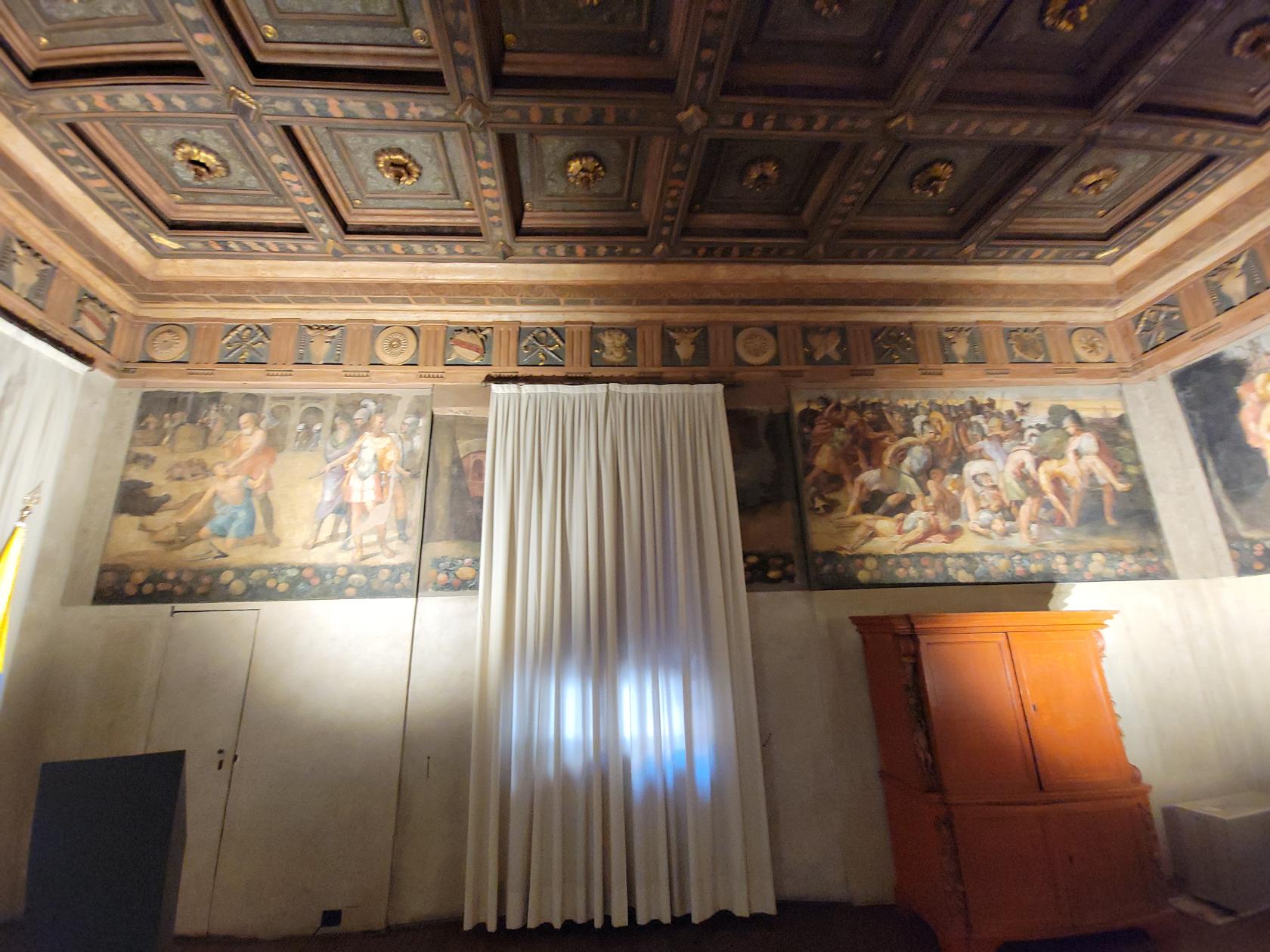
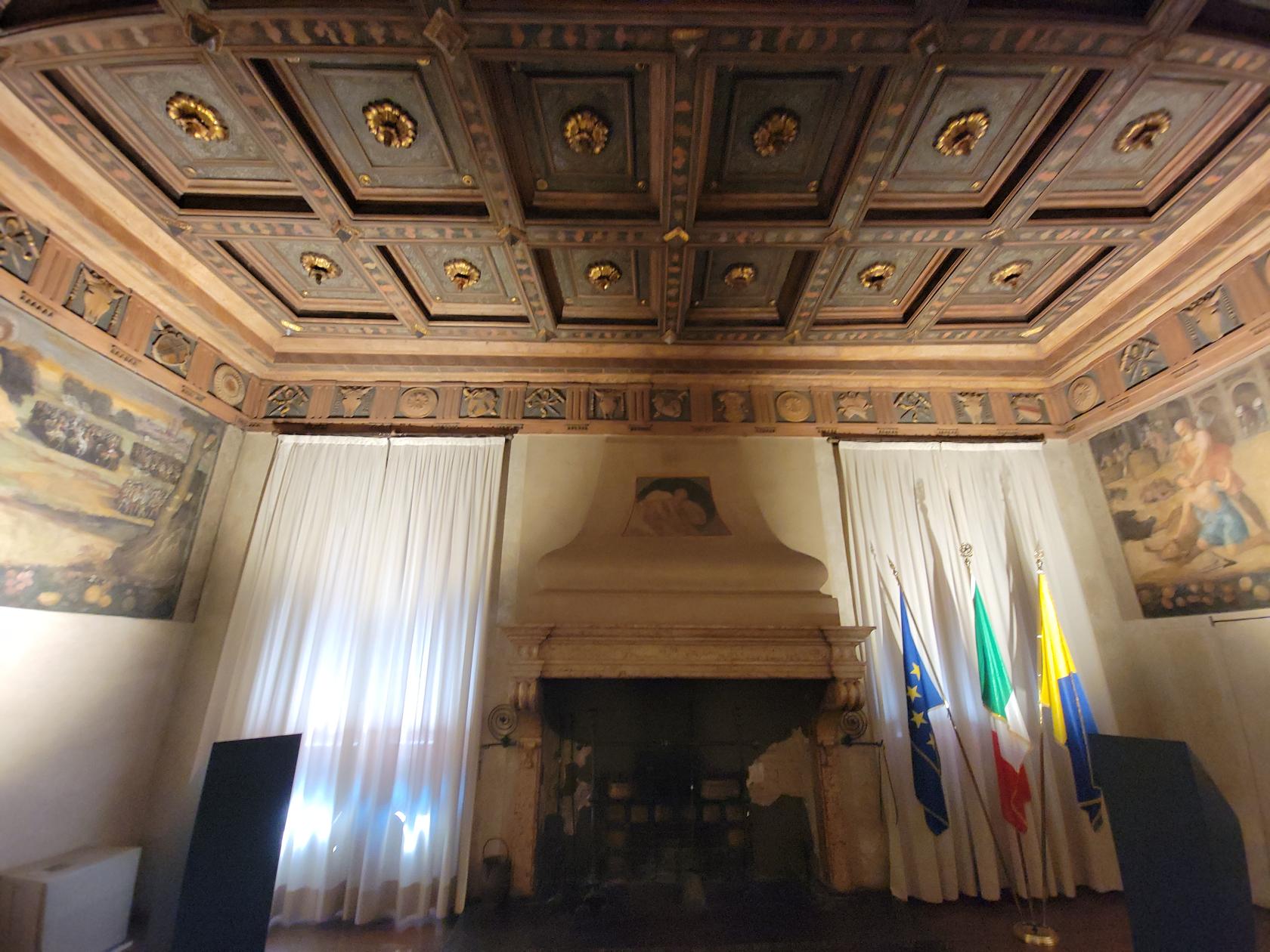
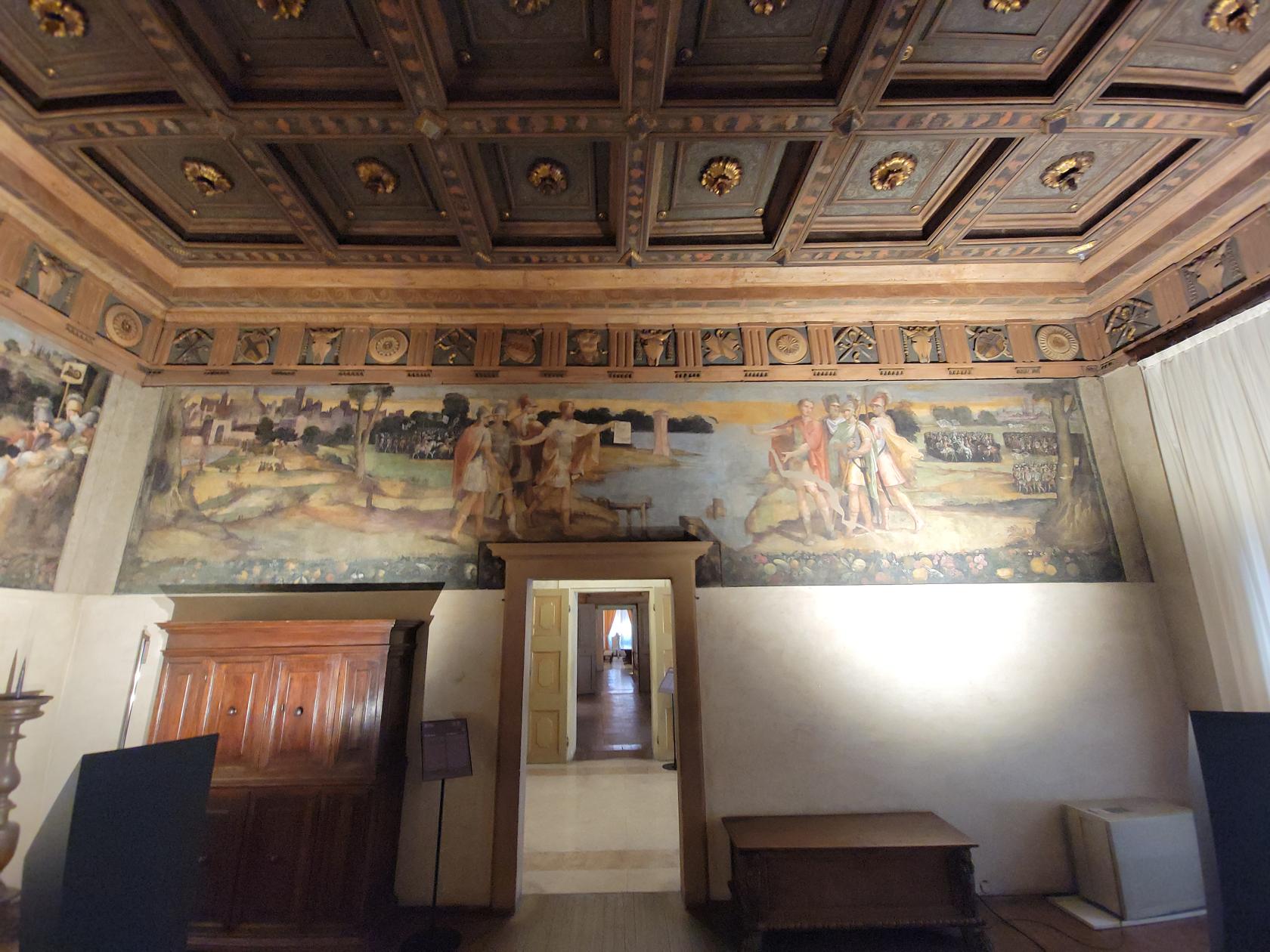
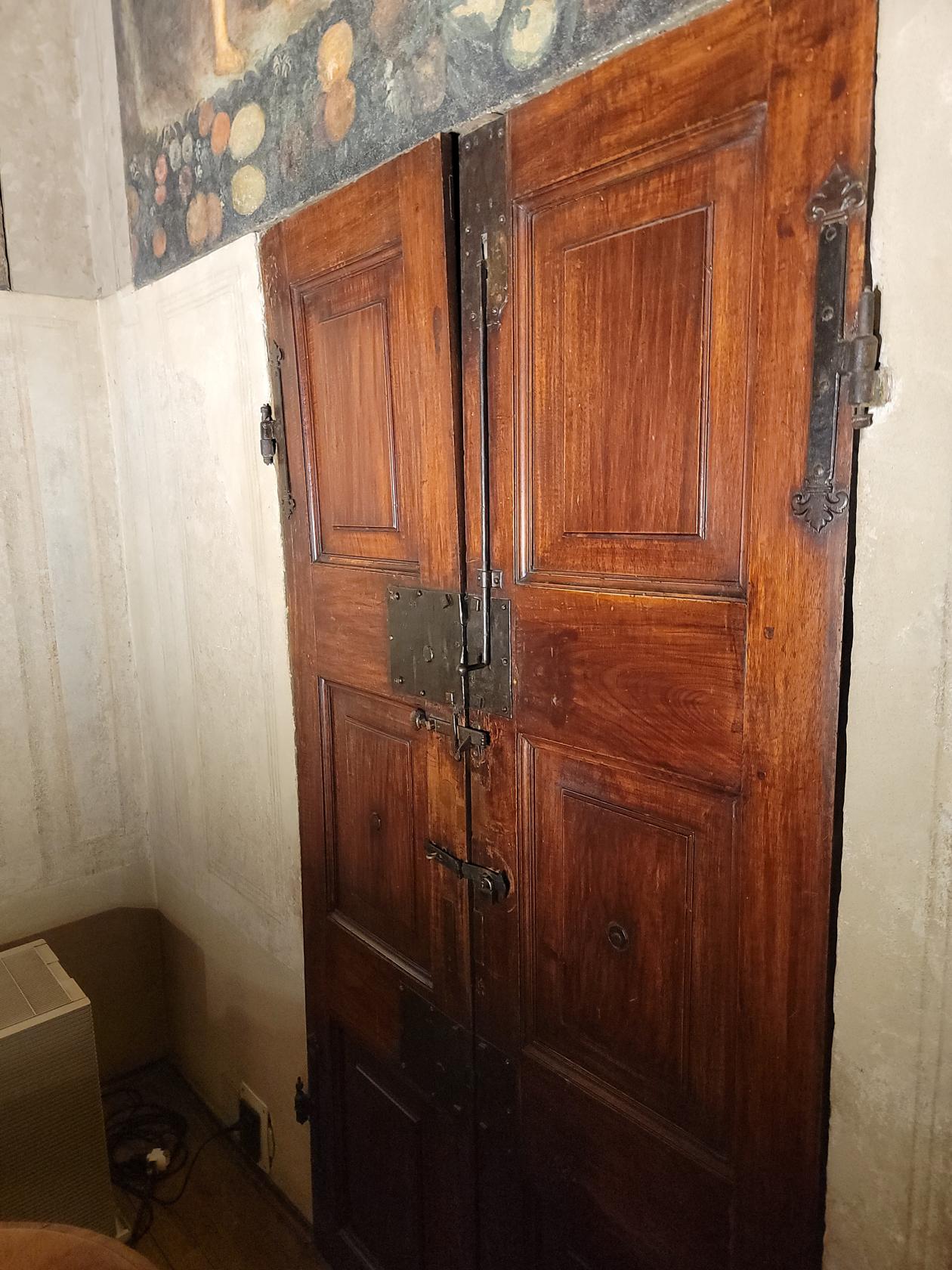
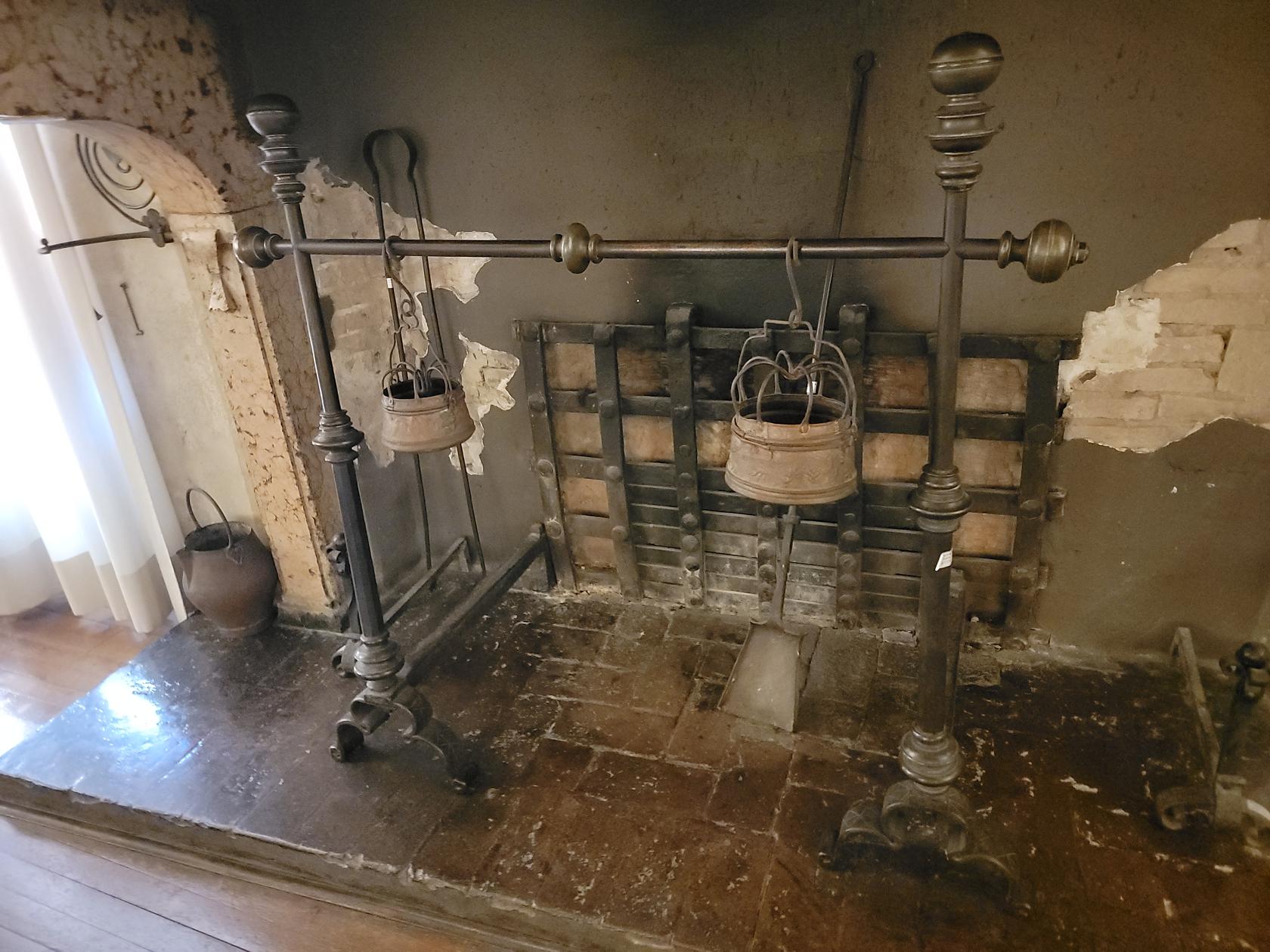
The Council Hall is where meetings would be held with respect to the town’s business. Electors would assemble here to discuss important matters of the day, planning and other administrative tasks.
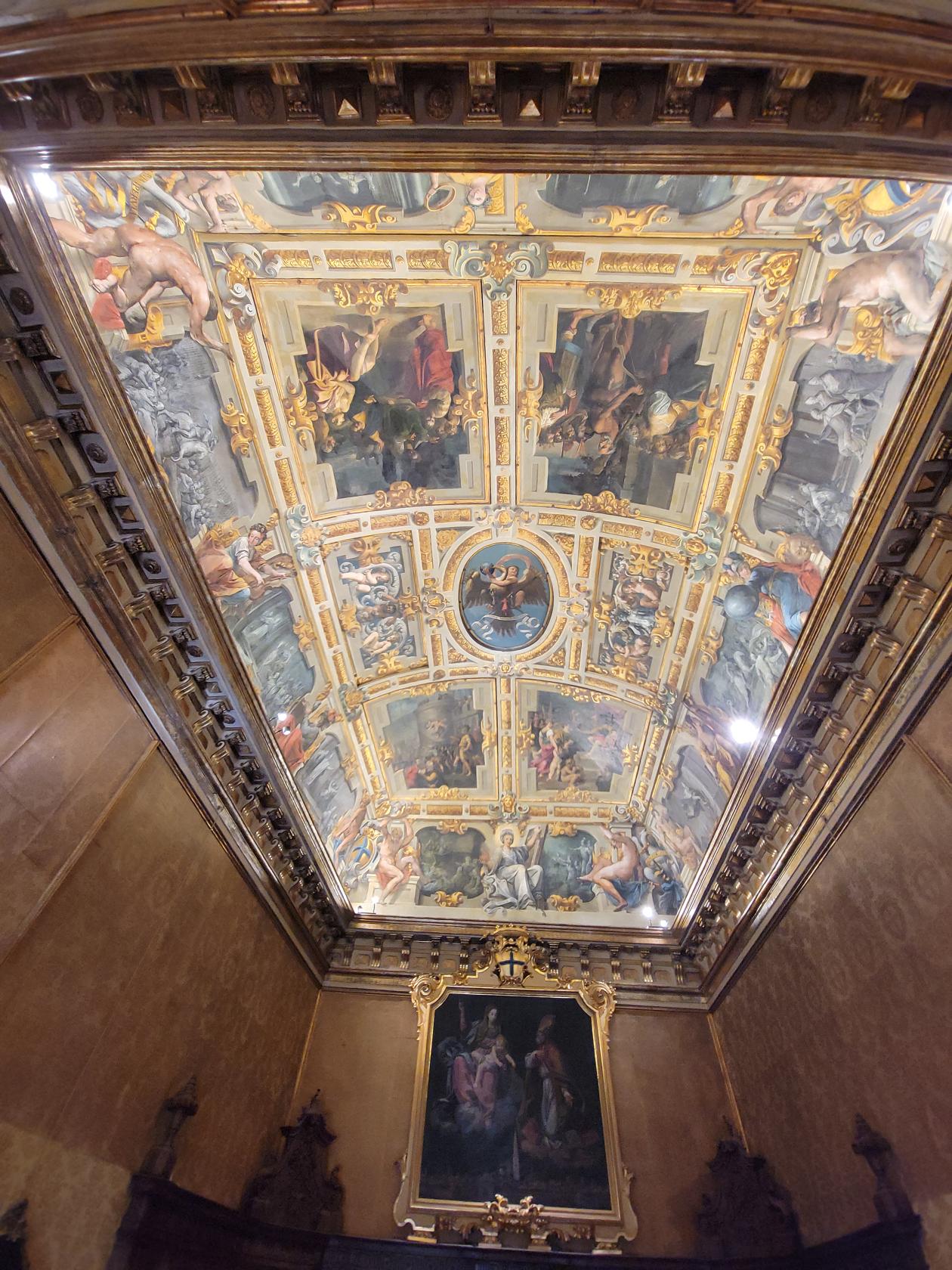
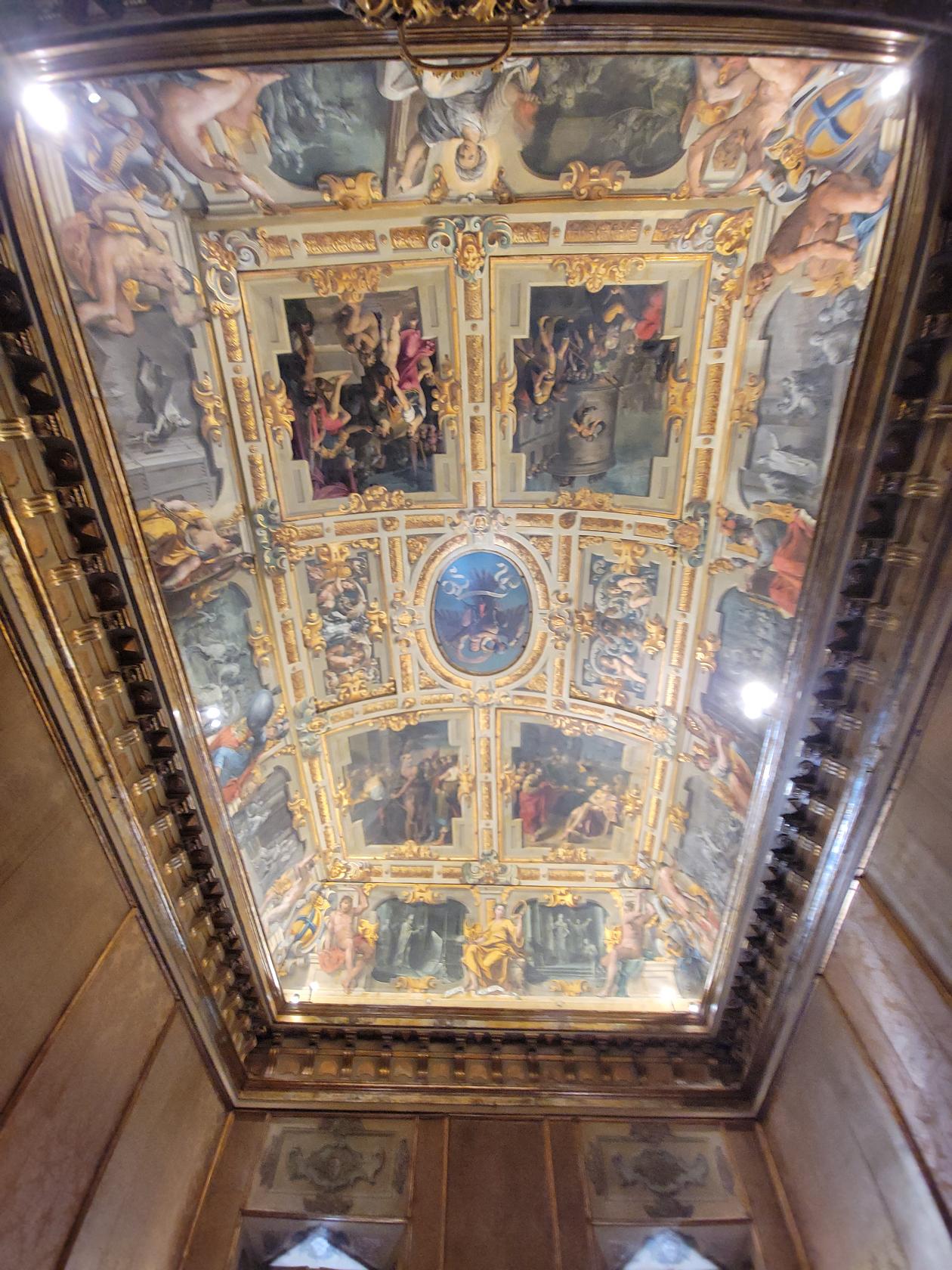
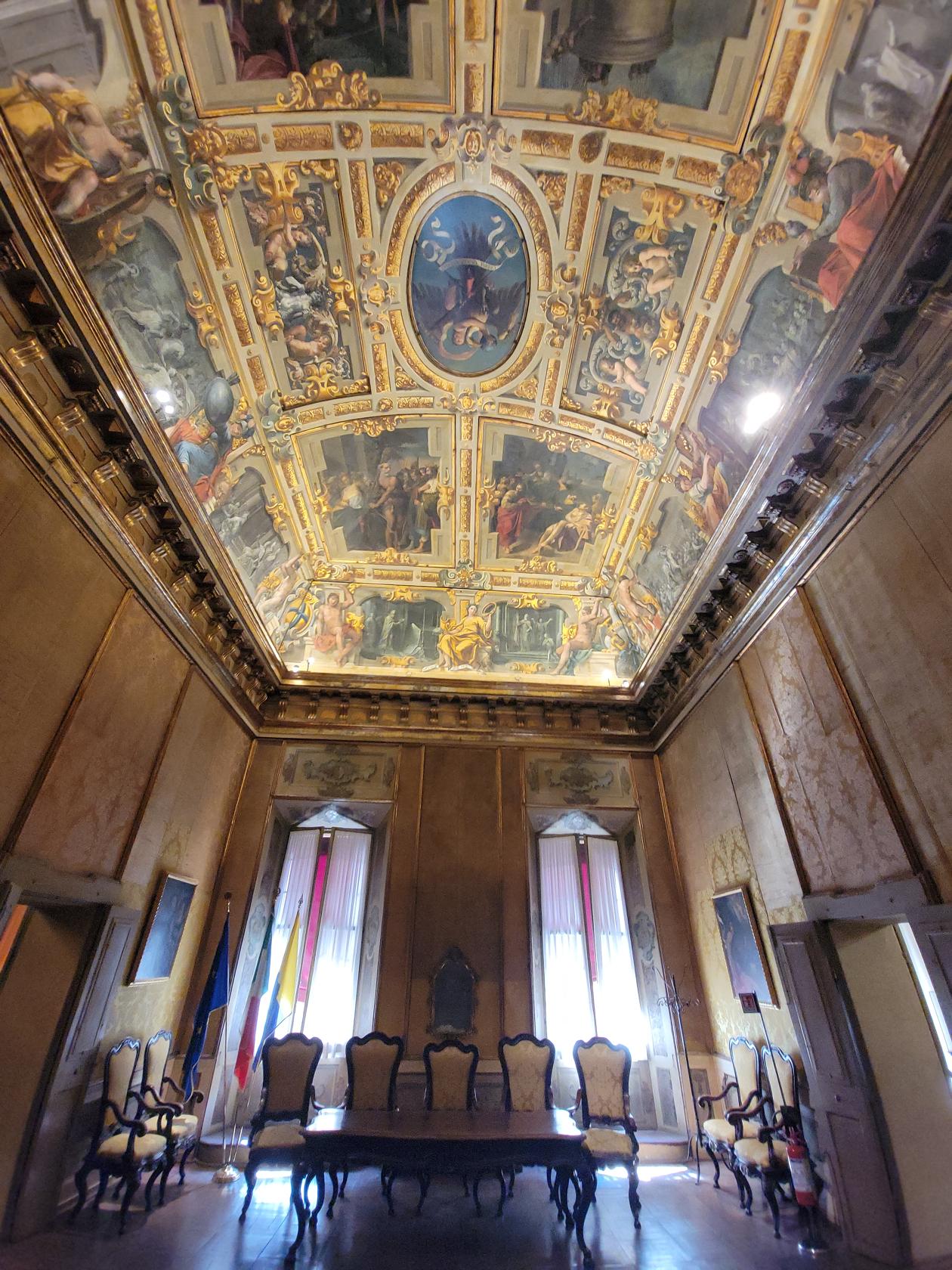
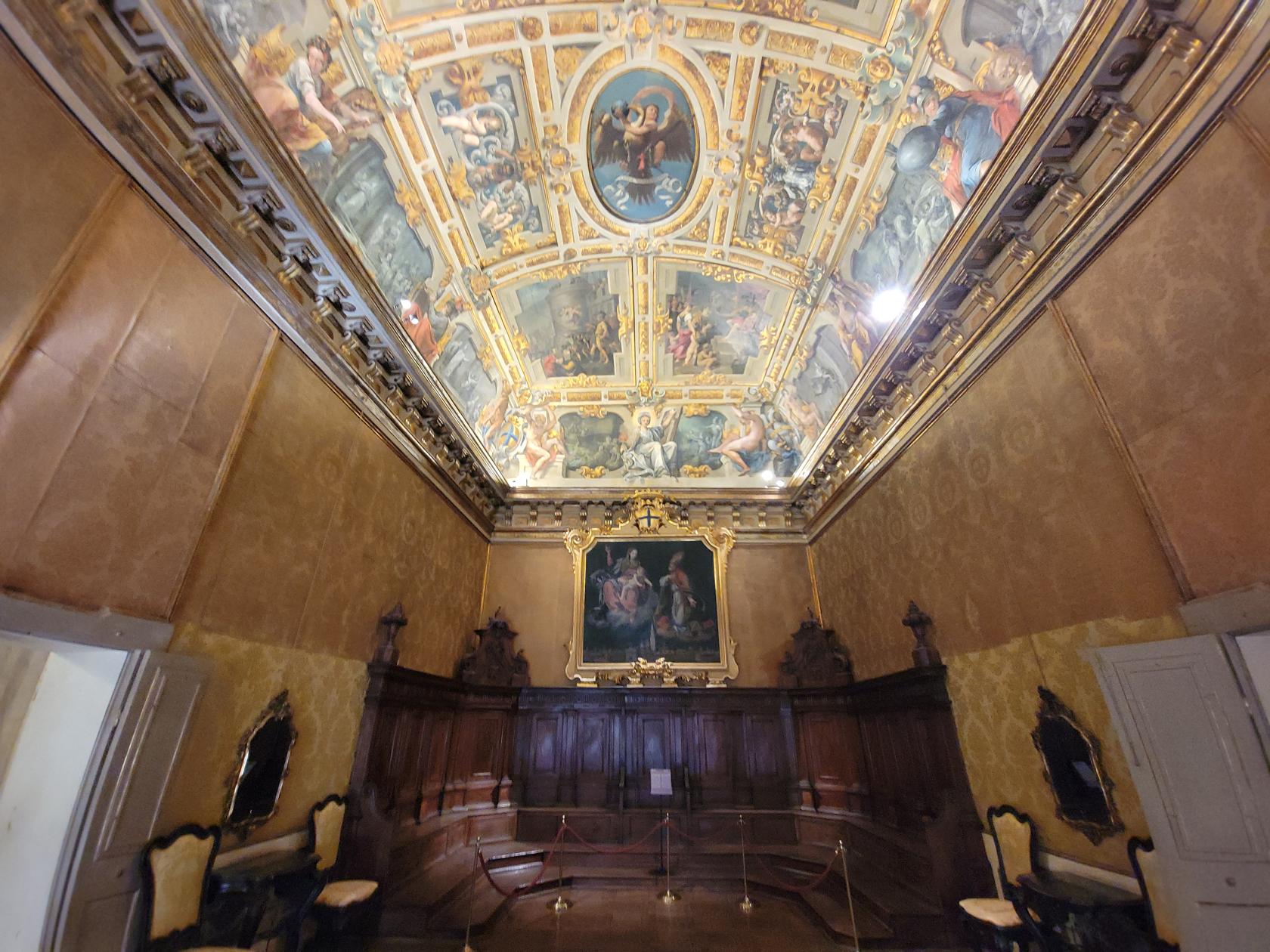
There are also a Tapestry and a Wedding Hall. Neither is of any great import, except for the paintings that adorn each.
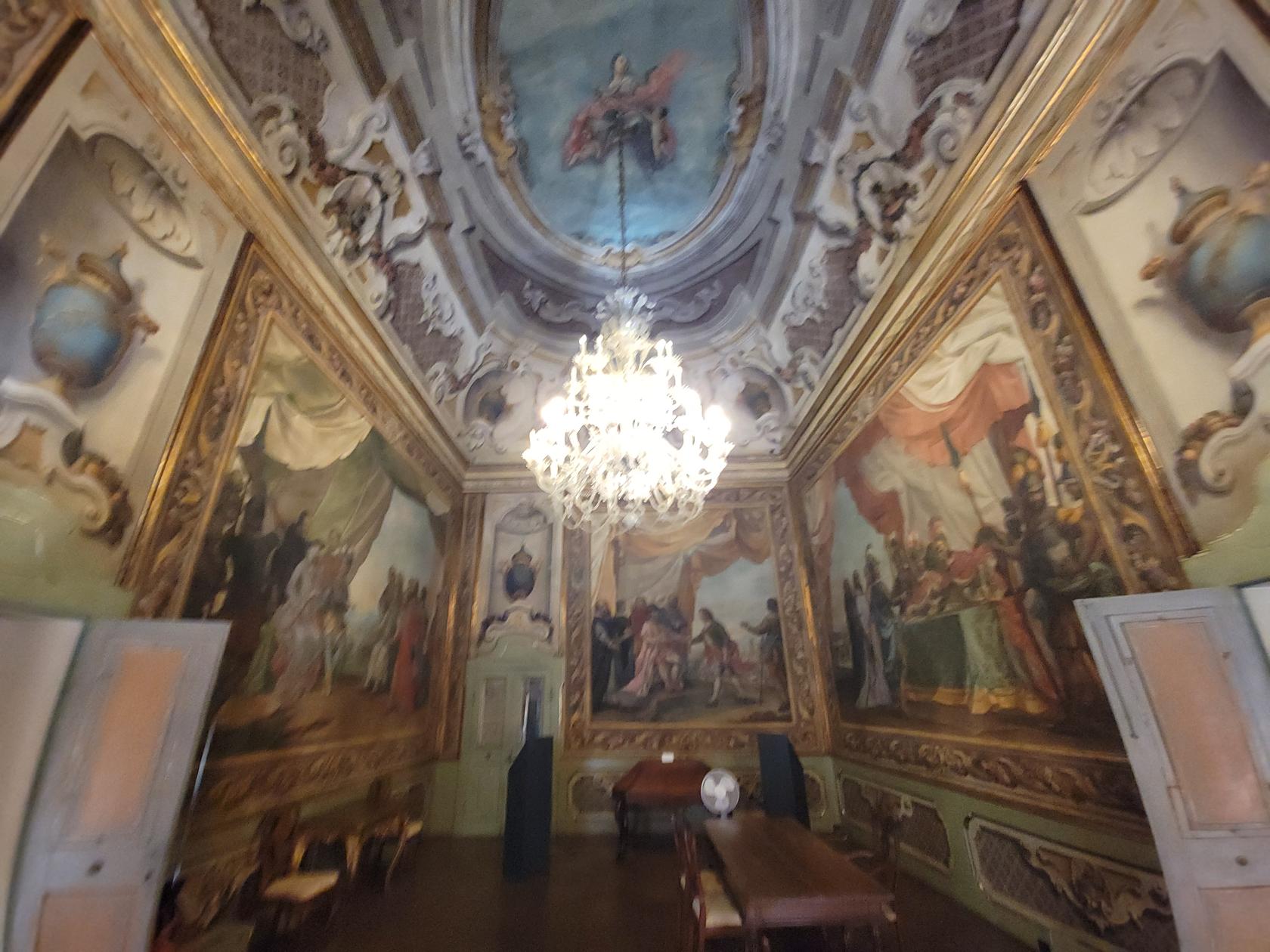
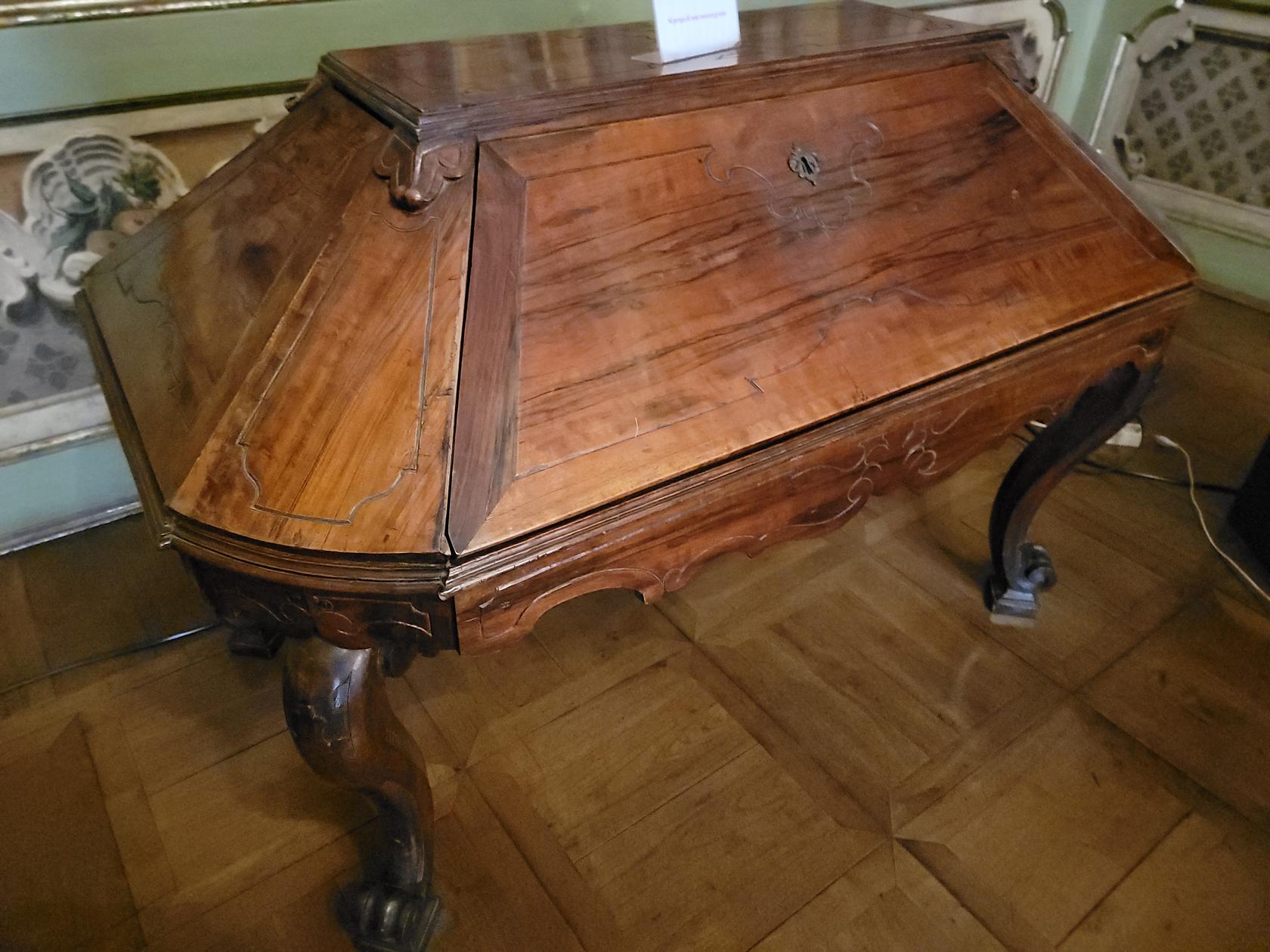
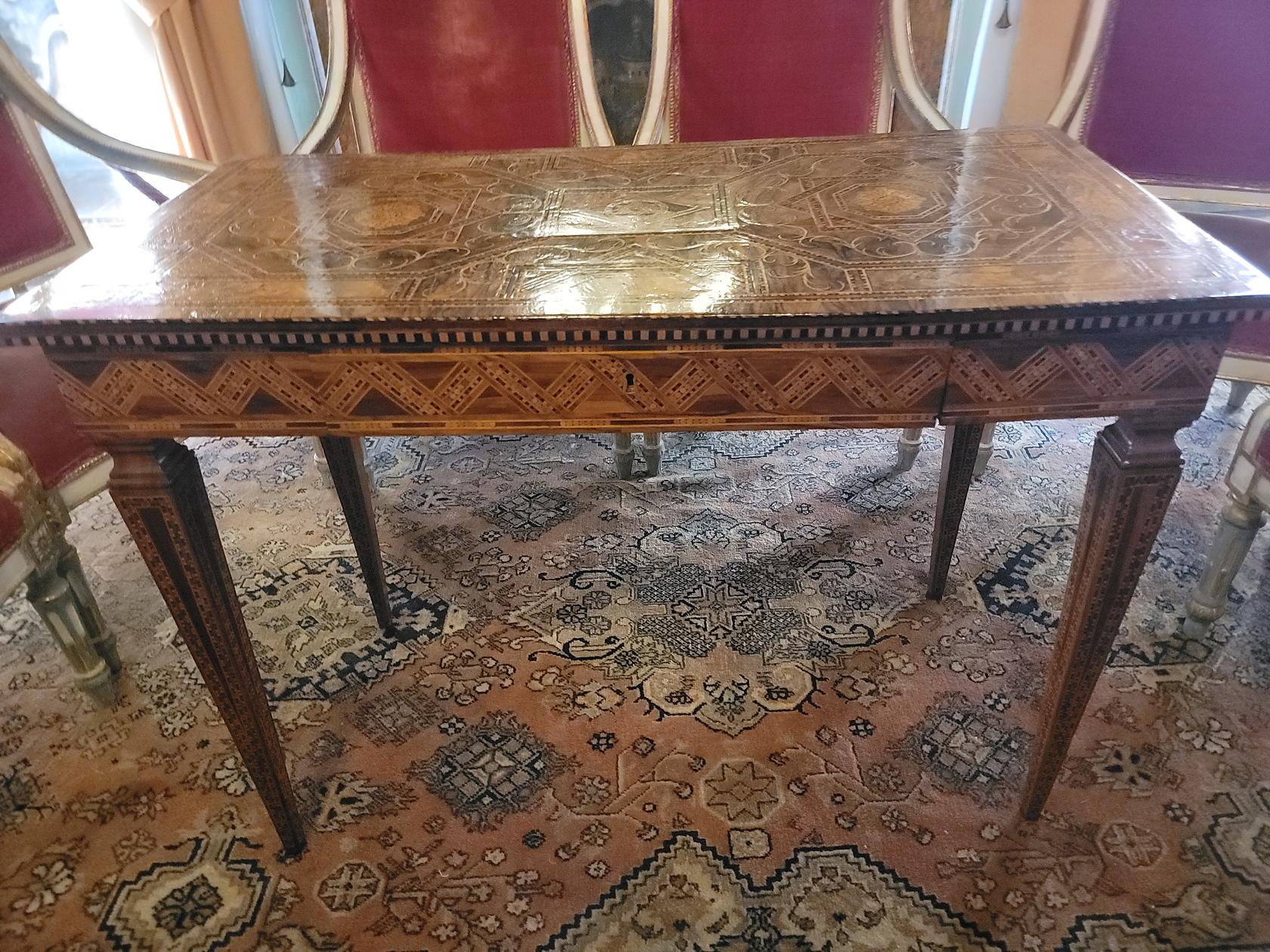
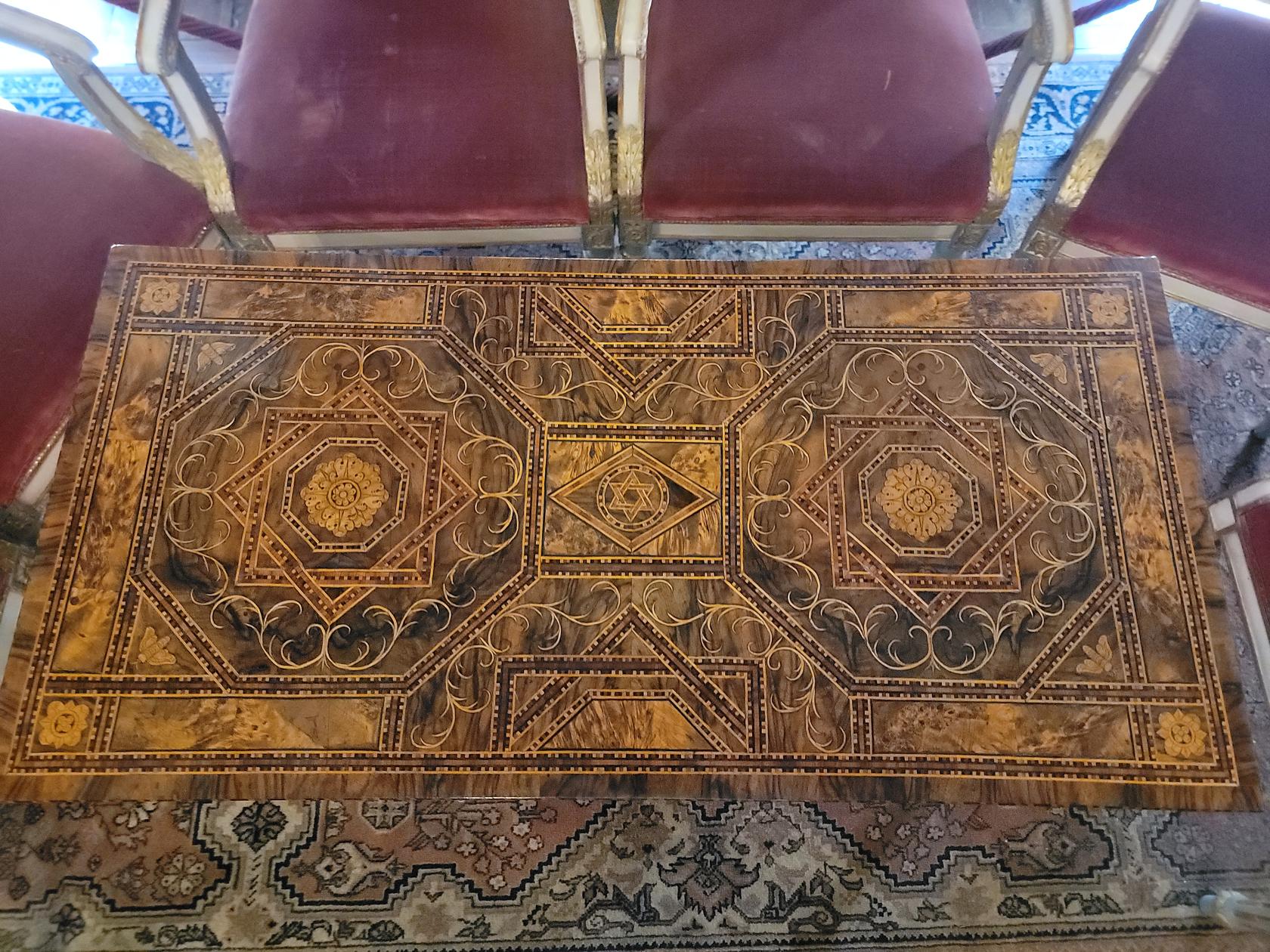
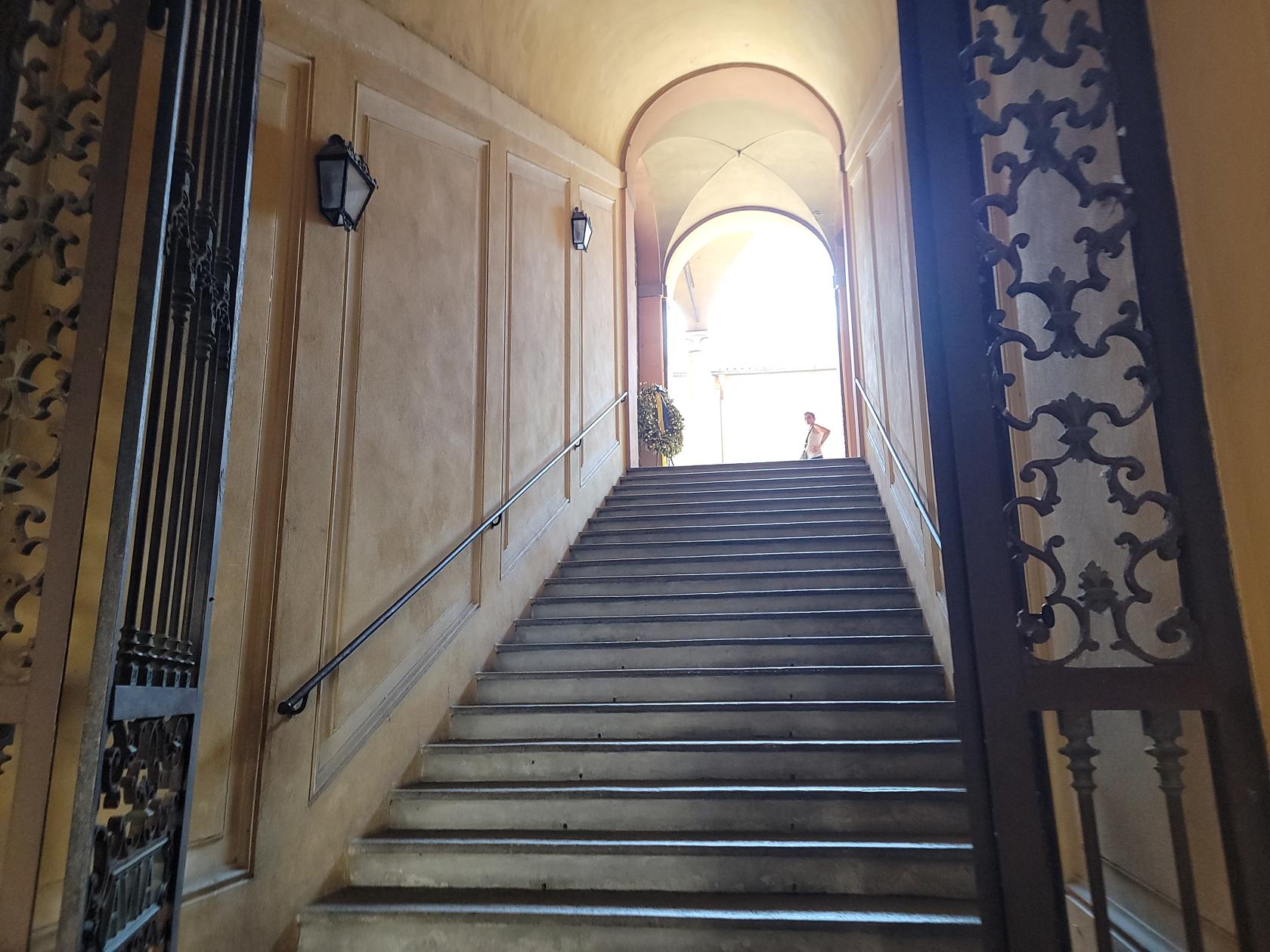
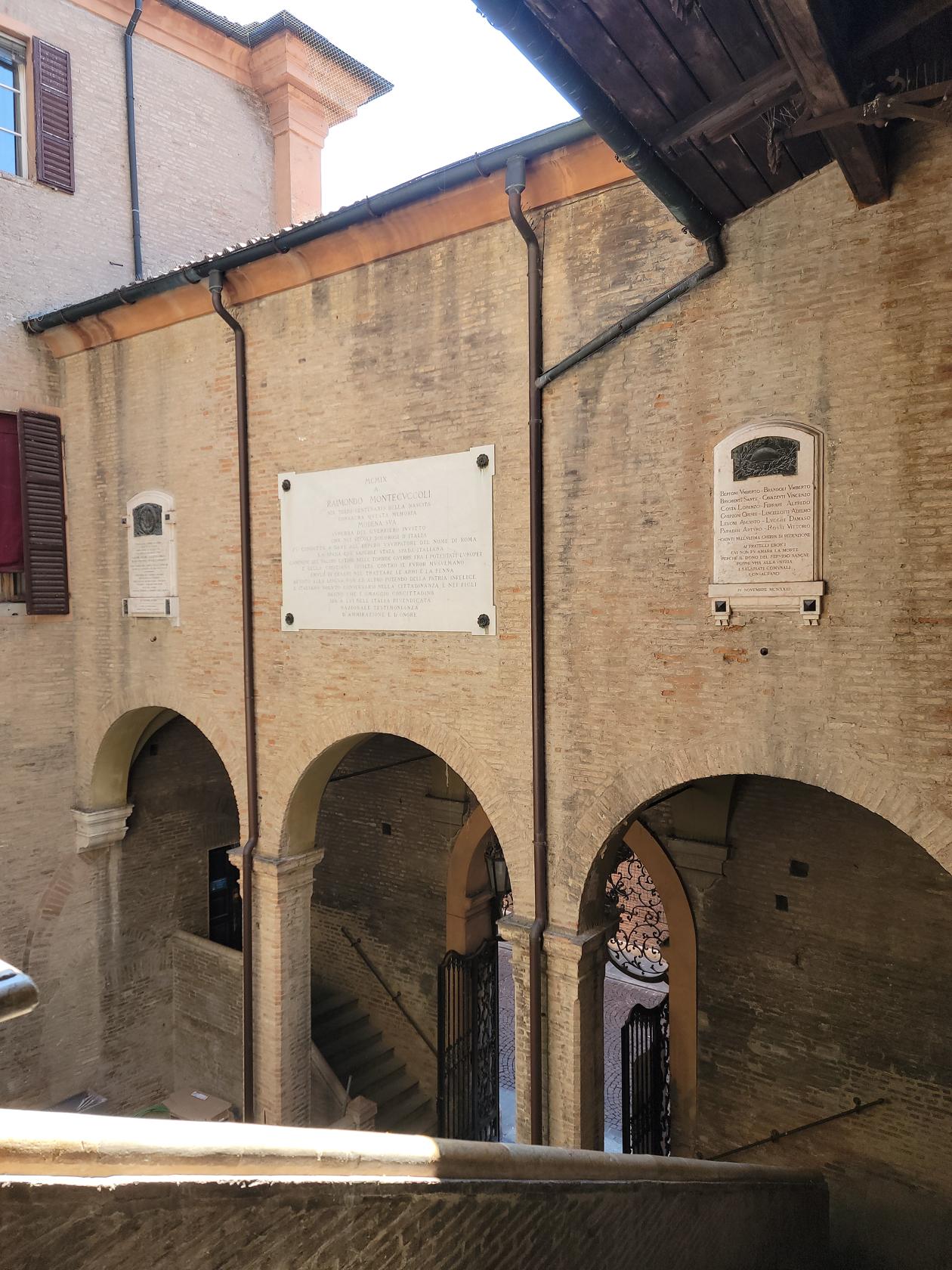
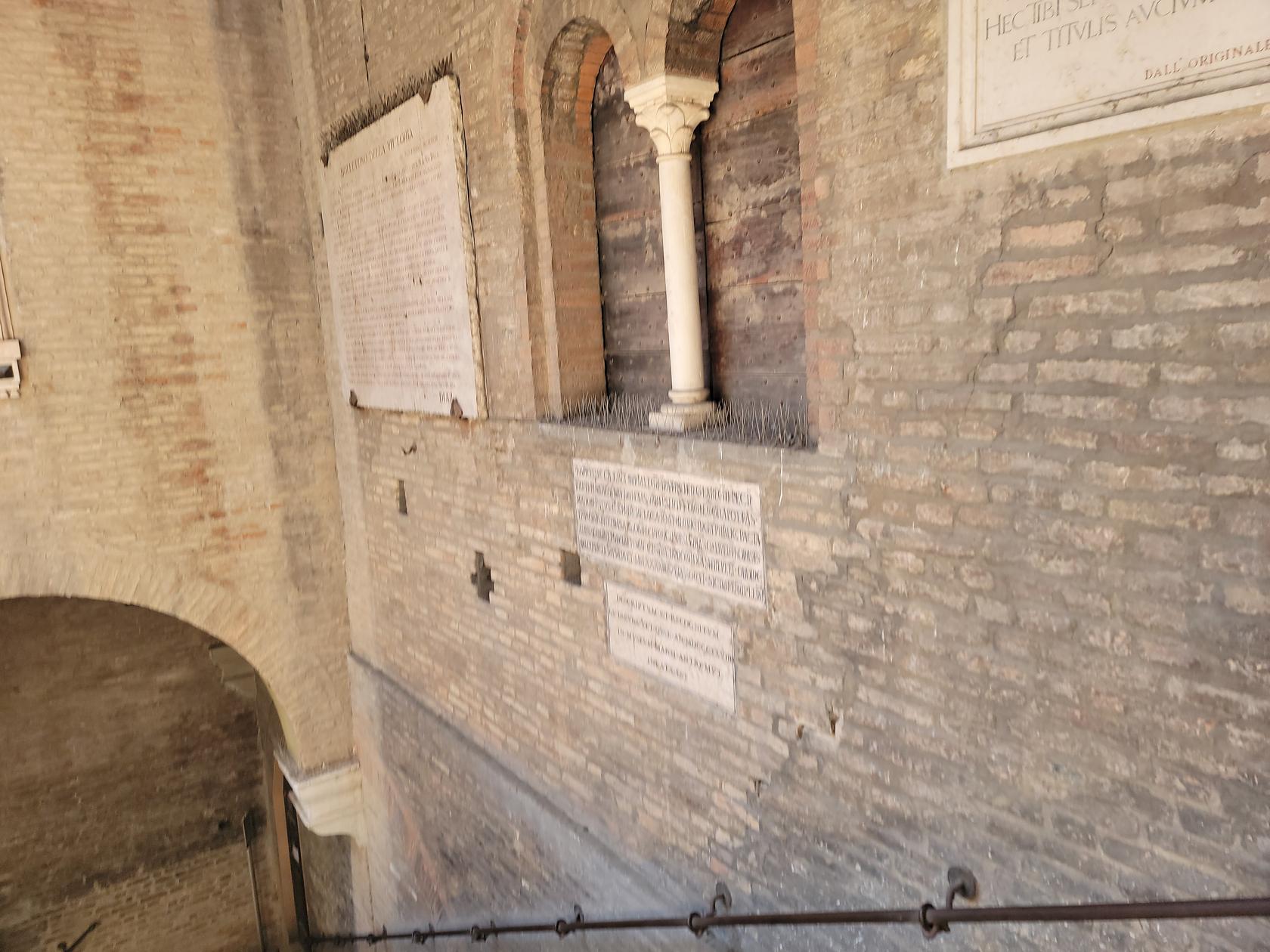
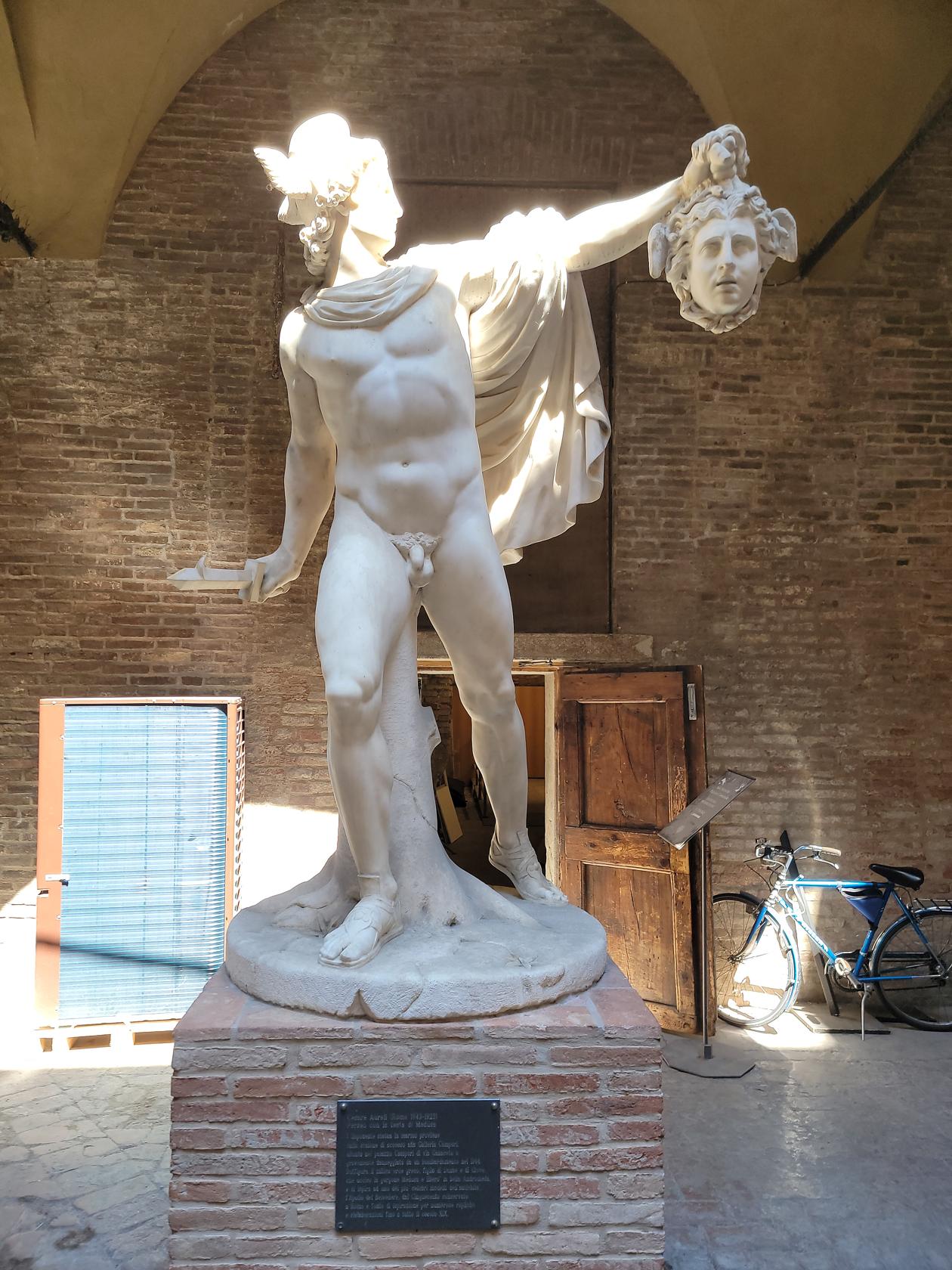
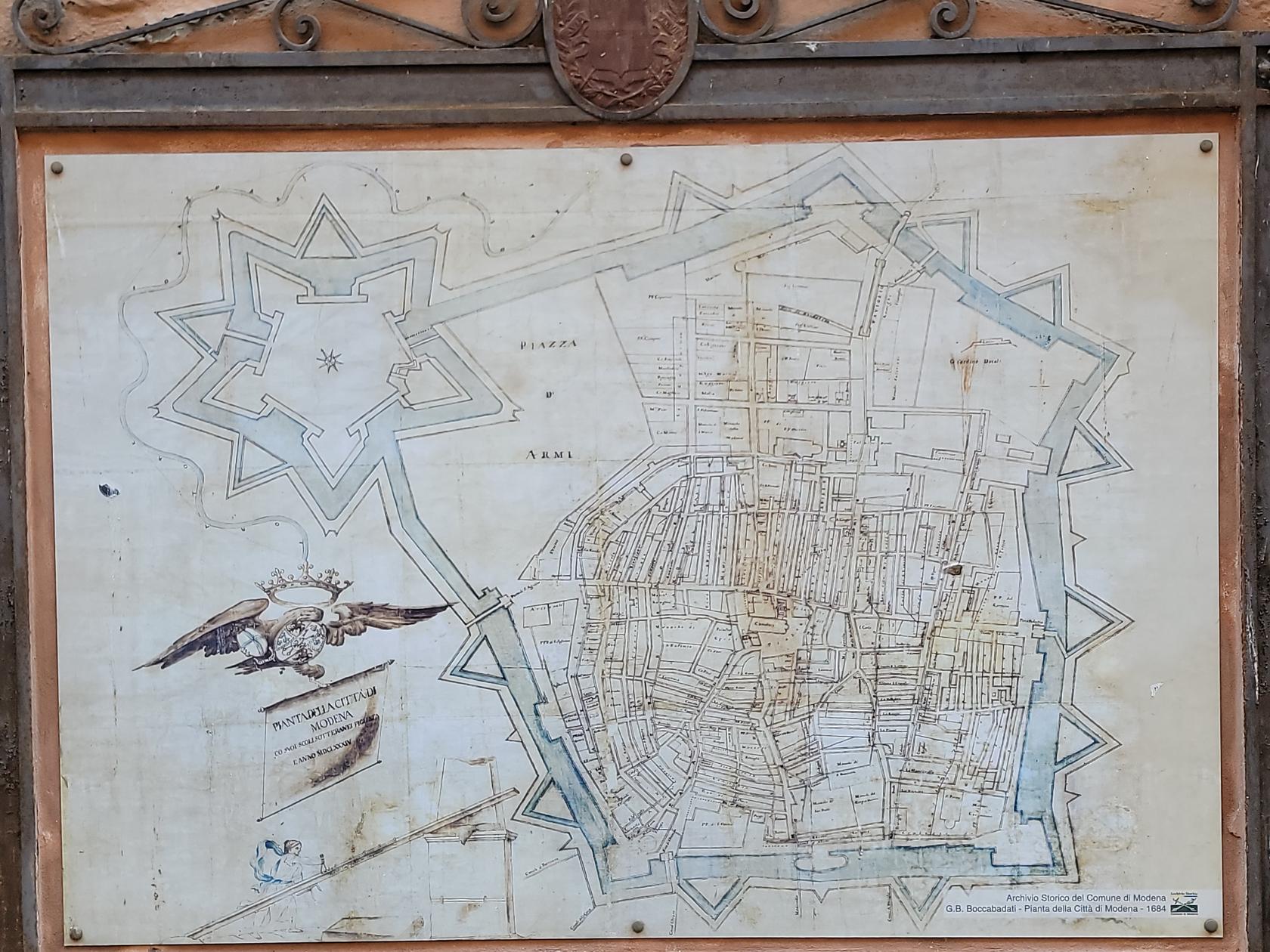
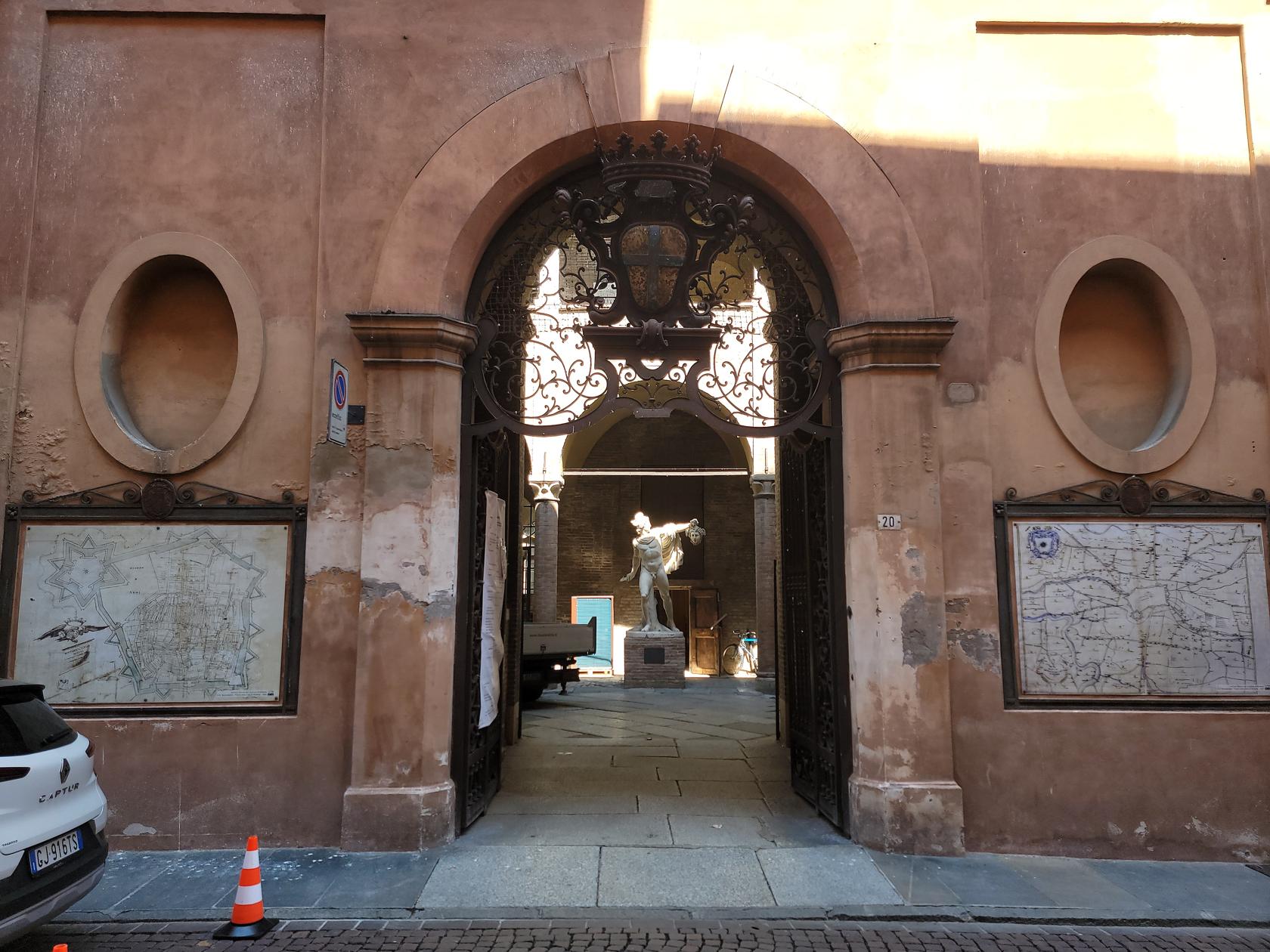
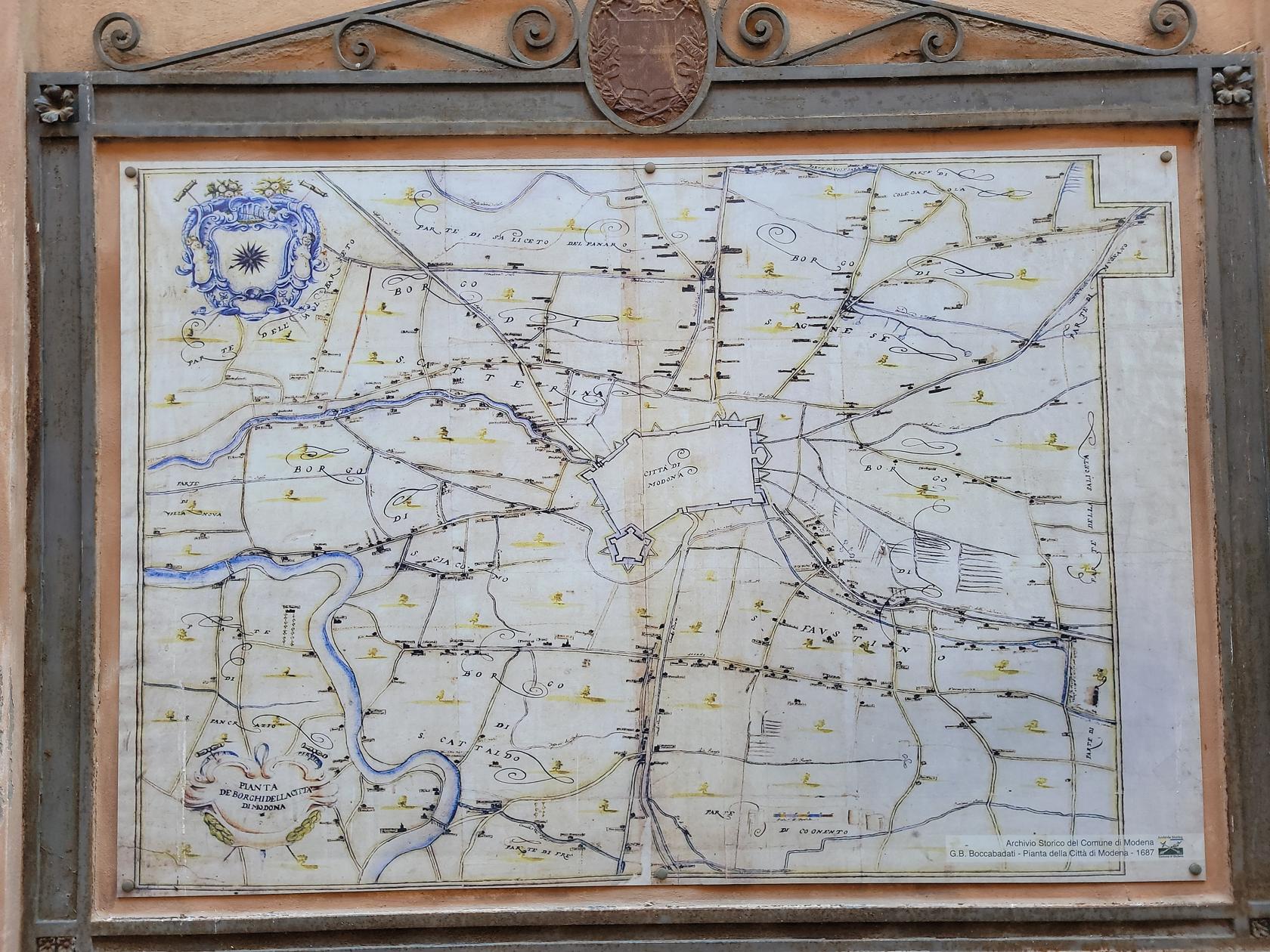
At the back entrance to the palazzo is a statue of Perseus holding the severed head of Medusa. It can be seen directly by way of the back entrance stairwell. Or, when the back entrance doors are open, it can be seen from the street flanked on either side by old maps of Modena.
Civic Tower
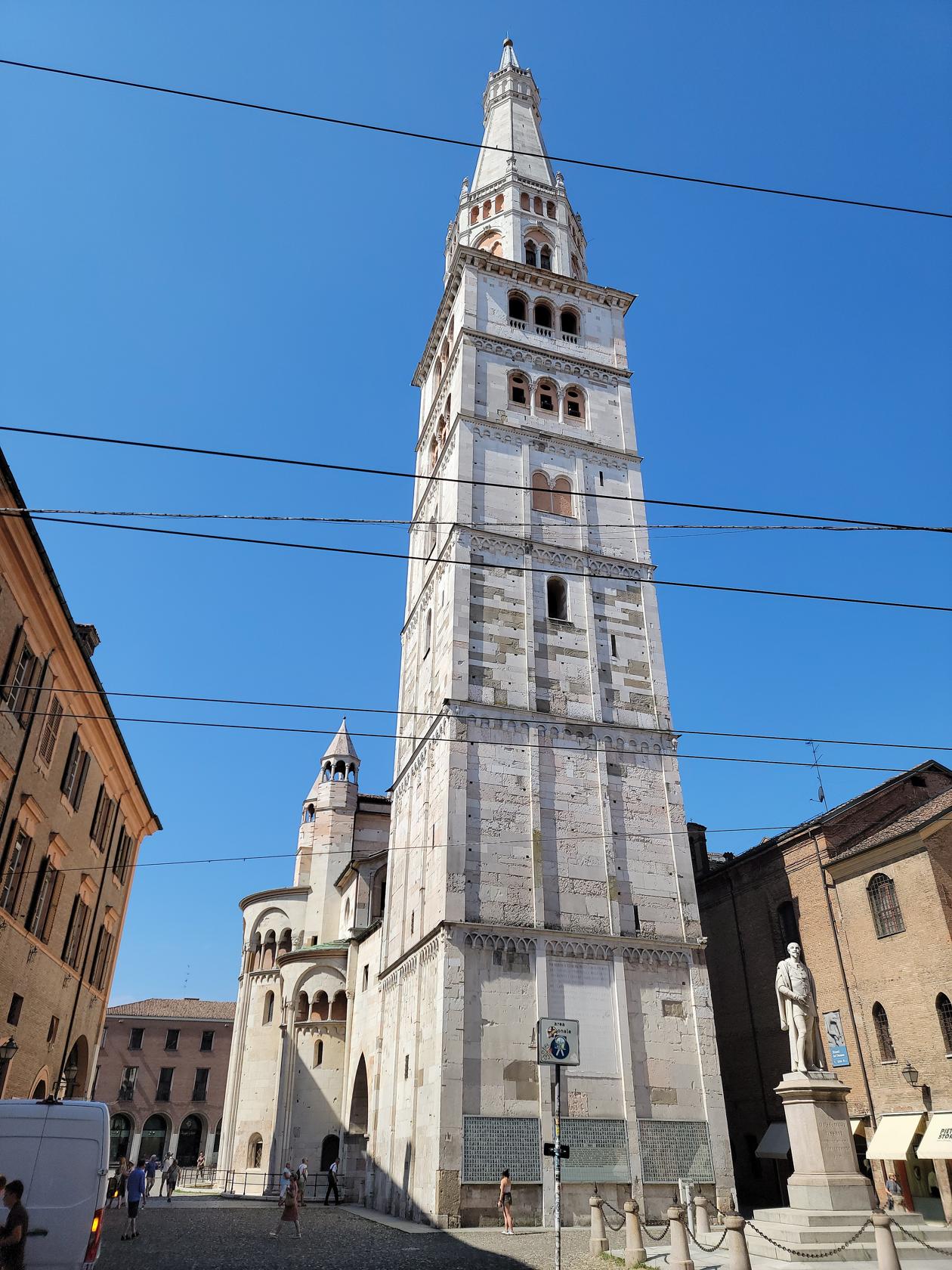
Located adjacent to the cathedral is the Civic Tower. Yes, the Civic Tower leans and not by a little, a lot. Comparable to those leaning towers in Bologna and Pisa it’s not that impressive, but it is very noticeable when judged from a distance, using other buildings as a reference.
Cathedrals and Churches
Cathedral of Modena
The Cathedral of Modena, or precisely Metropolitan Cathedral of Saint Mary of the Assumption and Saint Geminianus[1]Saint Germinianus is Modena’s patron saint and who’s tomb, dating back to the fifth century, was part of one of the original churches erected on the same site., or colloquially and affectionately known as Il Duomo as in other Italian towns and cities. The main entrance has several tympanums above each door, depicting the biblical stories of Adam and Eve.
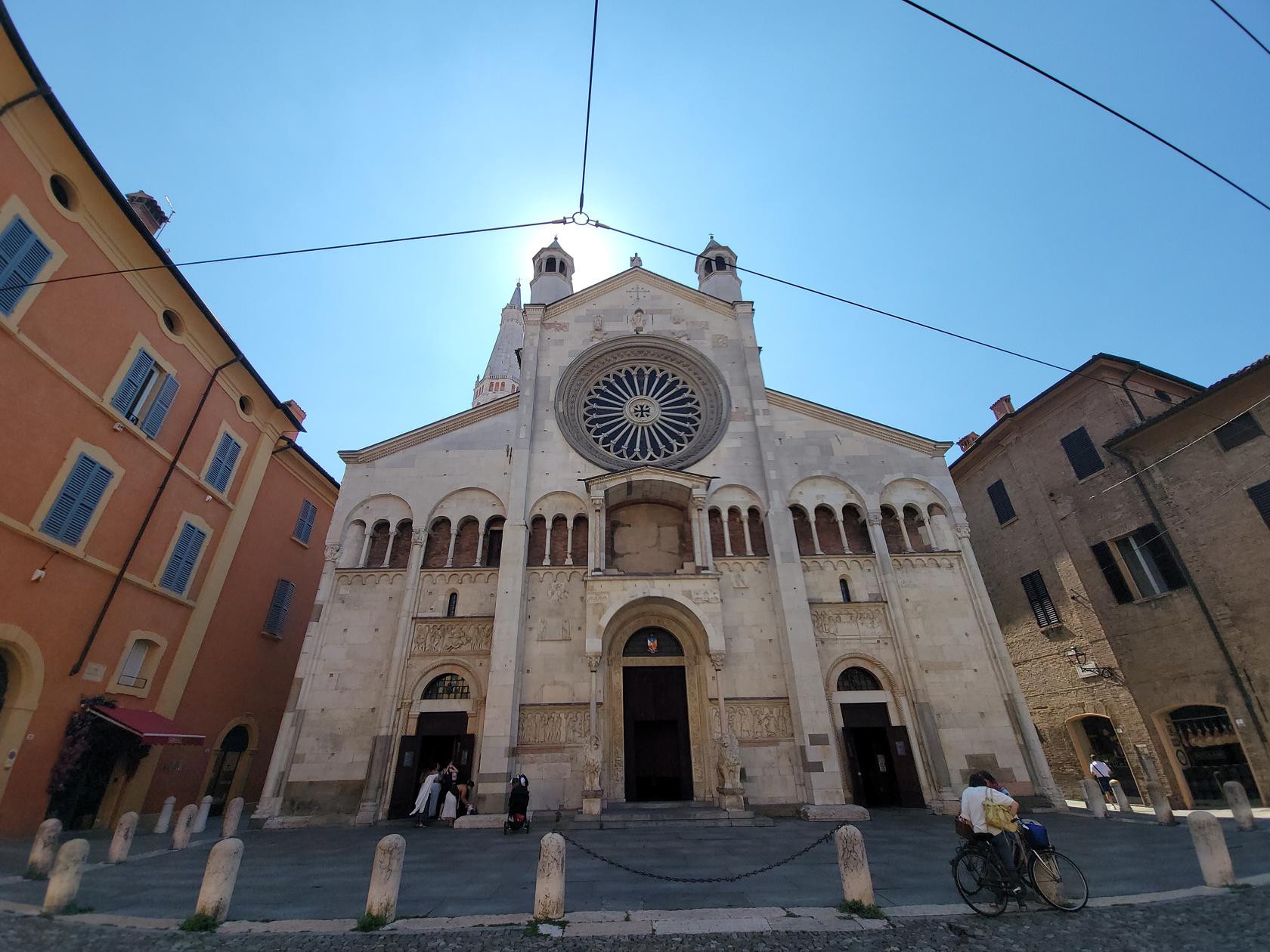
From outside it appears to have been rebuilt several times, many of the blocks that make up the facade of the structure do not match in many places. Though odd, the outside follows typical Romanesque architecture, with semi-circular arches that are filled in with brick and other appointments, with the exception of the large Piazza Portal on the north side, which almost functions as the main entrance.
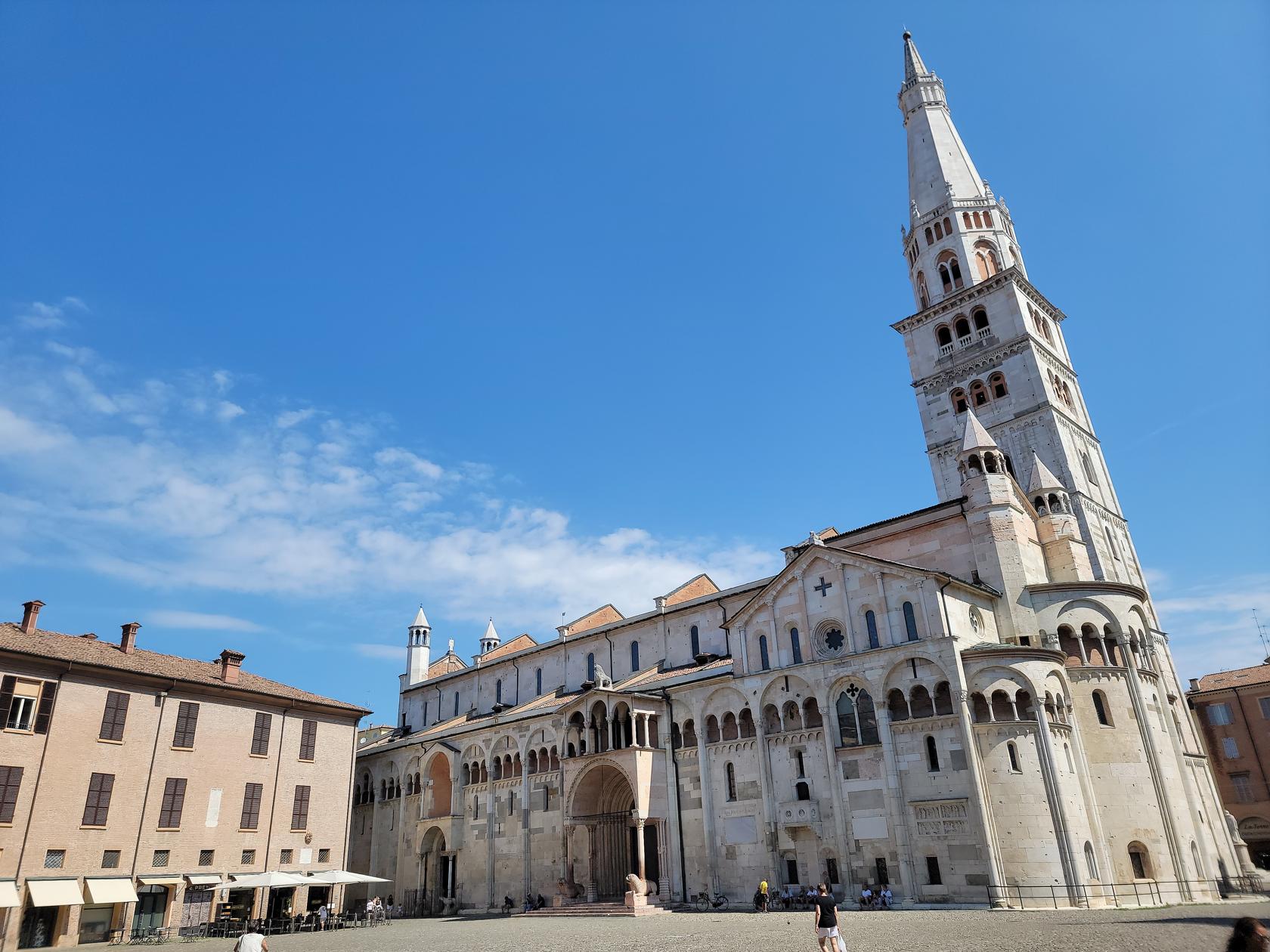
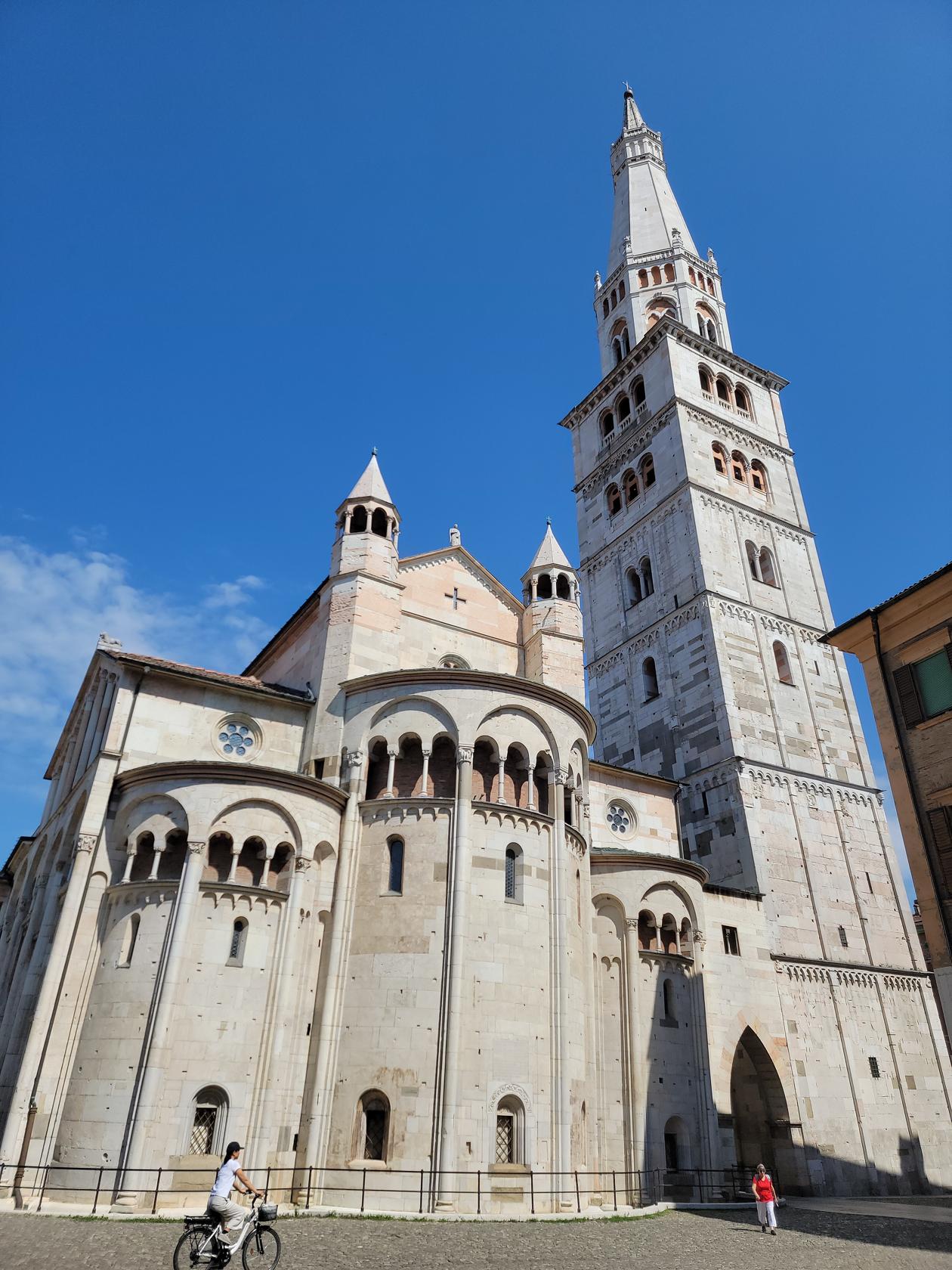
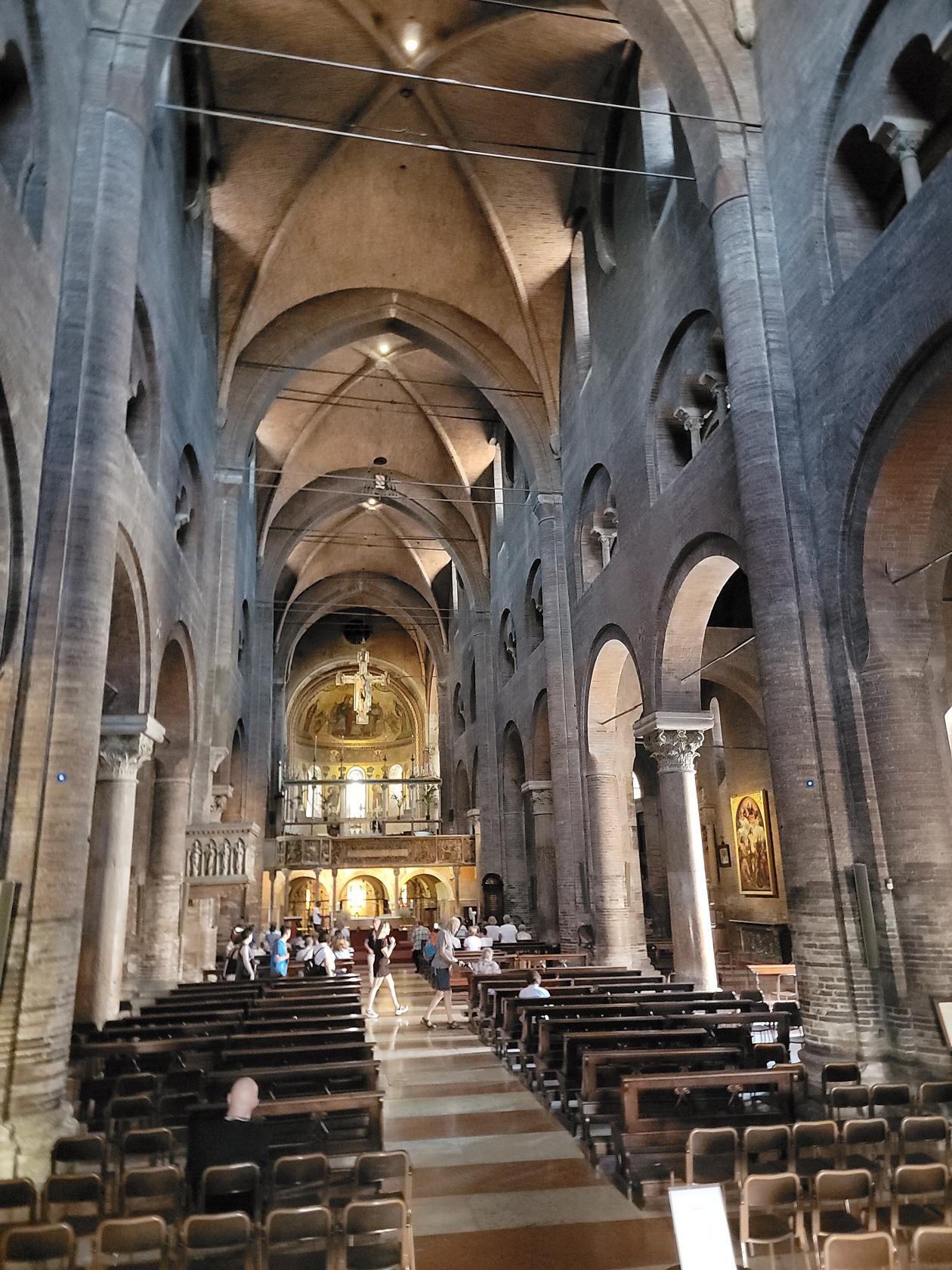
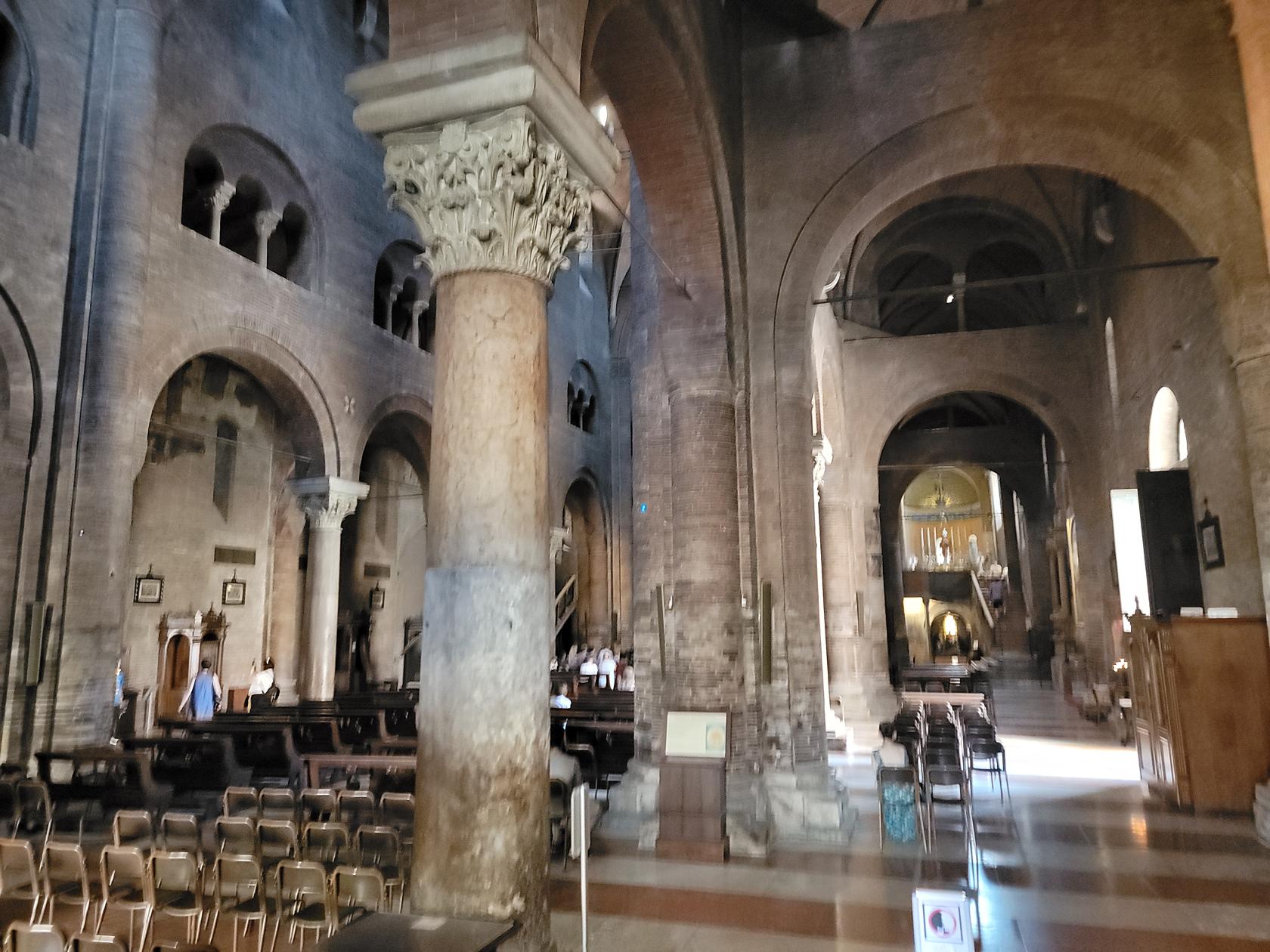
The cathedral lacks a dome, instead having parapets on each of the four corners. It is sectioned in four places, reveals at the roof level as wall extending upwards, which coincide with the four internal arches for the nave. The inside is rather plain and mainly composed of bare brick. At the time we were there, a service was being held, limiting our ability to take more photographs.
Restaurants
For our day trip, we ate at a local place right off the Piazza Grande which promised to have good food at a fair price.
Enoteca Al Duomo
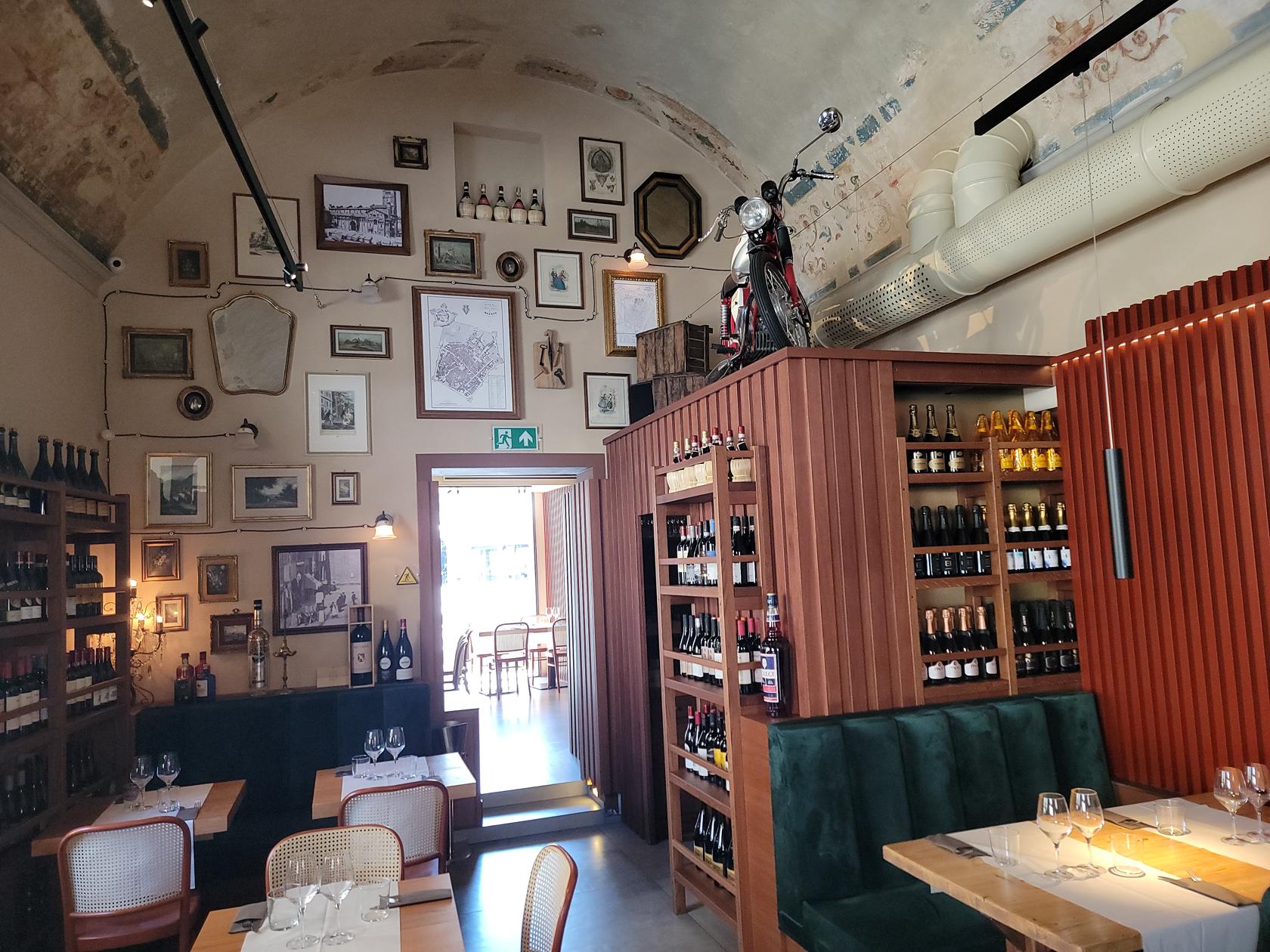
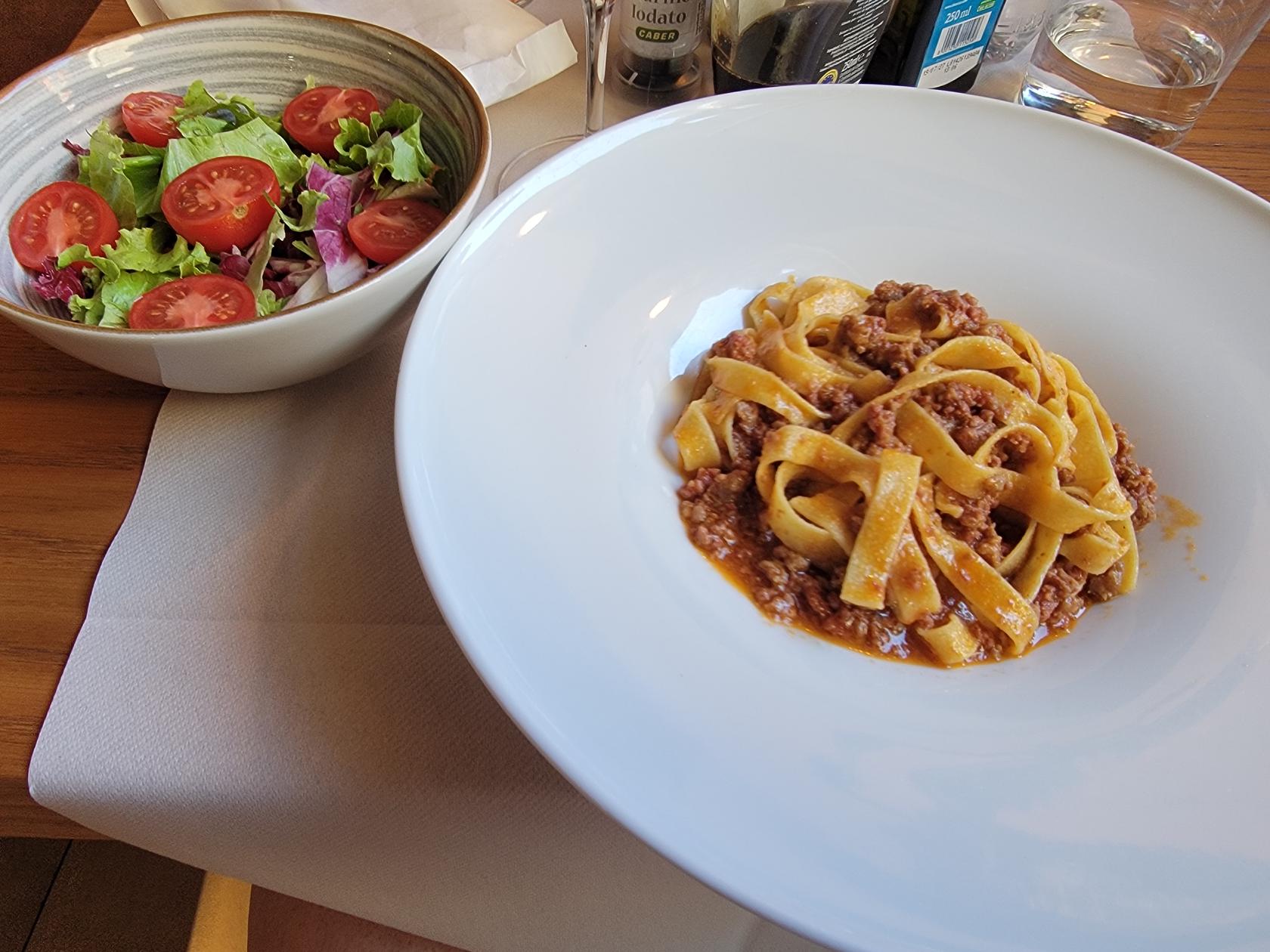
We ate lunch here on recommendations that we read online. Our seating was inside, since the temperature outside was starting to become a bit annoying. The food and service were good and we spent an enjoyable hour discussing Modena and what else, if anything, there was to see in the city.
Il Pilotta
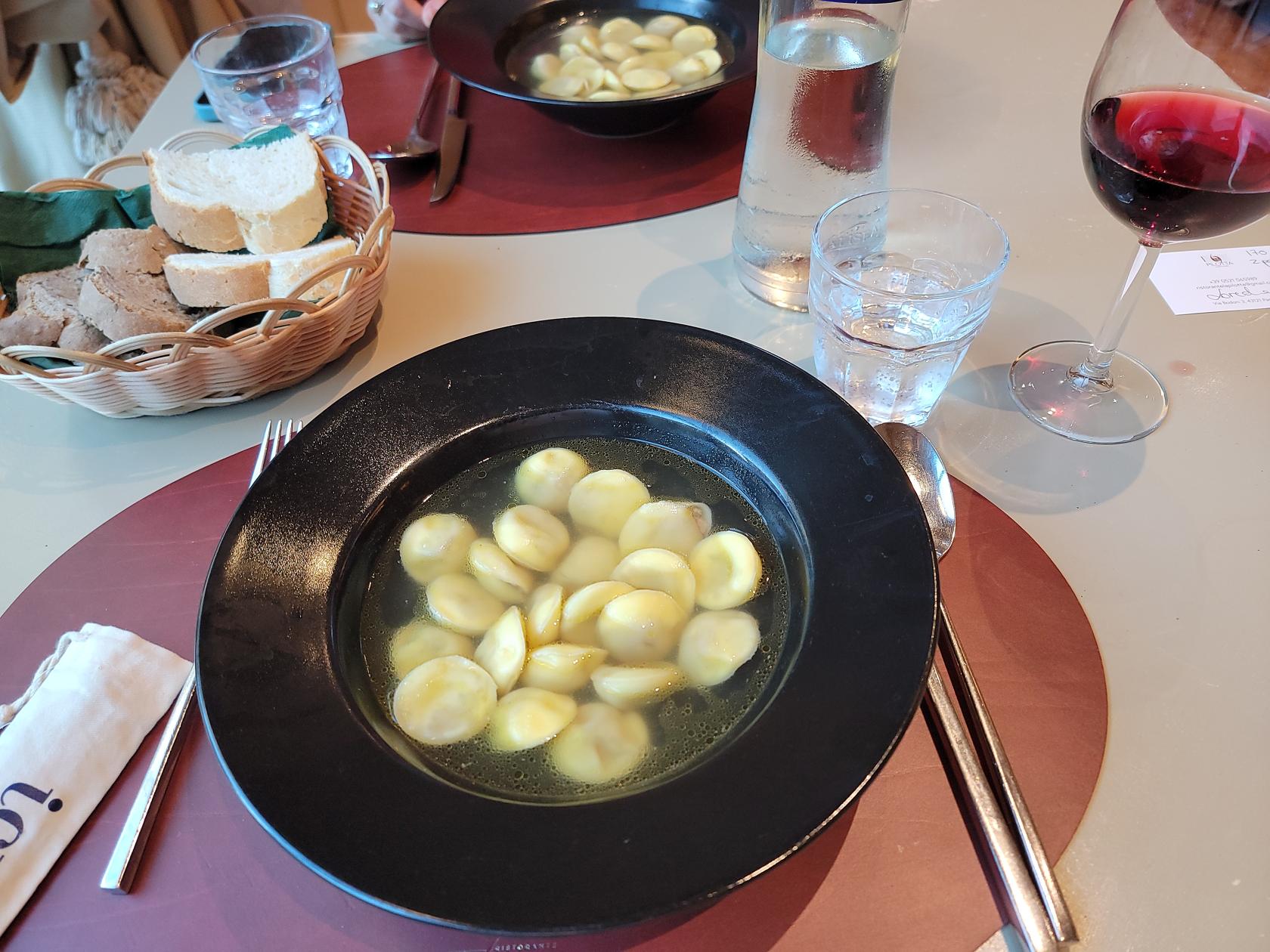
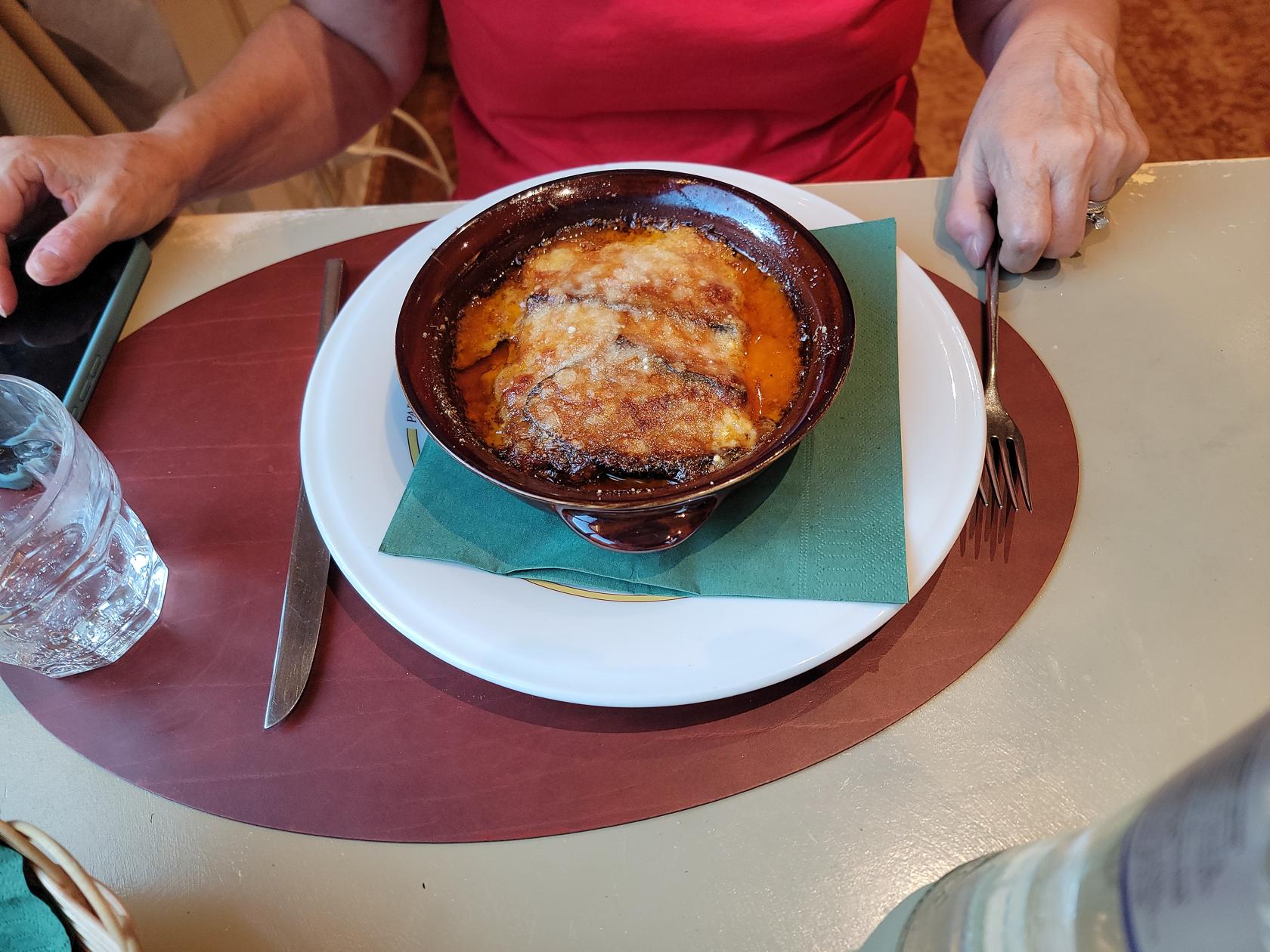
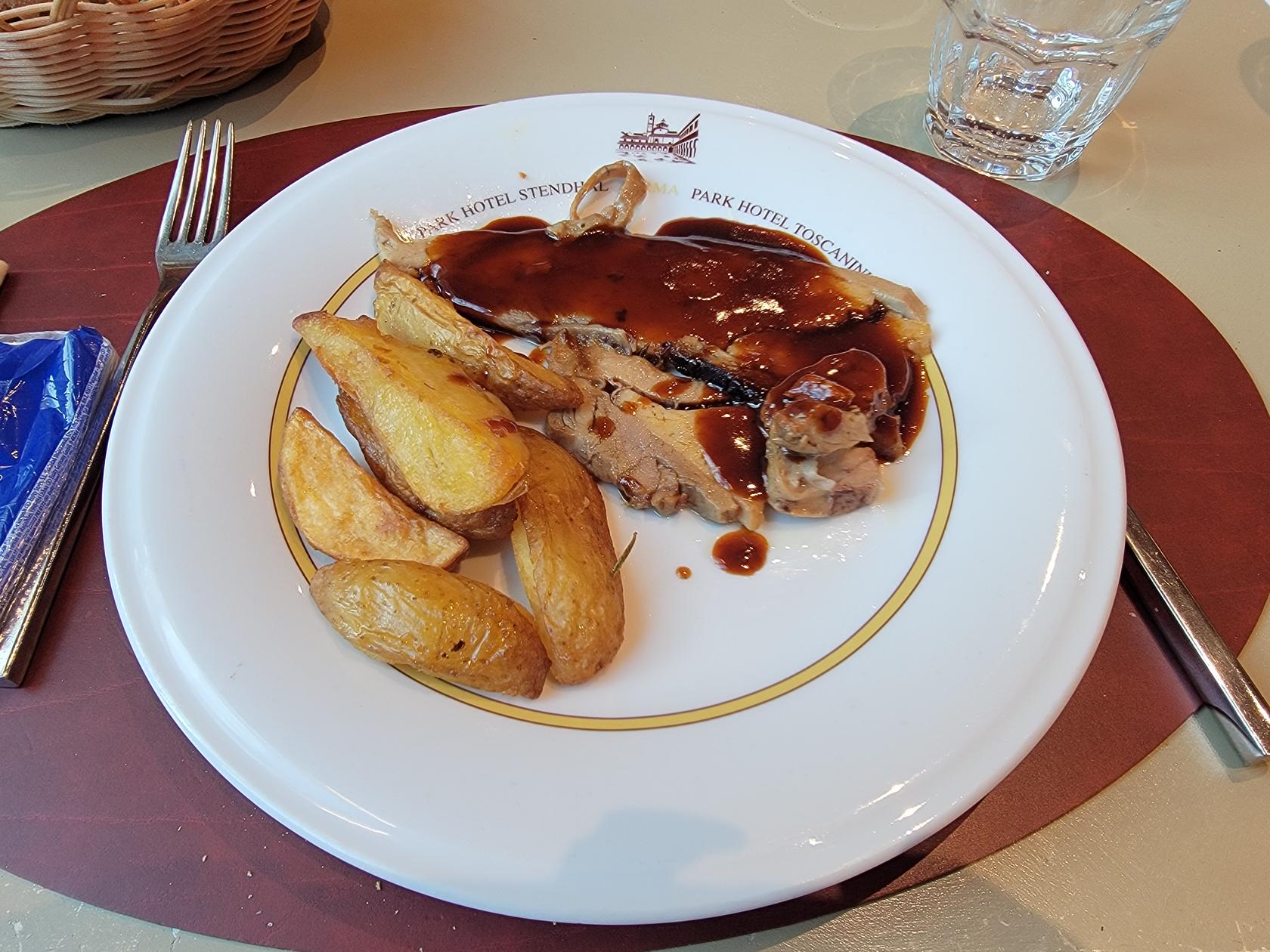
Located in our hotel, Hotel Stendhal in Parma, we enjoyed our last meal in the area at La Pilotta. The Cappelletti is broth is common for this area and can be commended. Our main dishes were Italian in general and good, though I did not care for the stuffing in the pork tip. The menu said it was potato, but it tasted more like a polenta or some other grain and it had an odd taste for me.
References
| ↑1 | Saint Germinianus is Modena’s patron saint and who’s tomb, dating back to the fifth century, was part of one of the original churches erected on the same site. |
|---|