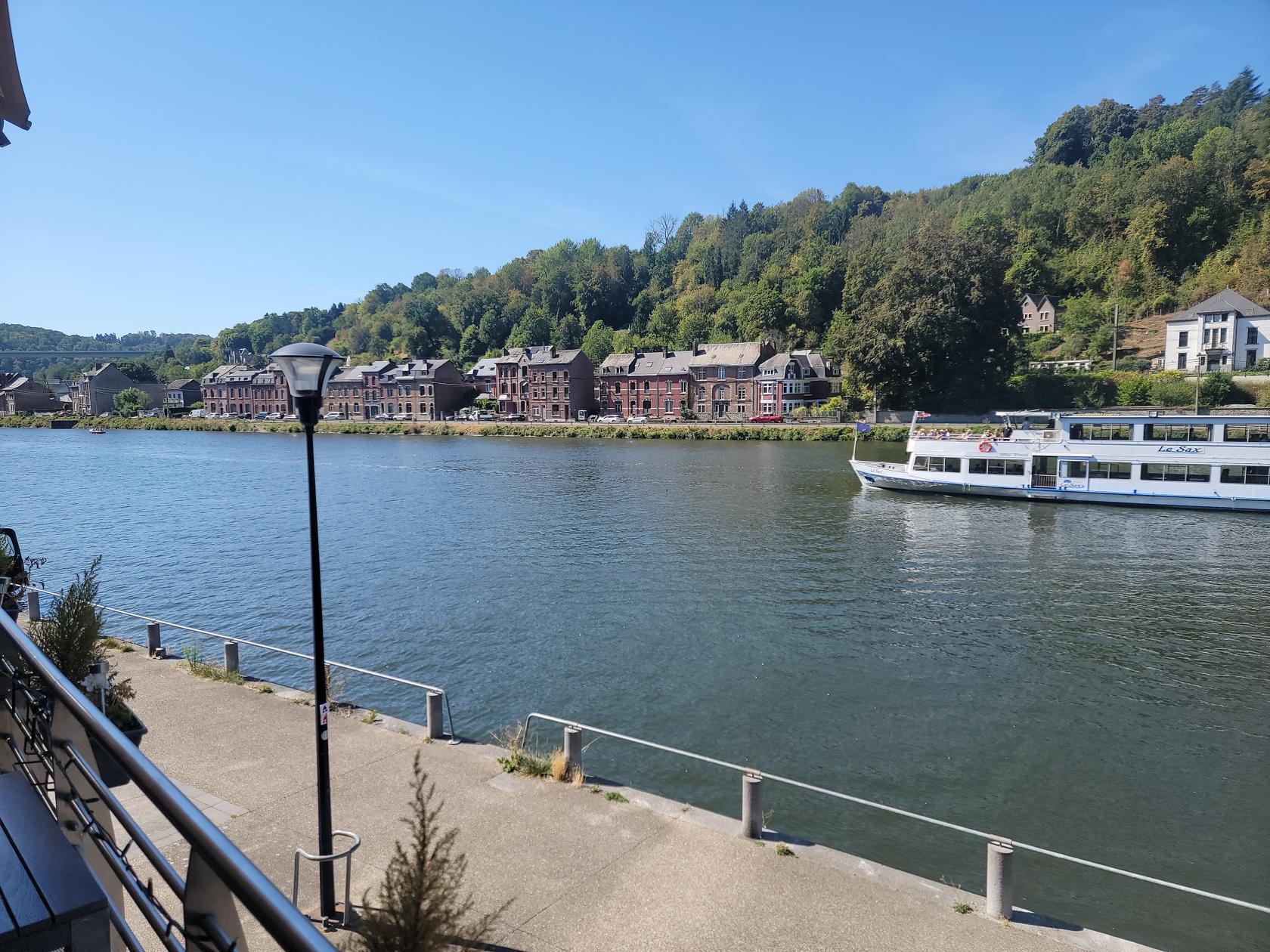
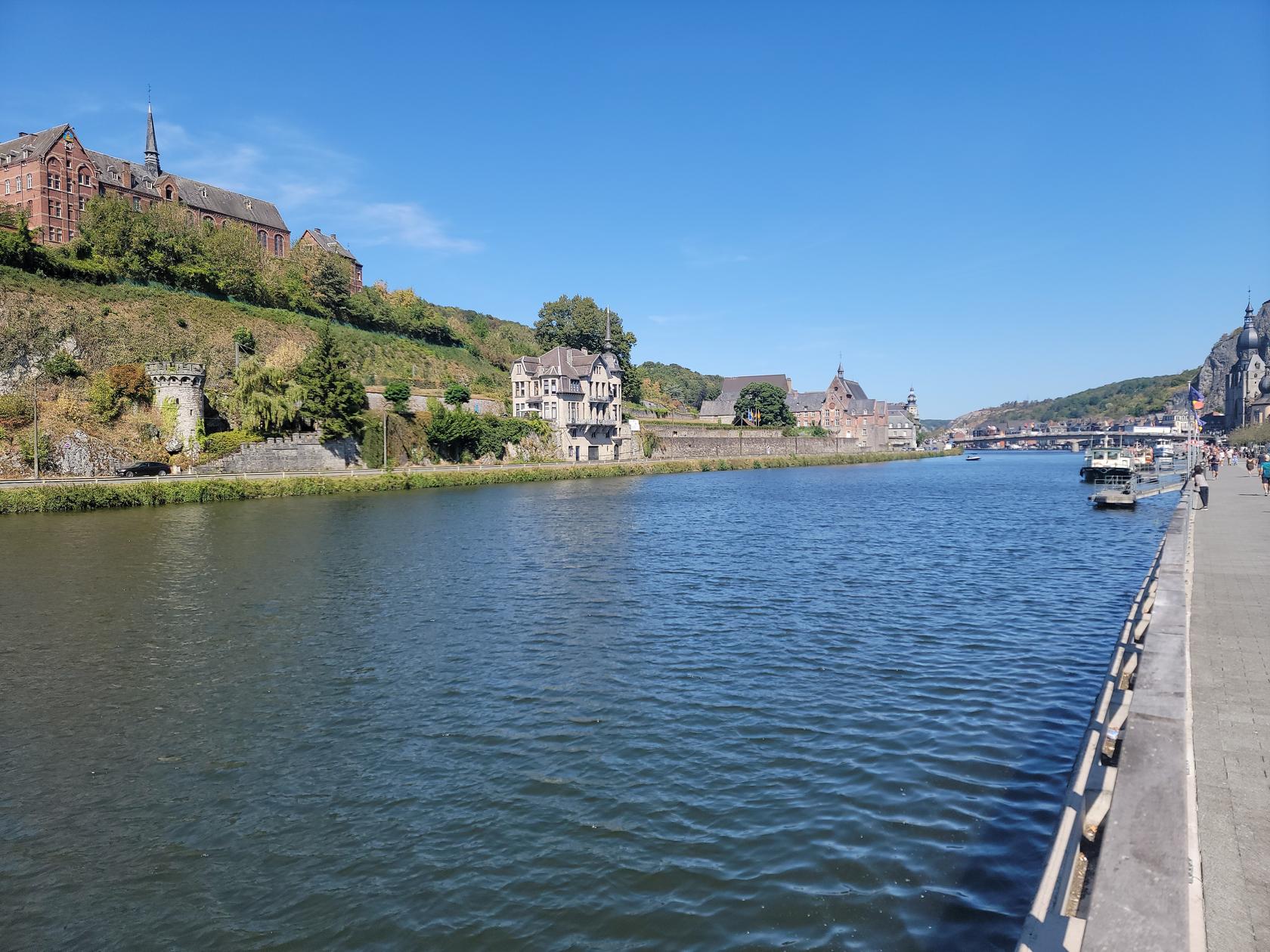
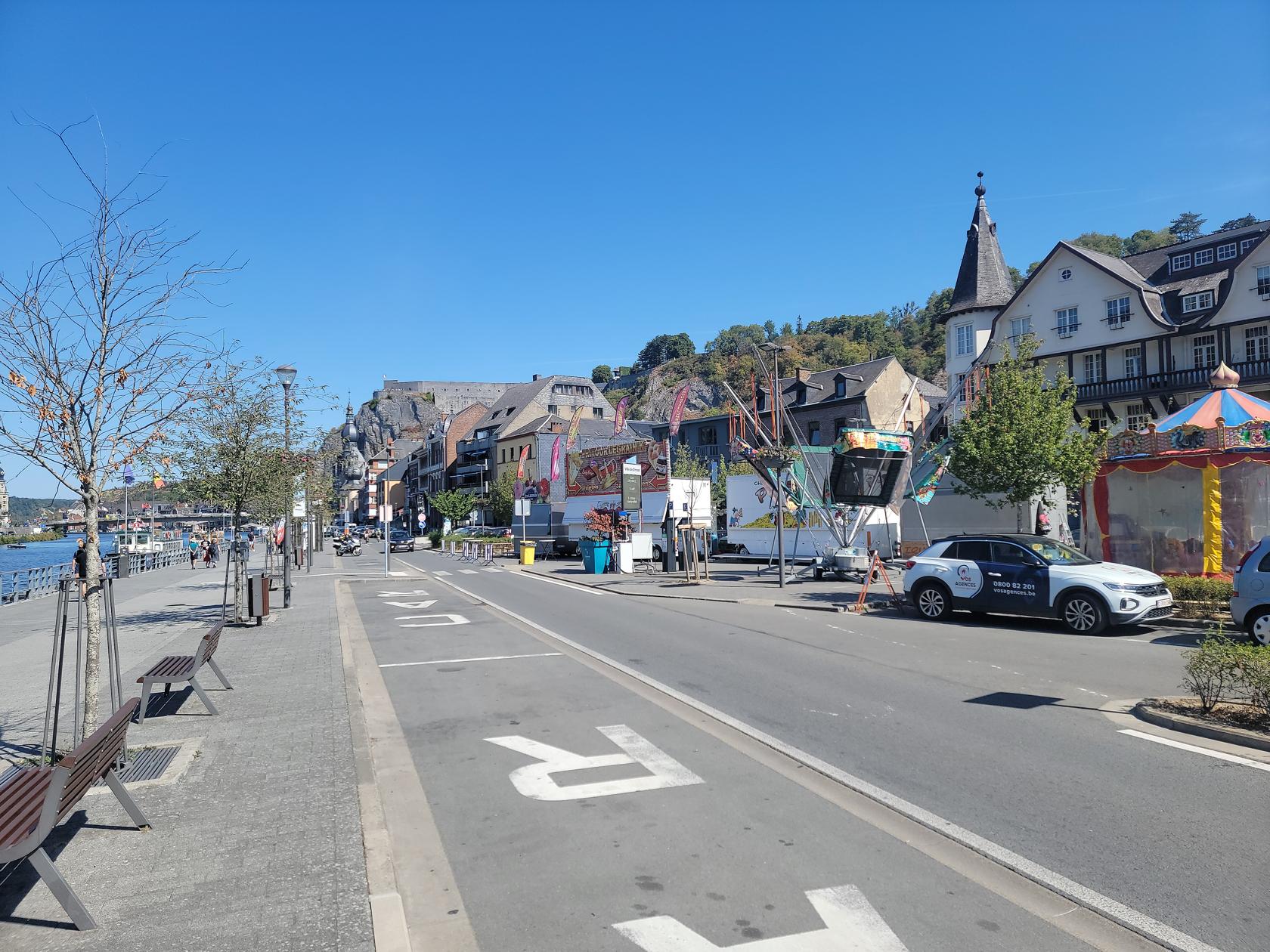
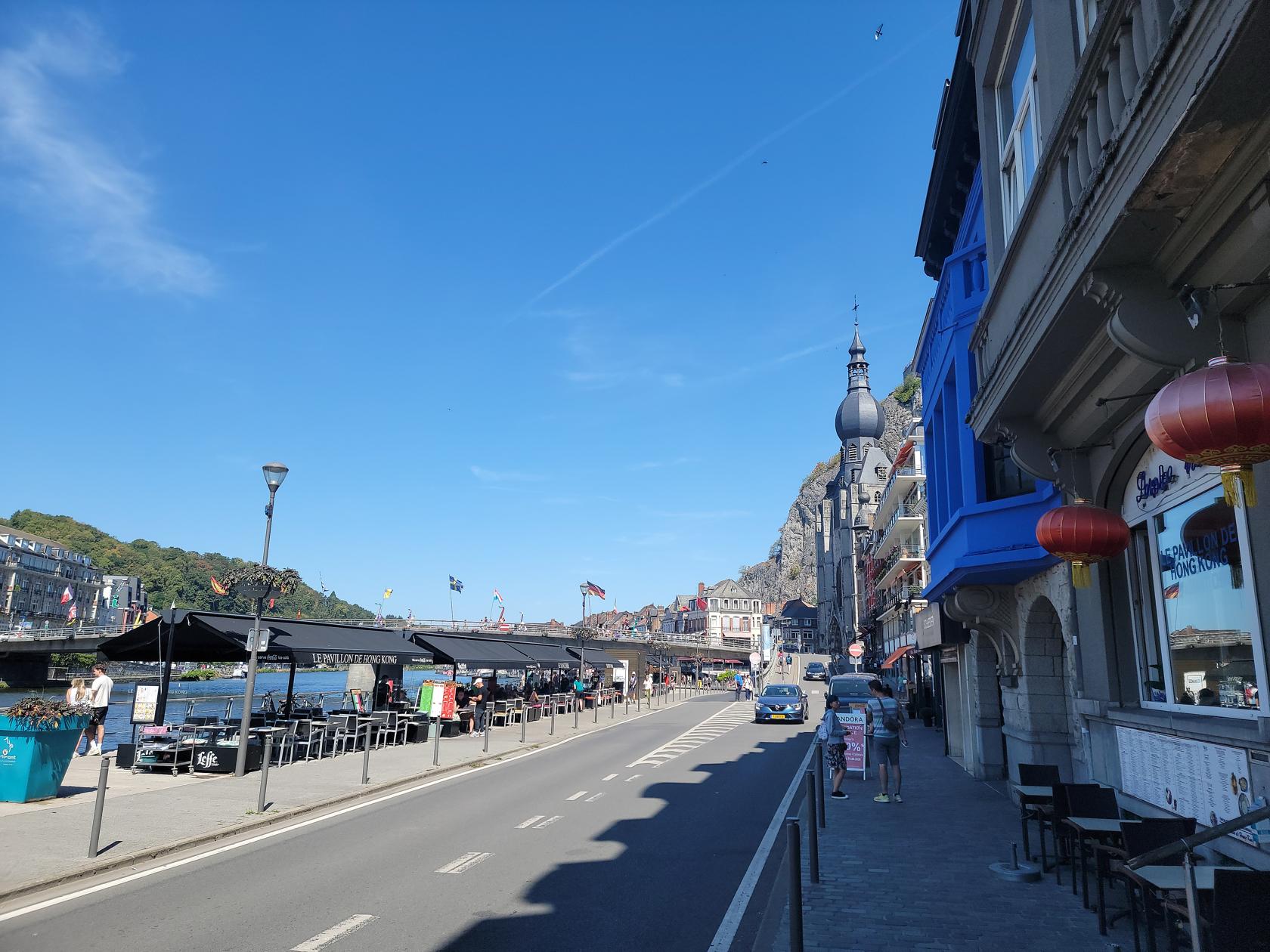
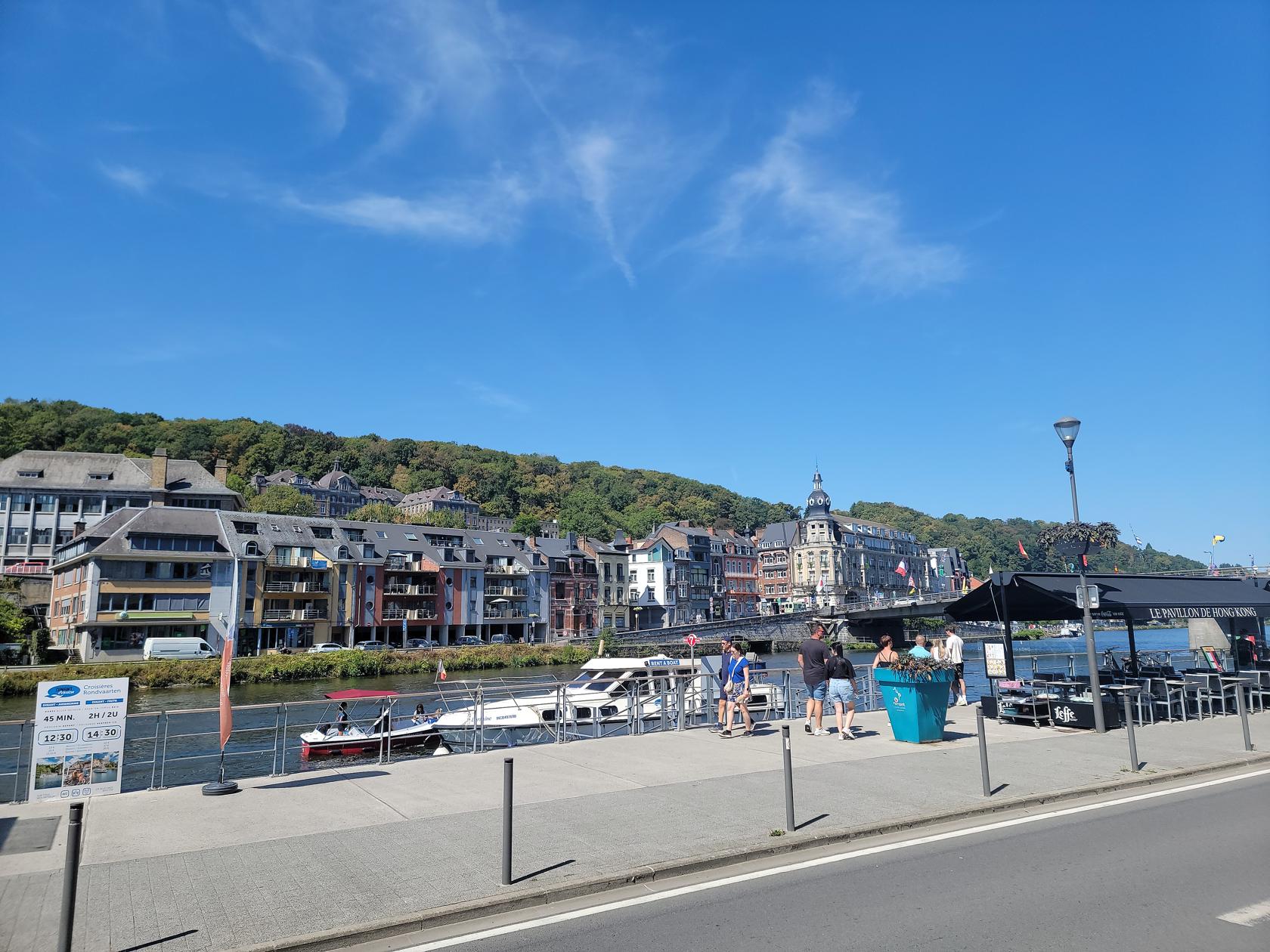
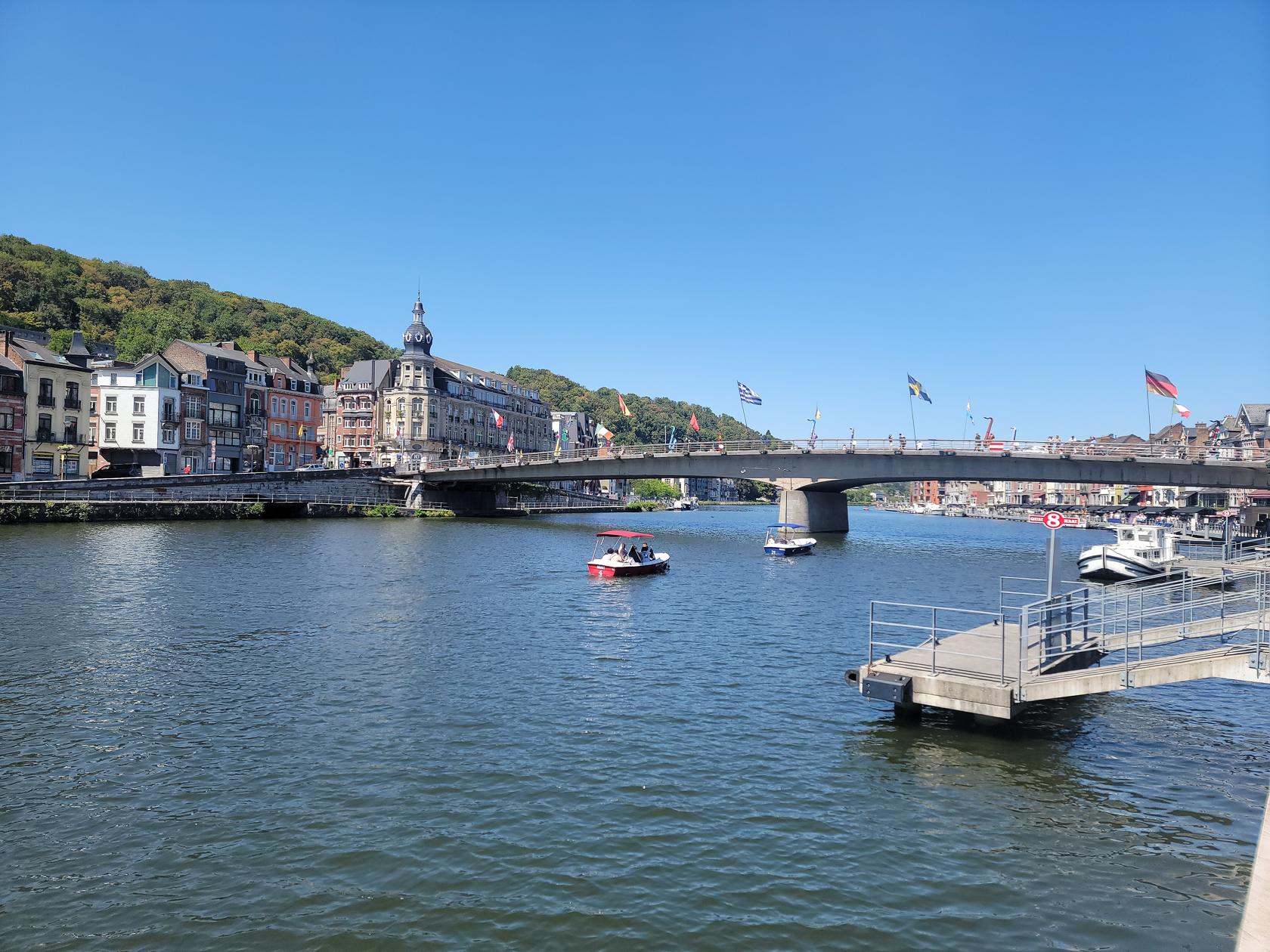
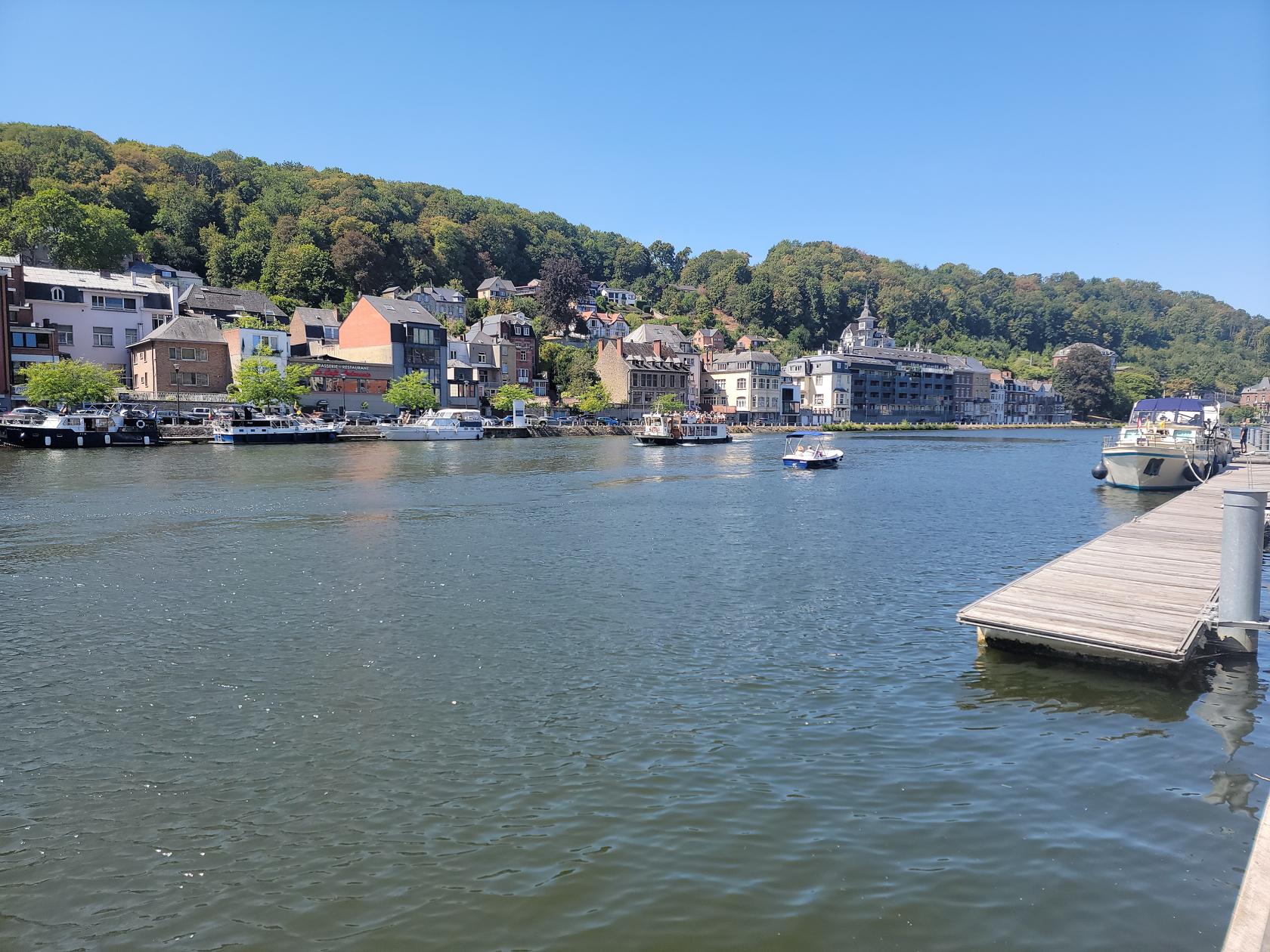
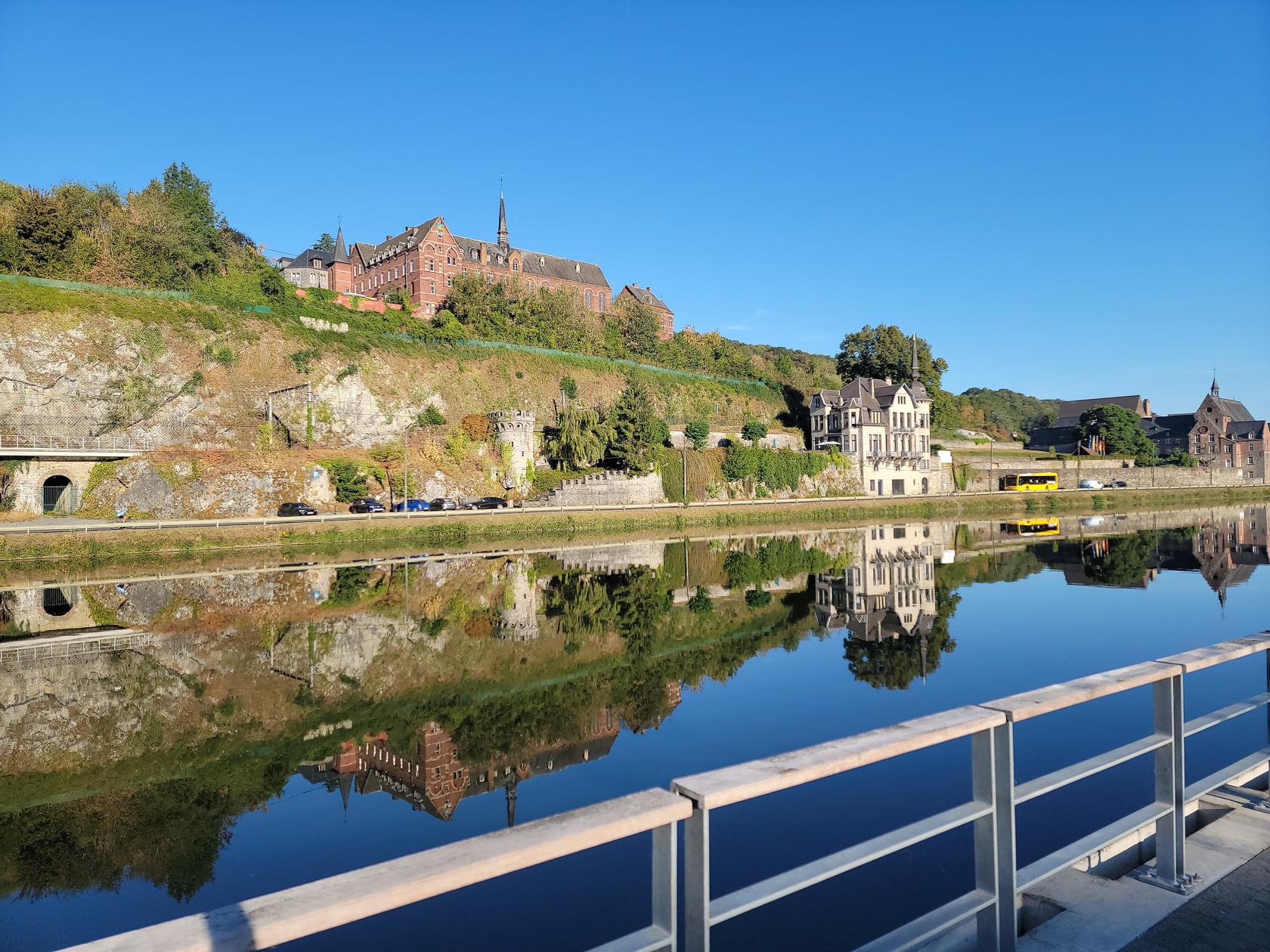
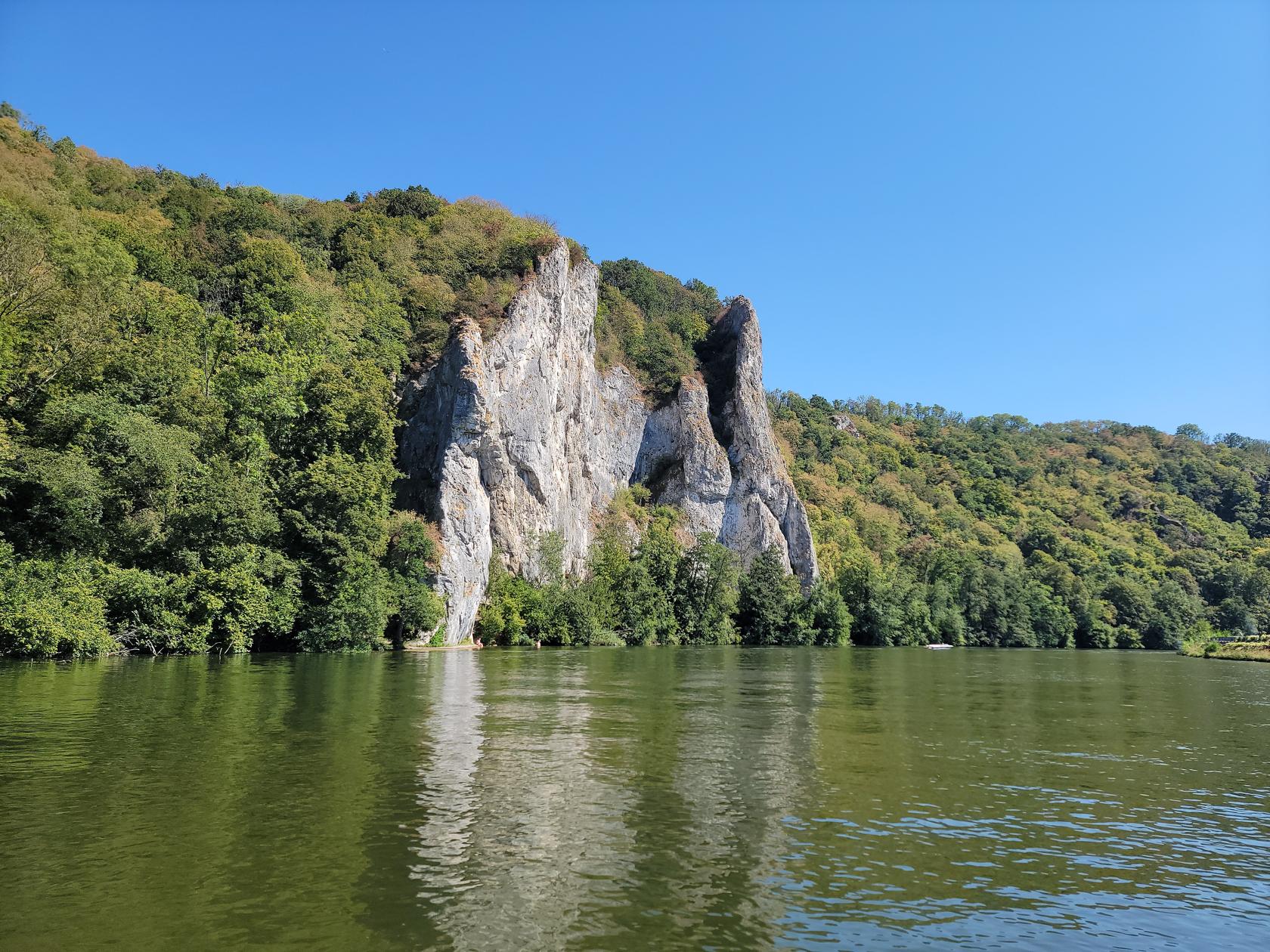
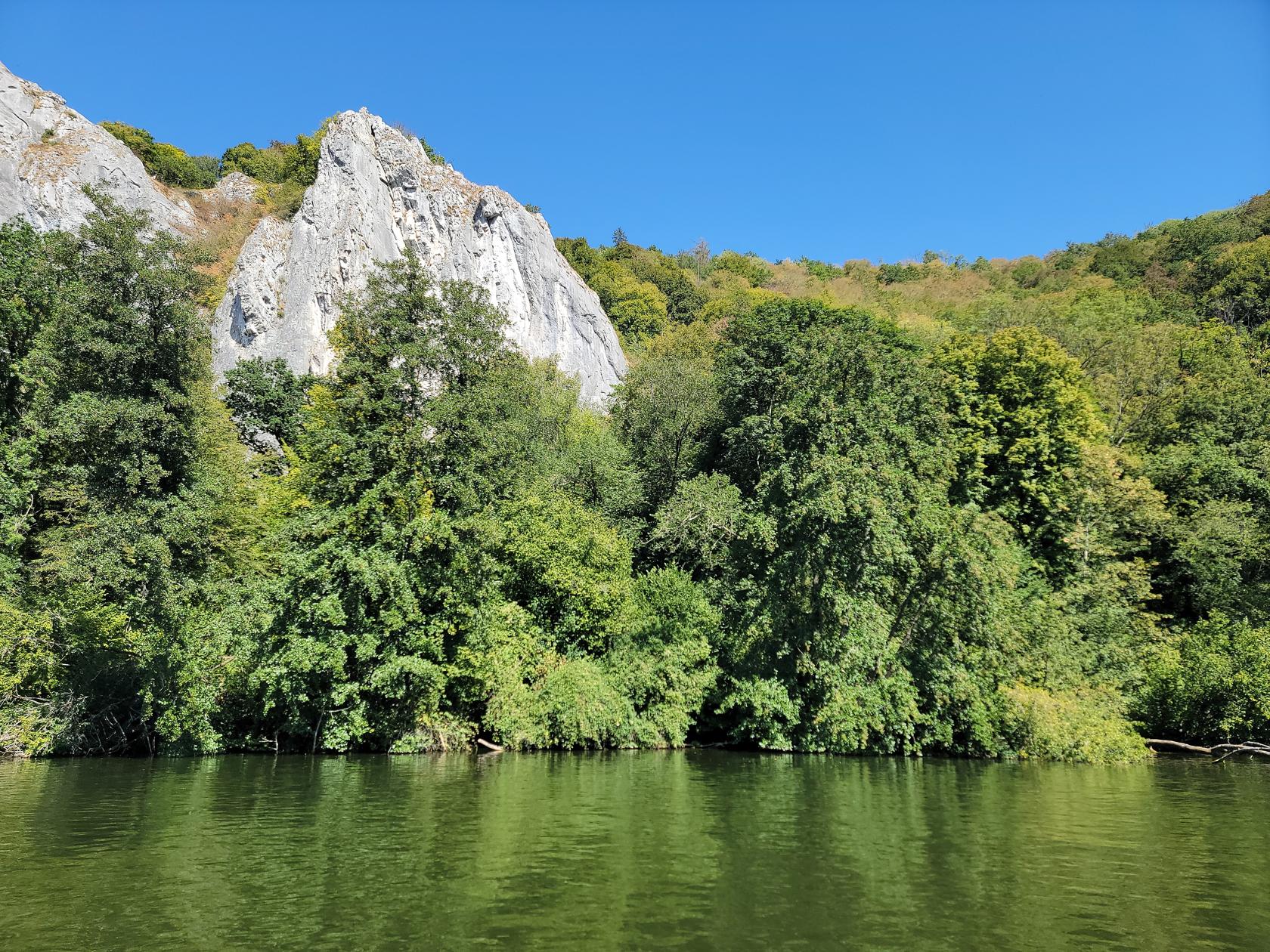
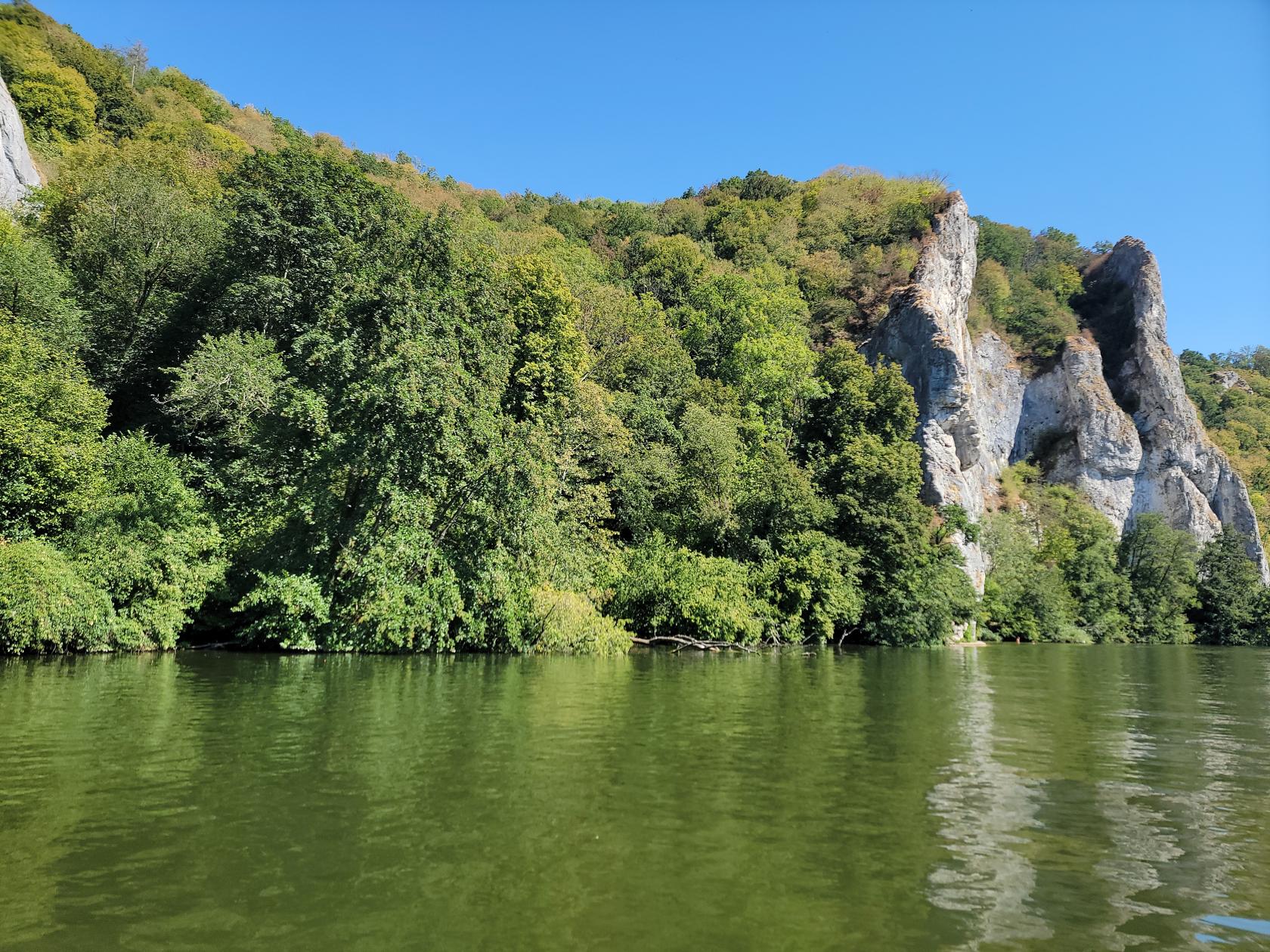
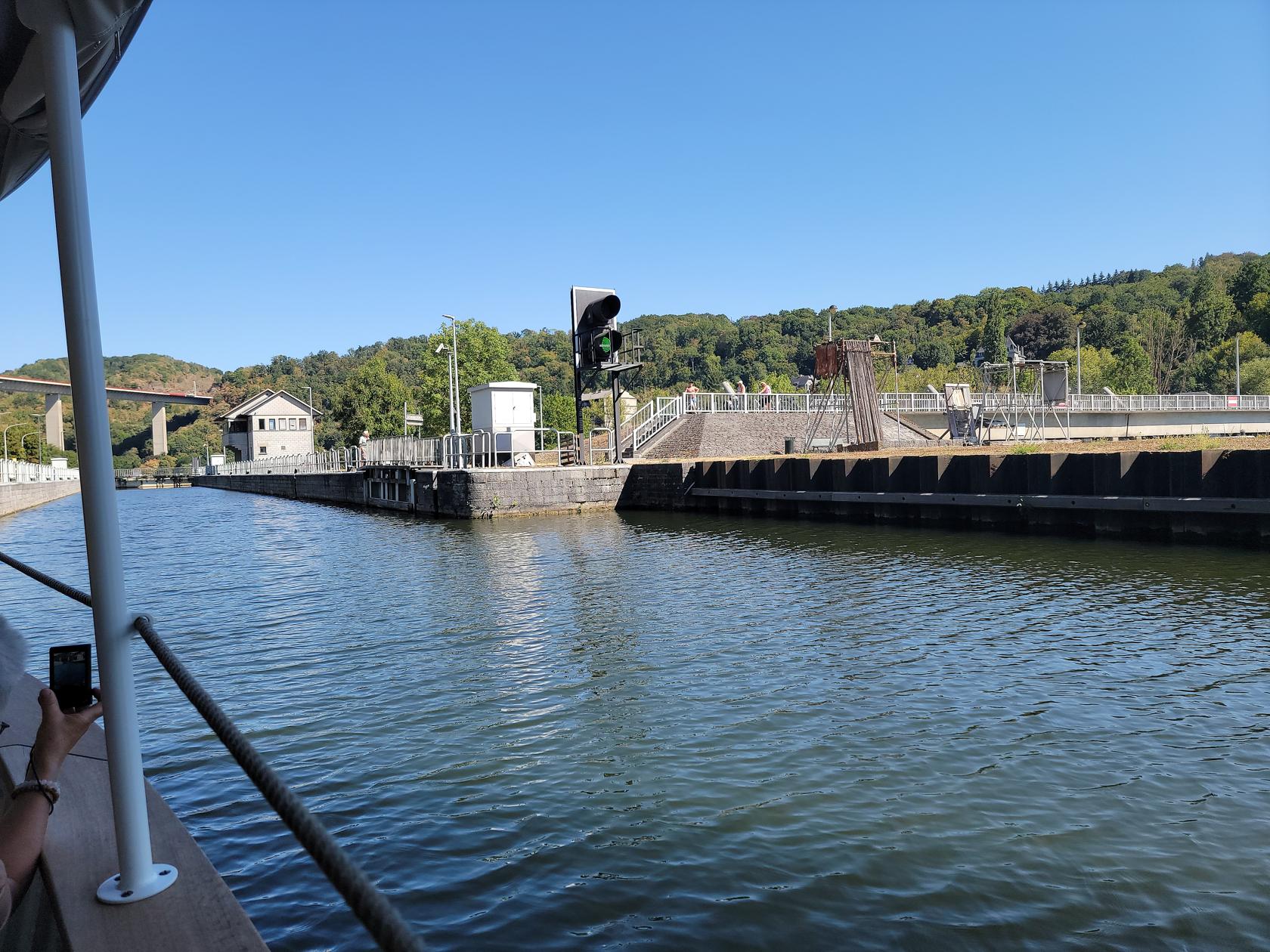
After a number of other trips this year we finally decided to visit Belgium for two weeks. The weather in Turin has been abnormally hot and humid since early June and like our trip to Poland, we were looking for some respite. Unfortunately, not only did we find the weather a bit abnormal, but a few other things as well.
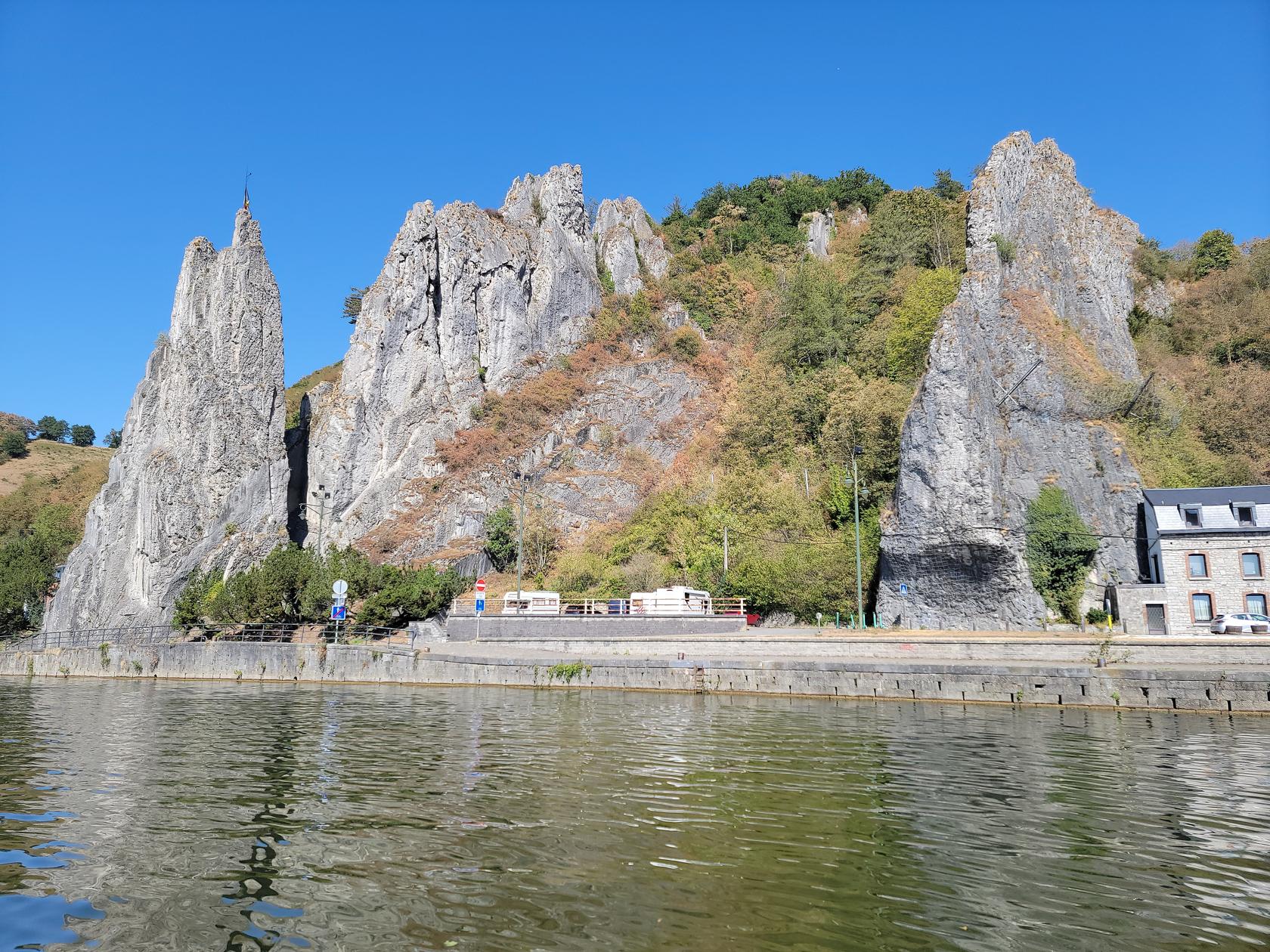
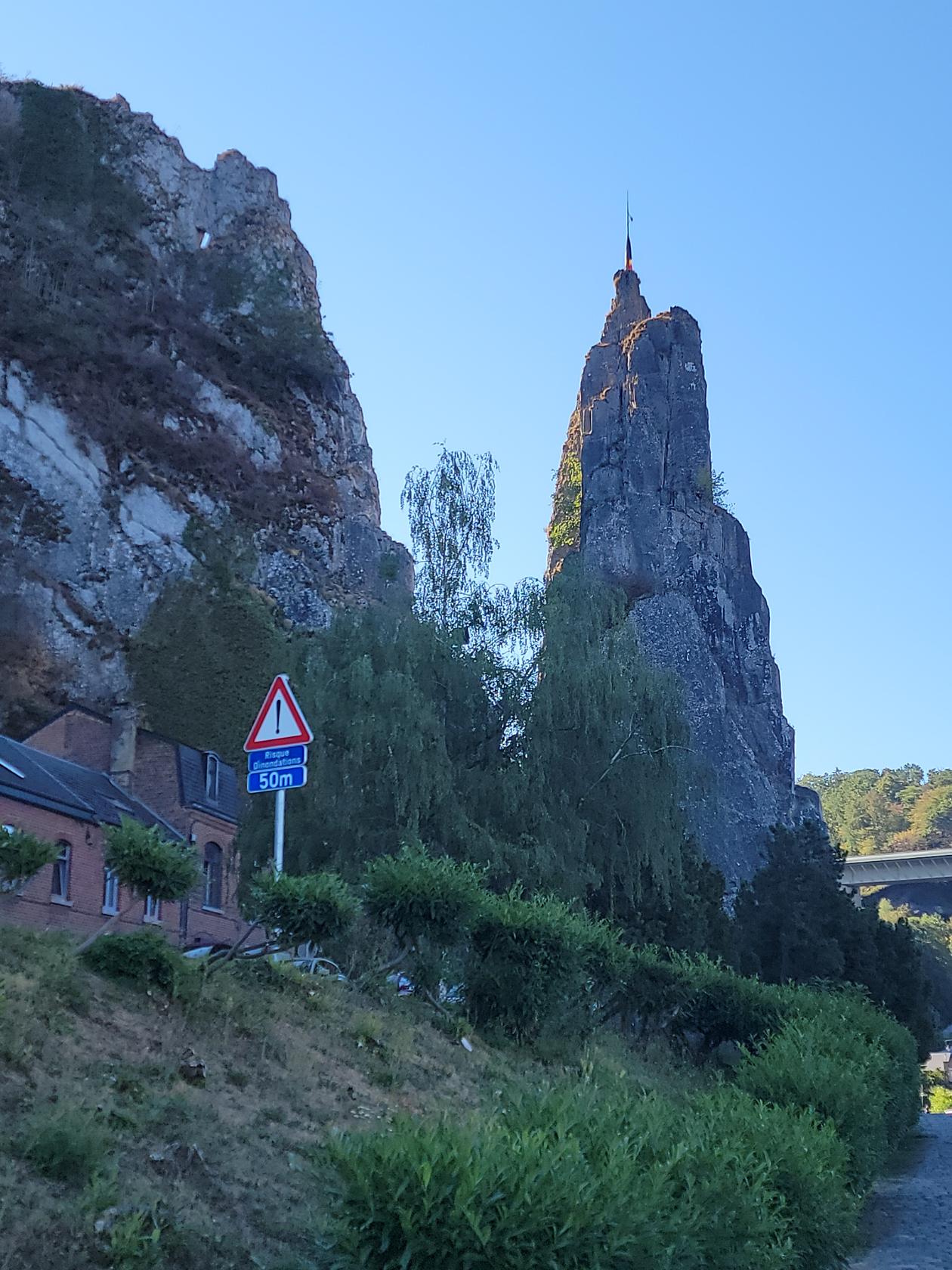
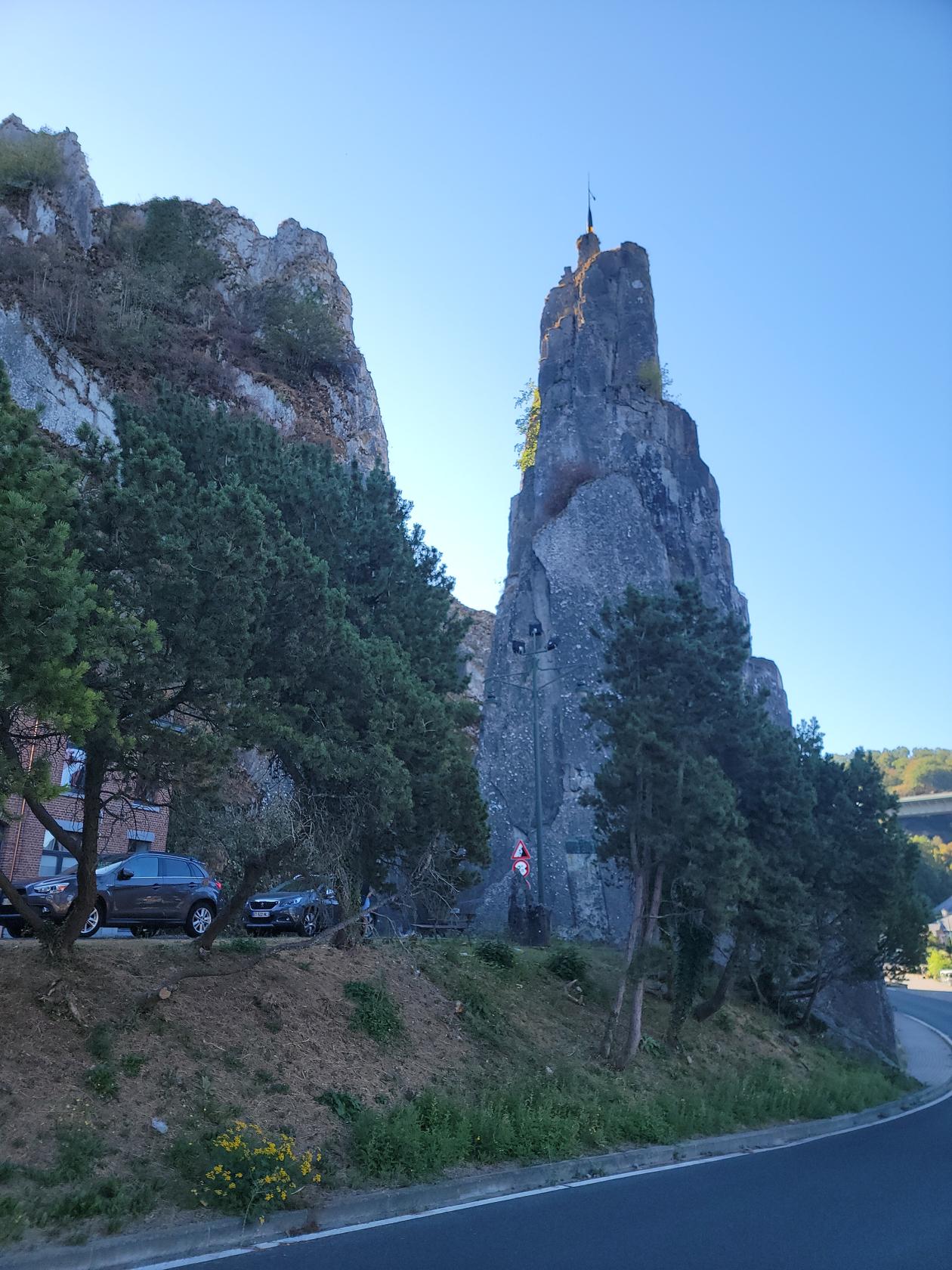
Bayard Rock – Freyer Cruise – Dinant, Belgium
Dinant
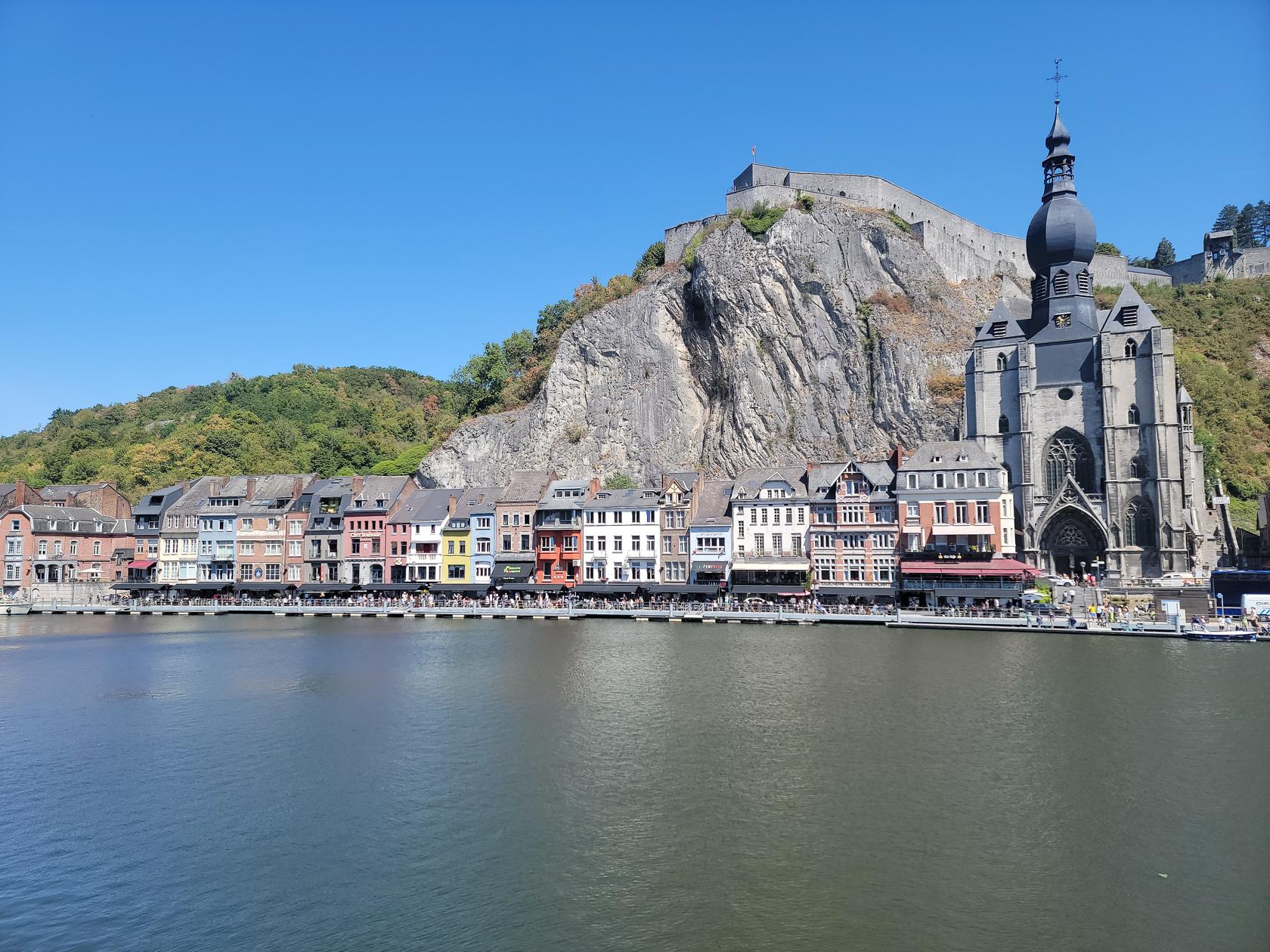
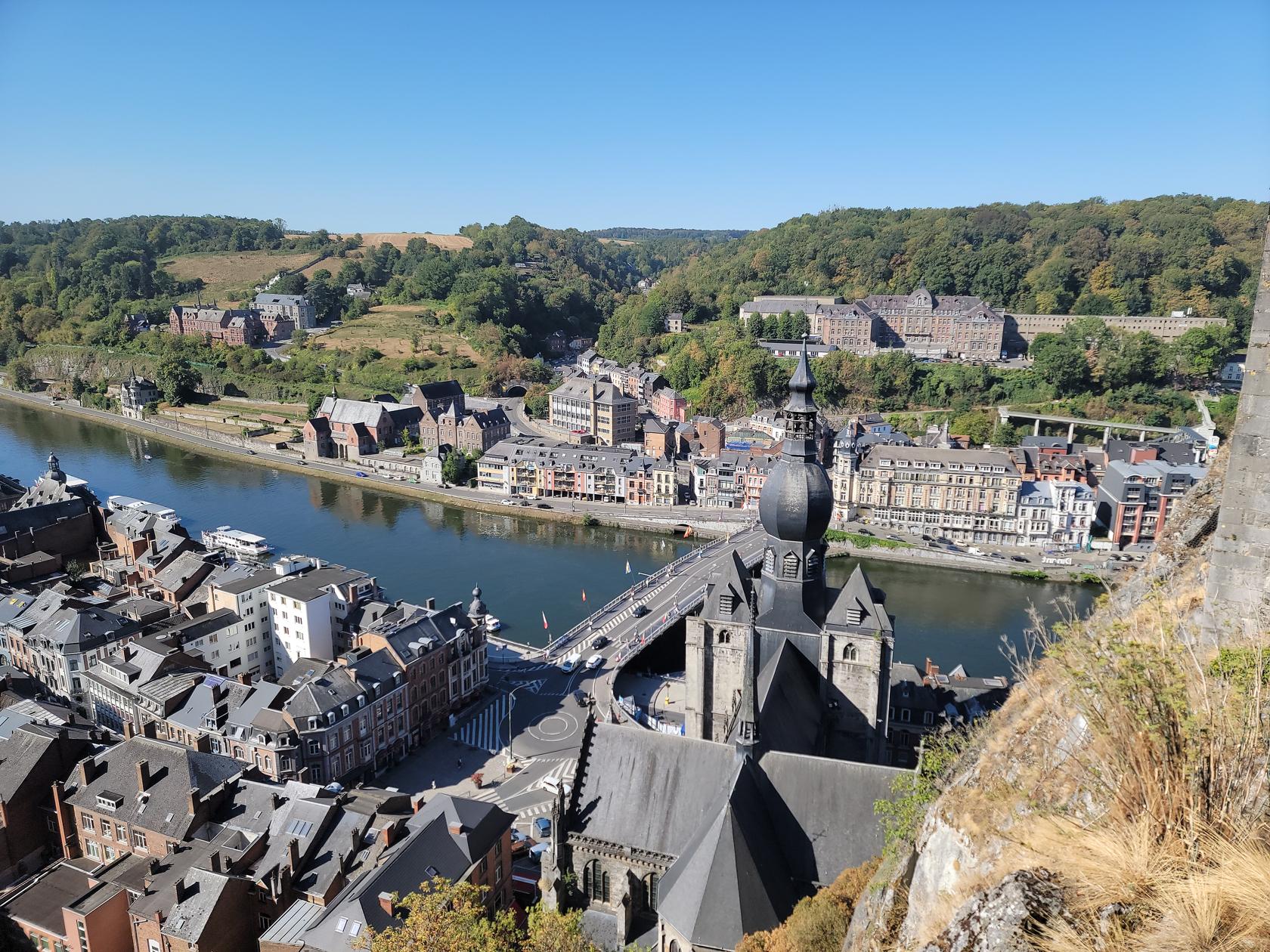
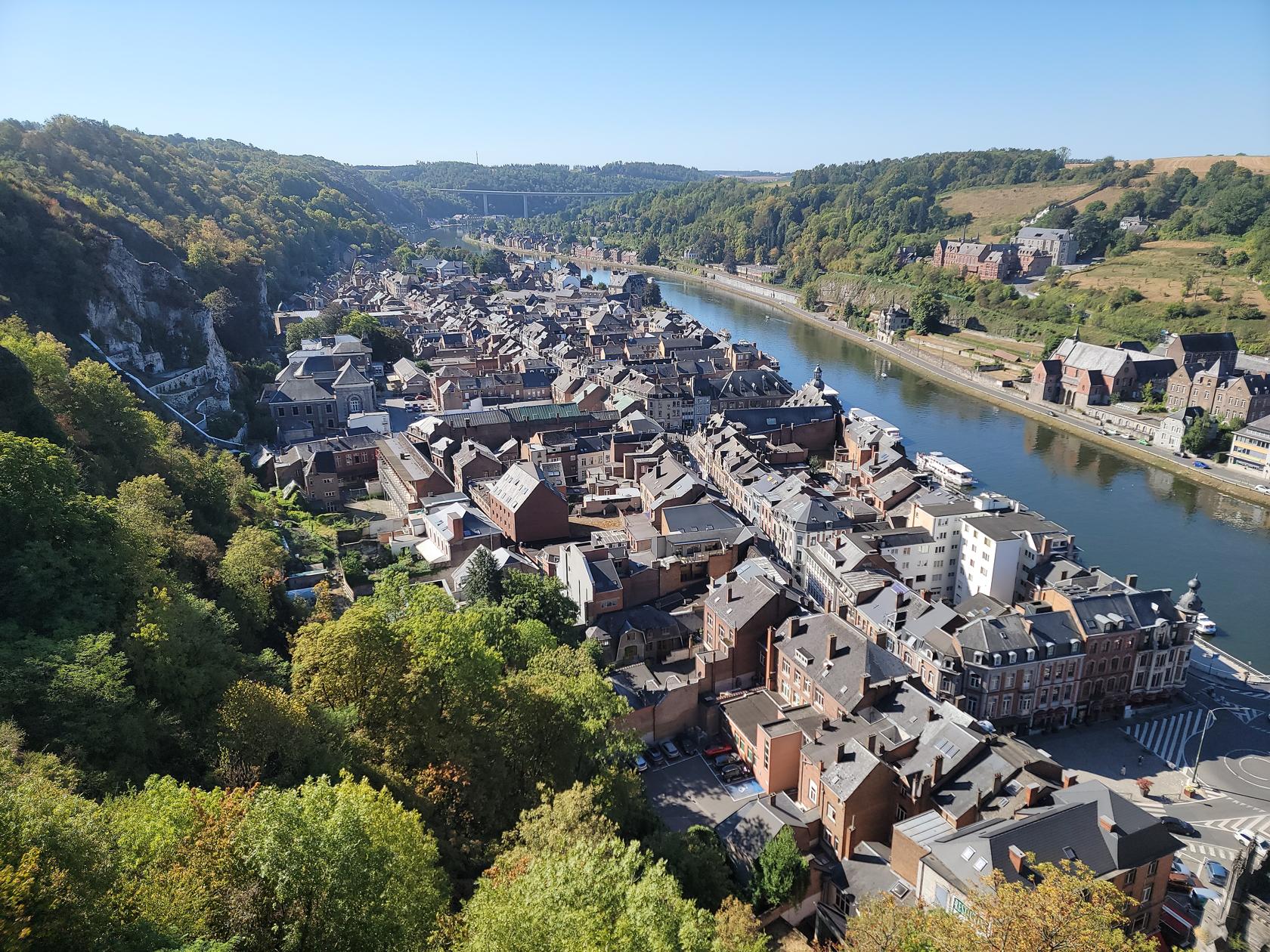
The town of Dinant is a small town located about an hour and a half to two hours away from Brussels to the south east. It borders the Ardennes Forest and has been historically important in the last two world wars.
Getting There
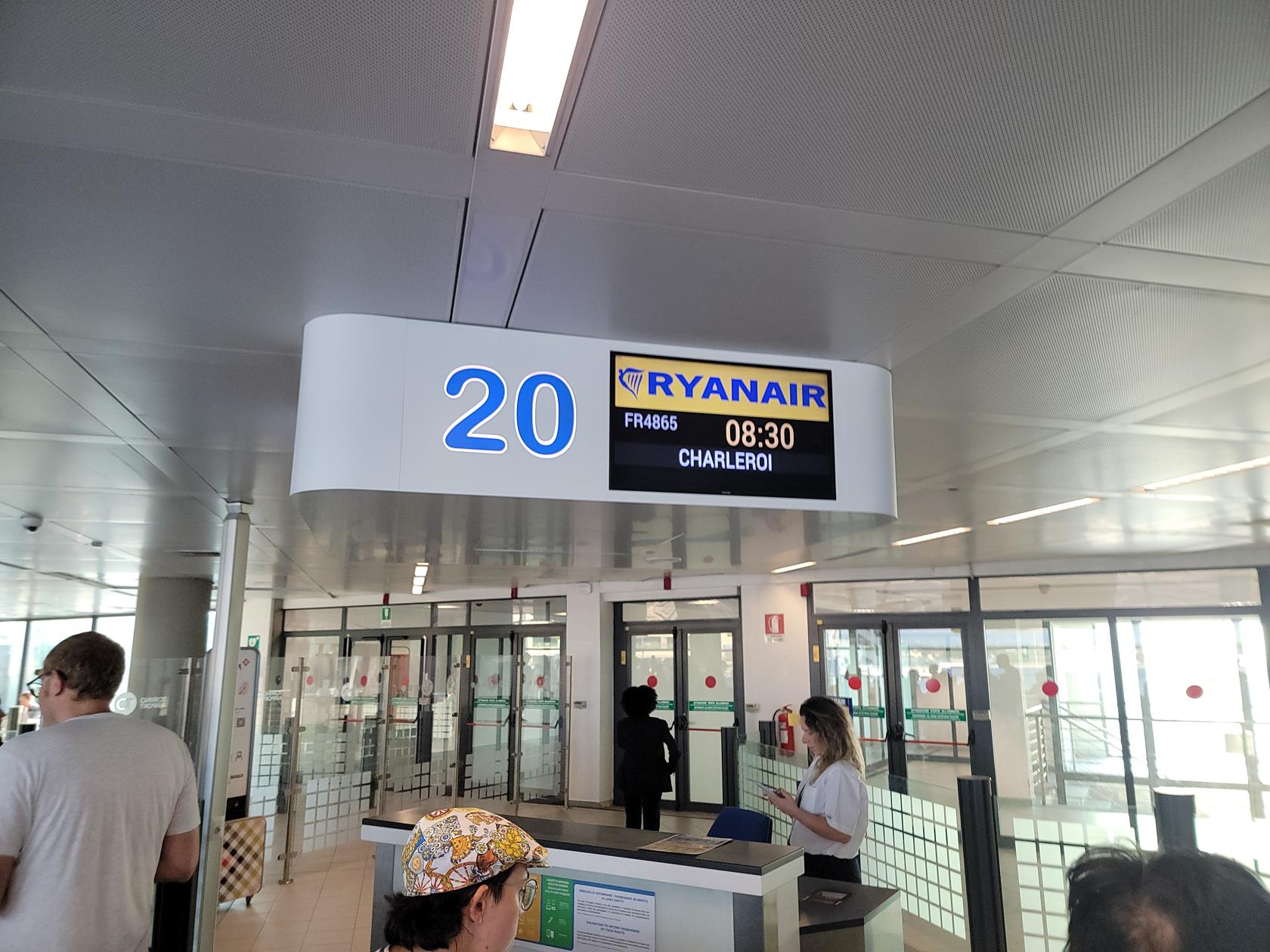
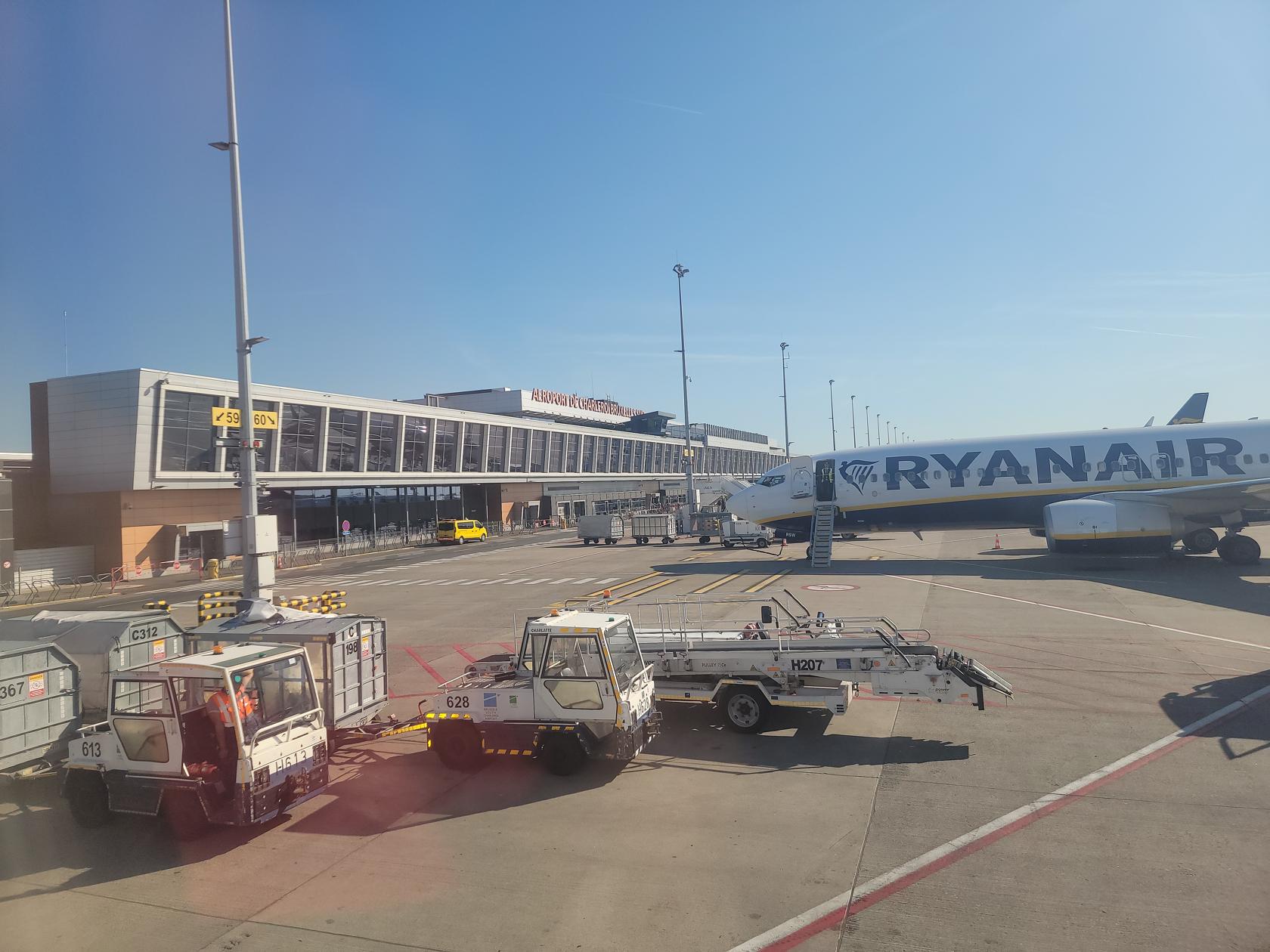
From Turin we flew RyanAir directly to Charleroi Airport near Brussels, Belgium, a flight that took a little less than an hour and a half.
RyanAir Flight to Charleroi, Belgium – Turin, Italy
Charleroi Airport – Brussels, Belgium
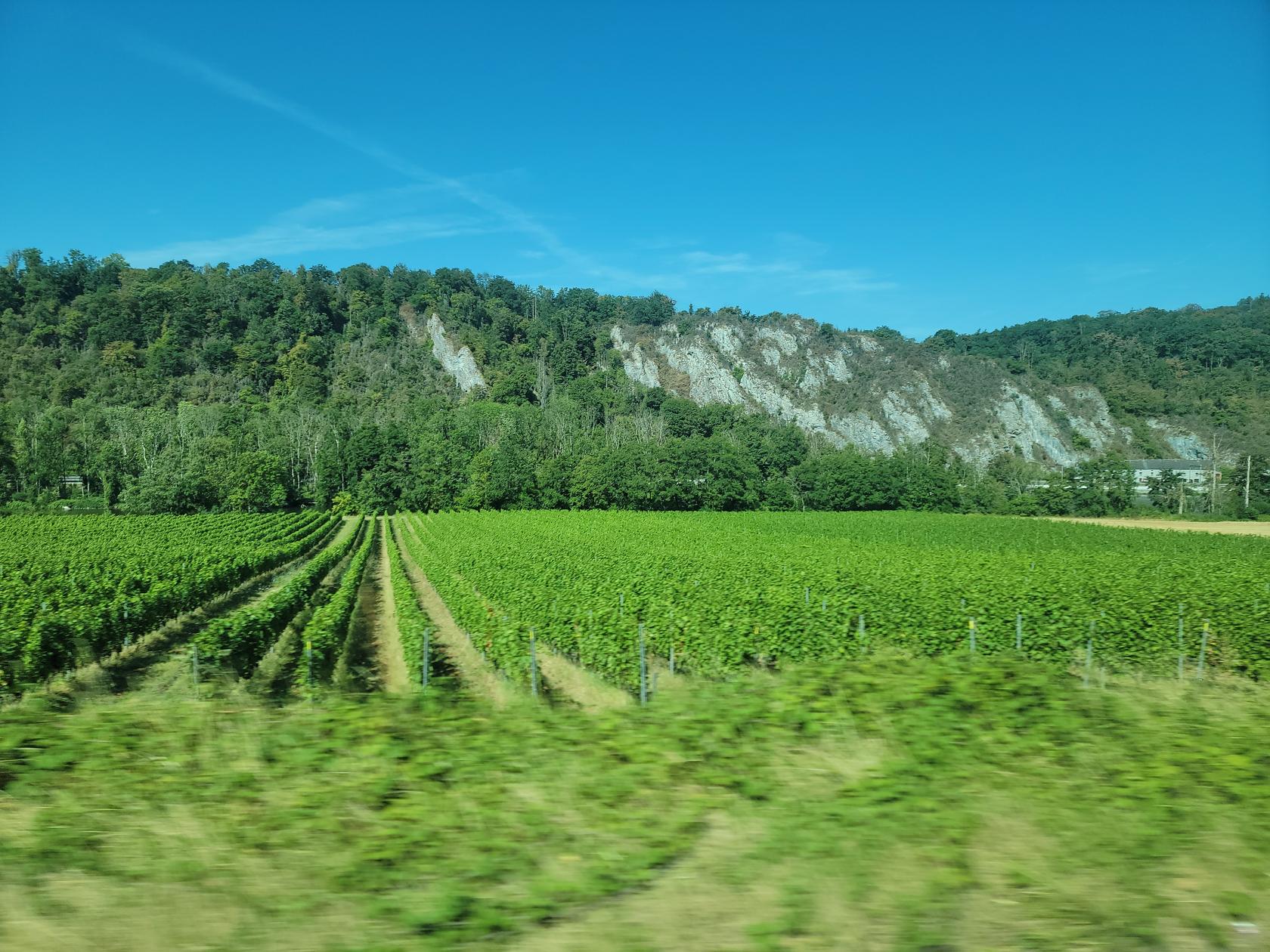
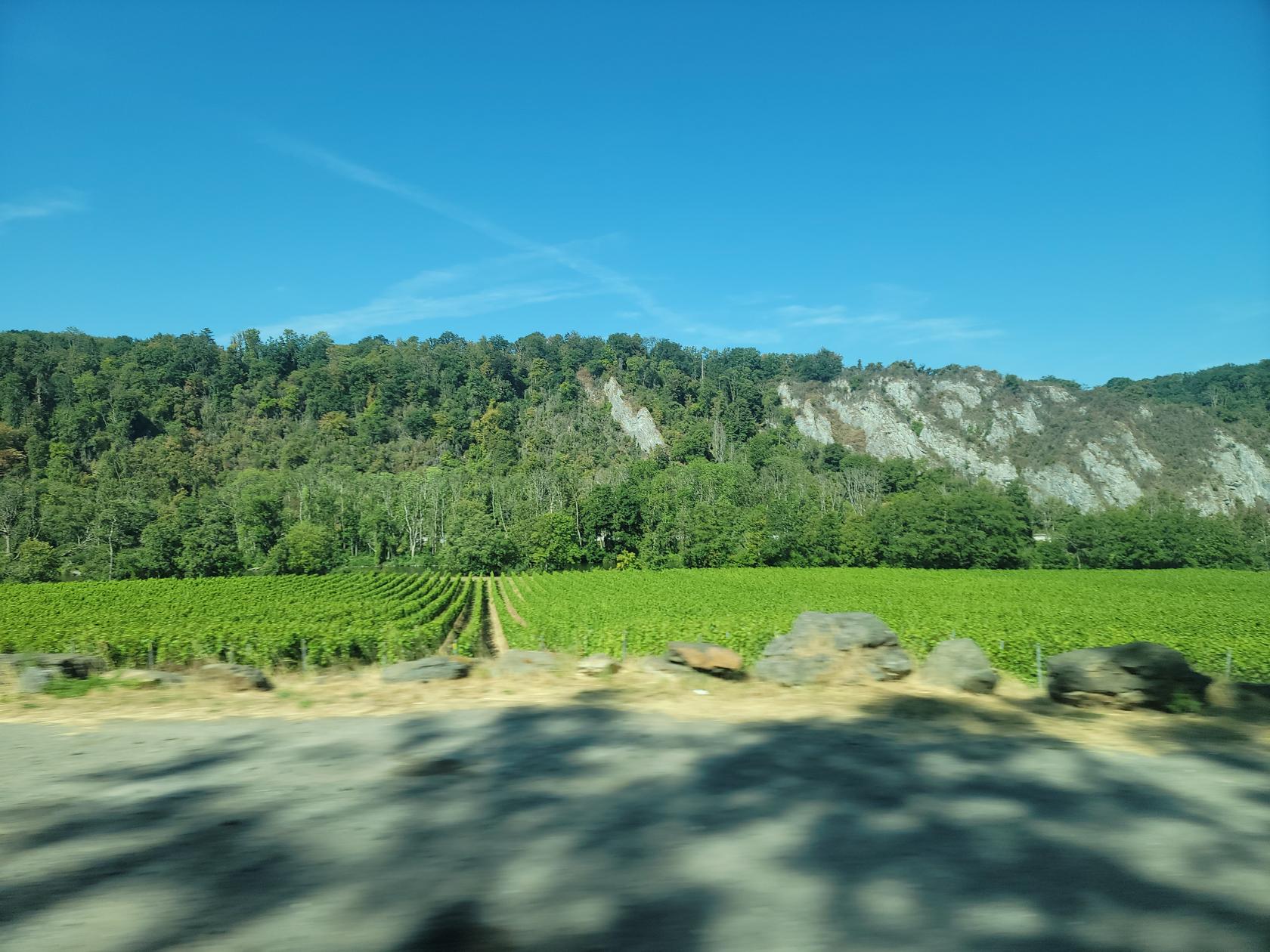
Belgium Countryside – Belgium
Belgium Vineyard – Belgium
Points Of Interest
The town of Dinant is a bit strange to say the least. Though we arrived on a Tuesday, the town appeared to be the center of activity. Then a little after four o’clock in the afternoon, almost everyone was gone. Of course we put this down to day-trippers who happen to drive or bus in on one particular day, stay for a few hours and leave. This wasn’t the only reason.
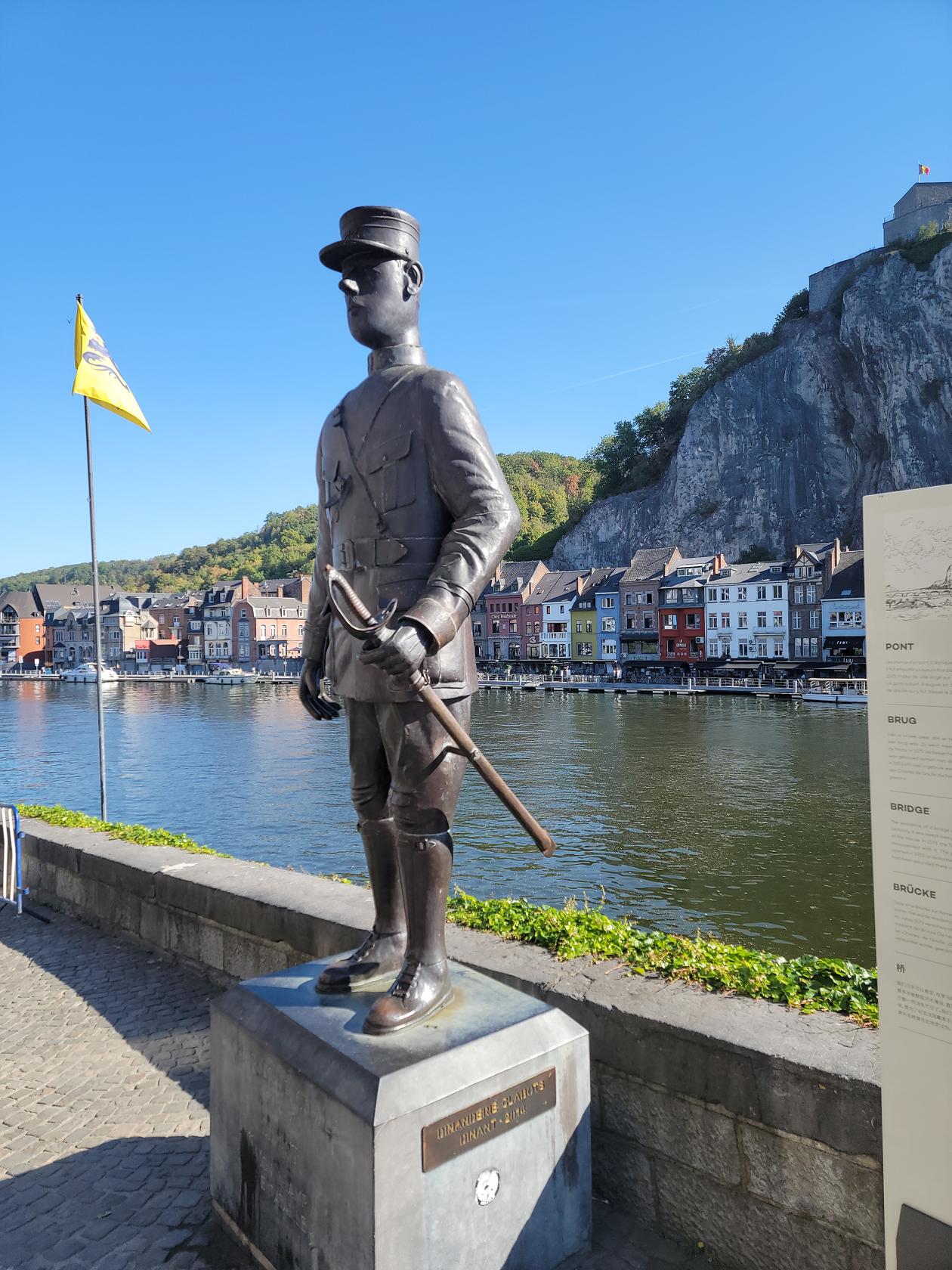
Charles de Gaulle Statue – Dinant, Belgium
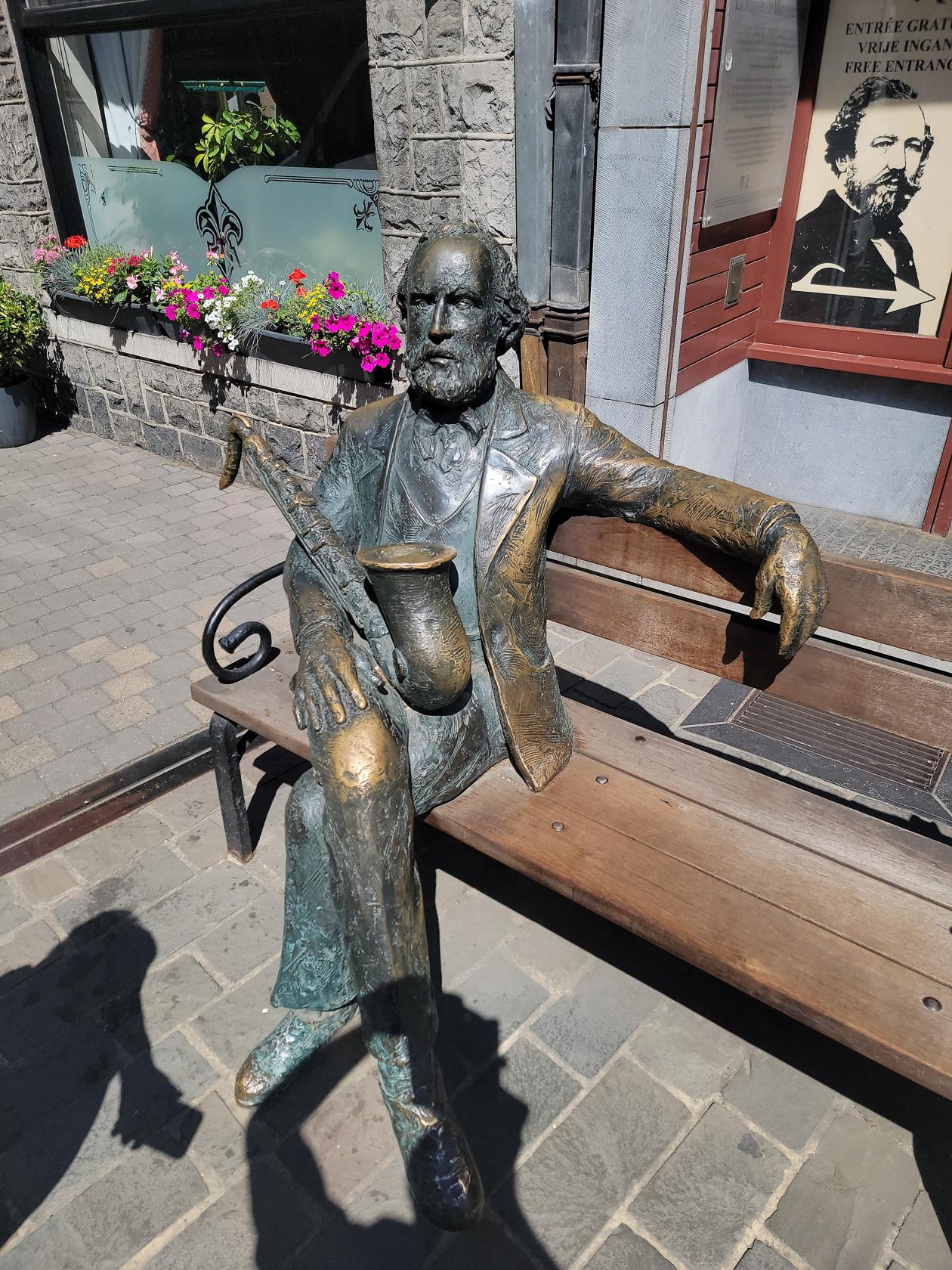
Mr Sax’s Bench – Dinant, Belgium
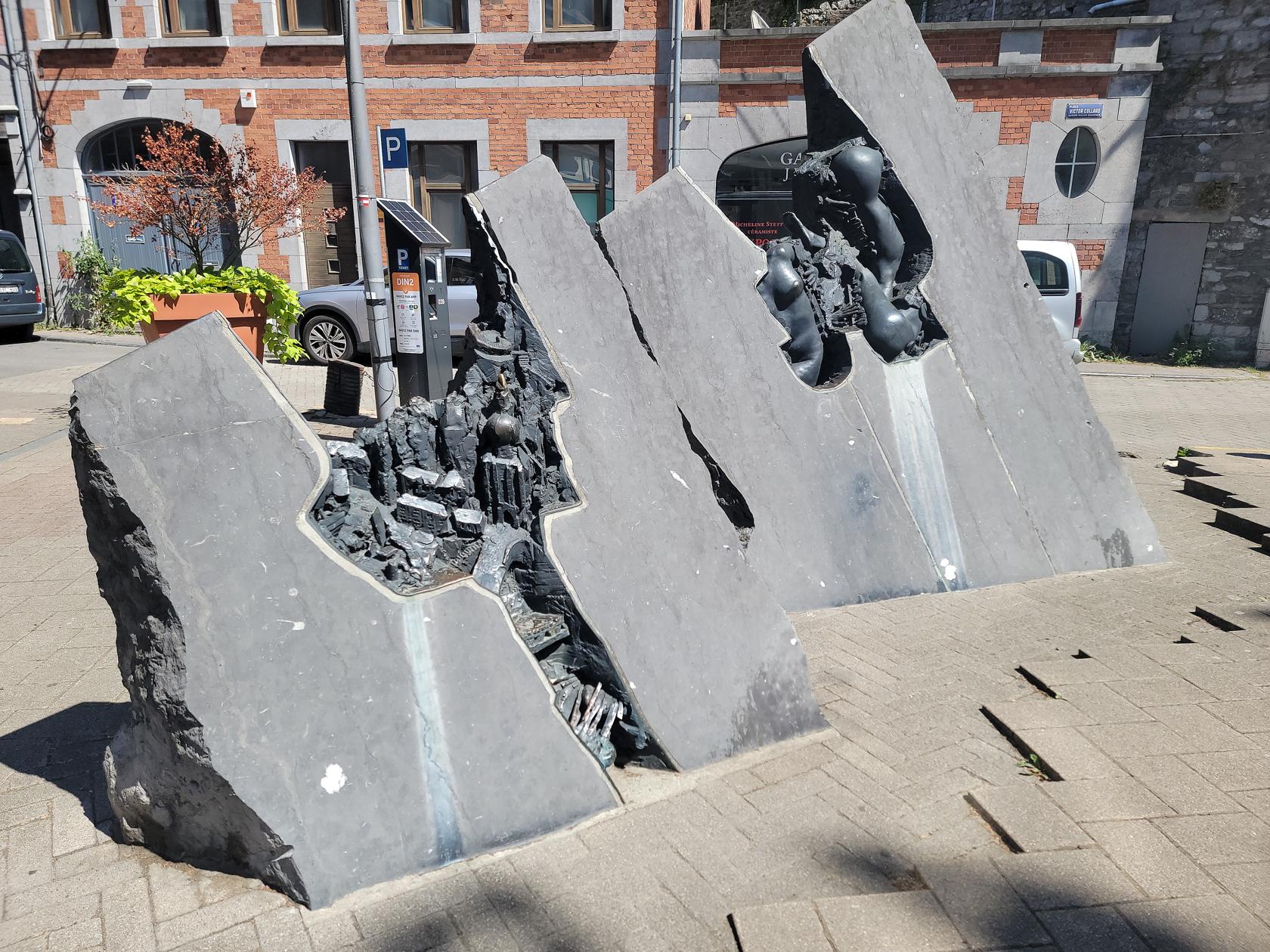
Adolphe Sax monument – Dinant, Belgium
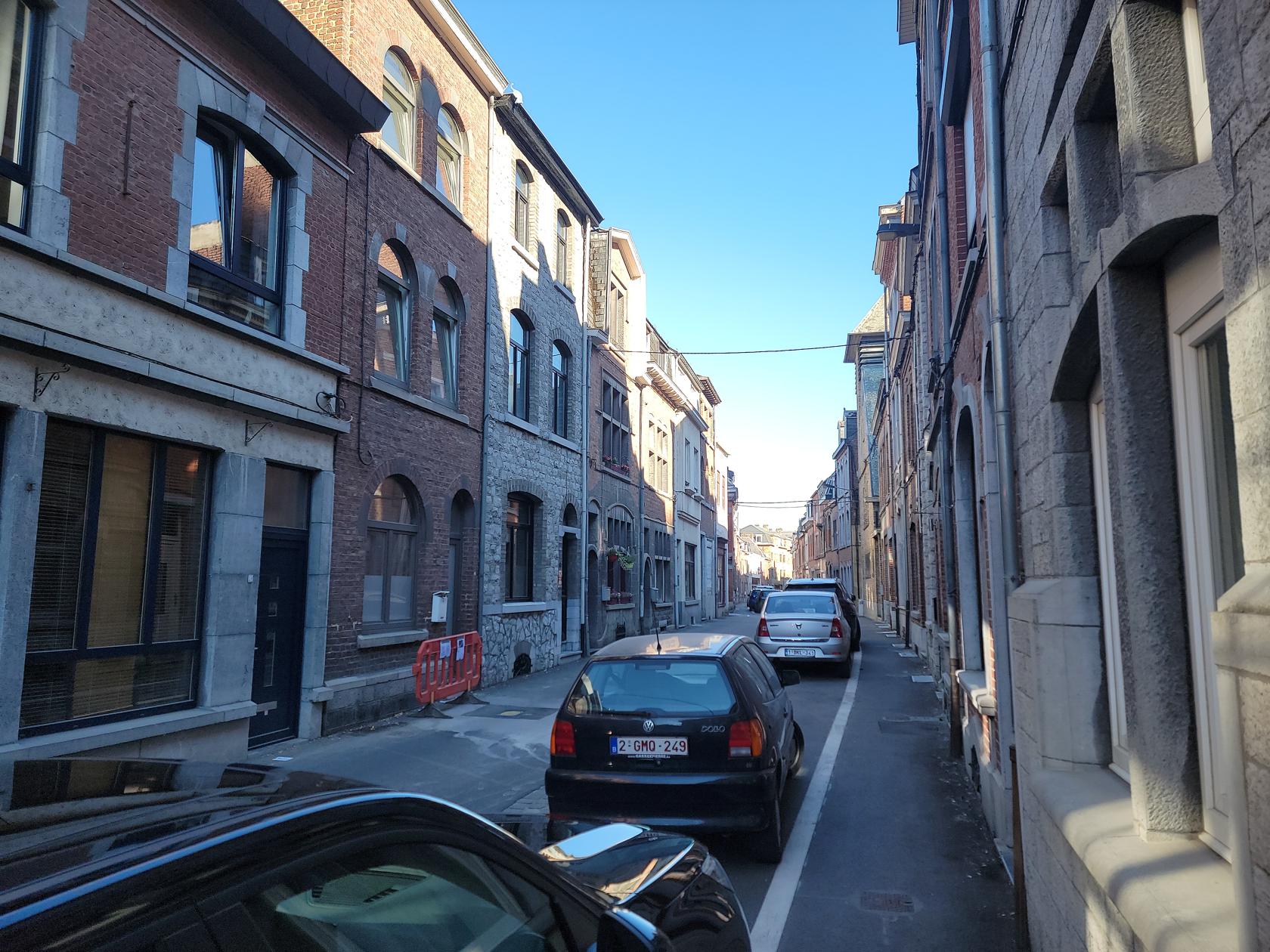
Old Row Housing – Dinant, Belgium
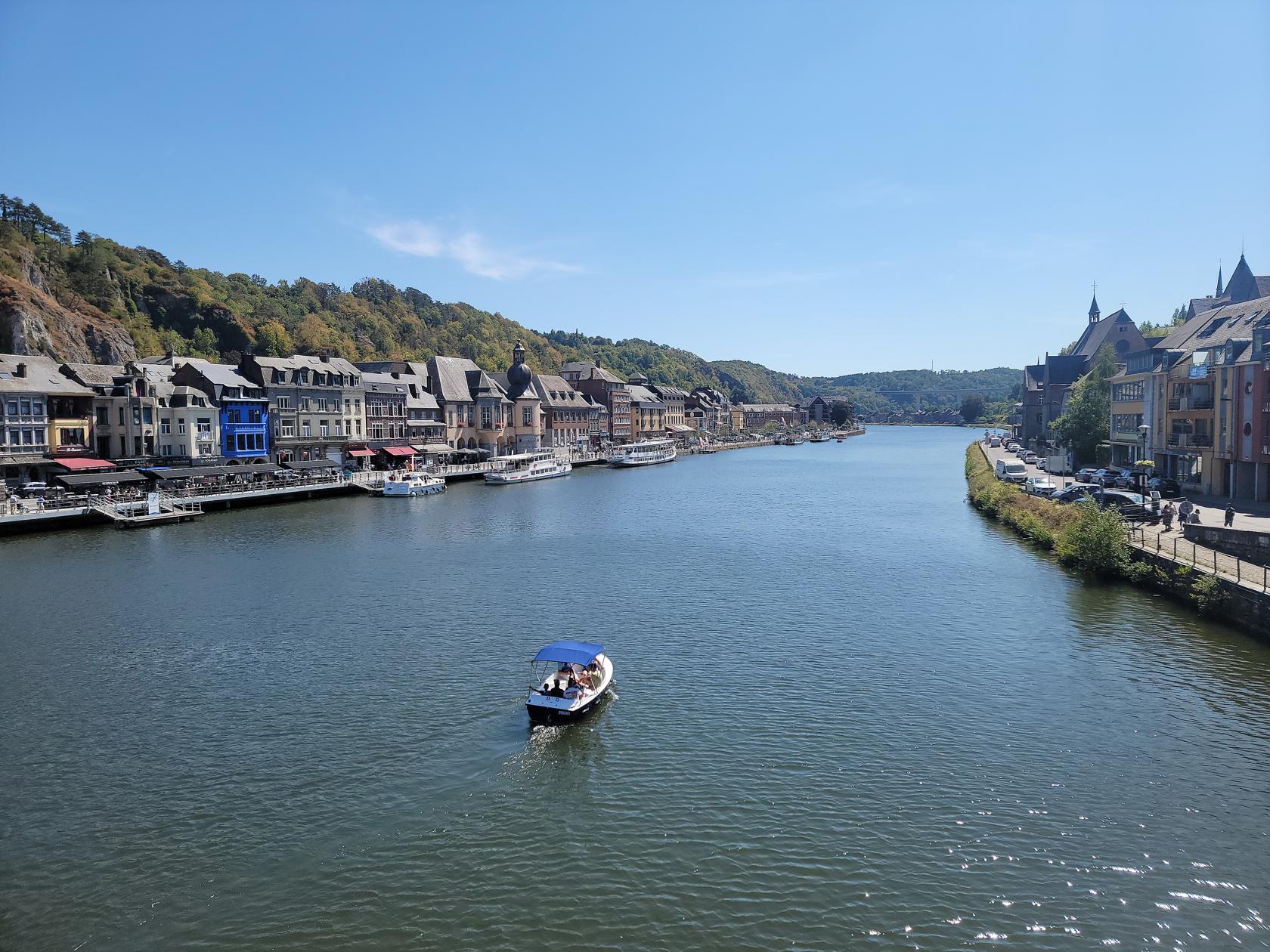
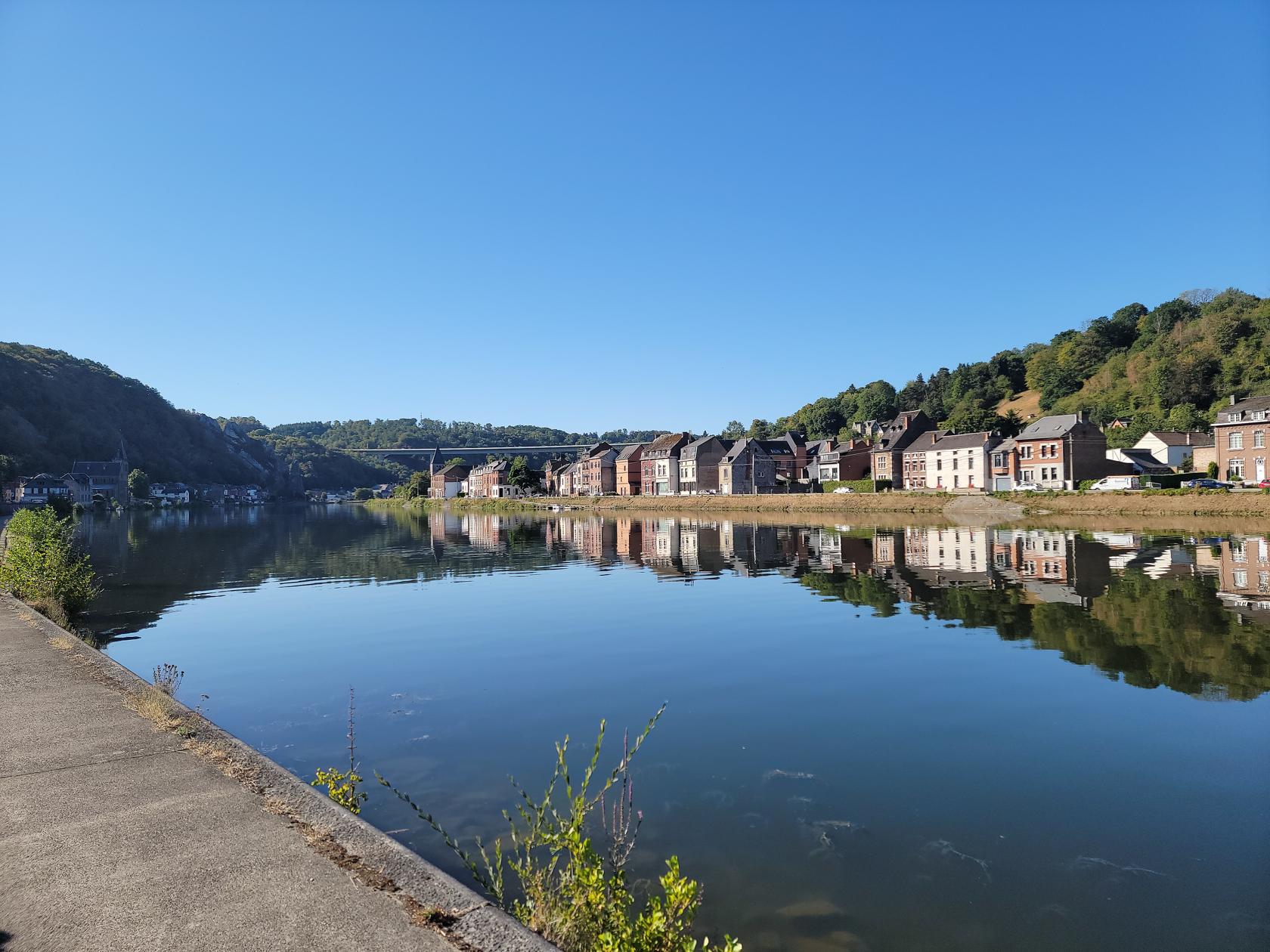
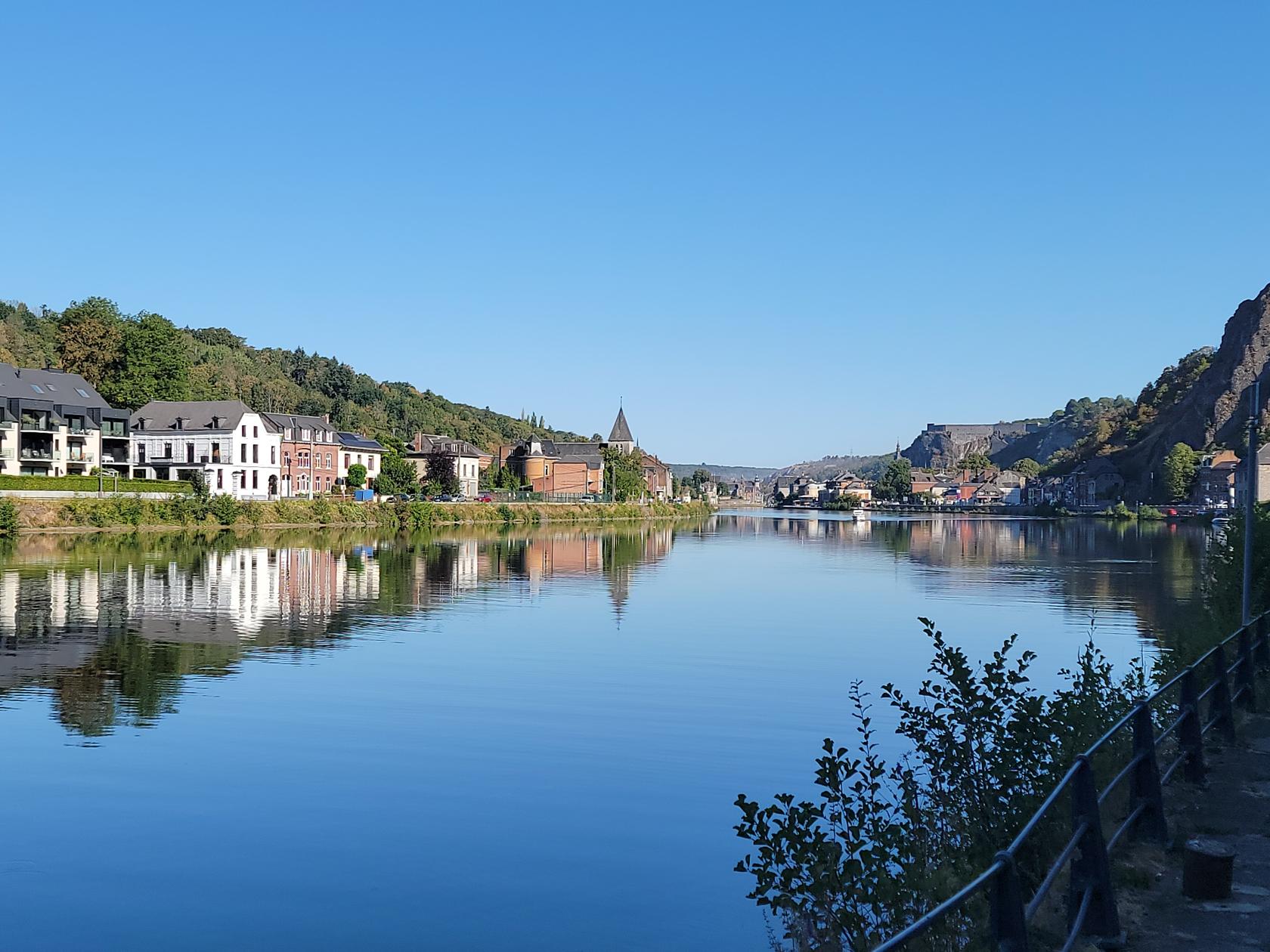
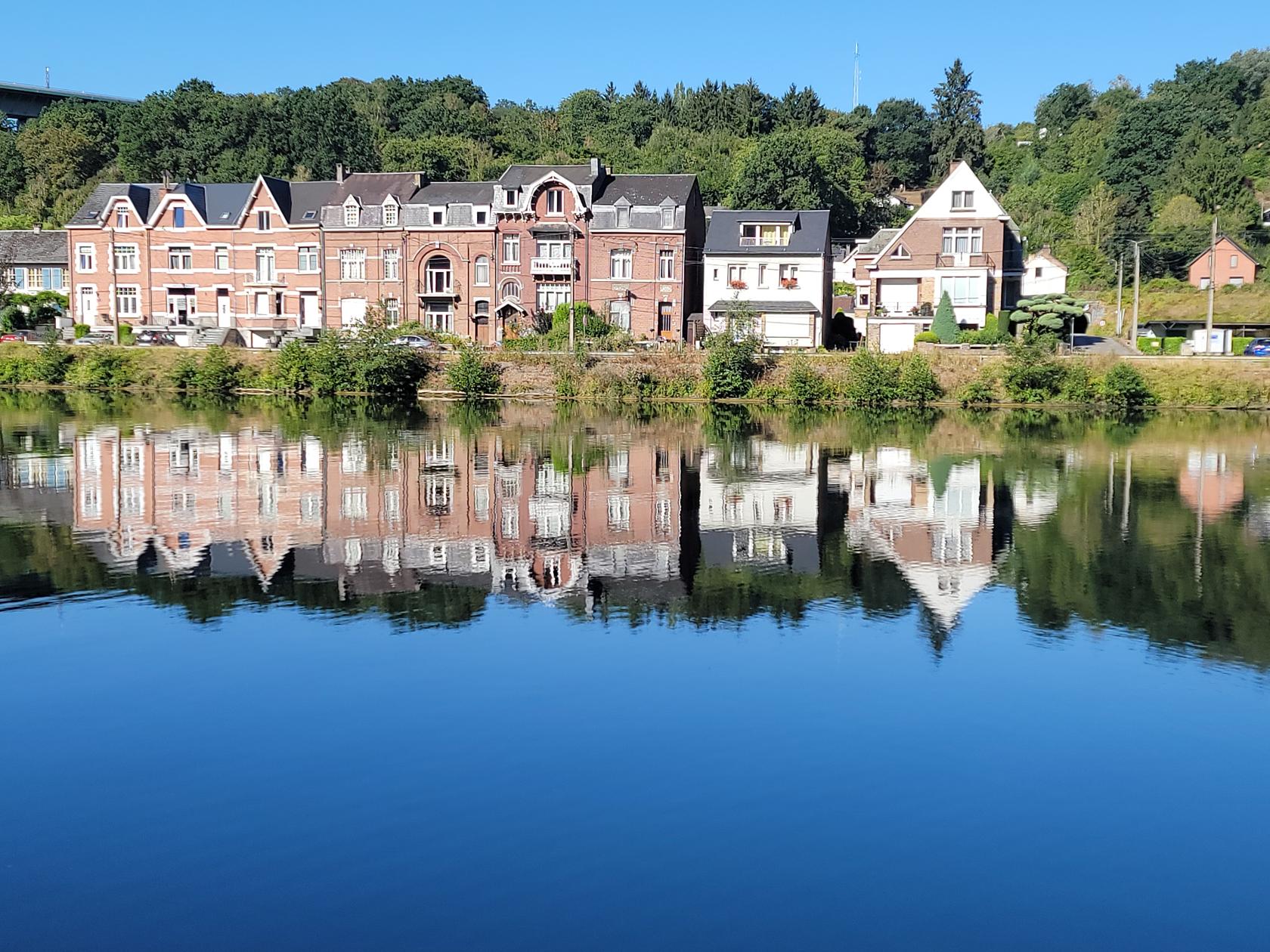
The town suffers from macro-economic forces it has no control over. It is underpopulated and young people are going to the larger cities to find employment. This has caused a housing issue and we found a lot of houses for sale here, which has had its own affect on the local economy. Not only was it difficult to find some places open, if was very difficult to find a place to eat on some occasions. So one has to remain flexible when visiting this tiny town that is stretched thin along the banks of the Meuse River and in other ways as well.
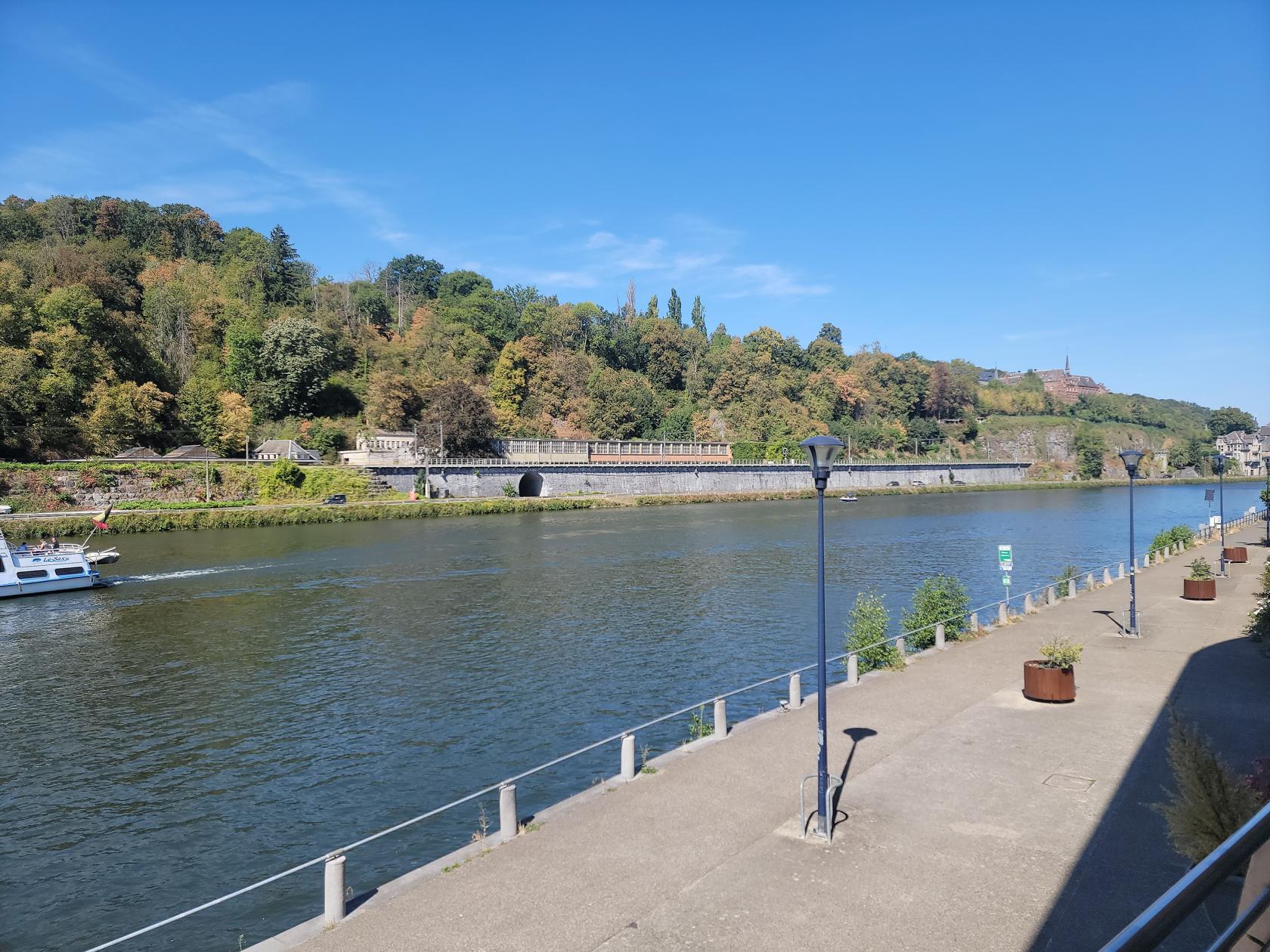
Meuse River – Dinant, Belgium
Meuse River – Dinant, Belgium
Meuse River – Dinant, Belgium
Winston Churchill Avenue – Dinant, Belgium
Winston Churchill Avenue – Dinant, Belgium
Winston Churchill Avenue – Dinant, Belgium
Charles de Gaulle Bridge – Dinant, Belgium
Meuse River – Dinant, Belgium
Meuse River – Dinant, Belgium
We can reinforce our opinion in the fact that we stayed in Dinant for three days, where frankly only one is necessary, or perhaps even a few hours. Though this gave us a better feel for the conditions there, it also gave us a rather poor opinion of the town. Sincerely, there are a few things, the fortress, the Bayard rock and the Church, but that is just about it.
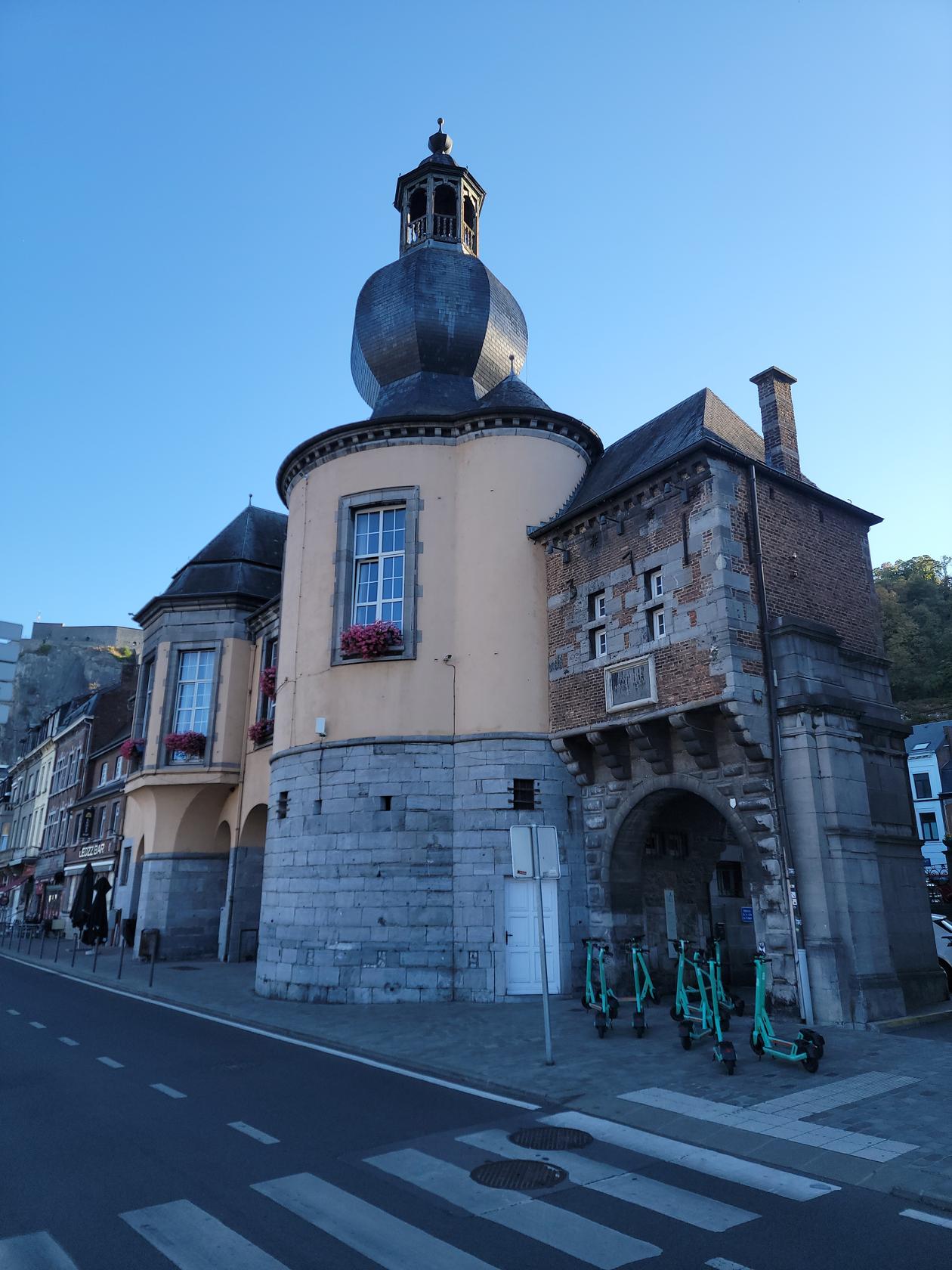
Saint Martin Gate – Dinant, Belgium
Triumph of Light monument – Dinant, Belgium
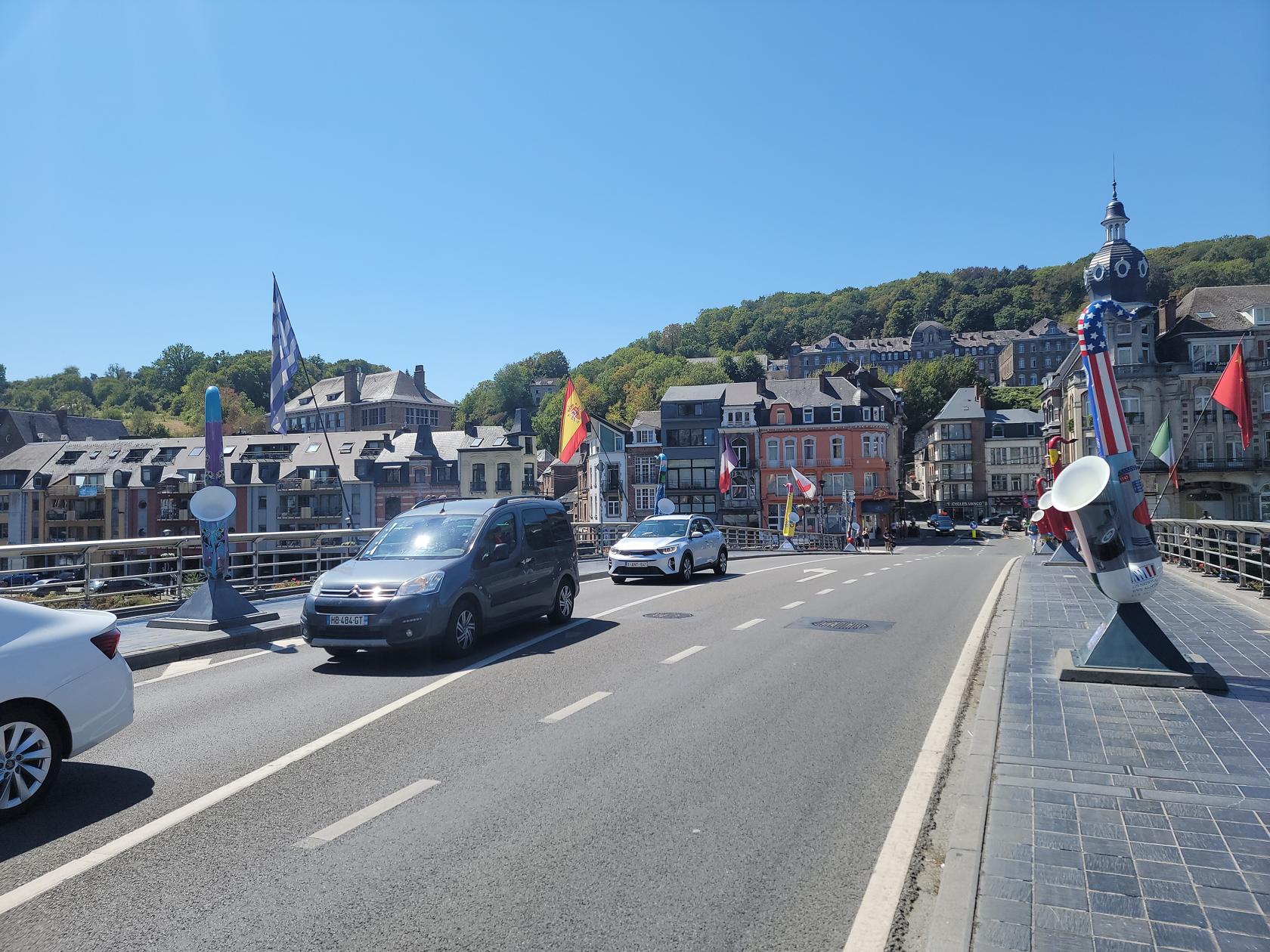
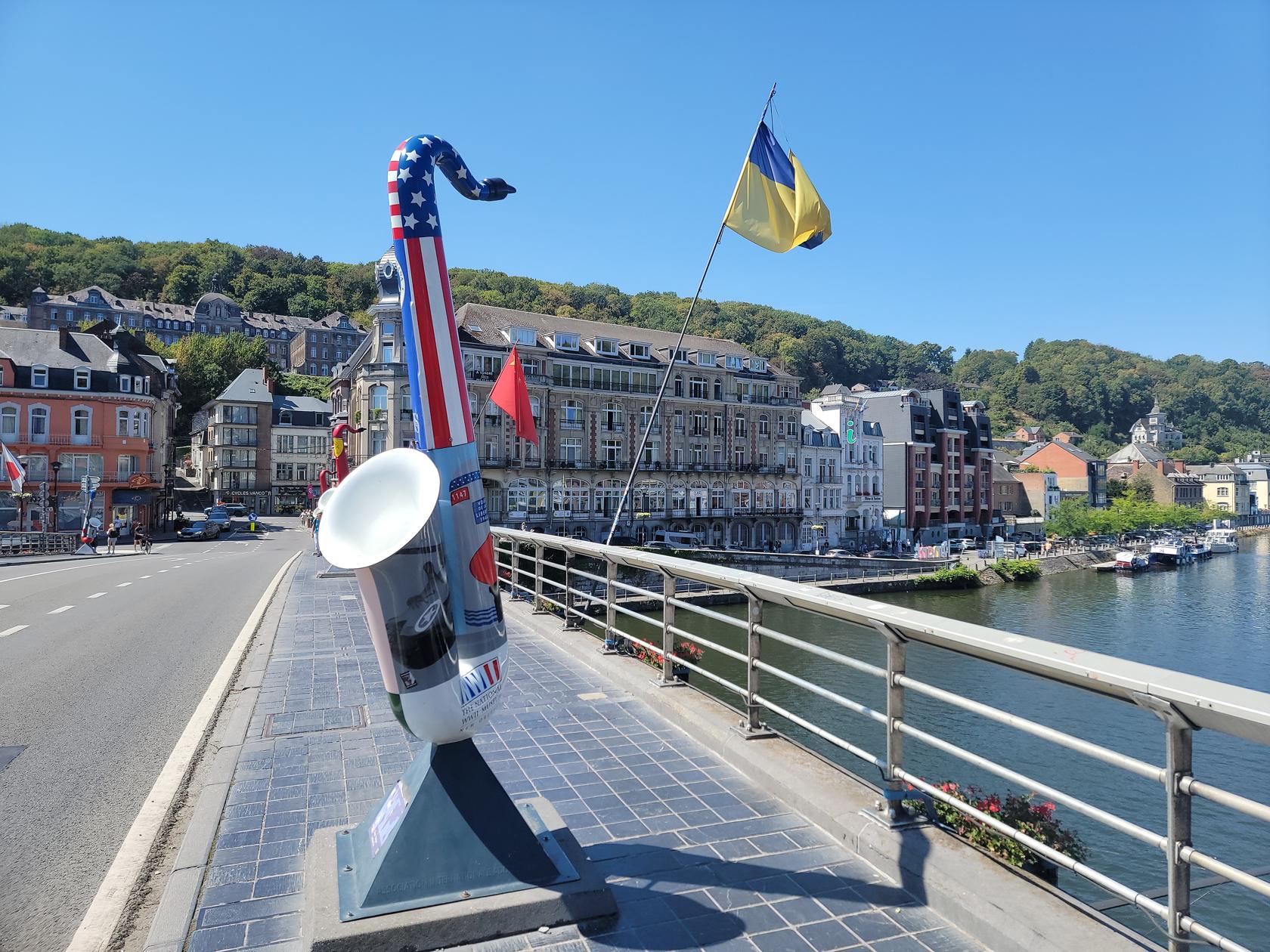
Saxes on Charles de Gaulle Bridge – Dinant, Belgium
Saxes on Charles de Gaulle Bridge – Dinant, Belgium
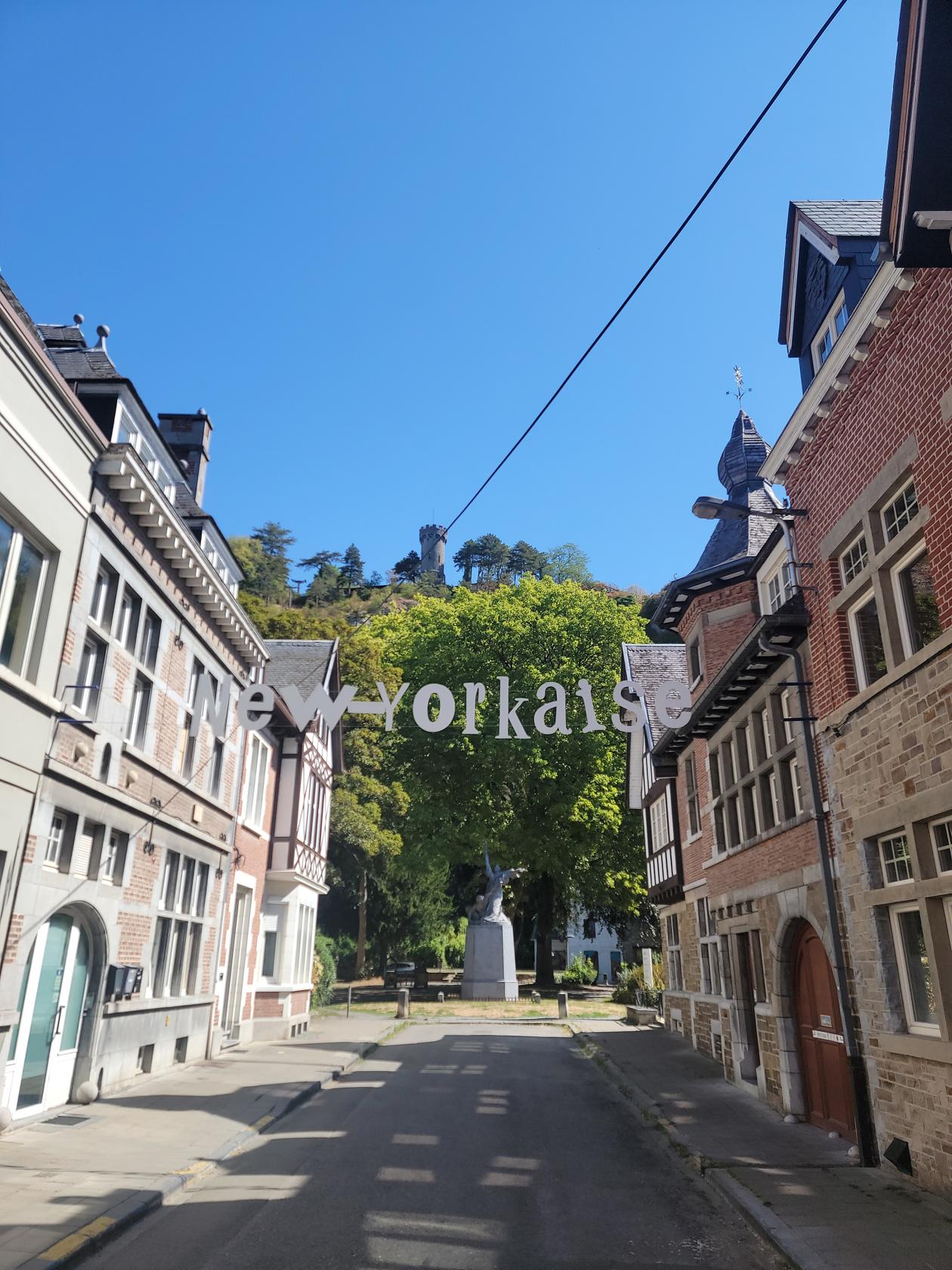
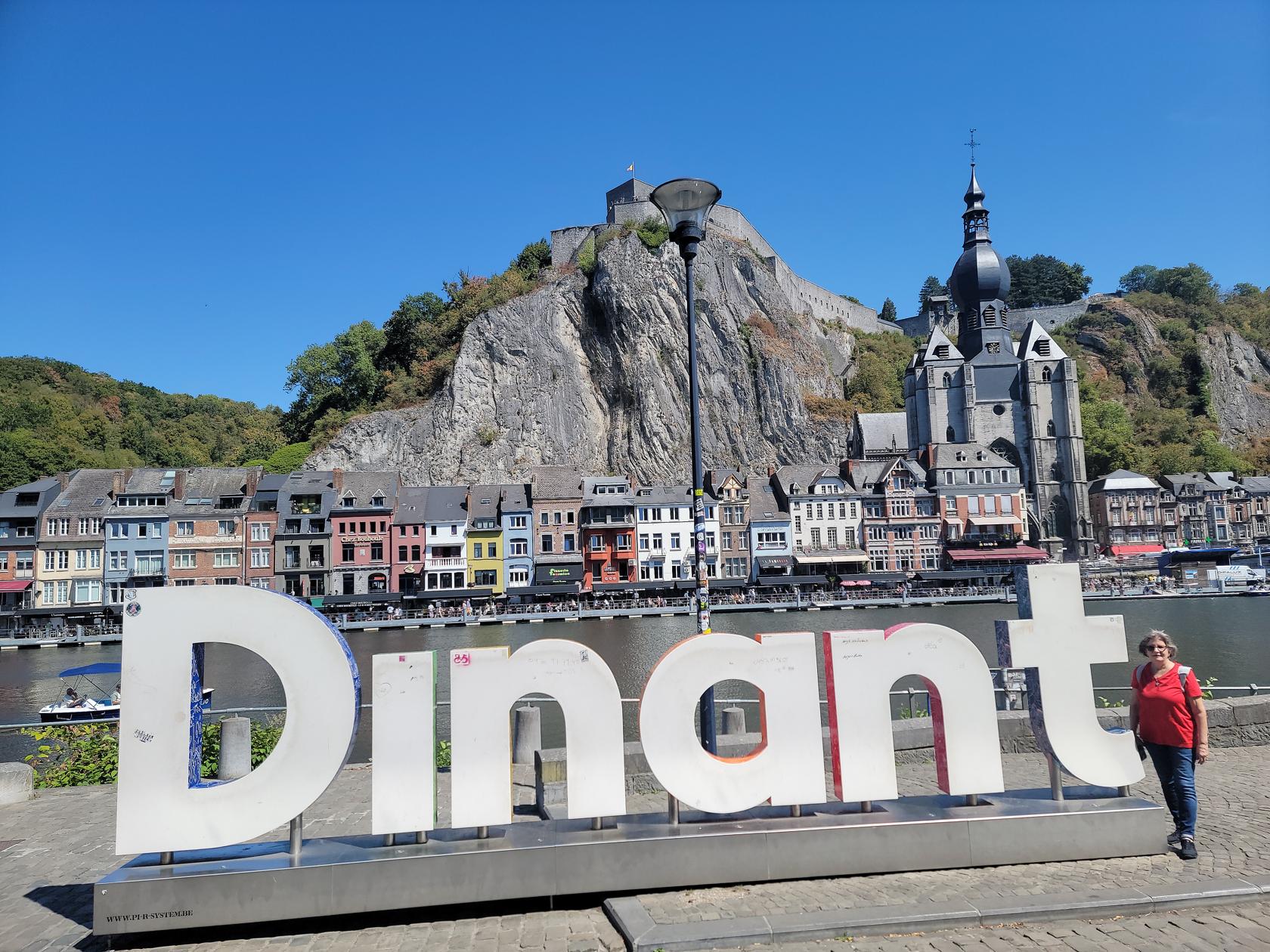
Patti – Dinant Sign – Dinant, Belgium
Meuse River – Charles de Gaulle Bridge – Dinant, Belgium
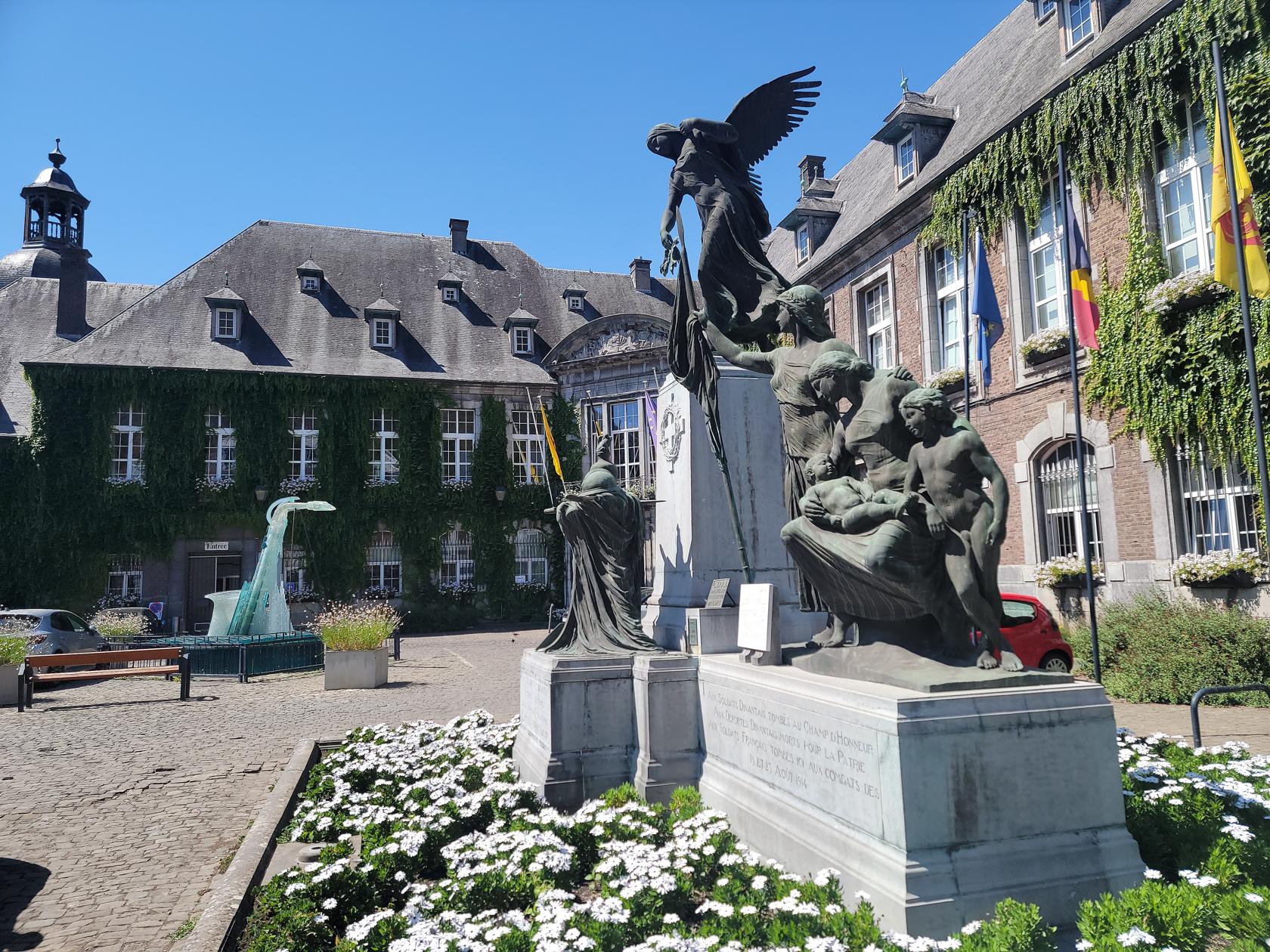
Sax Fountain and War Memorial – Dinant, Belgium
Saint Martin Gate – Dinant, Belgium
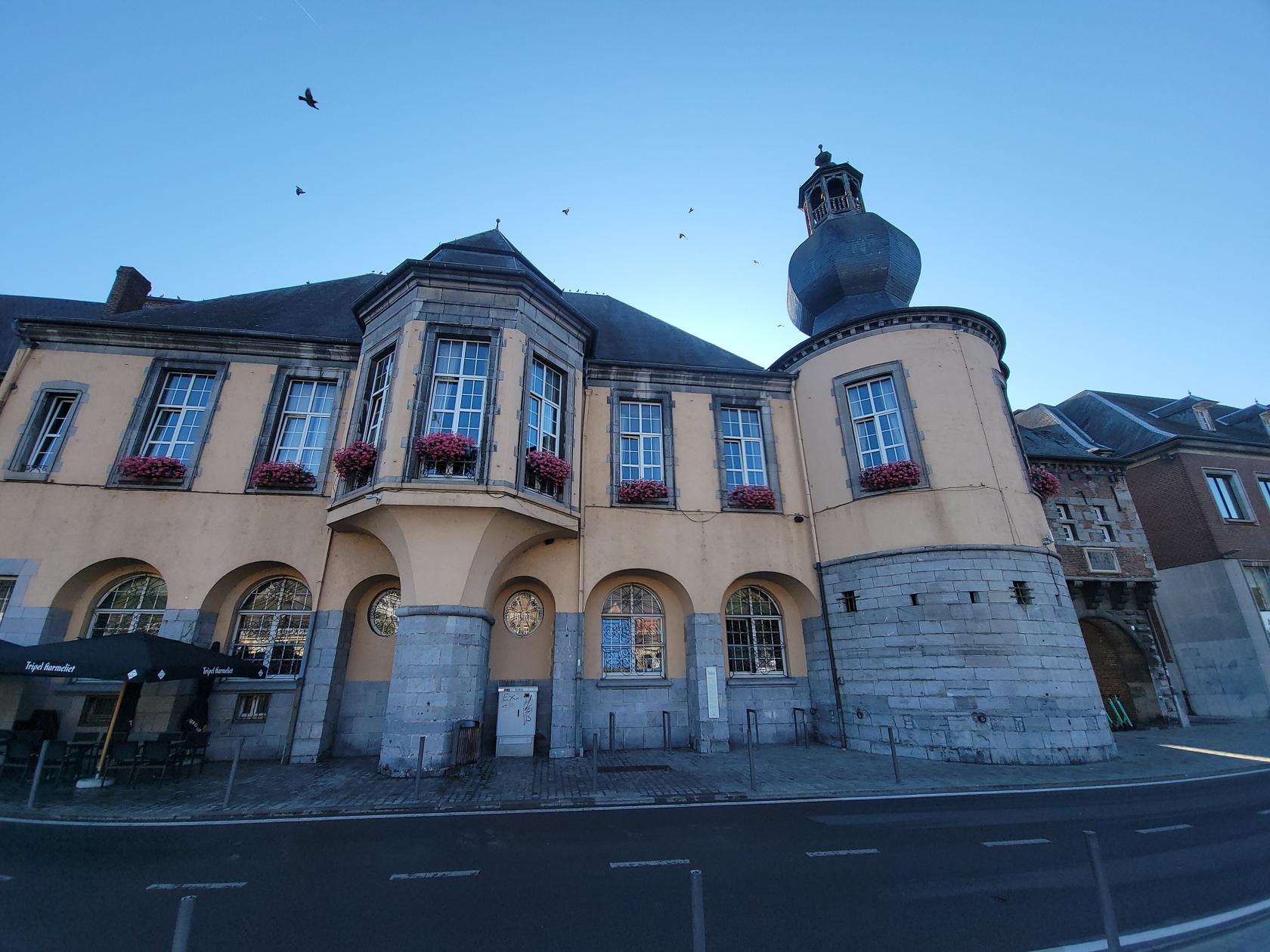
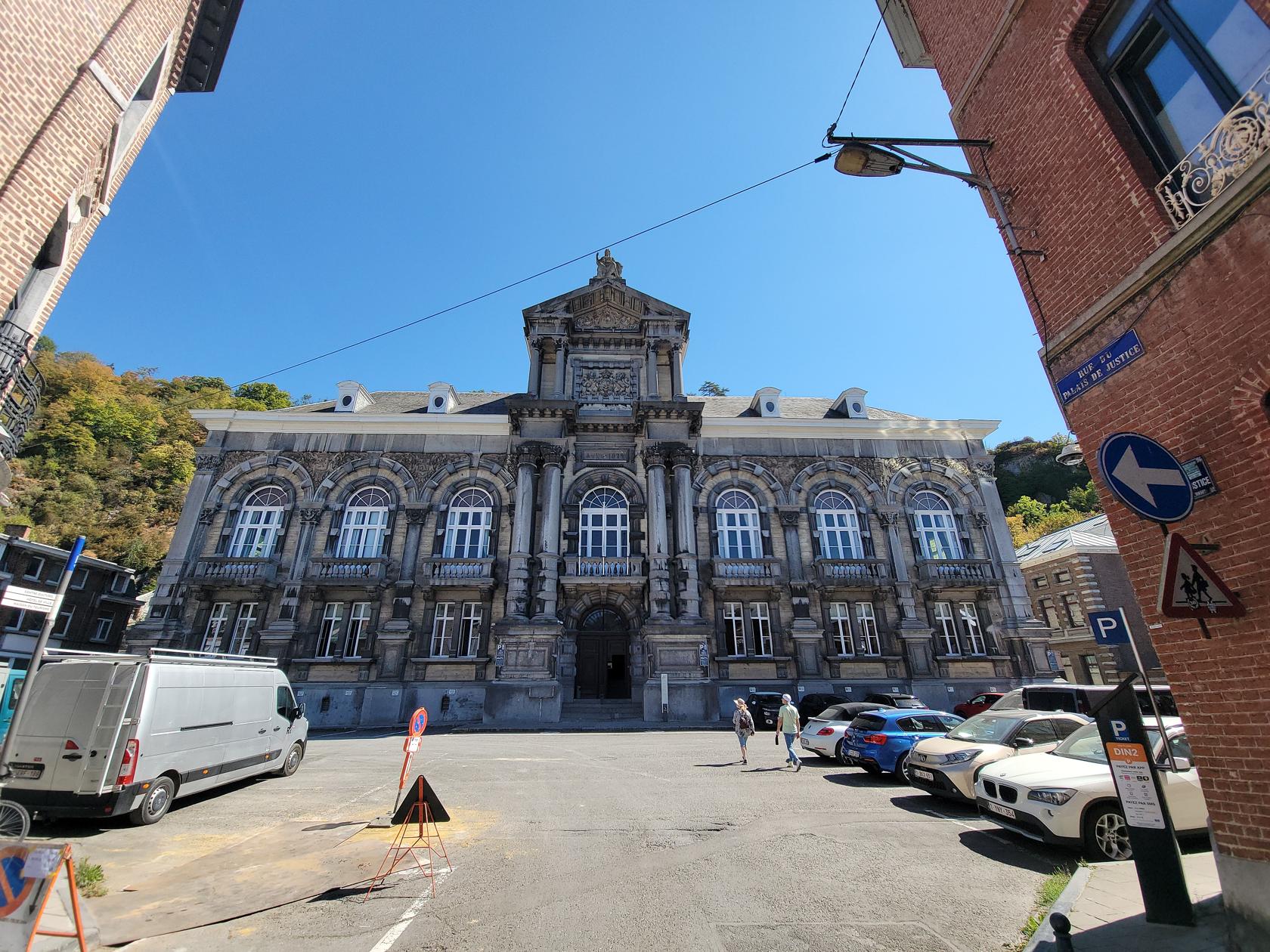
Courthouse – Dinant, Belgium
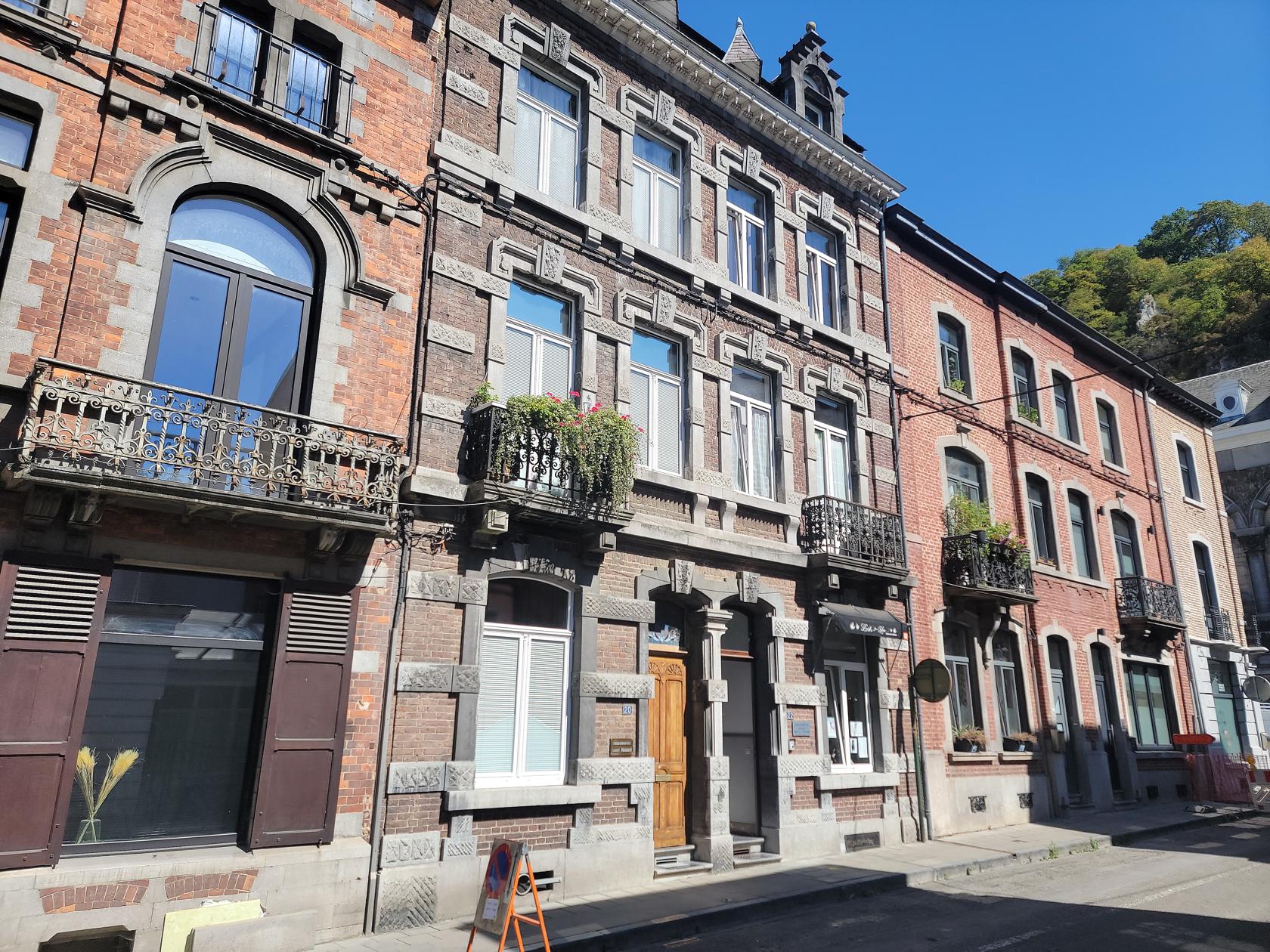
Nicer Houses – Dinant, Belgium
Ibis Hotel
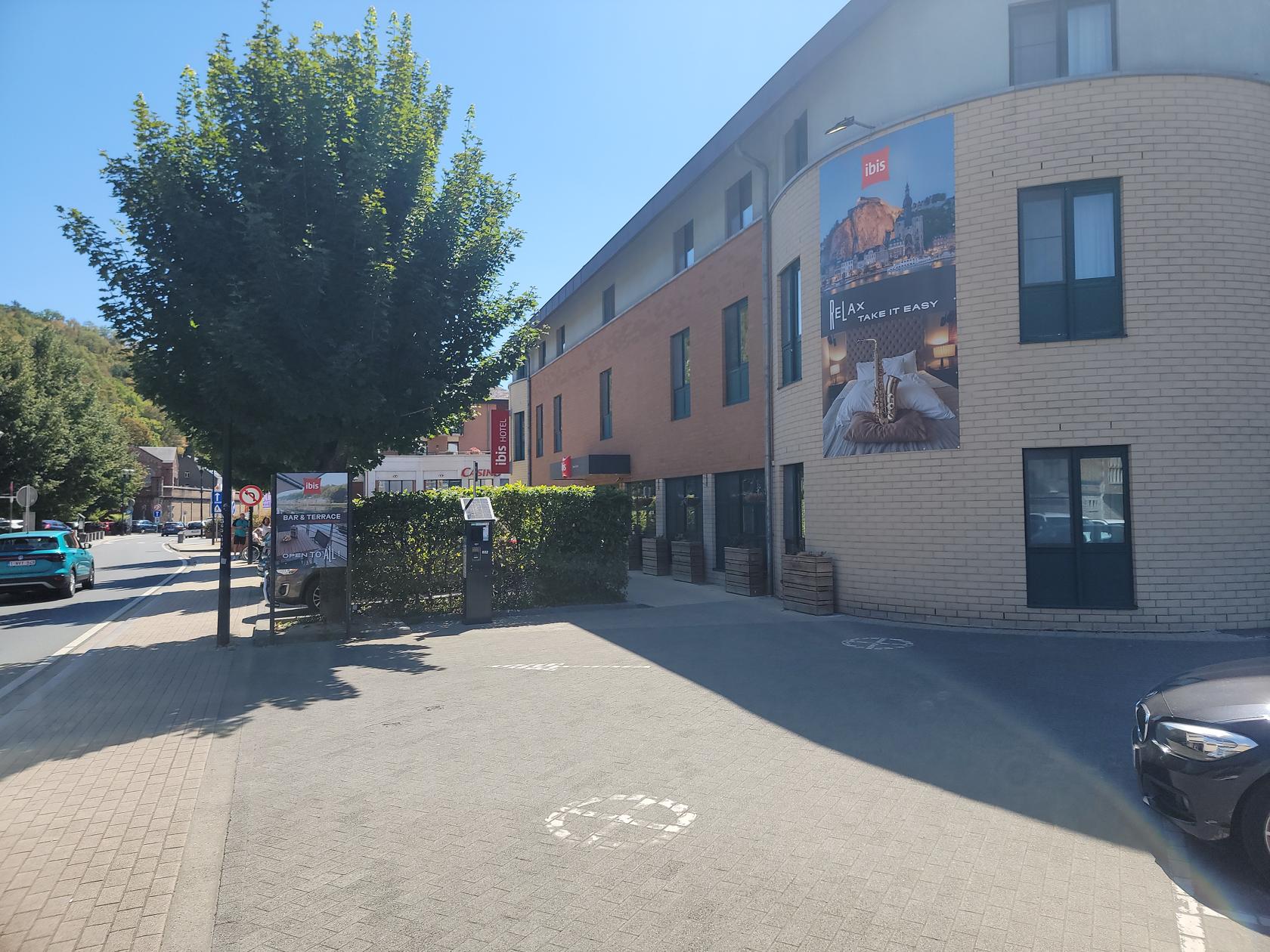
Our hotel was the Ibis Centre along the Winston Churchill Avenue. We found it dated, the rooms on the smaller than small side and the ammenities lacking, we only got a bath towel each, no hand towels nor wash clothes (which are like finding a unicorn in Europe.) The cleaning service was excellent and was perhaps the only good thing about the hotel. Though labeled a three star hotel it is more like two and a half stars, or a motel that you would find in a dusty old town in the States.
Ibis Hotel – Dinant, Belgium
Collegiate Church of Our Lady of Dinant
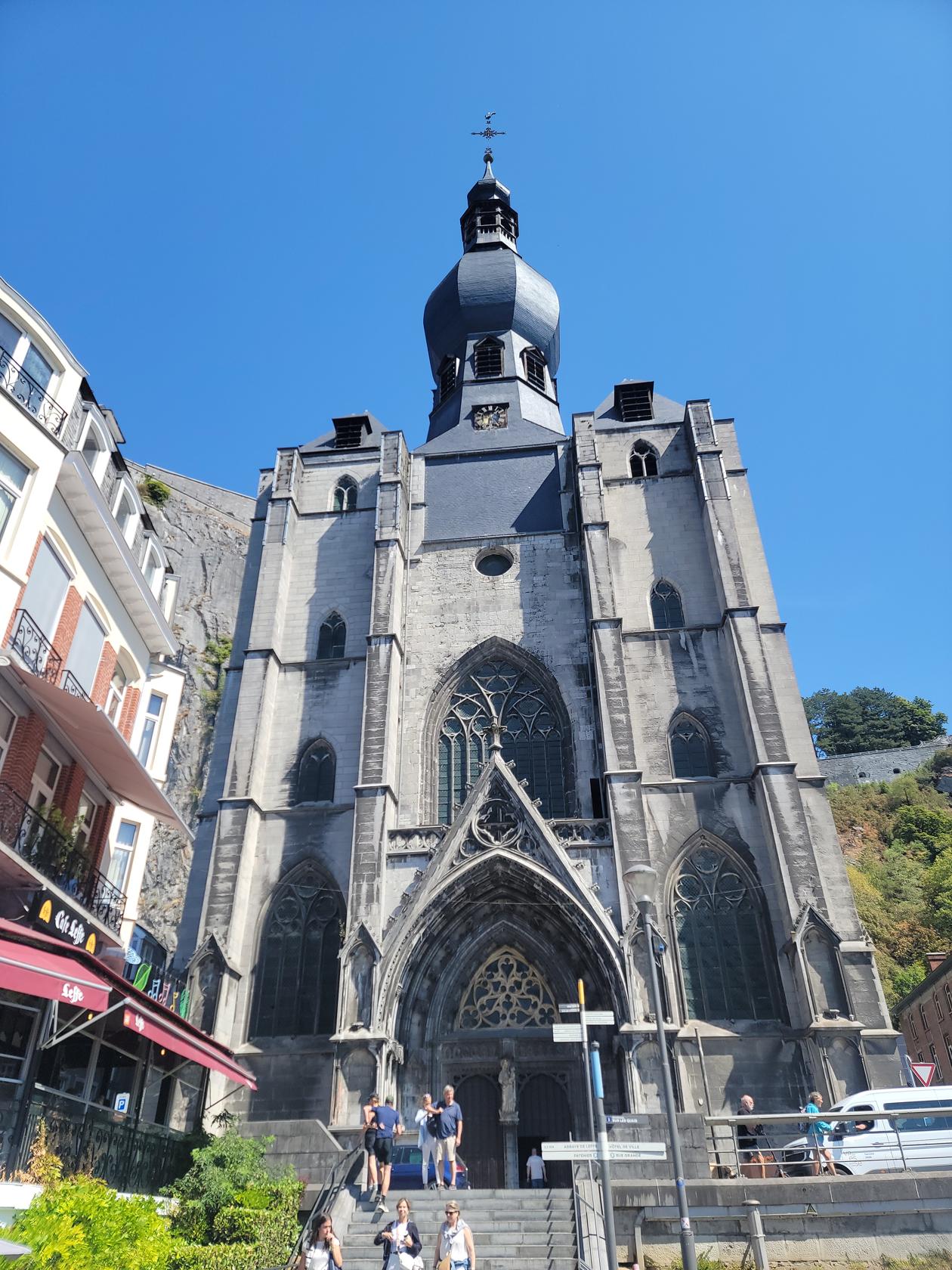
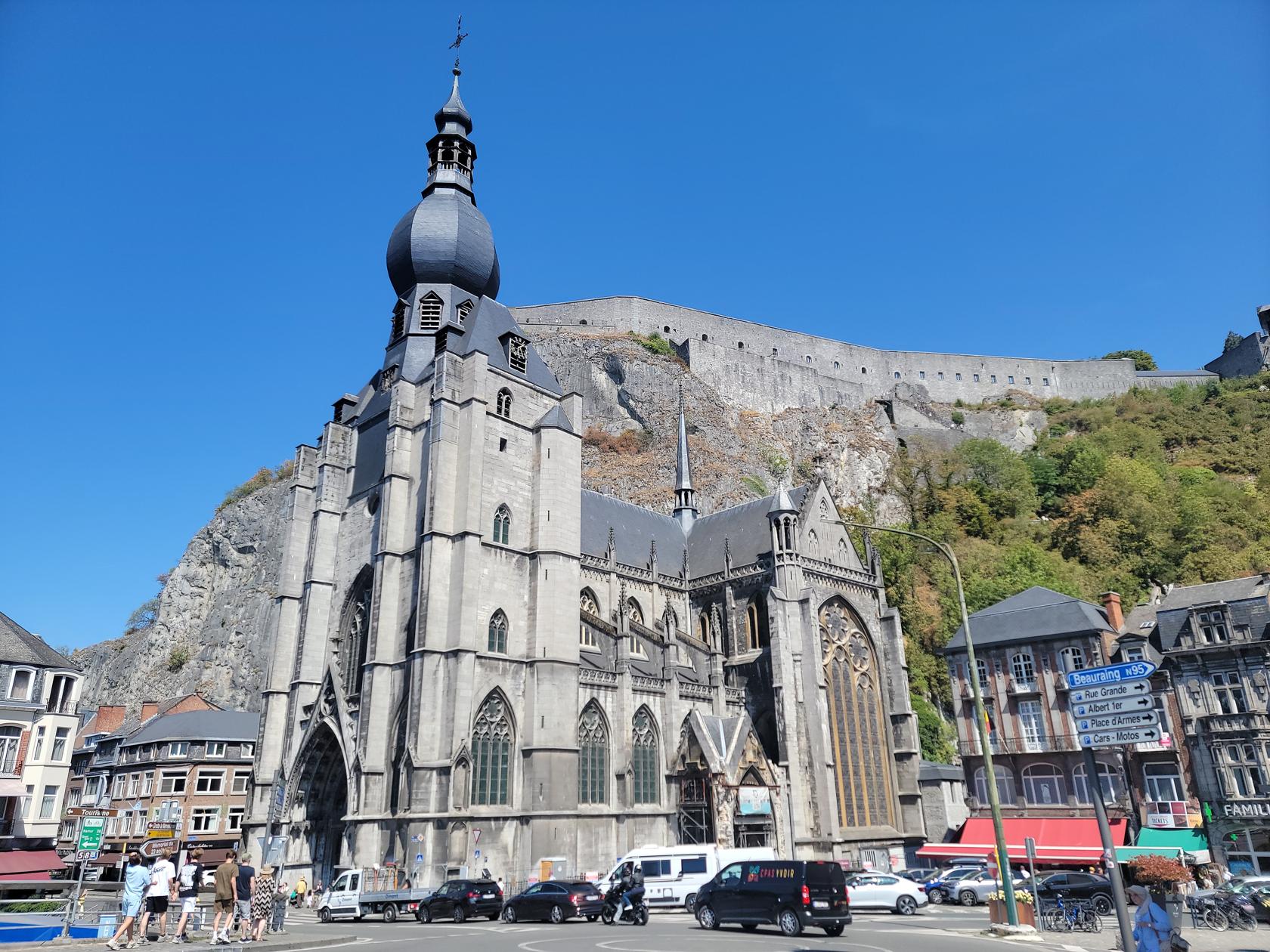
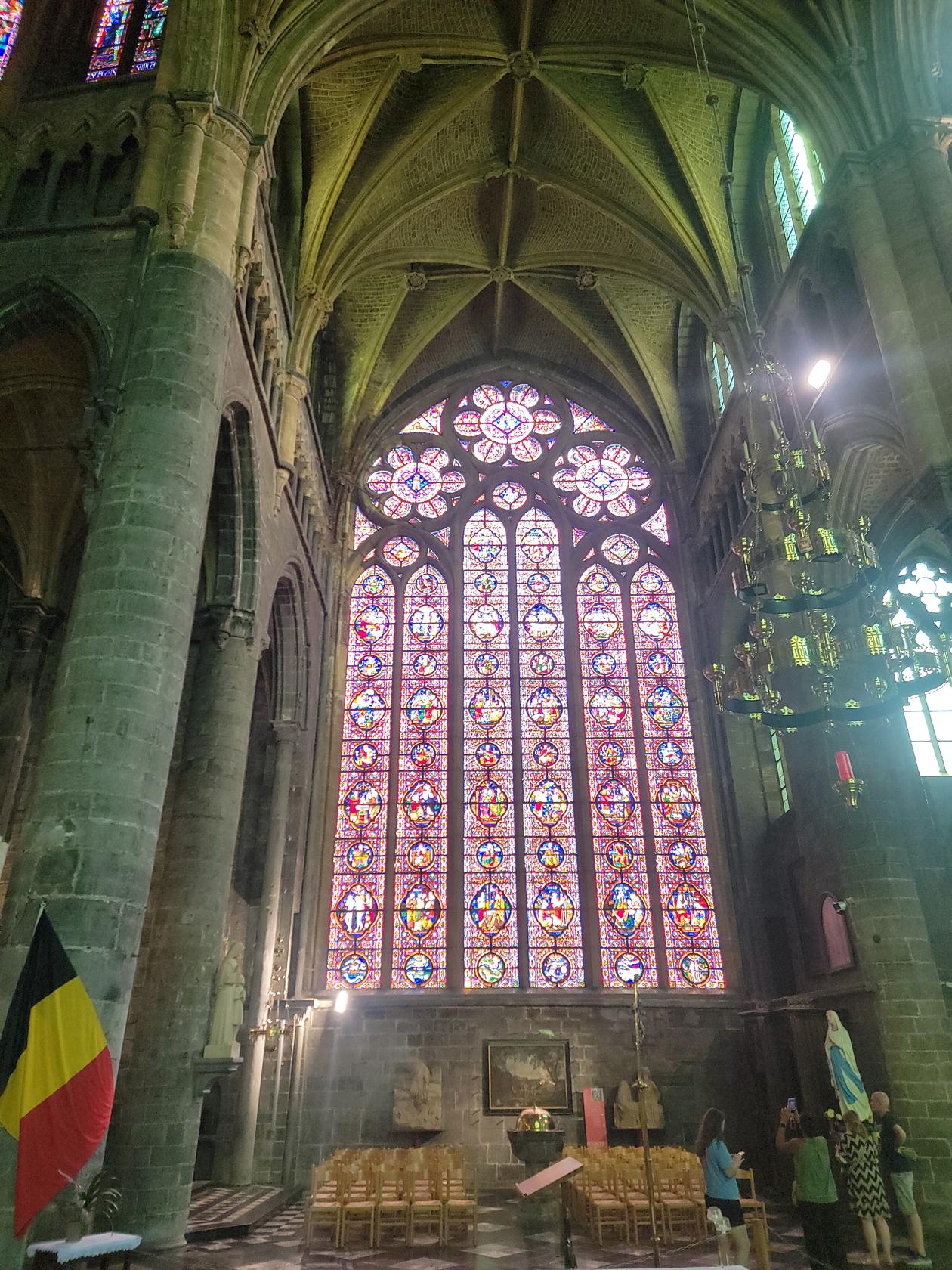
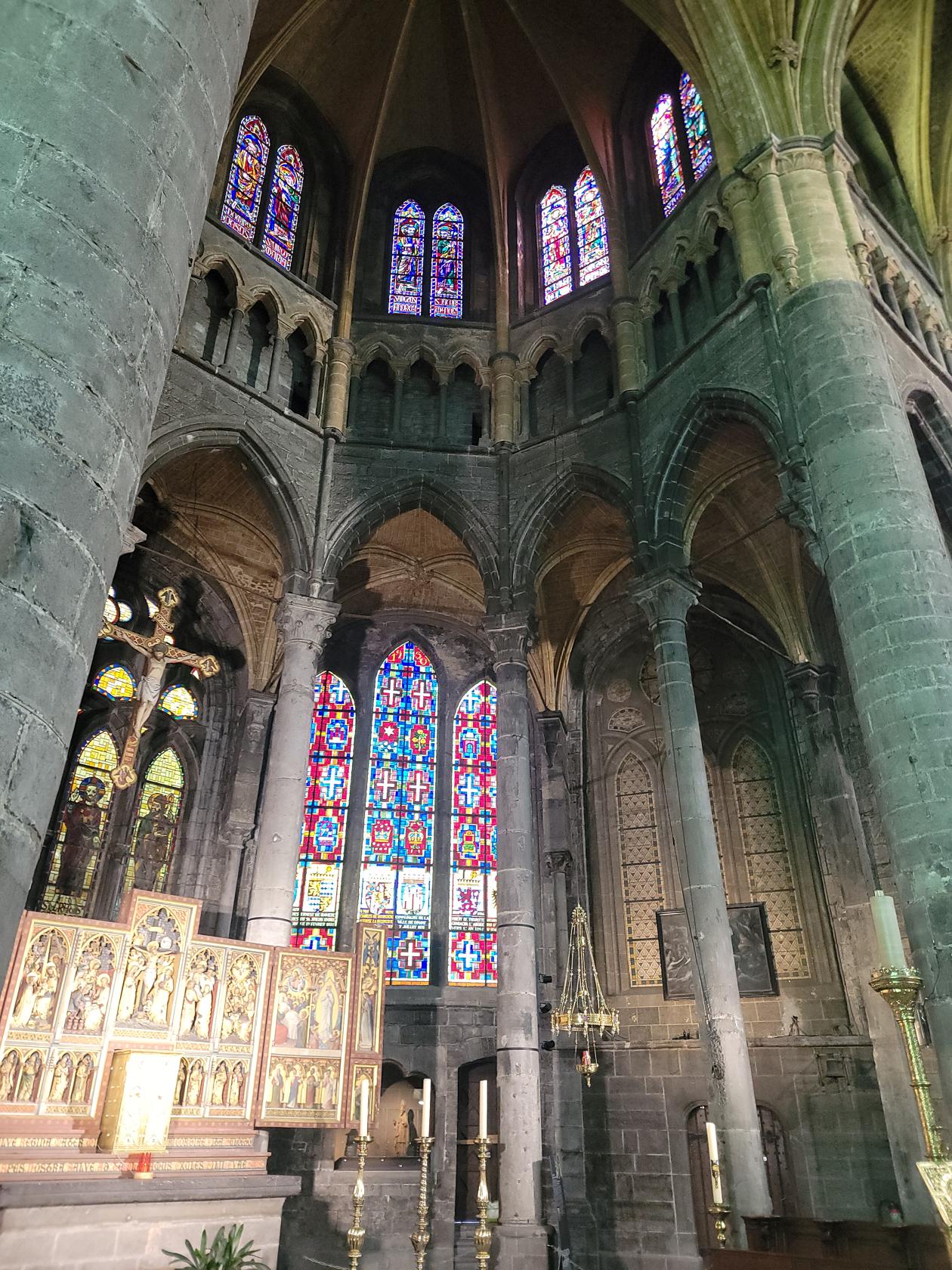
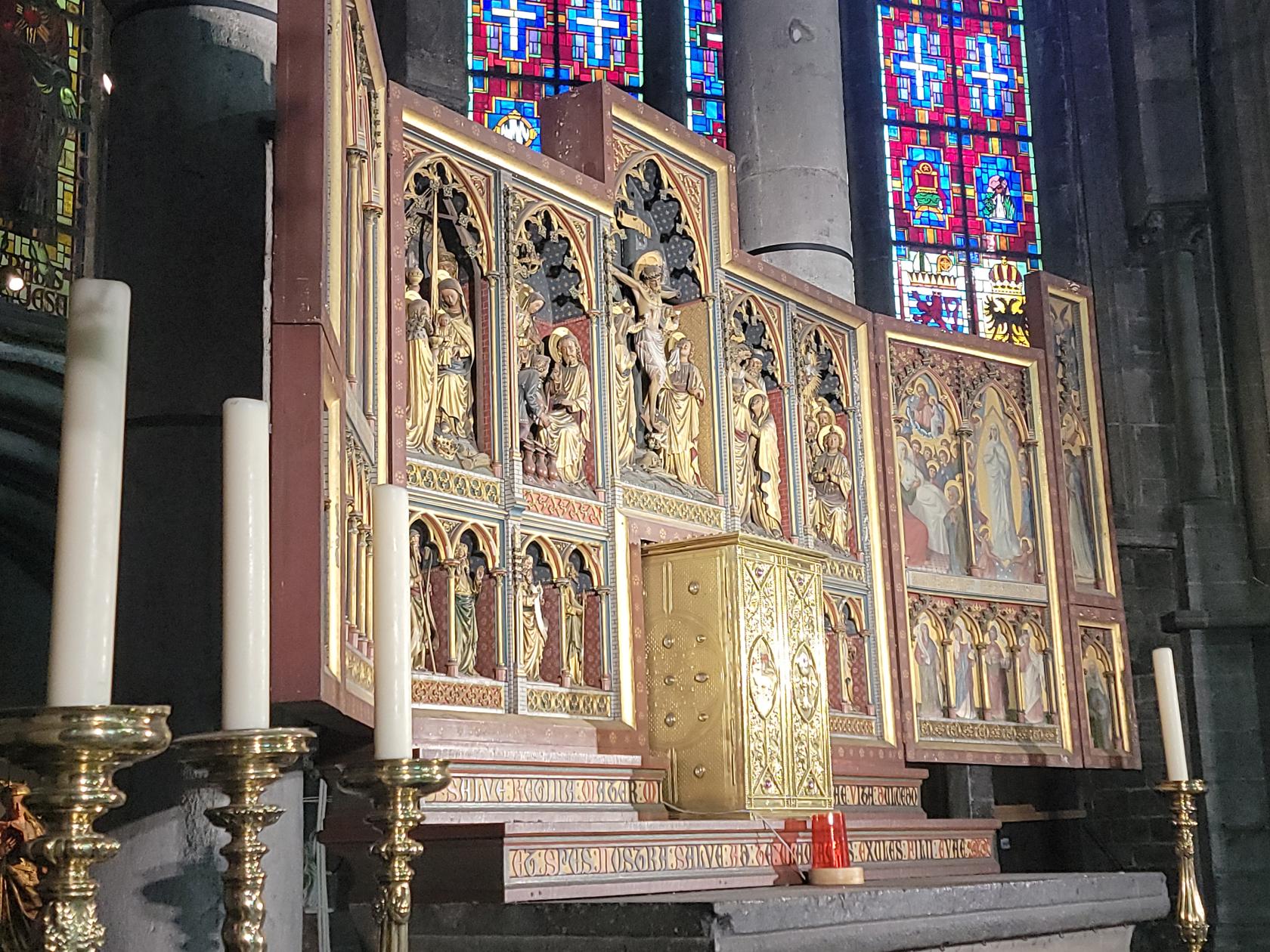
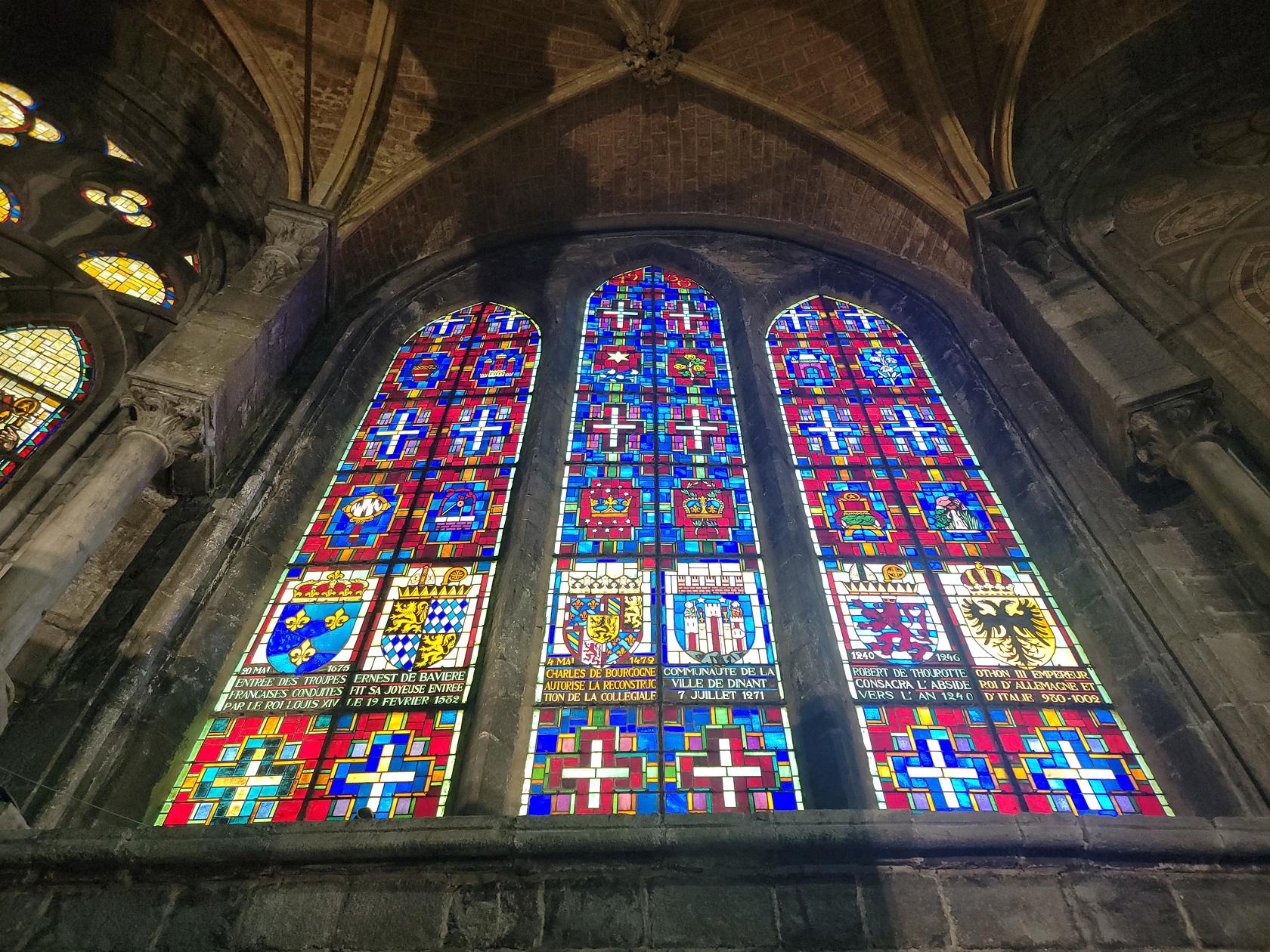
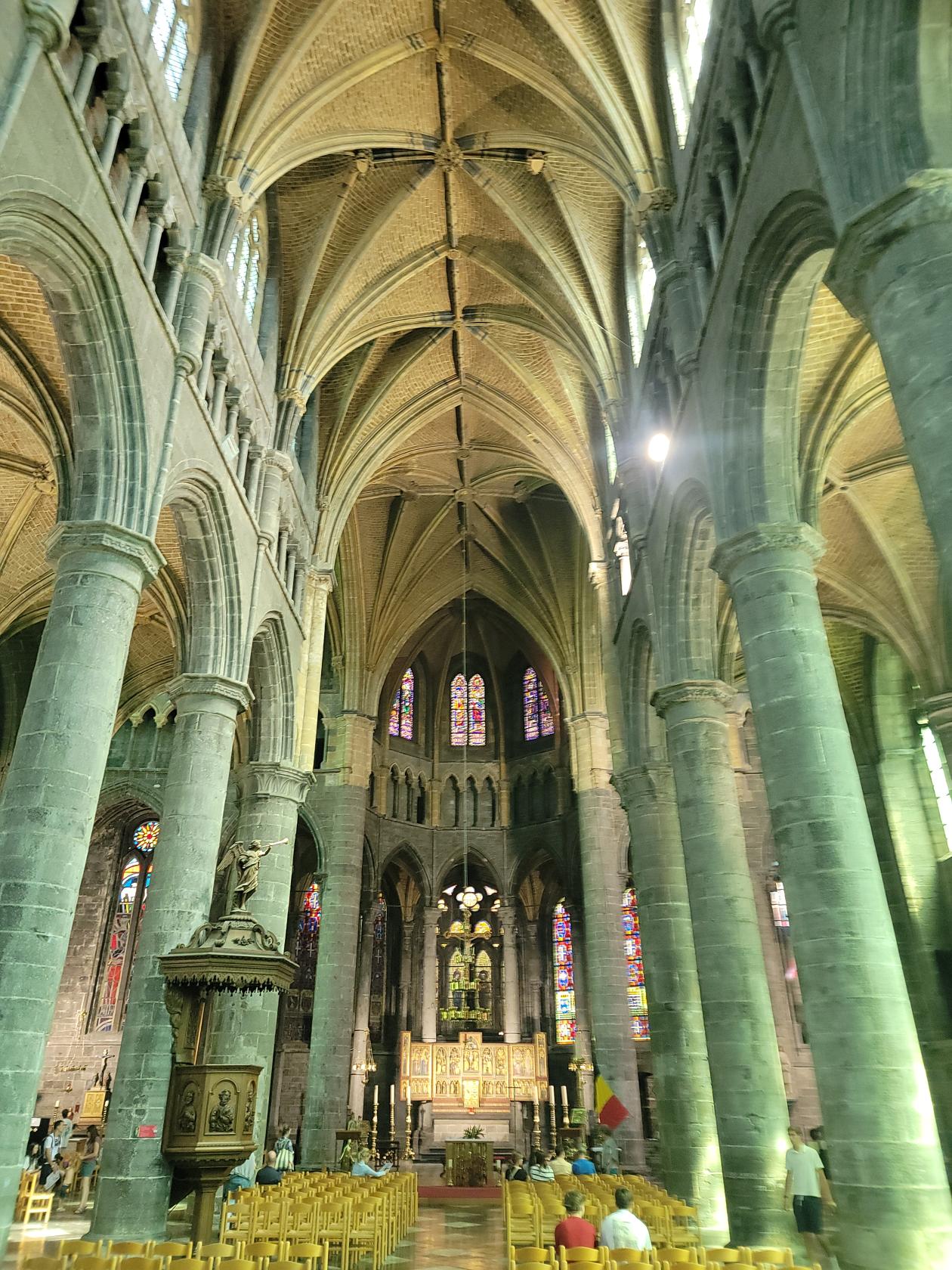
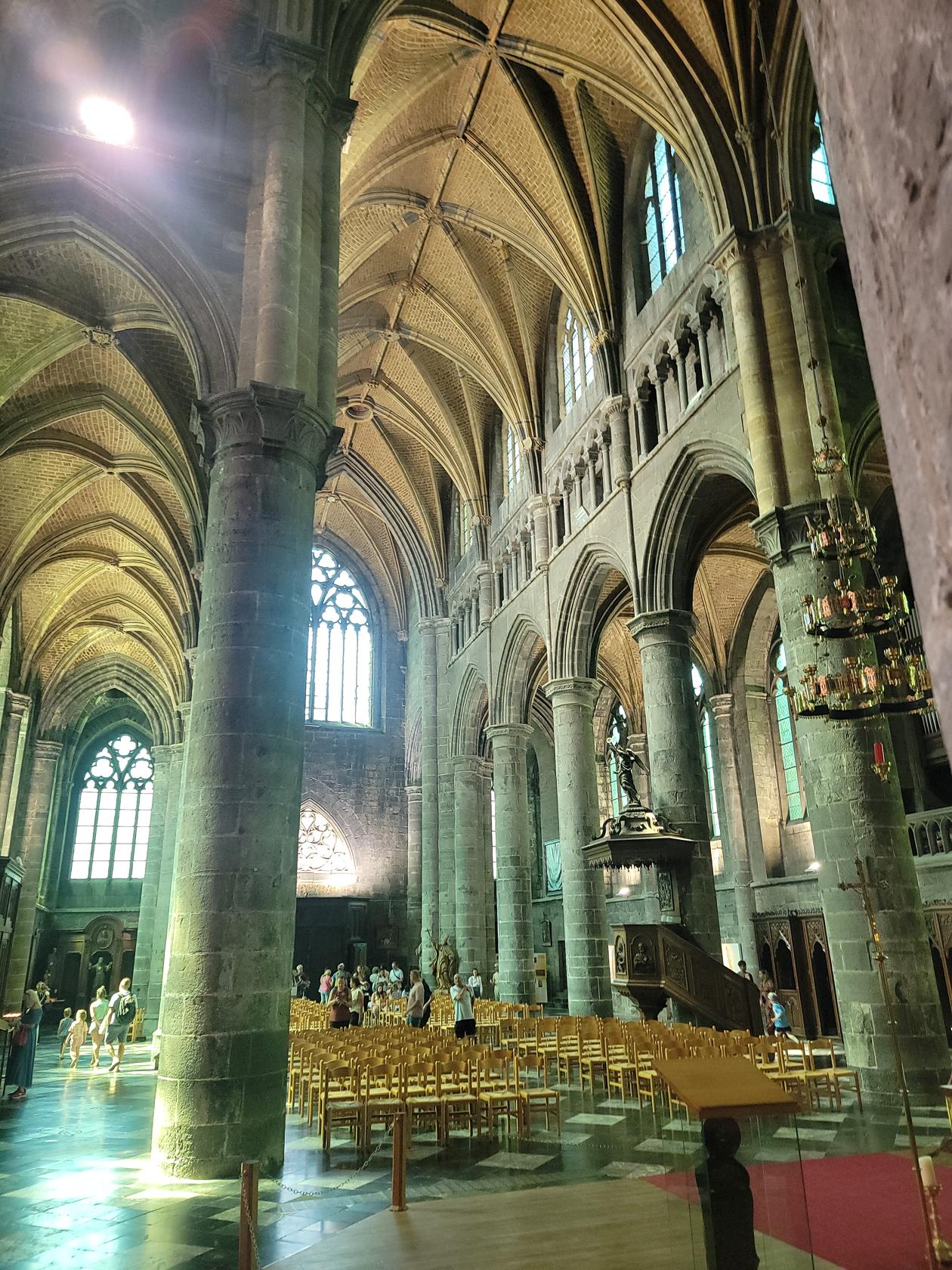
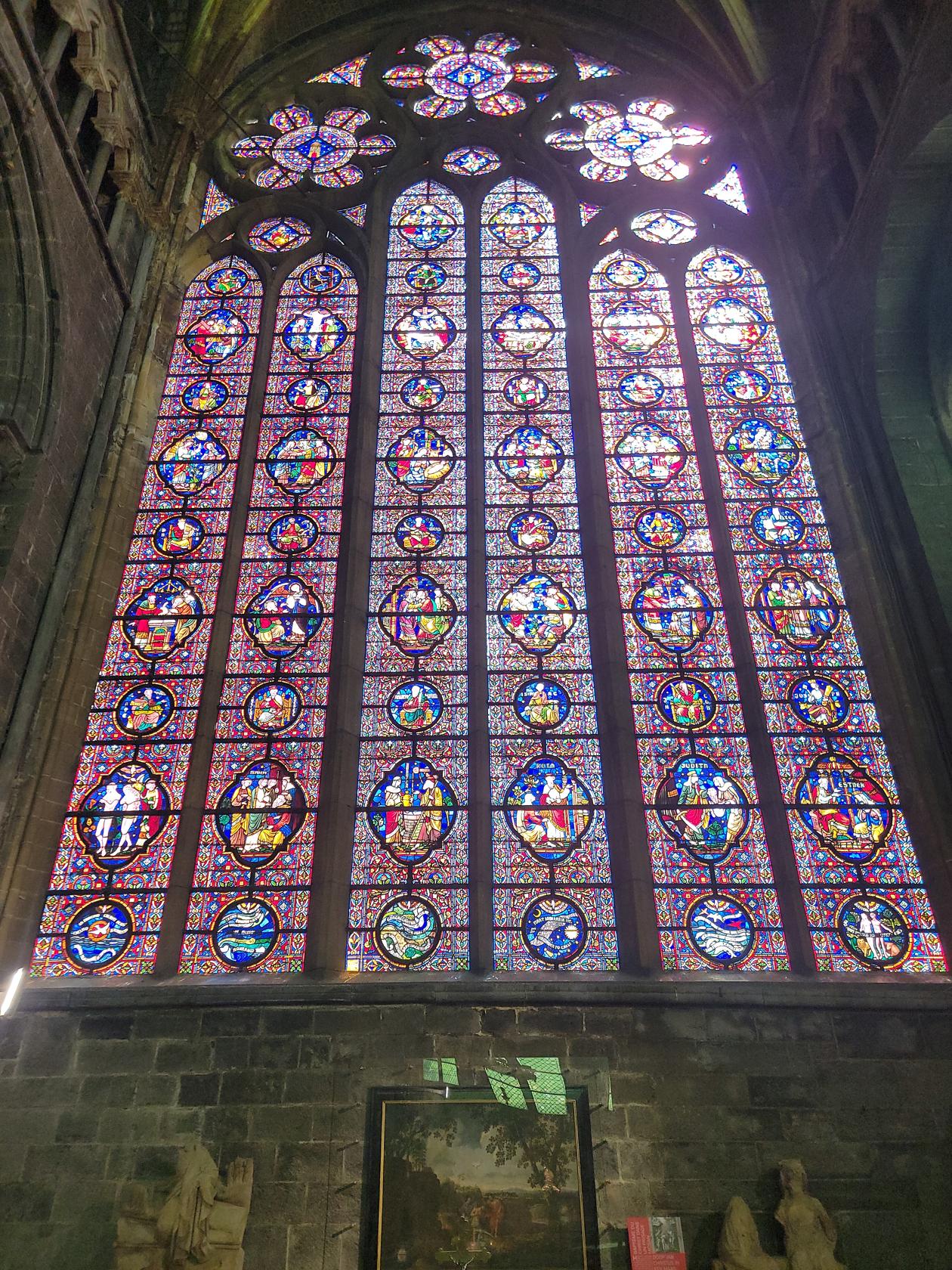
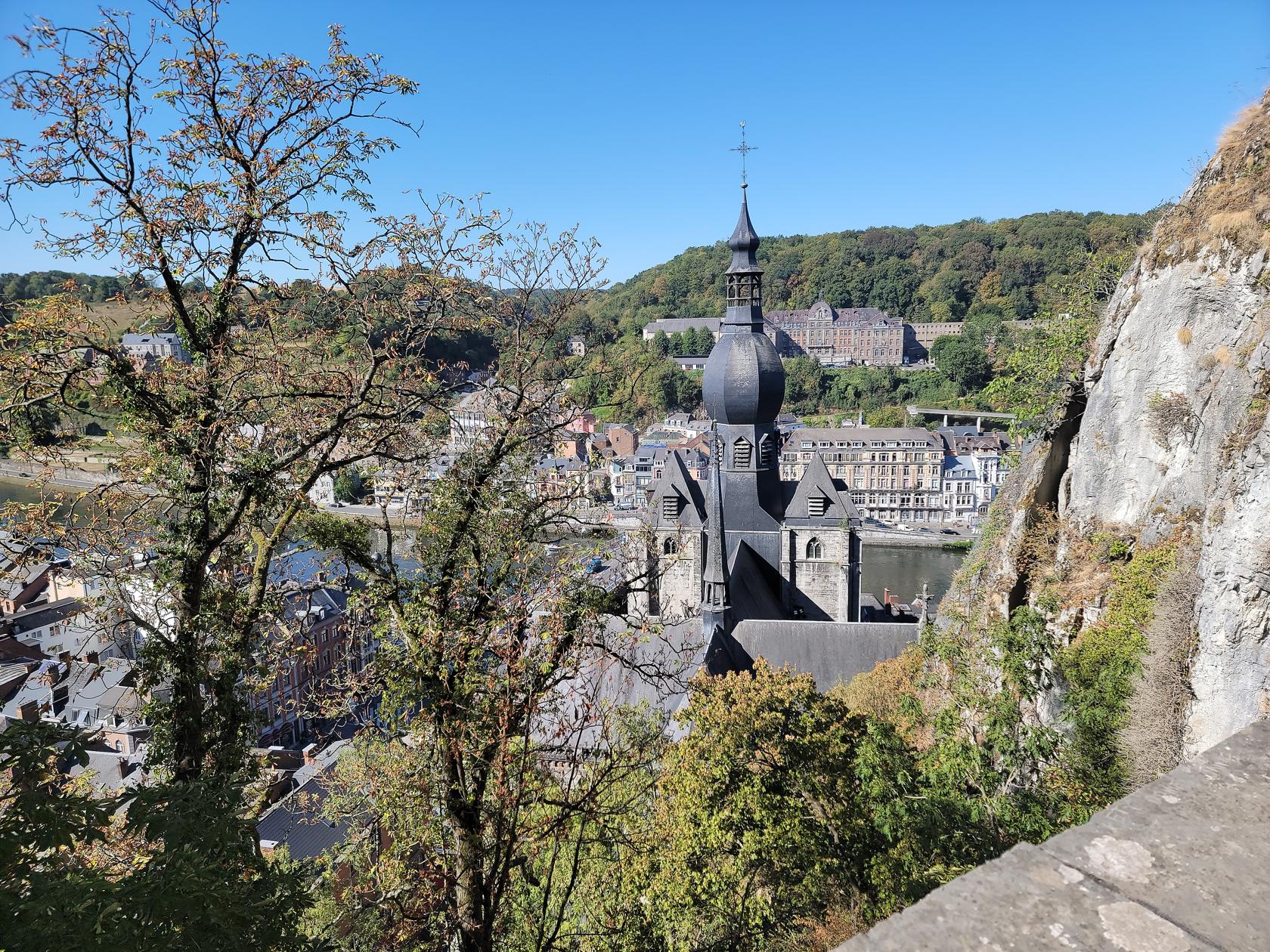
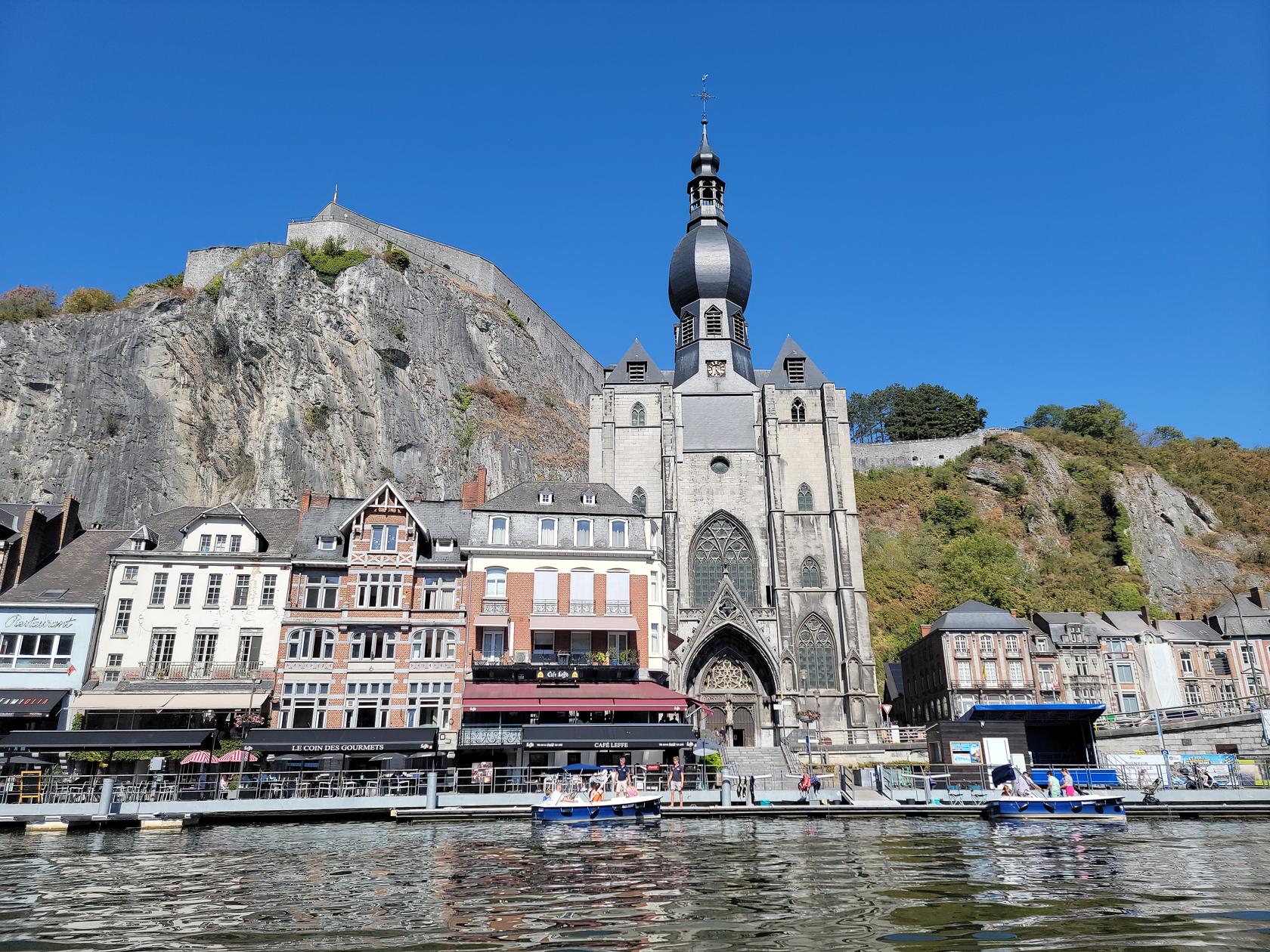
The Collegiate Church of Our Lady of Dinant actually has some impressive stained glass. It has the form of a cathedral, but without the grandiosity required for such a structure.
Fortress and Collegiate Church – Dinant, Belgium
Entrance – Collegiate Church of Our Lady of Dinant – Dinant, Belgium
Outside – Collegiate Church of Our Lady of Dinant – Dinant, Belgium
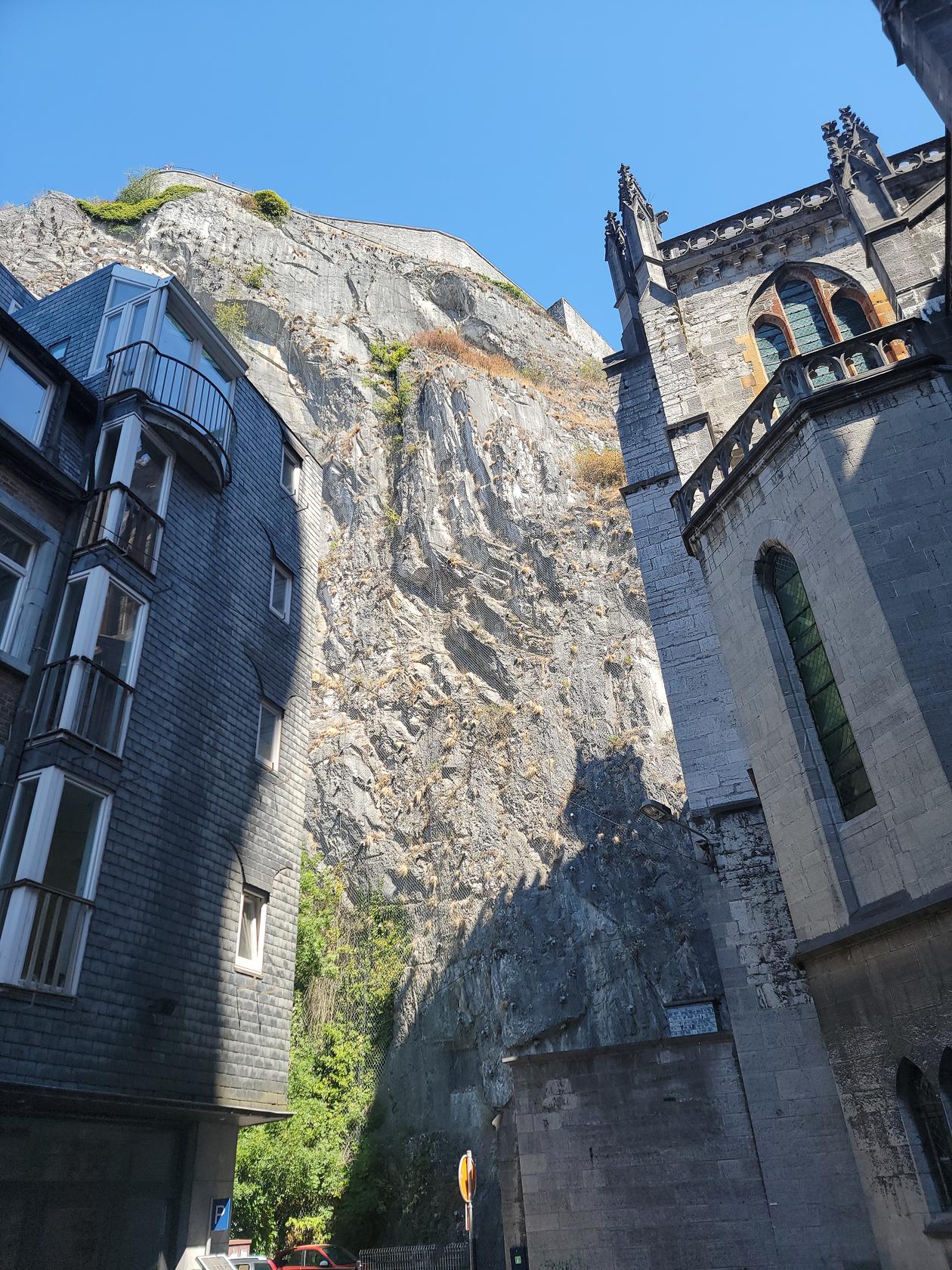
Outside by rock wall – Collegiate Church of Our Lady of Dinant – Dinant, Belgium
Only one apse has a window, the other is covered up and opaque. The rest of the interior is rather simple and unobtrusive.
Right Apse Window – Collegiate Church of Our Lady of Dinant – Dinant, Belgium
Altar and Transept Windows – Collegiate Church of Our Lady of Dinant – Dinant, Belgium
Altar – Collegiate Church of Our Lady of Dinant – Dinant, Belgium
Coats of Arms of Important Belgium Houses – Collegiate Church of Our Lady of Dinant – Dinant, Belgium
Nave – Collegiate Church of Our Lady of Dinant – Dinant, Belgium
Aisle and Nave – Collegiate Church of Our Lady of Dinant – Dinant, Belgium
Beautiful Apse Window – Collegiate Church of Our Lady of Dinant – Dinant, Belgium
Fortress Citadel of Dinant
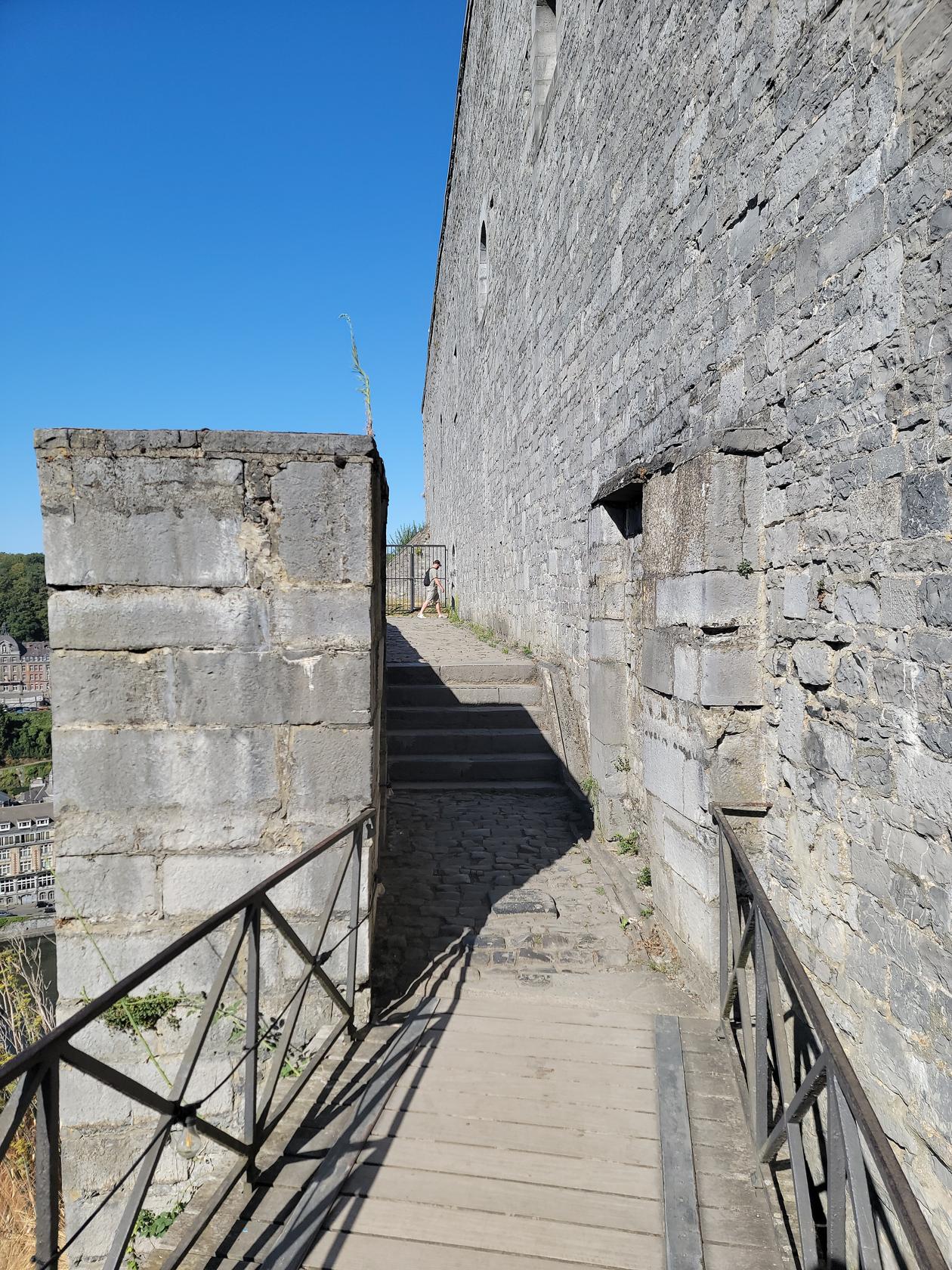
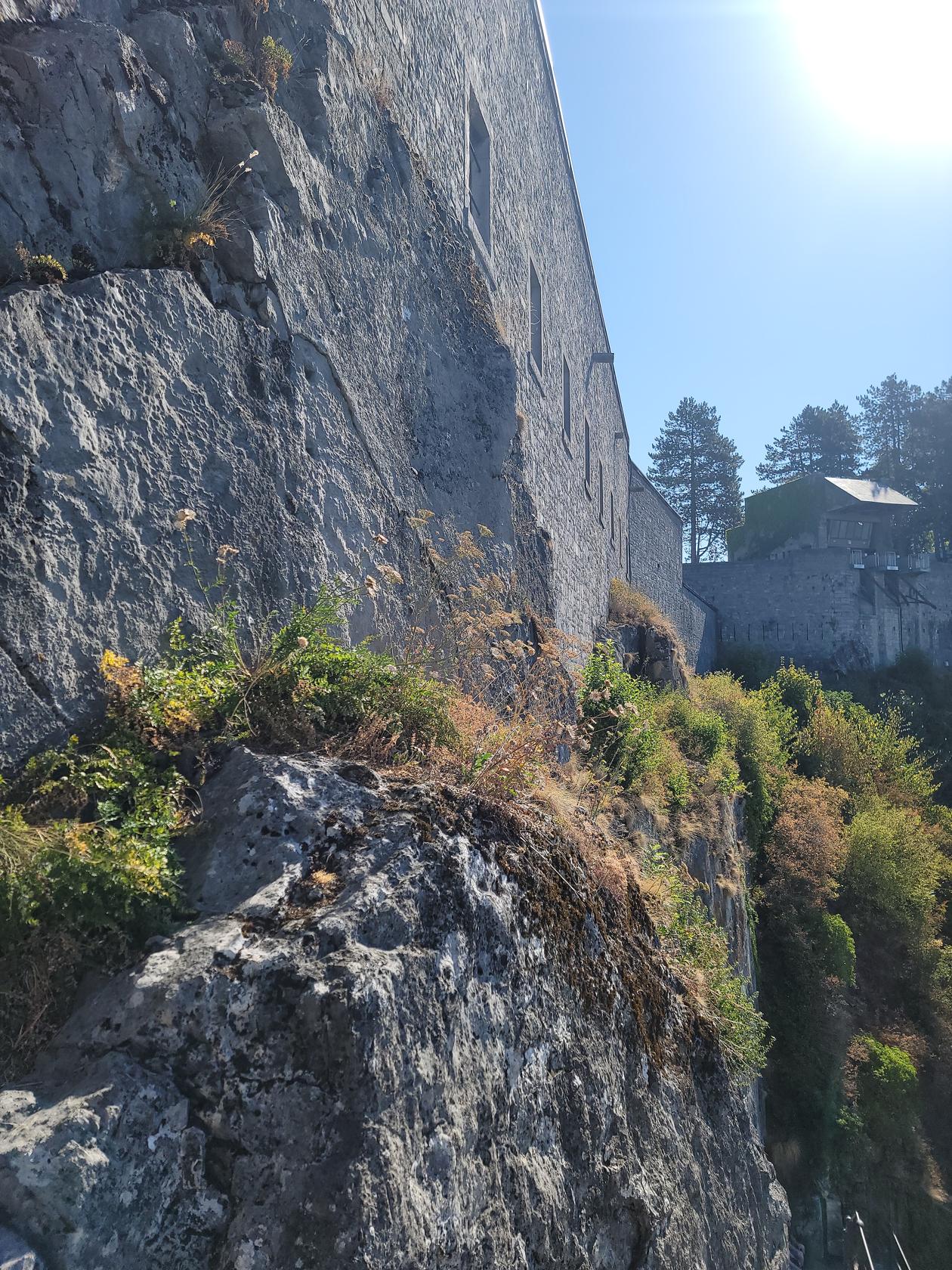
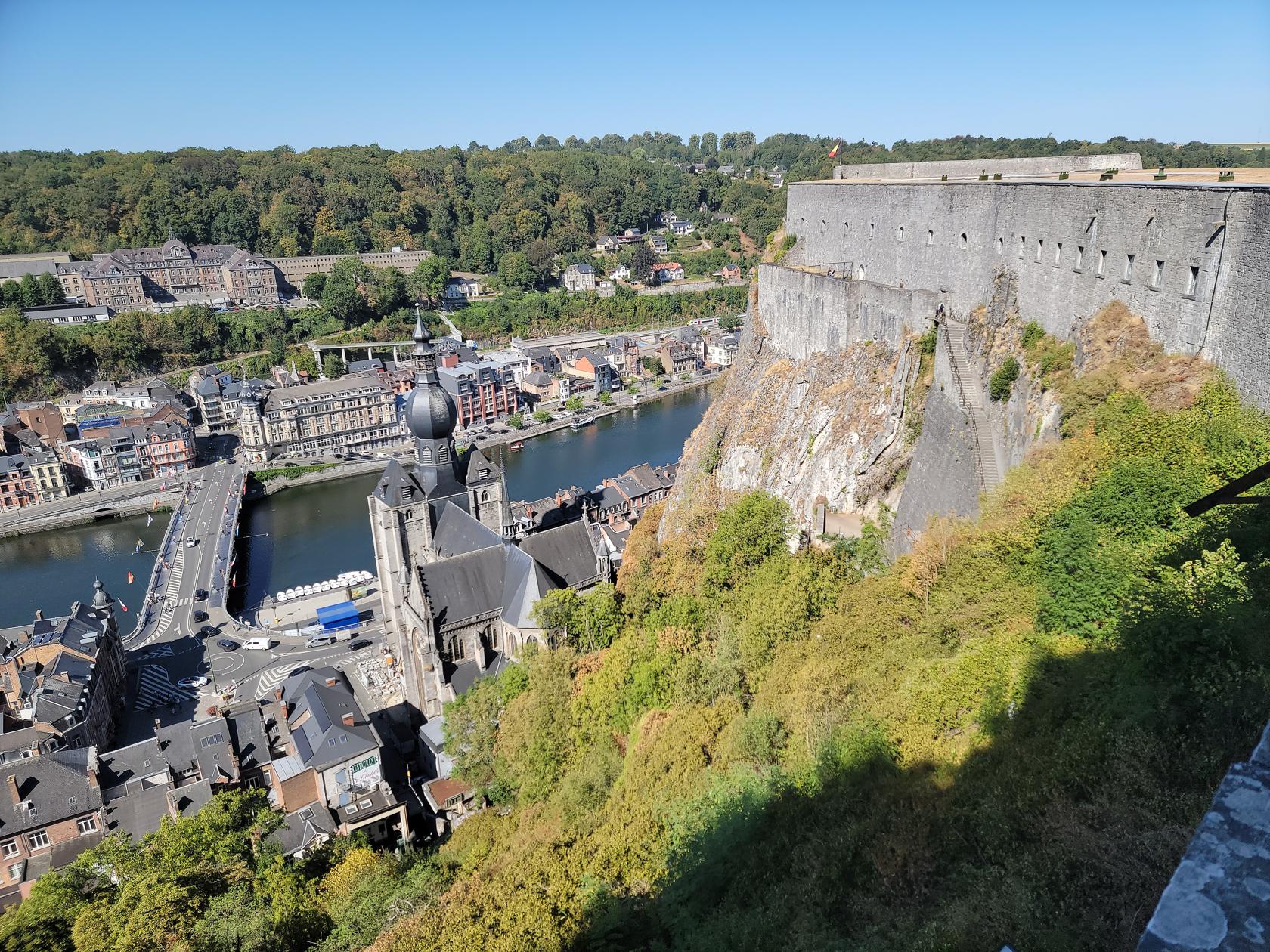
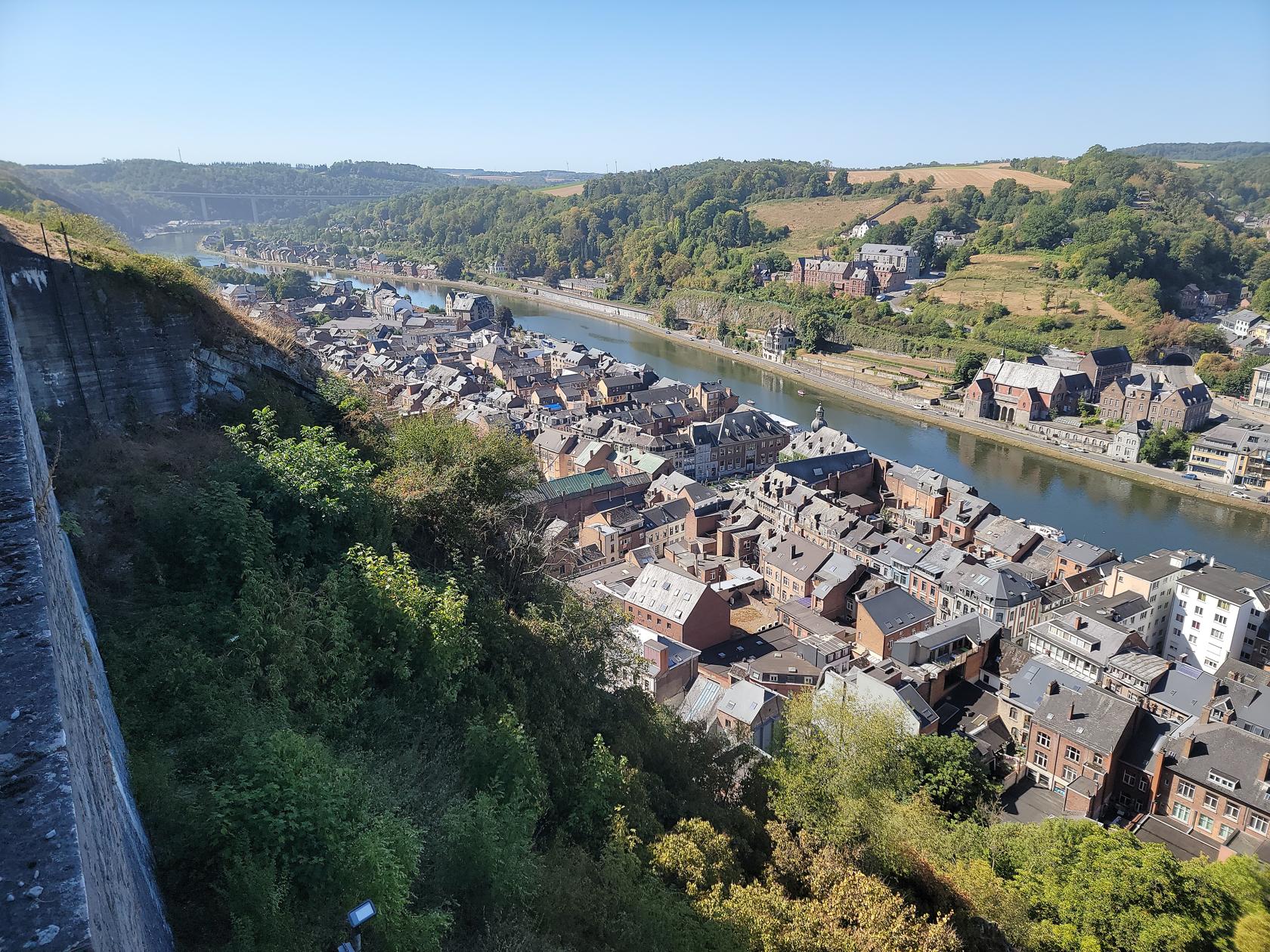
Purposefully commanding a view of the entire town and Meuse Valley is the Fortress Citadel of Dinant. It is perched on one side of the plateau where an outcropping of rock supports its impressive mass.
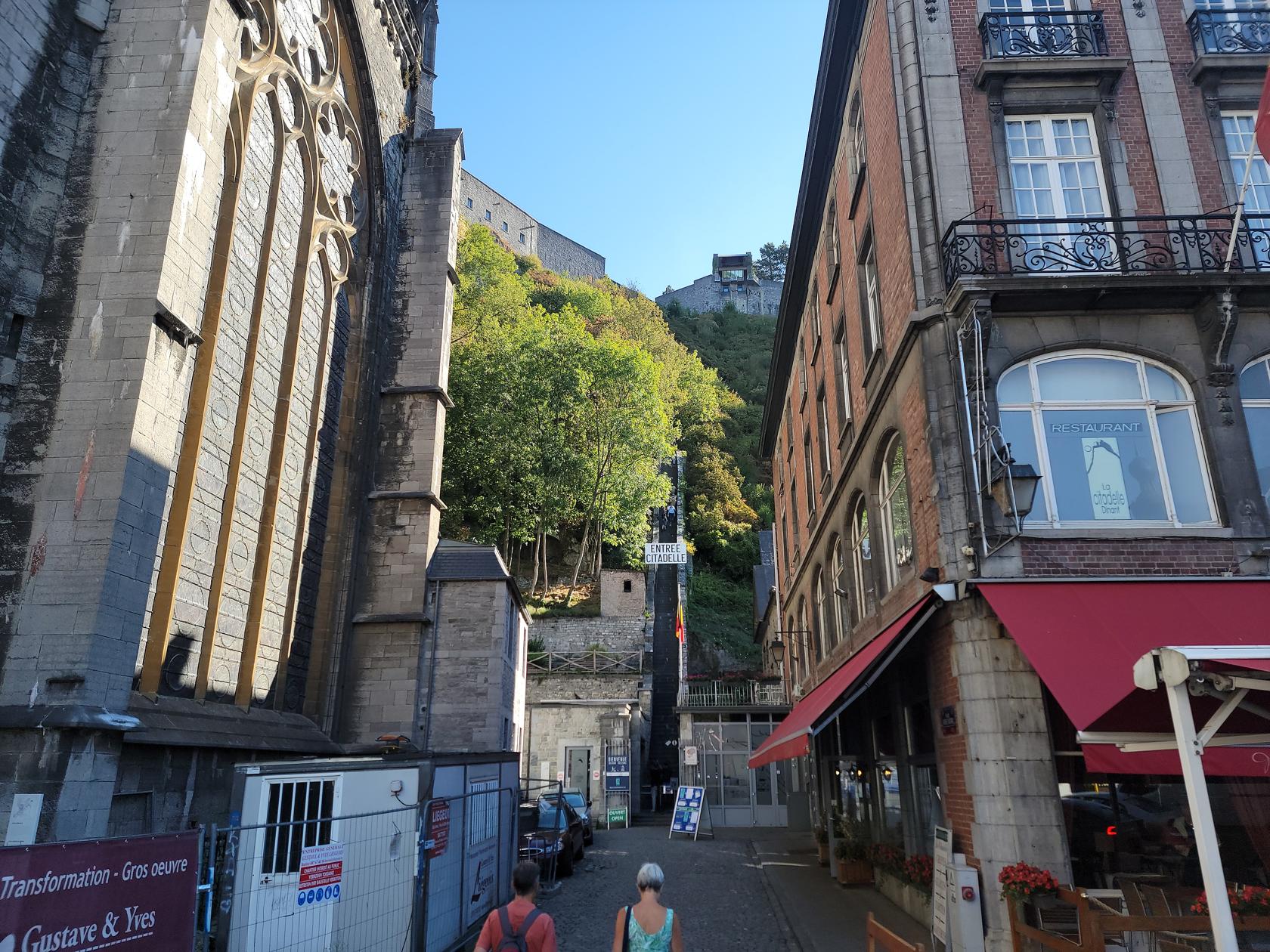
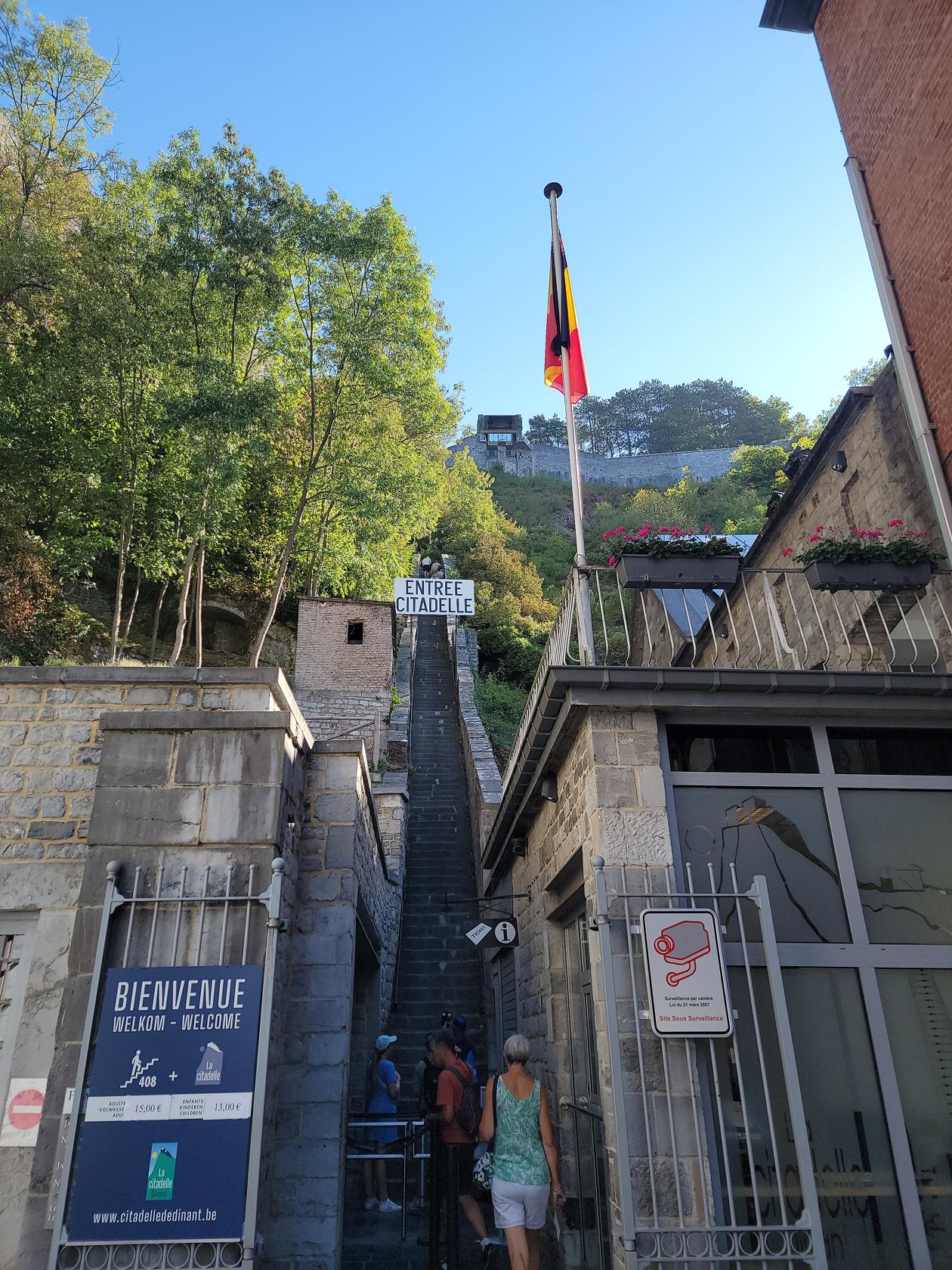
Entrance and Stairs – Citadel of Dinant – Dinant, Belgium
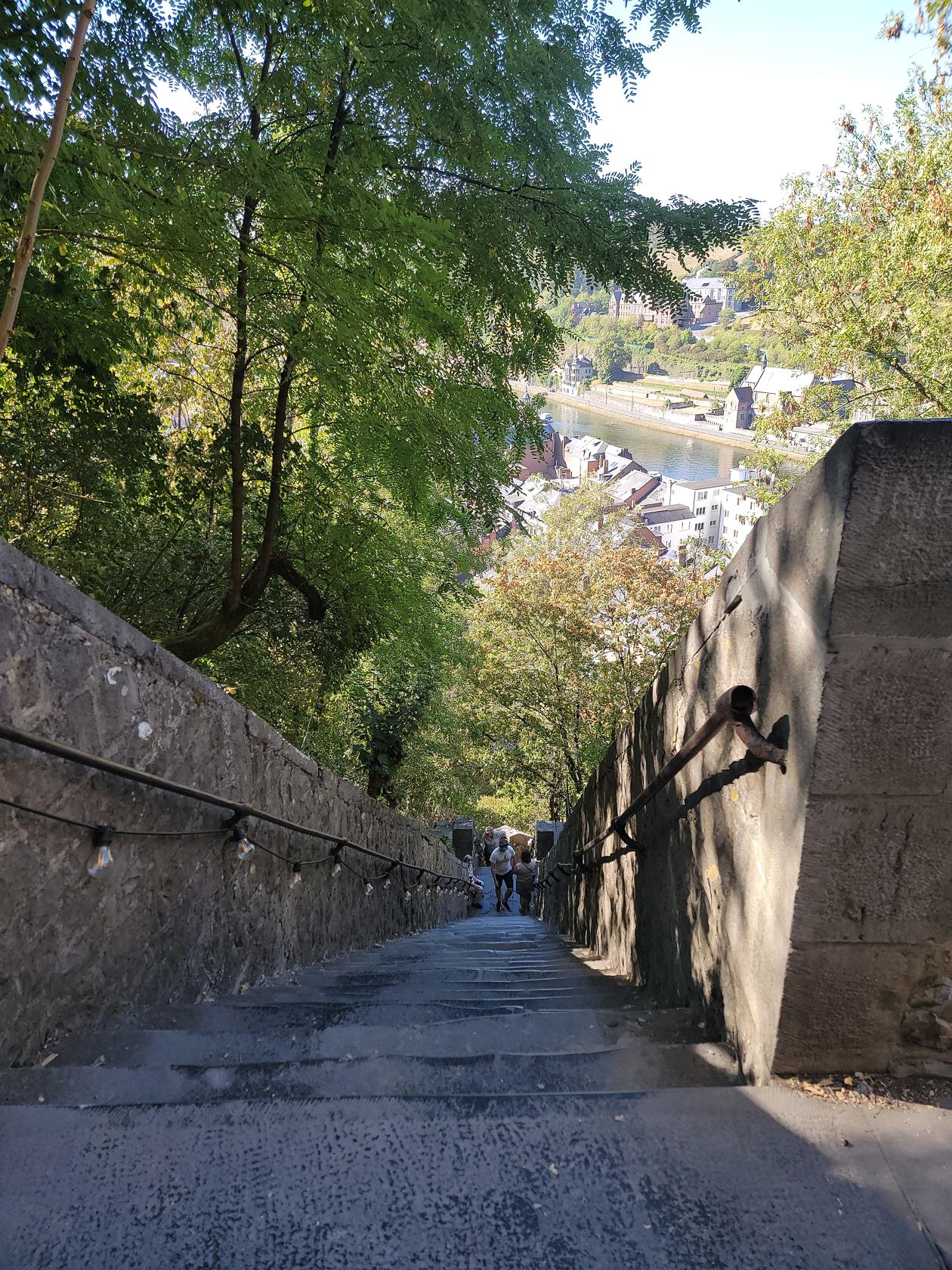
408 Stairs – Citadel of Dinant – Dinant, Belgium
Going Up 408 Stairs – Citadel of Dinant – Dinant, Belgium
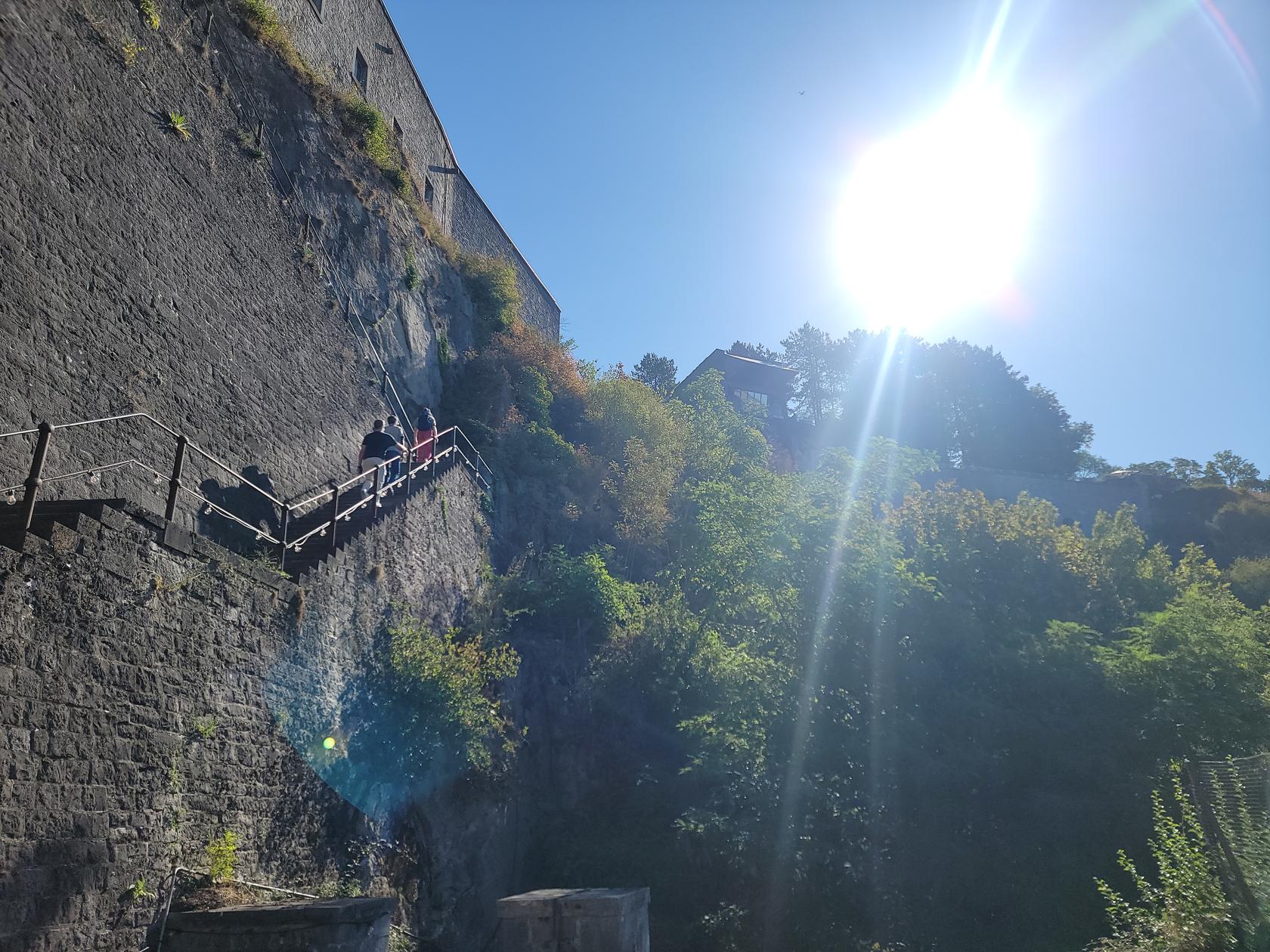
Still more stairs – Citadel of Dinant – Dinant, Belgium
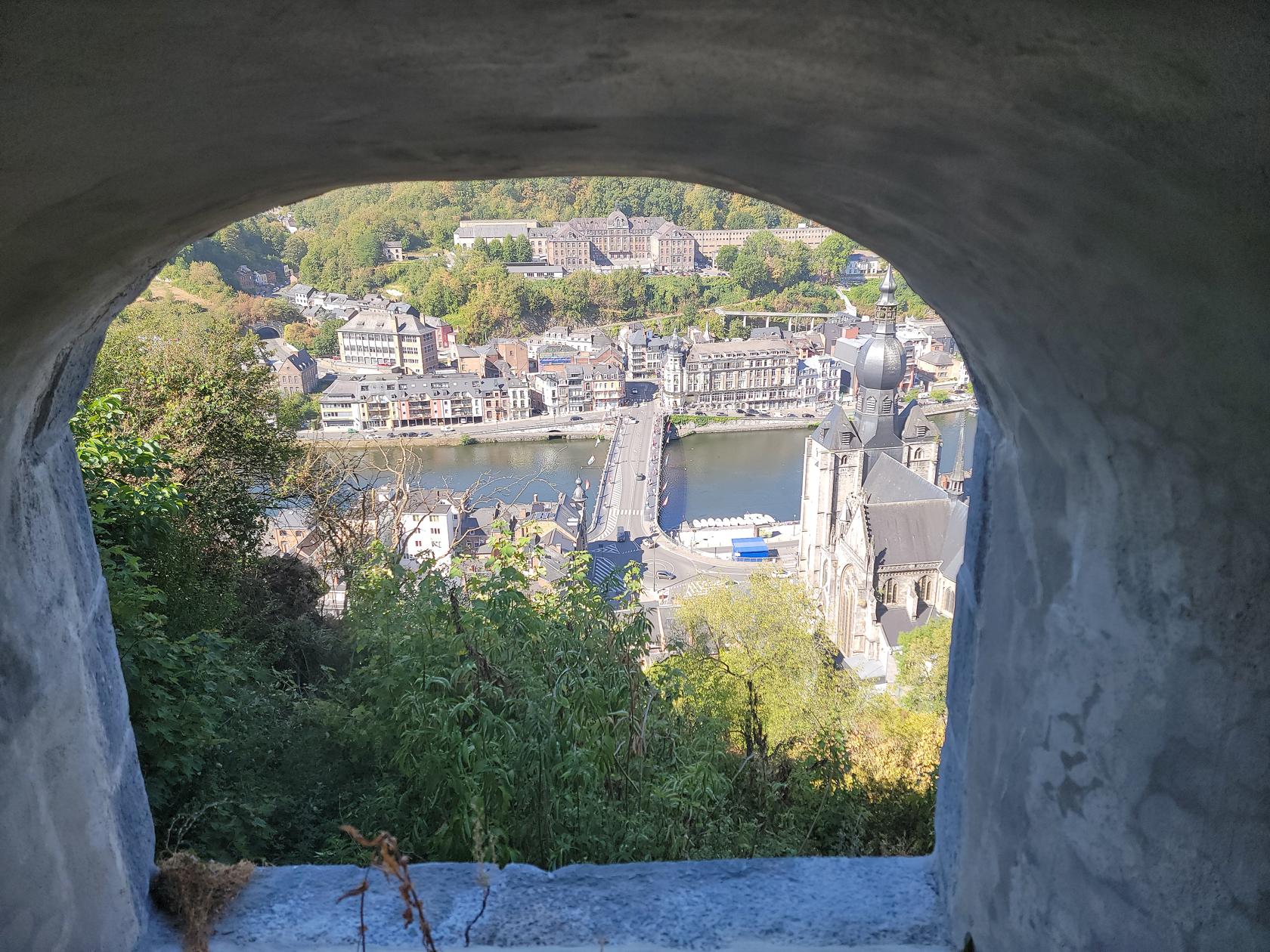
View from top – Citadel of Dinant – Dinant, Belgium
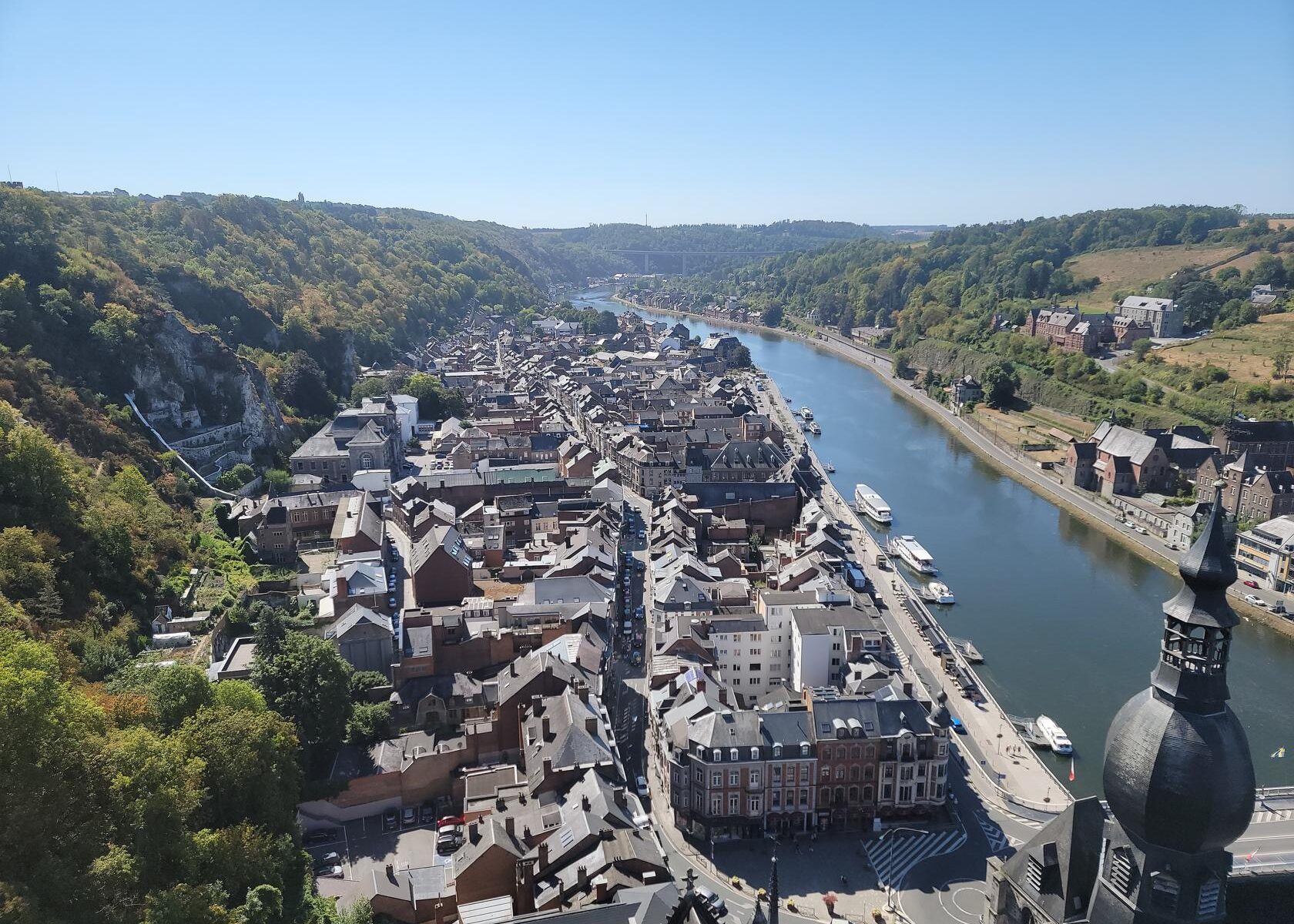
View of upper Dinant – Citadel of Dinant – Dinant, Belgium
Last few steps – Citadel of Dinant – Dinant, Belgium
Fortress Wall – Citadel of Dinant – Dinant, Belgium
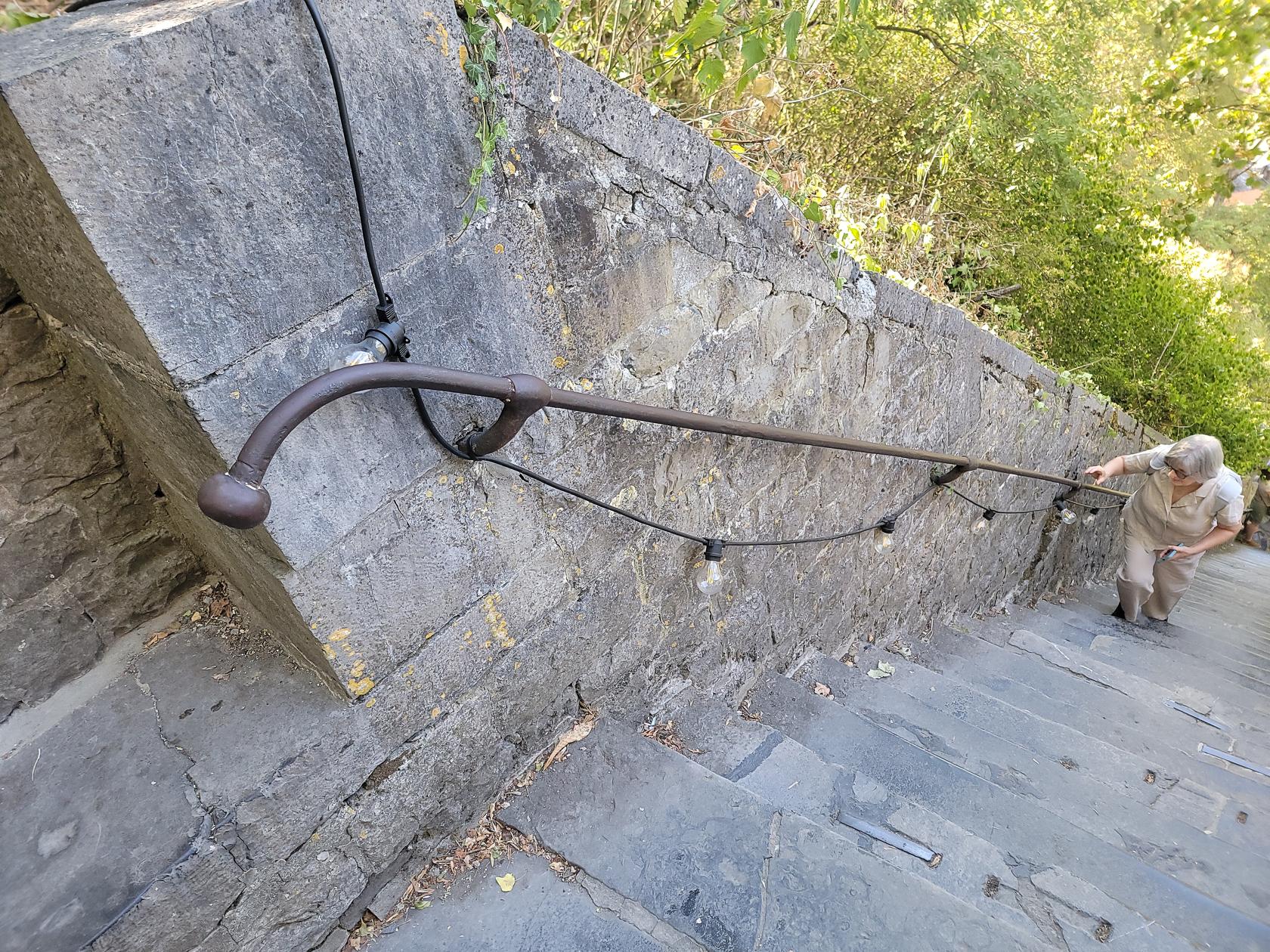
After purchasing a ticket there are 408 steps to climb. The first flight is a bit more challenging than the upper tier, since they are more uneven and spaced a bit differently, worn with age and cracked from the stress of movement underneath.
Main Entrance – Citadel of Dinant – Dinant, Belgium
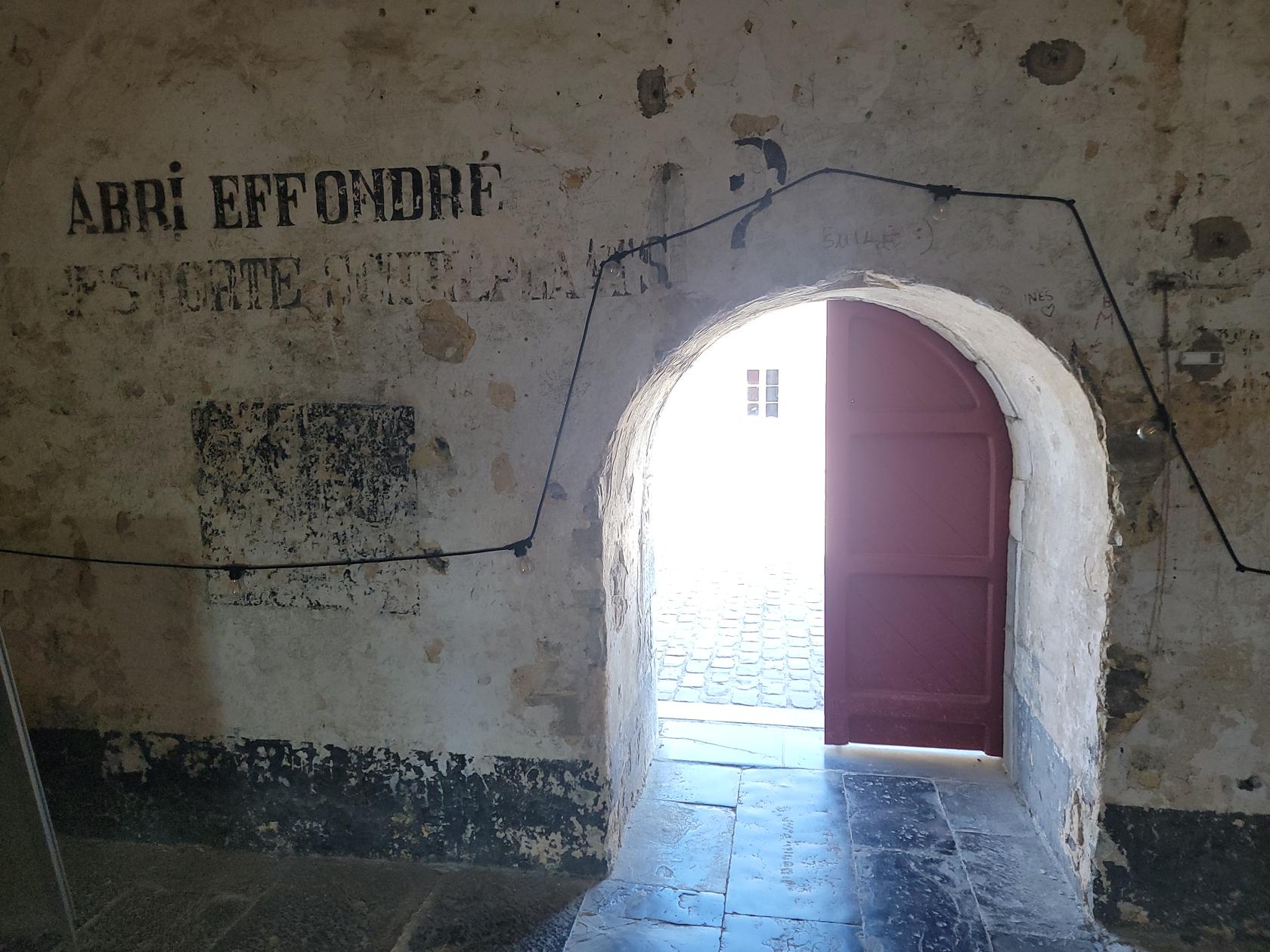
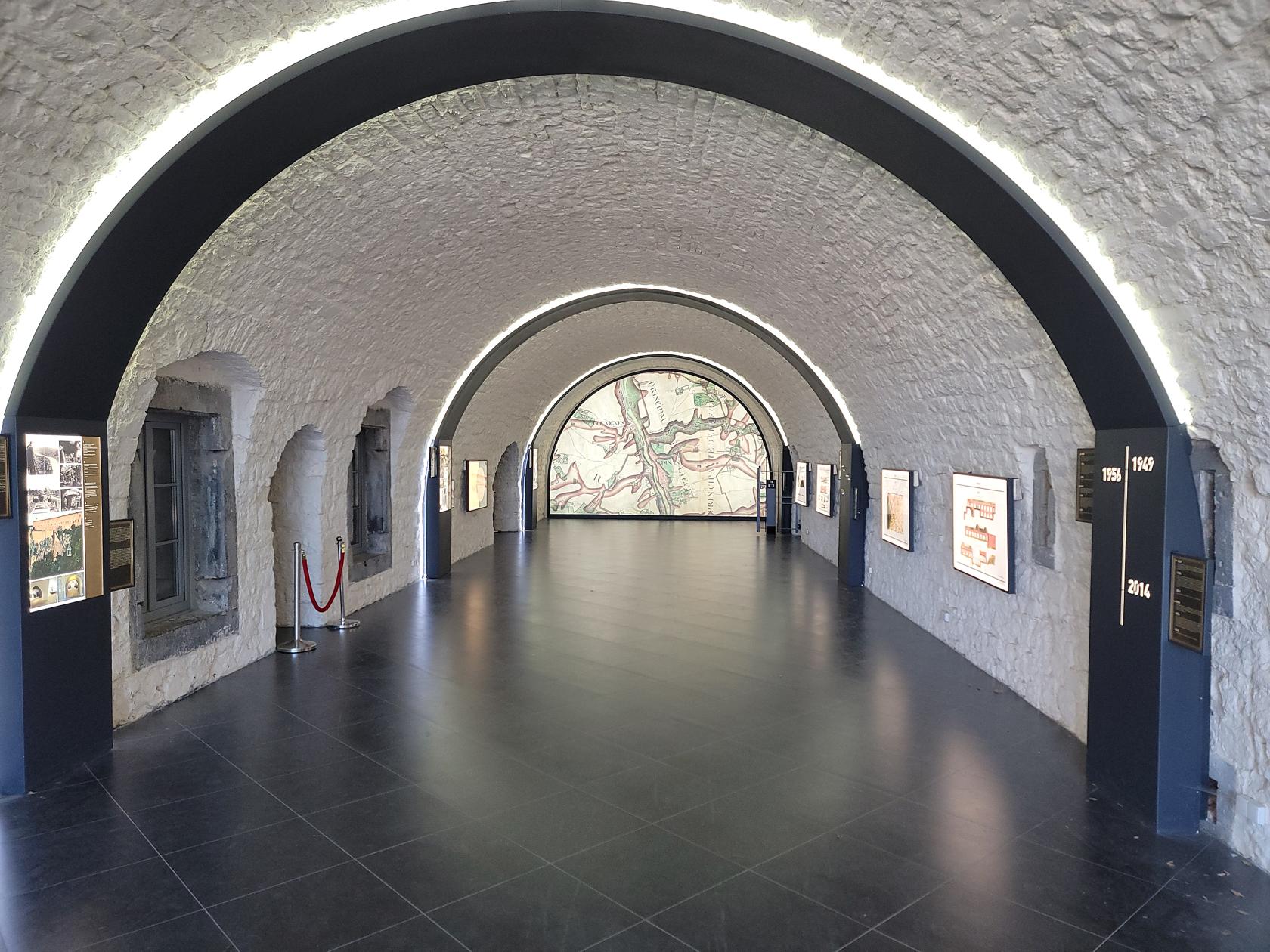
Museum – Citadel of Dinant – Dinant, Belgium
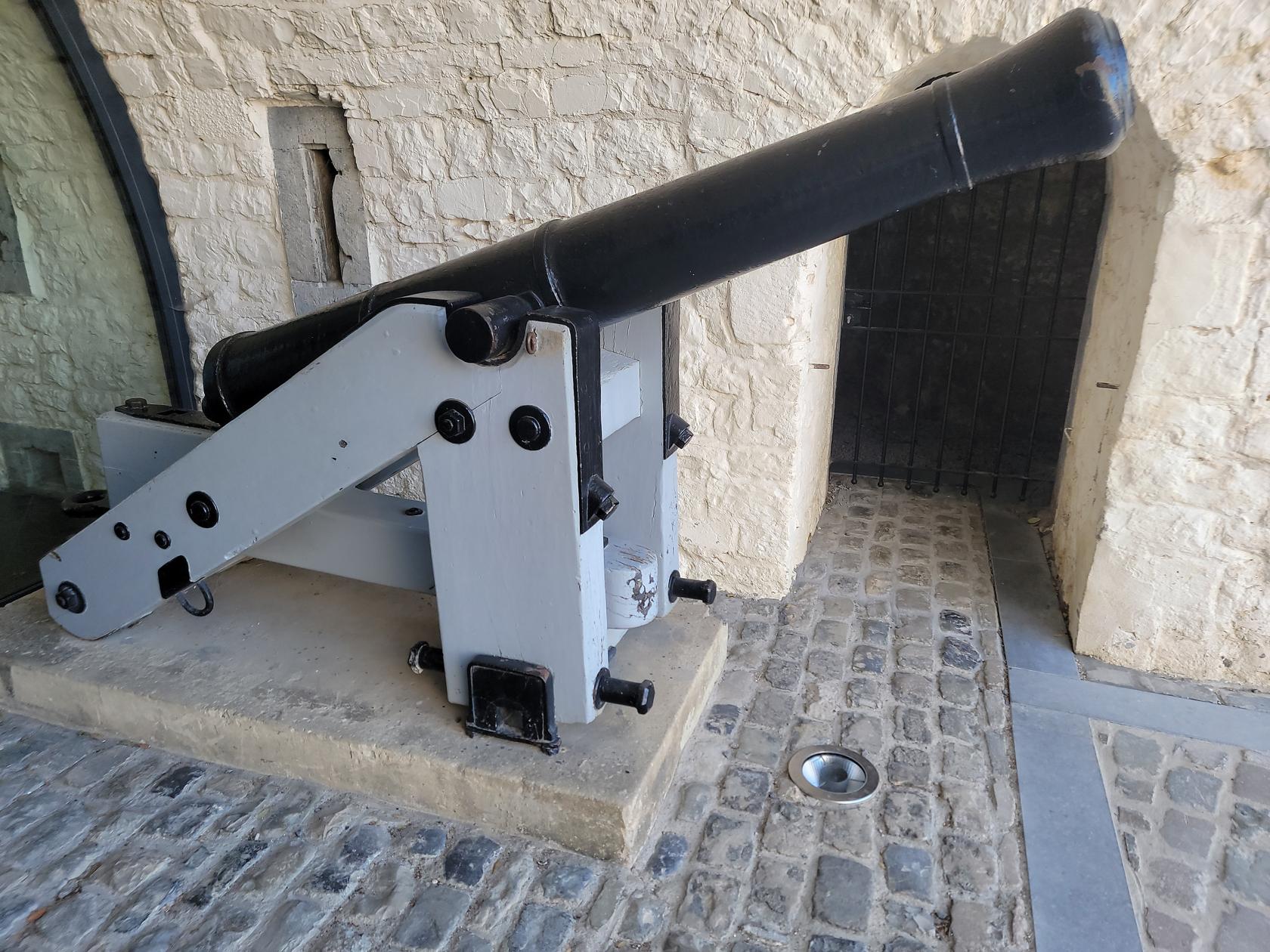
Cannon – Citadel of Dinant – Dinant, Belgium
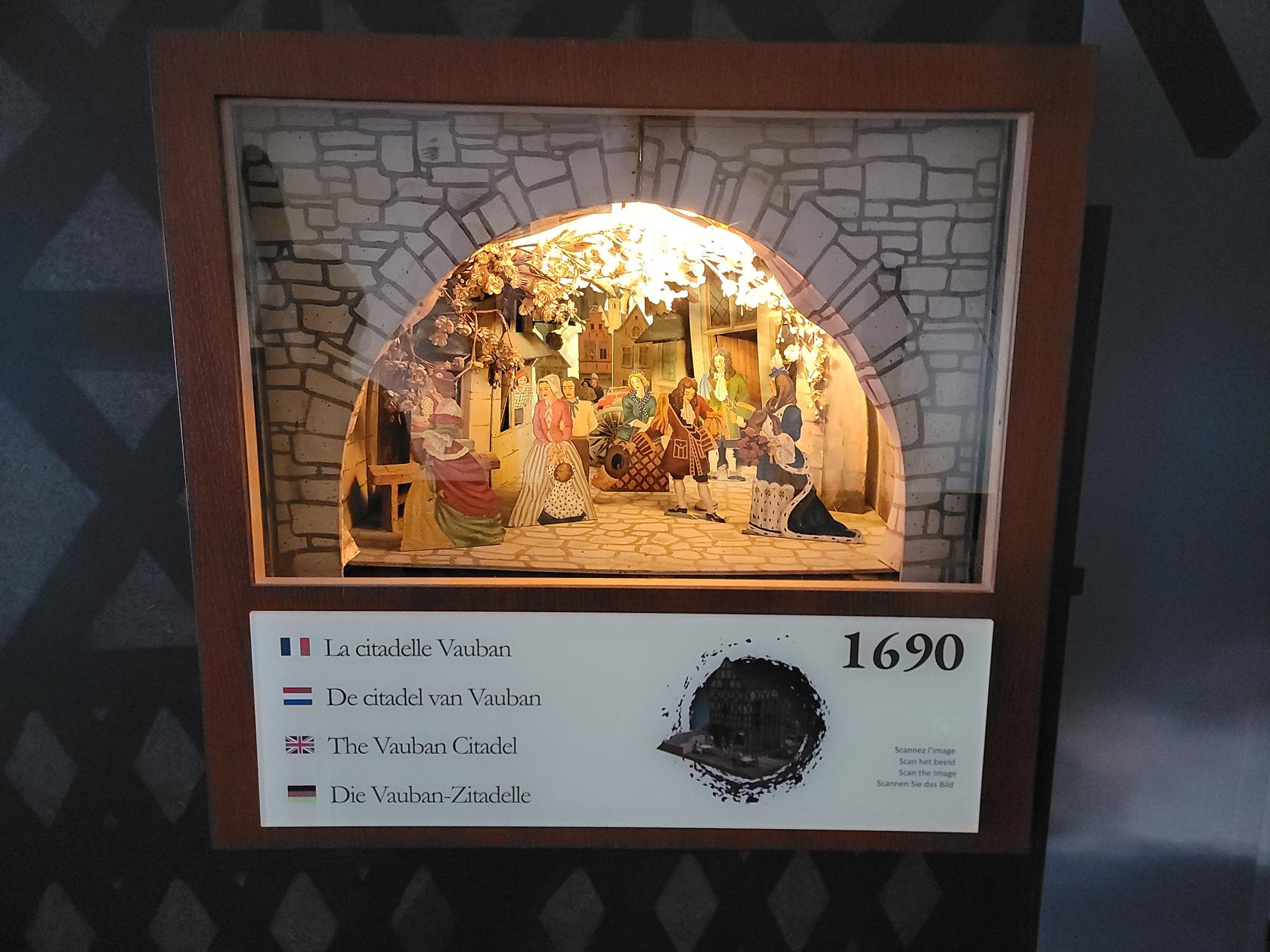
Diorama of Vauban Citadel – Citadel of Dinant – Dinant, Belgium
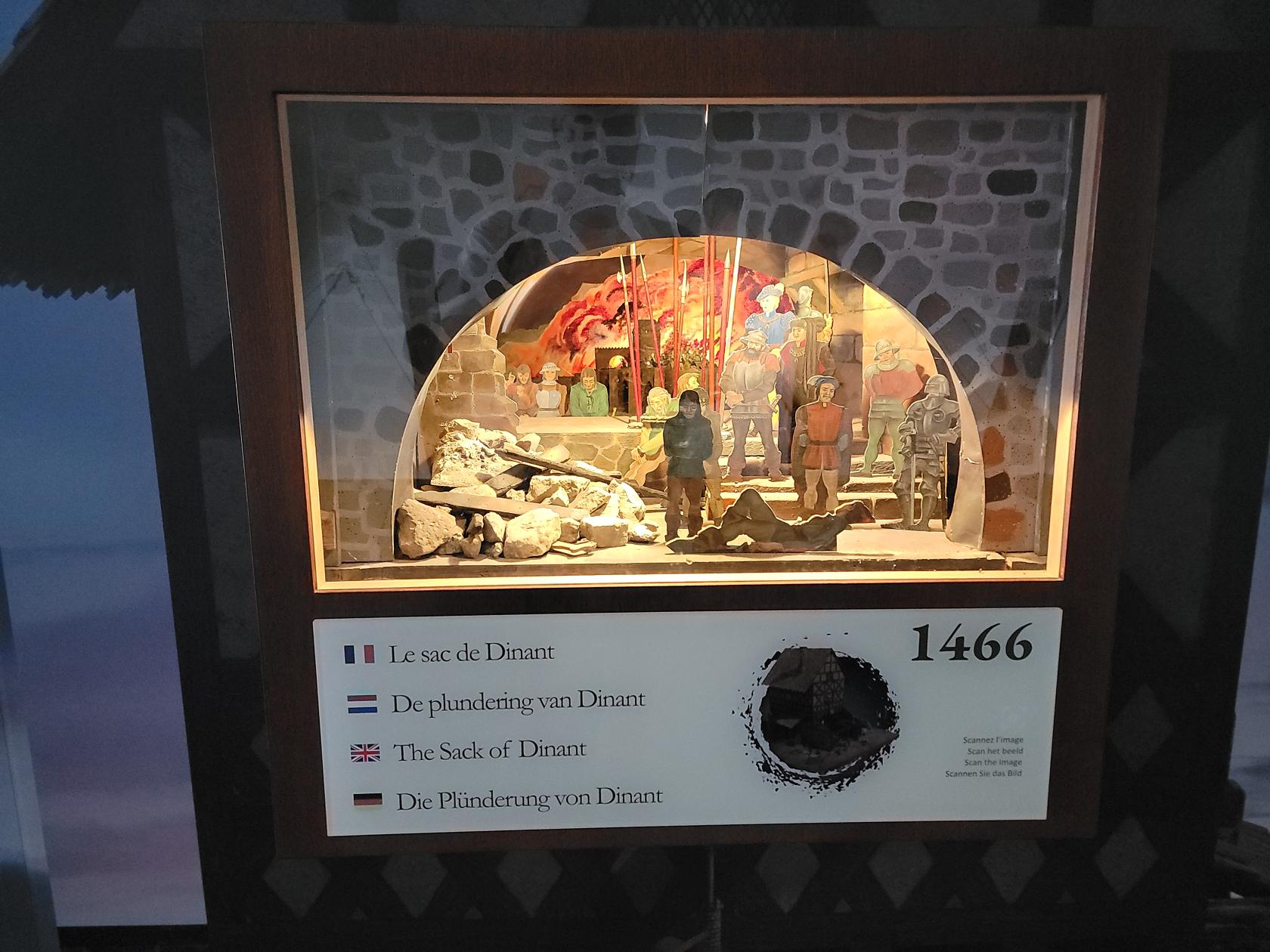
Diorama of the Sack of Dinant – Citadel of Dinant – Dinant, Belgium
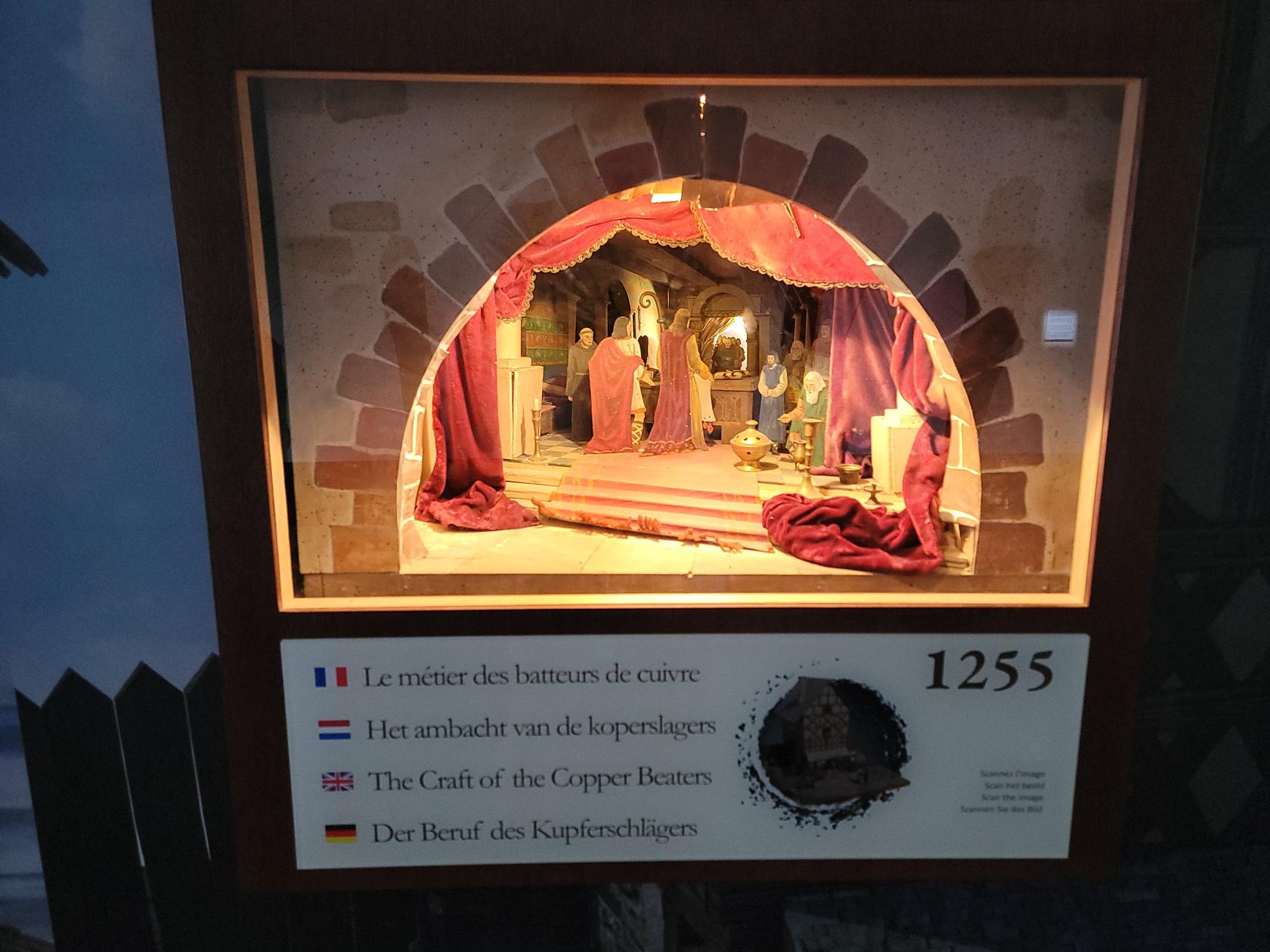
Diorama of the Copper Beaters Craft – Citadel of Dinant – Dinant, Belgium
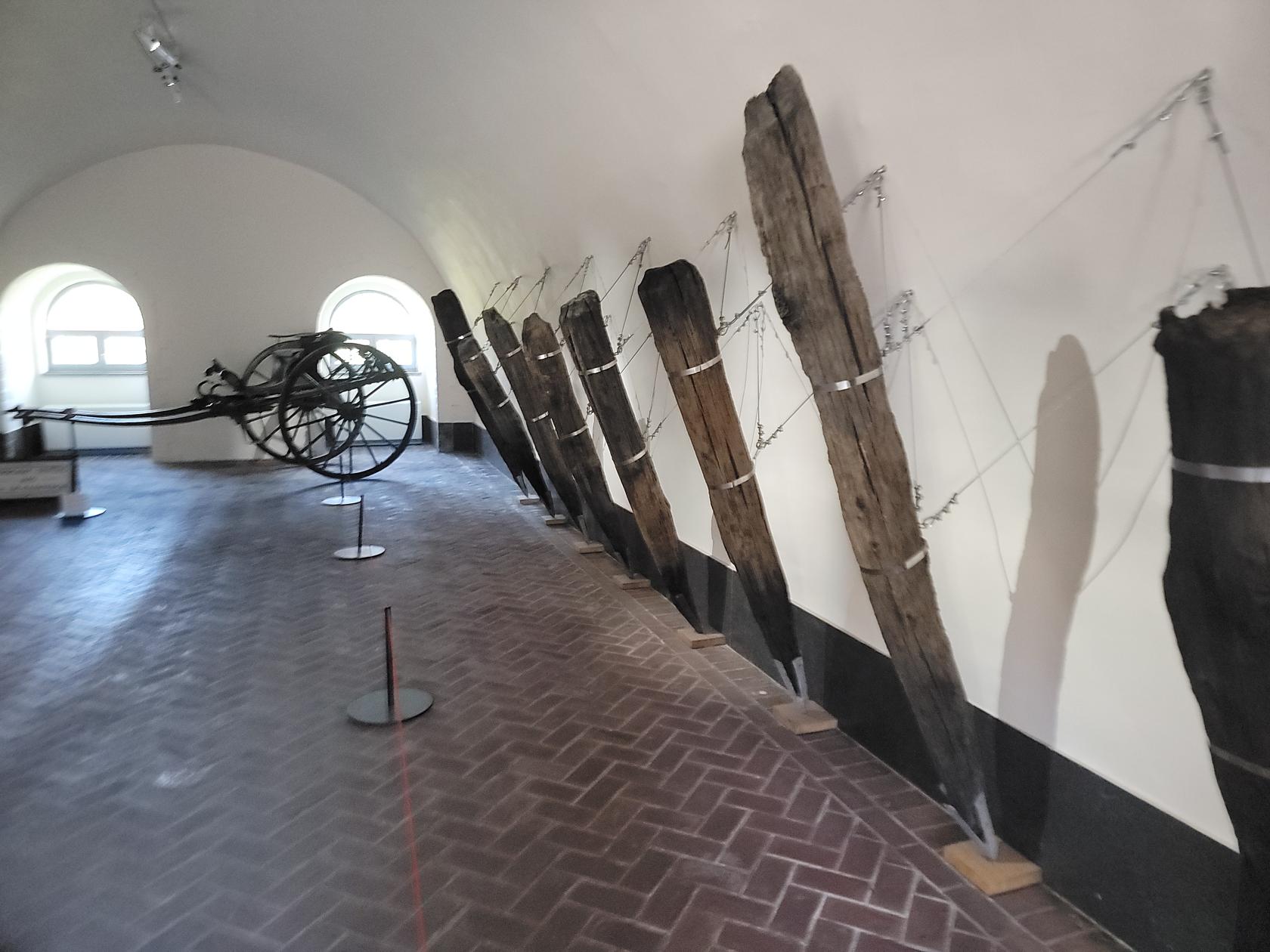
Museum – Citadel of Dinant – Dinant, Belgium
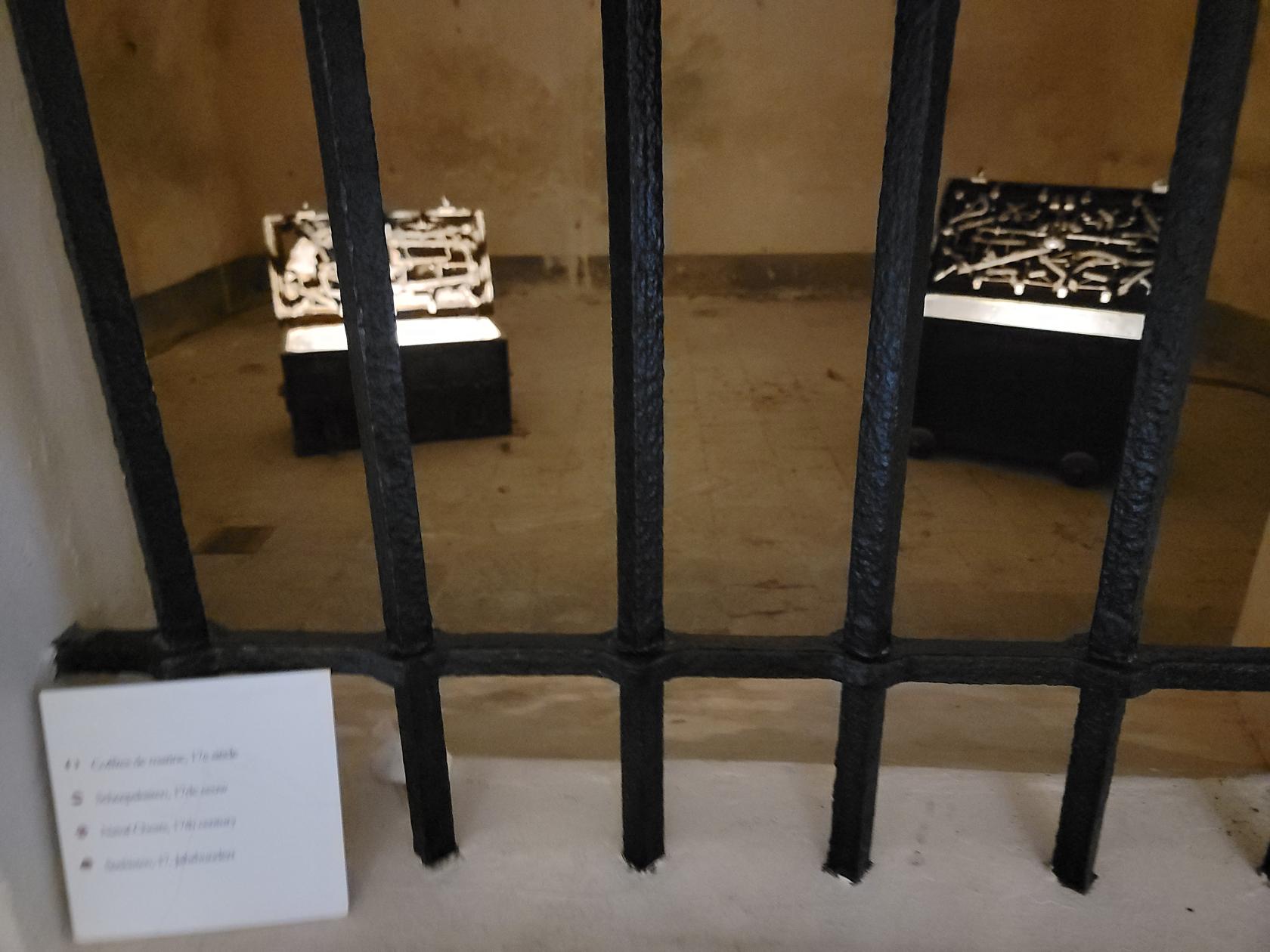
Old Iron Boxes – Museum – Citadel of Dinant – Dinant, Belgium
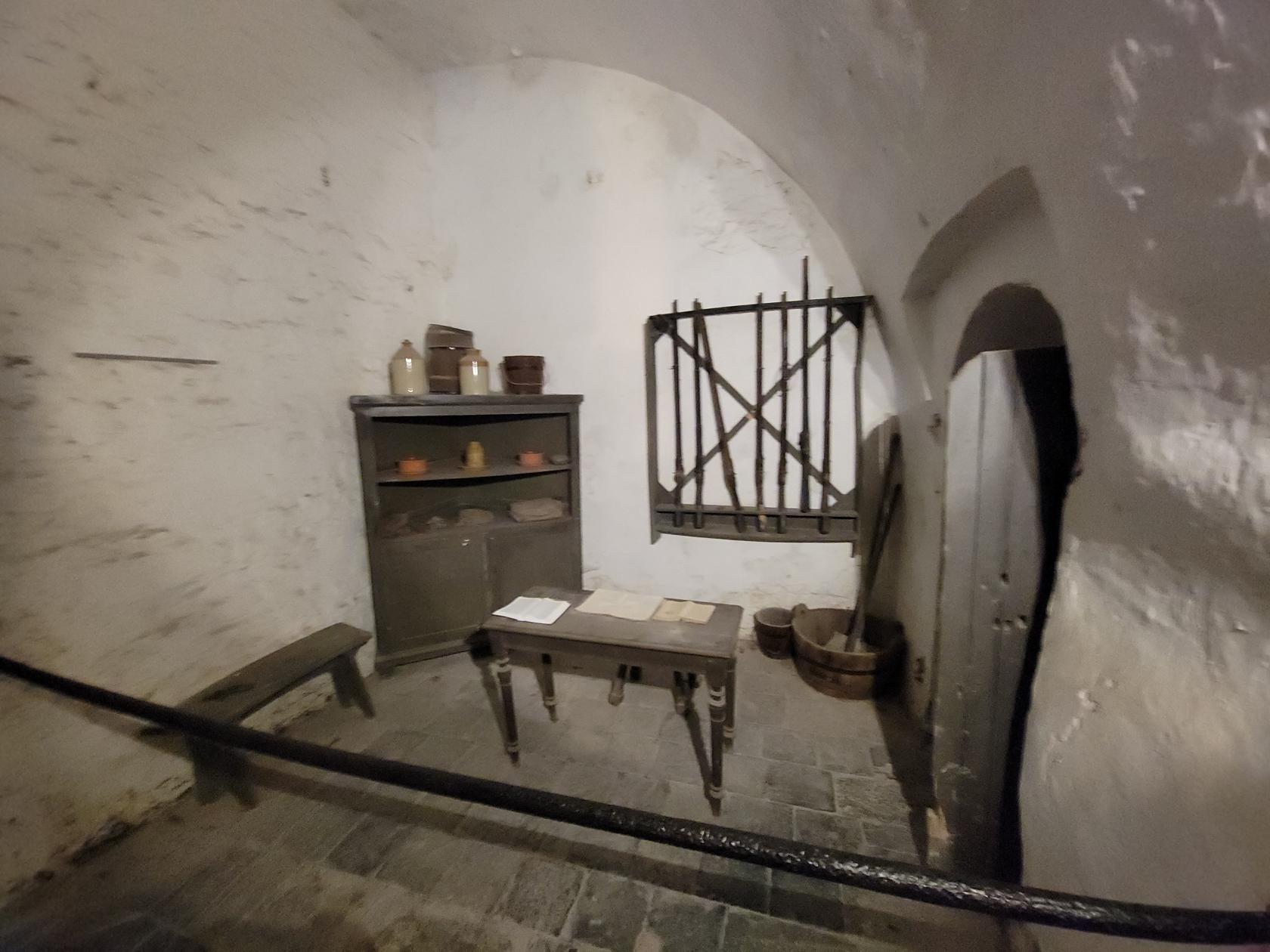
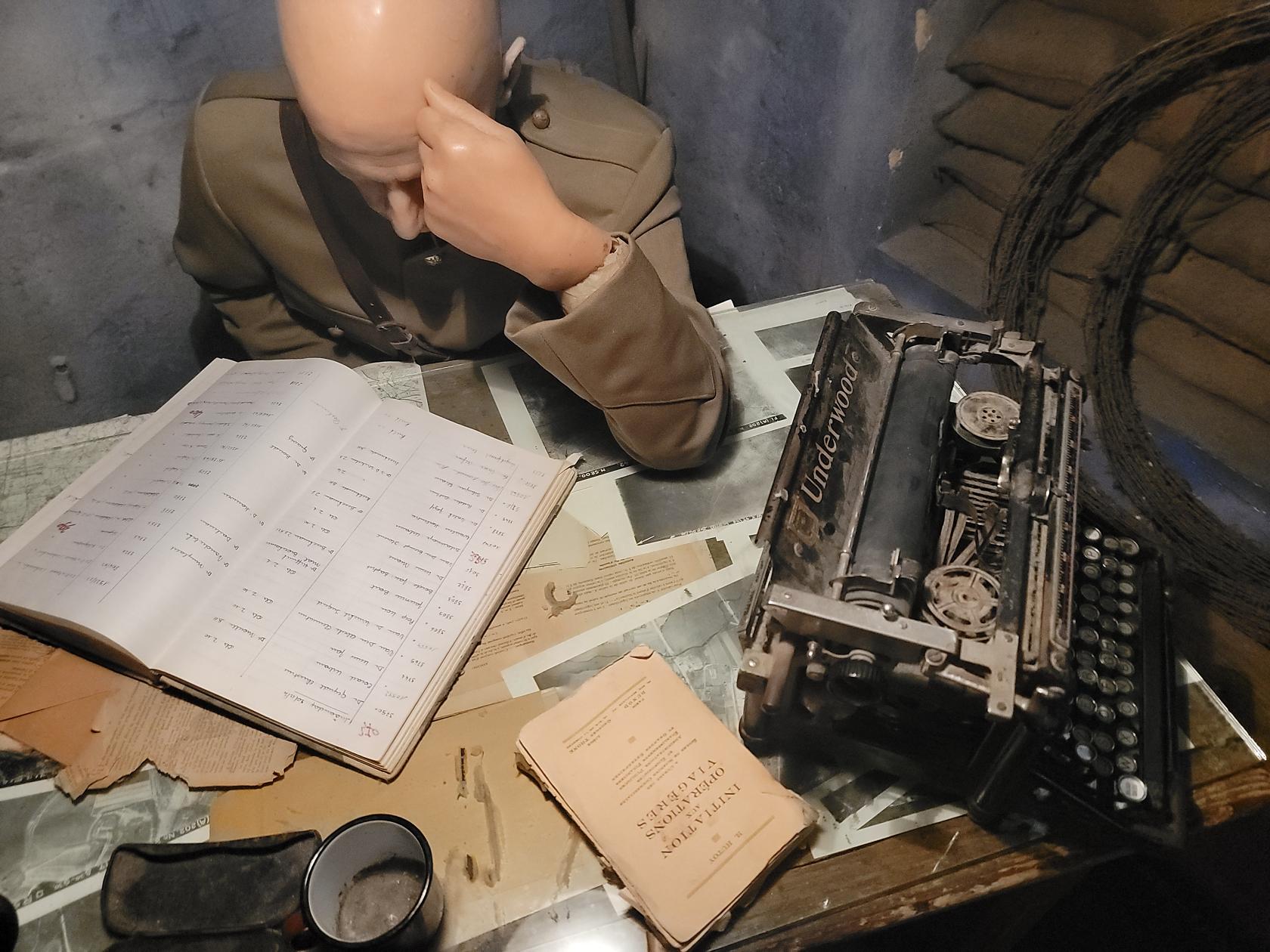
Typical Office – Museum – Citadel of Dinant – Dinant, Belgium
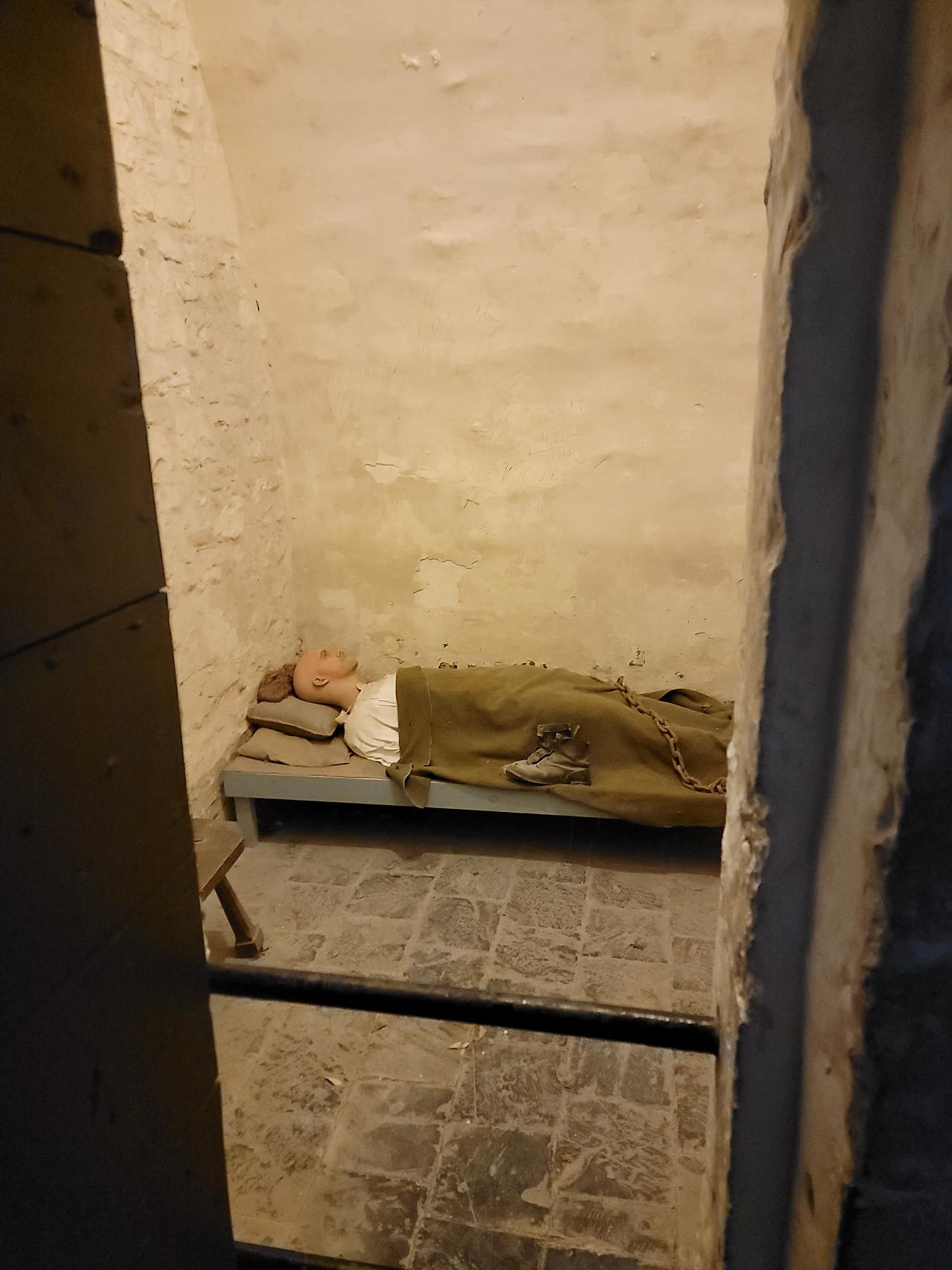
Prison Cell – Museum – Citadel of Dinant – Dinant, Belgium
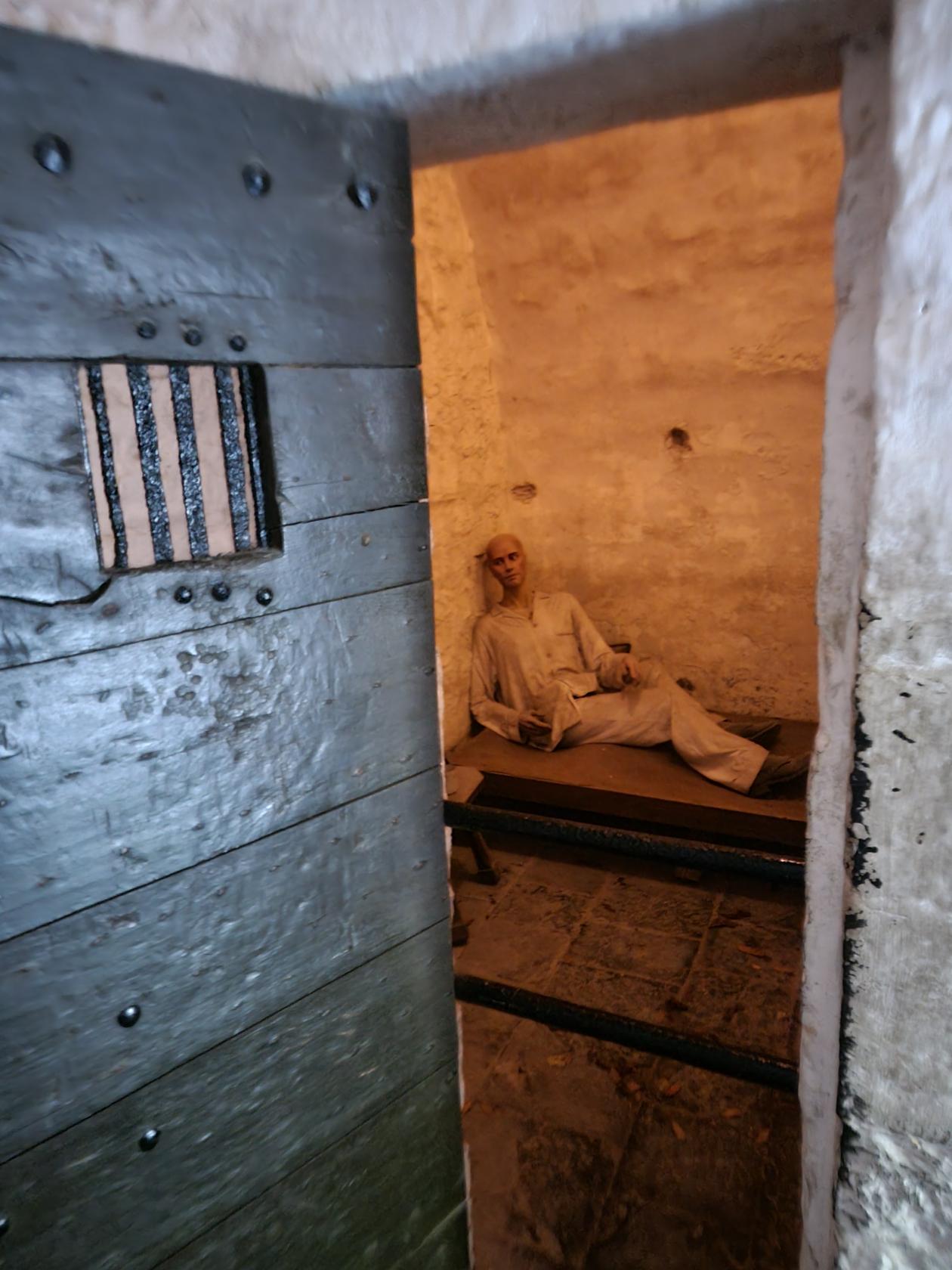
Another Cell – Museum – Citadel of Dinant – Dinant, Belgium
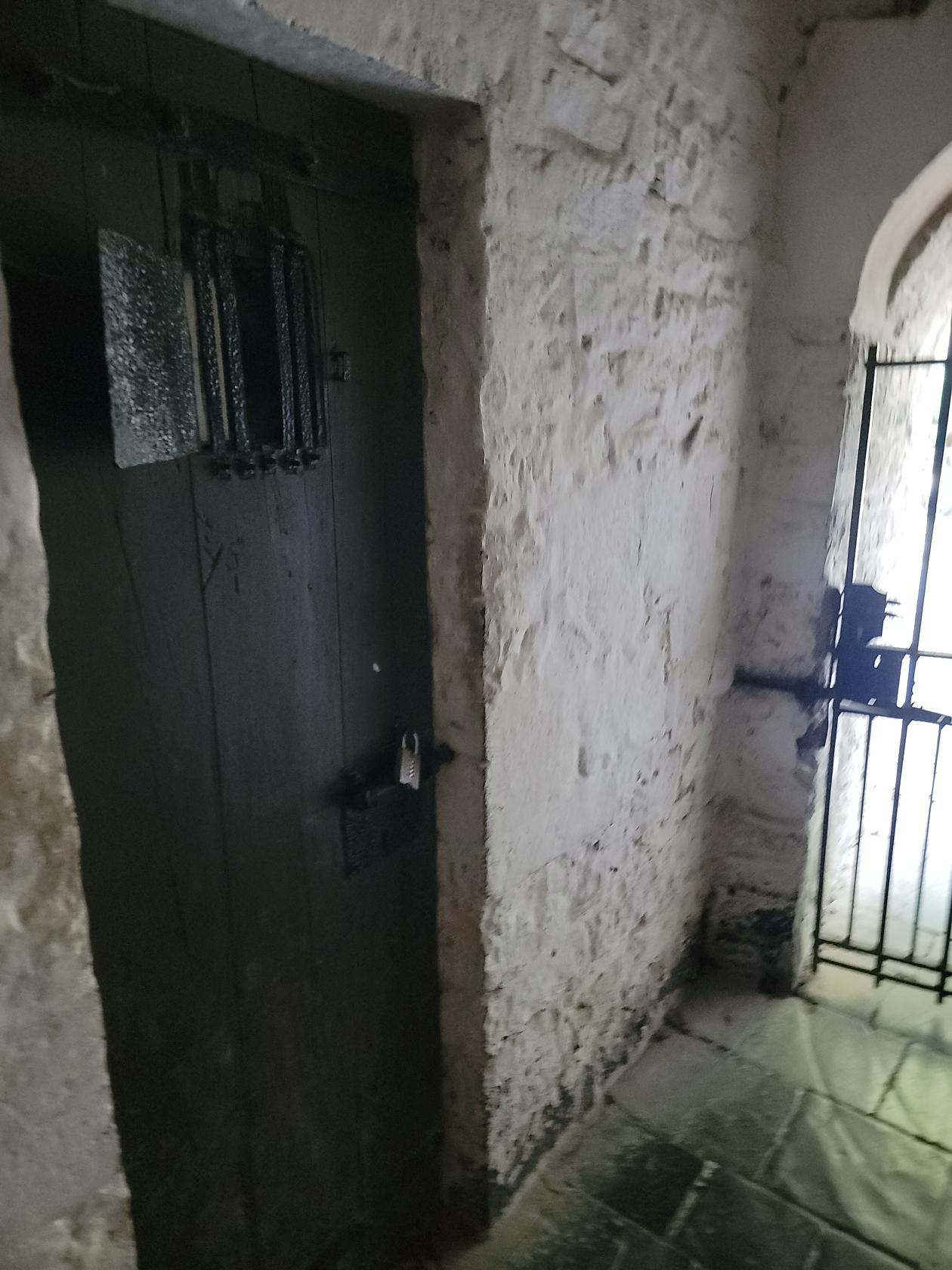
Prison Block – Museum – Citadel of Dinant – Dinant, Belgium
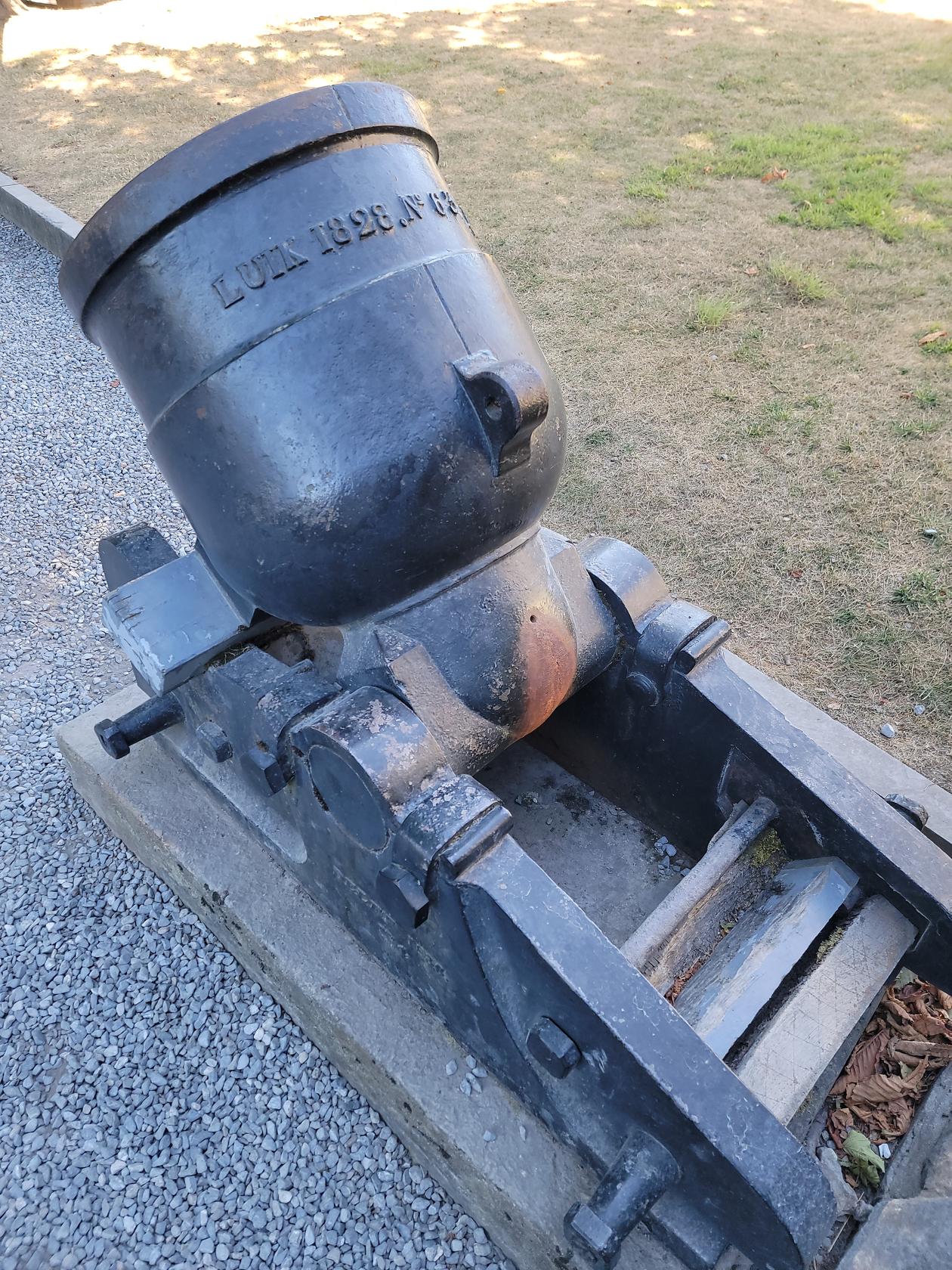
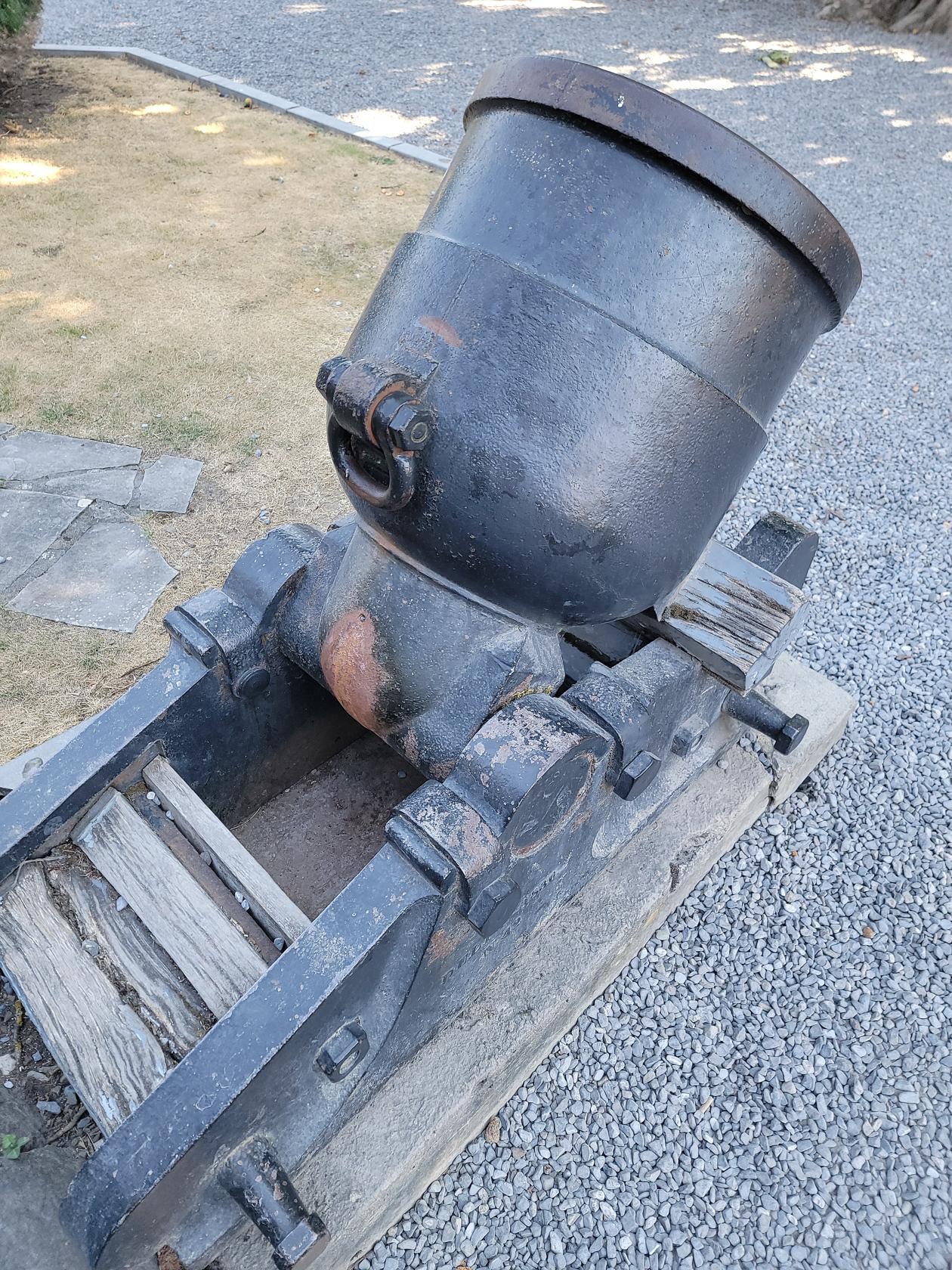
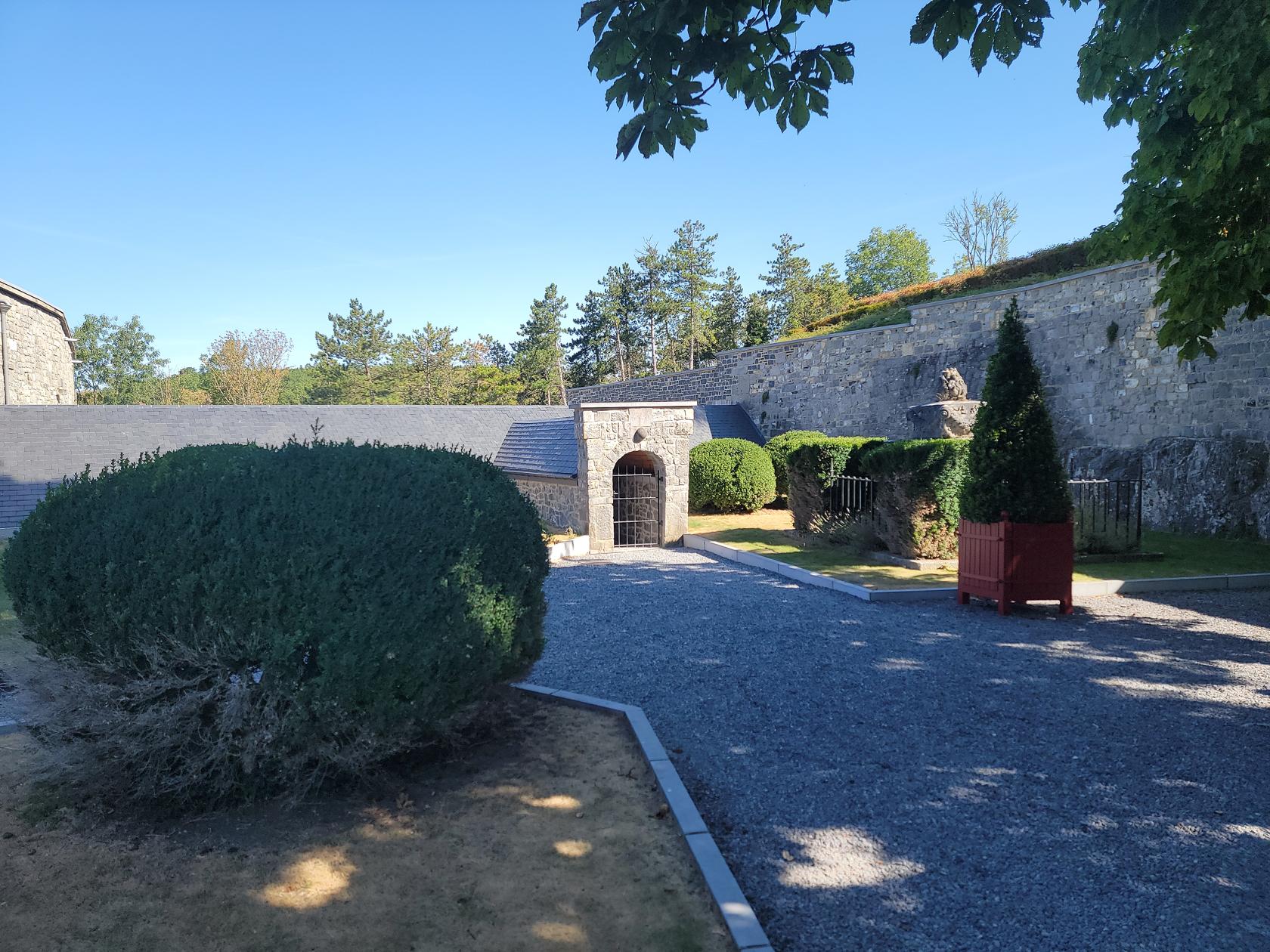
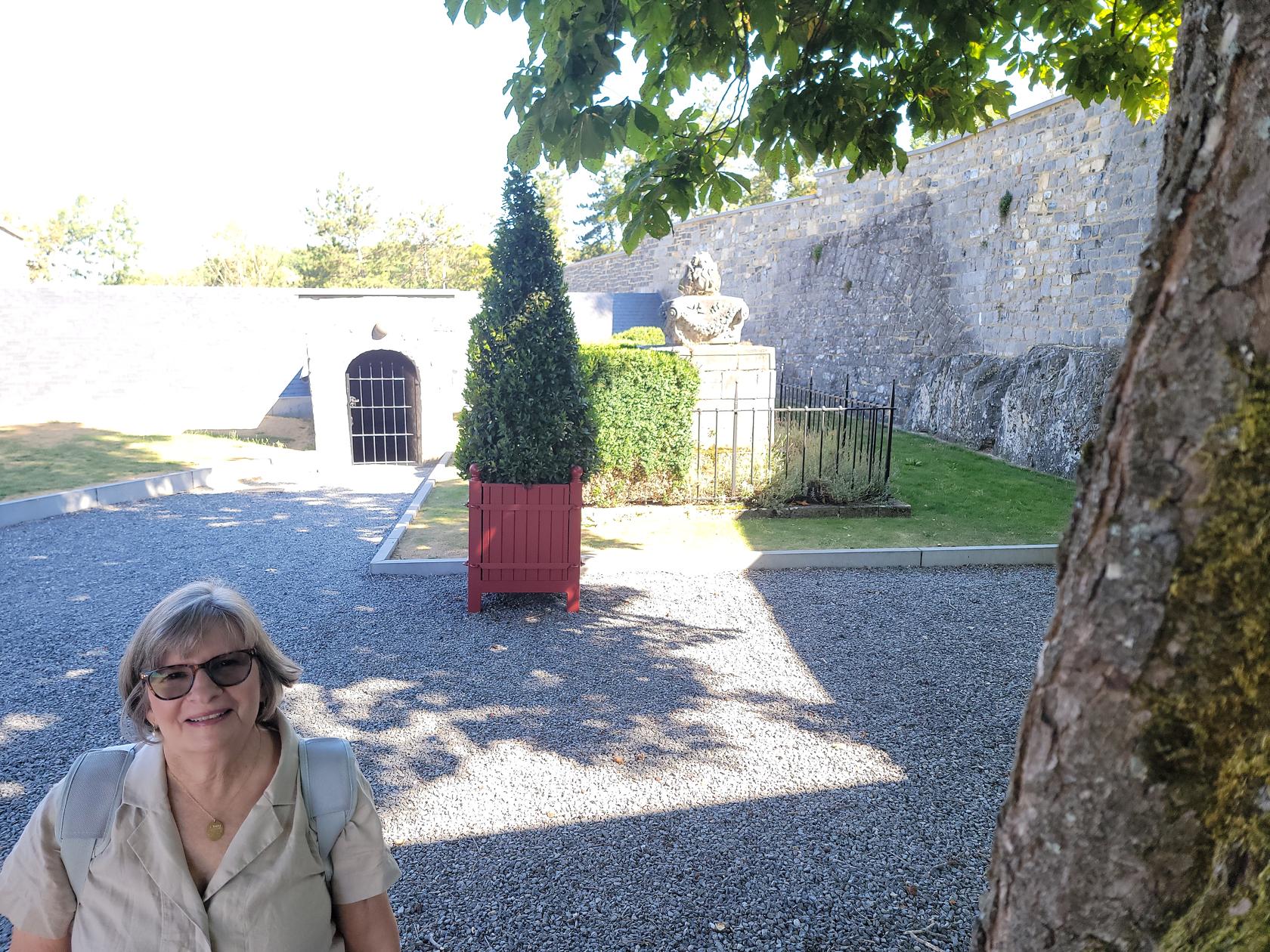
Once the top is reached, there is a main entrance to pass through that opens up into the central courtyard. Off of this courtyard are a cafe, public toilets, open-air museum display and the entrance to the museum proper.
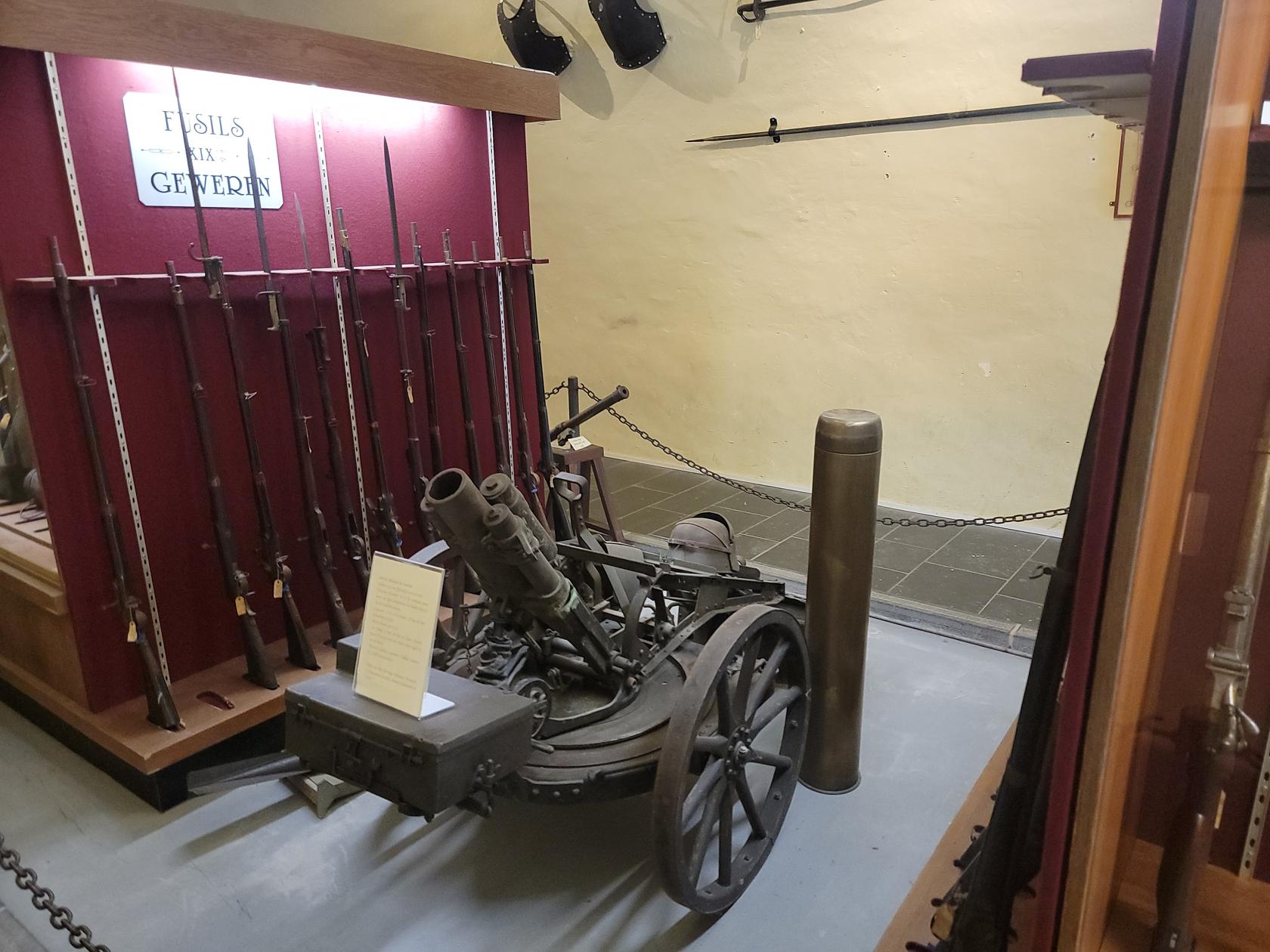
Mortar – Museum – Citadel of Dinant – Dinant, Belgium
Mortar – Museum – Citadel of Dinant – Dinant, Belgium
Garden – Museum – Citadel of Dinant – Dinant, Belgium
Patti in Garden – Museum – Citadel of Dinant – Dinant, Belgium
Fortress Hall – Museum – Citadel of Dinant – Dinant, Belgium
Charles de Gaulle Bridge – Museum – Citadel of Dinant – Dinant, Belgium
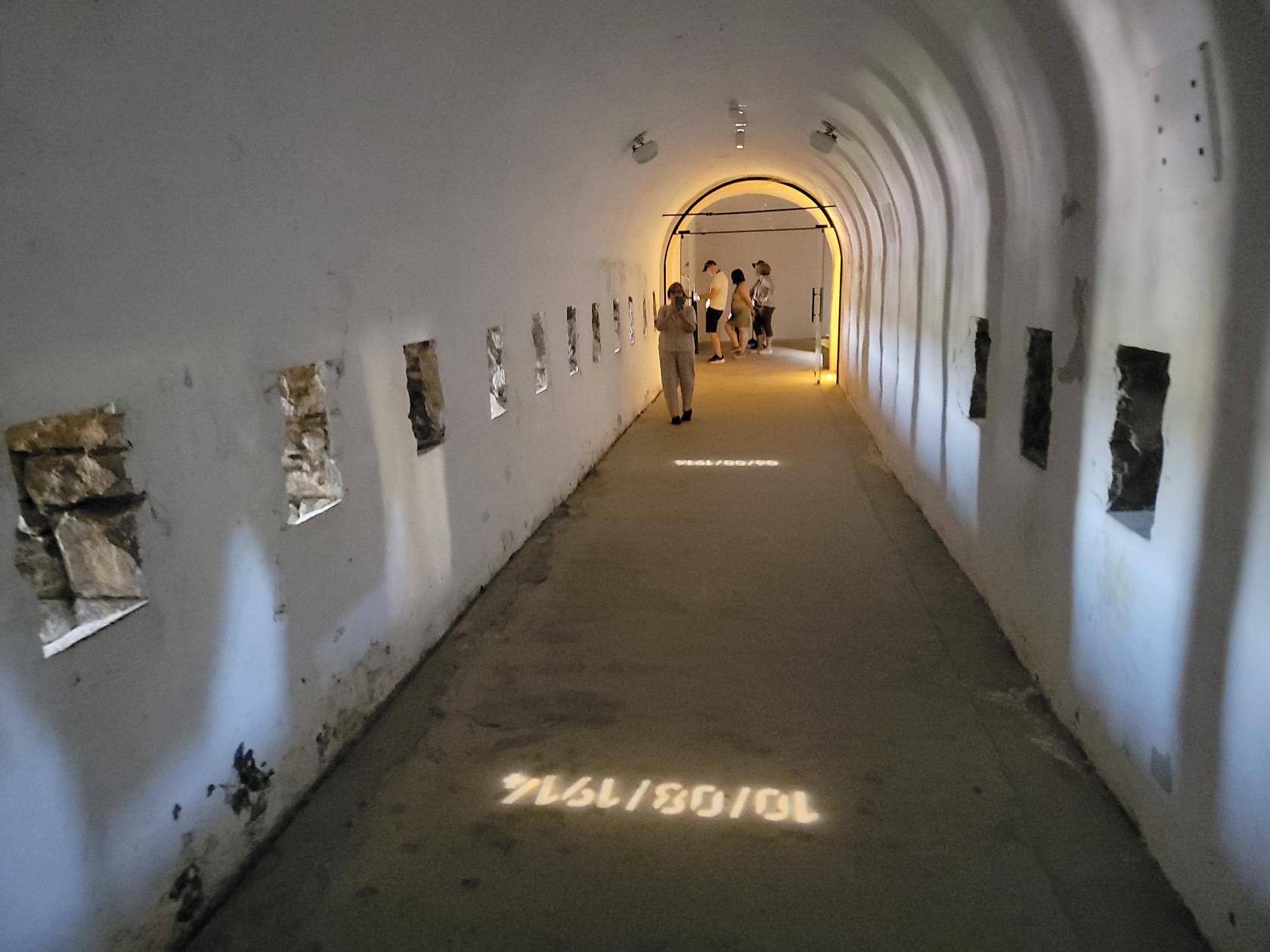
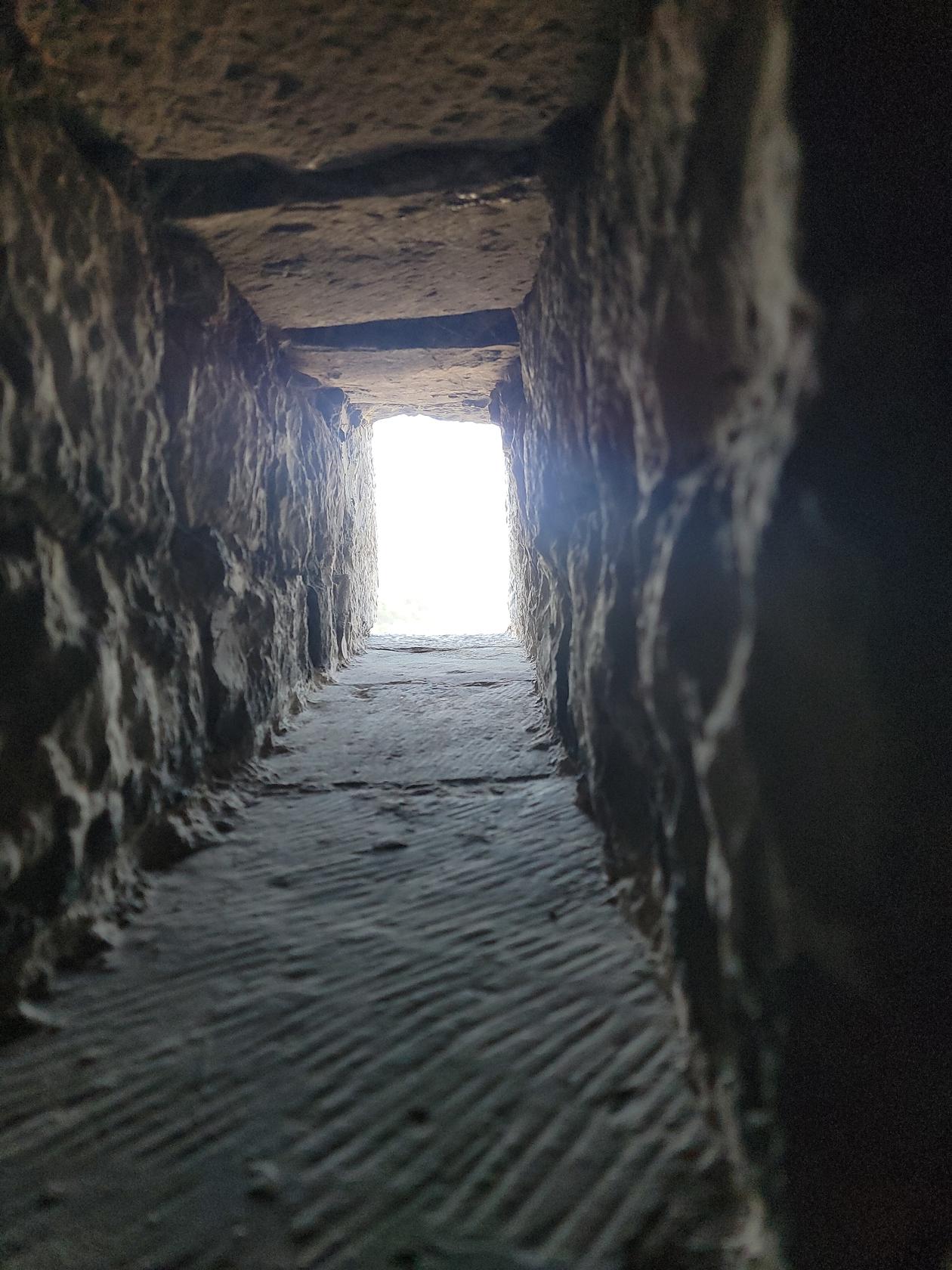
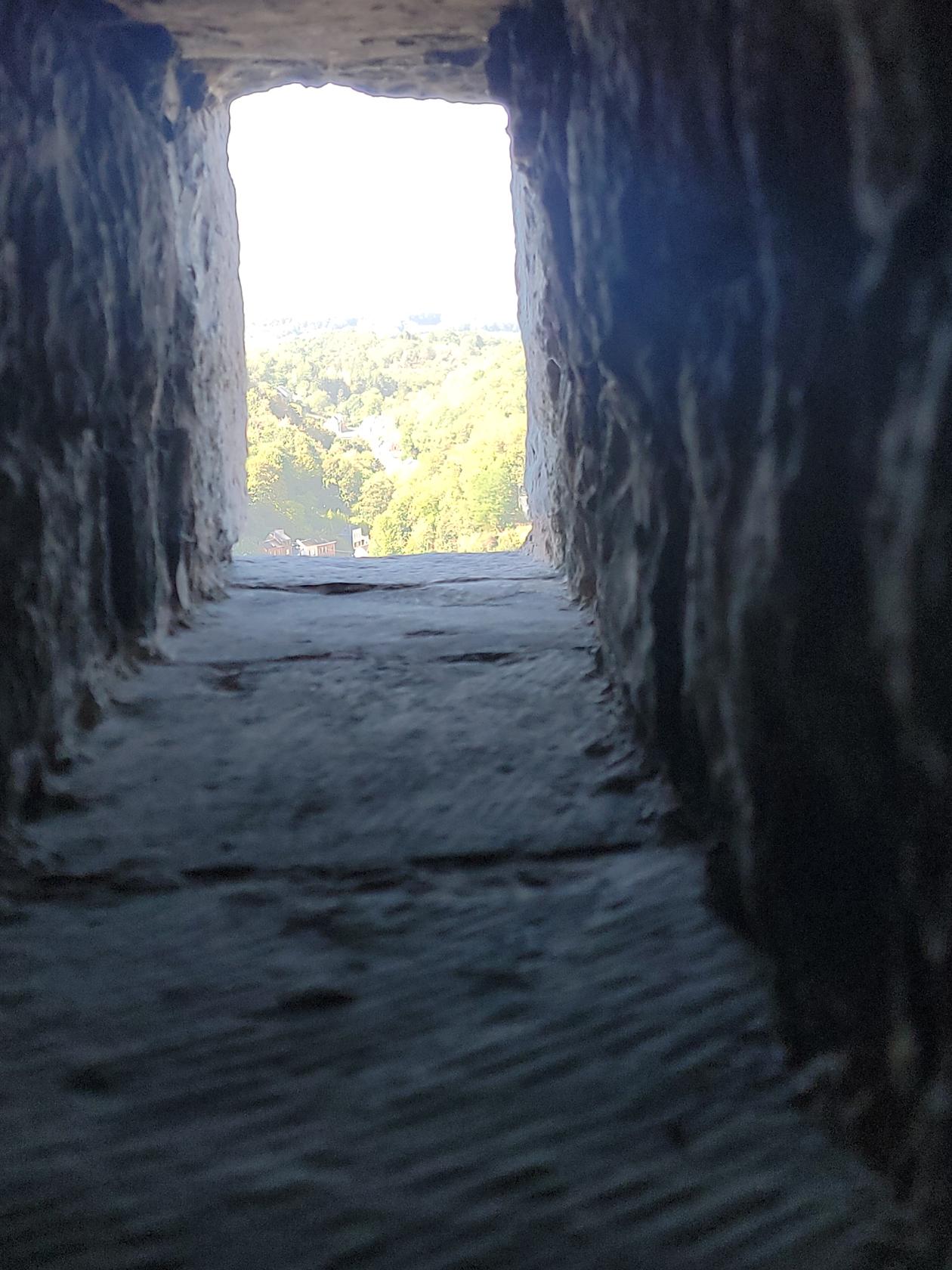
Typical Shooting Hole – Museum – Citadel of Dinant – Dinant, Belgium
Typical Shooting Hole – Museum – Citadel of Dinant – Dinant, Belgium
German Side – Museum – Citadel of Dinant – Dinant, Belgium
Belgium Side – Museum – Citadel of Dinant – Dinant, Belgium
Ramp to Outside Exhibits – Museum – Citadel of Dinant – Dinant, Belgium
Citadel Museum
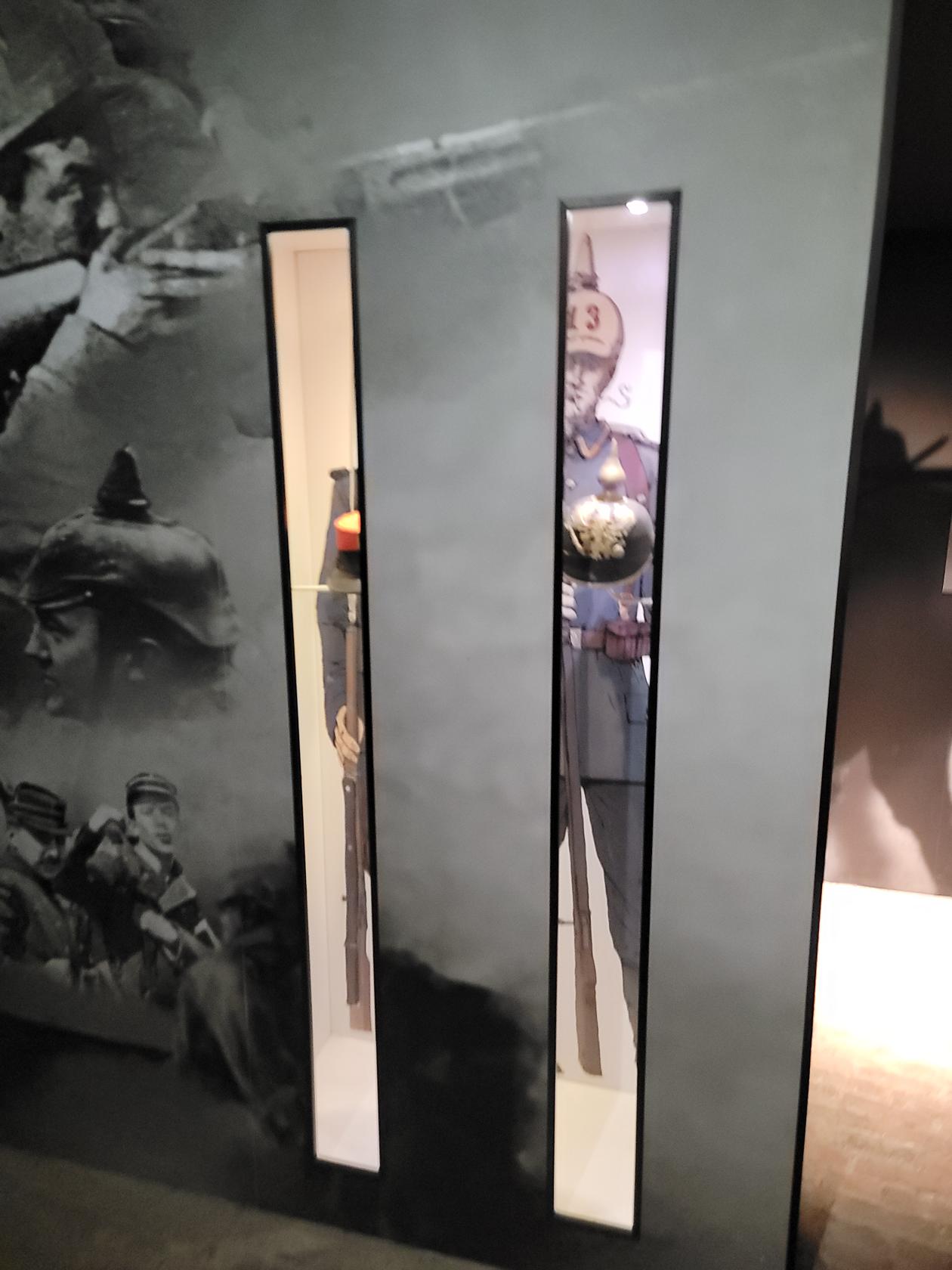
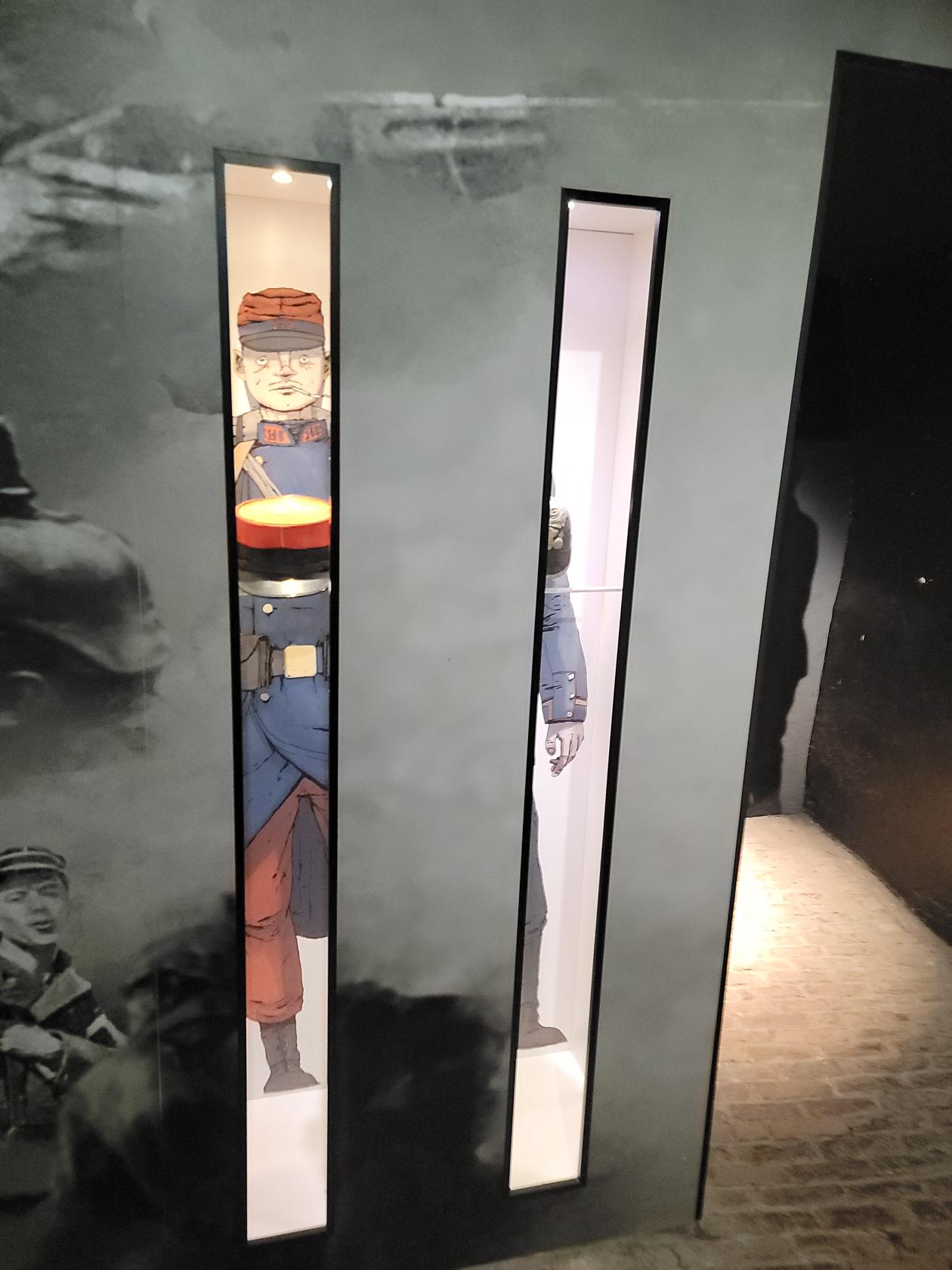
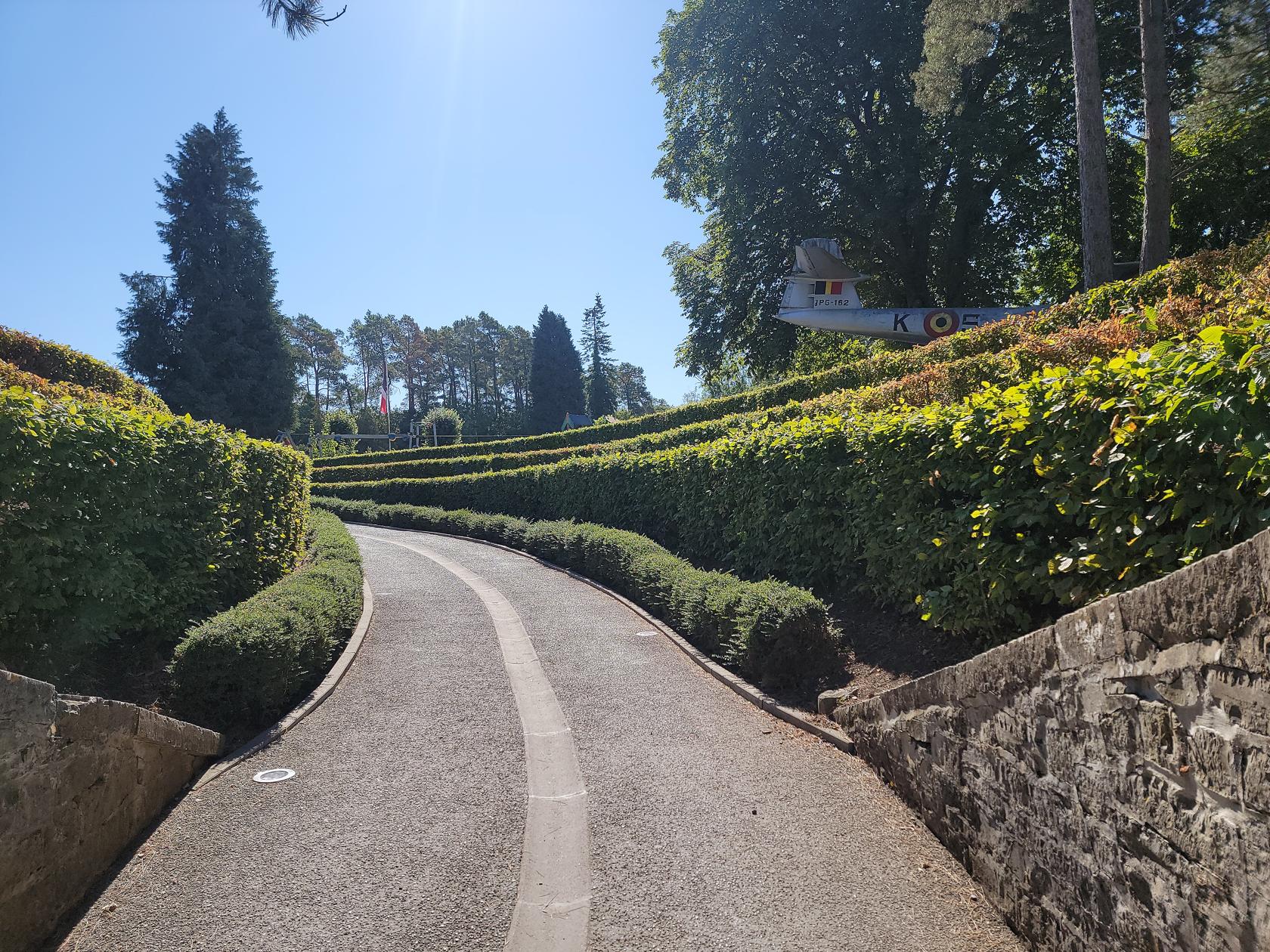
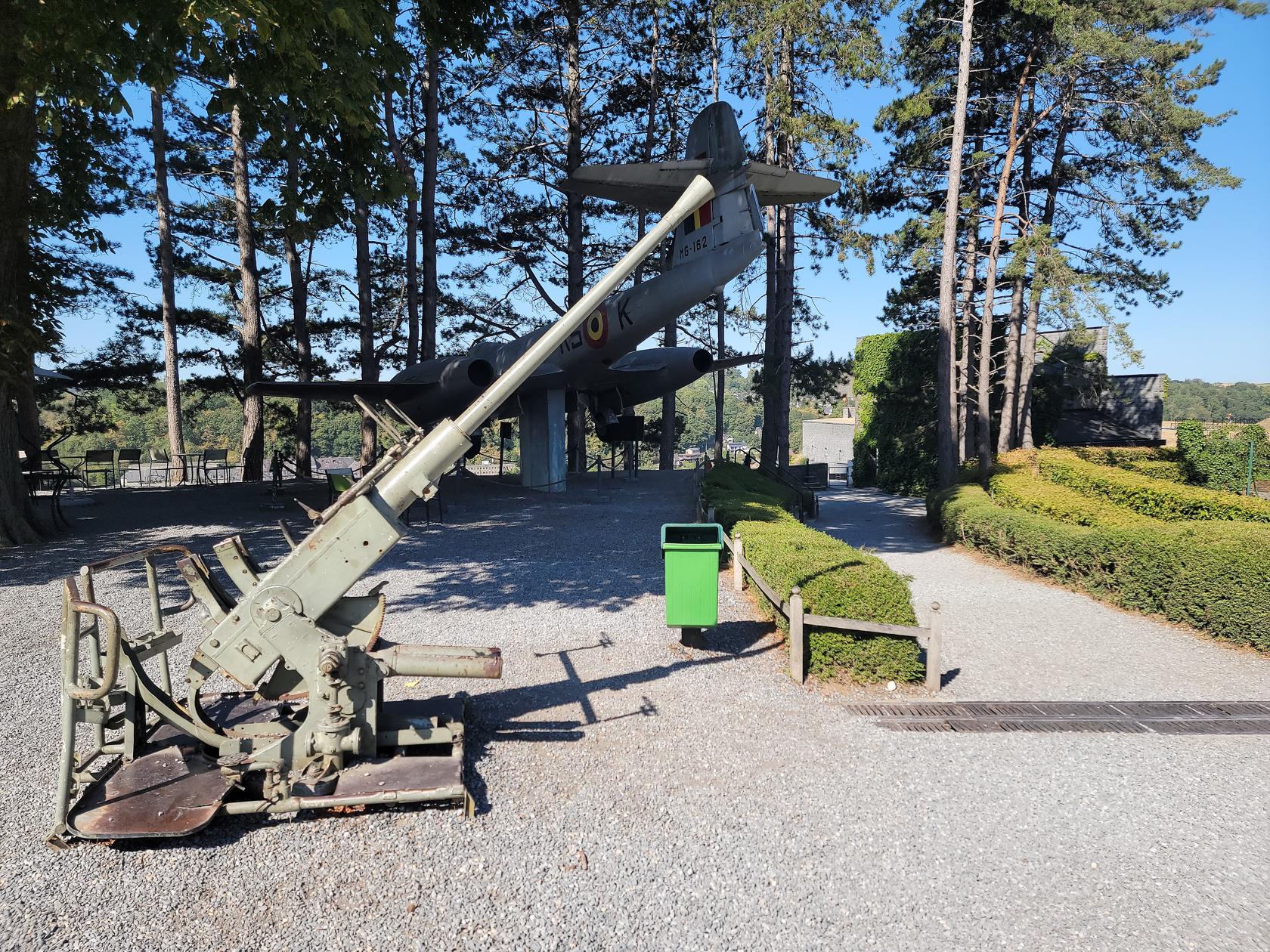
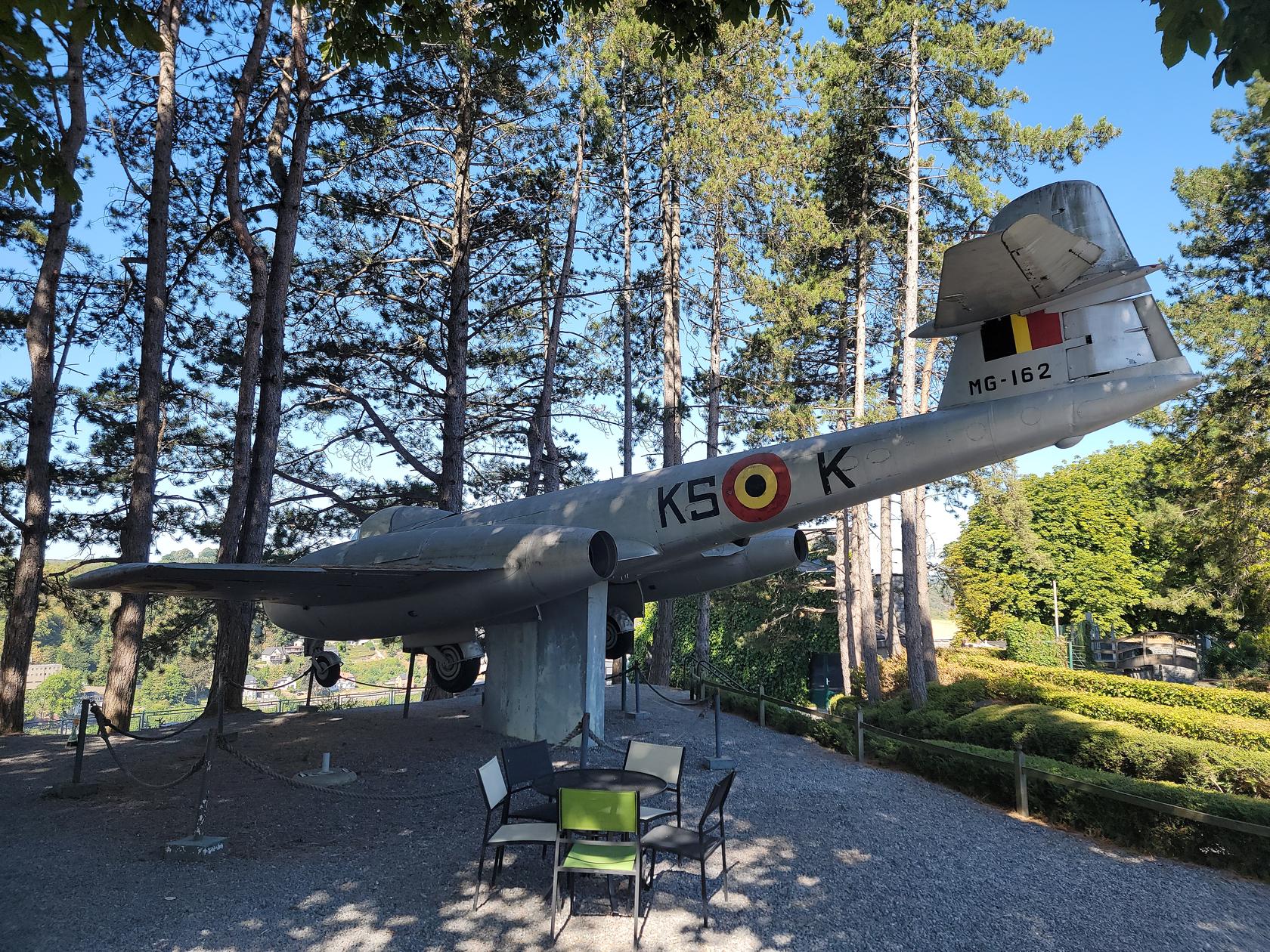
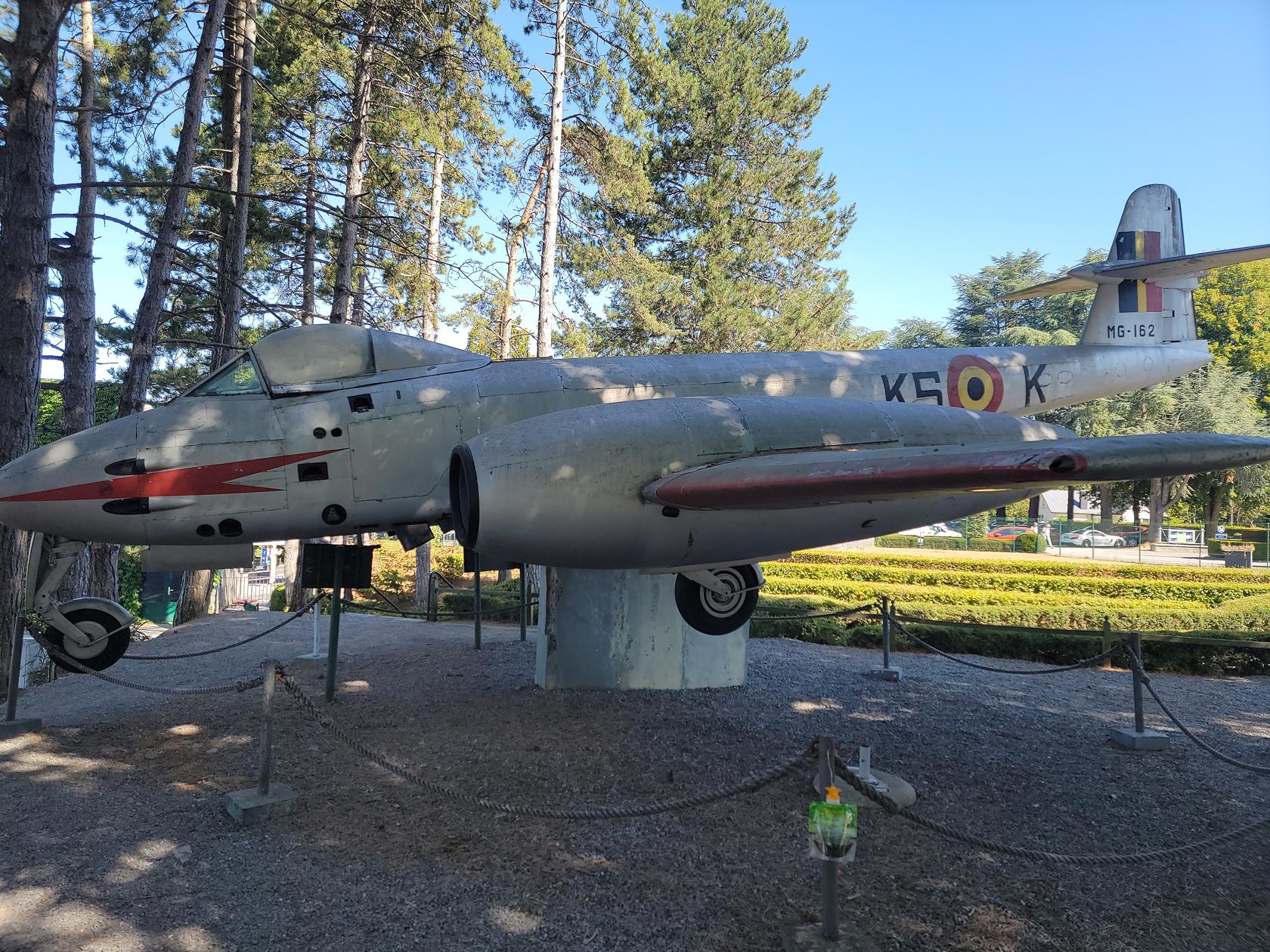
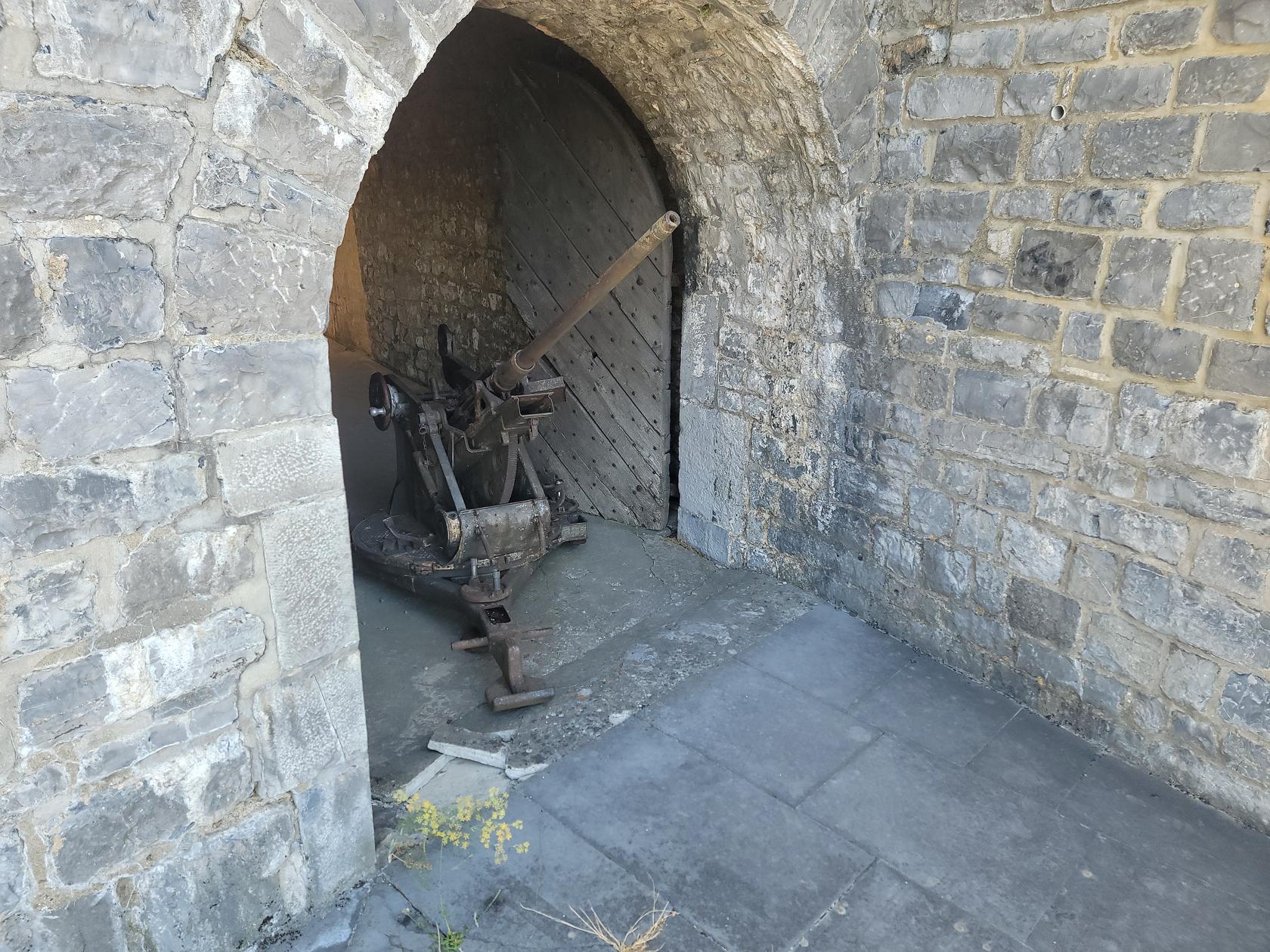
The museum of the citadel has a collection of artifacts and other exhibits related to the history of the structure. Some of them are interactive and intended for young audiences. Other parts one can walk through to reach the outside portion of the museum and other entrance to the museum that sits atop the outcropping. There is a great example of a large anti-aircraft gun and old jet airplane, as well as to beautiful view of the town below.
40mm Anti-Aircraft Gun – Museum – Citadel of Dinant – Dinant, Belgium
Gloster Meteor Mark 8 – Museum – Citadel of Dinant – Dinant, Belgium
Gloster Meteor Mark 8 – Museum – Citadel of Dinant – Dinant, Belgium
Fortress Wall – Citadel of Dinant – Dinant, Belgium
Meuse River – Citadel of Dinant – Dinant, Belgium
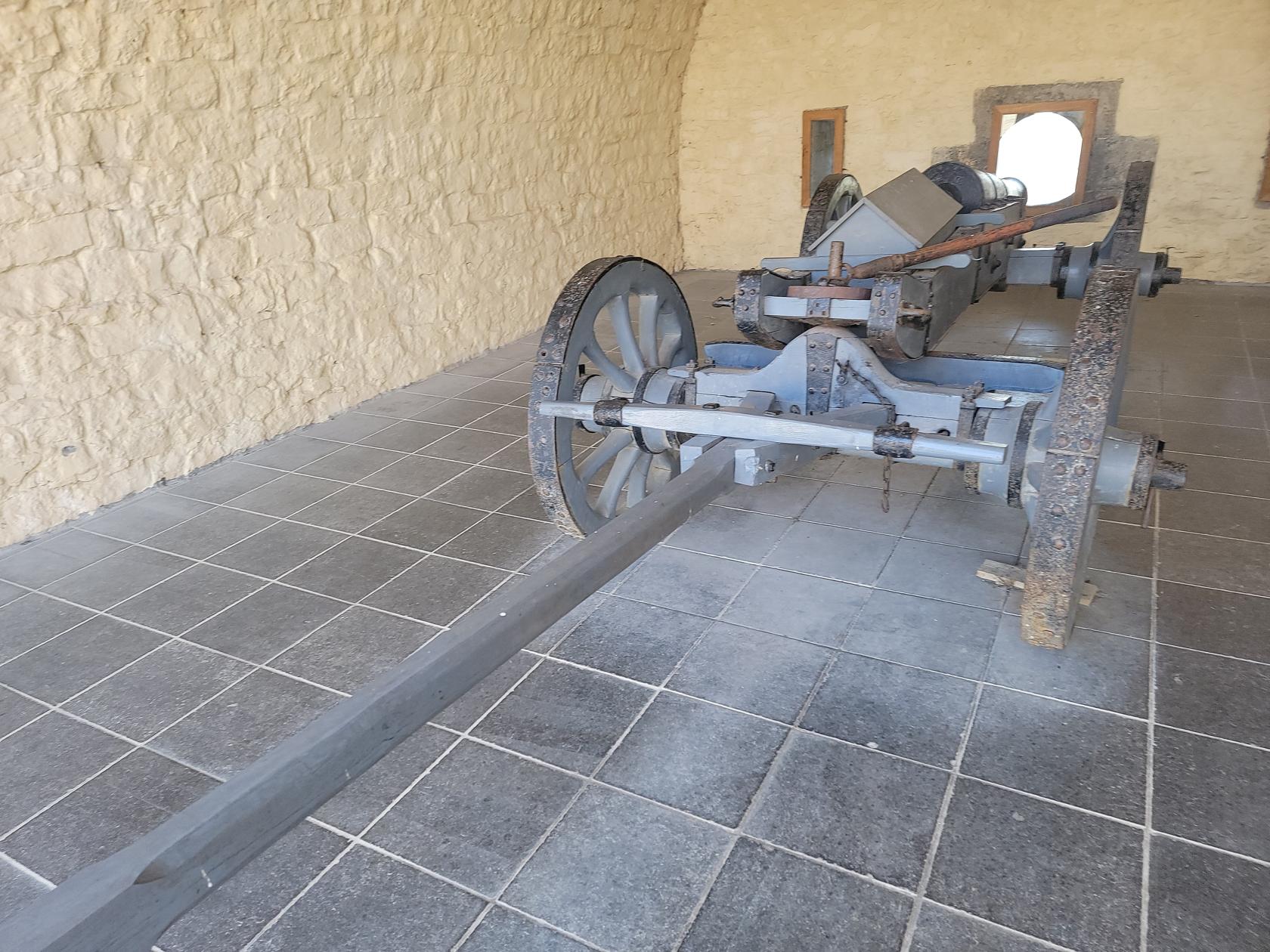
Moveable Gun – Museum – Citadel of Dinant – Dinant, Belgium
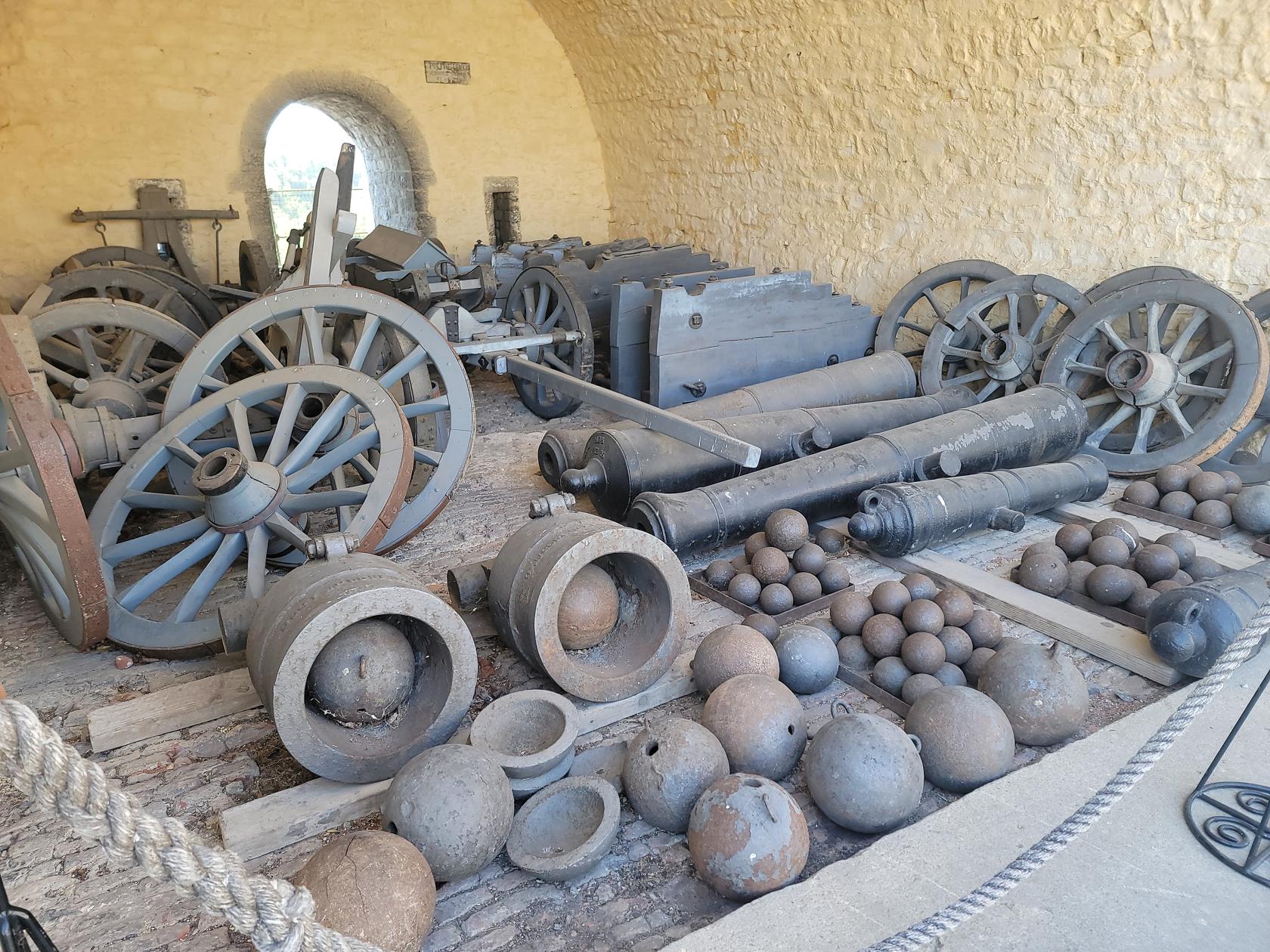
Old Cannons, Balls and Wheels – Museum – Citadel of Dinant – Dinant, Belgium
Anti-Aircraft Gun – Museum – Citadel of Dinant – Dinant, Belgium
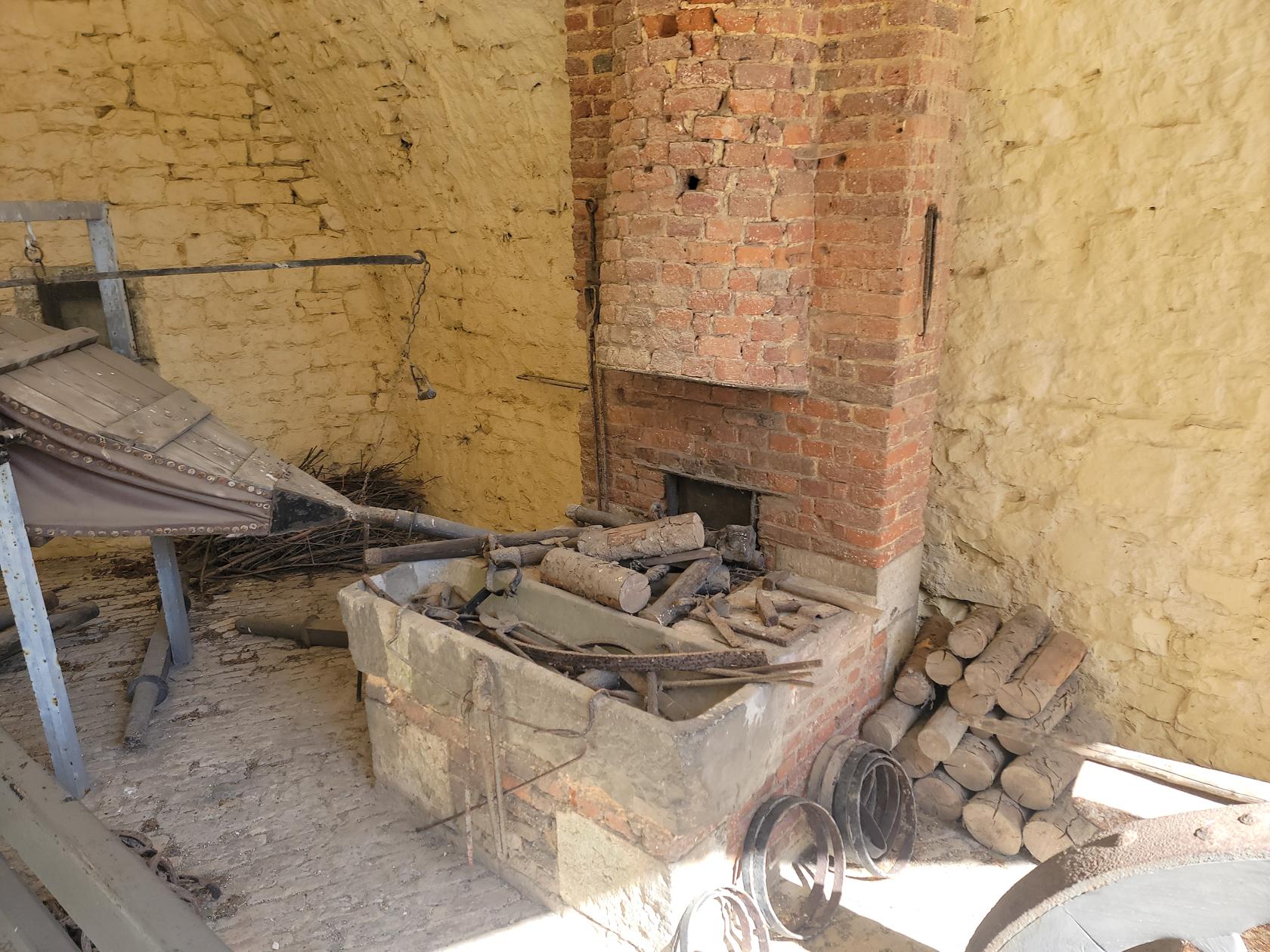
Blacksmith Shop – Museum – Citadel of Dinant – Dinant, Belgium
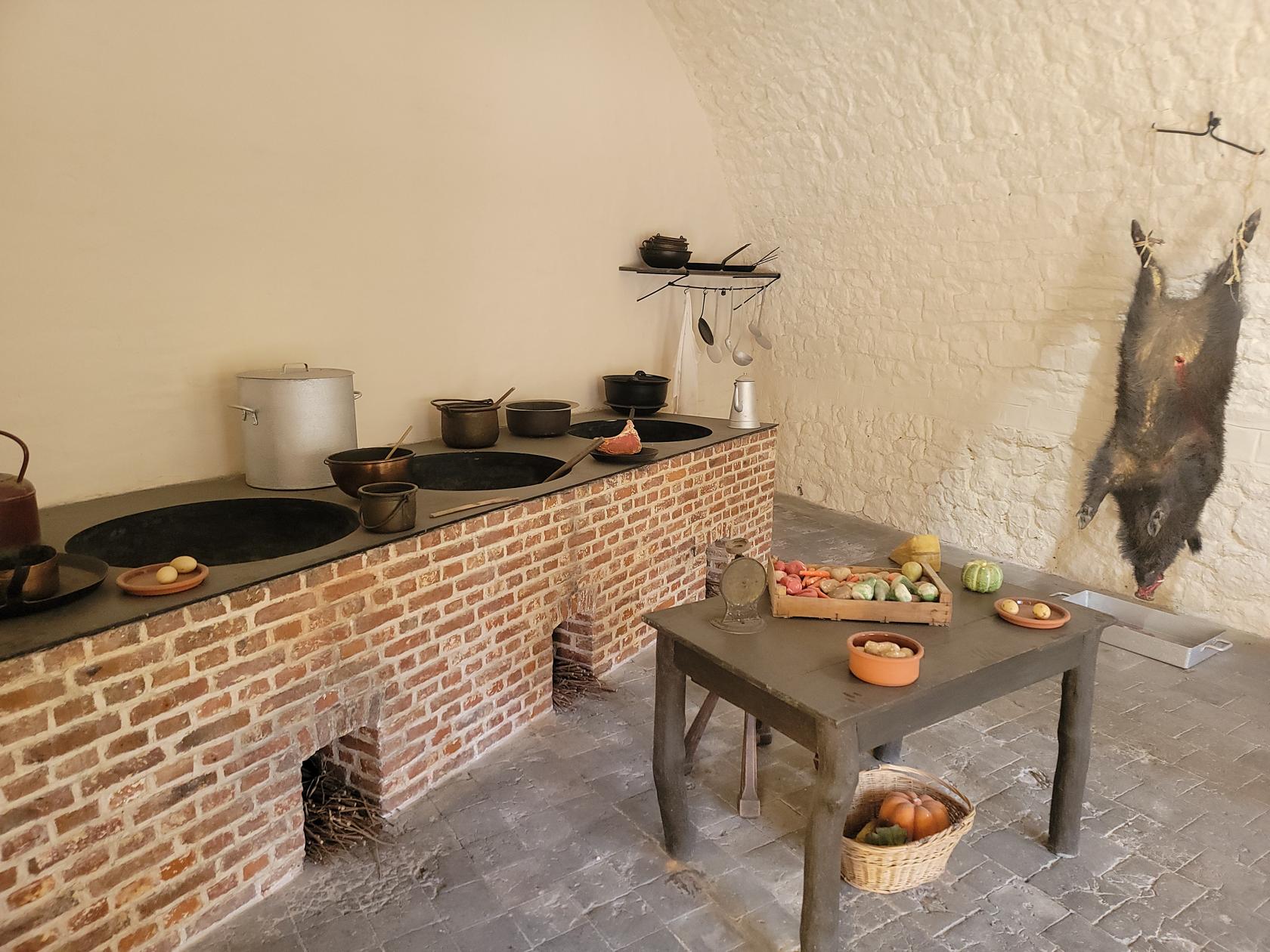
Kitchen – Museum – Citadel of Dinant – Dinant, Belgium
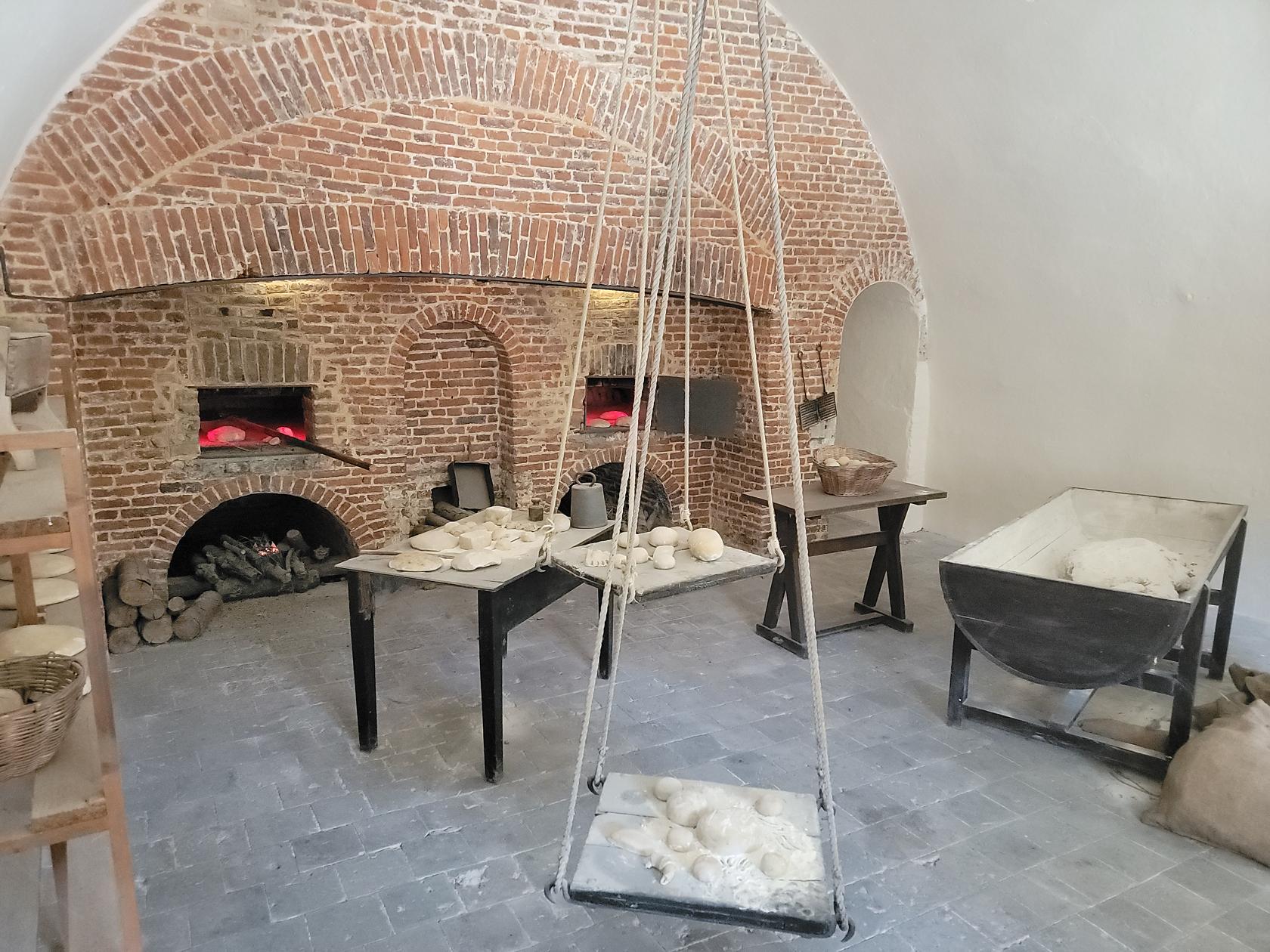
Bakery – Museum – Citadel of Dinant – Dinant, Belgium
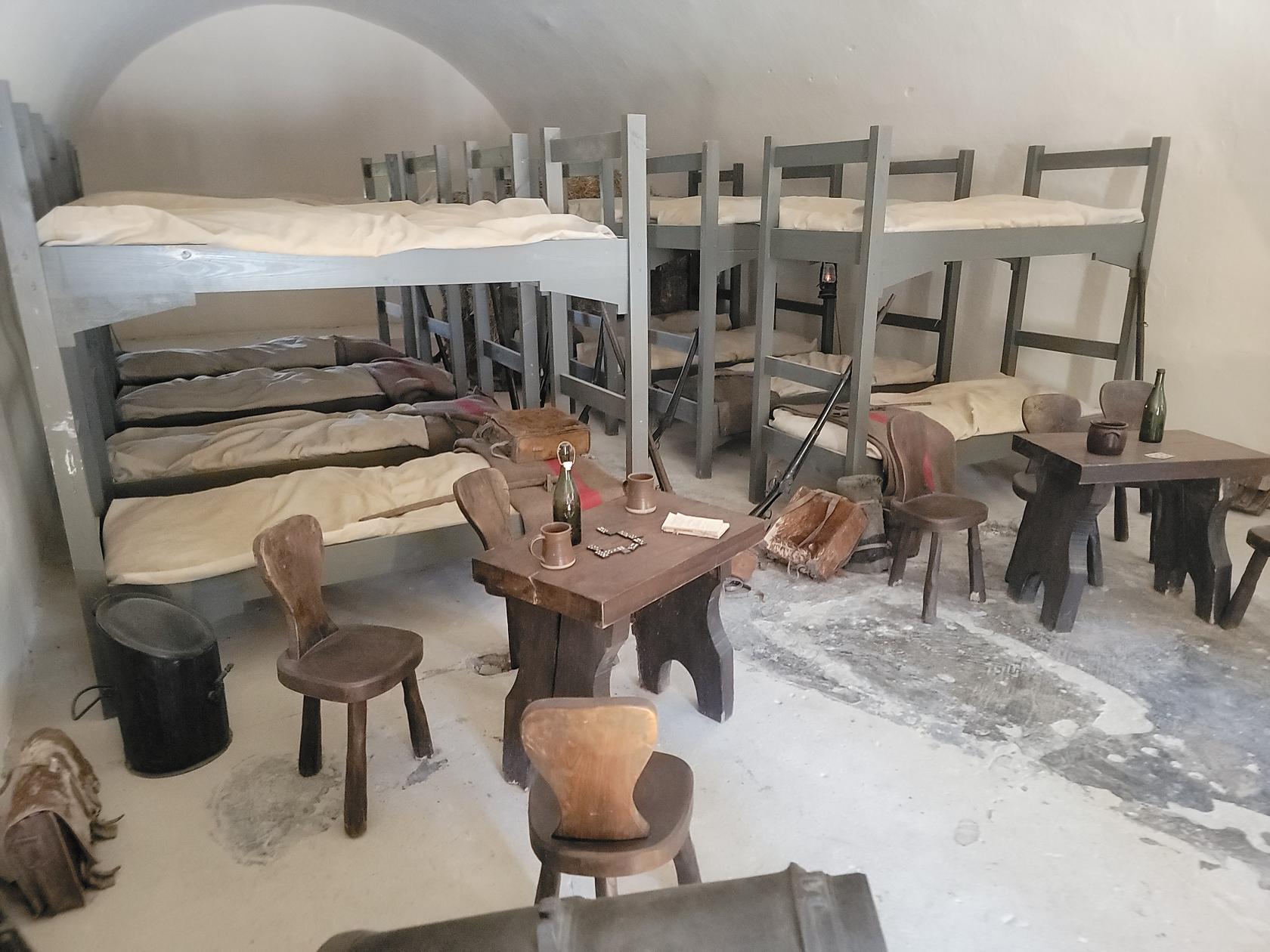
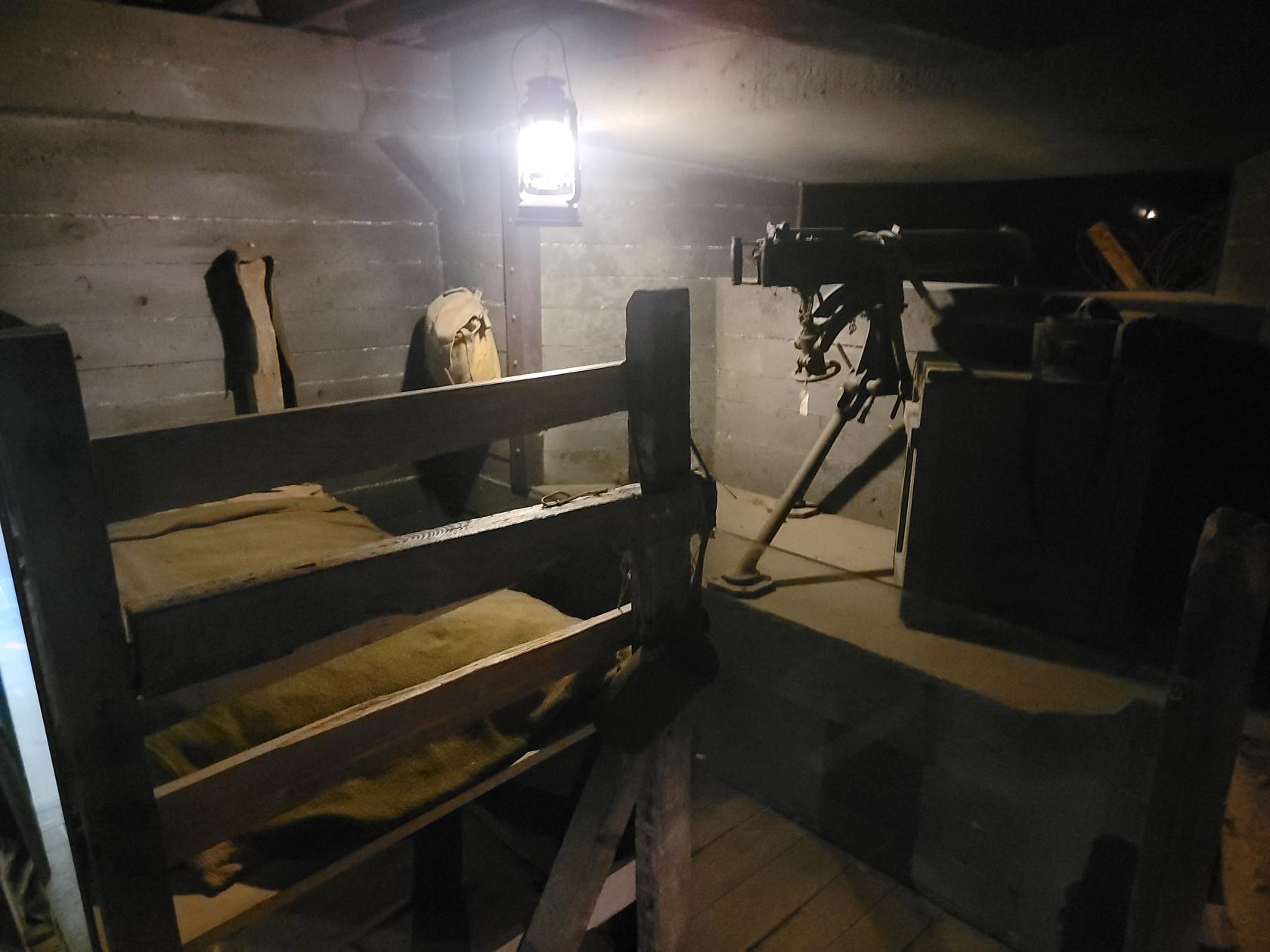
Bunk Area – Museum – Citadel of Dinant – Dinant, Belgium
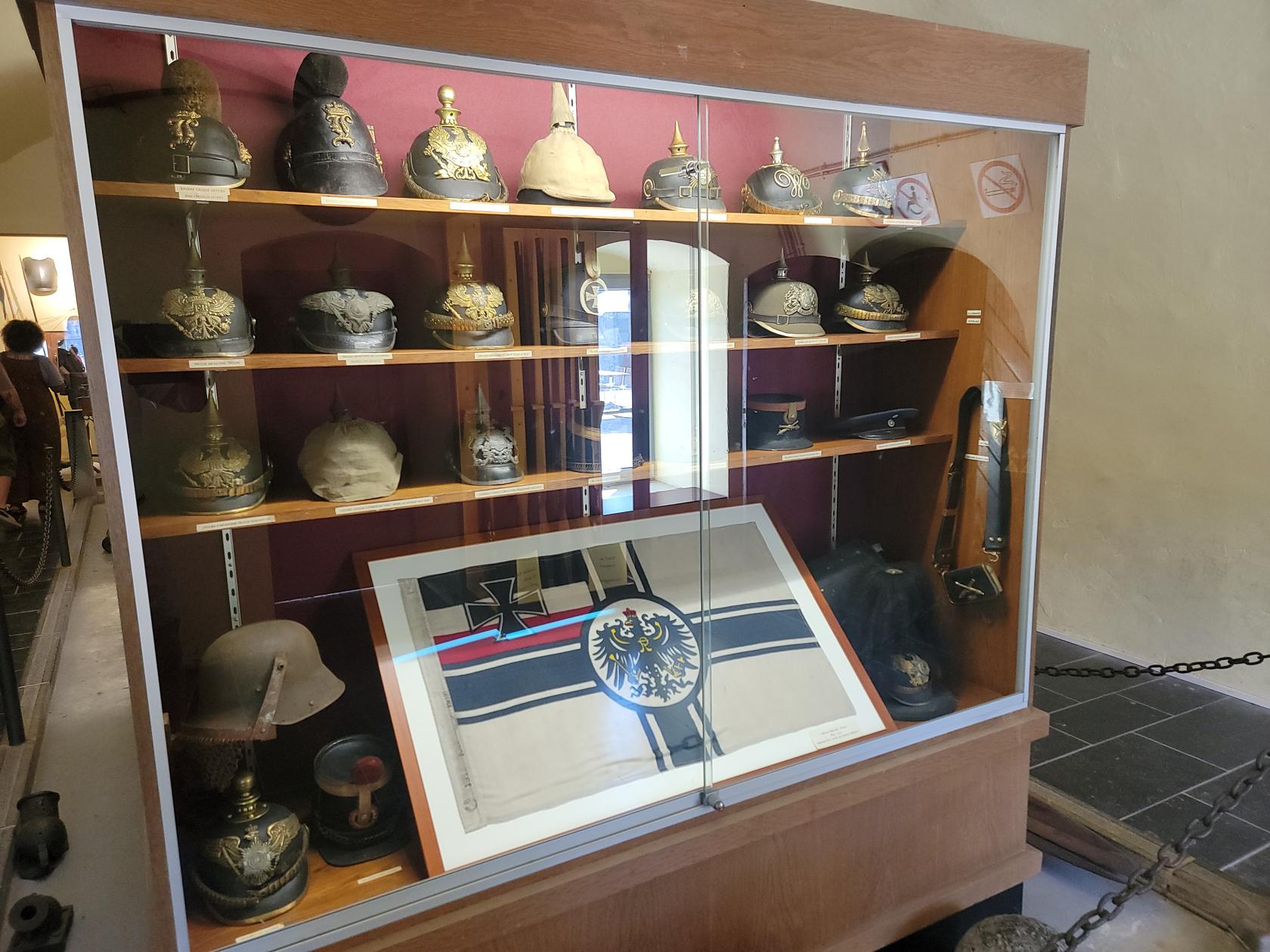
Old Helmets – Museum – Citadel of Dinant – Dinant, Belgium
Old Mortar – Museum – Citadel of Dinant – Dinant, Belgium
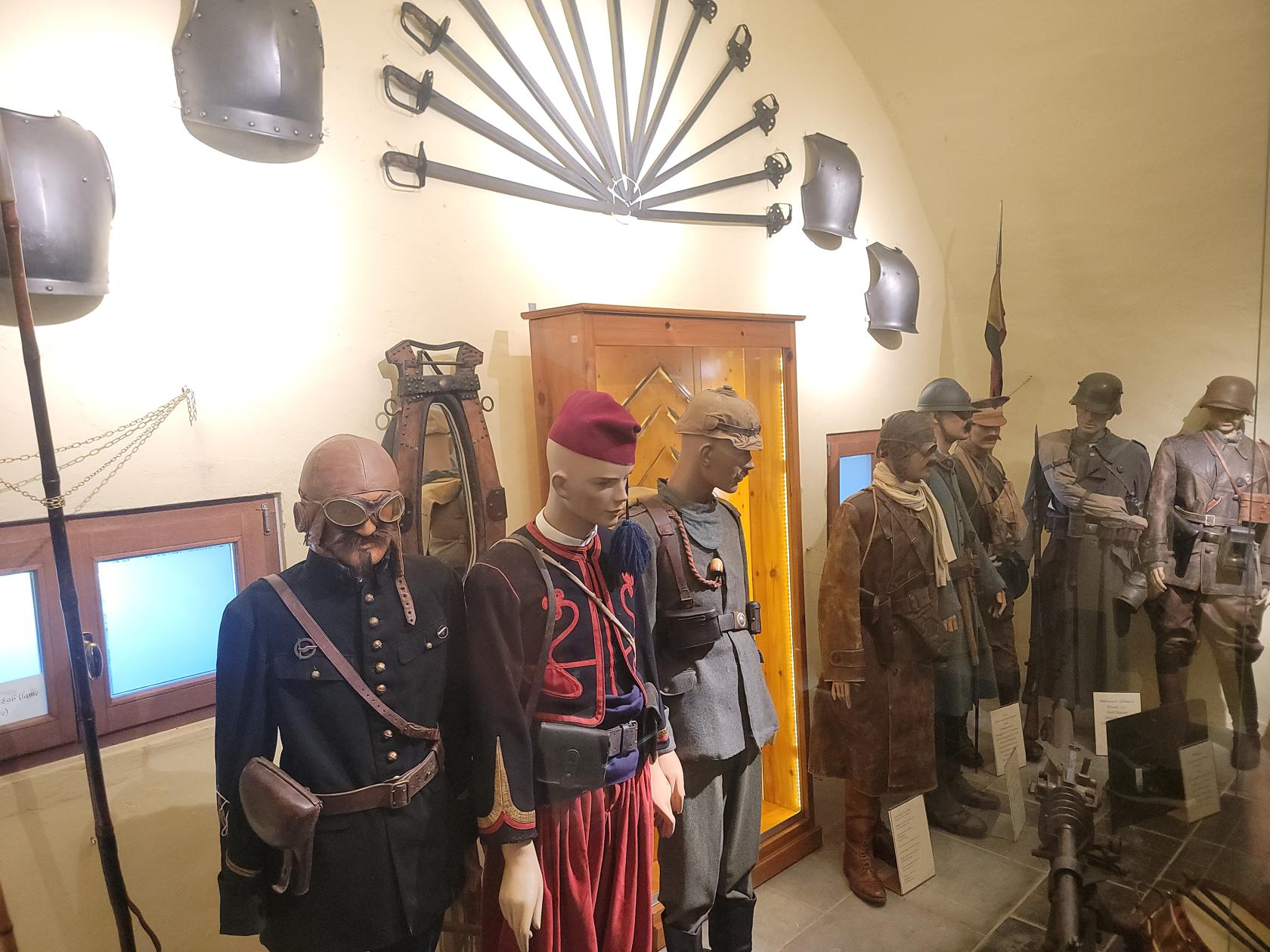
Old Uniforms – Museum – Citadel of Dinant – Dinant, Belgium
There is also a tricky little tilted room at the end of the walk-through that is rather intriguing. Since all of the normal surfaces are tilted at an angle, your visual perception of what is up gets messed up. After a short while it could definitely give someone motion sickness, if they are prone to that sort of thing.
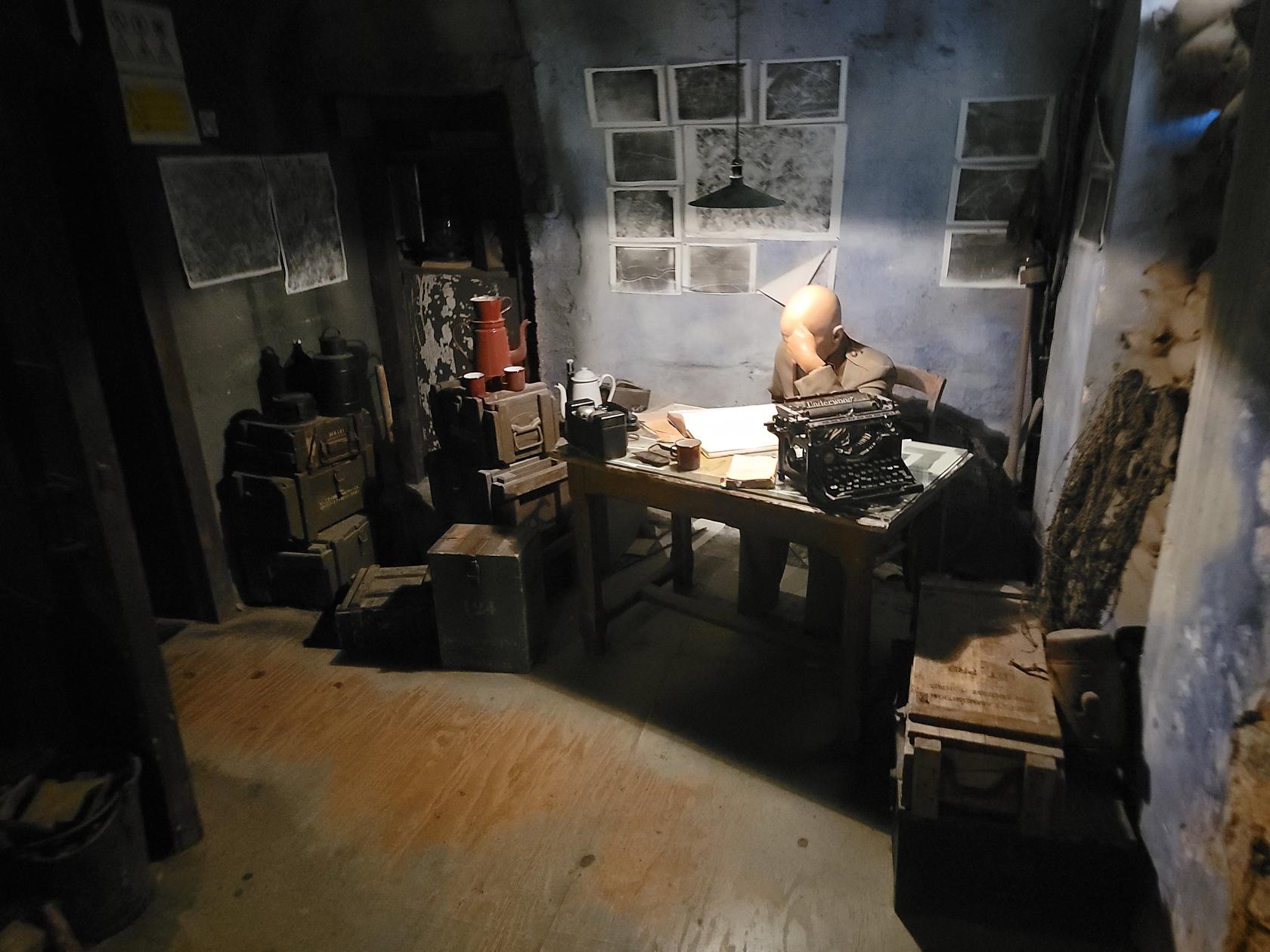
Mockup of Communications Station – Museum – Citadel of Dinant – Dinant, Belgium
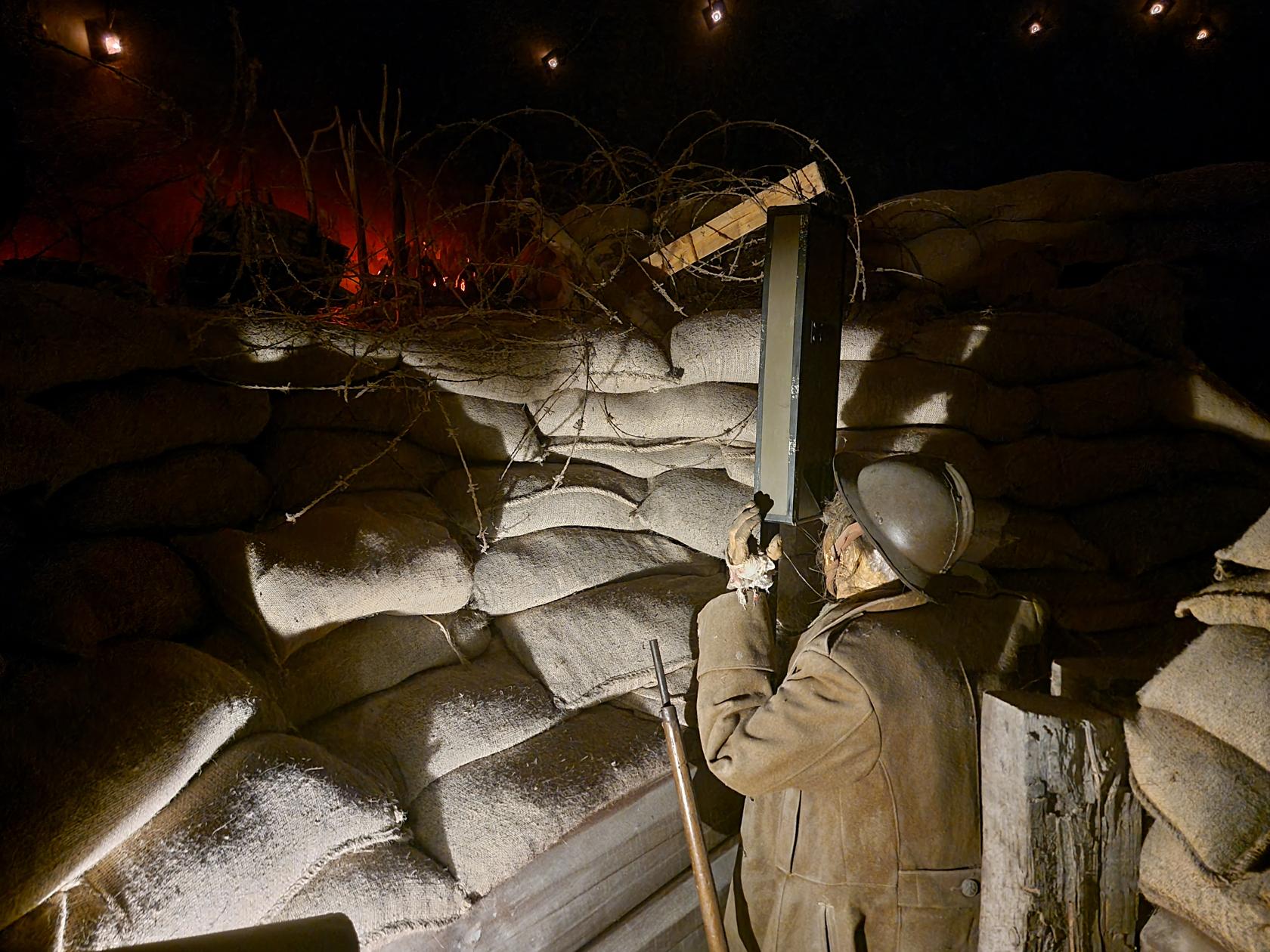
Mockup of Machine Gun Emplacement – Museum – Citadel of Dinant – Dinant, Belgium
Communications – Museum – Citadel of Dinant – Dinant, Belgium
Inside a Trench – Museum – Citadel of Dinant – Dinant, Belgium
Down to the Tilted Room – Museum – Citadel of Dinant – Dinant, Belgium
Tilted Room – Museum – Citadel of Dinant – Dinant, Belgium
Tilted Room – Museum – Citadel of Dinant – Dinant, Belgium
Tilted Room – Museum – Citadel of Dinant – Dinant, Belgium
Leffe Abbey Brewery
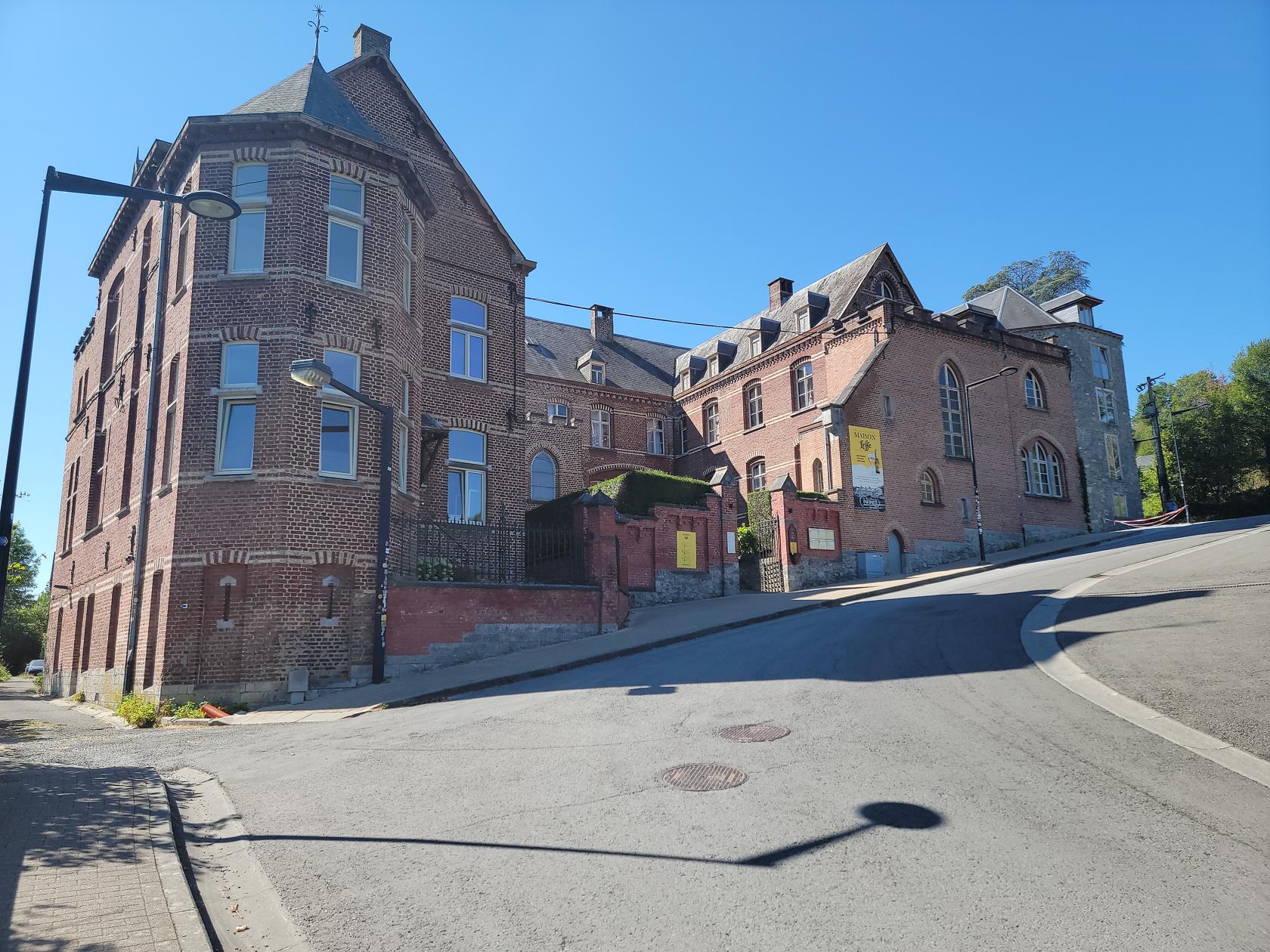
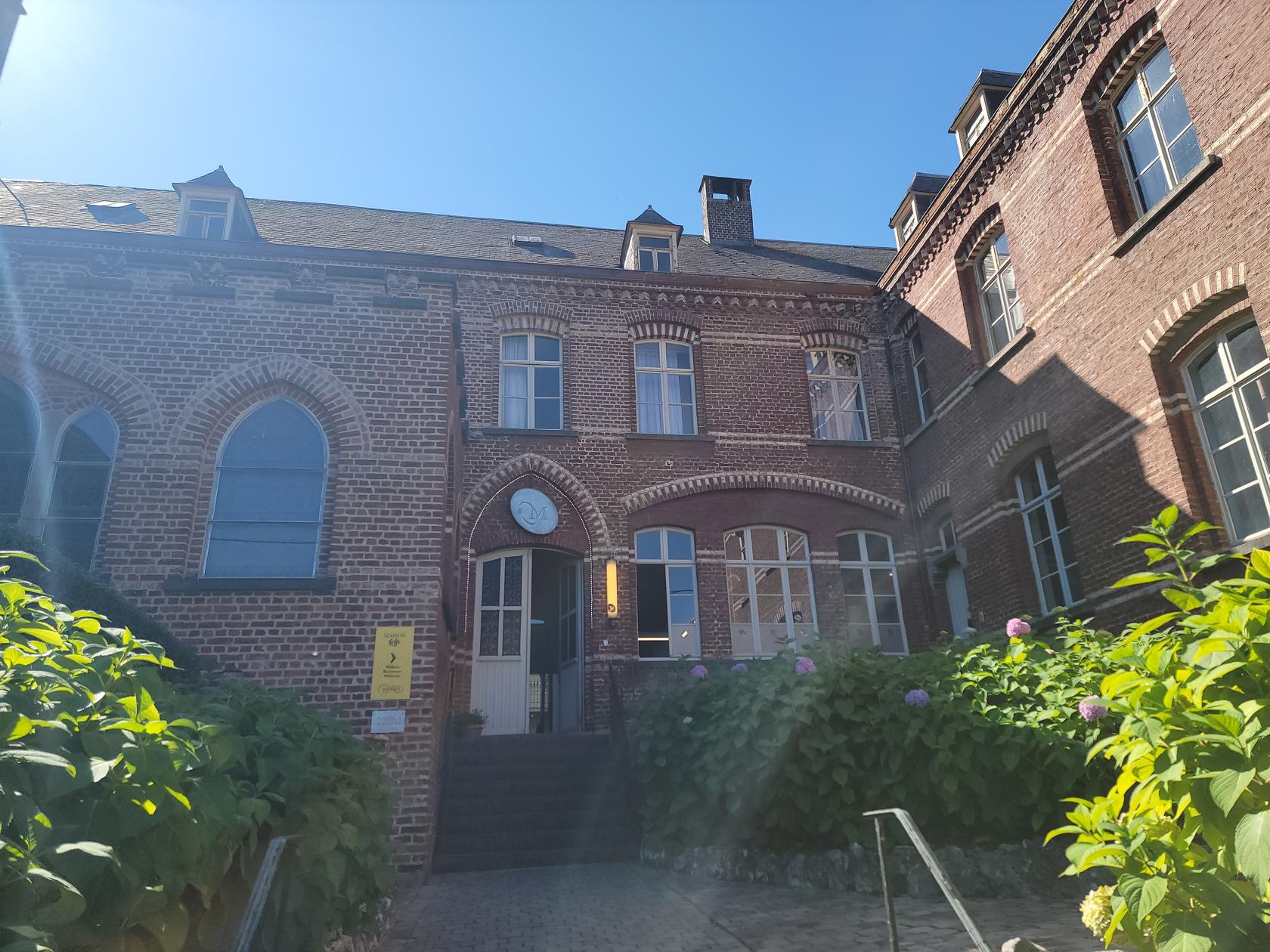
From our hotel the Leffe Abbey Brewery was located directly across the valley from us. After a twenty minute walk along the river and over the Charles de Gaulle bridge, the brewery is a short walk up the hill on the other side.
Entrance – Leffe Brewery – Dinant, Belgium
Entrance – Leffe Brewery – Dinant, Belgium
Museum – Leffe Brewery – Dinant, Belgium
Monk Benches – Museum – Leffe Brewery – Dinant, Belgium
Benches – Museum – Leffe Brewery – Dinant, Belgium
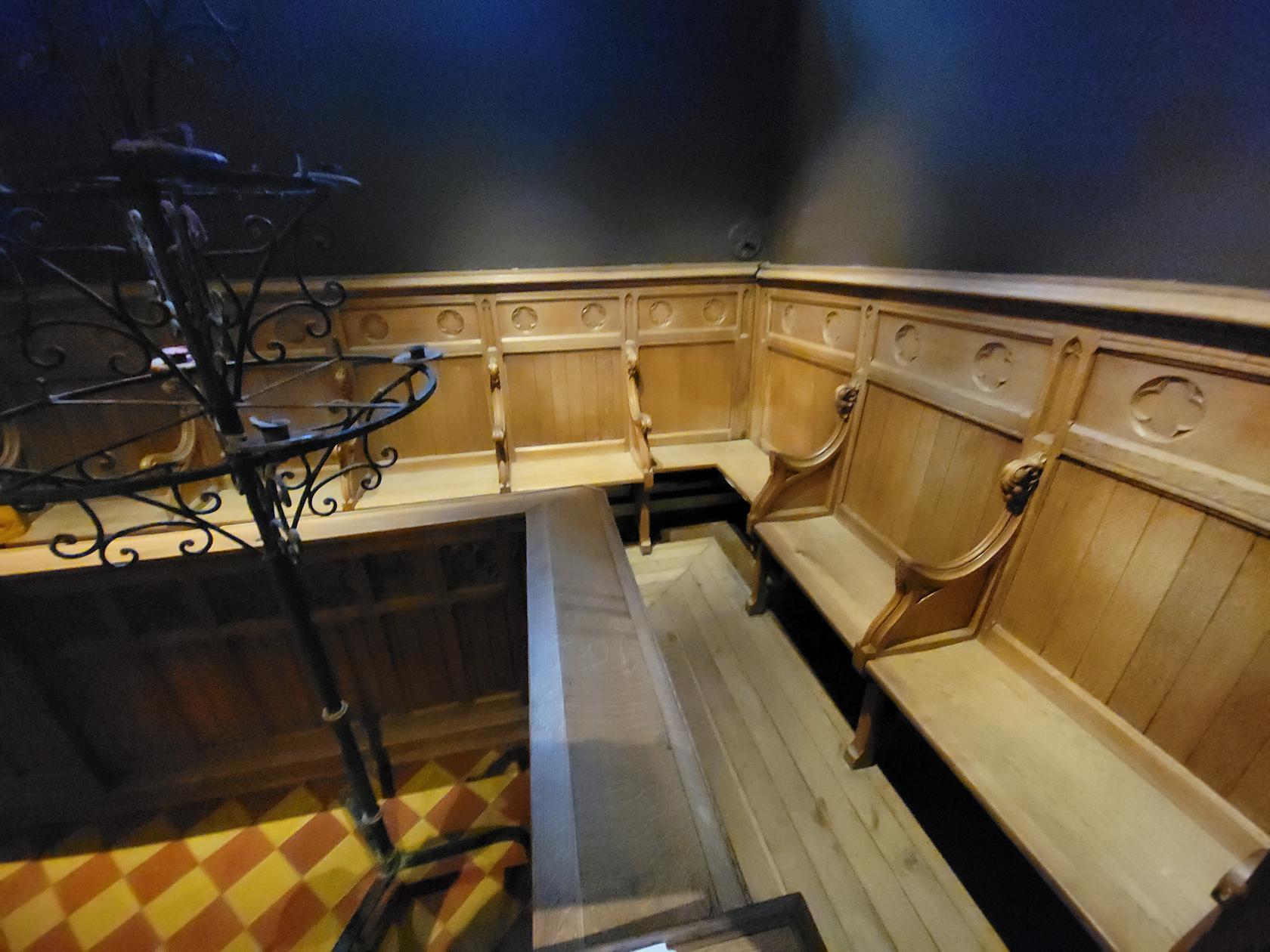
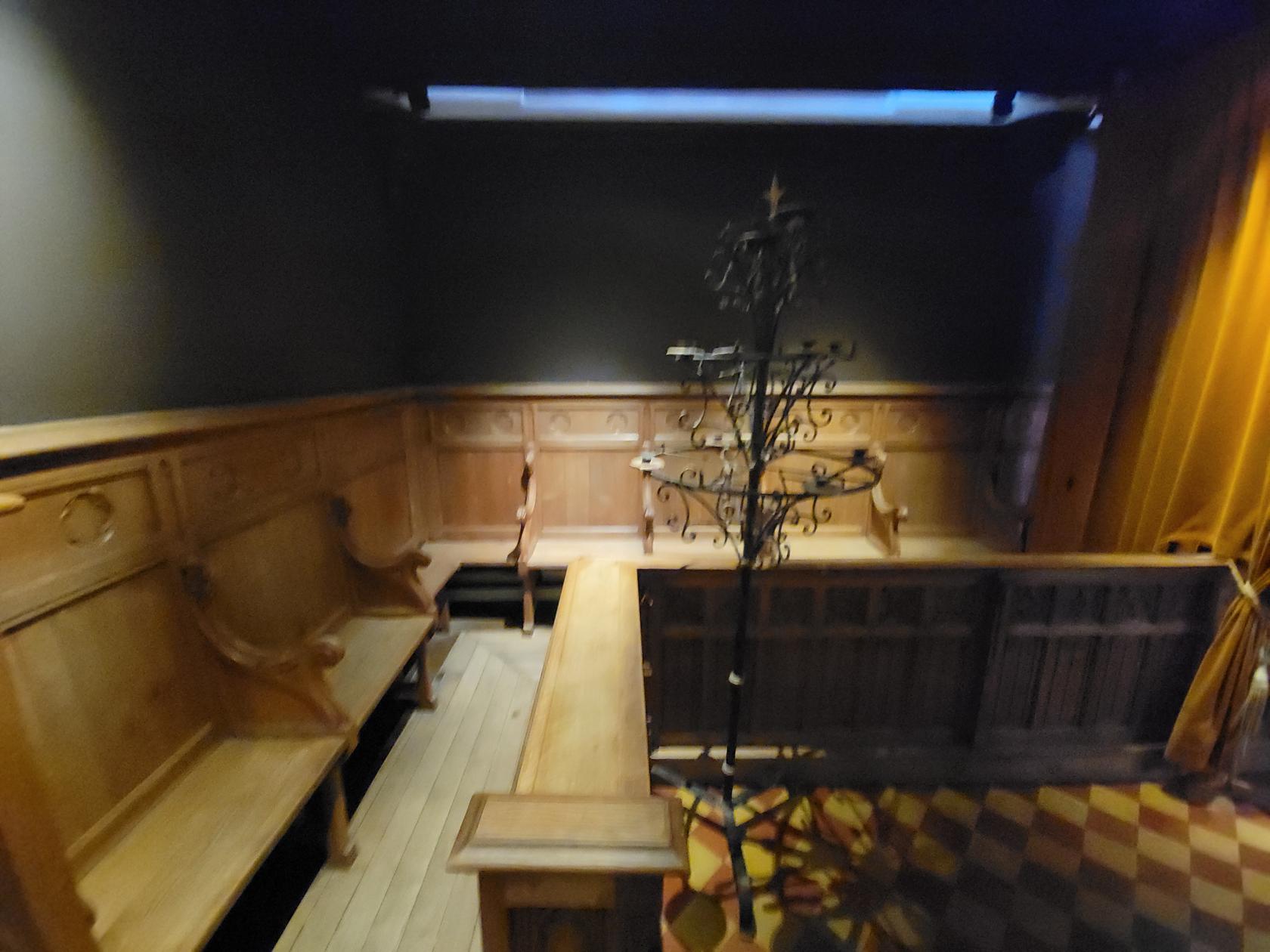
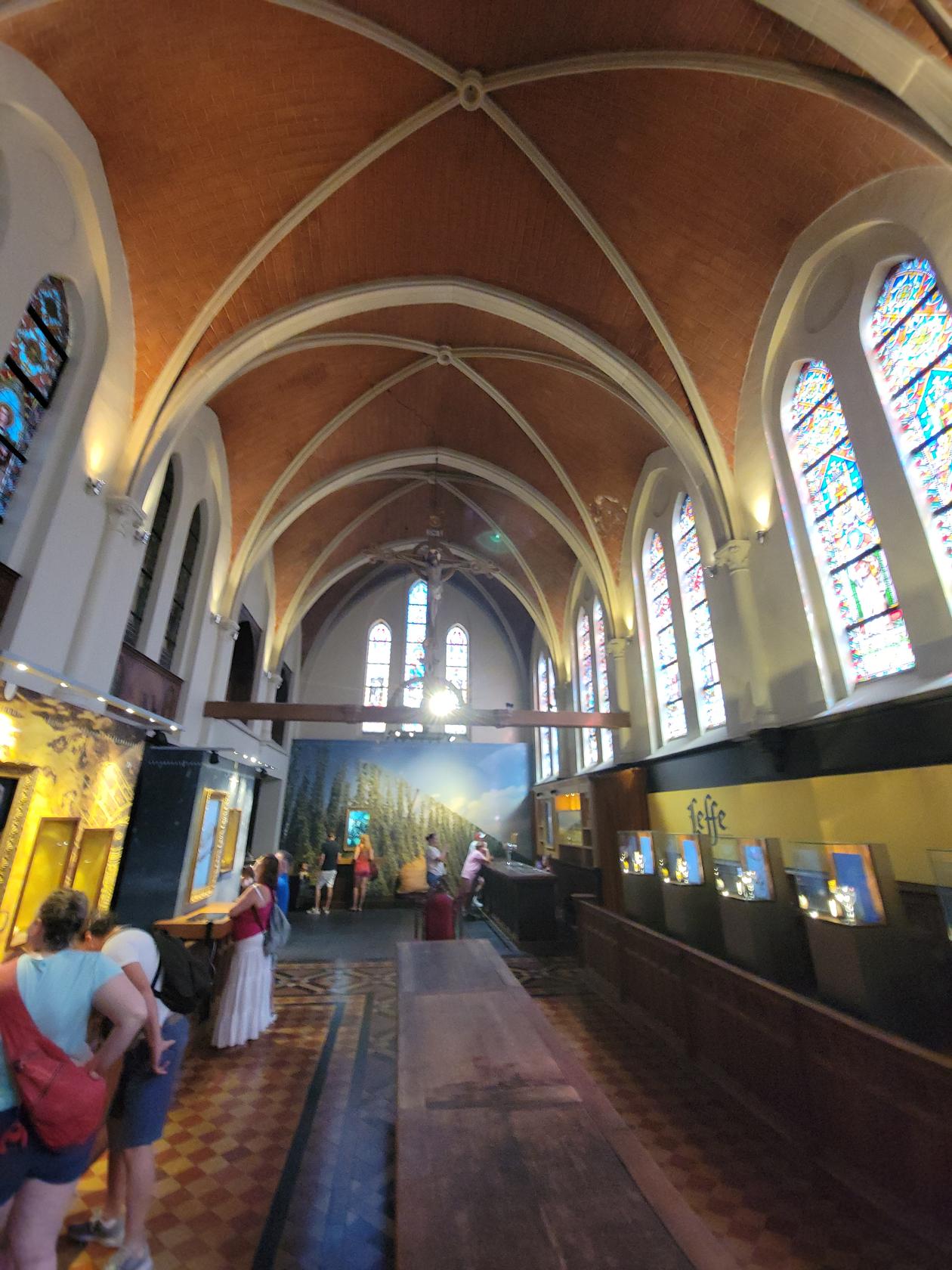
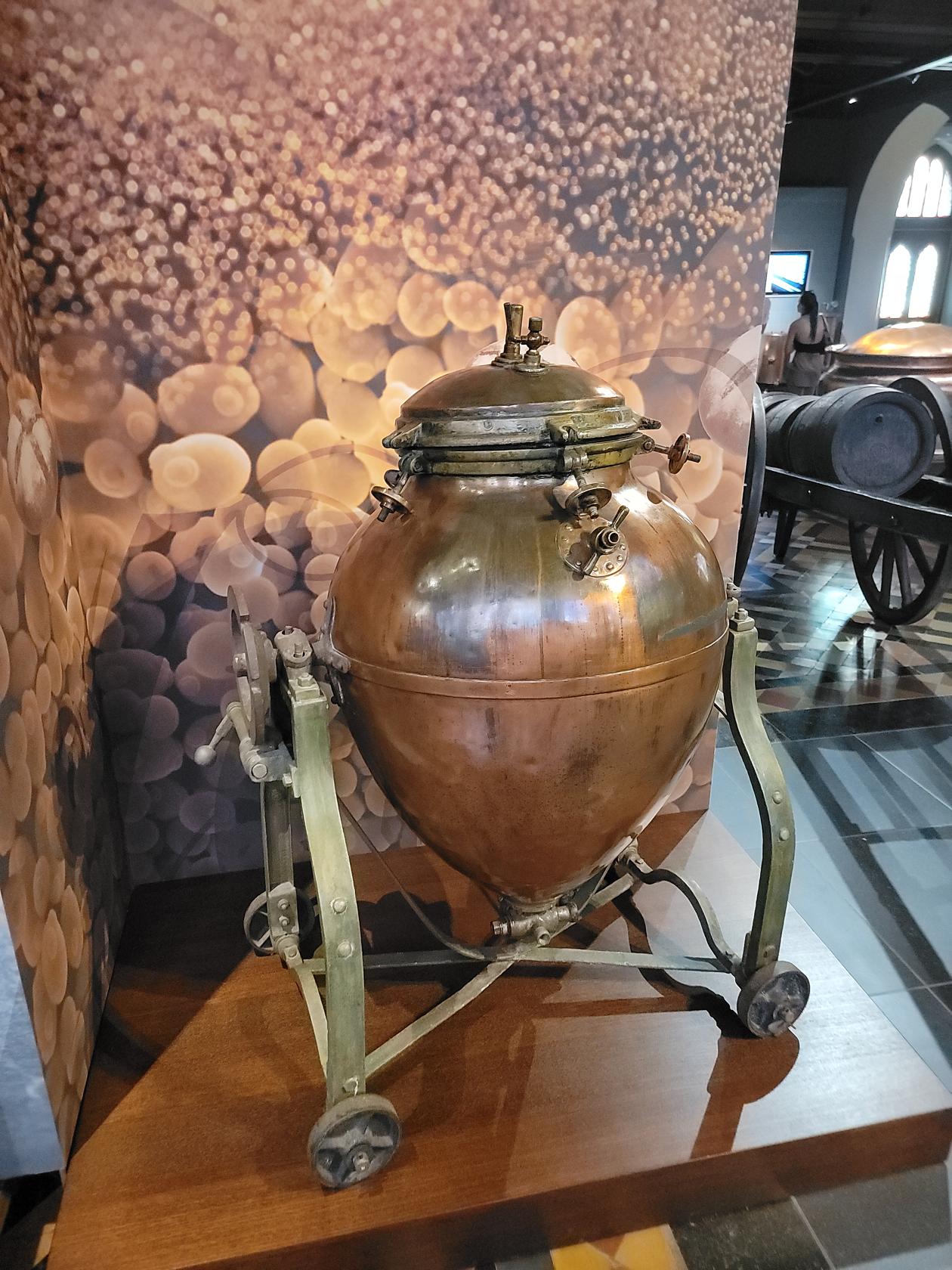
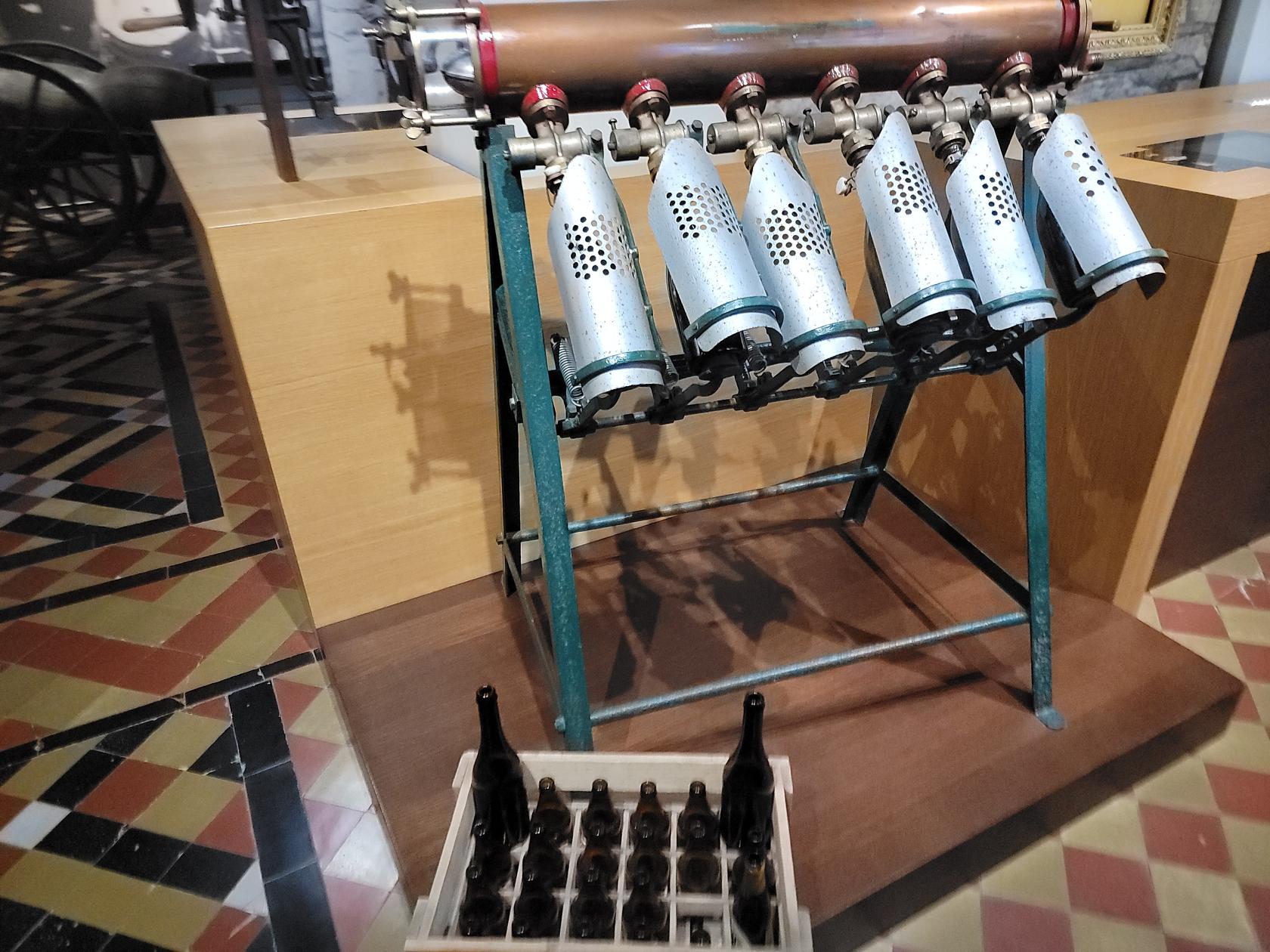
The brewery has a small museum explaining the history of the structure and the monks that had started the tradition of brewing beer.
Interactive Hallway – Museum – Leffe Brewery – Dinant, Belgium
Old Distillery Cauldron – Museum – Leffe Brewery – Dinant, Belgium
Barrels – Museum – Leffe Brewery – Dinant, Belgium
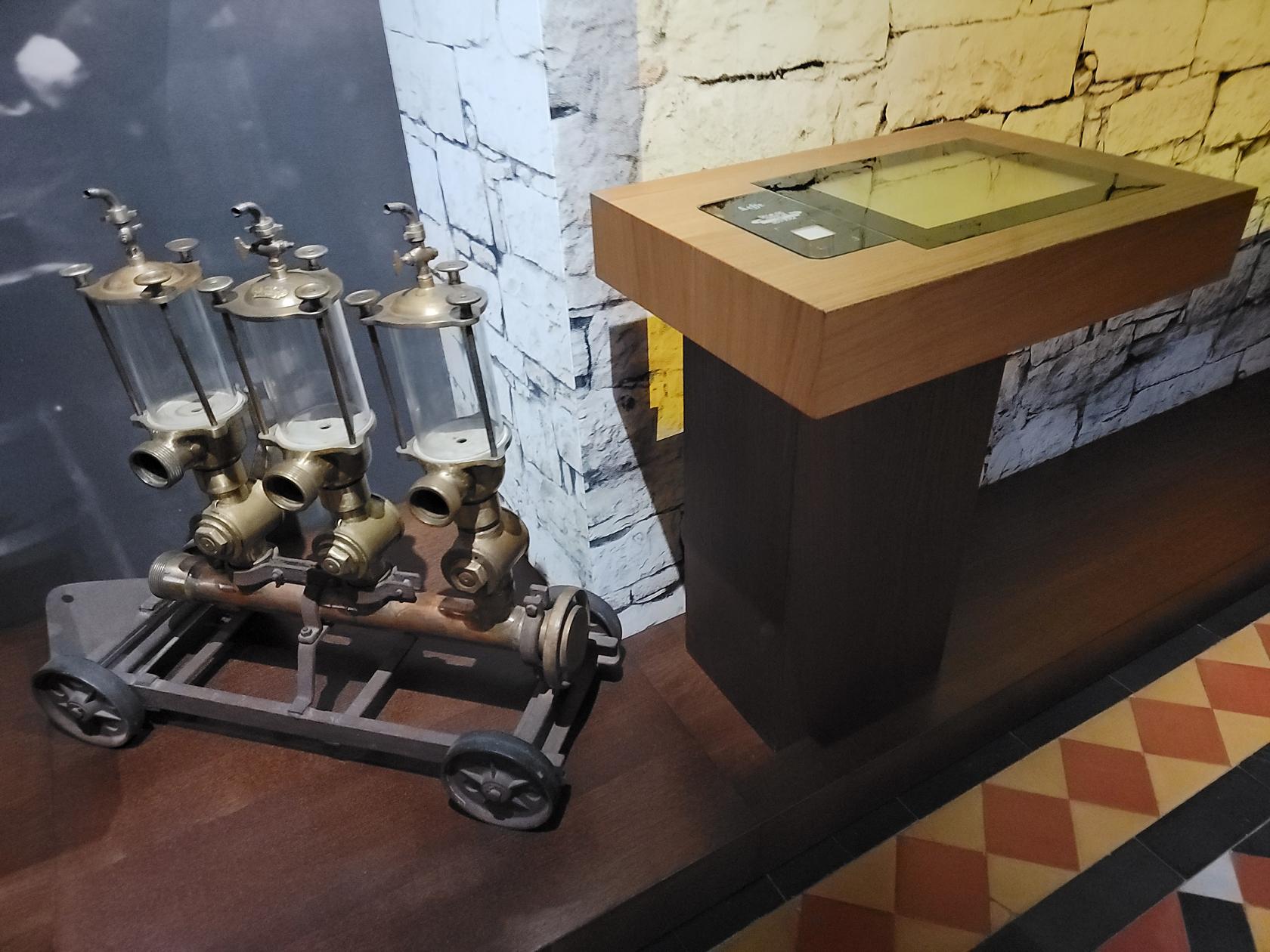
Old Brass Fittings – Museum – Leffe Brewery – Dinant, Belgium
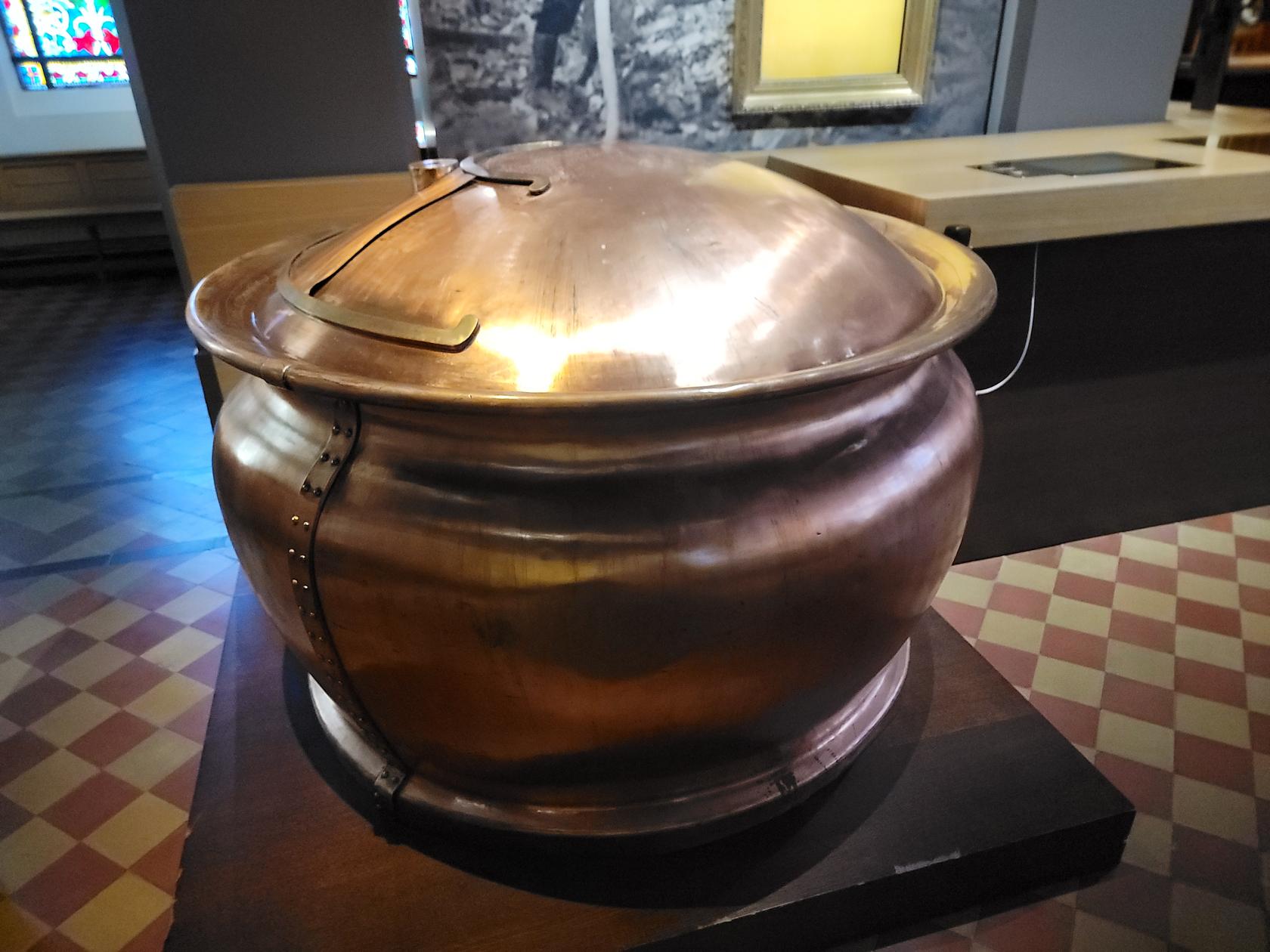
Old Copper Cauldron – Museum – Leffe Brewery – Dinant, Belgium
Bottle Dispenser – Museum – Leffe Brewery – Dinant, Belgium
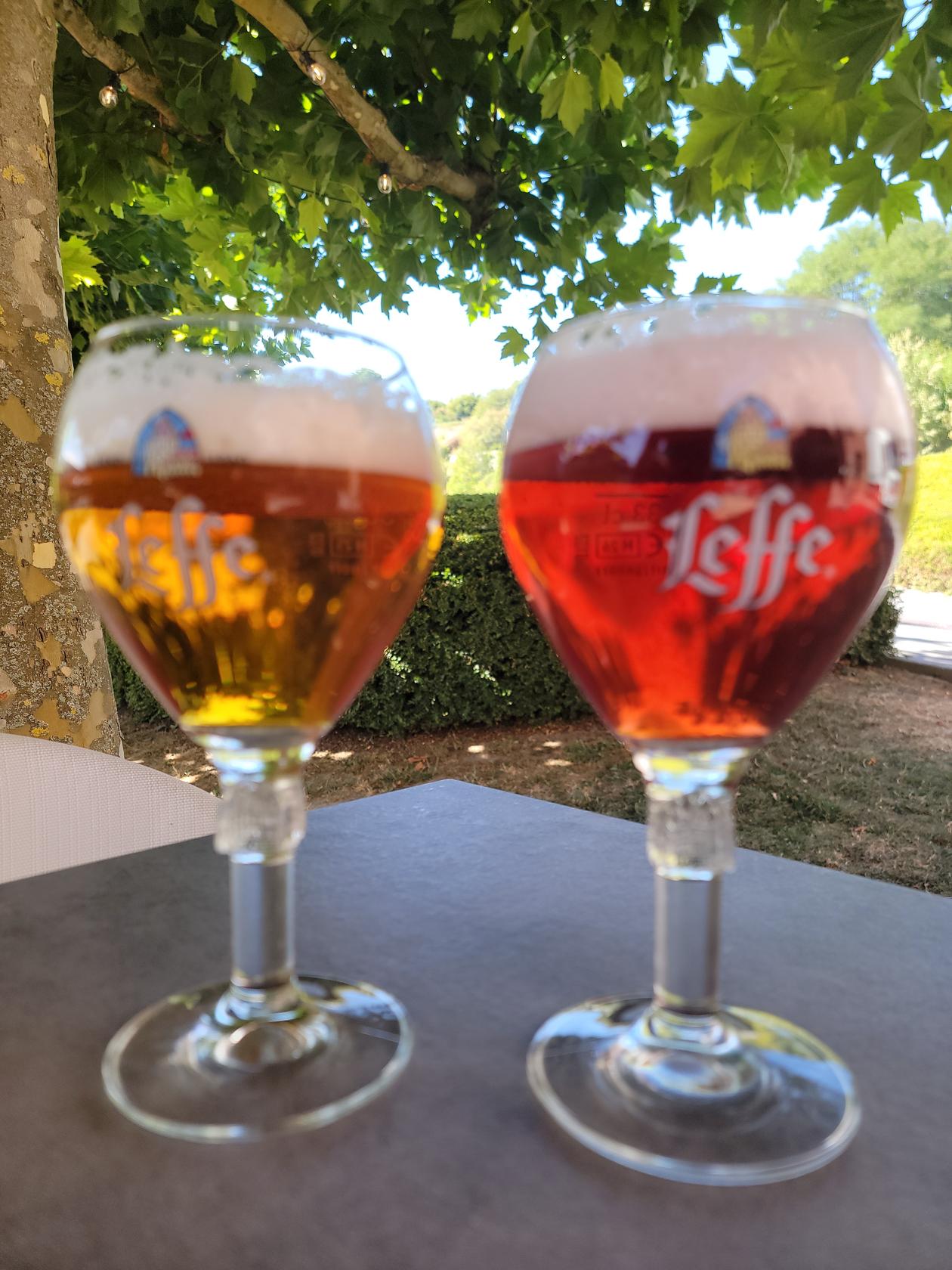
The tour included a beer tasting and some free glasses.
Beer – Museum – Leffe Brewery – Dinant, Belgium
Rocher Bayard Walk
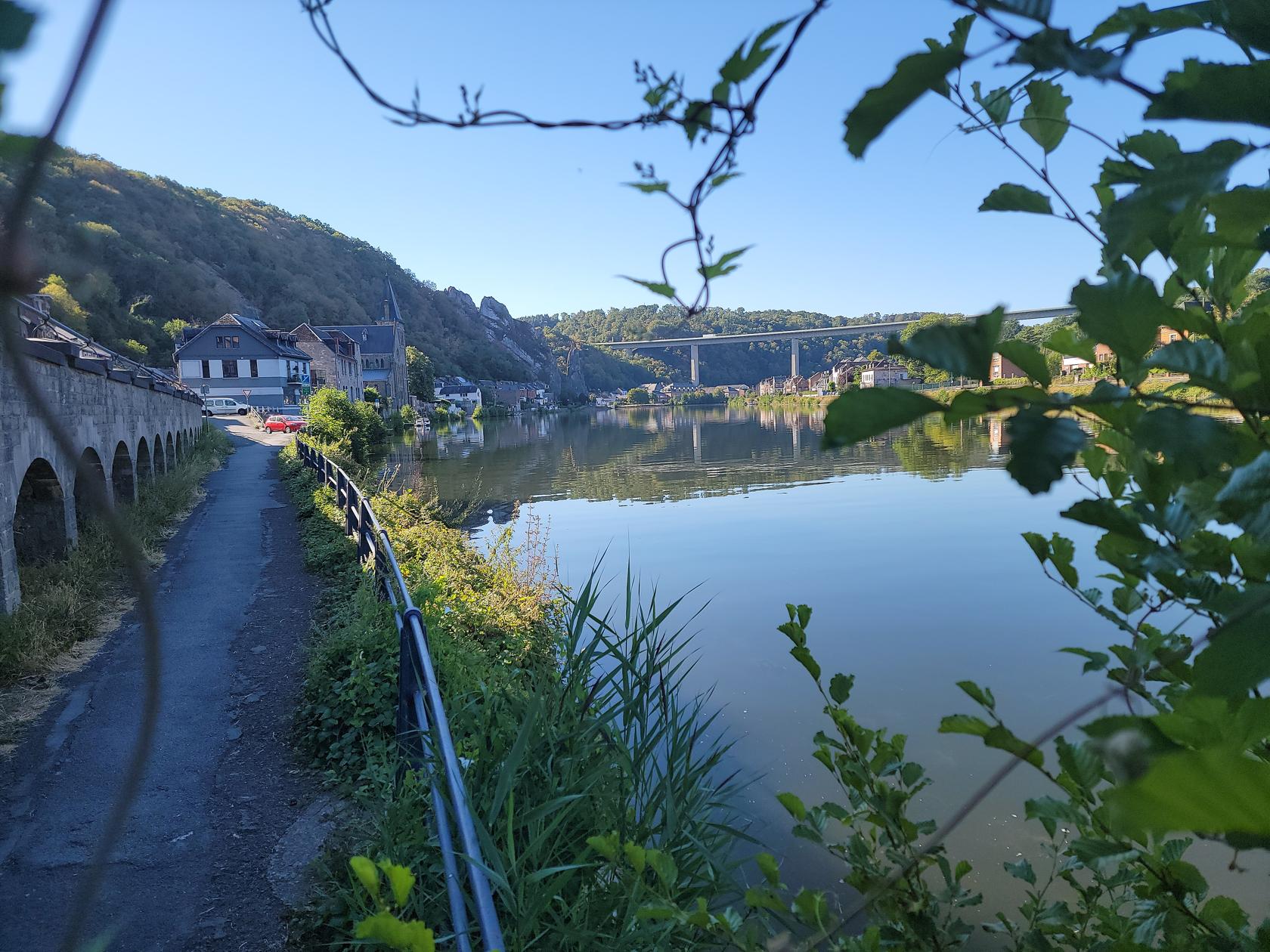
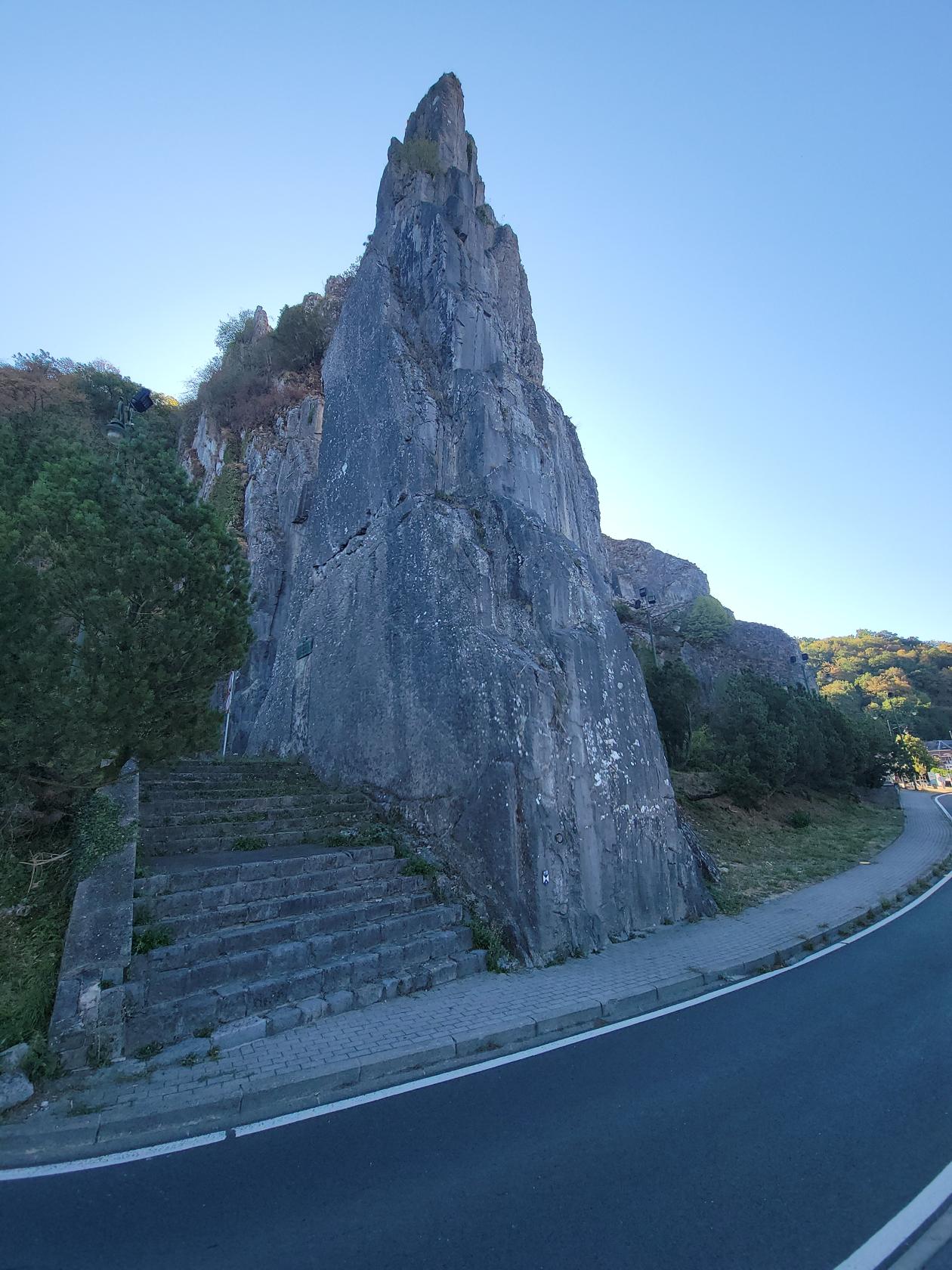
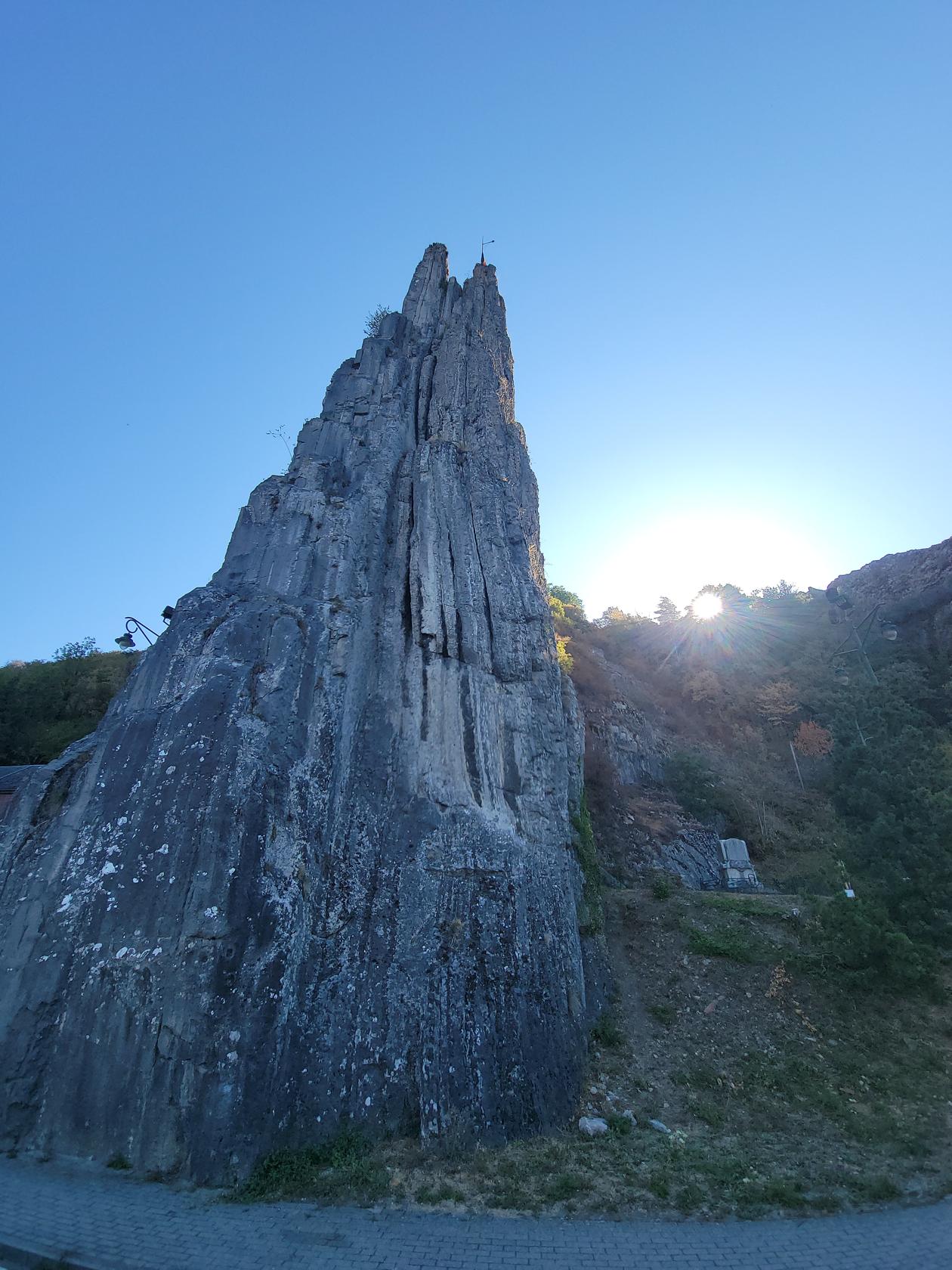
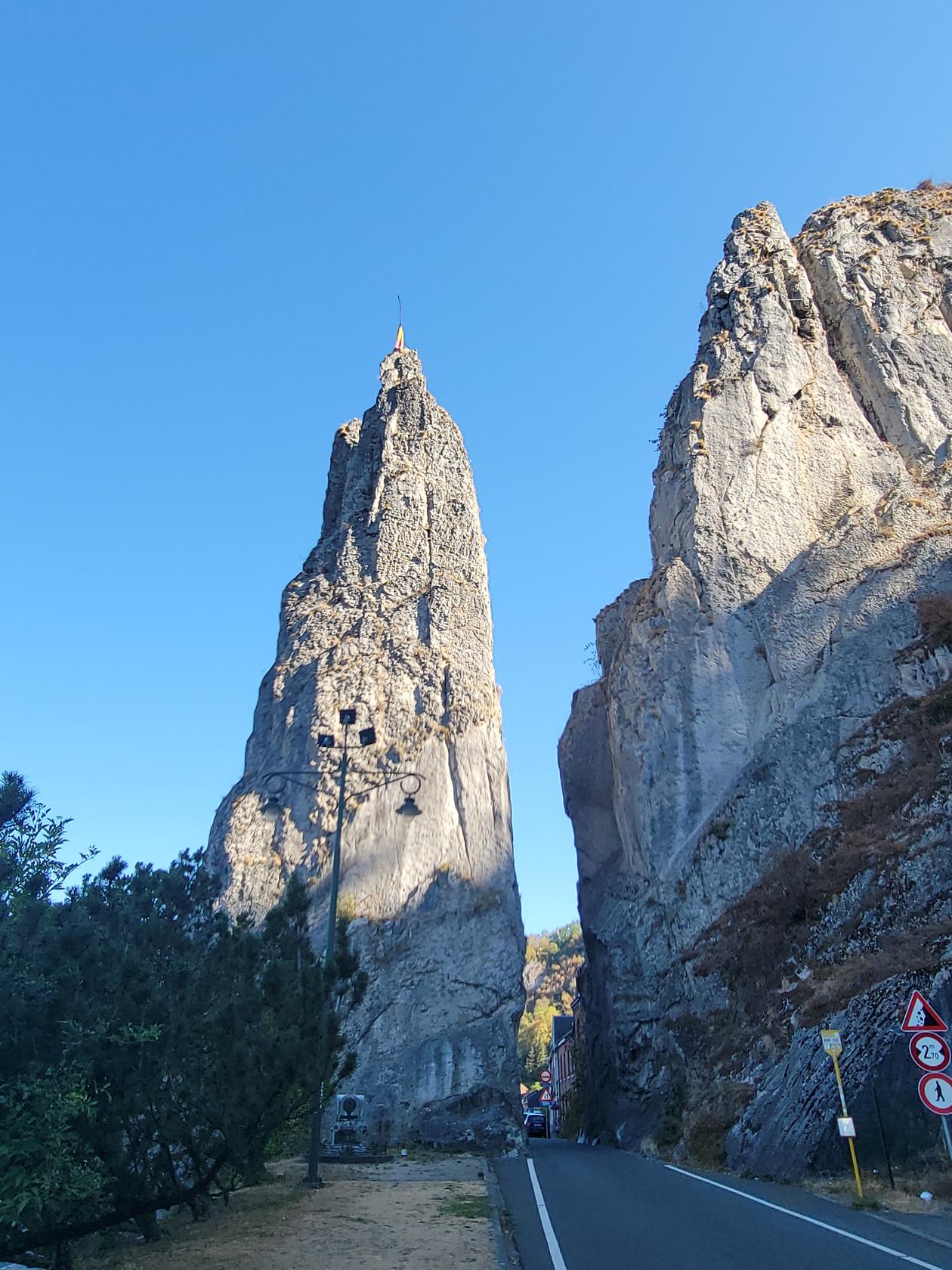
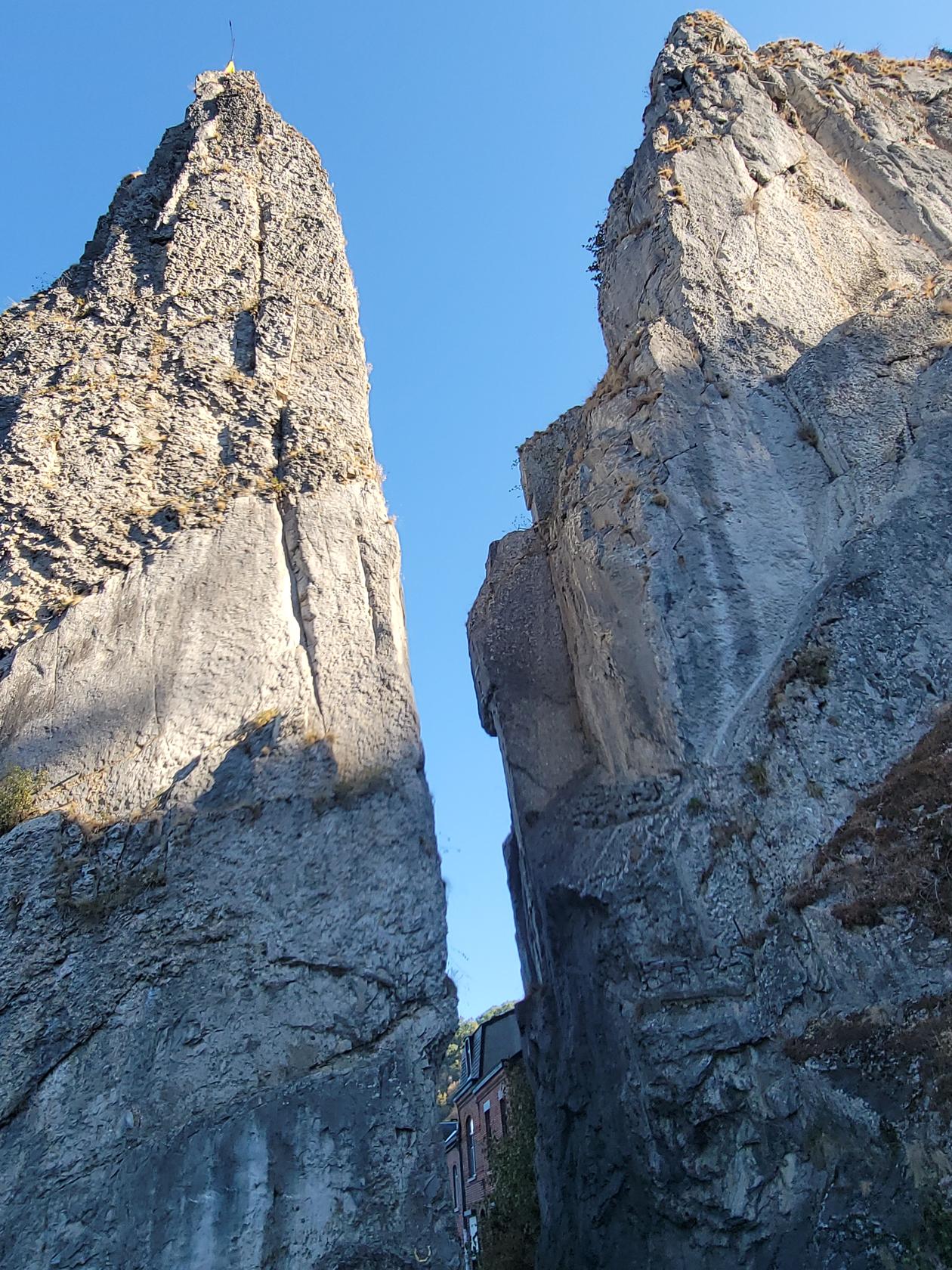
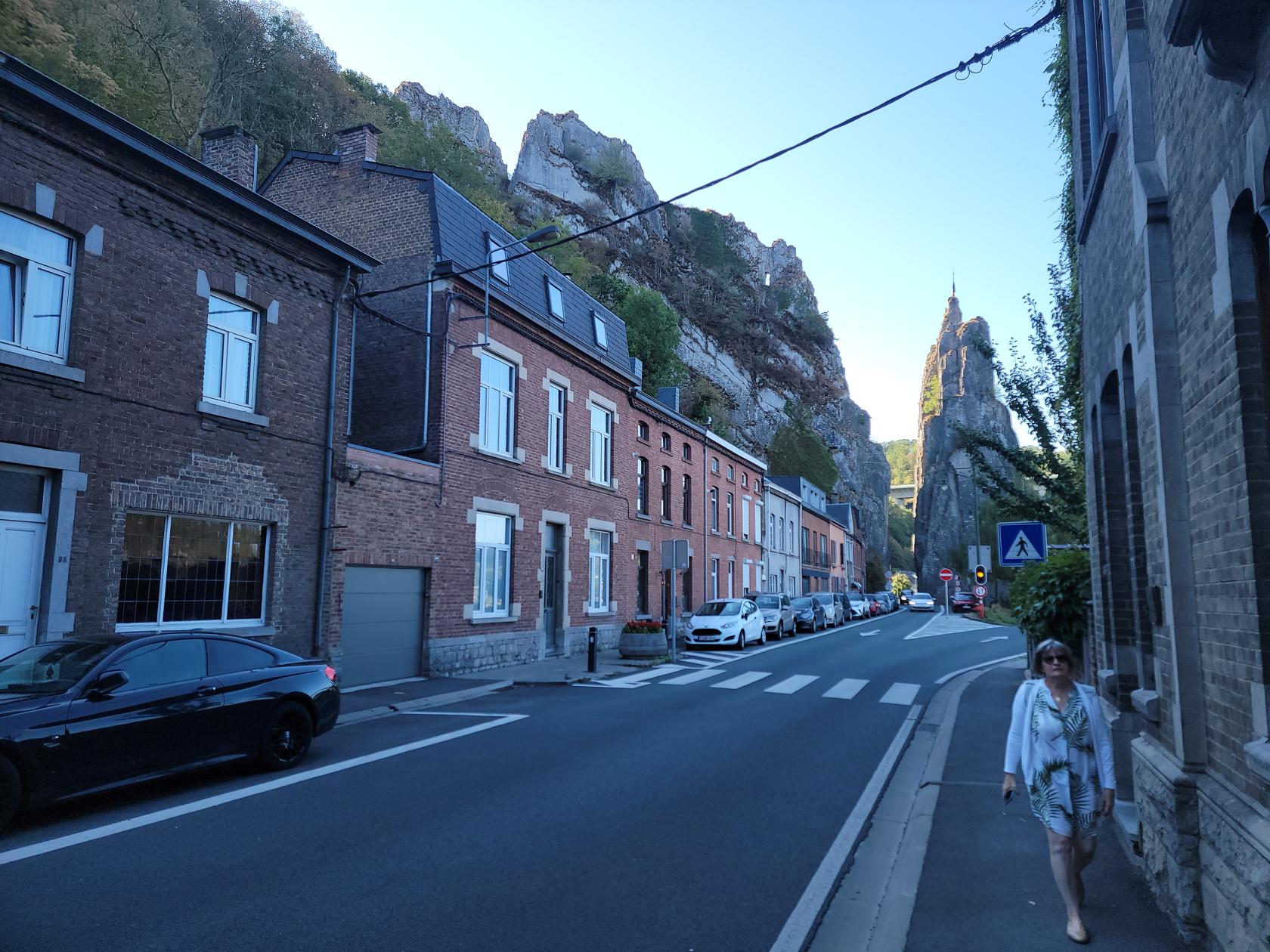
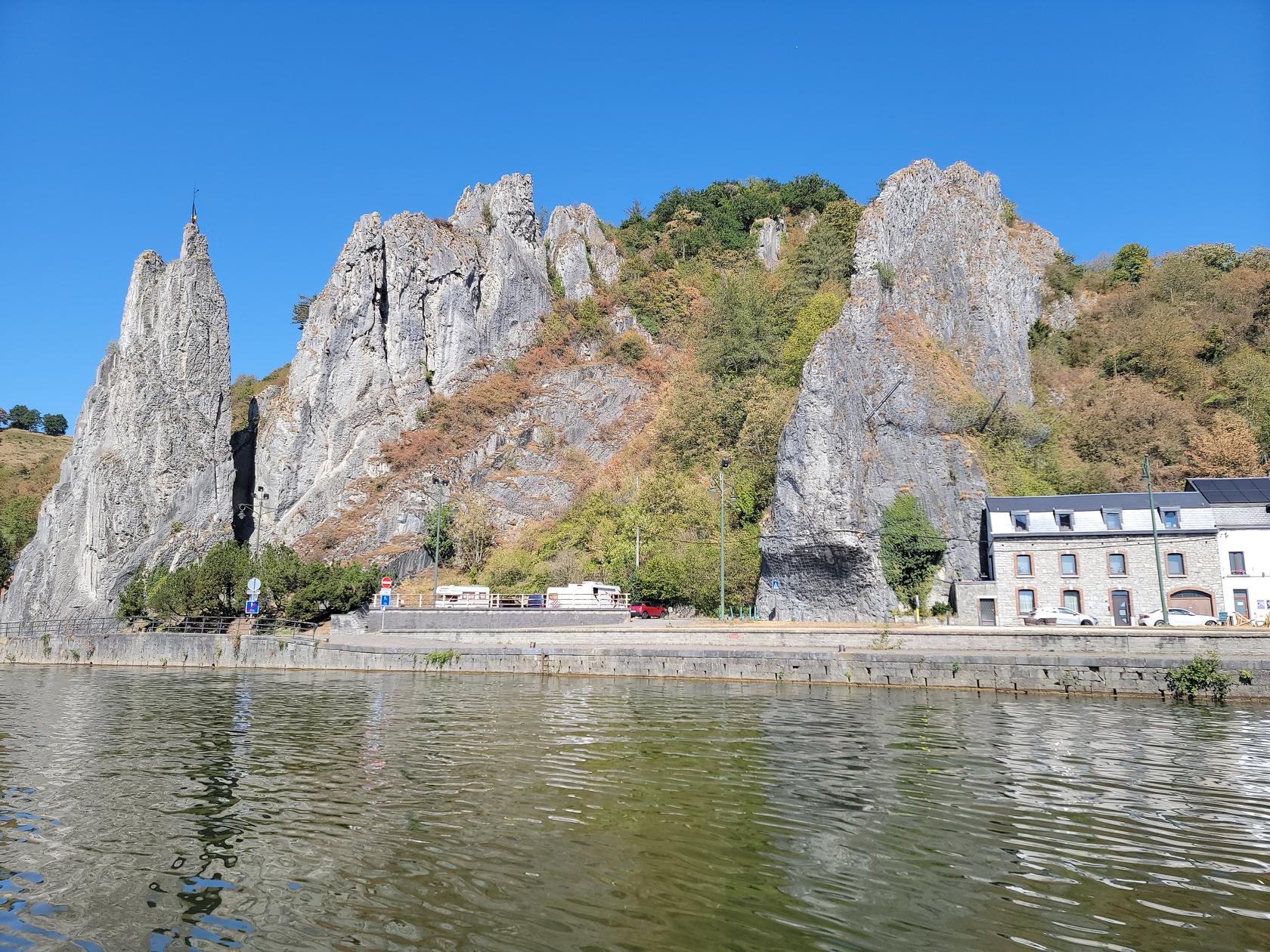
A fifteen minute walk down the river promenade from our hotel was the Bayard Rock. Apparently split in two by the soldiers of Louis XIV, who conquered the town in order to build a road. Of course, there is also a fictious account of how it was split by the hoof of a horse carrying four sons who were fleeing Charlemagne through the Ardennes Forest.
Meuse River – Rocher Bayard Walk – Dinant, Belgium
Meuse River – Rocher Bayard Walk – Dinant, Belgium
Bayard Rock – Rocher Bayard Walk – Dinant, Belgium
Bayard Rock – Rocher Bayard Walk – Dinant, Belgium
Meuse River – Rocher Bayard Walk – Dinant, Belgium
Meuse River and Houses – Rocher Bayard Walk – Dinant, Belgium
Today if you hold your head up far enough you will notice how the rock on the top has been fortified and strengthened through the use of steel bands and rods that have been inserted into the rocks.
Bayard Rock – Rocher Bayard Walk – Dinant, Belgium
Bayard Rock – Rocher Bayard Walk – Dinant, Belgium
Bayard Rock – Rocher Bayard Walk – Dinant, Belgium
Bayard Rock – Rocher Bayard Walk – Dinant, Belgium
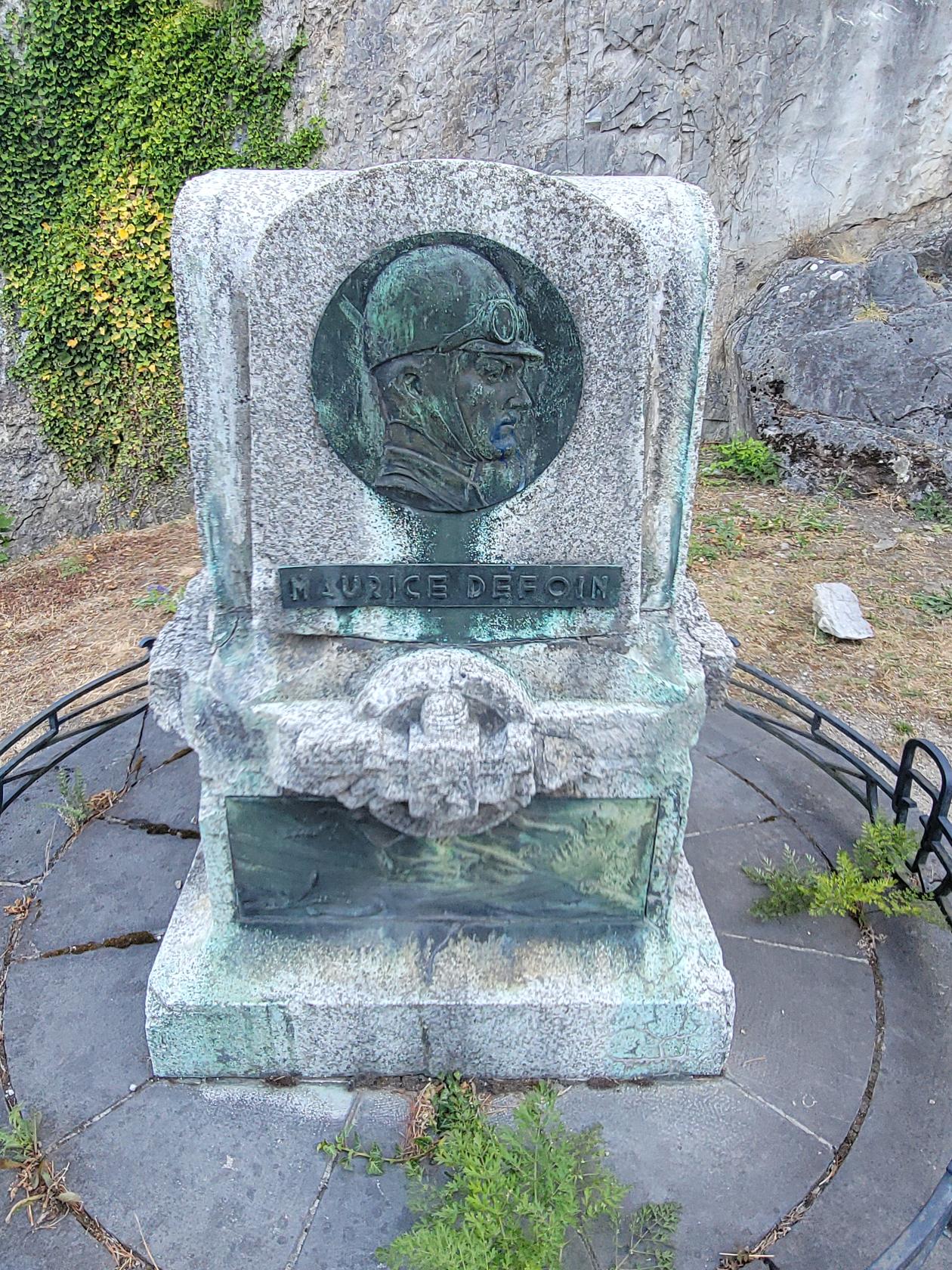
Maurice Defoin Memorial – Rocher Bayard Walk – Dinant, Belgium
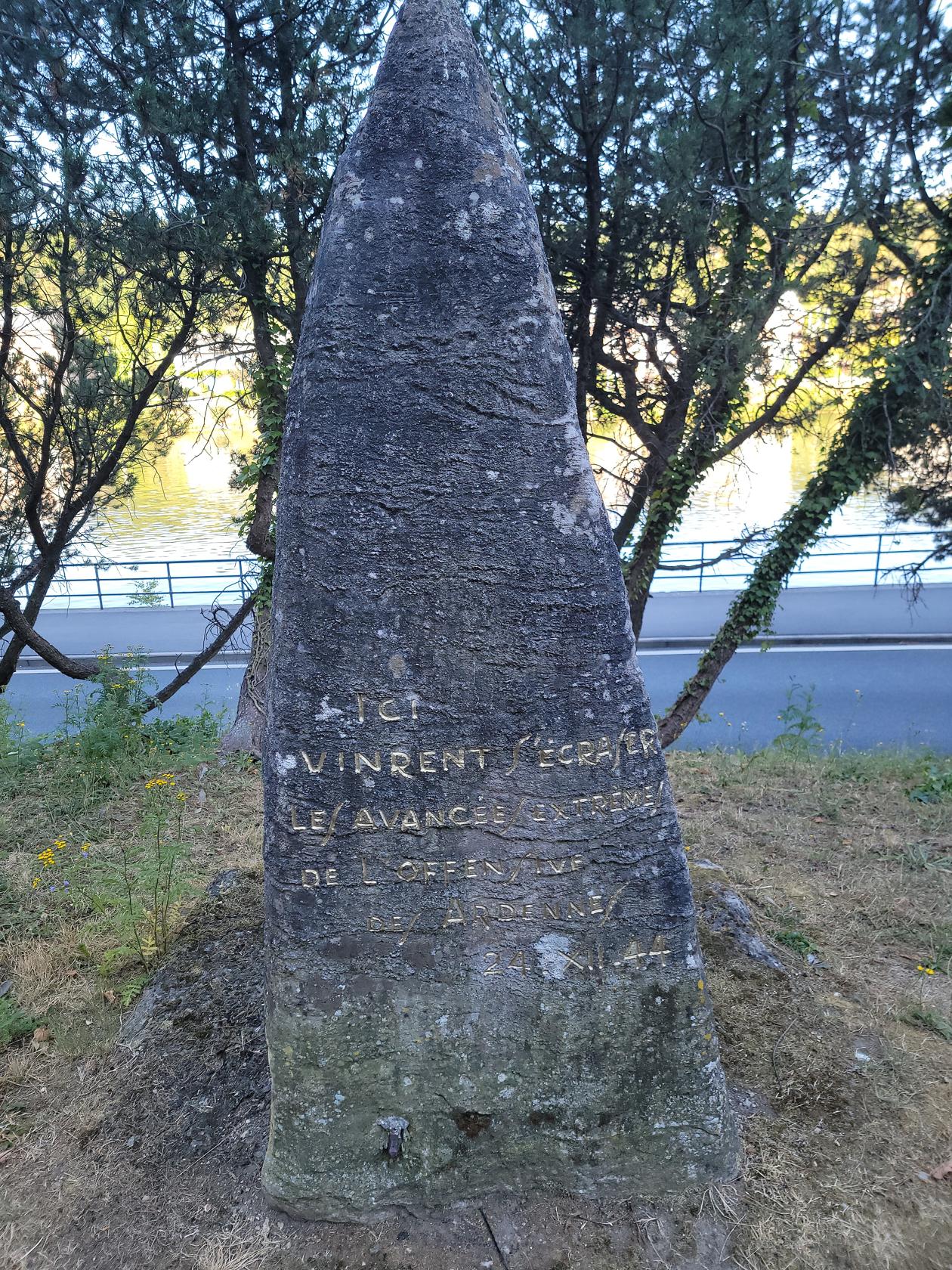
Military Memorial – Rocher Bayard Walk – Dinant, Belgium
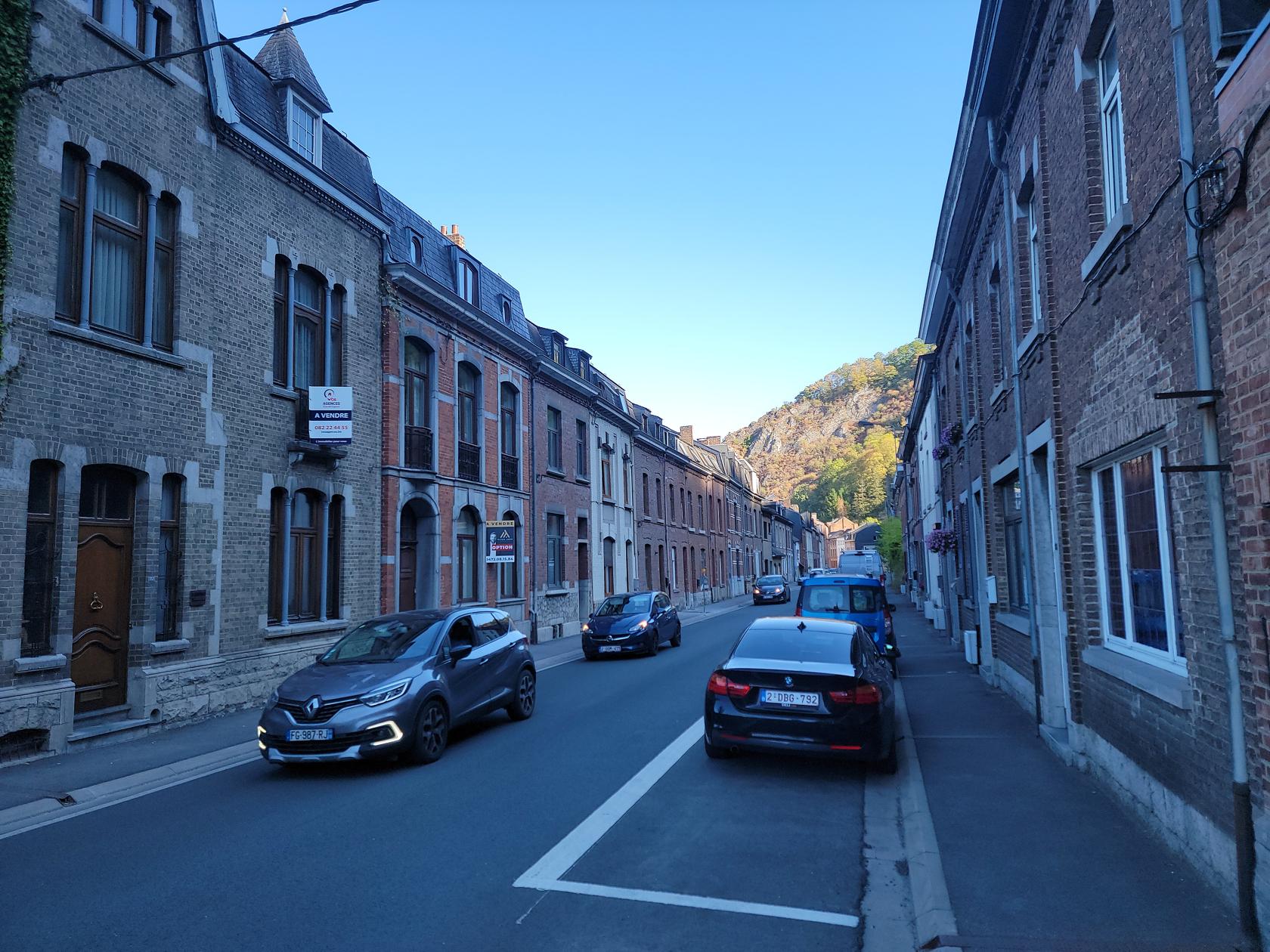
Row Housing – Rocher Bayard Walk – Dinant, Belgium
Patti and Bayard Rock – Rocher Bayard Walk – Dinant, Belgium
Freyer River Cruise
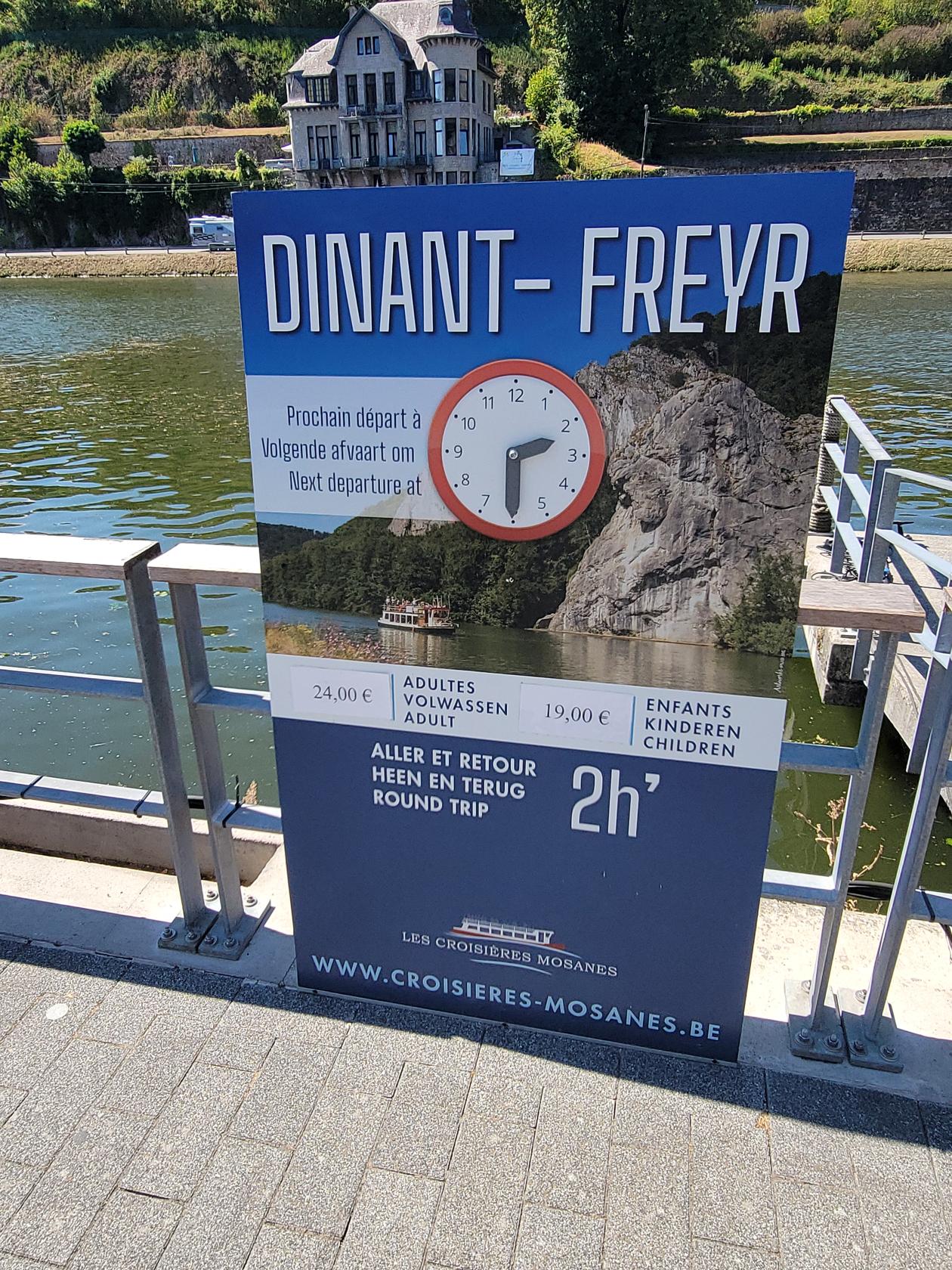
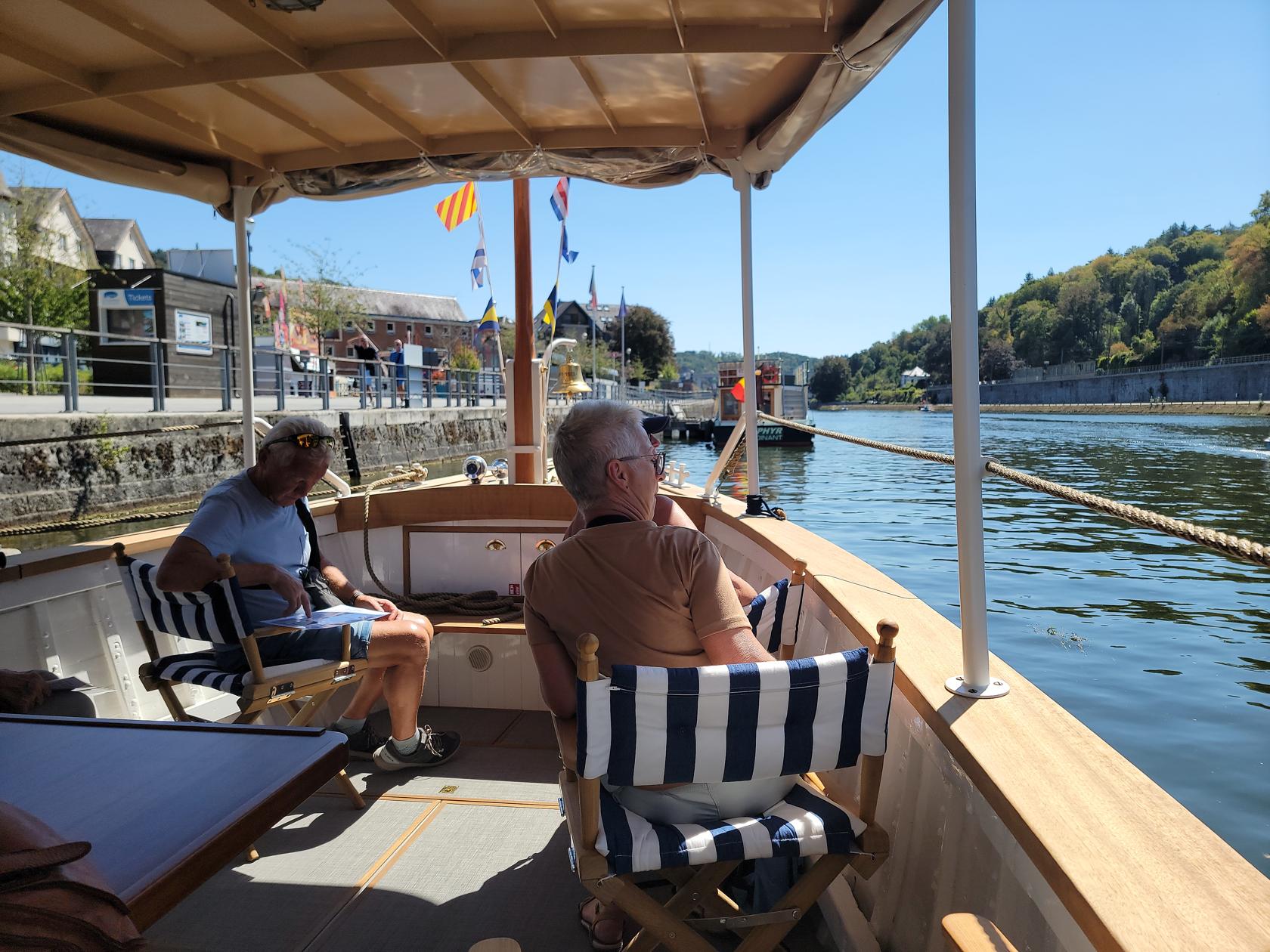
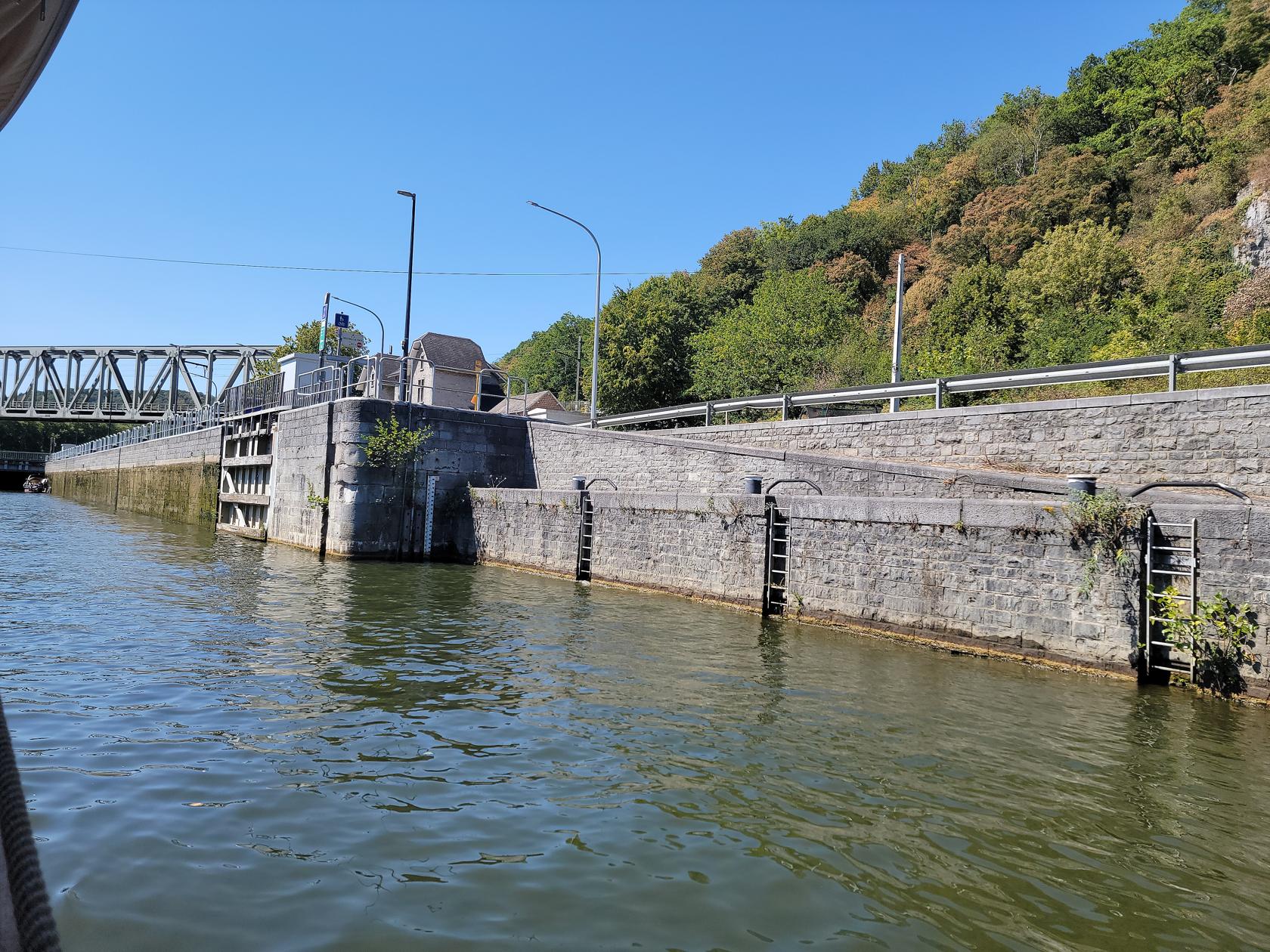
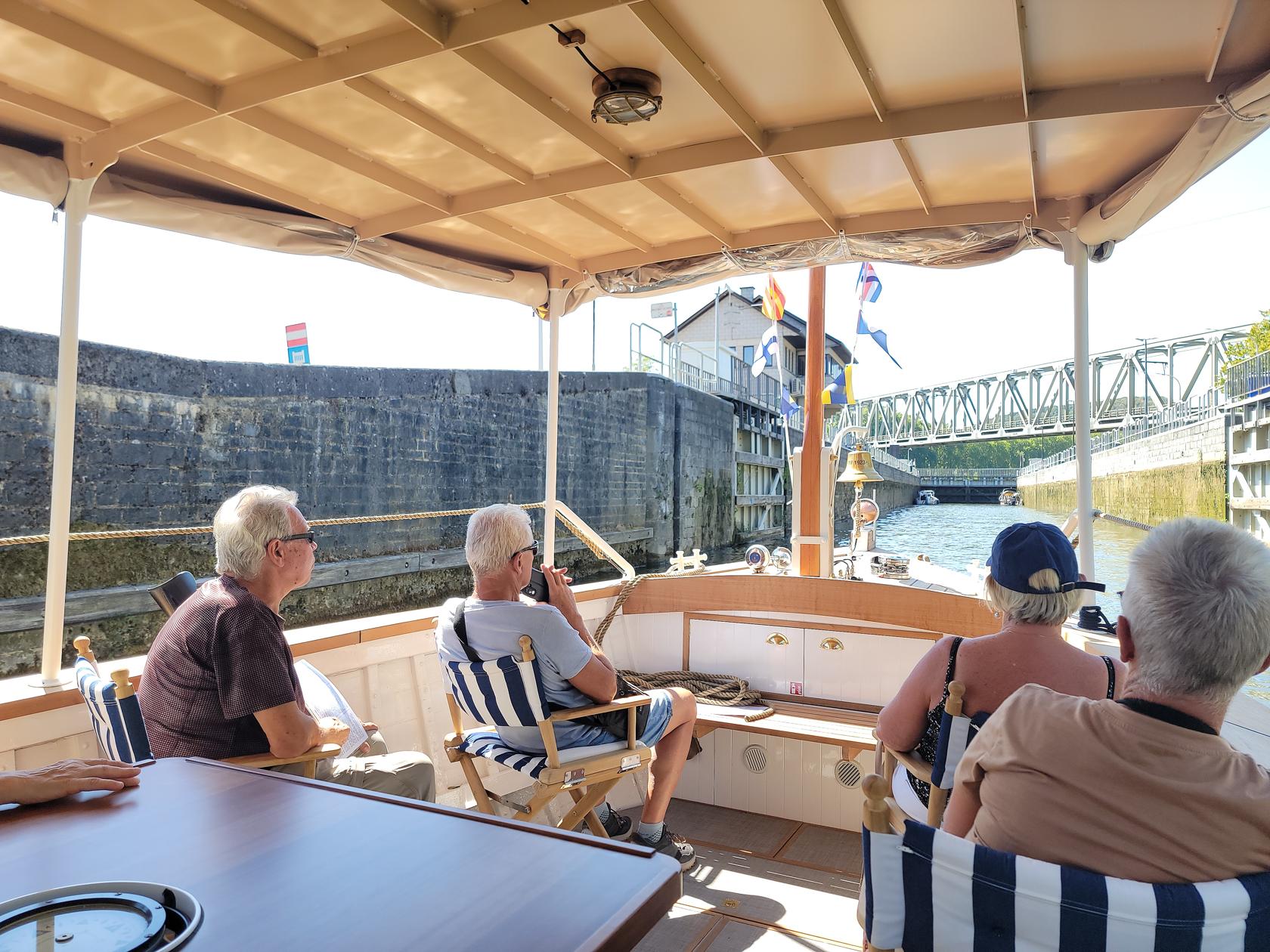
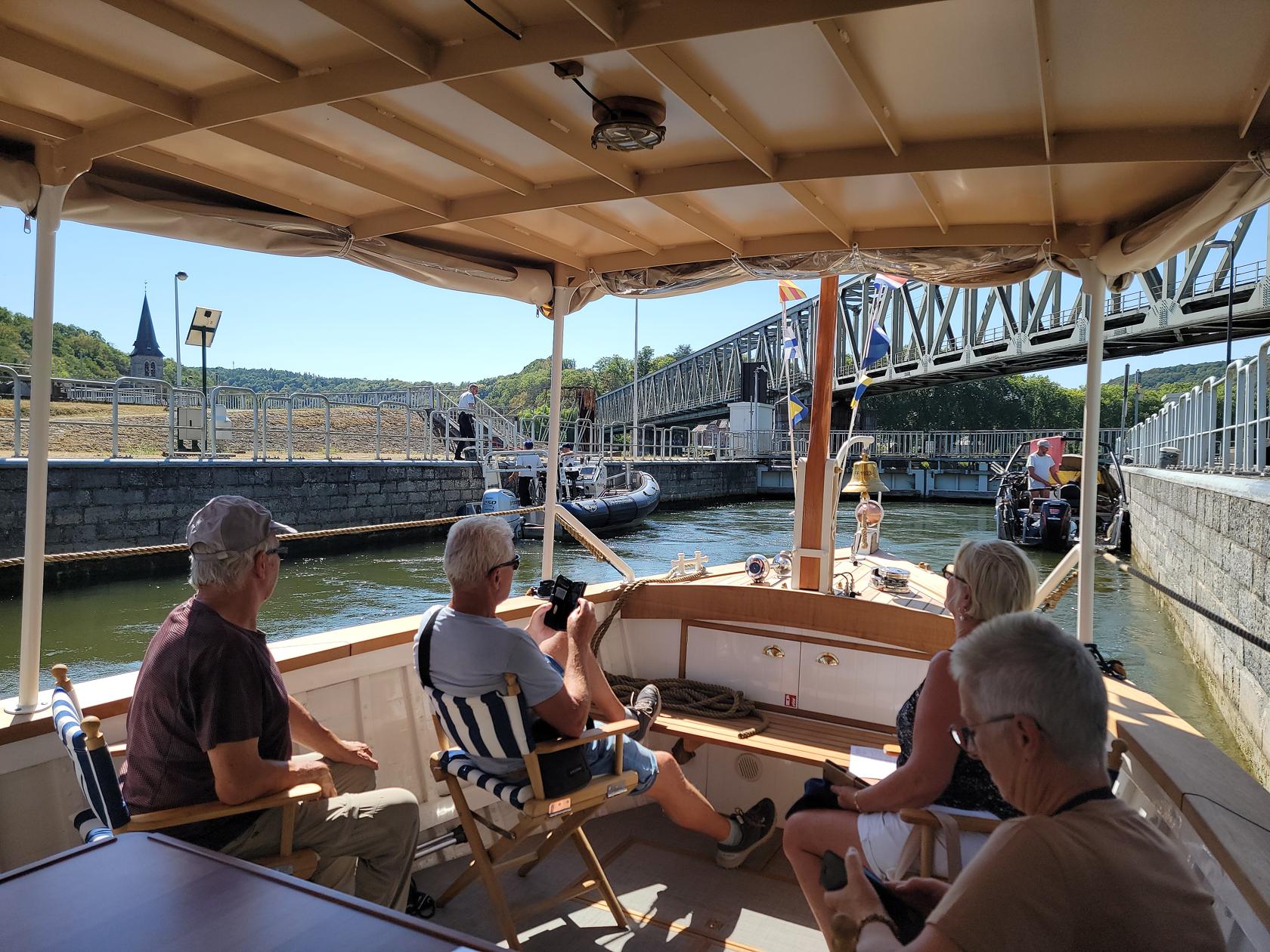
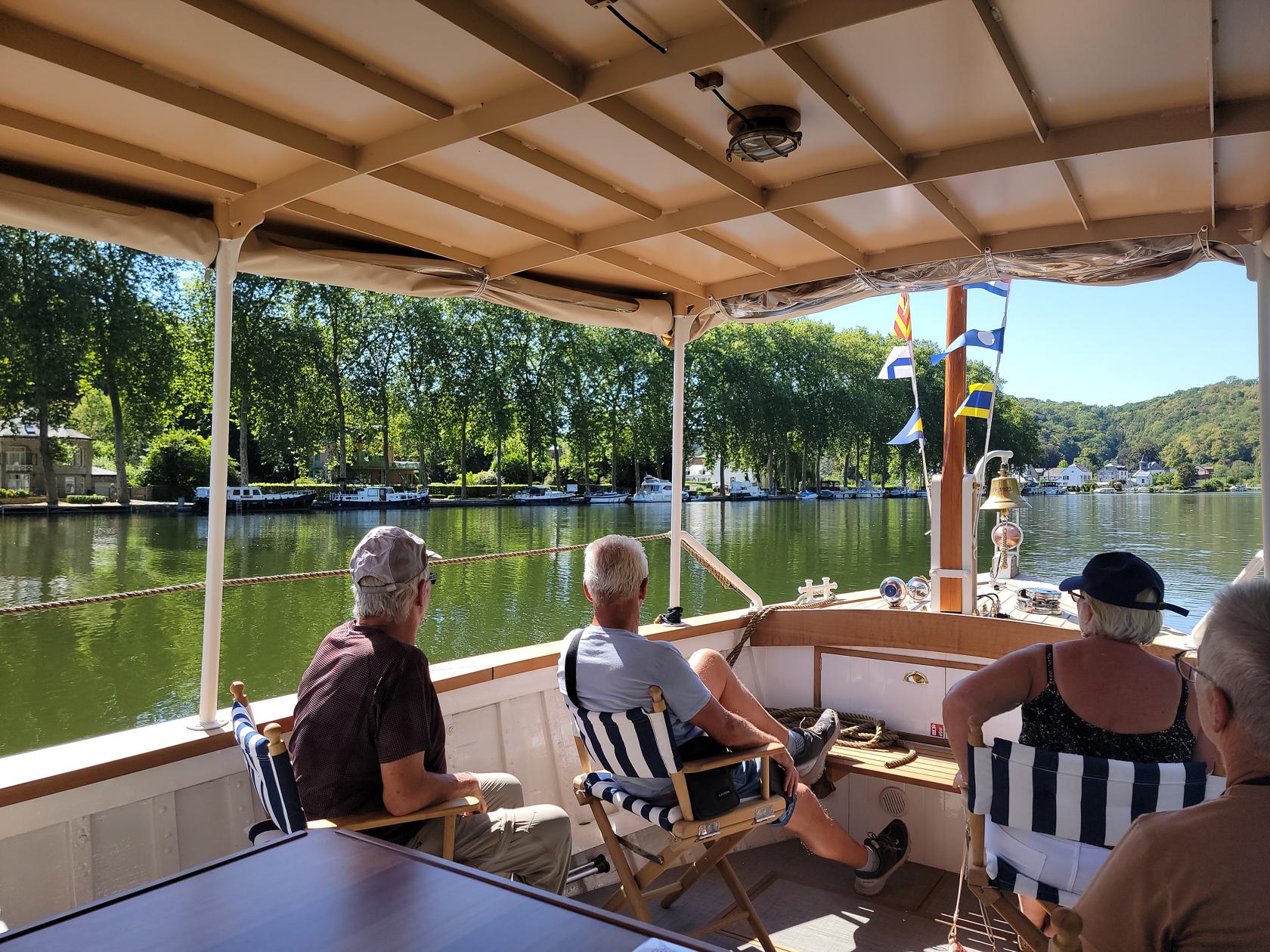
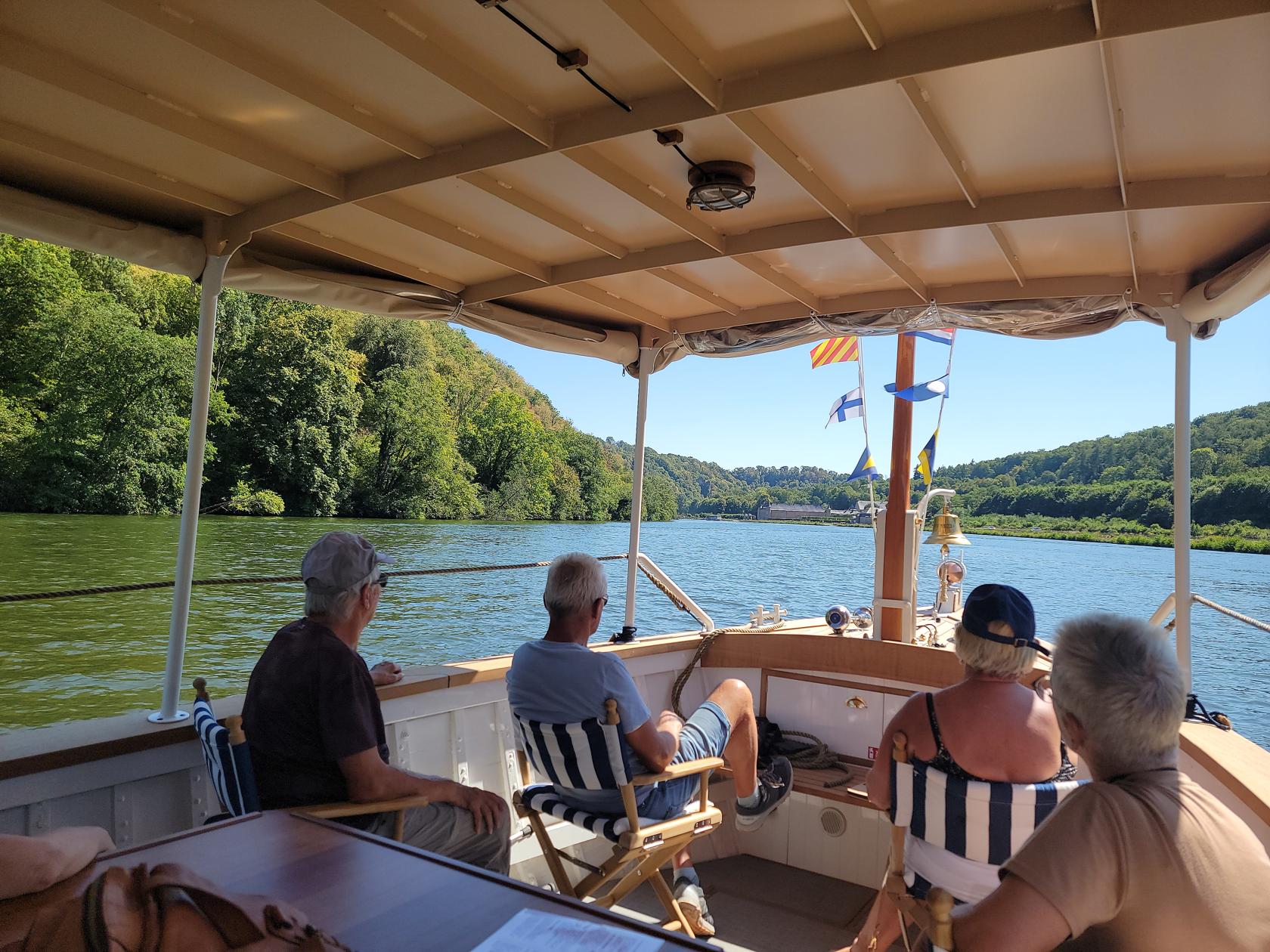
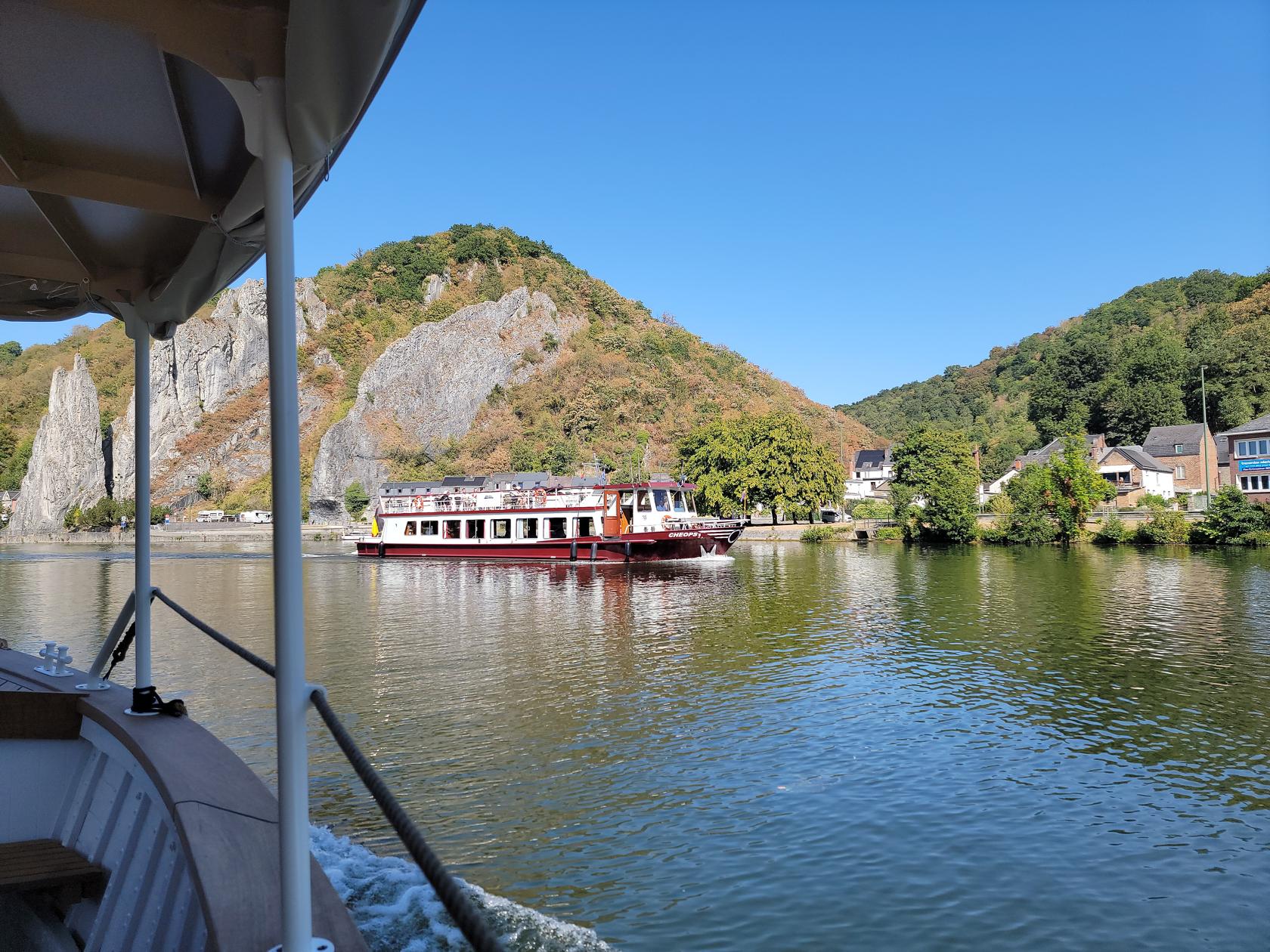
There are two cruises that are offered, a forty-five minute and a two hour. We chose the latter and spent most of our time in the Meuse river lock system, which honestly is perhaps the most interesting part of this trip.
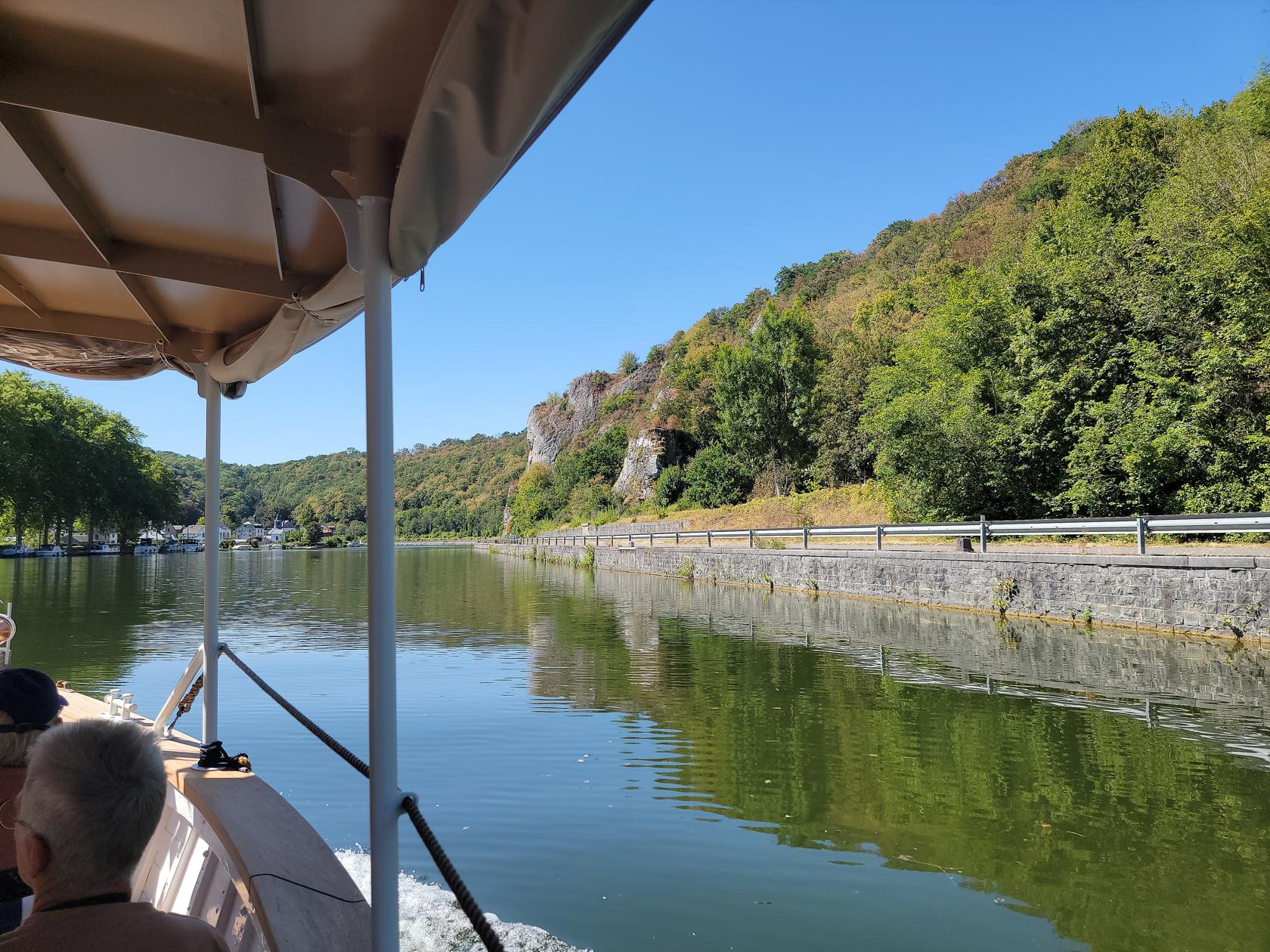
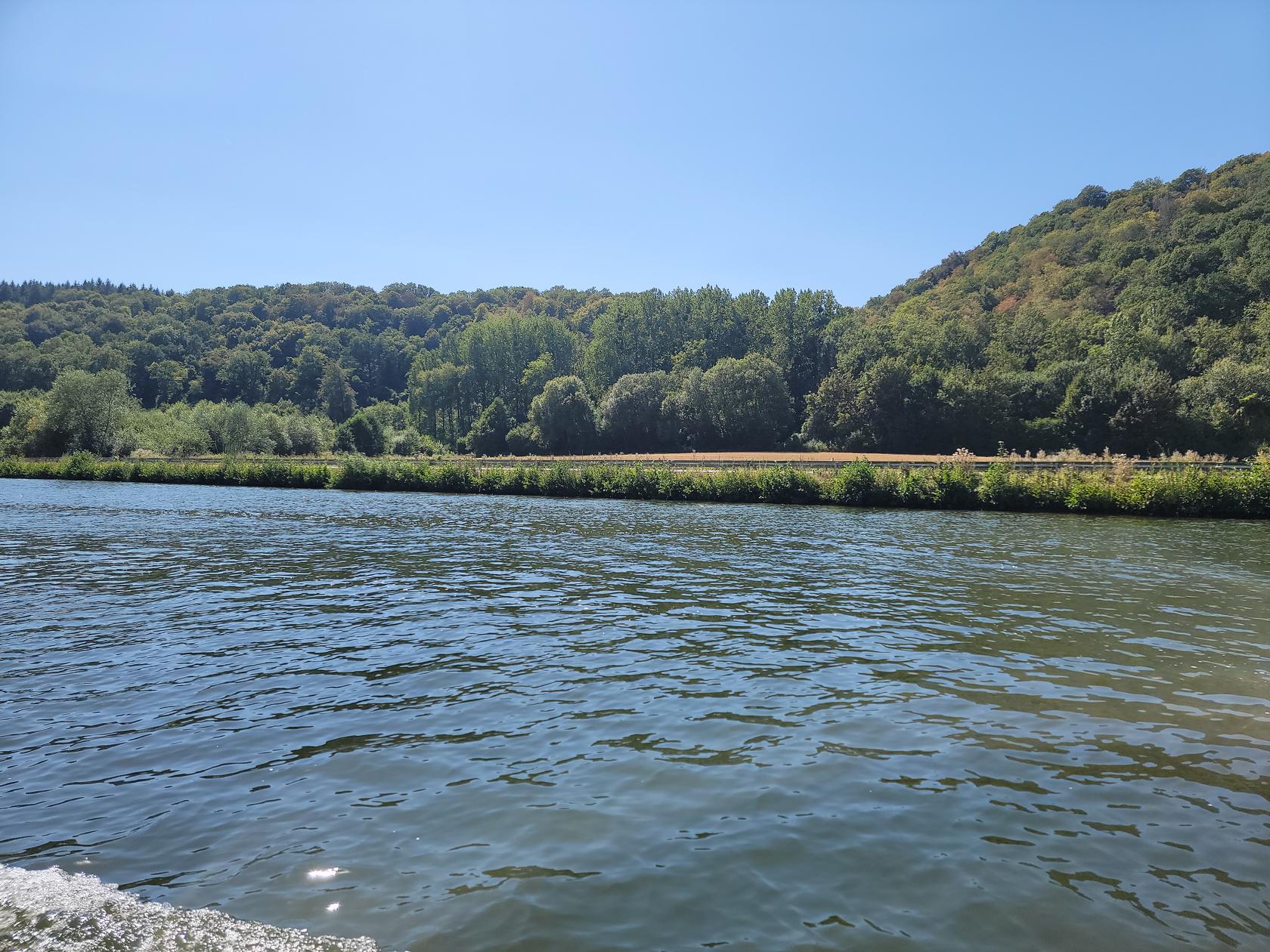
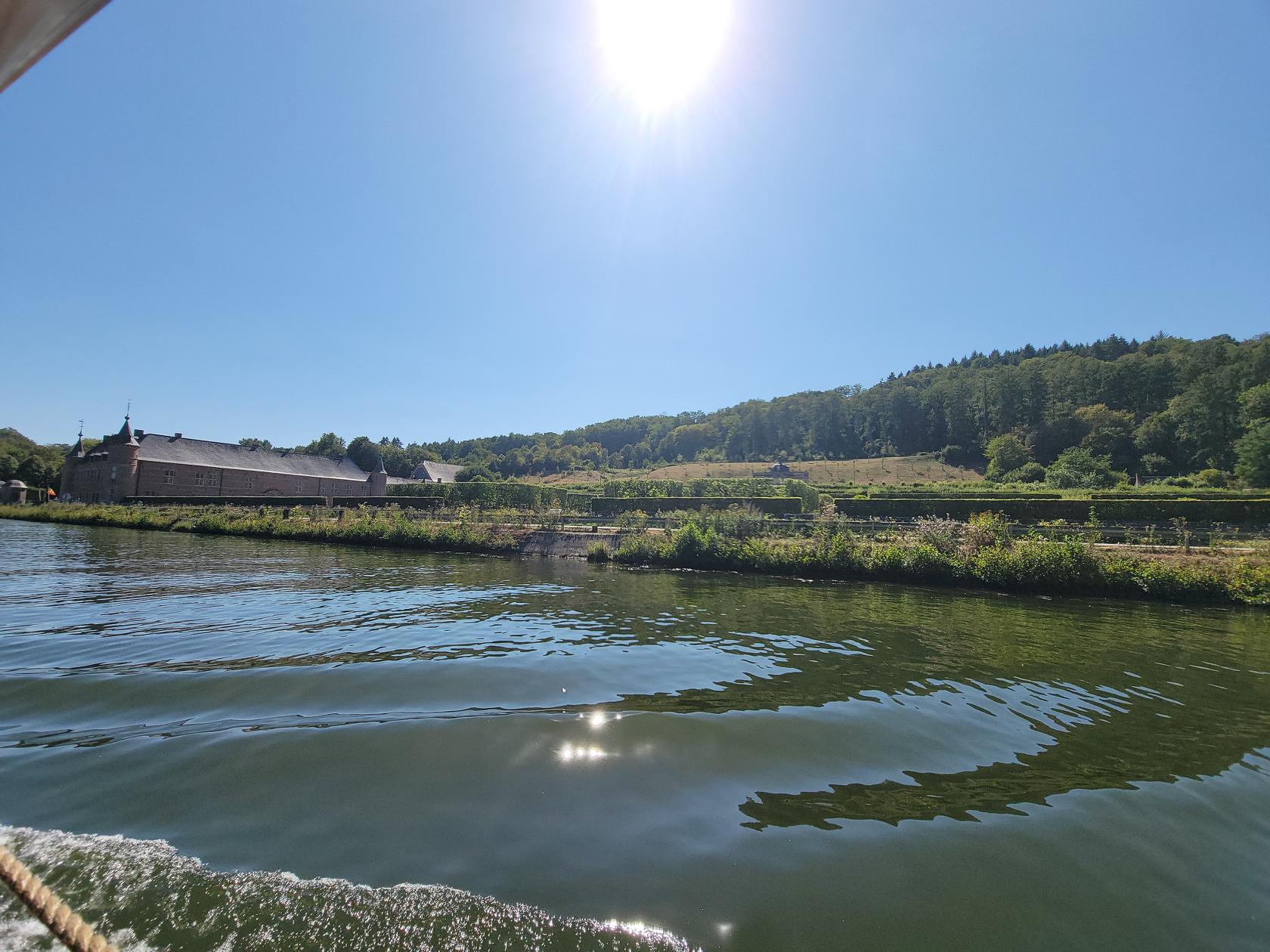
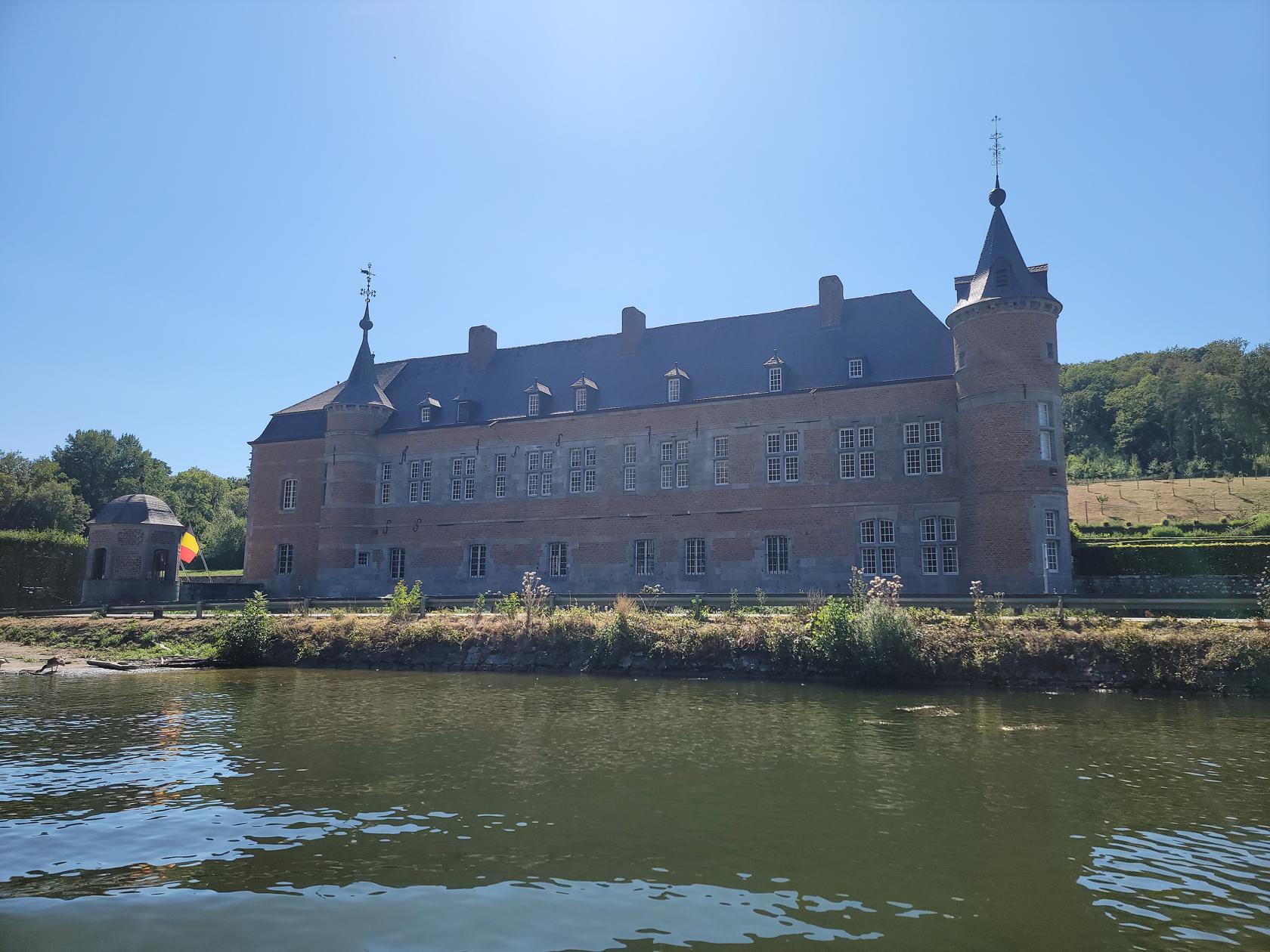
Honestly, the length of river that goes to the Freyer Chateau is not very interesting at all, as is the chateau. There are some interesting rock formations in the portion of the river system, but aside from that, it was rather uninteresting.
Freyer Chateau – Freyer Cruise – Dinant, Belgium
Freyer Chateau – Freyer Cruise – Dinant, Belgium
Plateau Rock Formations – Freyer Cruise – Dinant, Belgium
Plateau Rock Formations – Freyer Cruise – Dinant, Belgium
Plateau Rock Formations – Freyer Cruise – Dinant, Belgium
Reentering Lock on Return – Freyer Cruise – Dinant, Belgium
Bayard Rock – Freyer Cruise – Dinant, Belgium
Bayard Rock – Freyer Cruise – Dinant, Belgium
Dinant – Freyer Cruise – Dinant, Belgium
Dinant – Freyer Cruise – Dinant, Belgium
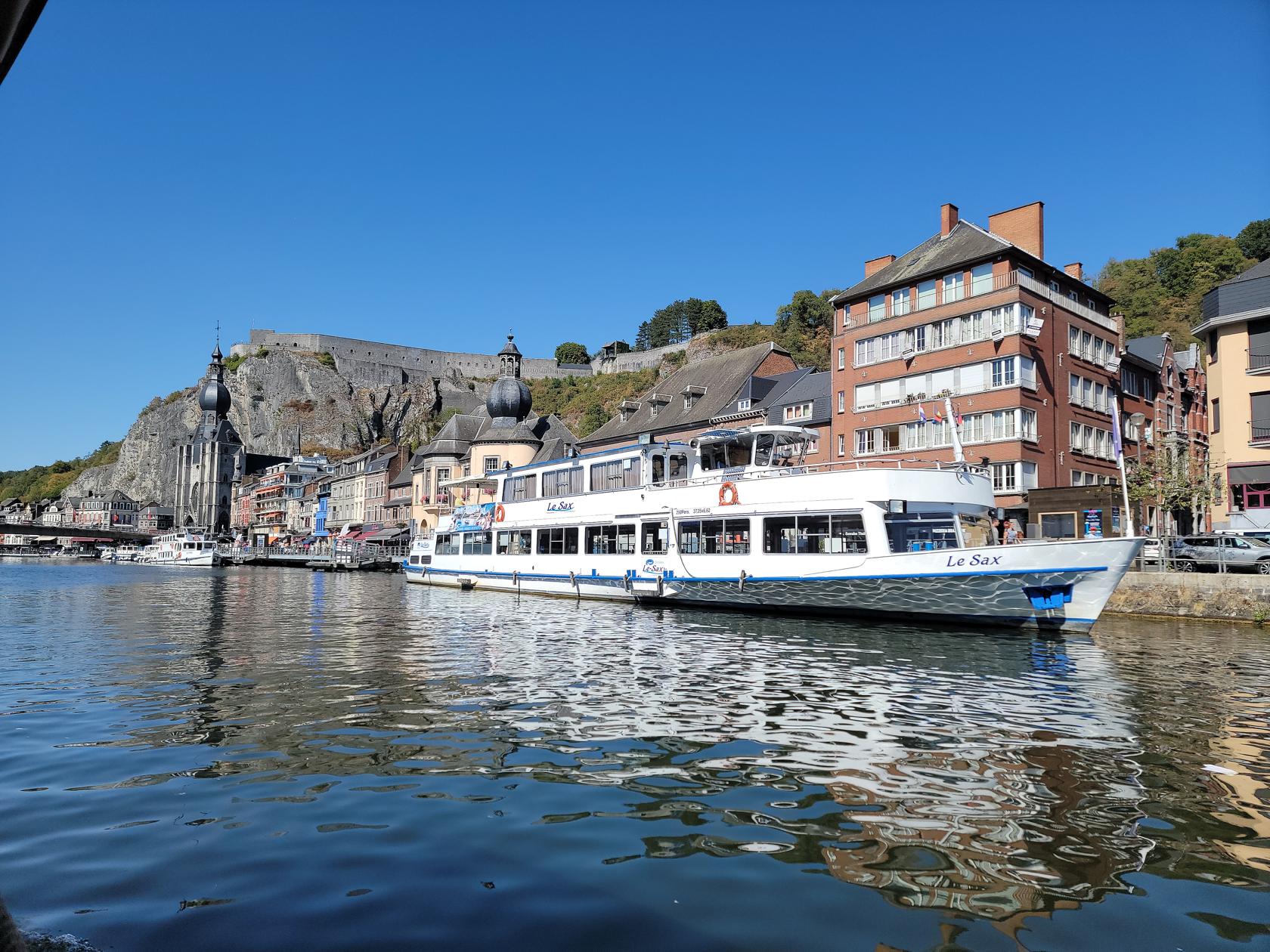
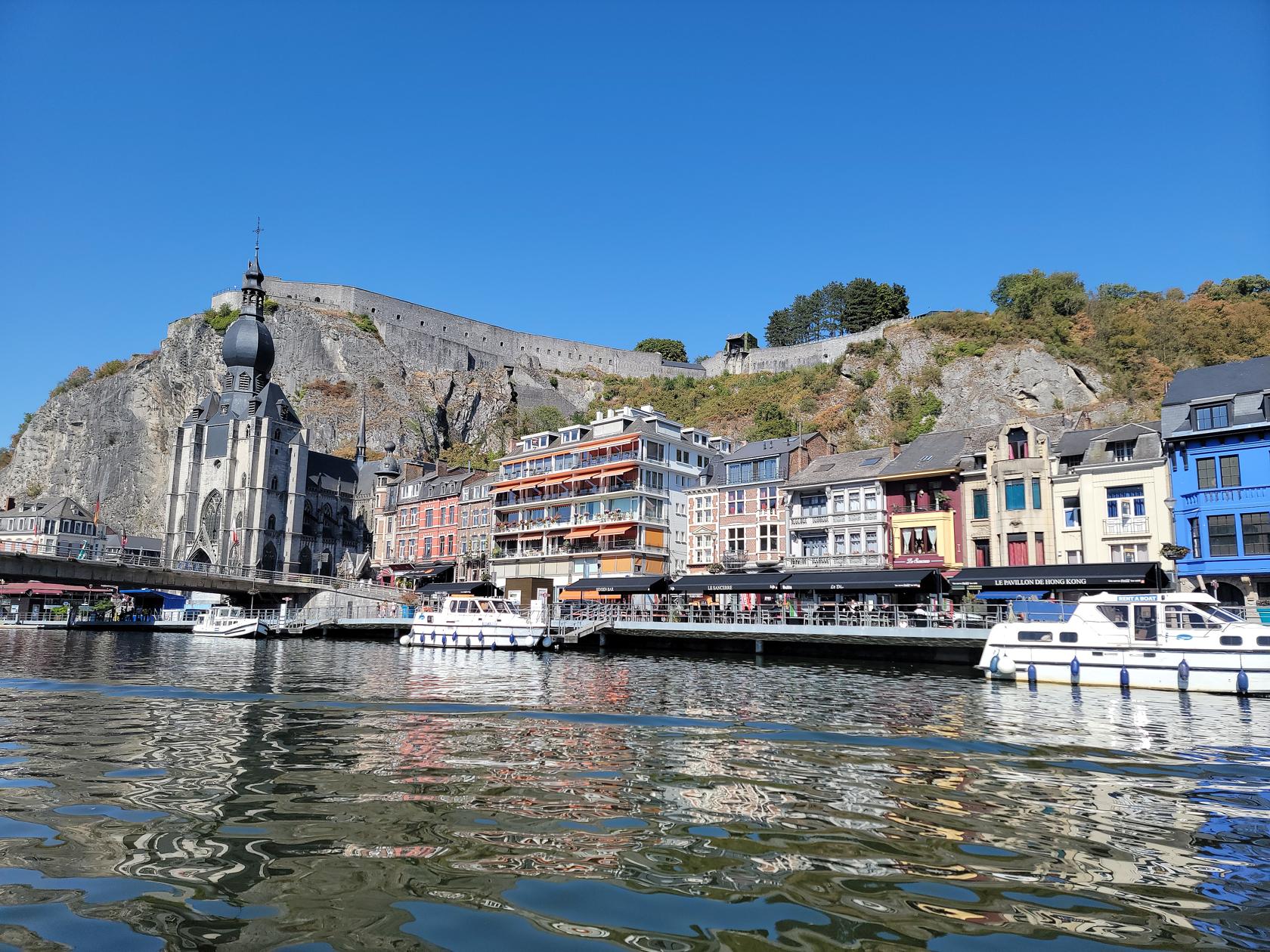
Collegiate Church and Fortress – Freyer Cruise – Dinant, Belgium
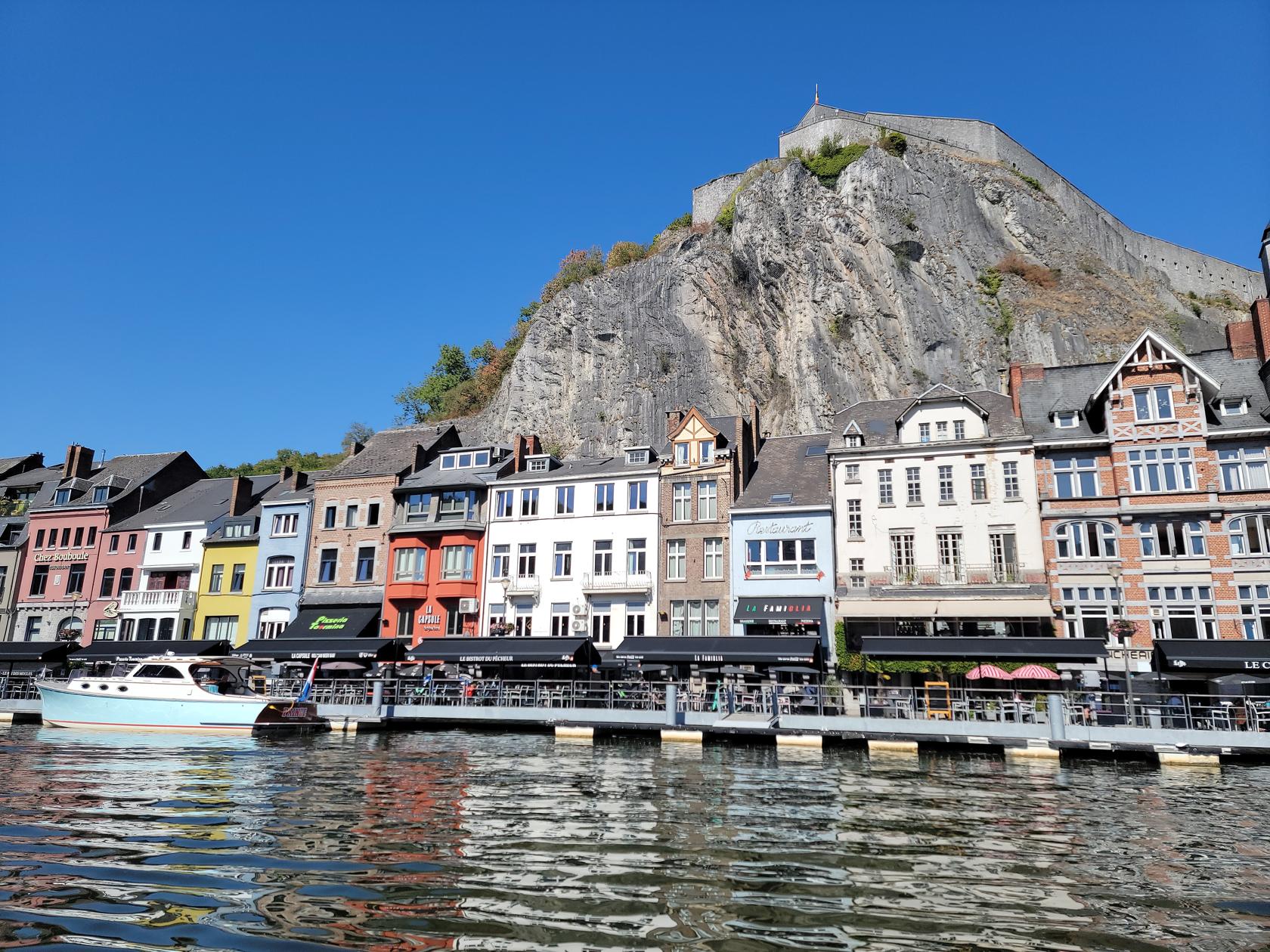
Fortress and Cafes – Freyer Cruise – Dinant, Belgium
Restaurants
The restaurants in Dinant a frustrating to say the least, not worth the effort to say the most. Frankly, if the option was open to me I would have gone to the grocery store and bought food and prepared my own meals. The best by far was the Chinese restaurant below. More than one restaurant that we tried to go to was either not open on the day, were supposed to be open but weren’t, or were closed for good, even though their online presences said they were still in business.
L’Inattendu
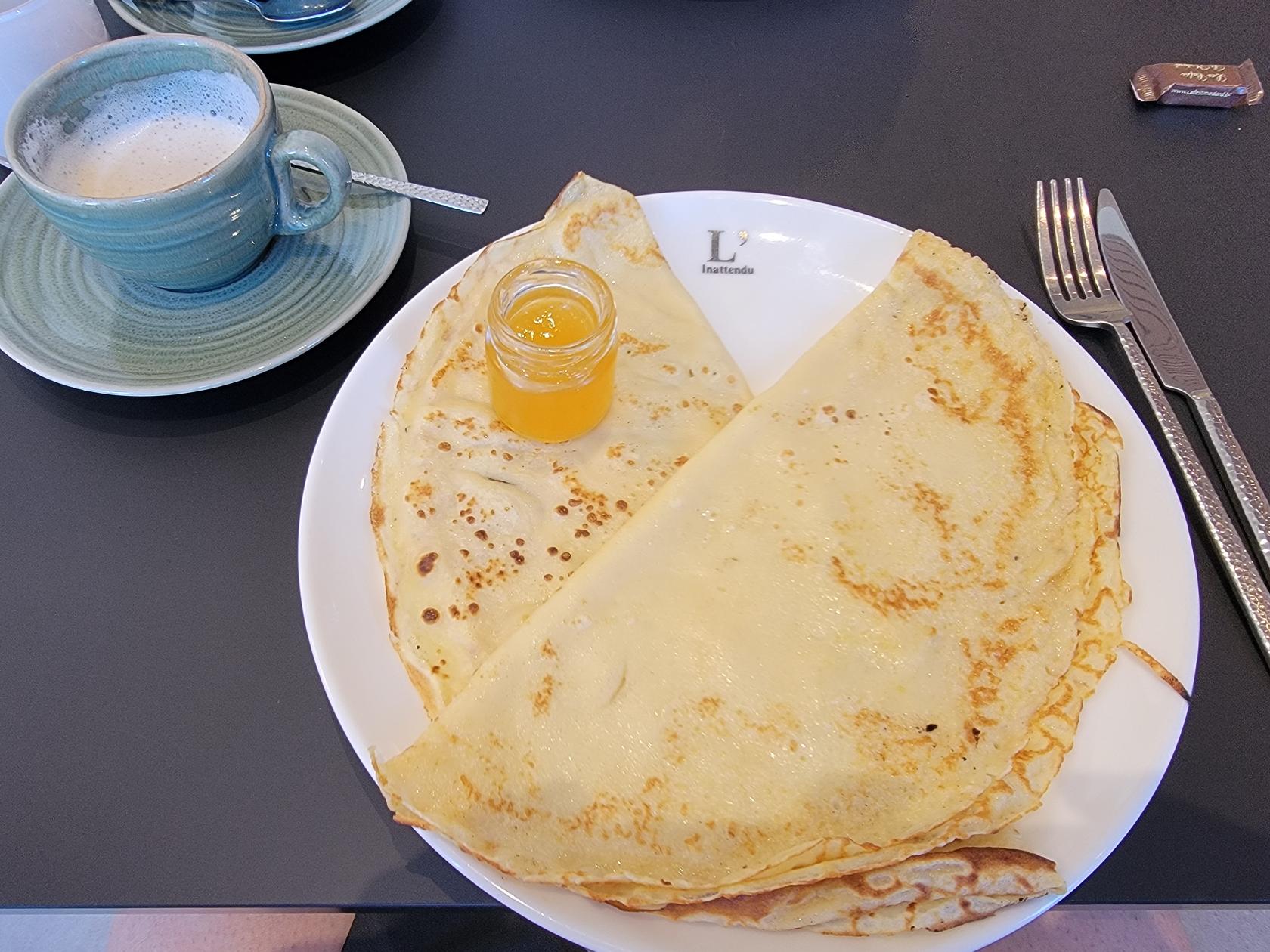
A very small breakfast place that is uncommonly open when you expect a breakfast place to be open (though not necessarily in Belgium), L’Inattendu is there to serve. We found the food very good and there is enough on the menu to satisfy most people. We went here several times just because the options are limited in this town and the crepes are really good.
L’Inattendu Bistro – Dinant, Belgium
Le Cerf Vert
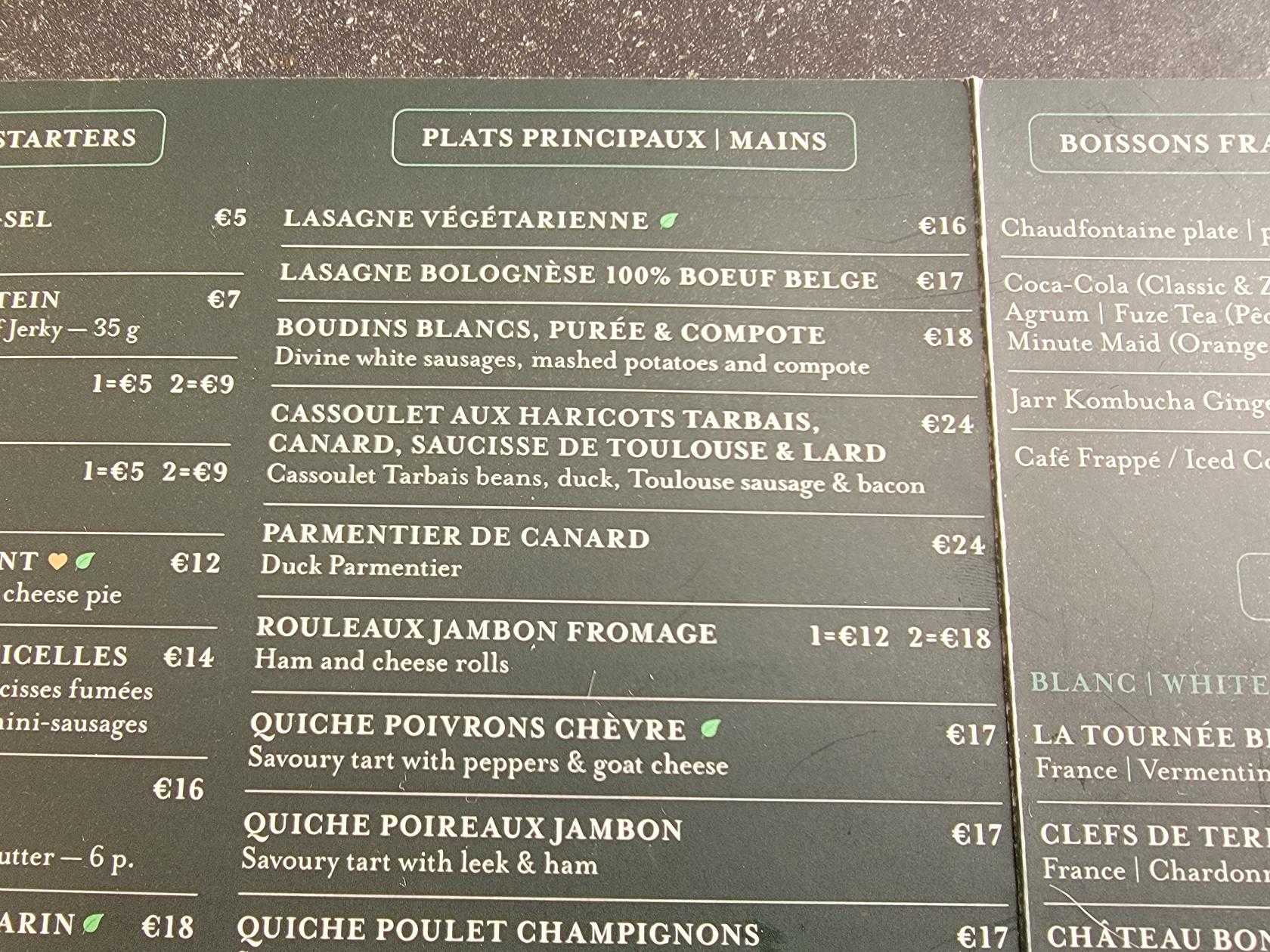
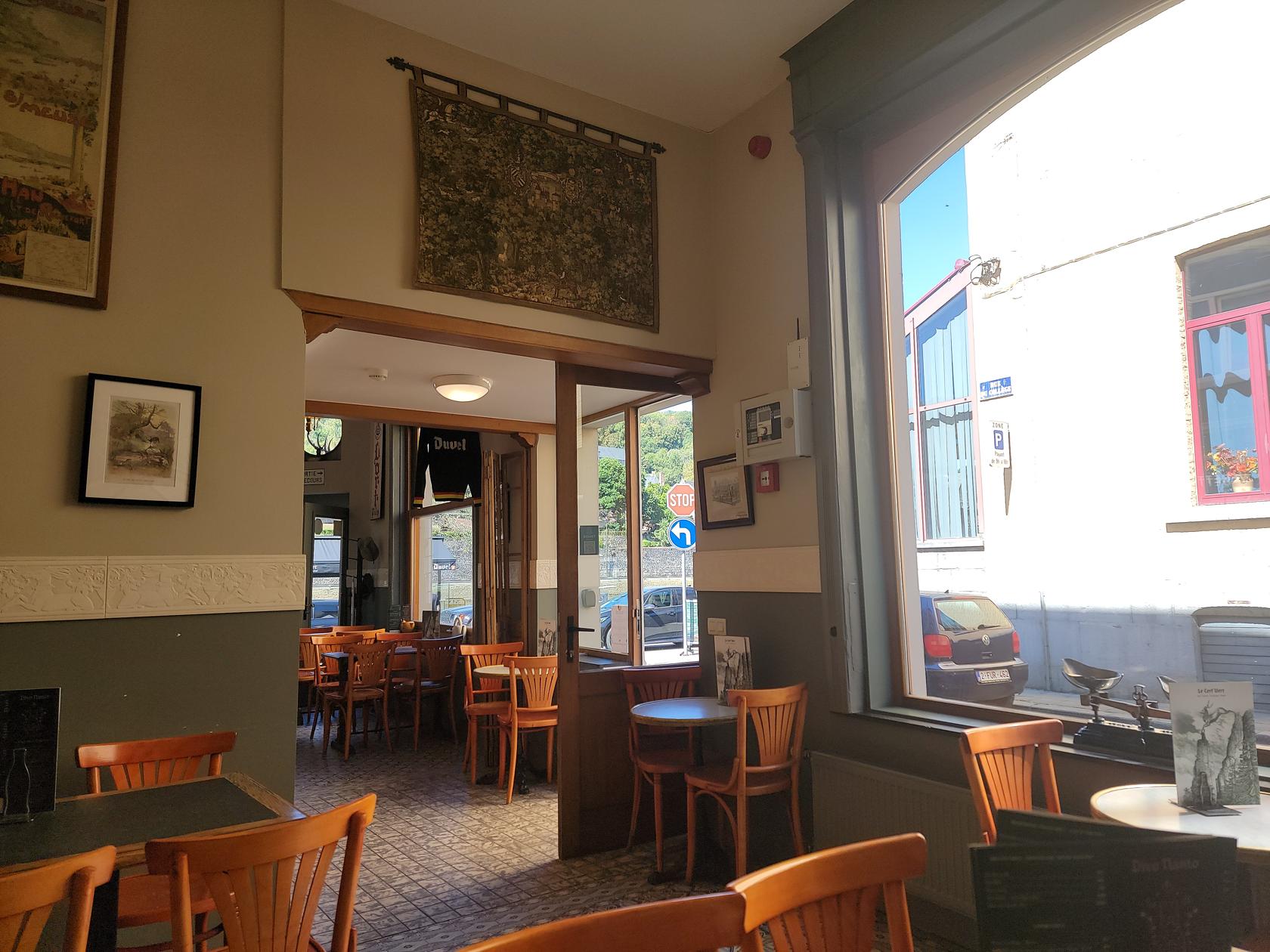
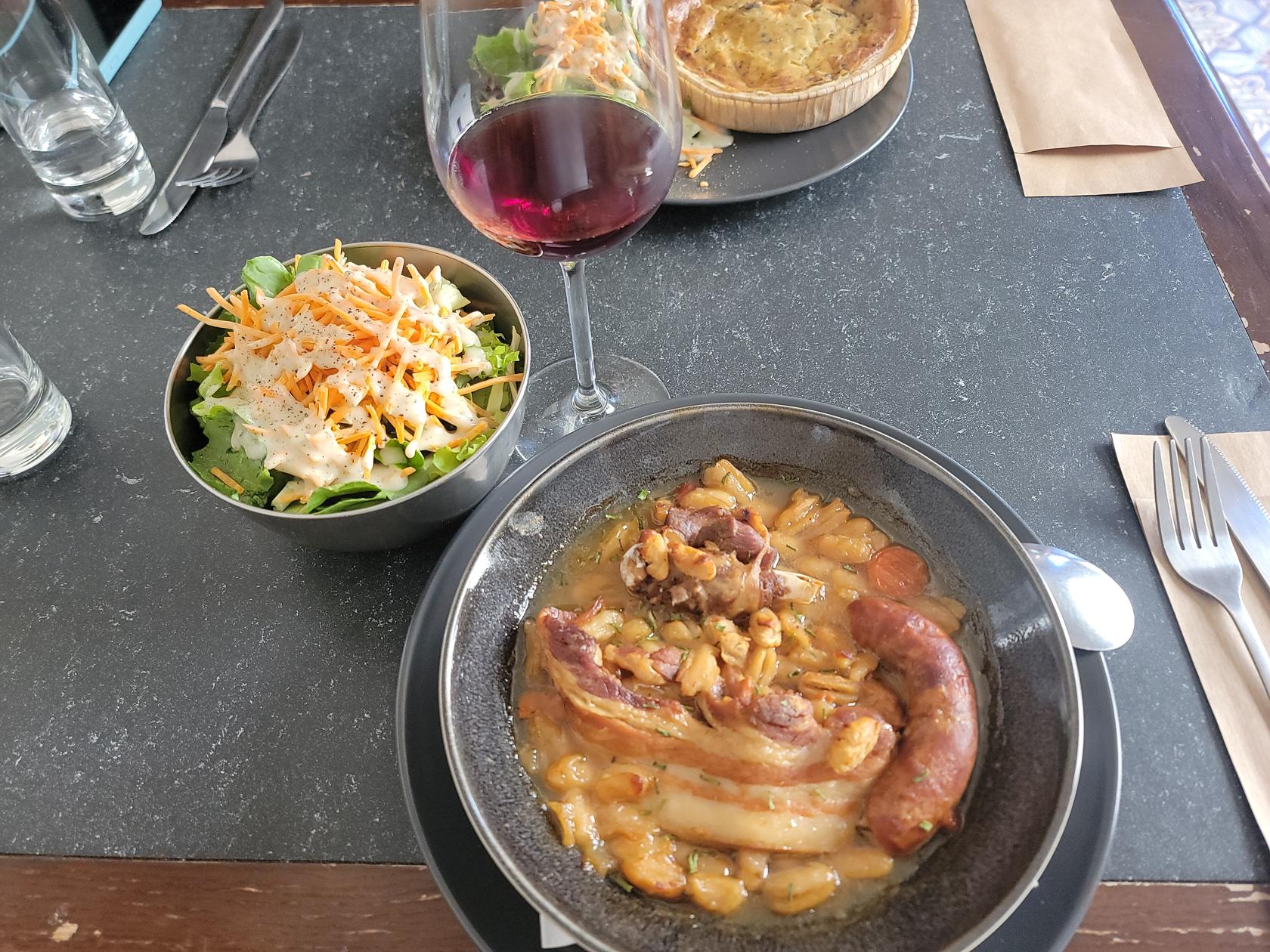
The Le Cerf Vert, or green stag, is one of the few places that is open for lunch that is worth a visit. Though the service is terrible, the food is not bad. I can commend the Tarbaise Casserole.
Menu – Le Cert Vert – Dinant, Belgium
Inside – Le Cert Vert – Dinant, Belgium
Casserole and Side Salad – Le Cert Vert – Dinant, Belgium
Le Pavillion de Hong Kong
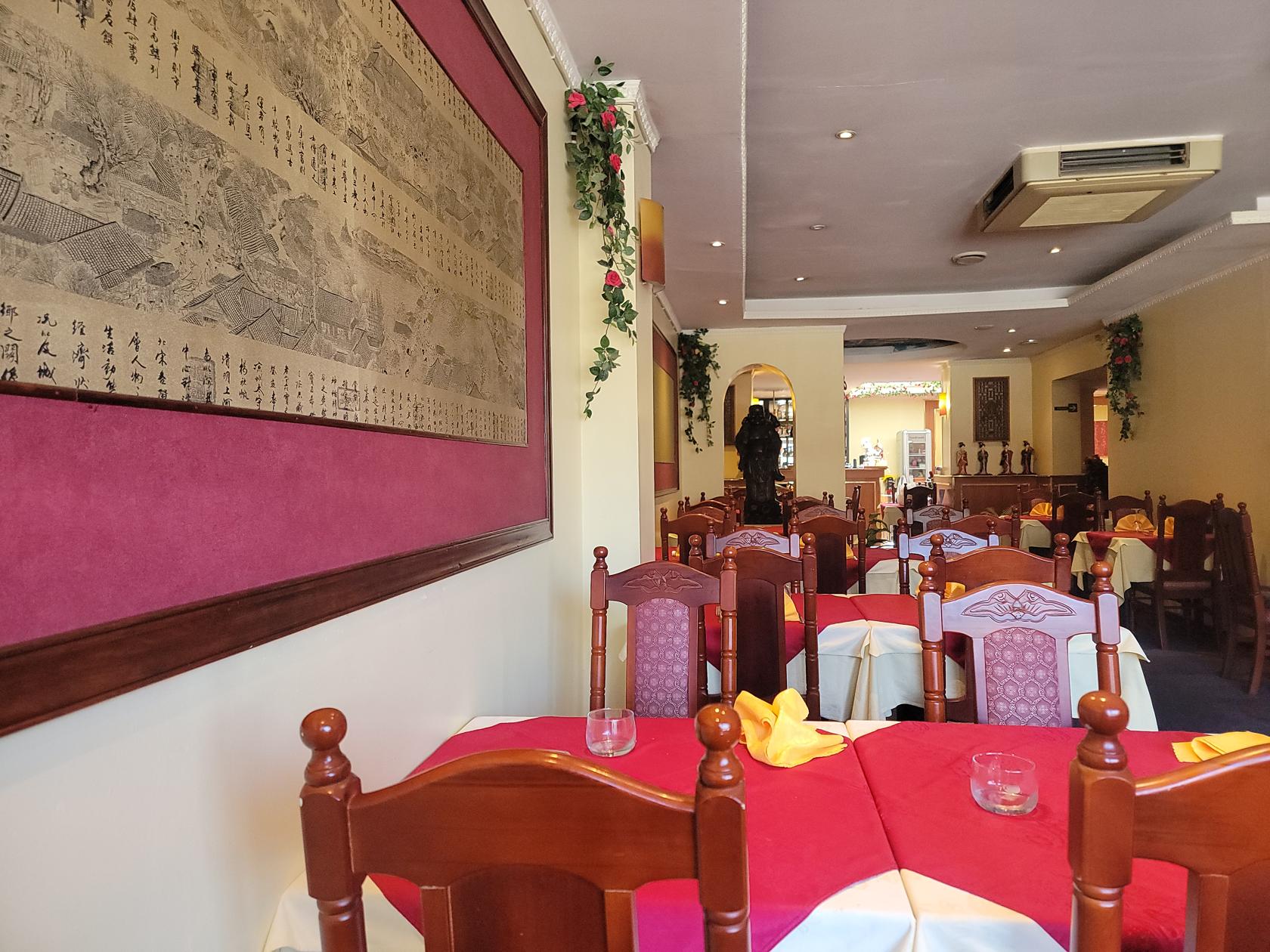
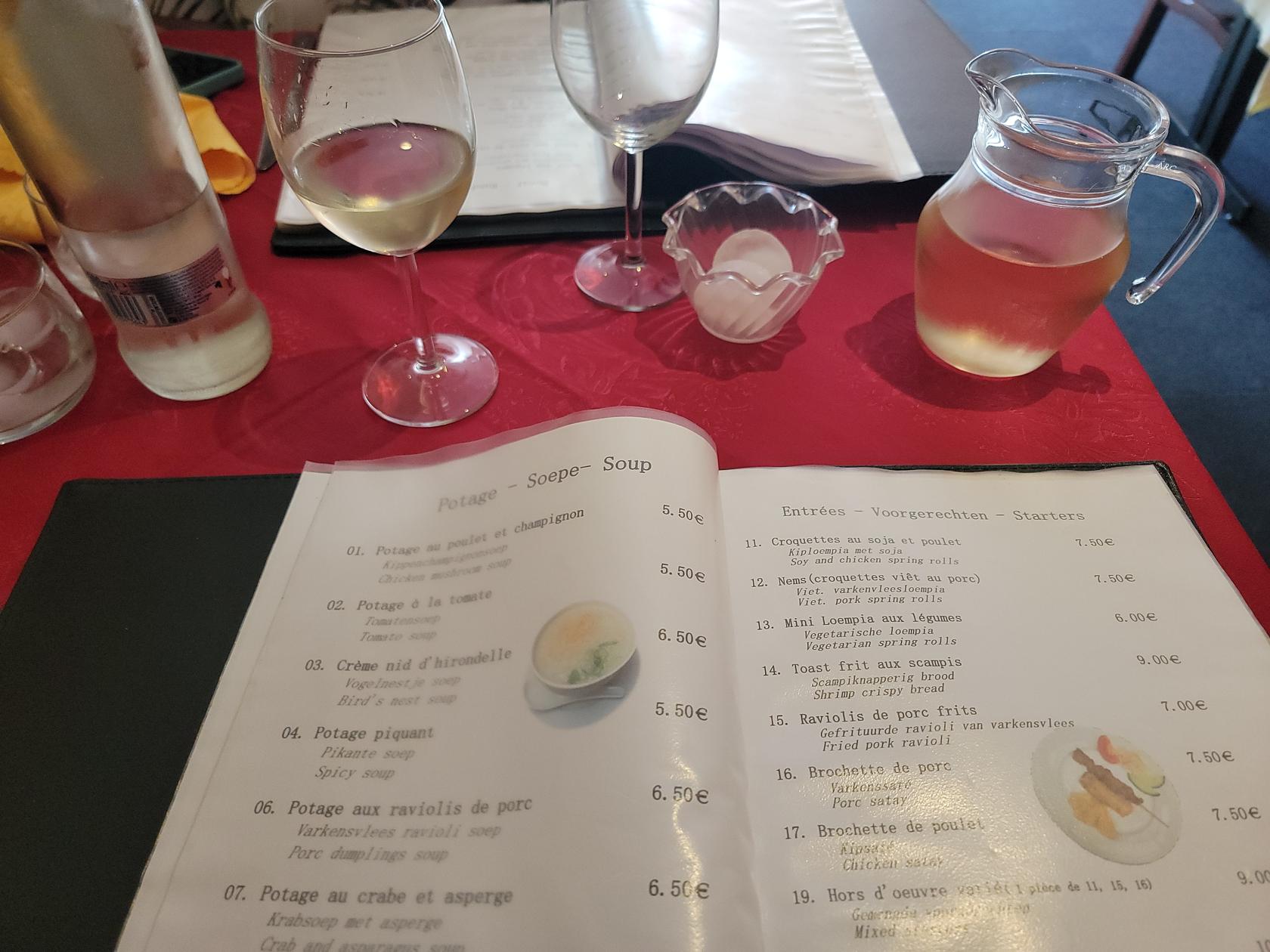
The Le Pavillion de Hong Kong is a Chinese restaurant and became our go-to place in a town where the restaurants simply do now want to open.
Menu – Le Pavillion de Hong Kong Chinese Restaurant – Dinant, Belgium
Menu – Le Pavillion de Hong Kong Chinese Restaurant – Dinant, Belgium
Conclusion
Personally I would not commend Dinant as a destination, unless you truly want to waste your time or have nothing else to do. This happens sometimes. Frankly there are far more interesting places to visit than this town. If you are passing through the area, it’s worth a short stop. But aside from that, it is only a strategic military point between some countries in Europe.
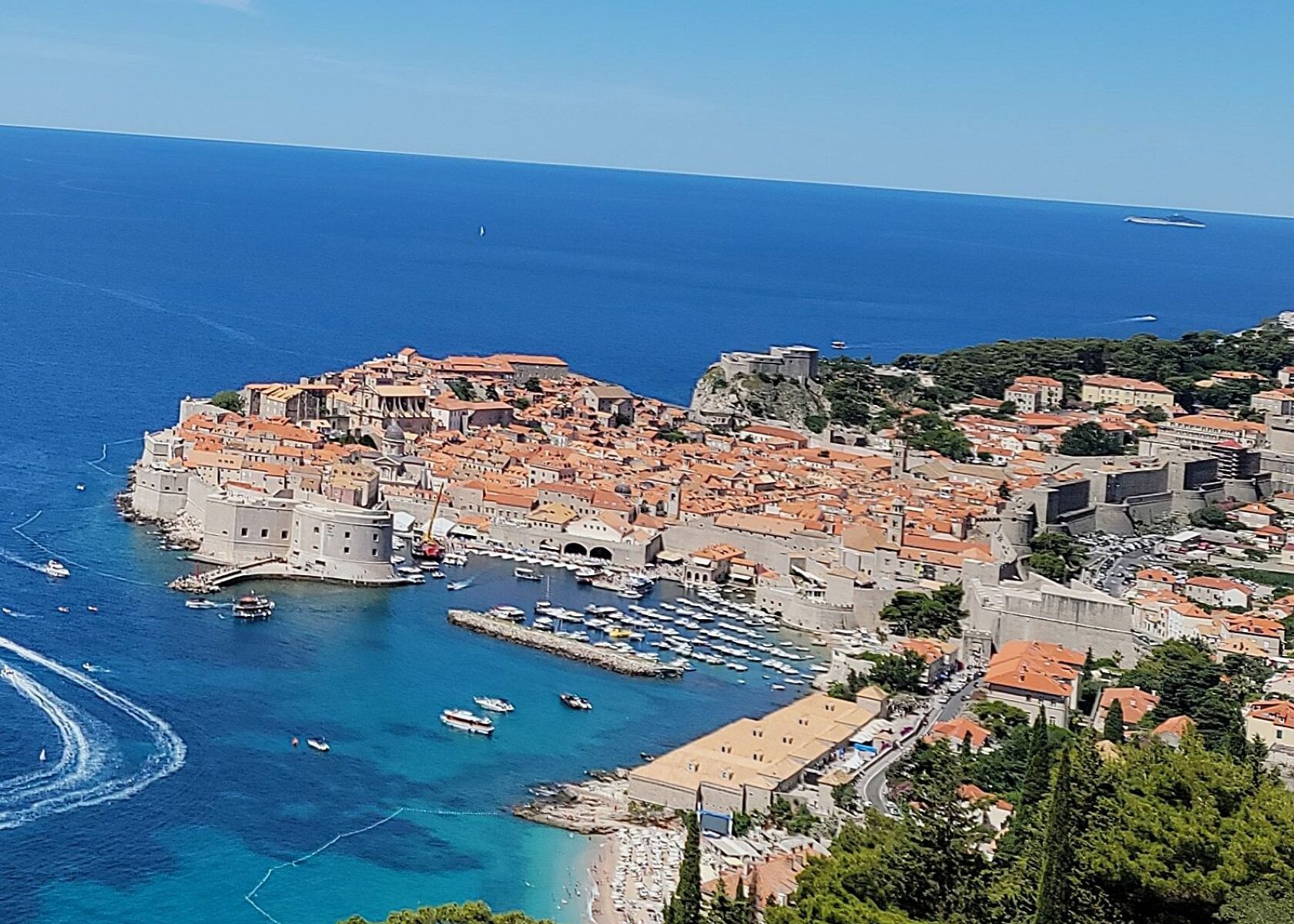
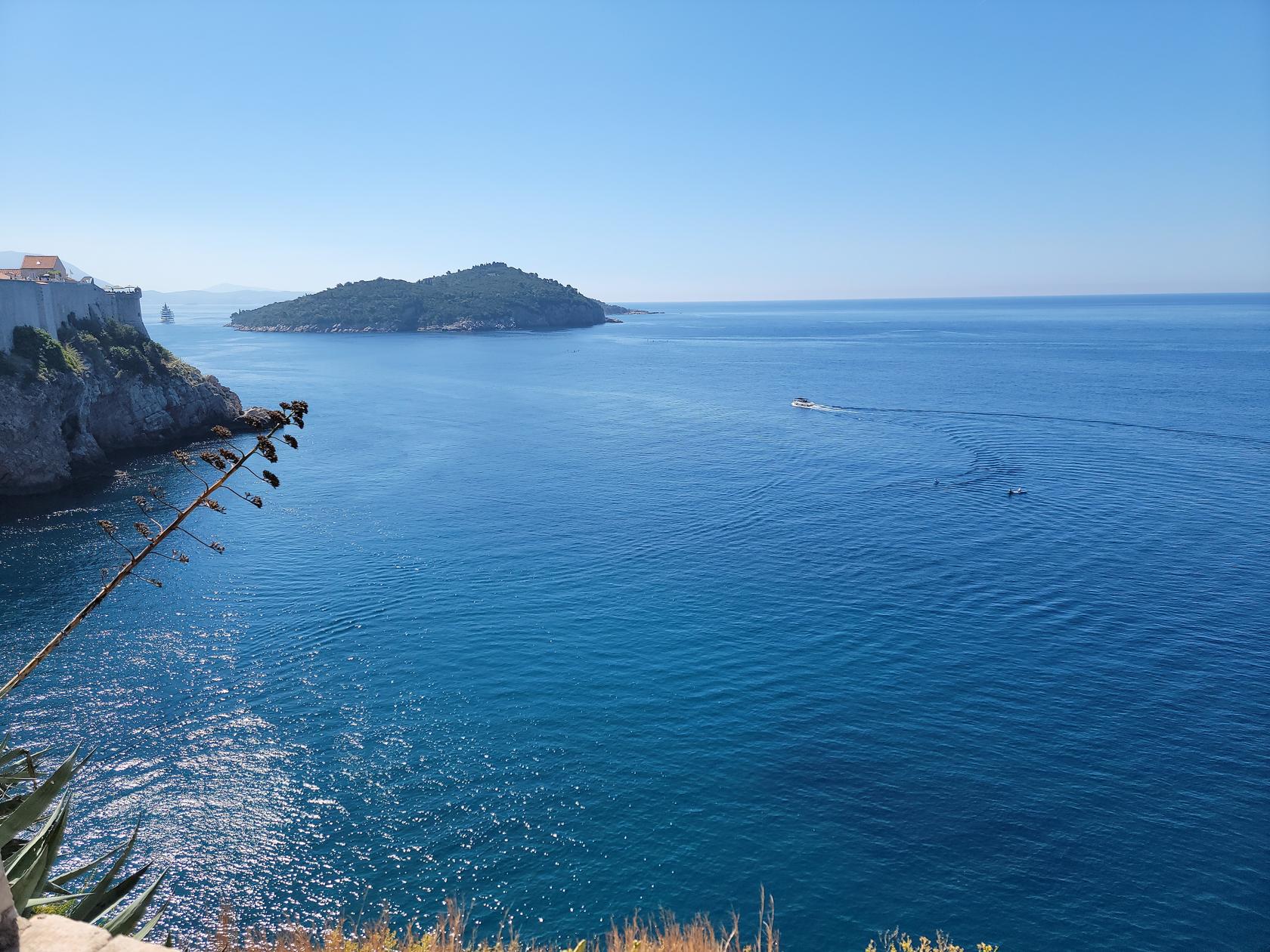
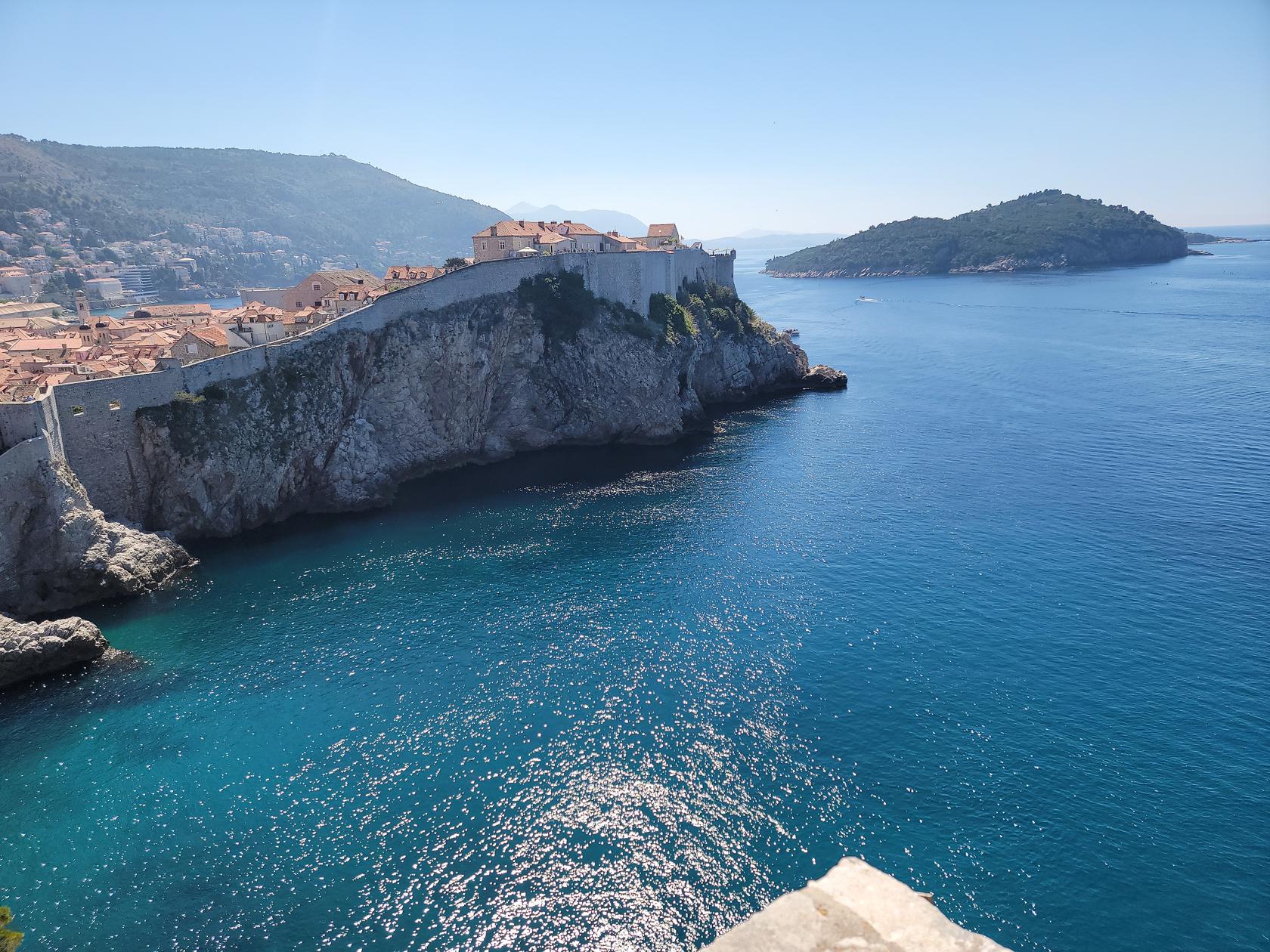
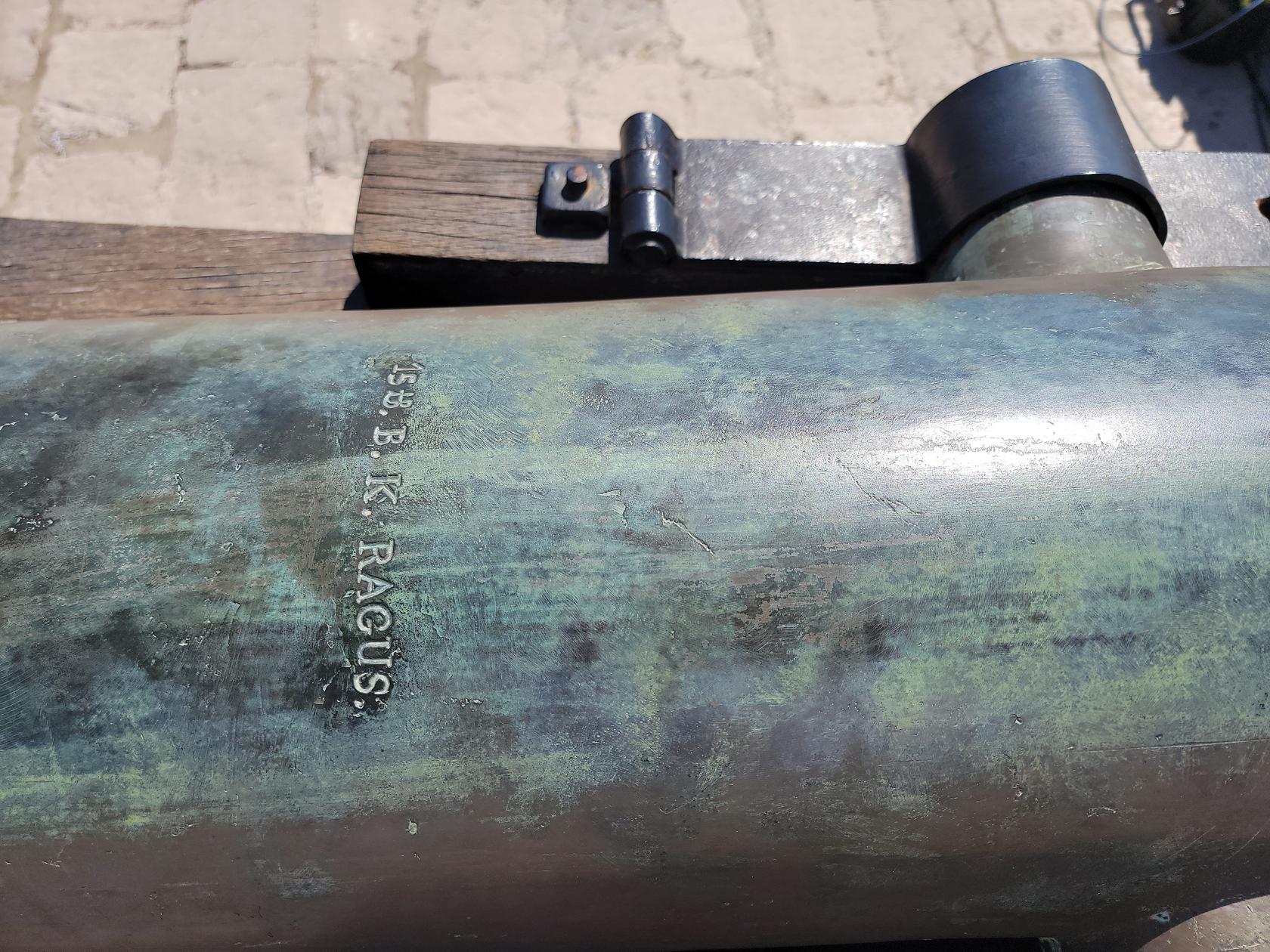
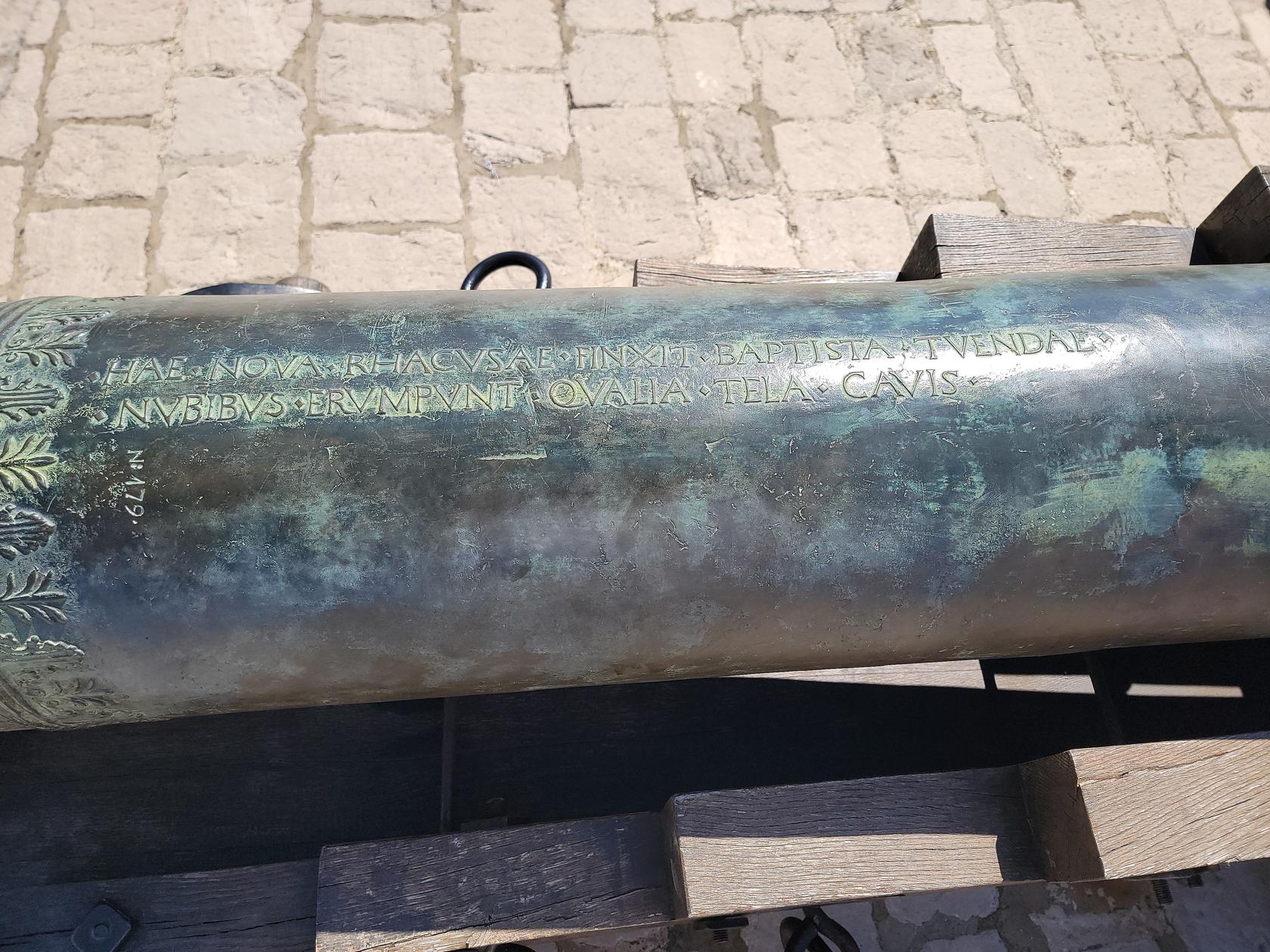
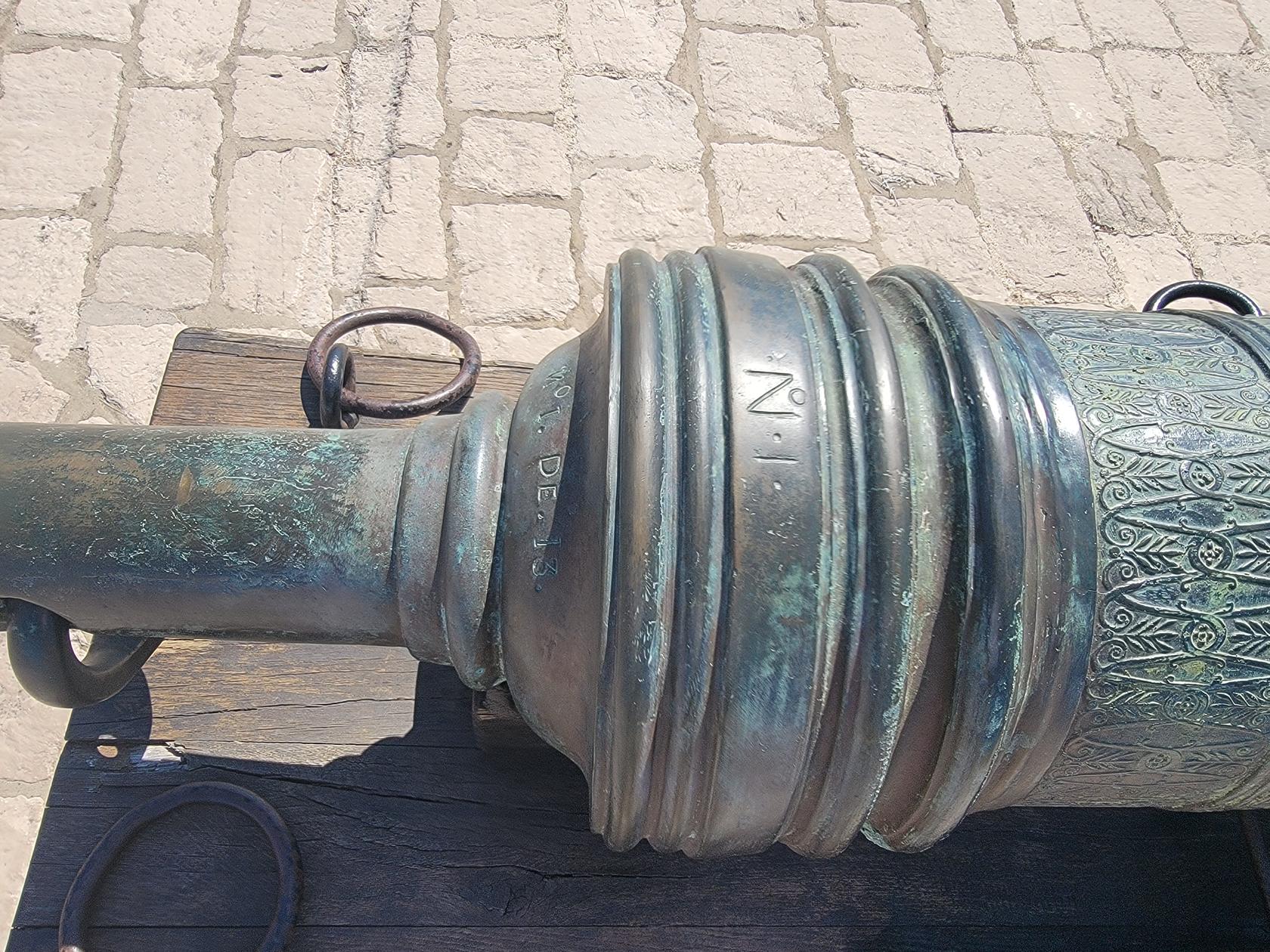
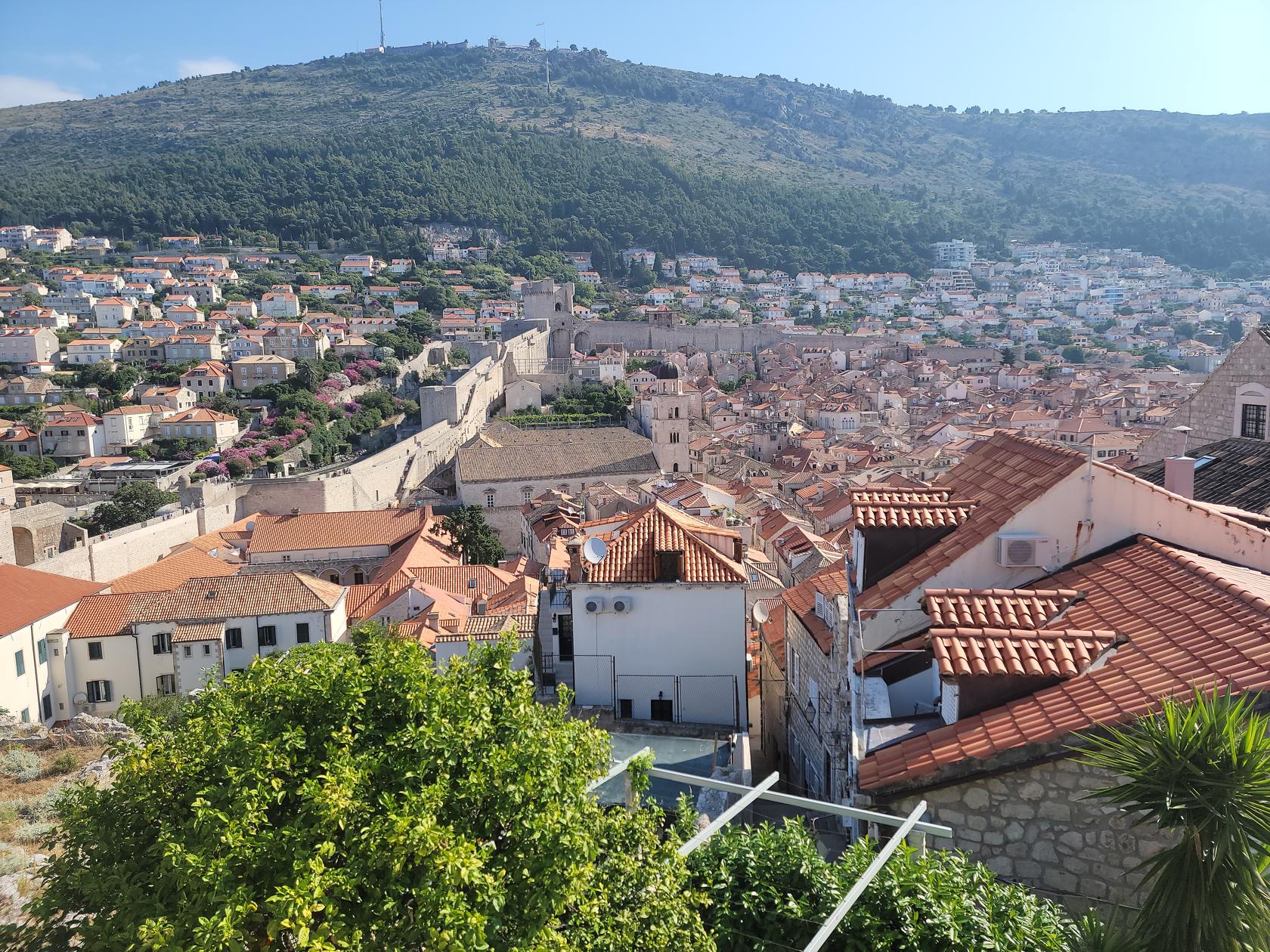
Owing to historical fate perhaps, Dubrovnik, Croatia, was formerly known as Ragusa, or the Republic of Ragusa, and was established some time in the 7th century C.E. from refugees of the old Epidaurum, or Ragusa Vecchia. It had been largely a free state before and after the control by the Byzantine Empire, the Repuplic of Venice and other later powers, including France and Napolean.
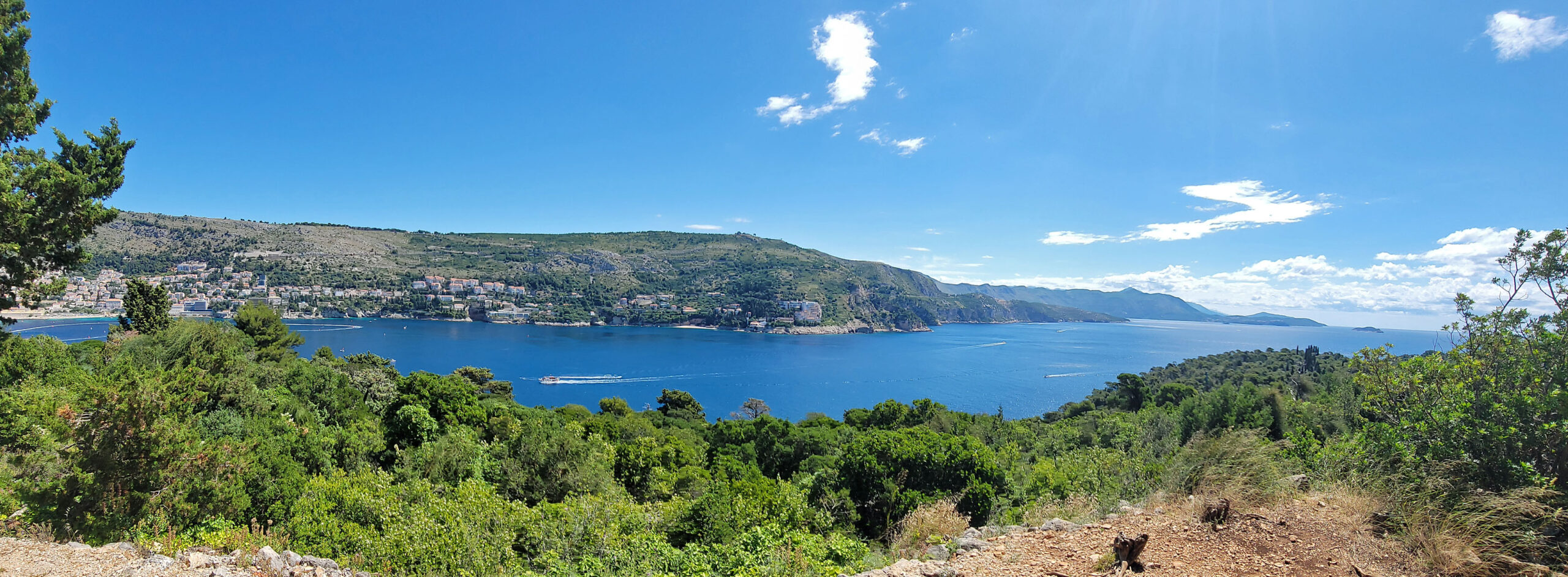
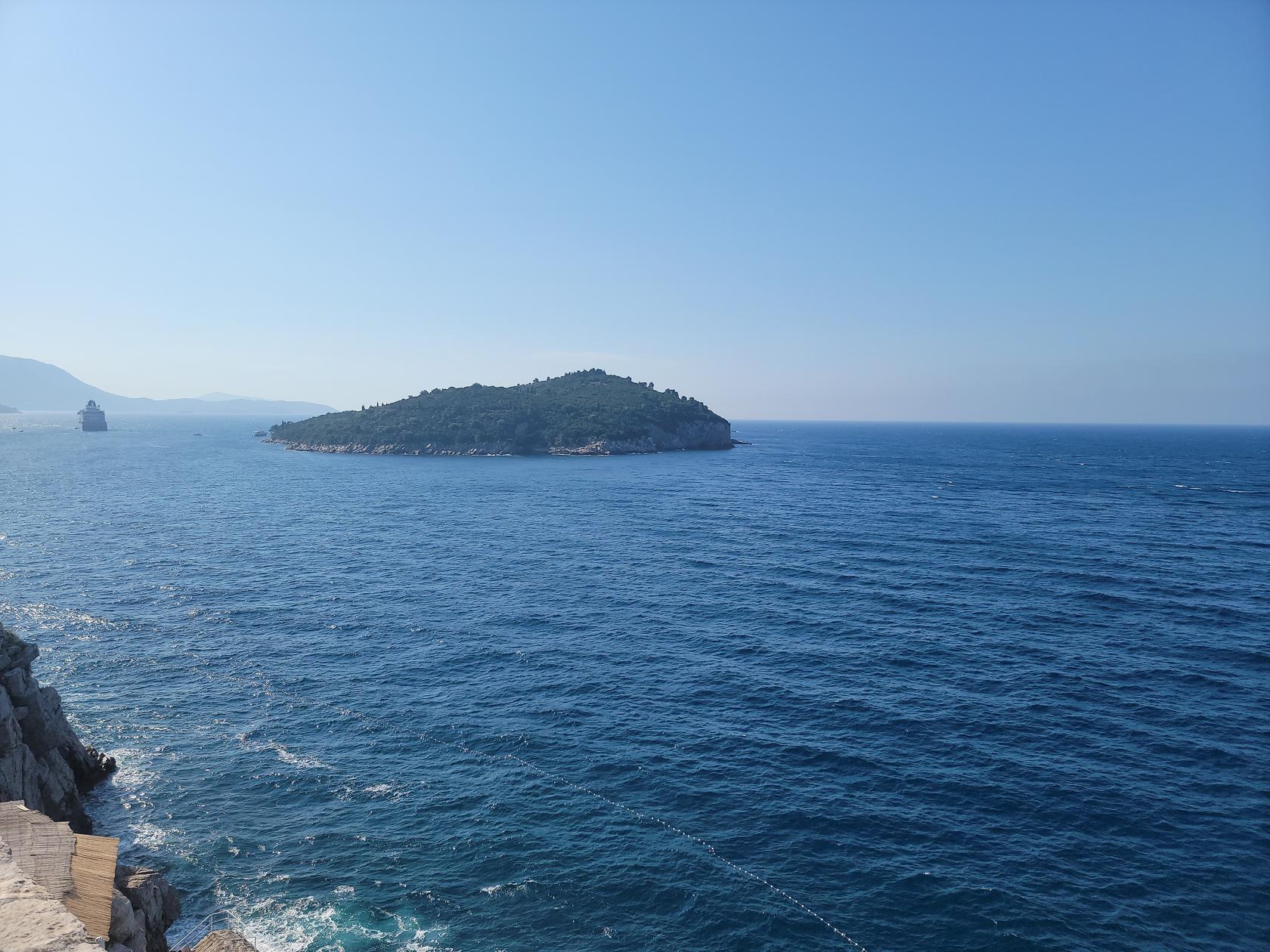
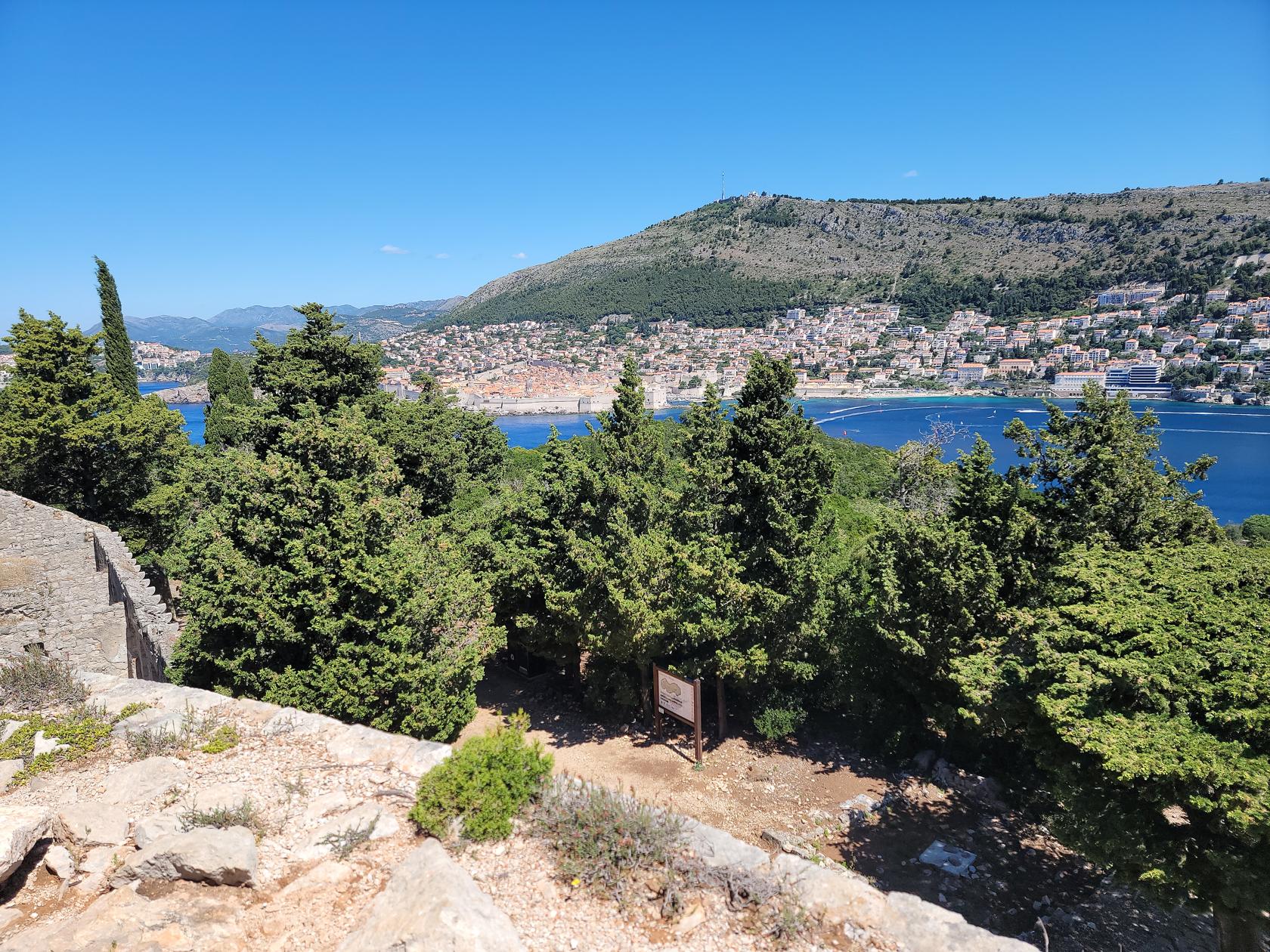
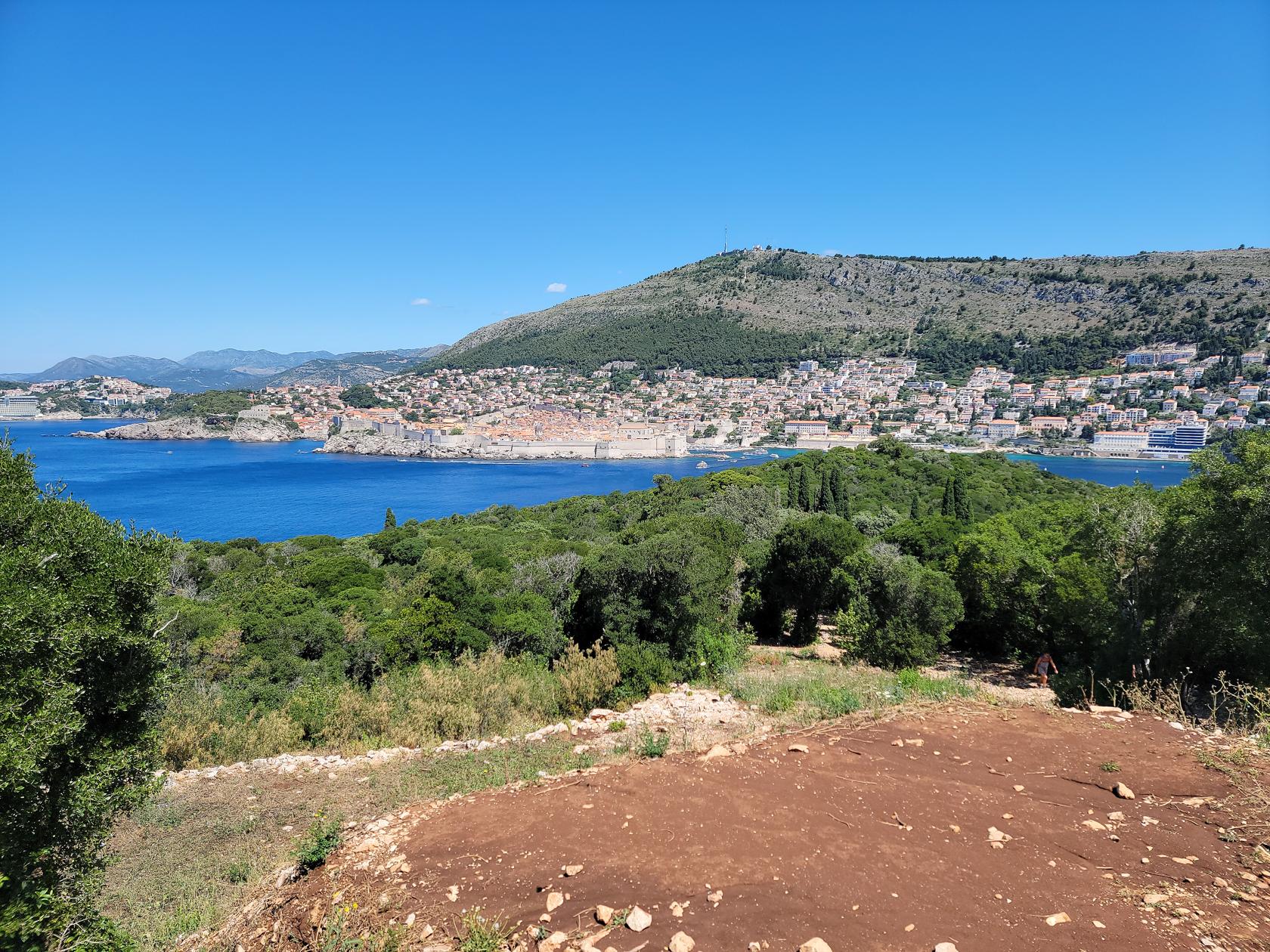
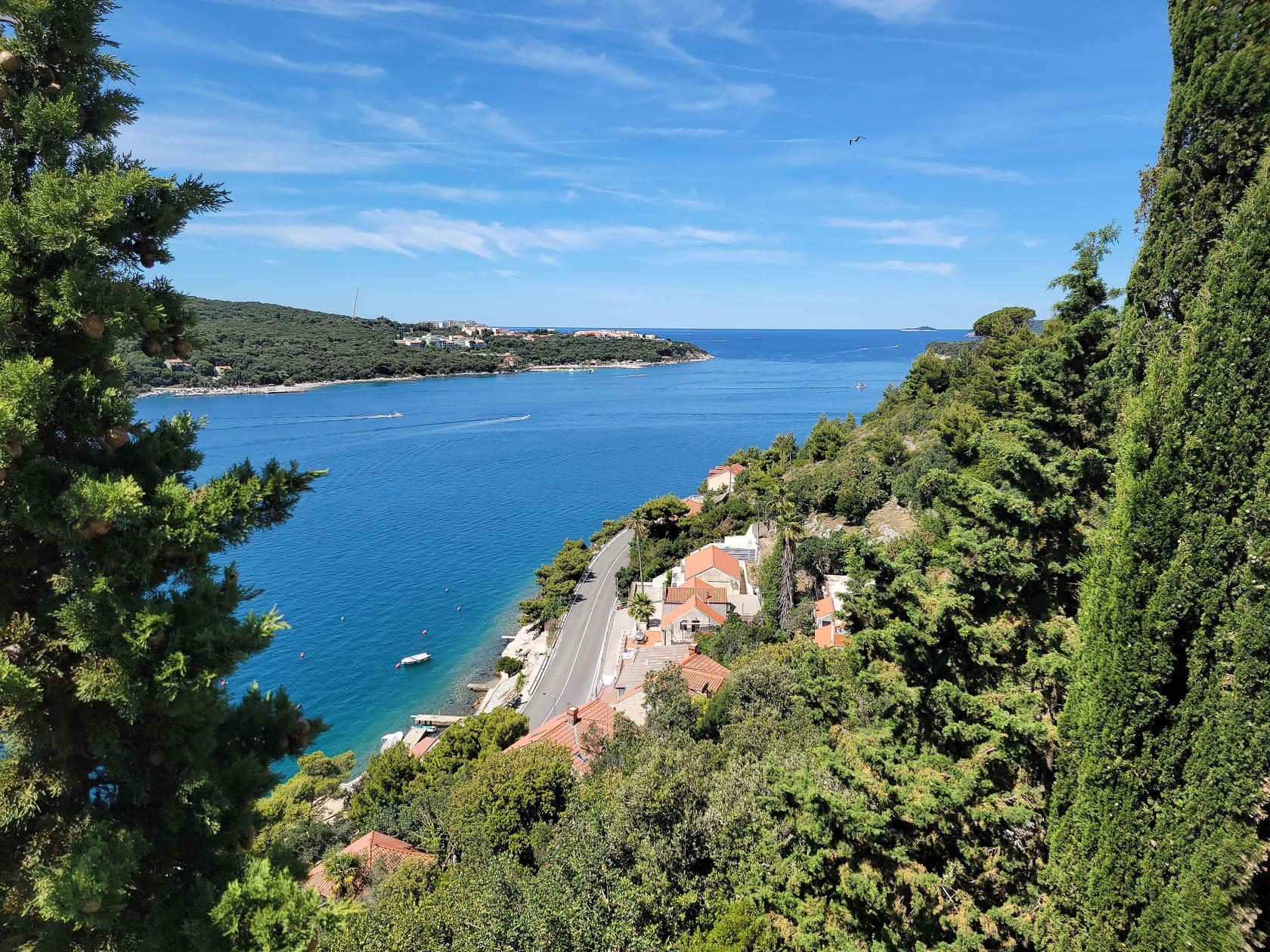
Dalmatian Coast – Lokrum Island – Dubrovnik, Croatia
Dubrovnik
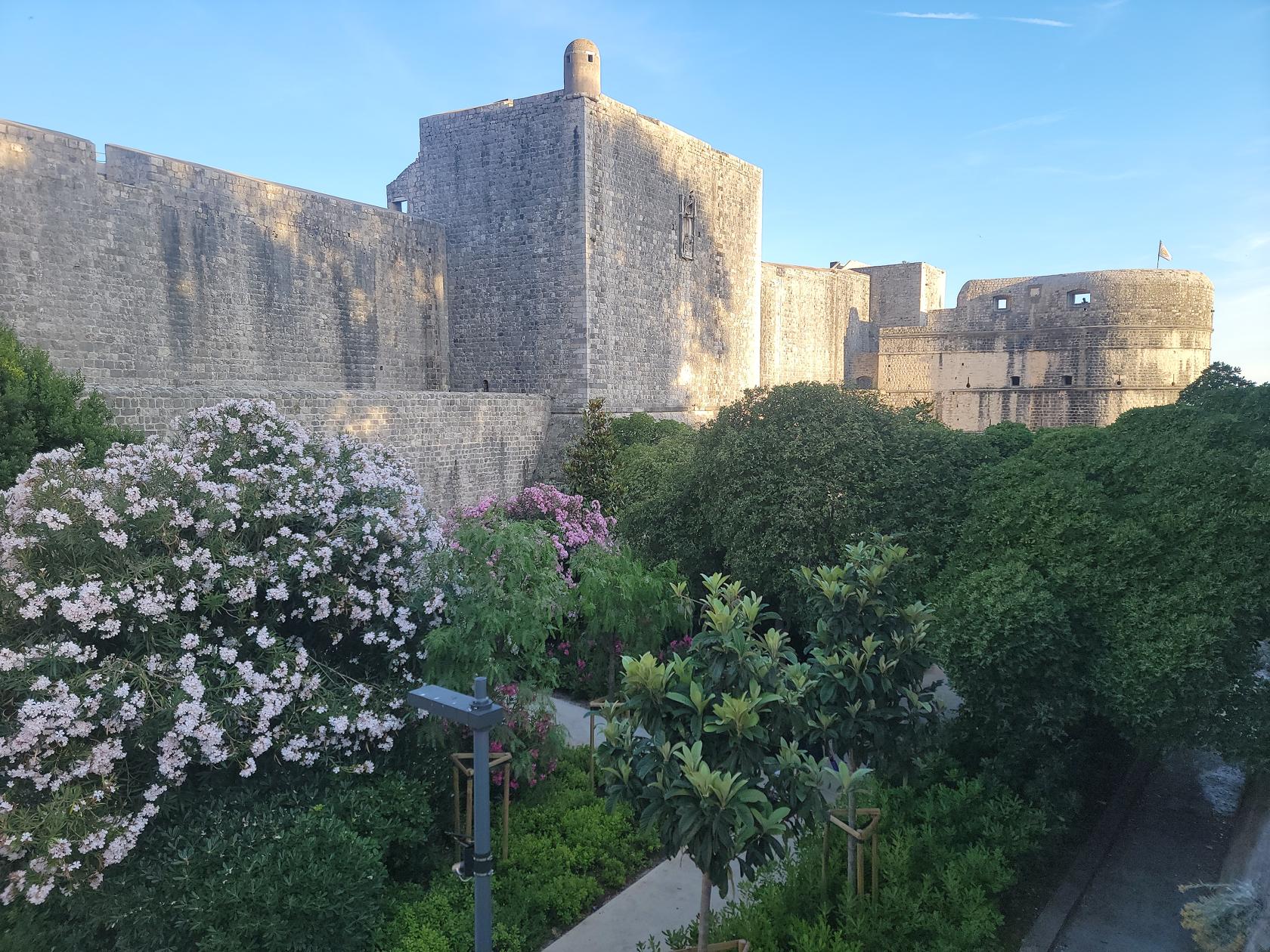
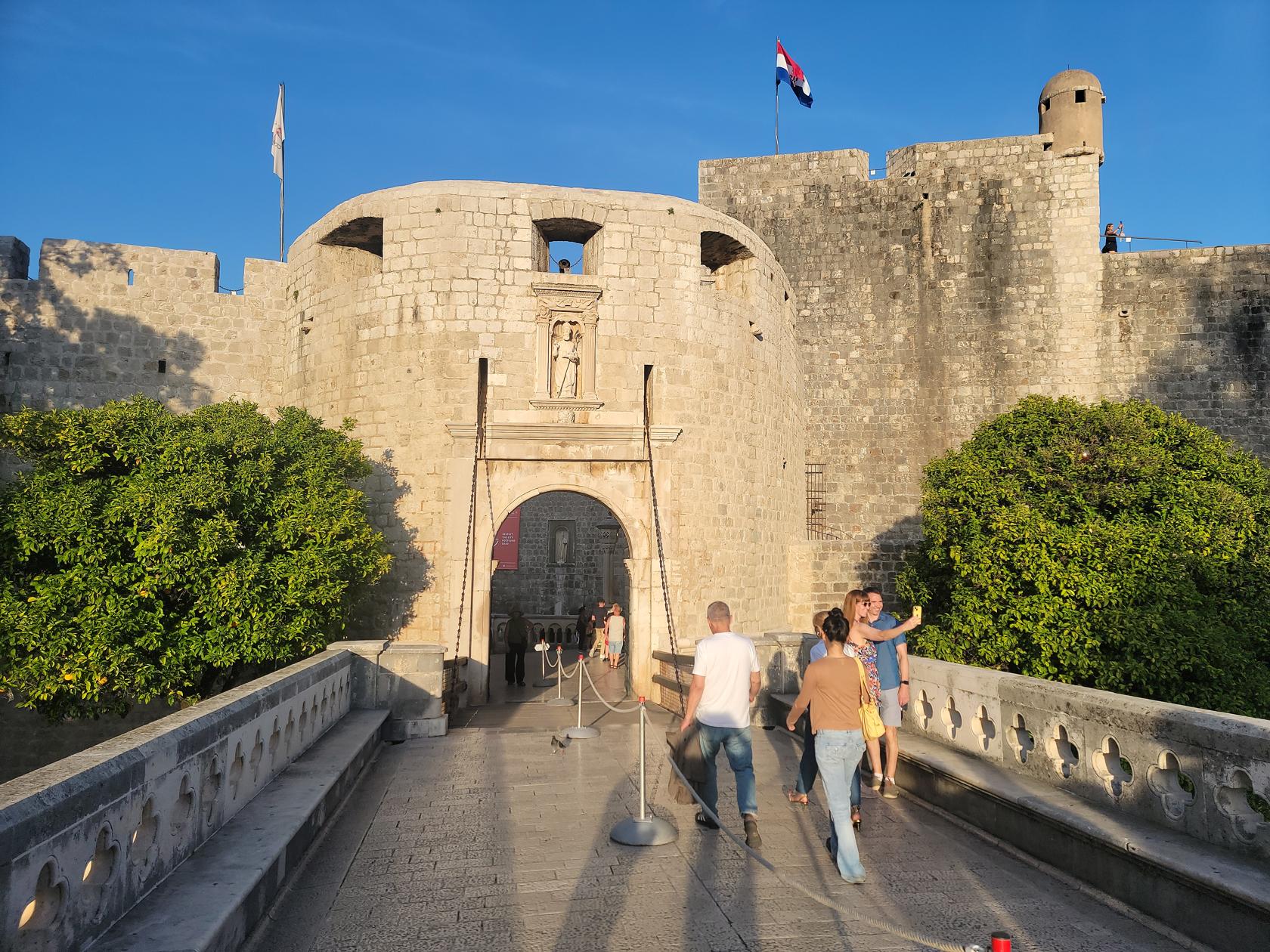
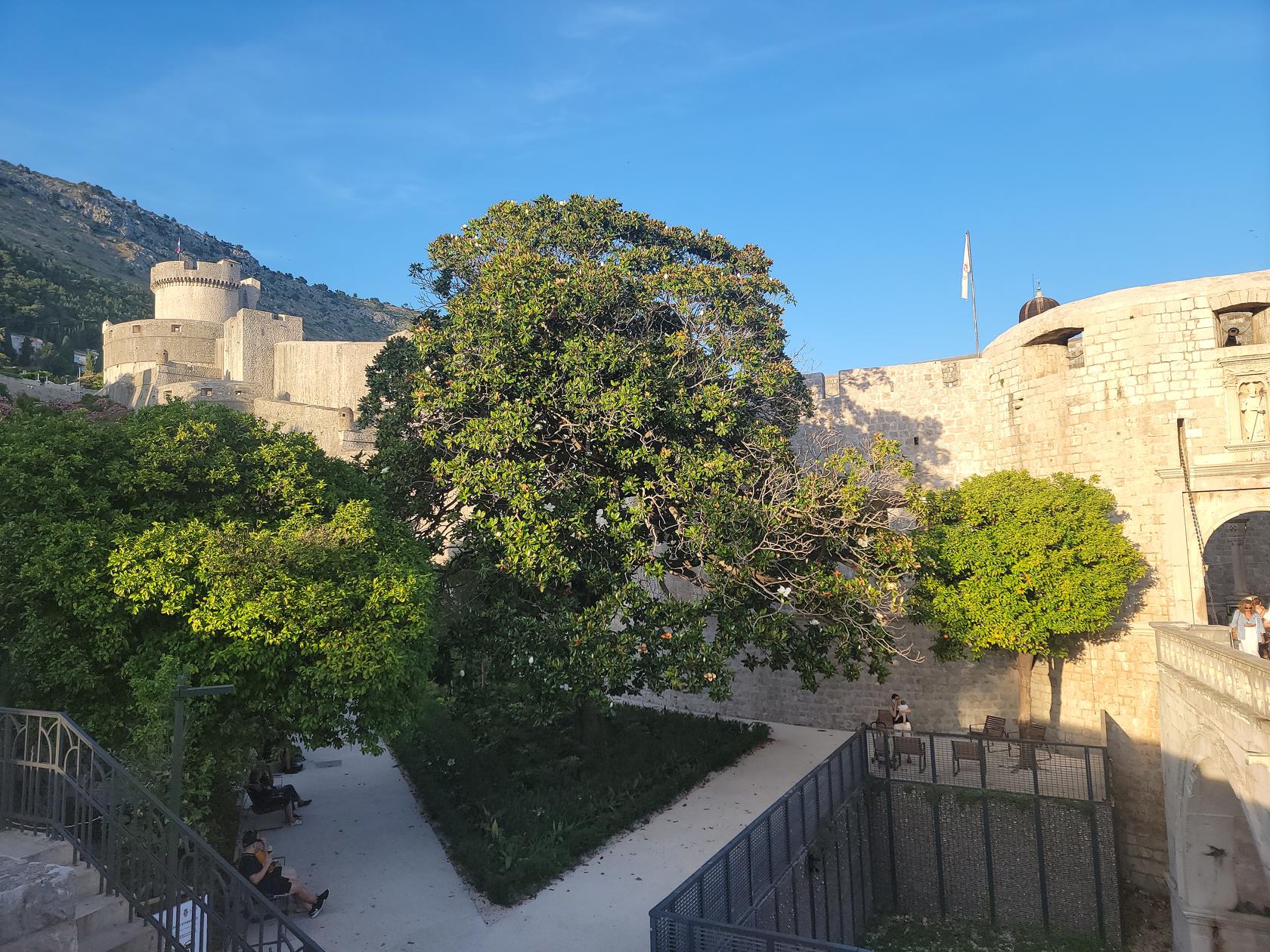
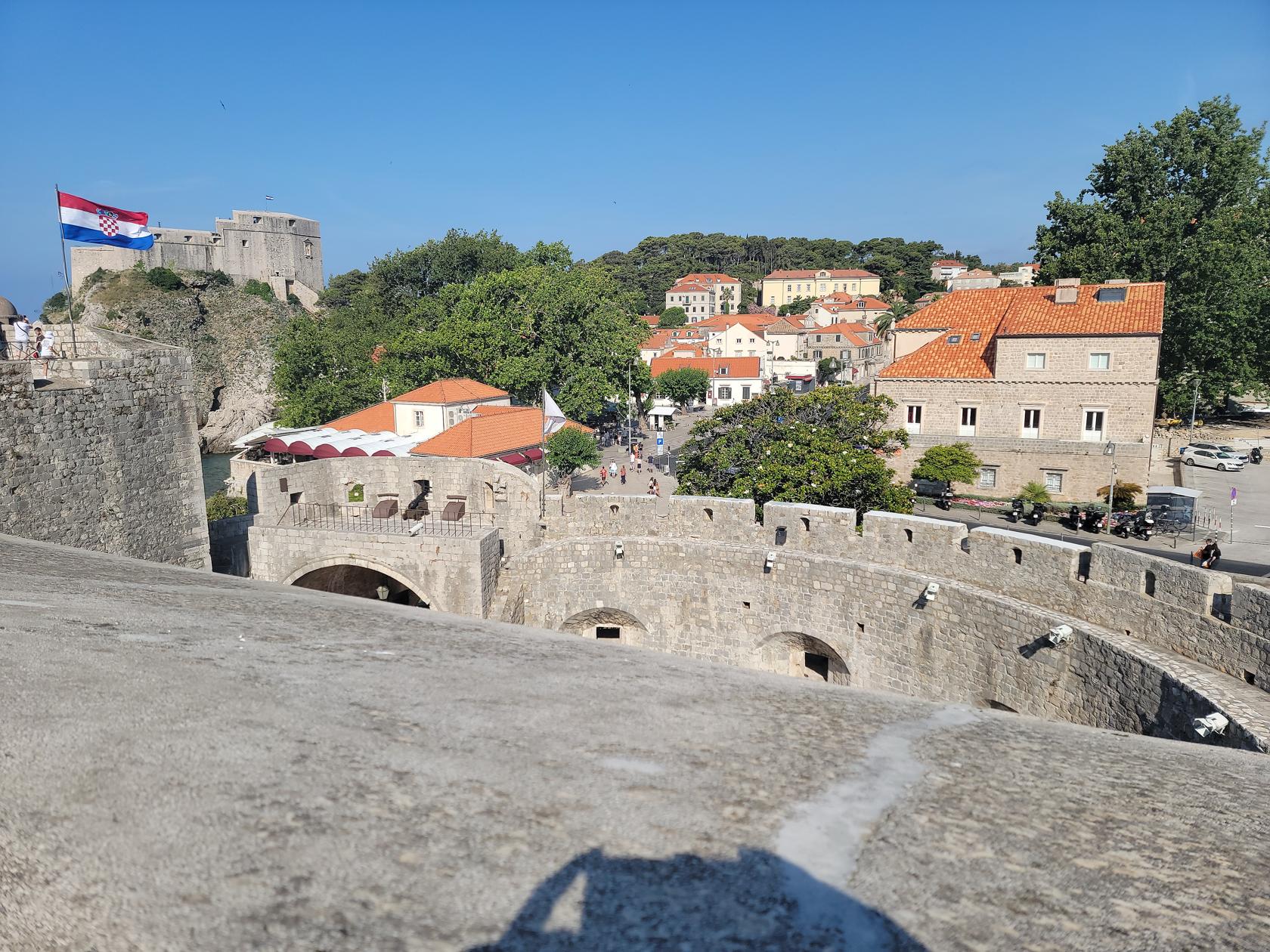
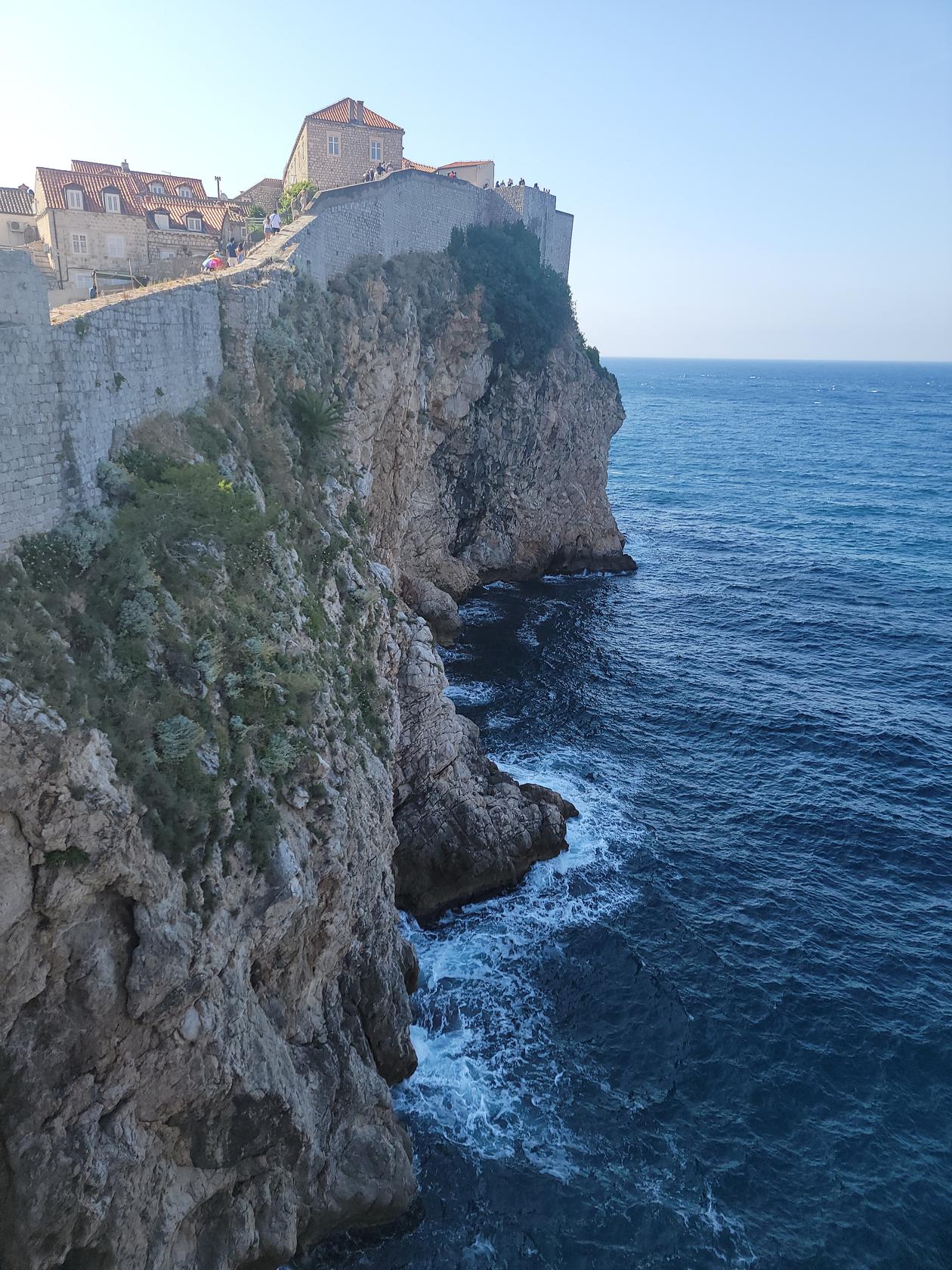
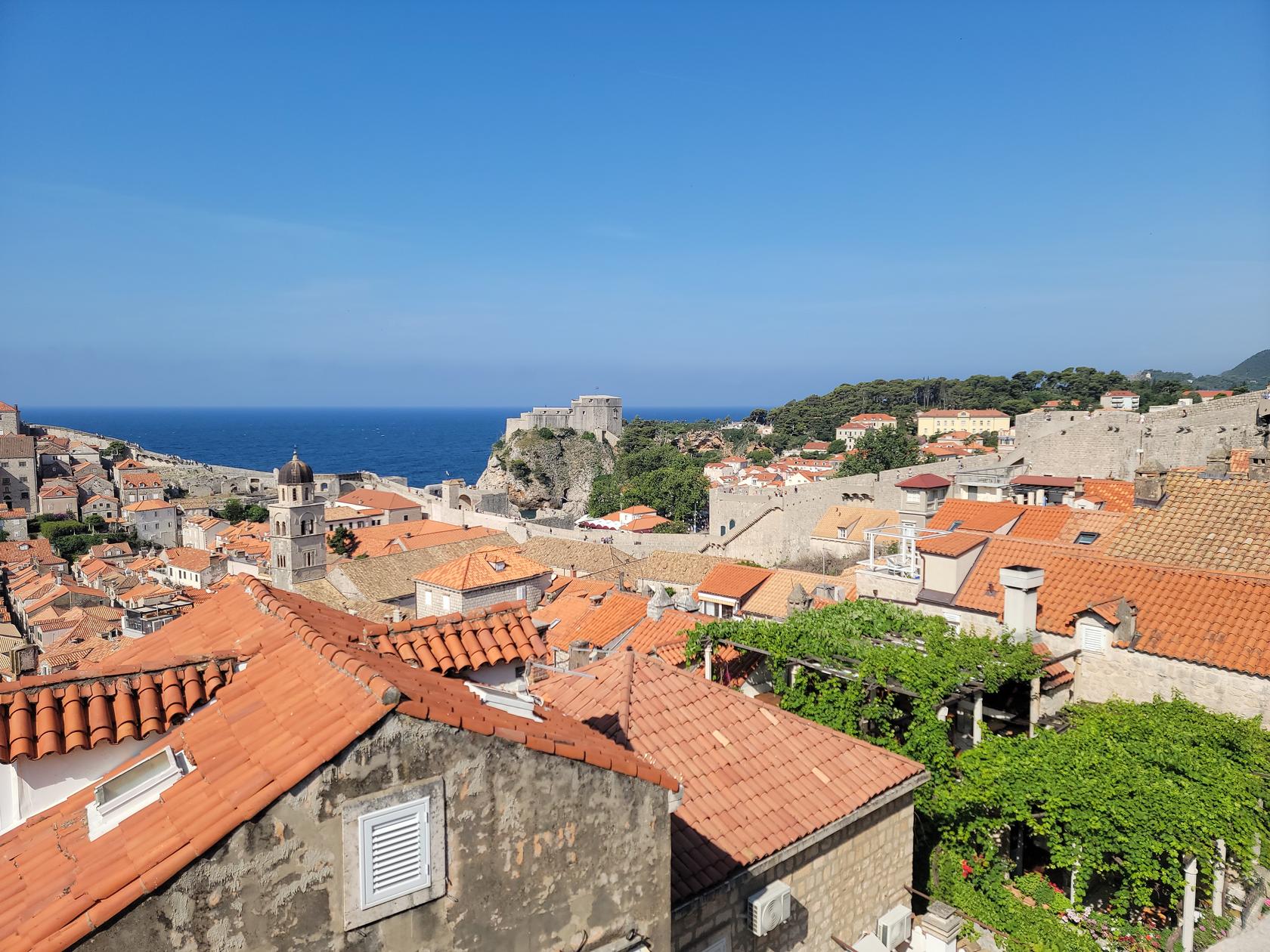
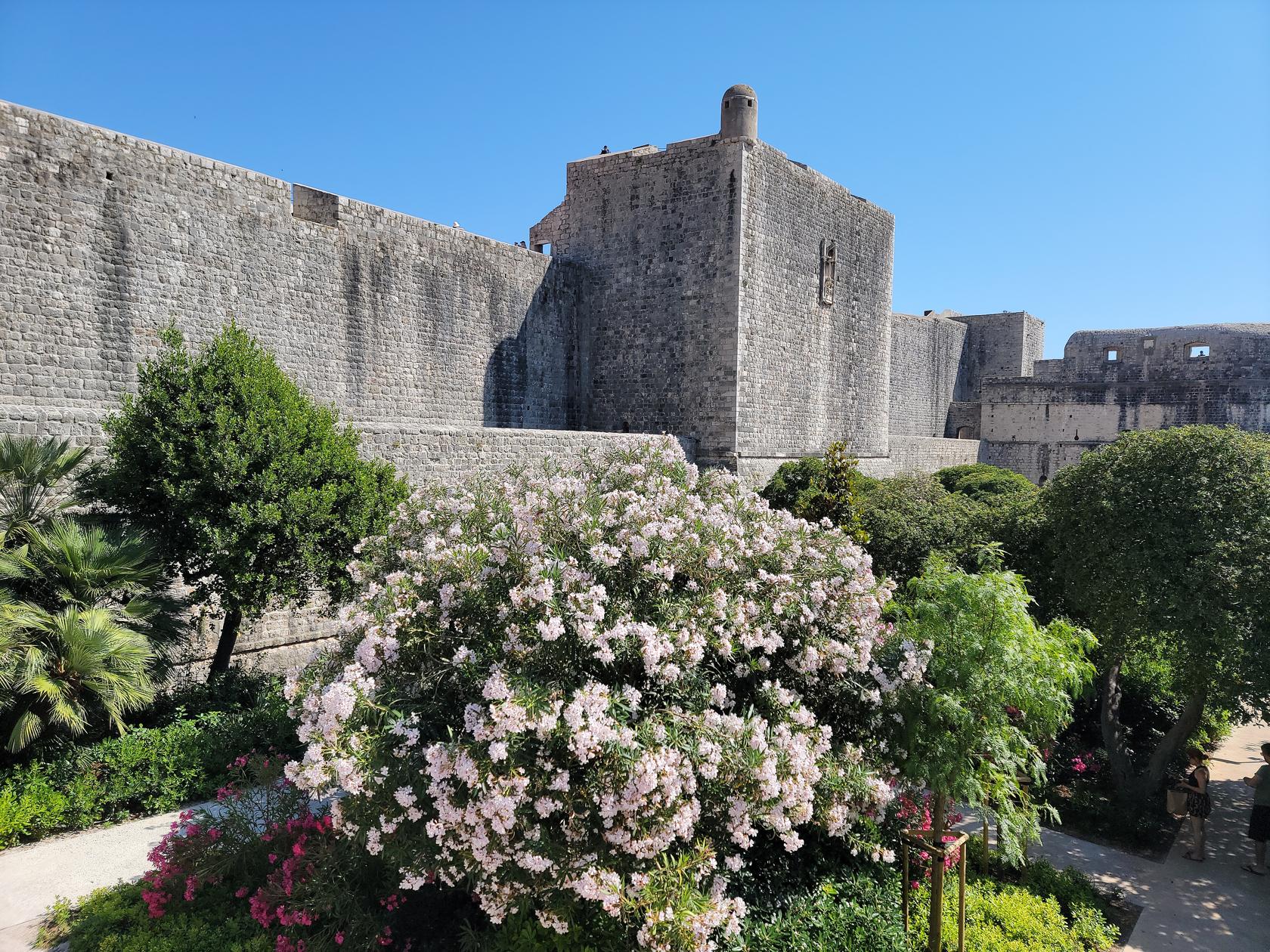
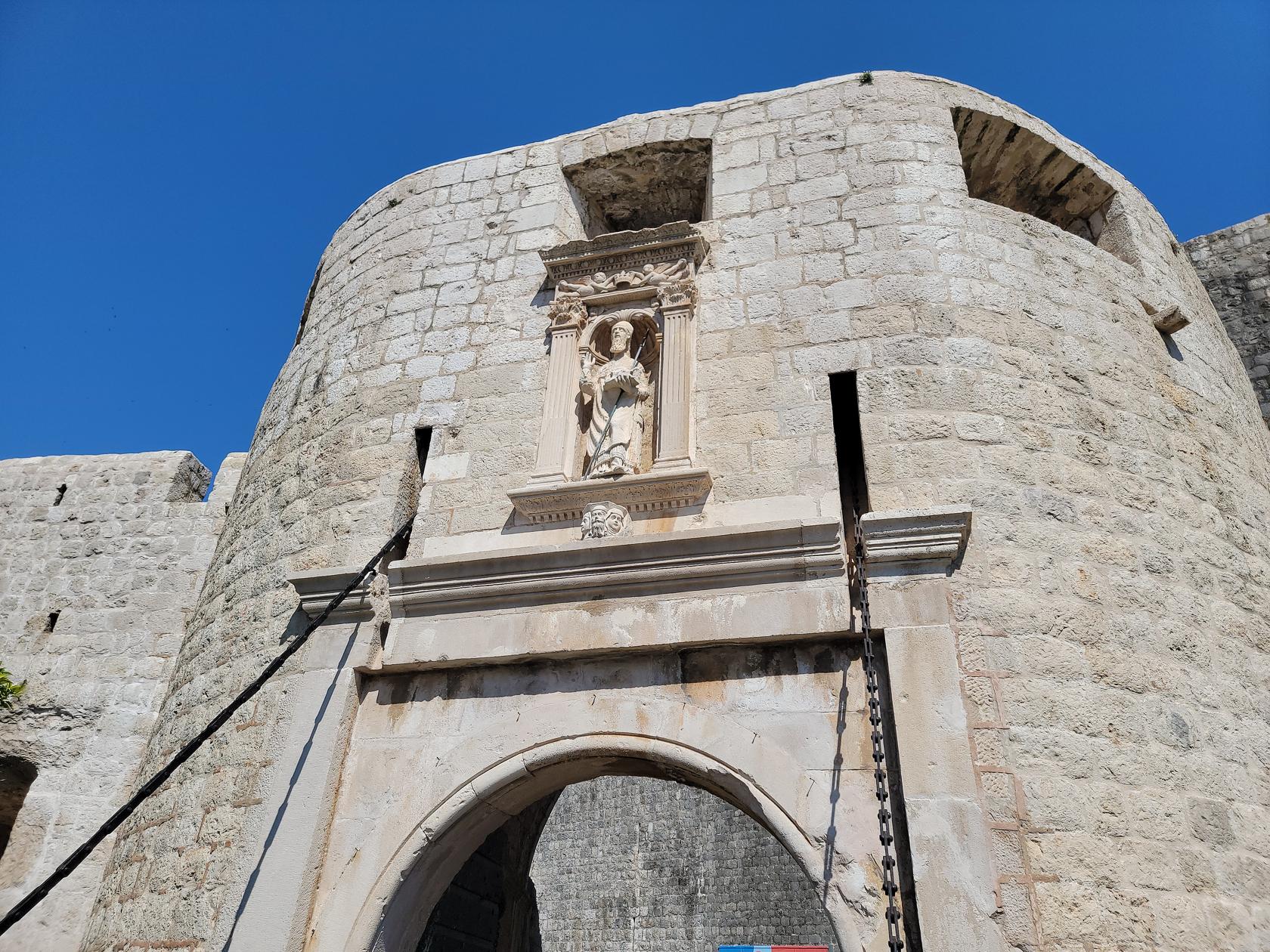
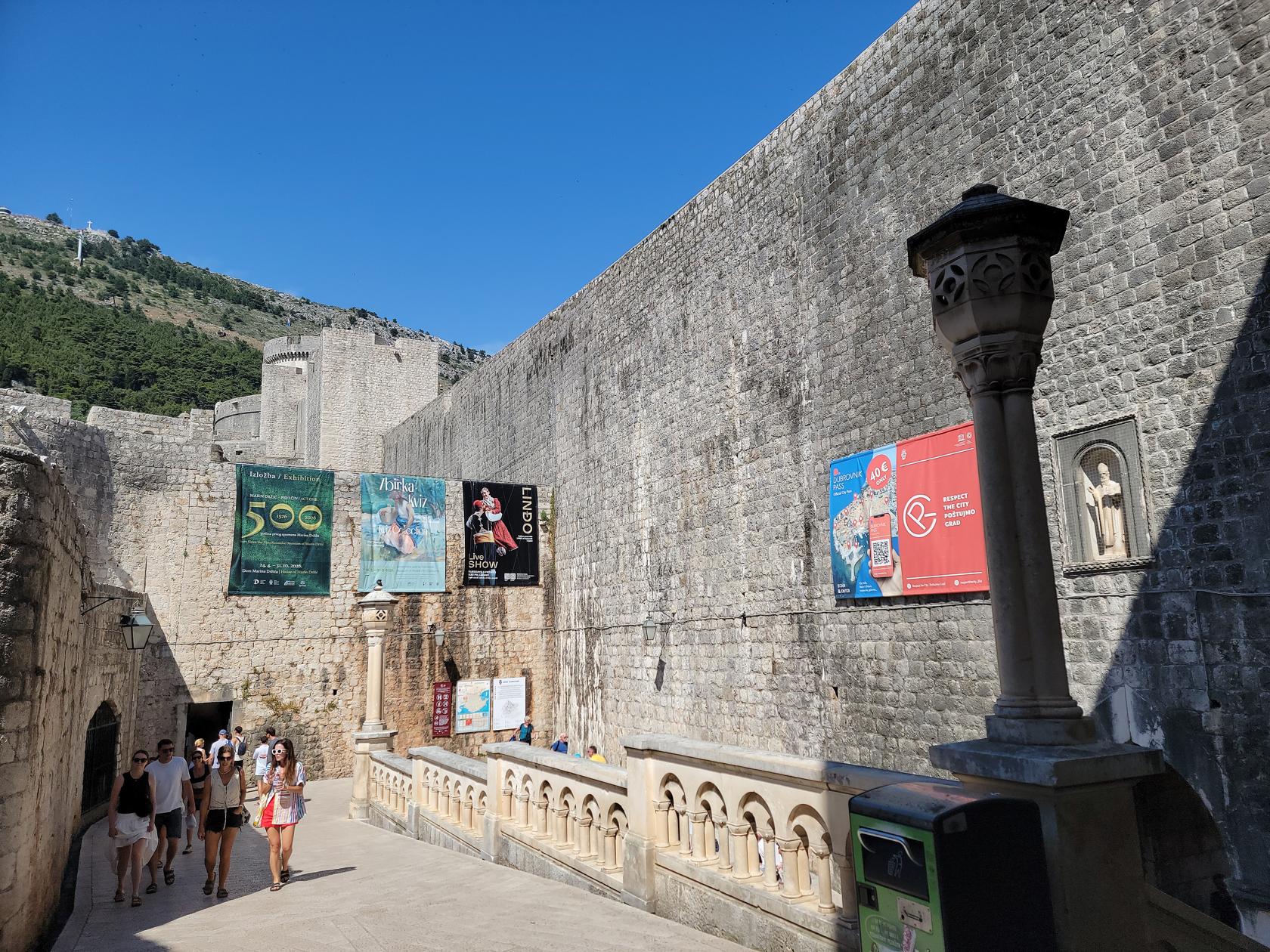
The town is an ancient walled city, that is half surrounded by sea on its southern half. It has a number of entry points, guarded by gates, which in the past maintained its security from threats by land and sea. The primary of which is the Pile Gate, which today has a beautiful garden and play area beneath it.
Park below Fortress Wall – City Wall Tour – Dubrovnik, Croatia
Entrance to Old Town and Fortress Wall – City Wall Tour – Dubrovnik, Croatia
Park below Fortress Wall – City Wall Tour – Dubrovnik, Croatia
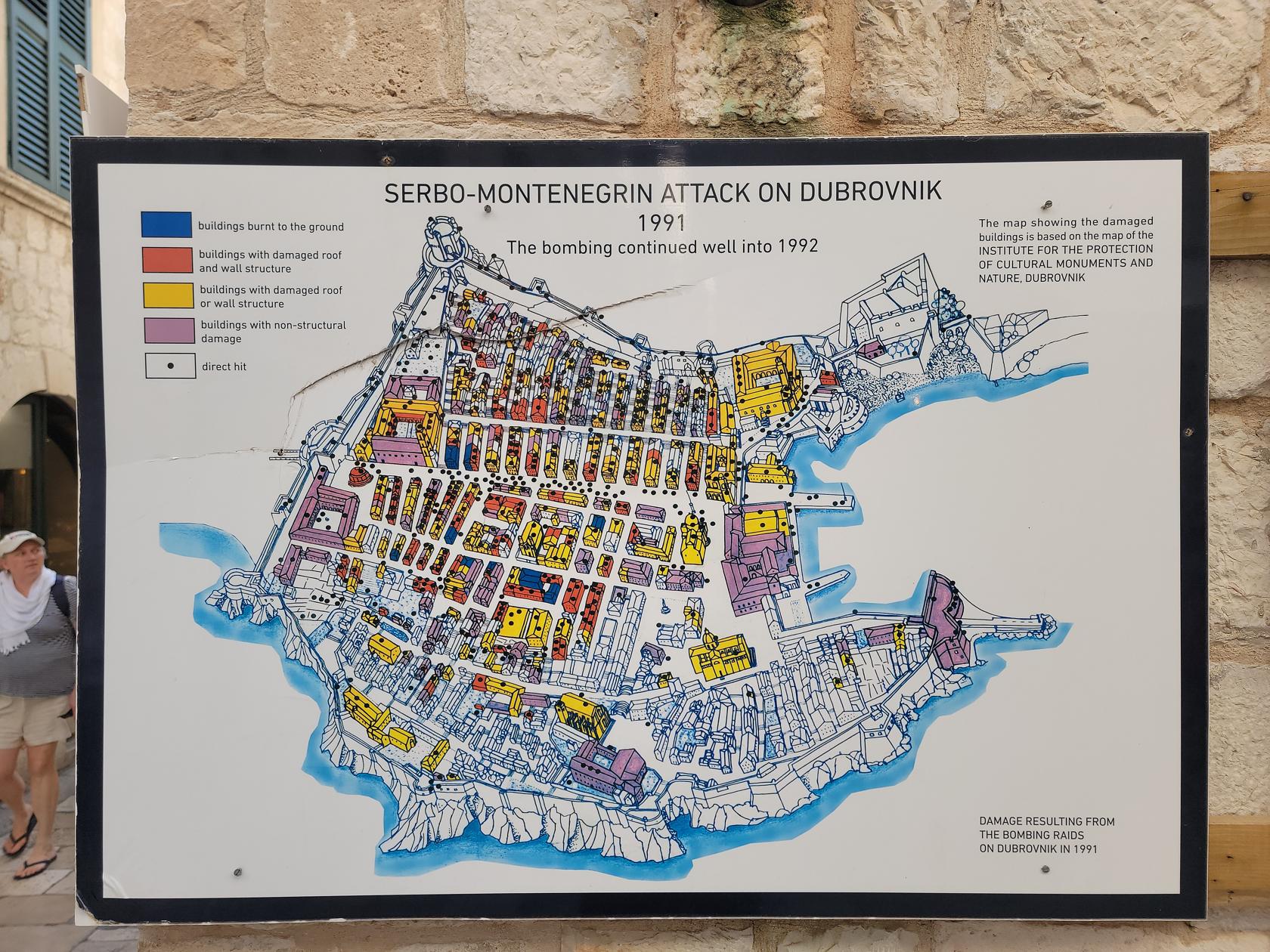
As early as 1991 the Old City was surrounded and laid seige by foreign adversaries and survived, owing to its thick, impenetrable walls and access to the sea. The number of buildings damaged in this unnecessary conflict of a UNESCO World Heritage site were extensive, as the map below shows. This included the cathedral, as well as most churches inside the walls.
Map – Serb and Montenegrin Attack and Seige, 1991 – Dubrovnik, Croatia
Getting There
Train service is relatively limited or non-existent and mostly due to the former Soviet, Yugoslavian and present day Croatian governmental and engineering authorities being unable to overcome technical difficulties building tunnels through the earthquake prone geology in the region. The mountainous terrain runs longitundinally along the coast and is prone to falling apart. Even roadways are difficult to maintain. So other options should be sought out.
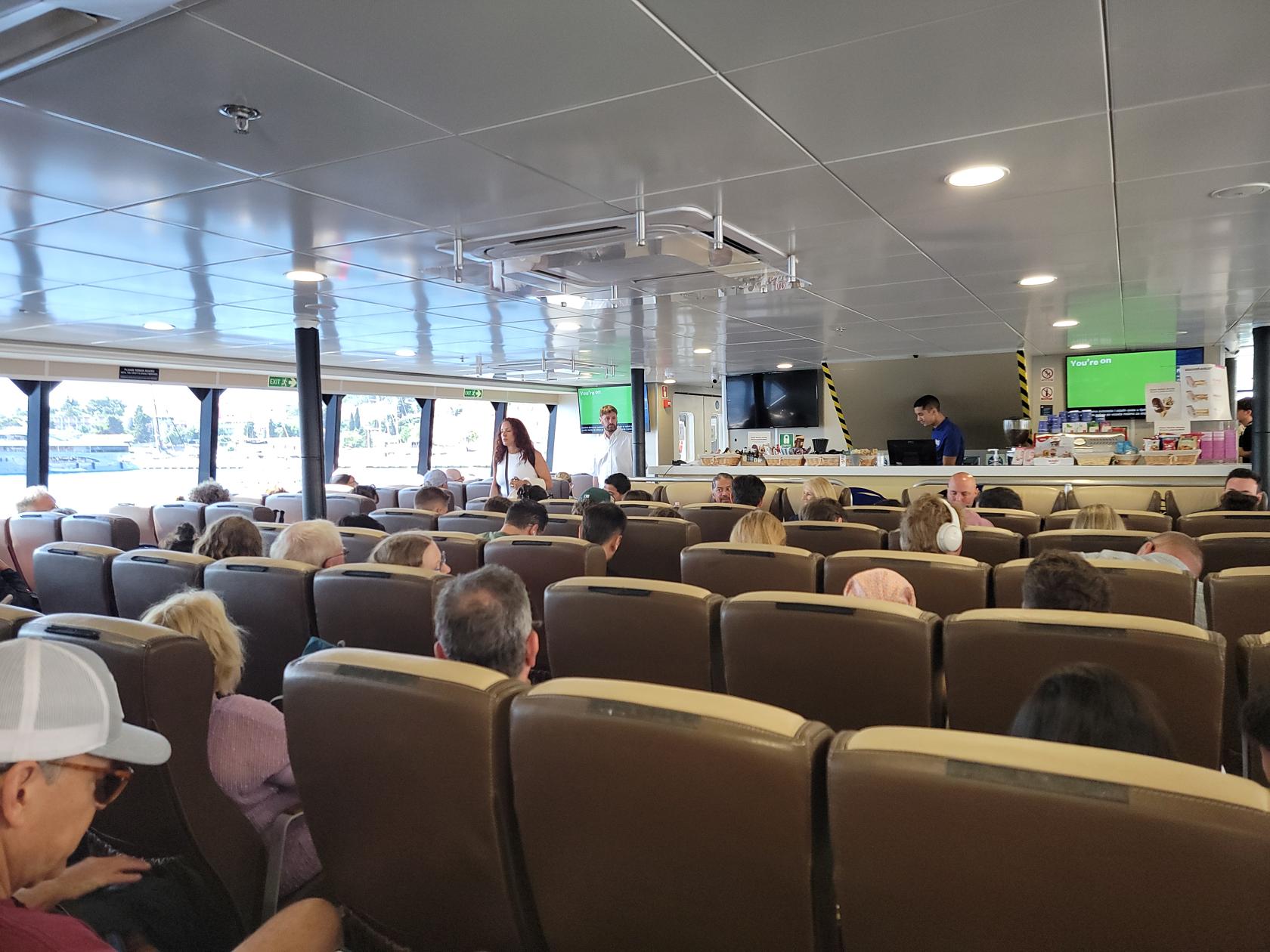
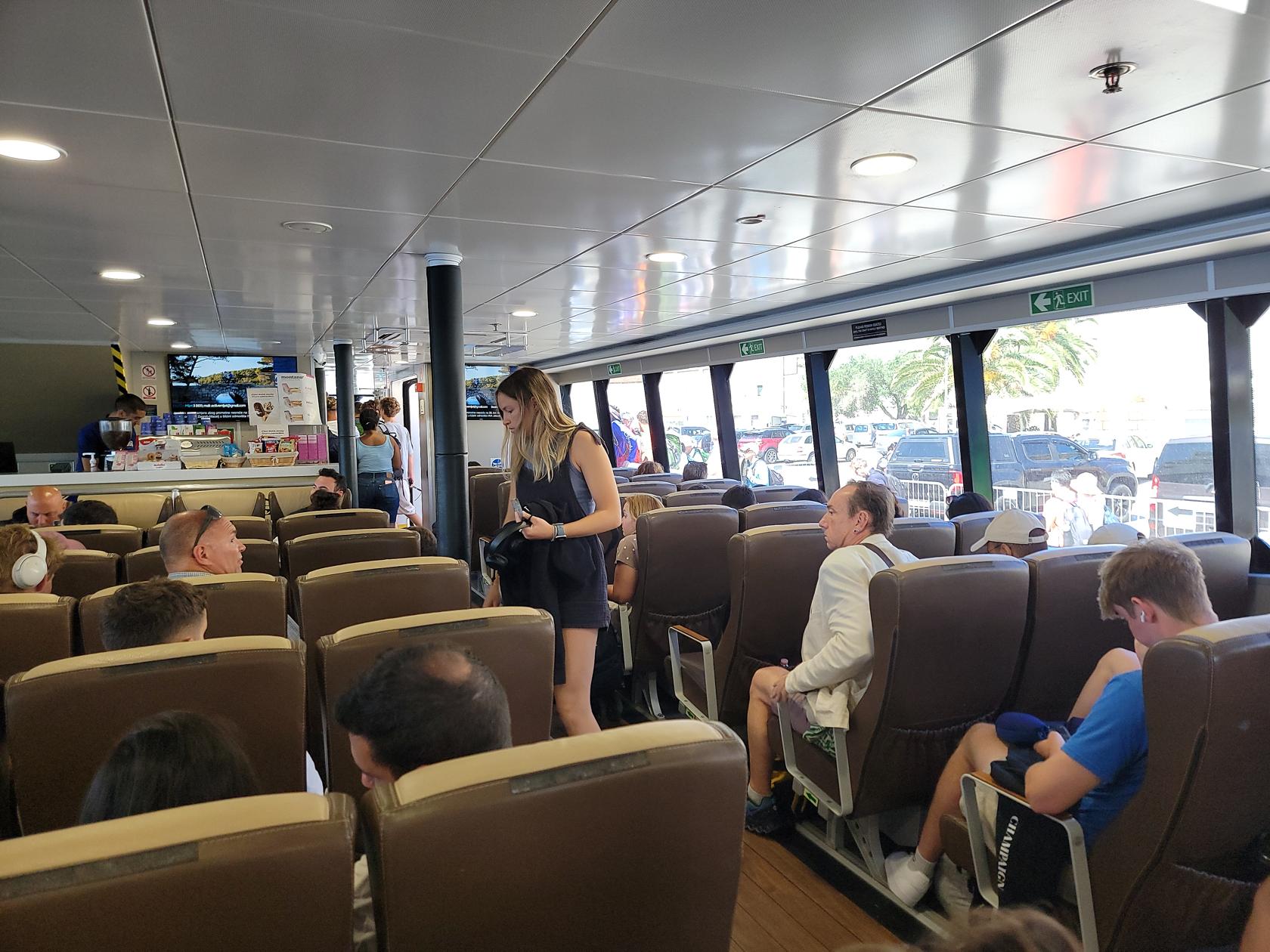
Interior – Kapetan Luke Ferry
Interior – Kapetan Luke Ferry
To get there we took the Kapetan Luka ferry service from Korcula to Dubrovnik. It is a two hour trip with one stop along the way. Other means of getting here are by bus, flying and car.
Though the Kapetan Luka service is adequate, the TPLine is commended for several reasons:
First, the ferries are larger and more accommodating.
Second, the crew seem to know there stuff, especially when is comes to stowing your luggage, etc.
Third, your luggage is stowed with you, on-board, inside; not outside in the elements.
Lastly, their internet presence is better and they maintain a very good and well maintained portal where tickets may be purchased directly from them, instead of some other third party application.
Where We Stayed
The hotel options in Dubrovnik can be very expensive, so be prepared for sticker shock, especially during peak season. There are other options, particularly when you can travel during non-peak or willing to venture further out from the Old Town.
Vila Dard Hotel
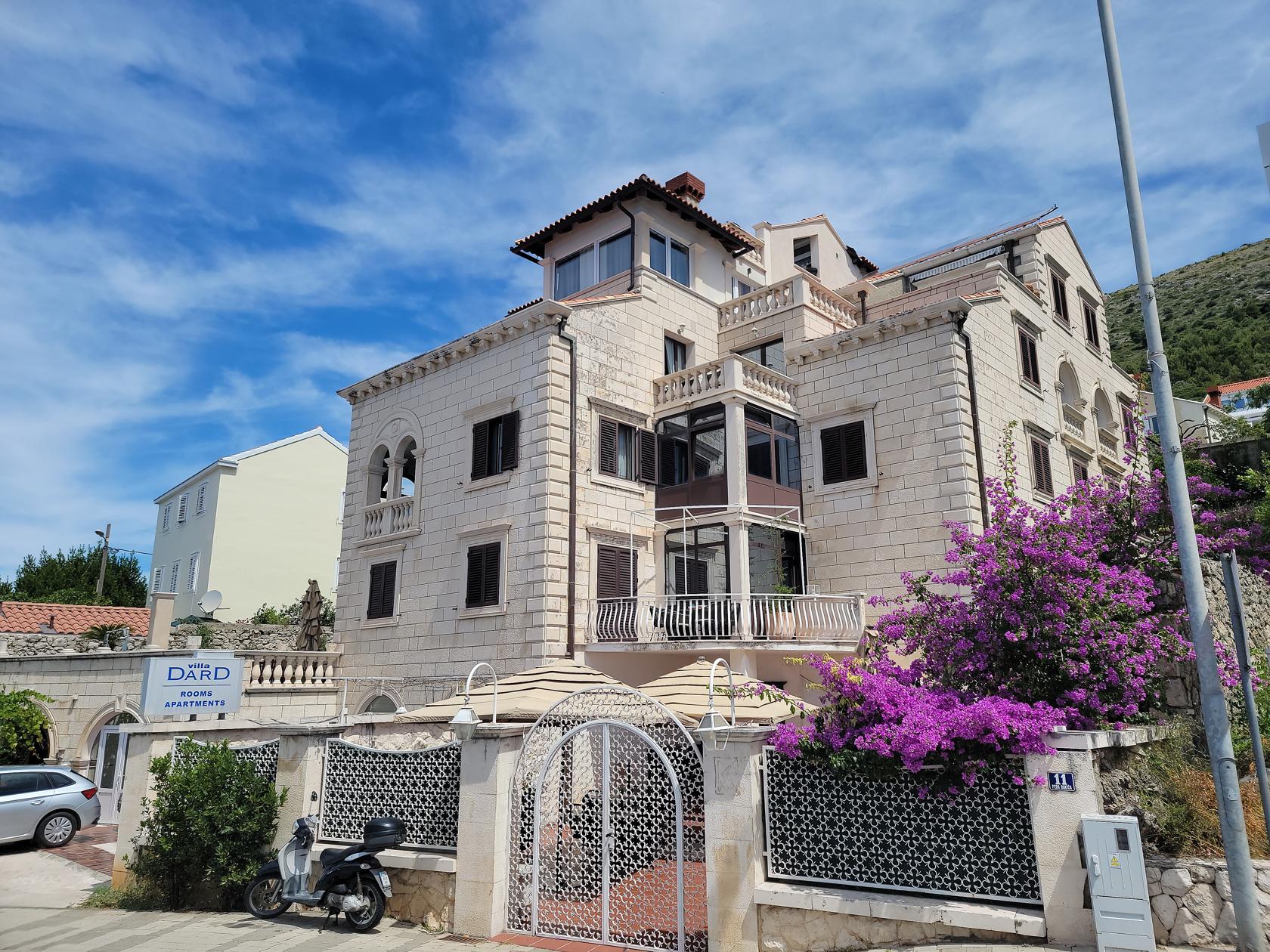
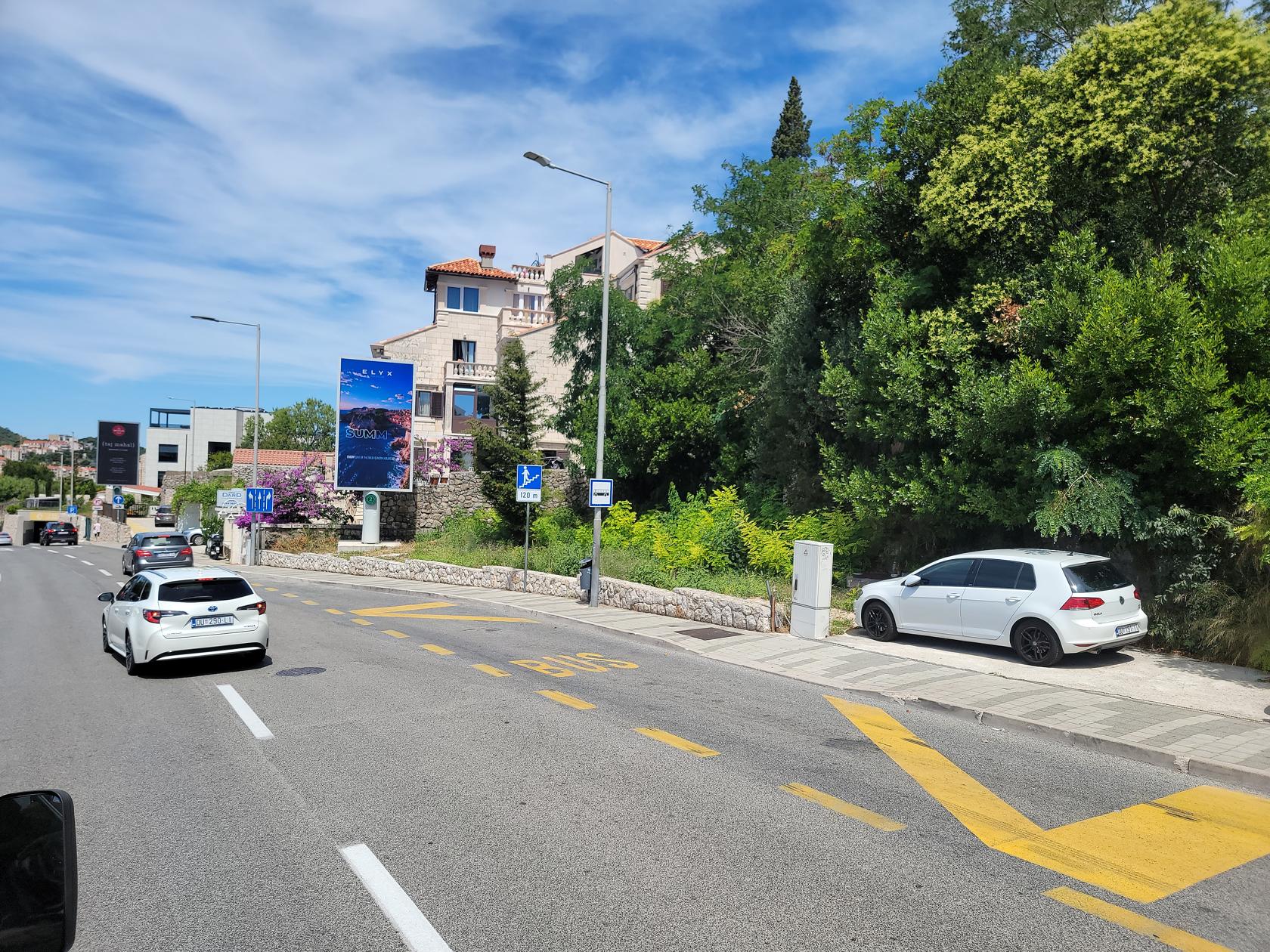
Located directly above the Old Town and approximately three hundred steps from it, was our hotel, Vila Dard. Unfortunately located on a very busy road, especially in the mornings and early evenings when everyone is rushing to and from work, it can be a bit challenging to cross.
Vila Dard – Dubrovnik, Croatia
Vila Dard Street – Dubrovnik, Croatia
However, it was for us more than 600-700€/night cheaper than staying at, let’s say, the Imperial Hilton down by the city. That’s a huge savings and one can overlook the traffic and inconvenience. It was very clean, fully air-conditioned and our laundry was changed everyday, without any issues with missing towels or other amenities, which we find rather frustrating at other higher priced options. So, in the end, it saved us some money and improved our health a bit, since we did not have to go to the gym and got plenty of exercise.
Lovrijenac Fortress
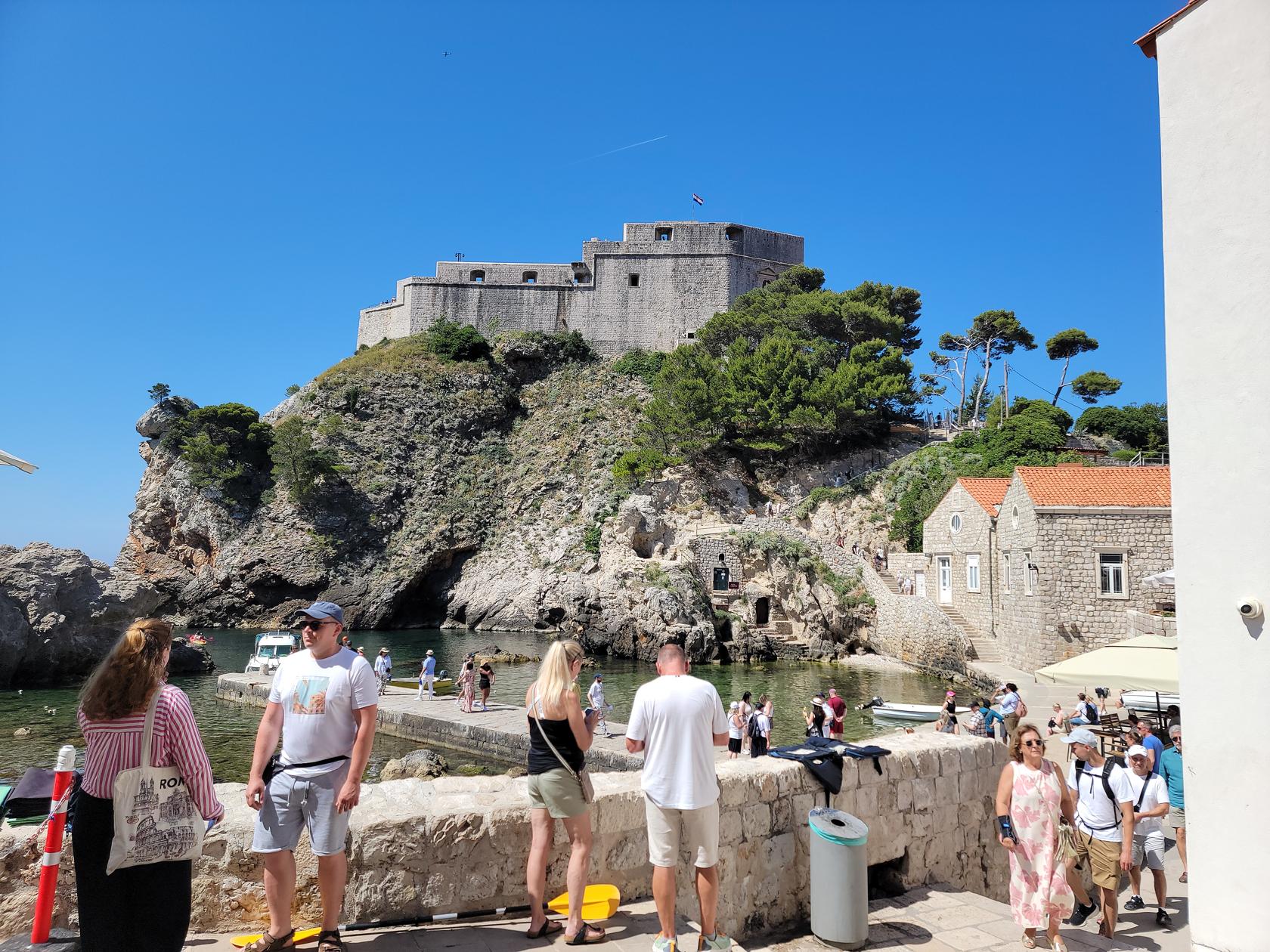
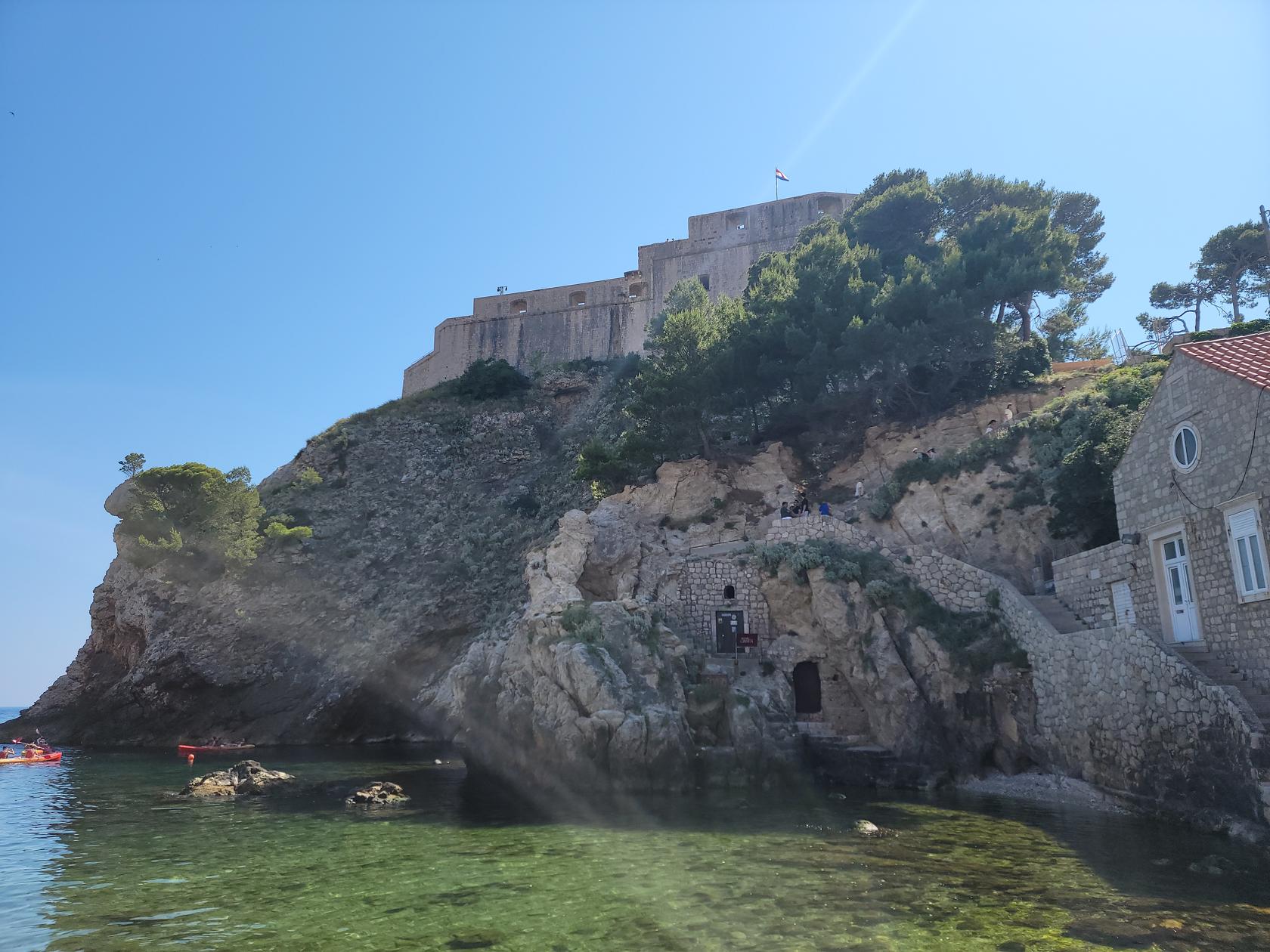
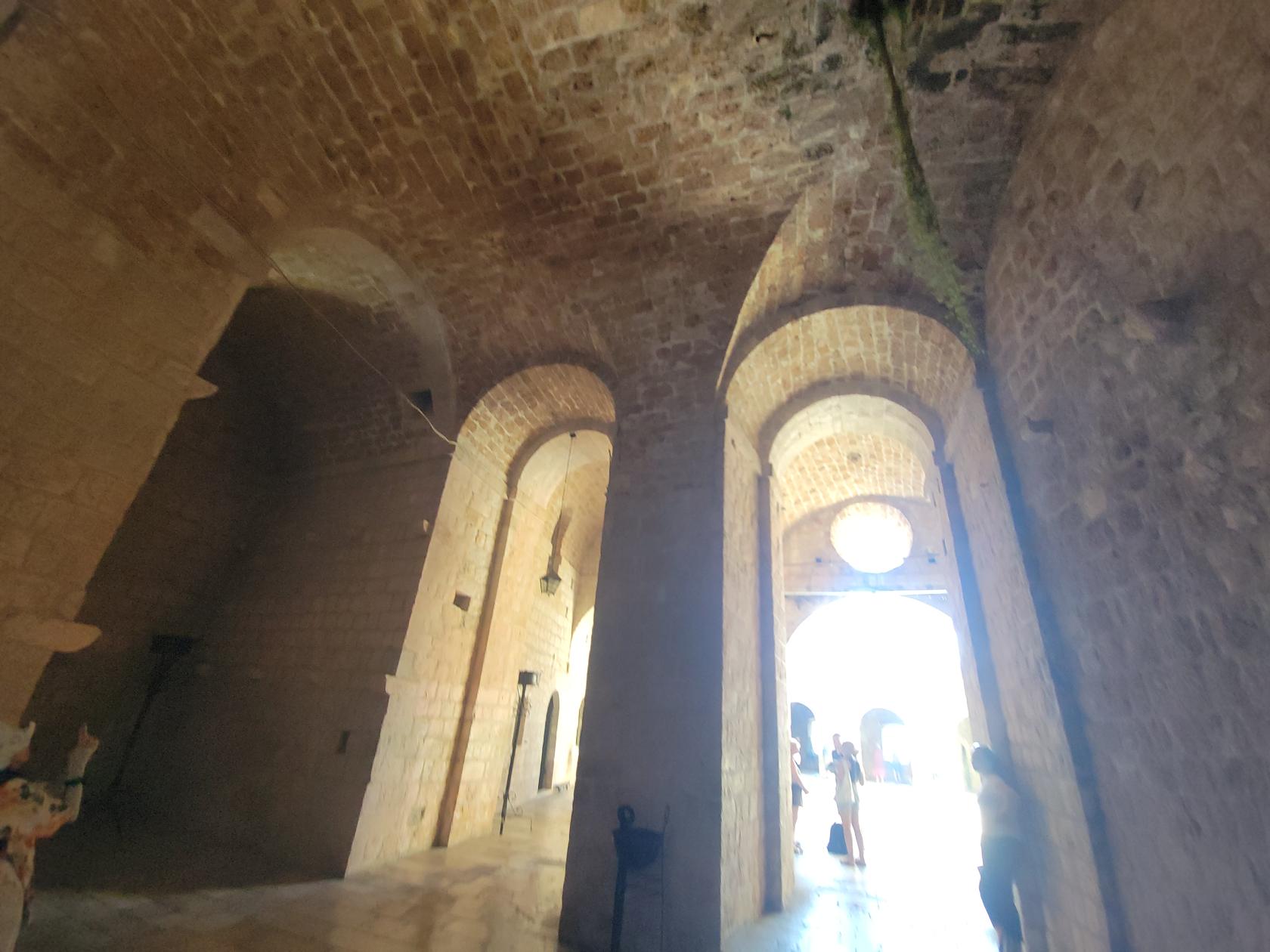
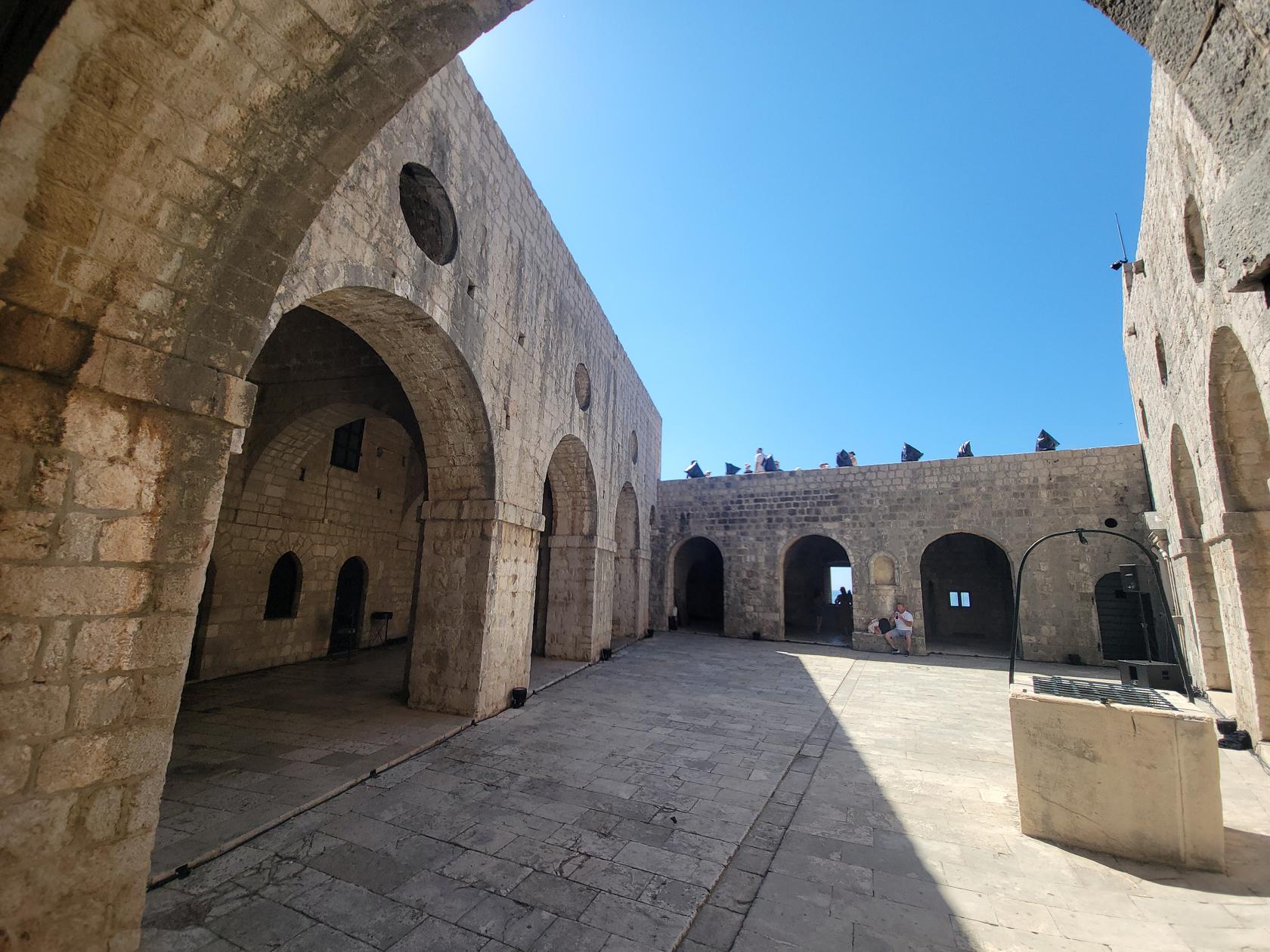
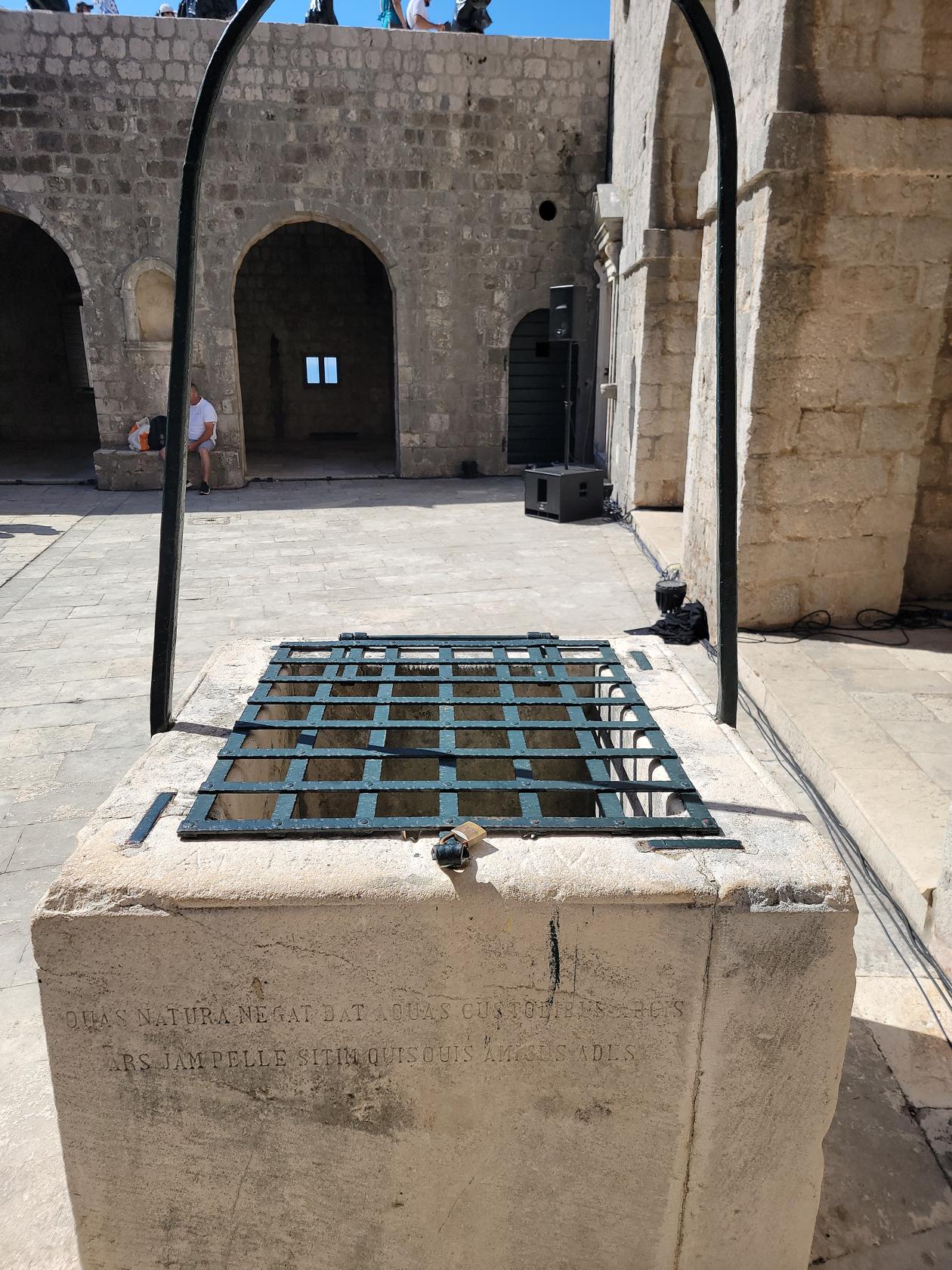
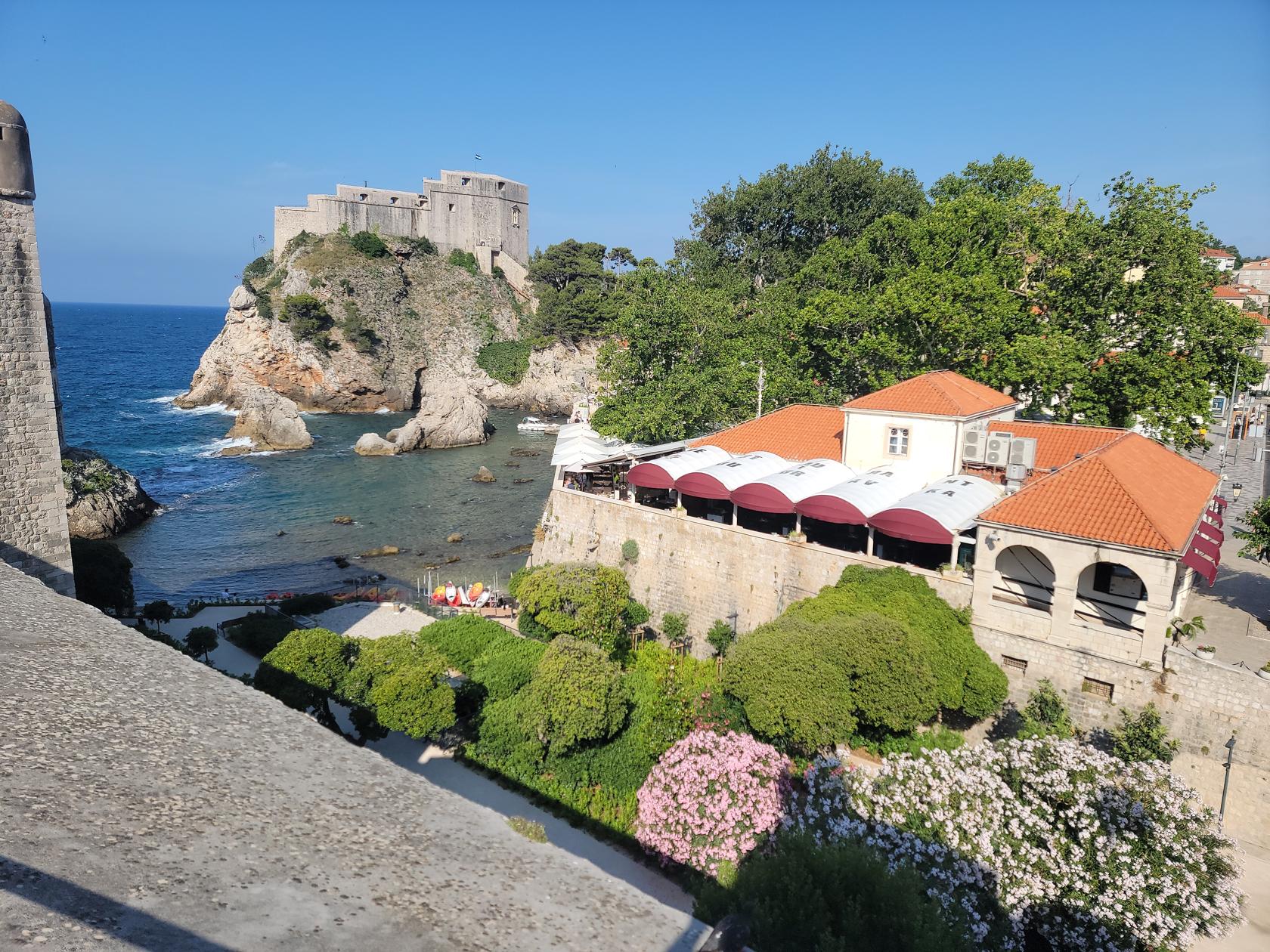
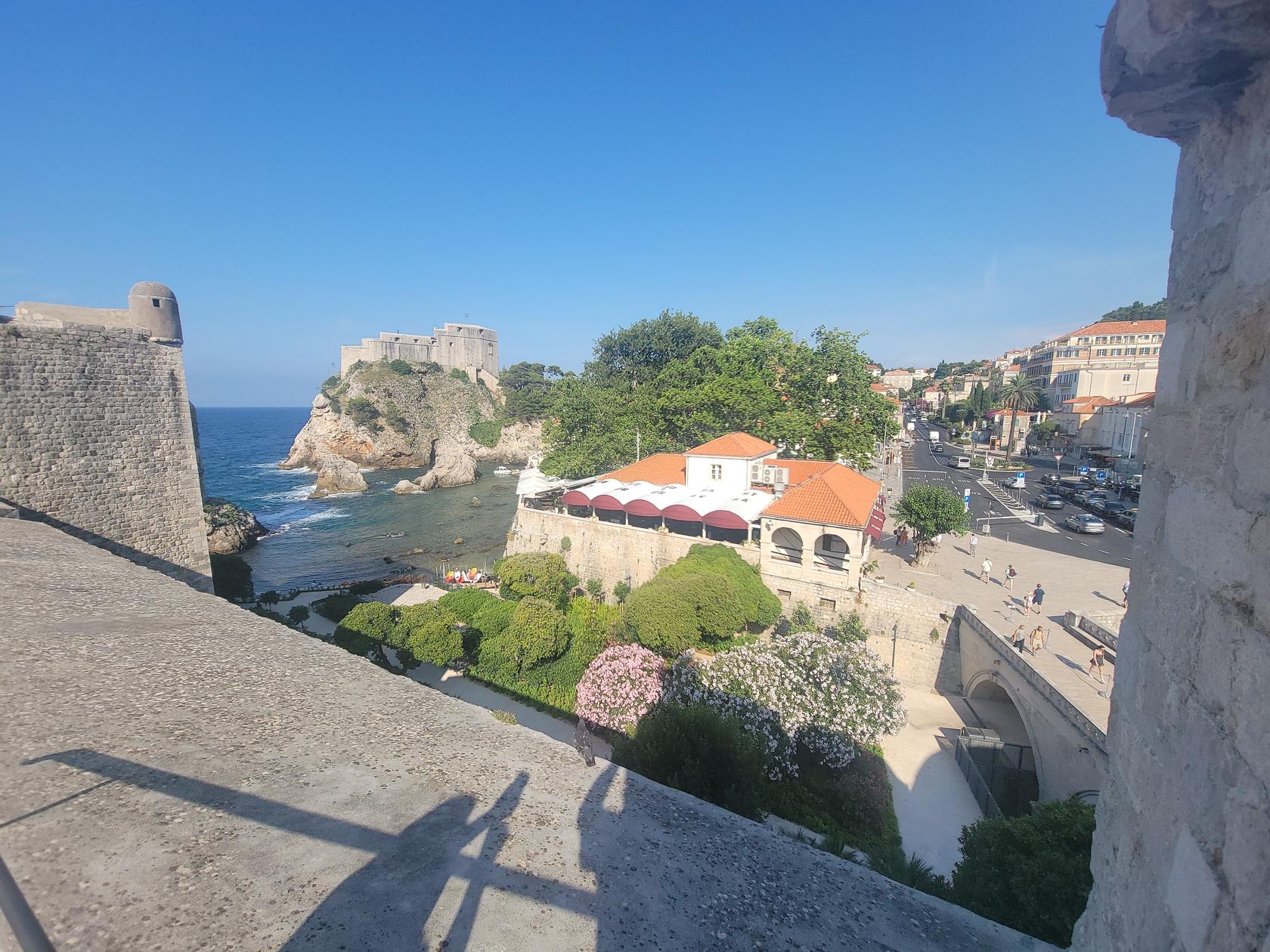
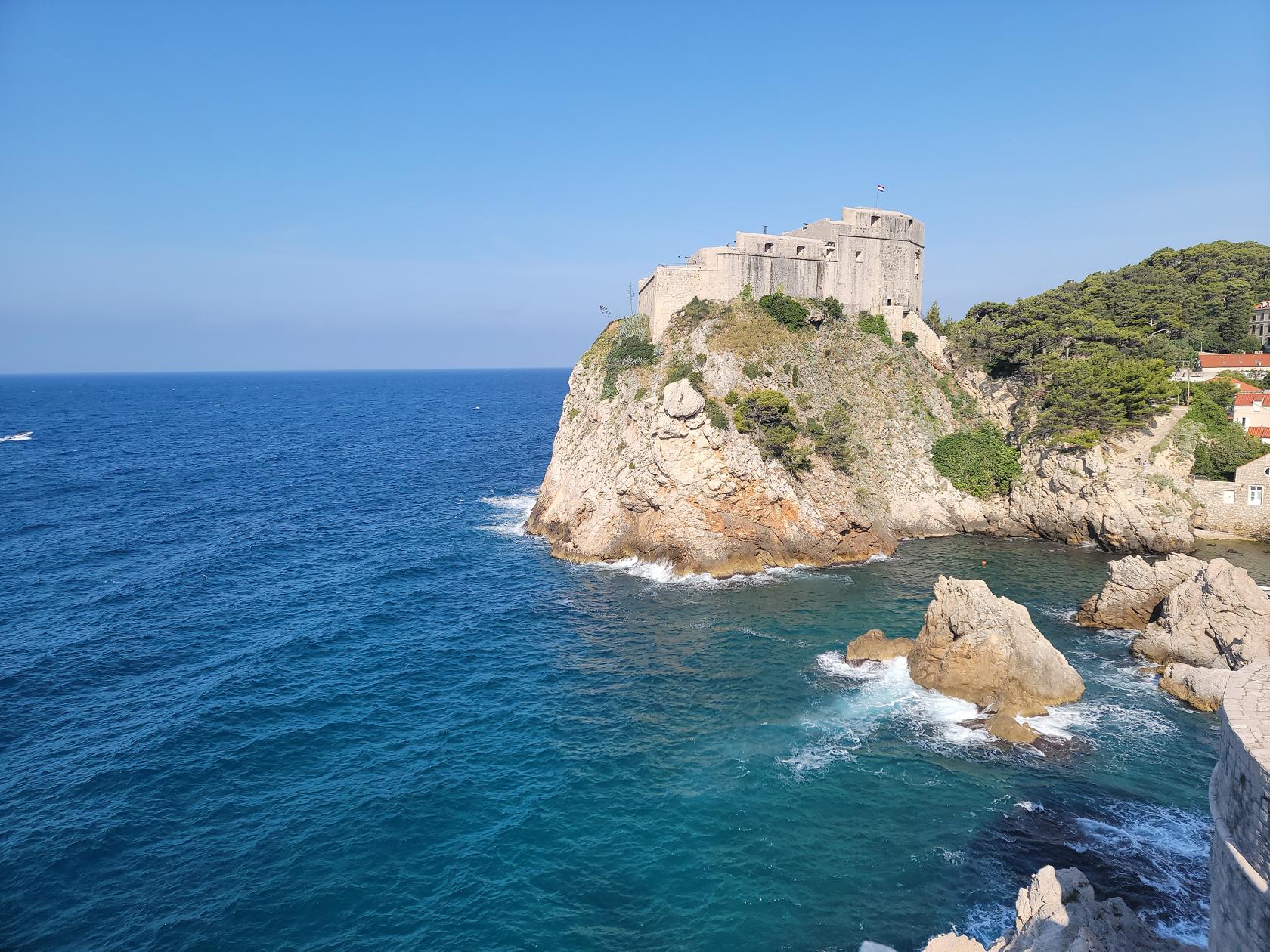
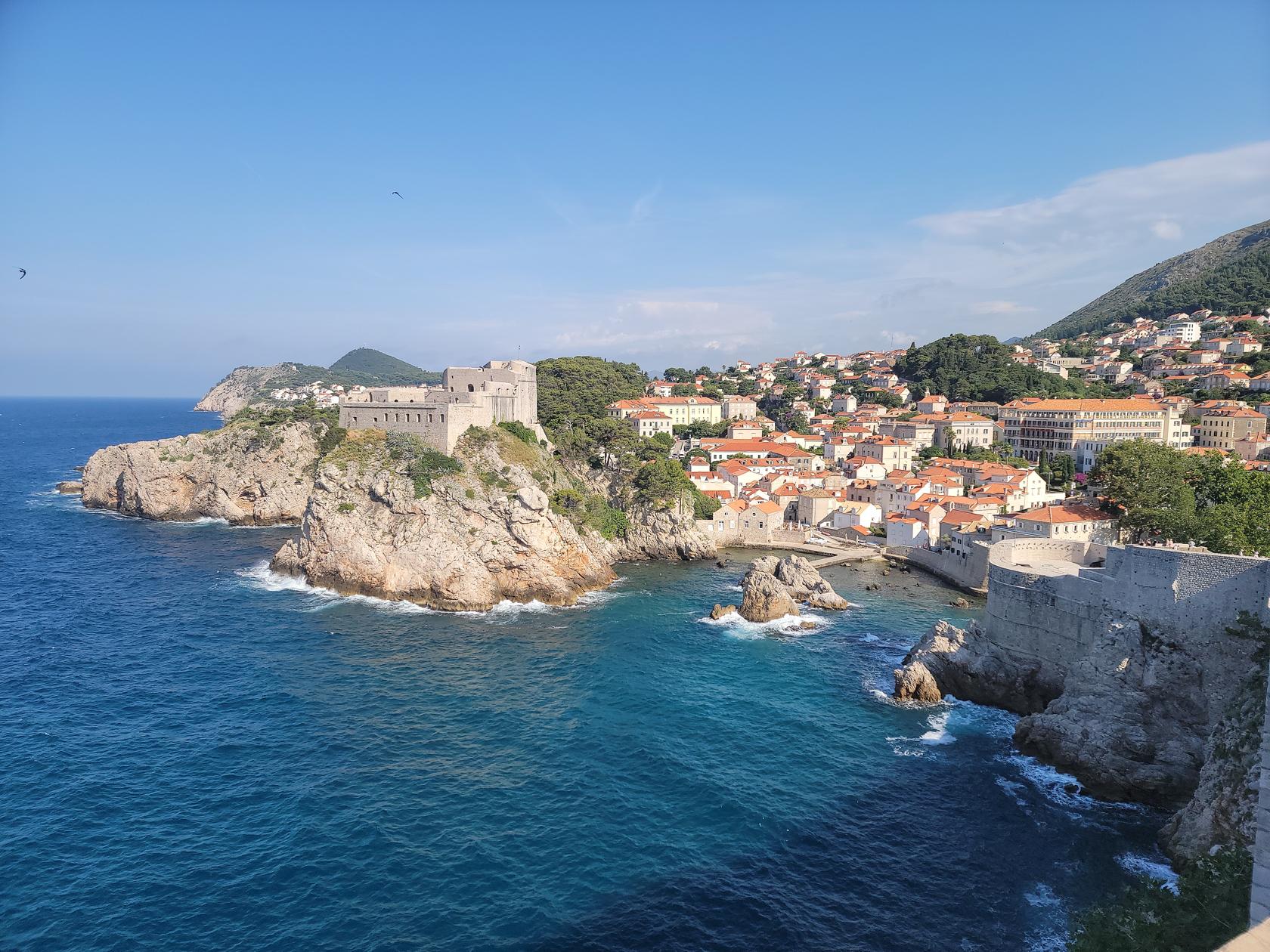
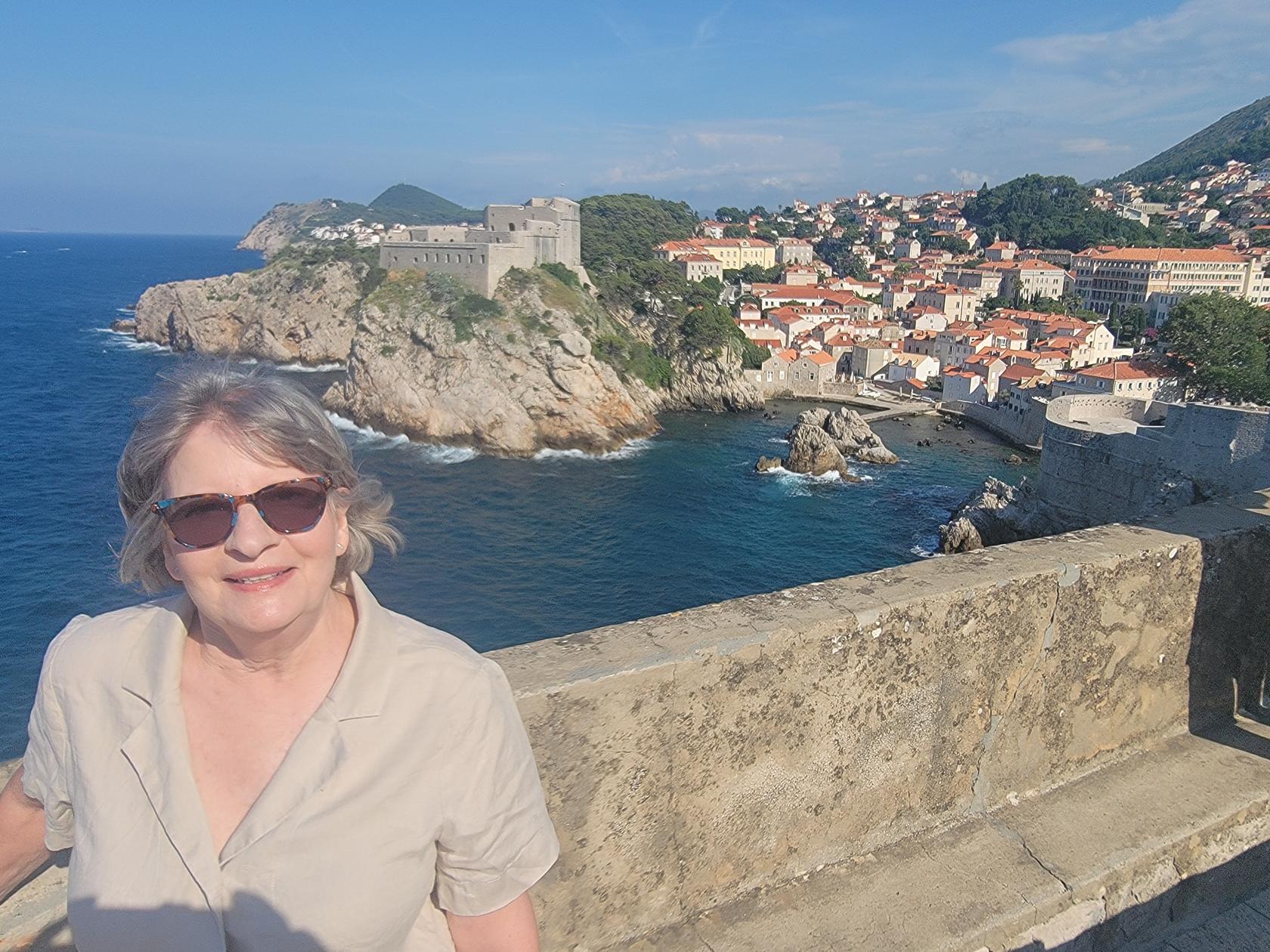
Located outside the town walls is the Lovrijenac Fortress. Perched high on a hill overlooking the west harbor, it commands a viewpoint of the entire seaside, countryside and harbor that it protects. It also appears to be a favorite venue for weddings and other occasions, since they were setting up for one when we visited.
Lovrijenac Fortress – Dubrovnik, Croatia
Lovrijenac Fortress – Dubrovnik, Croatia
The Lovrijenac Fortress appears to have been built in haste by the people of Ragusa, to resist Venetian rule. The Empire of Venice had already threatened to built a fortress on the same spot, so they could dominate trade and the surrounding area. When they arrived with their ships fully ladened for the task, they found that they were beaten to it by the residents and had to turn back.
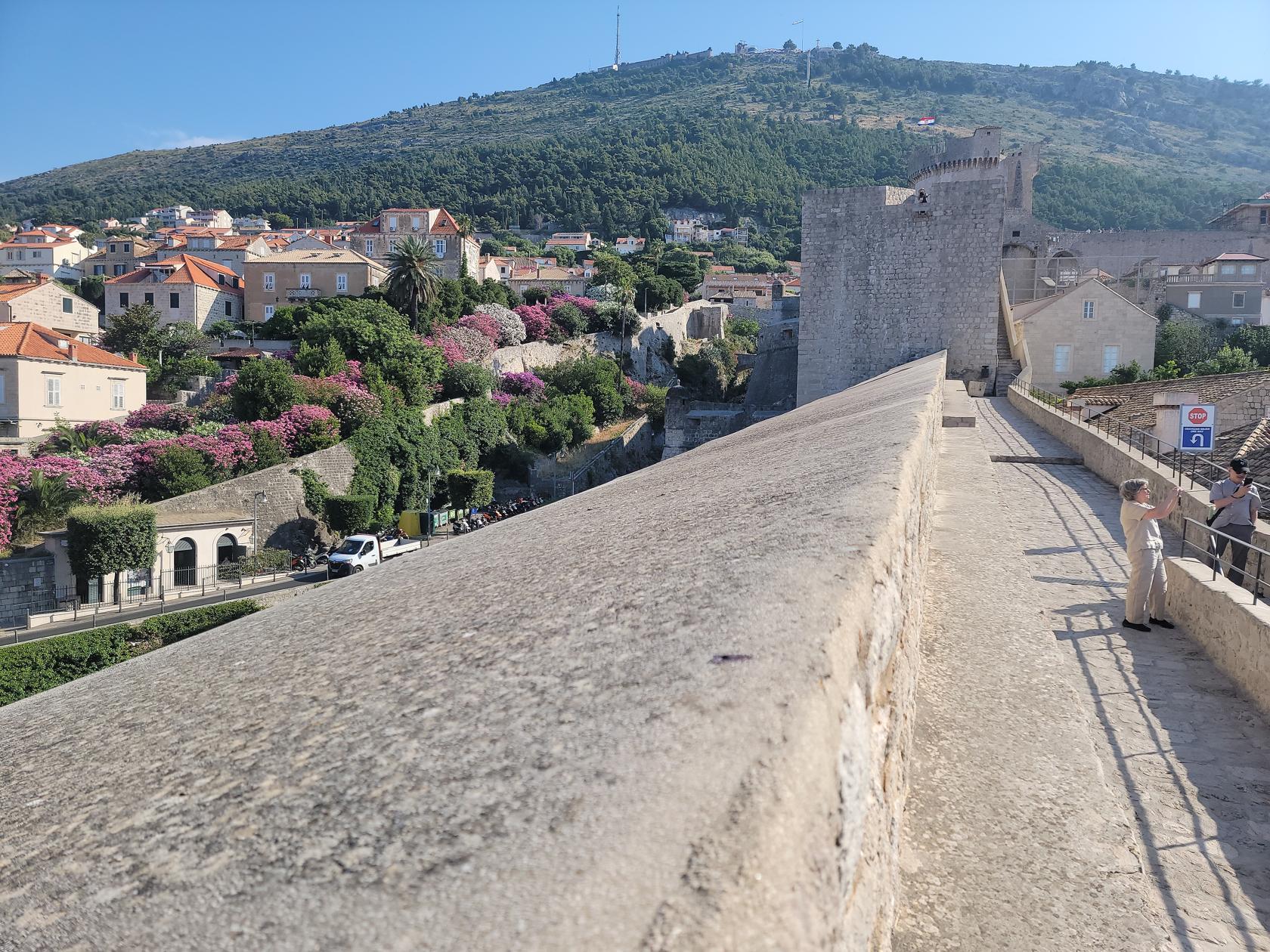
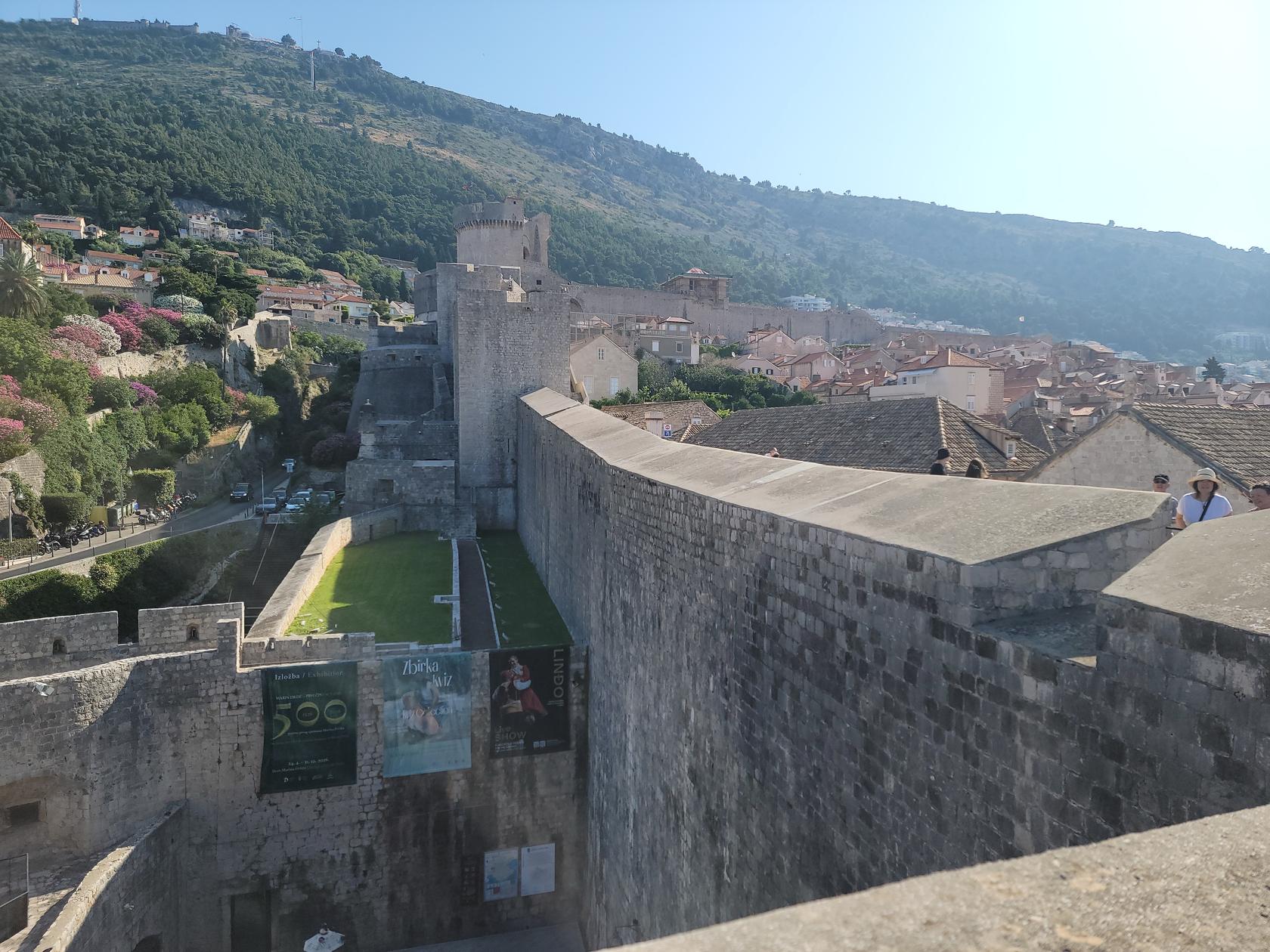
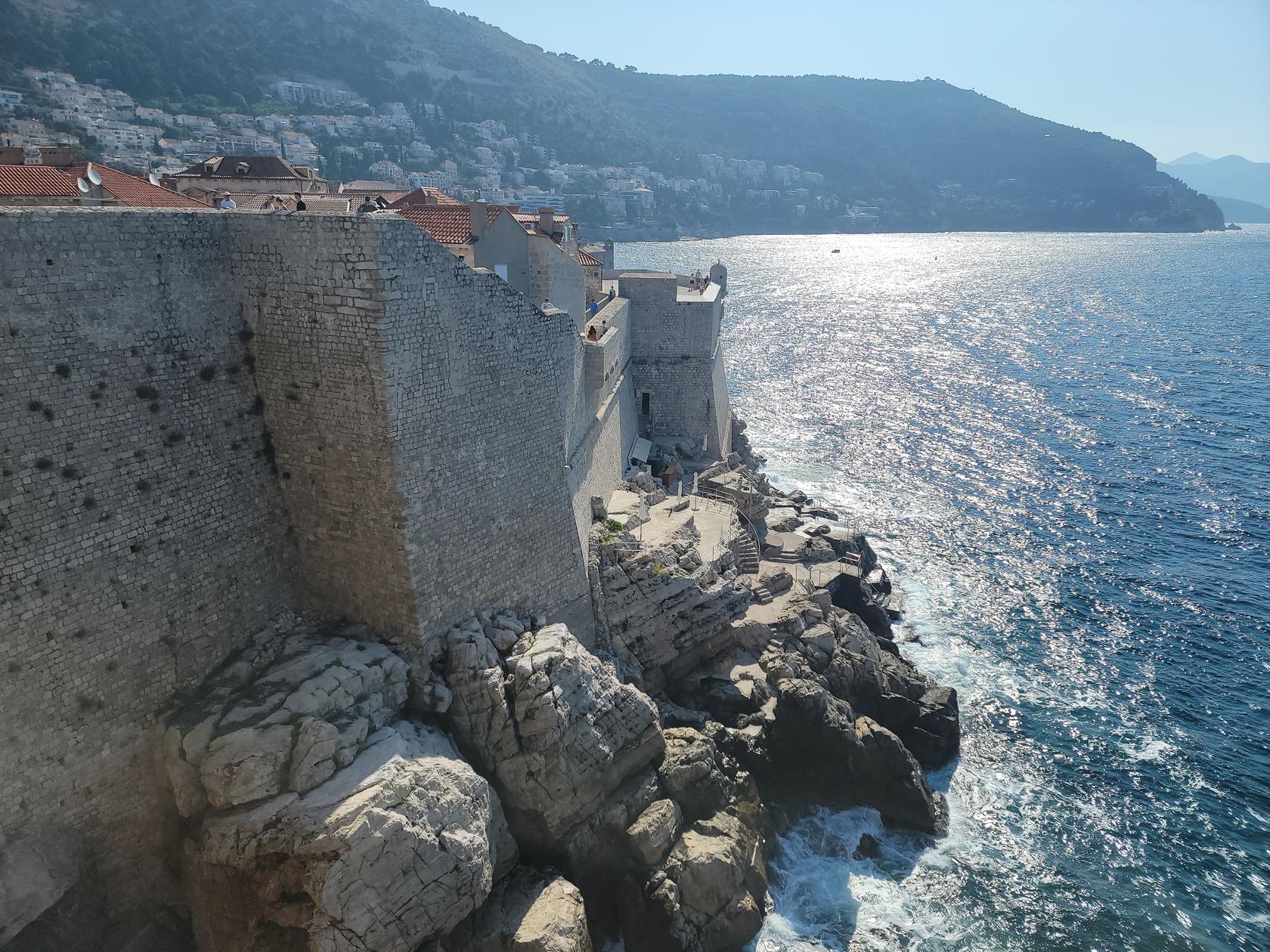
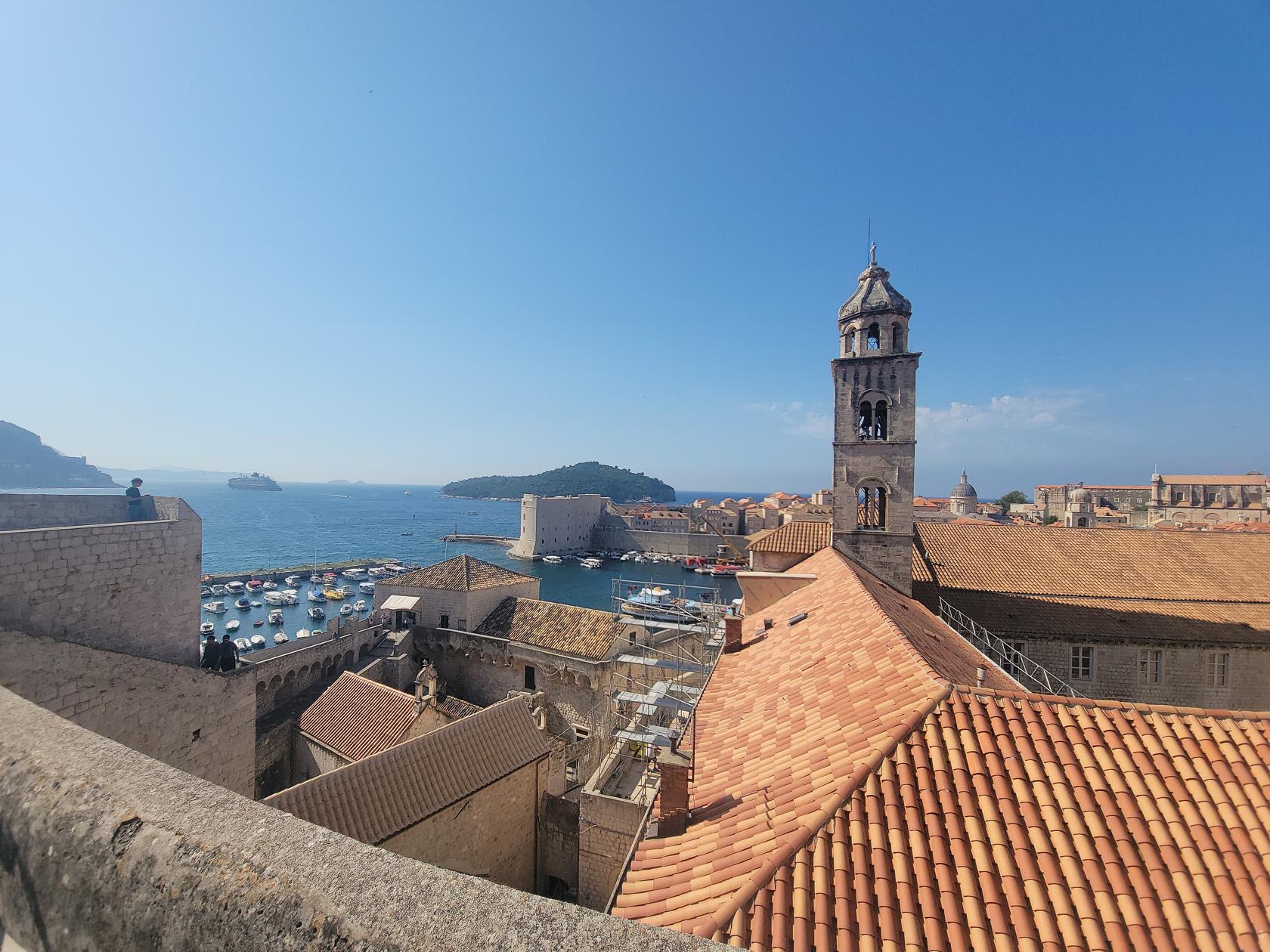
The walls around the city are huge, unbroken and remniscent of other great walled cities by the Adriatic Sea. They have resisted attacks for centuries and have filled numerous roles throughout their life, including protection from direct attack, shelter, and even revenue in the form of tourism. Today they provide a unique unbroken path around the city, where those that visit can enjoy the views high upon the perch it provides.
Wall by Entrance – City Wall Tour – Dubrovnik, Croatia
Massive Fortress Walls – City Wall Tour – Dubrovnik, Croatia
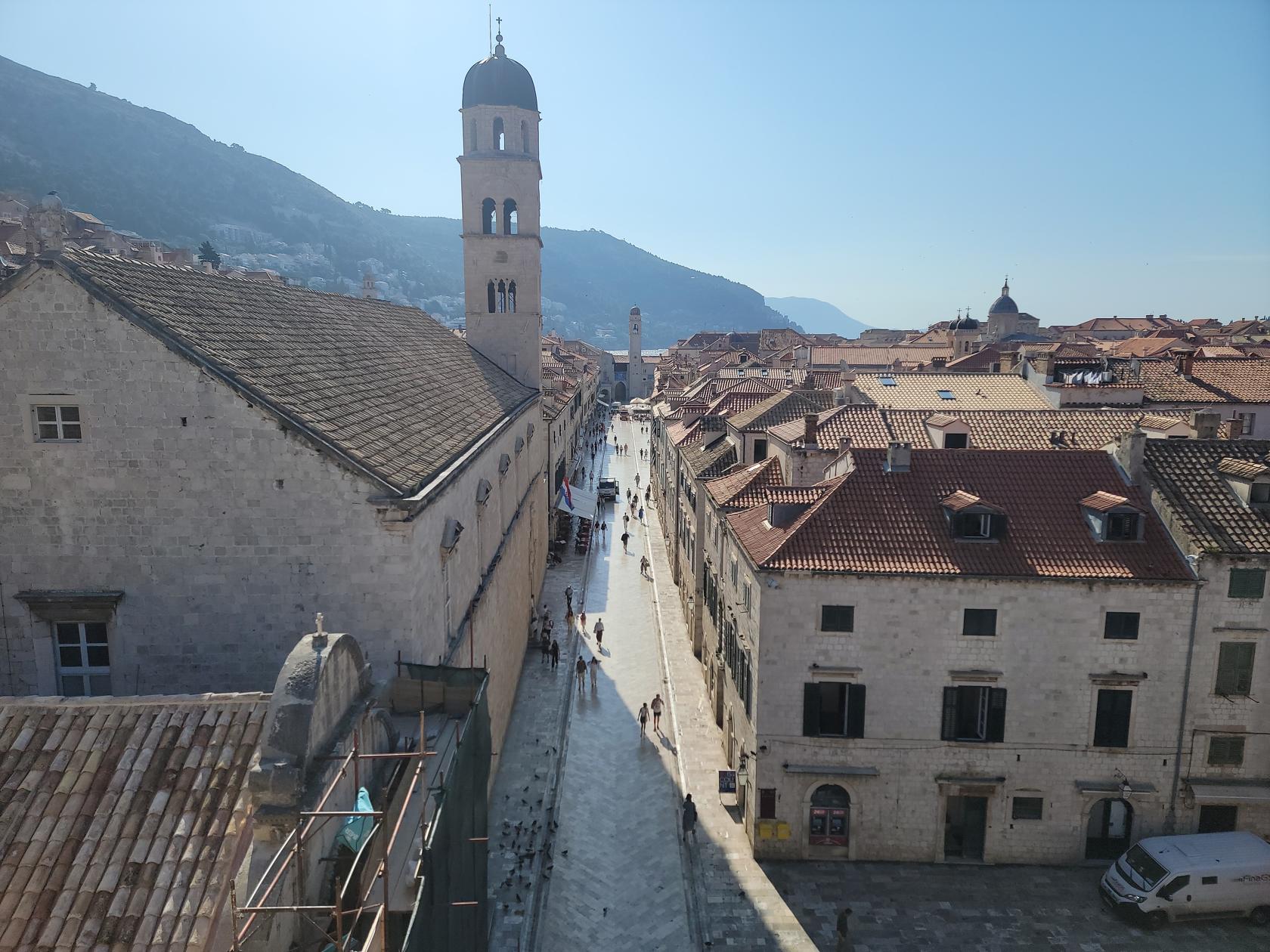
Franciscan Church and Monastery Tower and the Stradun – City Wall Tour – Dubrovnik, Croatia
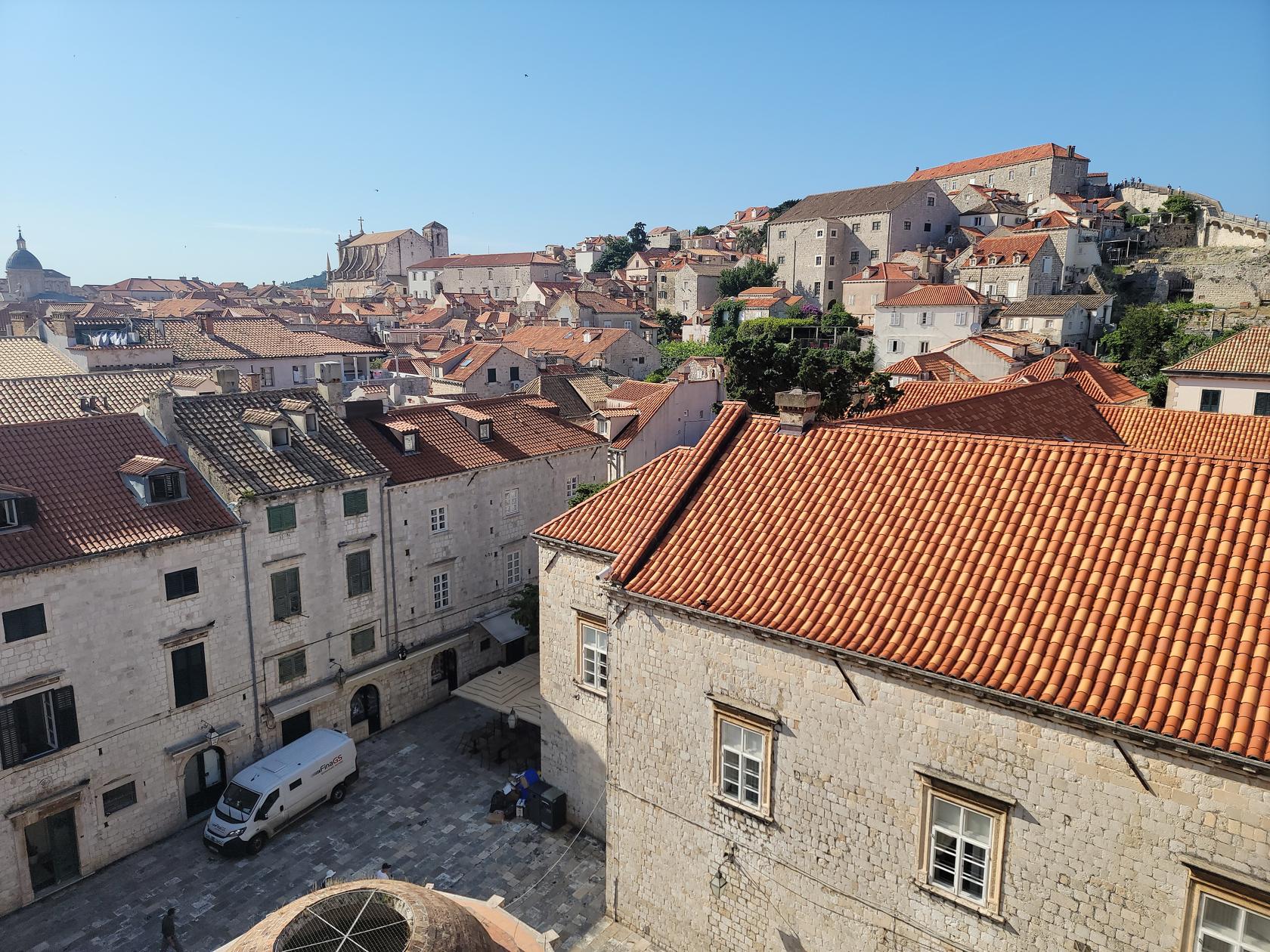
Hill in Old Town – City Wall Tour – Dubrovnik, Croatia
Fortress Wall by Entrance – City Wall Tour – Dubrovnik, Croatia
Lovrjenak Fortress and Park – City Wall Tour – Dubrovnik, Croatia
Park Below – City Wall Tour – Dubrovnik, Croatia
Fortress Walls – City Wall Tour – Dubrovnik, Croatia
Lovrjenak Fortress – City Wall Tour – Dubrovnik, Croatia
Old Town and Bosanka Hill – City Wall Tour – Dubrovnik, Croatia
Lovrjenak Fortress – City Wall Tour – Dubrovnik, Croatia
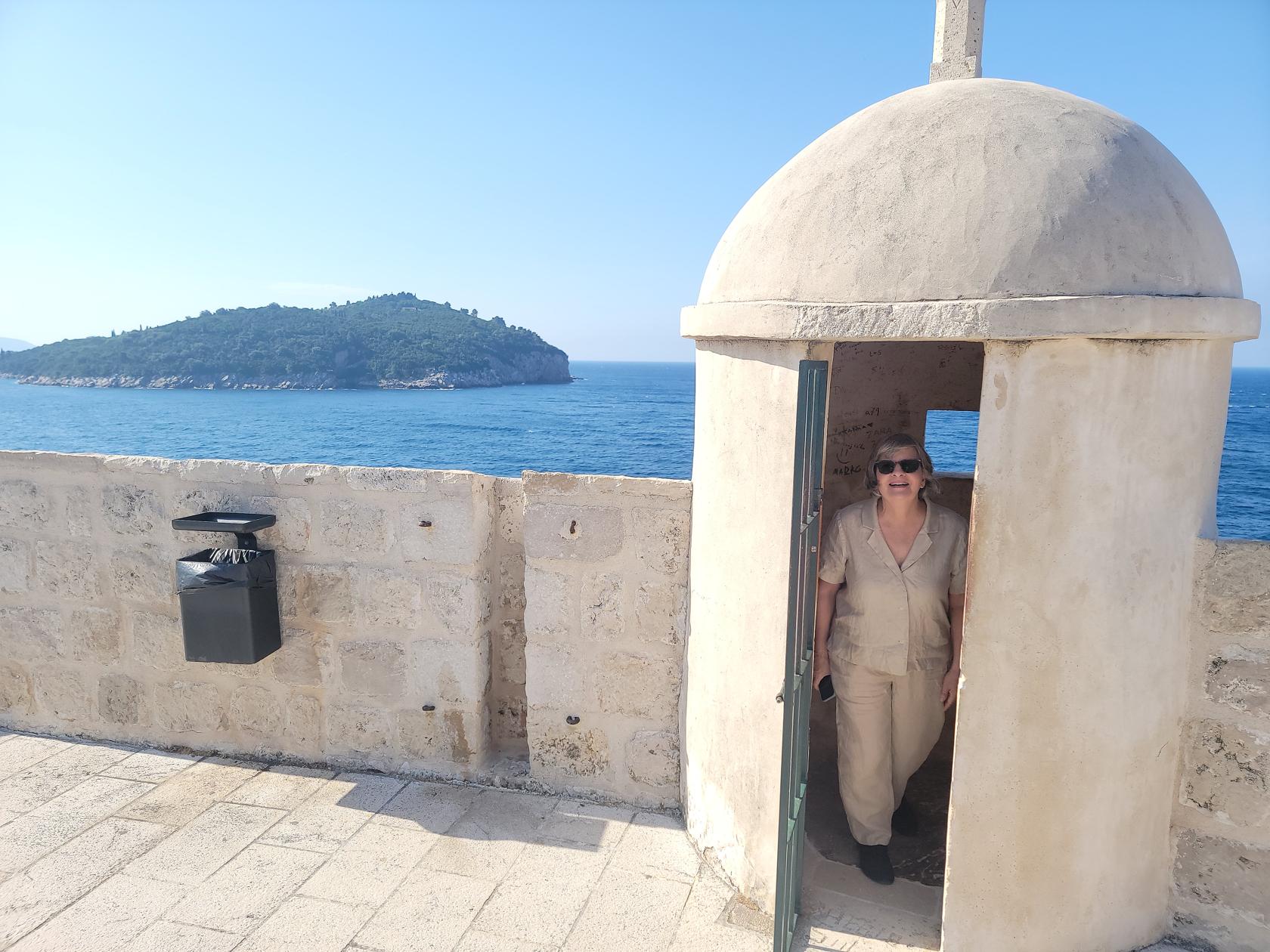
Patti on Fortress Wall – City Wall Tour – Dubrovnik, Croatia
Lokrum Island – City Wall Tour – Dubrovnik, Croatia
Patti in Lookout Tower – City Wall Tour – Dubrovnik, Croatia
Fortress Wall – City Wall Tour – Dubrovnik, Croatia
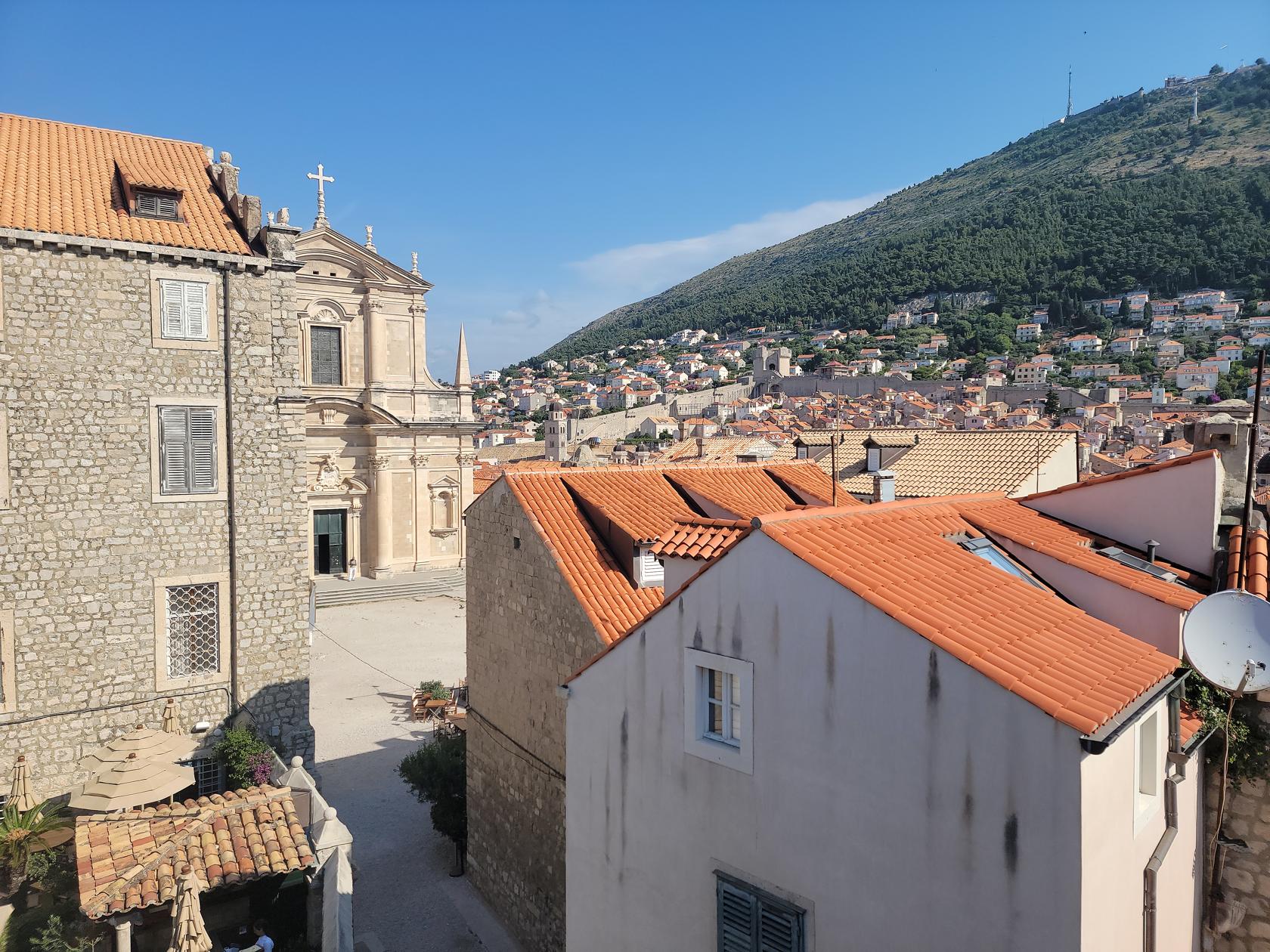
Church of St. Ignatius – City Wall Tour – Dubrovnik, Croatia
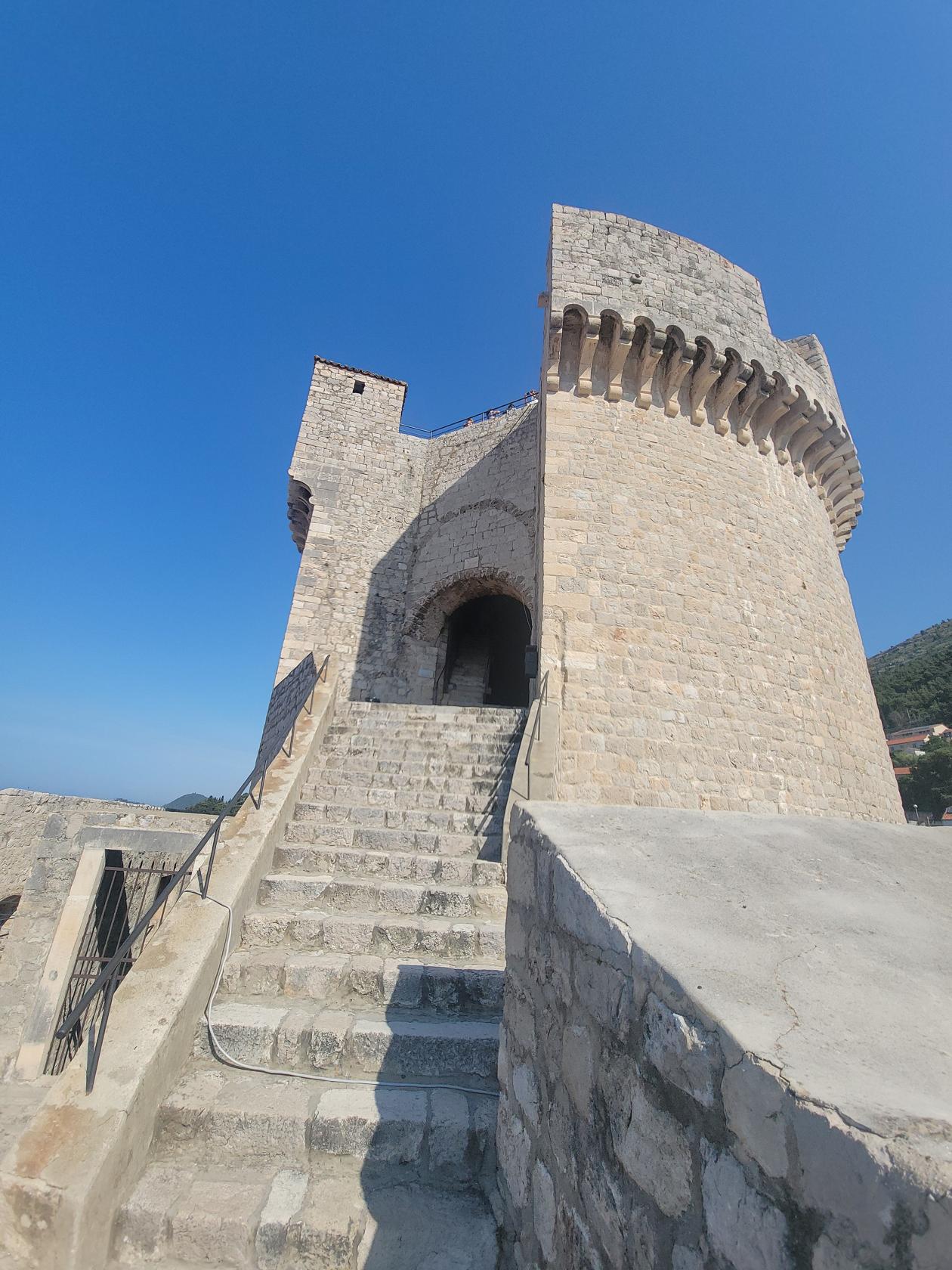
Tvrđava Minčeta Tower – City Wall Tour – Dubrovnik, Croatia
Fortress Walls – City Wall Tour – Dubrovnik, Croatia
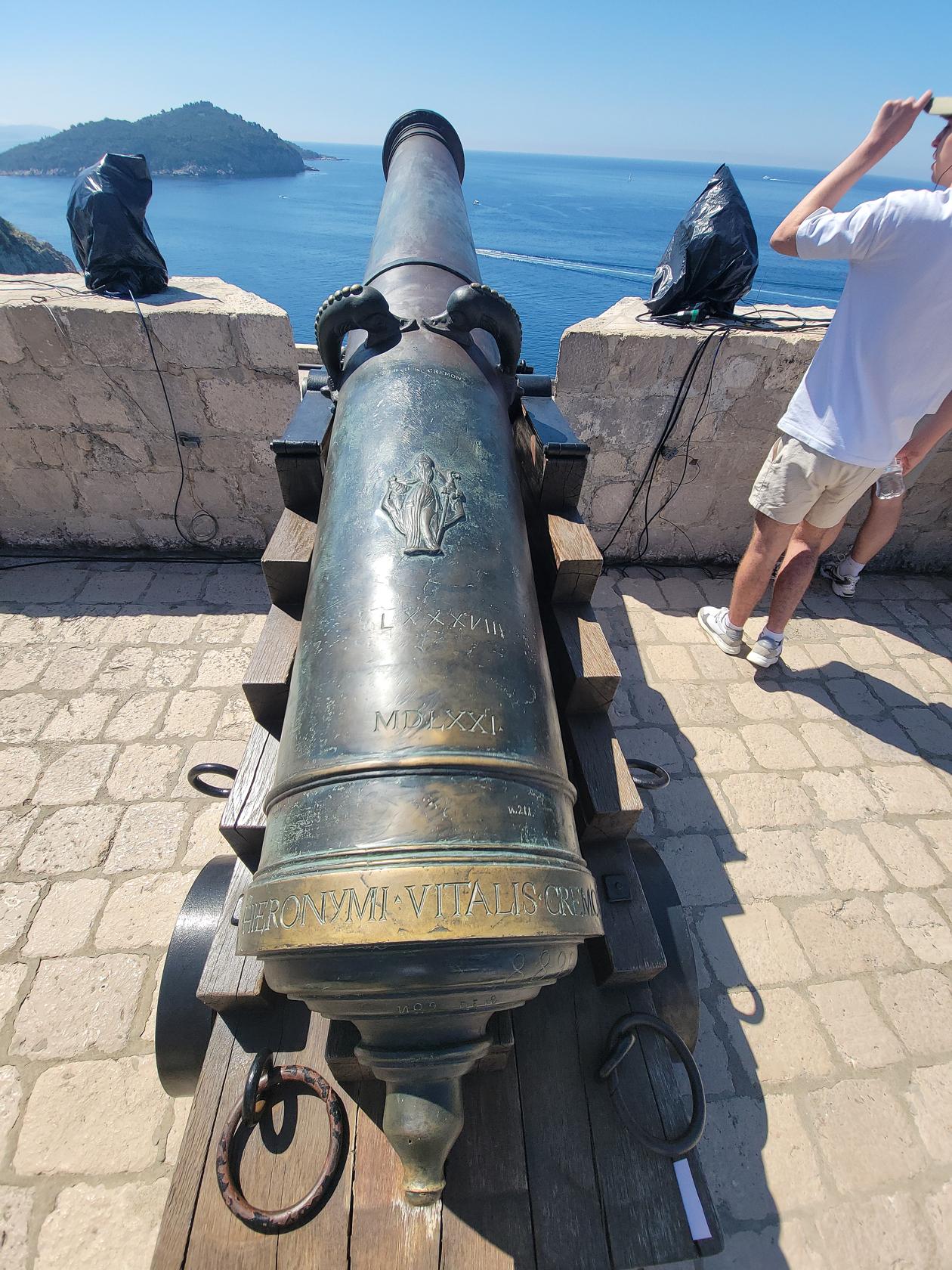
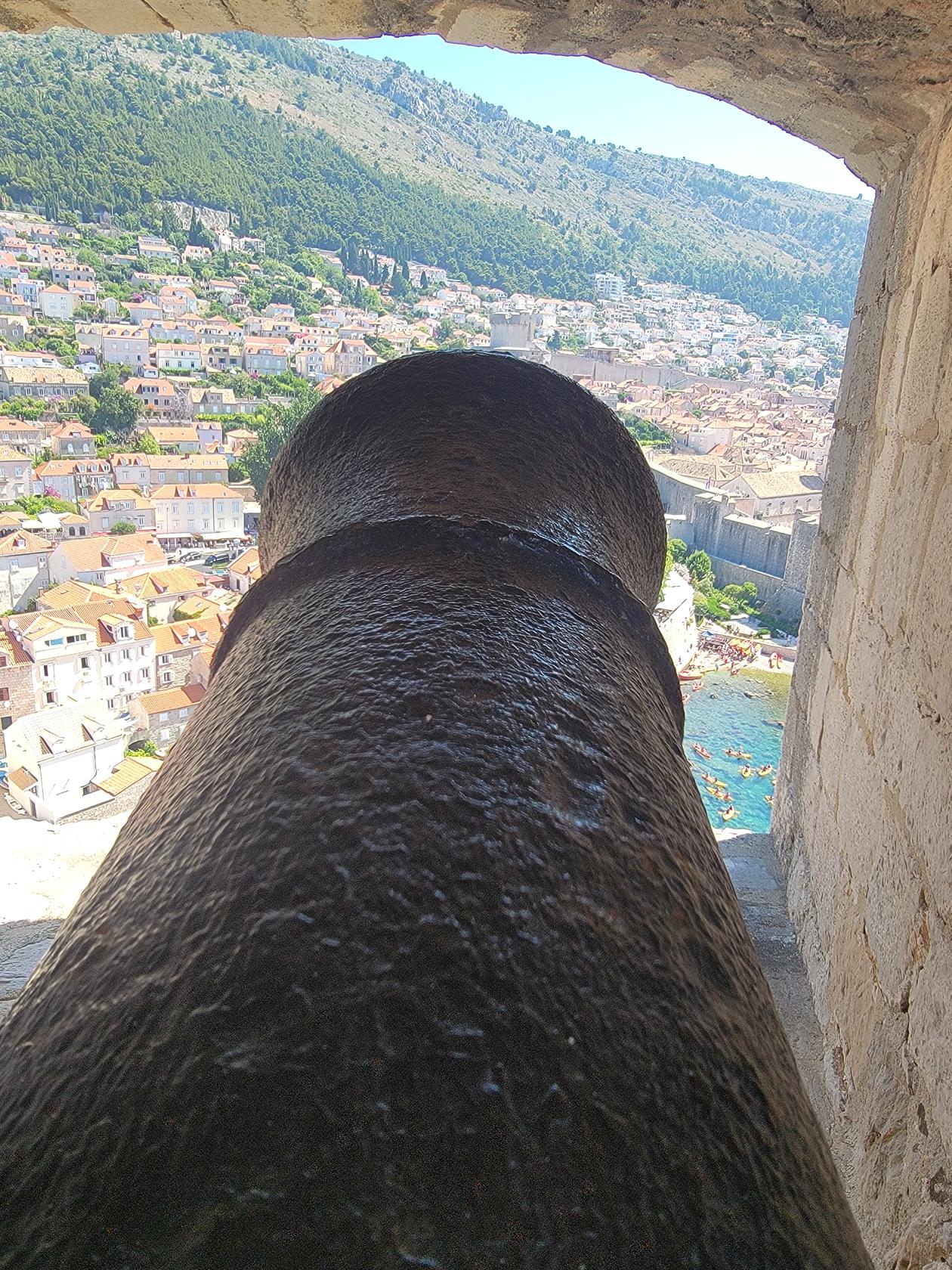
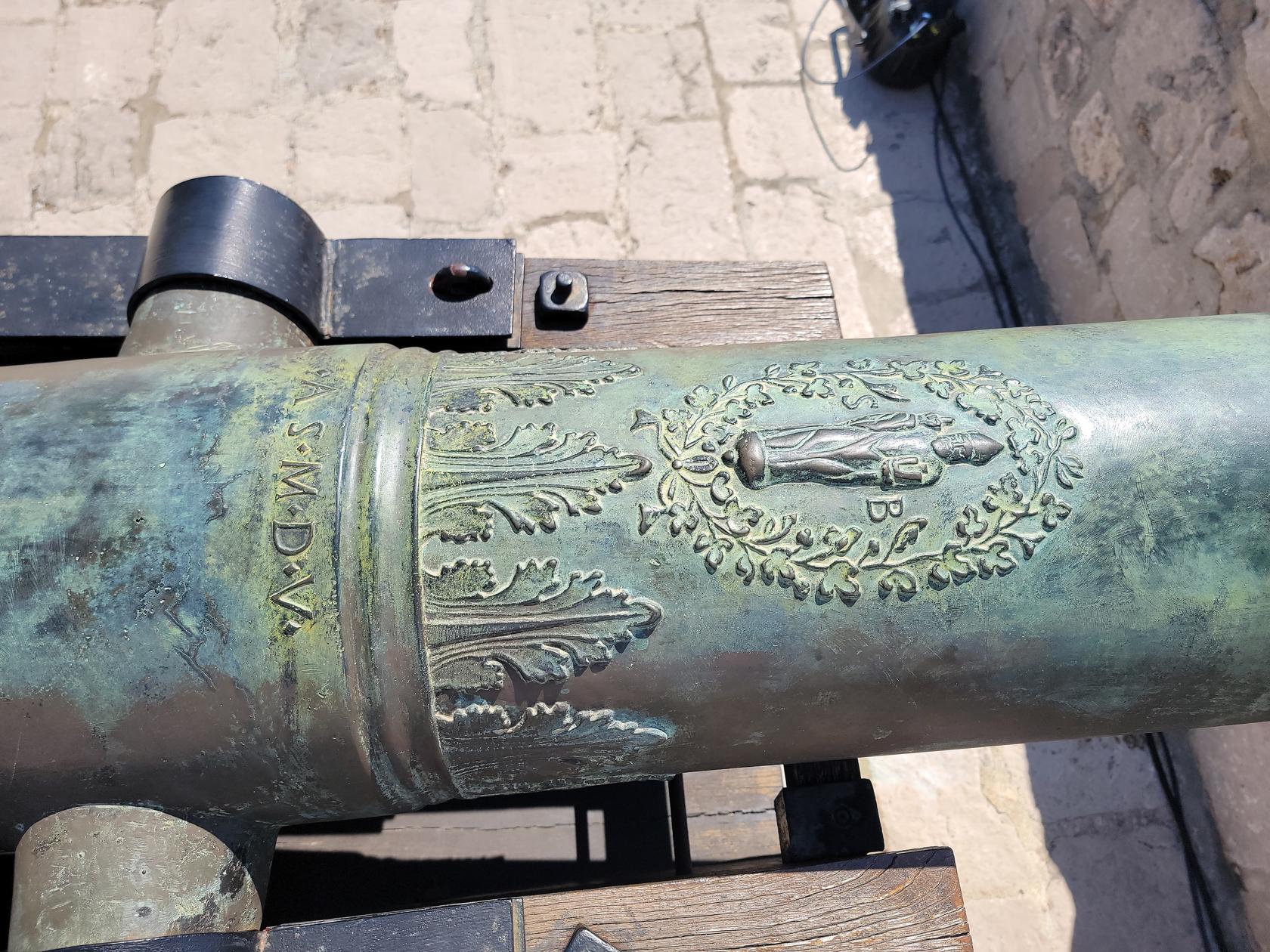
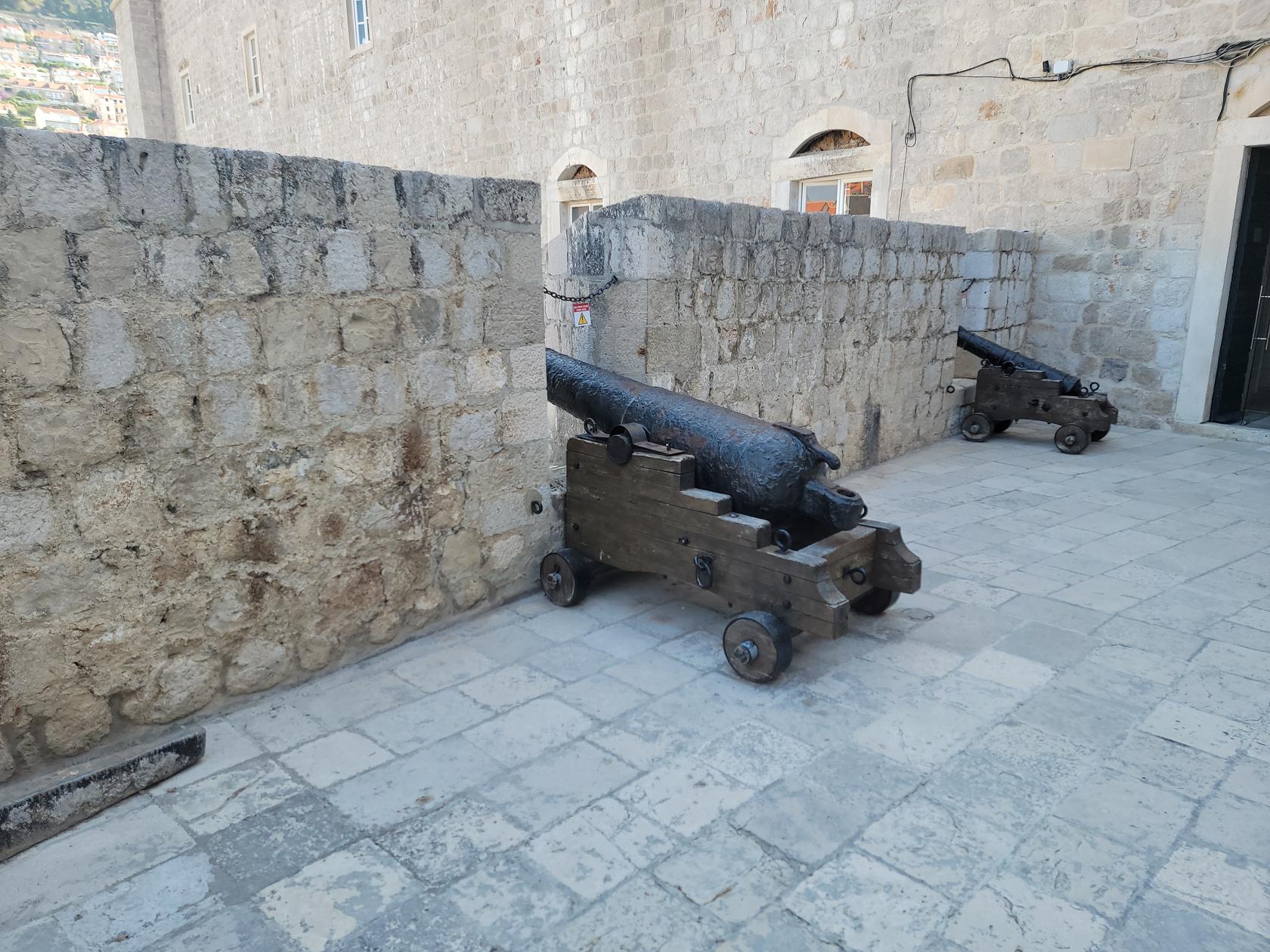
Old Cannons – City Wall Tour – Dubrovnik, Croatia
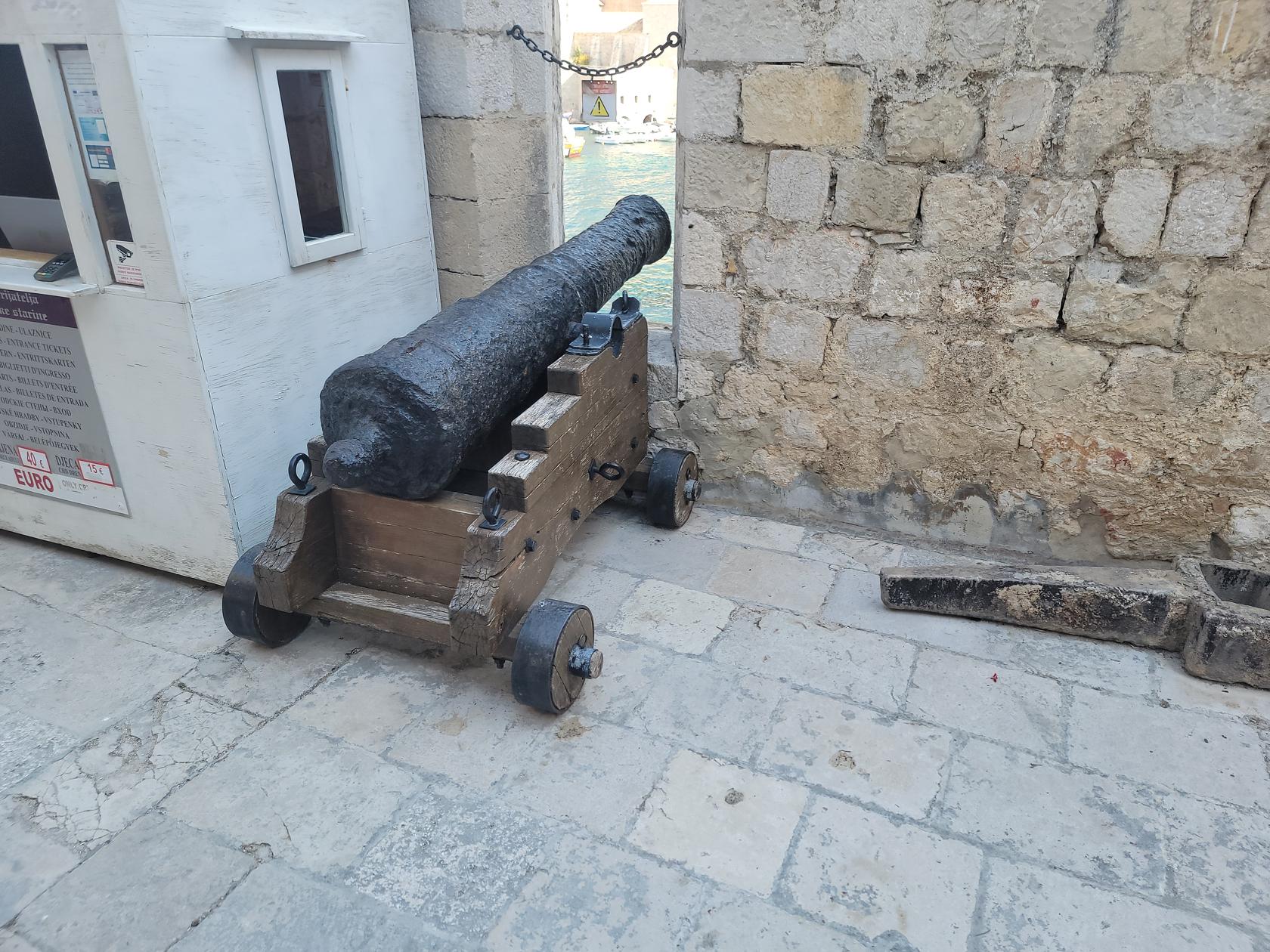
Old Cannon – City Wall Tour – Dubrovnik, Croatia
Clock Tower – City Wall Tour – Dubrovnik, Croatia
Lovrjenac Fortress in distance – City Wall Tour – Dubrovnik, Croatia
Stradun
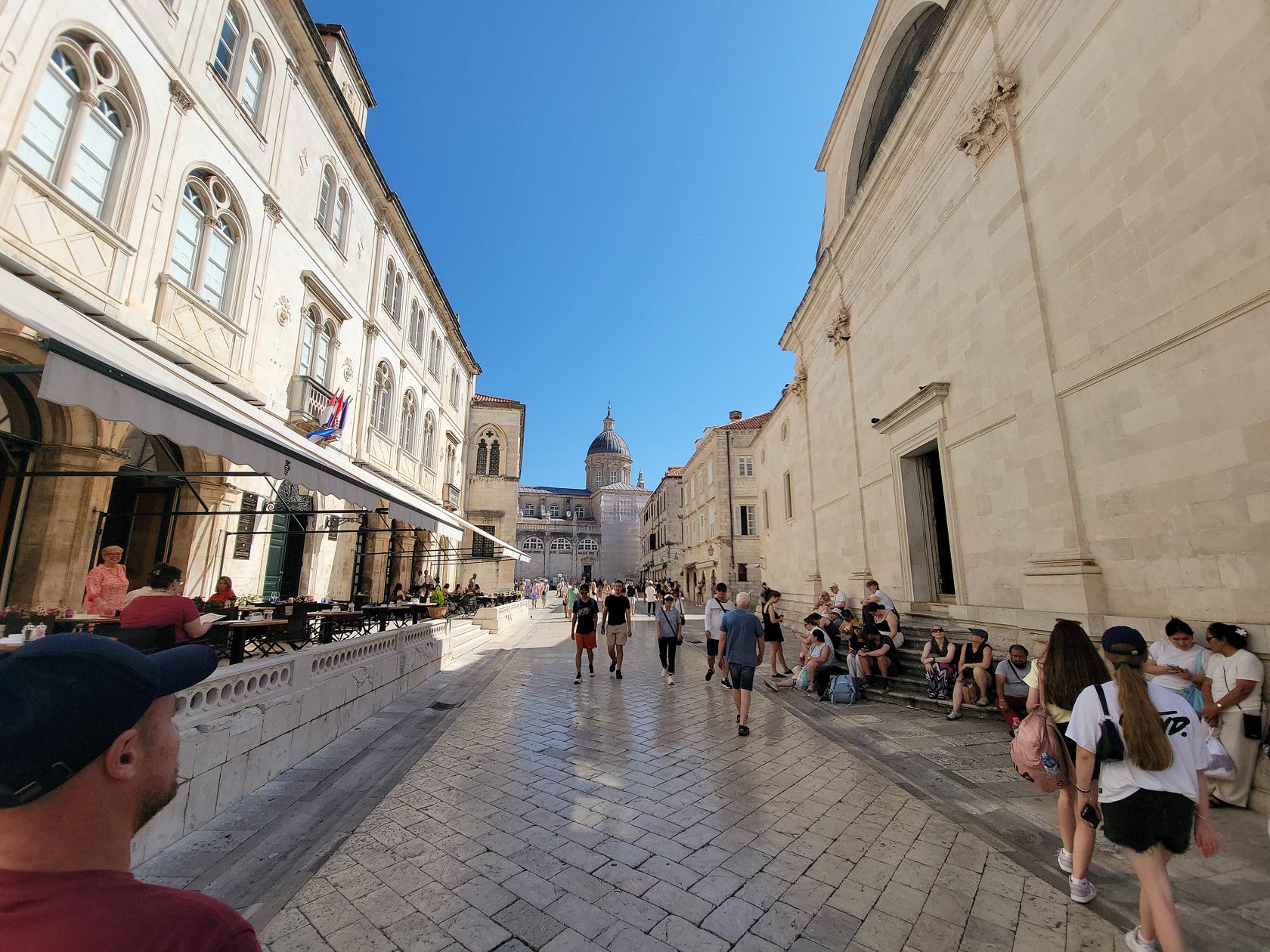
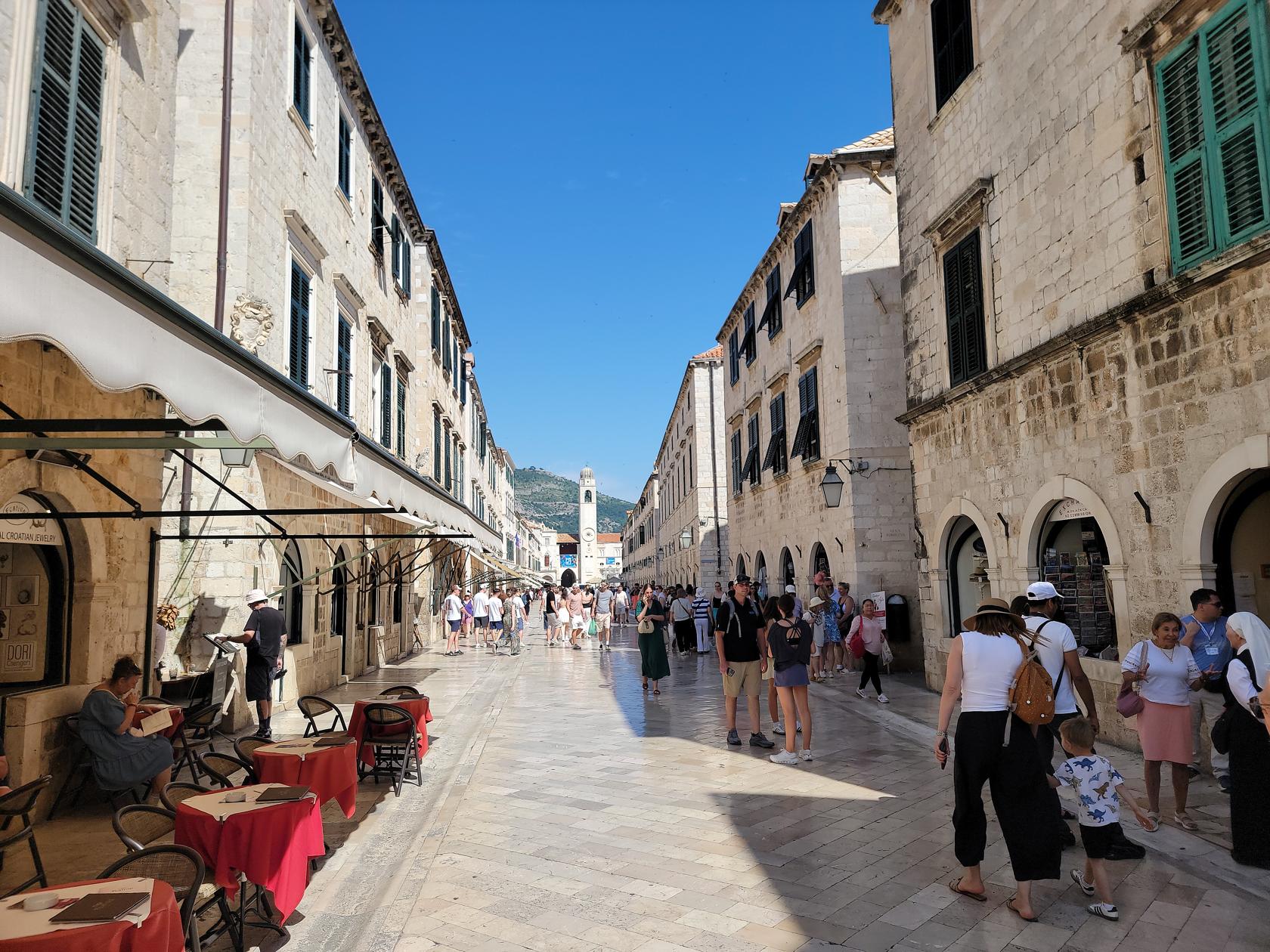
The major shopping avenue or street in the city is the Stradun. It is also the least protected from the sun and visitors would be keen to visit it early or later on in the day, since the sun beats down on extensive surface and reradiates the heat directly back to your body, thereby adding ten degrees Fahrenheit more to the outside temperature.
Stradun – Dubrovnik, Croatia
Square by Pile Gate – Dubrovnik, Croatia
Stradun Shopping Street – Dubrovnik, Croatia
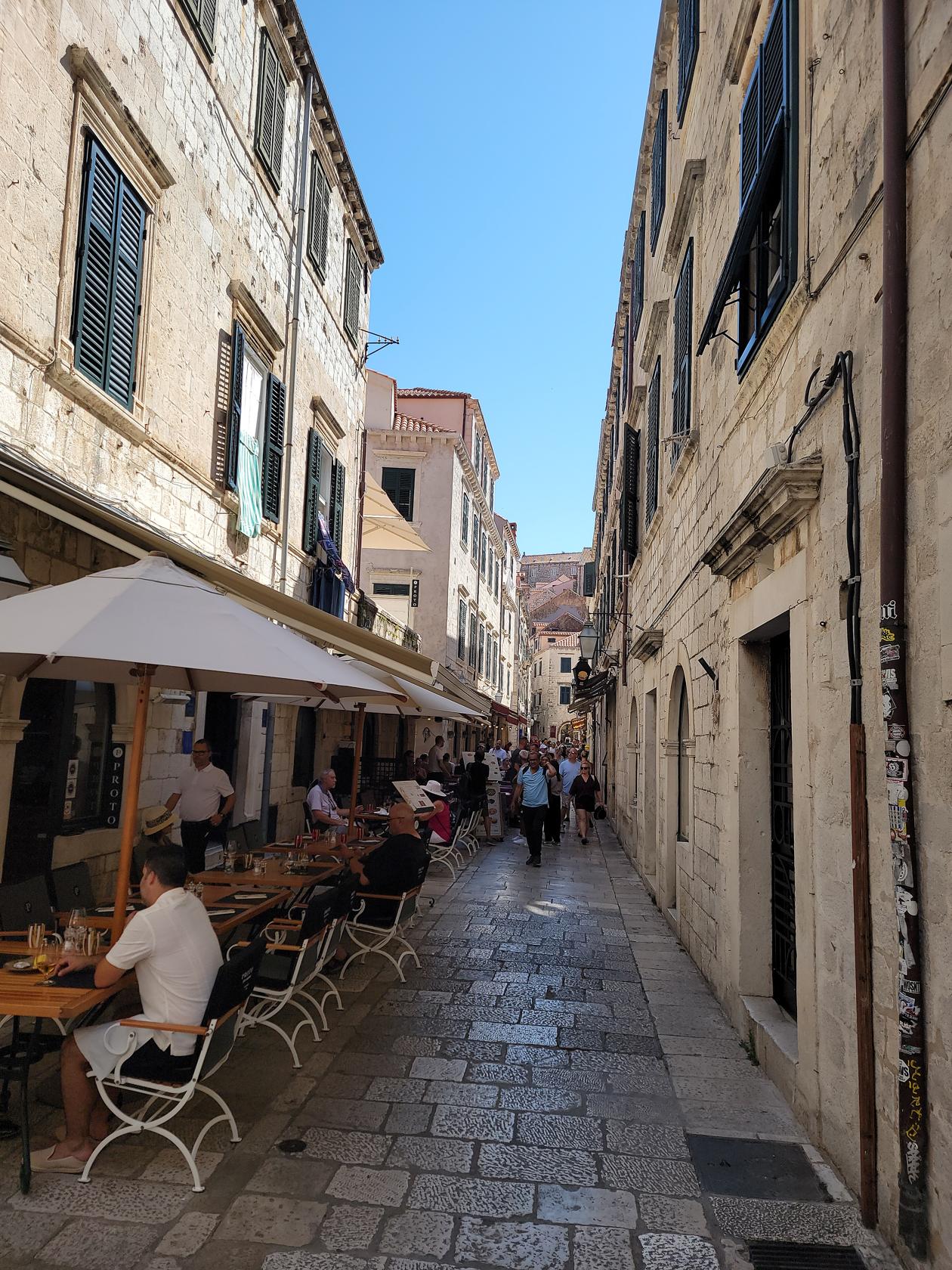
The Stradun is the straightest and widest street in Dubrovnik and bisects the Old Town from the Pile Gate to the Fishmarket Gate. It offers a few sights along the way and two fountains[1]These were constructed by the Southern Italian and Neapolitan architect and engineer Onofrio della Cava in 1438 and bares his name. which grace each end, the Larger Onofrio Fountain and its diminutive brother, the Small Onofrio Fountain near the Clock Tower and the Fishmarket Gate.
Park by Pile Gate – Dubrovnik, Croatia
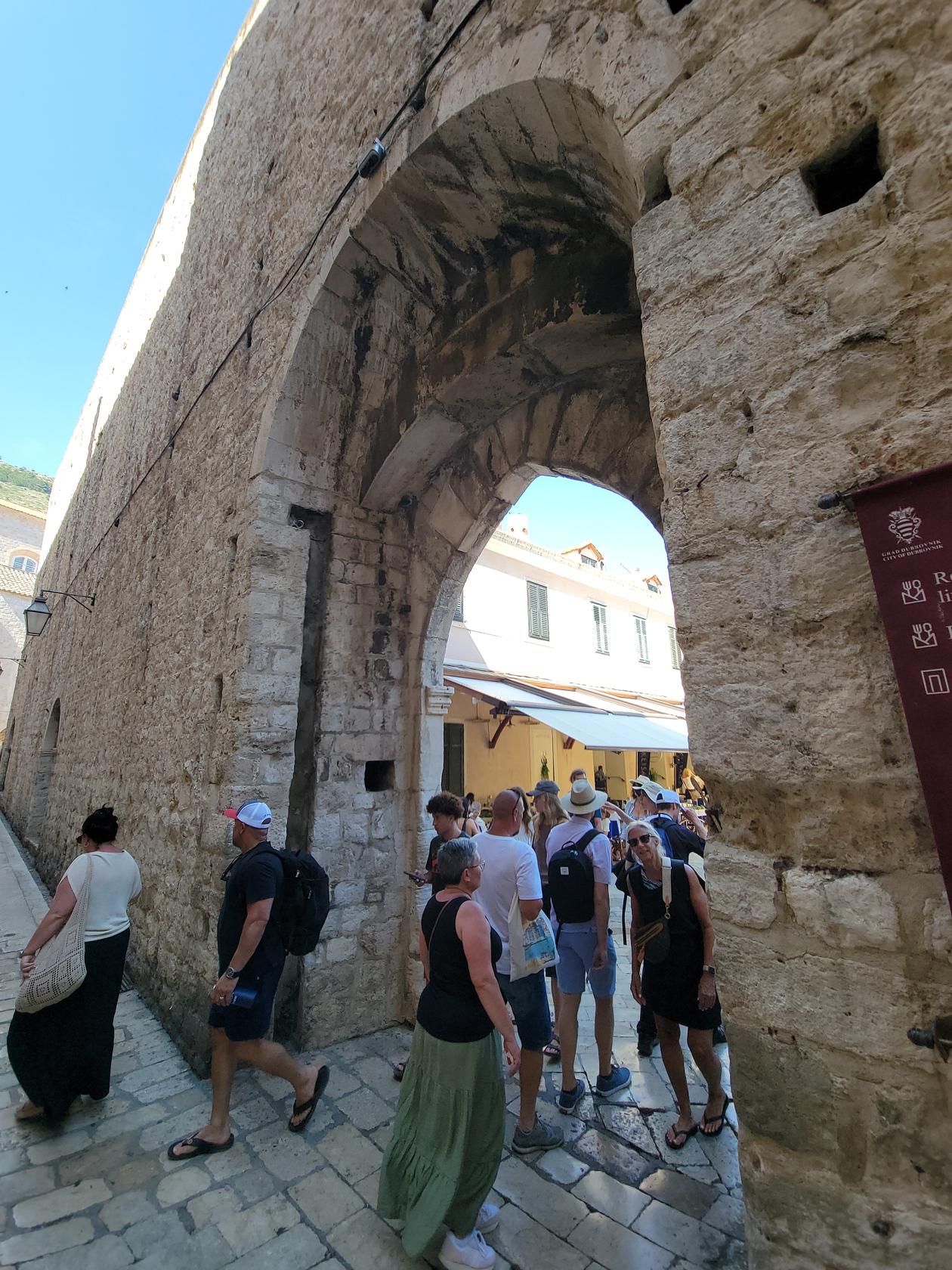
Pile Gate – Dubrovnik, Croatia
Pile Gate – Dubrovnik, Croatia
Side Alley – Dubrovnik, Croatia
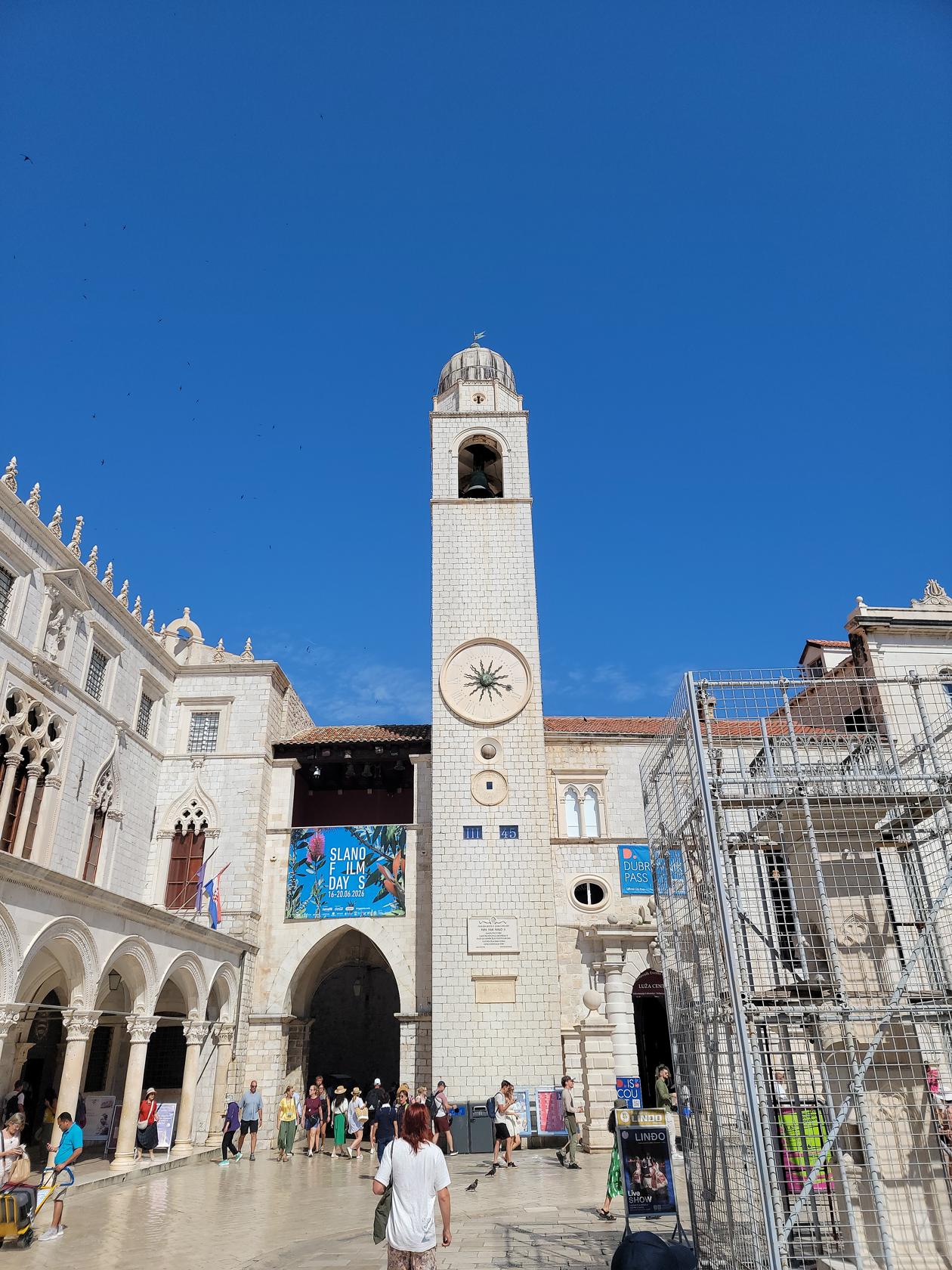
Clock Tower on Stradun – Dubrovnik, Croatia
Fishmarket Gate – Dubrovnik, Croatia
Rector’s Palace
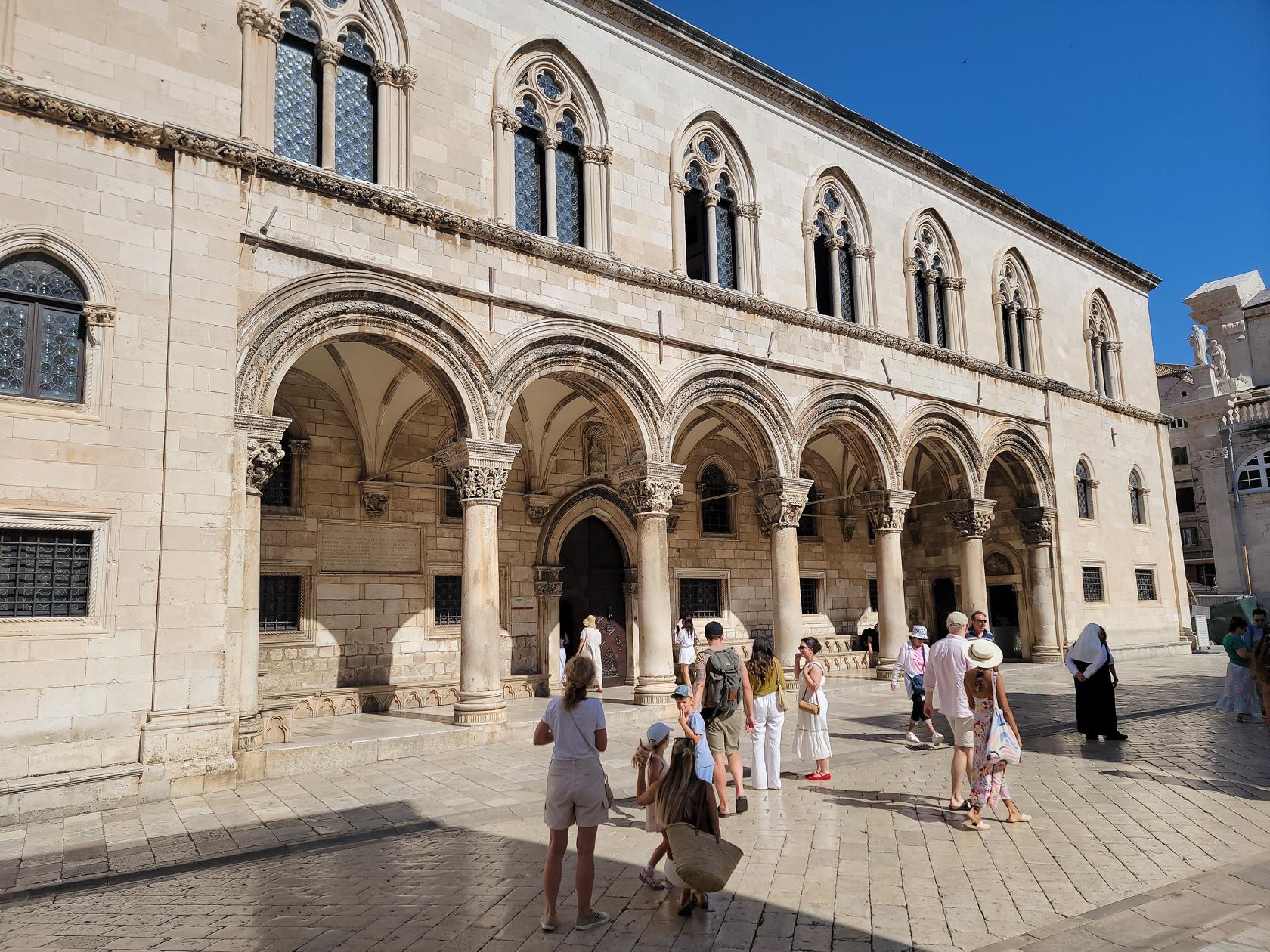
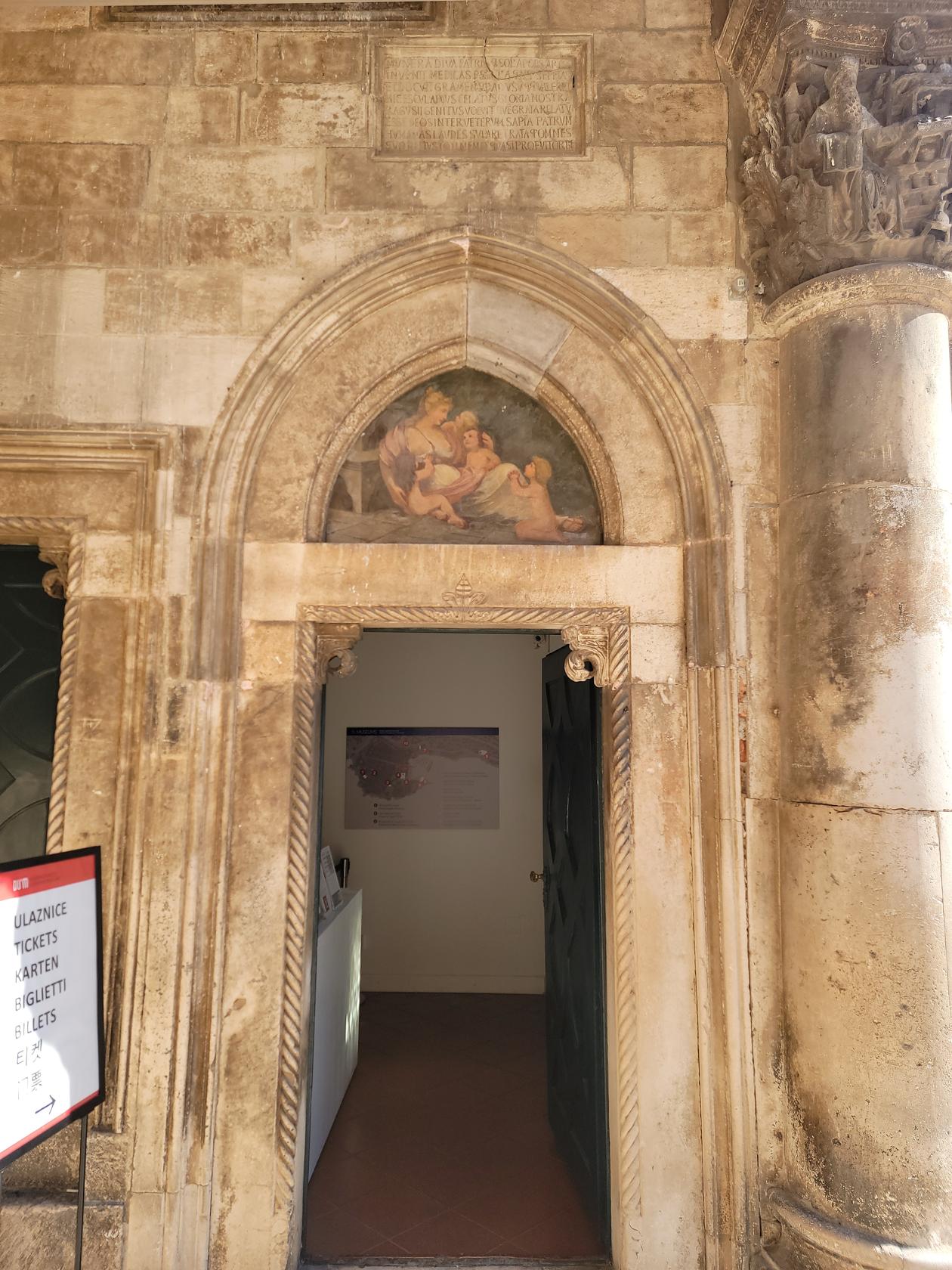
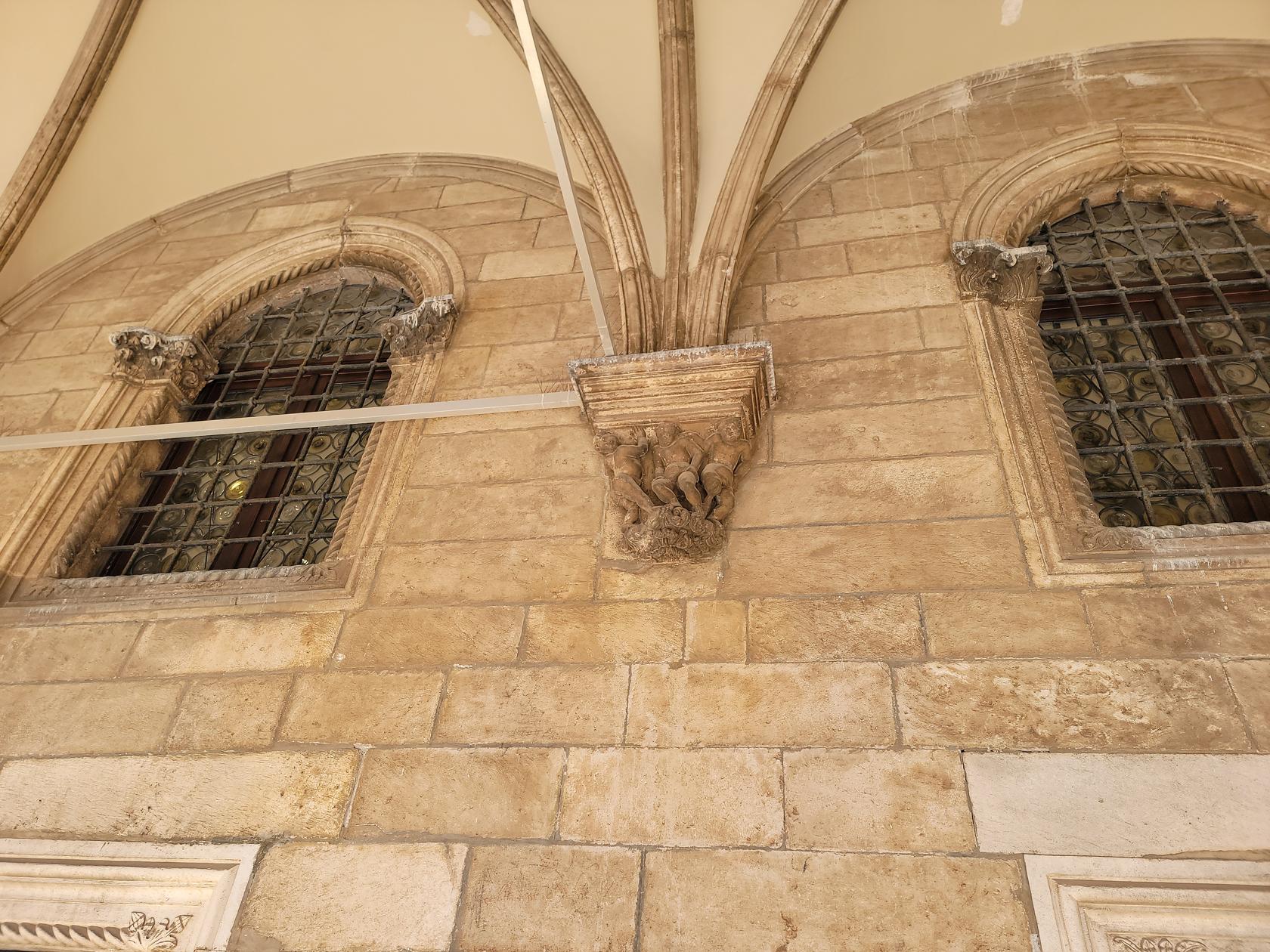
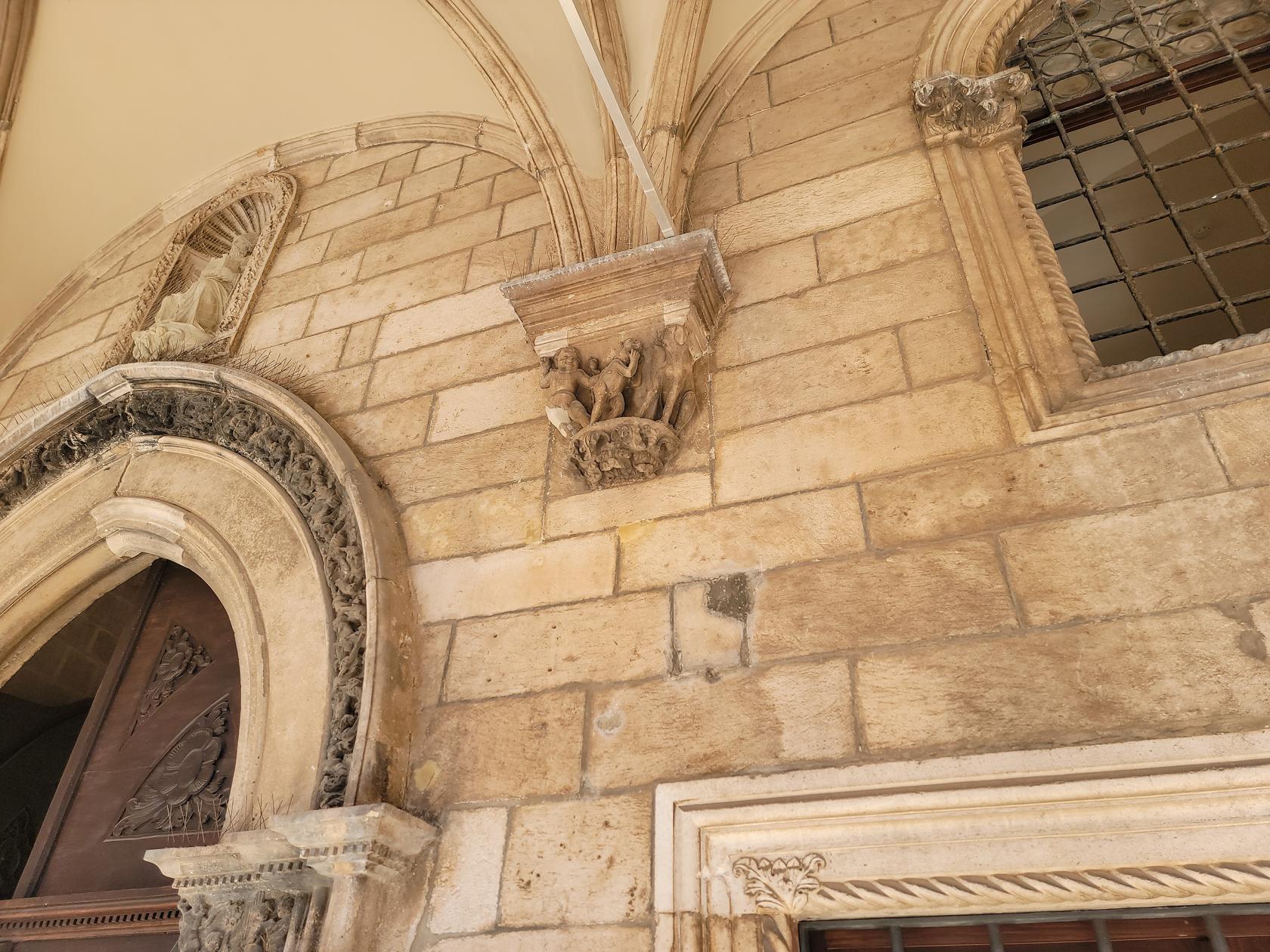
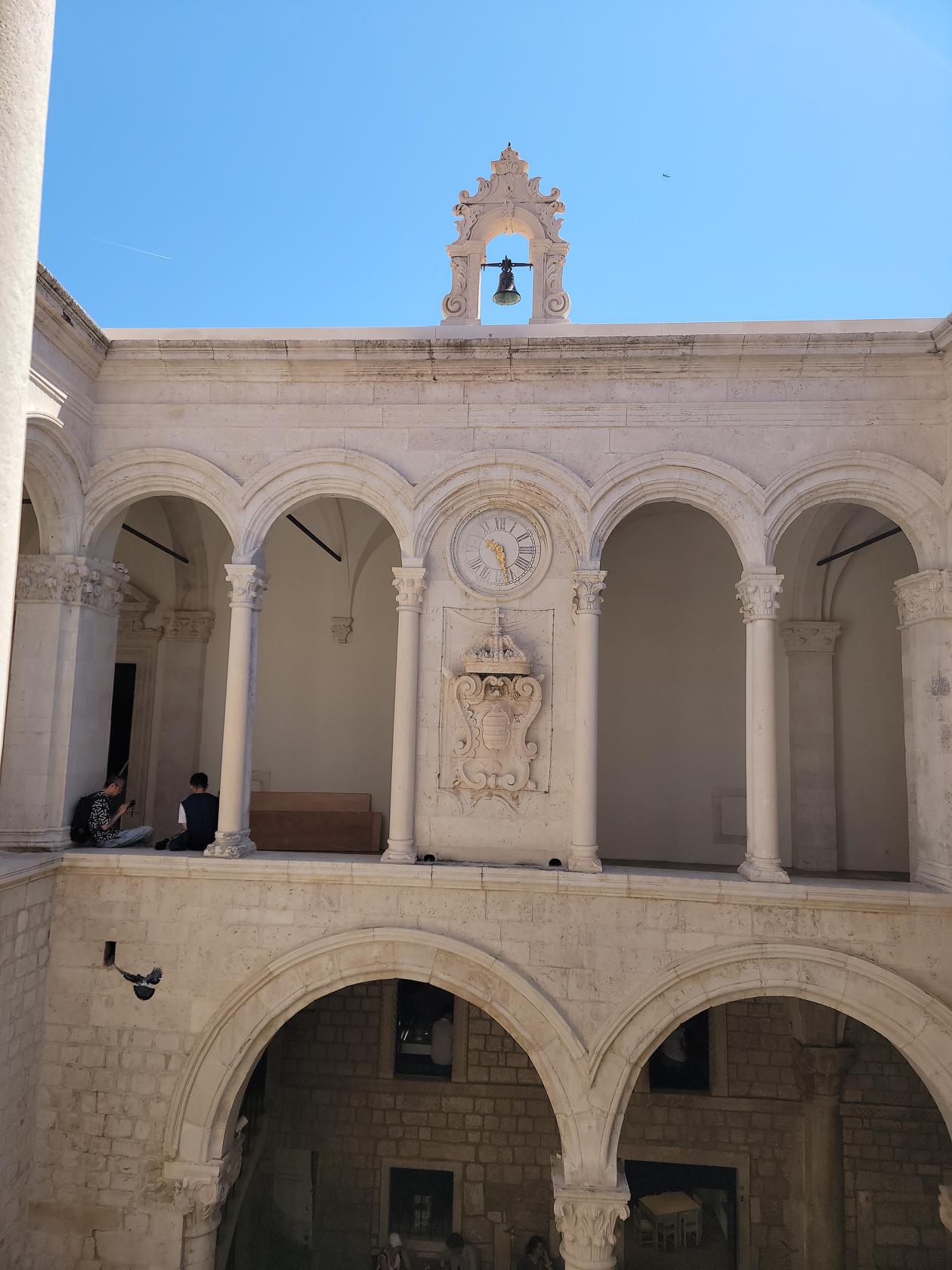
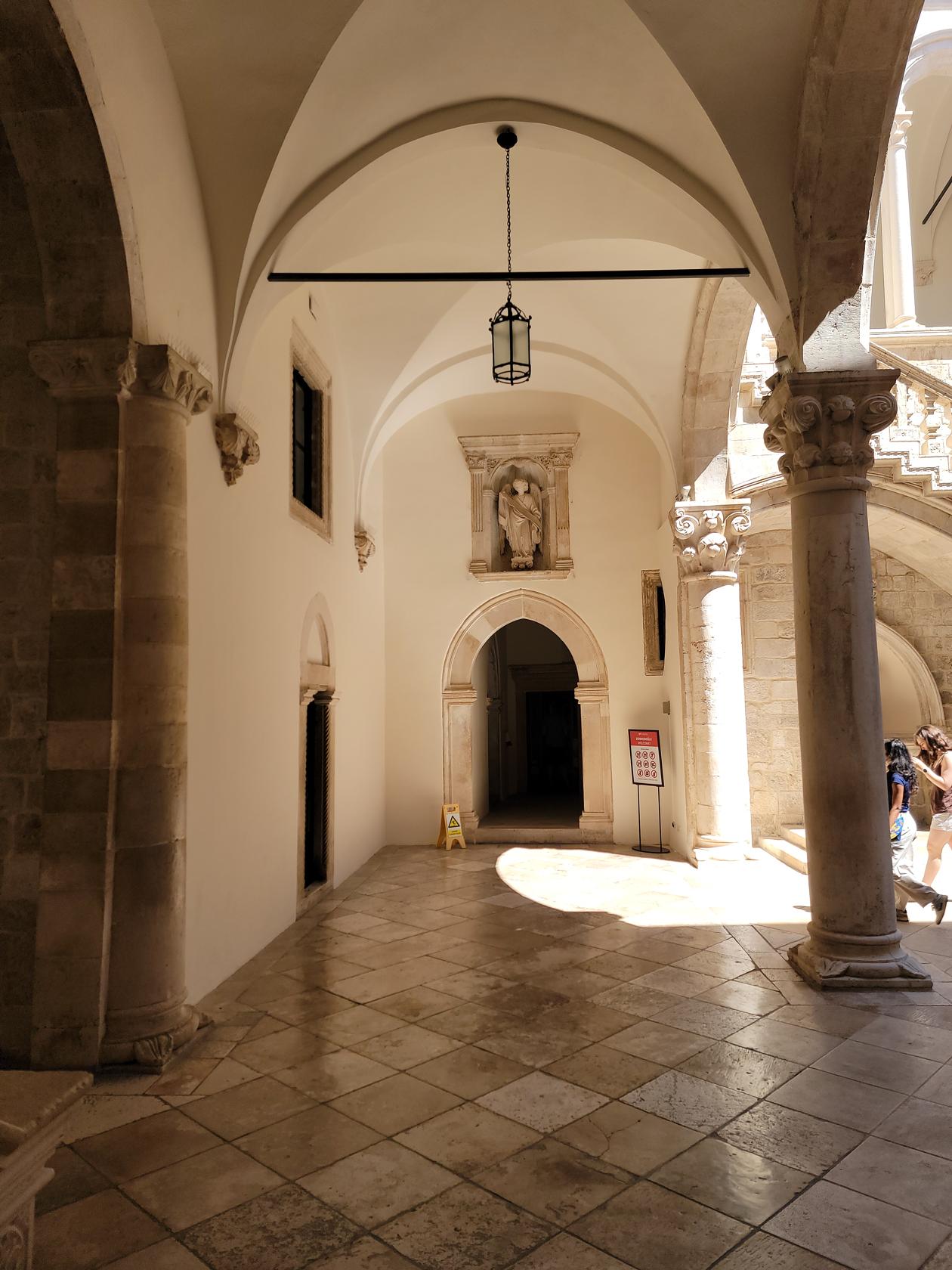
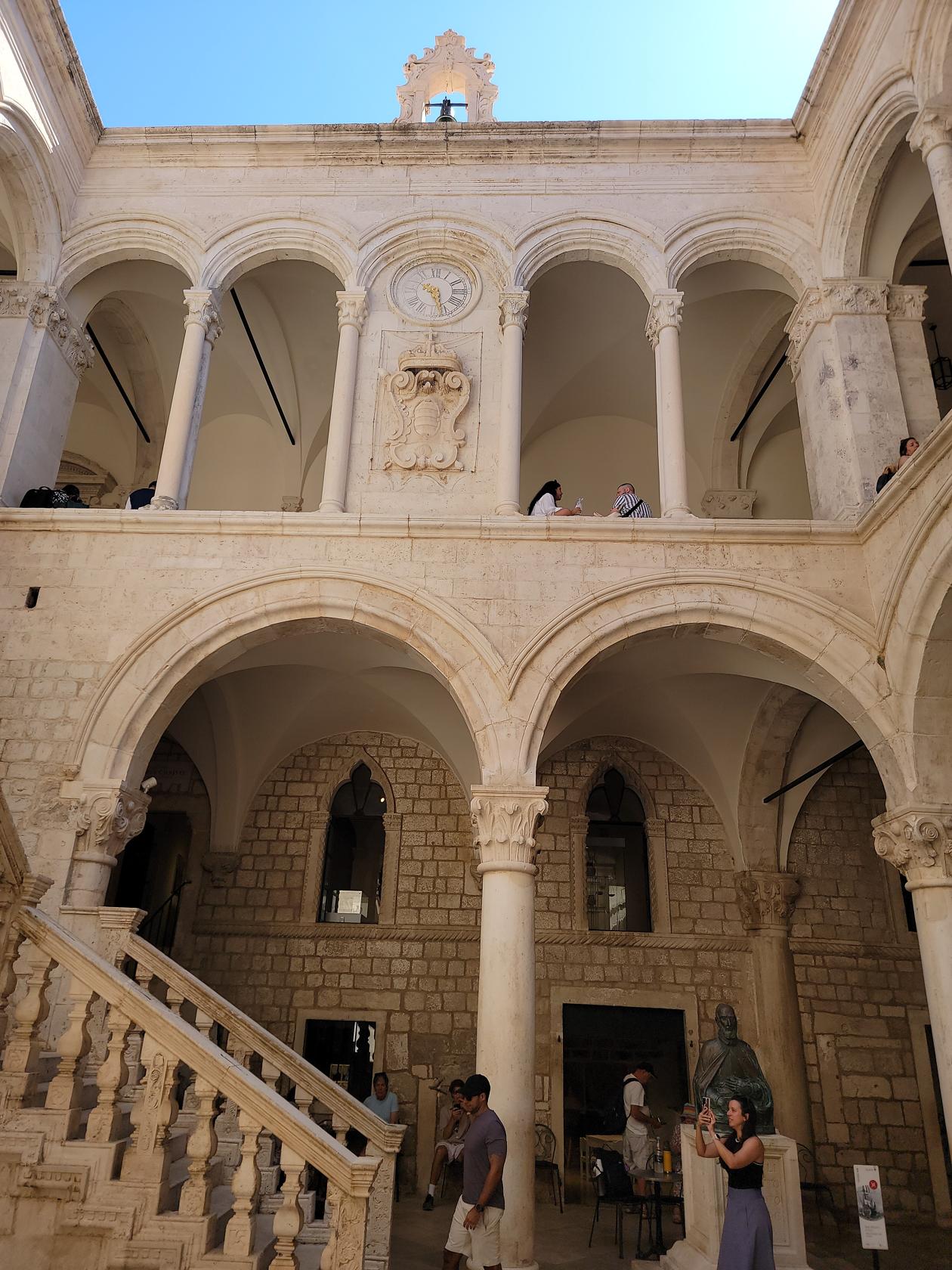
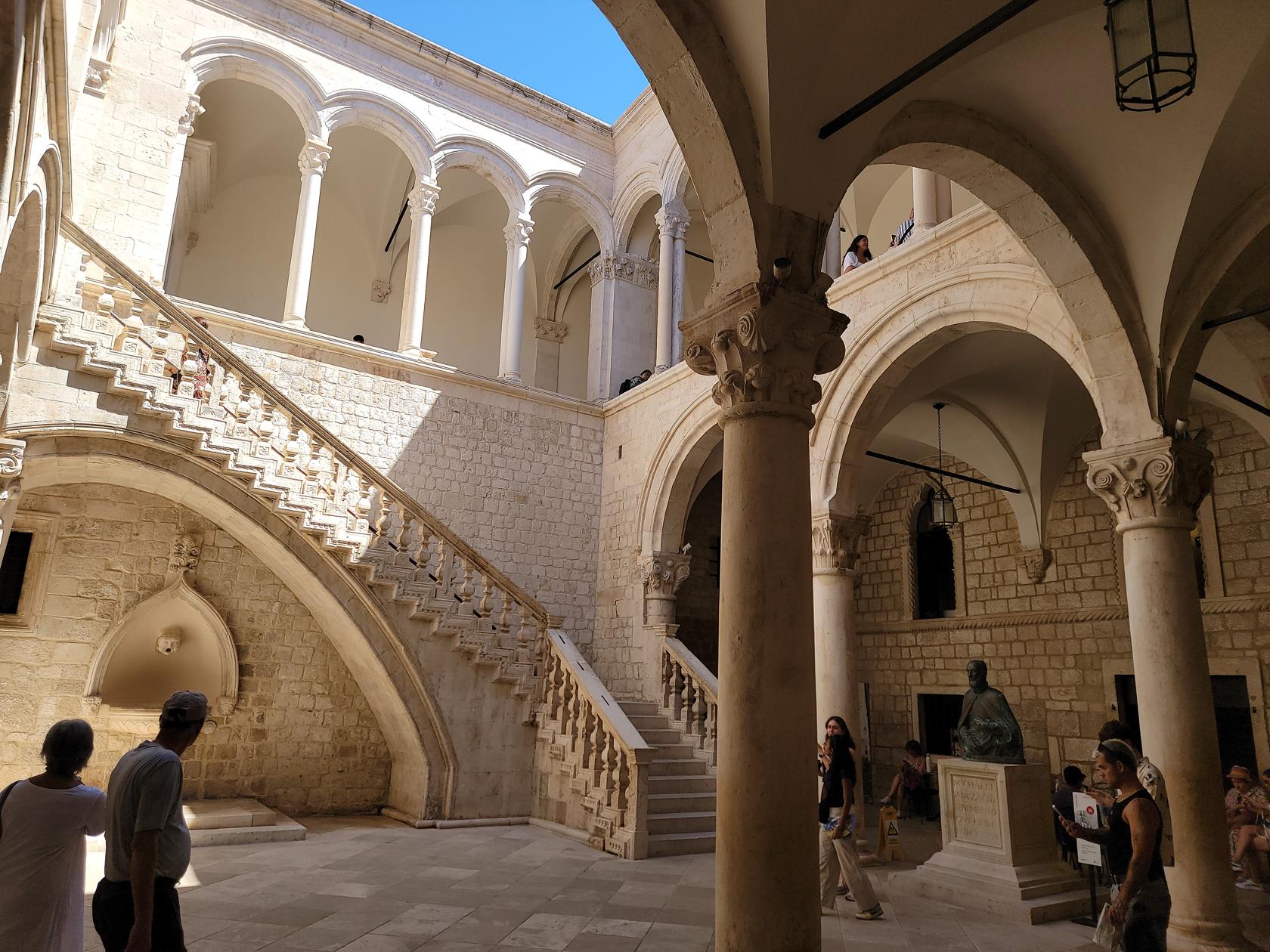
Built for the rector of the Republic of Ragusa between the 14th and 19th centuries, the Rector’s Palace now serves as a museum. A Gothic style building originally, it was destroy a few times and later rebuilt with Renaissance and some Baroque elements.
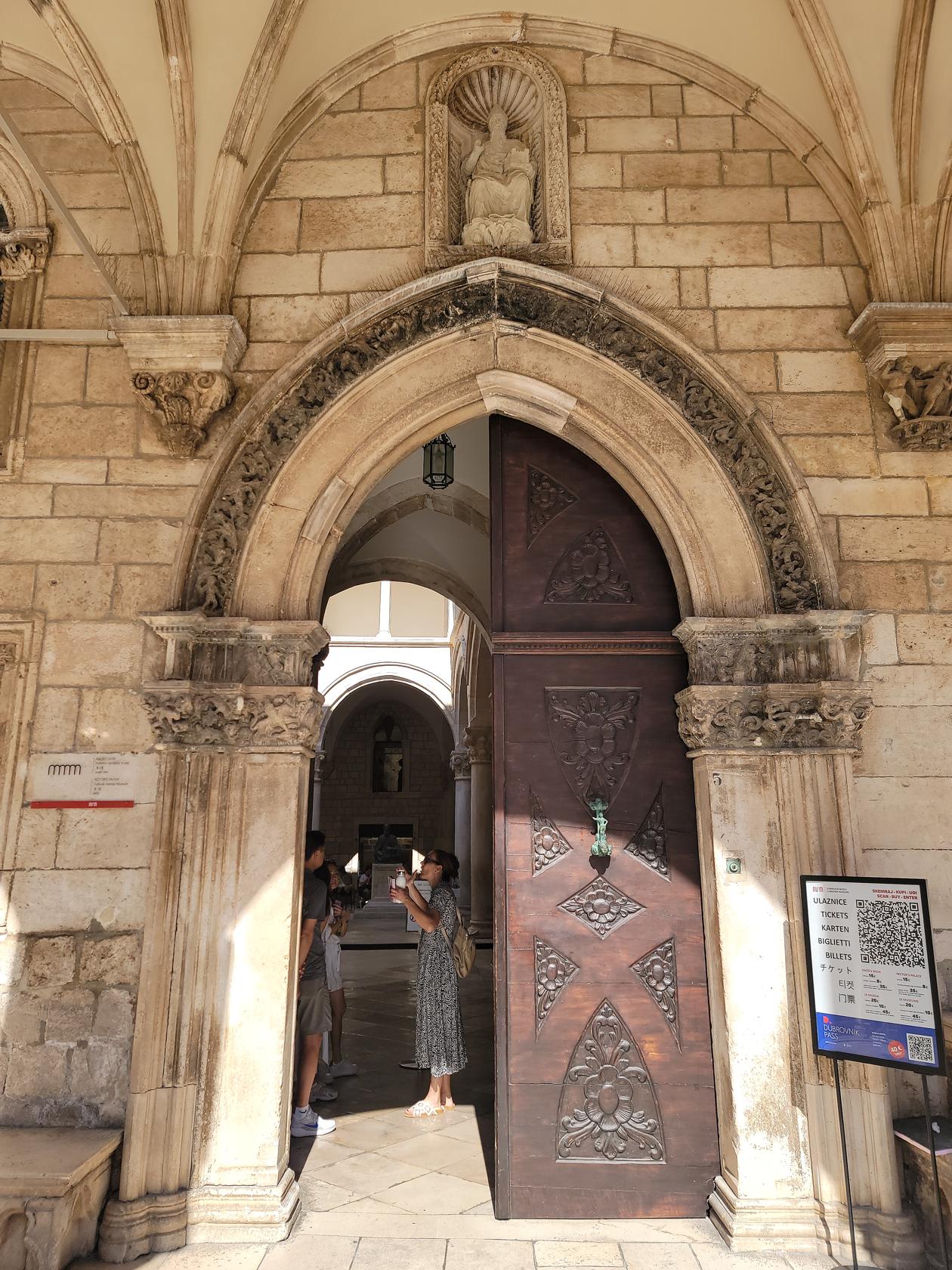
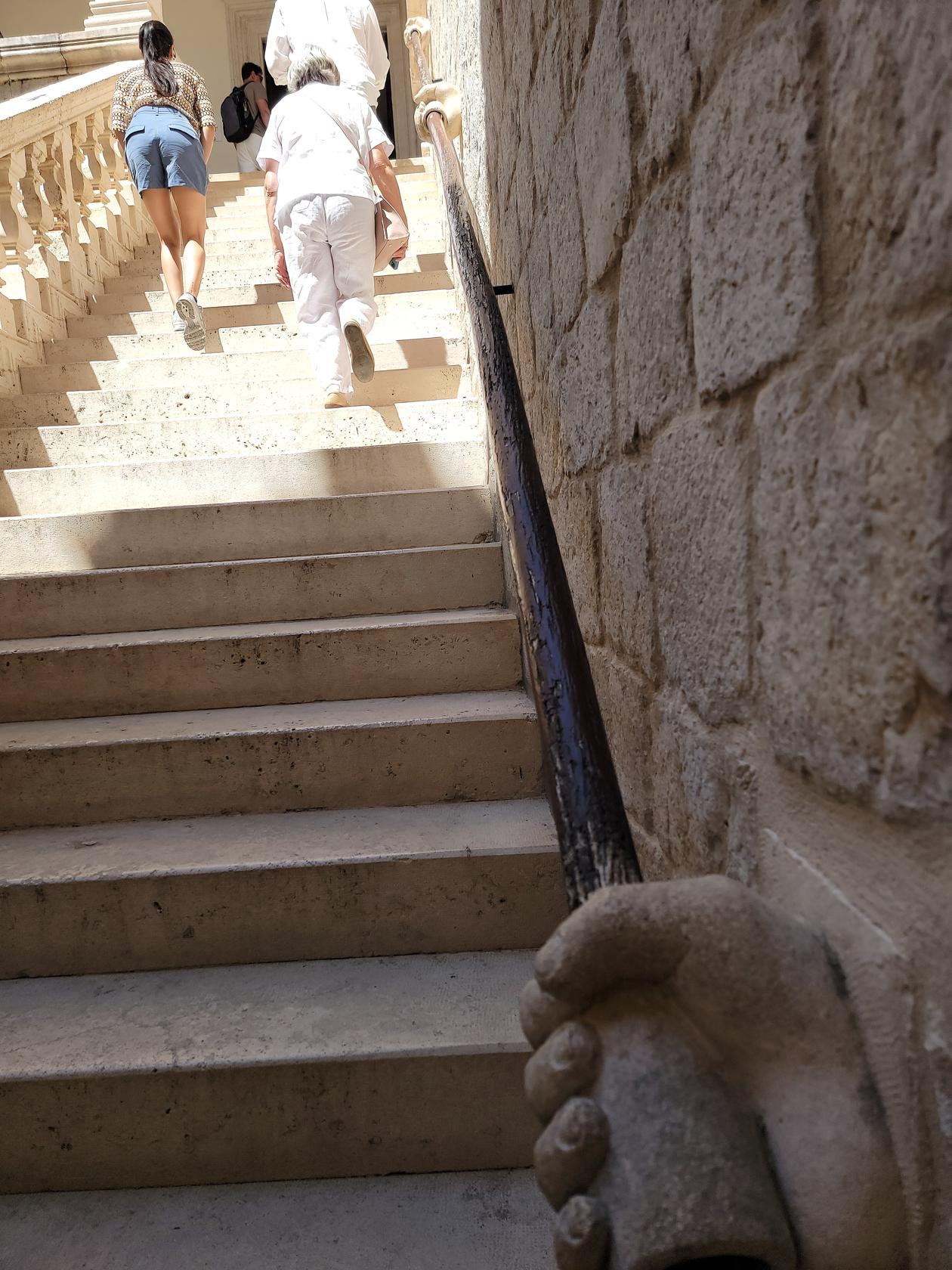
Interesting Structural Elements – Rector’s Palace – Dubrovnik, Croatia
Interesting Structural Elements – Rector’s Palace – Dubrovnik, Croatia
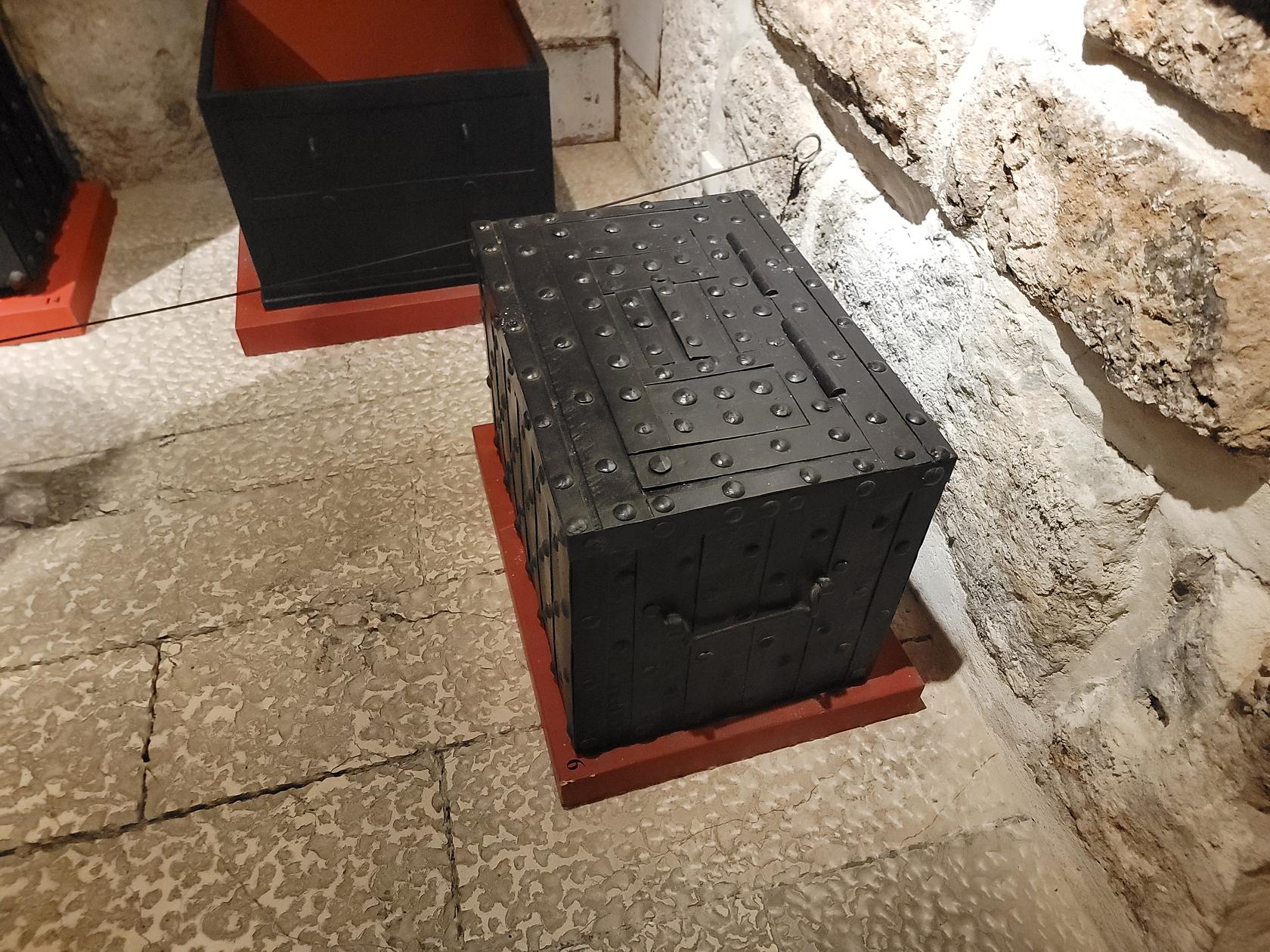
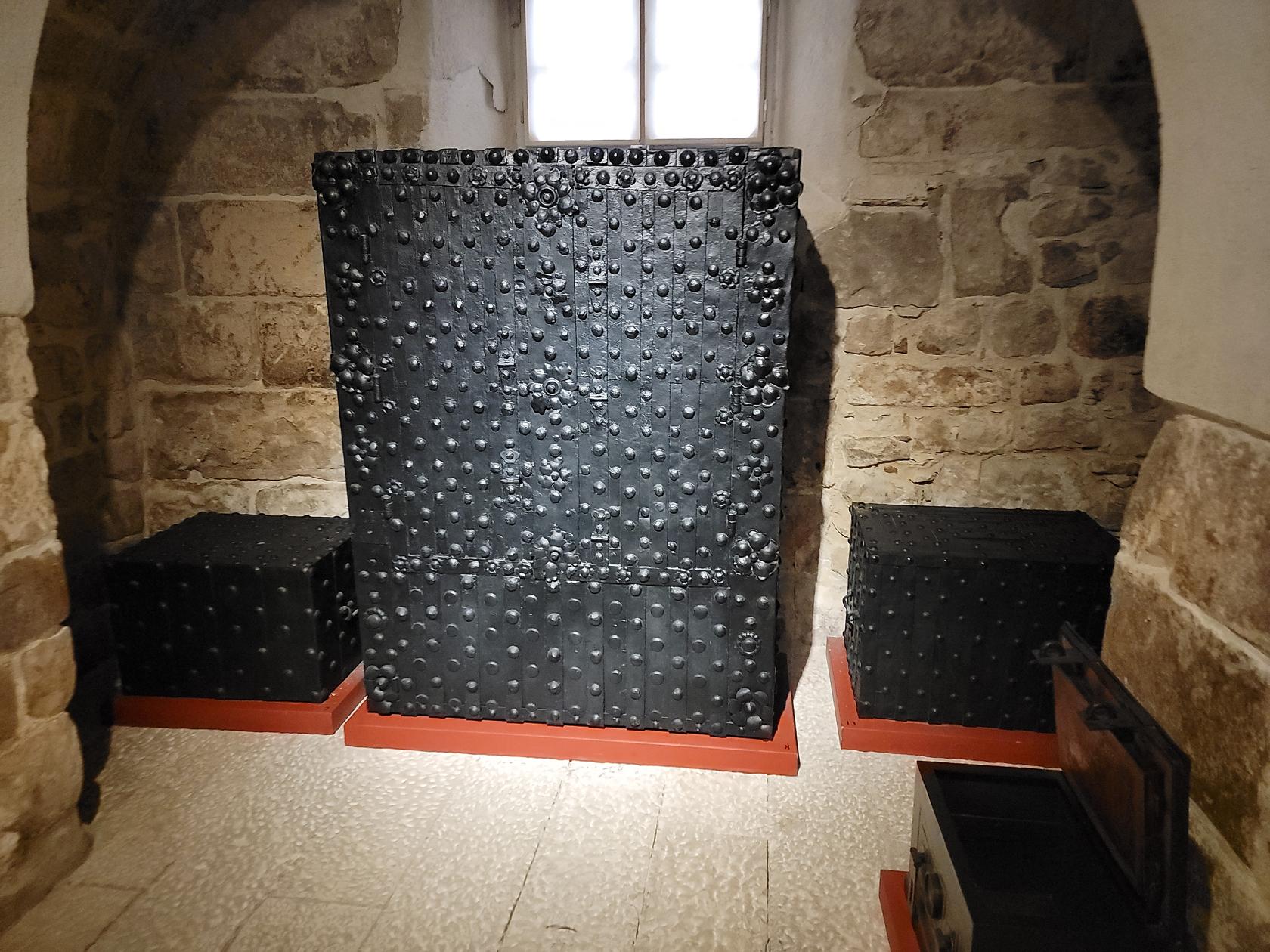
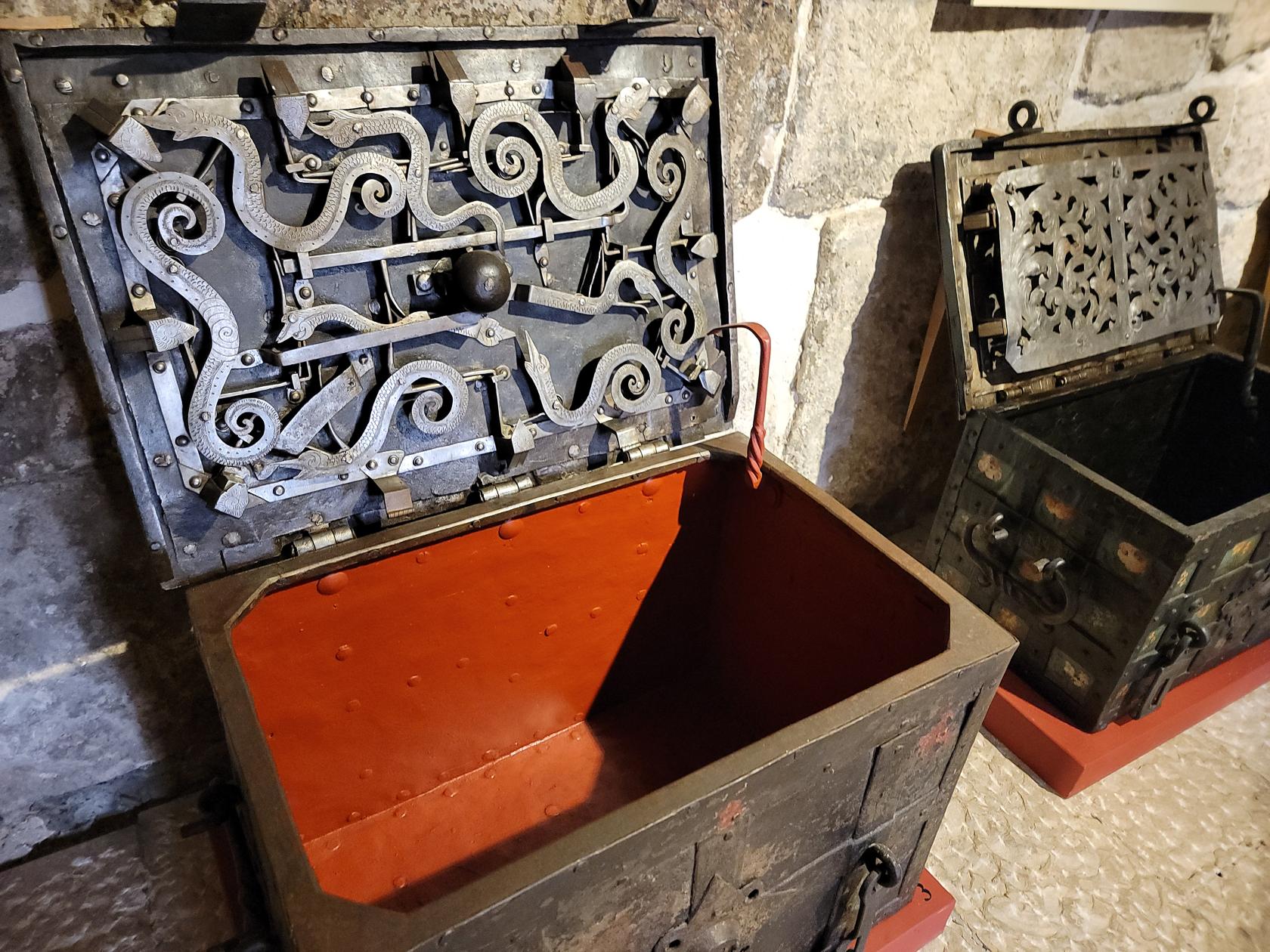
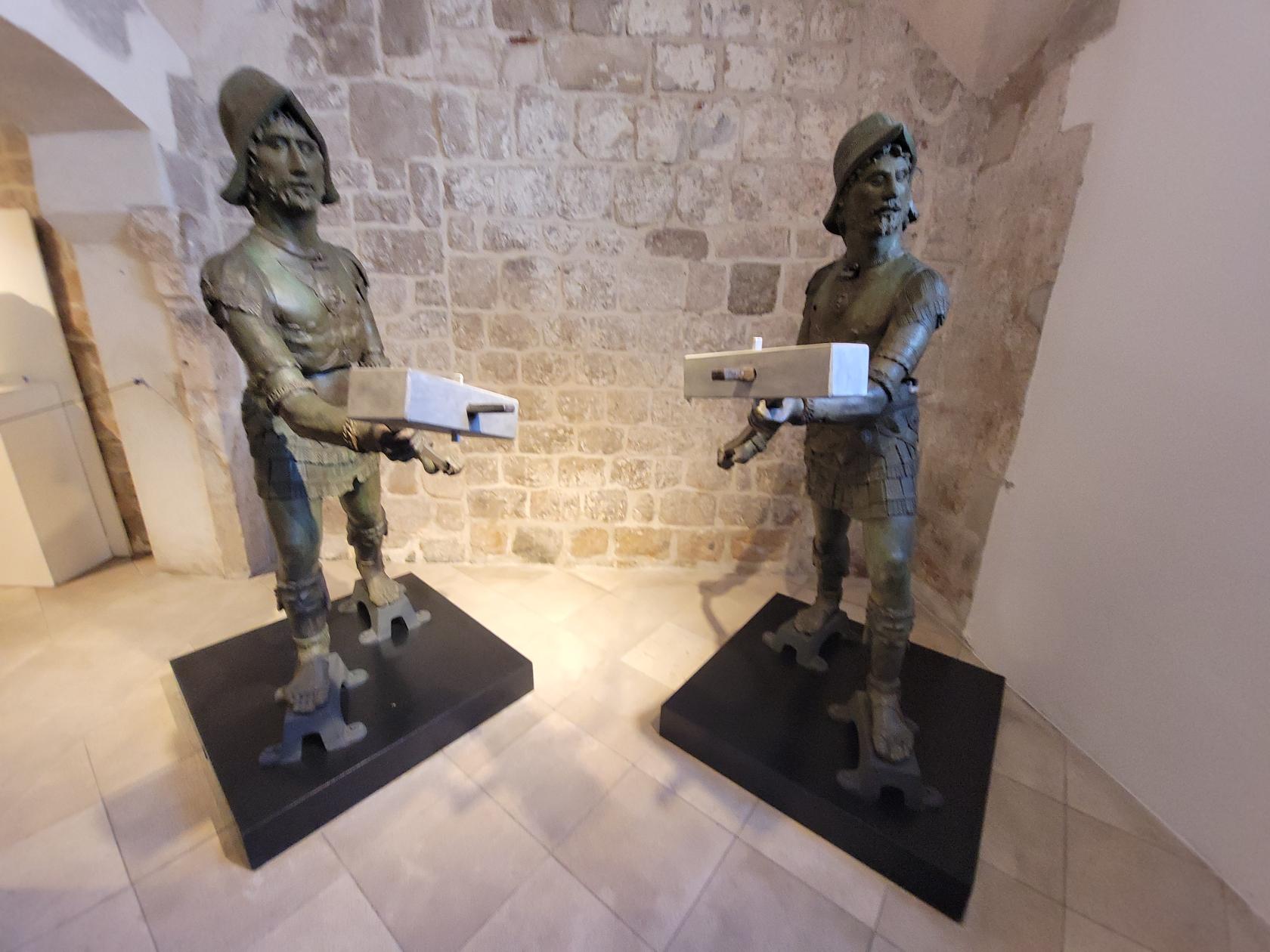
The museum houses a fine collection of old strong boxes, which show detailed craftmenship by blacksmiths and locksmiths of that time. Upon entering there is also a pair of old bell knockers that are quite interesting.
Clock with Desk – Rector’s Palace – Dubrovnik, Croatia
Rooms – Rector’s Palace – Dubrovnik, Croatia
Desk – Rector’s Palace – Dubrovnik, Croatia
Other Exhibits – Rector’s Palace – Dubrovnik, Croatia
Other Exhibits – Rector’s Palace – Dubrovnik, Croatia
Bedroom – Rector’s Palace – Dubrovnik, Croatia
On the ground floor the Dragon Prison Cell can be investigated, where only the most hardened criminals were kept. Apparently some inscribed their names on the walls, for future tourists to read no doubt.
Tuffa Stone of Prison Room – Rector’s Palace – Dubrovnik, Croatia
In Croatia, there are always Catholic churches to visit. Some are better than others and the ones you will find in Dubrovnik are for the most part not of much interest. Though their importance to the community no doubt remains.
Cathedral of The Assumption of the Virgin Mary
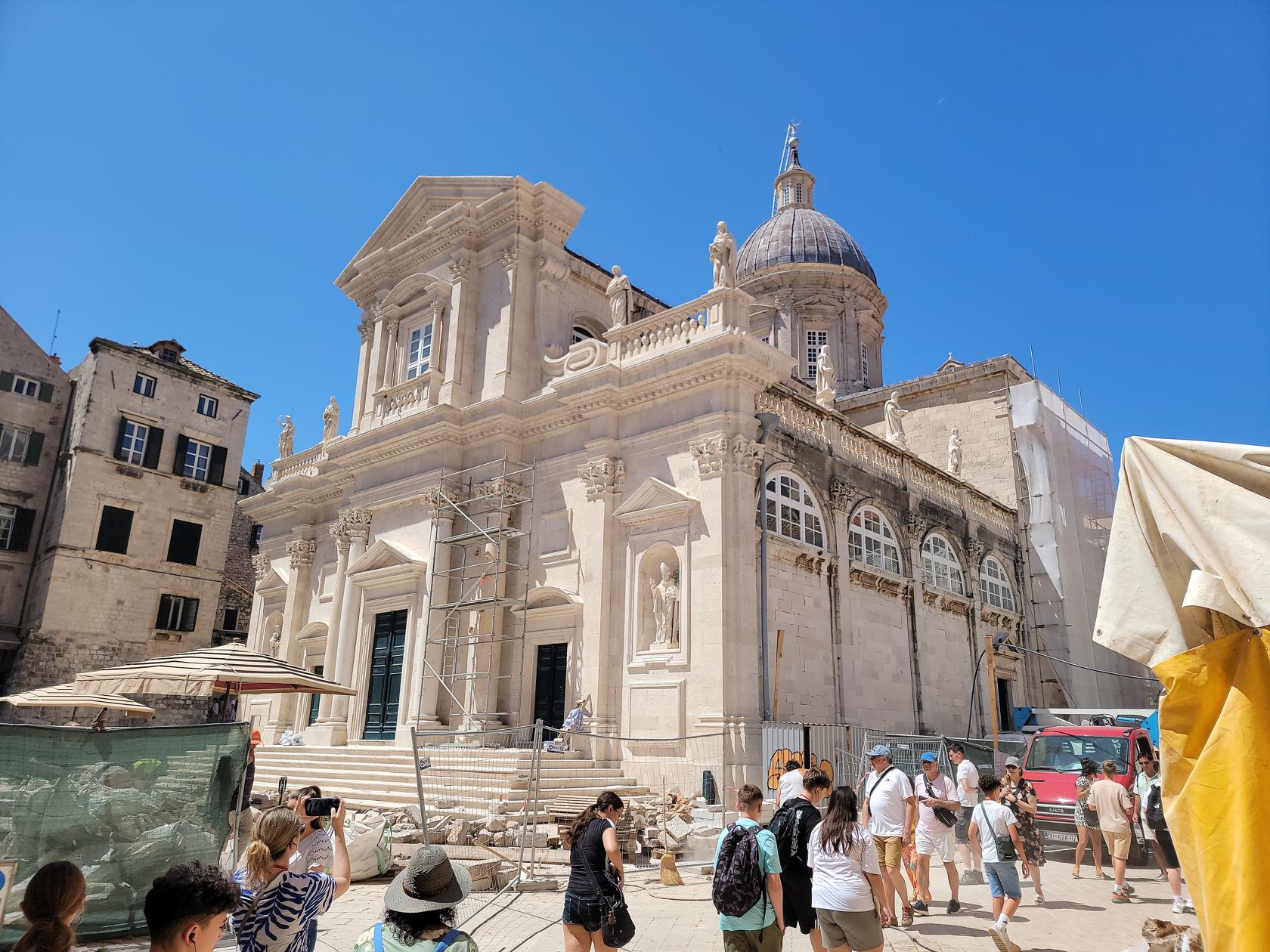
The Assumption of the Virgin Mary, or Dubrovnik Cathedral, was undergoing renovations at the time of our visit and could not be entered. It is located near the Rector’s Palace. Built in the Baroque style of architecture, it was literally destroyed by the devastating Dubrovnik Earthquate of 1667 and later rebuilt.
Cathedral of the Assumption of the Virgin Mary – Dubrovnik, Croatia
Church of Saint Ignatius
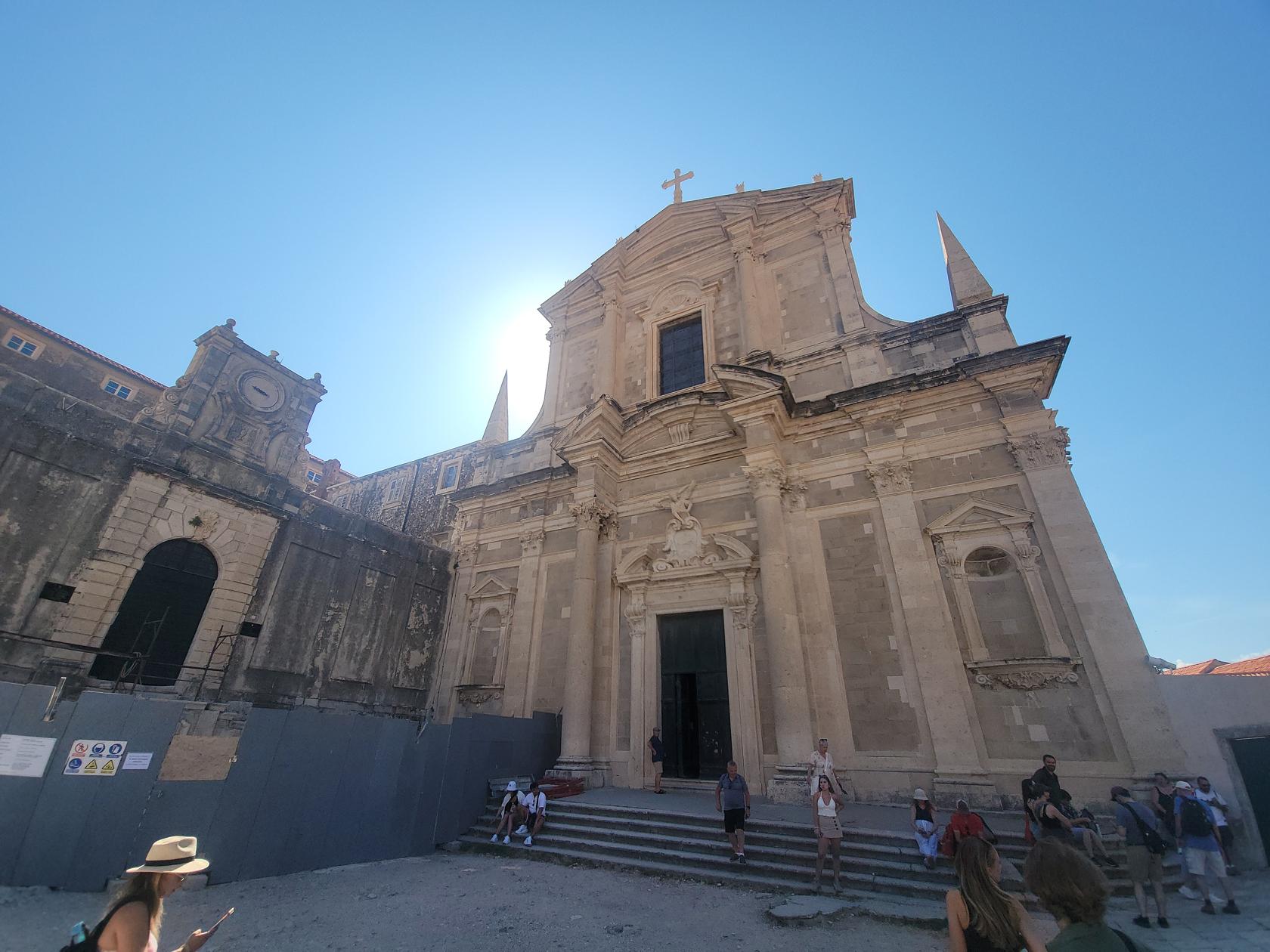
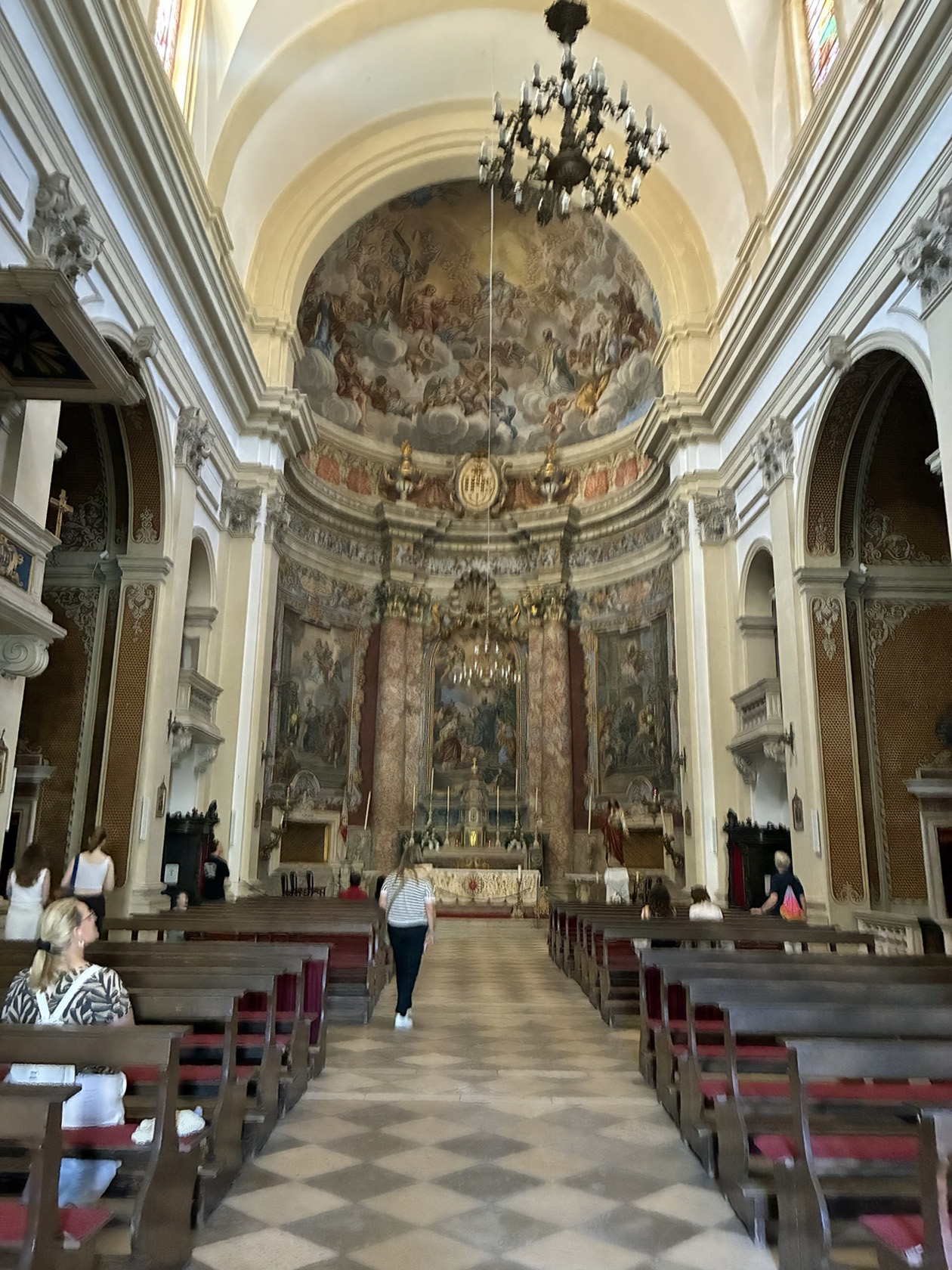
Perched above the Jesuit Stairs is the Church of Saint Ignatius. Formerly part of the Jesuit College, or Collegium Ragusinum, it is currently the finest example of Baroque period architecture in the Old Town.
Entrance – Church Of Saint Ignatius – Dubrovnik, Croatia
Nave – Church Of Saint Ignatius – Dubrovnik, Croatia
Church of Saint Blaise
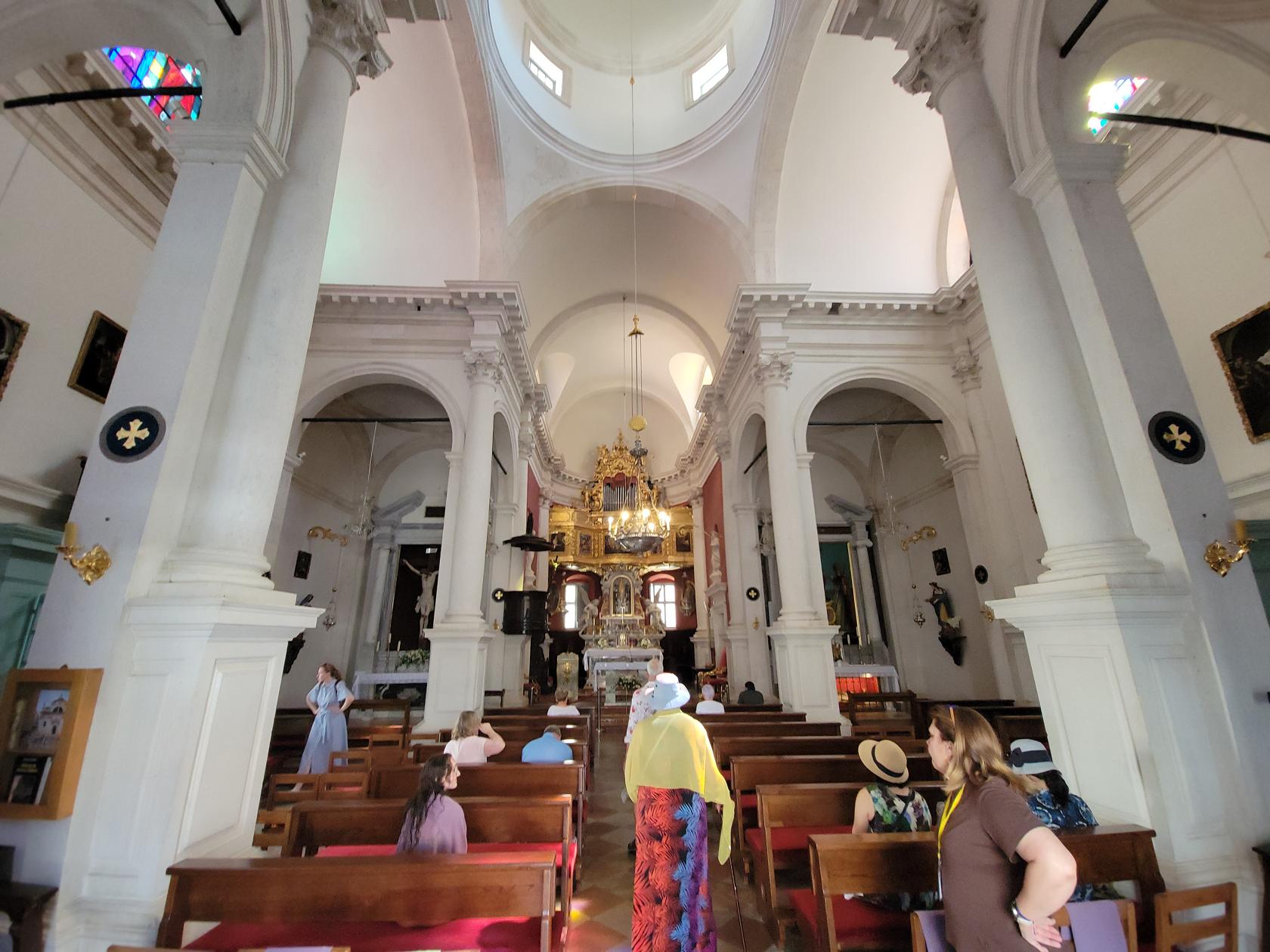
Built for the patron saint of the Old City, the Church of Saint Blaise occupies an important spot on the Stradun, close the city’s Clock Tower and Rector’s Palace. The plan of this Romanesque style church follows that of a Greek Cross inside, the nave and alter are shown below. It was planned and built shortly after the Black Death hit the city of Dubrovnik in the mid fourteenth century. A statue of Saint Blaise adorns the highest point on its facade.
Entrance – Church of Saint Blaise – Dubrovnik, Croatia
Church of Saint Blaise – Dubrovnik, Croatia
Lokrum Island
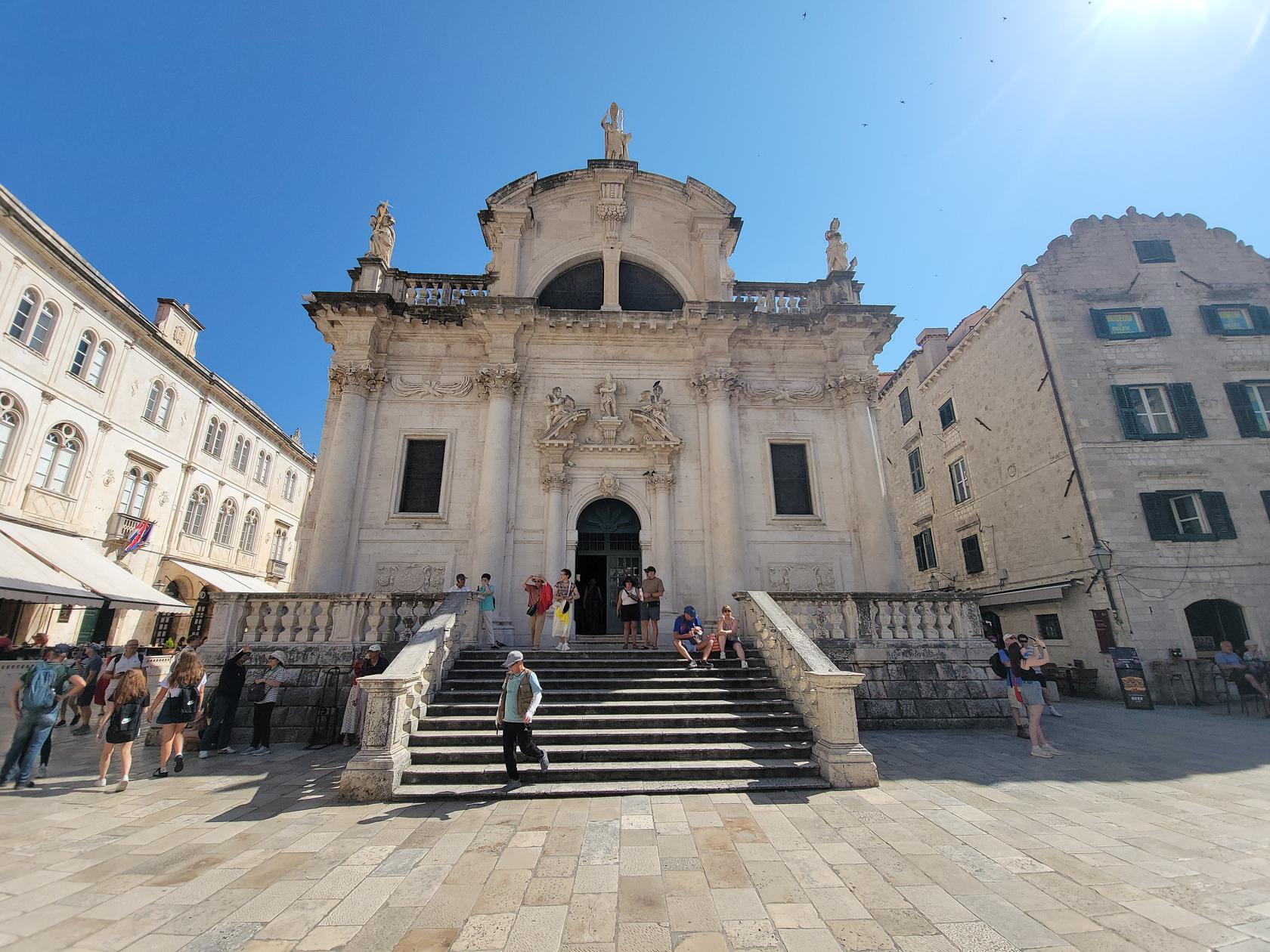
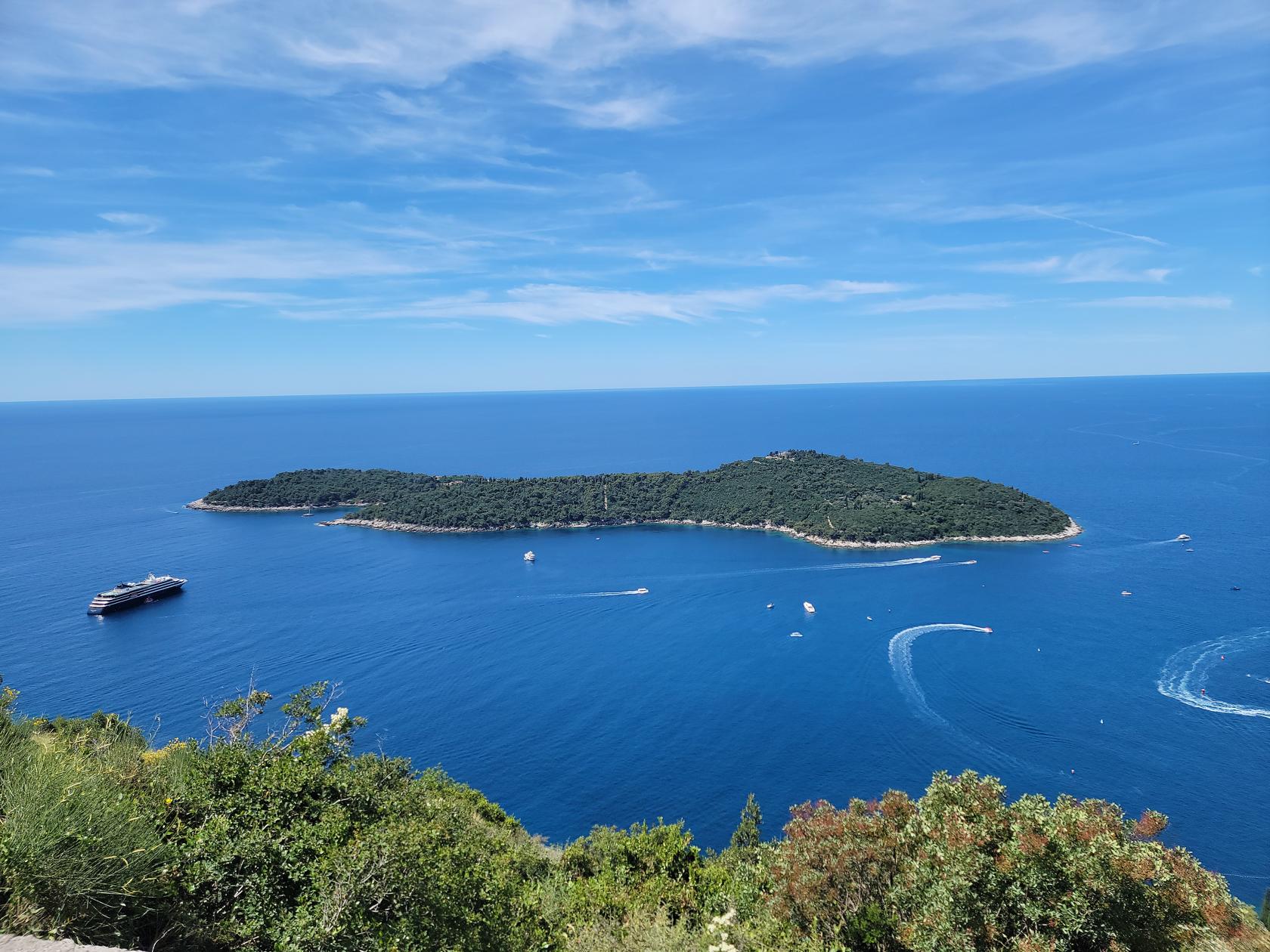
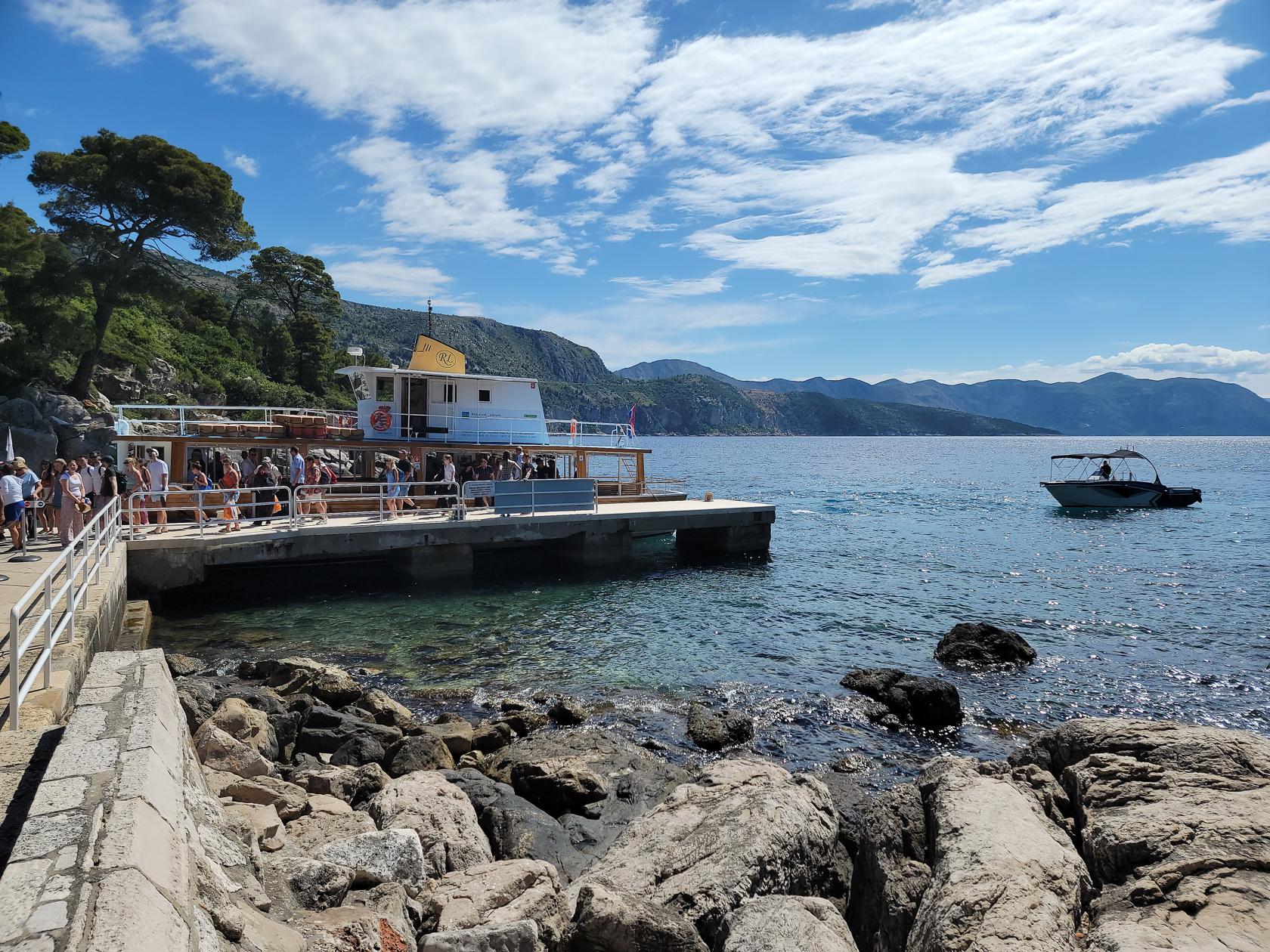
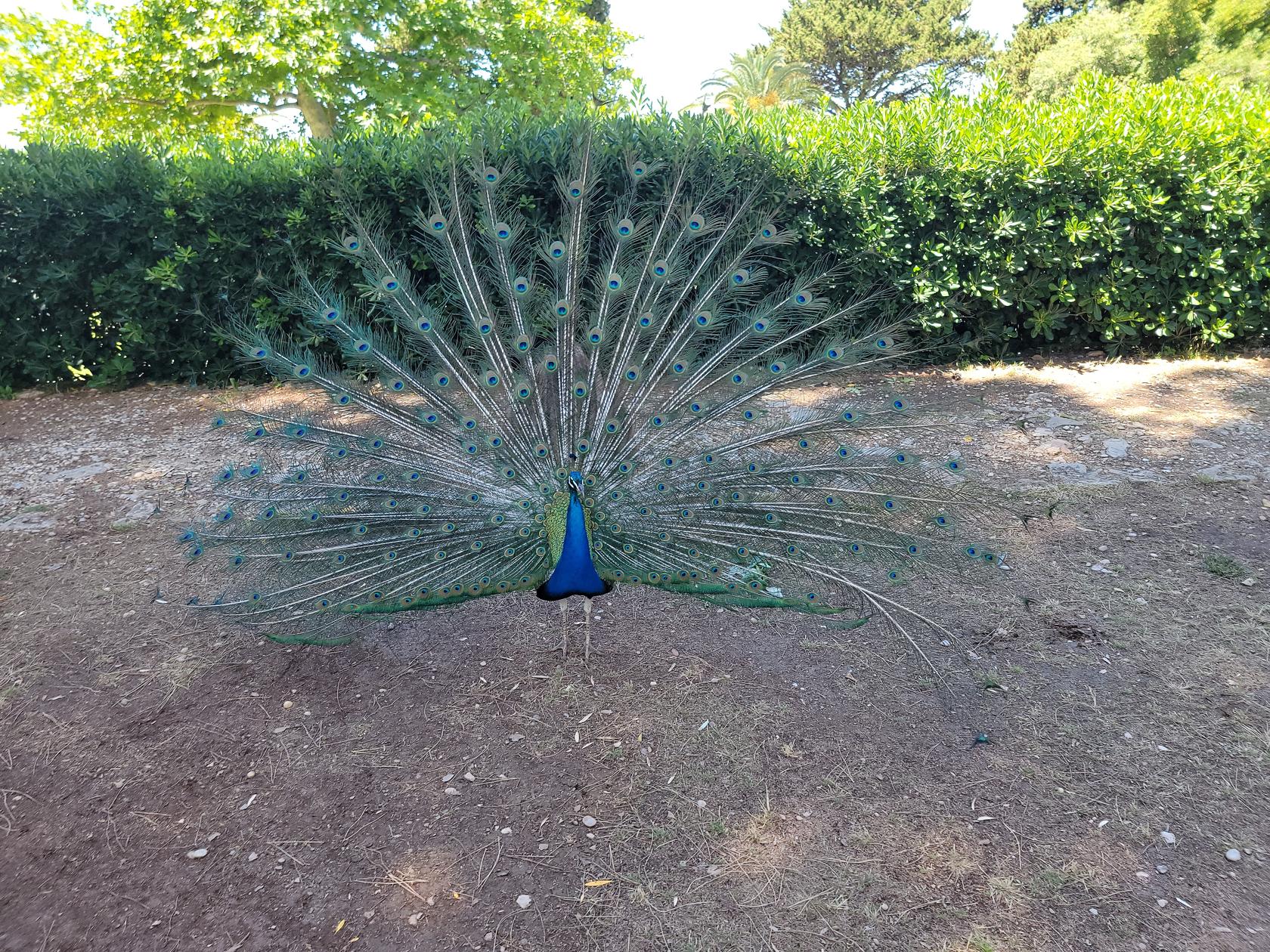
A short ferry hop away is the Botanical Garden and Wildlife Refuge for Peacocks and Peahens, Lokrum Island.
Lokrum Island – Dubrovnik, Croatia
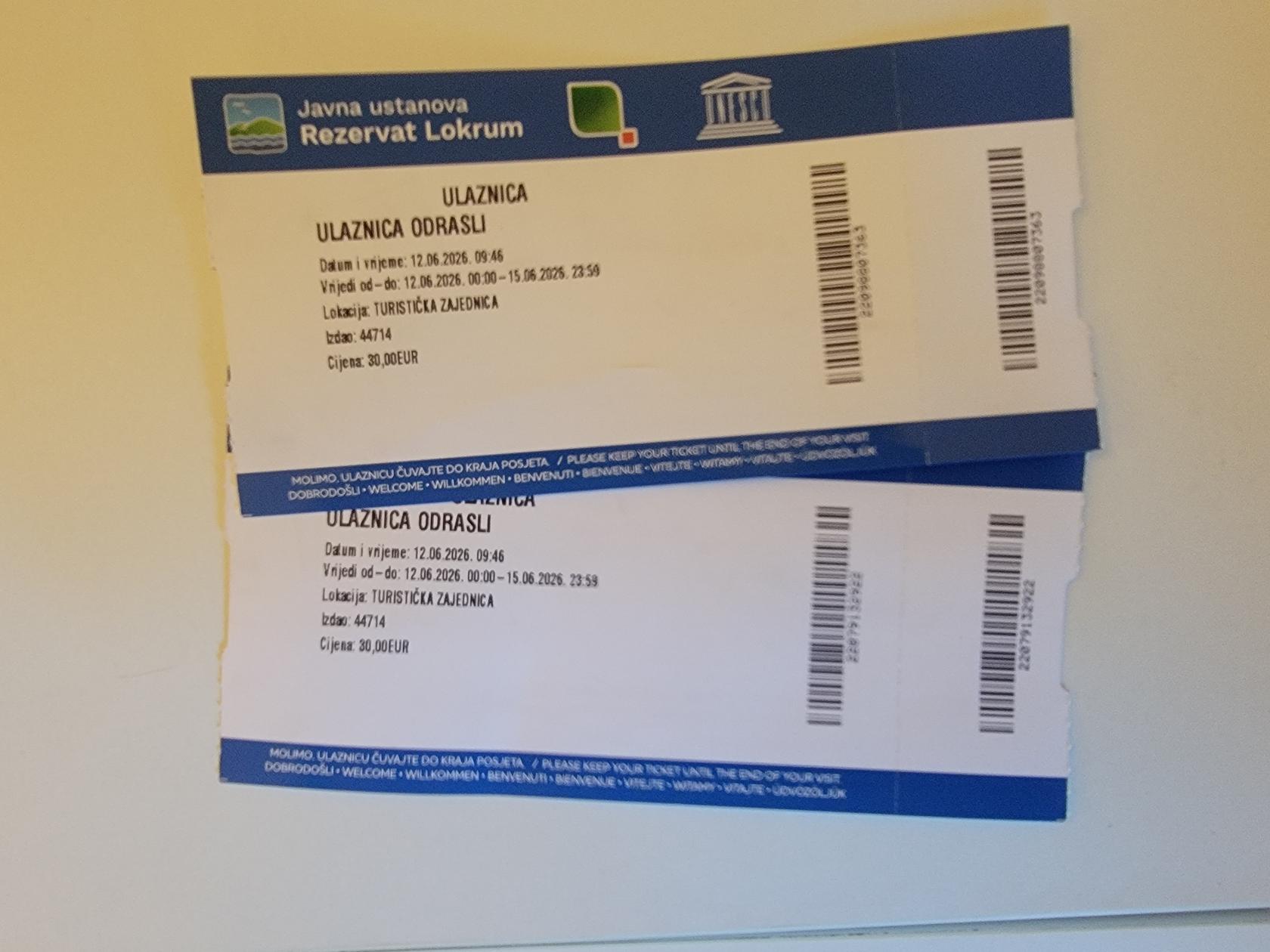
Tickets For Two – Lokrum Island – Dubrovnik, Croatia
Our Ferry – Lokrum Island – Dubrovnik, Croatia
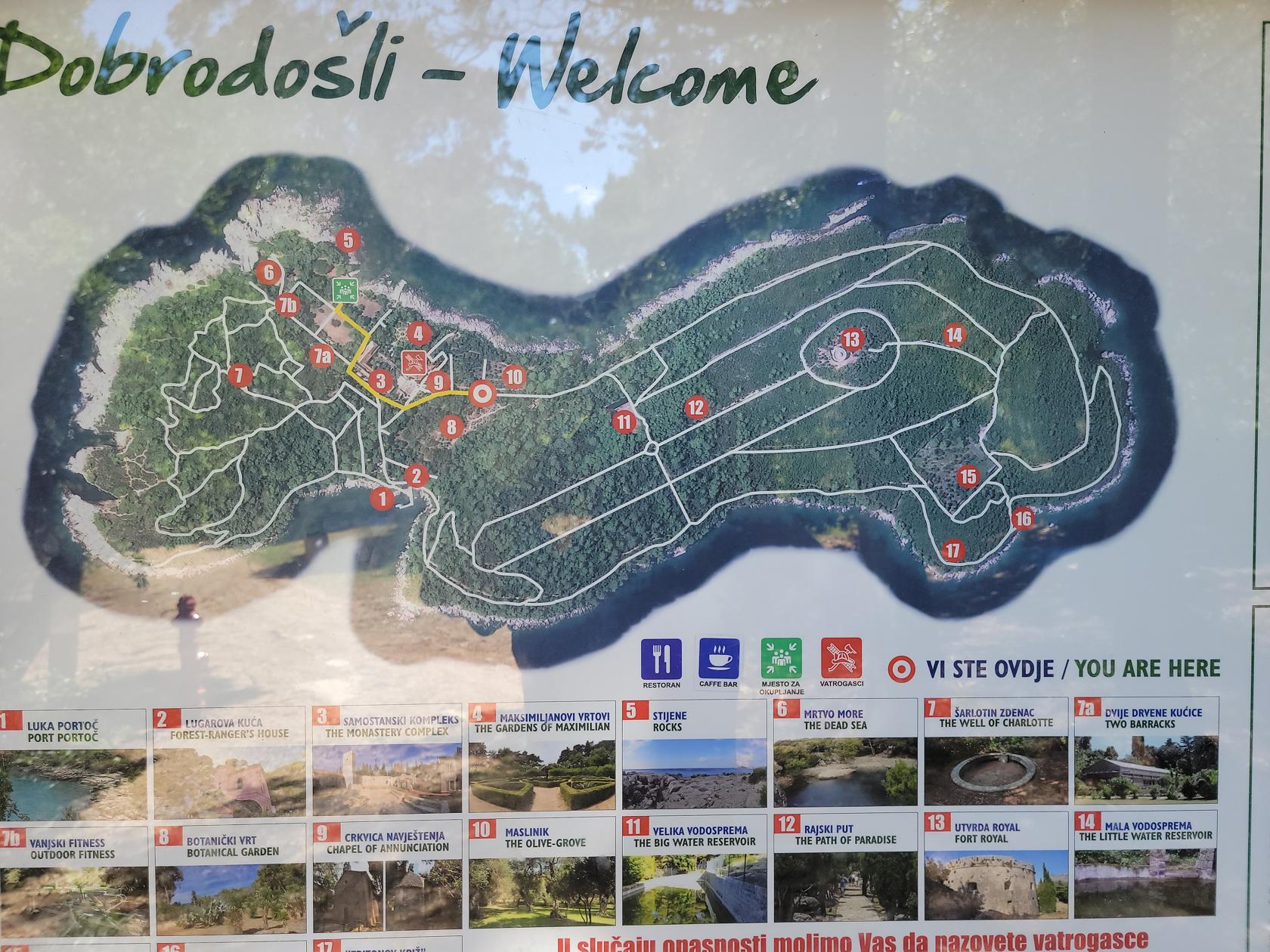
Map – Lokrum Island – Dubrovnik, Croatia
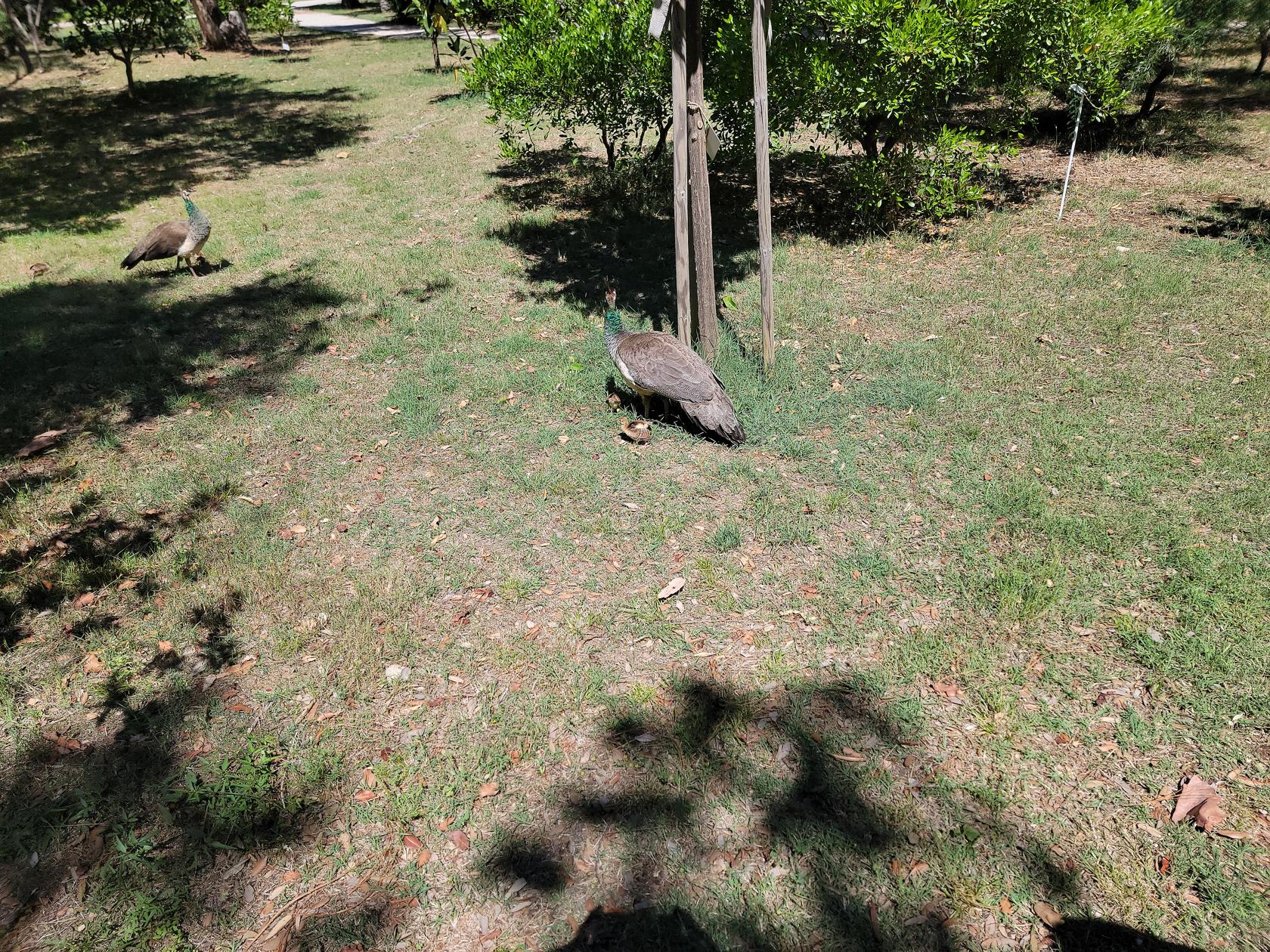
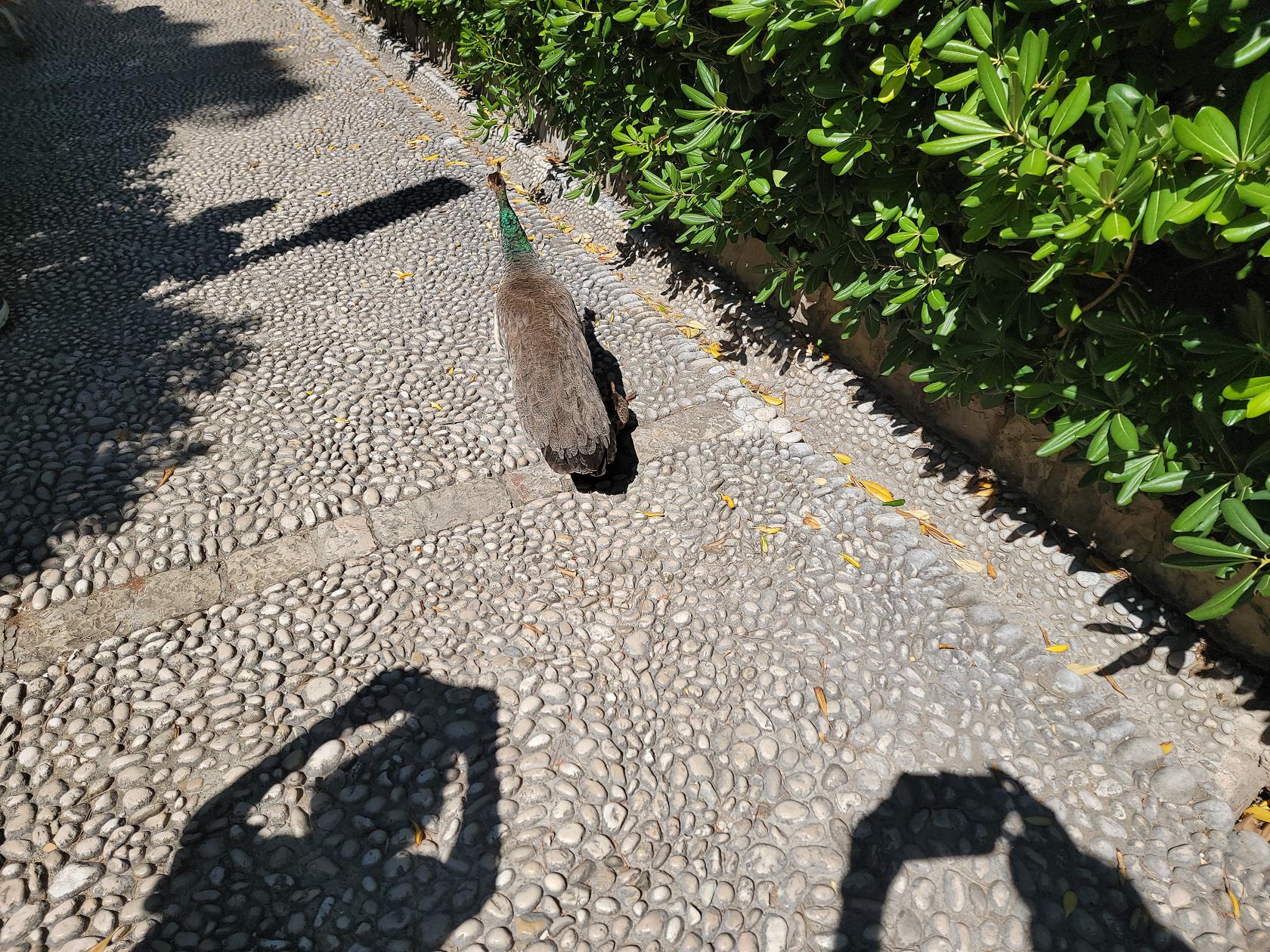
The birds are all over the island, however you will find them more often inland than along the coast, or on top of the hill where to fort is located.
Peacock – Lokrum Island – Dubrovnik, Croatia
Peahens – Lokrum Island – Dubrovnik, Croatia
Peahen – Lokrum Island – Dubrovnik, Croatia
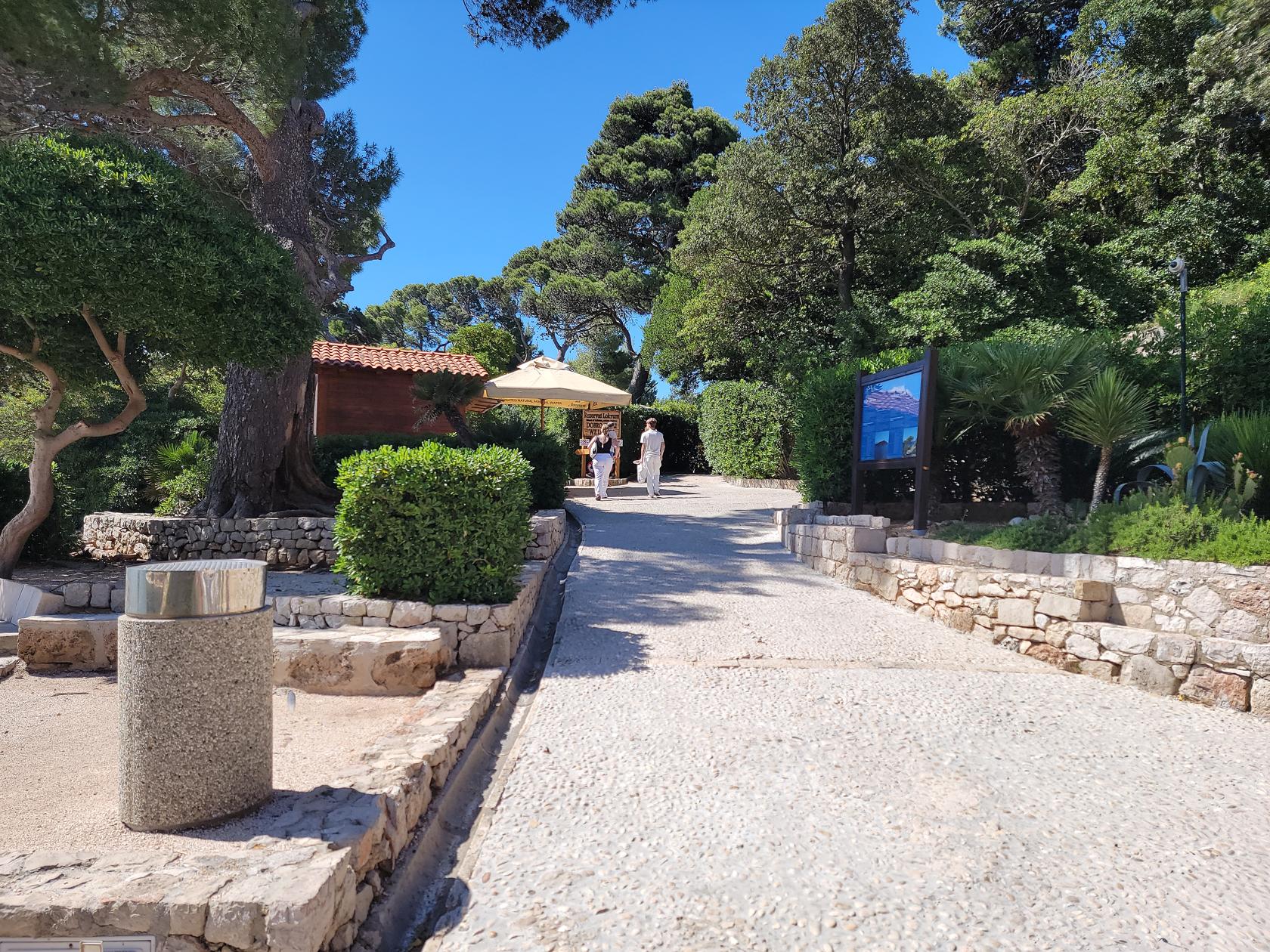
Entrance – Lokrum Island – Dubrovnik, Croatia
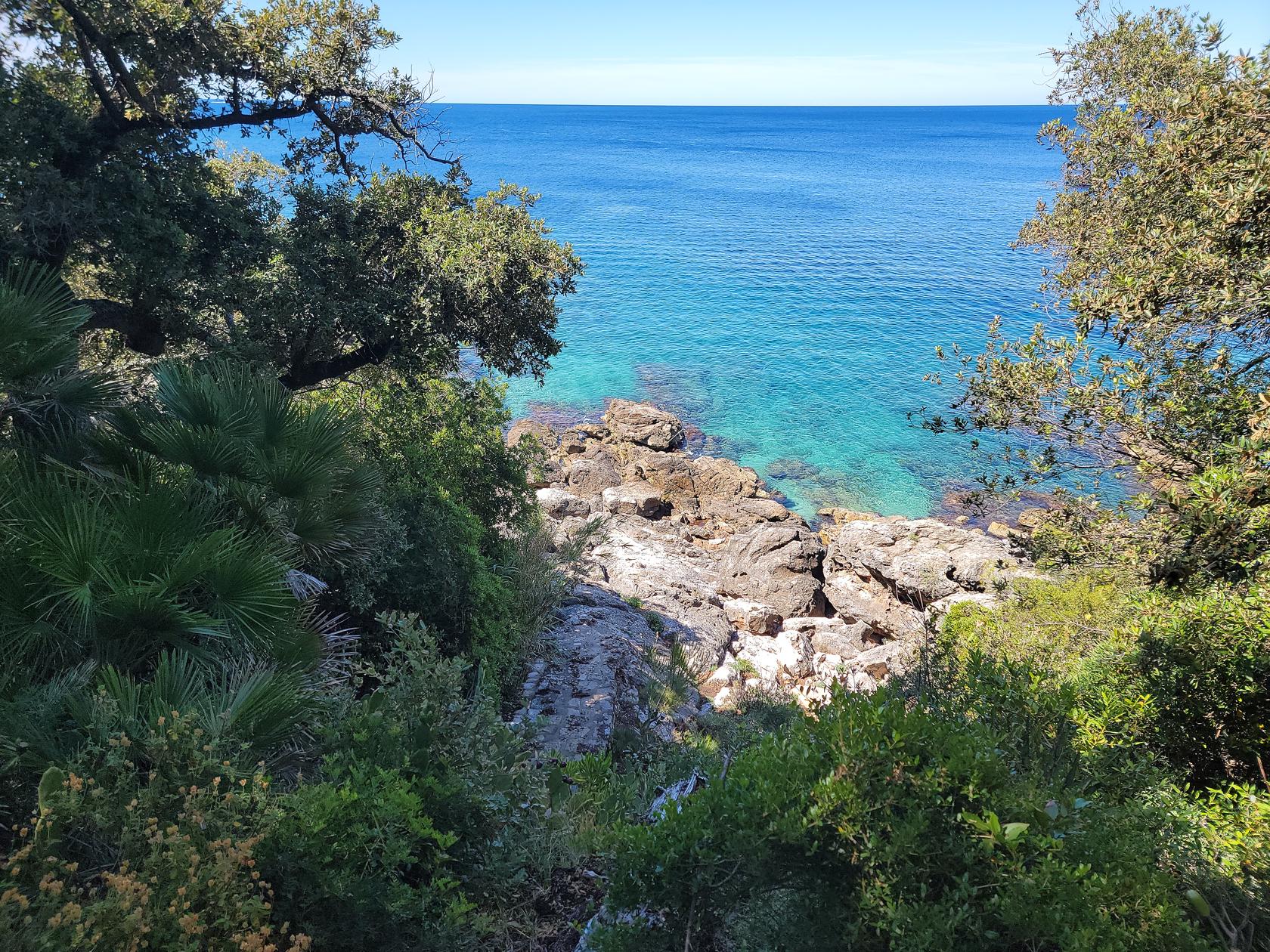
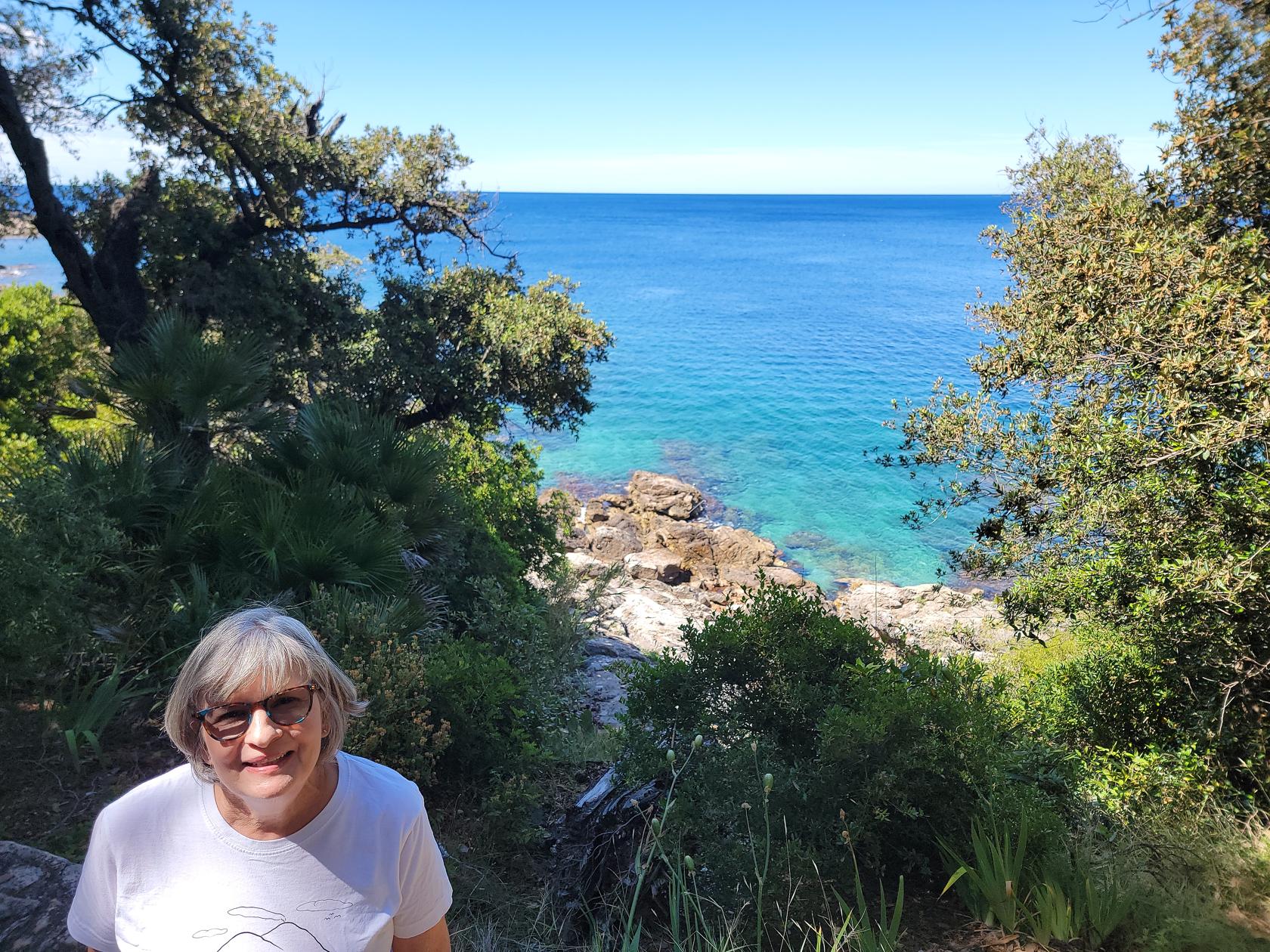
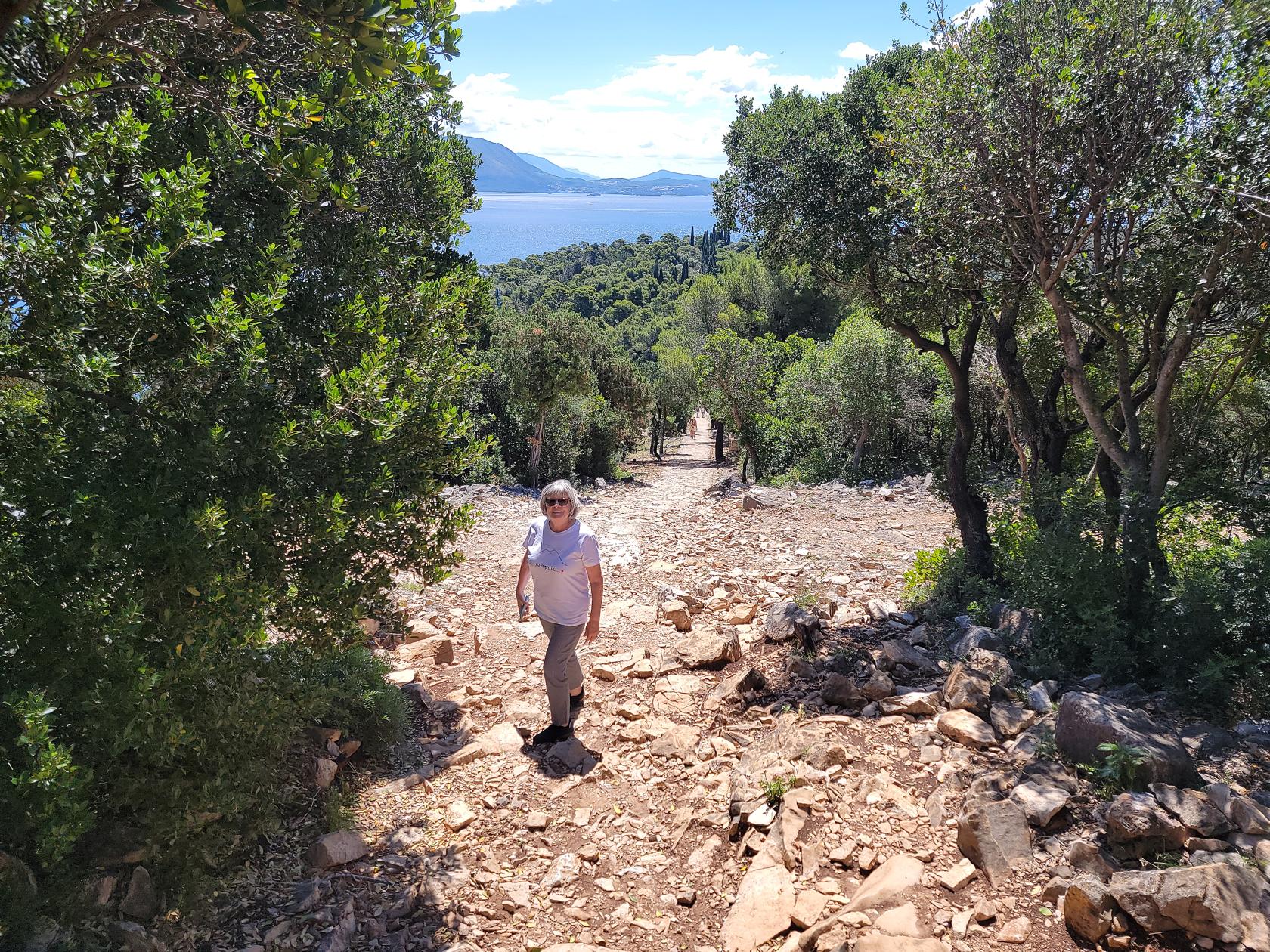
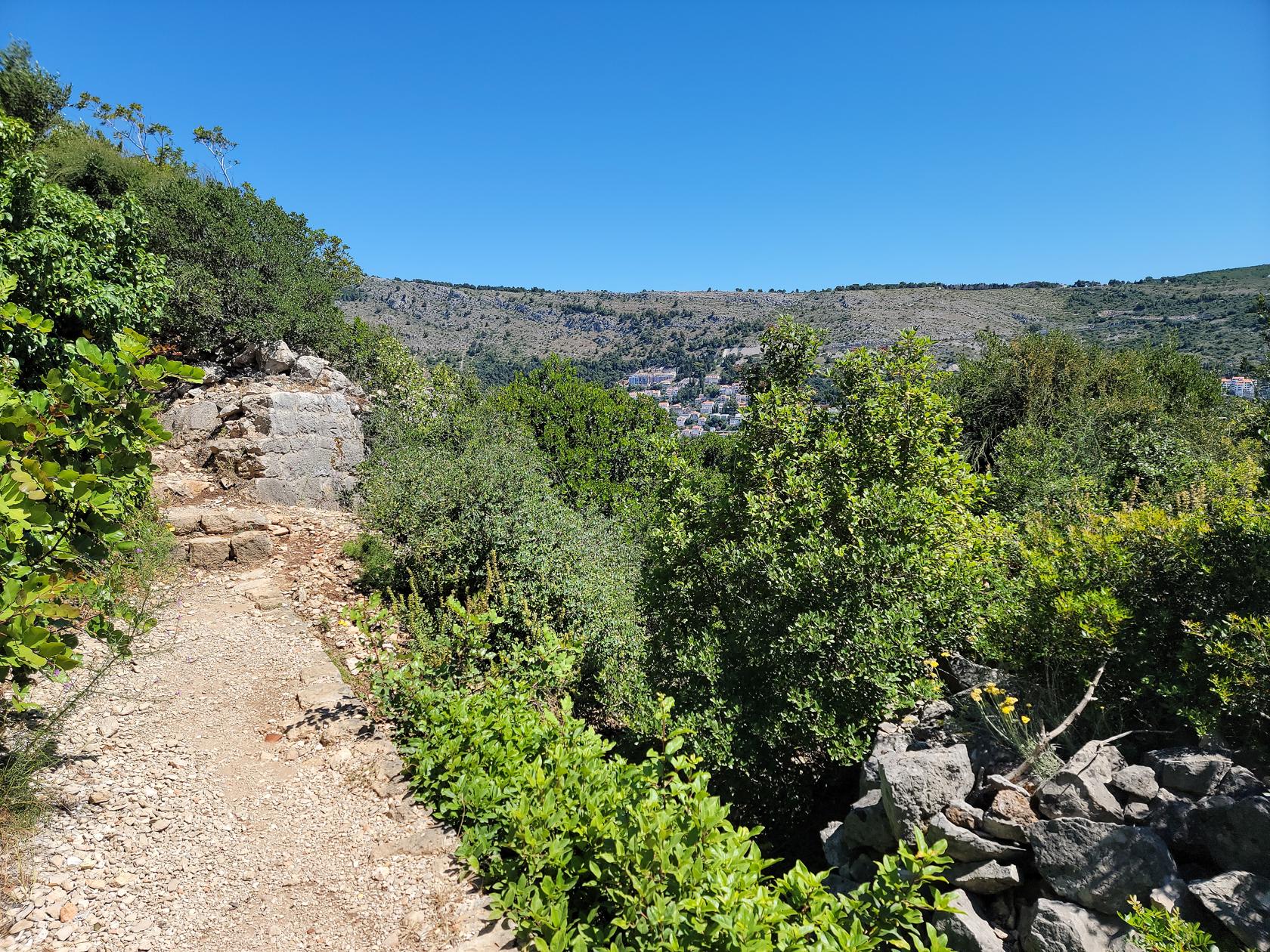
For the most part the island is well marked with trails and you can spend a better part of a day exploring.
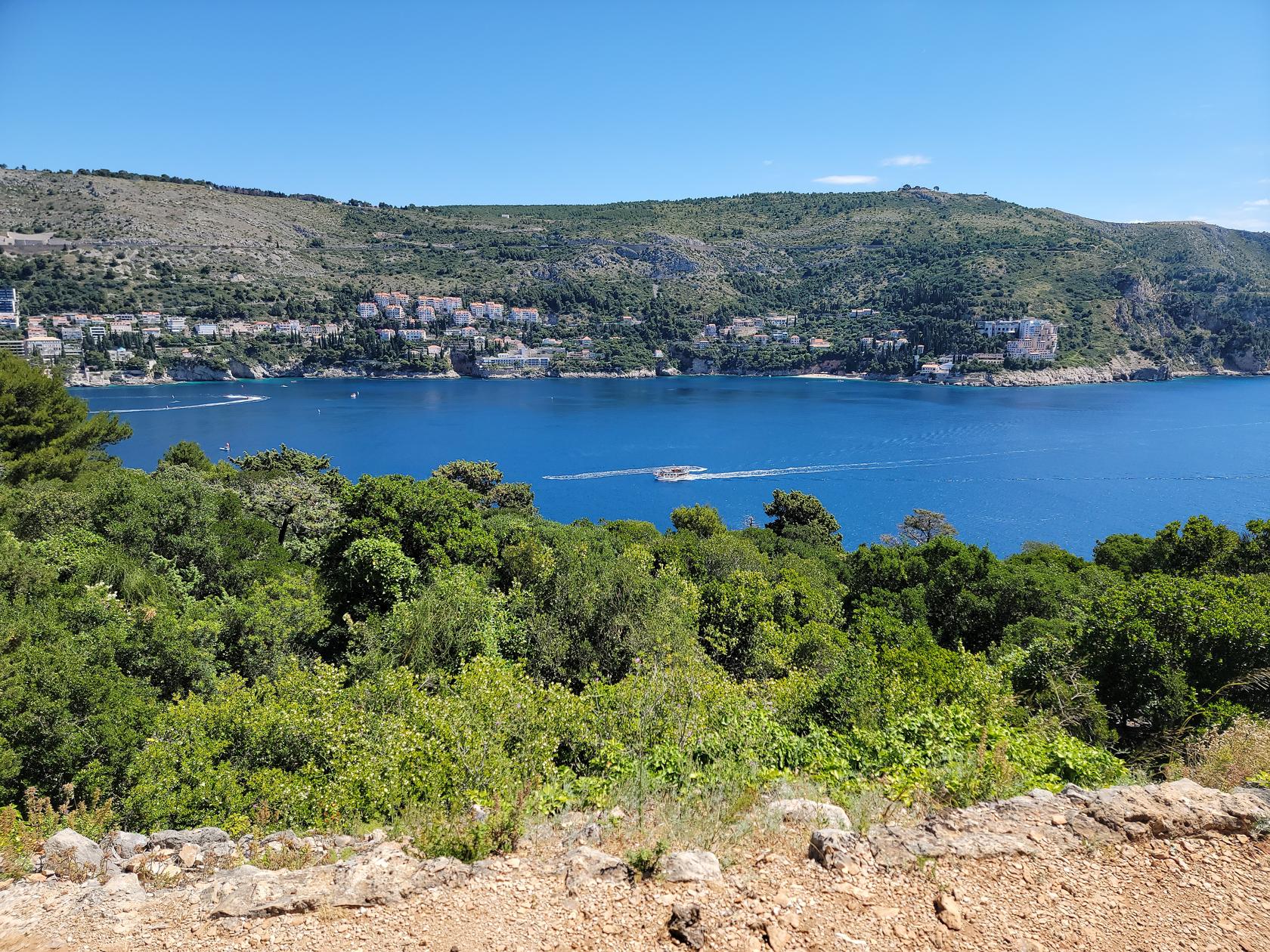
Beautiful Blue Water – Lokrum Island – Dubrovnik, Croatia
Patti – Lokrum Island – Dubrovnik, Croatia
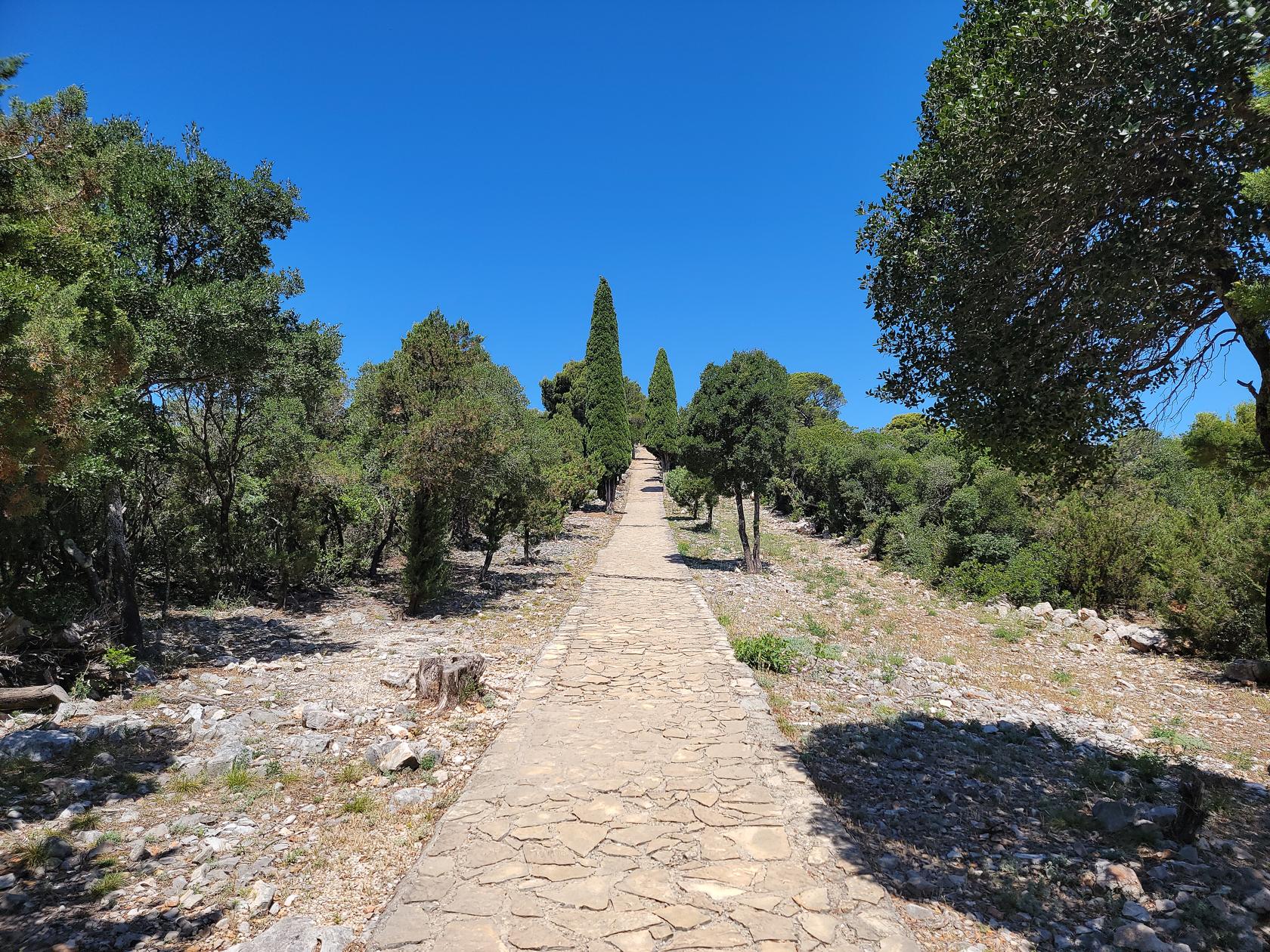
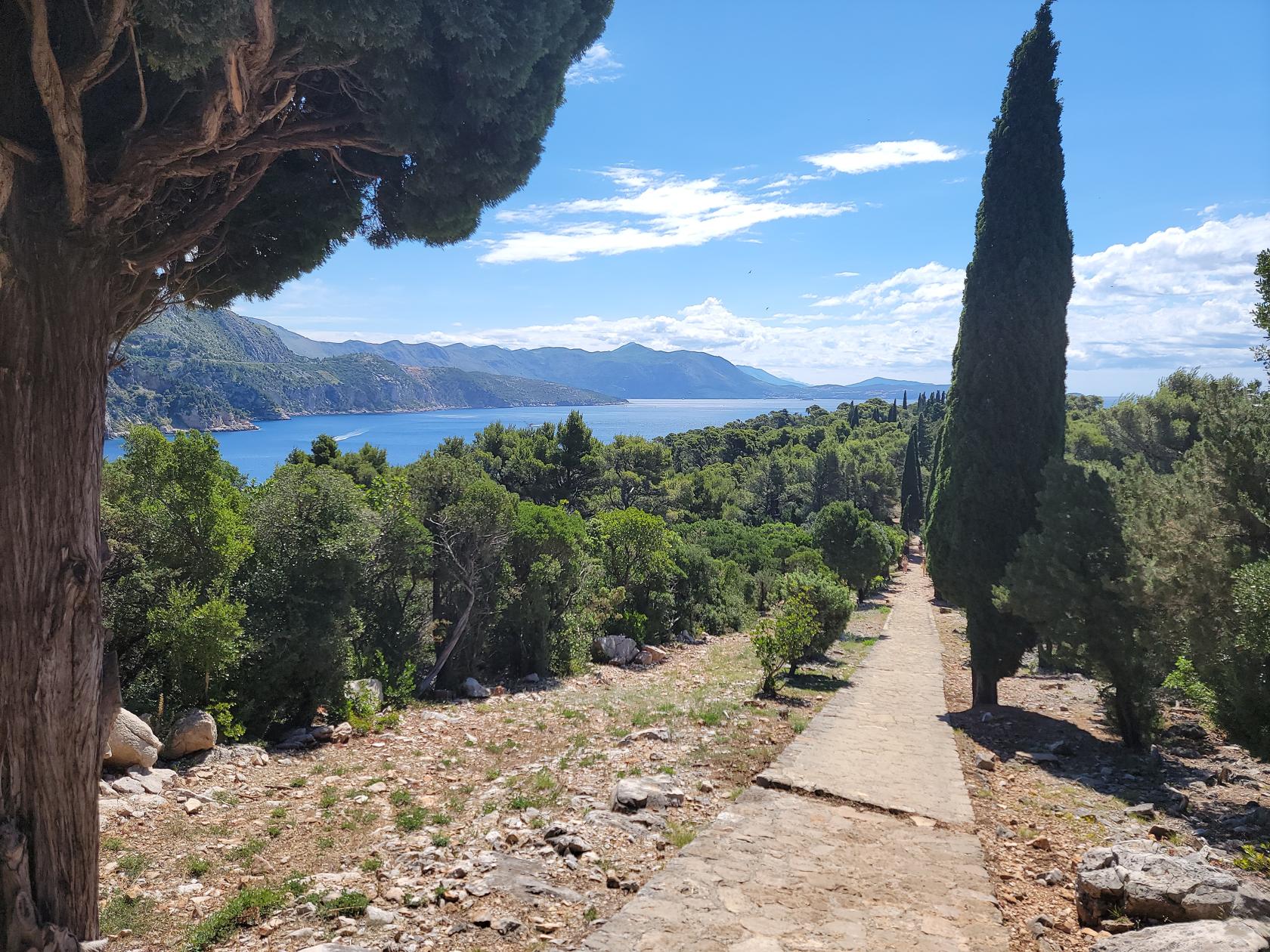
The Path up to Fort Royal – Lokrum Island – Dubrovnik, Croatia
The Path up to Fort Royal – Lokrum Island – Dubrovnik, Croatia
Different Plants – Lokrum Island – Dubrovnik, Croatia
Many Different Species of Trees – Lokrum Island – Dubrovnik, Croatia
Fort Royal
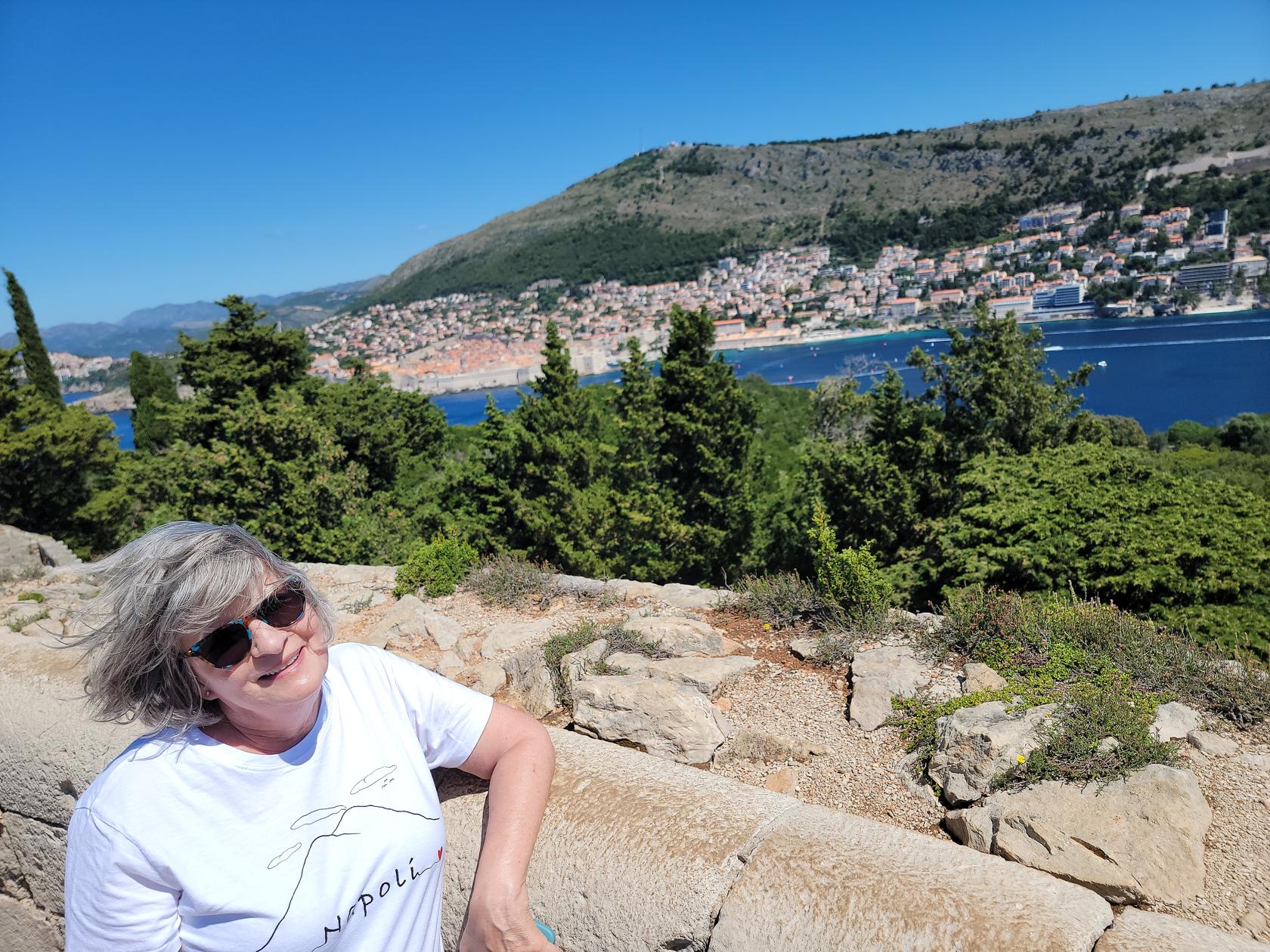
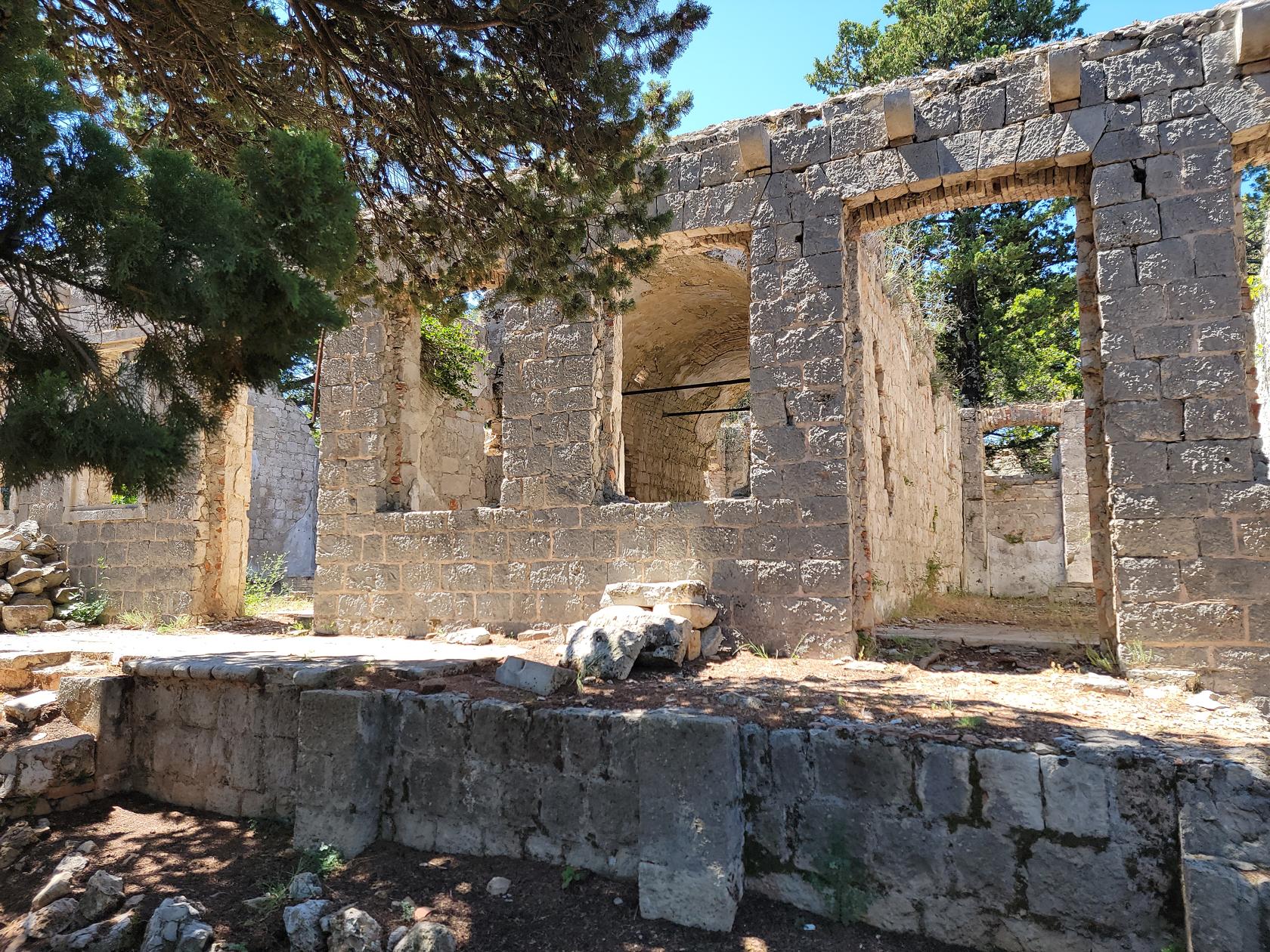
Perched atop the main hill on Lokrum, is Fort Royal. Now partially in ruin, it is only maintained as far as keeping is safe for the tourists. It commands a view of the island, the Dalmatian coastline and of course, Dubrovnik.
Patti hiking up to Fort Royal – Lokrum Island – Dubrovnik, Croatia
Fort Royal – Lokrum Island – Dubrovnik, Croatia
Fort Royal – Lokrum Island – Dubrovnik, Croatia
Patti at Fort Royal – Lokrum Island – Dubrovnik, Croatia
Fort Royal – Lokrum Island – Dubrovnik, Croatia
Fort Royal – Lokrum Island – Dubrovnik, Croatia
Fort Royal – Lokrum Island – Dubrovnik, Croatia
Fort Royal – Lokrum Island – Dubrovnik, Croatia
Fort Royal – Lokrum Island – Dubrovnik, Croatia
Dubrovnik Old Town – Lokrum Island – Dubrovnik, Croatia
The main fort is intack, but the outlying buildings have fallen down and no longer of any interest.
Fort Royal – Lokrum Island – Dubrovnik, Croatia
Franjo Tuđman Bridge
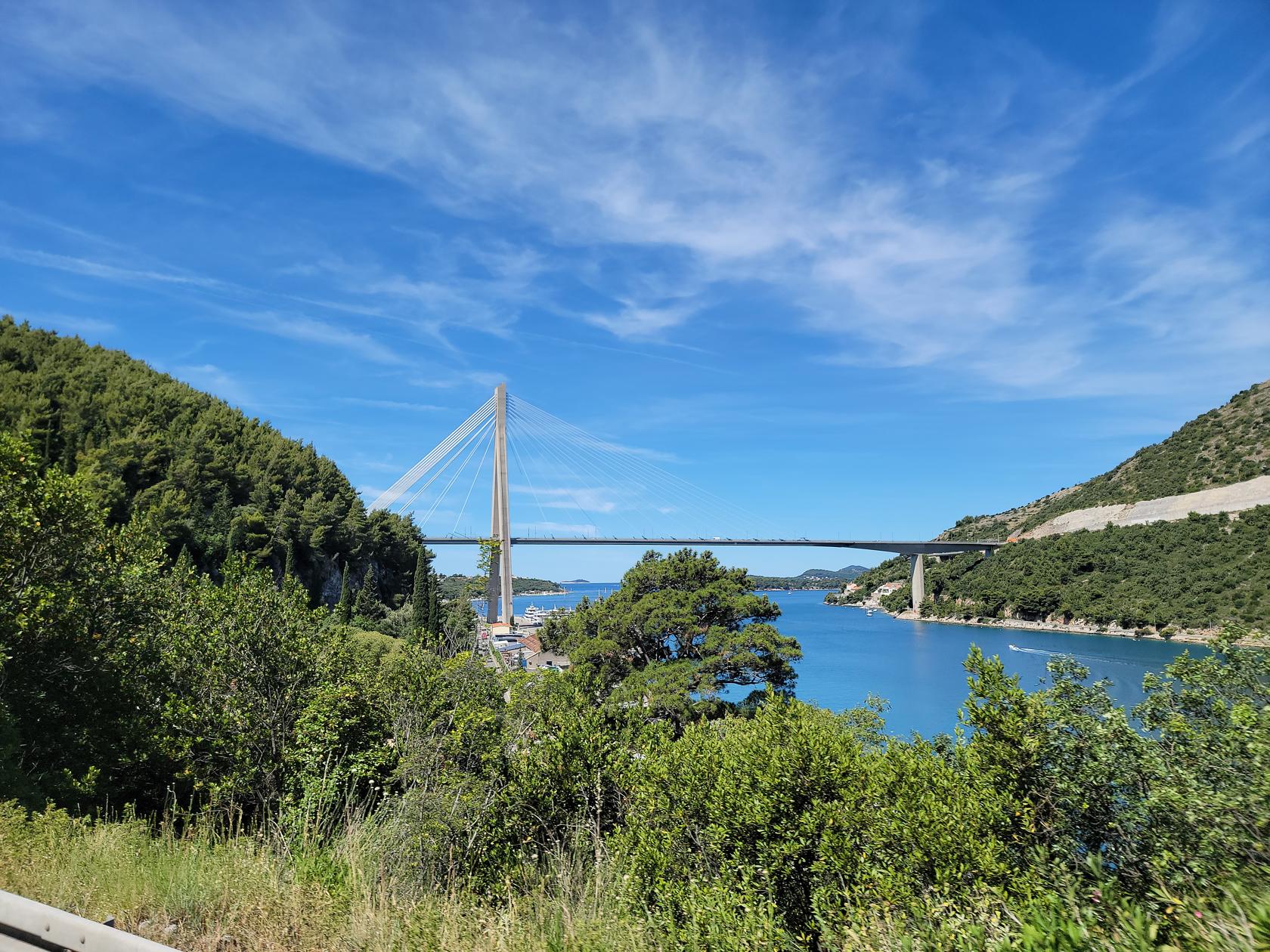
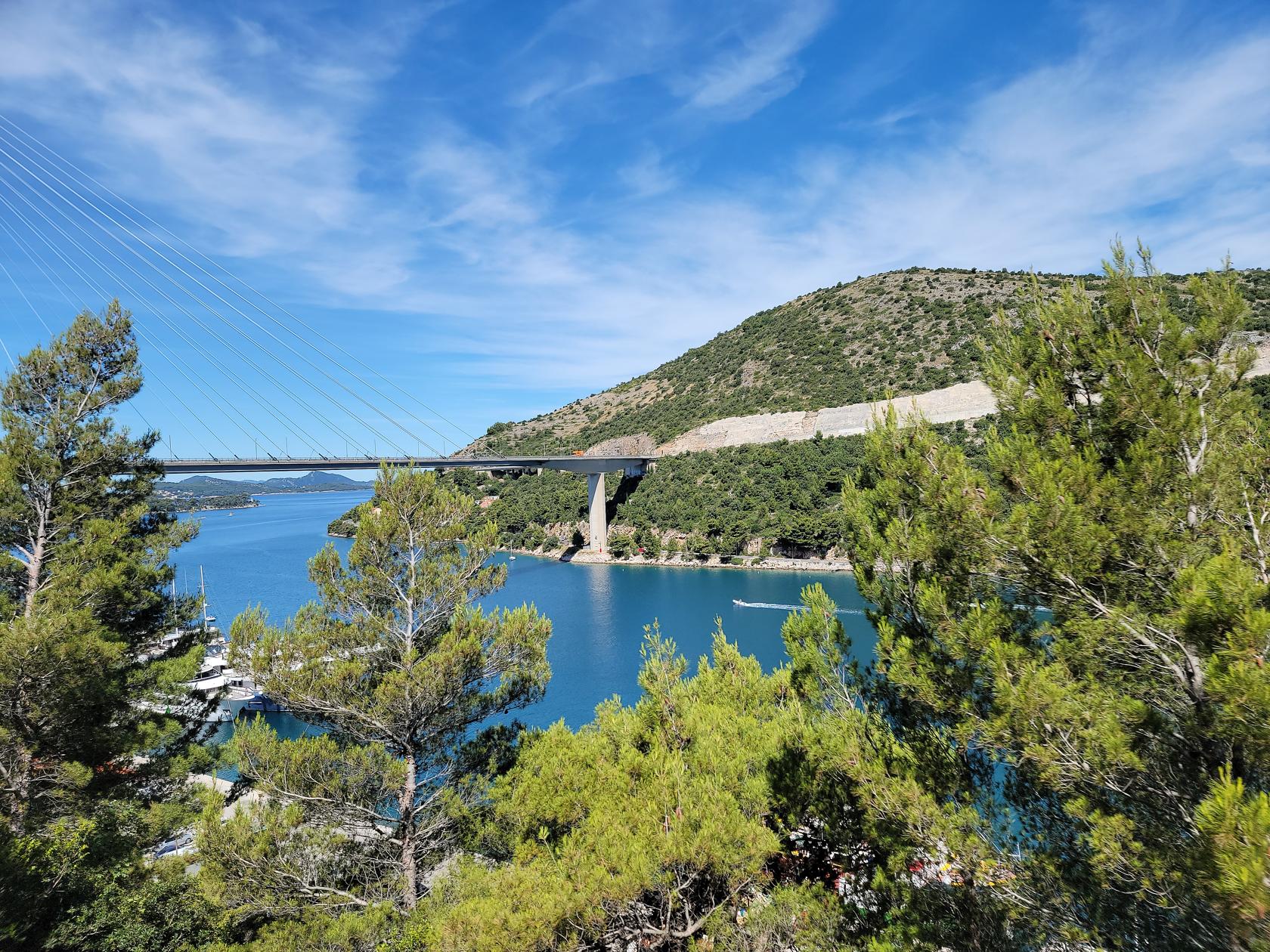
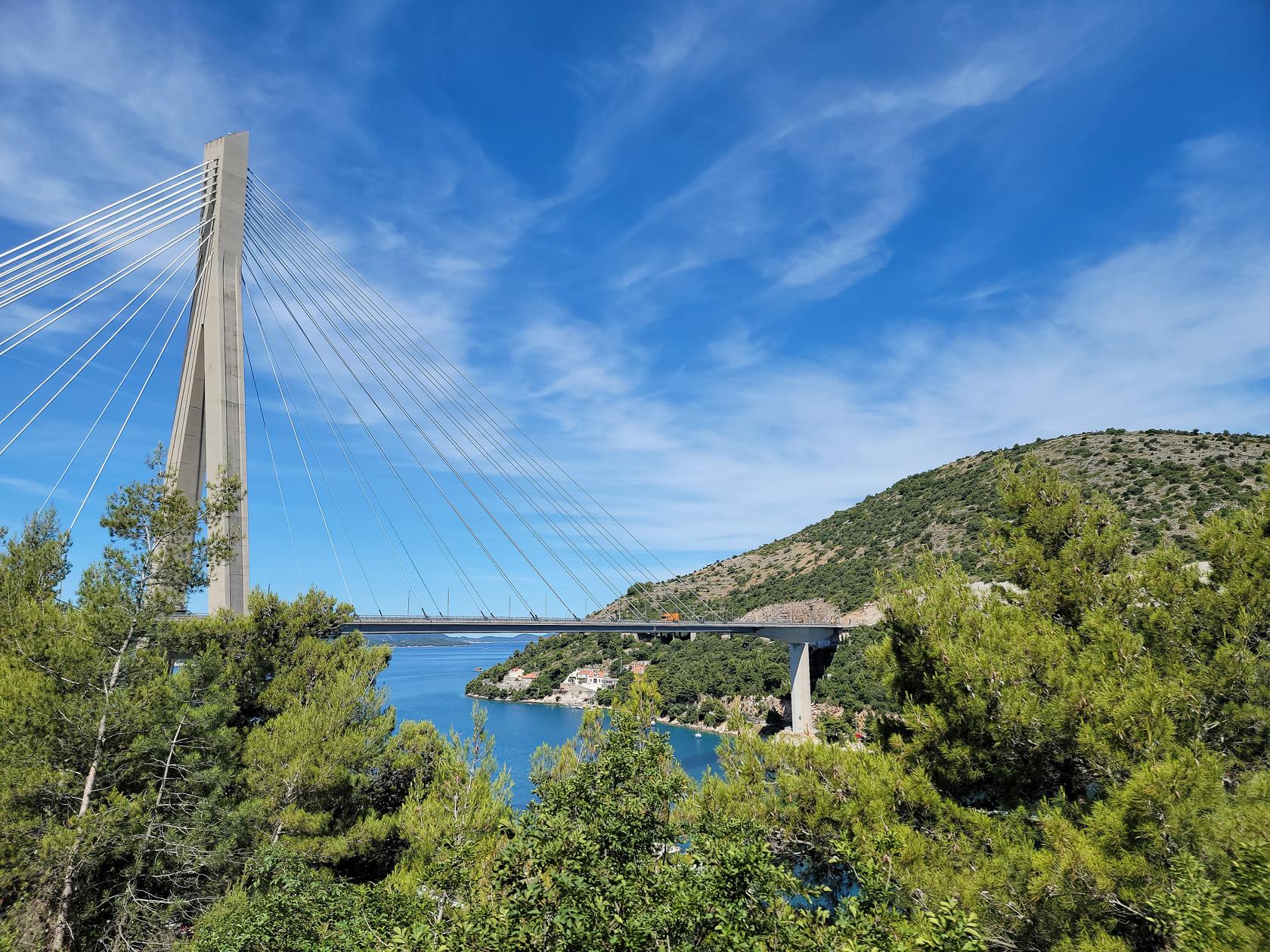
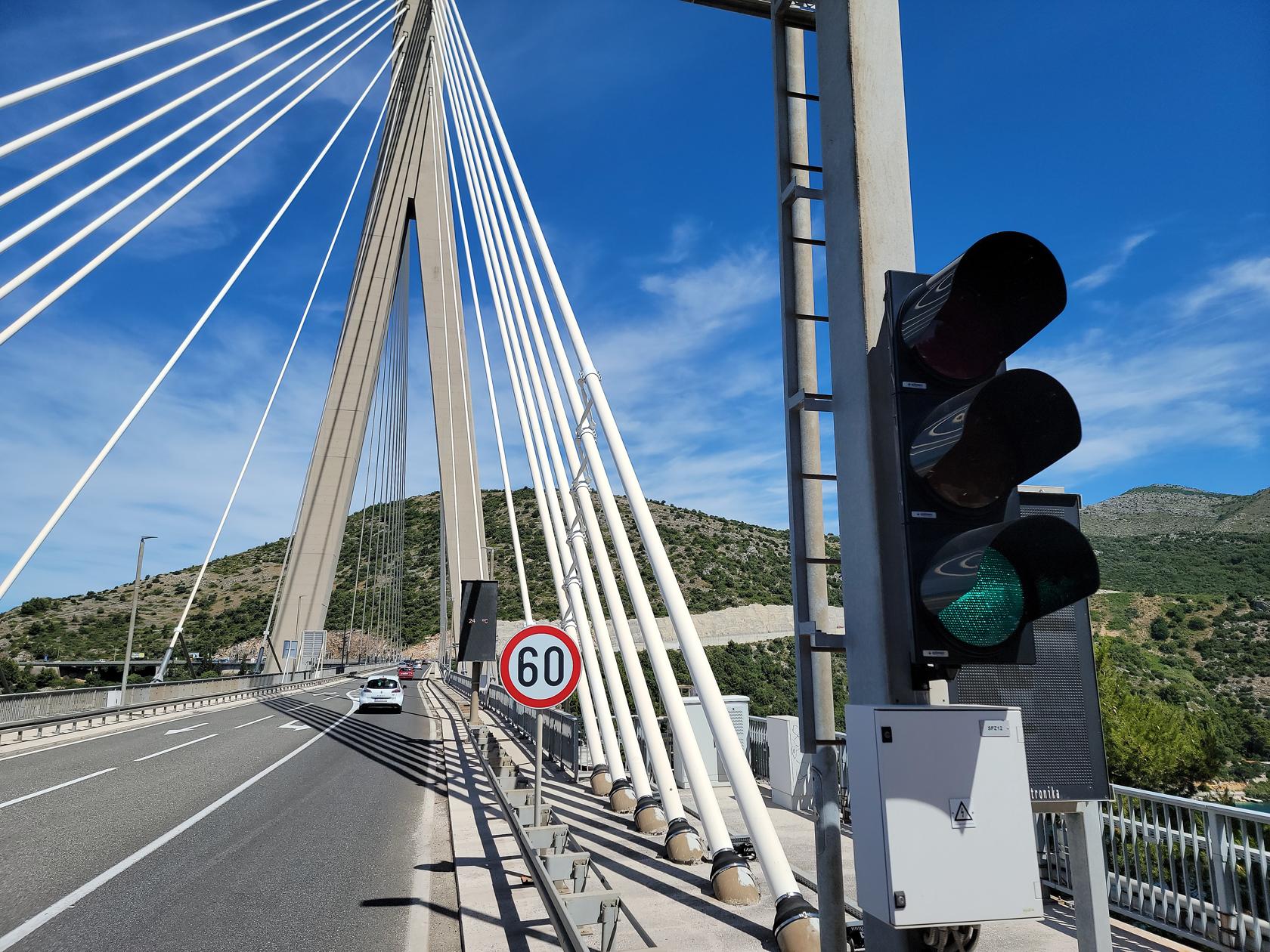
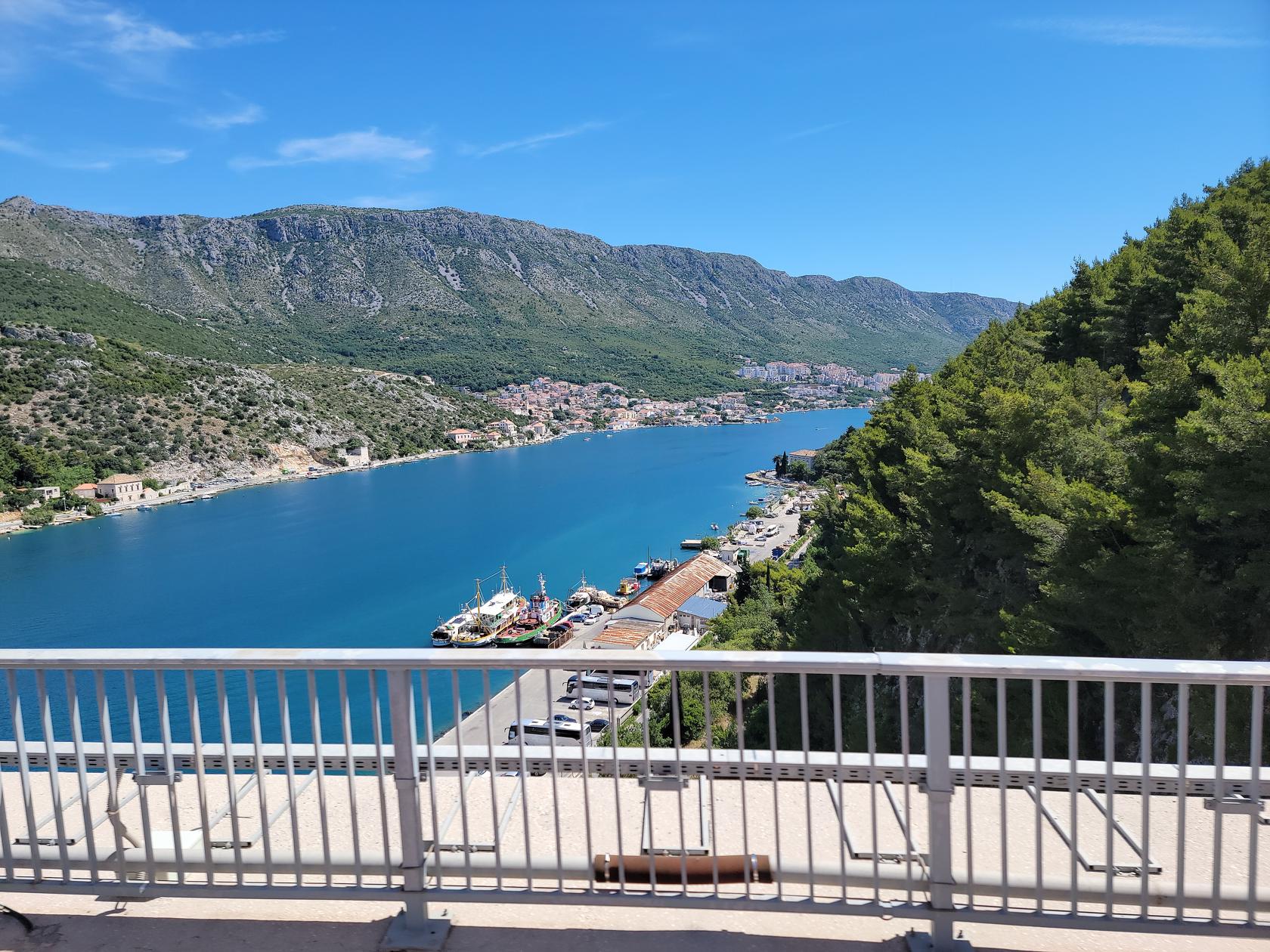
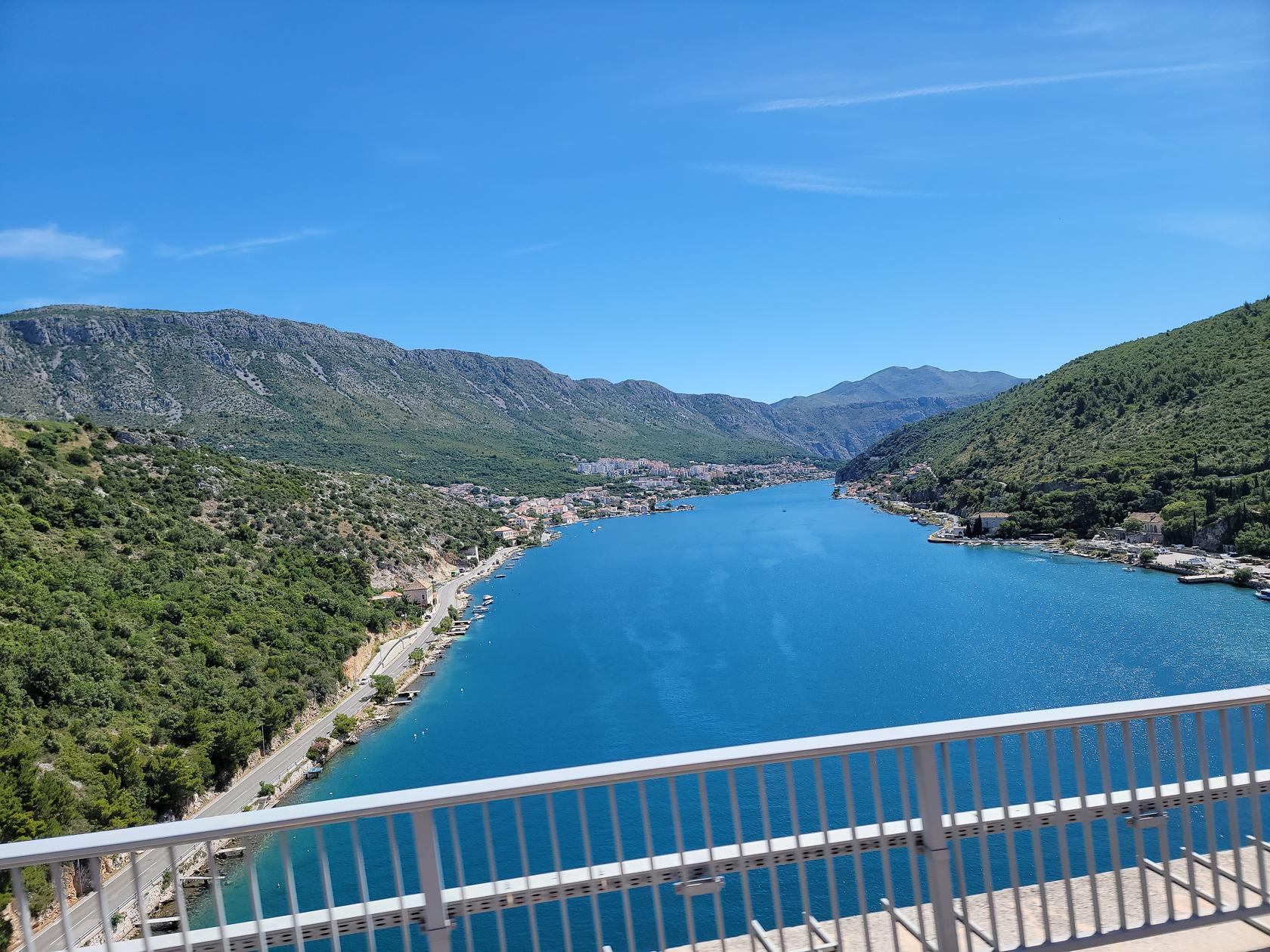
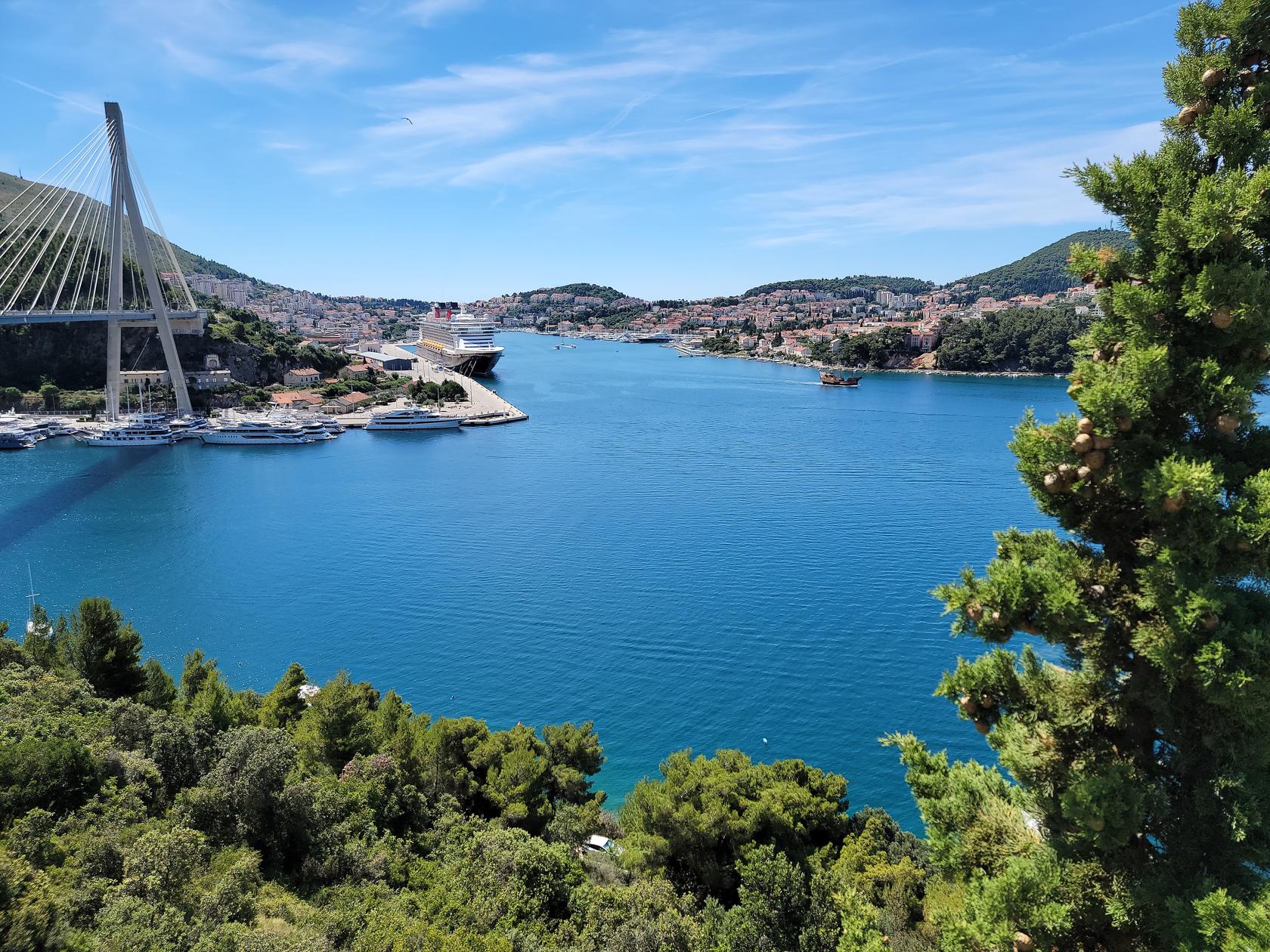
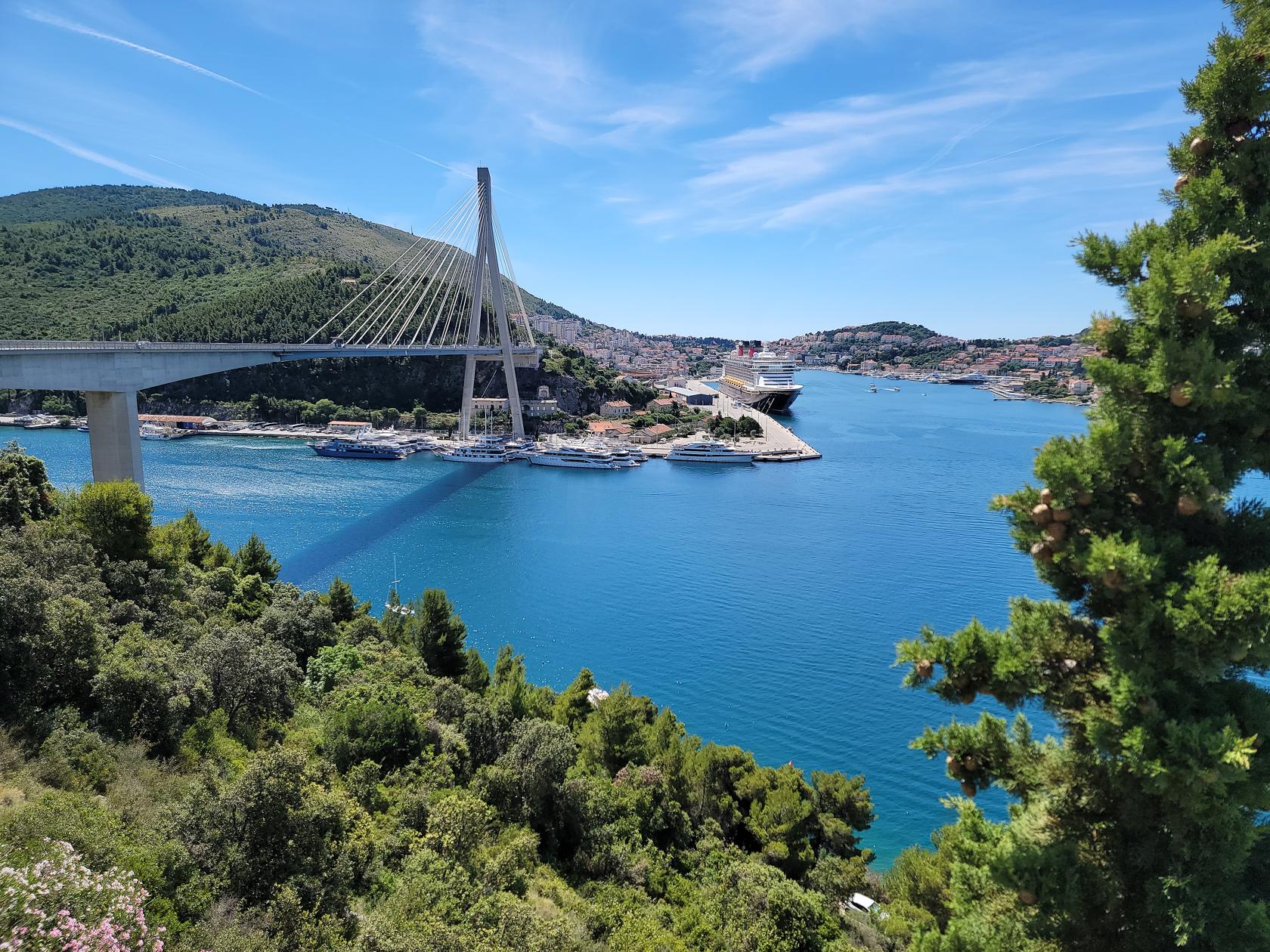
For a small fee you can enjoy a short city tour which will take you to the Franjo Tuđman Bridge. This is actually an interesting outing, since to get there you must pass by and over the Ombla River. This river is actually born out of rock as a spring, perhaps one of the few rivers in the world having claim to do so. And, it is not a small river by any stretch of the imagination, it is quite wide for a spring-few river.
Ombla River and Tudman Bridge – City Tour – Dubrovnik, Croatia
Tudman Bridge – City Tour – Dubrovnik, Croatia
Tudman Bridge – City Tour – Dubrovnik, Croatia
Tudman Bridge – City Tour – Dubrovnik, Croatia
Tudman Bridge – City Tour – Dubrovnik, Croatia
Ombla River – City Tour – Dubrovnik, Croatia
Ombla River – City Tour – Dubrovnik, Croatia
Ombla River and Port – City Tour – Dubrovnik, Croatia
Tudman Bridge – City Tour – Dubrovnik, Croatia
Looking out to sea – City Tour – Dubrovnik, Croatia
Restaurants
We found eating at the more popular restaurants a bit overpriced and the service not as good as some of the more local establishments. No doubt you can be cautious at some of these places and keep the price down, but sometimes the point is to enjoy some of the unique offerings they have while not breaking your budget, this you might find difficult to do, especially if you don’t want to order another pizza!
Tata’s
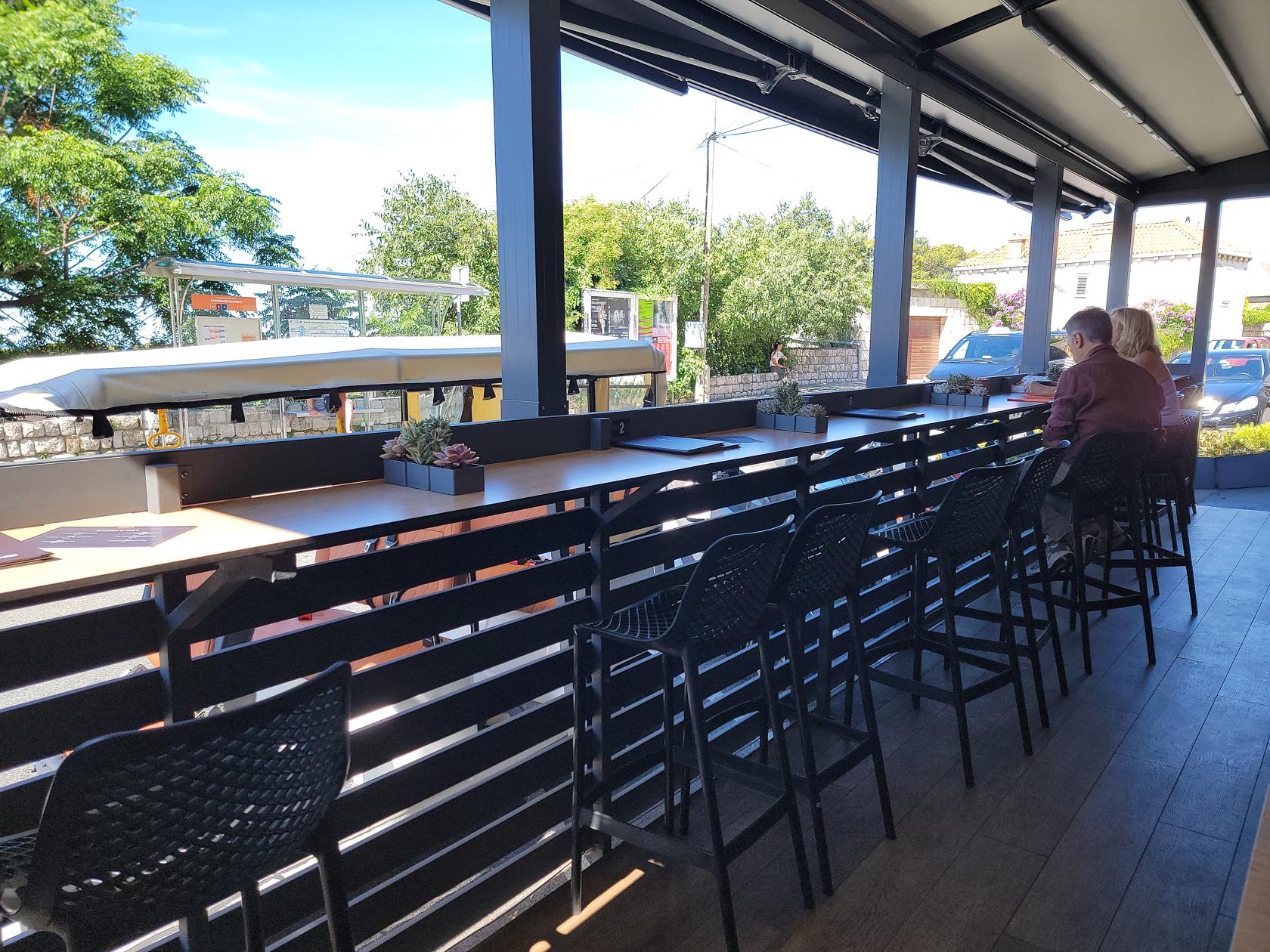
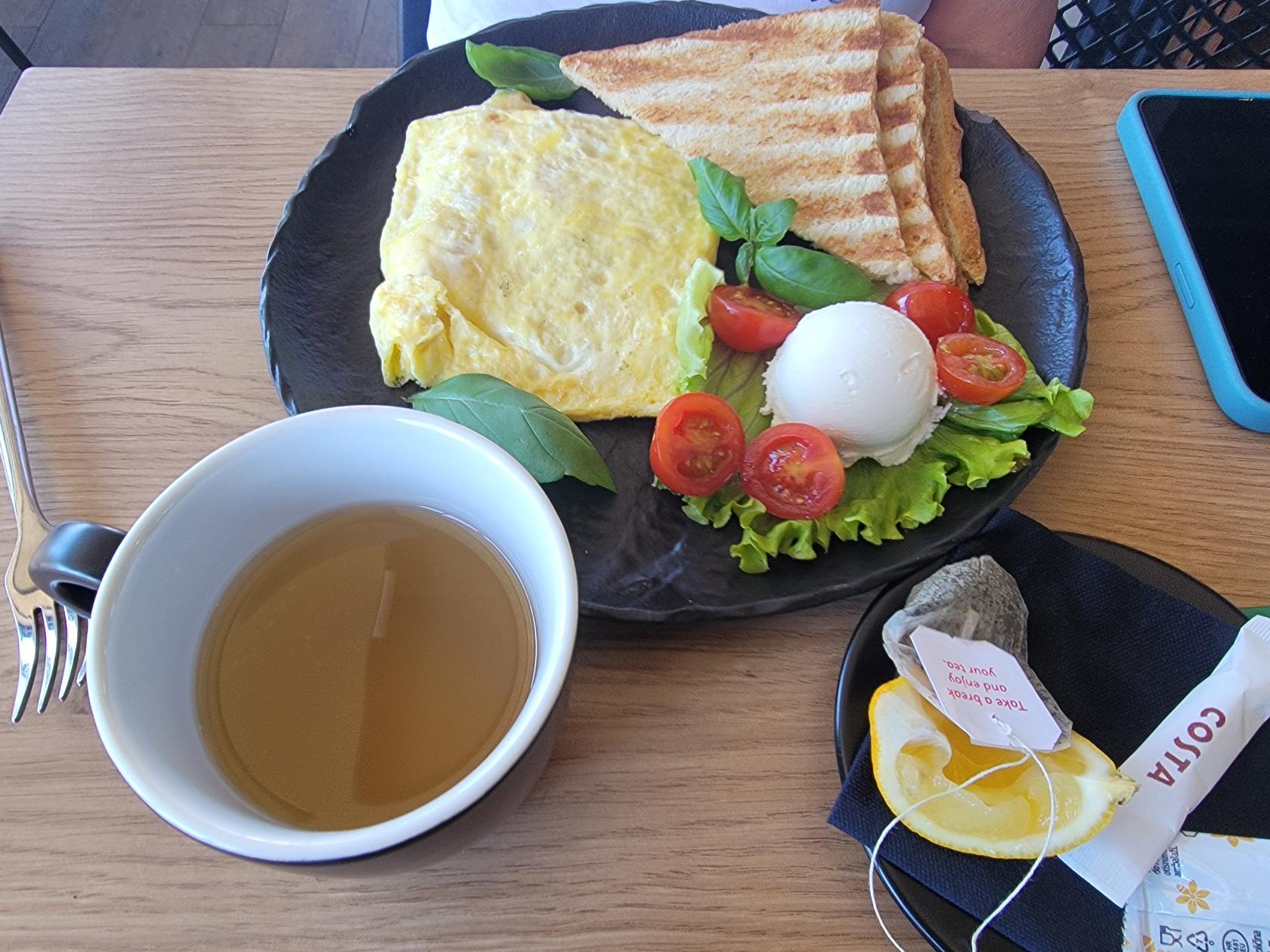
For us, a great place for breakfast. Very reasonably priced, right below our hotel on Zagrebačka Ulica, it offered all the essentials. Plus, the Pekara Rusica Bakery was right next door in case we wanted to skip a regular breakfast, preferring just a danish or other handheld treat.
Omelette with Toast – Tata’s Restaurant – Dubrovnik, Croatia
Pancakes and Fruit – Tata’s Restaurant – Dubrovnik, Croatia
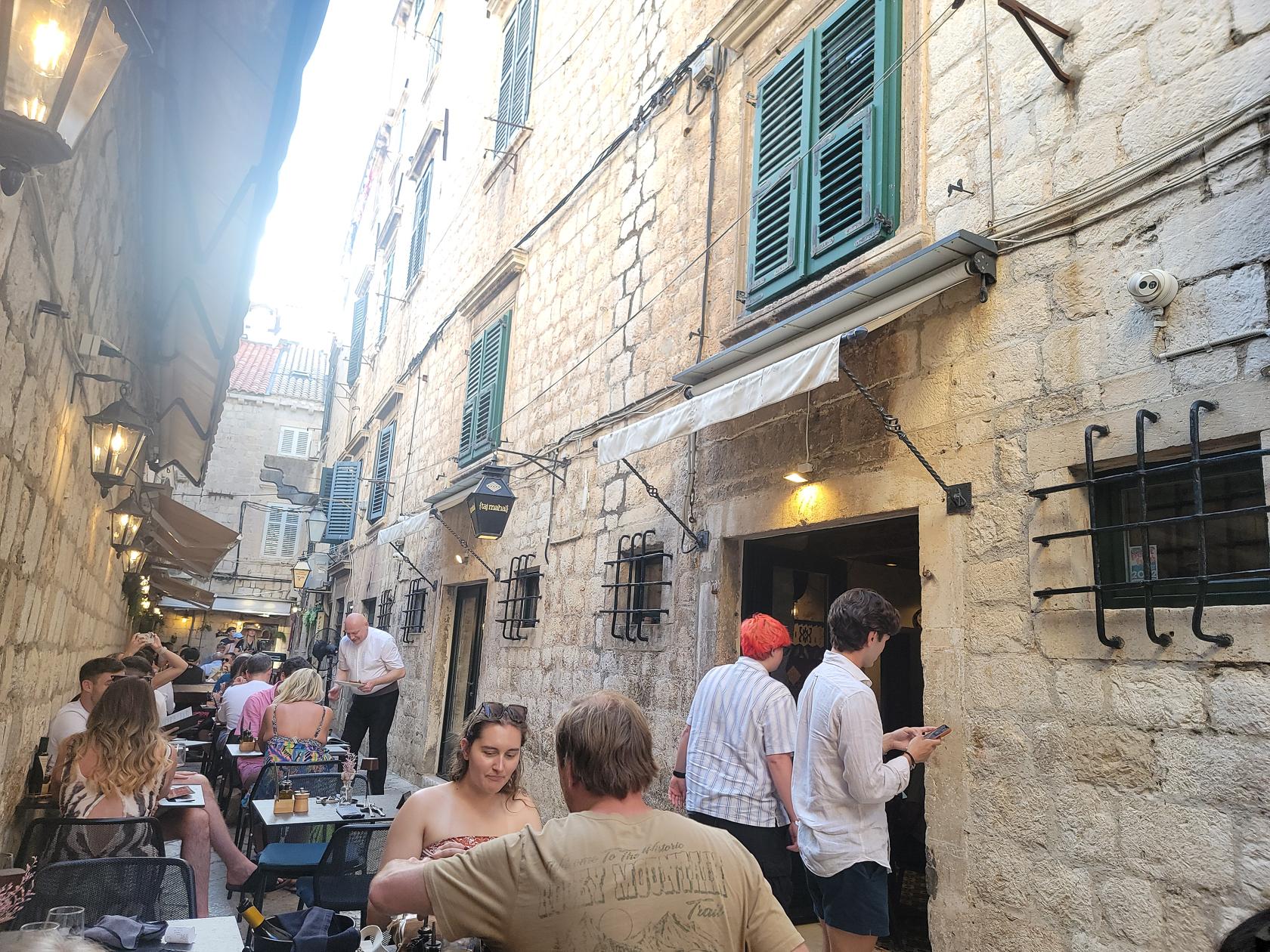
Taj Mahal Old Town Restaurant
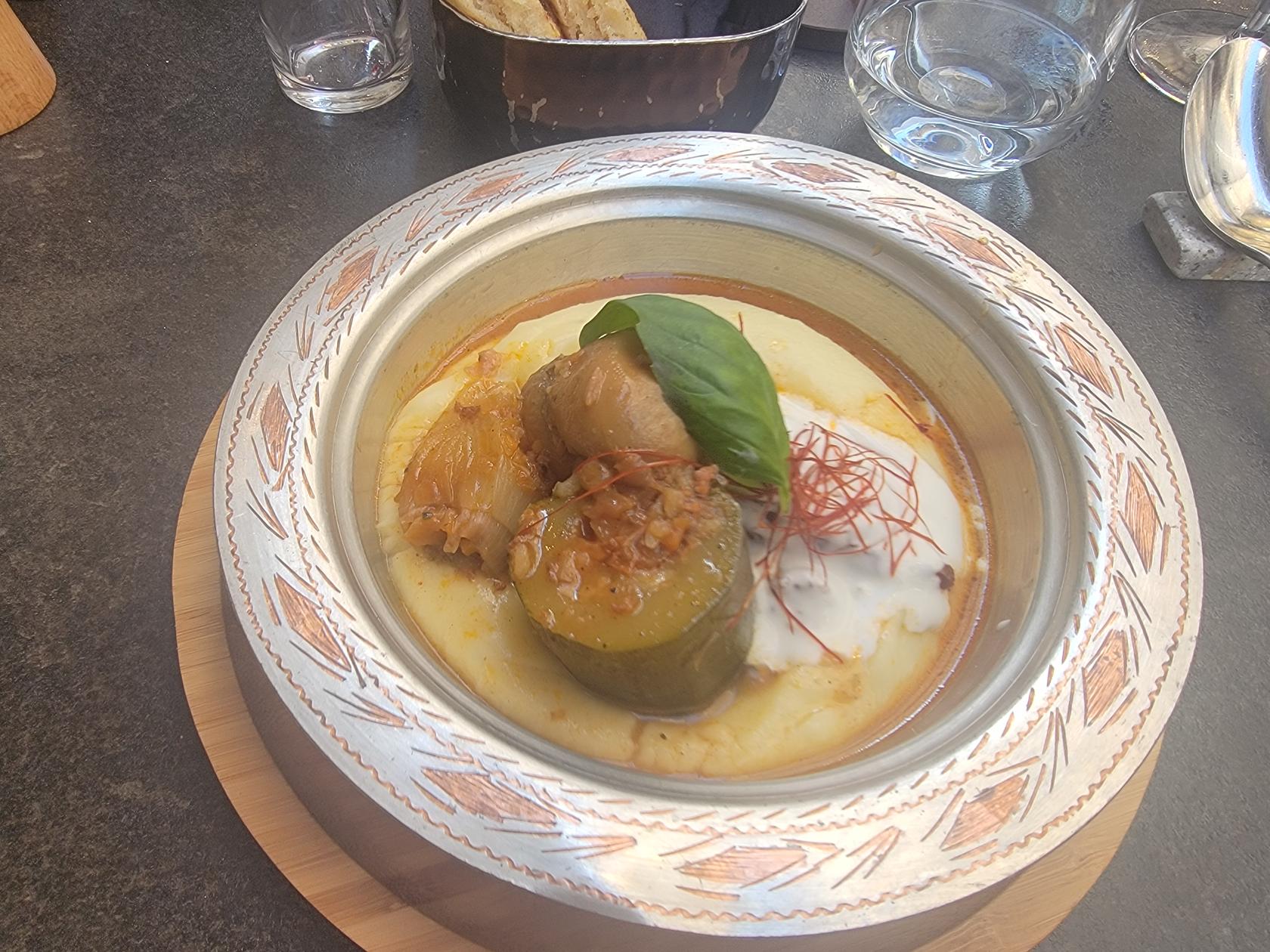
By far our favorite in the Old Town. It specializes in authentic Croatian and Bosnian ethnic cuisines. We can commend the stuffed vegetable dish called Dolma.[2]The menu has it as Sarma/Dolma/Japrak, but the Turkish Sarma and the Albanian Japrak are actually closer to each other and different from Dolma, in that they are wrapped in grape leaves normally. … Continue reading
Entrance – Taj Mahal Old Town Restaurant – Dubrovnik, Croatia
The service was excellent, they never missed a heartbeat and always showed that they were on top of their game. The food overall we found to be moderately priced and we spent considerably less here, than we did at the Dubravka 1836 restaurant.
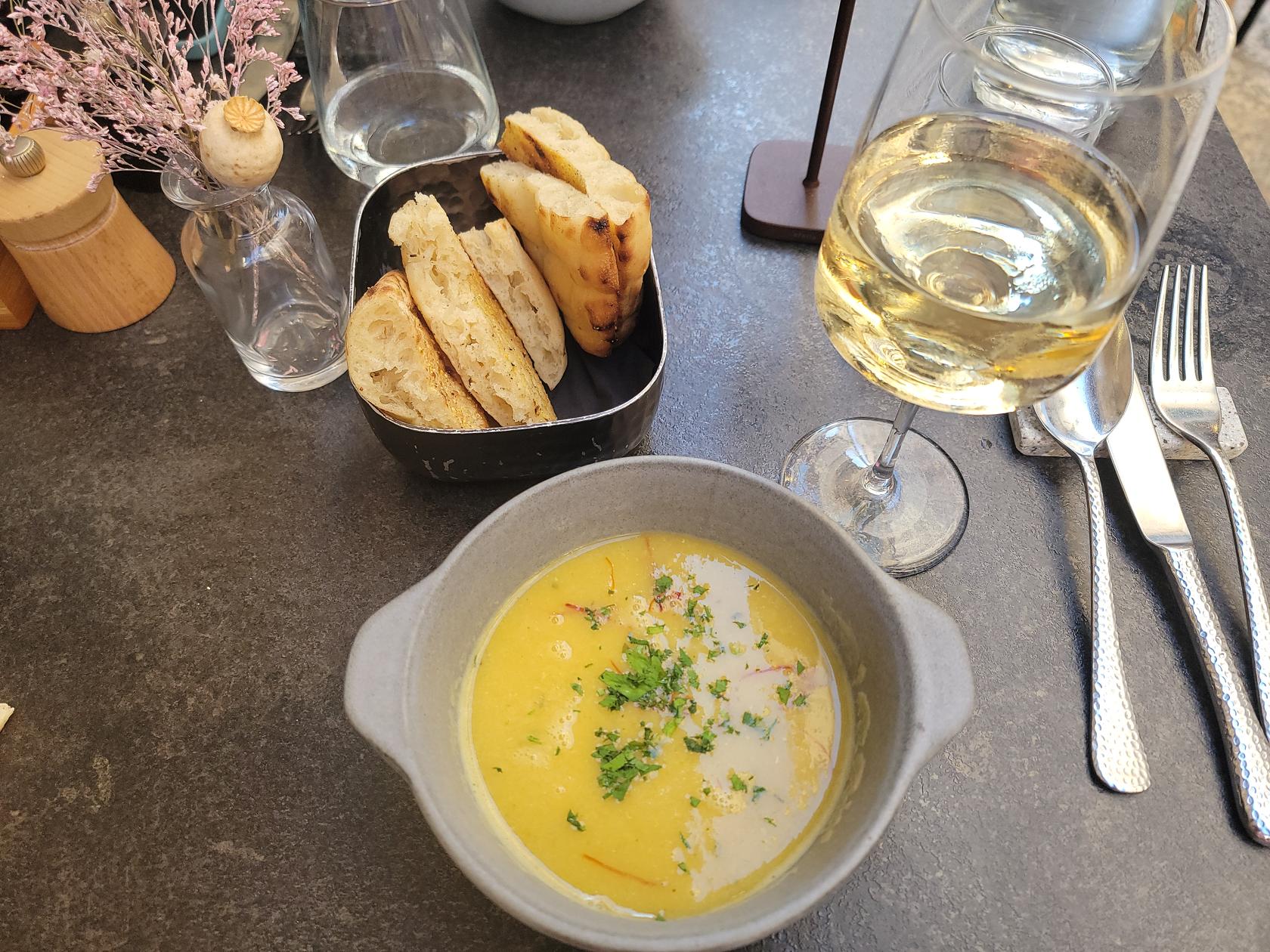
Red Lentil Soup – Taj Mahal Old Town Restaurant – Dubrovnik, Croatia
Sarma/Dolma/Japrak – Taj Mahal Old Town Restaurant – Dubrovnik, Croatia
Bademli Almasia – Taj Mahal Old Town Restaurant – Dubrovnik, Croatia
Magnolia Restaurant
Outside the main entrance and Pile Gate, in the large plaza, can be found the Magnolia Restaurant. Nothing special, but they offer a variety of food which is good enough for lunch. A bit over-priced, but not too bad. We ordered simple soup and salad combination with some drinks. The service was okay, although they did bring us the wrong lunch at first, an understandable mix-up at such a busy place.
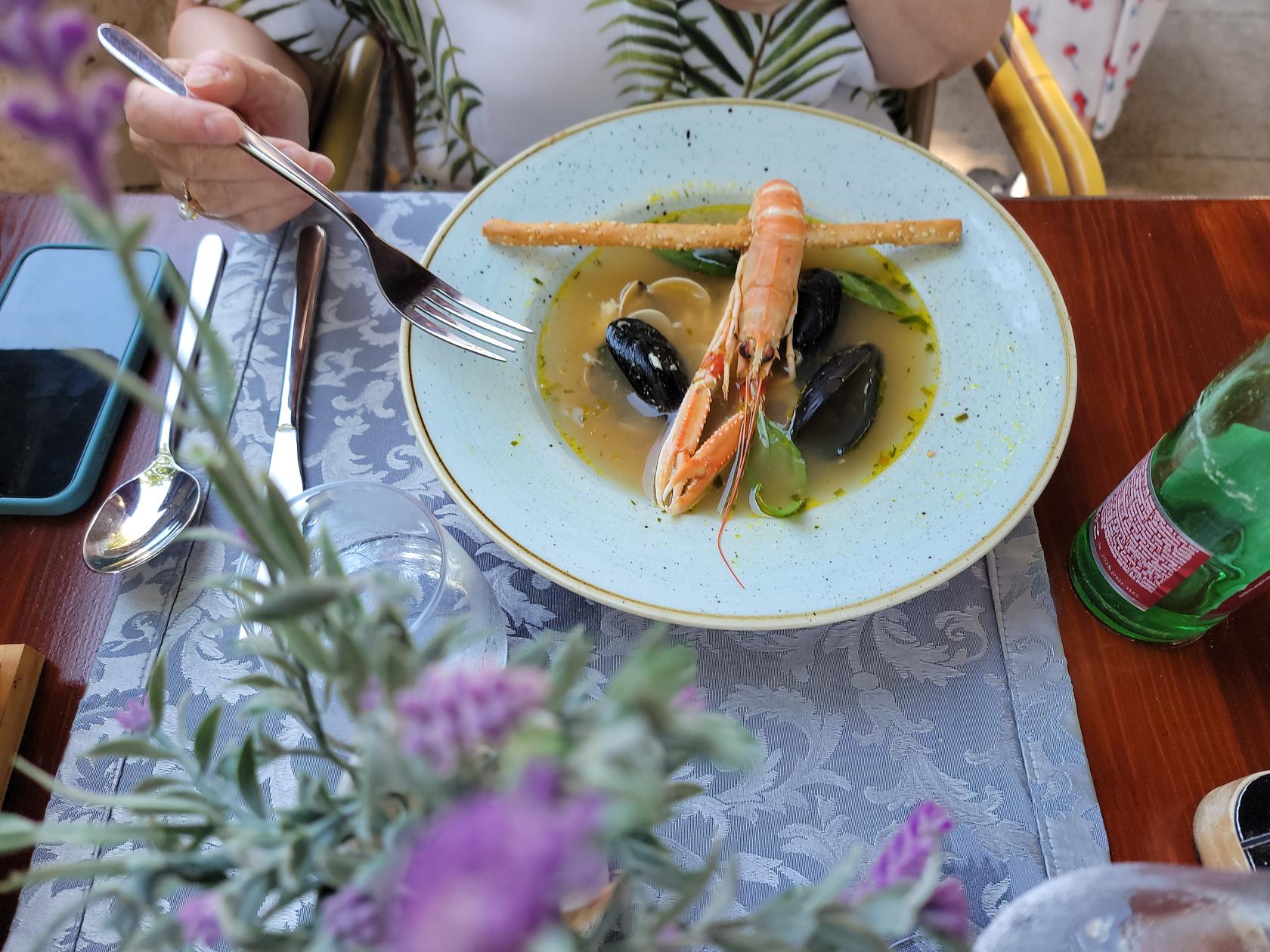
Fish Soup – Magnolia Restaurant – Dubrovnik, Croatia
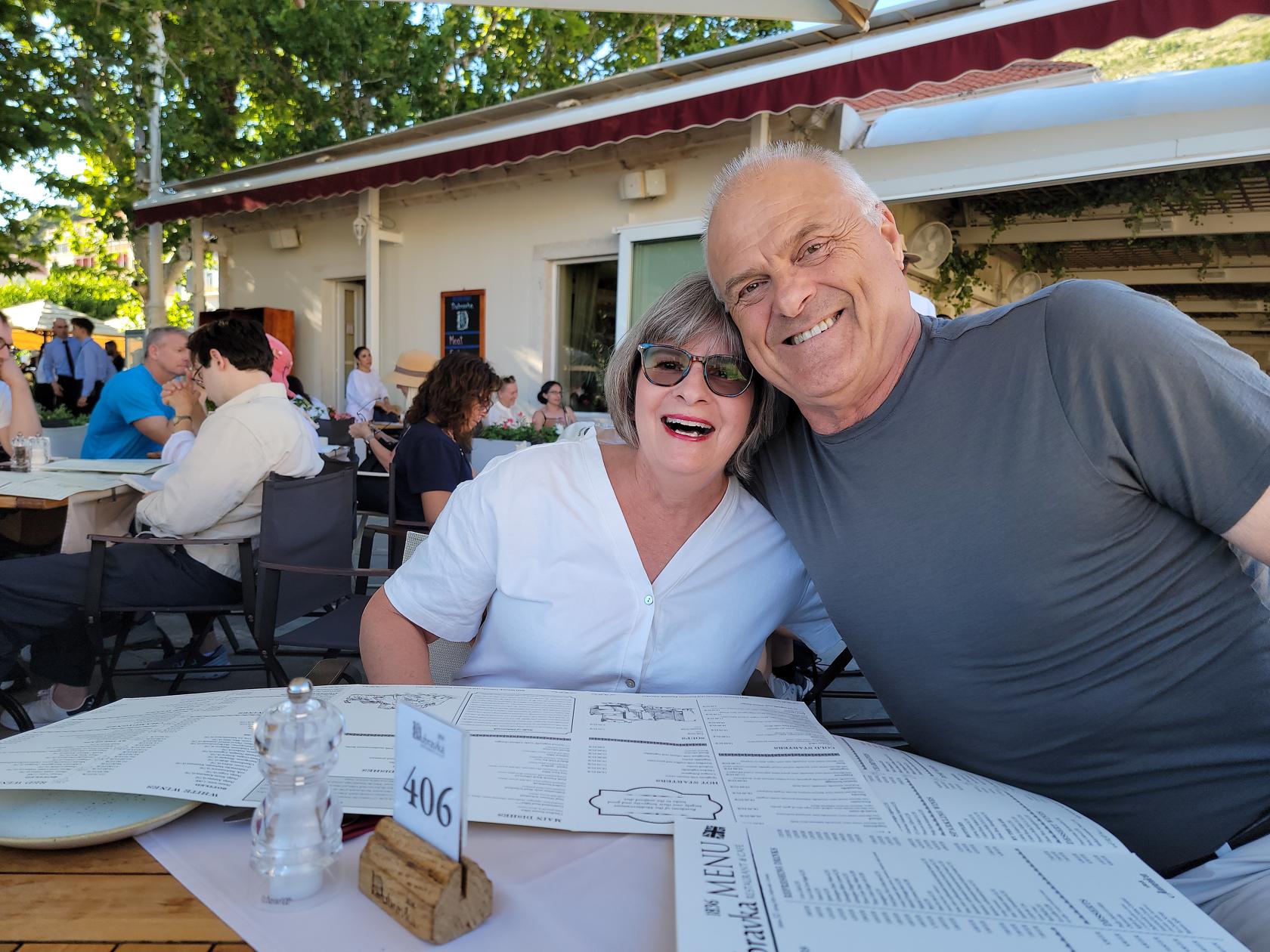
For our anniversary we booked a table in advance for the Dubravka 1836 Restaurant. It was a pleasant evening and they had the best outside seating, with a overlook of the western port.
Selfie – Dubravka Restaurant – Dubrovnik, Croatia
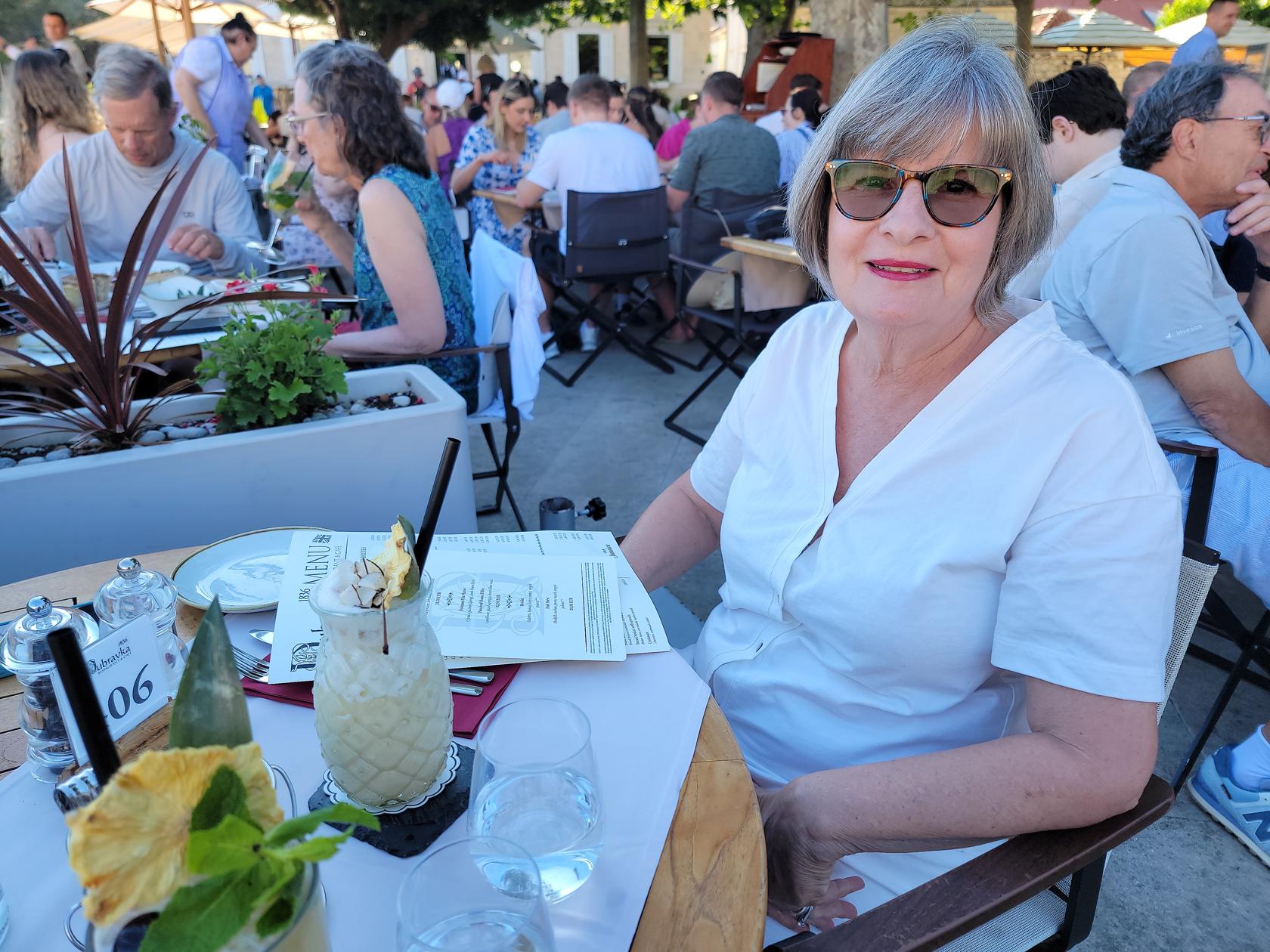
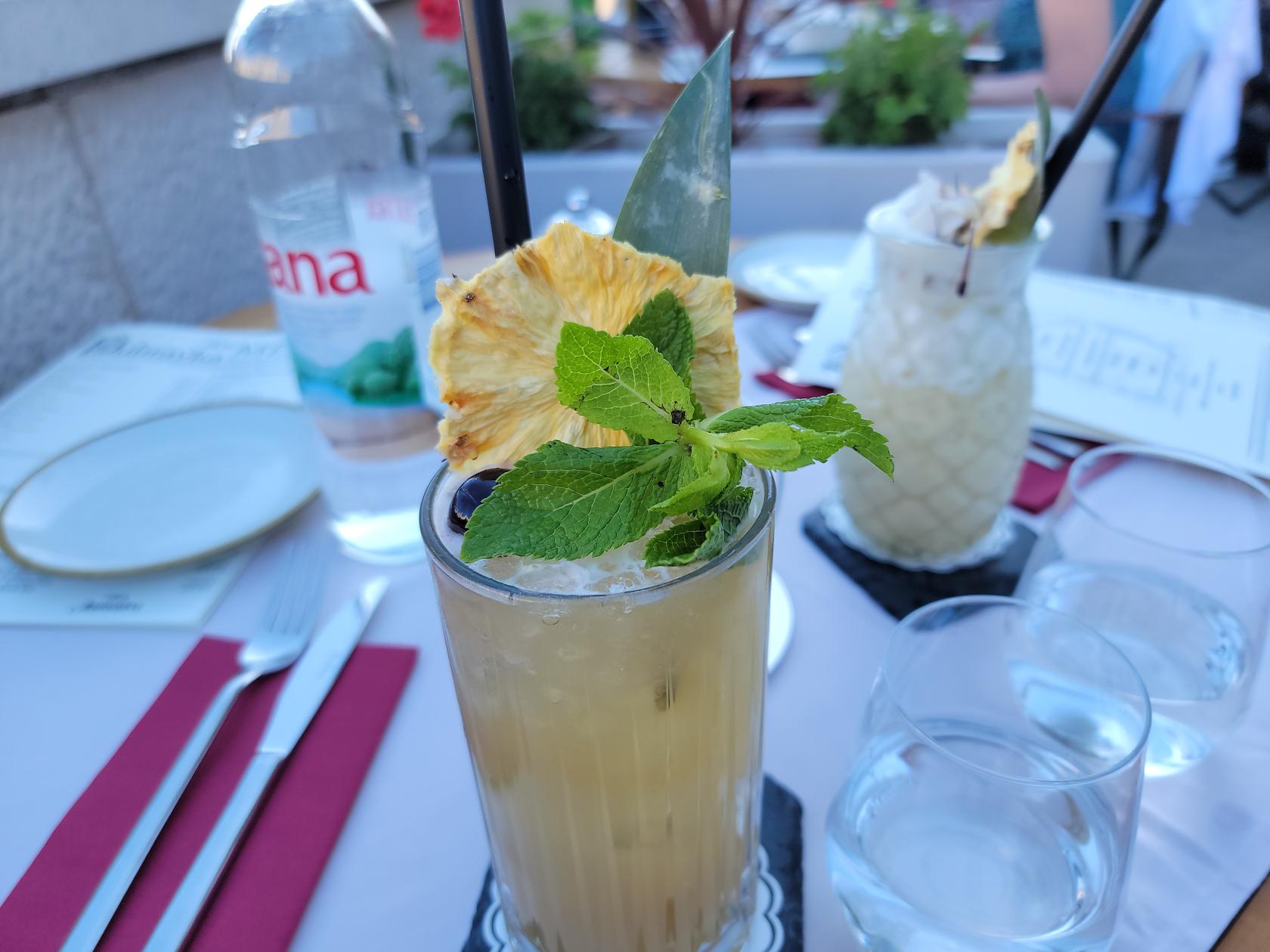
Patti with her Pina Colada – Dubravka Restaurant – Dubrovnik, Croatia
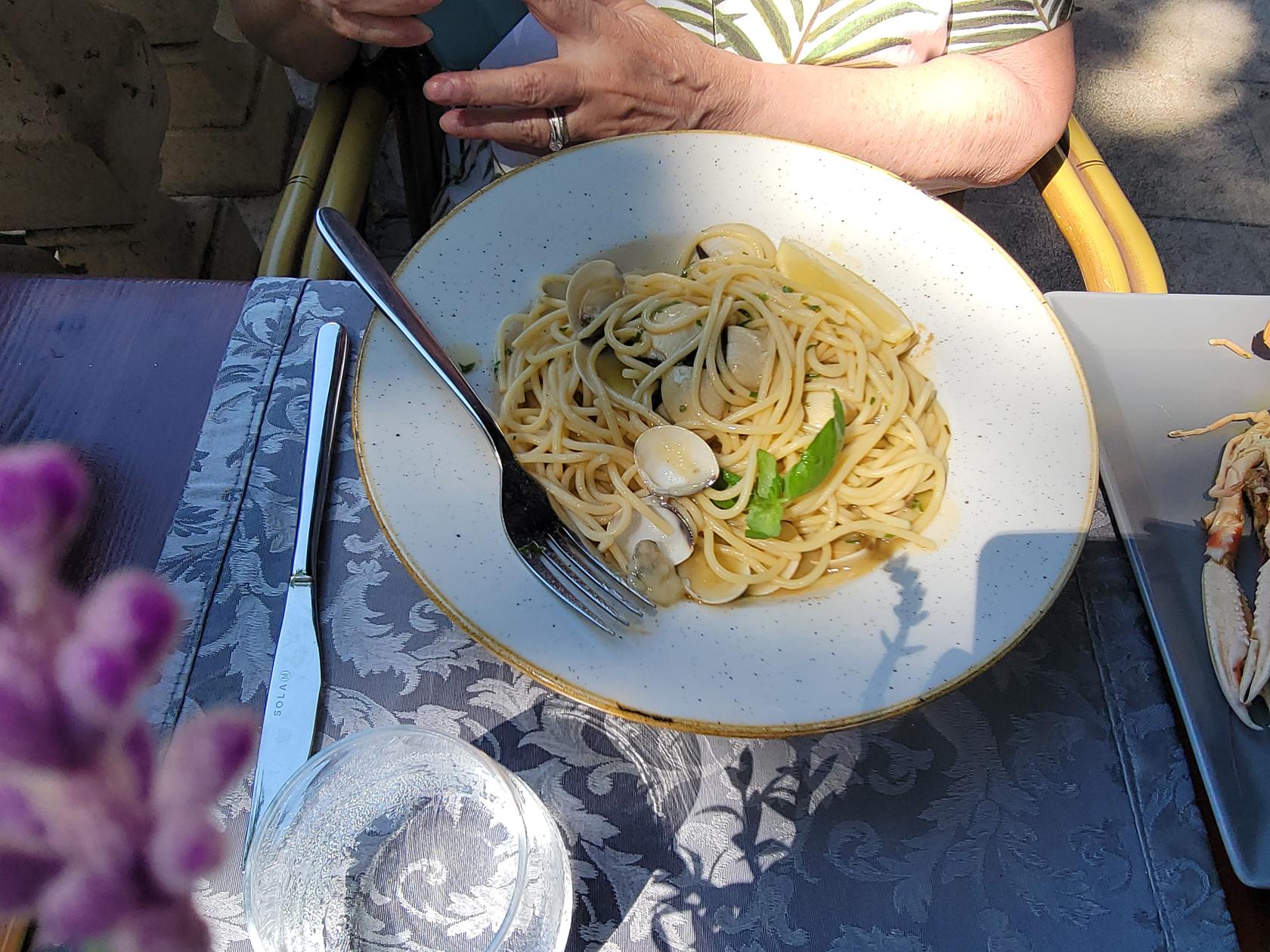
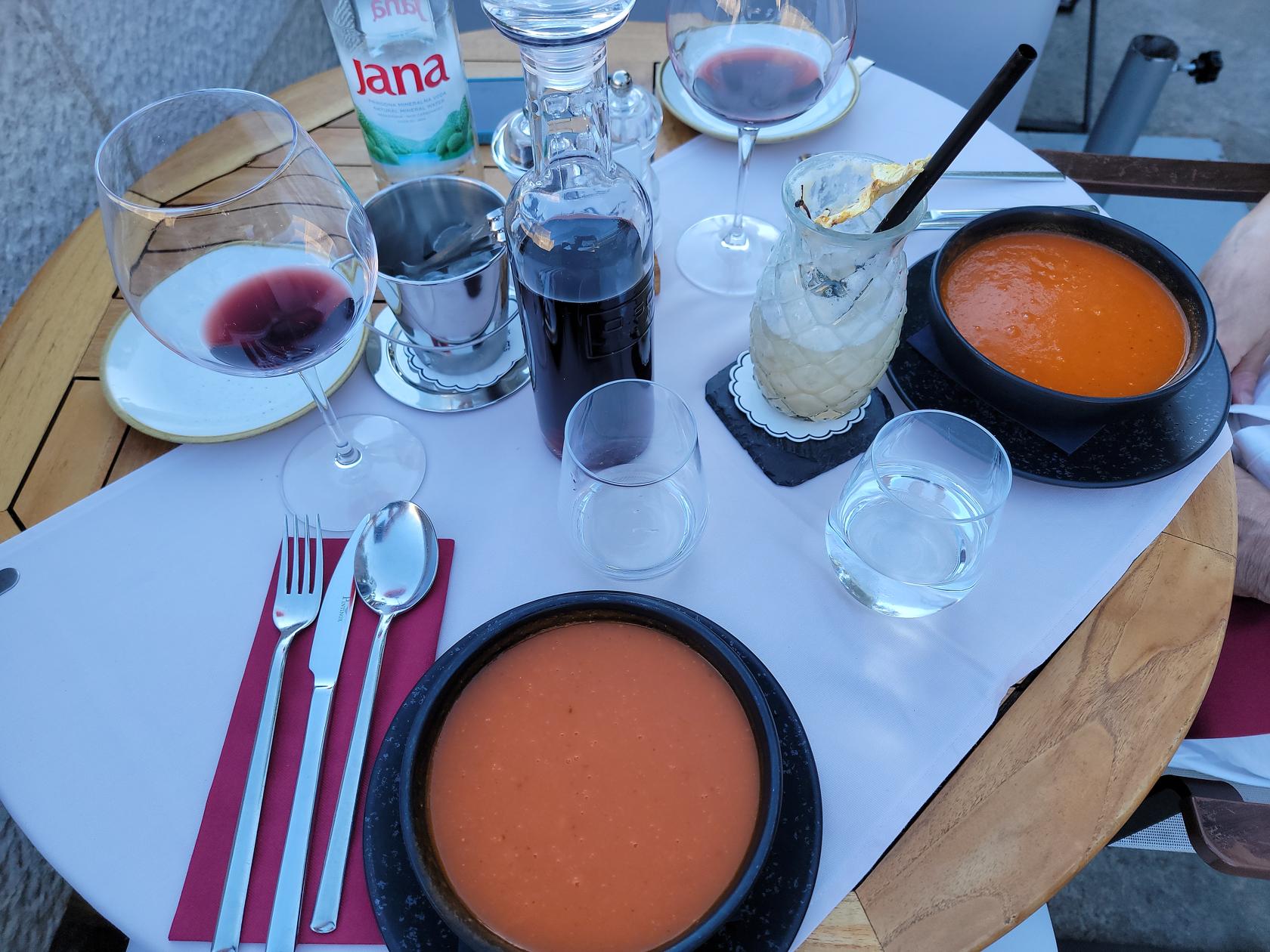
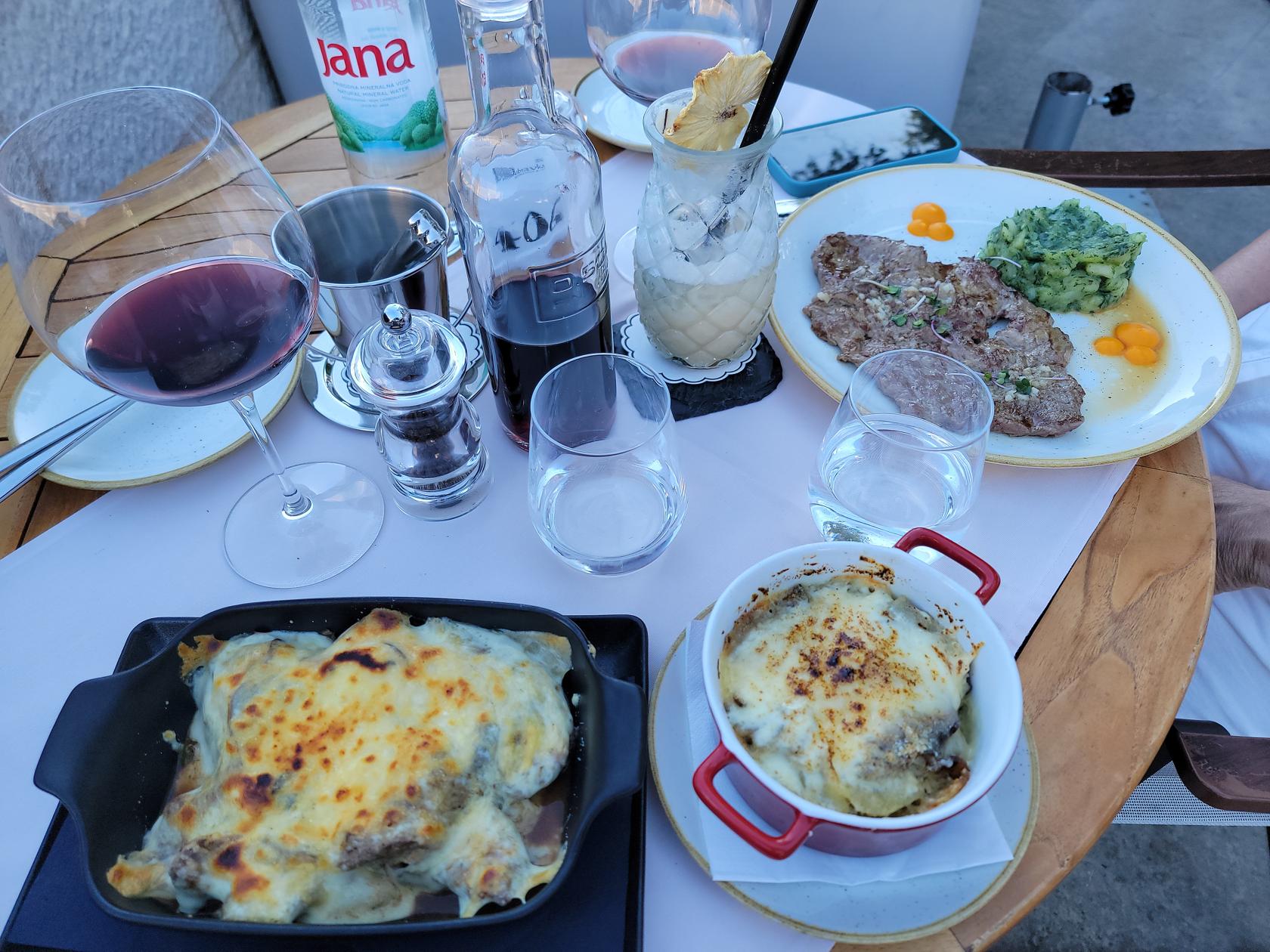
The food was okay, though not as good as some other places in Croatia we have eaten. The price is on the very high side, considering what you get, which does not include good service. We found the service inattentive and a bit poor, considering all the help that was swirling around. Most of the time they appeared to be just standing around and talking, taking little note how long we waited for them to take our plates away.
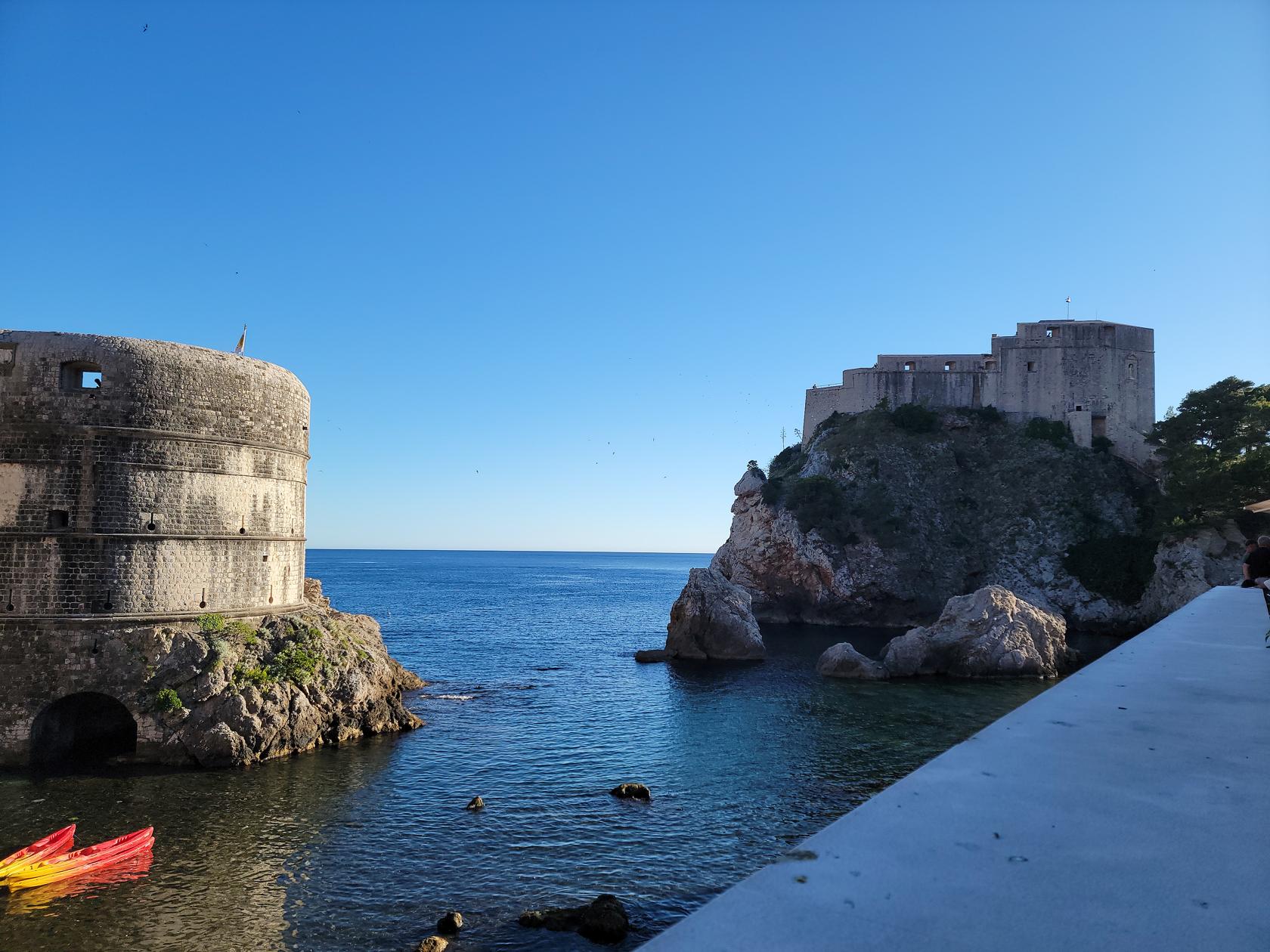
Fortress View from Terrace – Dubravka Restaurant – Dubrovnik, Croatia
Mia Tia – Dubravka Restaurant – Dubrovnik, Croatia
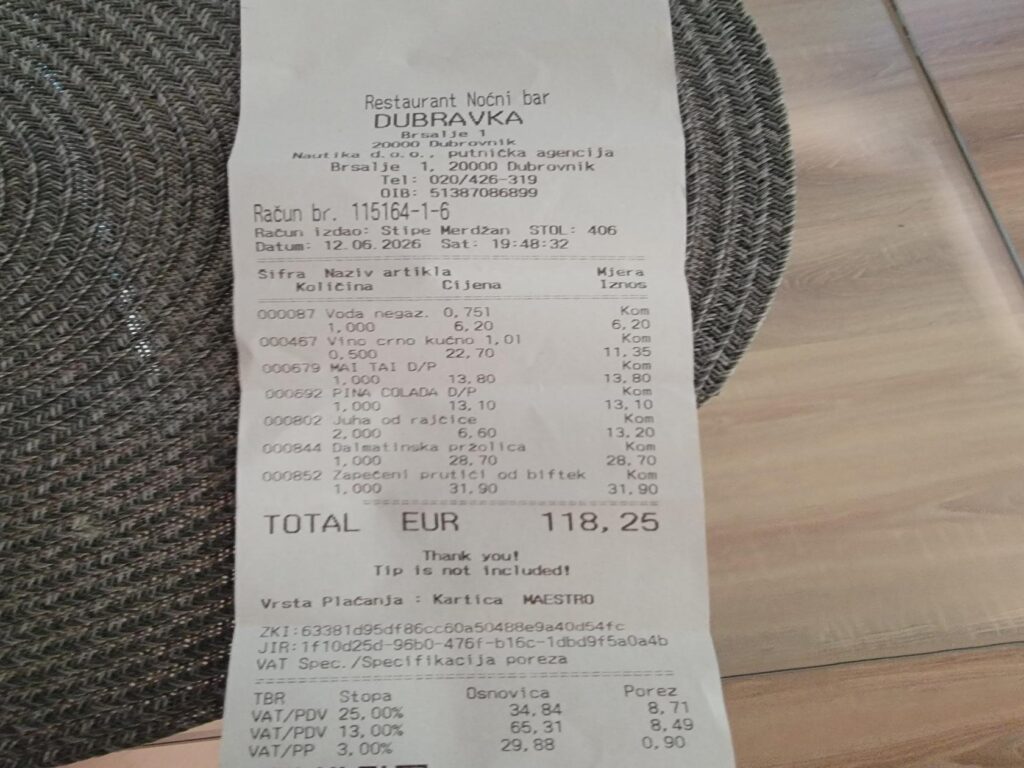
In the end, we decided not to order dessert, after having spent a good two hours already at the restaurant. As can be seen below, one main and one side dish run around 50€/person, not cheap, by any stretch of the imagination.
One final impression regarding eating in Croatia in general. We found it more expensive than eating in Italy, and perhaps other larger countries in Europe, though perhaps cheaper than eating in Switzerland. People who read that eating in Croatia at a restaurant is cheap or inexpensive, do NOT believe it, it can be more expensive than eating in the United States, 60€/person for example, for nothing that special and without tips. There are less expensive options, but you have to seek them out and most are ethnic or local restaurants outside the main restaurant hotspots.
We checked out the grocery stores too and found them inline with prices elsewhere in Europe. You will find meat and other similar products a bit expensive, but in general eating in and preparing your own food, especially if you are not a fan of trying something new, might be a less expensive option.
Lastly, as far as Dubrovnik in general is concerned, we found it an interesting place to visit once, but probably would not return. Up to three cruise ships visit the town each day and the population explodes around nine o’clock in the morning and is very busy for the rest of day. If you like a cruise, this is the place for you, since you are already packed in like sardines on the ship already. If not, you might find the hustle and bustle a bit annoying. We could not believe the number of people here and it is not even officially tourism season yet!
I, personally, was a bit dissappointed in the coastline. I had the impression it was going to be more like an Amalfi coastline, or like Cinque Terre, but it’s not. It is craggy, but I just thought it was going to be more dramatic, it’s not! Perhaps down the coast, along Albania’s coast it is more so, I am not sure, I haven’t been there yet…
The menu has it as Sarma/Dolma/Japrak, but the Turkish Sarma and the Albanian Japrak are actually closer to each other and different from Dolma, in that they are wrapped in grape leaves normally. Sarma may be wrapped in grape leaves, but it could also be cabbage leaves, or just plain vegetable, for example, squash. However, for simplicity sake, the words are used interchangeably.
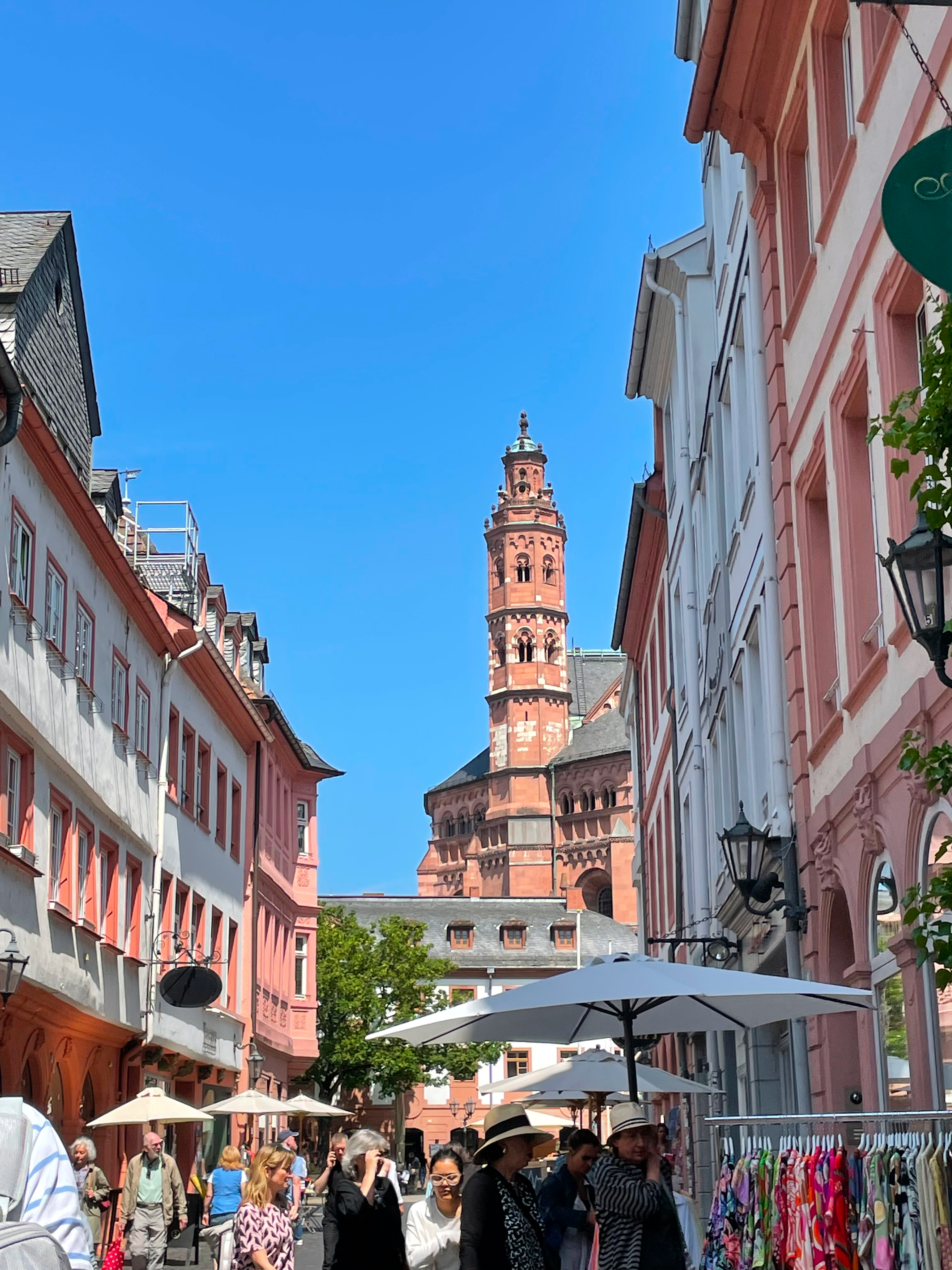
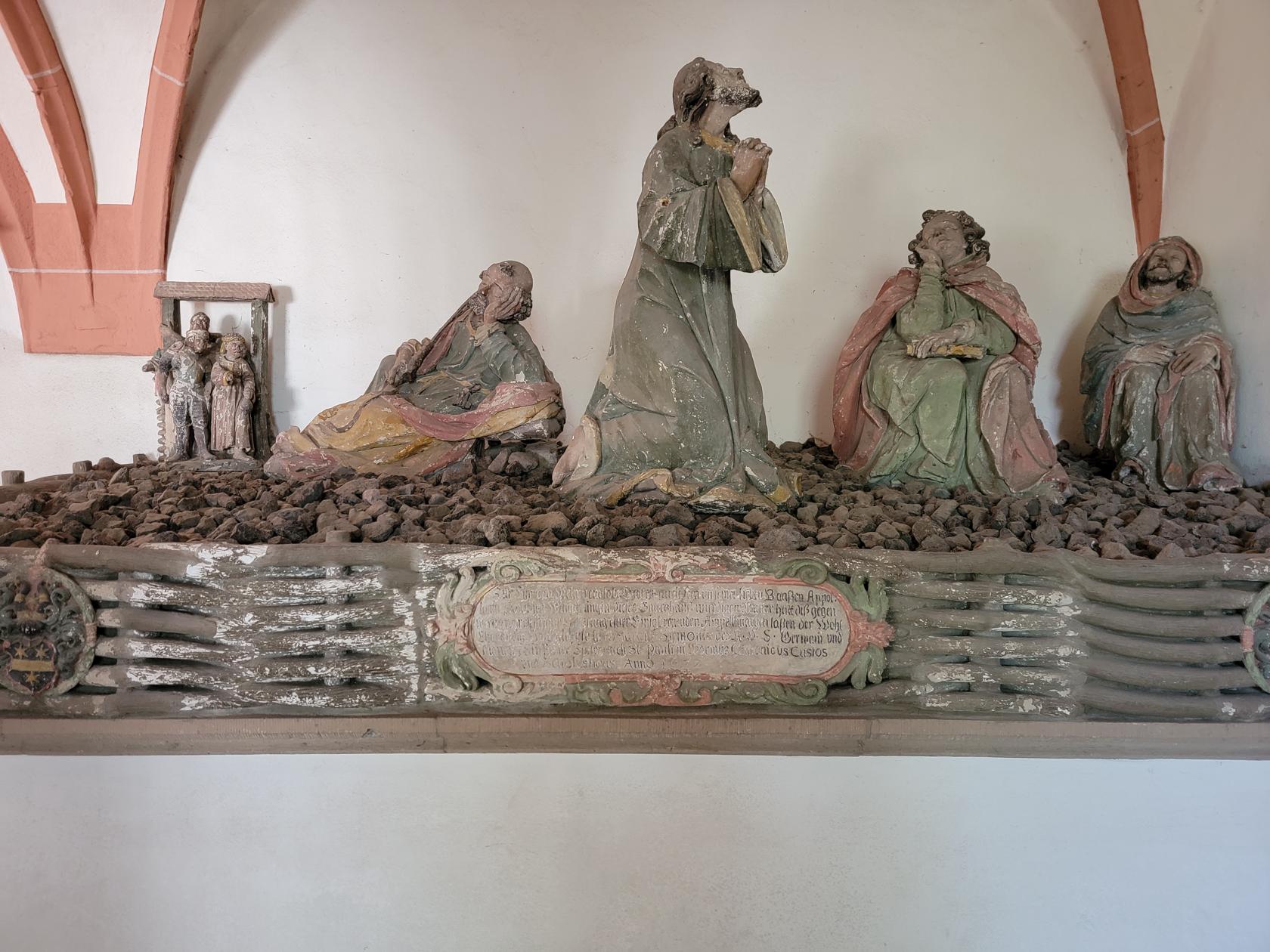
Though we have been in Mainz at least several times, it was before the beginning of this blog. Therefore, after a brief visit to the city to meet our friends and have a walk or stroll throughout the city (also known as a Stadtbummel), a quick mention here seemed almost required.
Day Trip To Mainz
This week we met our good and long time friends Karl Heinz and Isolde in Mainz for lunch and a customary Stadtbummel, if only to see some of the sights Patti has never seen.
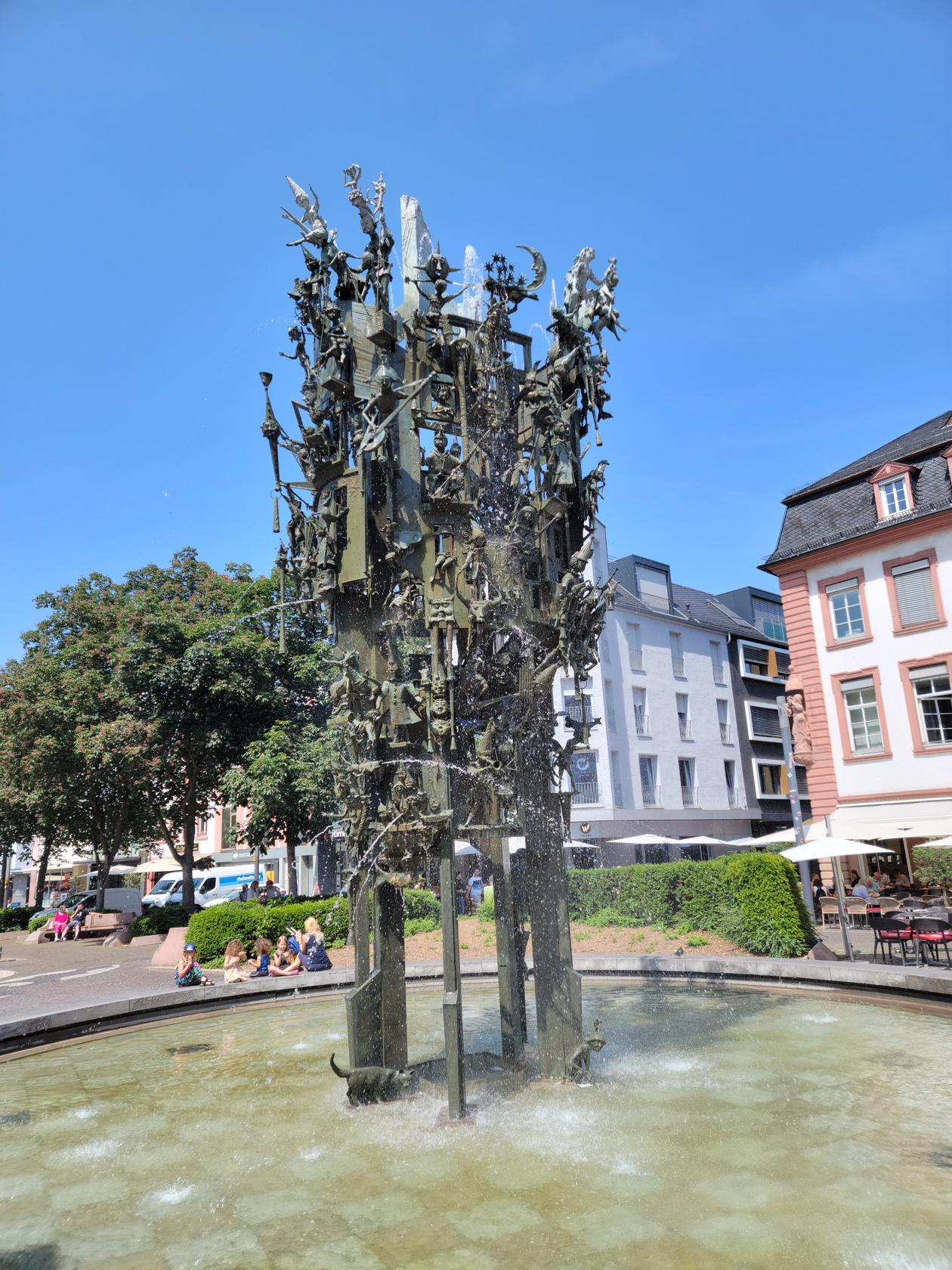
Fastnachtsbrunnen – Mainz, Germany
To get there, we had to take the RMV S8 line from the Marktplatz in Offenbach to the Römisches Theater in Mainz. Unfortunately for us, there a typical issue which held the train up for forty-five minutes after we boarded and only went for two stops. Apparently something fell onto the tracks and tripped the signal on the line.
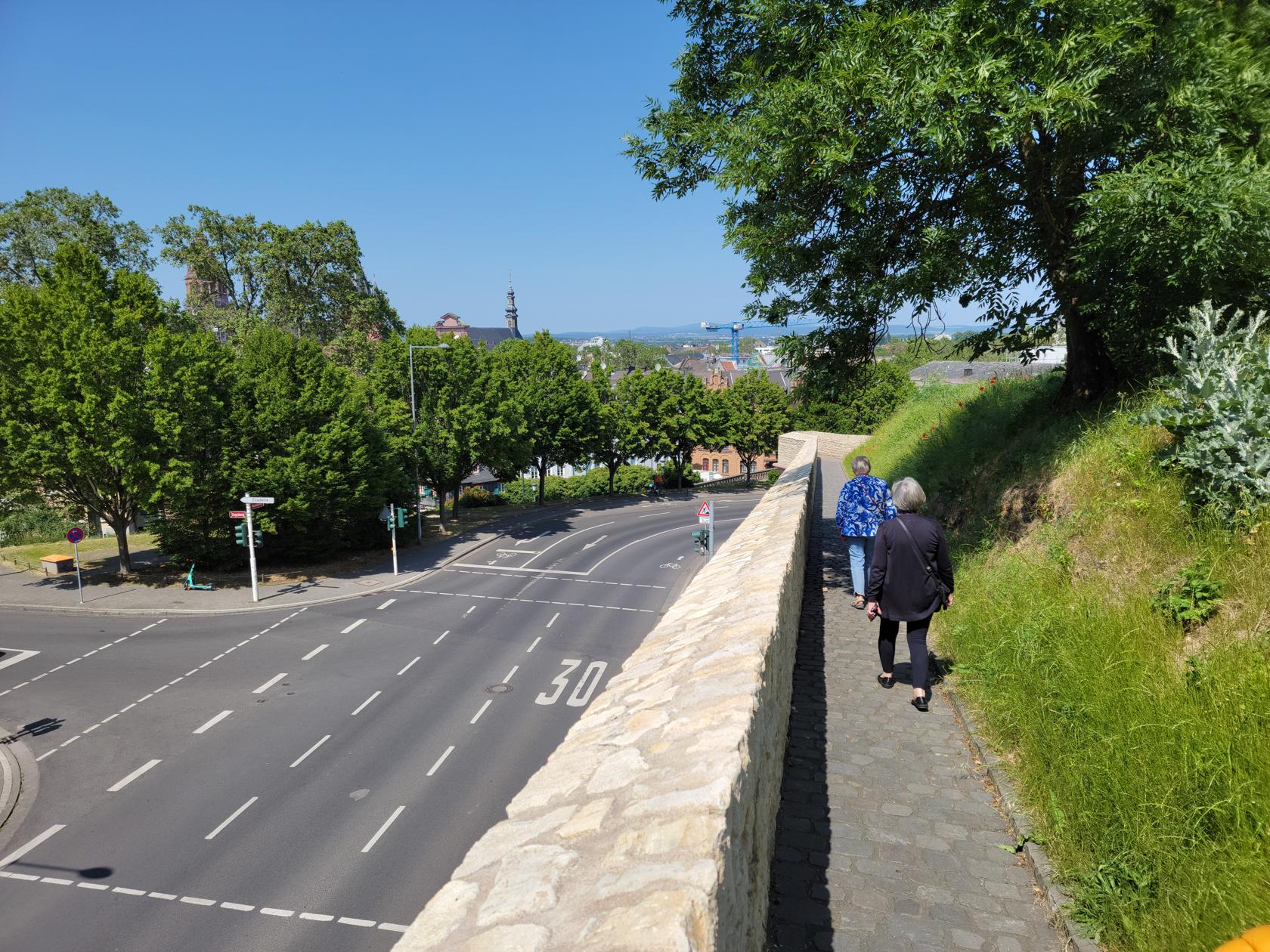
17th Century Fortress – Zitadelle – Mainz, Germany
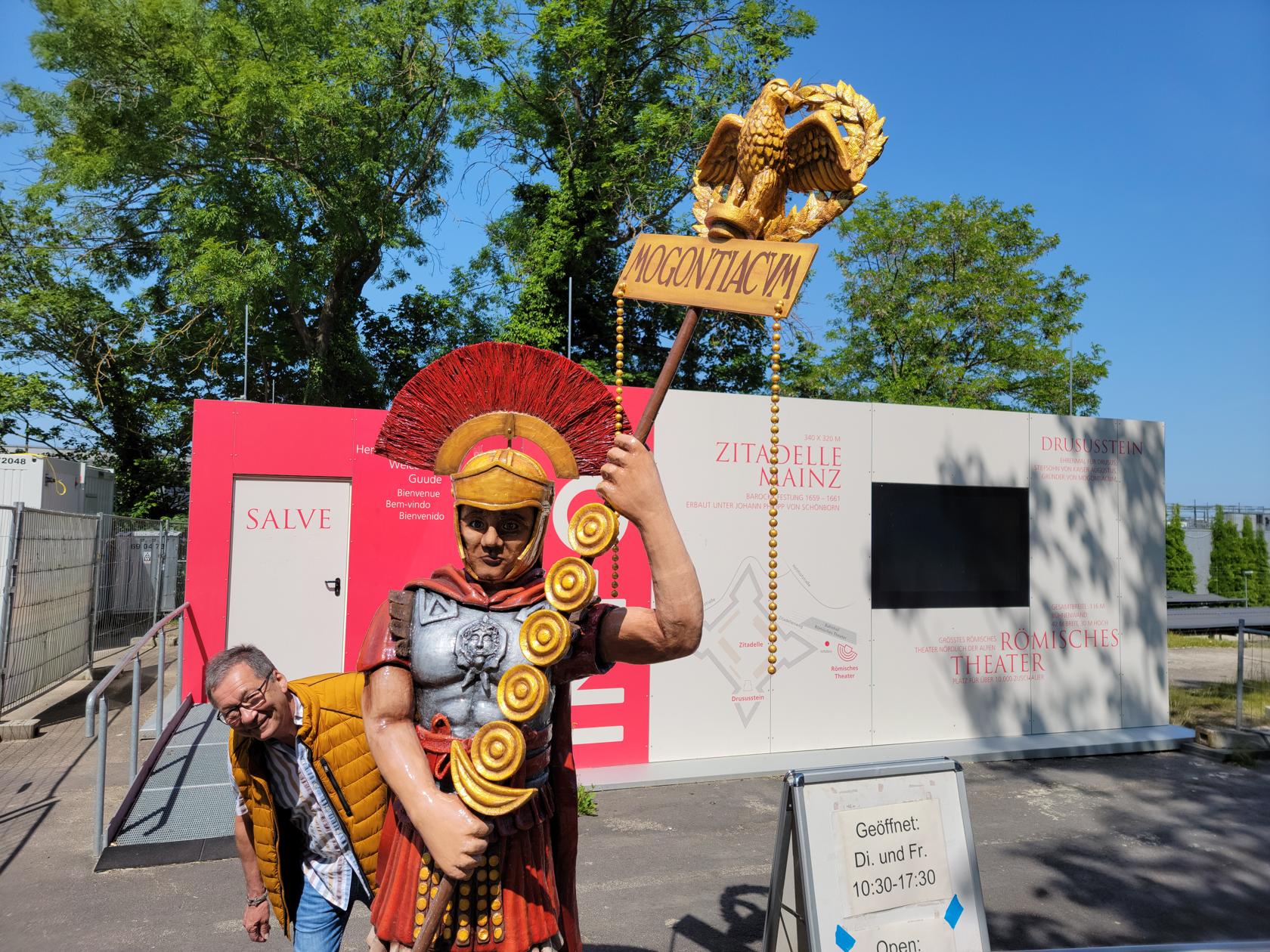
Karl Heinz – Römisches Theater – Zitadelle – Mainz, Germany
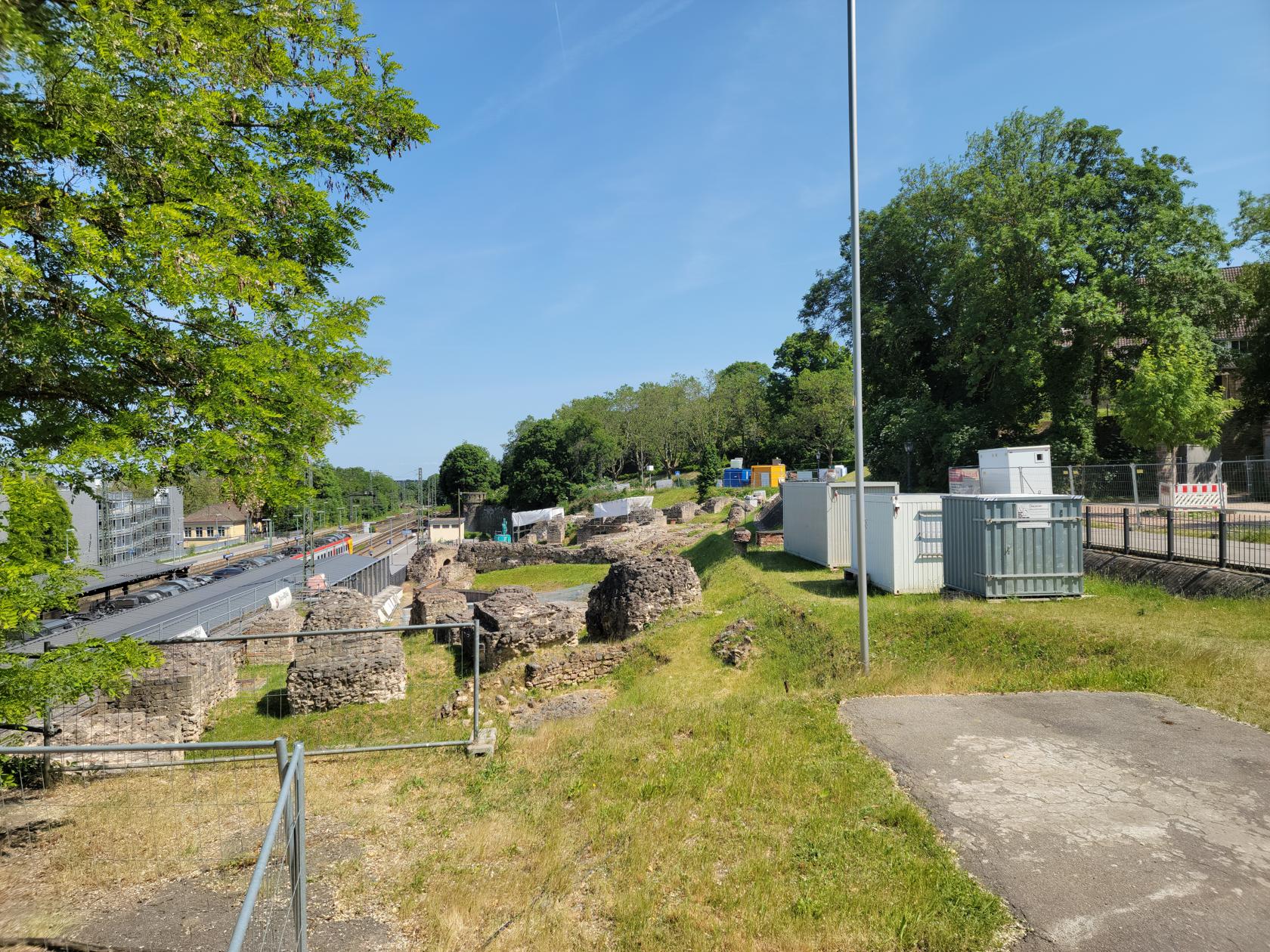
Römisches Theater – Zitadelle – Mainz, Germany
Mainzer Dom
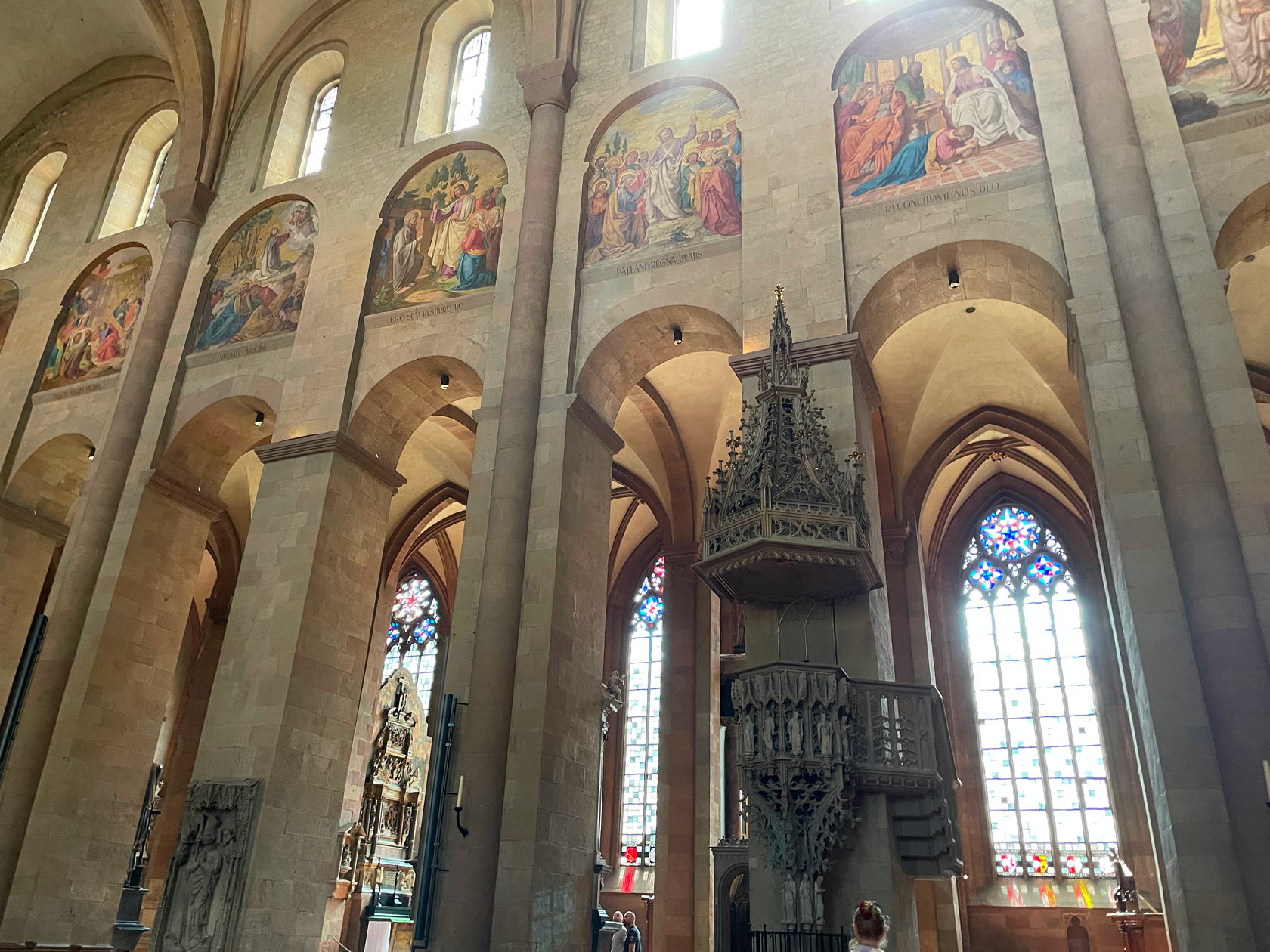
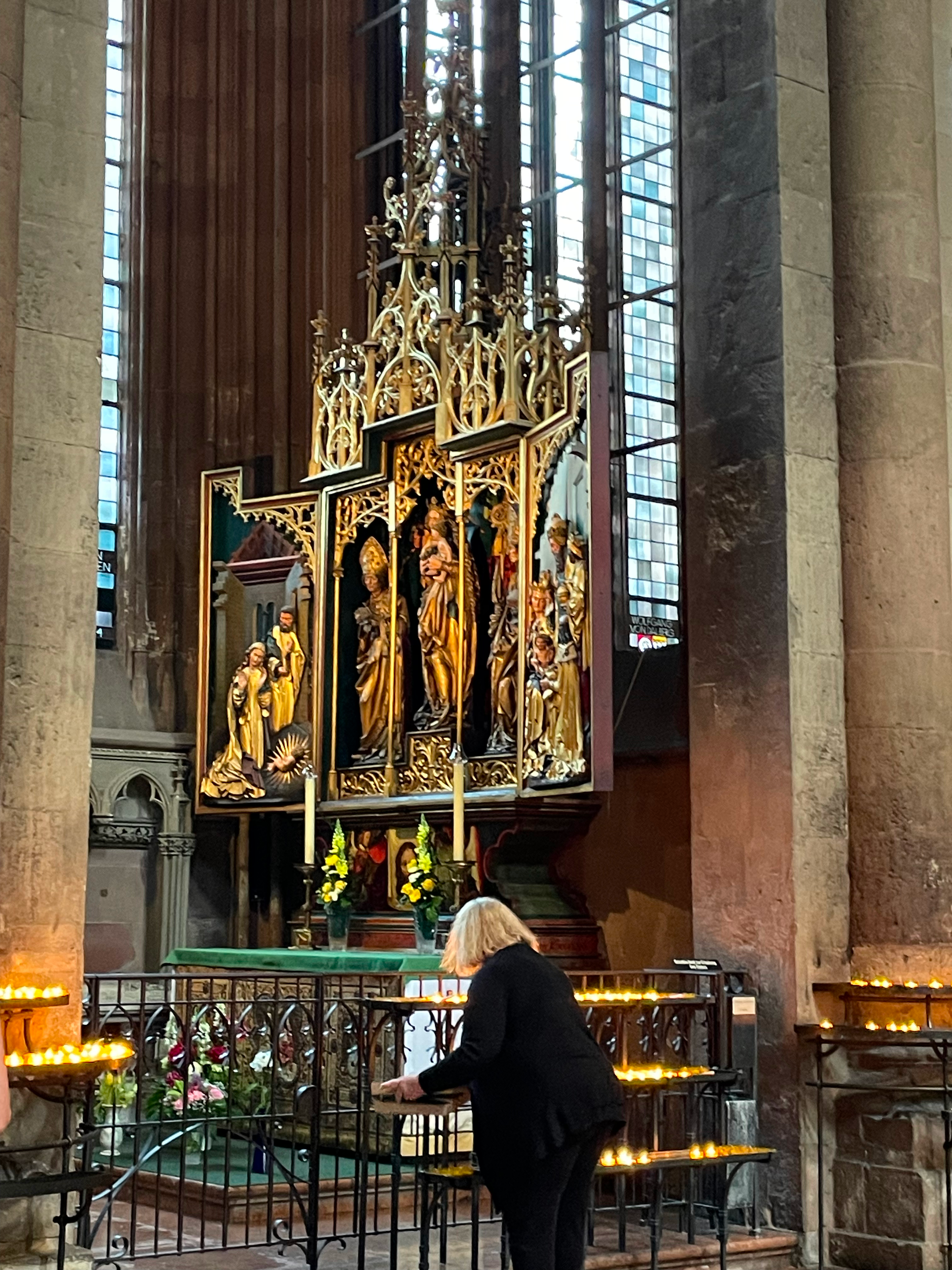
Once the item was removed from the tracks, there were no further difficulties and we reached Mainz with plenty of time before lunch. We toured the Mainzer Dom and the Marktplatz, which are side by side, while we enjoyed the exceptional weather we were having for Germany.
Mainzer Dom – Mainz, Germany
Altar – Mainzer Dom – Mainz, Germany
Side Altar – Mainzer Dom – Mainz, Germany
Saint Ignatius Church
One of the more colorful churches inside is Saint Ignatius church. Though rather plain from outside the inside is definitely worth a look. The baroque style and paintings are impressive.
Saint Ignatius Church – Mainz, Germany
Saint Stephan’s Church
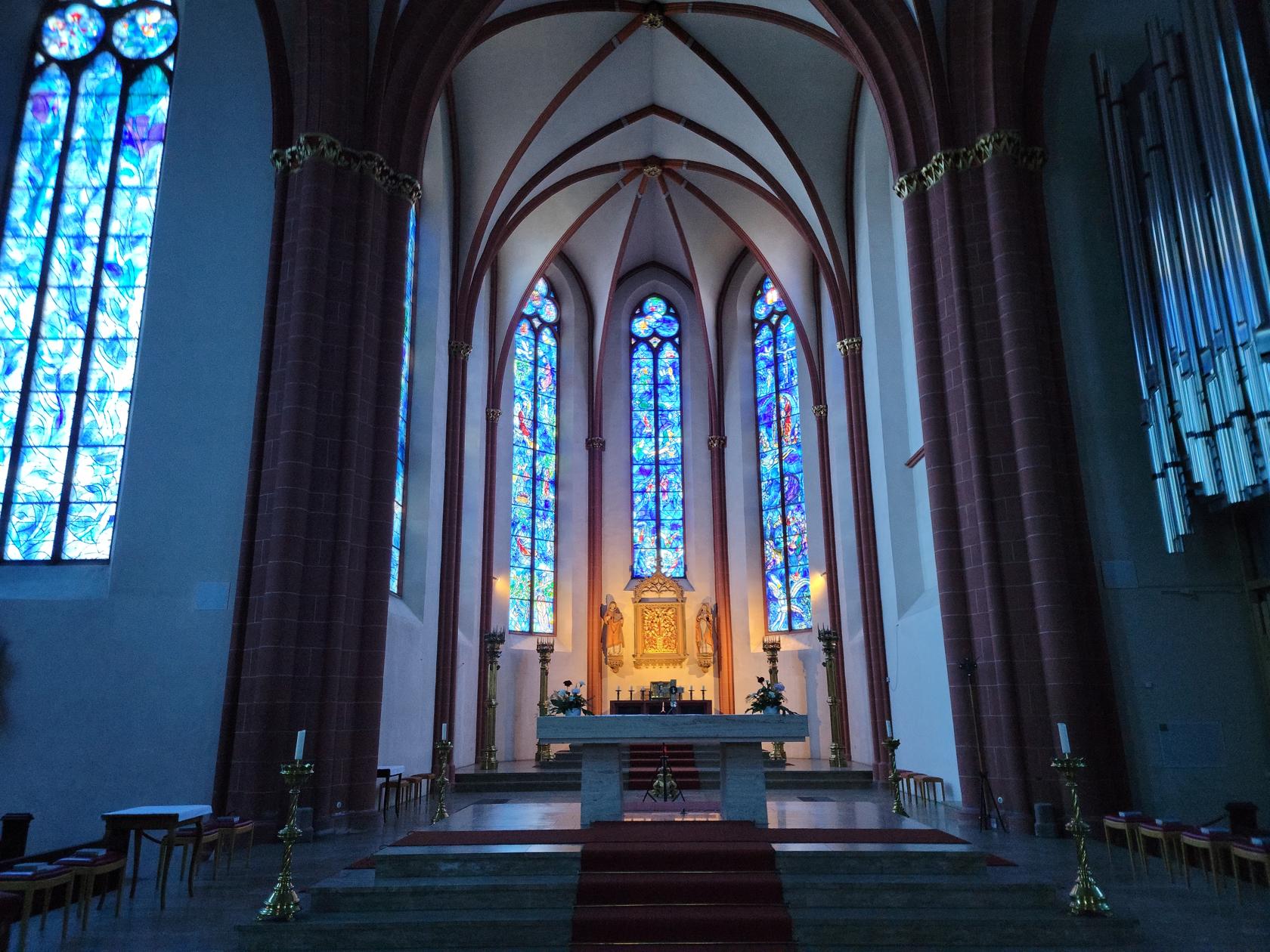
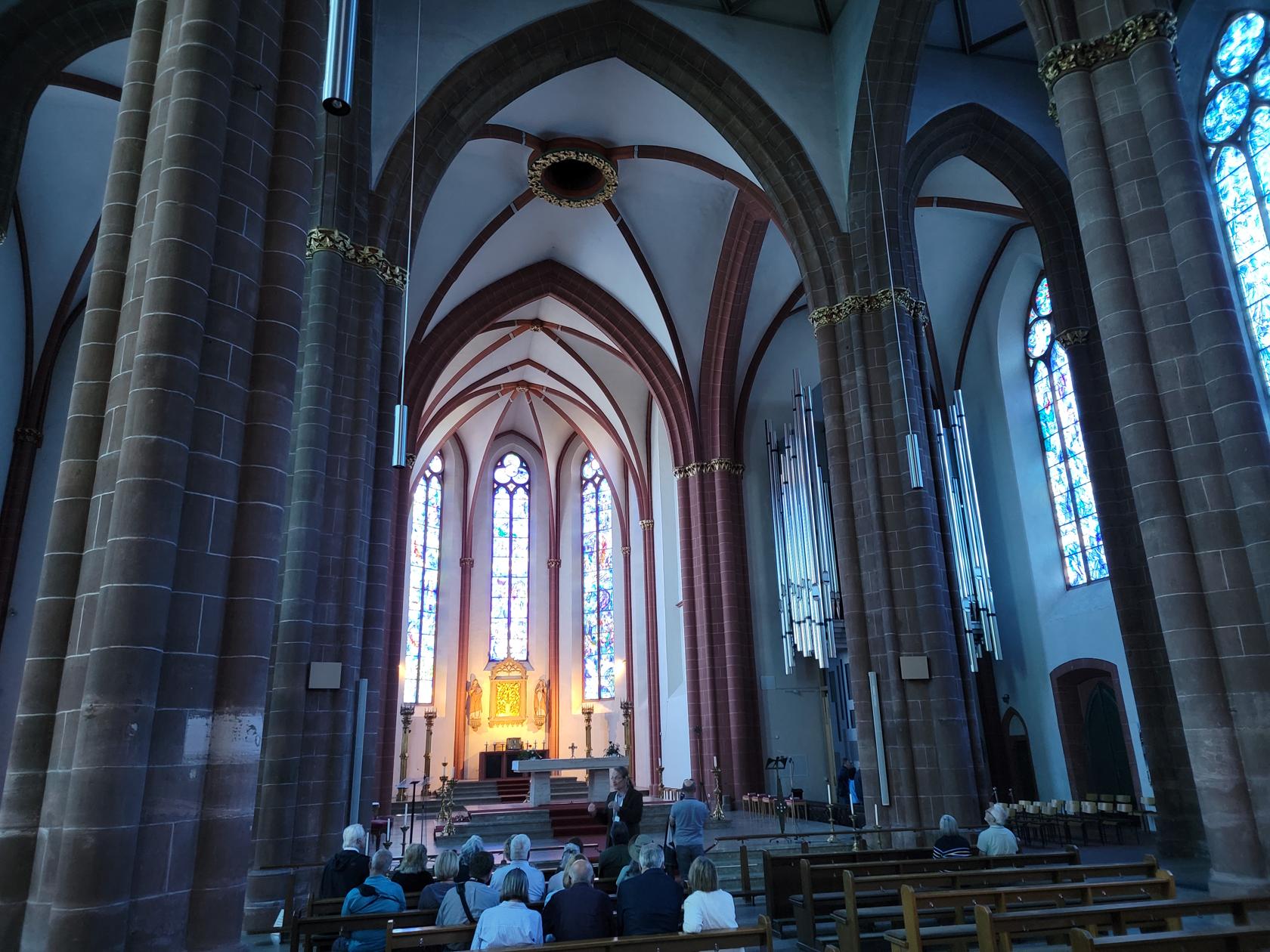
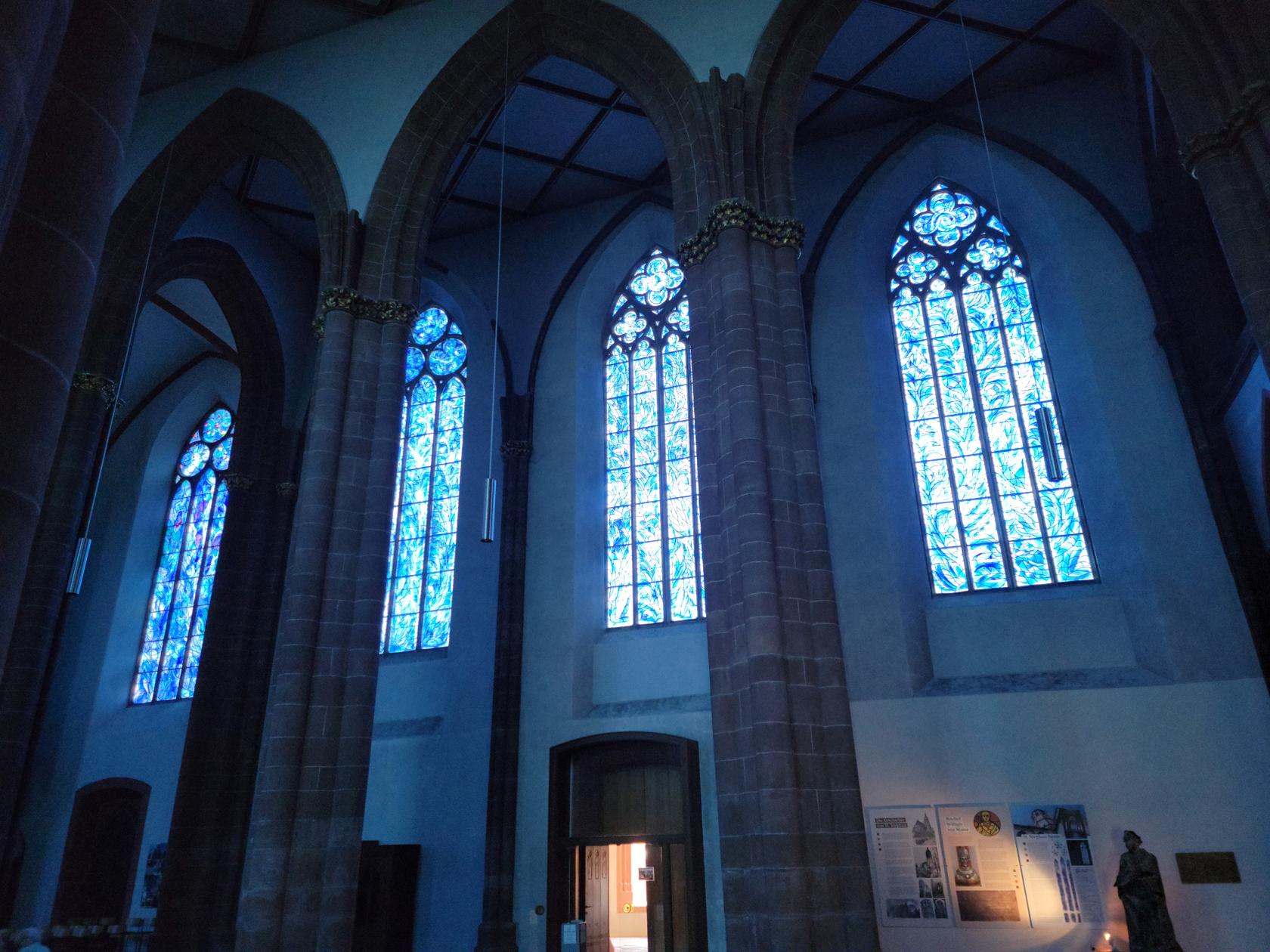
A must stop is Saint Stephan’s church, if only to see the famous church windows designed by Marc Chagall. Once inside, the eerie blue glow that occurs inside a bright sunny day is indeed a treat for the eyes.
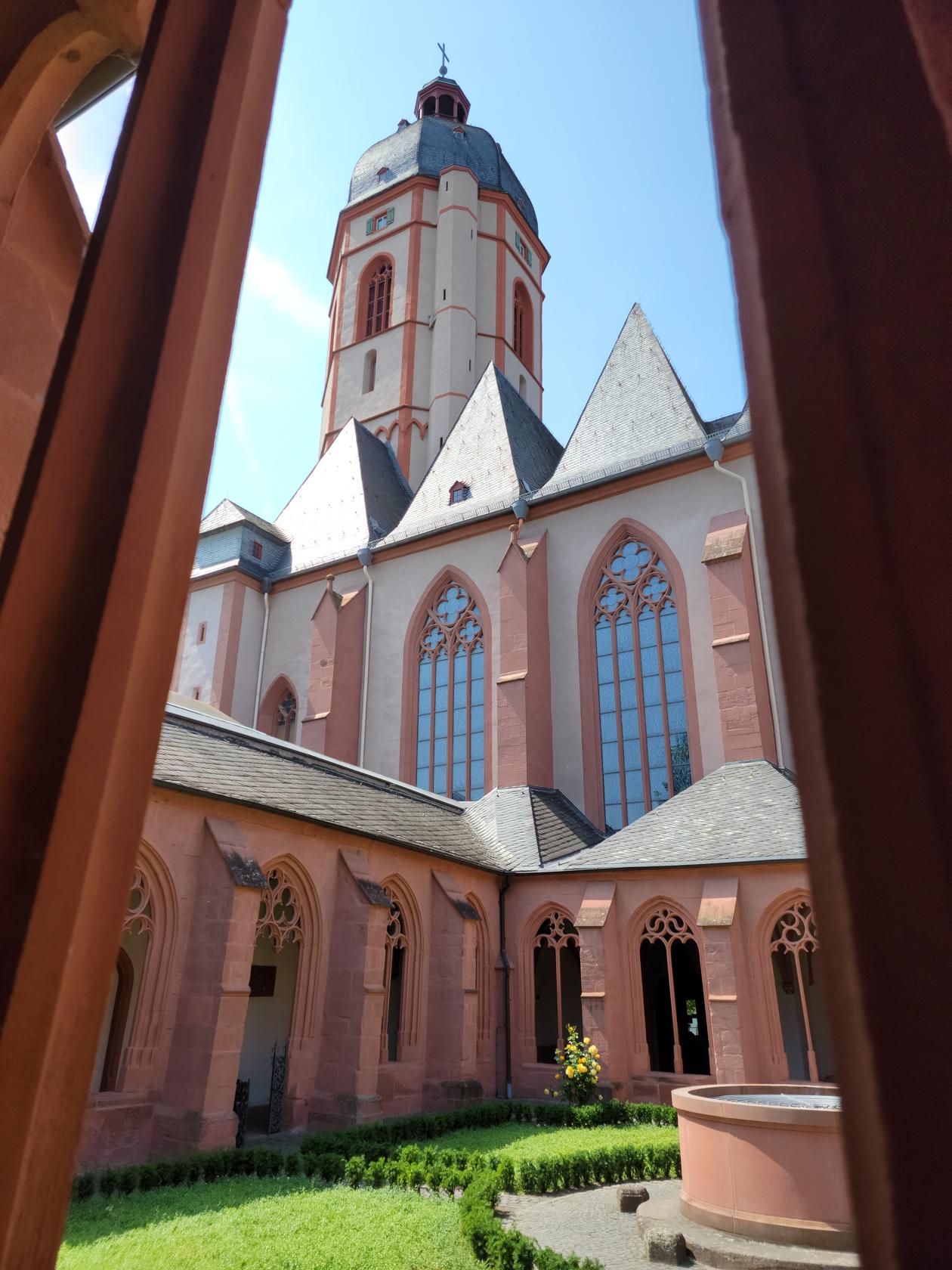
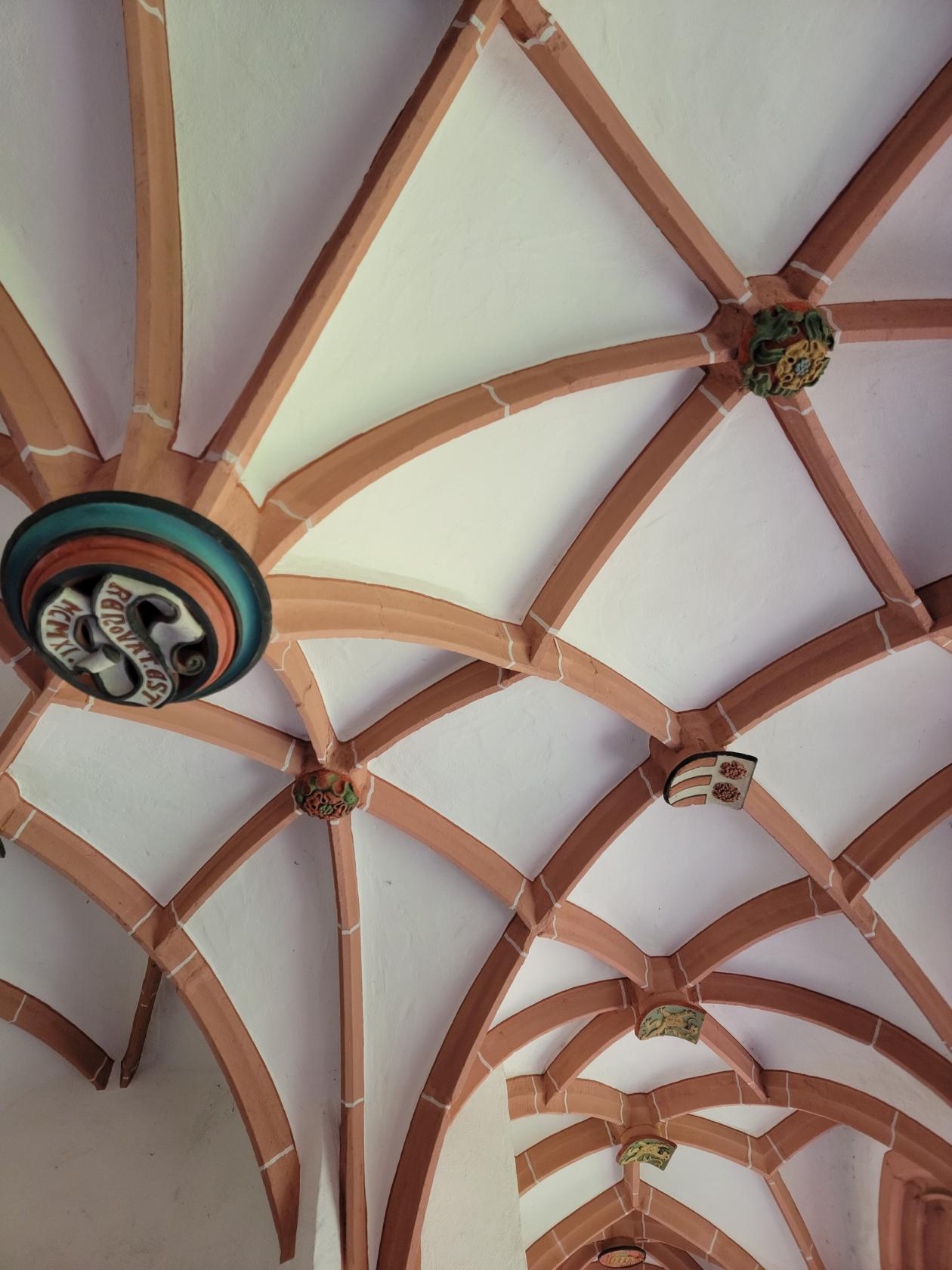
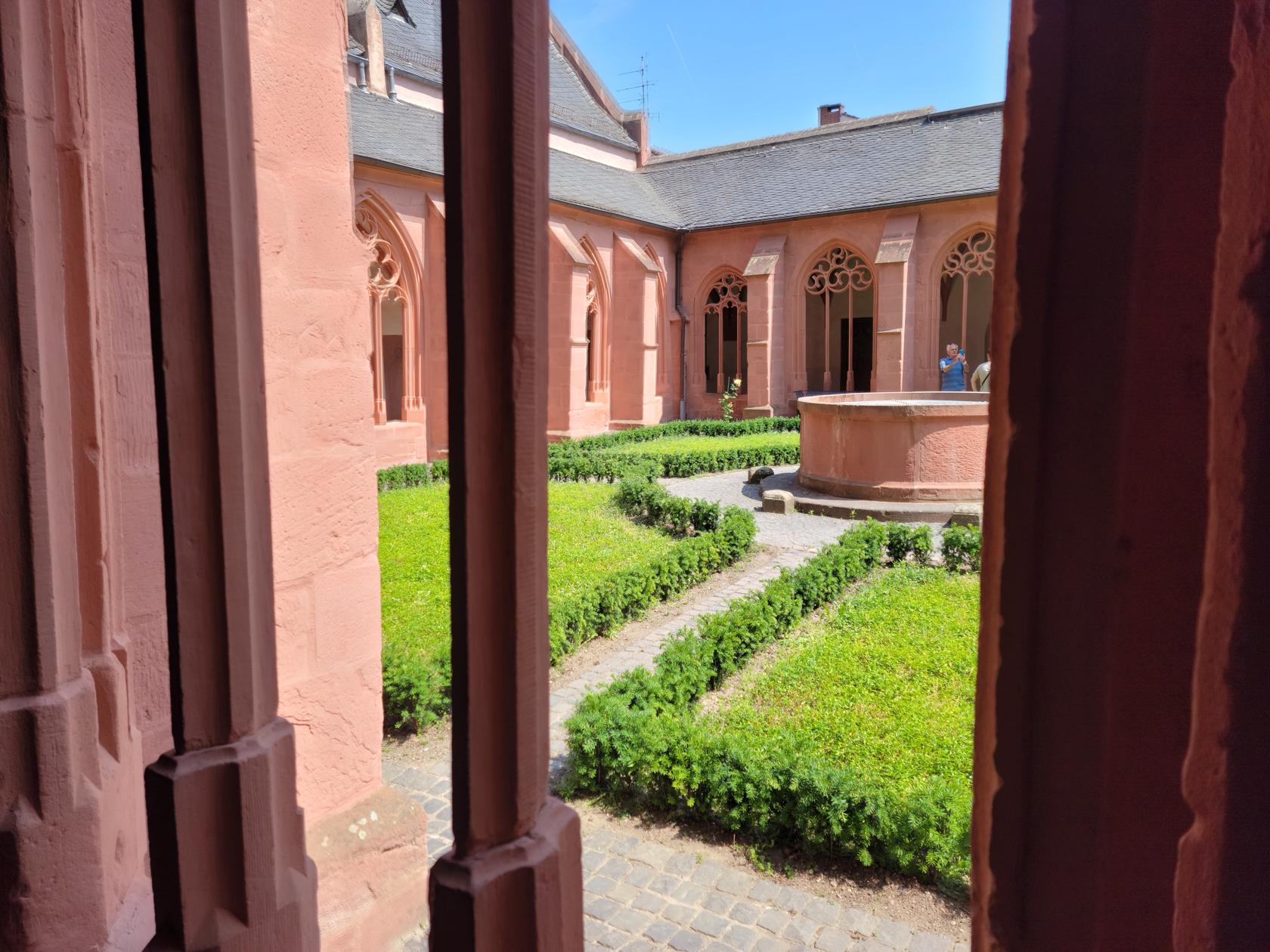
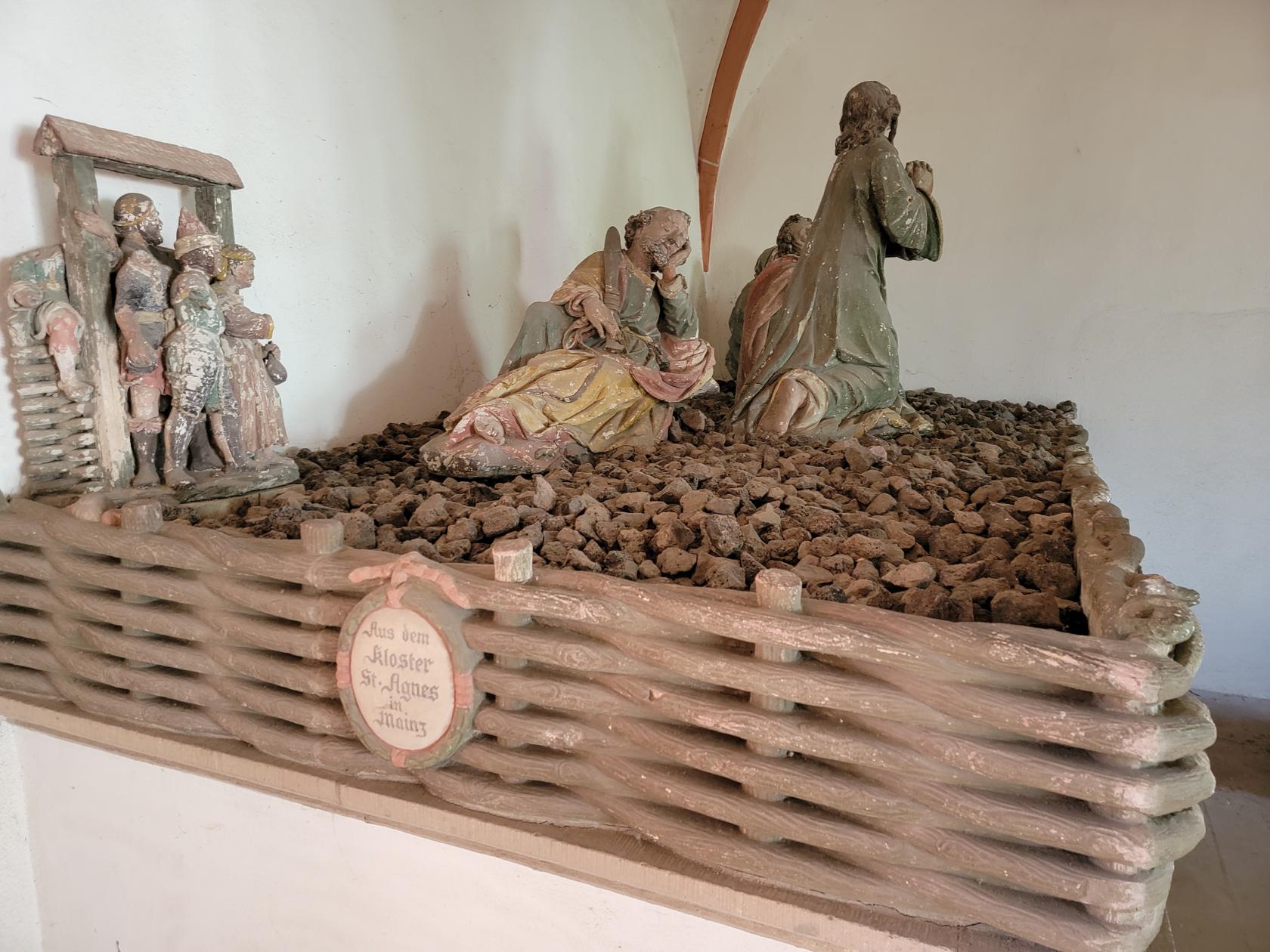
Courtyard and St. Agnes Denkmal – Saint Stephan’s Church – Mainz, Germany
Courtyard and St. Agnes Denkmal – Saint Stephan’s Church – Mainz, Germany
Courtyard and St. Agnes Denkmal – Saint Stephan’s Church – Mainz, Germany
Courtyard and St. Agnes Denkmal – Saint Stephan’s Church – Mainz, Germany
Almost totally destroyed during World War II along with the rest of Mainz, the church was rebuilt in the late 1950s. Marc Chargall created a number of stained glass windows from 1978 and 1985 depicting scenes from the Bible.
Chagall Windows – Saint Stephan’s Church – Mainz, Germany
Chagall Windows – Saint Stephan’s Church – Mainz, Germany
Chagall Windows – Saint Stephan’s Church – Mainz, Germany
Restaurants
Since we did not actually stay in the city we only had time with our friends to try the following restaurant for lunch.
Hof Ehrenfels – Mainz, Germany
Hof Ehrenfels
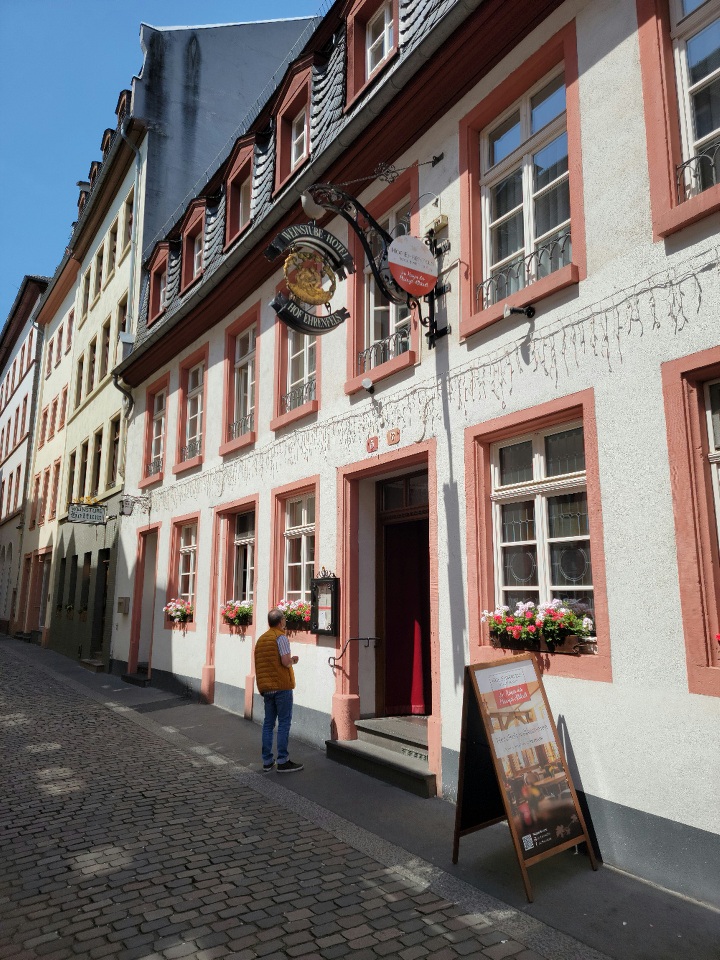
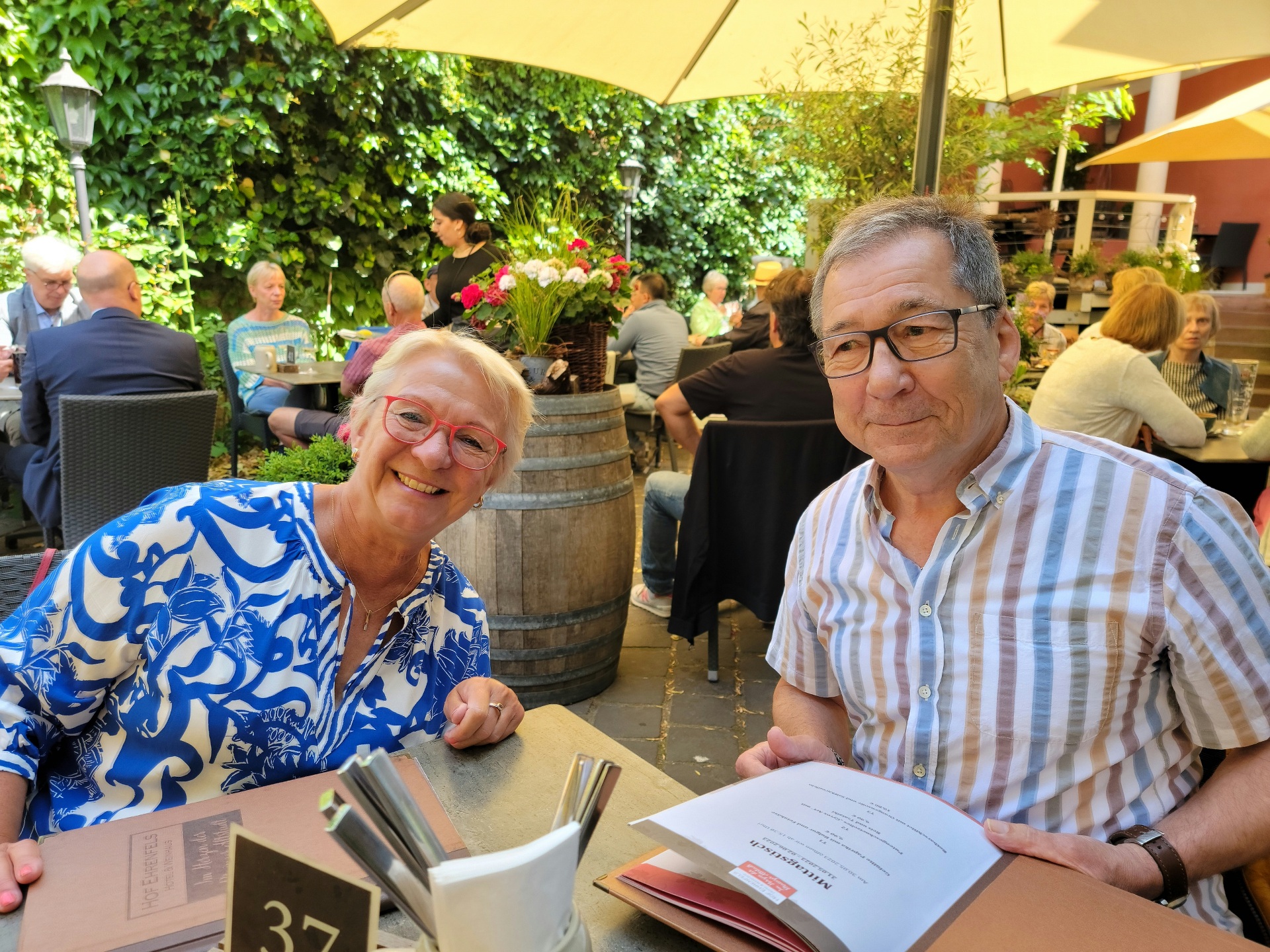
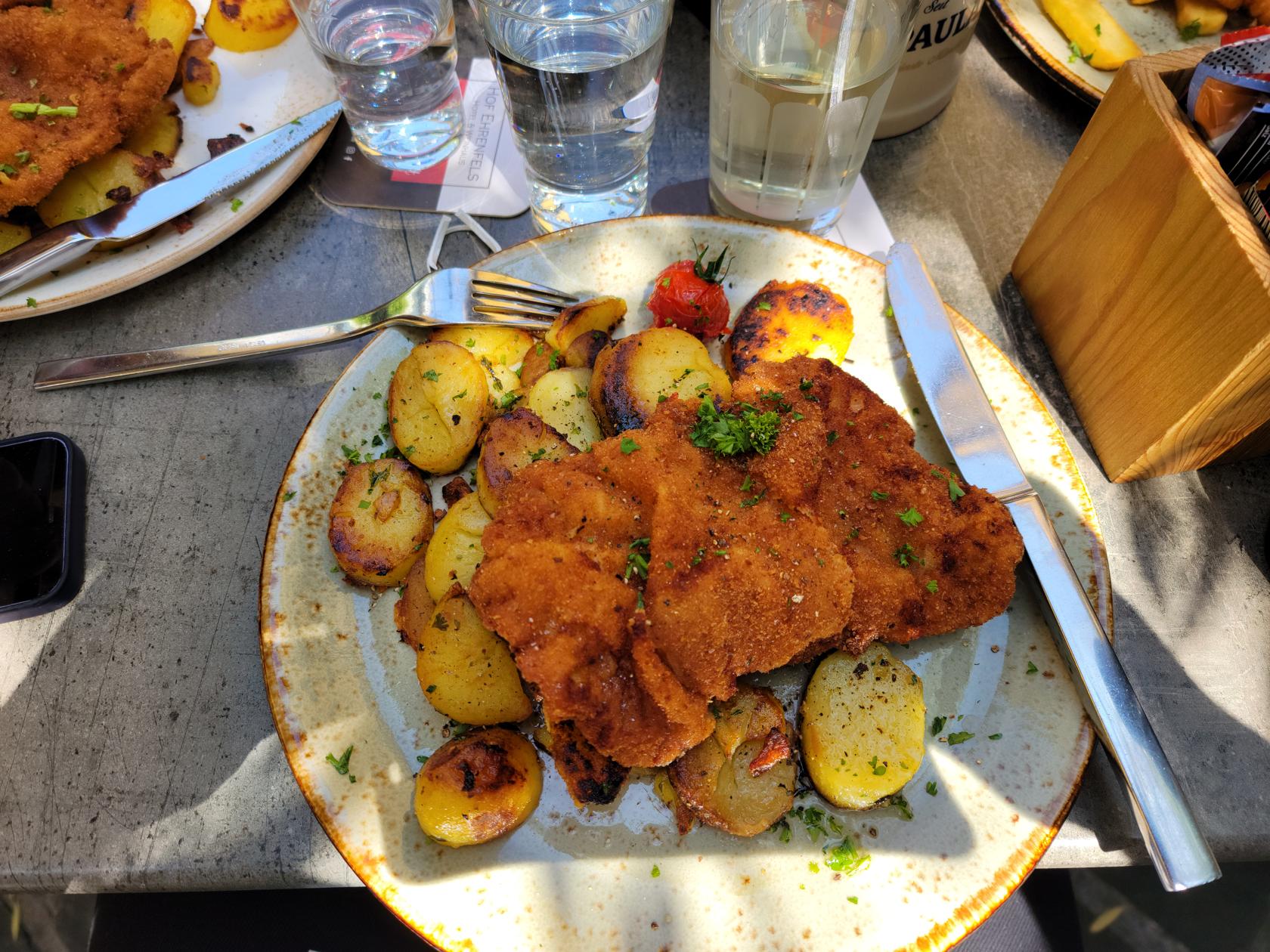
For lunch we ate at Hof Ehrenfels, a stone’s throw away from the Mainzer Dom on Greberstraße. It is actually a three star hotel that also has a very good restaurant with a garden. The four of us ate outside in garden and had Wiener Schnitzel.