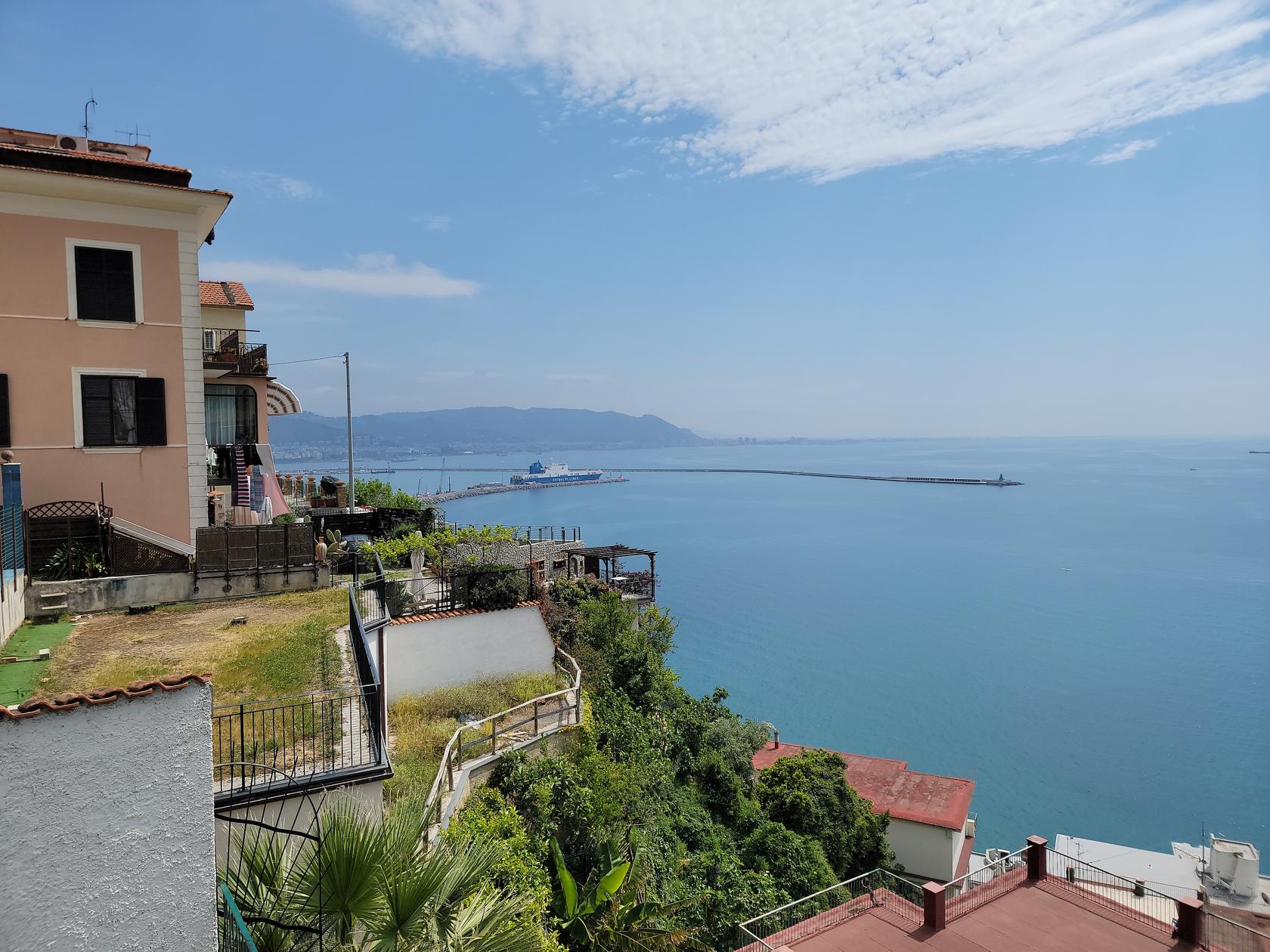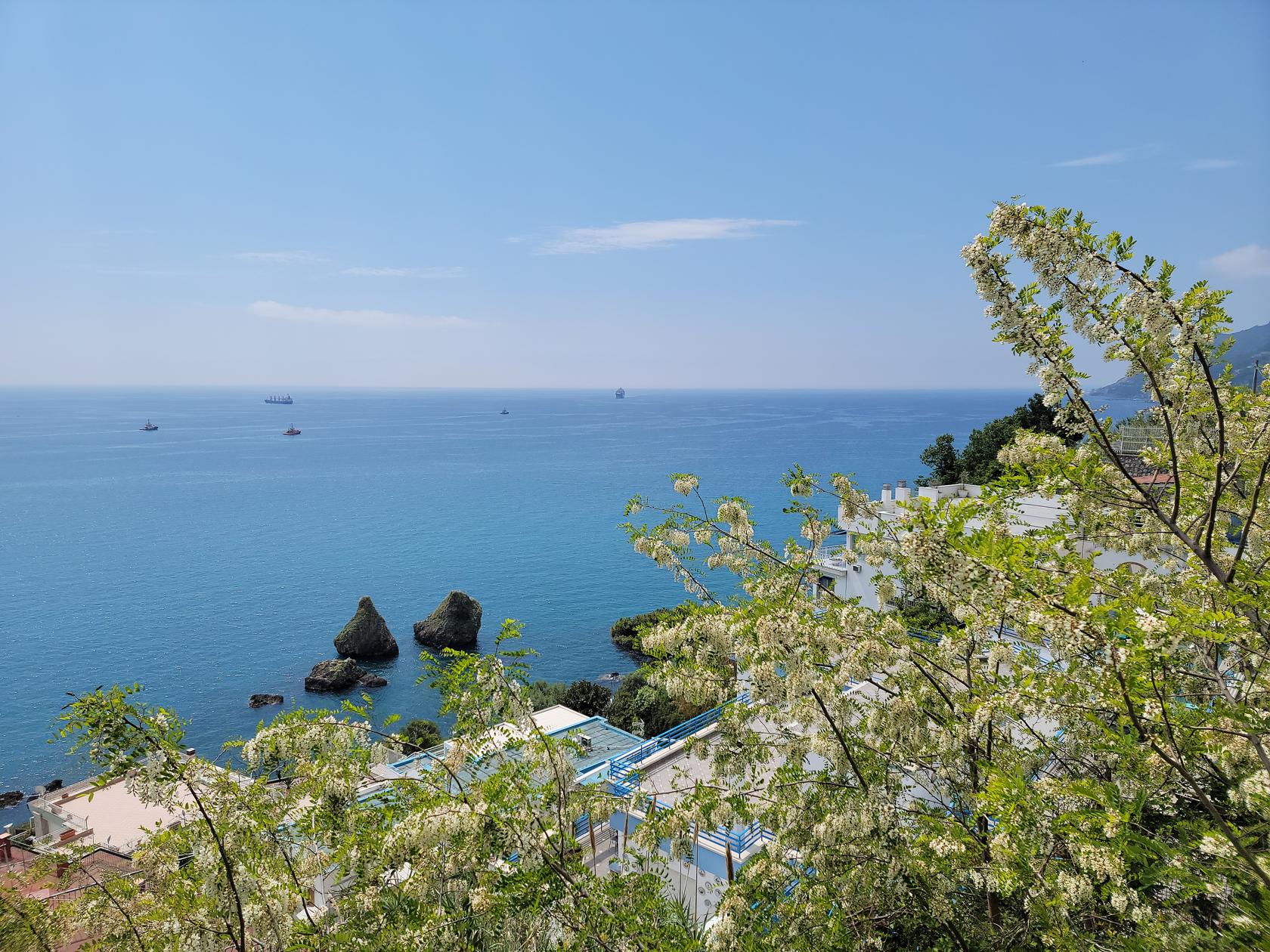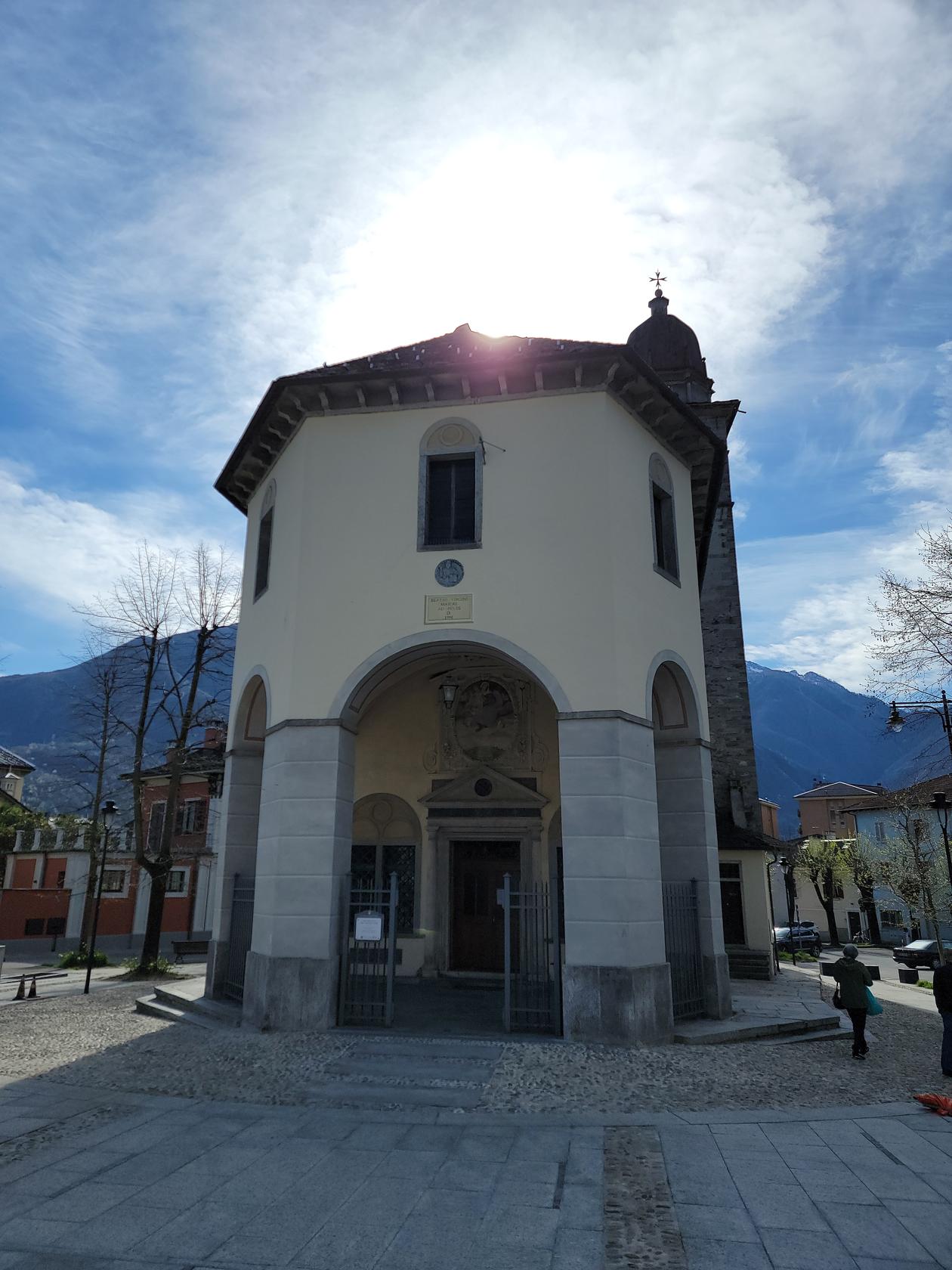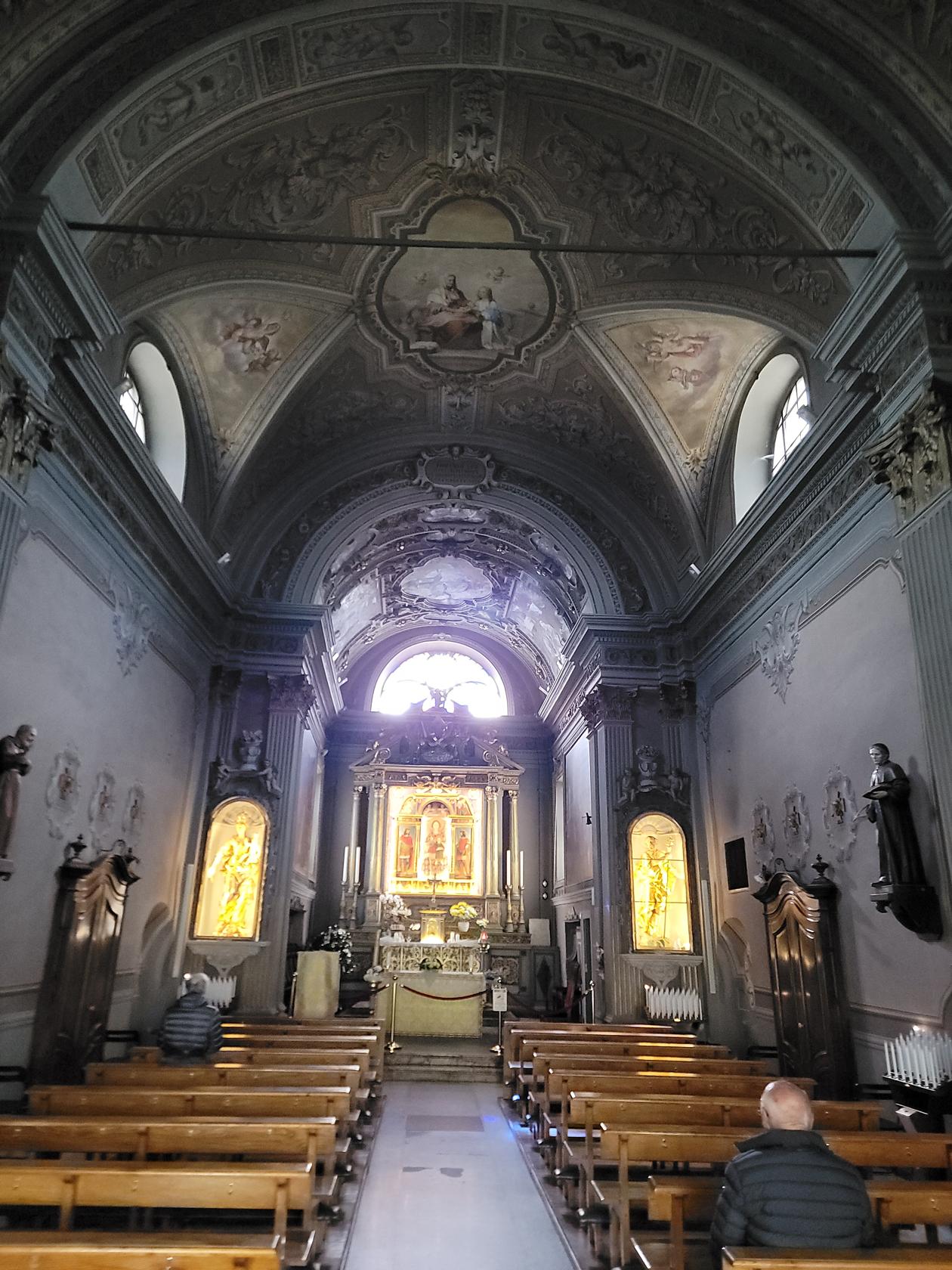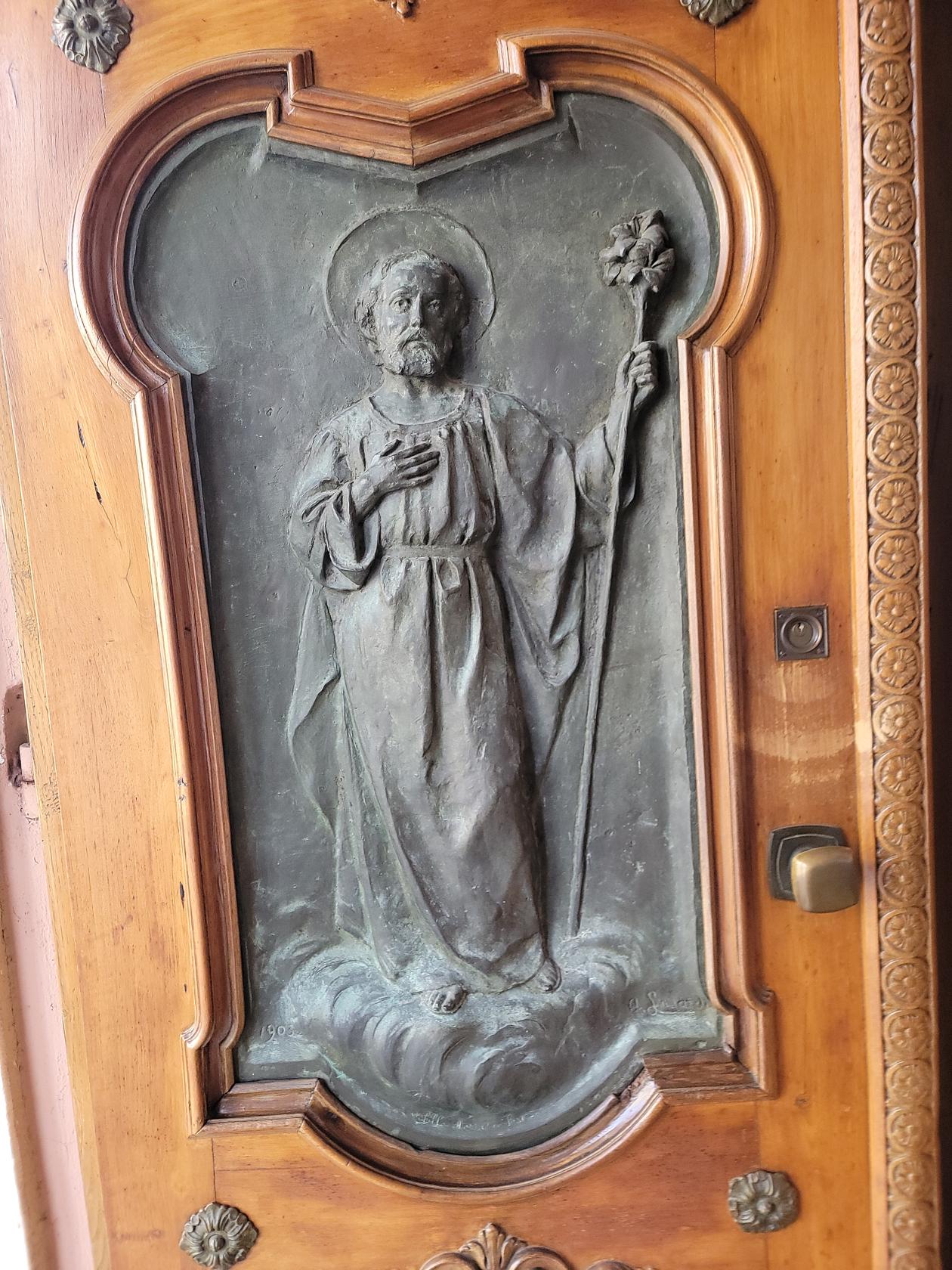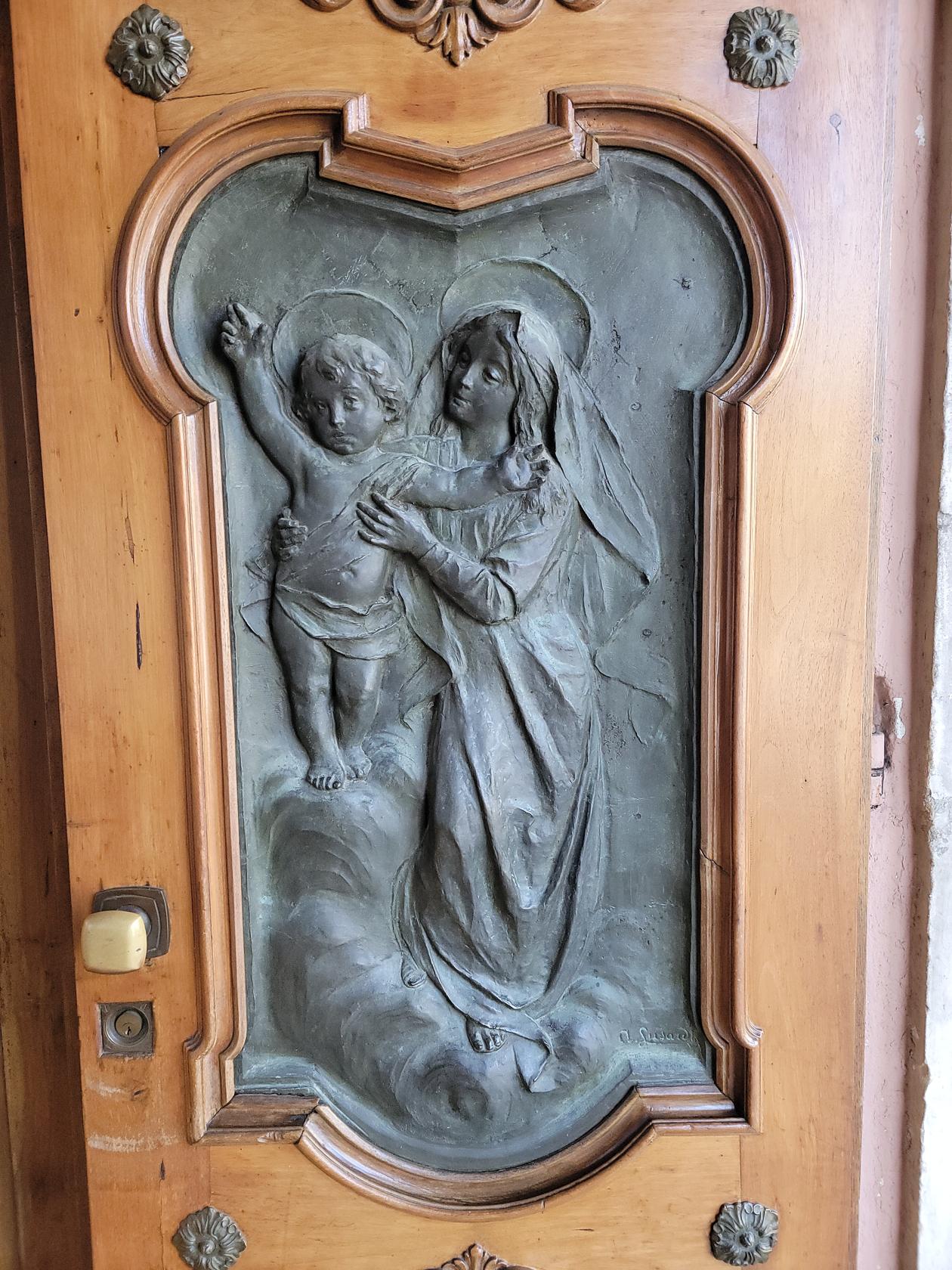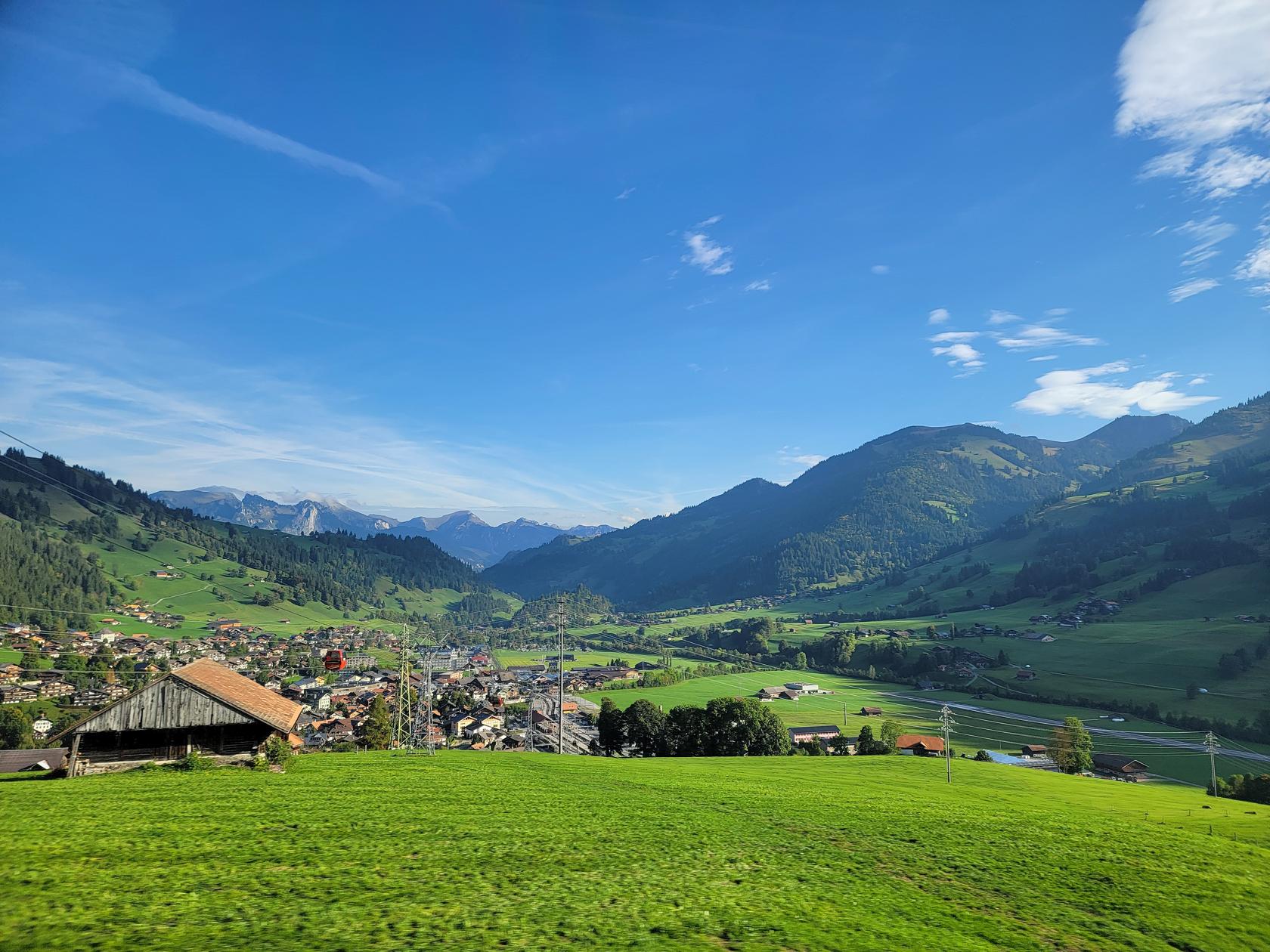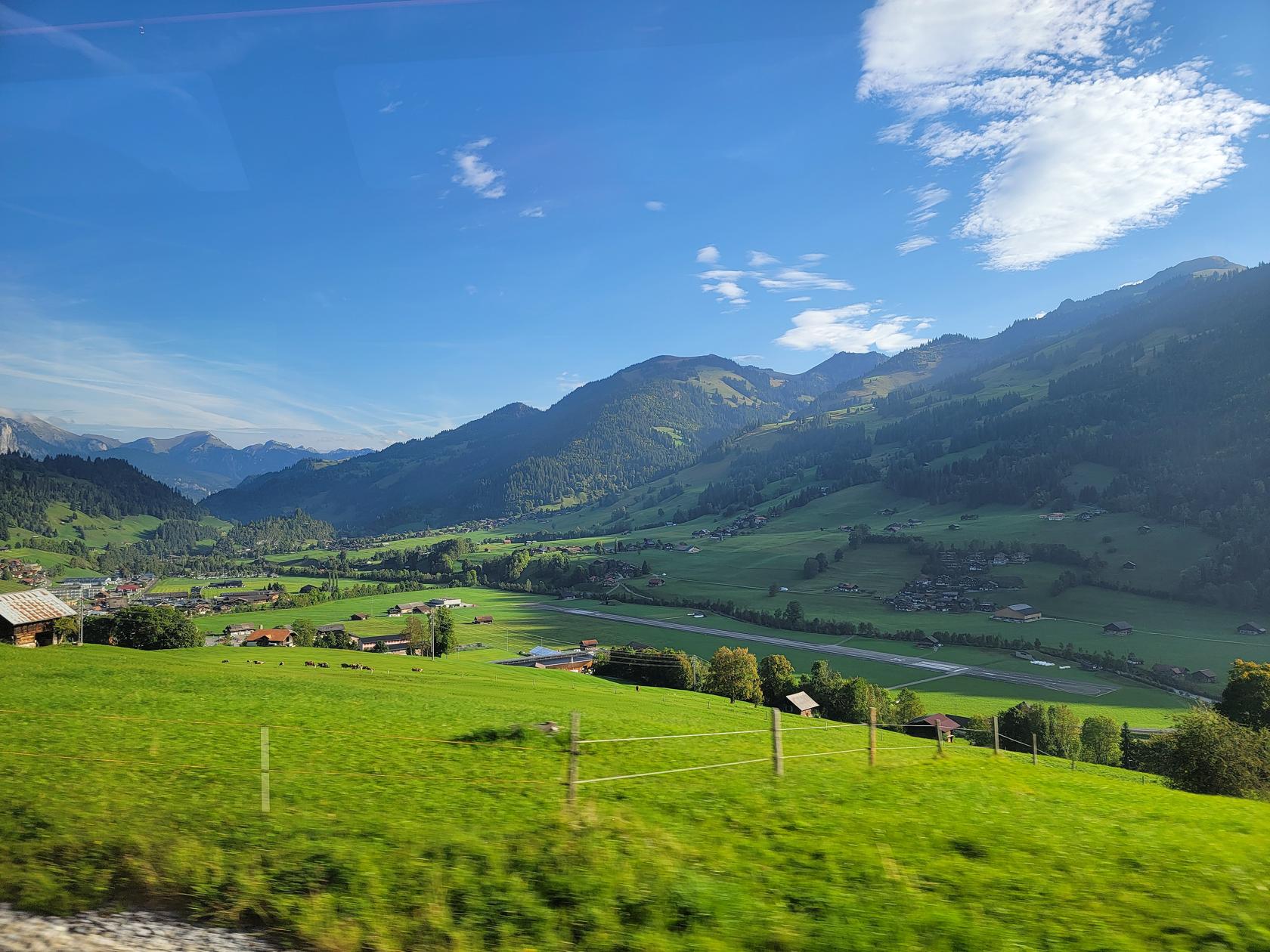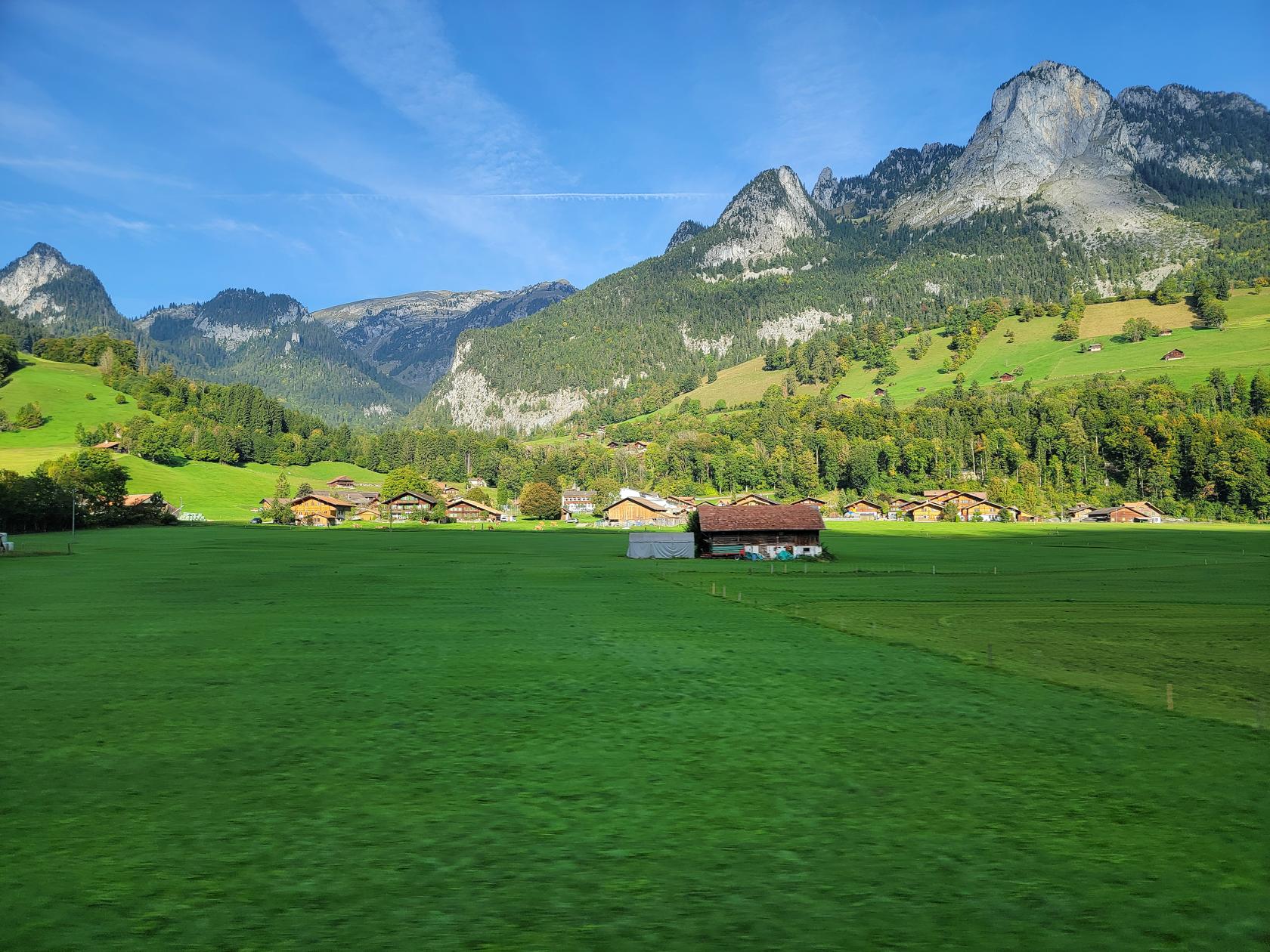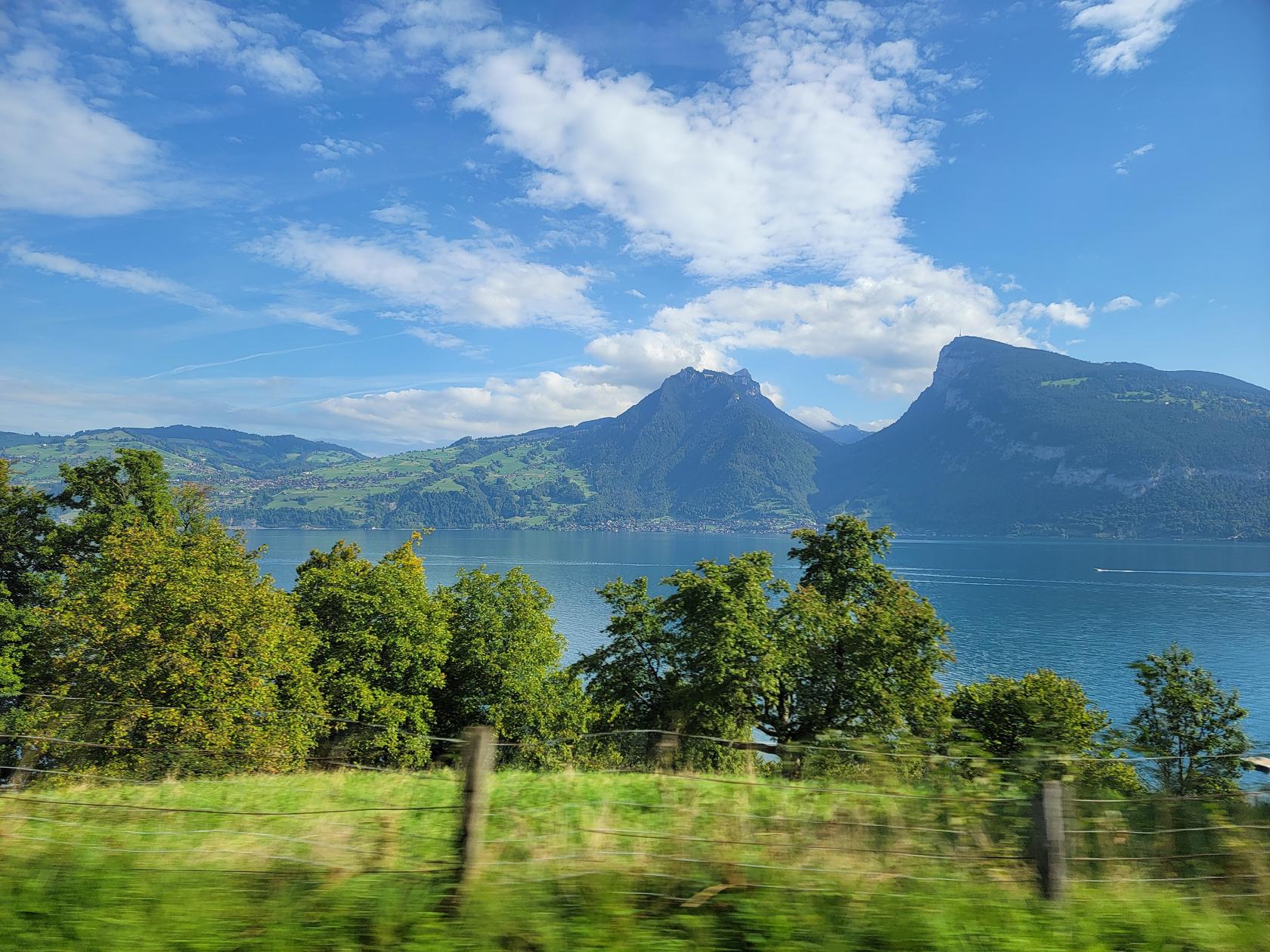
Biella, Italy – Woolen Woes

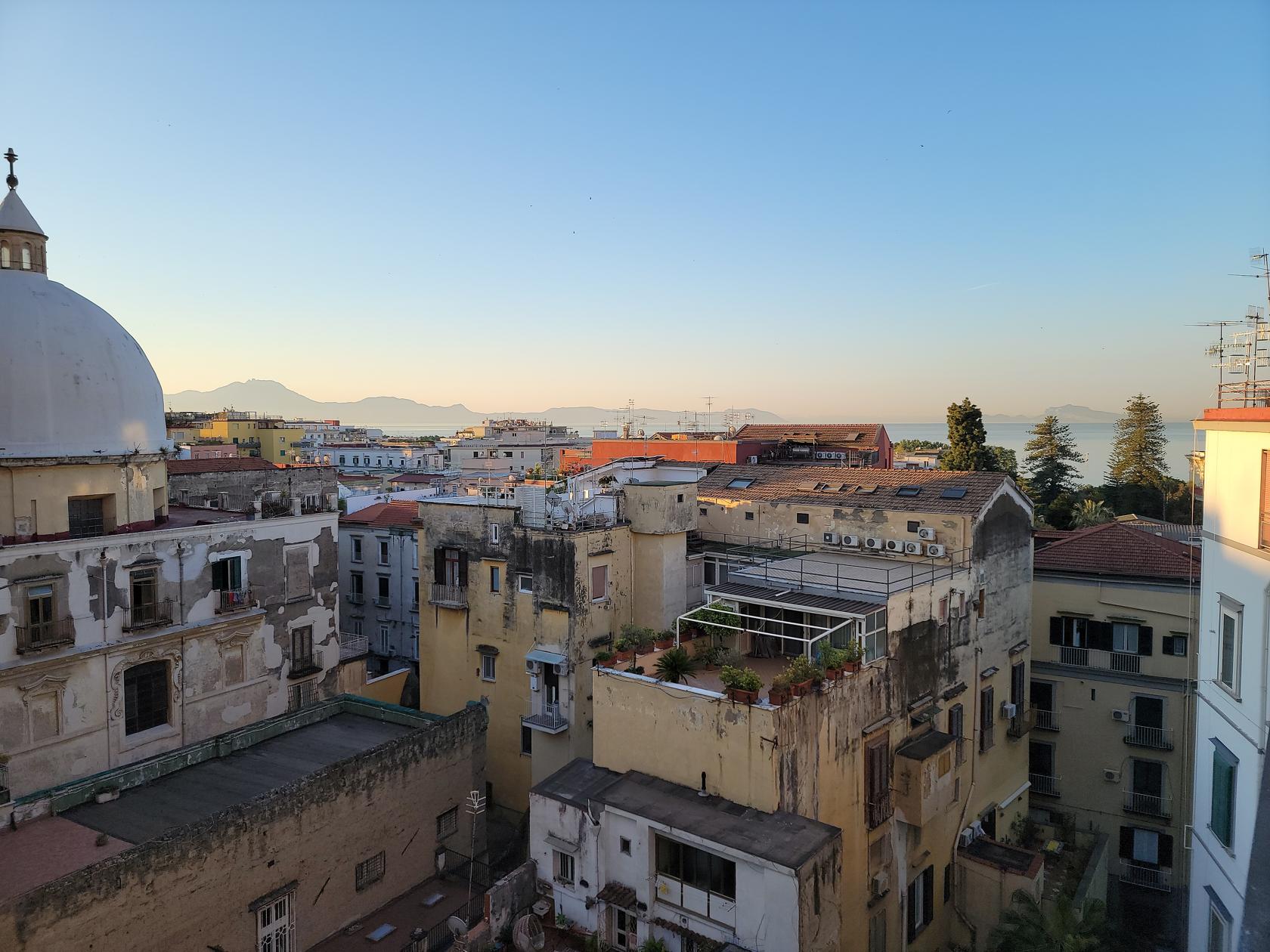
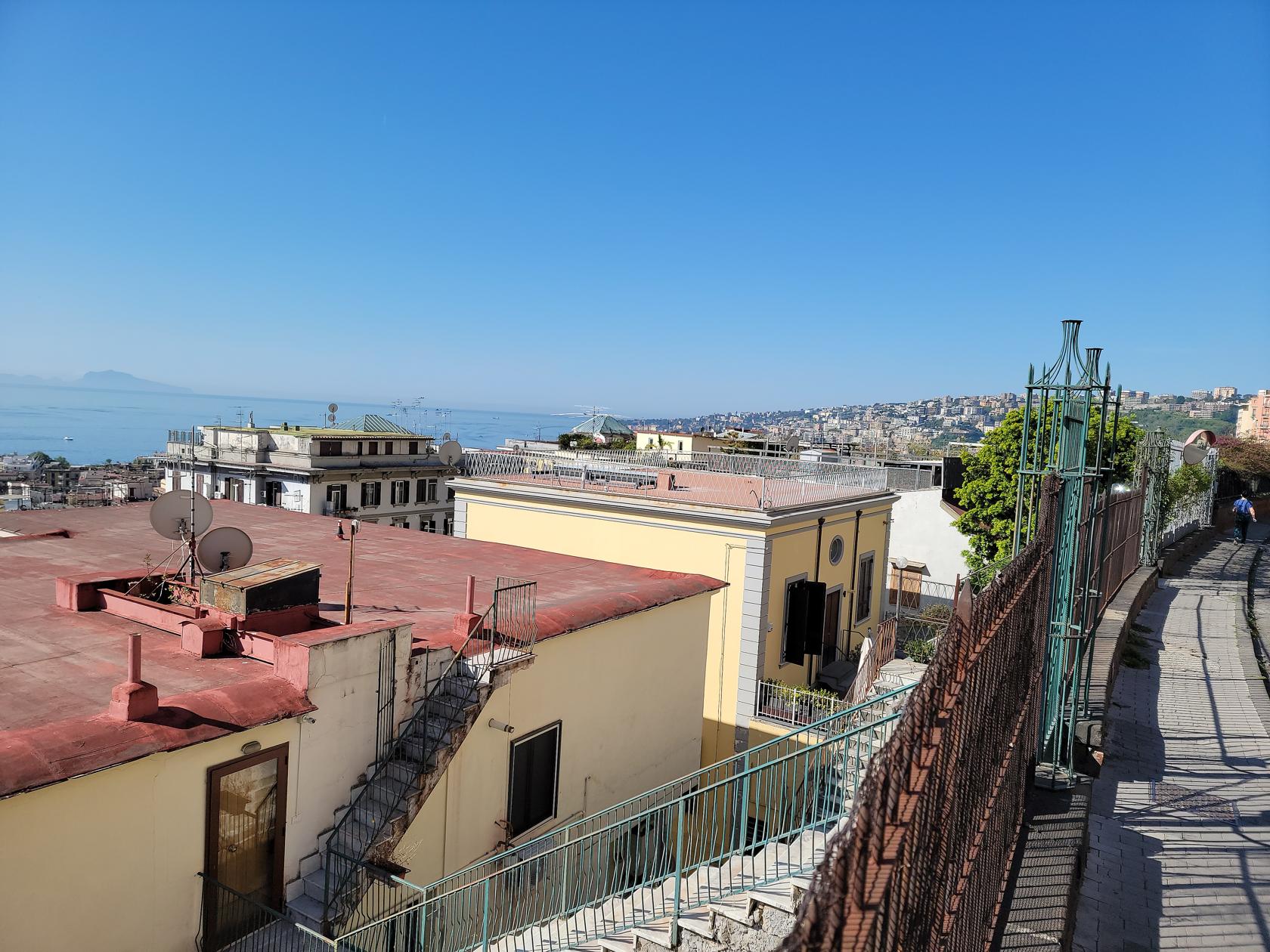
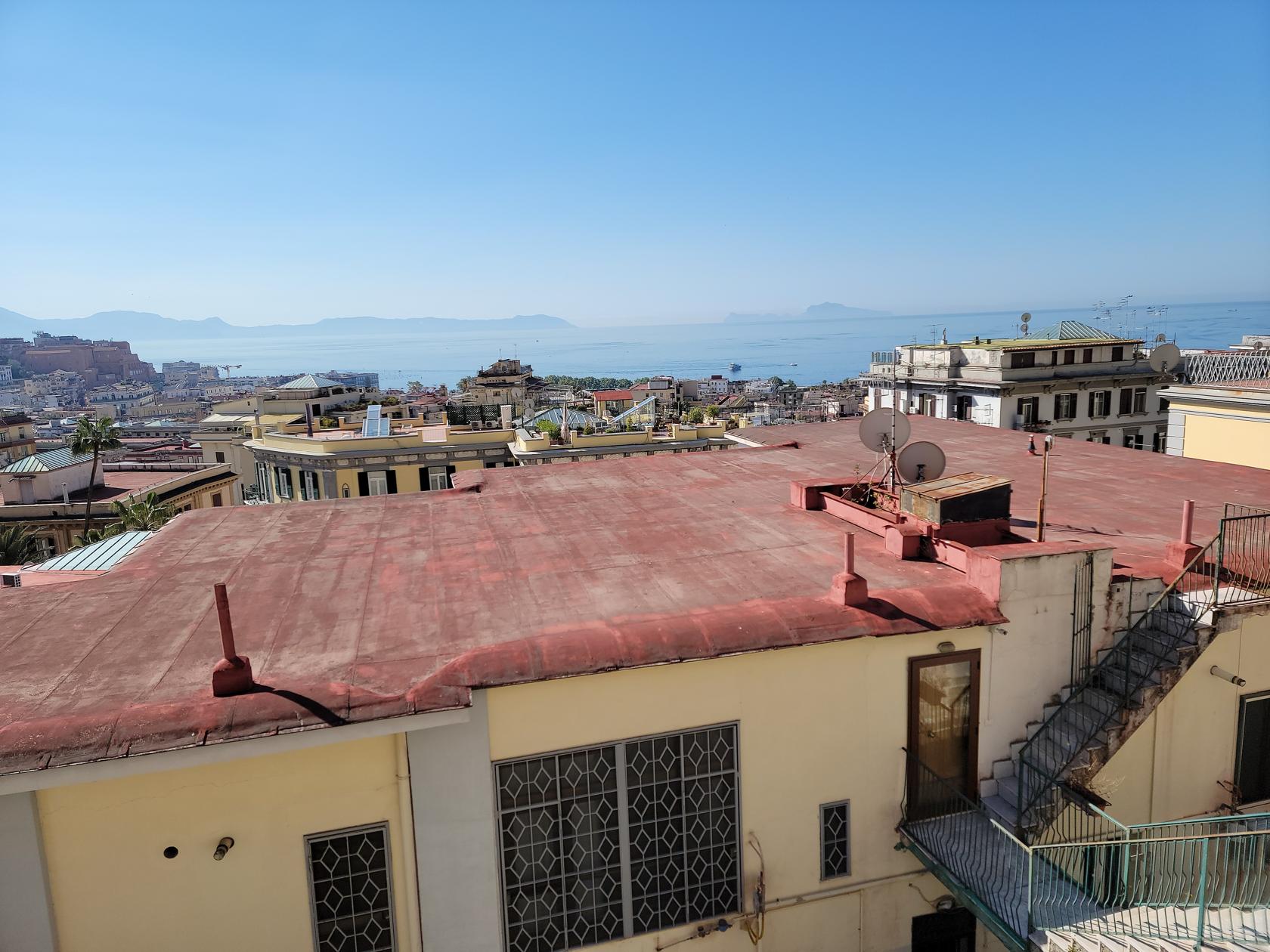
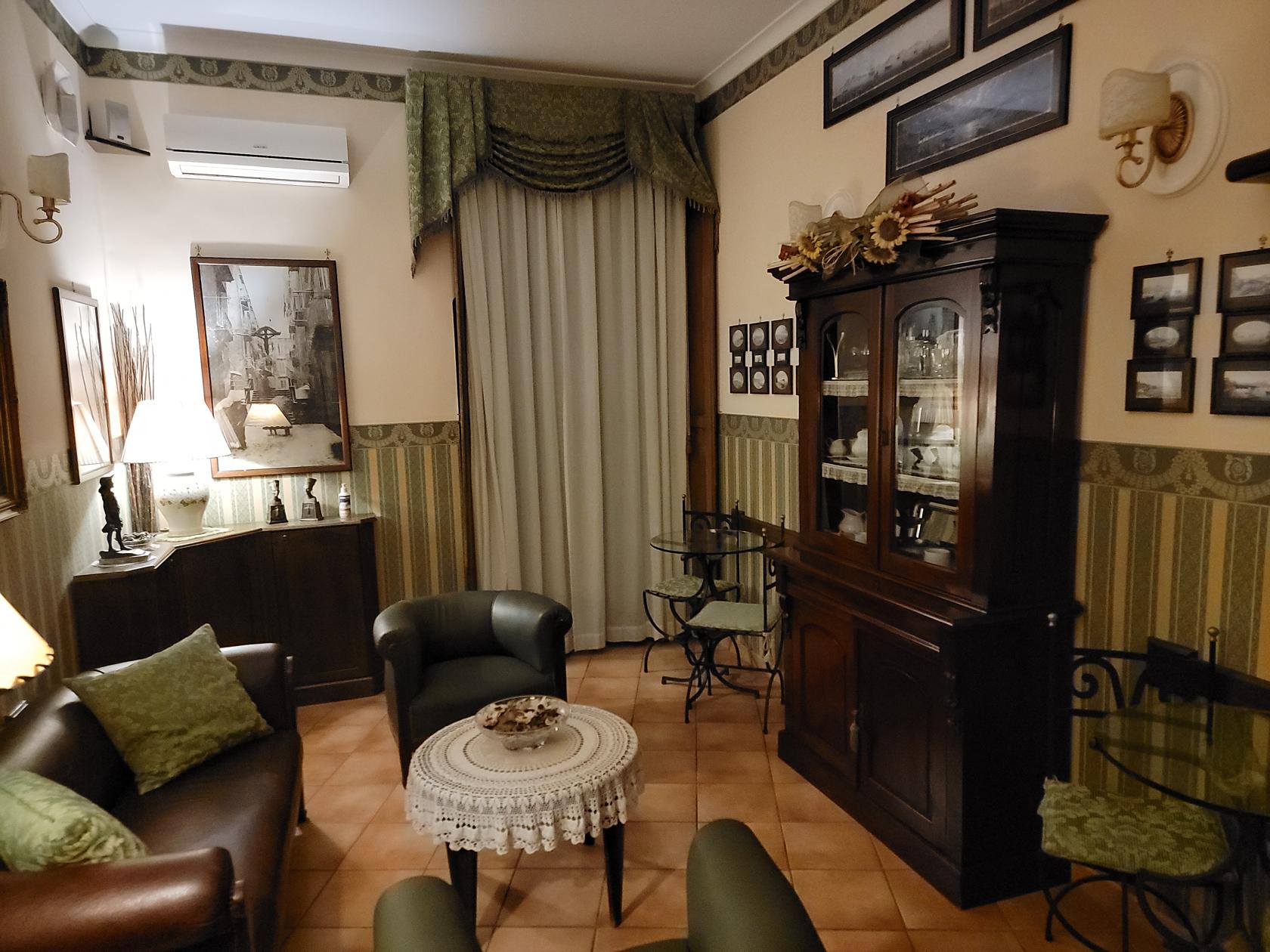
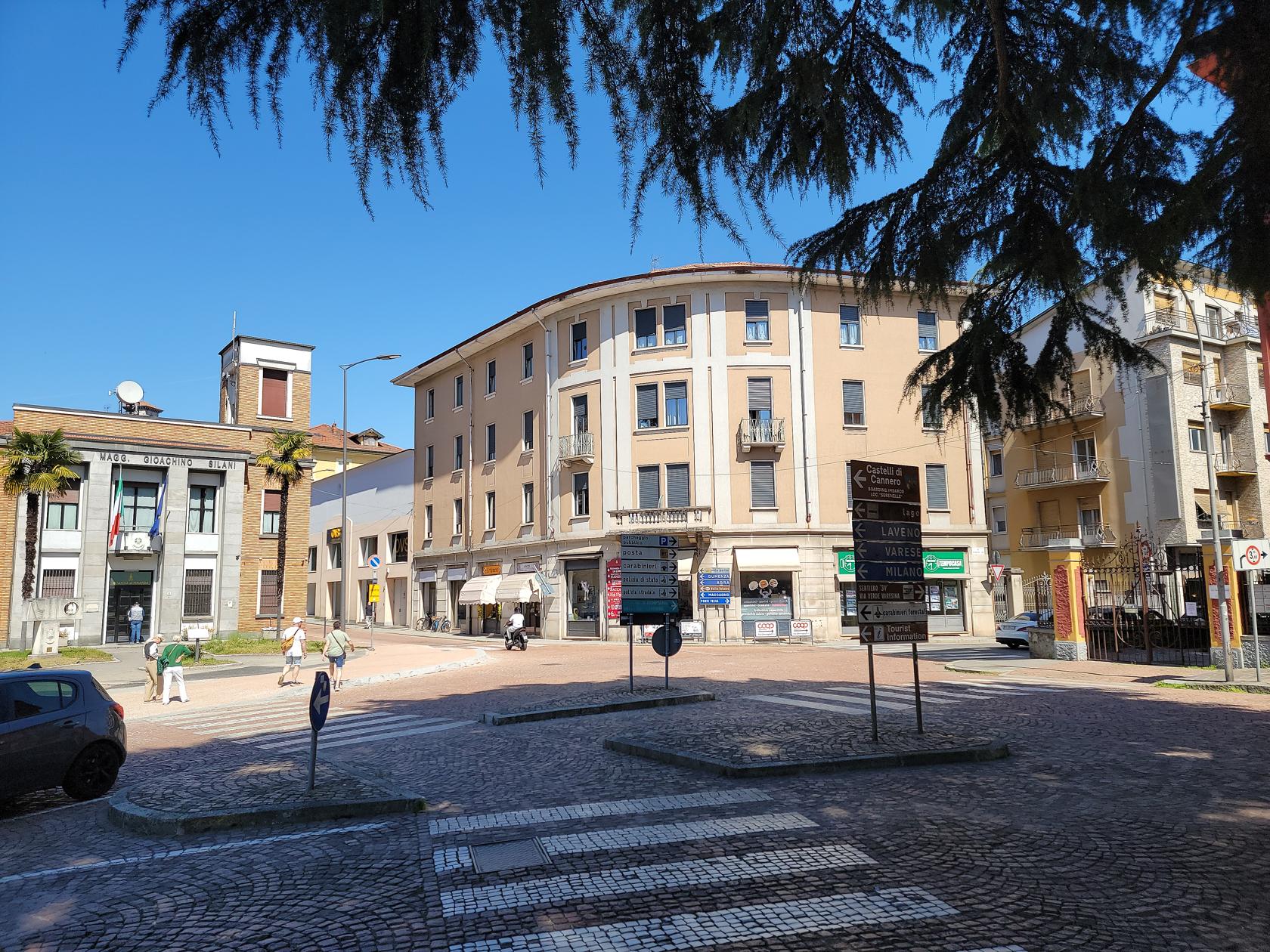
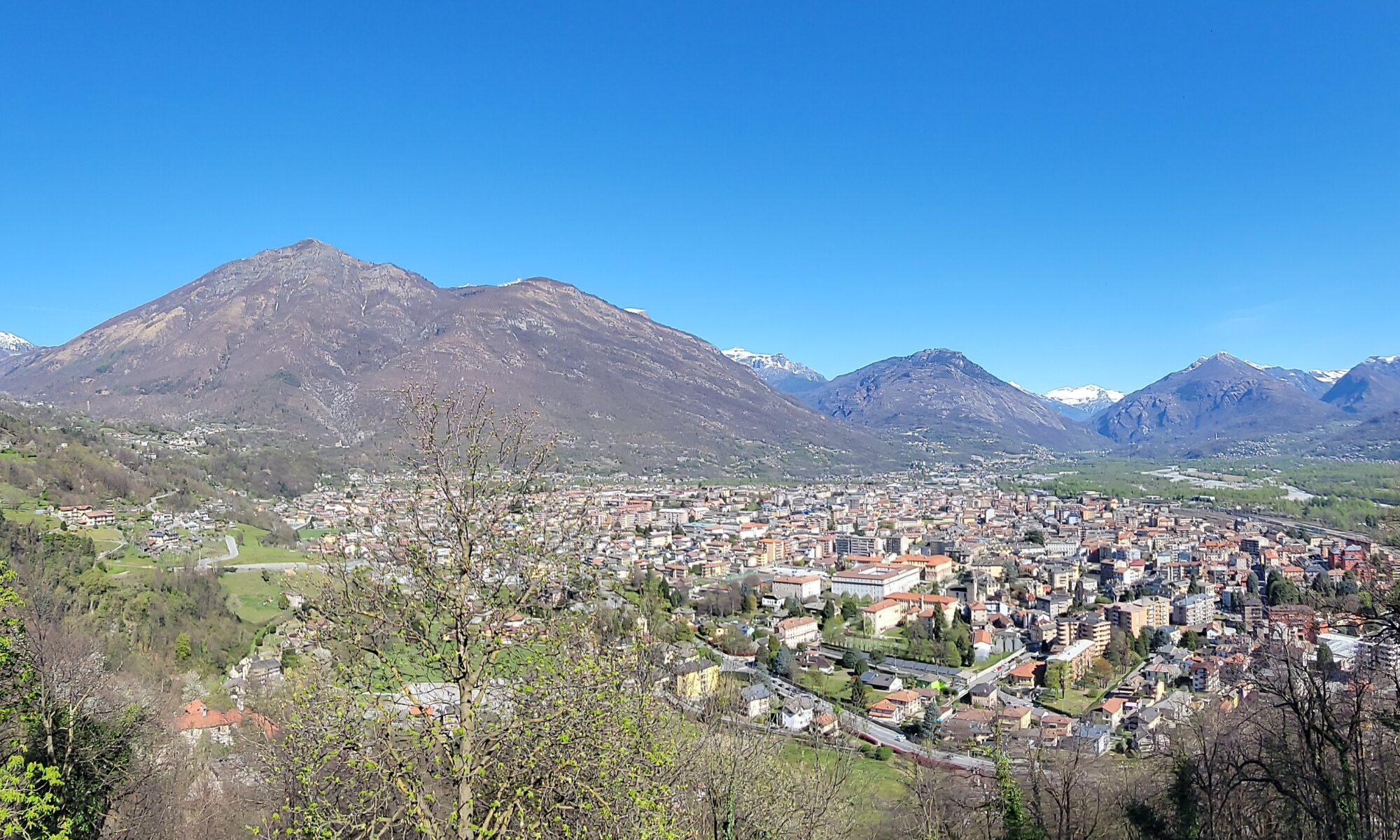
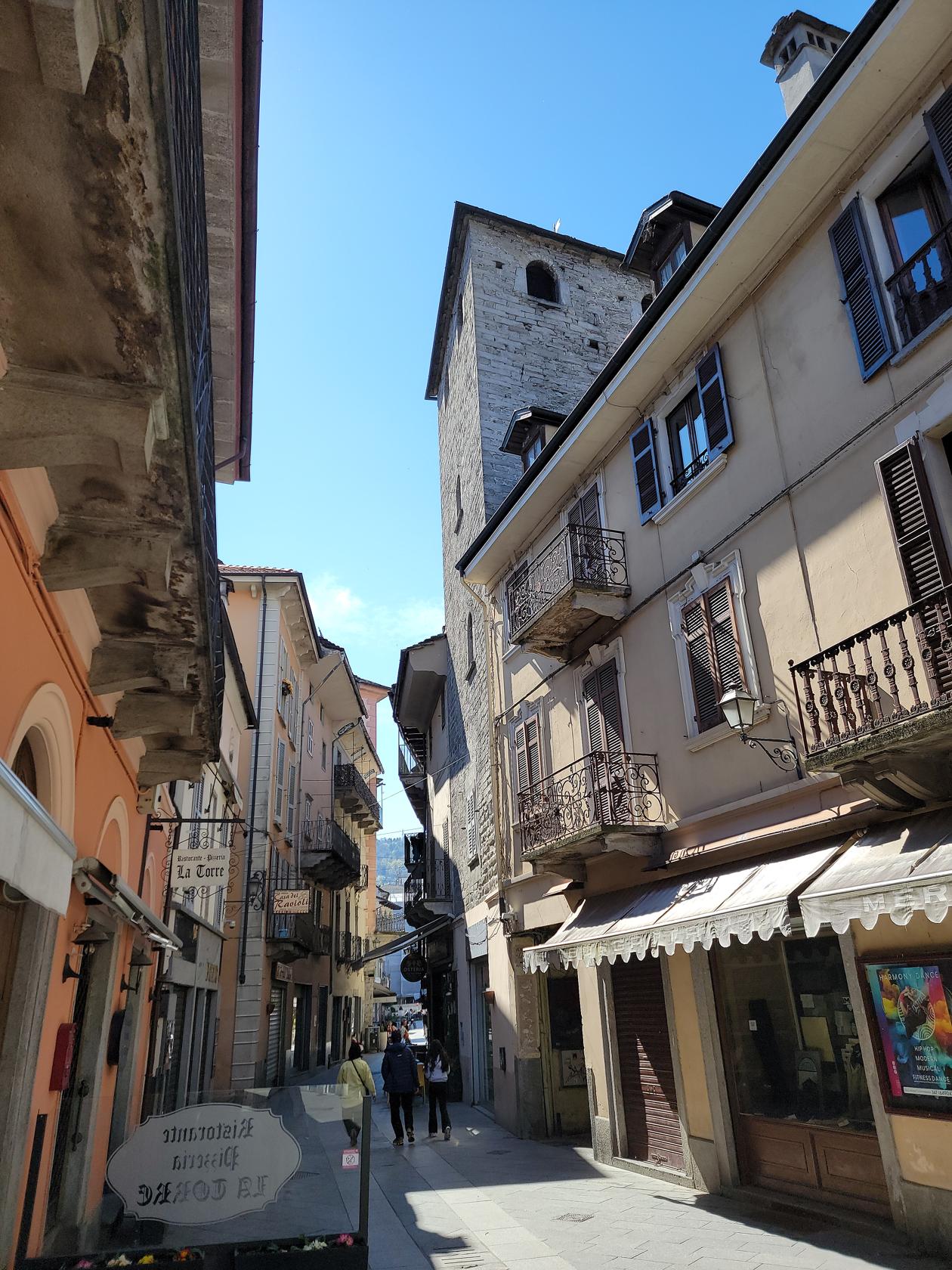
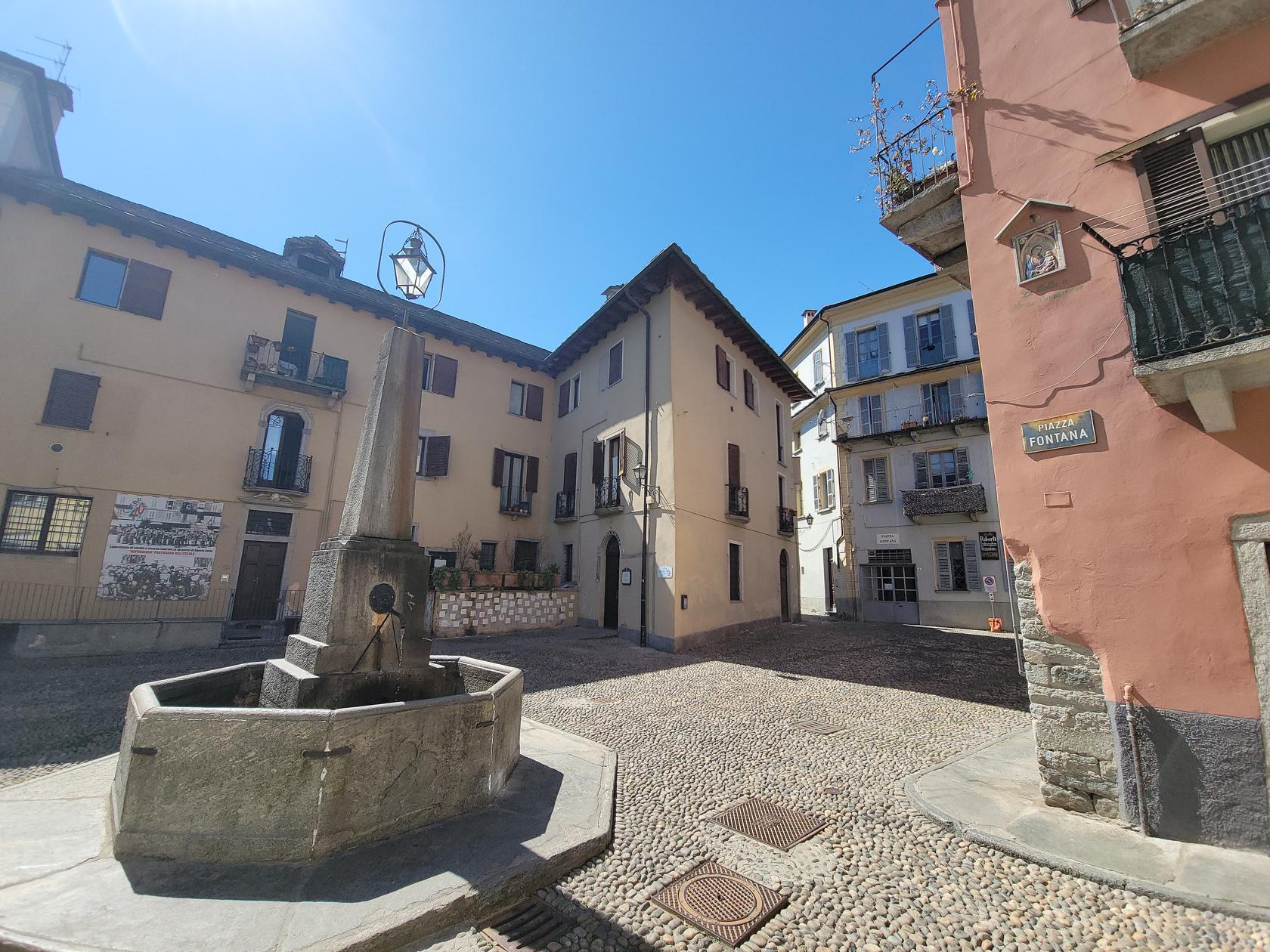
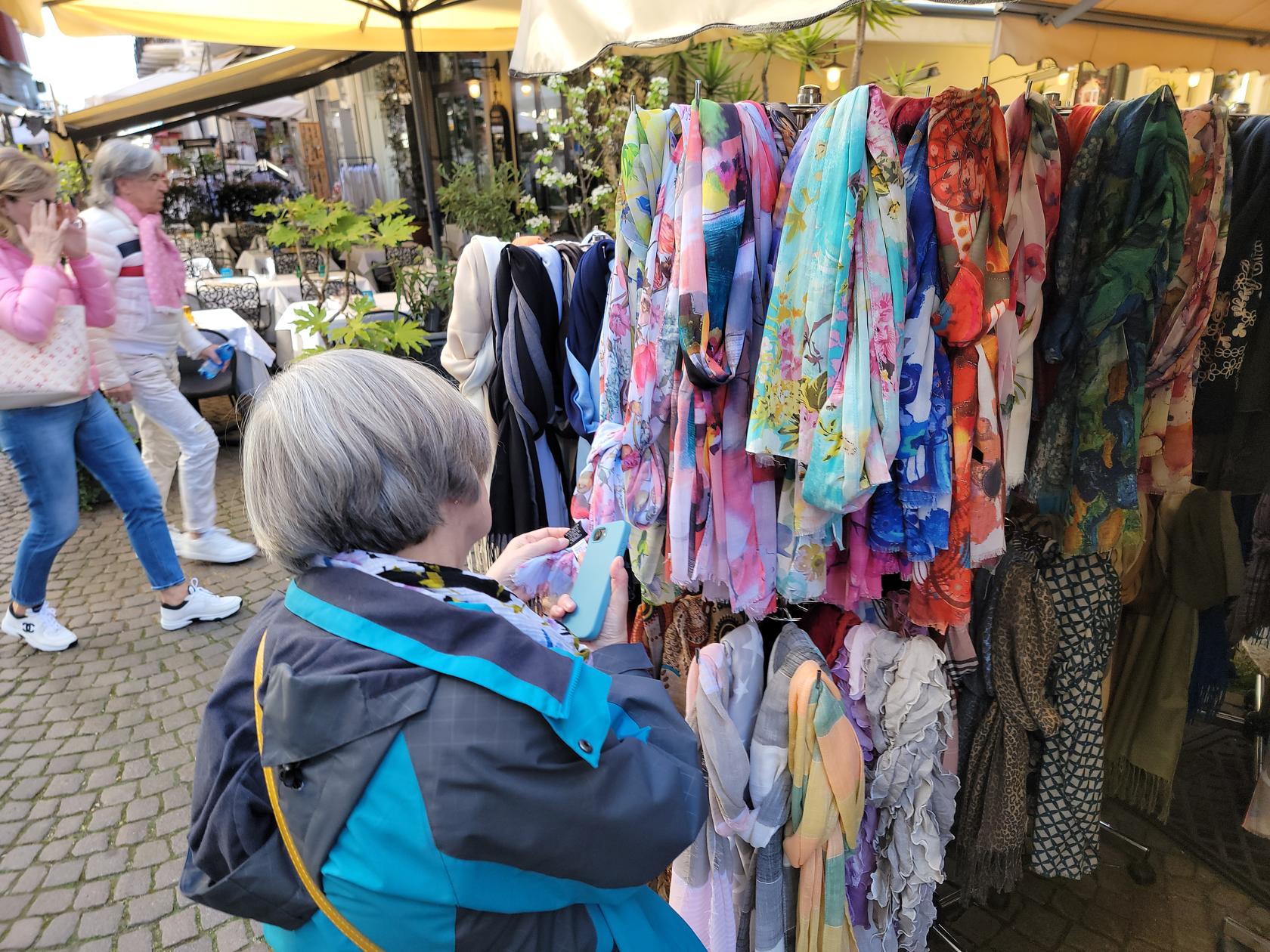
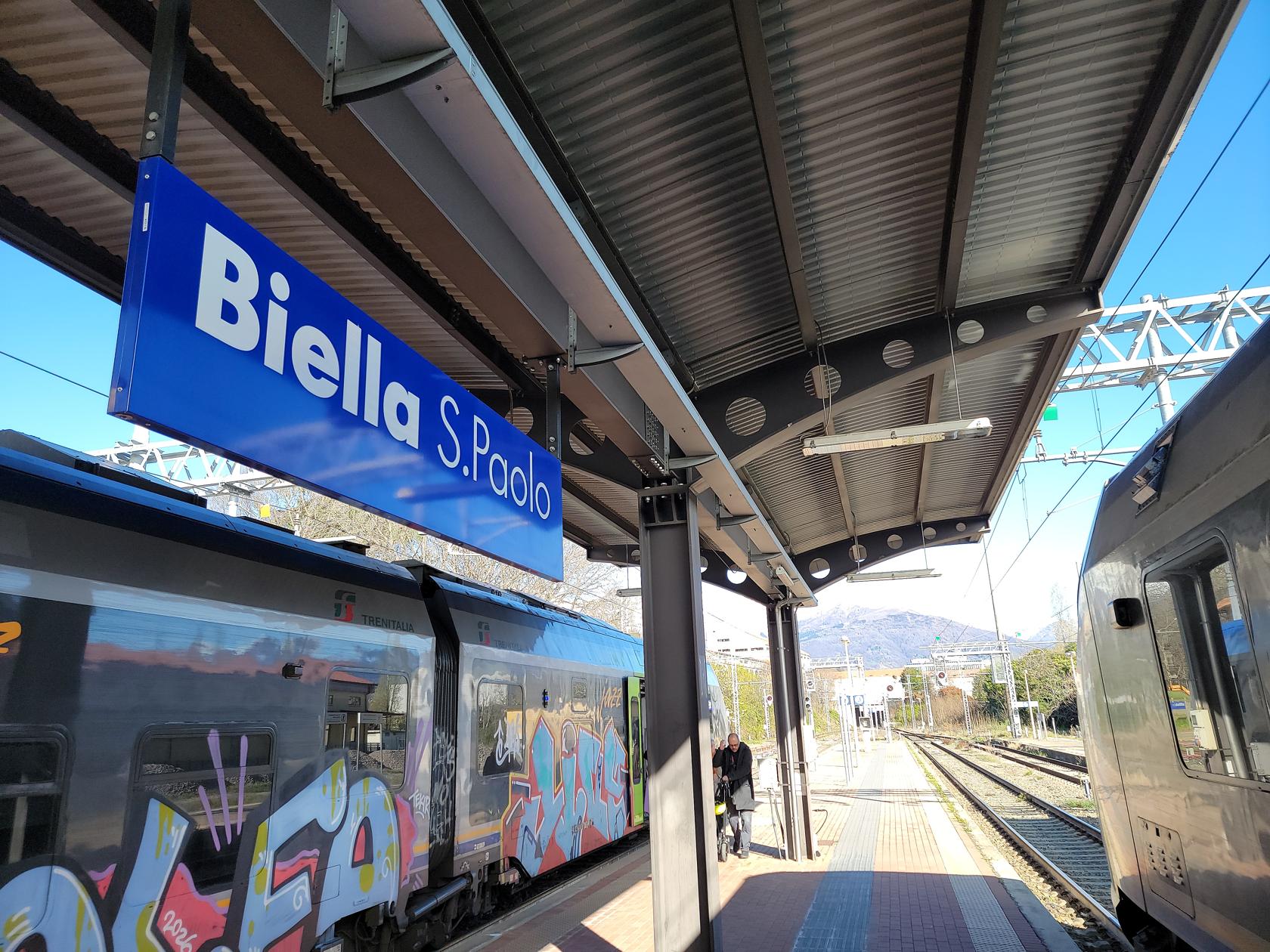
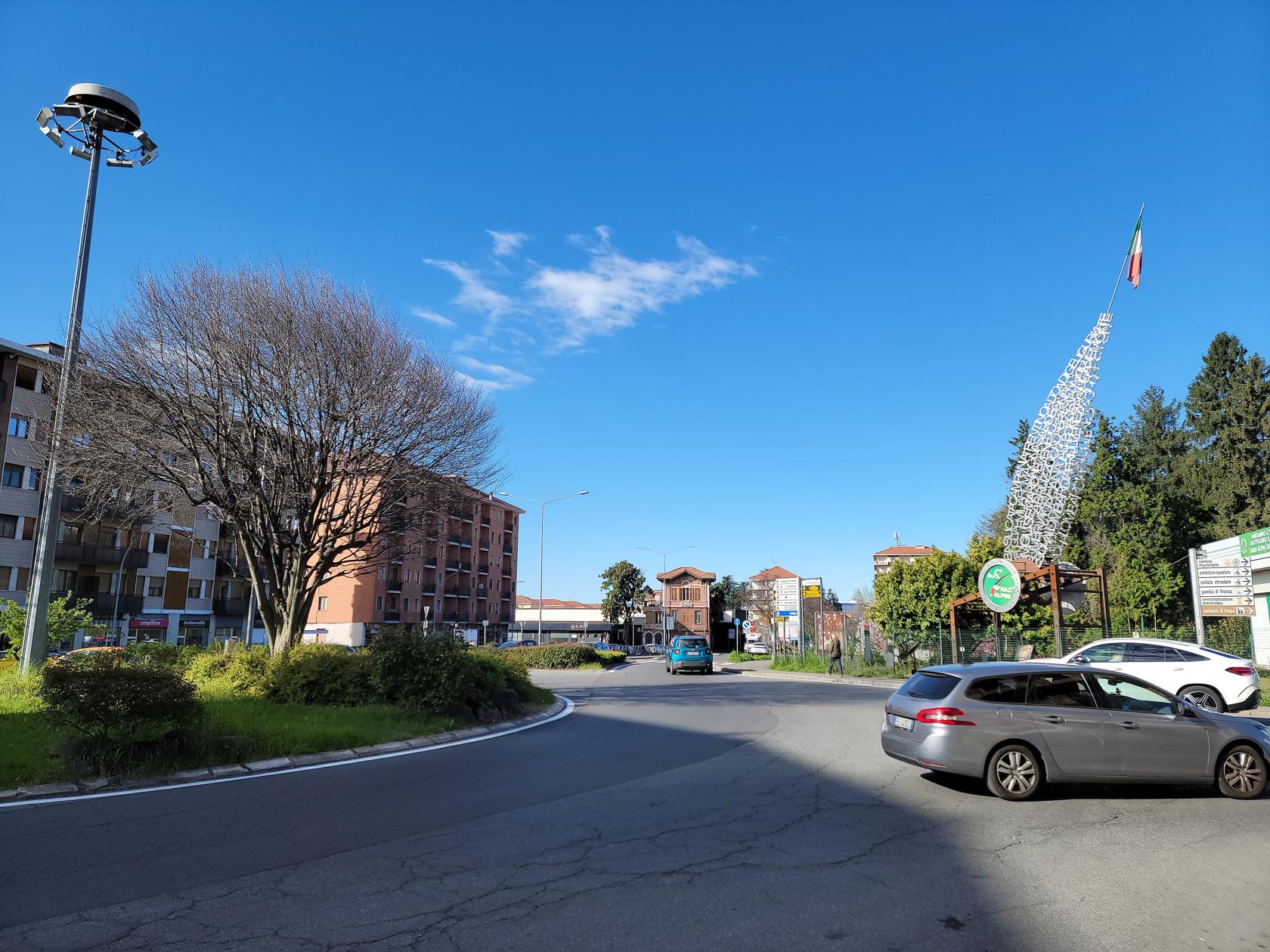
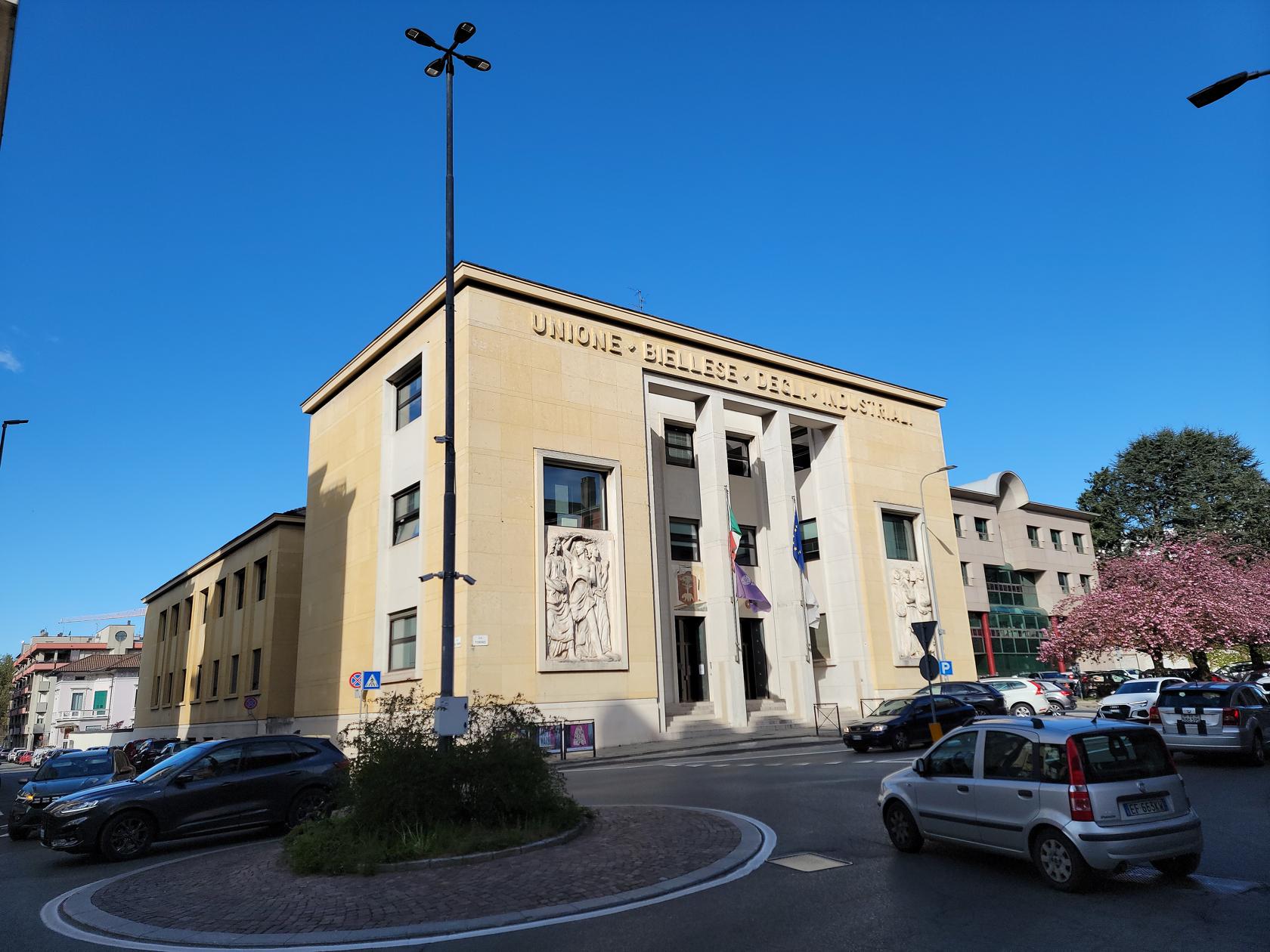
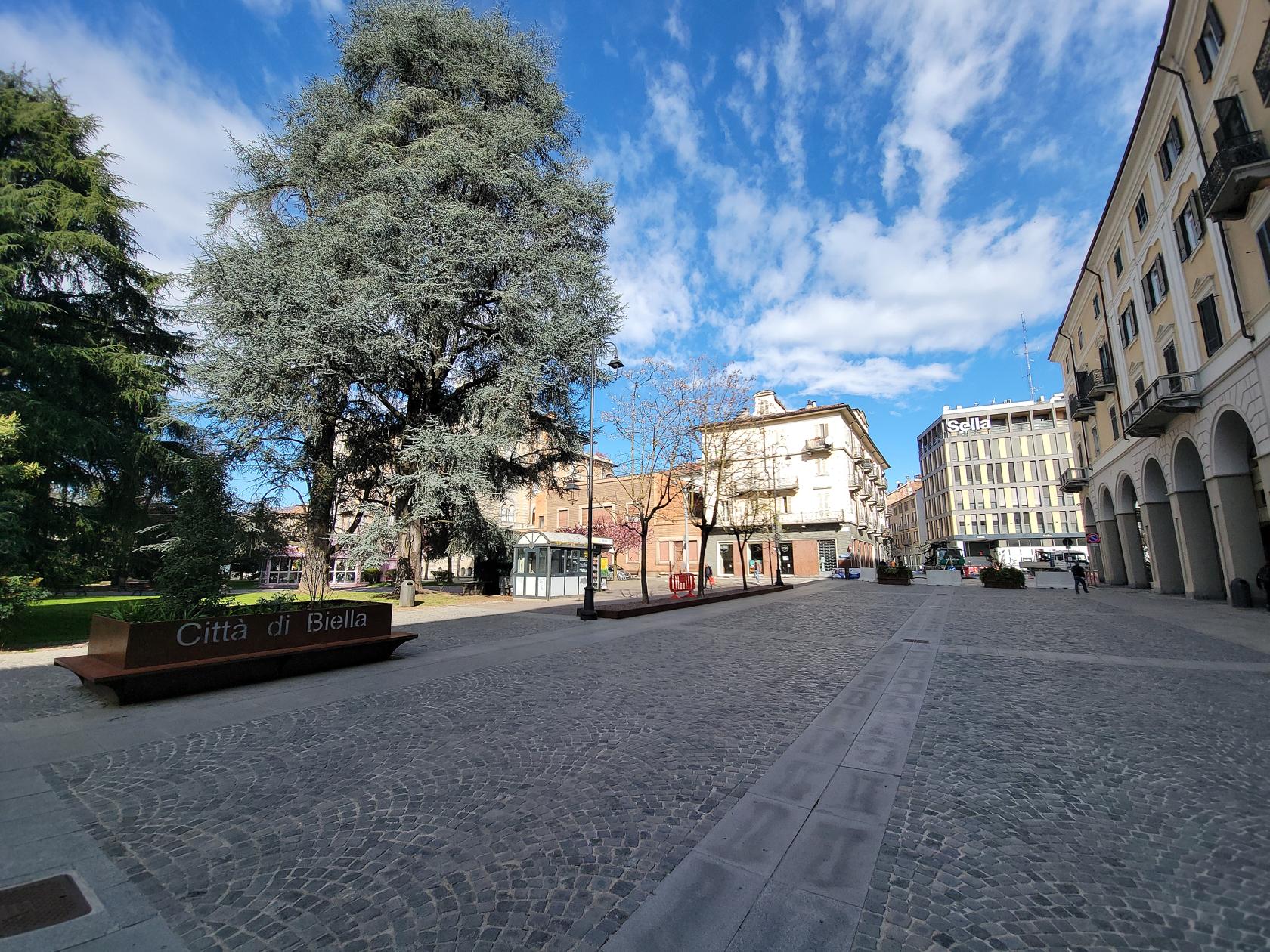
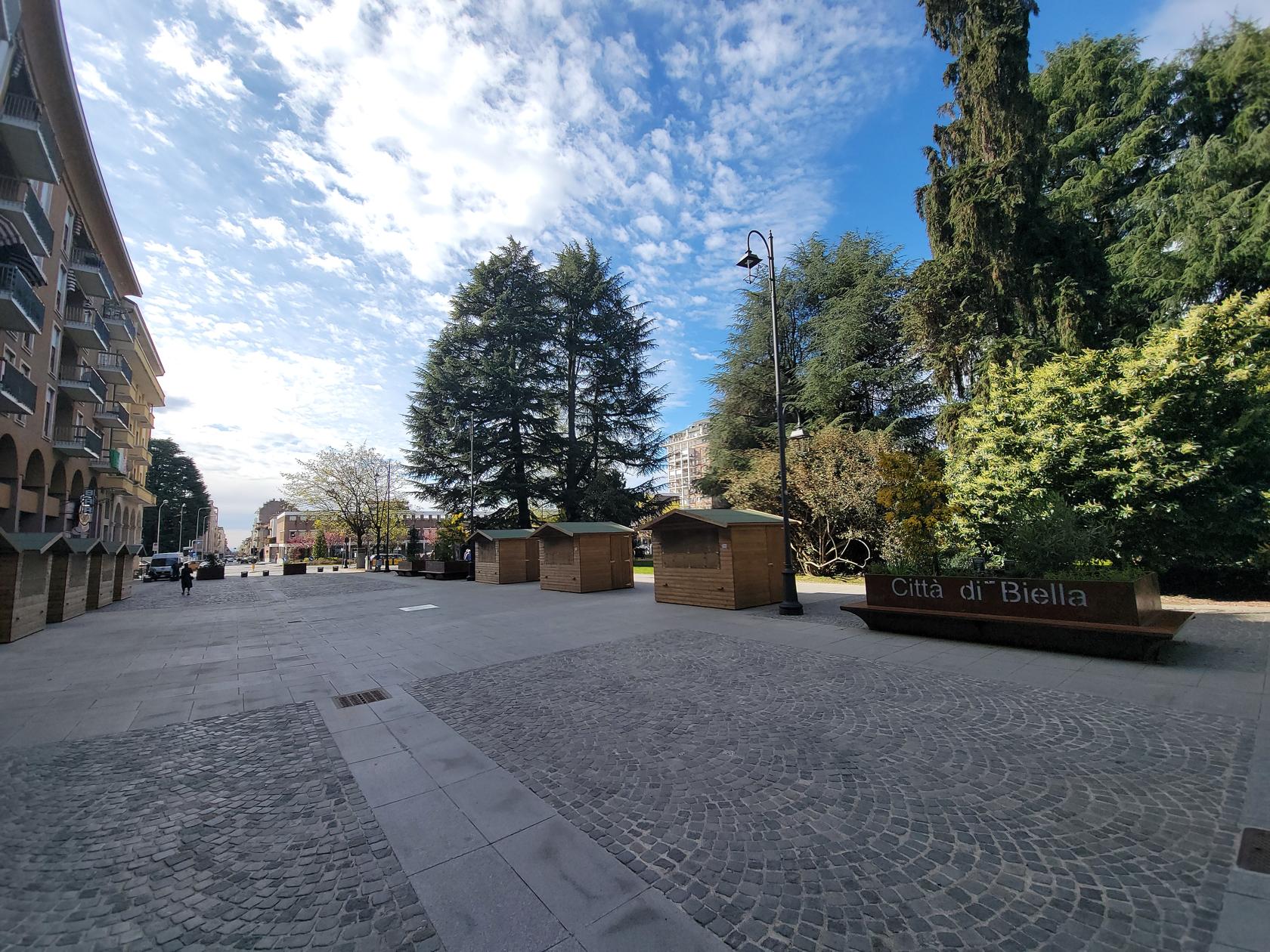
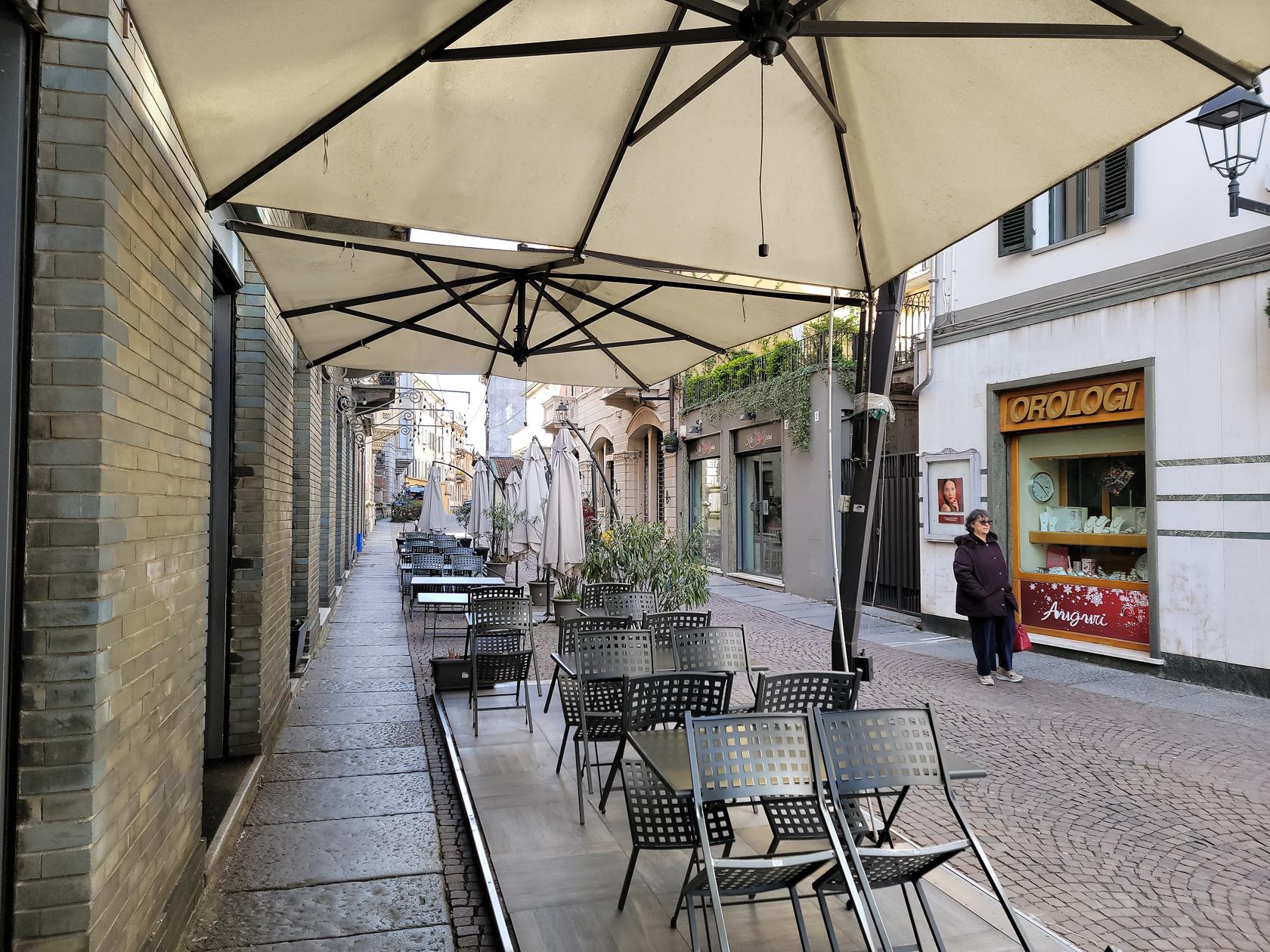
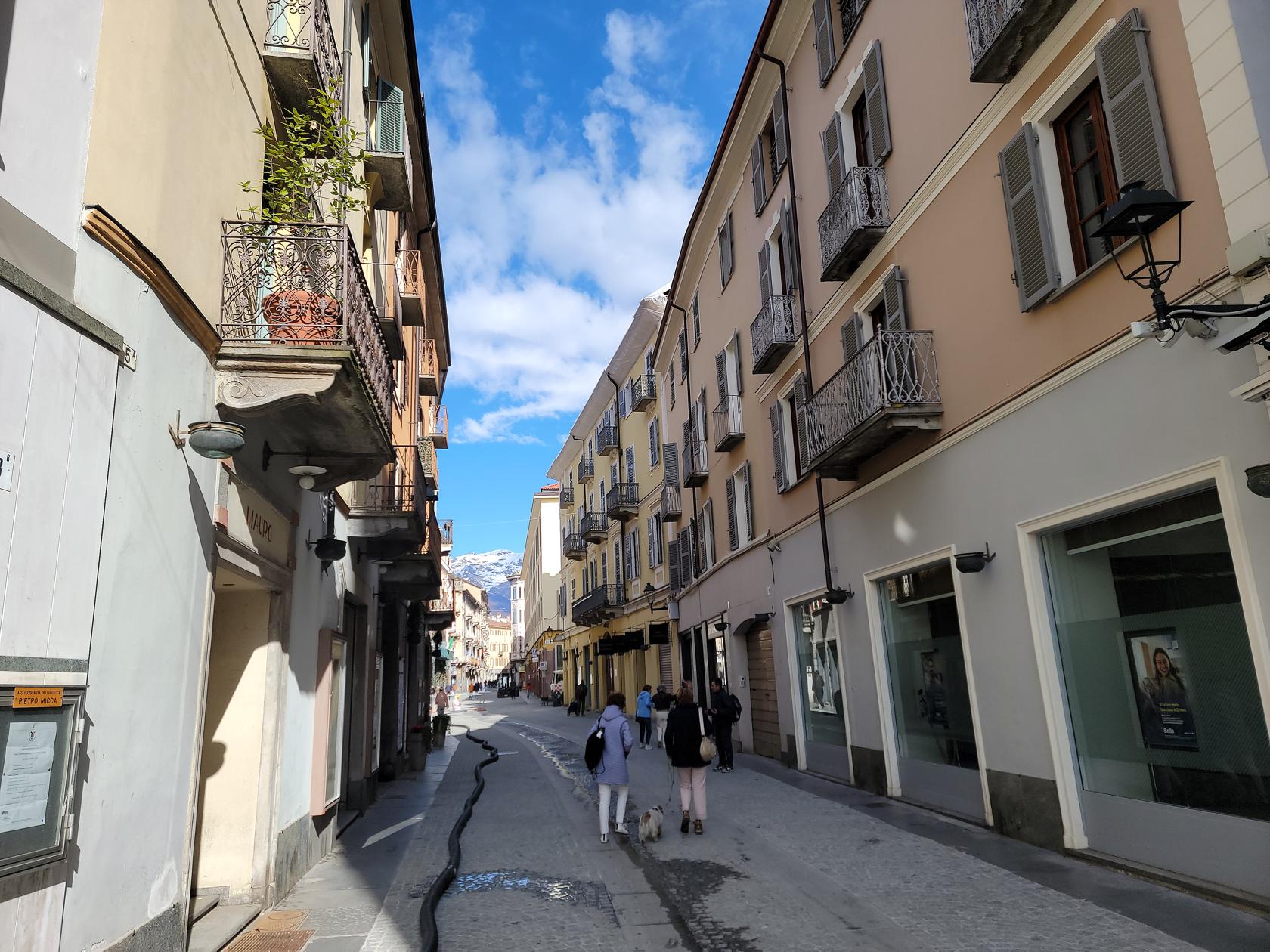
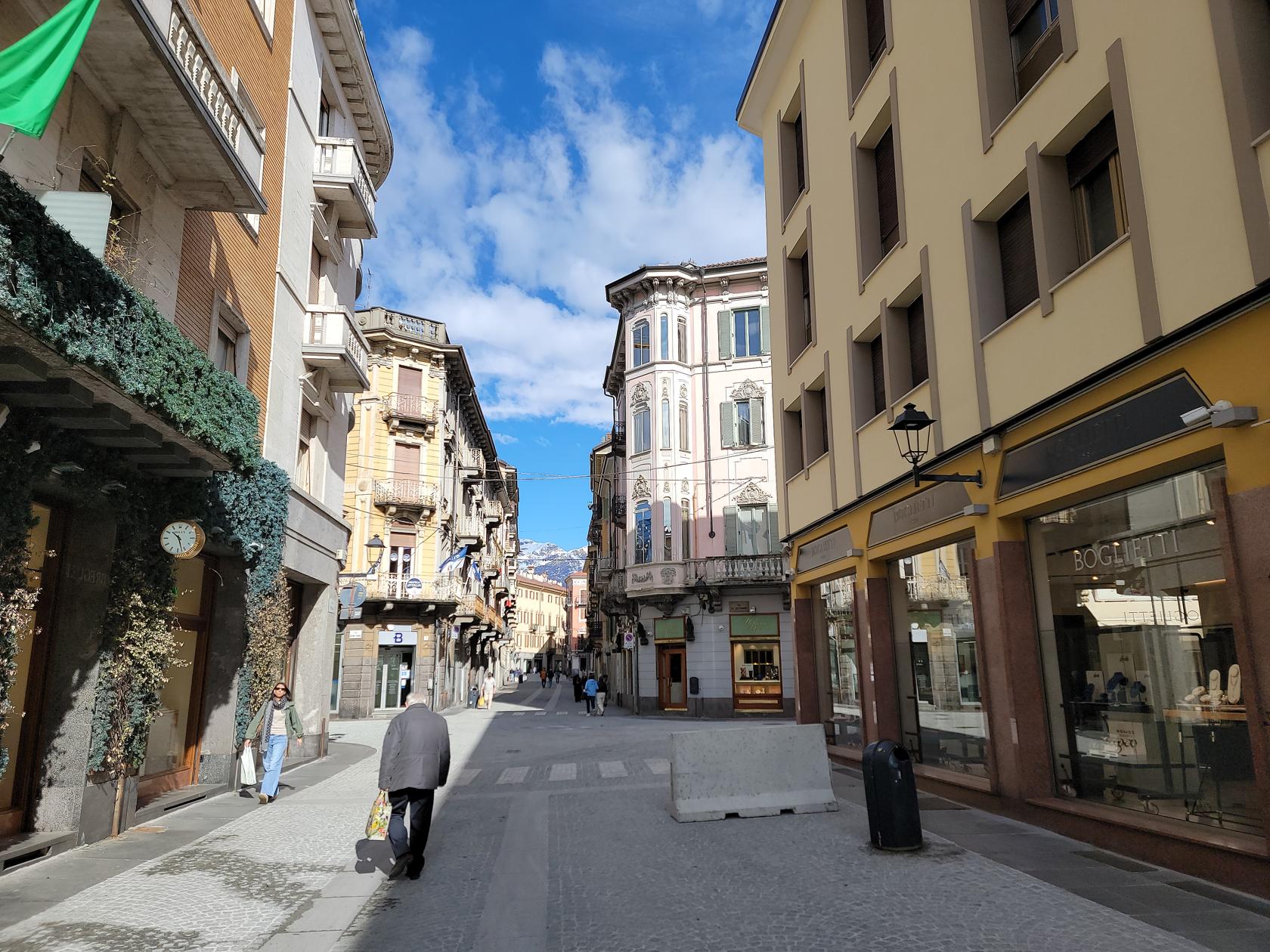
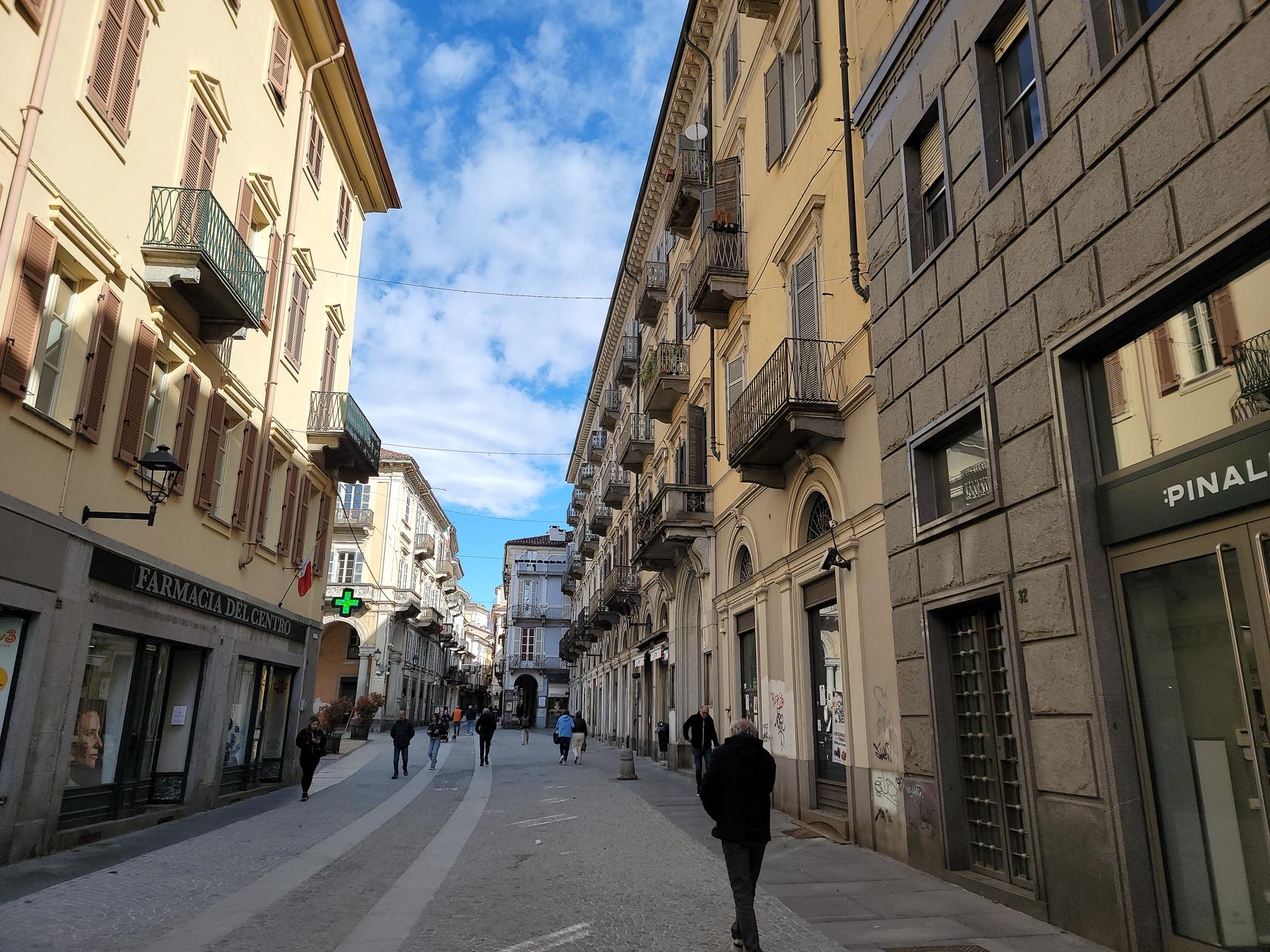
A former eminent place where most woolen products came from in Italy is the city of Biella. As far back as the thirteenth century, the city has been known for its fine wool fabrics and products. However, with the recent globalization of products and competition of the early twenty-first century, many of the factories and businesses associated with that industry have gone away, creating what some might term – the woolen woes.

Biella

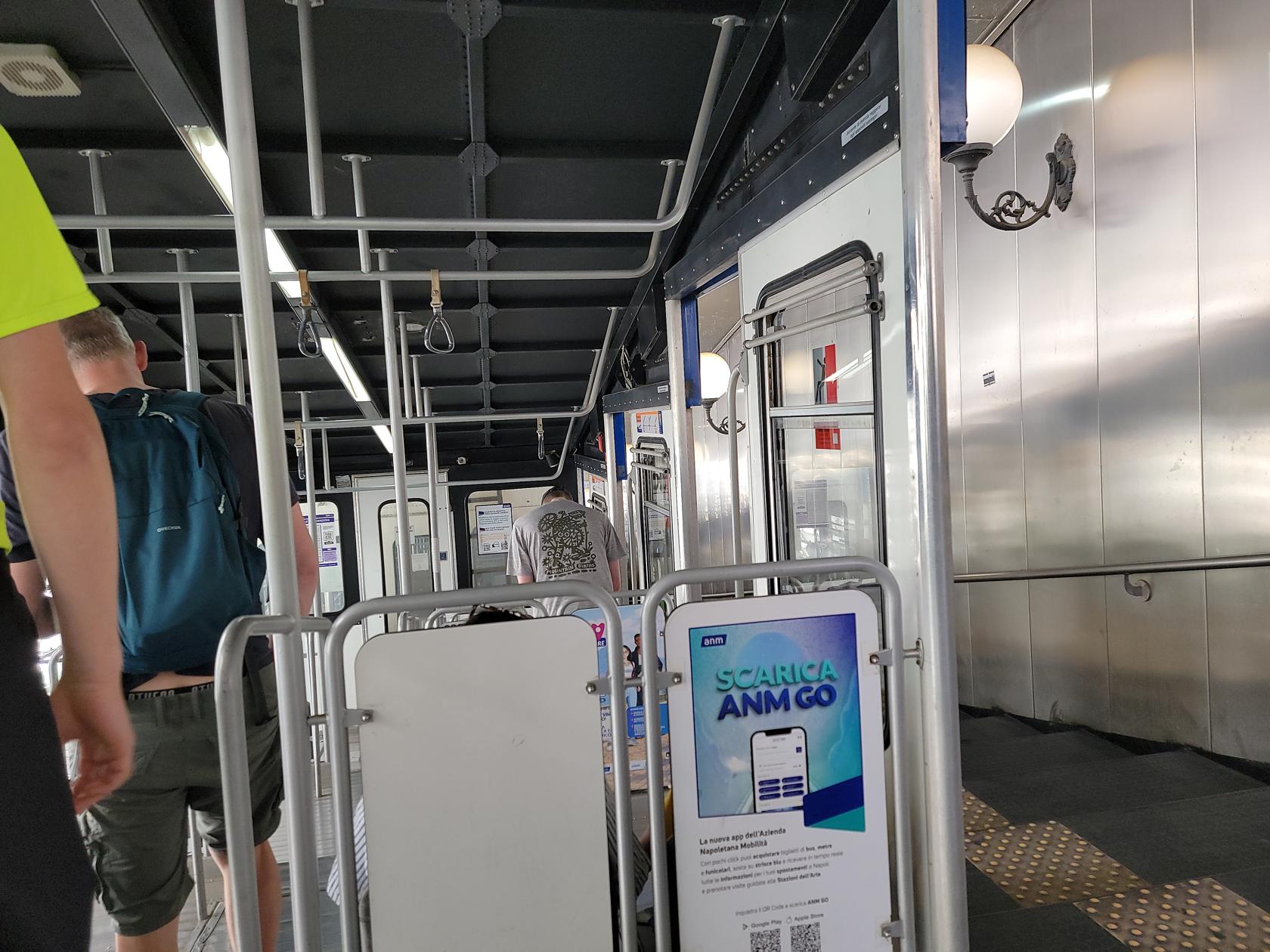
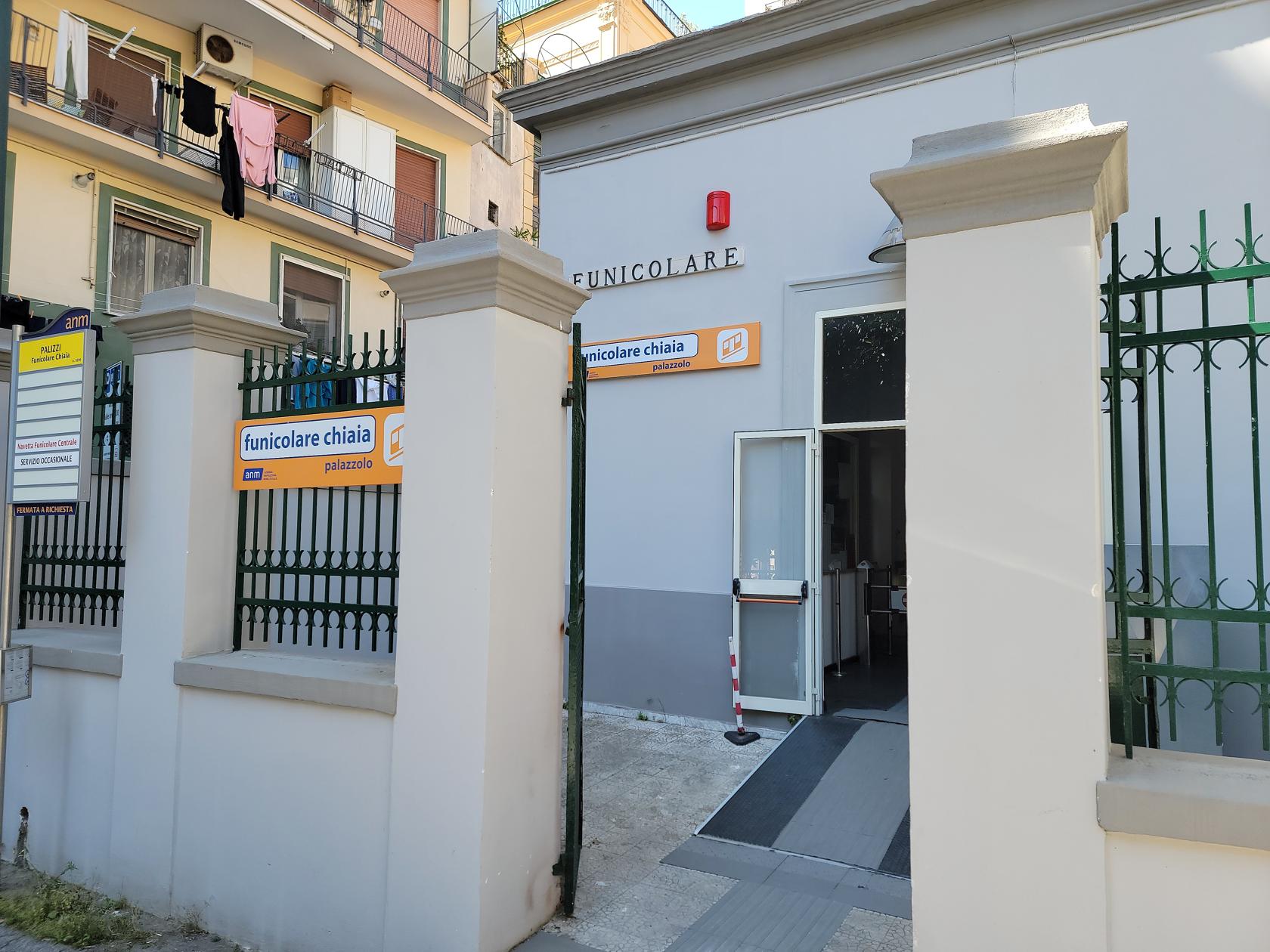
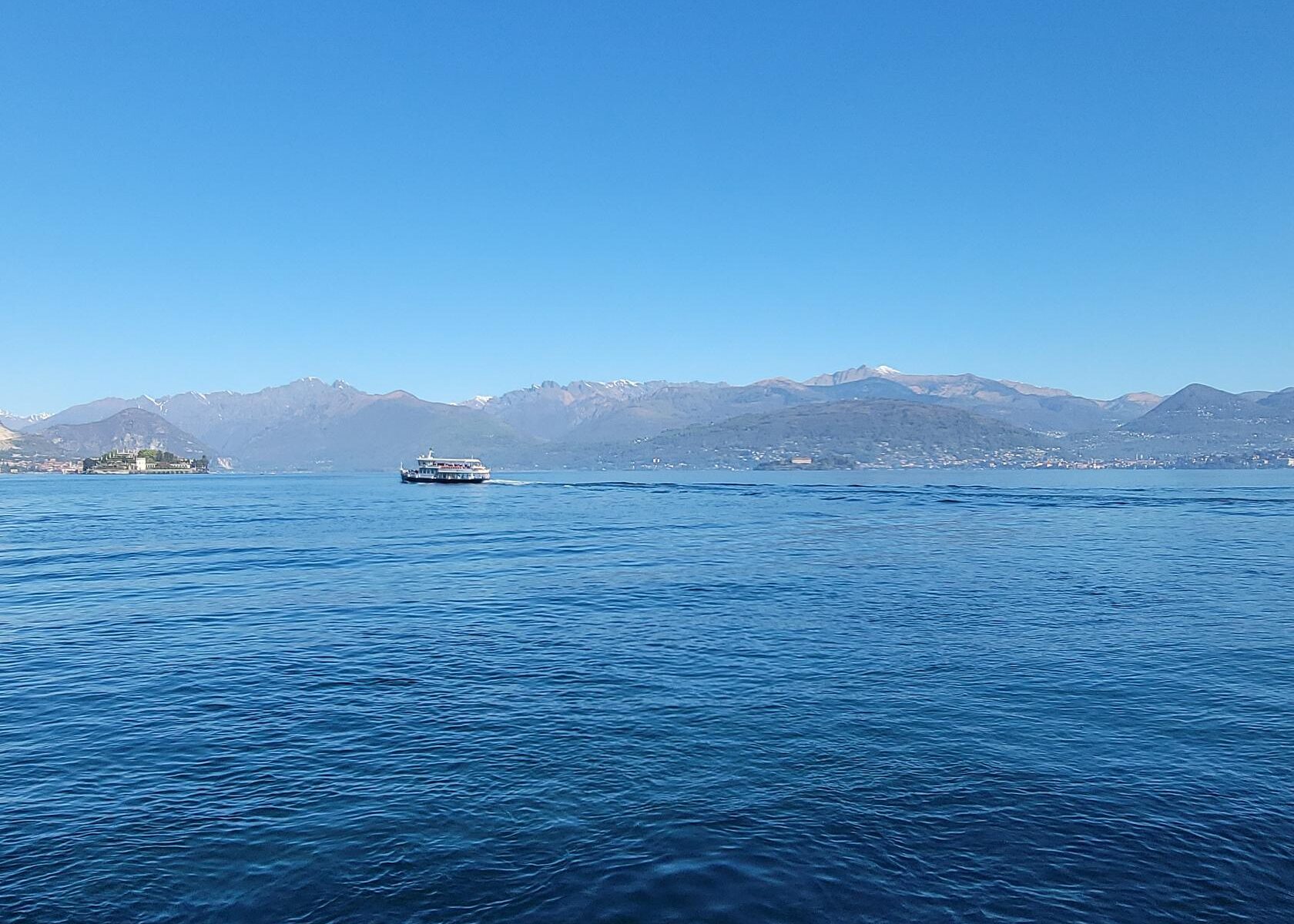
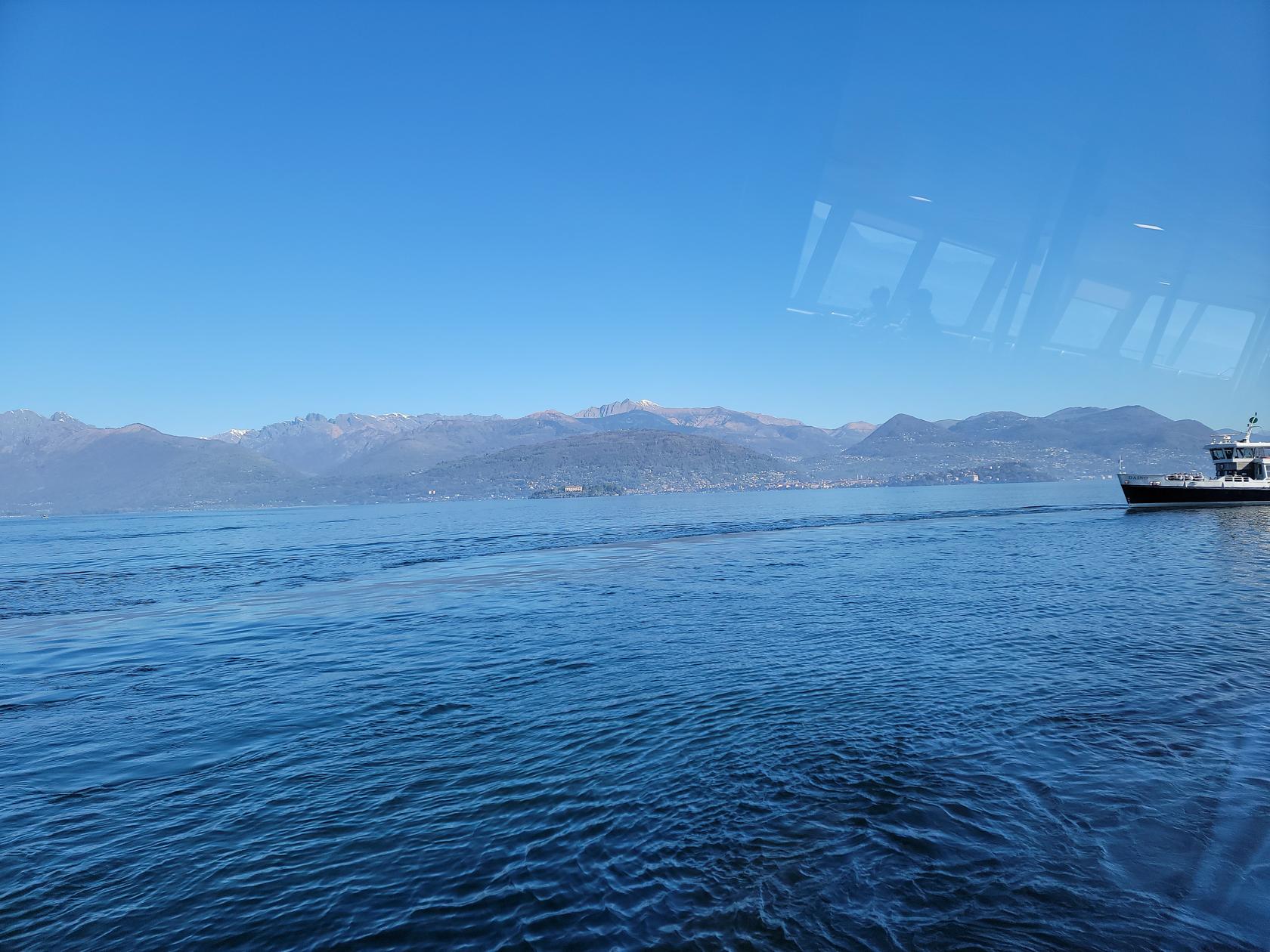
The city sits at the foot of the eponymous mountain range of the Biellese Alps. It has been so affected by the wool industry’s decline and other issues, that it is considering cutting back on some municipal services, including the possible cessation of the funicular, or the Funicolare del Piazzo, which was severely damaged by past weather events.

Getting There

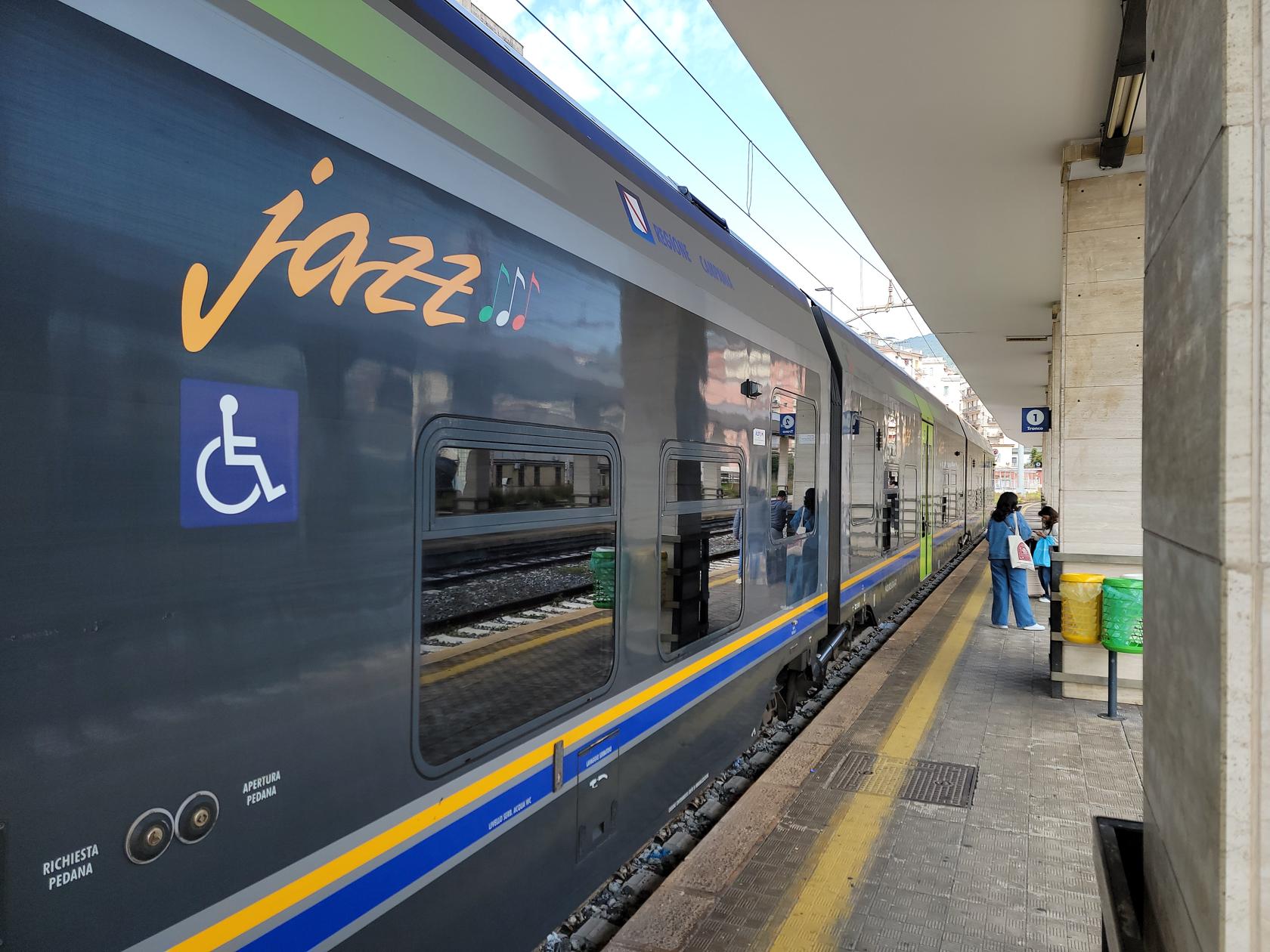
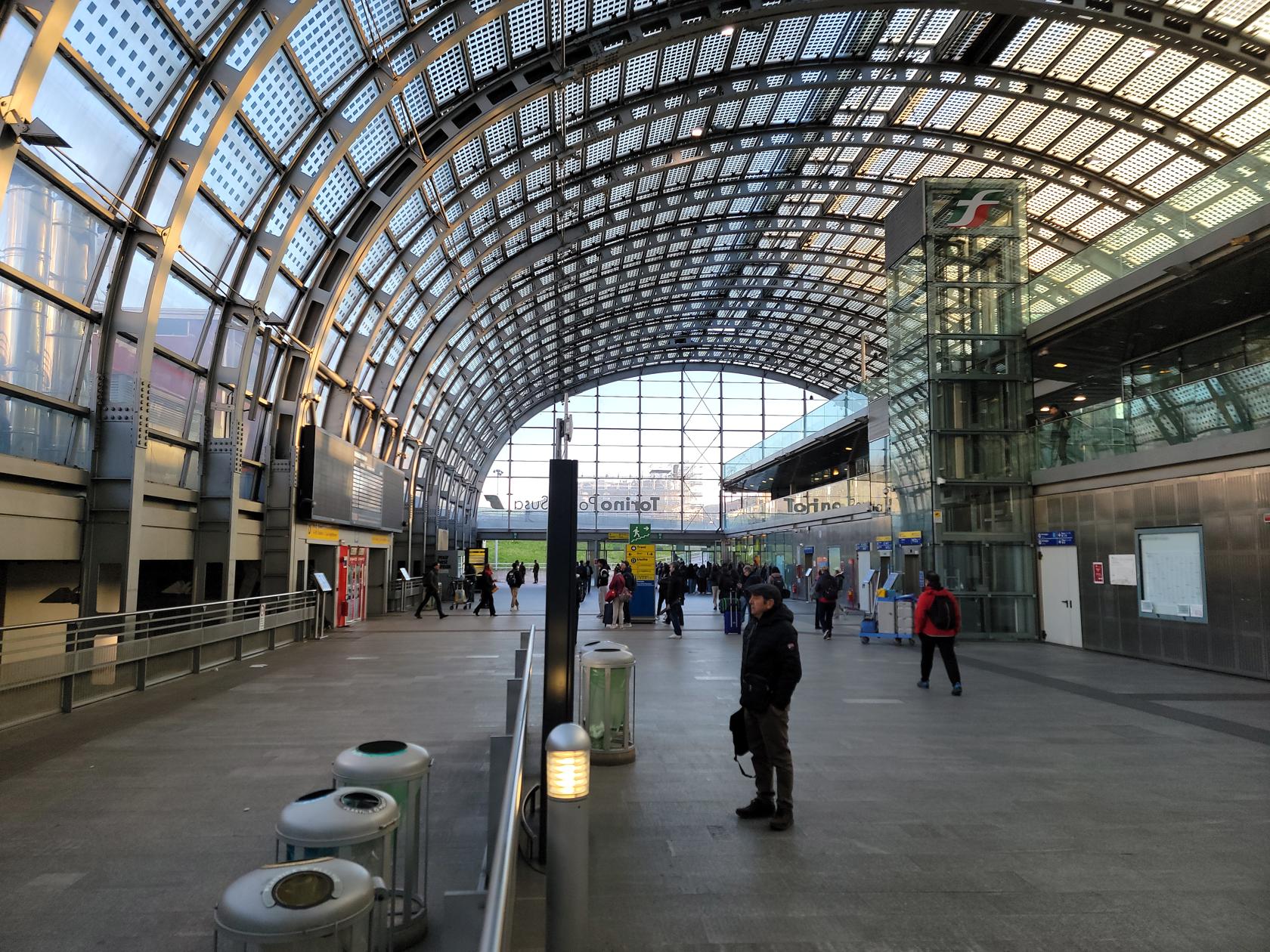
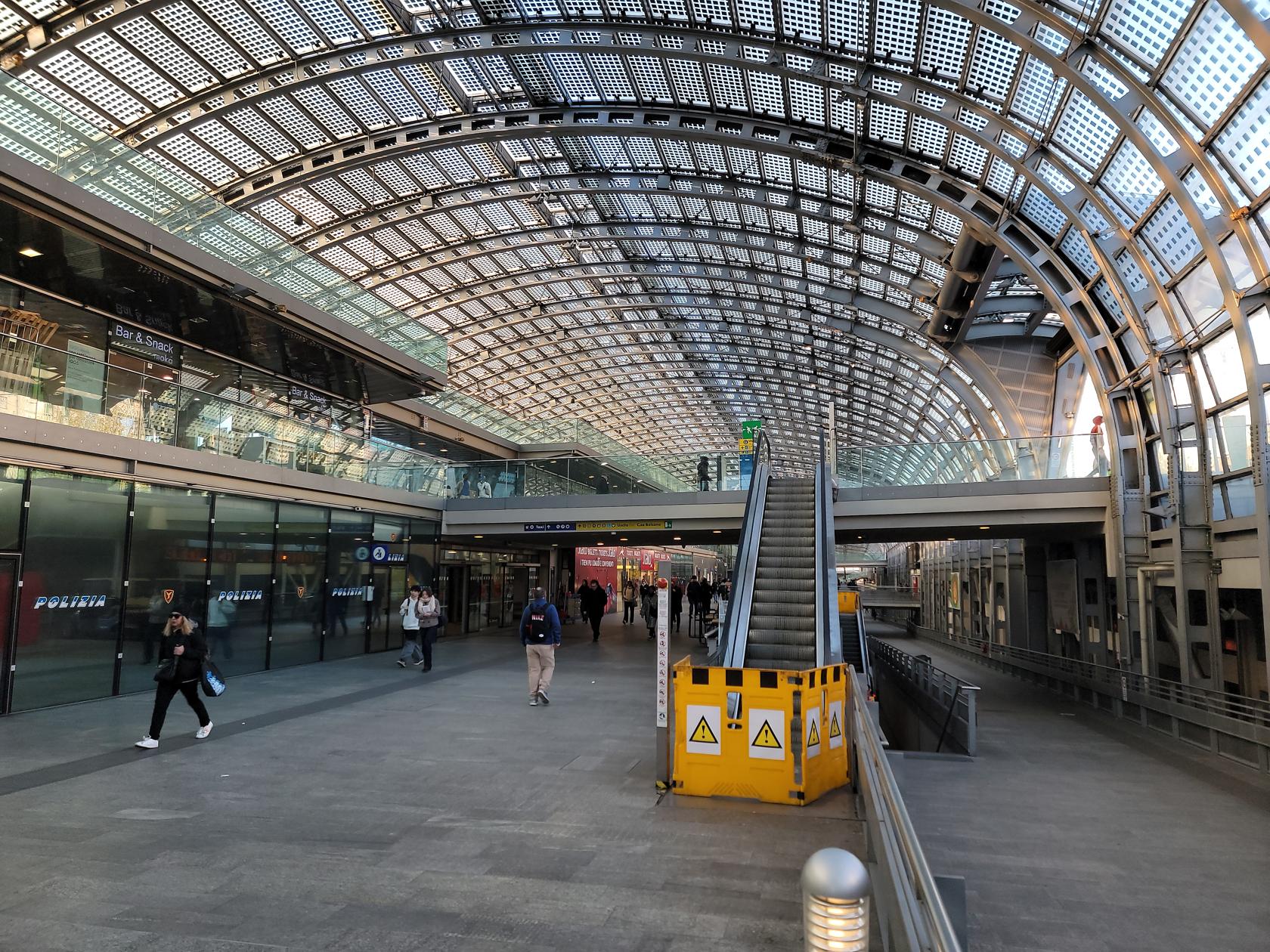
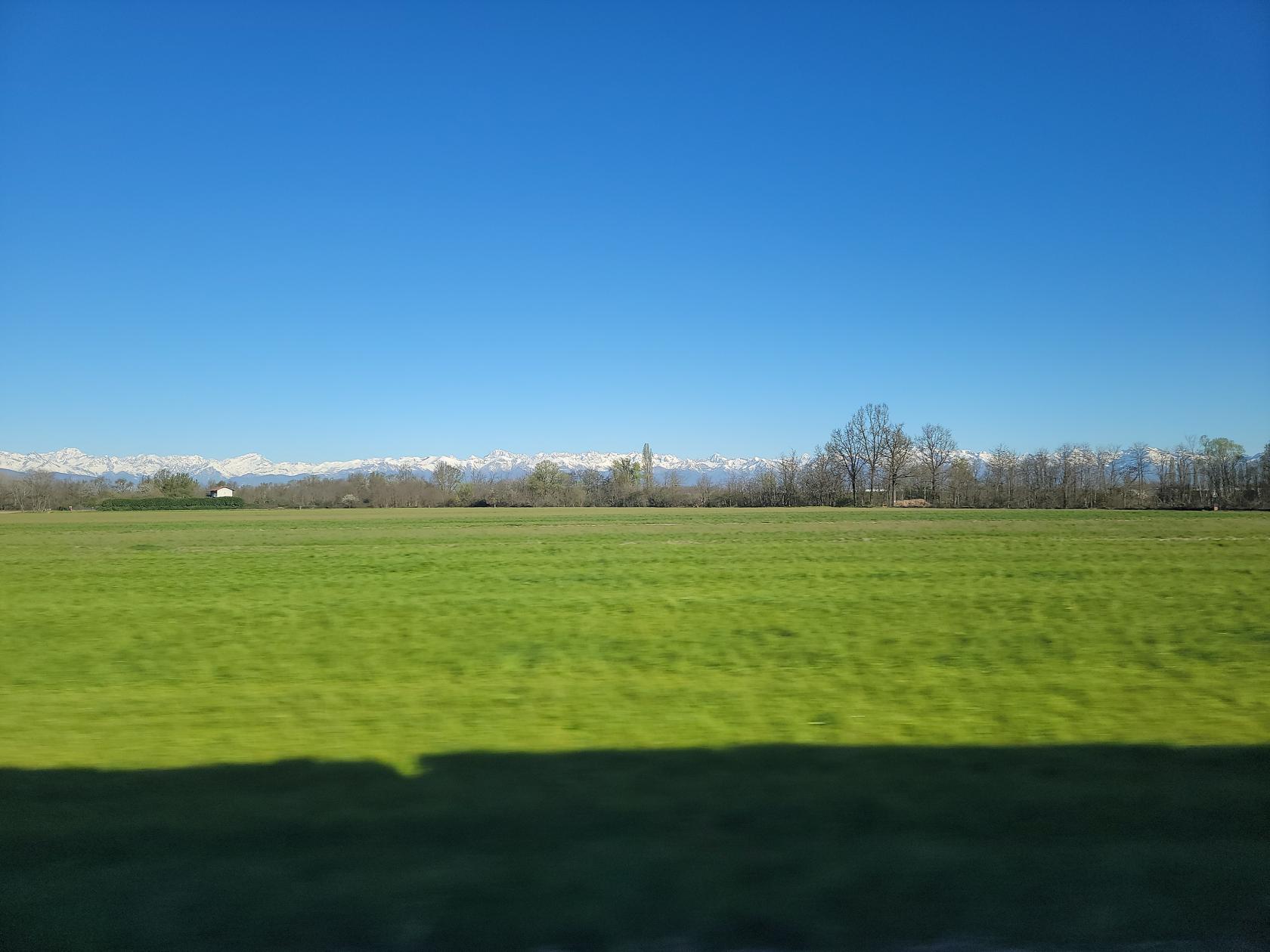
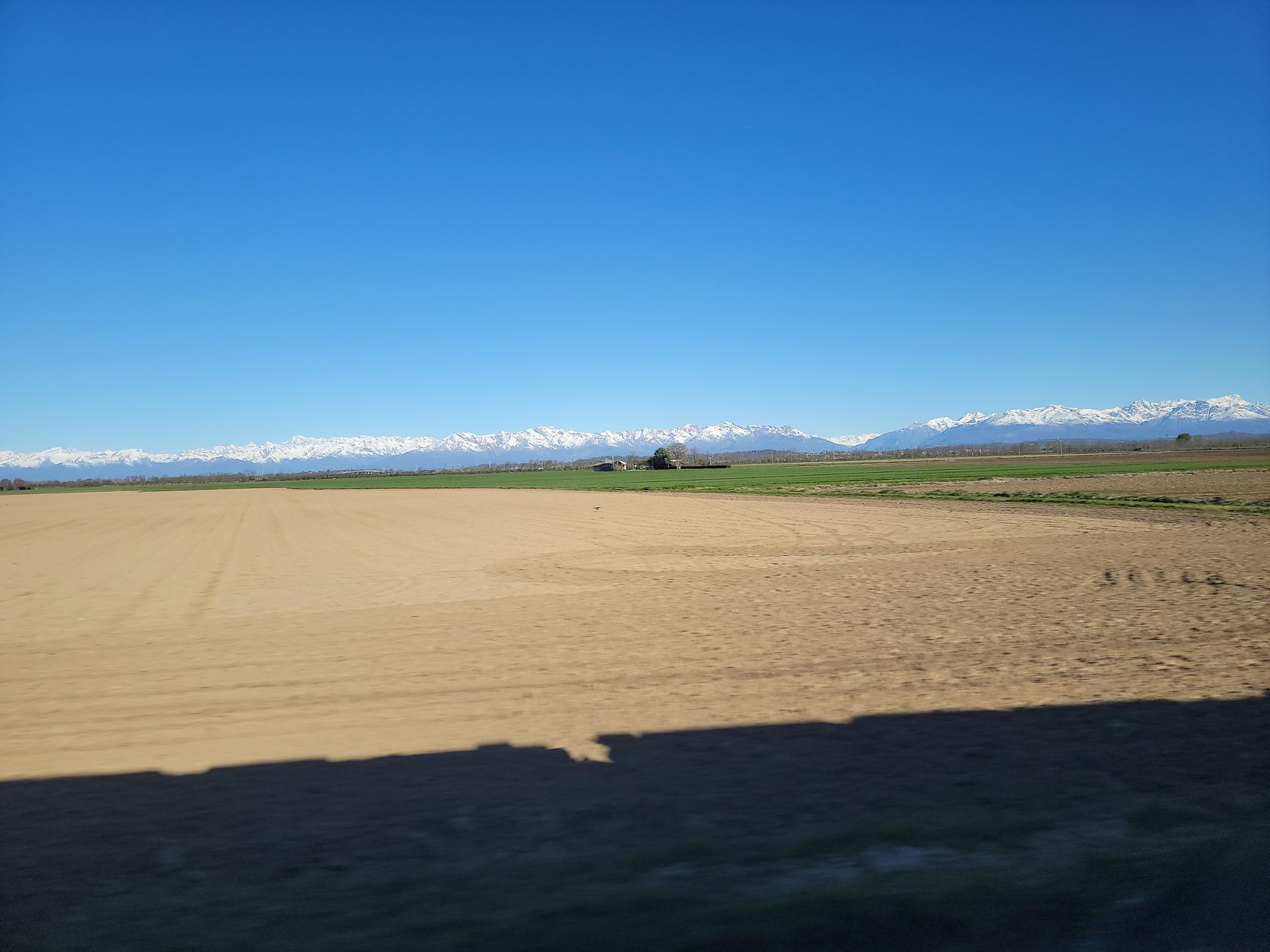
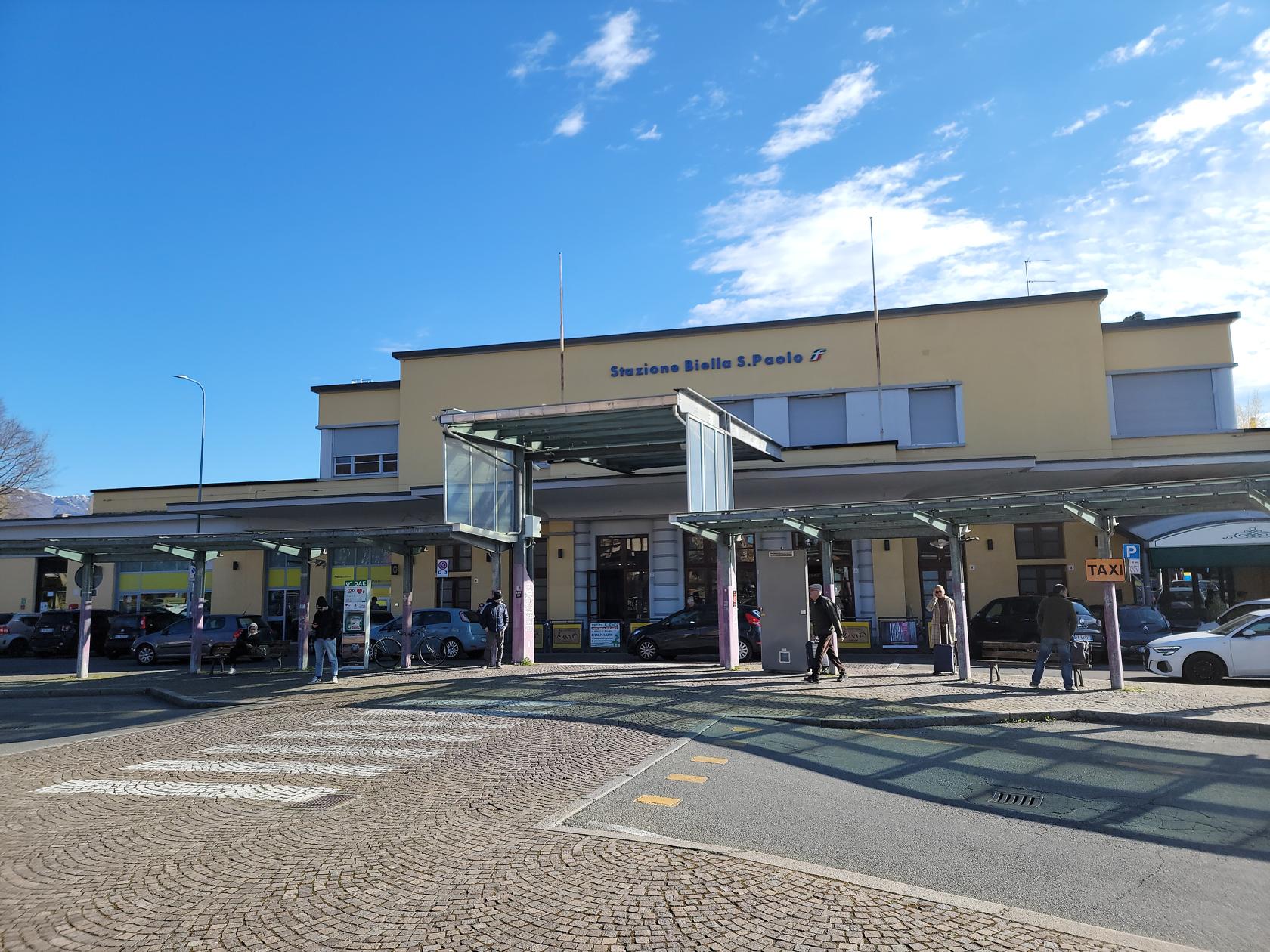
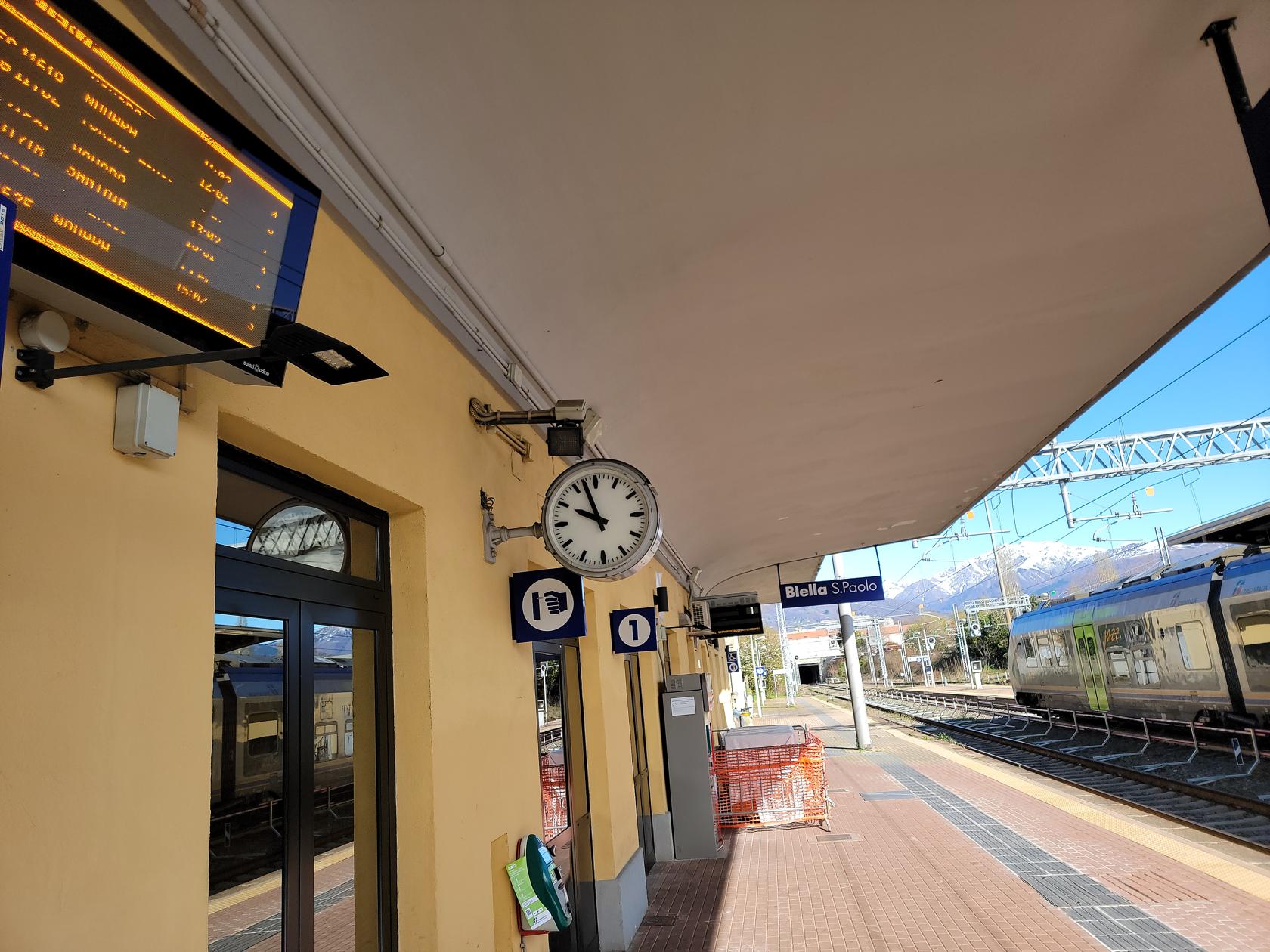
We took the train from Turin’s Porta Susa to Biella. It is easy and very cost effective and only takes about an hour.

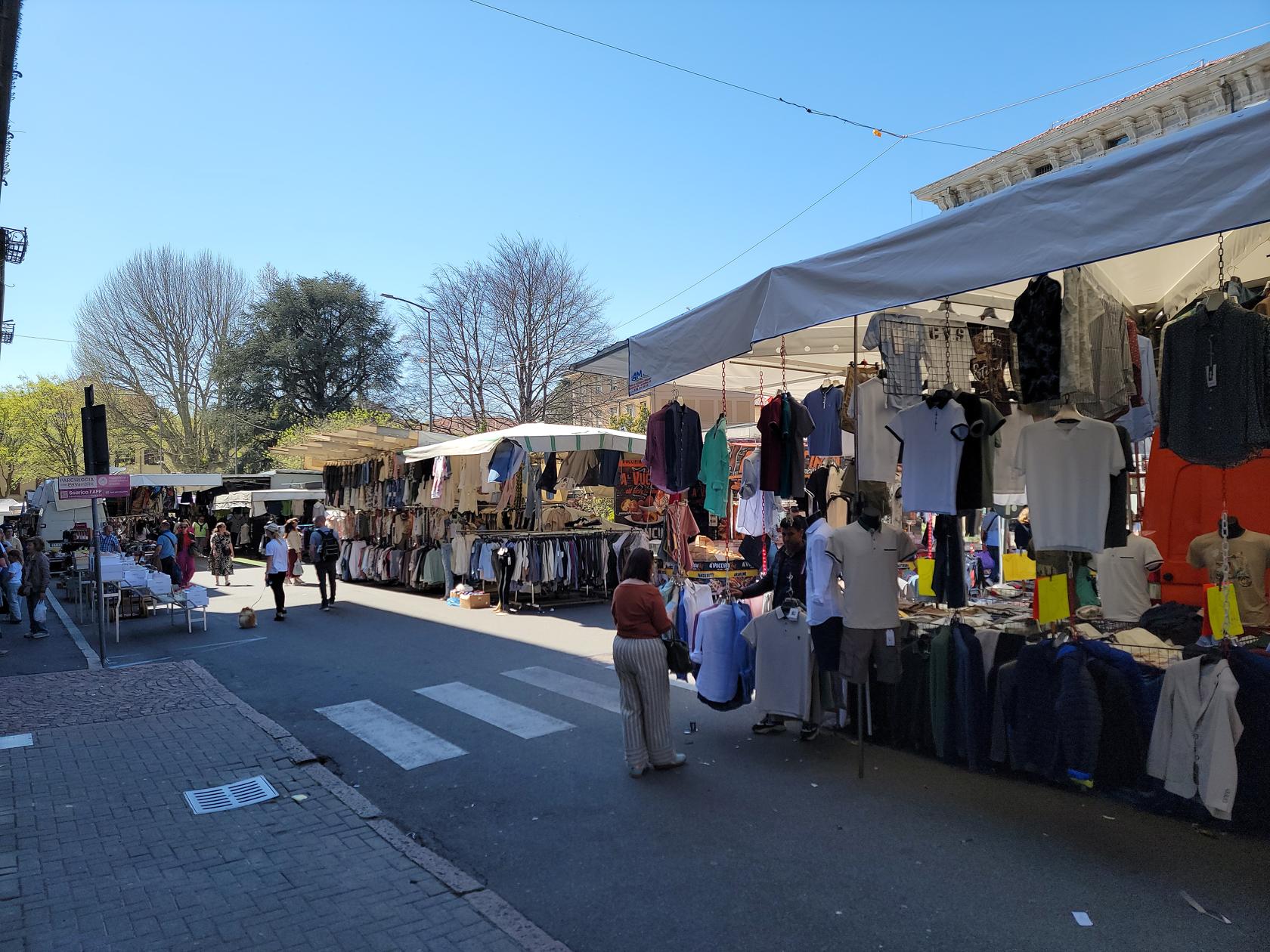
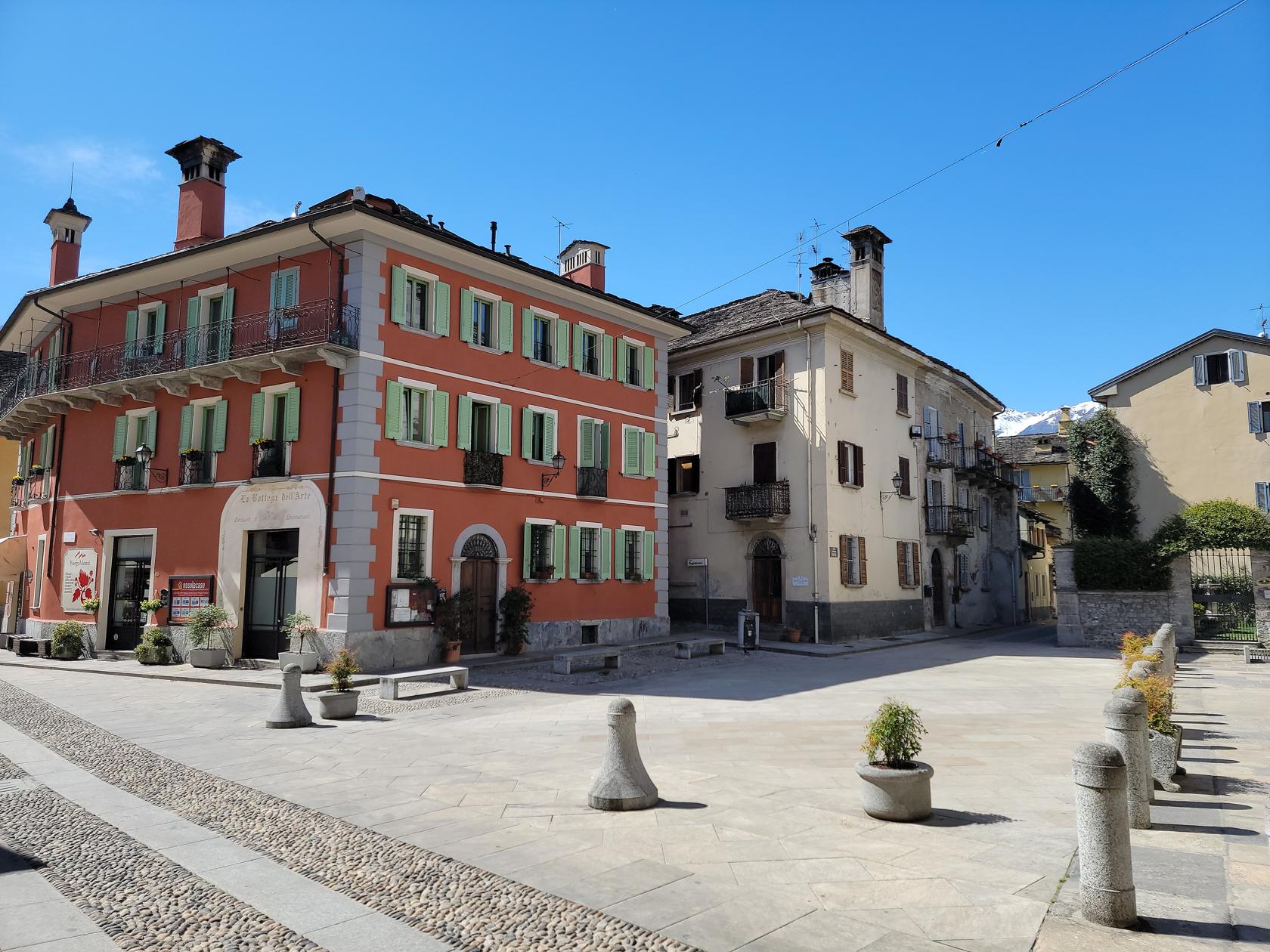
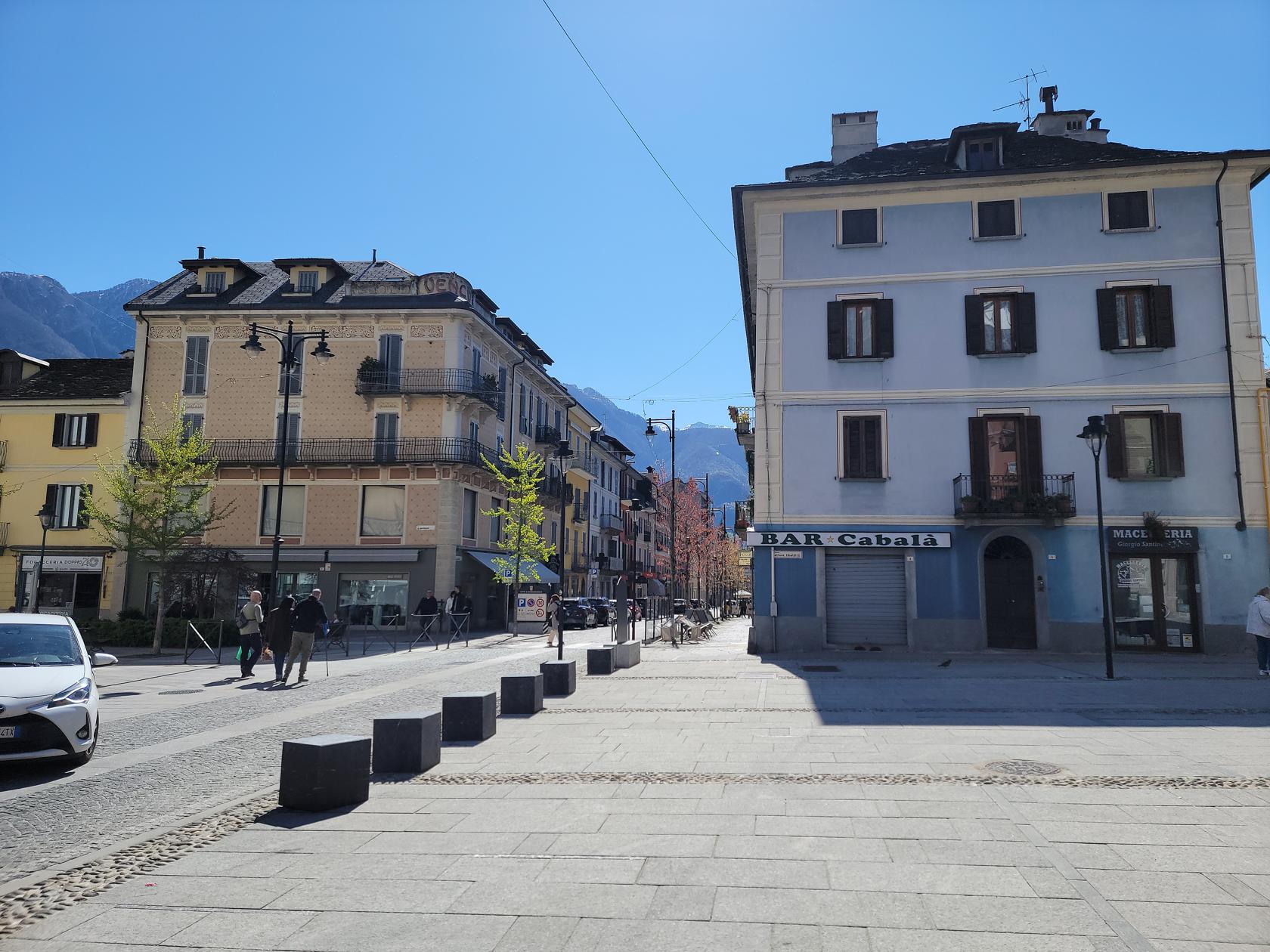
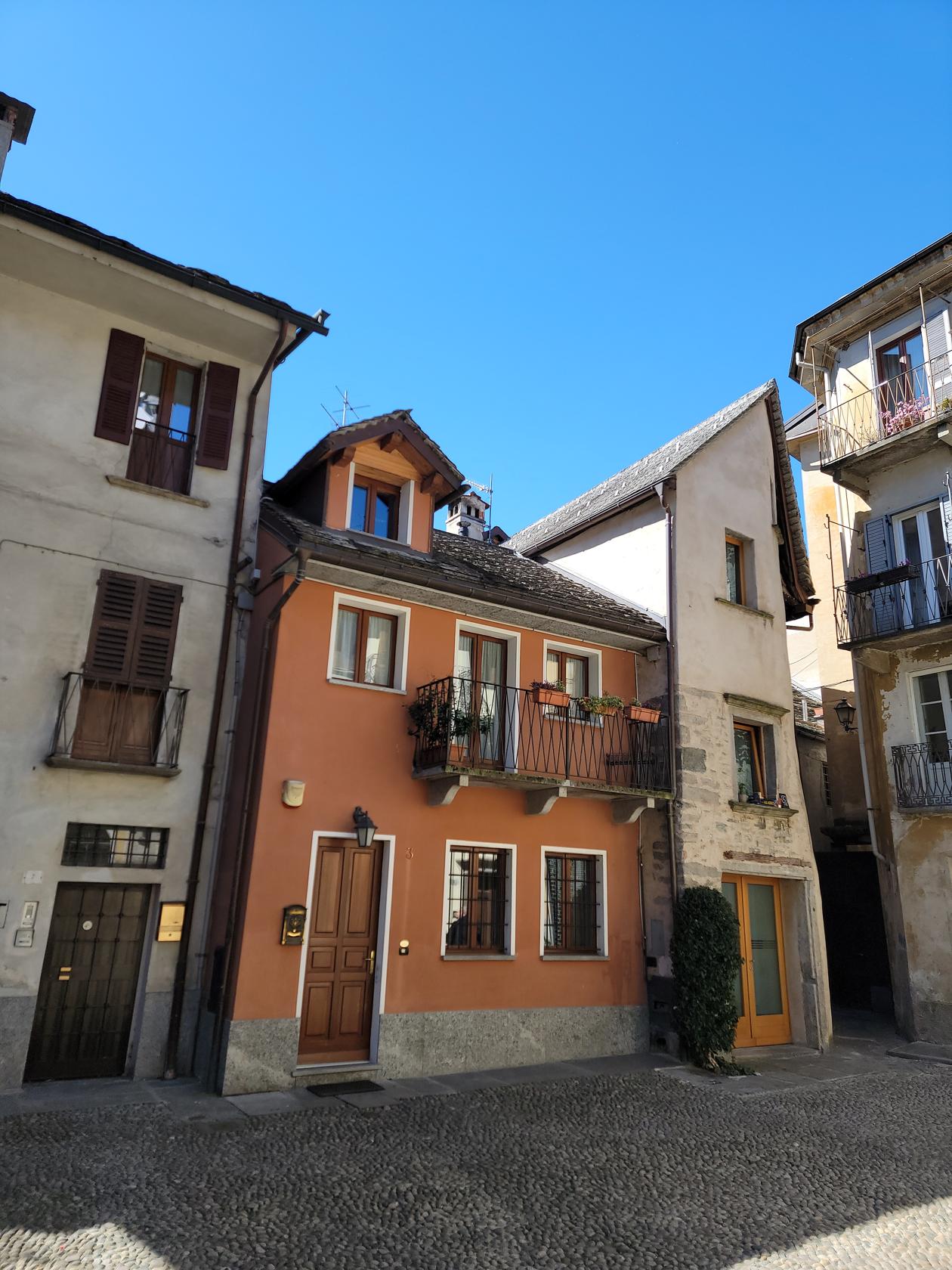
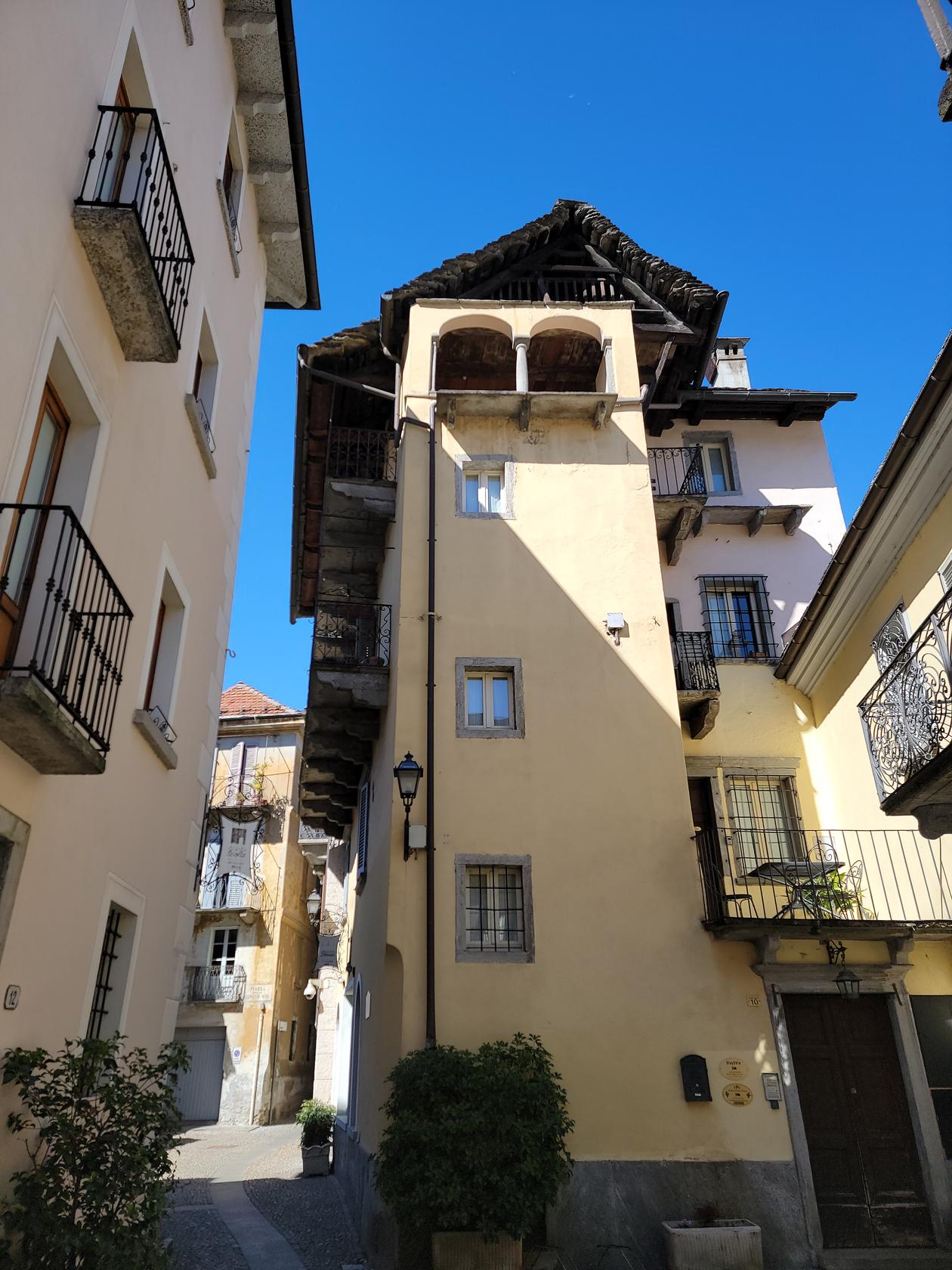
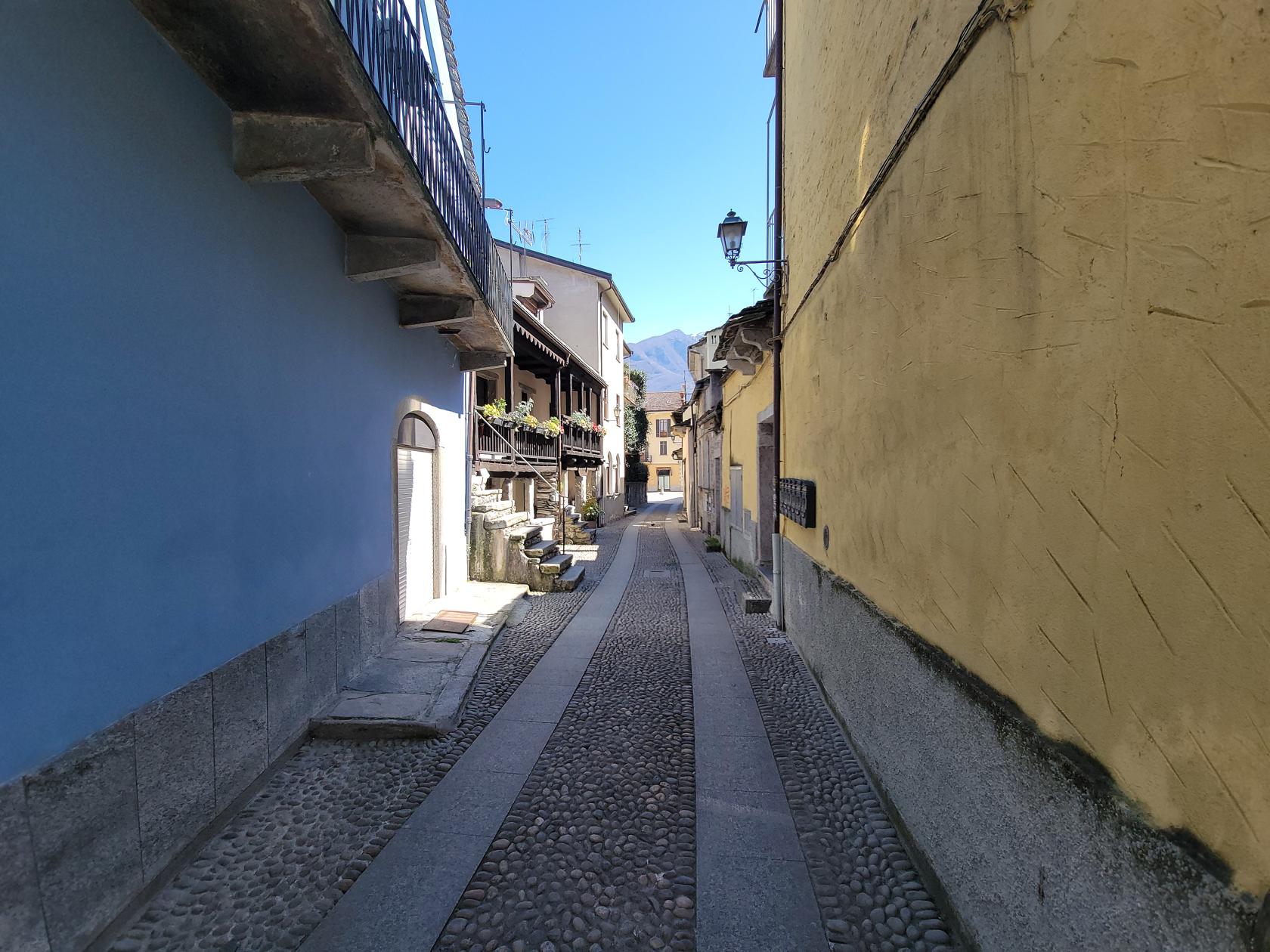
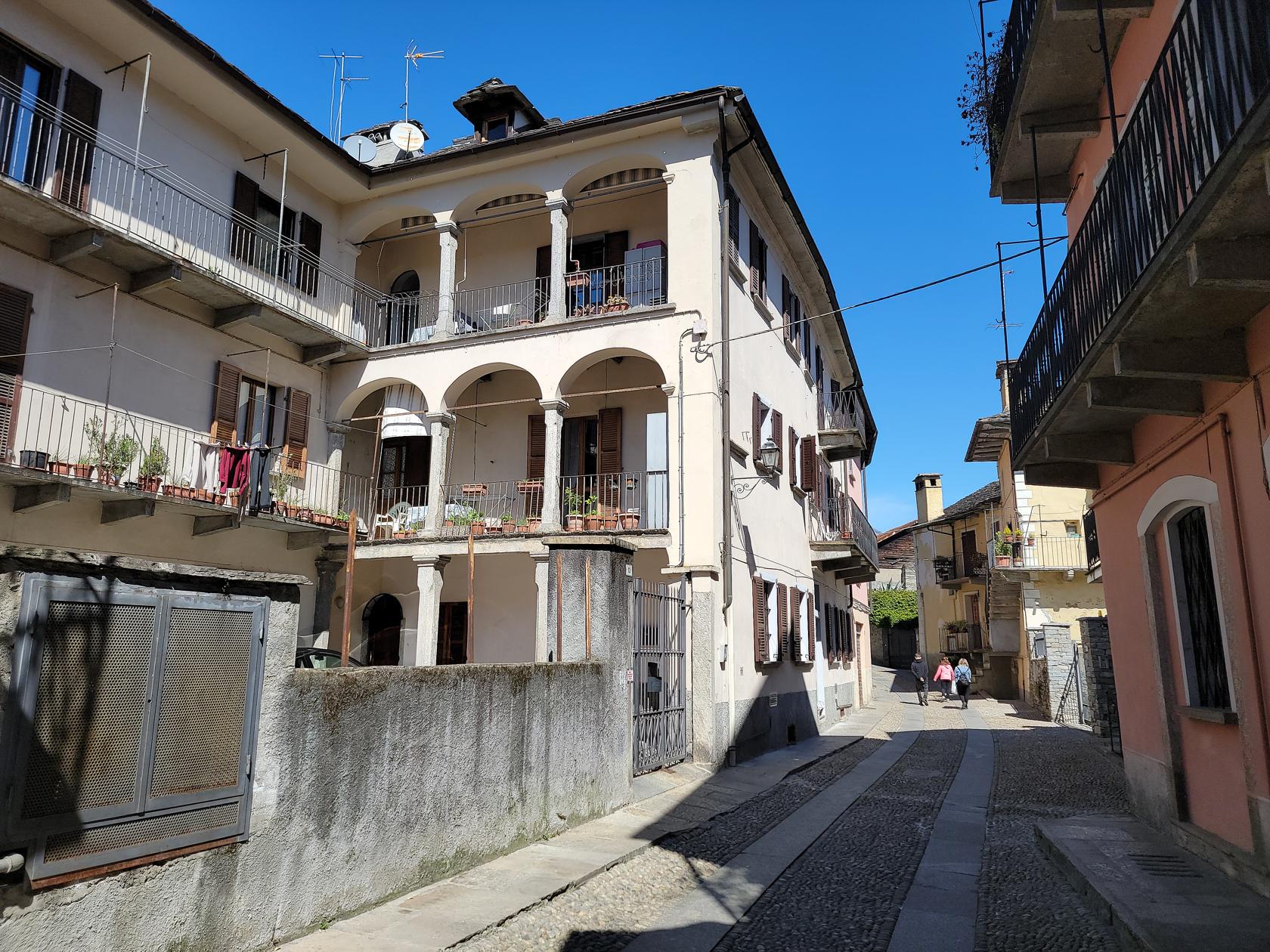
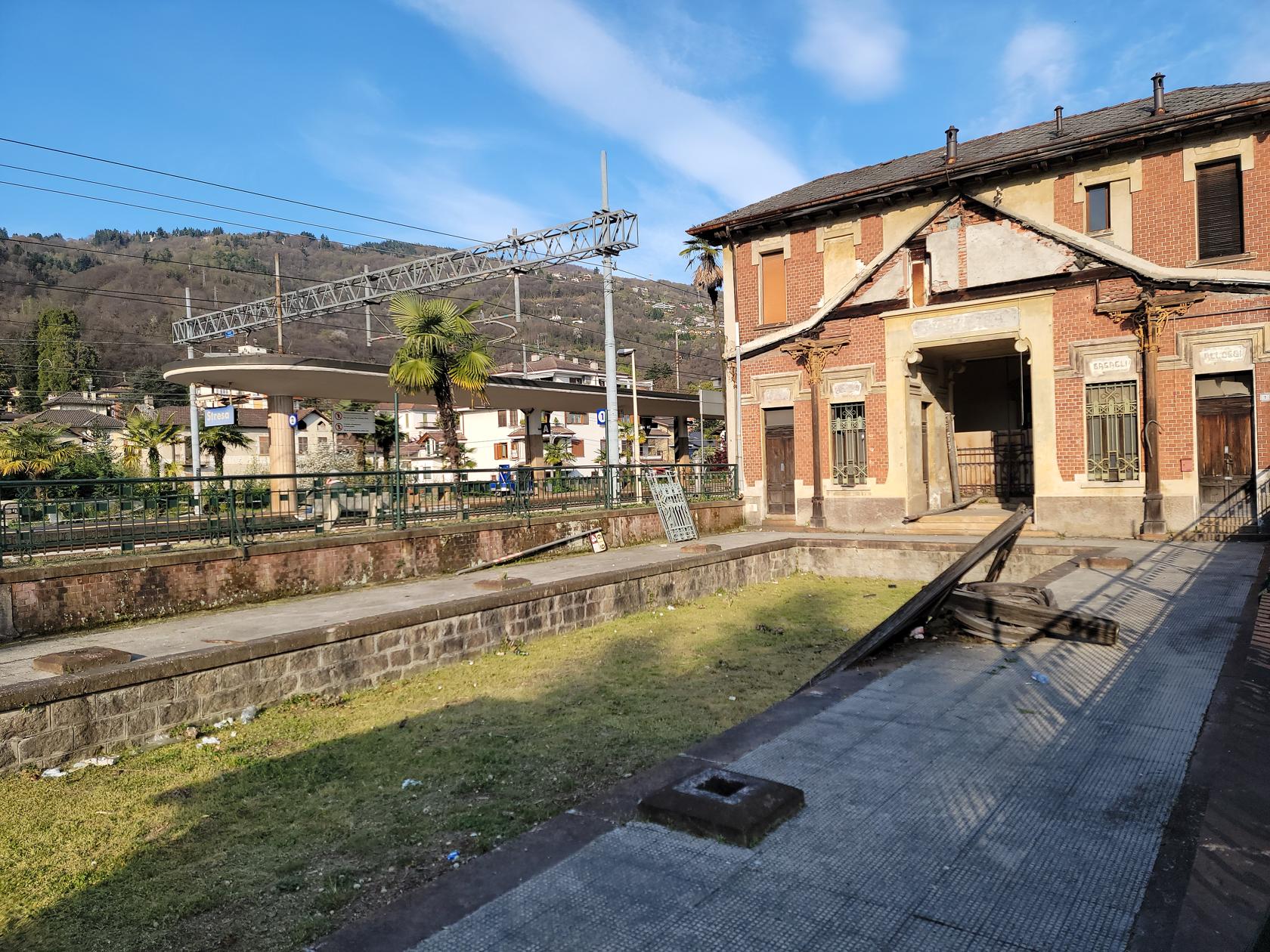
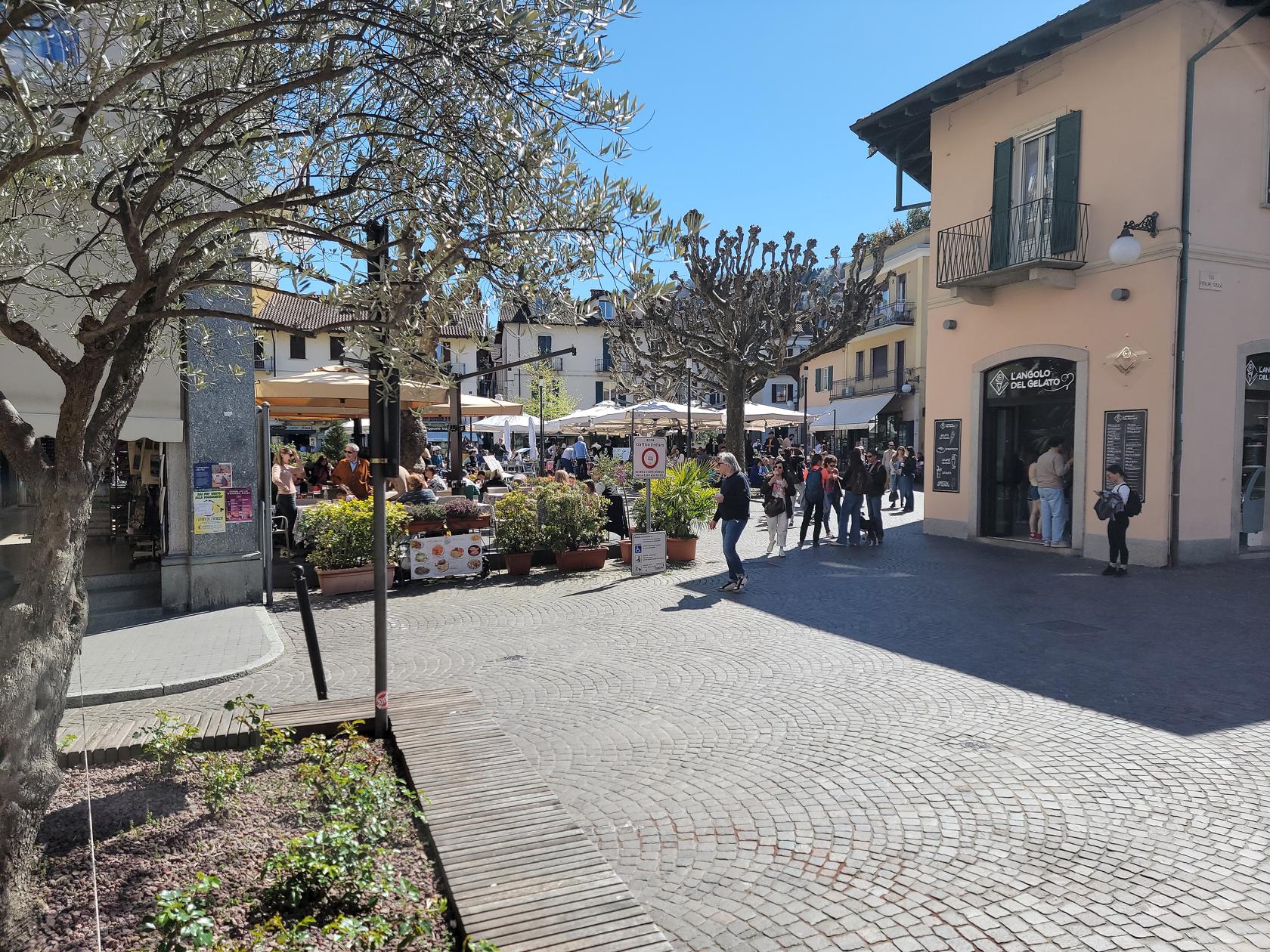
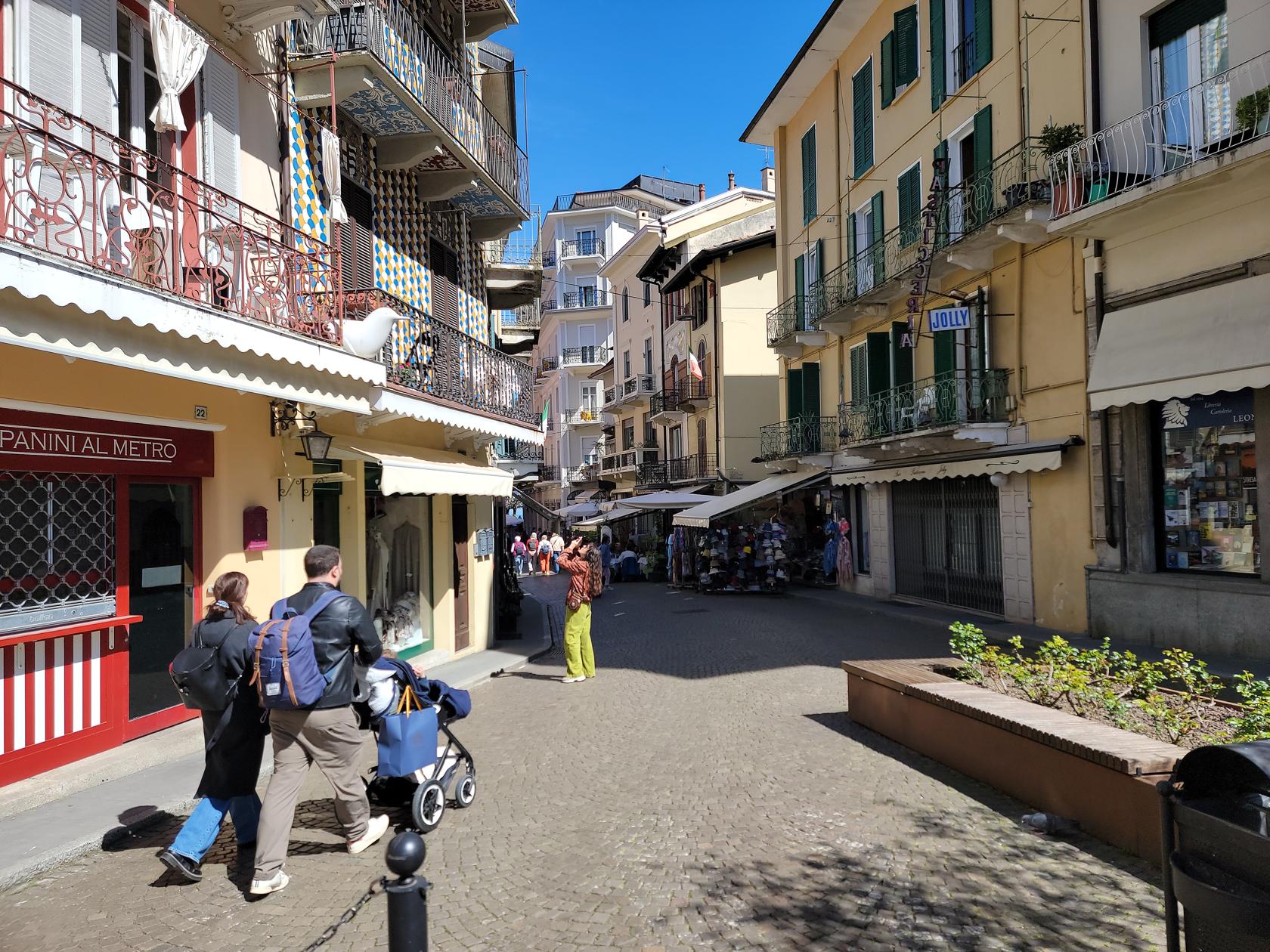
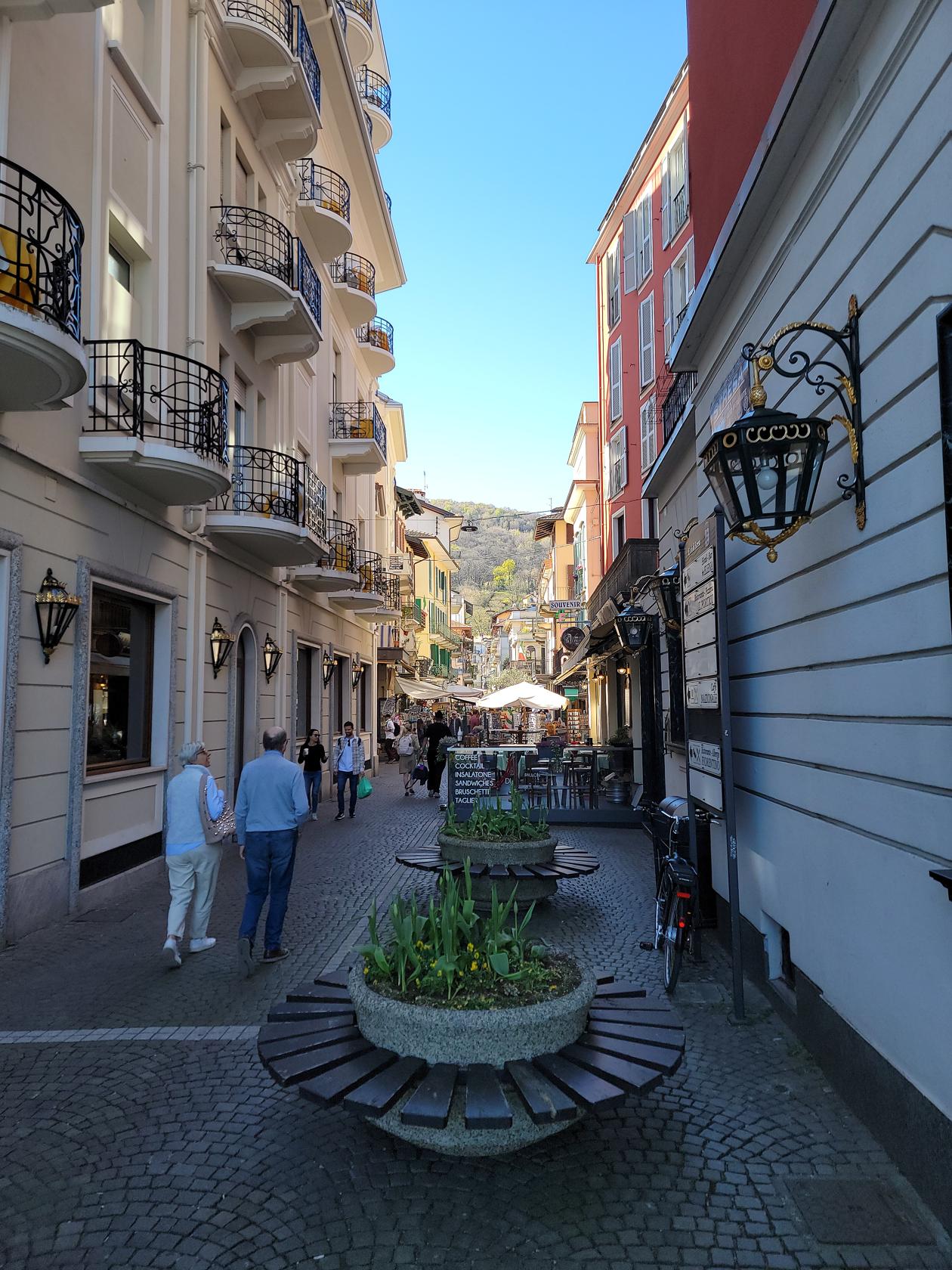
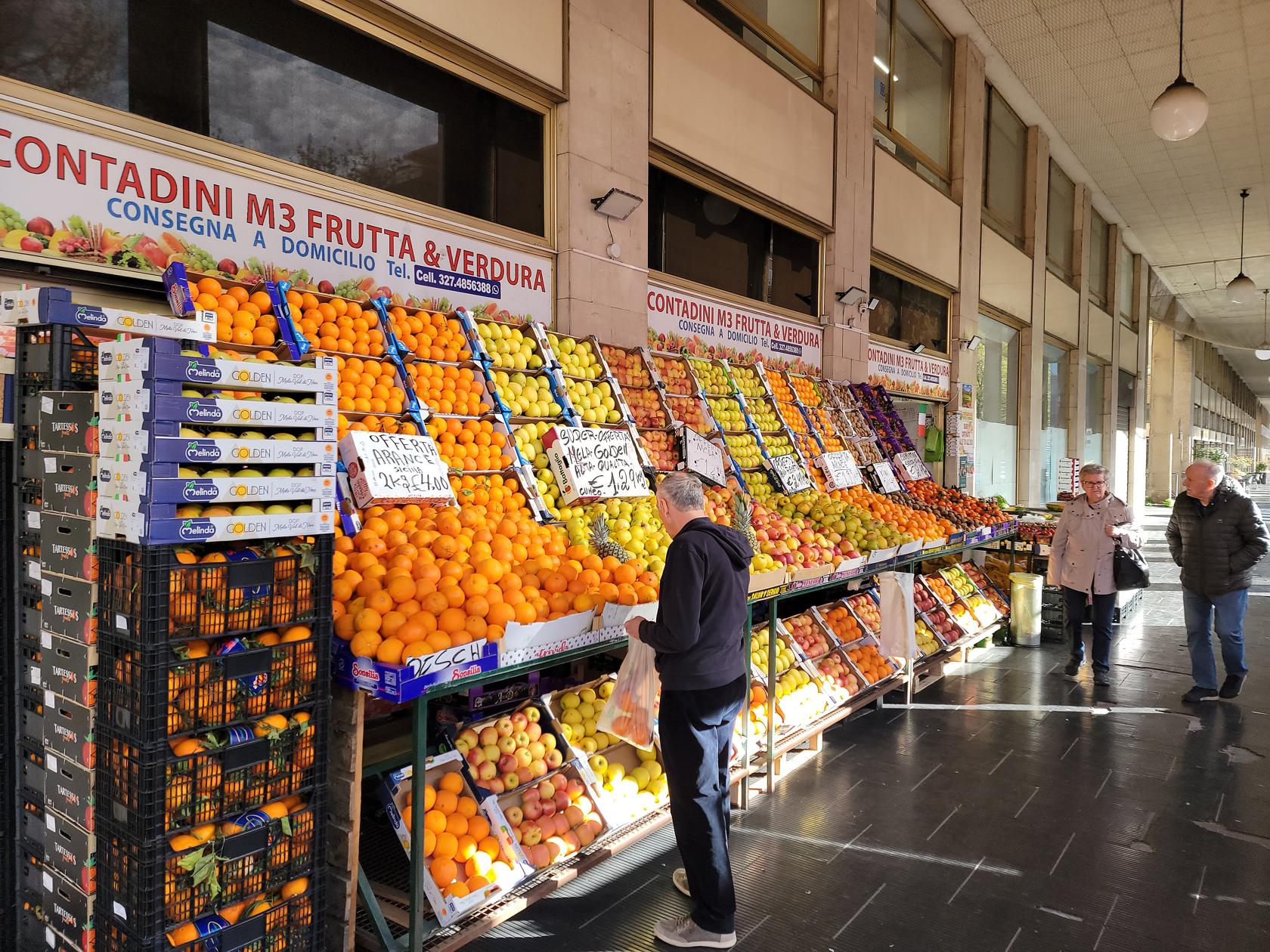
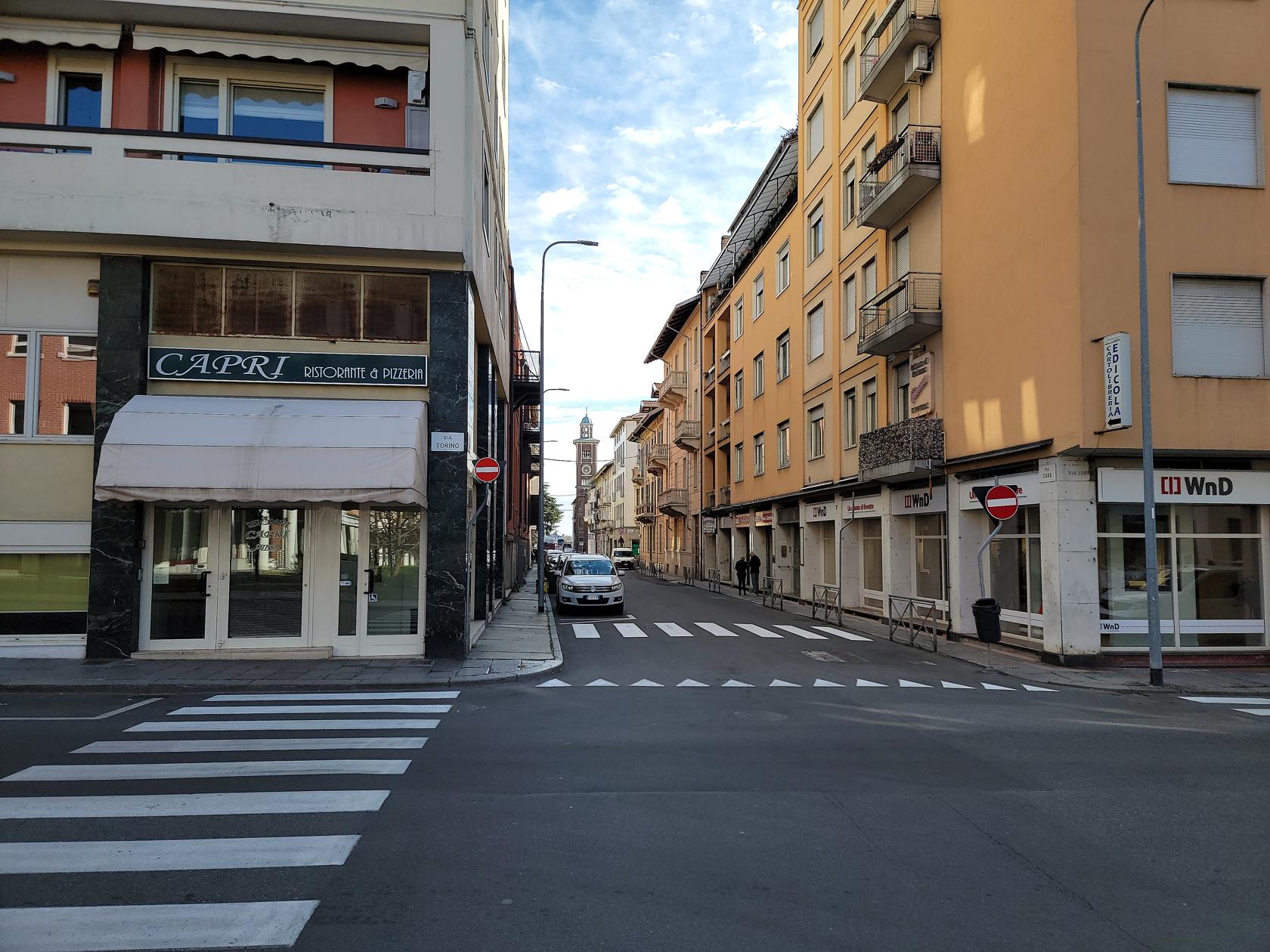
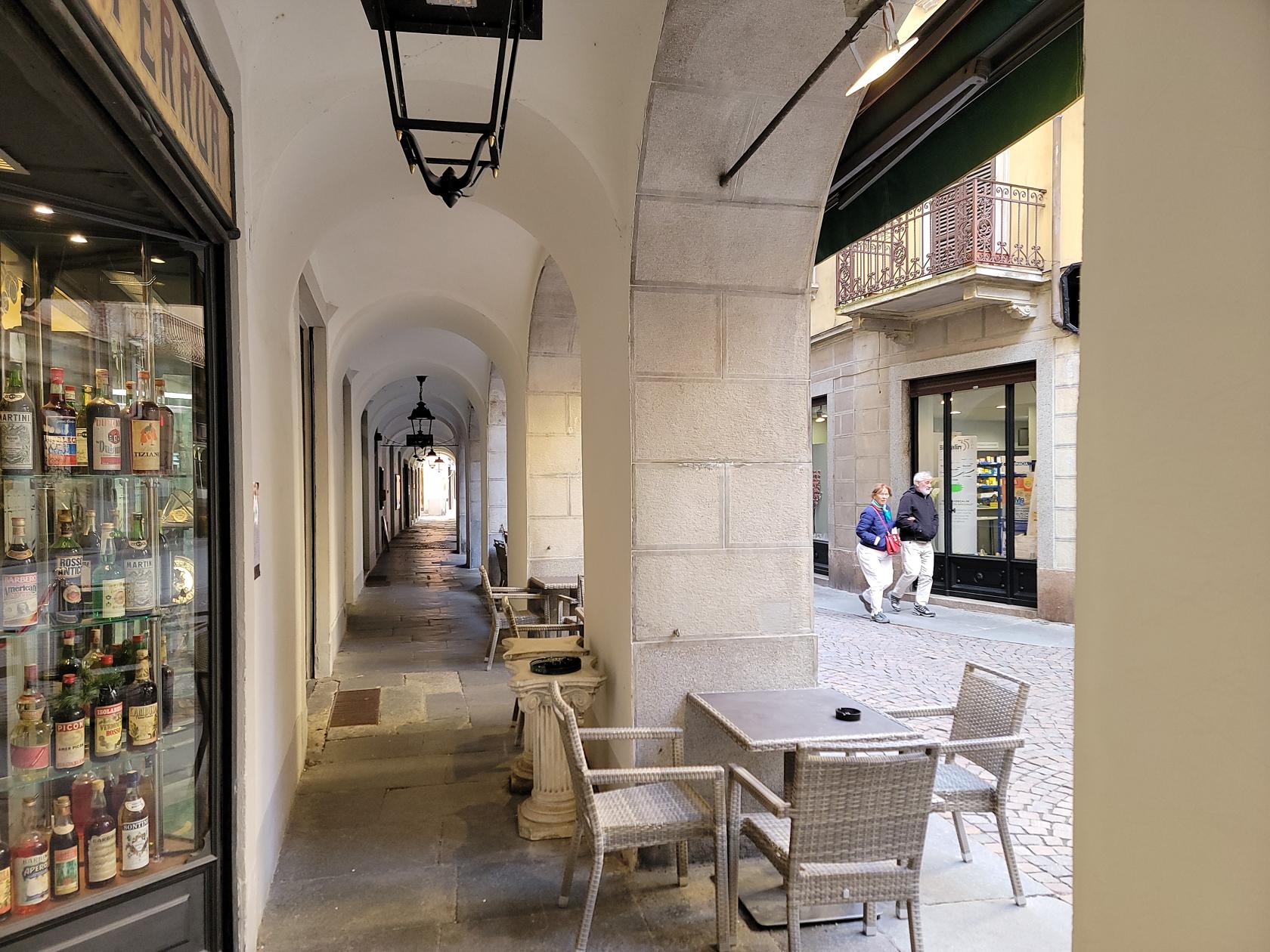
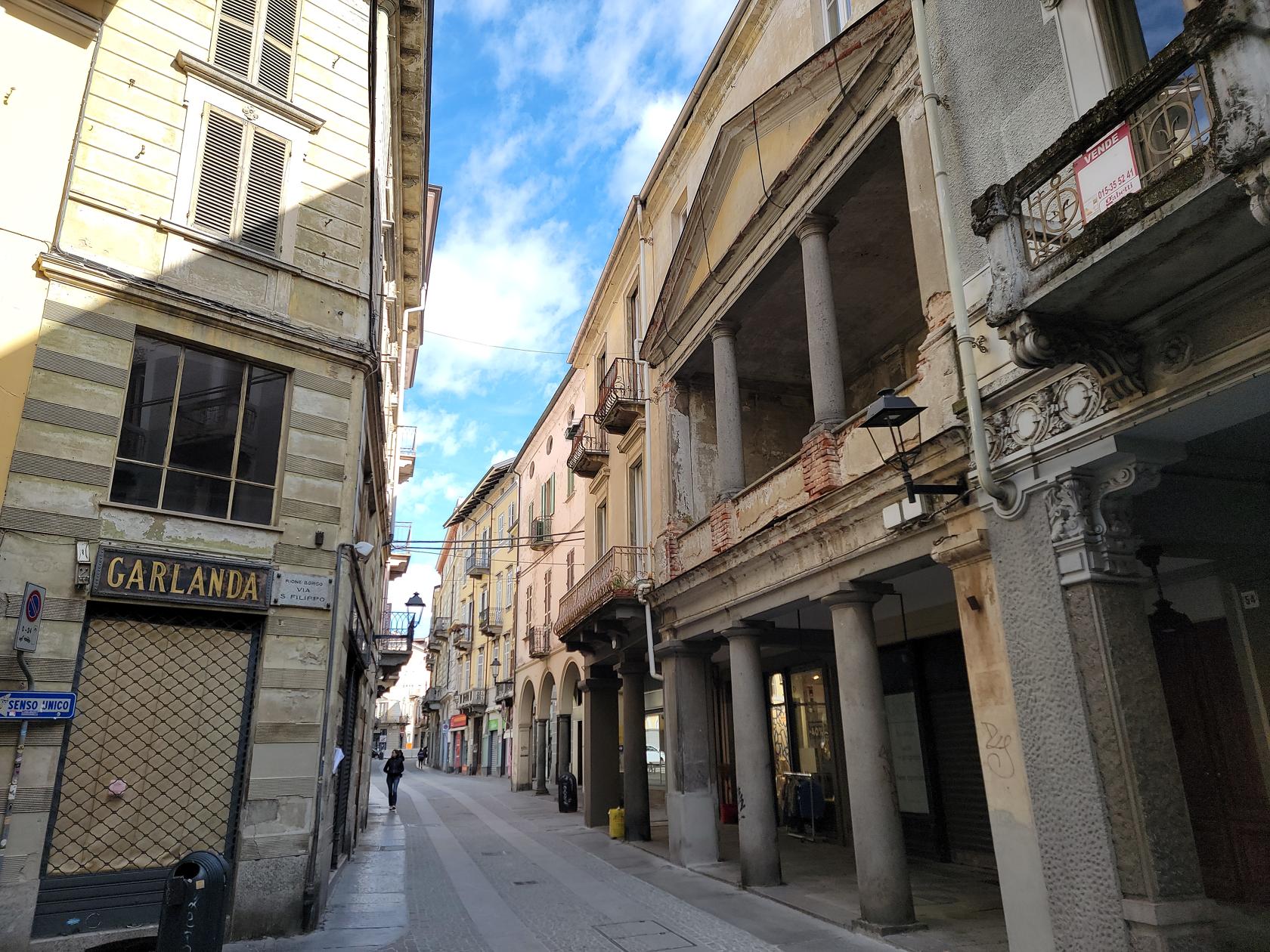
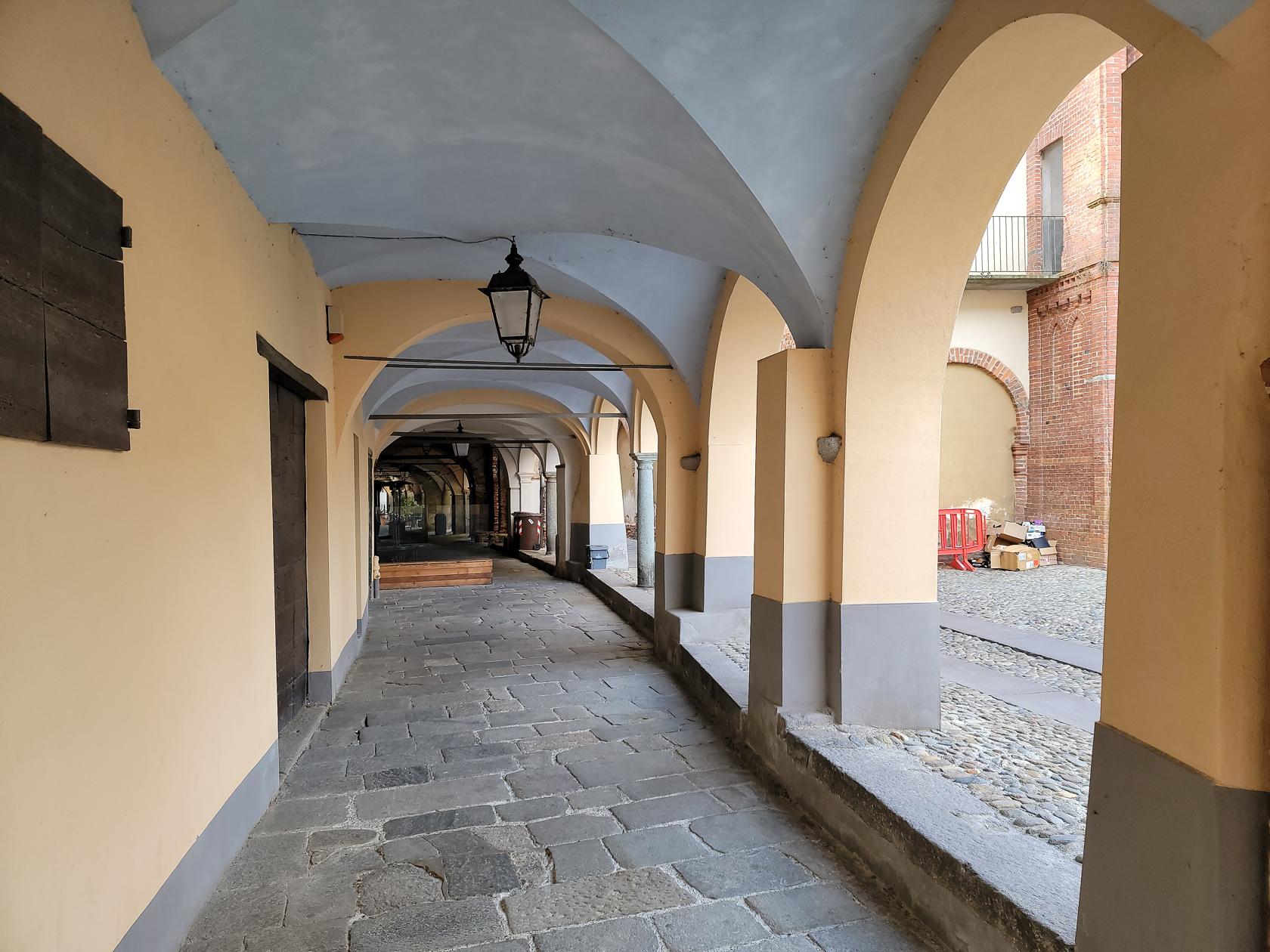
Though a very liveable city, it is fairly quiet, but we found lacking in some amenities. It is also not a very pretty city, it had many empty stores while we were here and many buildings appeared to have maintenance issues. However, if you did not stray far from the main street of Via Italia you wouldn’t notice.

Piazza Biella

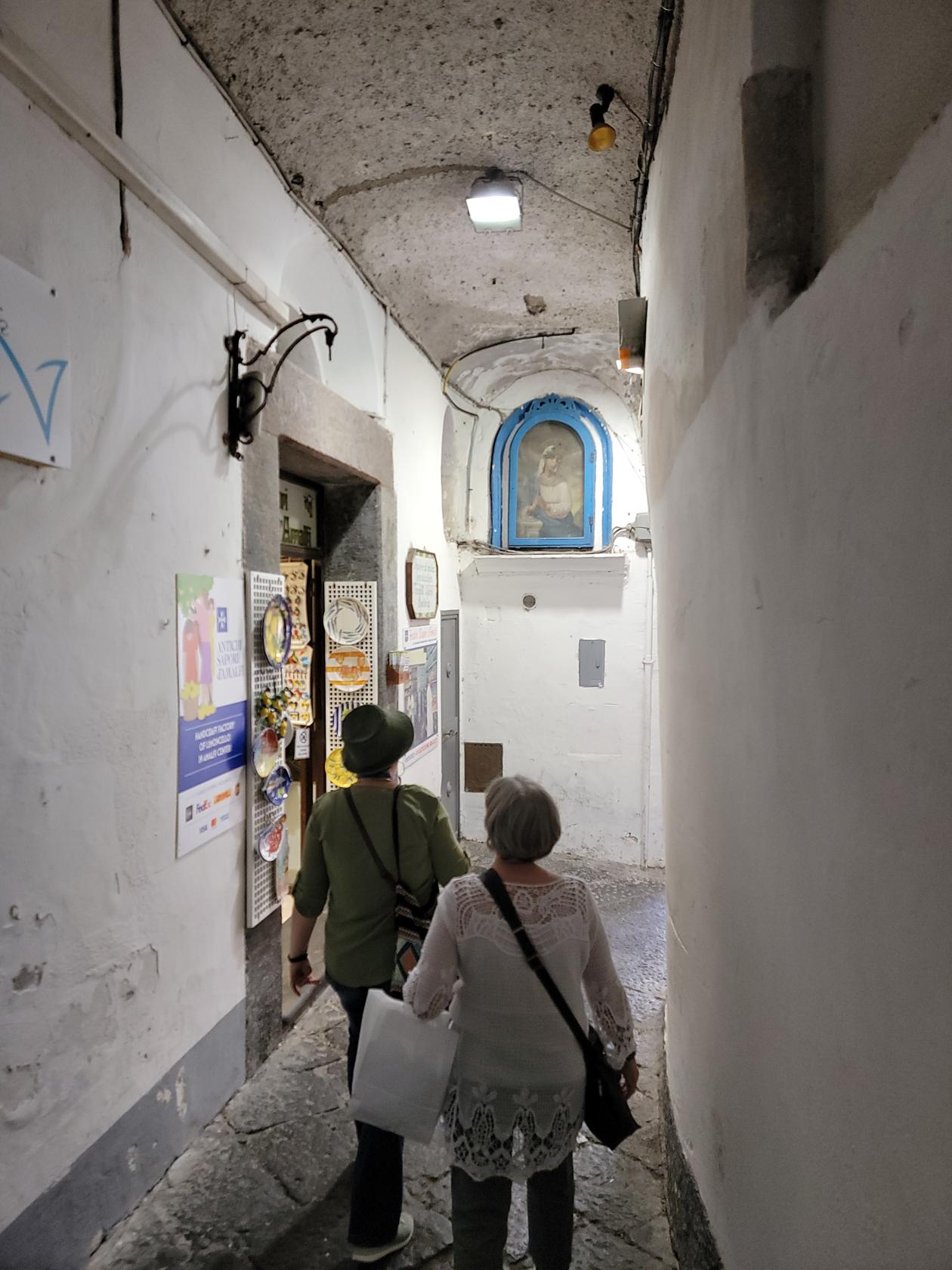
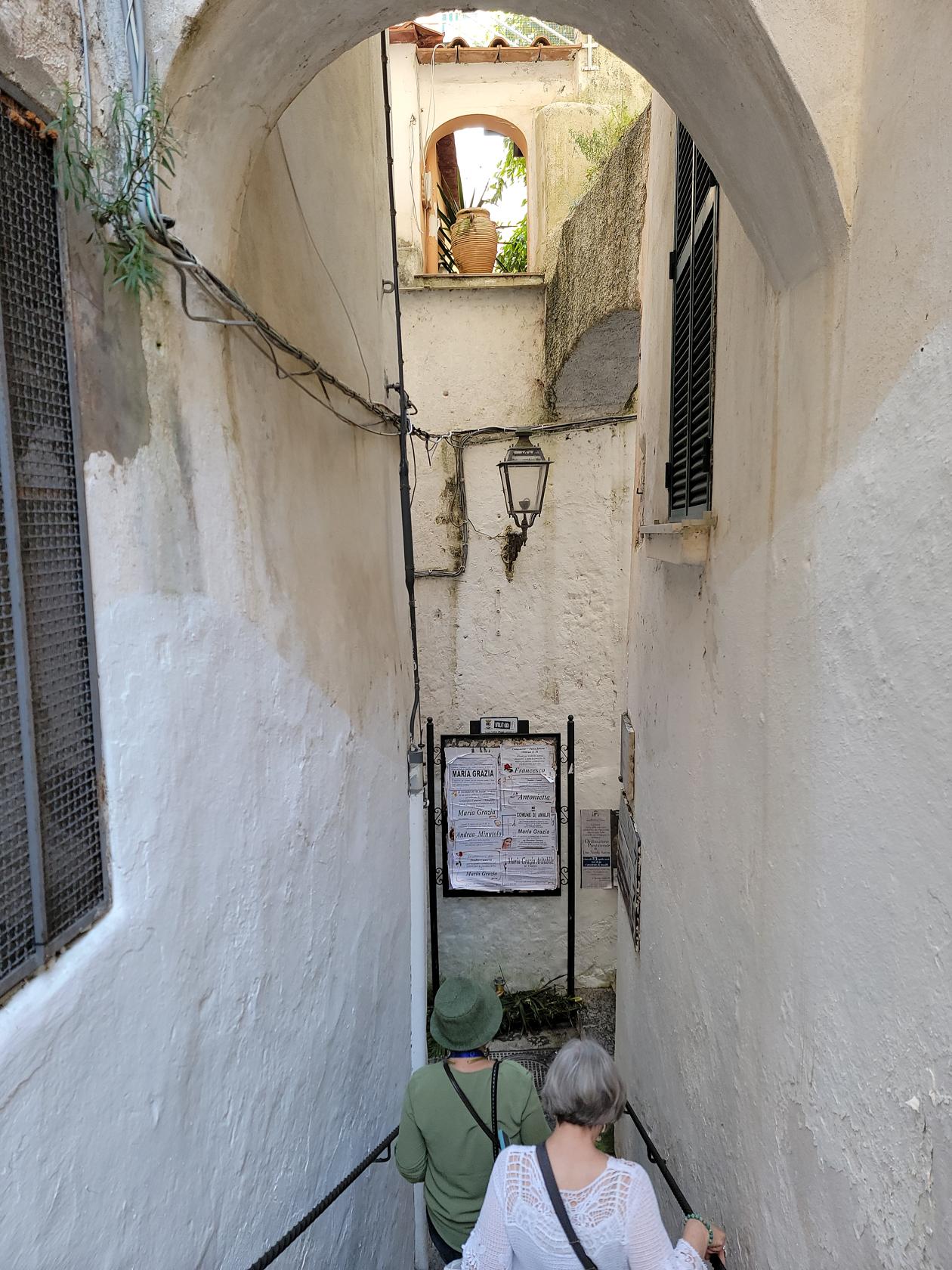
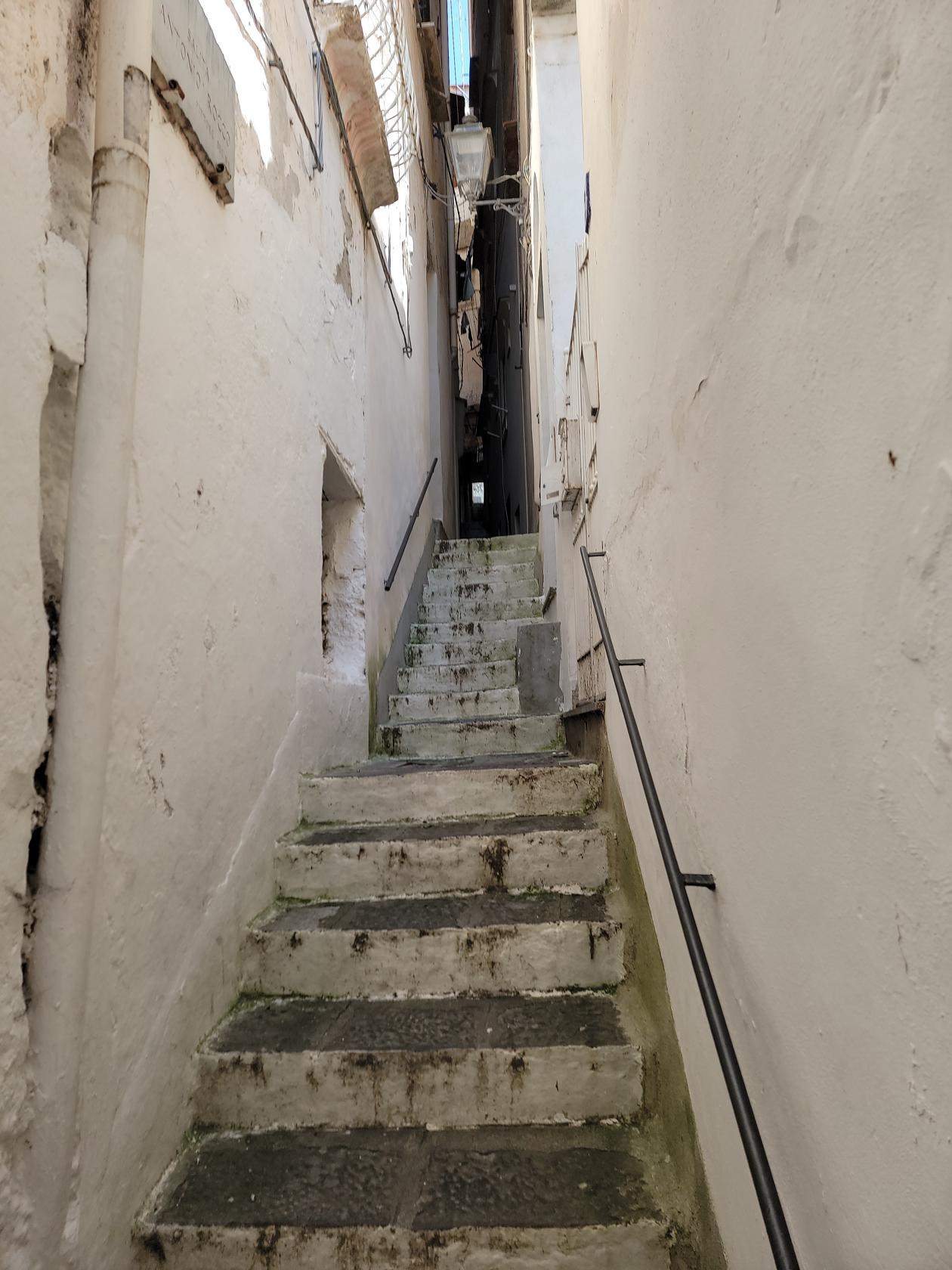
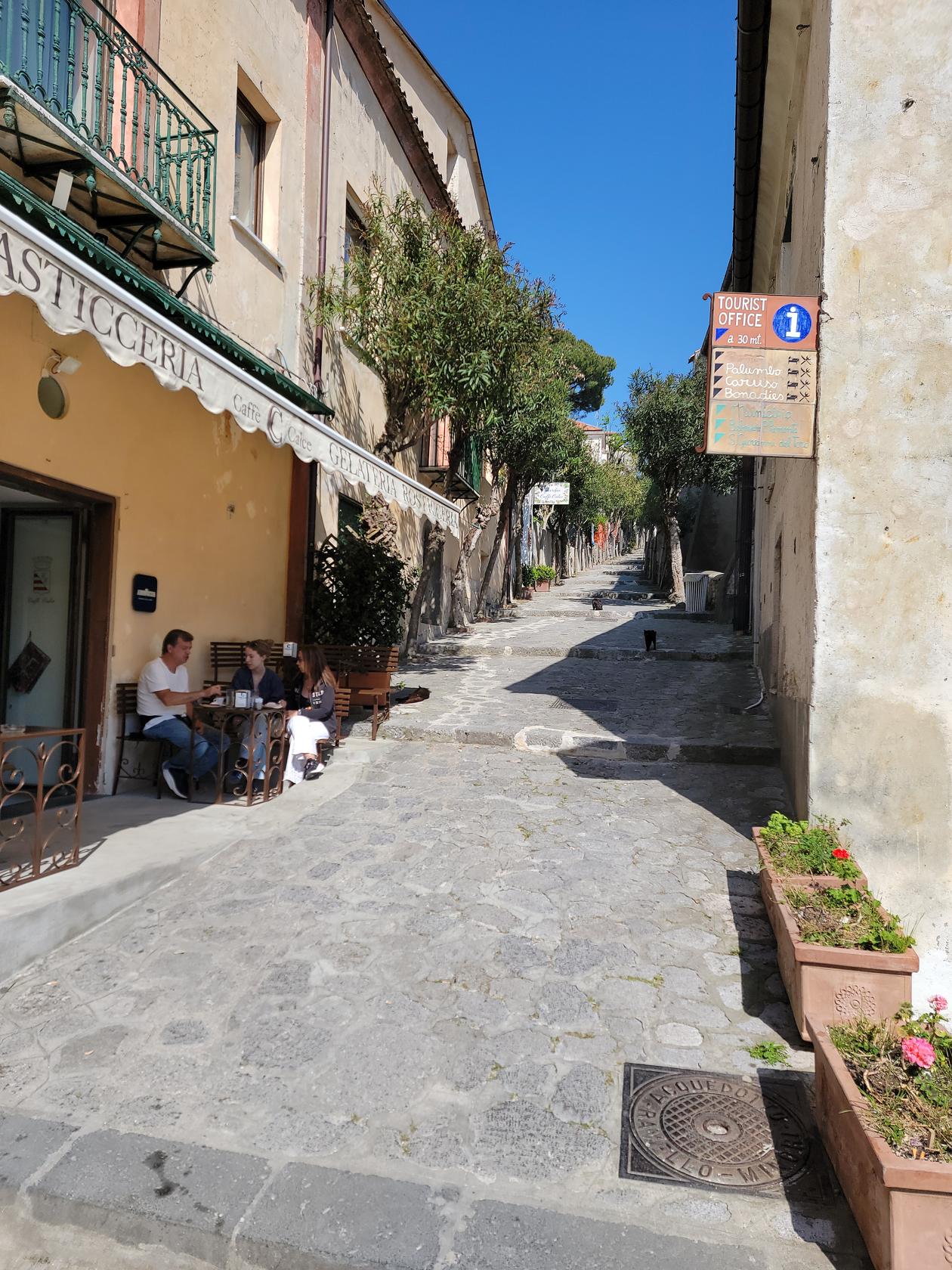
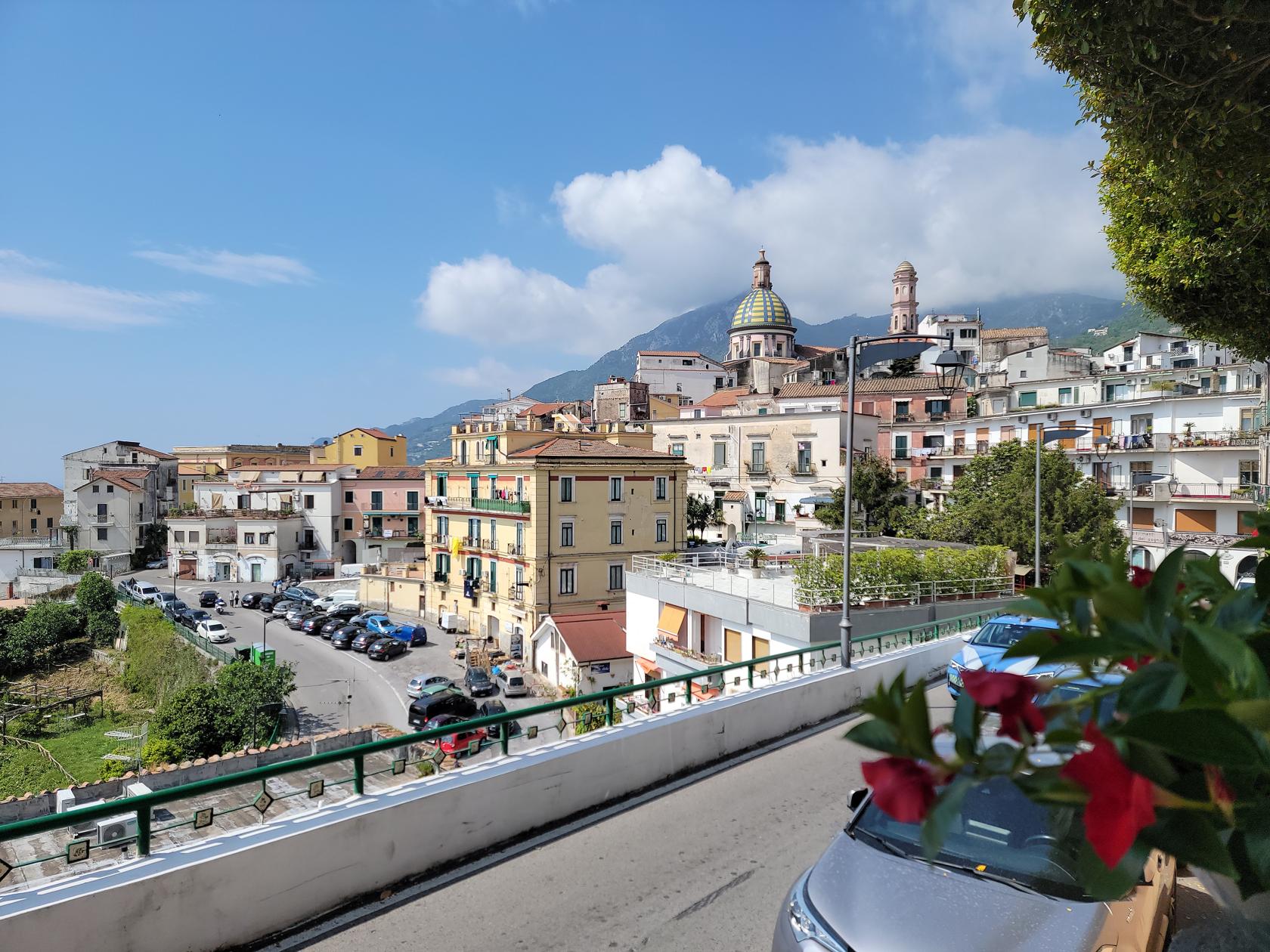
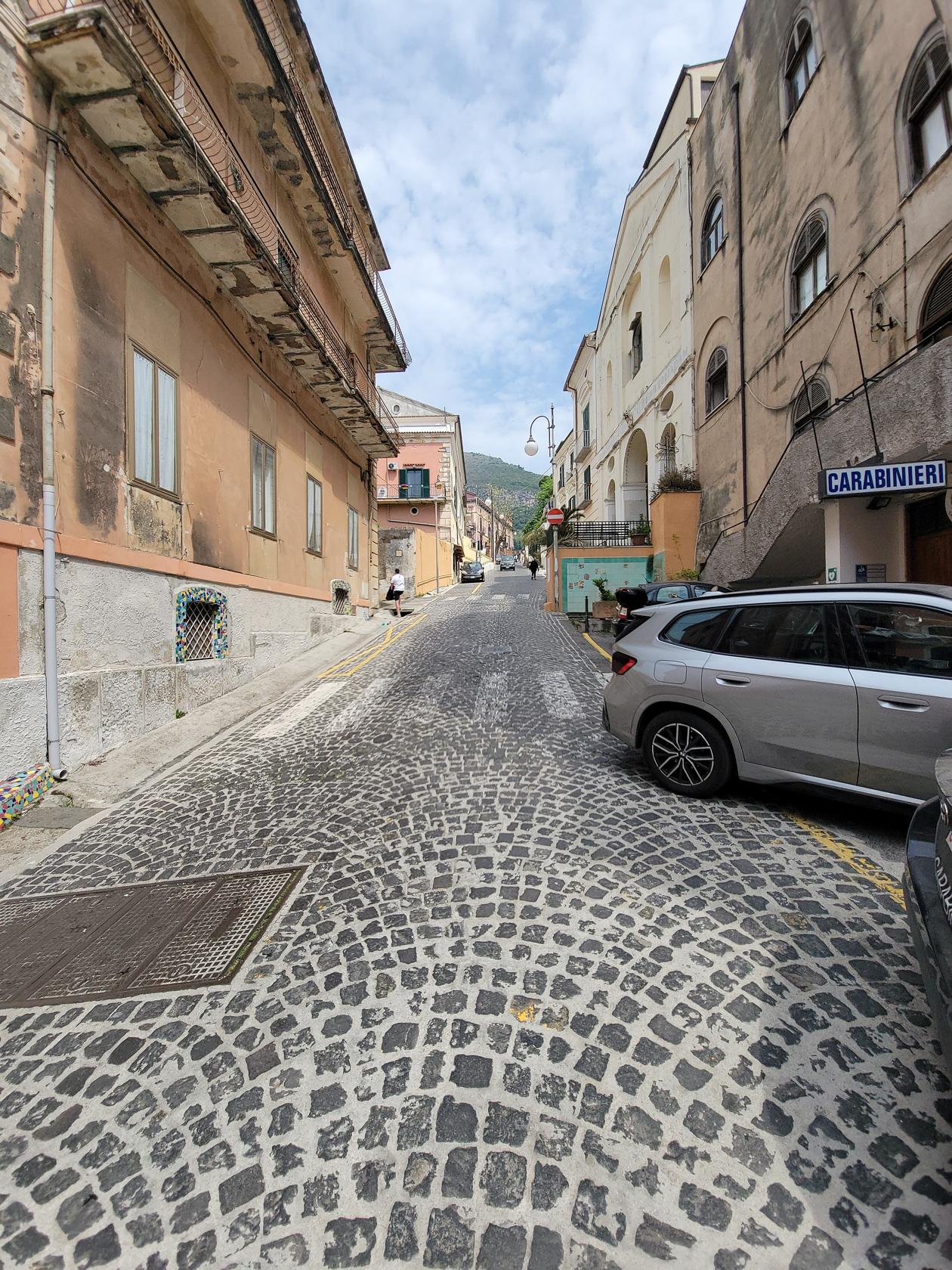
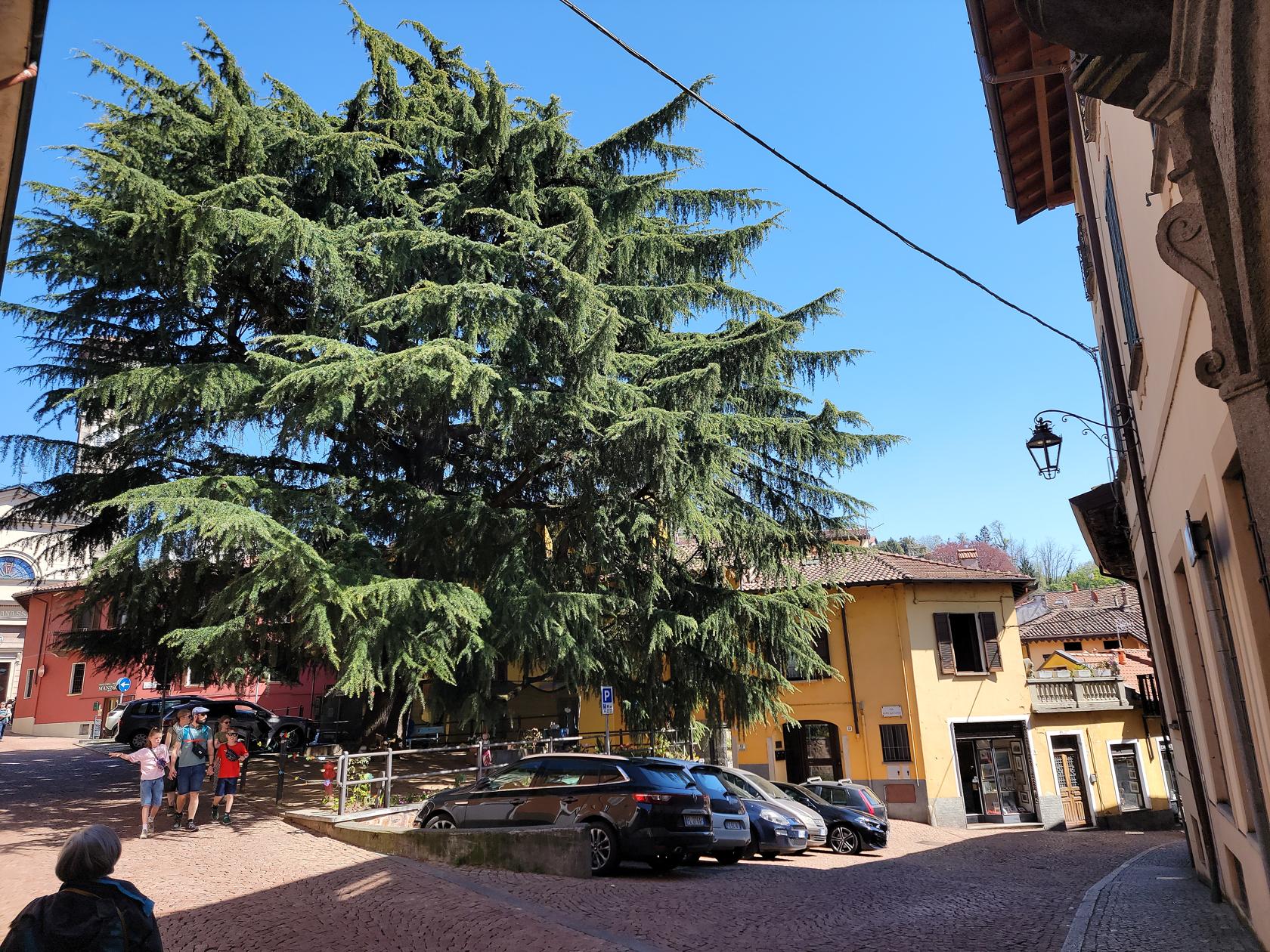
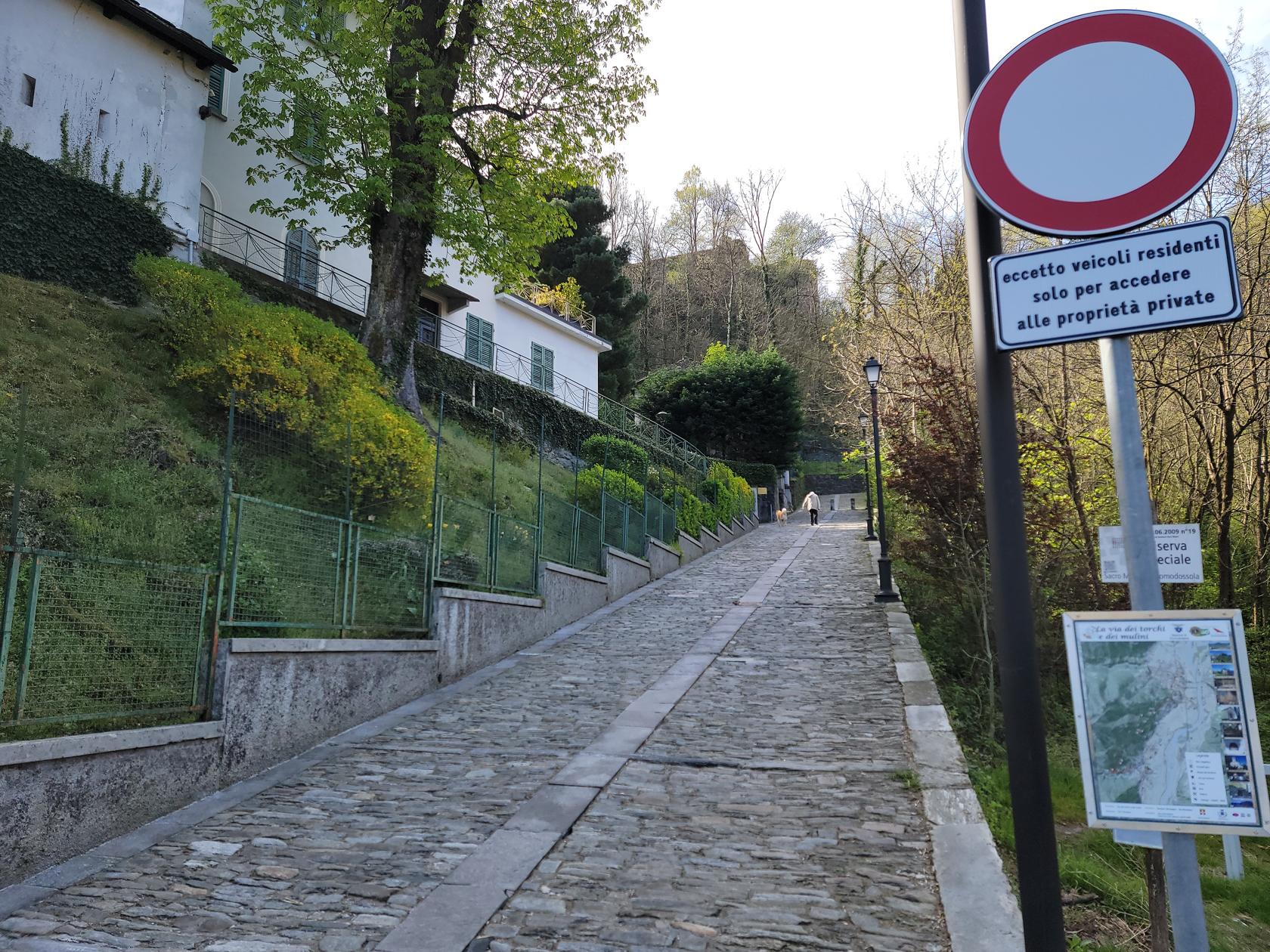
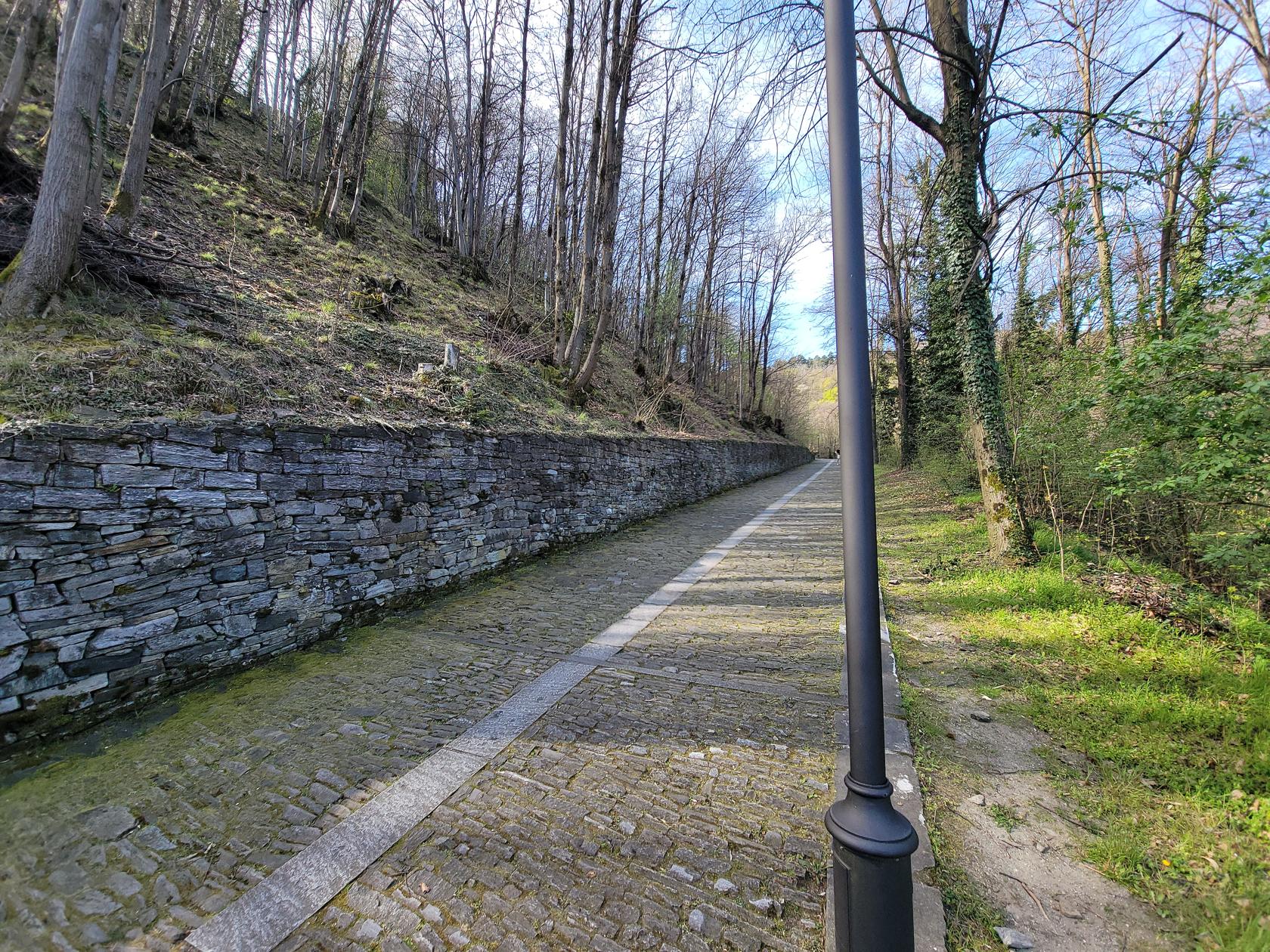
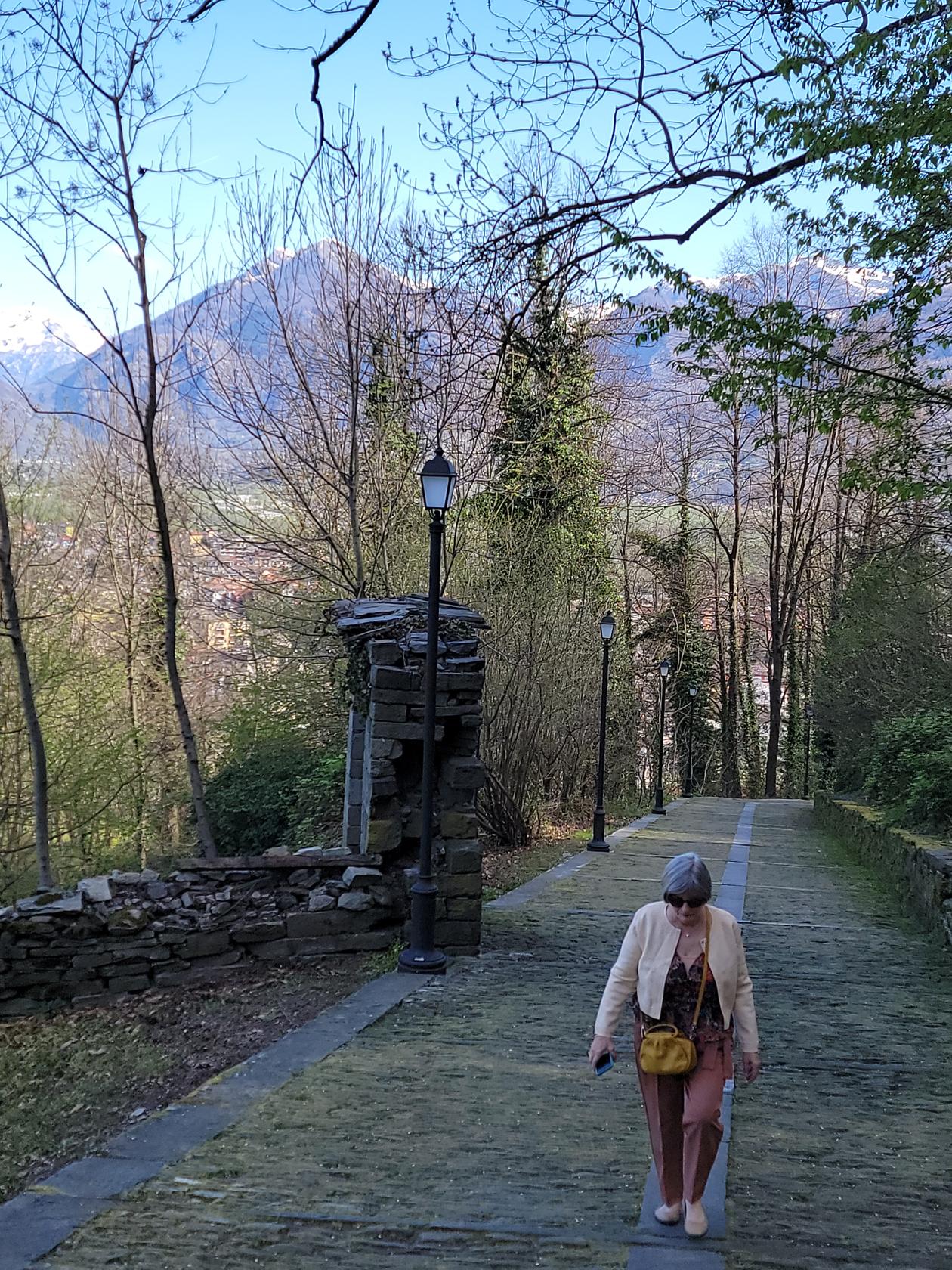
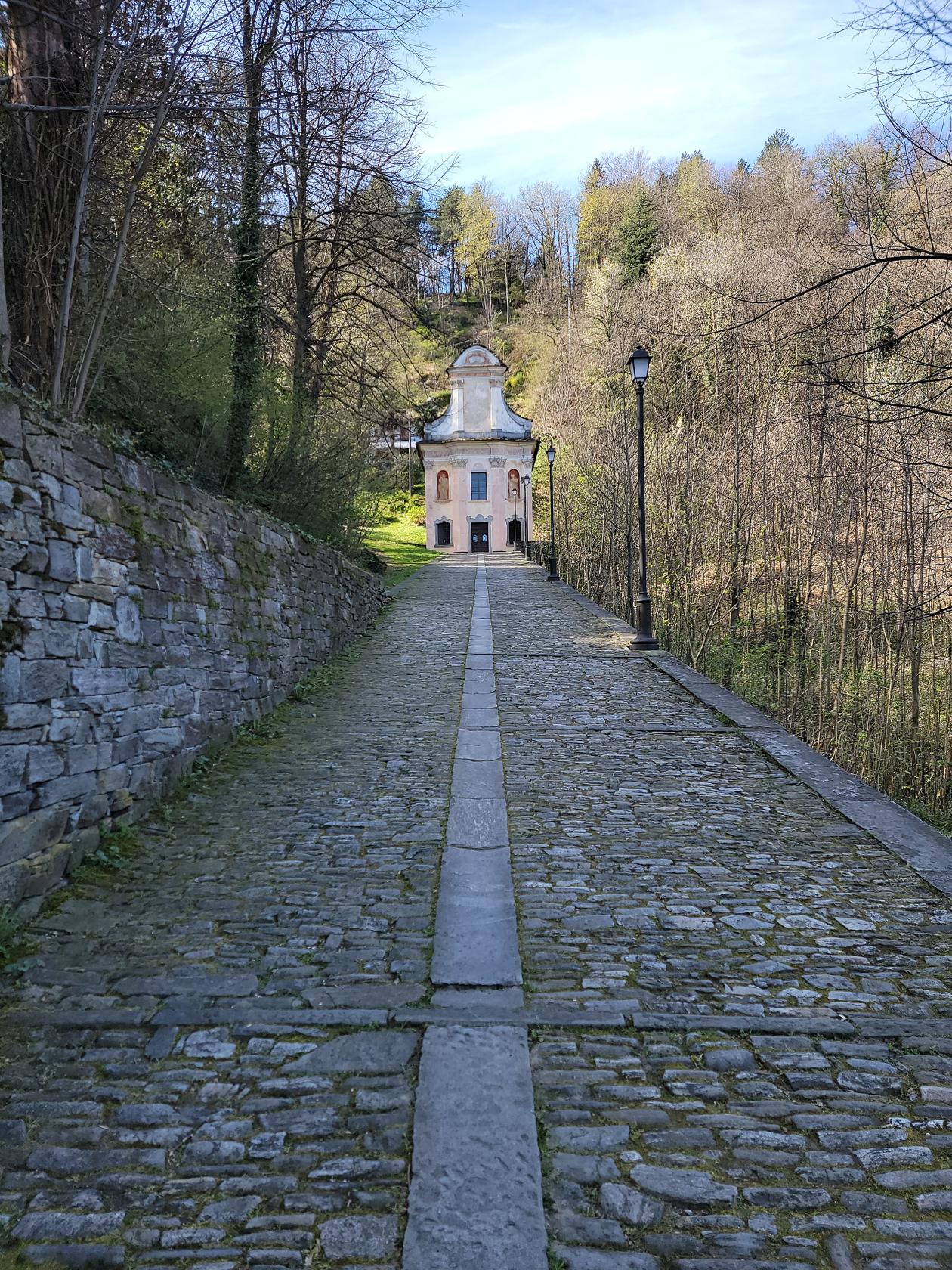
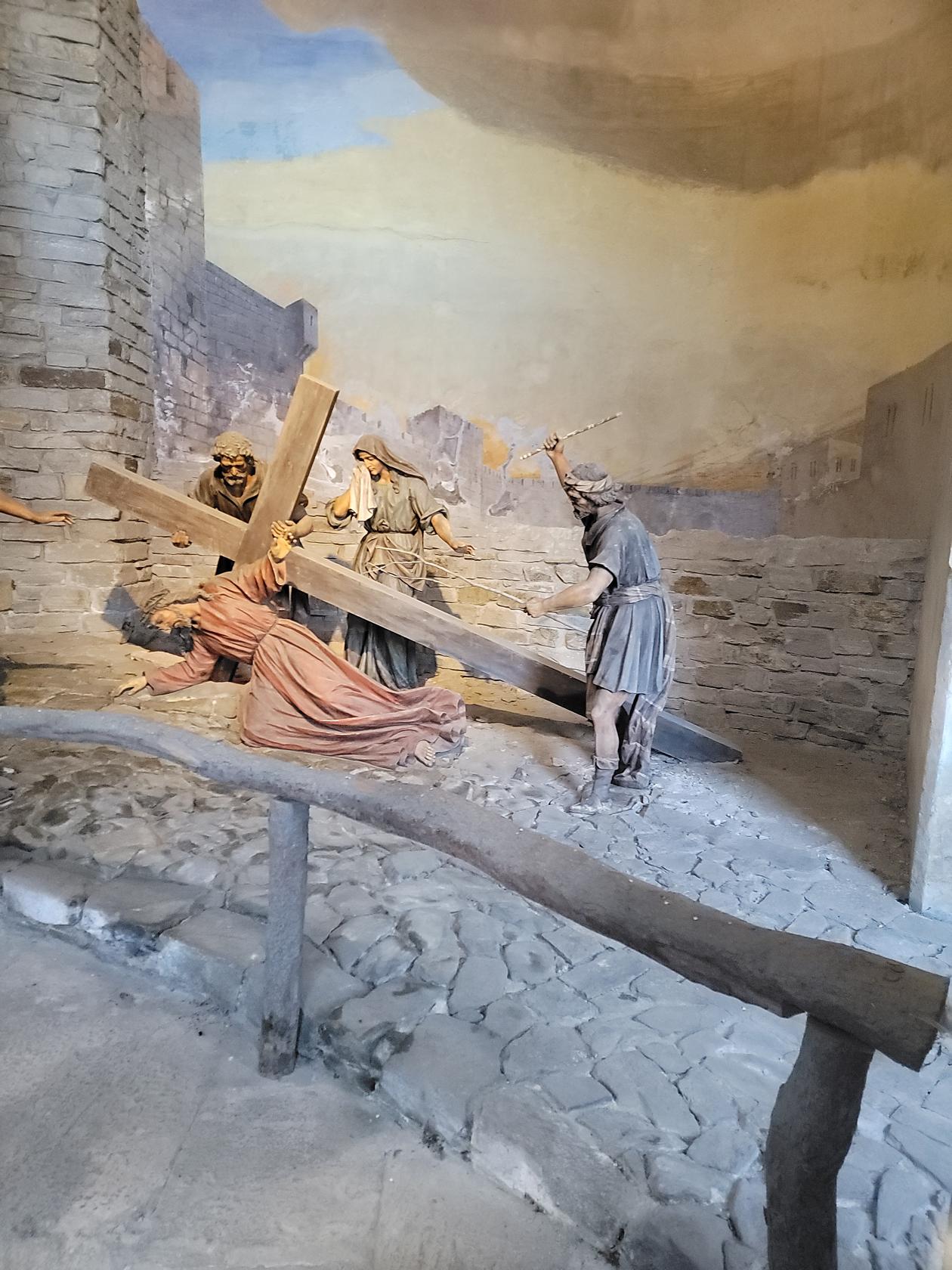
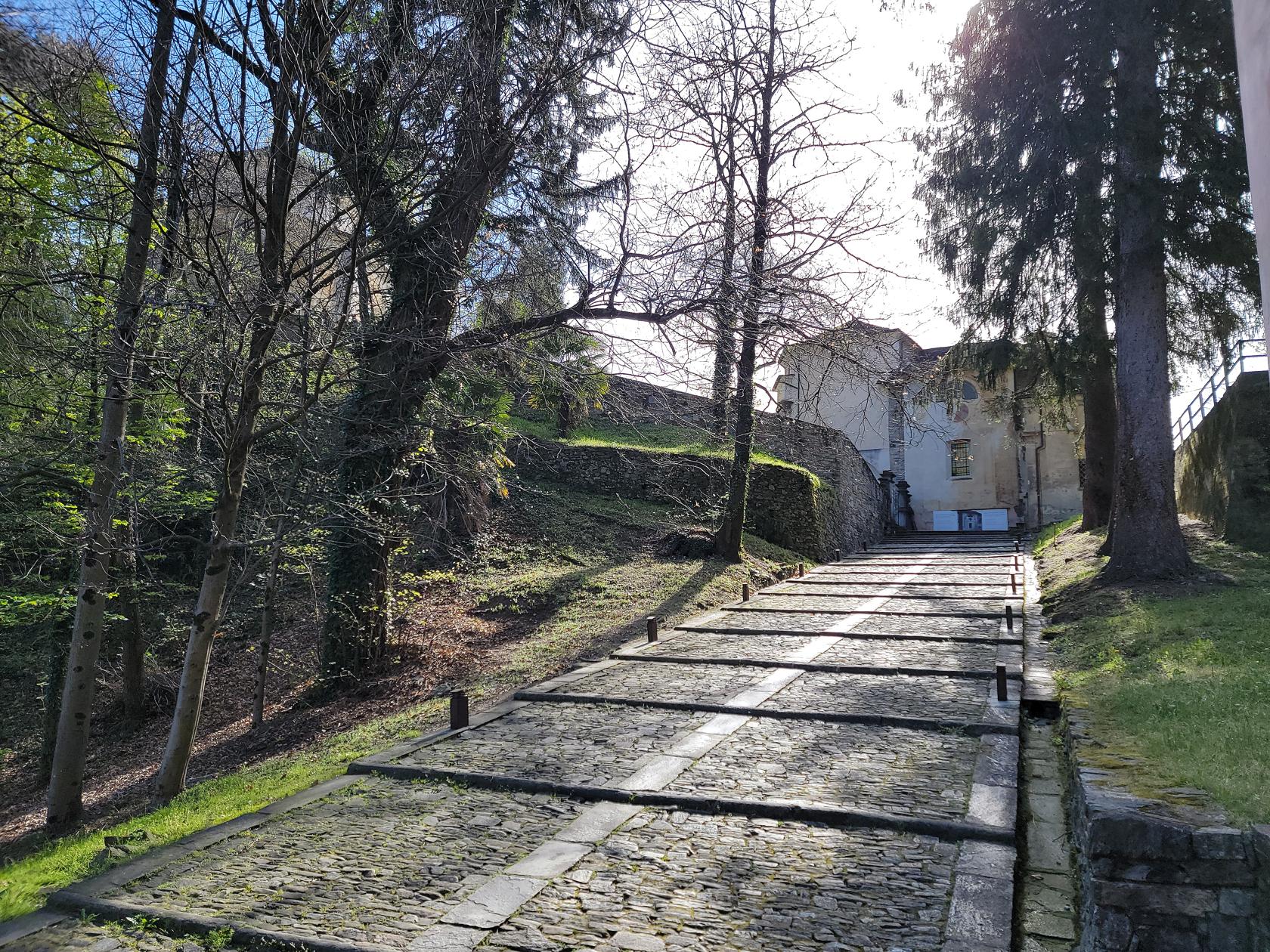
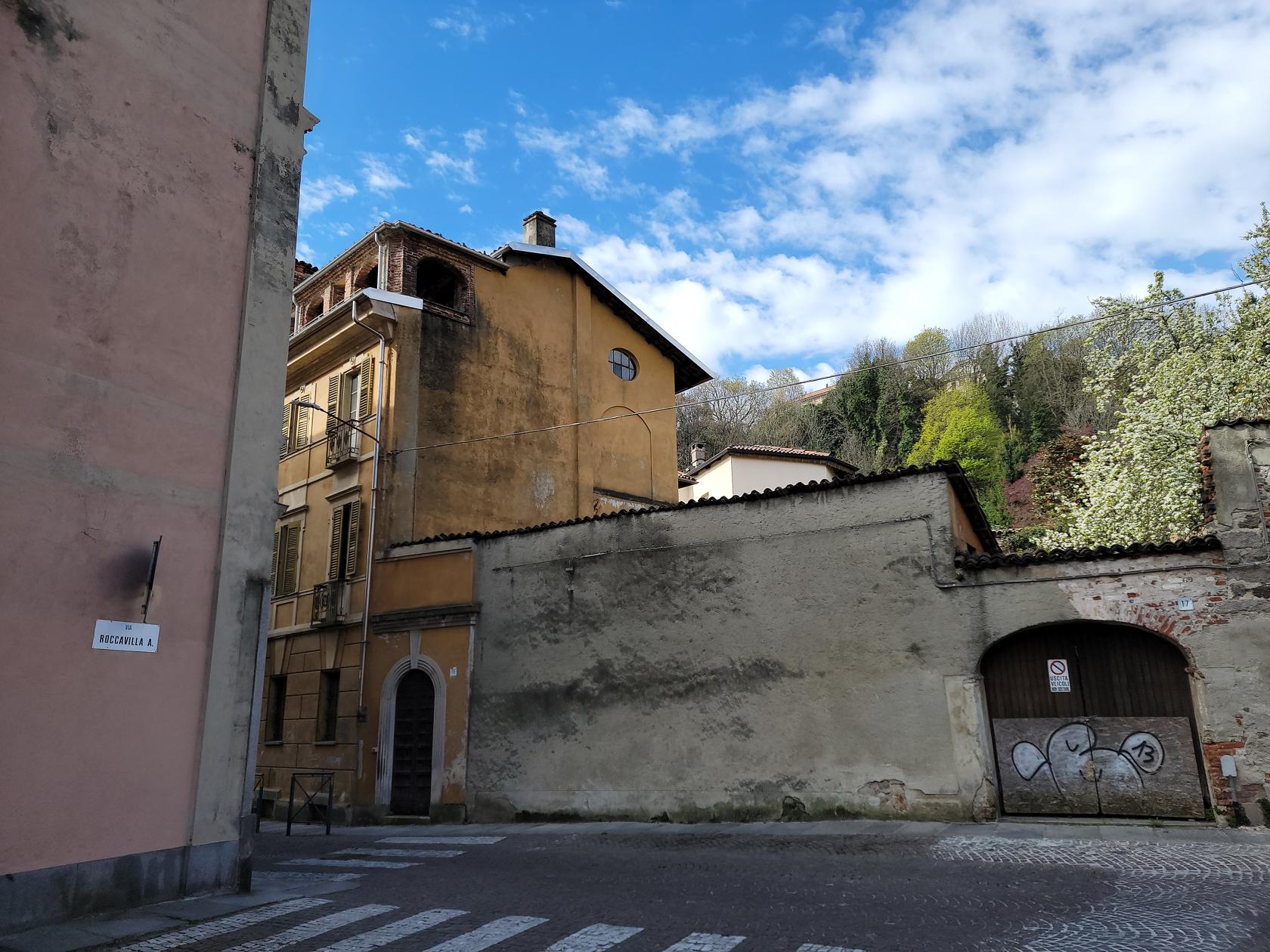
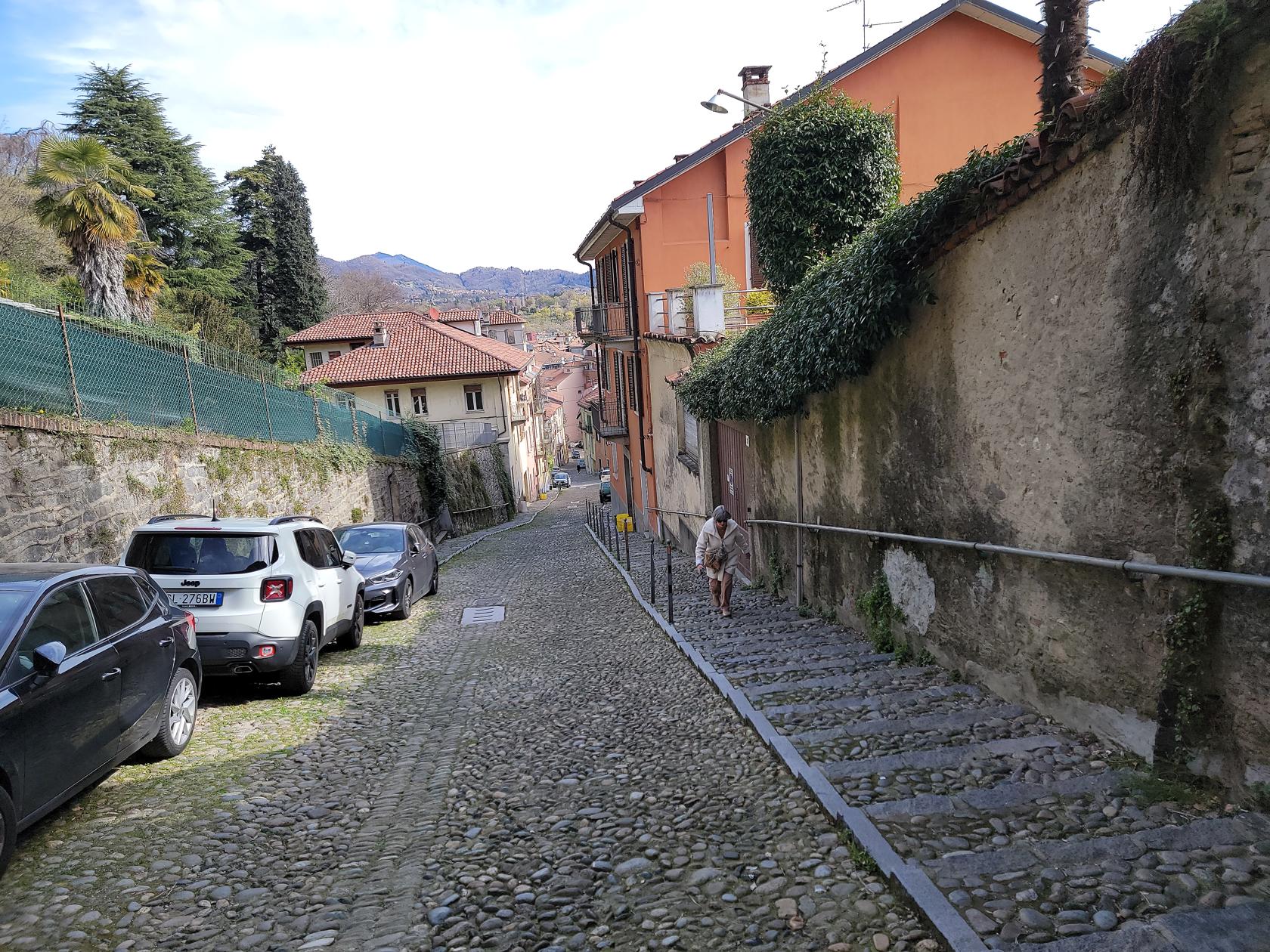
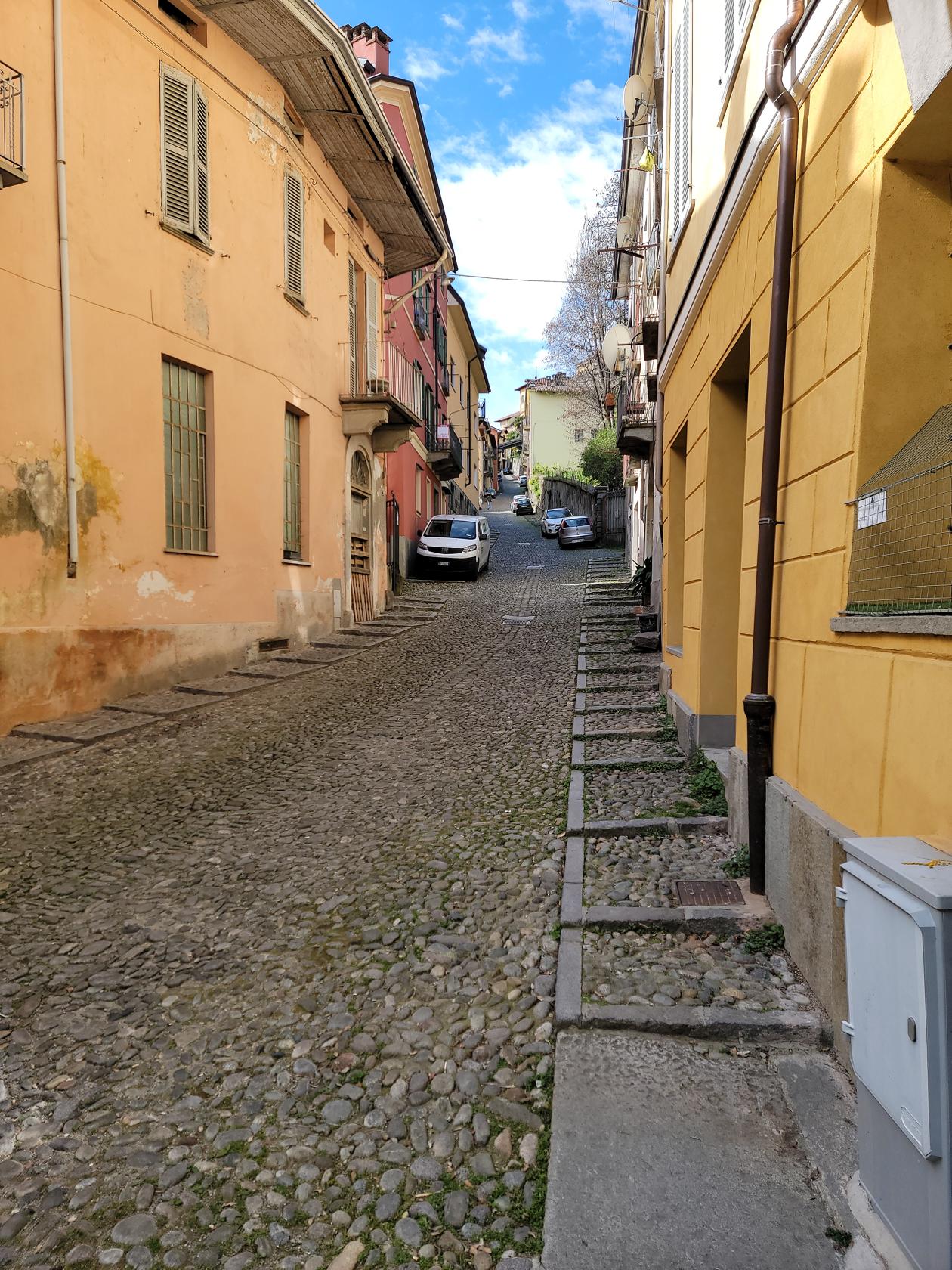
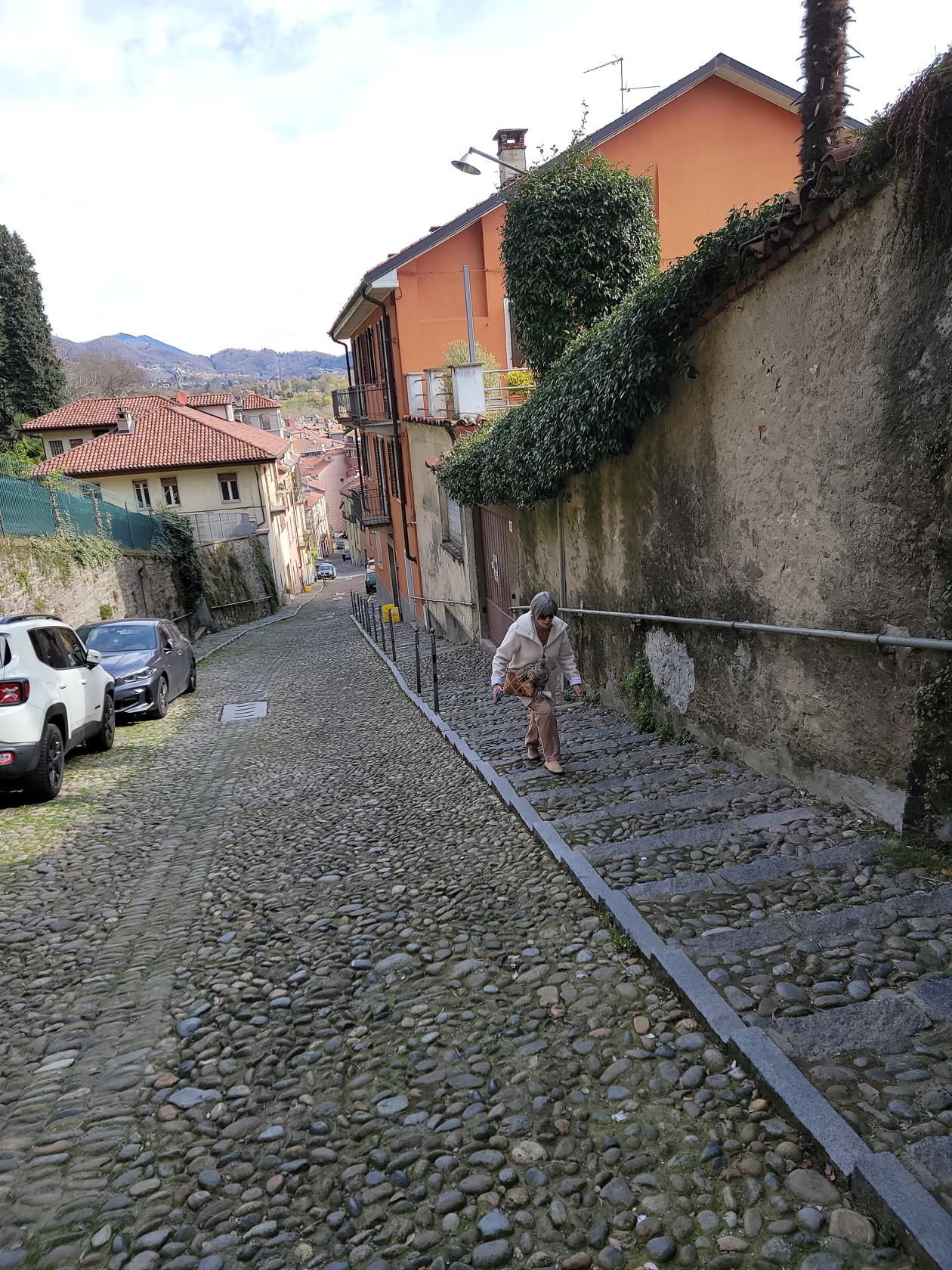
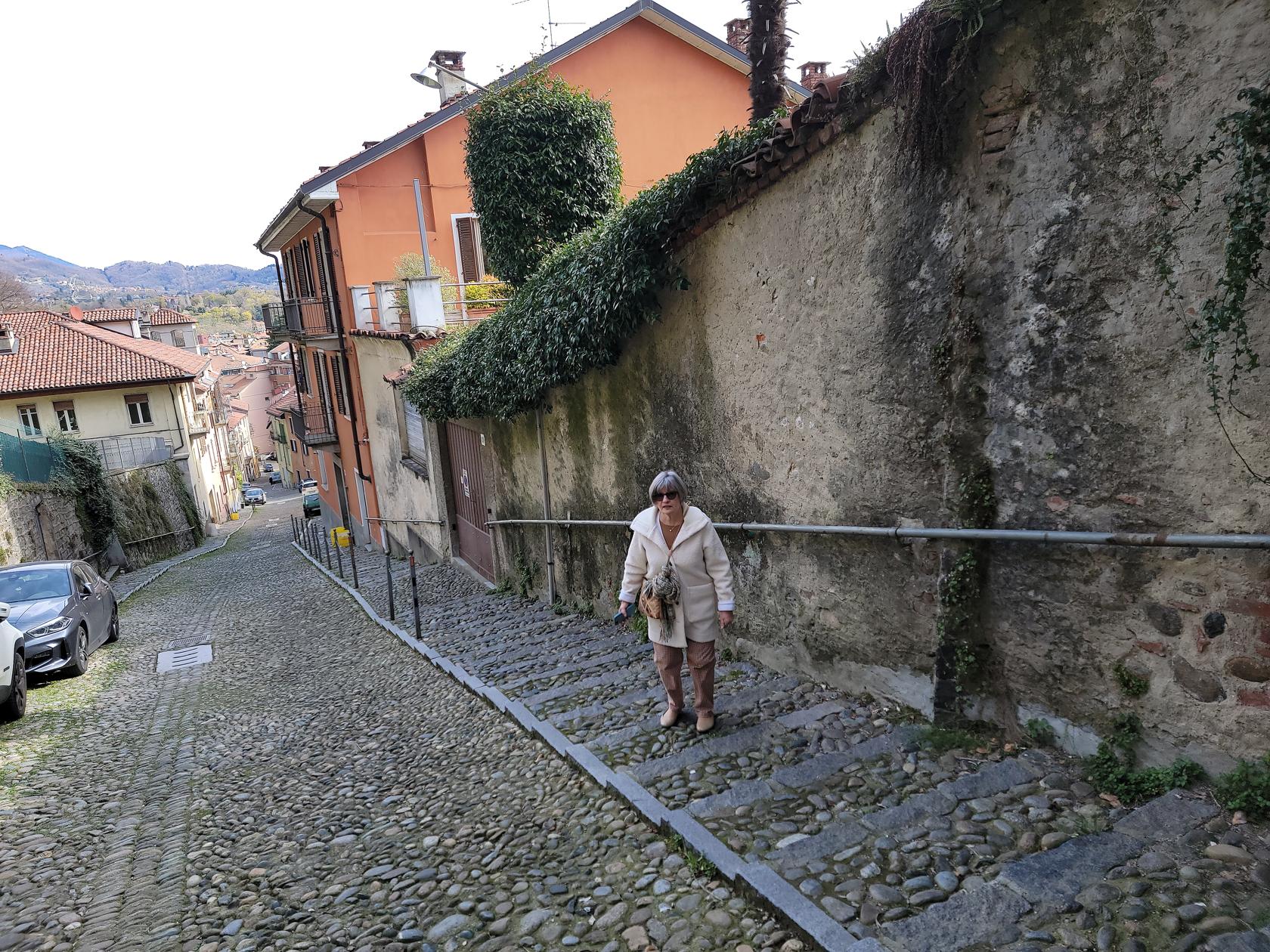
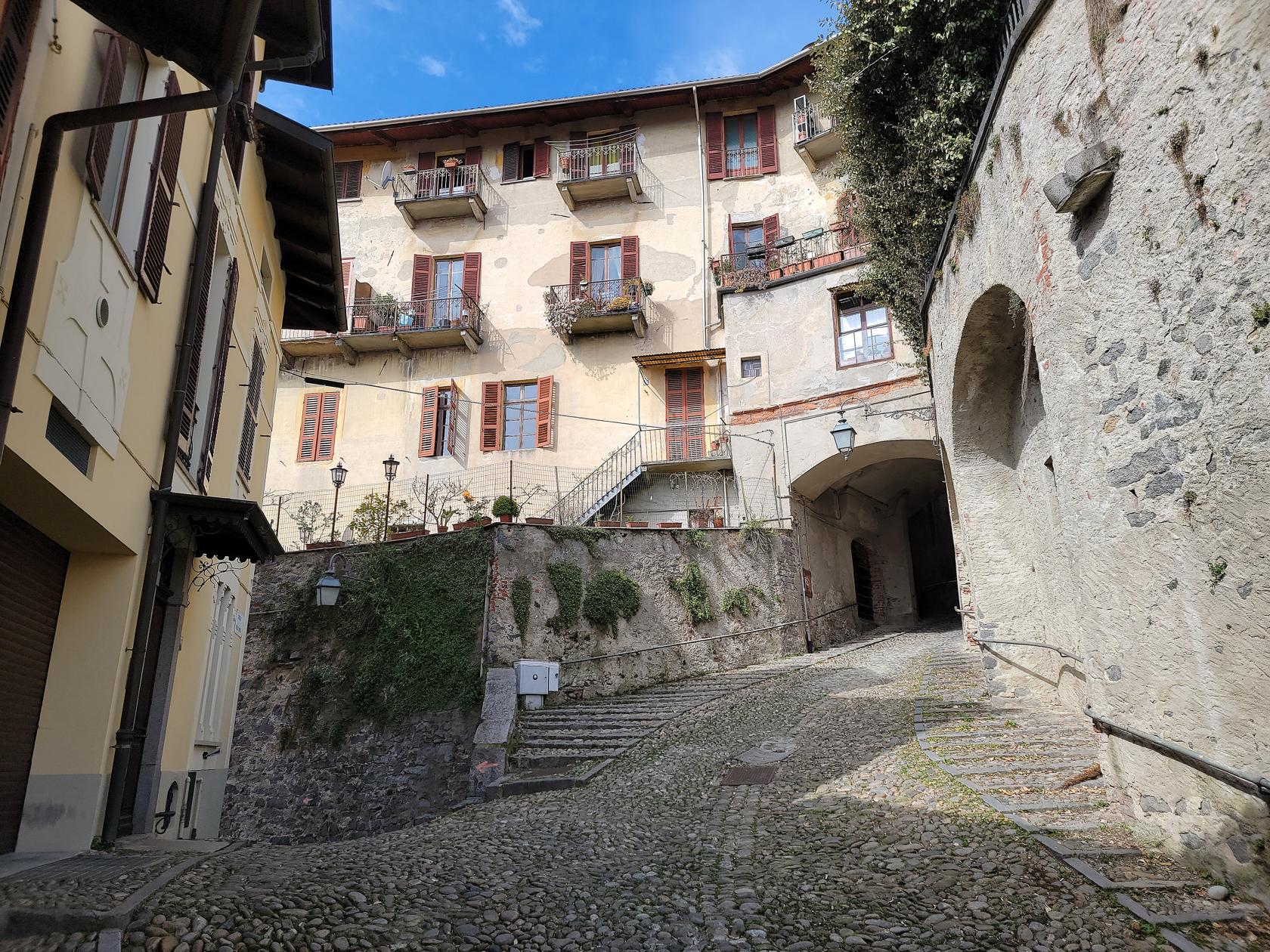
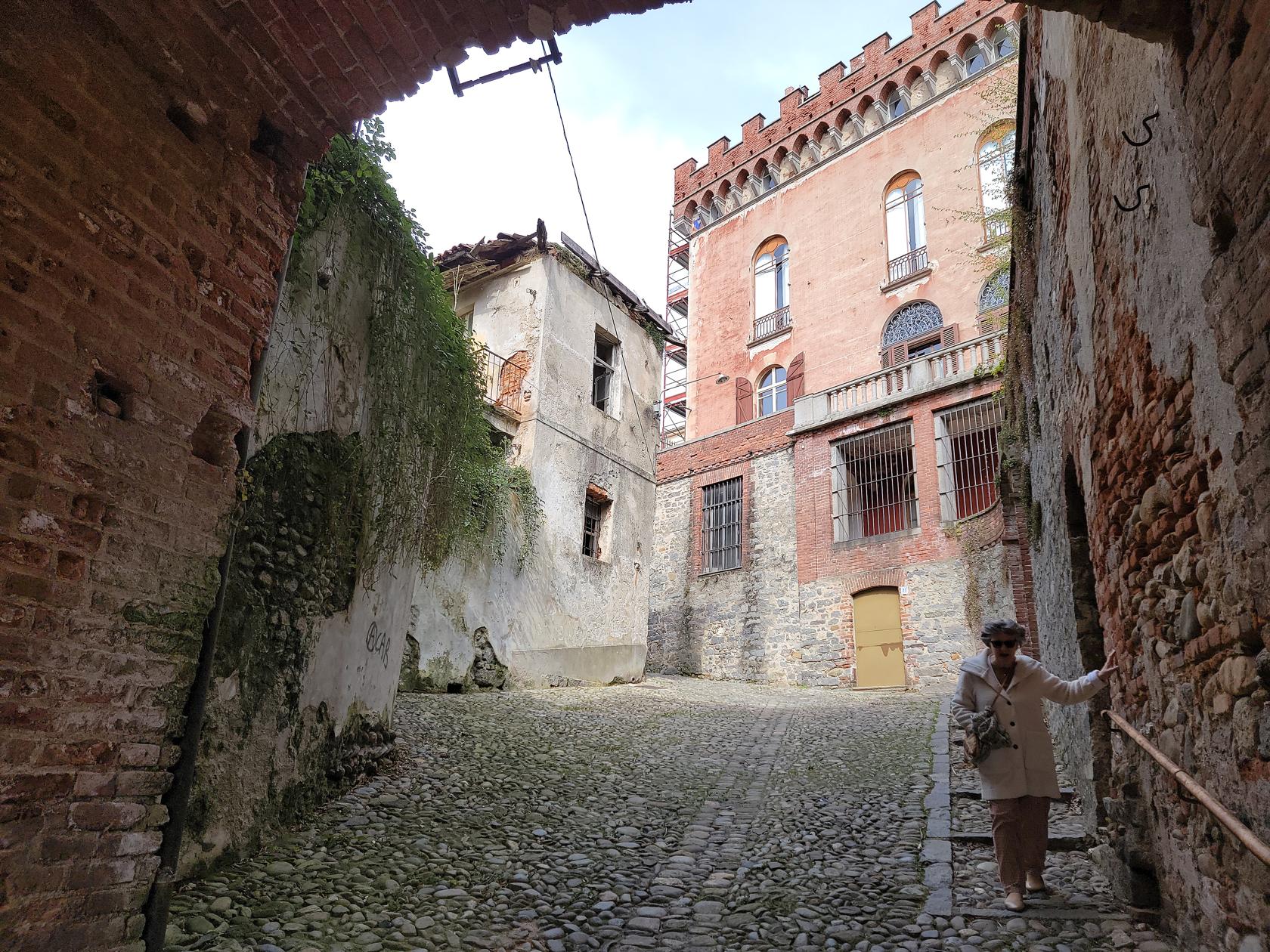
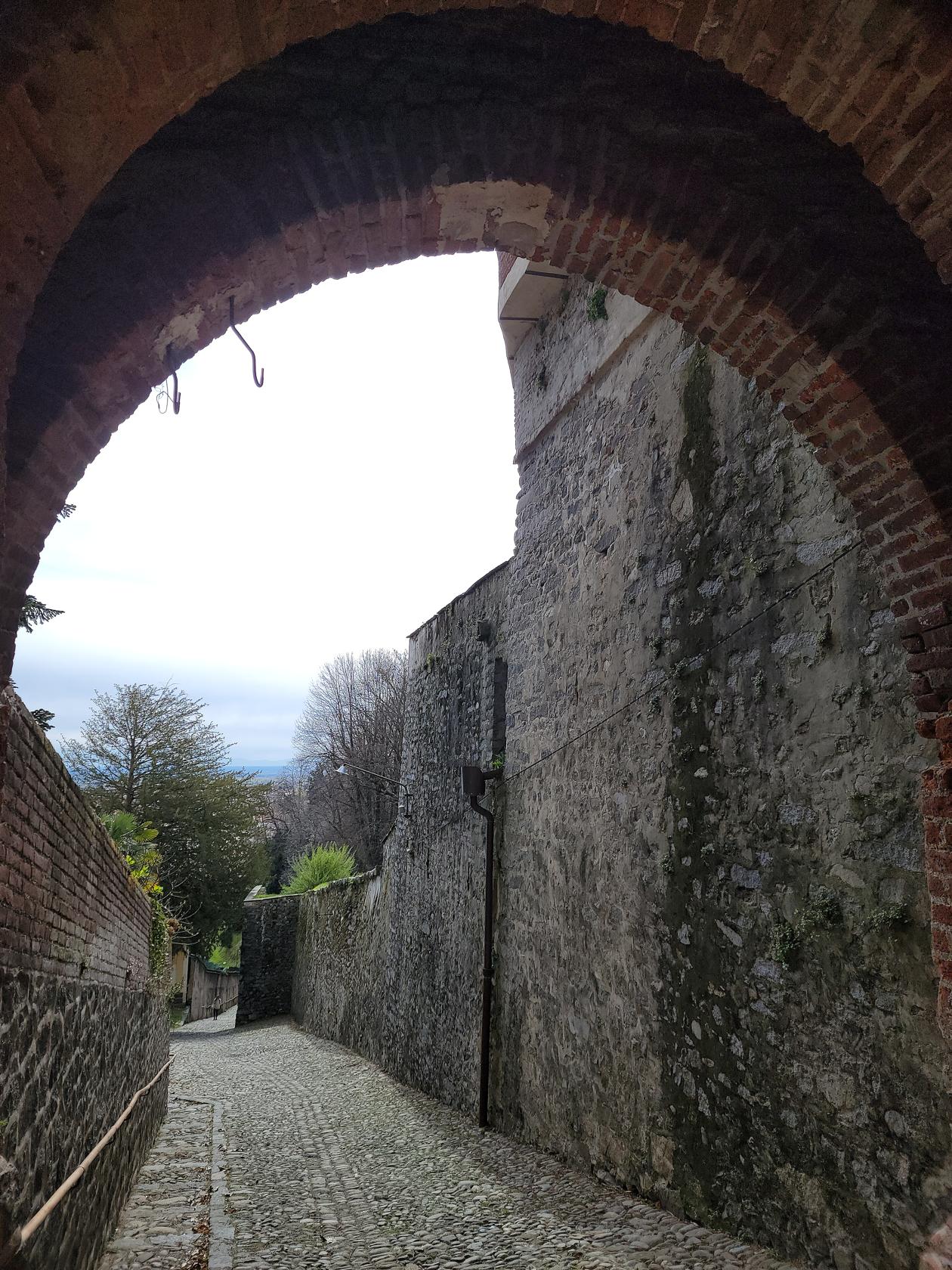
On the west side of the city, on top of the hill, is the Piazza Biella. A fifteen to twenty minute walk up the Costa del Piazza will bring you to the upper part of town. The cobbled street is a bit treacherous, so take care, especially if the weather is bad, the stones are quite slippery, even when dry.

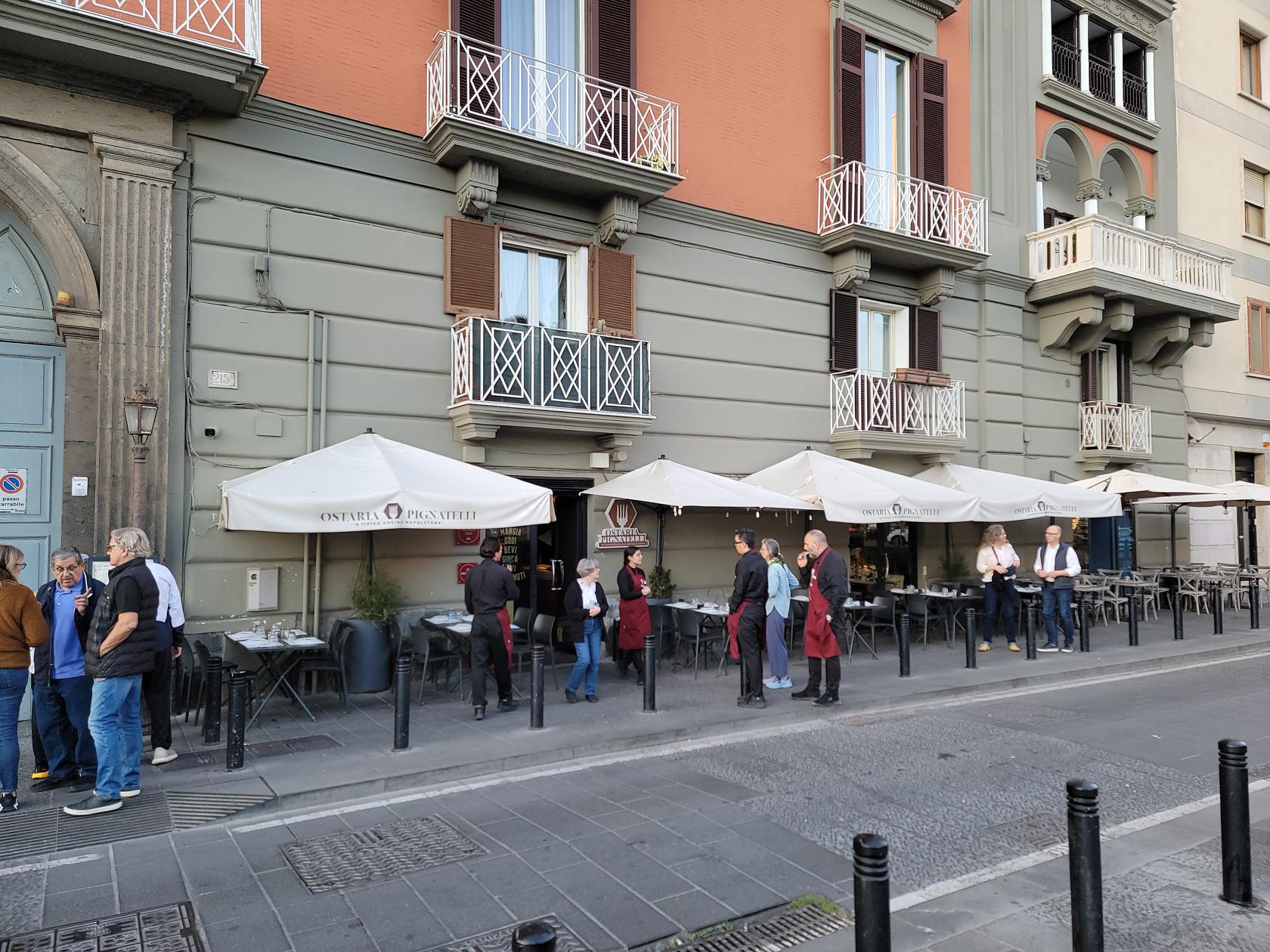
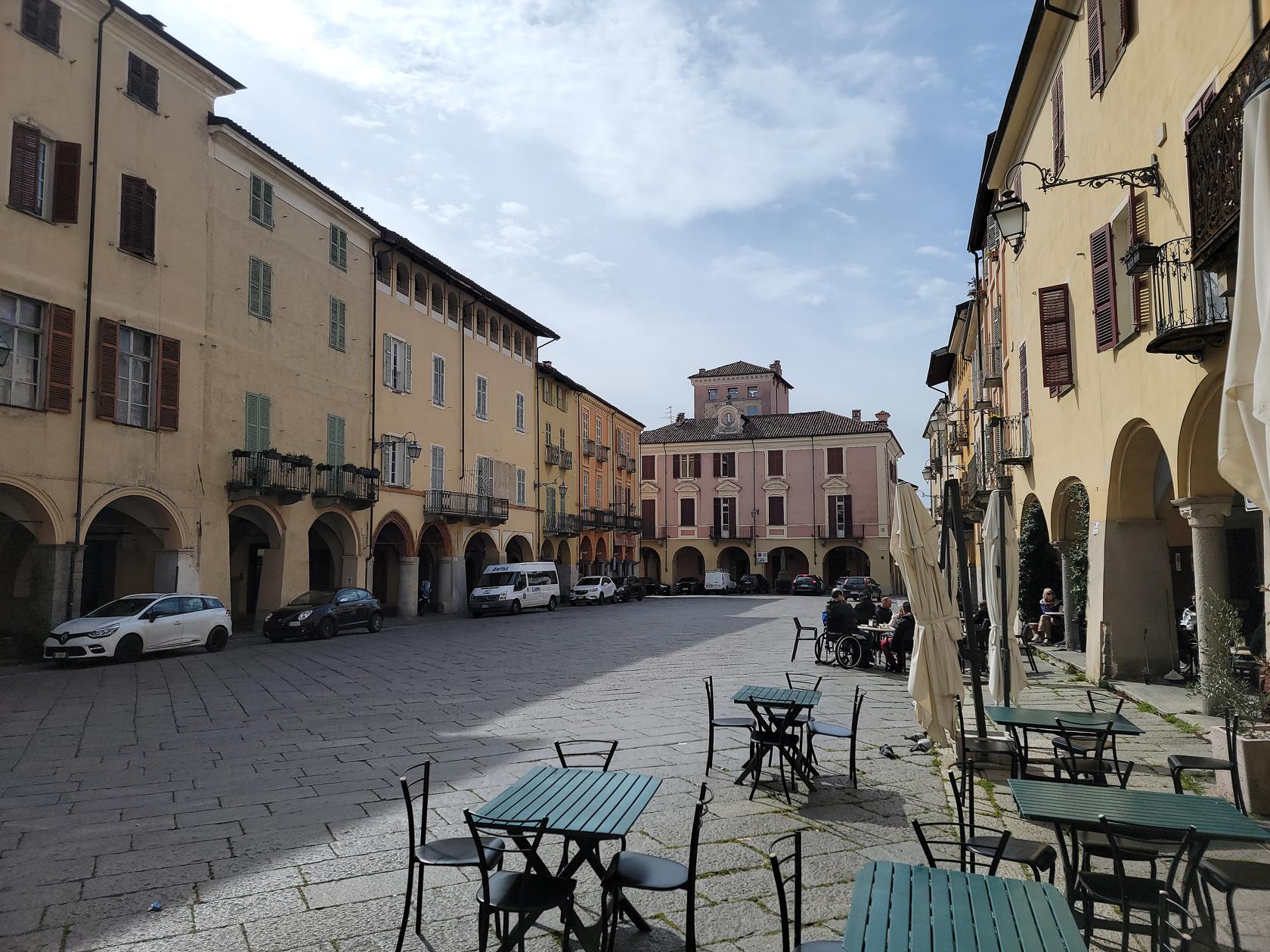
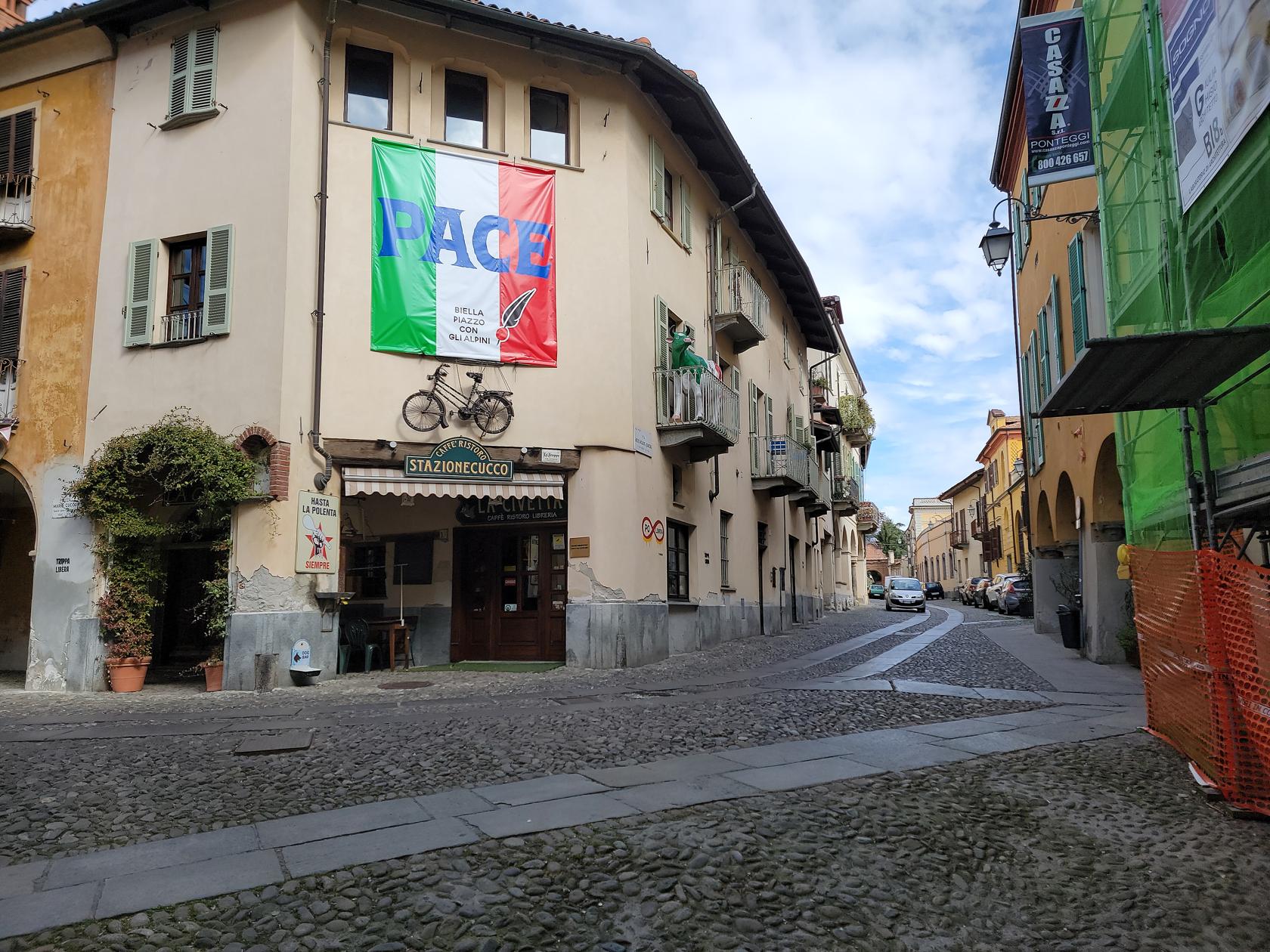
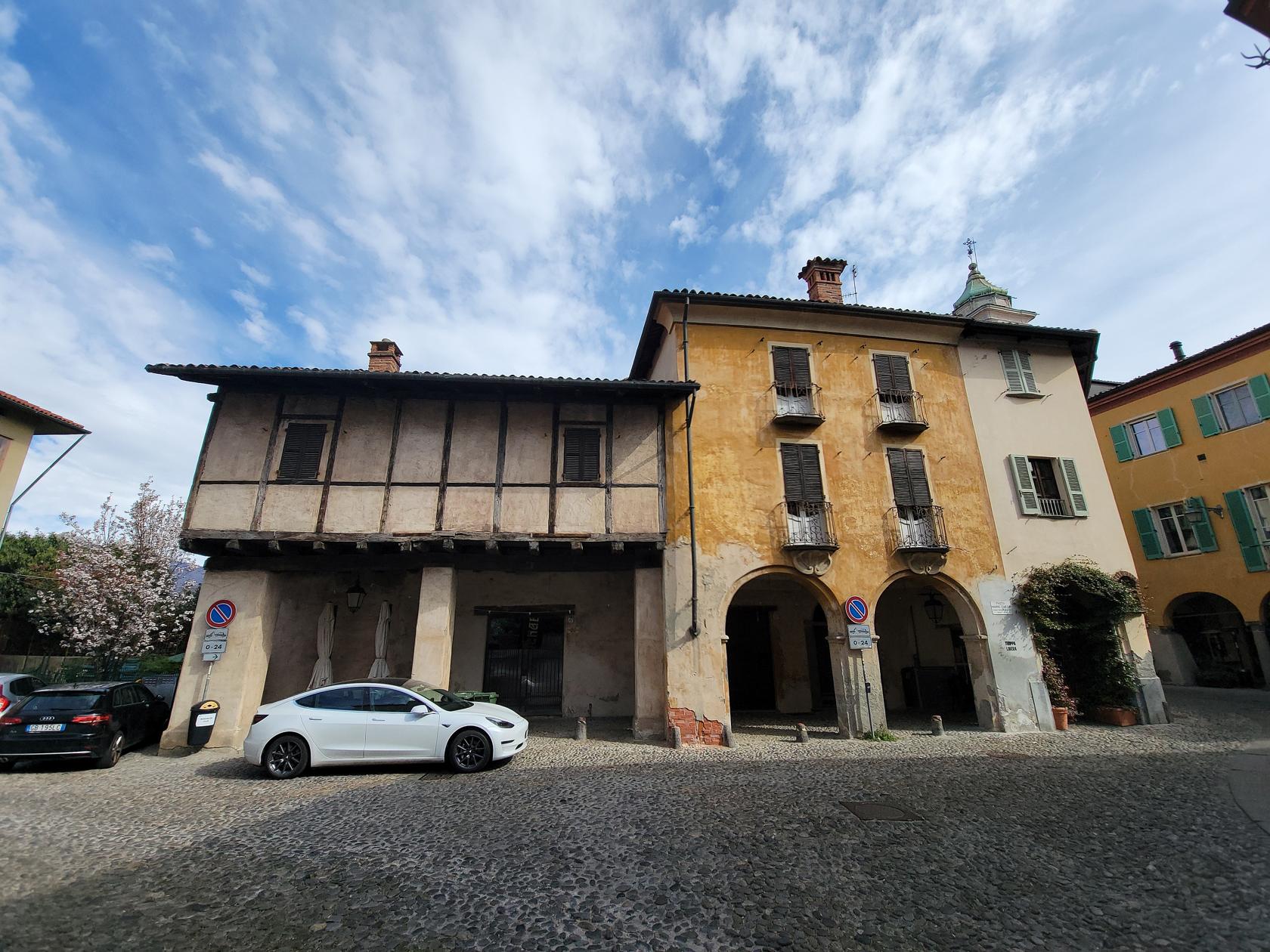
Here you will find the Piazza Biella, which has a few cafes and bars to enjoy. Aside from that, it is very quiet.

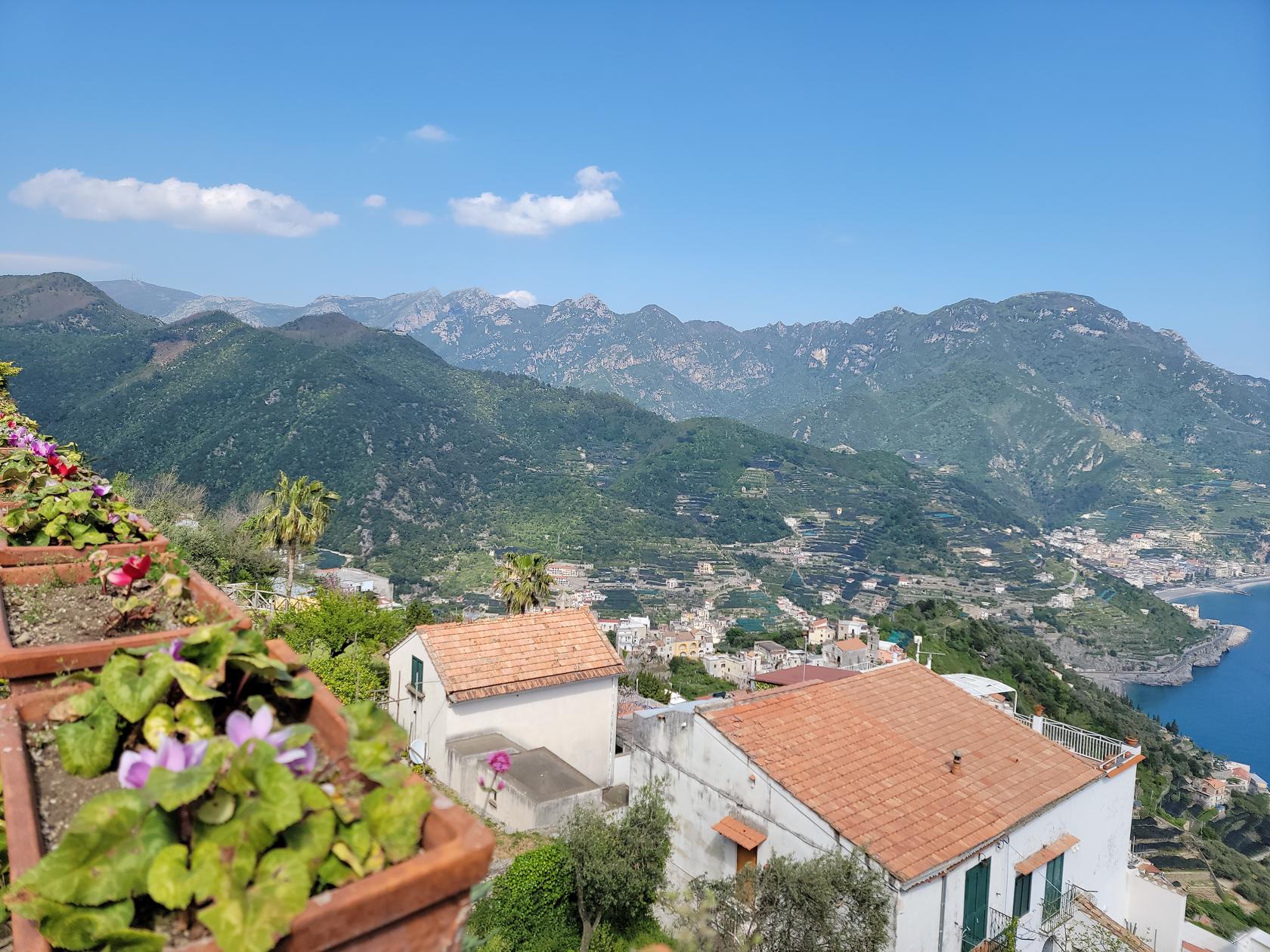
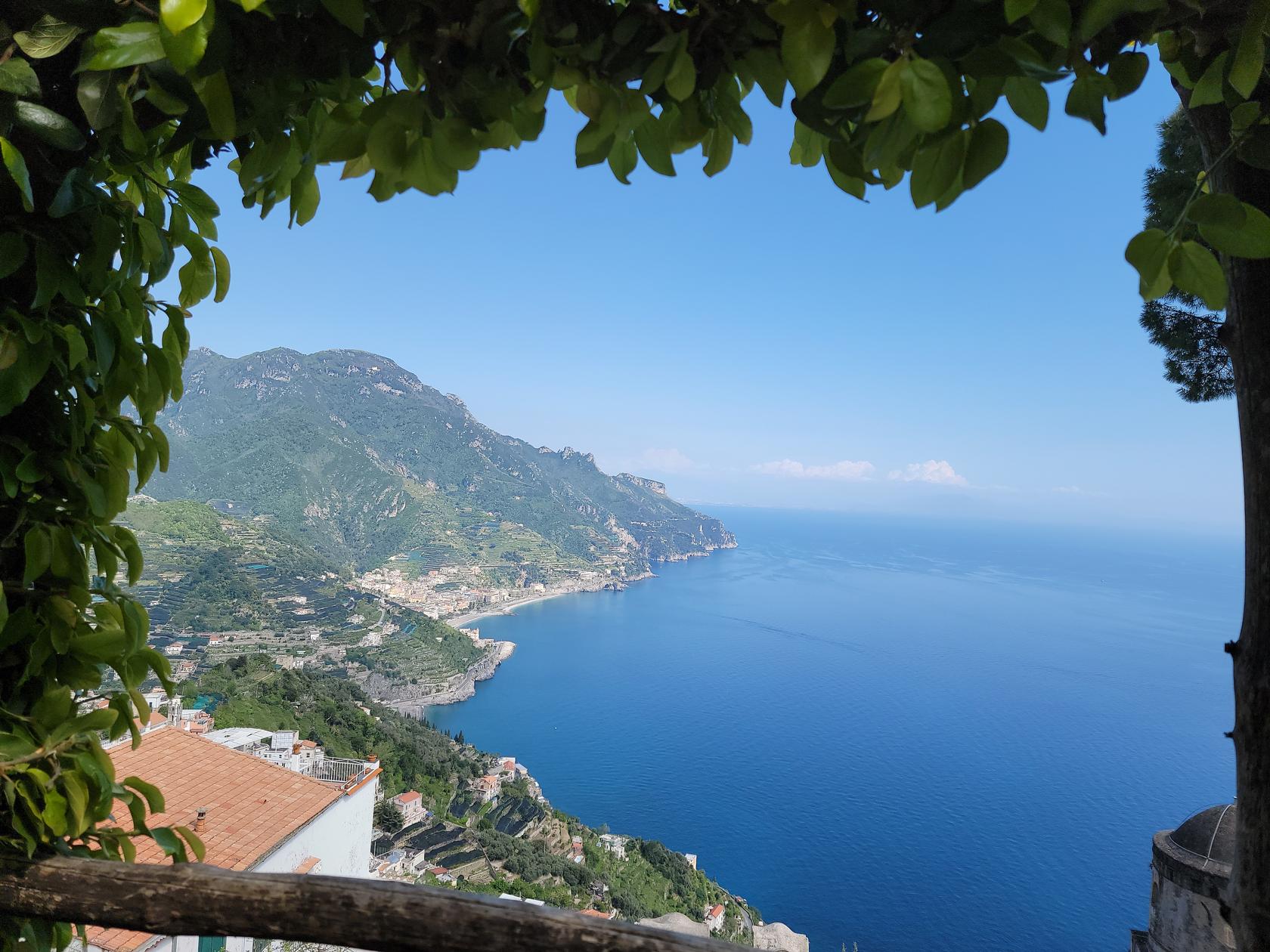
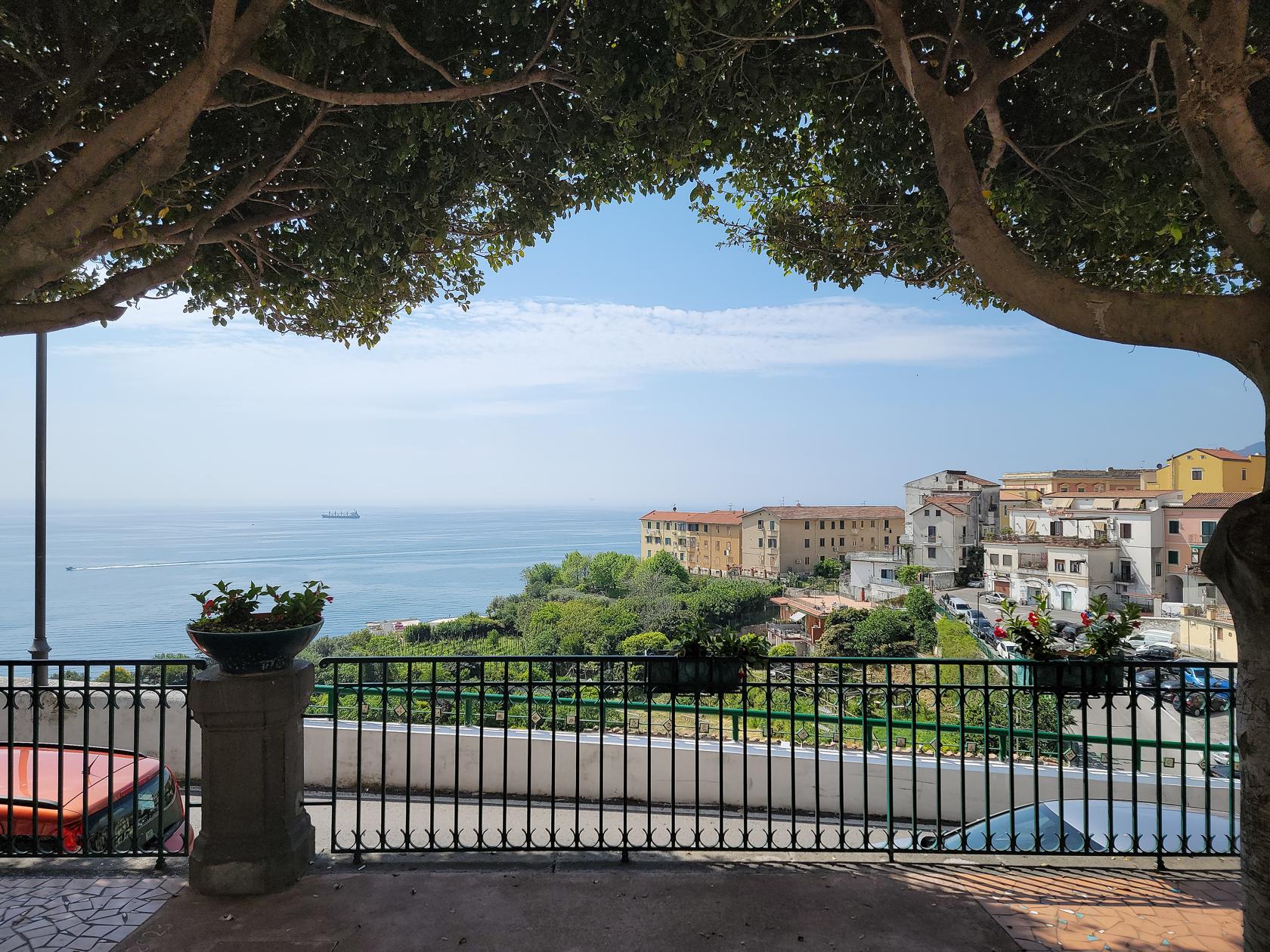
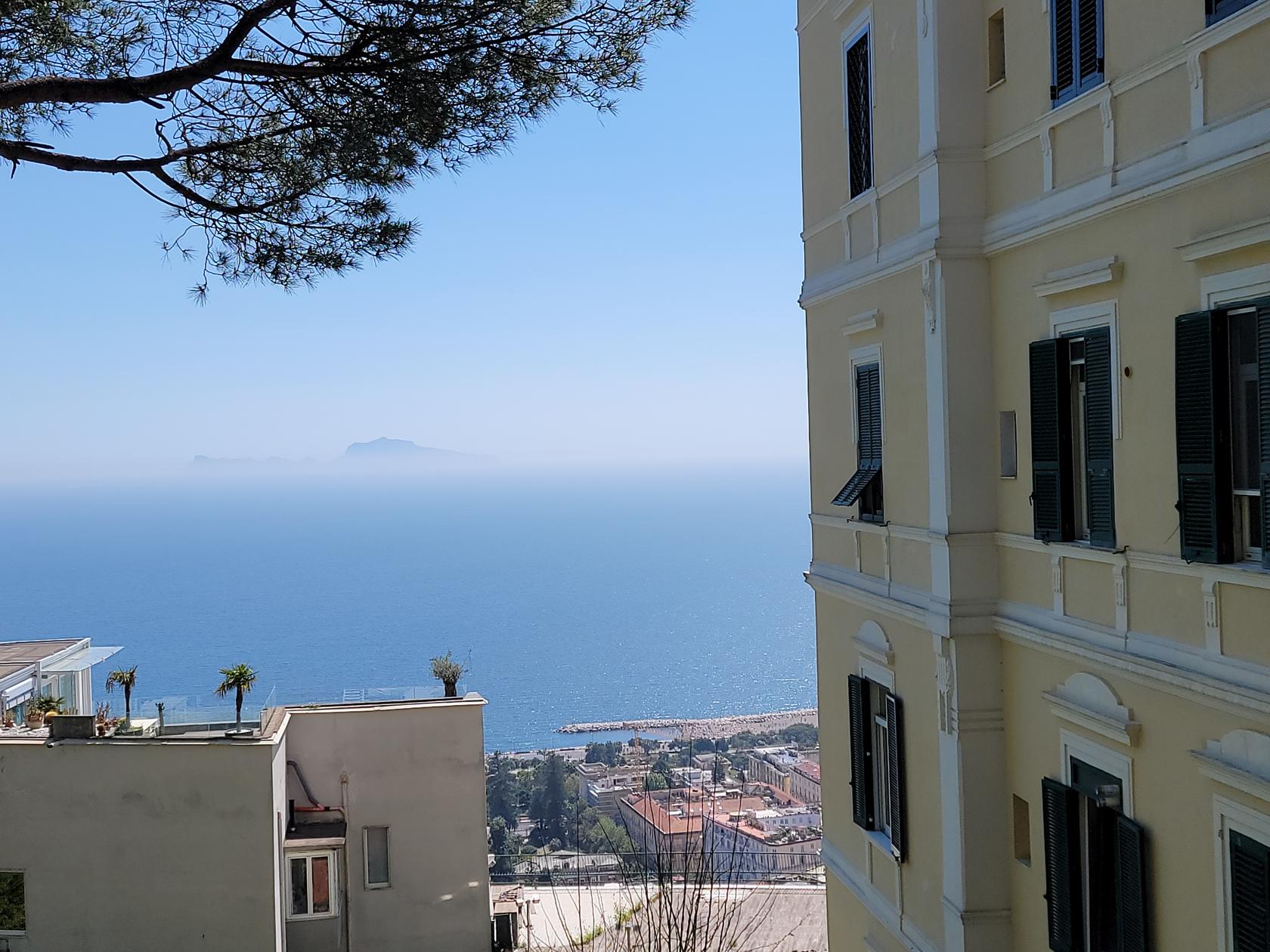
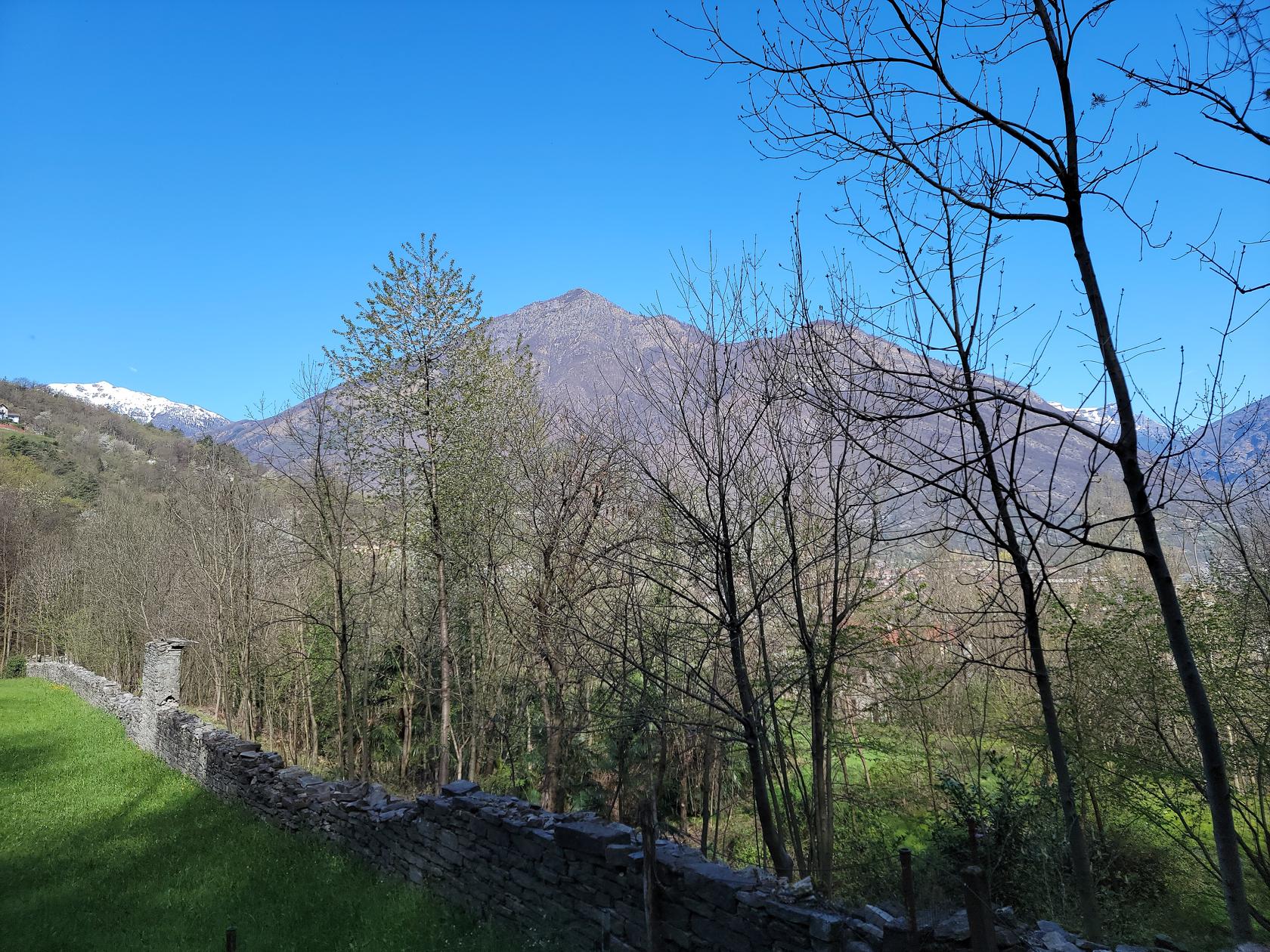
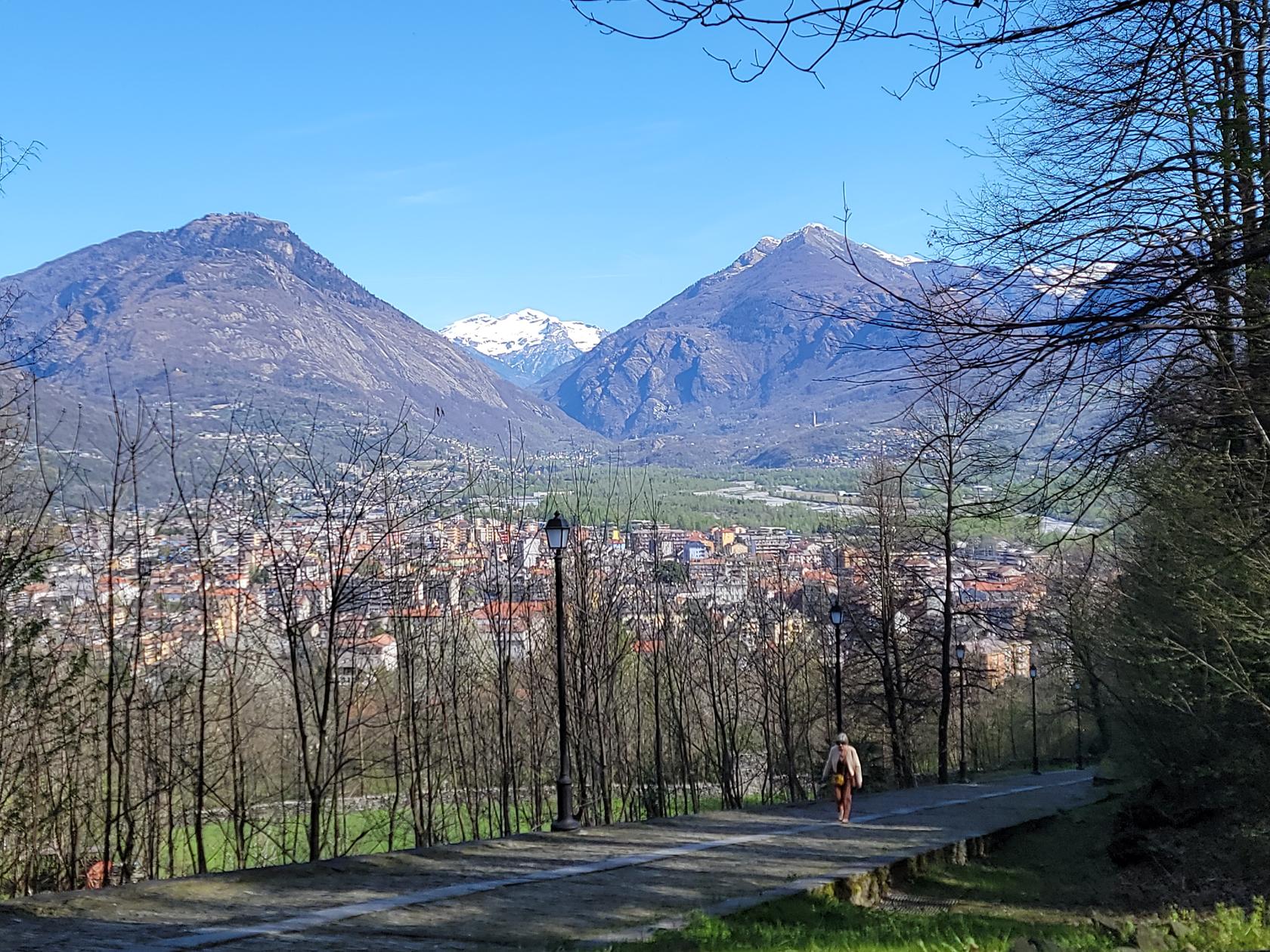
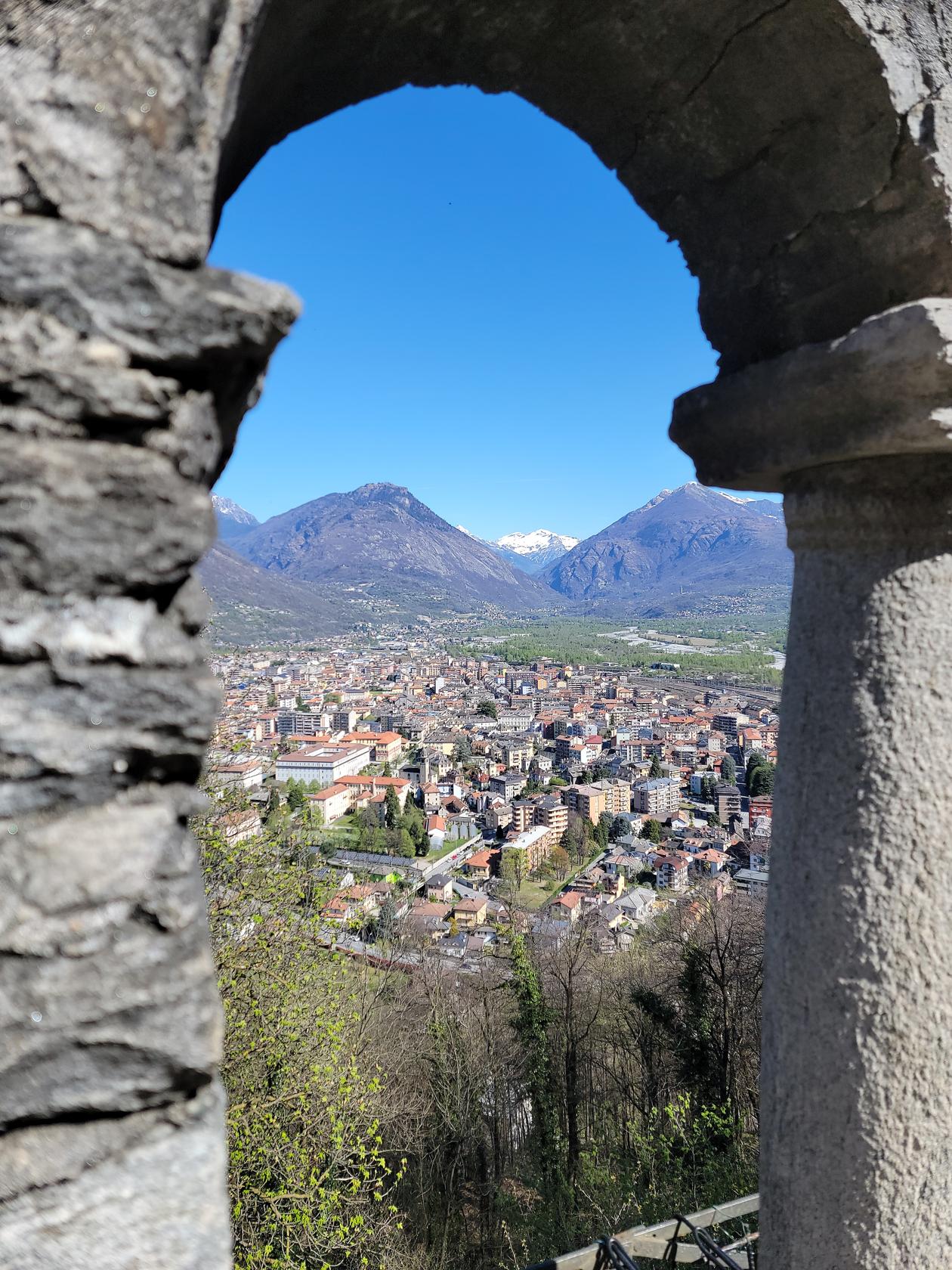
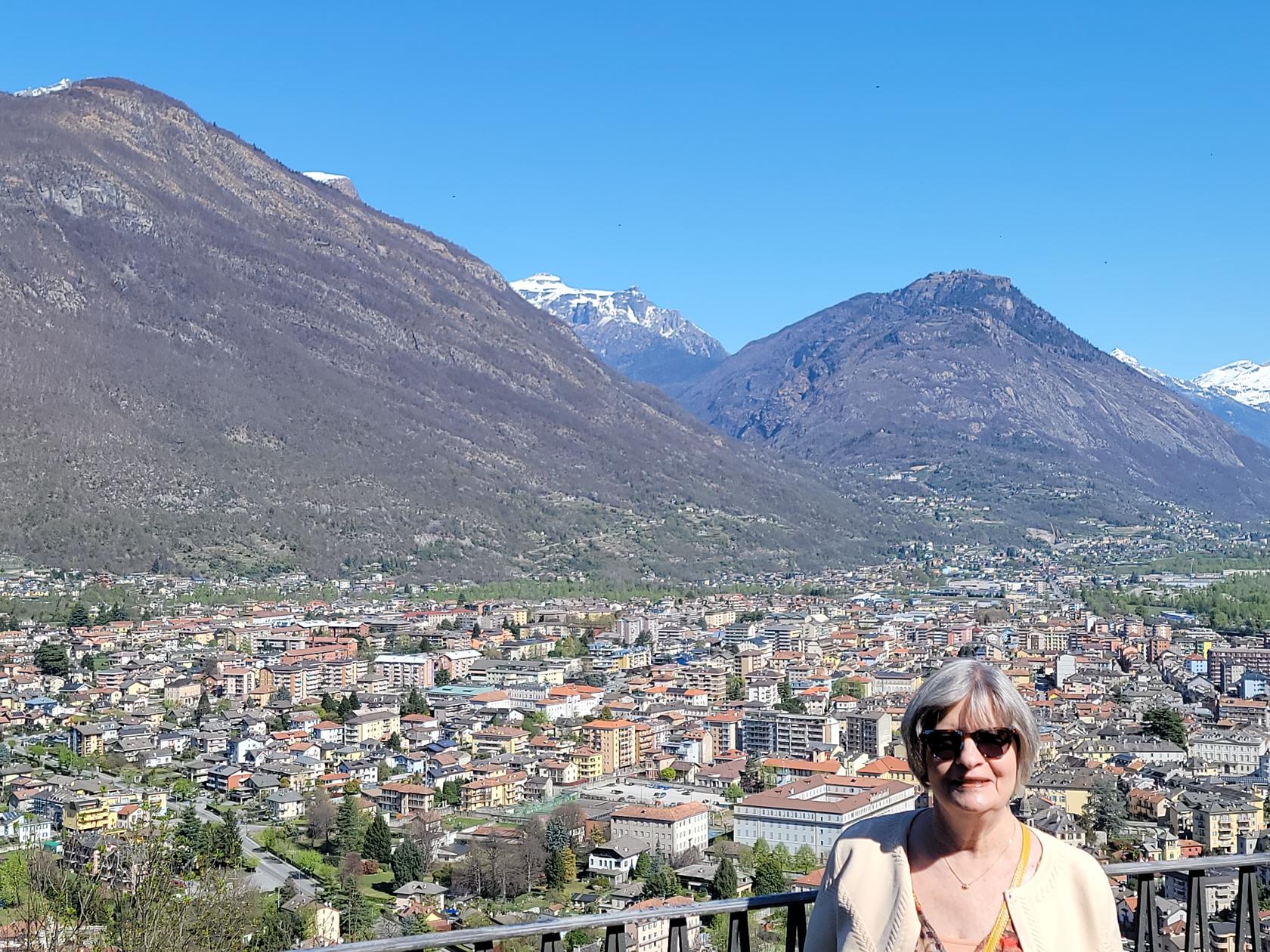
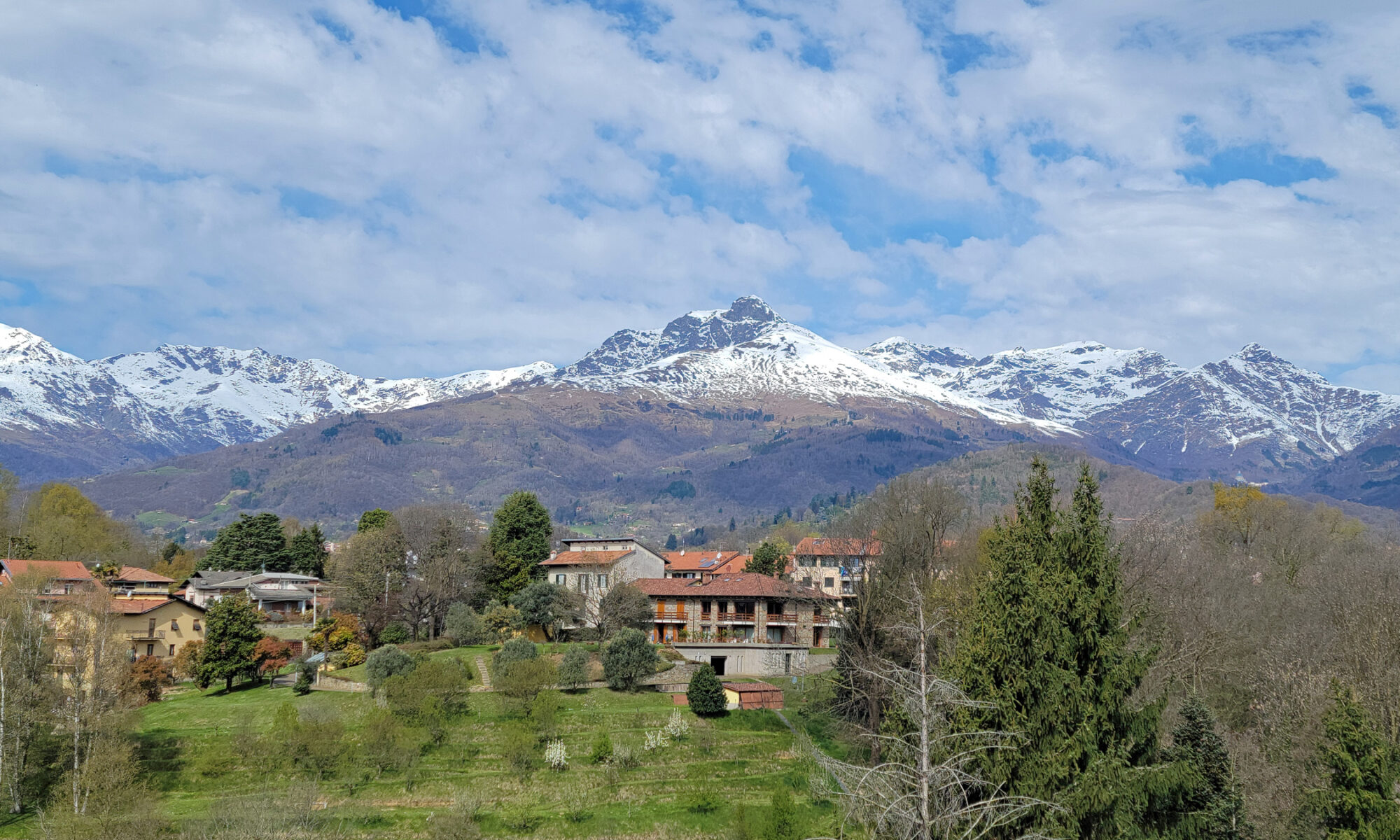
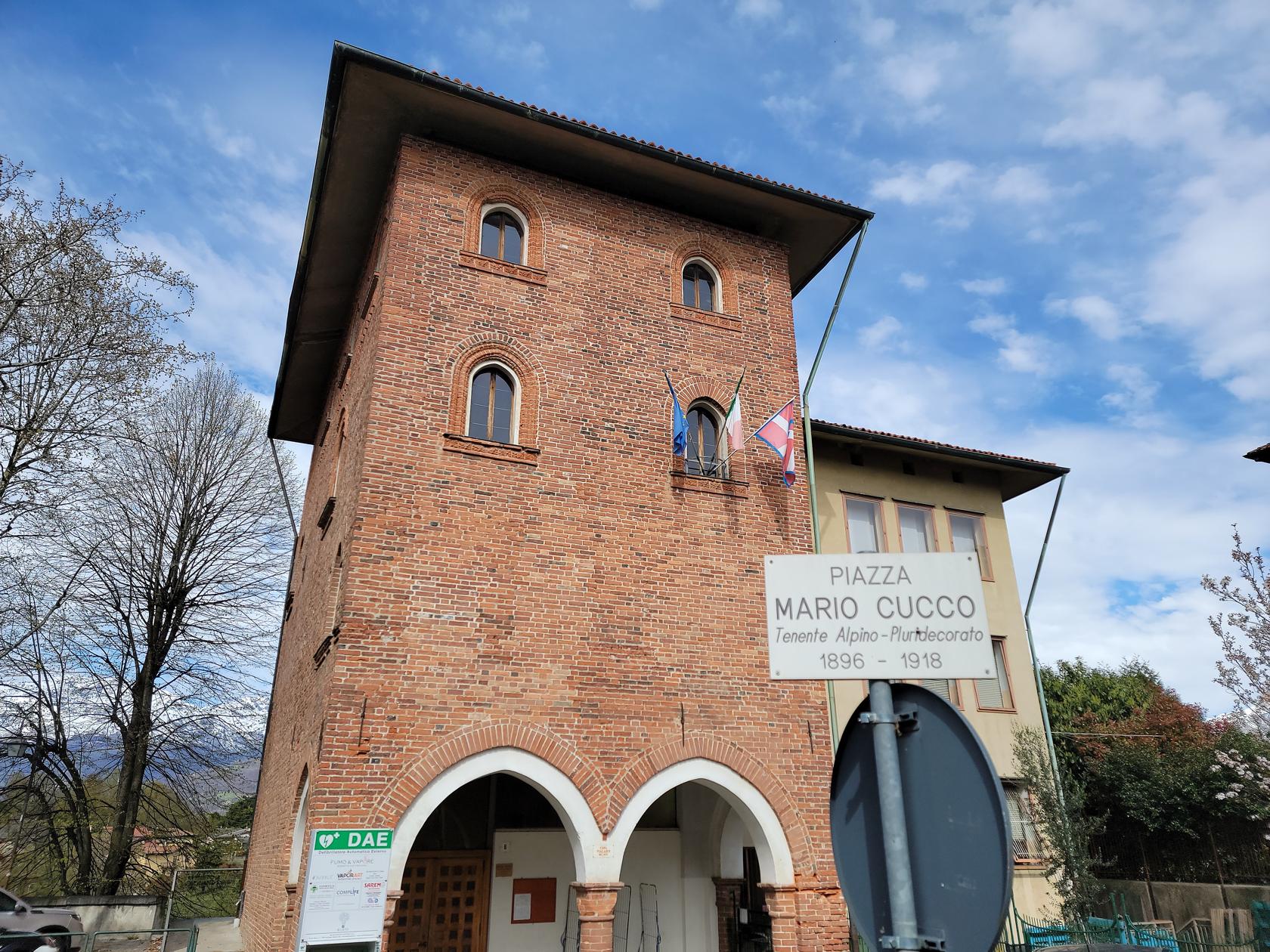
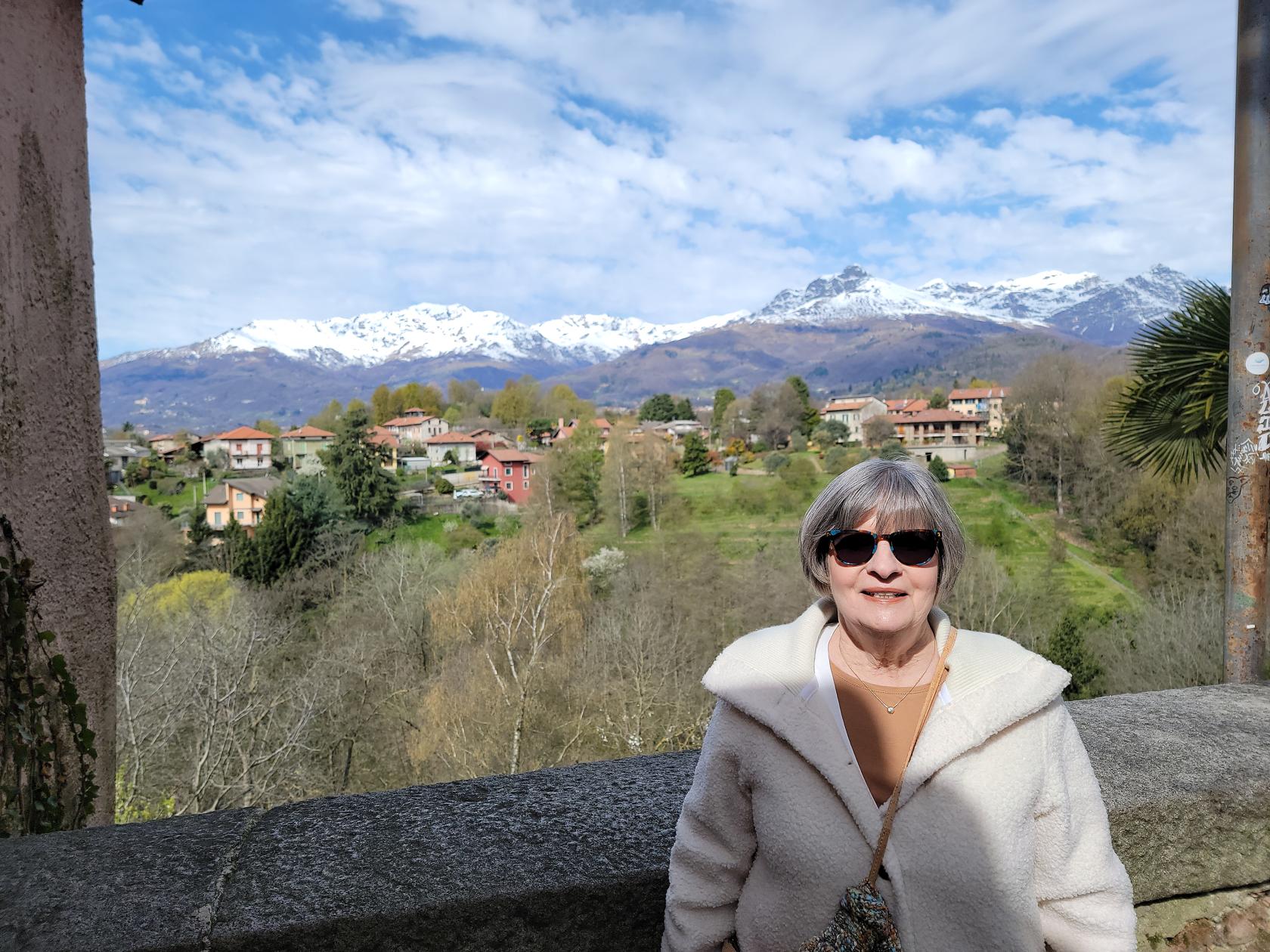
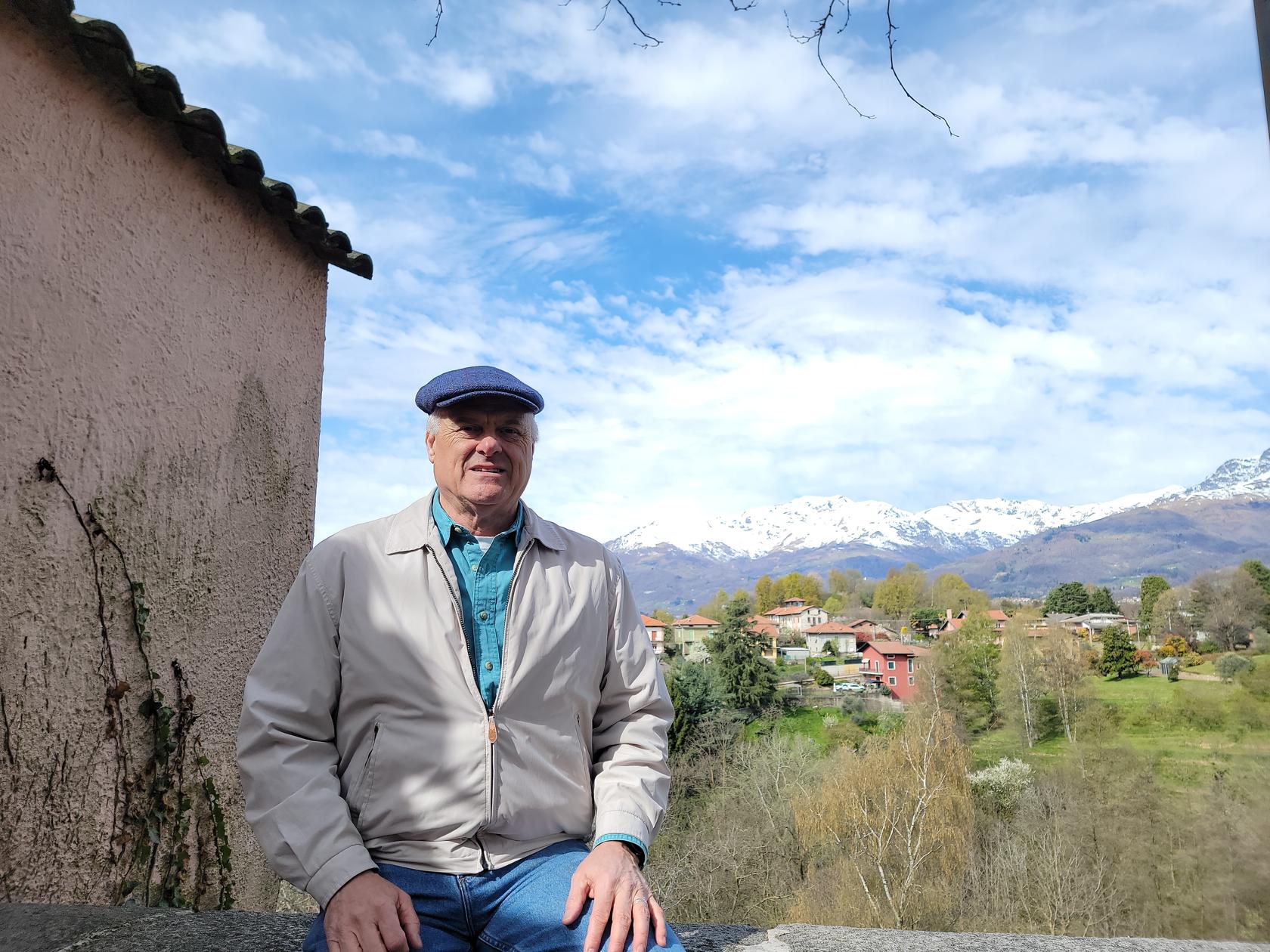
Close by is the Piazza Mario Cucco, from where you will be able to get a fantastic view of the Biellese Alps.

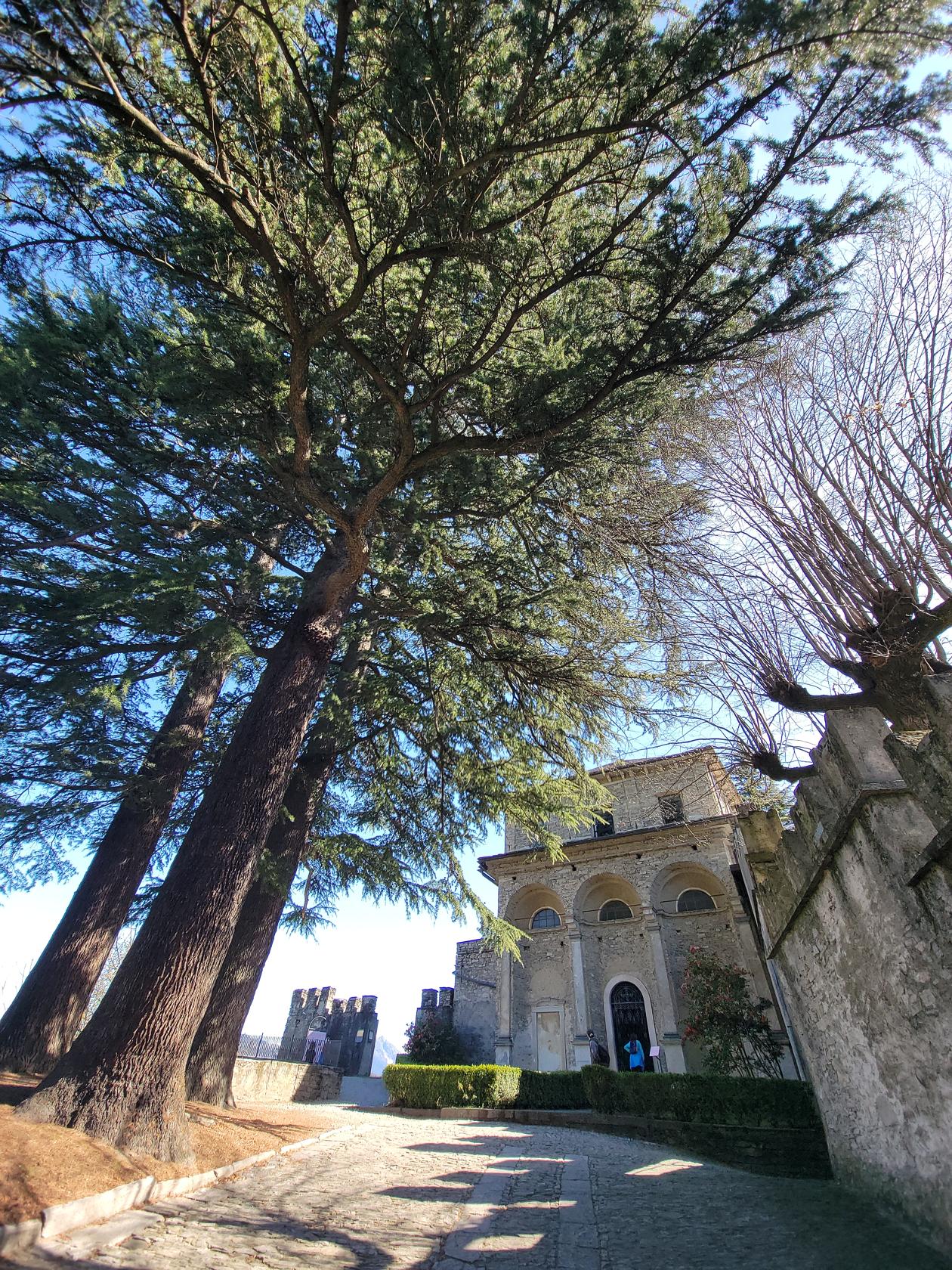
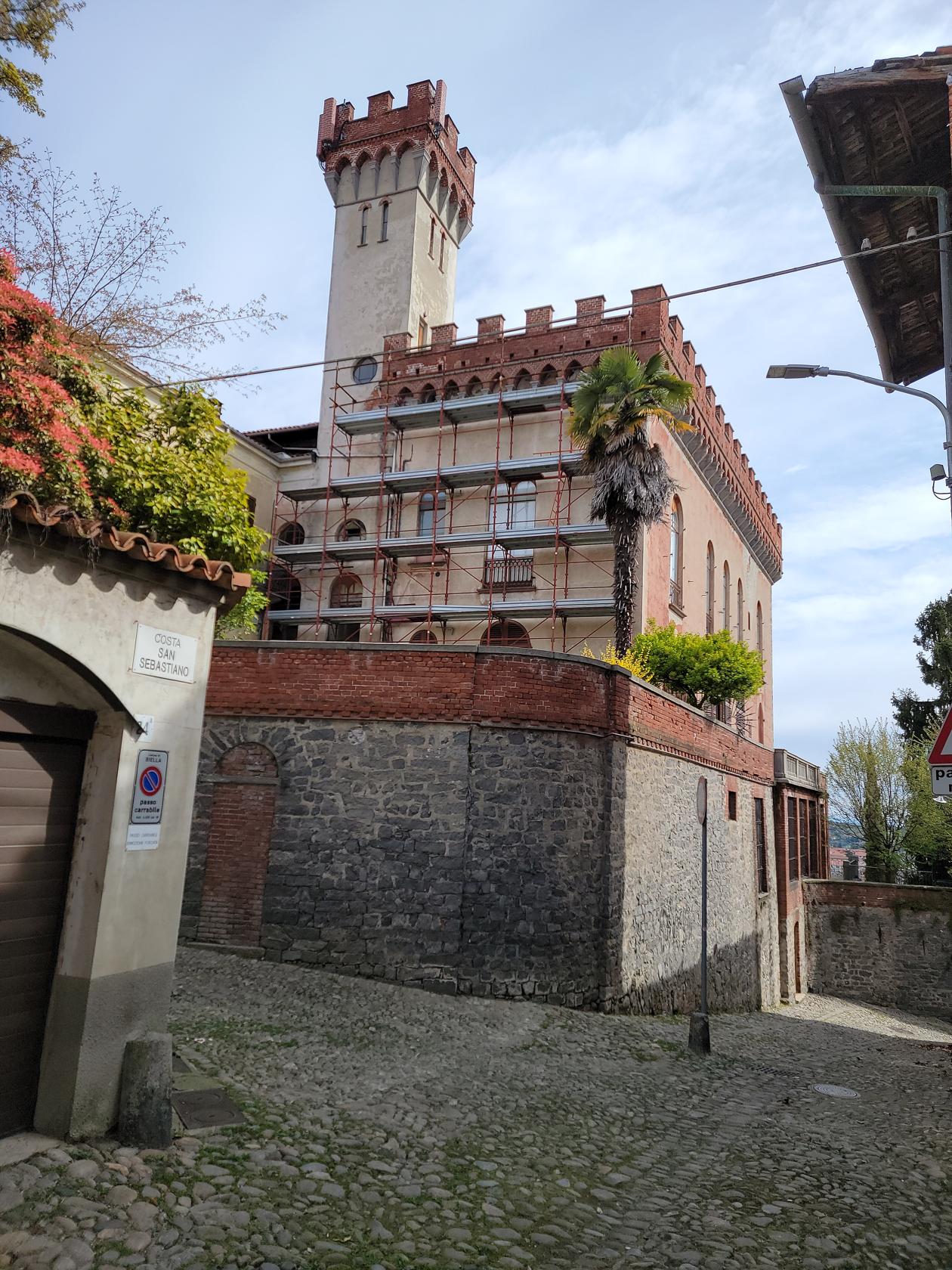
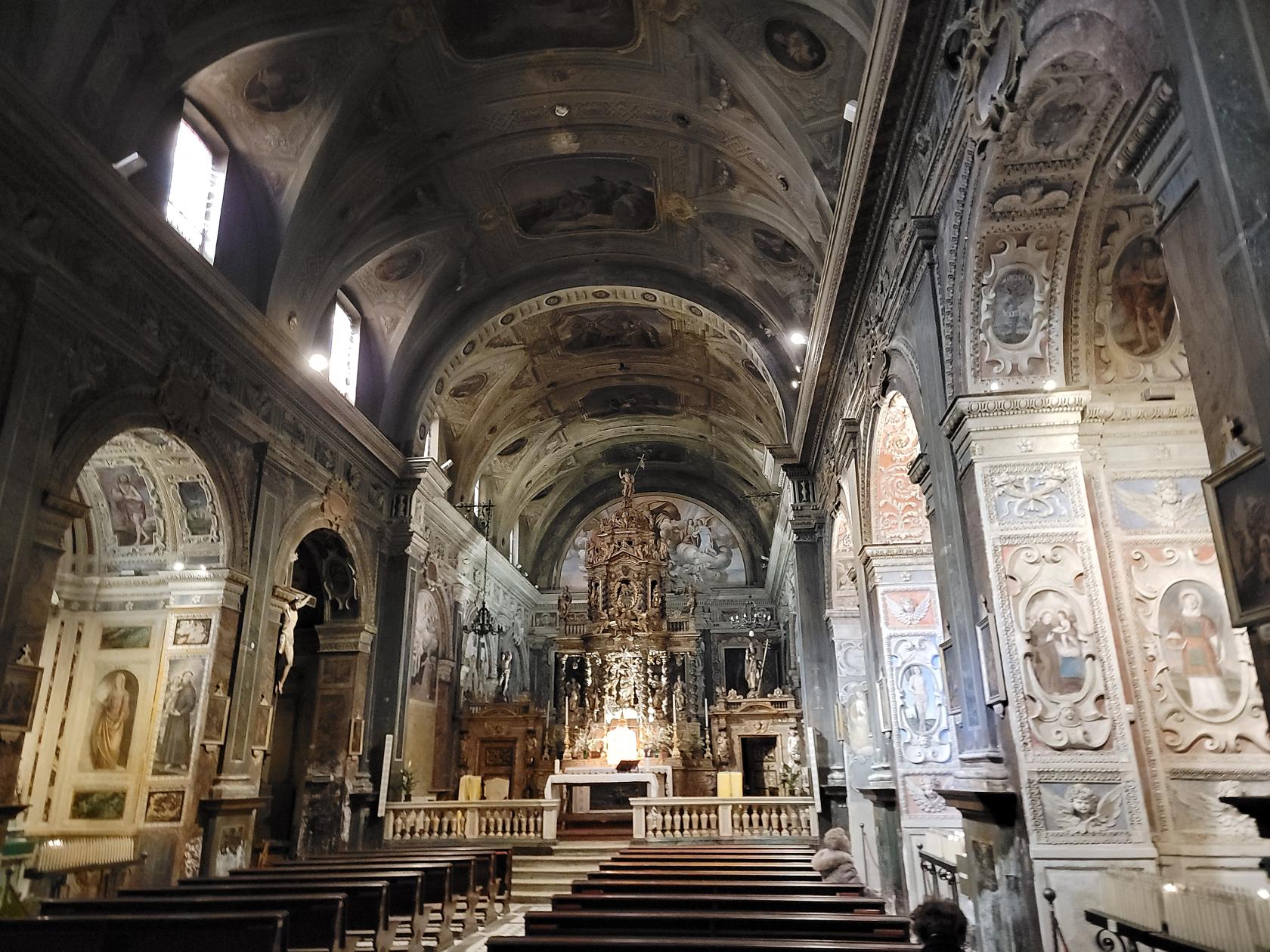
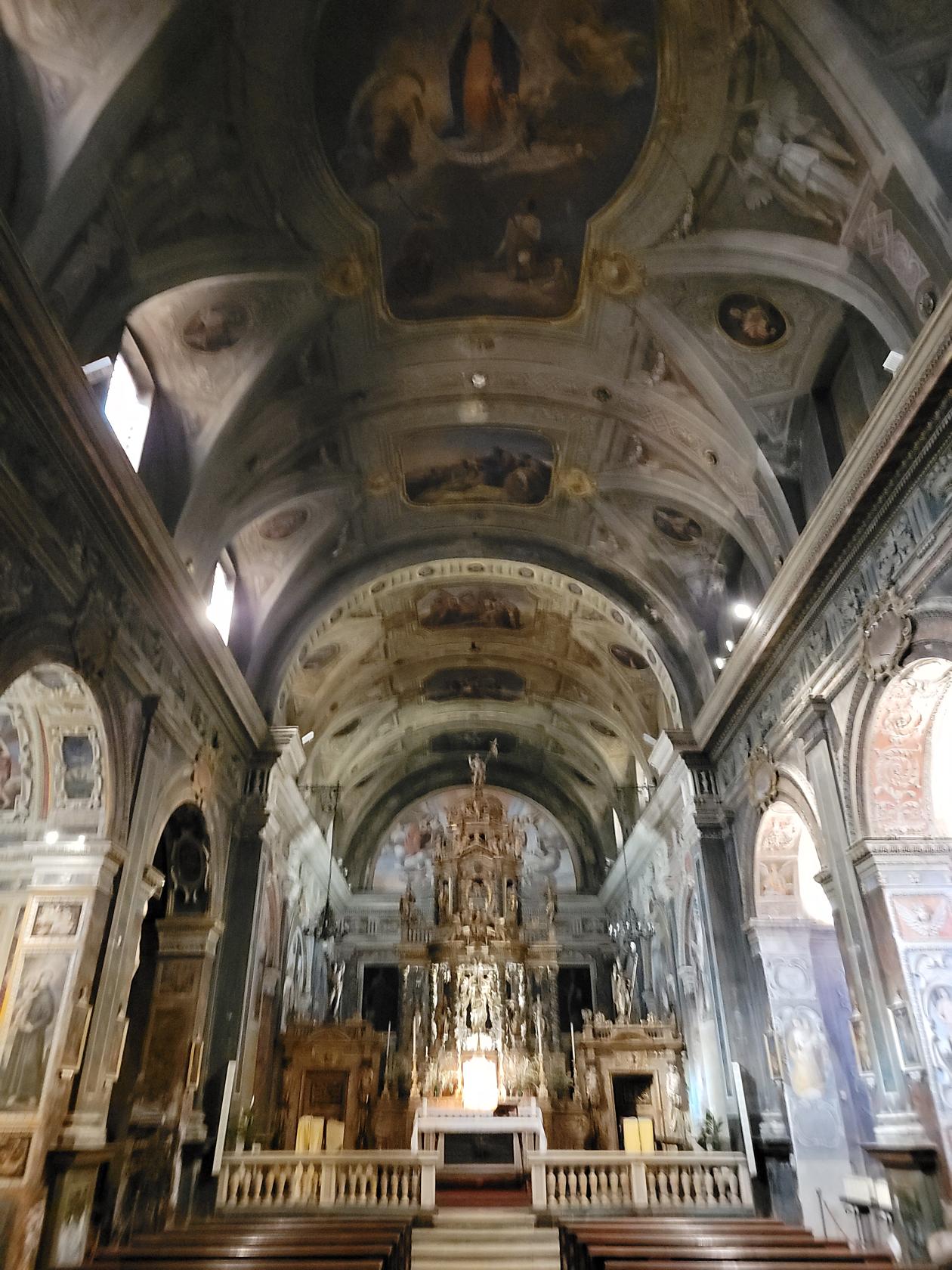
One the way down, we took the Costa San Sebastiano, which led us directly to the Basilica of San Sebastiano in Biella.

Basilica Biella

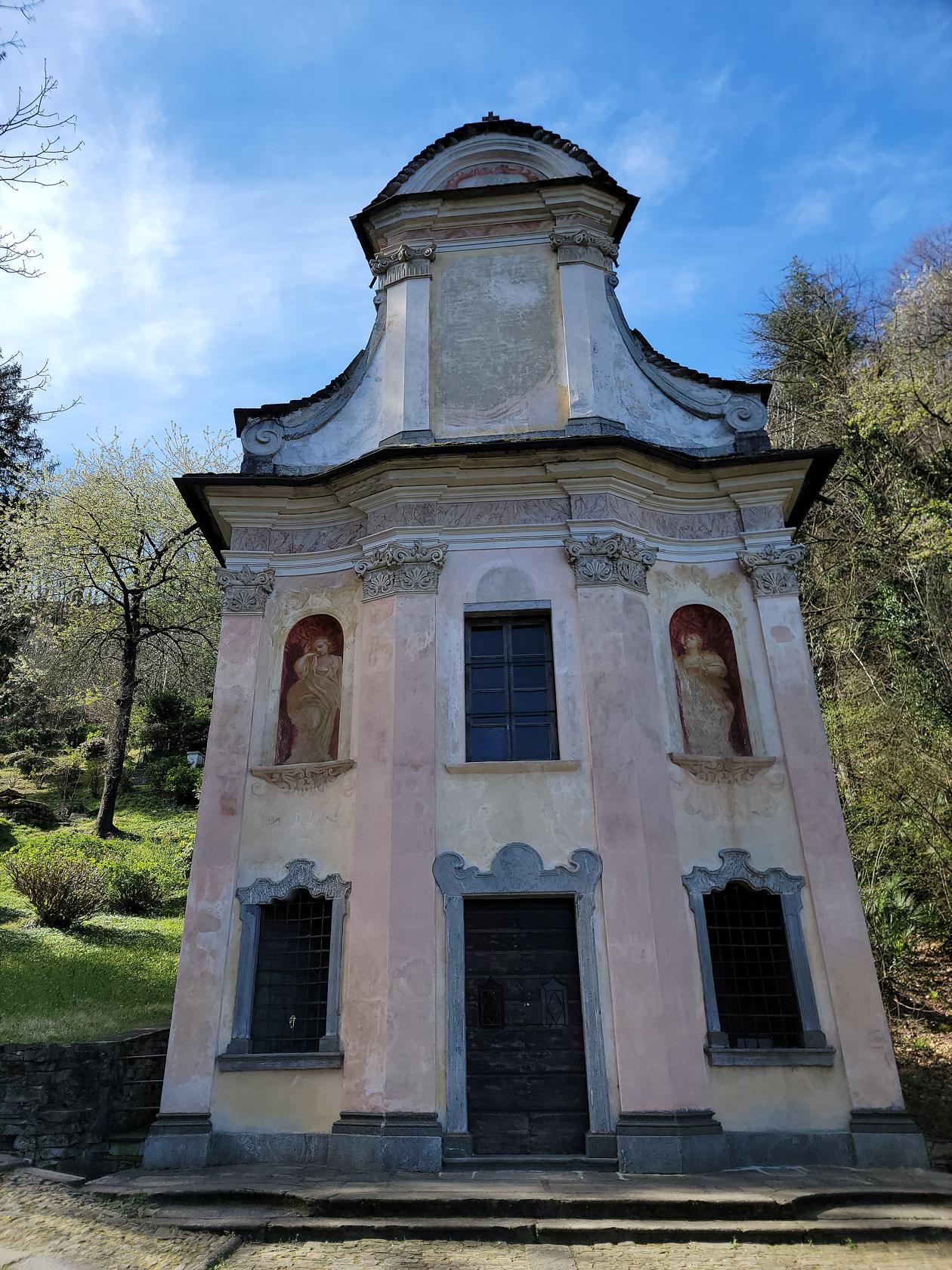
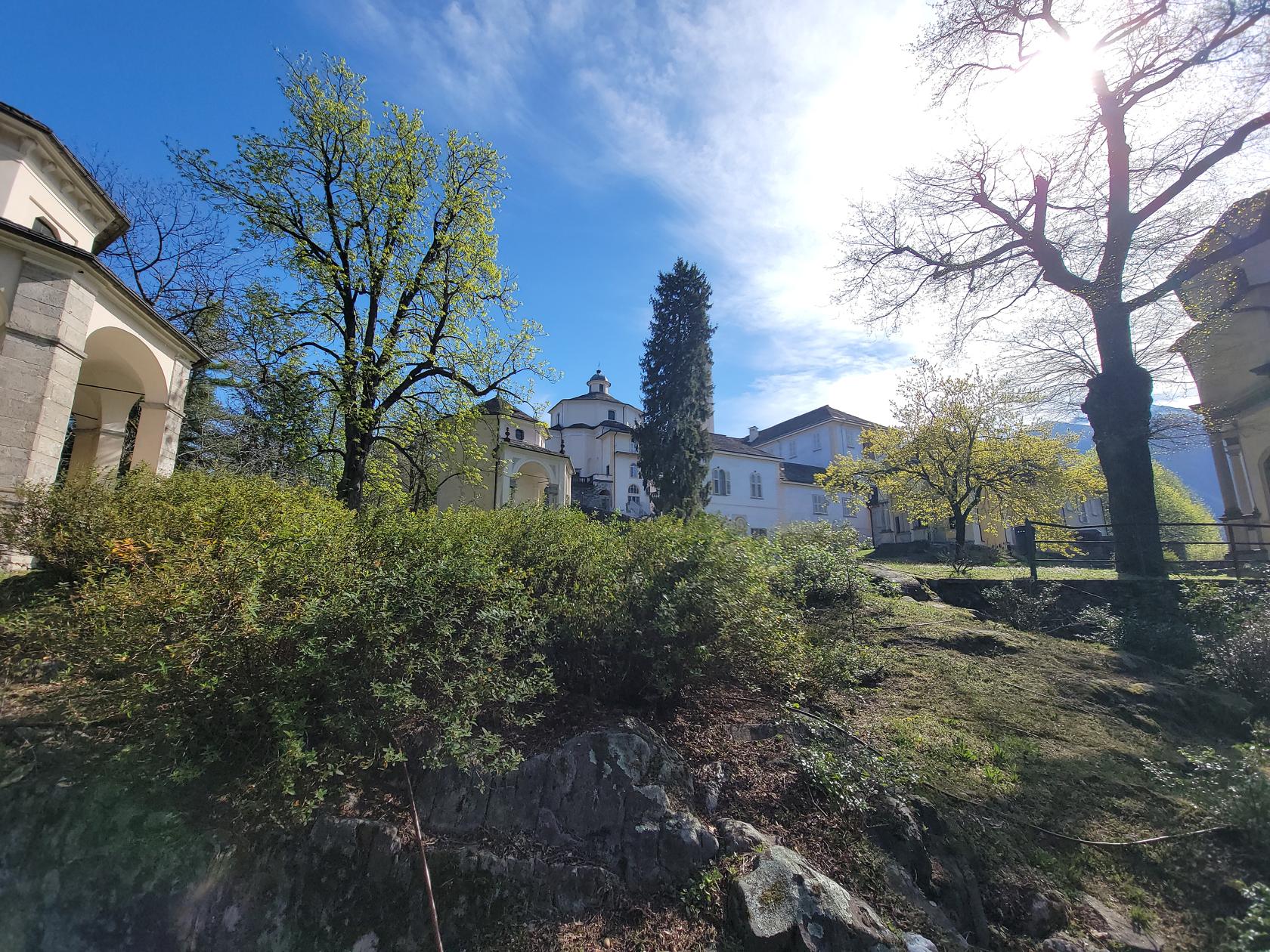
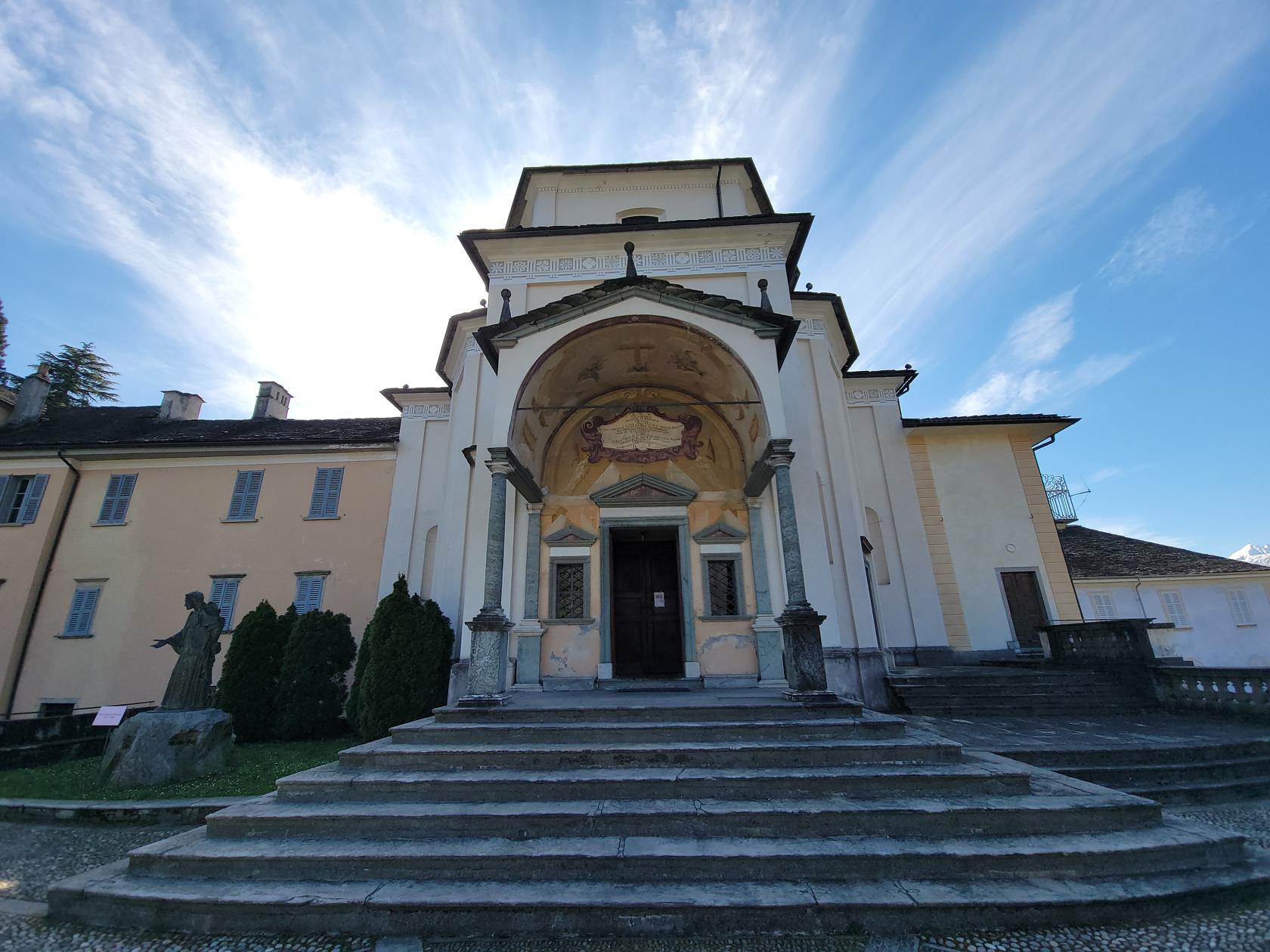
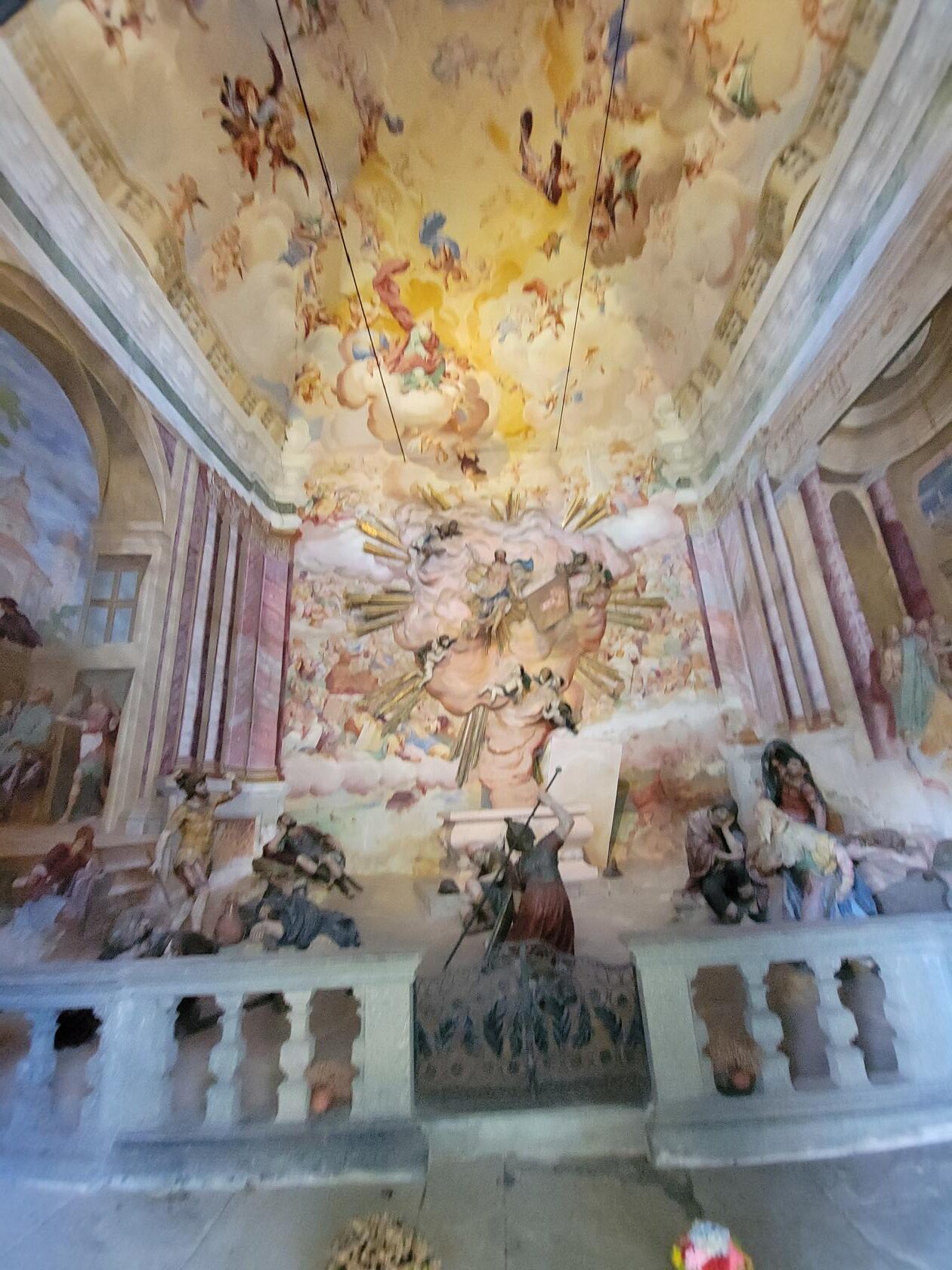
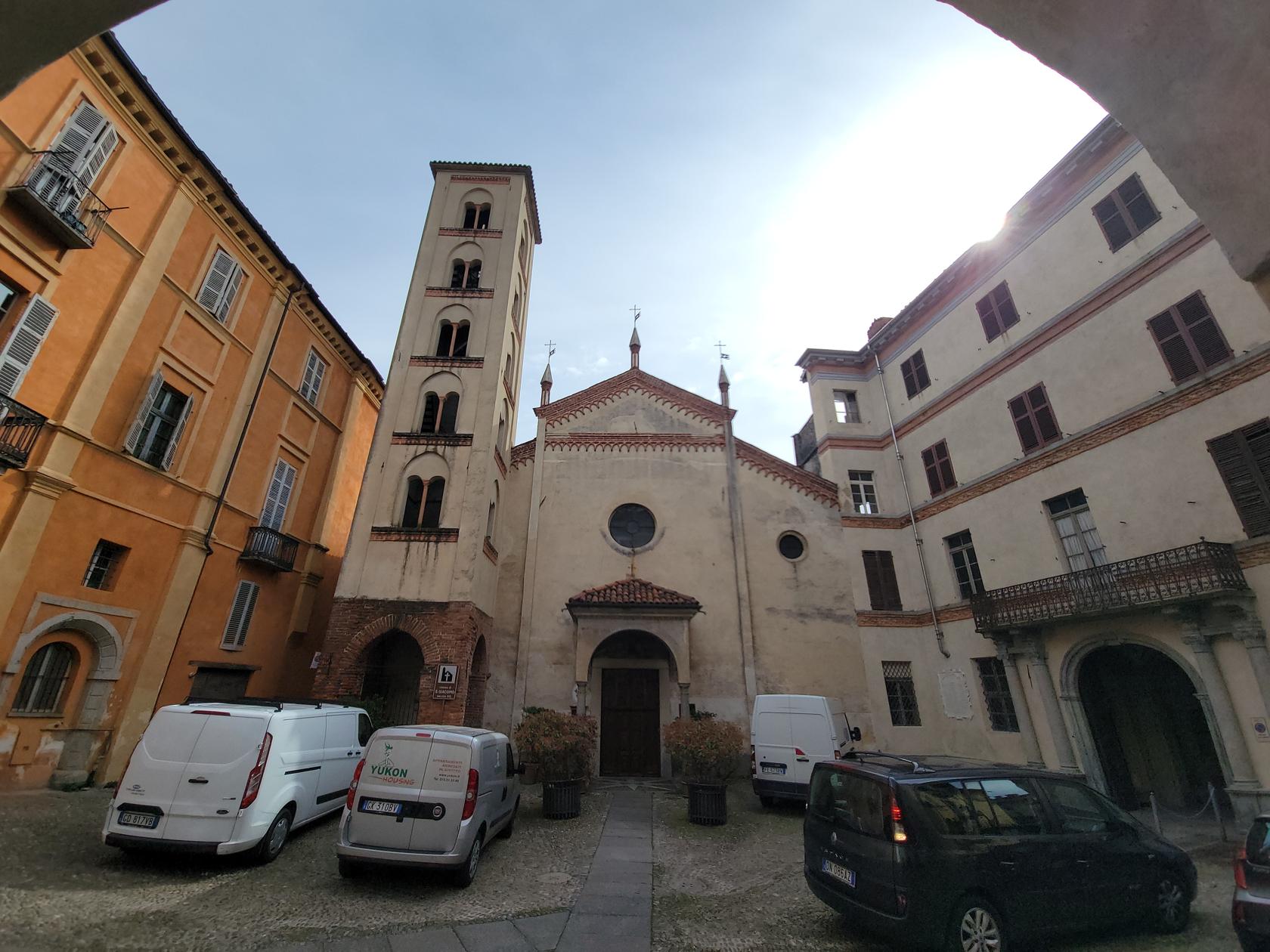
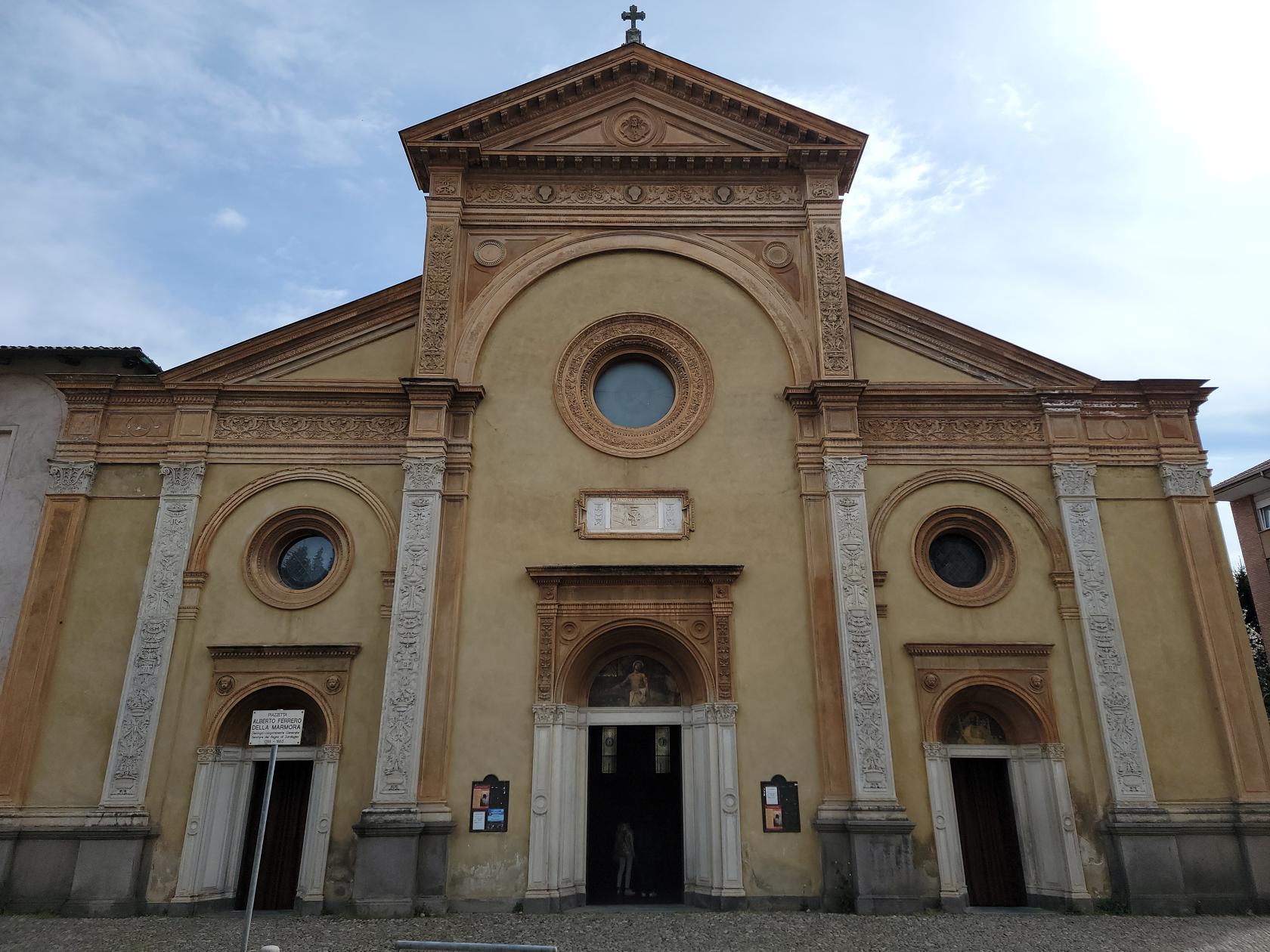
The Basilica of San Sebastiano, together with the monastery of San Girolamo, stands as the pinnacle of the Biella Renaissance. Commissioned and funded by Sebastiano Ferrero, it featured artists from the Lombardy region for its masonry work. The church’s foundation stone was laid in 1500, and in honor of the patron, it was dedicated to San Sebastiano. The construction was overseen by Maestro Eusebio, who was present during the laying of the foundation stone. By 1504, the church’s walls were already finished, but it wasn’t consecrated until 1540 by Monsignor Guglielmo di Gattinara, the Bishop of Nicomedia.

Cathedral of Biella

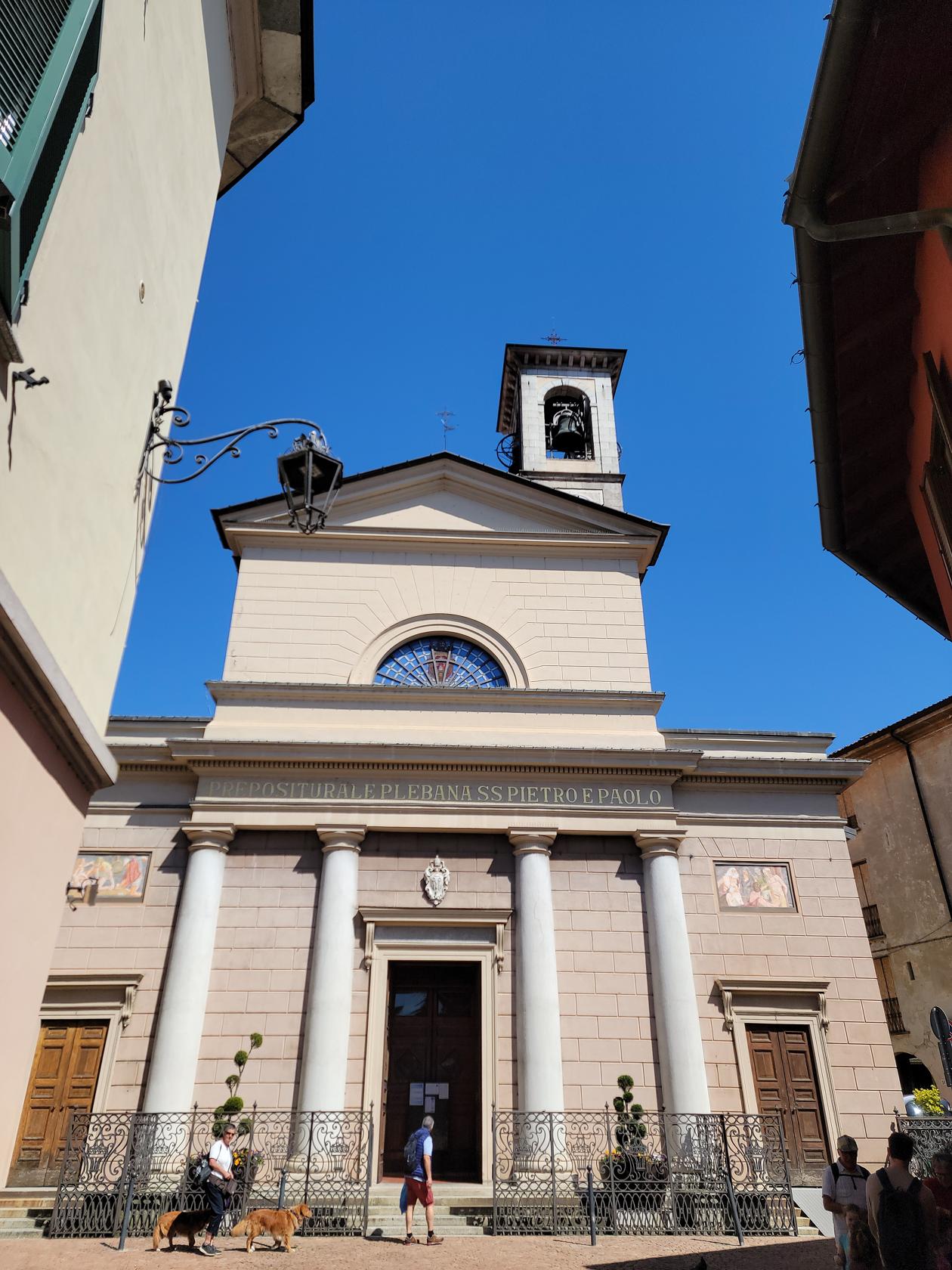
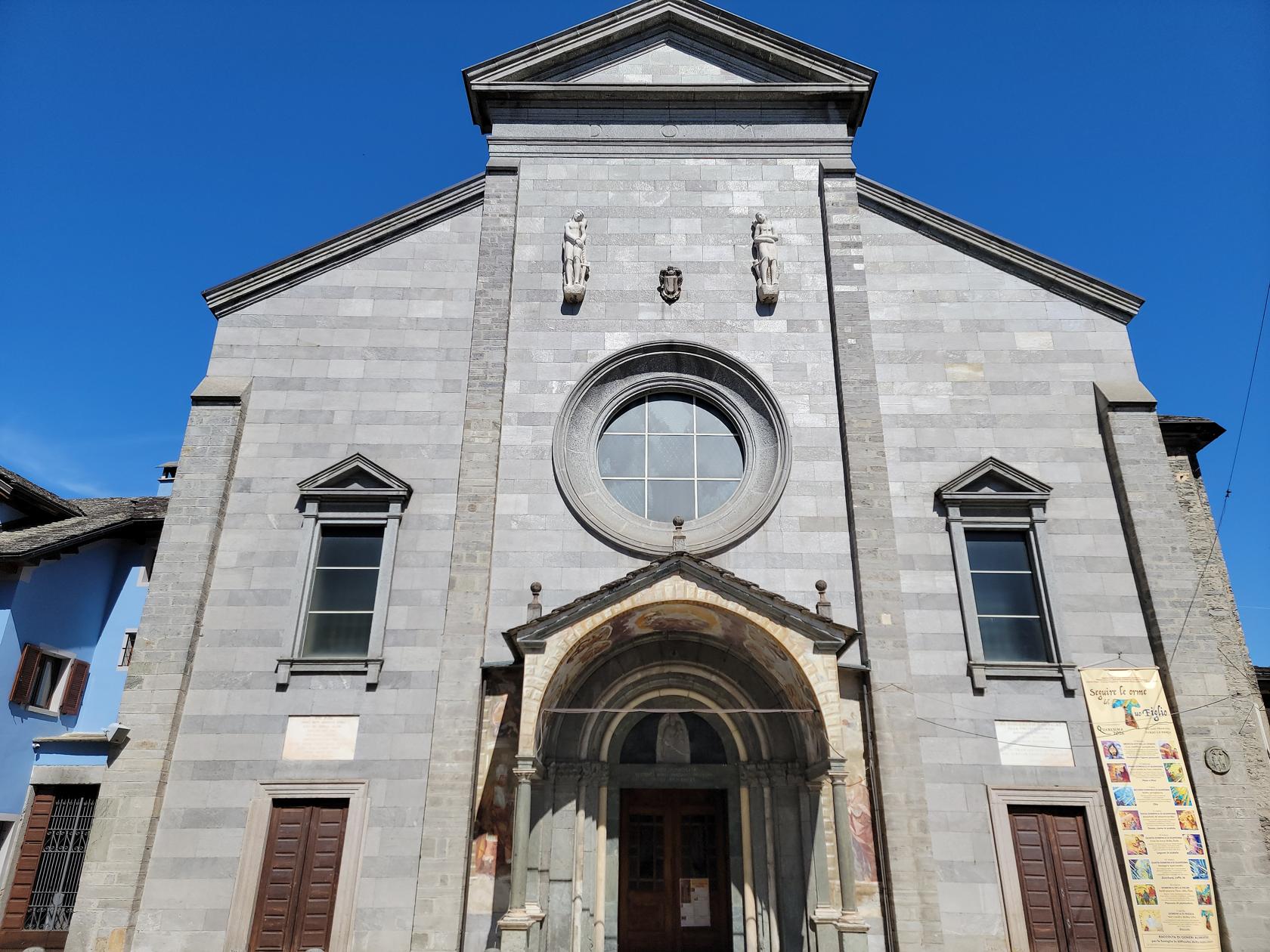
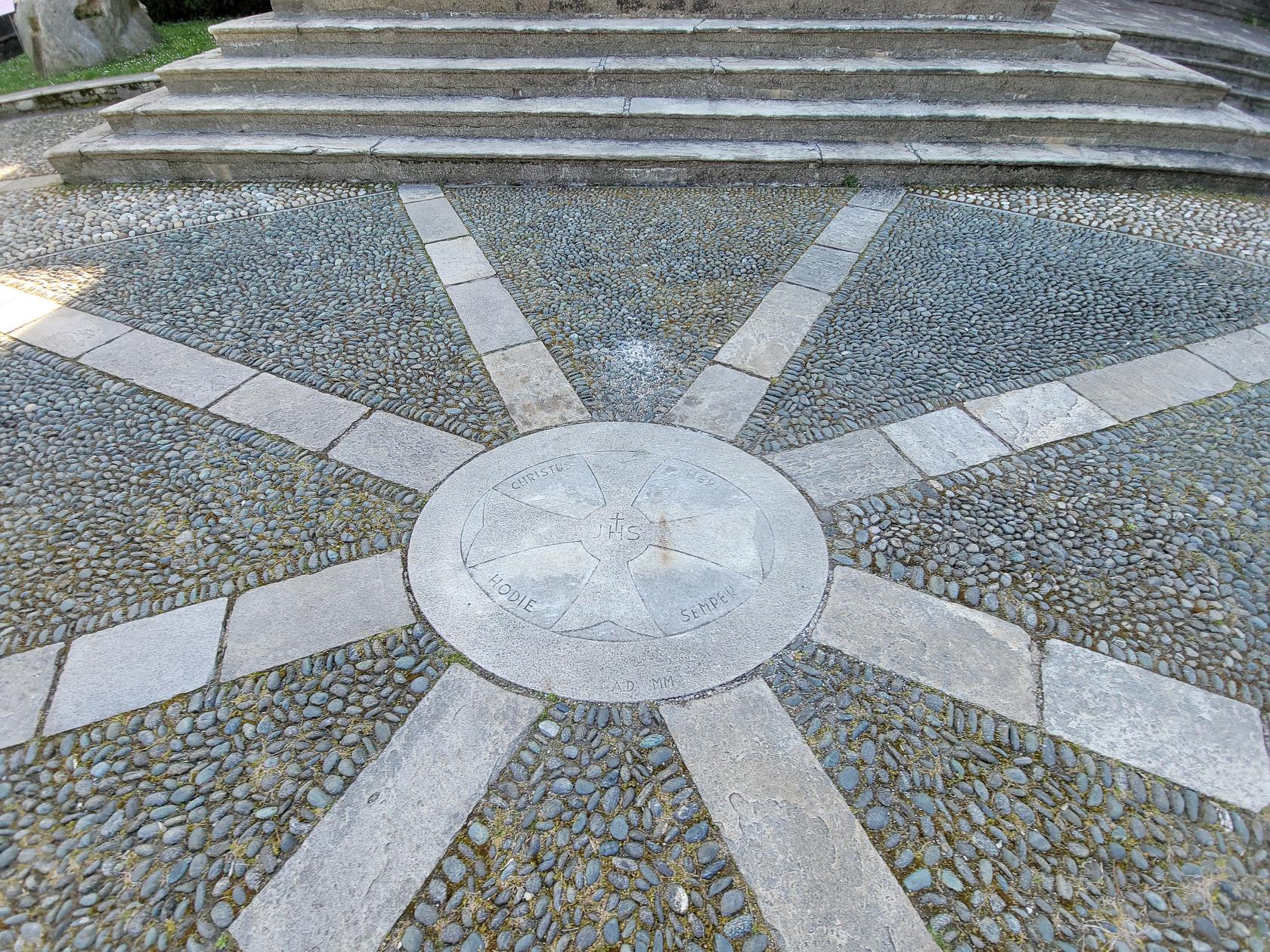
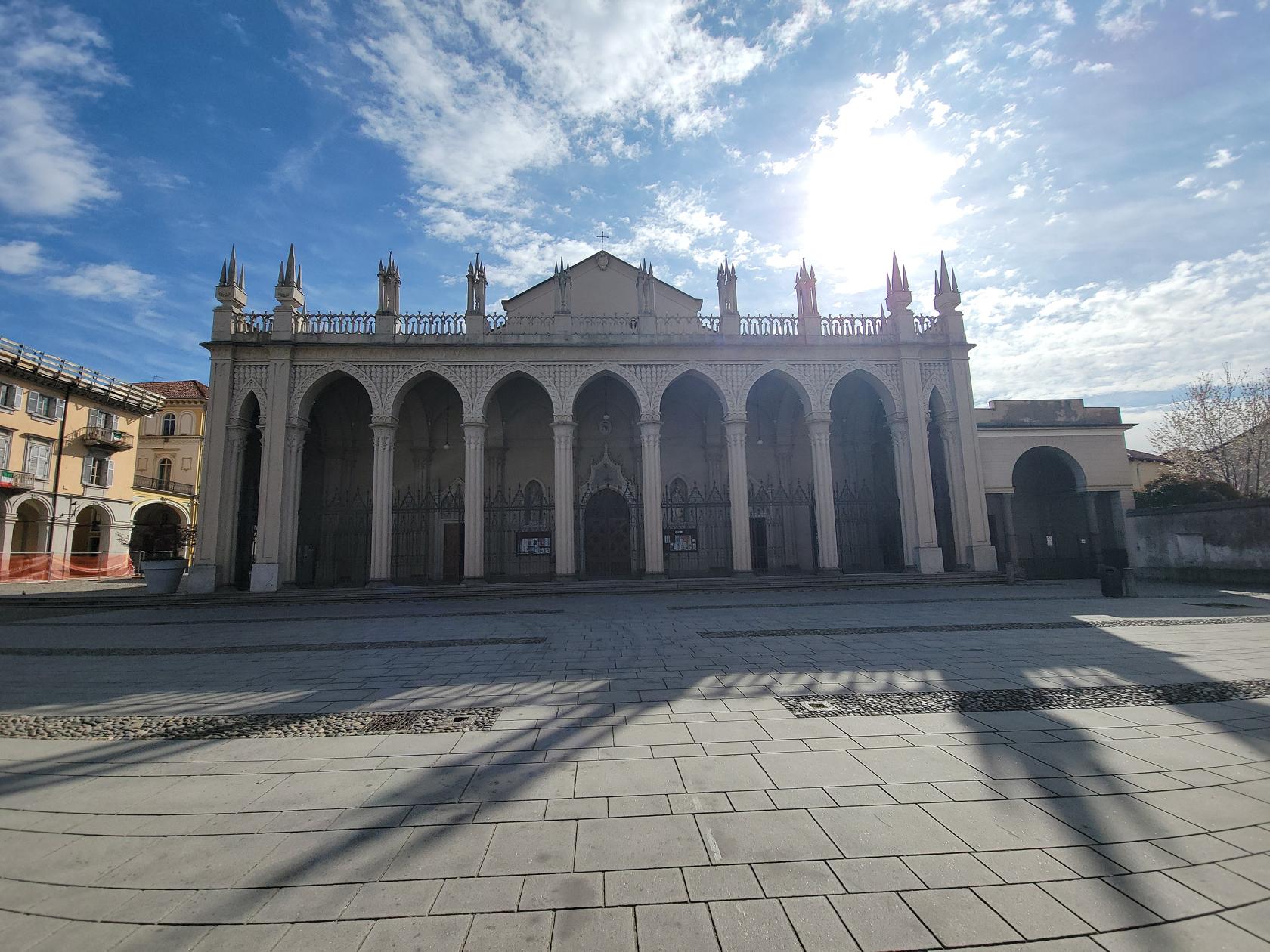
From the outside the Biella Cathedral, or Cathedral of Saint Stefano Protomartire, might almost remind one of a mosque, if it weren’t for the cross on the apex of the roof.

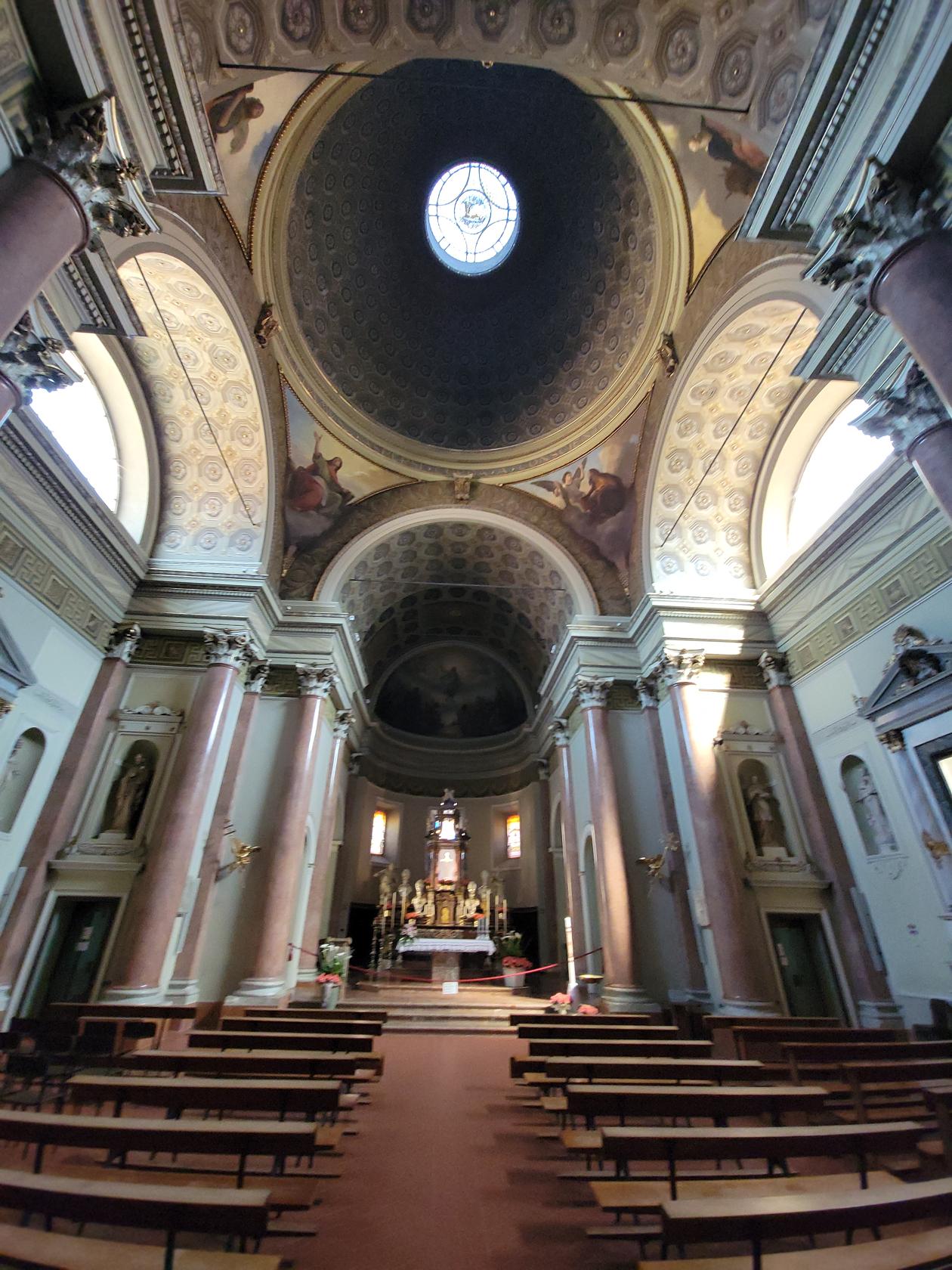
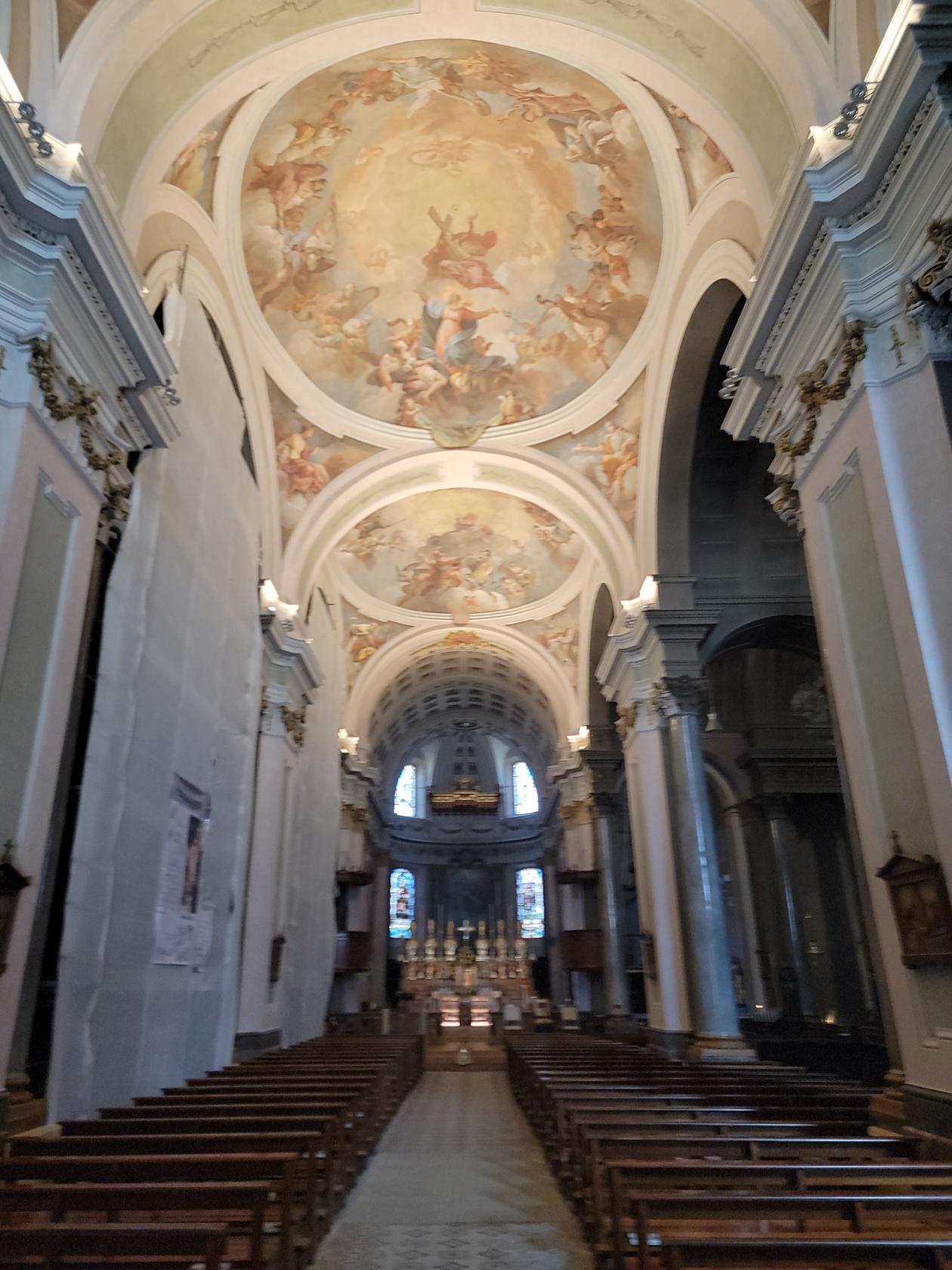
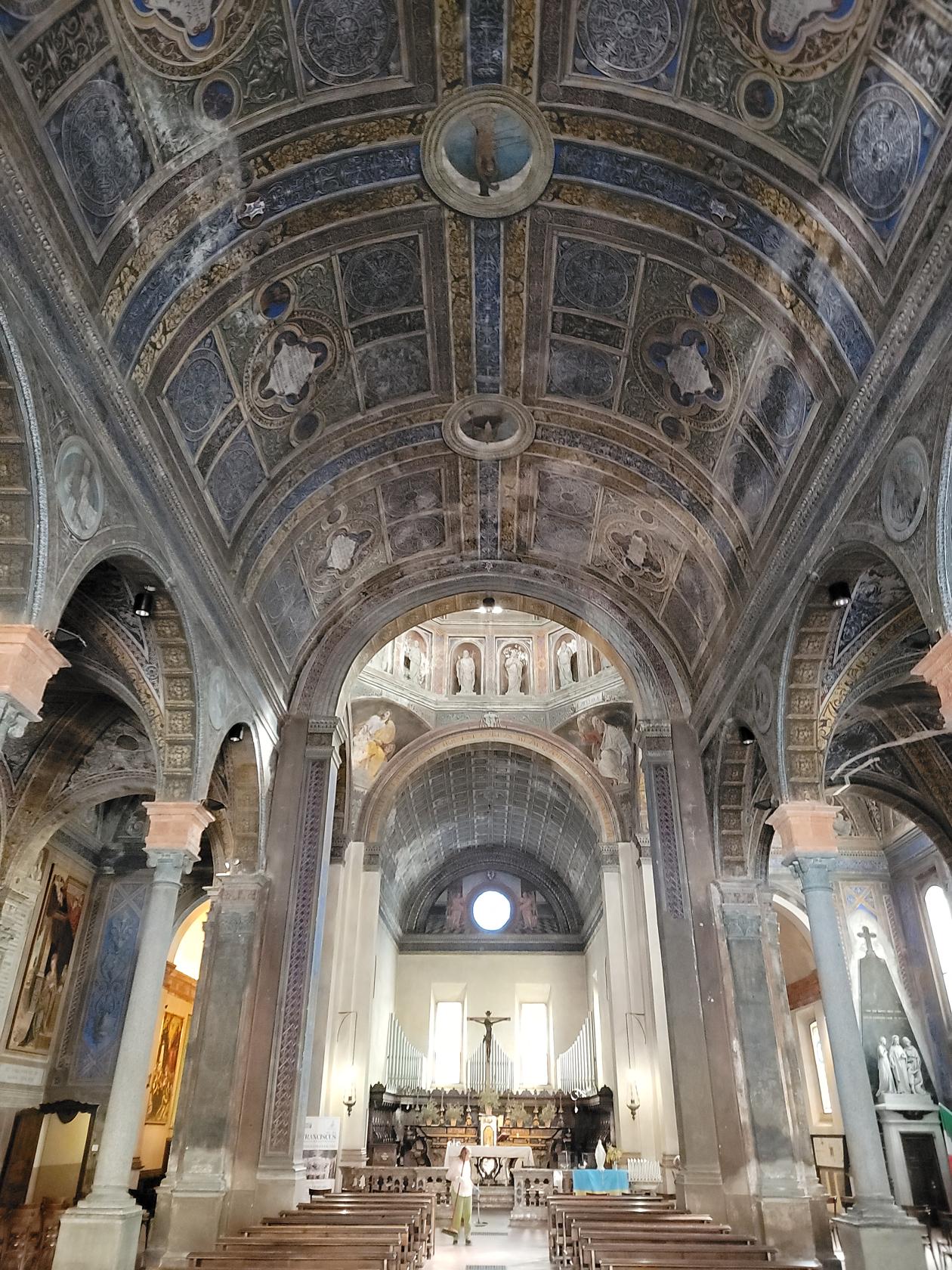
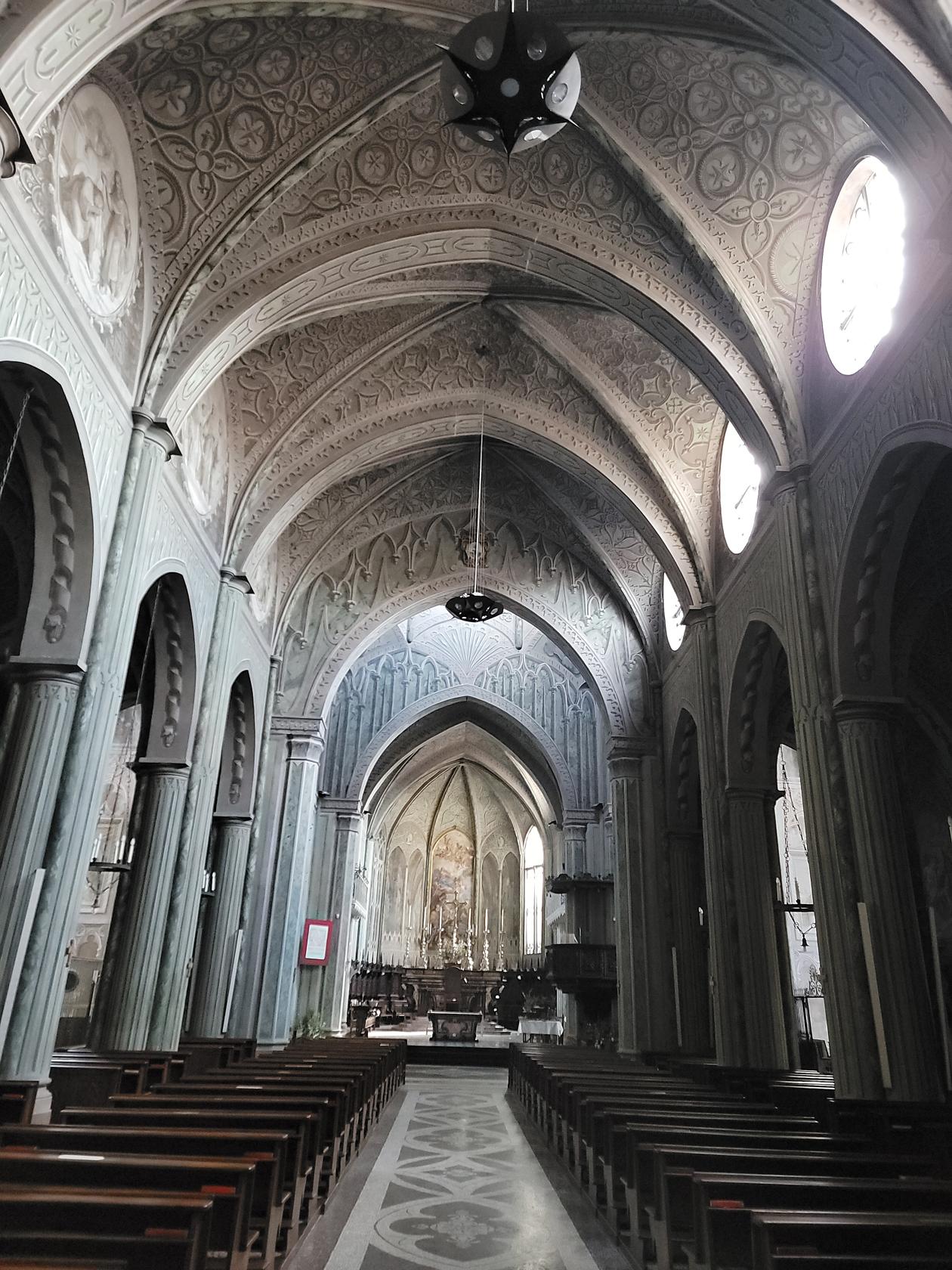
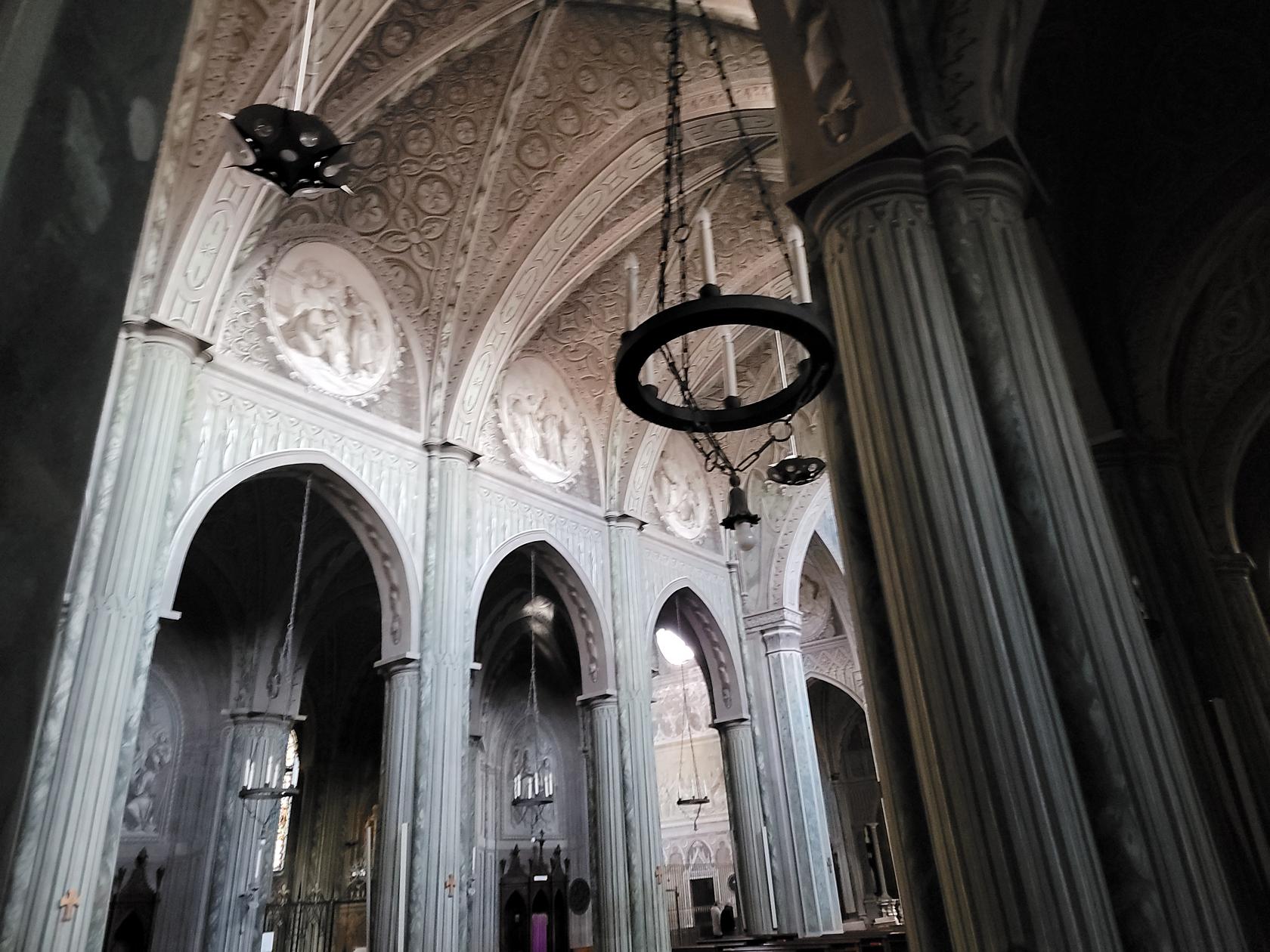
However, from the inside there is no mistaking it for anything other than a catholic cathedral. Interestingly, the interior contors of the colums and relief of the ceiling are all a visual illusion and one of the best examples of trompe-l’Å“il. This is where the intricate details are painted on the existing stone, plaster or masonry to mimick definition or relief, when in fact there is none.

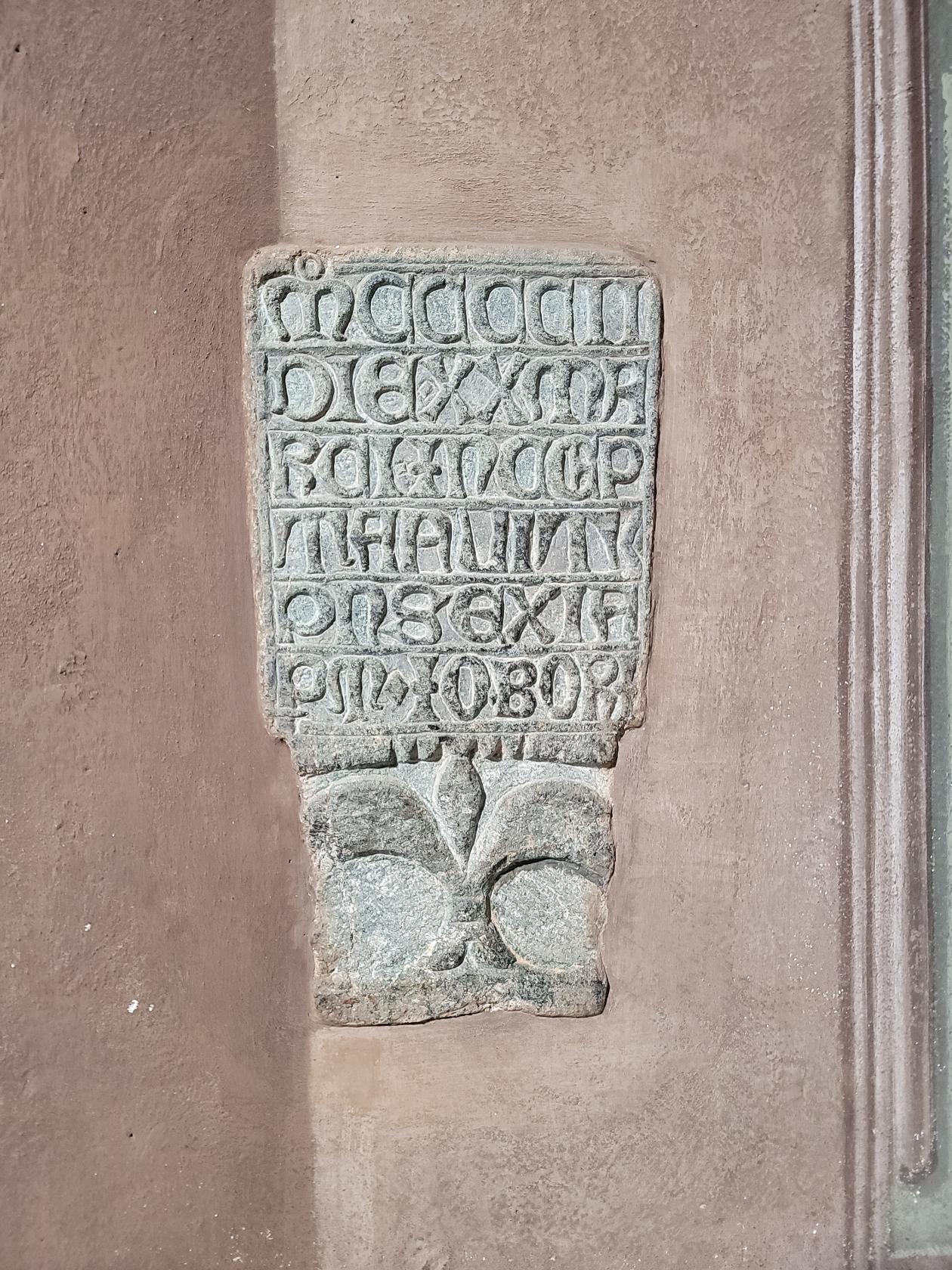
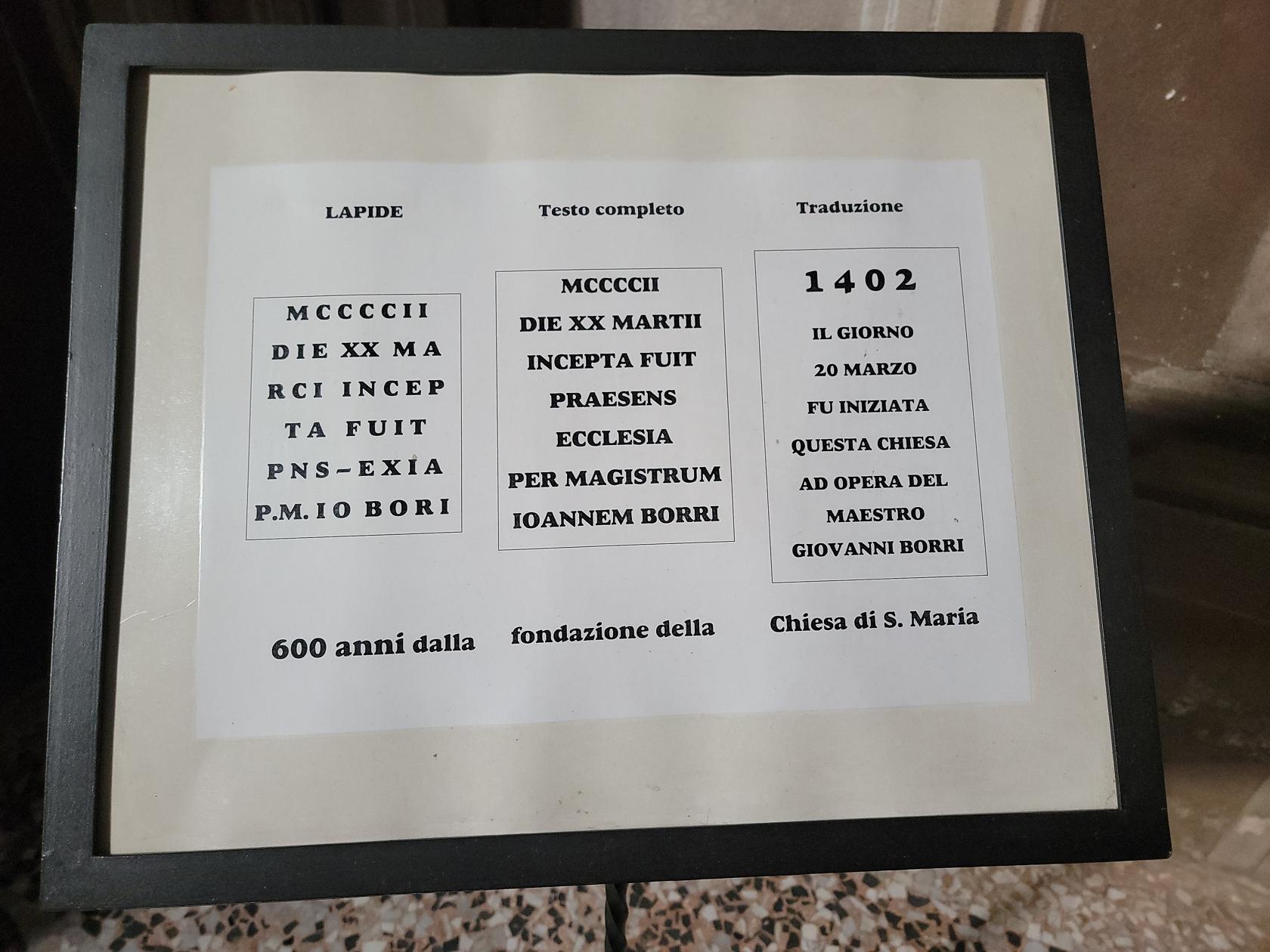
If you look carefully you may find the original first foundation stone for the church, that is before it became of cathedral. It was set in the early fifteenth century and has been interpreted, first from the ancient latin, then into modern italian.

The english translation would say, “1402, today on the 20th of March, construction of this church was begun by master Giovanni Borri.”

Biella Baptistery

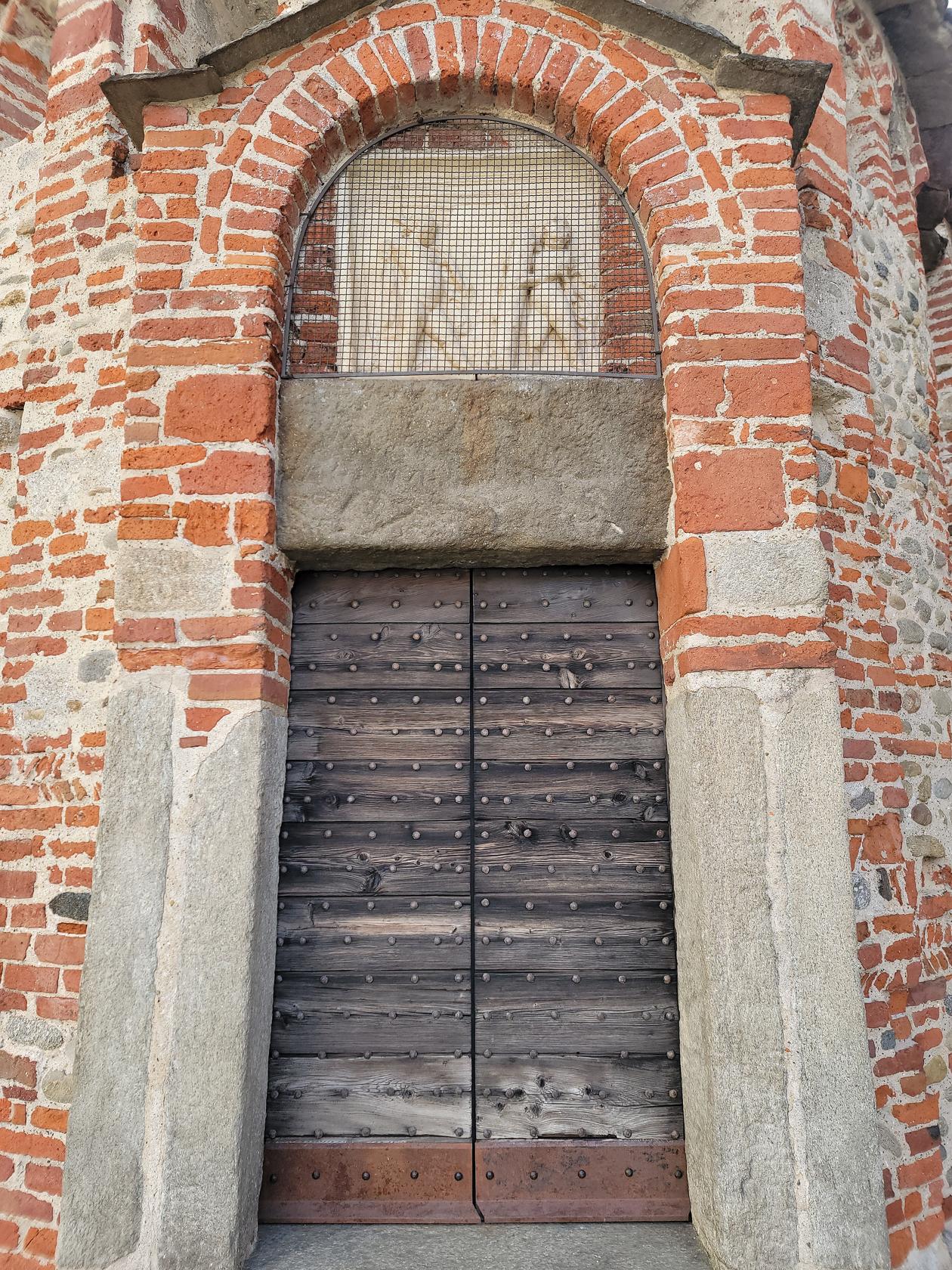
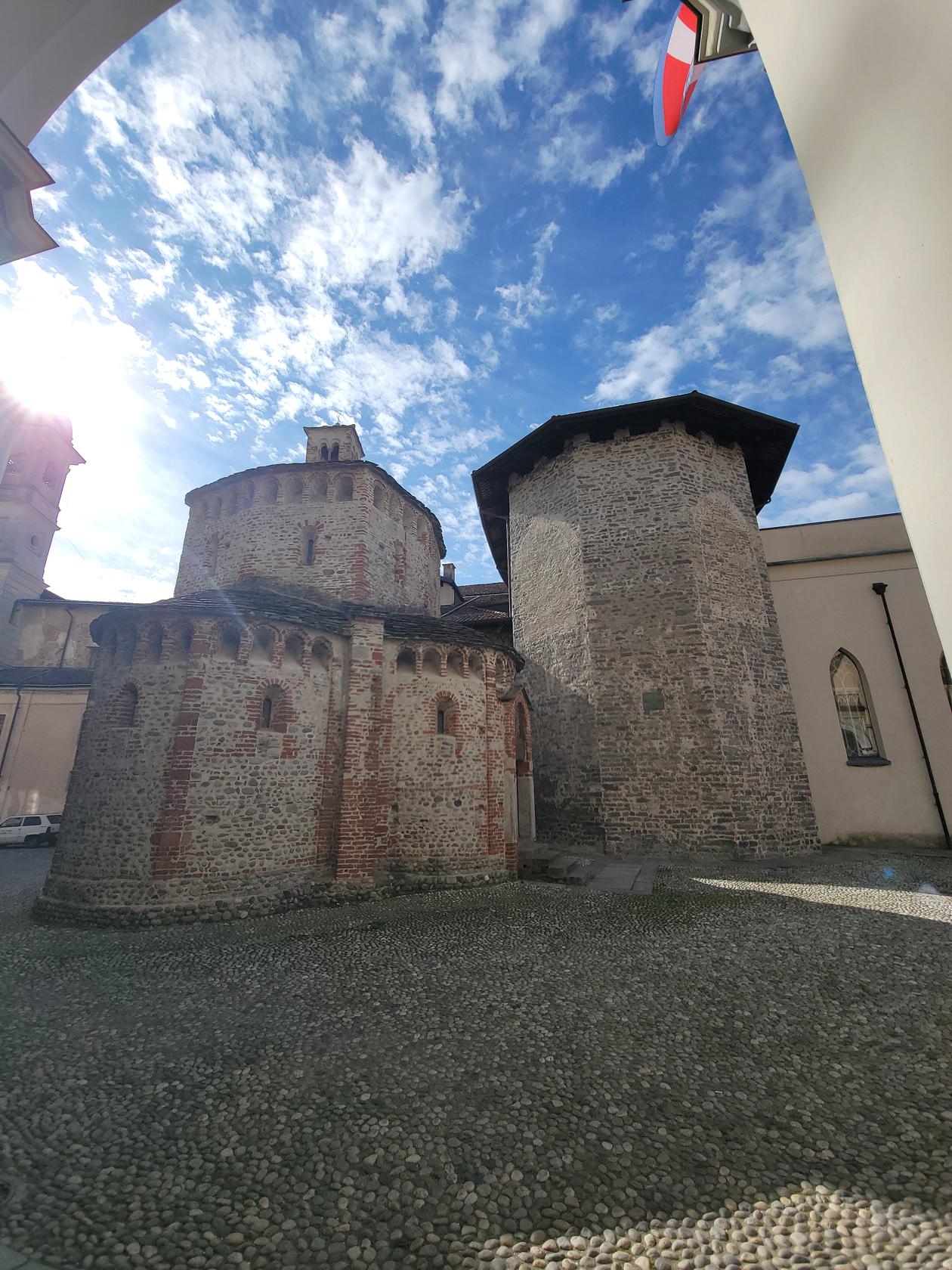
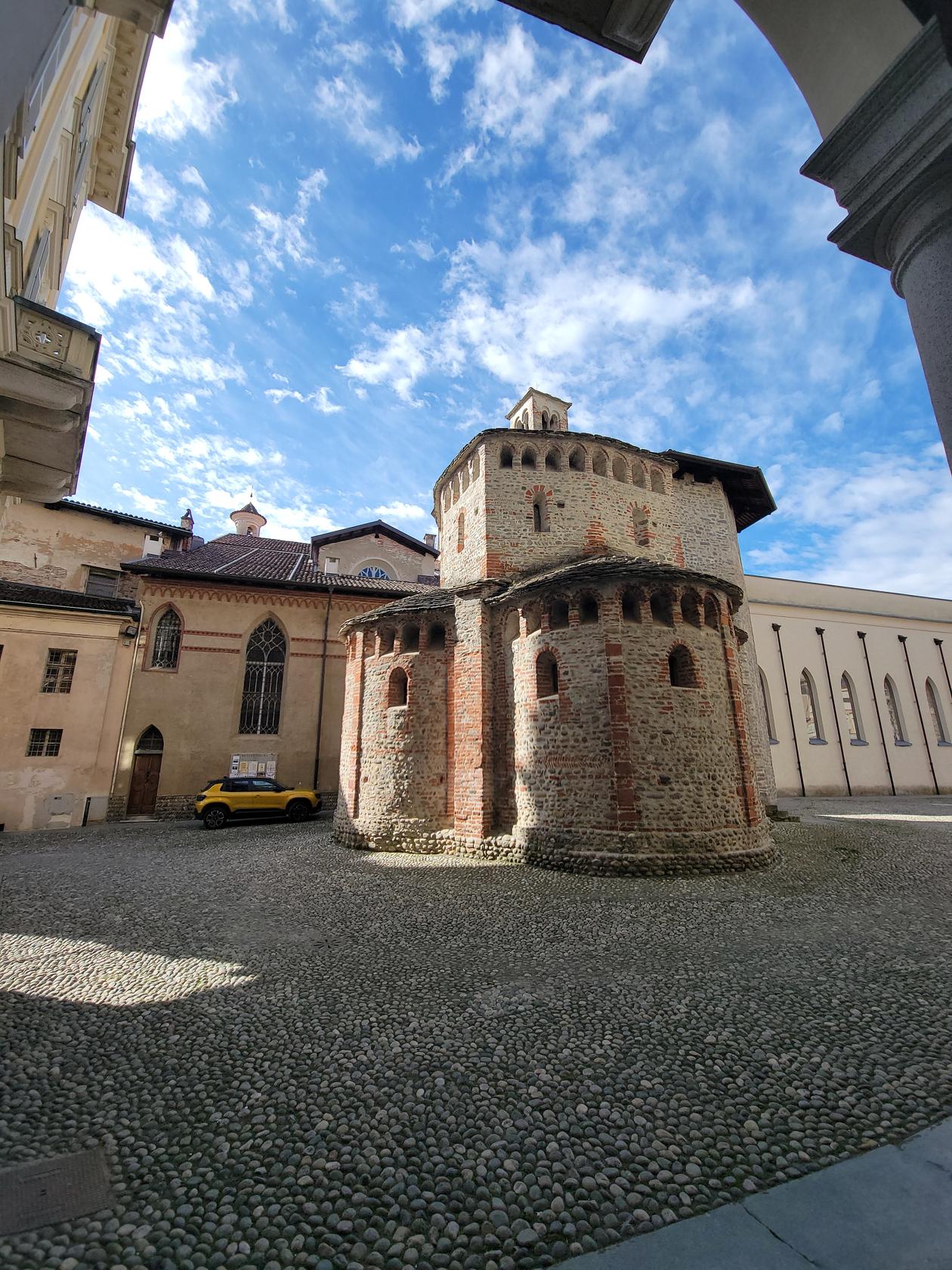
Extremely close by the cathedral is the Baptistery of John the Baptist. Unfortunately, no entry is allowed. But a quick look of the outside and it is clear that it is a fairly old building.

Church of the Santissima Trinity

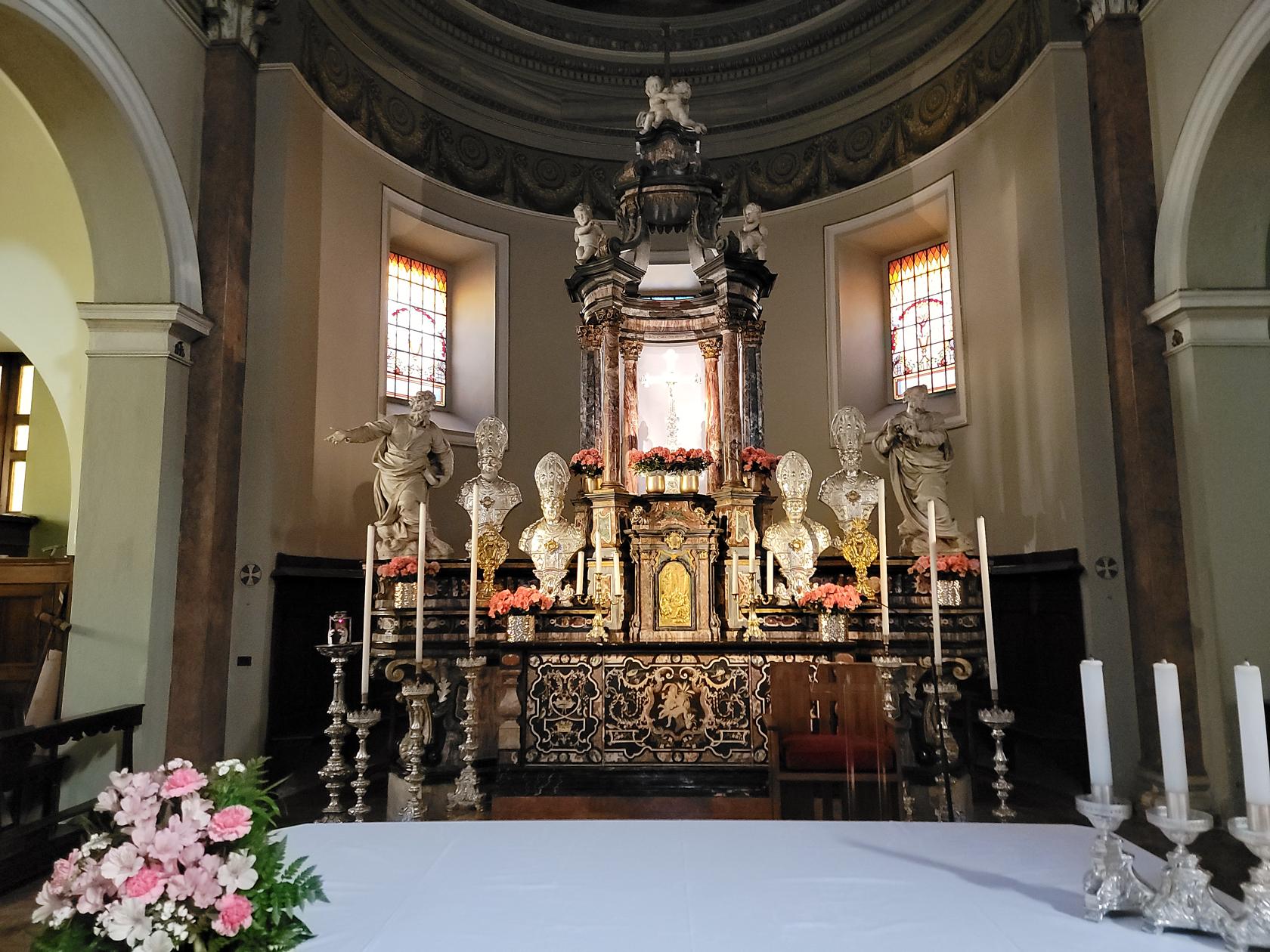
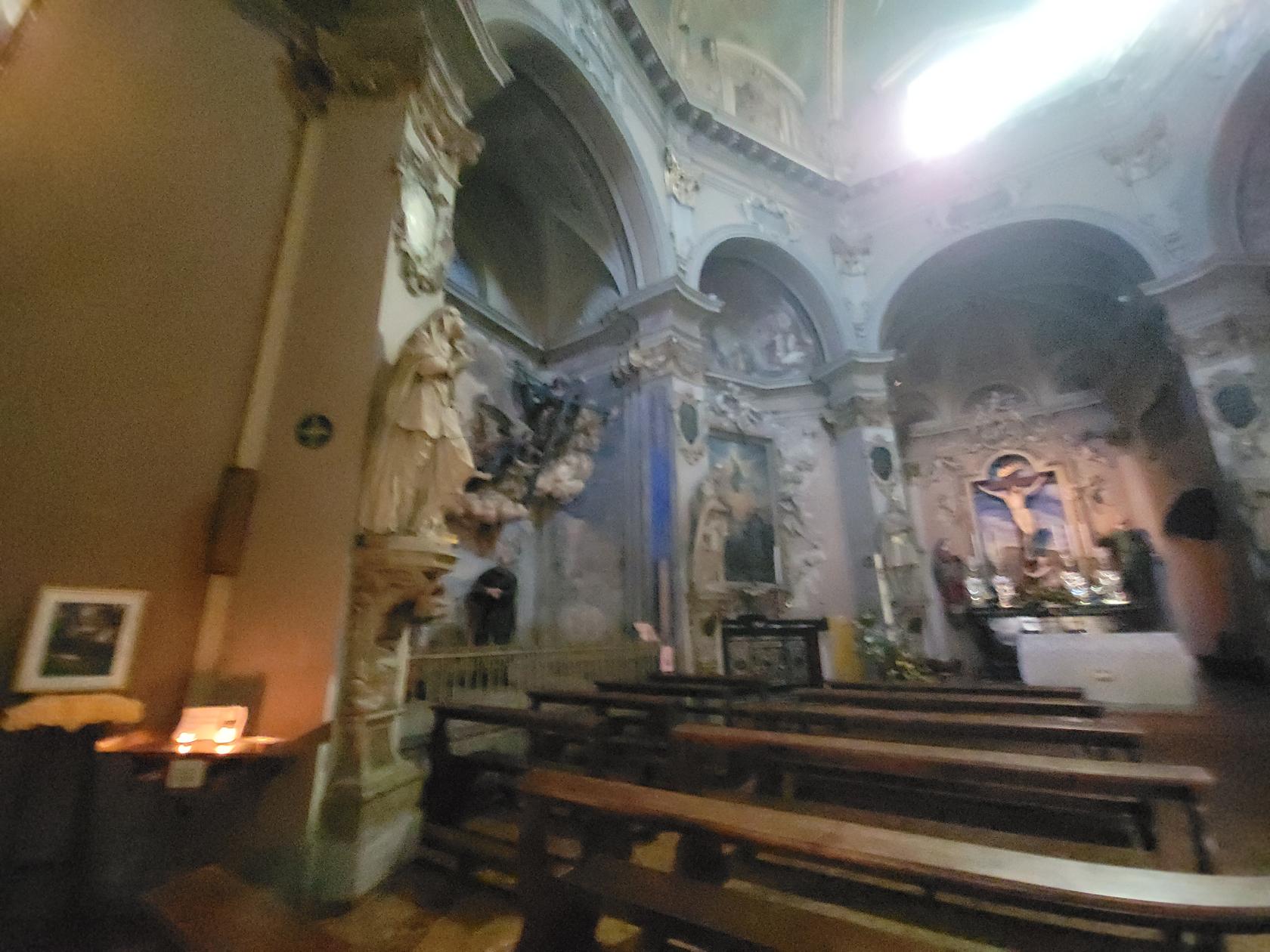
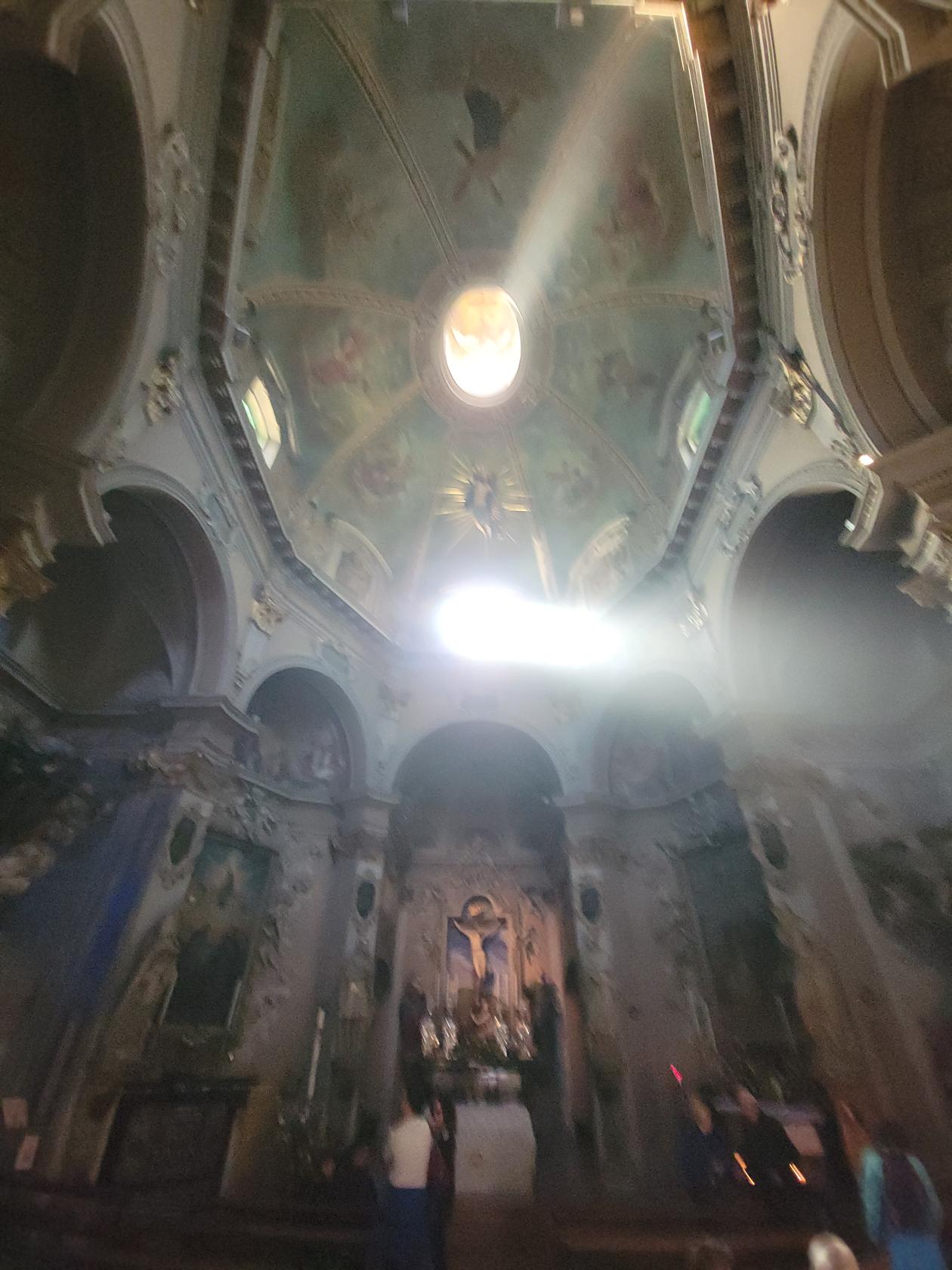
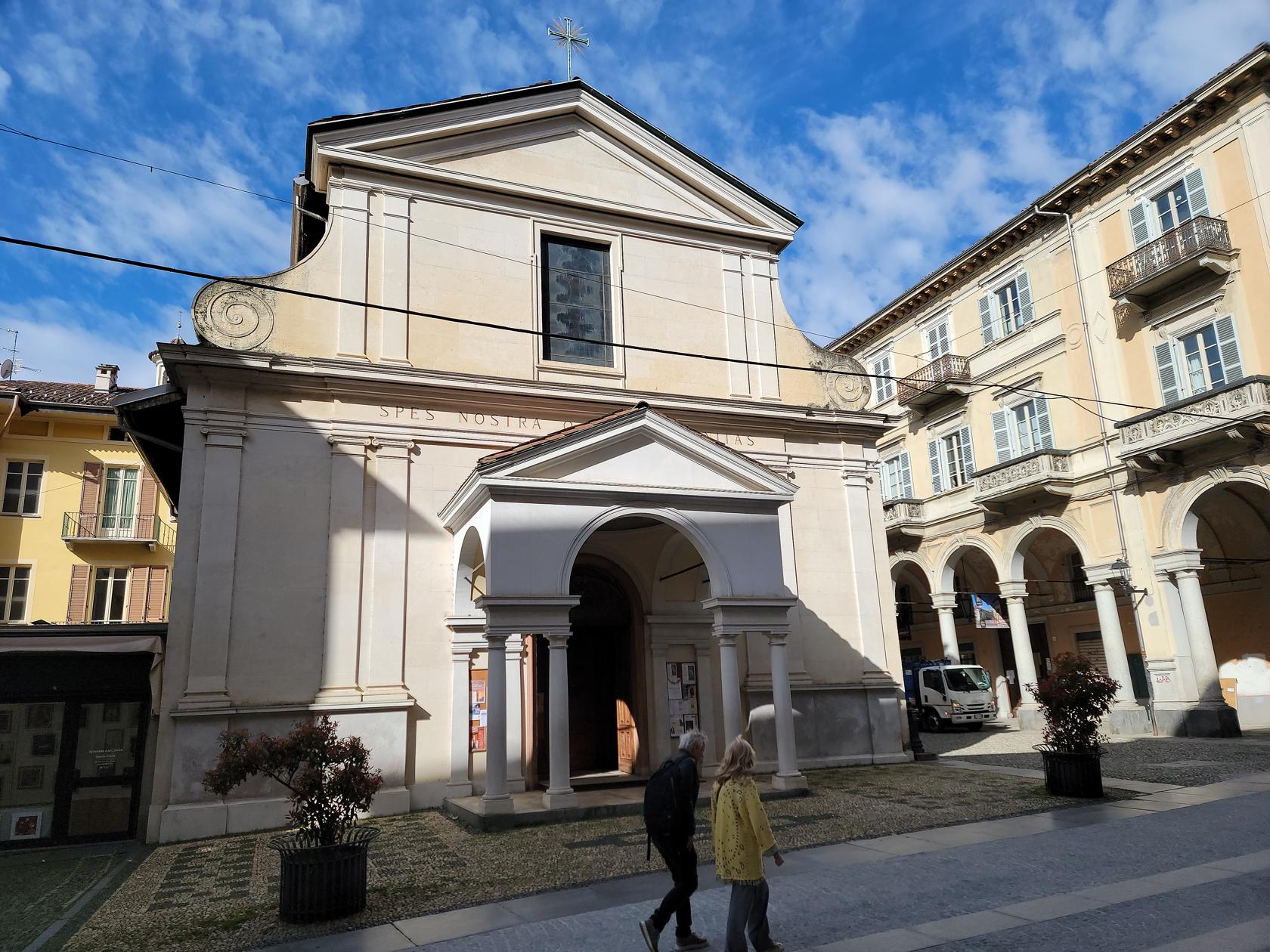
Directly off the Via Italia is the small church of Santissima Trinity. It has high vaulted ceilings with frescoes and a very ornate altar. Here again, the relief is mostly done using paint.

Restaurants

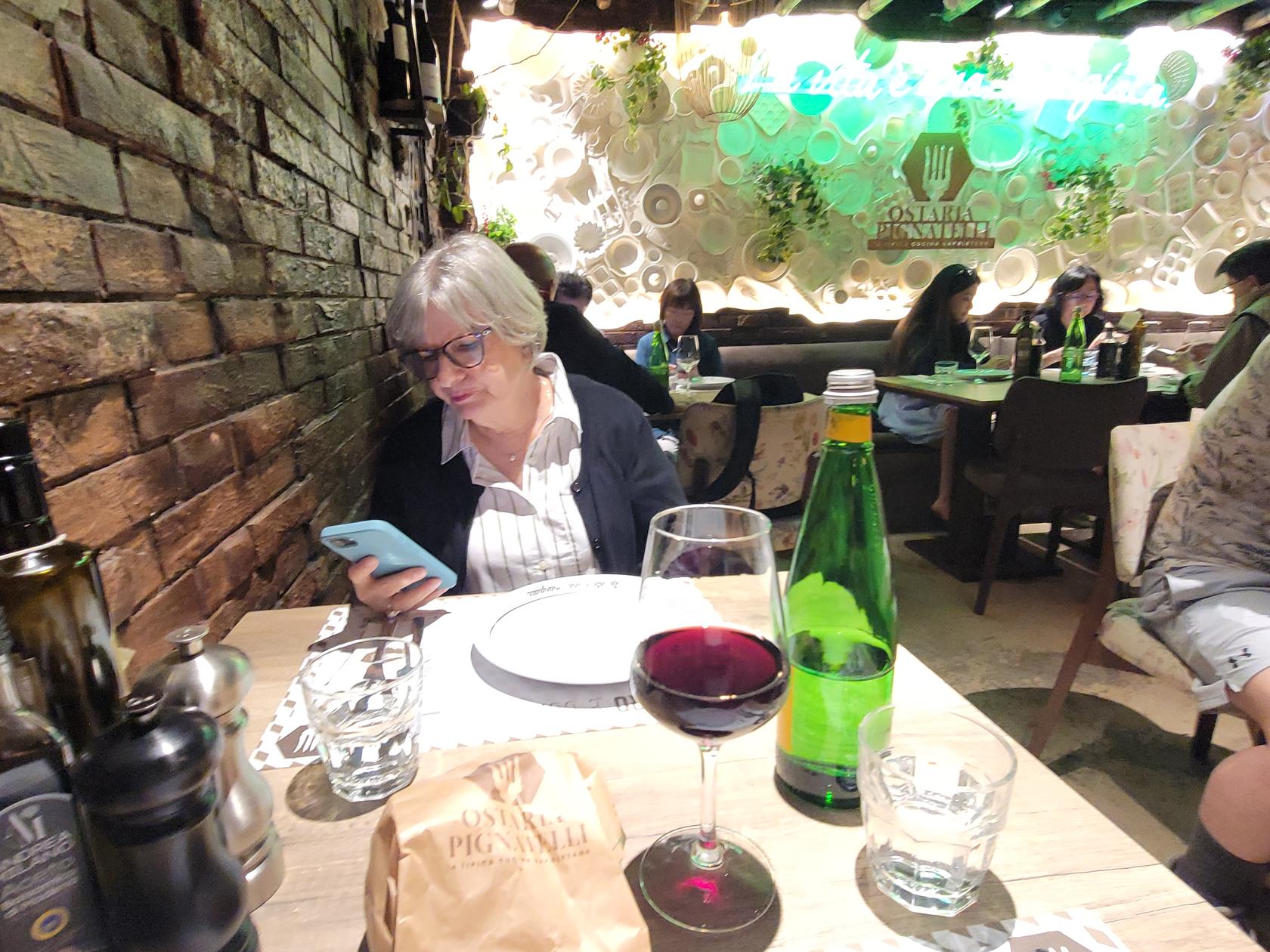
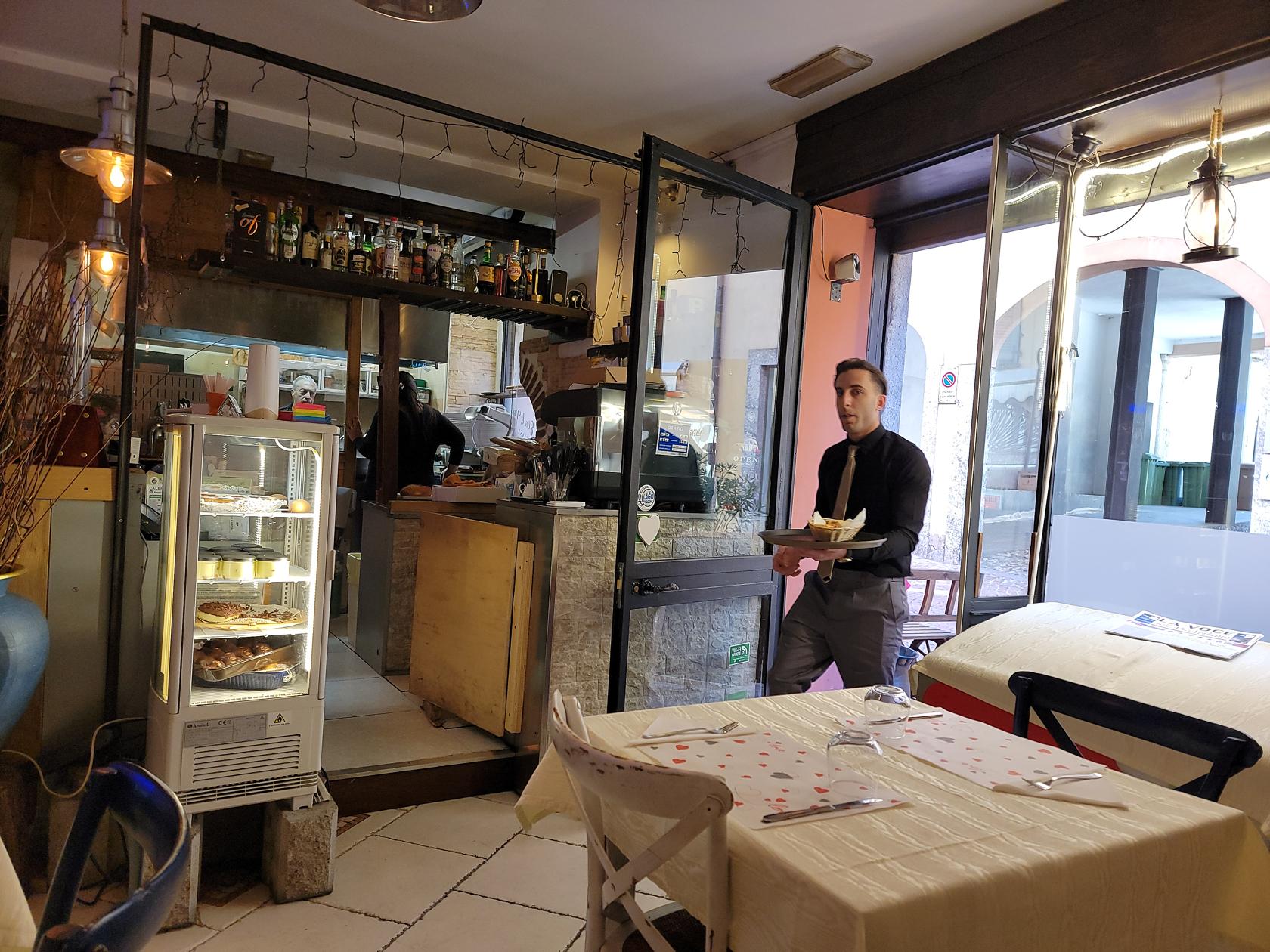
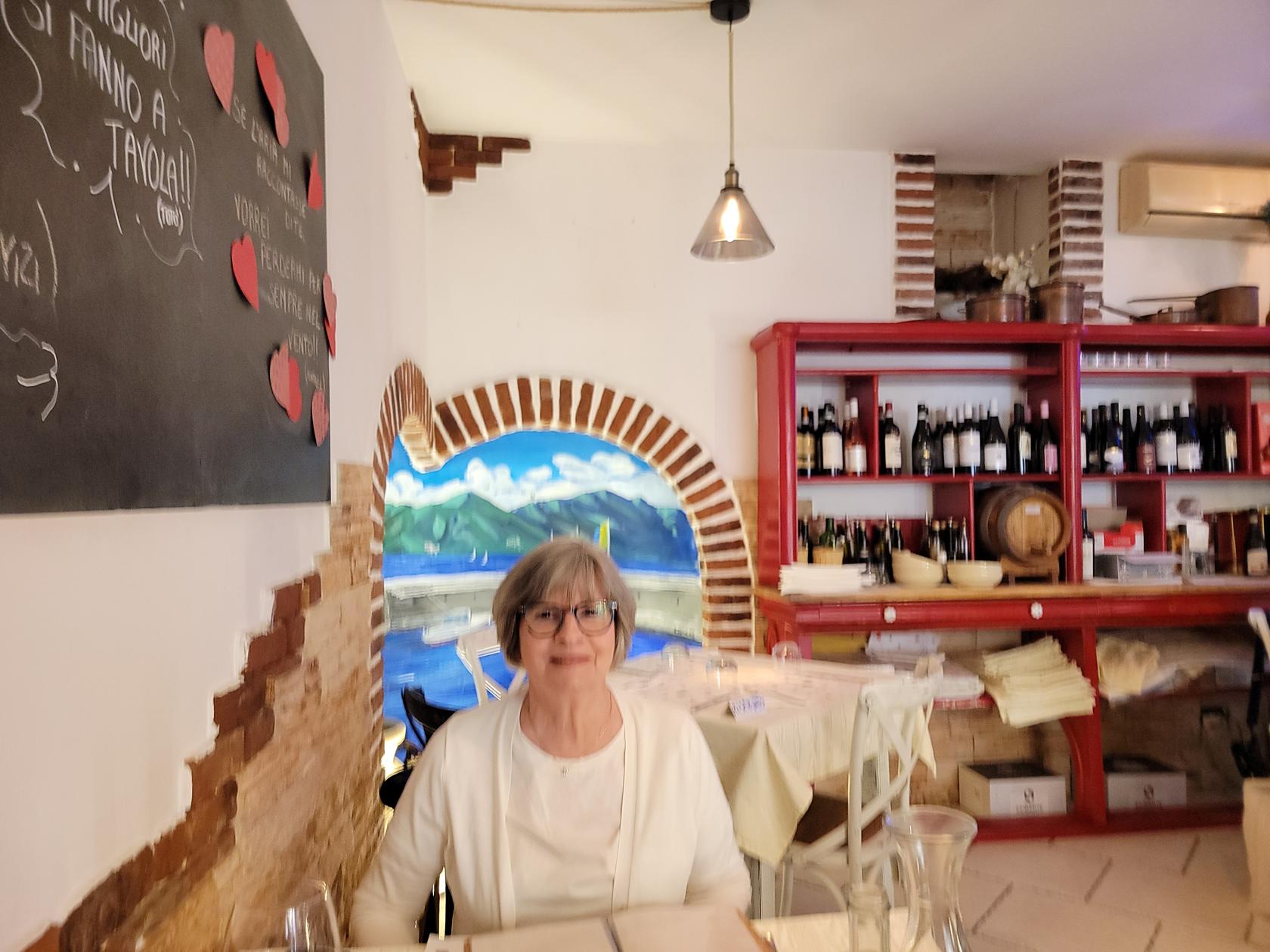
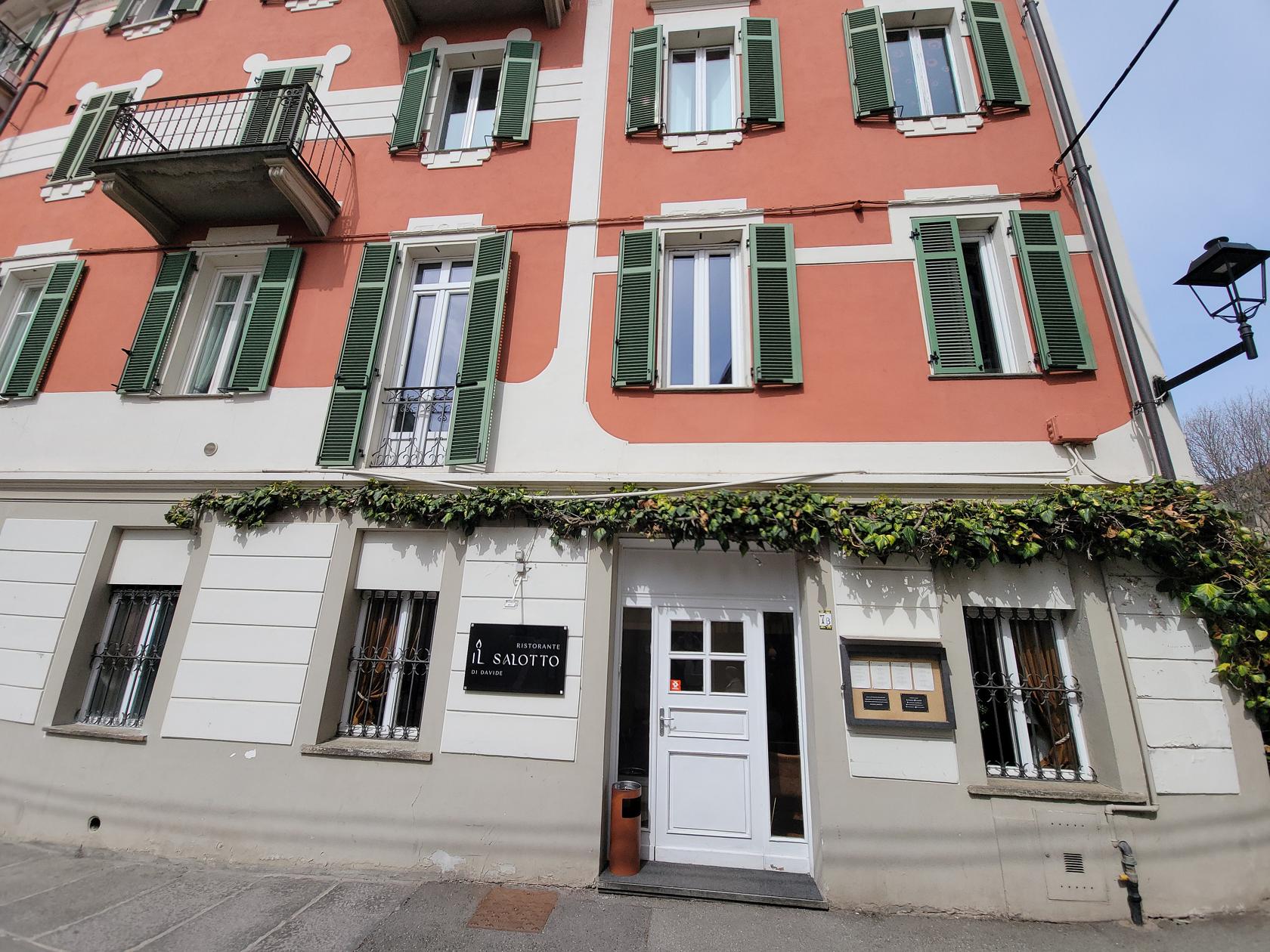
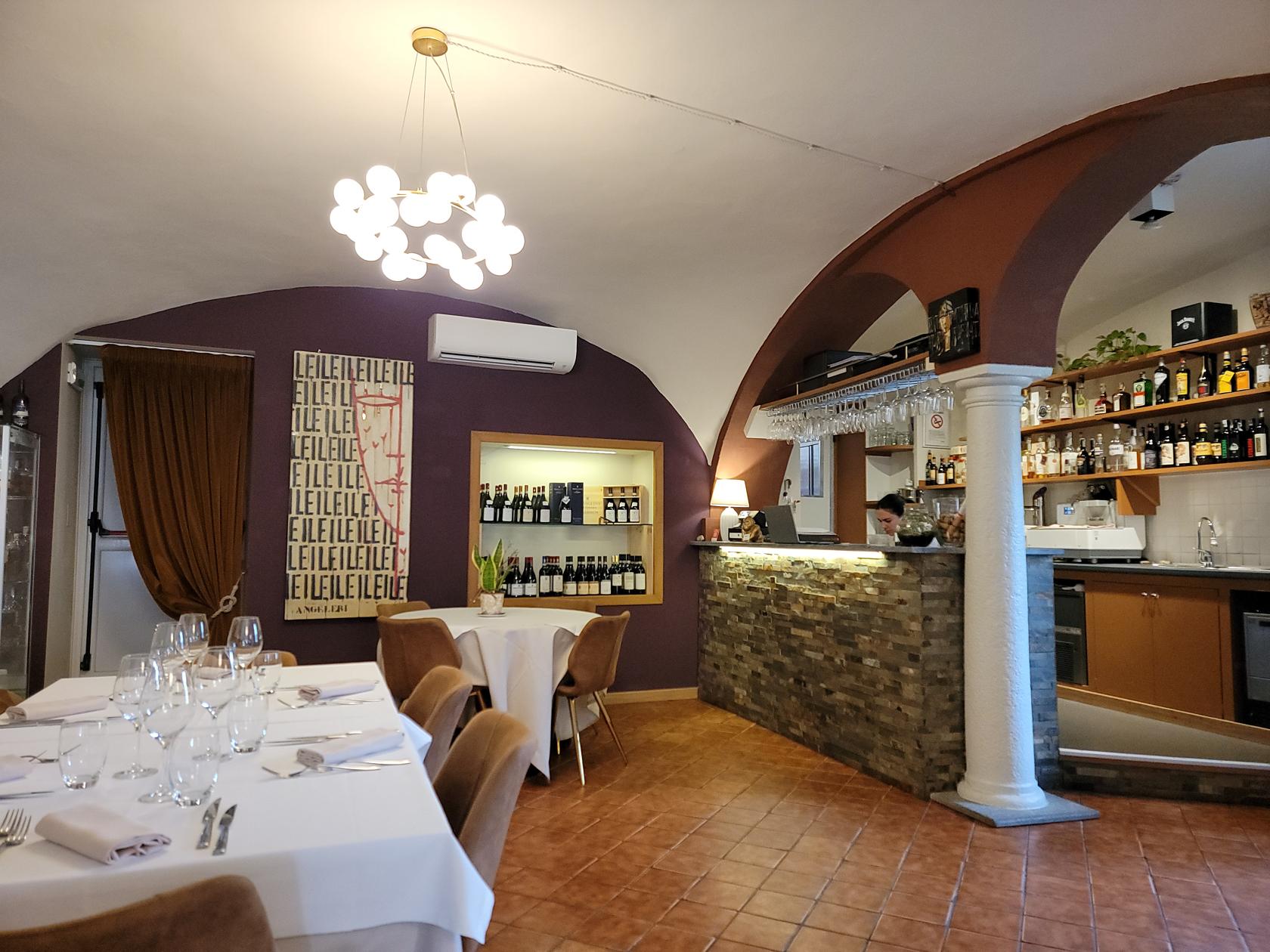
Since this was a day trip, we only had time to enjoy lunch. At first we had some difficulty and our first choice, the higly rated L’Arrugginita on the upper side of town, was completely booked. Then we mistakenly sat down in what we thought was a neapolitan pizzeria, which turned out to actually be a poke bowl bistro. Then finally we found Ristorante Il Salotto.

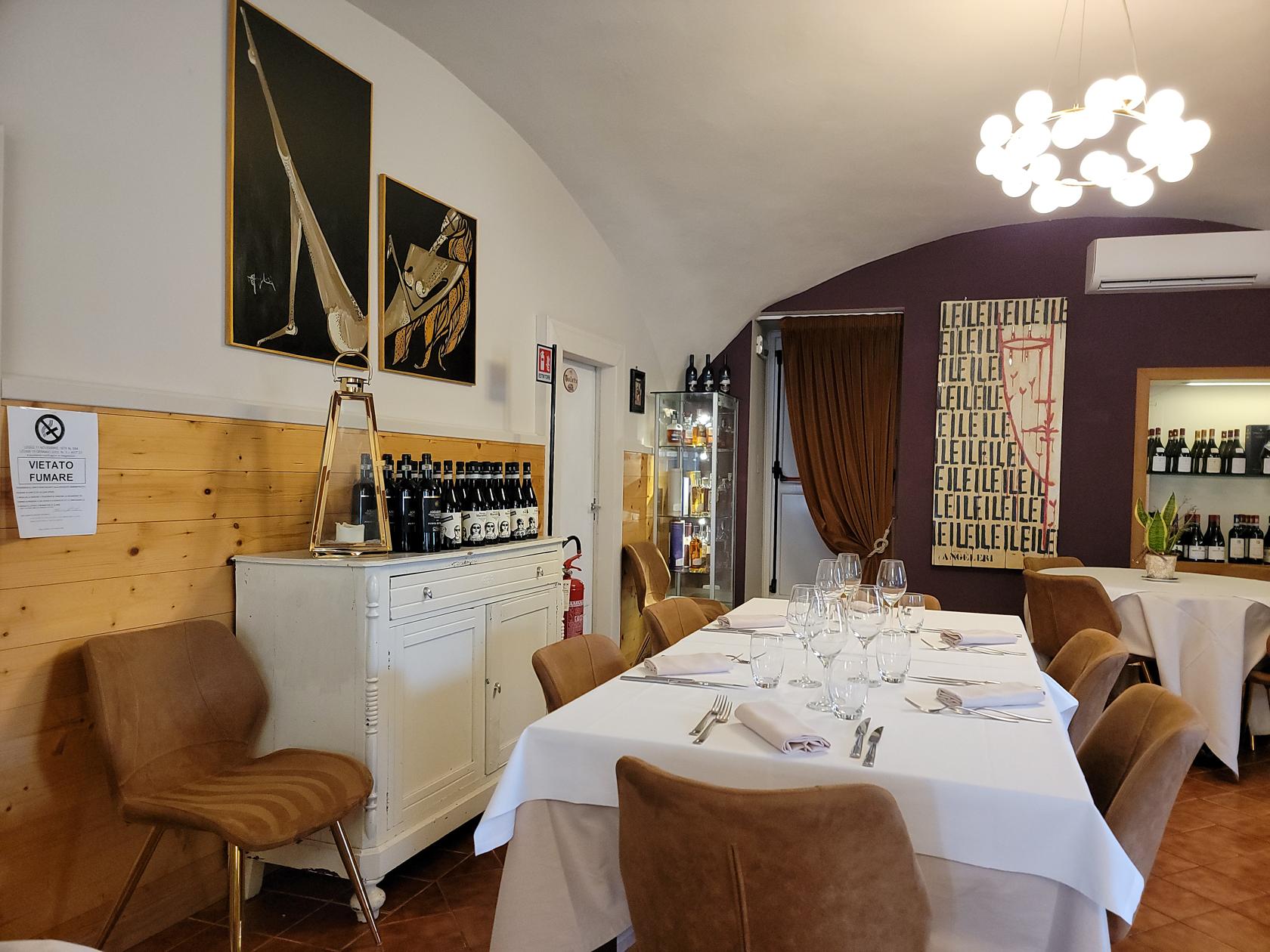
Ristorante Il Salotto

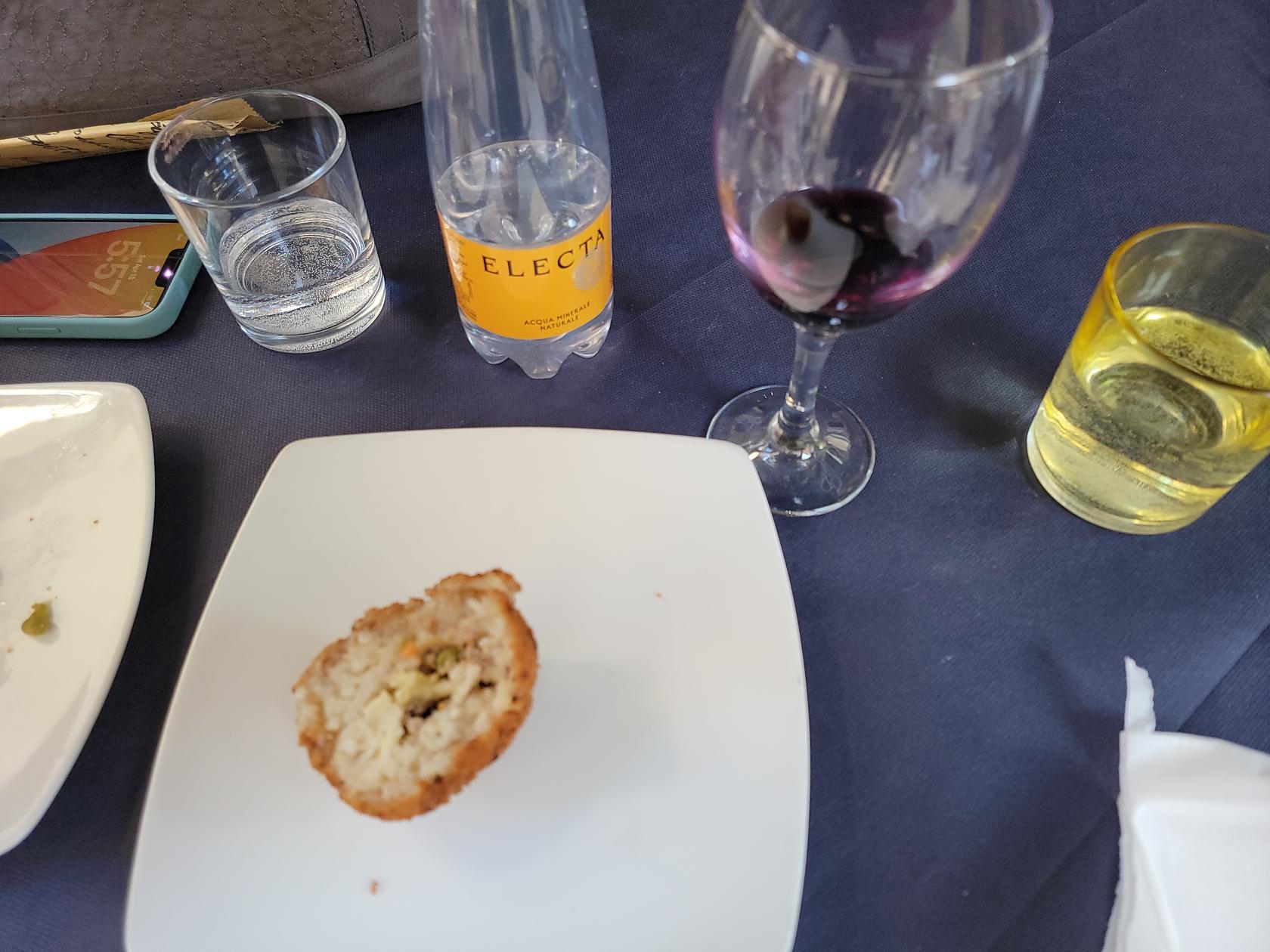
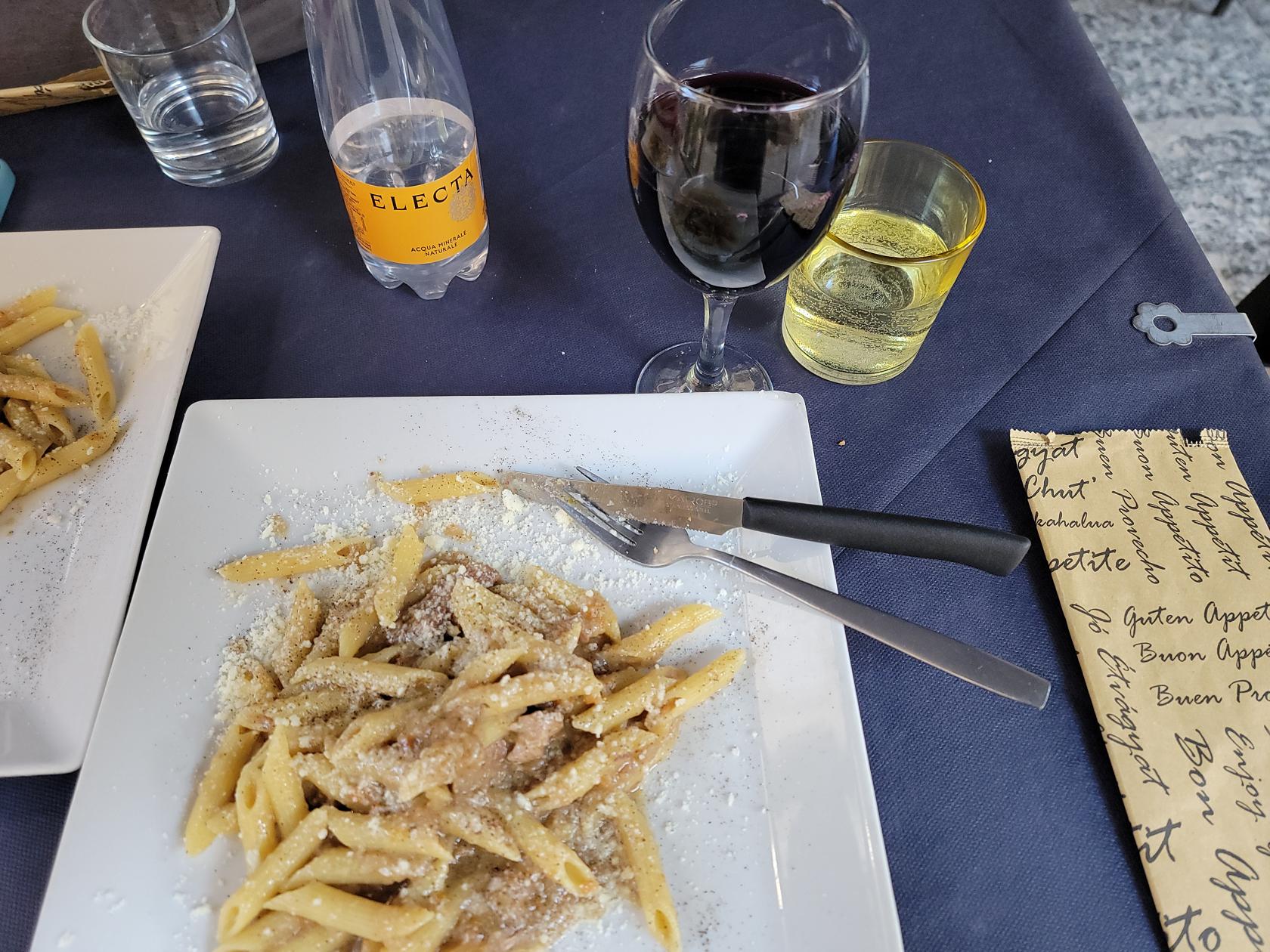
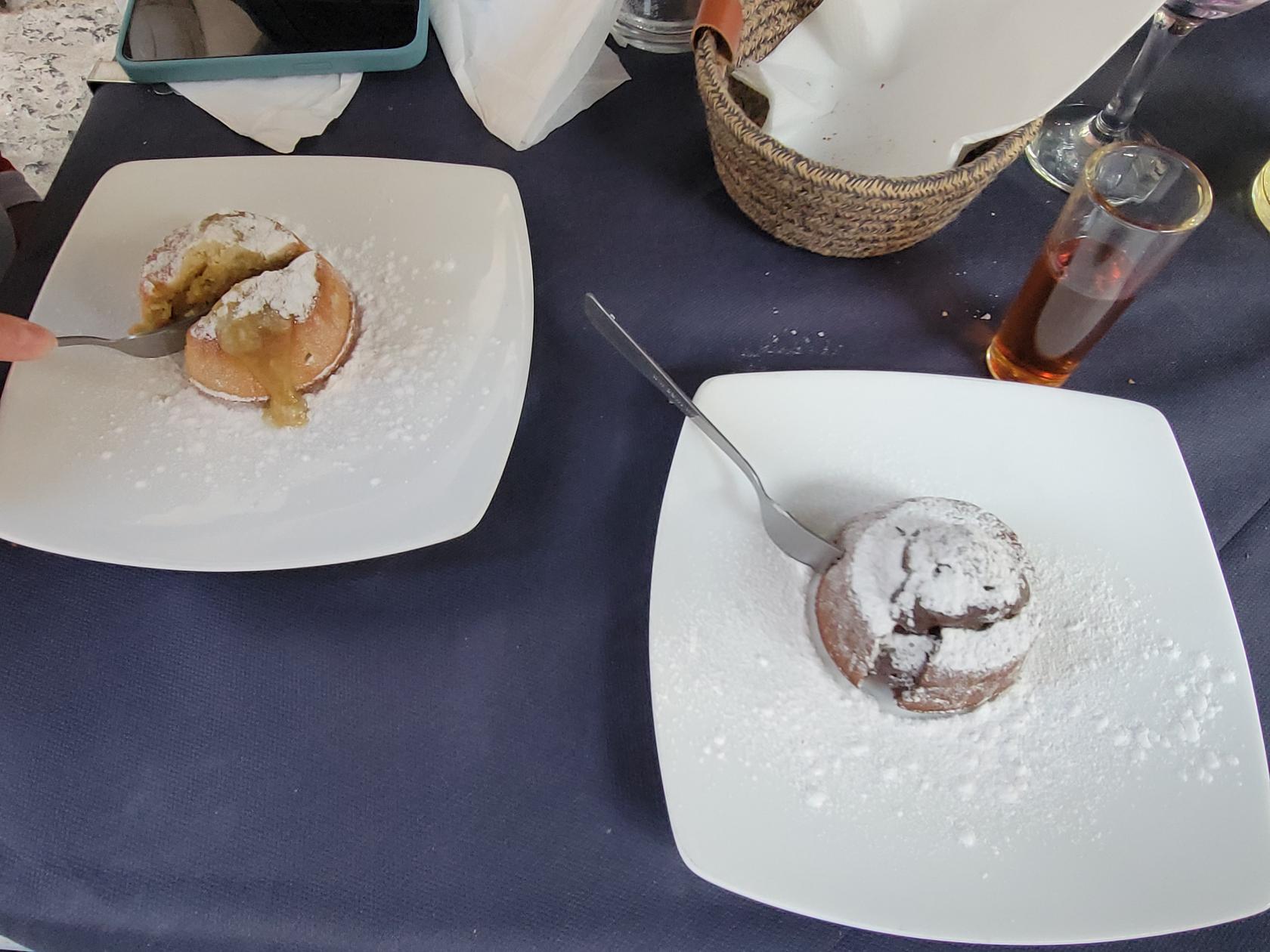
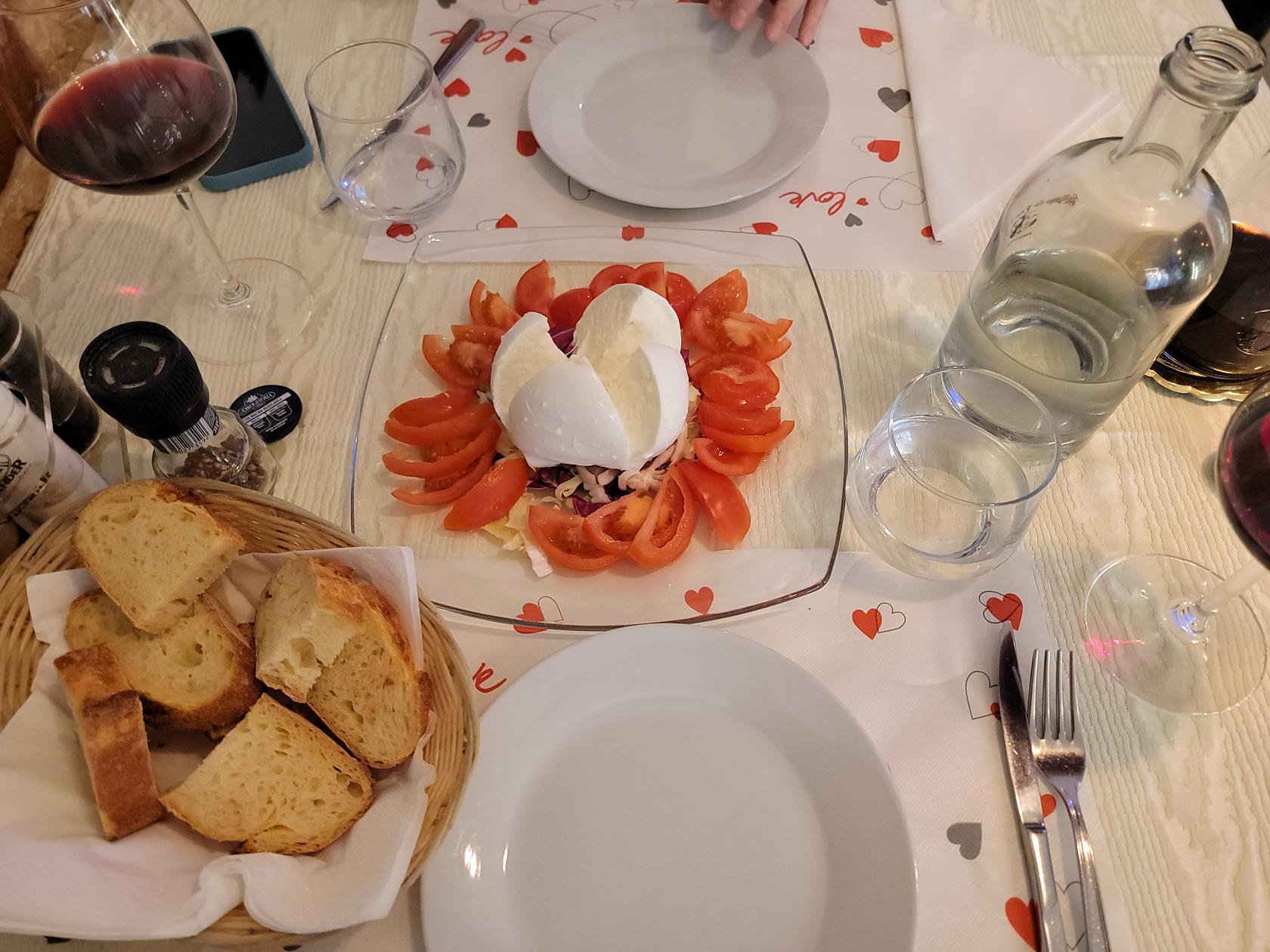
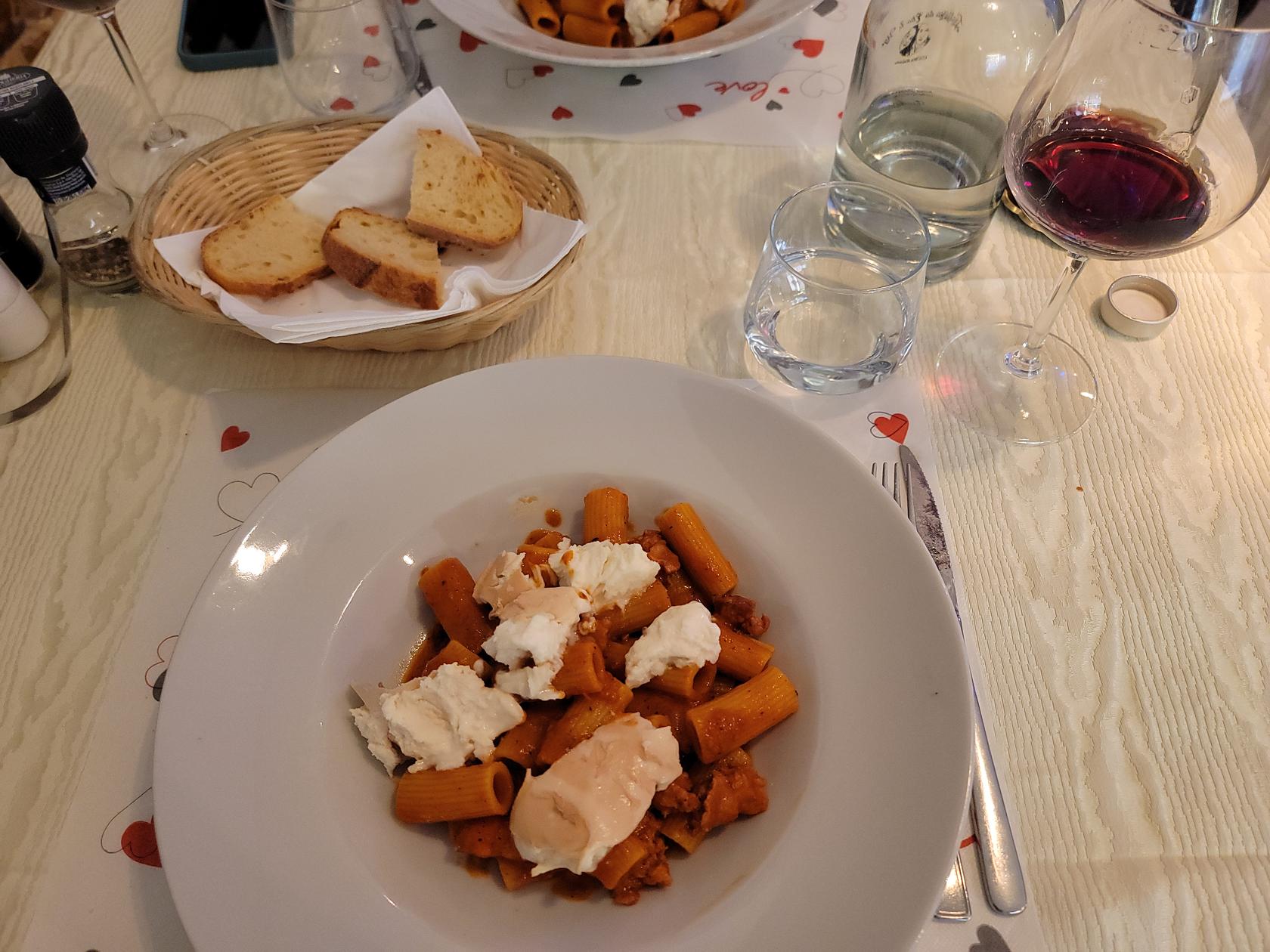
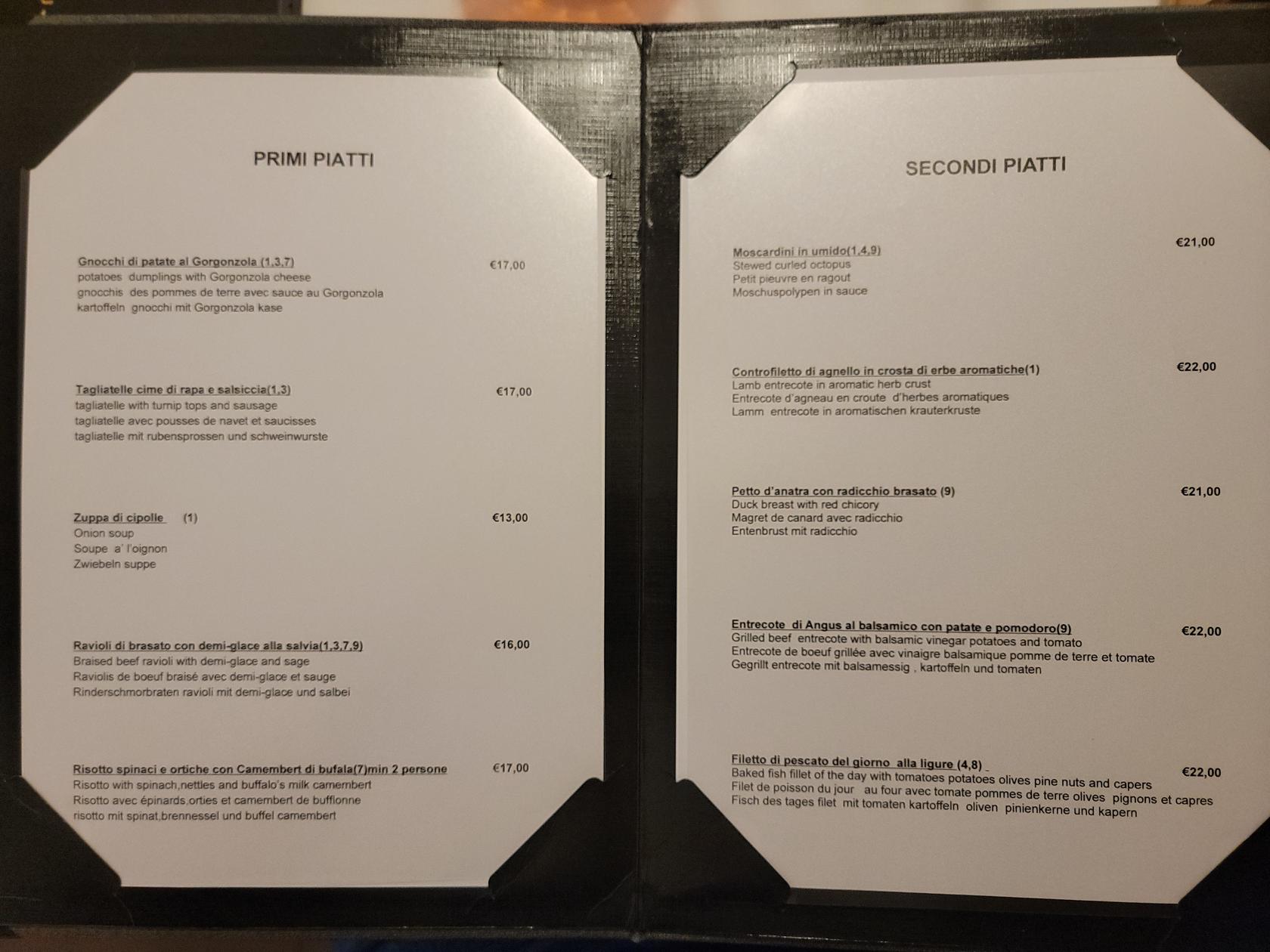
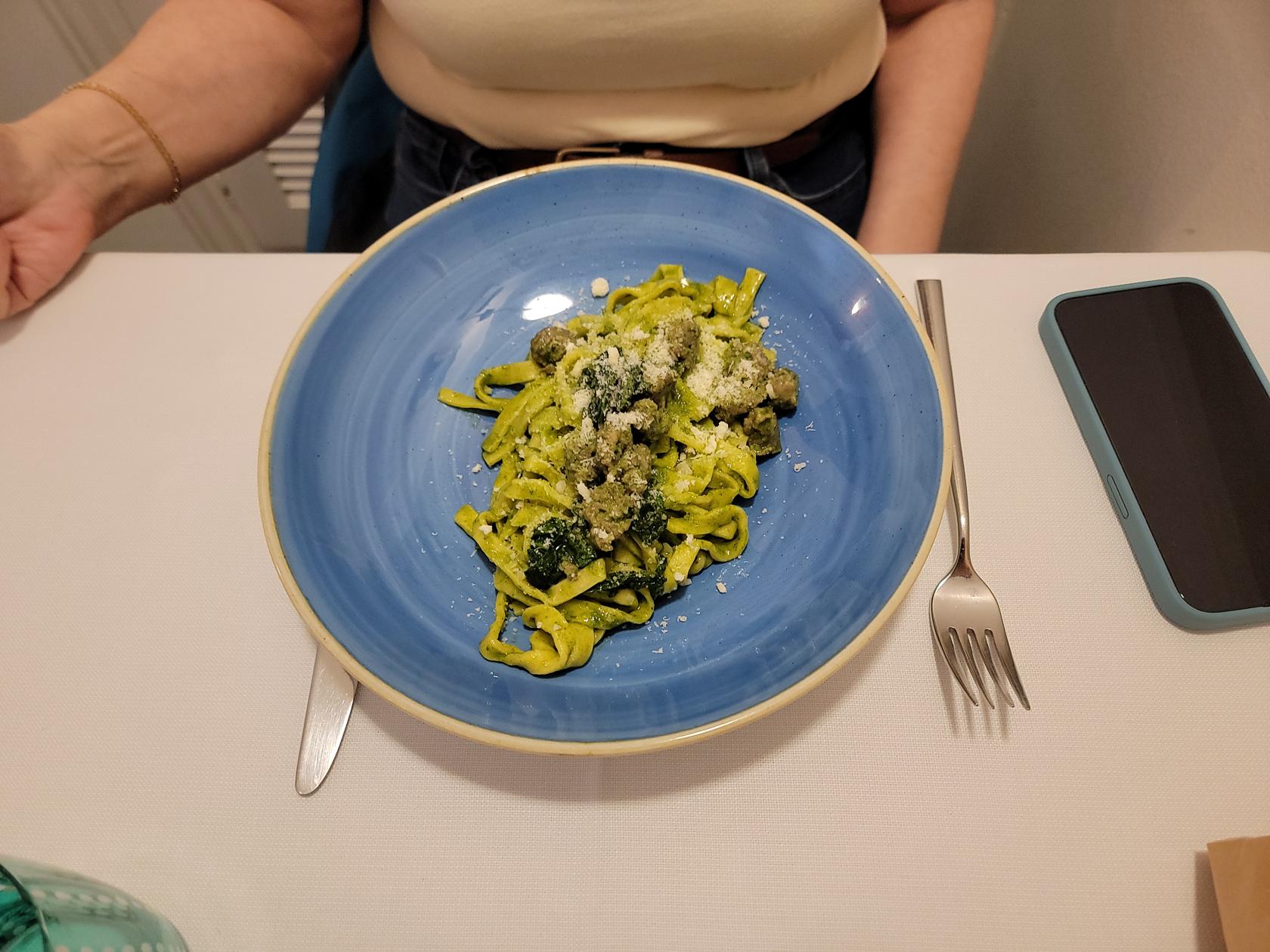
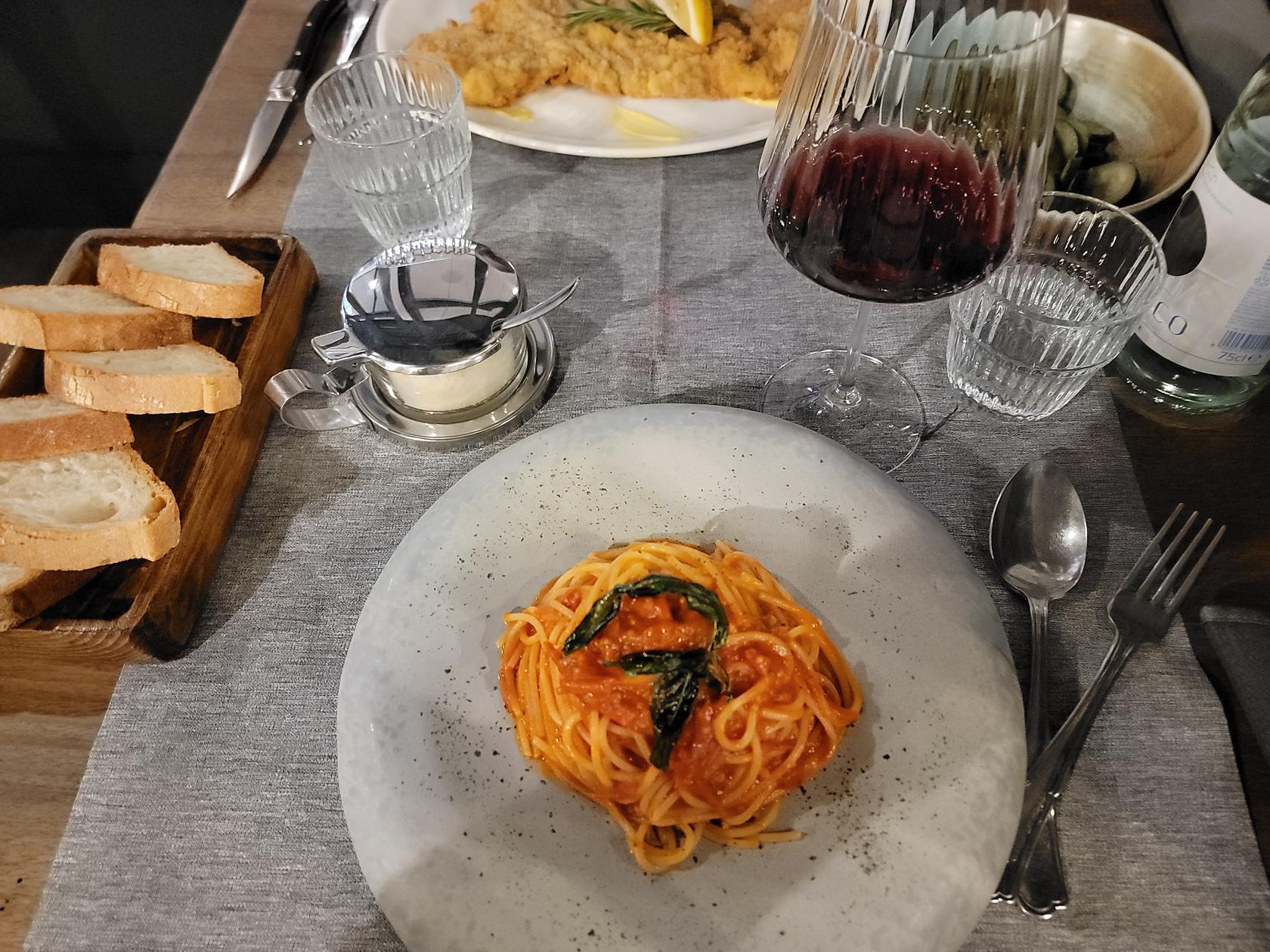
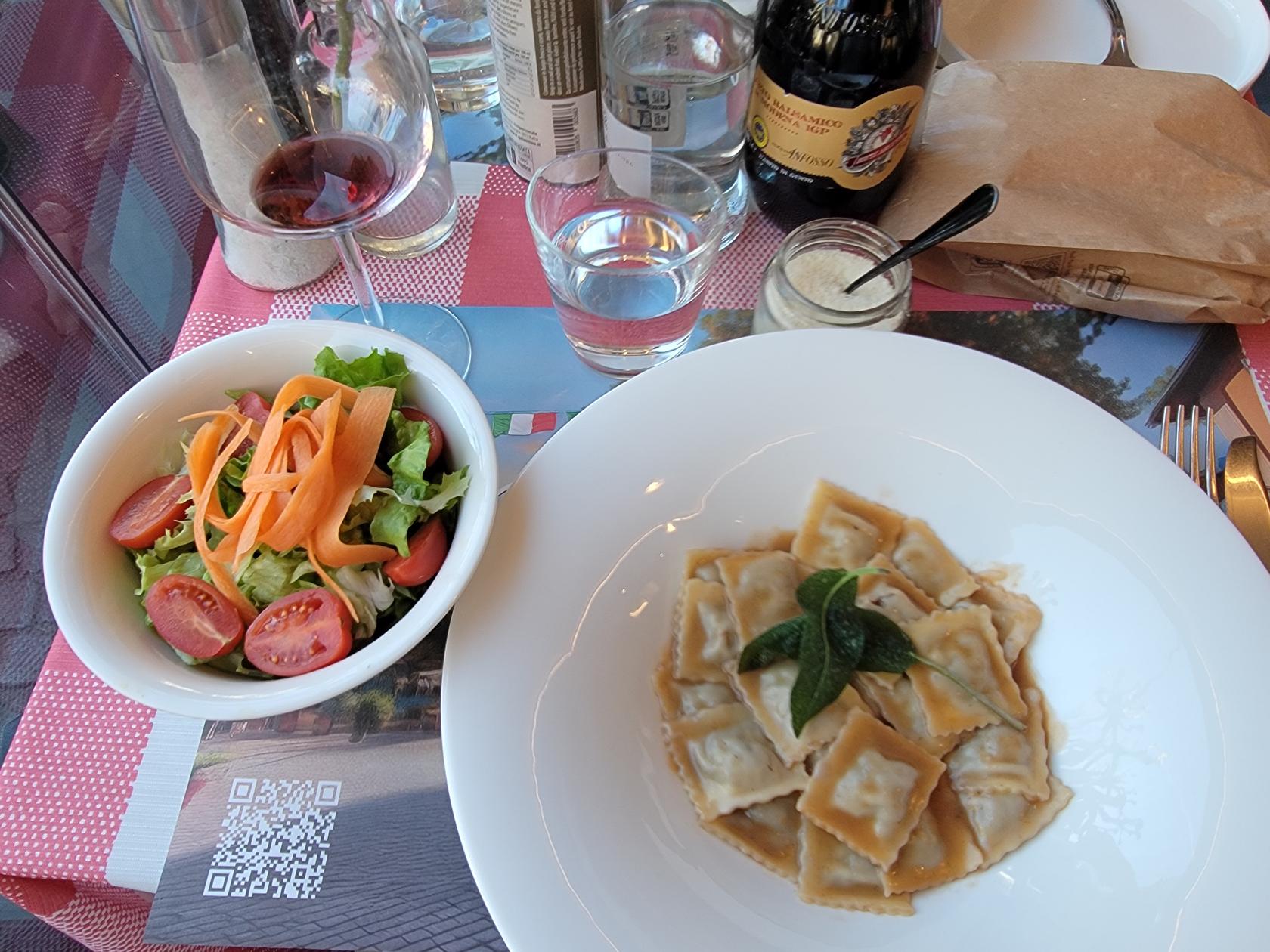
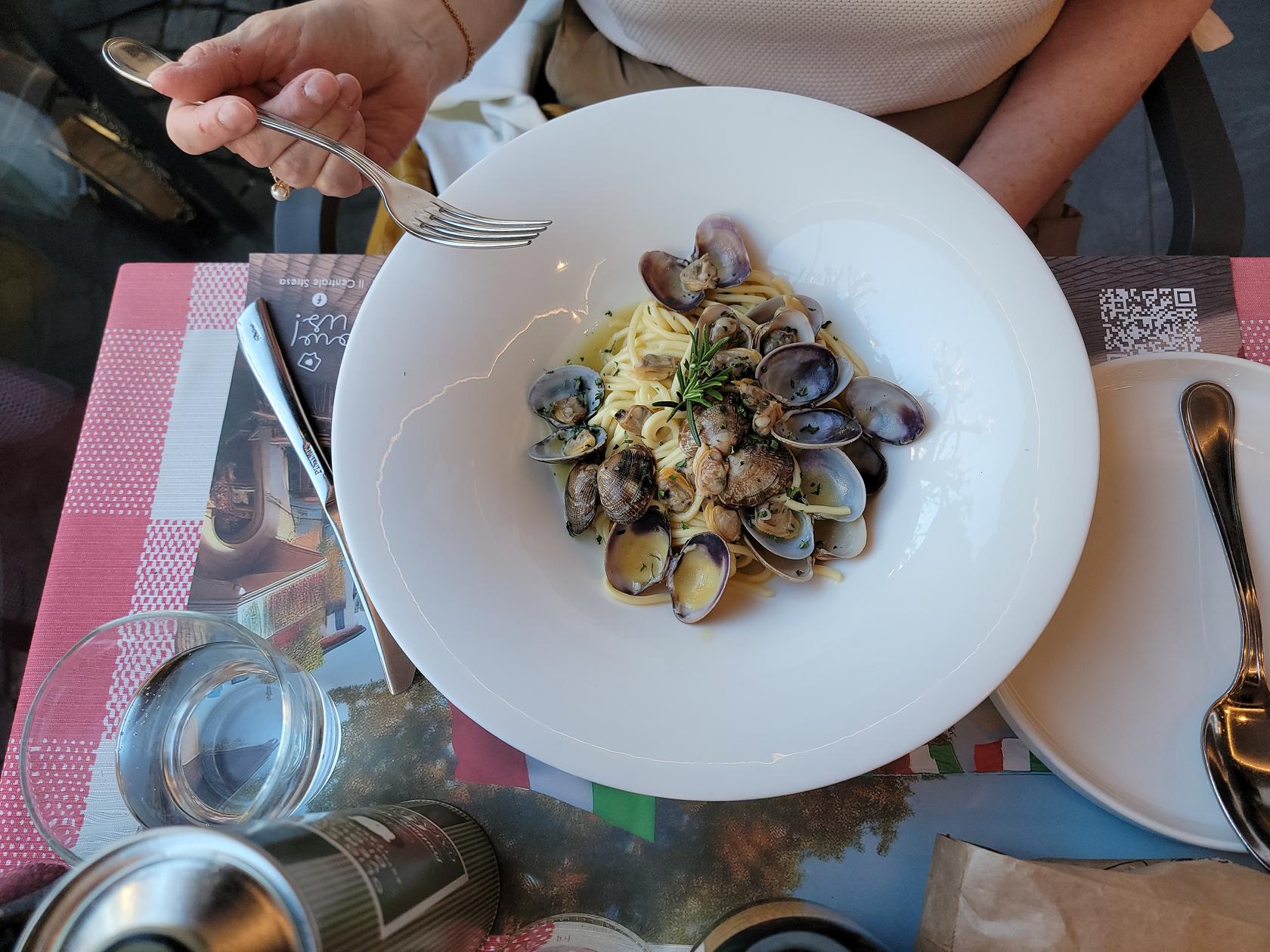
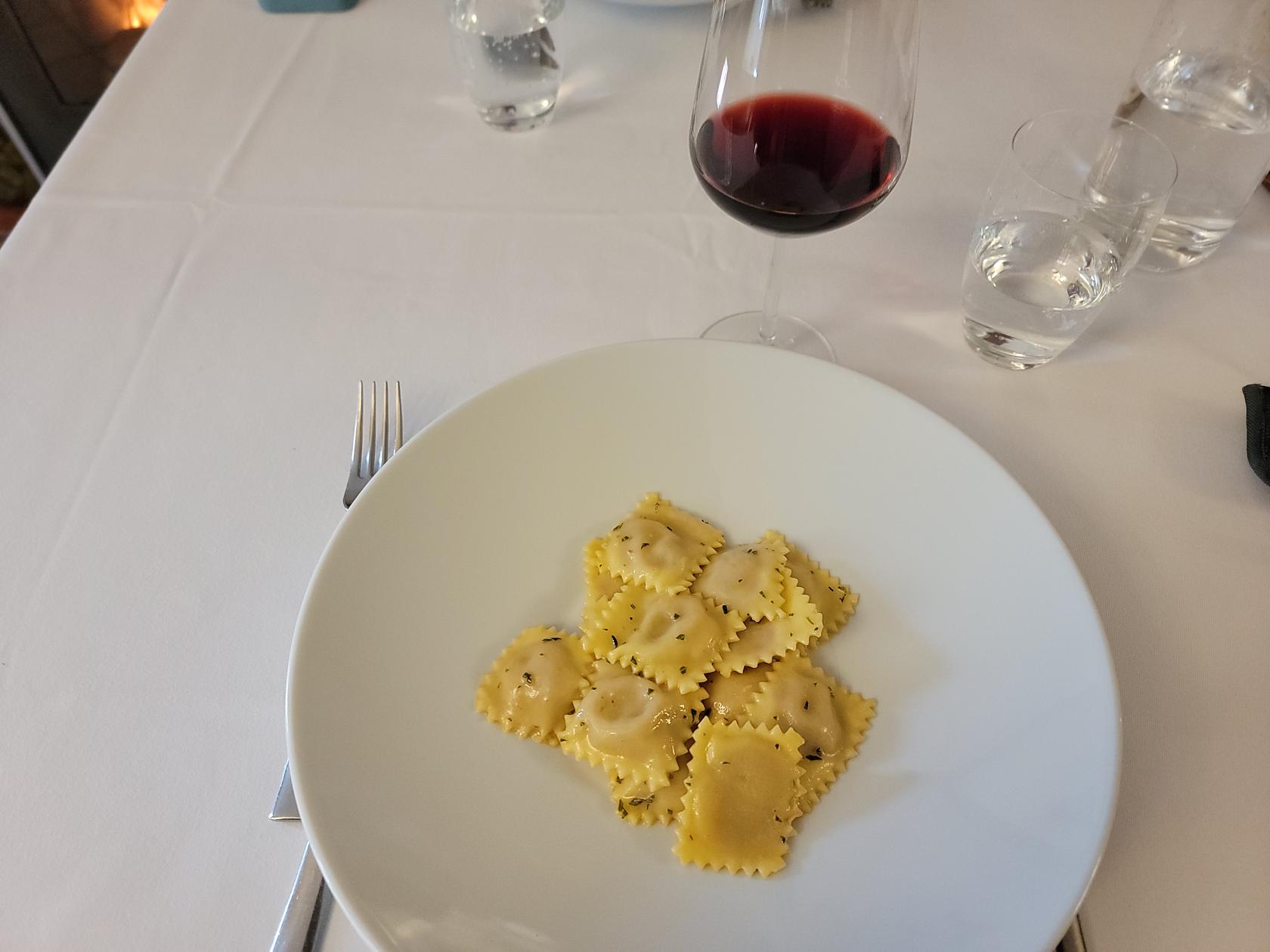
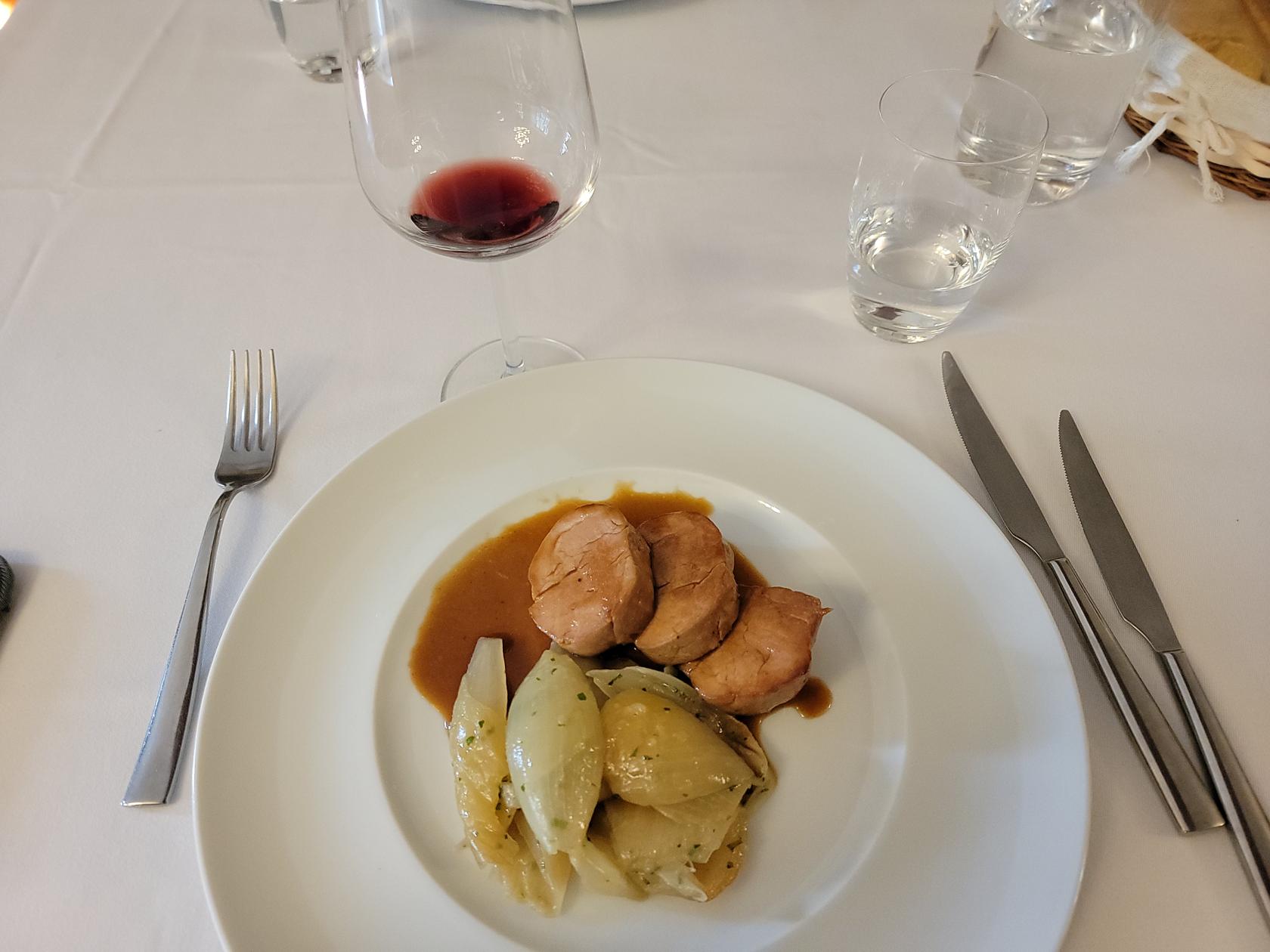
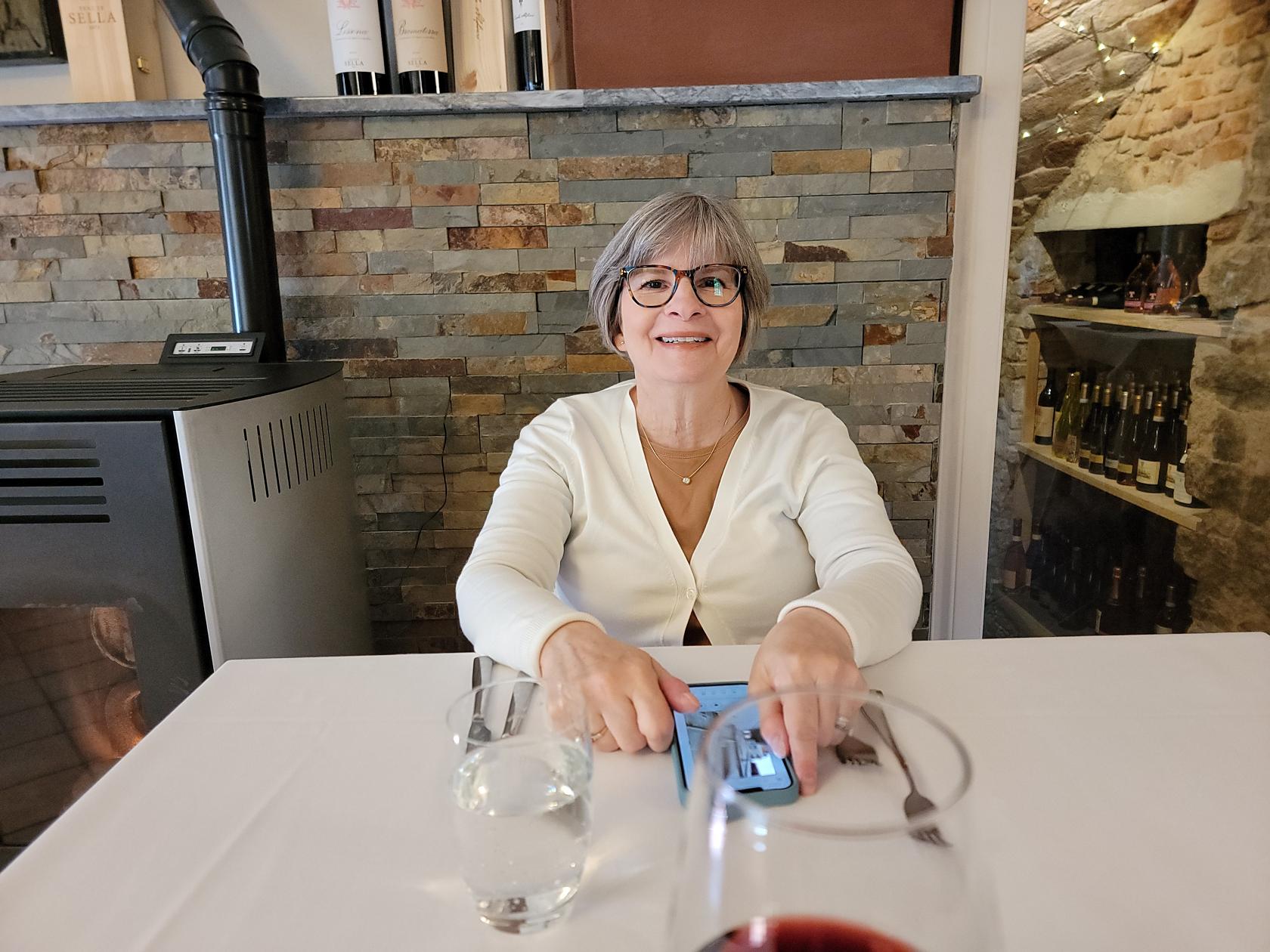
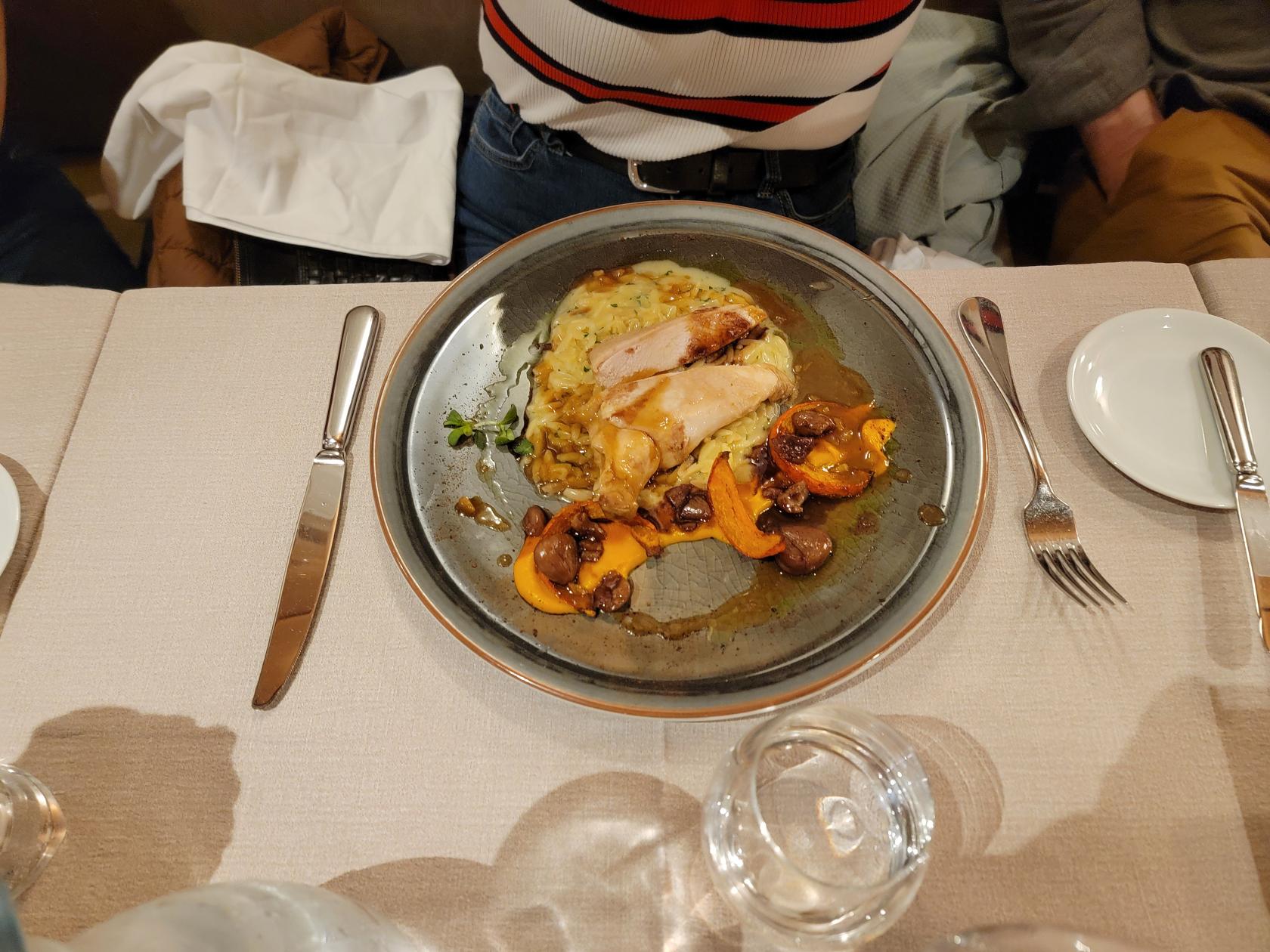
A very fine place for lunch, Il Salotto offers a tasty fixed priced menu at €17 for pasta (primi only), or €24 for the two course lunch (primi and secundi). For the extra seven euros a piece, we were able to order two primi pasta dishes and two secundi meat dishes, with bread, a glass of wine and water for total of €51.

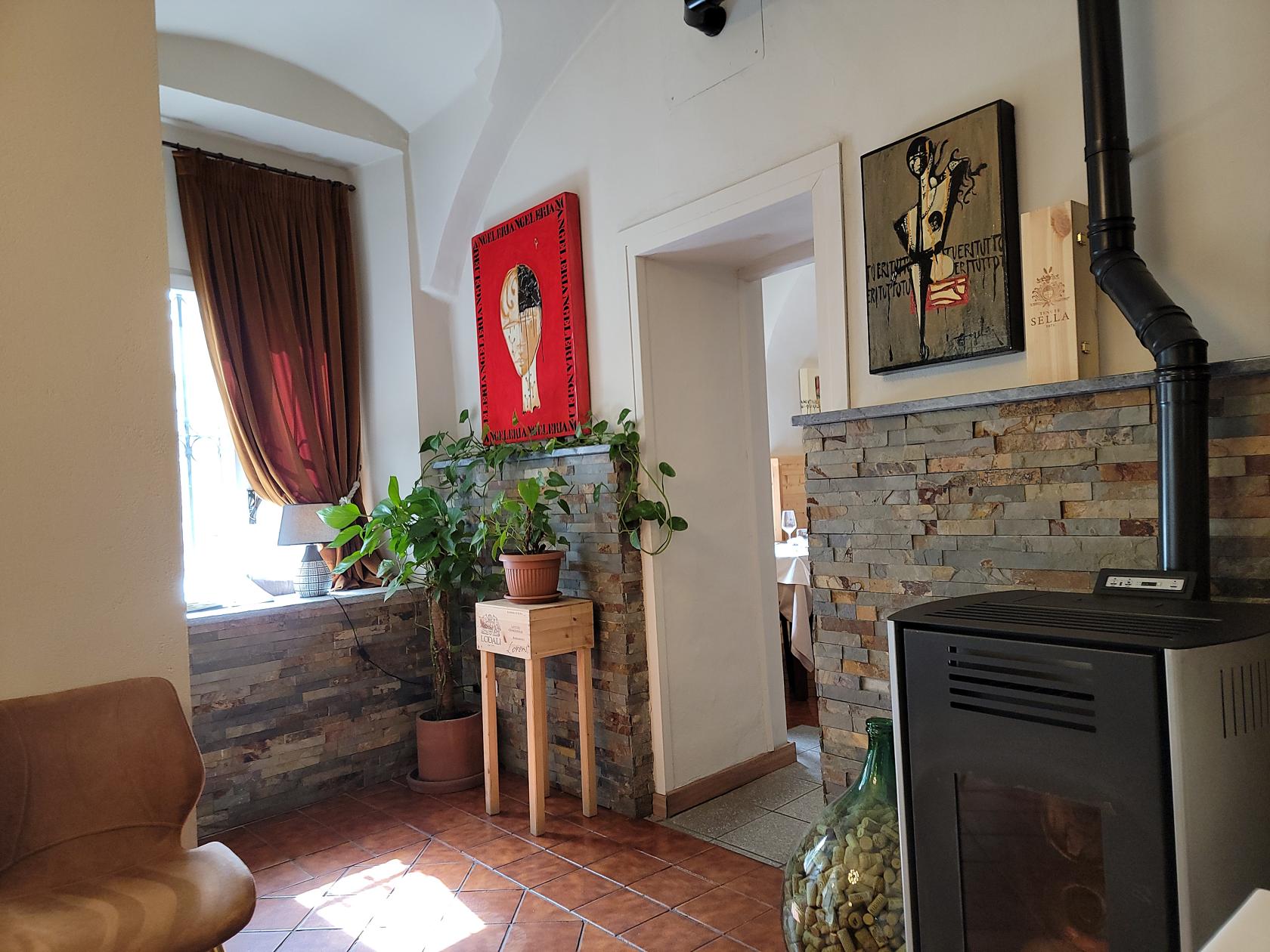
The food was excellent, as was the service and decor. If you are ever in Biella, definitely one of the places to eat.

Seligenstadt, Germany – Ancient Castral

Built around the ancient remains of an old Roman Castrum, Seligenstadt is one of Germany’s oldest towns. The Romans established a fortified encampment around the second century and maintained it for over a hundred and fifty years. Some time in the mid third century the germanic tribes repeatedly attacked the castrum, forcing the Romans to withdraw across the Rhine river, leaving a pile of rubble behind. Some time afterwards it was known as Obermühlheim and some of the earliest buildings in Seligenstadt are dated to the seventh century and are still standing.

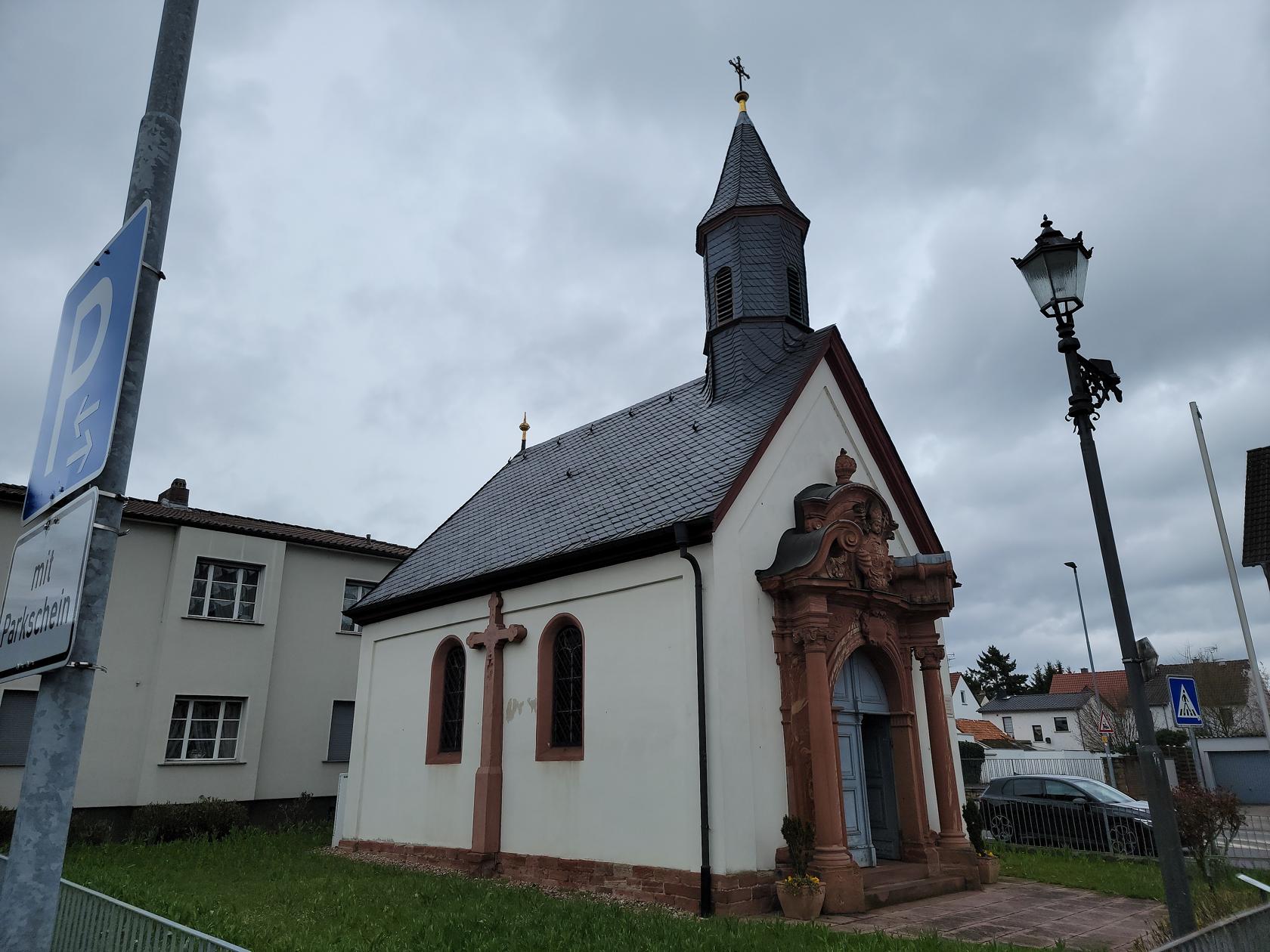
A stone’s throw from one of the public parking places is the Wendelinuskapelle. A small chapel honoring Saint Wendel, patron saint of farmers and shepards. Built in the late 1800s it stands on the place of a former Heiligenhäuschen. The Baroque doorway is some 160 years older than the chapel itself and was taken from the west portal of the Seligenstadt Basilica, when it was renovated in 1868. The inside is rather plain and in need of some repair.

Seligenstadt

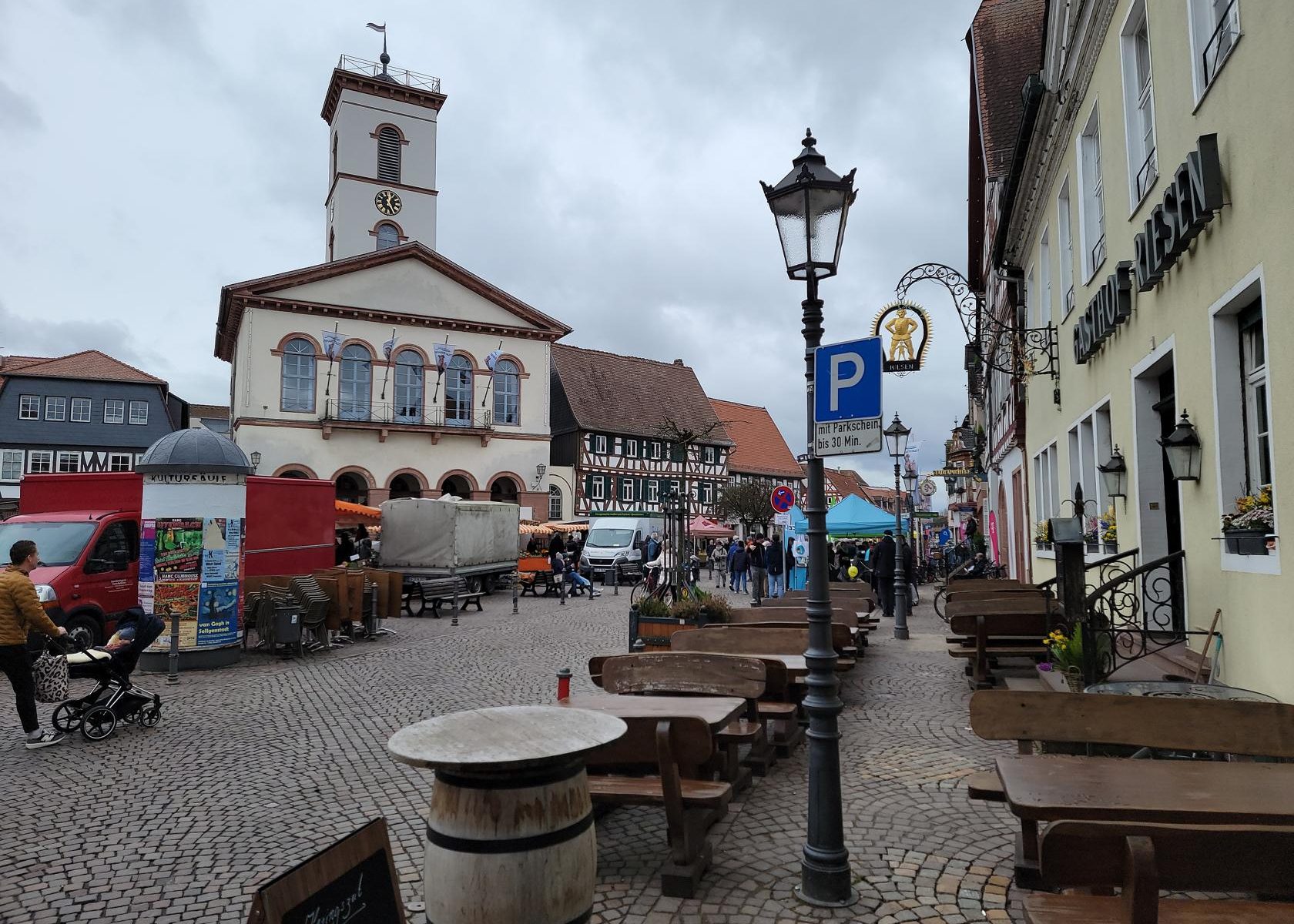
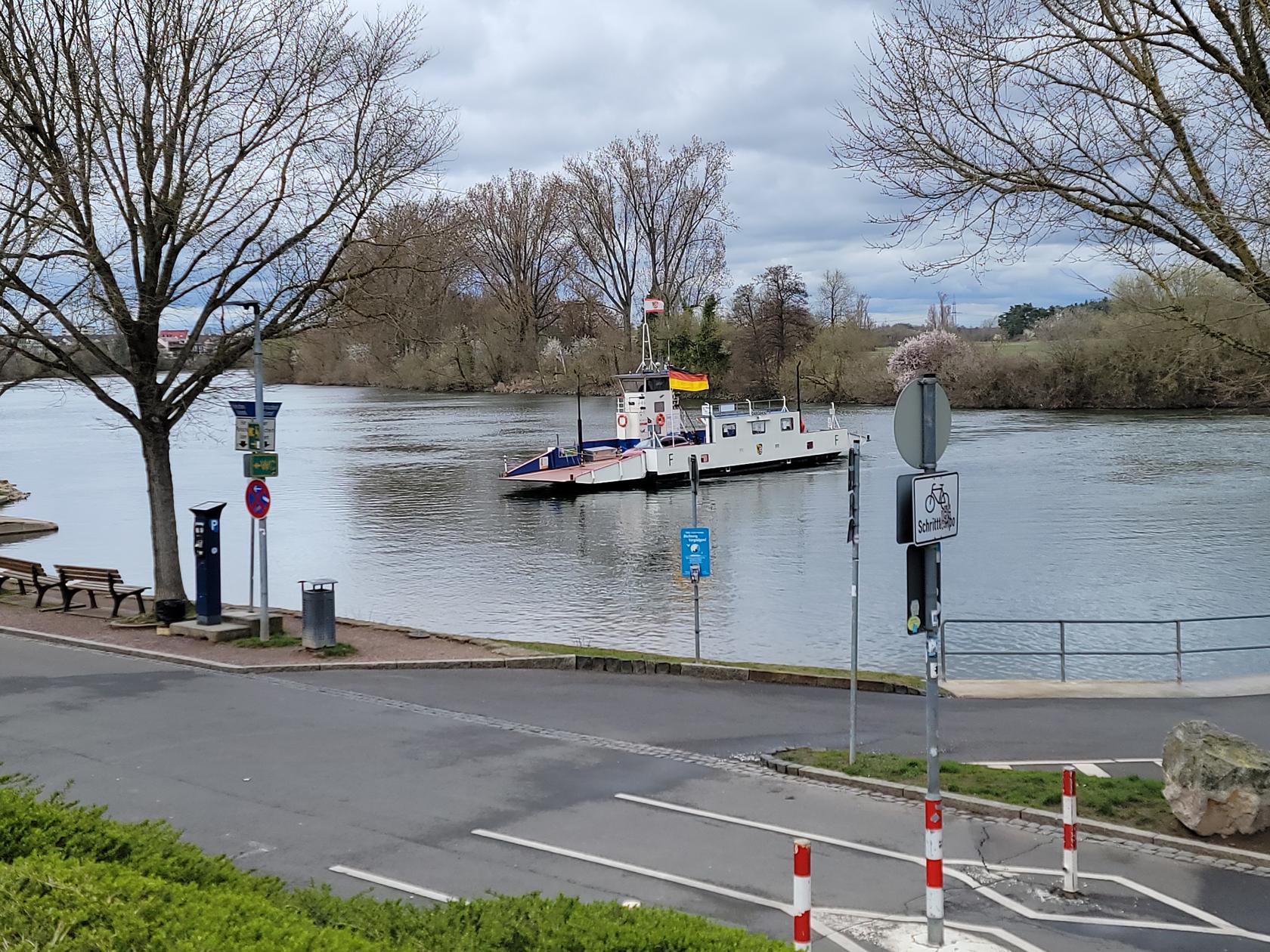
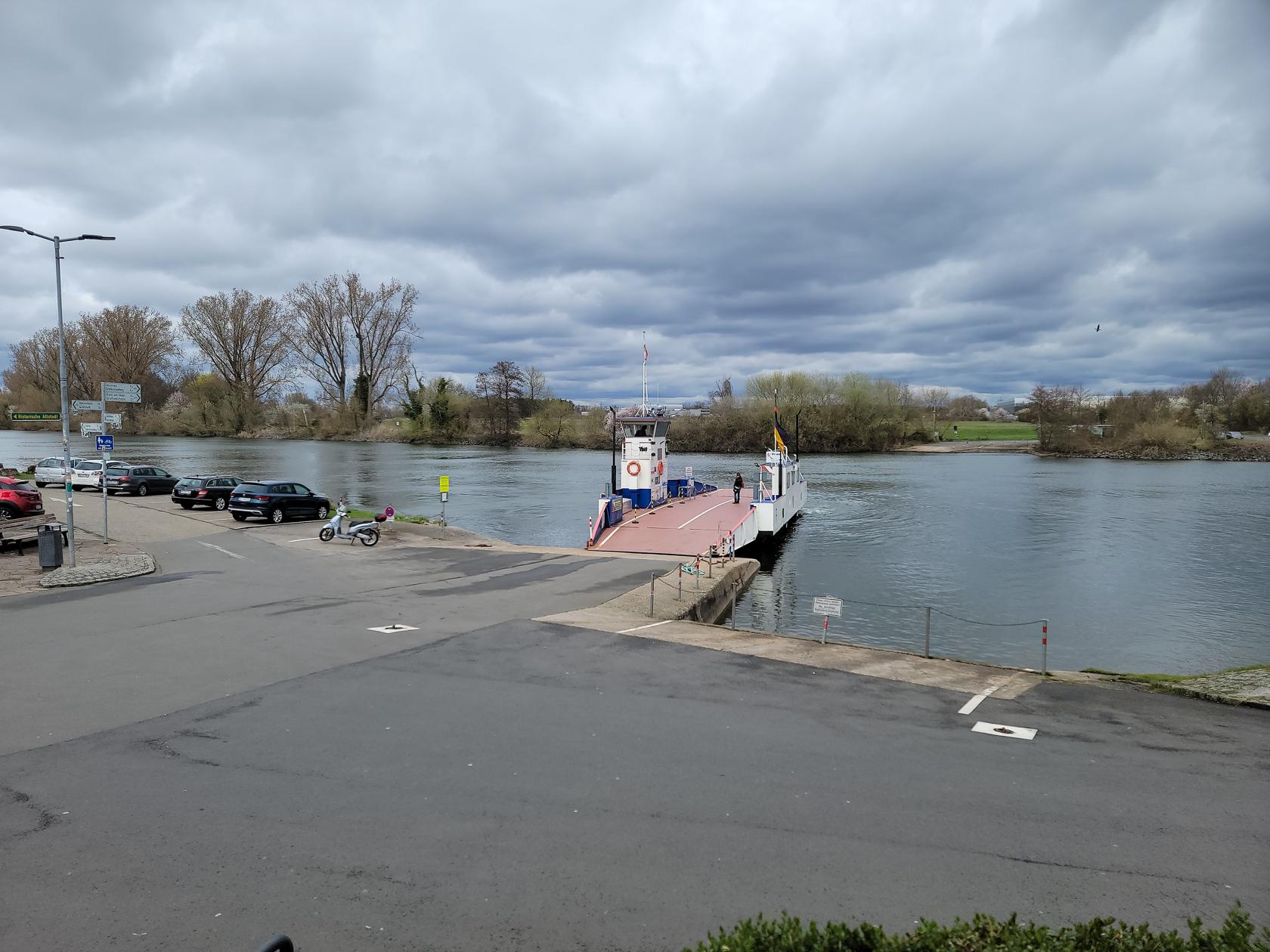
The three main attractions in this town are the Benedictine Monastery, the Einhard-Basilika and the town’s Marktplatz, or marketplace. One can also find along the Große Maingasse a ferry crossing that crosses the Main river, which separates Hesse from Bavaria.

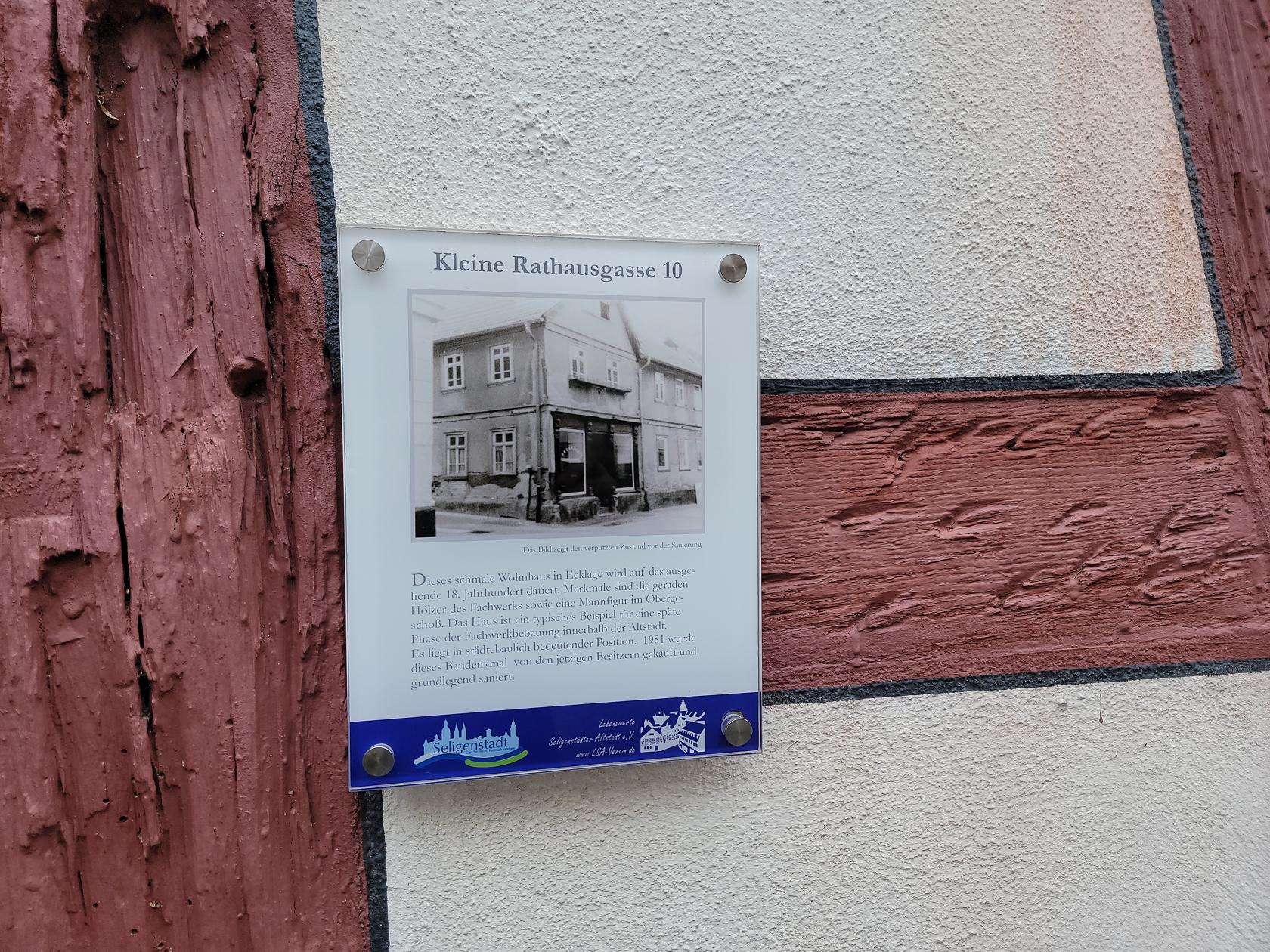
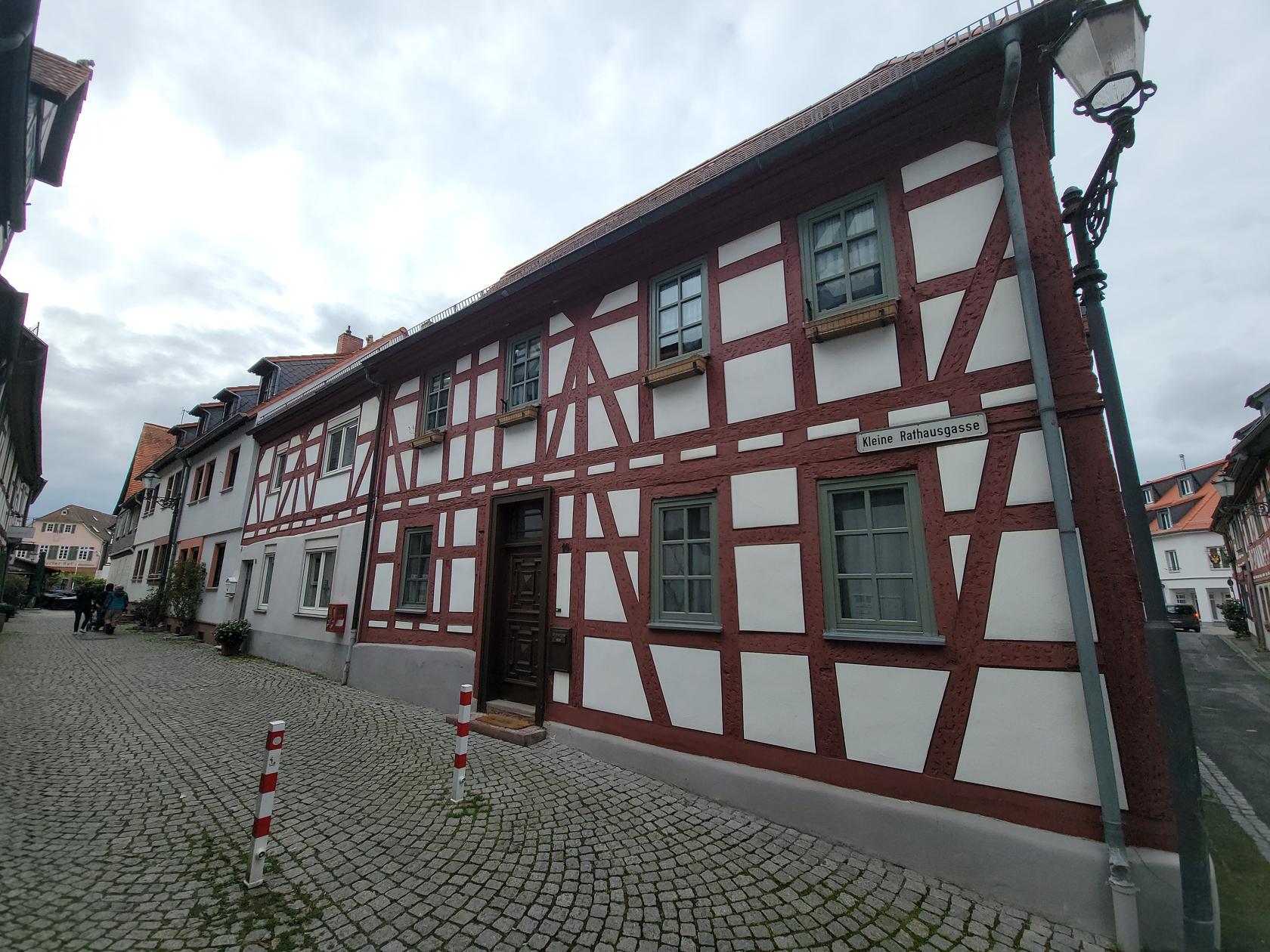
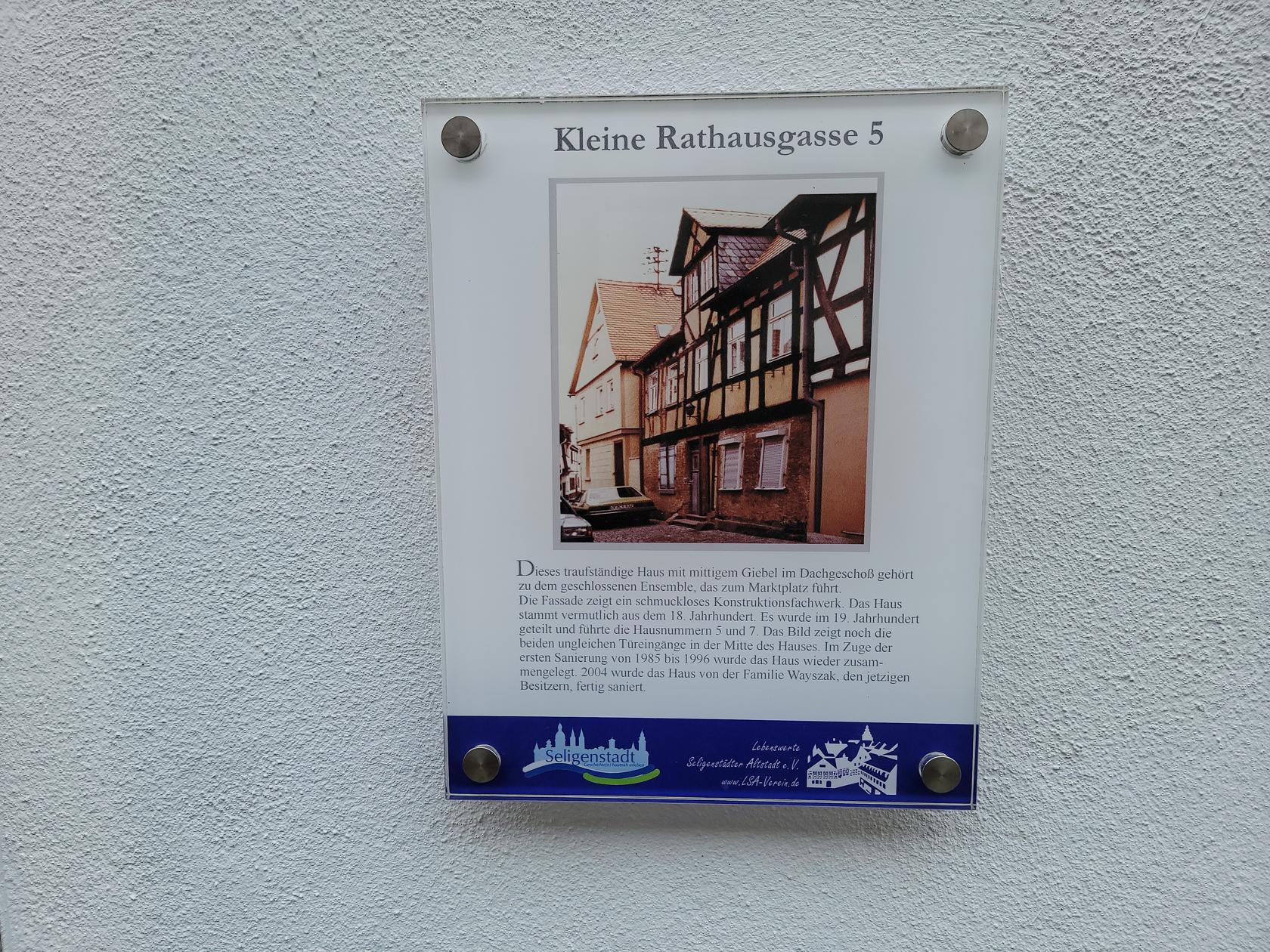
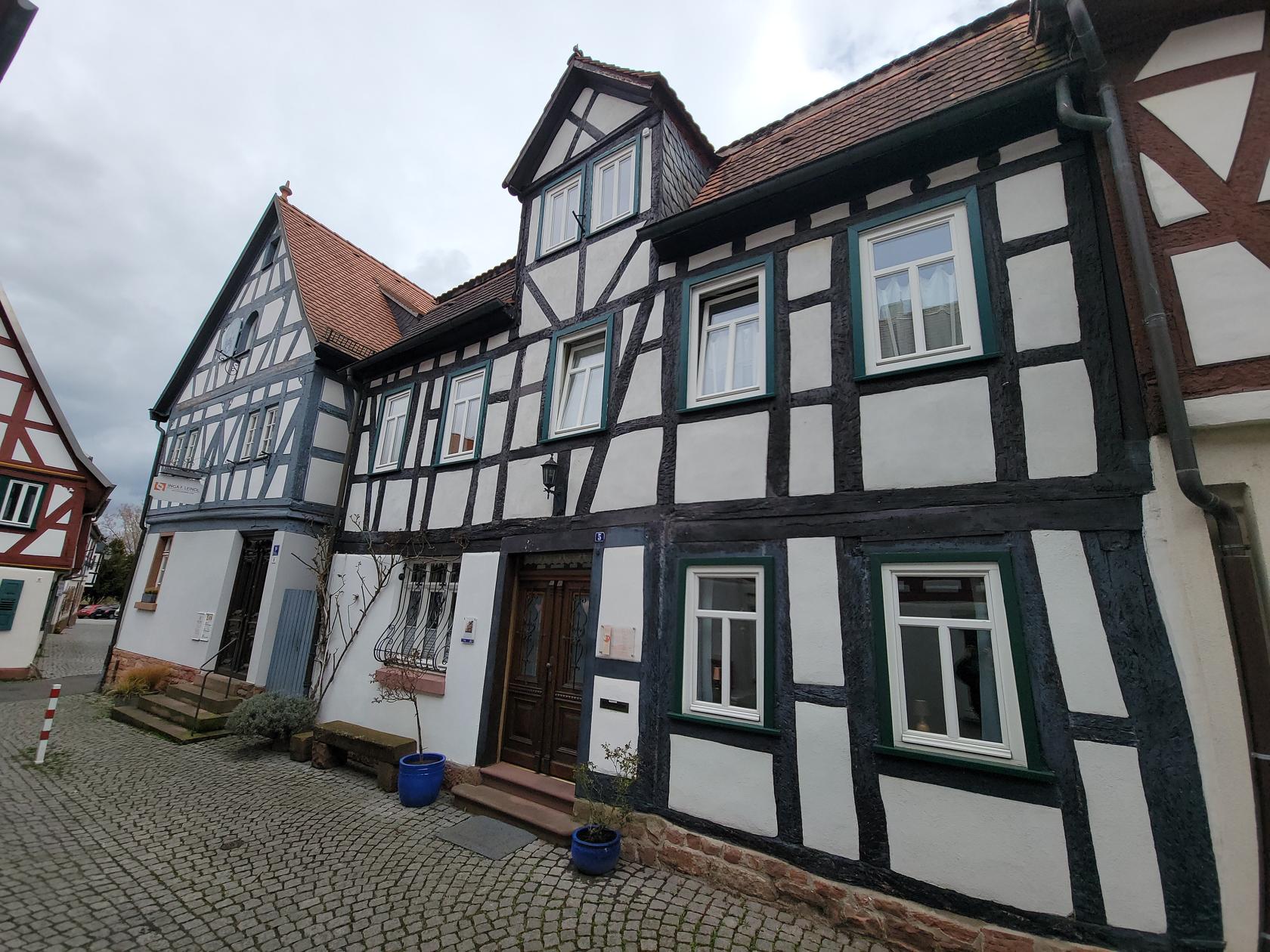
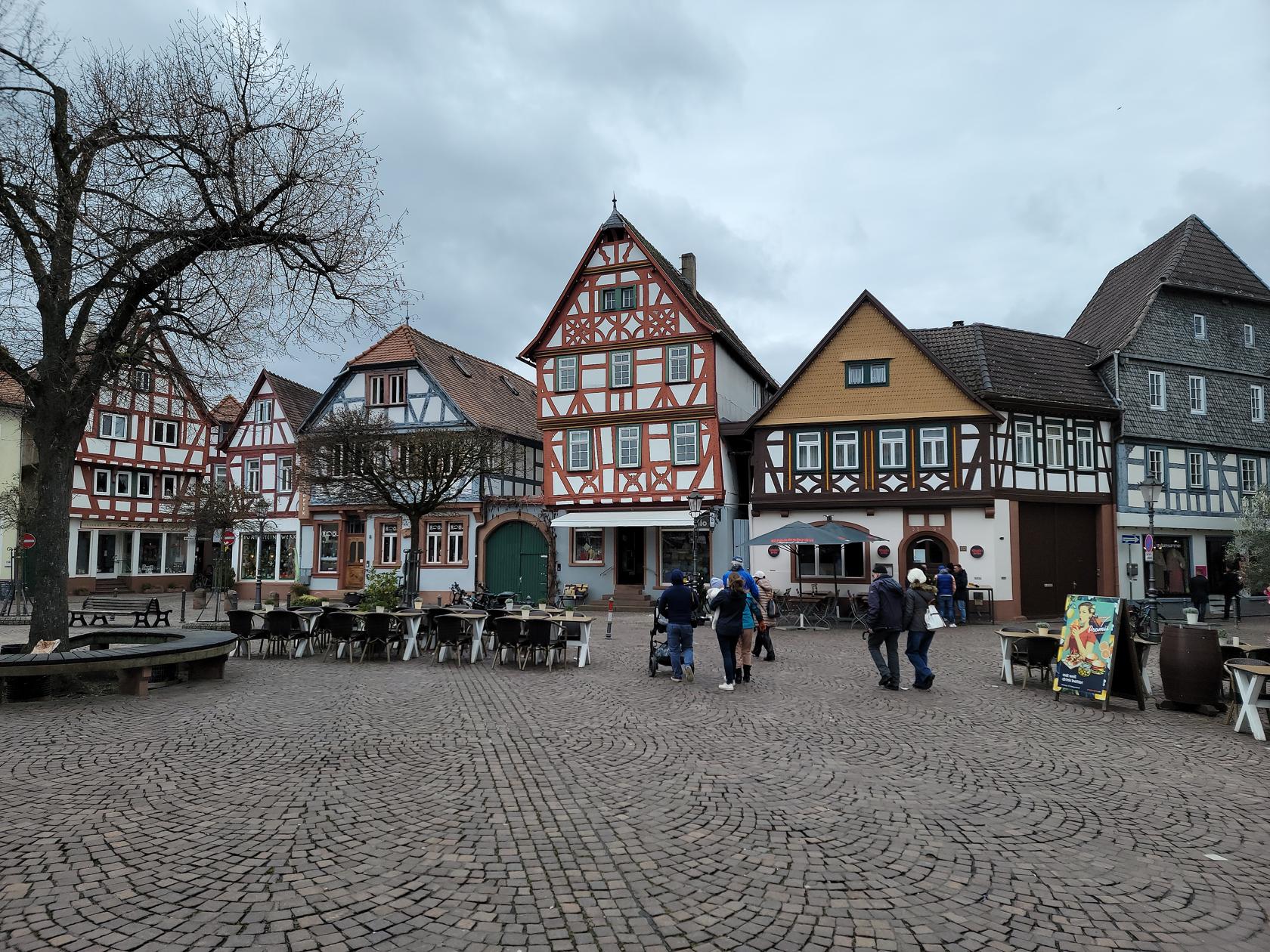
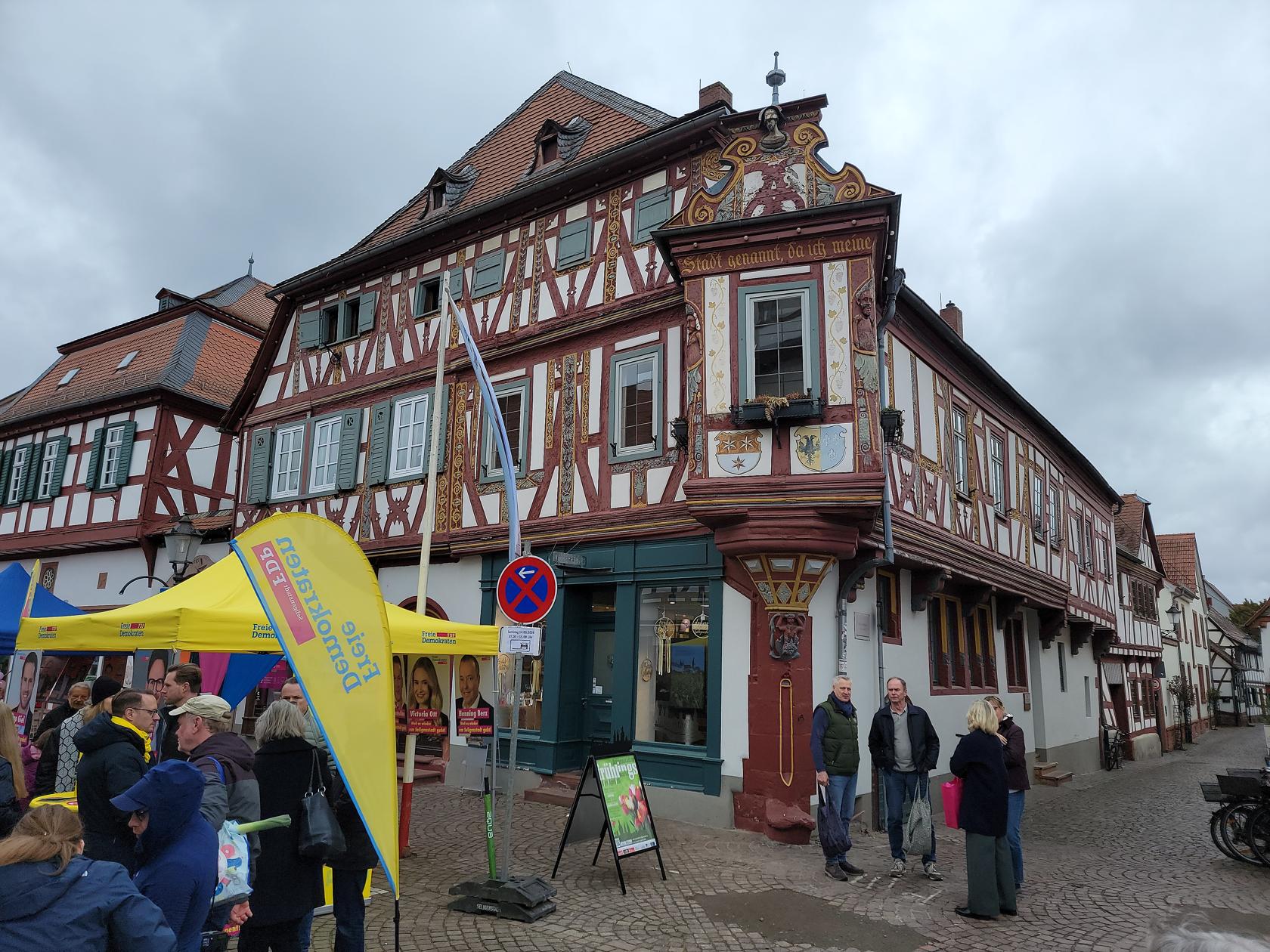
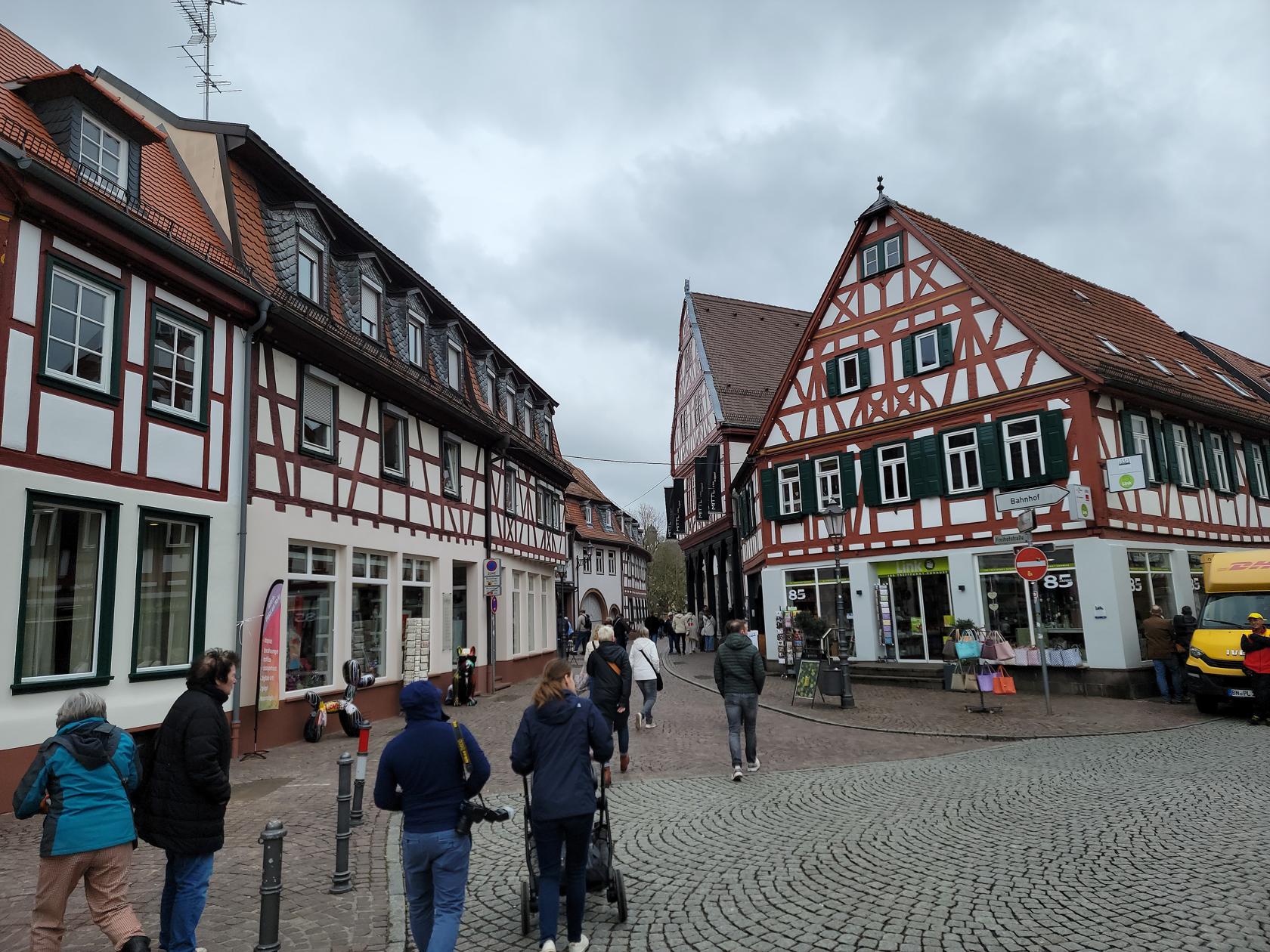
For the most part the town appears to have been saved from the ravages of war. Many of the original timber houses still stand and many have historical markers on them, giving the passer-by a brief history of the structure before them.

Benedictine Monastery

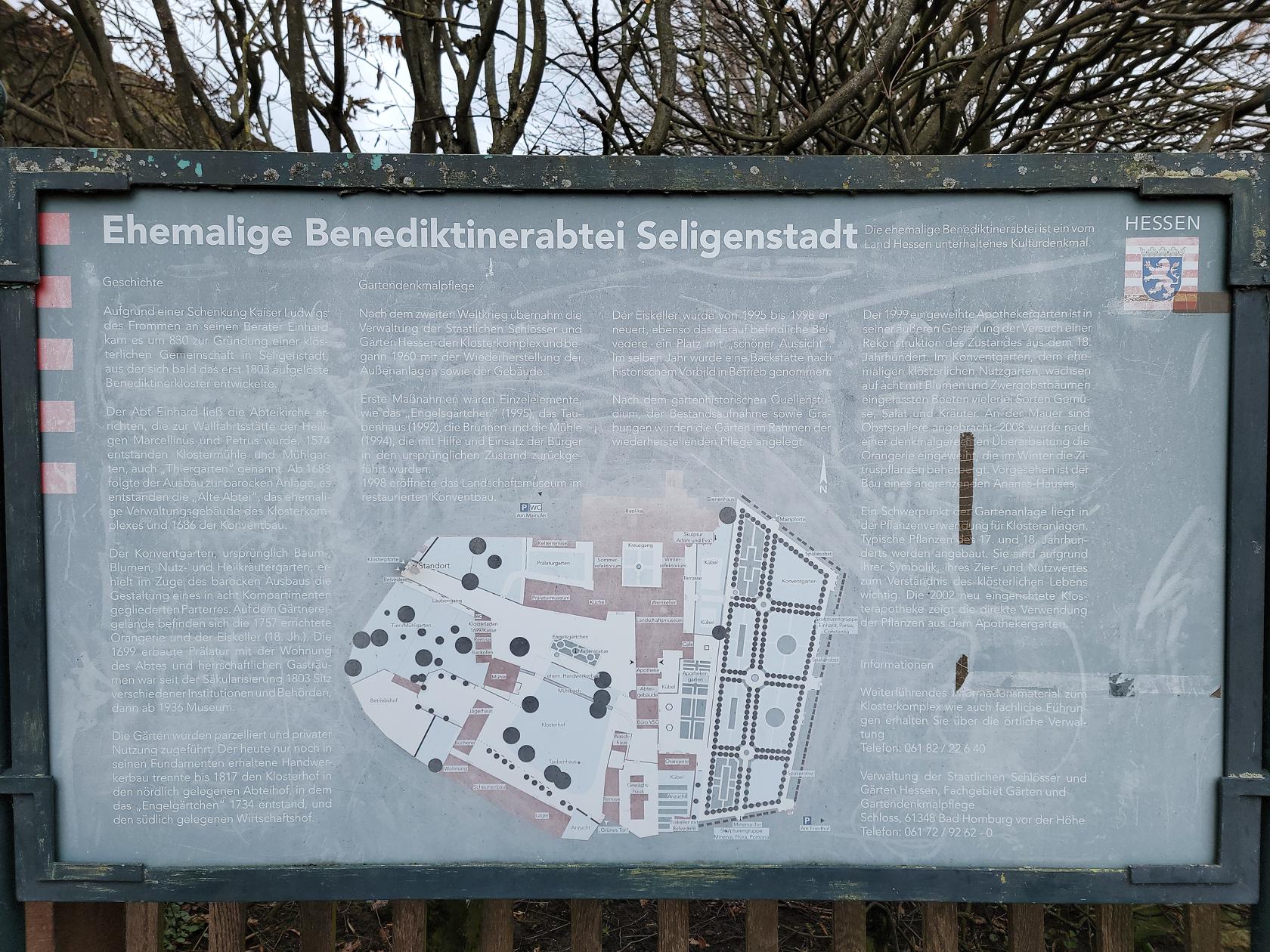
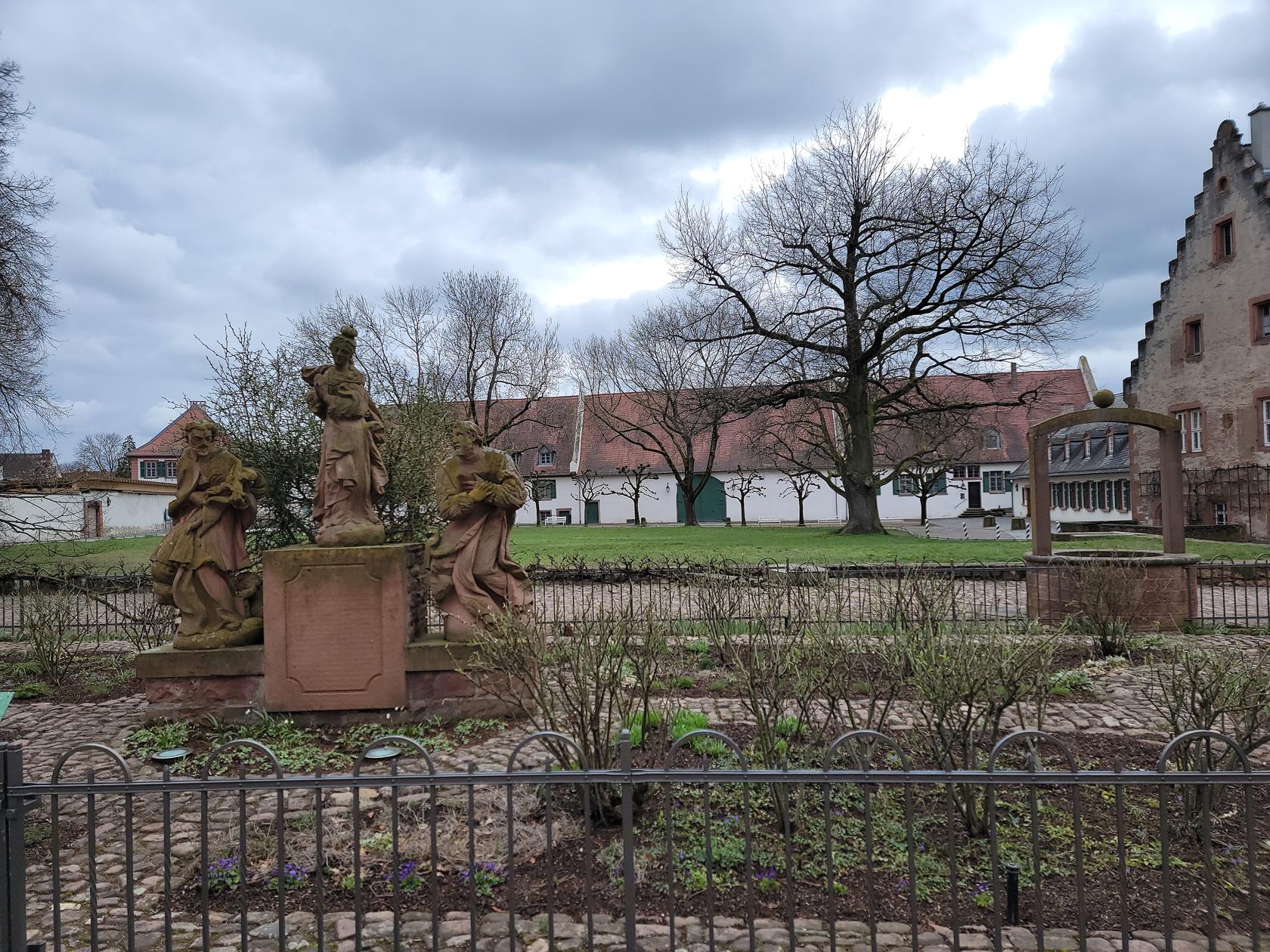
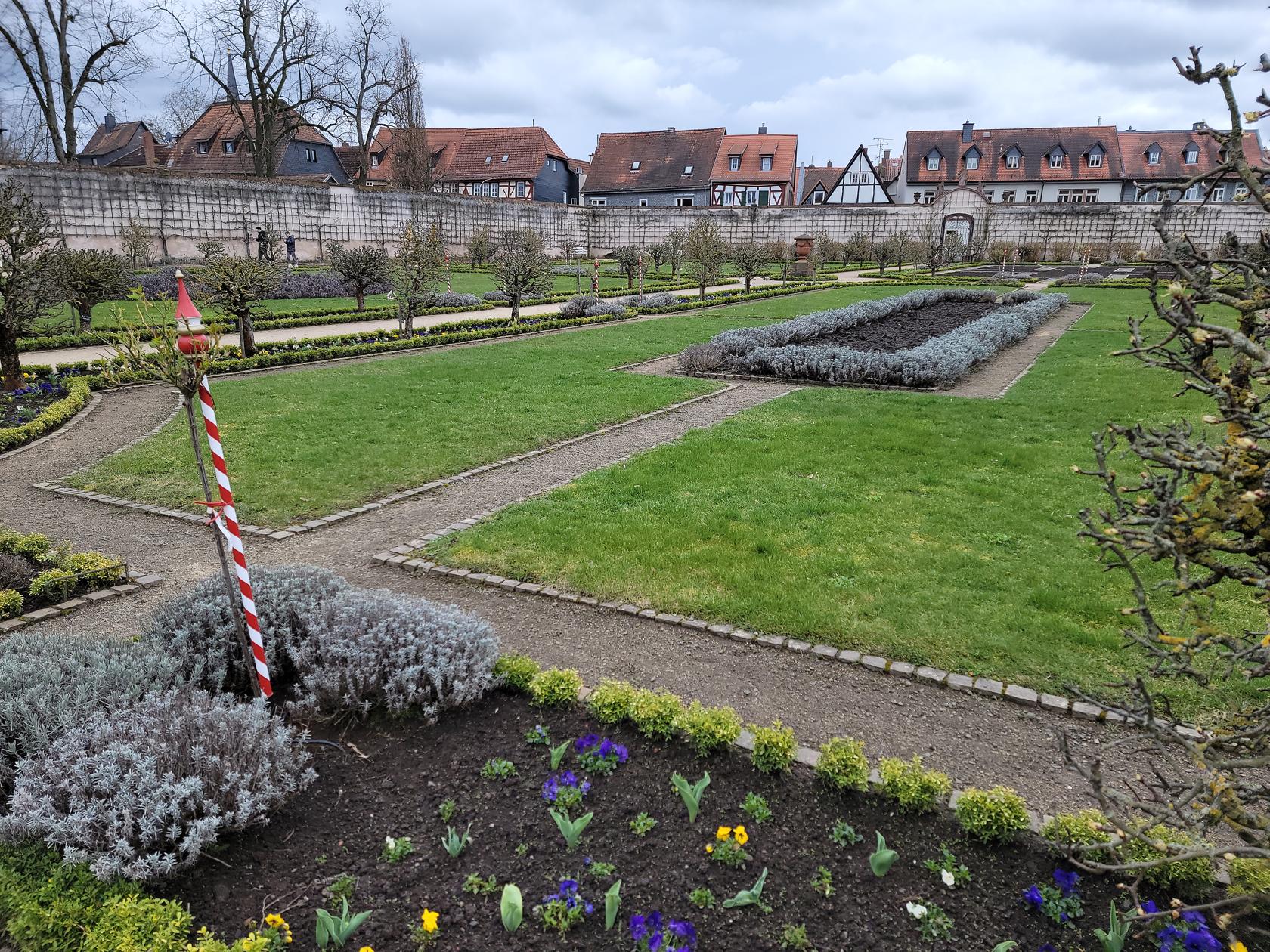
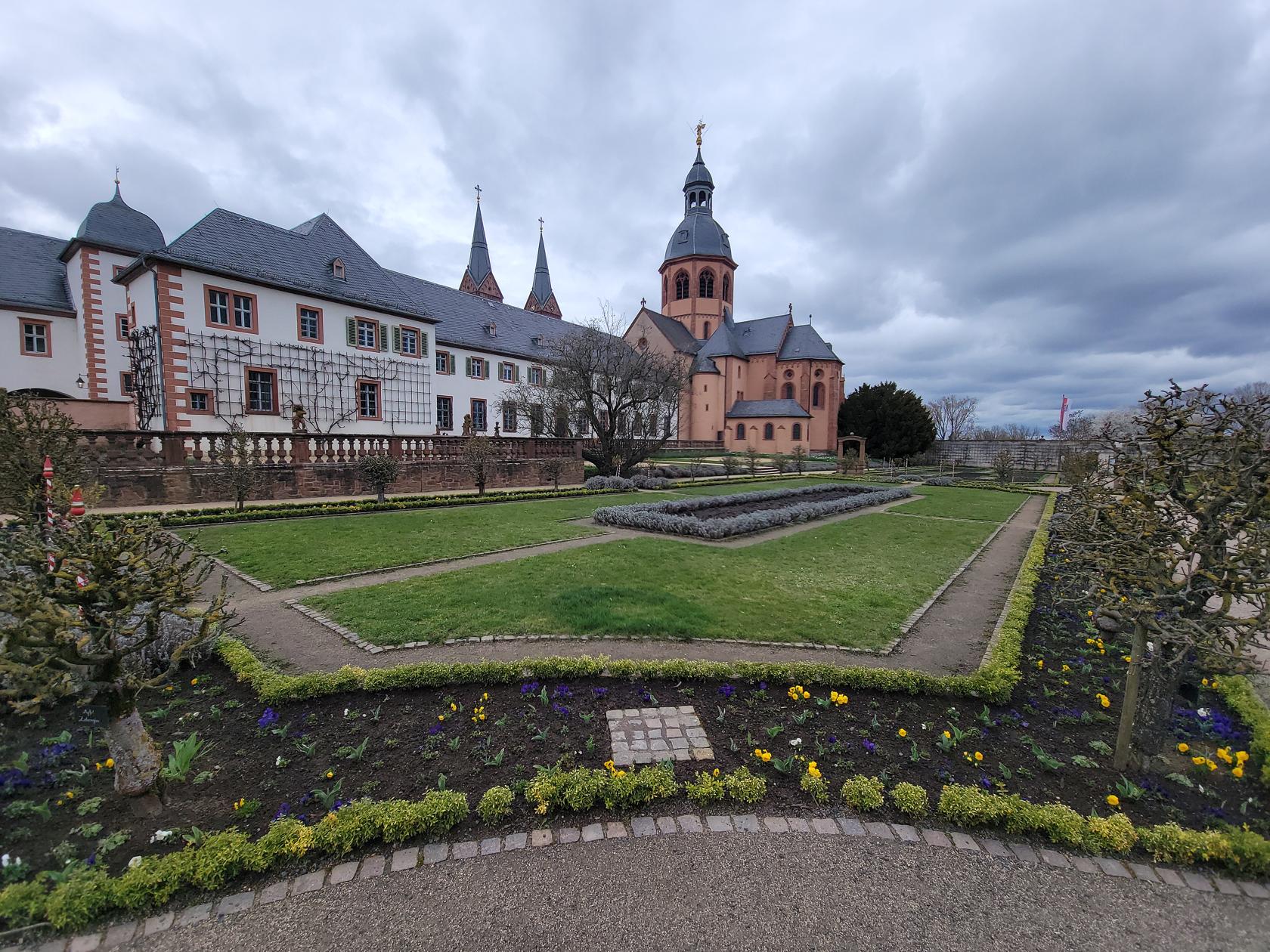
The monastery, which was established by the Benedictines in 815, houses a museum now and a beautifully maintained garden overlooking the Main river.

Einhard-Basilika

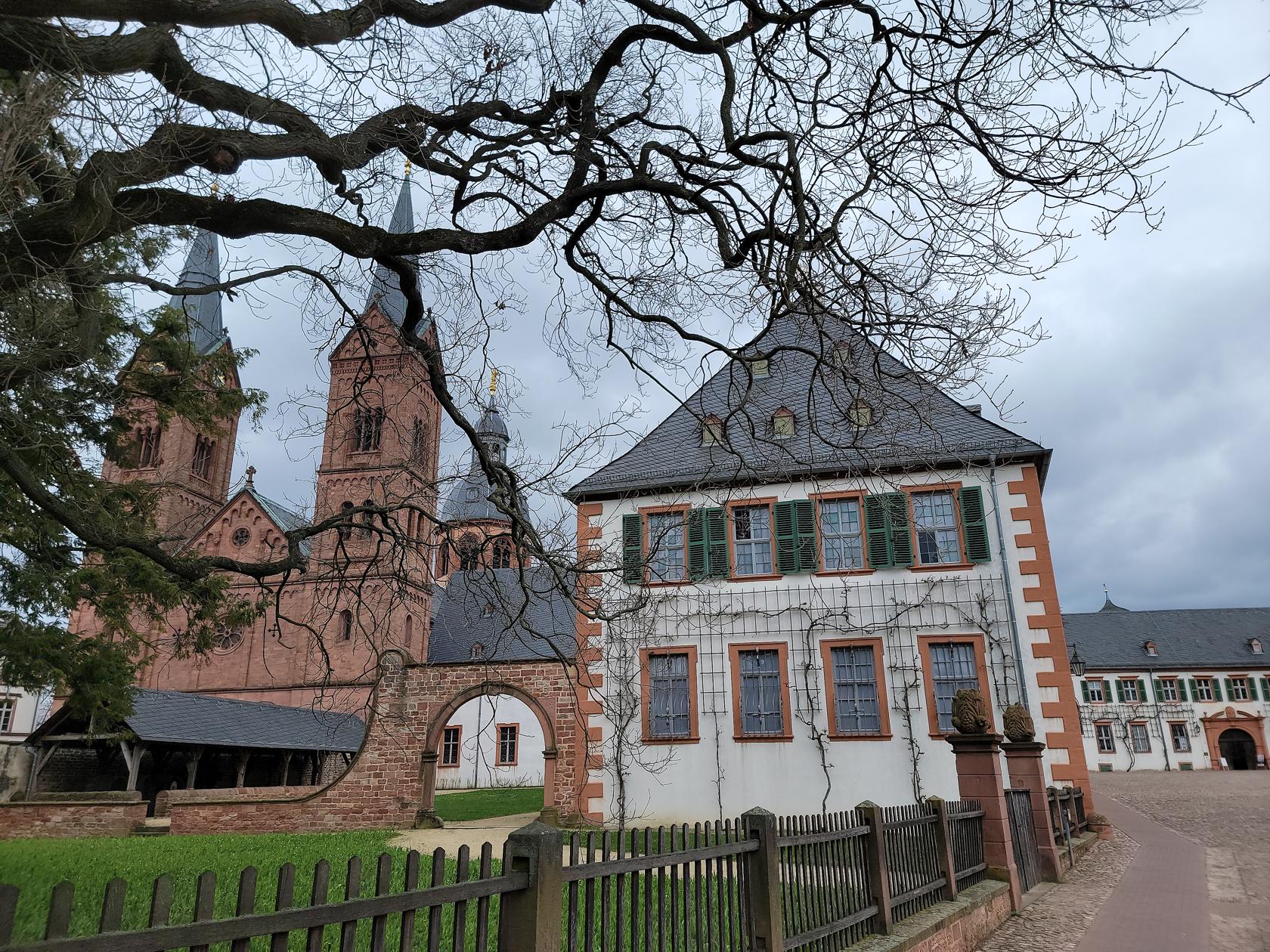
Though started in the early ninth century as the Saint Marcellinus and Petrus church, it is currently known as the basilica of Einhard, who was one of Charlemagne’s closest friends and advisors. The facade of the church is neo-roman, though there are several other styles of note, including early gothic.

Marktplatz

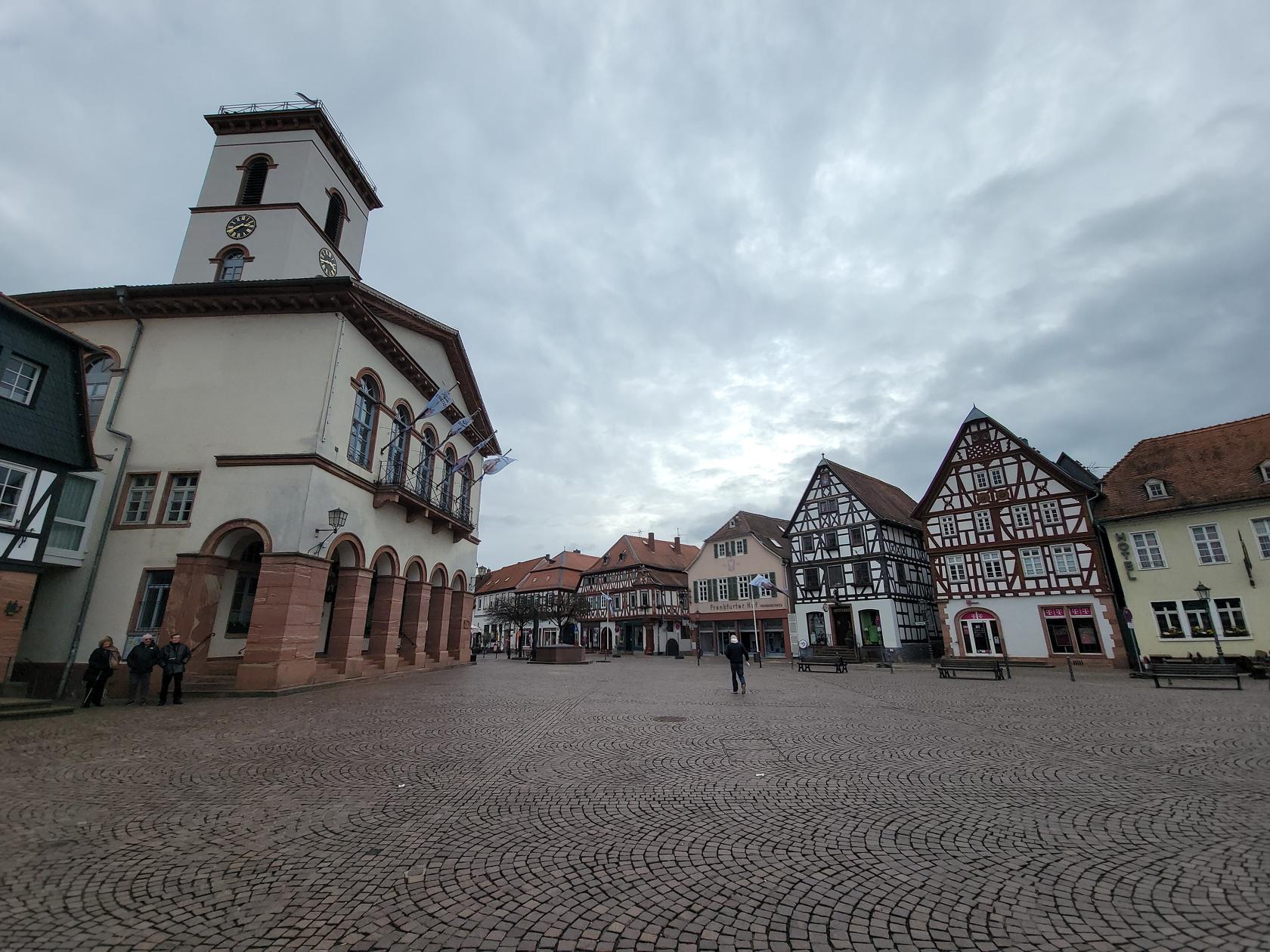
While we were visiting, a political infomation event was being held in the marketplace, which includes the Rathaus. The area is surrounded by quaint little shops, cafes and government buildings.

Restaurants

The weather was cold, cloudy and wet, typical for this time of year. So, when it was time it was essential to find a warm place with good food, so Italian with a pizza oven sounded about right.

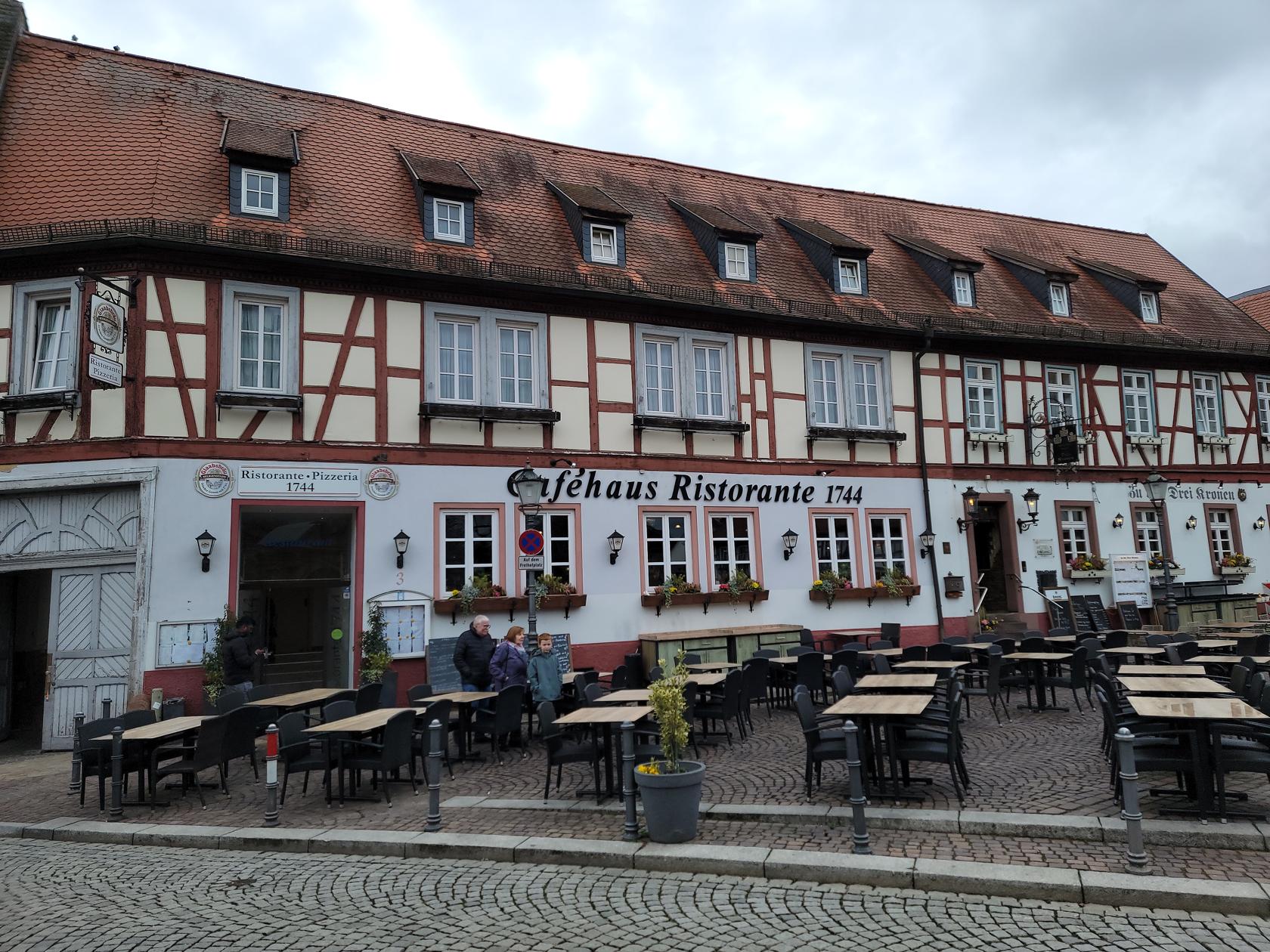
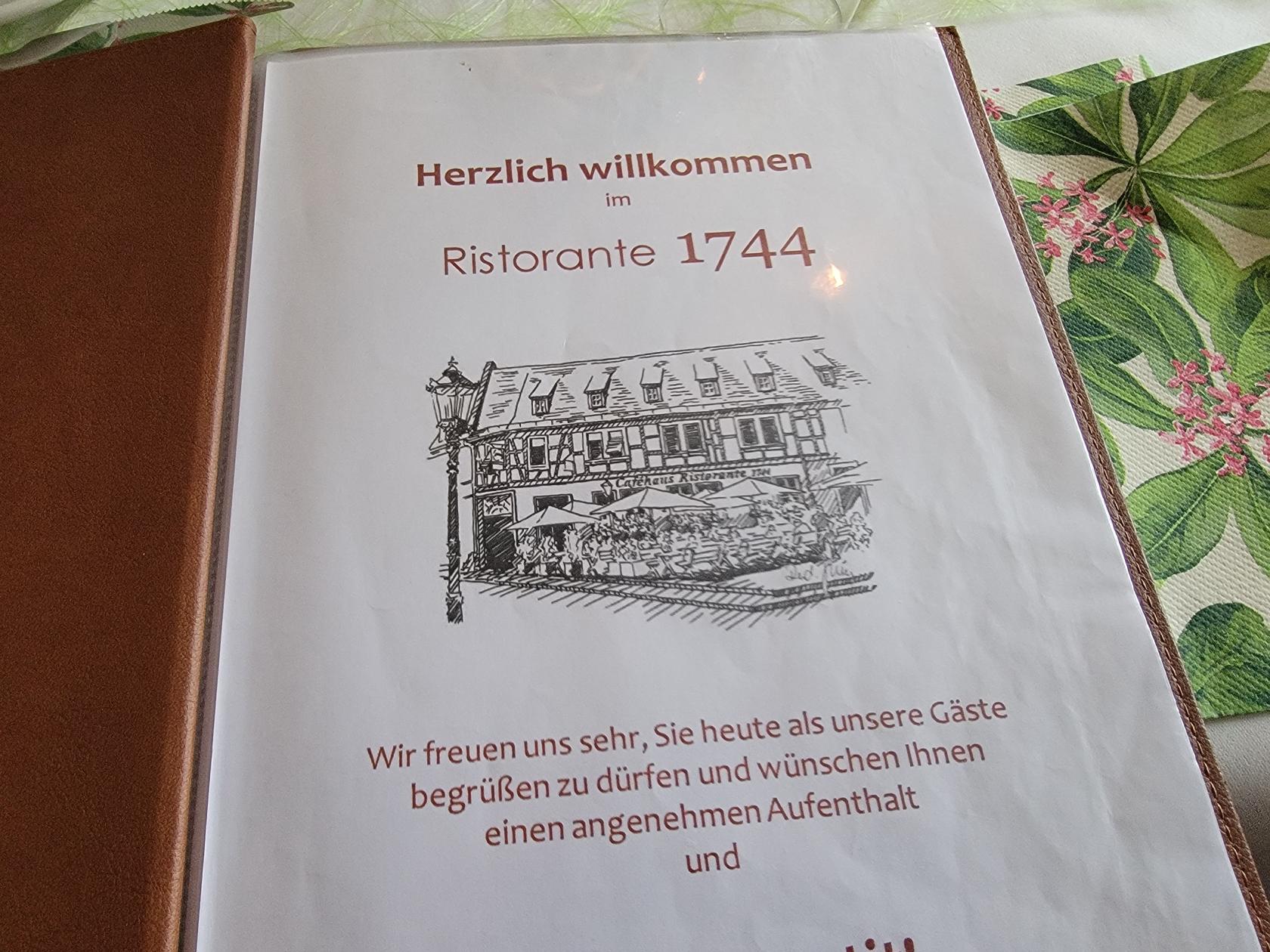
Ristorante & Pizzeria 1744

A modern restaurant with a surprisingly large staff was able to accomodate us for lunch. I would expect that during busier times, reservations might be recommended.

The food was excellent. We tried the soups and main pasta dishes, which most people around us seem to favor; so we cannot really speak about the quality of the pizza. They also have traditional italian coffee and other after dinner amenities.

Luzern, Switzerland – Day Trip

Luzern For A Day

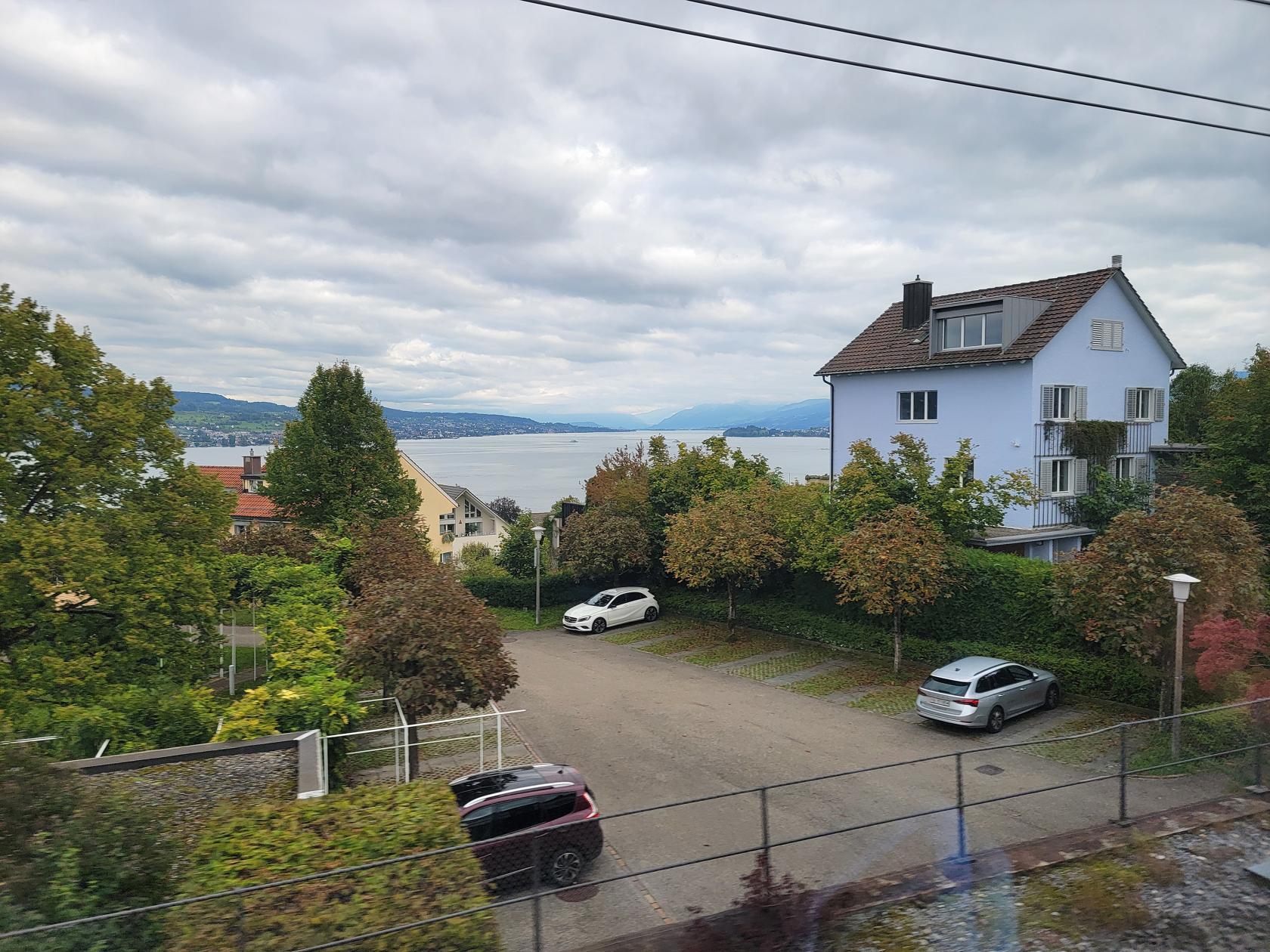
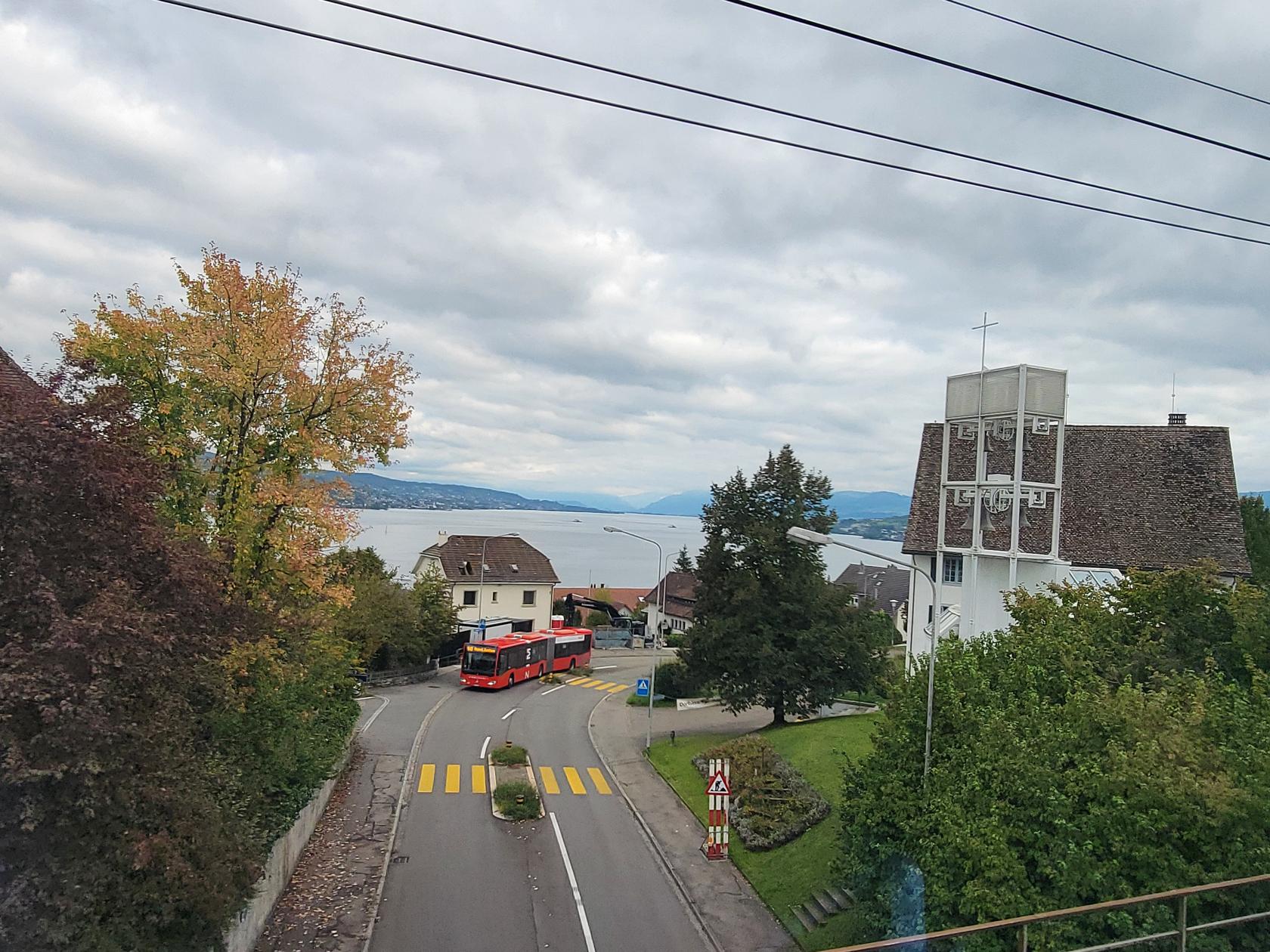
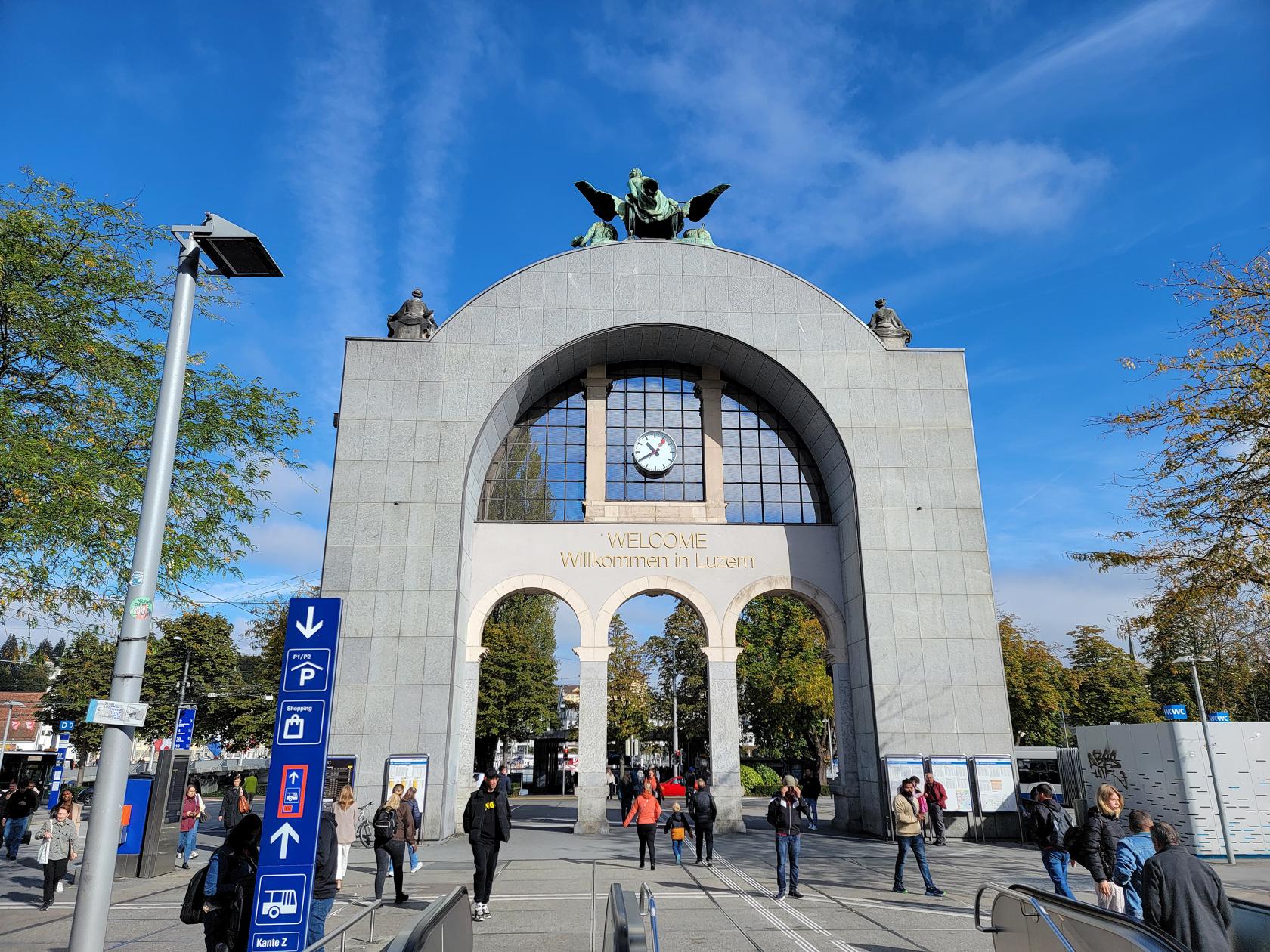
The last time we were in Luzern was in 2020. We came back at the behest of other family members who wanted to visit it for a day and to also check out the wonderful hands-on transportation museum. We therefore made a Tagesausflug, or day trip, from Zürich to Luzern just to see the museum.

Getting There

From Zürich HBf, we took the regional train IR70, which only takes about forty minutes to Luzern. With the half fare card, it only cost us 13.50 Francs round-trip, per person. Luzern train station is right by the confluence of the lake and the river, so it drops you right in the heart of town.

Luzern The City

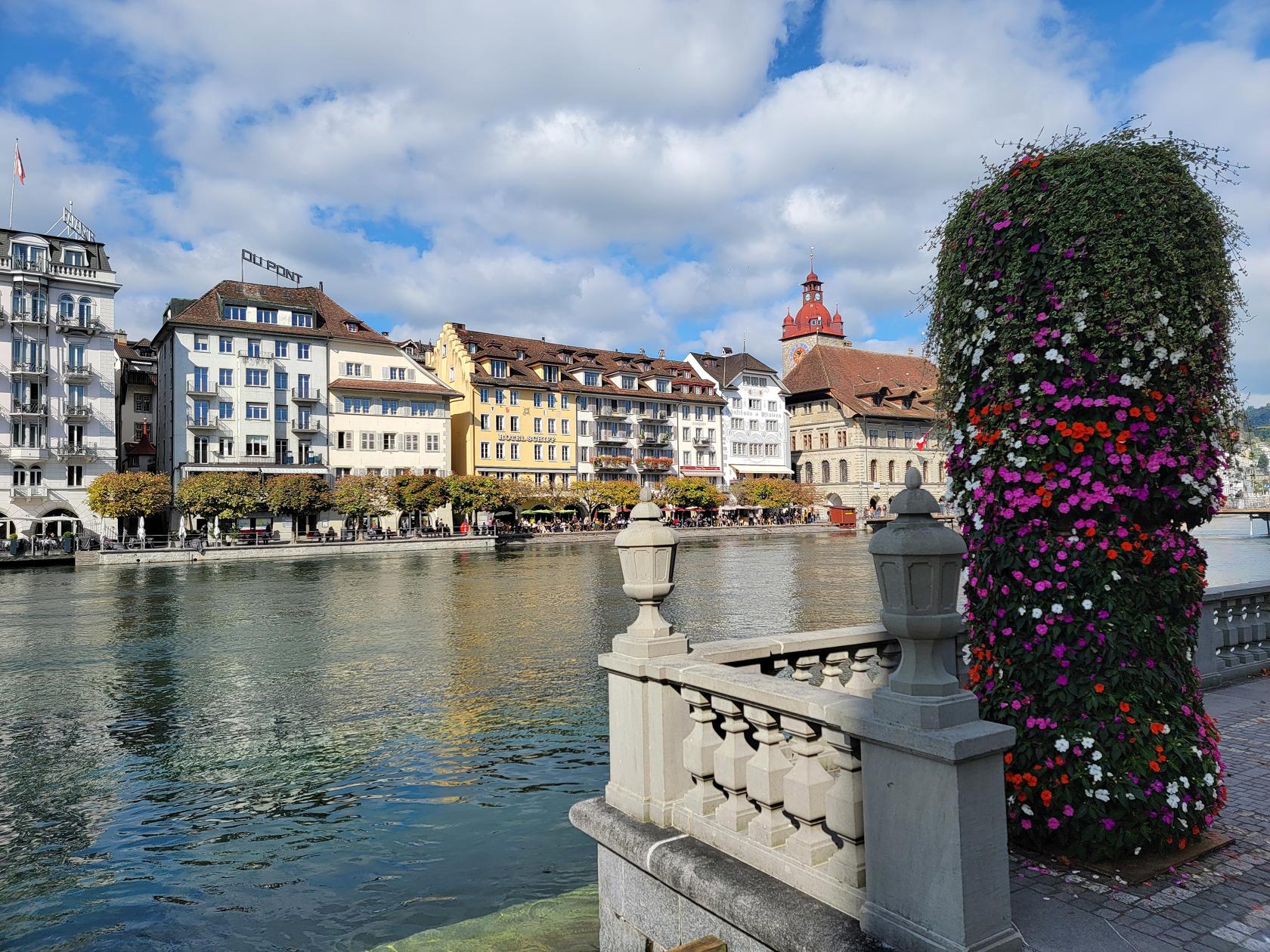
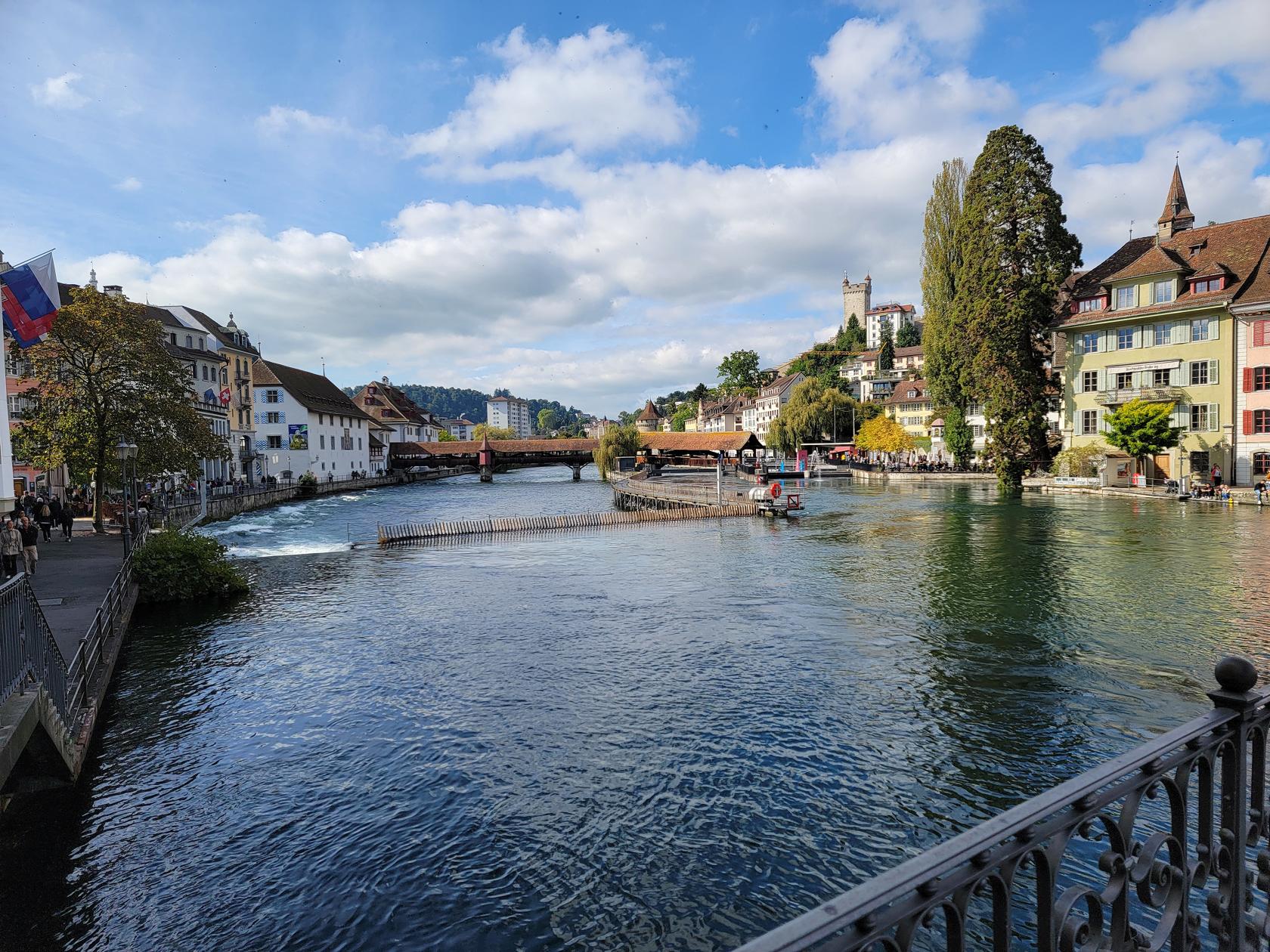
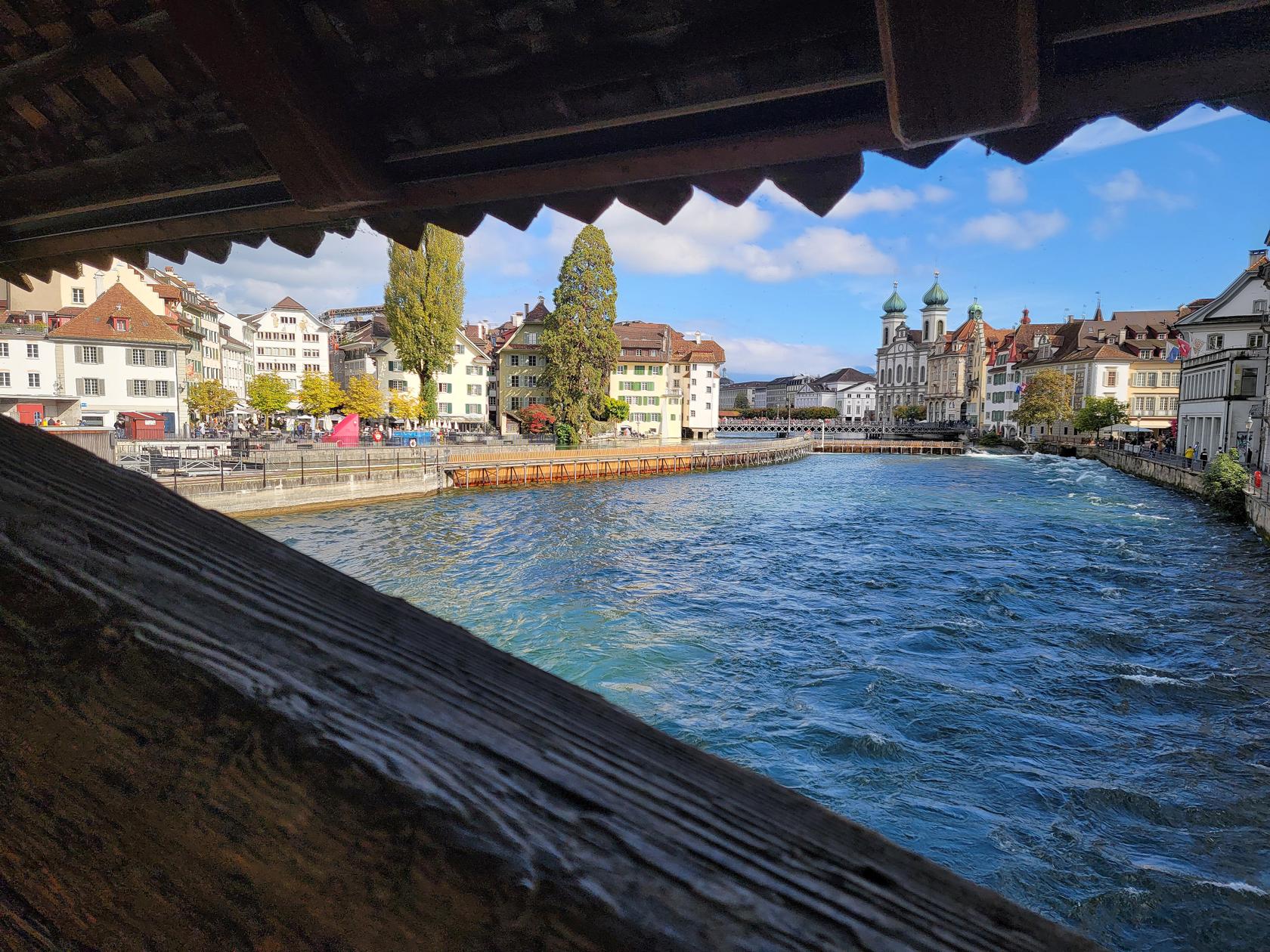
Luzern, or Lucerne depending upon your preferred spelling, is a beautiful little city on the banks of the Vierwaldstättersee, or Lake Lucerne. It is bisected by the Reuss River, which in earlier times not only had several mills along it, it was also used to generate electricity for the city when one of the old mills was converted to a hydro-power station.

The Bridges

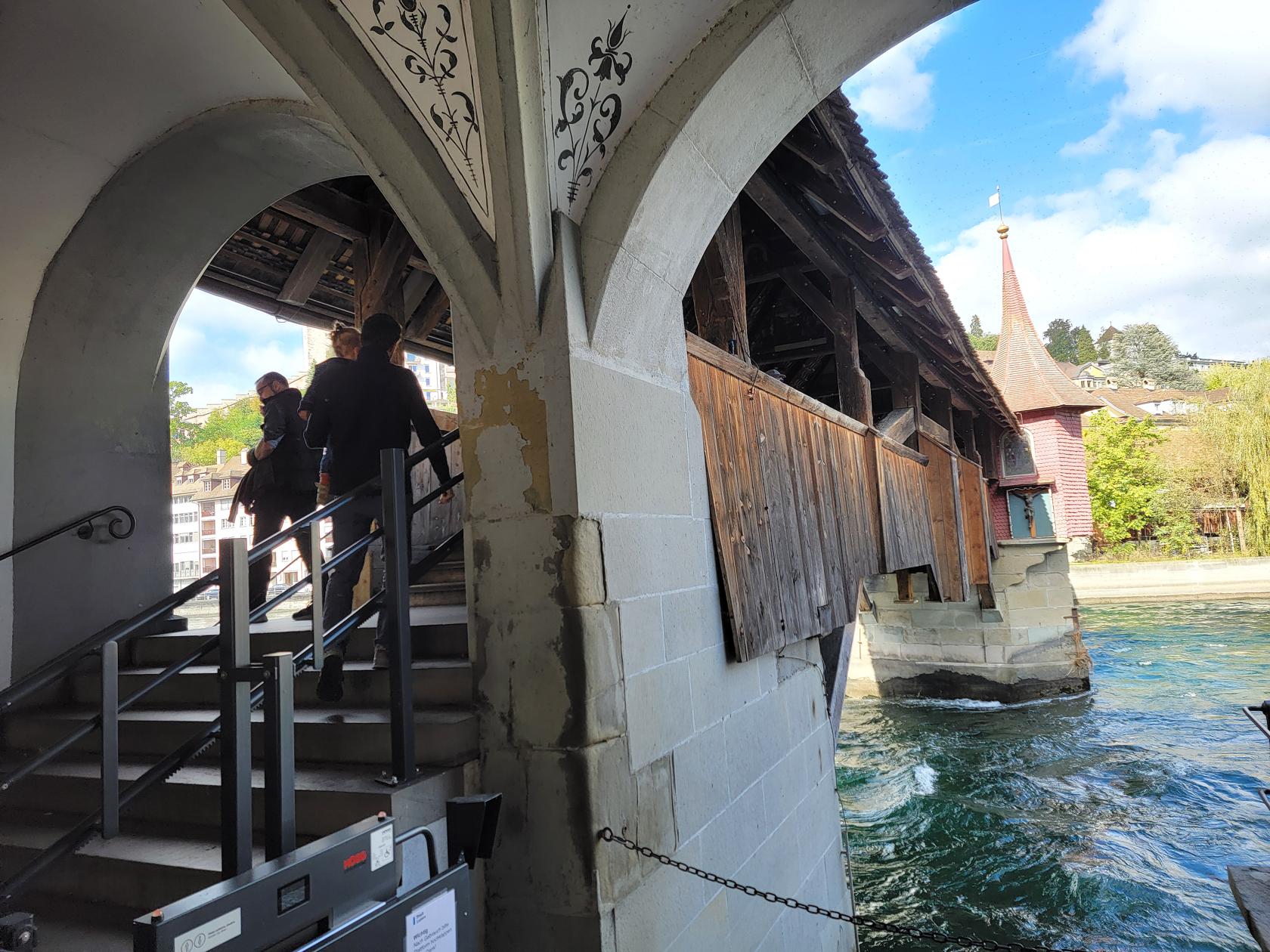
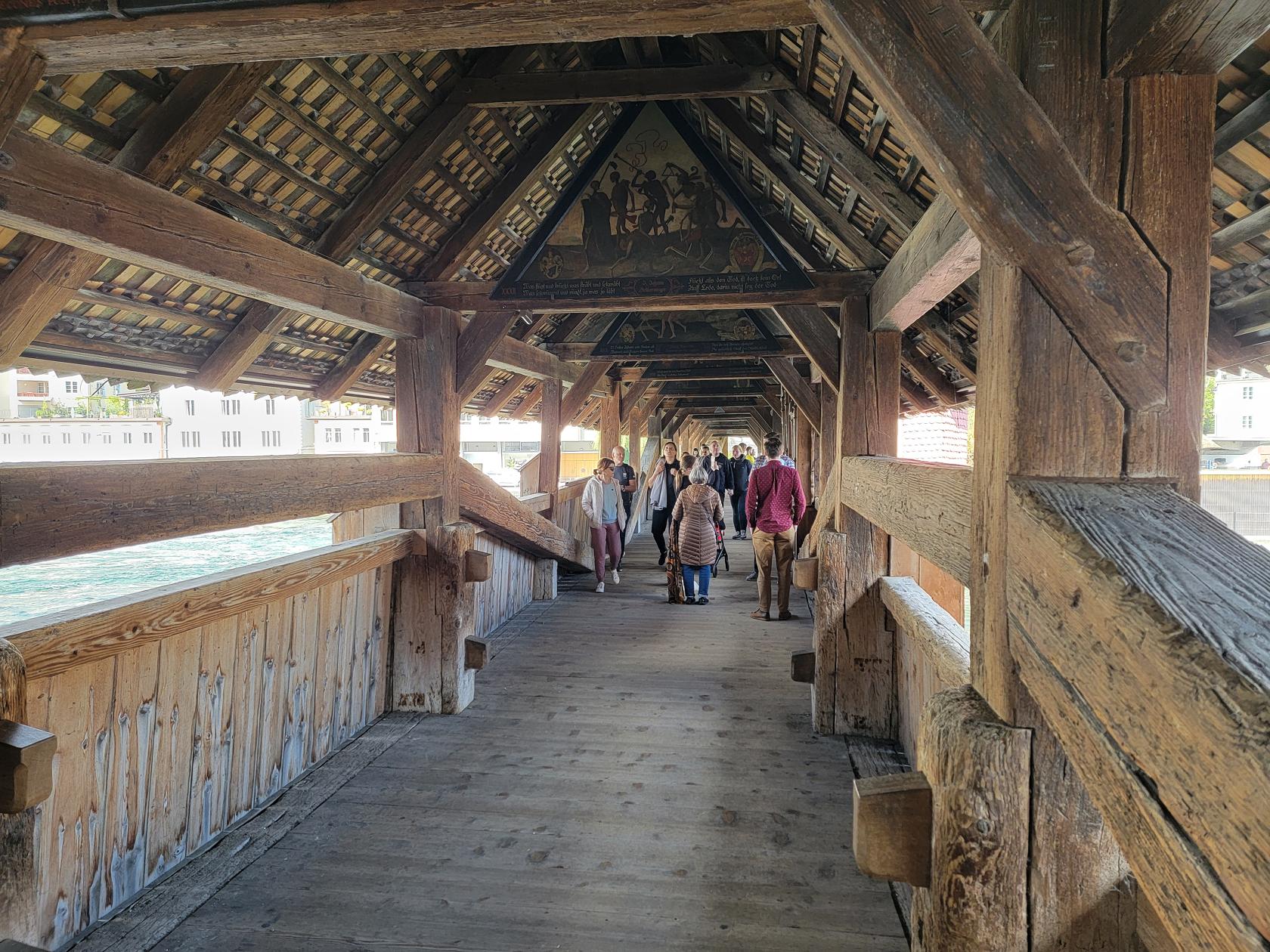
The most interest sight in the city are its bridges. The Kapellbrücke, or Chapel Bridge, was originally a fortification, but is now a tourist attraction that almost burnt down in 1993. The paintings that adorn it, and it sister bridge the Spreuerbrücke, are still being restored after the fire and years of neglect.

Museum Of Transportation

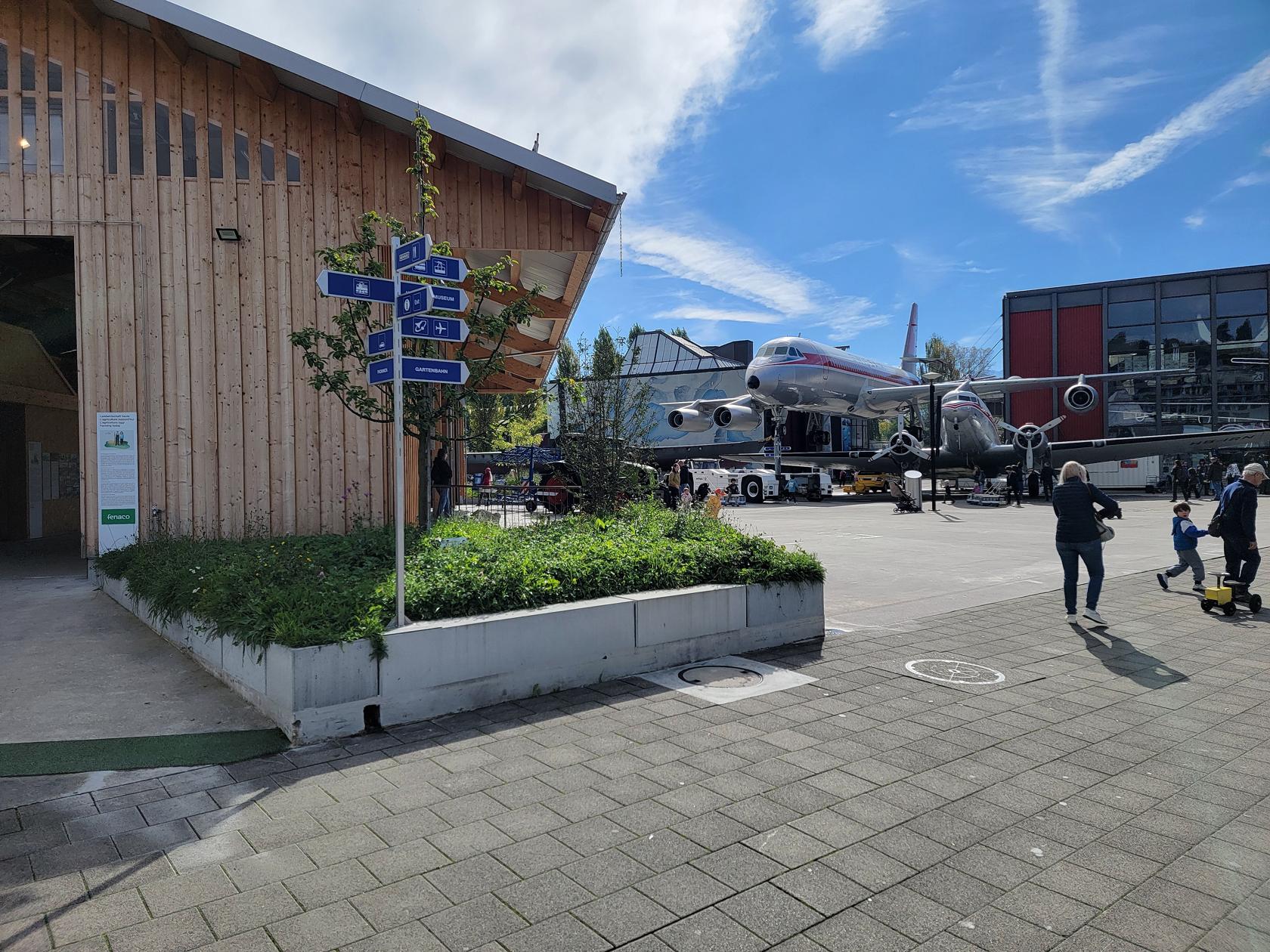
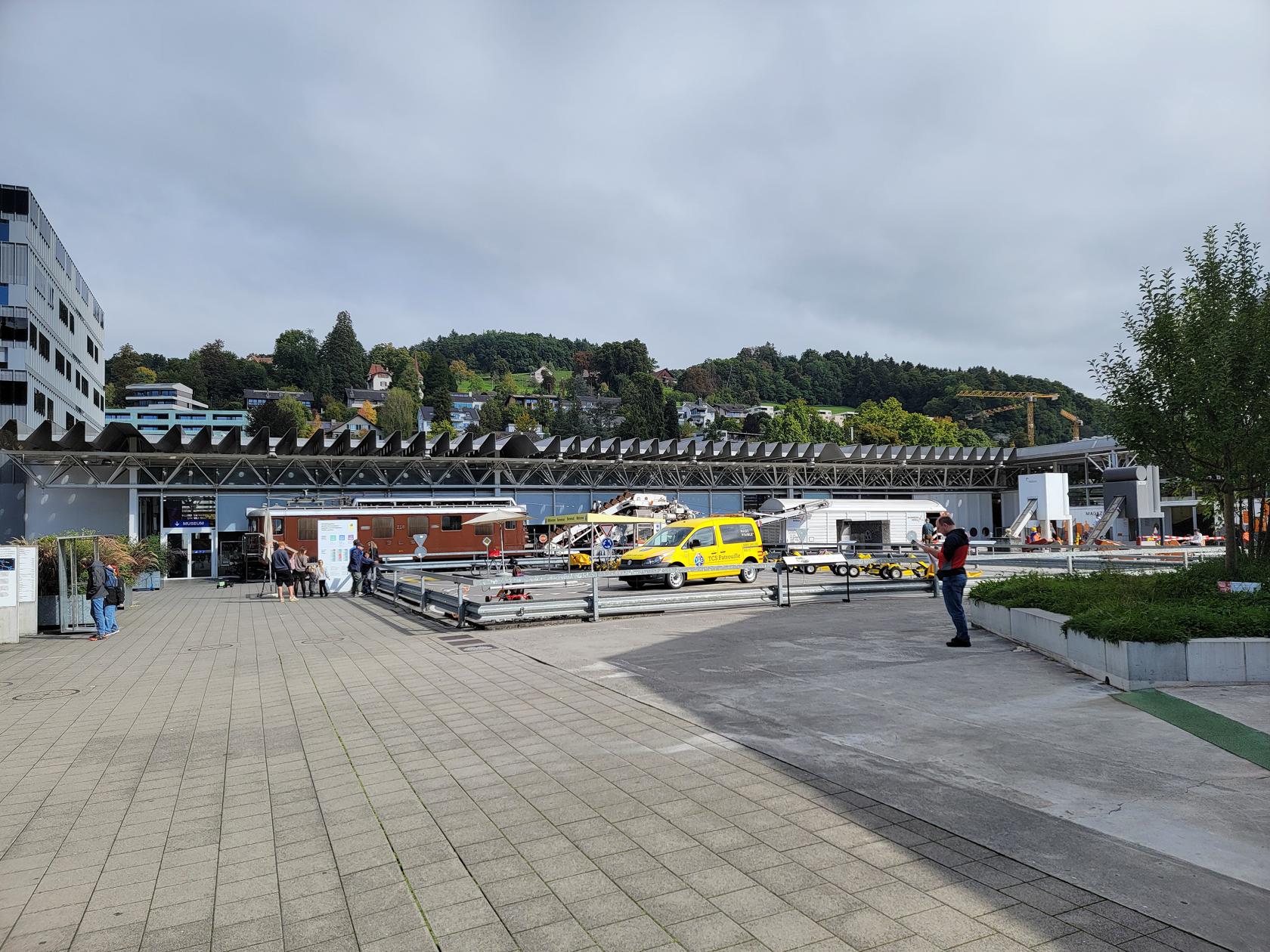
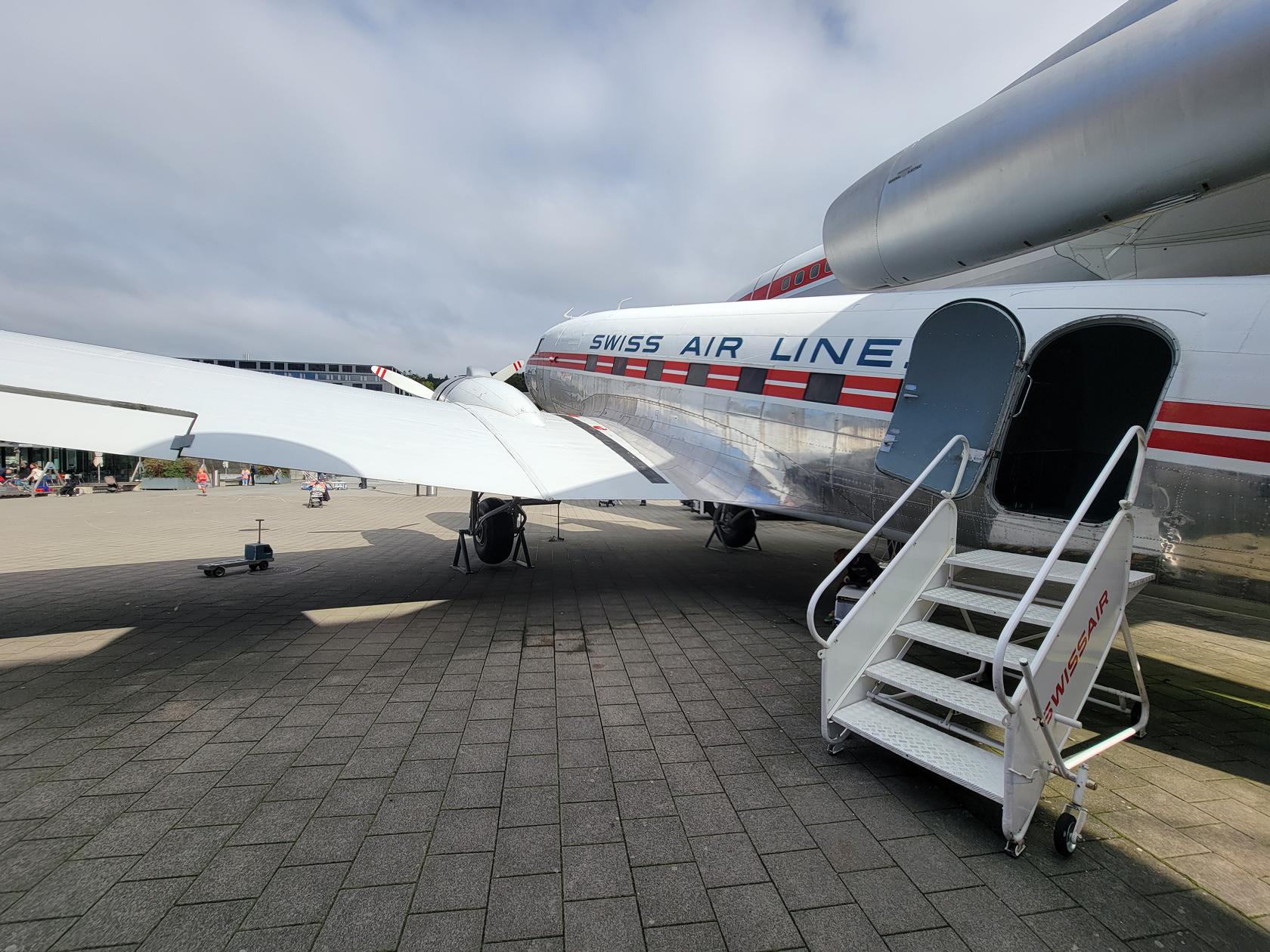
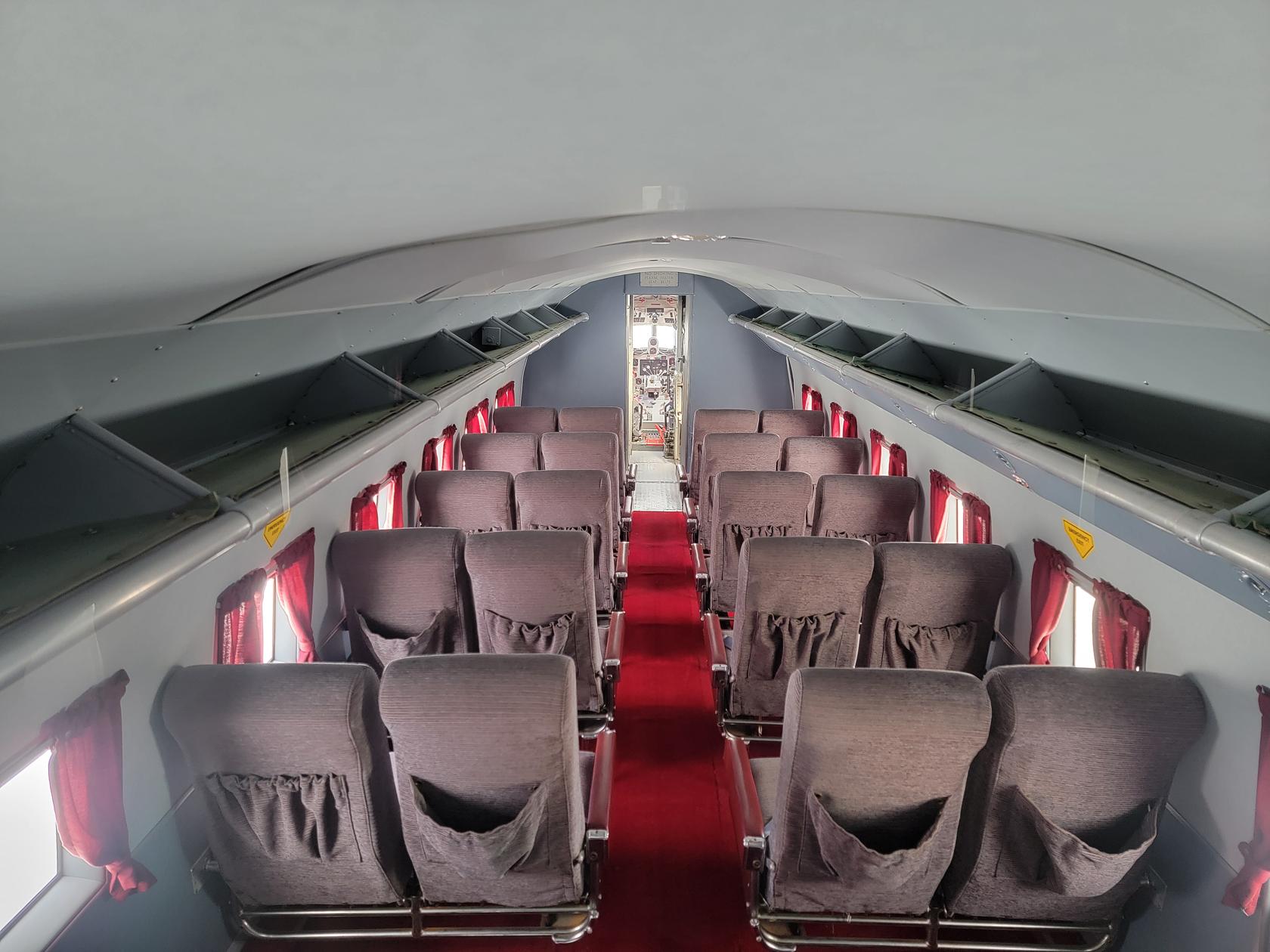
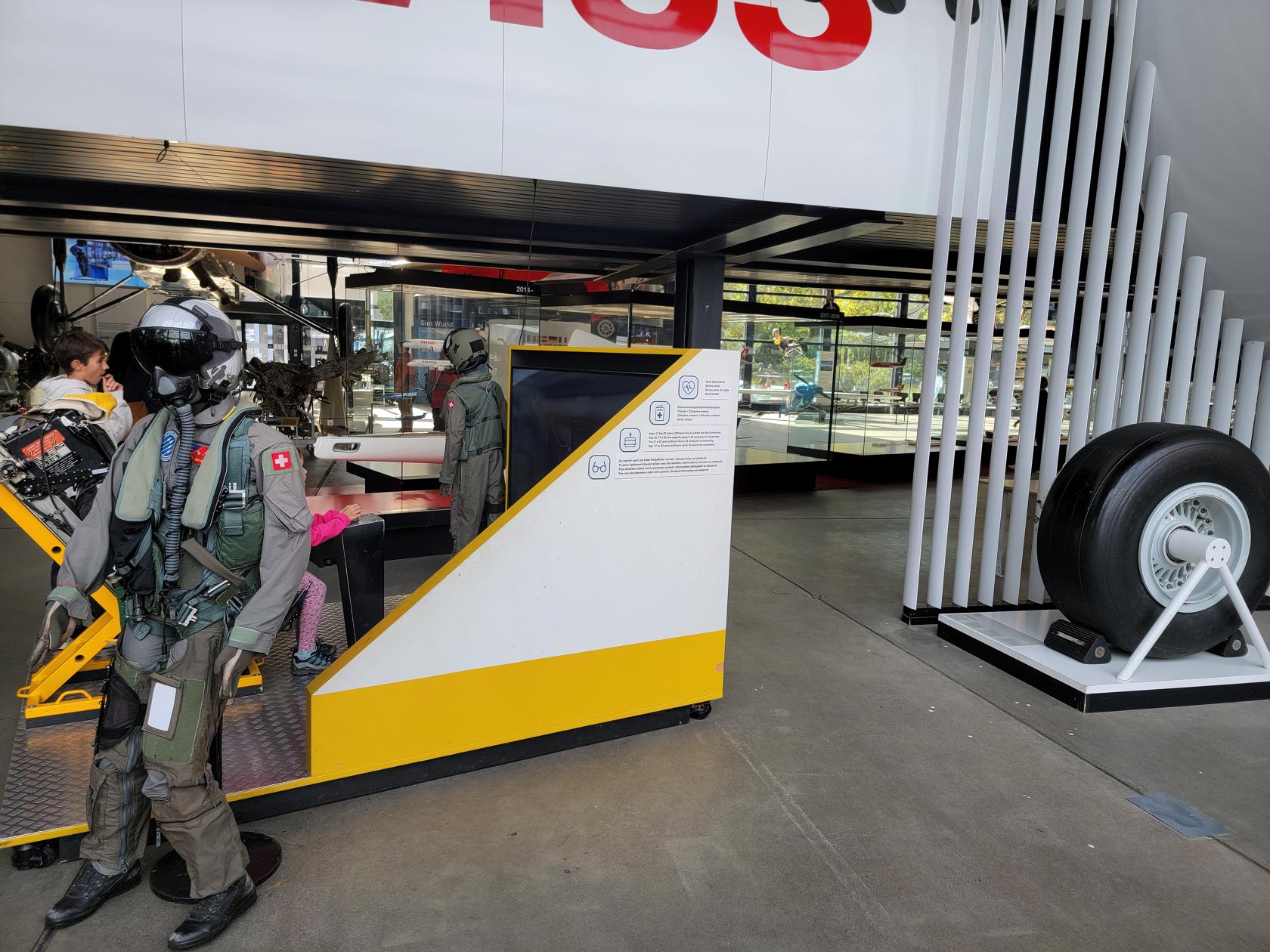
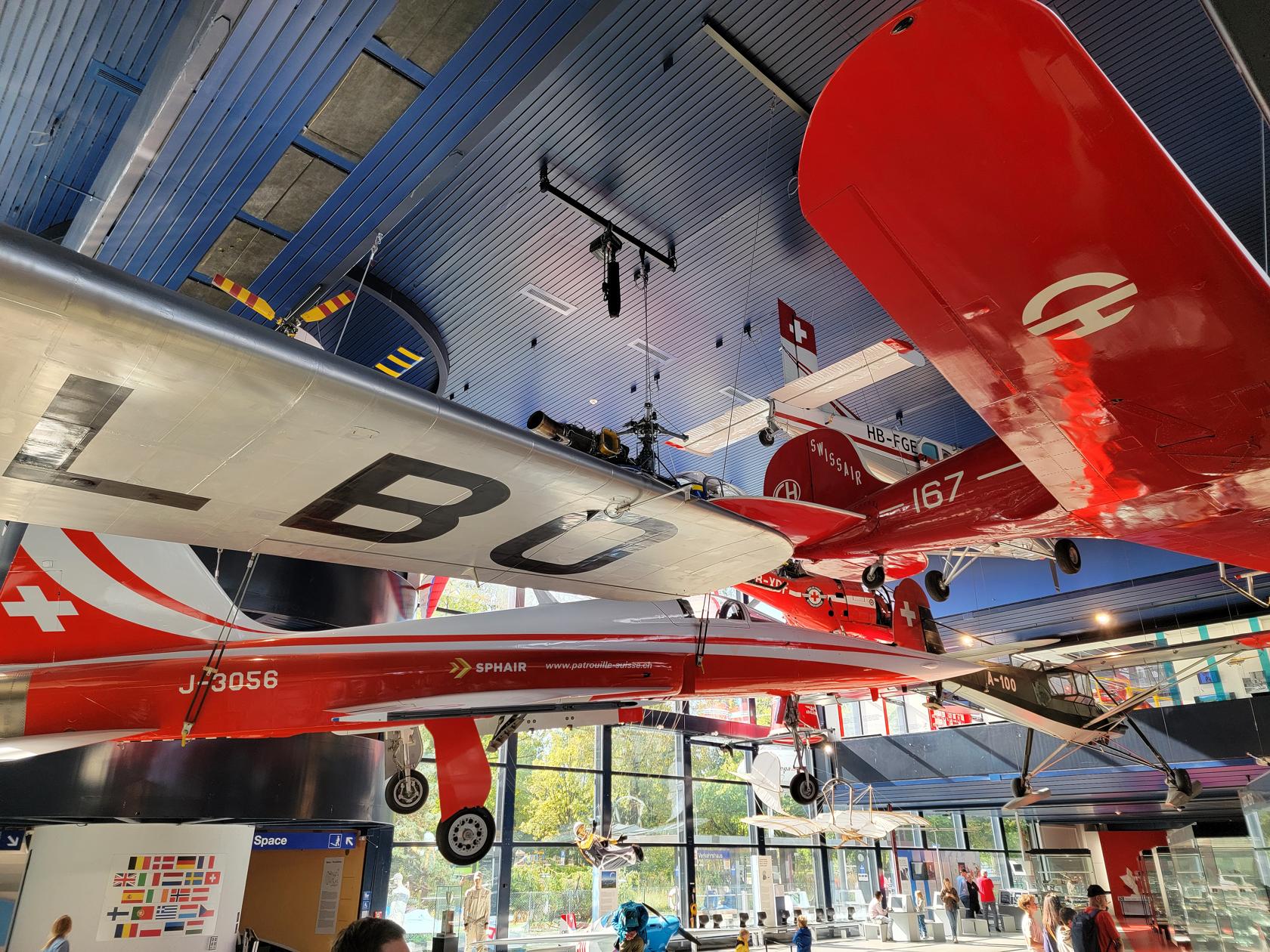
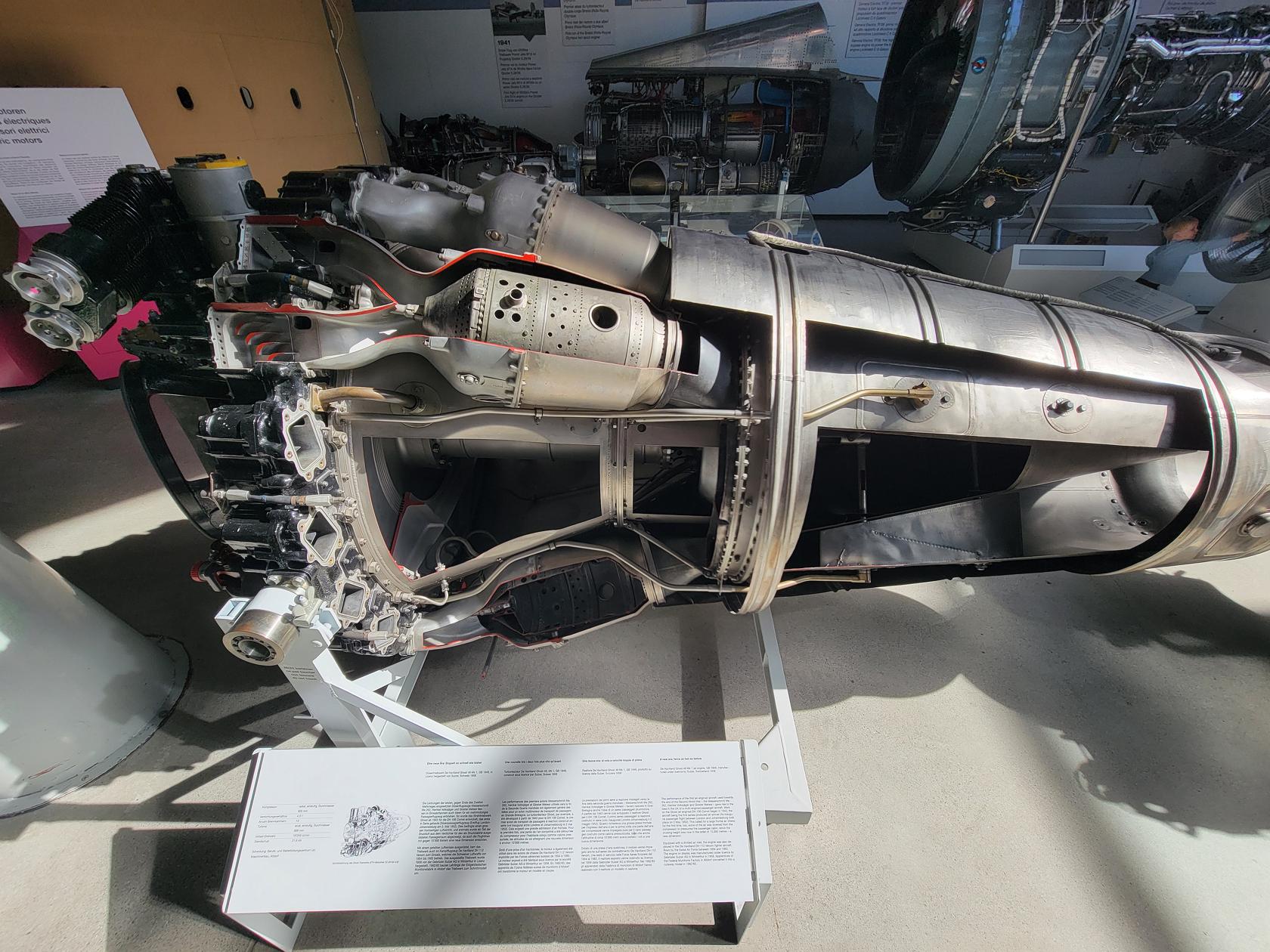
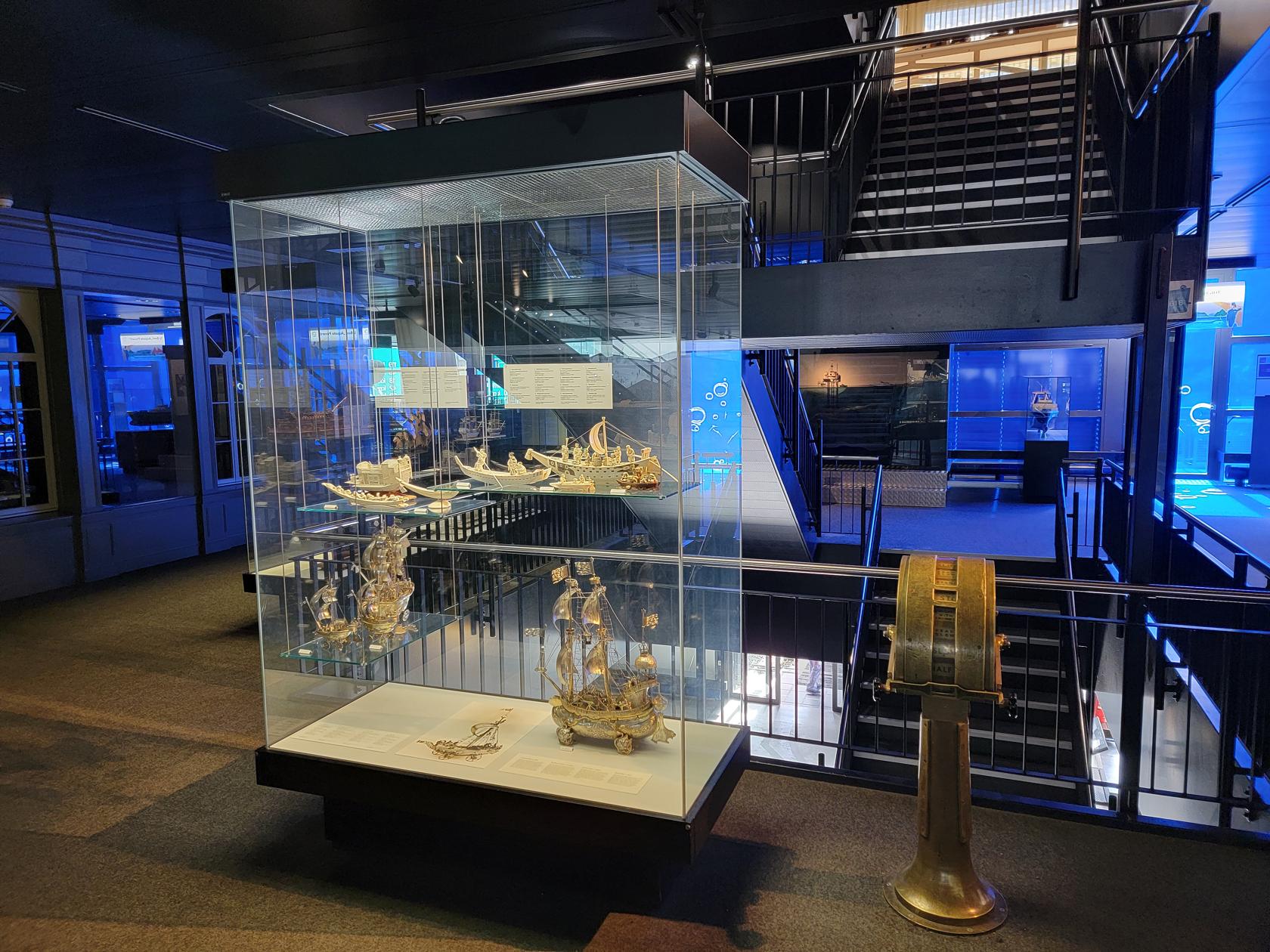
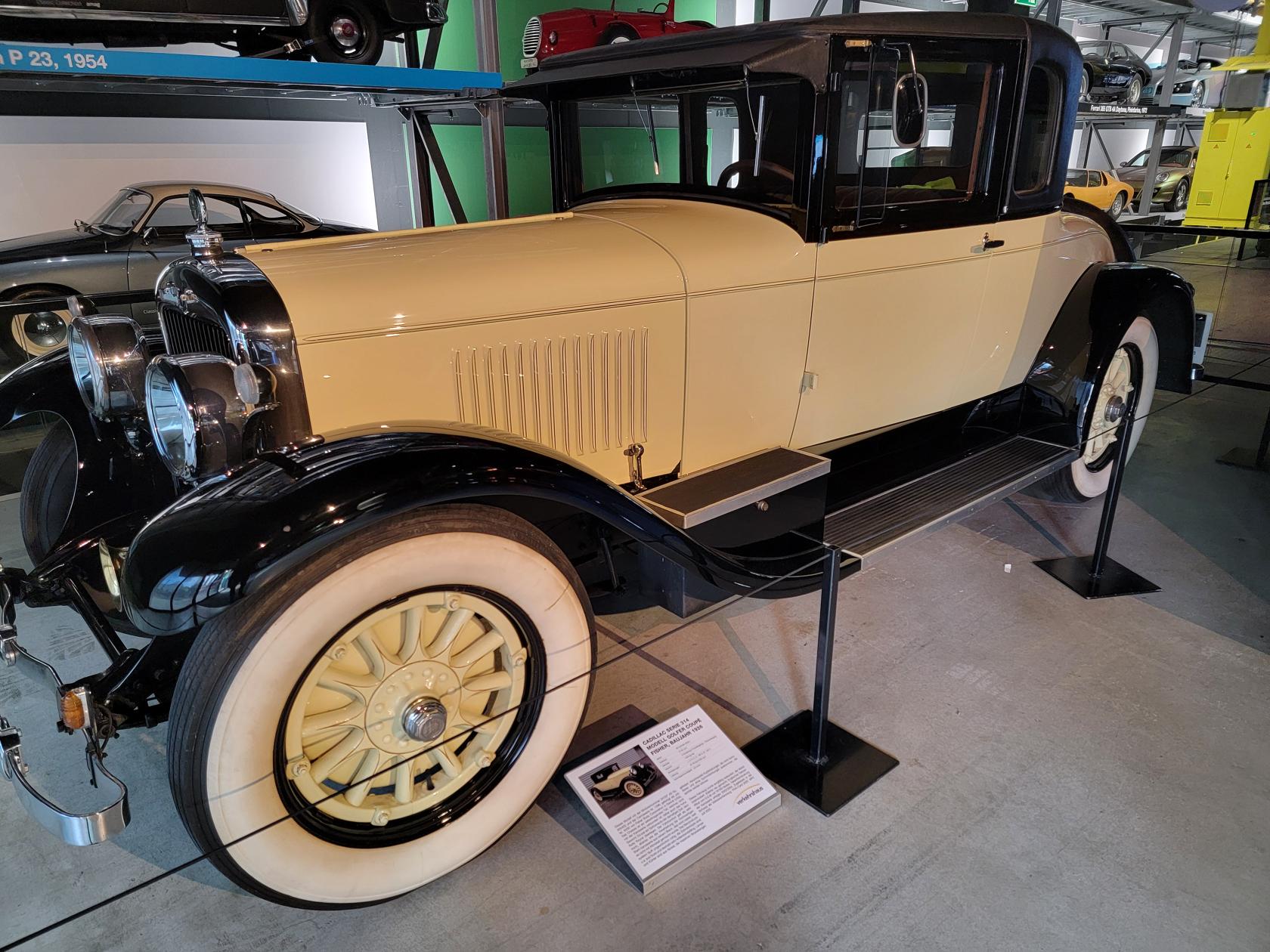
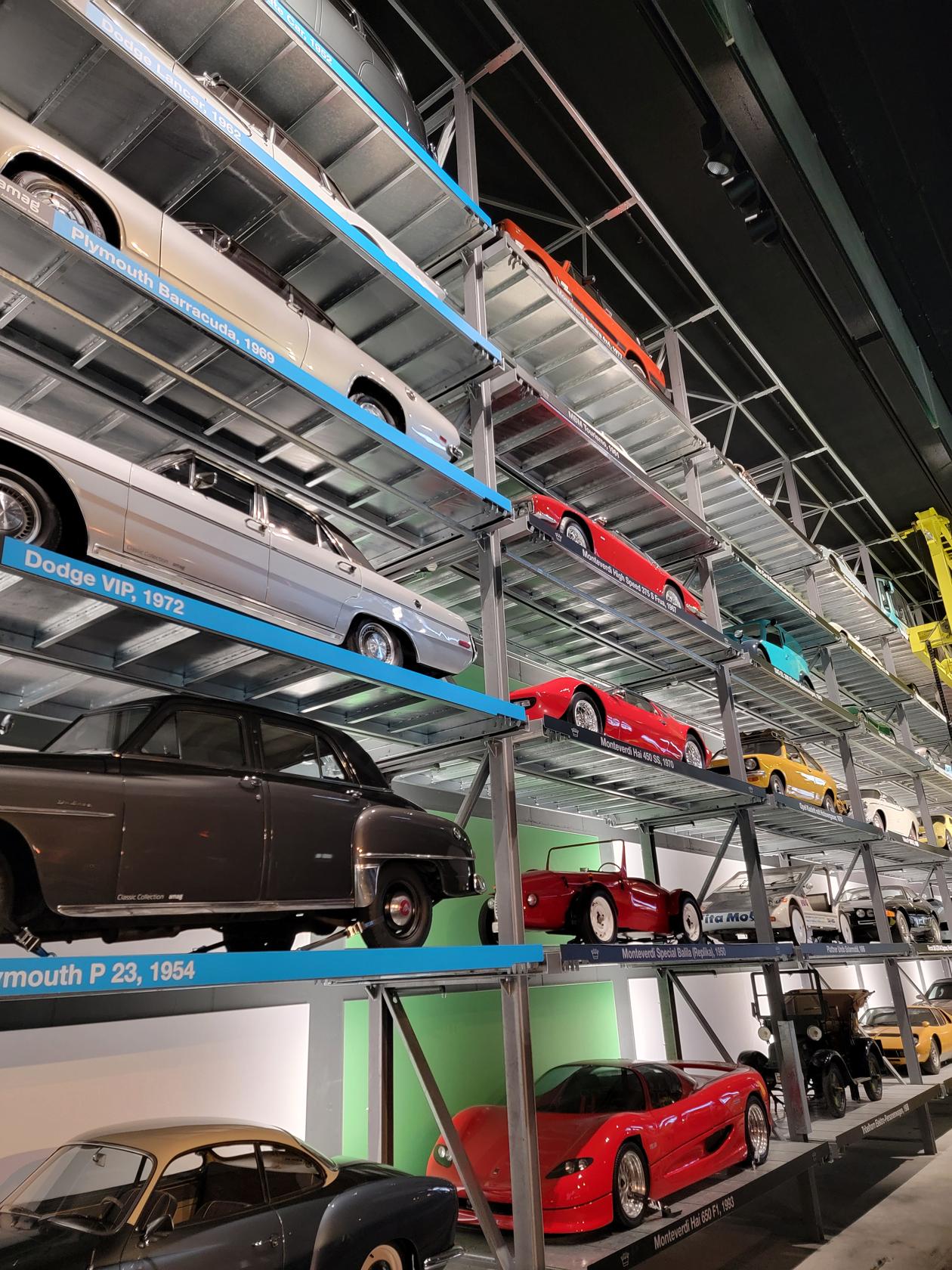
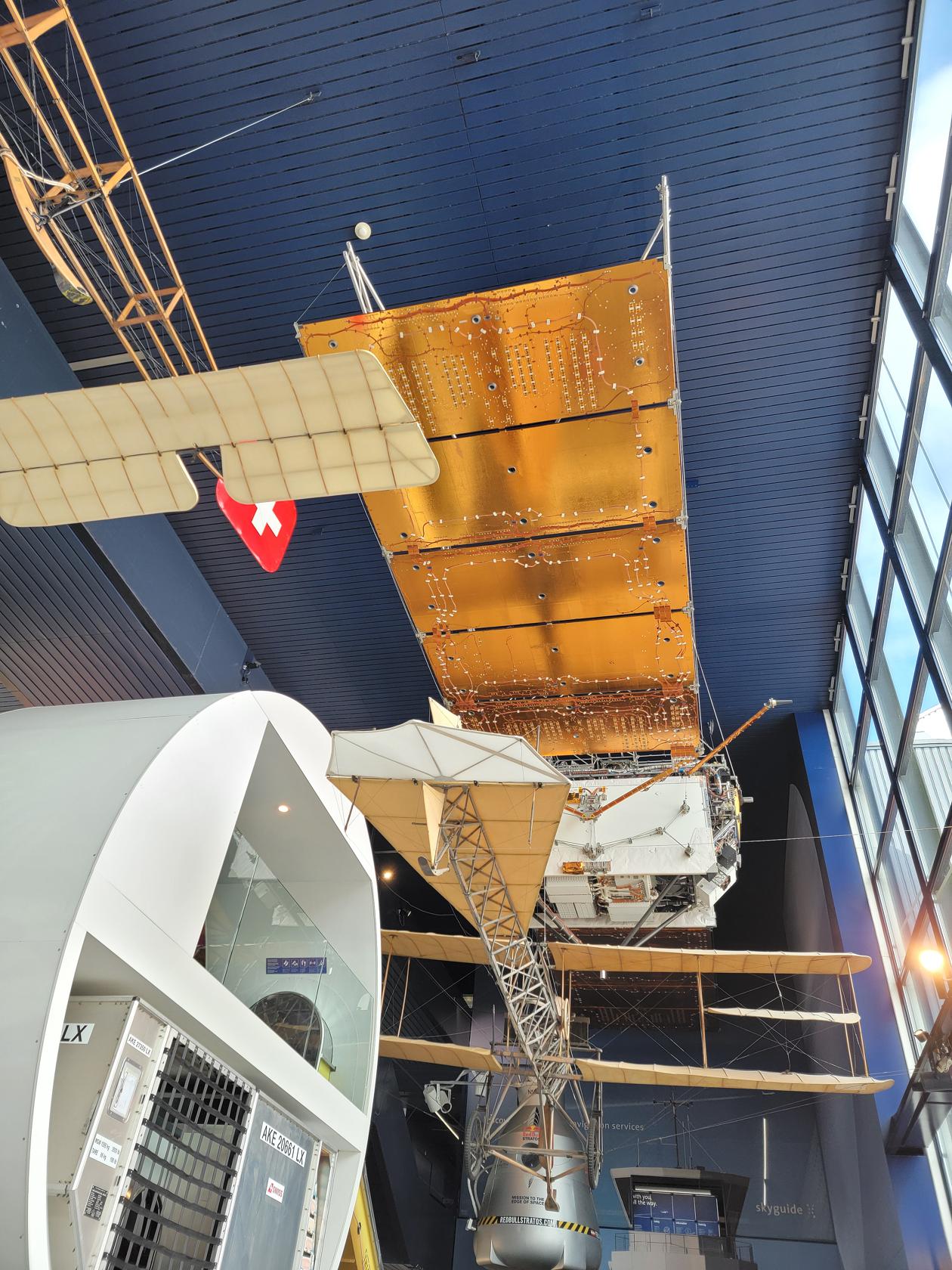
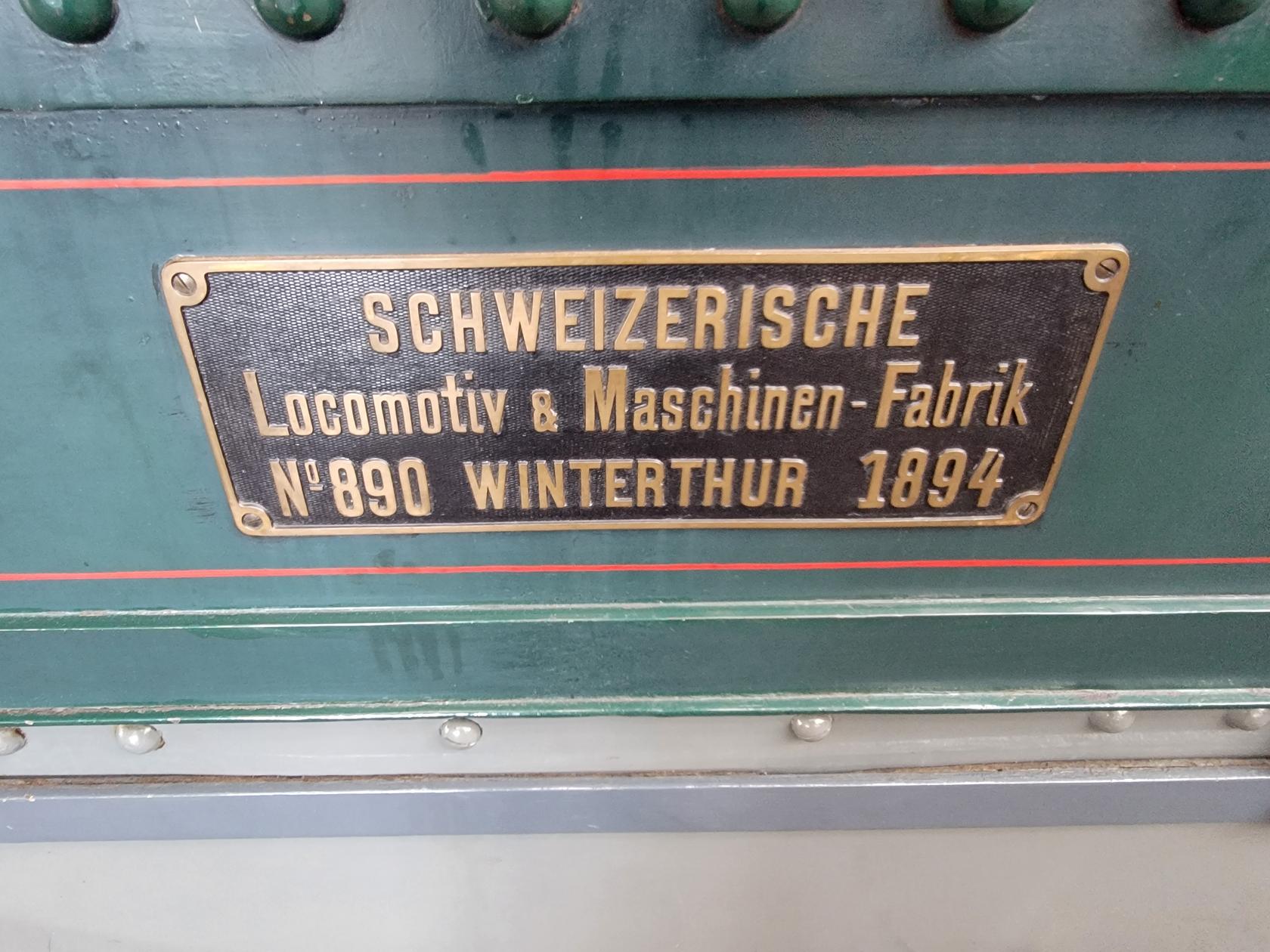
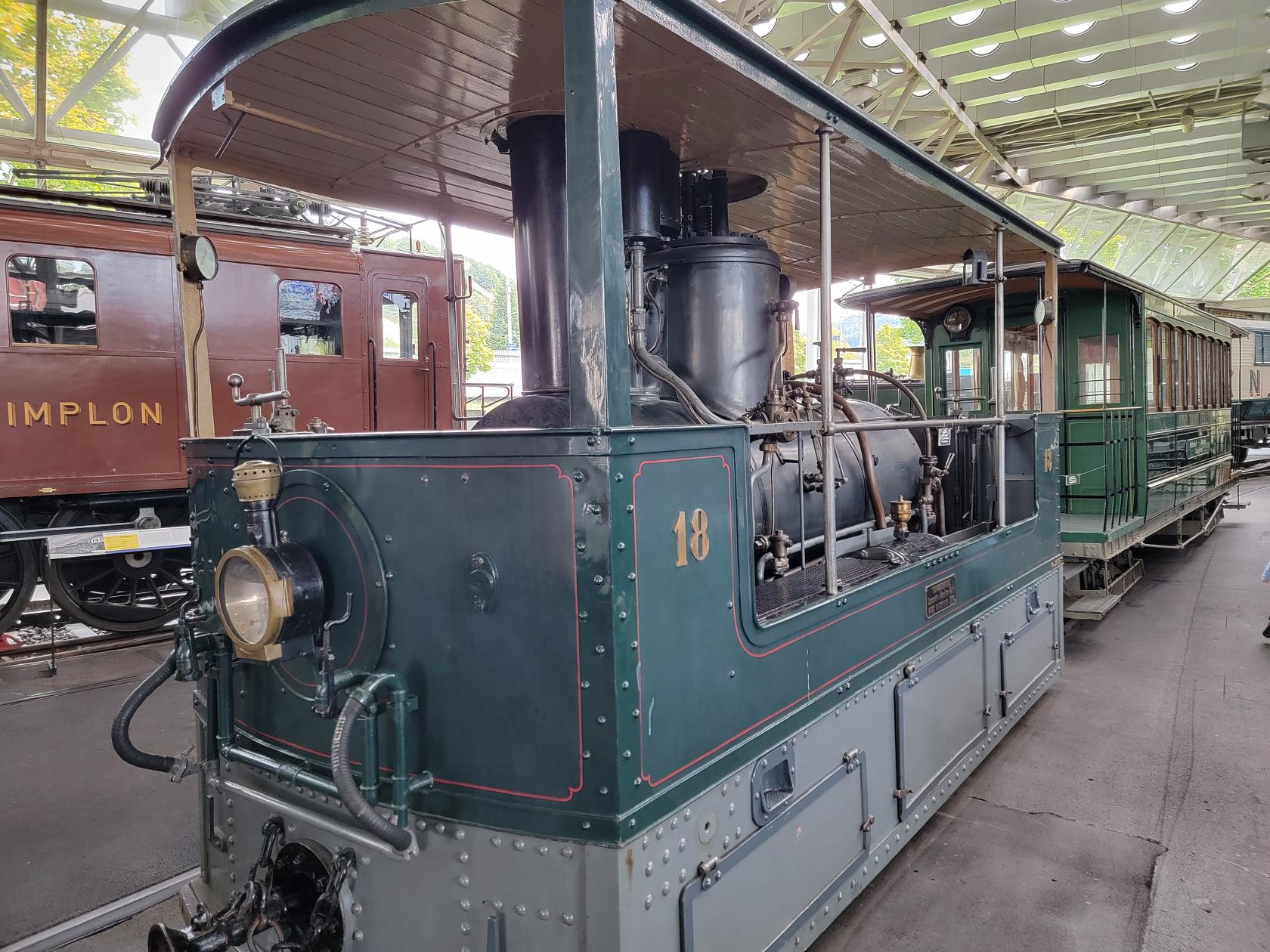
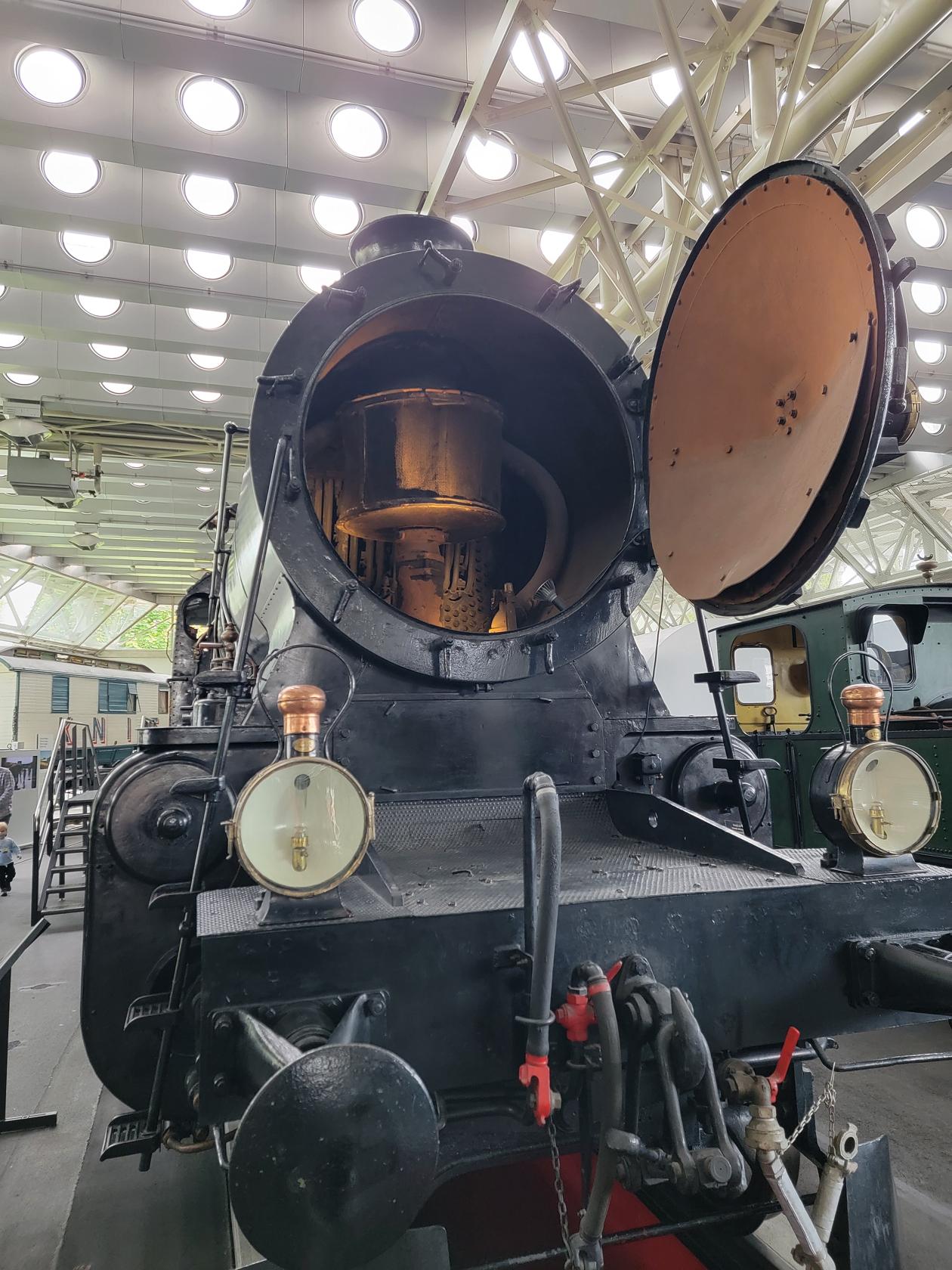
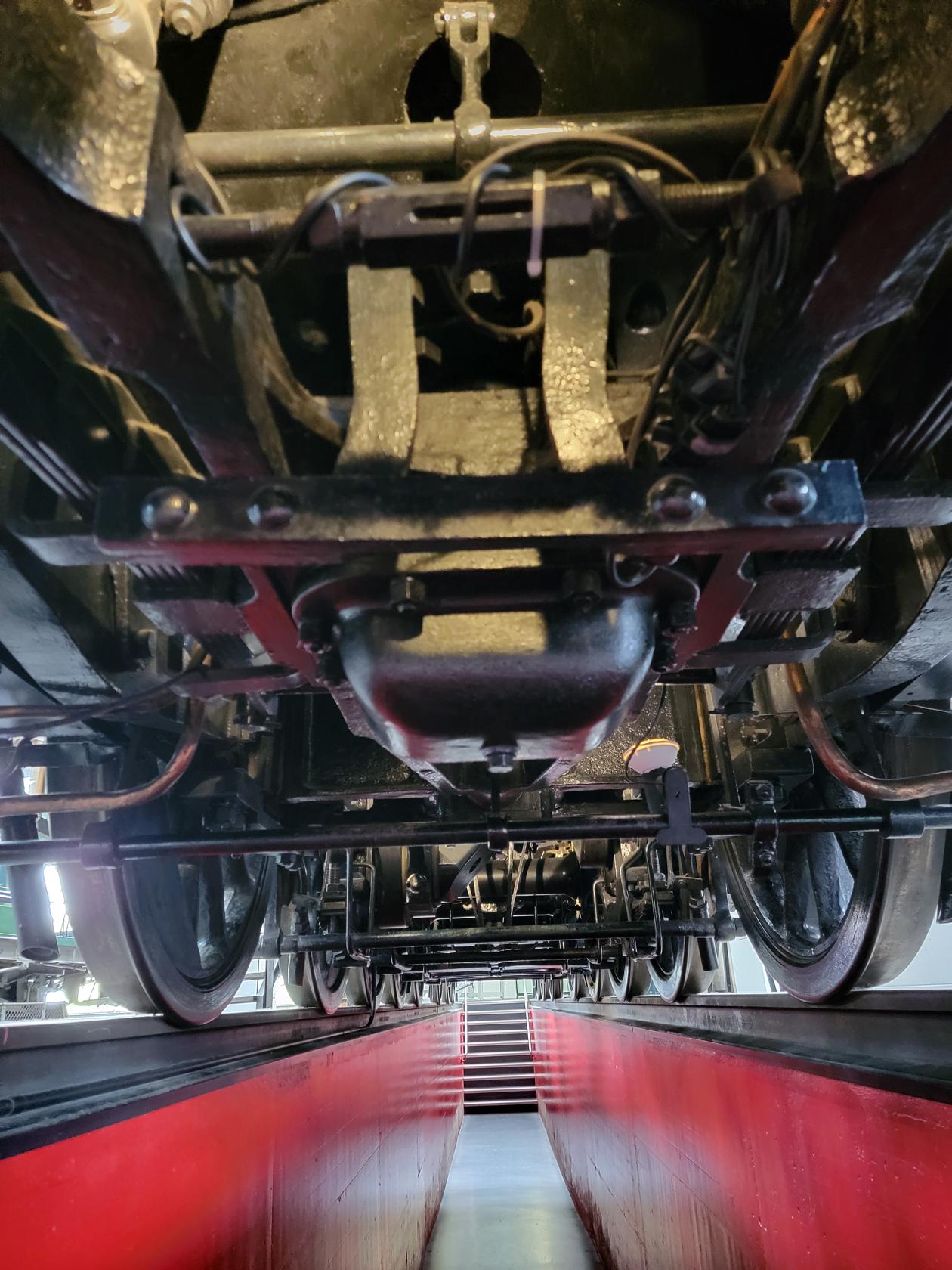
The Verkehrshaus der Schweiz, the Swiss Museum of Transport, is a hands-on museum for people of all ages, but mainly geared toward school children. Even for adults, there are some very interesting and historical items to see, let alone a good record of Switzerland’s contribution in the area of transportation.

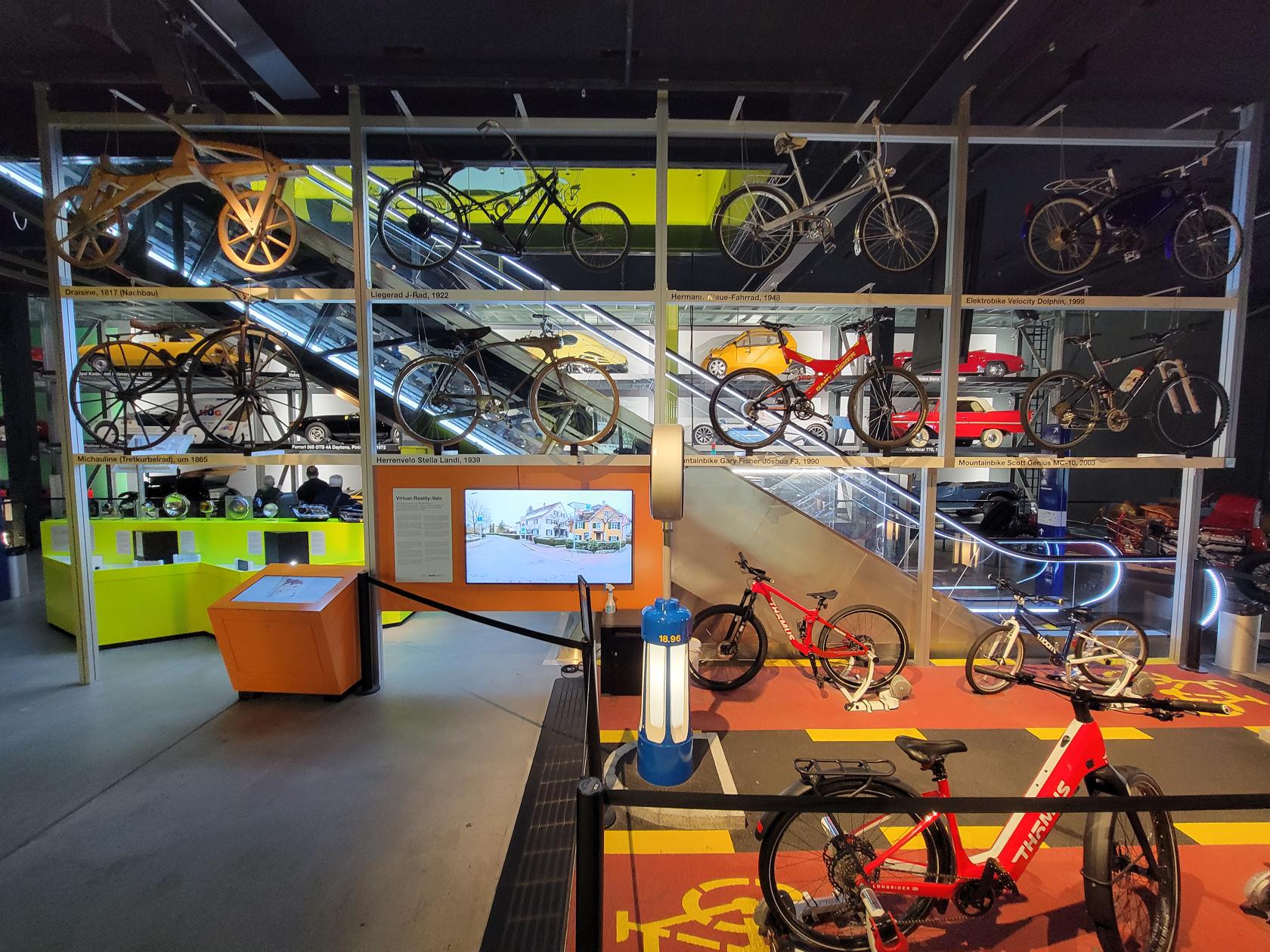
The museum is divided into themes, from planes, to trains and automobiles, they even have a brief but interesting exhibit on bicycles and their history in Switzerland.

Restaurants

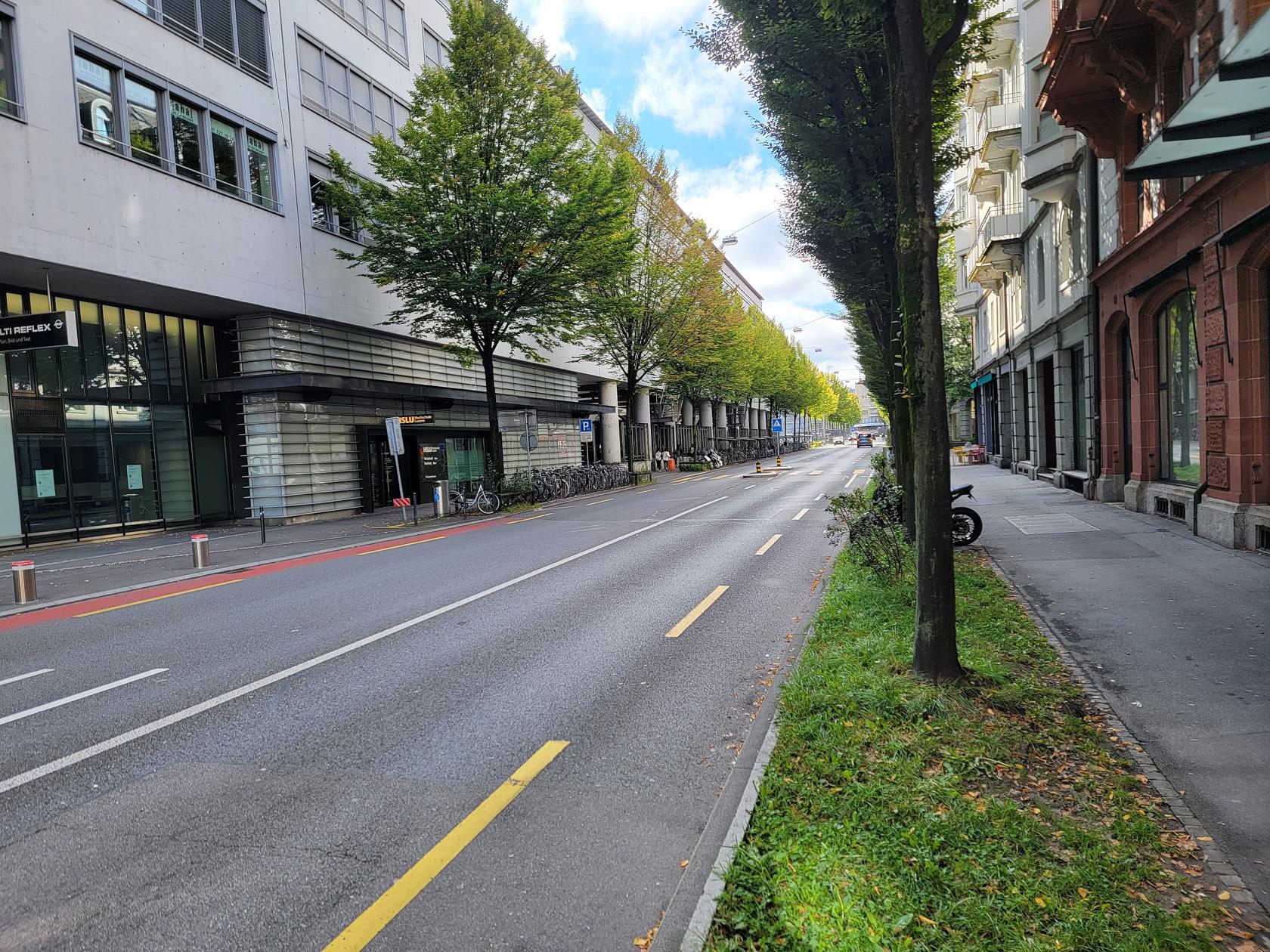
We visited on Sunday, so our restaurant choices were rather limited. Sunday in most of Europe is the day of the week that families go out to eat and many normally have reservations for a late day lunch. Most of the establishments along the Rathausquai, Reusssteg and Bahnhofstrasse were busy, but off the beaten path we managed to find something.

Restaurant Fritschi

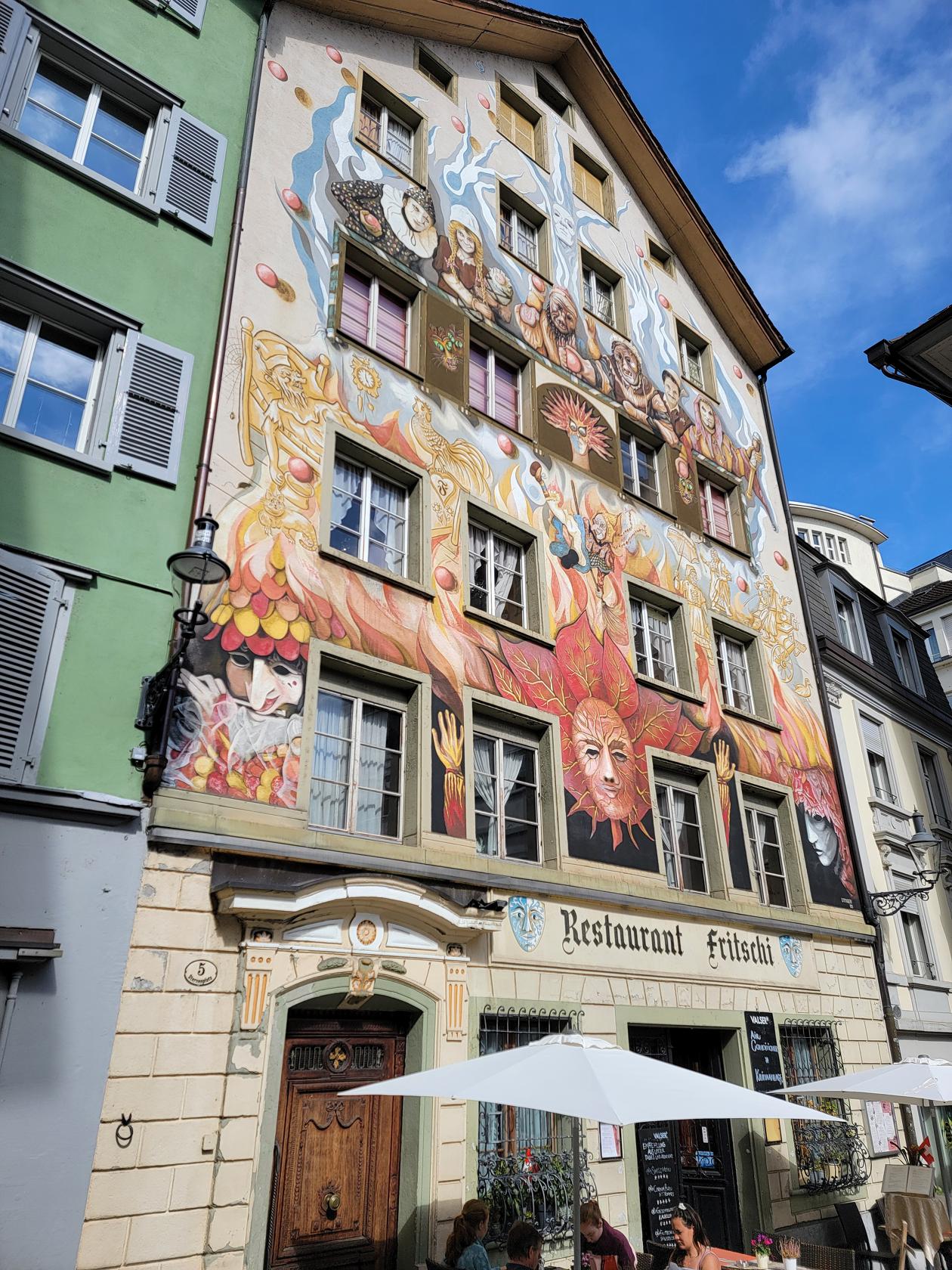
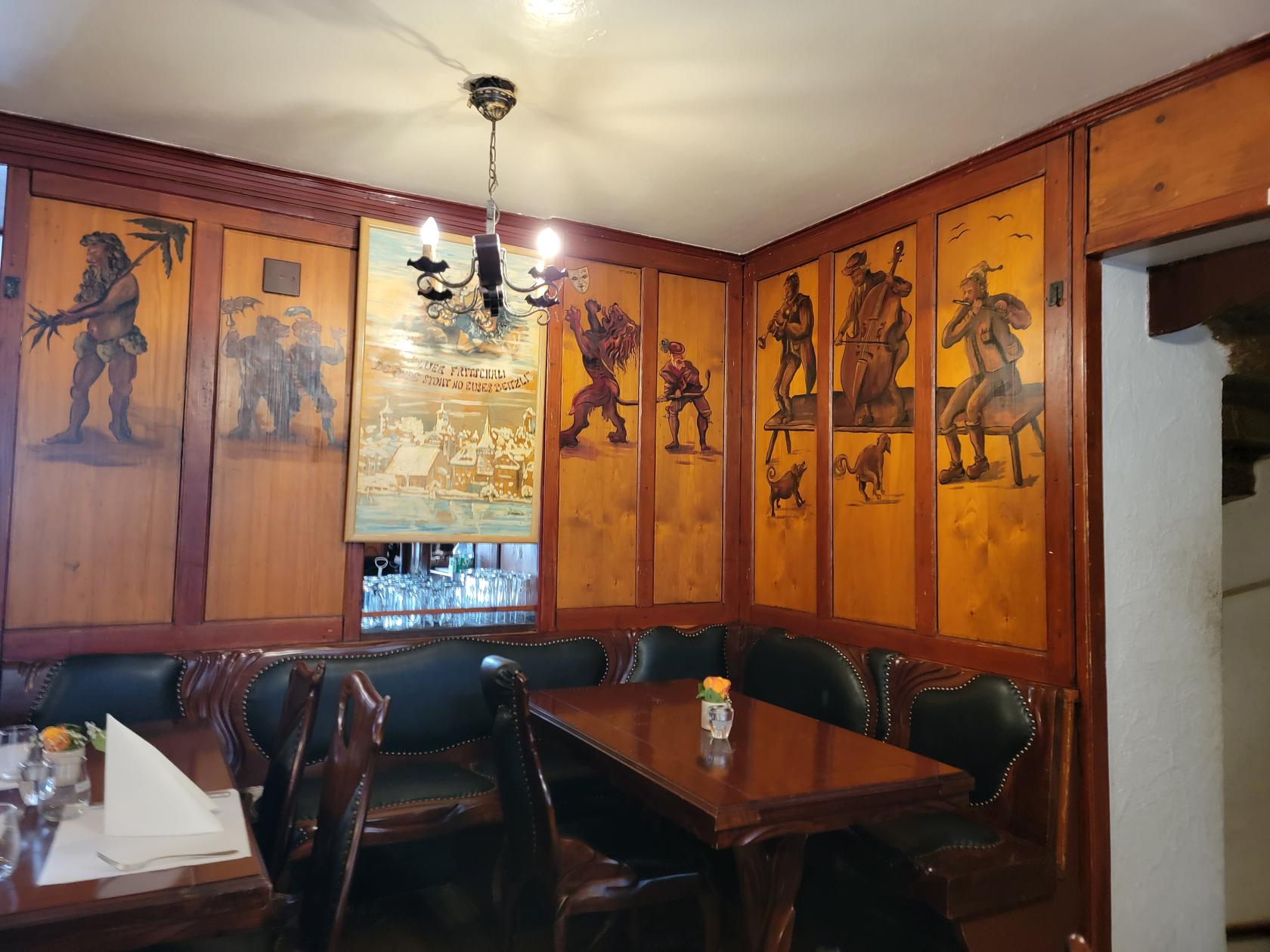
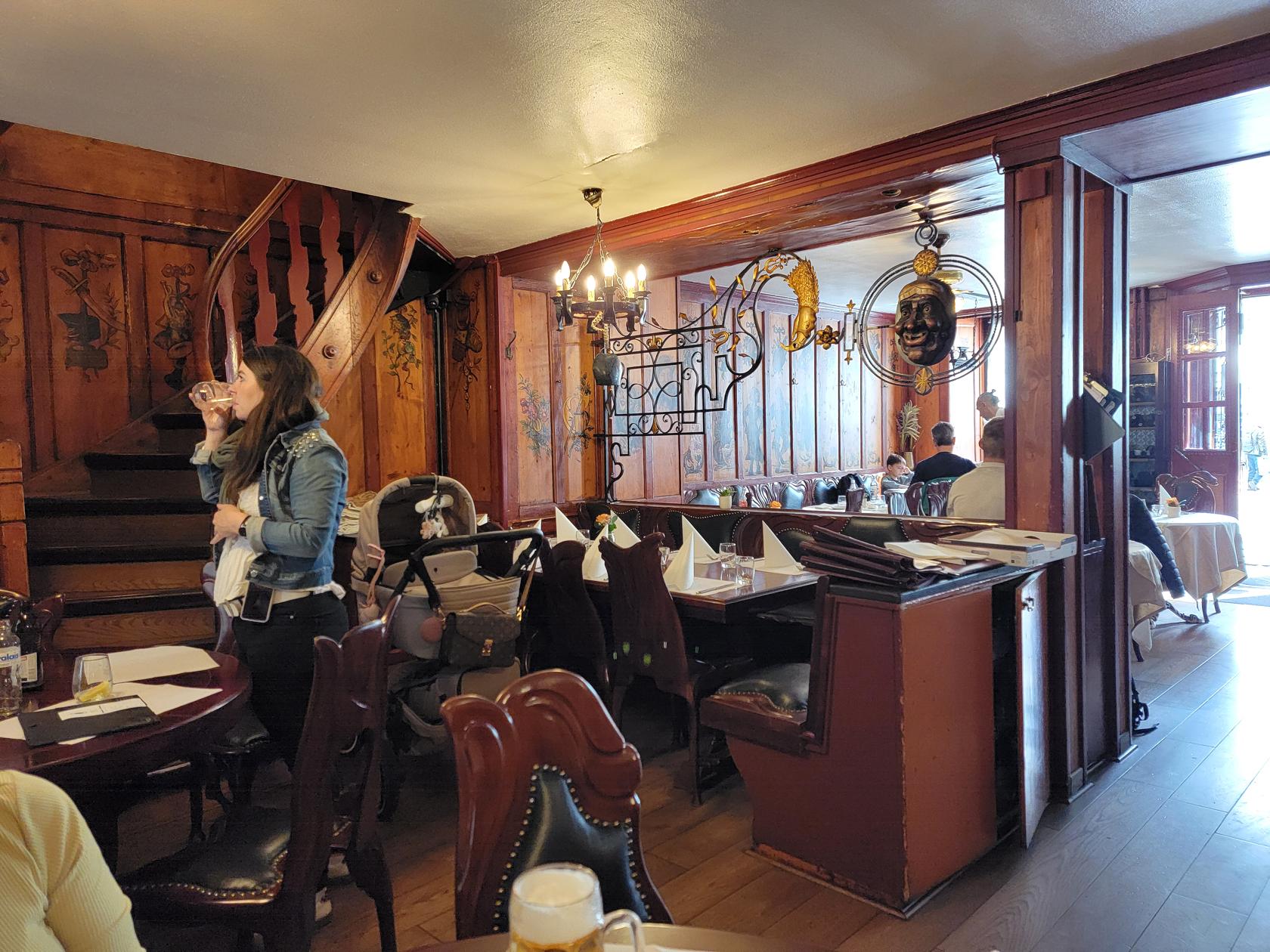
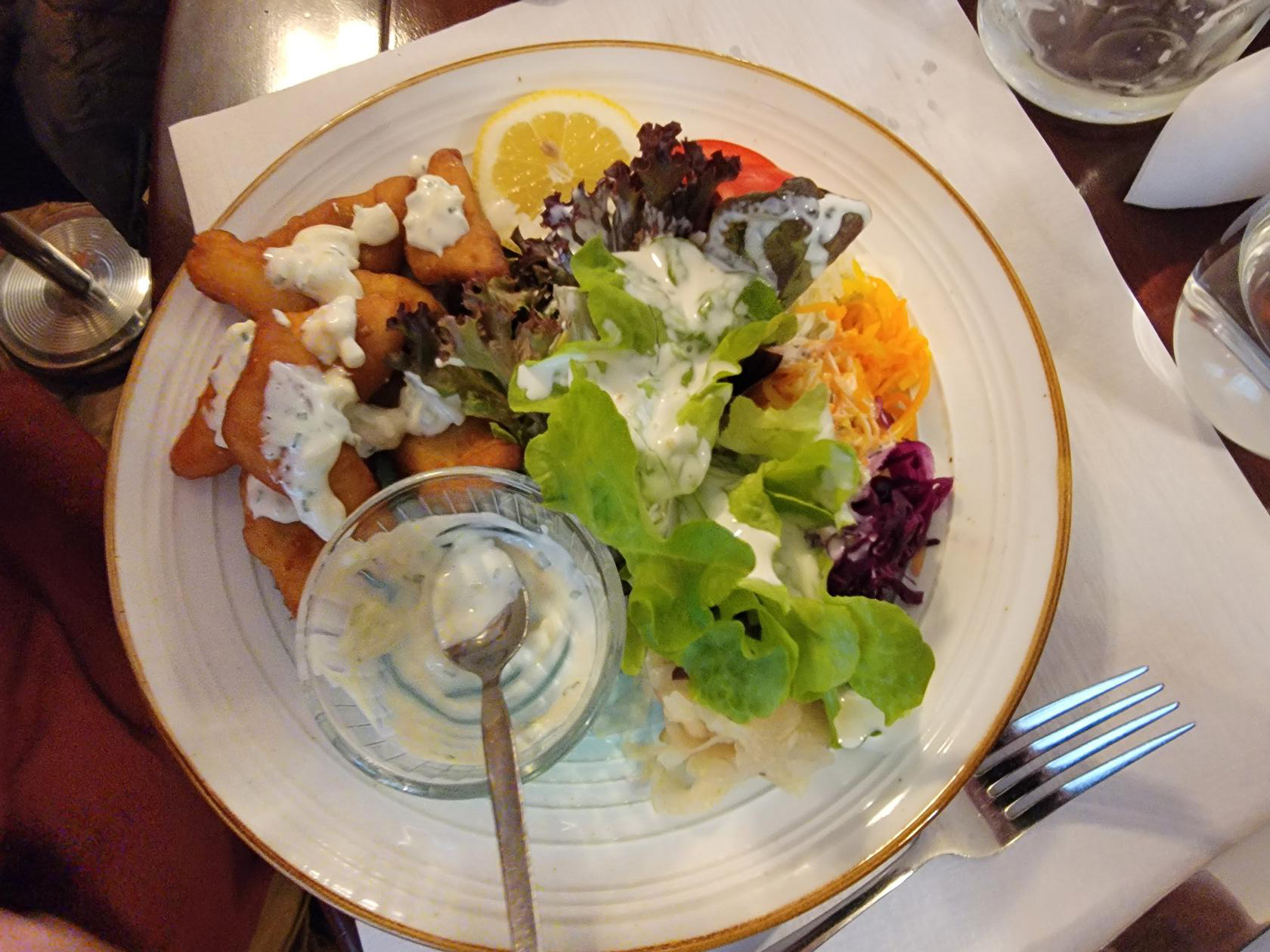
Tucked away and located Sternenplatz is the Restaurant Fritschi. It offers mostly swiss cuisine, but there are some simpler dishes, if you are not too hungry or prefer not to eat a heavy lunch.

Santa Lucia Ristorante

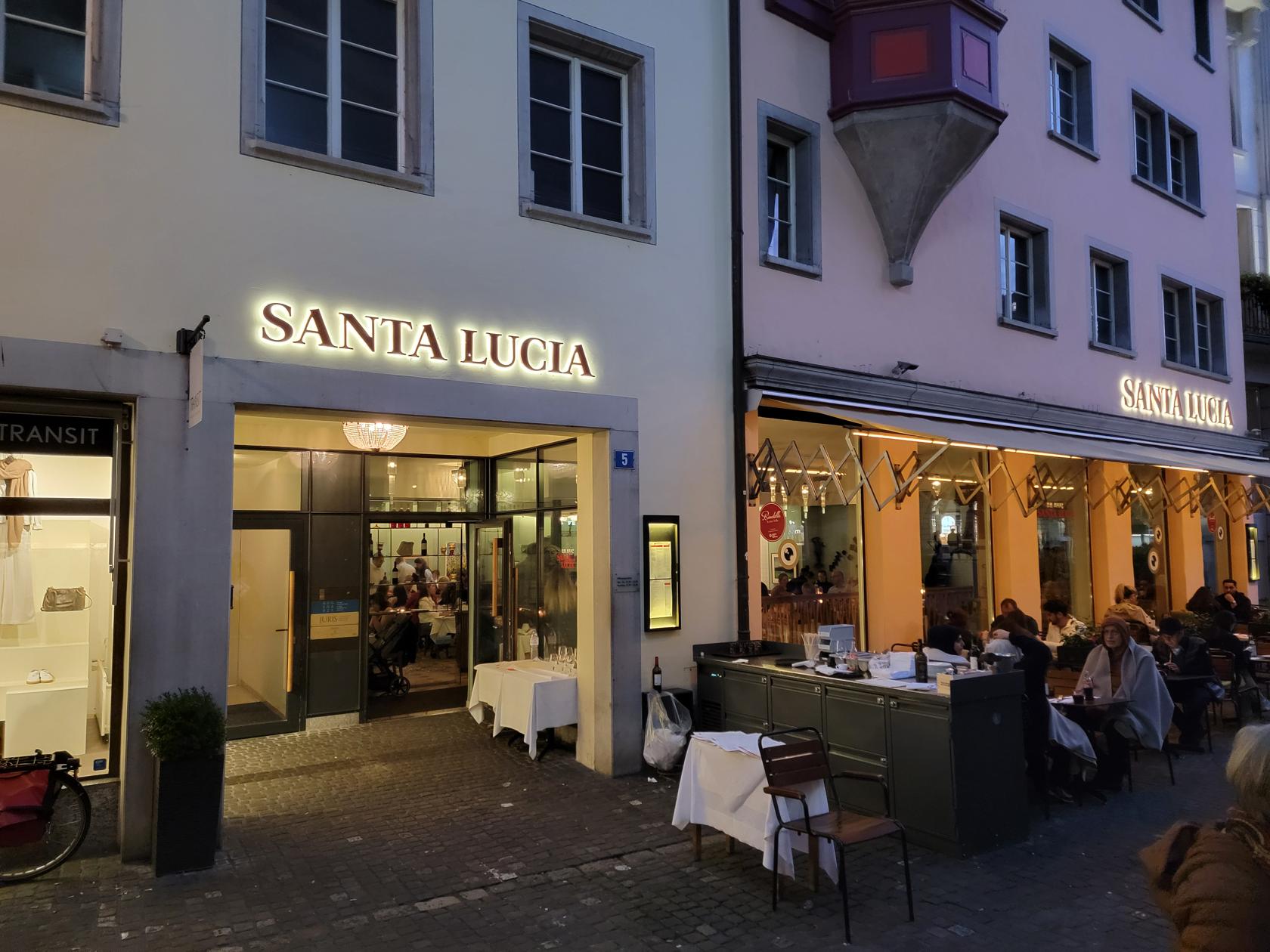
When we returned to Zürich, we ate at Santa Lucia Ristorante. This restaurant can get very busy, so it is probably a good idea to have reservations. They do however have a downstairs, which is where we were seated; there you can actually witness them making your pizza. They have many other specialities on the menu, so finding something delicious to try should not be a problem.

Wengen, Switzerland – Rainy Return

Our Rainy Alpine Return

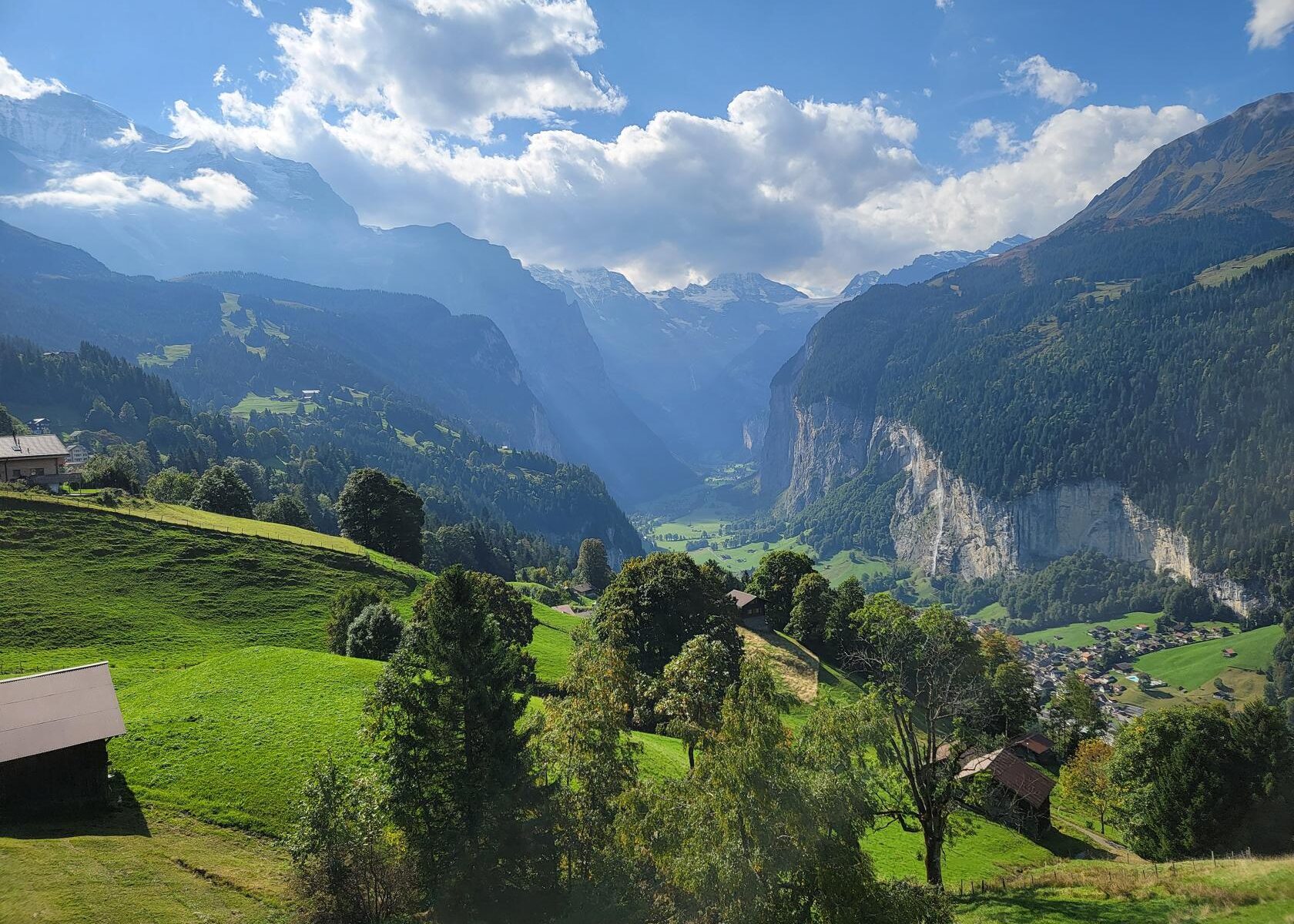
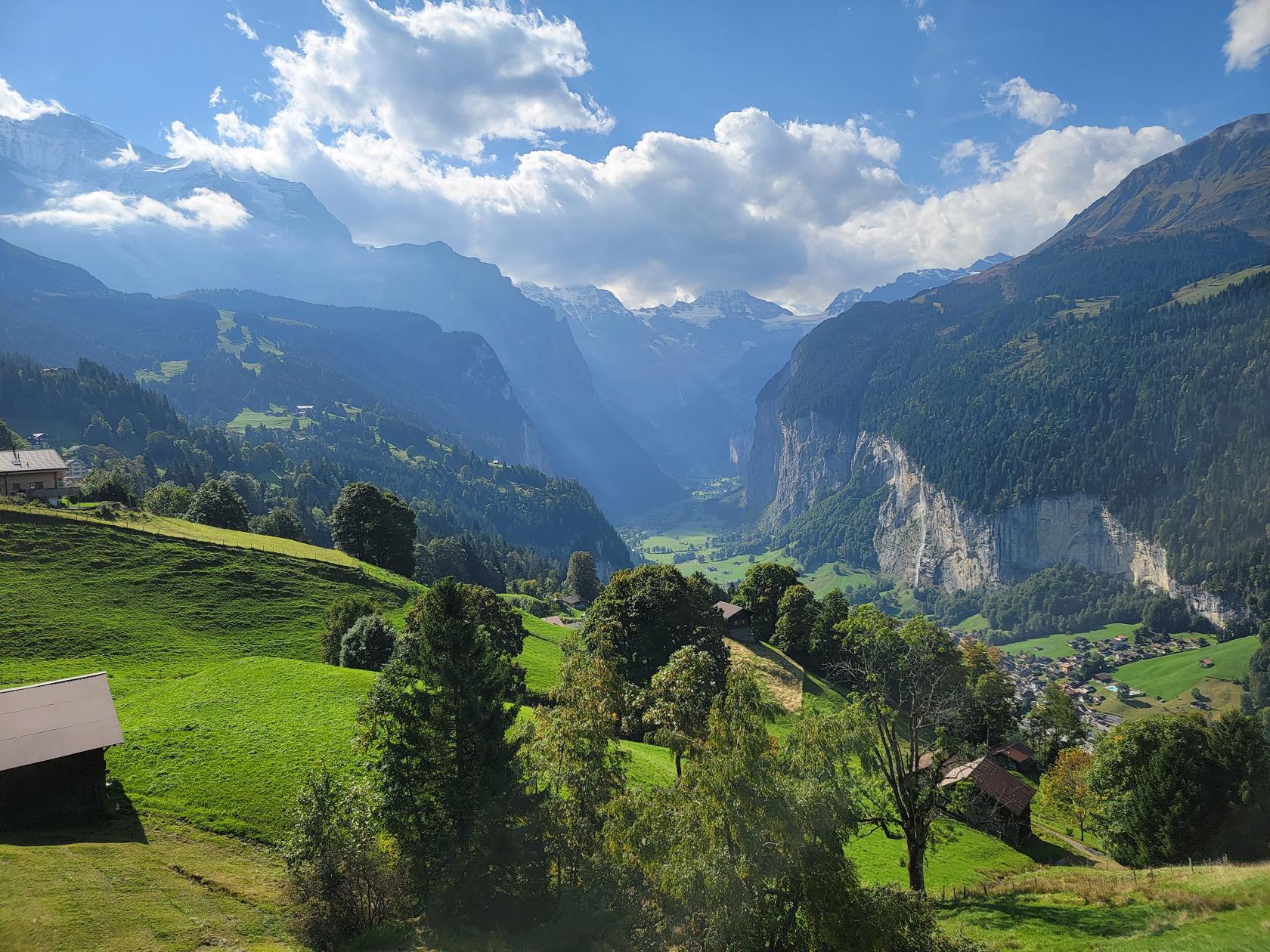
After Lake Leman we planned a return to the Bernese Alps and chose Wengen at the behest of other family members. We had previously been to Grindelwald and had spent some time there, so we knew the area well, although we had never visited the Lauterbrunnen Valley. In preparation for this trip, we purchased the following tickets and discount cards to help in managing expenses.

      • The Swiss Half Fare Card – provides half fare prices on all travel, including cable cars and other forms of transportation
      • The Oberländer Pass – provides access to all modes of transportation within the Oberland, can be purchased using the Half Fare card above.
      • The GoldenPass Express – since it is a special train, it is included in the Oberlander Pass, but if you want reserved seating, use the Half Fare card the price for First Class, it is still quite reasonable and perhaps the way to go for medium to large groups (we were a party of six).

Getting There

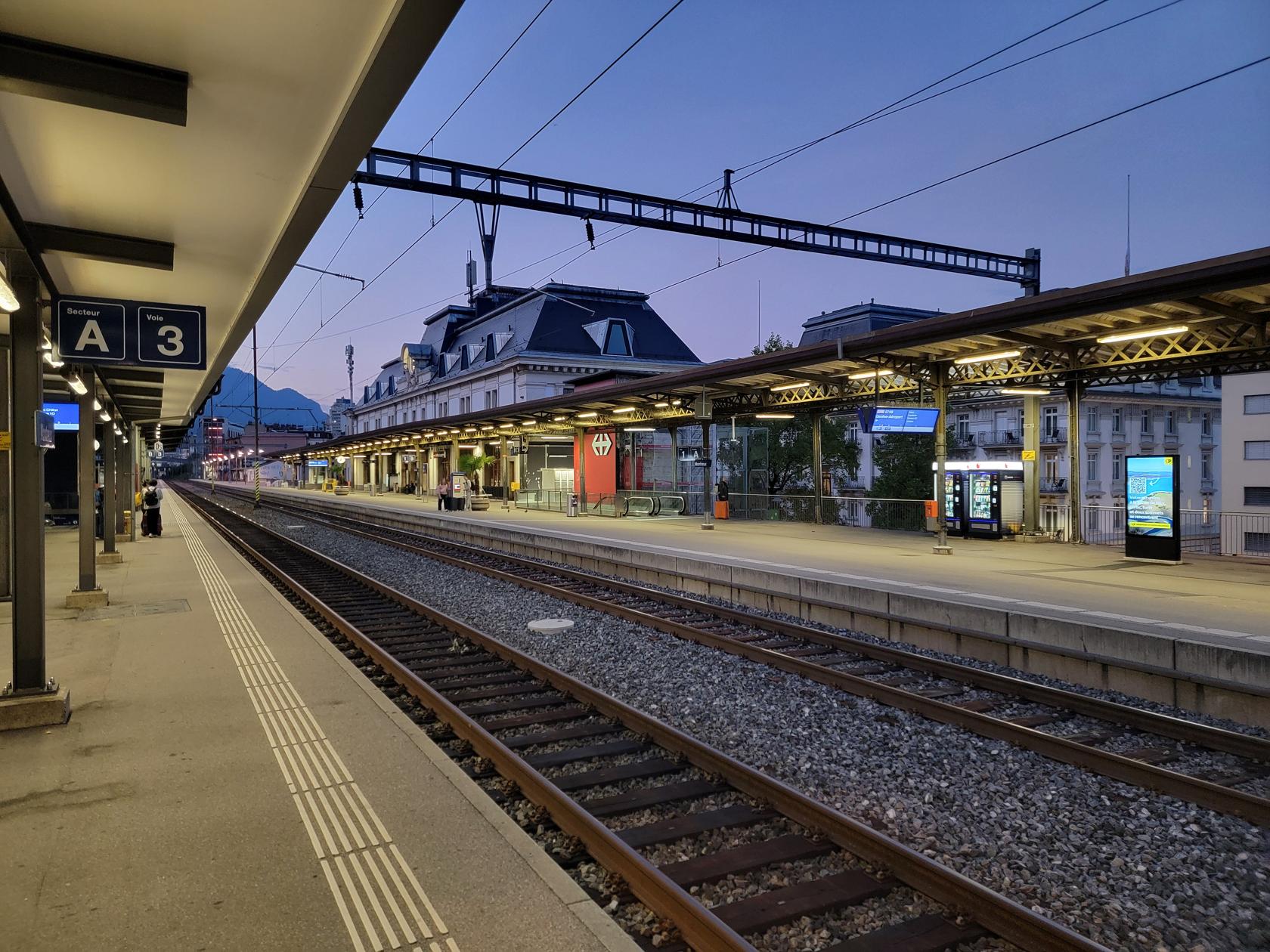
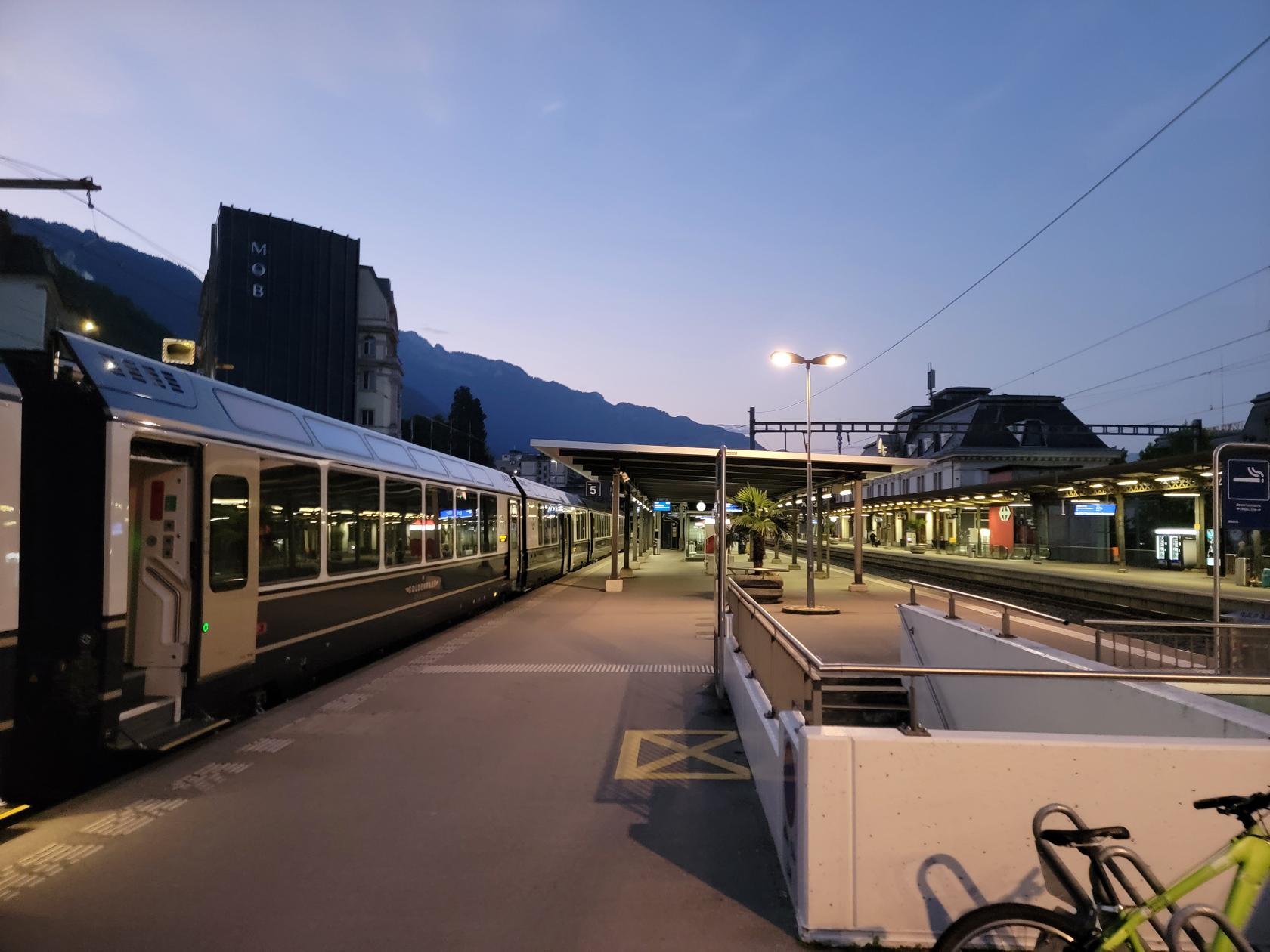
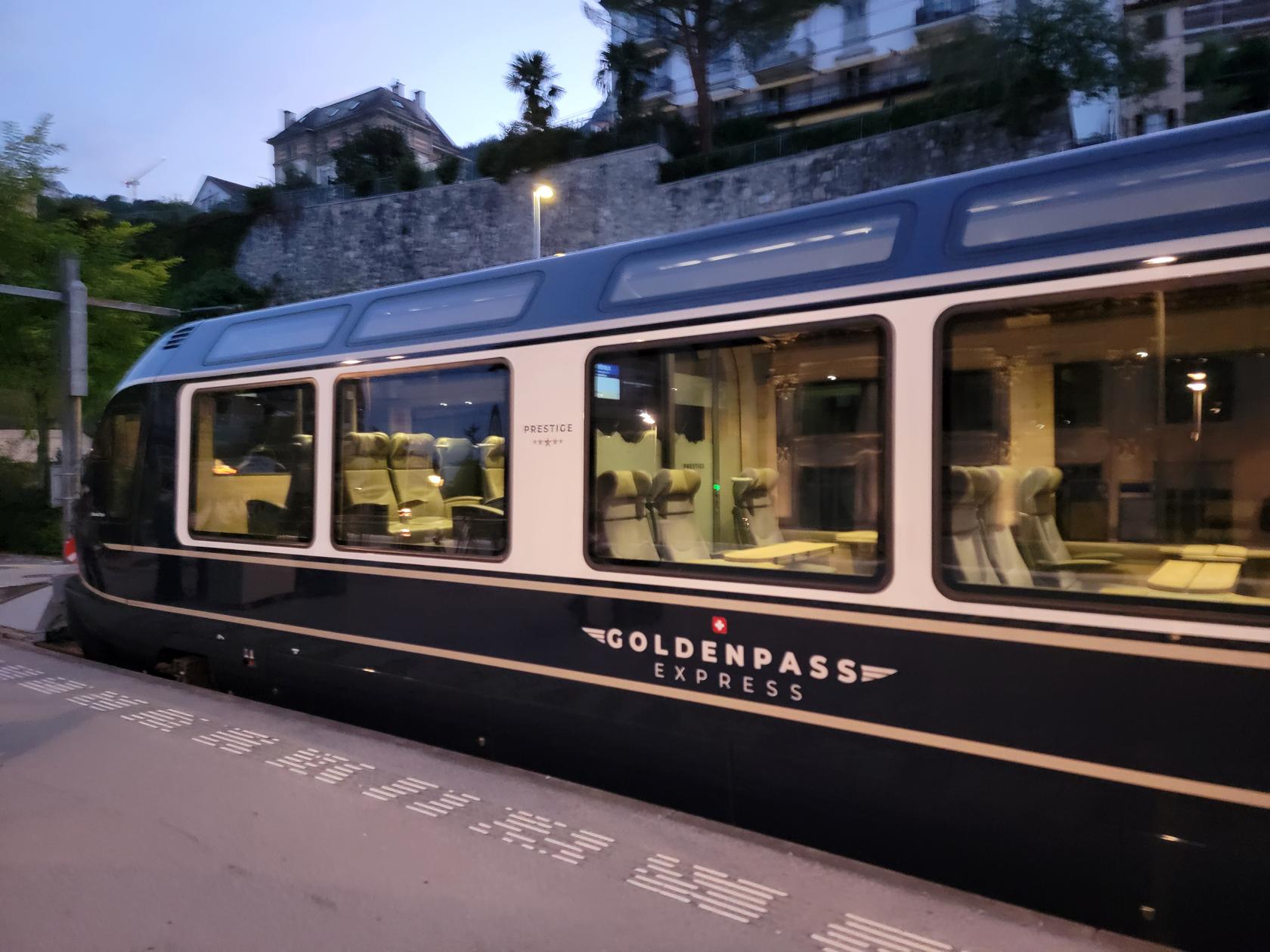
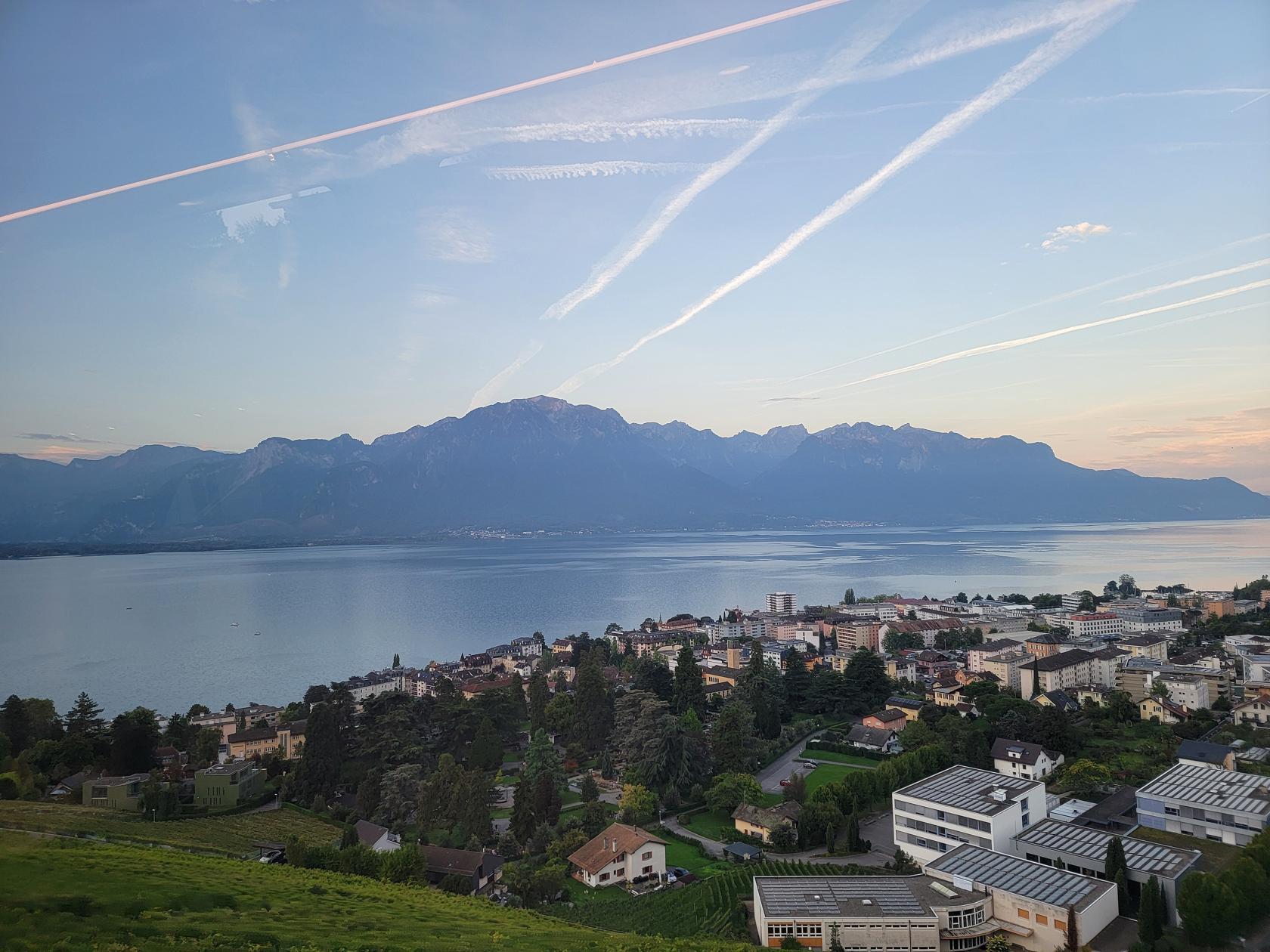
From Montreux, Switzerland we enjoyed the GoldenPass Express train to Interlaken Ost, the train station that lies between the lakes Thunersee and Brienzersee, just outside the Lauterbrunnen Valley.

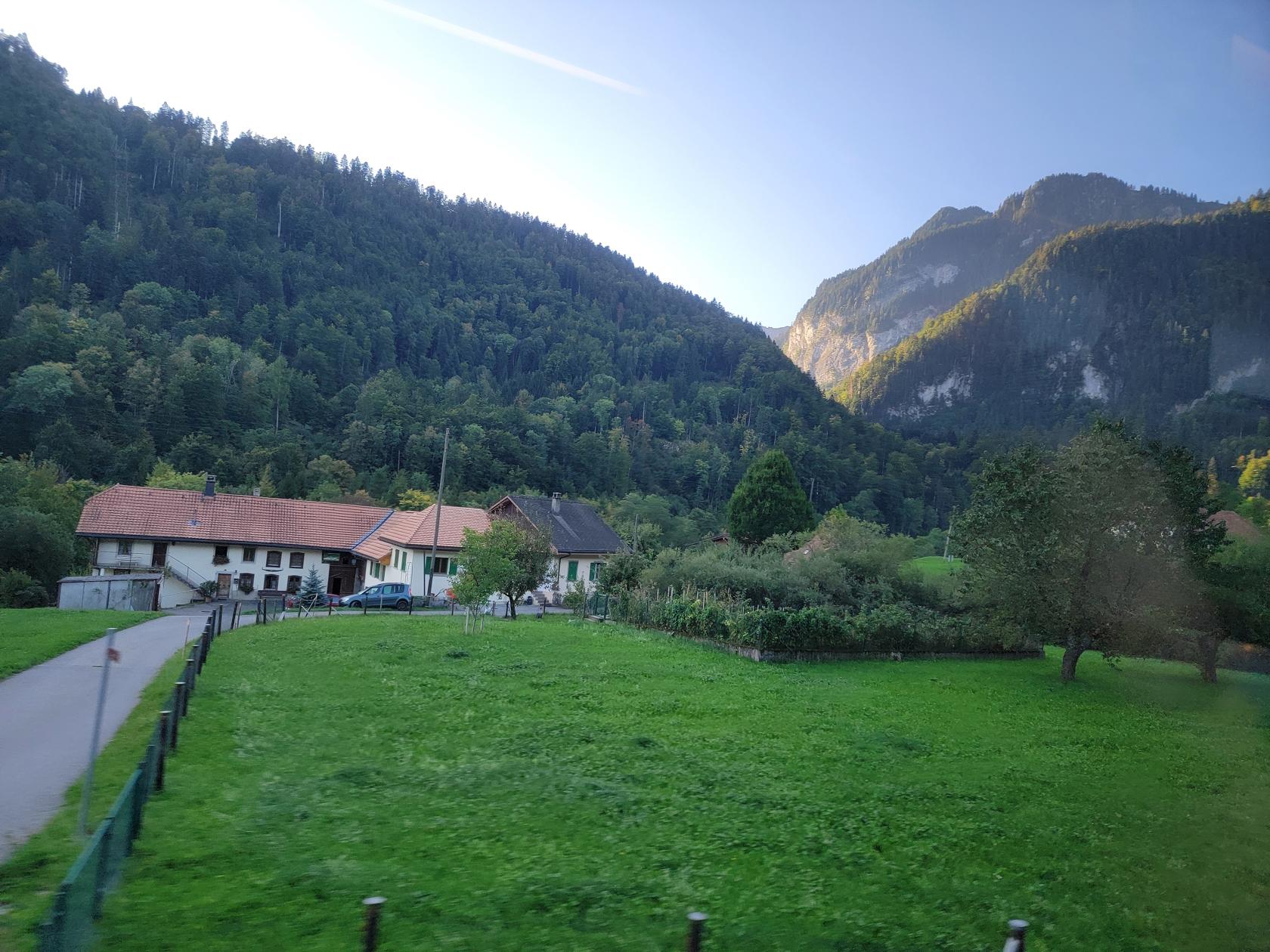
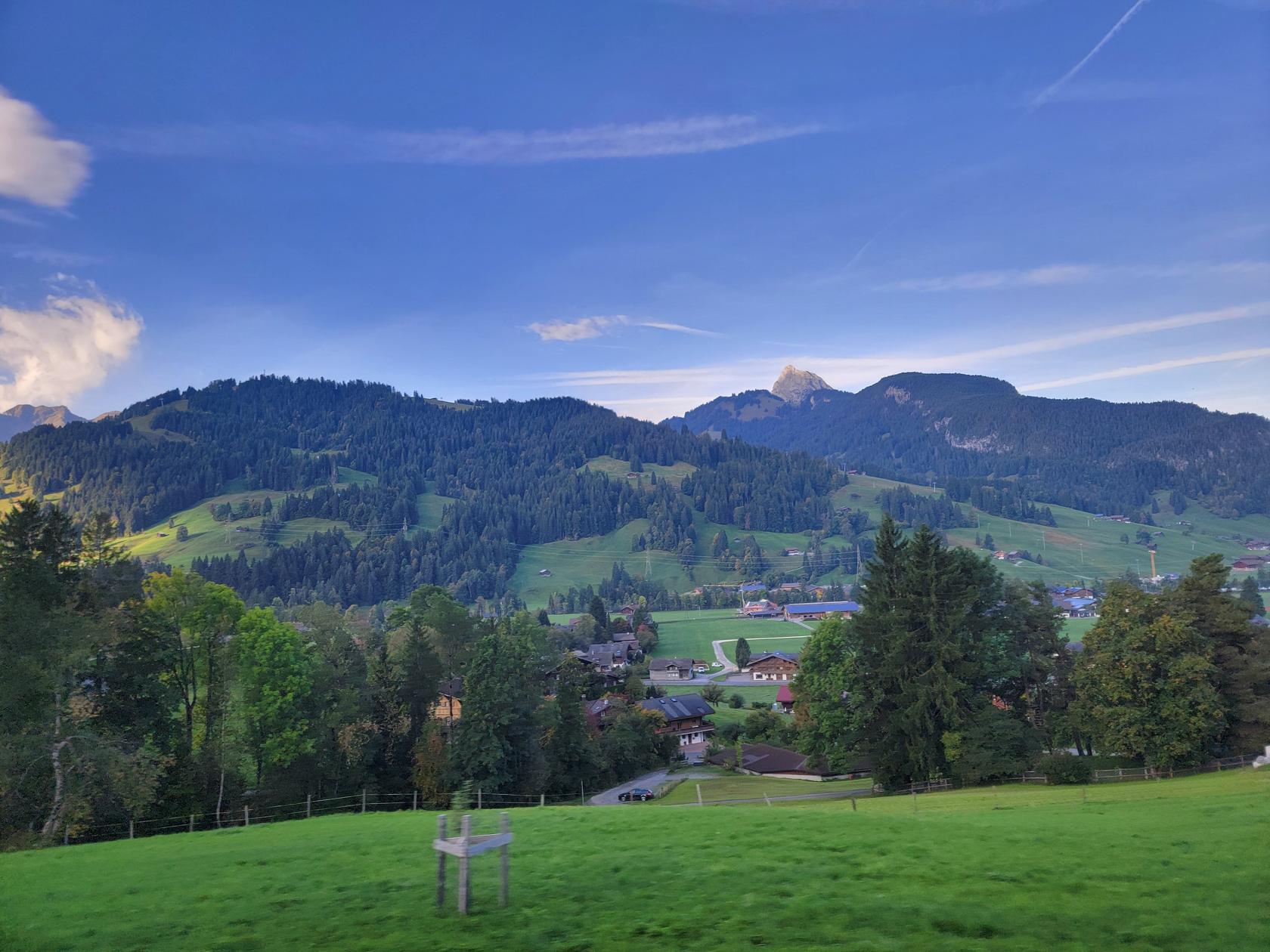
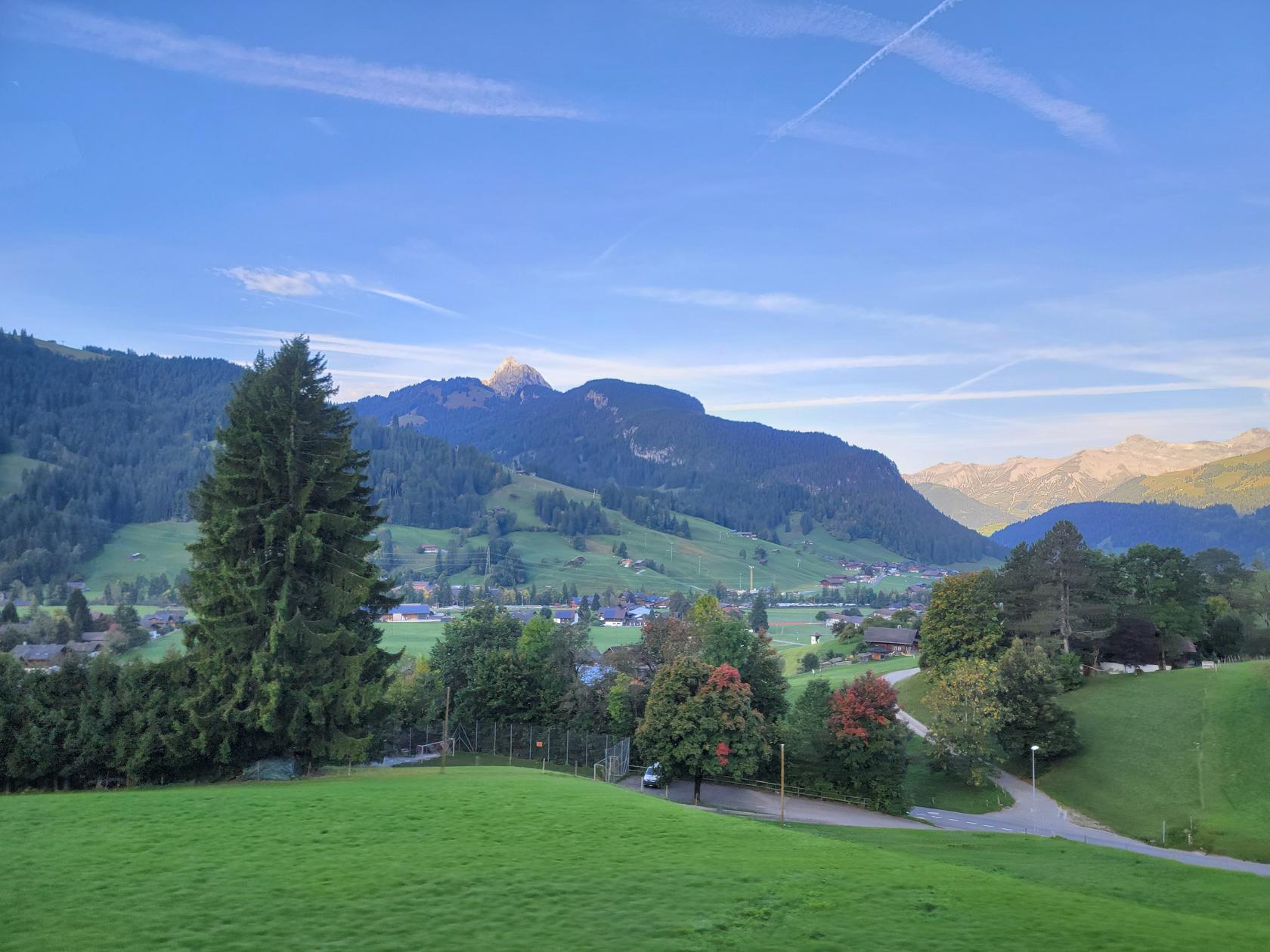
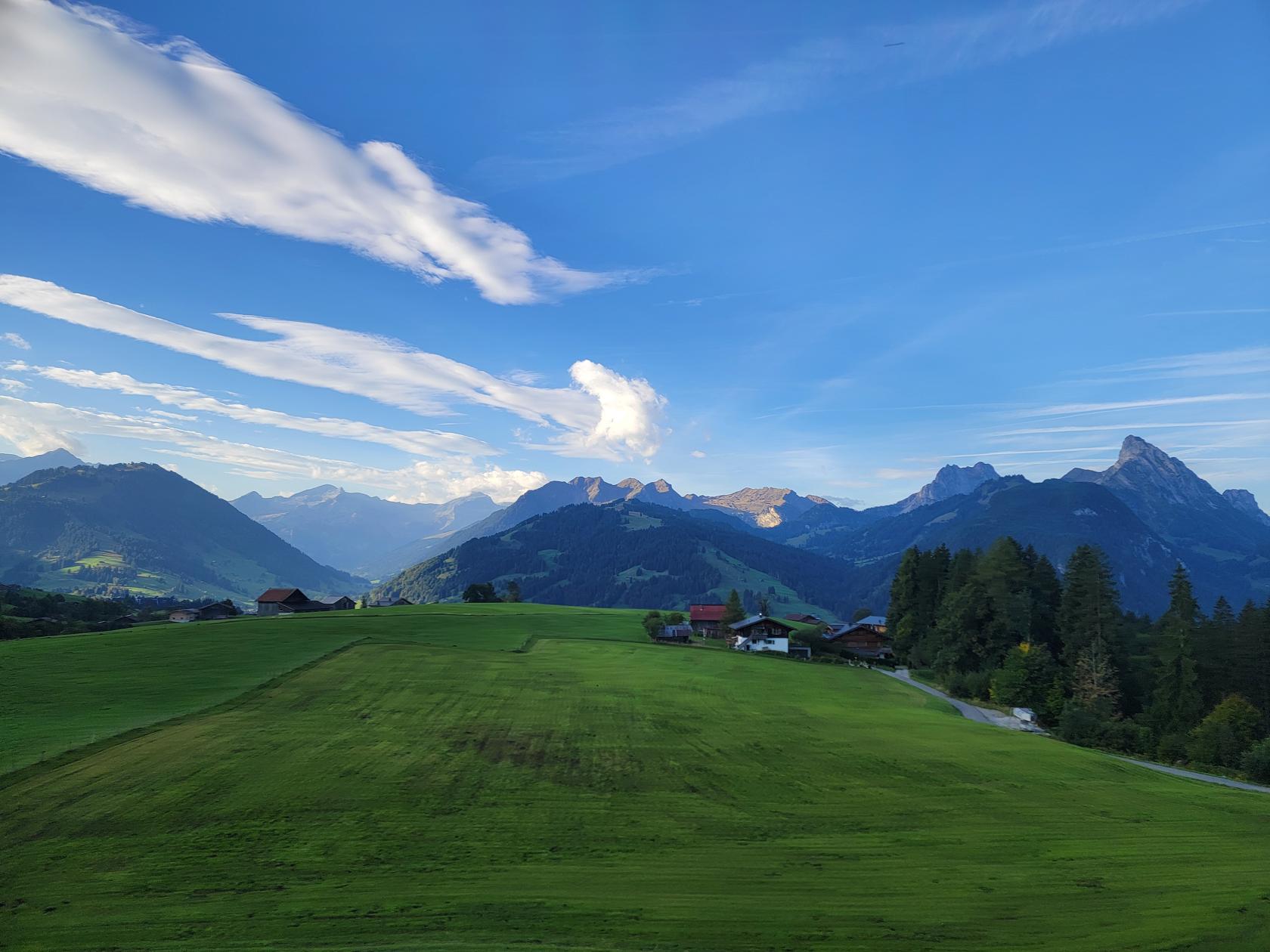
It winds through the Cantons of Vaud and Bern, through the Simmental valley where there are pastoral views to enjoy.

Wengen The Town

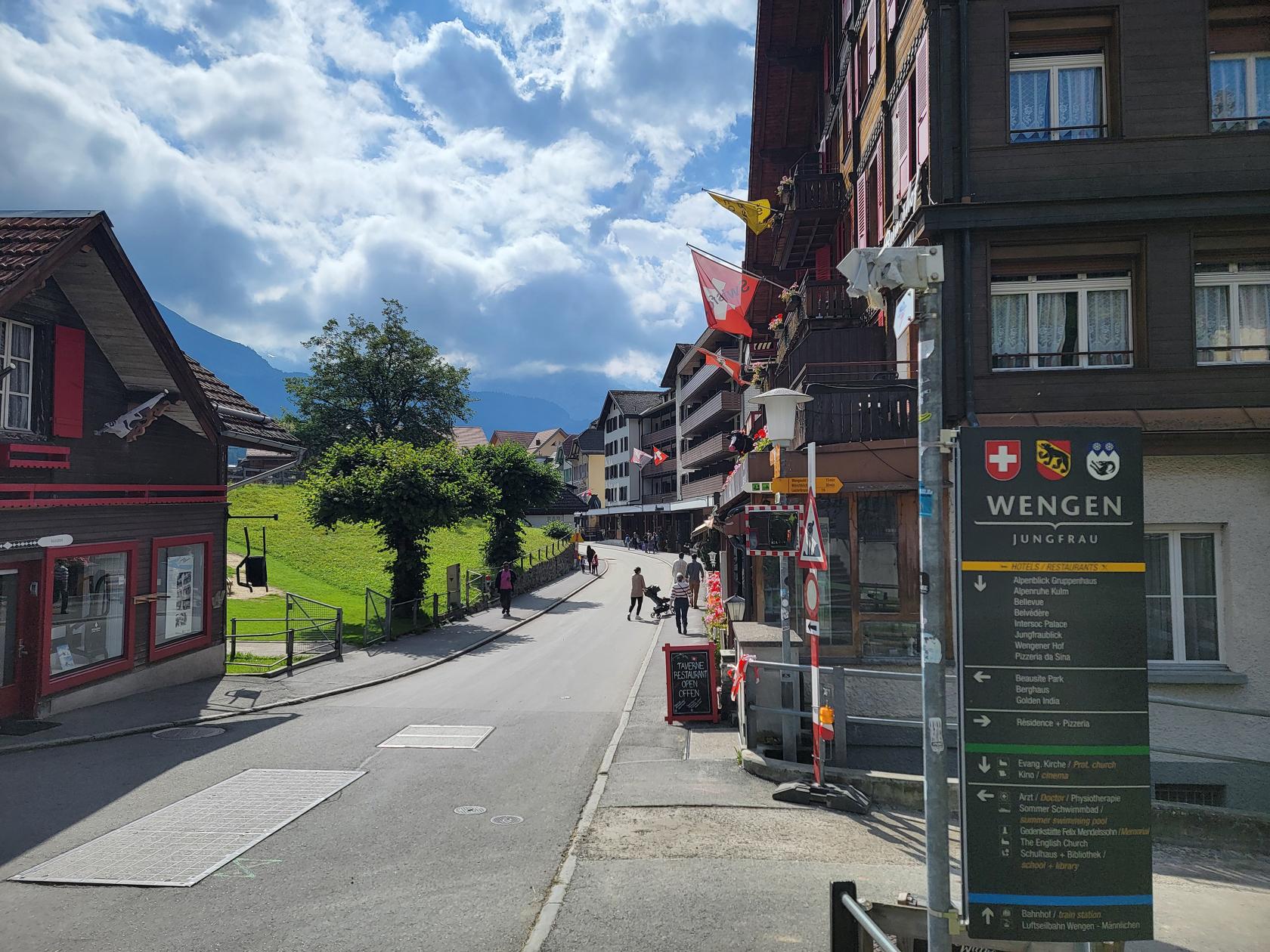
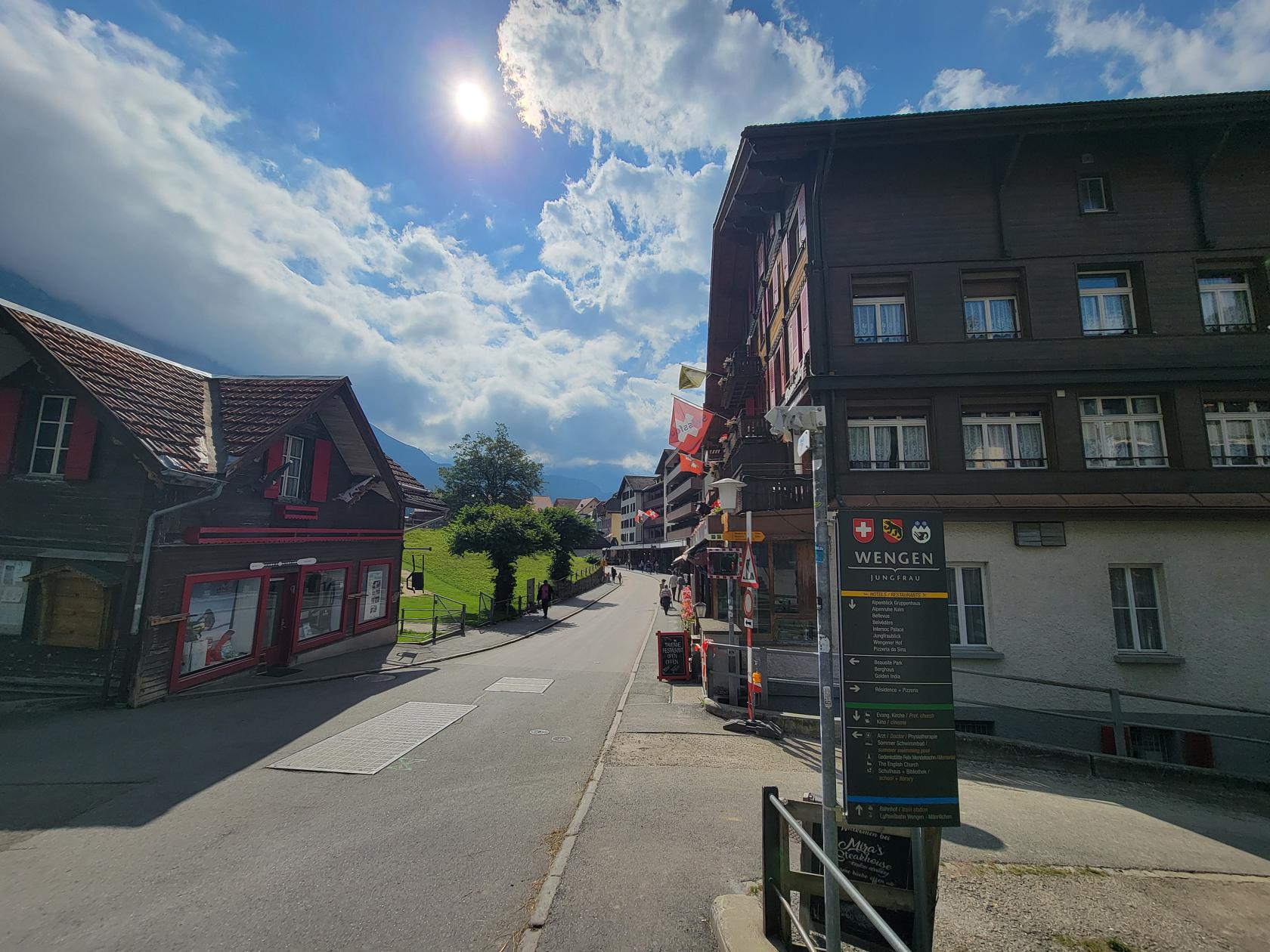
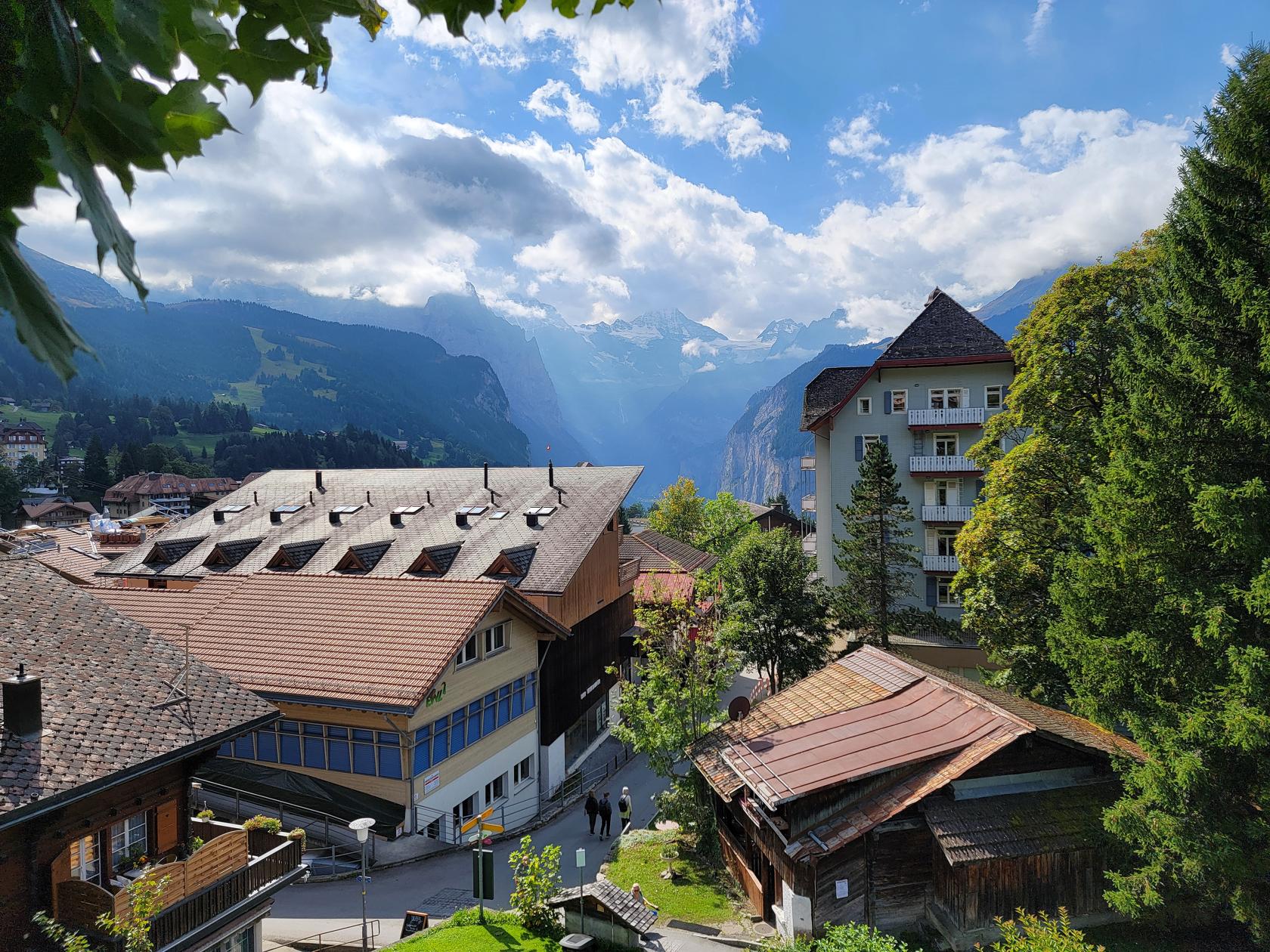
Wengen is a classic Swiss ski town, having a single avenue with shops and stores catering to souvenir hunters, hotels spread throughout the surrounding area with accompanied restaurants, as well as standalone restaurants offering specialities and train and cable car stations. One thing it doesn’t have are private cars, they are not allowed here and one must park in Lauterbrunnen and take the train to visit.

Hotel Jungfraublick

Our hotel during our stay was the Jungfraublick hotel, a three star hotel with restaurant. It supplied a complimentary continental breakfast in the morning, but its linen service proved to be somewhat of a problem and each day we had to ask for things we should have been supplied.

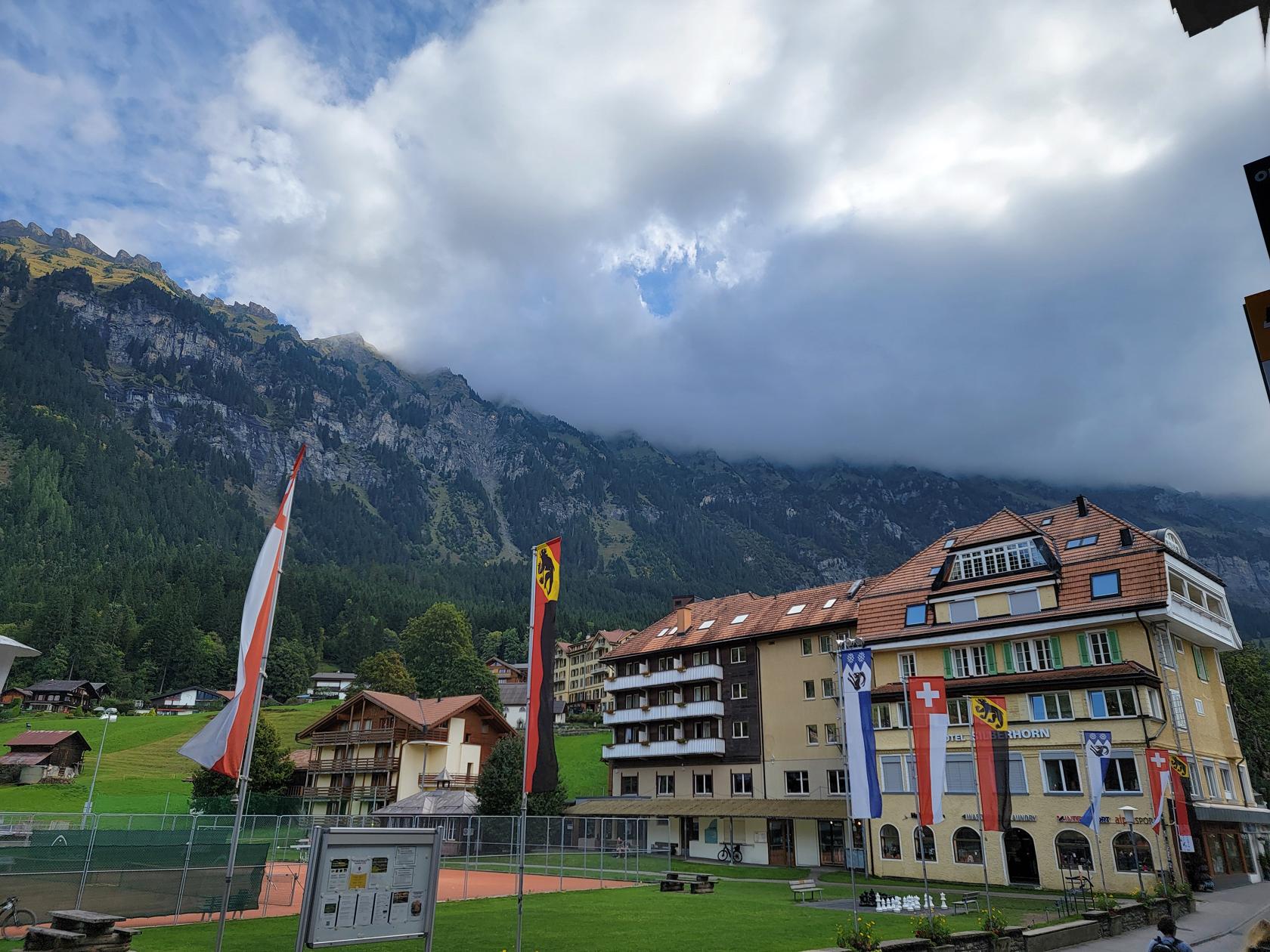
Aside from that, we didn’t see much of the Jungfrau, the third tallest mountain in the Bernese Alps, due to weather and the constant threat of rain or snow.

Restaurants

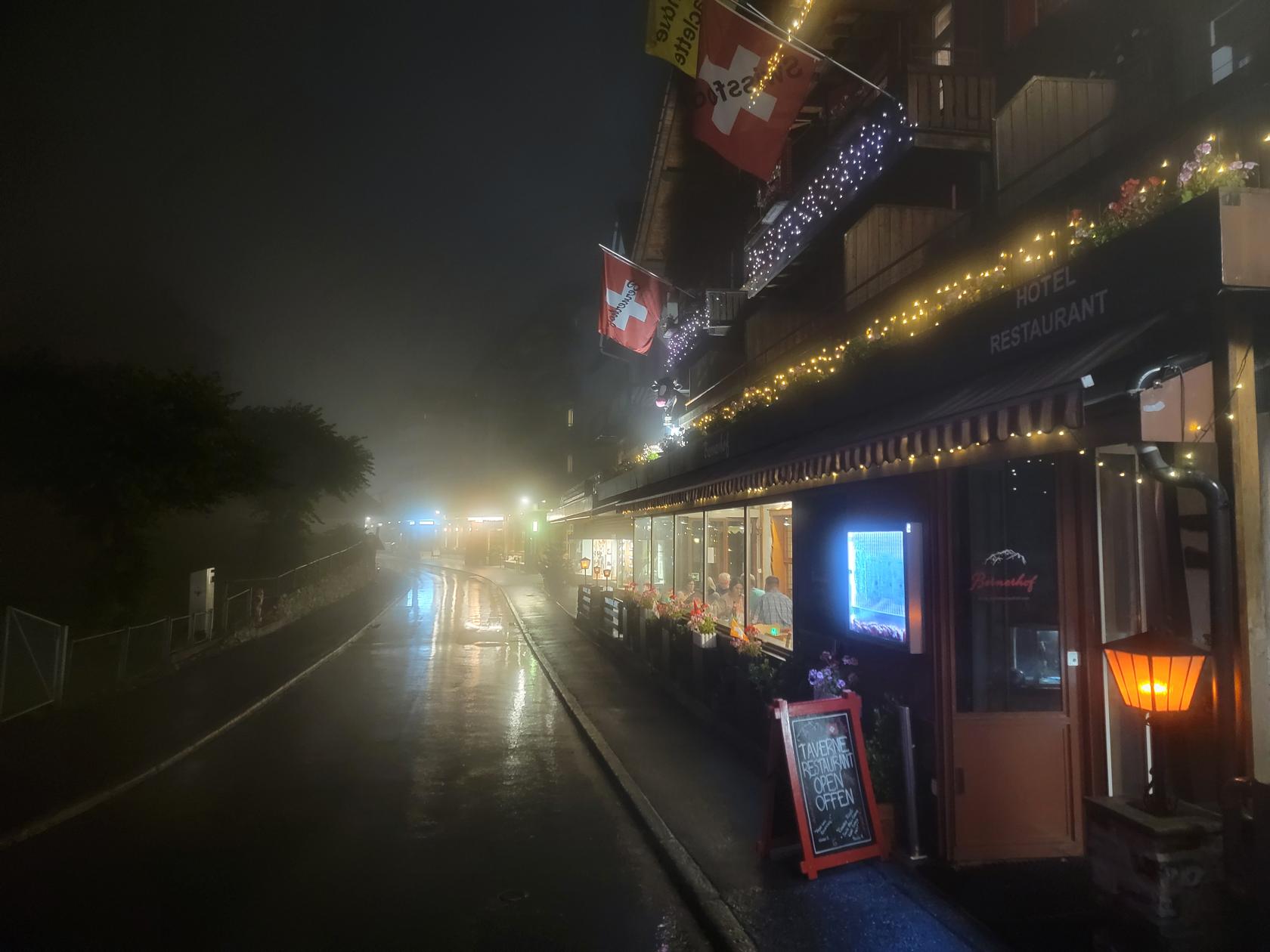
Even though it was slightly off-season, we made reservations for all the restaurants we visited and it is probably advised, we found most of them fairly busy during regular dinner hours.

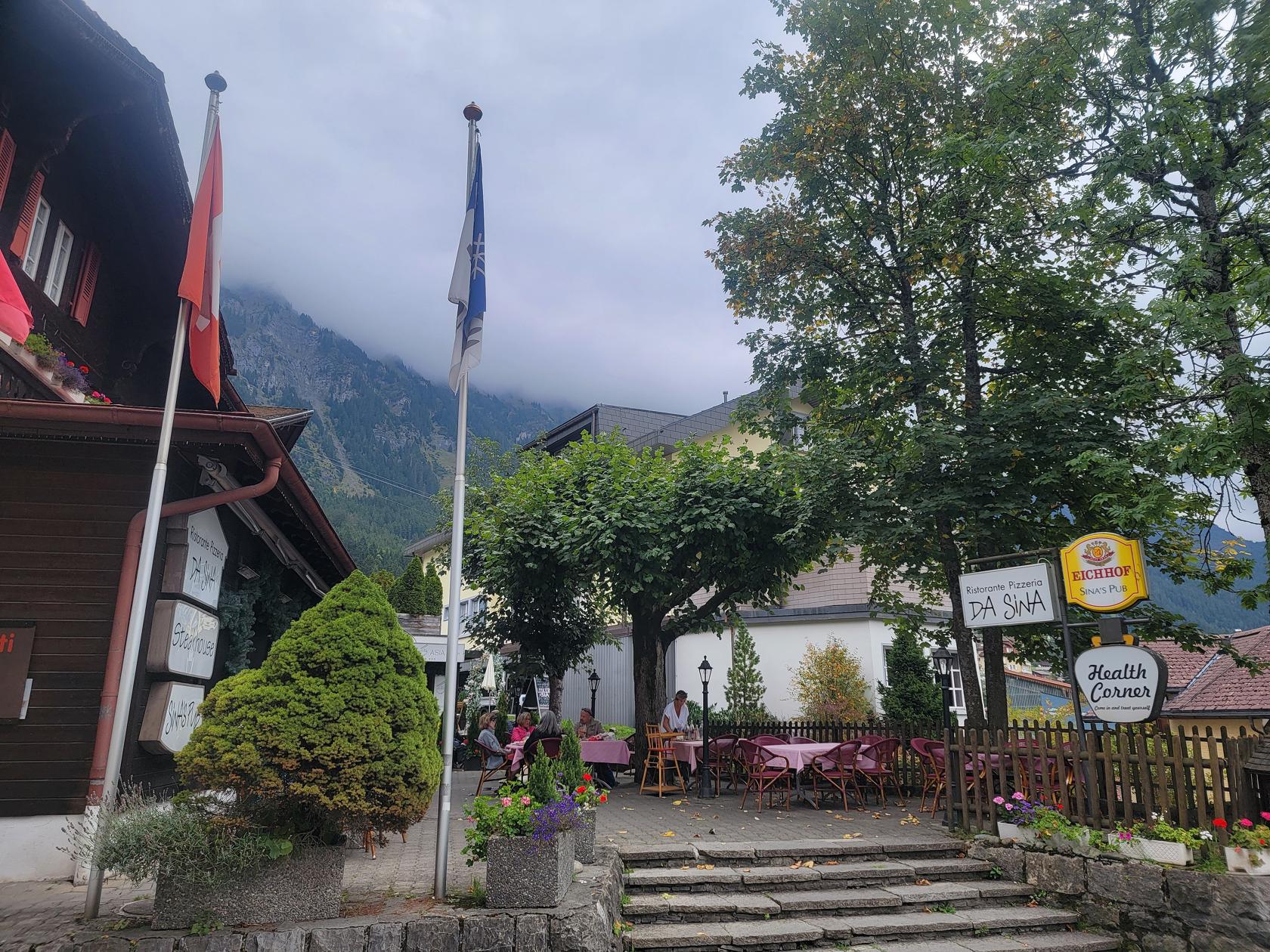
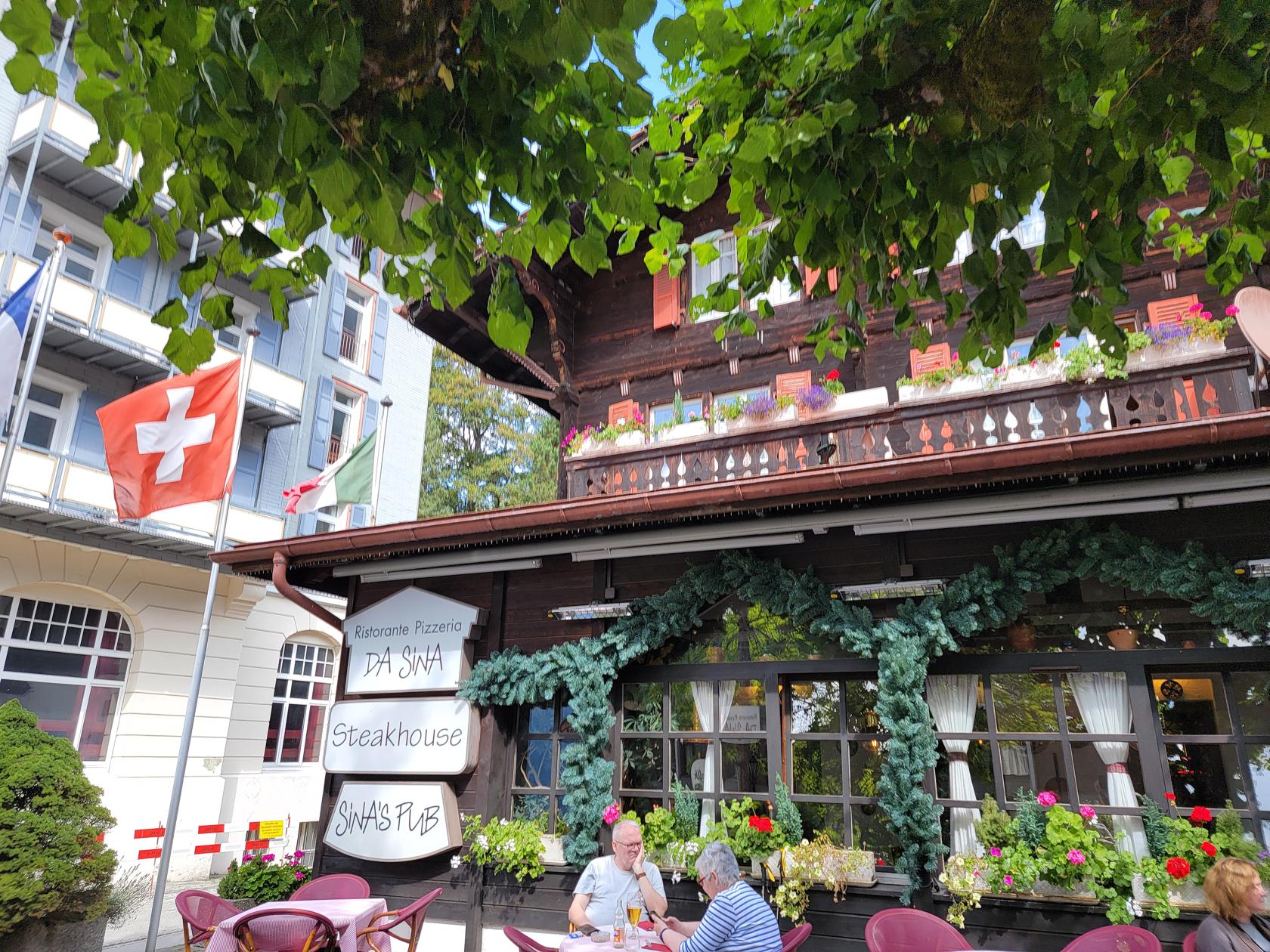
Da Sine Ristorante

On our first day in Wengen, we ate here for lunch. They have excellent Italian food at somewhat reasonable prices for Switzerland.

Caprice Ristorante

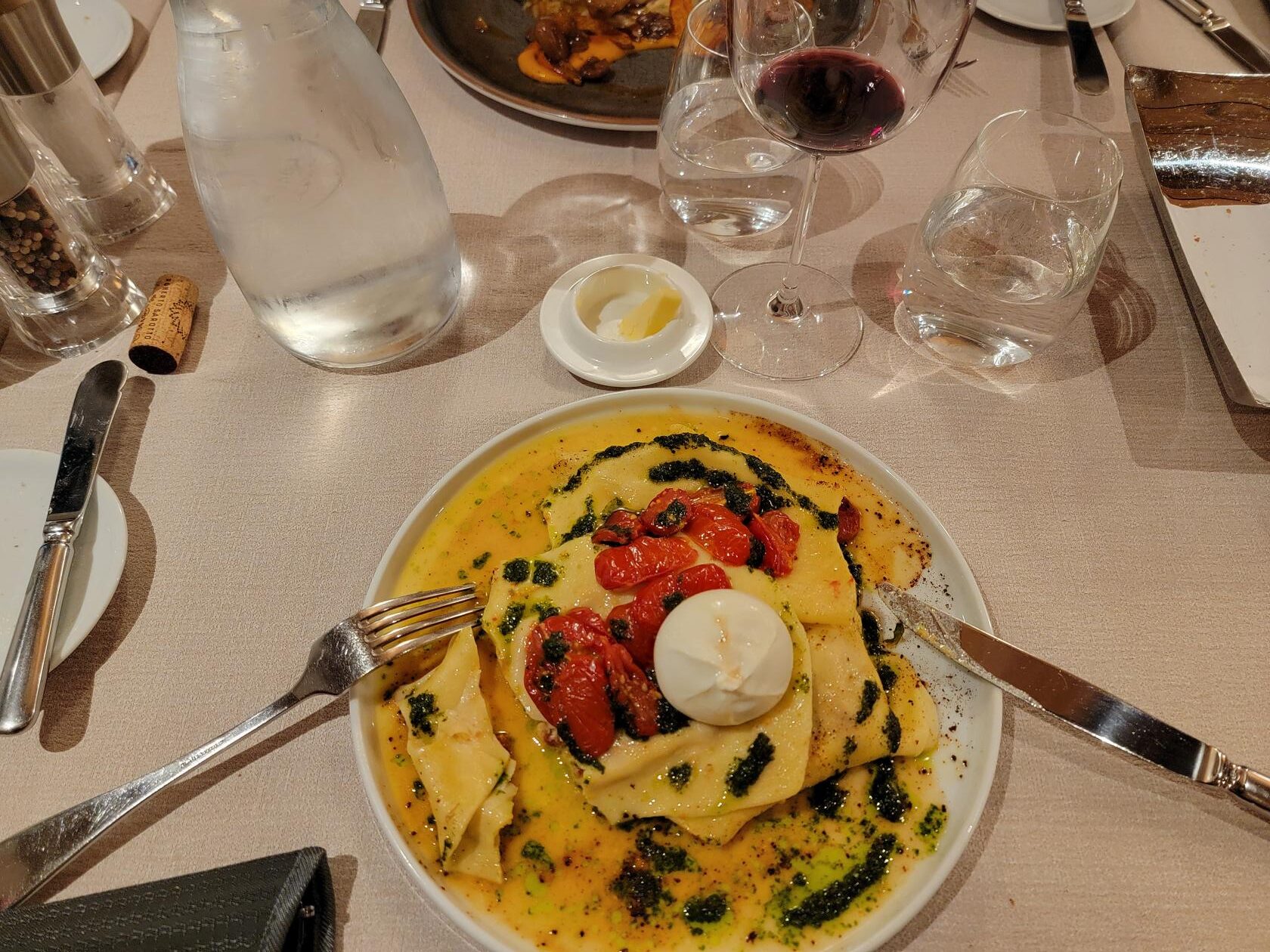
The Caprice restaurant also offers Italian food and is very good. It can be found at the Maya Caprice Boutique Hotel and there prices are also in line with what other restaurants are charging in the area.

Turin, Italy – Sassi-Superga

Our Day Trip To Sassi Superga

On a whim, since it was such a nice day out (clear sky, mid-70s), we decided to go to Sassi-Superga for a day trip. The last time we visited Sassi-Superga was in 2019, after we arrived in Turin from the States.

Getting There

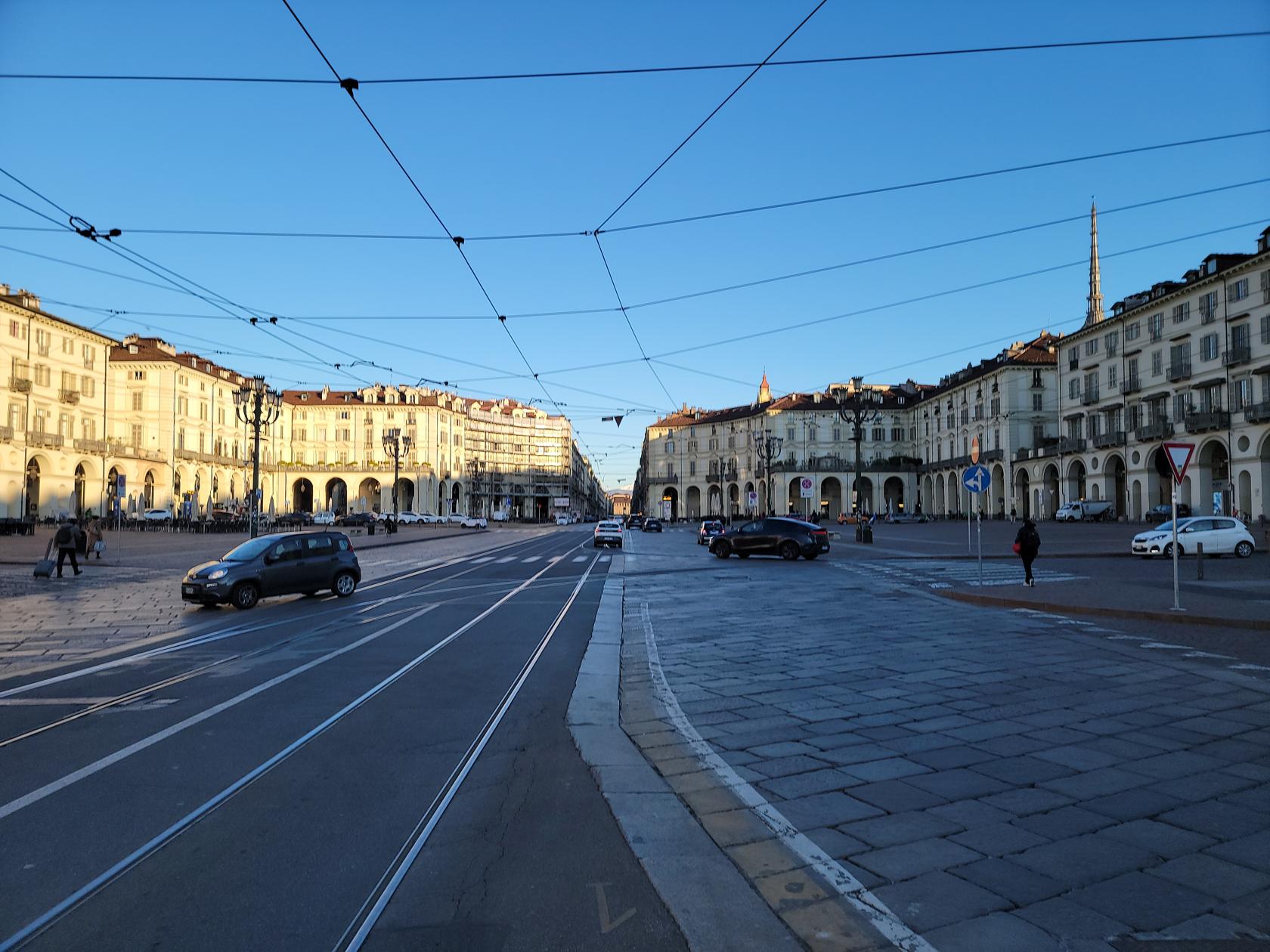
From the center of town and a short walk to Piazza Vittorio Veneto we took the GTT #15 tram going toward Sassi. After waiting about 15 minutes, it arrived and we enjoyed a twenty minute ride up to around the Briaza stop on Corso Belgio. Here we ended up behind another tram that was having issues and subsequently was numbered #00, to indicate that it was no longer in use. Because of this, we had to get off the tram at the next stop and were told to take the GTT #68 bus that pulled up behind our tram.

We happily got on and tried to ignore the issue, until at the next stop the bus driver indicated that we had to get off his bus and get on another #68 bus that had pulled up behind us. Flaborghasted and flumexed we did complied, but not after we clearly showed our displeasure, however being Italian, he was totally nonplussed by the situation. Luckily, after another short 10 minute ride we arrived at our destination, still in time to catch the Cog or Inclined Train up to Superga hill.

Sassi-Superga

After your bus, or tram ride if you are so lucky, there is a short five minute walk to the train station. It is located on a rather confusing intersection on Corso Casale between SS10 and SC di Superga, for which there are about seven or eight crosswalks!

Stazione Sassi

If you use the GTT phone application for tickets, you would get the mistaken impression that your €1.90 commuter ticket, that was used on the tram and bus, should still apply (within the 90 minute time limit) to take the Inclined Railway up Superga Hill, it does not. Ticket vending machines are inside the railway and cafe building on-site, they may also be purchased from the conductor, but there may be an additional charge. The charge from the vending machine is €3 per person one way, so for two persons round-trip, that came to €12 total for us.

The train departs promptly and after about twenty to twenty-five minutes, you will arrive at Superga Station, just below the Basilica of Superga. The station has a cafe, so if you are in need of refreshment, now would be the time.

Basilica of Superga

The basilica is still undergoing renovations after all these years and has scaffolding in and around the outside of the building. Most of this appears to be in place to protect visitors from falling debris. The exterior is starting to really look in need of major work, but they do appear to have the upper hand on the issue inside.

Unfortunately, the little restaurant that used to be housed on the left hand side of the church no longer exists, there is only an entrance to the Tomb of the Savoy family. So our plans to eat there vanished as soon as we figured out that it had closed, most likely due to the pandemic.

Restaurants

However, all is not lost and a short walk down the hill toward on Sentiero 26 path near the Monument of Umberto I, is a nice little Trattoria that we visited for lunch.

Conserva – Trattoria Superga

A short ten minute walk downhill on the trail from the monument is the Trattoria Superga. It is on a rather busy road, however we saw as many cyclists while sitting there as we did cars and other forms of transportation.

We can only say that the food was very good and typical for Piedmont and the area. The Tajarin and salads were both delicious, though a bit pricey. Our entire lunch with wine, water, bruschetta, pasta, coffee and digestive came to €77 for two, which we consider rather high, though not exorbitant.

Turin, Italy – La Venaria Reale

Reggia di Venaria Reale was a royal residence and palace to the northwest of Turin, Italy. It was one of more that a dozen residences of the Savoy family. It was abondoned after the Napoleonic Wars and later became a military post and barracks and subsequently slowly fell into disrepair and abandonment. After a major restoration, it finally opened to the public in 2007 as a musuem and tourist attraction.

Getting There

The easiest was to get there from Turin is to take one of the SFM trains from Porta Susa towards the Turin Airport. Many of these trains stop at Venaria Station and it only takes about fifteen to twenty minutes and costs about €3.50 per person. We often use the phone application and do not book a round-trip ticket, since you never know how long you might stay, especially if you are planning for lunch as well.

The Palace

The palace is actually in two pieces, the original Palace of Diana from the seventeenth century in white stucco with a white clock tower and the latter eighteenth century addition in raw brick with the Belvedere Tower, where you enter.

The Grand Gallery

Probably the most striking room and the pinnacle of the visit, the Grand Gallery is part of the Palace of Diana and a core piece of the original palace.

Turin At The Turn Of The Century

There is a nice collection of maps, dioramas and other works depicting Turin at the turn of the seventeenth century. Interesting from the perspective of present day Turin and what was lacking back in the day of the House of Savoy.

The Rooms Of Art

There is also a fine exhibit of art at the palace. Located through the entrance to the gardens, the entrance is in the back of the Palace of Diana.

The Stables

Juvarra Stables

The Juvarra Stables contain a collection of the royal family’s modes of transportation, from a river gondolla, to the royal coach and other broughams, all the way to childrens toy coach.

The wall is surrounded by a historical account of a trip up the River Po using the gondola from Venice to Turin.

Alfieri Stables

Today these just appear as a hallway depicting the transition from a palace in ruin to full restoration. Some of the photographs in the collection are strinking and it is well worth thoughful look and some consideration.

The Gardens

The gardens here include several, the most conspicuous one is the Flower Garden. But there is also several orchards and three distinct terraces that one can walk through and enjoy the well manicured estate.

Church of Saint Hubert

One has to walk to the Church of Saint Hubert from within the complex near the stables, outside entry is not possible. All of the pews have been removed, only the artwork, frescoes and a high altar remain, everything else is gone.

Restaurants

Il Convito della Venaria

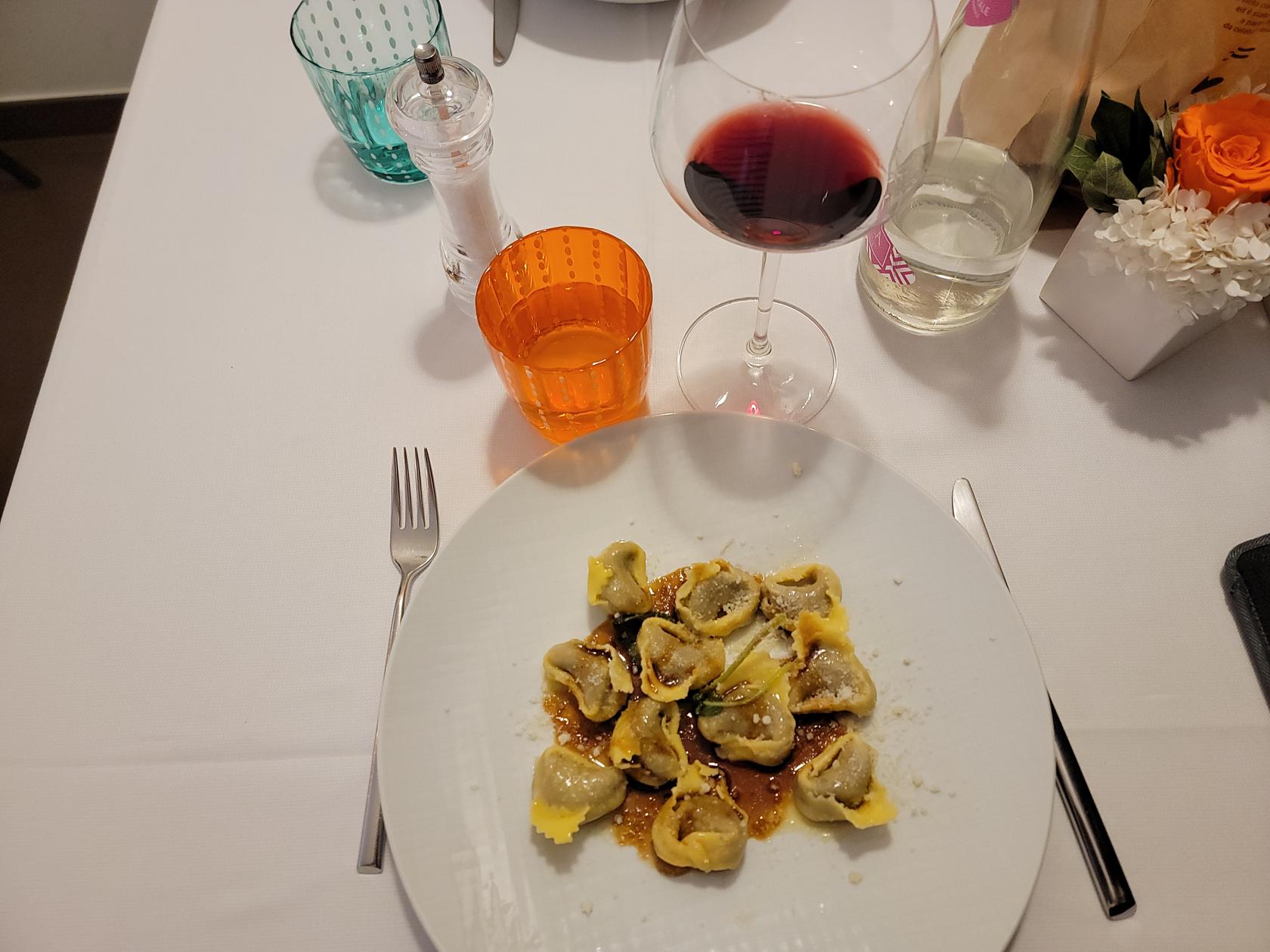
Just on the corners of the Piazza della Repubblica and Via Andrea Mensa is the ristorante Il Convito della Venaria. A fine place for lunch, though probably a bit pricier than some of the alternatives, though restaurants and cafes appear to get sparser and sparser as you walk back towards the train station, so word of warning. We had a simple lunch of Bruschetta and two different pasta dishes, Patti had Maccheroncino al Tochio with Eggplant, Zucchini and Olives in a red sauce and I had the Agnolottini del Plin Piemontese Style, both were delicious.

Ivrea, Italy – A Piedmont Weekend

If you are into hiking and enjoy a really good weekend excursion, then the Metropolitan town of Turin has something great to offer, the tiny little town of Ivrea. Known for being part of the Via Francigena[1]The ancient pilgrimage route from England to Rome. and Five Lake hiking area, it is a great place to spend a few days.

Getting There

This town can be reached in just under an hour’s train ride from Porta Nuovo in Turin. The Regional Veloce (RV) runs directly from the main train station, through Porta Susa and onto Ivrea. Unfortunately, the line no longer continues to Aosta, so those who are stopping over have to use the bus service to continue their journeys.

The Hotel

We stayed at the Hotel 3T on Via Sant’Ulderico, a modern hotel that has most of the amenities. One thing I disliked about this hotel, at least during this time of year (Spring), is that the thermostat makes you believe you have control over the temperature in your room, when in fact you don’t!

The Town

The town is cut in two by the Dora Baltea river, which offers a few courses for avid kayakers and seems to draw them from all over. The river here cuts right through the native diorite rock, which can be seen everywhere you look and presents a dark geologic hardness that makes it such a stable building foundation; practically everything, including the hospital, is built on it.

There is not much to the town itself, just the Lungodora, or walkway along the river, and one central main street where one can find most of the shops, cafes and other stores.

Castle Saubauda

A large rectangular castle built in the fourteenth century by the Savoy family. It is only open certain times during the year and one has to reserve their guided tour ahead of time. We were only able to see the outside and sometimes at night it is lit up in different colors.

Ivrea Cathedral

Actually known as the Cathedral of the Assumption of Saint Mary, or Cattedrale di Santa Maria Assunta, is very close to the castle on the hilltop. It is in need of restoration and there are several, apparently small projects already underway inside the cathedral.

Inside the cathedral is actually quite impressive. The nave is well decorated with ceiling frescoes and religious art. It is quite dark and reminiscent of the Sistine Chapel before that was restored and suffers from decades, if not centuries or candle and other smoke.

The Crypt

The main attraction of the crypt are the frescoes. When possible the caretakers of the cathedral have installed lighting, so that you can adore without the need for using the flash on your camera, which you should never do.

Restaurants

Moma

Moma is actually a bar and restaurant, so you can stop their early for a drink before dinner, or wait until 7PM and dine there as well. They have a fairly good selection of food which may be considered cosmopolitan and some Piedmont dishes. Both of our dishes were very good and came with rather large portion size which is unusual of Italy.

References

References
1 The ancient pilgrimage route from England to Rome.

Porto, Portugal – Our Rainy Start

Porto, Portugal – Our Rainy Start

Wanting to visit Porto, after hearing such good things about the city from family and friends, we decided to book a trip during the off season, March in fact. Our Tickets For Two were of course electronic, so no photographs of them, sorry.

Getting There

From Turin there are two direct flights twice weekly to Porto, Portugal with RyanAir, which is also a designated hub of this carrier. Two weeks ago we booked our stays and flights, well knowing the weather during this time of year is very undependable, it did not disappoint.

The flight was a little over two hours and left in the evening, in fact all the flights on Mondays and Fridays between these two cities are evening flights. We left around 6:30PM and arrived a little after 9:00PM, but it is actually 8:00PM local time, since you gain an hour.

Our arrival was bumpy and wet, so after we arrived, Patti and I decided to take a taxi instead of the metro. It was a good decision, first it only cost us thirty Euros and second, it was pouring out; so getting door to door service was very helpful.

Carris Hotel Ribiera

The Carris Hotel Ribiera in Porto is no doubt a collection of a few building that have been extensively renovated. It is close to the water and midway down the river embankment, so no matter which was you walk there will be a hill.

The accommodations are modern enough, though there are a few oddities and some unpleasant things, for one the bed in the room was very hard. Another unfortunate oversight, the safe provided in the room is not bolted to the wall or closet, so anyone can easily just pick it up with all of your possessions and leave the room; we therefore chose not to use it.

Porto – The City

The city of Porto, or Oporto, may pose difficulties for some. For one it essentially lays on the very steep banks of the River Douro, which has its source deep in central Spain, and therefore is very hilly.

The city is known for its buildings having tiled facades, as well as many of its famous buildings, like the Sao Bento train station and its churches and cathedral.

Churches and Cathedrals

There are many churches and cathedrals in the city, some are free to enter, others have been repurposed and charge a fee.

Parish Church of St. Nicholas

The Parish Church of Saint Nicholas was the first church we visited. We were stuck by its tiled exterior. The interior has an amazing golden altar with a painting of a scene after the crucifixion.

Church of Saint Francis

The Church of Saint Francis is without a doubt, one of the most  beautiful churches we have been lucky enough to visit. Almost the entire interior is decorated with carved wooden and gilded ornamentation depicting all different scenes from Catholicism.

The Church Museum

The museum houses an impressive collection of church artifacts and treasures, it is probably worth the reasonable cost of entry alone.

The Crypt

One of the more extensive crypts we have seen. It also has a peculiar floor that has removable panels, no doubt for easy access to the remains in place in each sarcophagus.

Porto Cathedral

Ostensibly the Porto Cathedral is crowning jewel of the church in the city, however we did not find it as interesting as St. Francis. There are several self-guided tours to chose from, including the Bishop’s quarters which we decided against. However, the rest of the grounds are interesting, if only for the tile work, or Azulejo, for which the cathedral and most of the city is so keenly known.

Clerigos Church

Though we did not go in, there is a fee to enter, we enjoyed the church from the street. It wasn’t really clear from our research that it was particularly known for anything, so we decided to skip this church.

Torre Dos Clerigos

Likewise, the clock tower associated with it looks impressive from the street and probably has some interesting points inside, however, again we chose not to indulge on paying for entry, since we had no inclination for climbing the stairs to the top, we had already seen an overview of the city from other vantage points.

Restaurants and Cafes

Most restaurants and cafes in Porto are small, actually very small, and you will be lucky to find a place to sit down if you are not lucky or willing to wait. For dinner it is always best to make a reservation, almost all restaurants take and honor them, though some may restrict the amount of time you may keep you table.

Forno Velho

This restaurant is part of the Carris Hotel Ribiera in Porto and serves a limited, but very good selection of food from their menu. We ate here because it was late, around 9:30PM and raining outside. Though they do get a premium price for their entrees, the food was very good and well prepared, and we received a fifteen percent discount on our bill.

Rocinha Cafe

On our first morning in Porto we ate at the Rocinha Cafe, which lies around the corner on the same block as our hotel. It offered an English Breakfast for ten Euros each, and we were able to substitute our cappuccinos as our beverage of choice, so our total bill was twenty Euros.

A Bifana Portuguesa Restaurant

For lunch we ate at A Bifana Portuguesa Restaurant. This establishment is obviously owned by an owner of a vineyard or larger farm in the area, since they have a particular brand of wine. Expect good food with a paced, if not slow service, since there is only one server and one cook. Oh, and if they bring out hot sauce that has an eye-dropper in it, it most definitely serious stuff, so administer appropriately on your dish.

Incontro Bistro

If you are looking for a small traditional Italian dinner look no further than Incontro Bistro, it is essentially a hole in the wall with a kitchen and seven tables. We sat next to the kitchen and had a wonderful time enjoying the cacophony and smells. The only one thing to point would be they only serve macaroni pasta, no long pasta, so you have to choose from one of those.

Frankfurt, Germany – Some Eateries In The Area

Frankfurt, Germany – Some Eateries In The Area

We recently spent two weeks in the Frankfurt area with family. While we were there, we had the good fortune to visit a few new restaurants and a couple of old favorites.

Restaurants In Frankfurt

Lokal Bahnhof

Though we did eat at the Lokal Bahnhof in Frankfurt Süd, Darmstädter Landstraße 14, it was not remarkable enough to take any photographs. A nice enough place to eat for lunch, but aside from a quick bite, nothing special.

Restaurants In Offenbach

Papi Original Italian Ristorante

Located in Offenbach, at Friedrichsring 39, is an excellent place for an evening meal called Papi Original Italian. A favorite of our’s when we are in the area, it had good service and very good food. The menu has very good southern Italian dishes and pizza, so something for everyone.

Restaurants In Dreieich

Since we were staying in Dreieich, most of the restaurants we visited were in this small, quaint little town.

China Restaurant Hong Kong

The China Restaurant Hong Kong is located on Hauptstraße 8 on the main avenue of town. It has laterns outside, so is easily visible from your car as you drive passed it. However, it is also an easy walk from some of the nearby parking locations.

The food is good and they have a good variety on the menu, including Thai and some Vietnamese dishes.

Wirsthaus Leopolt

If you are actually looking for German food, look no further than Leopolt’s. They have weekly specials, as well as all the favorites and a variety of other dishes. It is also located in town at Hauptstraße 20.

La Rughetta Ristorante

On Eisenbahnstraße 38 is the Italian restaurant La Rughetta. A smaller establishment than the others, it has a small, comfortable atmosphere with a family cooking feel. The menu has your typical items on it and the food is very good, though you may have to wait some time before it appears, so bring your patience.

La Faggio

A newer, more upscale place to eat, that has the appearance of one of the in-places to go is La Faggio, located closer to the train station at Buchschlager Allee 19. Though the eating area is rather spacious, we had the impression there were not enough servers to adequately attend to everyone in a timely manner; so be prepared to wait longer, even to order.

Al Dente da Pino Ristorante

At the other end of town is Al Dente da Pino Ristorante at Dieselstraße 3. Again, an Italian restaurant with a friendly charm and comfortable atmosphere. The food is very good and the service prompt and friendly. Probably one of the better places in town to eat.

Restaurants In Dreieichenhain

A short stone’s throw away from Dreieich is Dreieichenhain, a medieval little touristy like town with a Roman Wall and Clock Tower Gate. We have been here several times and try a different place to eat, each time we visit. On the day of our visit it was for a small brunch.

Cafe Cult

A small cafe kind of in the middle of town. Modern, friendly and quick, they have something for most everyone. Including very good coffee and other drinks. The desserts look amazing, though we did not try any. The bagels are bread type bagels, not traditional jewish bagels, but sufficient for bagel sandwiches, which were very tasty.

Lecce, Italy – Florence of the South – Part Three

Lecce, Italy – Florence of the South – Part Three

What follows are some final thoughts on our stay in Lecce. Though we found the city intriguing, having an interesting history, some good food and enough sights to see to keep you busy, we don’t feel comfortable commending it for more than a few days at best. For the most part, the Città Vecchia is very quiet and doesn’t open until after noon. Even with the myriad number of churches, there are practically no other monuments, fountains or public places to enjoy. Other than that, there are not many connecting little towns in the area to plan day trips around.

Museums

To wrap up our visit to Lecce, we still had one museum left on our church ticket to see, as well as the private museum of Museo Faggiano. So on Monday we planned visiting them, eating lunch and then having a light afternoon.

Museo Faggiano

A private museum, the Museo Faggiano is located on Via Ascanio Grandi, 56/58, not far from our Bed and Breakfast. The host has a written tour guide in most European languages and everything is numbered, so it is not a difficult self-guided tour.

The museum was created by mistake in 2001 when Luciano Faggiano and his sons were digging to fix a plumbing issue. What they found made front page news, even in the United States. While digging out certain areas they discovered artifacts and burial places and had to stop and inform the proper authorities.

Luckily, with the proper guidance and help, they were able to turn it into the museum you see today, thanks to the efforts of the Archaeological Superintendence of Taranto and the Idume Cultural Association. The archaeological collection has artifacts starting in the fifth century BCE and spans the Roman, Middle Ages and the Renaissance.

From the eleventh until the thirteenth century the place was a Templar house and used for purposes of their cause. After that, it was converted into a convent in the early seventeenth century for the Franciscan Nuns of Saint Claire.

There are places along the tour, especially when descending where the well is and a few other spots, where it is rather cramped and the stairwell a bit claustrophobic, so take care.

There is an overlook observatory, but frankly there is not much to see from that perch. It was probably used by the Templars as a lookout or alternative escape route since it appears to be attached to many of the surrounding roofs in the area.

Story Of The Five Cavers

Apparently another archaeological dig is also documented in one of the rooms in the museum. It has to do with five cavers who discovered neolithic archaeological artifacts, handprints and pictograms in caves where they were spelunking around Otranto, Italy.

Museo Sigismondo Castromediano

The Museo Sigismondo Castromediano is a large and modern museum south of the old city on Viale Gallipoli. It houses ancient archaeological artifacts which are arranged in special themes.

Churches

We were told there was an interesting church to see in the new section of the city, so we headed over there to see both it and the water fountain not far from it.

Santuario di Sant’Antonio a Fulgenzio

The Santuario di Sant’Antonio a Fulgenzio, or Sanctuary of Saint Anthony in Fulgenzio is located the newer part of Lecce. It is worth a visit because of the beautiful frescos that adorn its ceilings.

Restaurants

There are a few more restaurants that we visited while in Lecce. Of note are the ones below and of singular distinction is the Chinese Restaurant which we both found a surprise, not only for the extensive menu, but also for the quality of its foods.

Gusto Liberrima

It can be difficult on the weekends, especially Sunday, to find a place to eat that you do not need reservations. Gusto Liberrima located on Corte dei Cicala, 12, appears to be large enough to accommodate more people and might have openings when others do not. We met our new found friends Roland and Amanda at another place we tried to get into, only to be denied and then we tried Gusto Liberrima.

It has Cucina Tipica for the Puglia and other items on the menu, so one should be able to find something to their taste. Roland ordered the Finocchio Arrosto which we tried and it was amazing. It was roasted fennel with parmesan cream, pistachio and almonds crumbled with fresh truffle, very tasty.

Patti and I both had the Velutata di Zucca or the pumpkin soup with gorgonzola, rosemary oil, basil cream, croutons, it was delicious. Patti ordered the Insalata Mediterranea which is made with rocket, carrots, tuna fillet, leccine olives, chicory, friscous, mustard mayonnaise, caramelized red onion and I ordered the Sagne Ritorte, which is just homemade pasta in a ragù, along with an Insalata Mista.

Ristorante Cinese Cheng Du

Along the Viale dell’Università is the Ristorante Cinese Cheng Du. This restaurant has a modern interior and a lengthy menu offering items perhaps not very common. So if you looking for a change of cuisine from the usual Tipica Cucina, then this place may be the answer. Unfortunately at the time of this writing I could not find a website for them.

The Noodle and Vegetable Soup is very good and can be highly recommended. Other dishes, including the Vegetable Rice Saltate and Cabbage with garlic and oil are also excellent choices.

For our second time around we ordered the same soup and rice but changed our main dishes to Eggplant with Chopped Meat and Scallions, and Sweet and Sour Pork with Green Peppers.