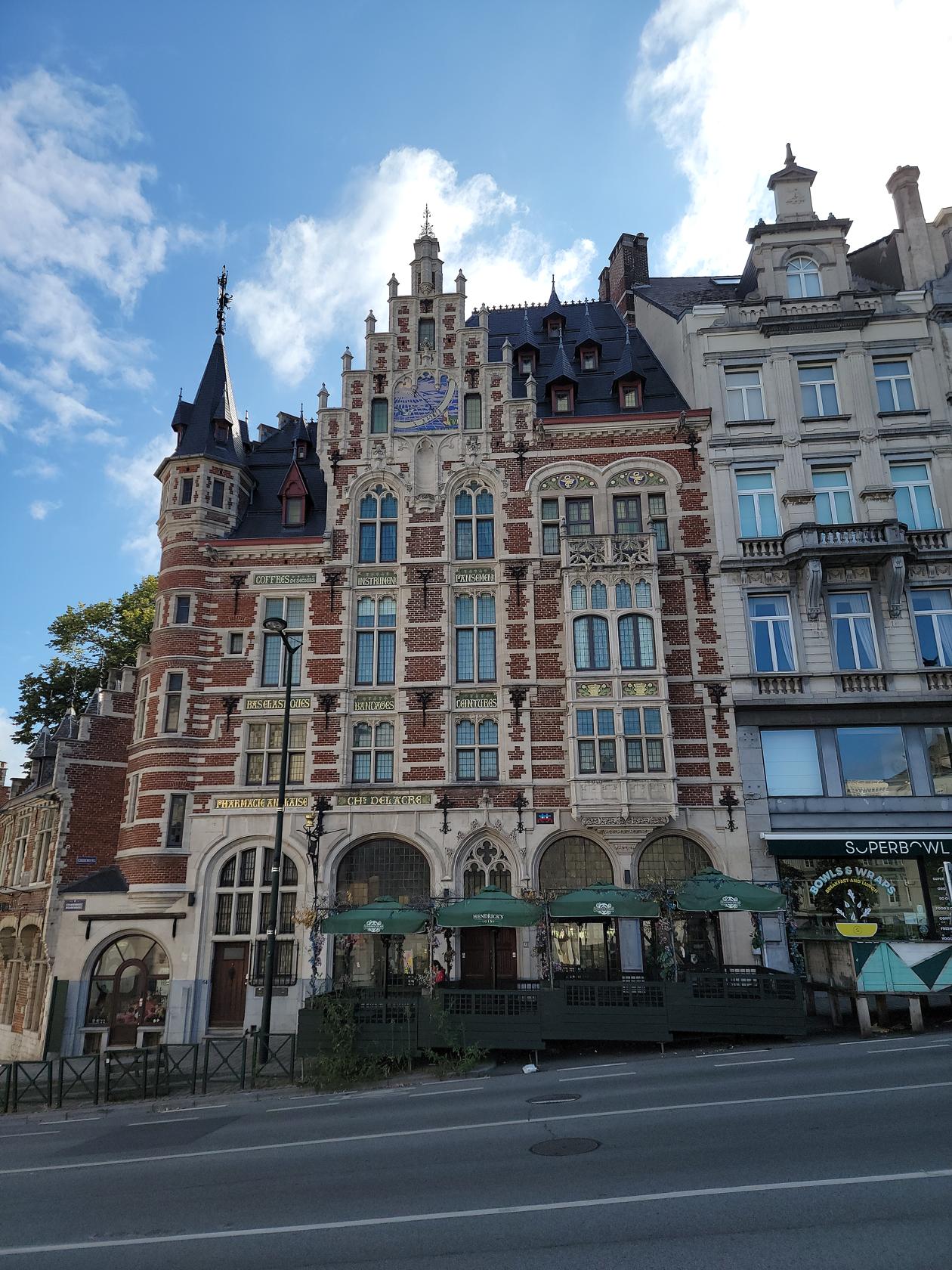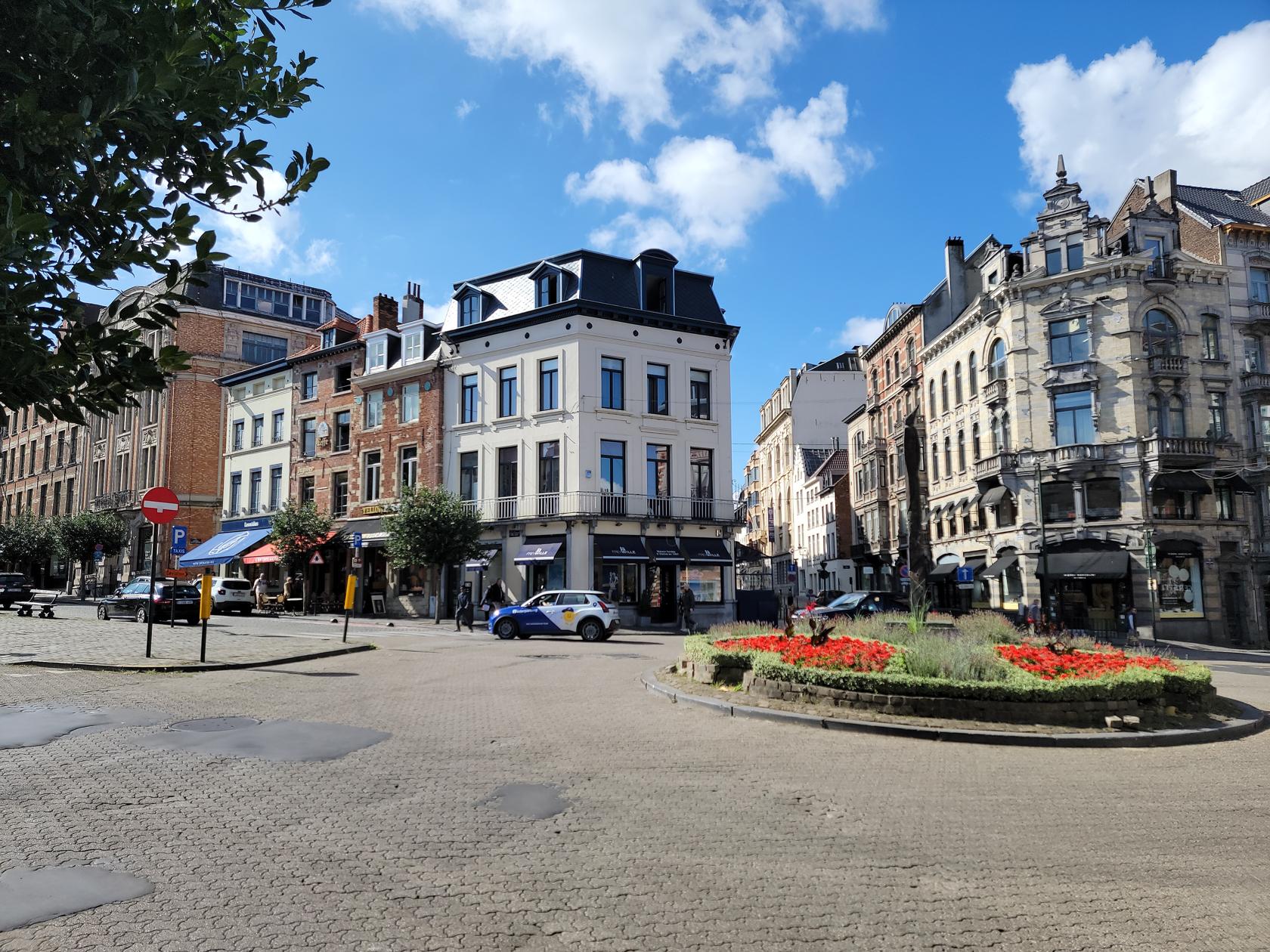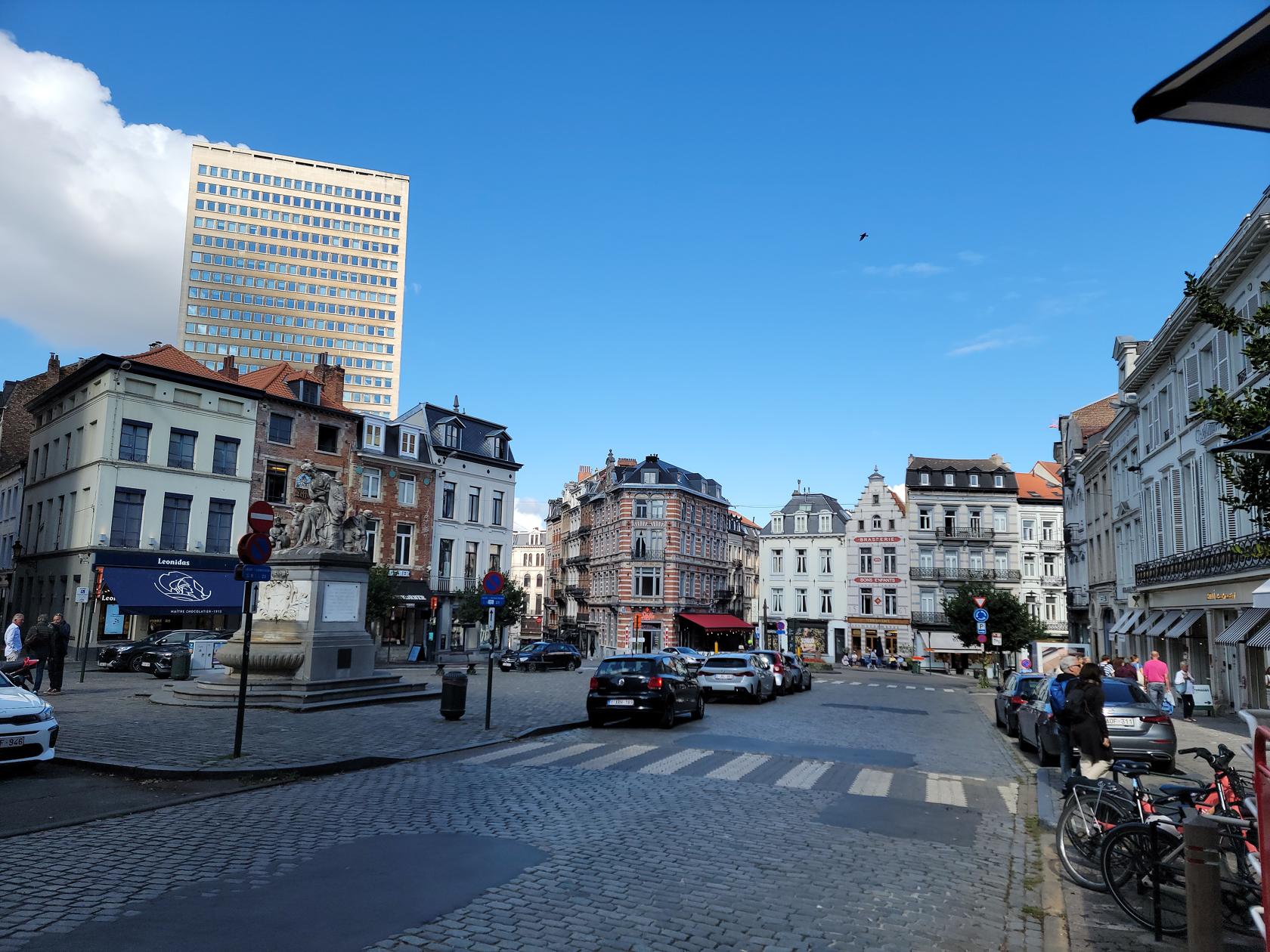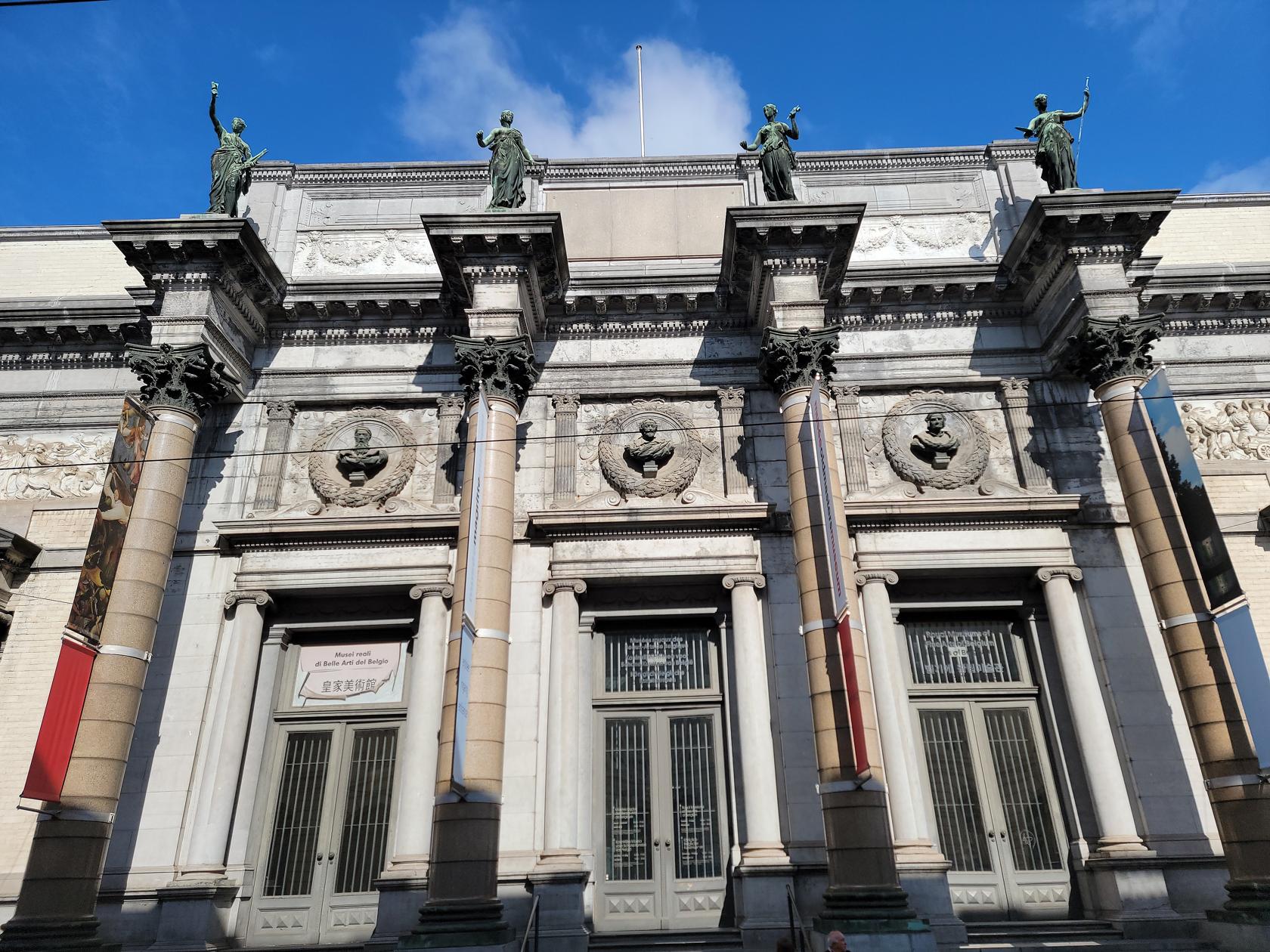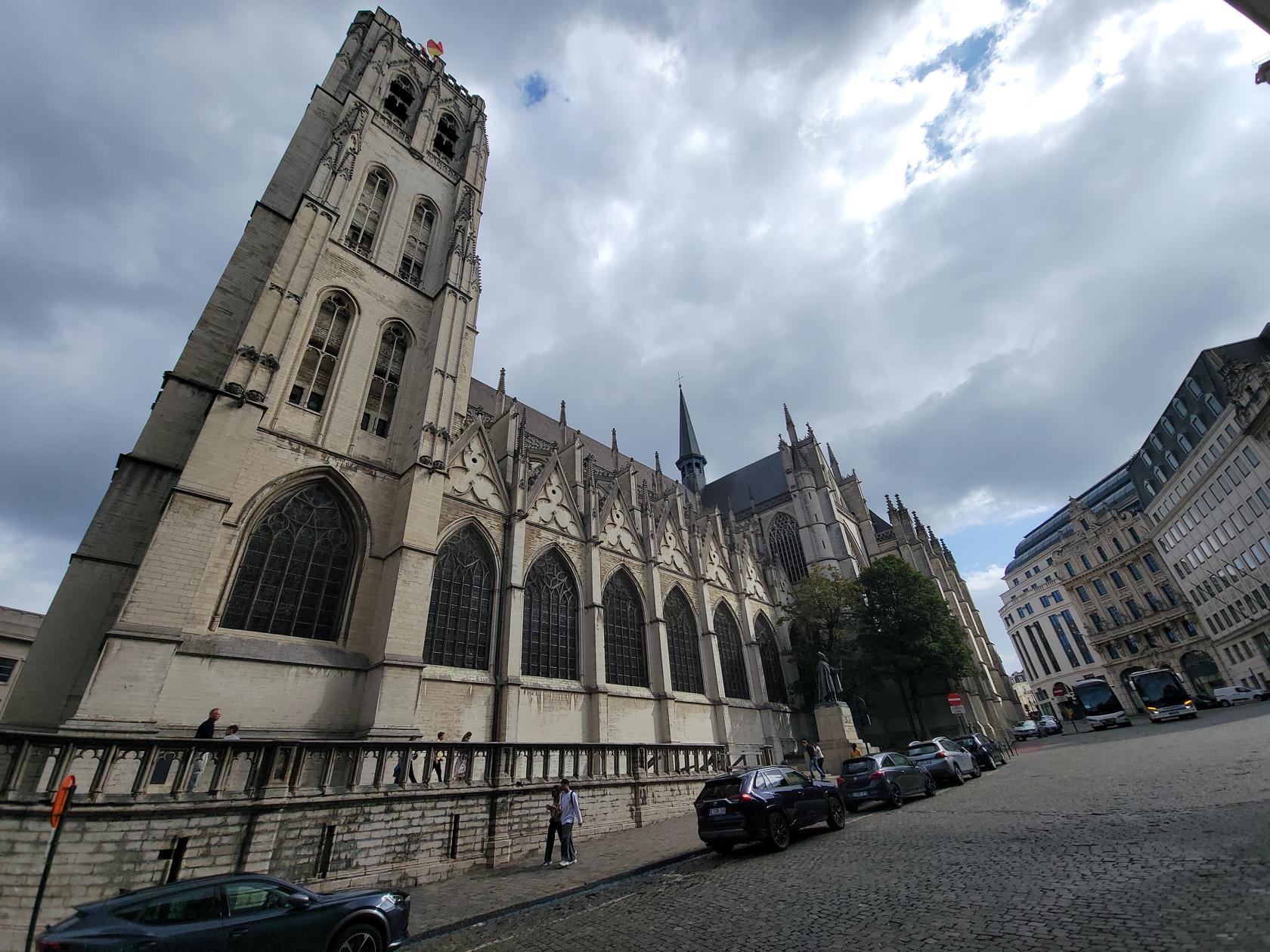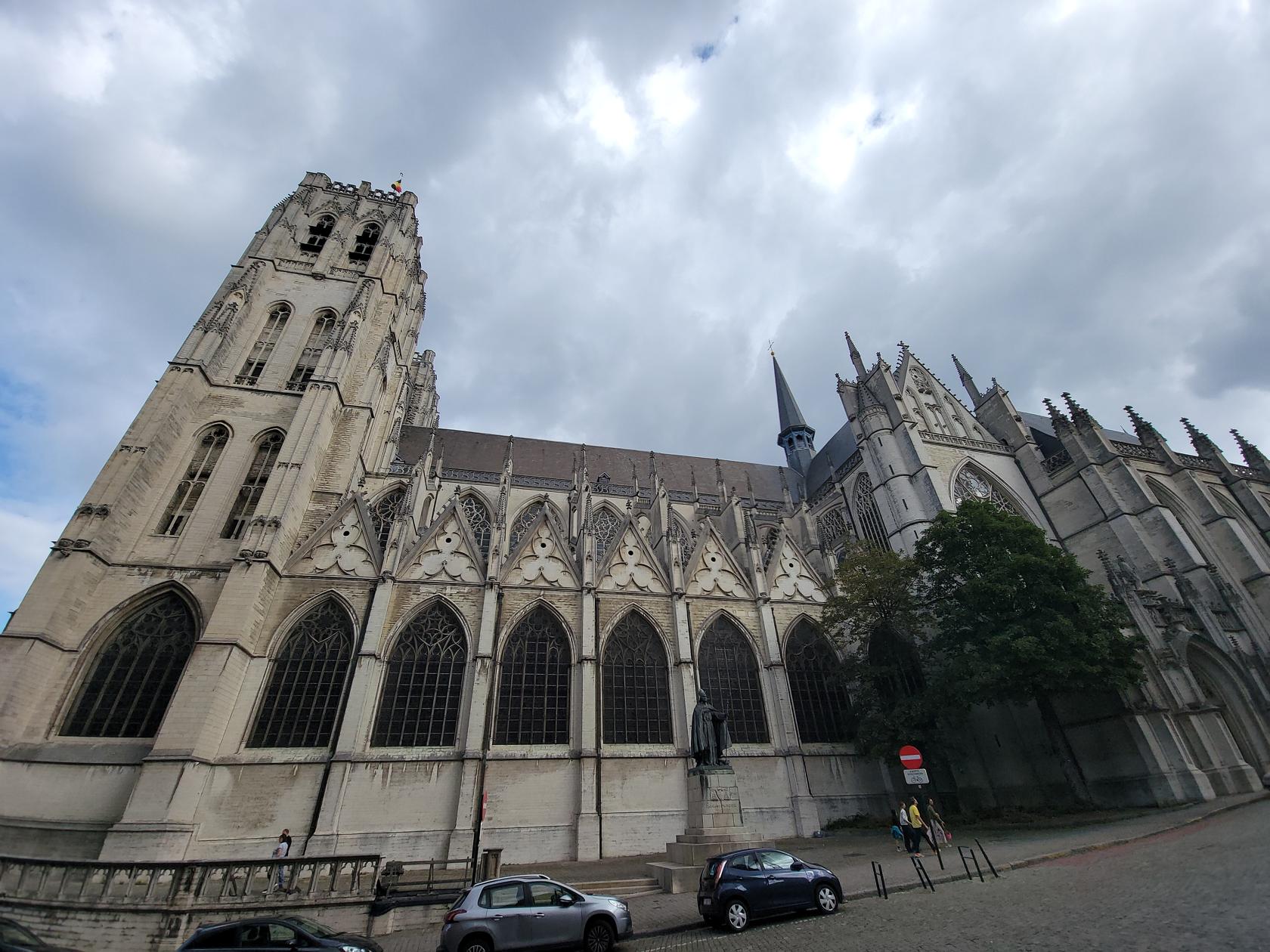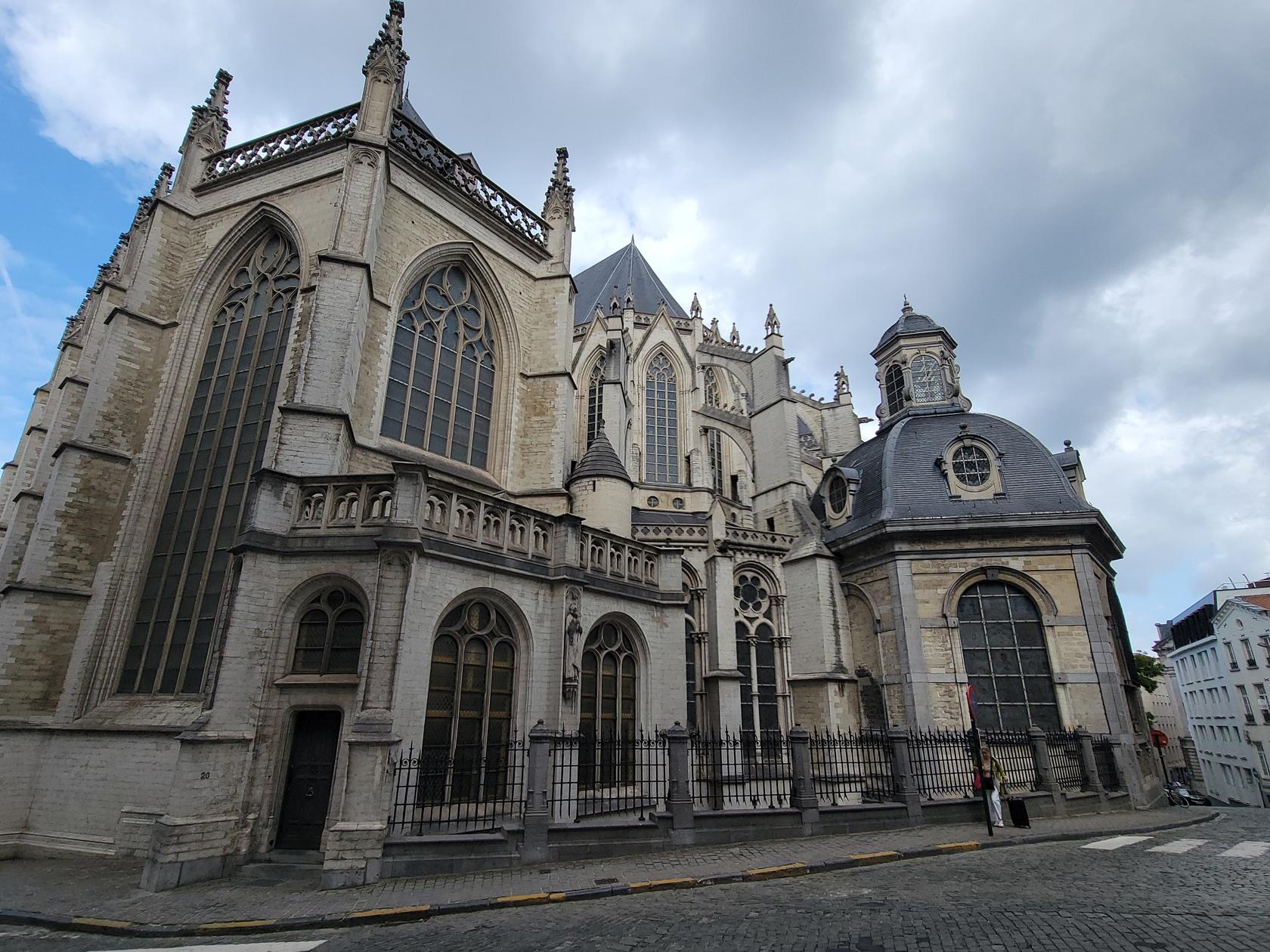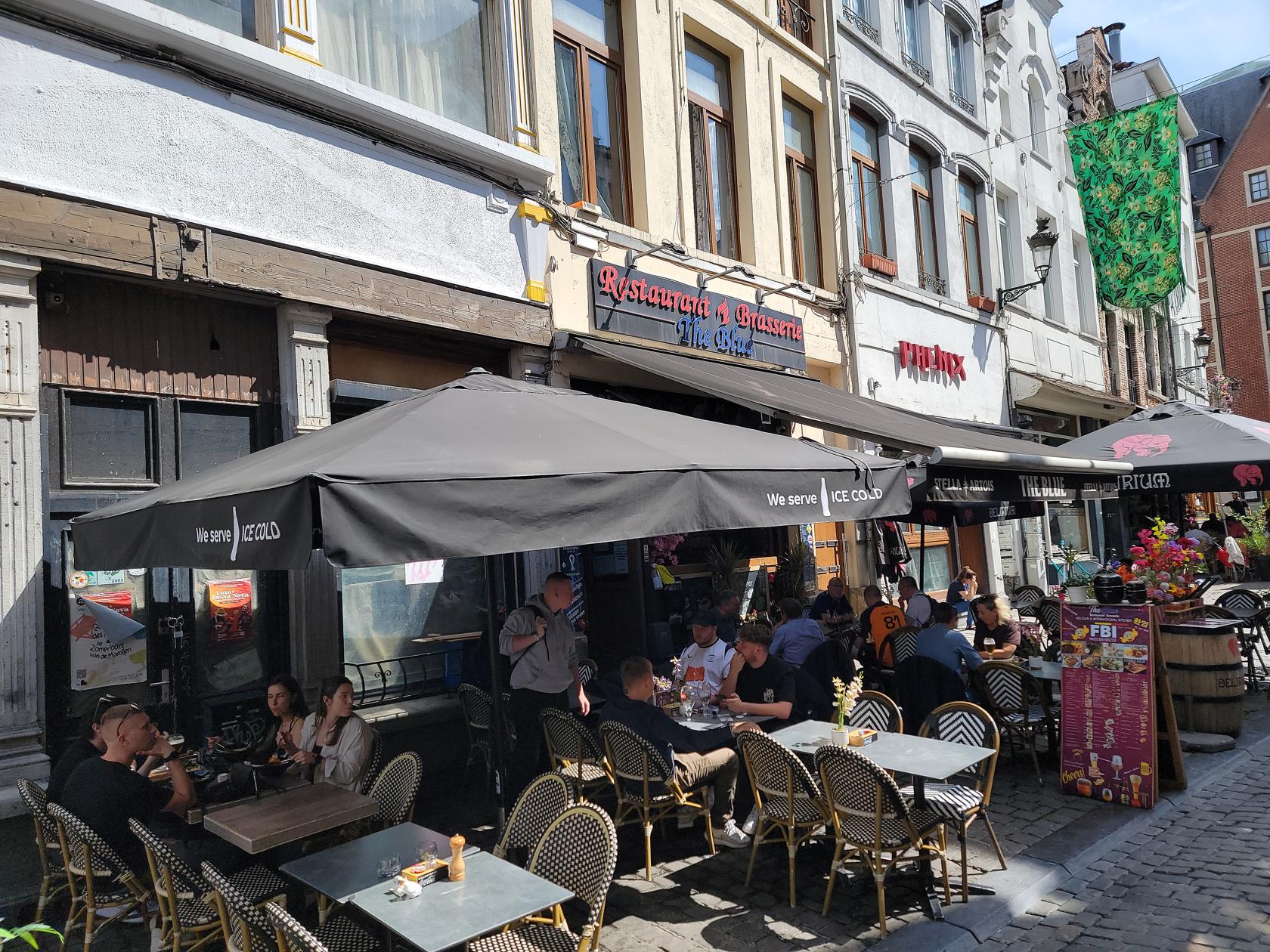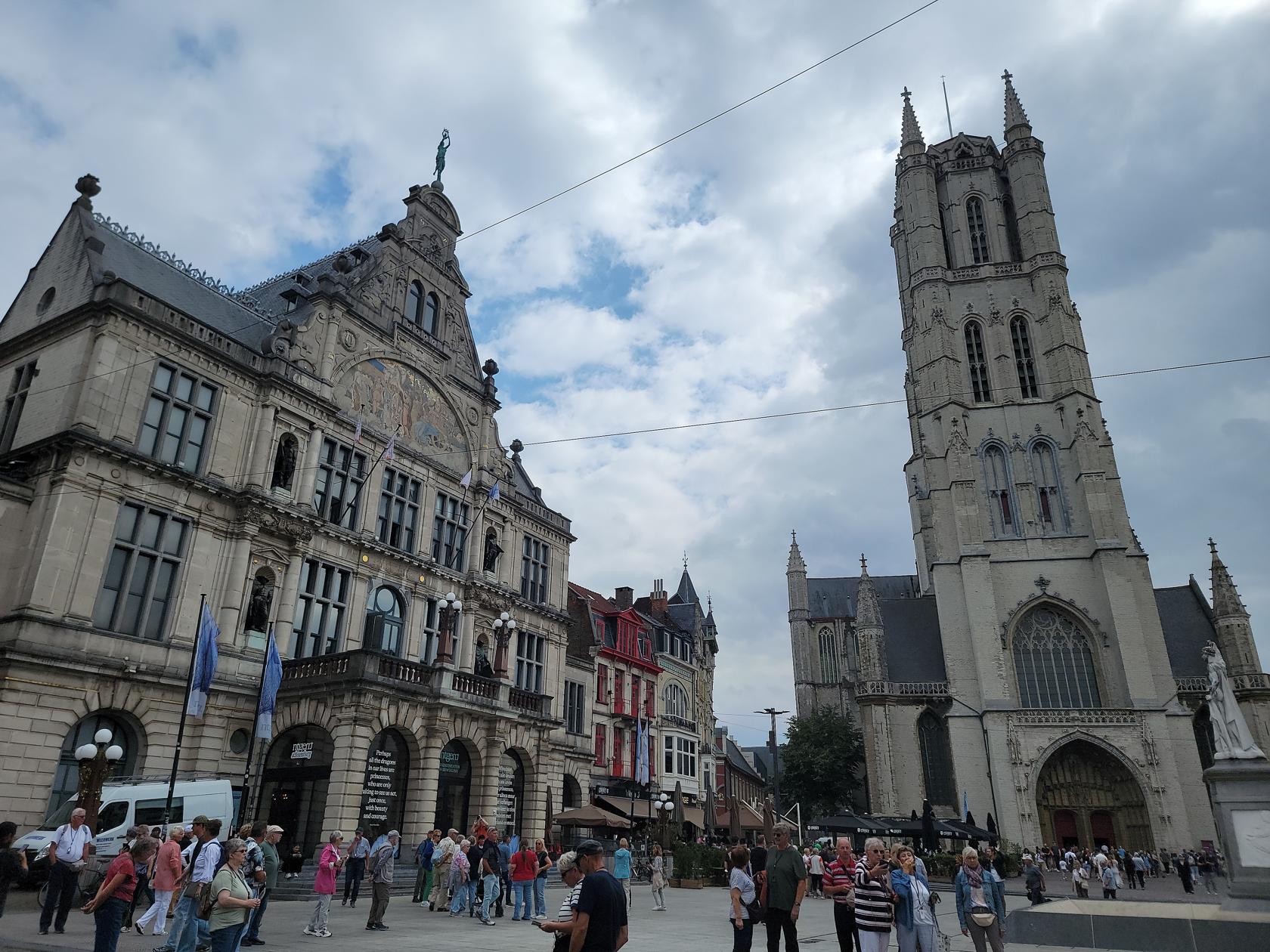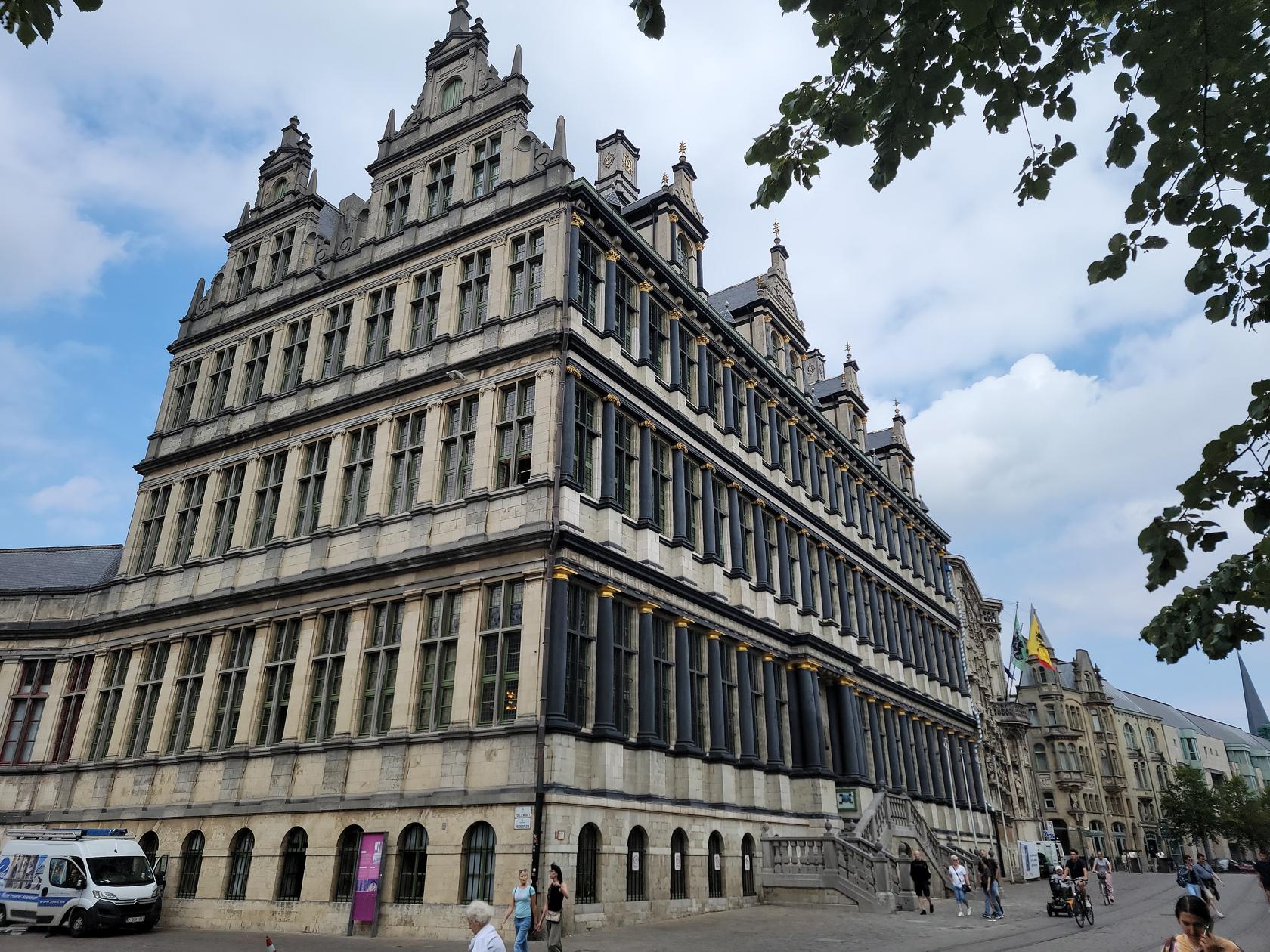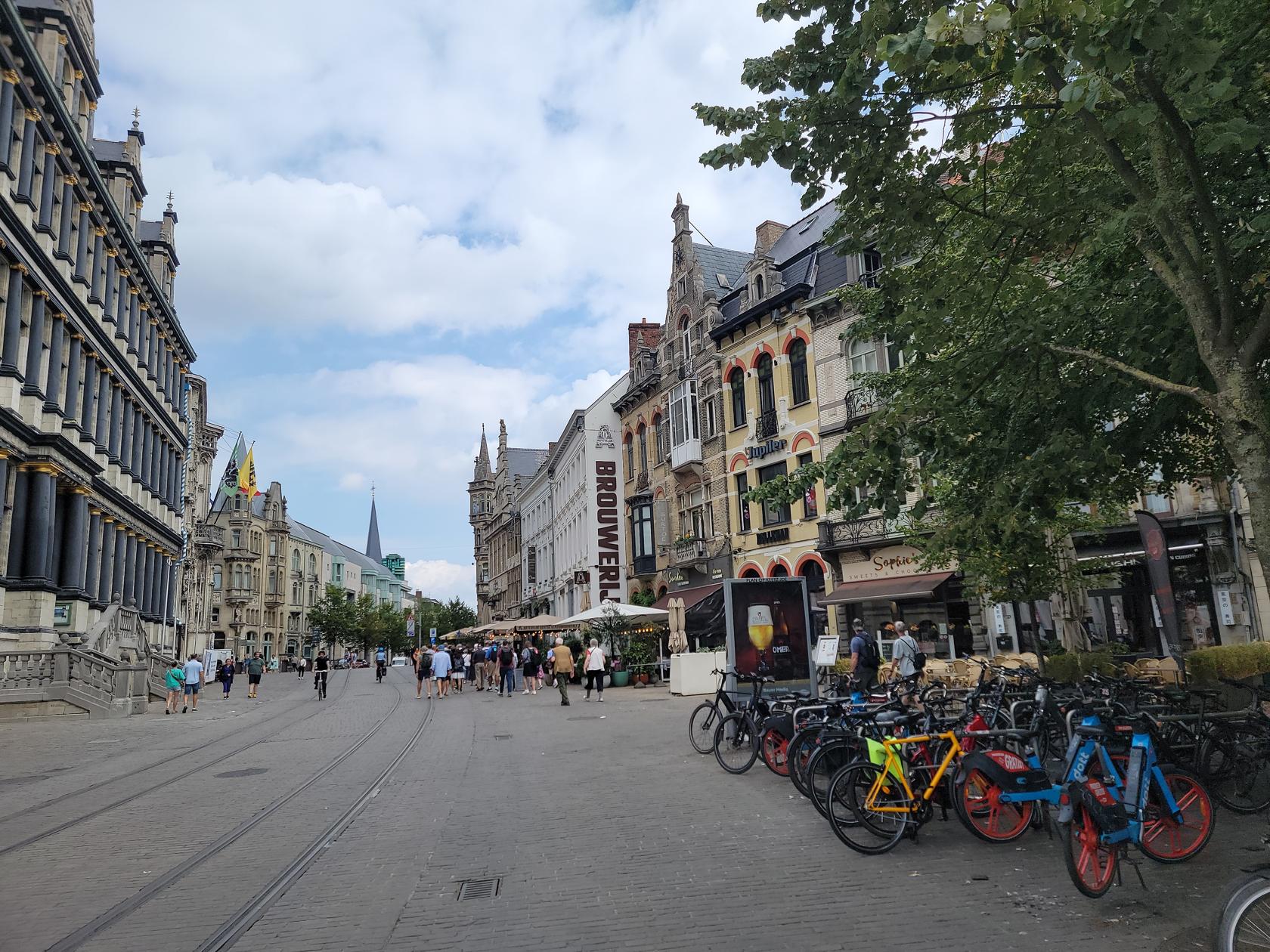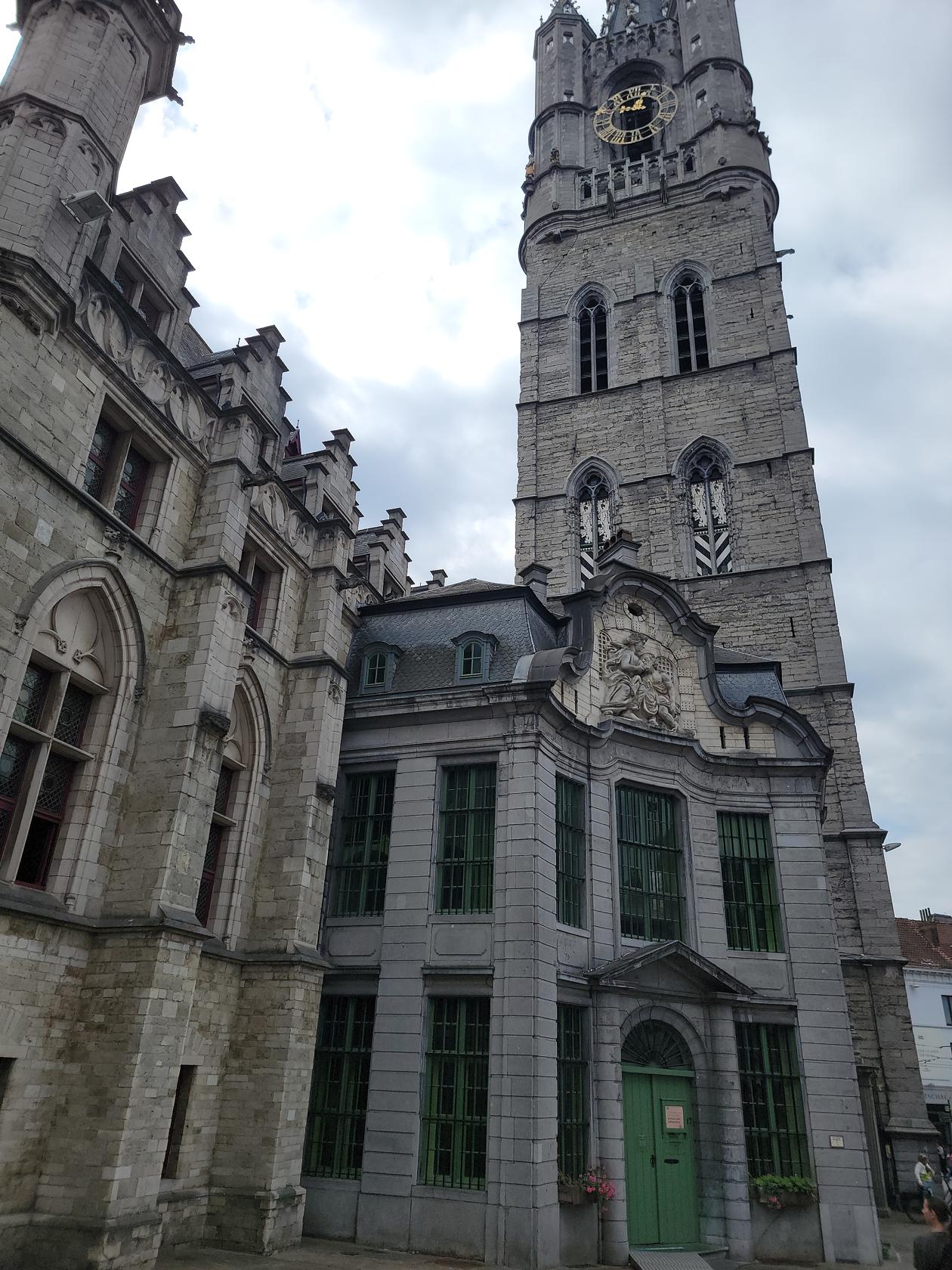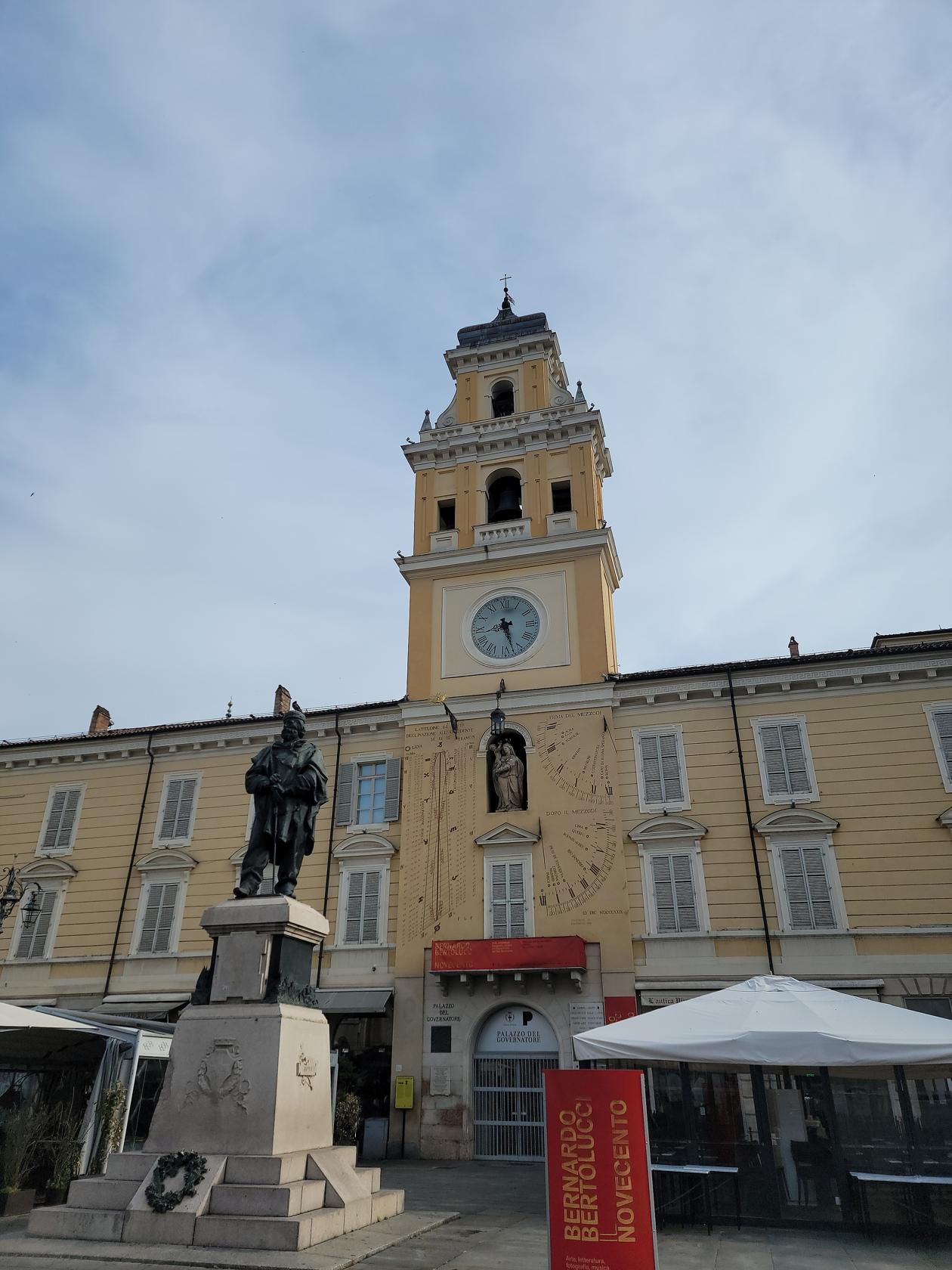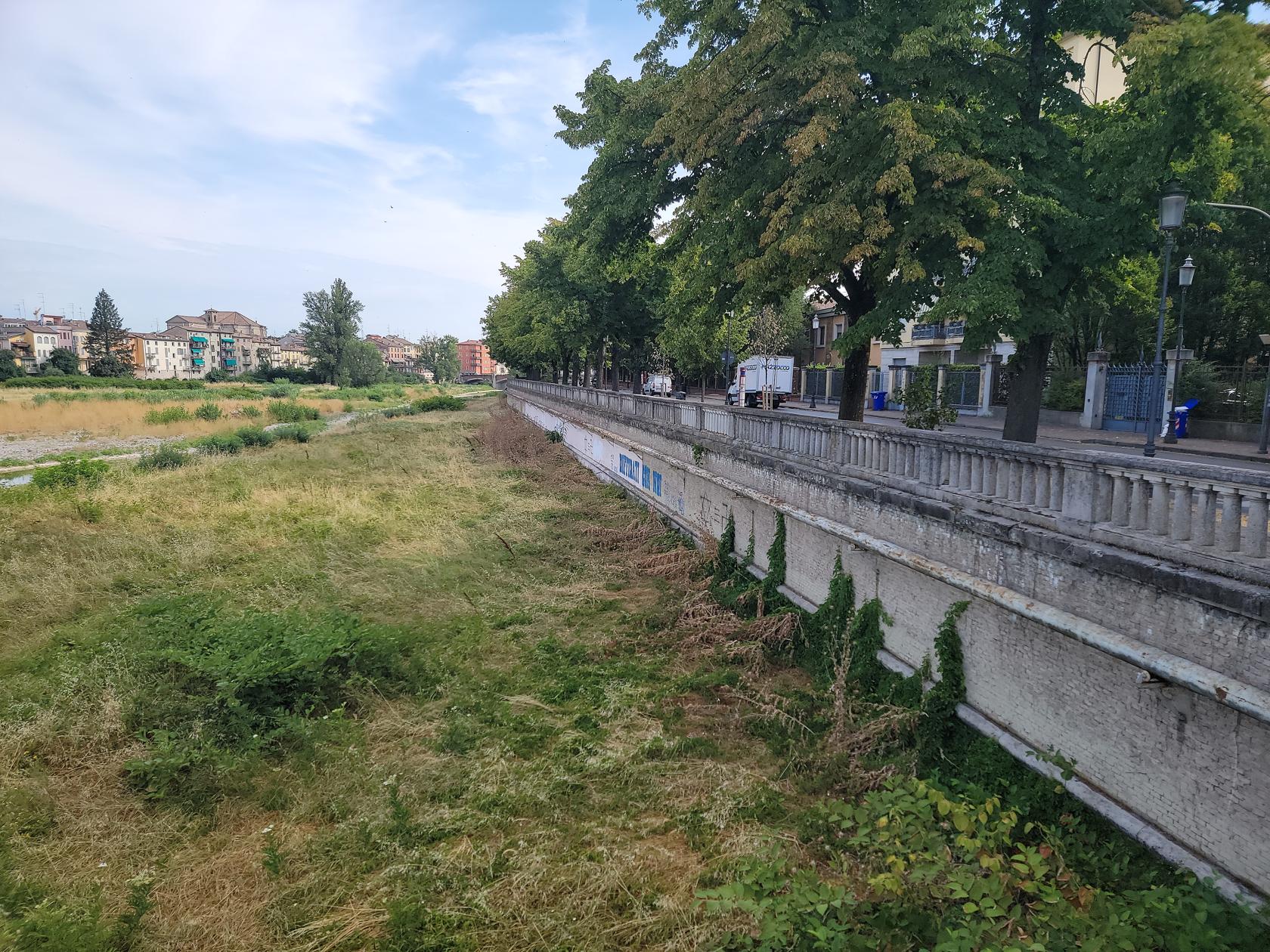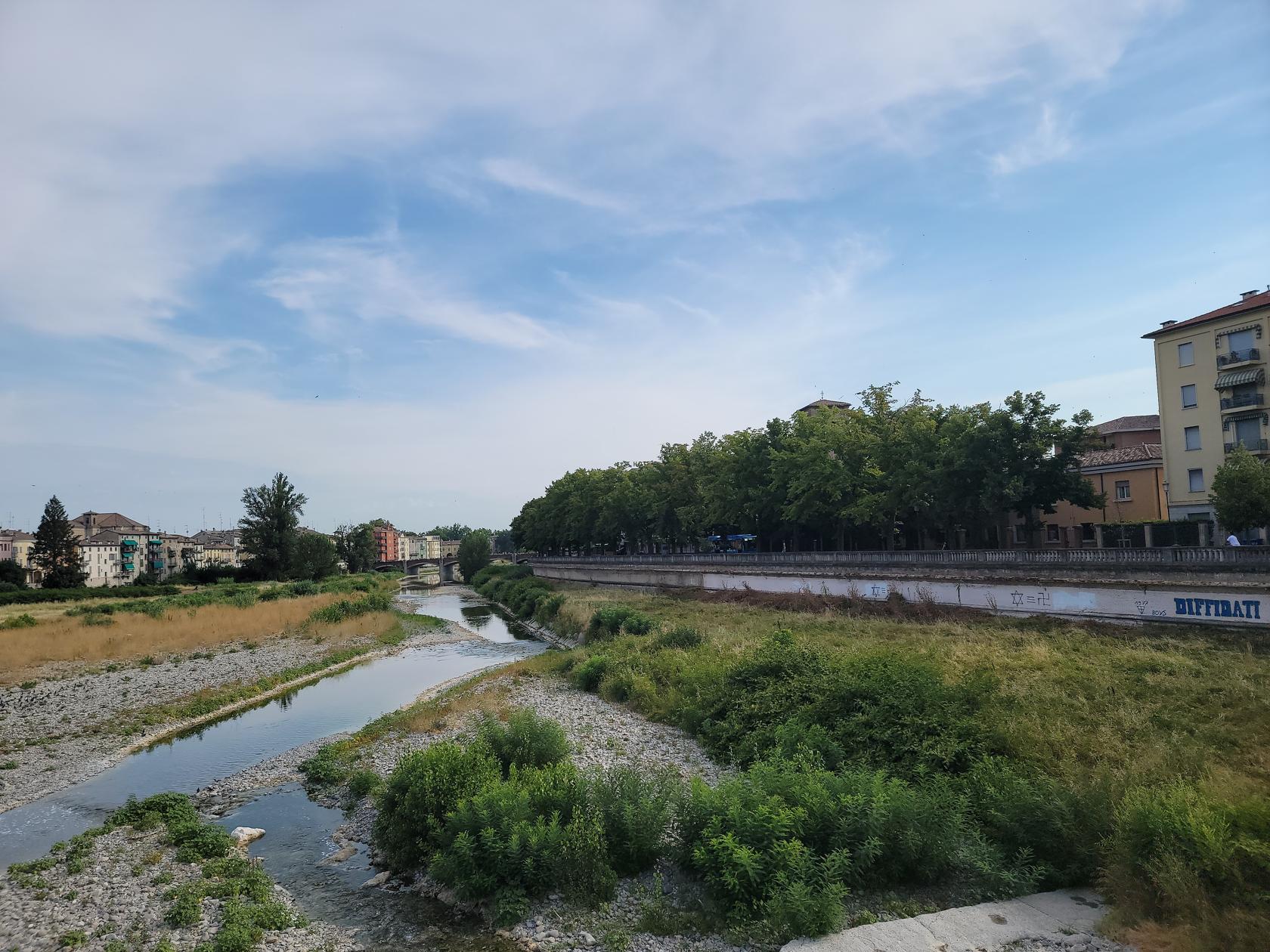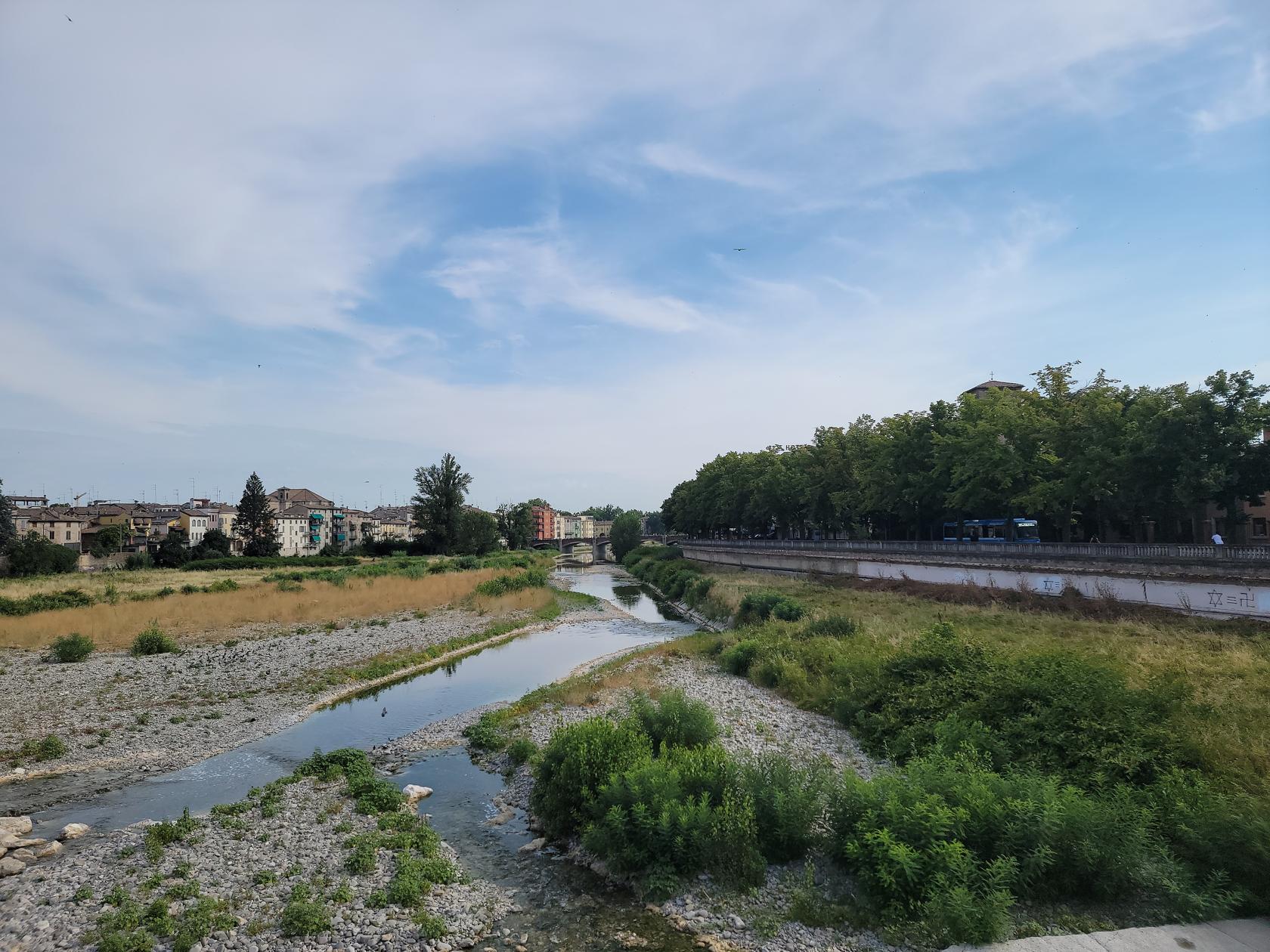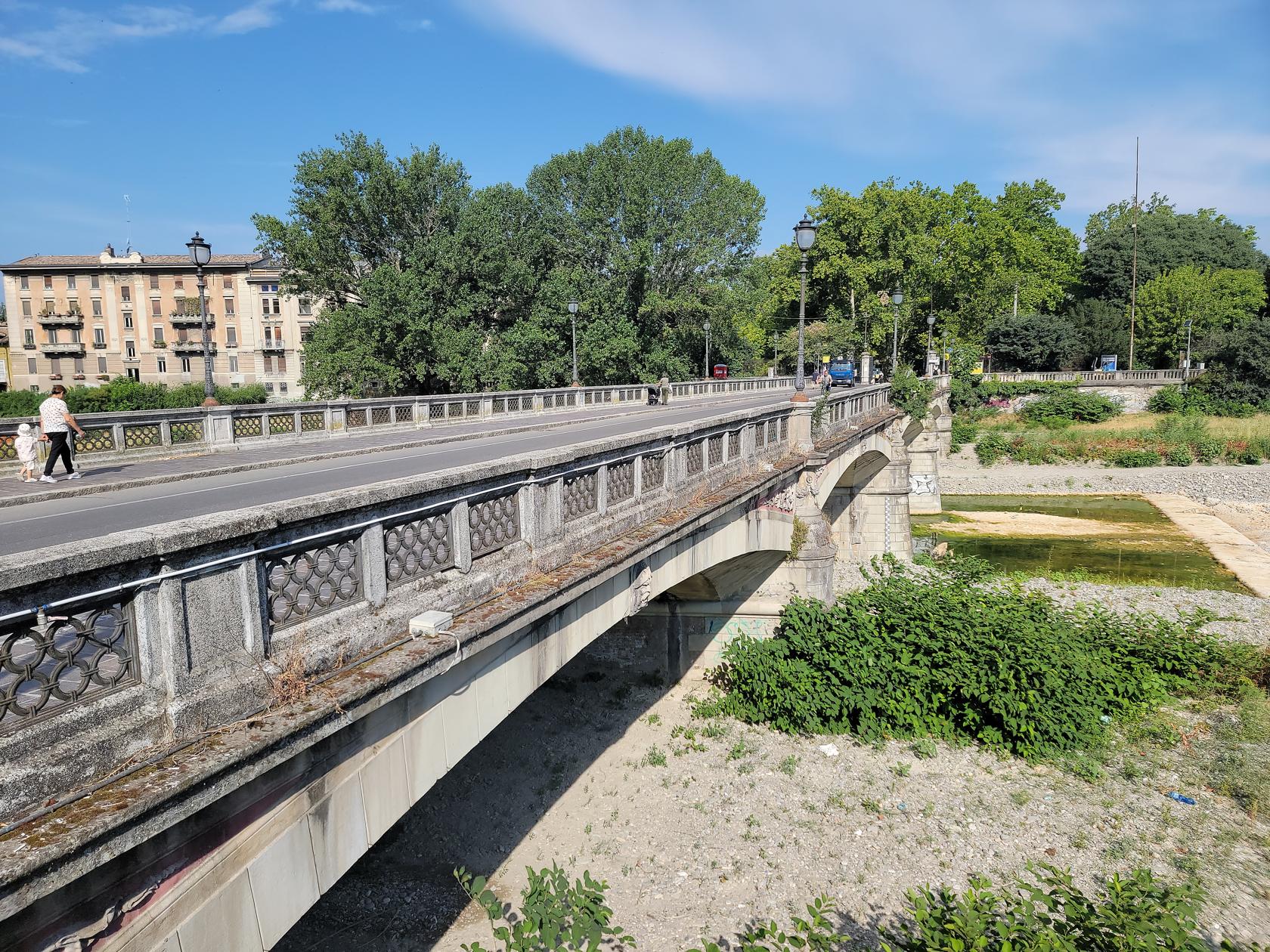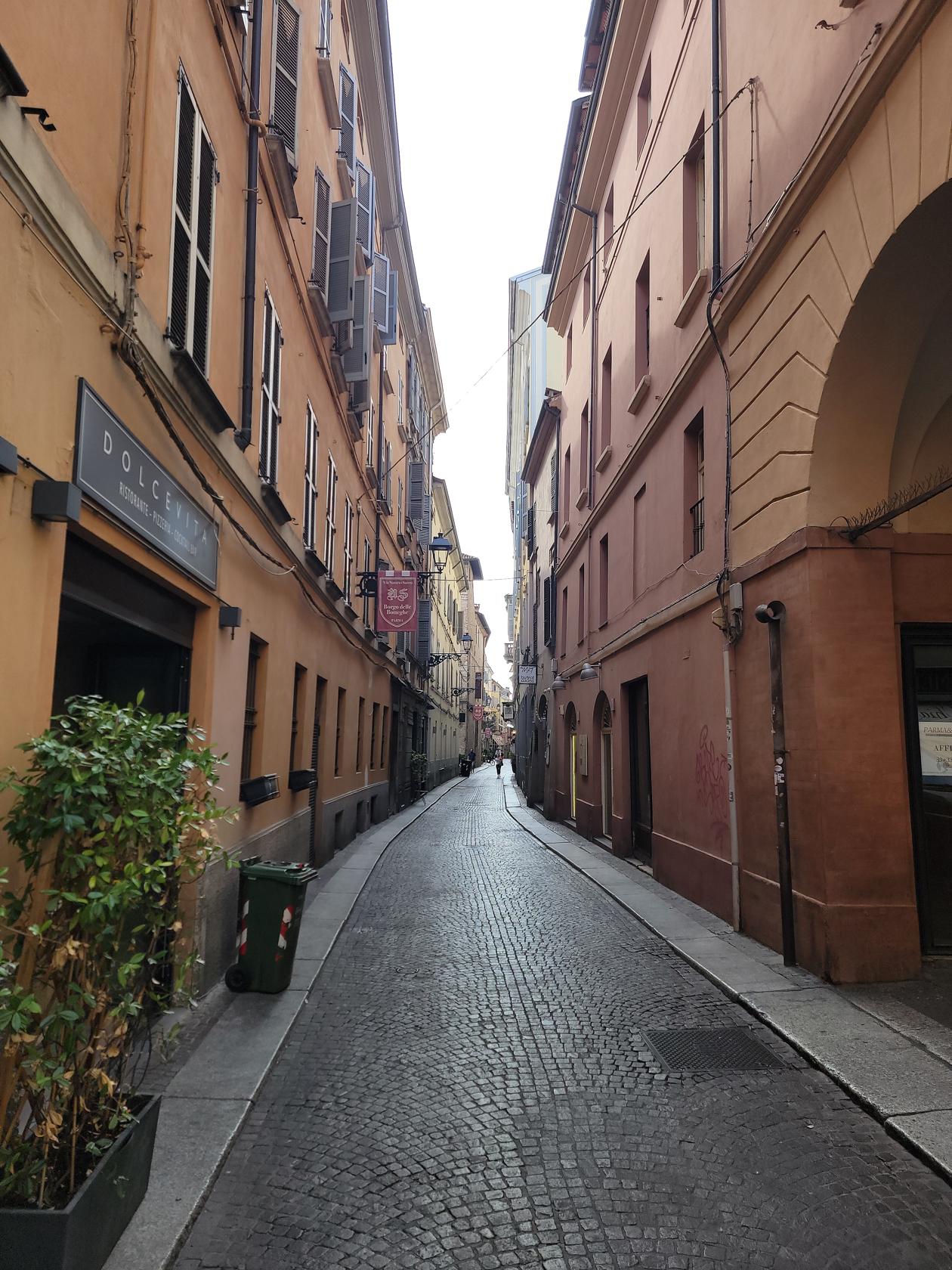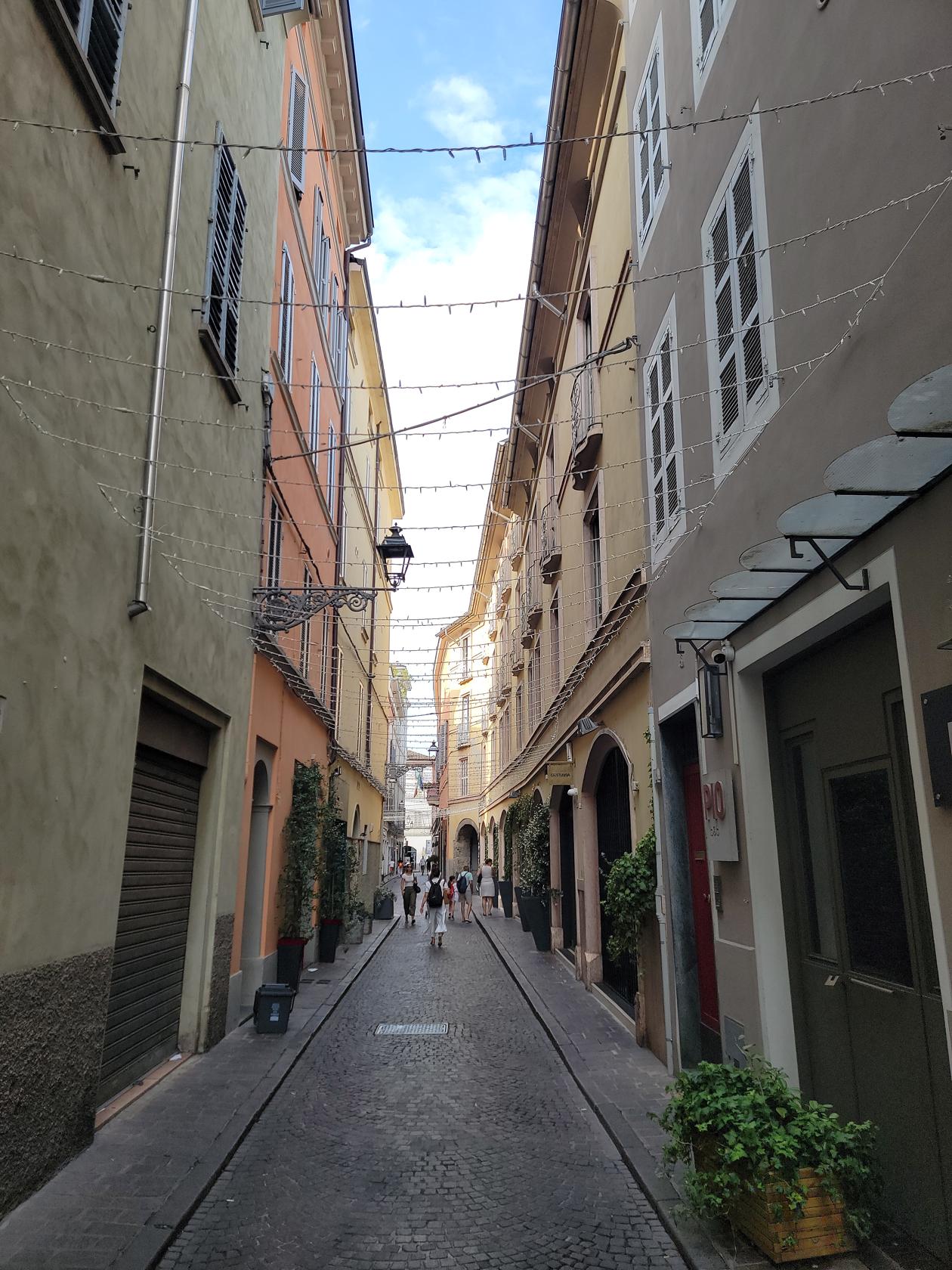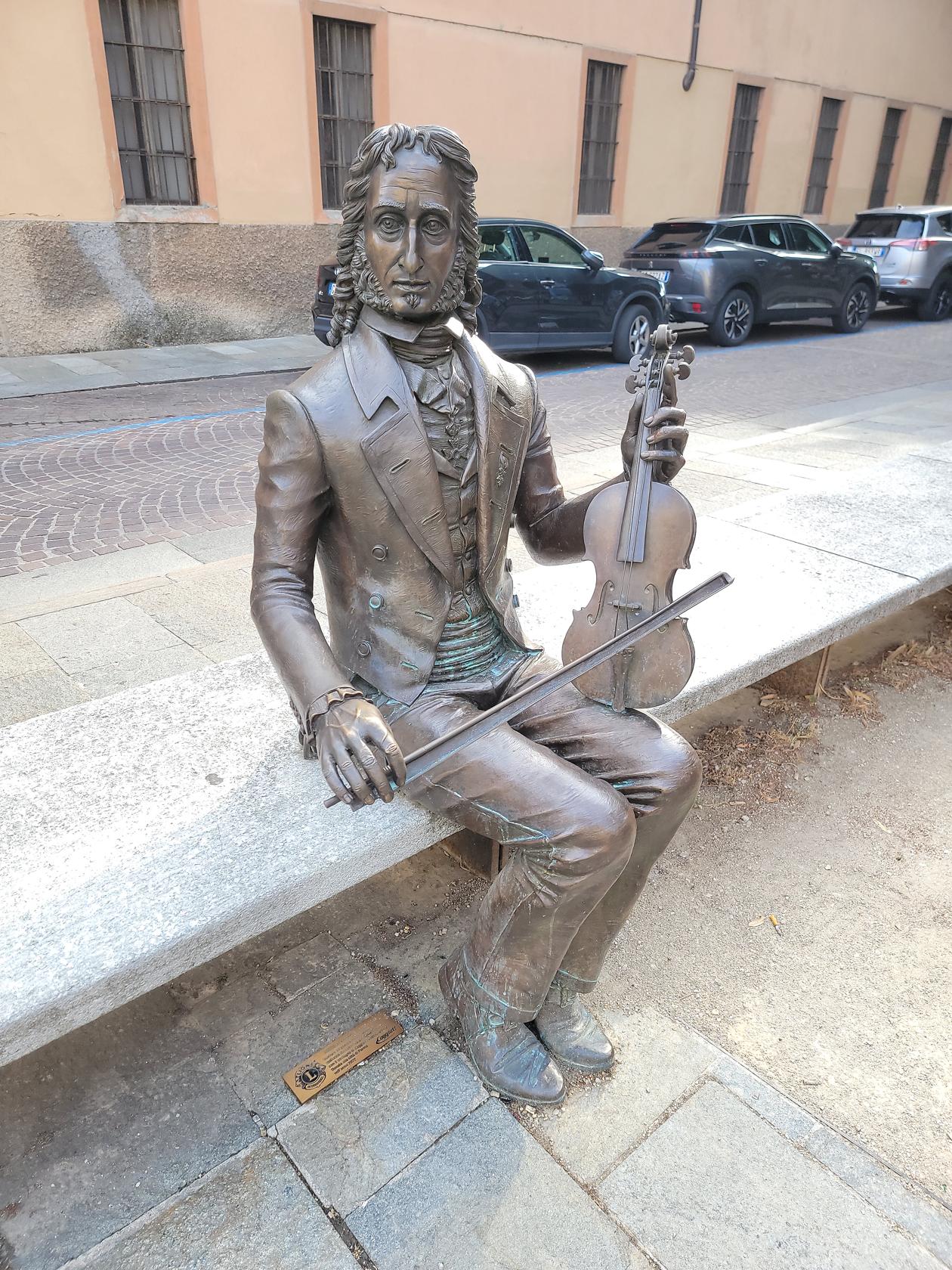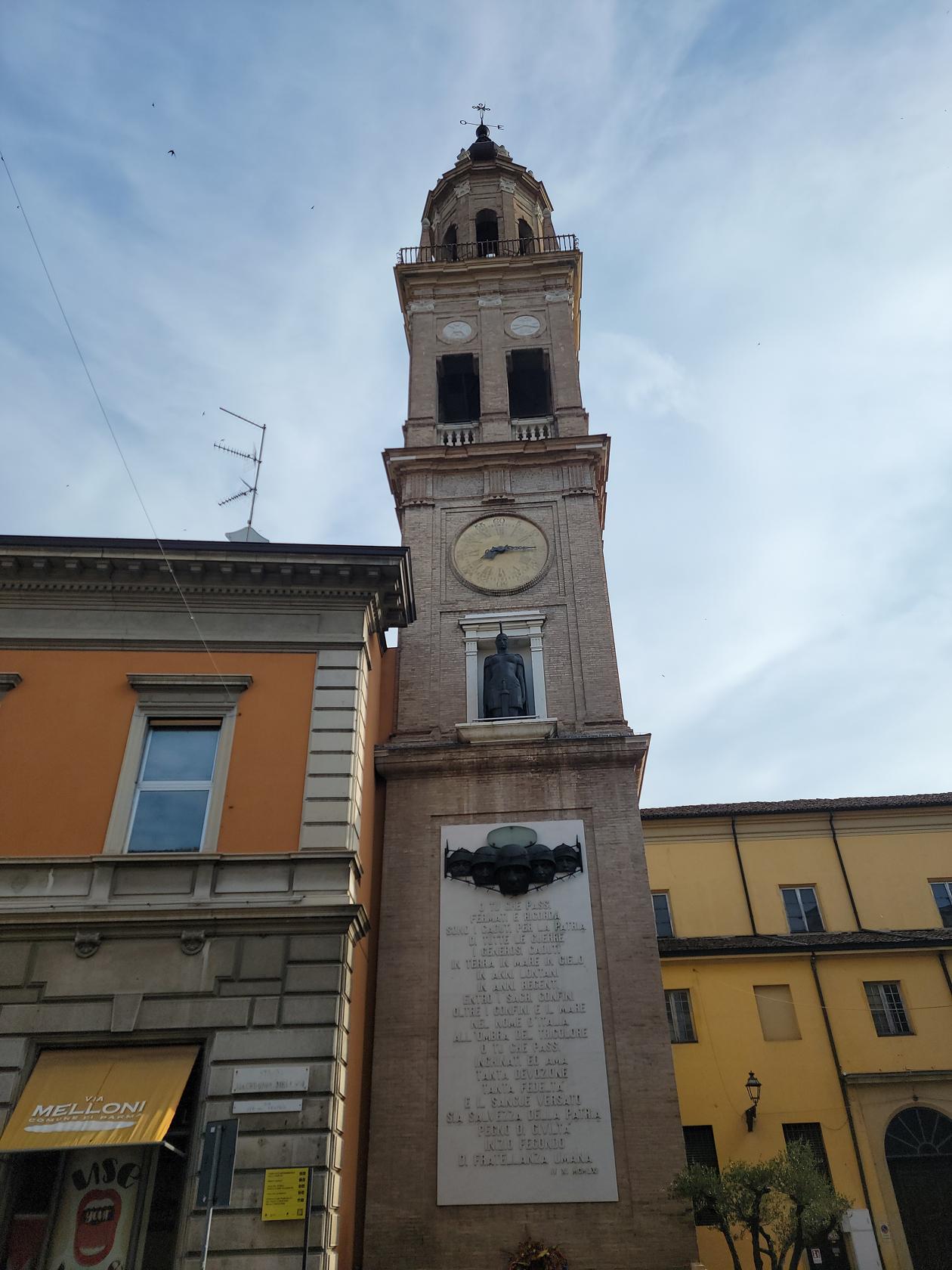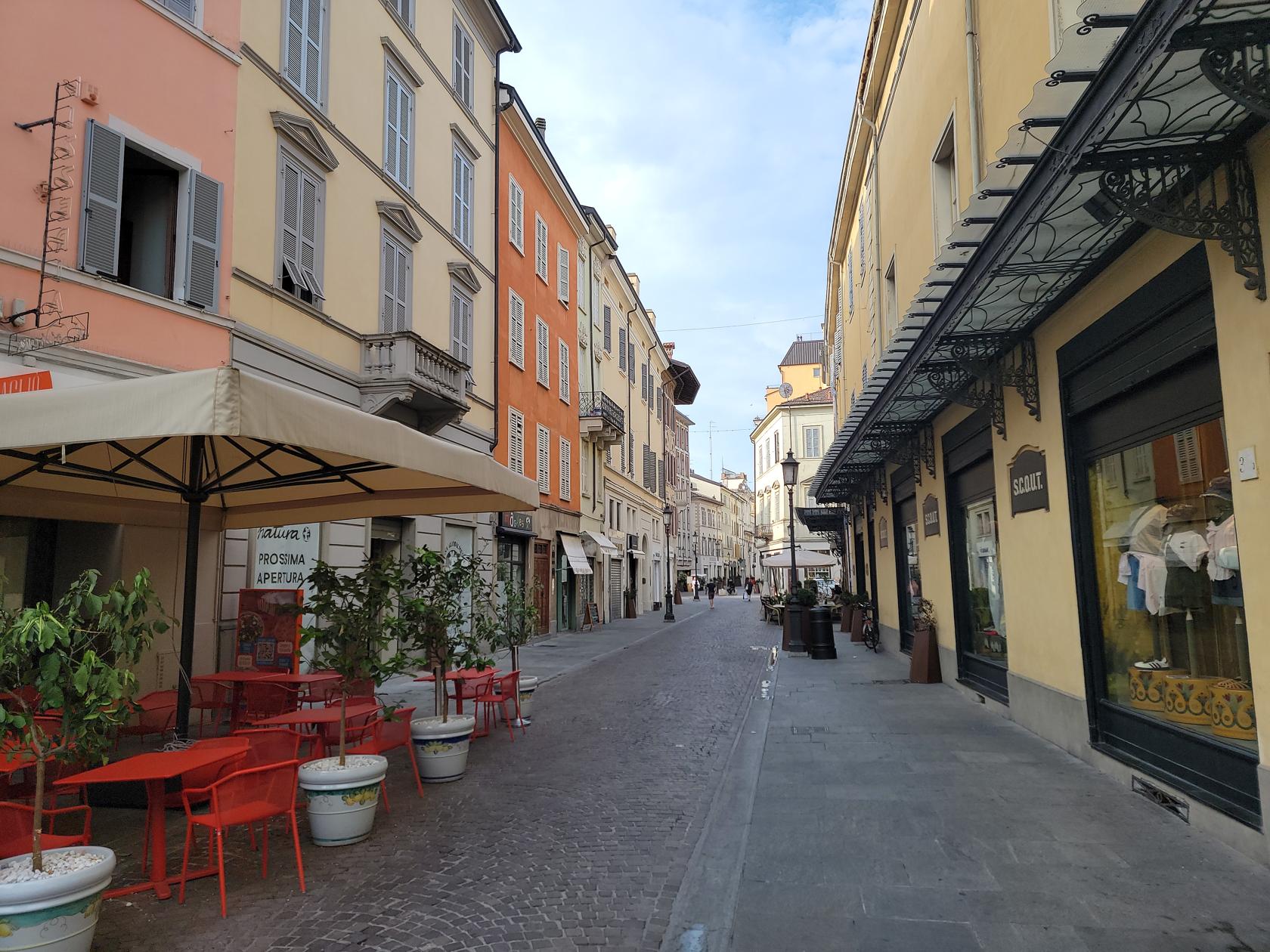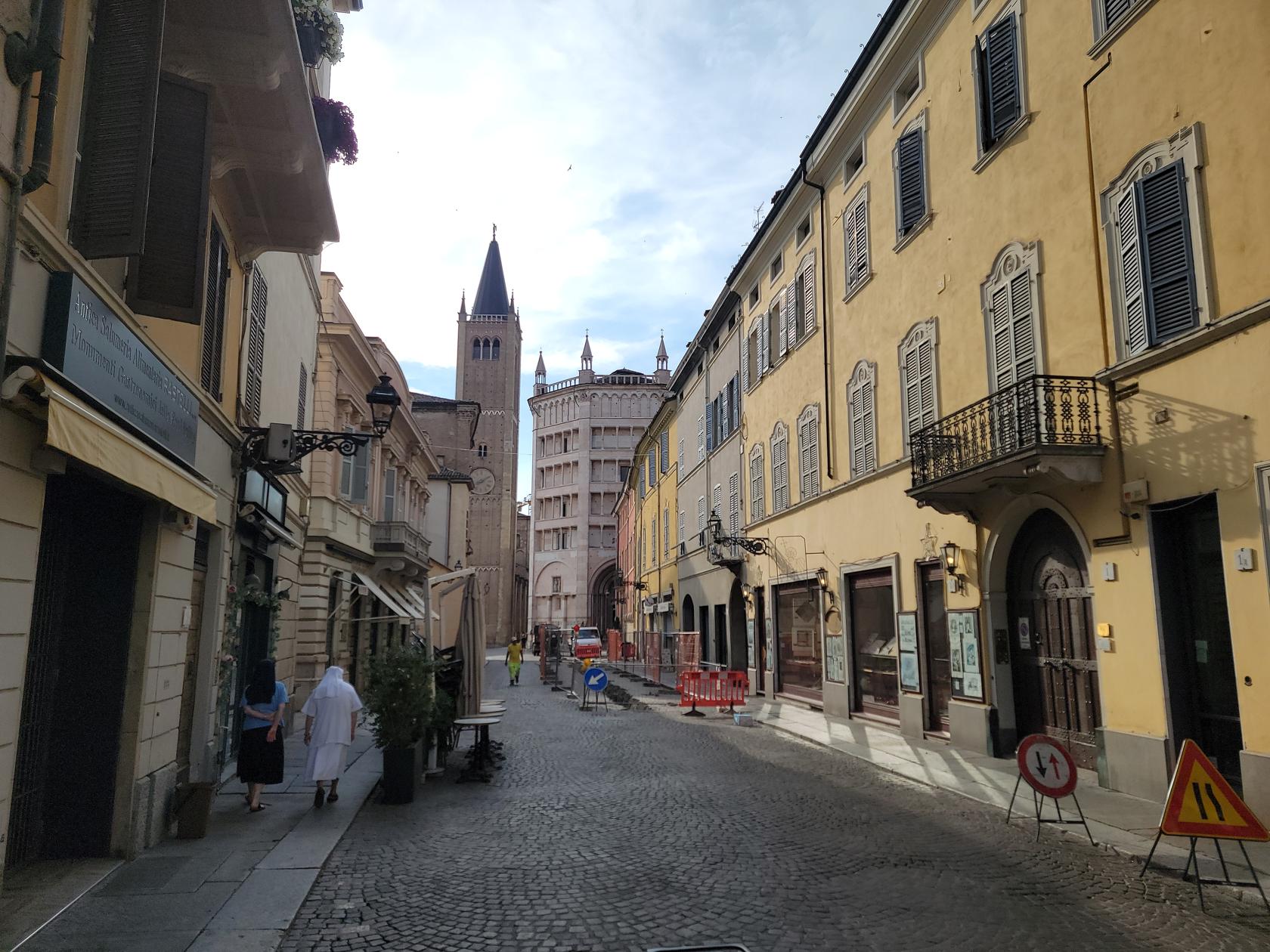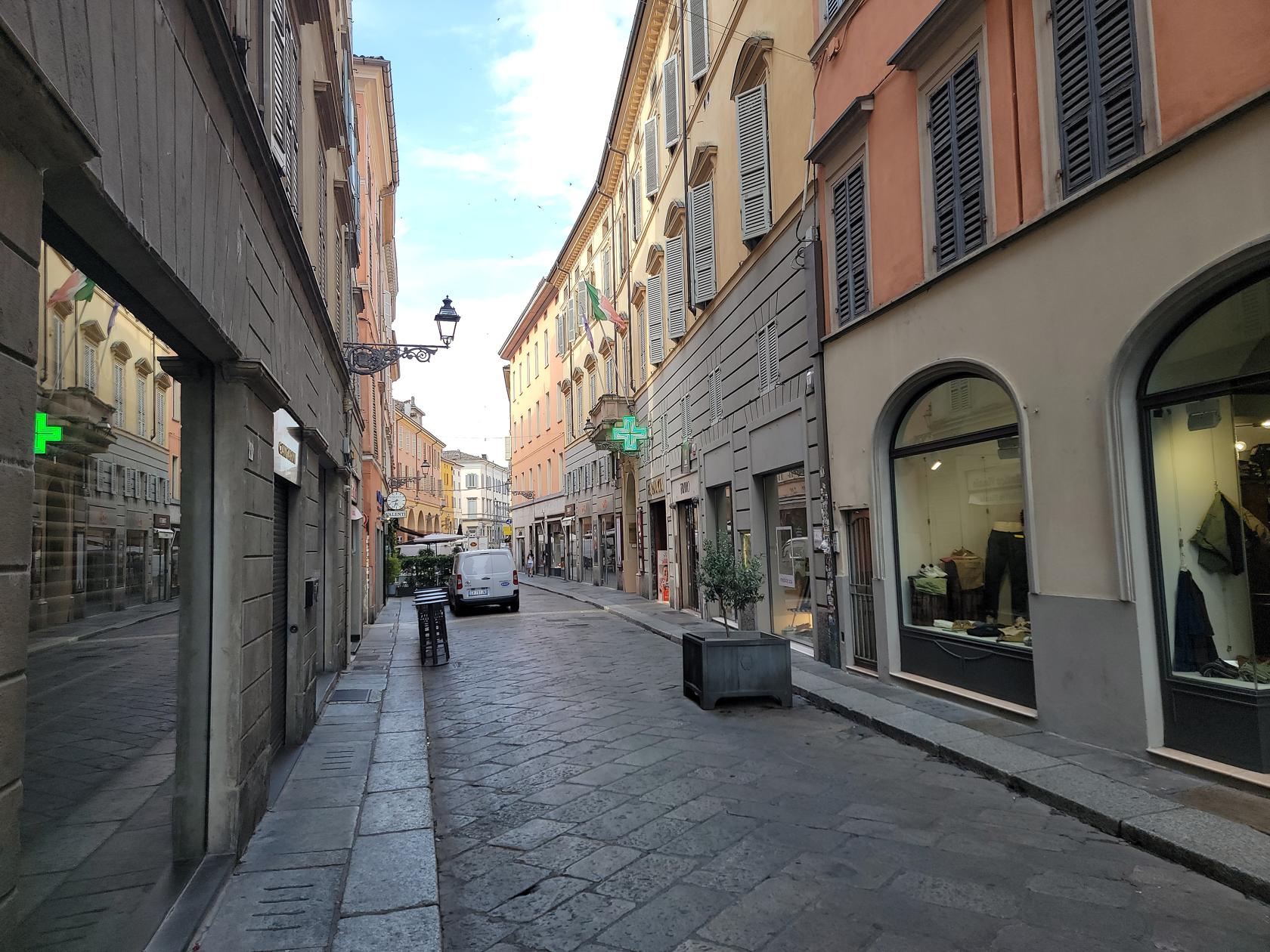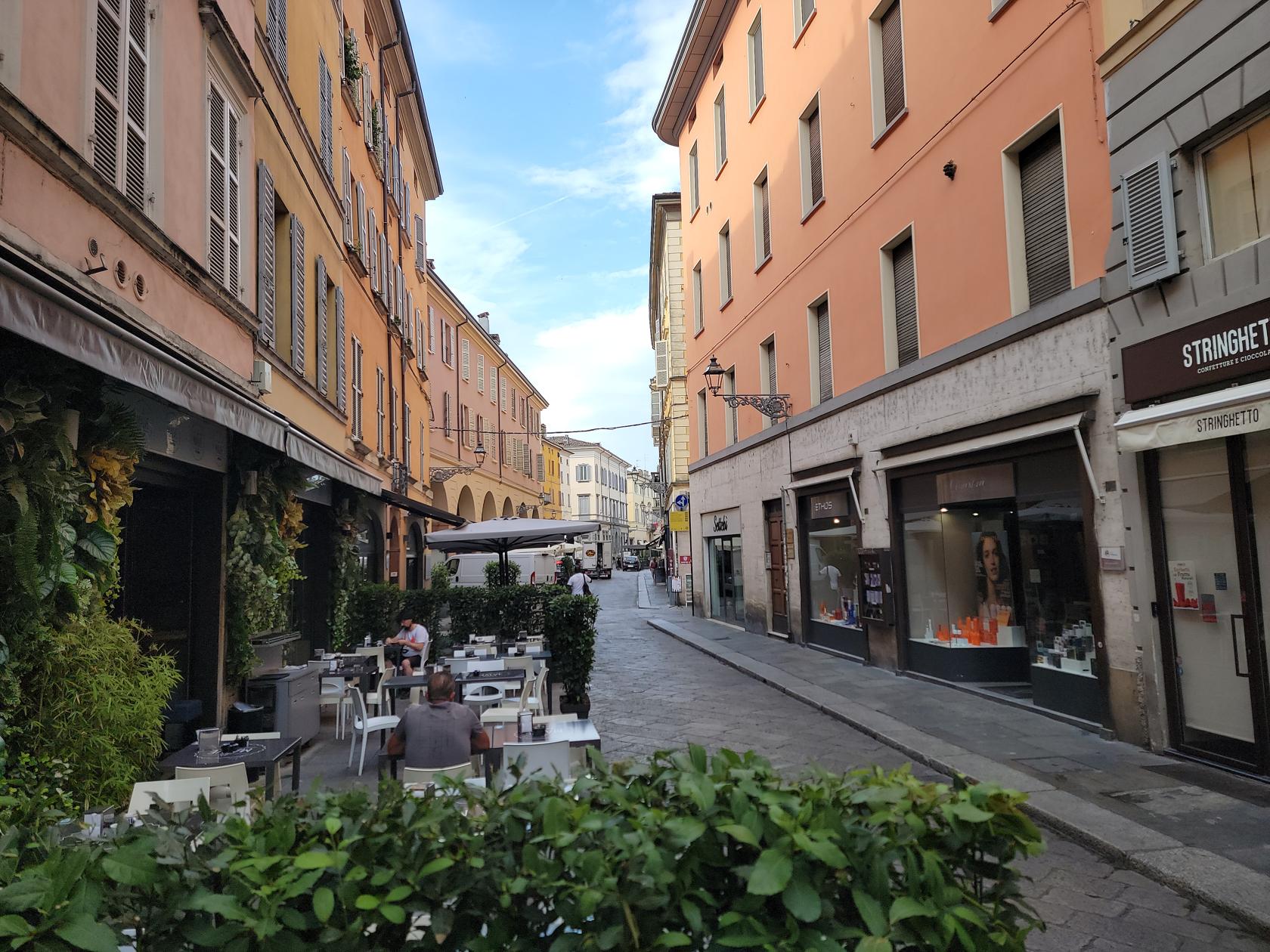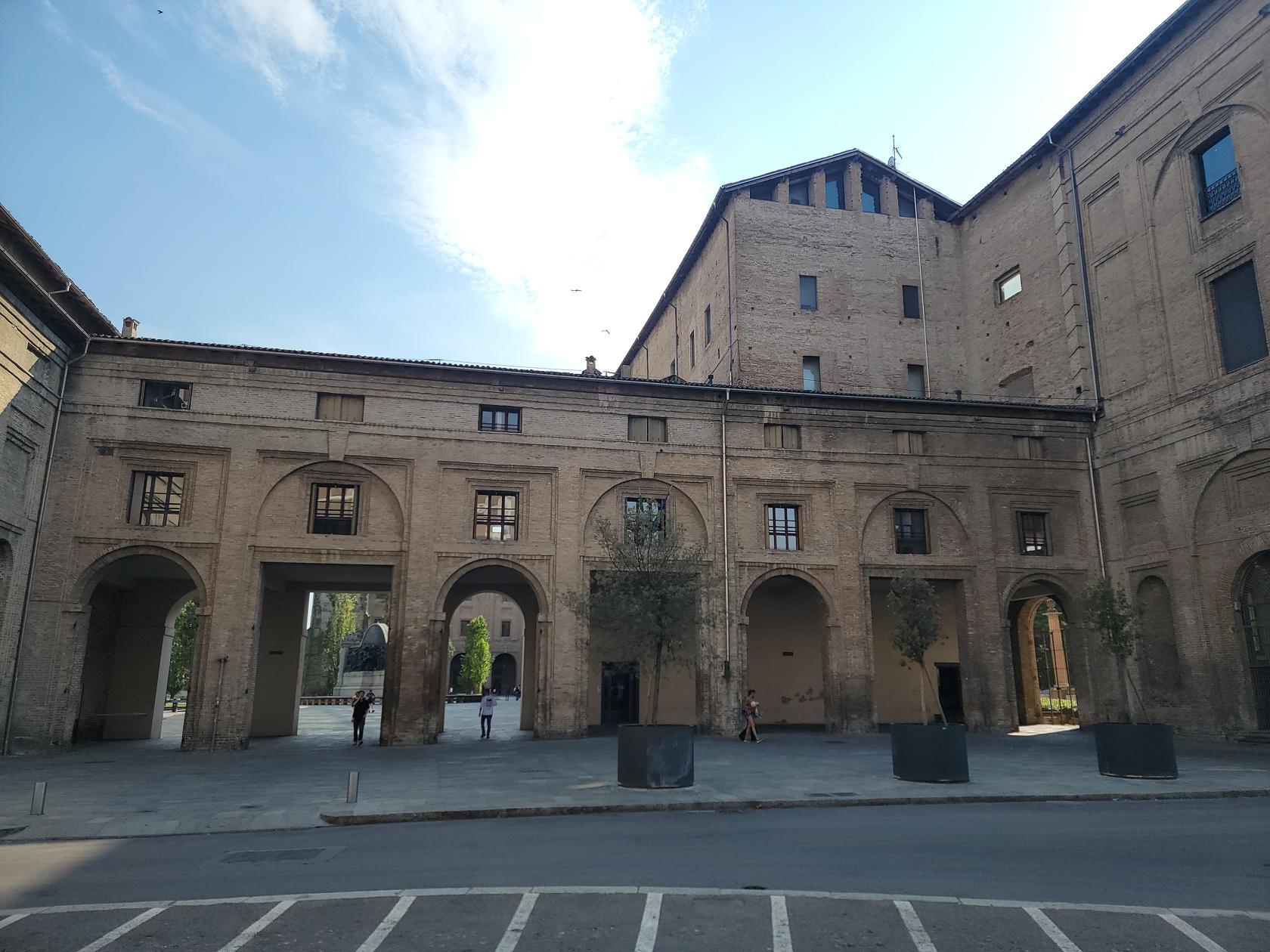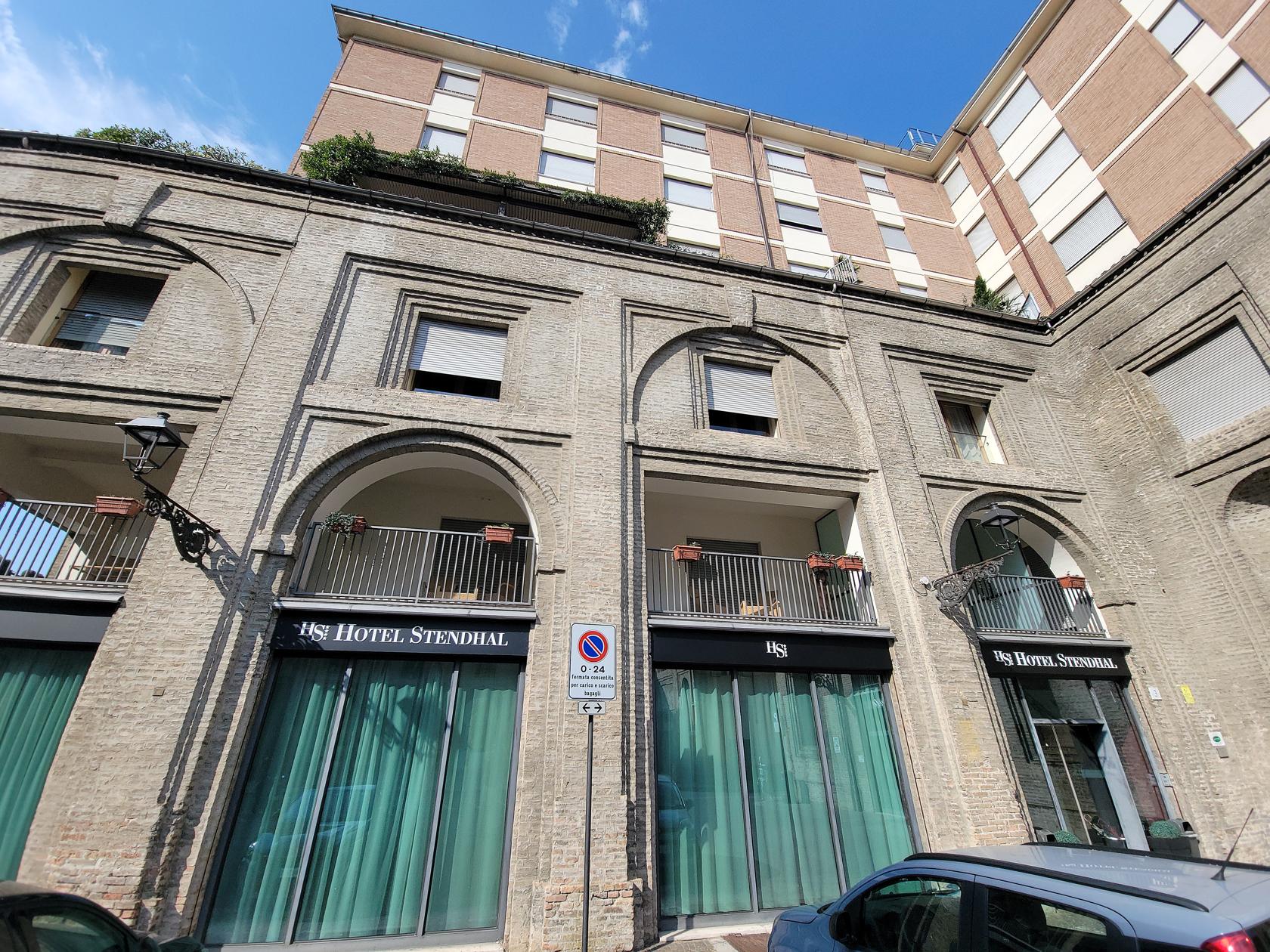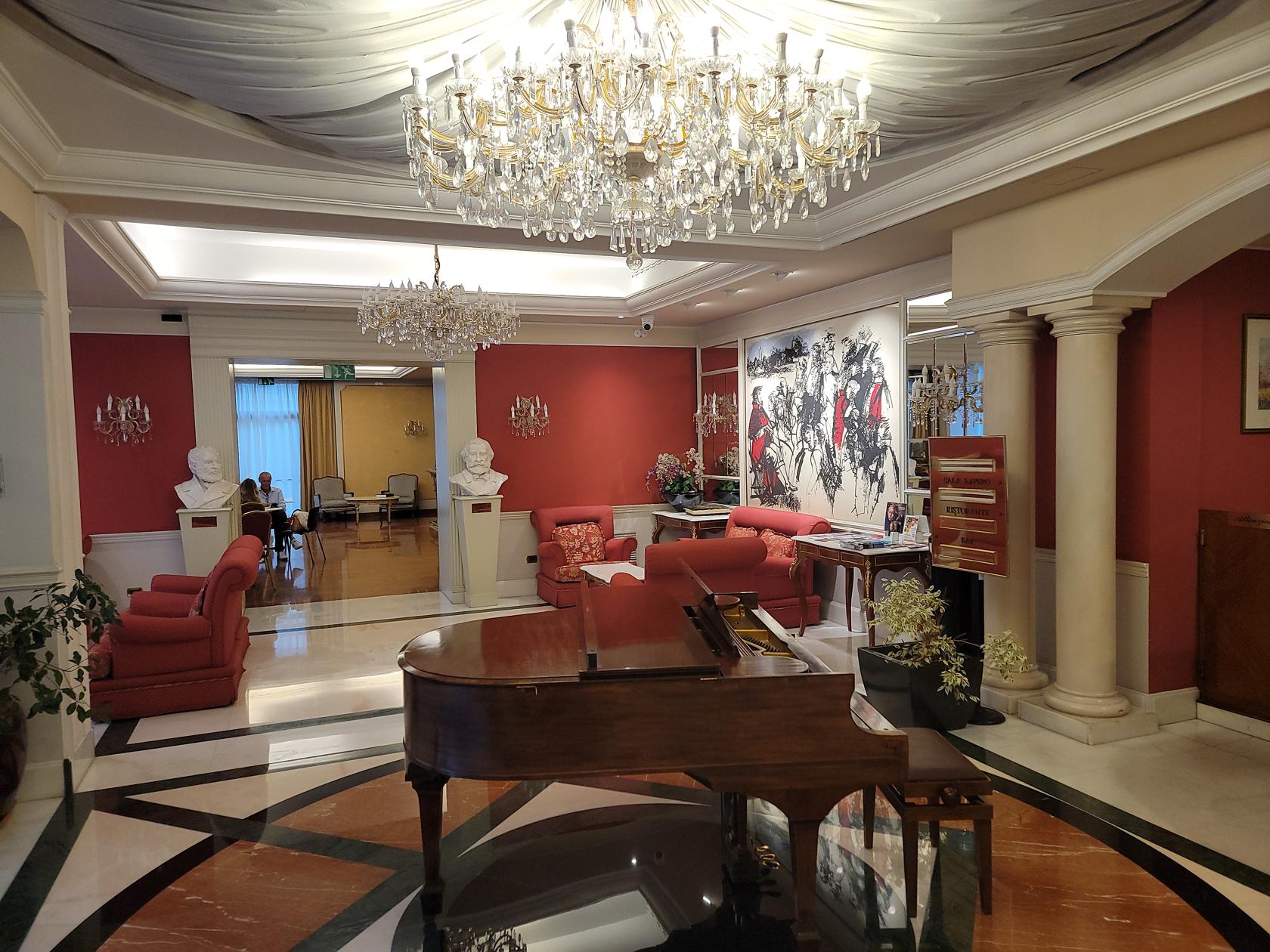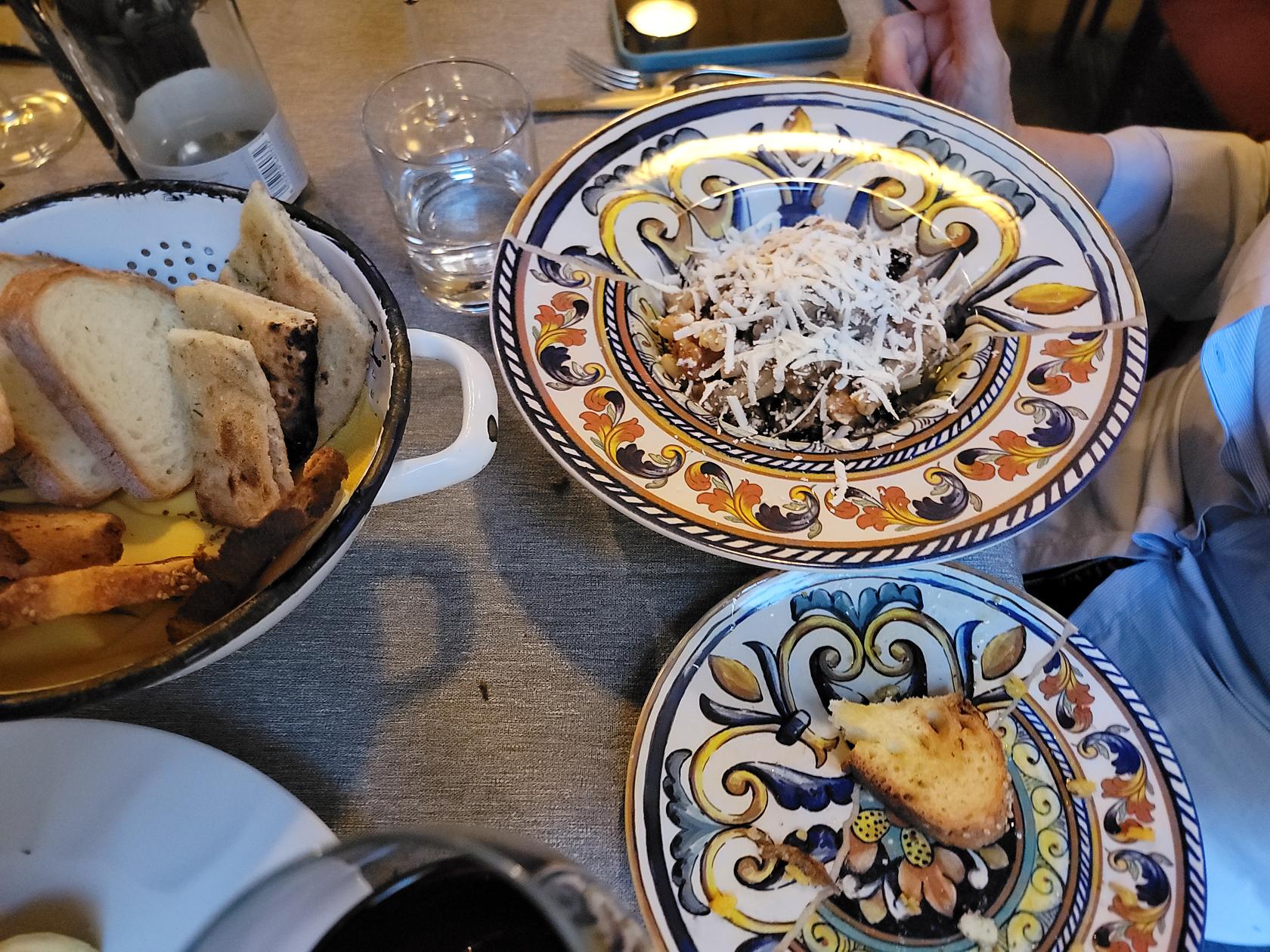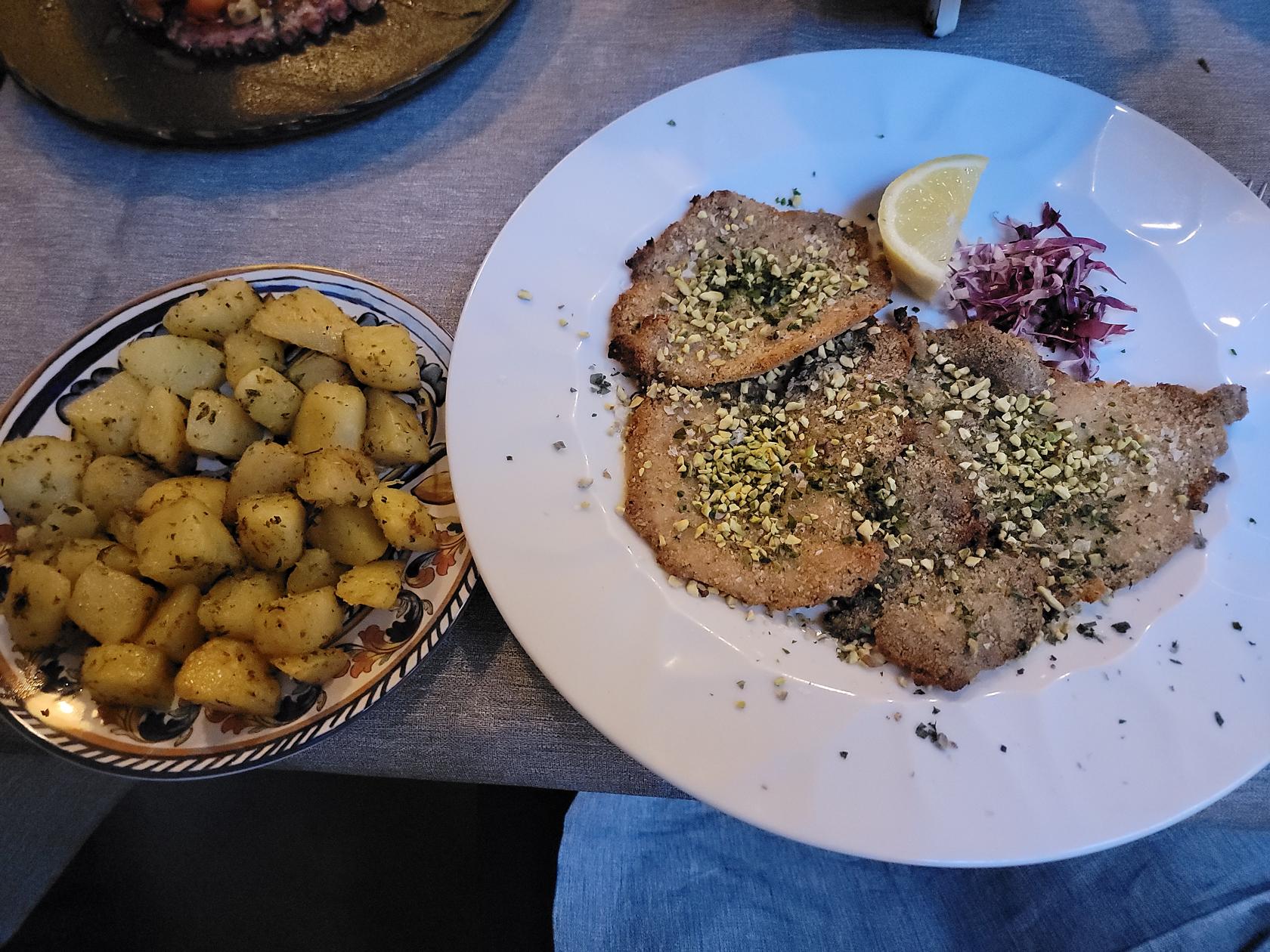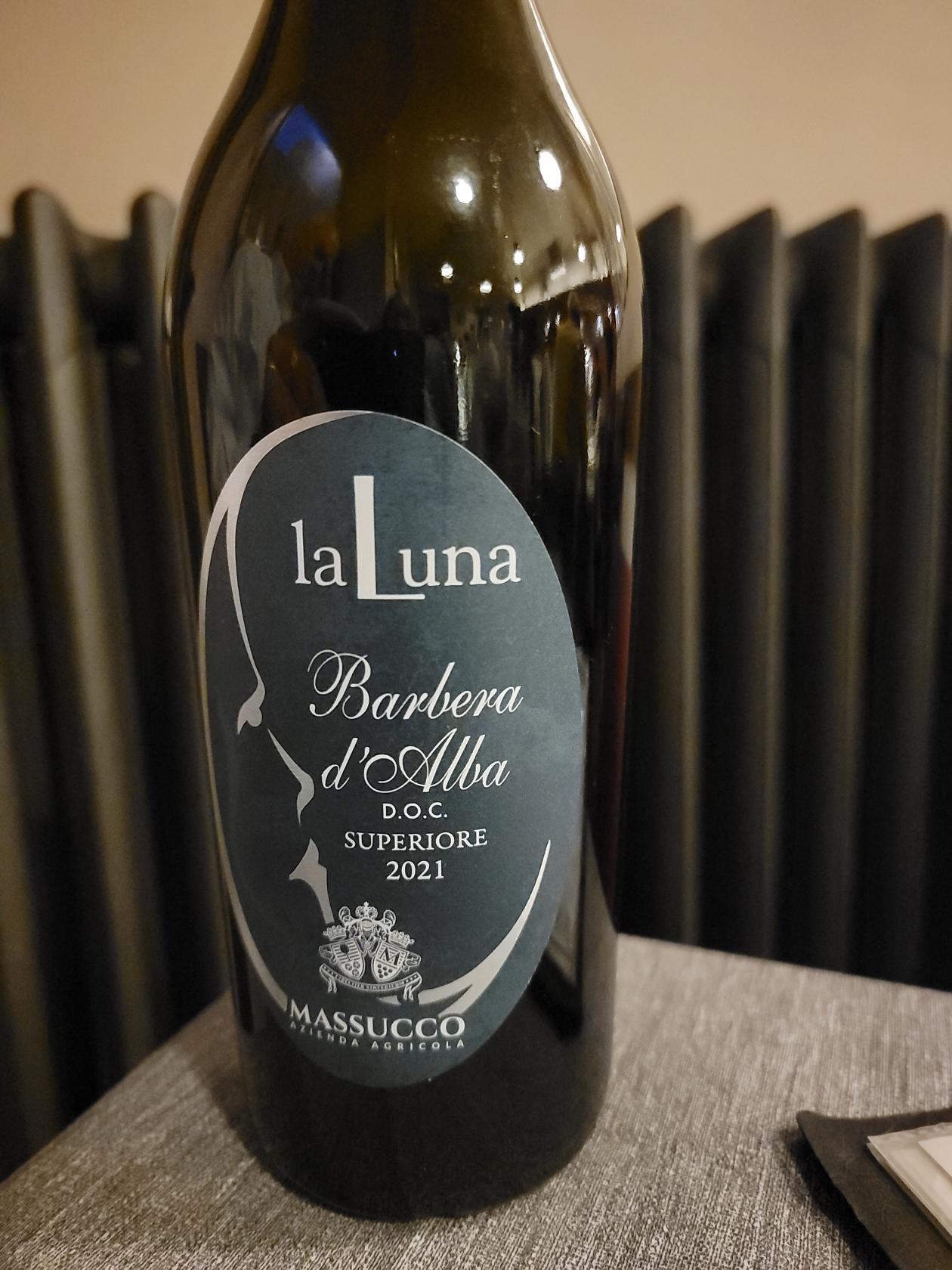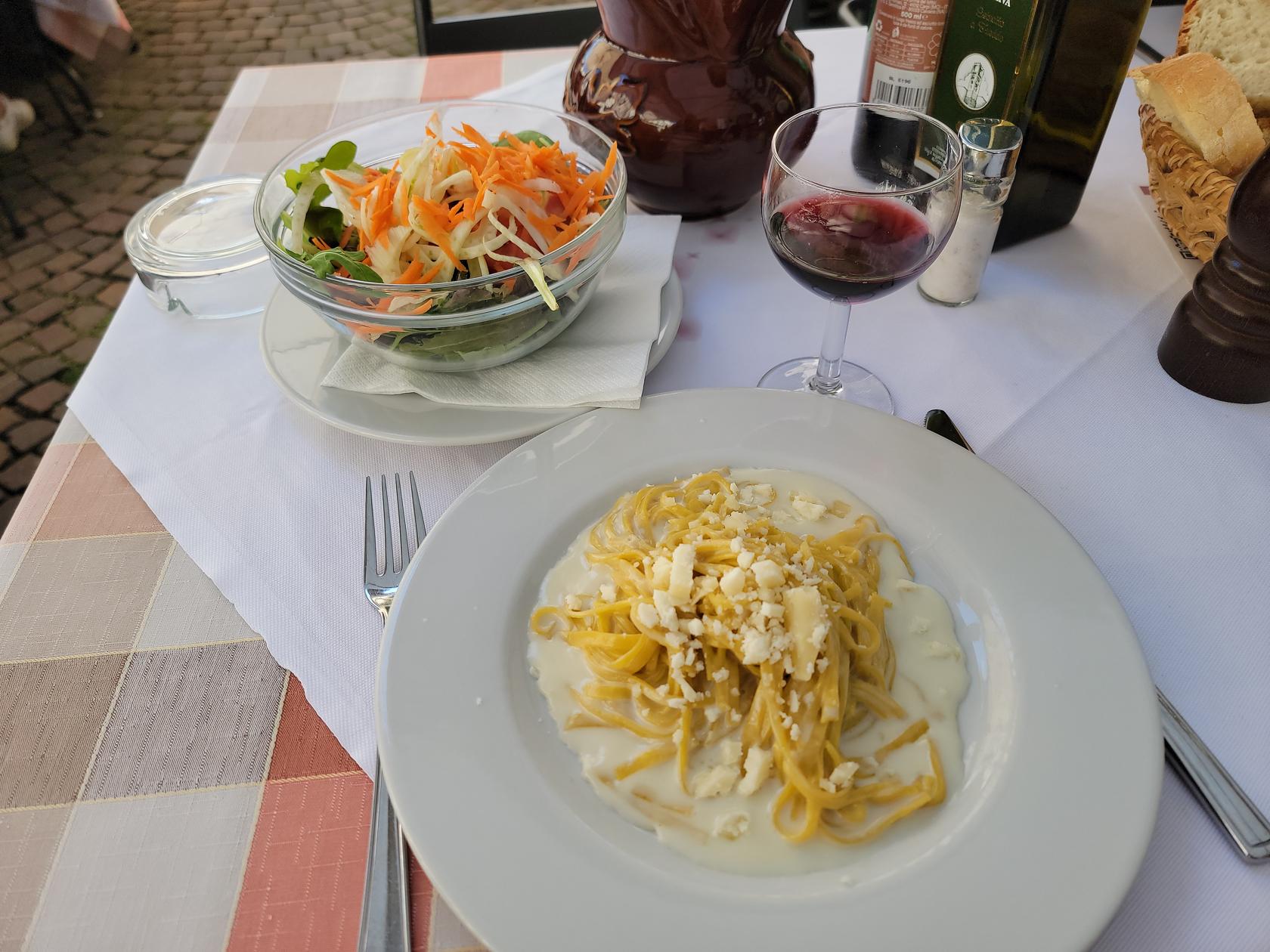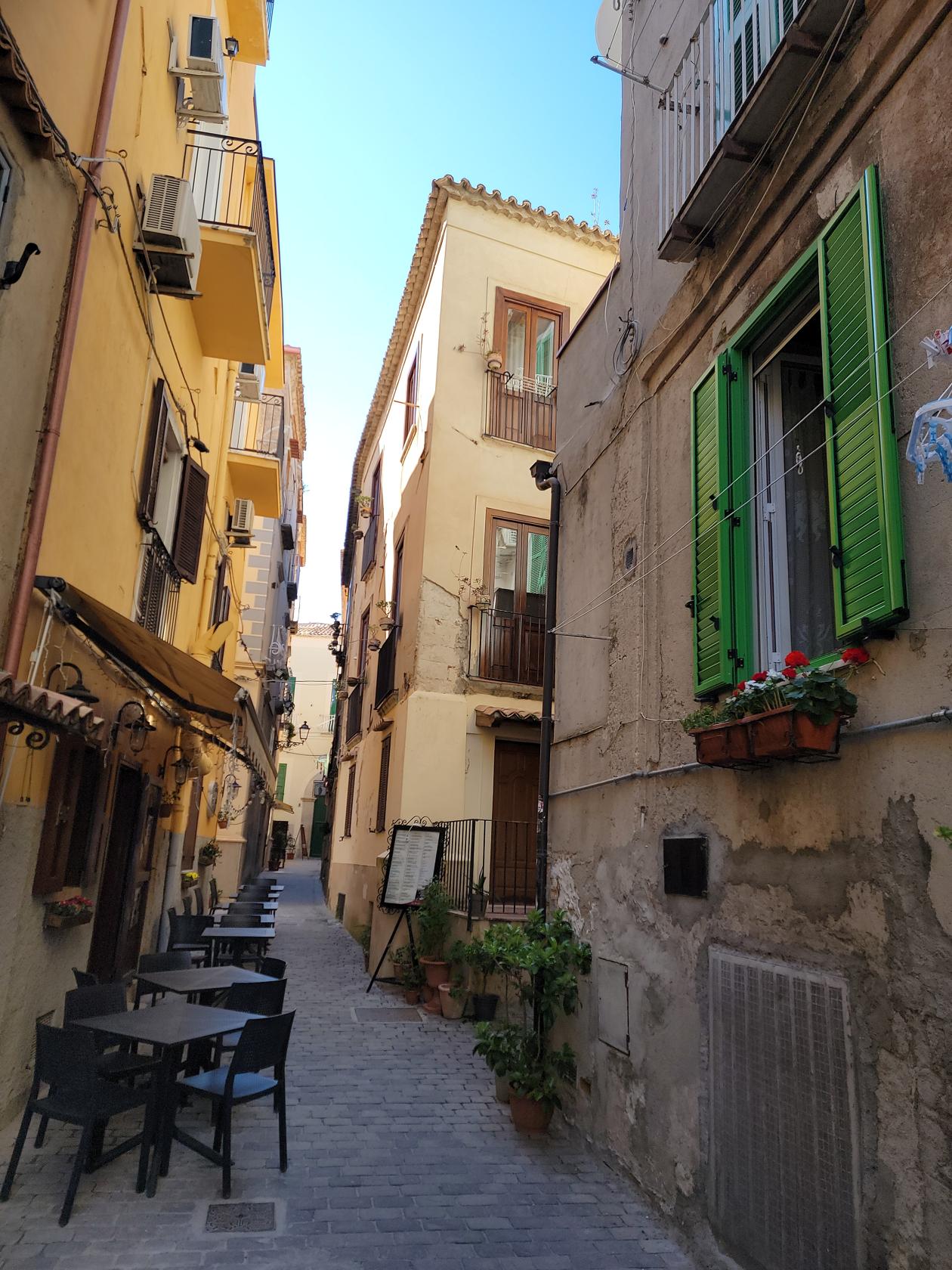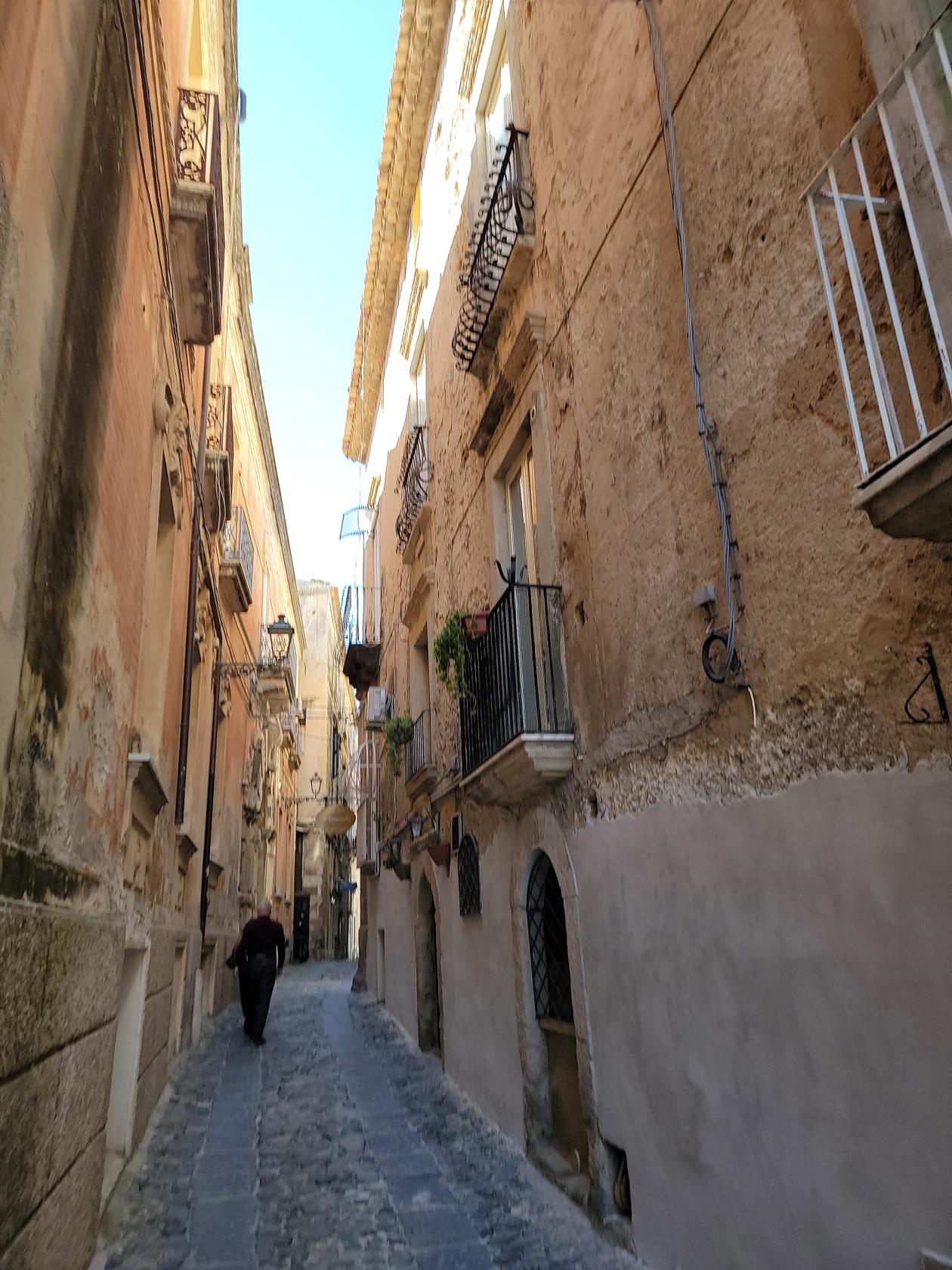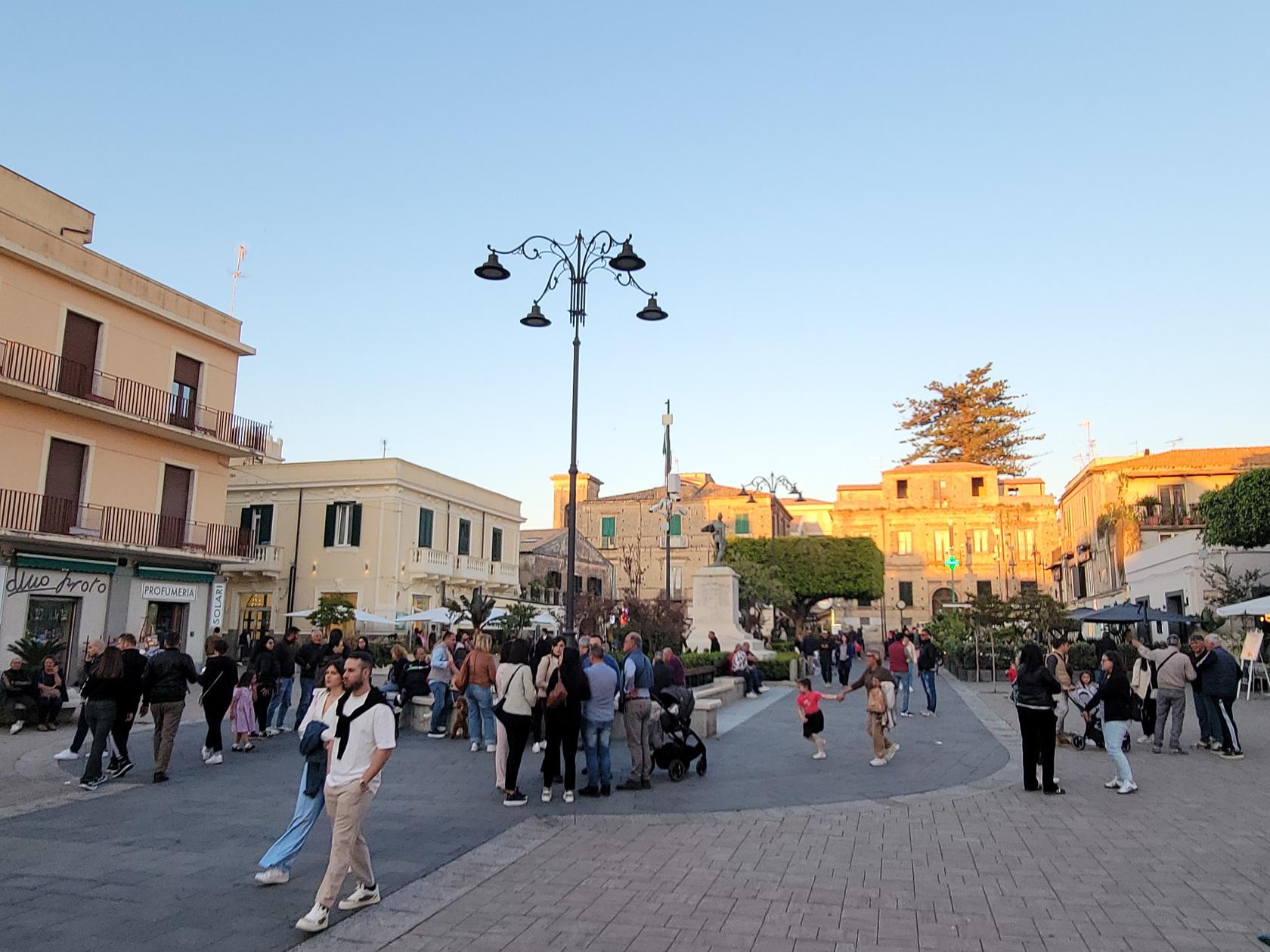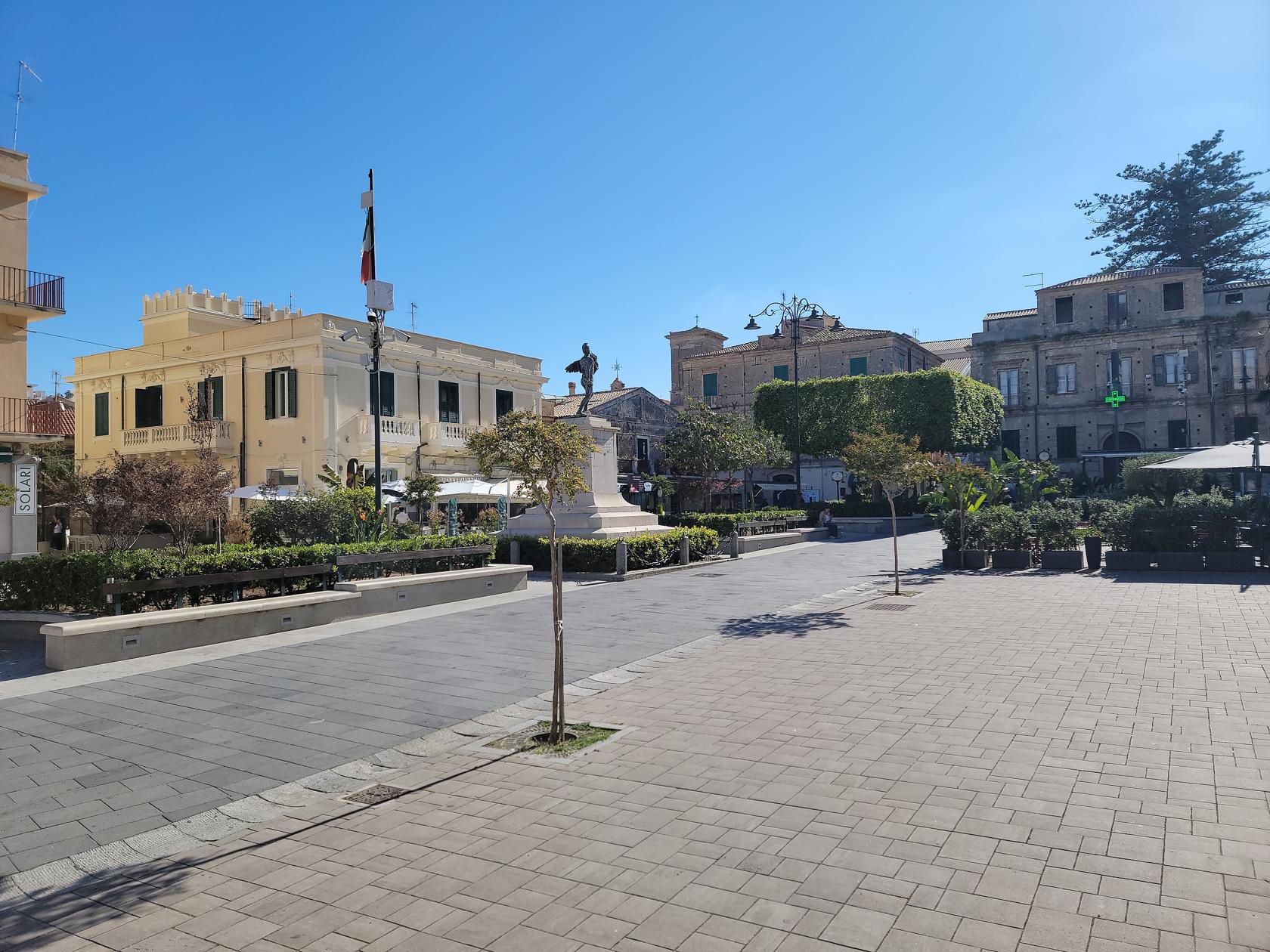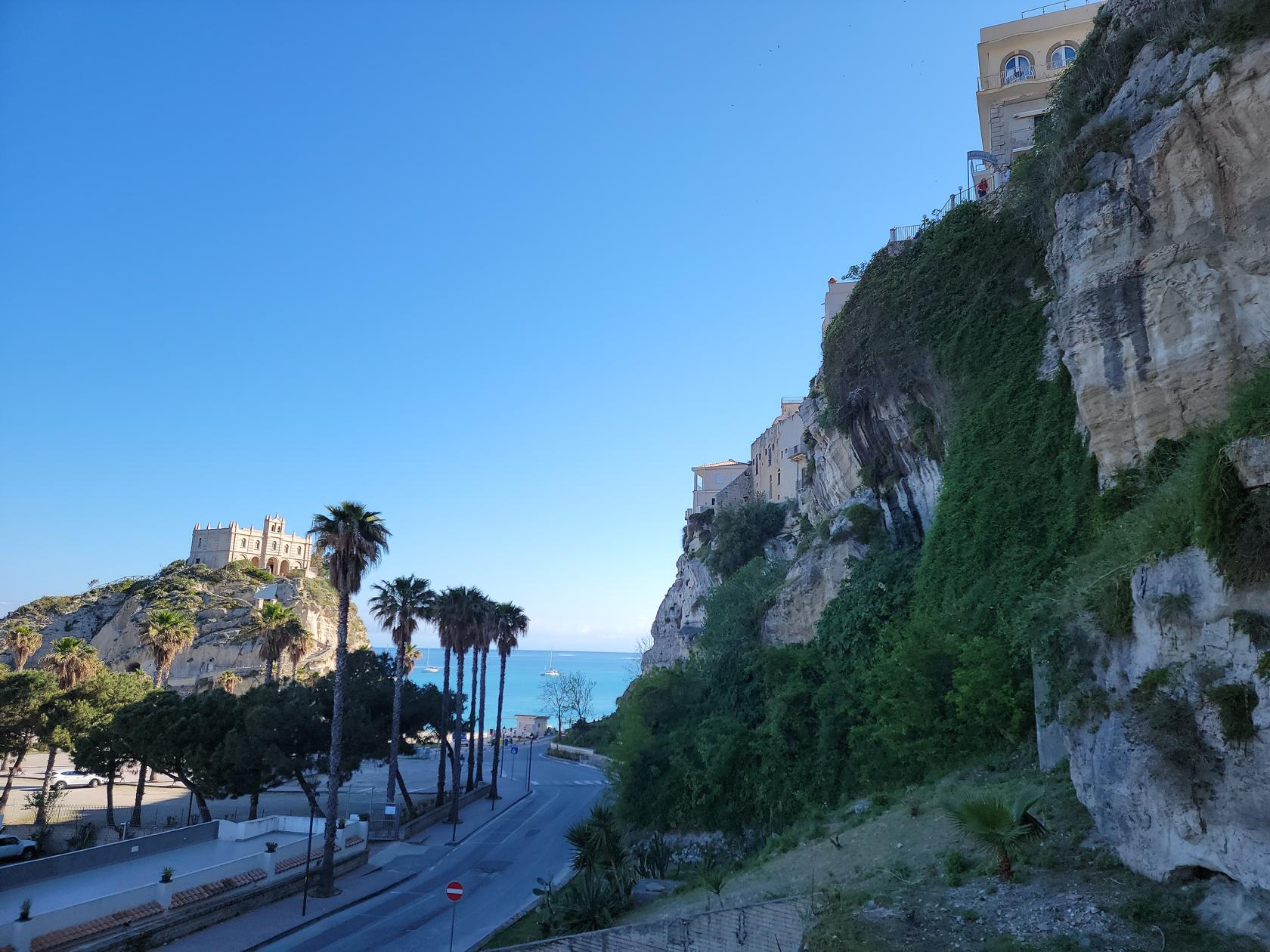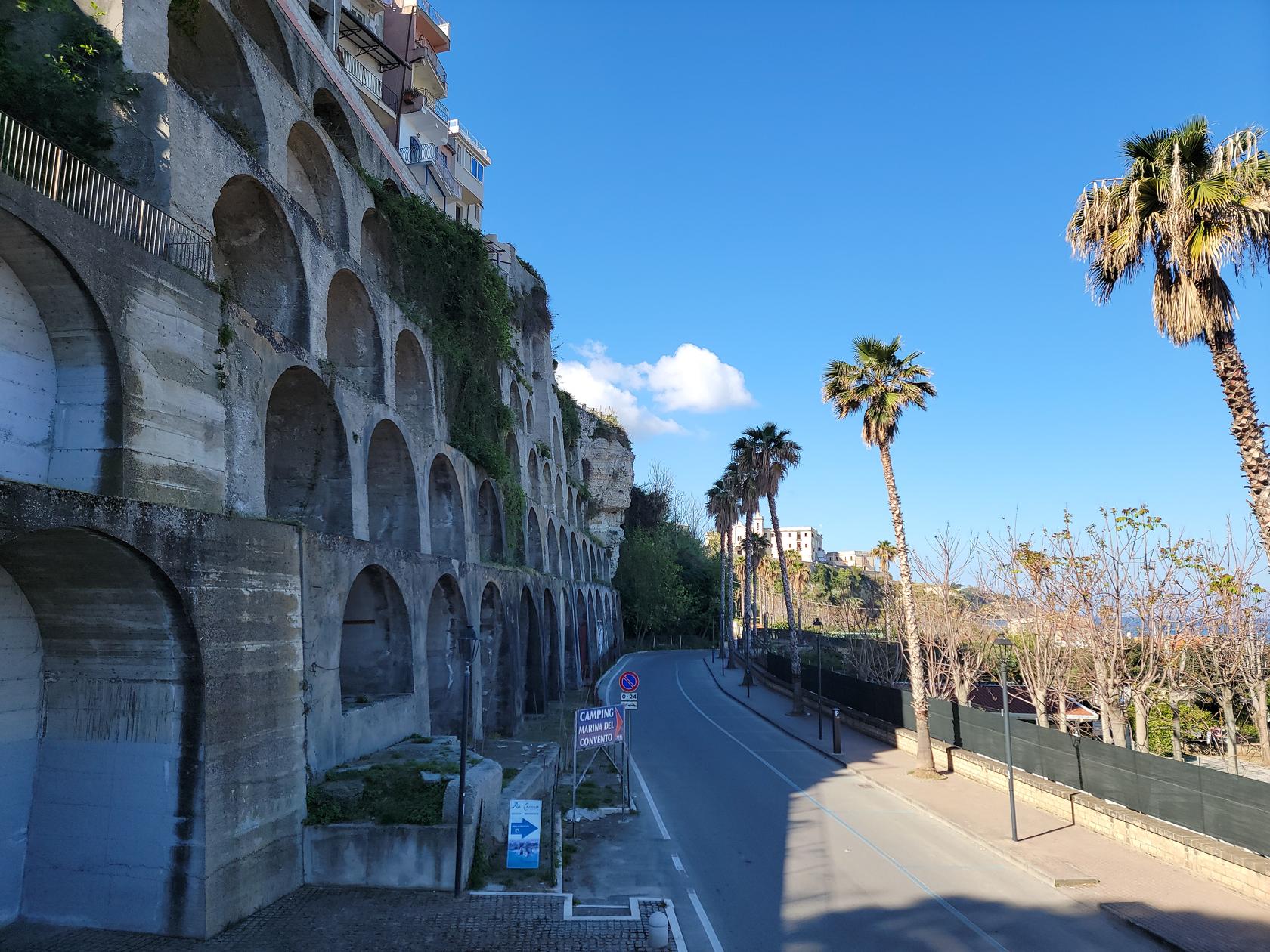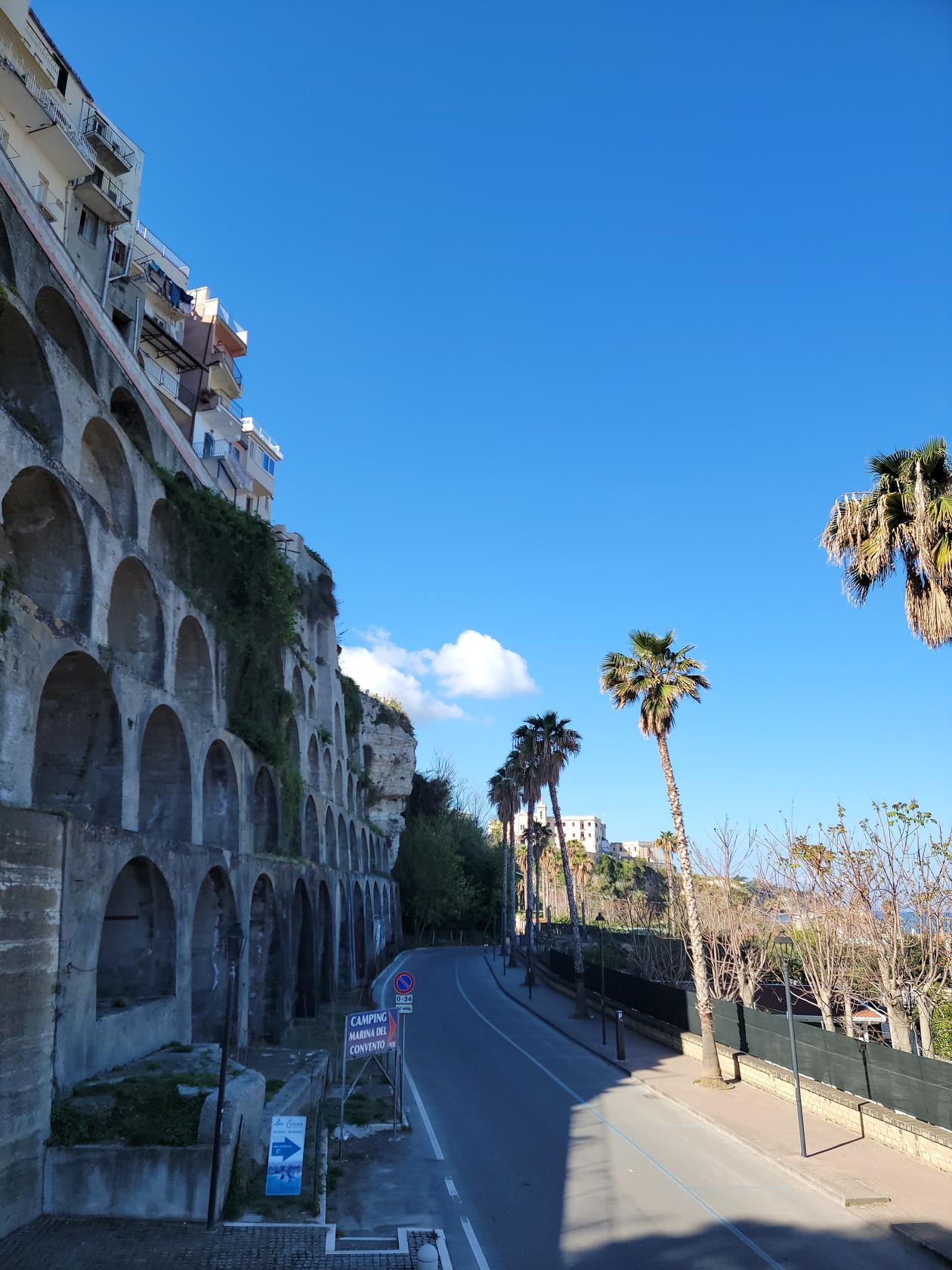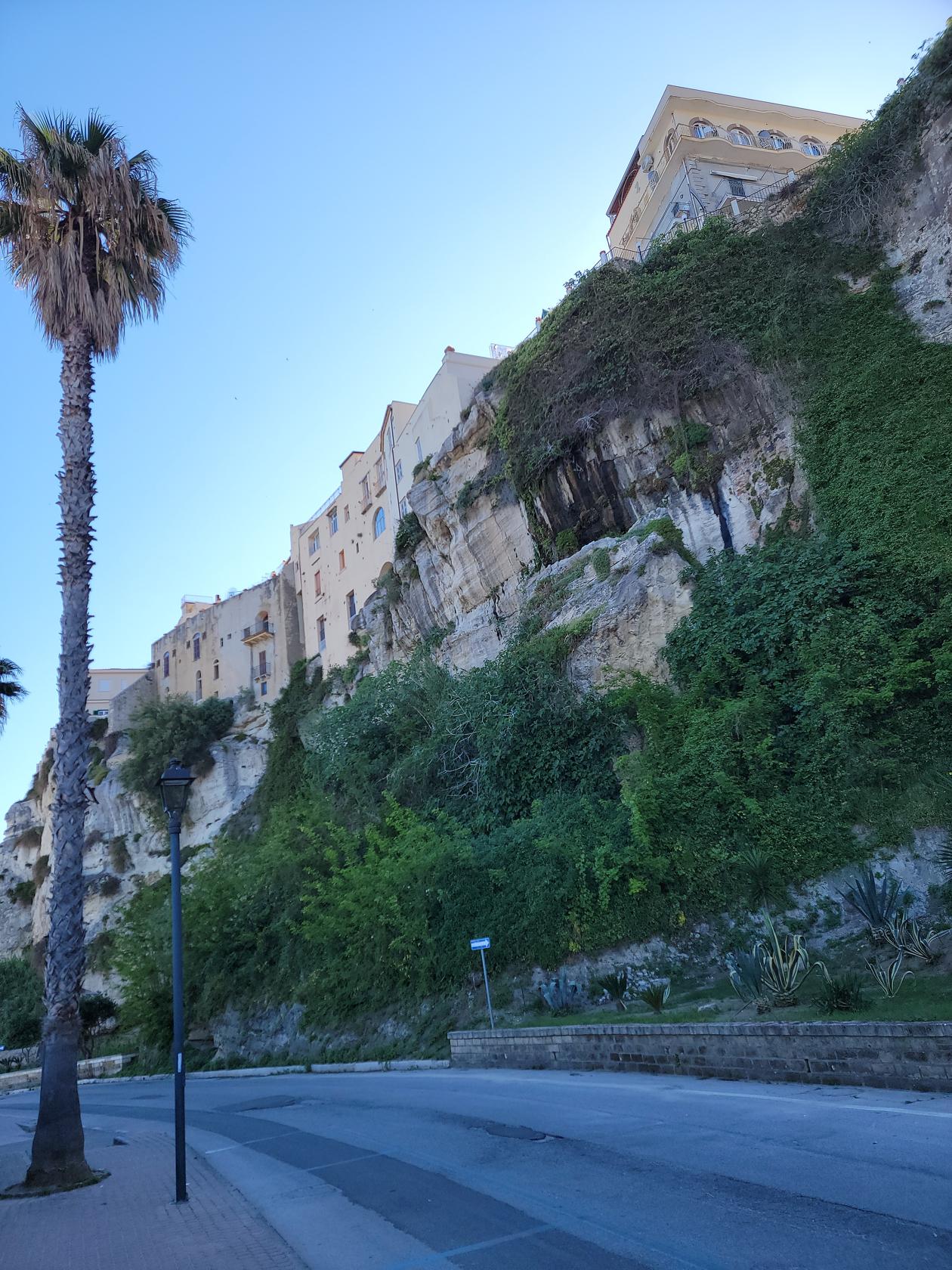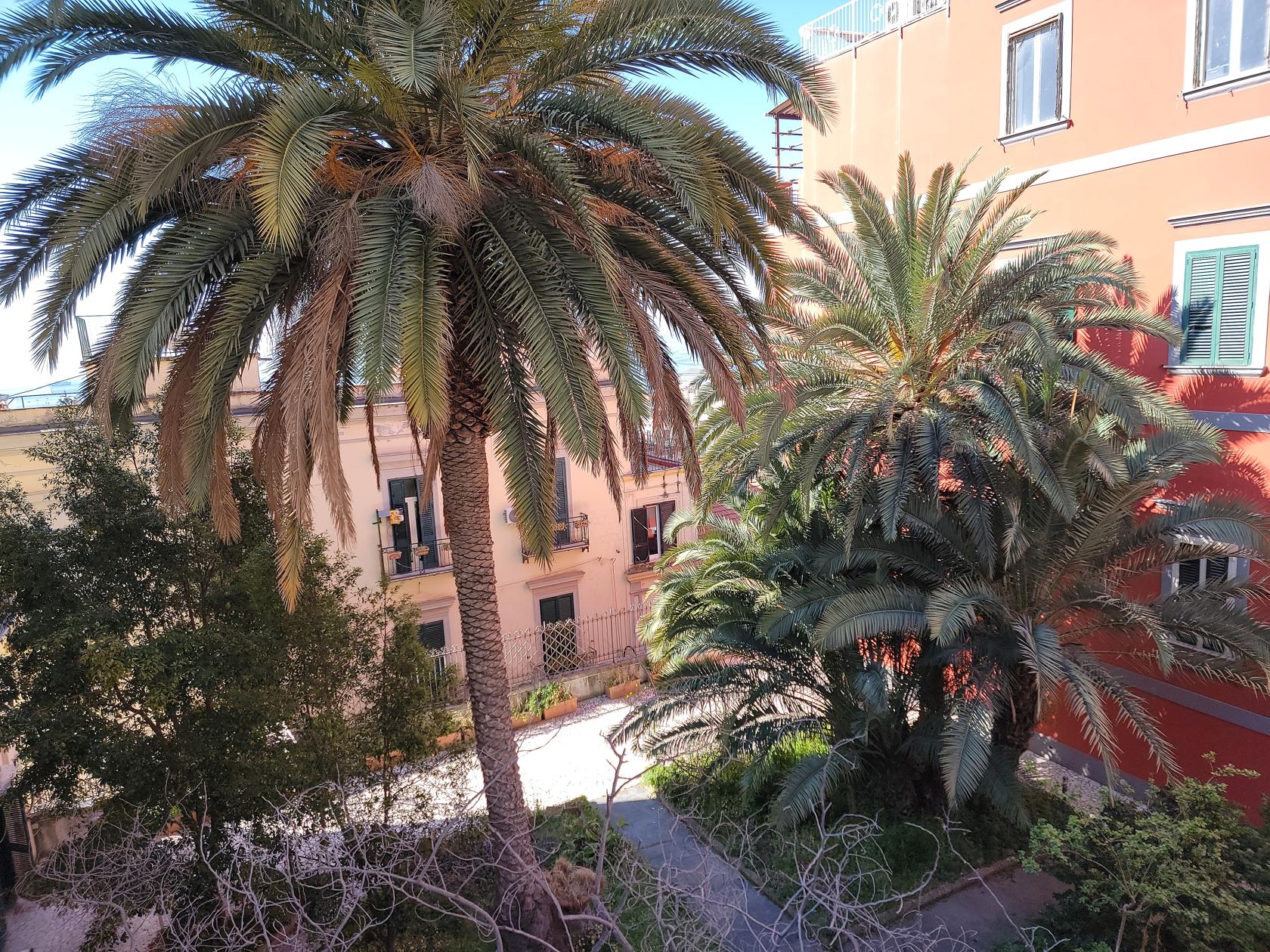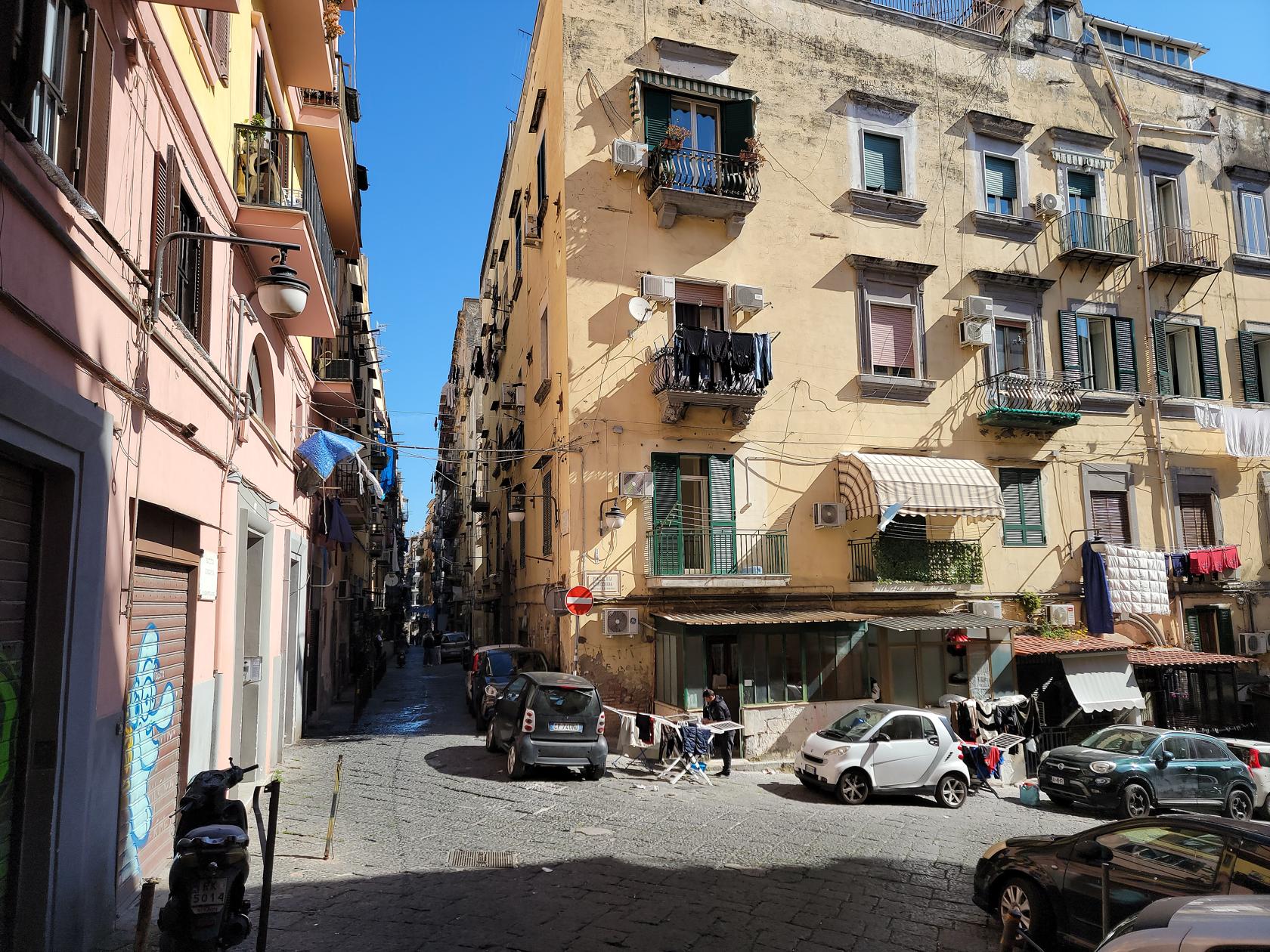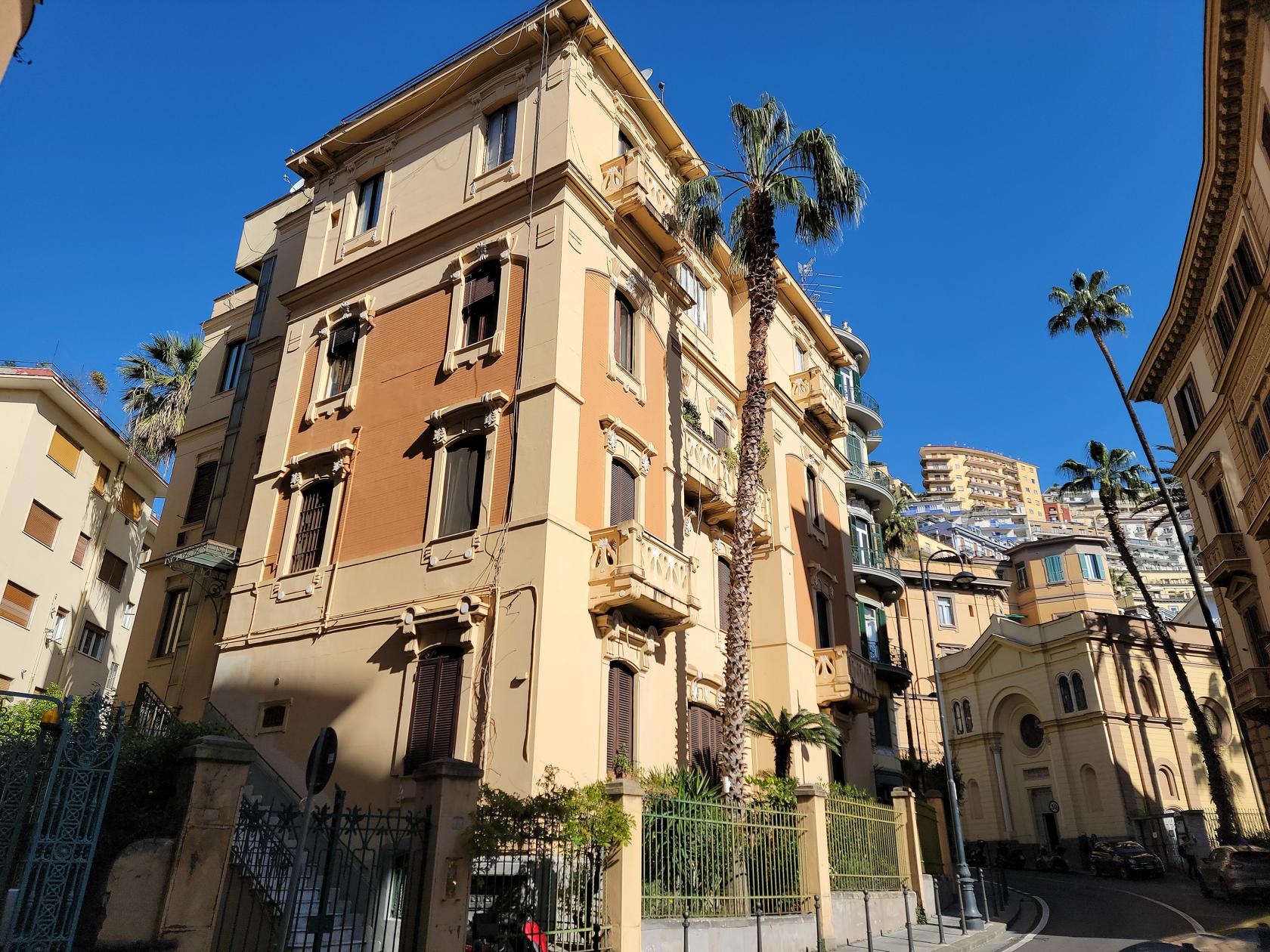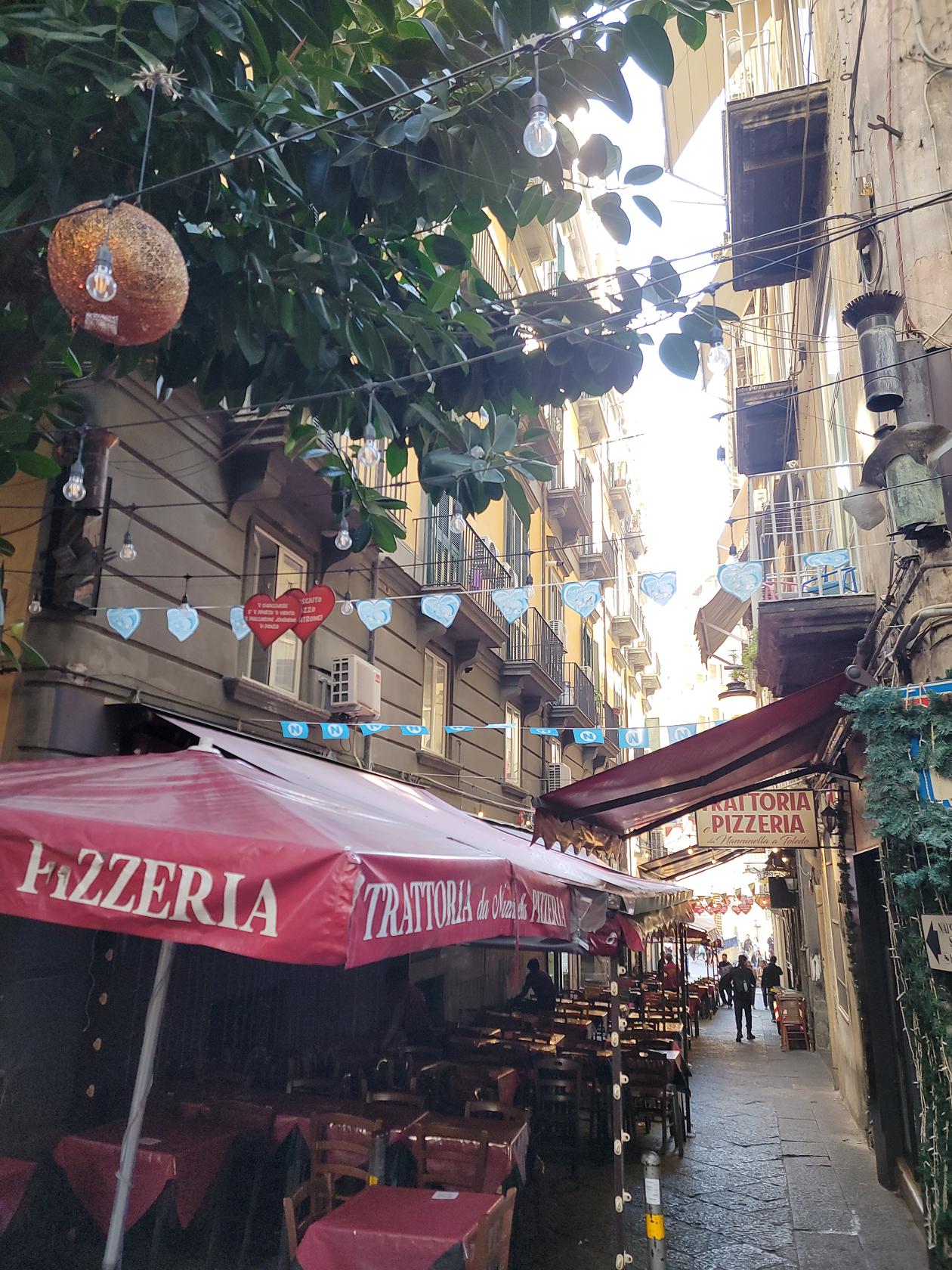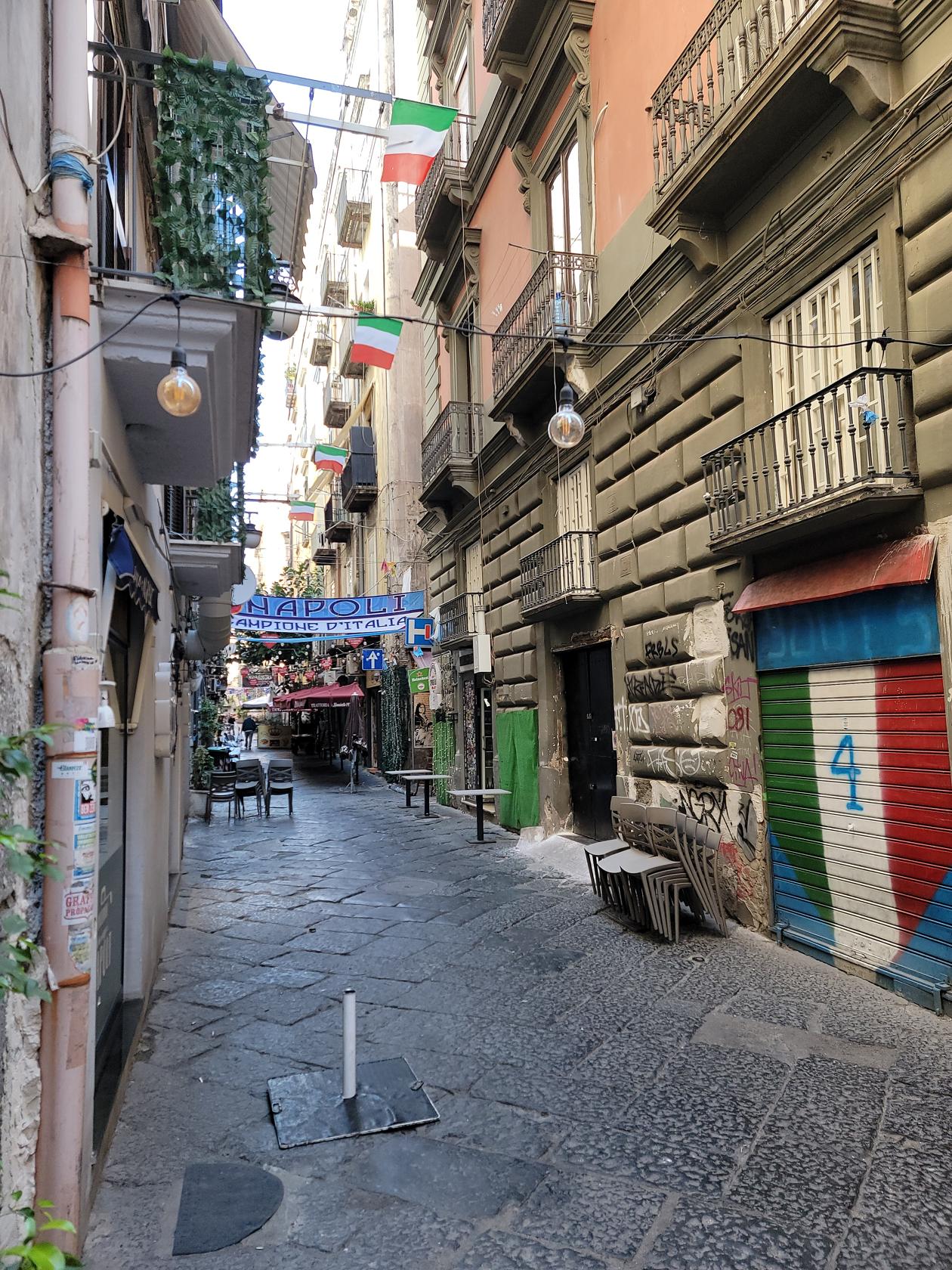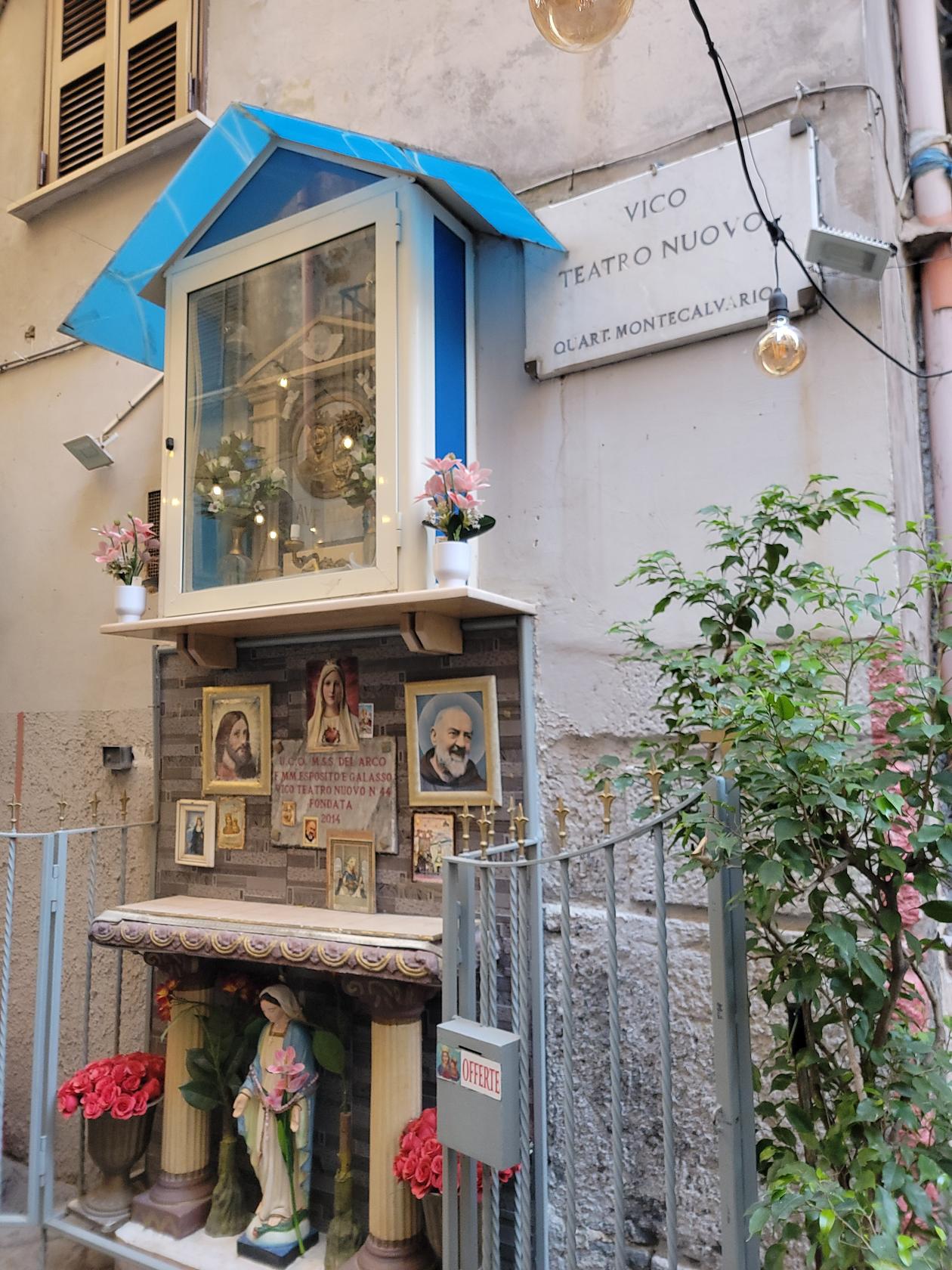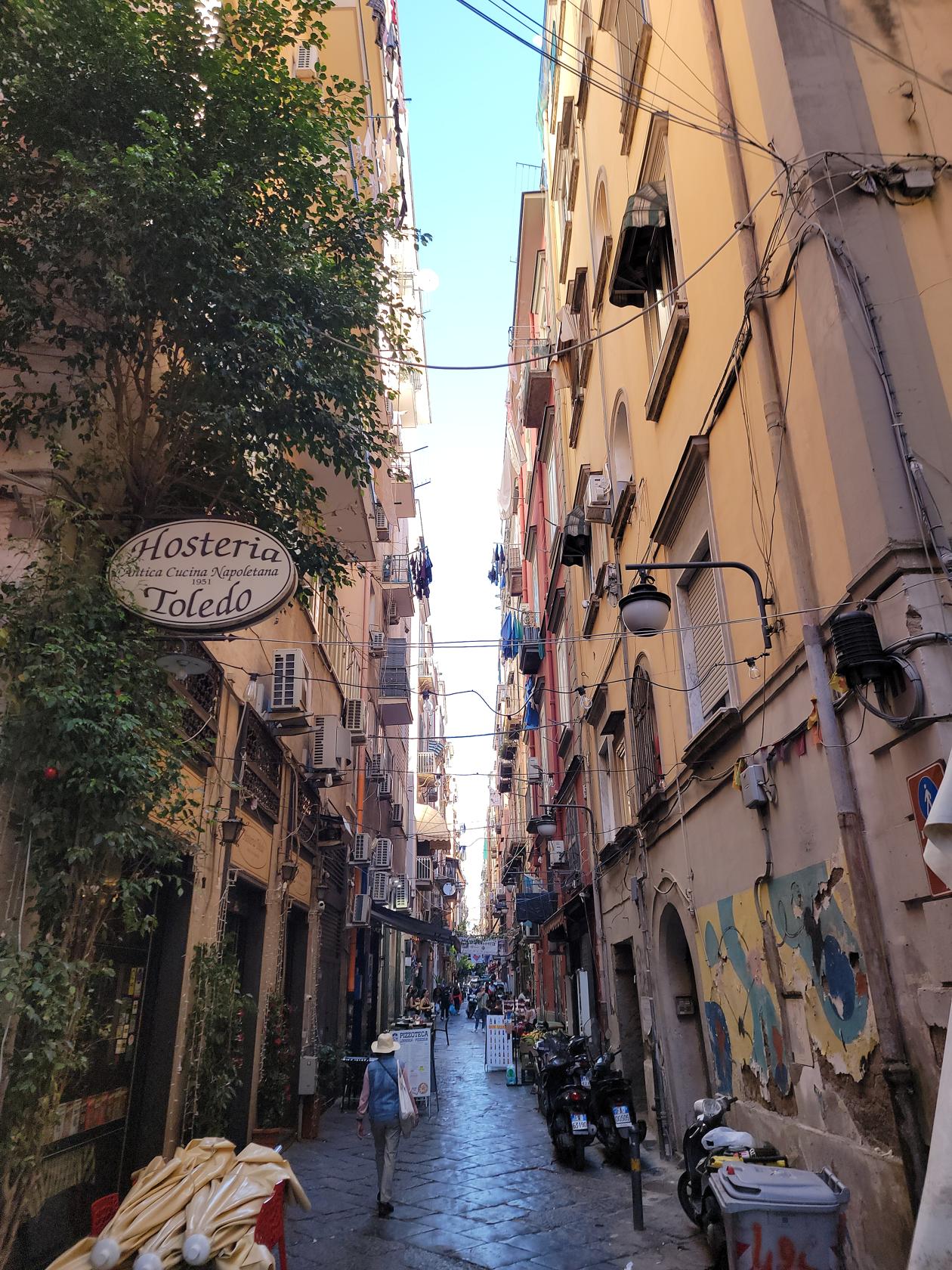
Turin, Italy – Chris Visits

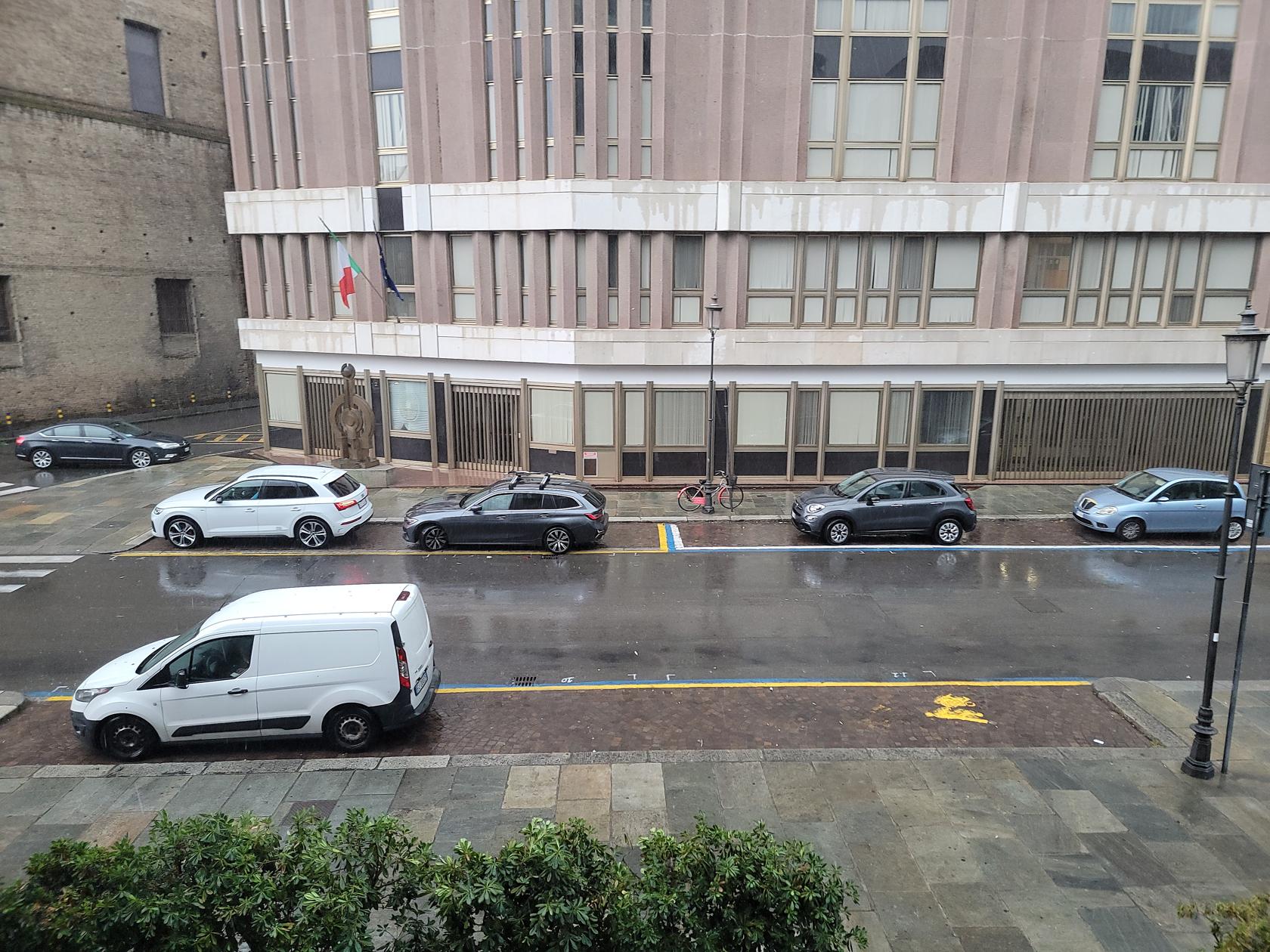
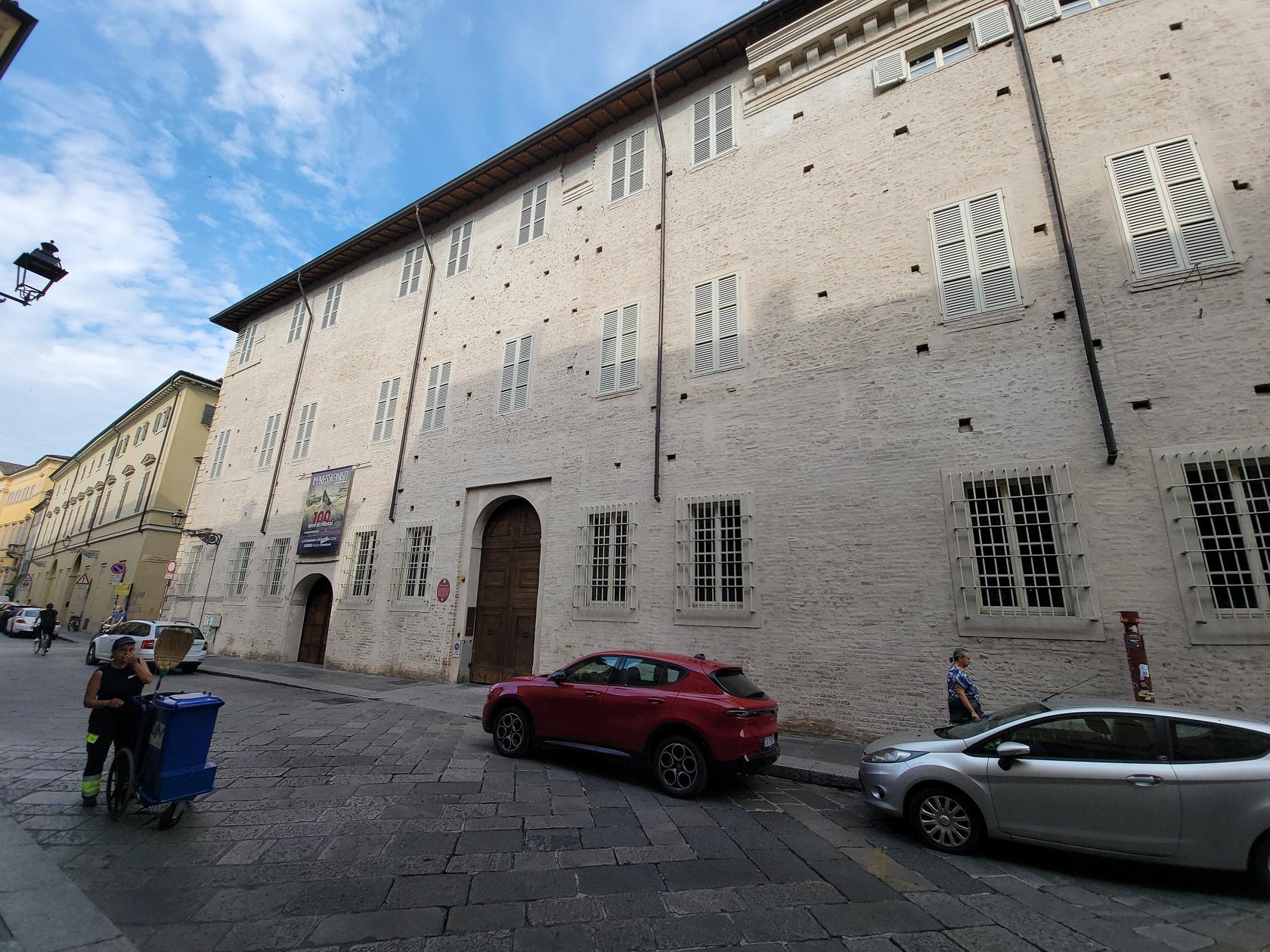
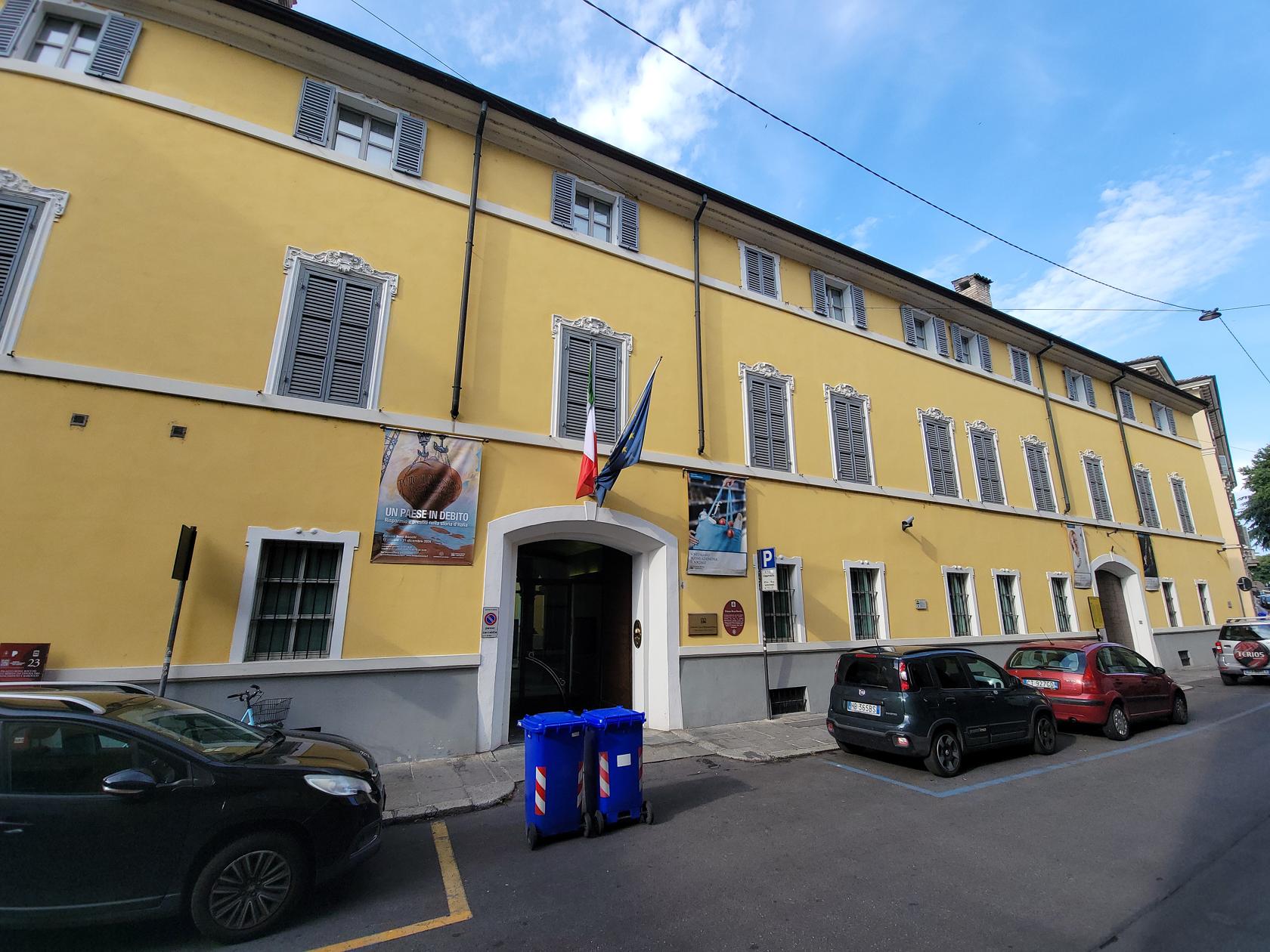
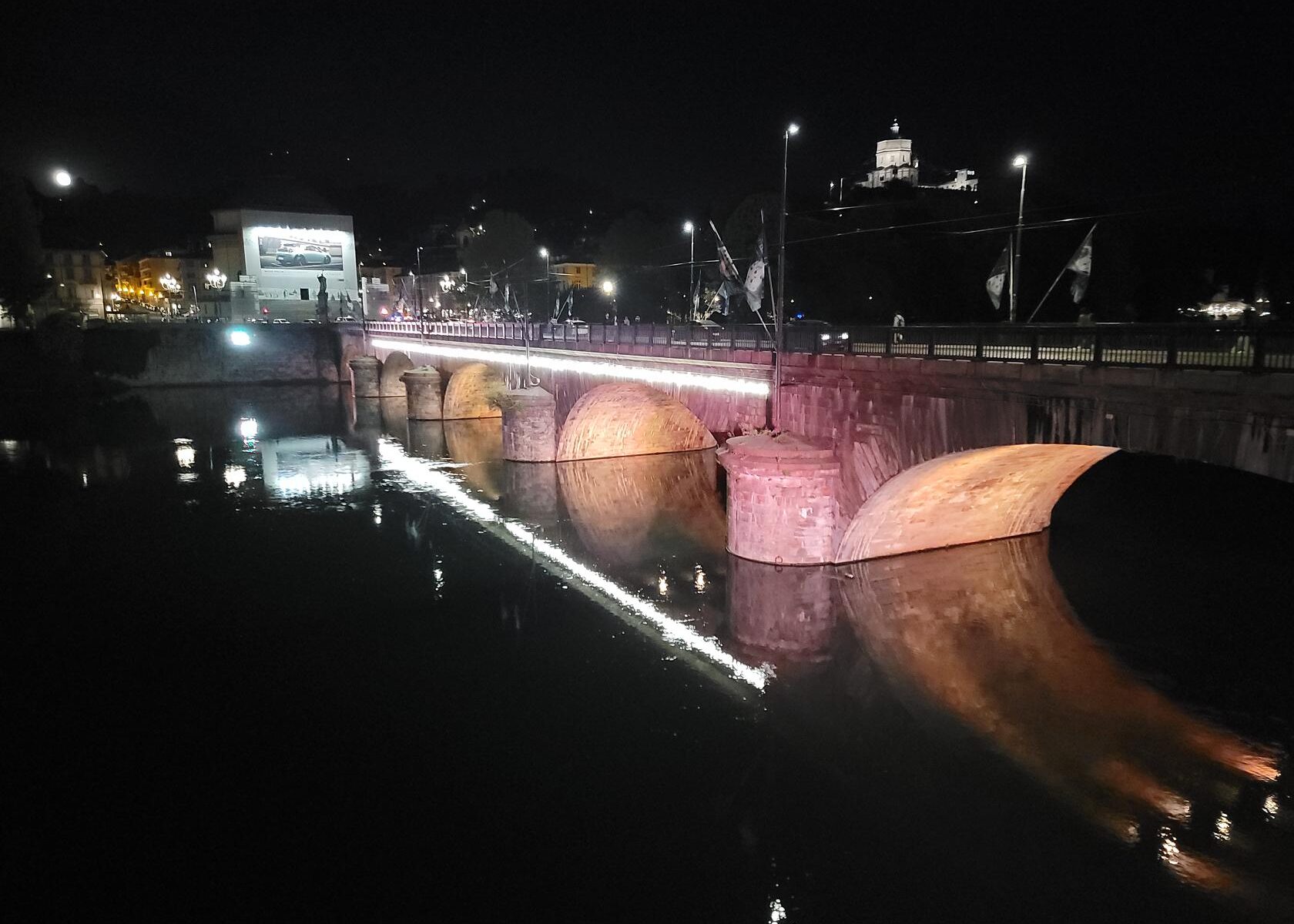
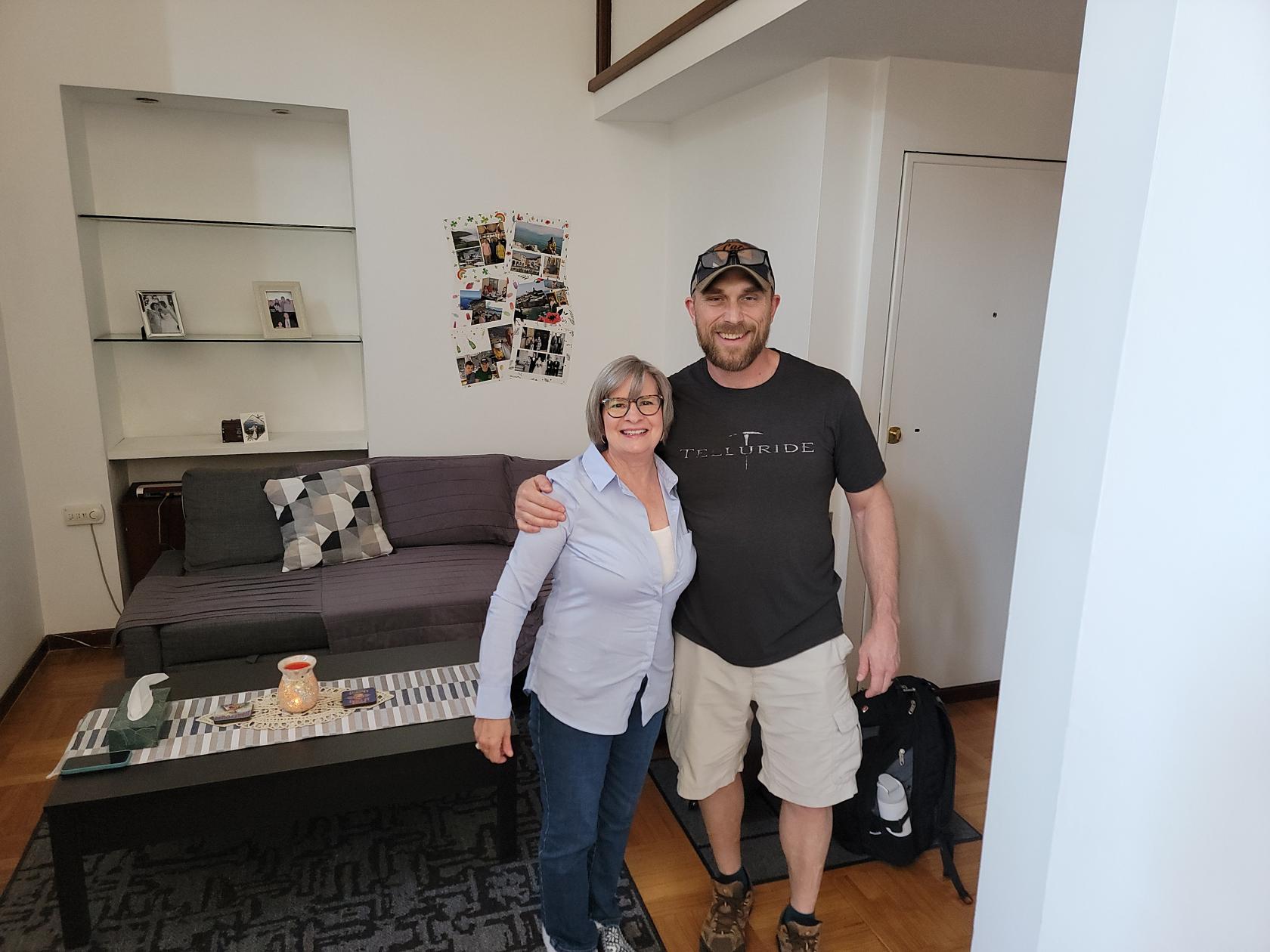
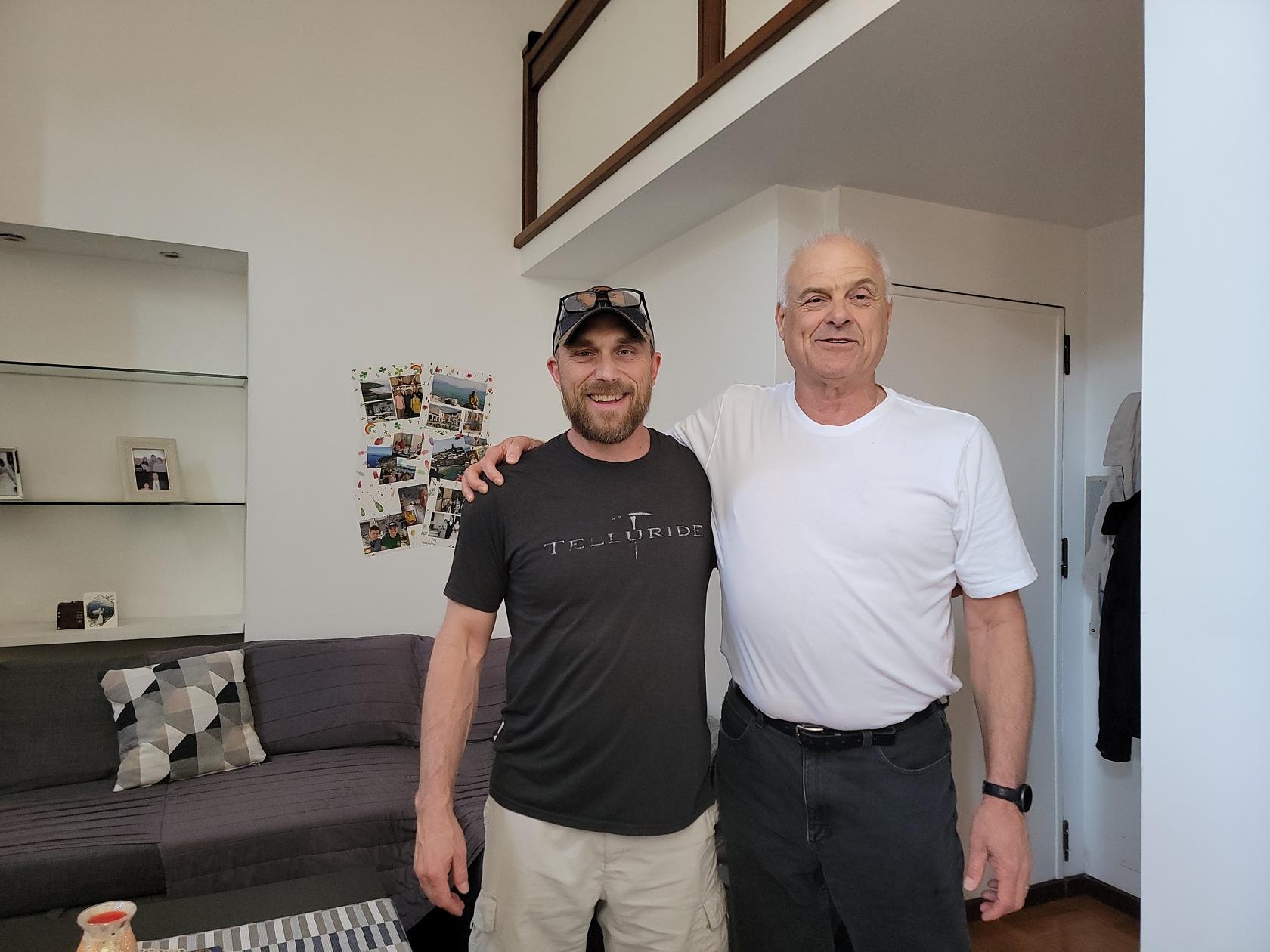
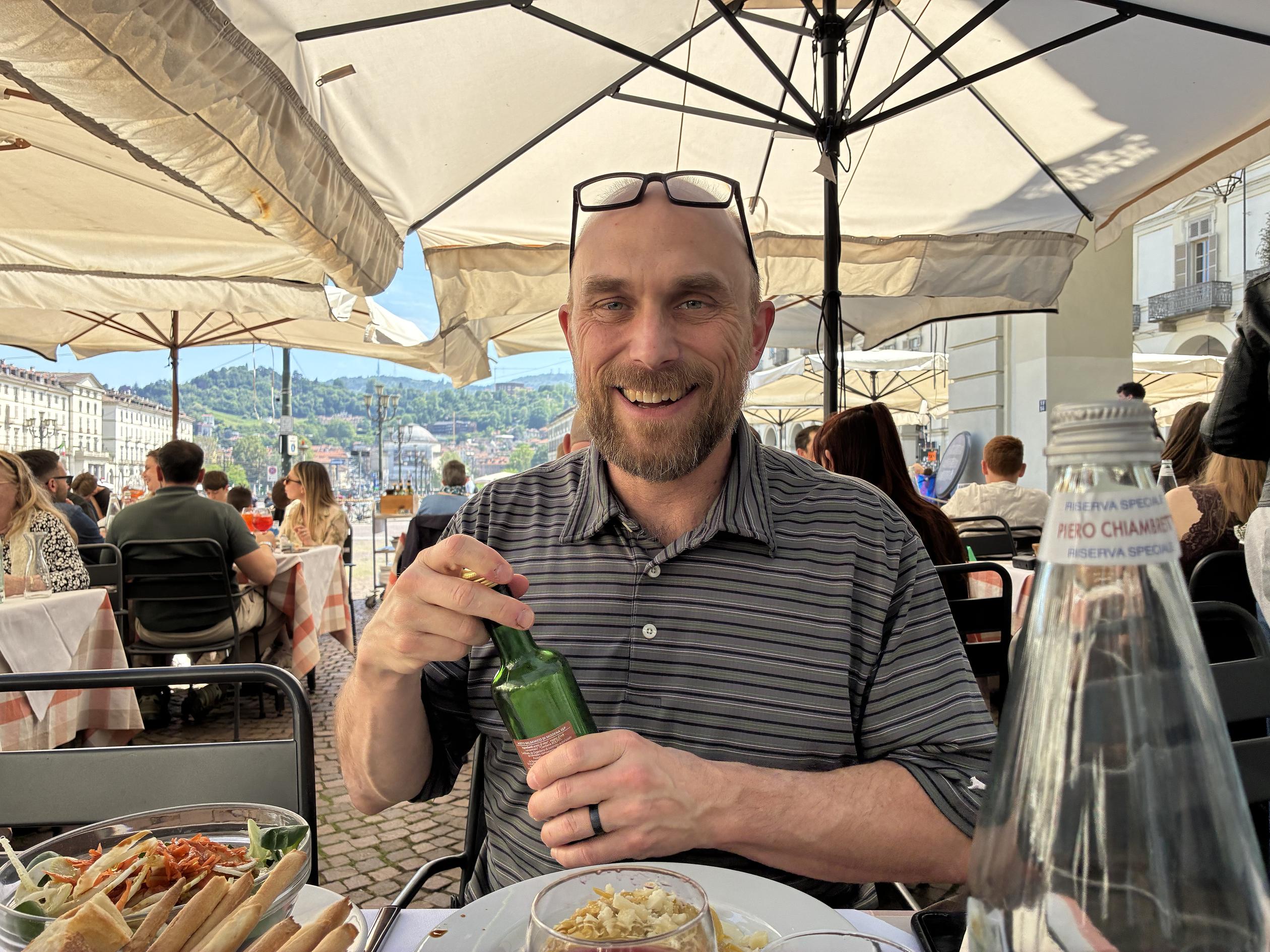
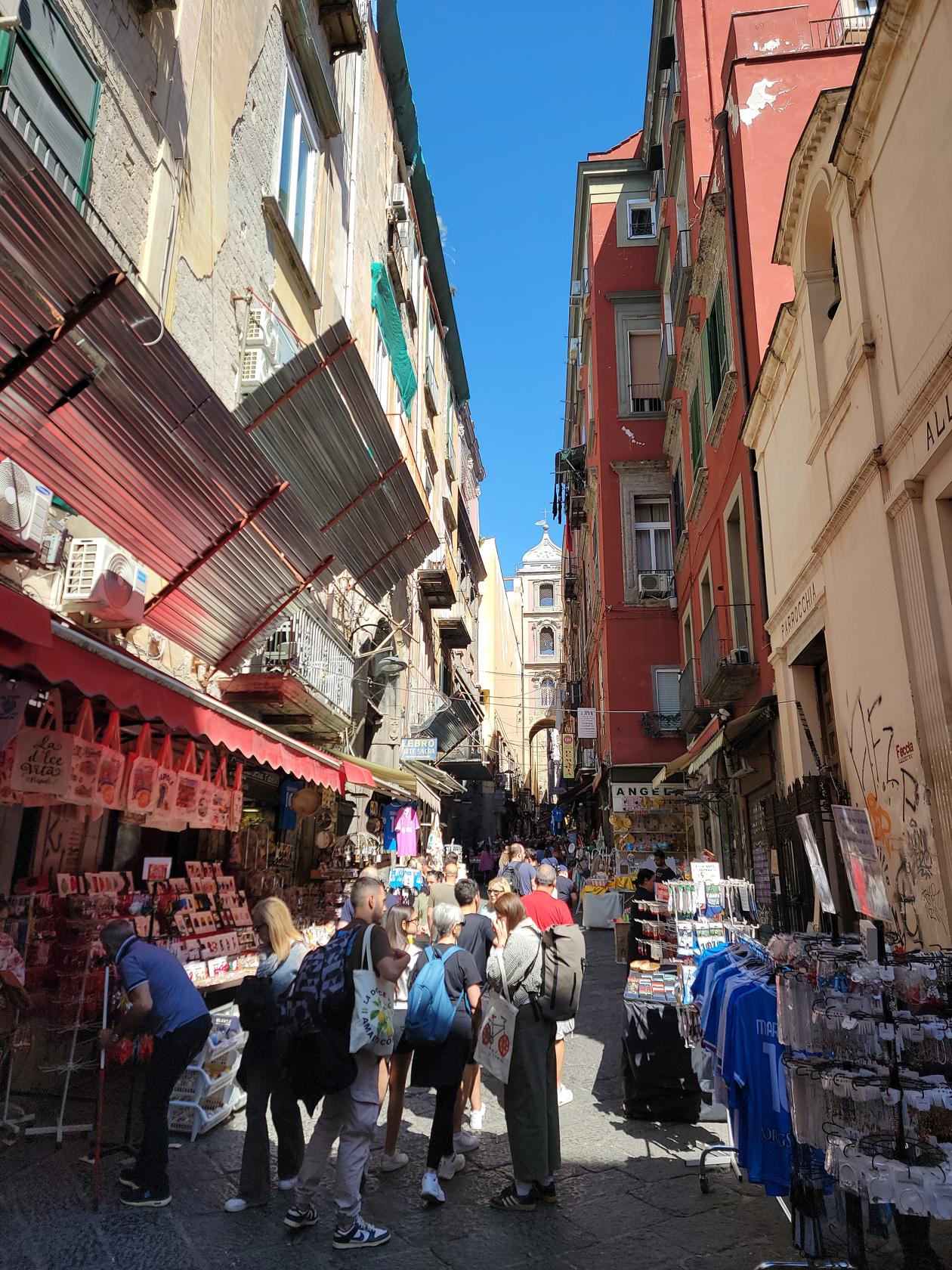
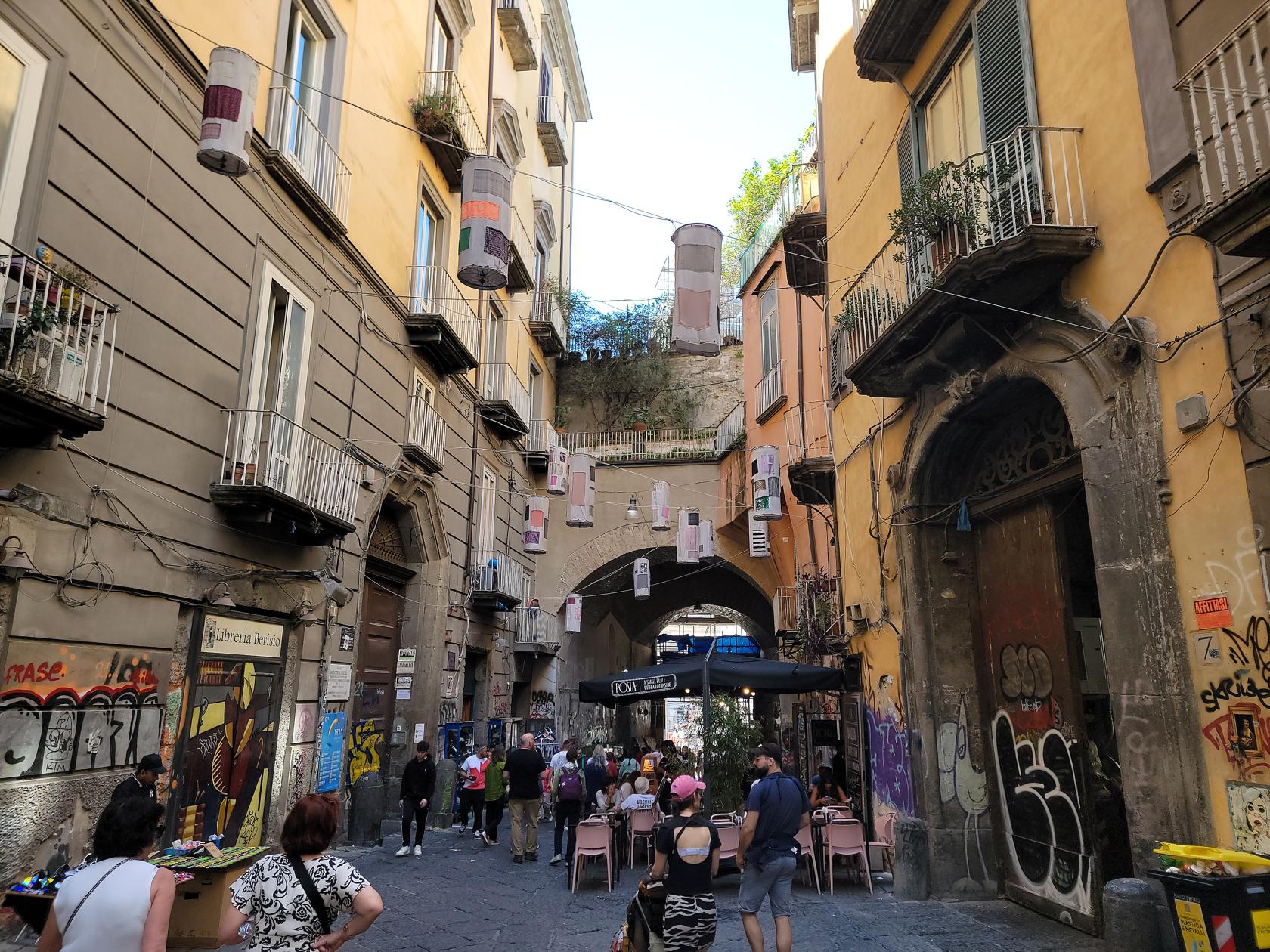
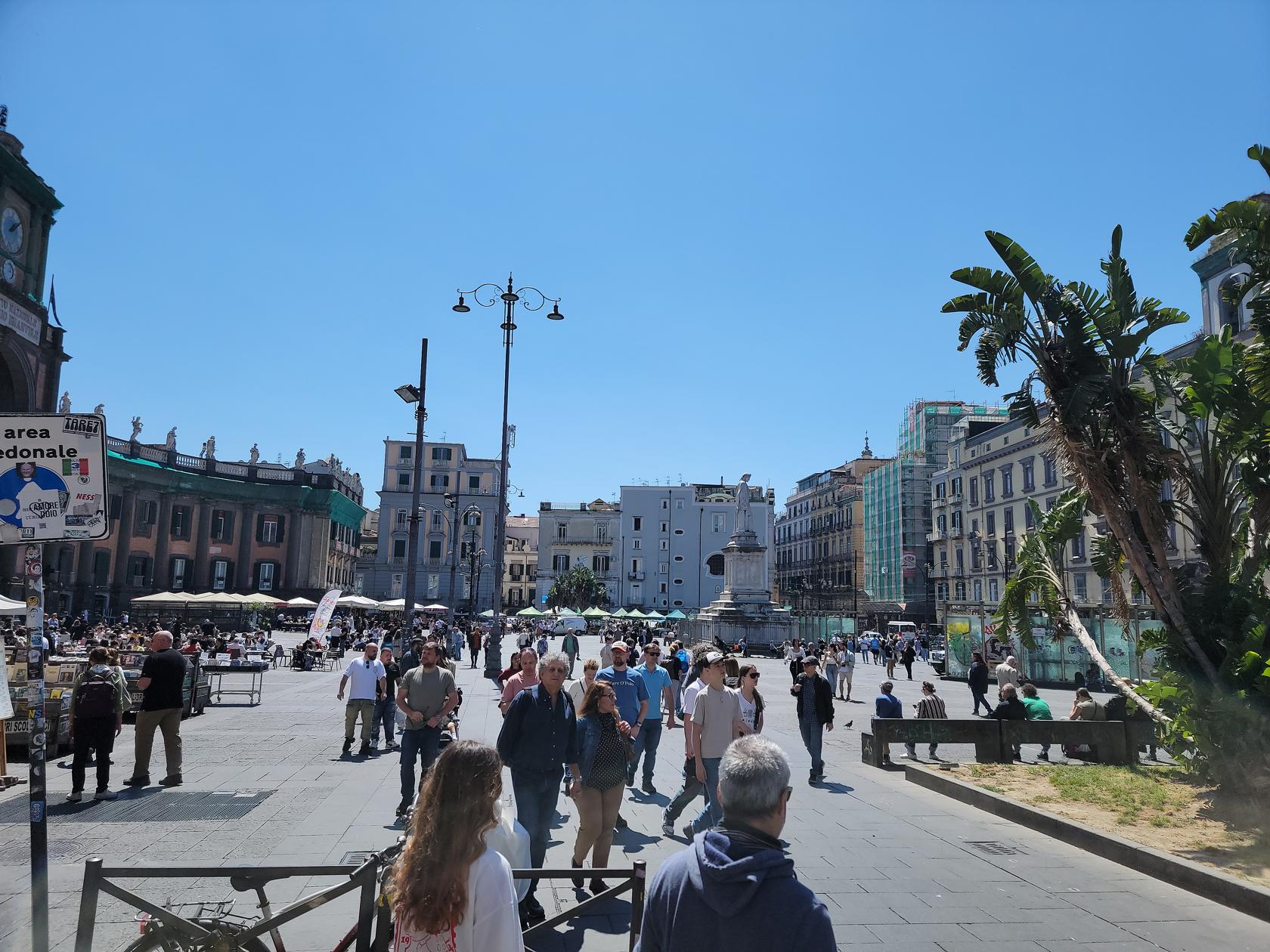
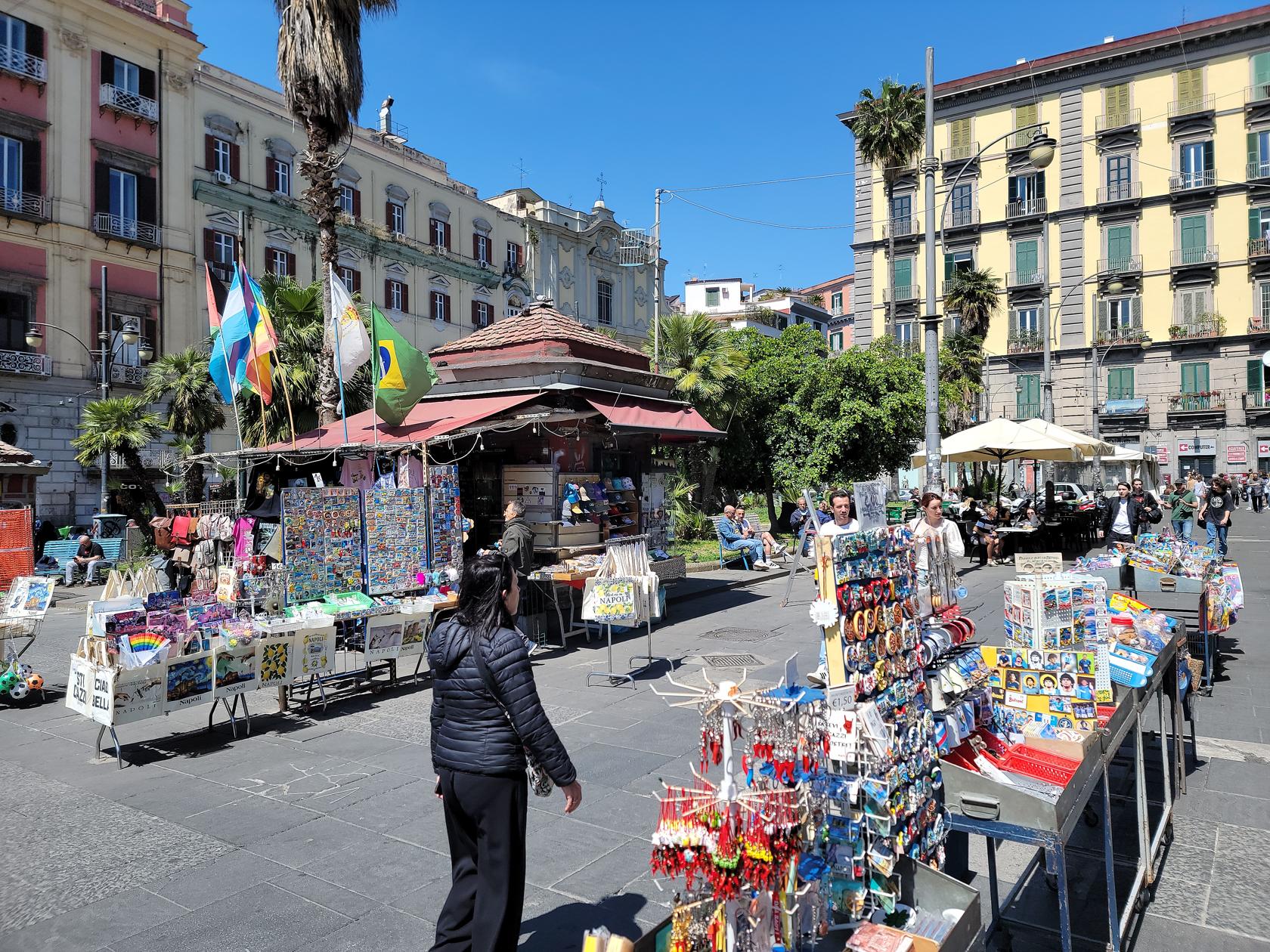
For a few days we enjoyed the company of our cousin Chris, who luckily was traveling for business in the area and was able to stop by for a visit.

Turin

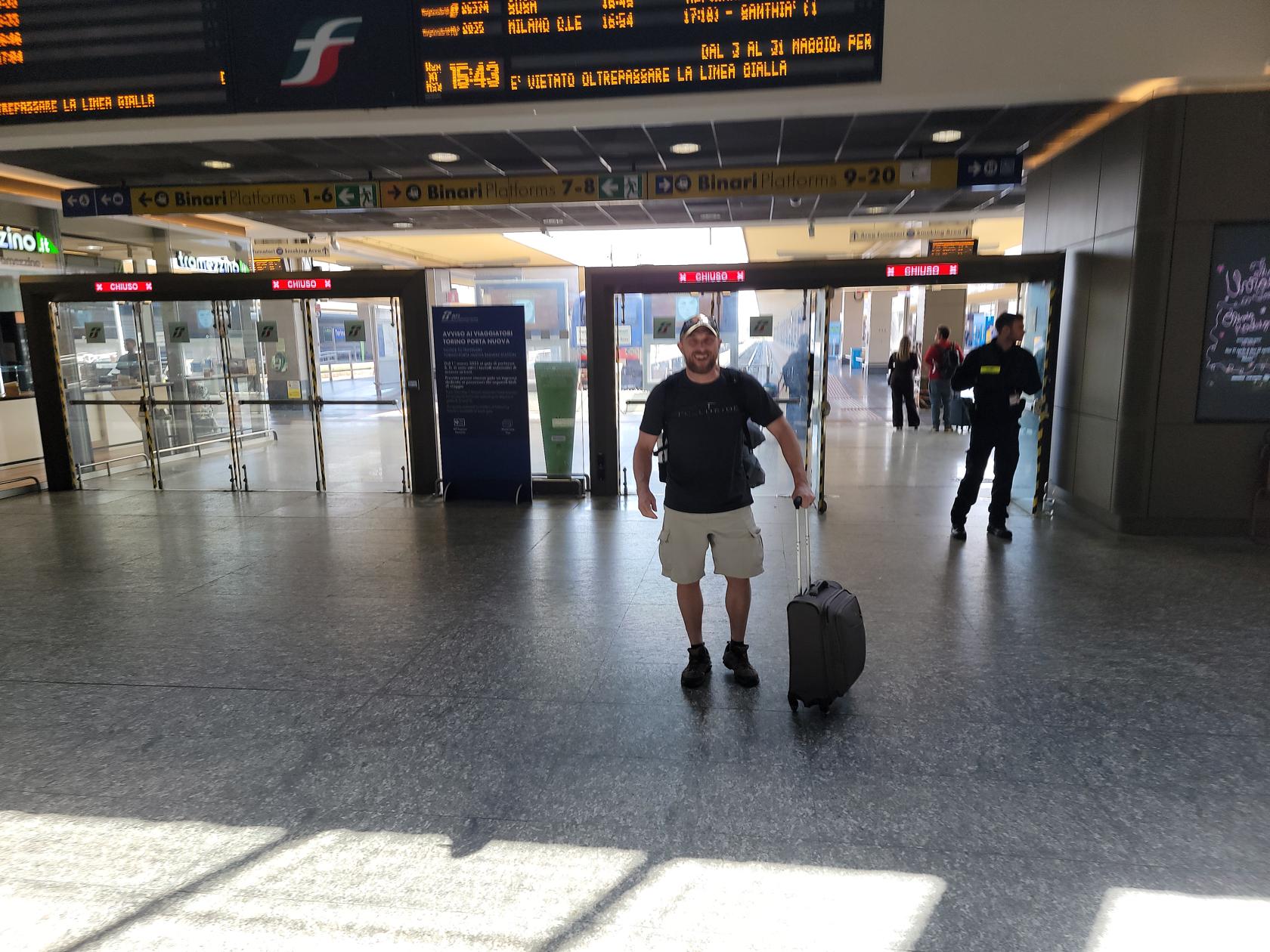
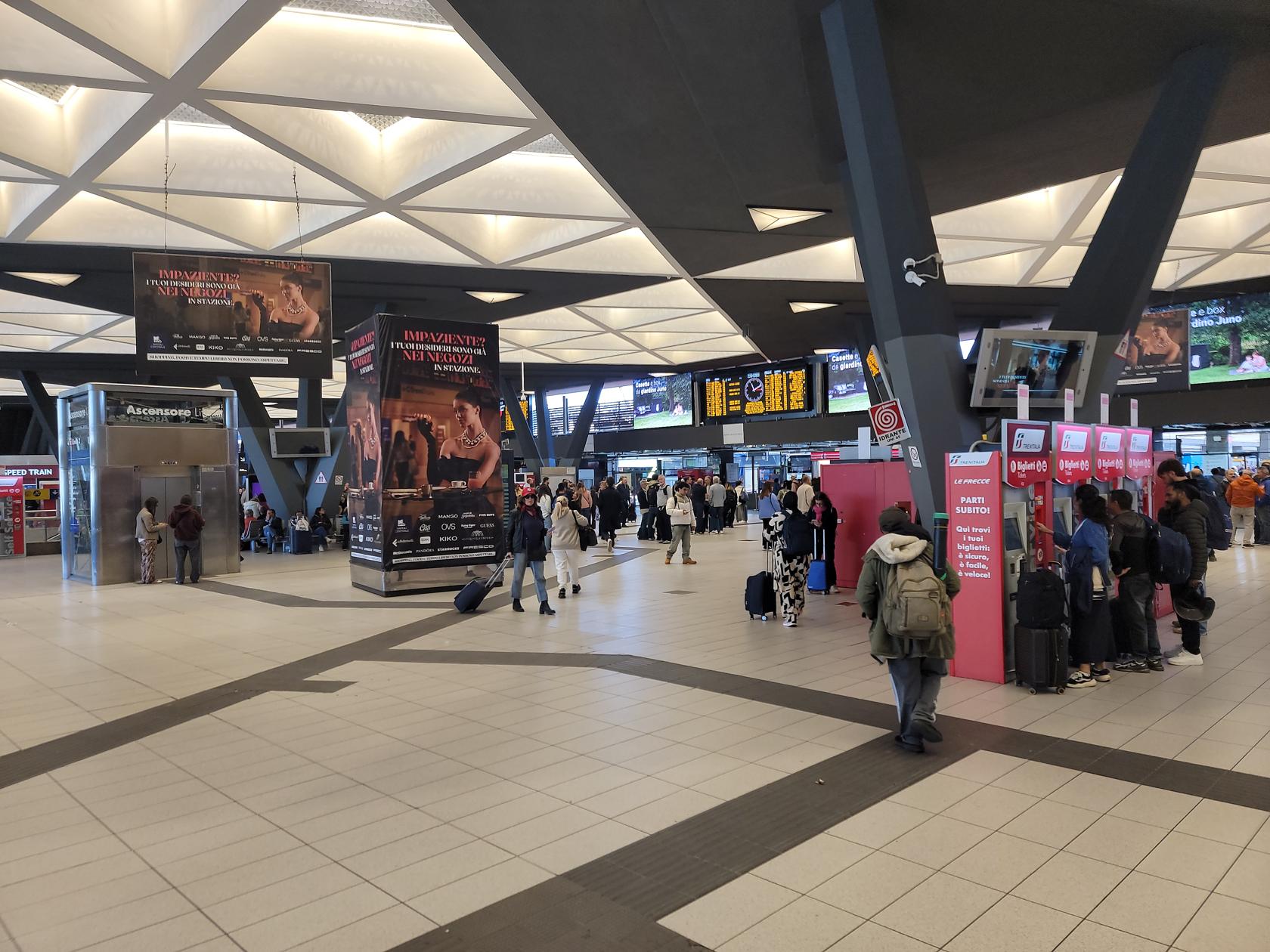
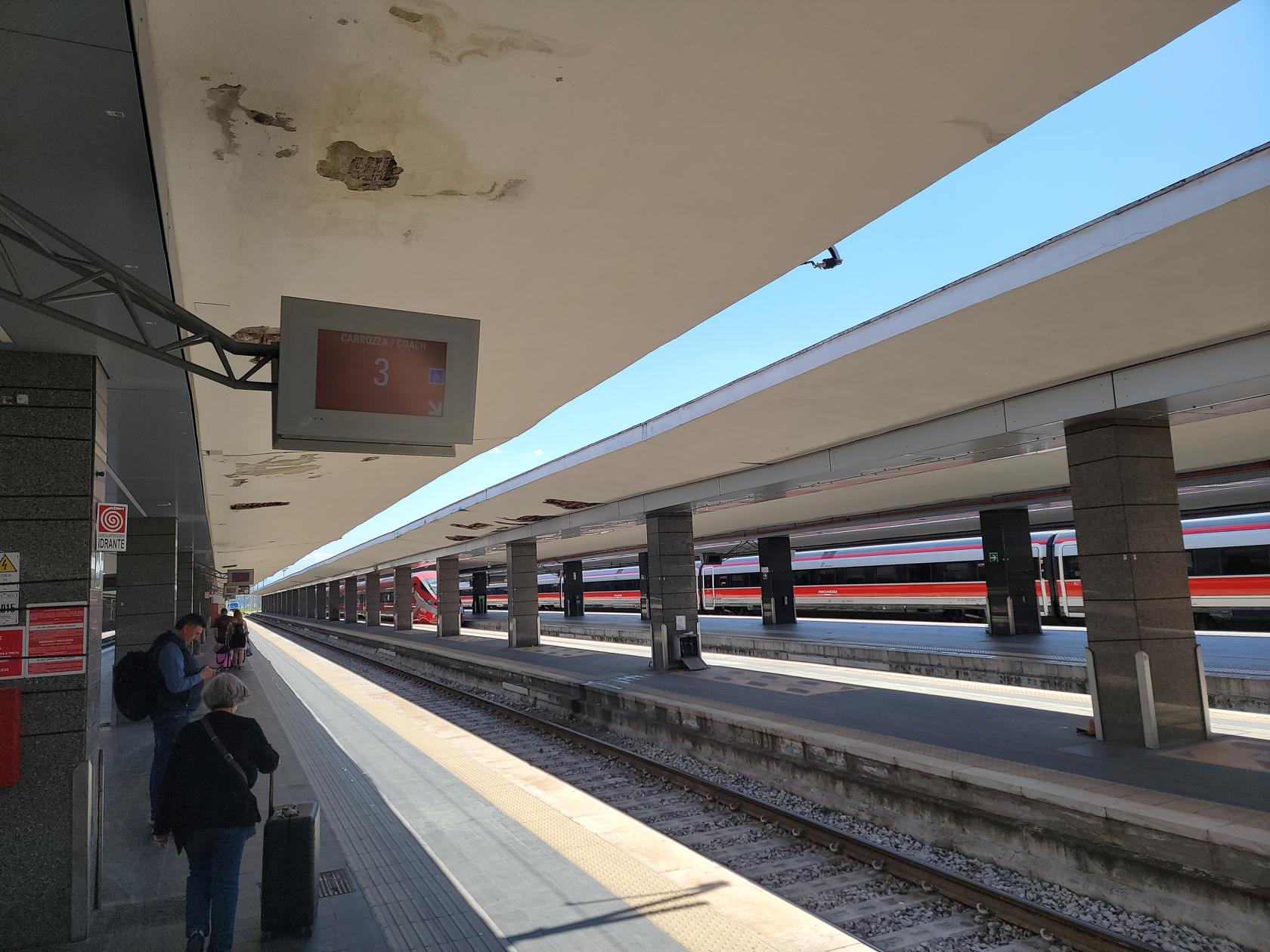
Chris arrived on Friday and I met him at our main train station of Porta Nuova, which because it was coming from Naples and went through Rome, was late by about fifteen minutes.

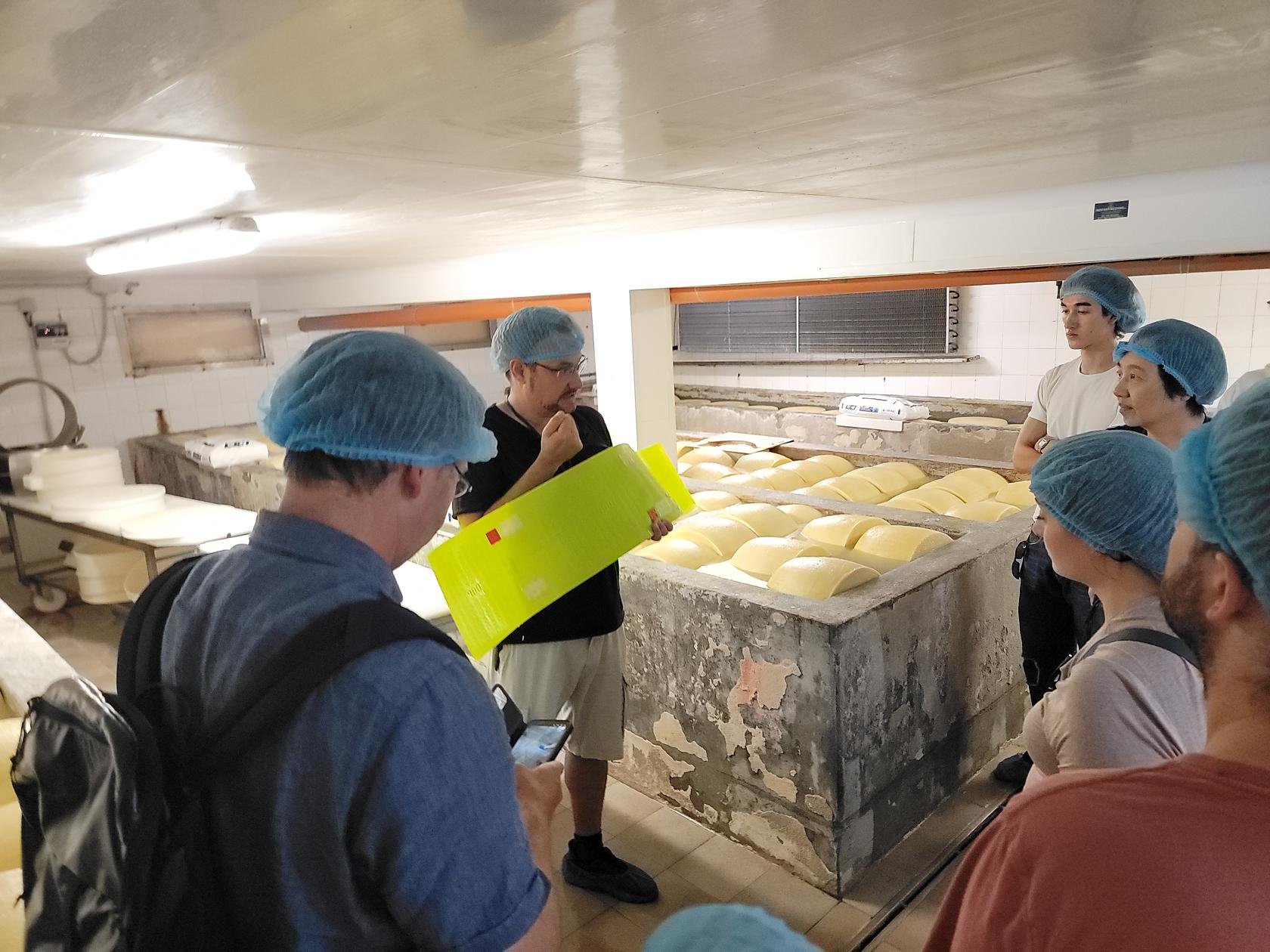
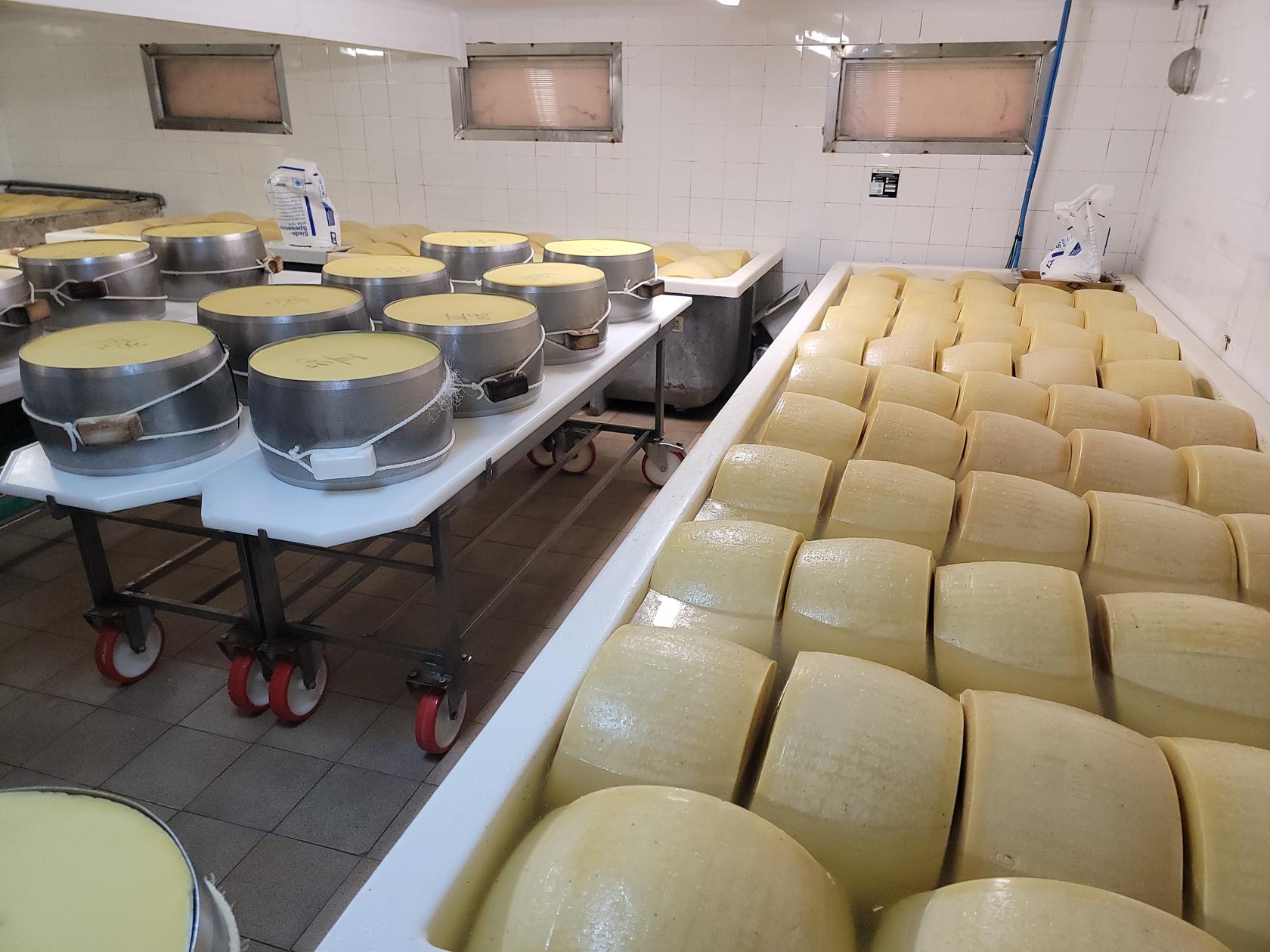
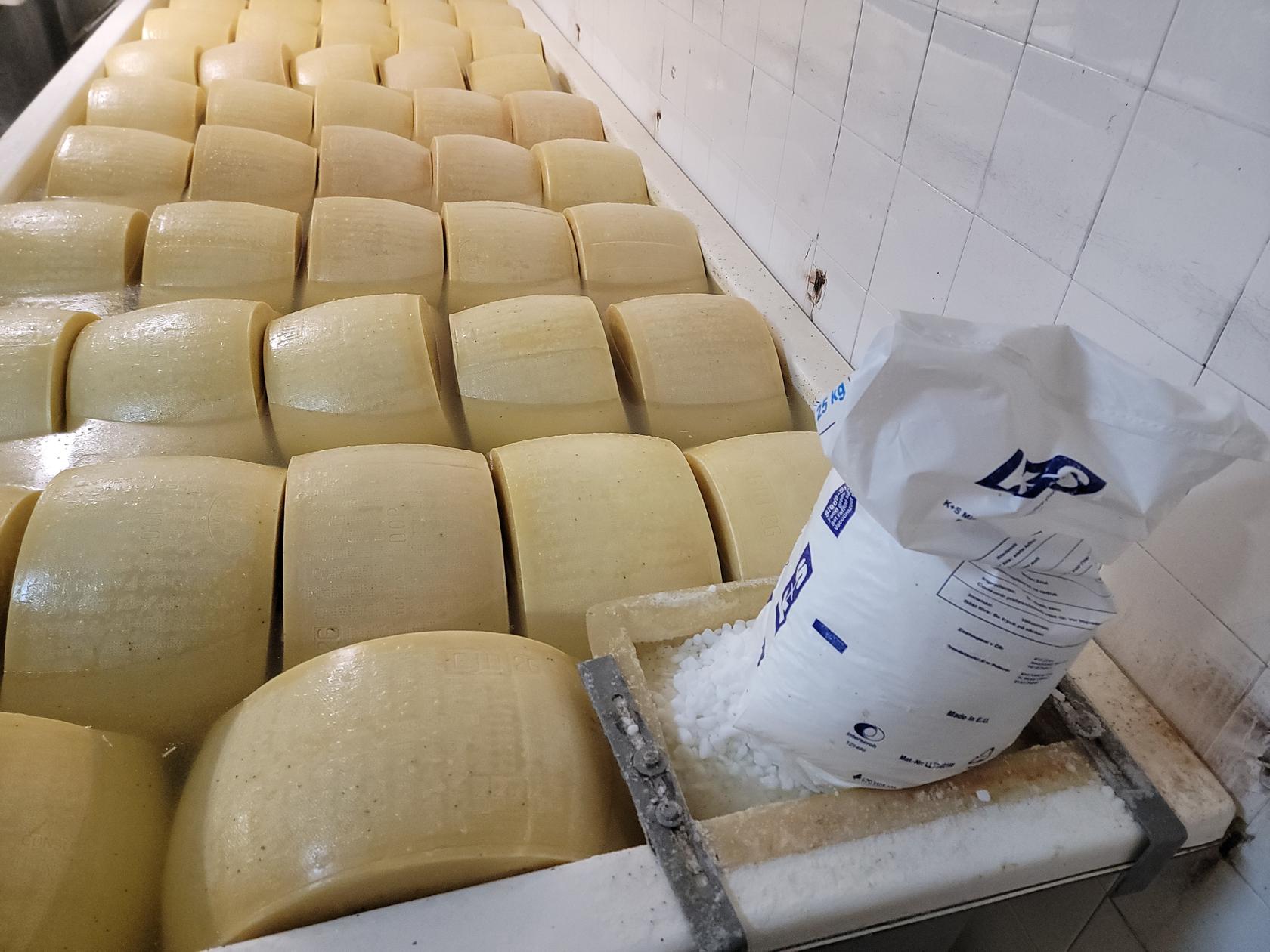
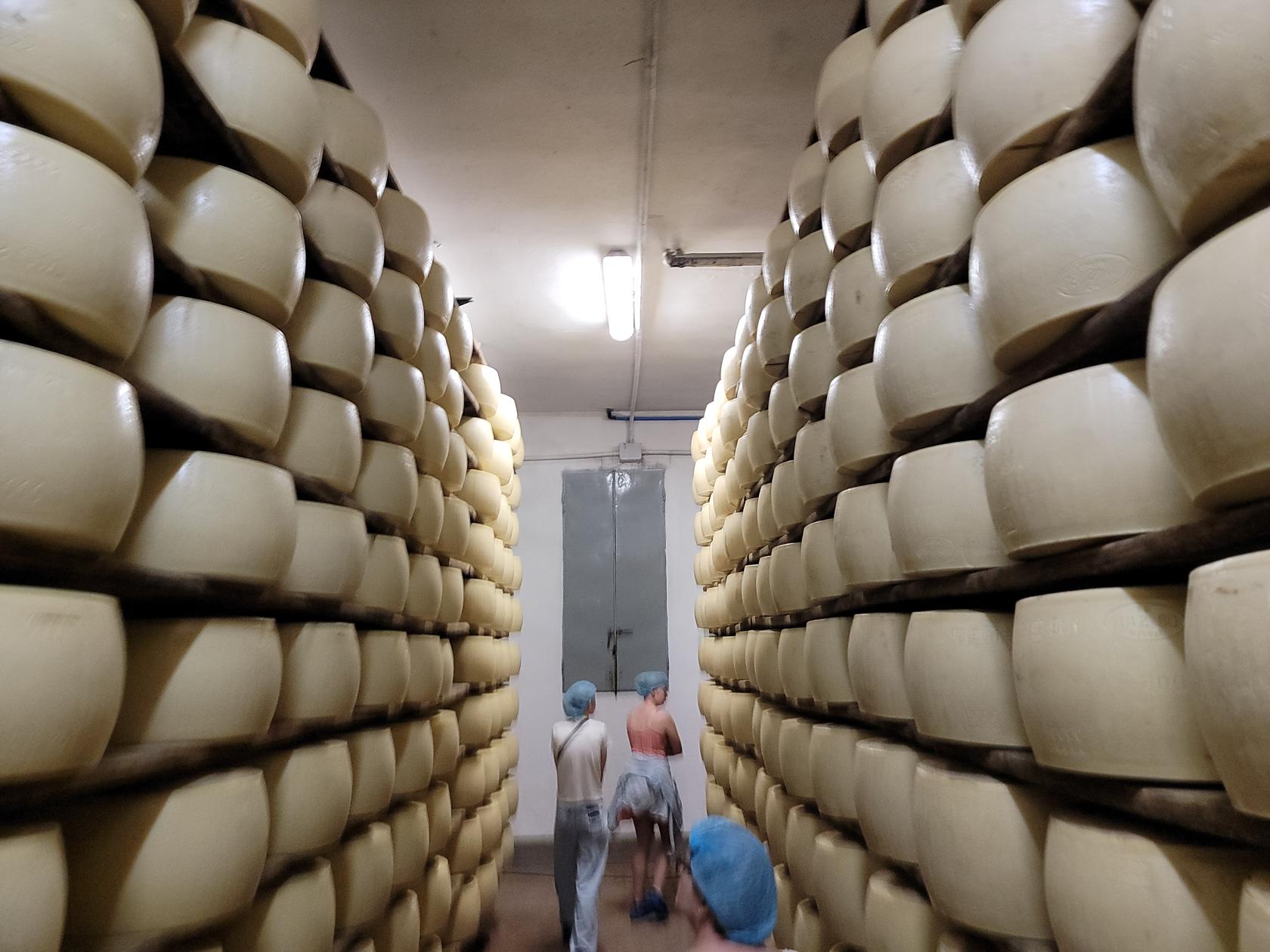
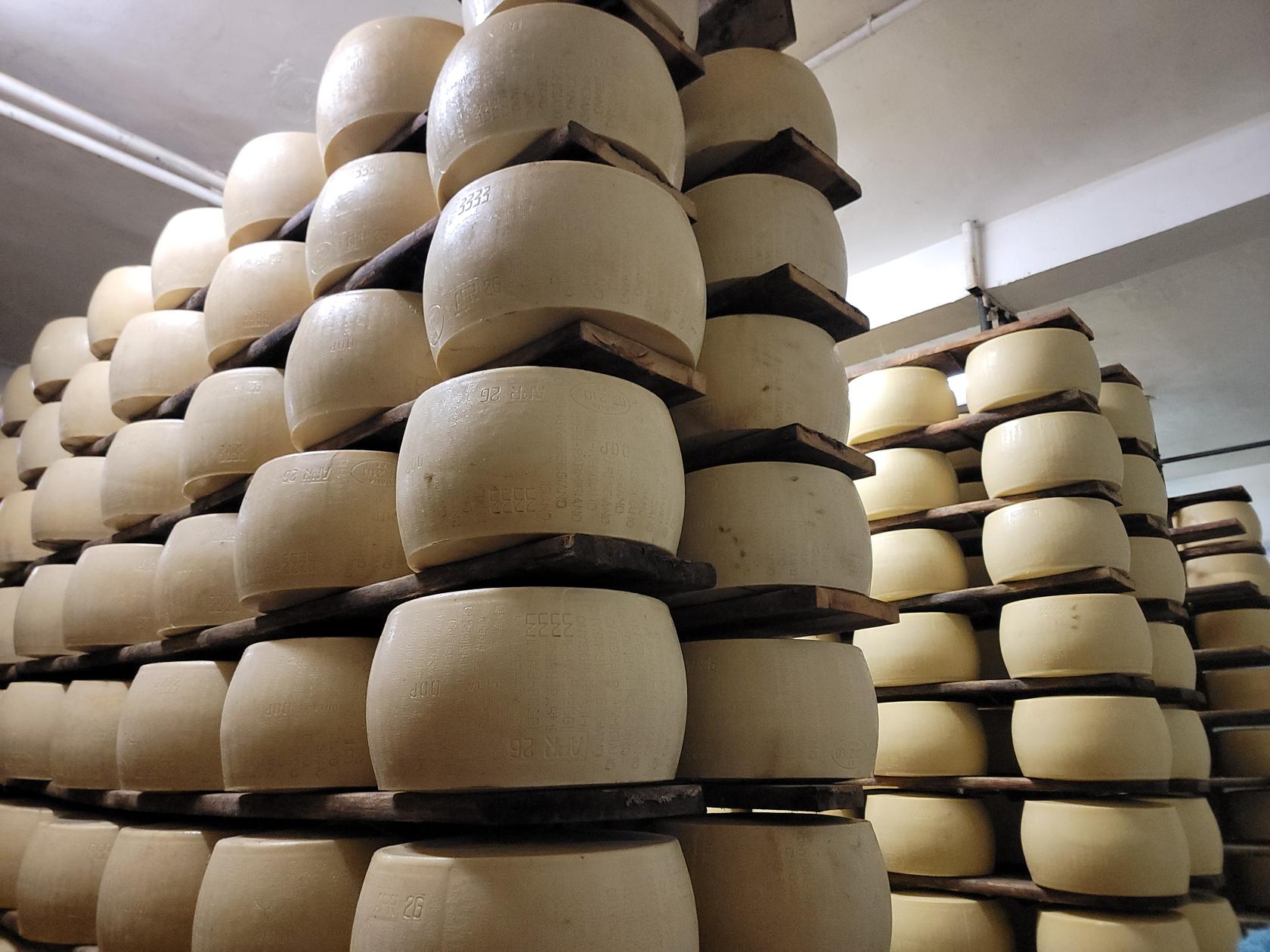
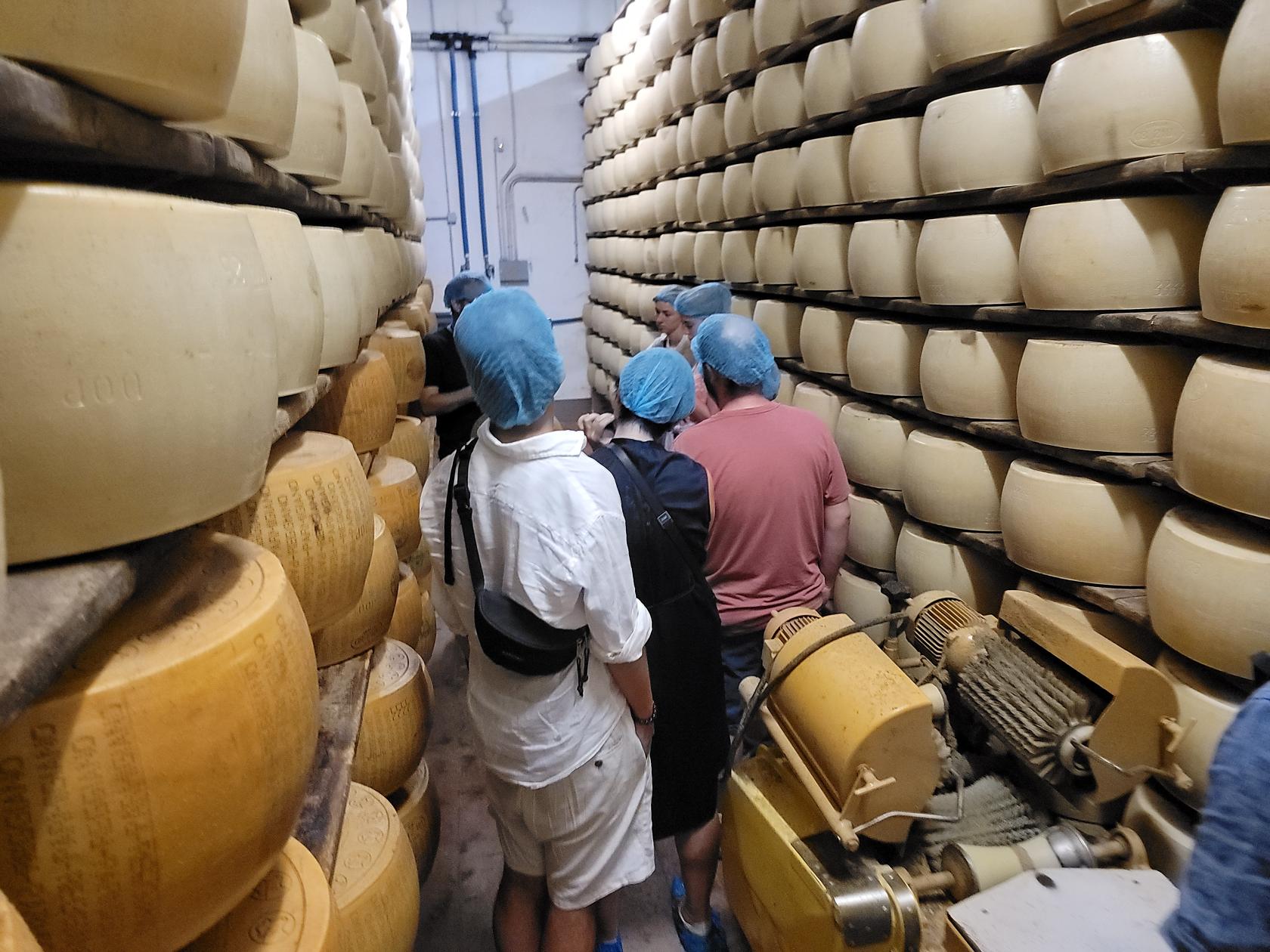
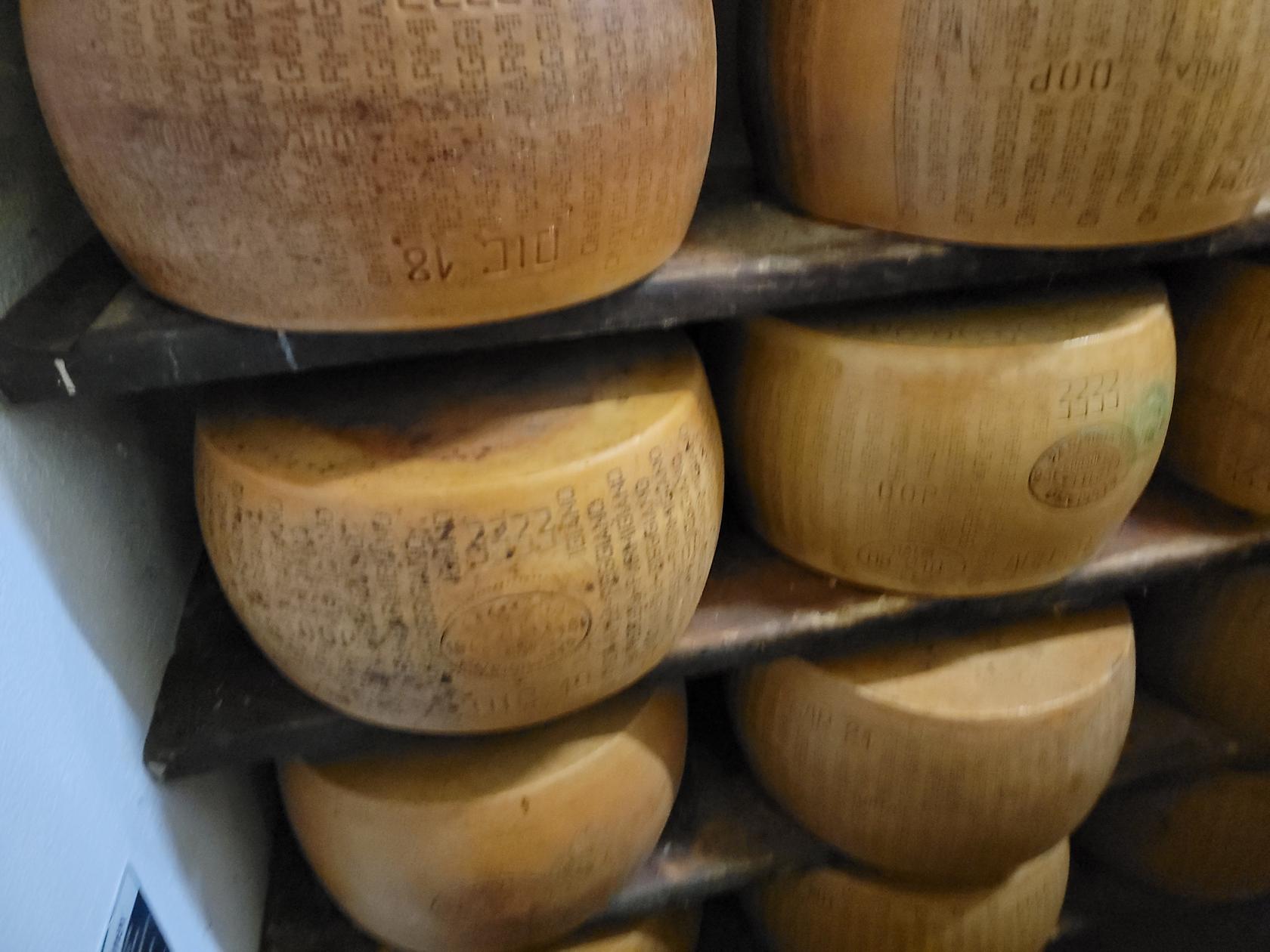
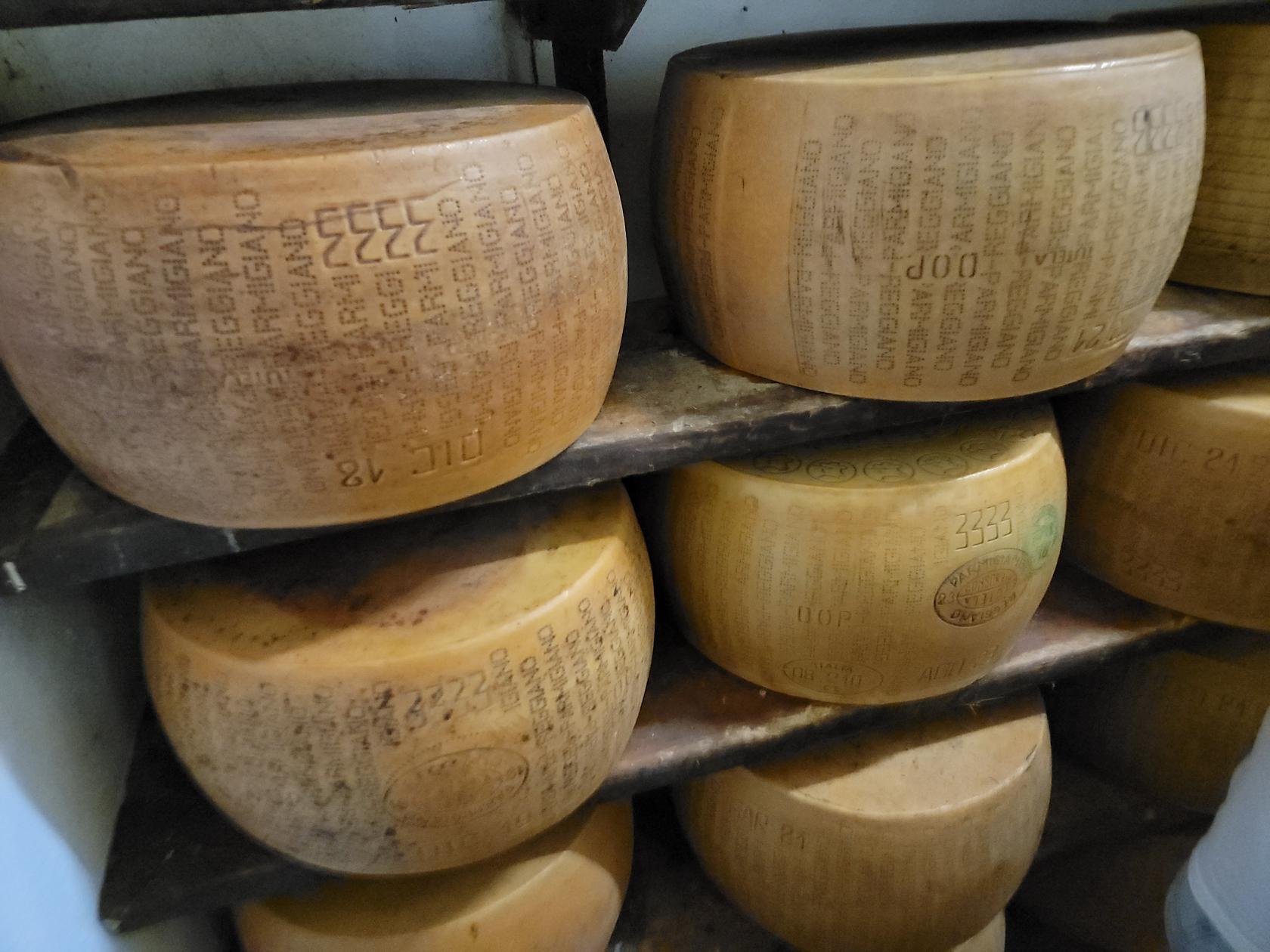
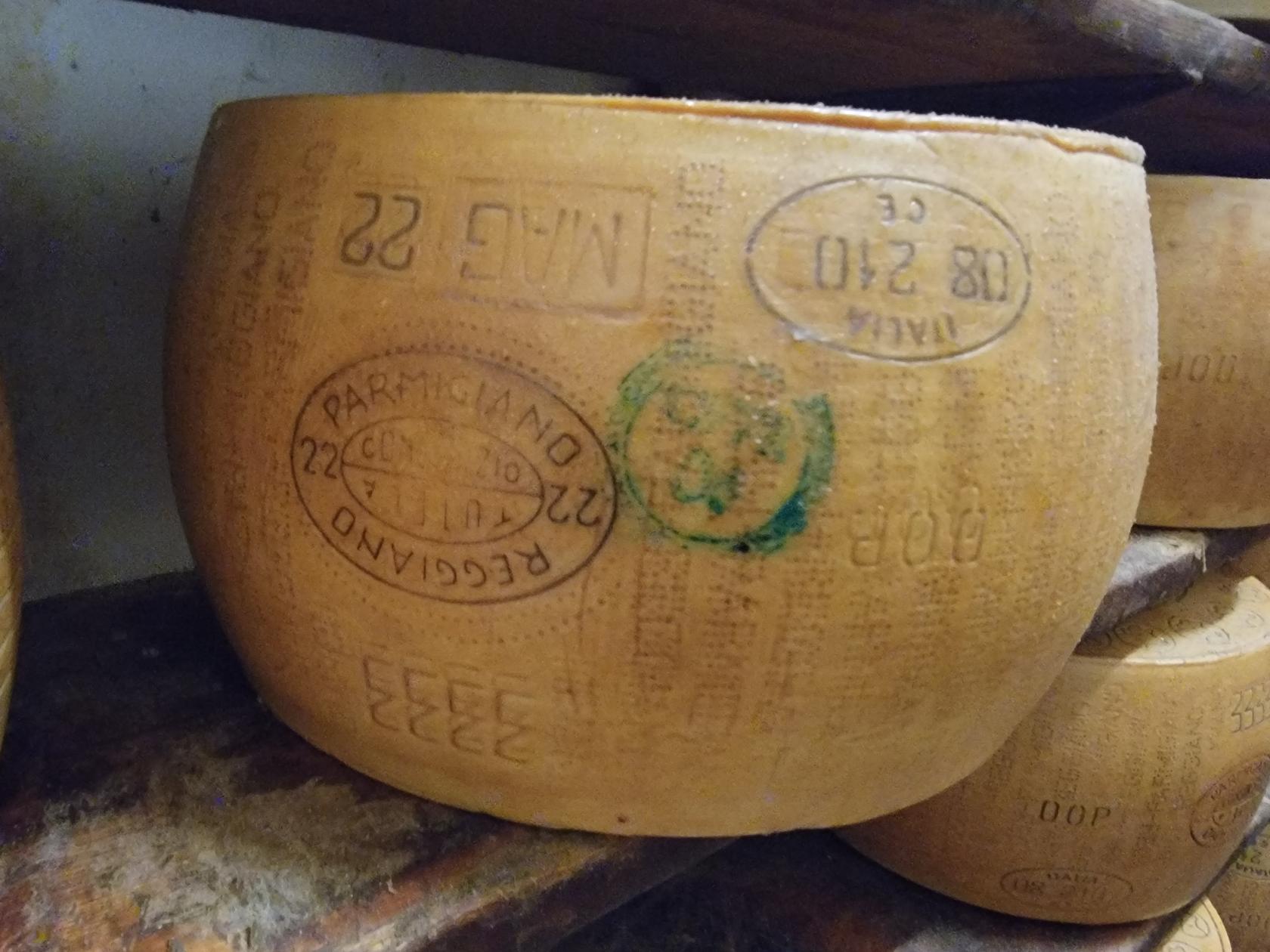
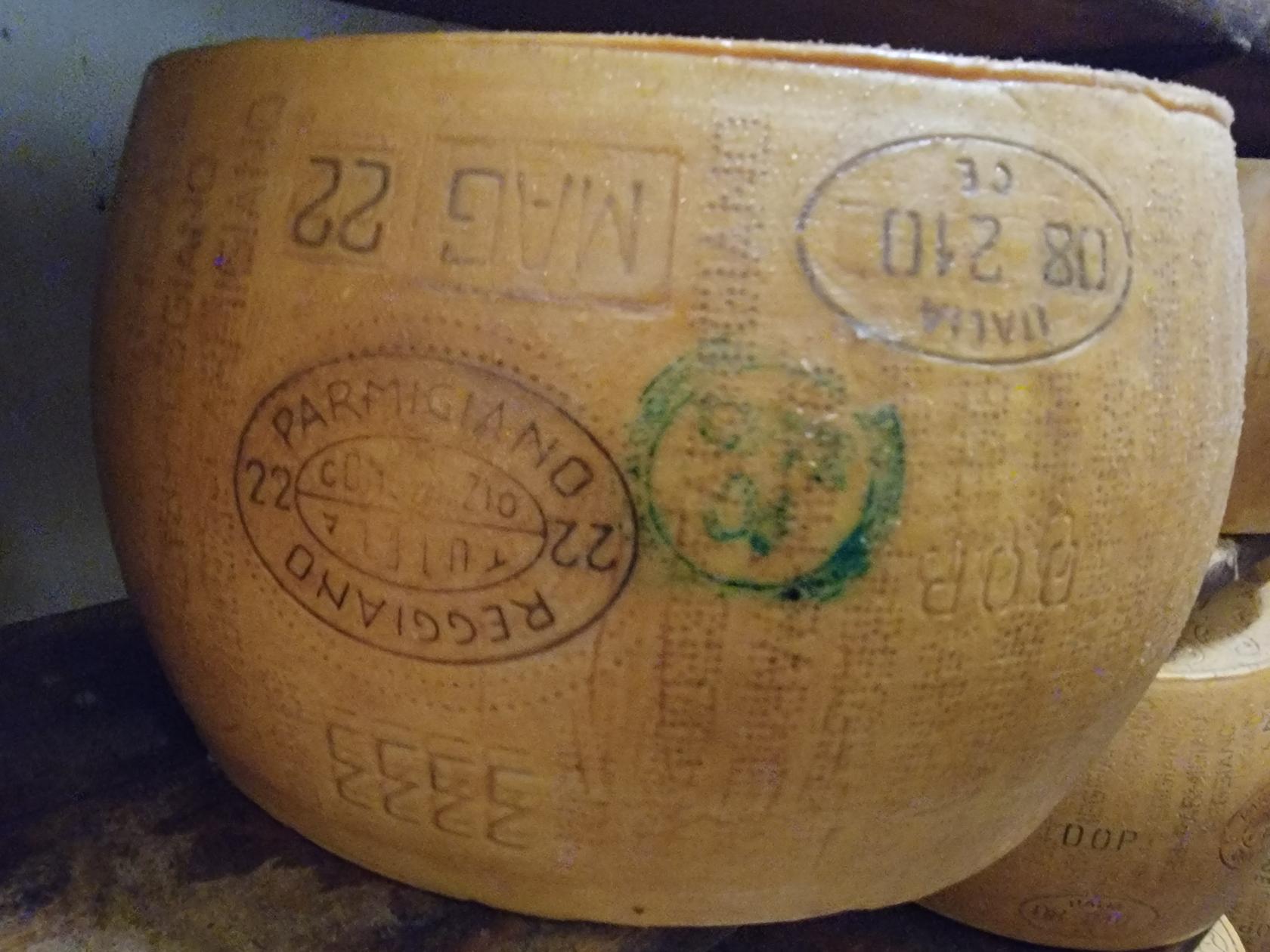
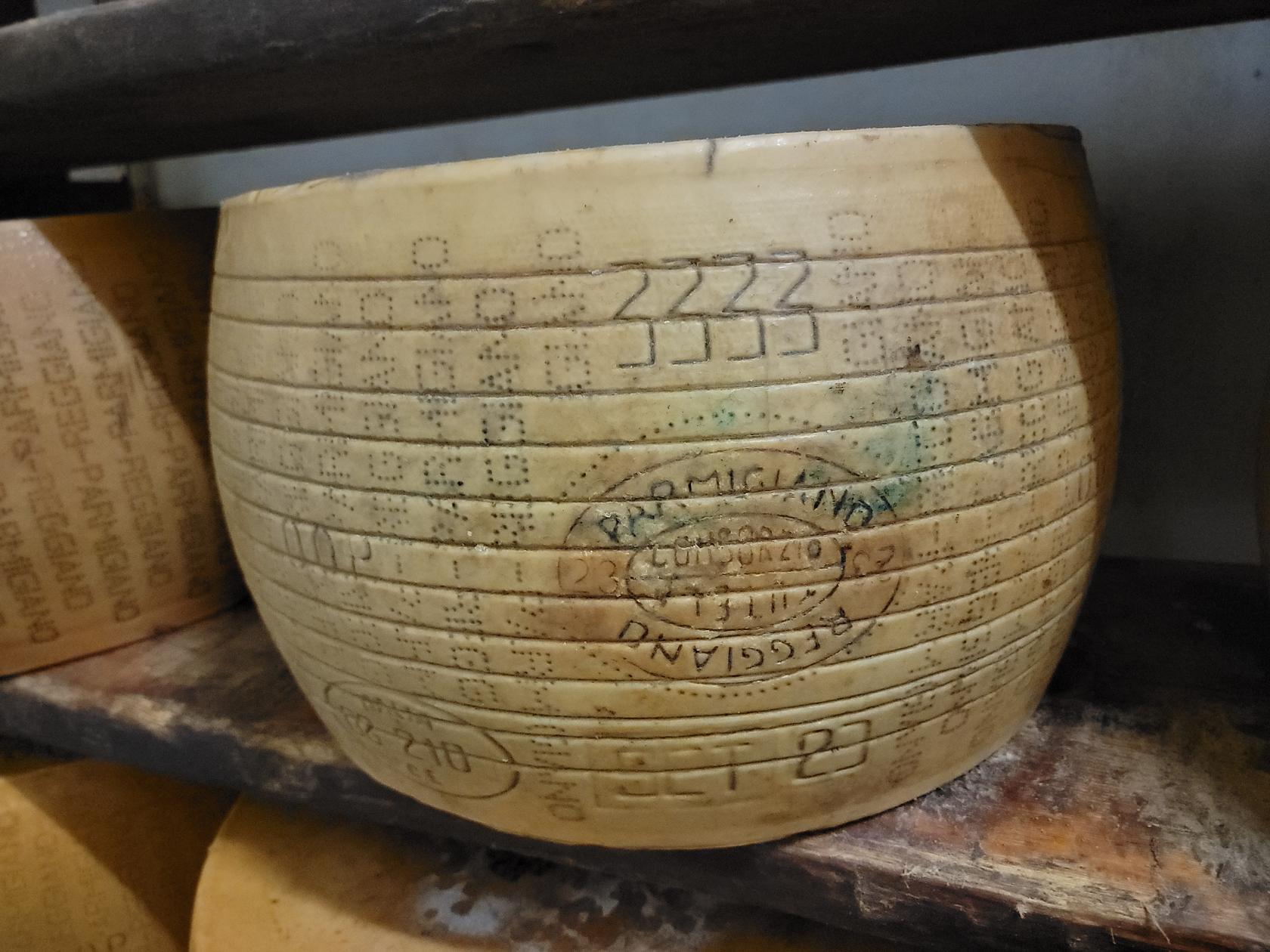
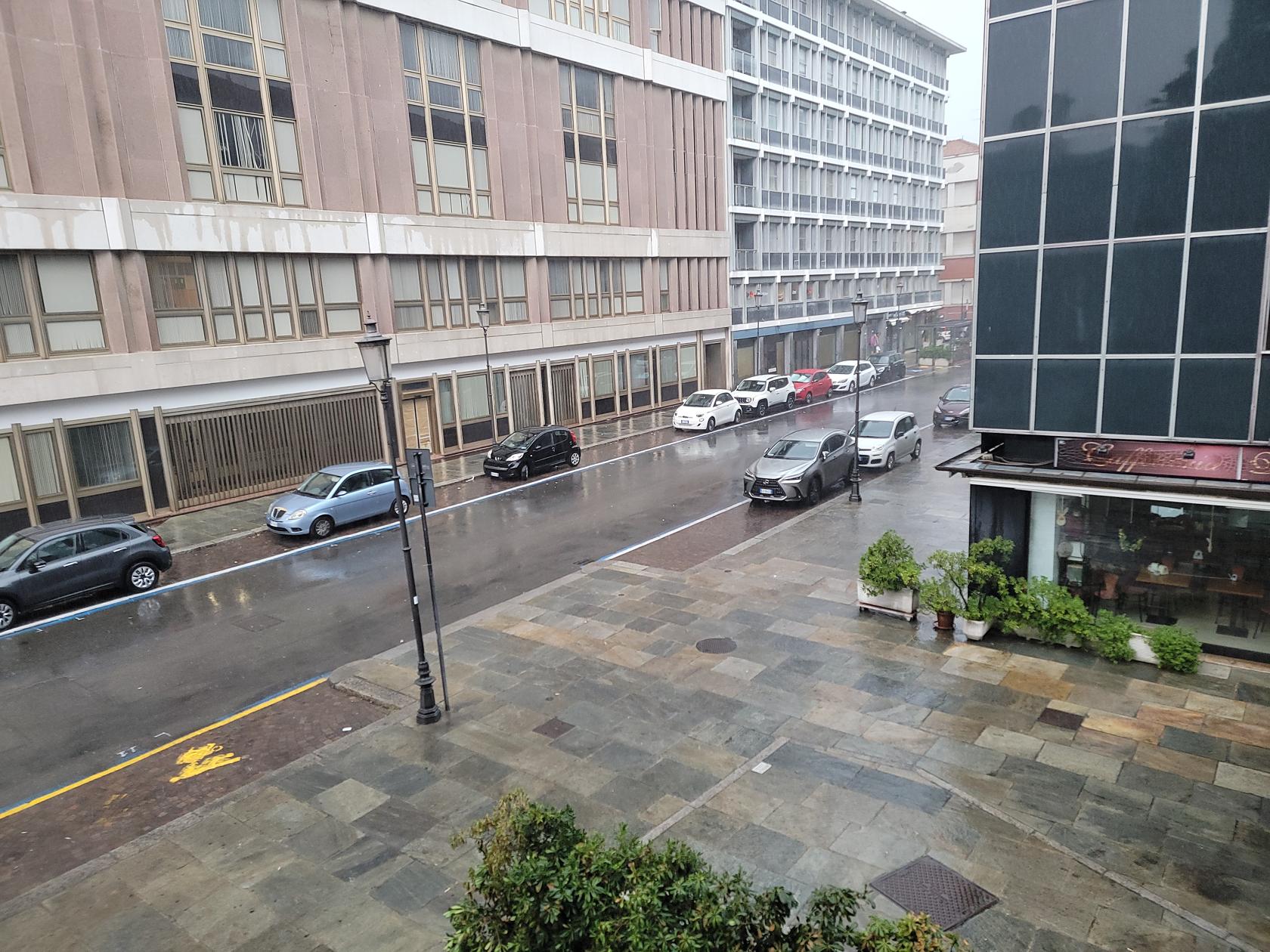
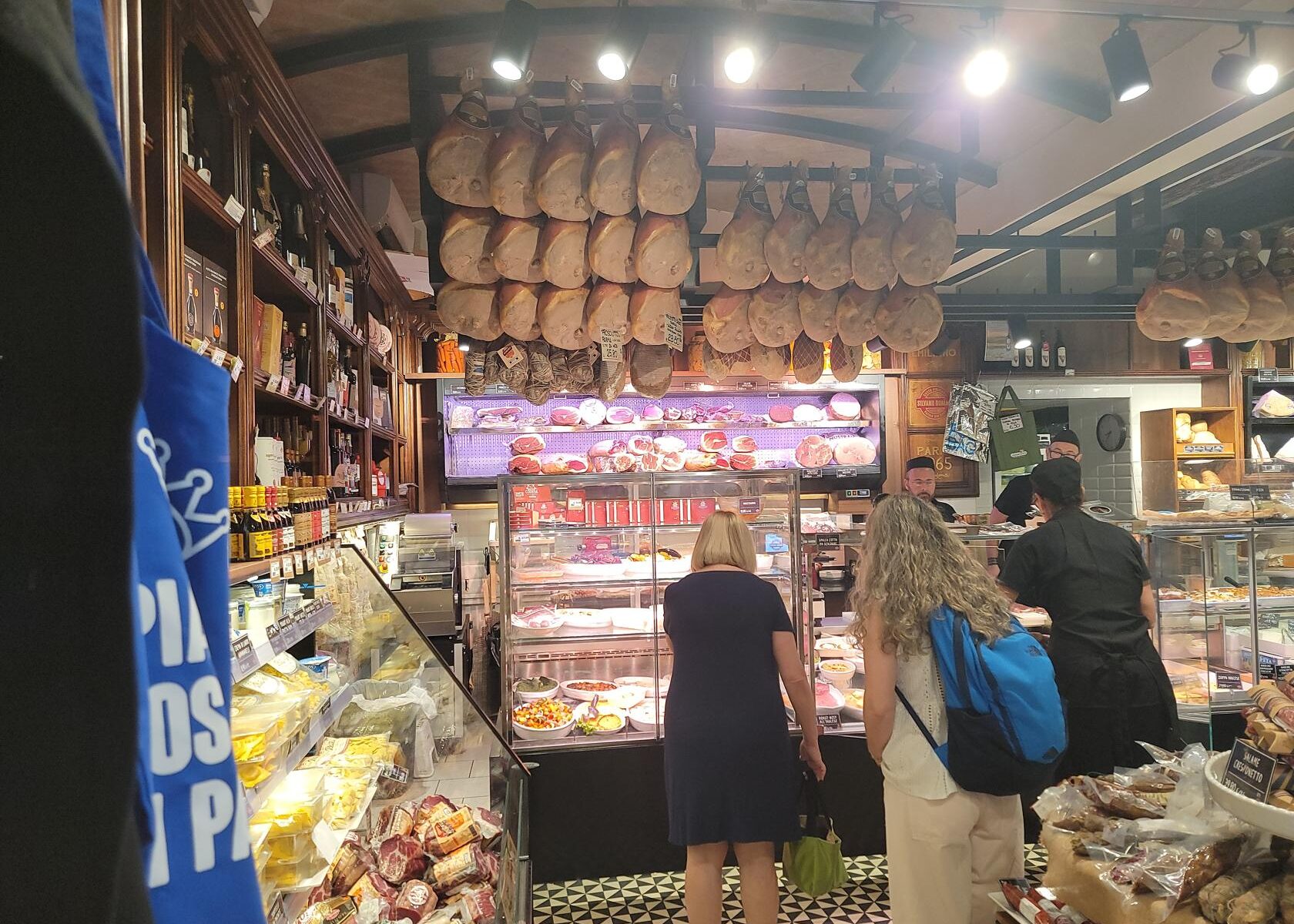
For one entire Saturday, the 2nd of May, we were able to enjoy amazing weather and show Chris the city of Turin. One of our major stops was the Open Market in Piazza della Repubblica. There he purchased authentic Italian cheese to take back home with him. Other than that, we just made sure he enjoyed great food here and kept him as comfortable as possible in our apartment for a few days.

Restaurants

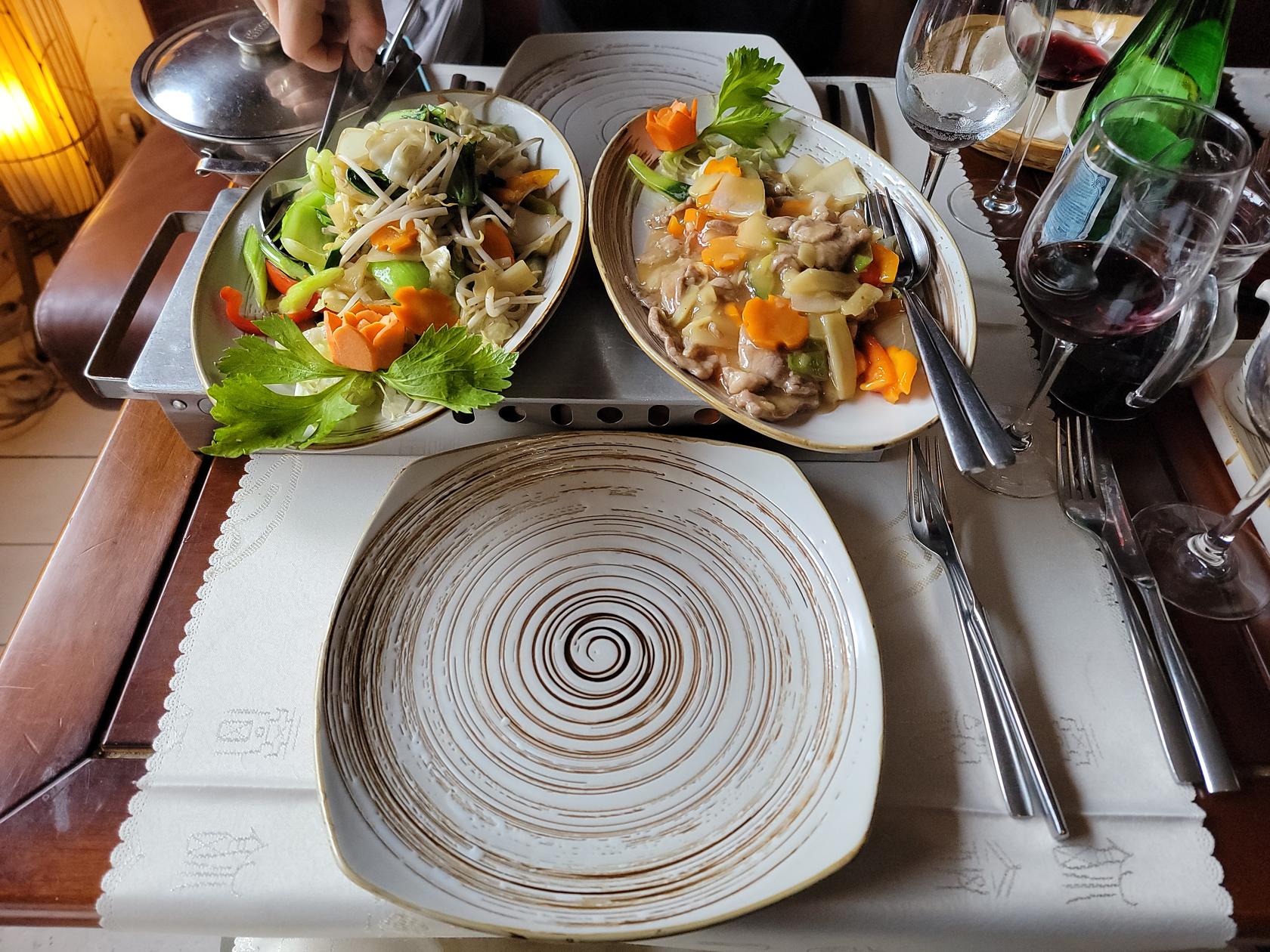
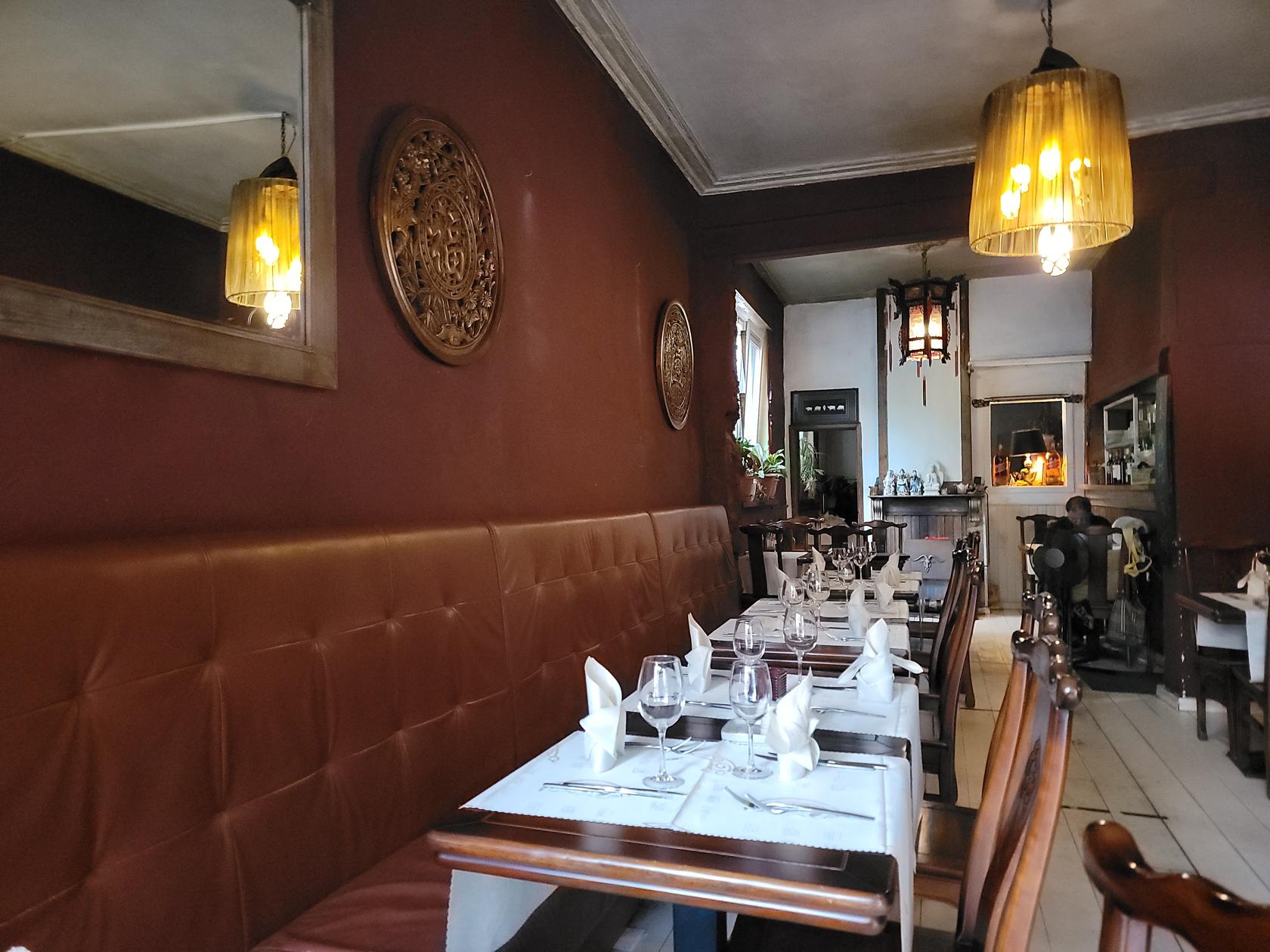
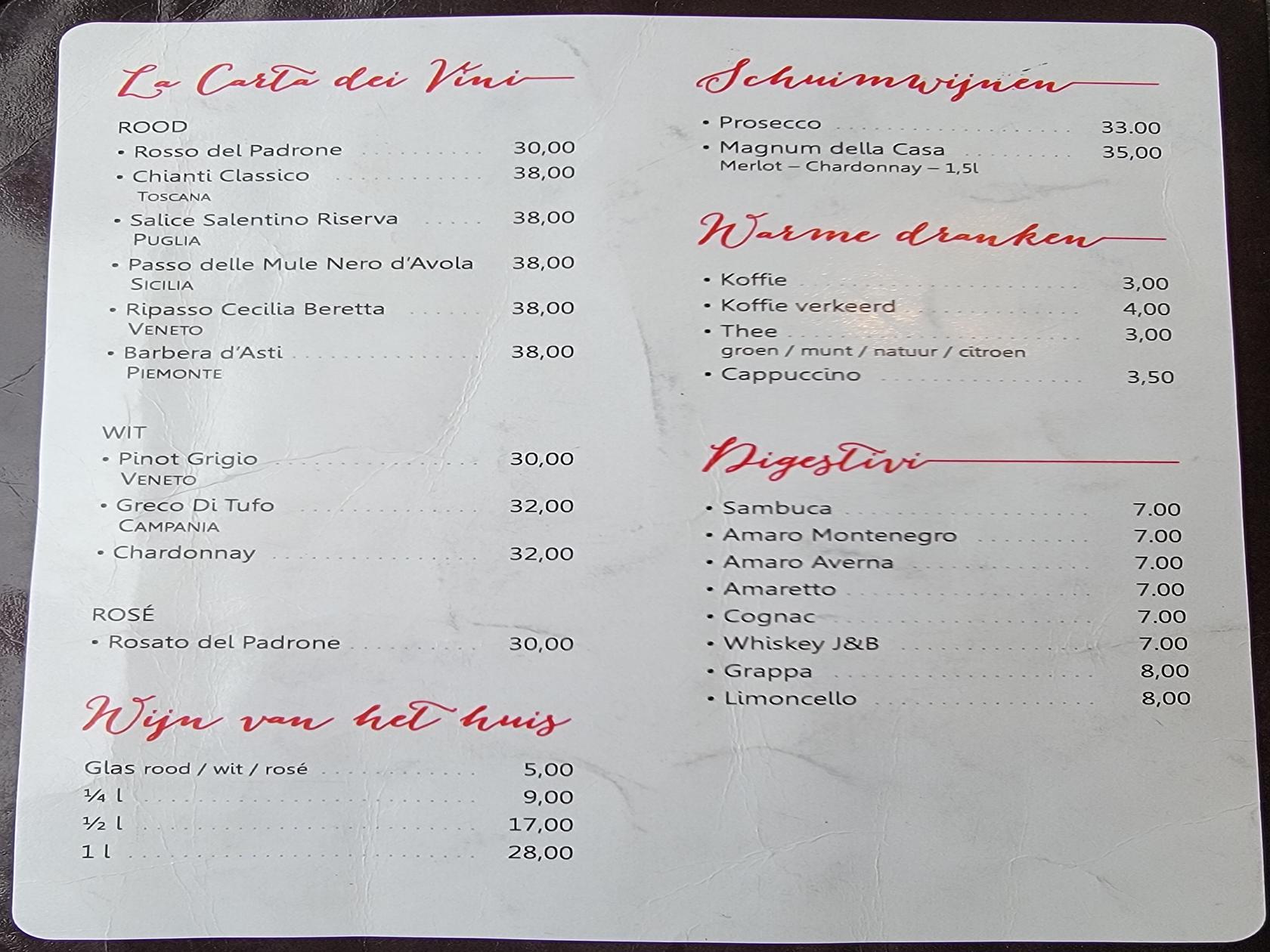
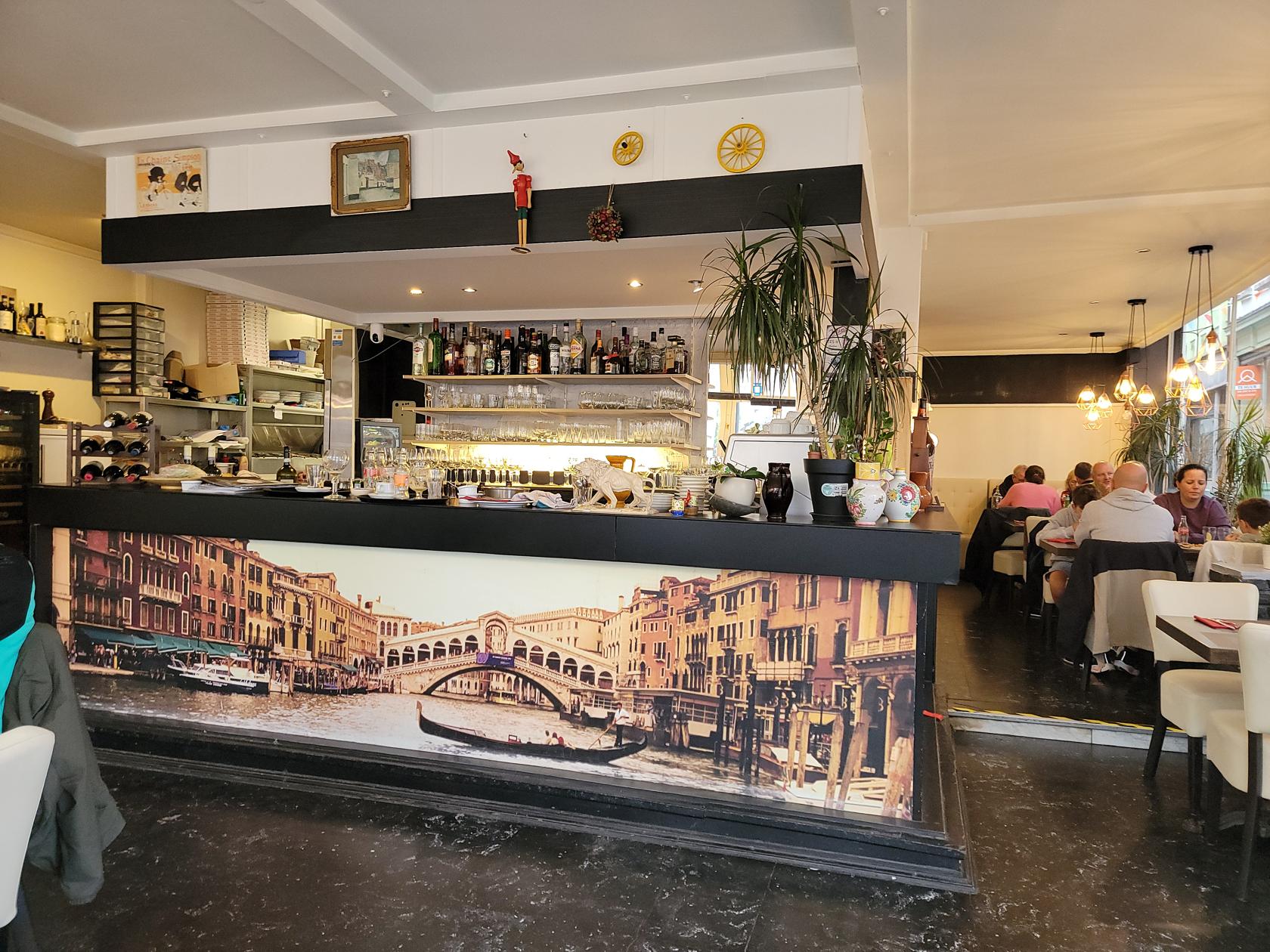
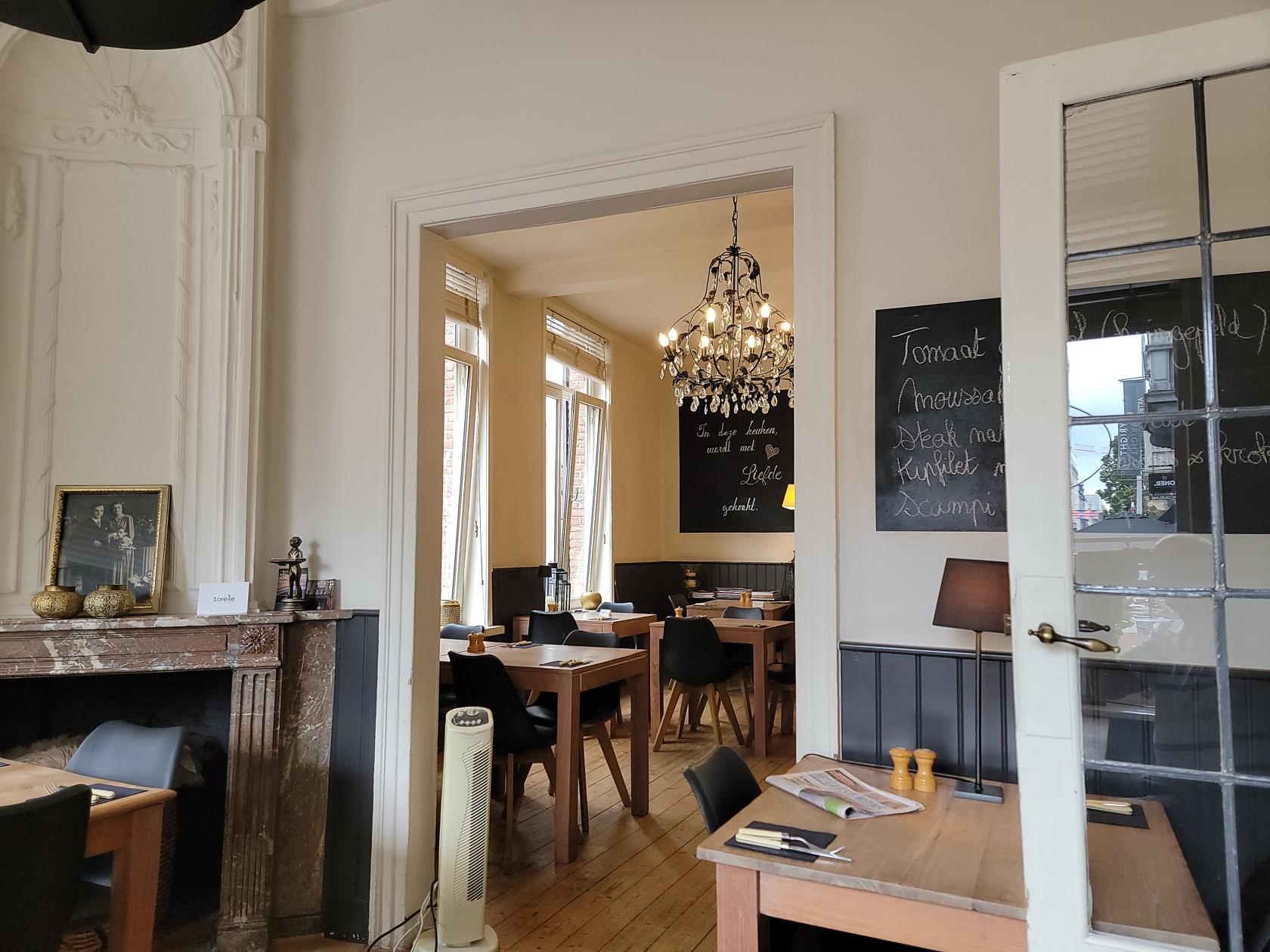
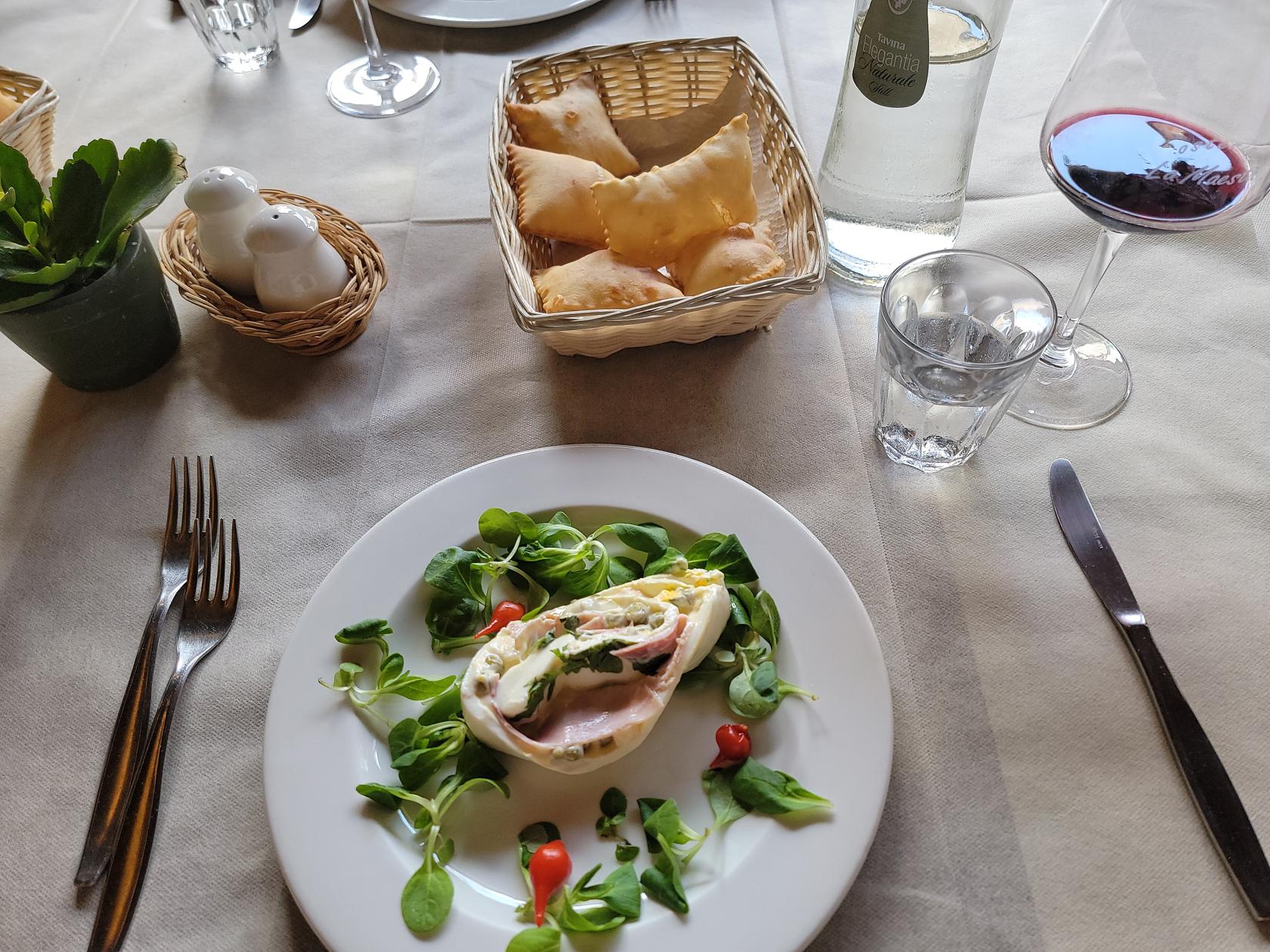
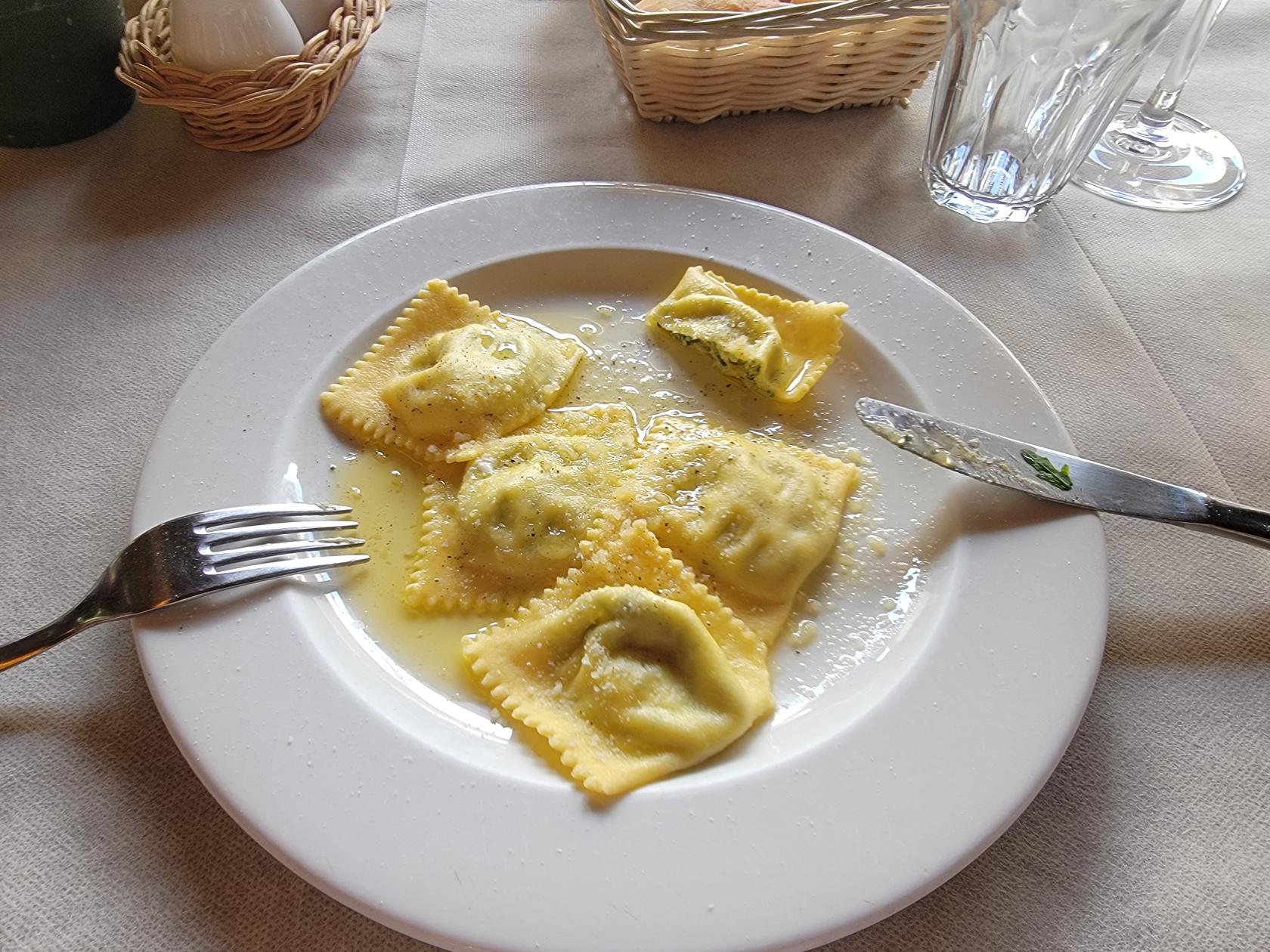
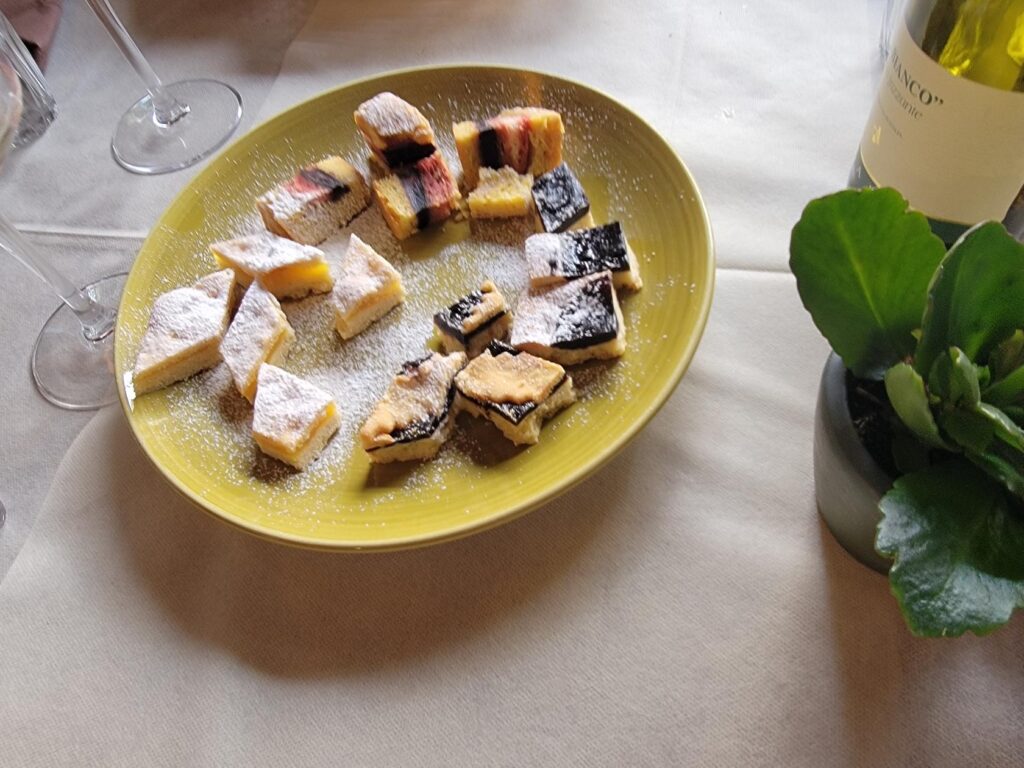
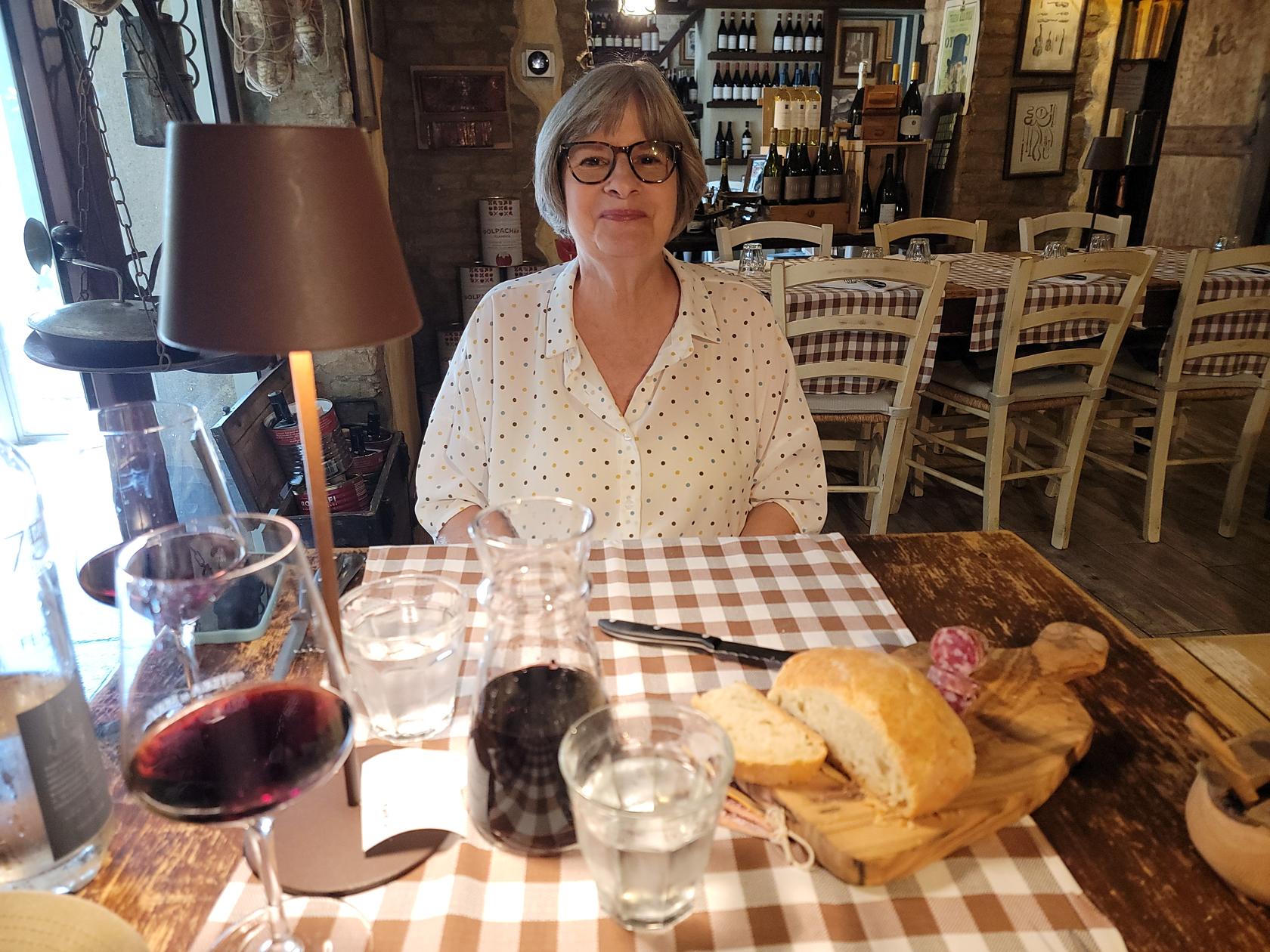
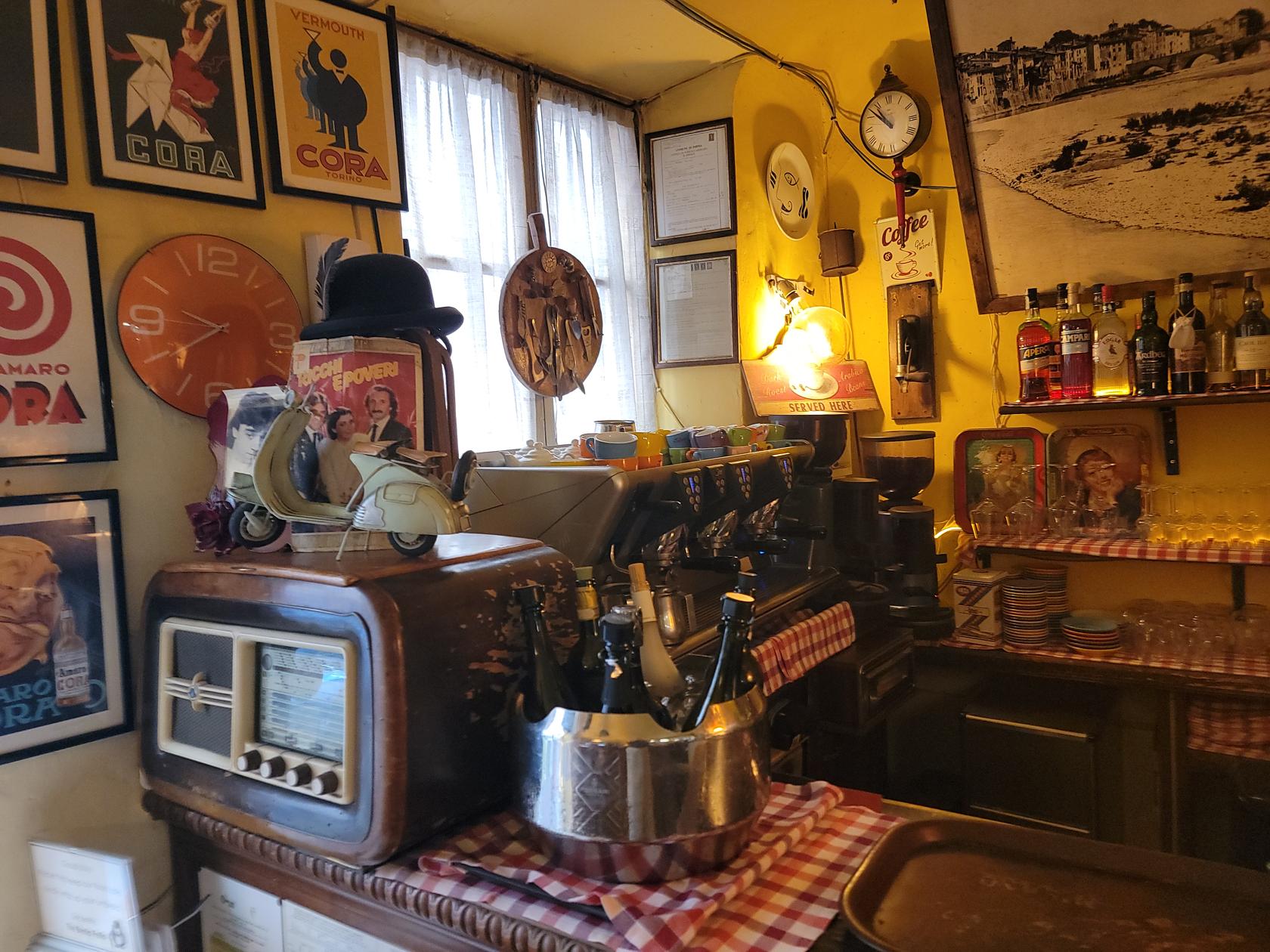
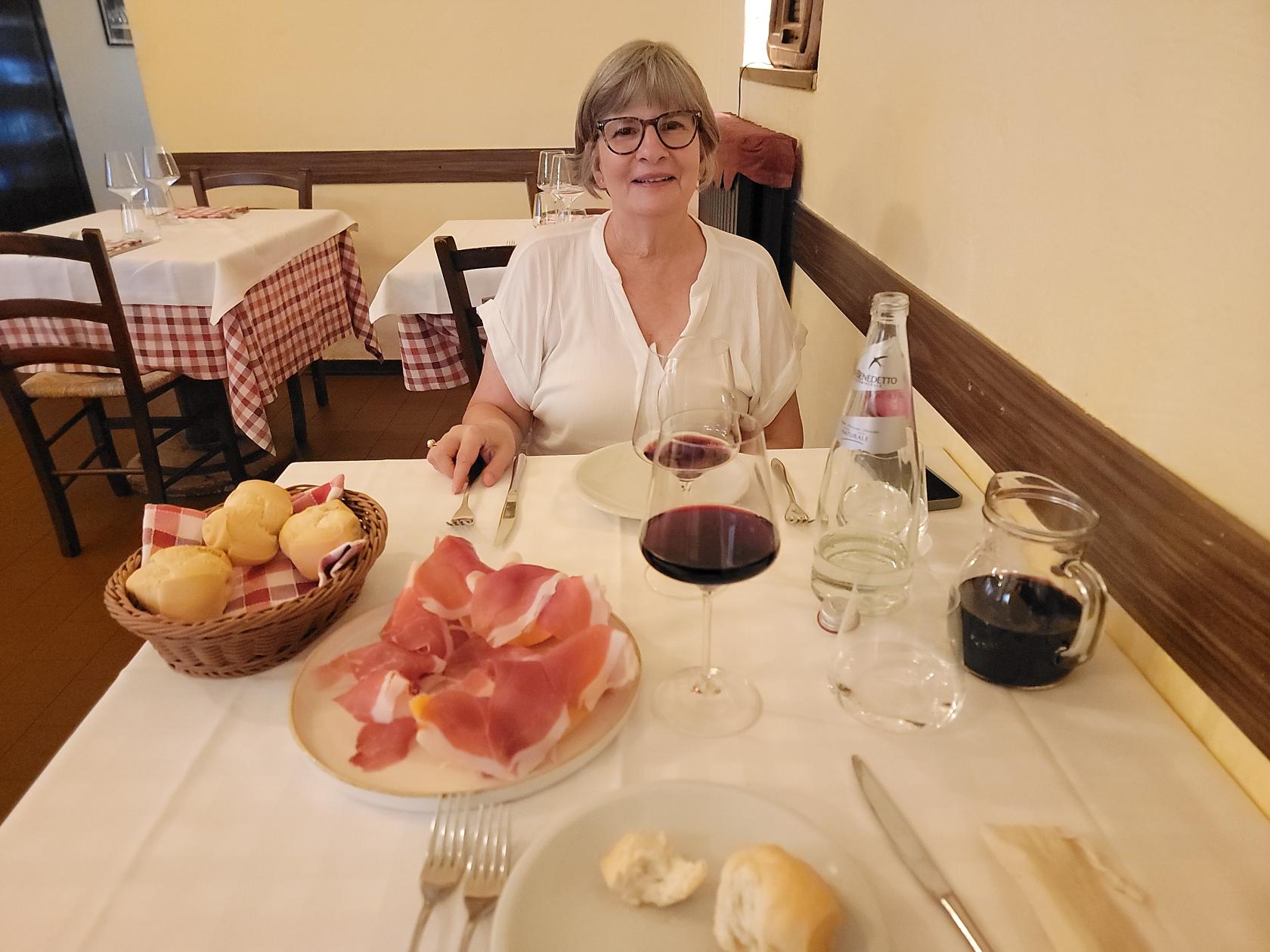
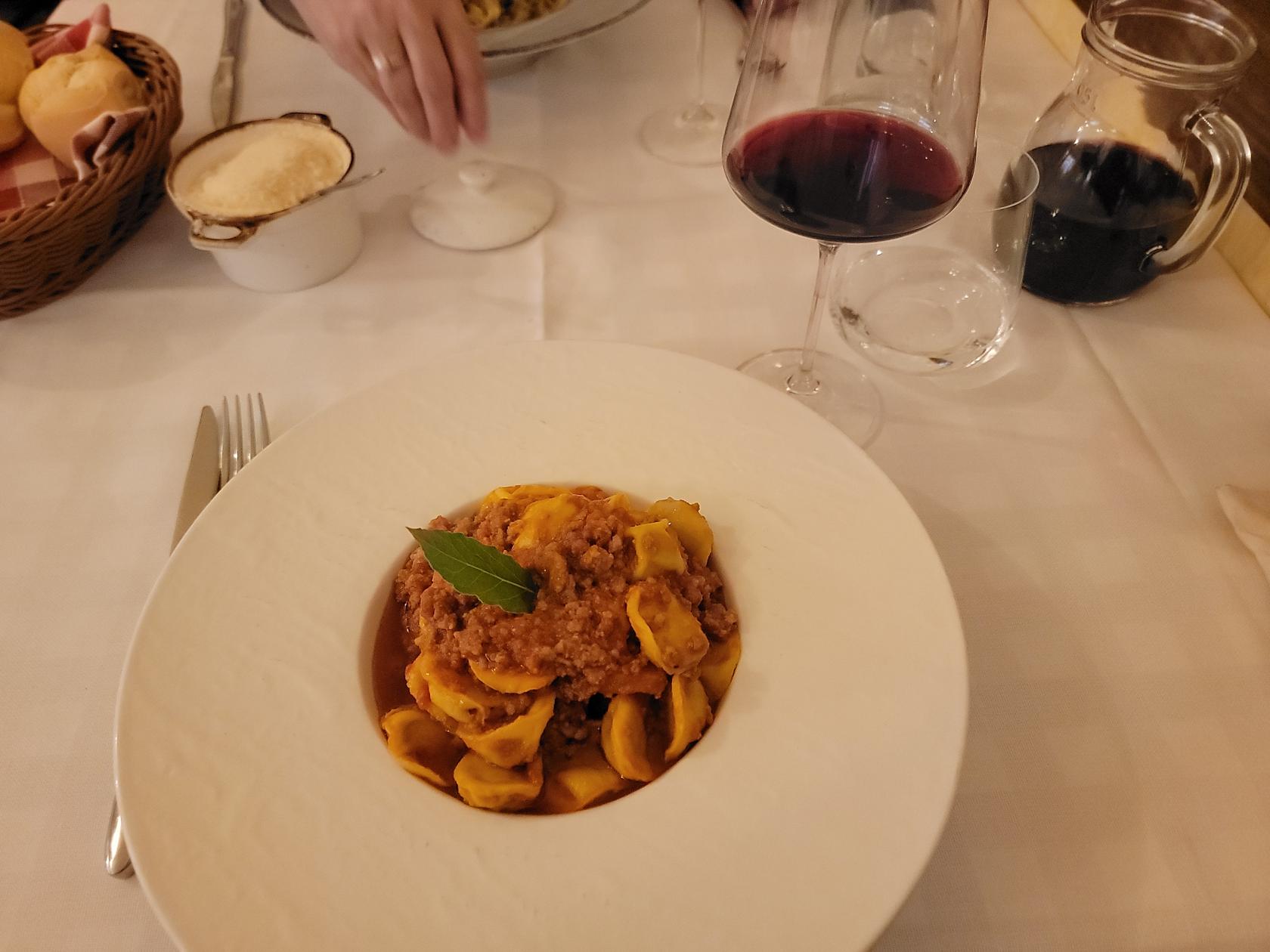
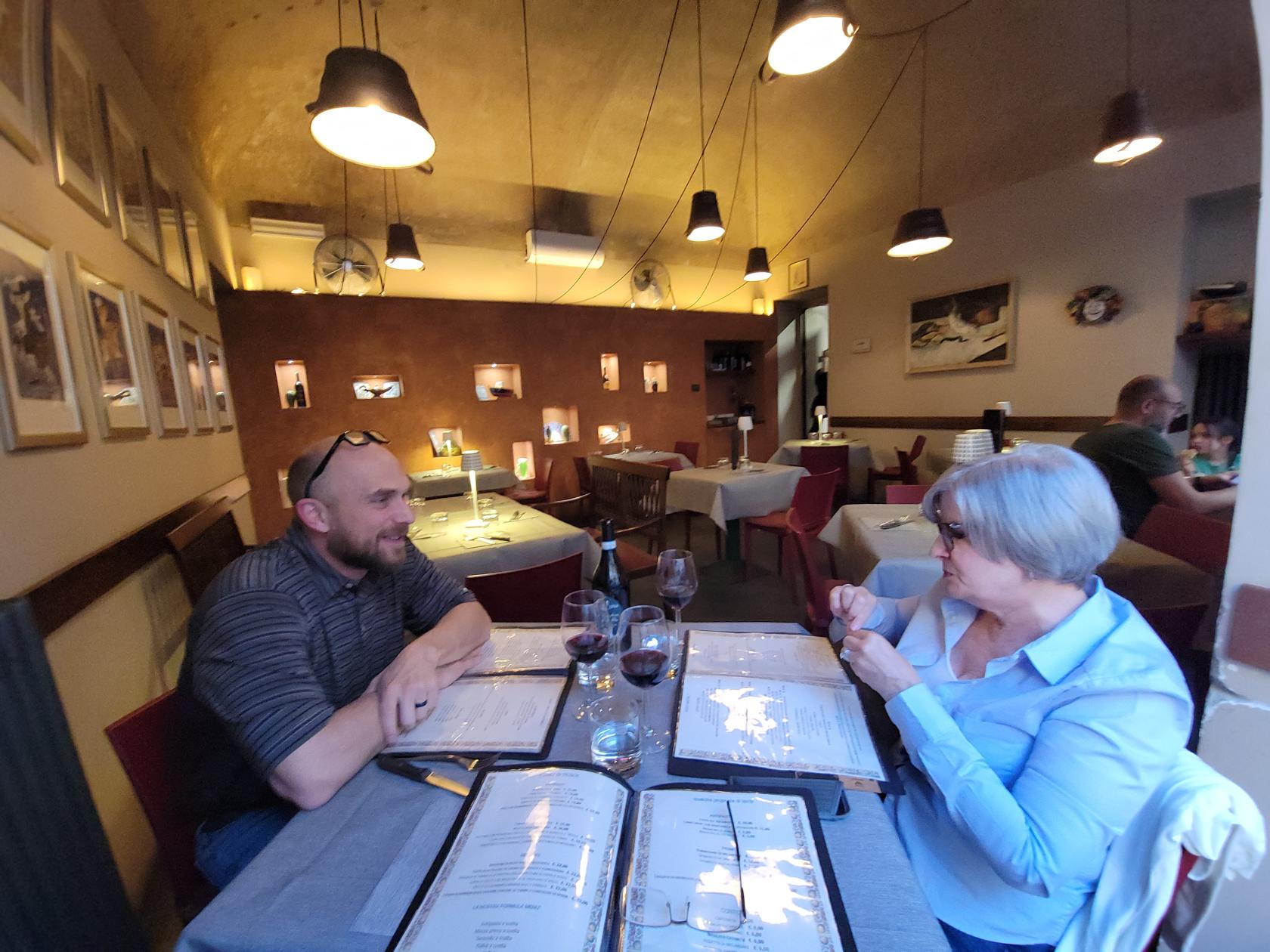
It seemed like we spent more time in the restaurants, trattoria and cafes, than we did walking around. We made a point of it to take him to our two favorite restaurants nearby, which I am happy to say we had reservations for, given the fact the city was packed with people for the Jazz Festival in Turin.

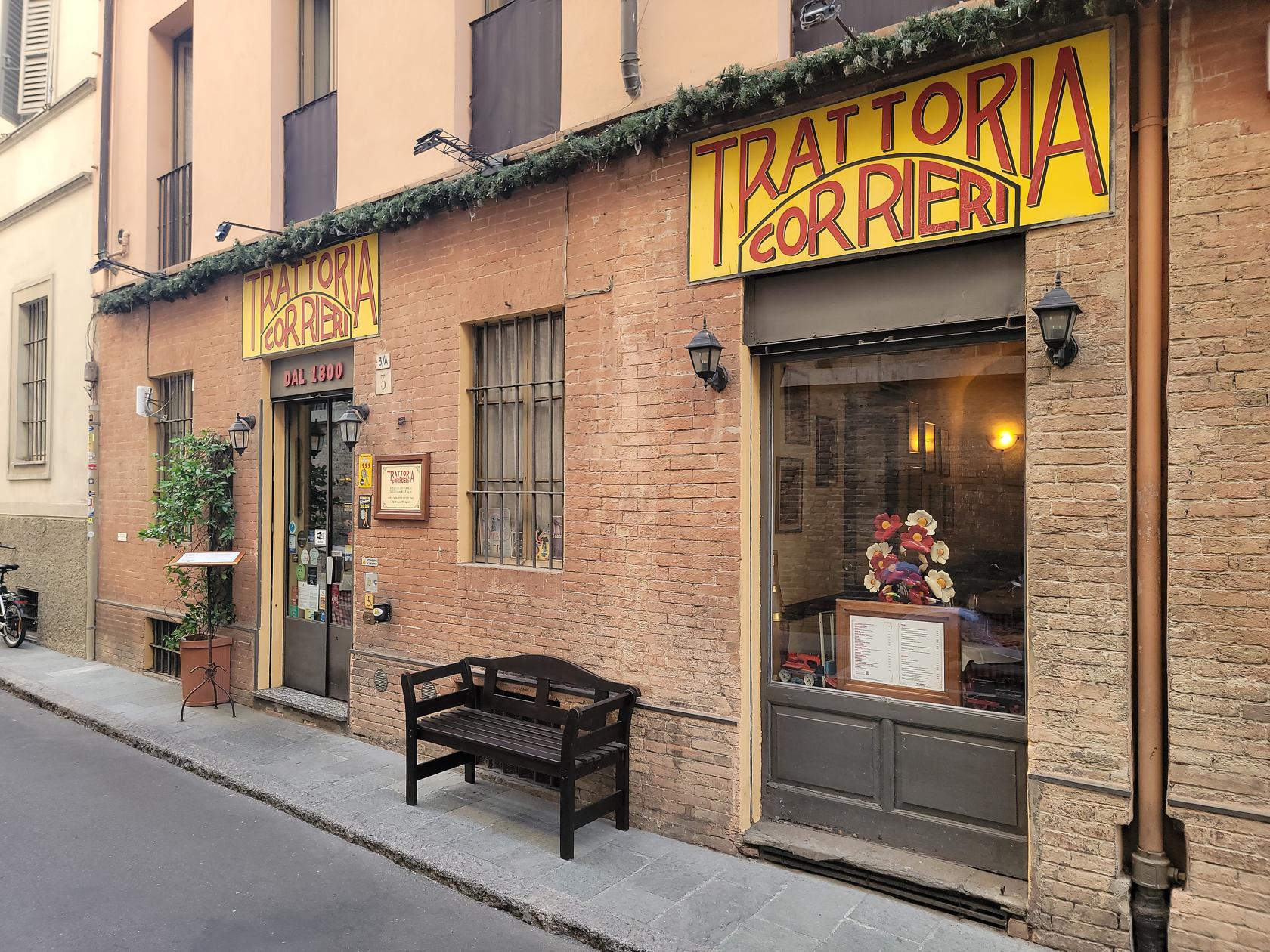
Trattoria D’Agata

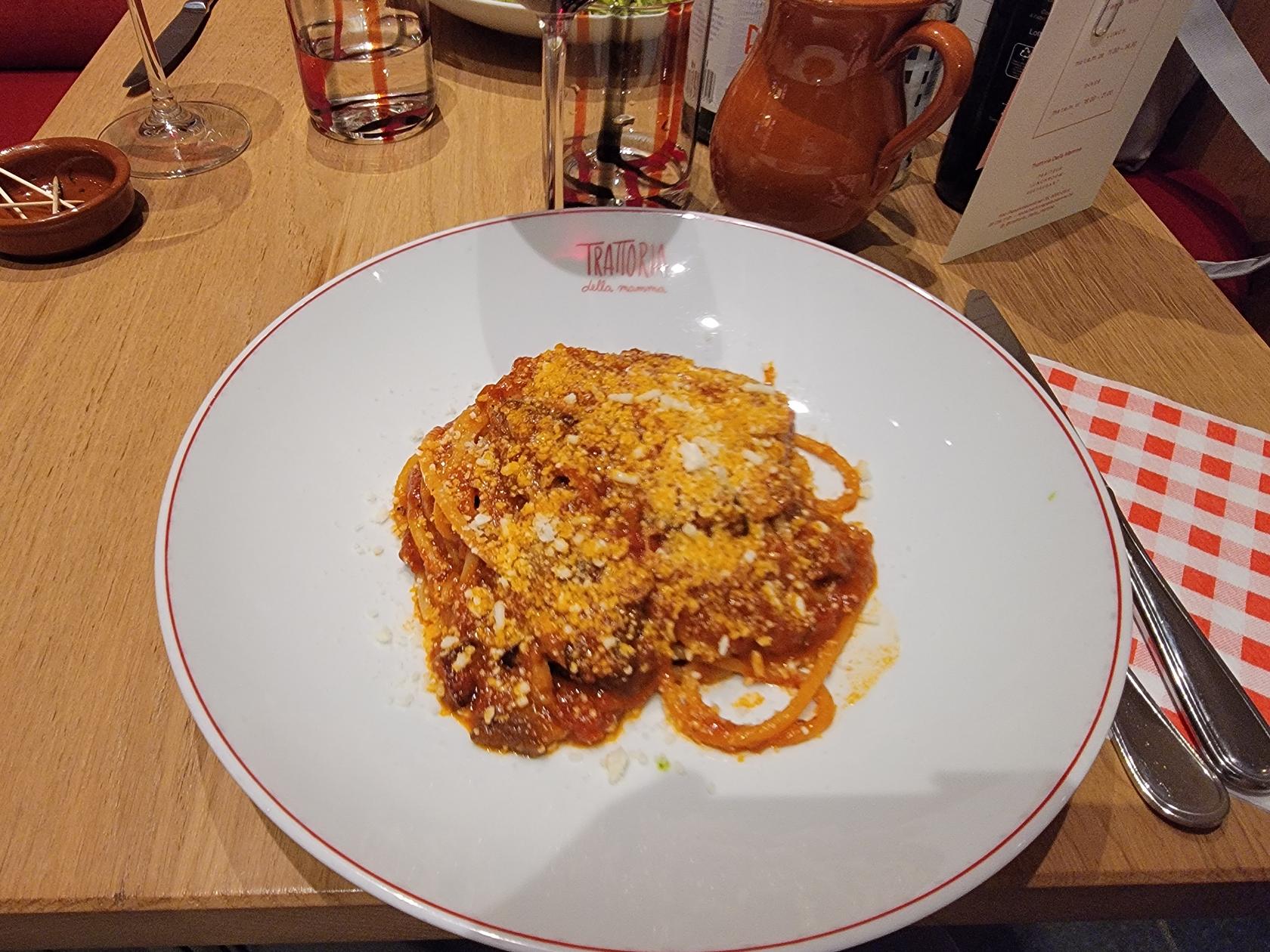
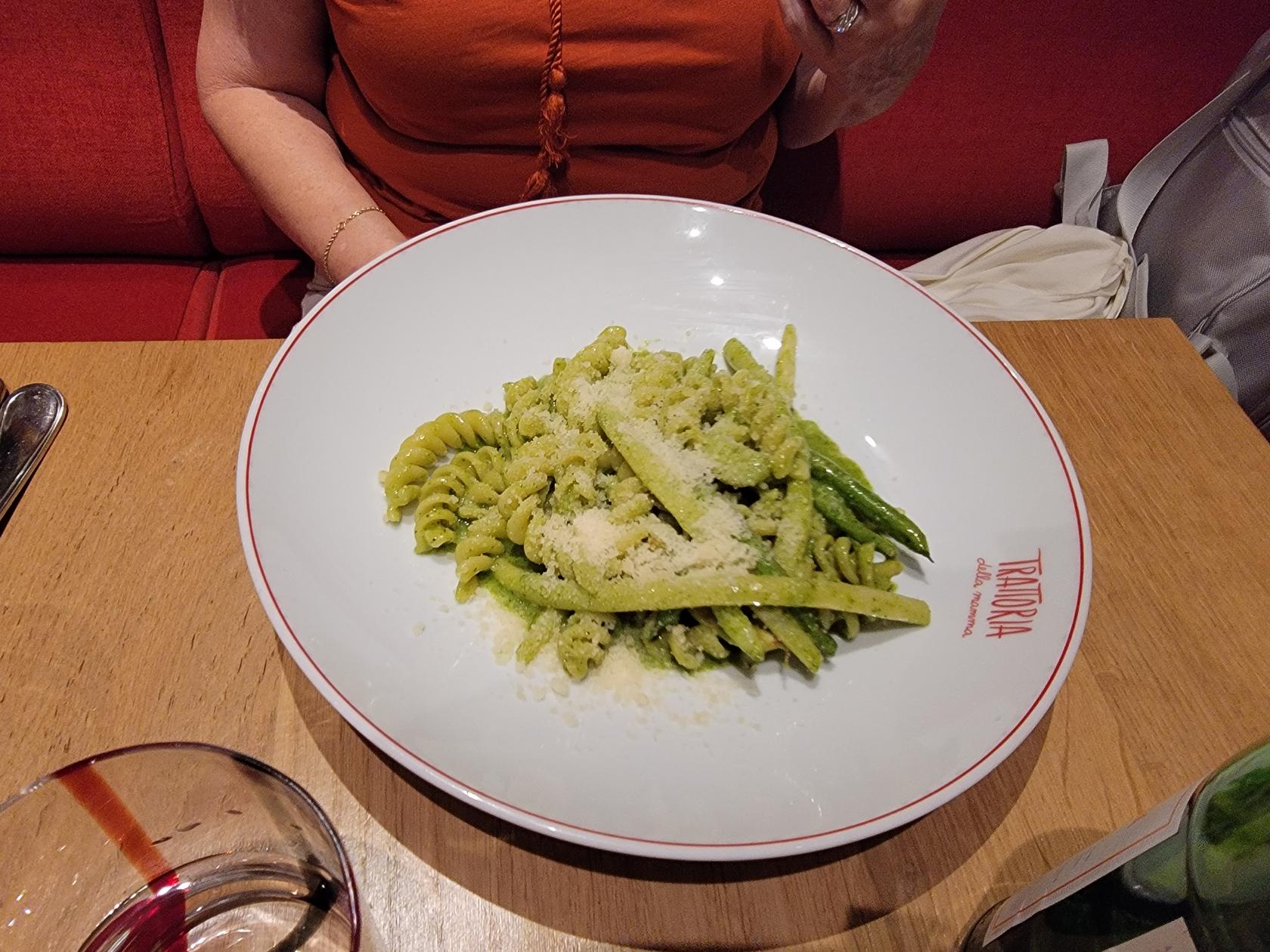
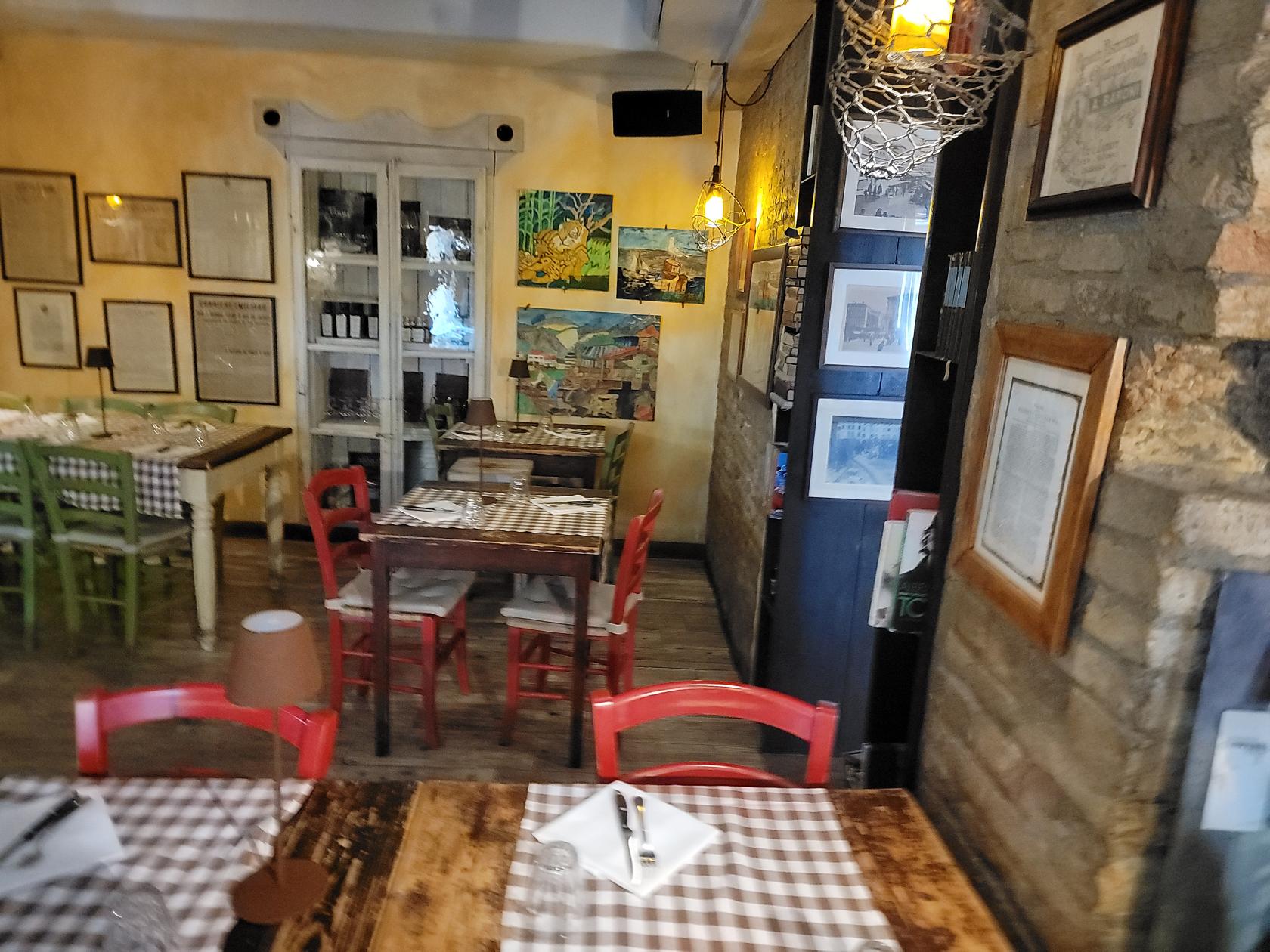
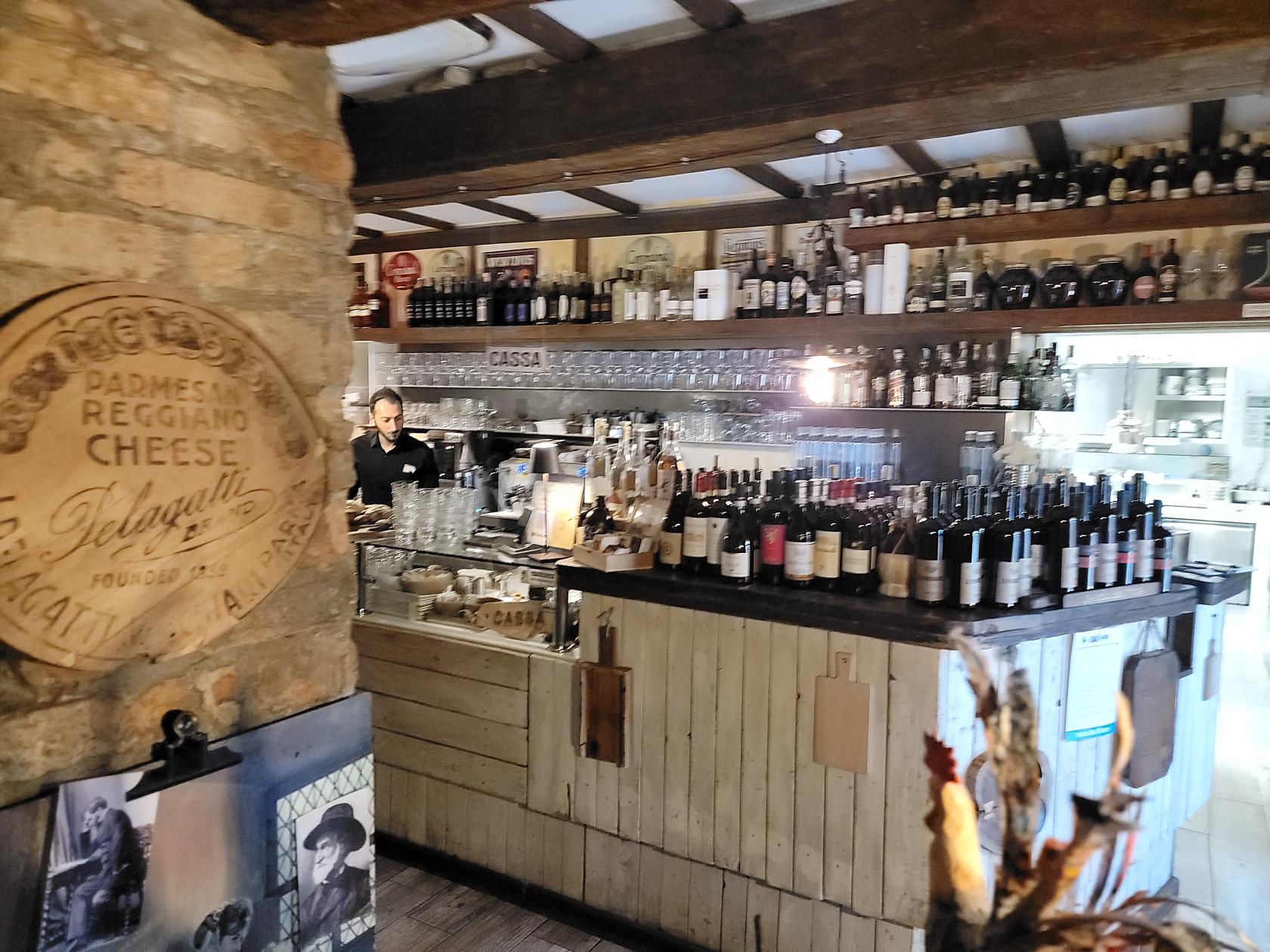
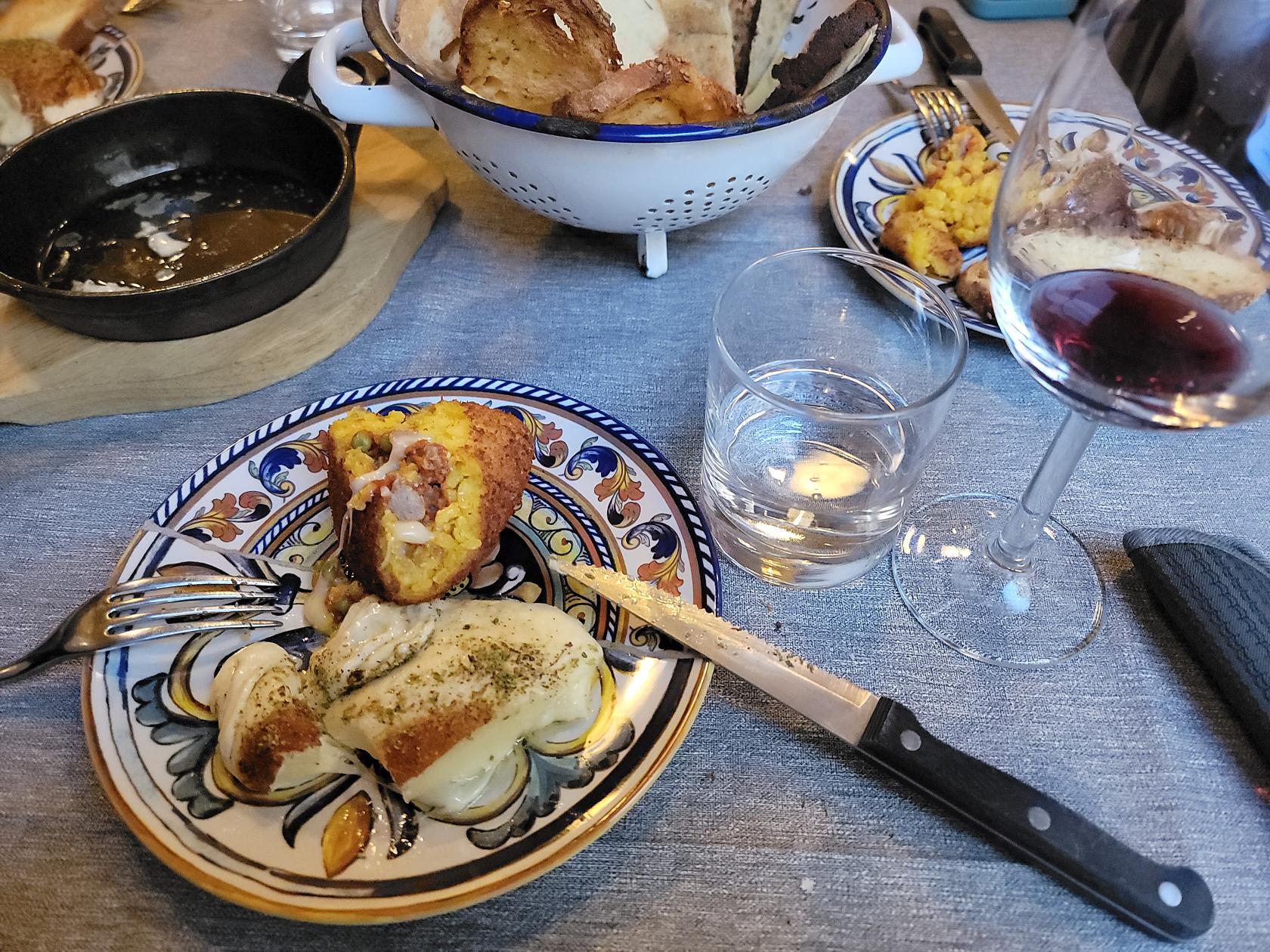
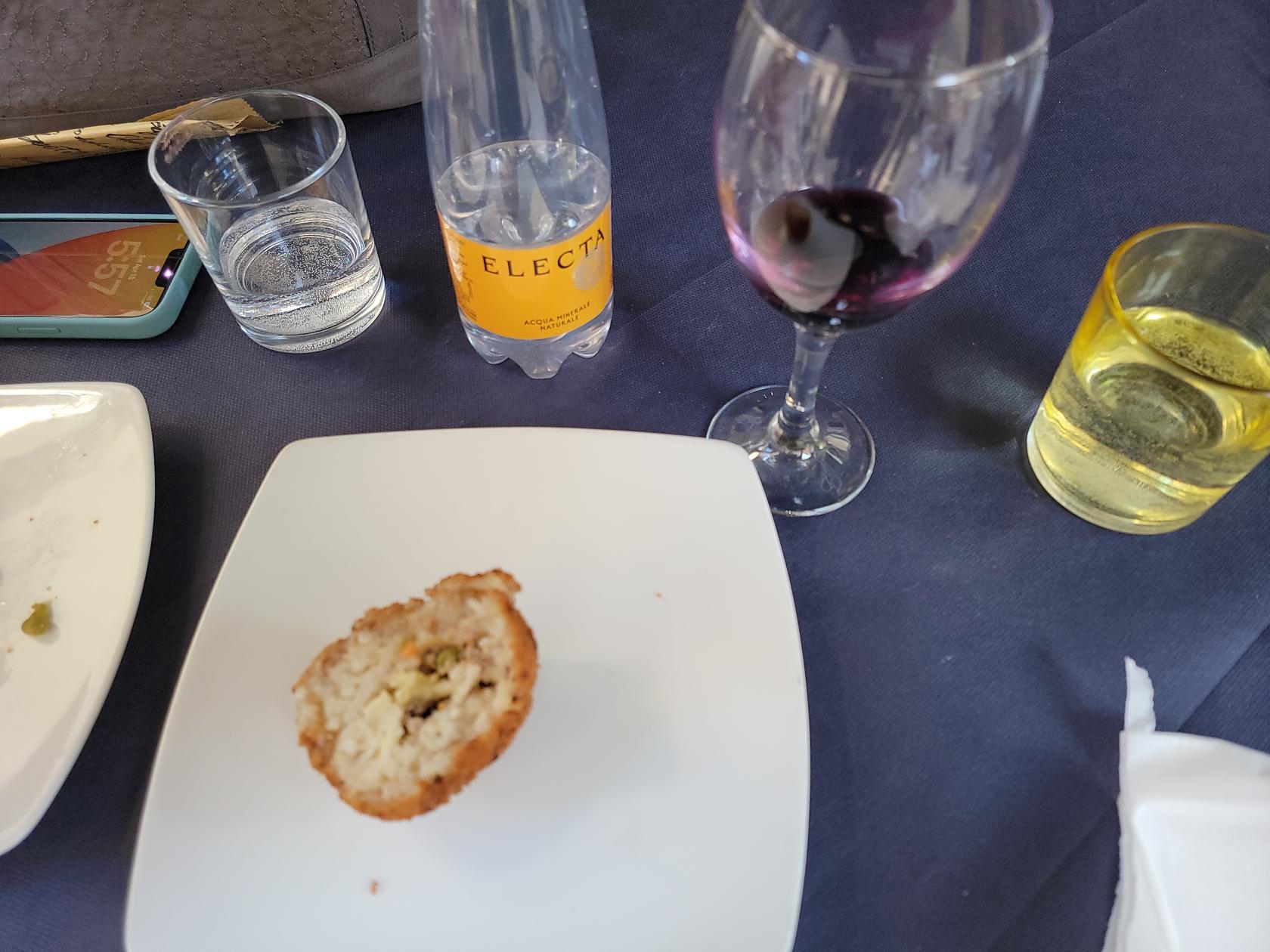
Our favorite Trattoria for authentic Silician cuisine is the Trattoria D’Agata in Turin. Here we always enjoy good food, their Arancini are to die for, and good wine.

Porto di Savona

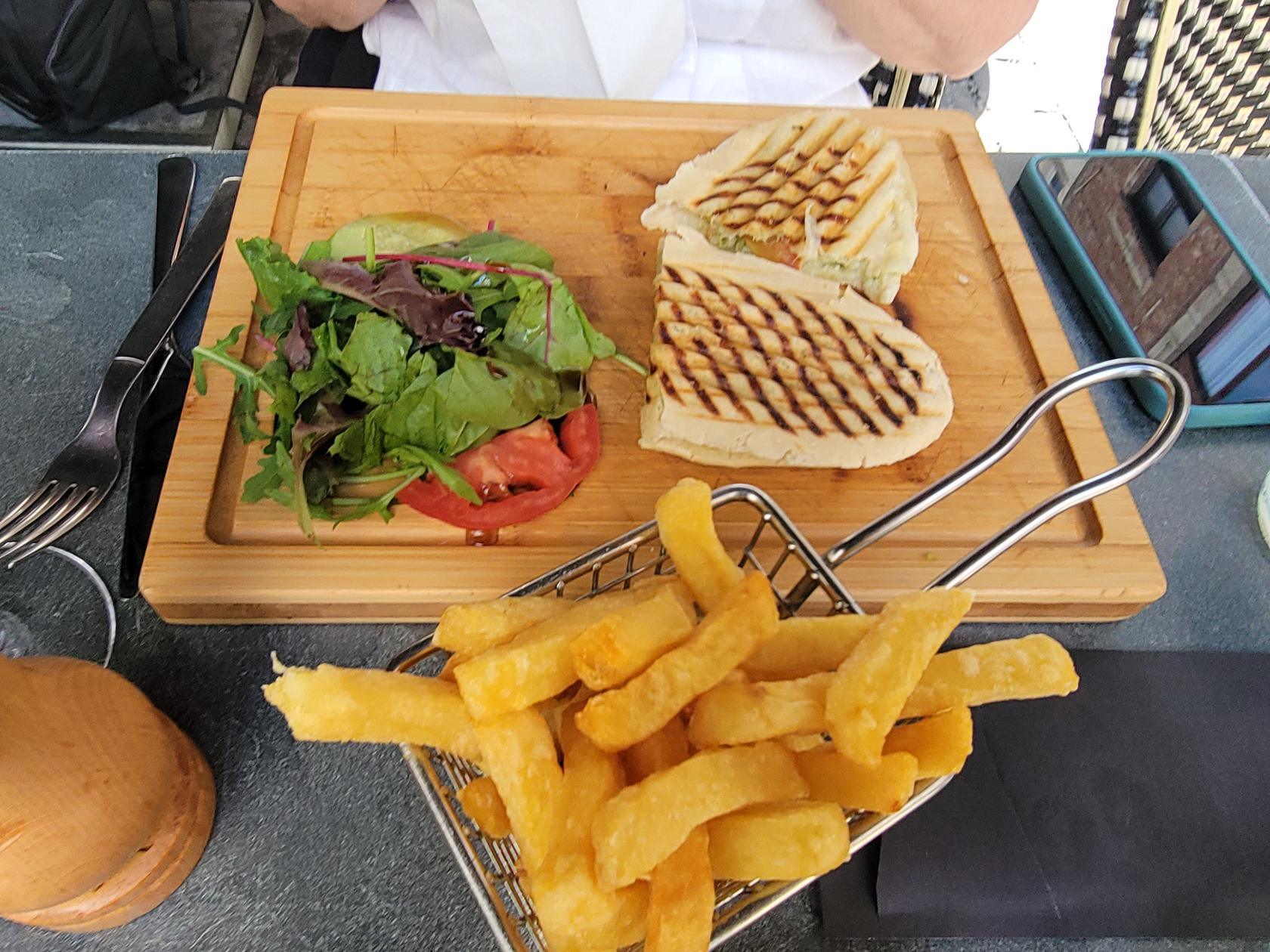
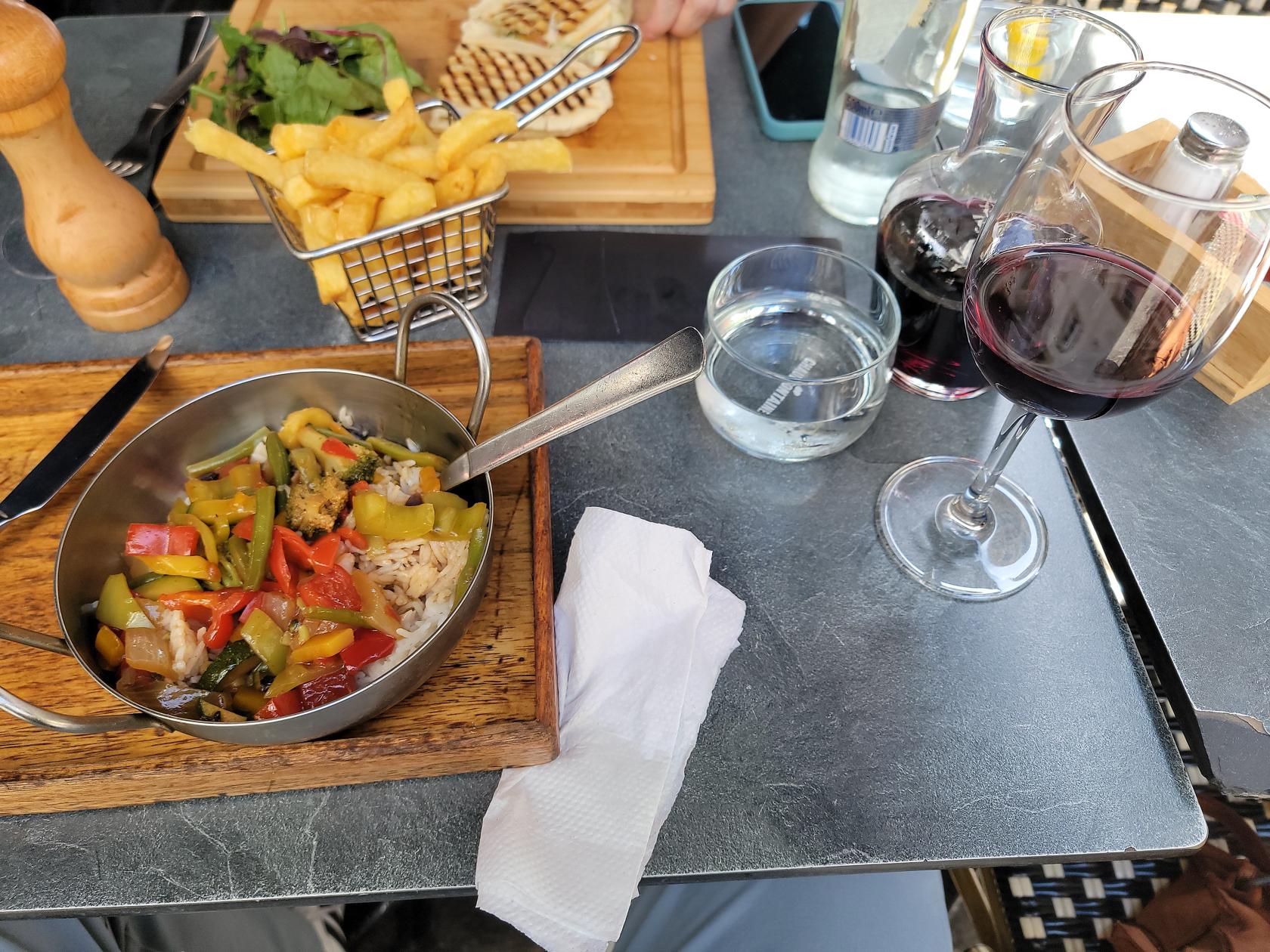
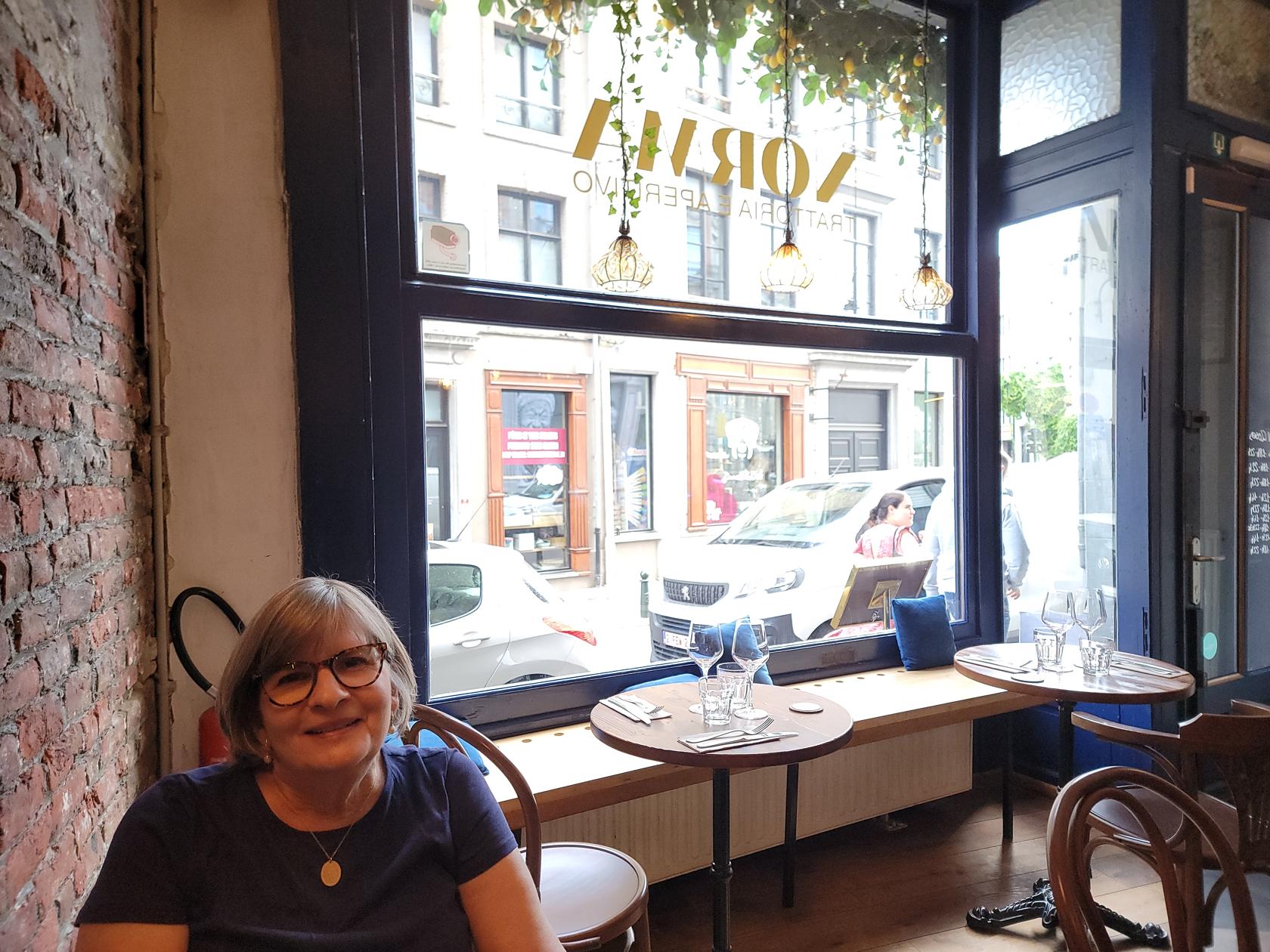
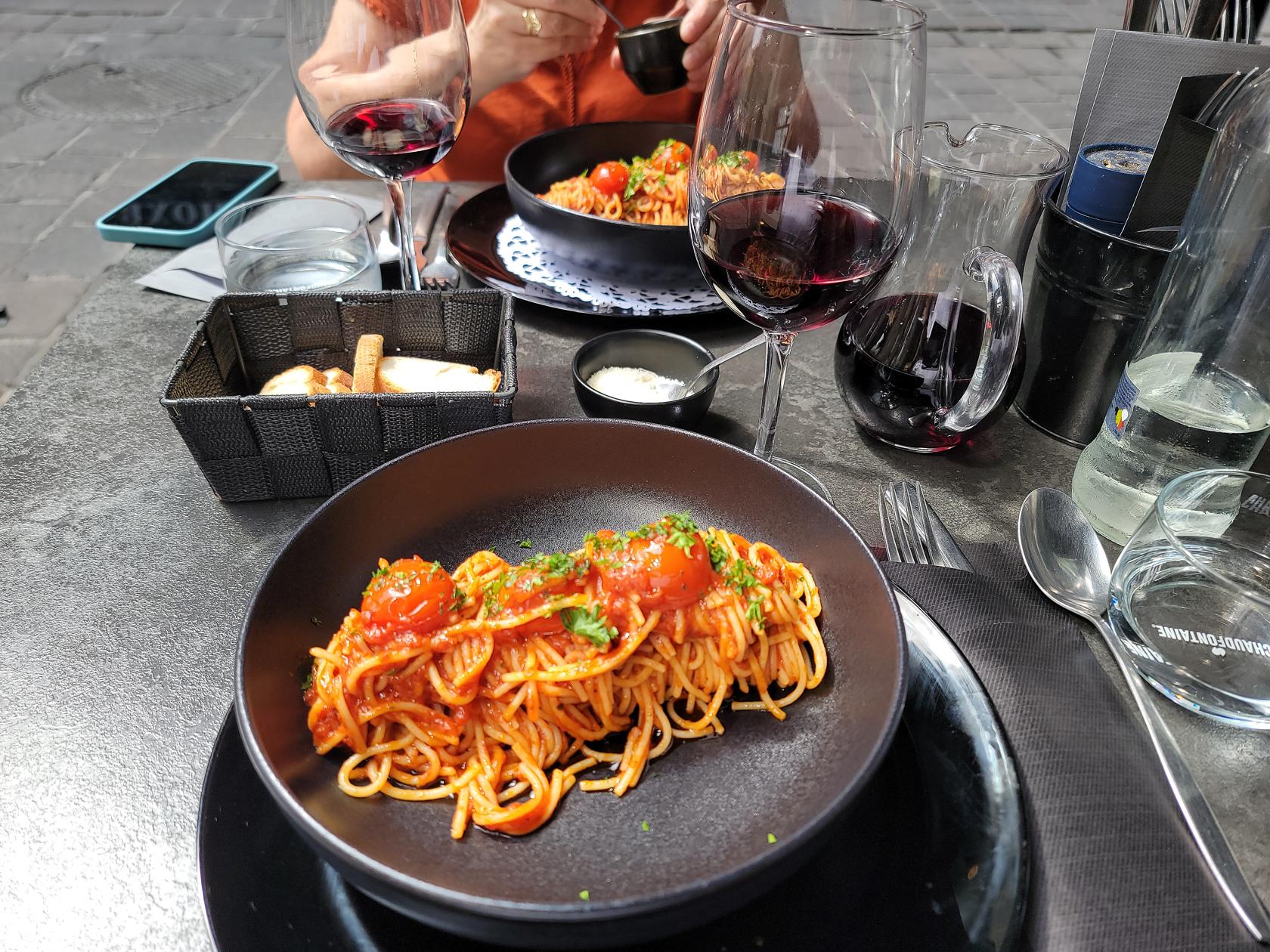
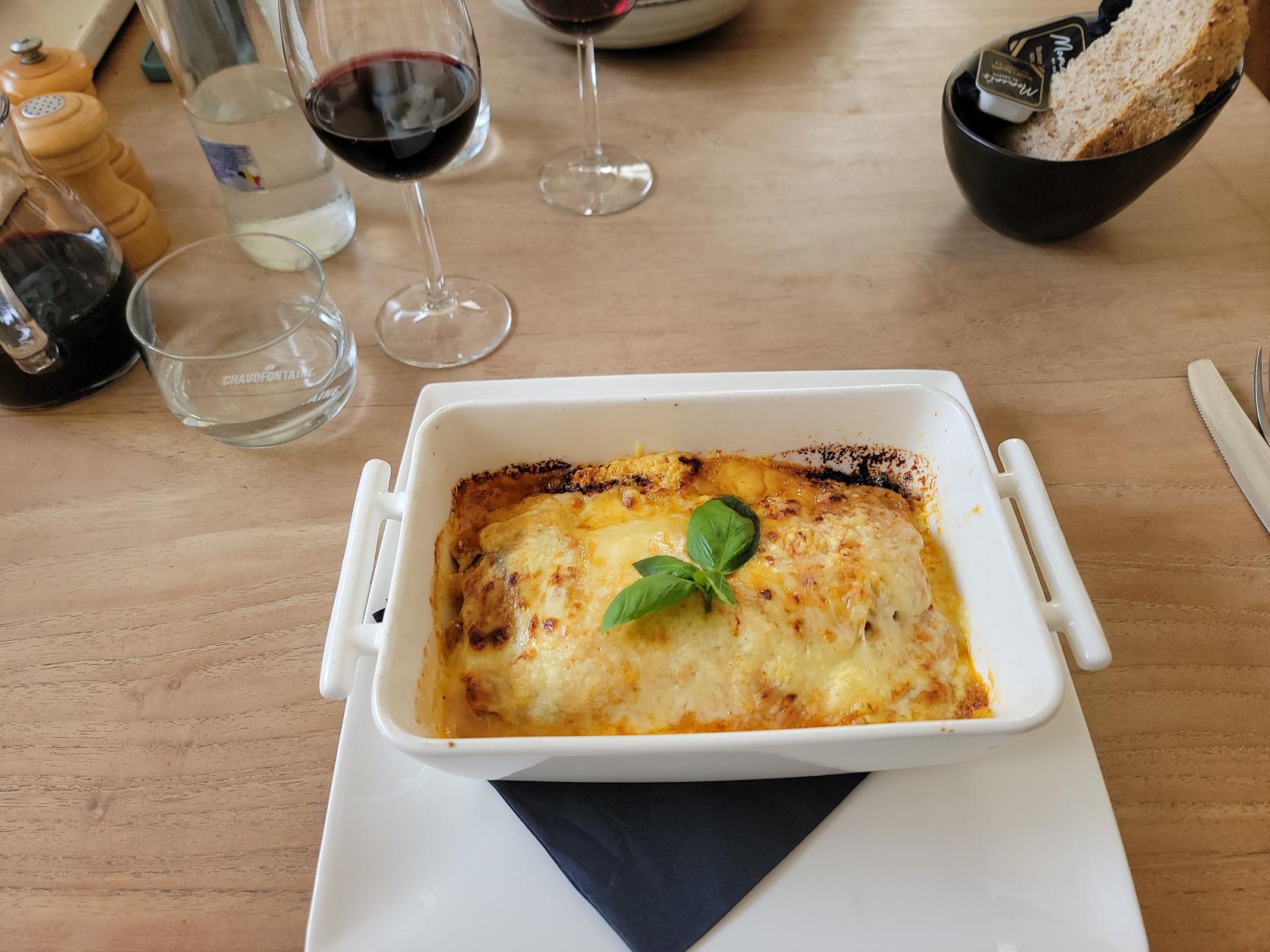
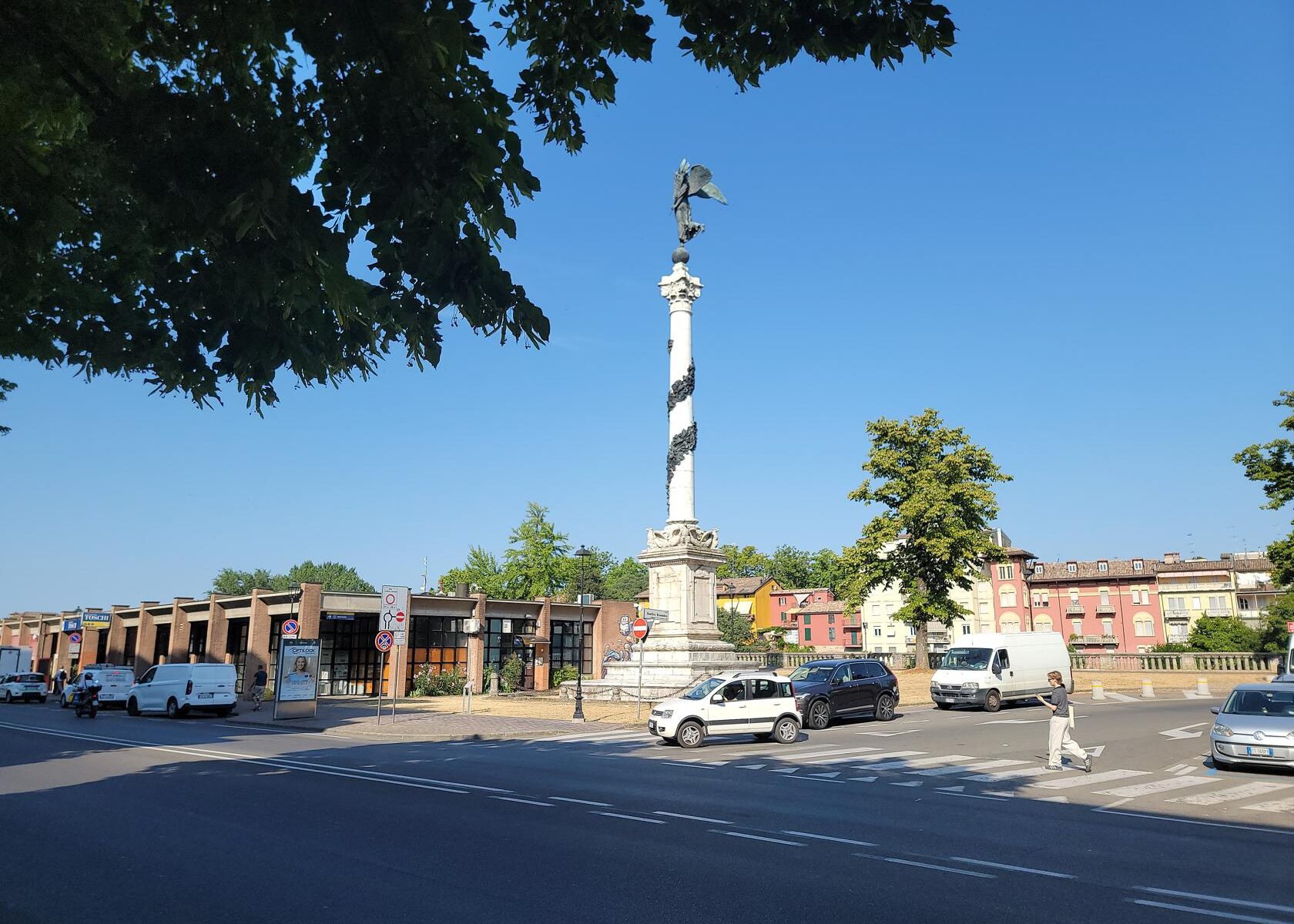
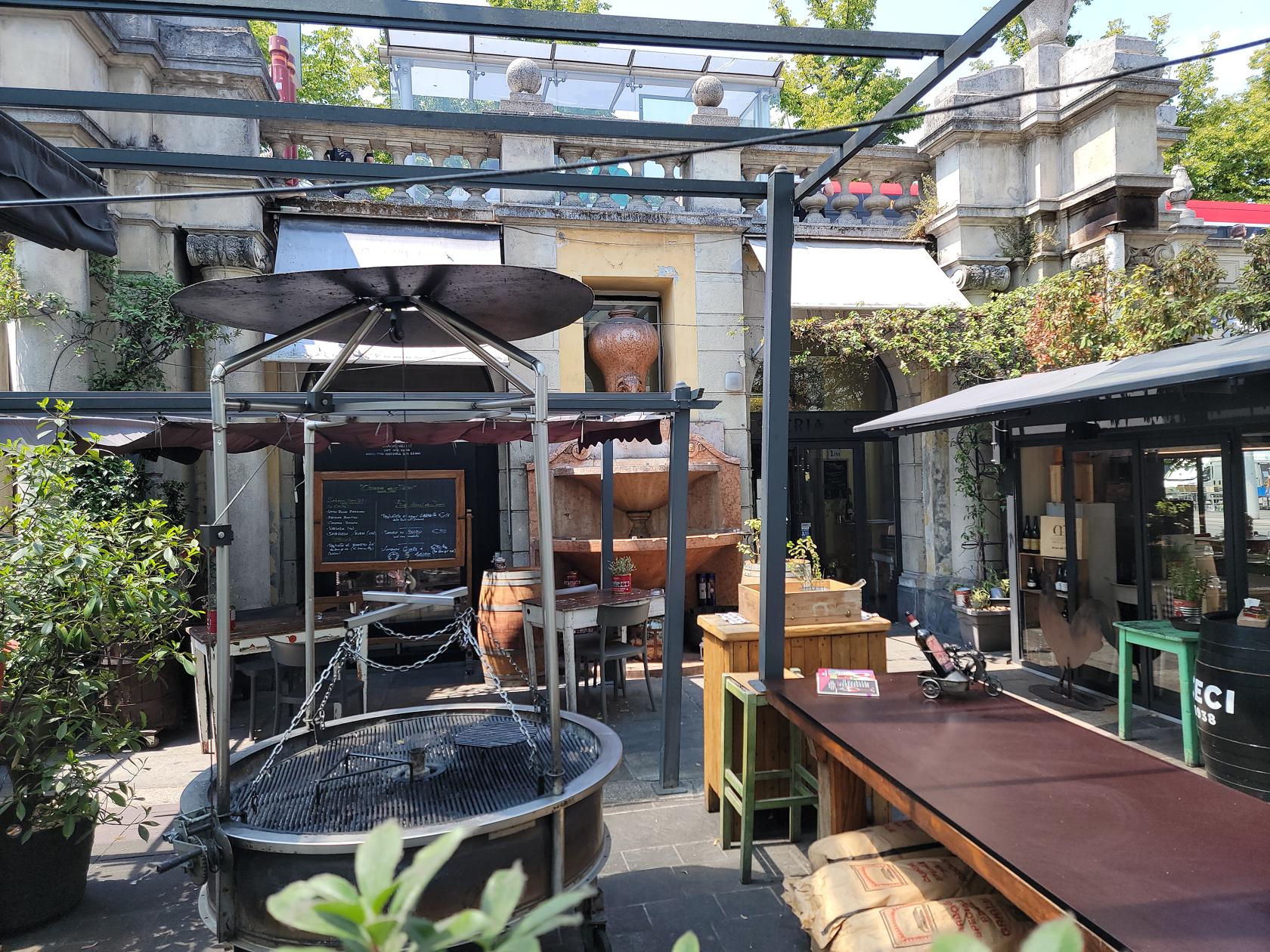
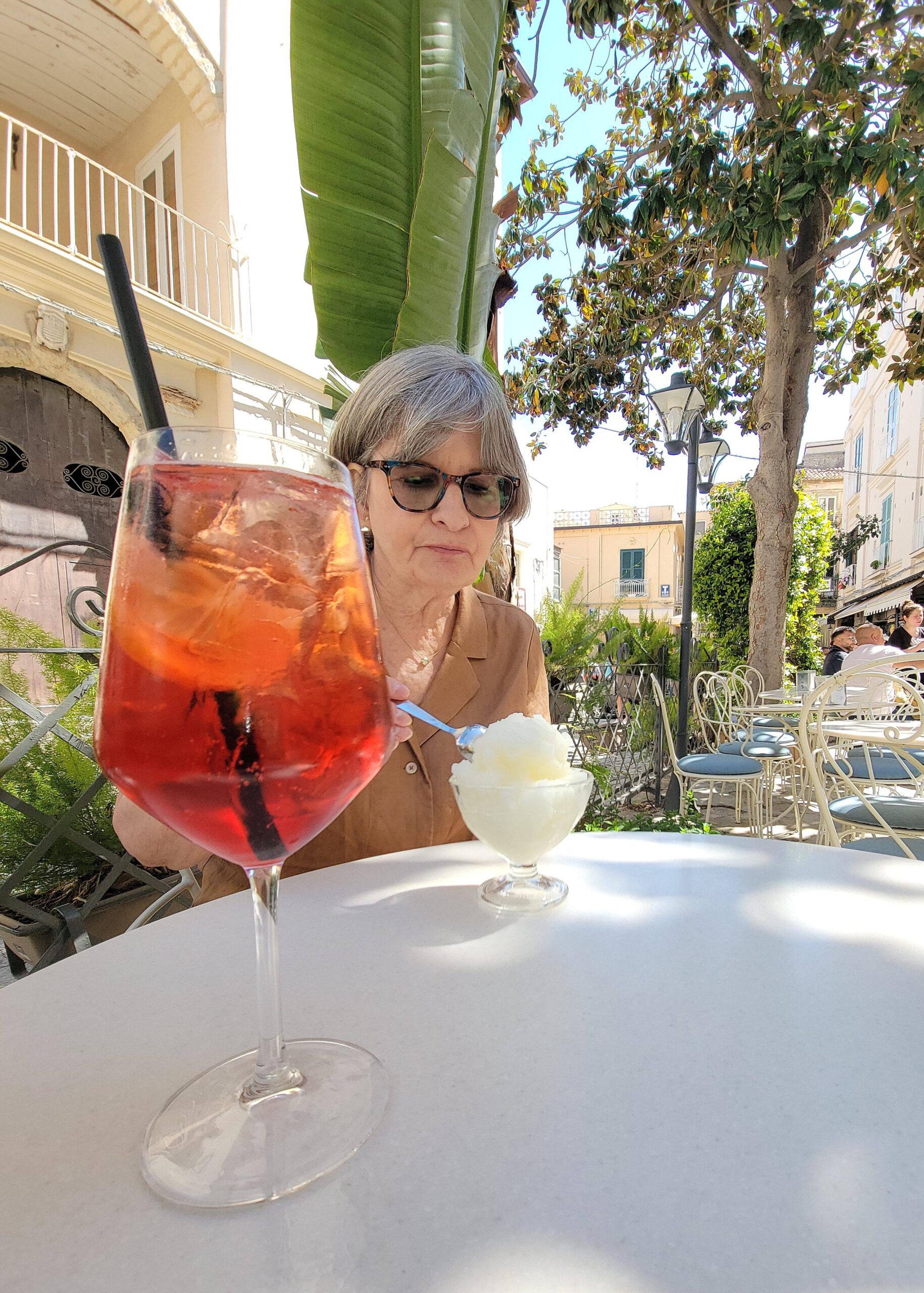
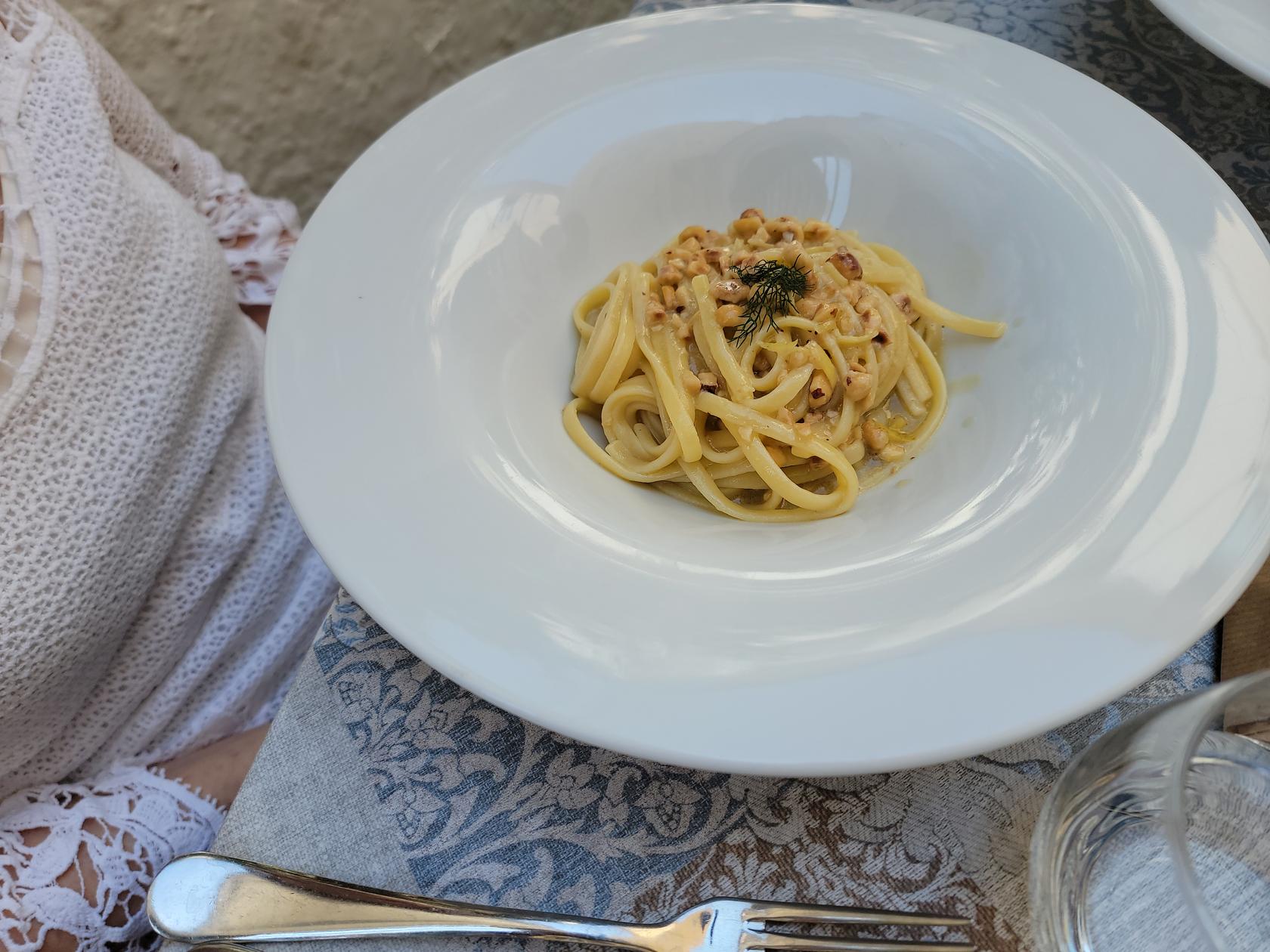
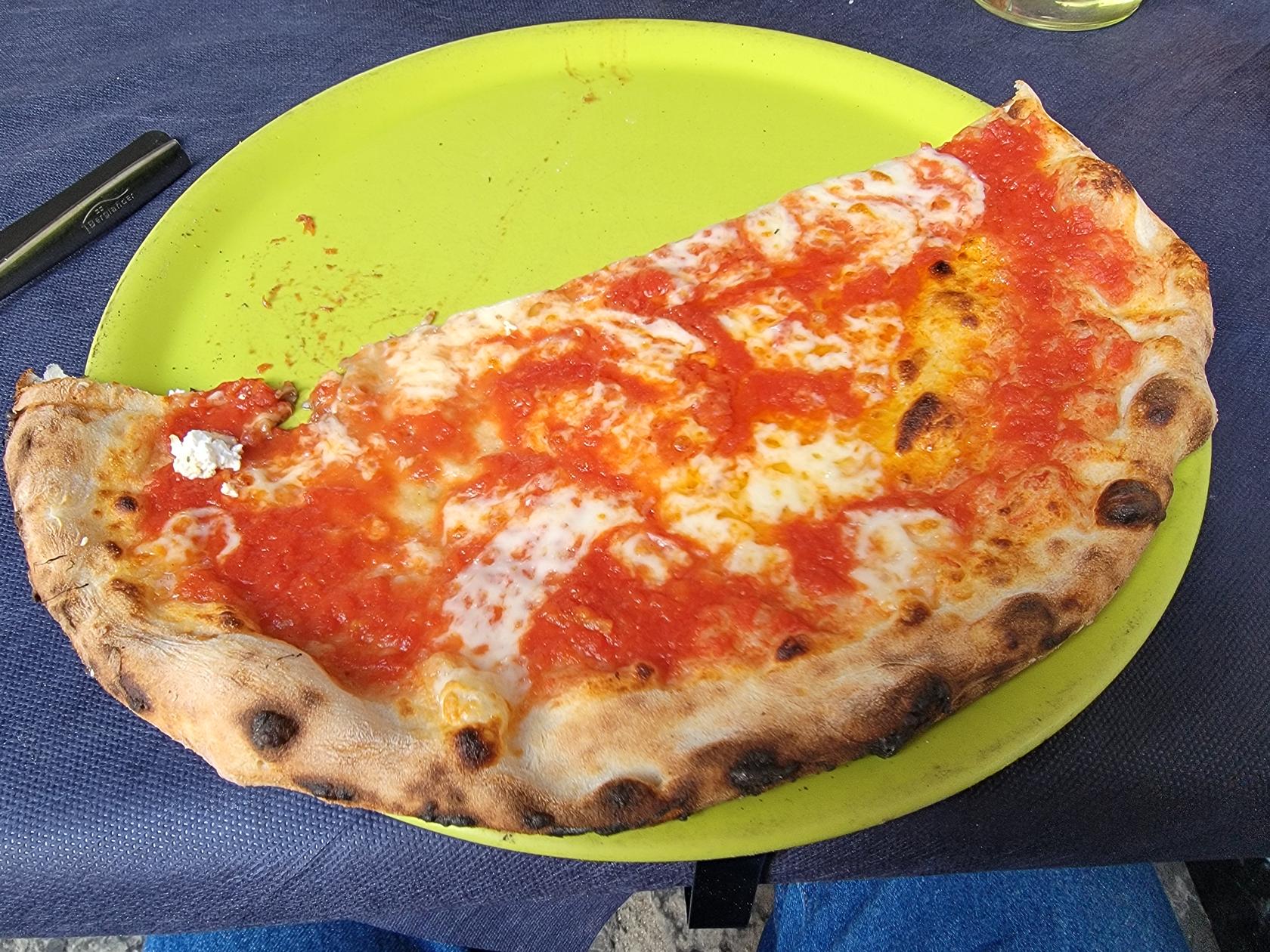
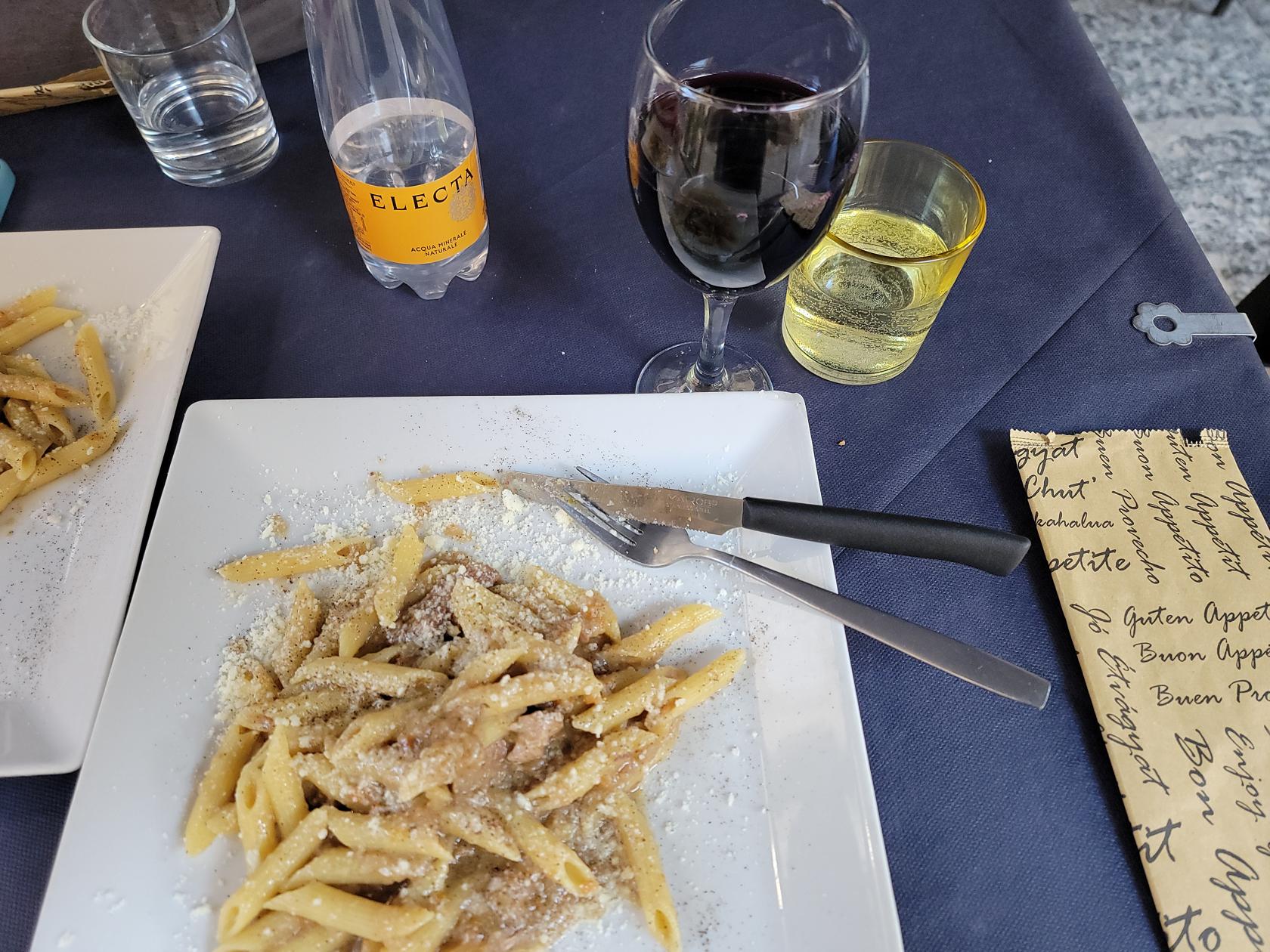
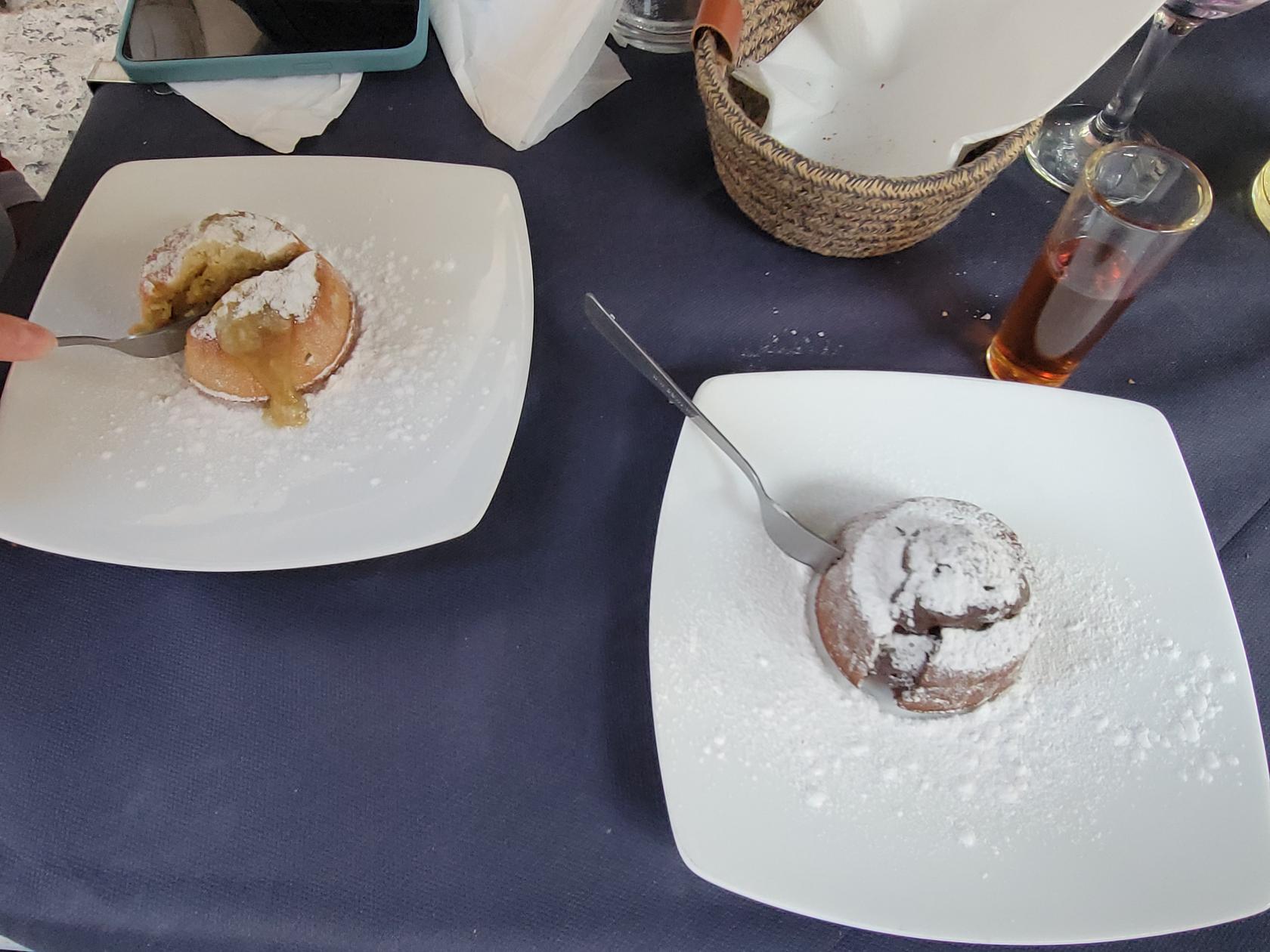
Another favorite of ours for Piemontese cuisine is the Porta di Savona. Since the weather was so exceptional and it was lunch we sat outside. Located in the corner of the Piazza Vittorio Veneto, we essentially sat on the edge of the rest of chaos going on in the piazza, it was very busy.

We had a great time and we are sure Chris did too!

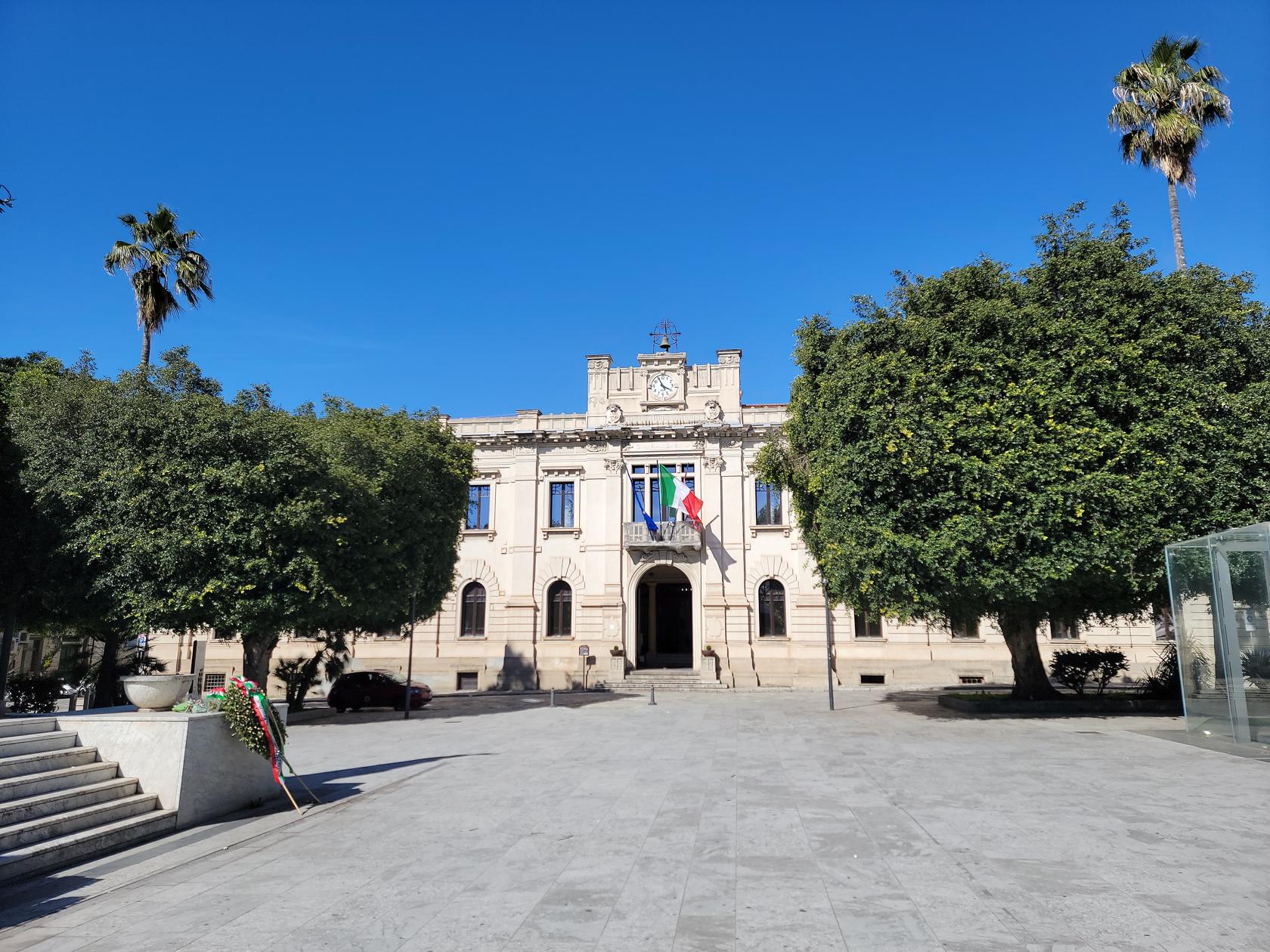
Reggio Calabria, Italy – Calabrian Classic

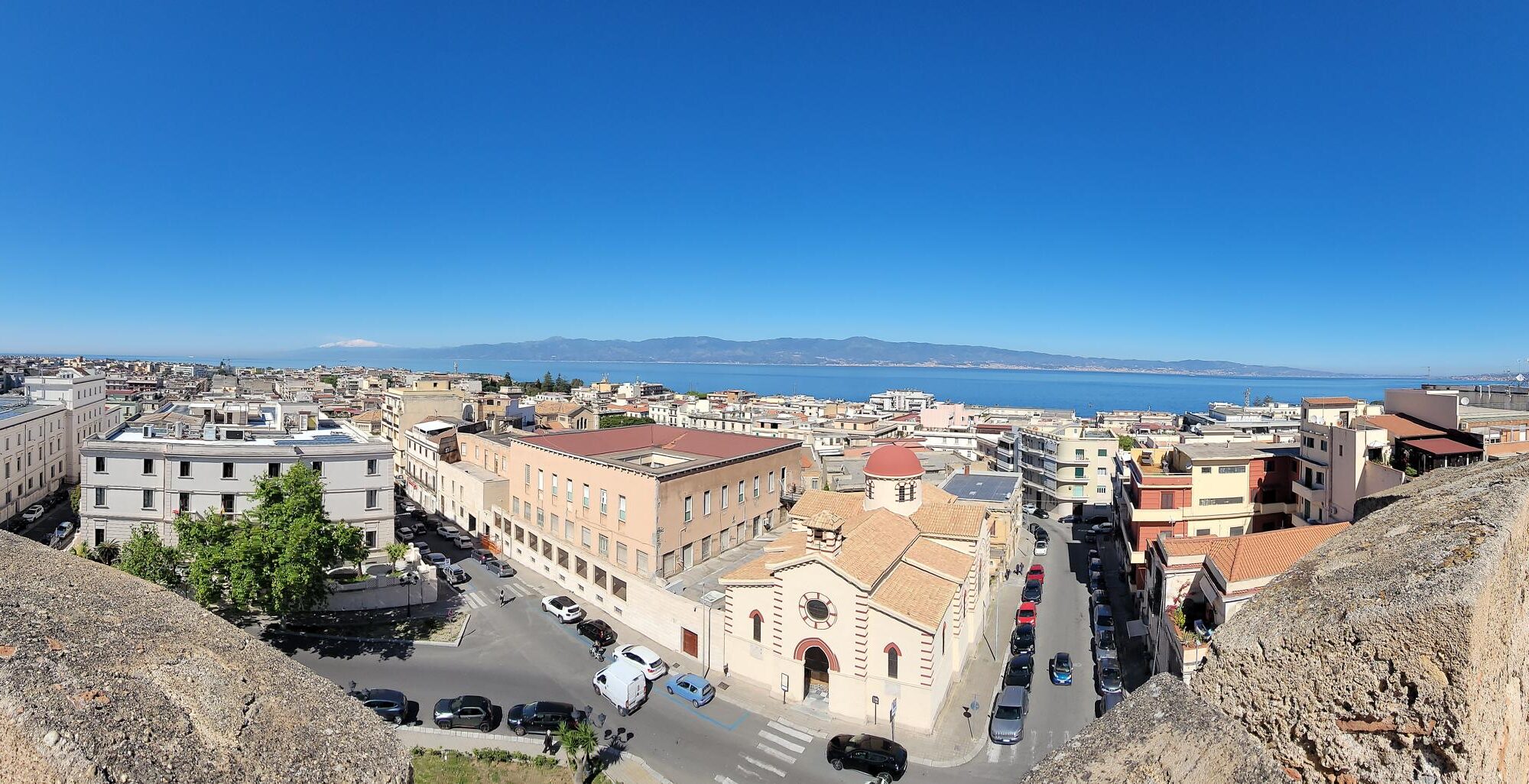
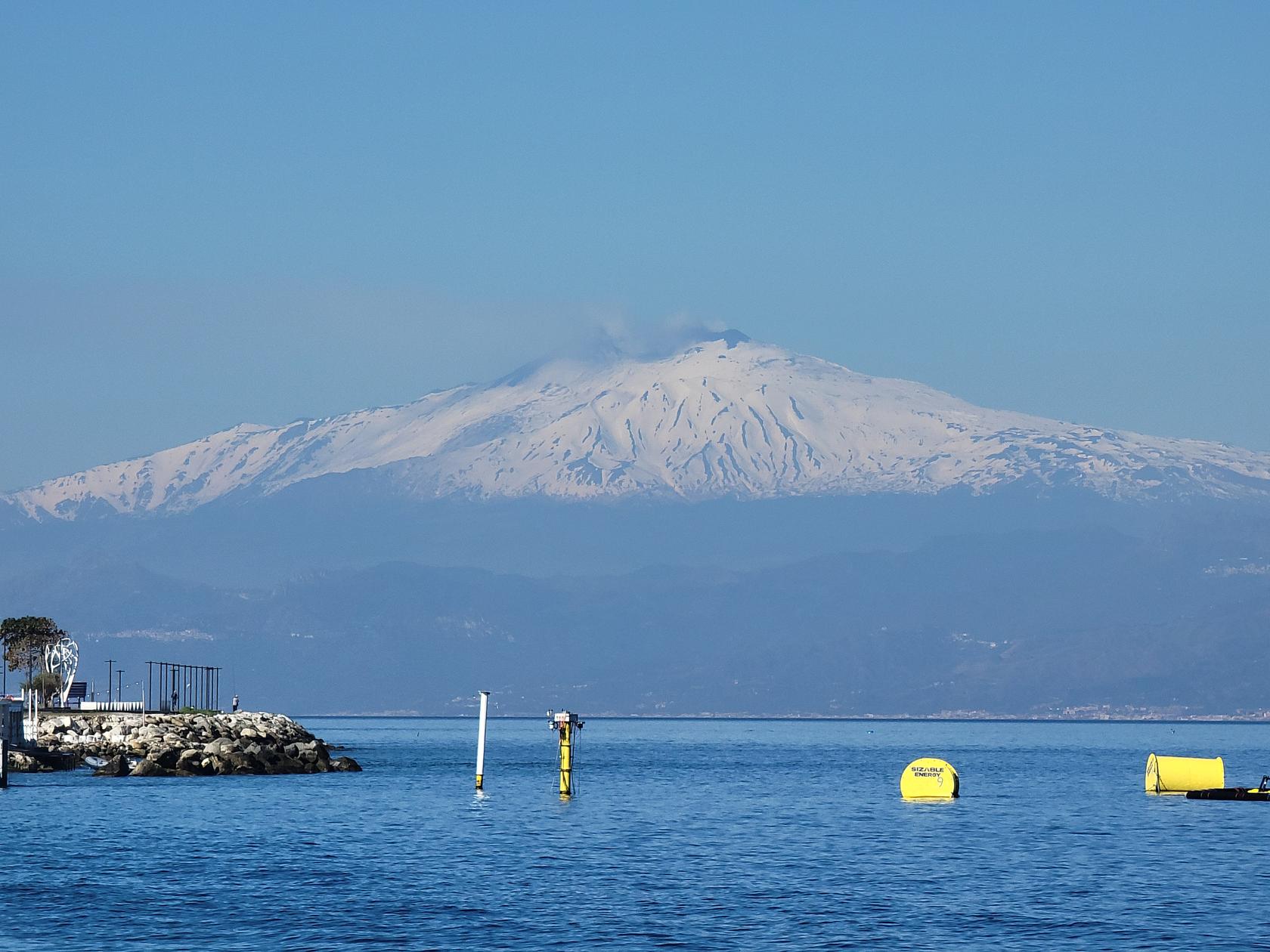
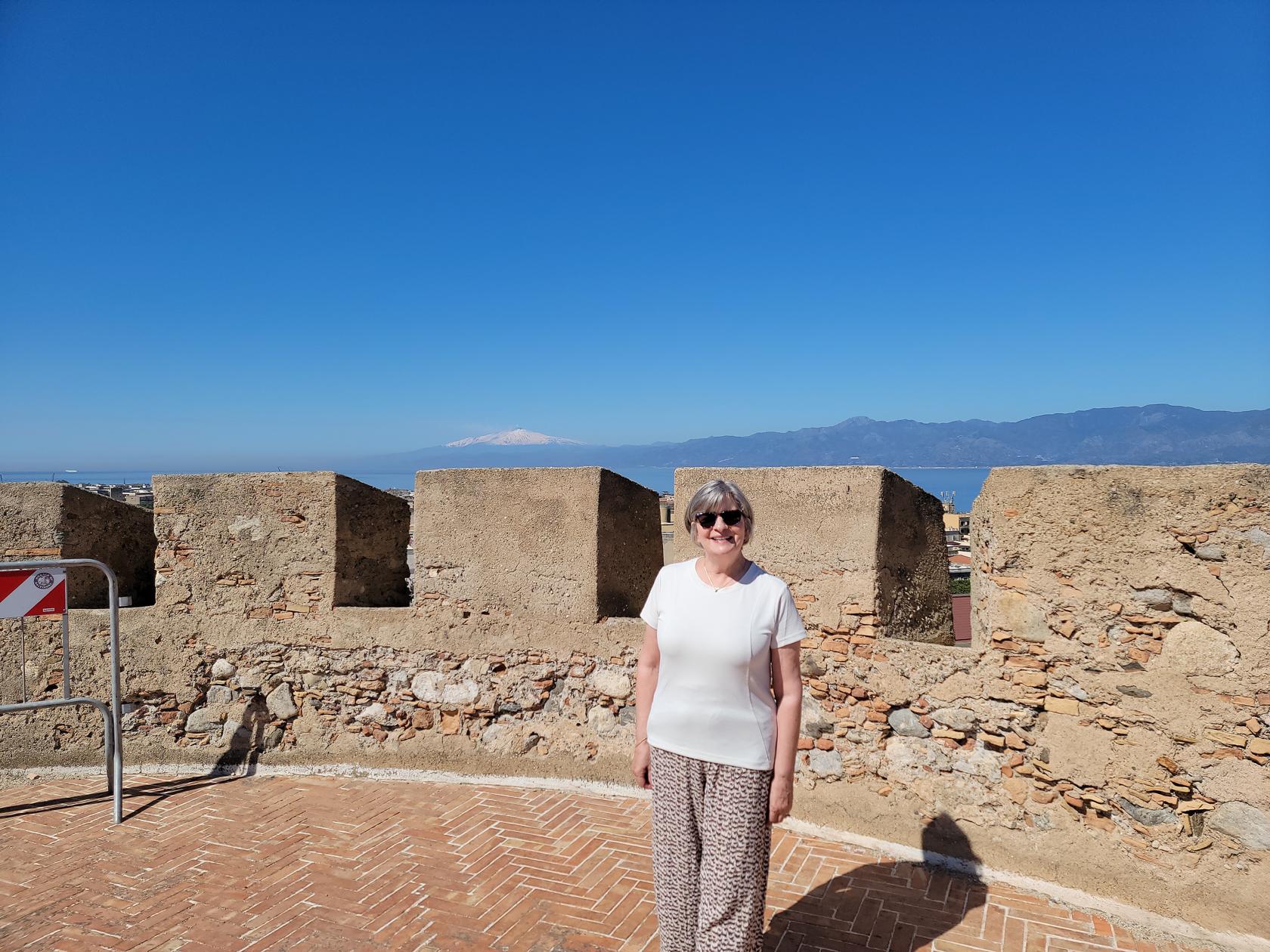
If anyone travels all the way down to the very tip of Italy they will discover Reggio Calabria, a Calabrian city with all the classic touches of Southern Italy. Offshore, you will see the ever present Mount Etna smoking in the background.

Getting There And Back

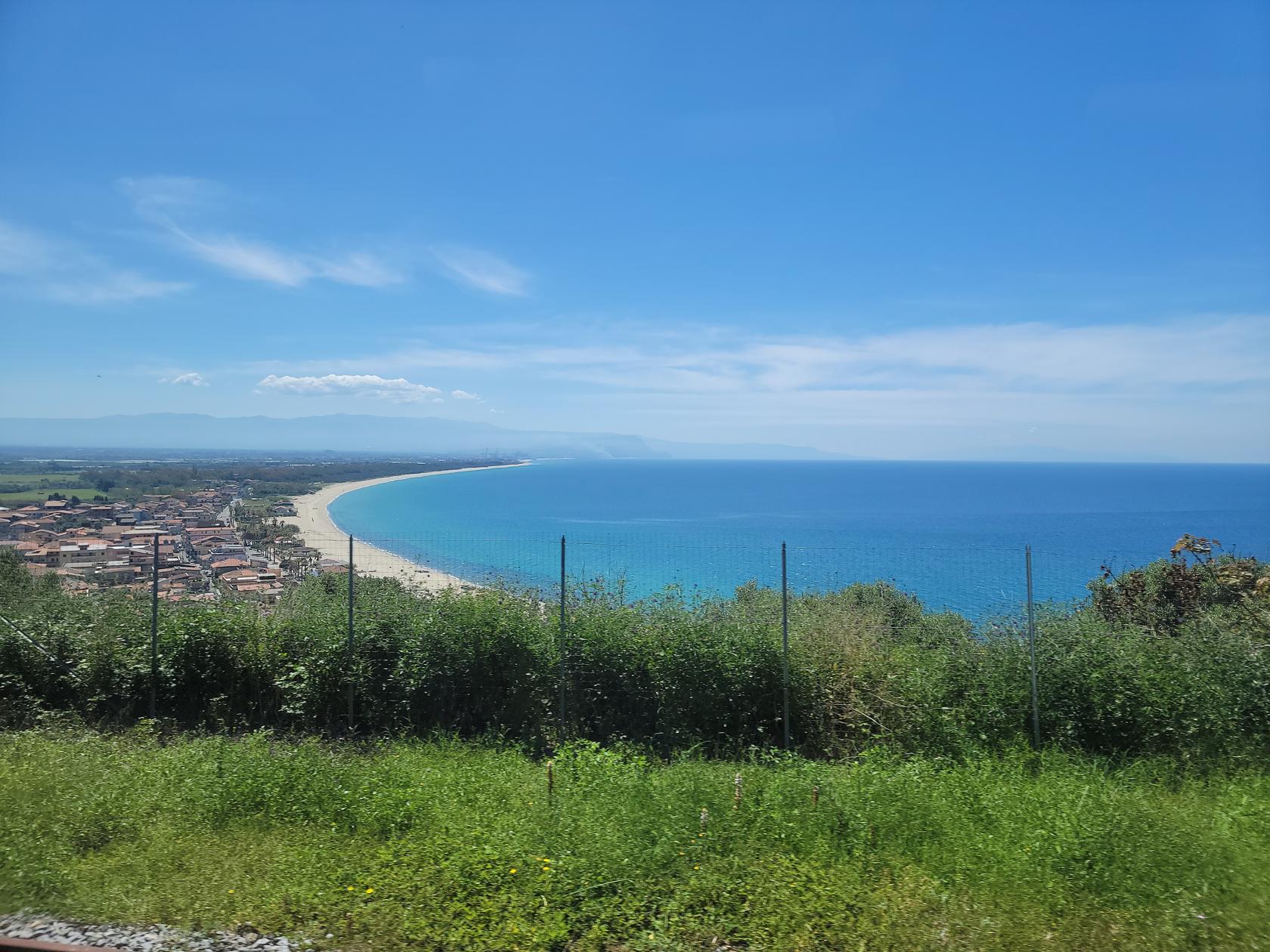
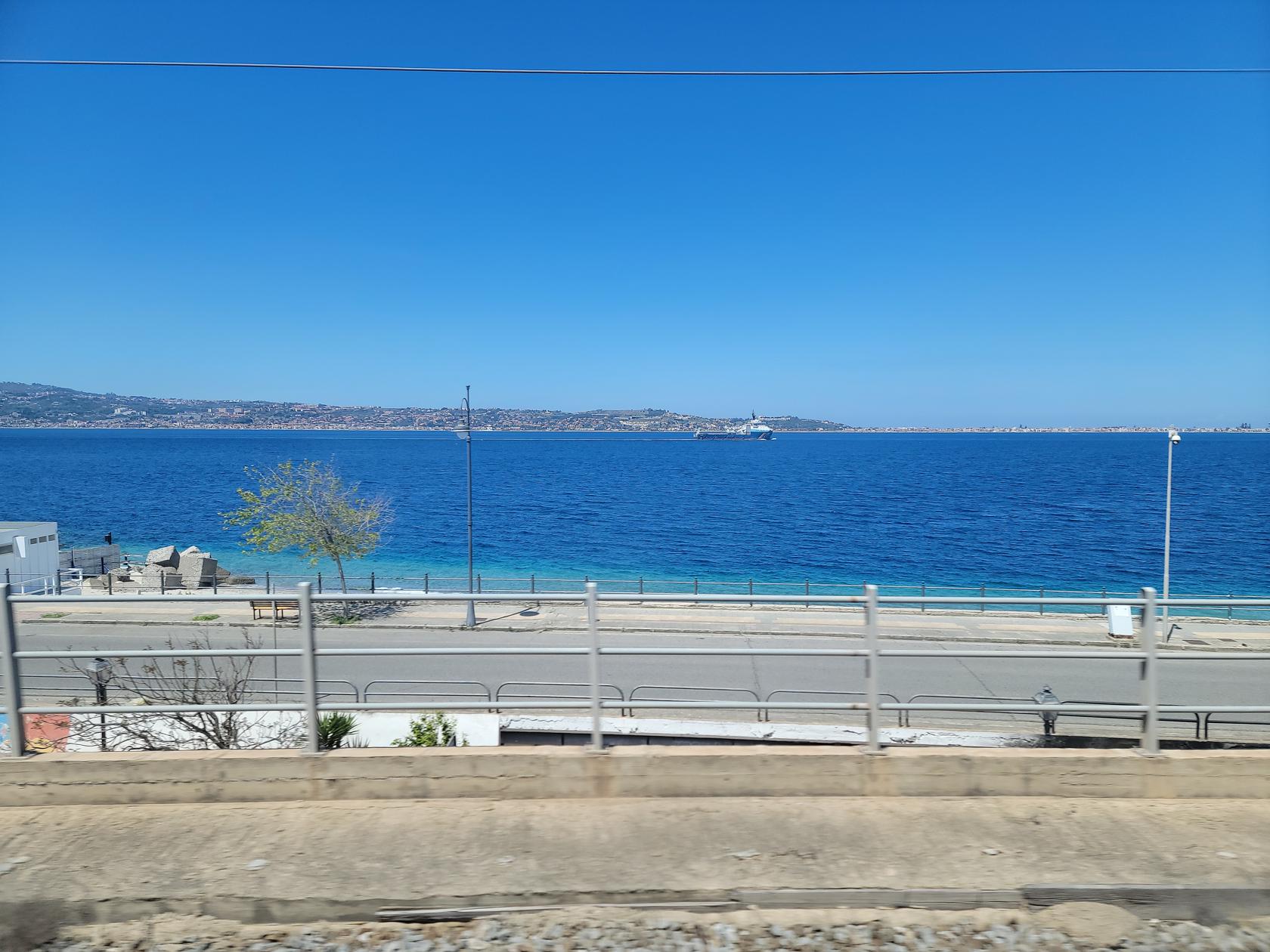
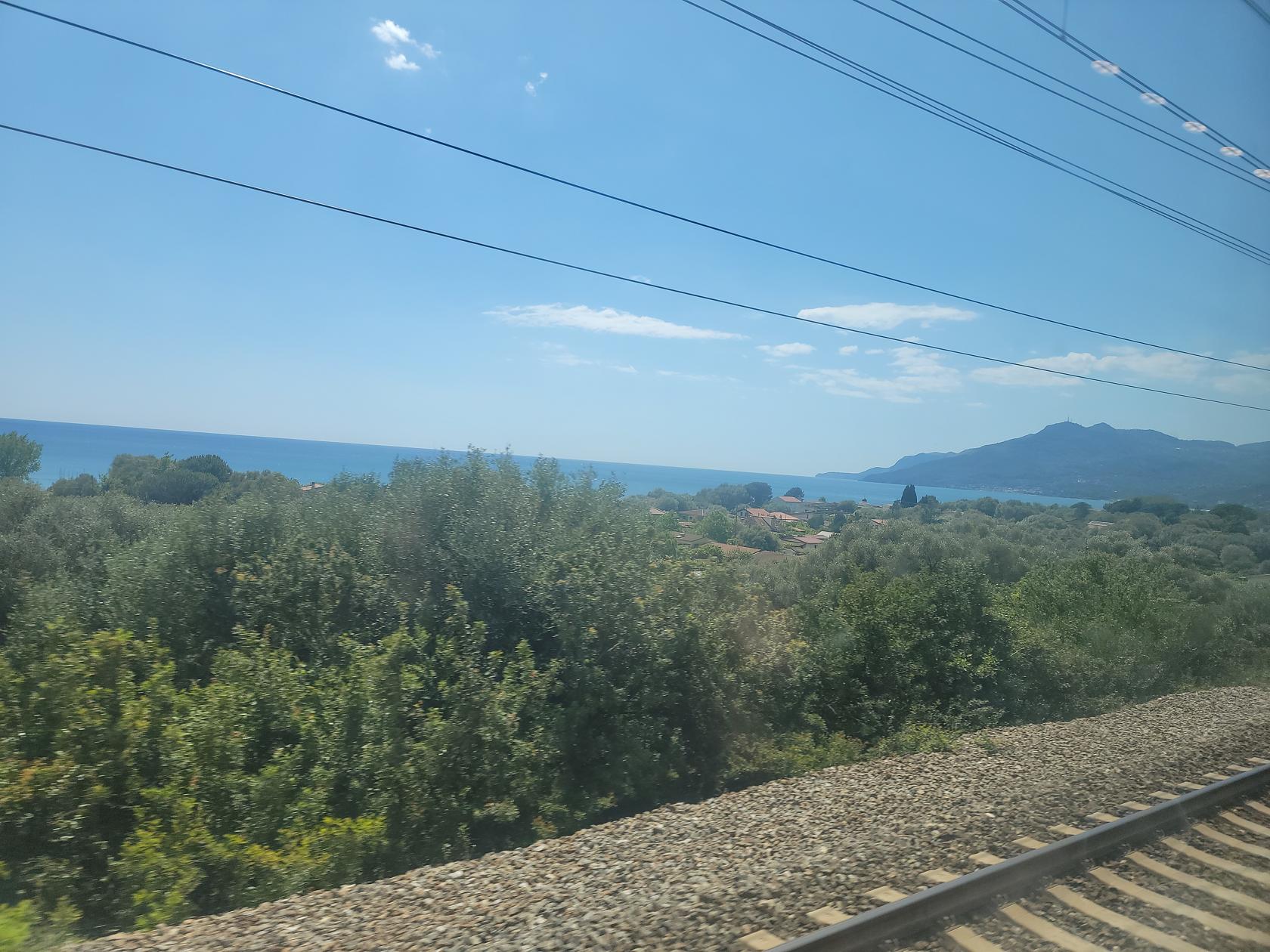
To get there we took TrennItalia’s Calabrian Regional train service from Tropea. Approximately a two hour train ride that eventually hugs the coast and offers a preview of the Italian island of Sicily.

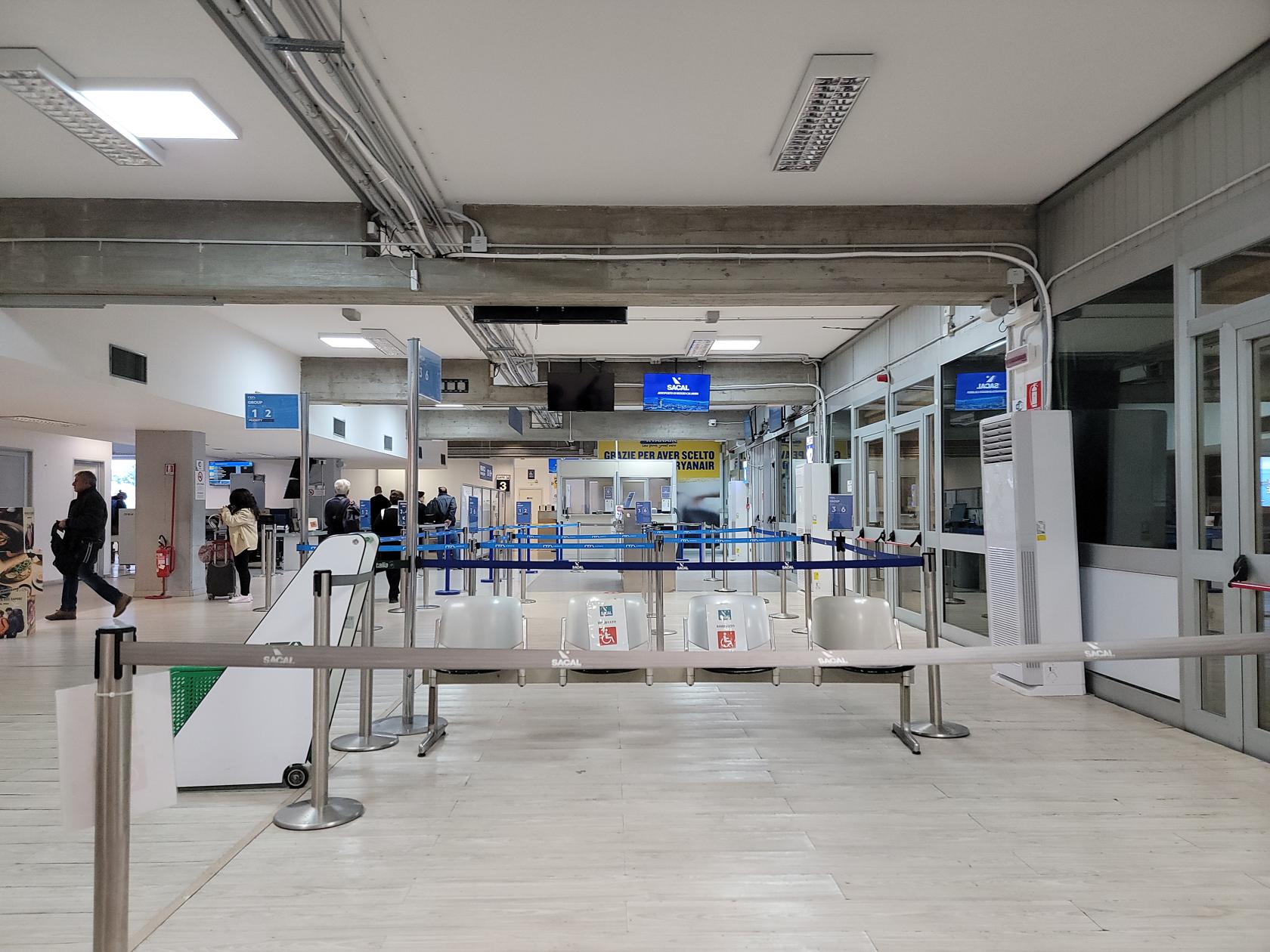
To get back we used Reggio Calabria’s airport, where RyanAir offers direct service to Turin’s Caselle Airport. Another trip just short of two hours which also hugs the coast of Italy and also offers views of Sardinia and other prominent points of interest from the air.

Reggio Calabria

The official name for the city is Reggio Calabria, but it is also known by its traditional names of Reggio di Calabria and just plain Reggio. The city was almost completely destroyed by an earthquake in the beginning of the last century and its more hopefully robust version has new amenities the former city lacked.

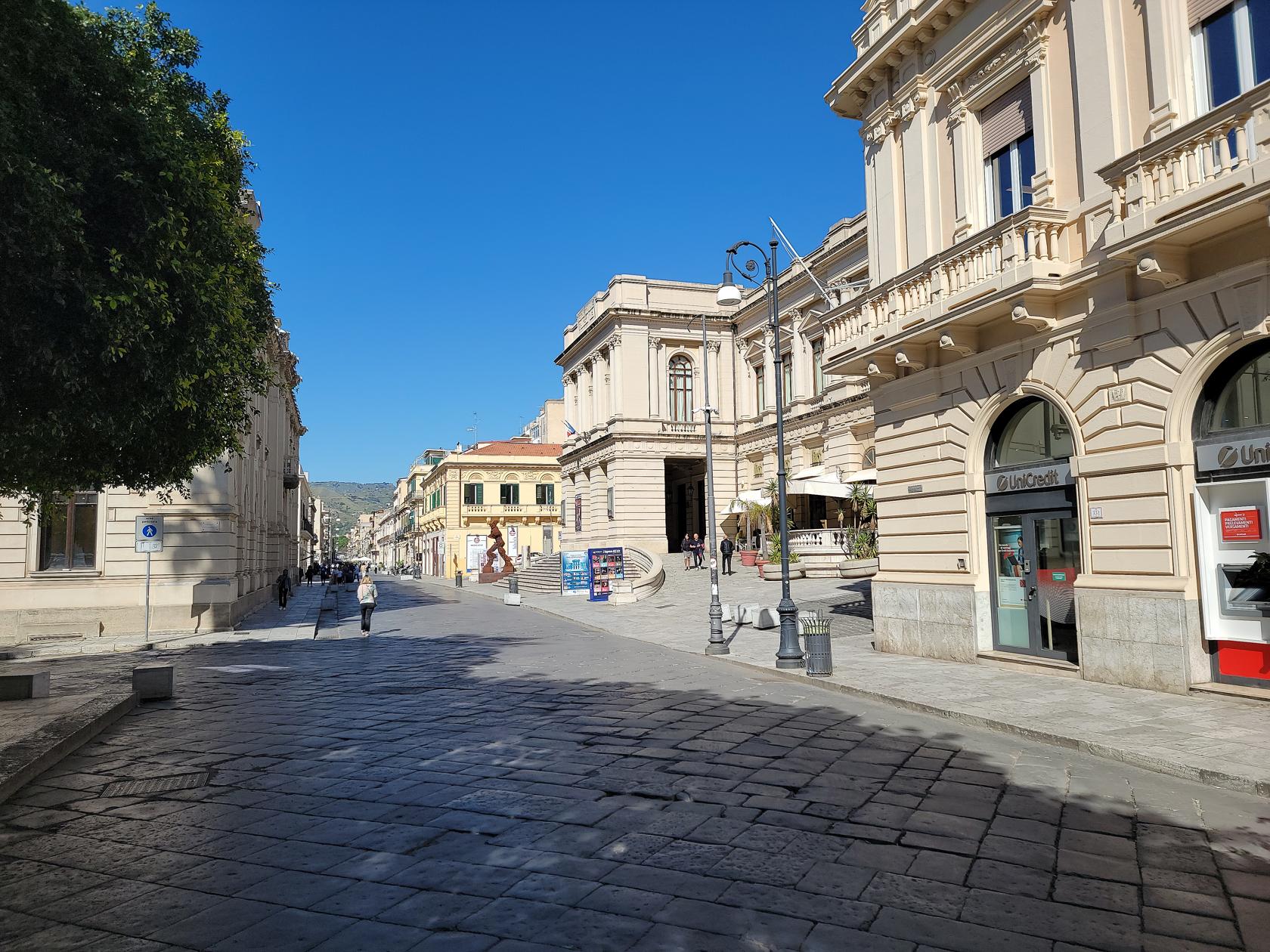
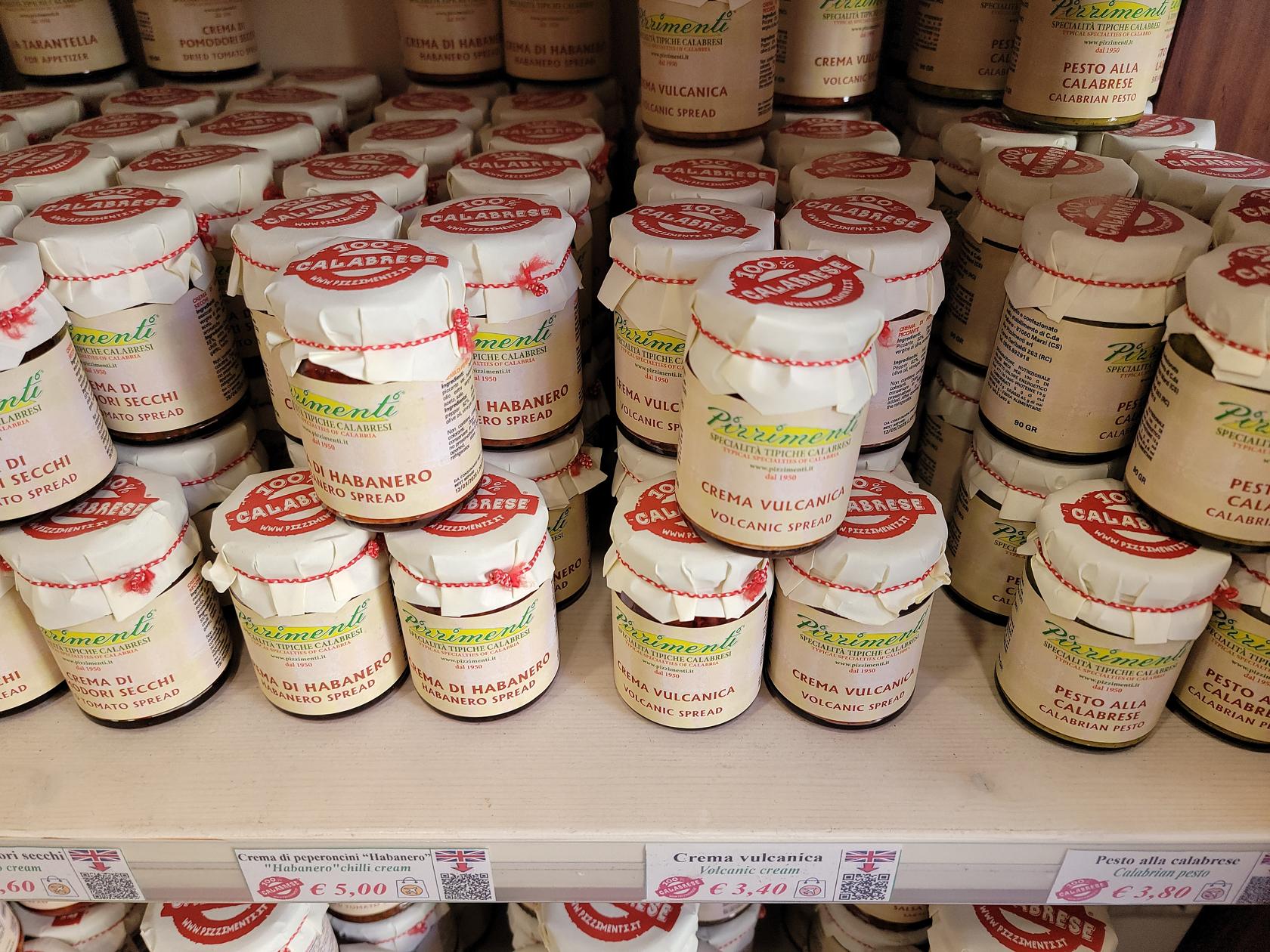
If you love food, visit the shops along Corso Garibaldi. Many have interesting and local foods that you can bring home with you to enjoy, while you reminisce about your time in Calabria.

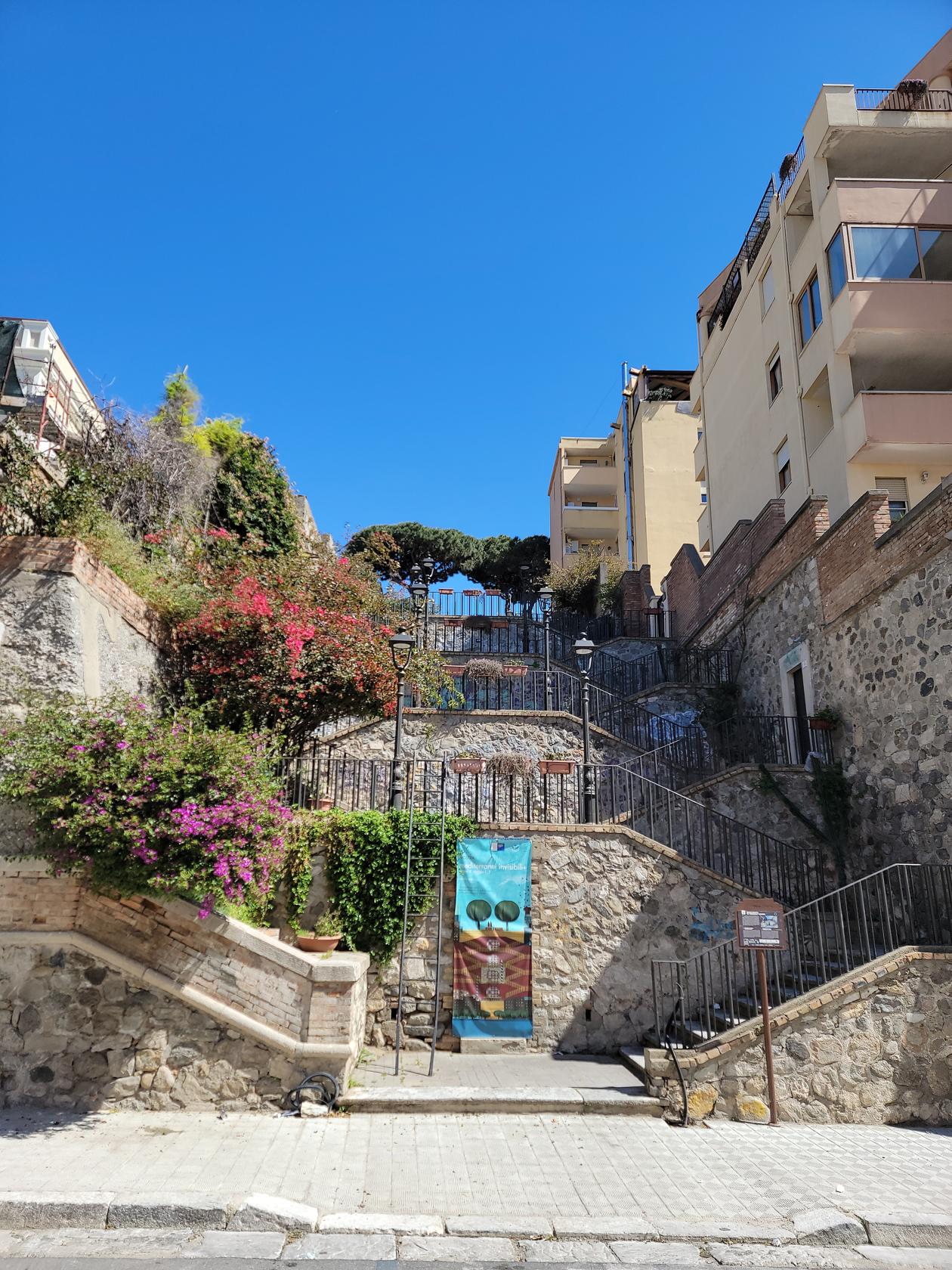
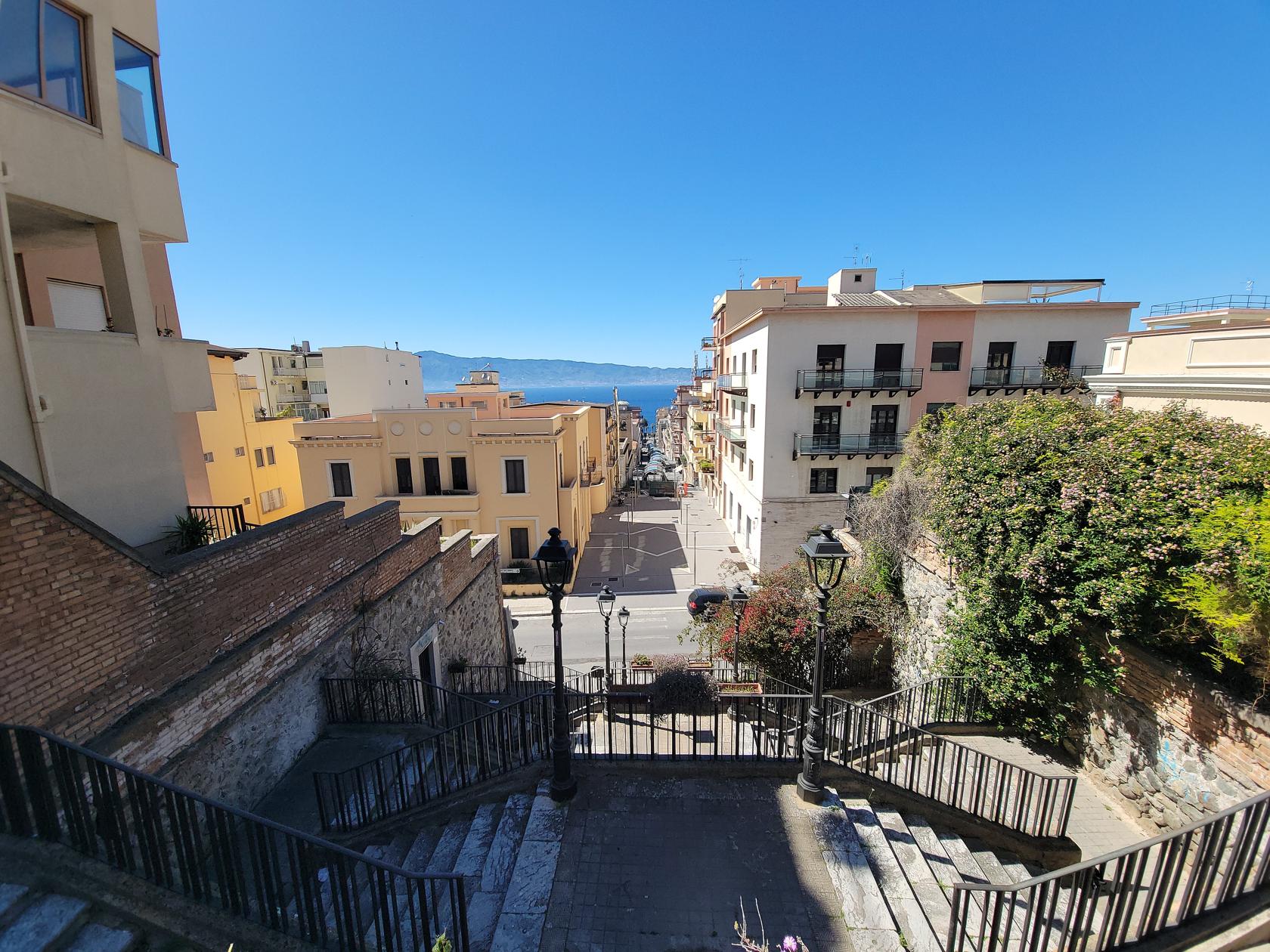
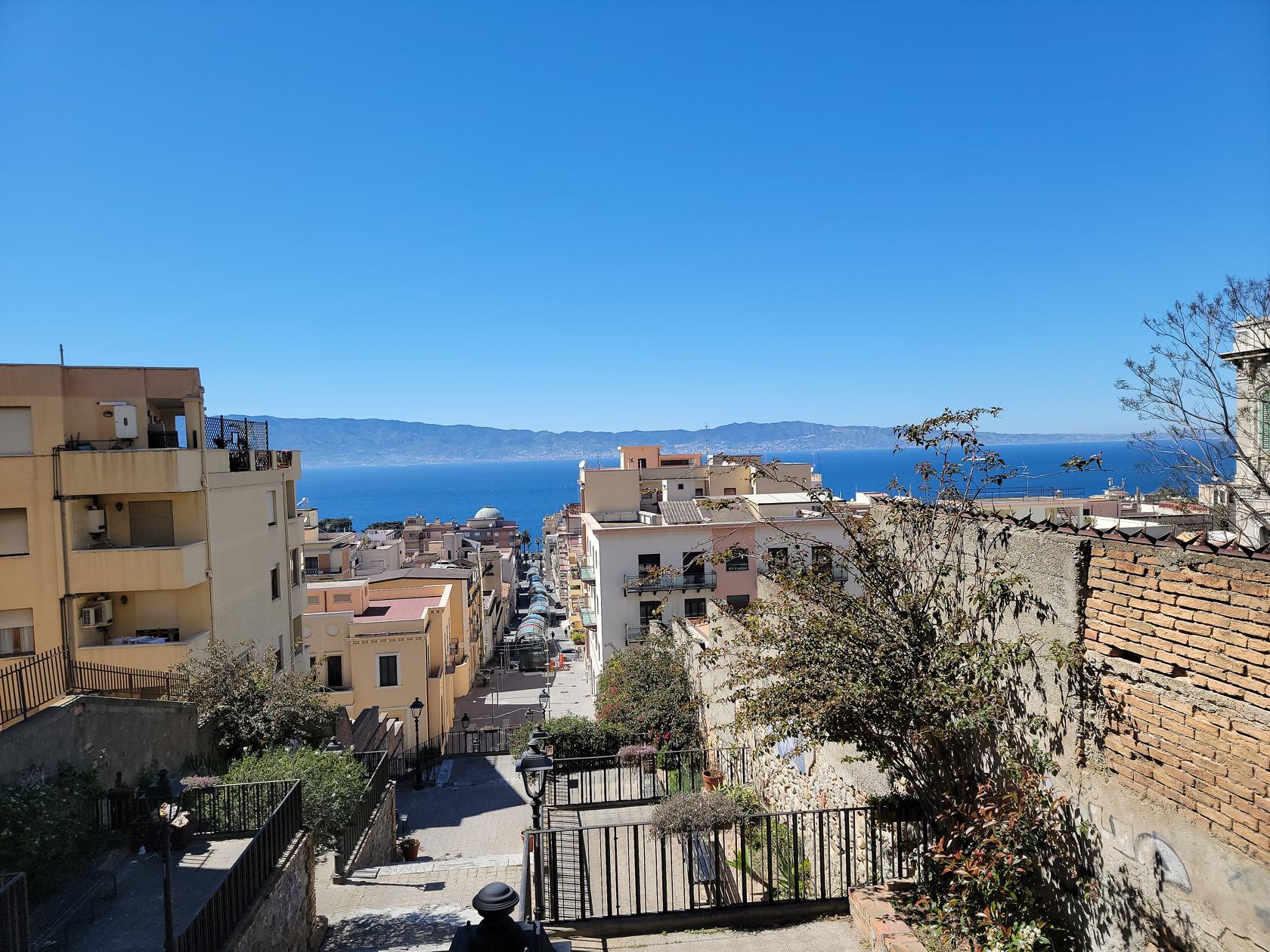
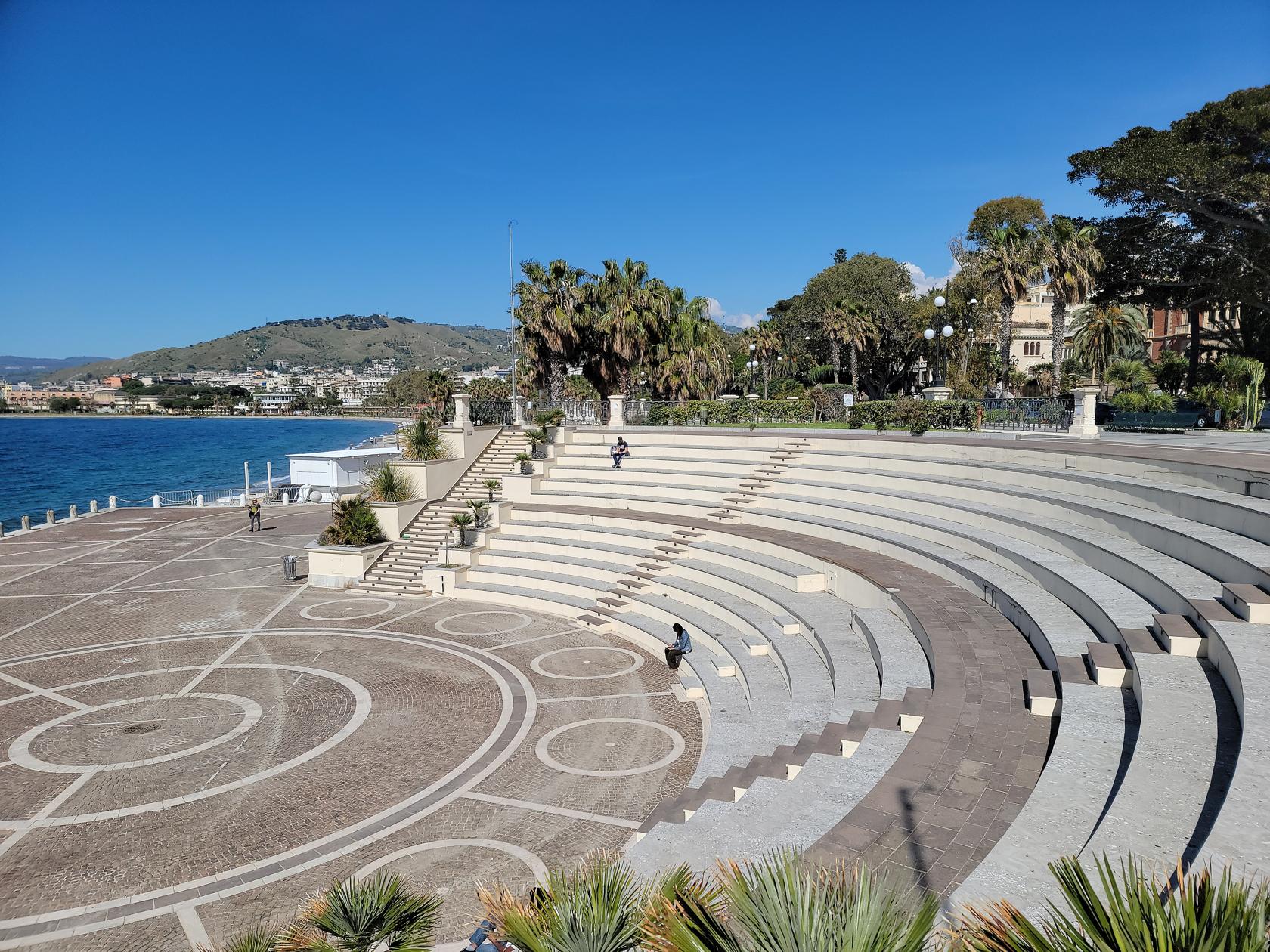
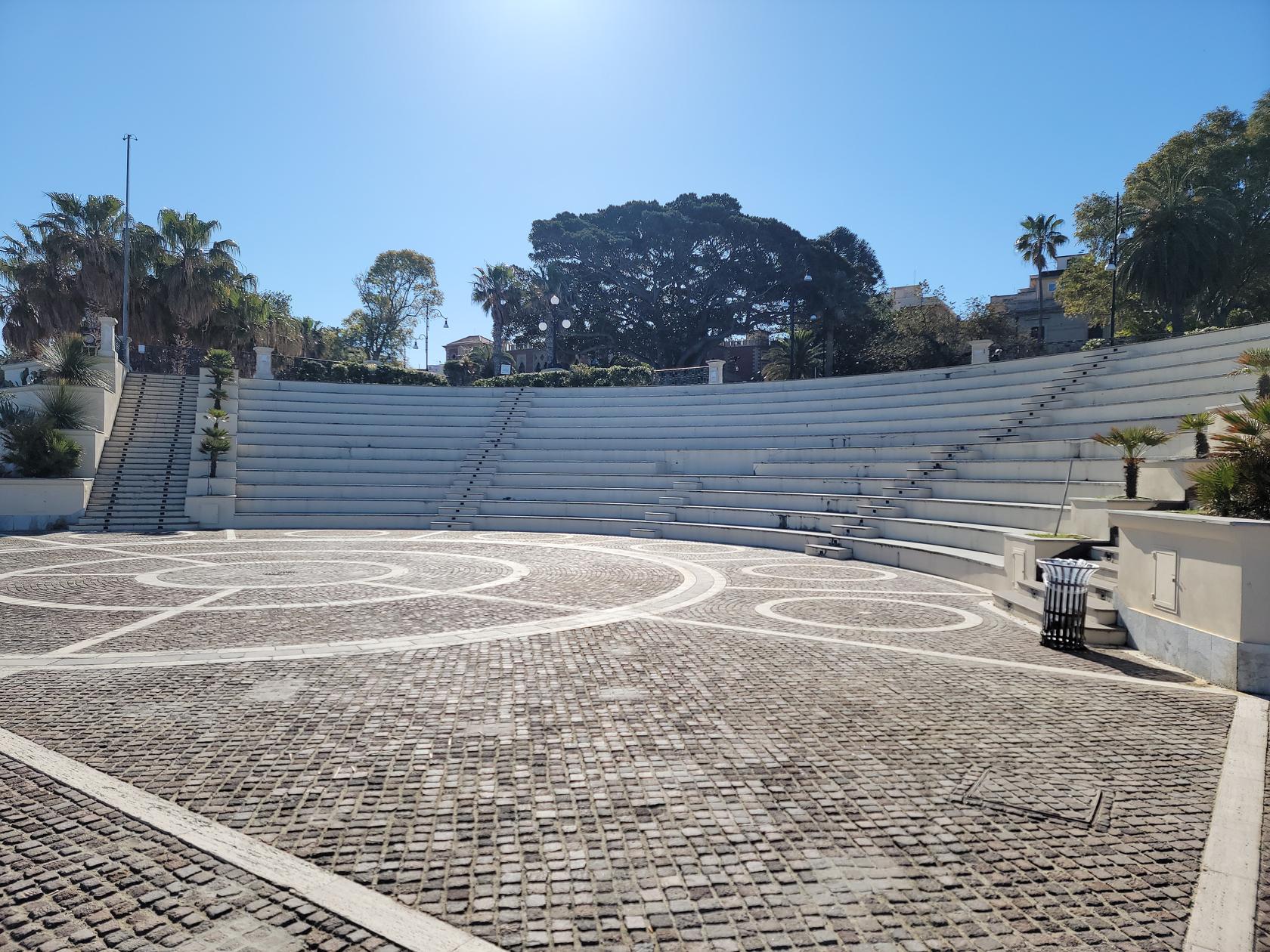
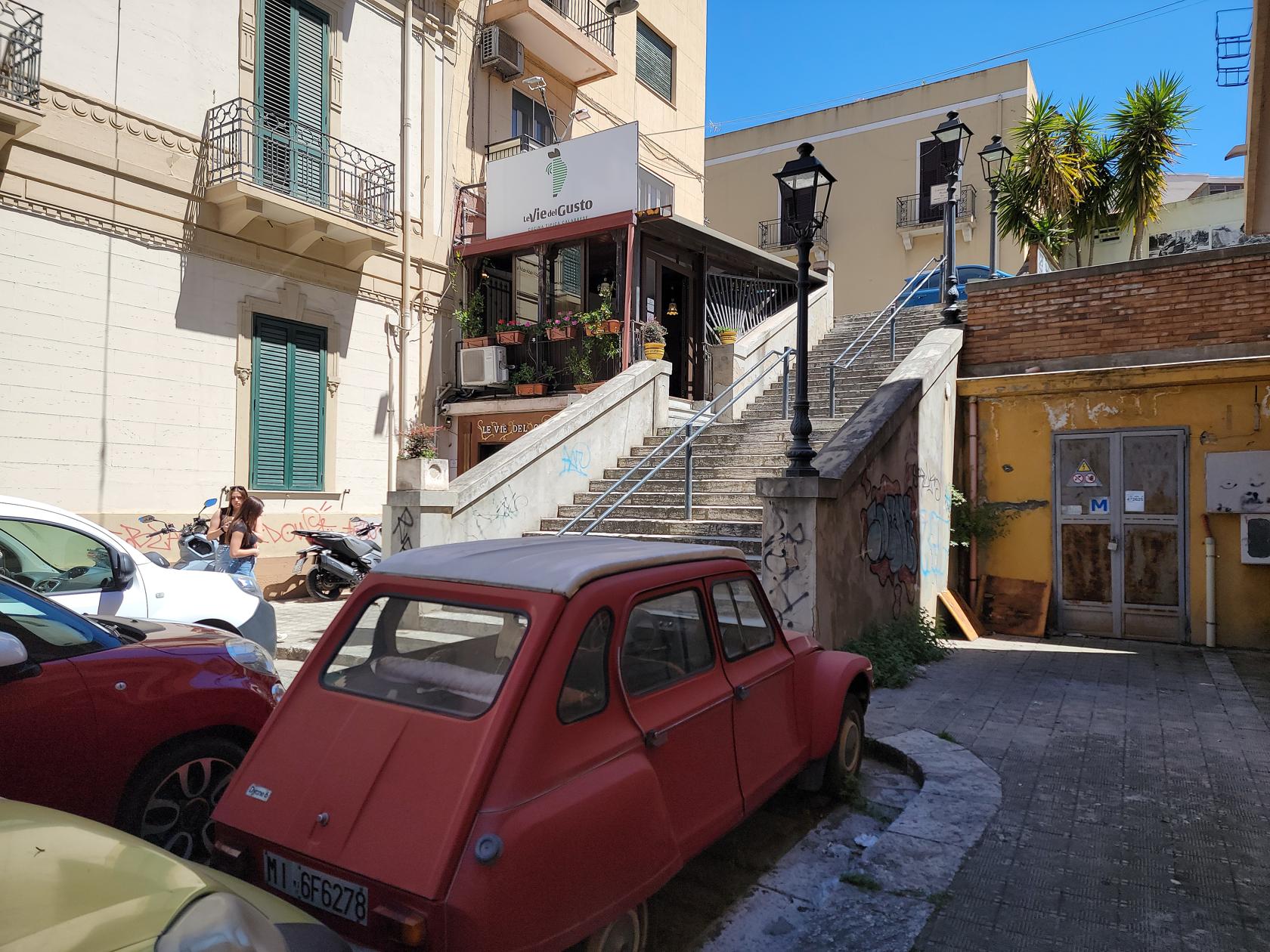
Just up from our hotel and on the transformed via Giudecca street, is the eponymous stairway.

Torrine Hotel

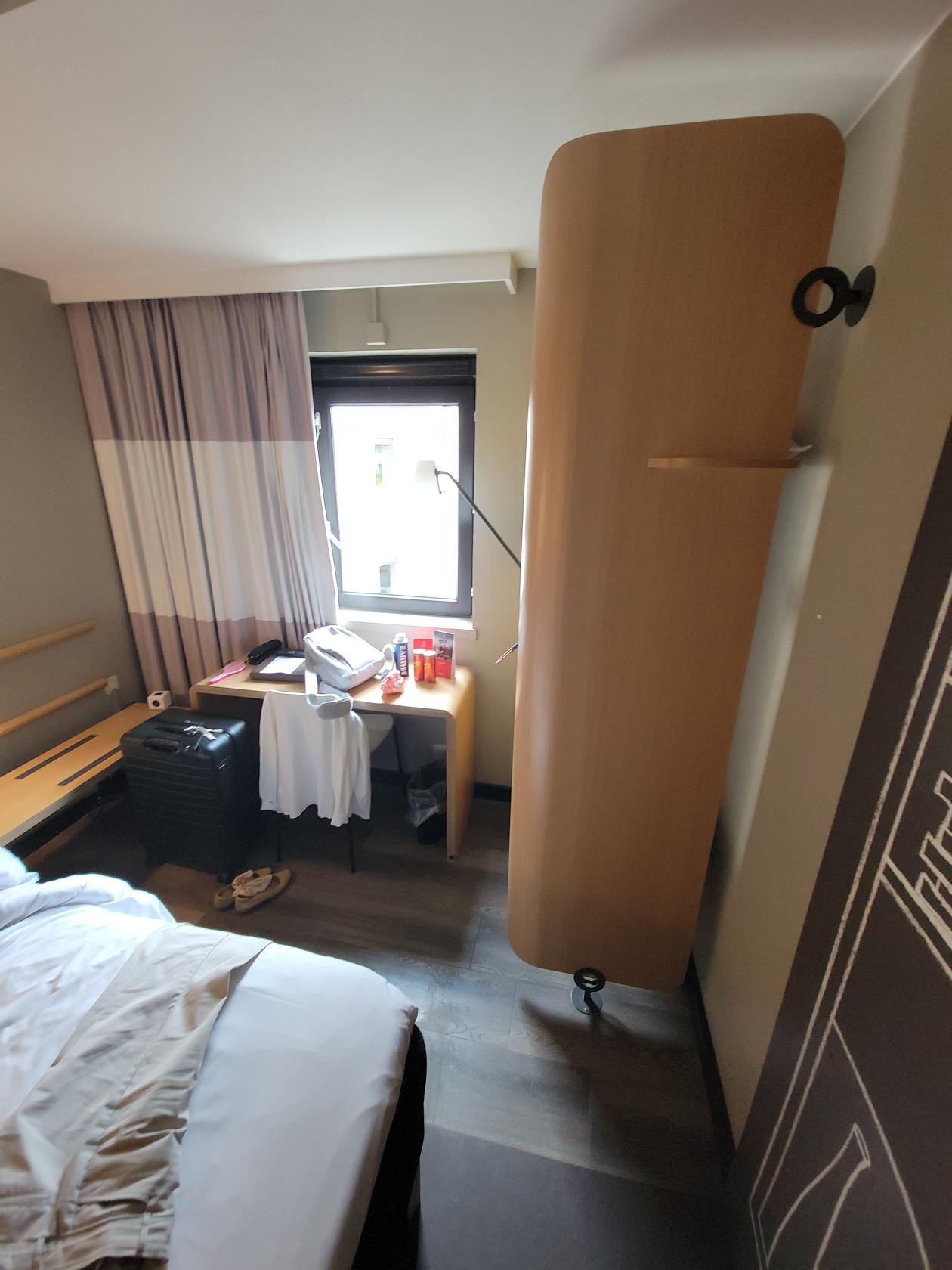
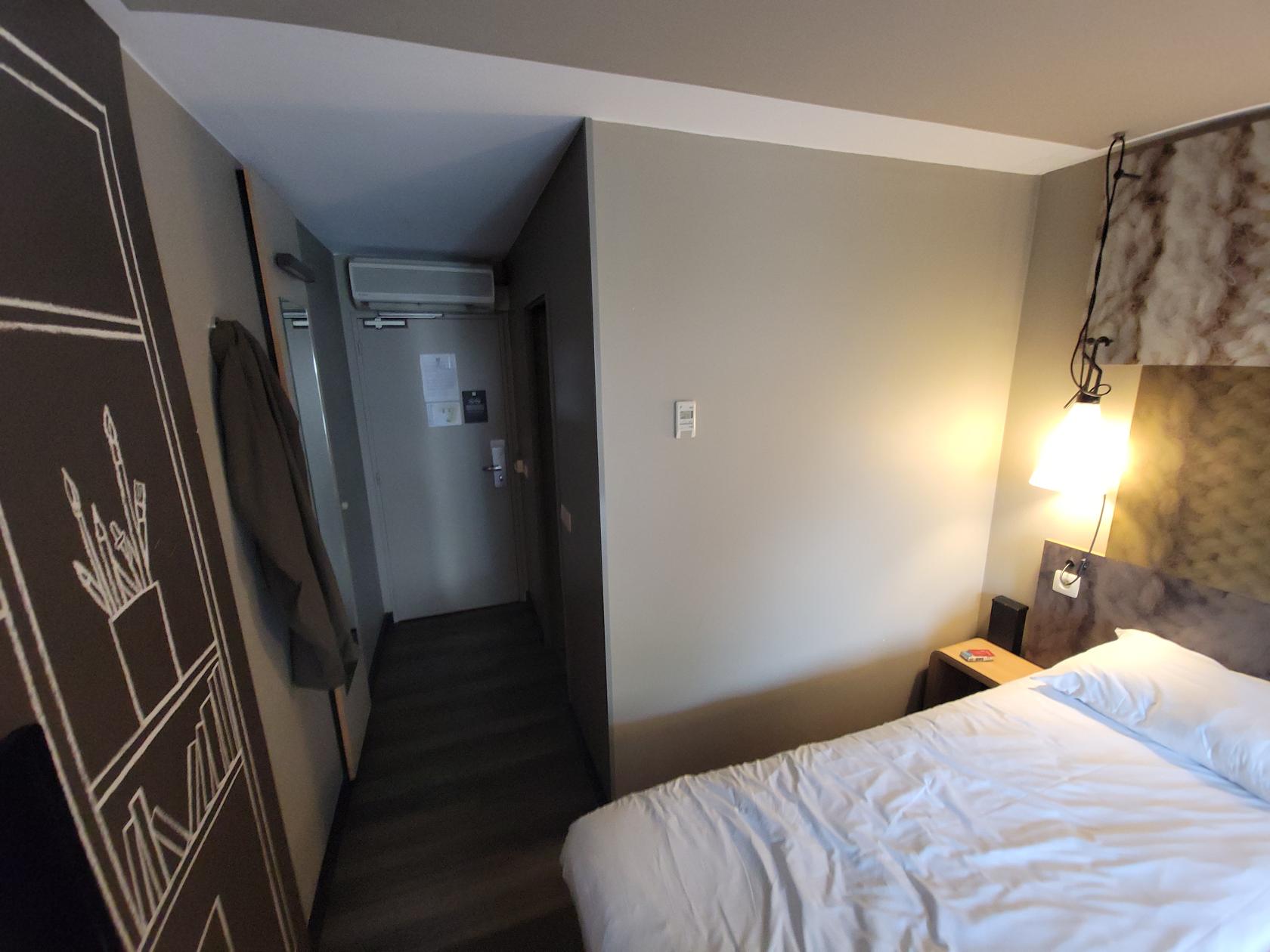
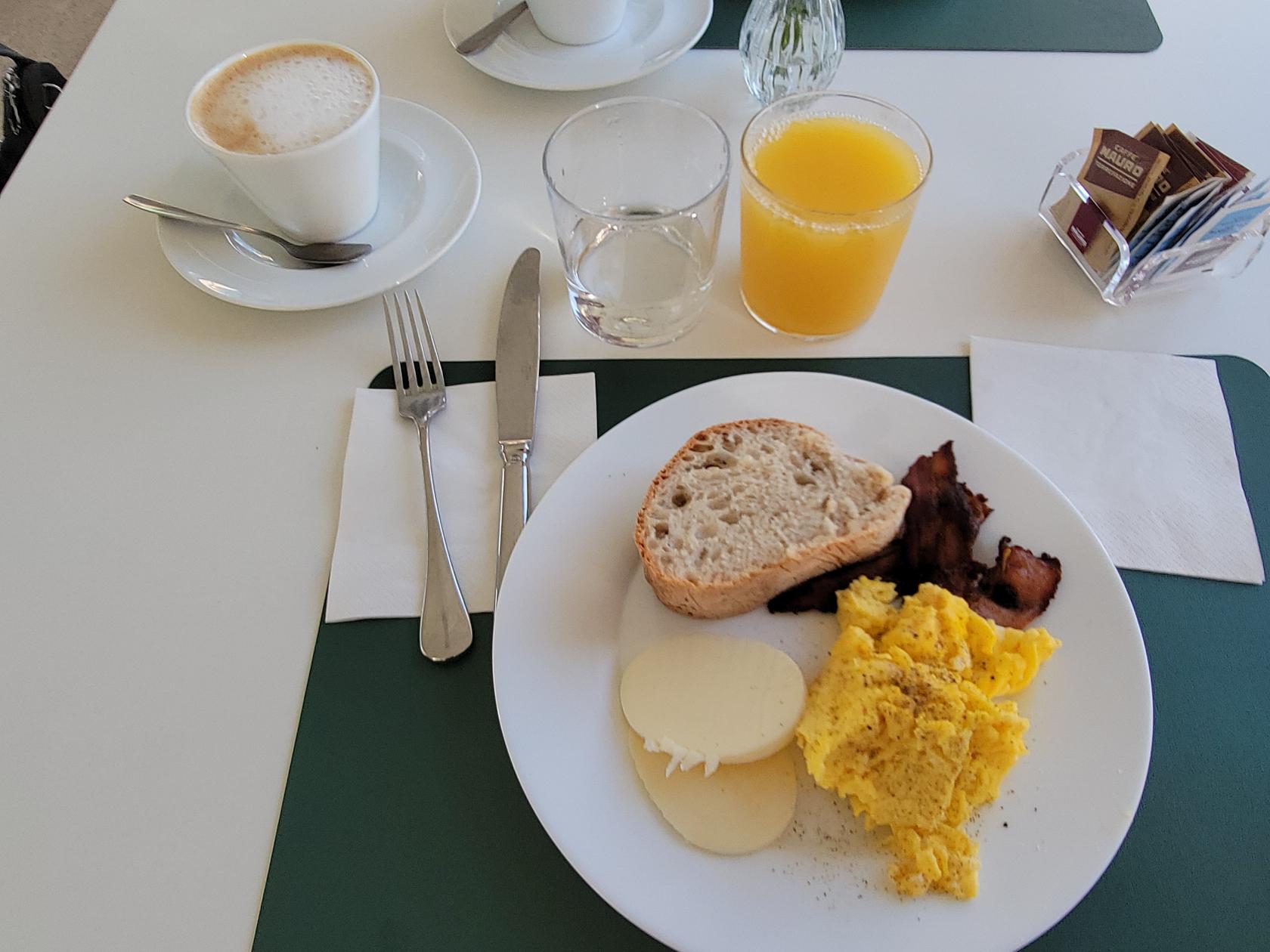
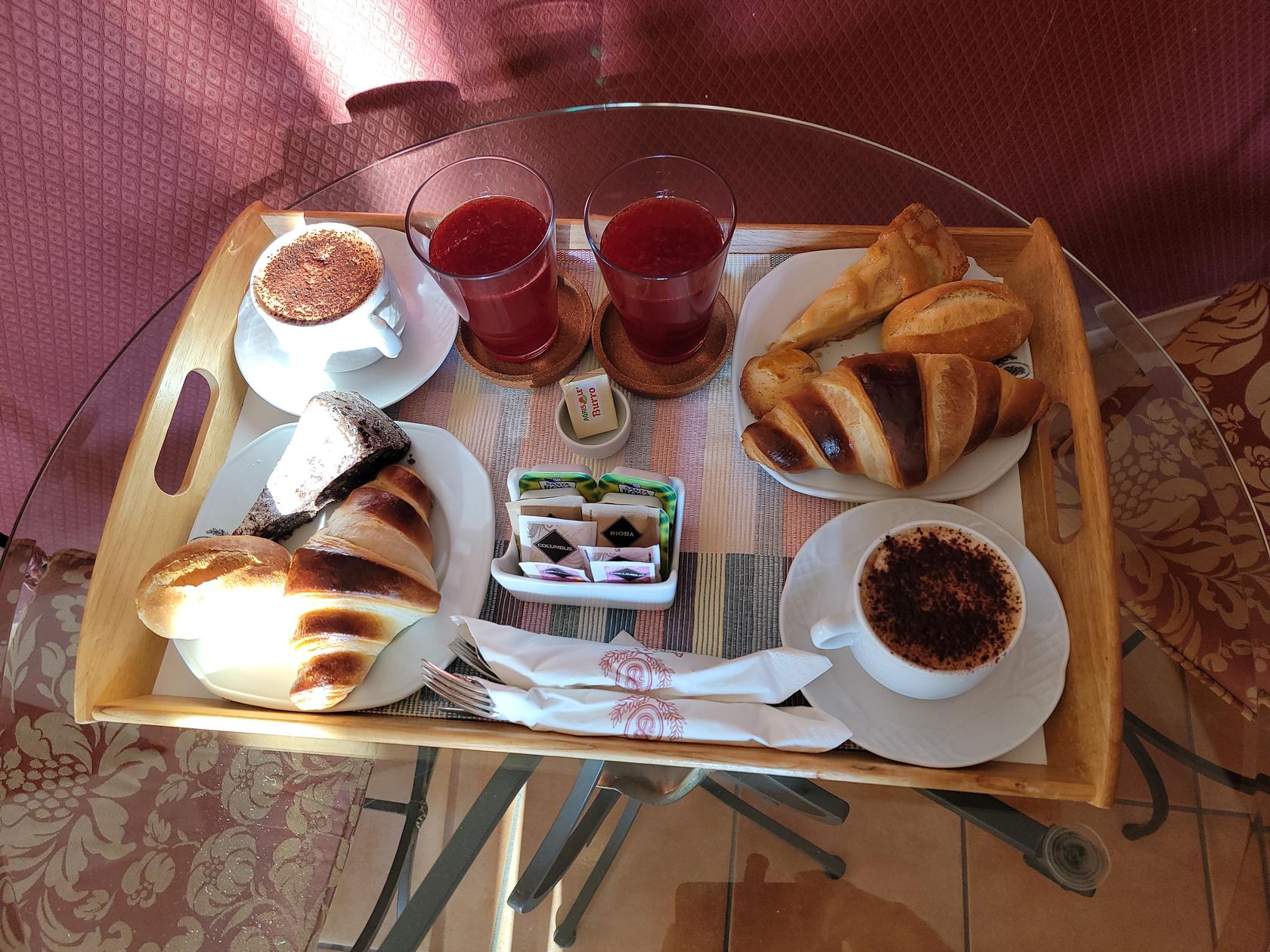
On the edge of the older and more vibrant part of the city, the Torrine Hotel is about four blocks from the waterfront. This is just as well, since it provides a quieter place to stay, with the exception being rush hour; it is located on a busy one-way thoroughfare through the city that buses frequent. Our room came with breakfast, a mixture of continental with some warm food thrown in.

Lungomare

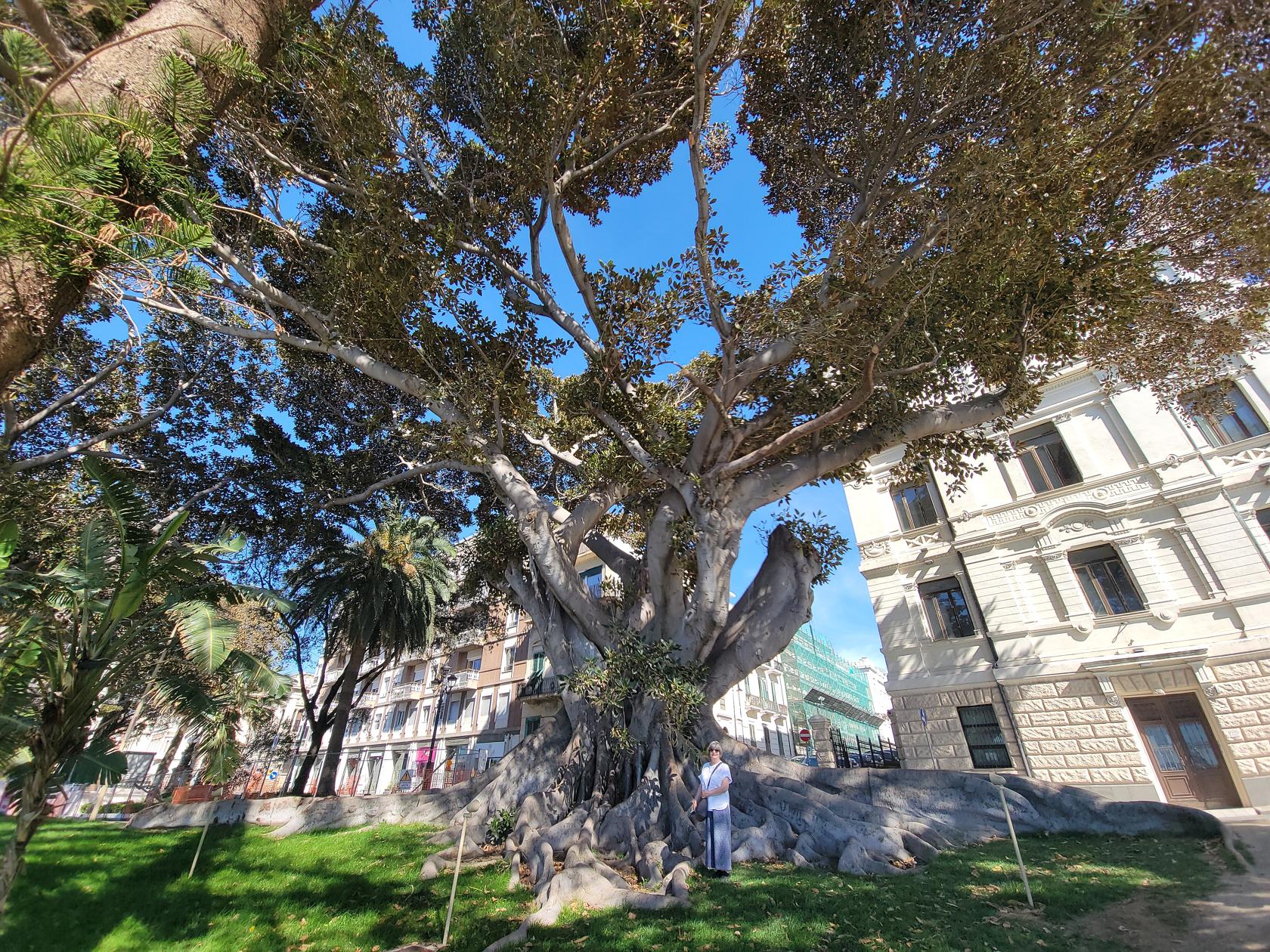
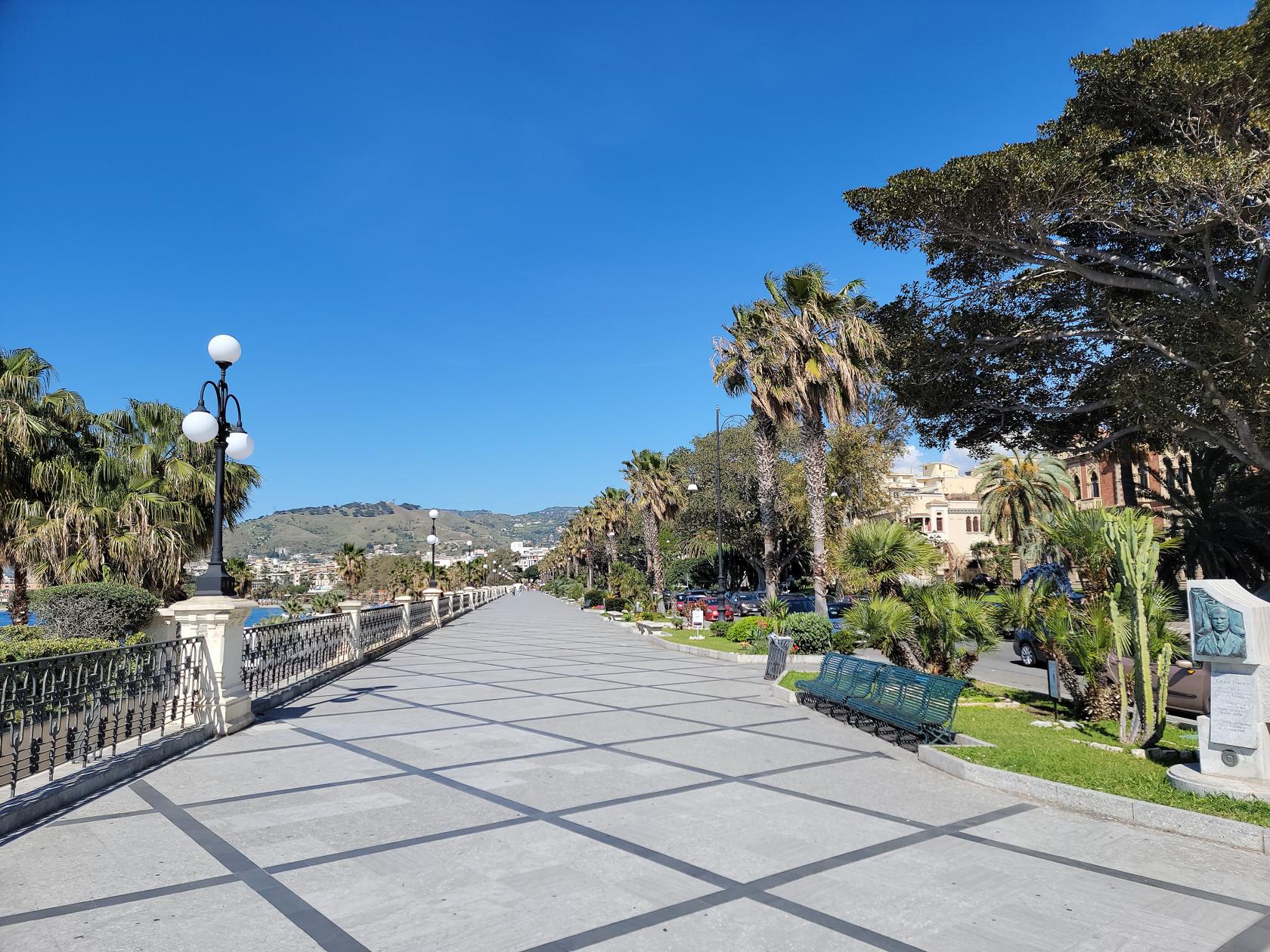
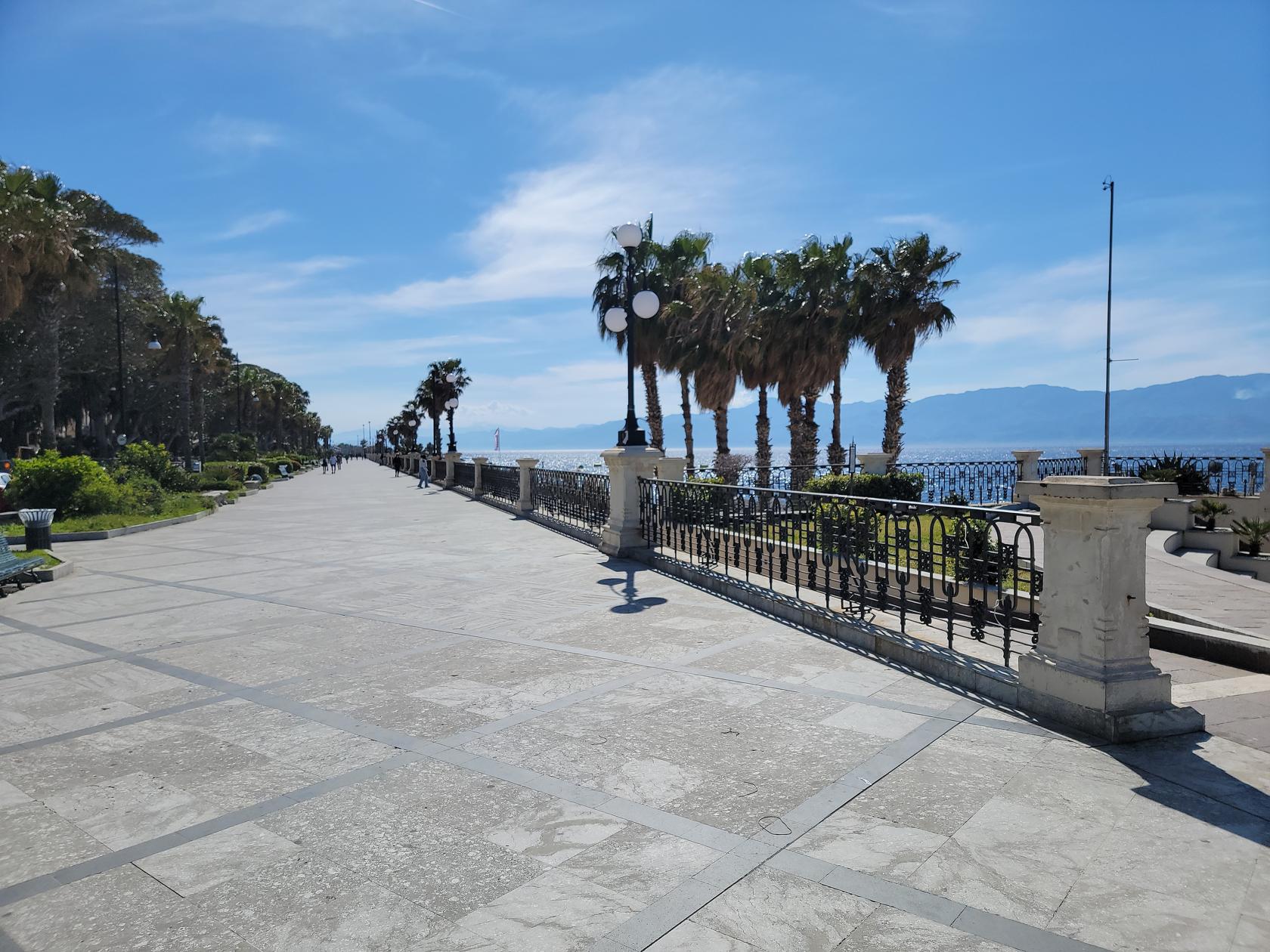
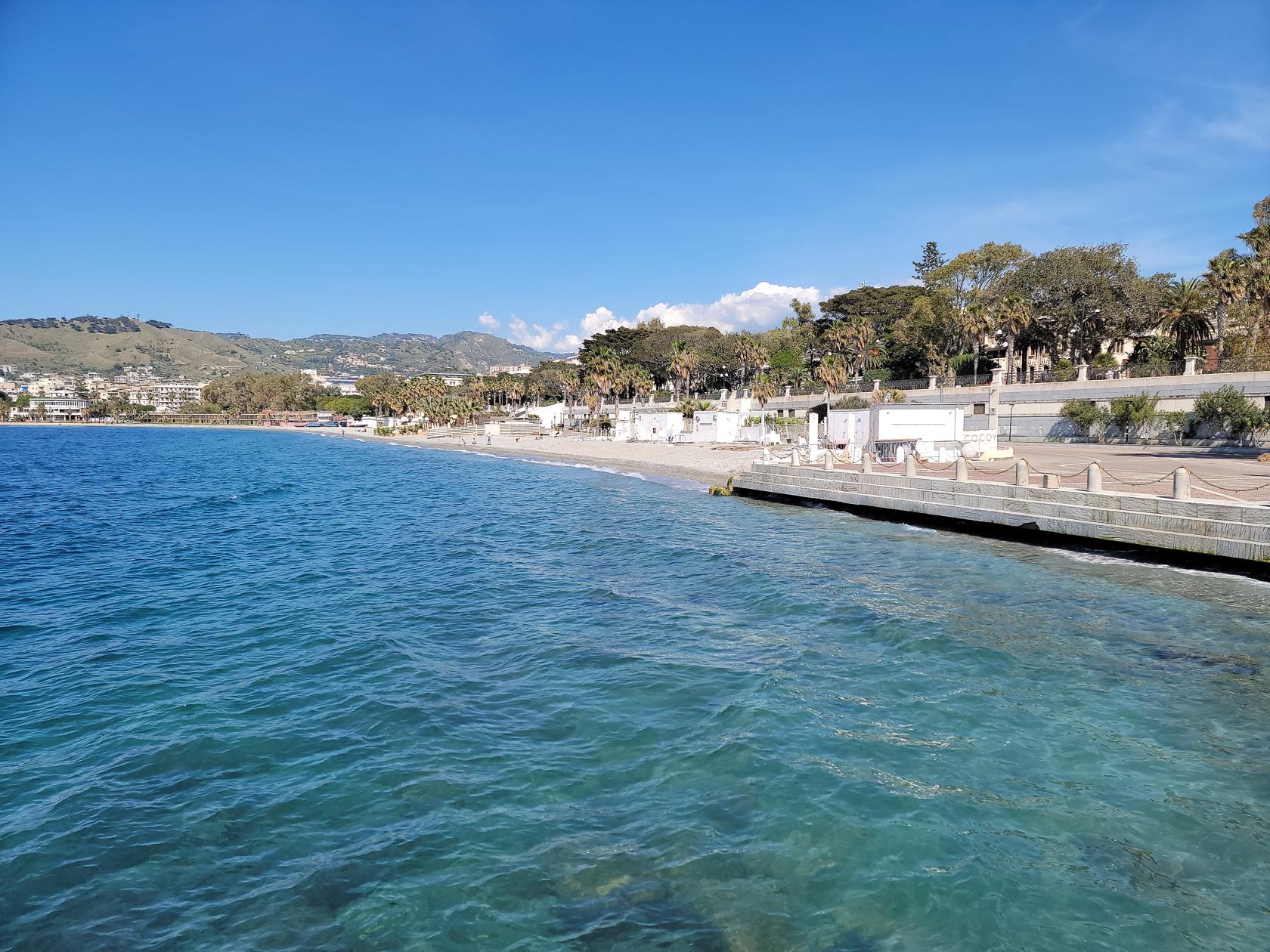
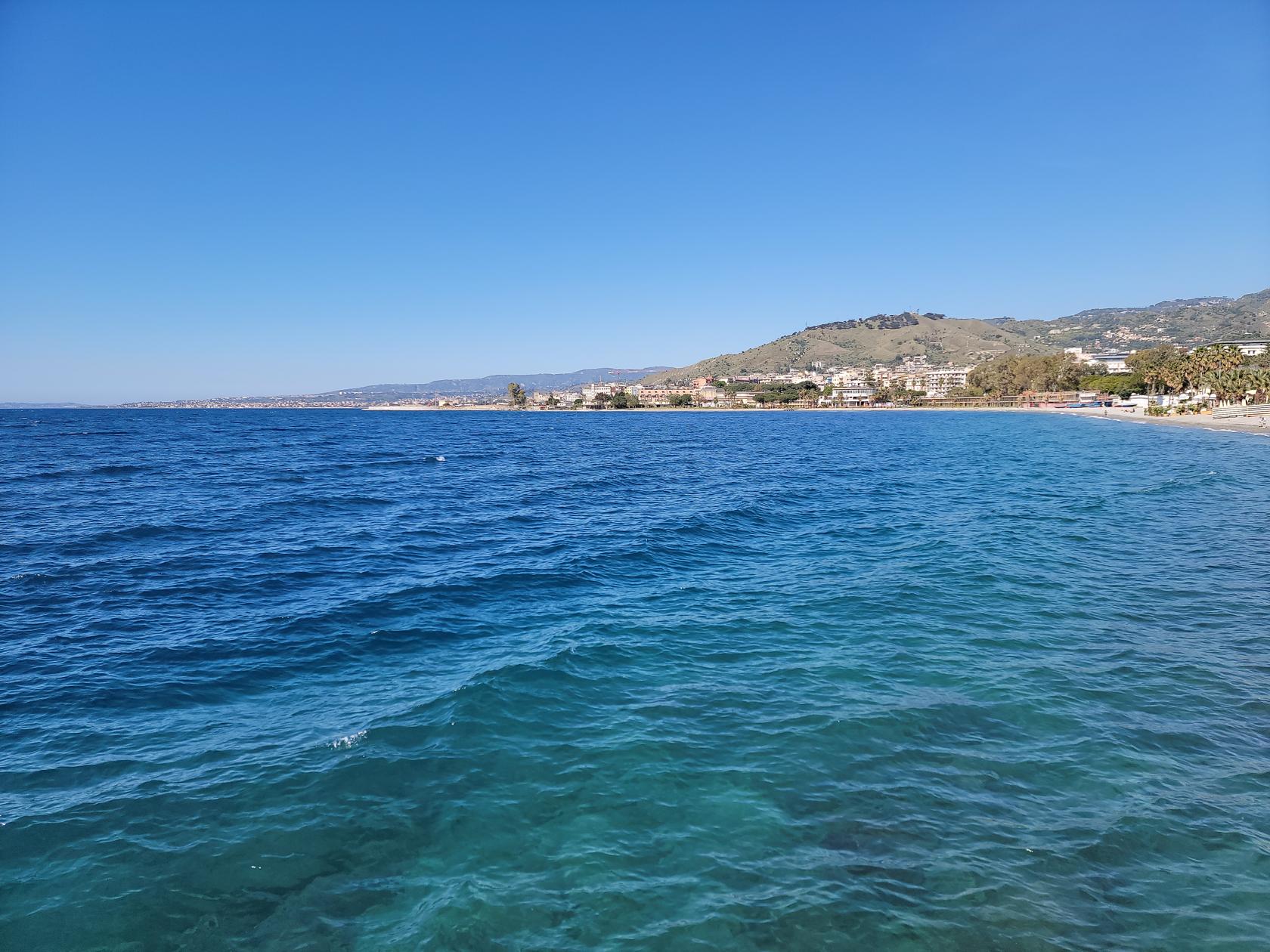
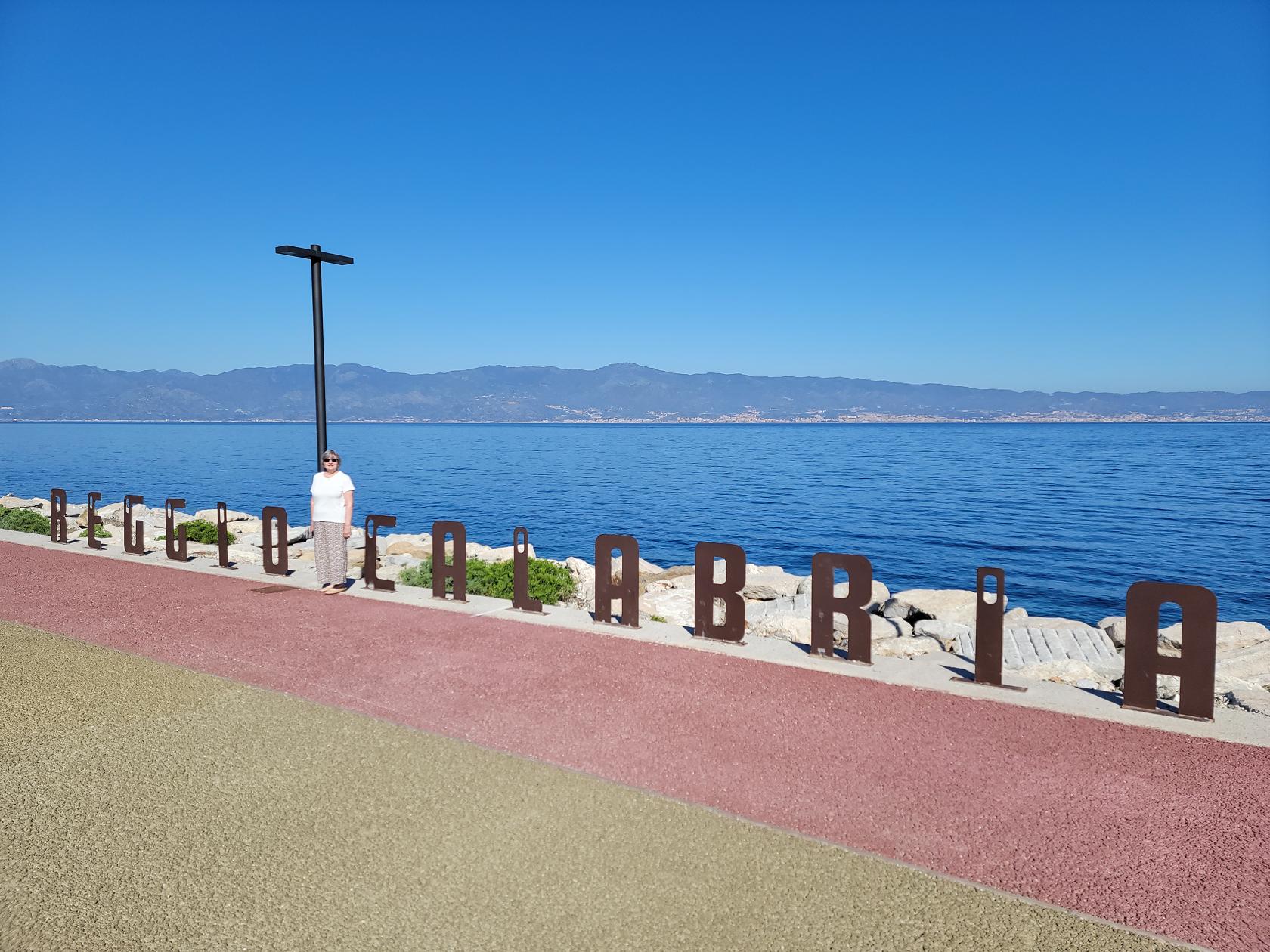
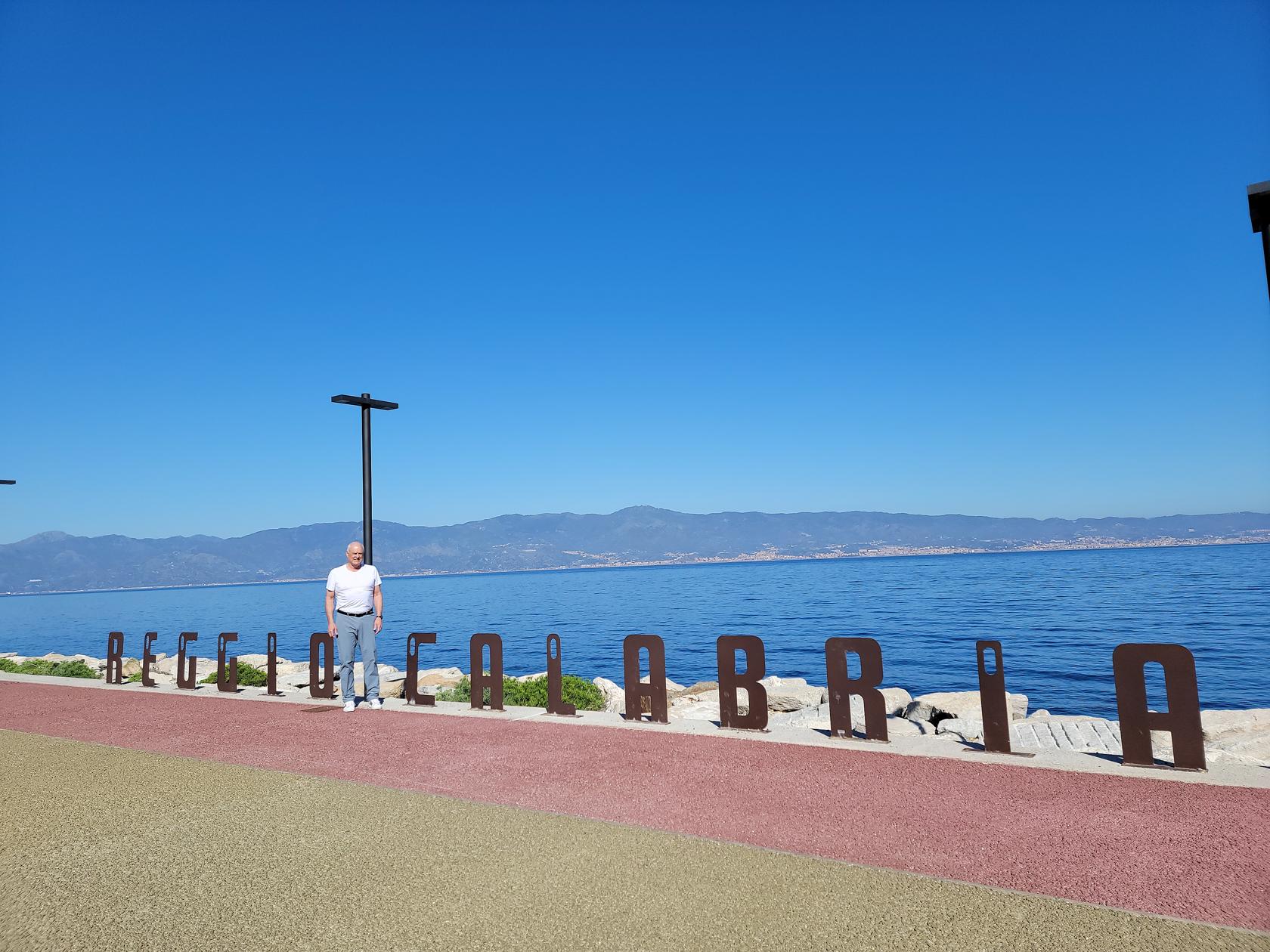
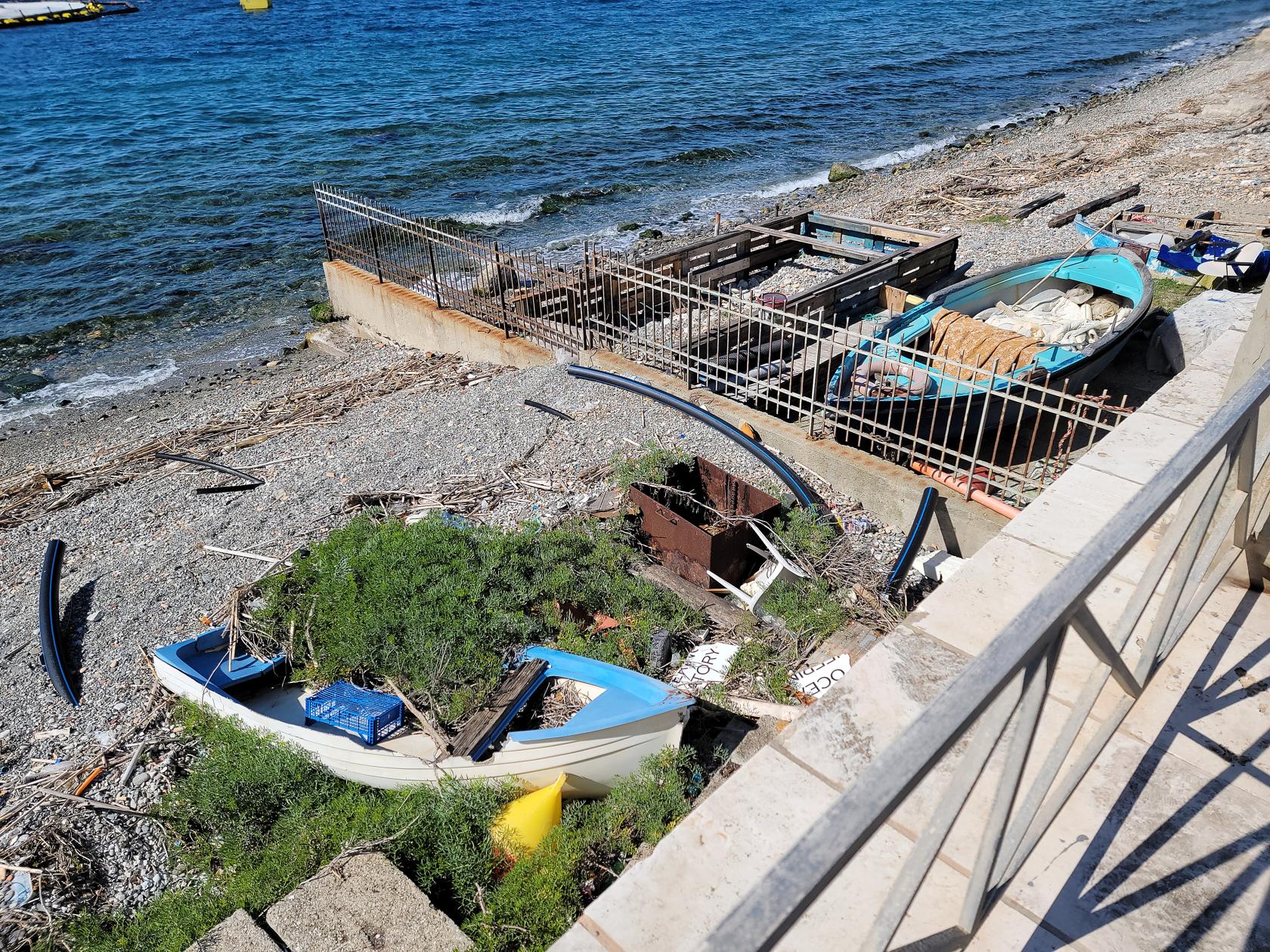
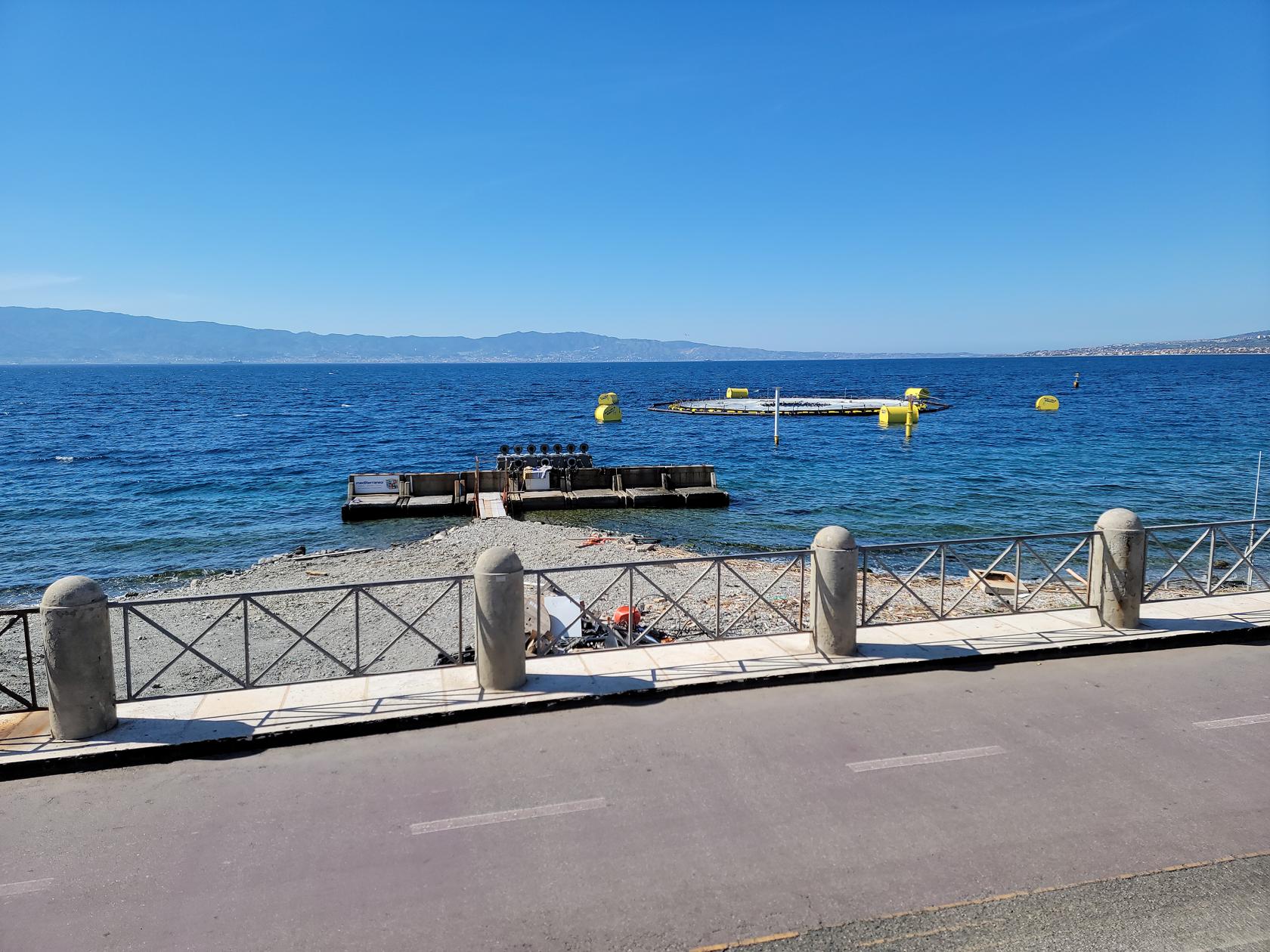
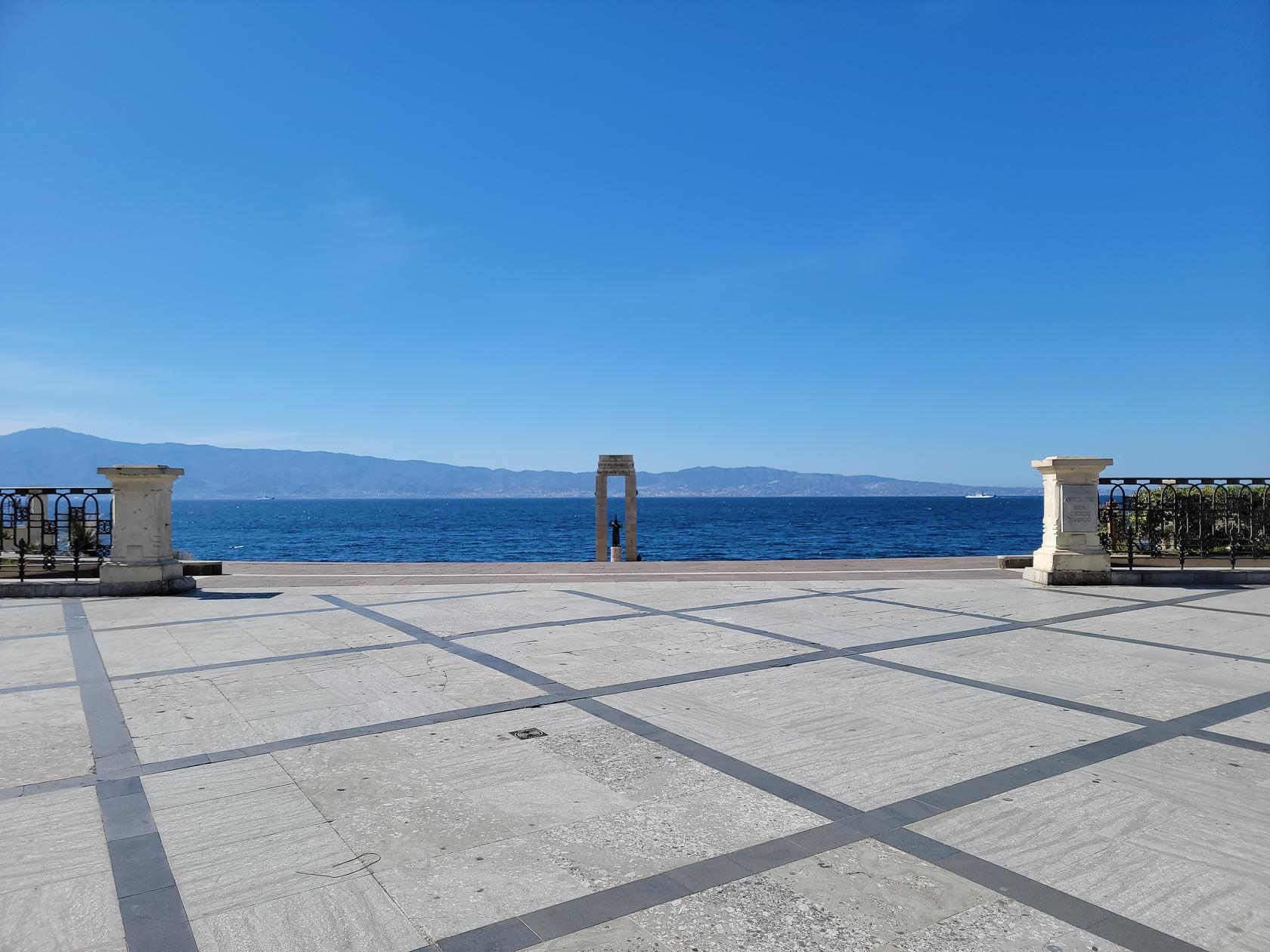
The city has an extensive waterfront and a beautiful Lungomare to go with it. Near the end of it, in the urban park, you will find a nice long sign with the city’s name where you can take memorable photographs.

There are several points of interest along the boardwalk and a leisurely stroll along it will eventually bring you to all of them.

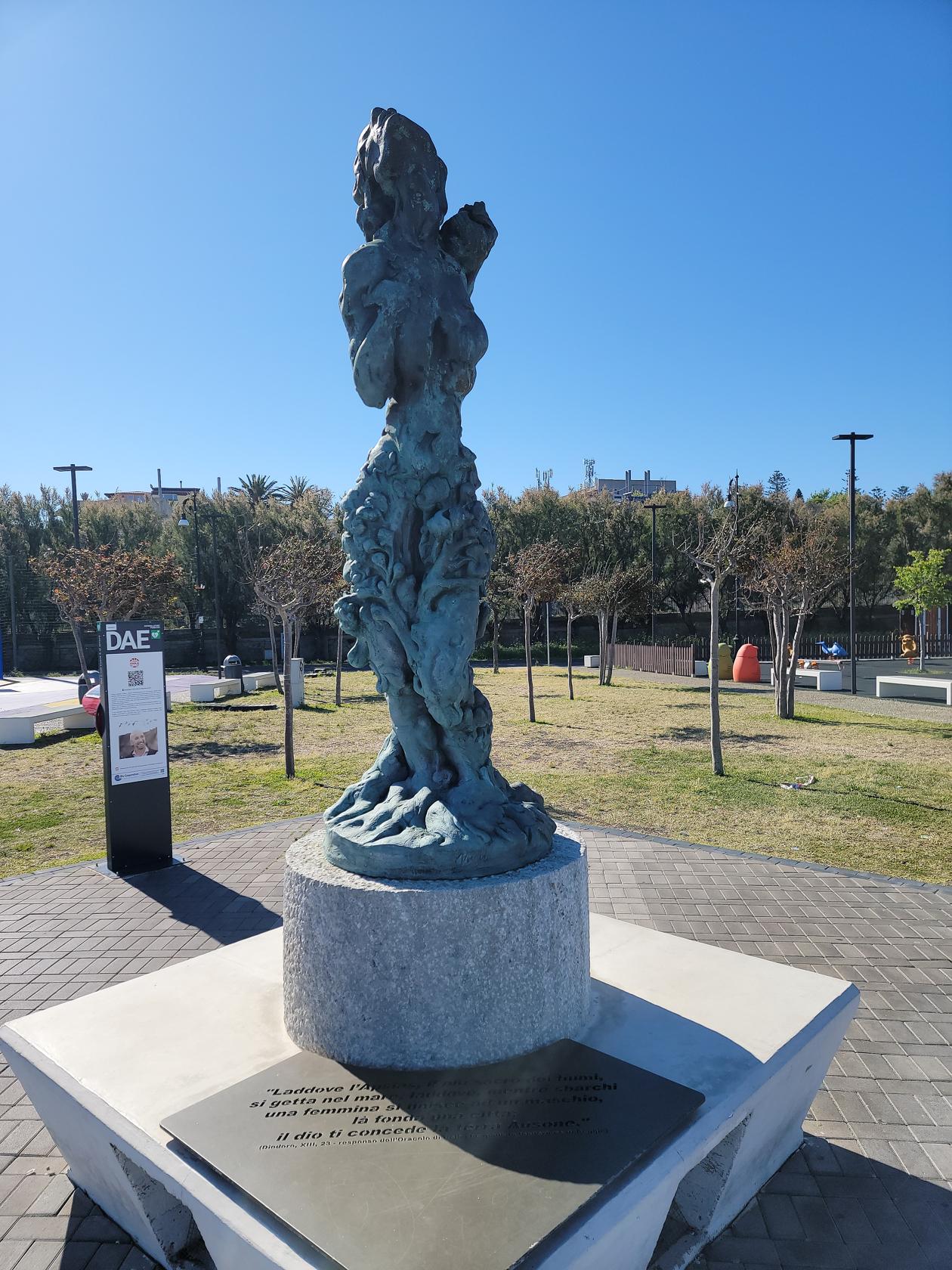
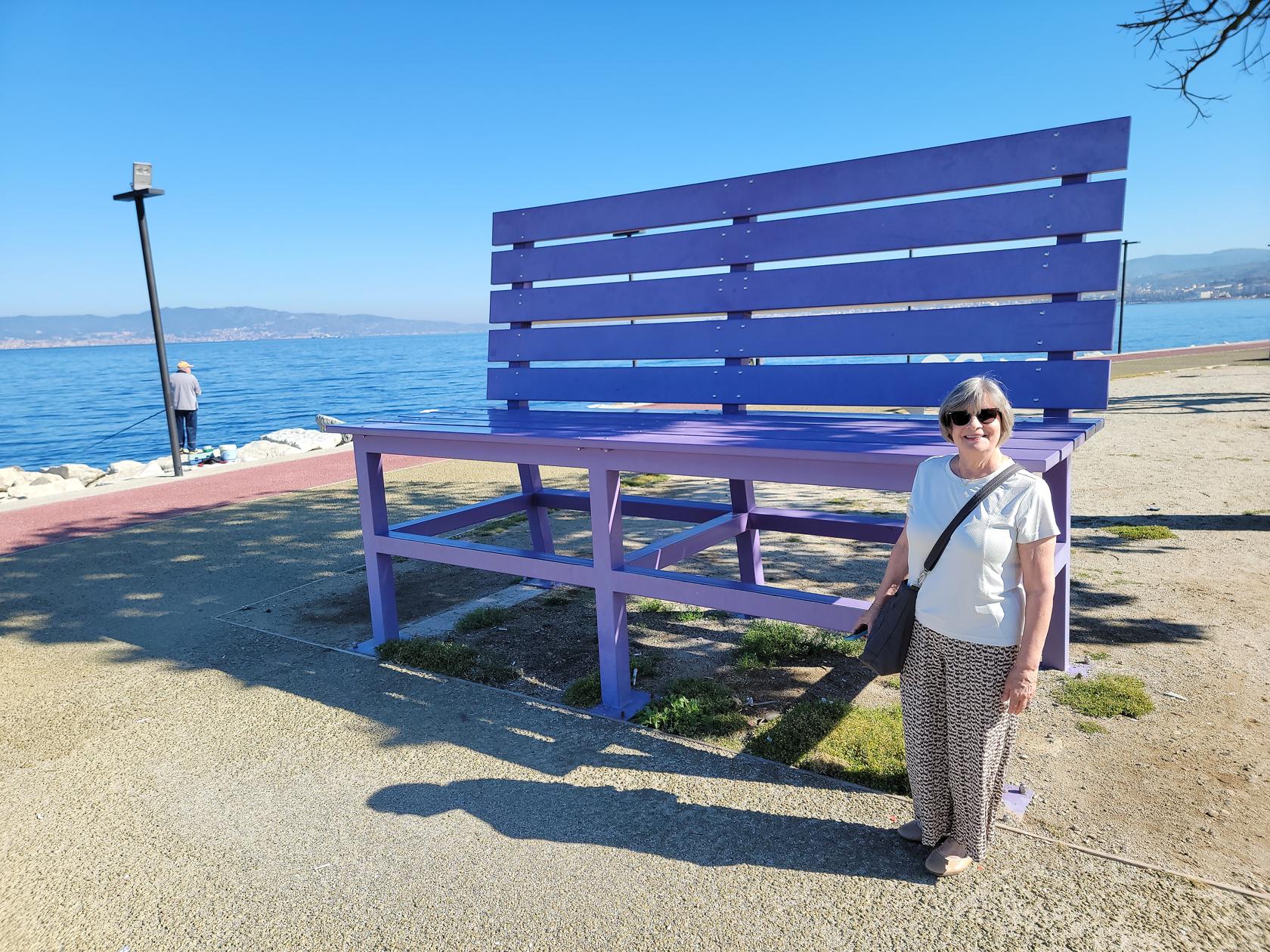
Somewhere near the end, down by the Roman Baths, Patti found the Big Bench. Apparently just installed, since it had no placename on it yet.

Monumento Della Vittoria

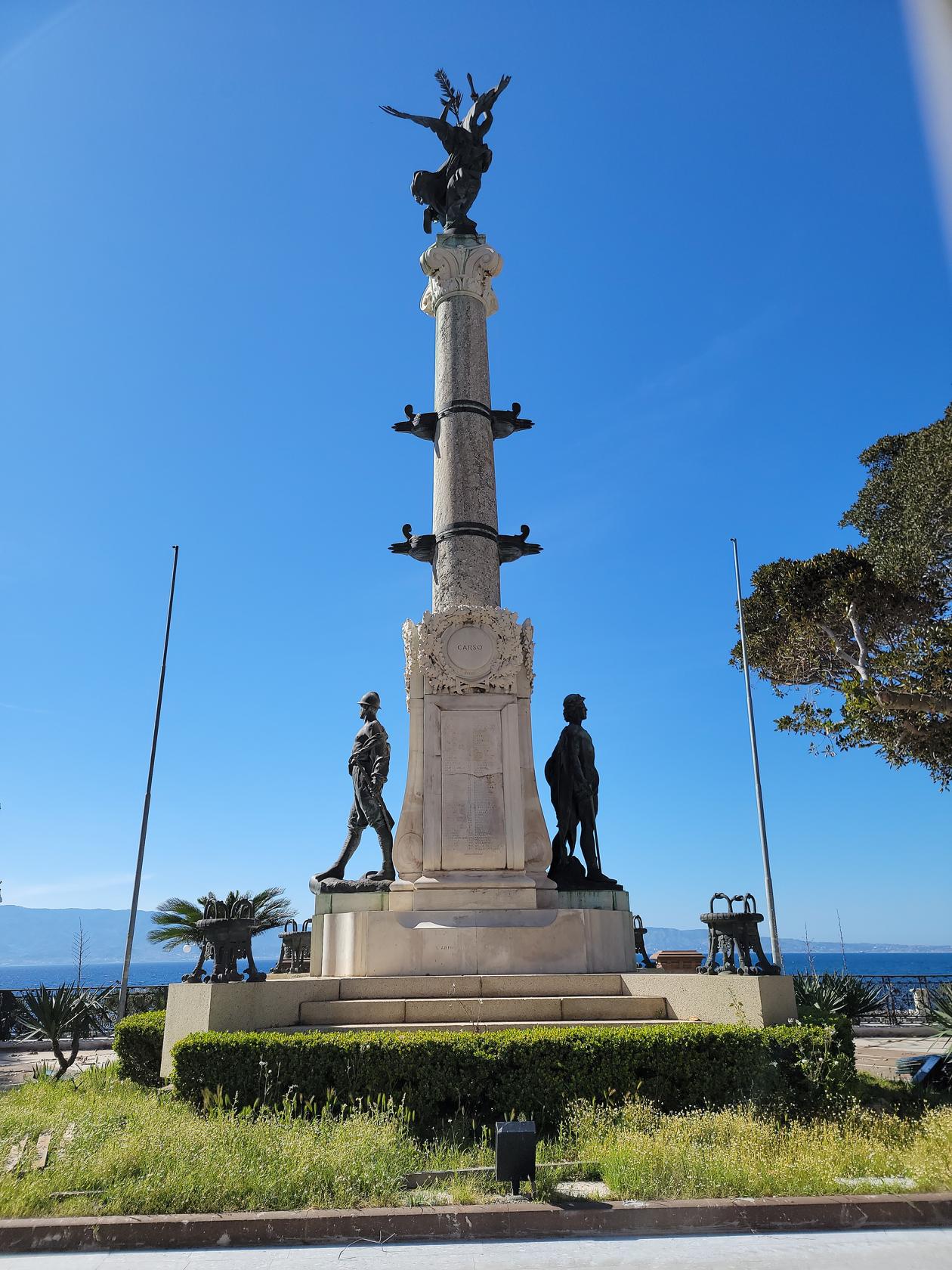
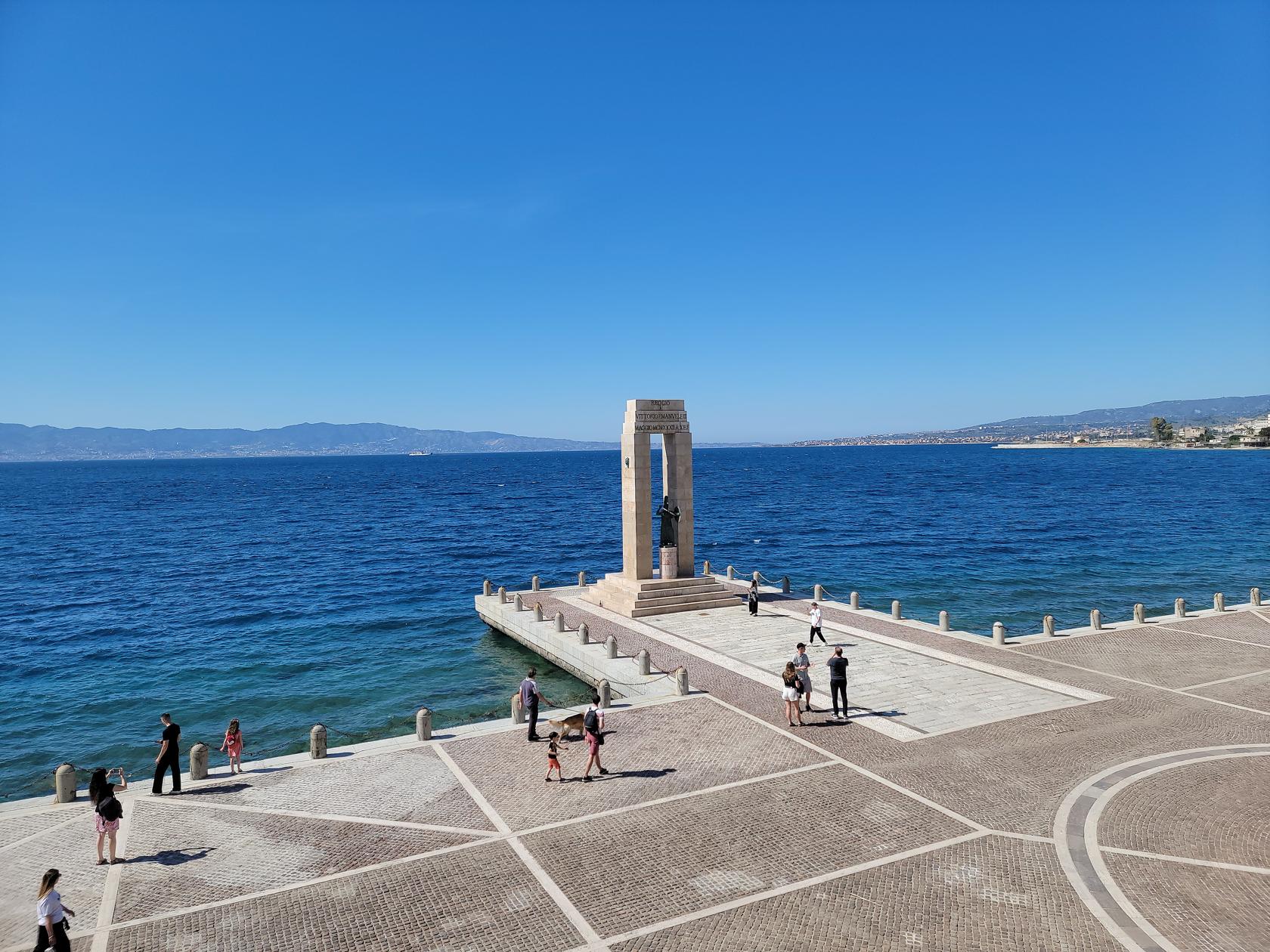
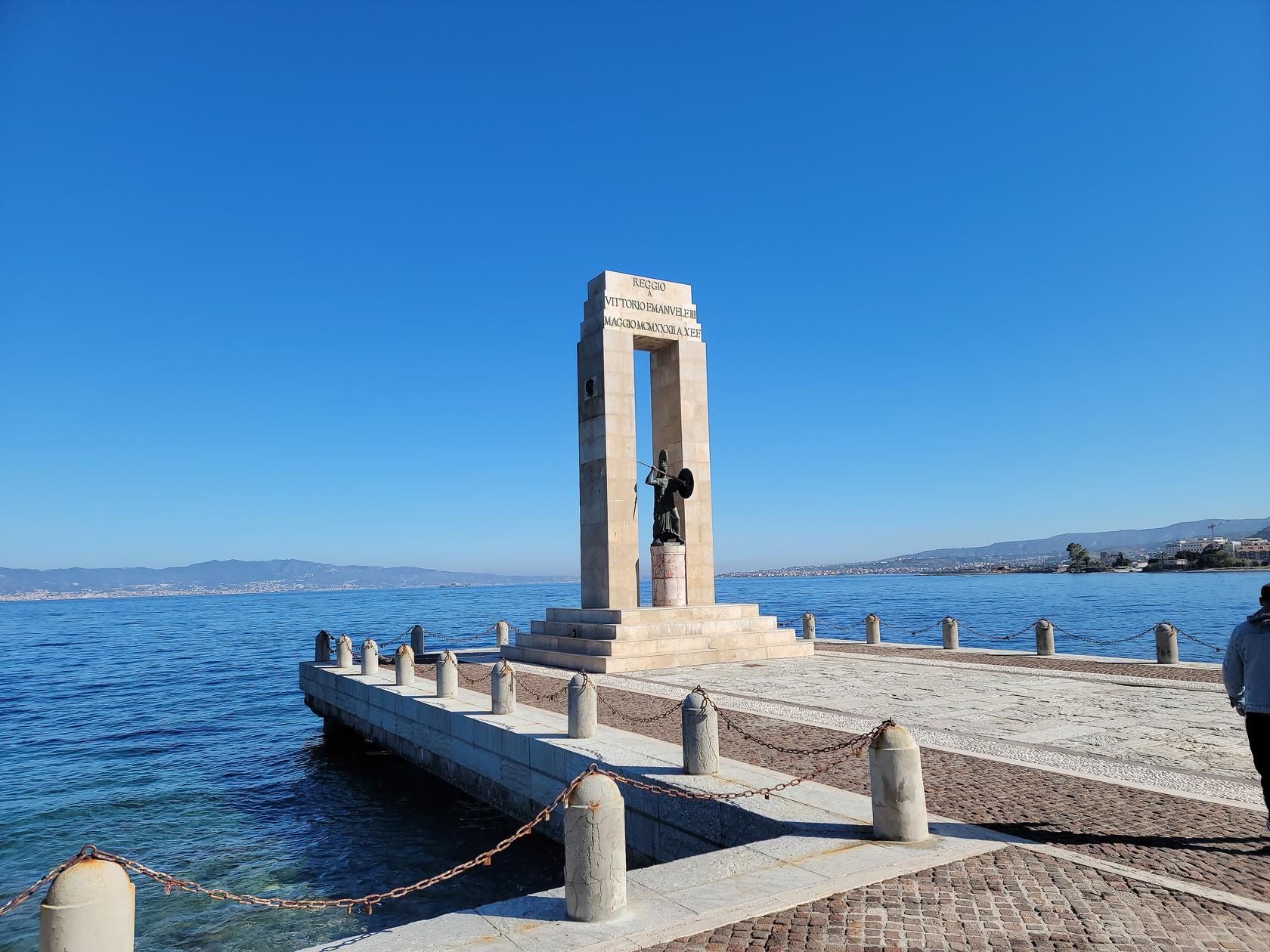
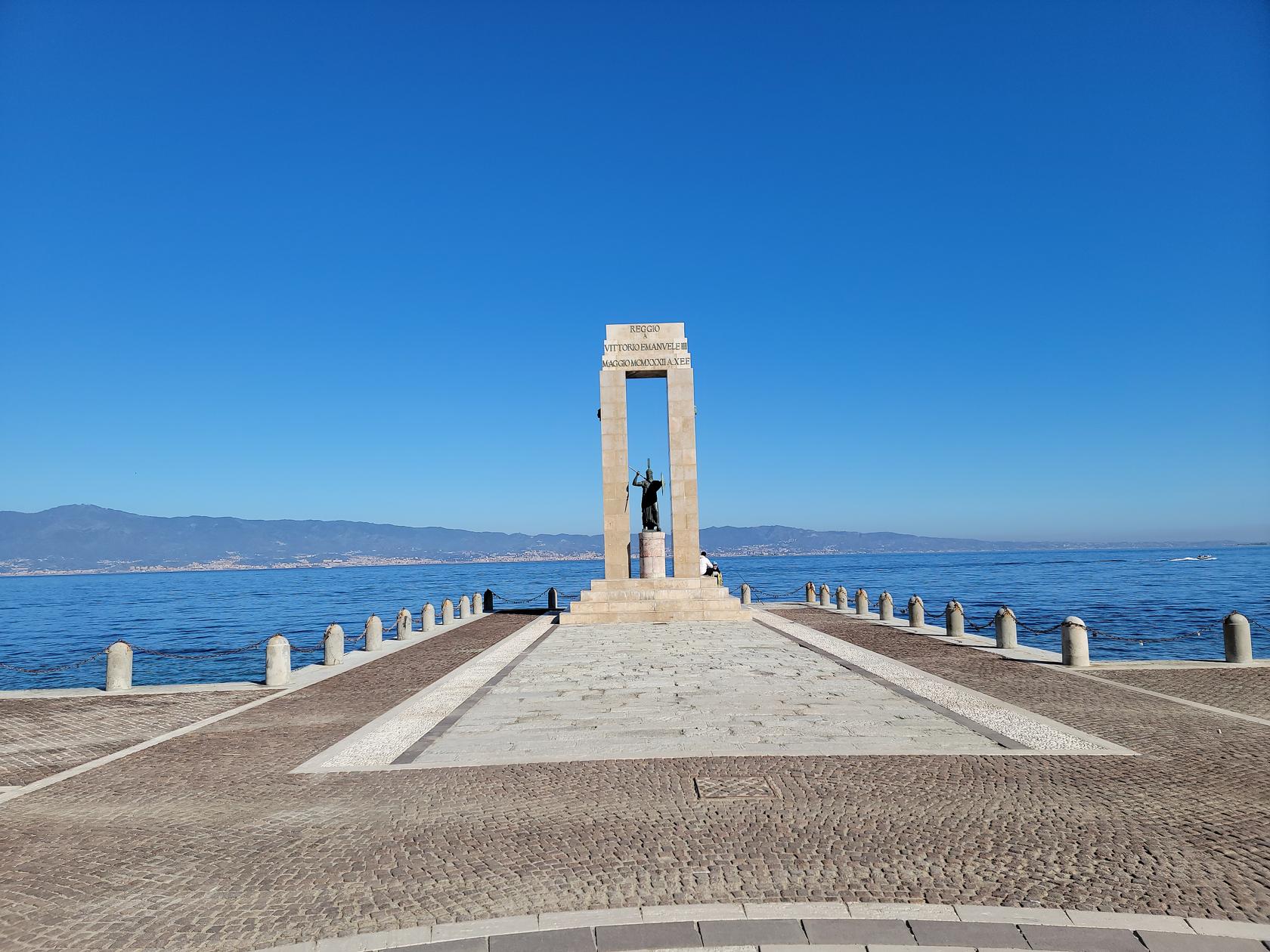
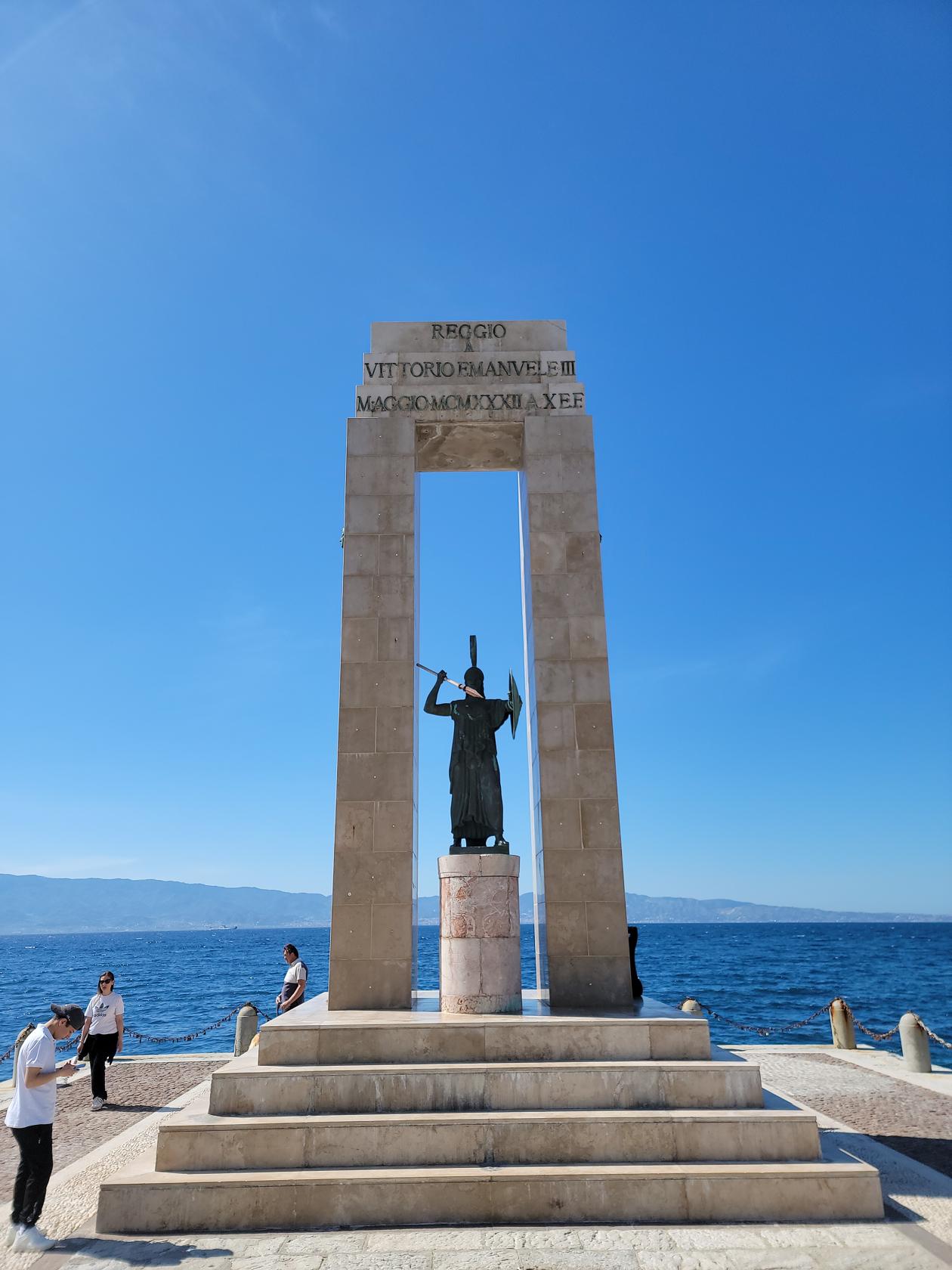
From our hotel on Via Giula, almost directly down the street and on the waterfront and Lungomare, is the Monumento della Vittoria. It is a monument erected for Italy’s World War I victory and Victor Emmanuele III, which also has replica of the Statue of Athena Promachos inside it.

Roman Baths

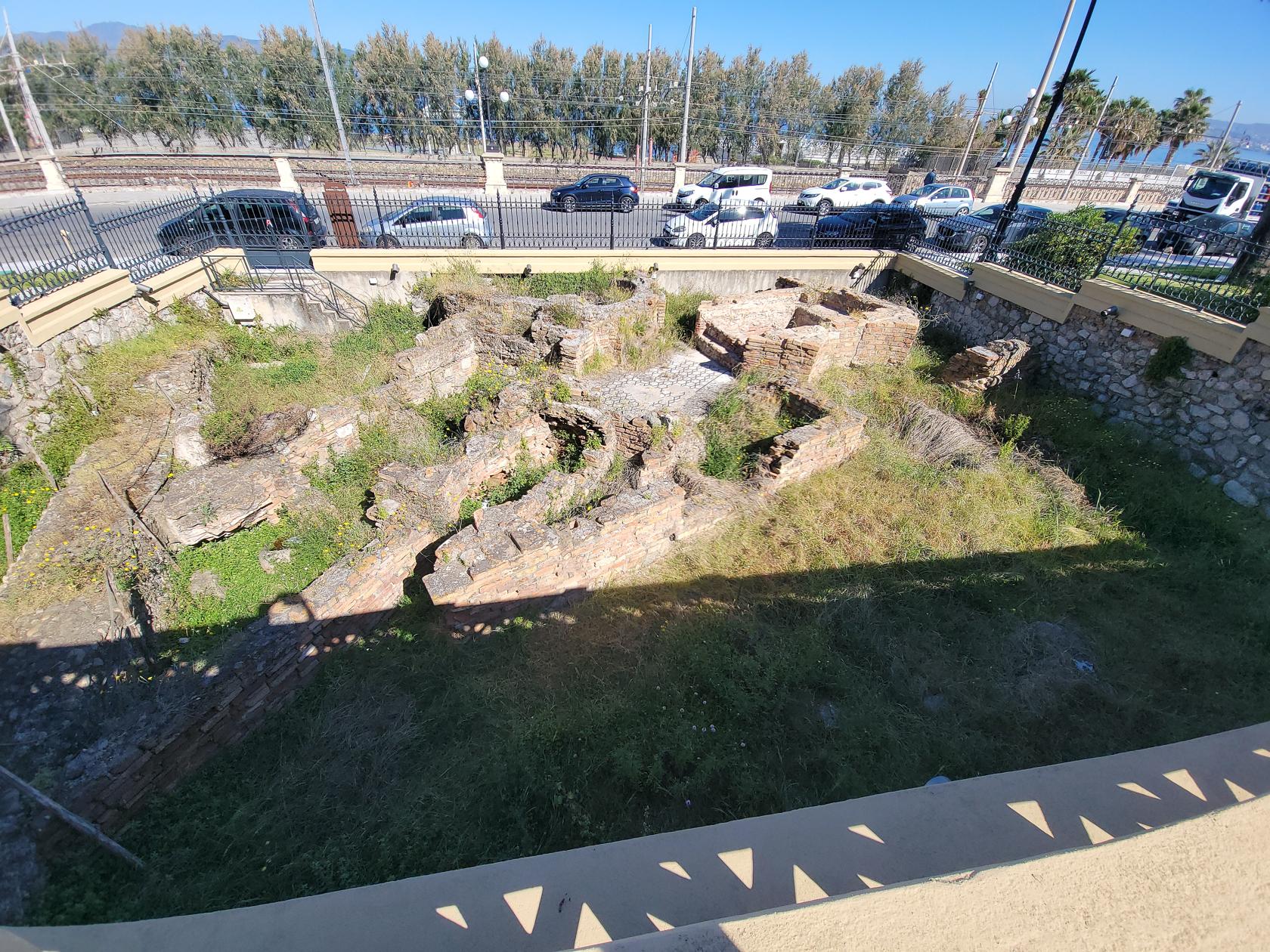
Along the Lungomare is a site of old Roman baths from antiquity.

Basilica di Maria Santissima Assunta in Cielo

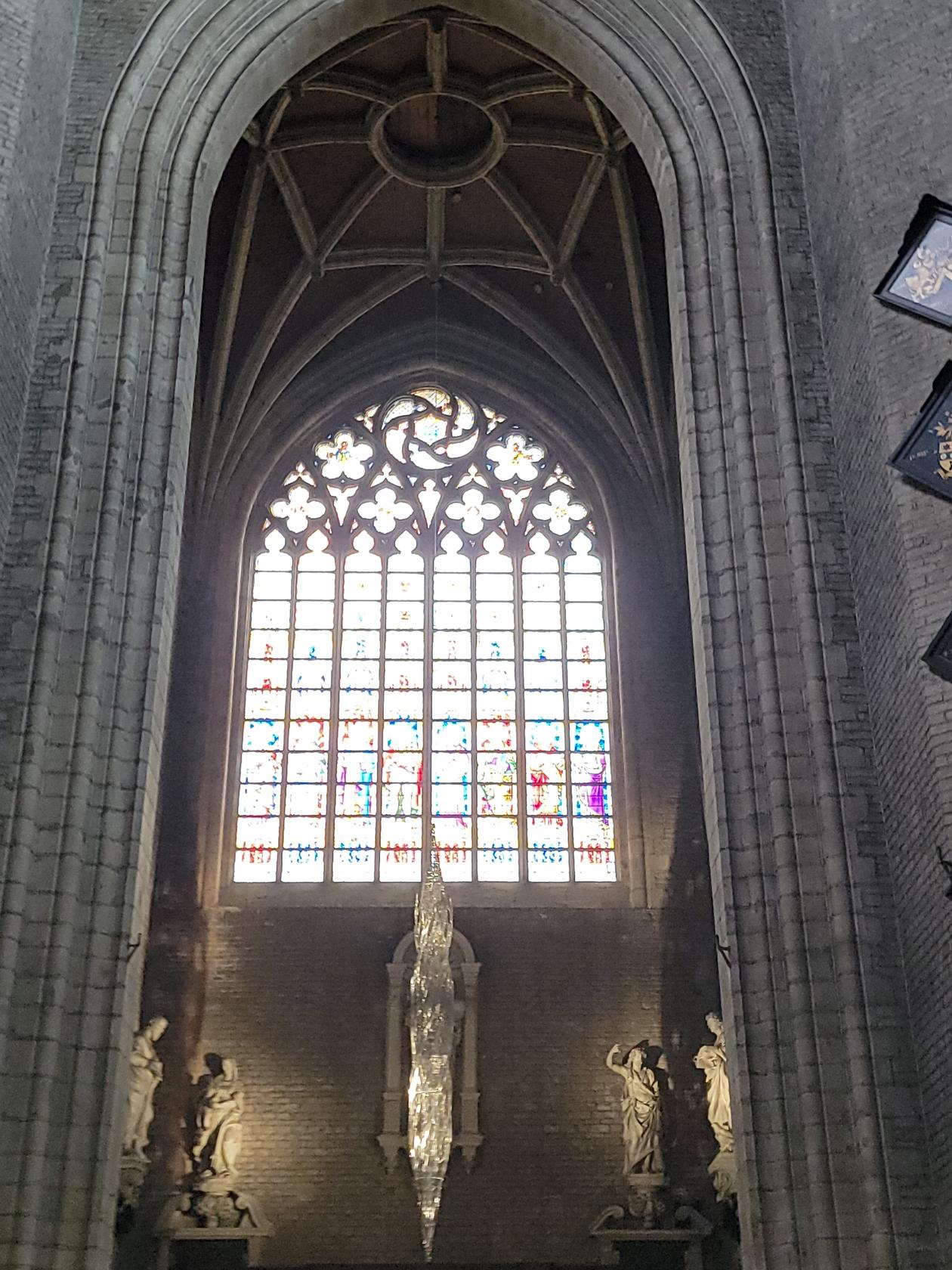
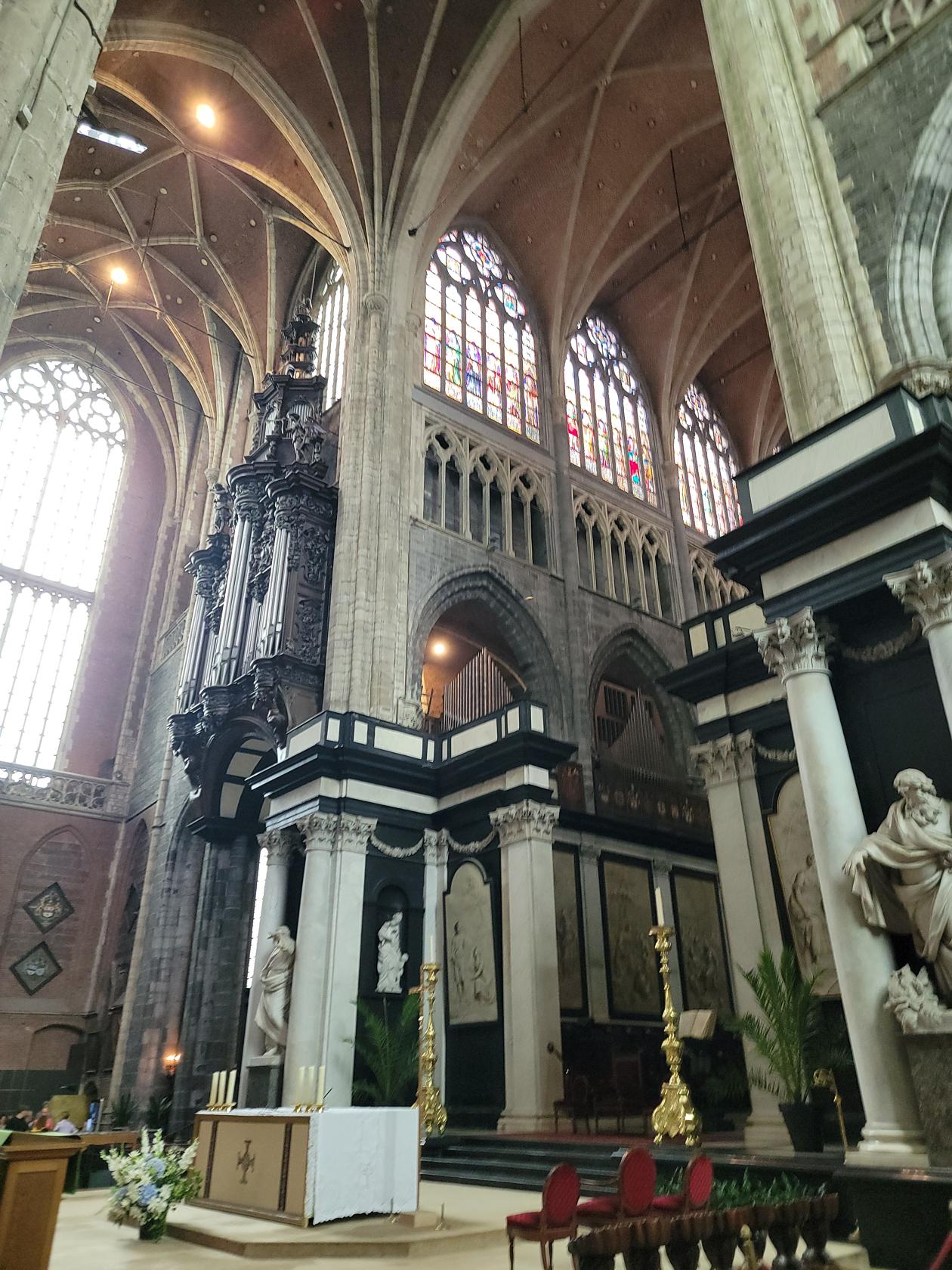
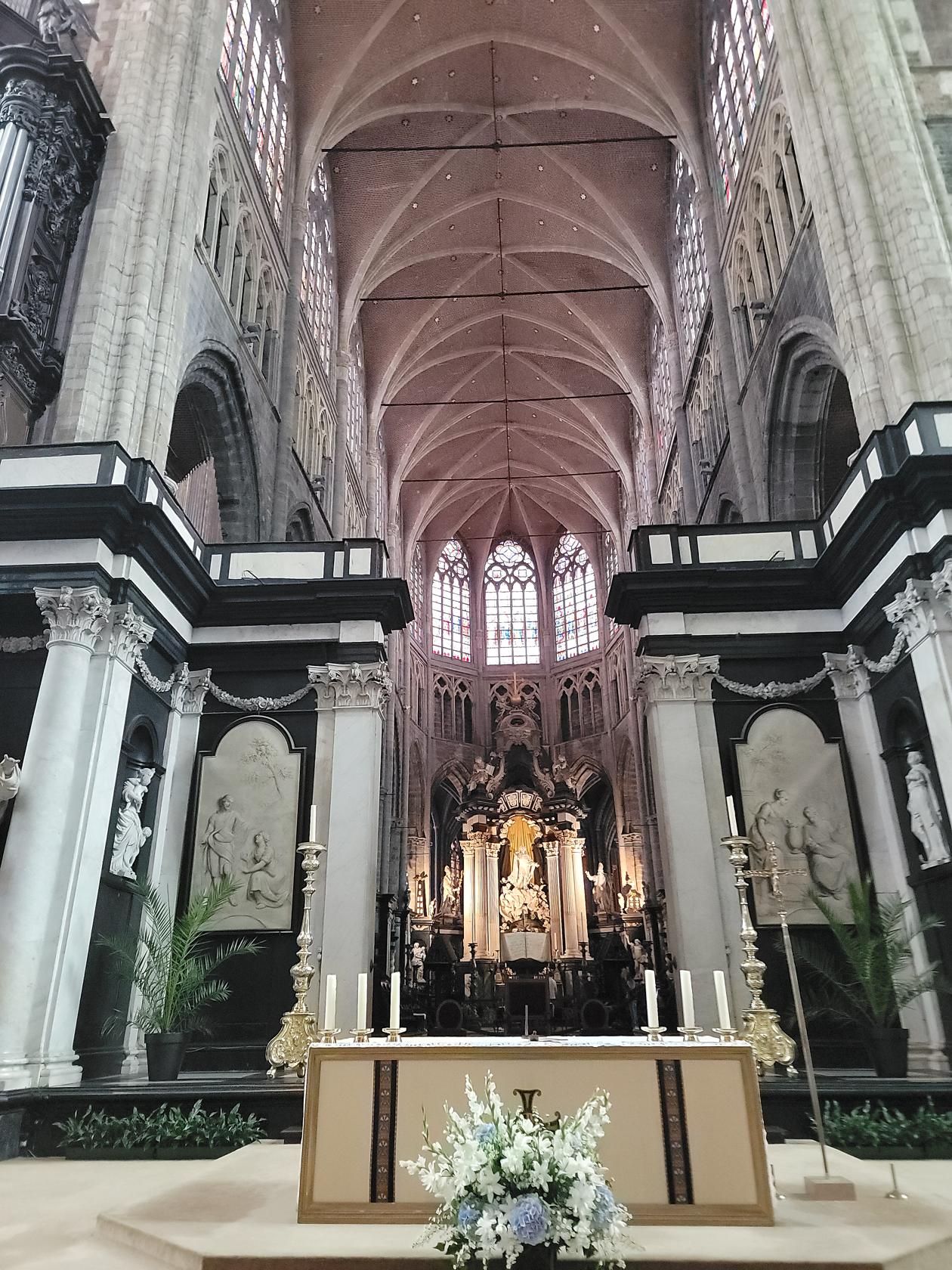
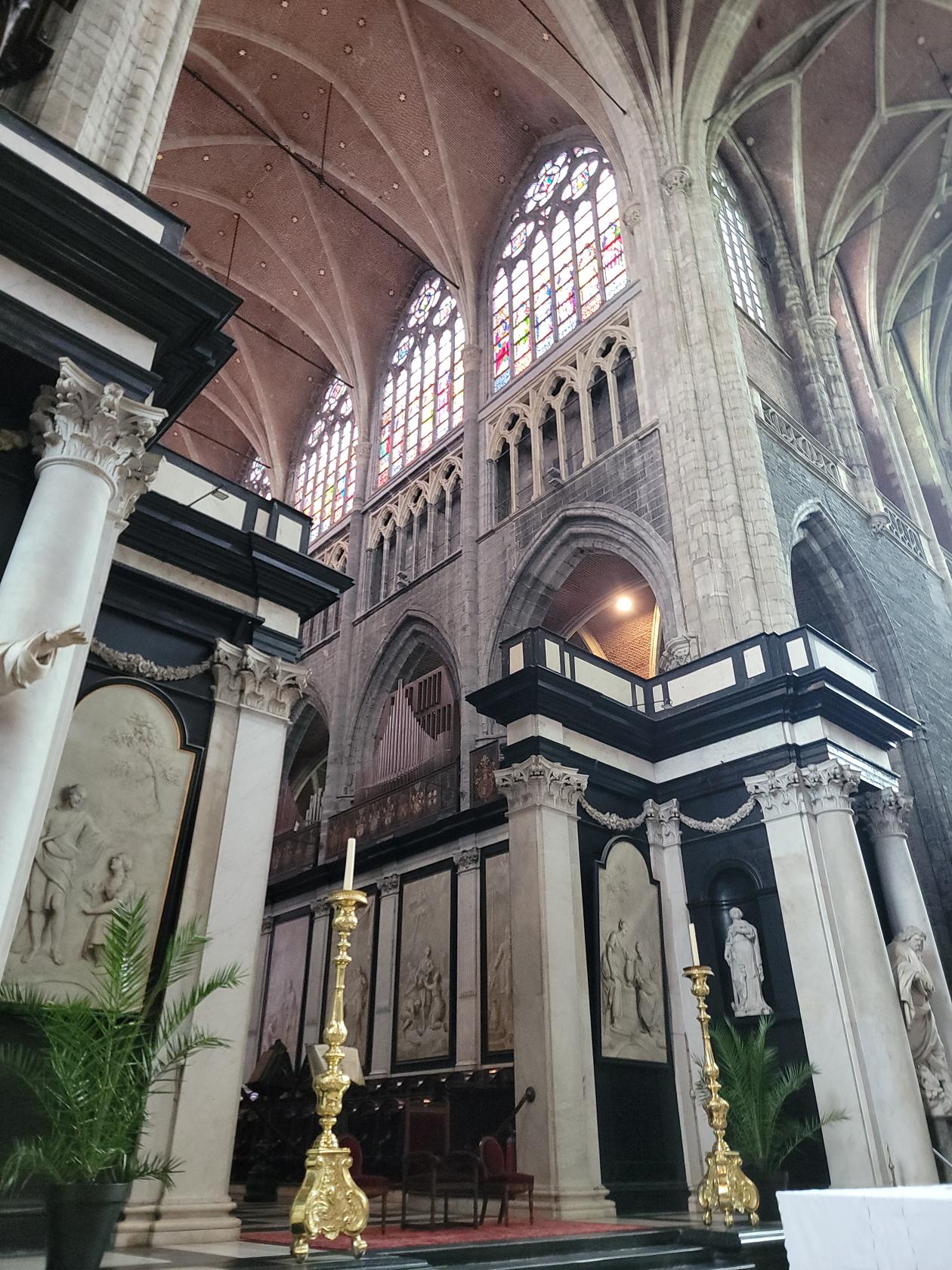
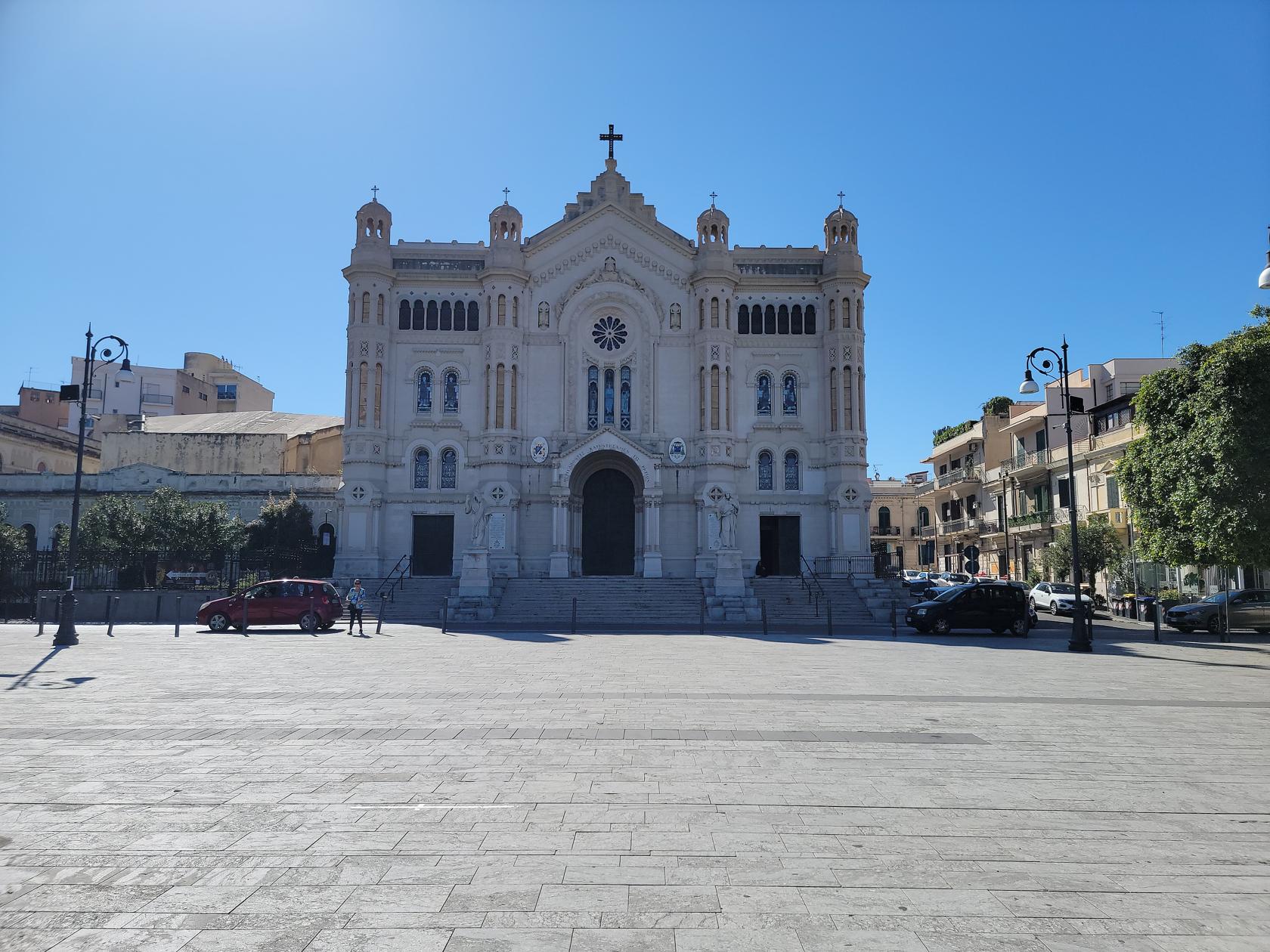
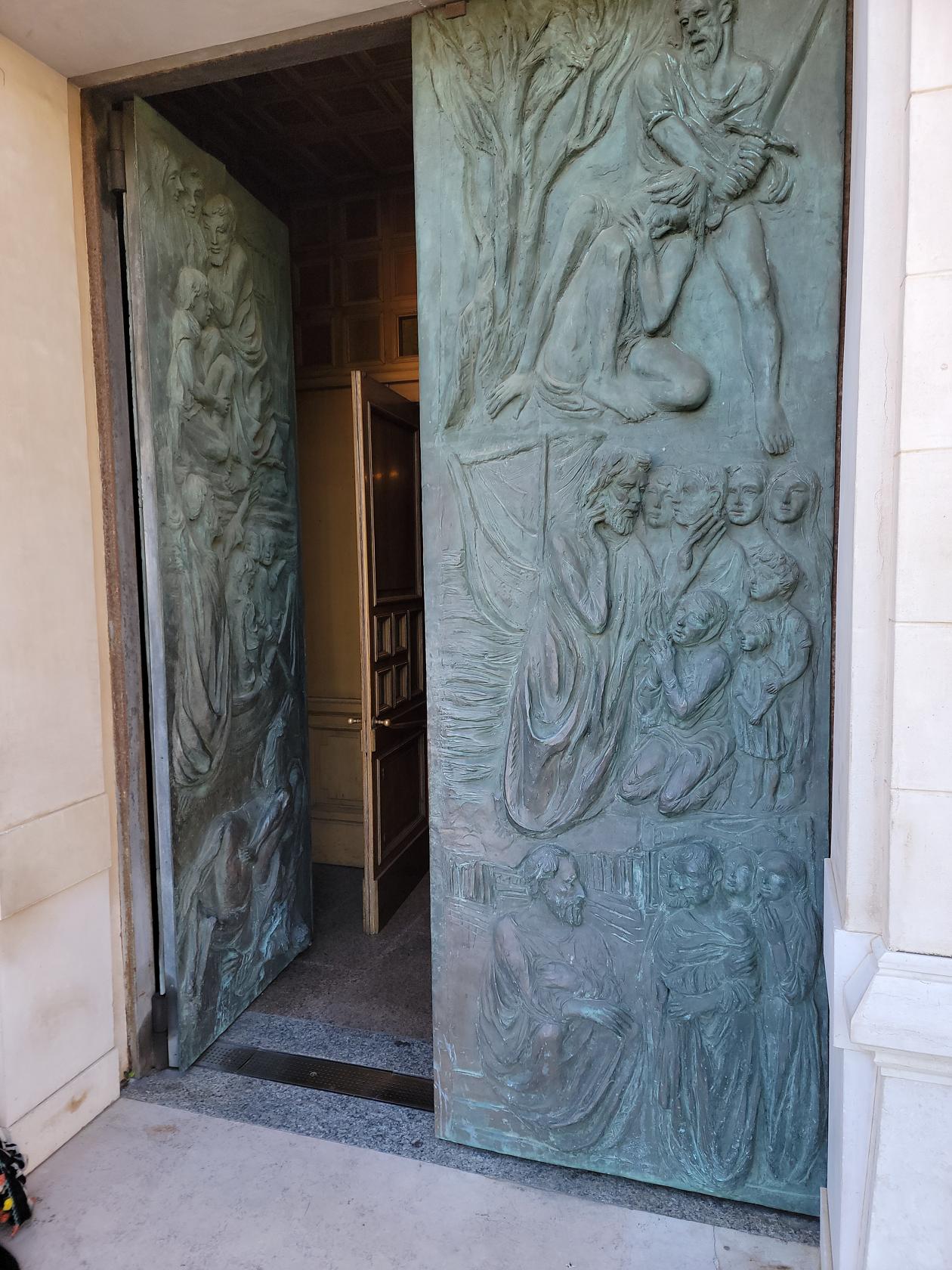
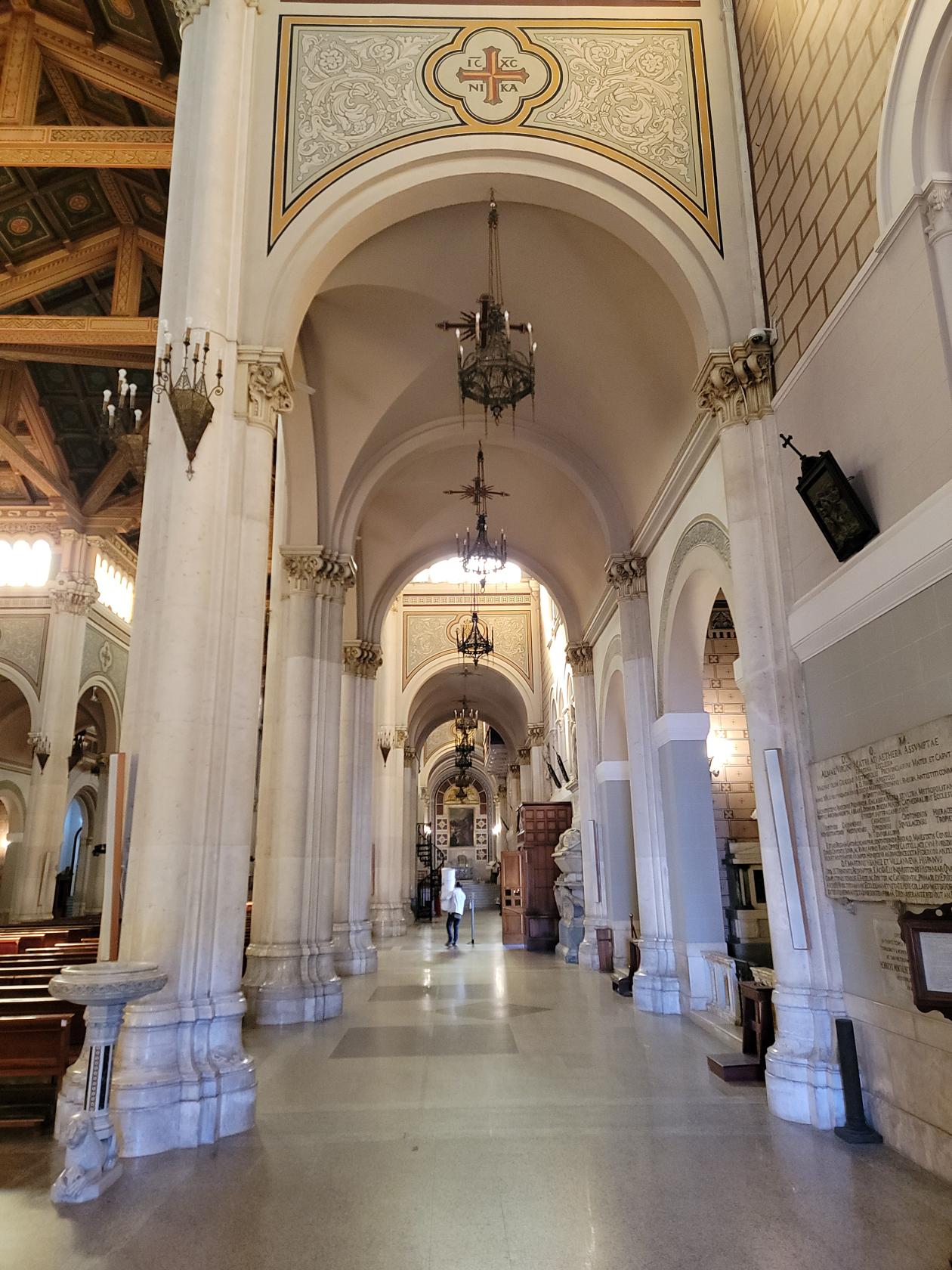
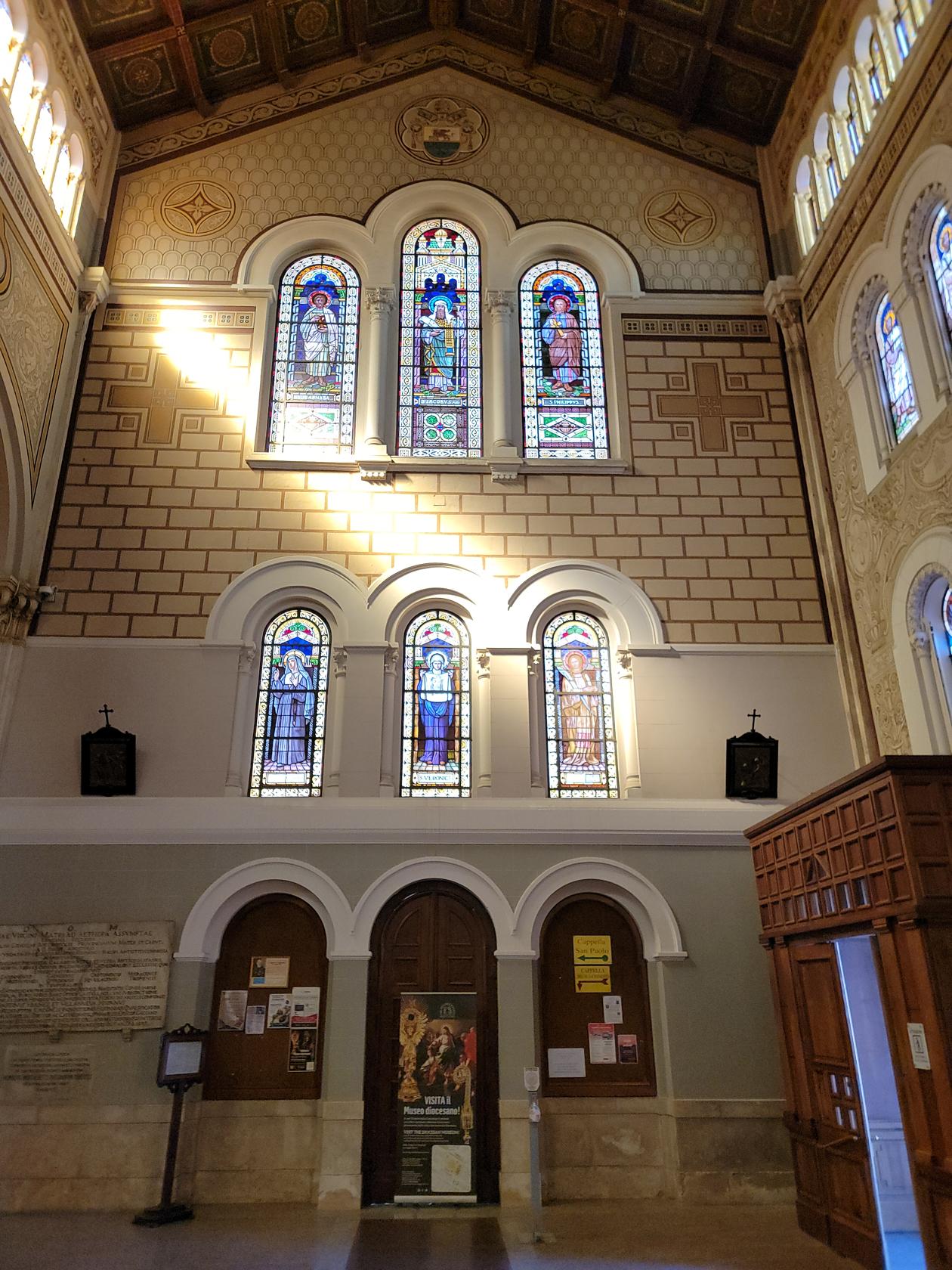
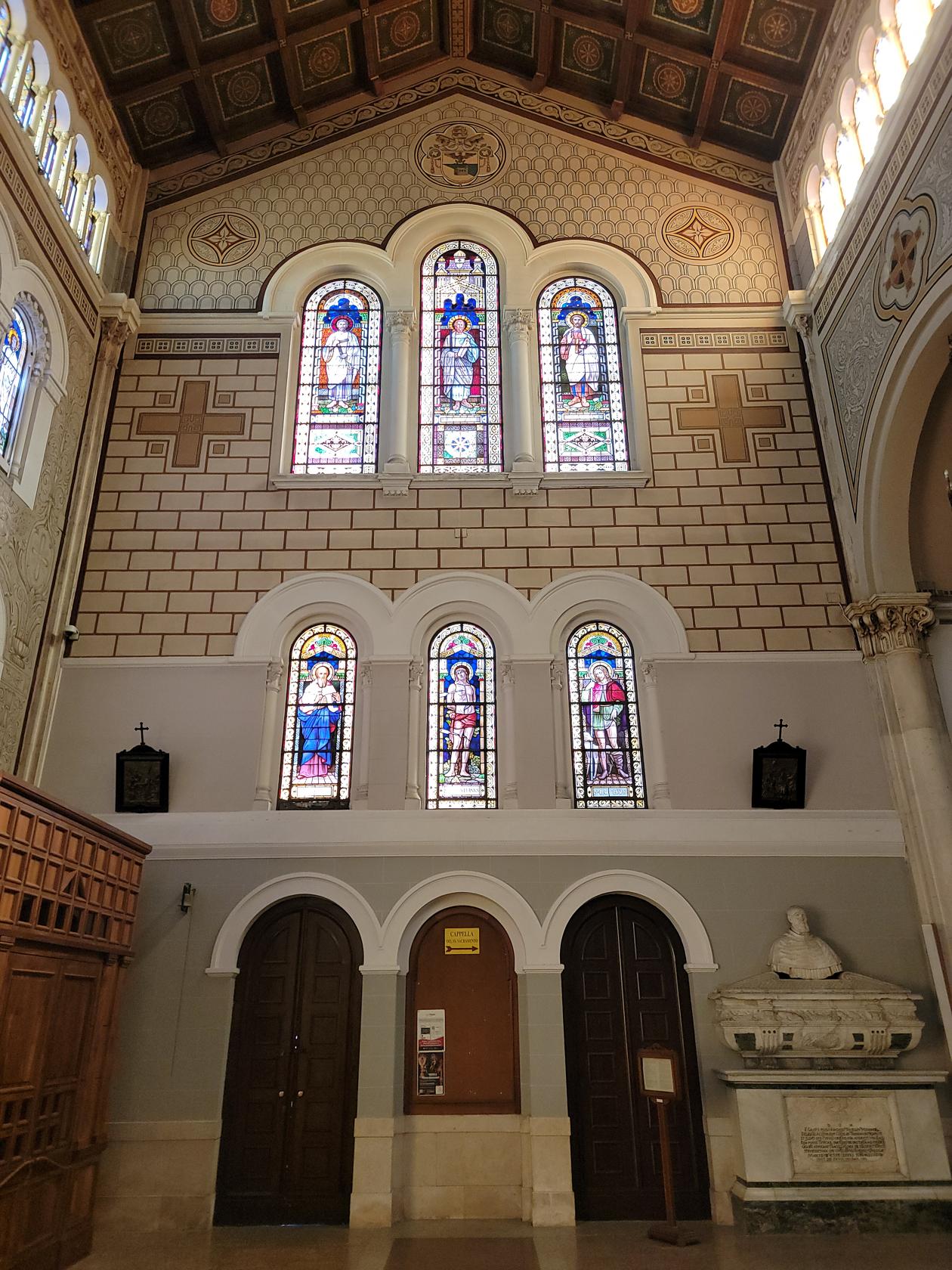
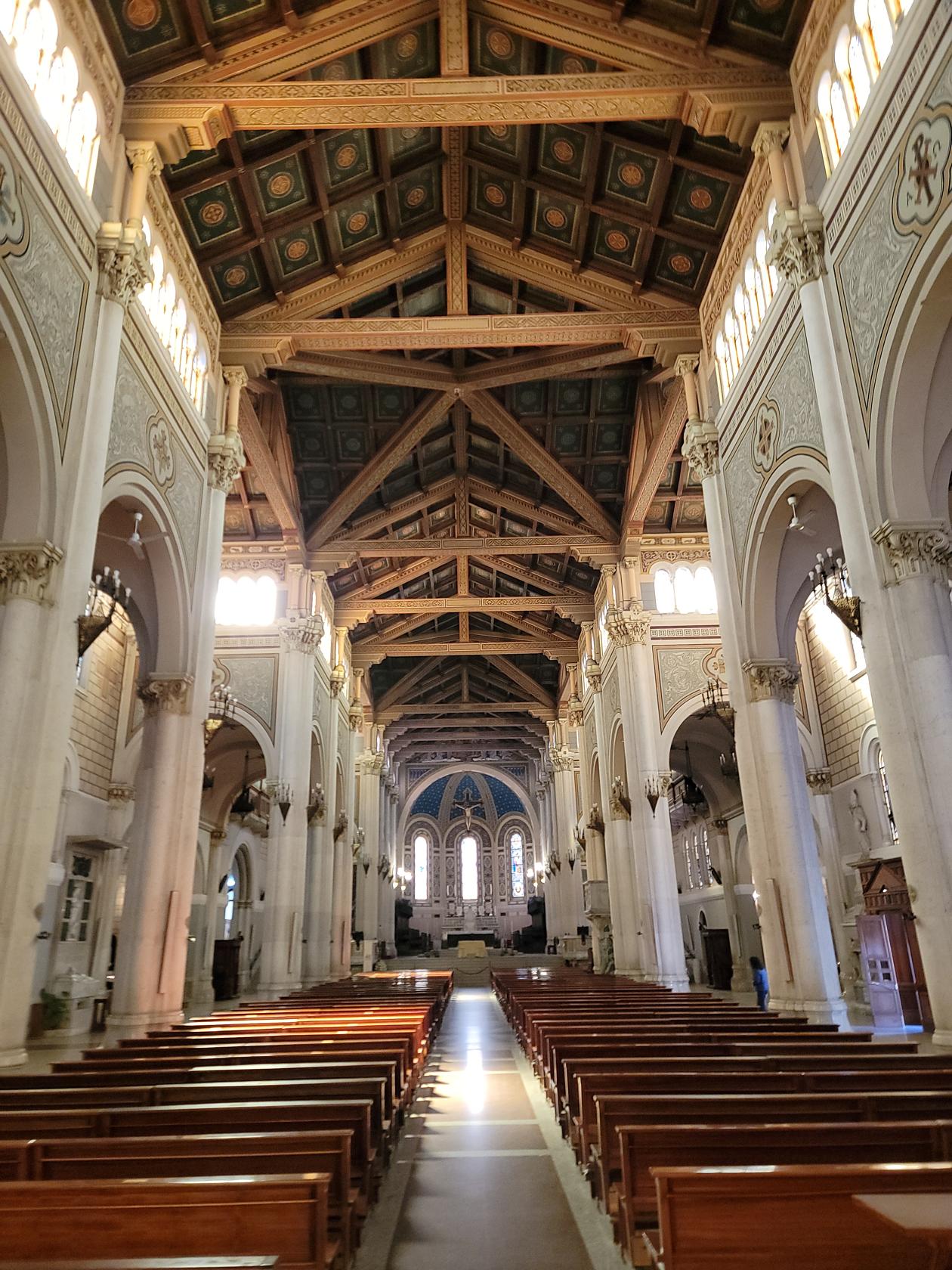
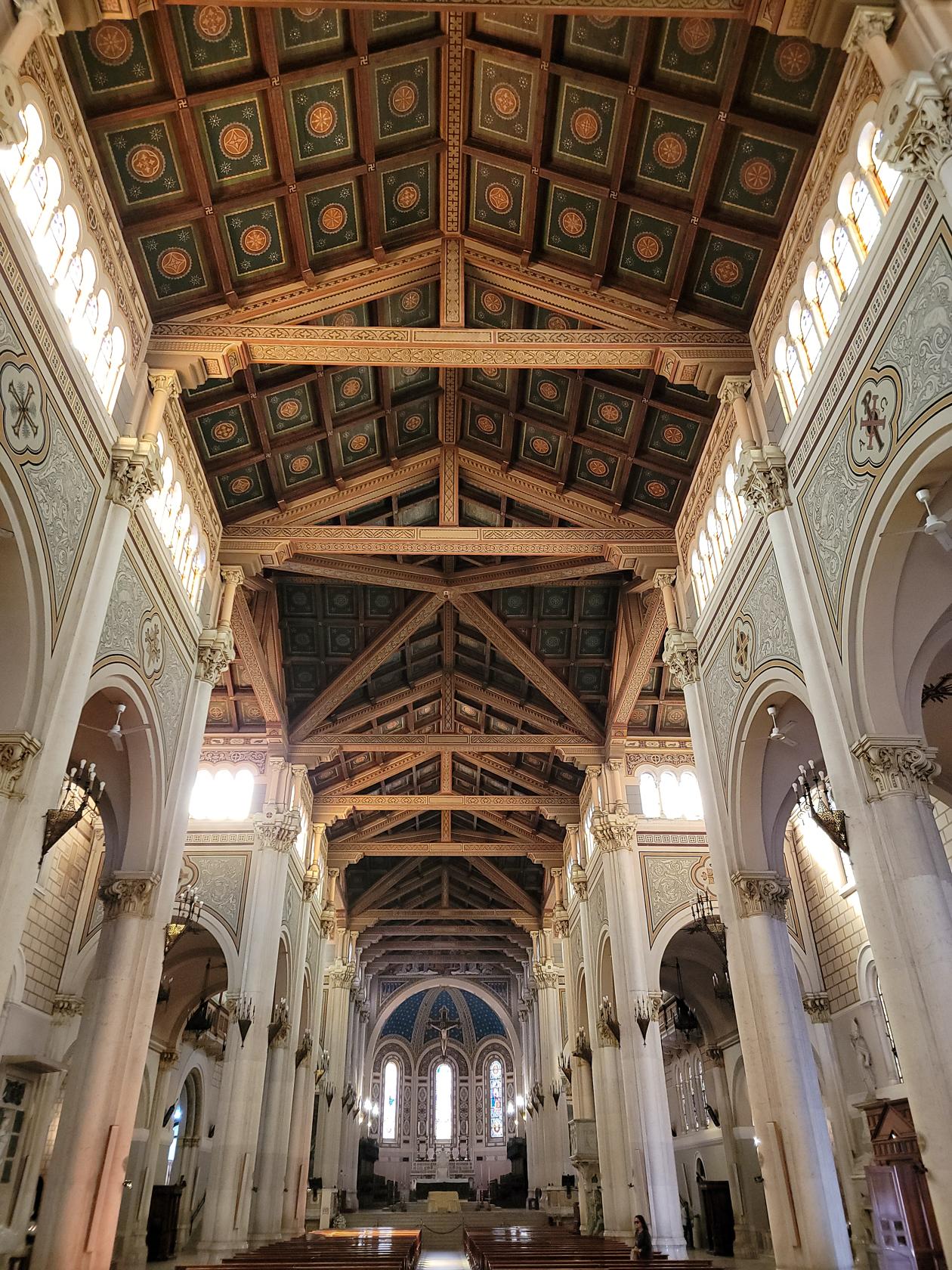
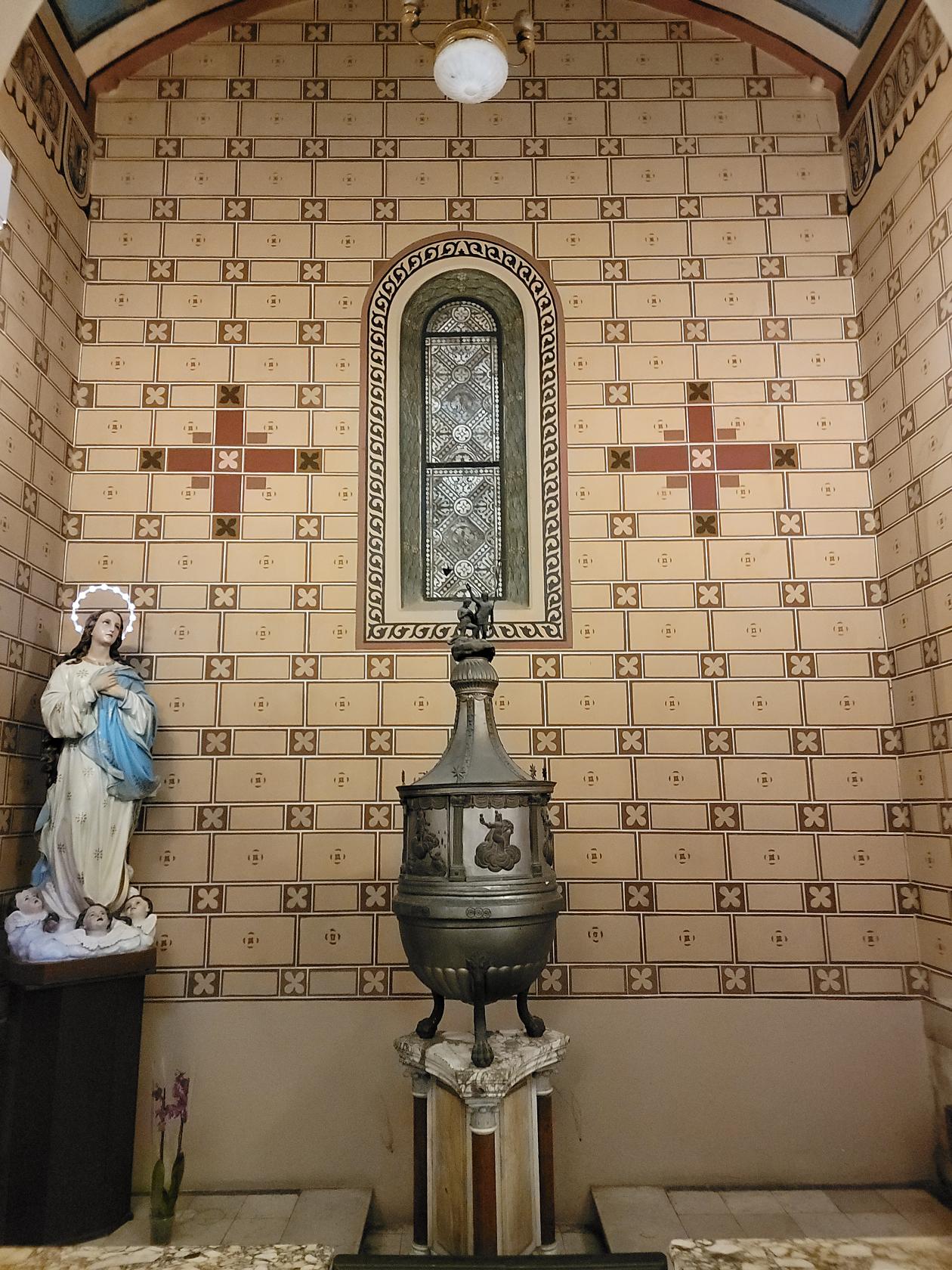
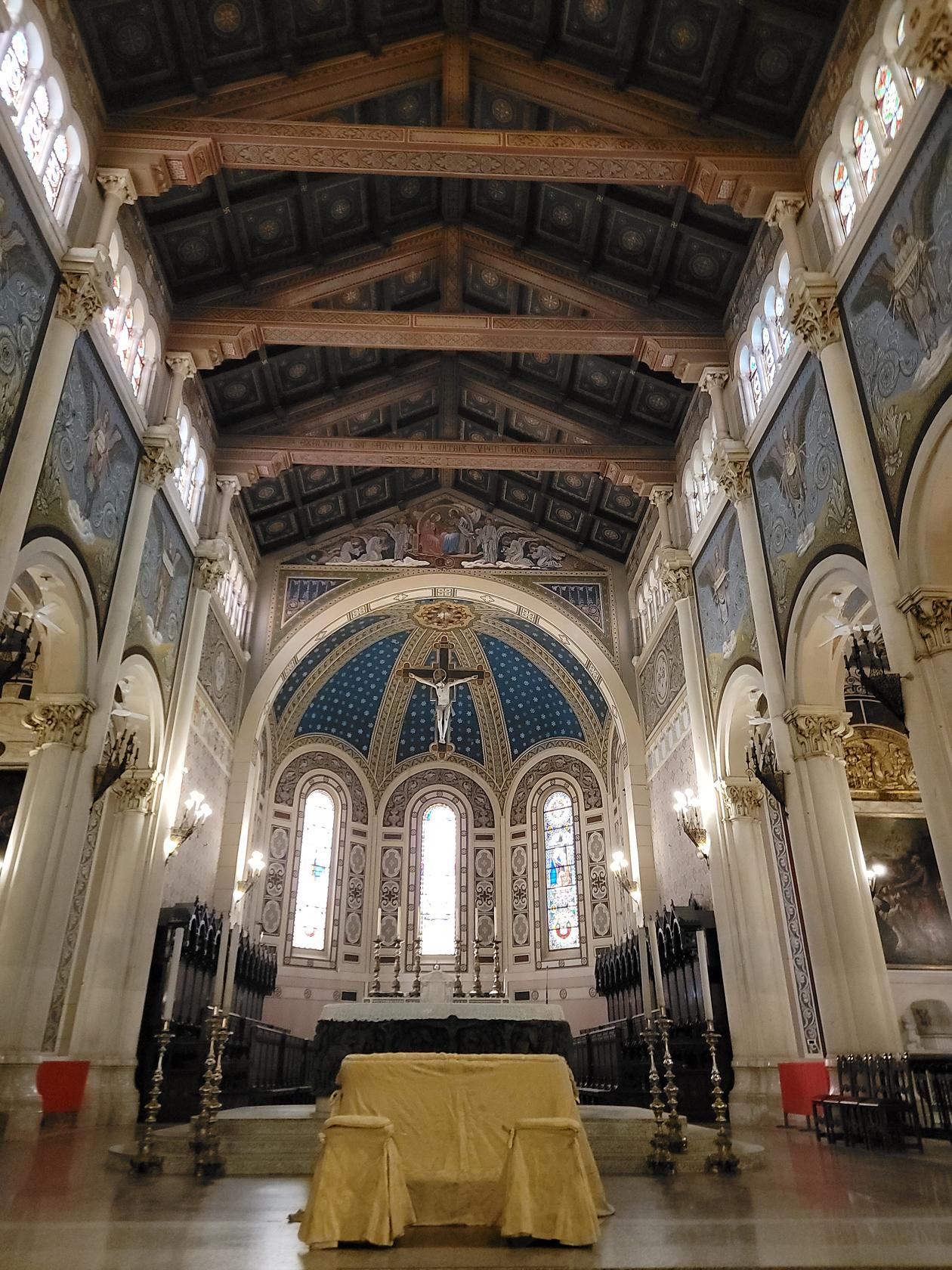
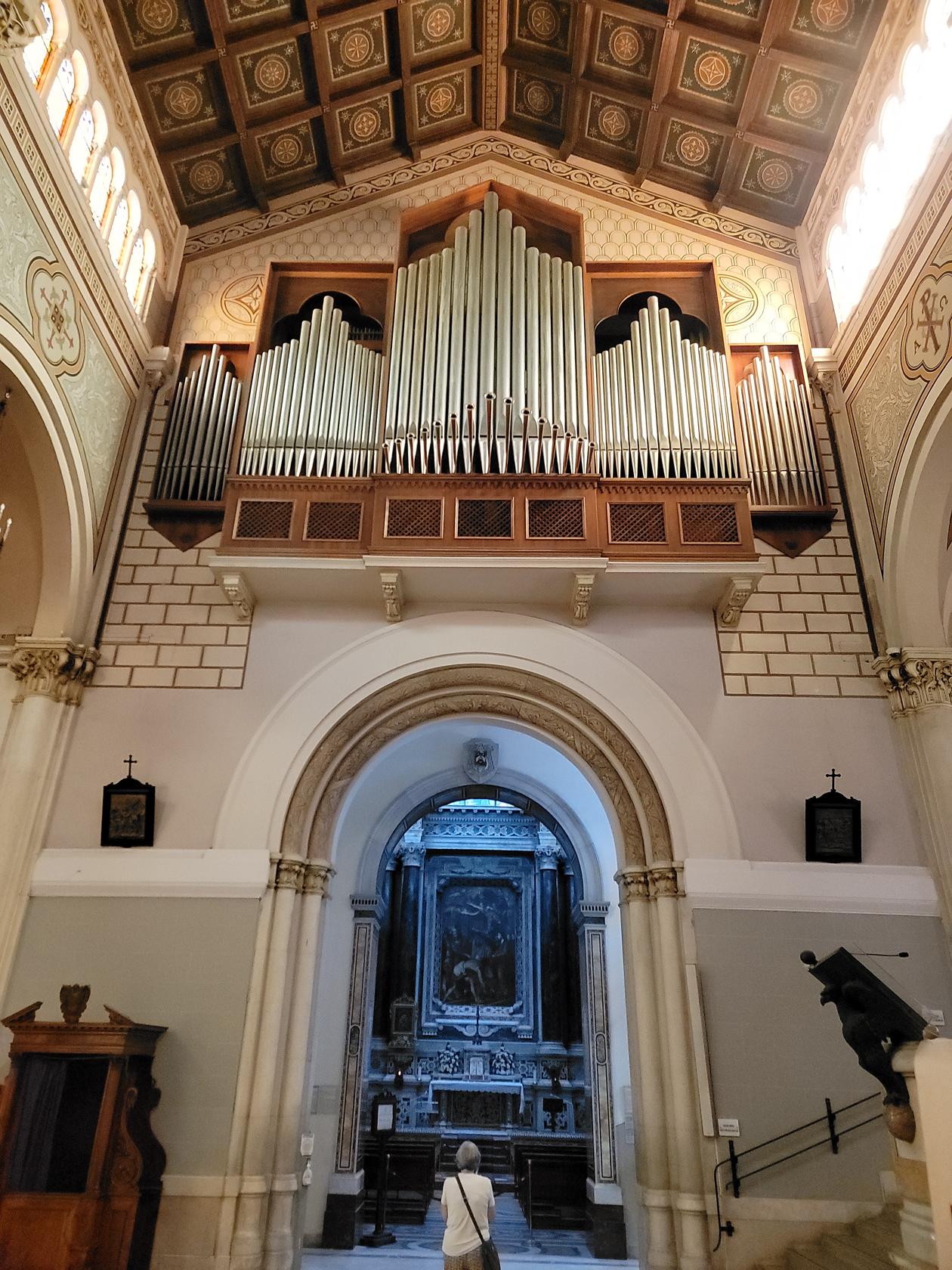
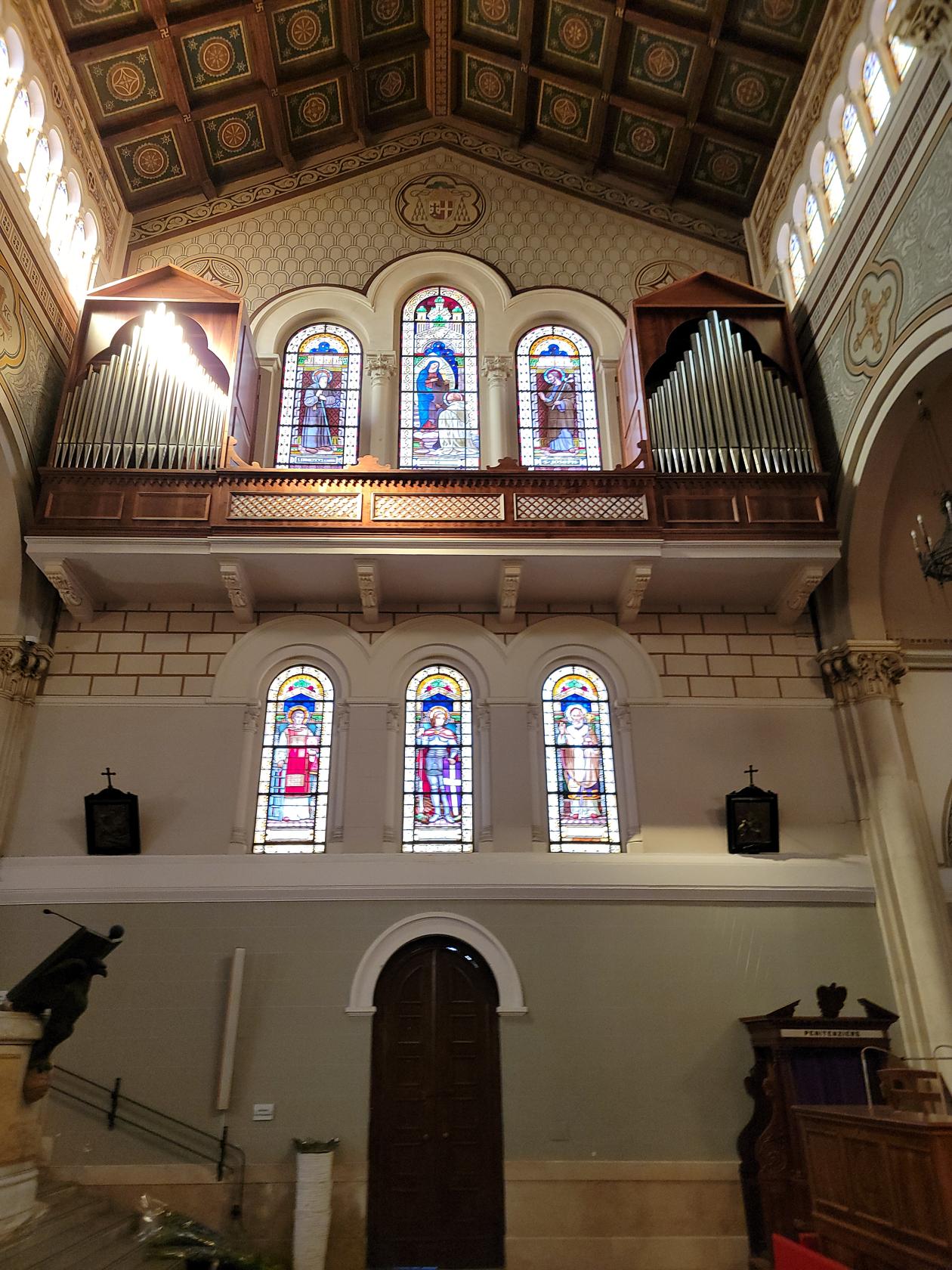
A large cathedral in the Piazza Duomo is the Basilica di Maria Santissima Assunta in Cielo. It was partially destroyed in the 1908 earthquake and rebuilt with a fusion of Romanesque and Gothic styles.

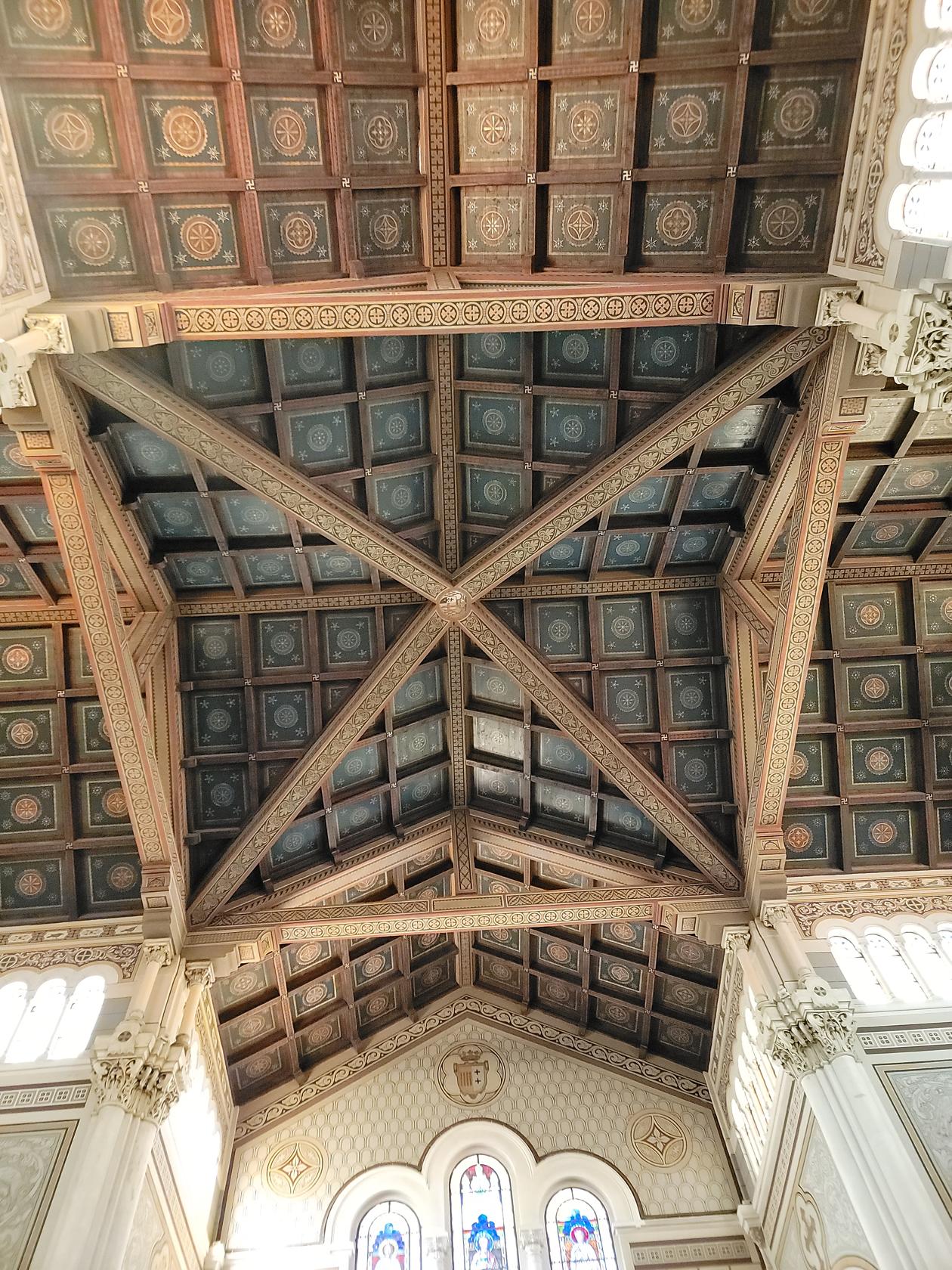
The most interesting interior element of the cathedral is its ceiling. A timbered edifice that is remarqued and painted in a most interesting style, including pagan elements which appear to be handpainted.

Castello Aragonese

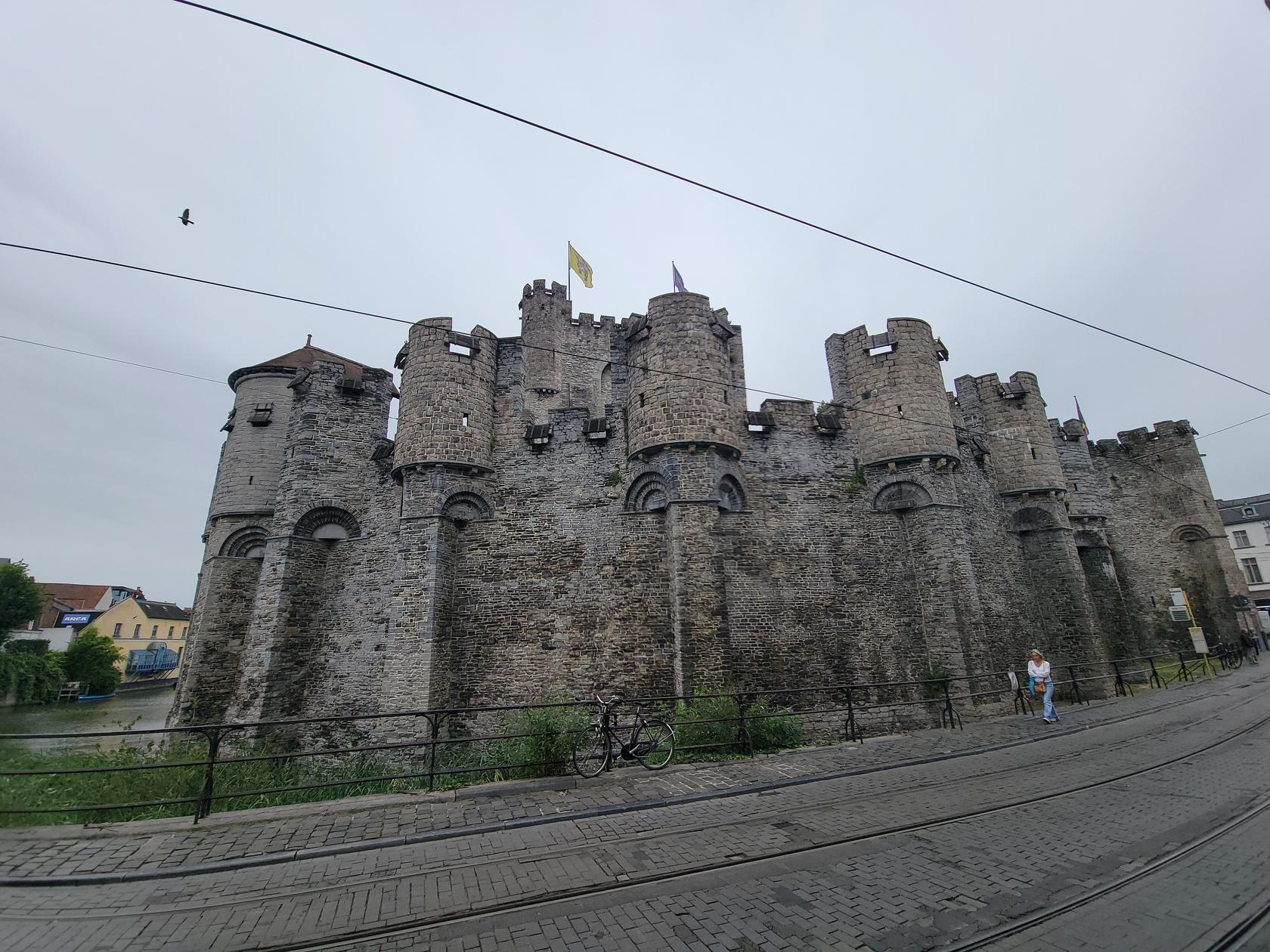
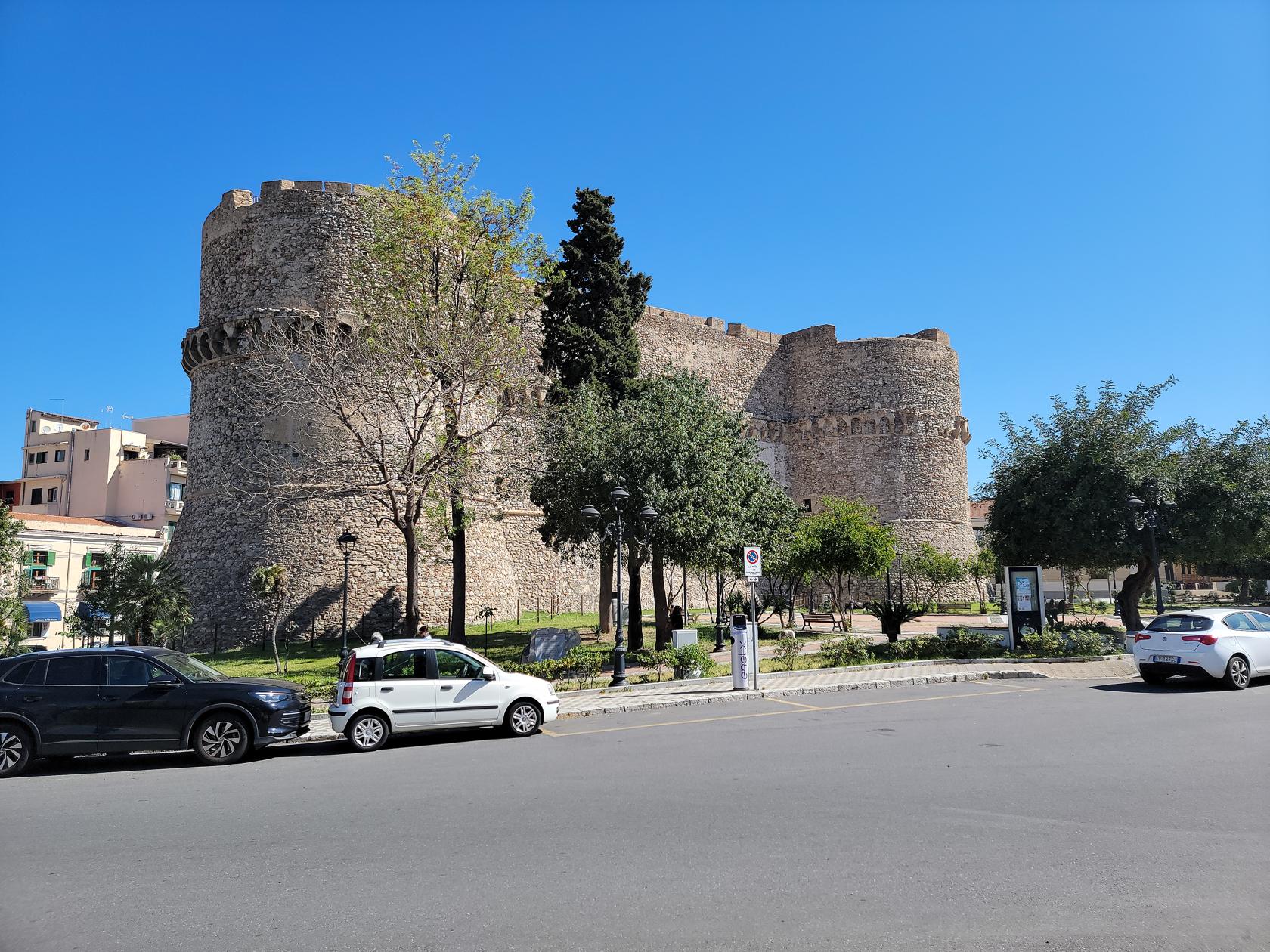
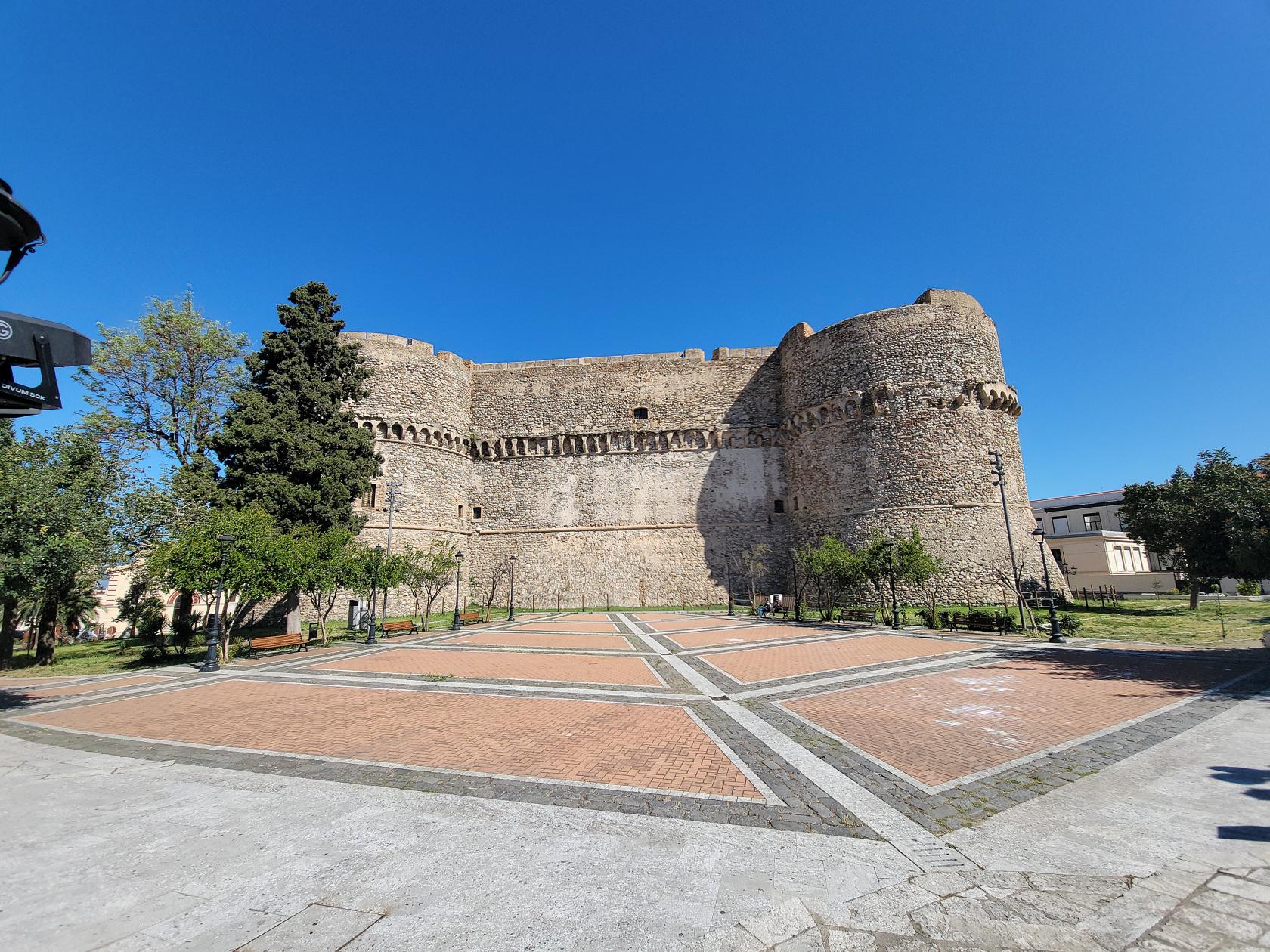
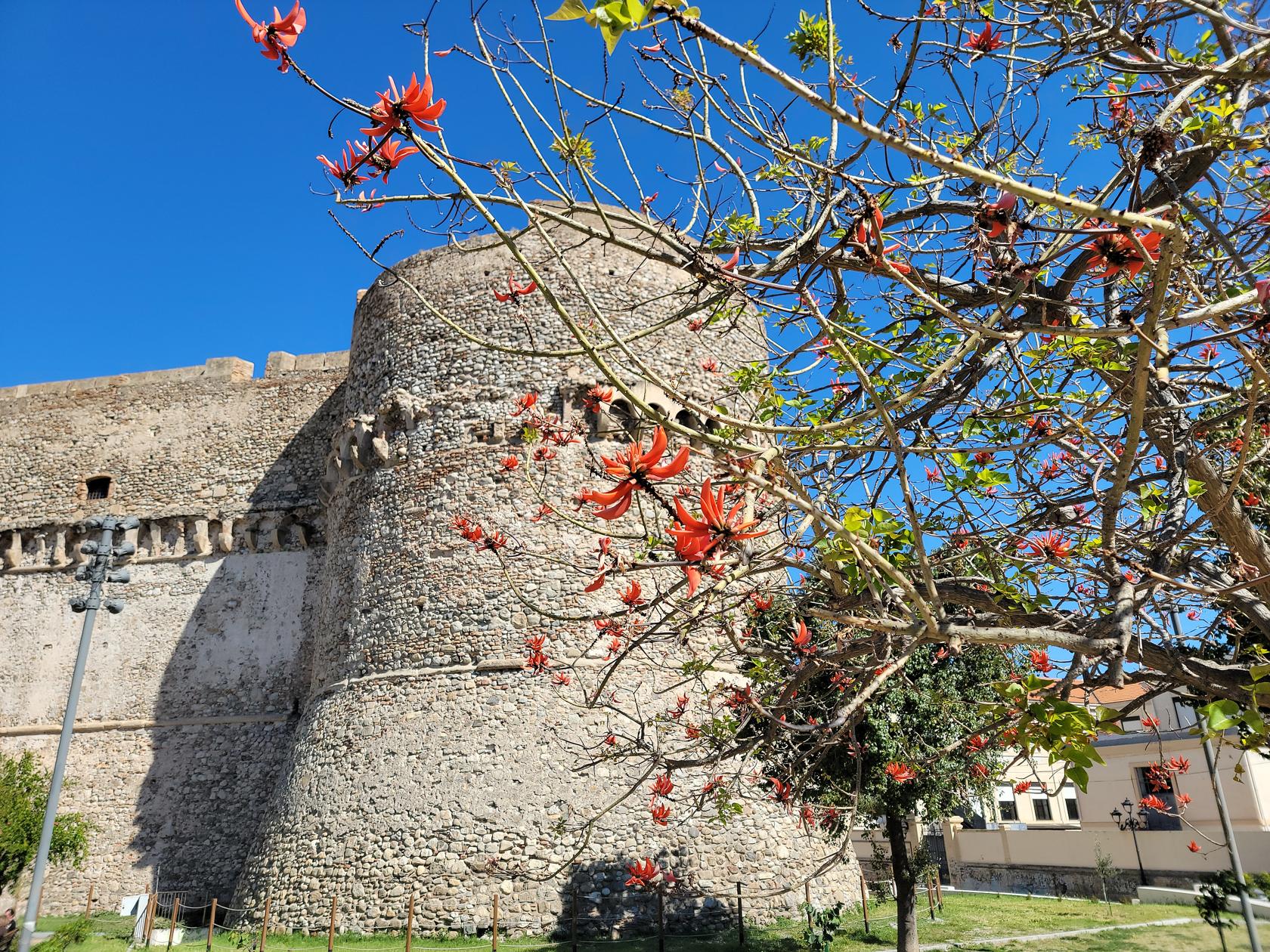
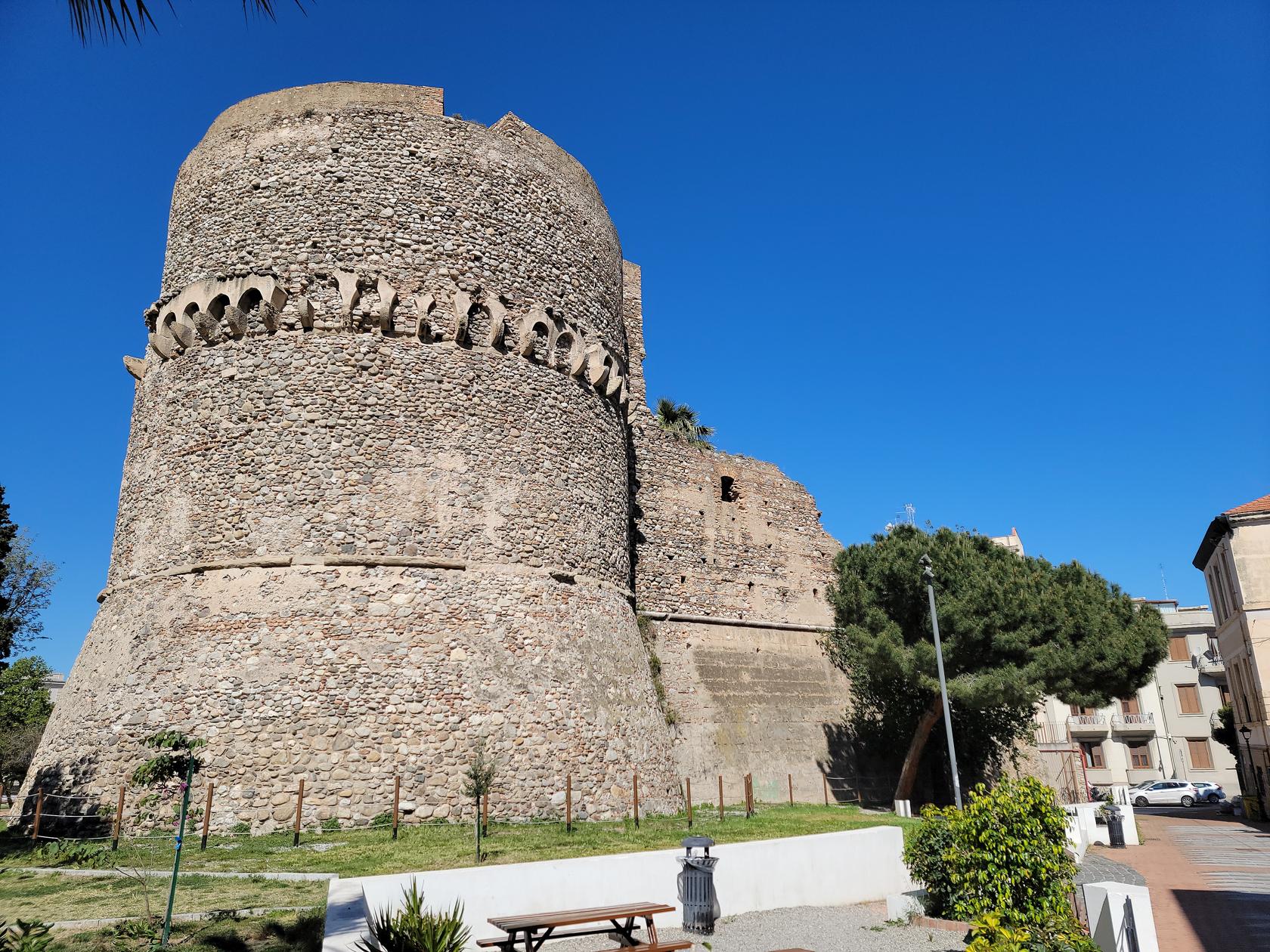
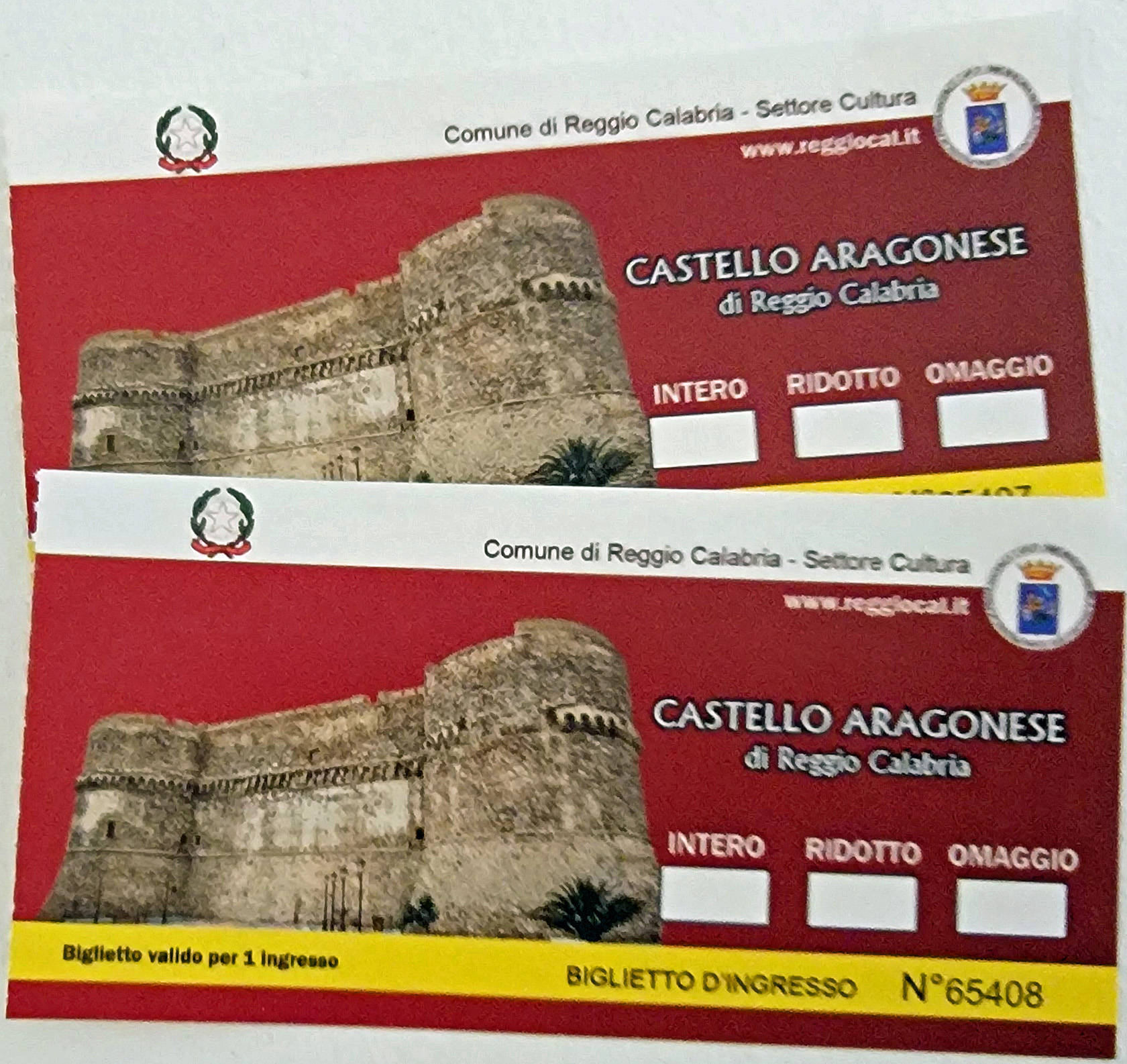
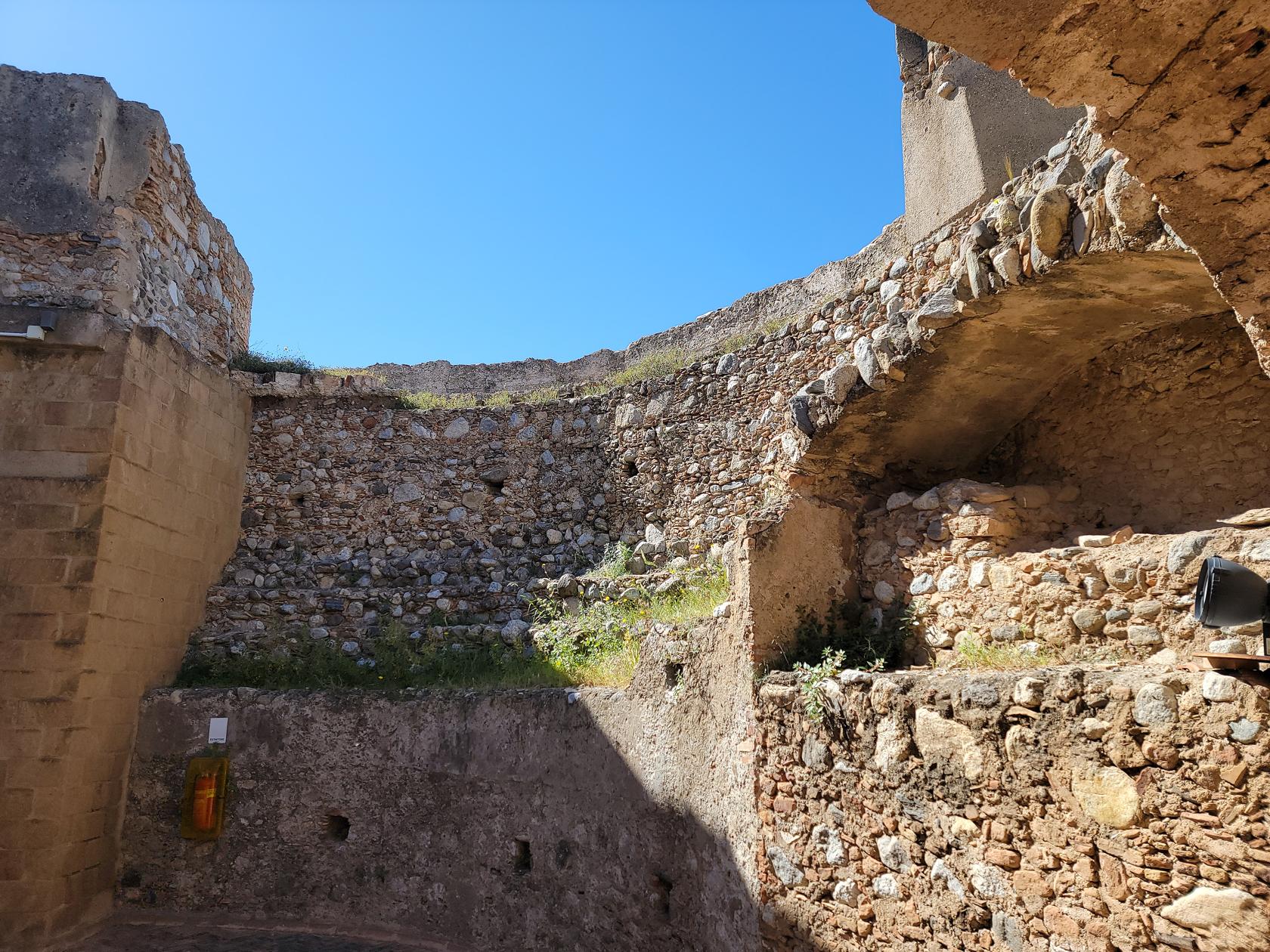
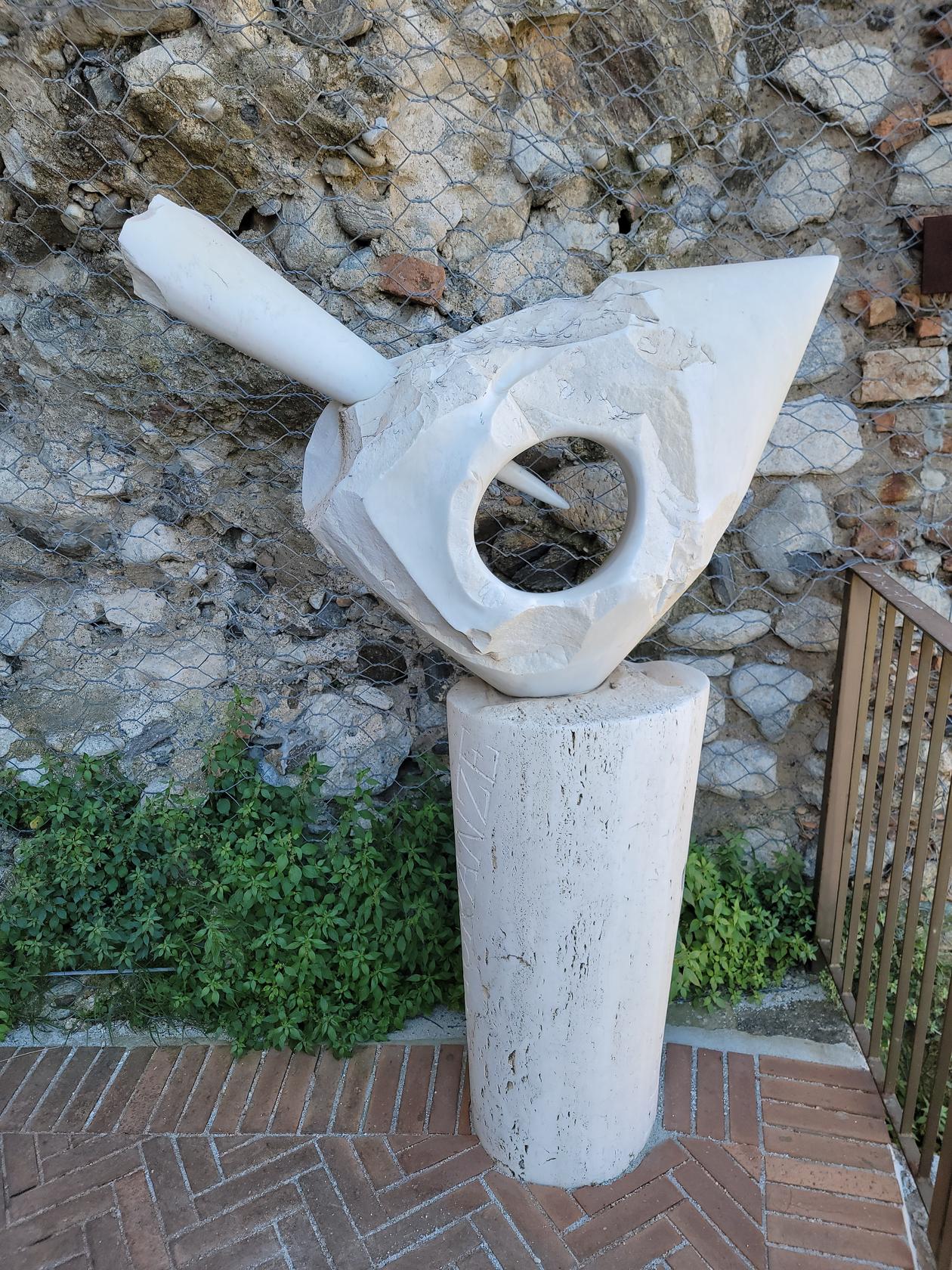
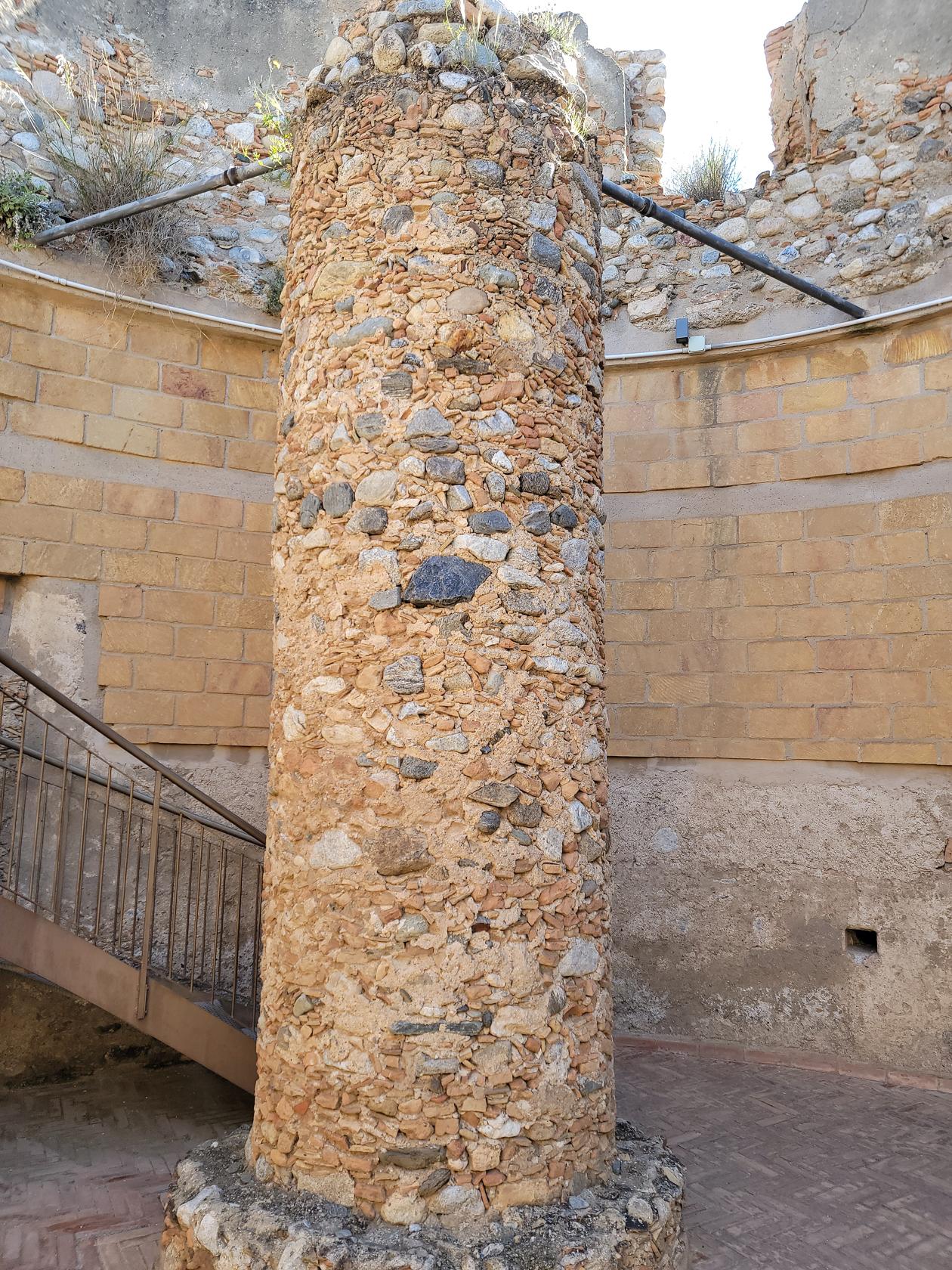
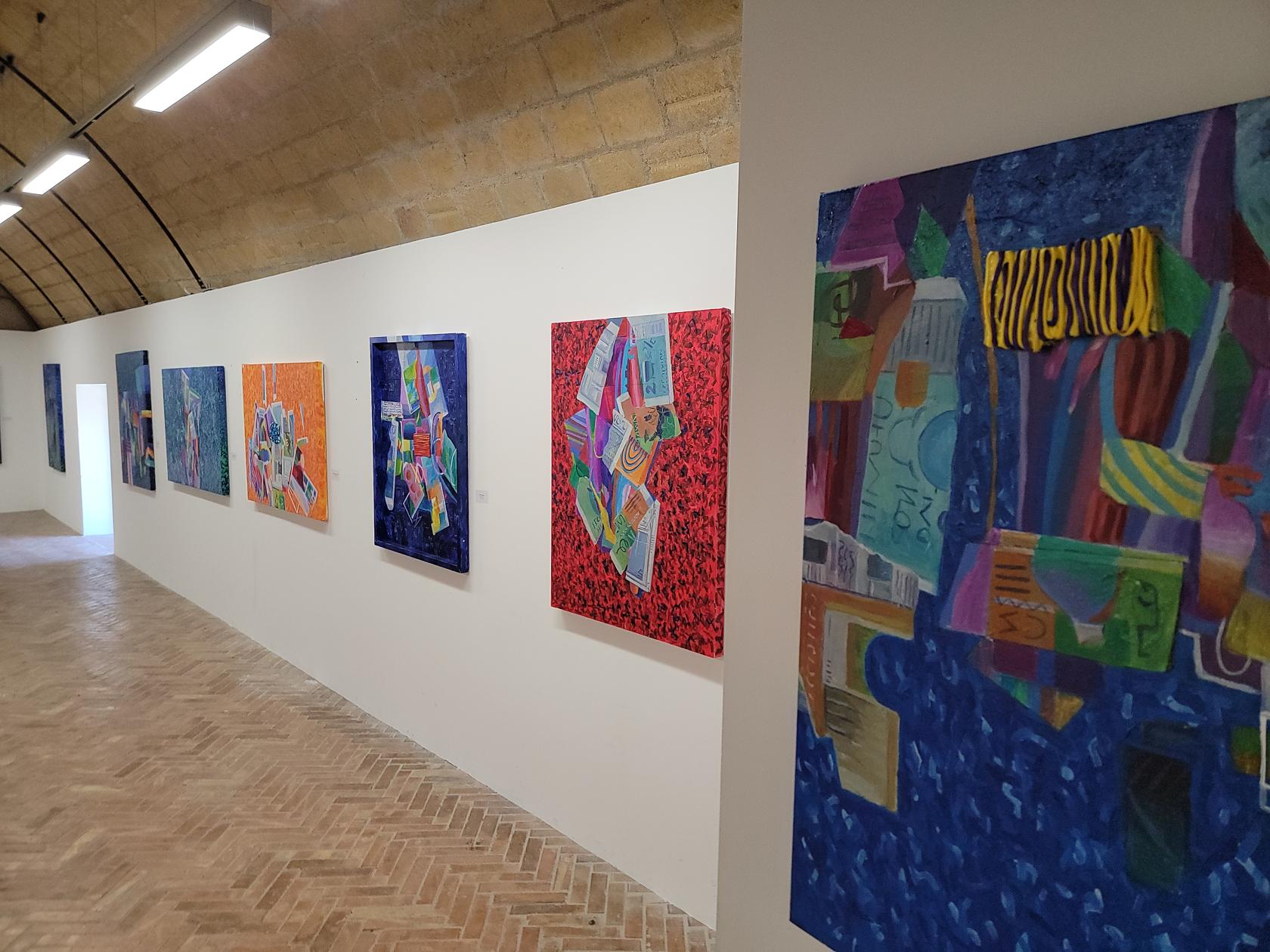
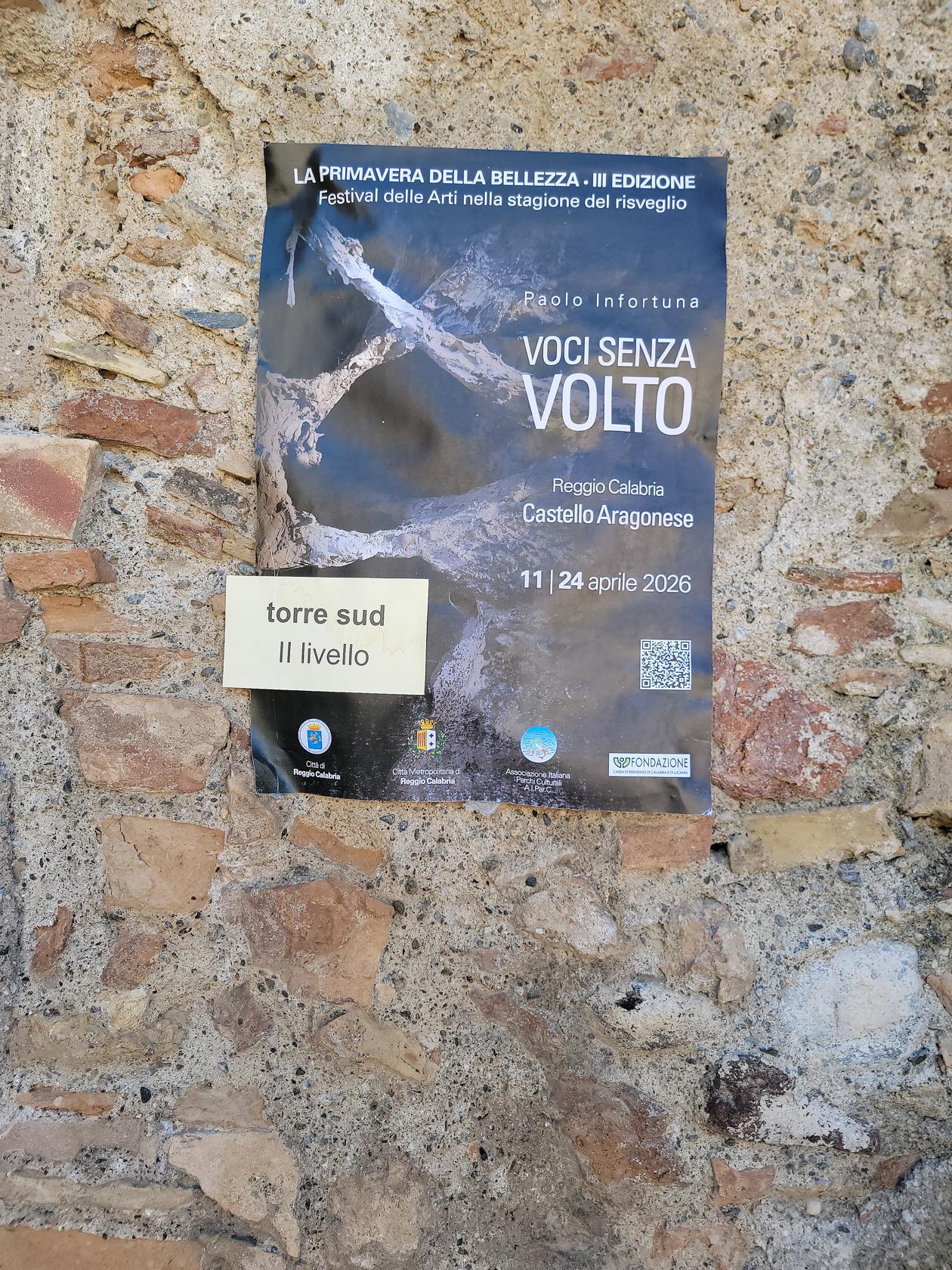
The Castle Aragonese no longer functions as a castle and has been renovated into something more useful, an art museum. Here for a small fee you are able to enjoy two galleries, one in each tower.

North Tower Gallery

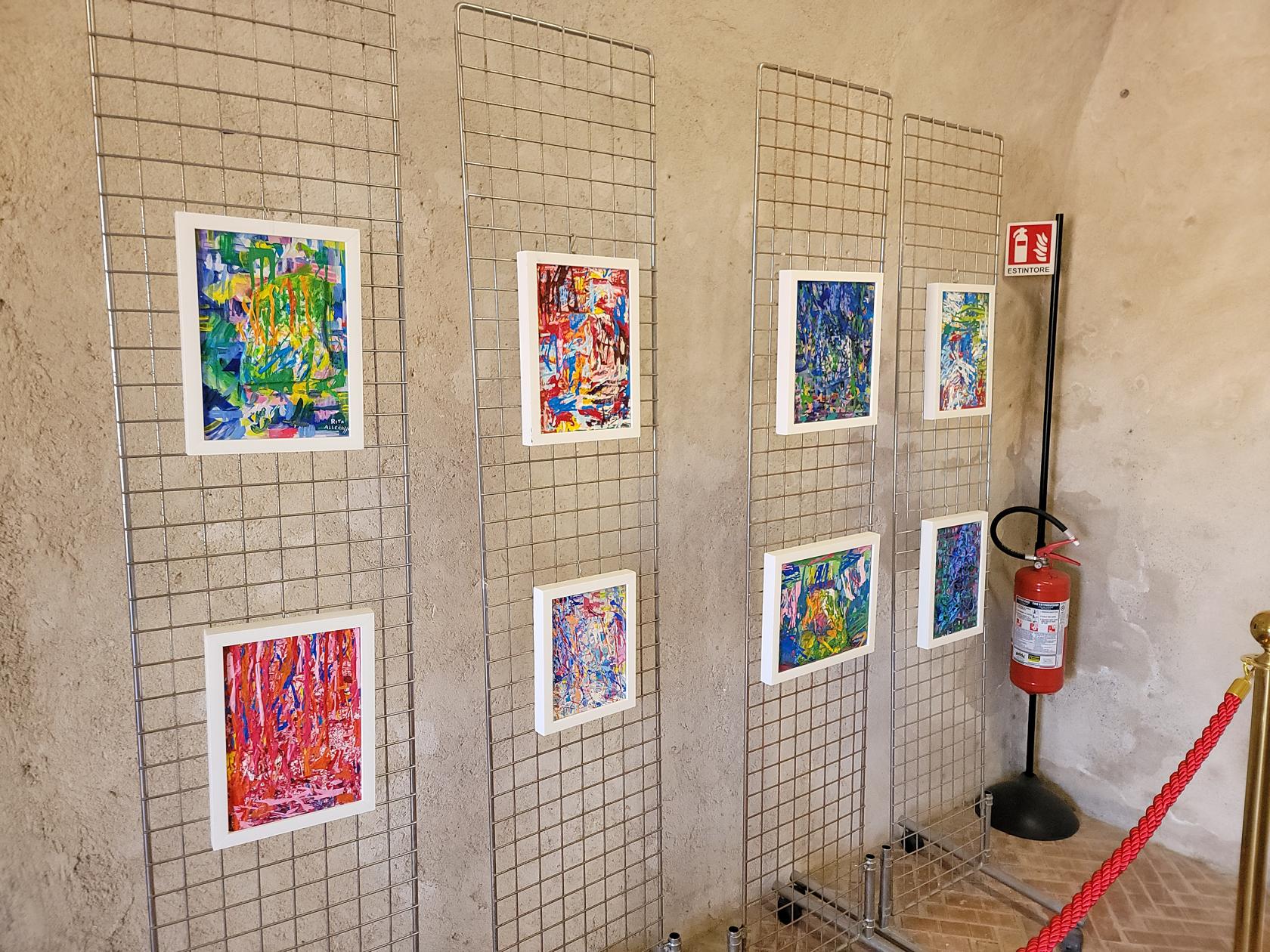
During our visit this gallery had an exhibit of modern paintings, most of which bright colors were used in an almost three dimensional approach.

South Tower Gallery

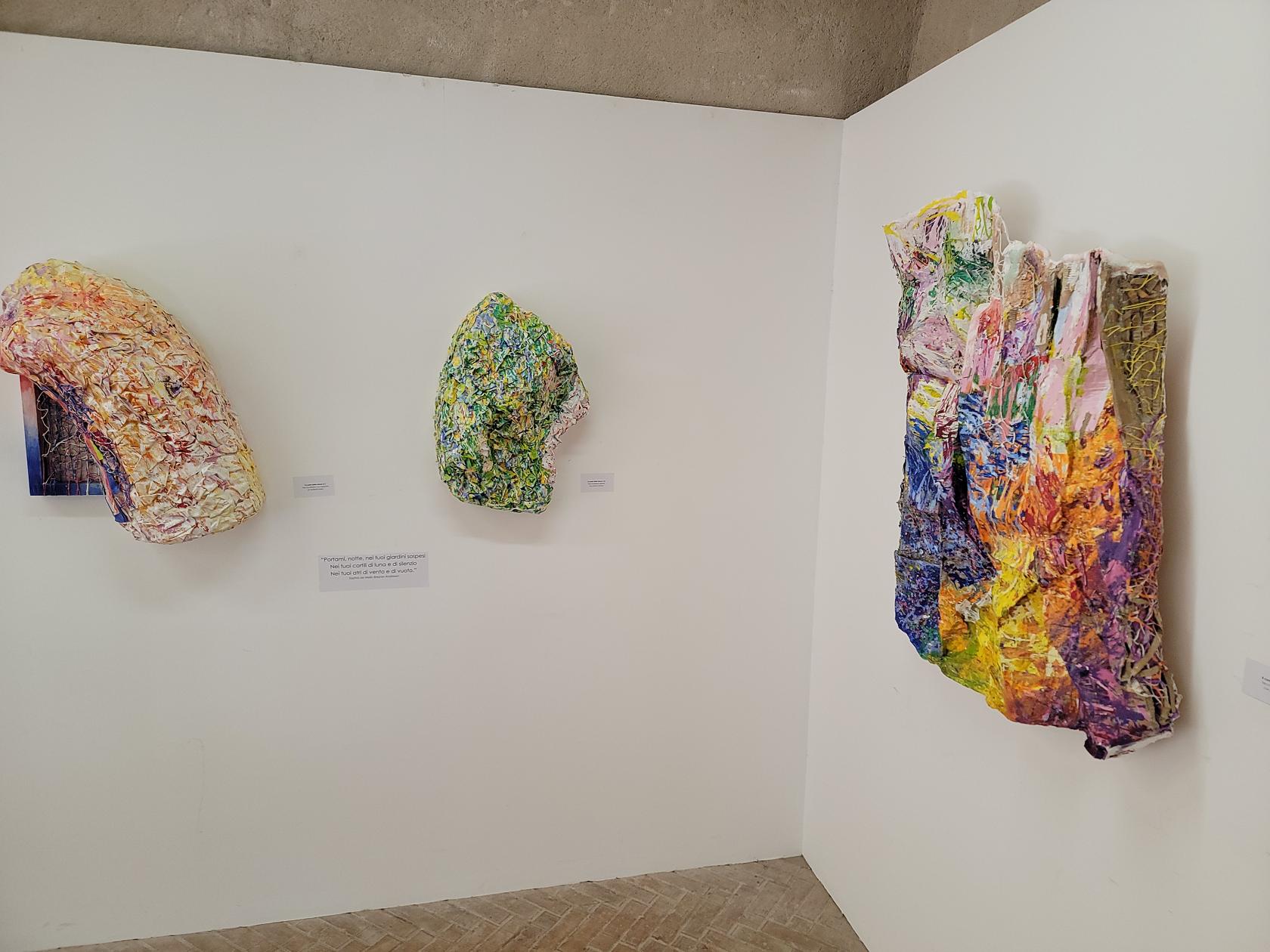
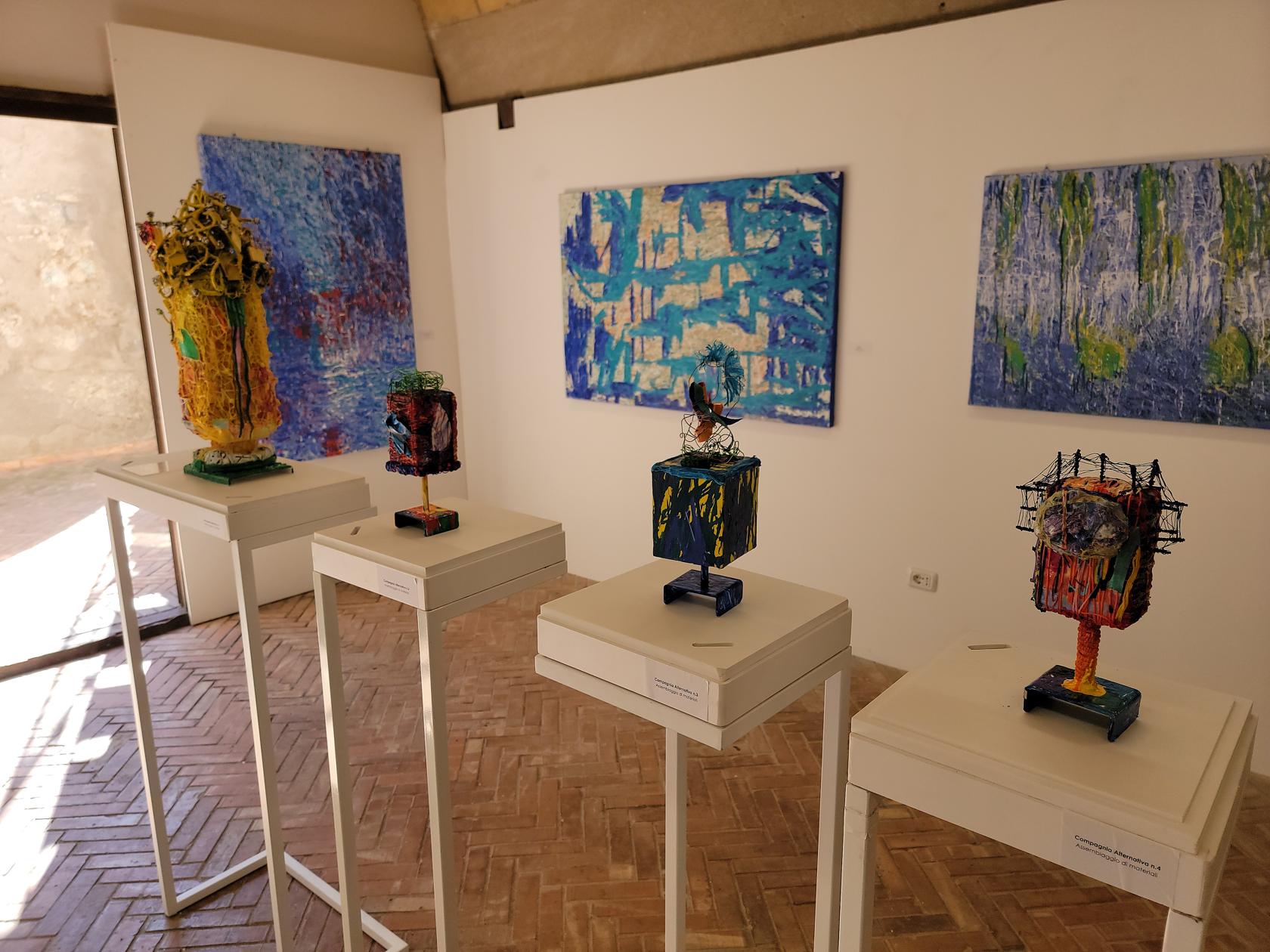
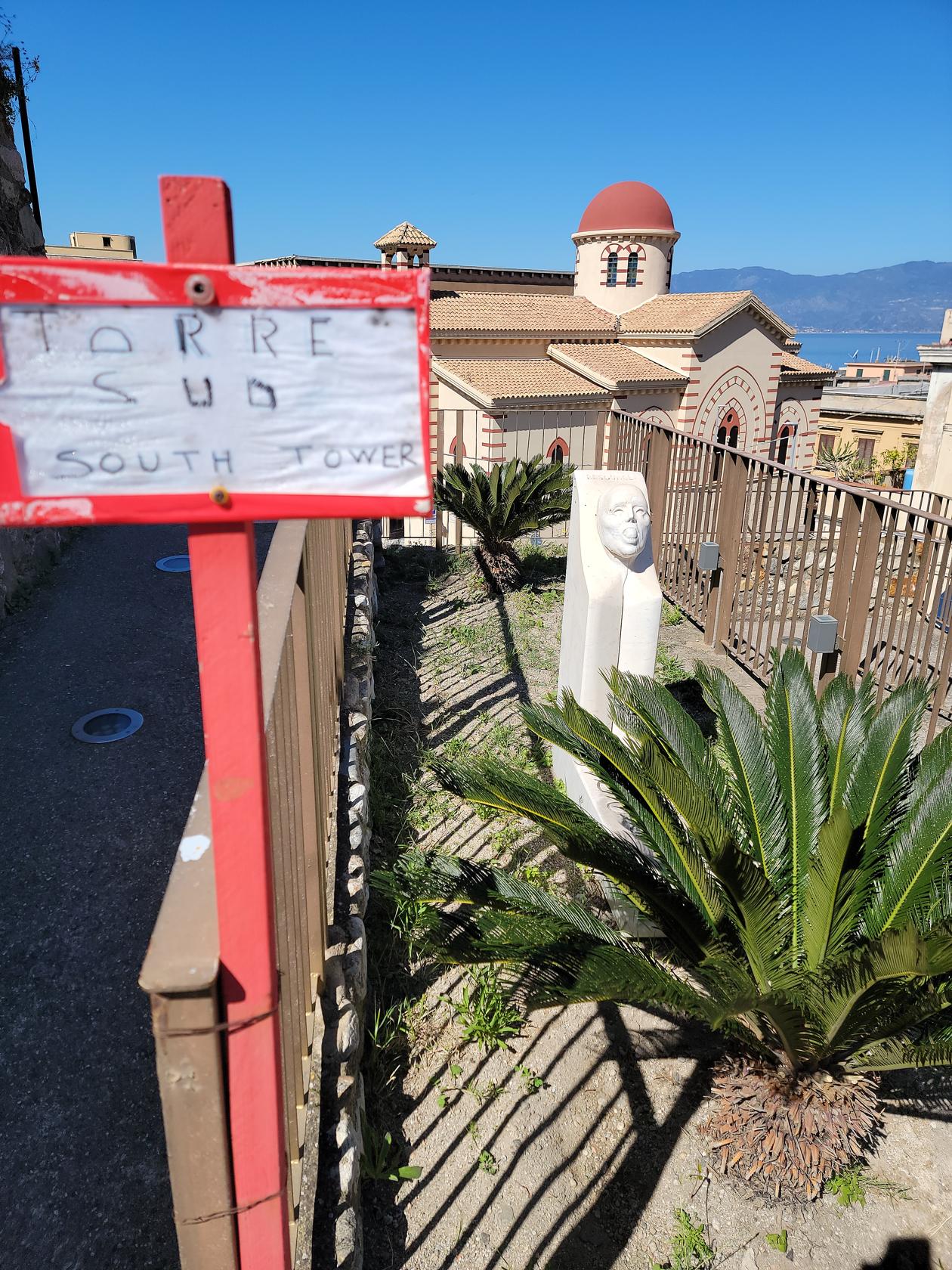
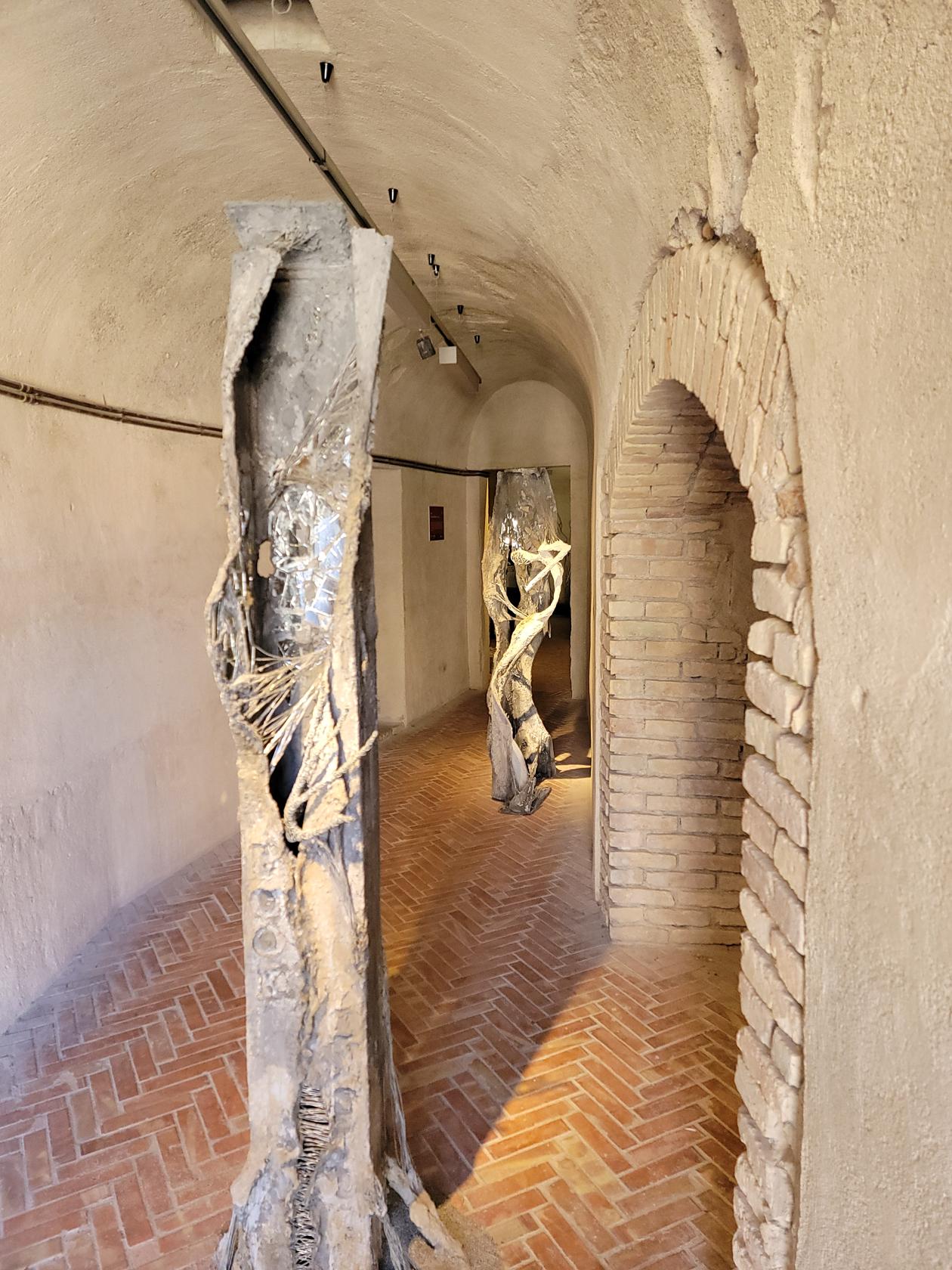
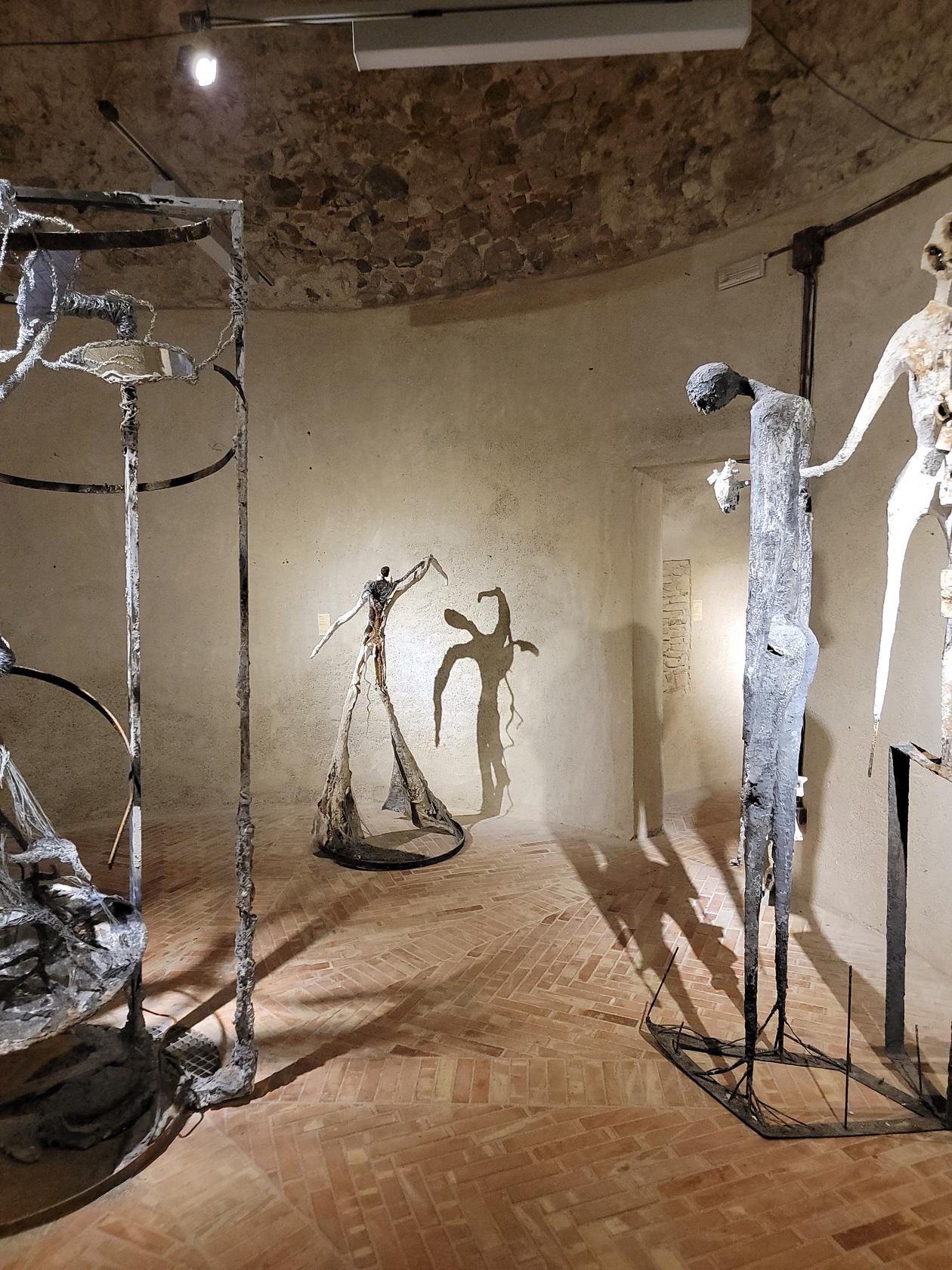
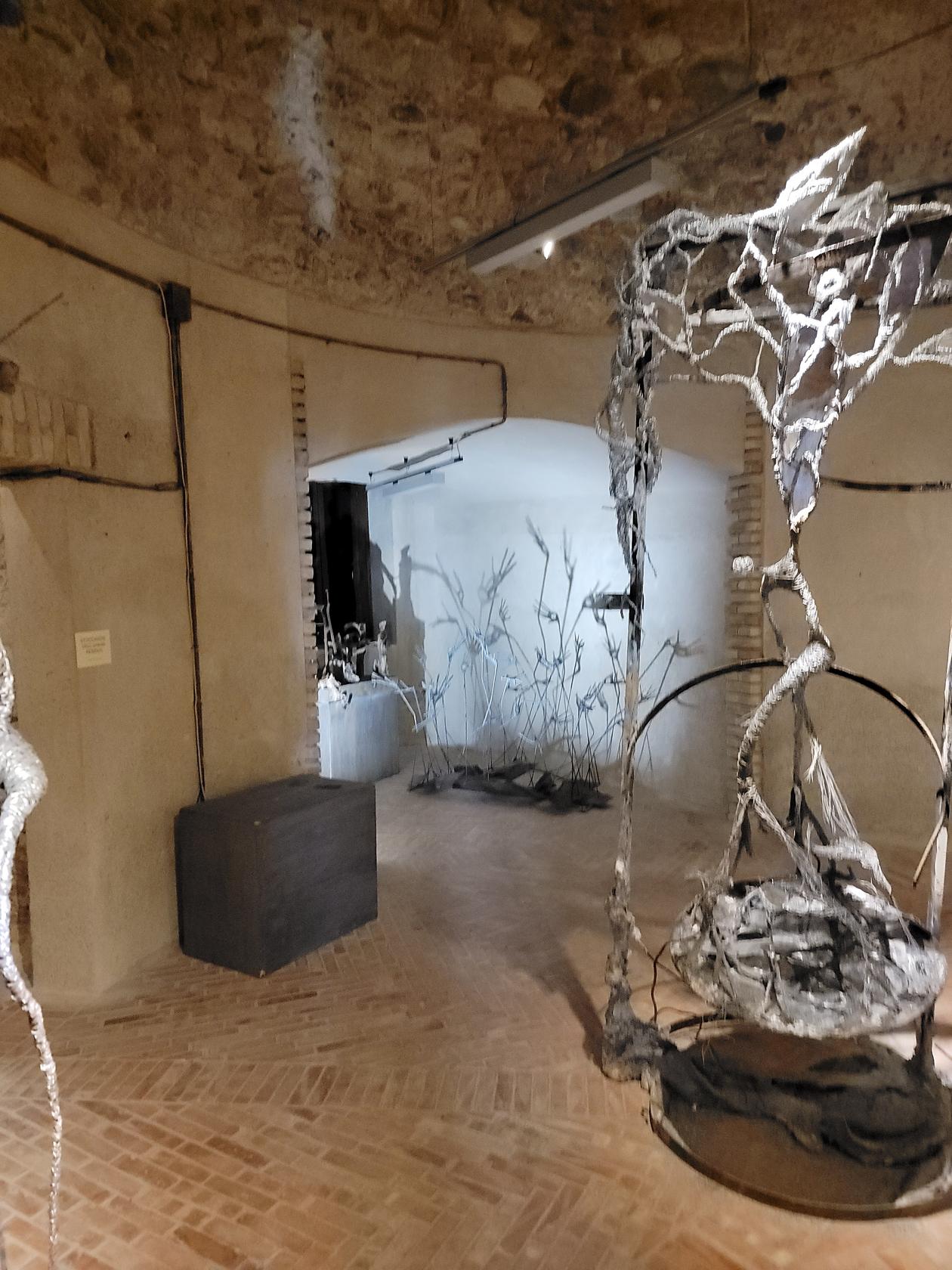
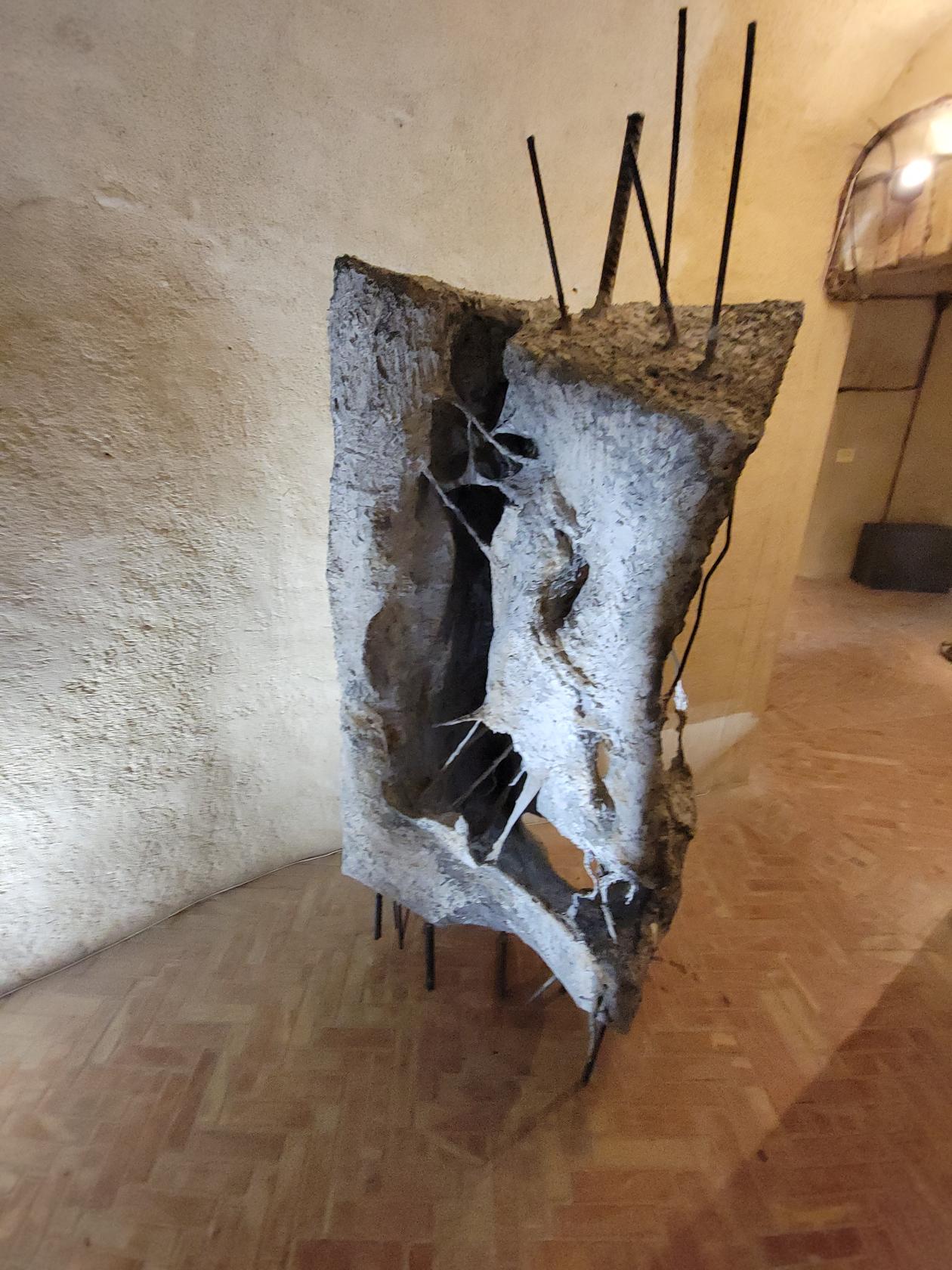
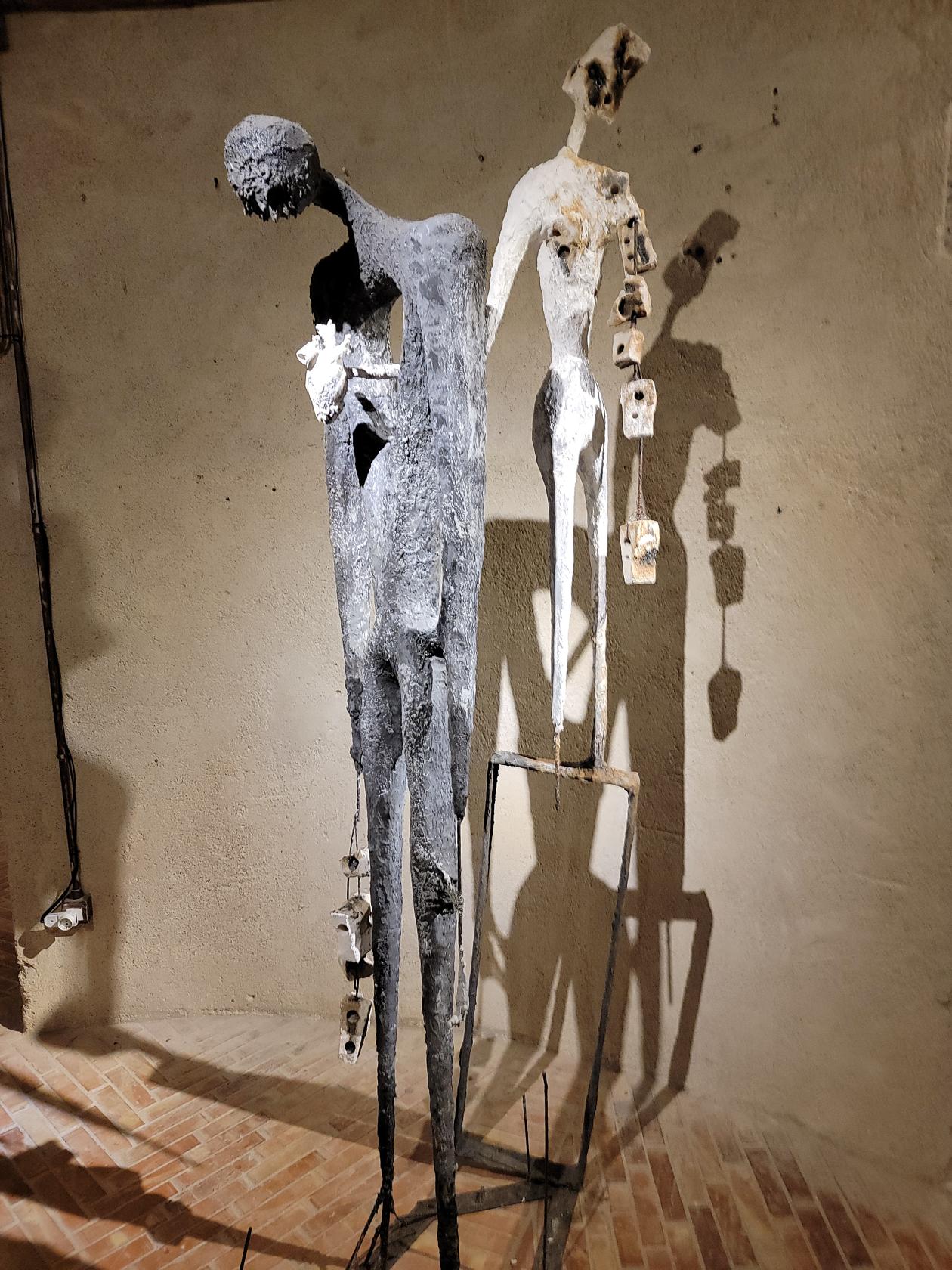
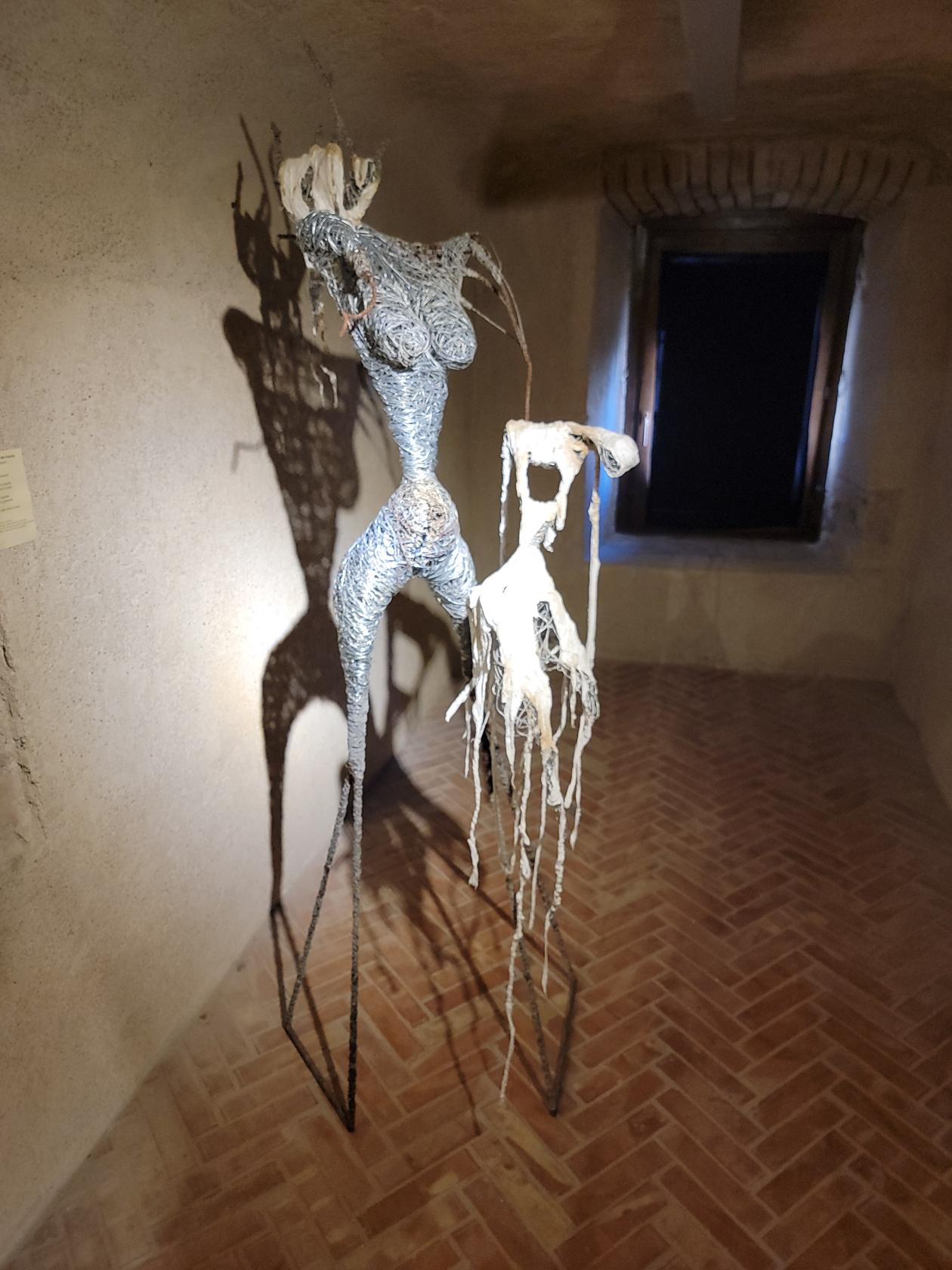
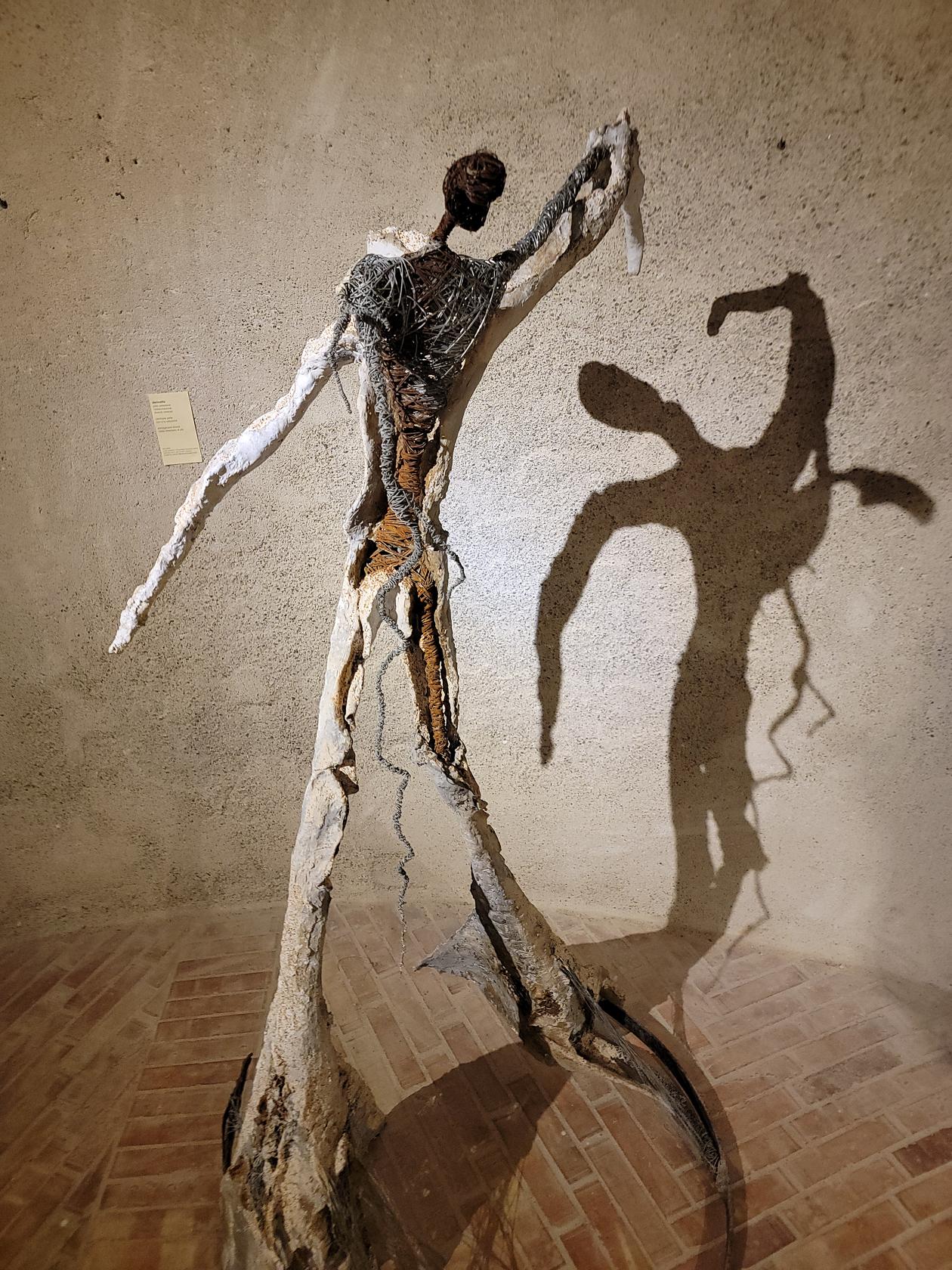
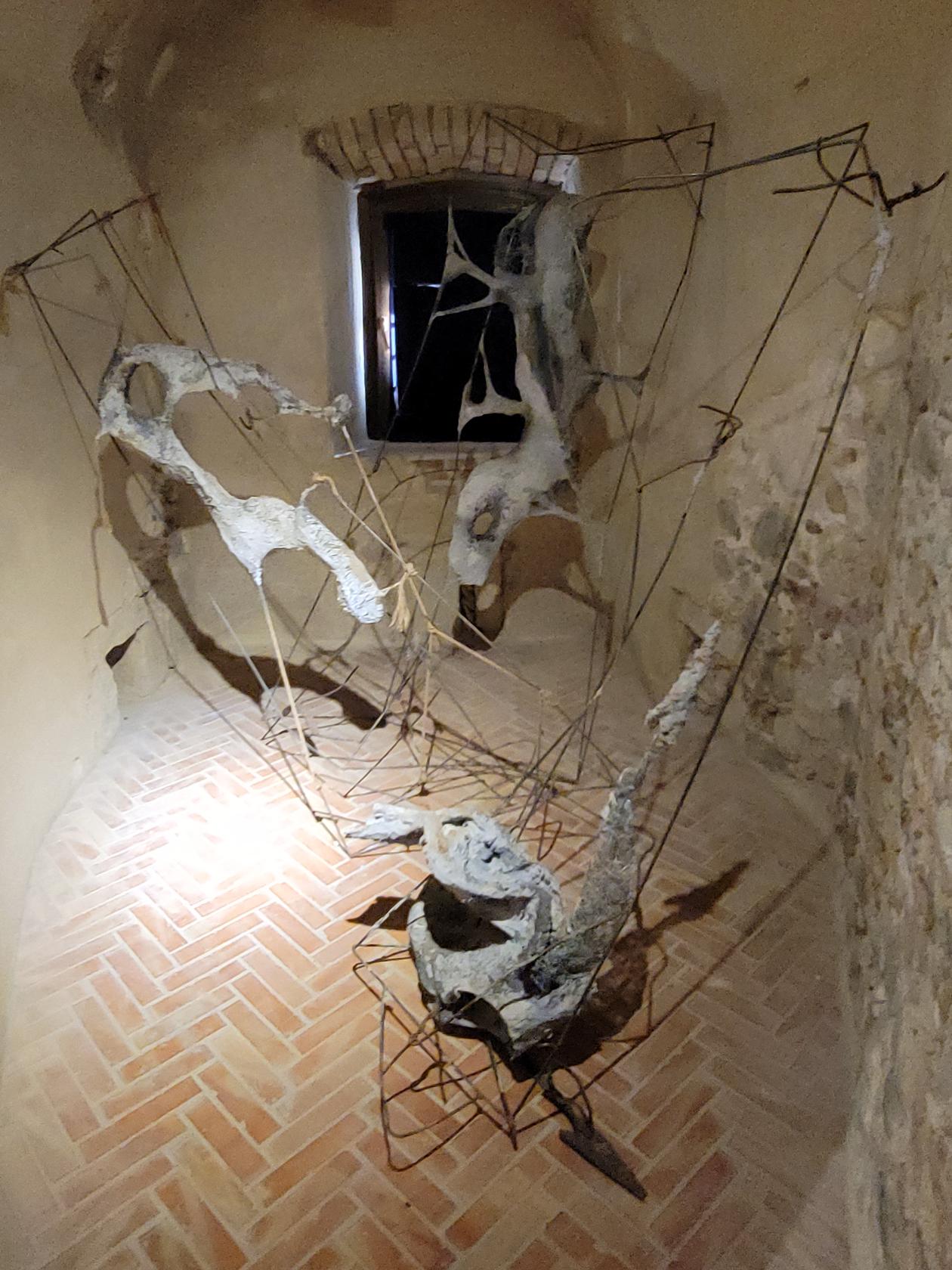
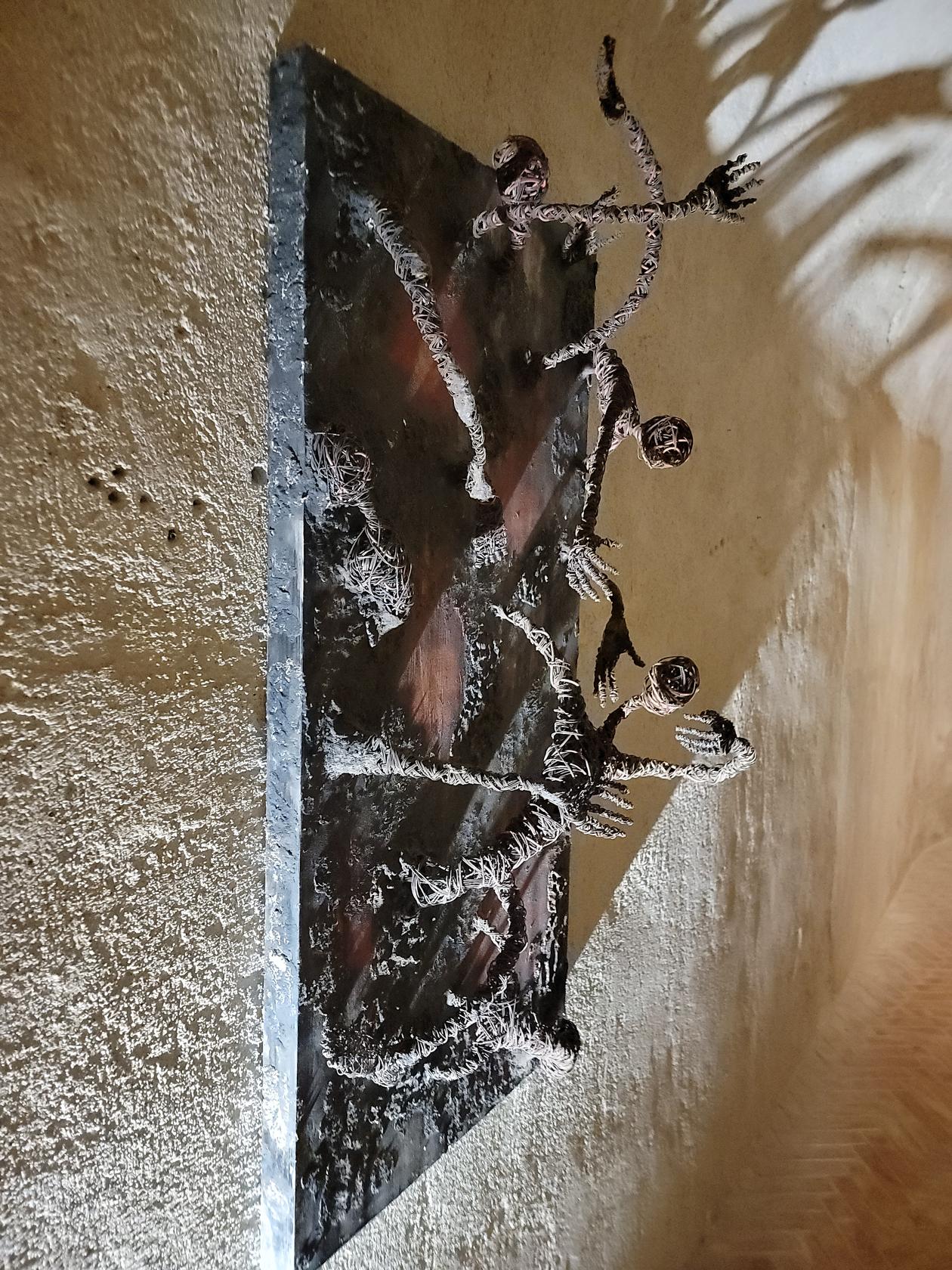
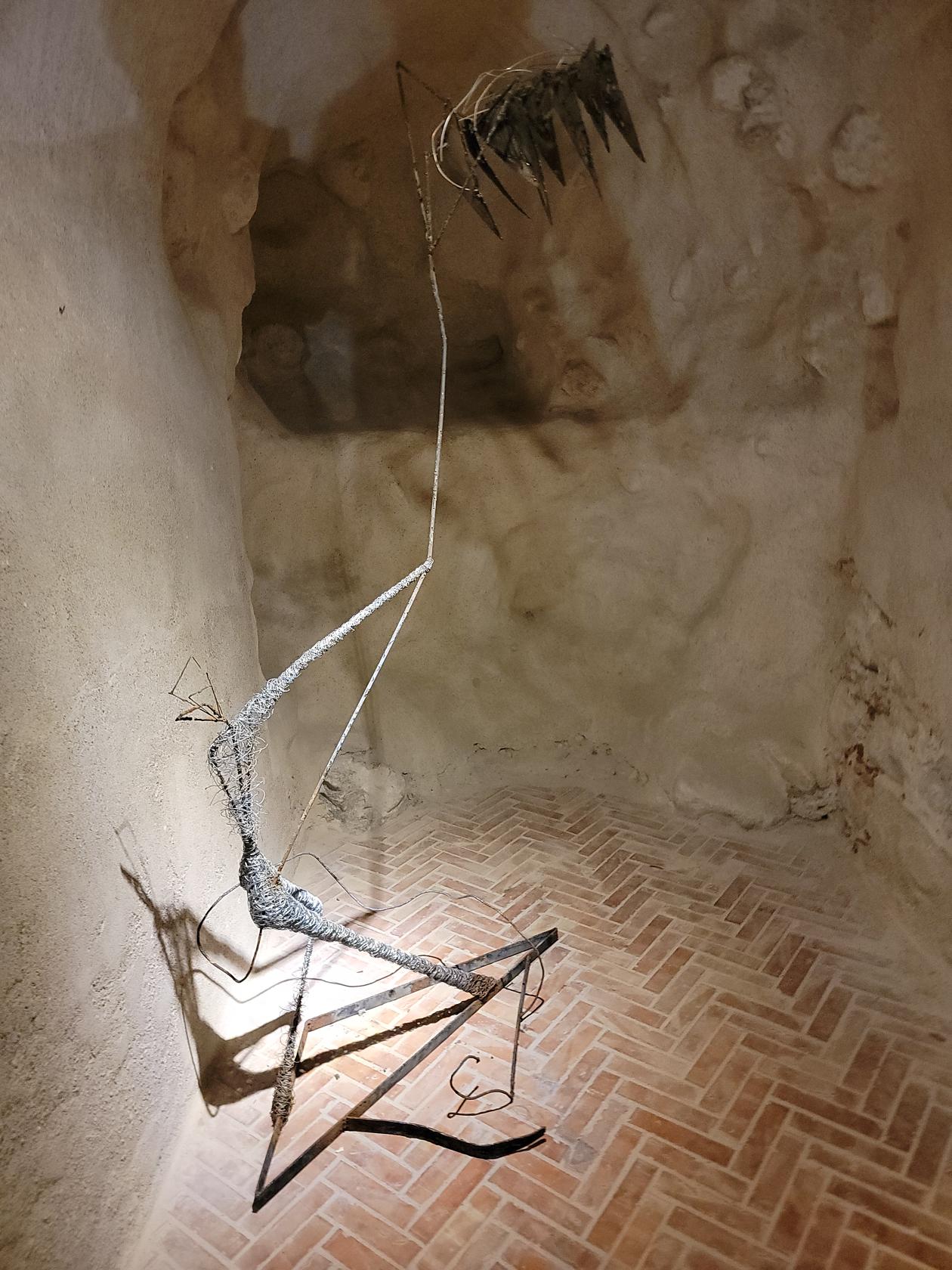
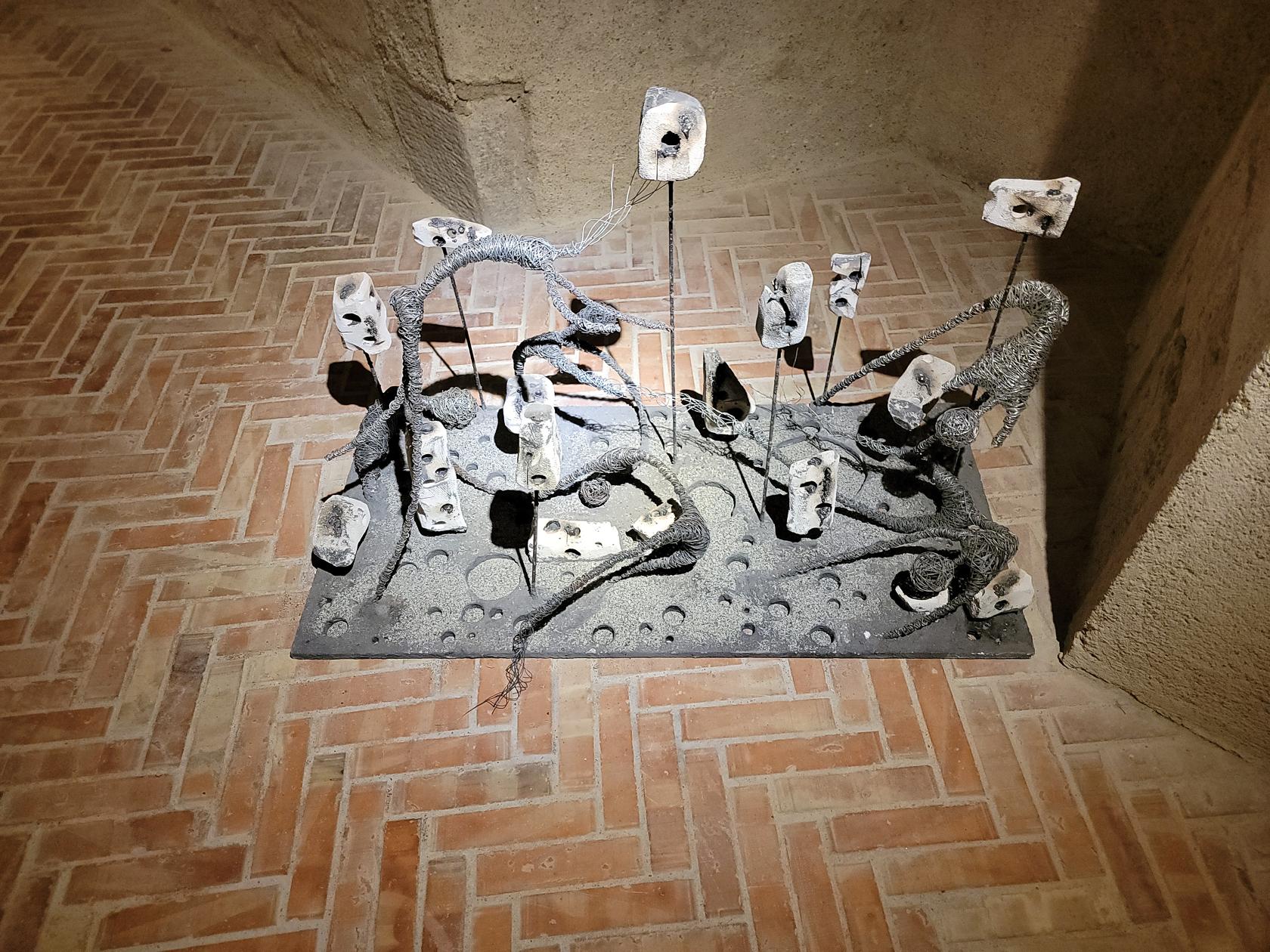
While we were visiting this tower housed a collection of art known as Voci senza Volto, or Voices without a Face. An effective and provocitive collection of art, which appears part surreal and part dystopian and gets the viewer to think about signs of struggle, longing and hardship. This was the high point of the trip for me.

Villas And Palazzos

There are a few villas and palazzos of import in the city.

Villa Genoese Zerbi

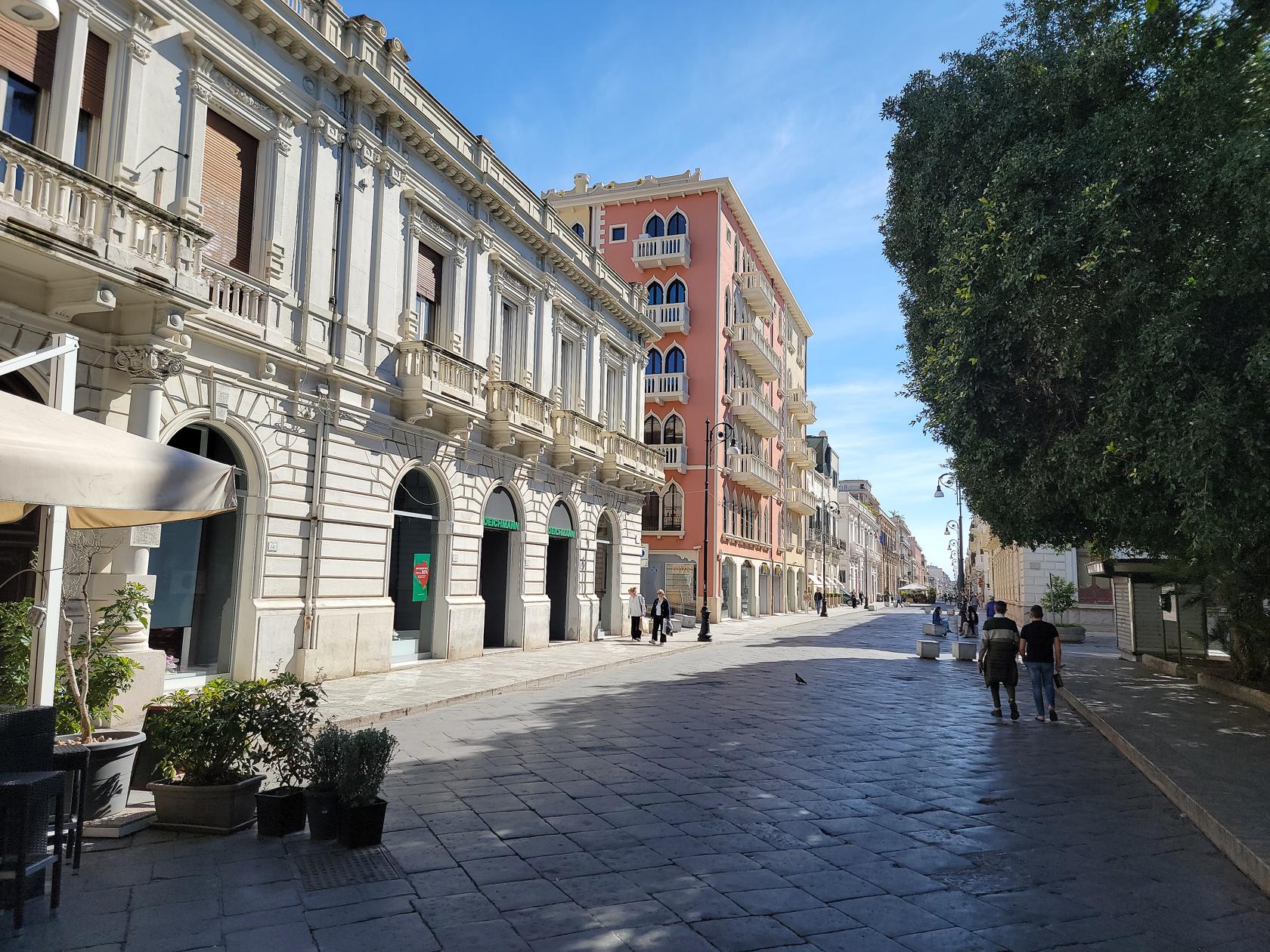
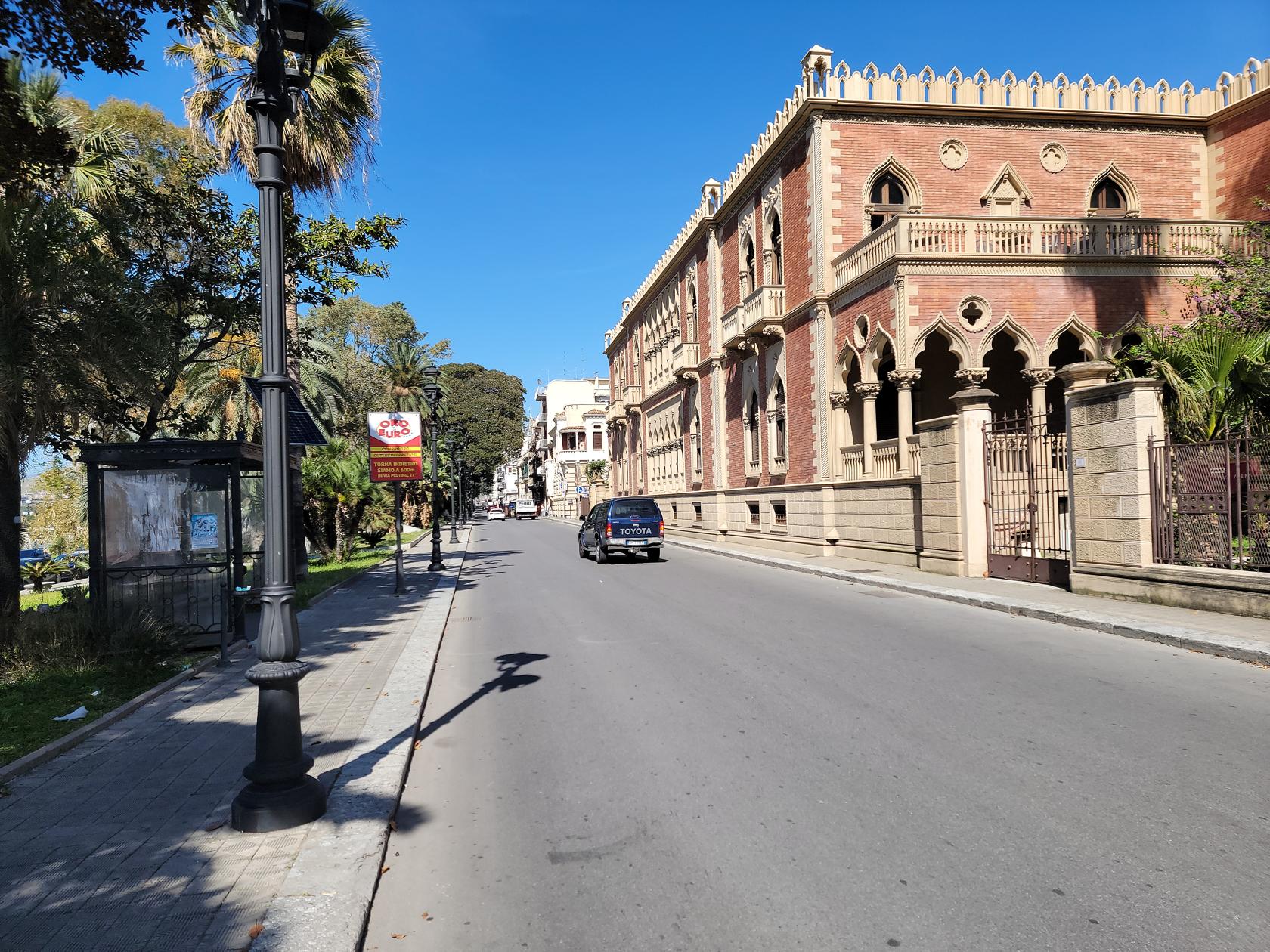
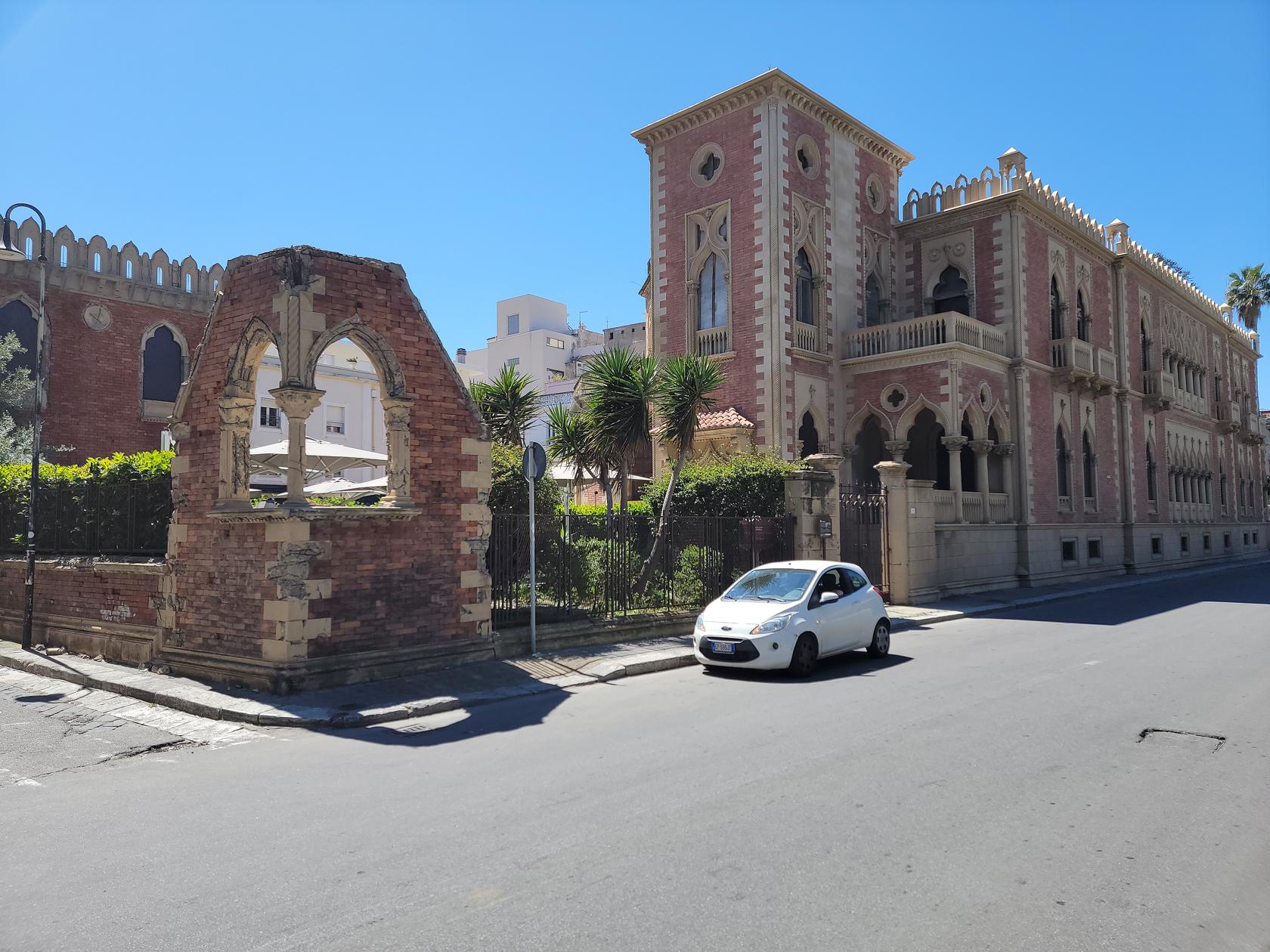
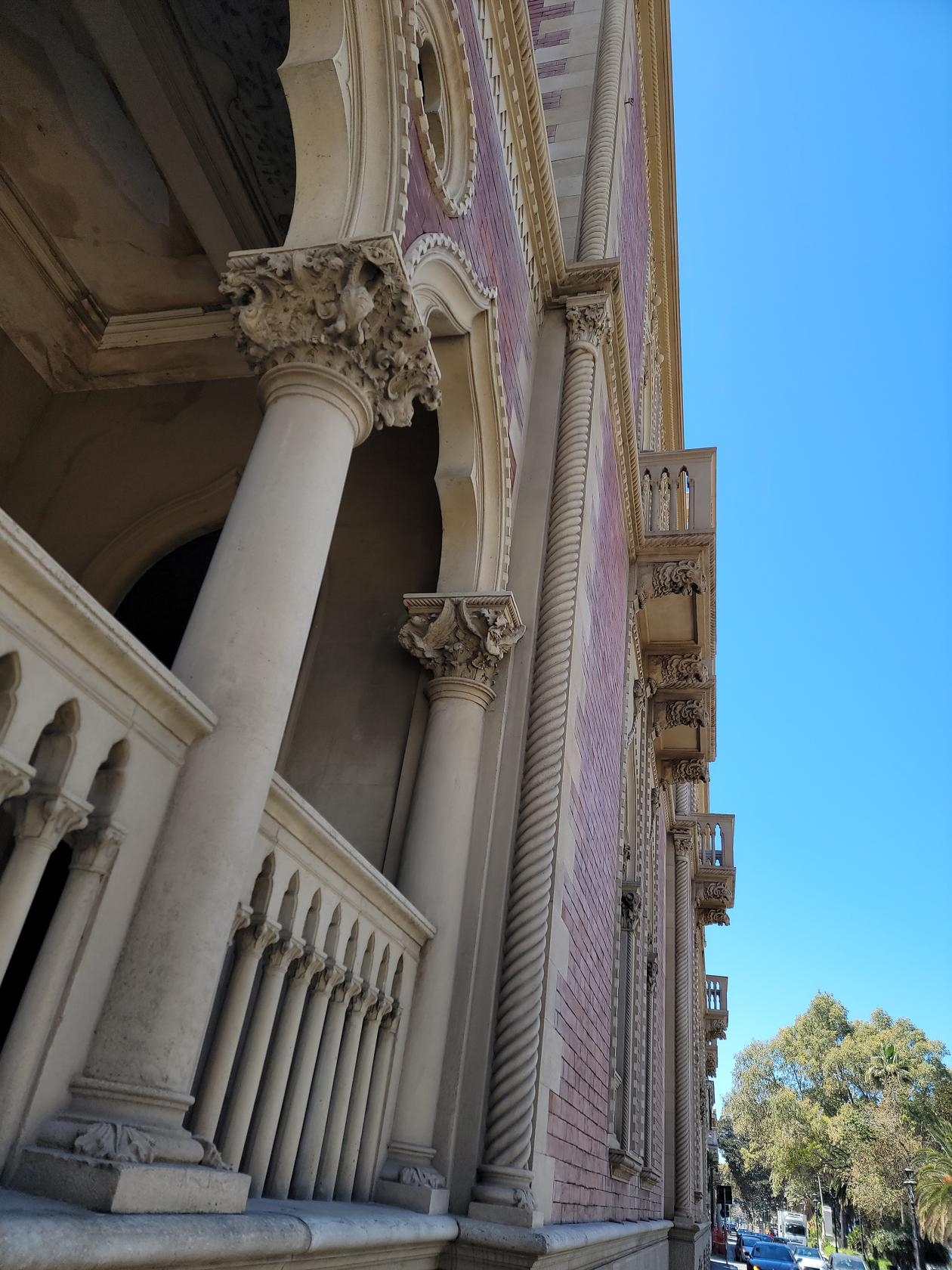
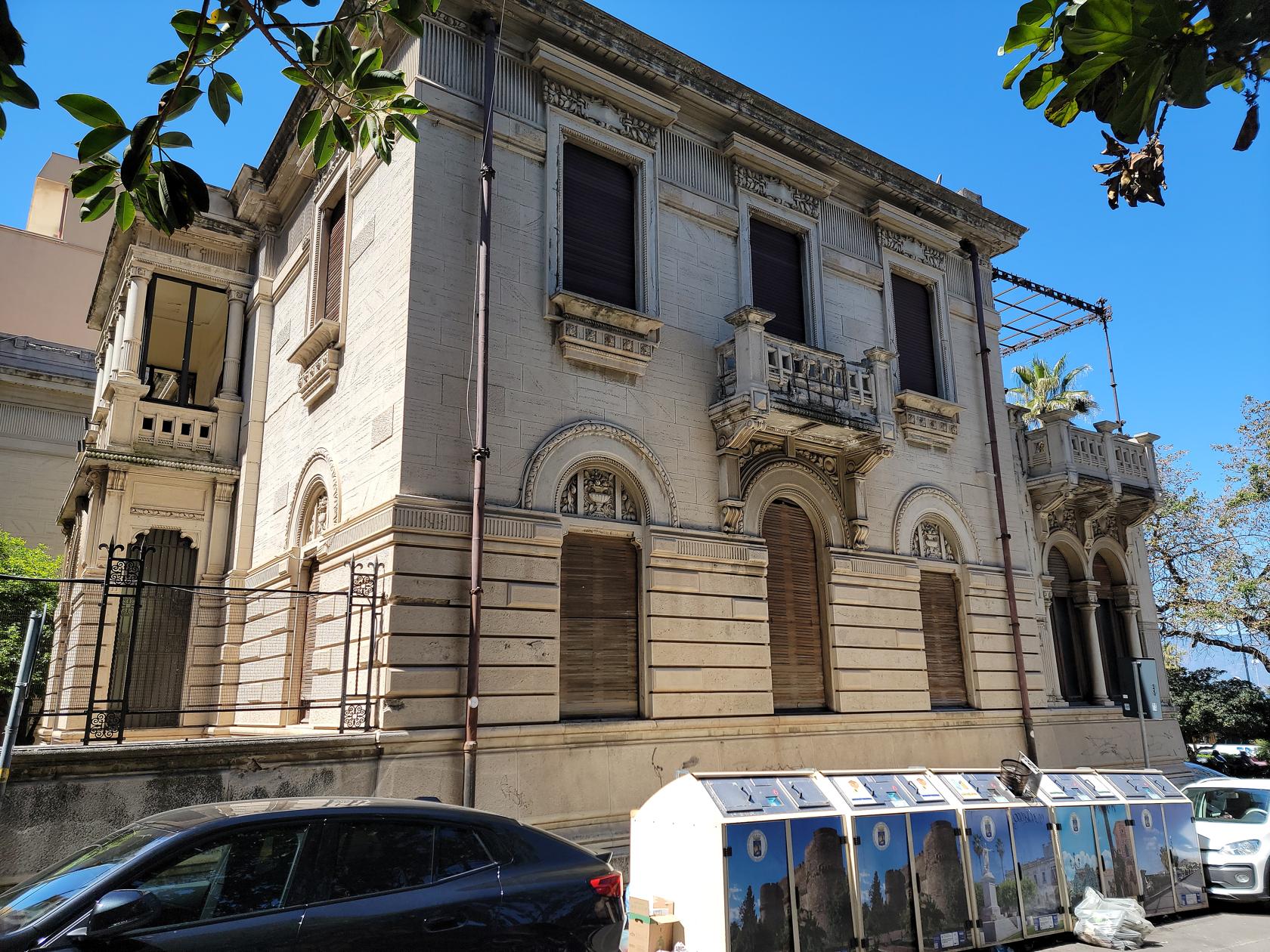
A beautiful Venetian Art Nouveau style building on the Corso Emanuele is the villa of Genoese Zerbi. The original was destroyed in the great quake, but it was completely restored and now is one of the main charms of the city.

Palazzos Spinelli and Giuffrè

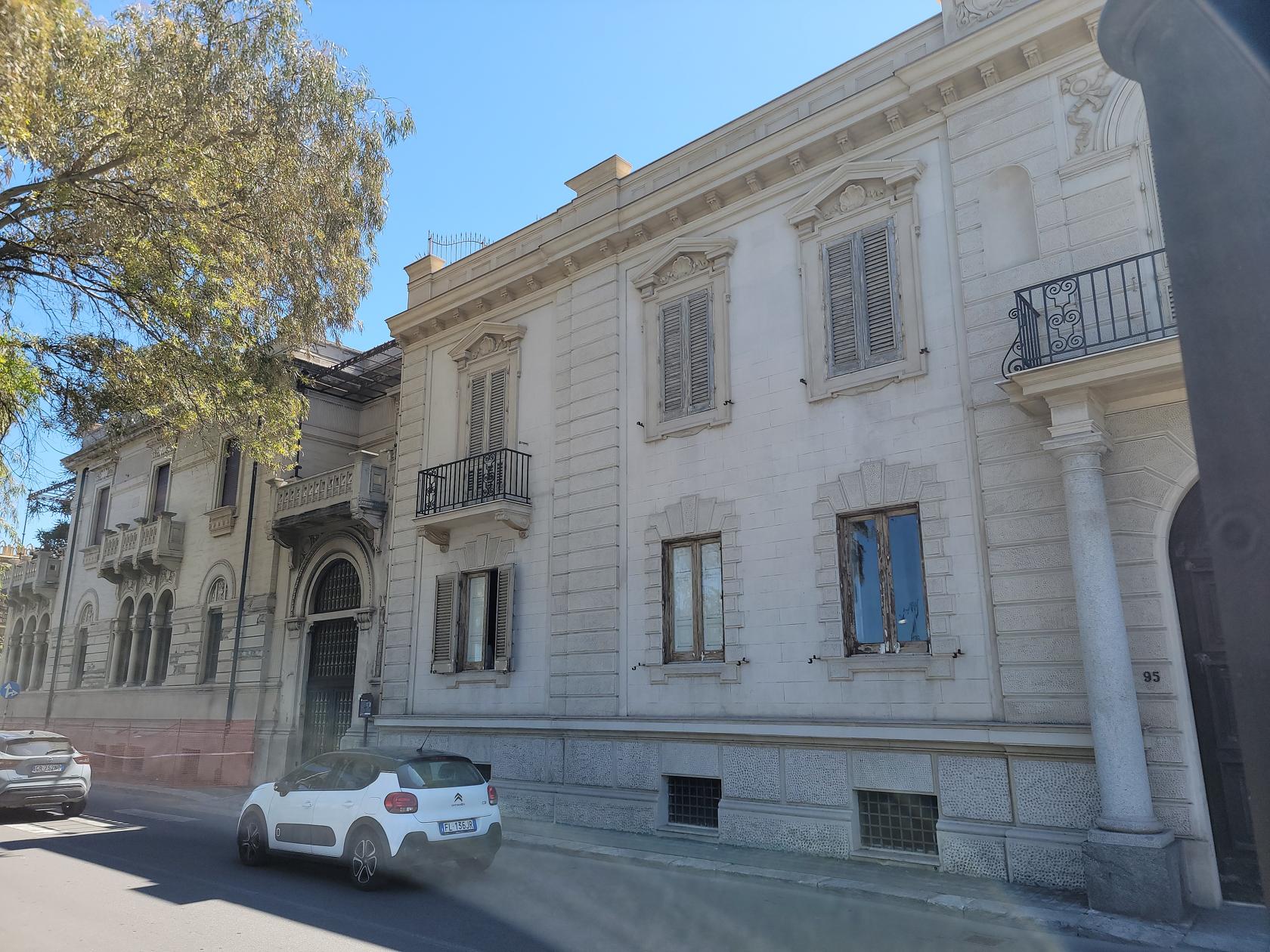
These two palazzos are side by side on the Corso Emanuele by the waterfront. Both appear to need some work. Palazzo Spinelli offers a great example of Calabrian architecture and Art Nouveau, or the liberty style.

Palazzo Giuffrè on the other hand offers a more mundane example, and is reminiscent of other buildings you will find in other large Italian cities.

Restaurants

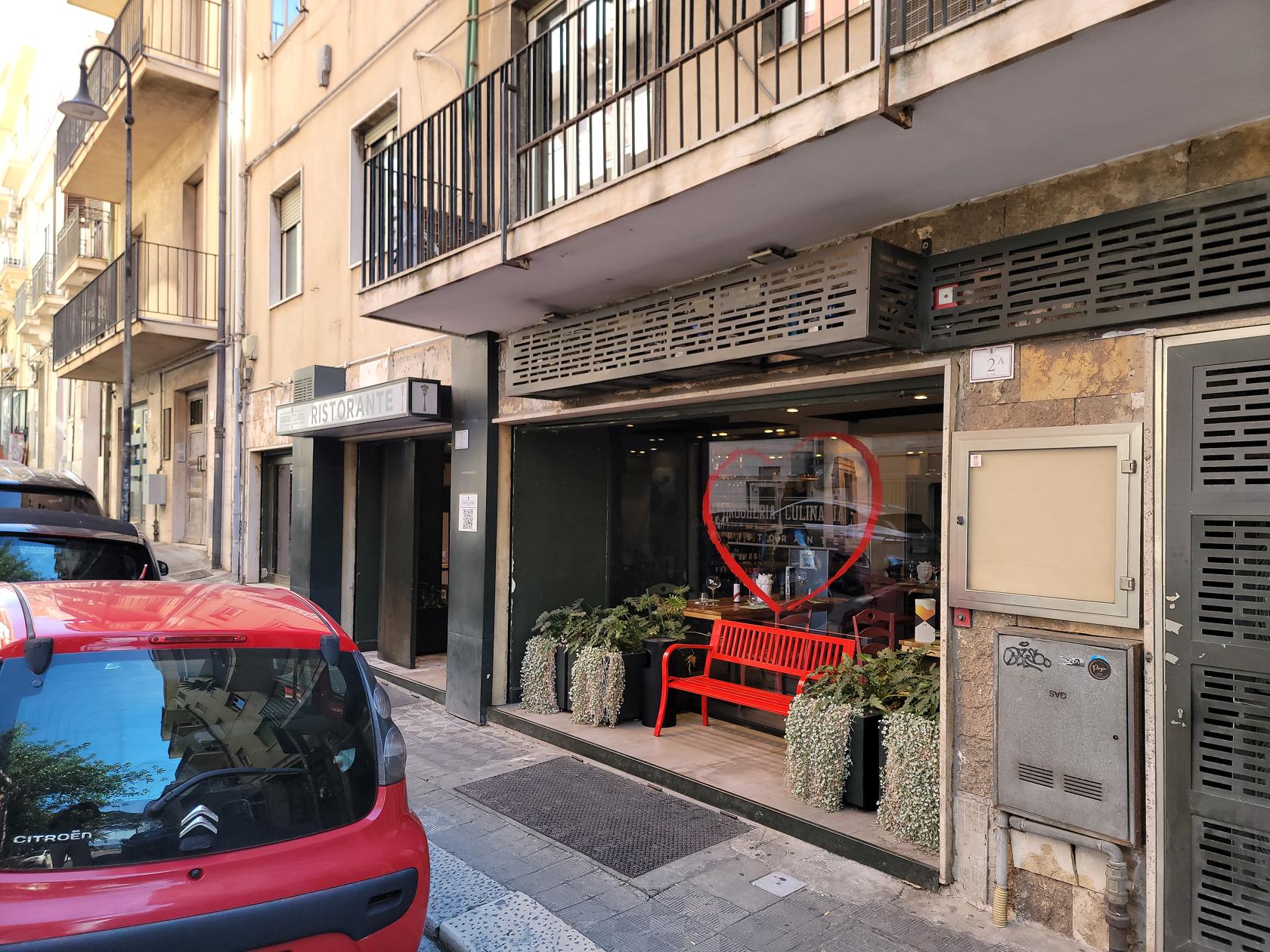
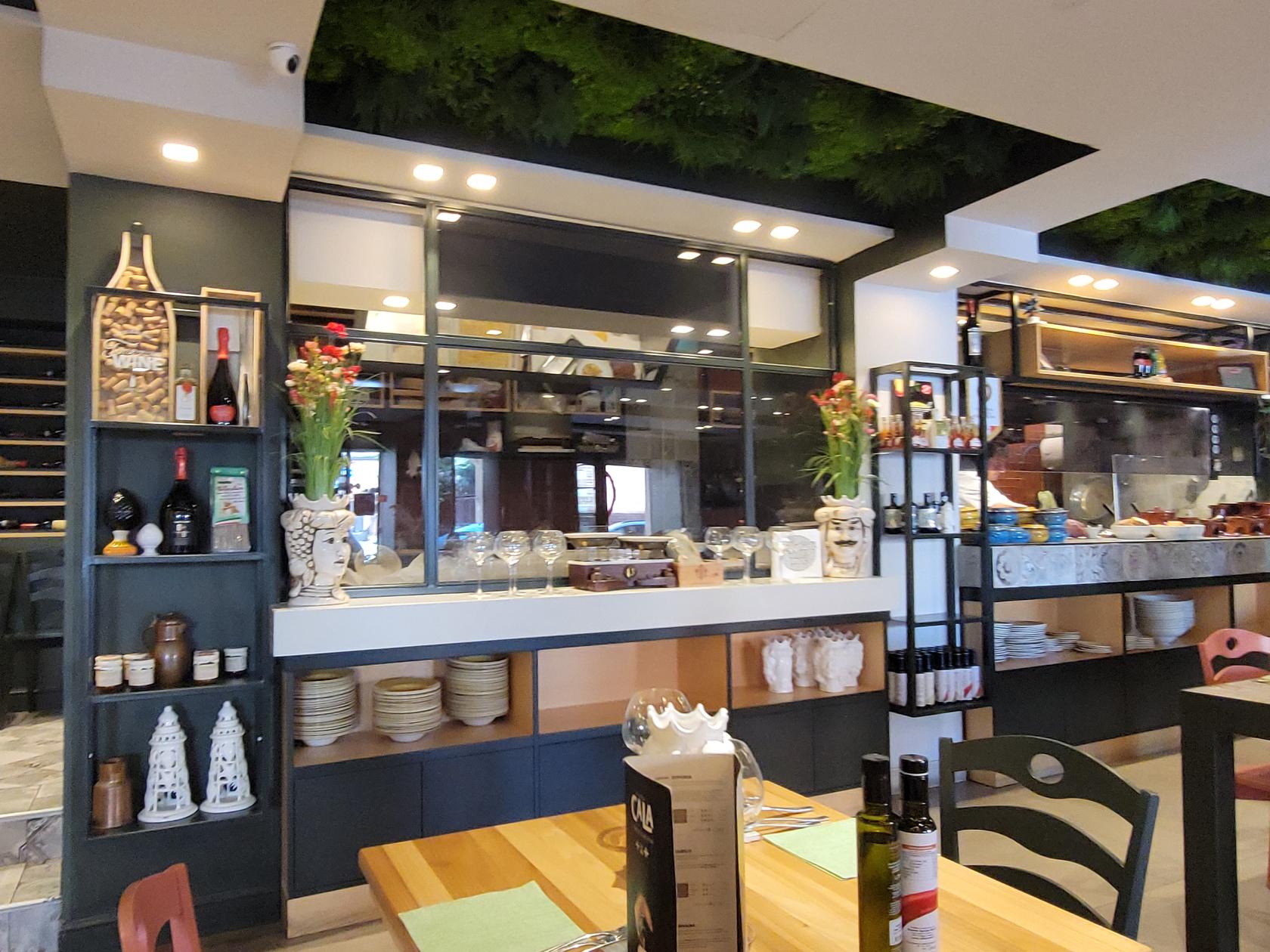
Drogheria Culinaria

Using its former name for the grocery store the family used to own, it now serves food and drinks. It has a decent wine list, with several good varietals by the glass.

The food is also pretty good and you will definitely be able to find something to slake your appetite at this establishment.

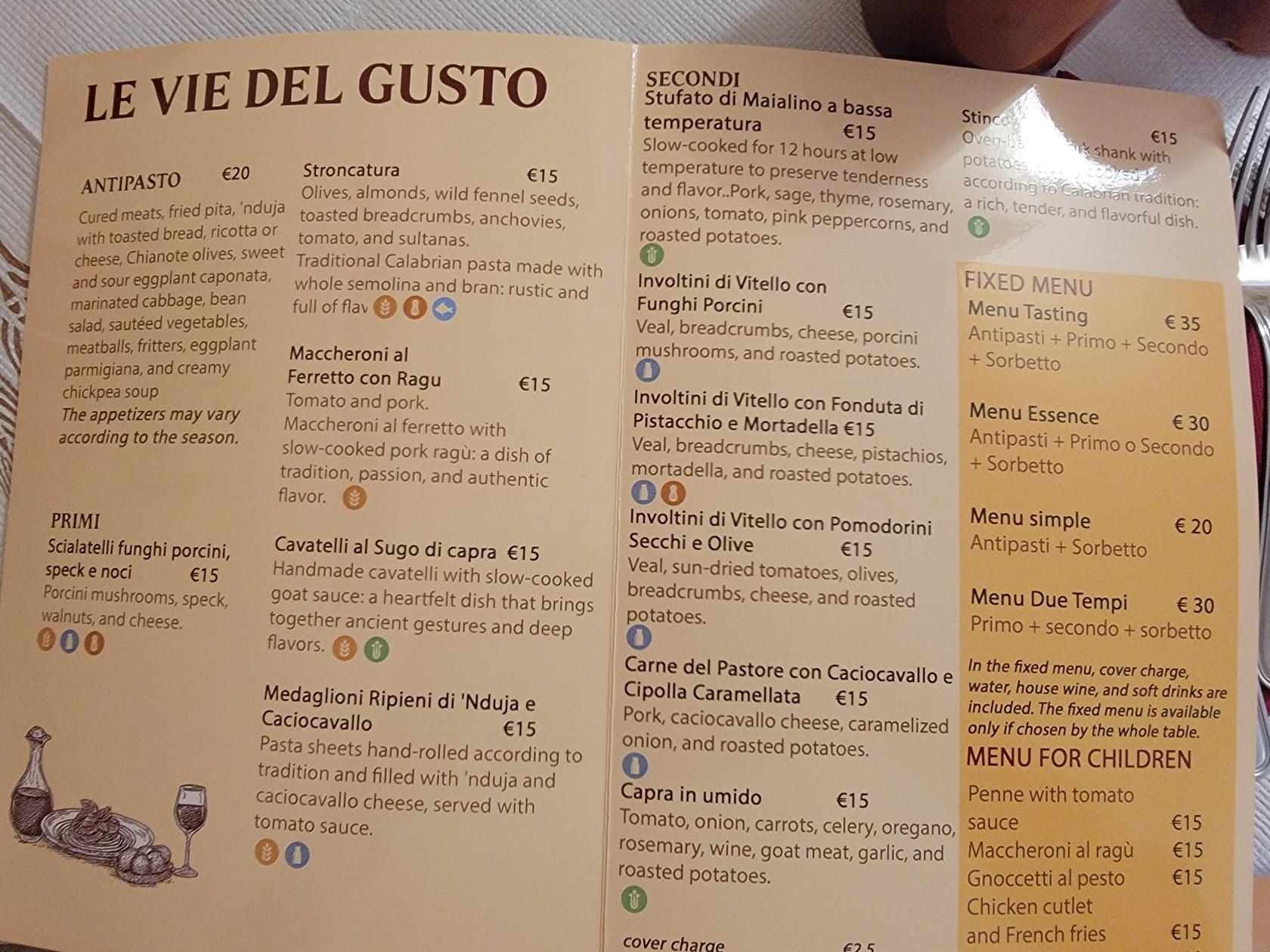
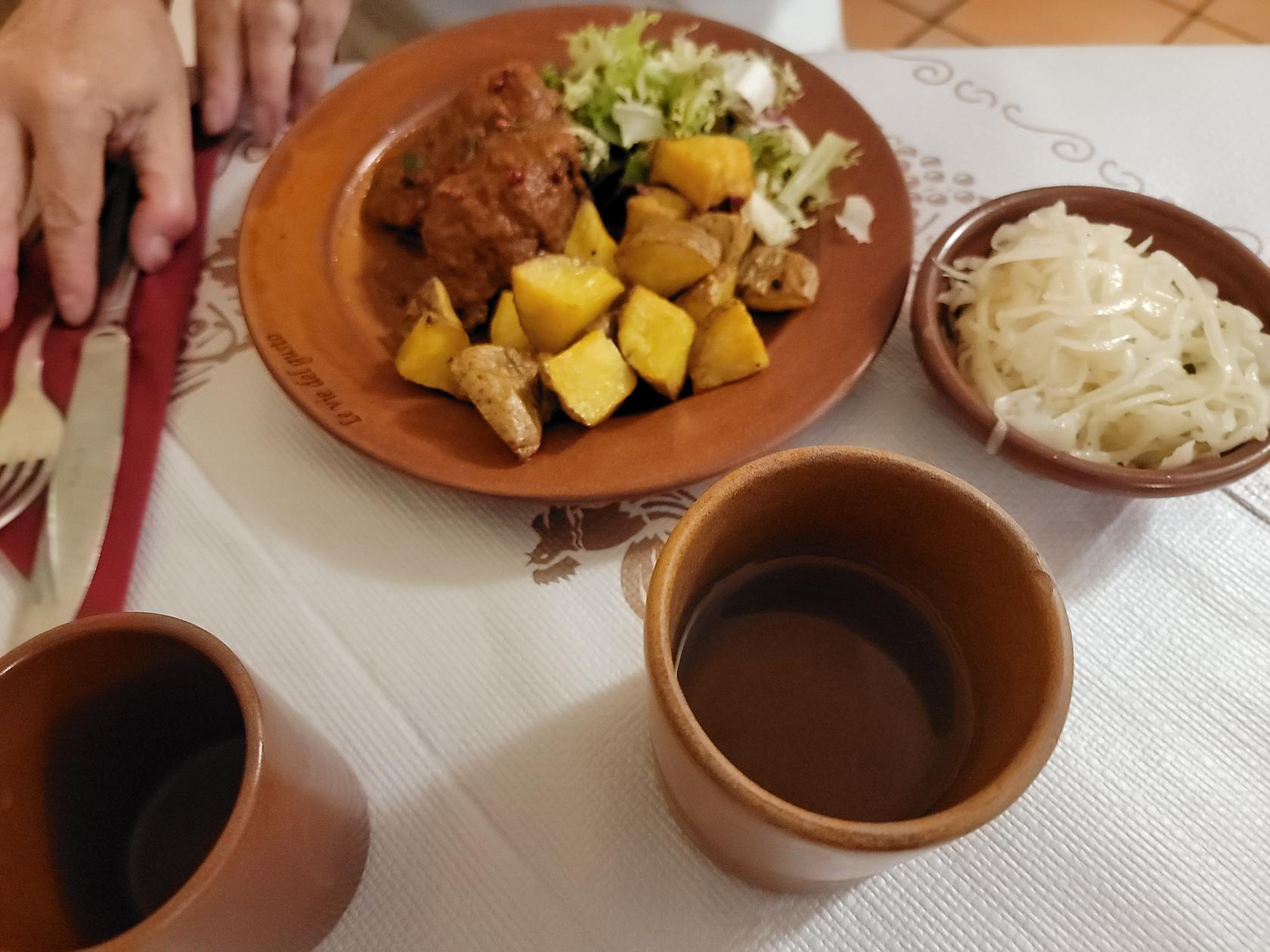
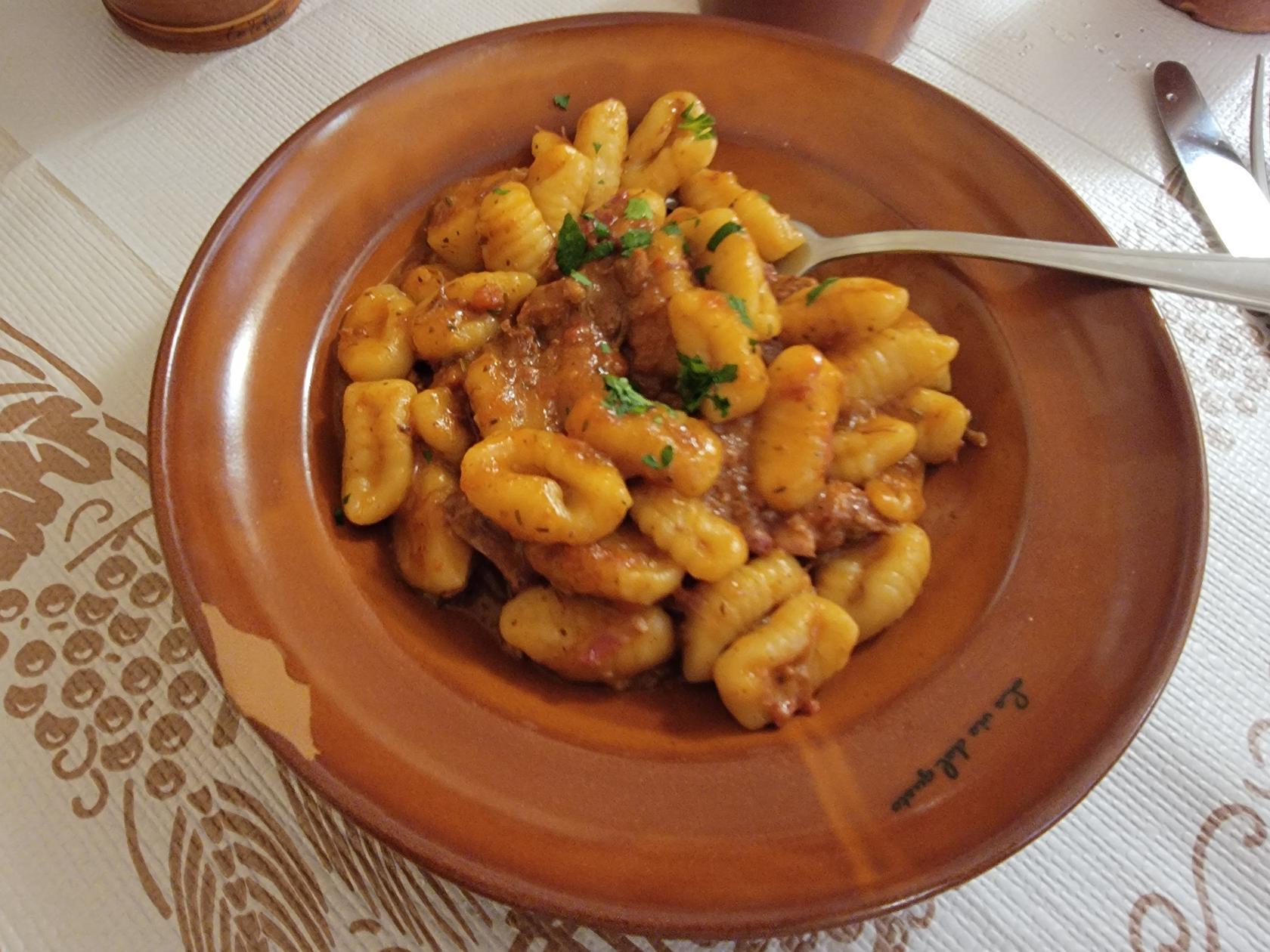
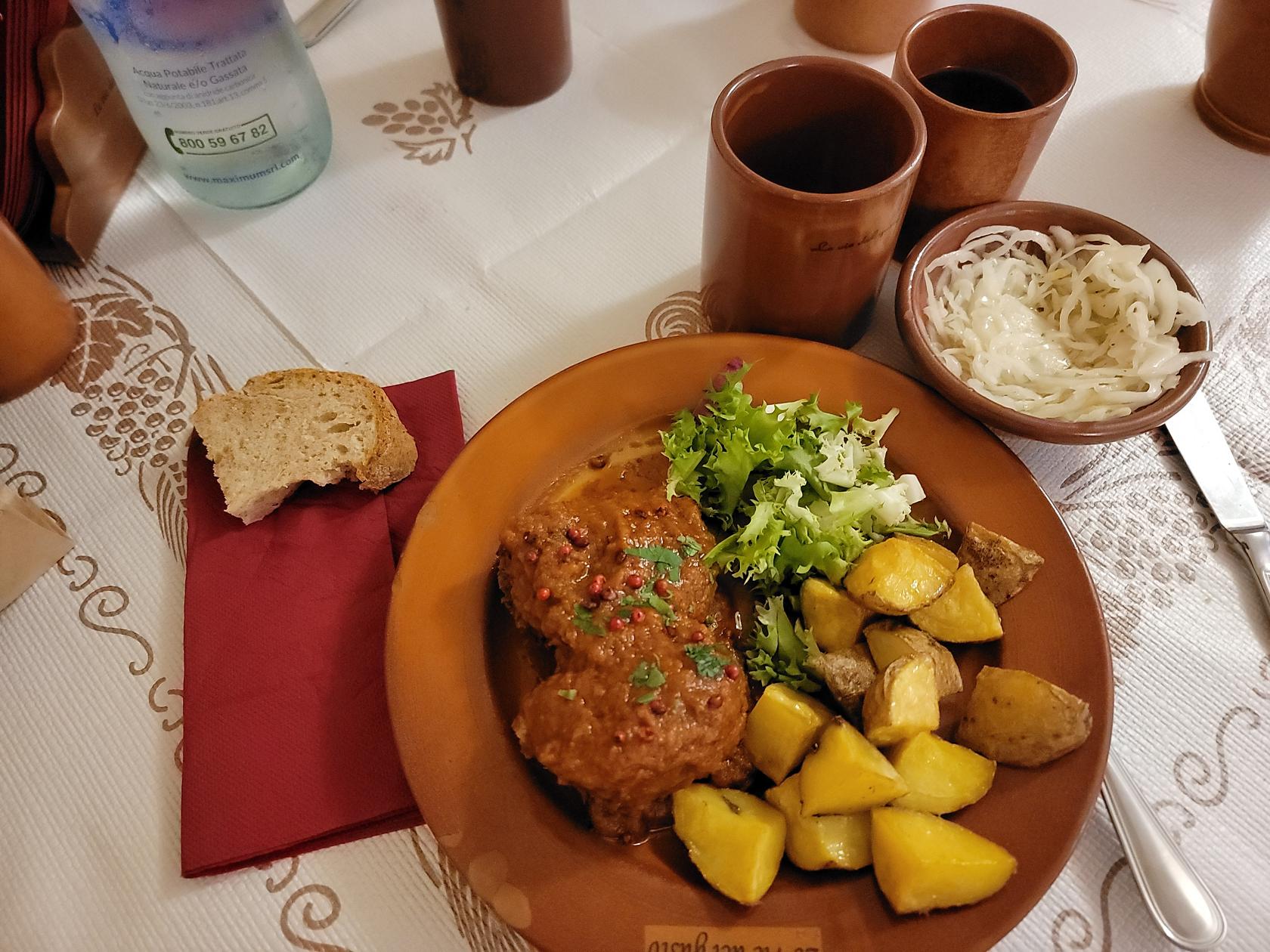
Le Vie Del Gusto Ristorante

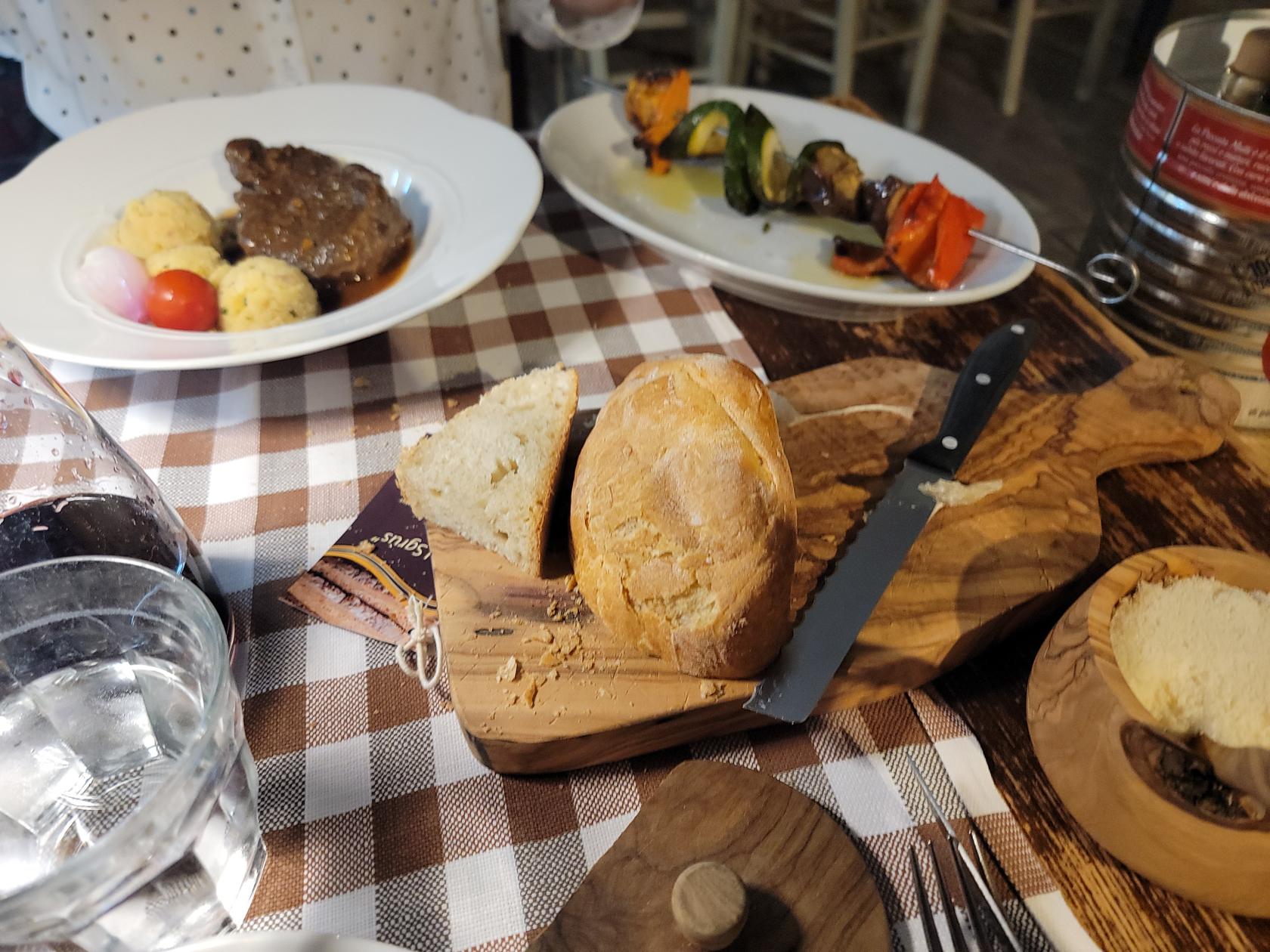
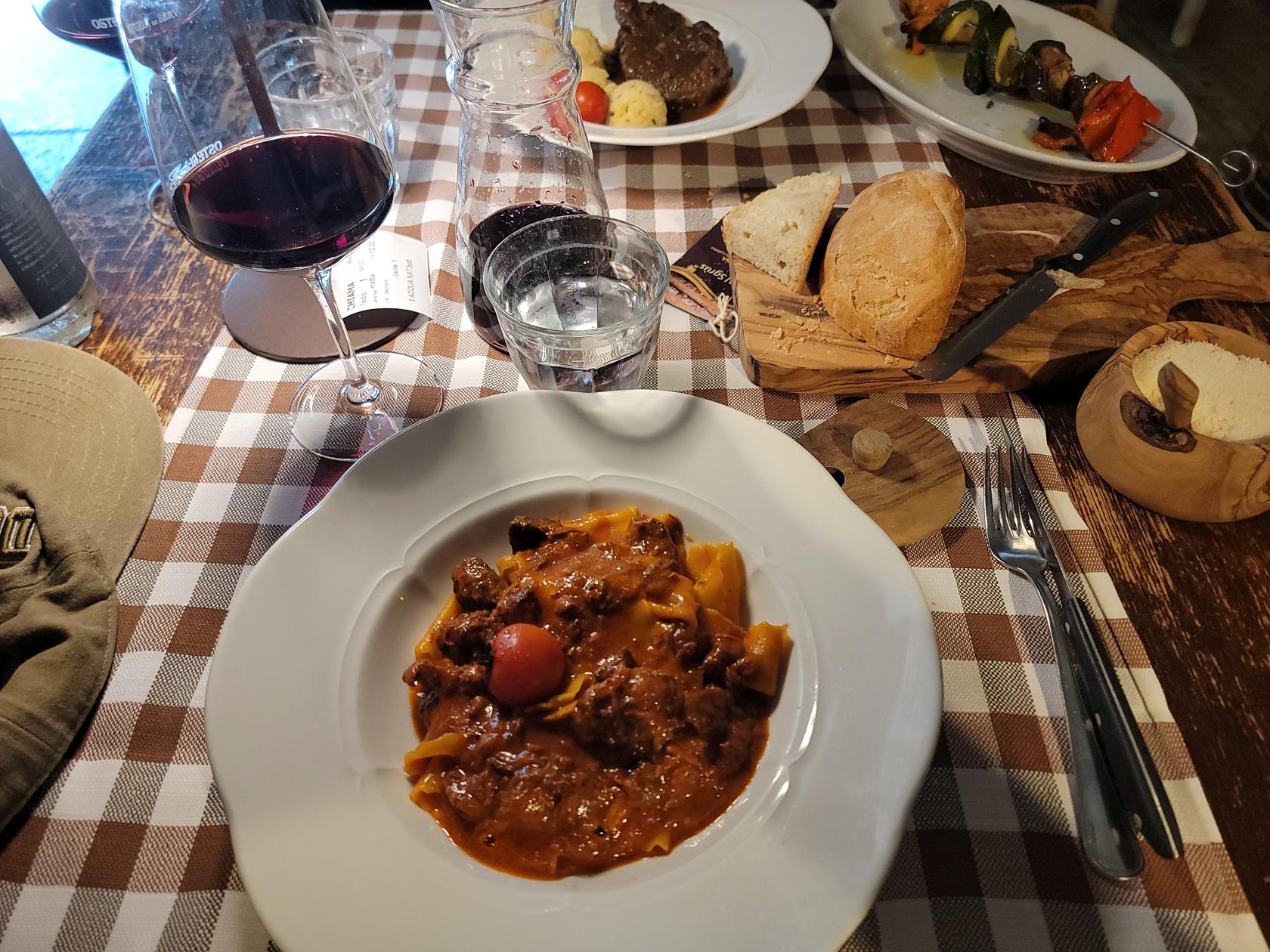
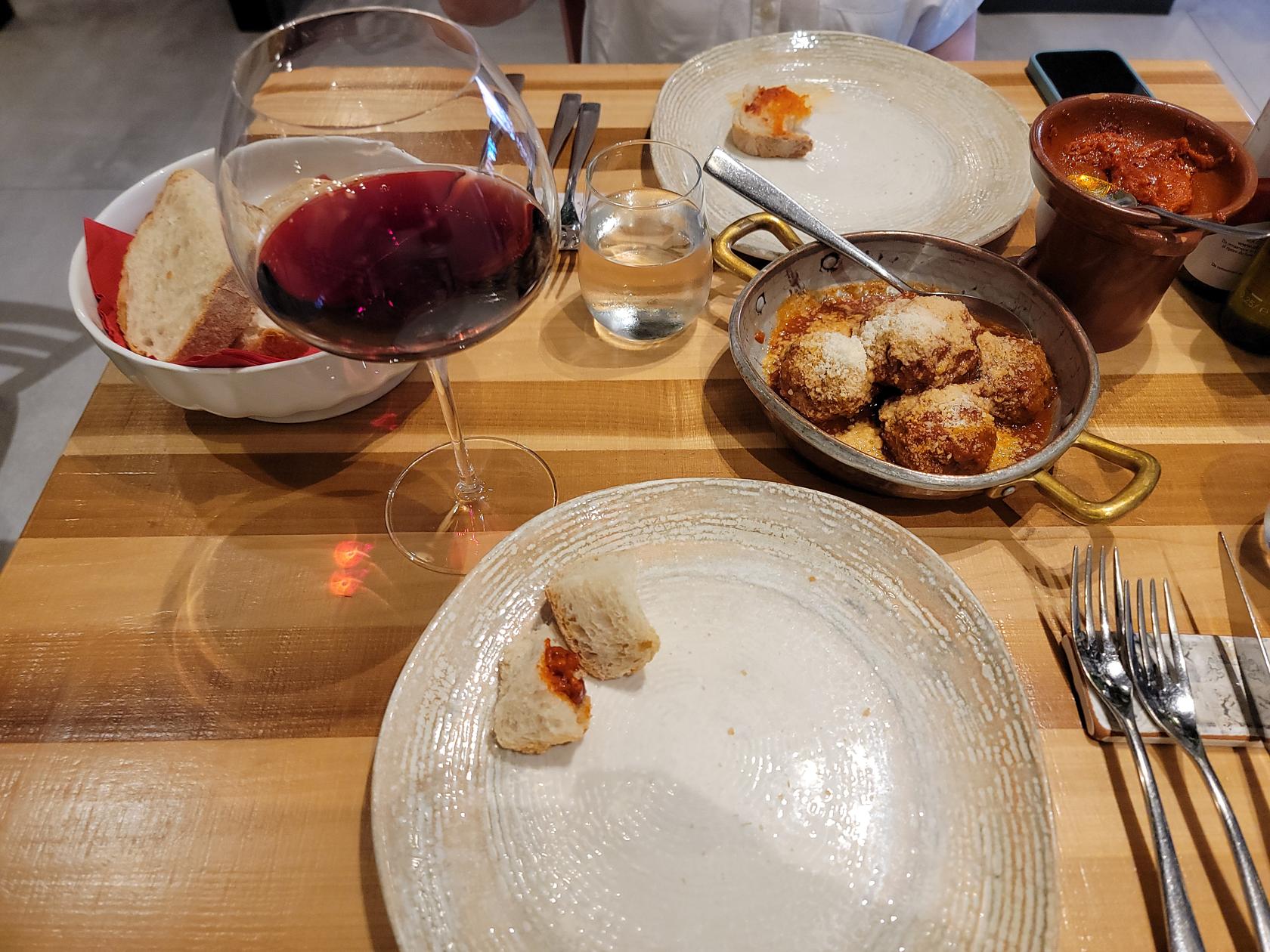
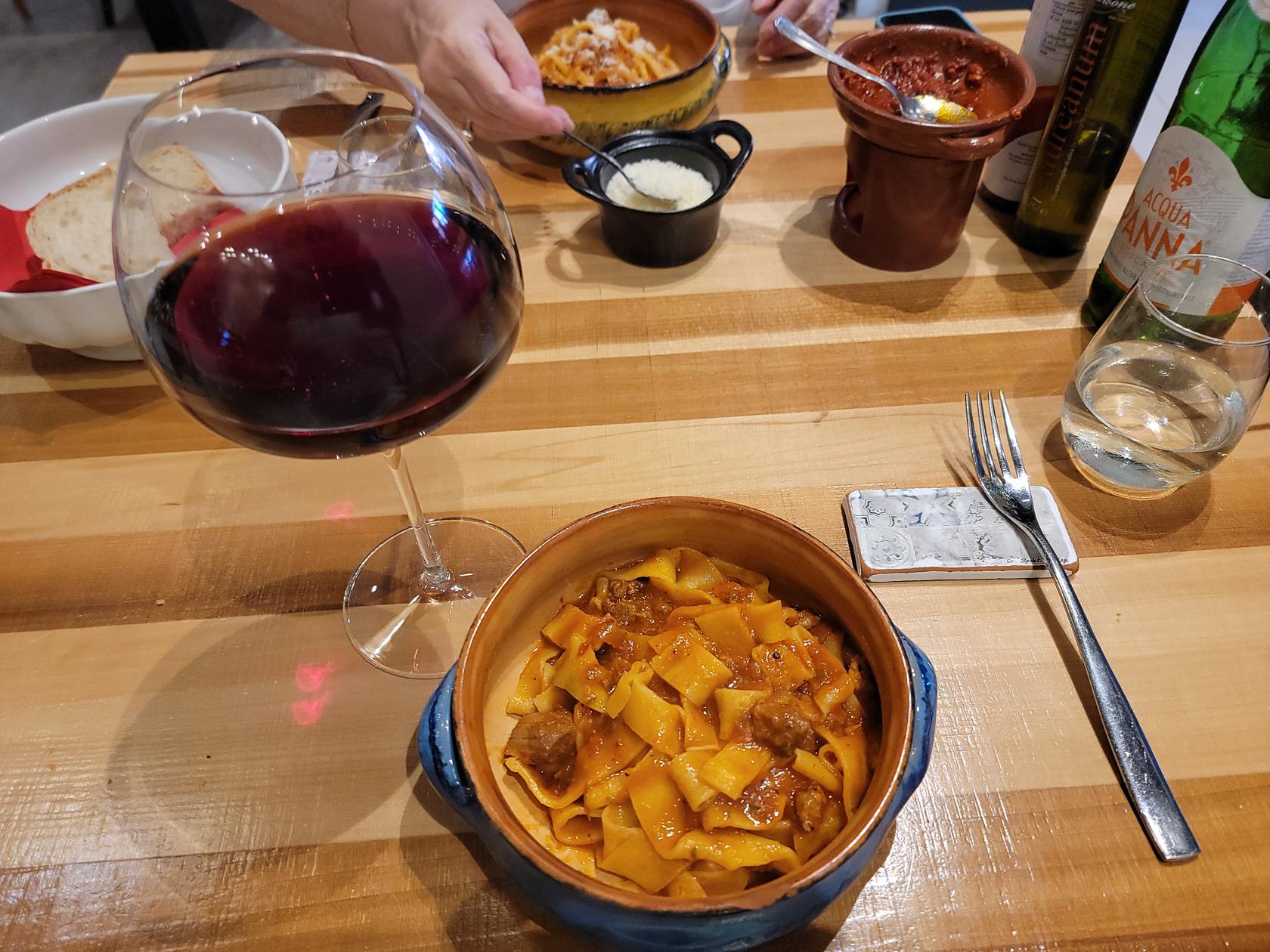
One of the restaurants in the area that is highly recommended for local Calabrian dishes is the Le Vie Del Gusto Ristorante. Located on via Reggio Campi and via II Dezembre, this small little restaurants attacts all the locals, so have your reservation in hand before leaving your hotel or place of stay.

Everything we tried had that home cooking taste without any loss to attention to detail. The Stufato is highly recommended and will melt in your mouth.

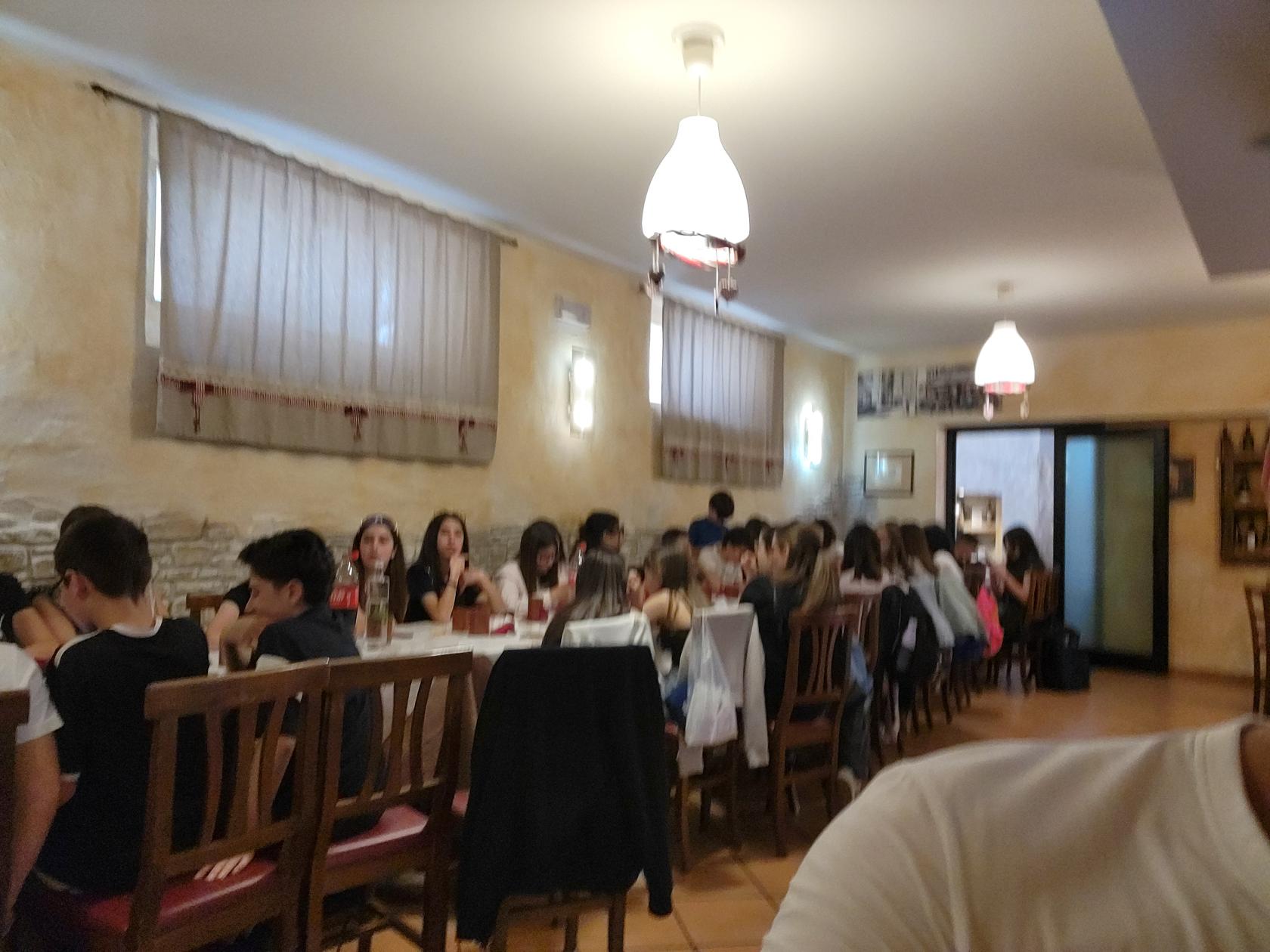
While we were there a local class was having their end of year party, so noise levels were through the roof. However, it was still enjoyable, especially watching the children eating all that food. Made me remember how hungry I used to be as a school kid.

Tropea, Italy – Onions Anyone?

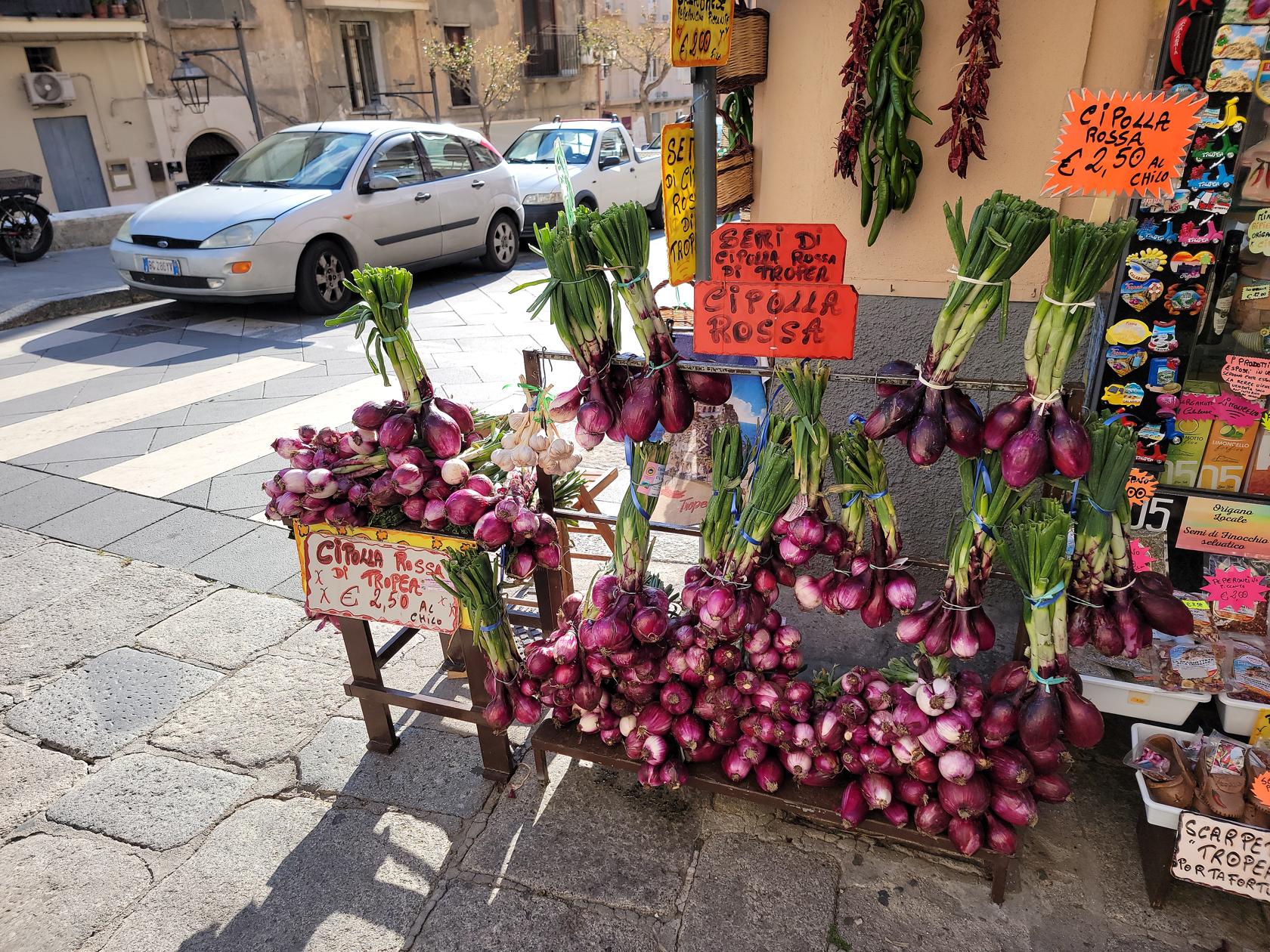
A destination for tourists and those interested in southern Italian cuisine, a stop in Tropea is almost a must. Known for their mixture of Sicilian and Greek influences, this part of Calabria is famous for the Tropean Red Onion, or Cipolla Rossa, one of the most tasty onions in the world. Onions anyone?

Getting There

In order to get to Tropea from Sapri we had to take the InterCity train from Sapri to Lamezia Terme Centrale and then connect. Unfortunately there is no logistical way around it. From there we took the local TrennItalia Regional train service to Tropea. This gave us a two and a half hour layover in Lamezia Terme, just enough time for lunch!

Lamezia Terme

Other than connecting with our other train, there was no other reason to visit this place, that is, other than lunch! With two and a half hours layover, we had plenty of time.

Restaurants

Europa da Albano

While we were on our InterCity train, I took the liberty of researching what our options were at Lamezia Terme. There weren’t many, but this restaurant and pizzeria caught my eye. It was a good choice. It was very busy inside and out and packed with local people, which is actually a good sign. Though we waited a bit to order, the wait was not bad in the end and our drinks and food arrived within customary promptness.

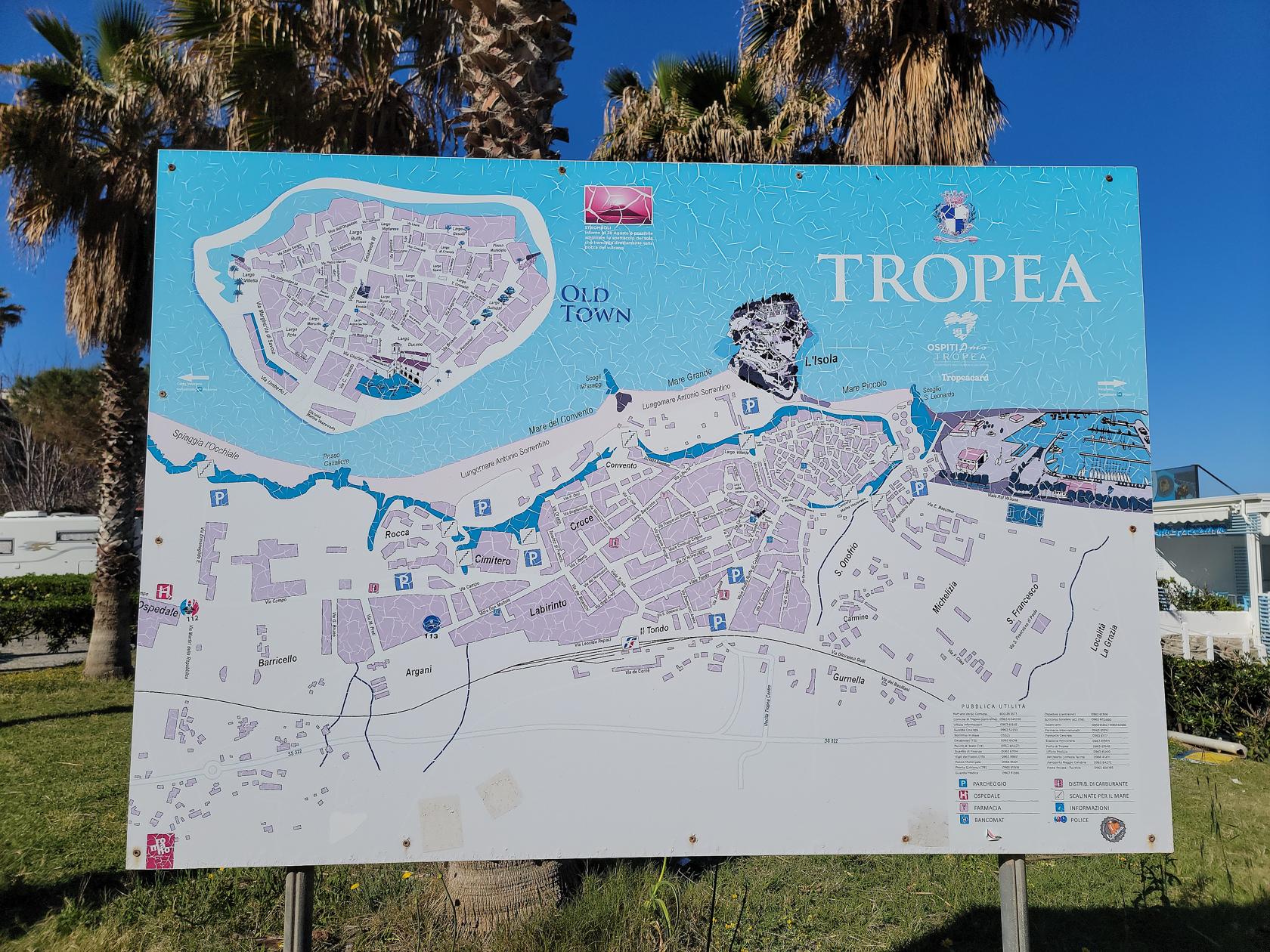
Tropea

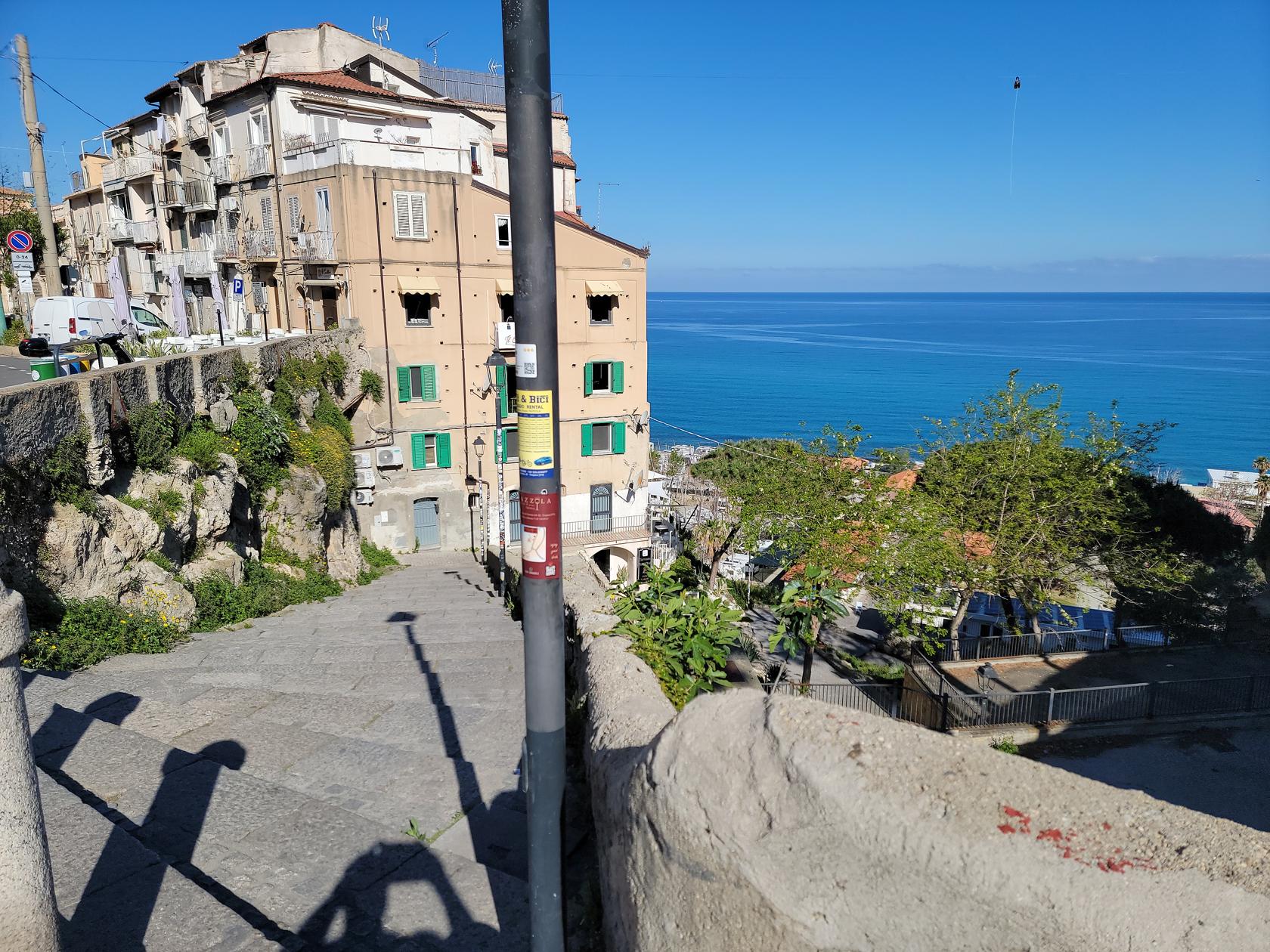
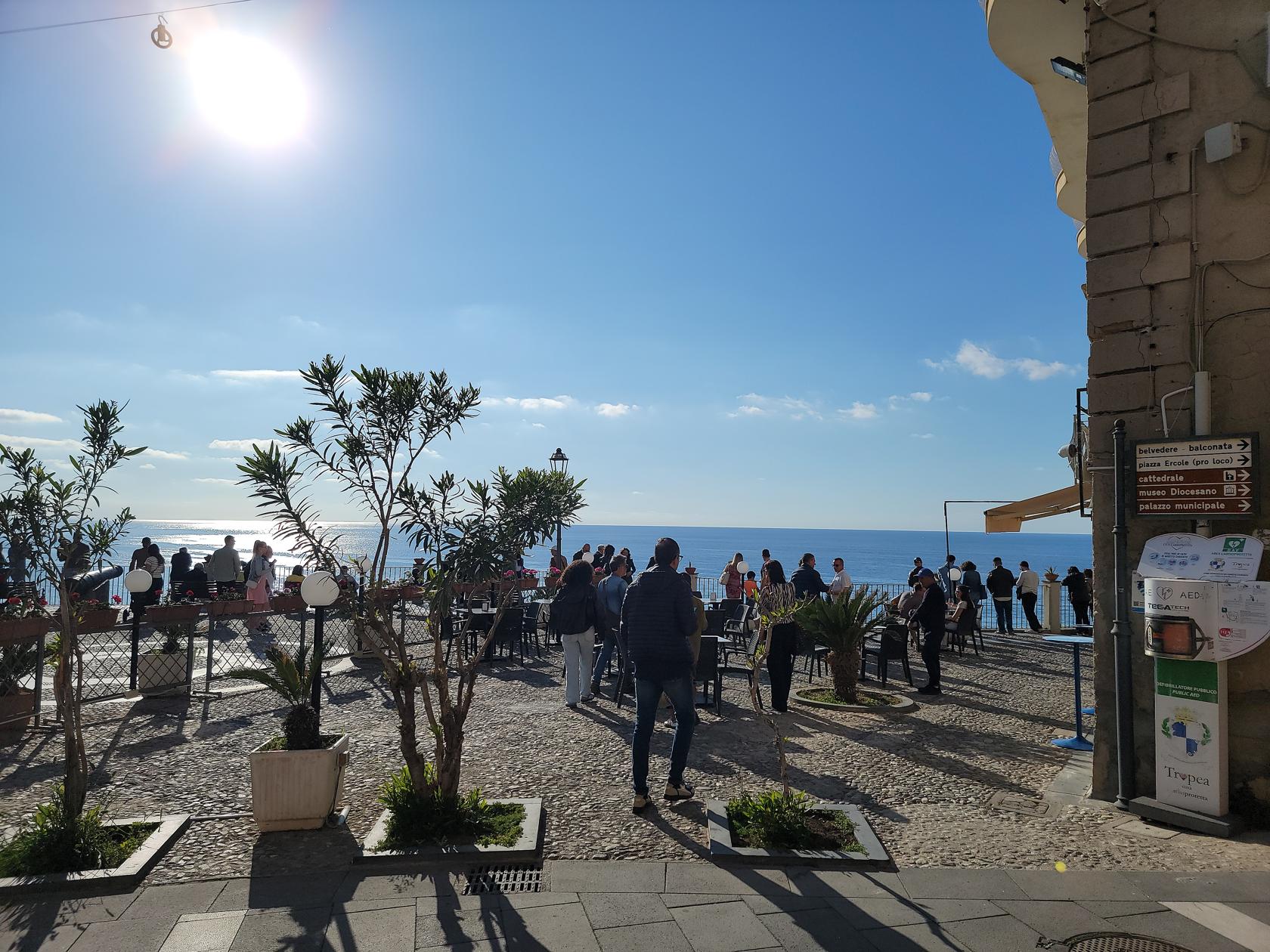
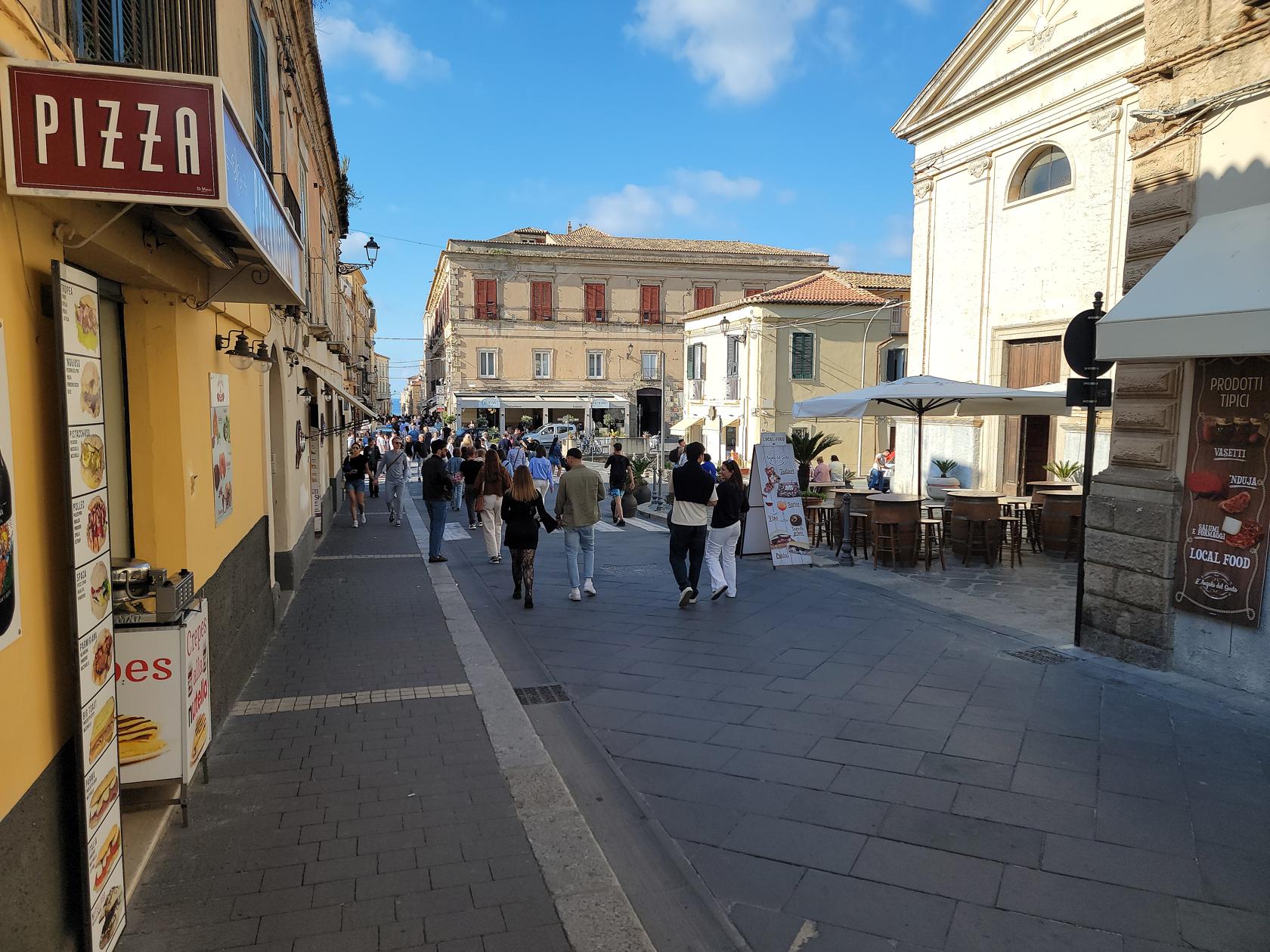
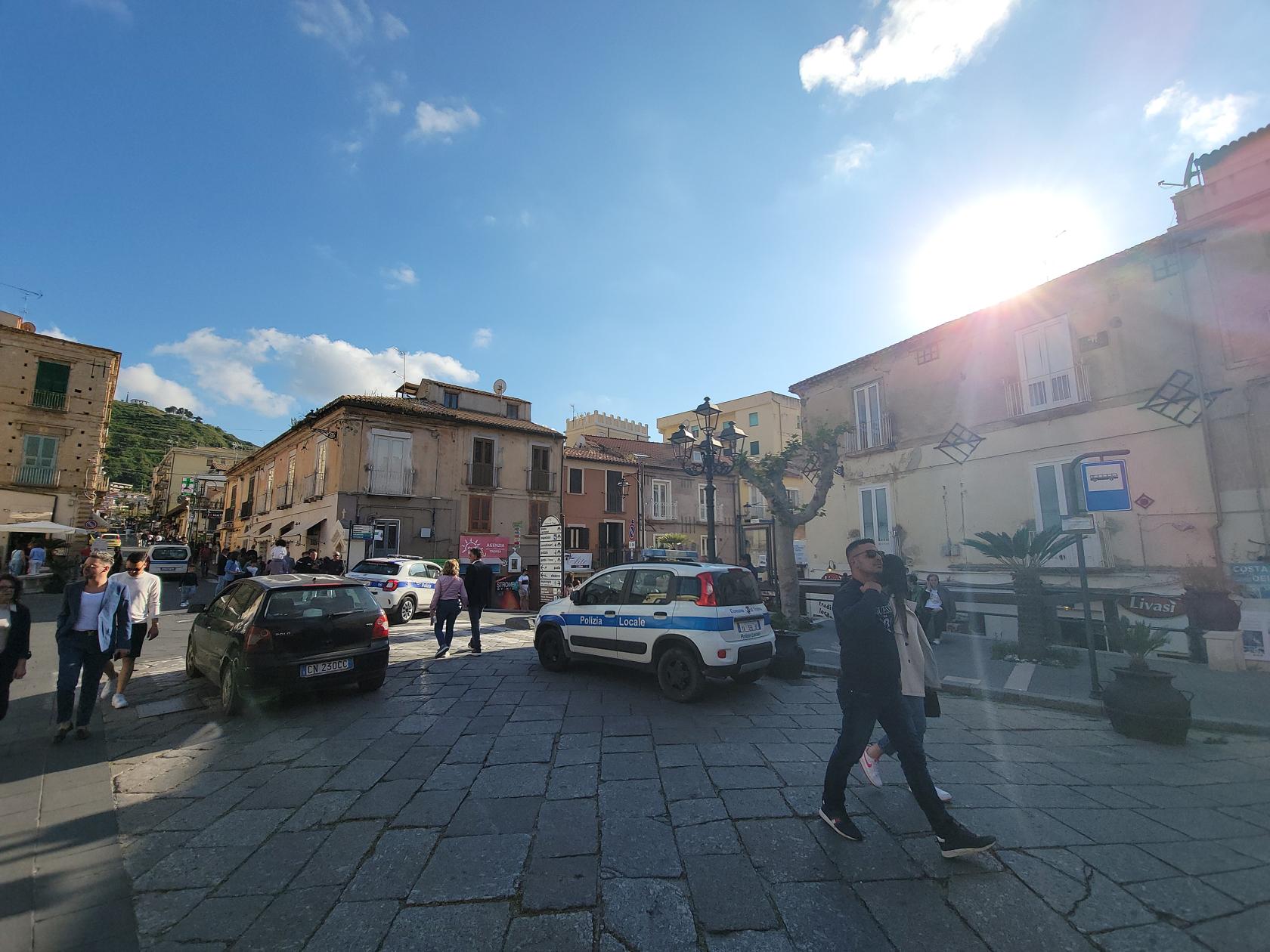
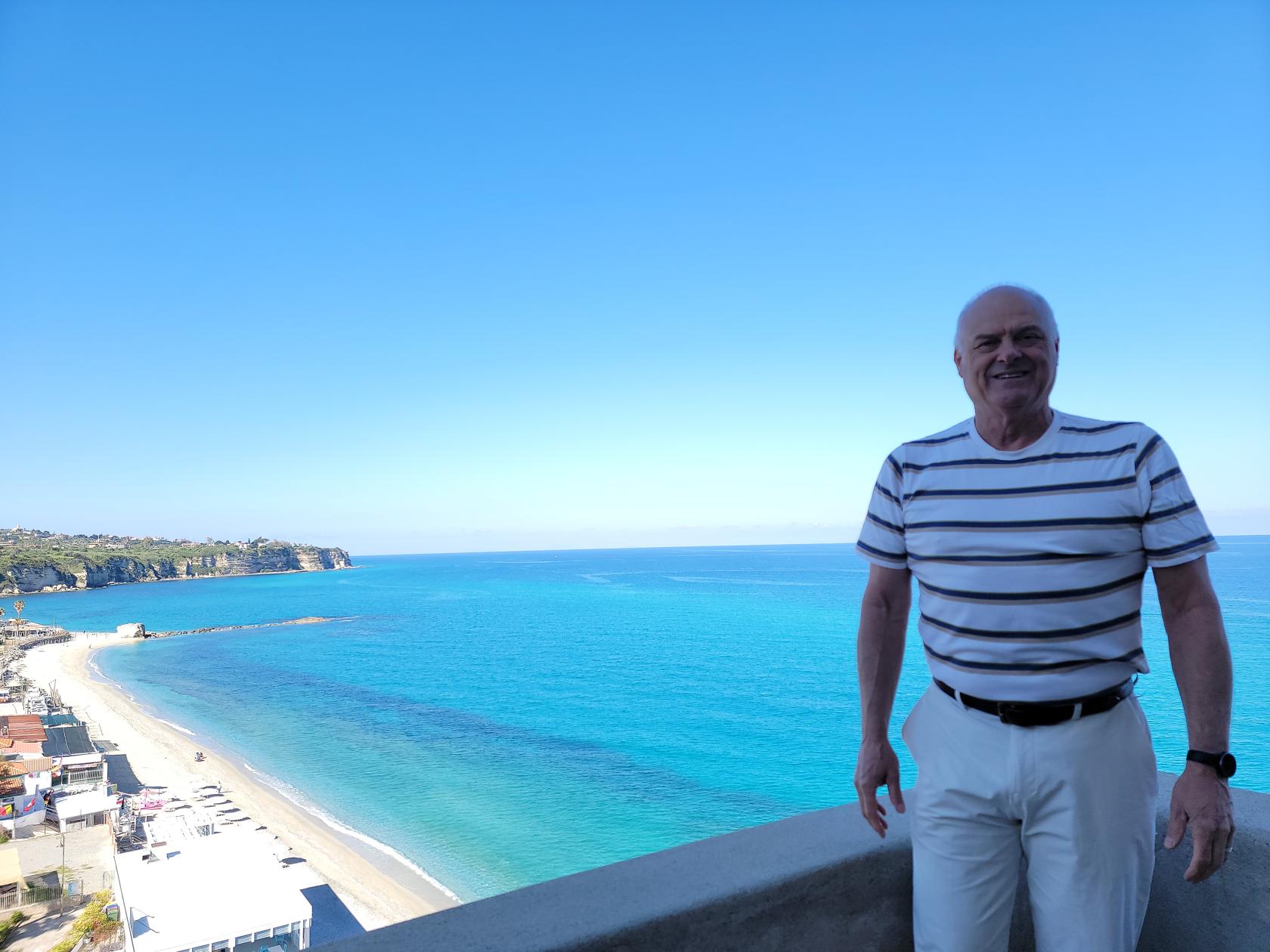
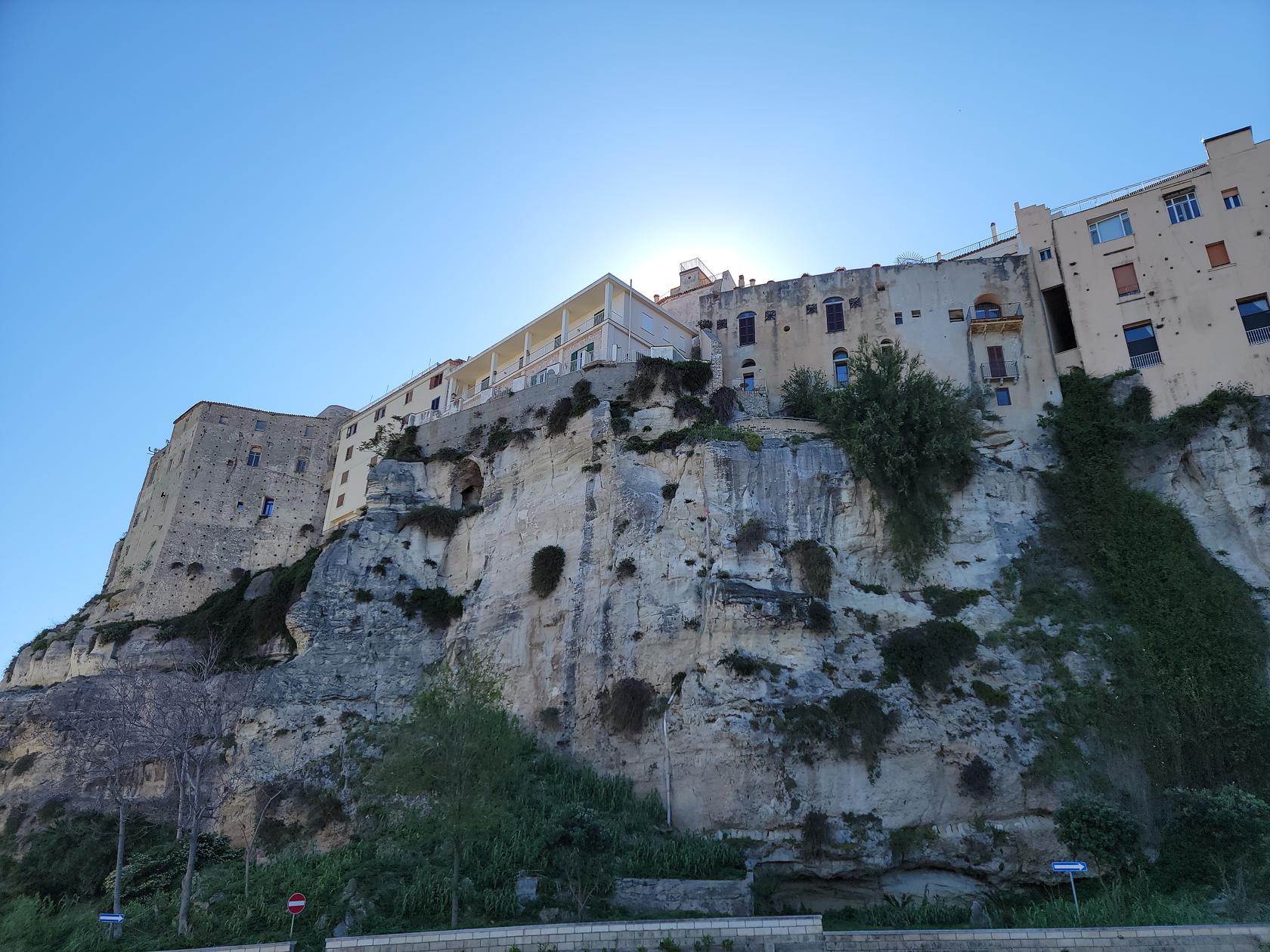
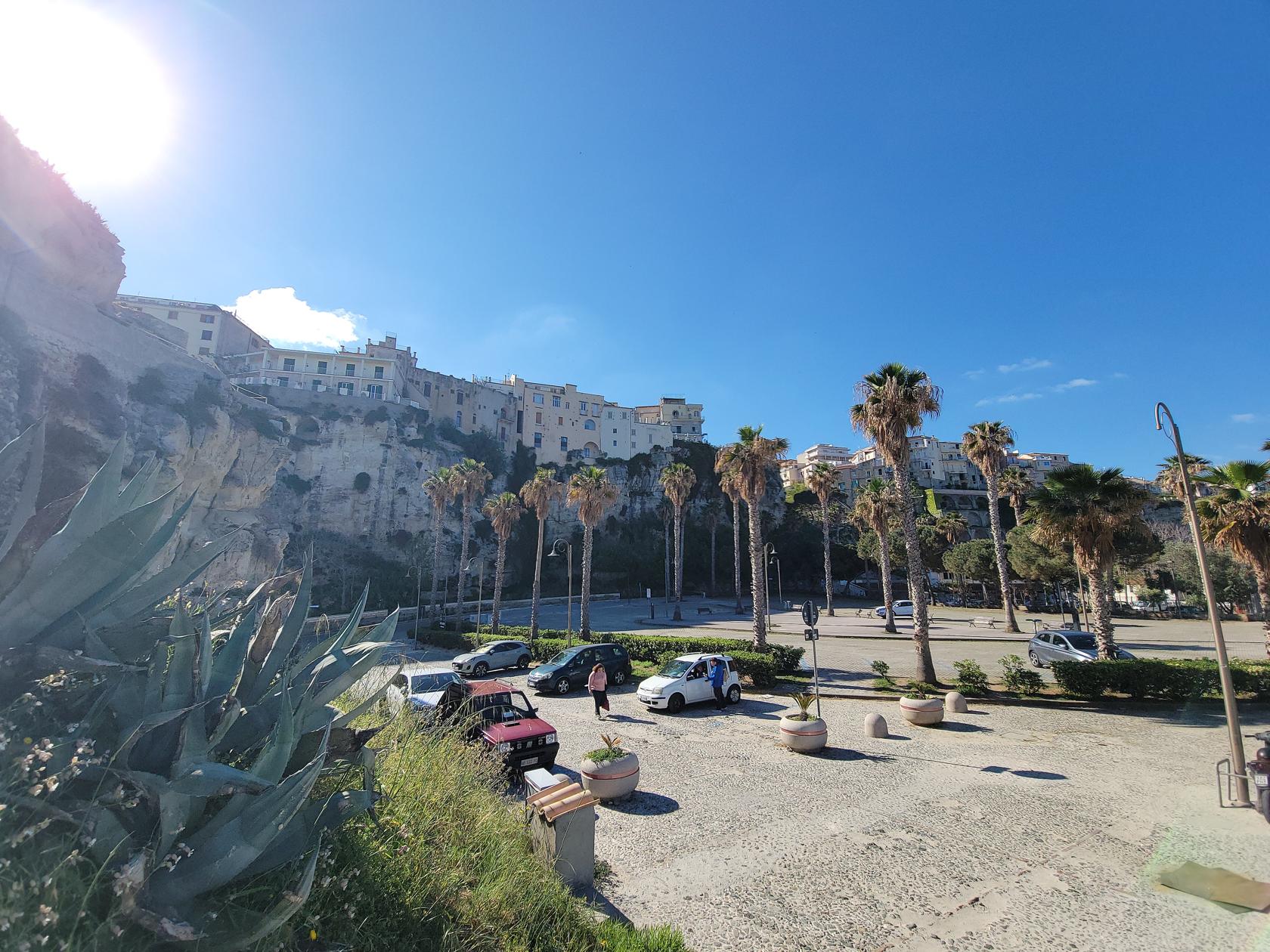
Unknown to us, Tropea is a very busy tourist destination and we were there on a weekend, so the crowds we experienced were kind of unexpected, especially for this time of year.

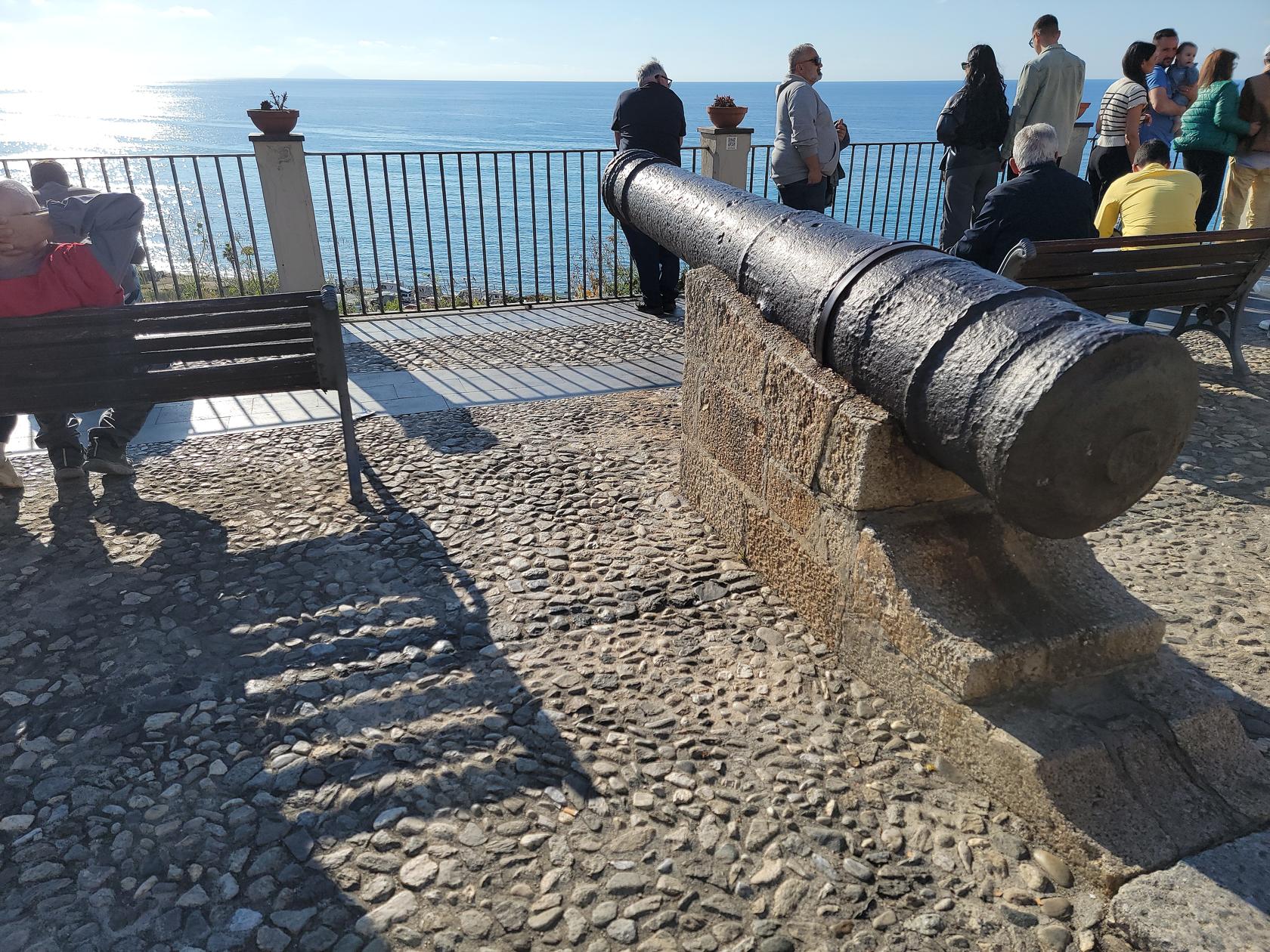
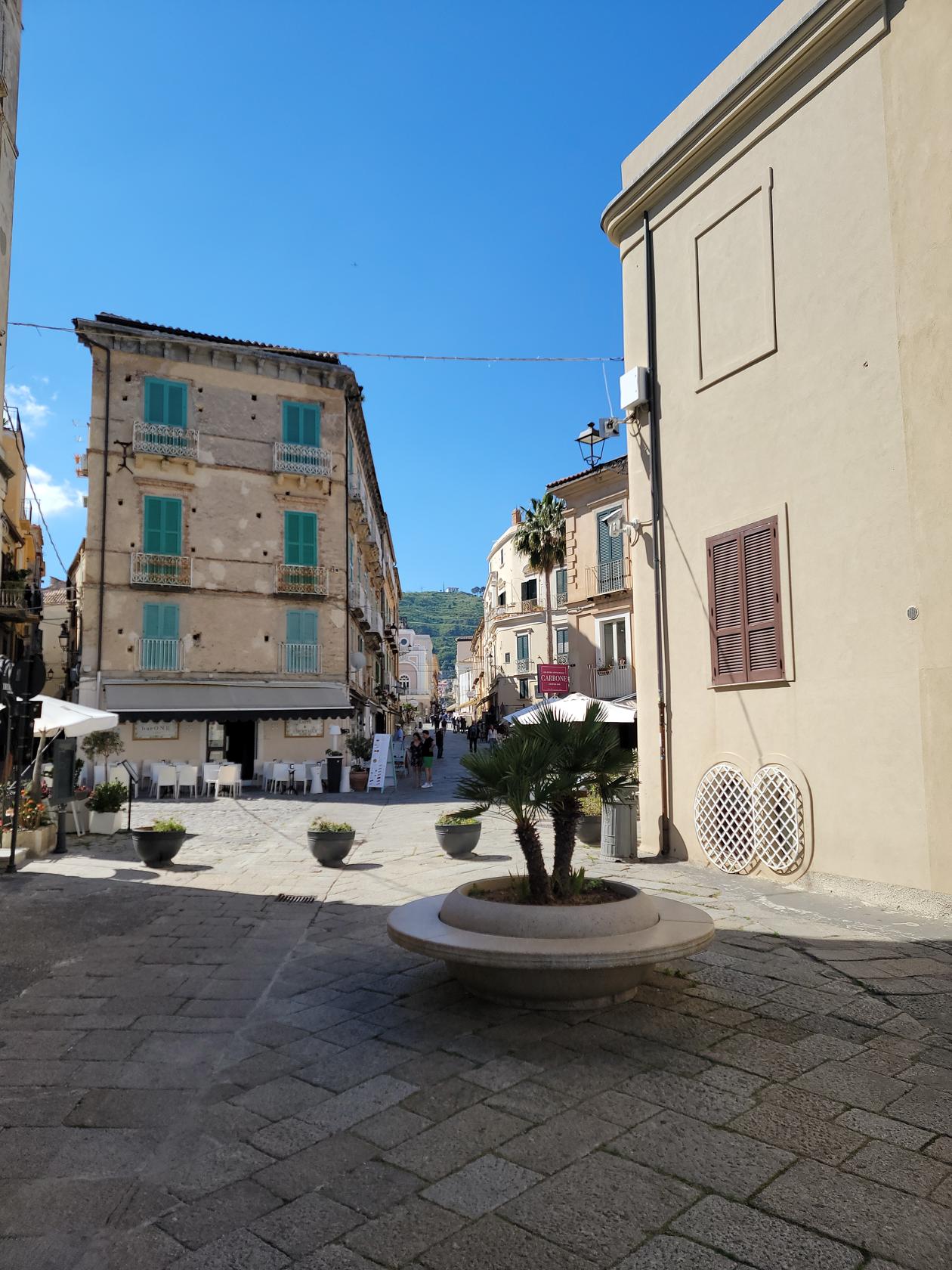
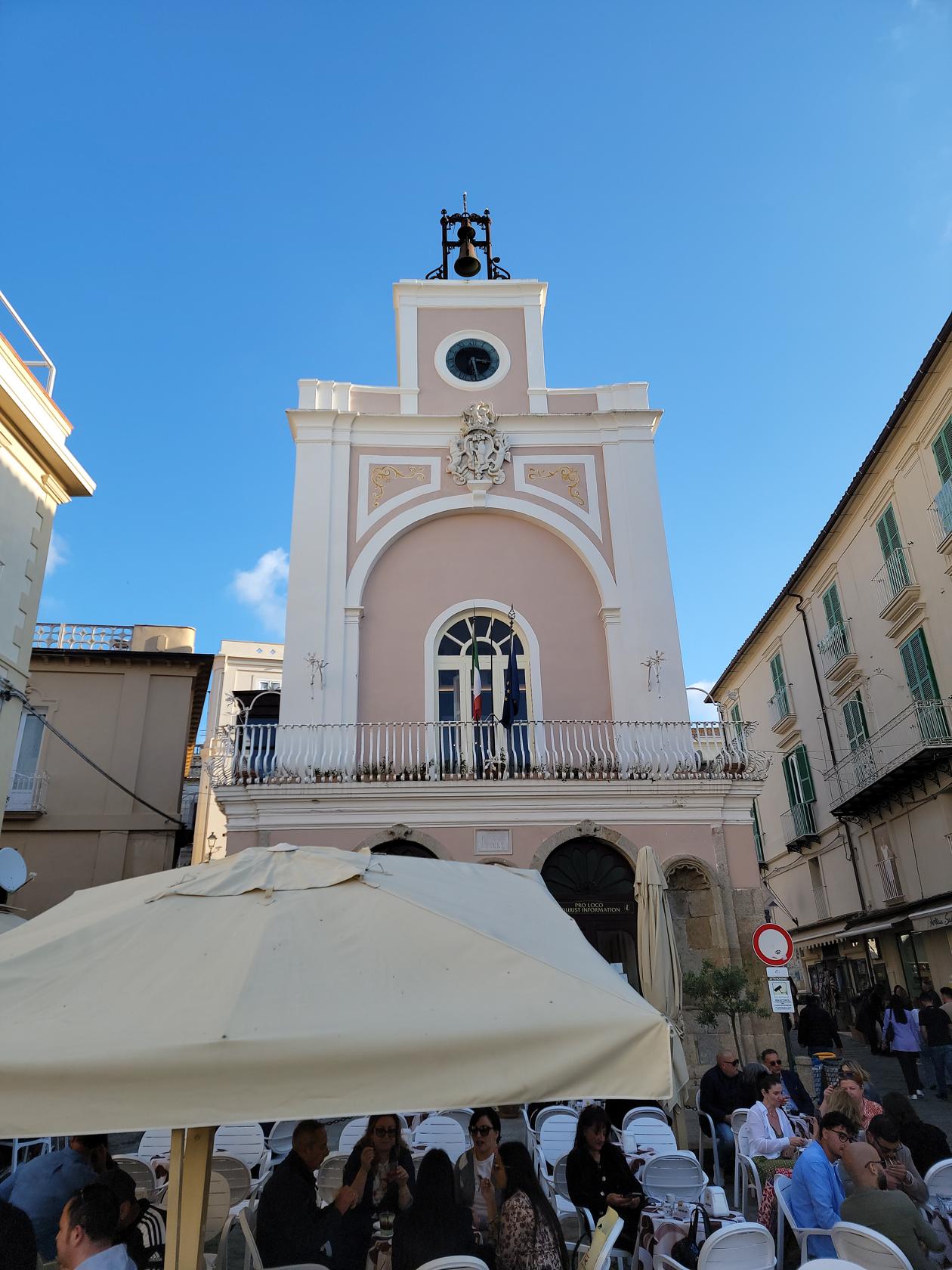
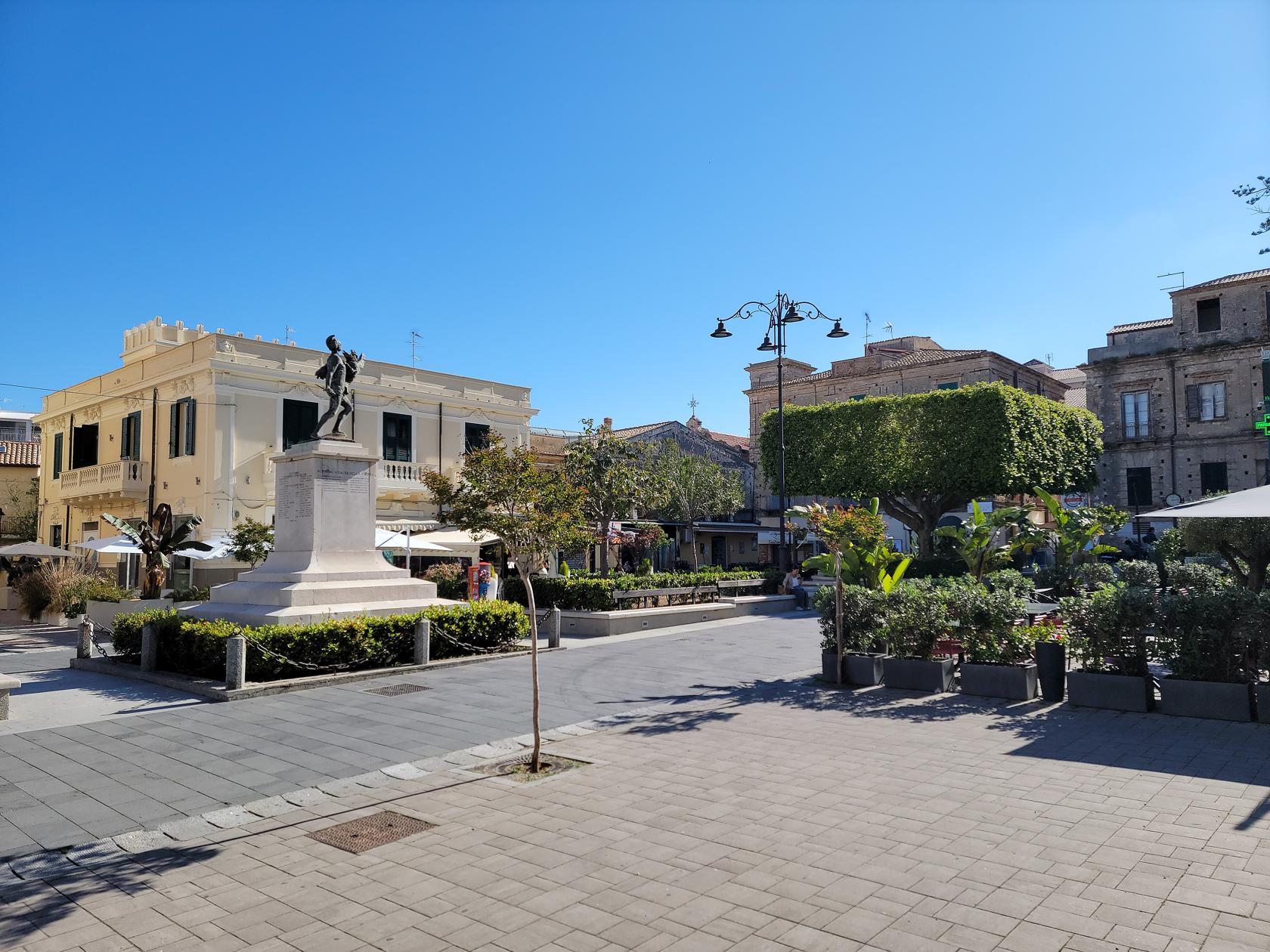
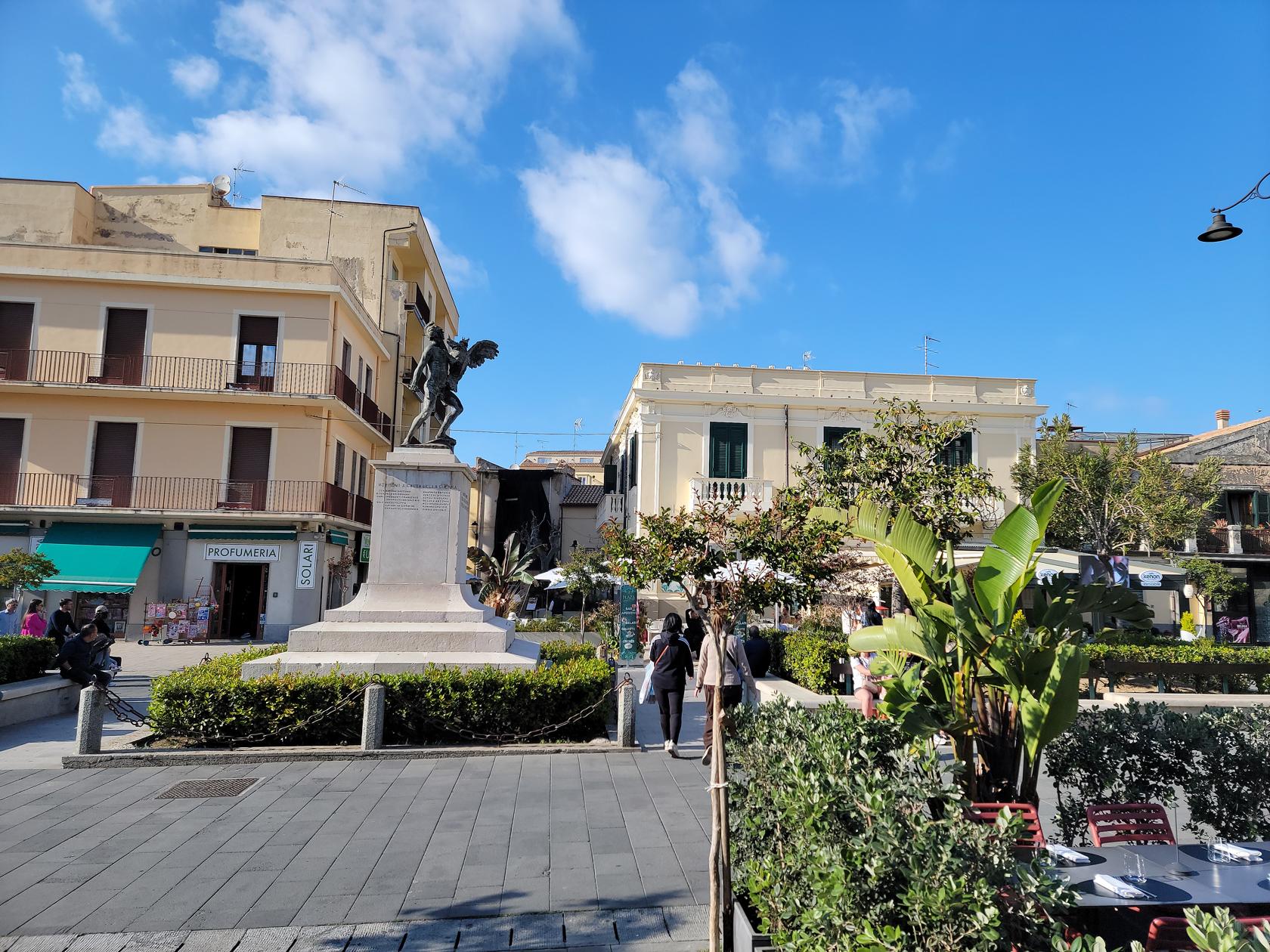
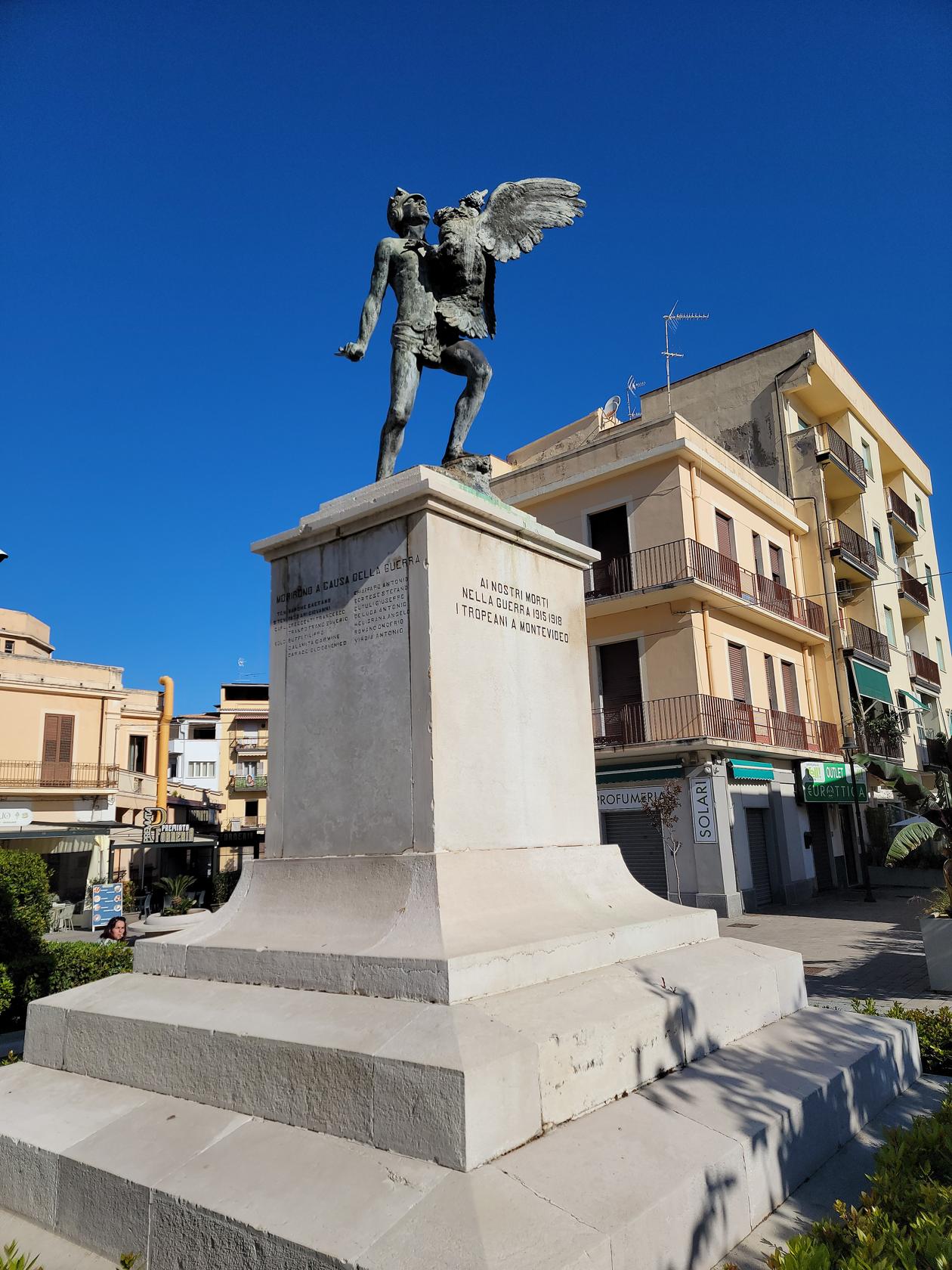
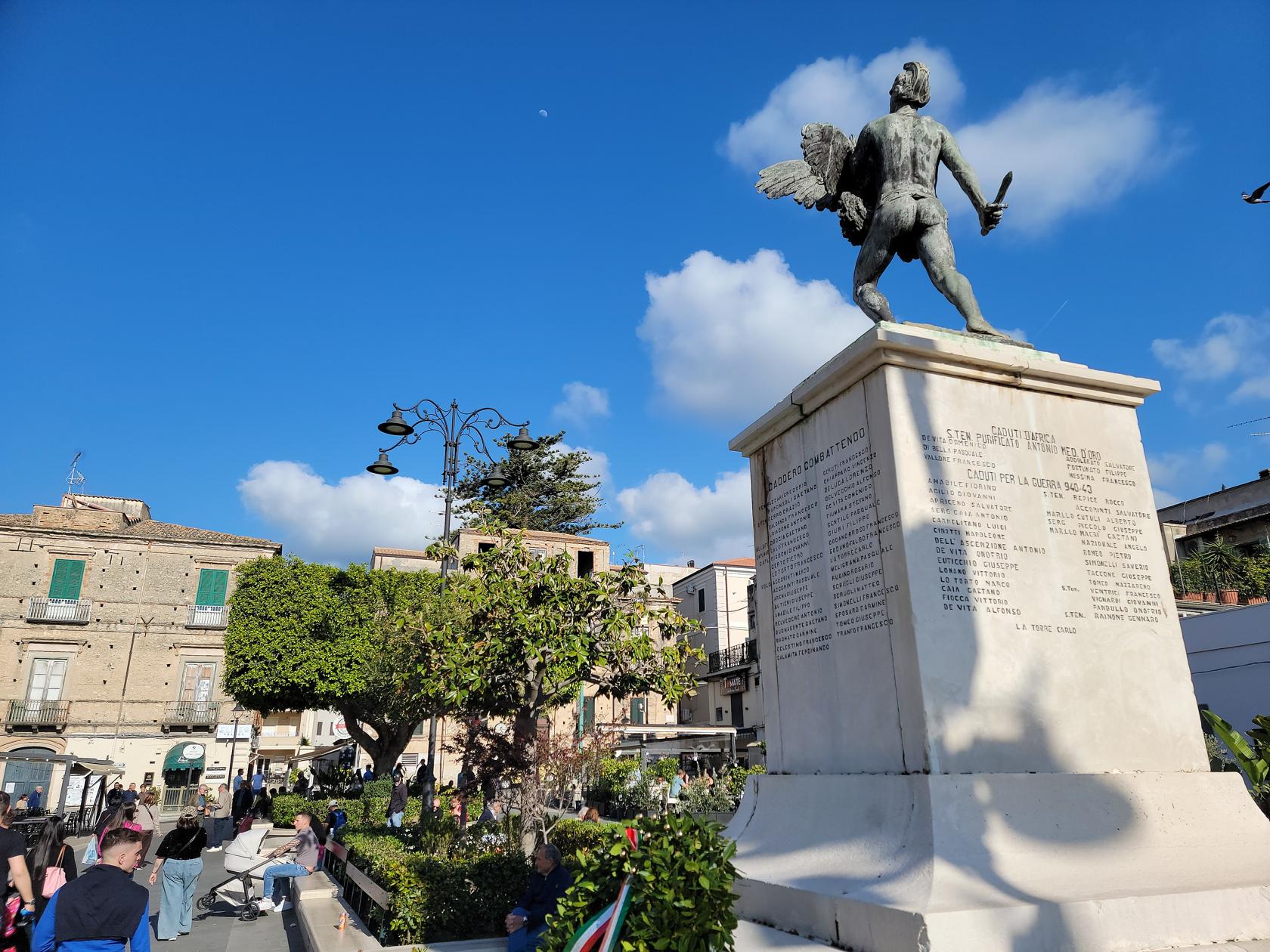
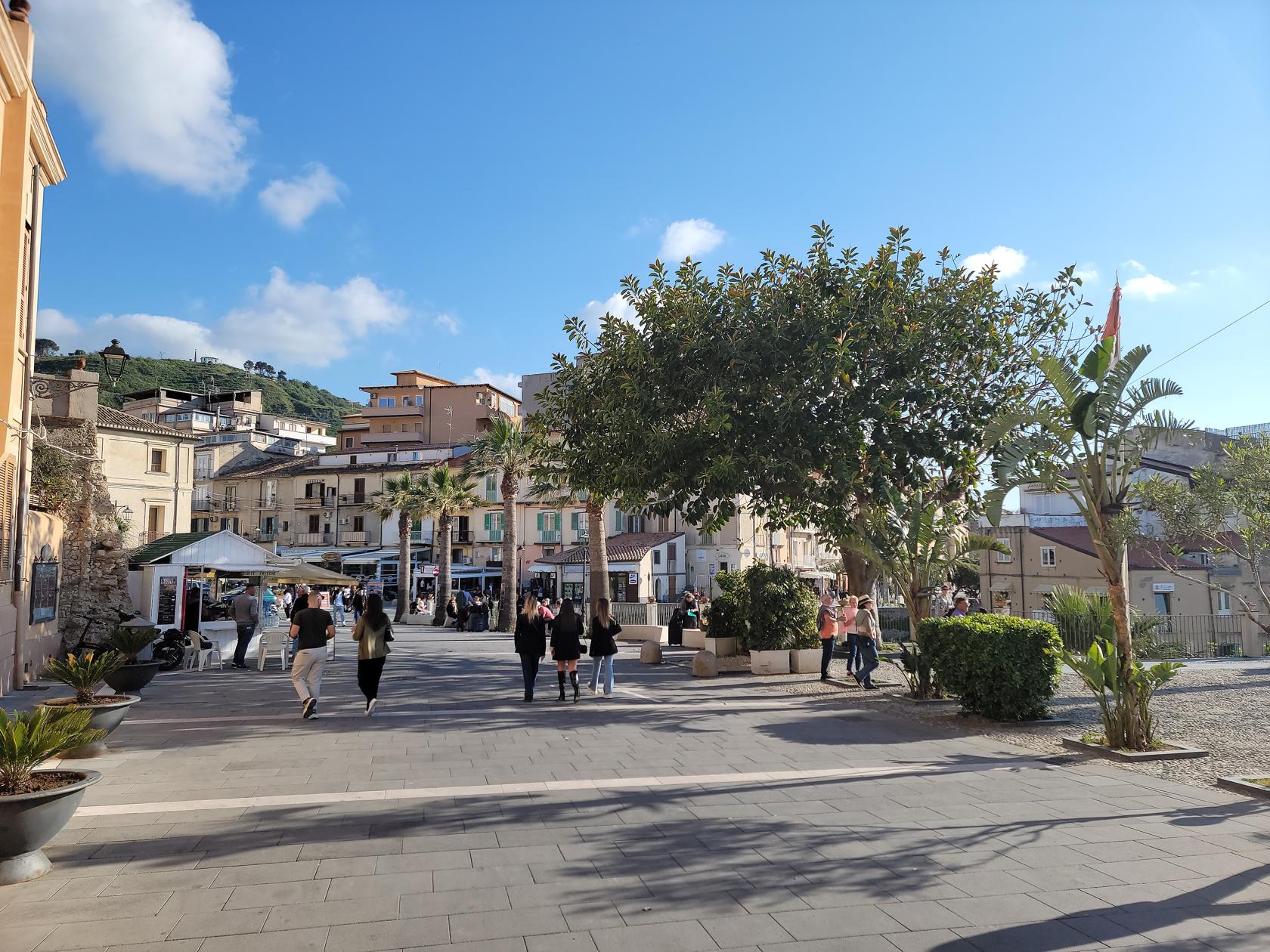
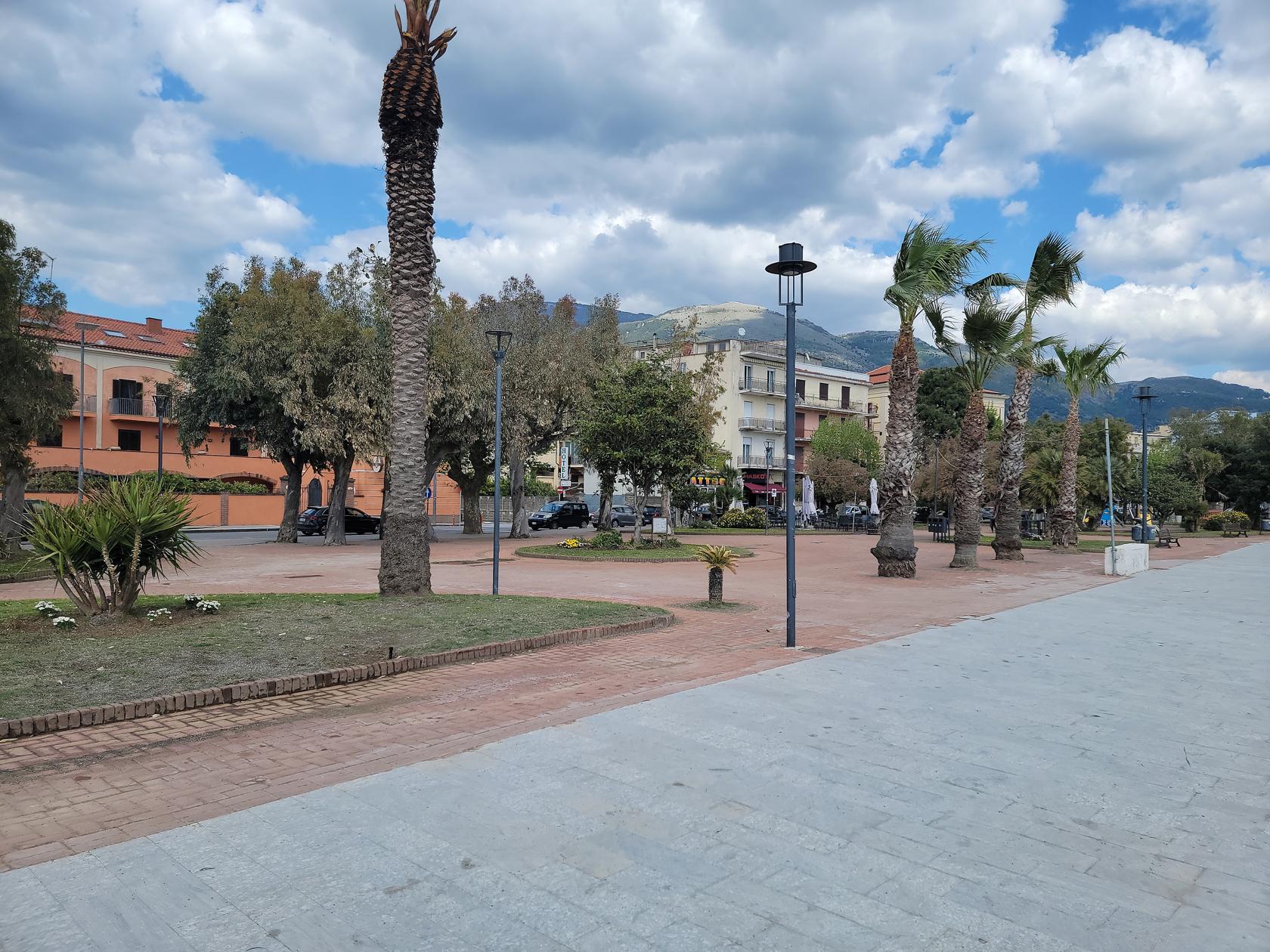
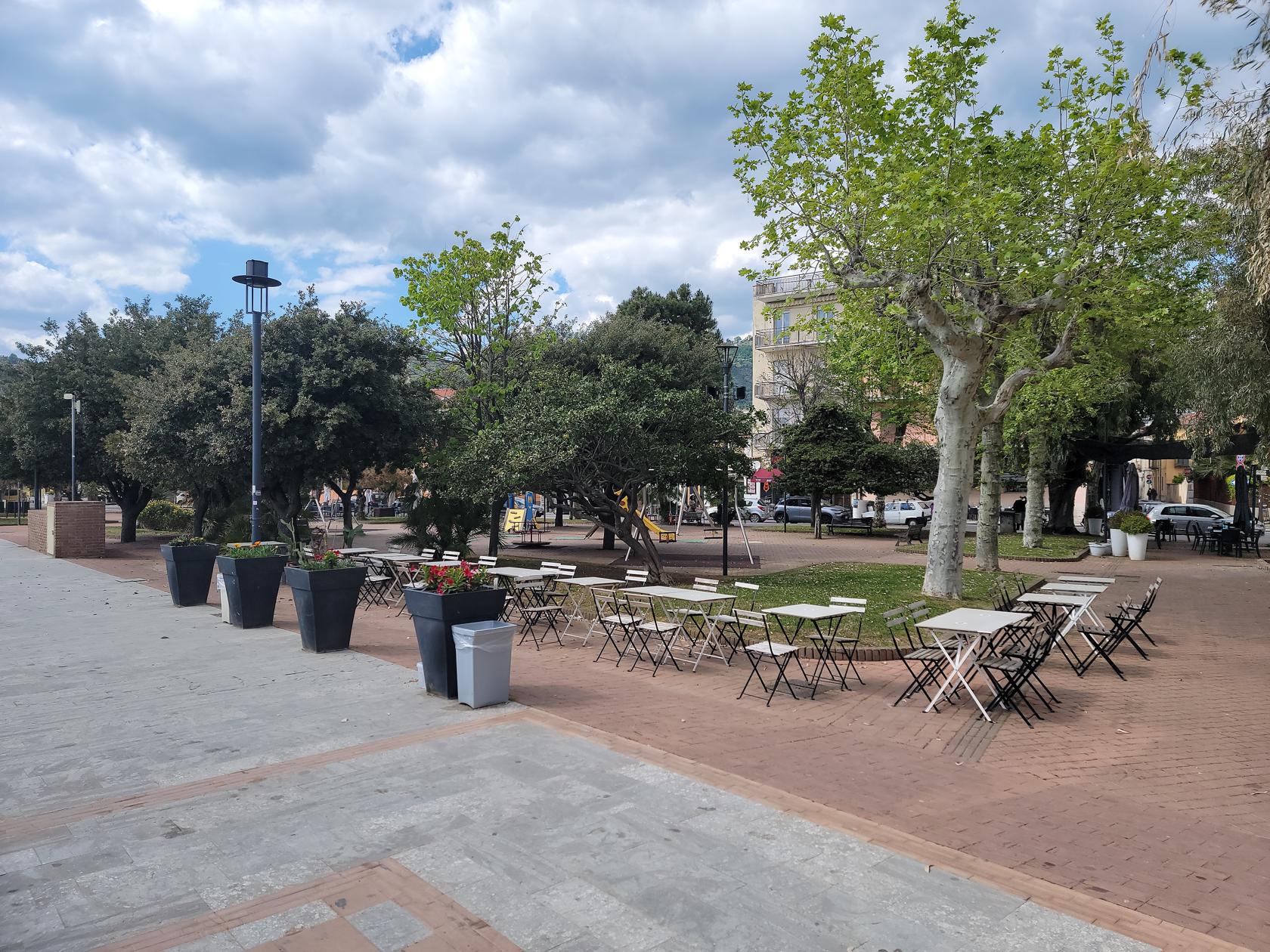
One of the main squares or piazzas close to our hotel, was the Piazza Vittorio Veneto, which our street ran right into, if you walked far enough. It has plenty of seating and a few monuments amongst the trees that have been planted to provide some shade against the sun.

From there the main street in town is the Corso Vittorio Emanuele, which turns into Via Stazione as one gets closer to the train station.

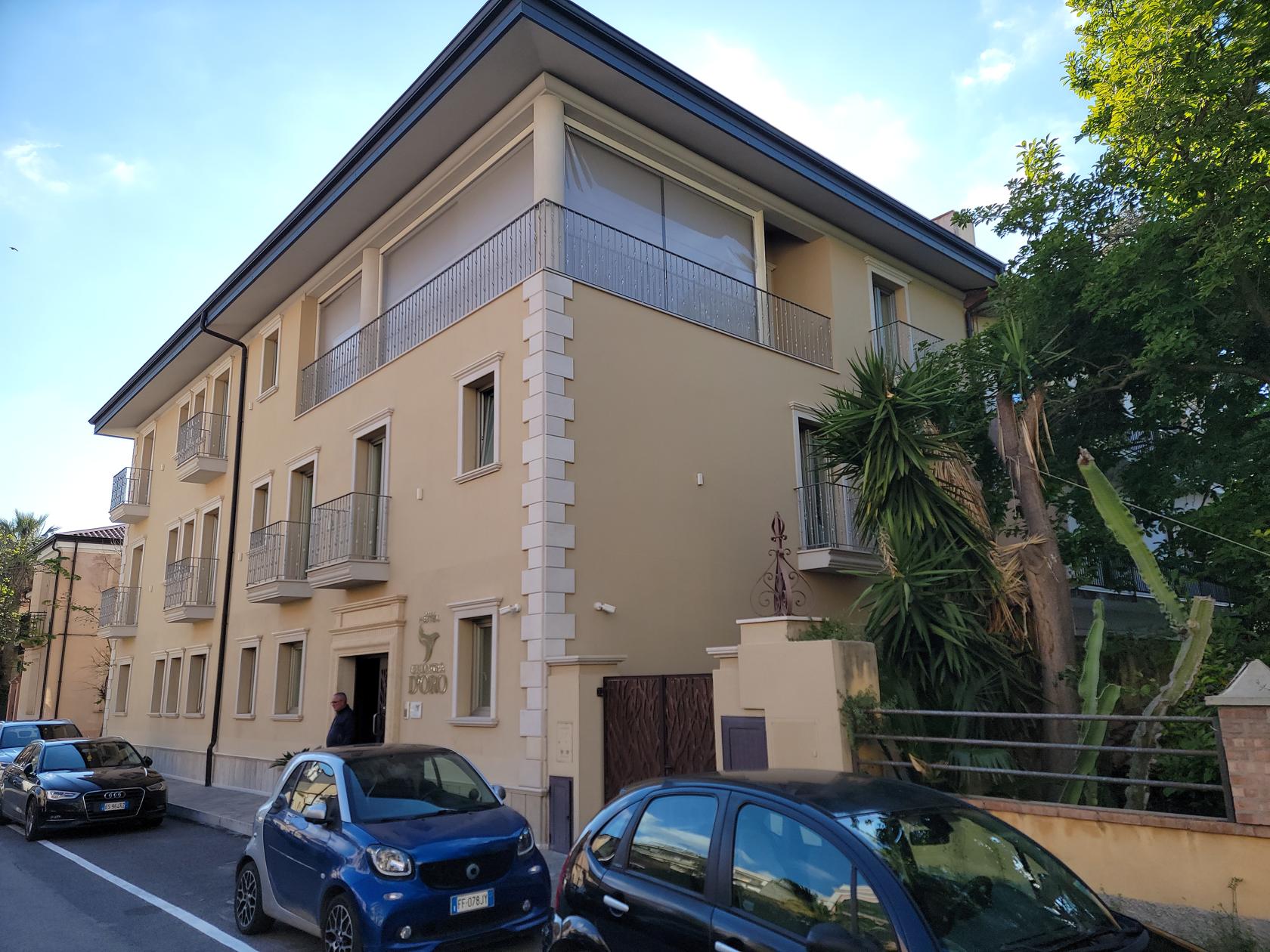
Hotel Colomba D’Oro

In Tropea we stayed at a hotel between the old part of town and the train station. It was just as well, our hotel in the city was the Hotel Colomba D’Oro on via Vittorio Veneto and it proved to be quiet and very comfortable. Our room came with a free morning continental breakfast, which included cooked eggs, pancetta and other warm offerings.

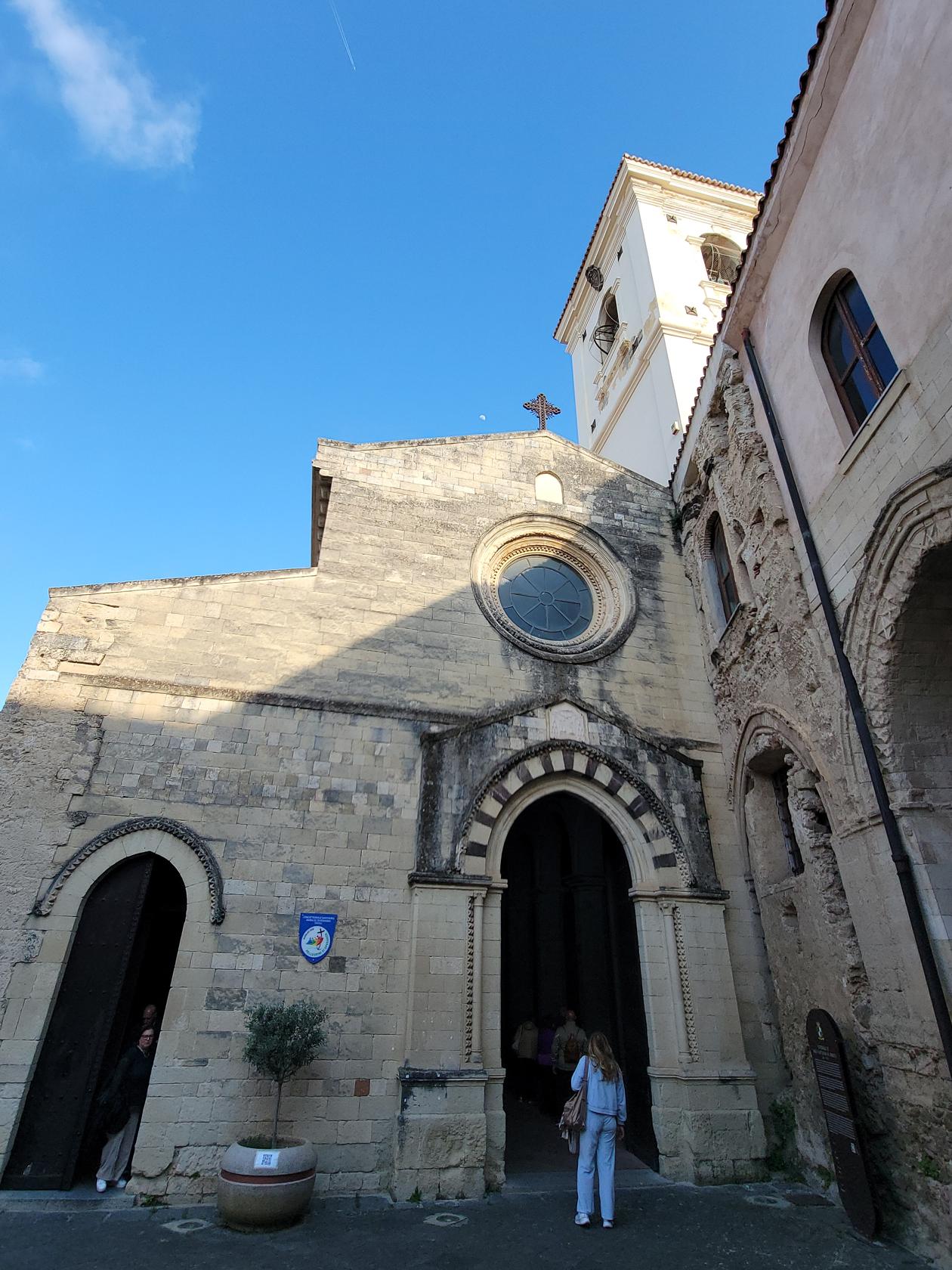
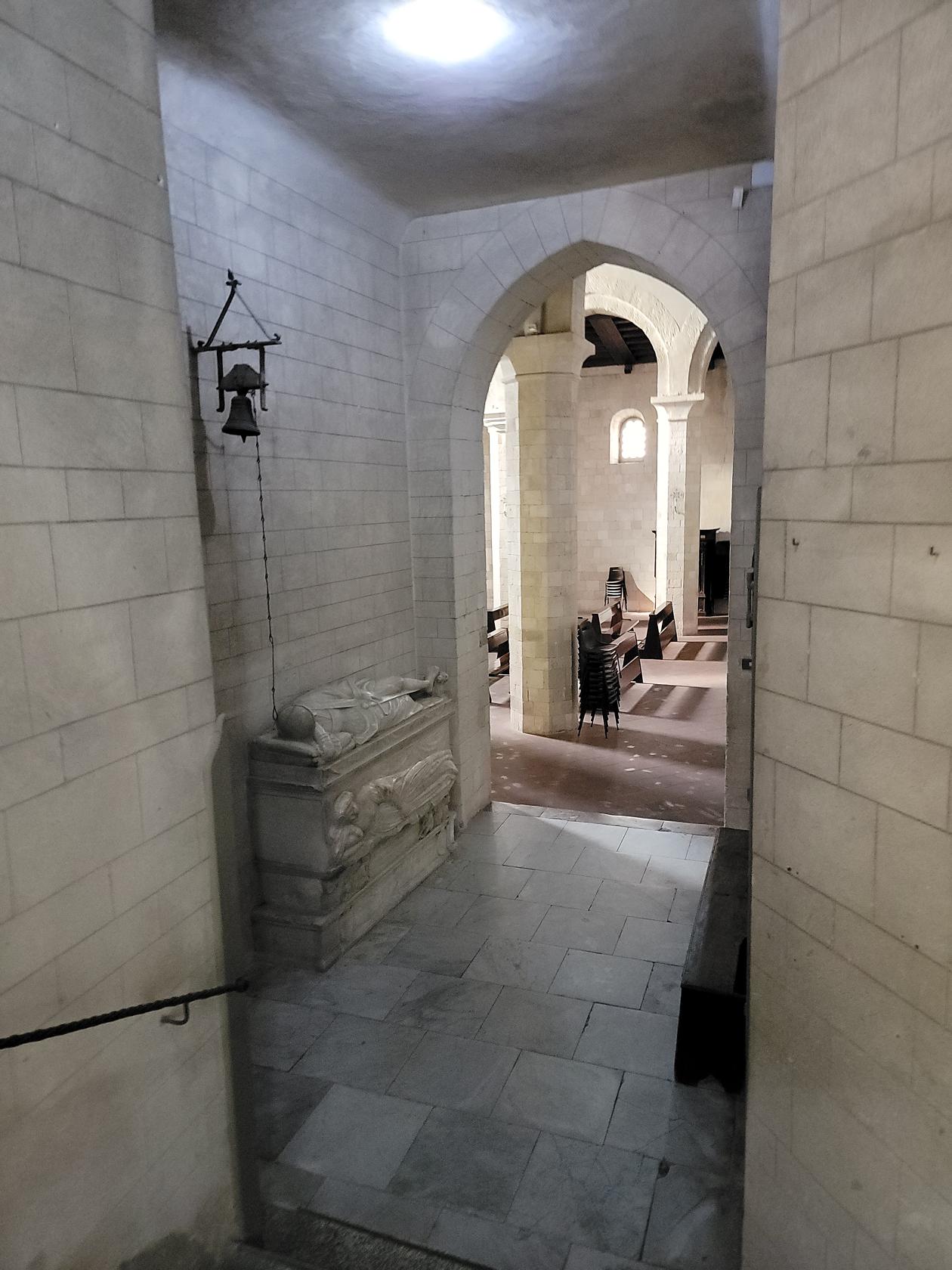
Cathedral of Maria Santissima of Romania

The twelfth century cathedral of Saint Mary of Romania is on Largo Duomo. The interior houses guilt altar for the Virgin of Romania and the Black Crucifix of 1600.

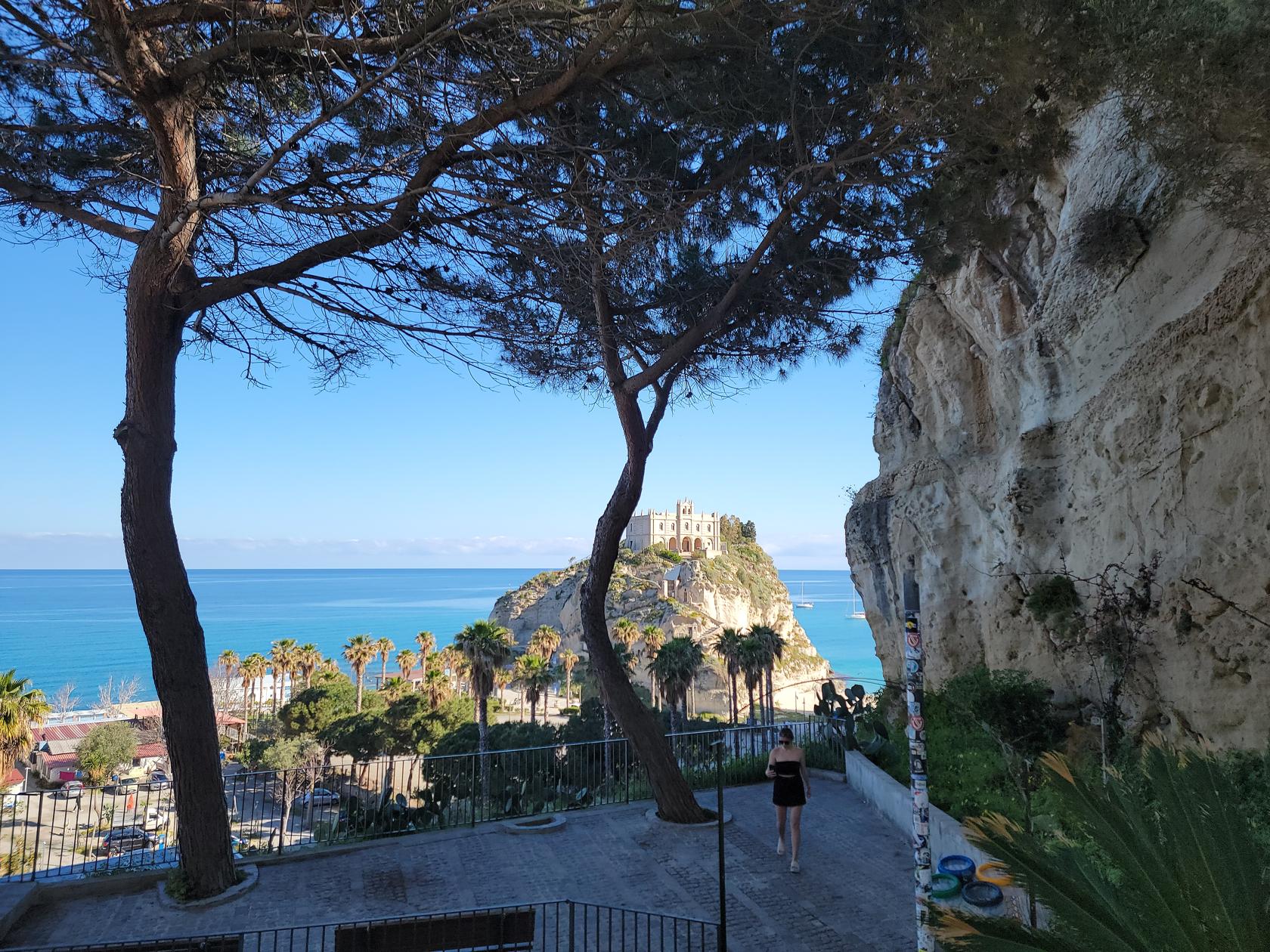
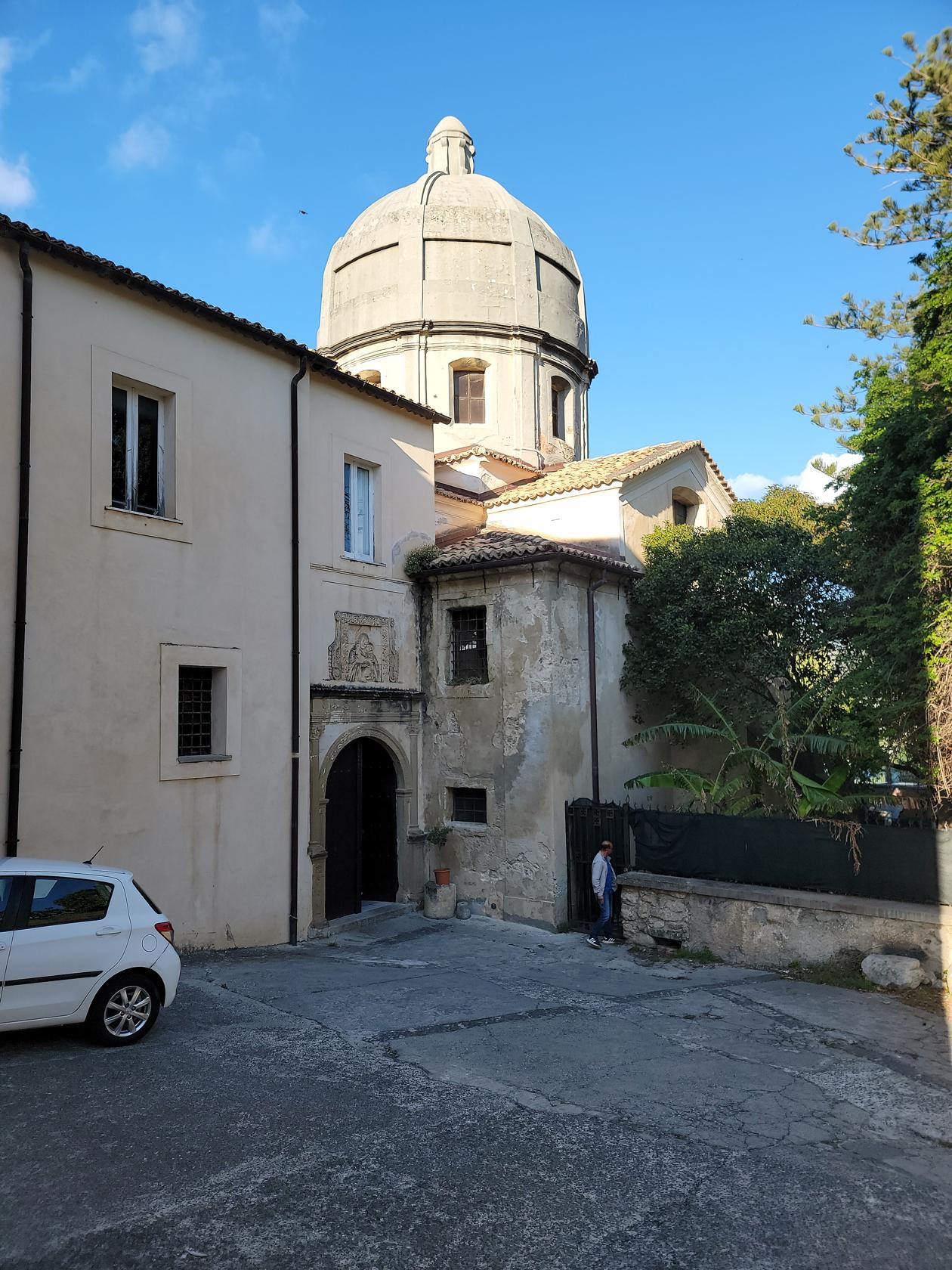
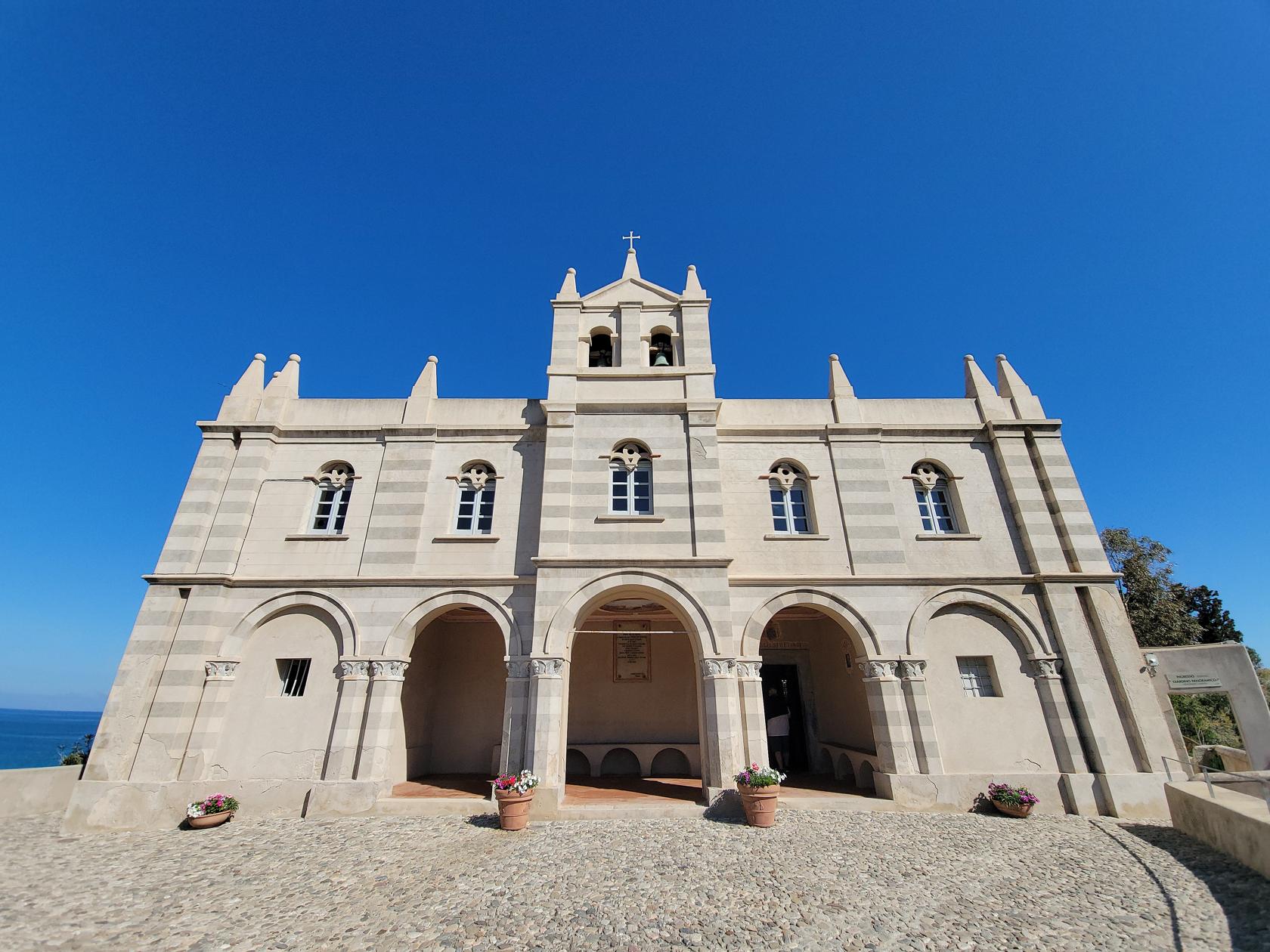
Sanctuary of Santa Maria of the Island of Tropea

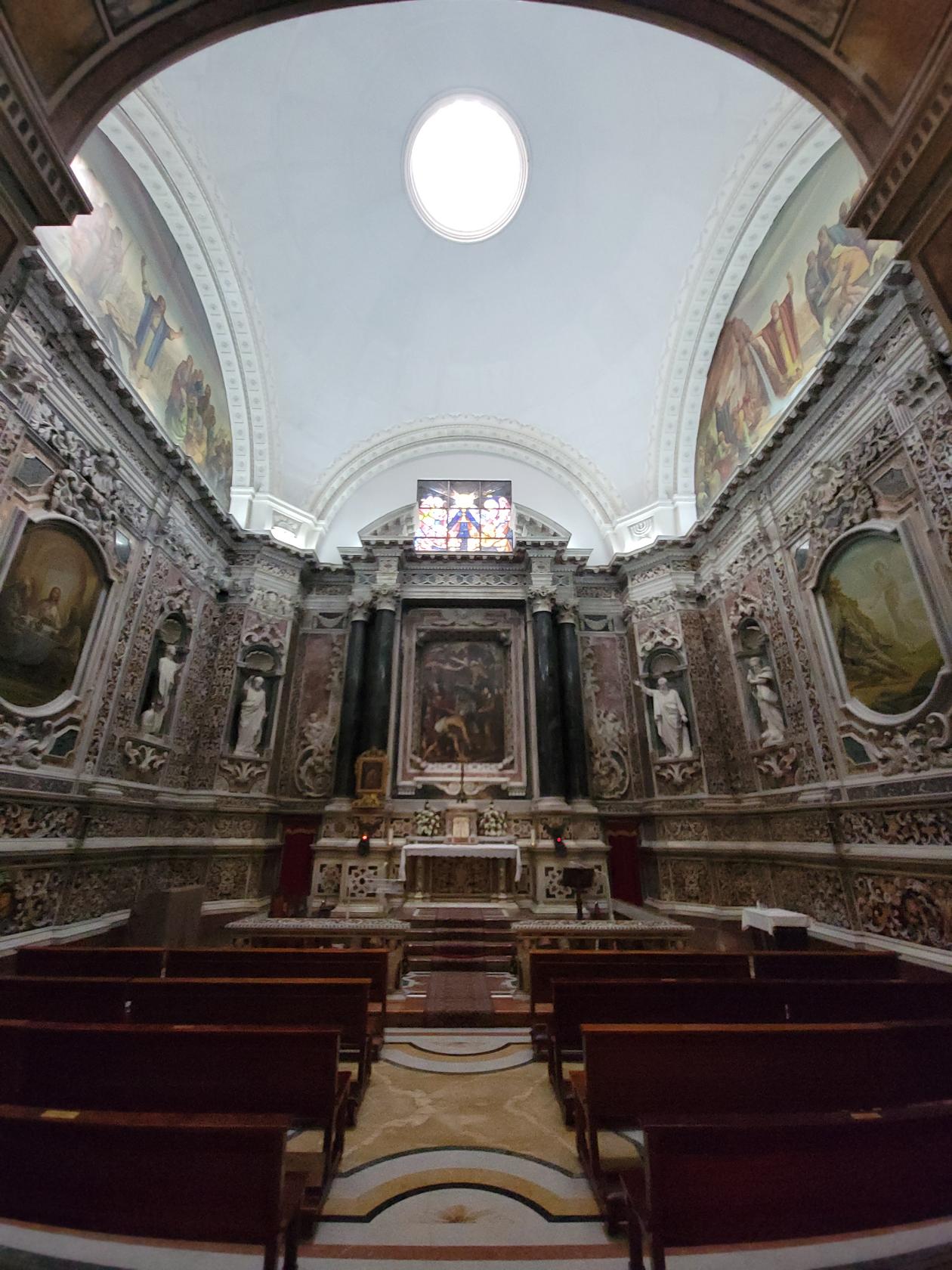
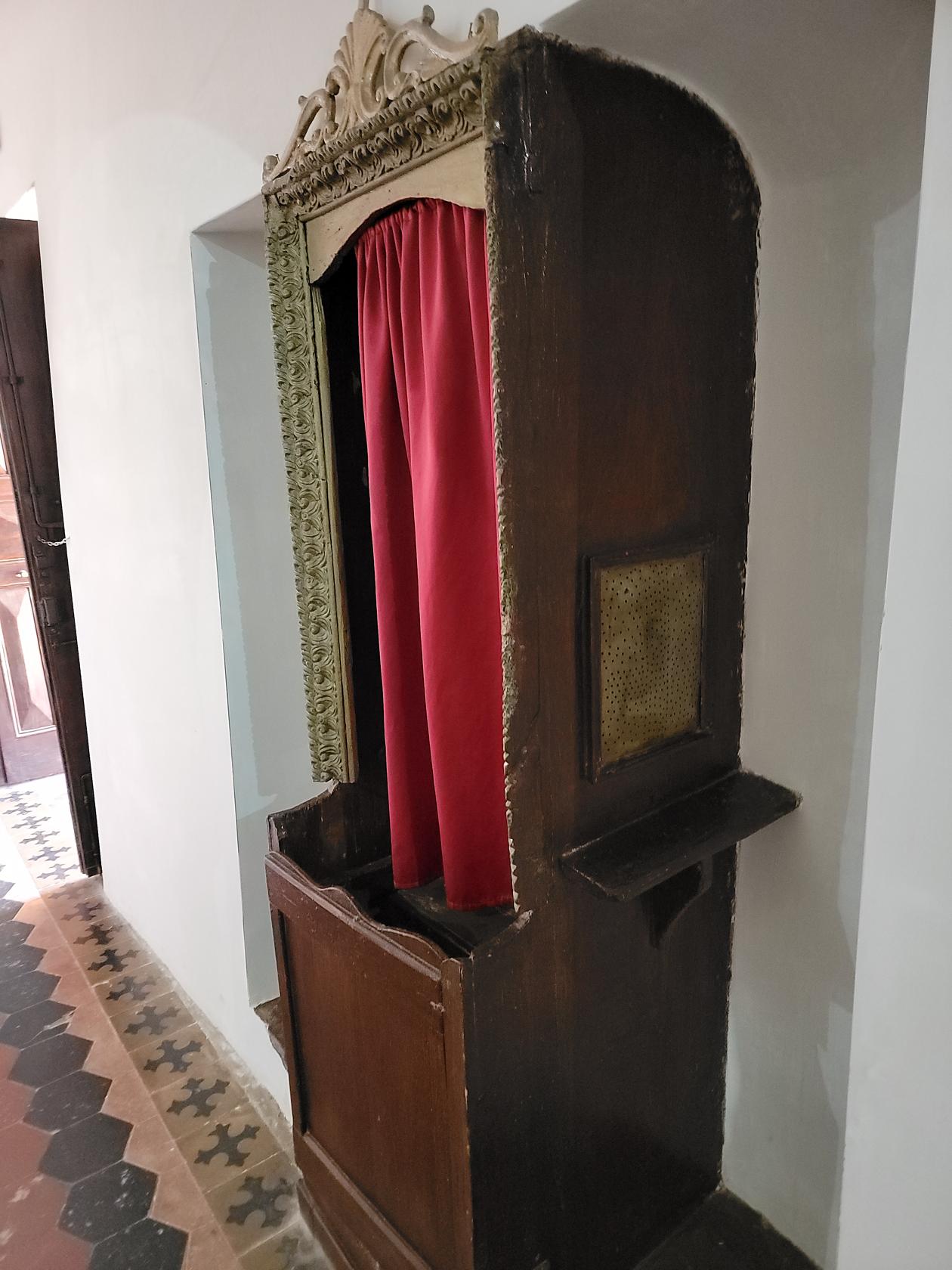
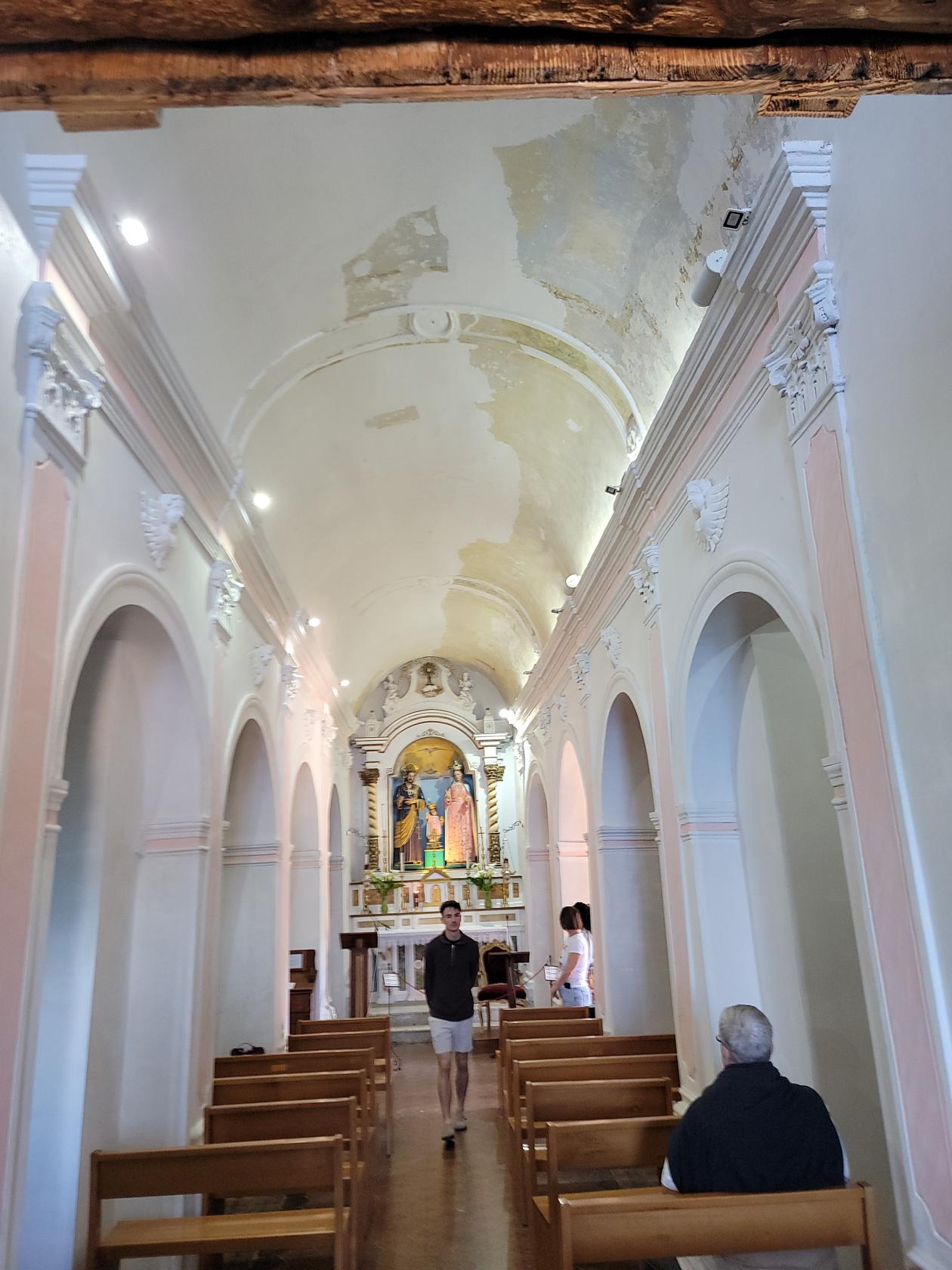
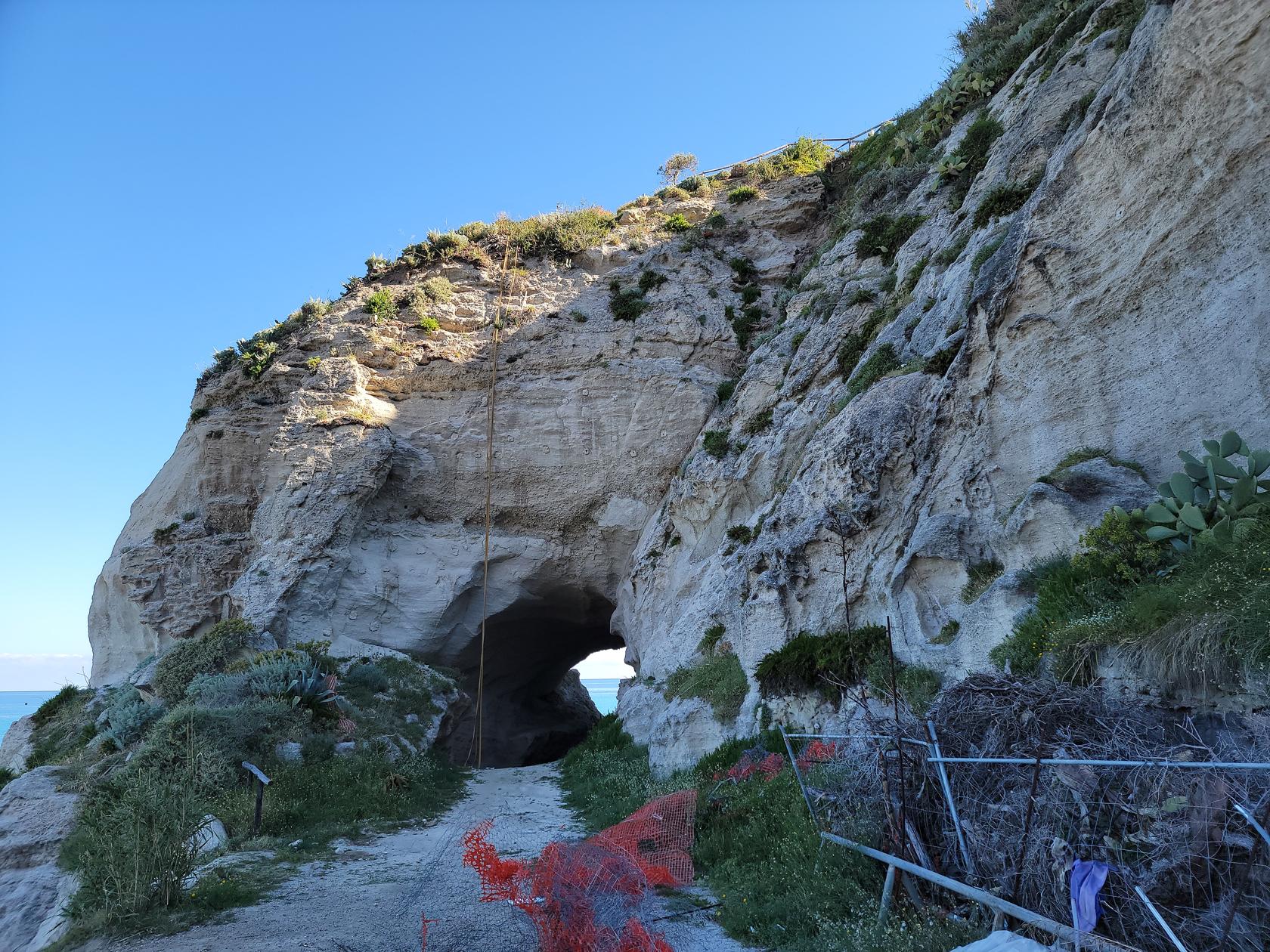
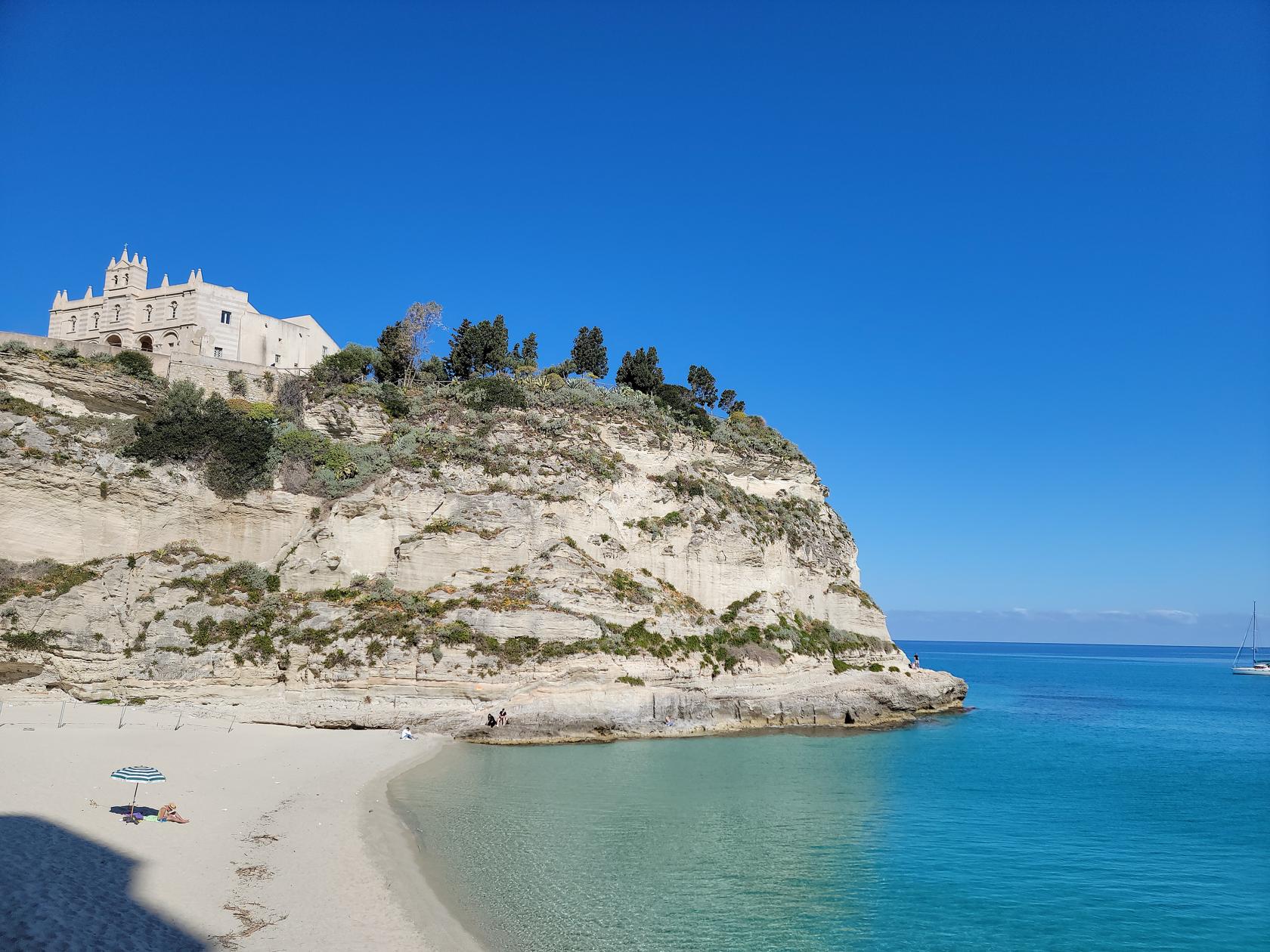
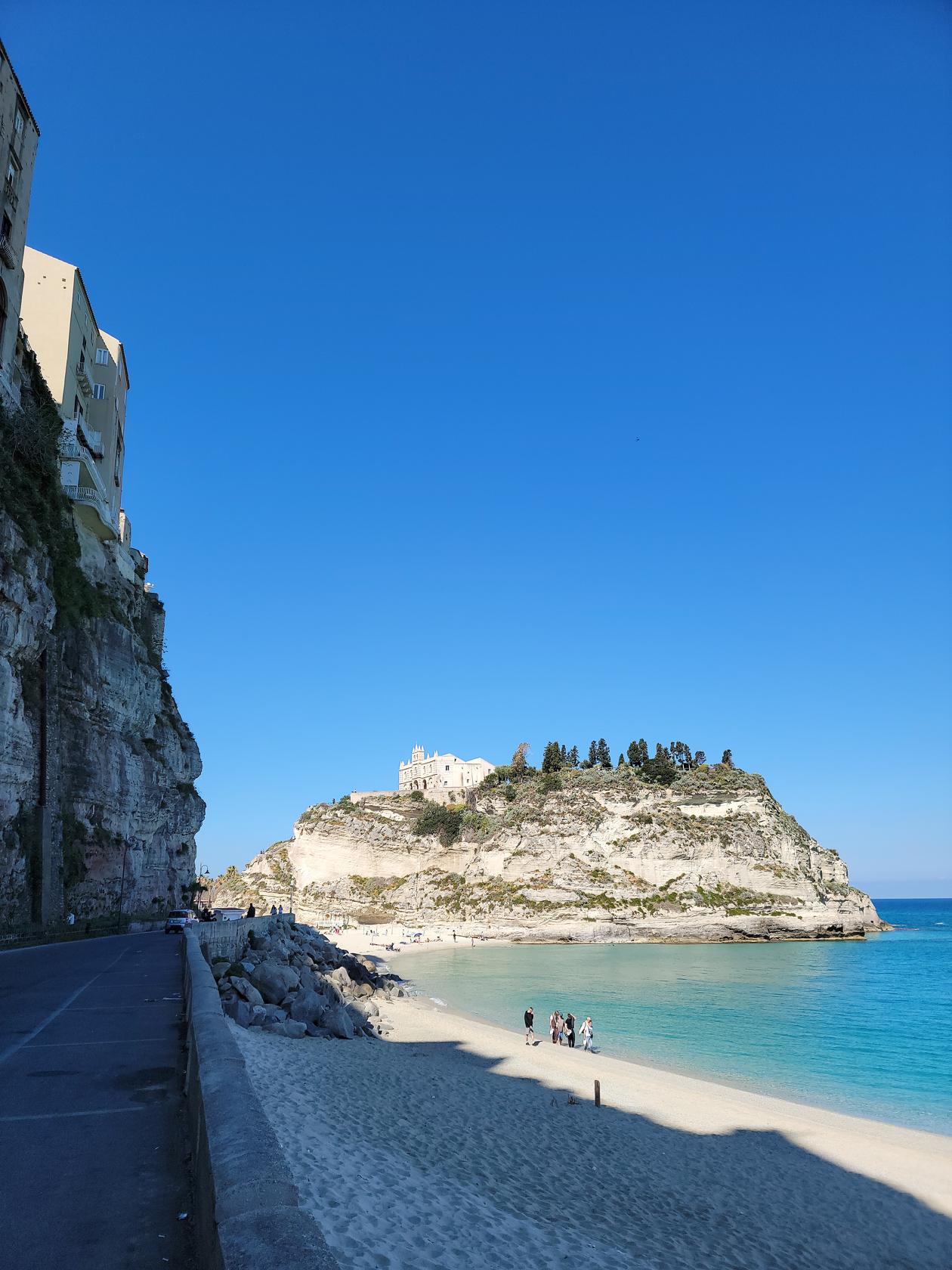
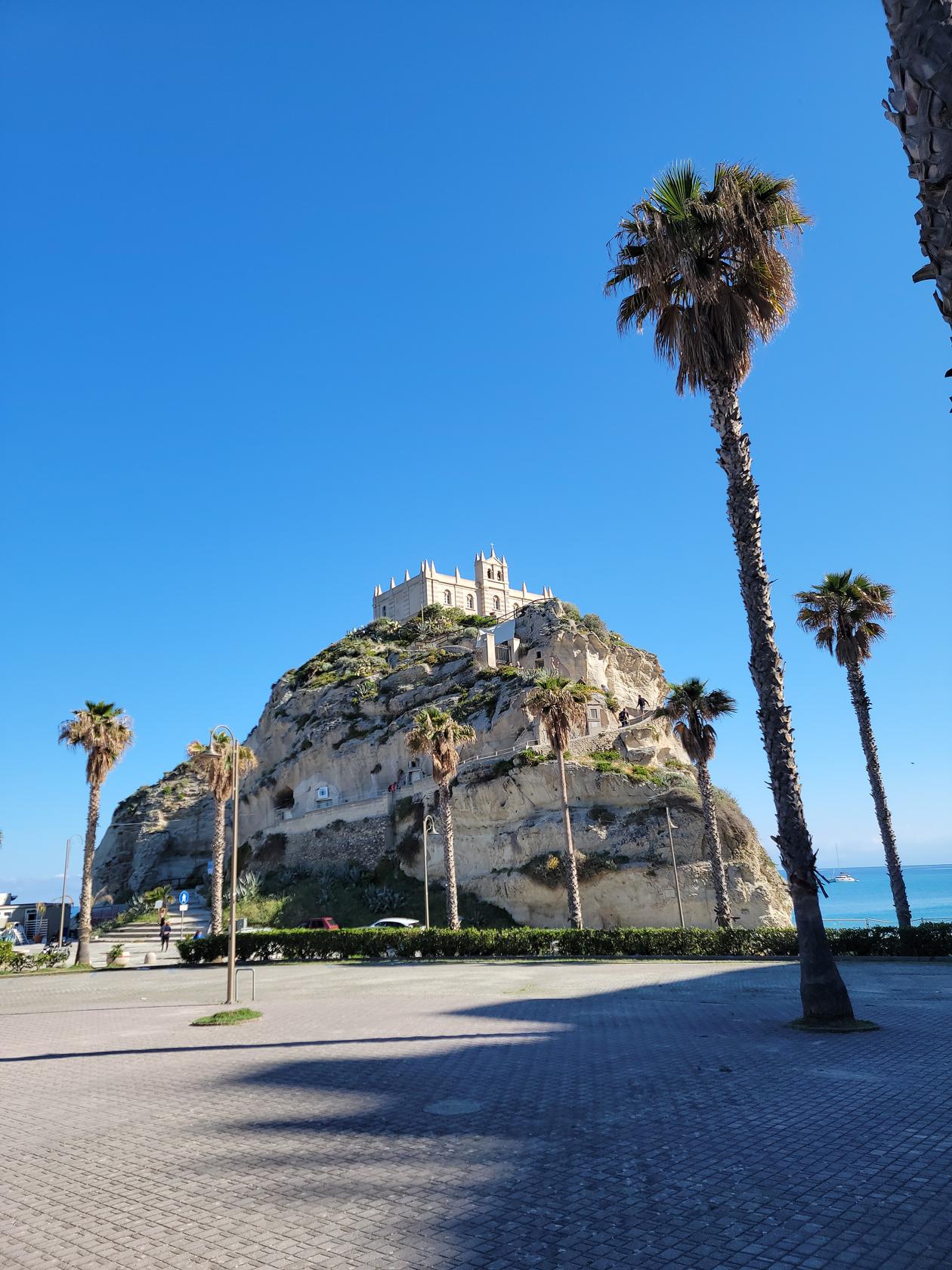
On the presque-isle of Tropea, which is actually to an island than a peninsula, stands the Sanctuary of Santa Maria. In order to get there one has to climb down from the city and ascend the stairs to the sanctuary, which opens around ten in the morning. It is best to get their at opening, because as we where leaving throngs of people appeared and the inside of the chapel is quite tiny.

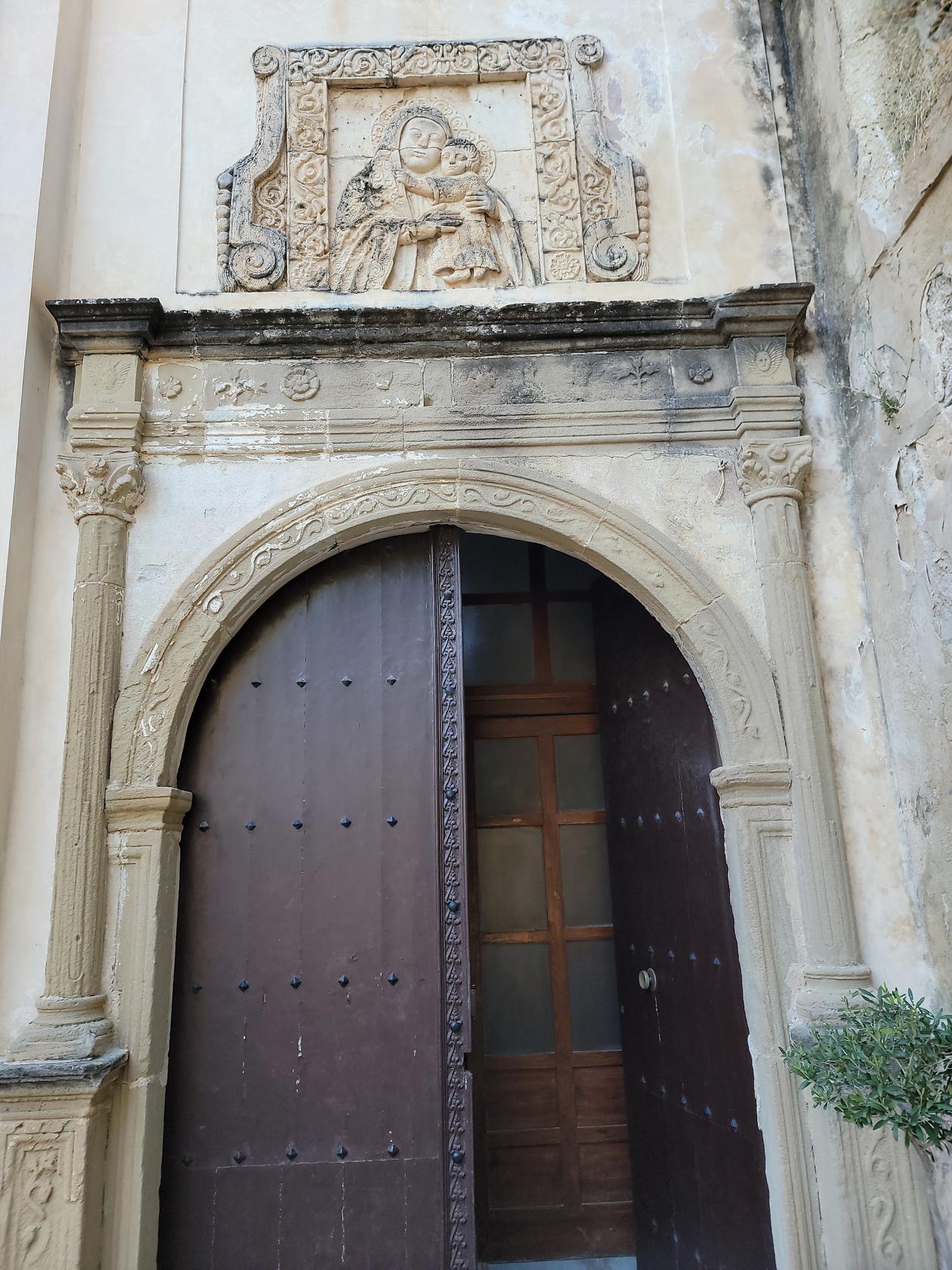
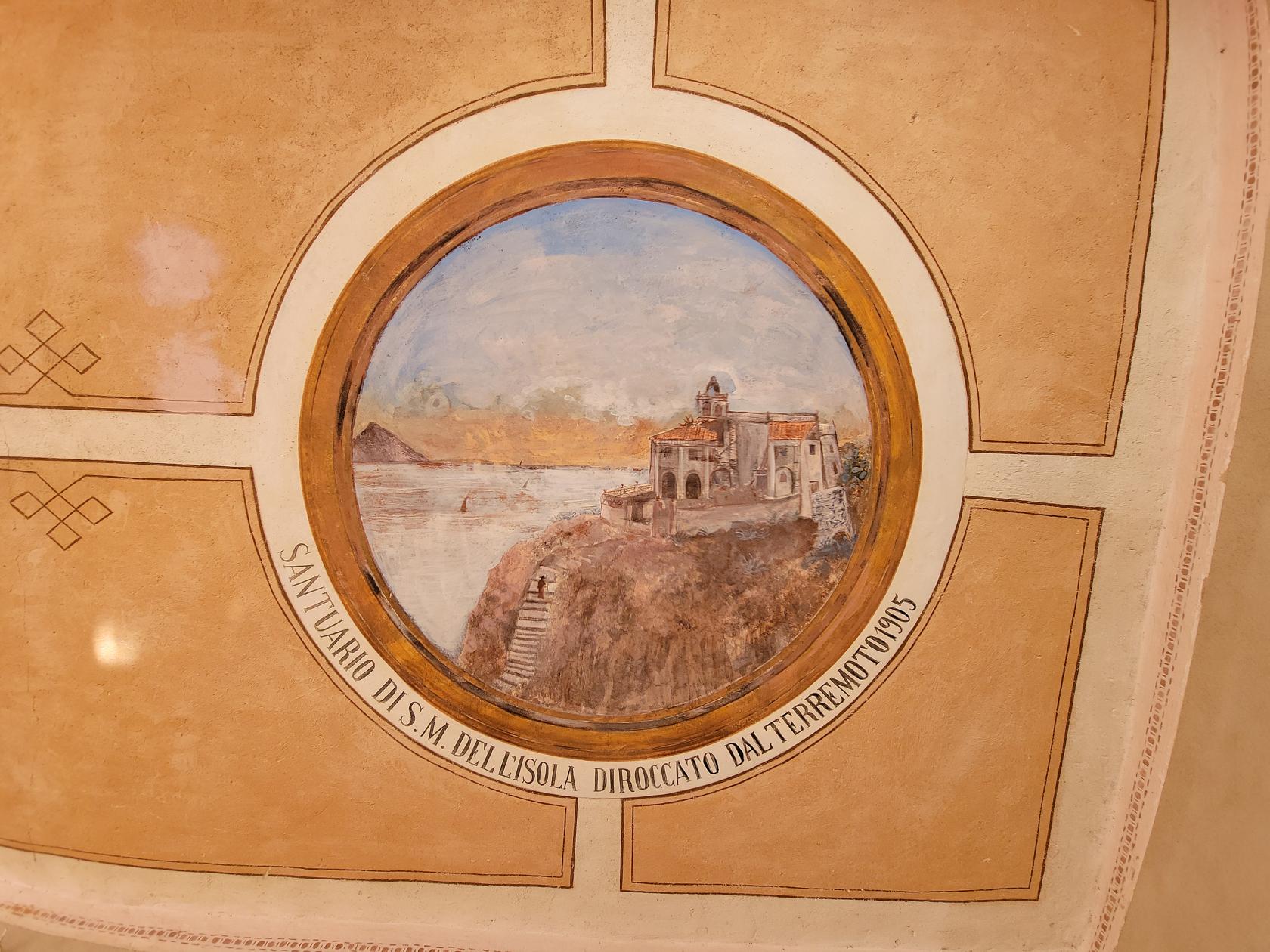
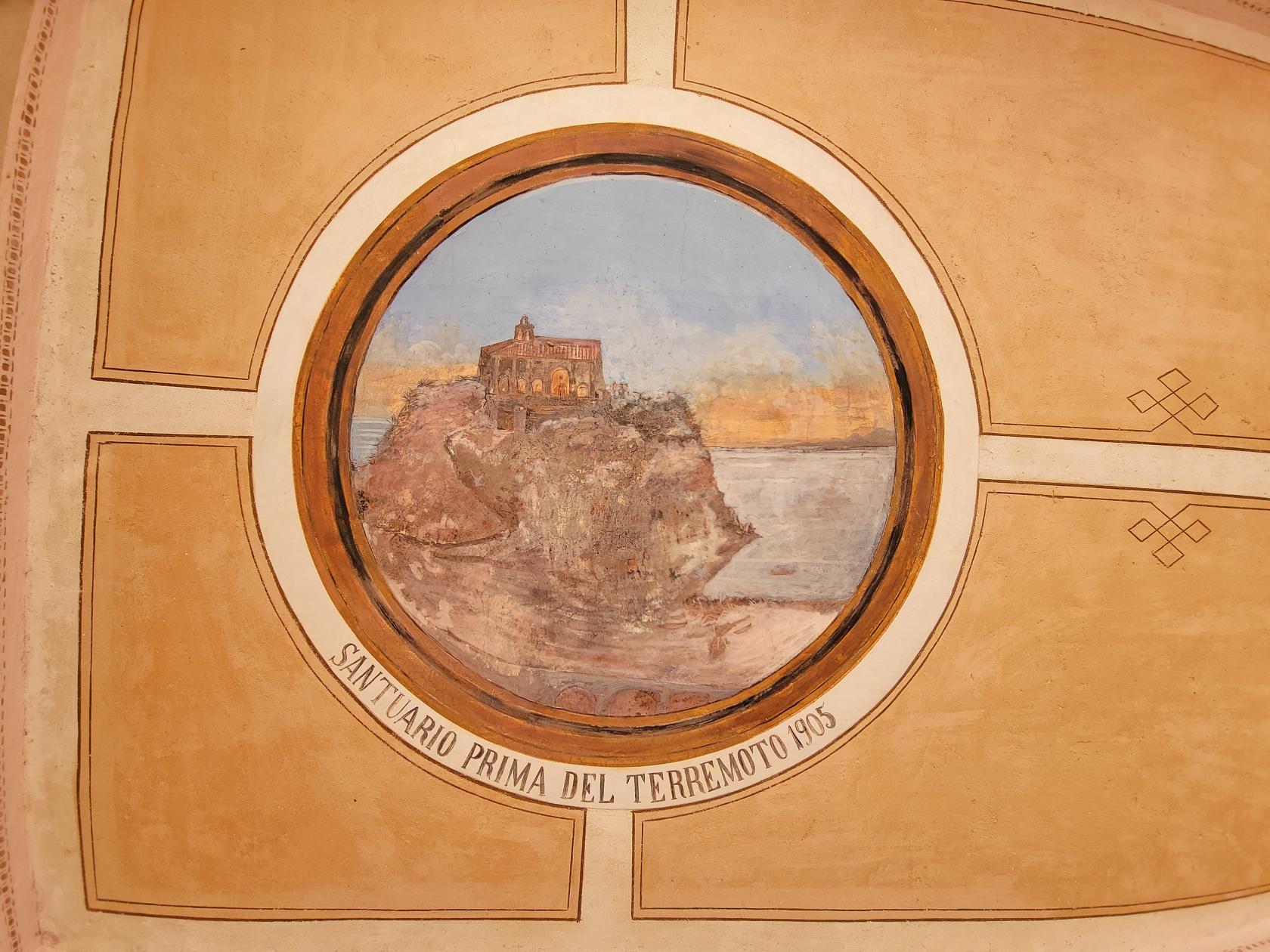
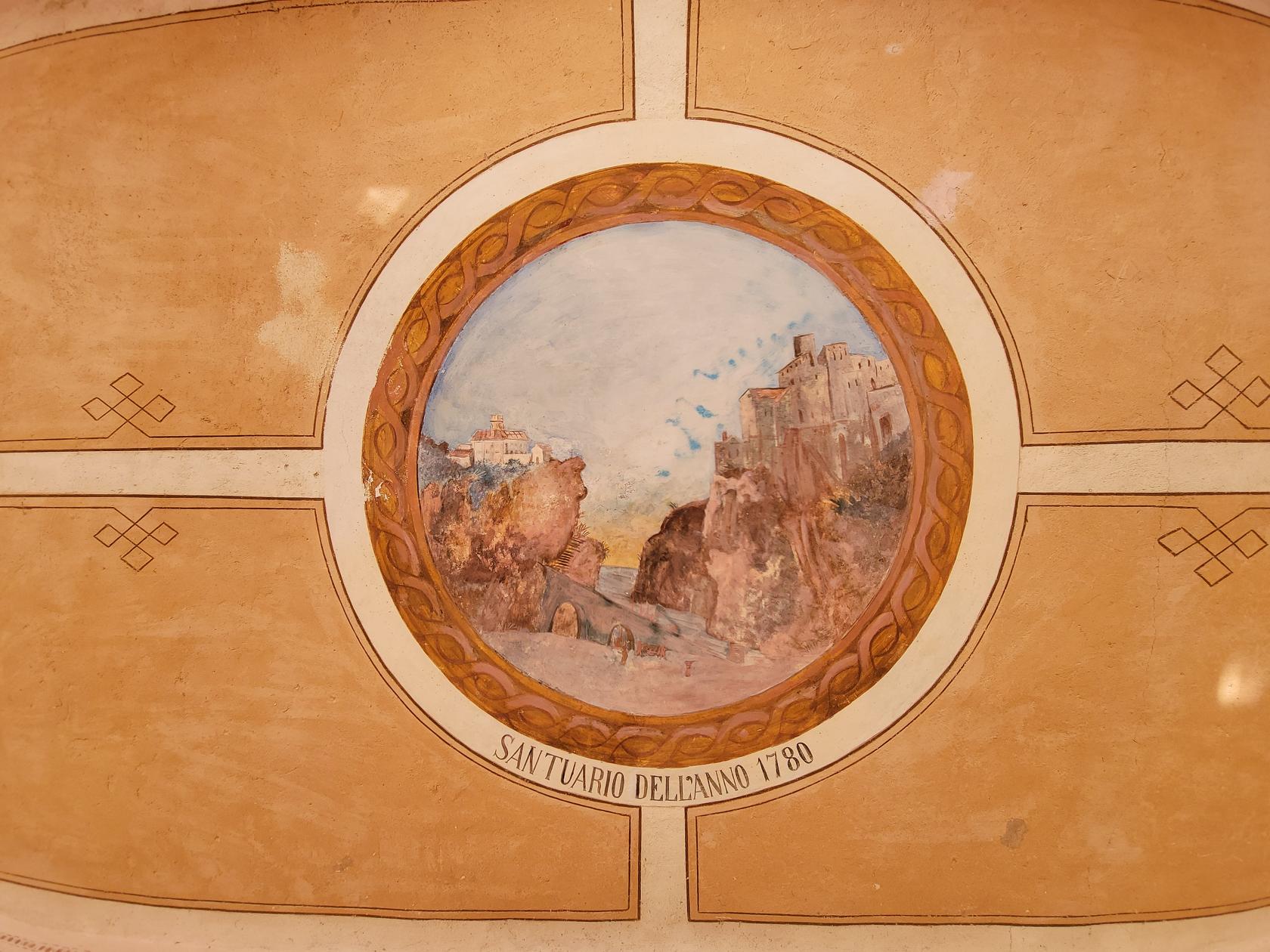
The entrance to the sanctuary is adorned by three painted cielings.

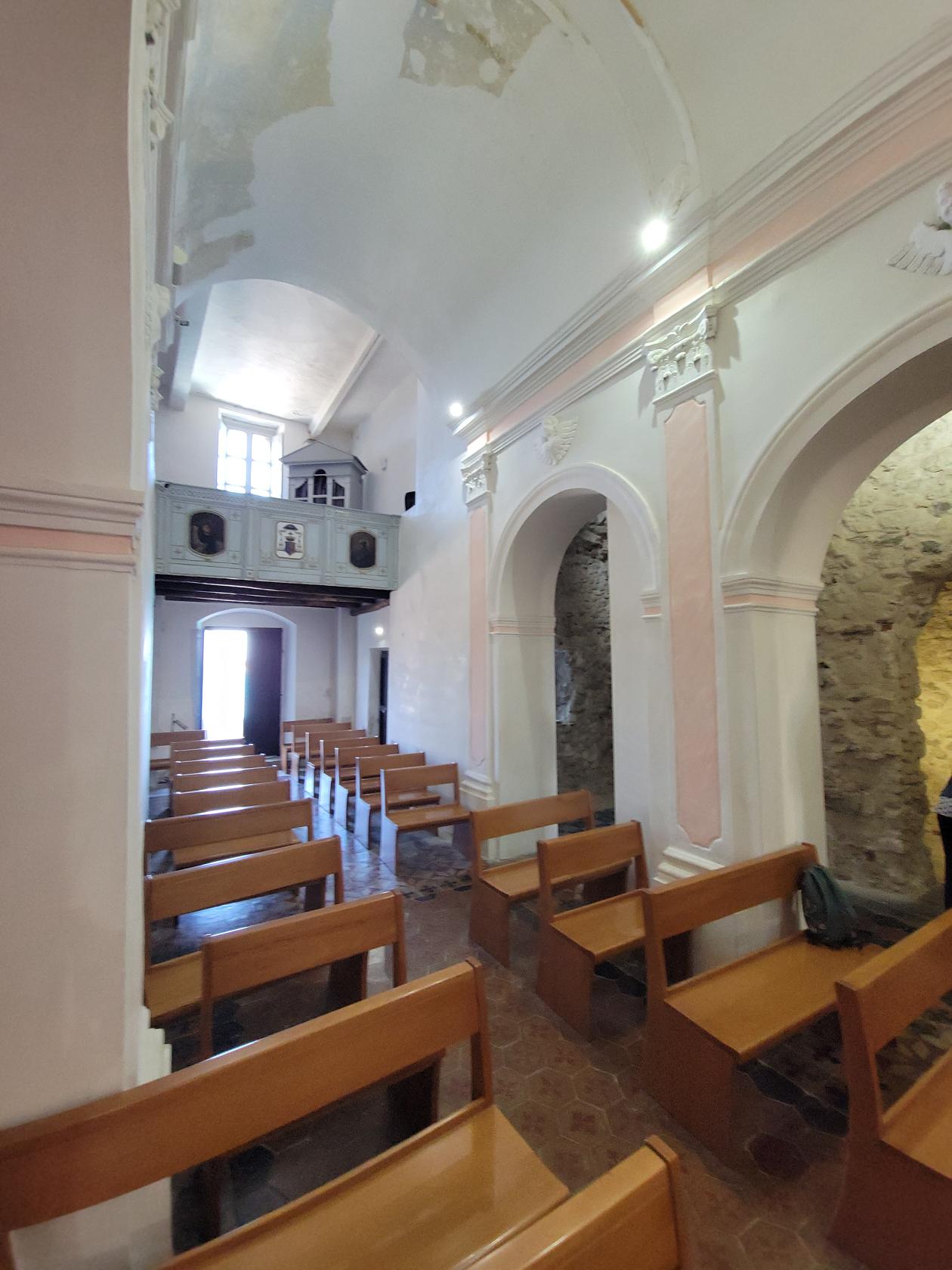
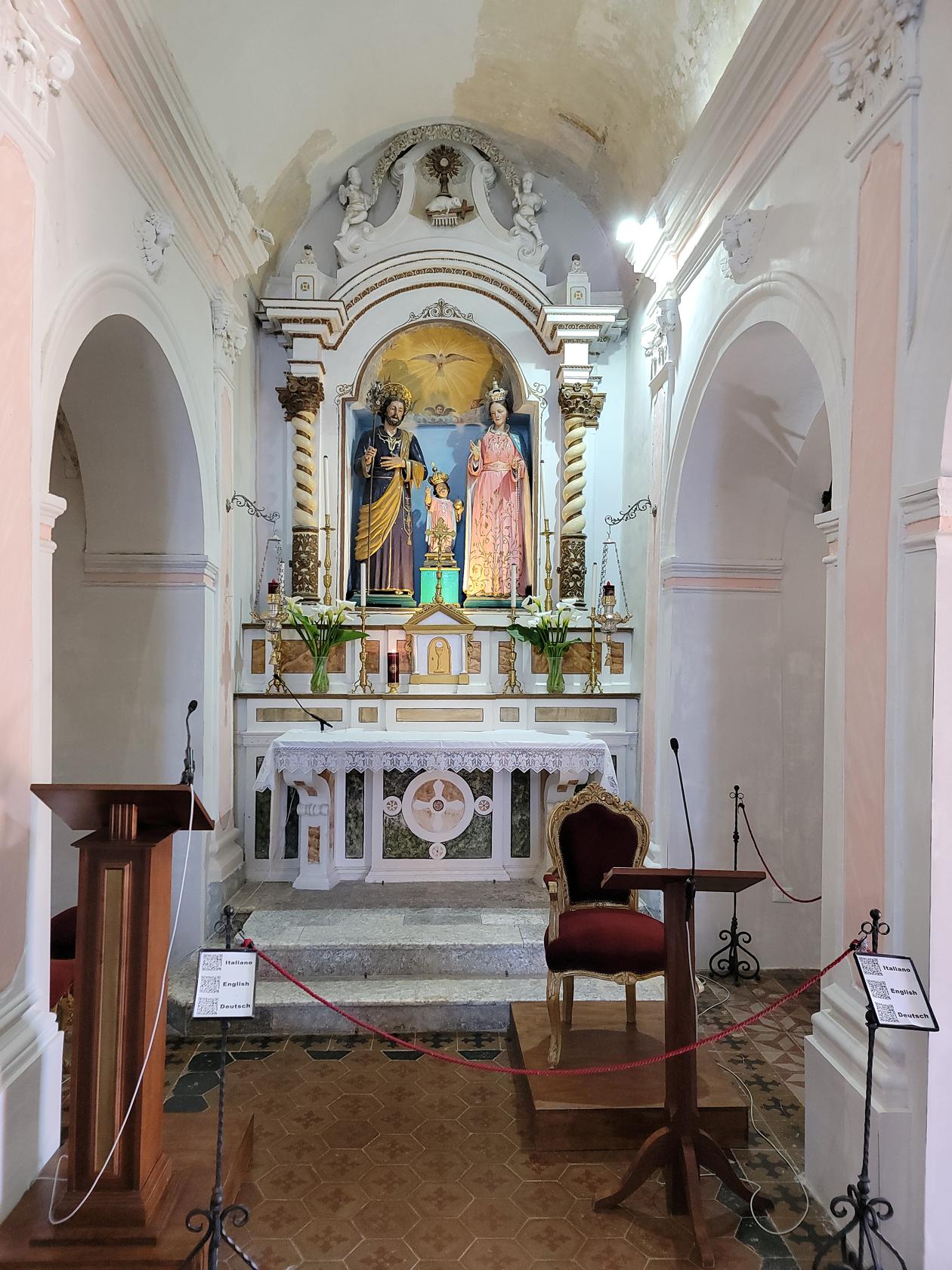
The interior is actually quite small and fitted out with pews, an altar and other accoutrements of catholicism. There is also a small shop where you can by a keepsake, postcards or other memorabilia.

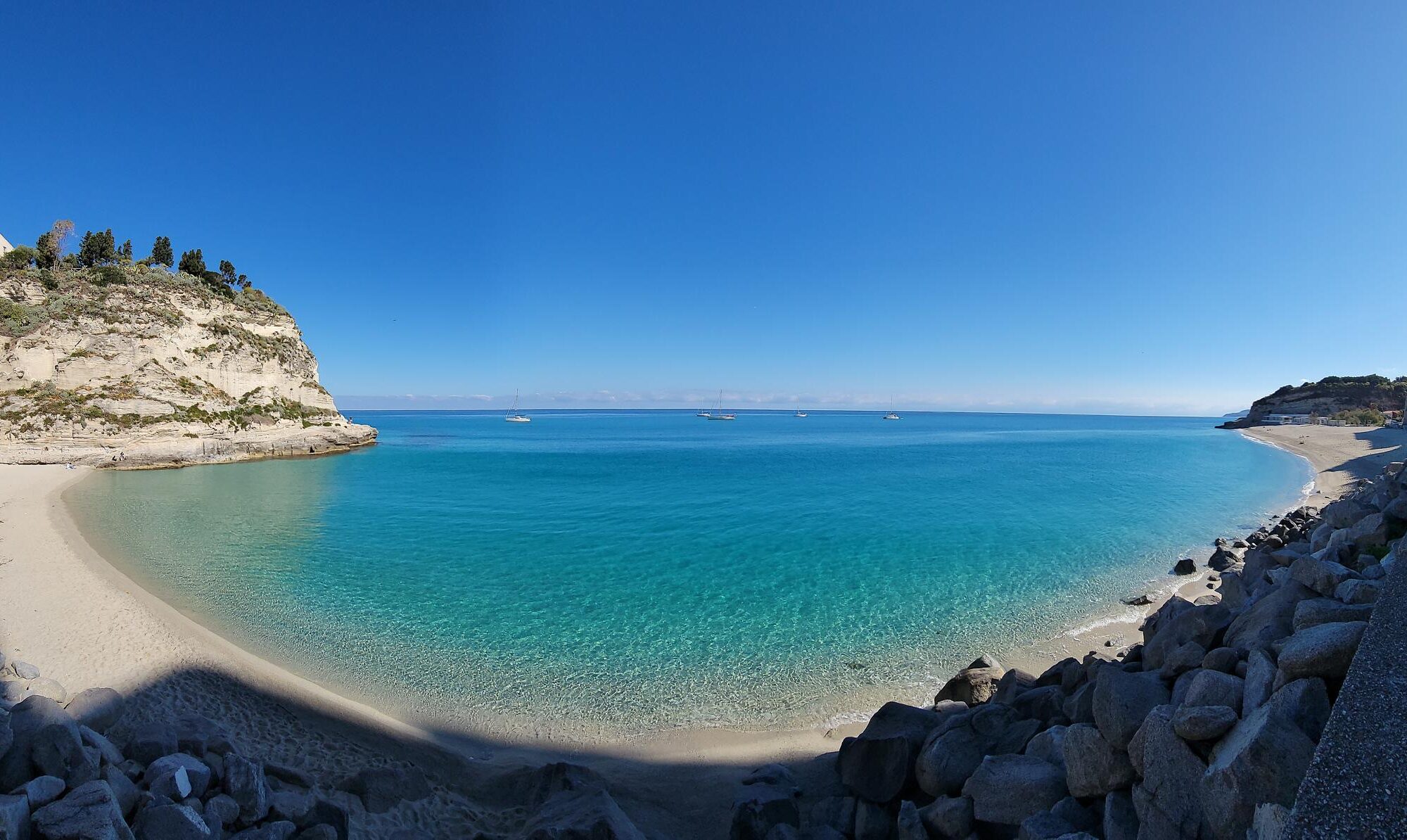
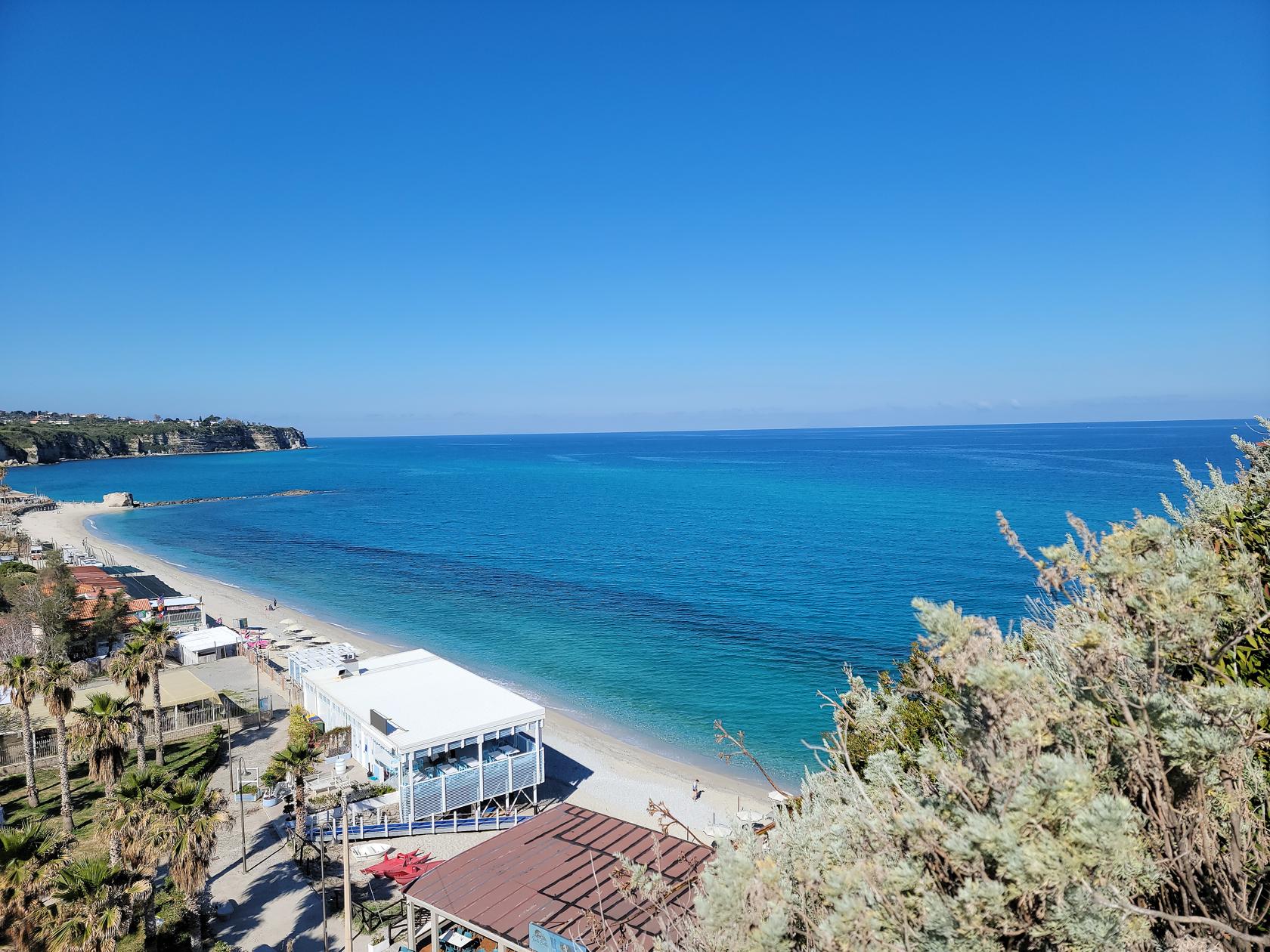
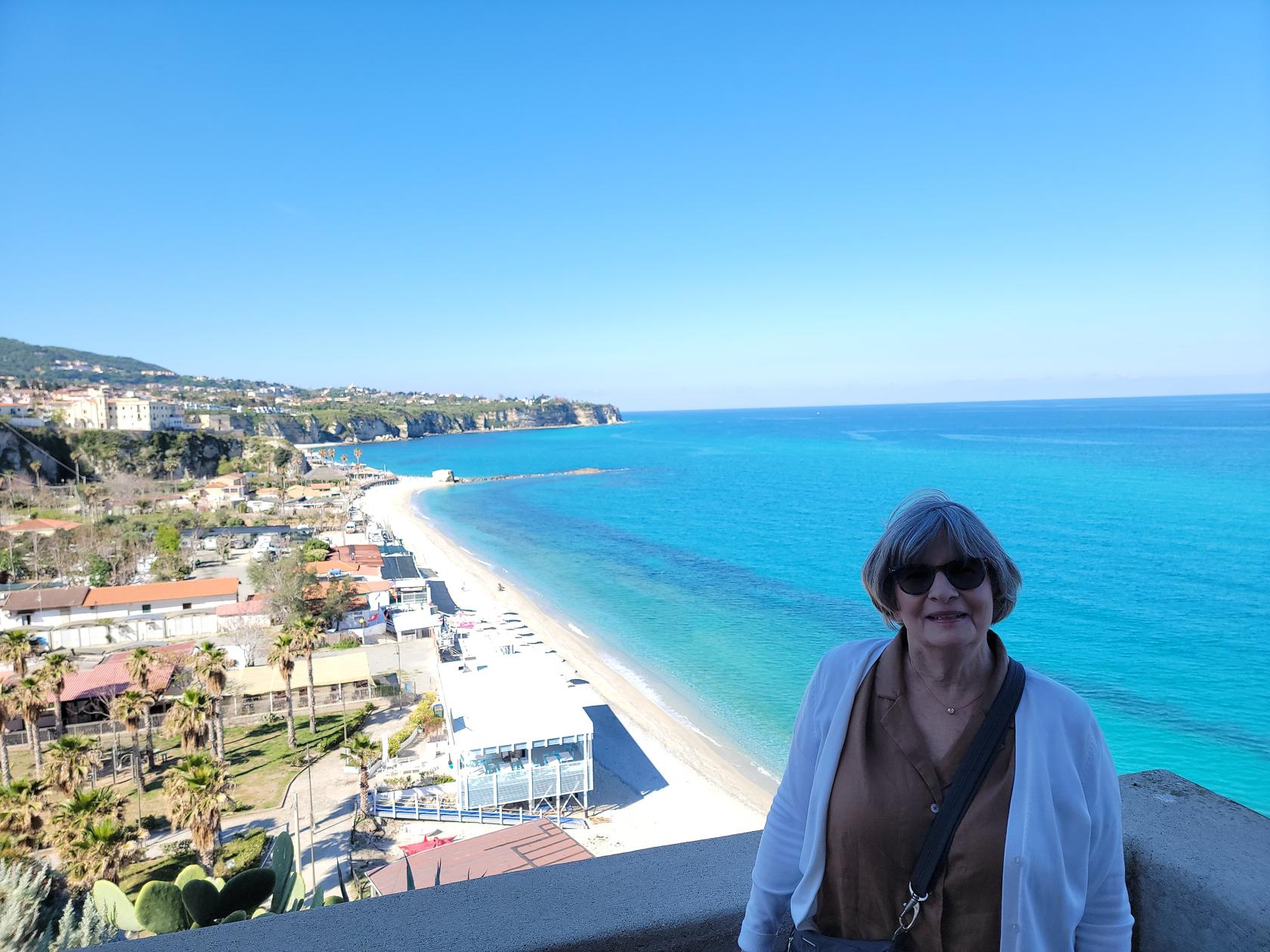
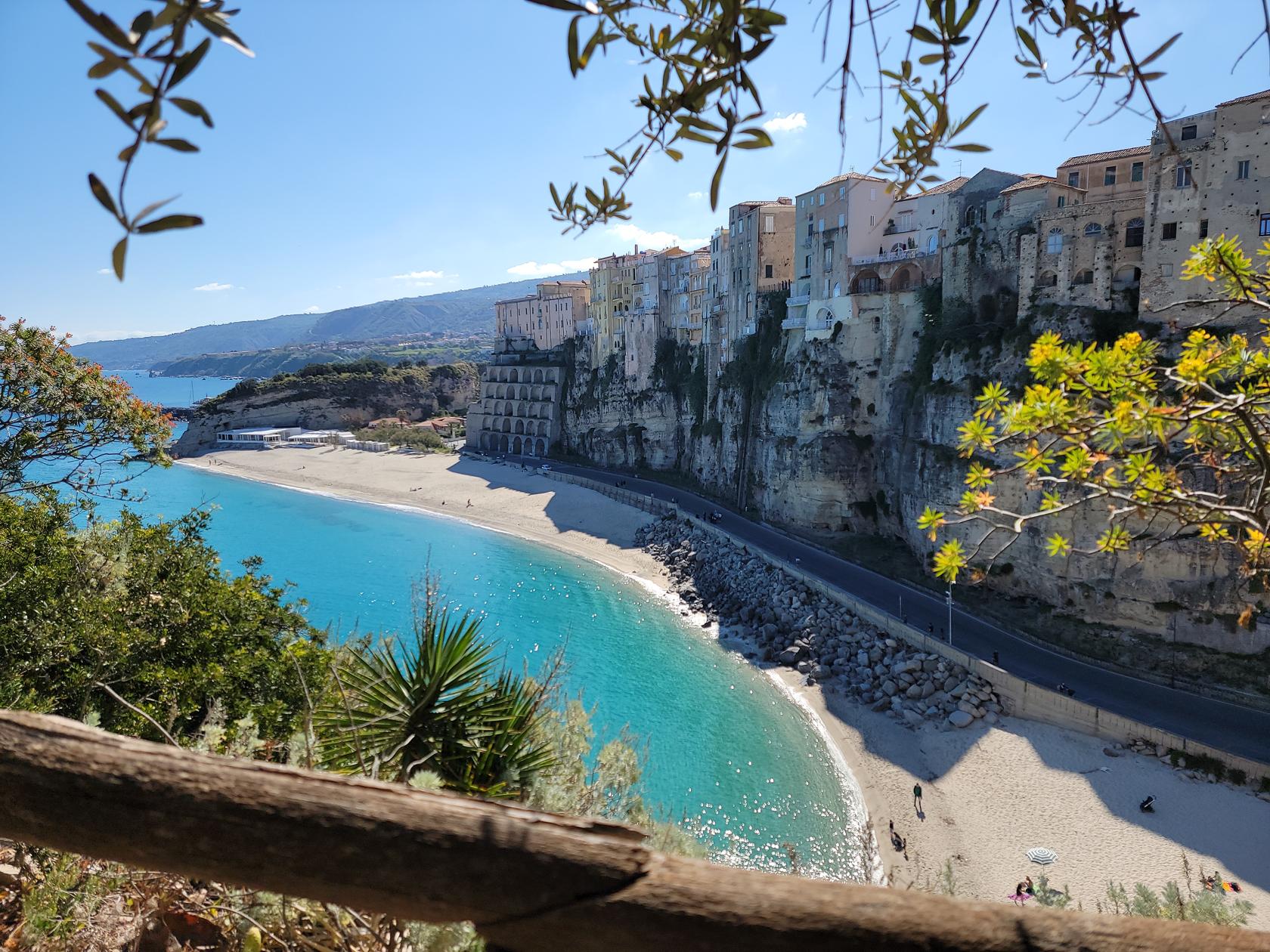
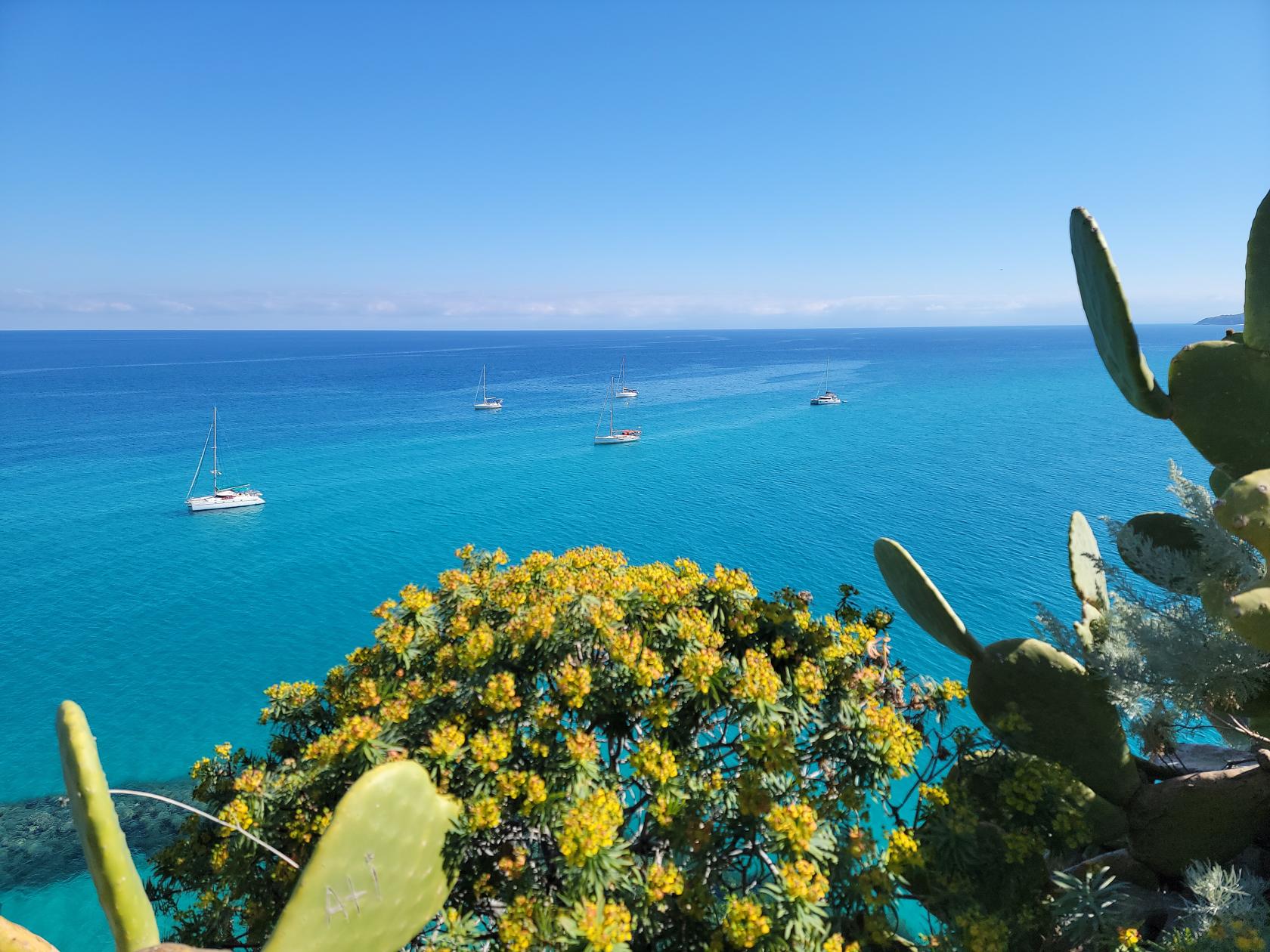
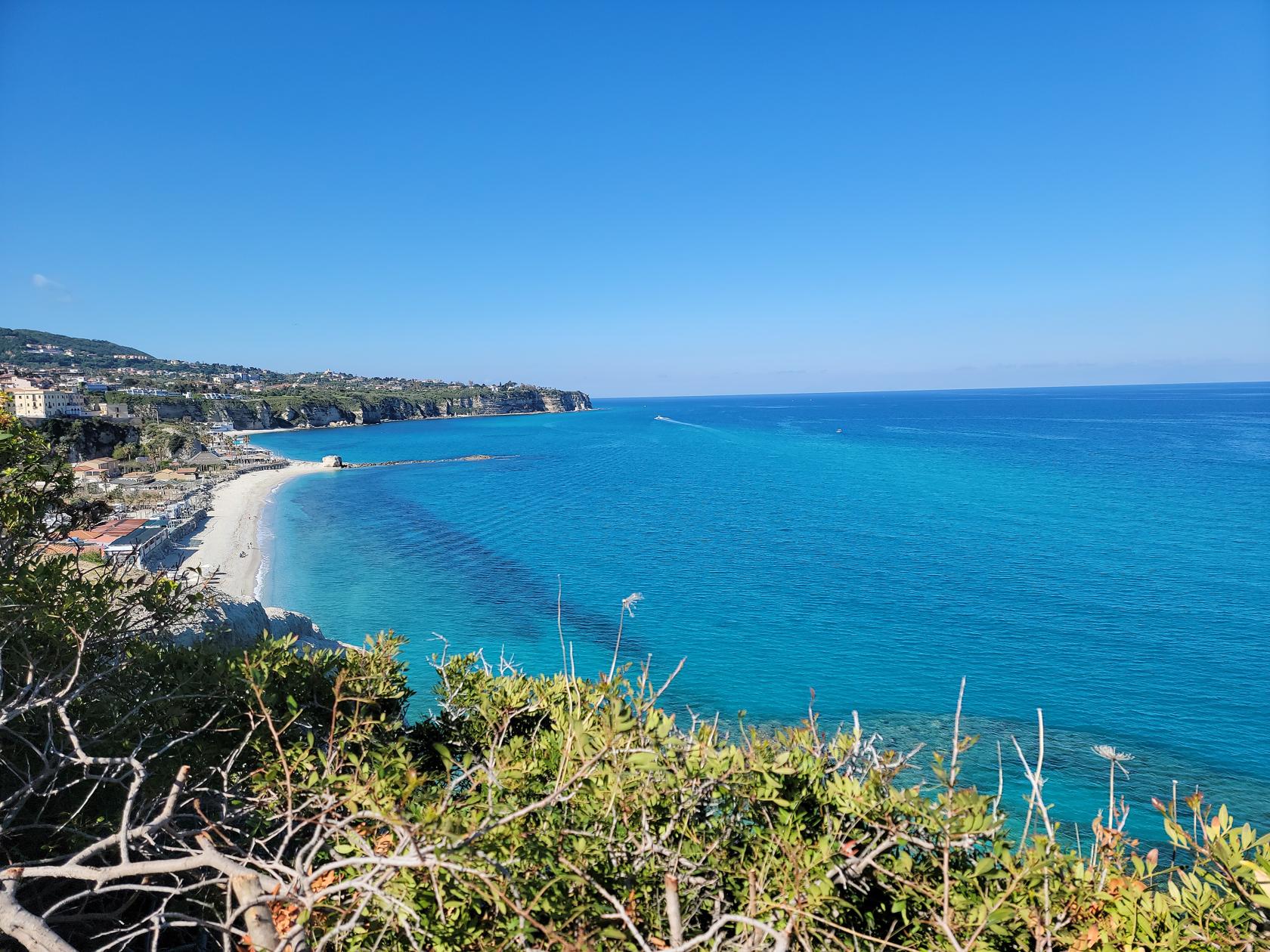
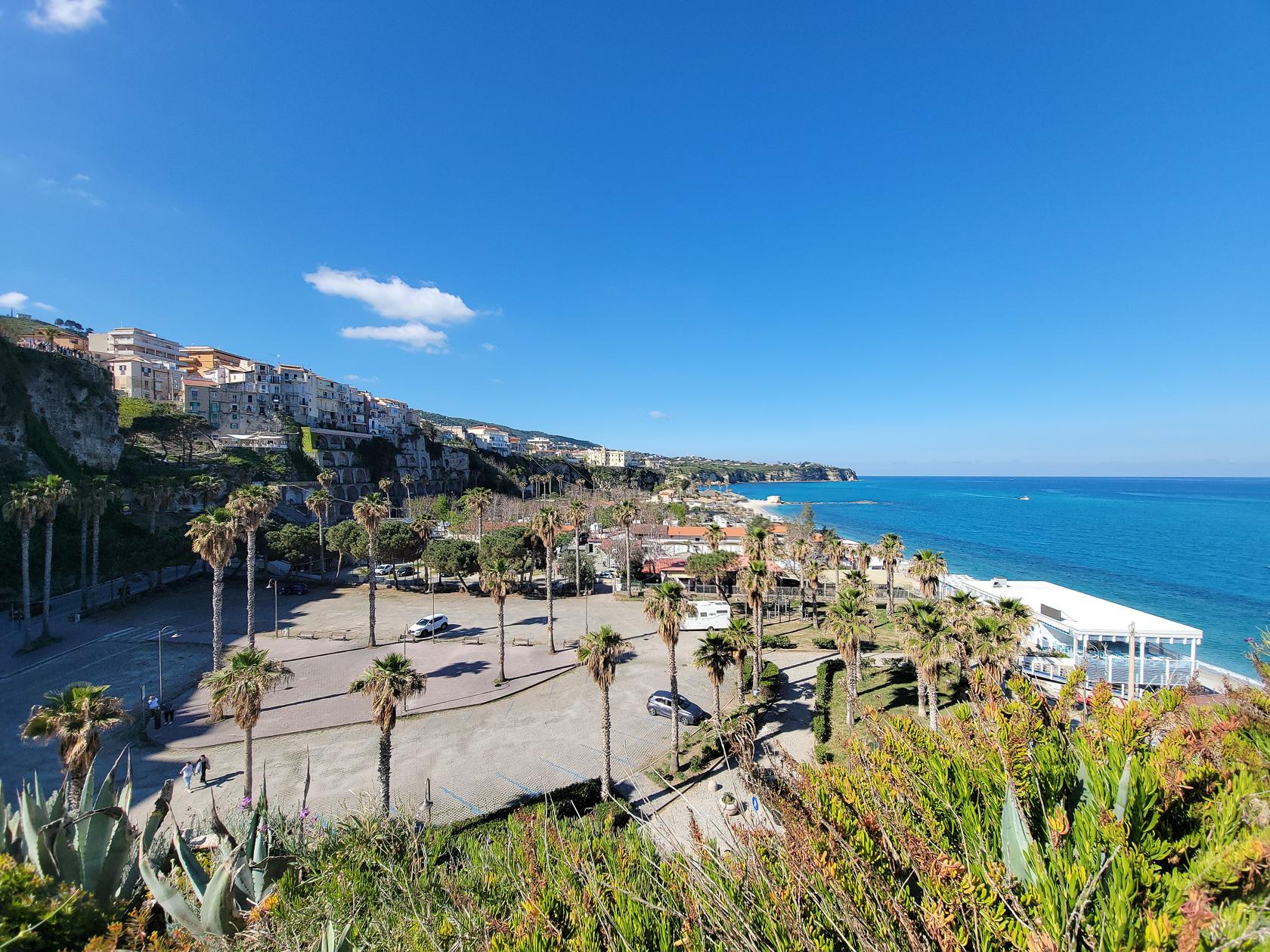
There are a few vantage points in which to take photographs of the surrounding coast and beach, as well as the city of Tropea perched on its cliff.

Belvedere Gardens

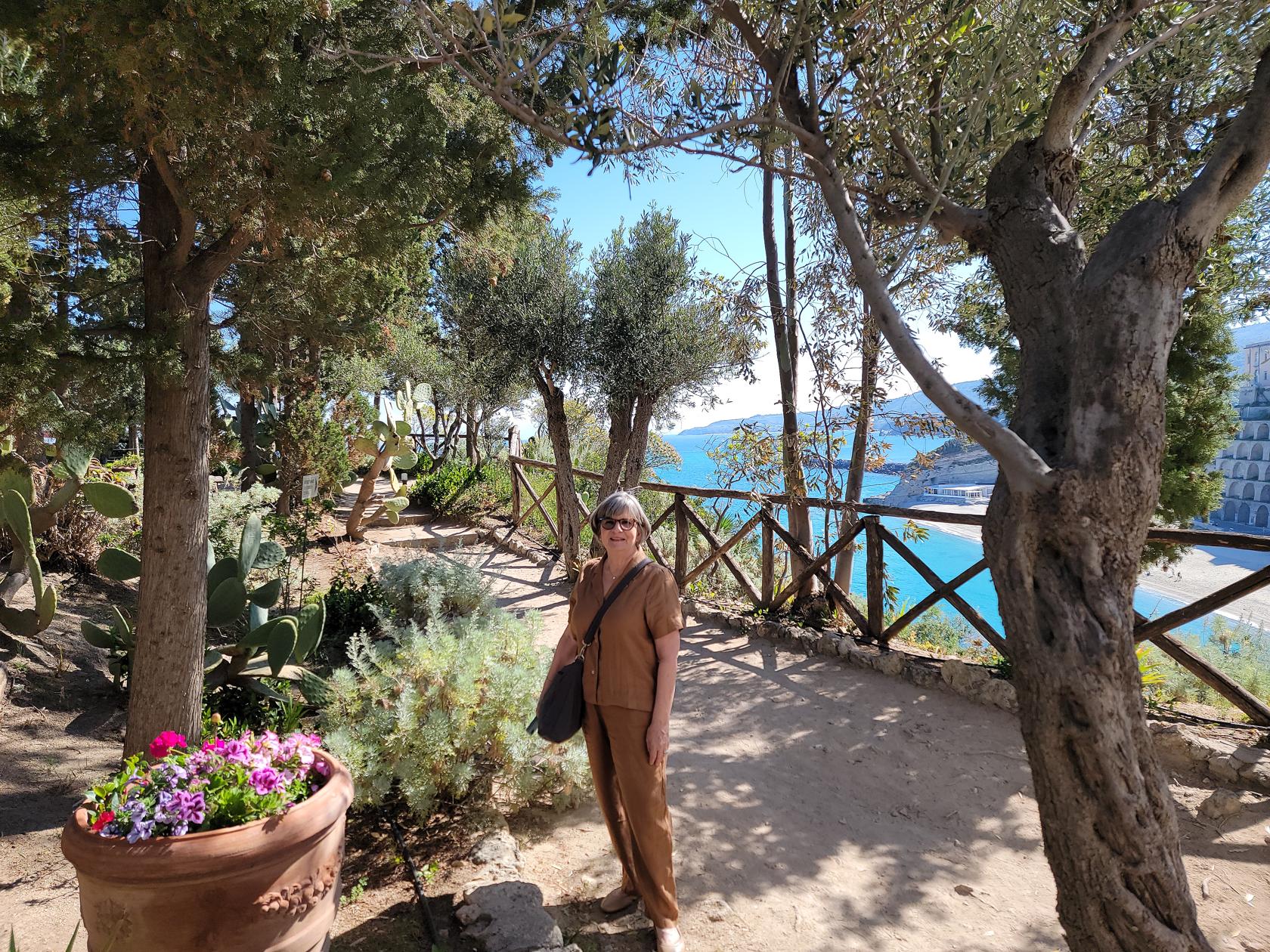
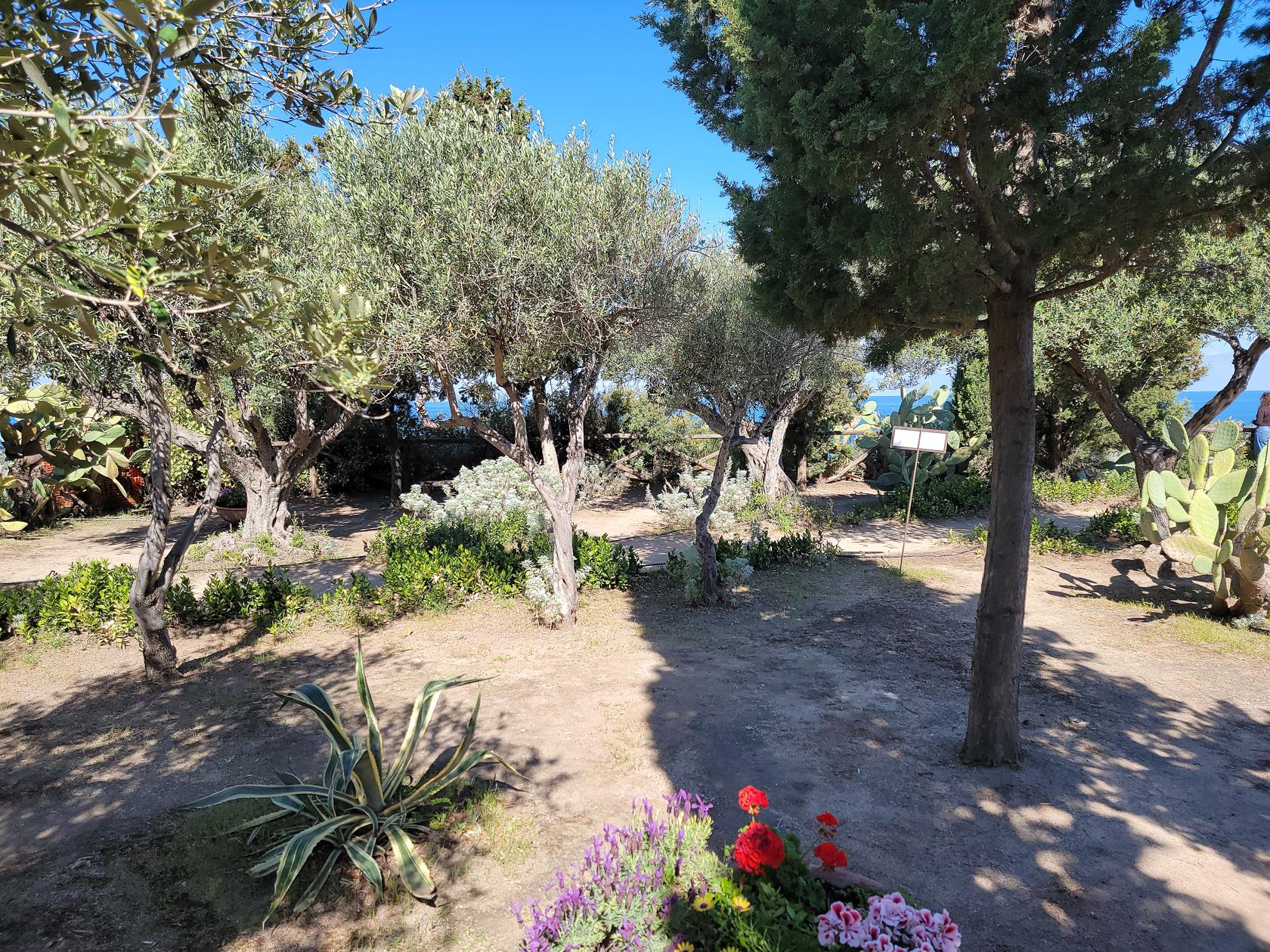
An adjunct to the sanctuary are the Belvedere Gardens, access to which is controlled by entry to the chapel. The gardens command a view of the coastline and with perfect weather equally good photographs of it.

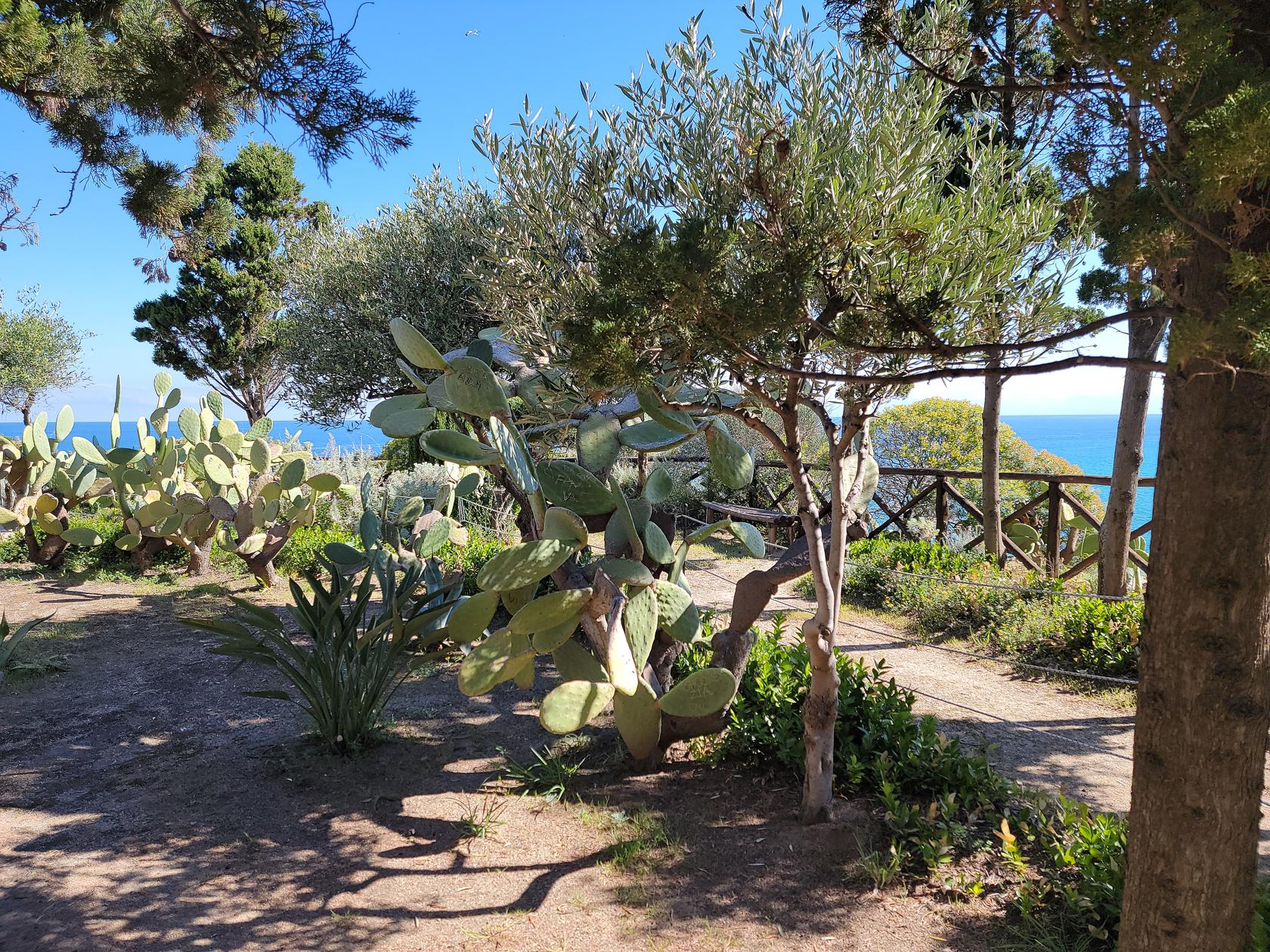
There are a variety of trees in the garden, as well as other bushes and flowering plants. In the day it must have been an amazing place to repose and enjoy the day.

Via Lungo Mare

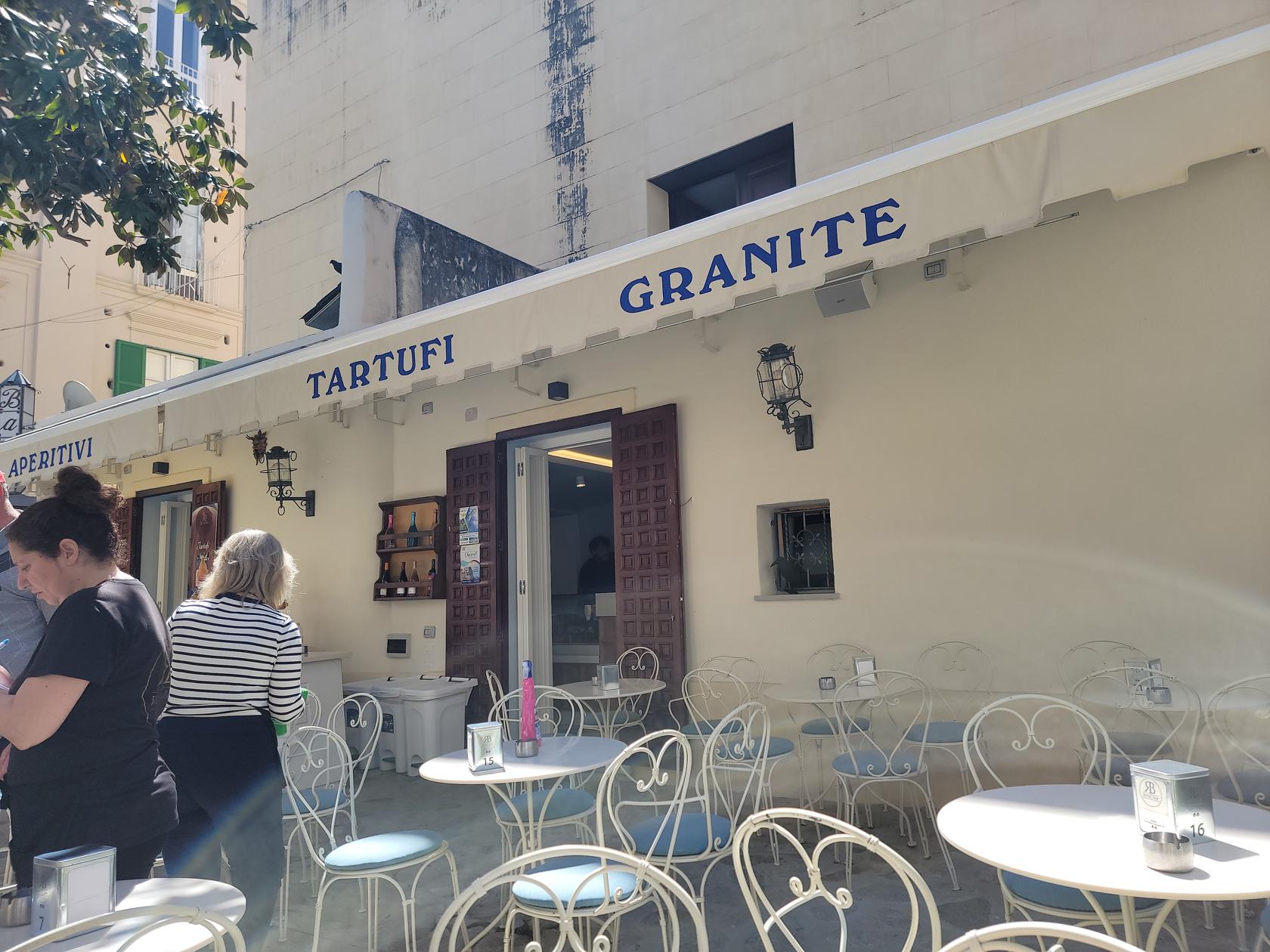
Though the walk along the Lungomare in Tropea is not the best we have been on, it is a nice walk that can bring you back up on the other side of Tropea. It also provides access to the sandy beach that enjoys protection from the wind and the waves and appears to be a favorite for the locals.

Nasocchio – The Apotropian Mask

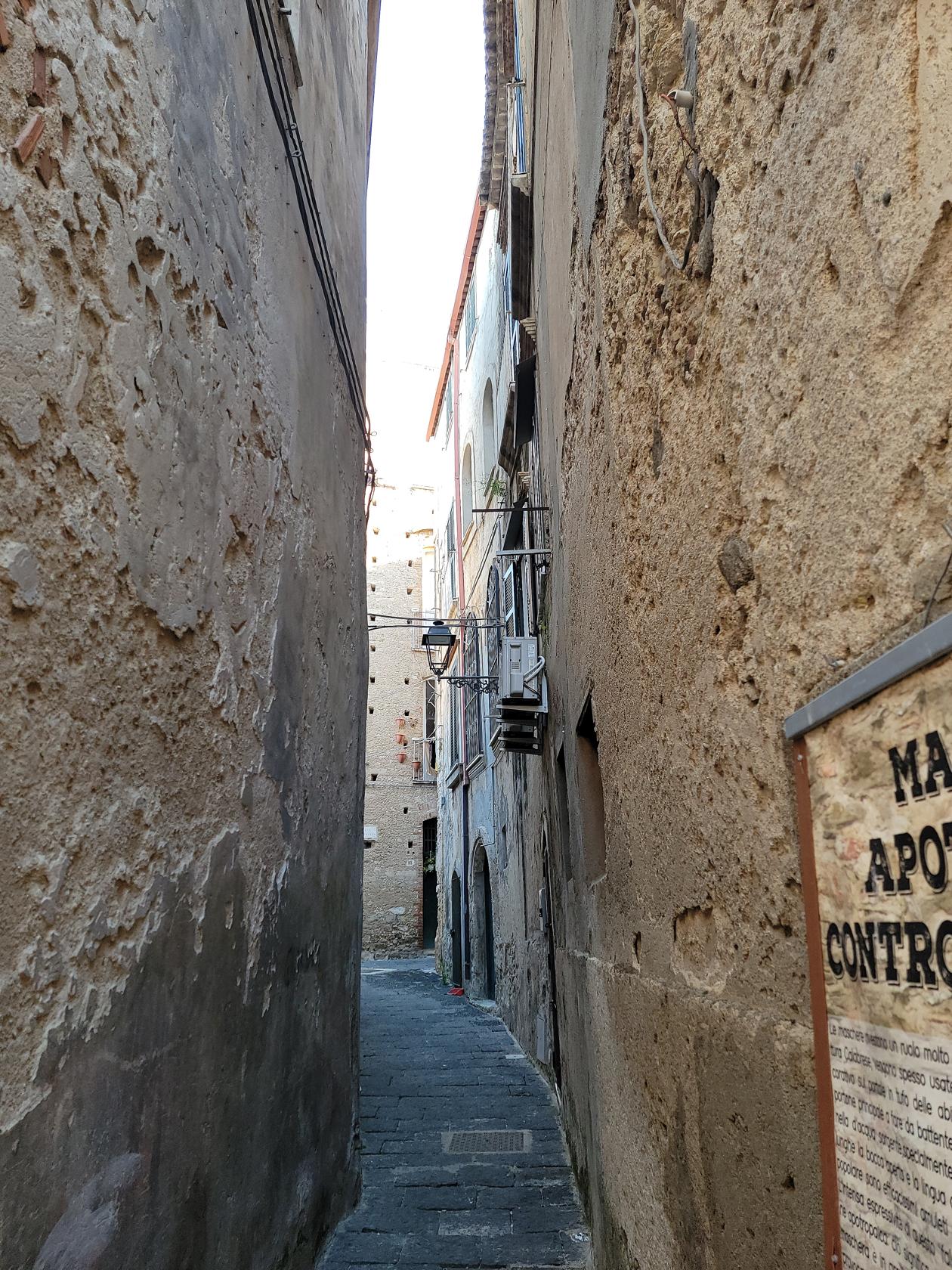
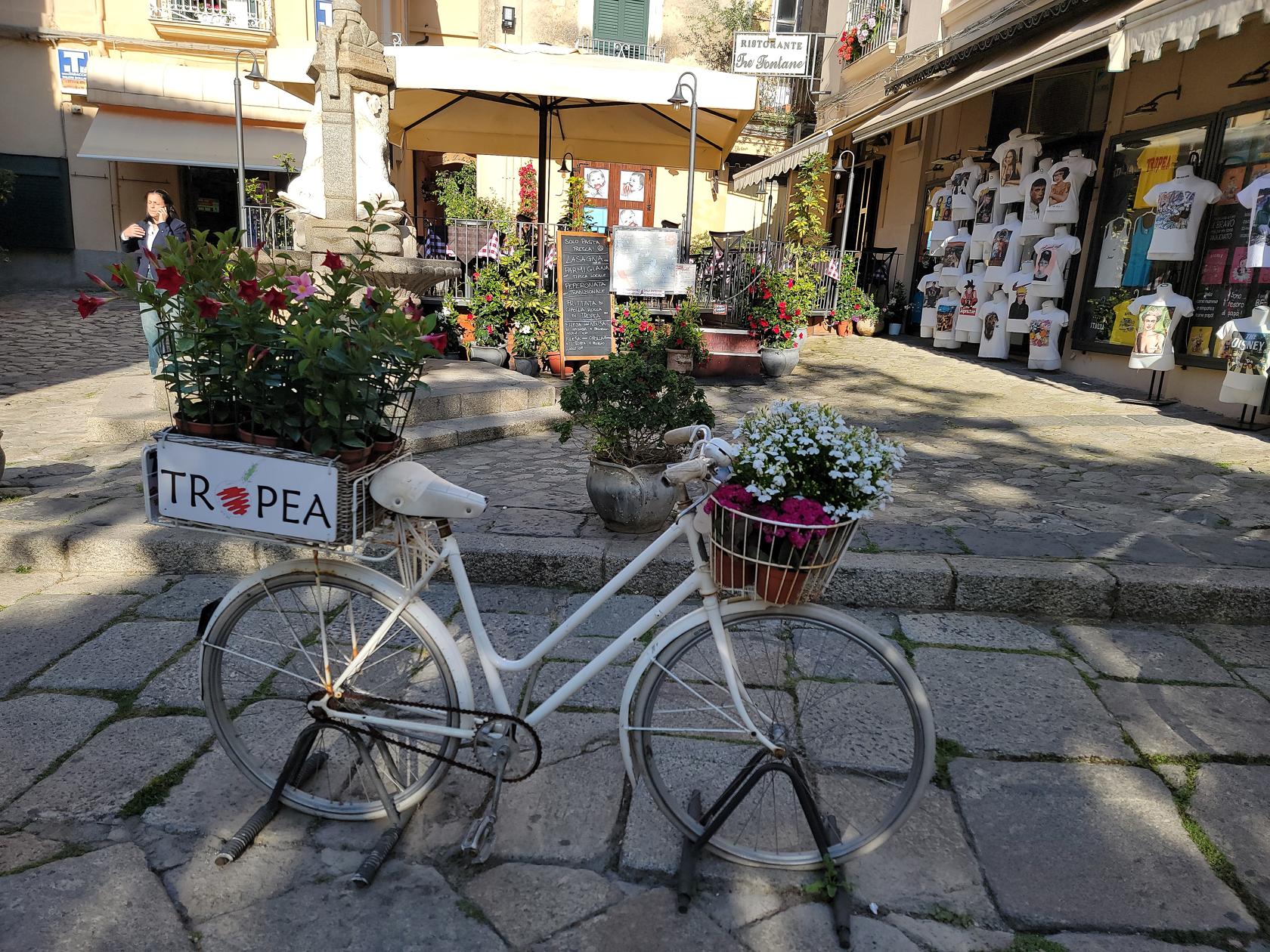
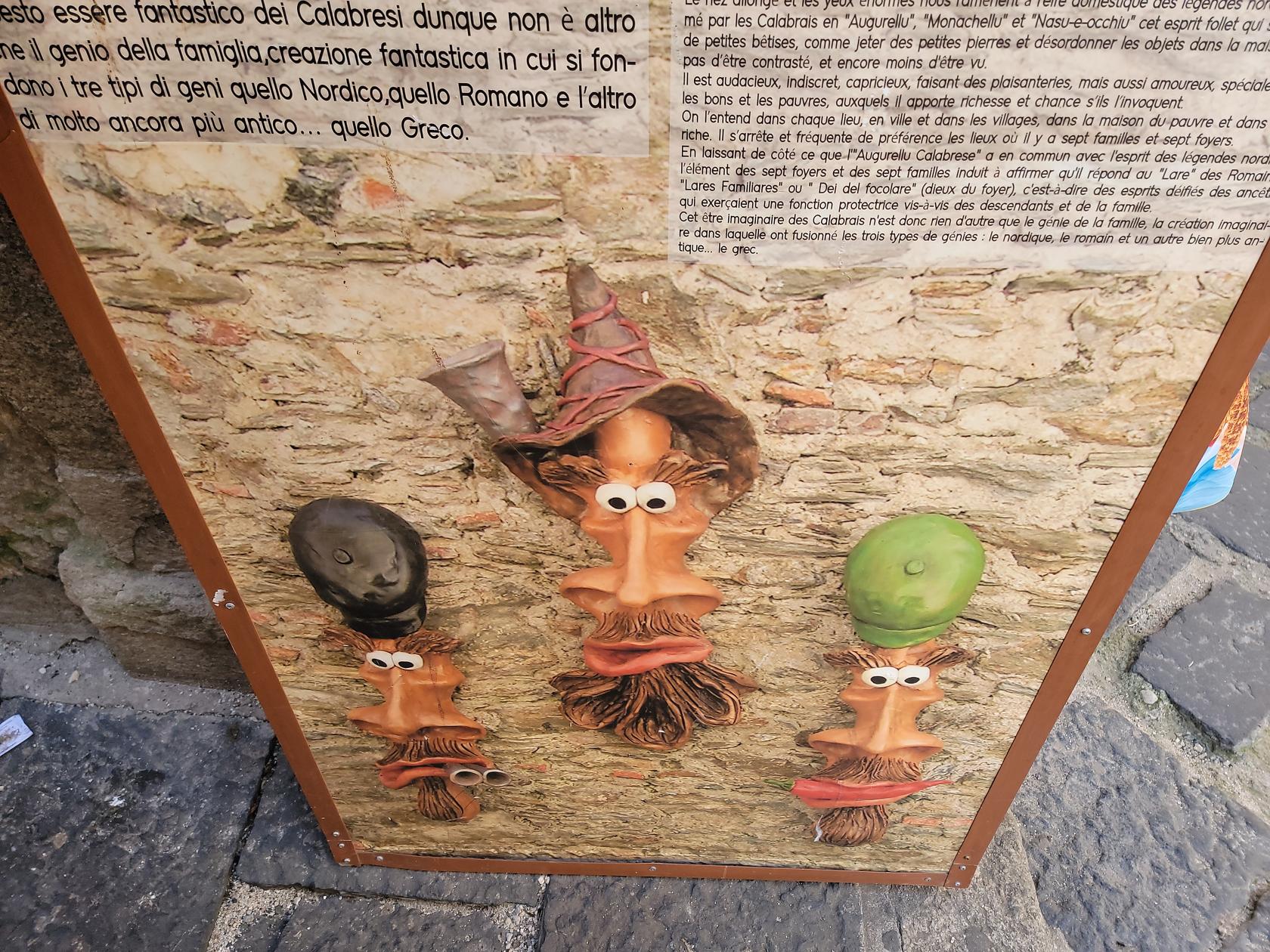
Walking though the town a visitor will occasionally notice a mask that almost looks like a caricature. The closest analog we have in the States are caricature artists that frequent fairs and draw your face with a pencil in a very stylized way. Well, these masks are specific to the Calabrian culture.

Nasocchio as he is called in Calabrian culture is a mask whose strange and unique glare is supposed to frighten away evil spirits, or what is commonly termed here the Malocchio or Evil Eye. The Italian Horn is meant to function in the same way, as are other strange artifacts in the culture. They are also meant to bring good fortune with their use.

Restaurants

Though we stayed here only for two nights, we still had occasion to visit three restaurants, all of which offered local Calabrian or Sicilian dishes.

Royal Bar

Not known for their food, we bought some drinks here for a quick rest. Nothing special, but the drinks were okay.

Diamante Rosso Tropea Ristorante

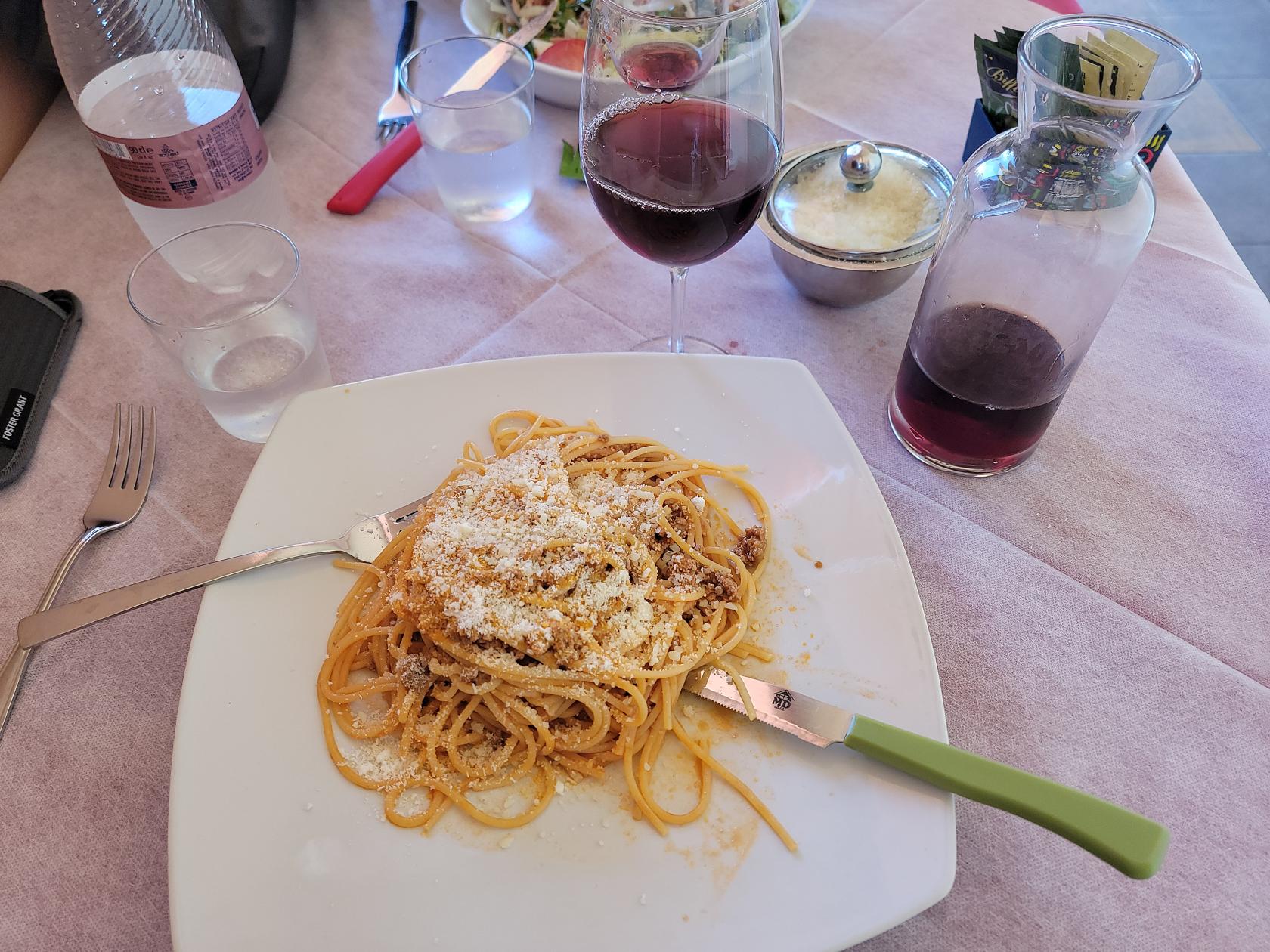
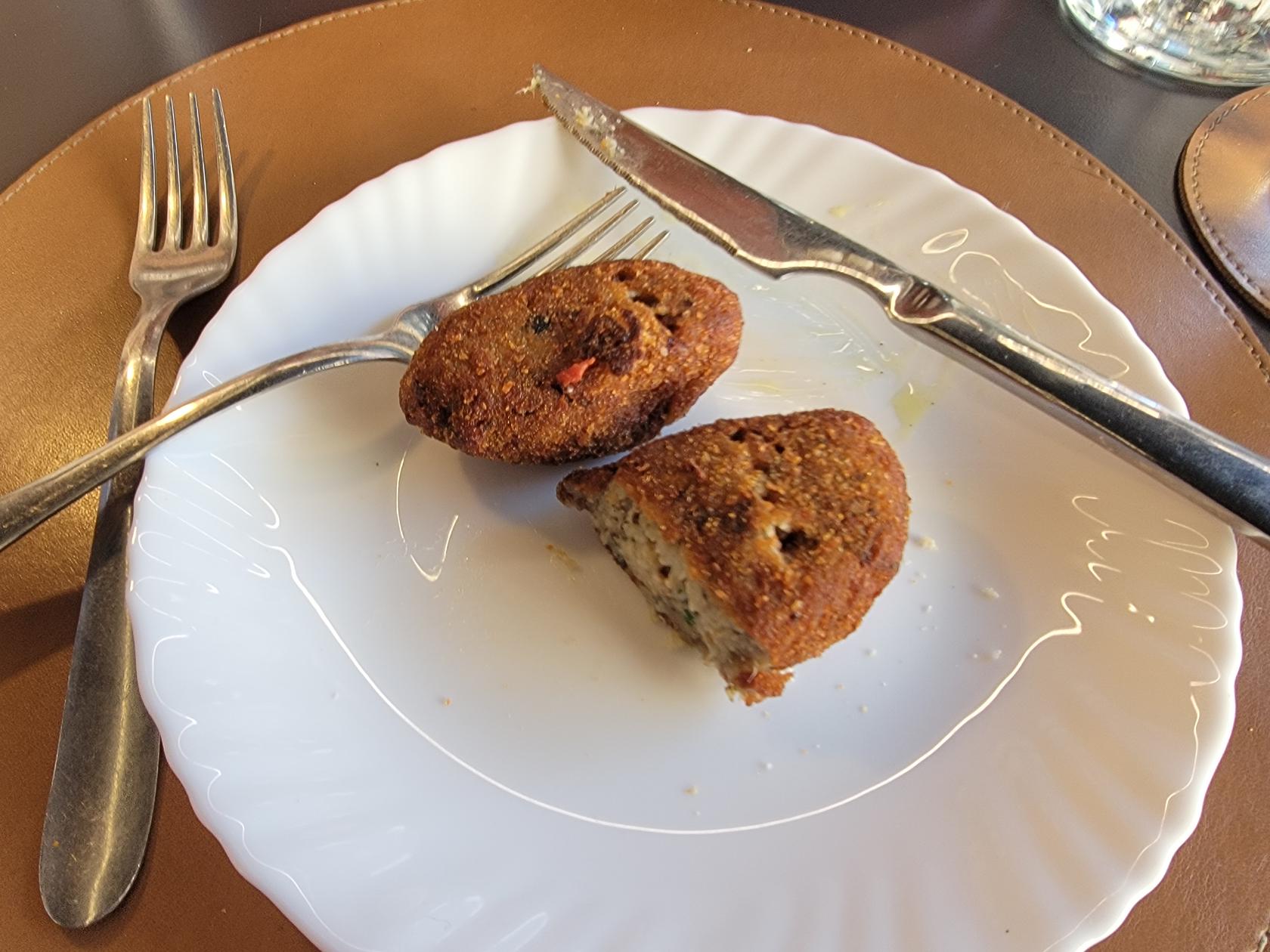
Here we had to try to local al ragu Arancini, or Sicilian breaded and conically shaped stuffed rice balls that are deep-fried. They were amazing, but usually always good, depending where you buy and how they are made. They can actually be purchased at most good local stores, cafes and some marketplaces and quickly heated up for a snack or meal.

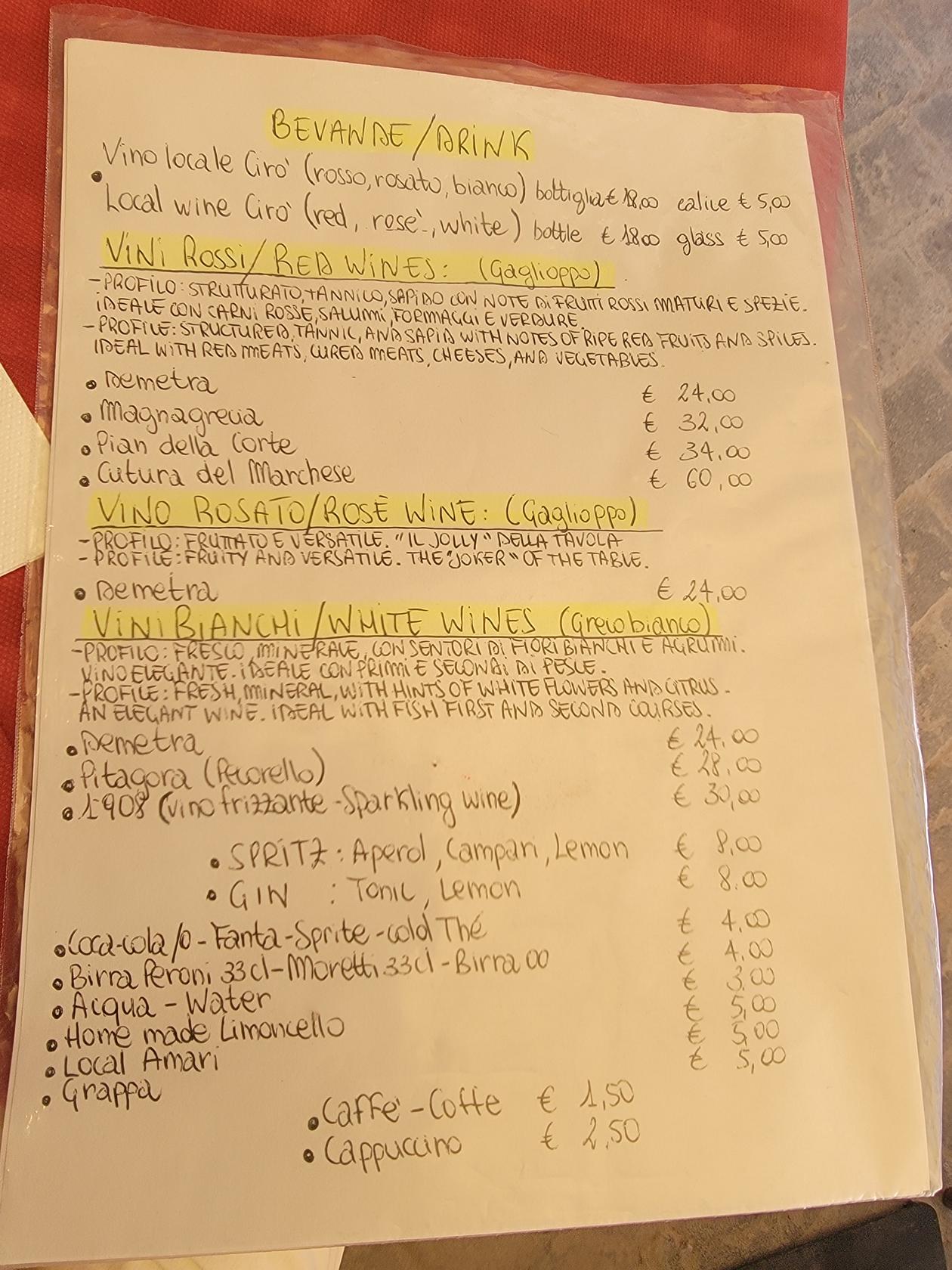
Le Volpe El Uva Ristorante

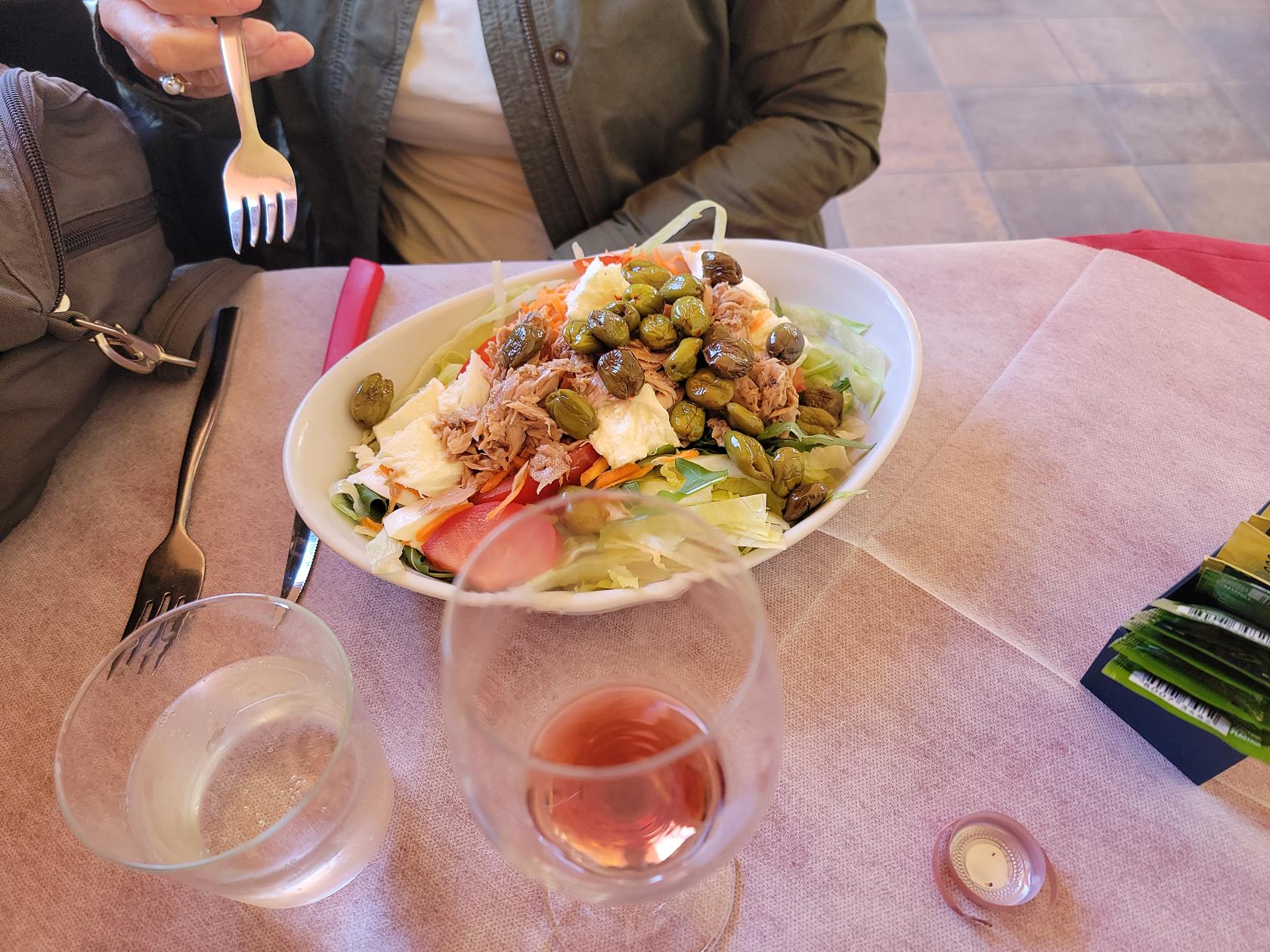
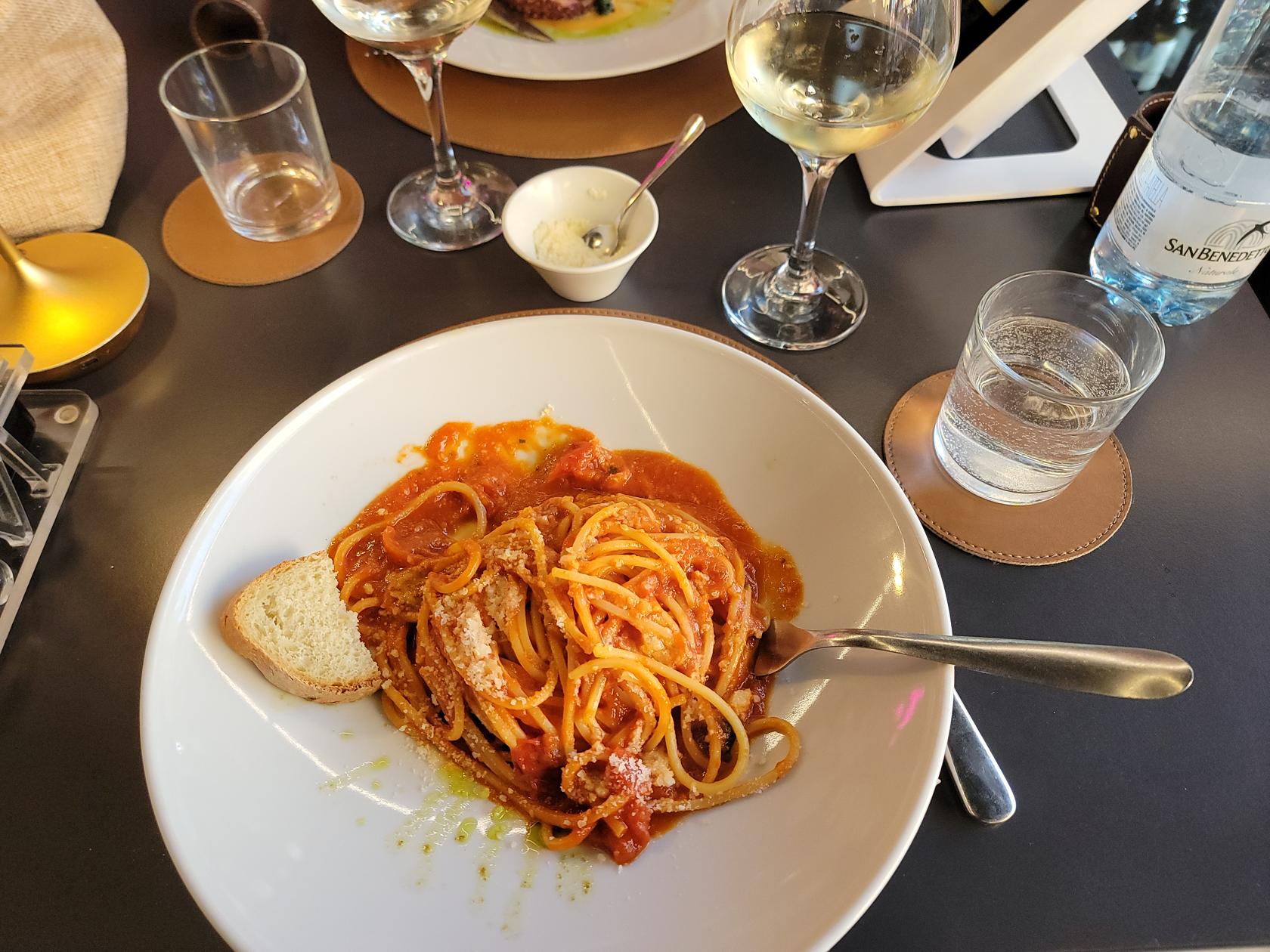
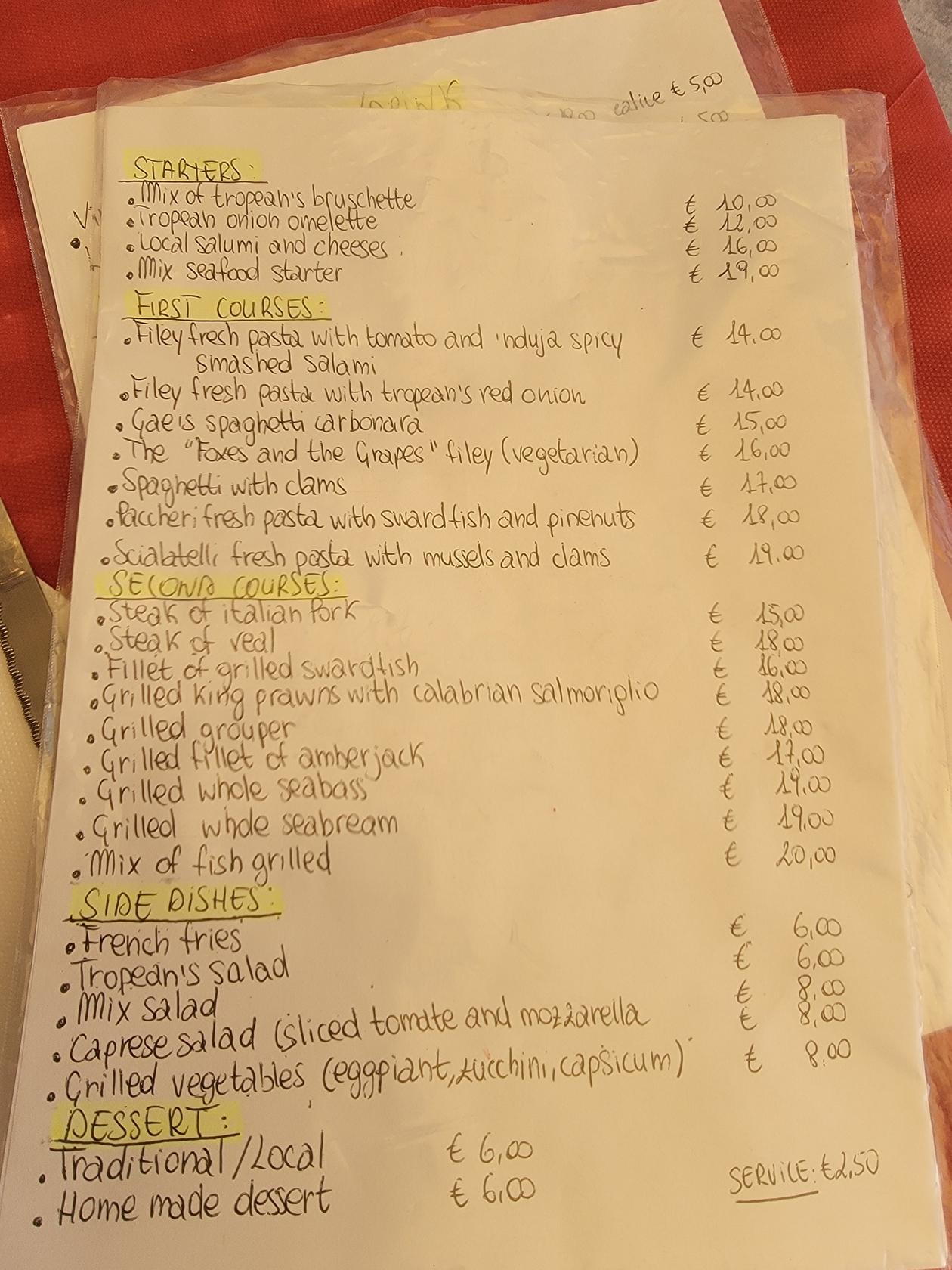
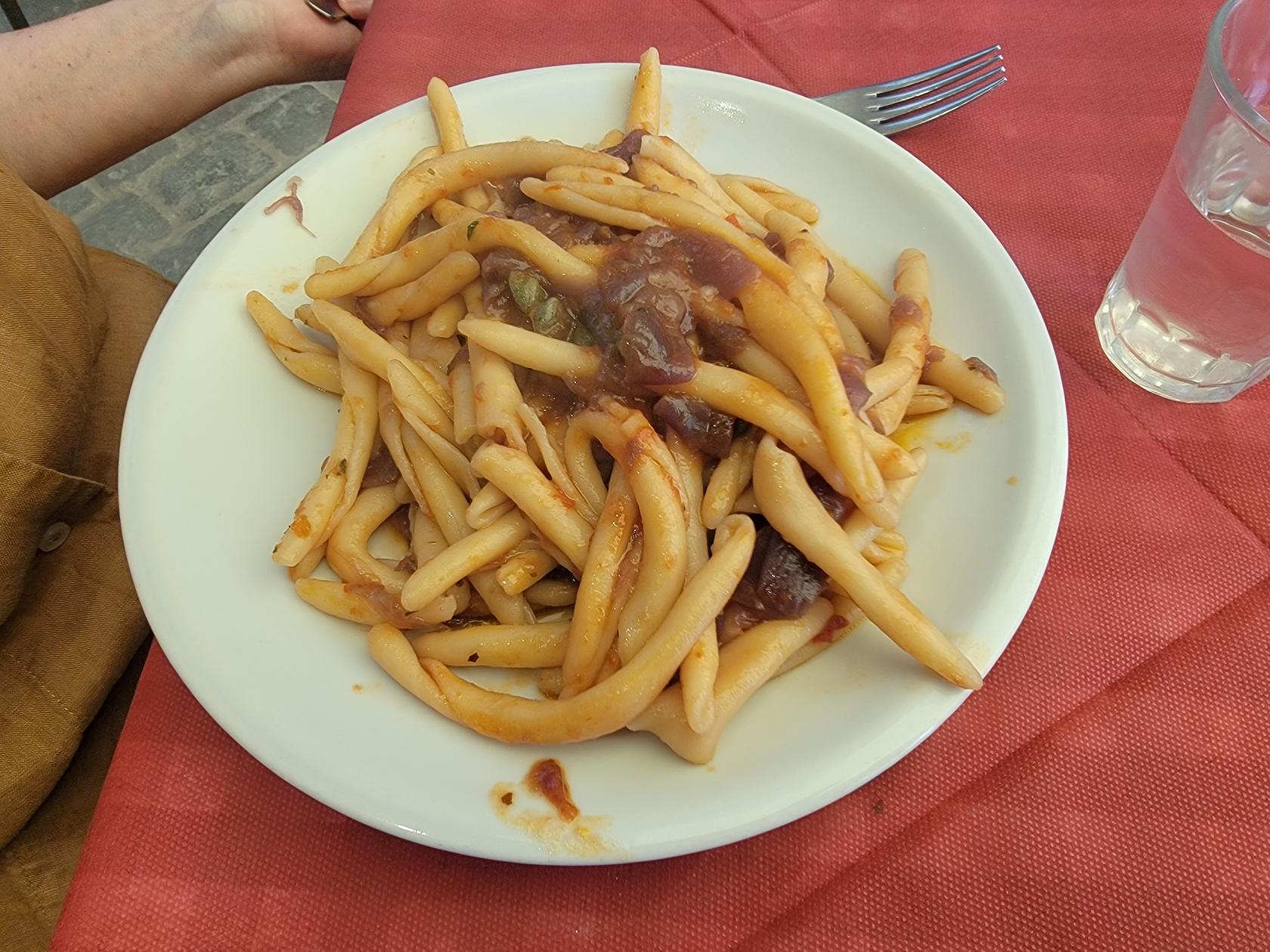
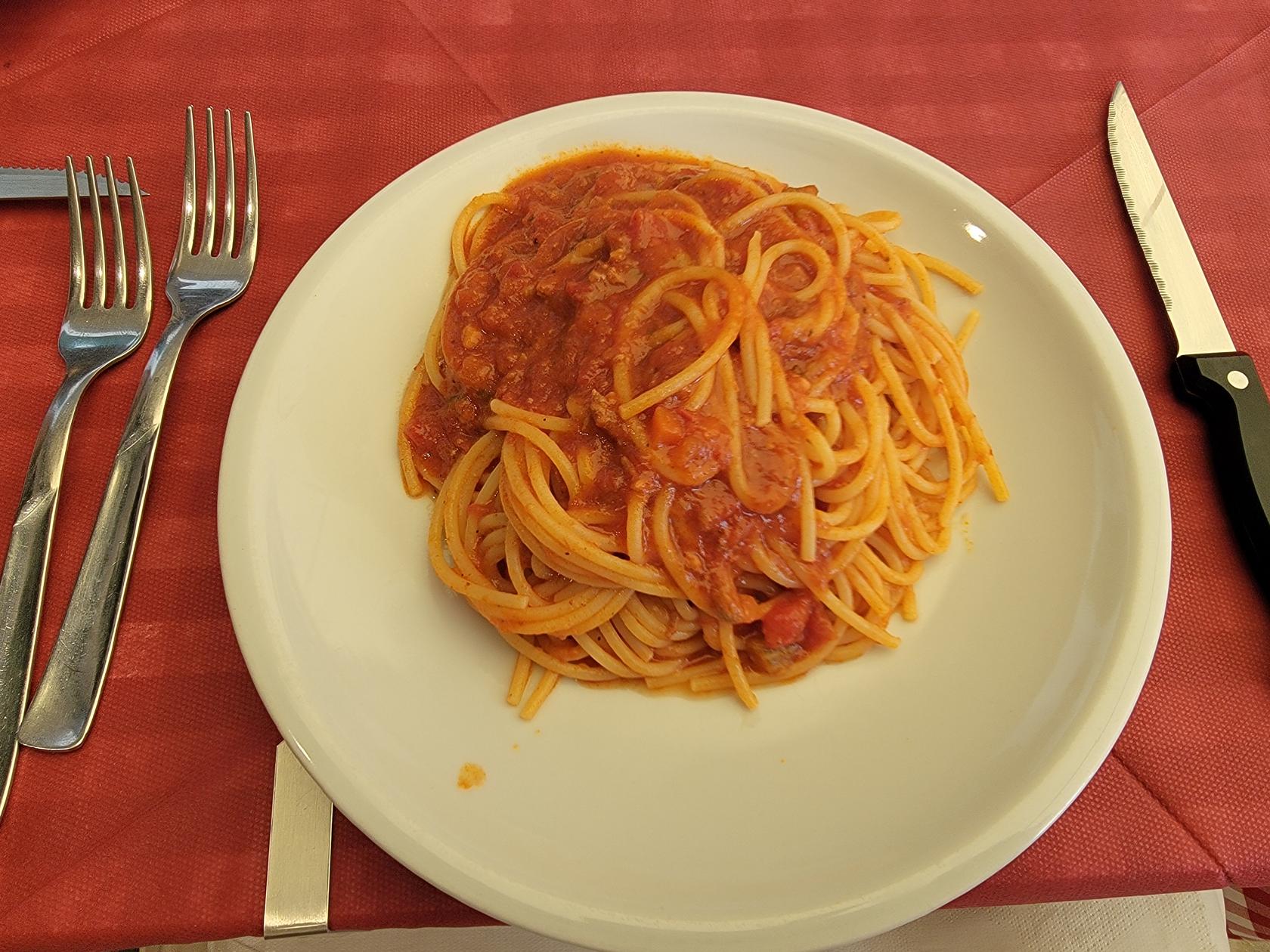
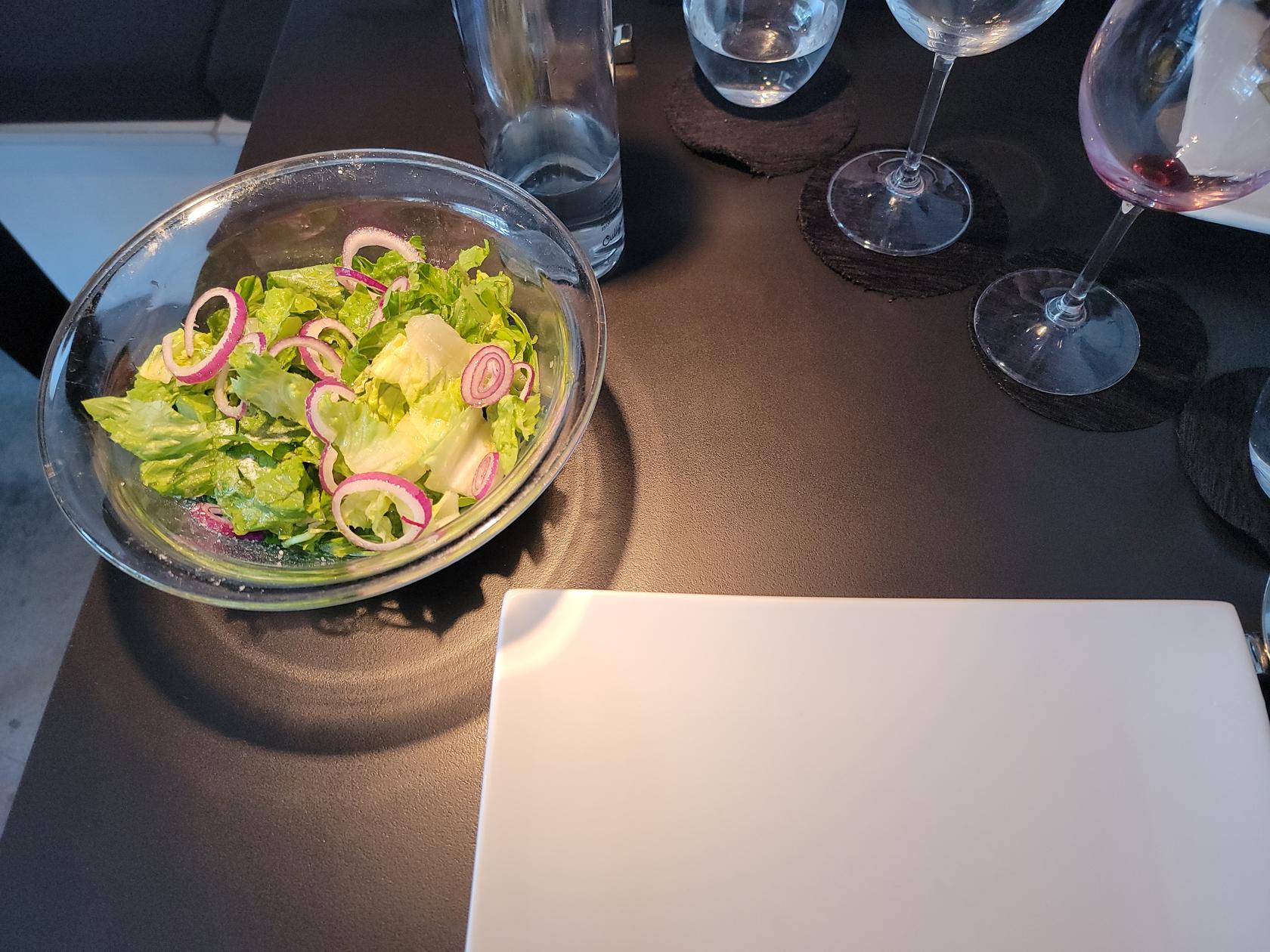
At Le Volpe we ordered a pasta dish each and dessert. The Filey was freshly made and topped with Tropean Onions, which are deliciously sweet, when they are sautéed until they have that glassy look.
Palazzo Teotino Ristorante

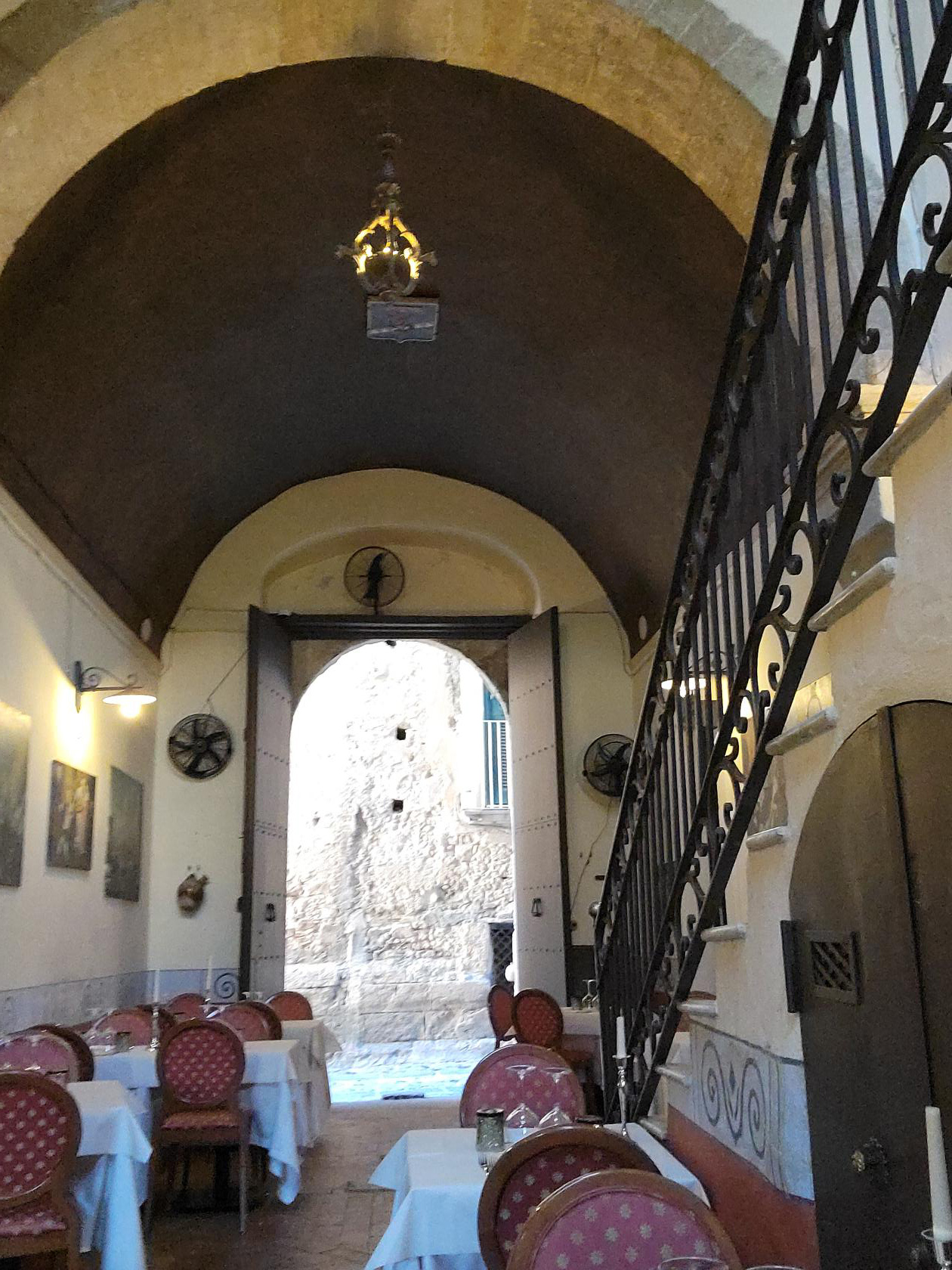
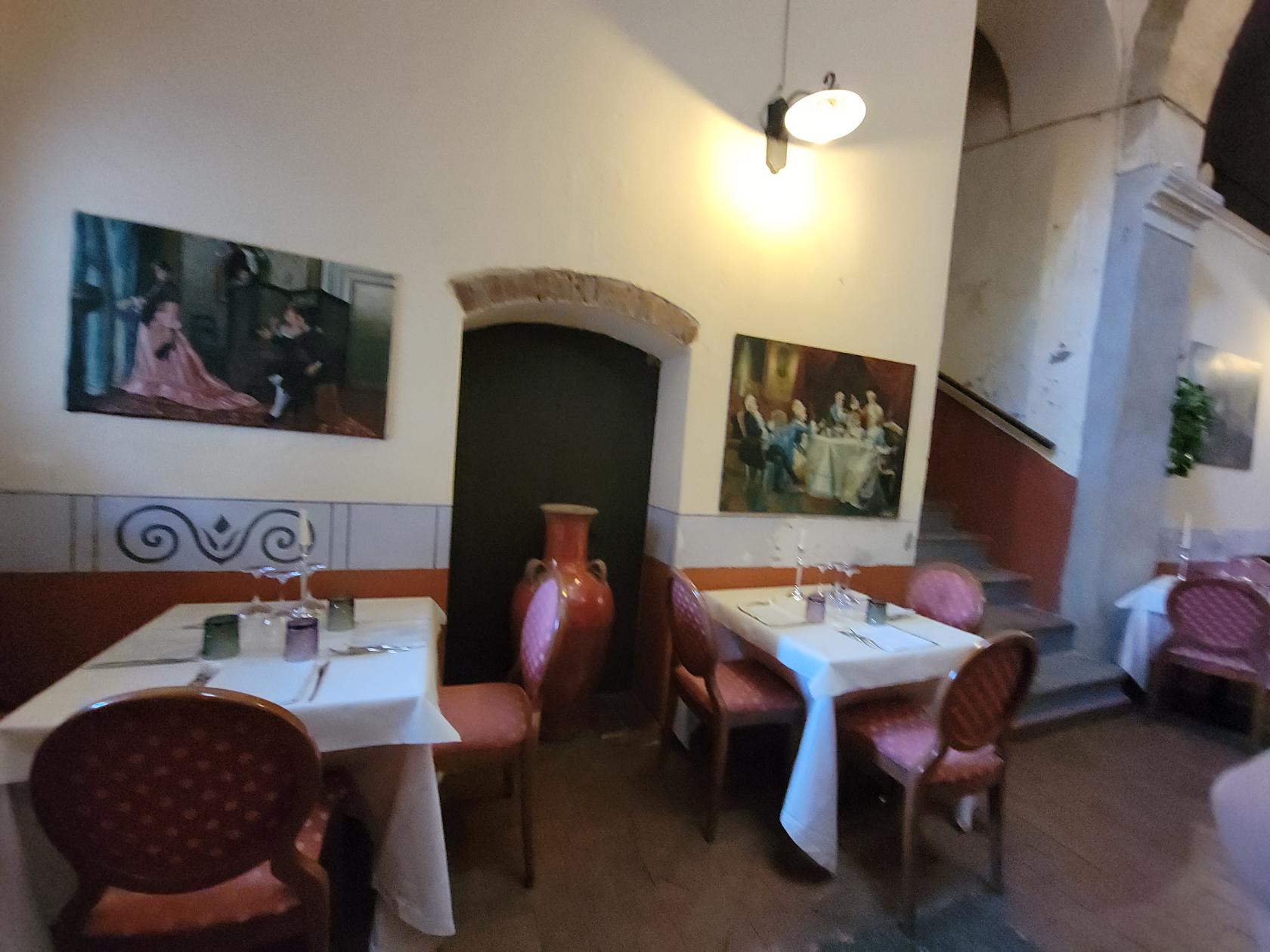
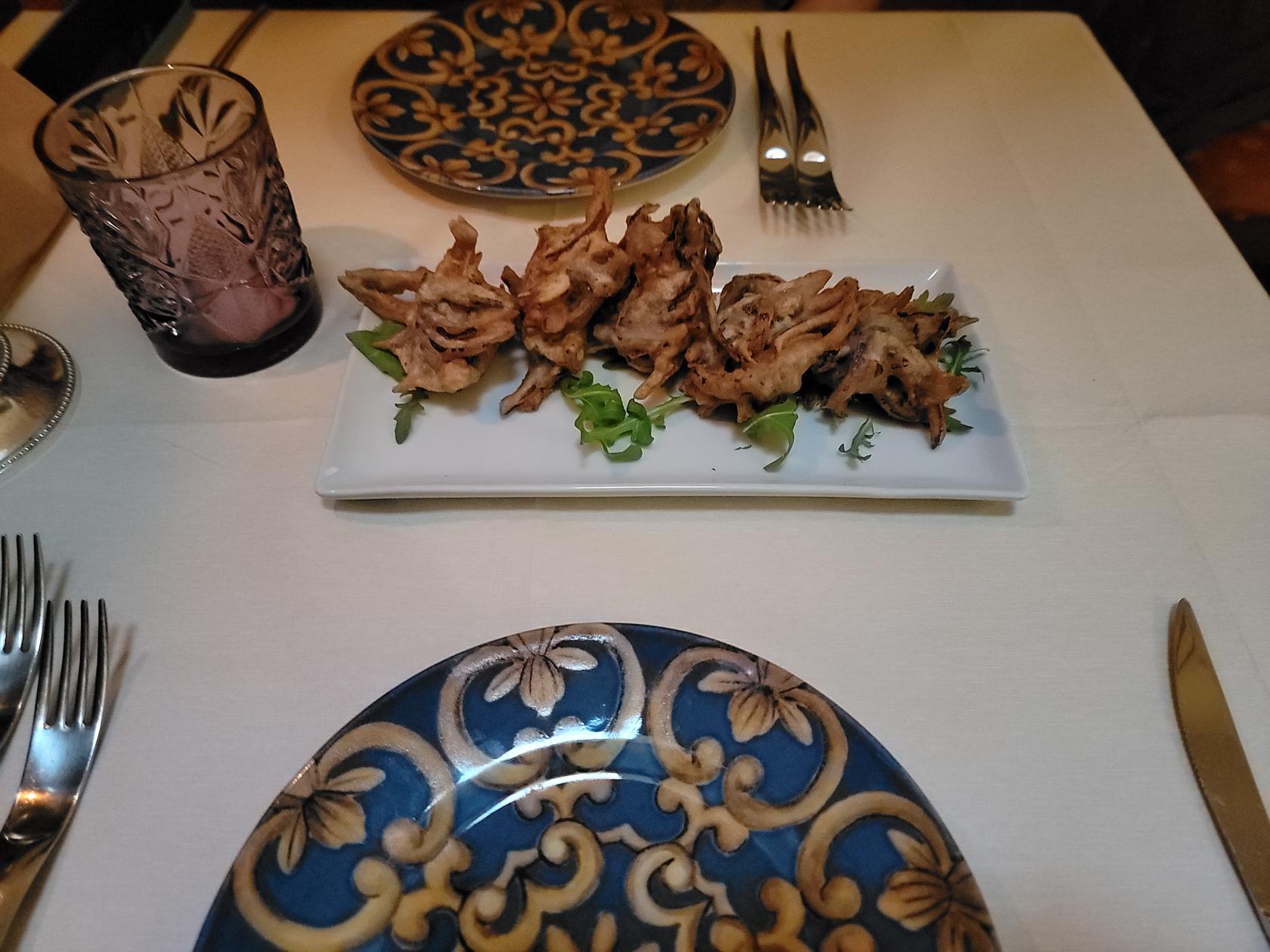
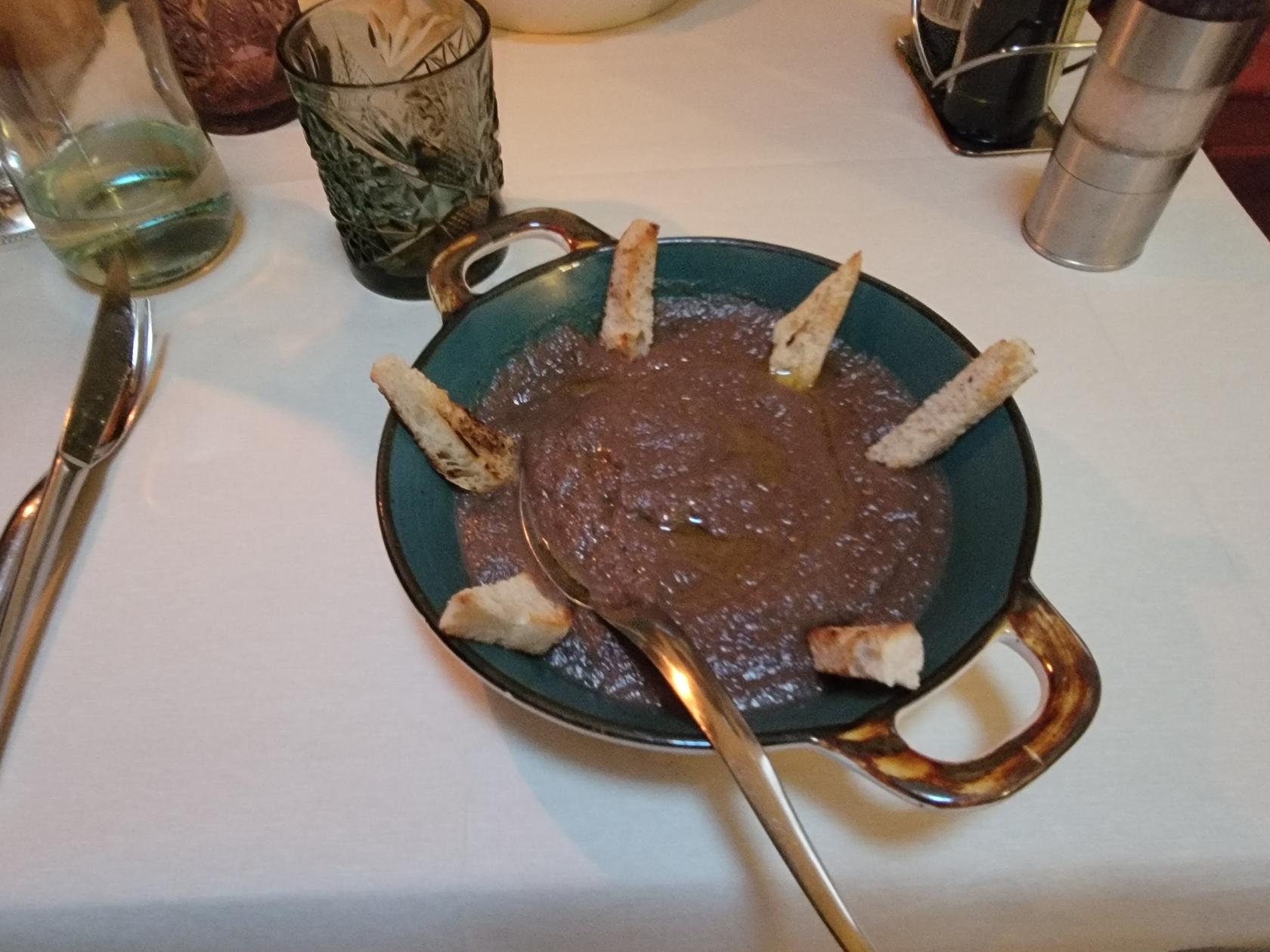
This restaurant is housed in an old palazzo and has both indoor and outdoor seating. We sat indoor right in the foyer next to the stairwell. We came here for the Tropean Onion soup that they advertize and found it very rich and tasty. We can also commend the fried onion floret, you get about four when you order them, so enough to share.

Sapri, Italy – Sunny Interlude

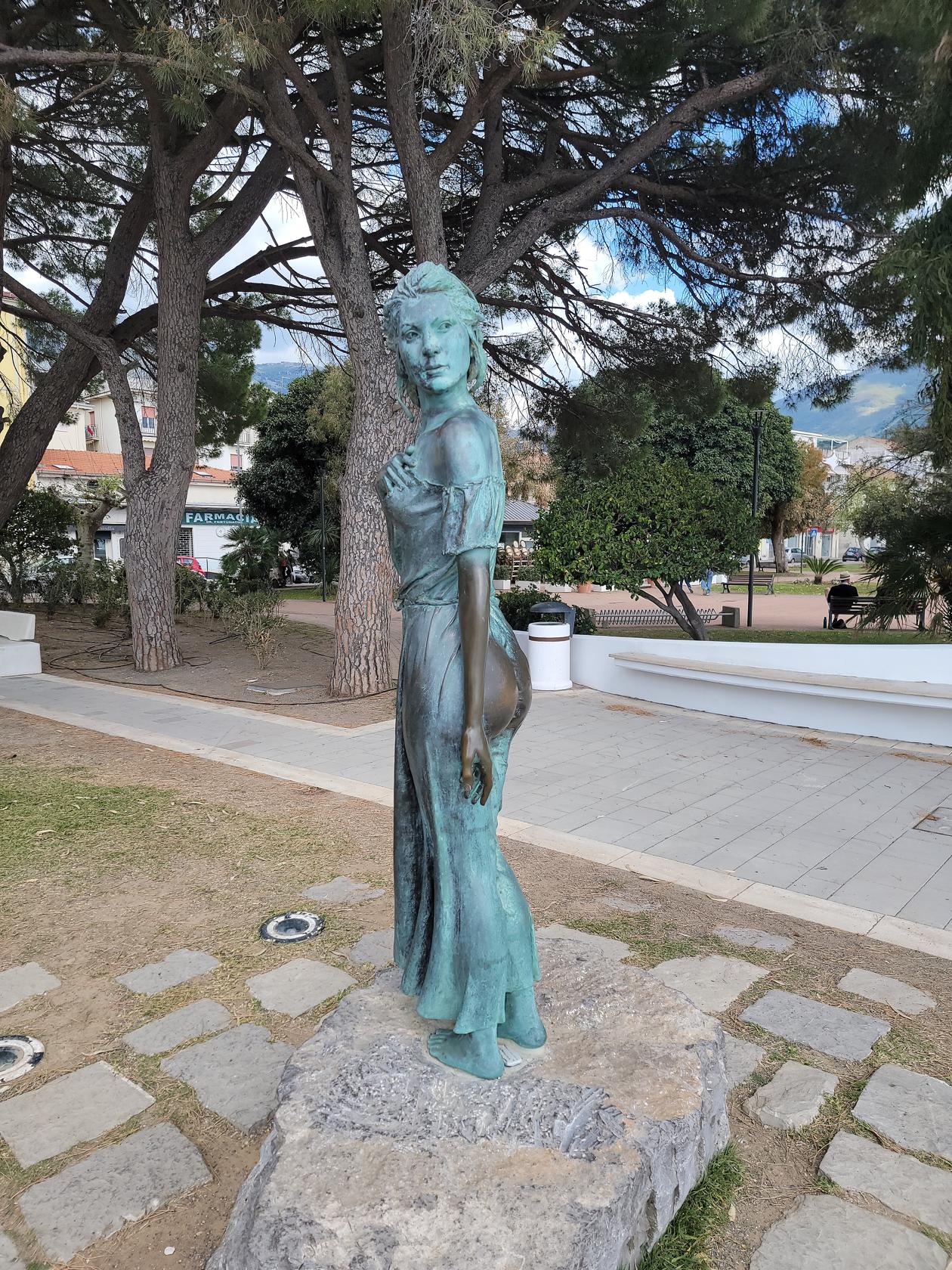
After our week in Naples where we took several days to visit the Amalfi Coast, we headed further south and stopped in Sapri. This was a scheduled visit to break up the trip and offer us a sunny interlude and a bit of repose before continuing to Tropea and later Reggio Calabria.

Sapri

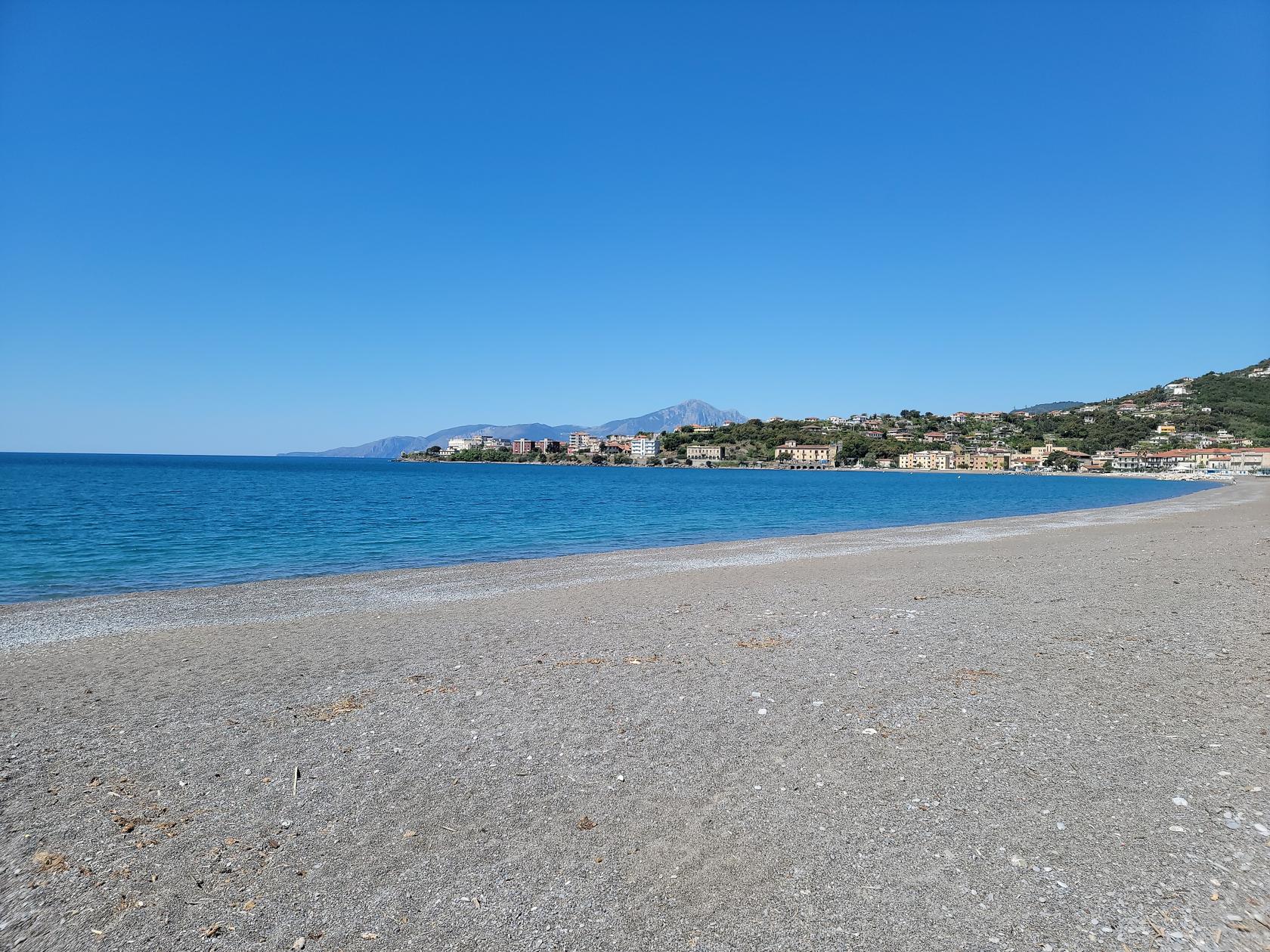
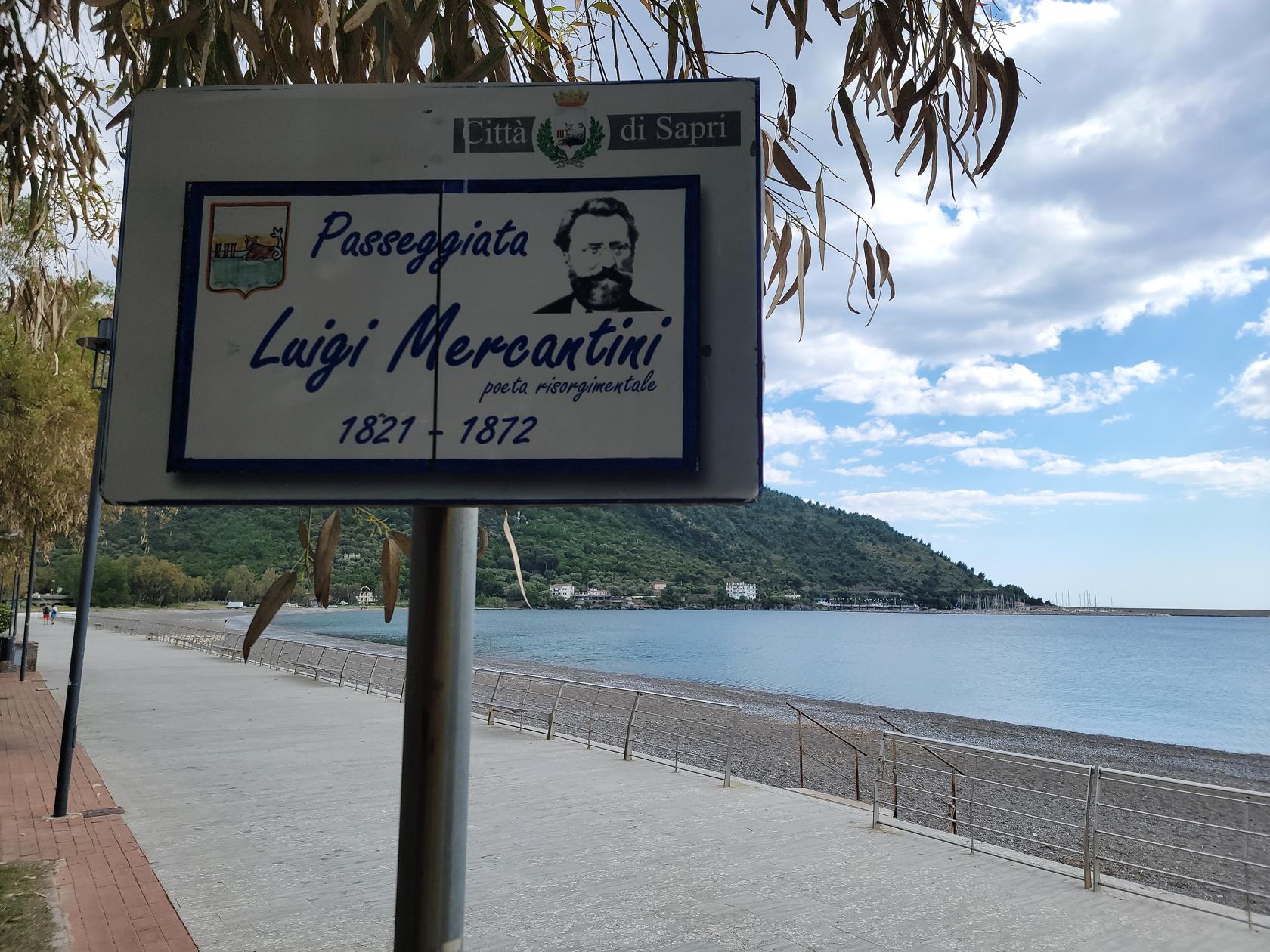
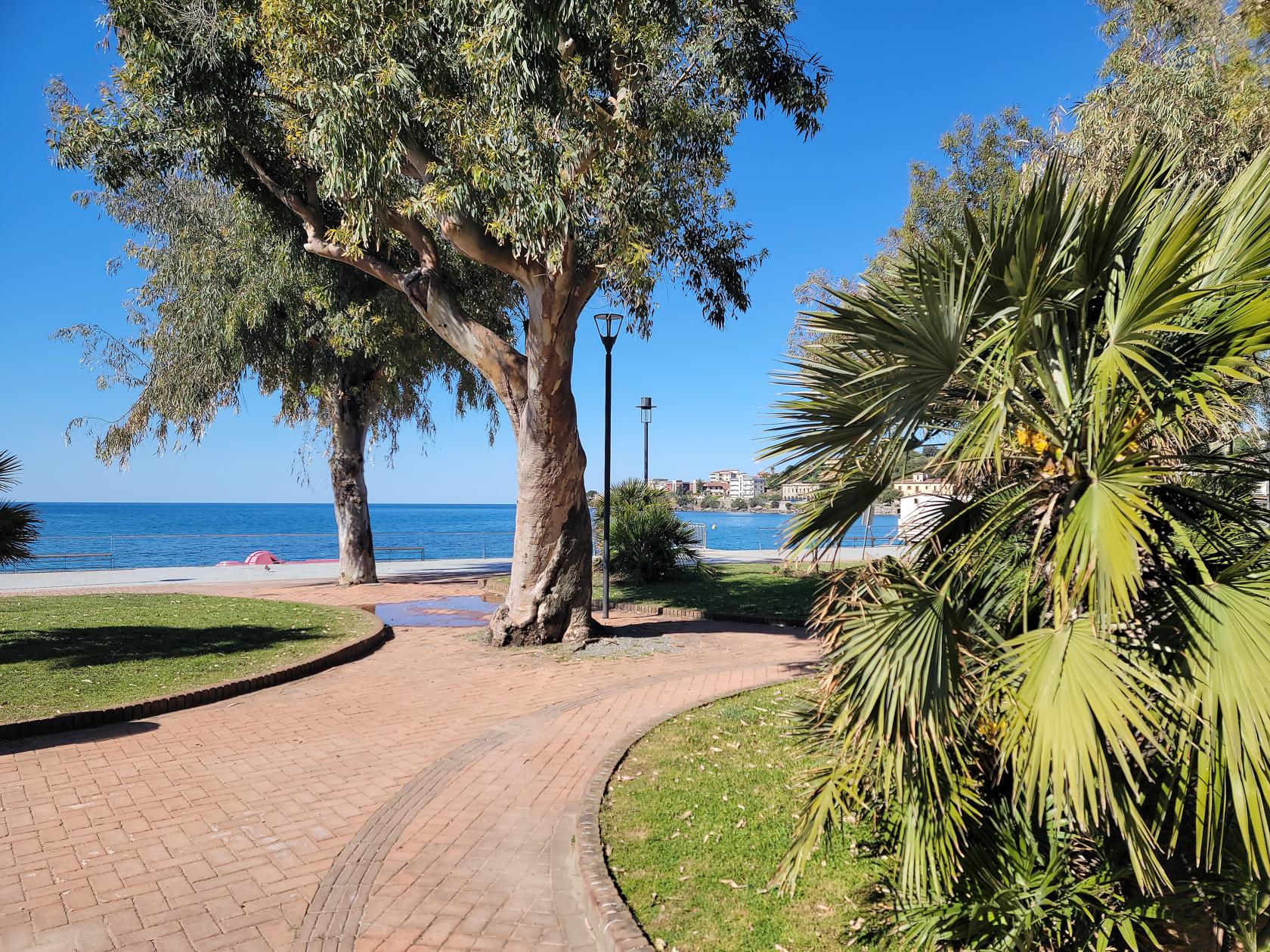
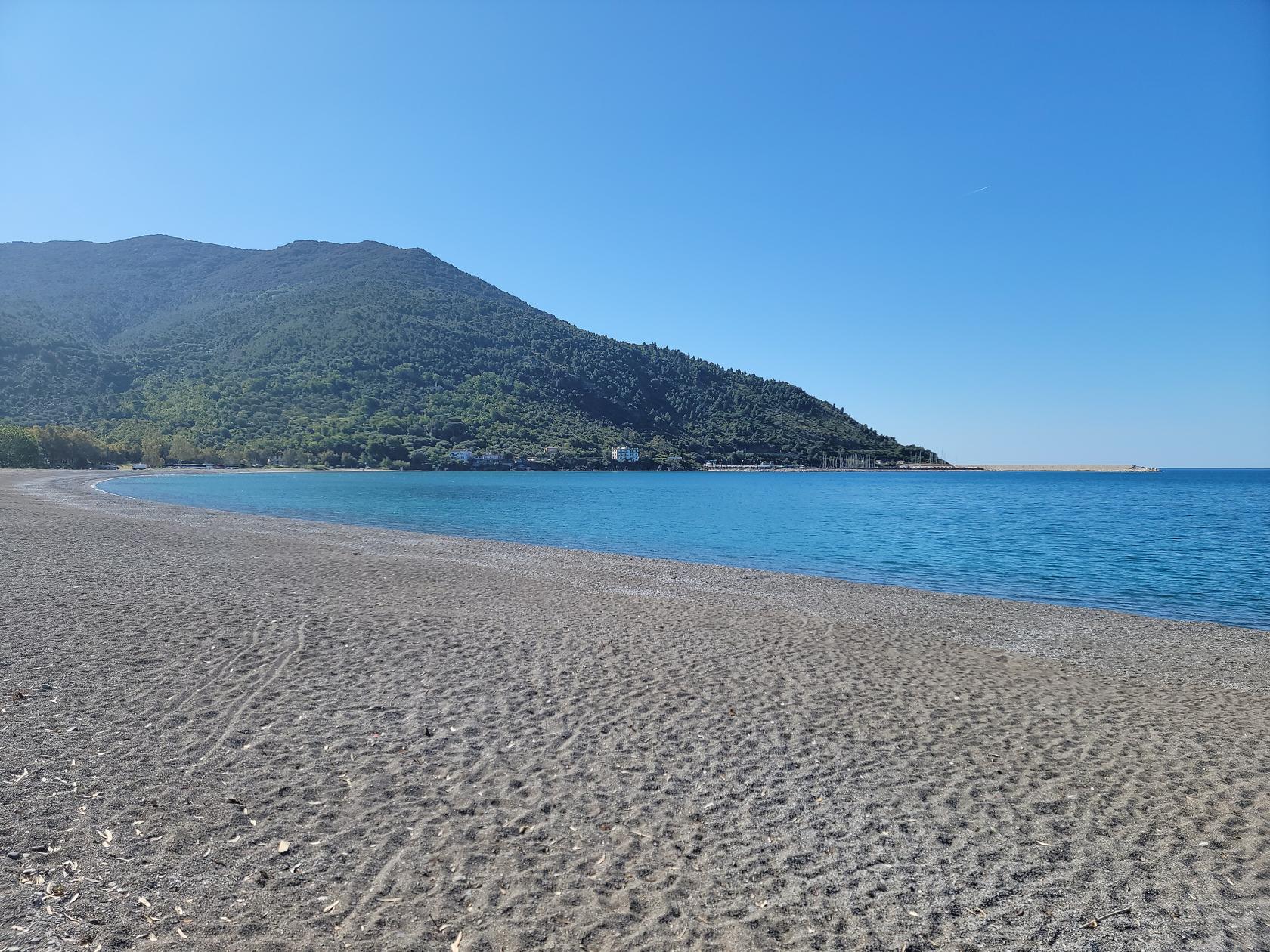
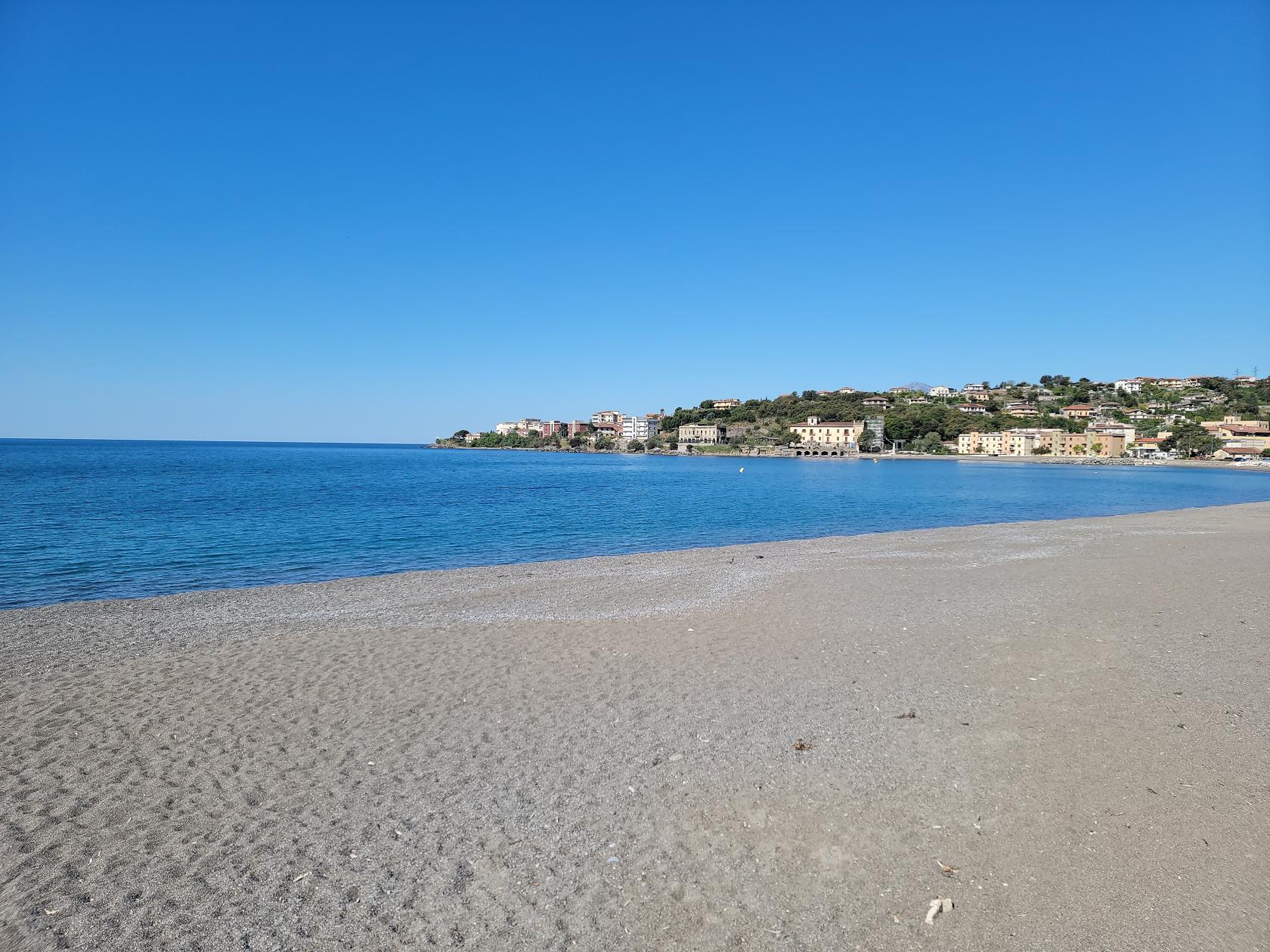
Sapri is a small Italian town that is dominated by its stony beach. While there it was fairly vacant and deviod of other tourists. But there were plenty of restaurants open and we did enjoy that relaxing atmosphere and food.

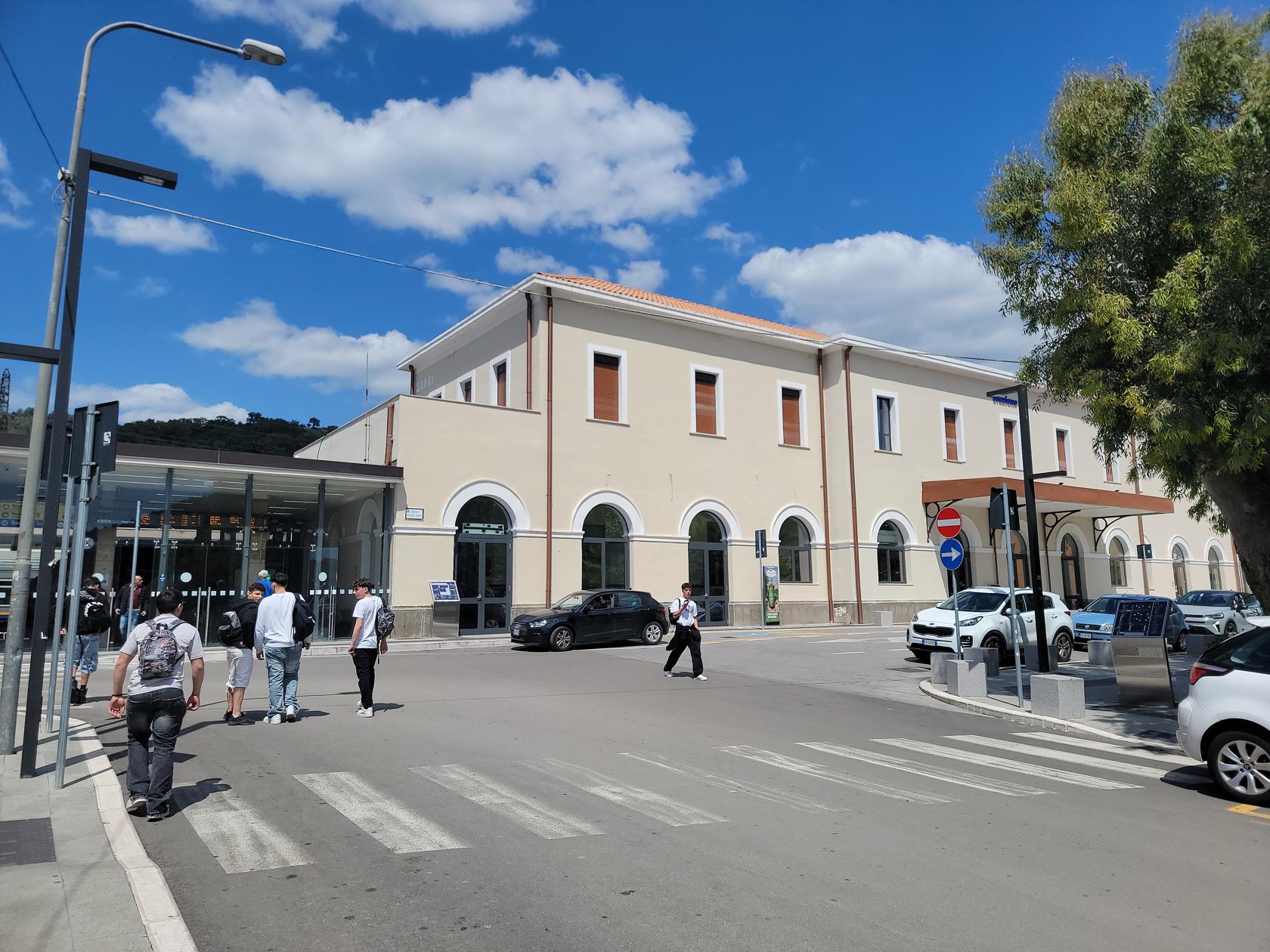
The town itself is nothing to look at, but there are a few spots of interest, all of which were along the coastal area. Situated in the Gulf of Policastro it is surrounded by hills on all three sides. Luckily the train station is a short ten minute walk to and from the beach.

Getting There

There are several trains that run between Naples and Sapri. Perhaps the most convenient one will be the local, which stops at several points, but offers a bit more flexibility.

Our Hotel

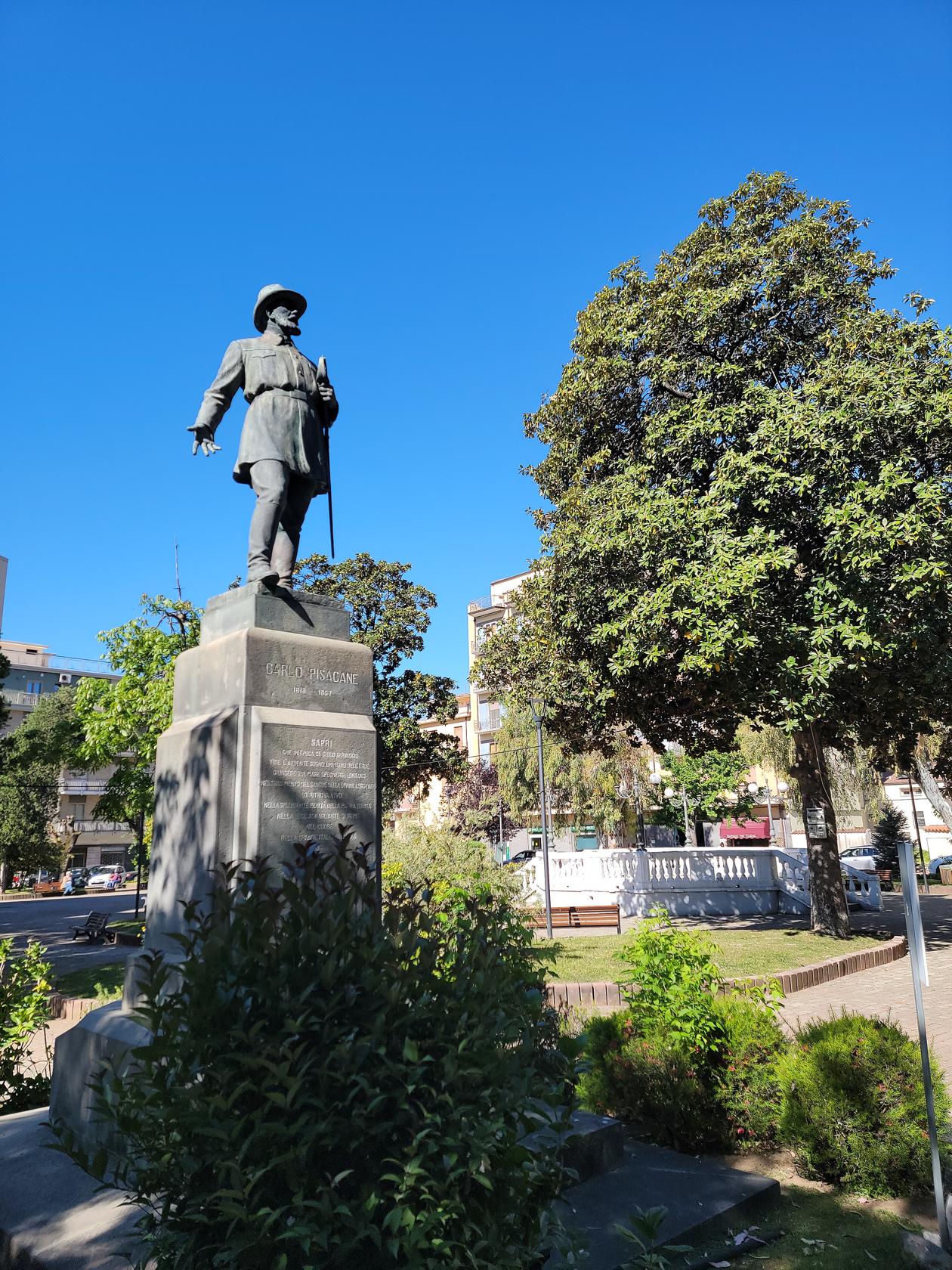
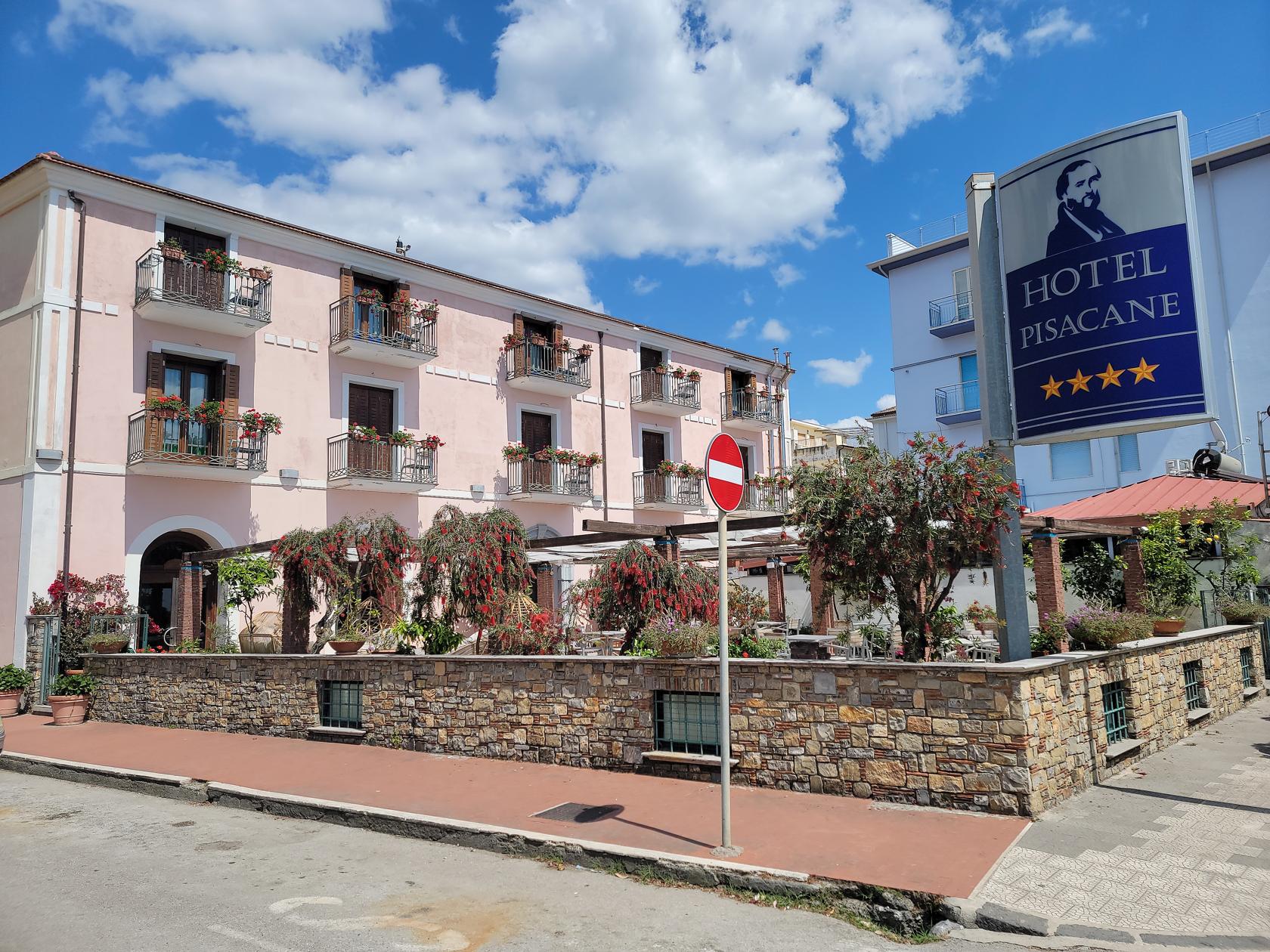
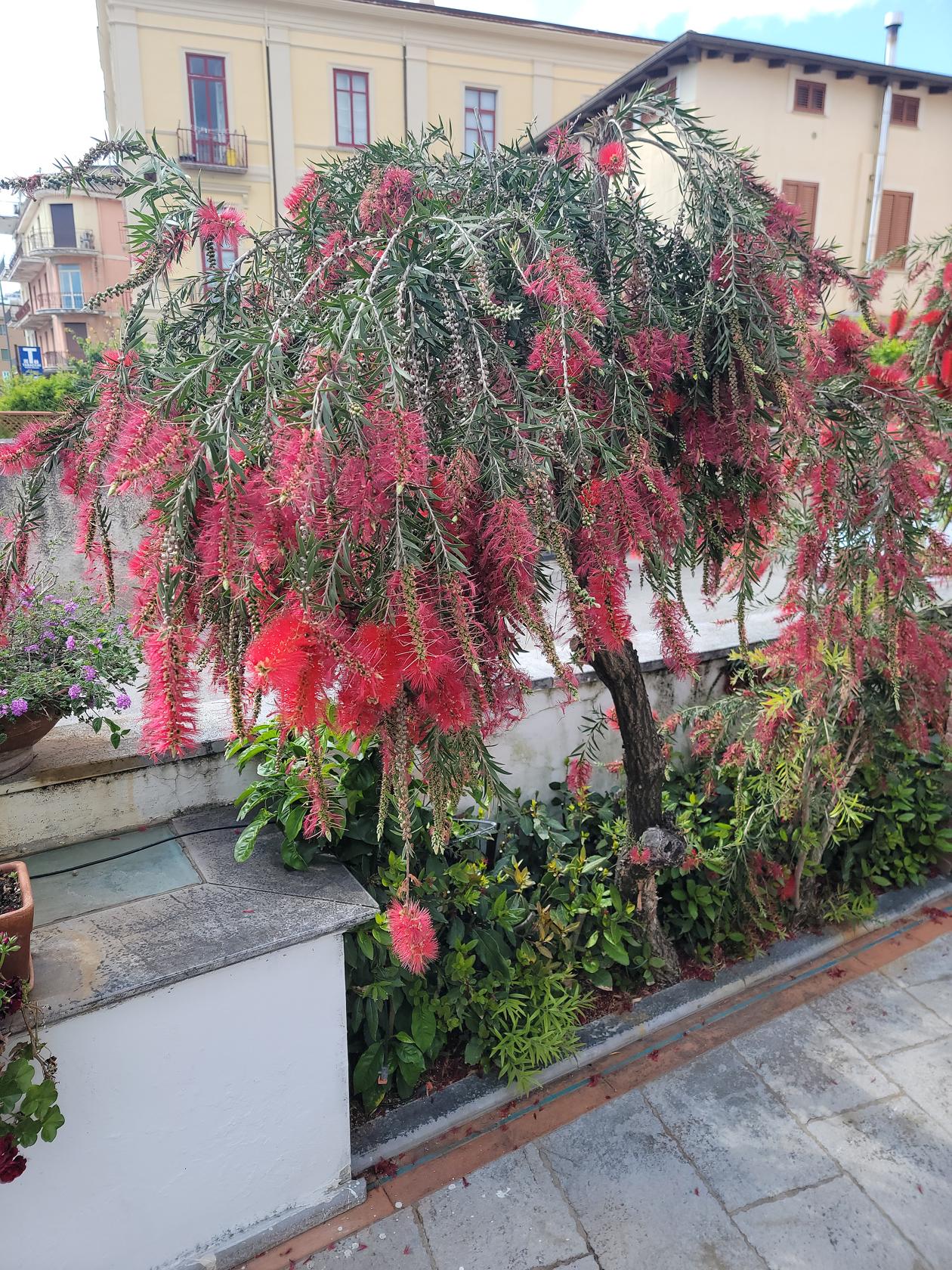
We stayed at the Hotel Pisacane, a small botique style hotel right on the beach. Unfortunately with the exception of breakfast, the restaurant is closed until tourist season which starts in June. Luckily, that did not turn into an issue for us.

The Observatory

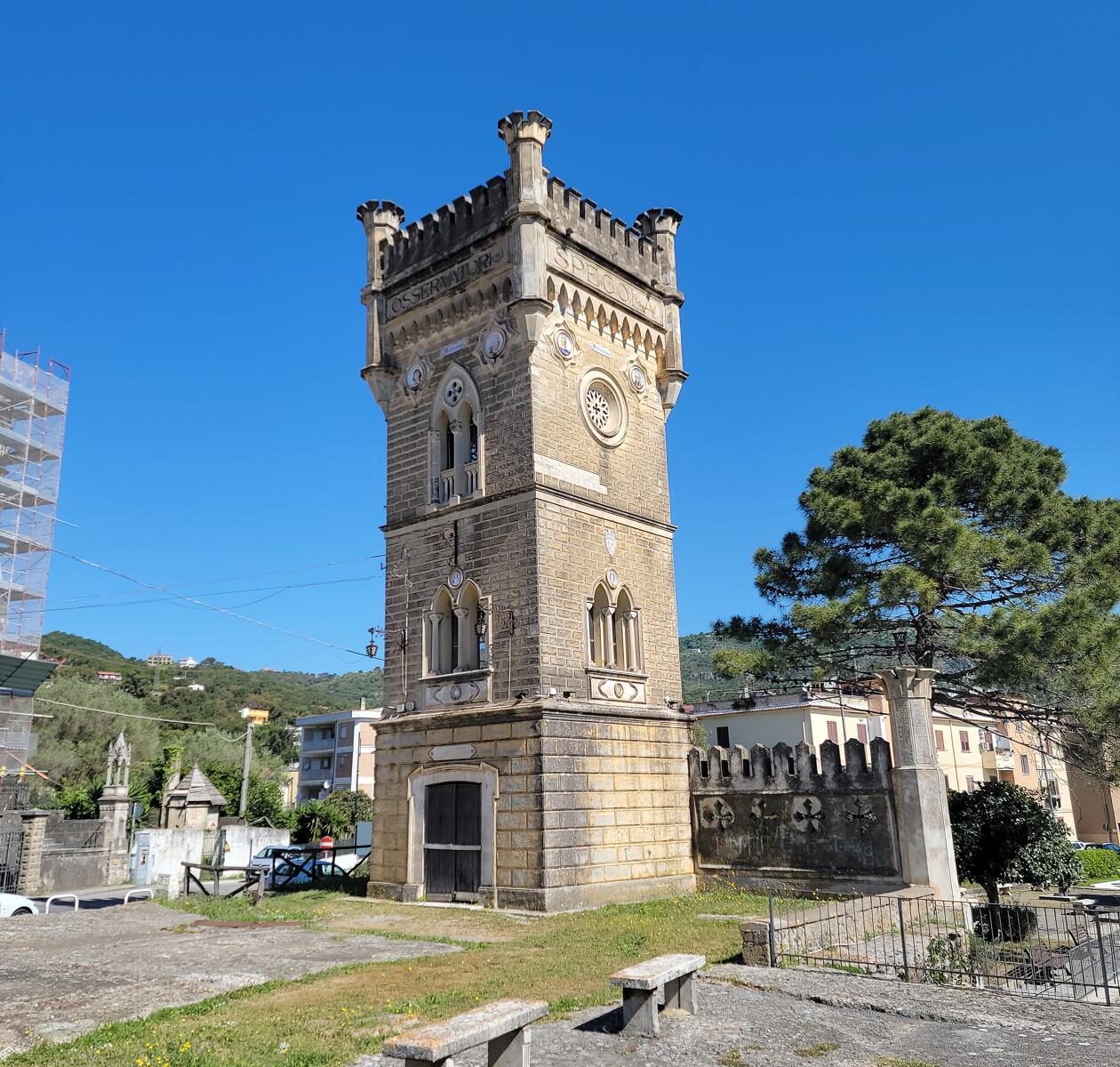
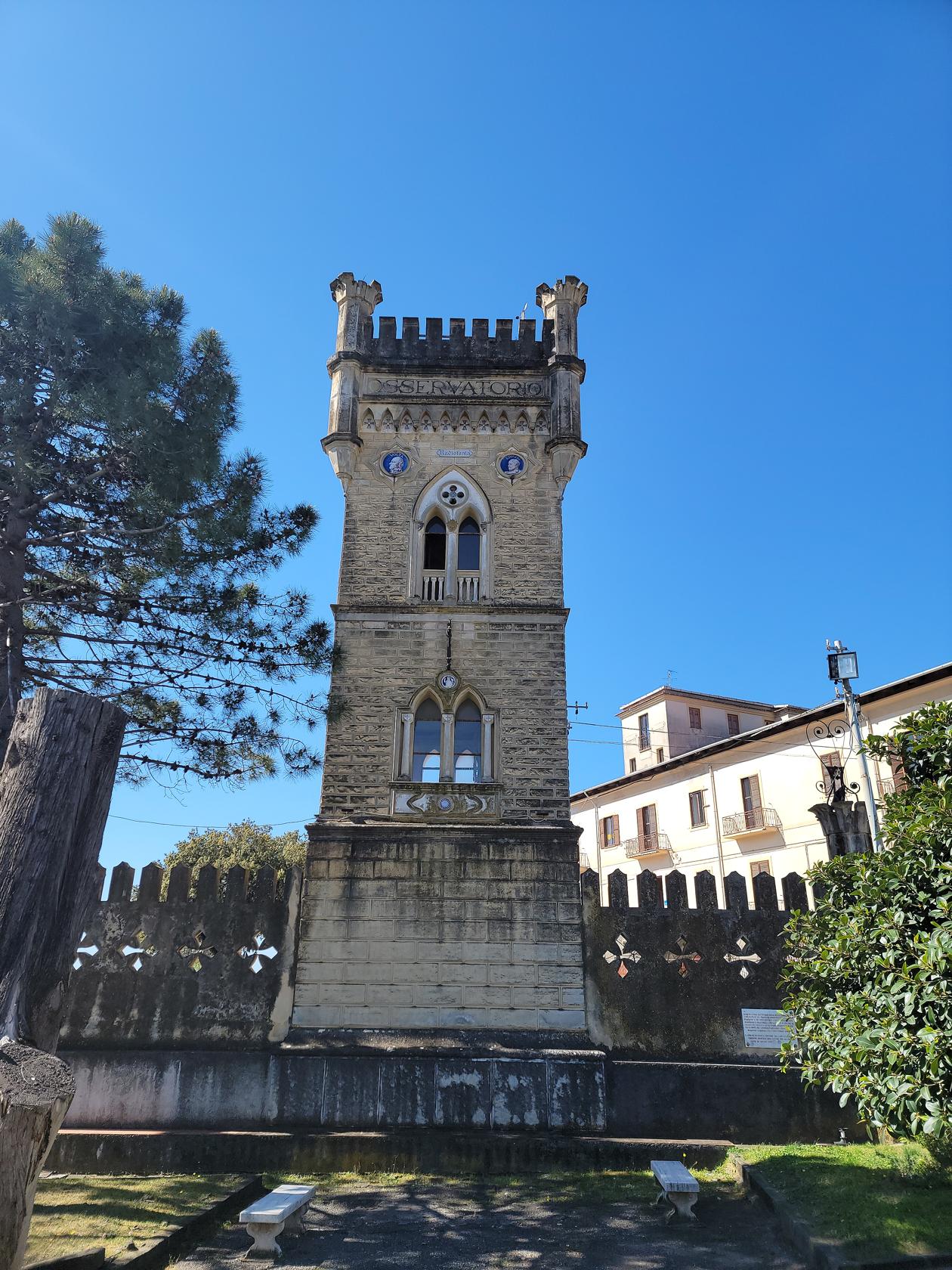
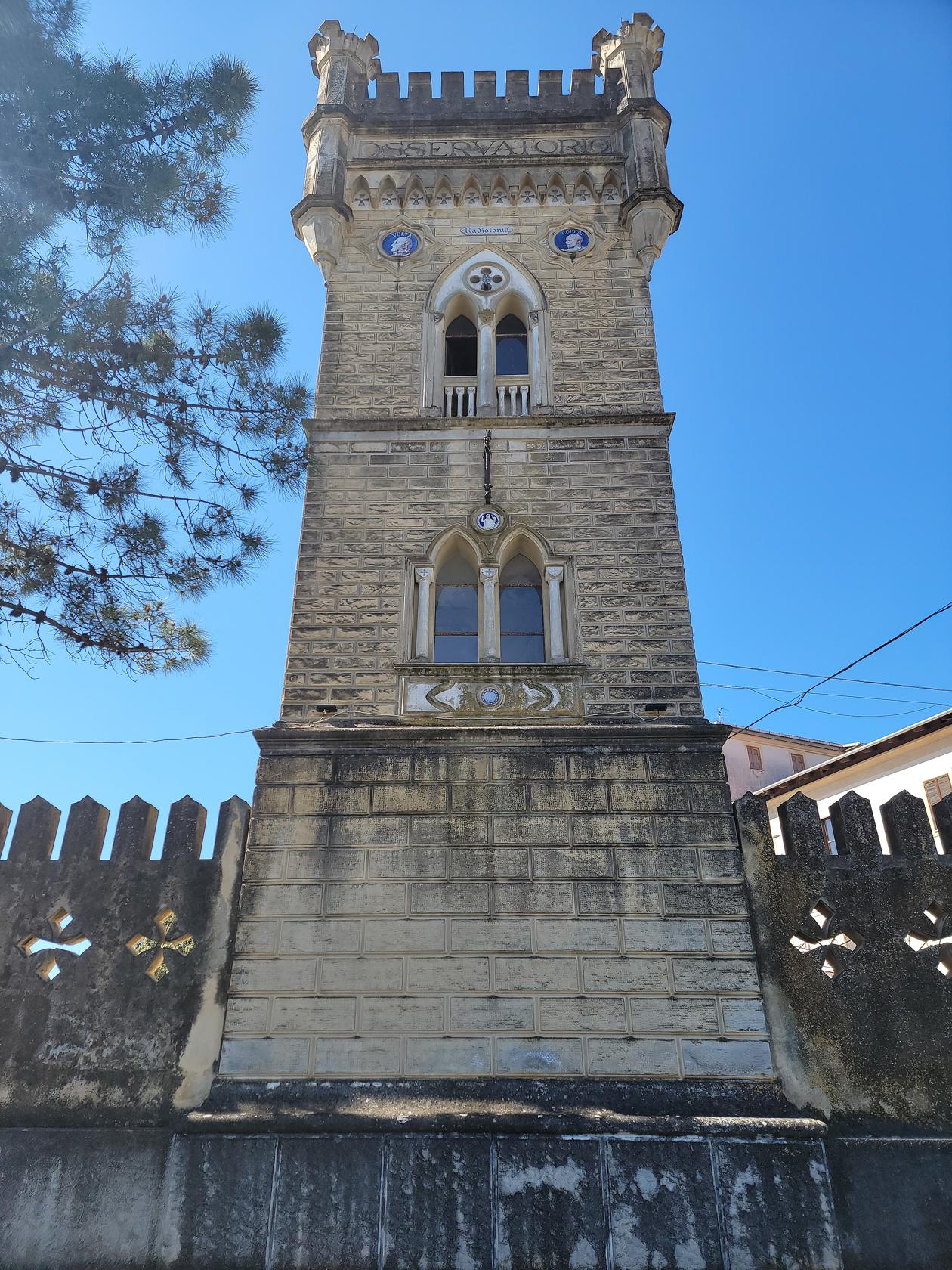
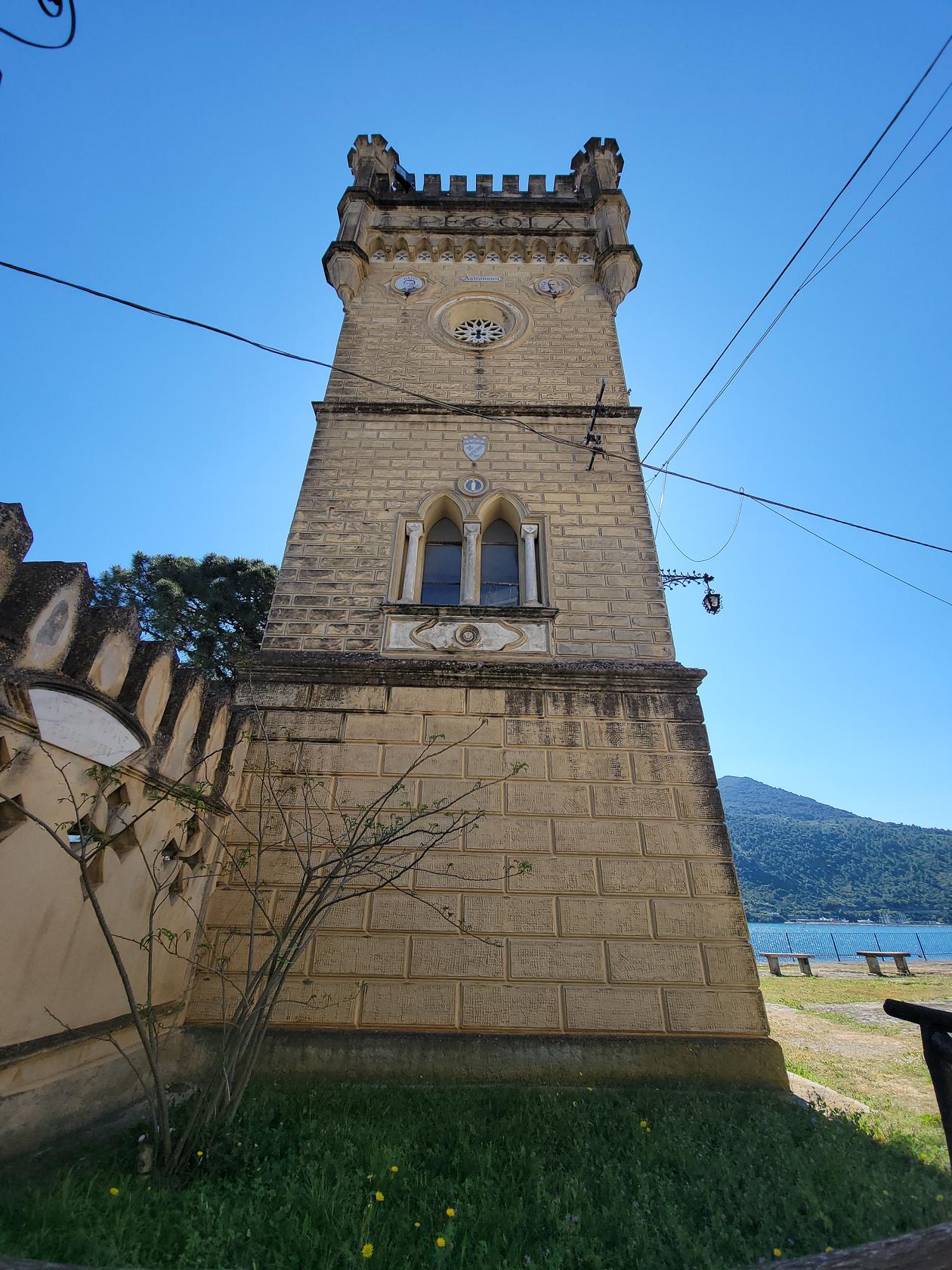
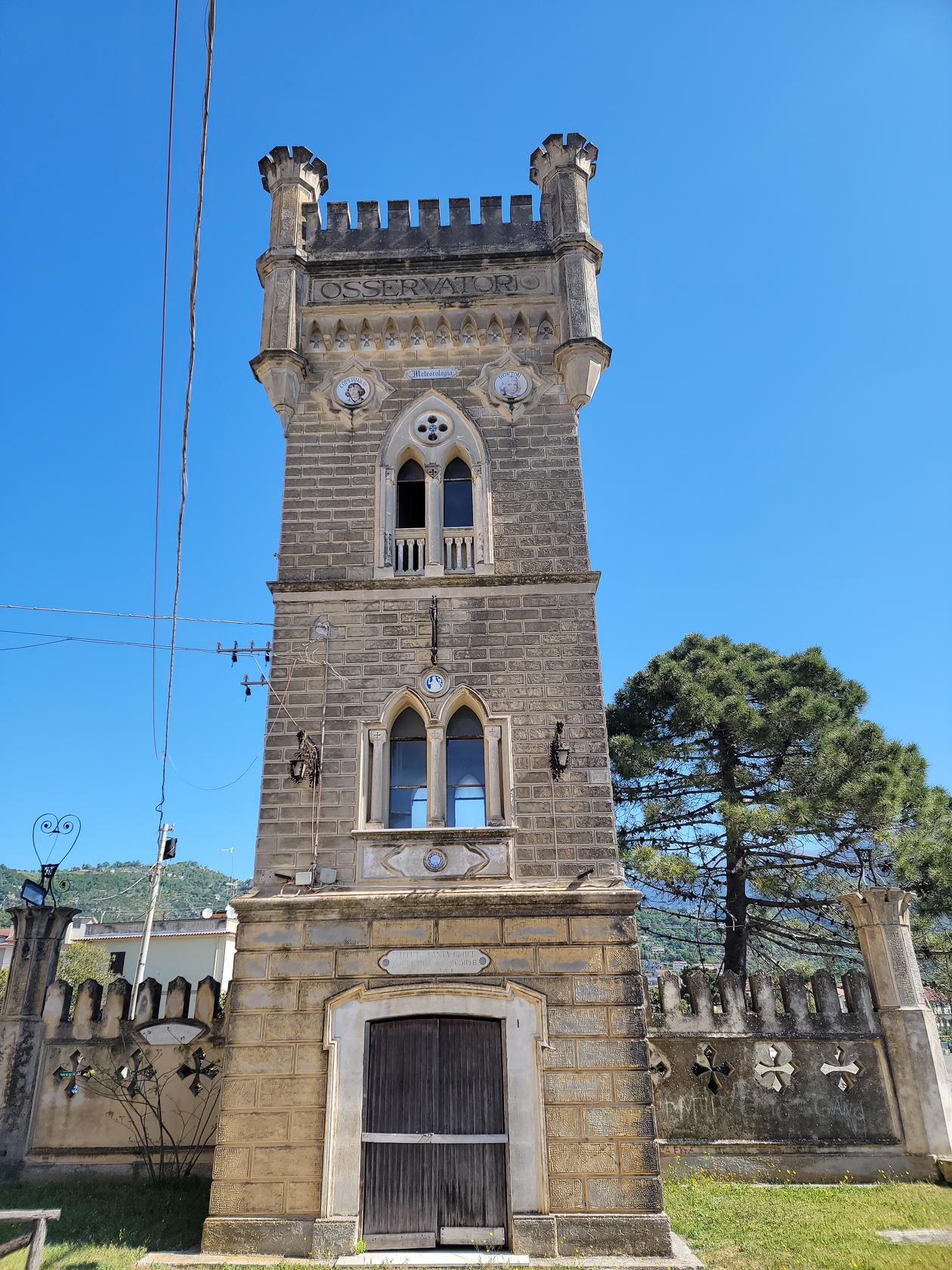
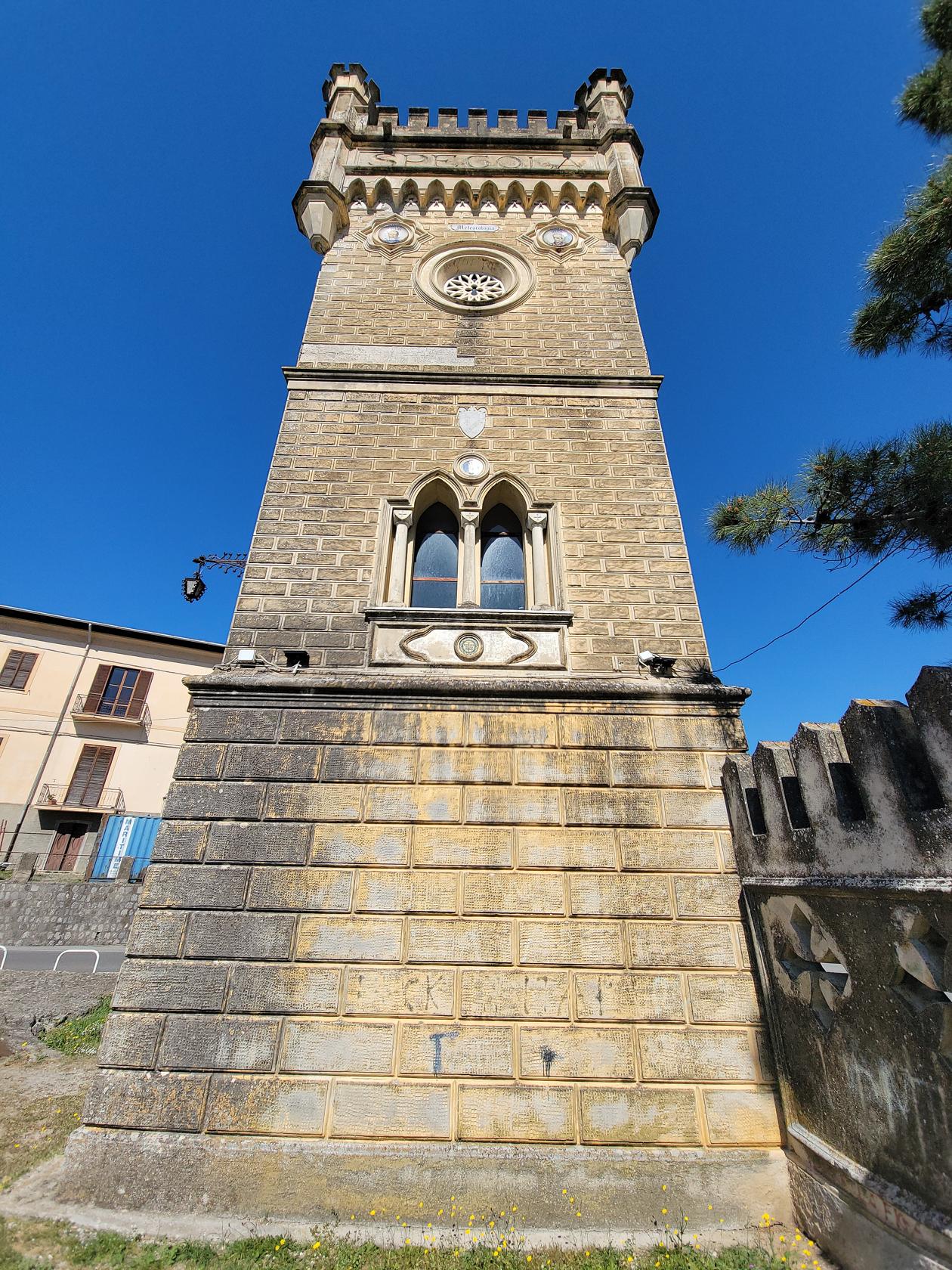
A very tall structure overlooking the Gulf of Policastro. It appears to celebrate eight renowned Italian scientist from astronomy, radio and meterology. It is located on the northern part of the beach, close to the Roman Villa Ruins.

Roman Villa Ruins

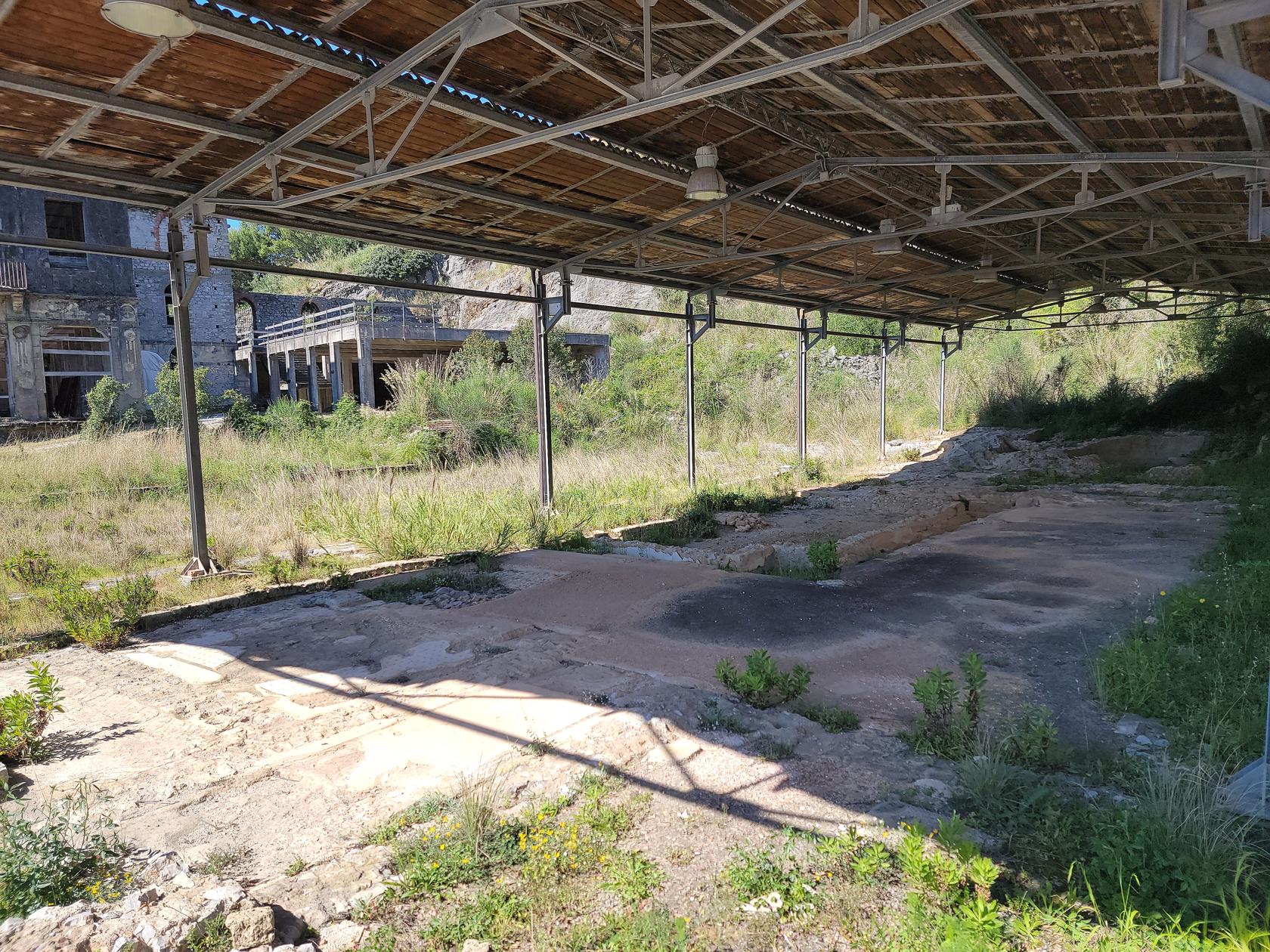
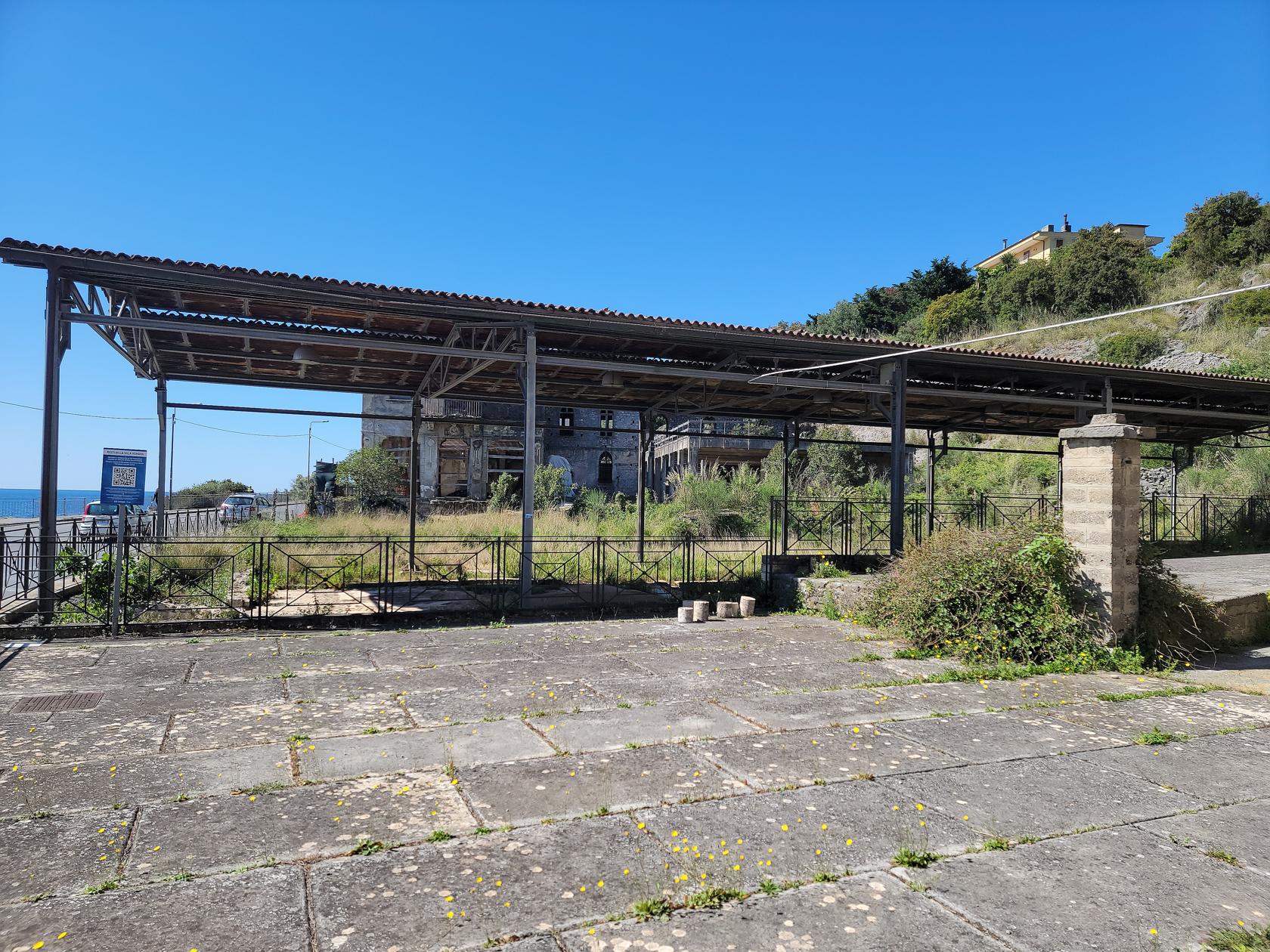
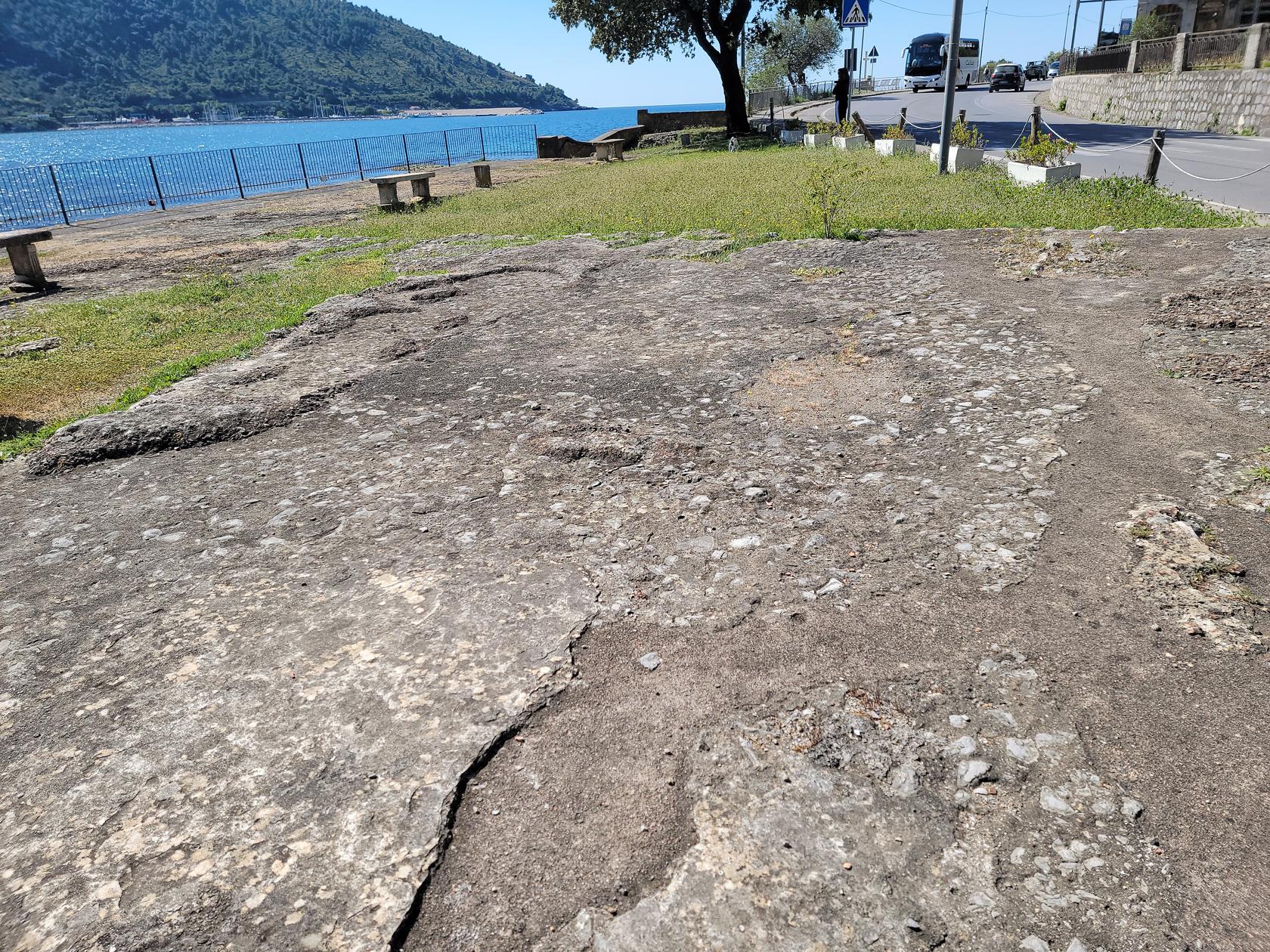
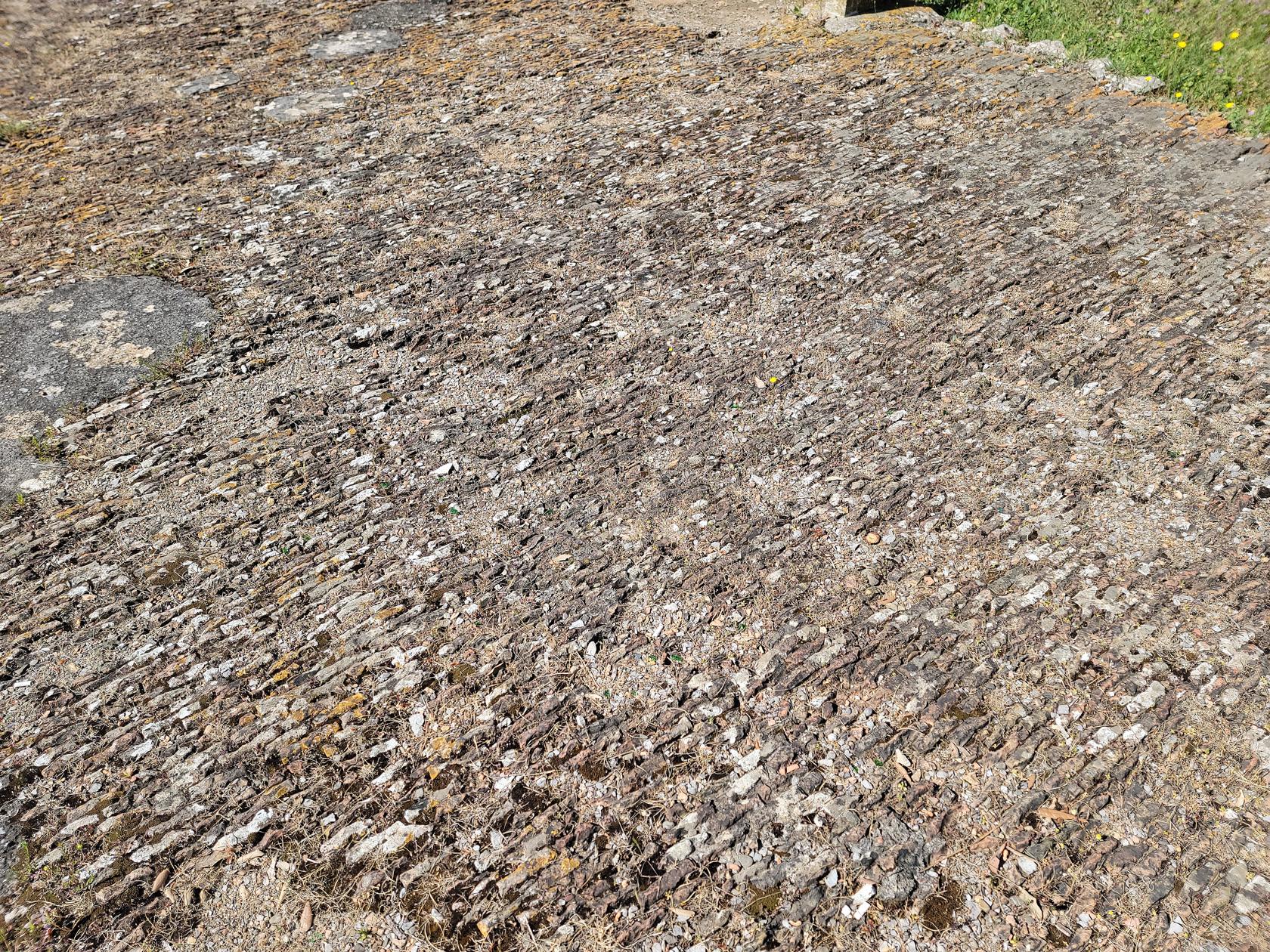
Partially perserved under a canopy, the Roman Villa ruins are also north of town and located close to the observatory. The observatory also has some roman ruins near it that appear to be an old roman cellar or other structure.

Restaurants

While in Sapri we ate at two good restaurants that were noteworthy. Both of which were for a late lunch. We prefer most of the time to eat a heavier lunch and just skip dinner altogether.

Tintobrace Ristorante

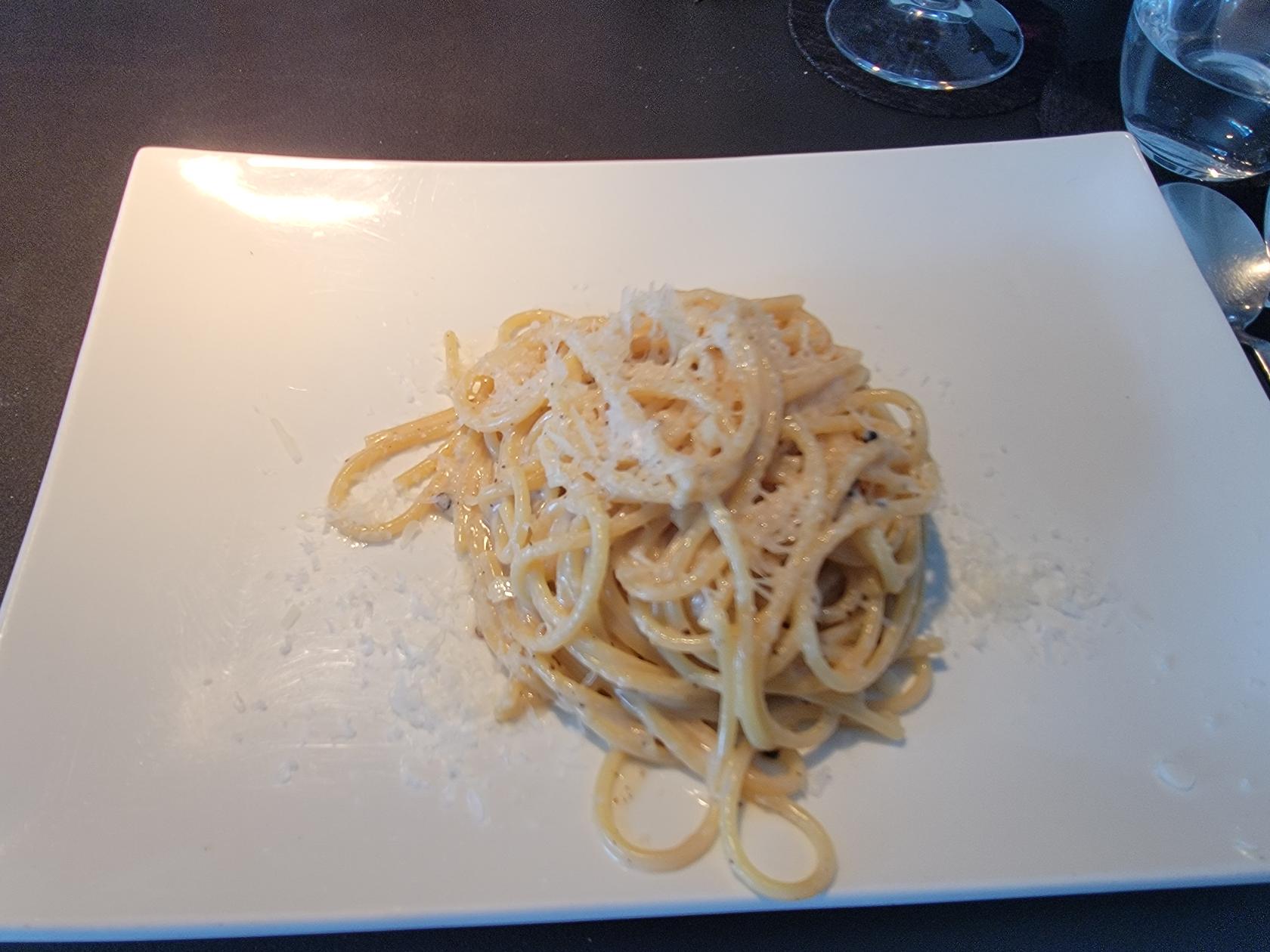
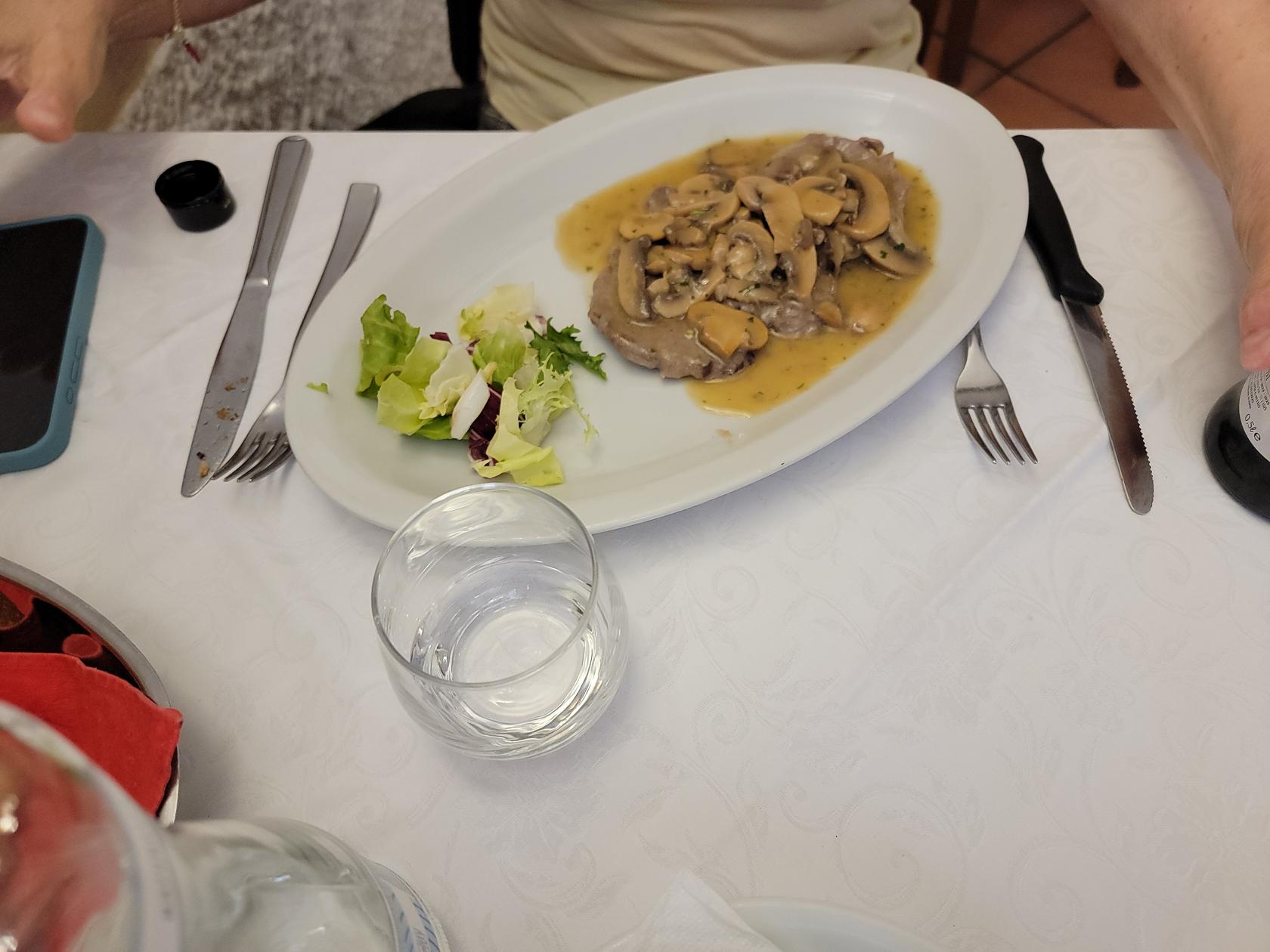
An upscale restaurant that offers Calabrian food and fine selection of local wines by the glass. I would recommend the Cacio and Pepe spaghetti.

Ristorante Lucifero

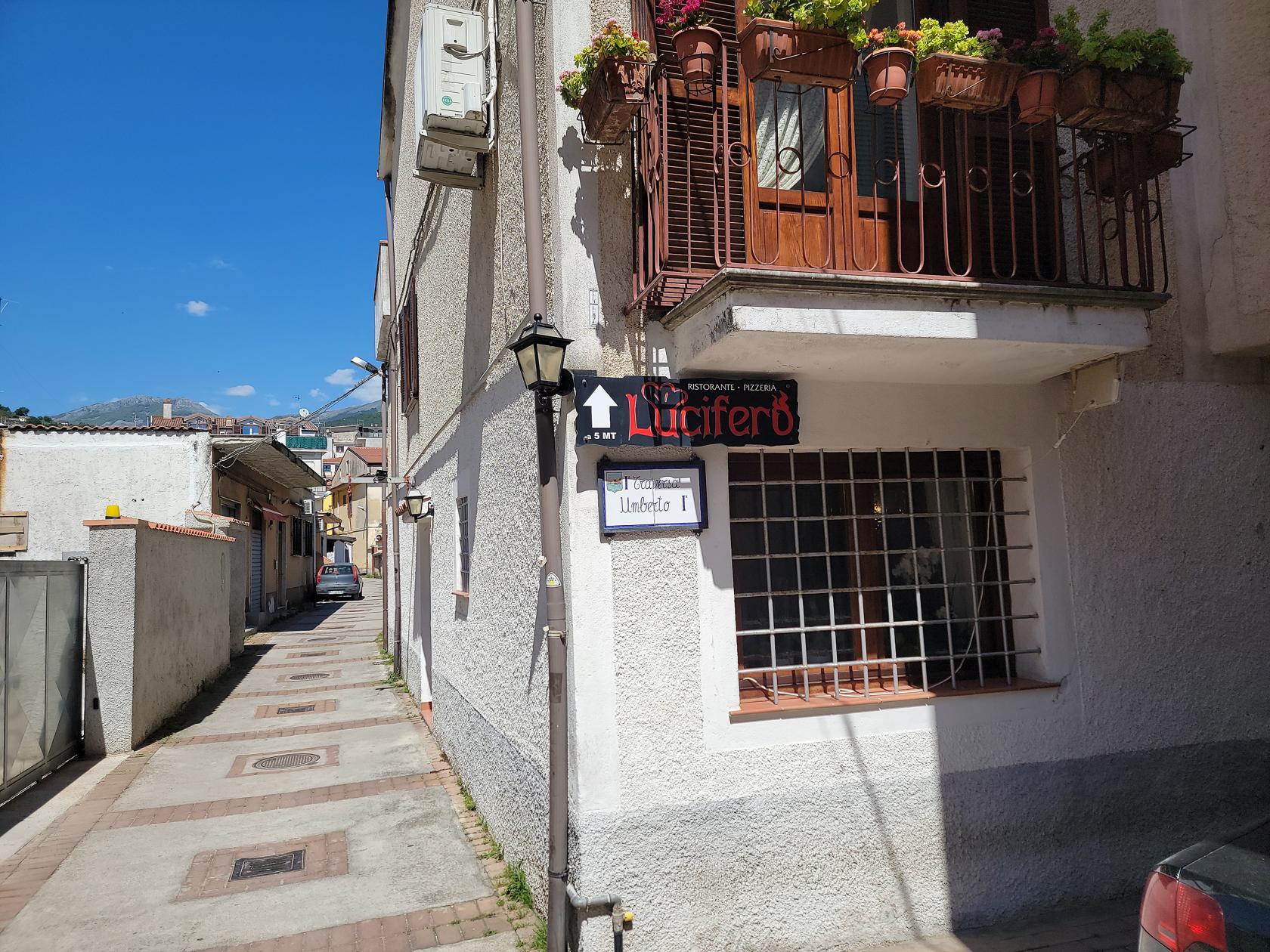
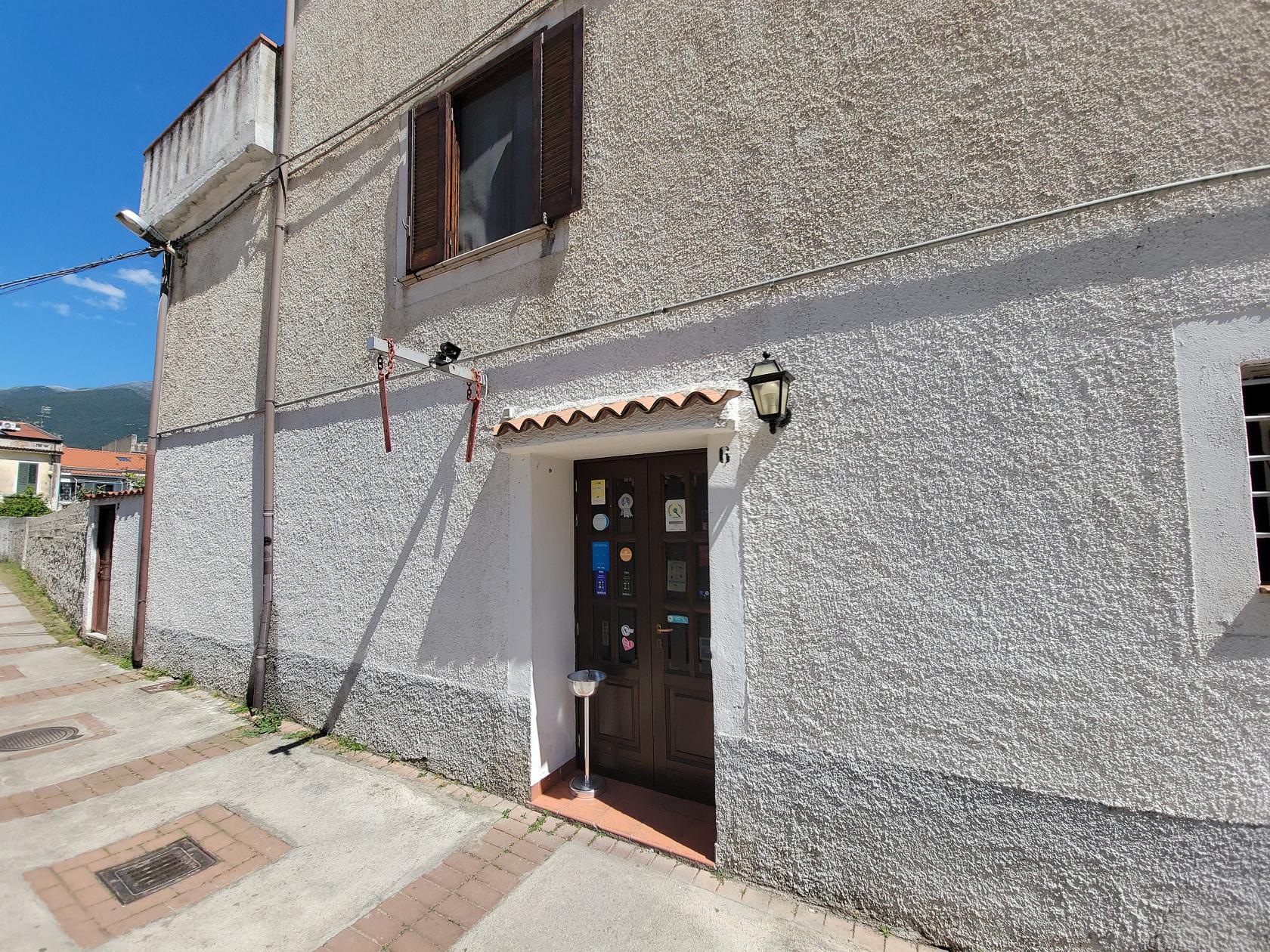
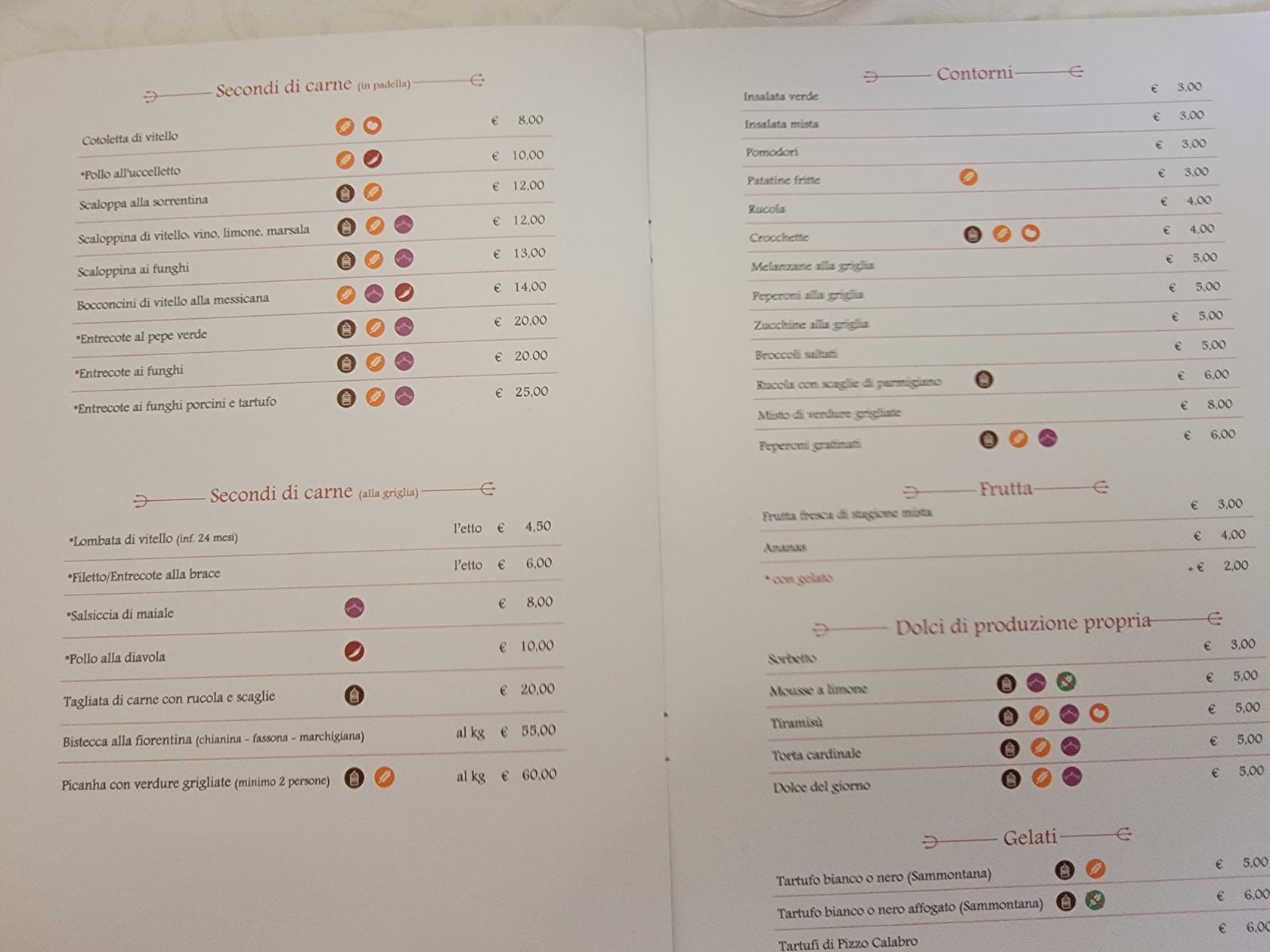
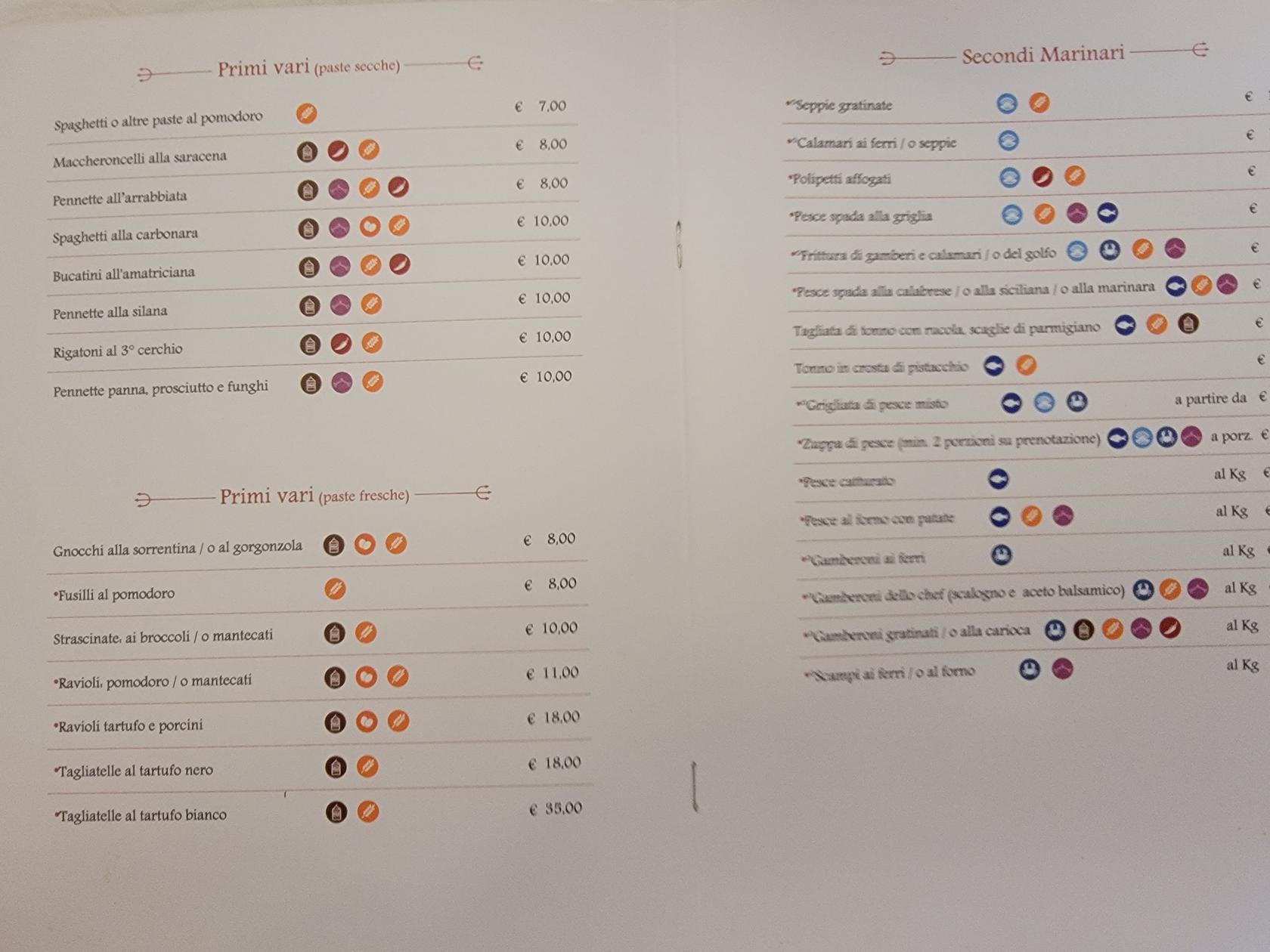
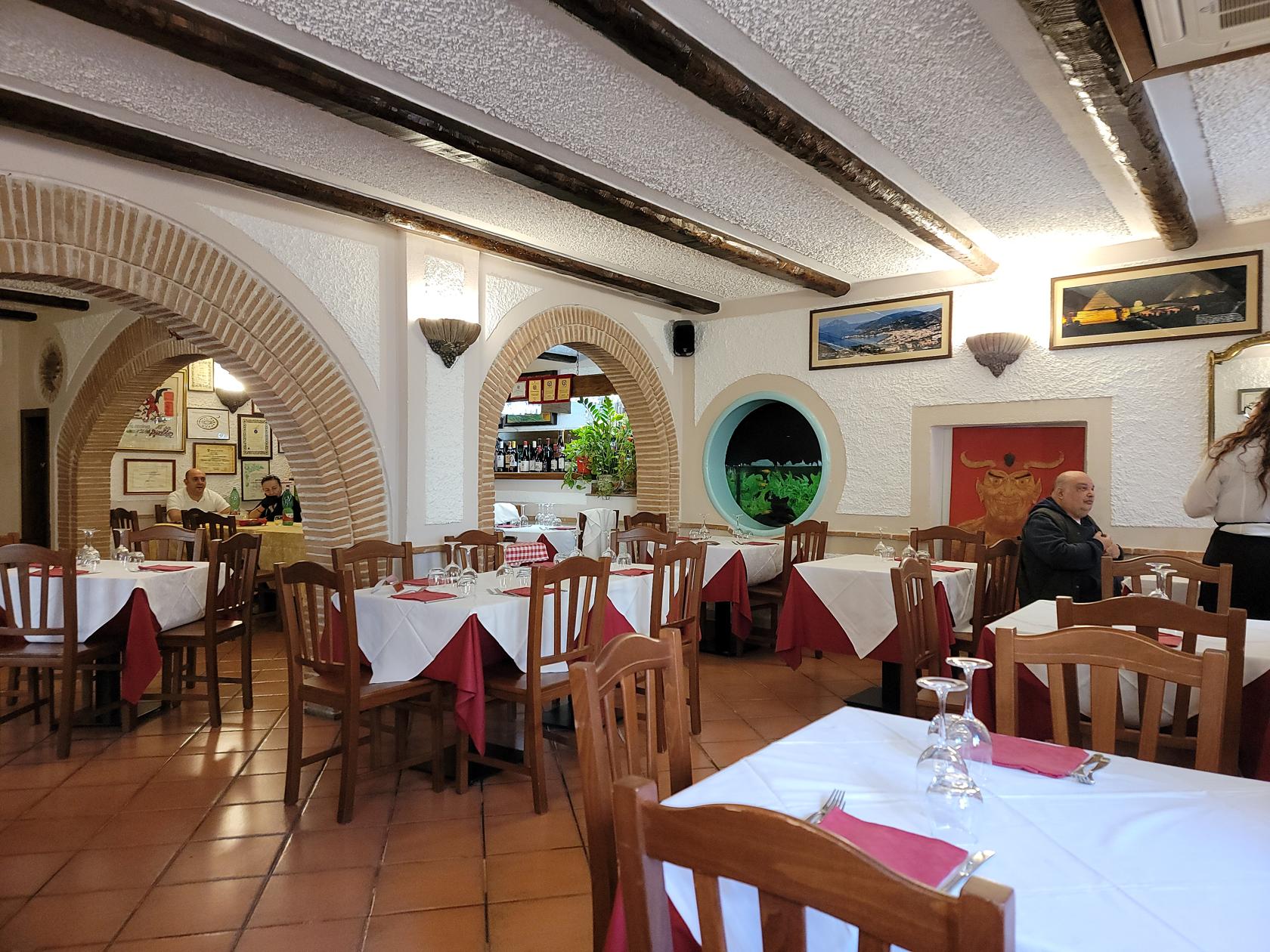
The Ristorante Lucifero is also a pizzeria and has great pizza and pasta specials. It is located in town and not on the beach and is a bit difficult to spot. Therefore, they have added signs along the way to assist.

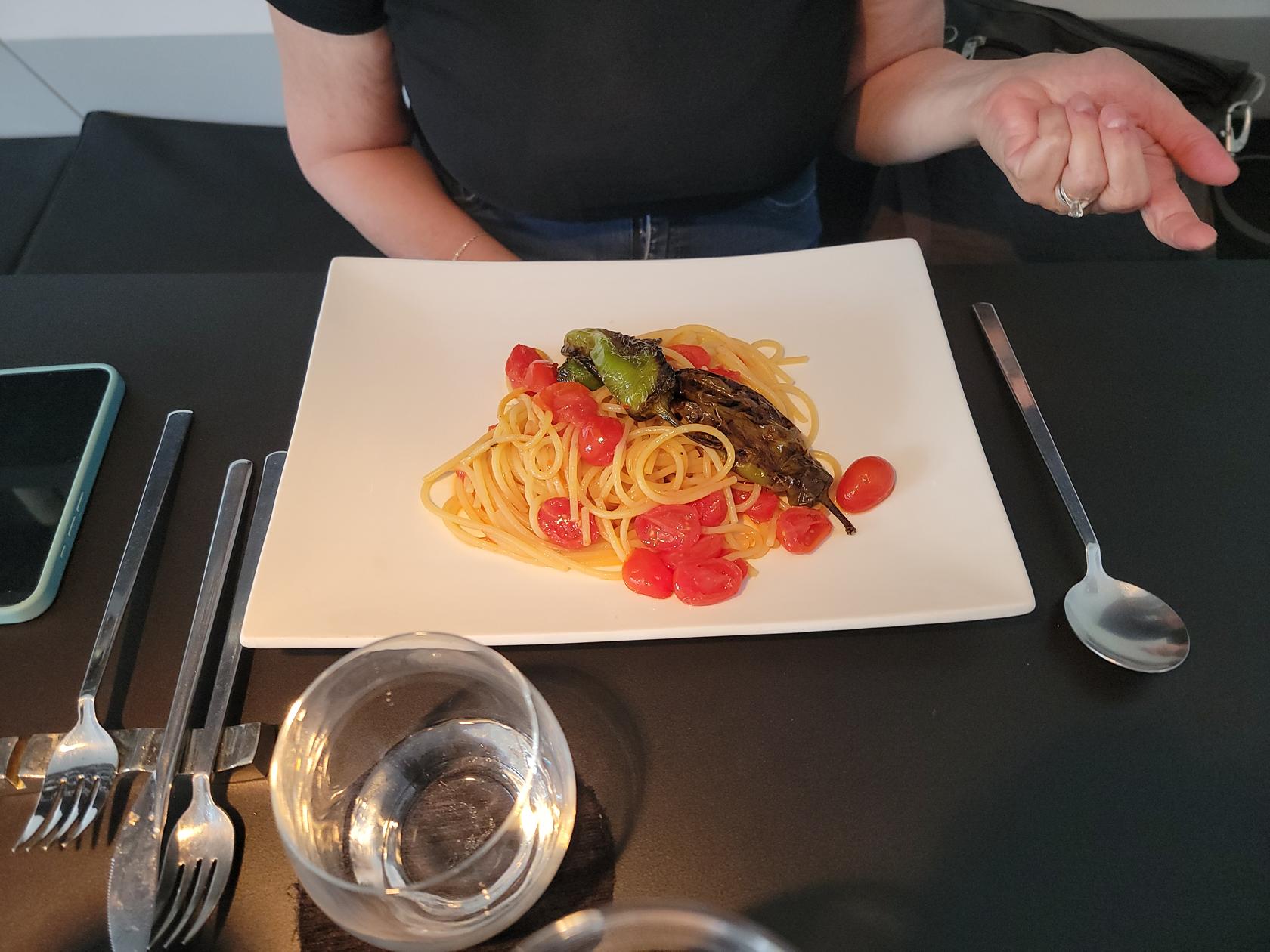
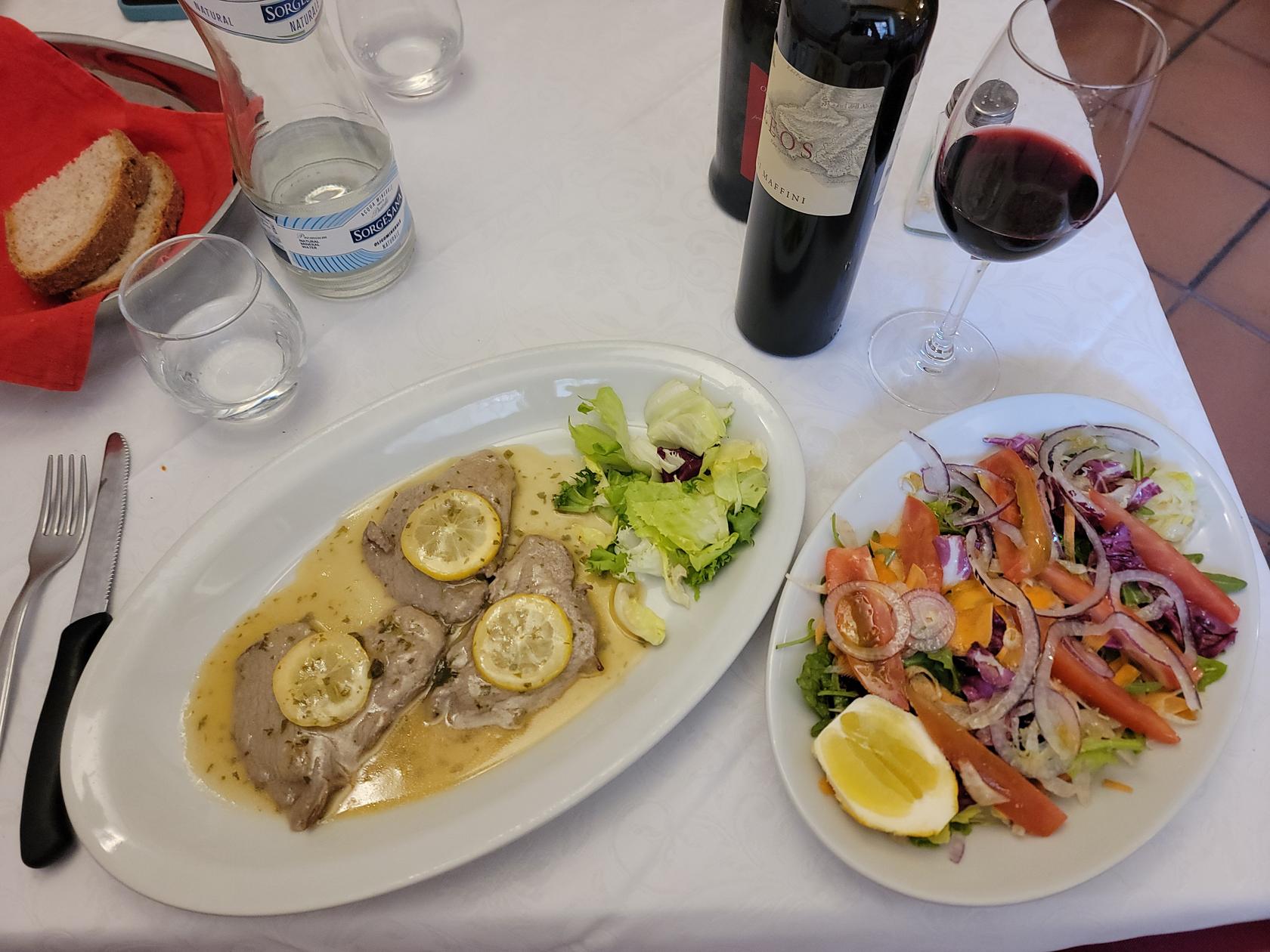
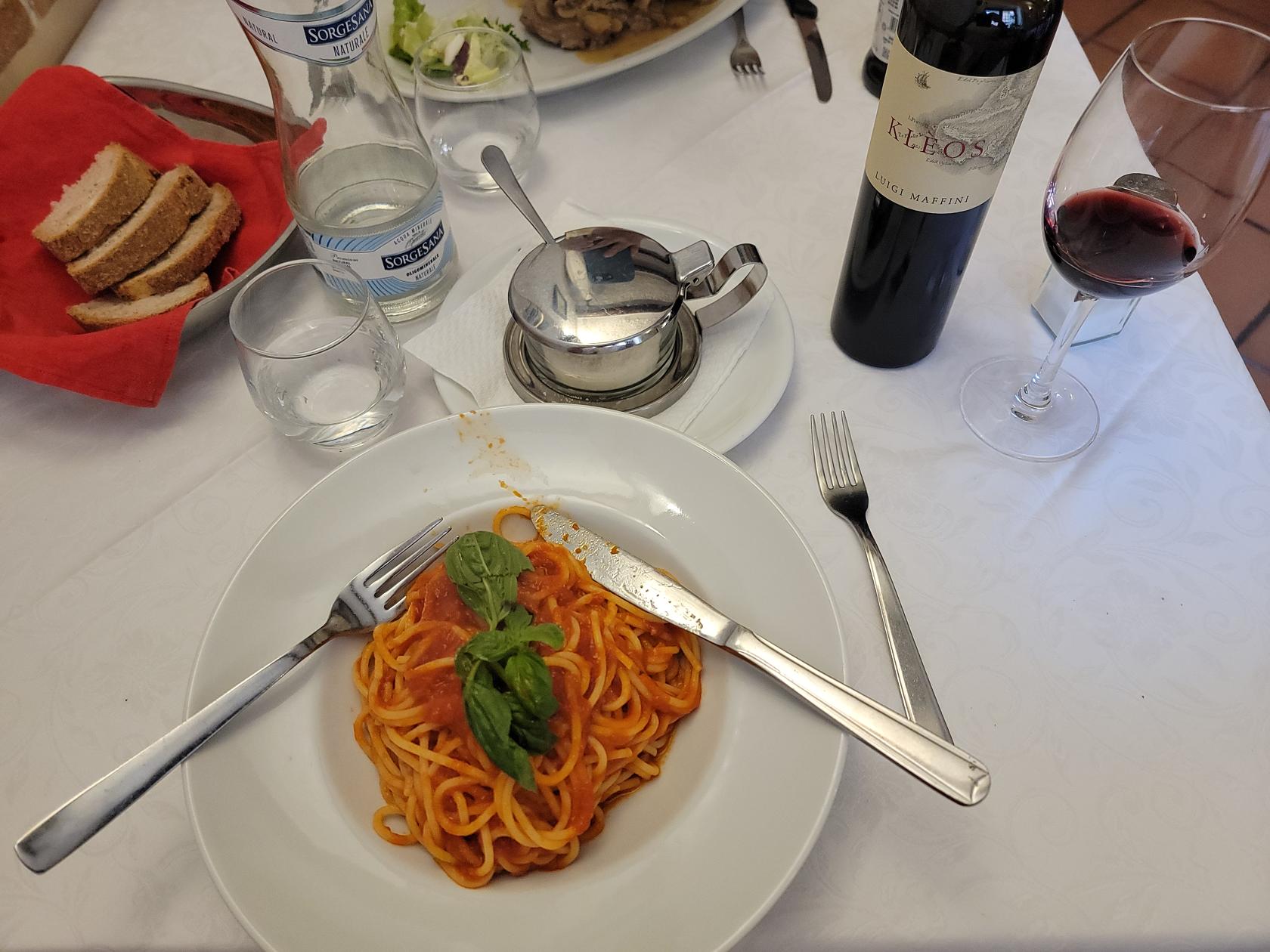
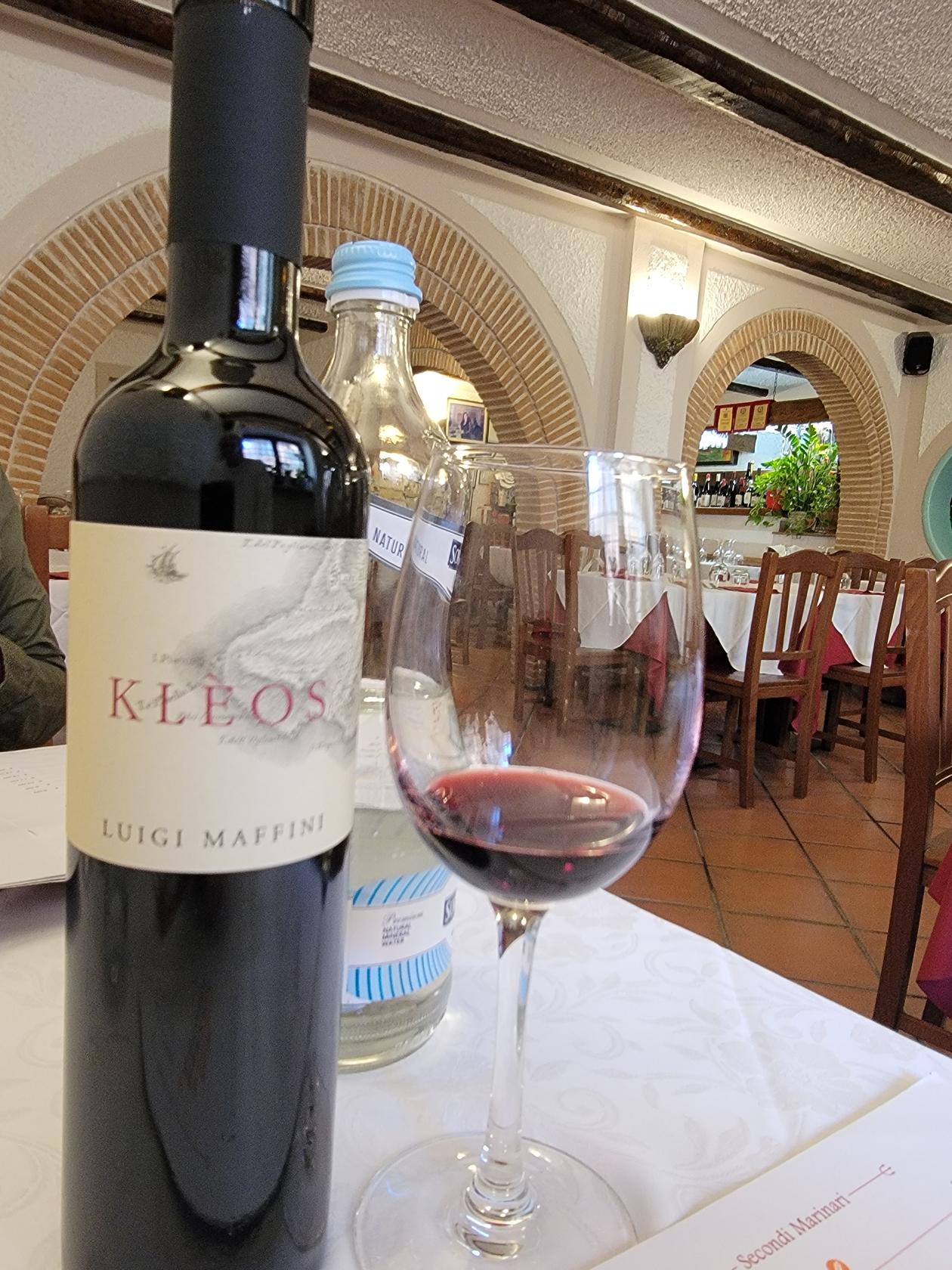
I can commend the Aglianico from Paestum, Italy. Luigi Maffini’s Klèos comes in 50cl bottles and pairs perfectly with pasta and other tomato based dishes. I love Aglianico, it is a deep, clear, ruby wine with hints of plum, berry and dark fruit and is very tasty.

Amalfi Coast, Italy – Part Three

Amalfi Coast

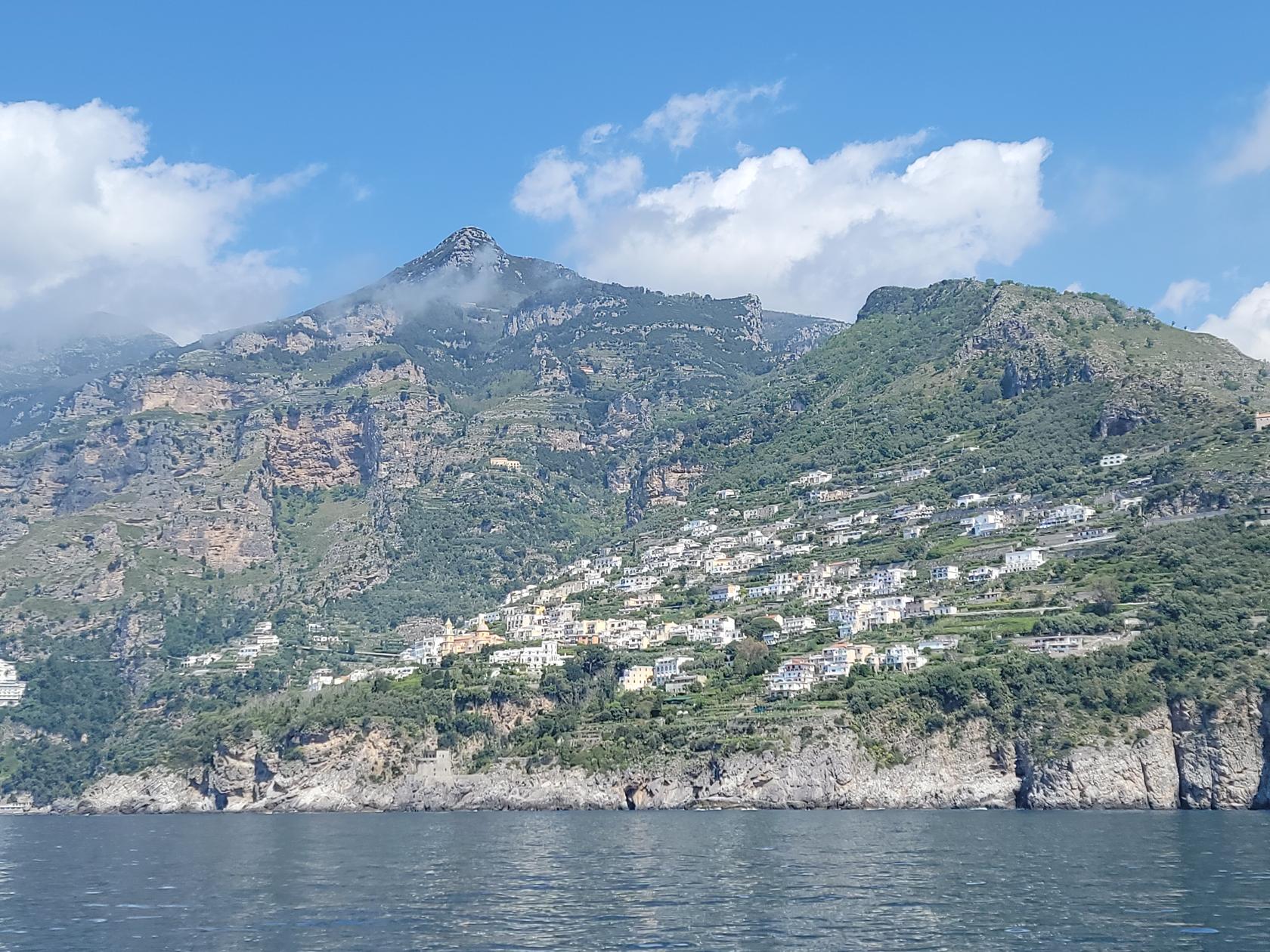
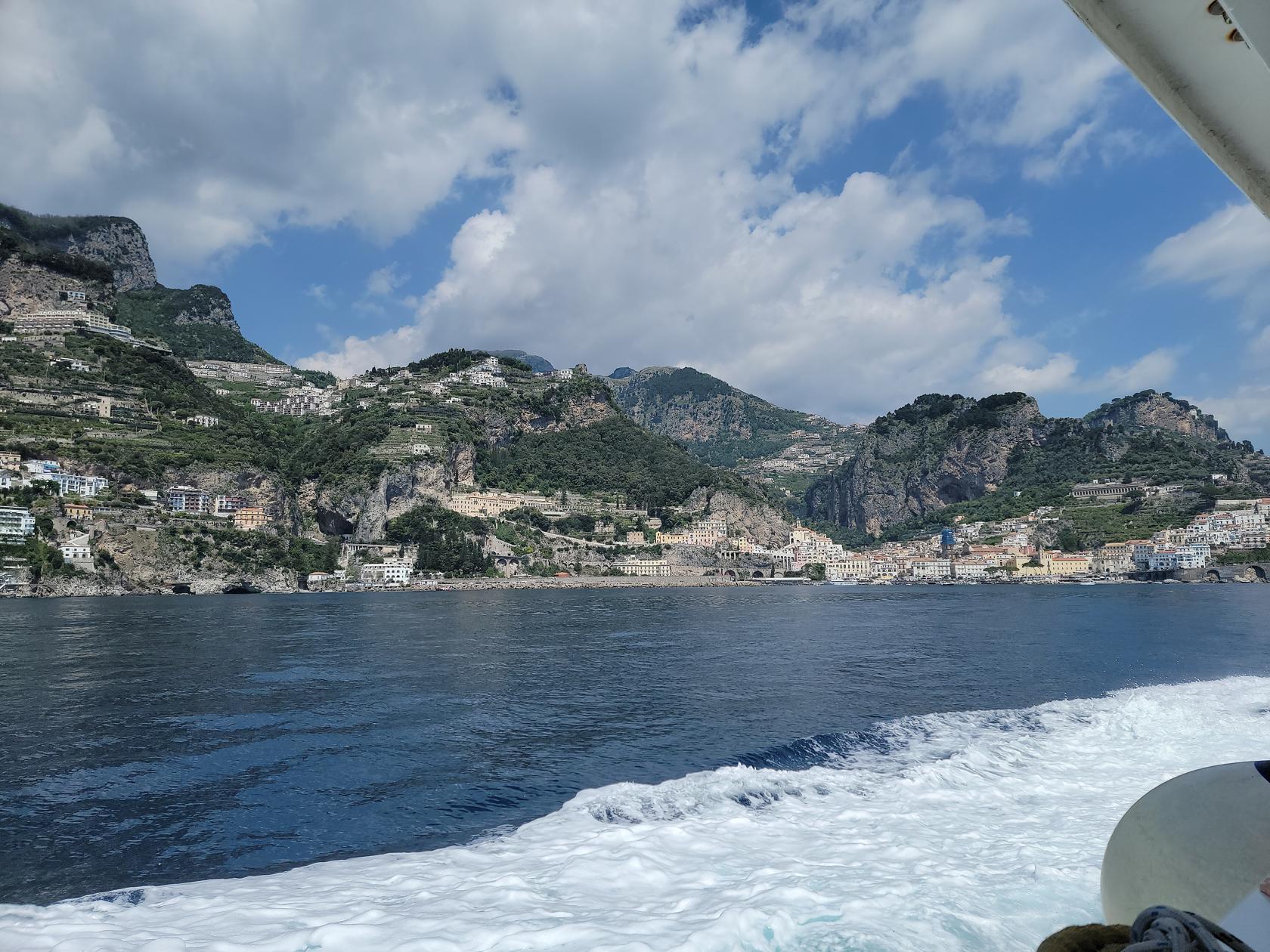
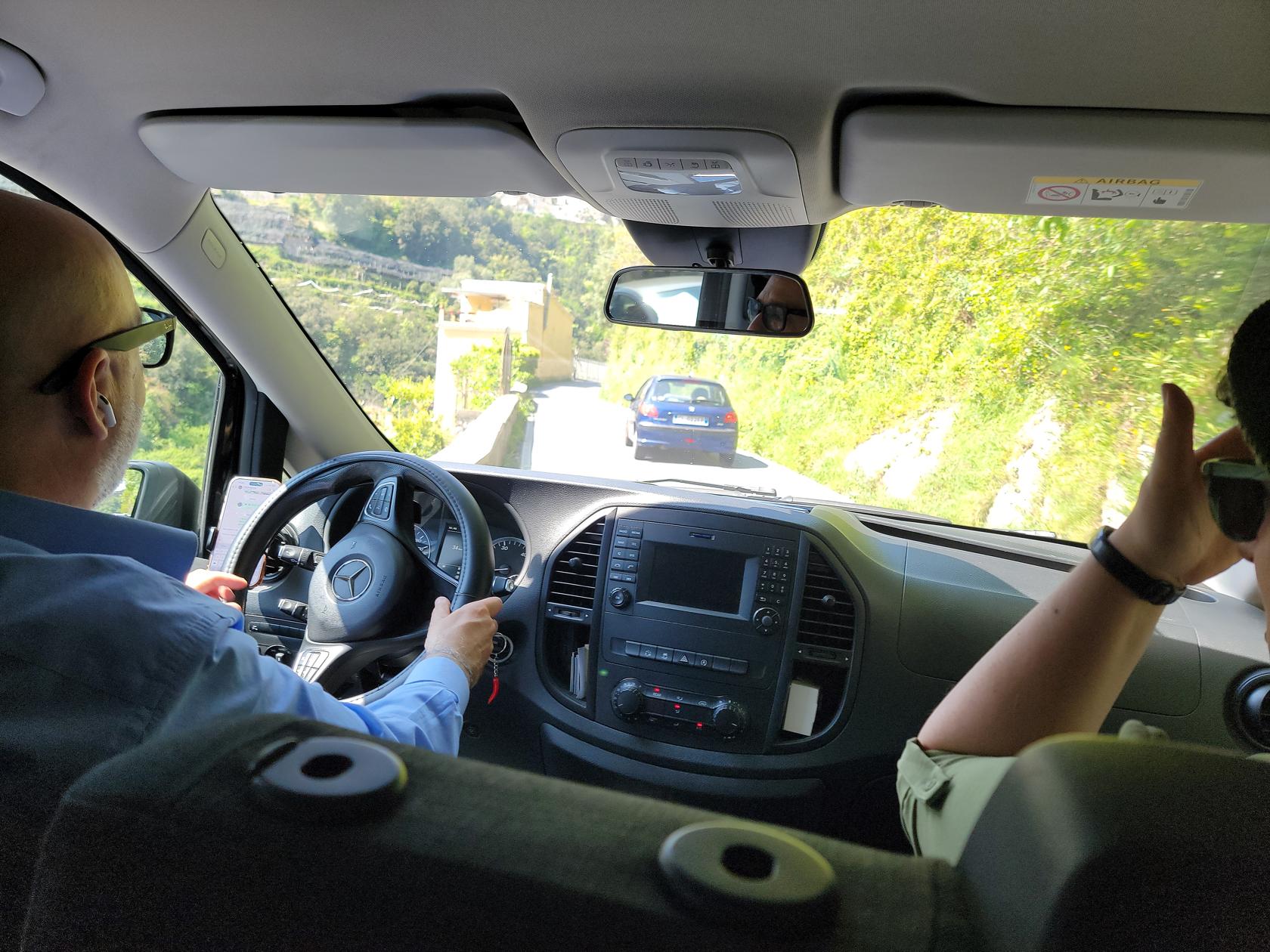
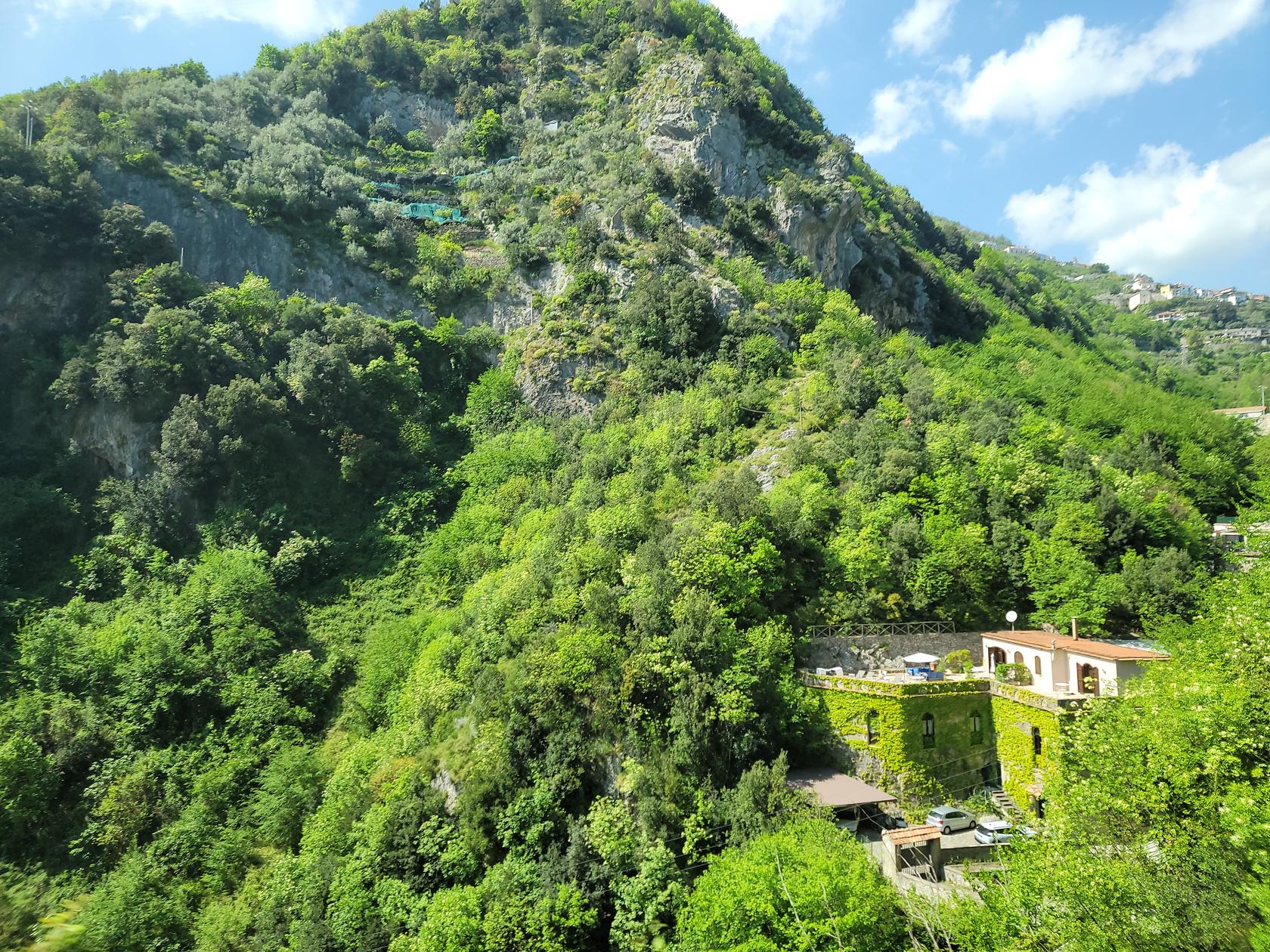
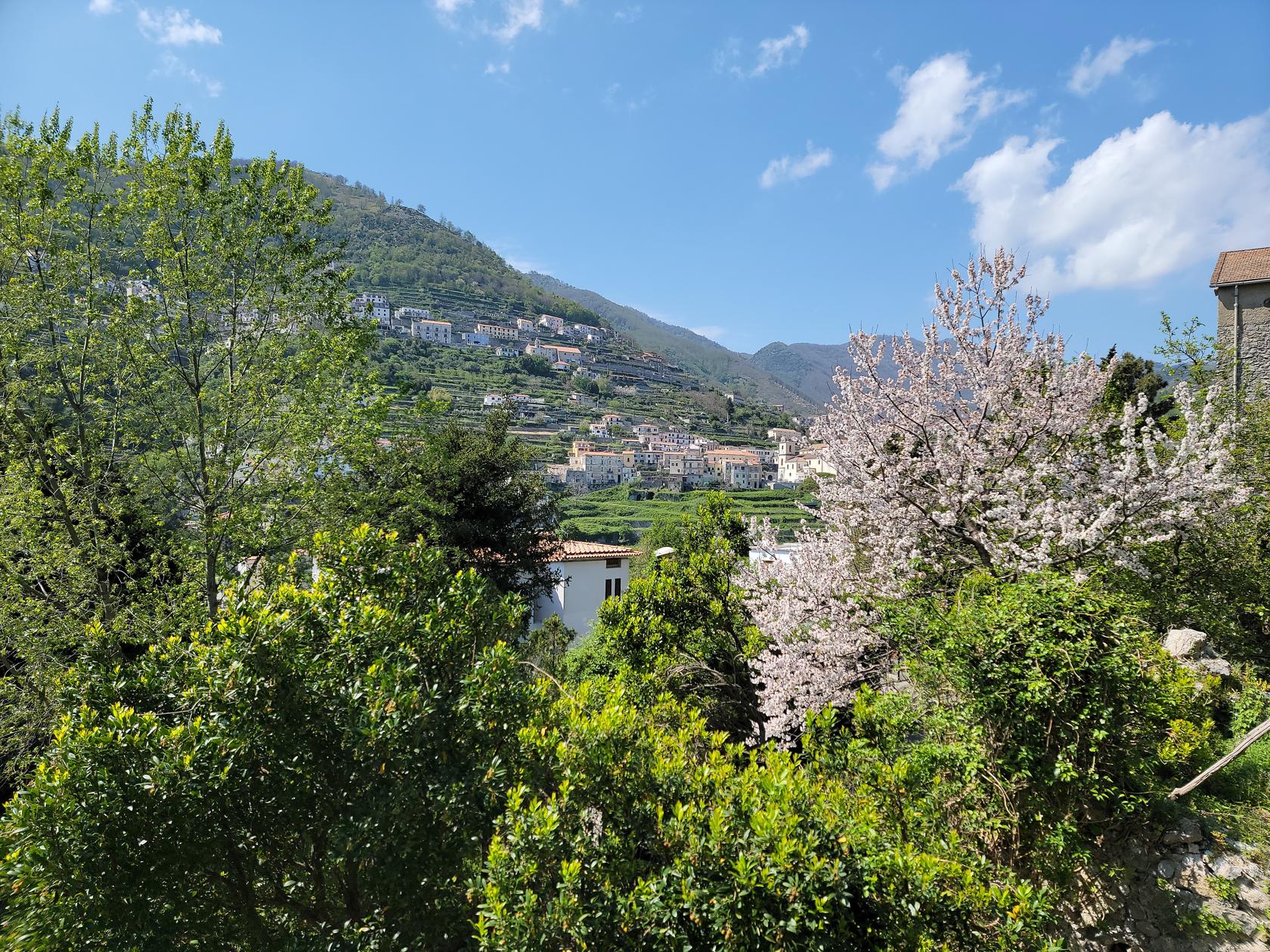
The second part of our first day was filled with visiting the town Amalfi on the eponymouos coast and Ravello,  a bit further away from the shore, but still part of the famous coastline. We joined our driver again, who drove the windy and treacherous coastal road between Positano and Amalfi, while we took the ferry to enjoy the coastline.

Getting There

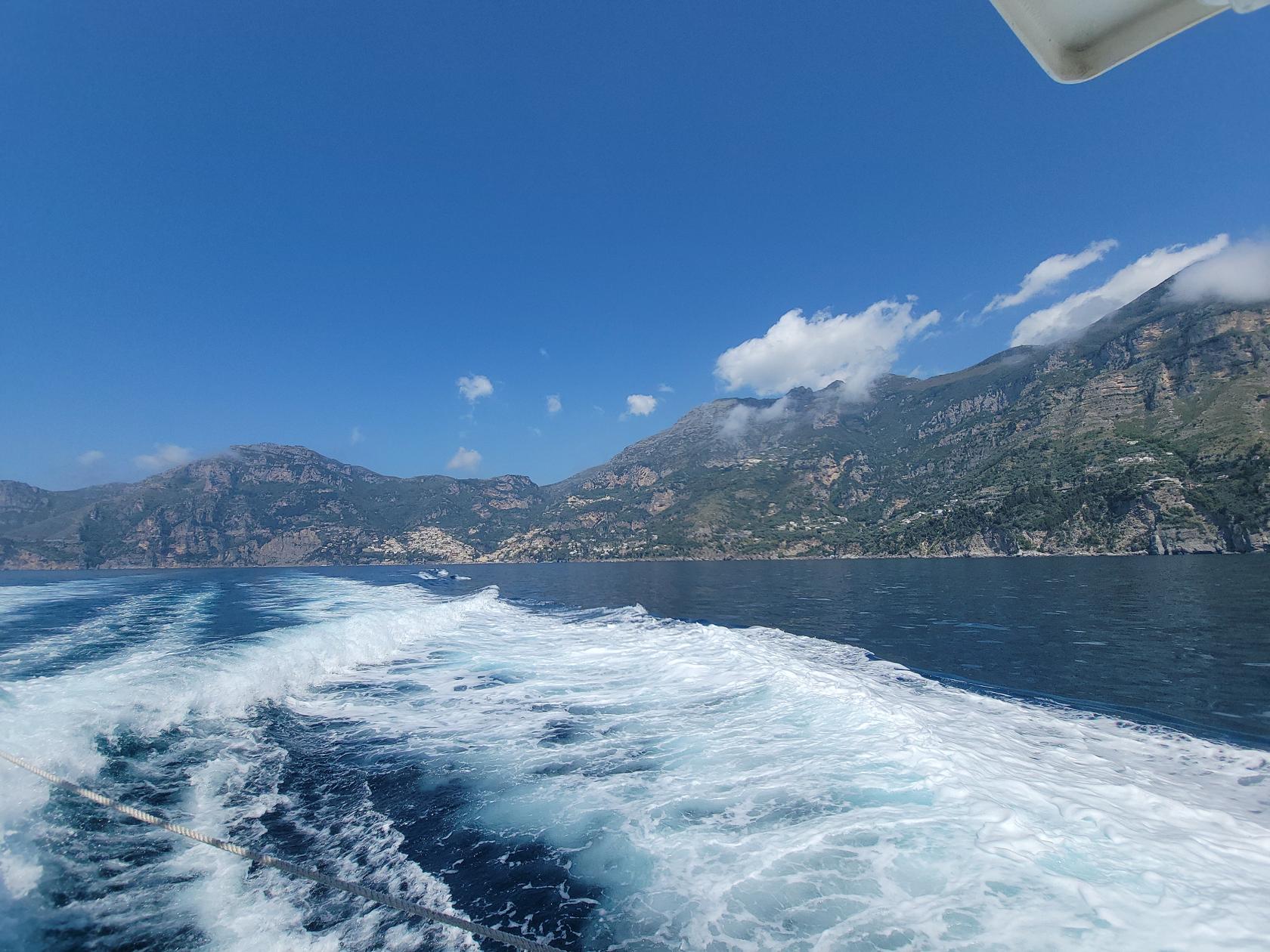
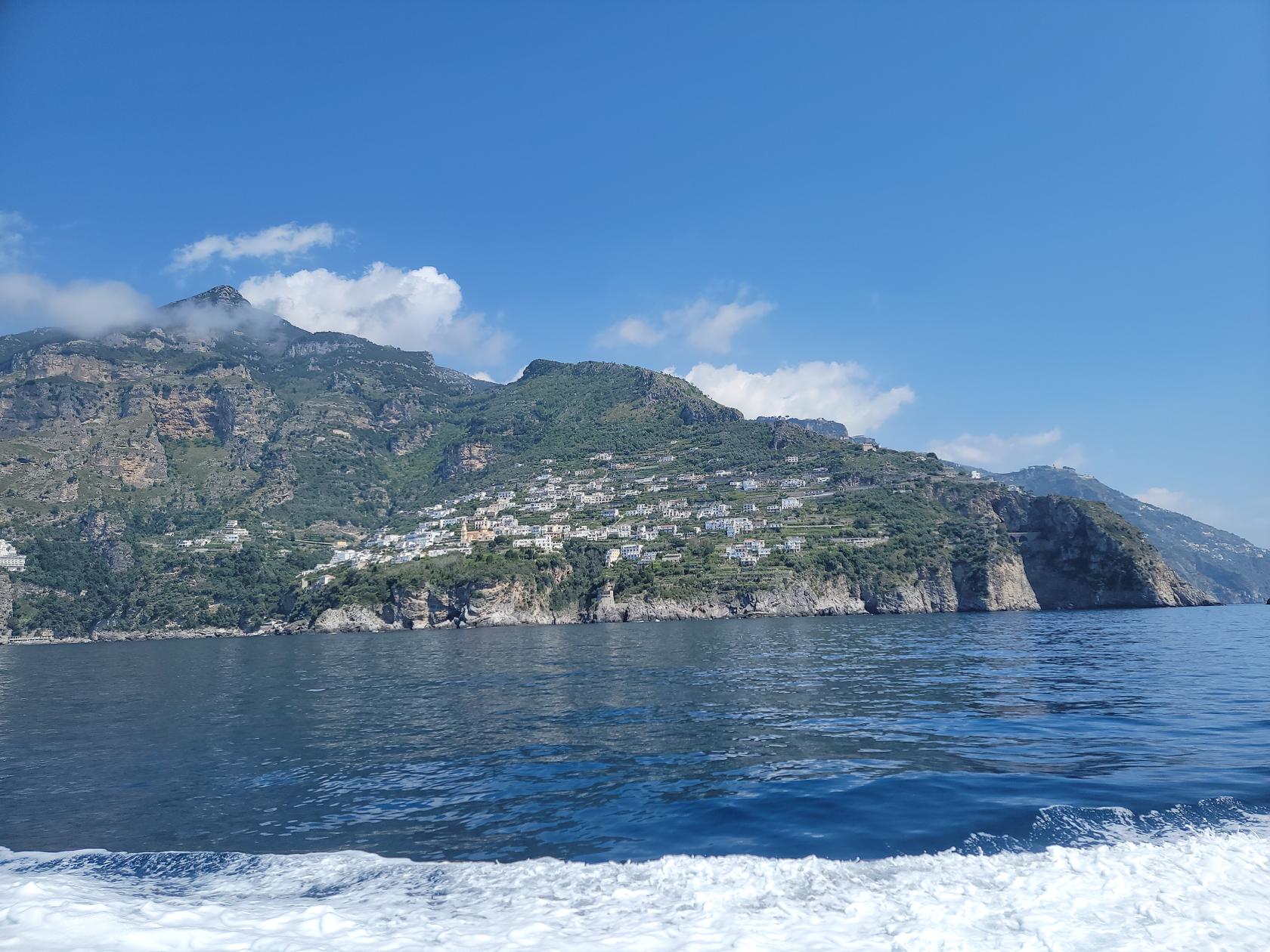
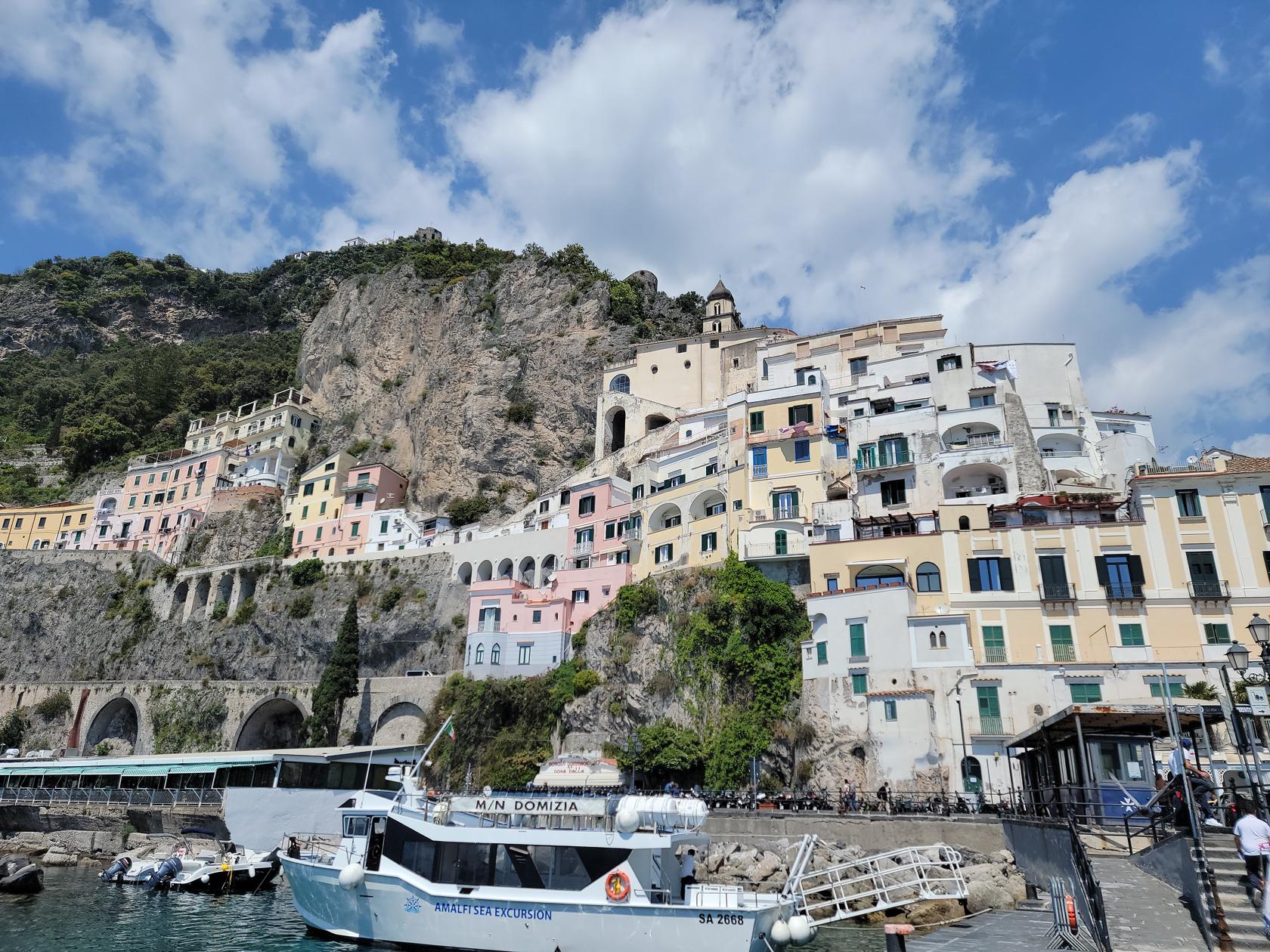
To get to Amalfi, we took the ferry from Positano. It is a thirty minute boat ride along the coast, which when the weather cooperates provides beautiful scenery and a great occasion to take photographs.

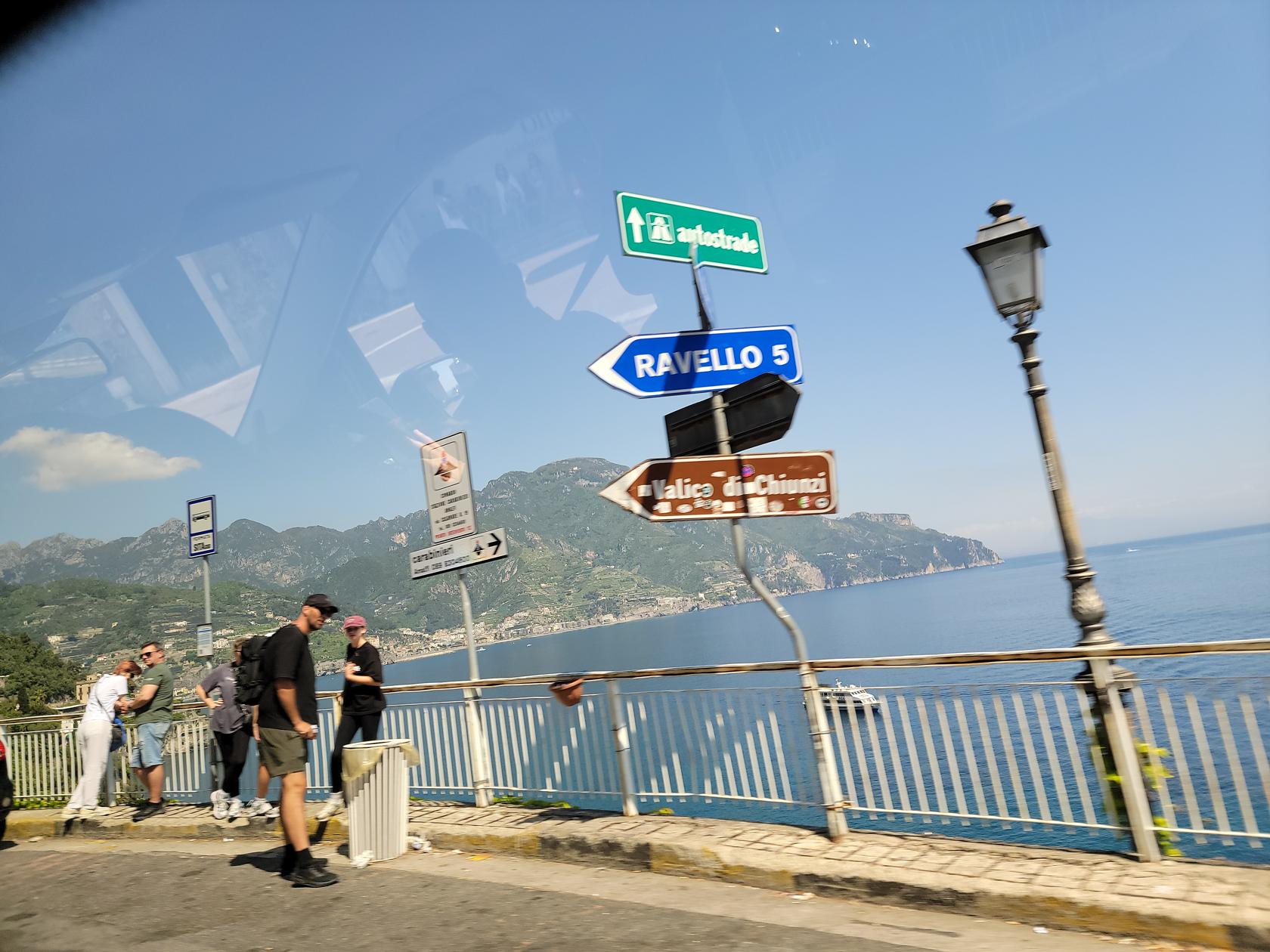
To get to Ravello from Amalfi, you probably should use or hire a car. Since we were had hired a private tour guide for all day, we used the car to ascend the five kilometers up the coast to the town.

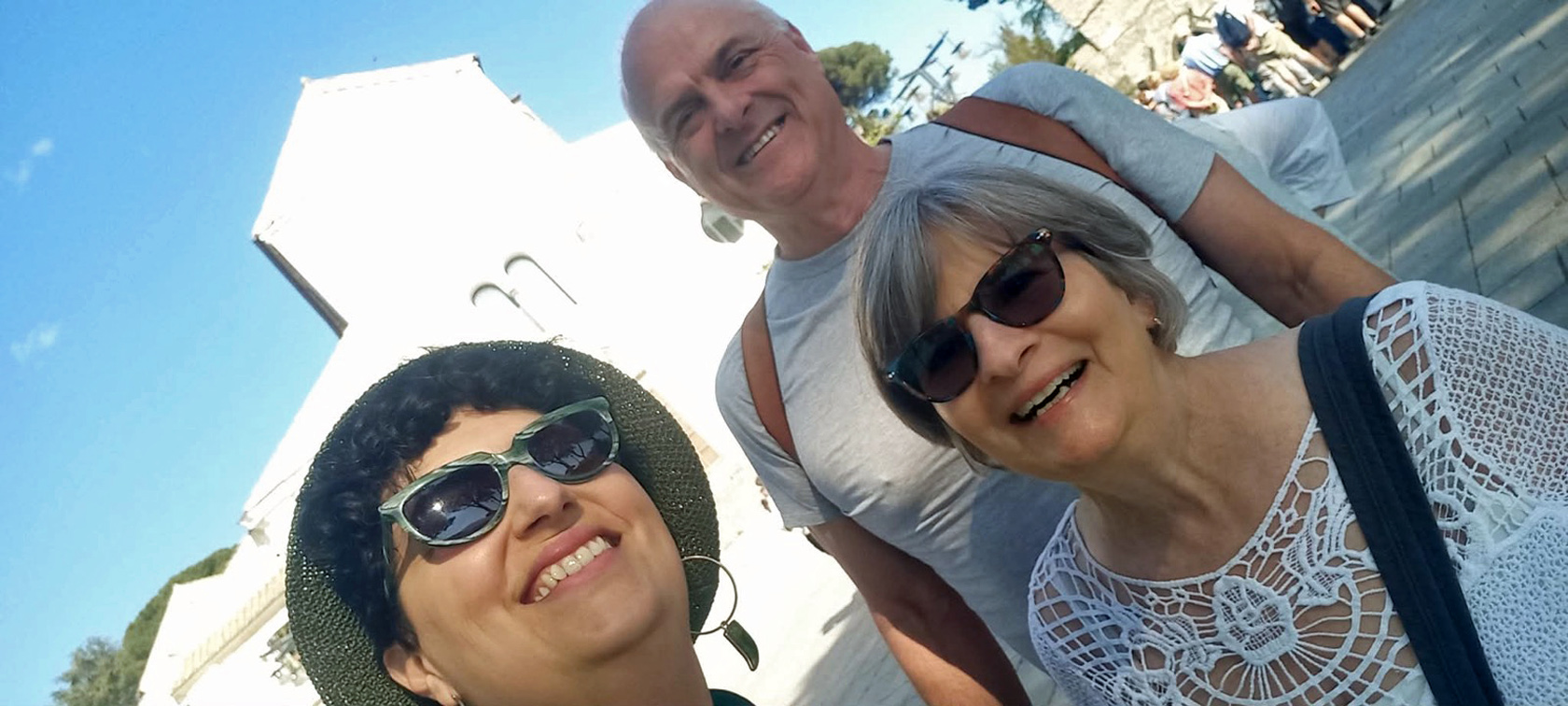
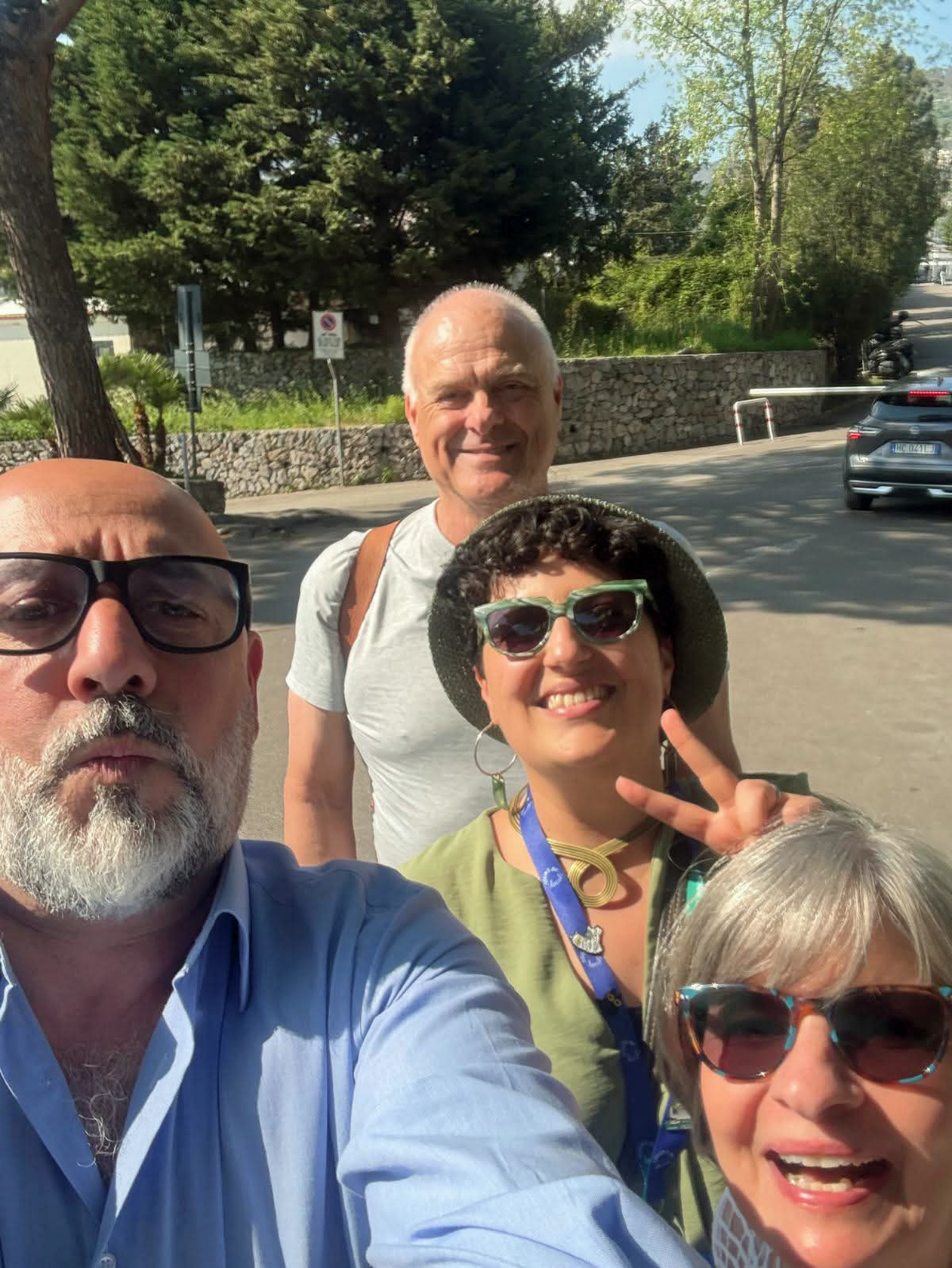
When we arrived, we took a photograph to remember the occasion.

Amalfi

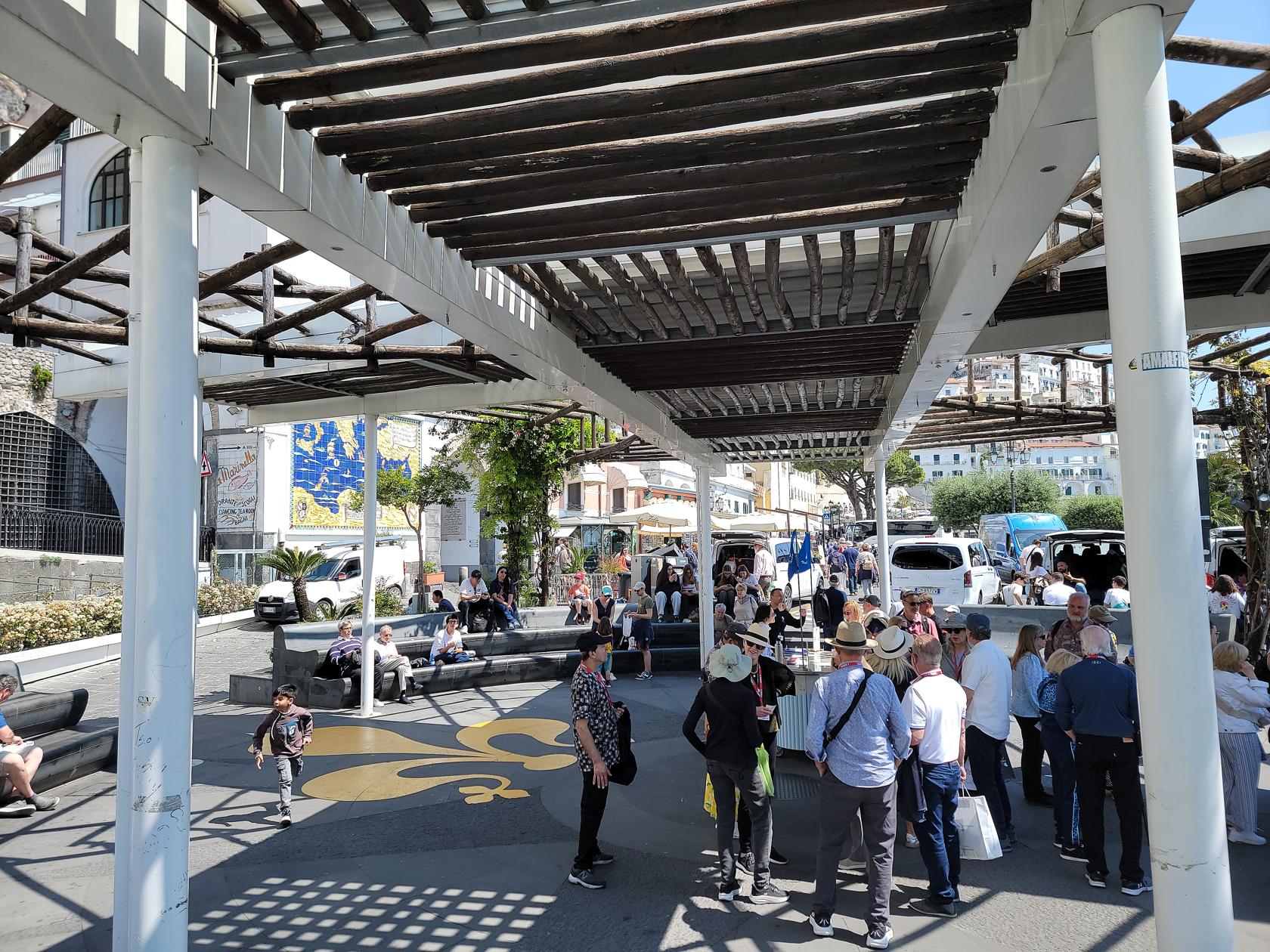
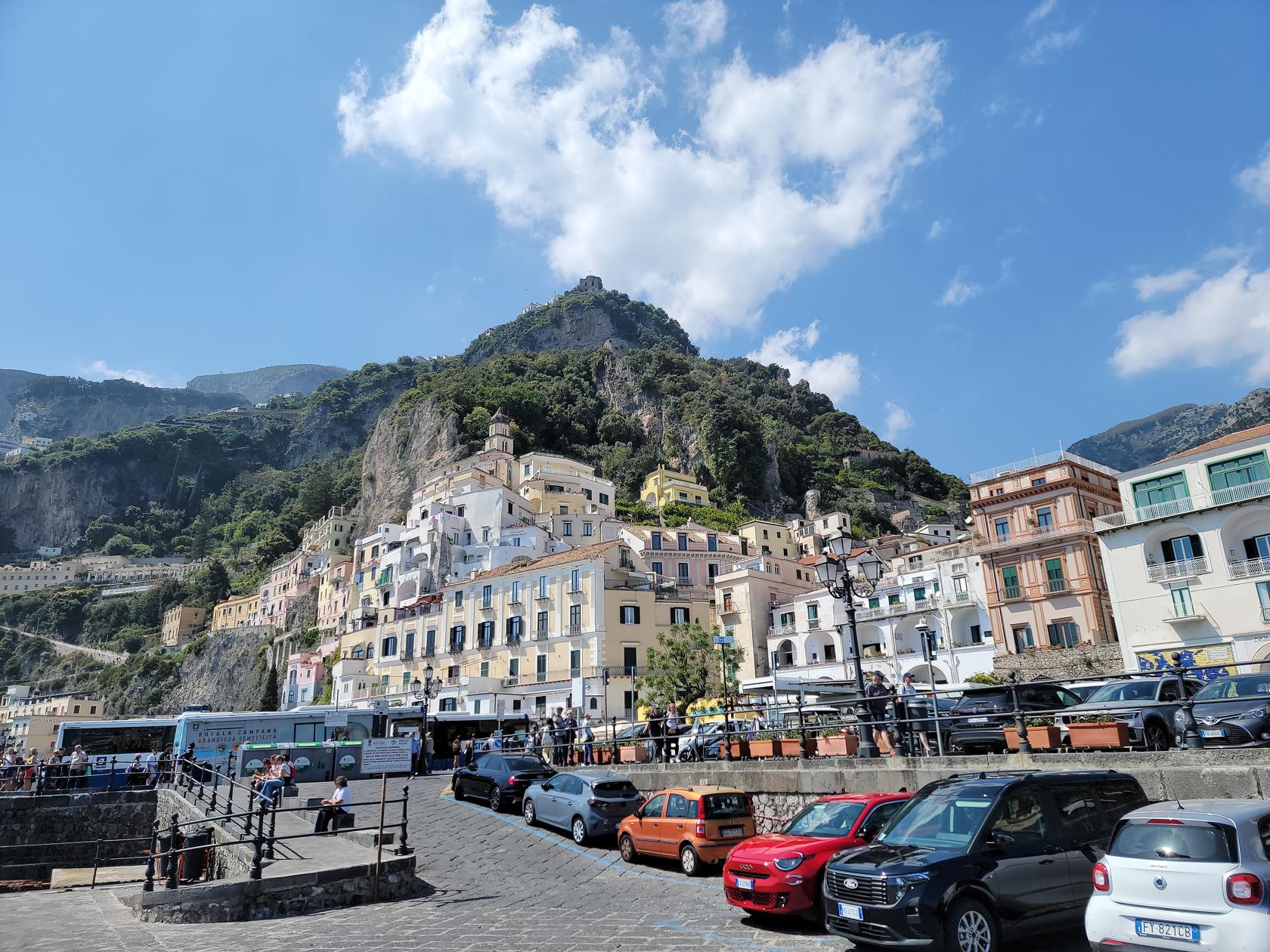
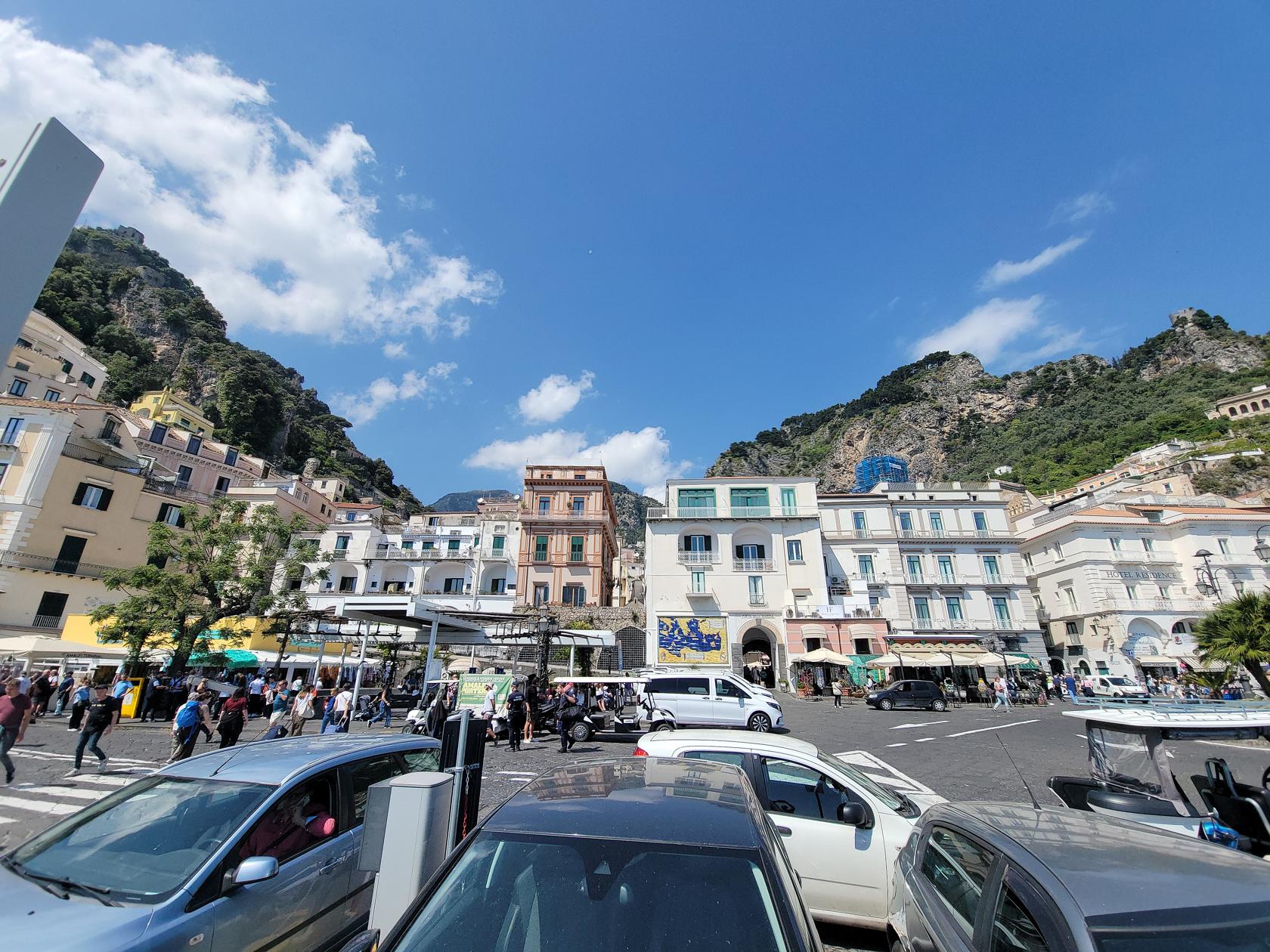
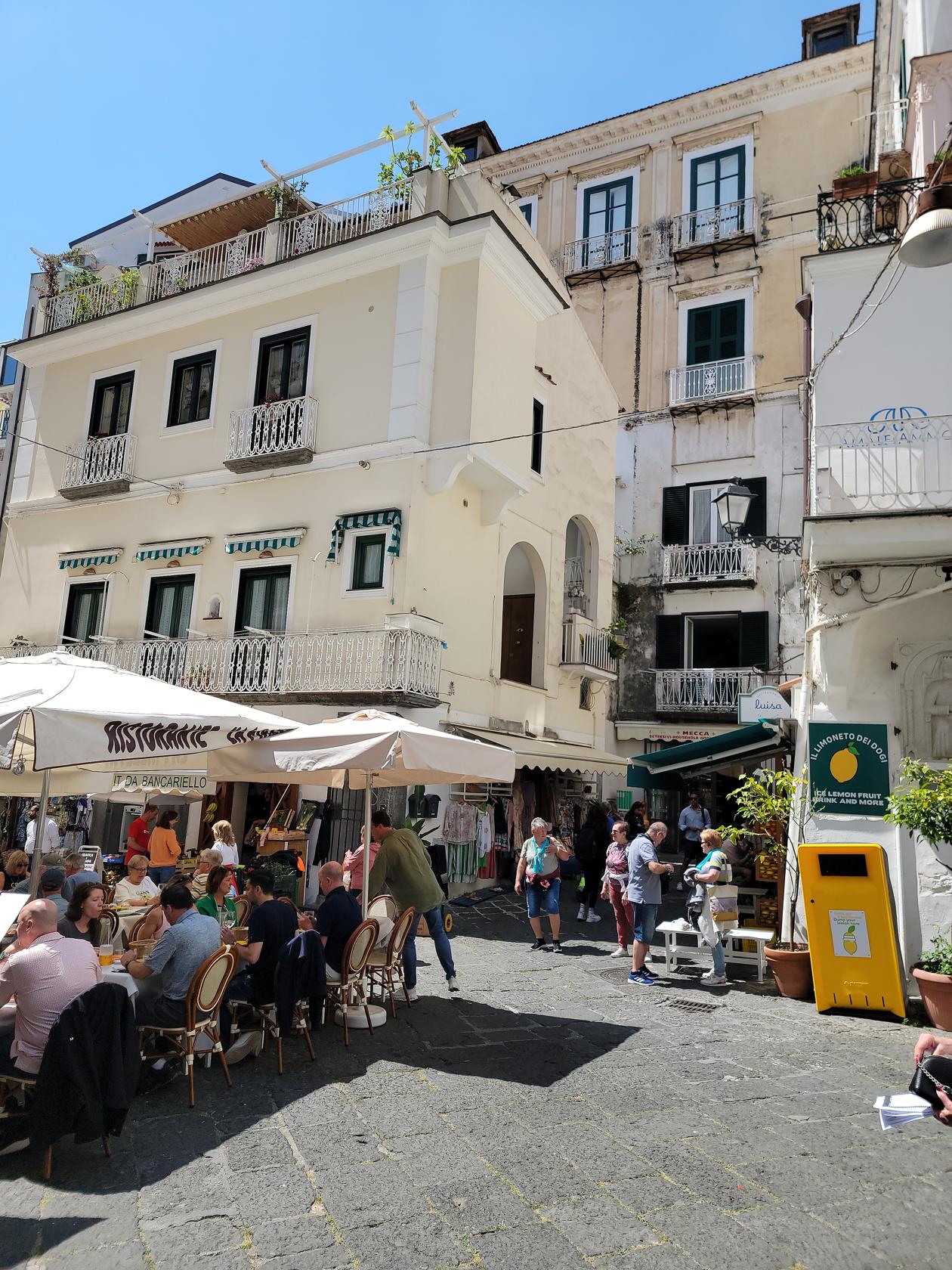
Perhaps fourth best of all the towns along the coast is Amalfi. Some may be surprised, but that is based on our experience of most of the towns. There are many factors for this, including the terrible idea of using part of the waterfront as a parking area, instead of a boardwalk, or even another beach. Therefore, it comes after Positano, Vietri sul Mare[1]this town also has coastal parking, but here it works because it is part of a boardwalk and beach complex. and Ravello.

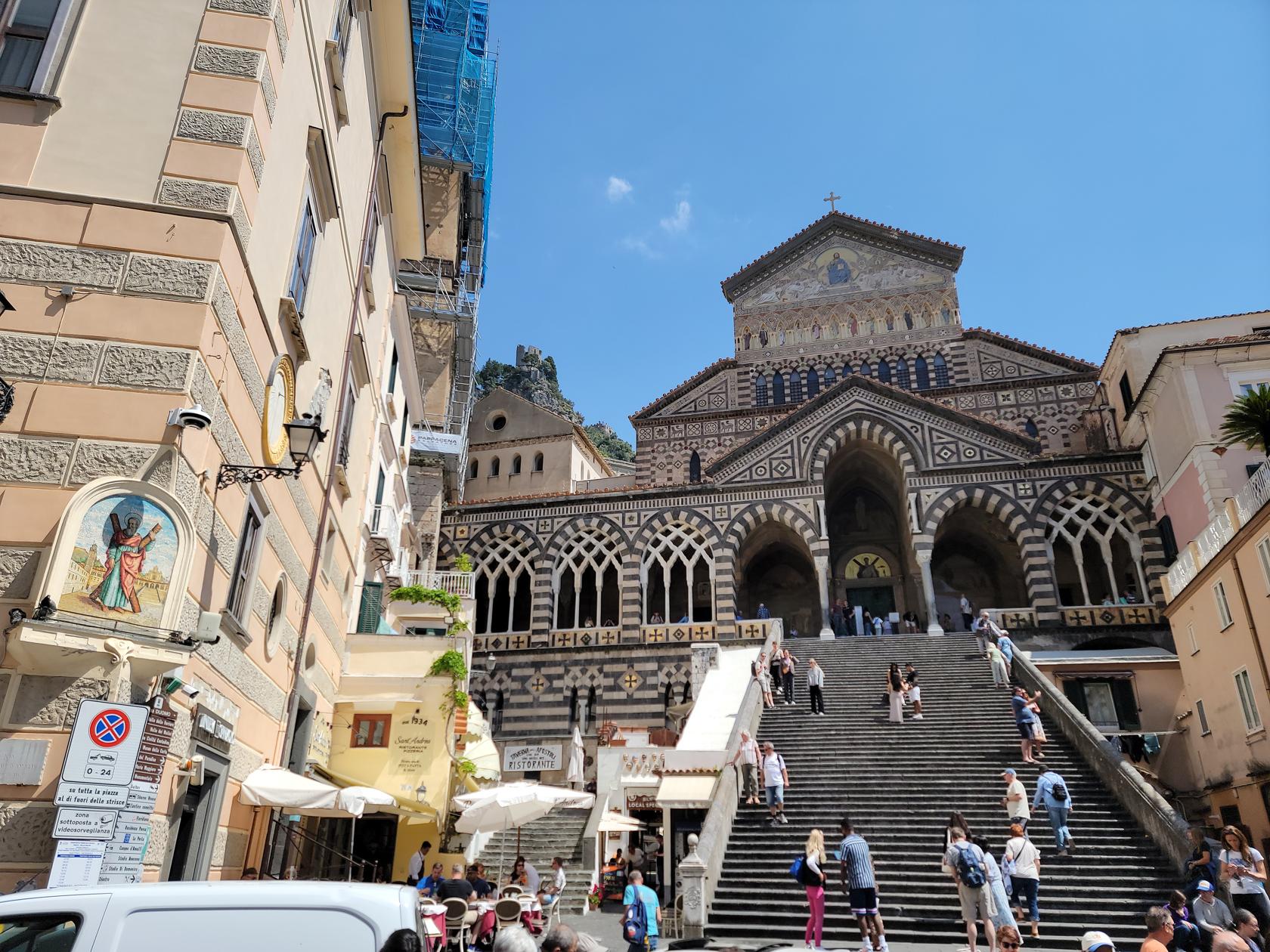
It does have a beautiful cathedral, which unfortunately was closed at the time of our visit.

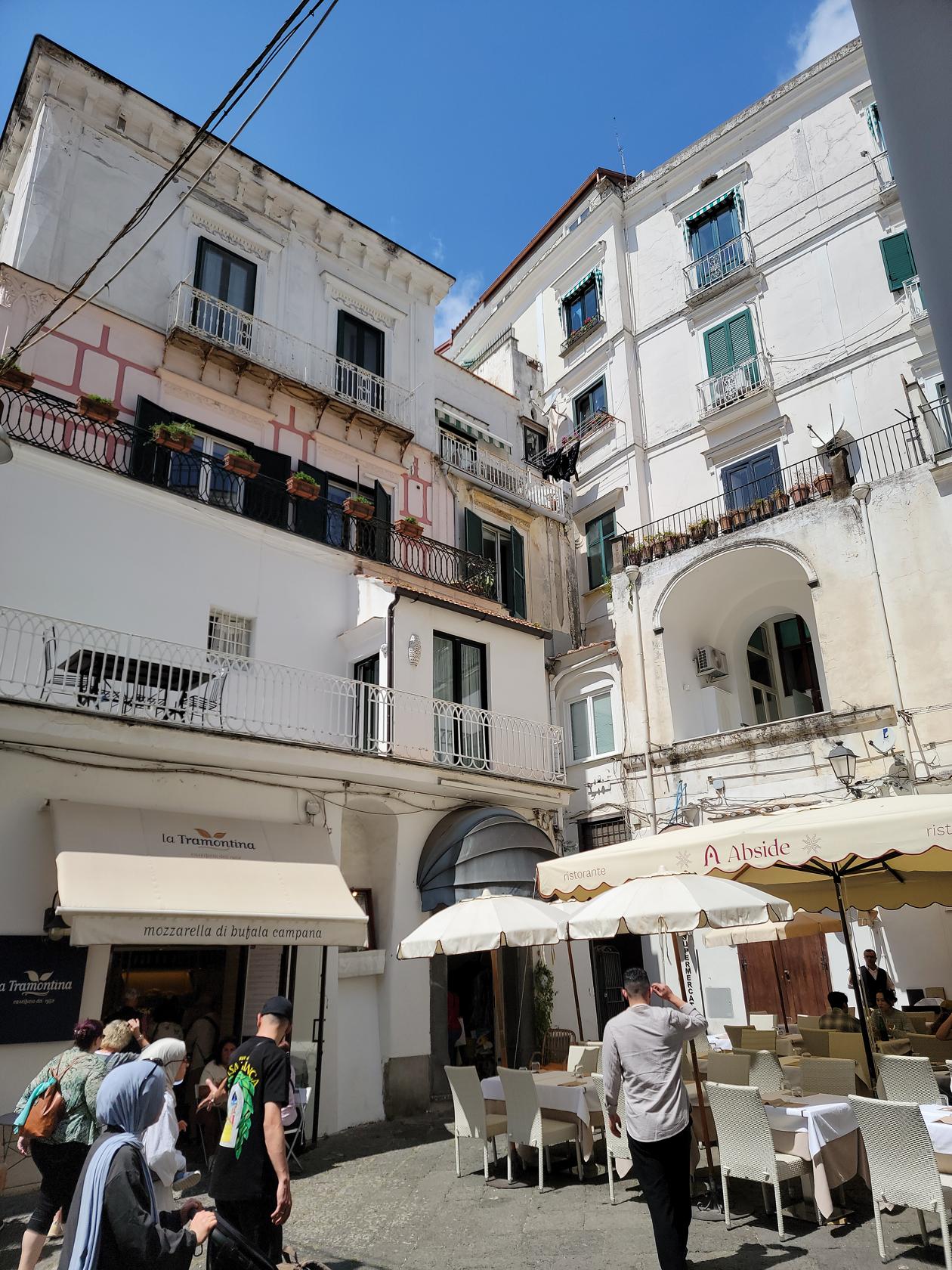
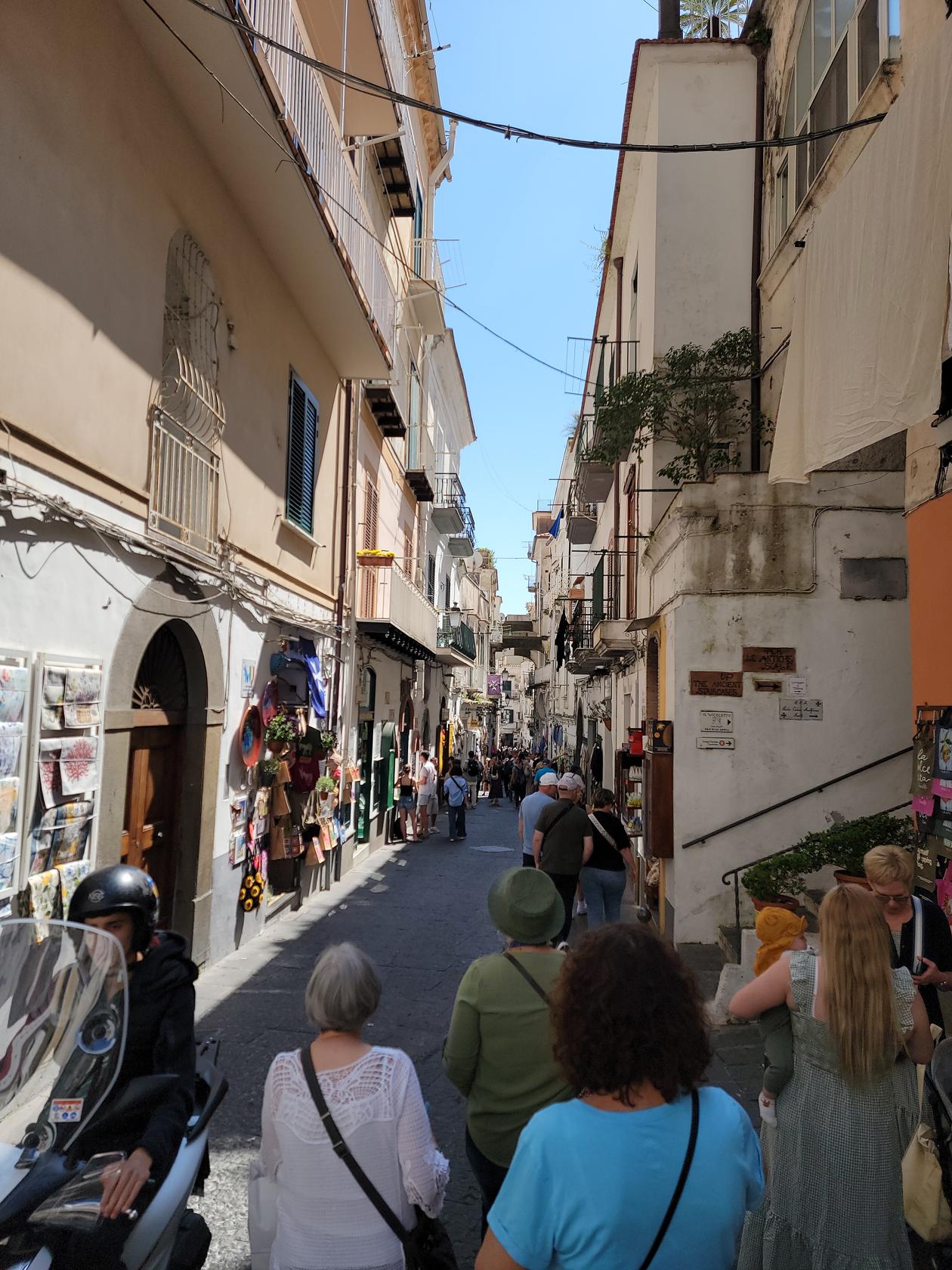
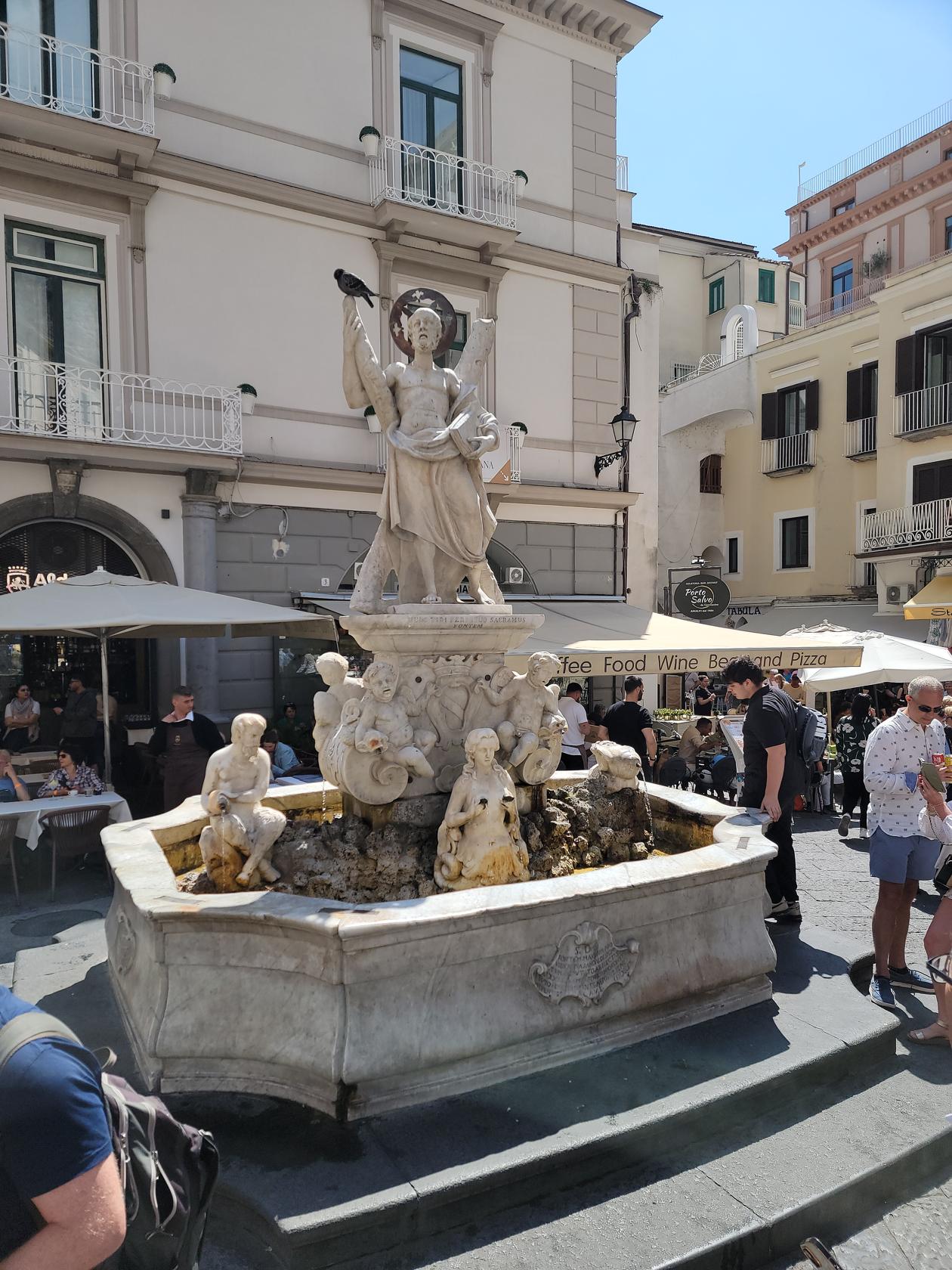
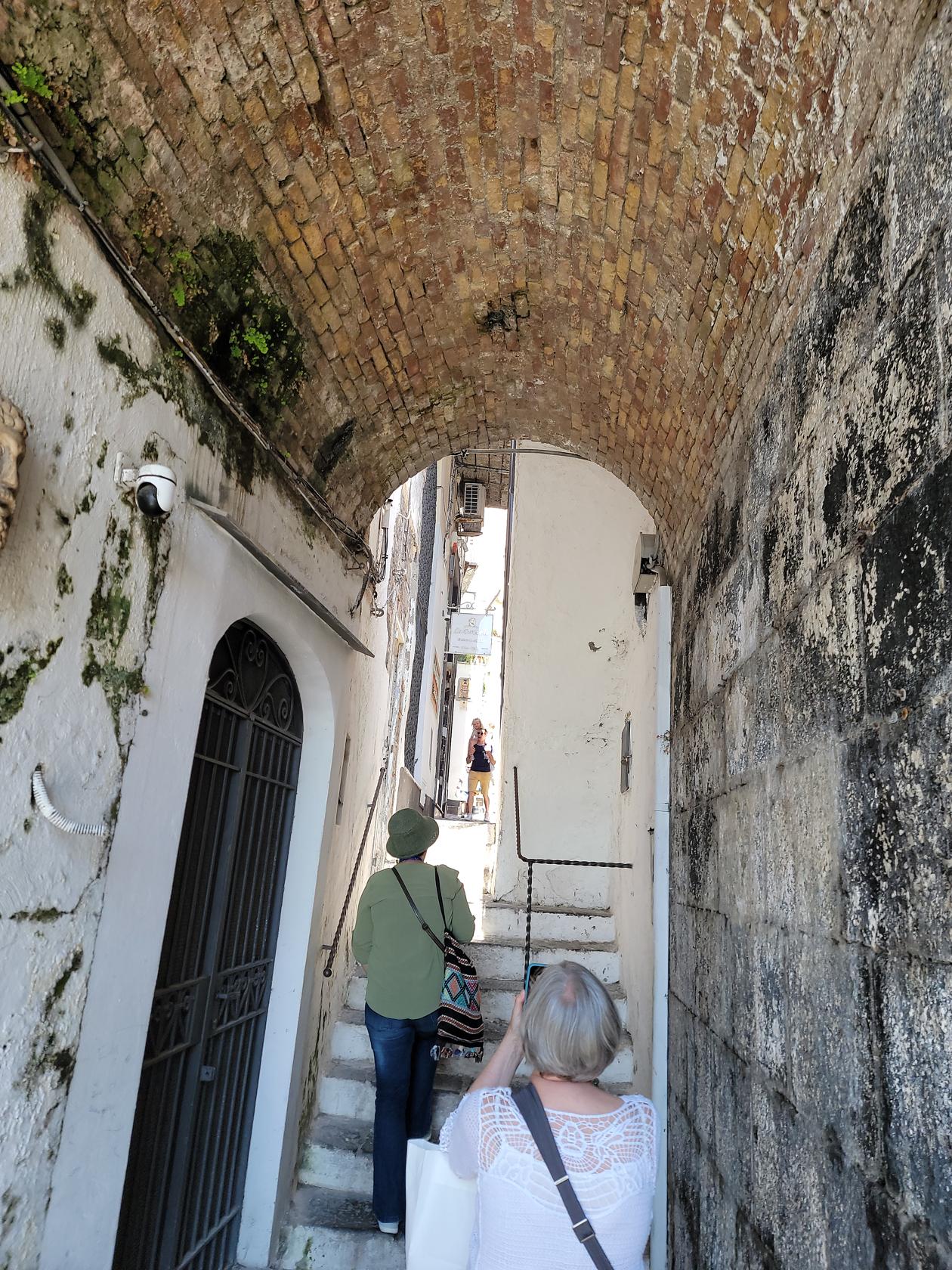
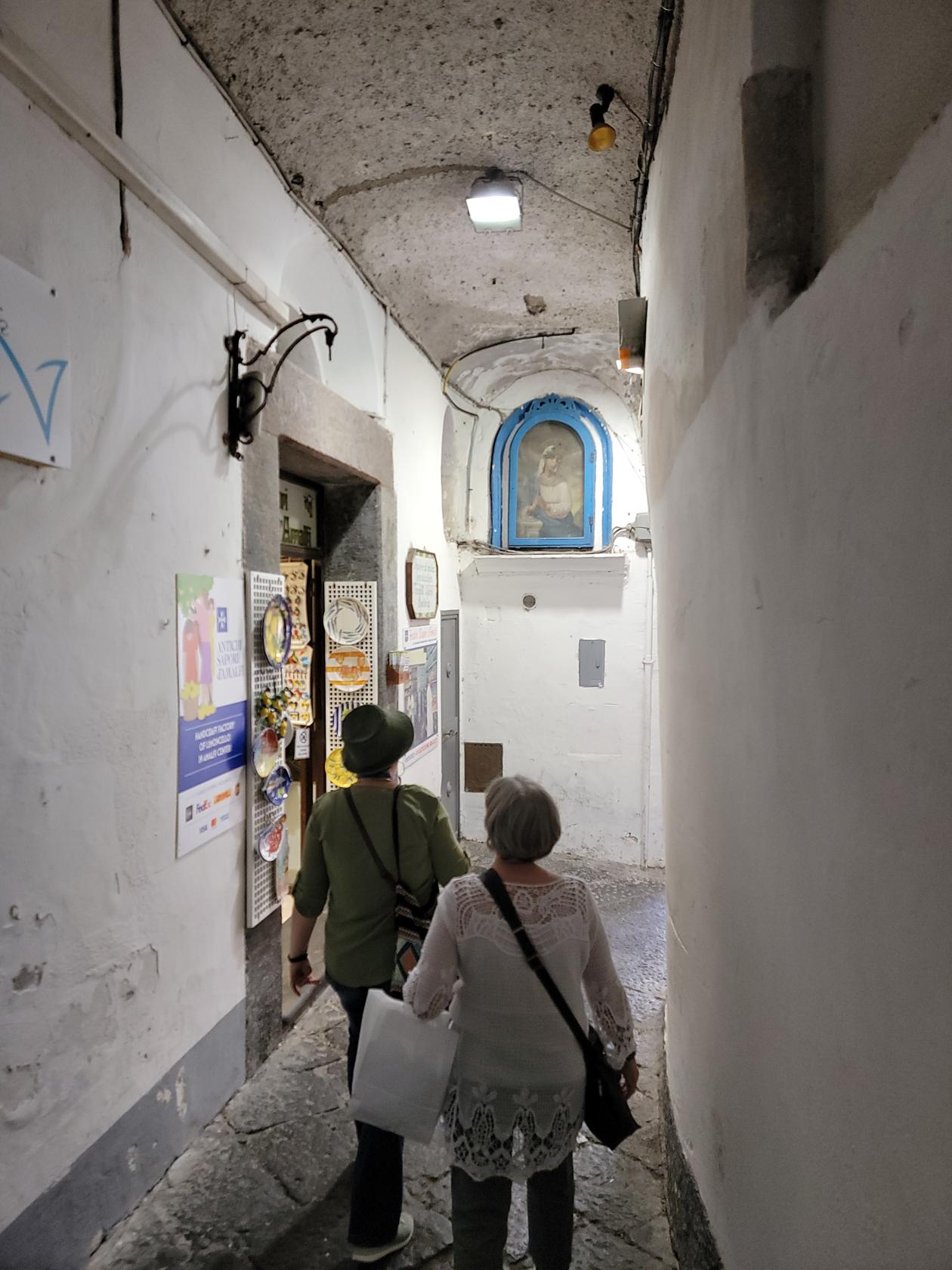
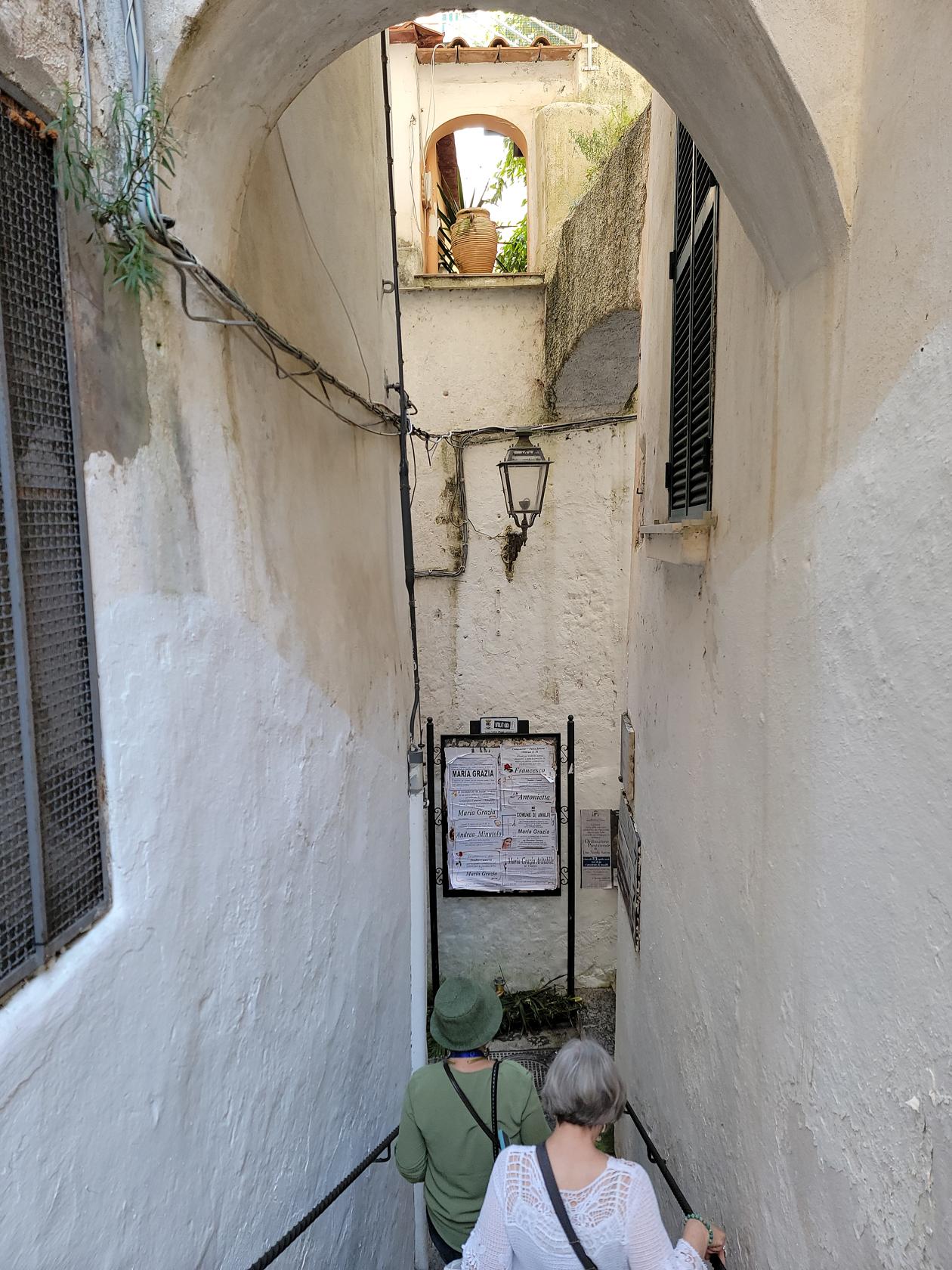
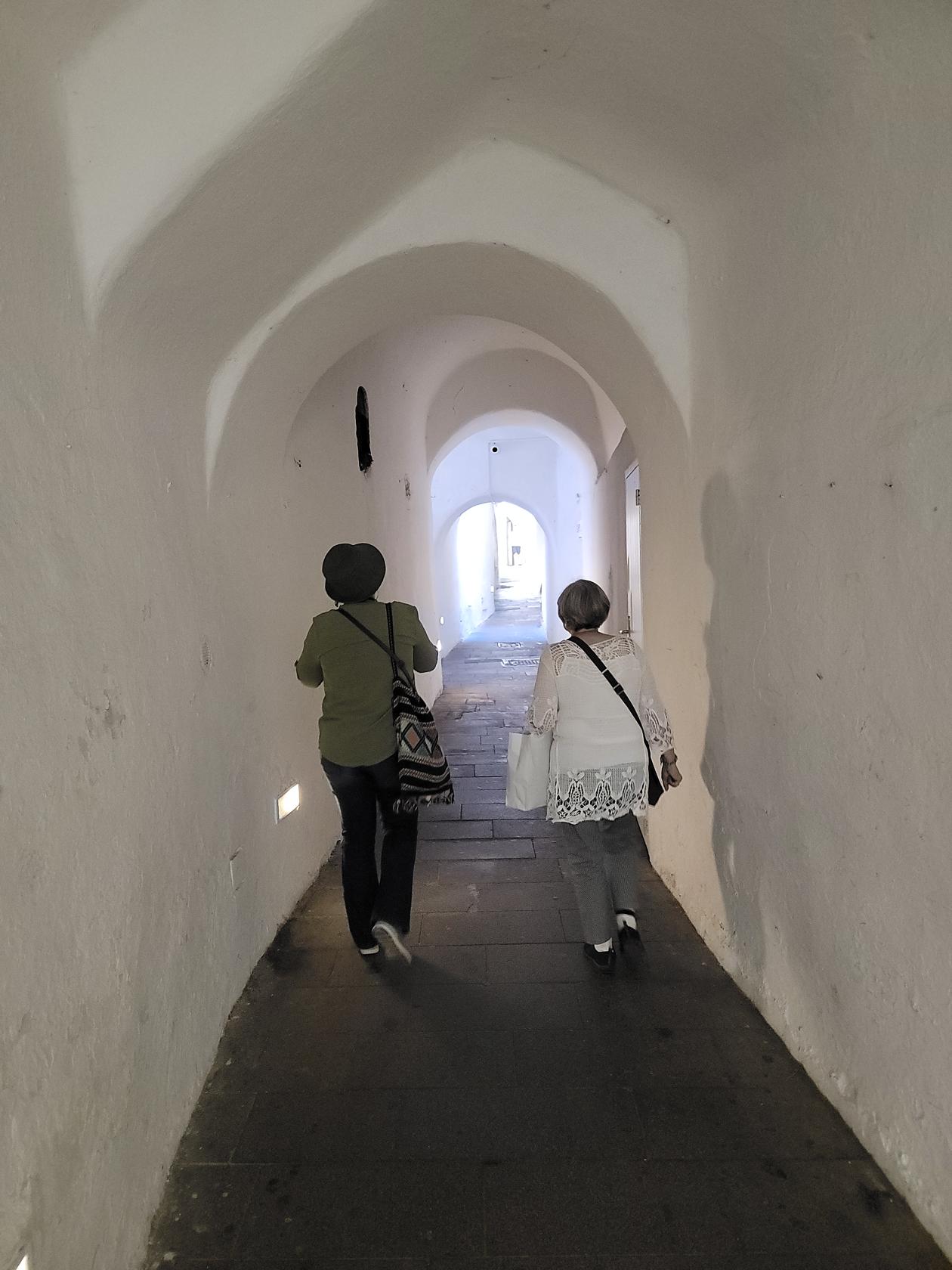
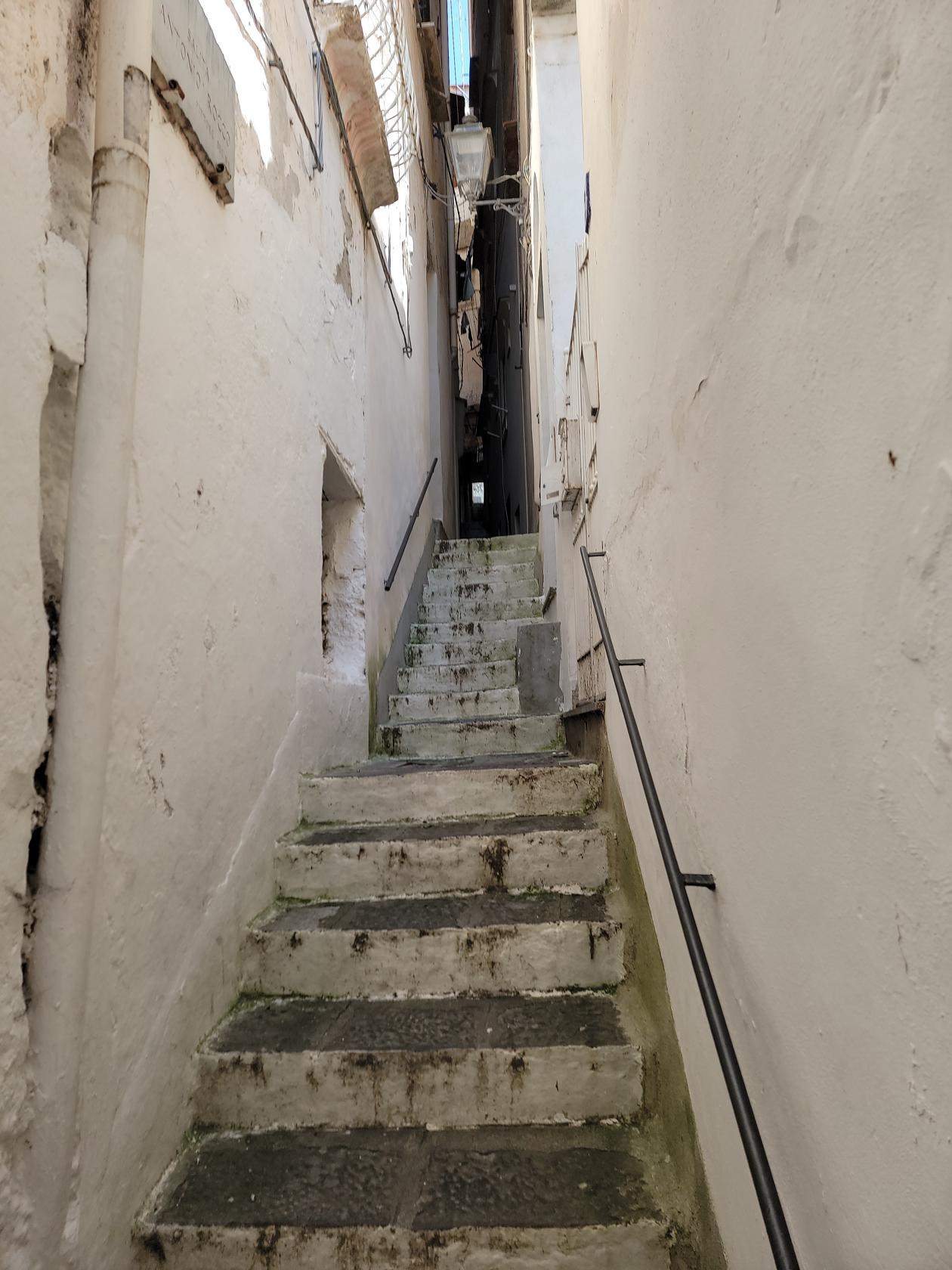
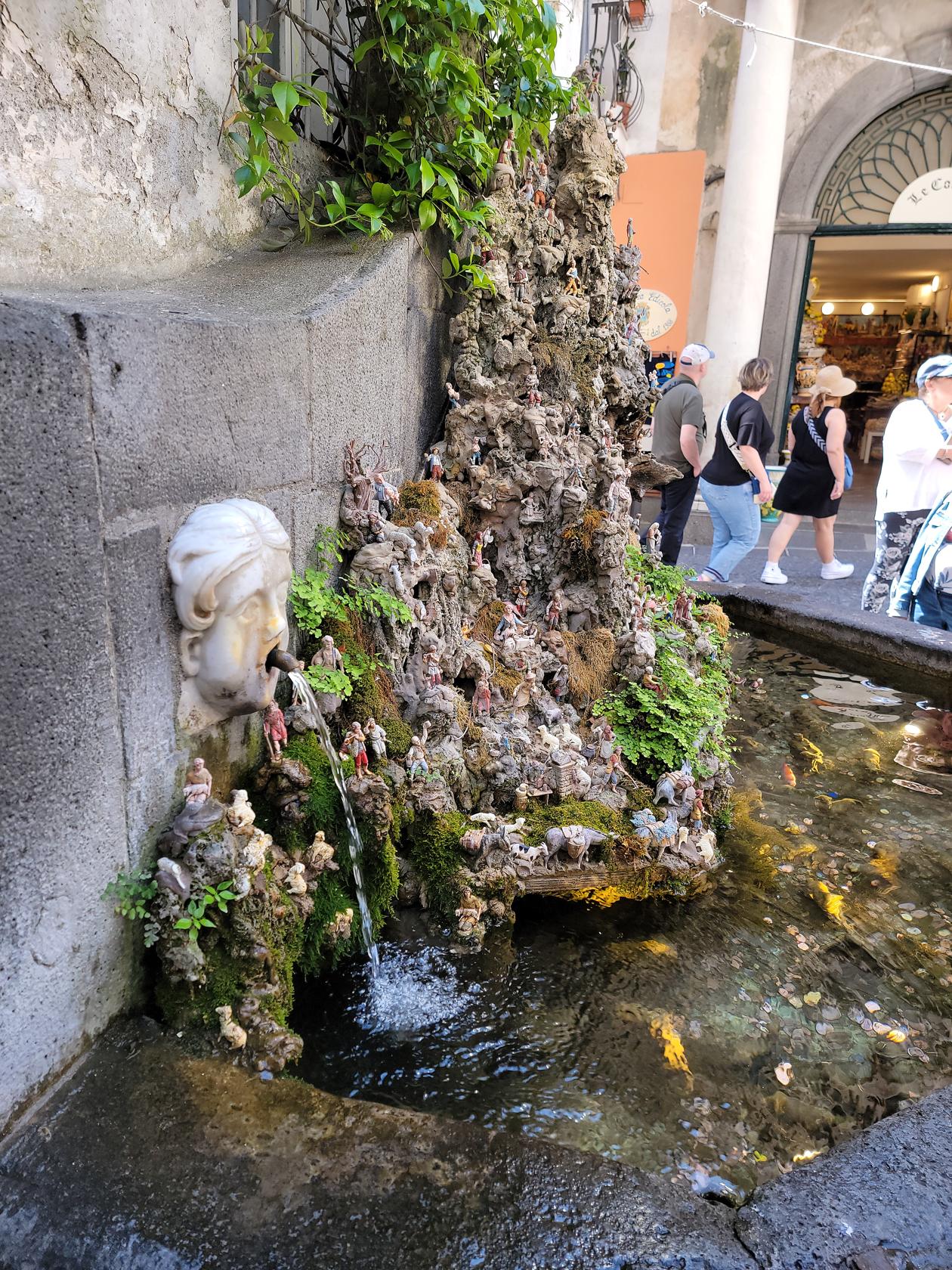
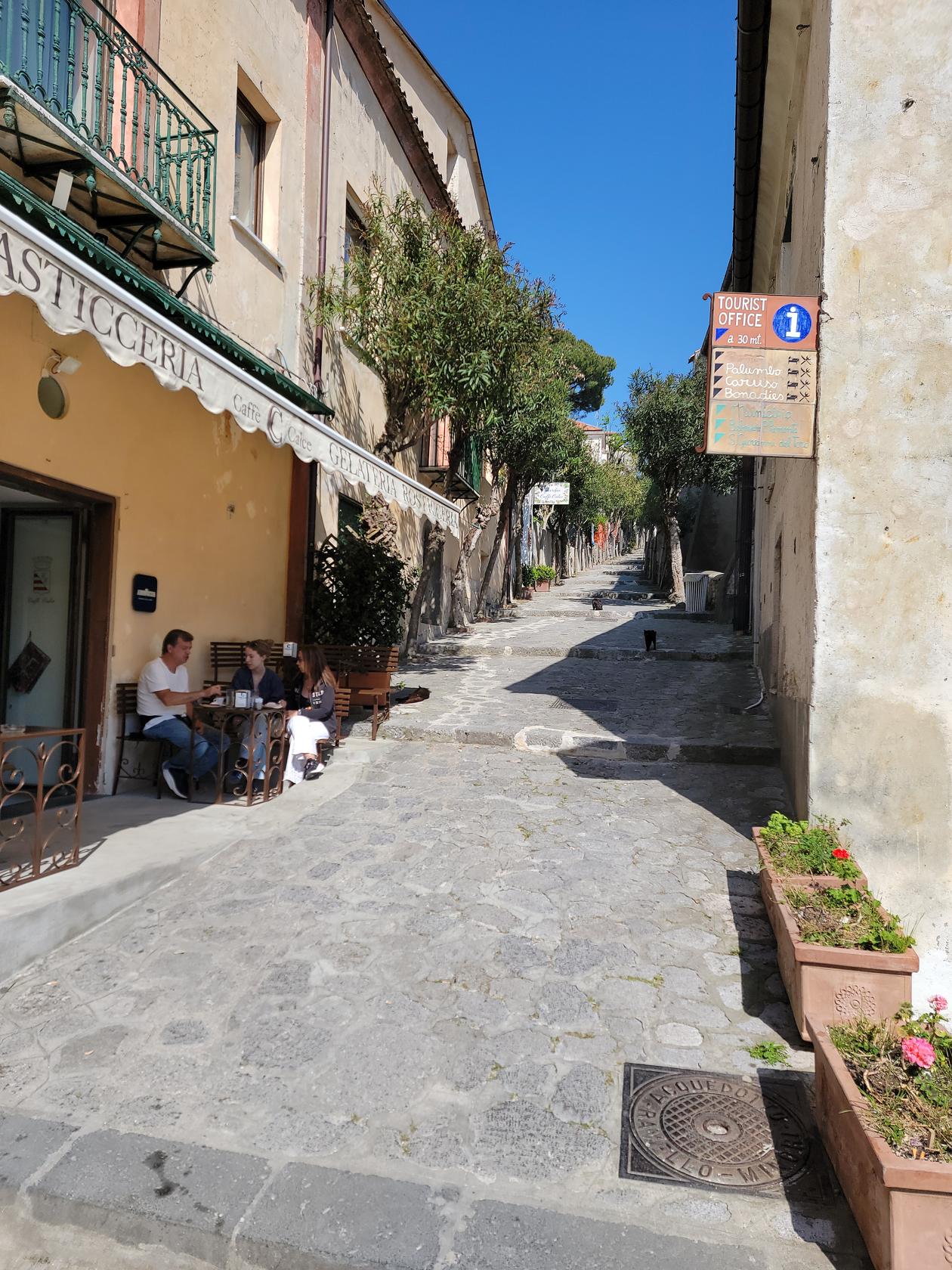
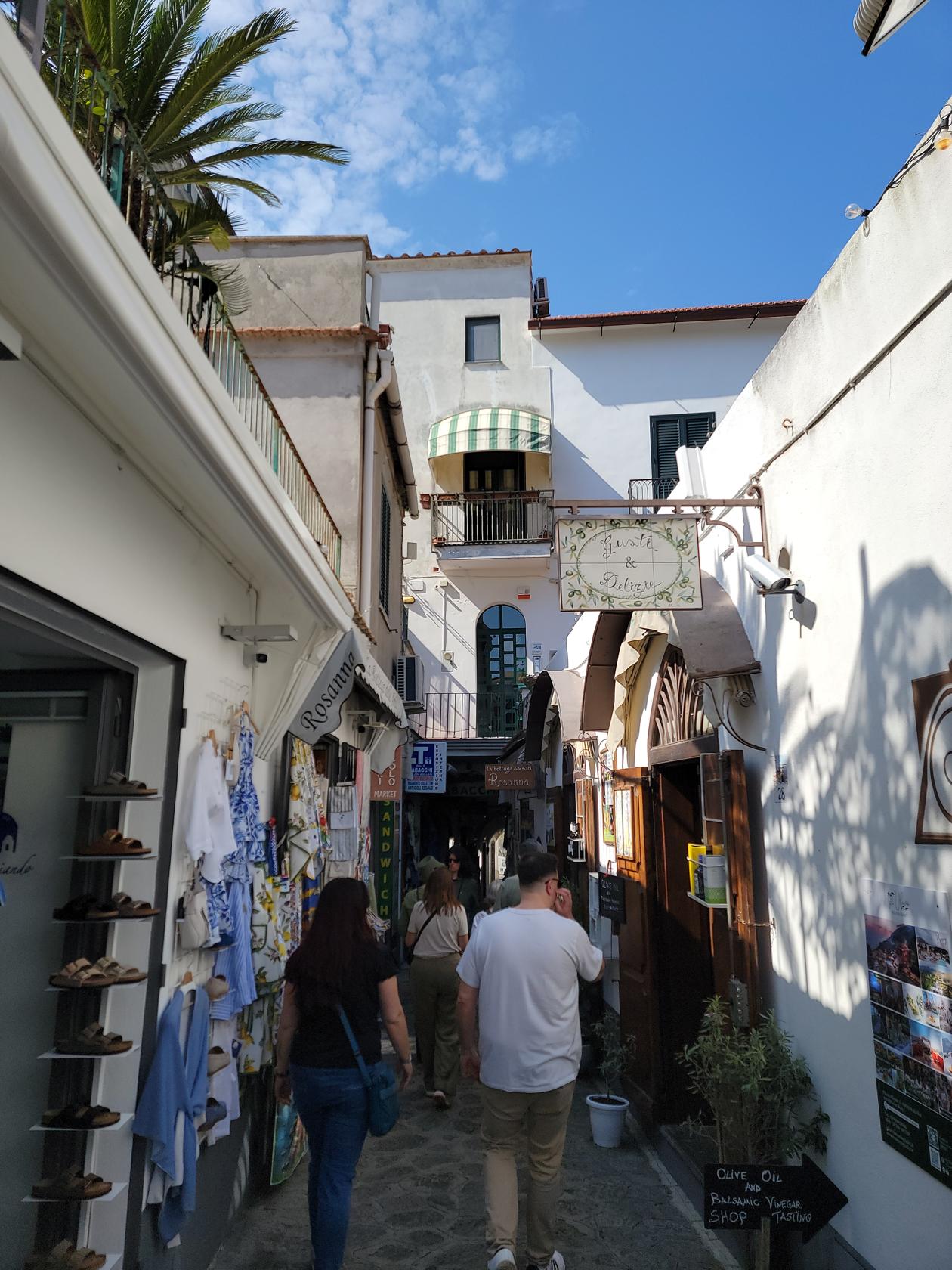
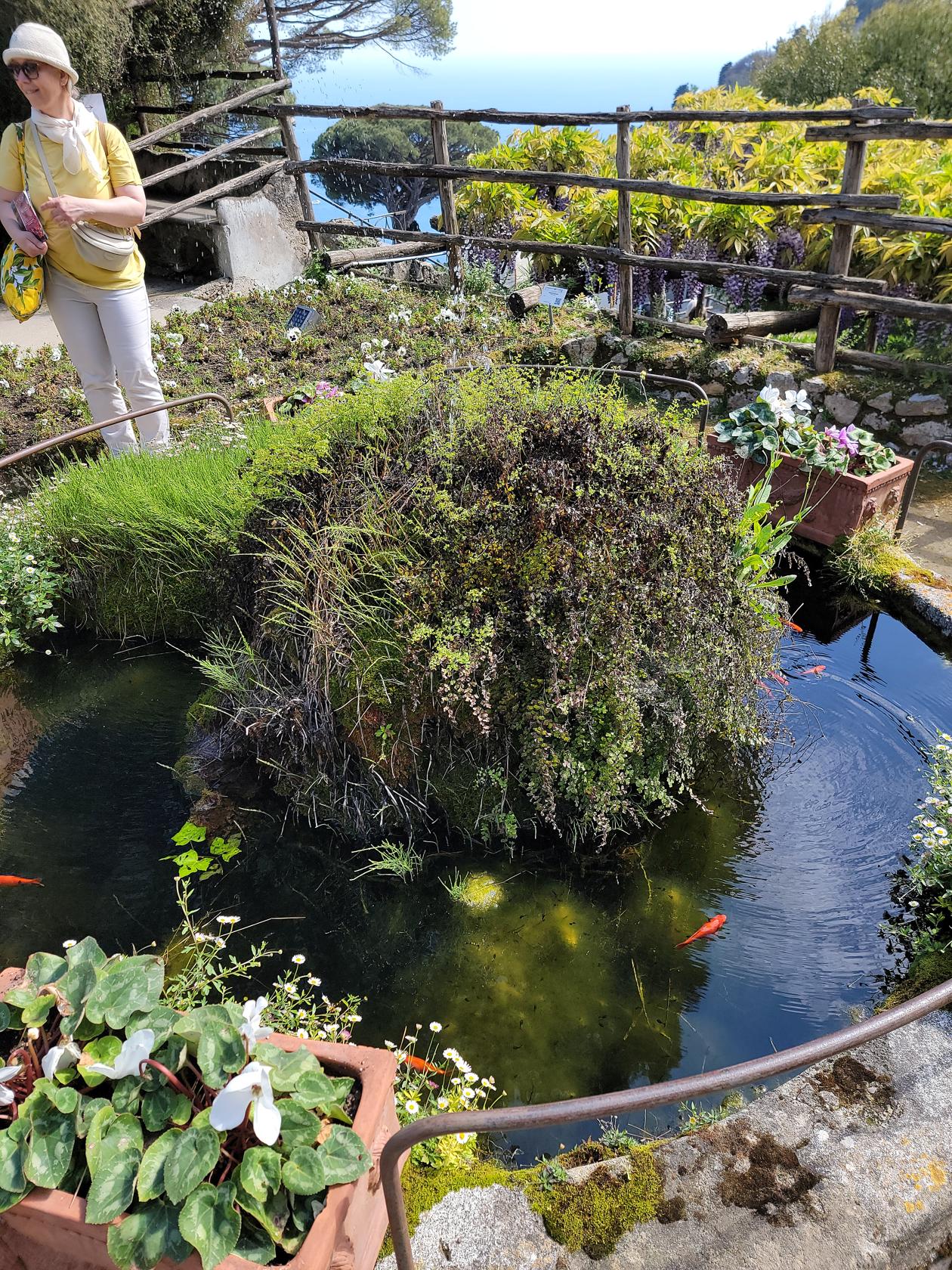
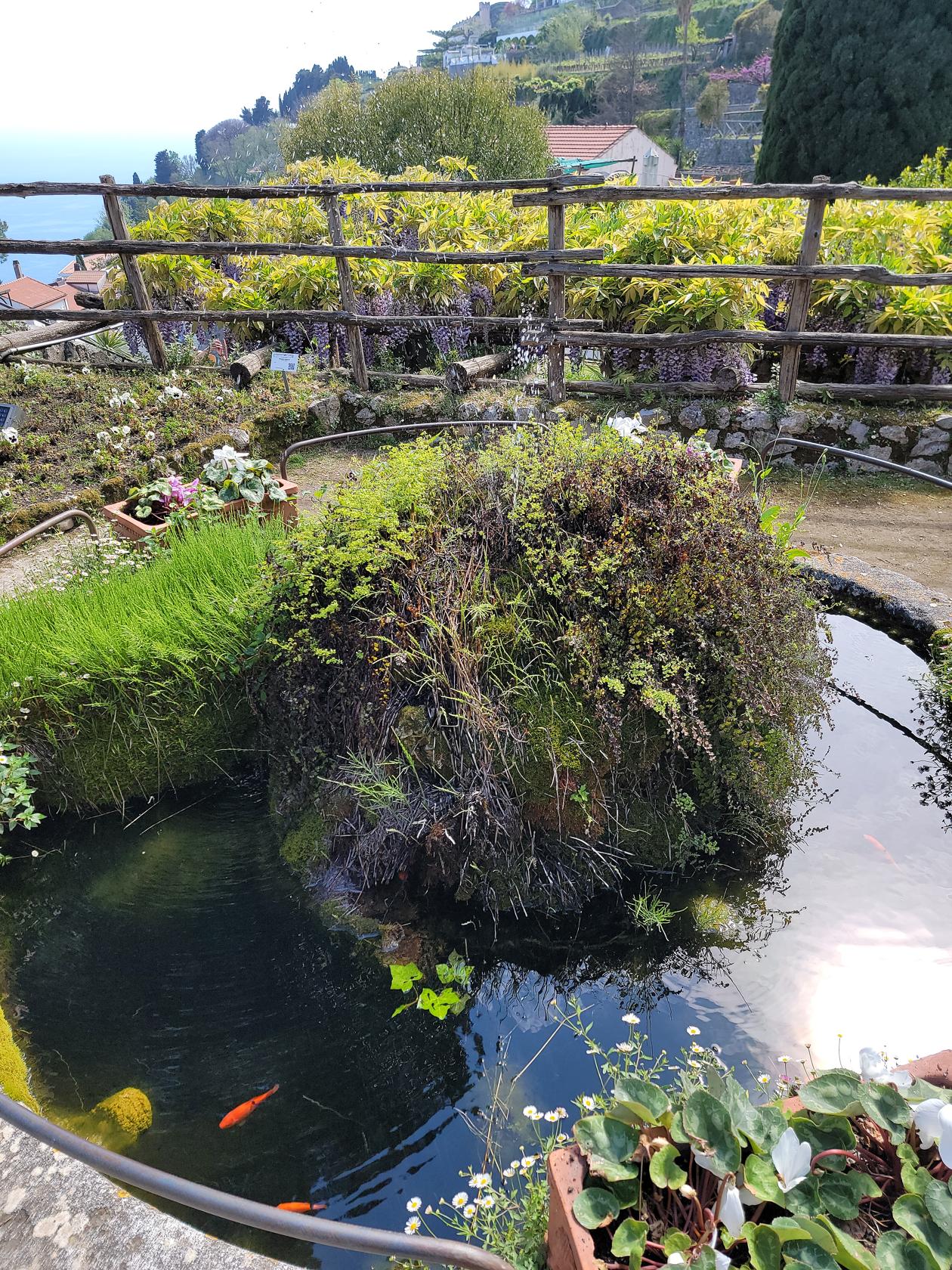
The town has the customary narrow stairs, stairways, alleyways and tunnels, providing a reprieve from the hot summer days for travelers. There are also some interesting fountains in Amalfi, one actually has a cute little diorama built into it of little character, shepards and animals, along with the customary goldfish swimming below.

Ravello

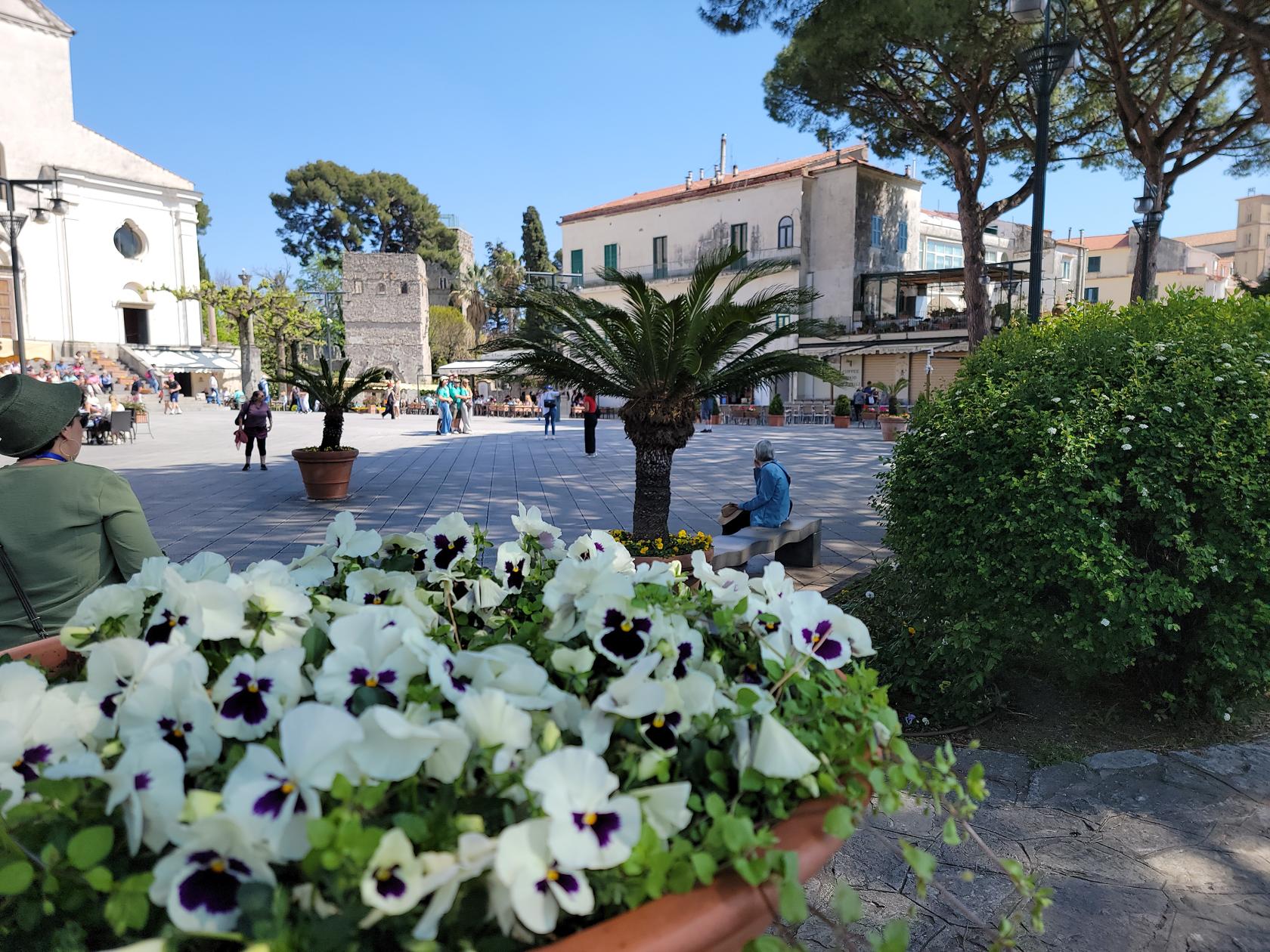
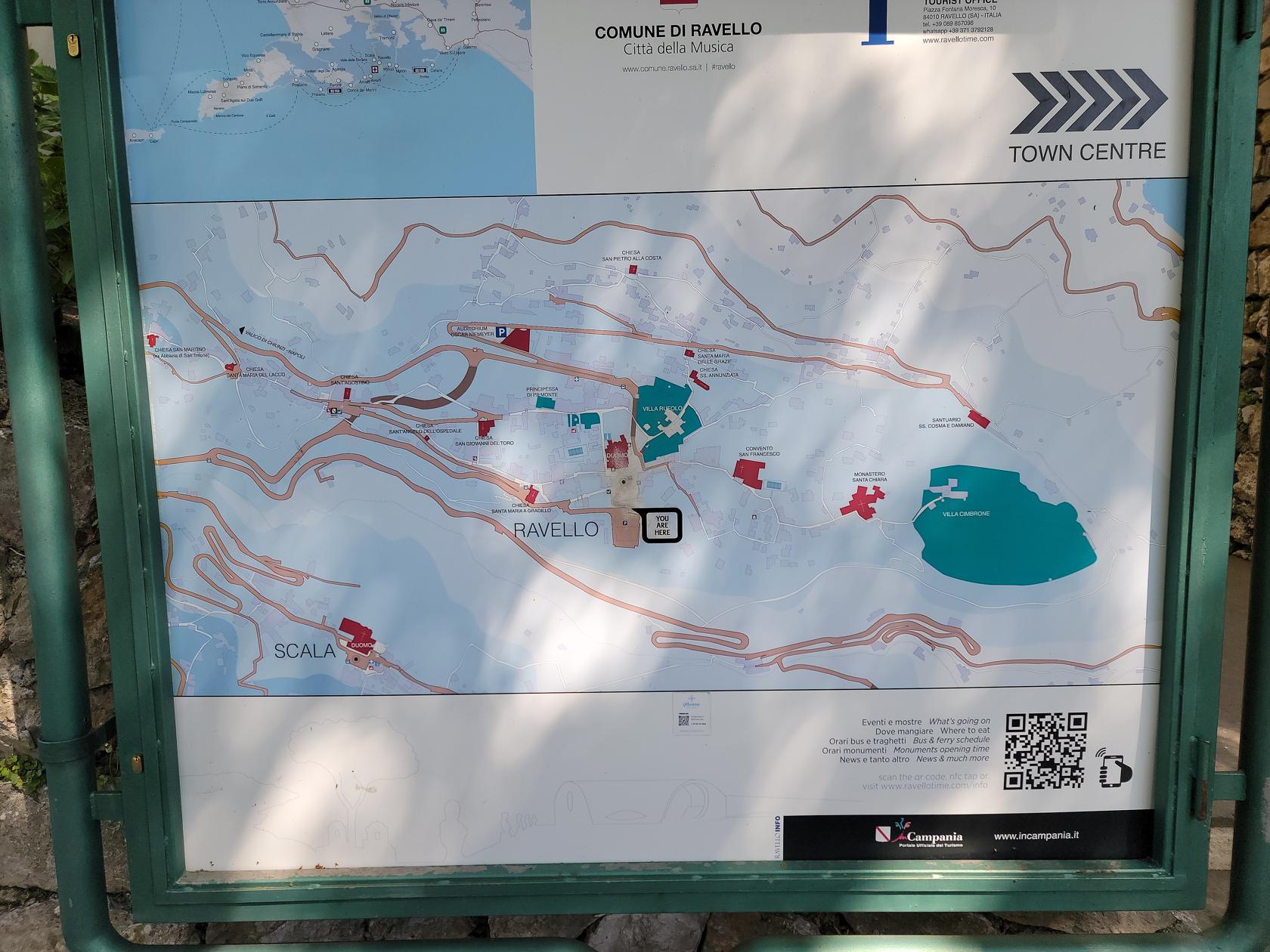
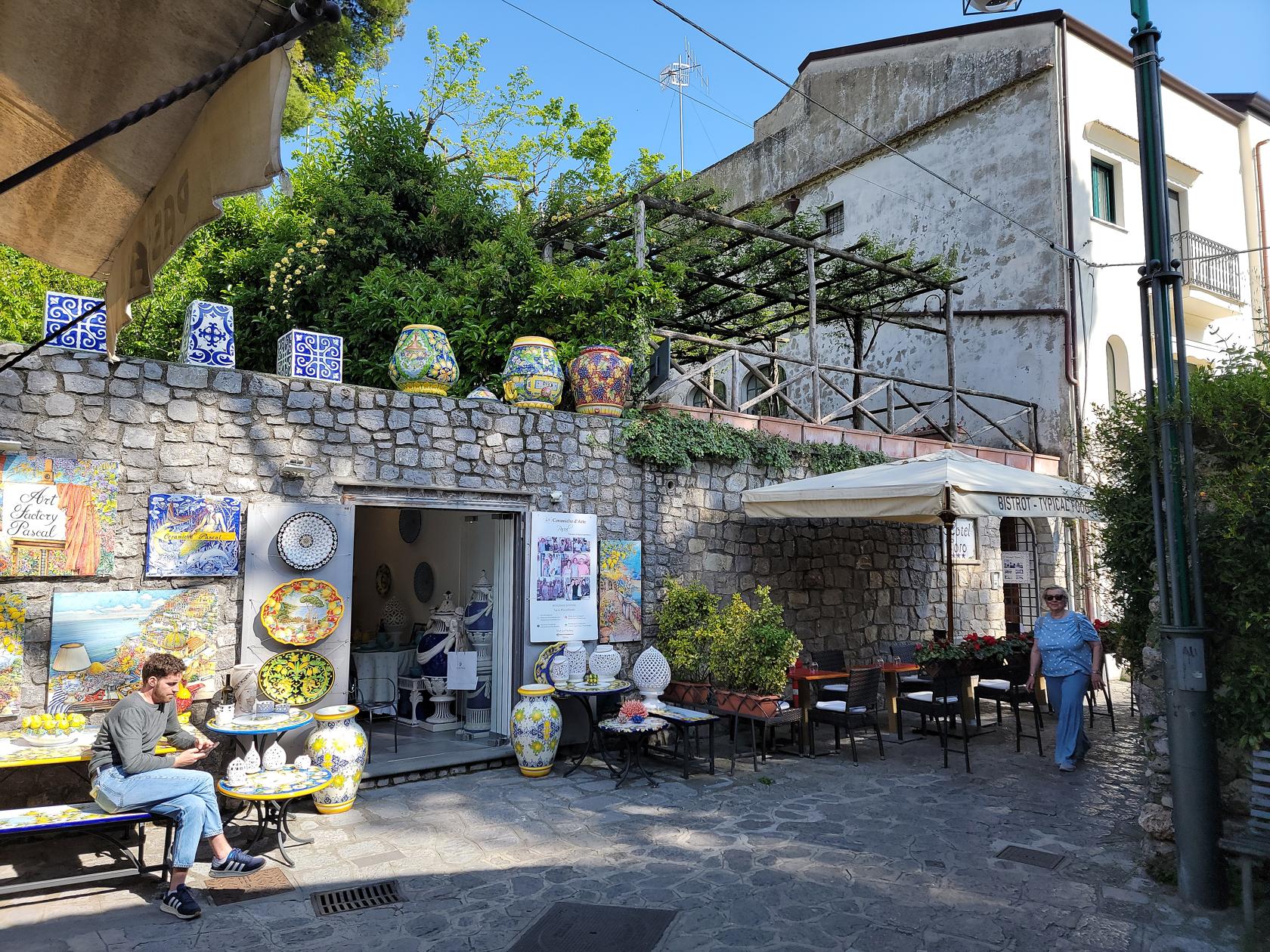
Unlike most other towns along the coast, Ravello kind of stood out. Not only is it more relaxing, since it is obviously visited by fewer people, it is quieter and more laid back. This is most likely due to its smaller size, its elevation and distance from the coast.
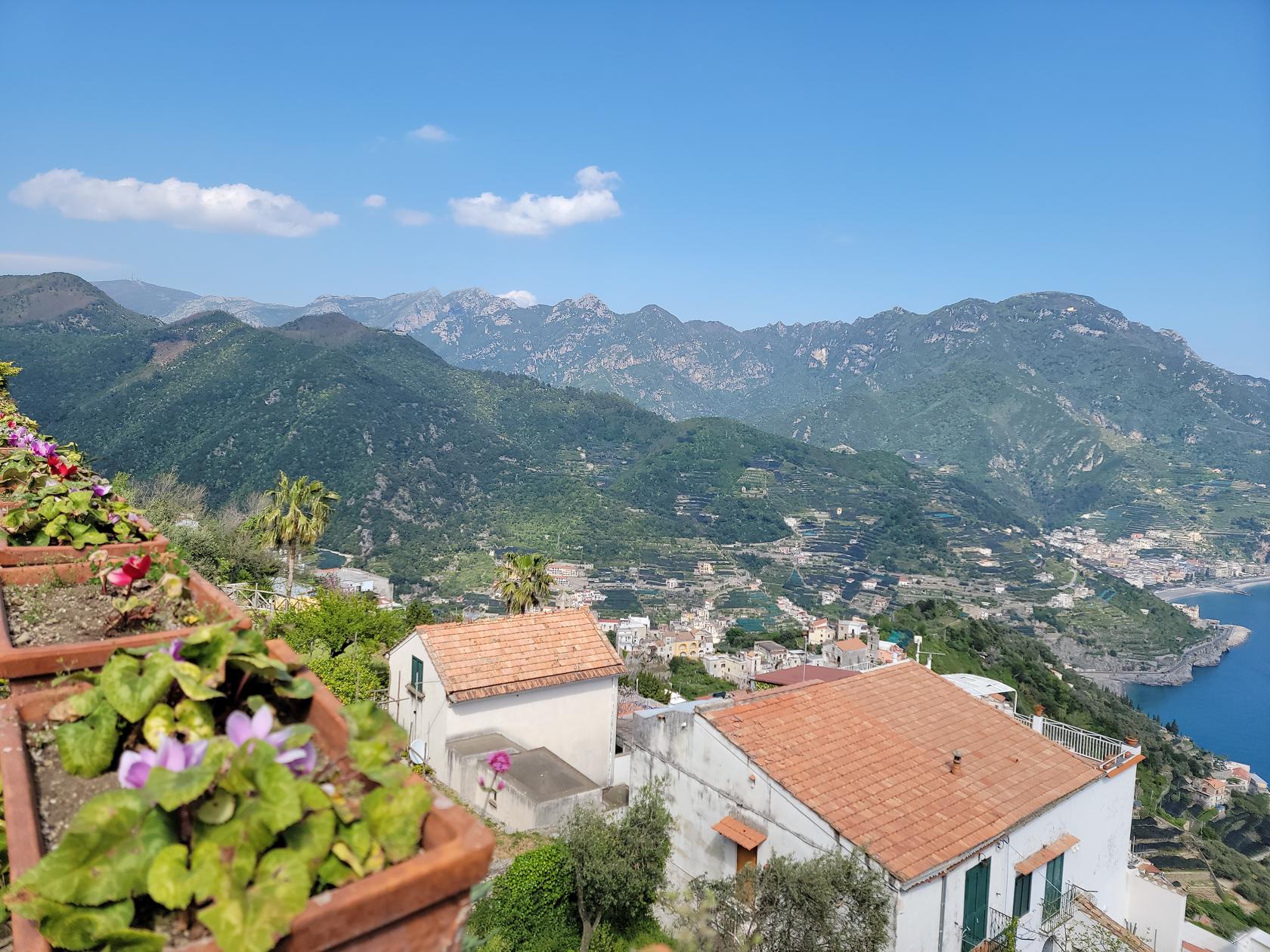
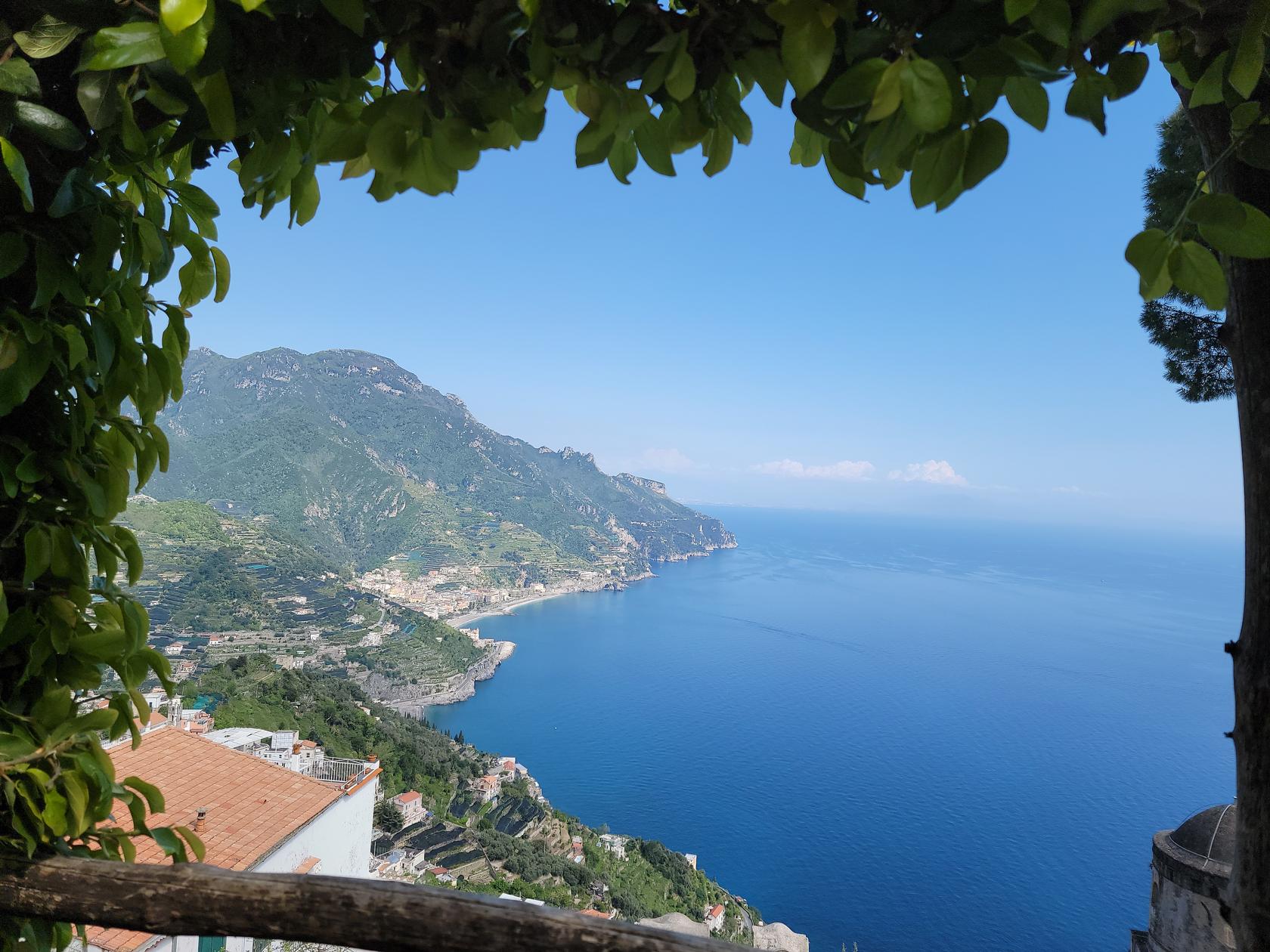
Some find it a better alternative than Amalfi. For one, there are better views from the town, from where visitors can see Amalfi’s classic rocky coastline. Plus the relaxed atmosphere adds to the pleasure, especially if you have time to sit and enjoy a drink, or have a gelato at one of the many artigianale gelaterias in the town.

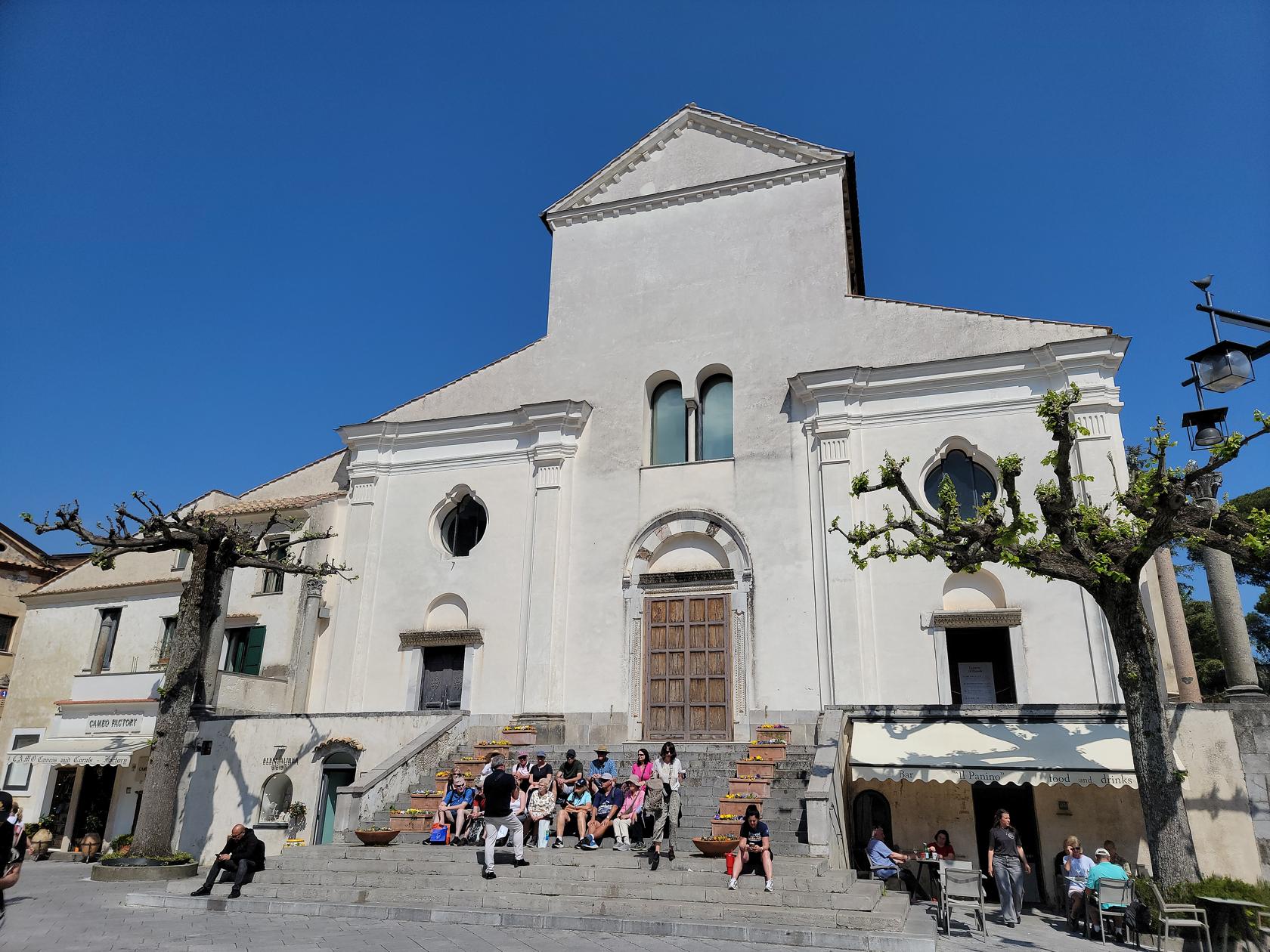
Duomo di Revallo

The main church in town is the Duomo di Ravello, which was unfortunately closed while we were visiting, so the interior remains a mystery to us.

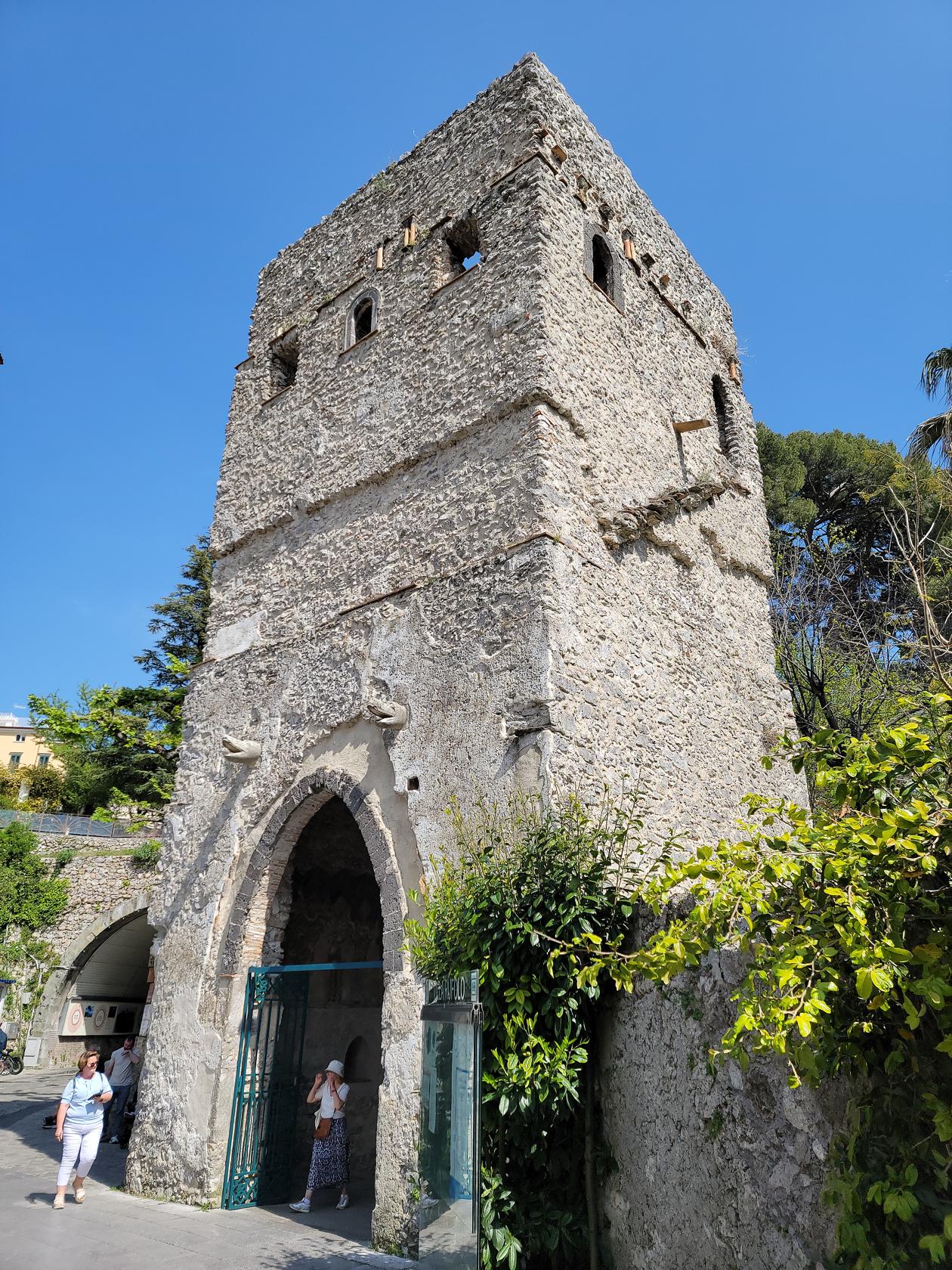
Villa Rufolo

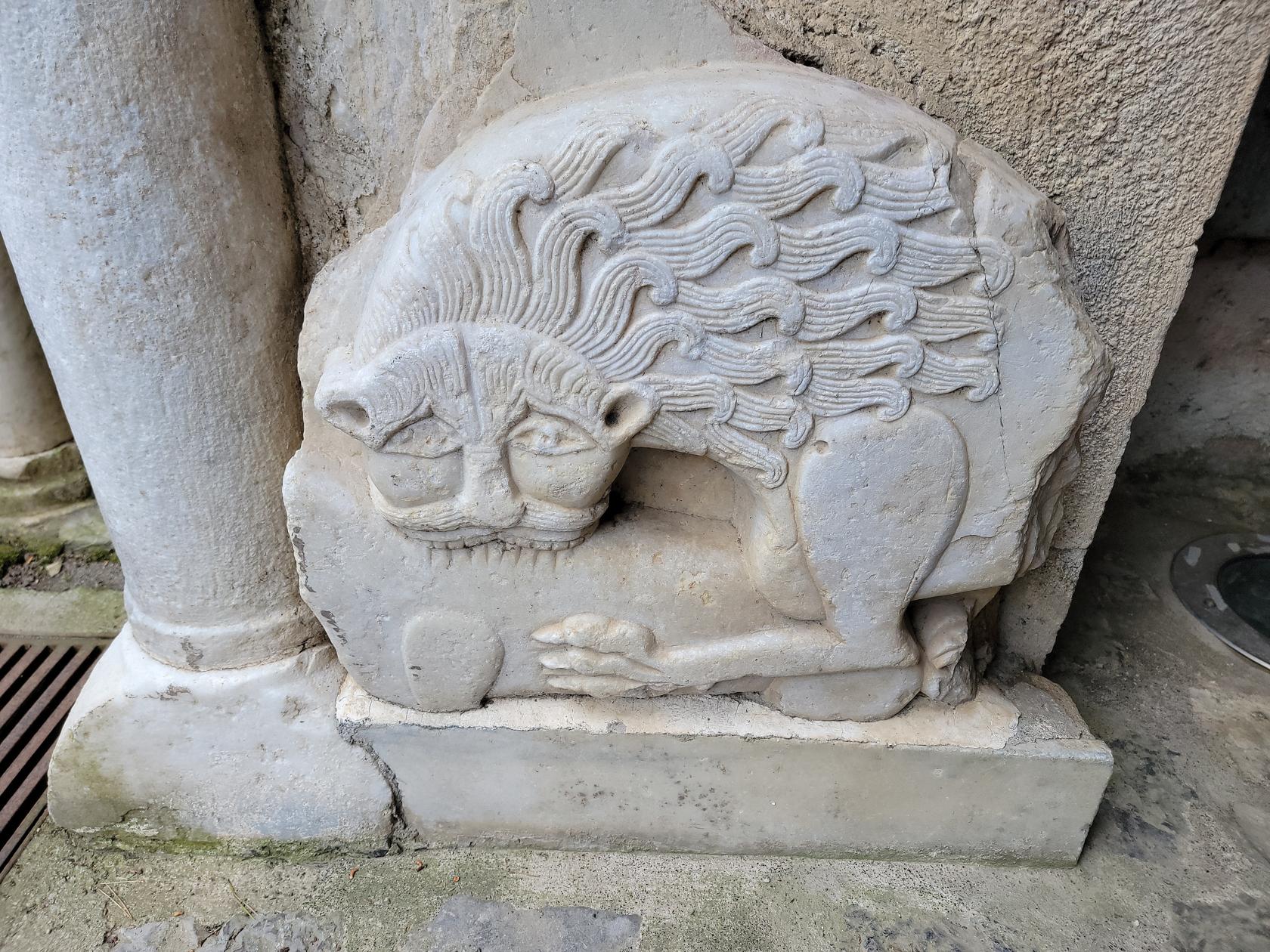
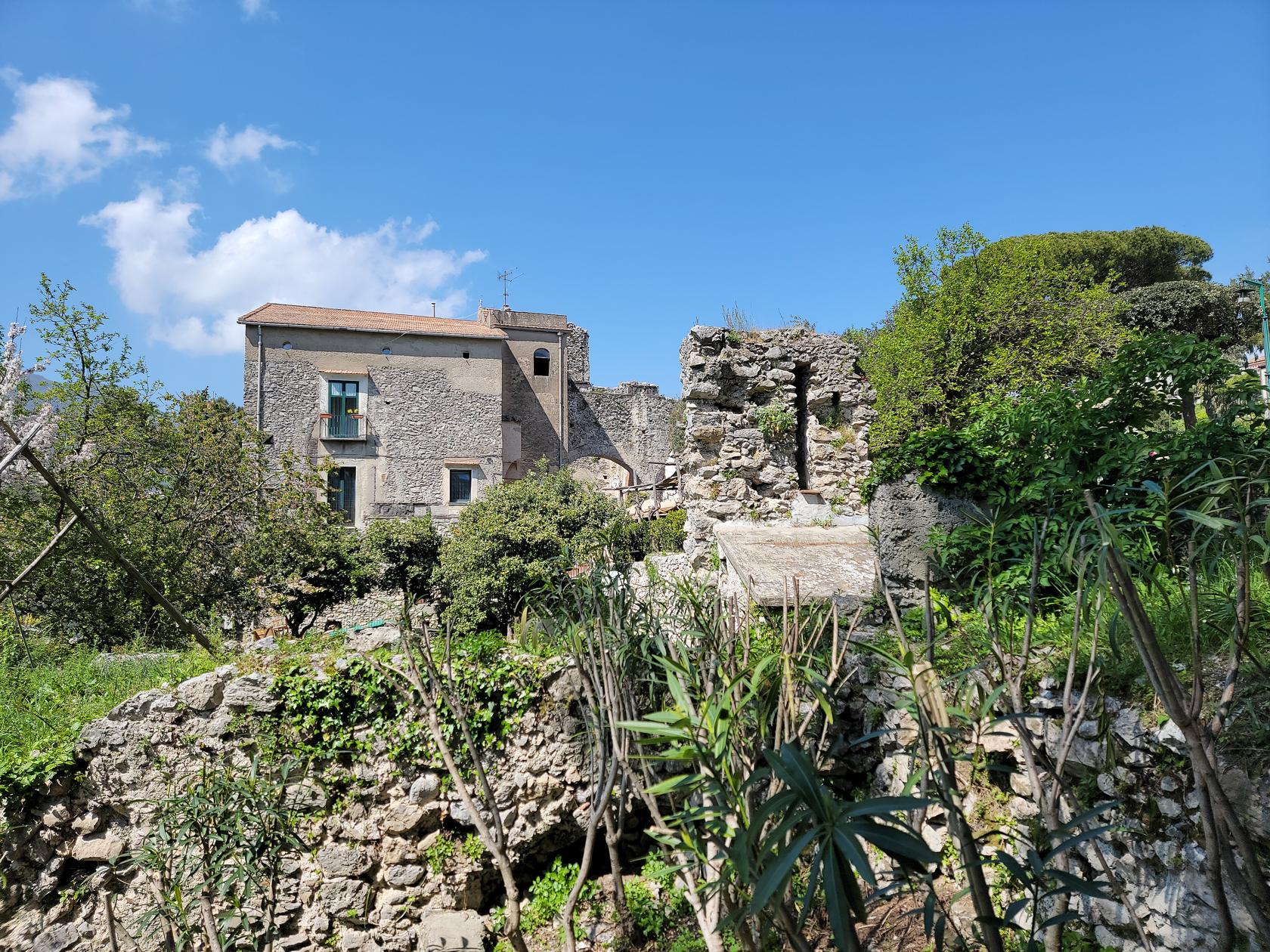
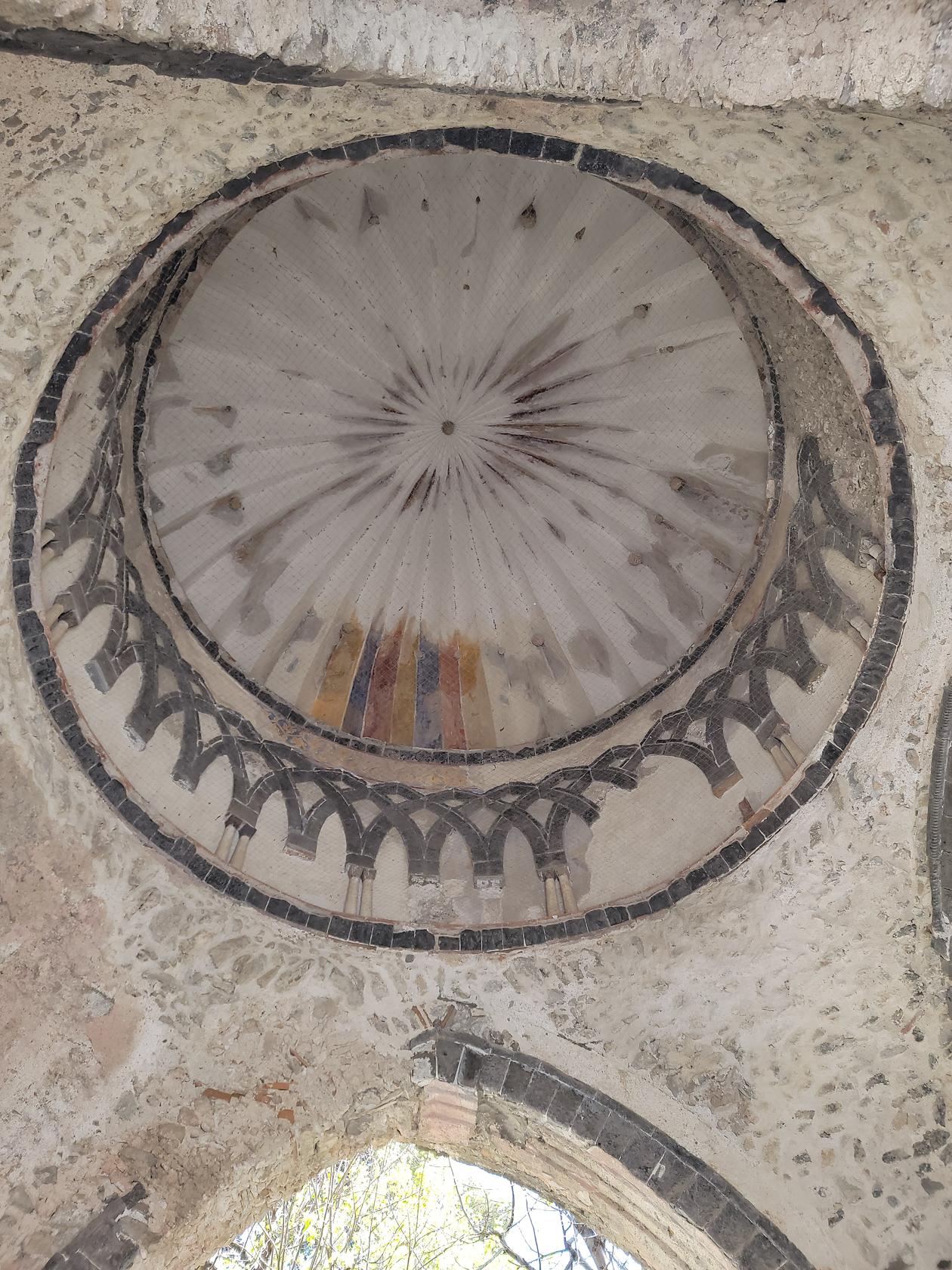
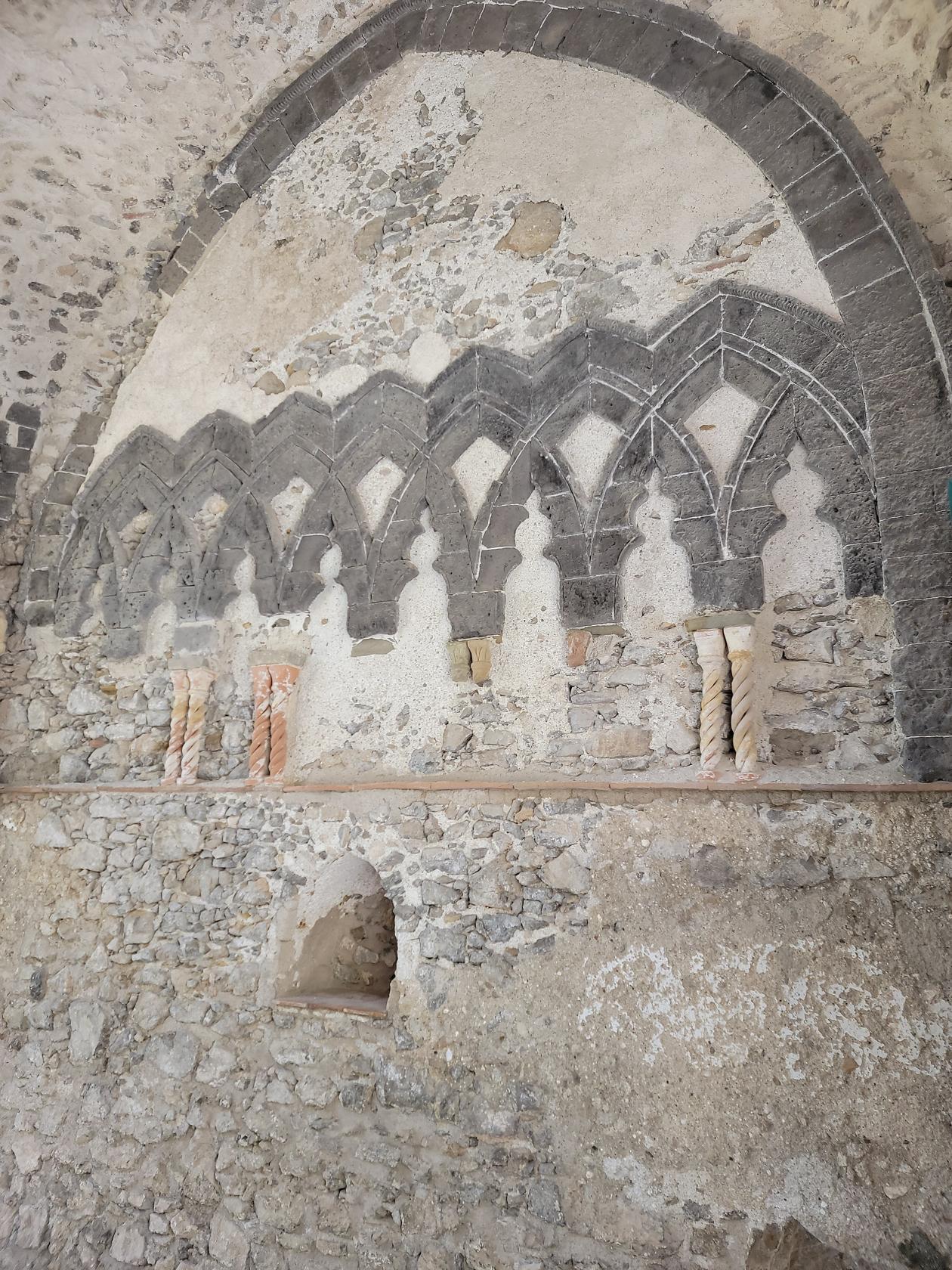
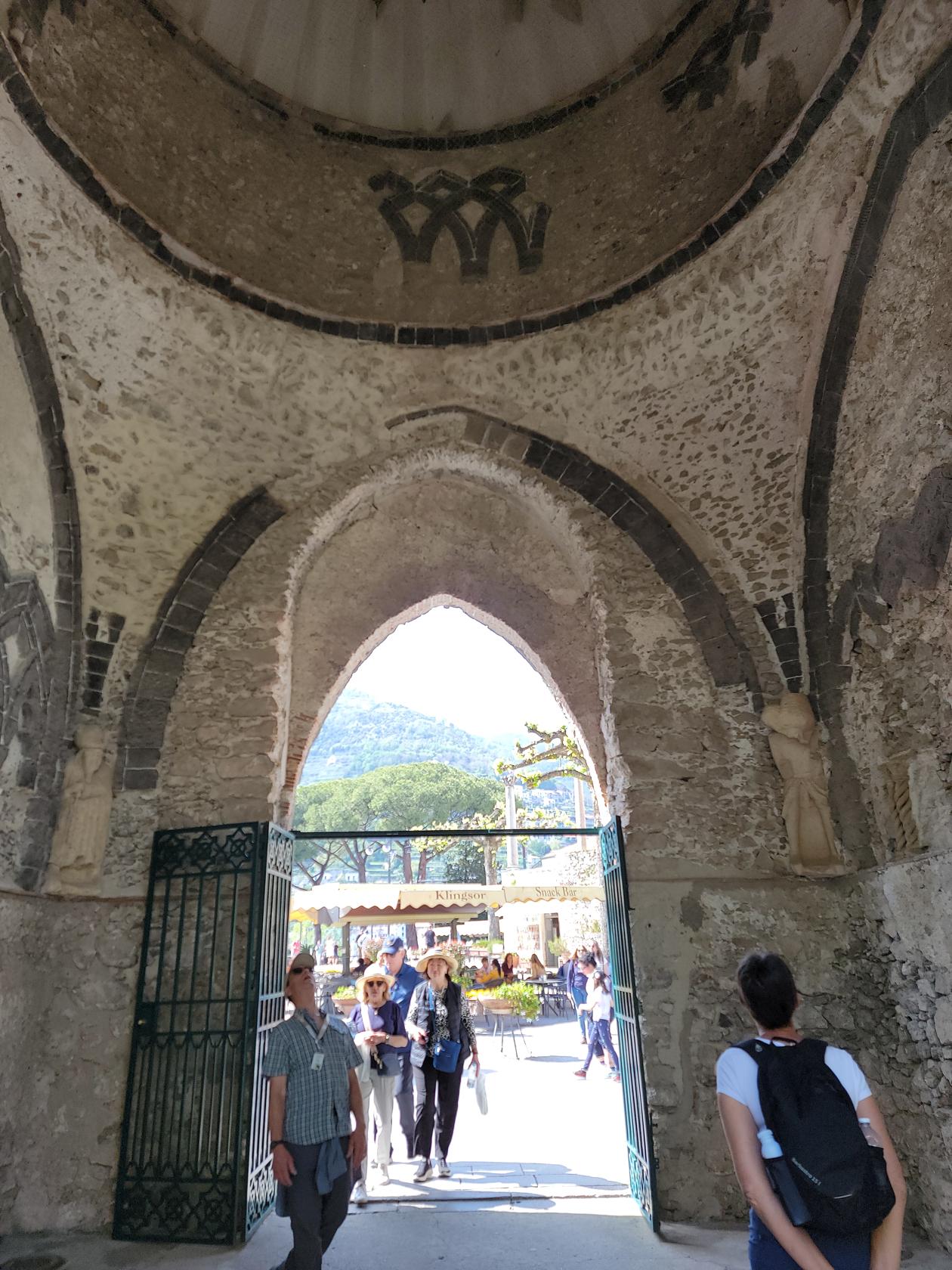
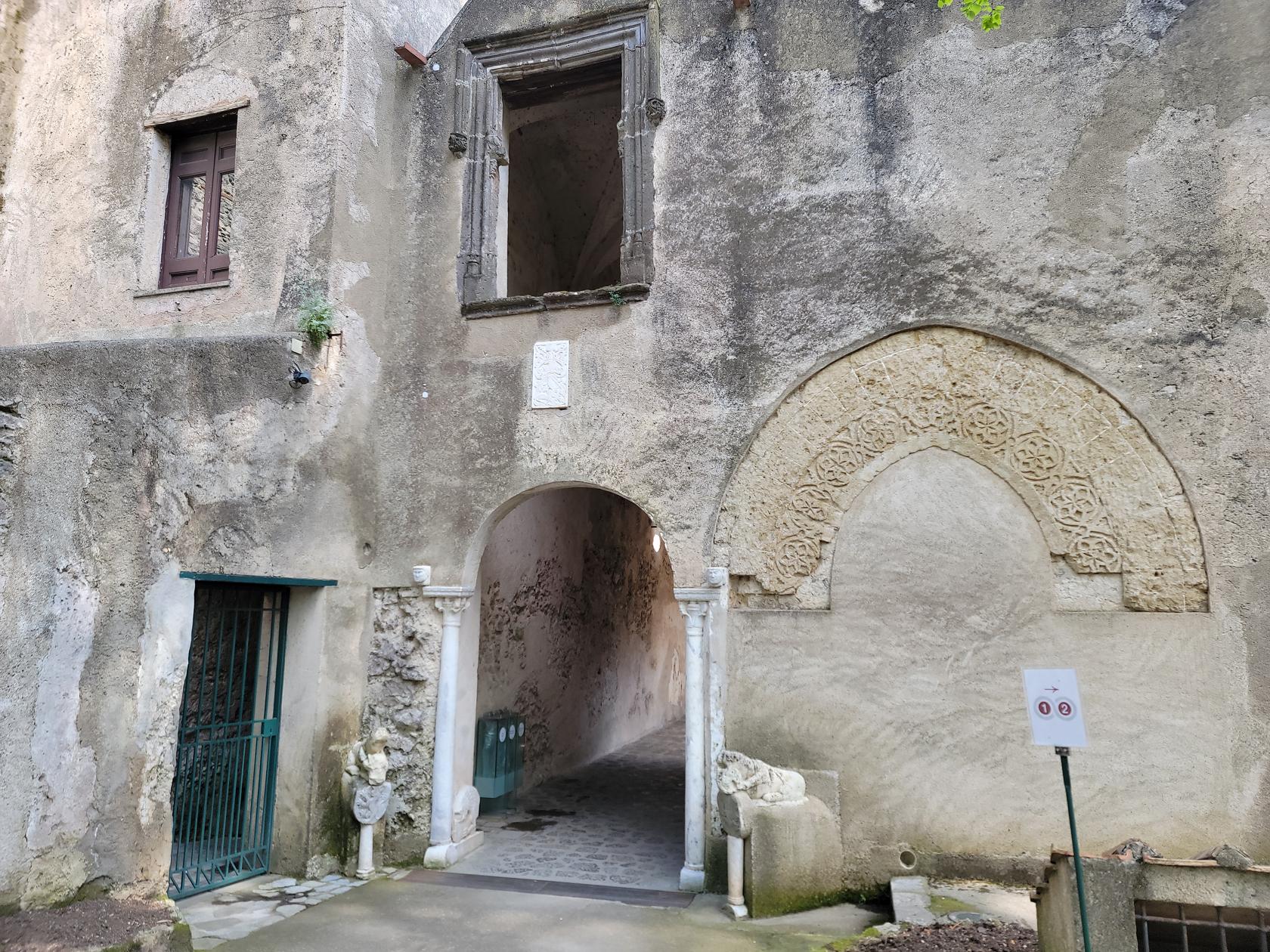
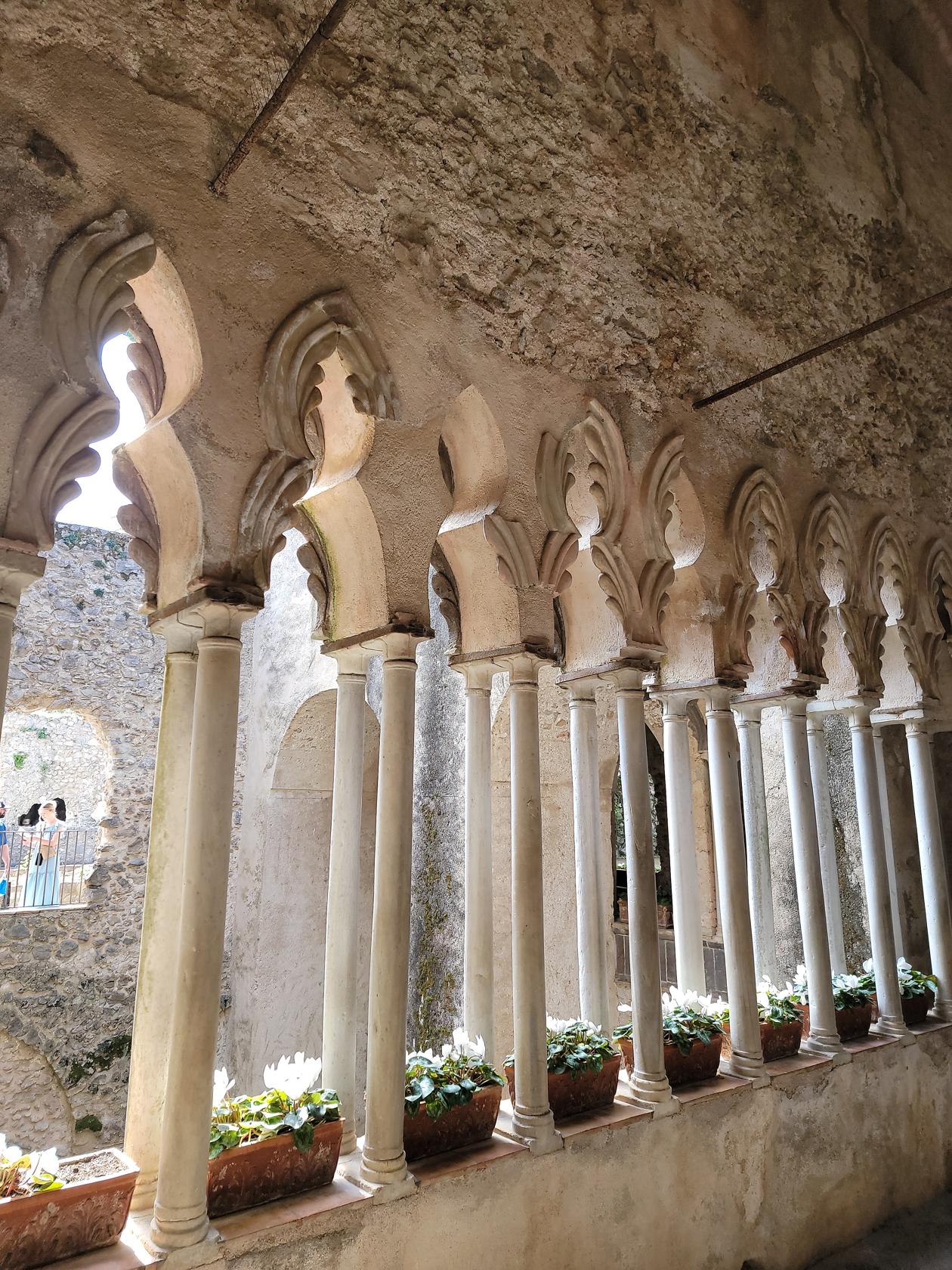
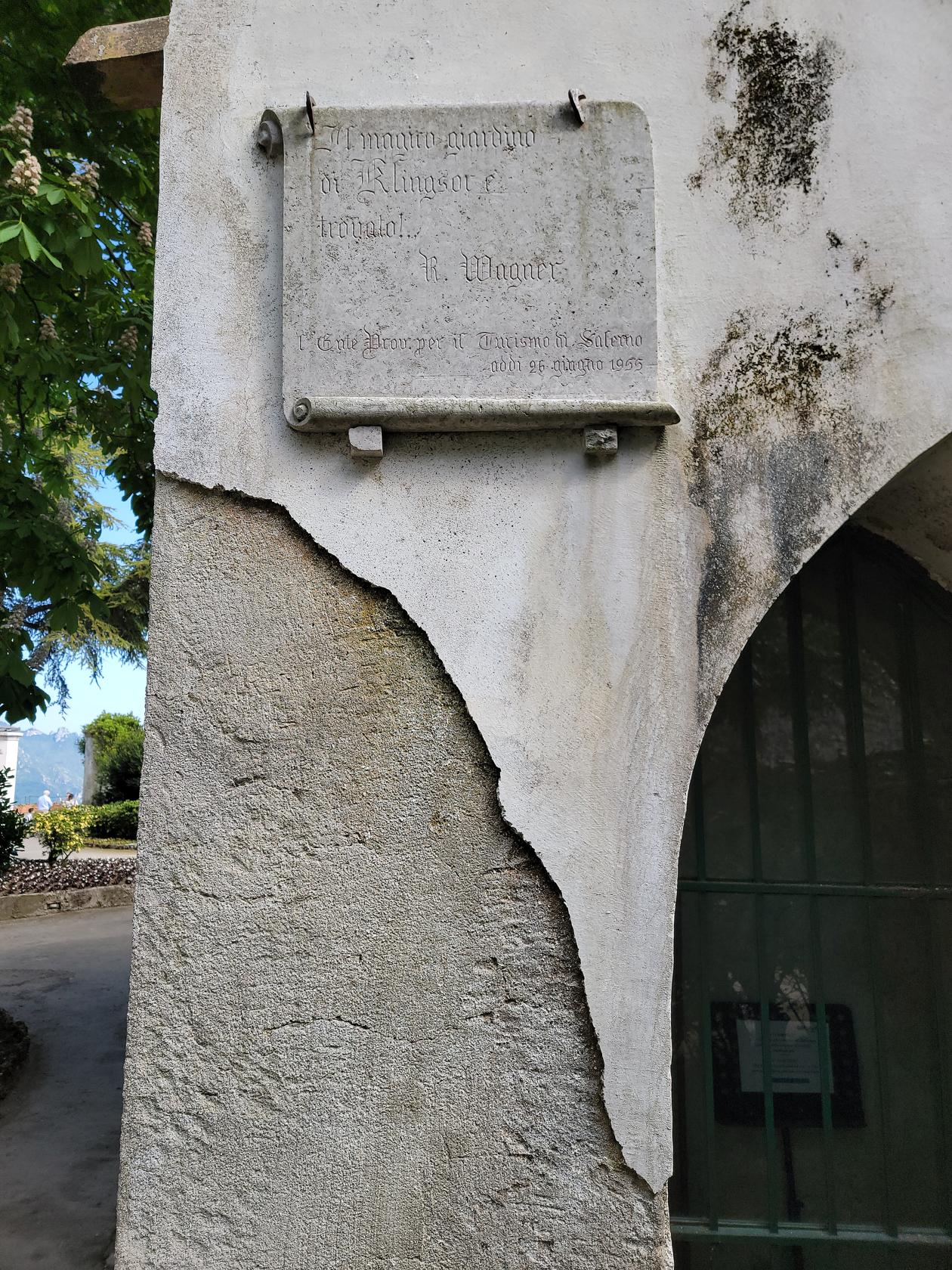
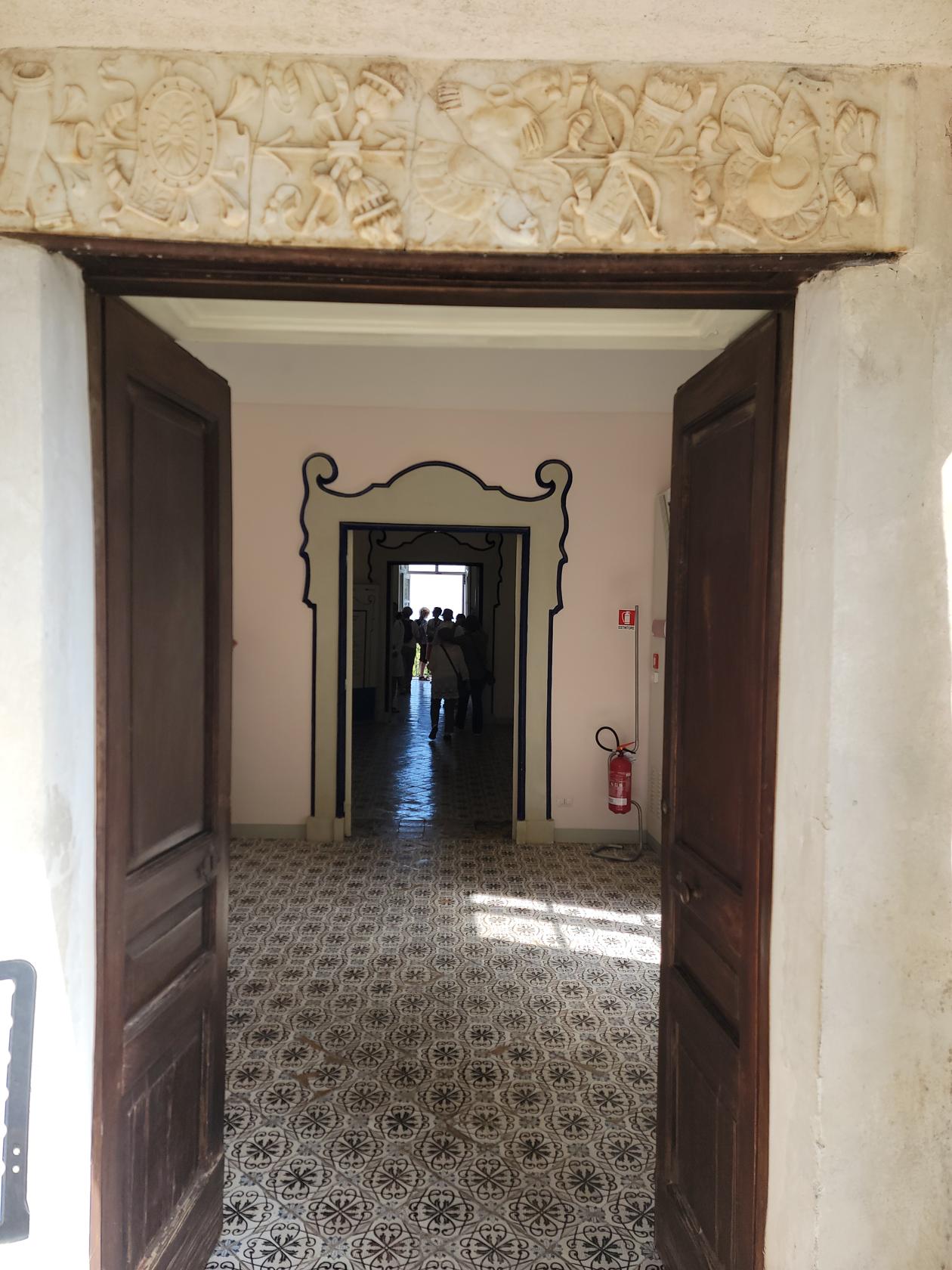
For a small entrance fee you can visit Villa Rufolo in Ravello. The entrance shows some interesting designs and details, that continue in deeper parts of the villa.

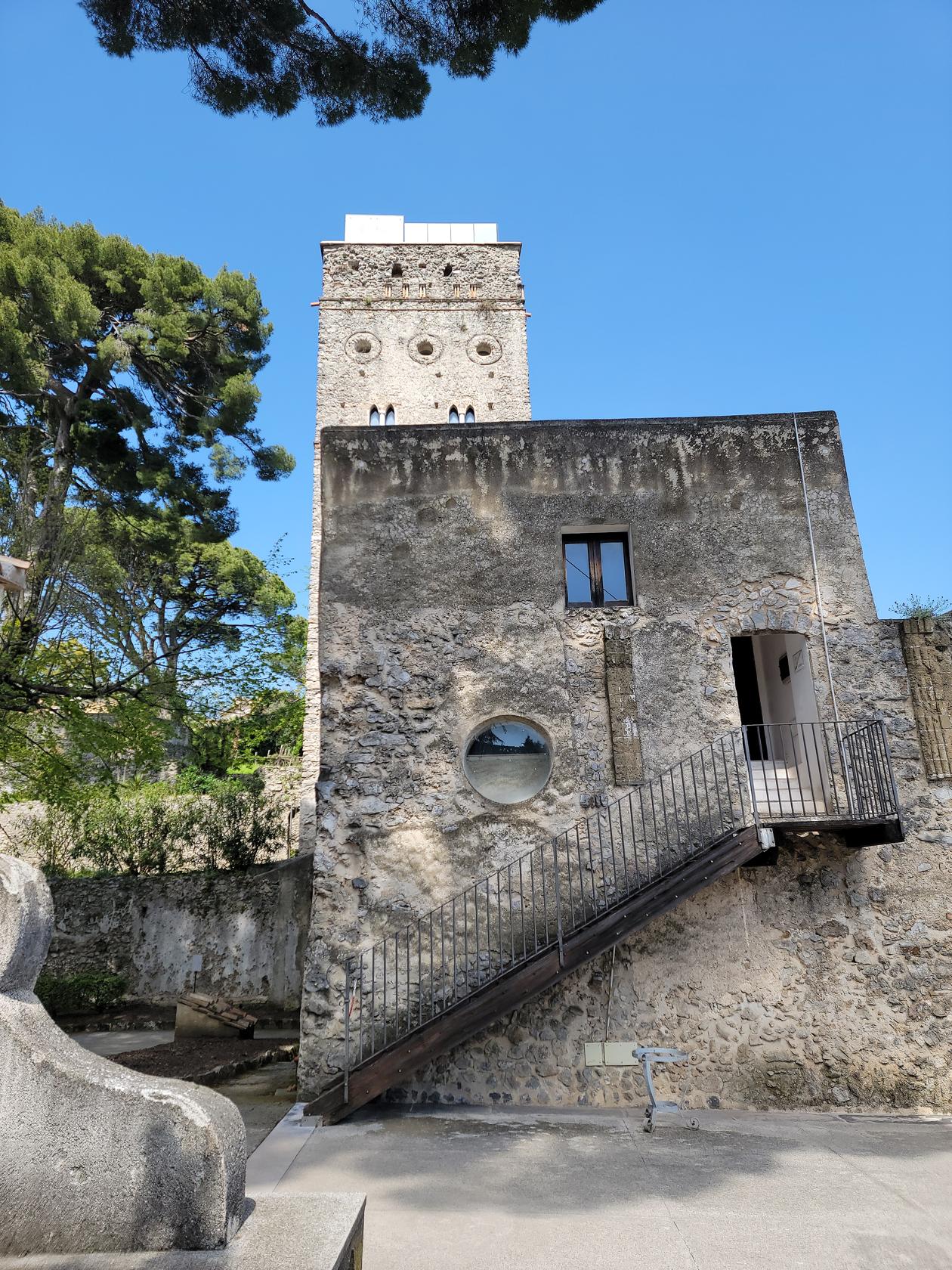
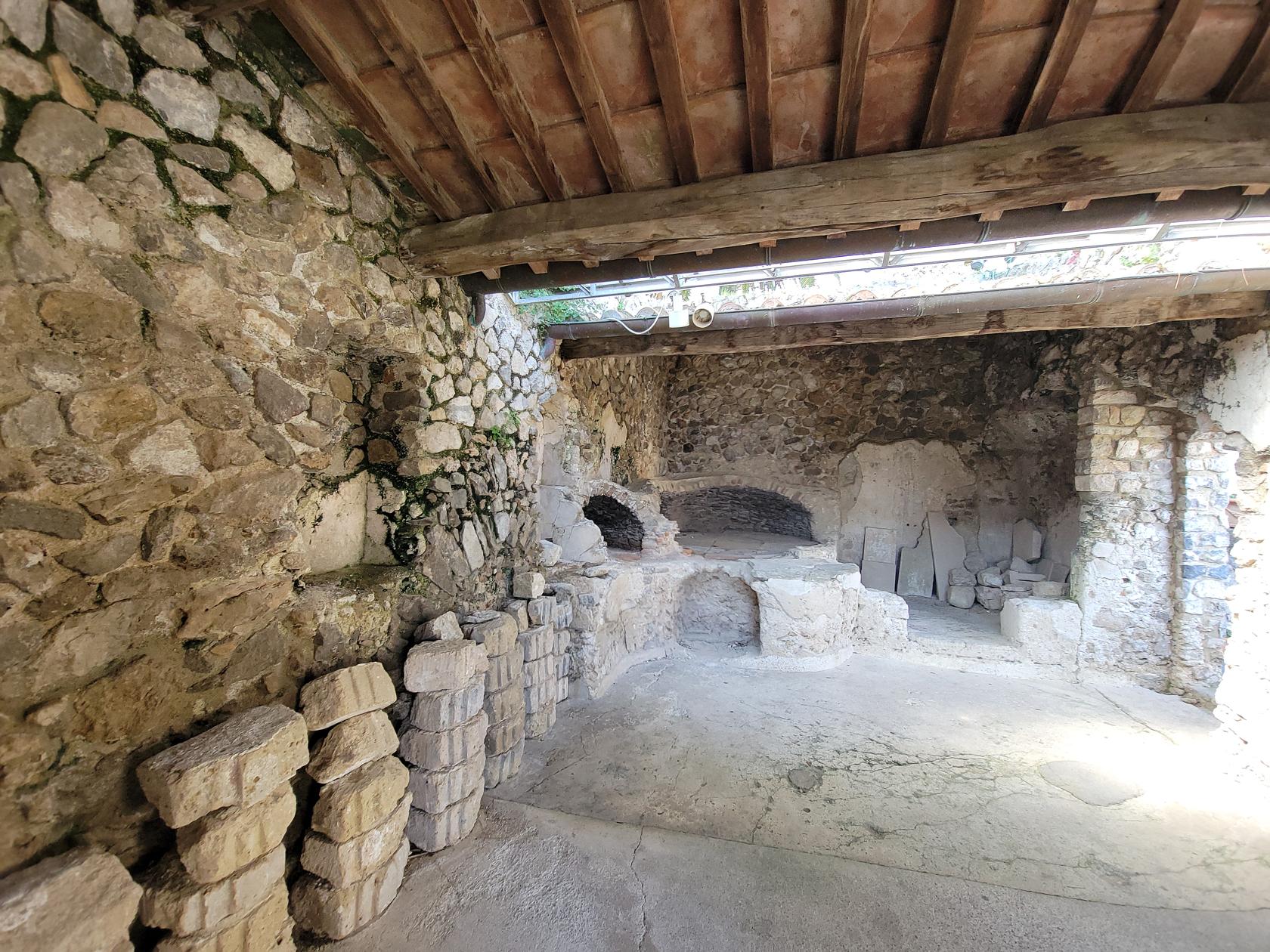
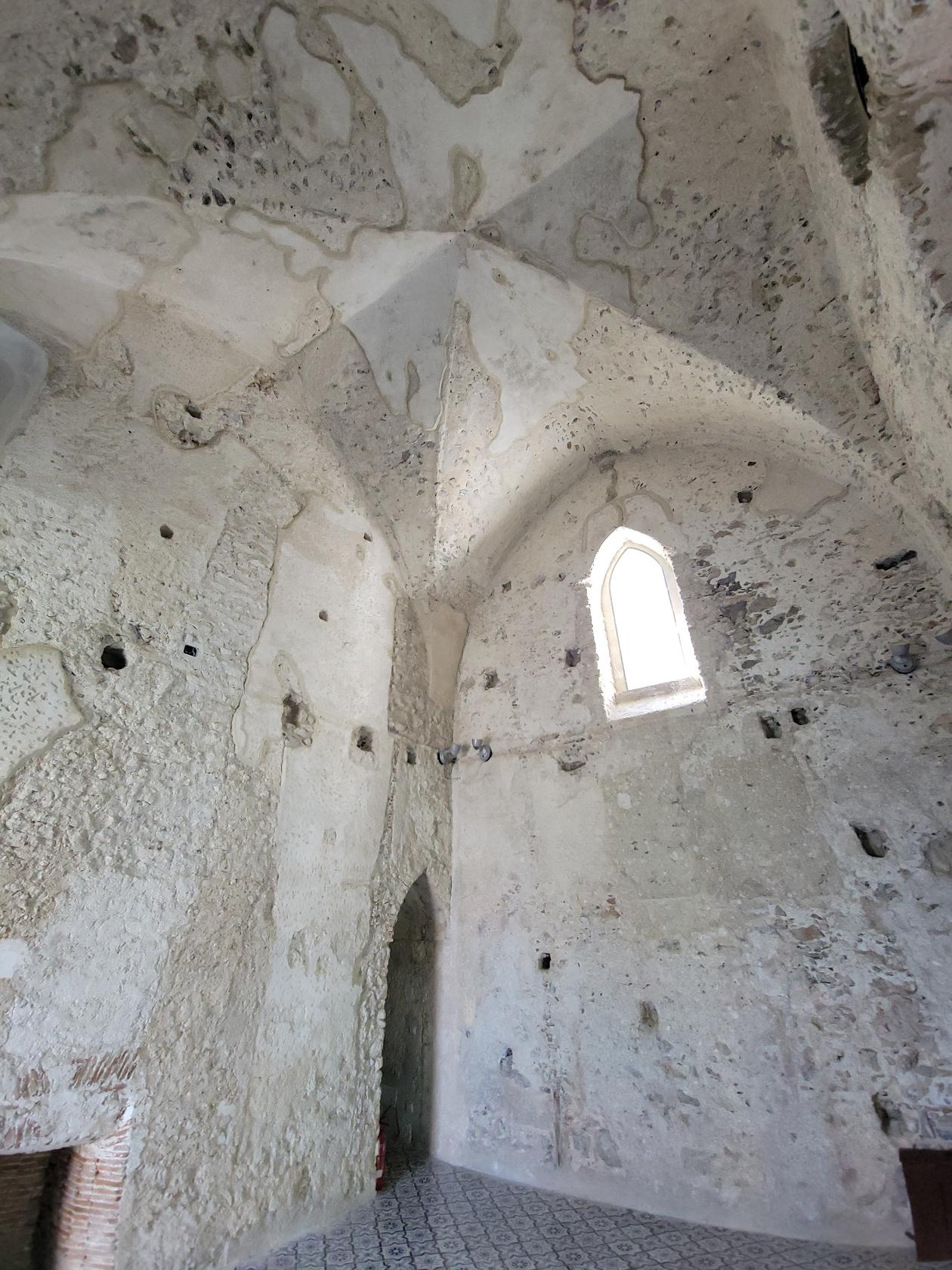
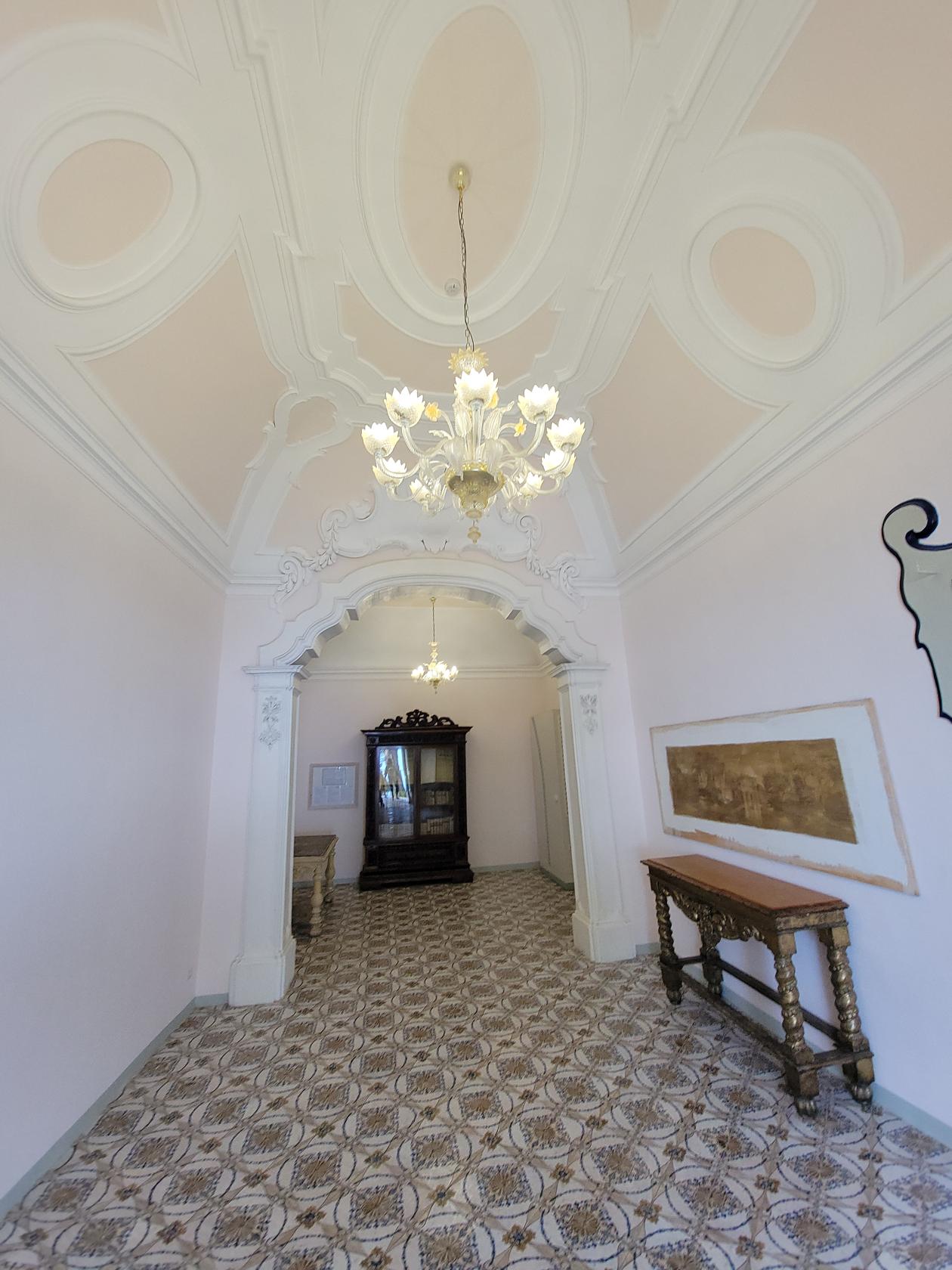
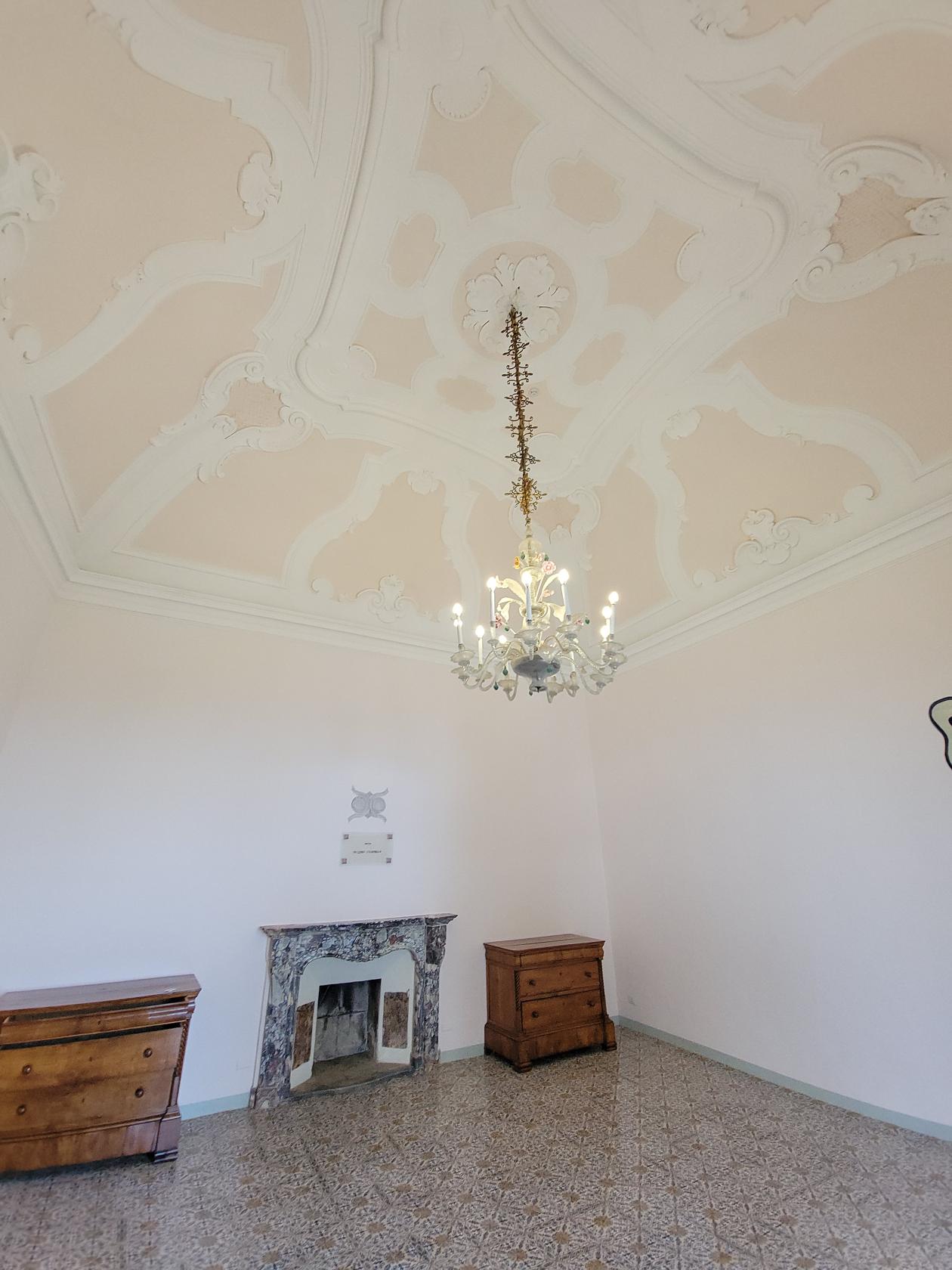
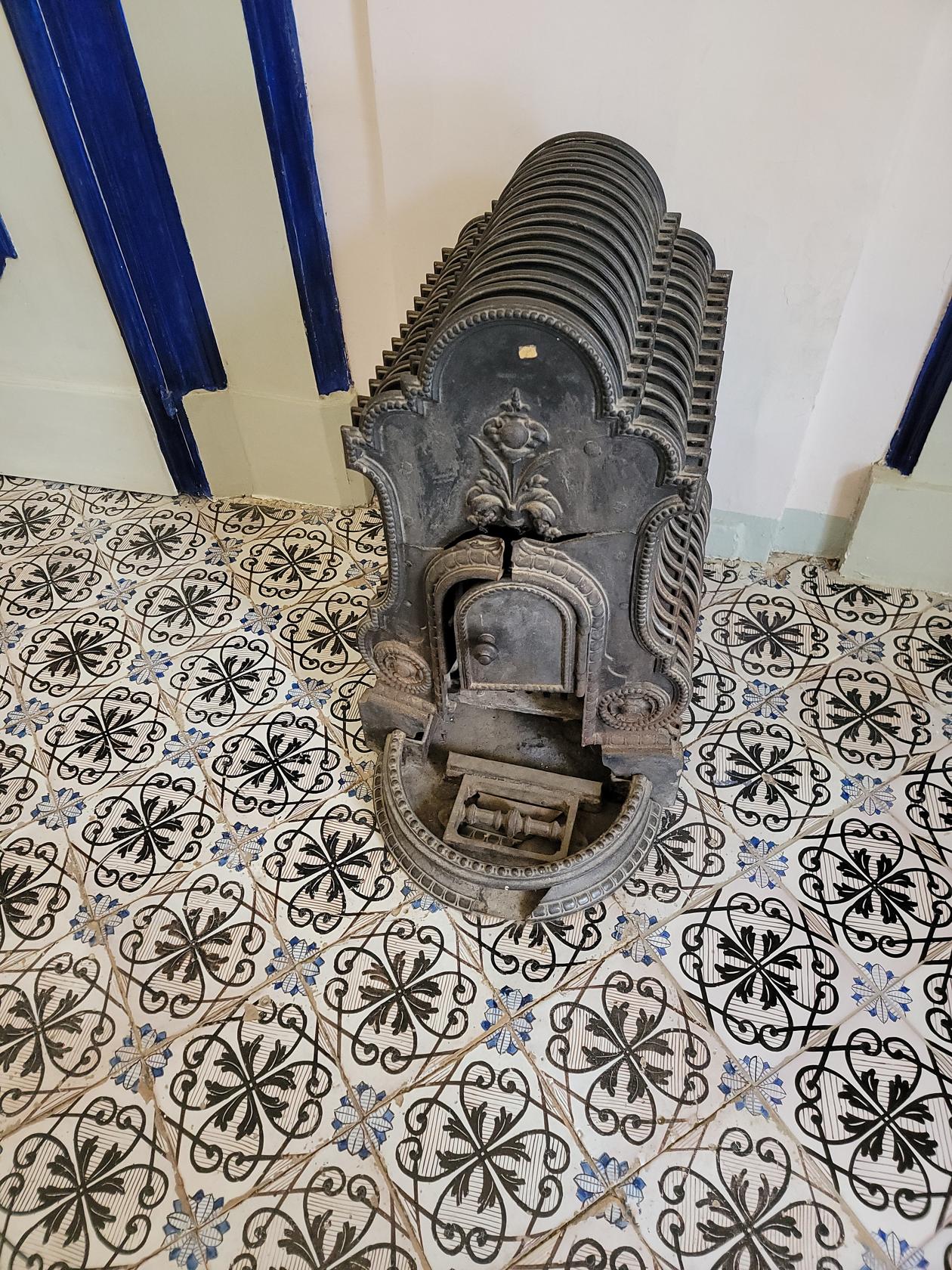
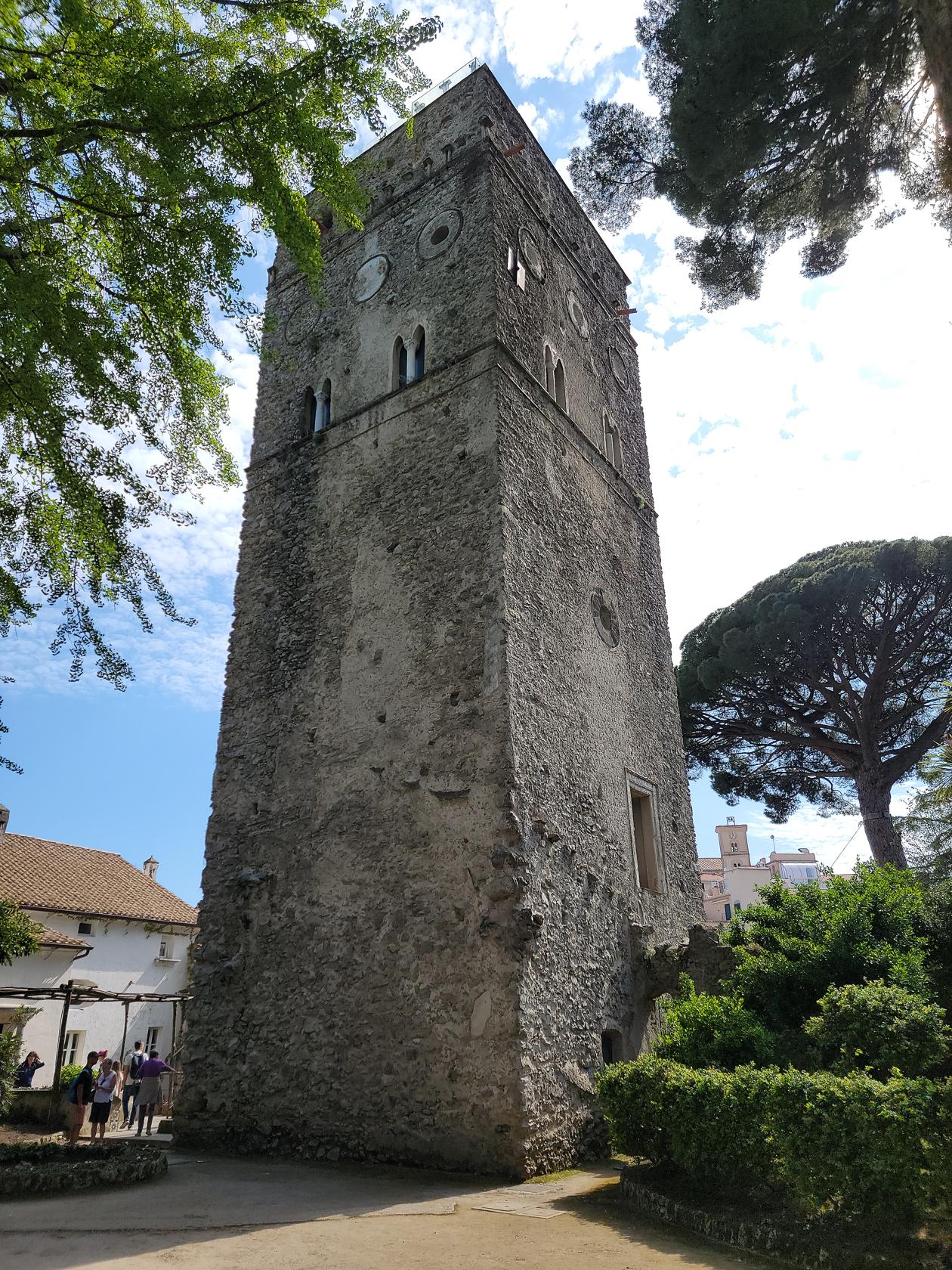
The villa is rather simple, but has some interesting items, like an old stove and a tower. It is kept in relatively fine shape and is a pleasure to walk through.

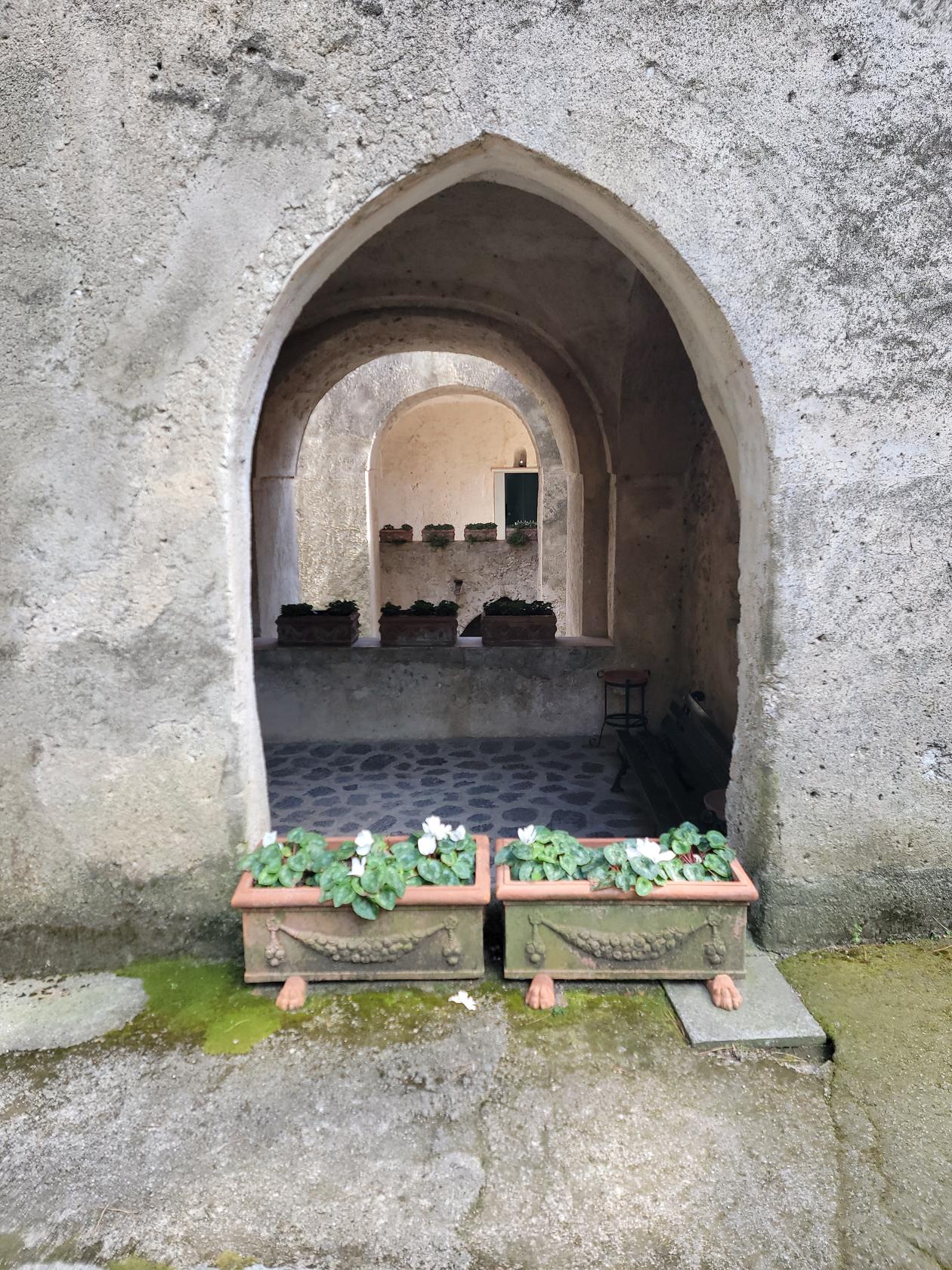
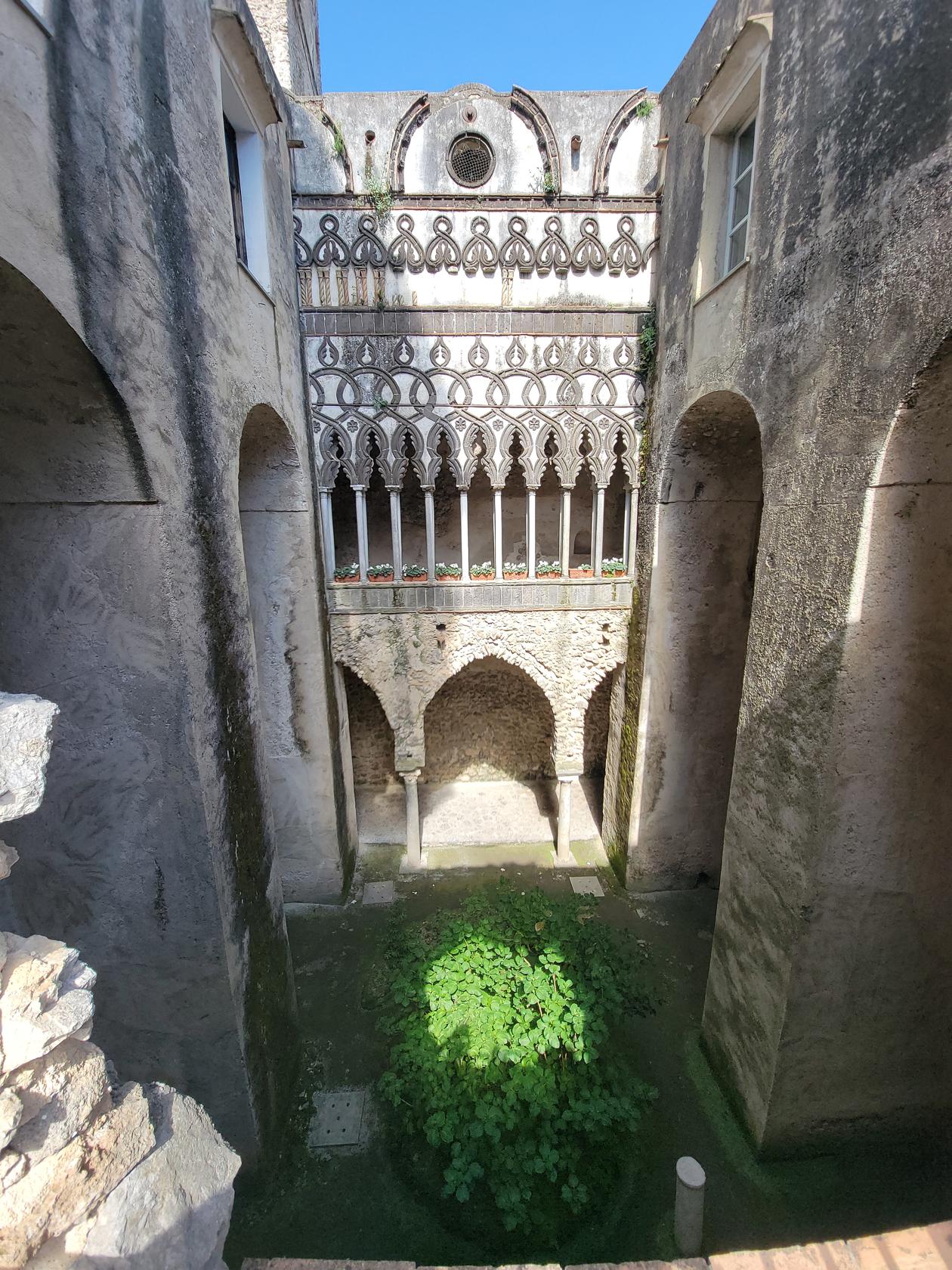
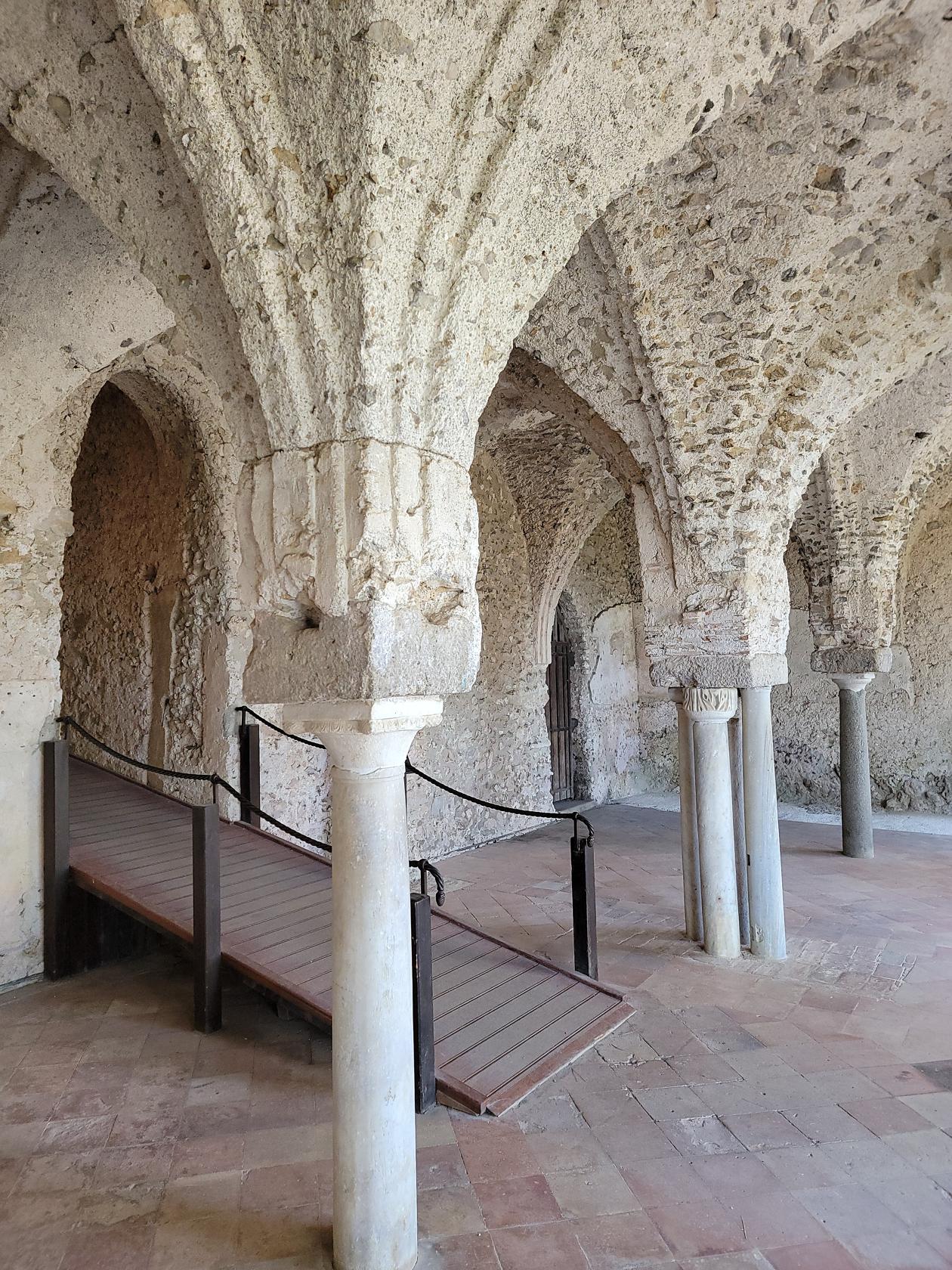
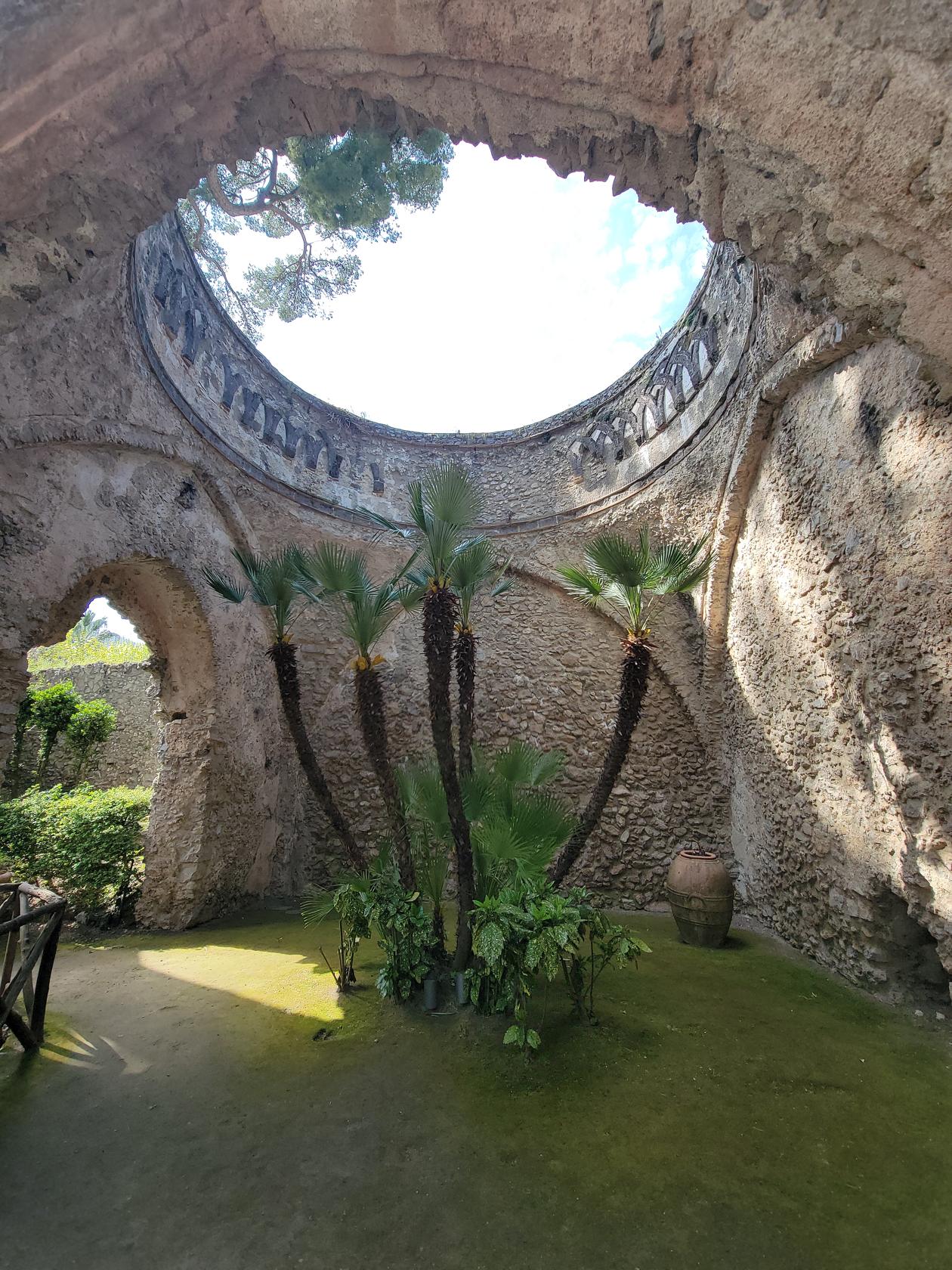
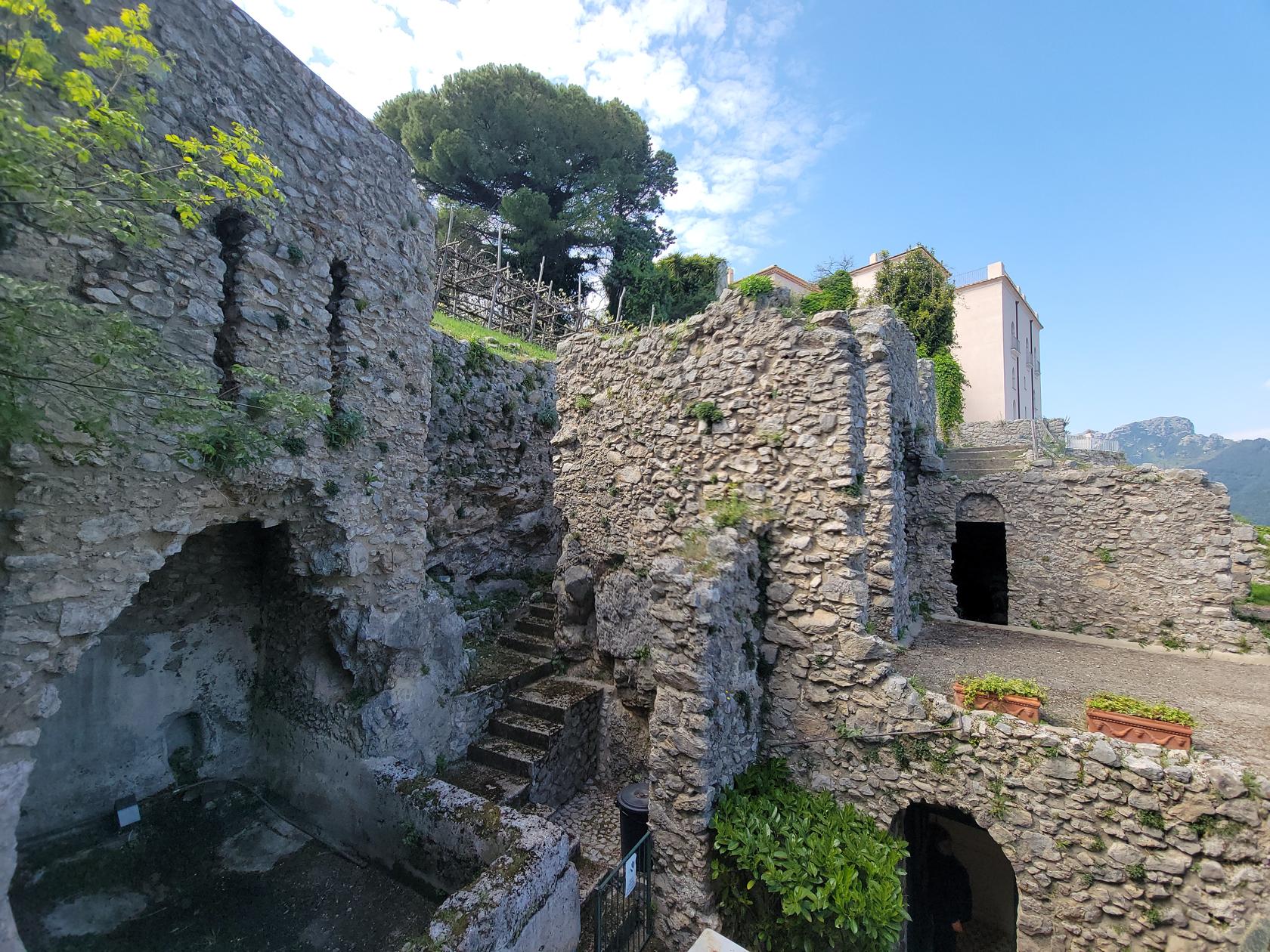
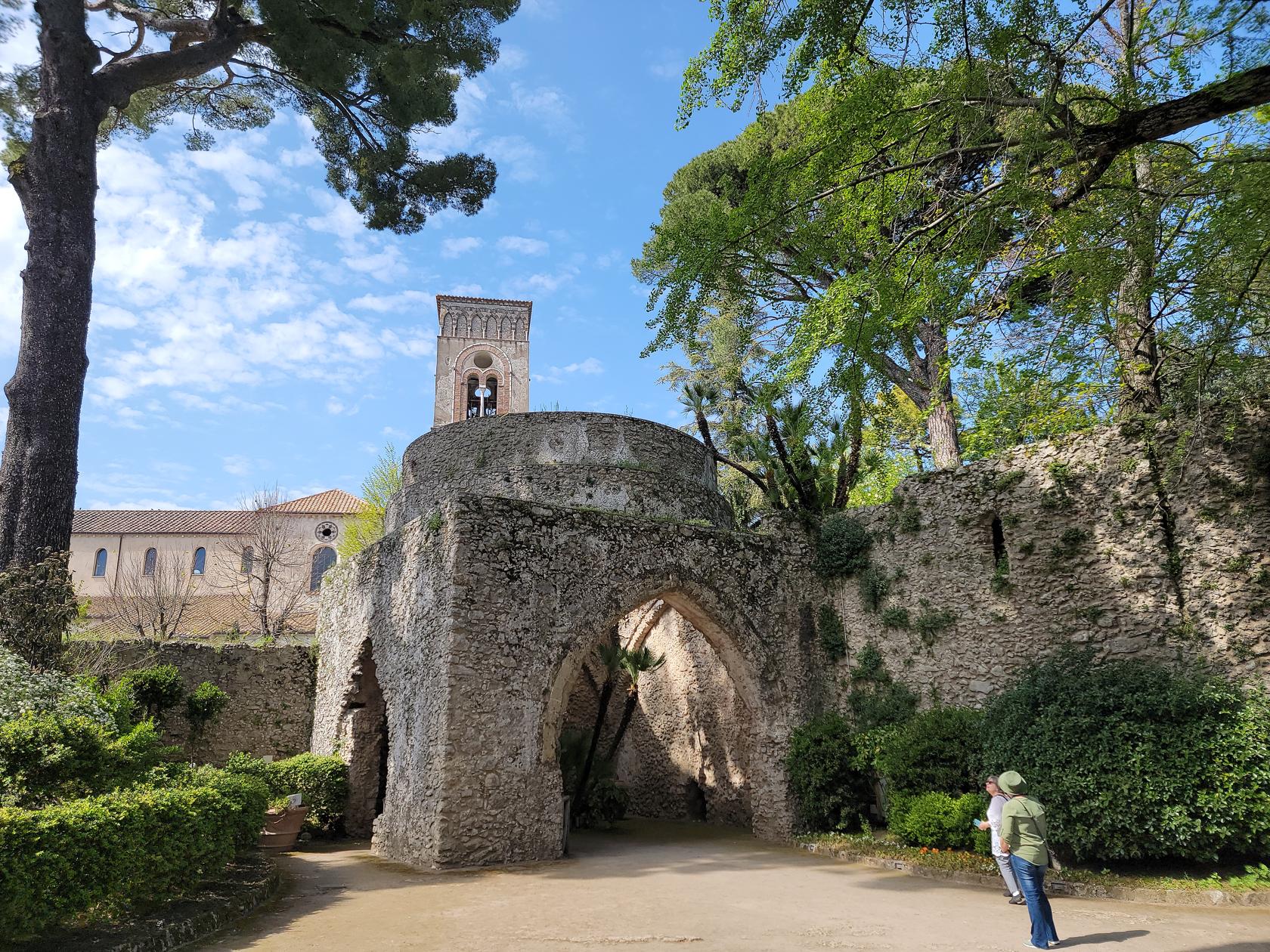
Some of the external structures include a tower, a vaulted building that appears to have been an old chapel and some other old structures near the gardens.

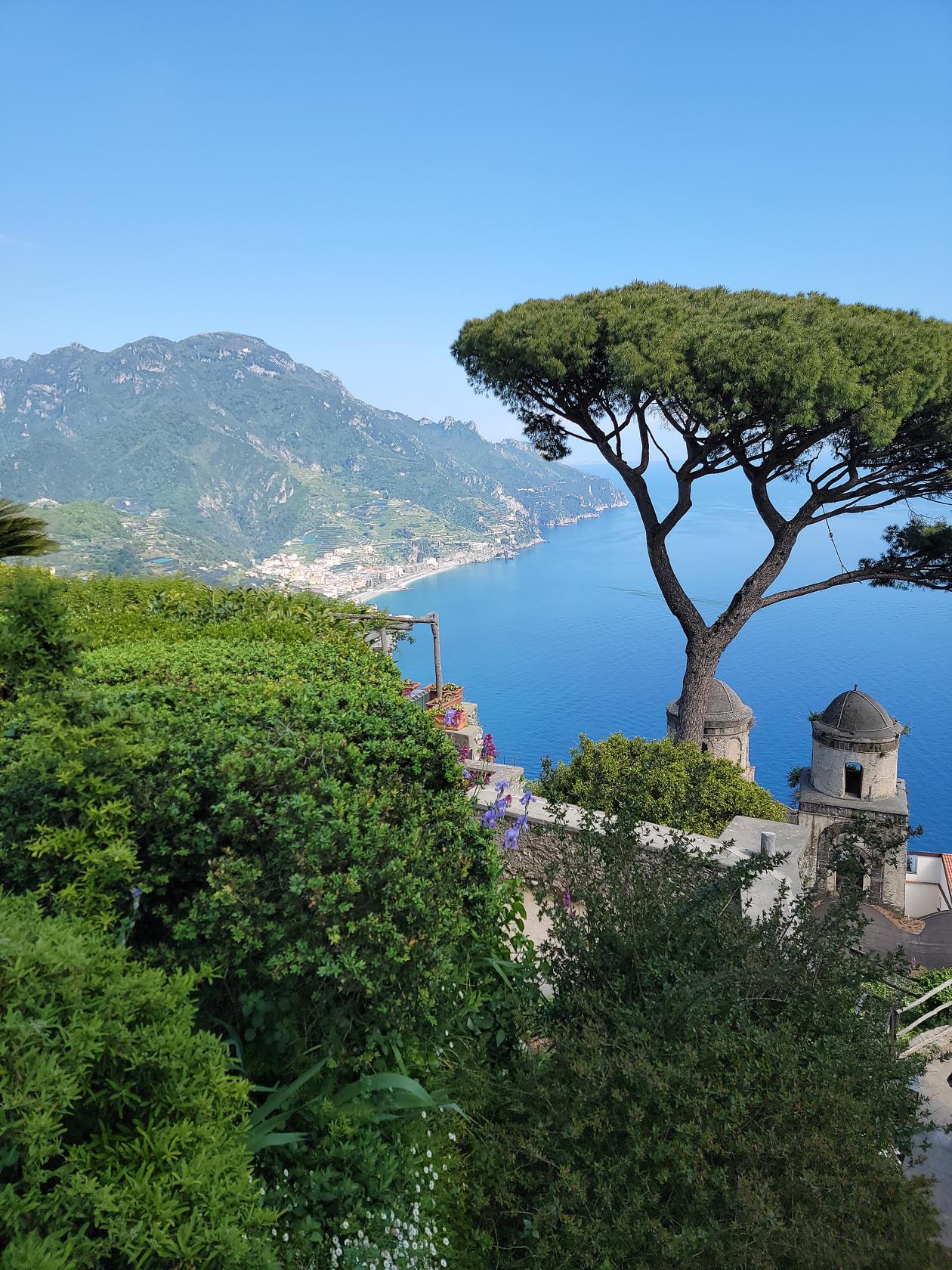
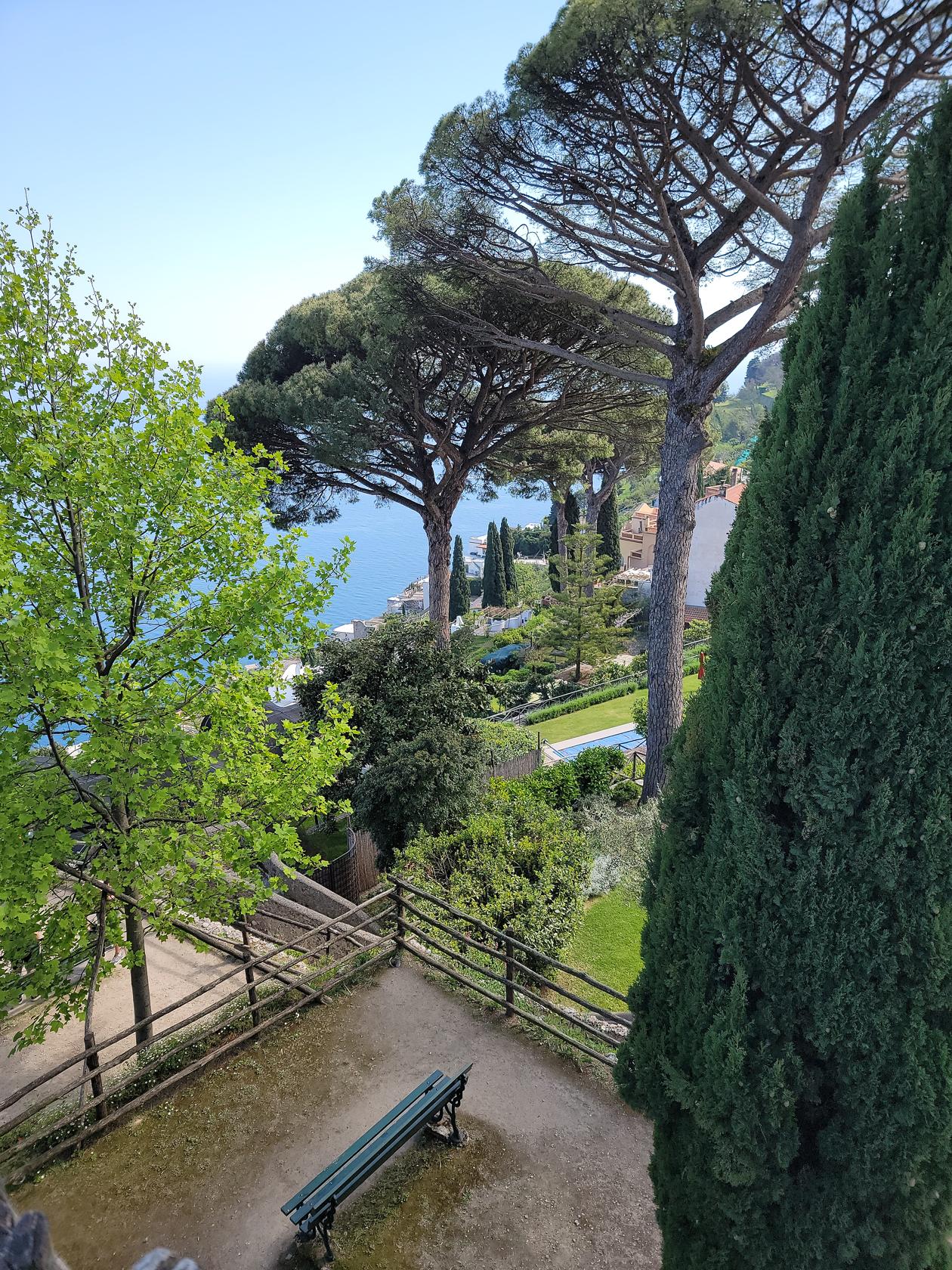
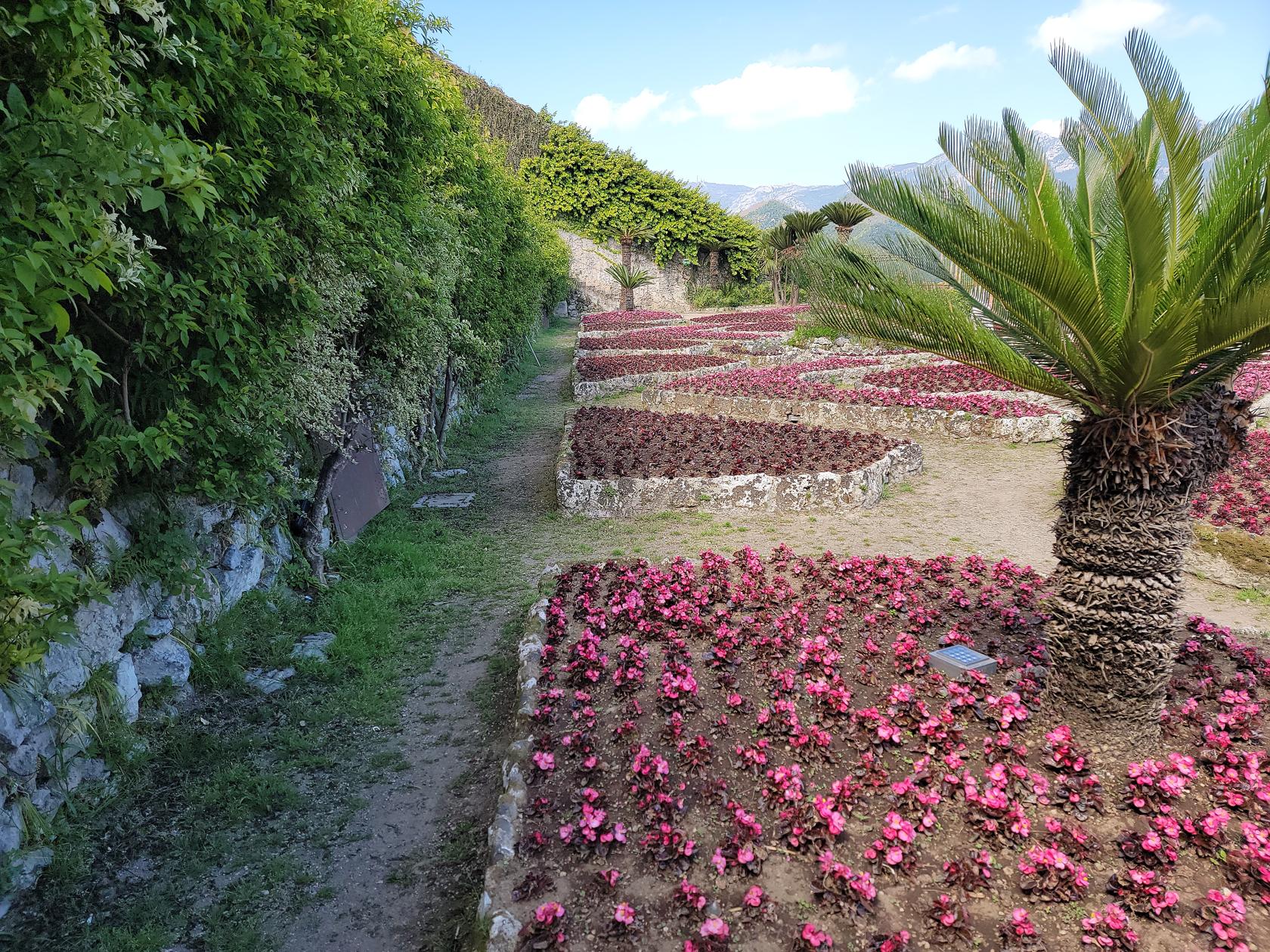
It has a magnificent garden with a beautiful view of the sea. They actually hold concerts from the garden, by extending a stage over the side of the hill, providing a wonderful backdrop for music and other performances.

Restaurants

As part of our first day at the coast, we stopped in Amalfi for lunch some time after one in the afternoon.

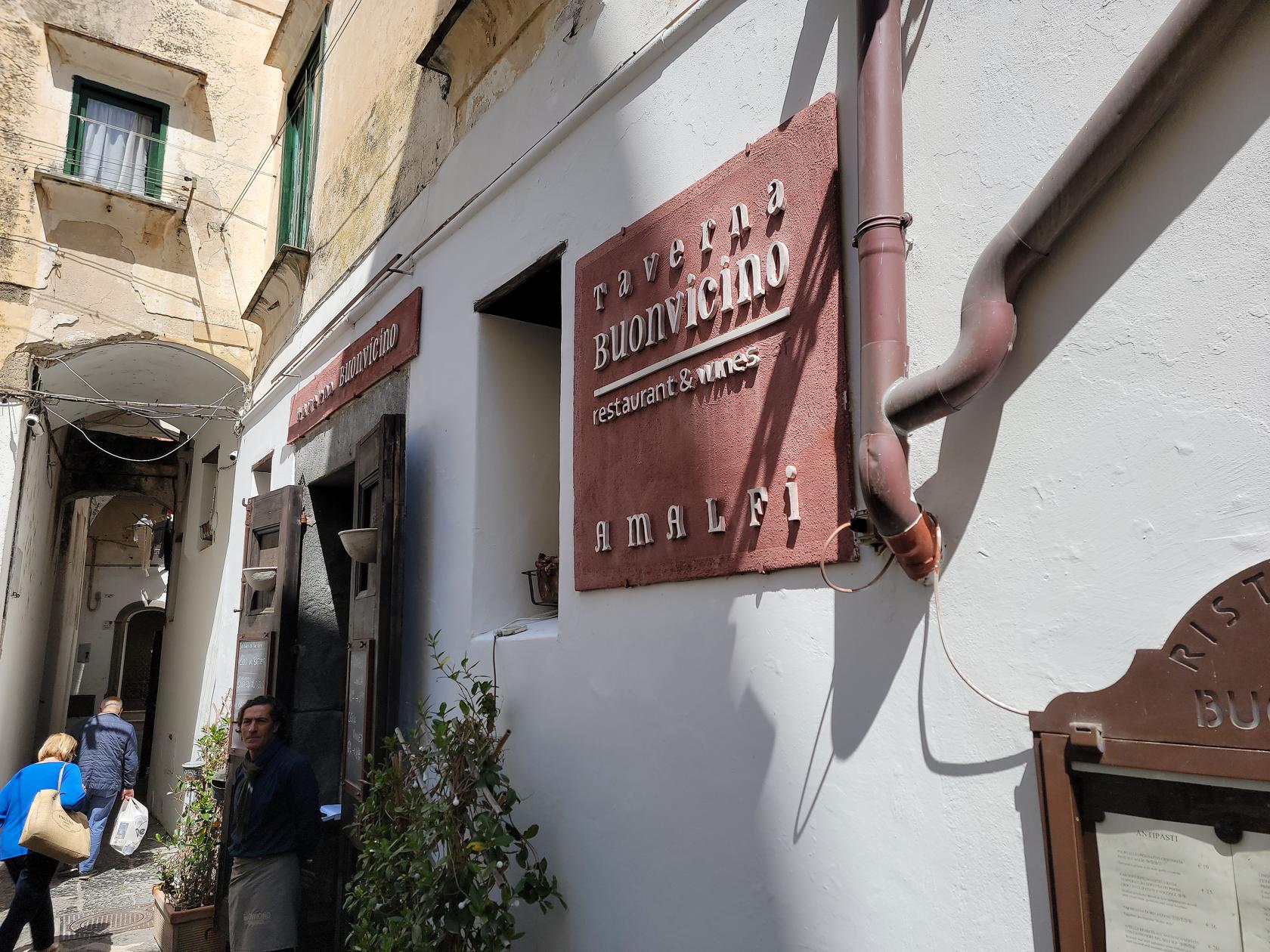
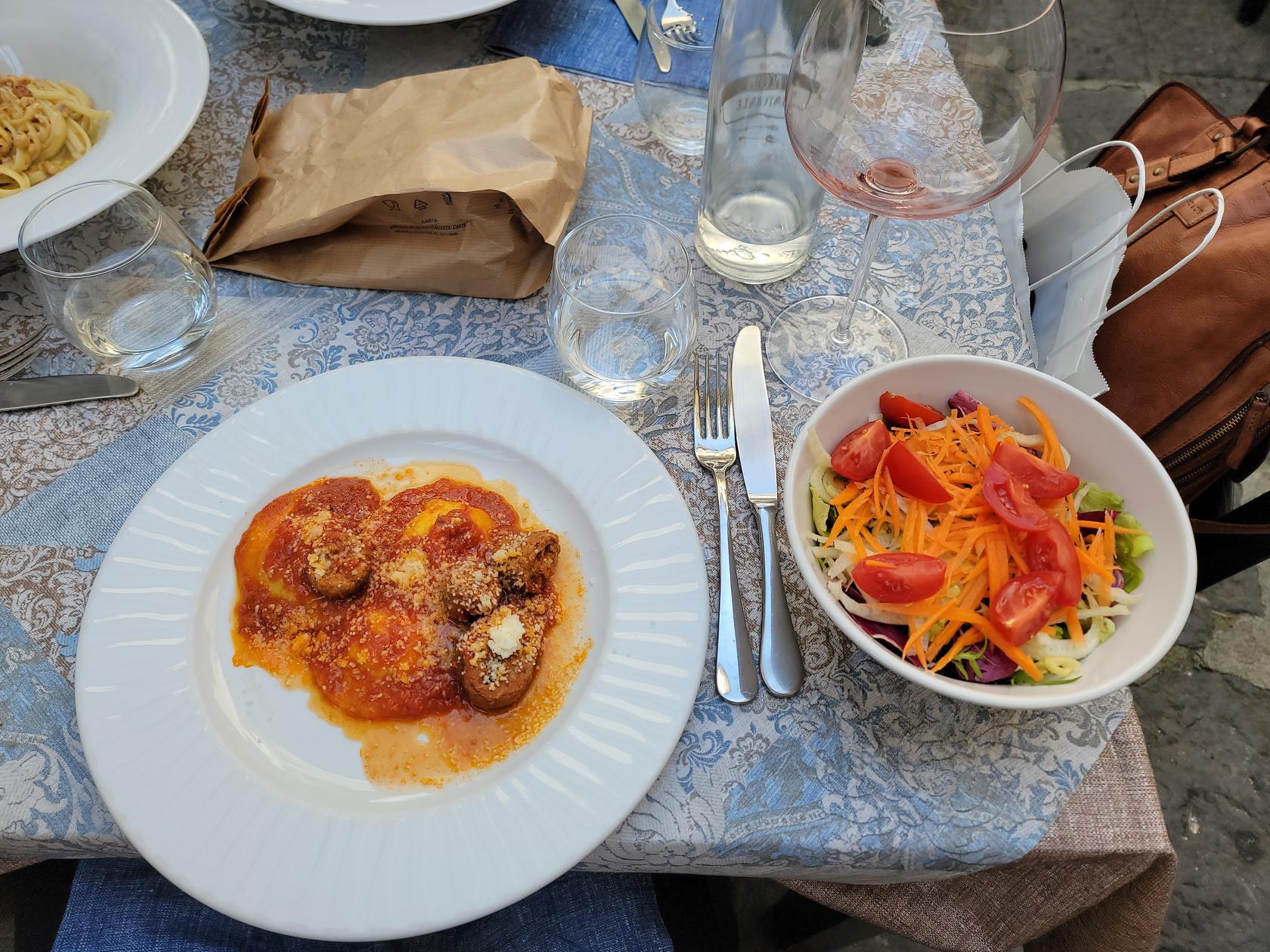
Taverna Buonvicino

A very nice restaurant with a beautiful terrace outside, which is off the beaten path, so no worries about hordes of tourist bothering you while eating.

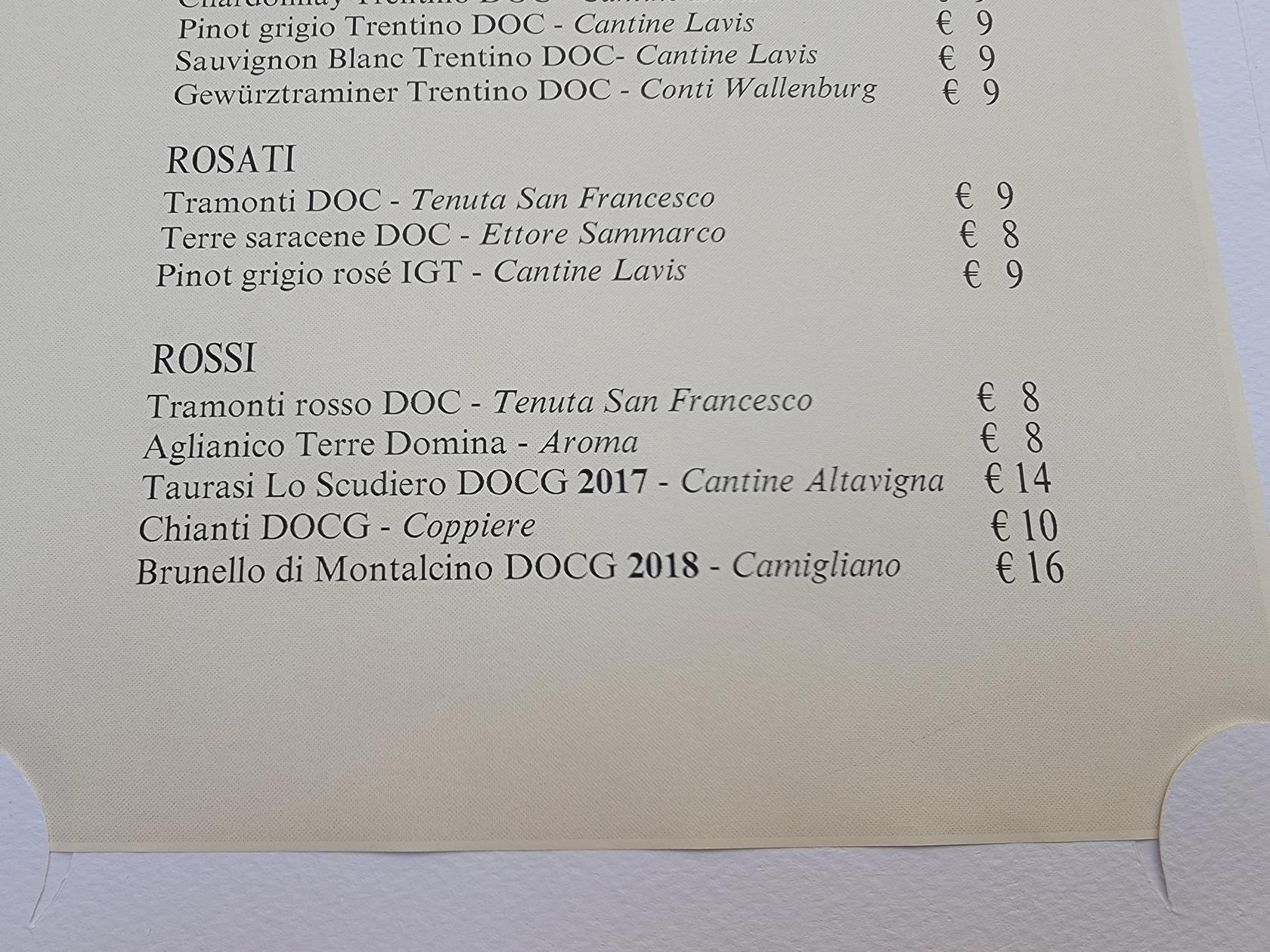
They also have a very good wine list which is stocked with local favorites. I can commend one varietal, Taurasi Lo Scudiero (DOCG), which was exceptionally good.

References

References
1 this town also has coastal parking, but here it works because it is part of a boardwalk and beach complex.

Naples, Italy – Our Brief Return

Recently we made a decision to return to Naples, if only to use it as a launch point to visit the Amalfi Coast. It was a brief return to enjoy the food and some of the sites we fell in love with four years ago.

Naples

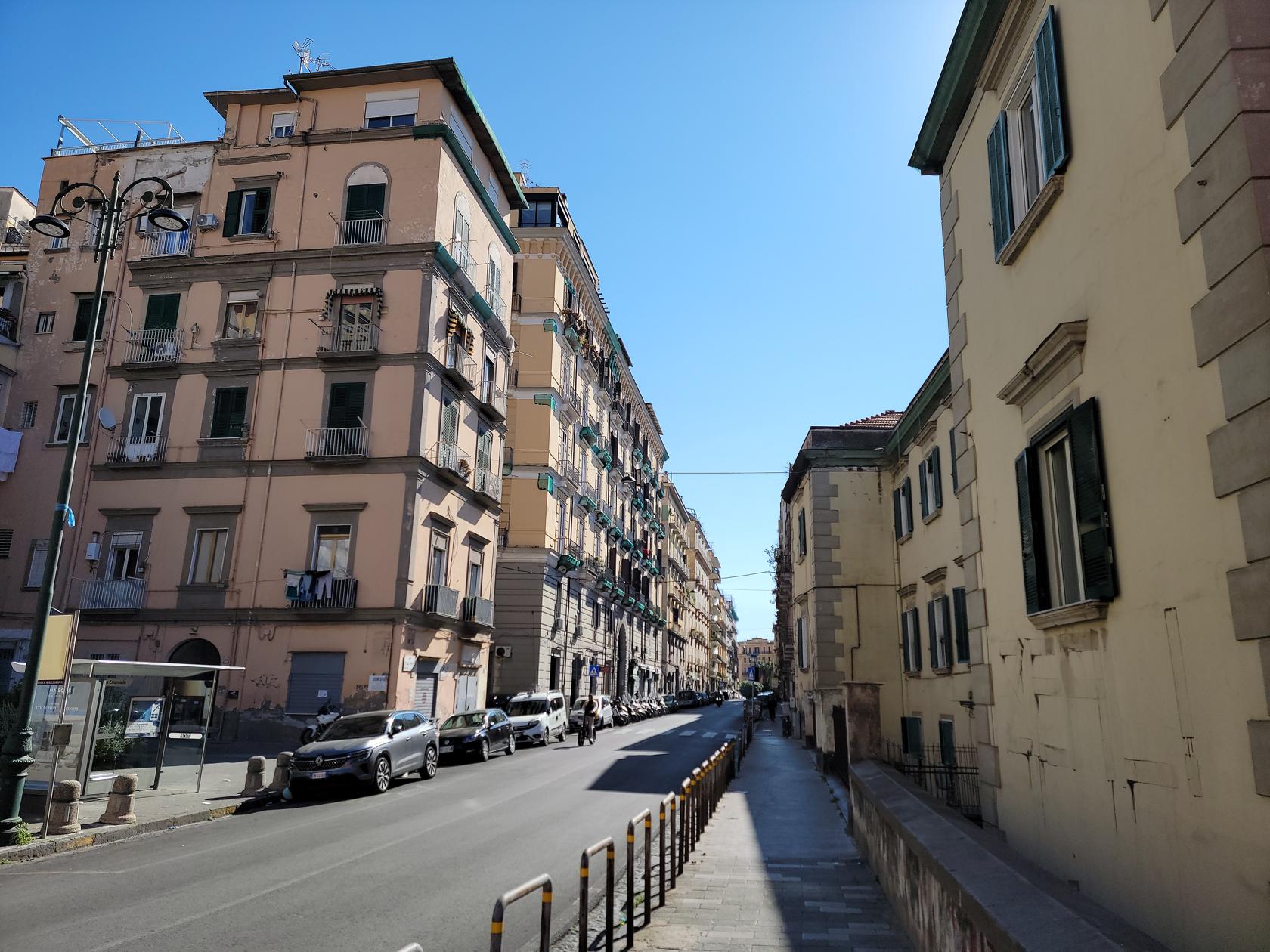
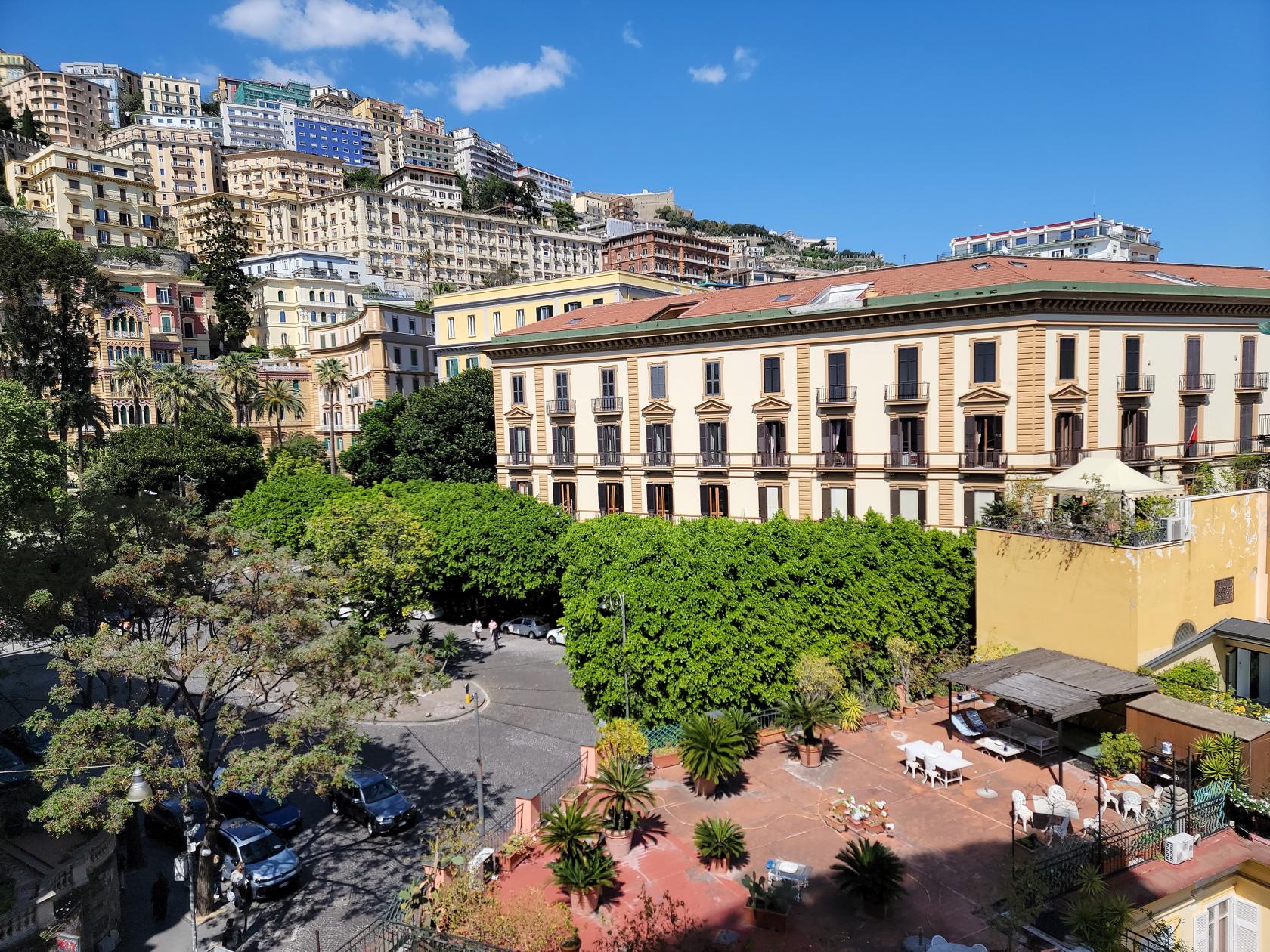
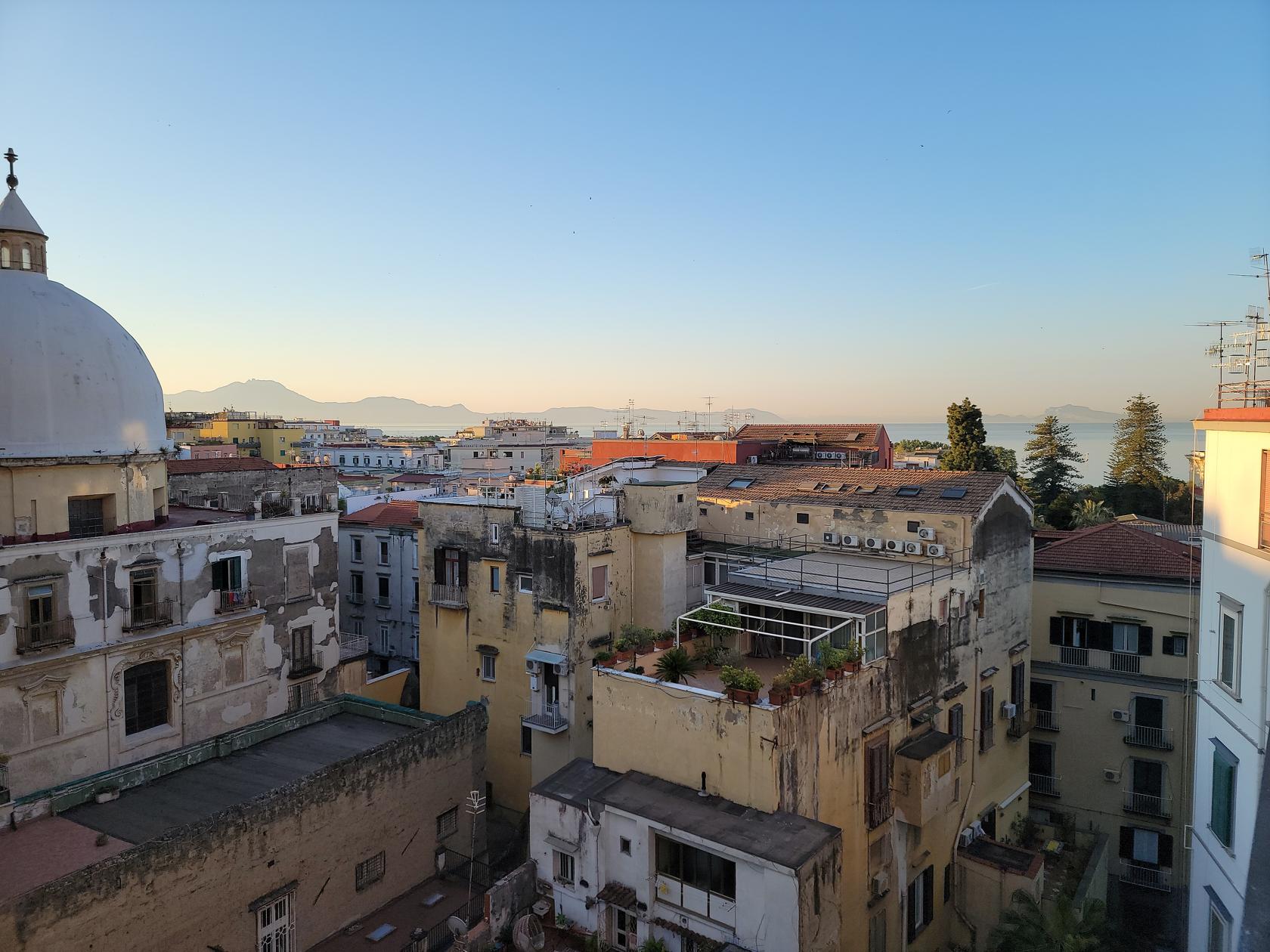
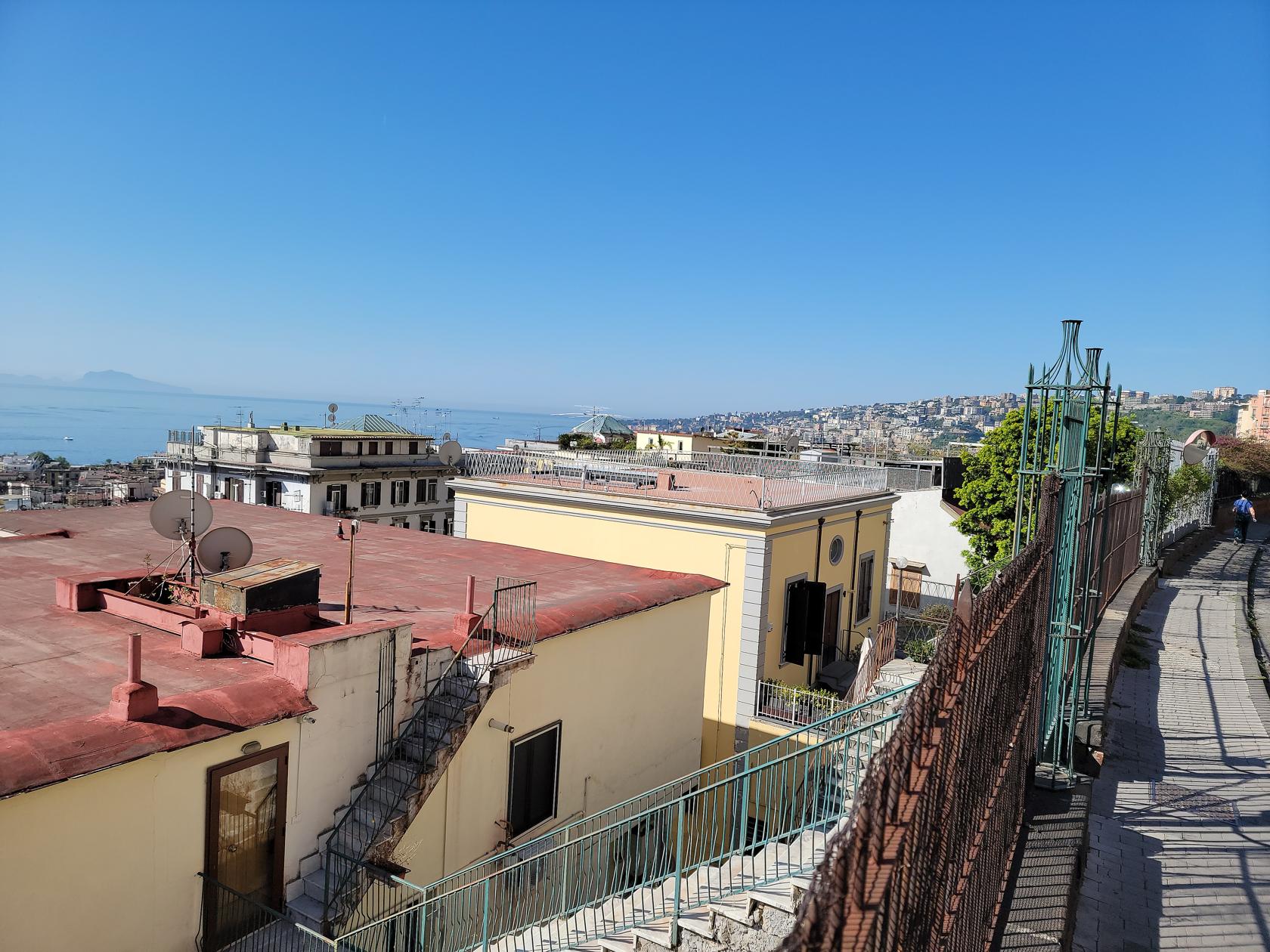
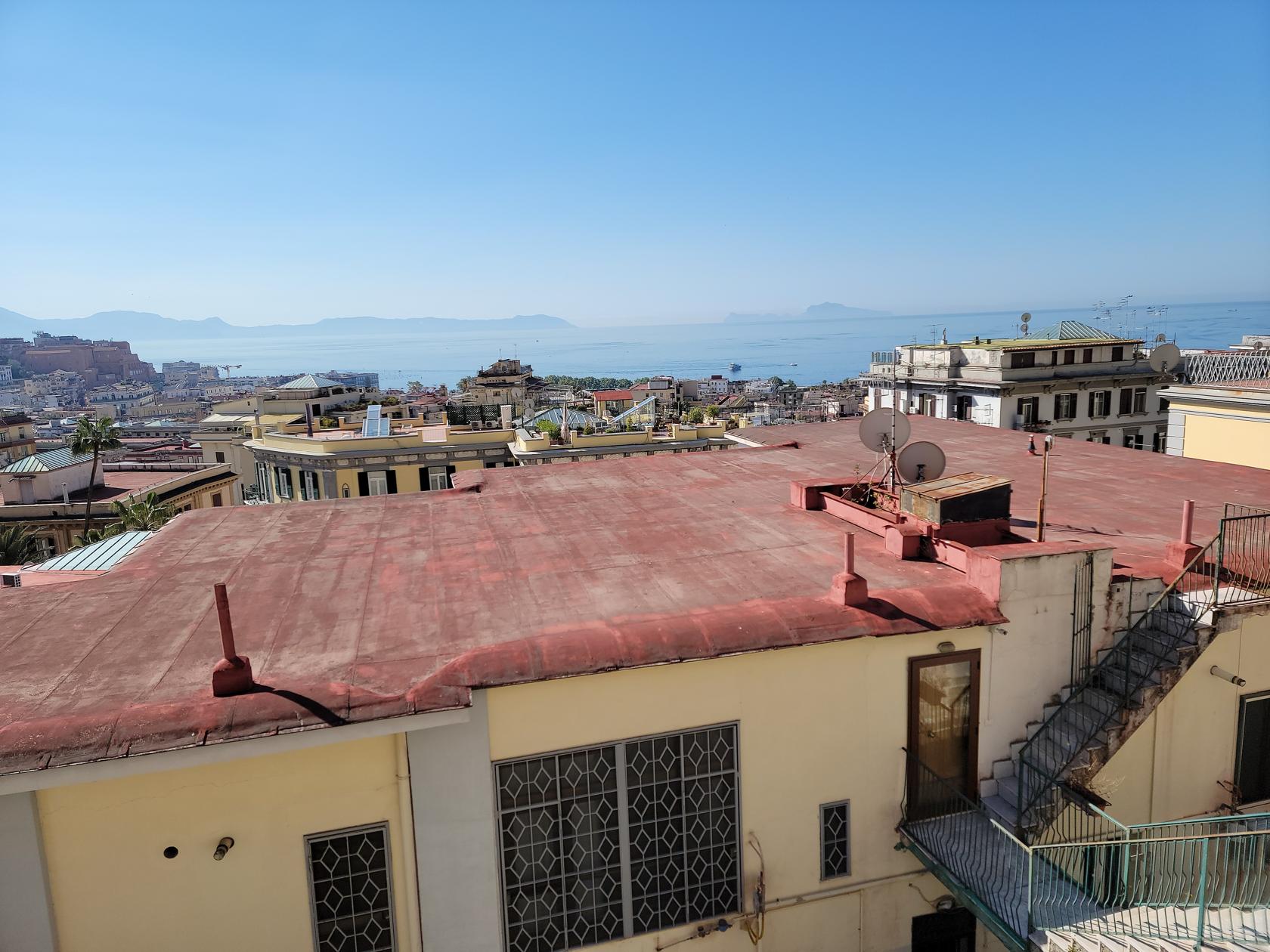
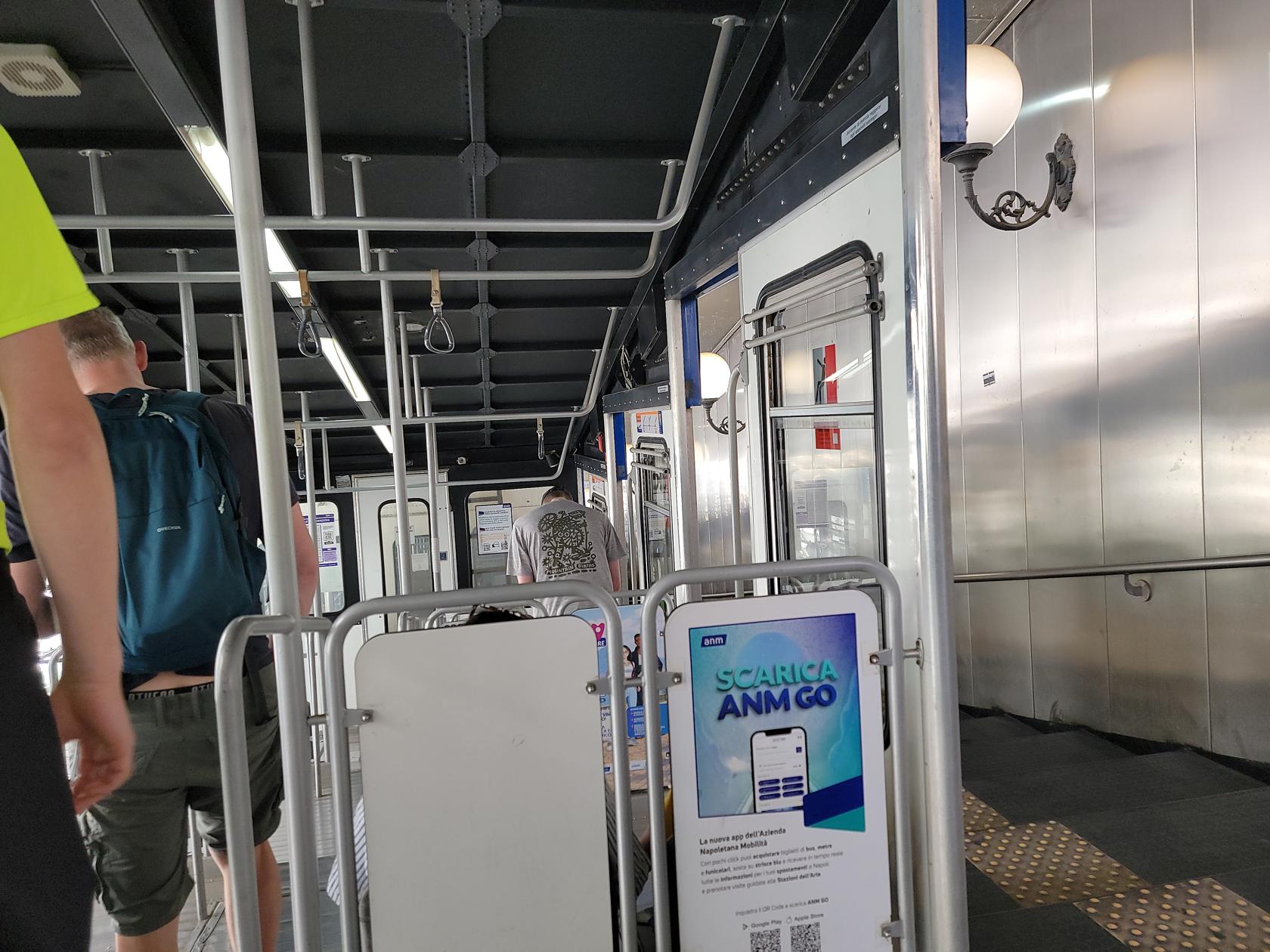
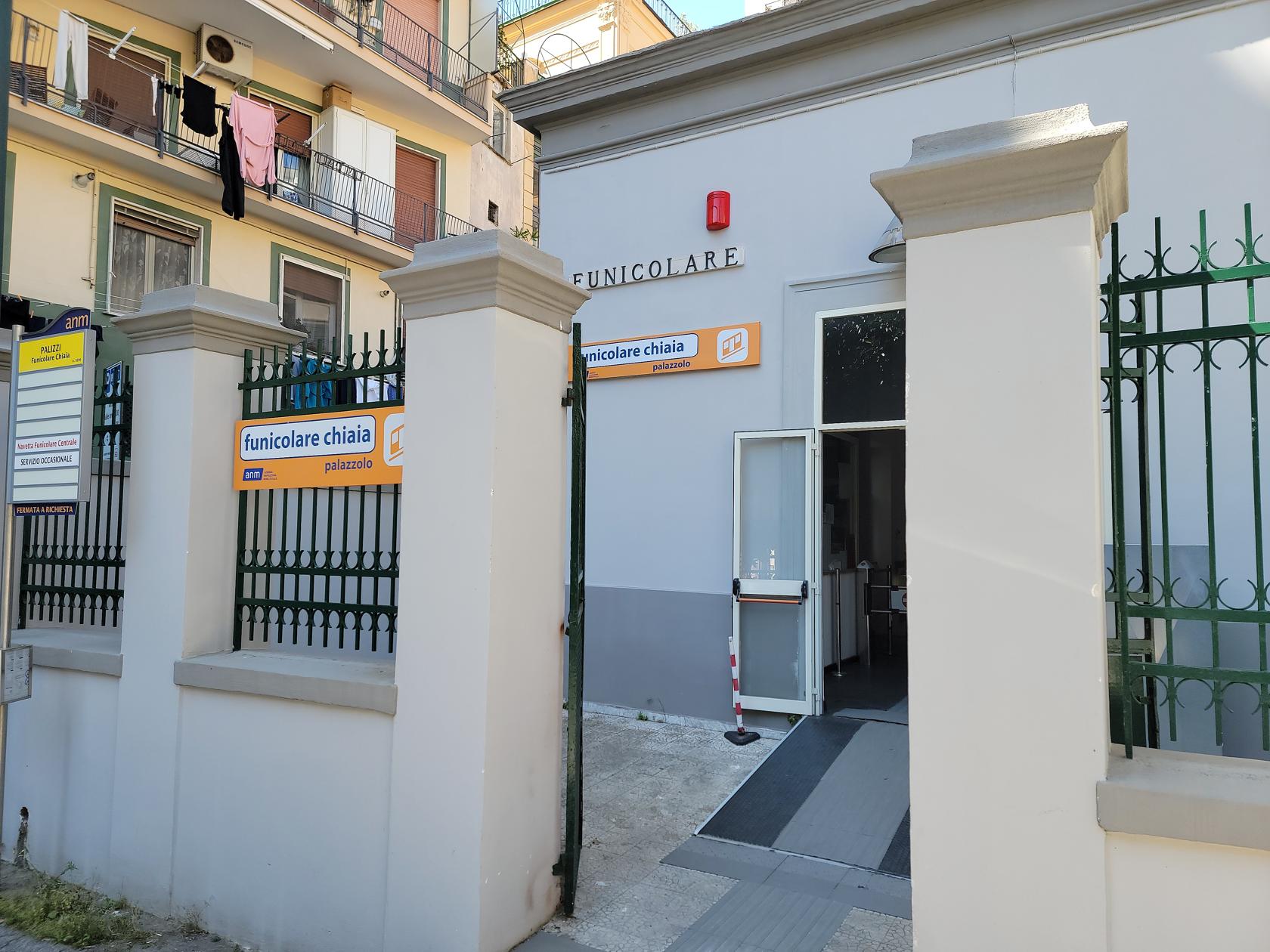
When we travel to Naples, we usually stay in Chiaia. It is an upscale and slightly newer part of Naples that offers a bit more quiet and relief from the tourist activity in the center. It also offers a furnicular to Vomero, which can be used to hop over to the Spanish Quarter, as well as great metro and regional train service.

Getting There

We took the FrecciaRossa TrenItalia service from Torino’s Porta Nuova. It takes about six hours and makes about just as many stops along the way. We normally purchase or make sandwiches for such trips, so that we may enjoy the trip without getting overly hungry.

Hotel Pinto Storey

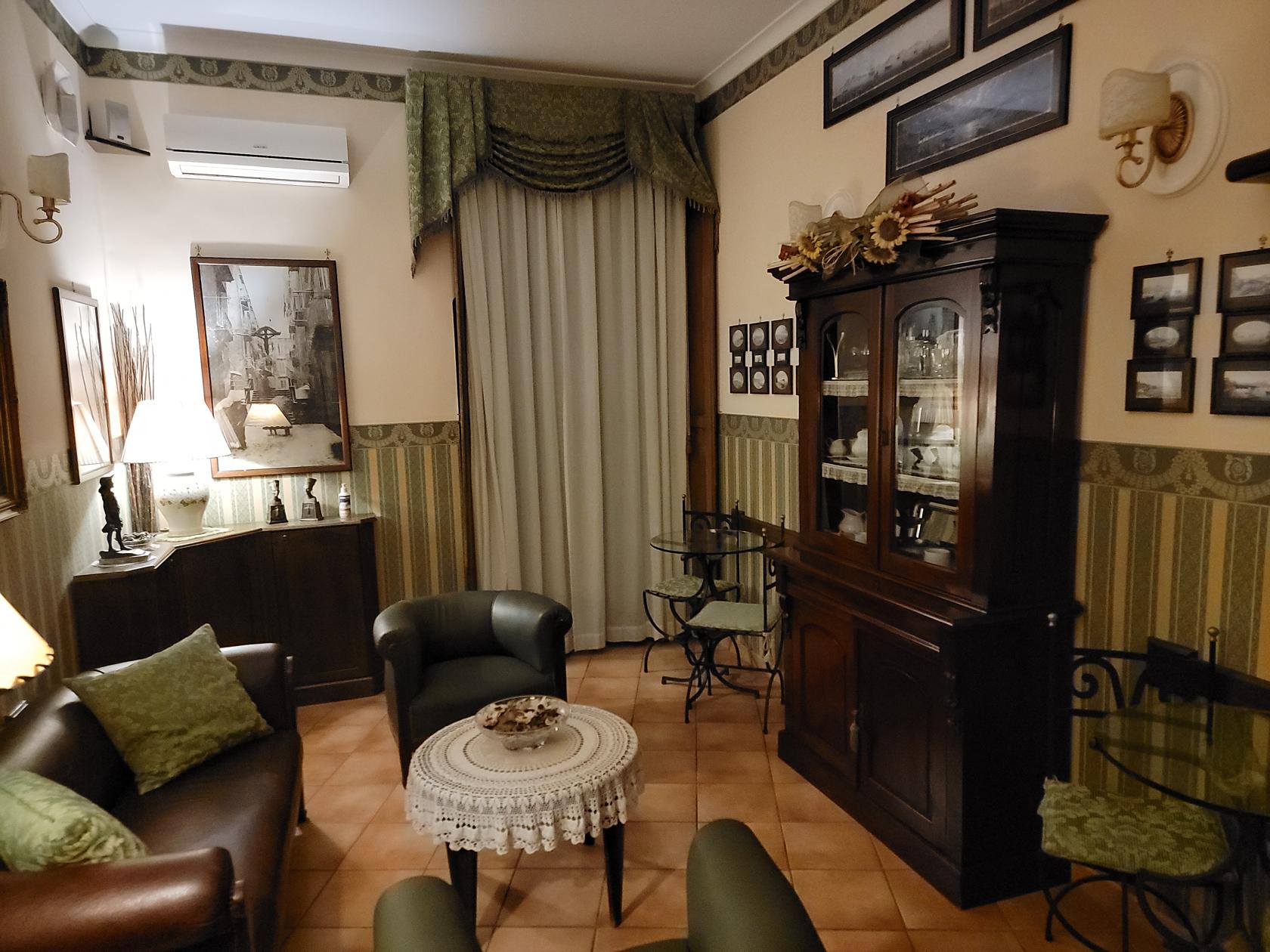
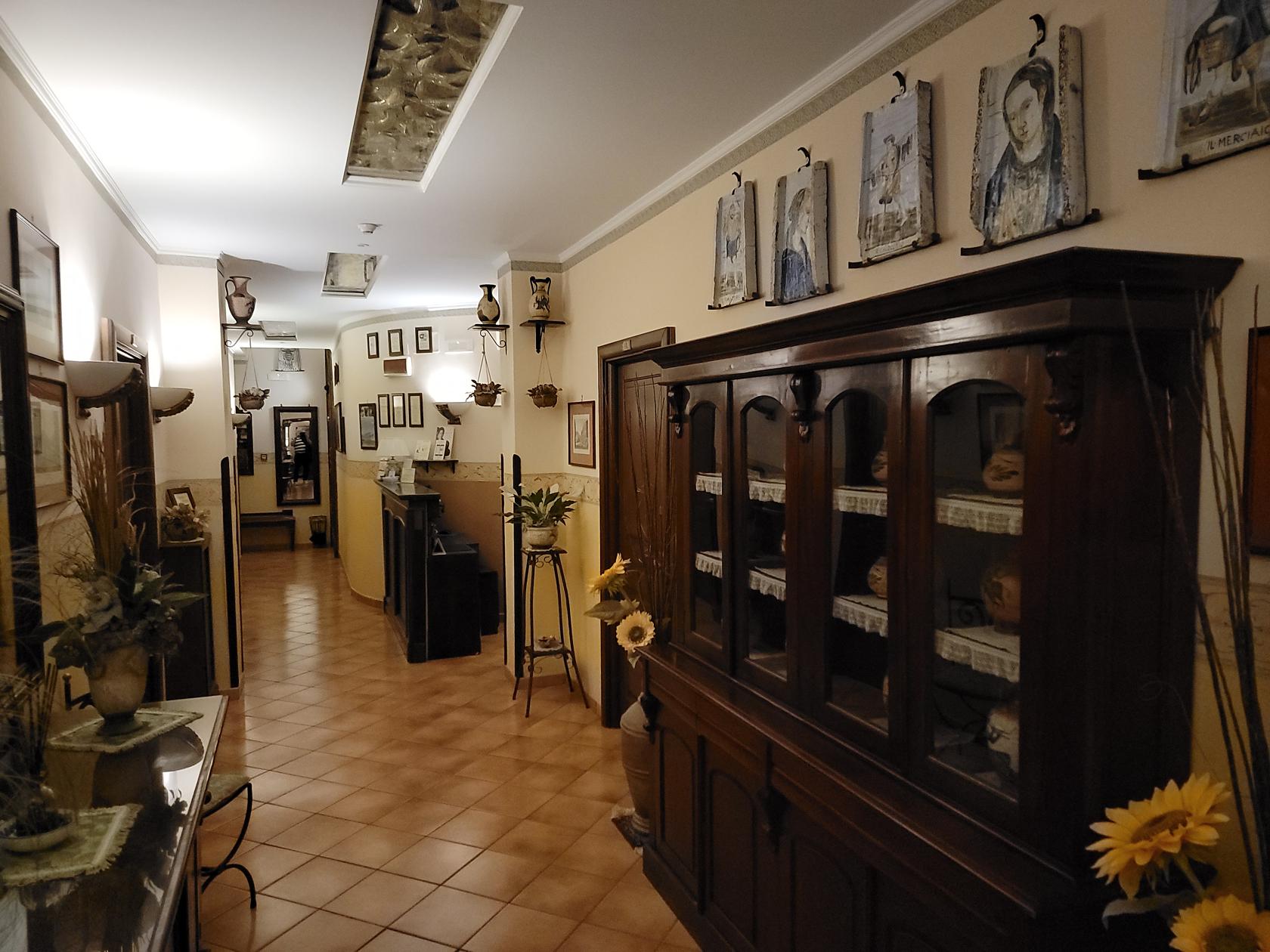
Again, we booked the Pinto Storey hotel in Chiaia. A simple, quiet three star hotel occupying one floor by the Piazza Amadeo. It is a very convenient place to stay, because there is the metro and regional train stop in the Piazza, which gives you quick access to the entire city and beyond.

The Spanish Quarter

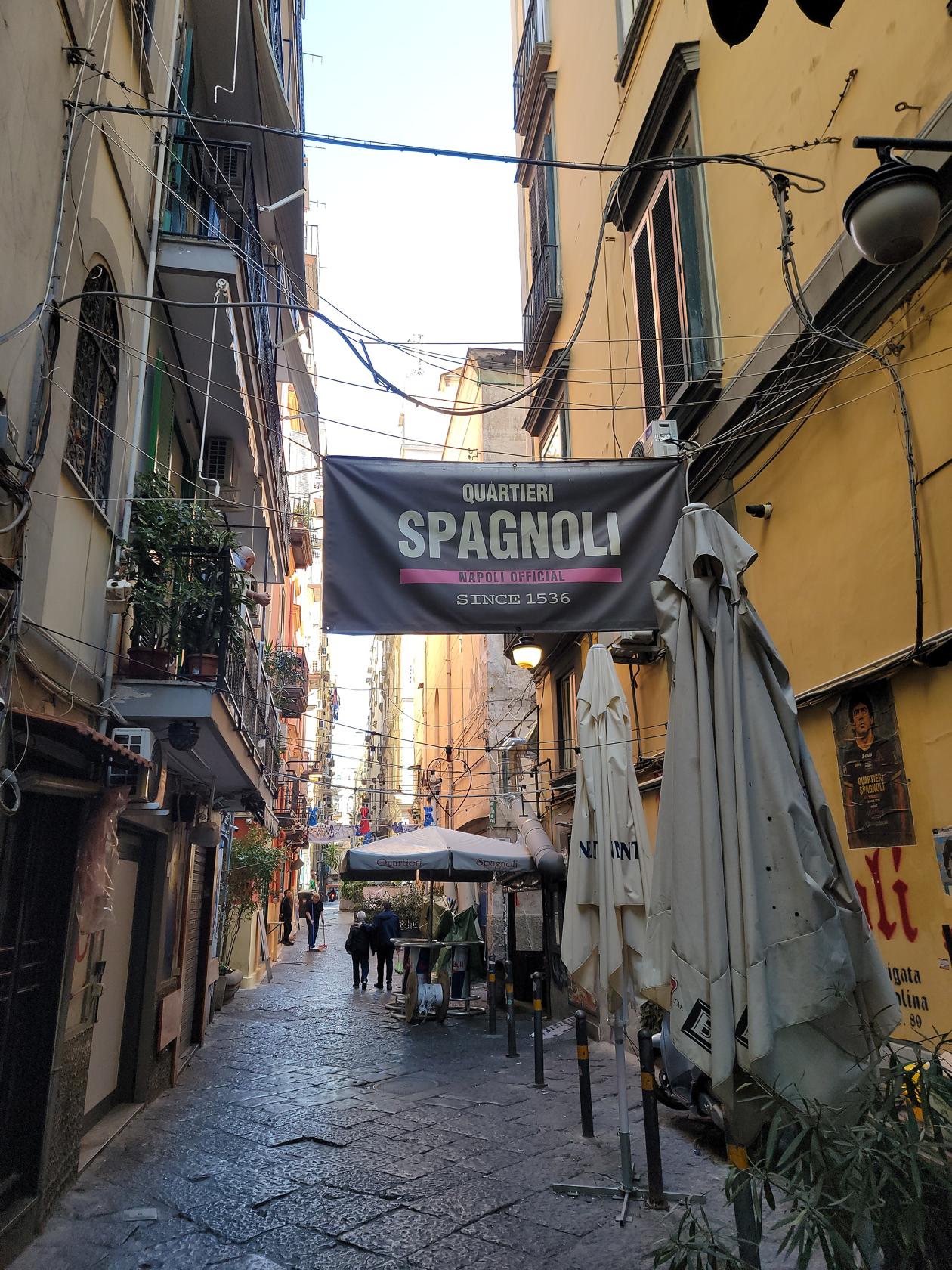
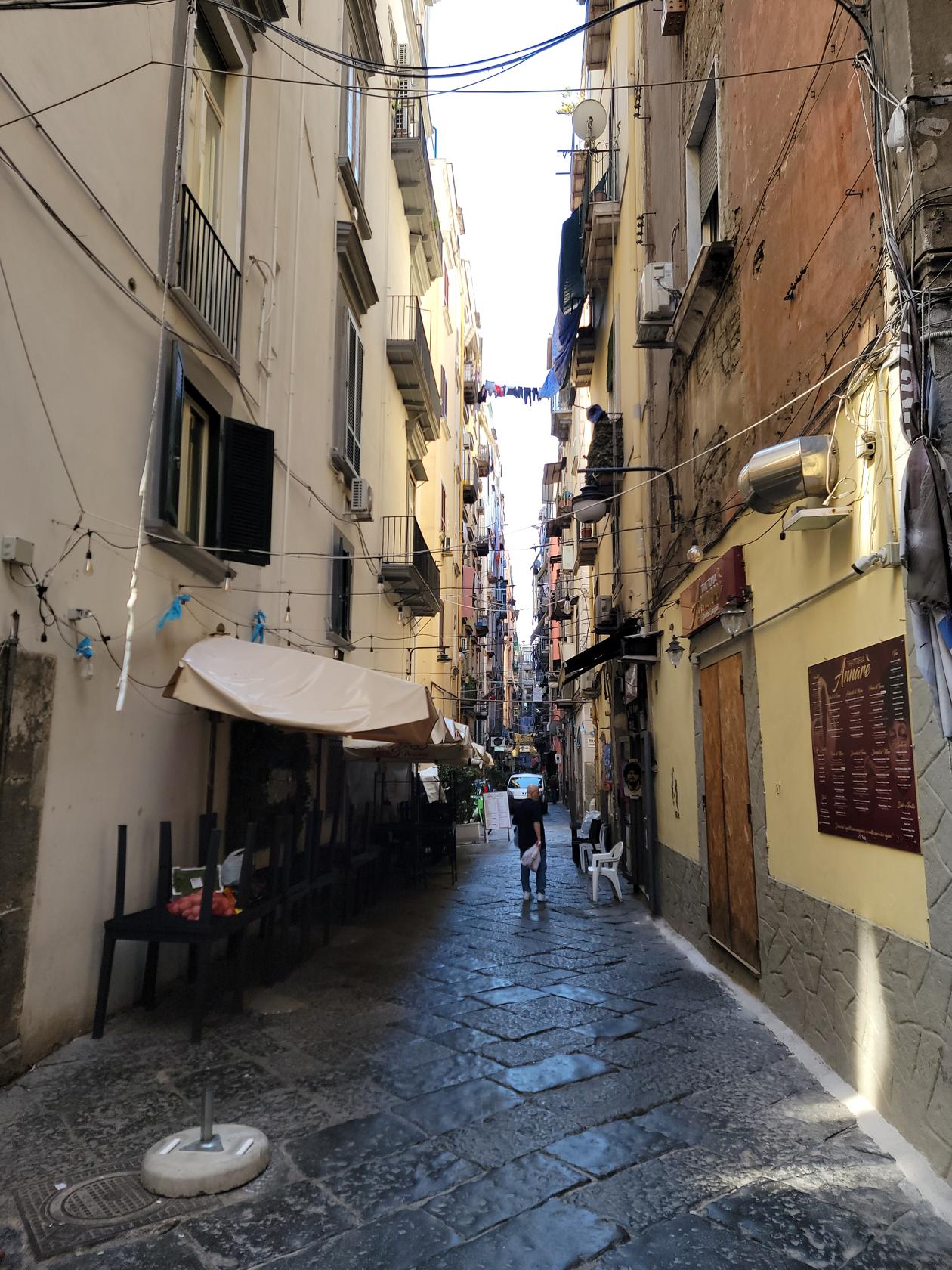
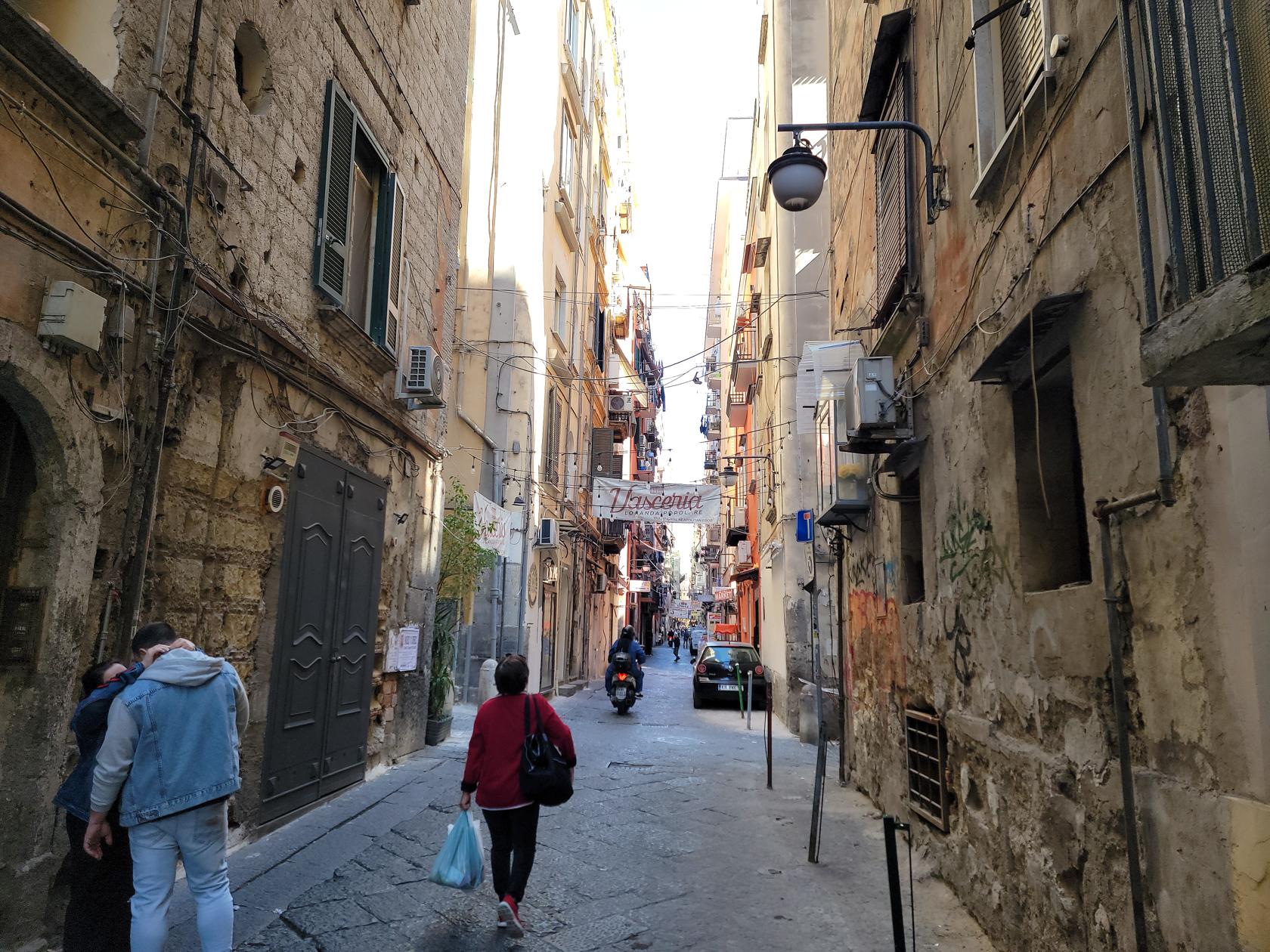
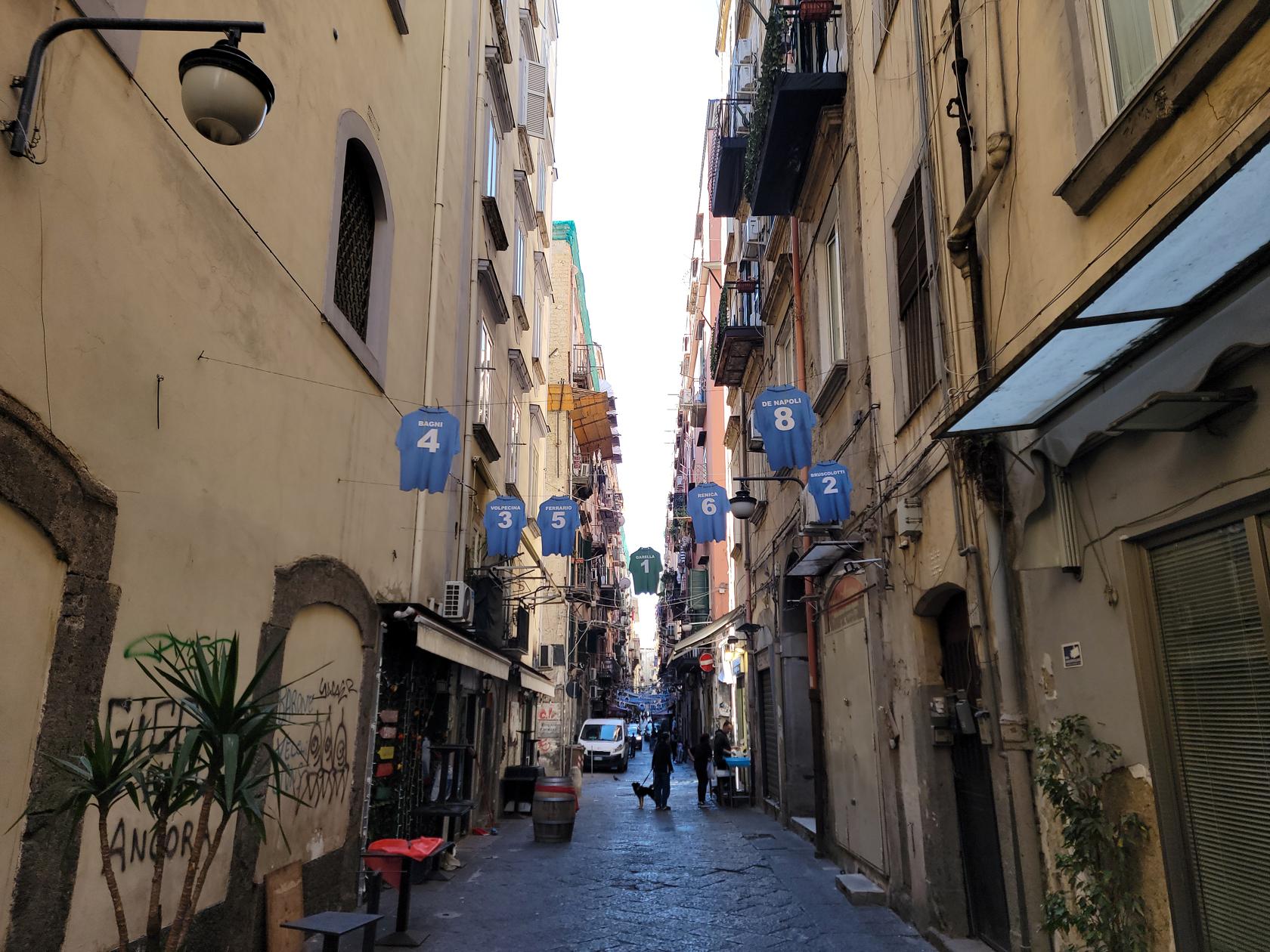
We visited the Spanish Quarter before and see that there is much more activity here now, since we were last here at the end of the pandemic. It is worth a walk through if you have never been here and there seem to be several streets now that have active stores and street vendors on them.

Centro

The center part of the city has not changed a bit. The central shopping street is just a busy as when we were here last time. A stroll up the christmas street is also a must if you come for a visit.

Voremo

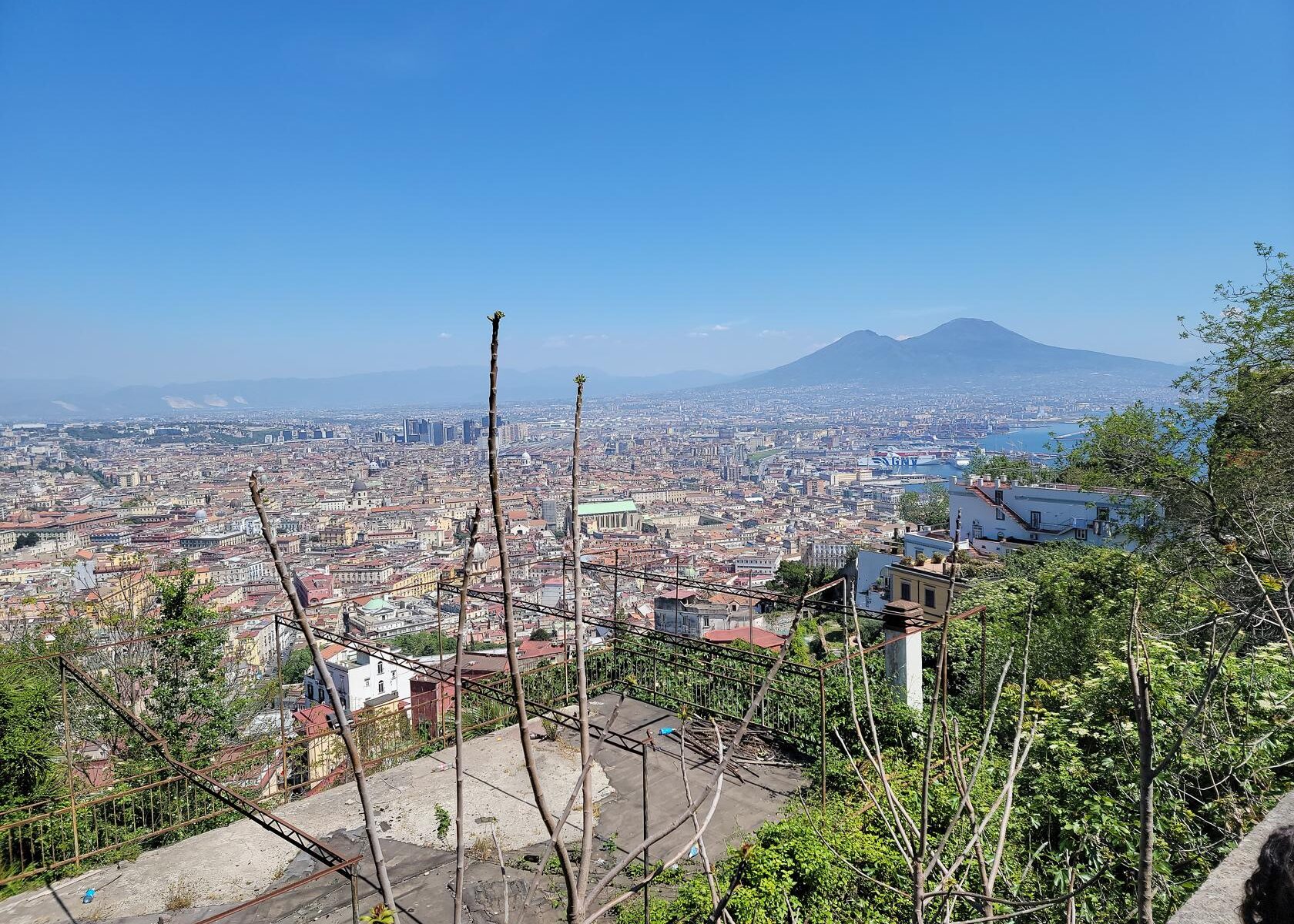
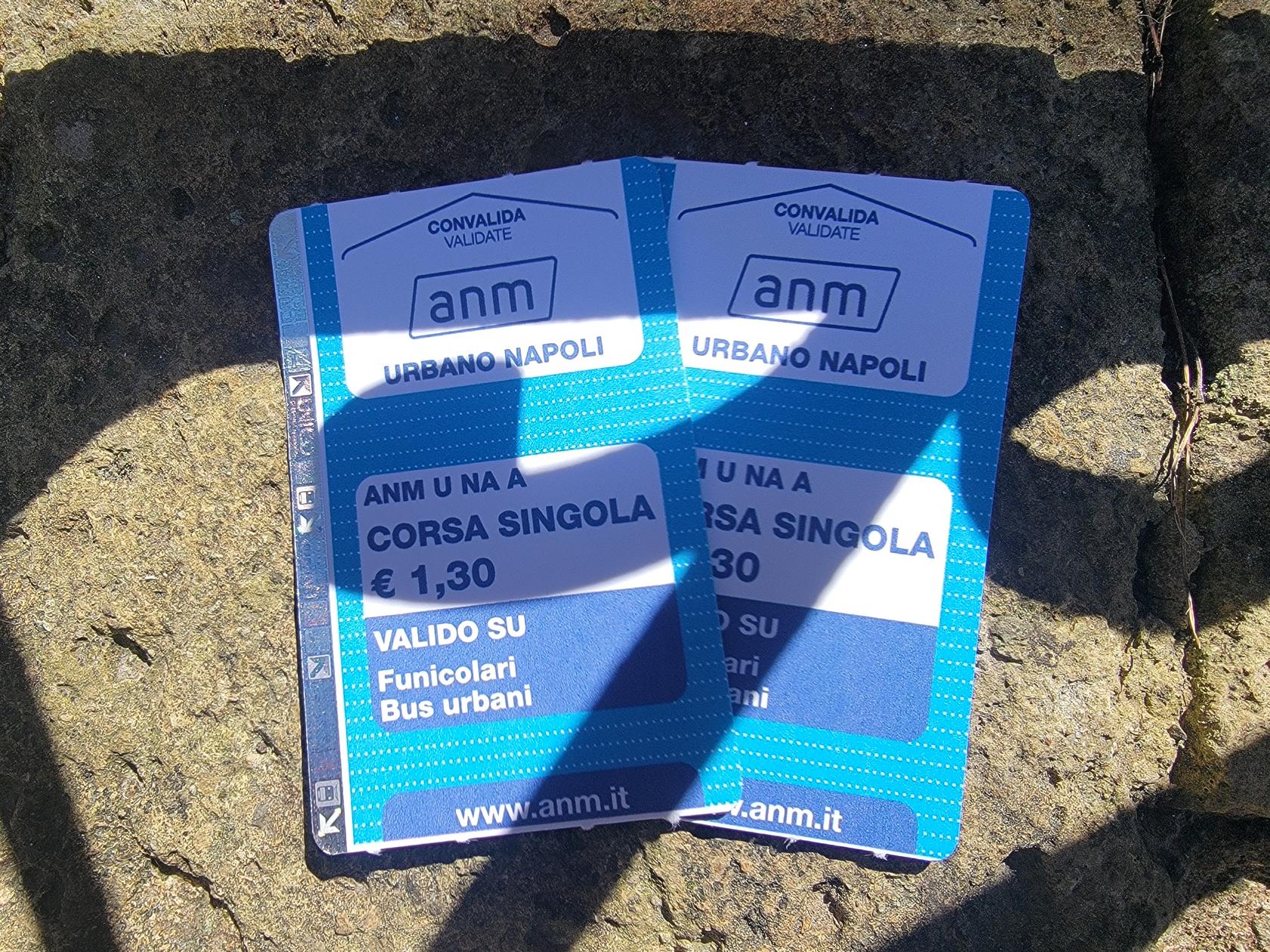
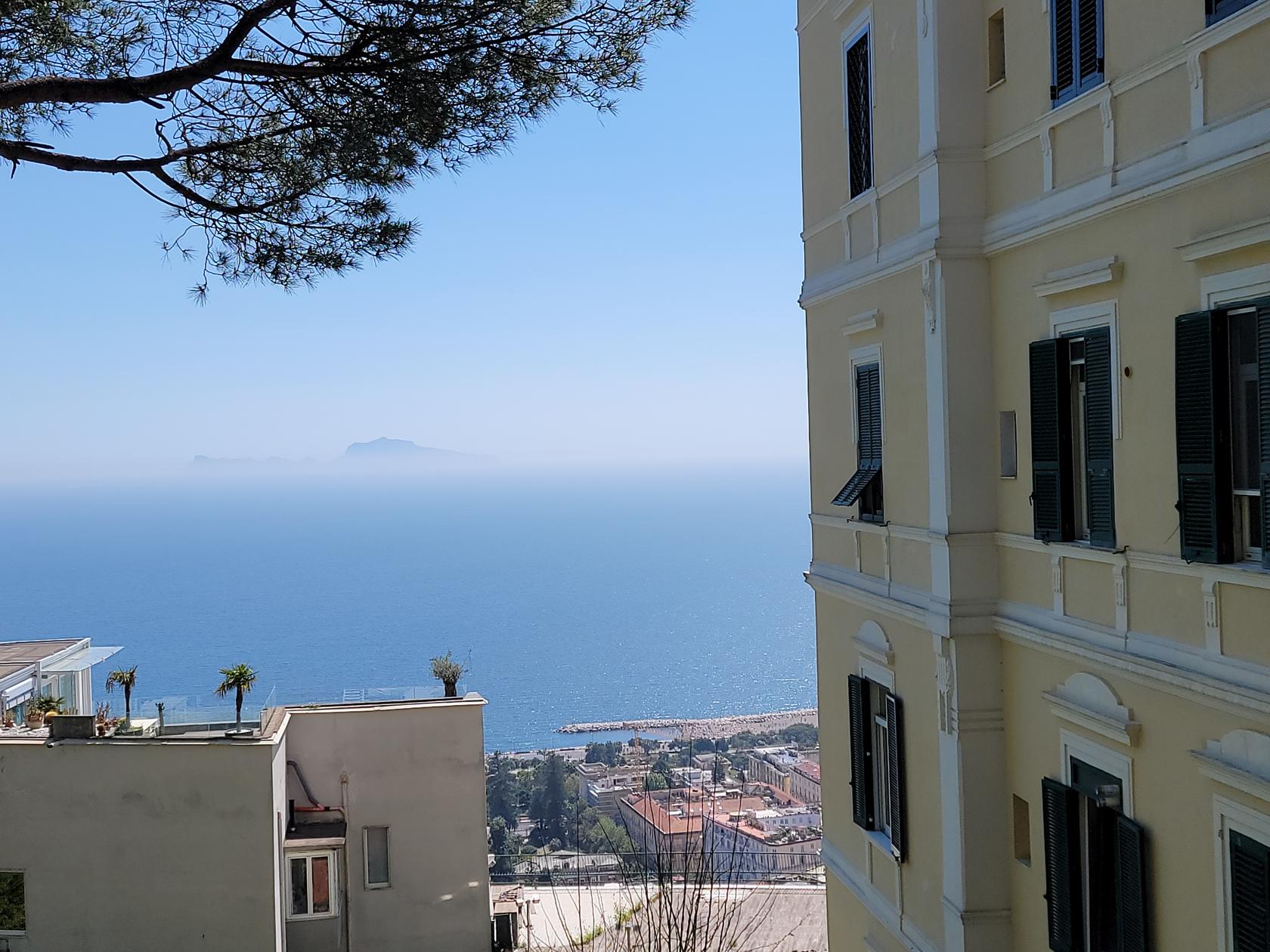
One our way back to Chiaia we took the furnicular up to Voremo to get a few photographs of Monte Somma and Vesuvius. They do not cost much and provide an easy means for getting around the more difficult parts of the city.

Restaurants

We came to Naples having only one restaurant on our list of places we wanted to visit. Any others were based on proximity or a quick search for a place to eat. However, half of the time we were here, we didn’t even eat dinner. Preferring rather to enjoy a large lunch at our day trip destinations instead.

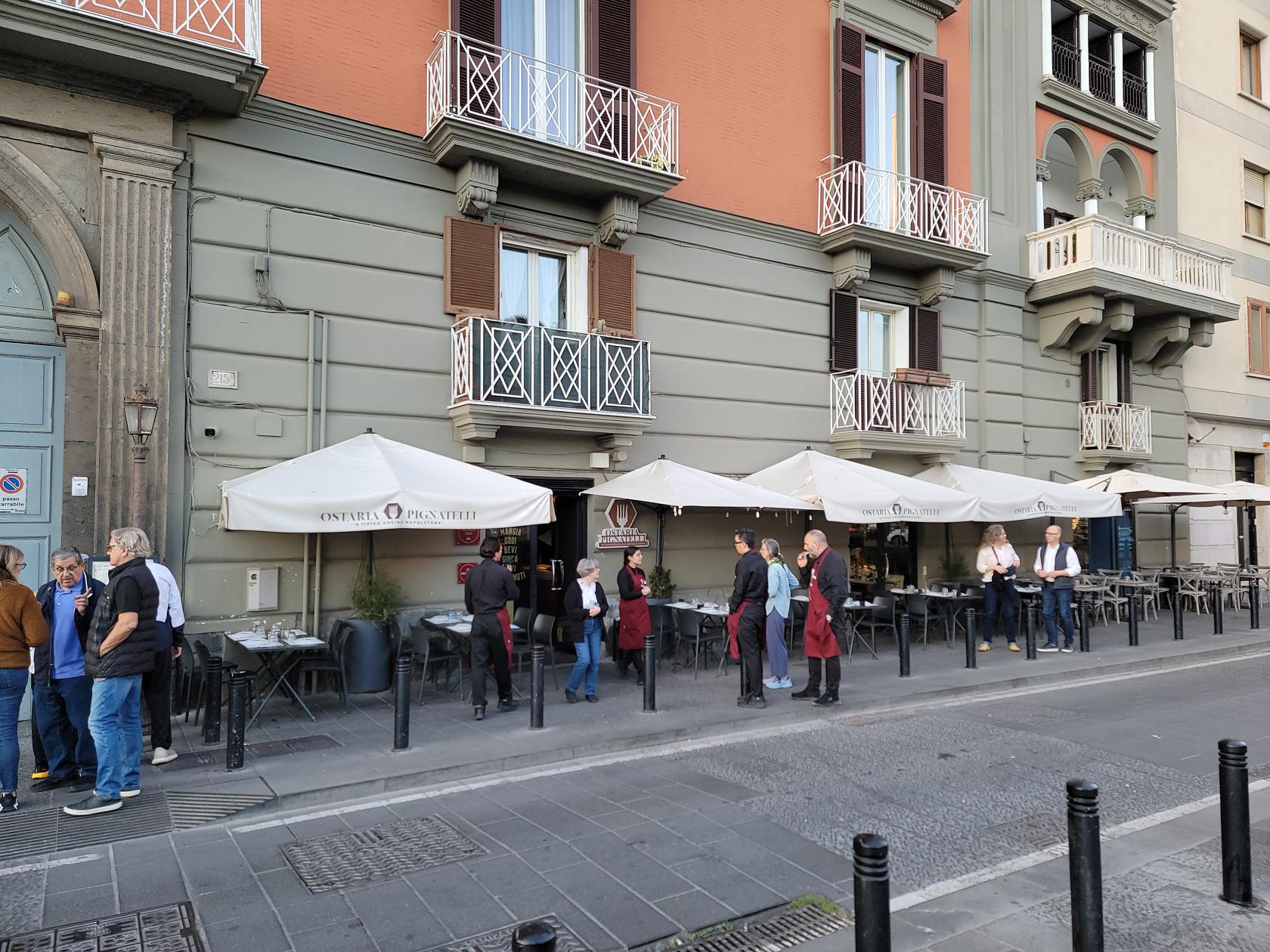
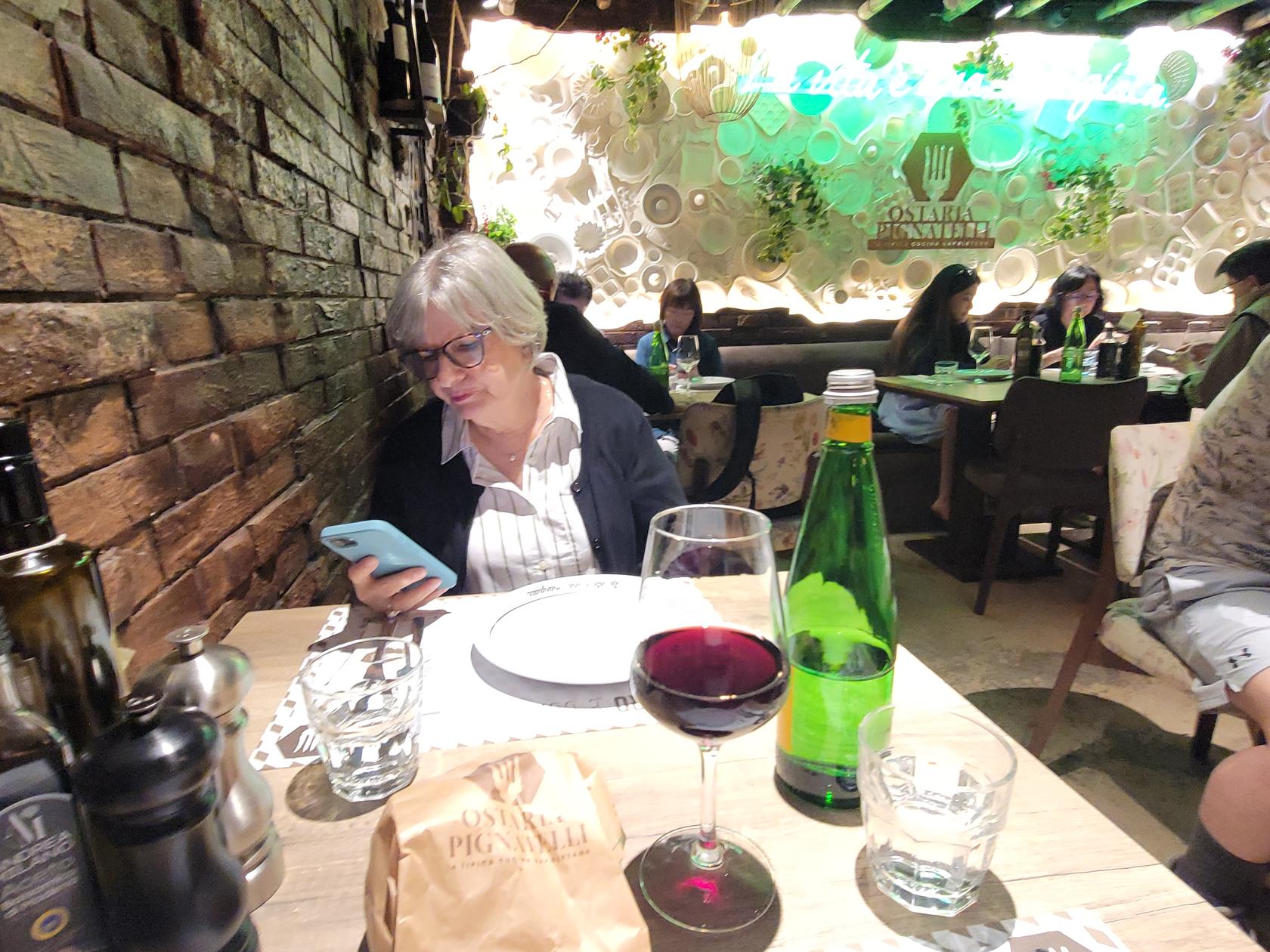
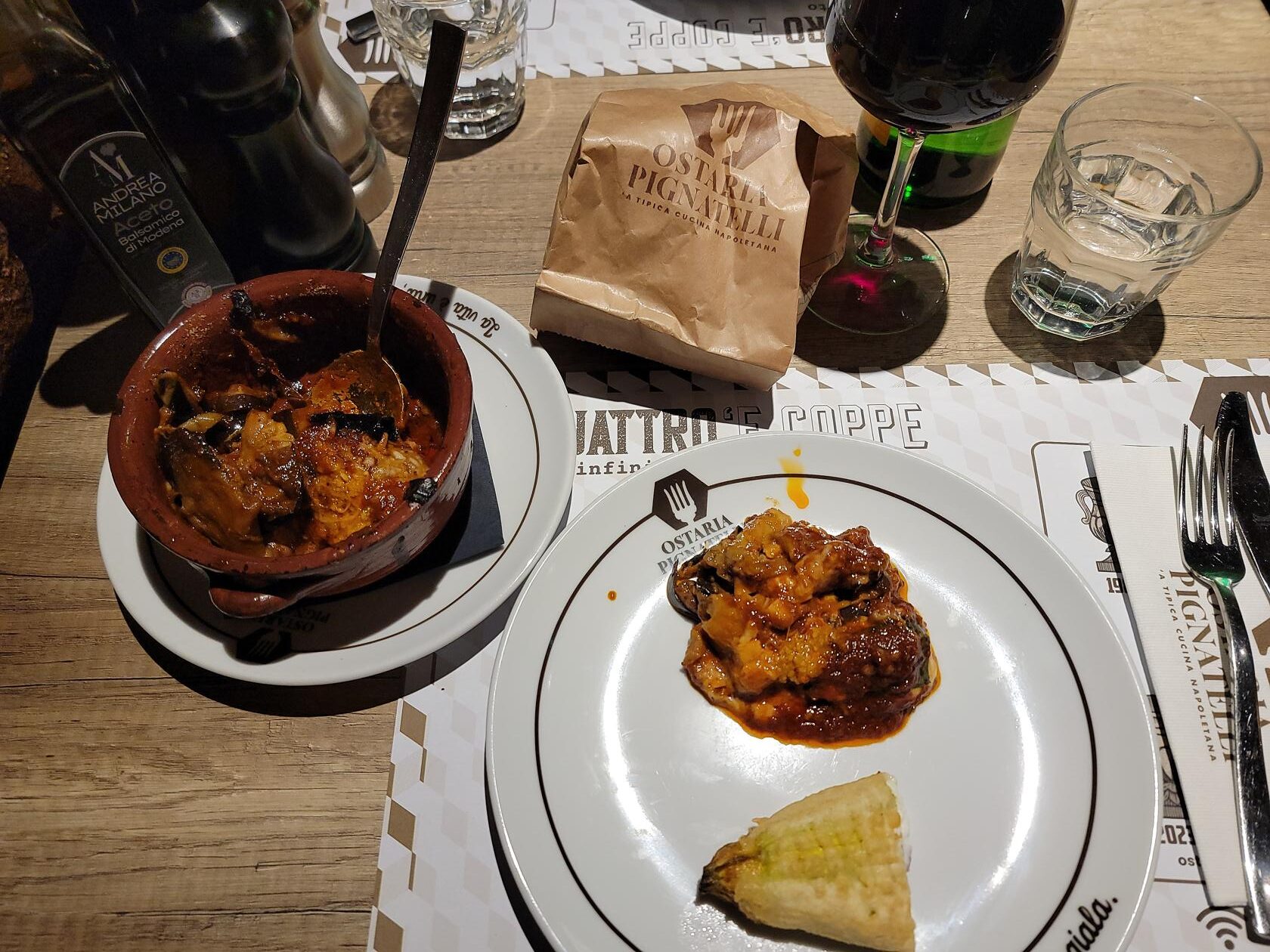
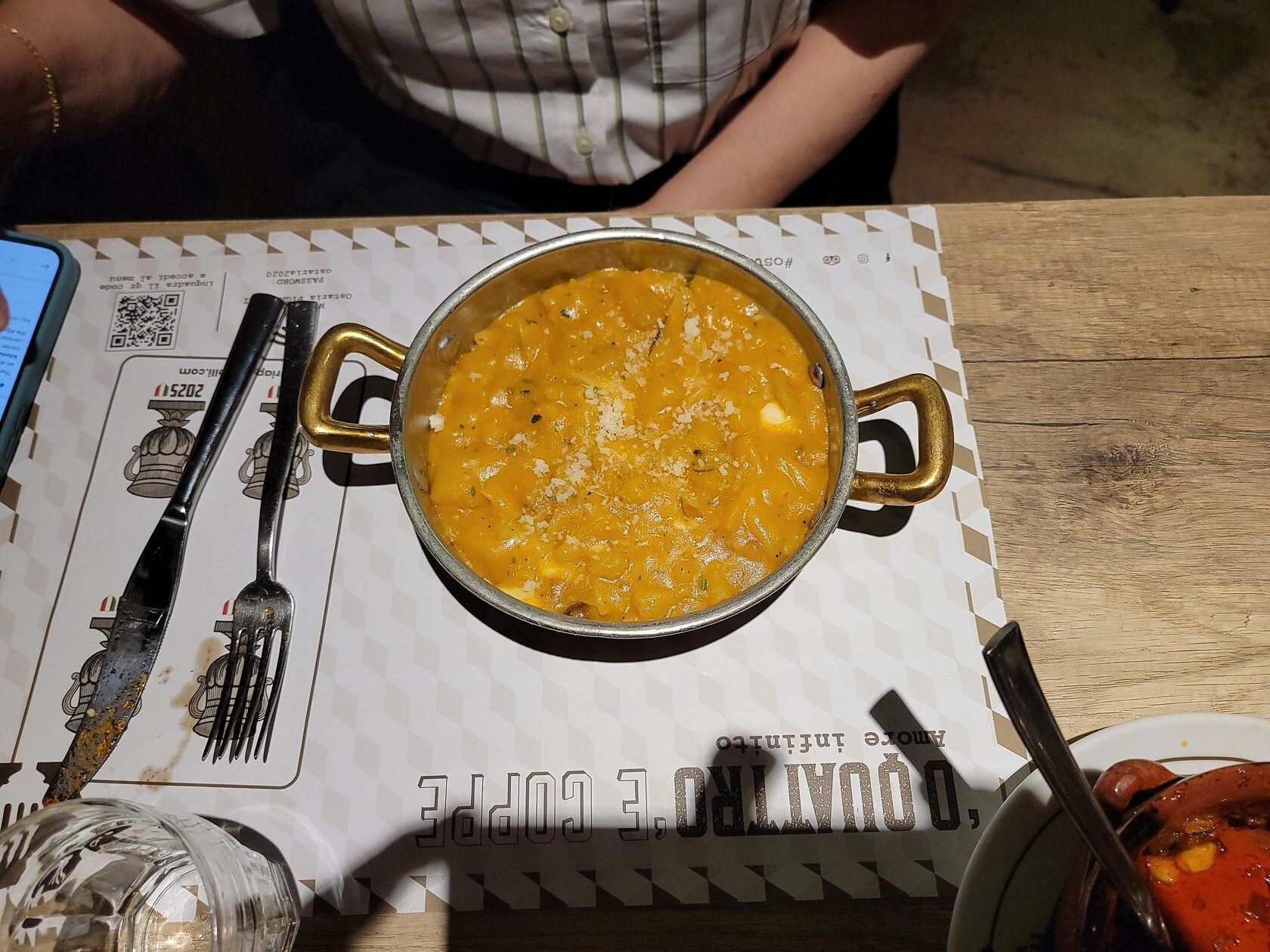
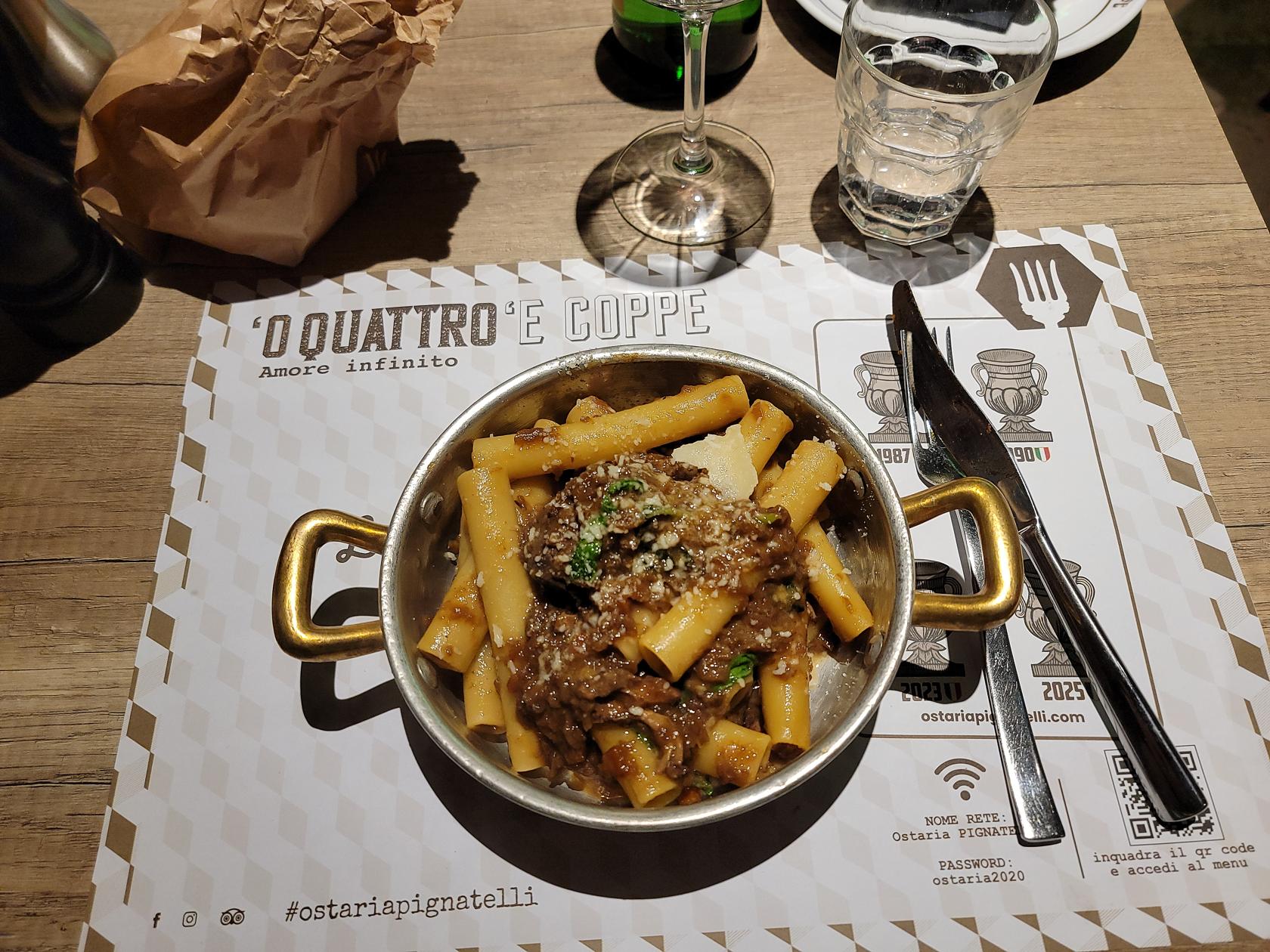
Osteria Pignatelli

A highly rated restaurant, that for all intents and purposes you should call for a reservation, since it tends to get very busy. The interior is appealing and fairly modern. The food is very good as well. Perhaps not the best I have had in Naples, but equal to the Michelin stars they have earned.

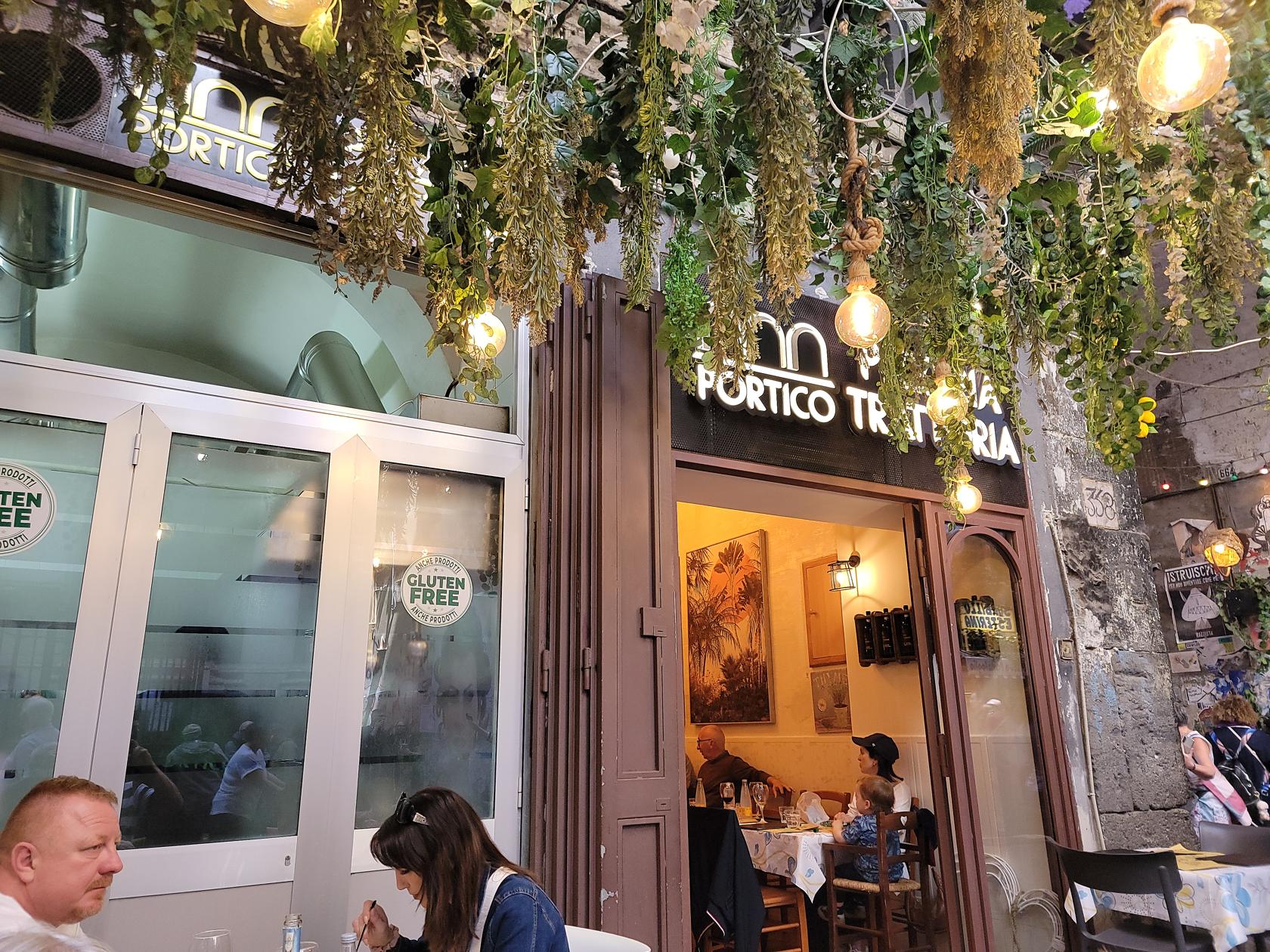
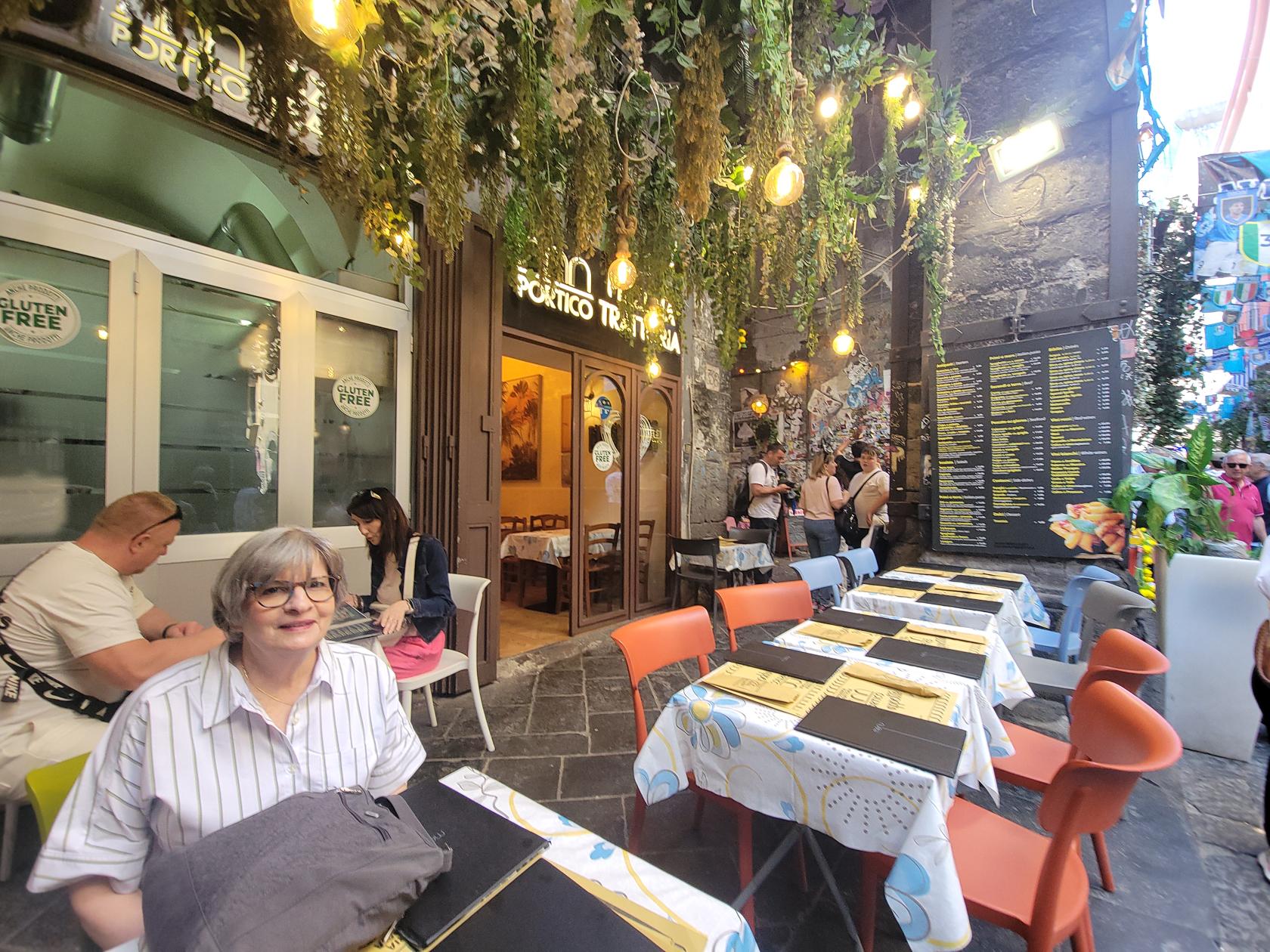
Portico Pizzeria é Trattoria

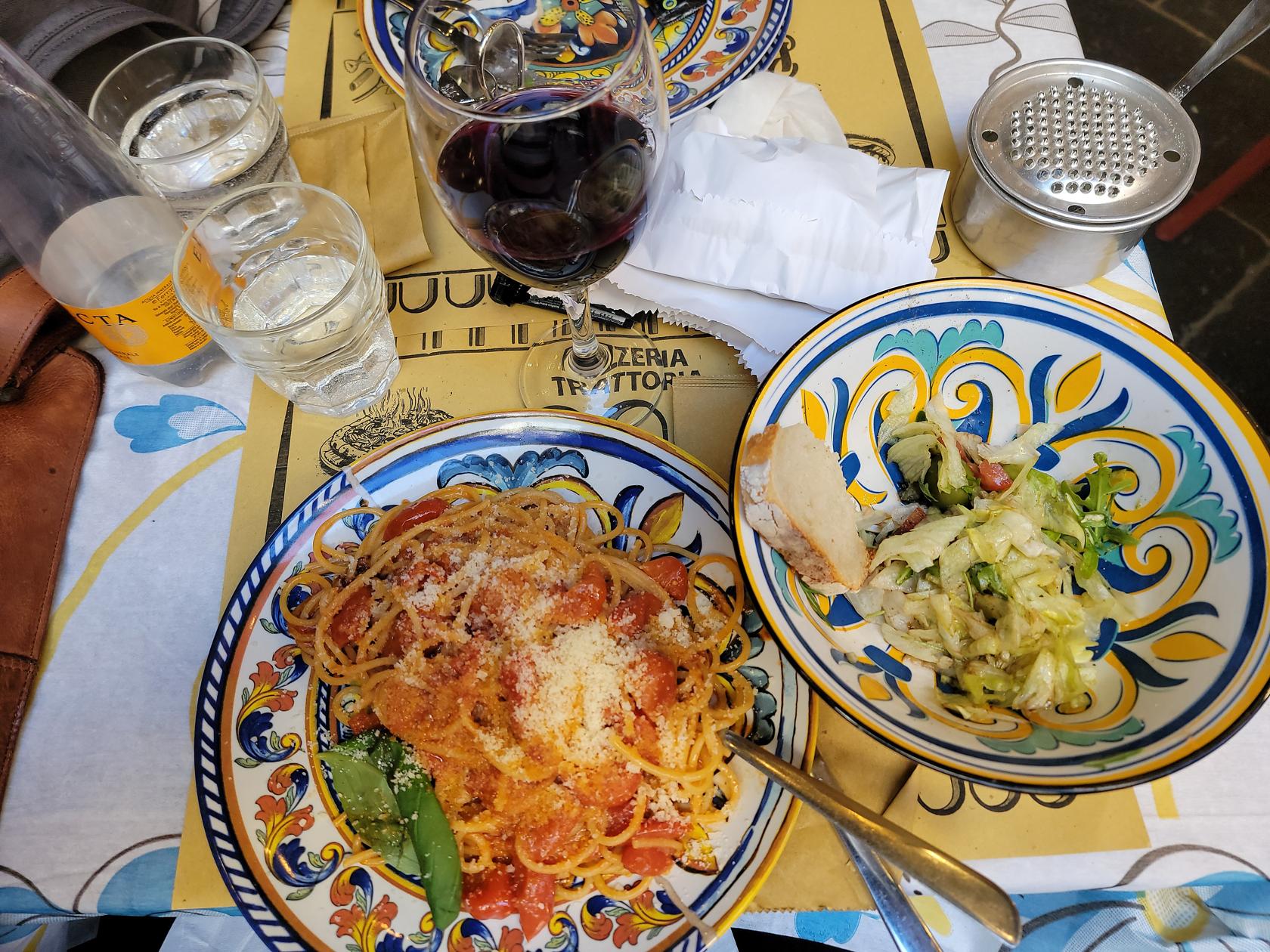
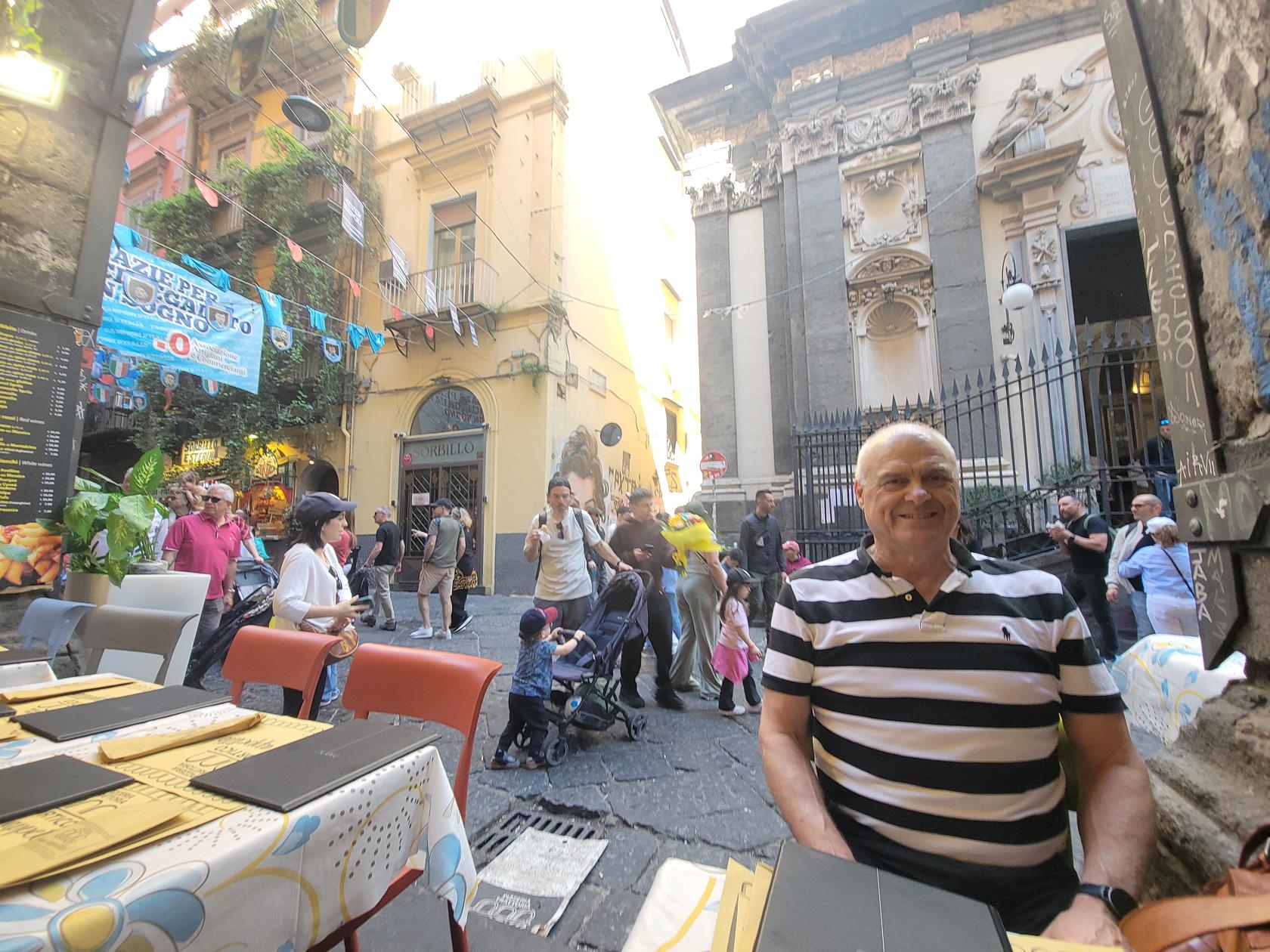
On Via dei Tribunali is the Portico Pizzeria é Trattoria. We stopped here for lunch and enjoyed a nice meal at surprisingly reasonable prices for this part of the city. The service was timely and the food was very good, so it is commendable.

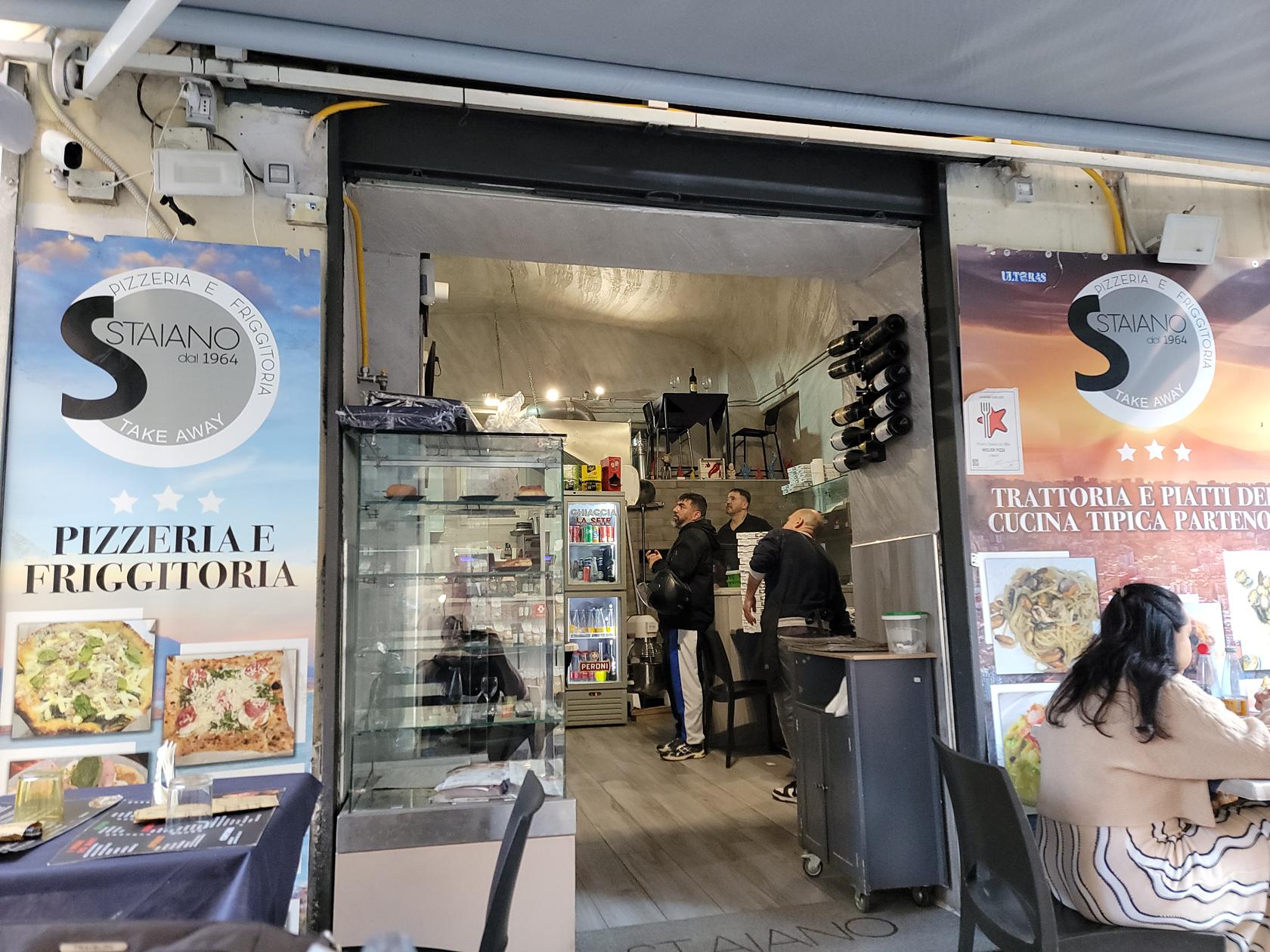
Pizzeria Staiano Dal 1964

This is a small family own trattoria that specializes in pizza. They also have a menu that changes each day, which contains a nice selection of local specialities.

We were luck enough to visit twice, so that we could try both the pizza and the pasta dishes.

Luino, Italy – Lacking Service

A popular tourist destination for the Swiss, Germans and Netherlanders is the small town of Luino on the northeast end of Lake Maggiore. The boat services on the lake are divided here for destinations north of it and south of it. From the south, especially from Stresa, it is difficult, if not impossible, to arrange a roundtrip to this town except on wednesdays. Even to get here by train is a three to five hour ordeal and roundtrips by rail or bus are all but out of the question. The town is truely lacking service from the southern end of the lake.

Luino

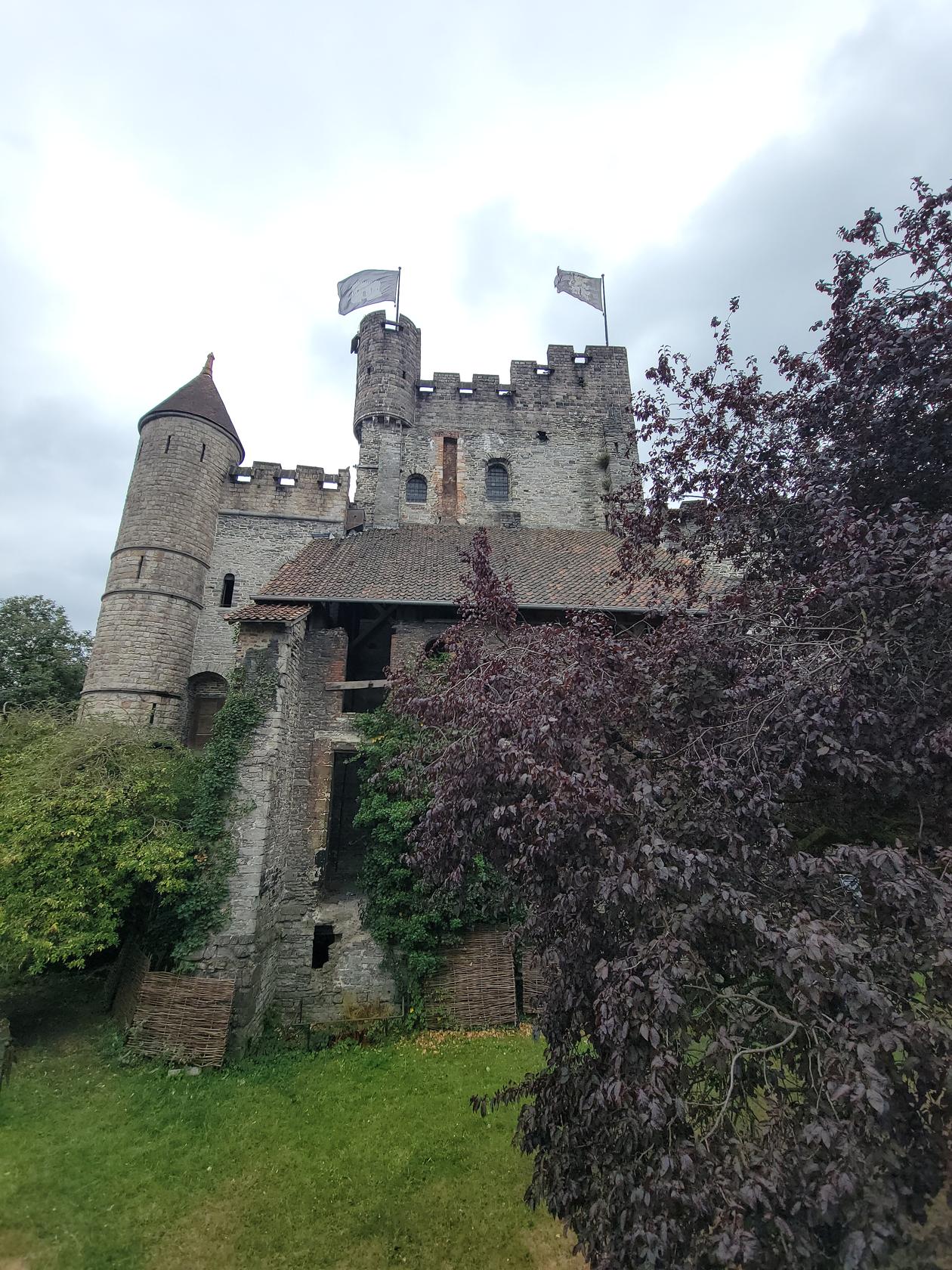
It seems a popular destination for people from the north, who are either staying in Switzerland or the nearby town of Cannobio. It is especially busy on Wednesdays, this is when the town holds its weekly market. [1]Proportedly the largest in Europe, but that is not possible. The one in Turin far eclipses it in size and weekly frequency, being open every day and not just the middle of the week.
At one time the town was heavily industrialized and there were many textile factories here, which accounted for the terrible pollution the lake had to endure for years after its demise. Luckily today, the lake has considerably cleaner water that in the previous century.
Getting There

From the north, the map shows all traffic by boat going through Cannobio. From the south, we took the boat from Stresa. From there we stopped a half dozen times before reaching our destination.

It should be noted, if you are traveling from the south and want to go further than Luino, you can, you just may have to change boats in Luino.

From Stresa the trip is not inexpensive to Luino. For roundtrip tickets it cost us €15.20 per person[2]or about $18 per person.

Church of Saints Peter and Paul

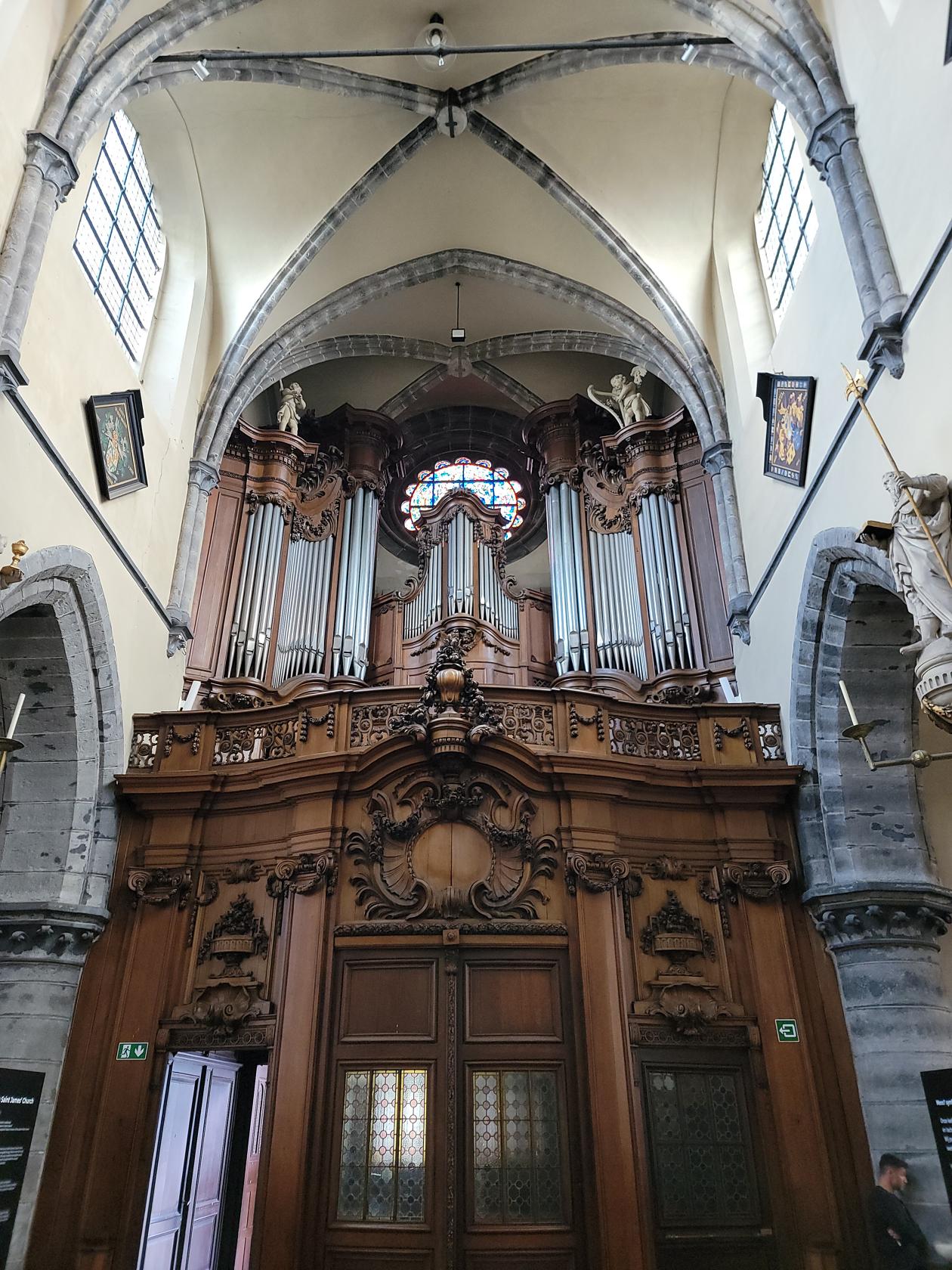
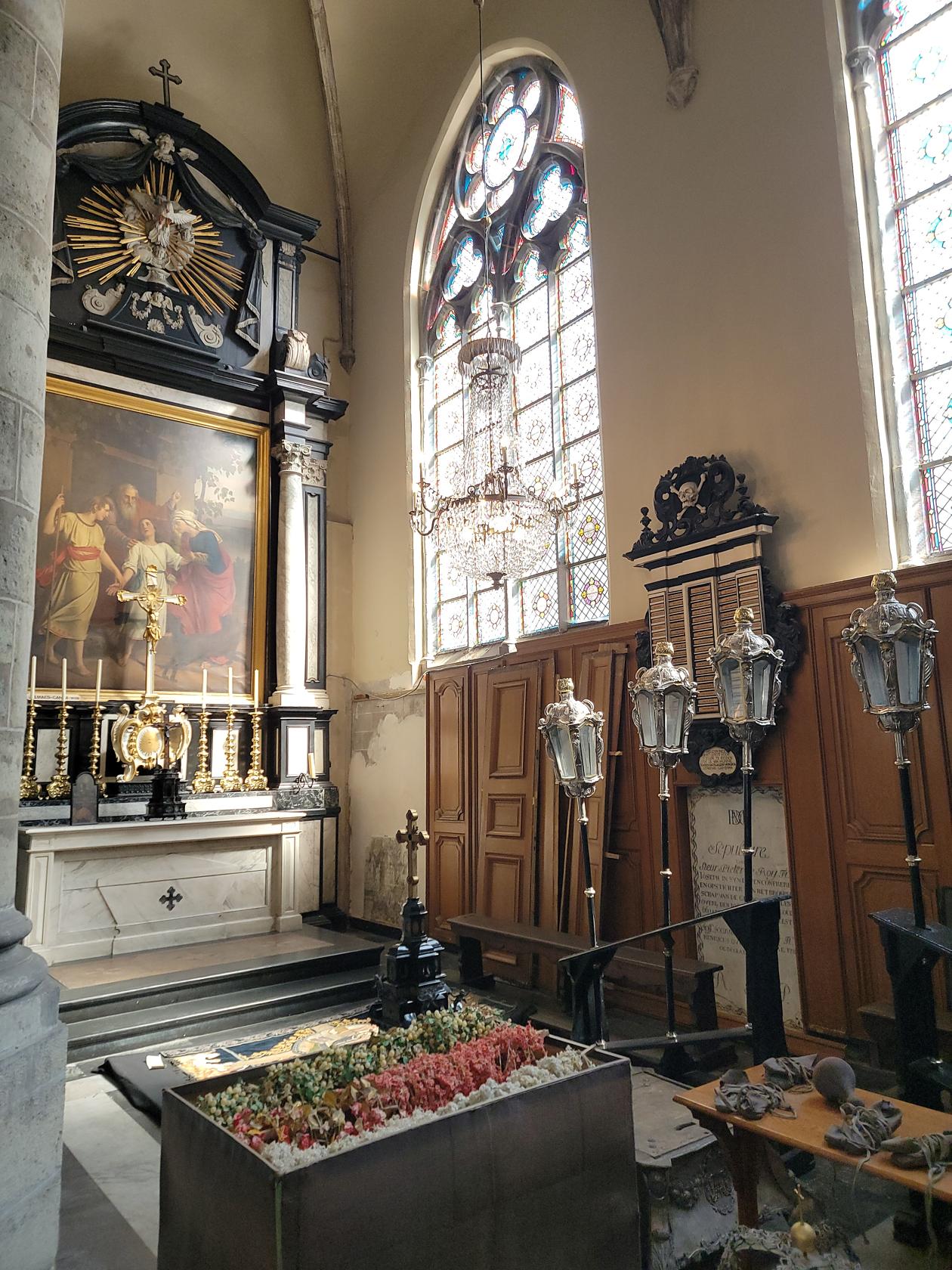
A walk through the town and above most if, you will find the Church of Saints Peter and Paul. An unusual church which looks more like an administrative building than a church.

The inside does have some marble, but the rest of the nave and ceiling are painted in the style trompe-l’œil, giving the impression of relief where none really exists.

Restaurants

When we arrived in Luino, we only had three hours before our boat trip back, so we had to make good use of our time. Subsequently, we looked for a place to eat first and chose the Trattoria da Elia e Ugo.

Trattoria da Elia e Ugo

A small restaurant that caters to locals and tourists alike. They speak very good english, so there should be no problem with the language; they are even willing to look words up in order to make sure they have the correct word.

The food is very good and well portioned. The caprese is rather large and good enough for two. The pasta dishes are also fairly large and well seasoned.

Aside from the popular marketplace on wednesdays and the odd historical monument, there really is not much to see in Lunio. Coming from the south, it can only be commended for the odd day trip with lunch as the primary reason for the expedition, since it is rather far away and the boat service only runs roundtrip on wednesday, so plan accordingly.

References

References
1 Proportedly the largest in Europe, but that is not possible. The one in Turin far eclipses it in size and weekly frequency, being open every day and not just the middle of the week.
2 or about $18 per person

Turin, Italy – Sassi-Superga

Our Day Trip To Sassi Superga

On a whim, since it was such a nice day out (clear sky, mid-70s), we decided to go to Sassi-Superga for a day trip. The last time we visited Sassi-Superga was in 2019, after we arrived in Turin from the States.

Getting There

From the center of town and a short walk to Piazza Vittorio Veneto we took the GTT #15 tram going toward Sassi. After waiting about 15 minutes, it arrived and we enjoyed a twenty minute ride up to around the Briaza stop on Corso Belgio. Here we ended up behind another tram that was having issues and subsequently was numbered #00, to indicate that it was no longer in use. Because of this, we had to get off the tram at the next stop and were told to take the GTT #68 bus that pulled up behind our tram.

We happily got on and tried to ignore the issue, until at the next stop the bus driver indicated that we had to get off his bus and get on another #68 bus that had pulled up behind us. Flaborghasted and flumexed we did complied, but not after we clearly showed our displeasure, however being Italian, he was totally nonplussed by the situation. Luckily, after another short 10 minute ride we arrived at our destination, still in time to catch the Cog or Inclined Train up to Superga hill.

Sassi-Superga

After your bus, or tram ride if you are so lucky, there is a short five minute walk to the train station. It is located on a rather confusing intersection on Corso Casale between SS10 and SC di Superga, for which there are about seven or eight crosswalks!

Stazione Sassi

If you use the GTT phone application for tickets, you would get the mistaken impression that your €1.90 commuter ticket, that was used on the tram and bus, should still apply (within the 90 minute time limit) to take the Inclined Railway up Superga Hill, it does not. Ticket vending machines are inside the railway and cafe building on-site, they may also be purchased from the conductor, but there may be an additional charge. The charge from the vending machine is €3 per person one way, so for two persons round-trip, that came to €12 total for us.

The train departs promptly and after about twenty to twenty-five minutes, you will arrive at Superga Station, just below the Basilica of Superga. The station has a cafe, so if you are in need of refreshment, now would be the time.

Basilica of Superga

The basilica is still undergoing renovations after all these years and has scaffolding in and around the outside of the building. Most of this appears to be in place to protect visitors from falling debris. The exterior is starting to really look in need of major work, but they do appear to have the upper hand on the issue inside.

Unfortunately, the little restaurant that used to be housed on the left hand side of the church no longer exists, there is only an entrance to the Tomb of the Savoy family. So our plans to eat there vanished as soon as we figured out that it had closed, most likely due to the pandemic.

Restaurants

However, all is not lost and a short walk down the hill toward on Sentiero 26 path near the Monument of Umberto I, is a nice little Trattoria that we visited for lunch.

Conserva – Trattoria Superga

A short ten minute walk downhill on the trail from the monument is the Trattoria Superga. It is on a rather busy road, however we saw as many cyclists while sitting there as we did cars and other forms of transportation.

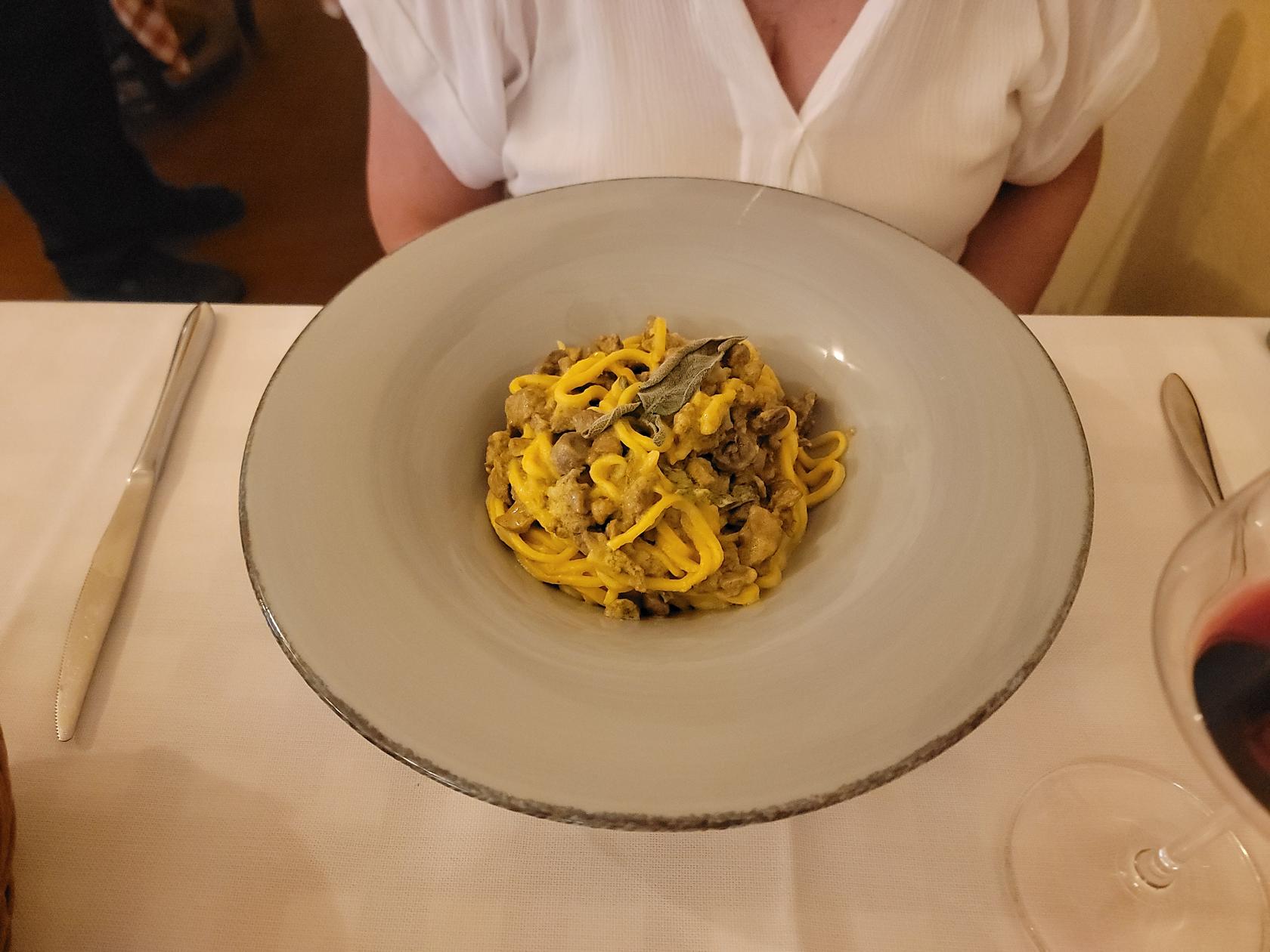
We can only say that the food was very good and typical for Piedmont and the area. The Tajarin and salads were both delicious, though a bit pricey. Our entire lunch with wine, water, bruschetta, pasta, coffee and digestive came to €77 for two, which we consider rather high, though not exorbitant.

Lecce, Italy – Florence of the South – Part One

Lecce, Italy – Florence of the South – Part One

The second largest city in Apulia is called Lecce and is located on the Salentine Peninsula of Italy. It is rich in Baroque architecture, most of which is in the form of Lecce limestone and is often referred to as the Florence of the South. It one of the oldest settlements in southern Italy, with activity dating back to neolithic times.

Getting There

From Brindisis, or most other larger towns and cities on the east coast of Mezzogiorno, the FrecciaArgento is perhaps to quickest way to arrive. From Brindisi it is a short twenty three minute ride, a bit longer on the regional trains.

The City

Lecce is a typical ancient city which was at one time circumscribed with a protective wall with three main gates. The streets in the old Città Vecchia, or old history city, are narrow and mostly paved with stones.

The government here must be very careful of the city center, since it appears to have mitigated much of the traffic you would normally find in other similar cities of this size, making pedestrian traffic all that more enjoyable.

Ports, Gates, Columns And Castles

There are numerous ports, gates, columns and obelisks in Lecce. These are spread out all of the city and are well labeled on most maps. The Triumphal Arch, or Porta Napoli, is the largest and one of the three gates to enter the Città Vecchia.

There is also the Porta San Biagio and a smaller one called the Arco di Prato, or Arch of Prato, which is somewhat hidden away within the narrow city streets.

The Obelisk of Terra d’Otranto can be seen close to the Porta Napoli and is rather tall. It was erected in 1822 in honor of one of the rulers of the Two Sicilies. On the other side of town one can find the War Memorial for soldiers lost in war.

In the Piazza Saint Oronzo you will find the Colonna di Sant’Oronzo, or the Column of Saint Oronzo. It is a tall pedestal with Saint Oronzo on top. The column itself was assembled from pieces of the one that fell apart in Brindisi in the mid sixteenth century, its twin can be found near the port of that city.

The Castello de Carlo V, or Castle of Charles V sits on the eastern edge of the historic city and below the Giuseppe Garibaldi Public Gardens. It is a large structure and tours are offered, all of which are guided, so you cannot tour the grounds unaccompanied. A short walk from there you will the public park or gardens, which is always a good stop to rest your feet after a few hours of walking.

Roman Ruins

Lecce has in its old historic city not one, but two Roman amphitheaters. Unfortunately for us, both were being restored while we visited and photography was very difficult in both cases.

Where We Stayed

For the second time on this trip we have booked a Bed and Breakfast. I still cannot say I am fan, but there are times when alternatives to hotels may make a better fit. However, we only commit to such alternatives directly and after thorough research.

L’Orangerie d’Epoque

We stayed at a Bed and Breakfast called L’Orangerie d’Epoque on Viale Francesco Lo Re near the Porta San Biagio. A rather large building with a central portico that appears to have one owner.

Our room was on the ground floor with its own entrance to the portico. The entryway has a beautiful mosaic tiled floor, reminiscent of ancient Rome or Pompeii.

The room was spacious, with a fireplace and split up into almost four equal parts. There was a large dining area by the entrance that flowed into a living room with several couches.

On the other side, there was another area with a television, breakfast table and then a bed with a desk for writing.

Restaurants

La Cucina di Mamma Elvira

This small restaurant has good food and wine at fairly reasonable prices. We actually went there late for lunch, around 14:40 and they still took our order and served us.

The service was very good and the menu had a decent choice of both local cuisine and other more general Italian items to chose.

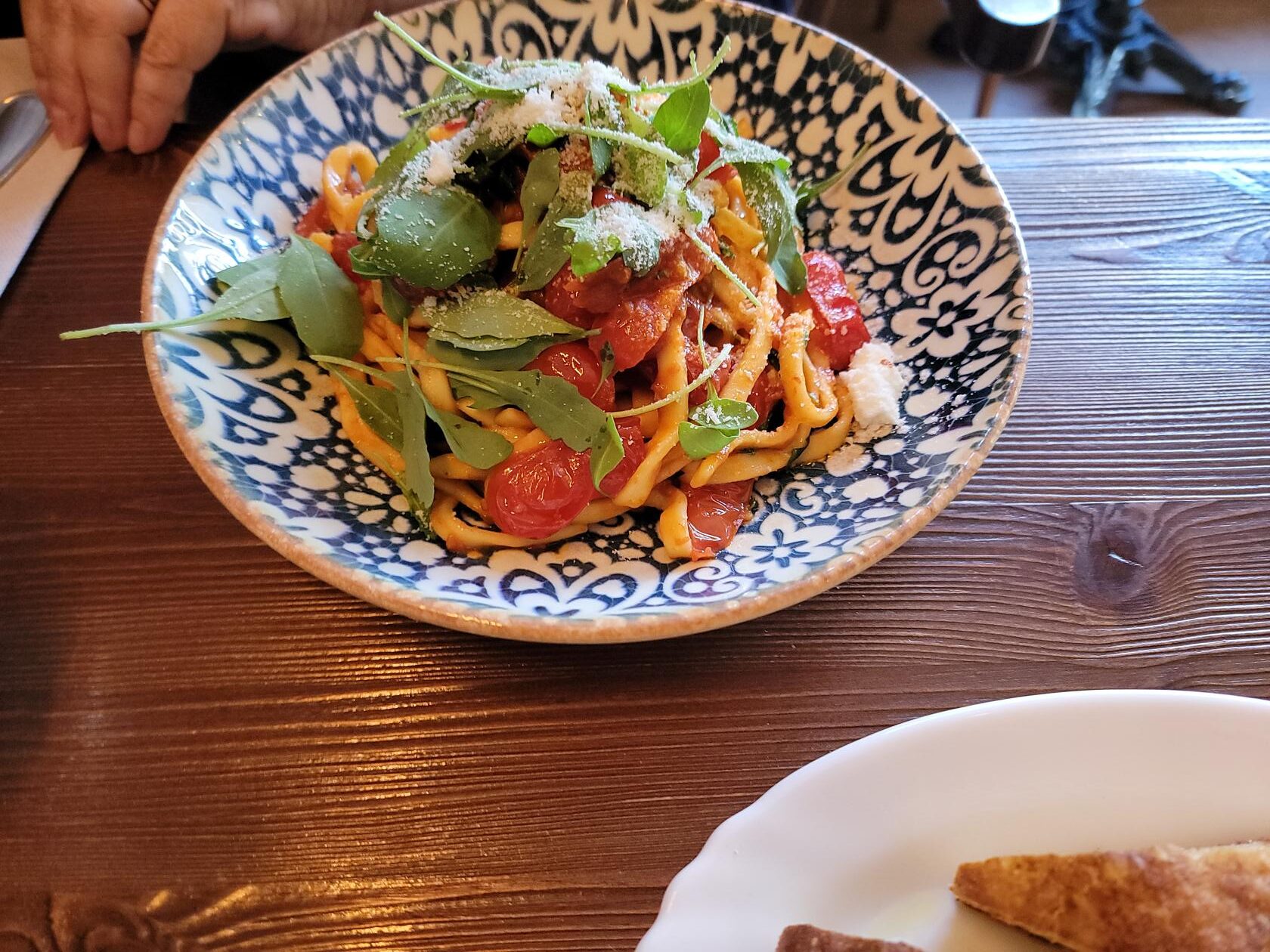
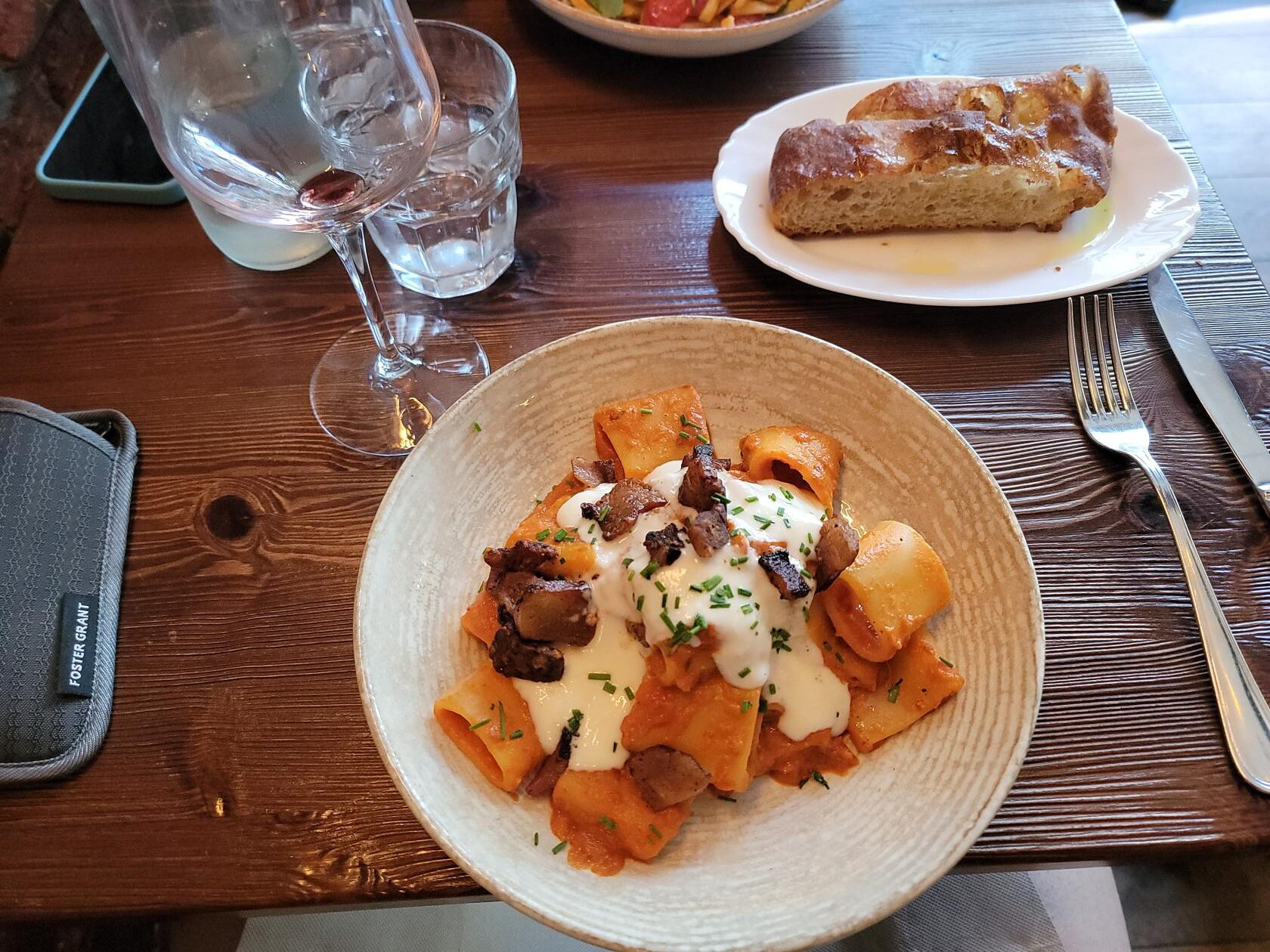
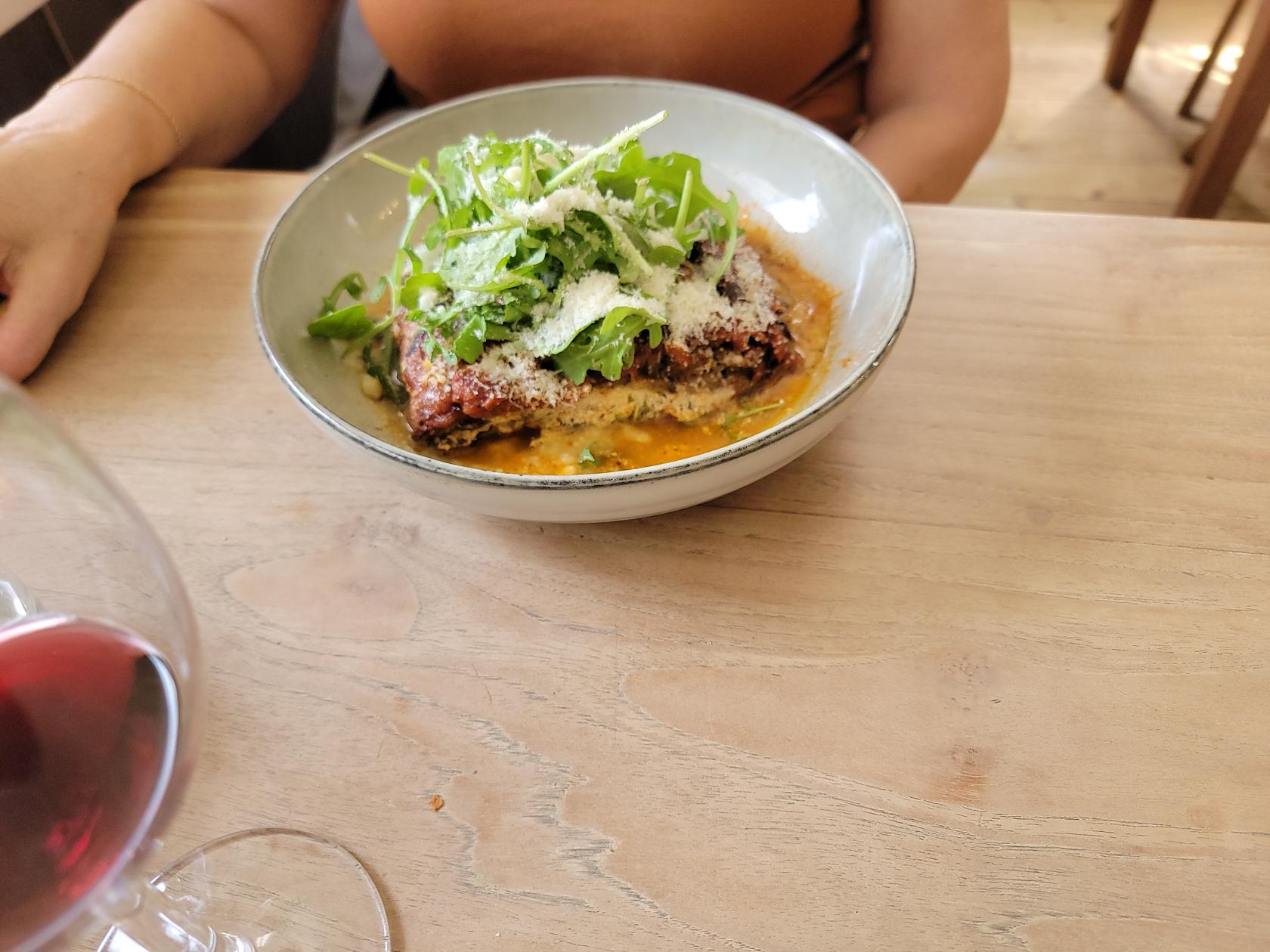
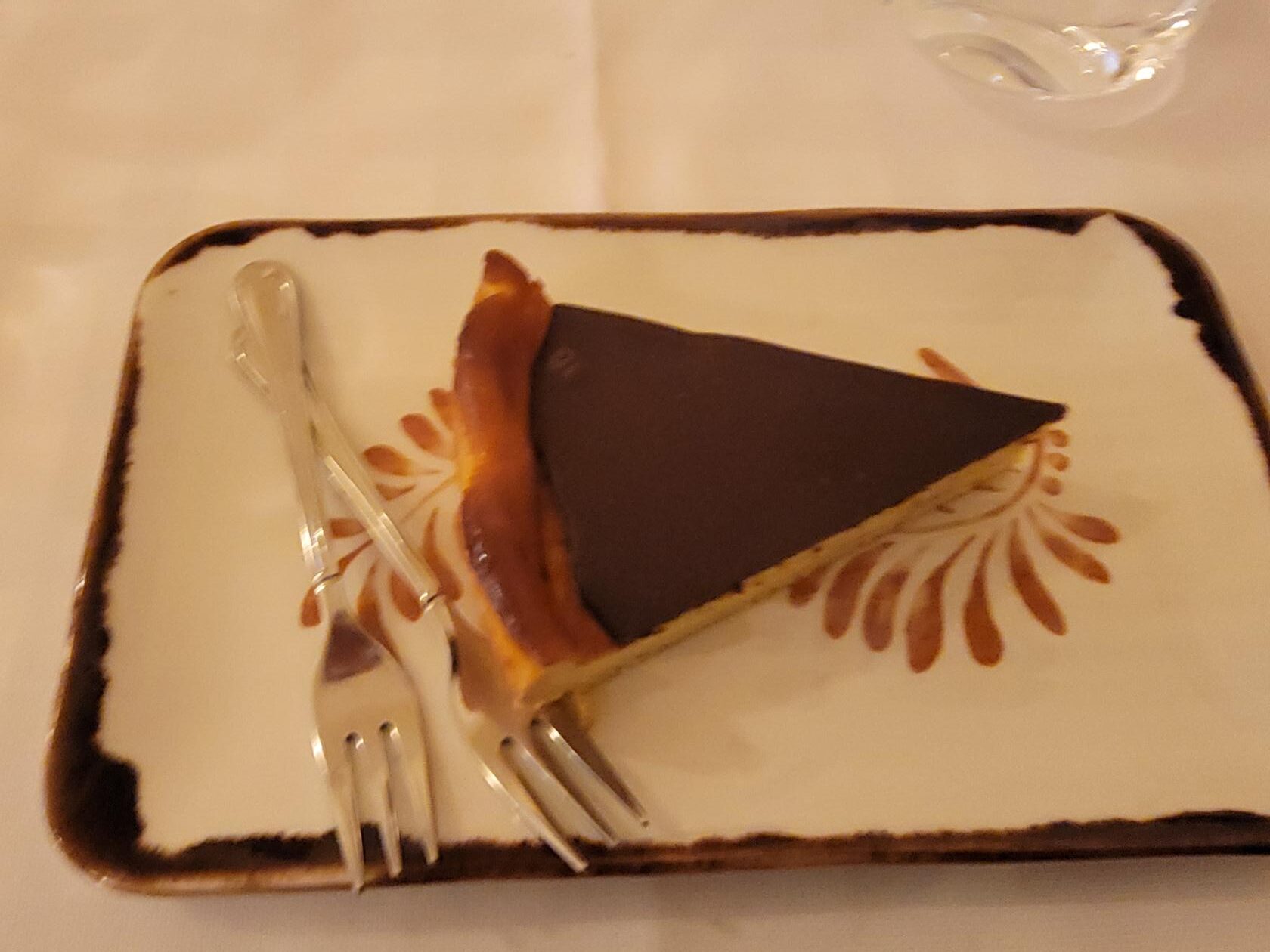
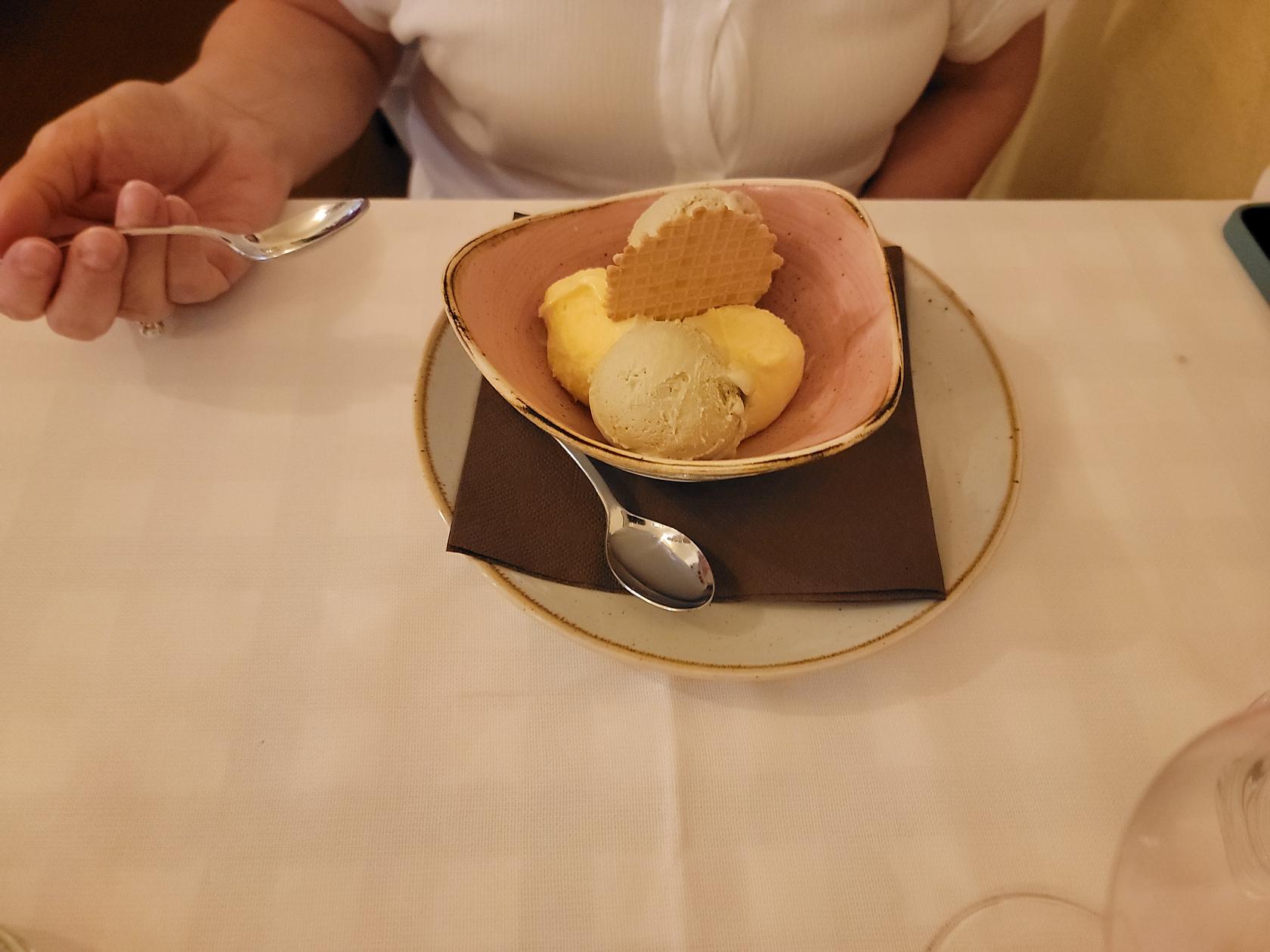
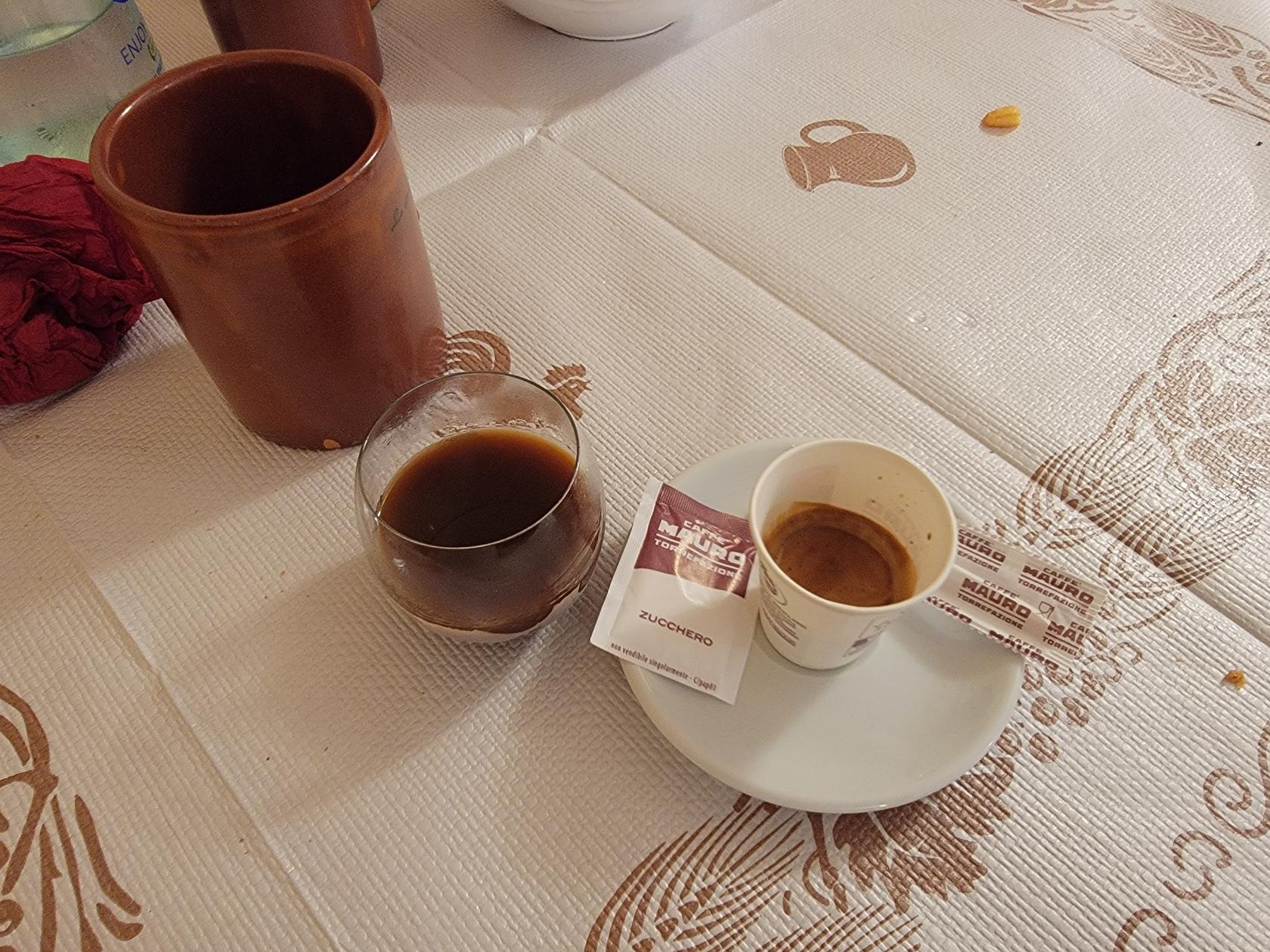
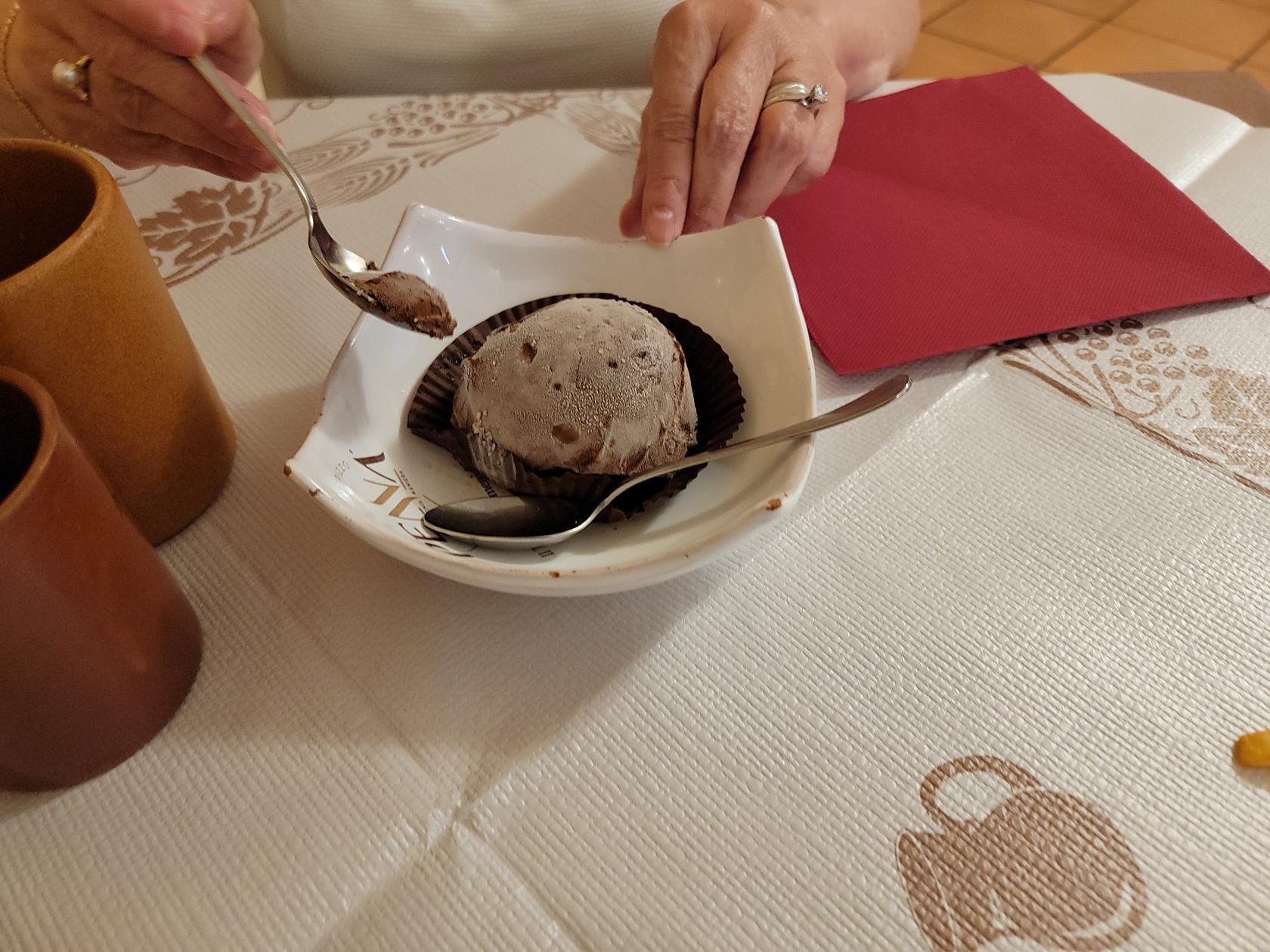
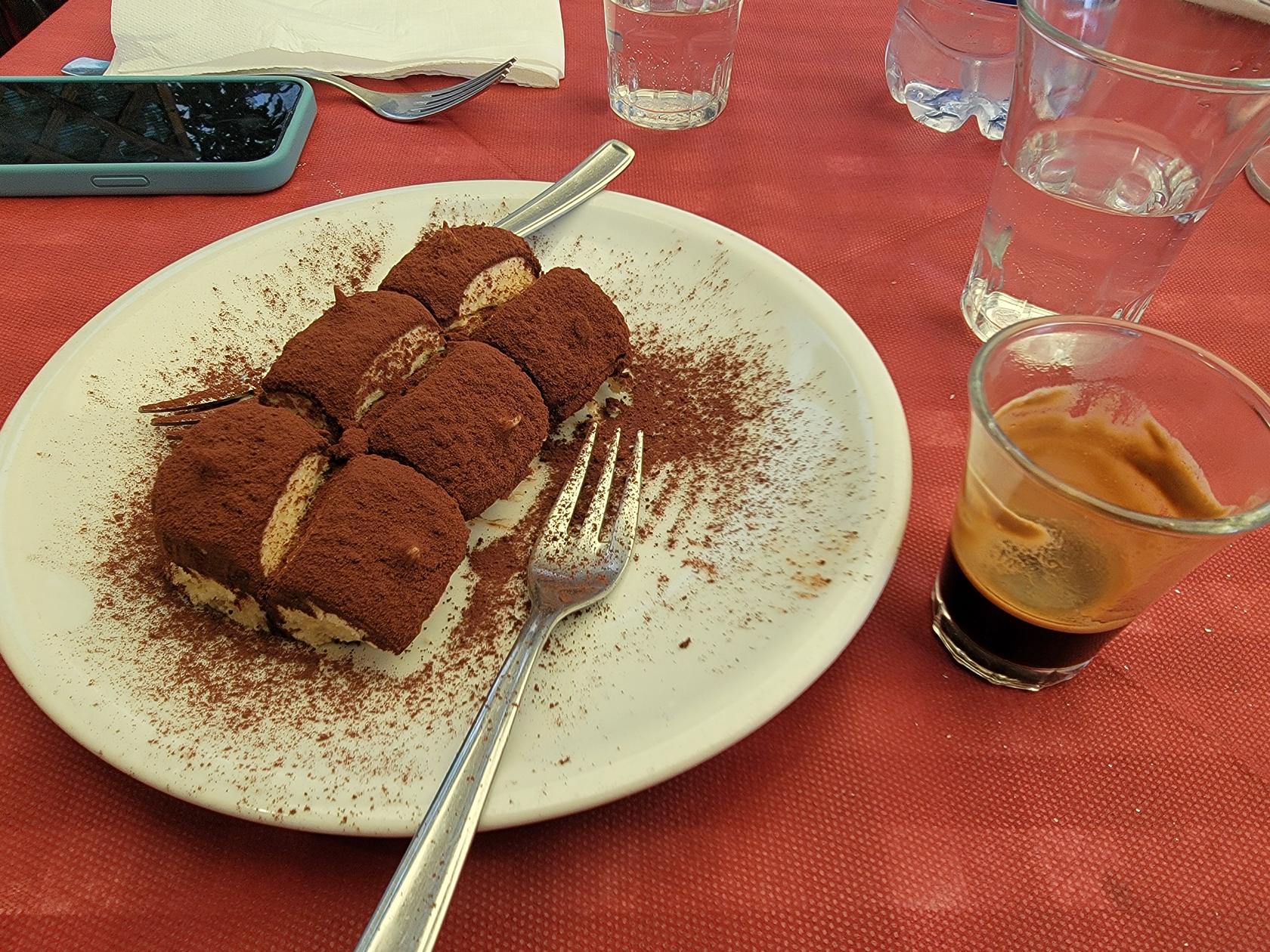
I ordered the Eggplant Polpette in Ragu Sauce with Ricotta Cheese, an Insalata Mista (mixed salad) and the Orecchiette with re-milled Semolina with Scottona Red Ragu and Patti ordered the Ciceri and Tria Pasta and shared my Polpette. All the dishes were very good. The wine was Negroamaro from the region and it was very good, served by the glass. The desserts you can see below and the espresso was also very good, not bitter at all.

Miro Wine And Lounge

We stopped here for a drink and decided on a quick bite to eat, since we were both getting hungry and it was only a little passed eleven. We were actually surprised they were serving lunch.

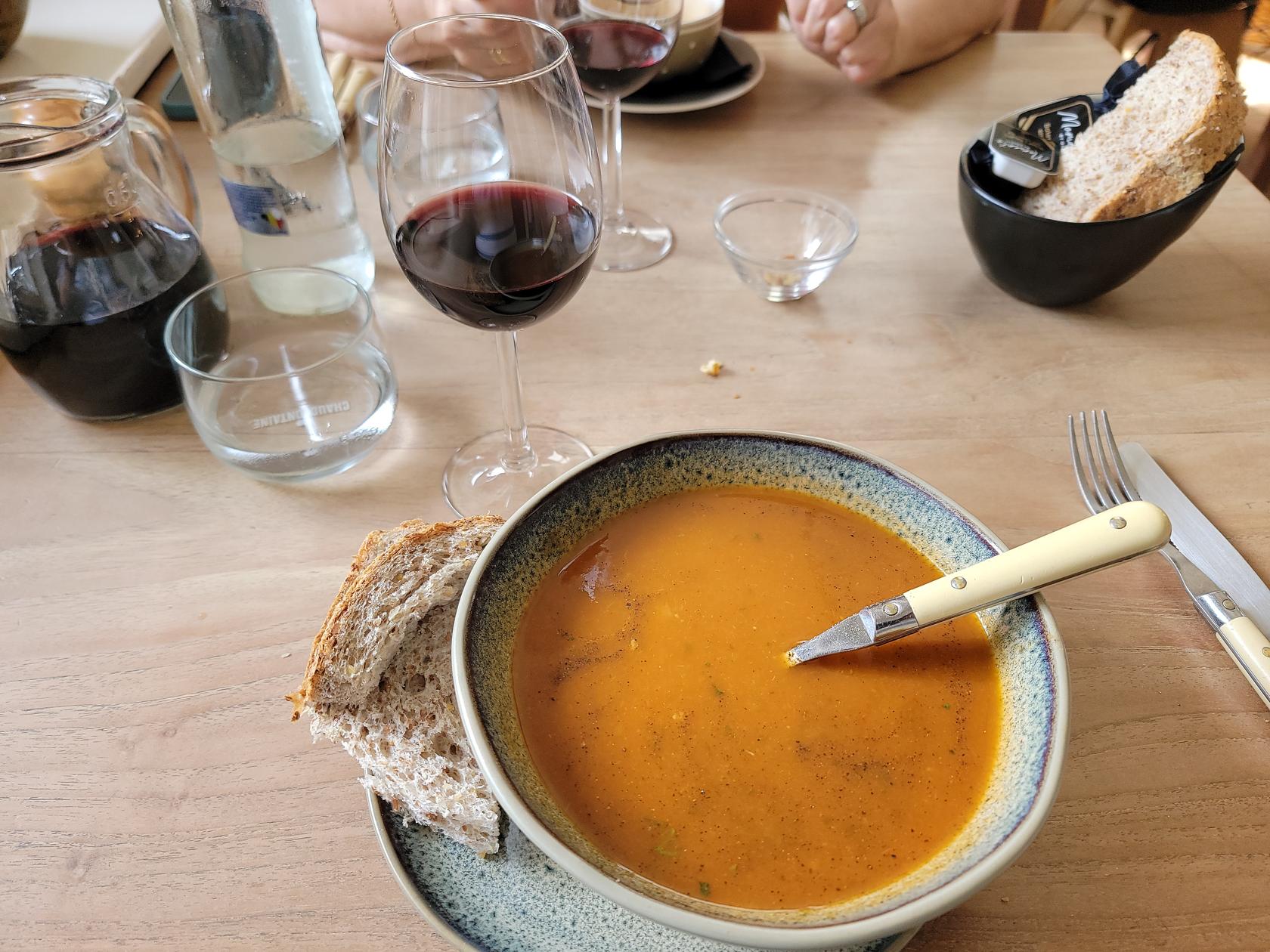
While we waited, I ordered a glass of Negroamaro from Puglia, a very nice wine that reminds me of Barbera. They had a nice bean and cereal soup on the menu that Patti and I decided to try and it was magnificent.

Tranquillo

The restaurant Tranquillo is a more modern restaurant with two locations in Lecce, we chose the one located at Piazza Sant’Oronzo. The service and food were very good.

We dined late again at around 14:30, opting for a larger lunch and skipping dinner. We find this preferrable to eating again late in the evening and going to bed with a full stomach, something that we find does not lend itself to a good night sleep as we get older. I ordered the Apulian Bombette with Cheese on greens with a side order of Potato al Forno and Cicorie (Chickory), and Patti ordered the Cicorie on Pureed Fava Beans.

Alberobello, Italy – Truly, Trulli Odd

Alberobello, Italy – Truly, Trulli Odd

Before I went to Alberobello, I had never heard of a Trullo house and I must say I find them rather odd. To me, they just appear as though they are a bit small and perhaps uncomfortable inside. But I guess it’s what you get used to in life.

How To Get There

From Bari the easiest way to get there is by the TrennItalia website, application or buying a ticket at the station. The bus arrives in front of the DOK supermarket on the back side of the train station, so from town you will have to use the underground train station passage to get to the bus stop, it is across the street of Via Giuseppe Capruzzi. The cost is minimal, 2€ per person each way. You may hear them referred to as the TrulliBus, but if you ask anyone locally they will be confused by your question. So use the destination name of Alberobello and there will not be any confusion.

It arrives in Alberobello at that city’s train station and it is about a fifteen to twenty minute walk to the houses.

Alberobello

When one first sees a Trullo house one’s first impression might be that it is a rather strange place to live. However, there are other precedents in other cultures. Alberobello contains many such examples of these houses, now converted toward the tourists industry.

The Trullo House

Initially developed by farmers and herders as a temporary place to stay while performing their tasks. However, once learned that they could be used as a tax dodge, the Italians in the area converted them to more permanent residential building, while forgoing the need to pay their taxes.

Restaurants

During the off season there are limited restaurants for lunch, so plan accordingly. However, there are a few that open all year.

Terra Mossa Ristorante Pizzeria

The Terra Mossa Ristorante Pizzeria was our second pick, but we happen to go there because it opened a half an hour earlier than our original pick.

Located on Via Indipendenza, 4, it is a totally modern establishment and able to handle large crowds and tour groups. There were two visiting while we were eating and we did not experience any change in our service. The food is very good and they have English speakers, due to their location in a tourist area. It is prices slightly on the high side, but if you don’t go nuts two people can eat a fair lunch for around 40€.