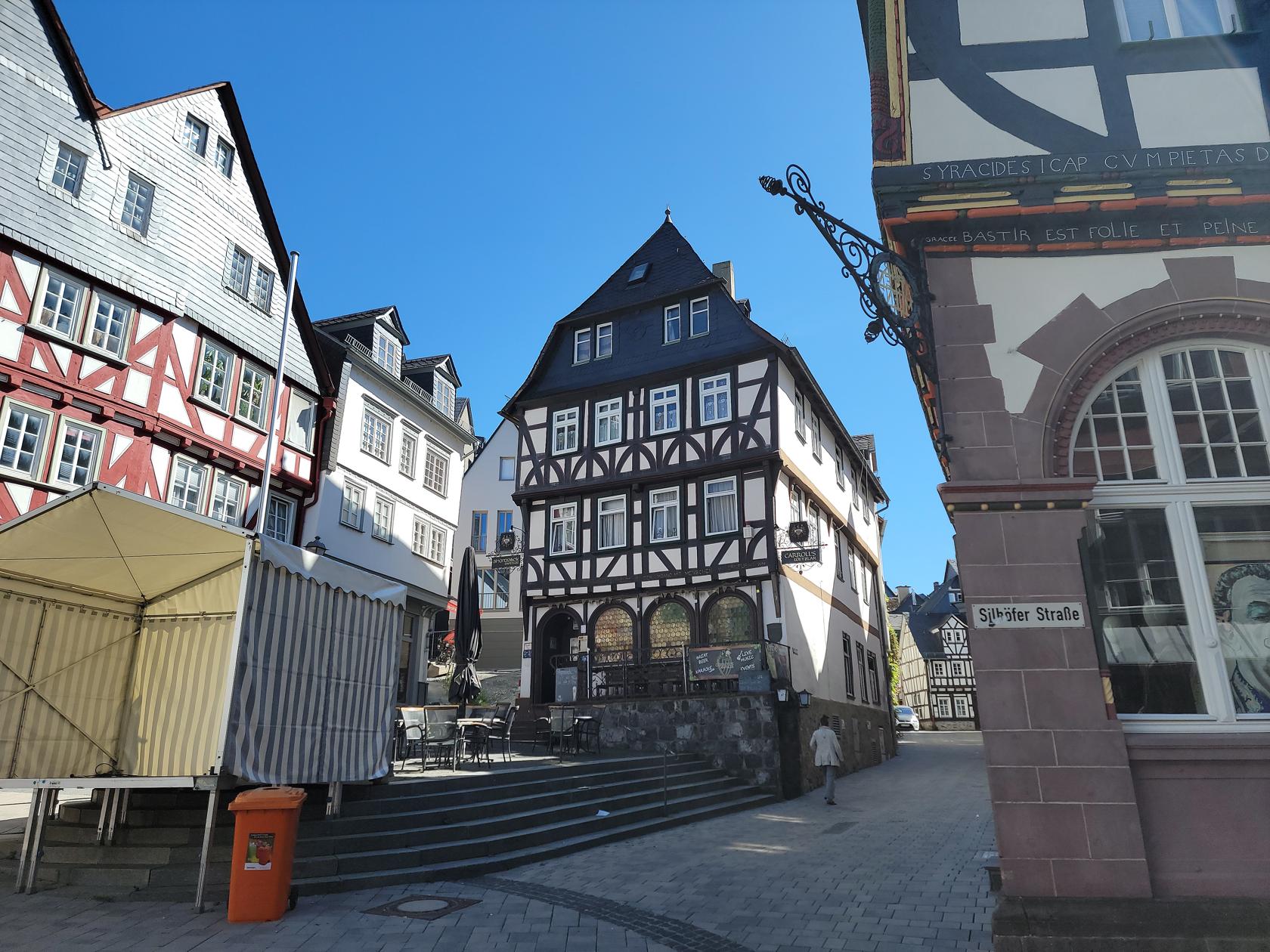
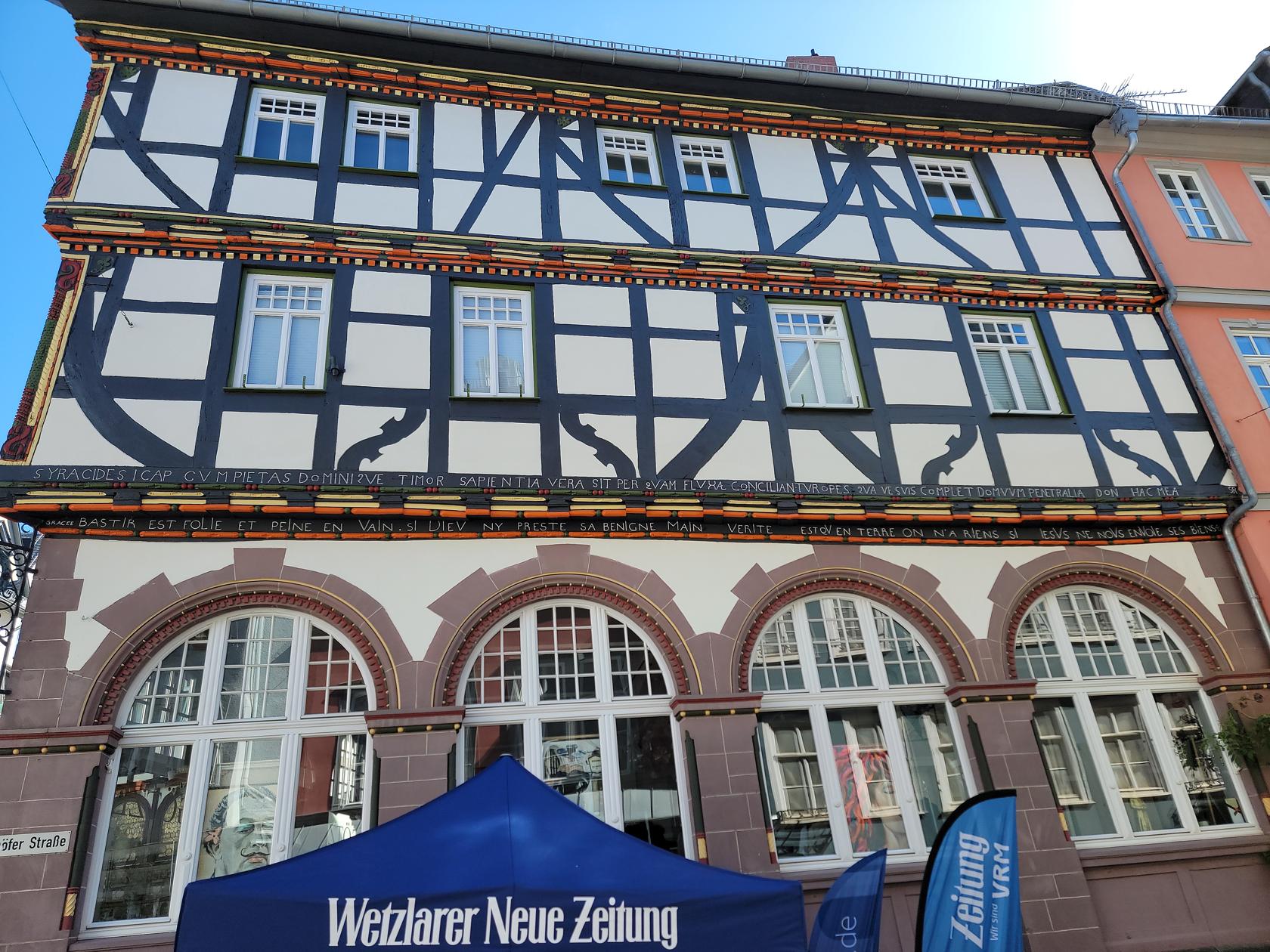
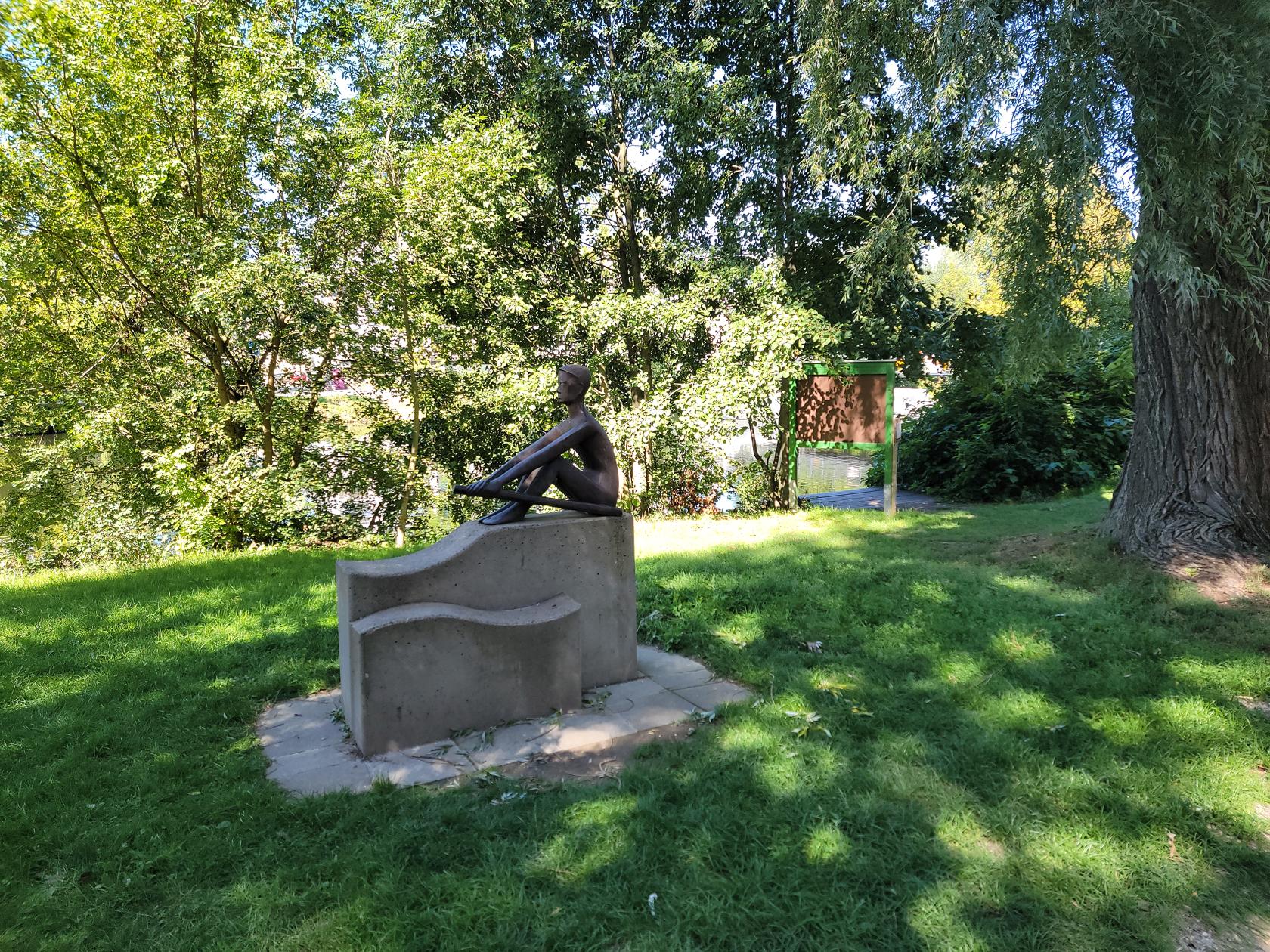
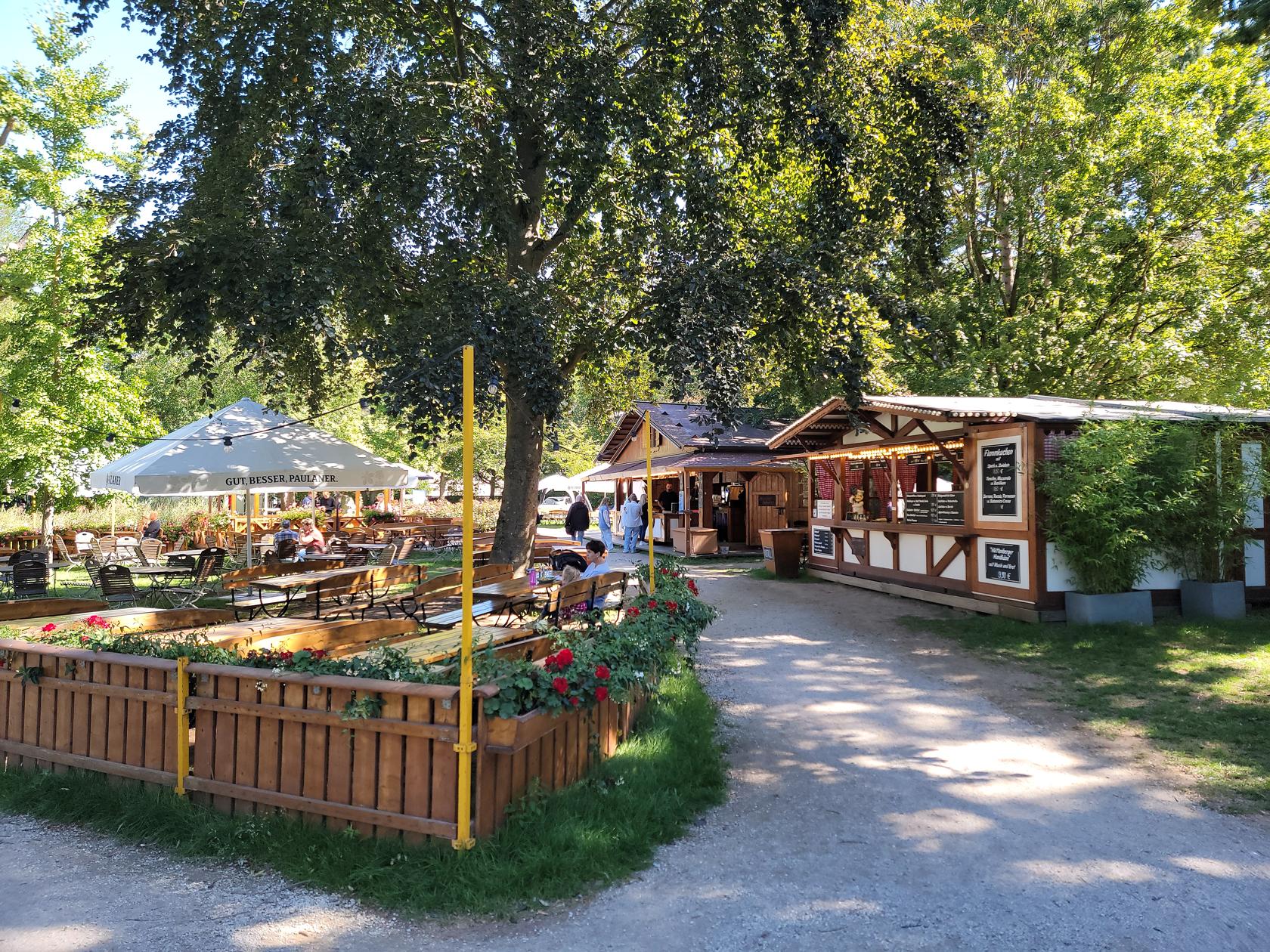
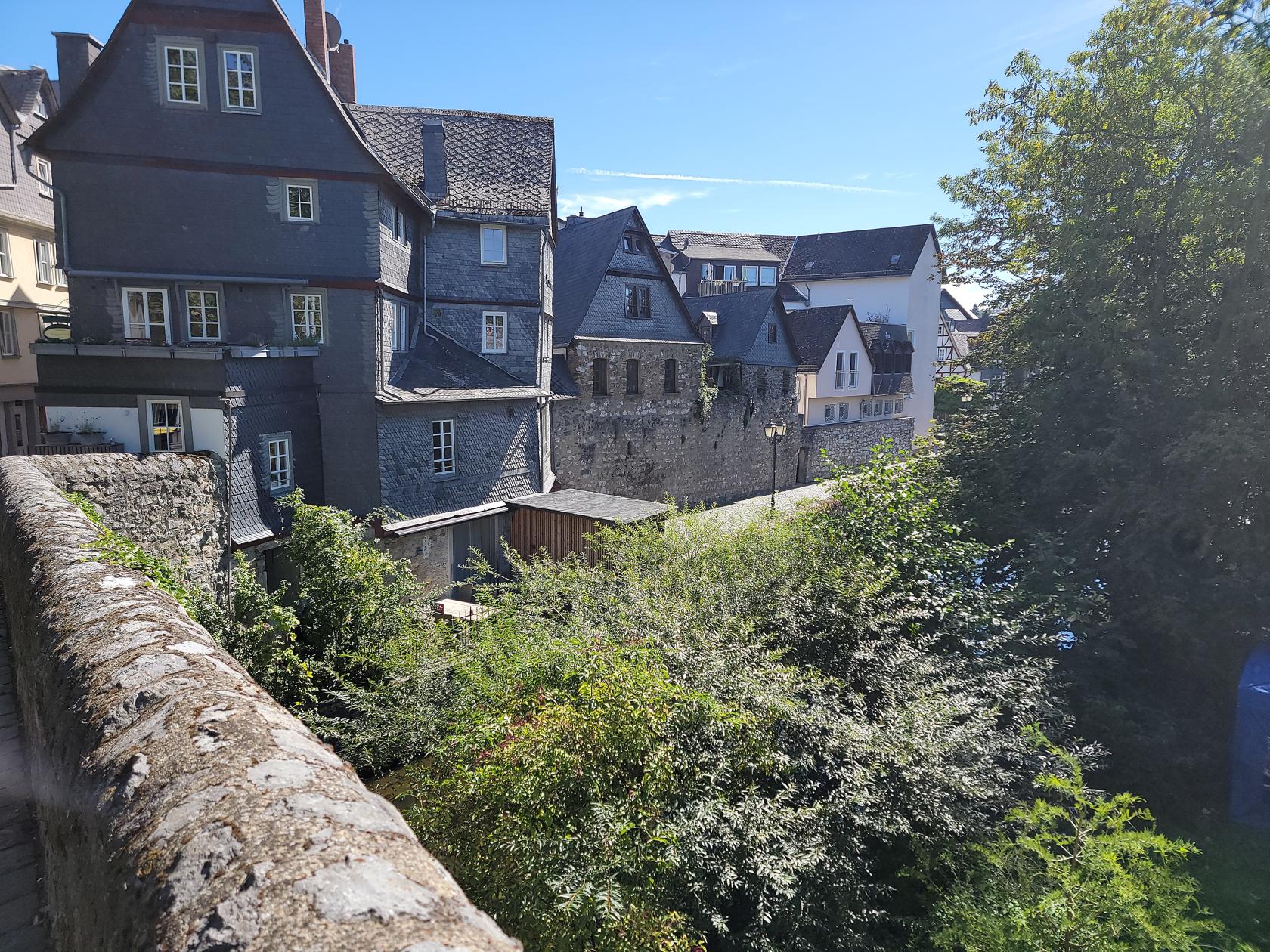
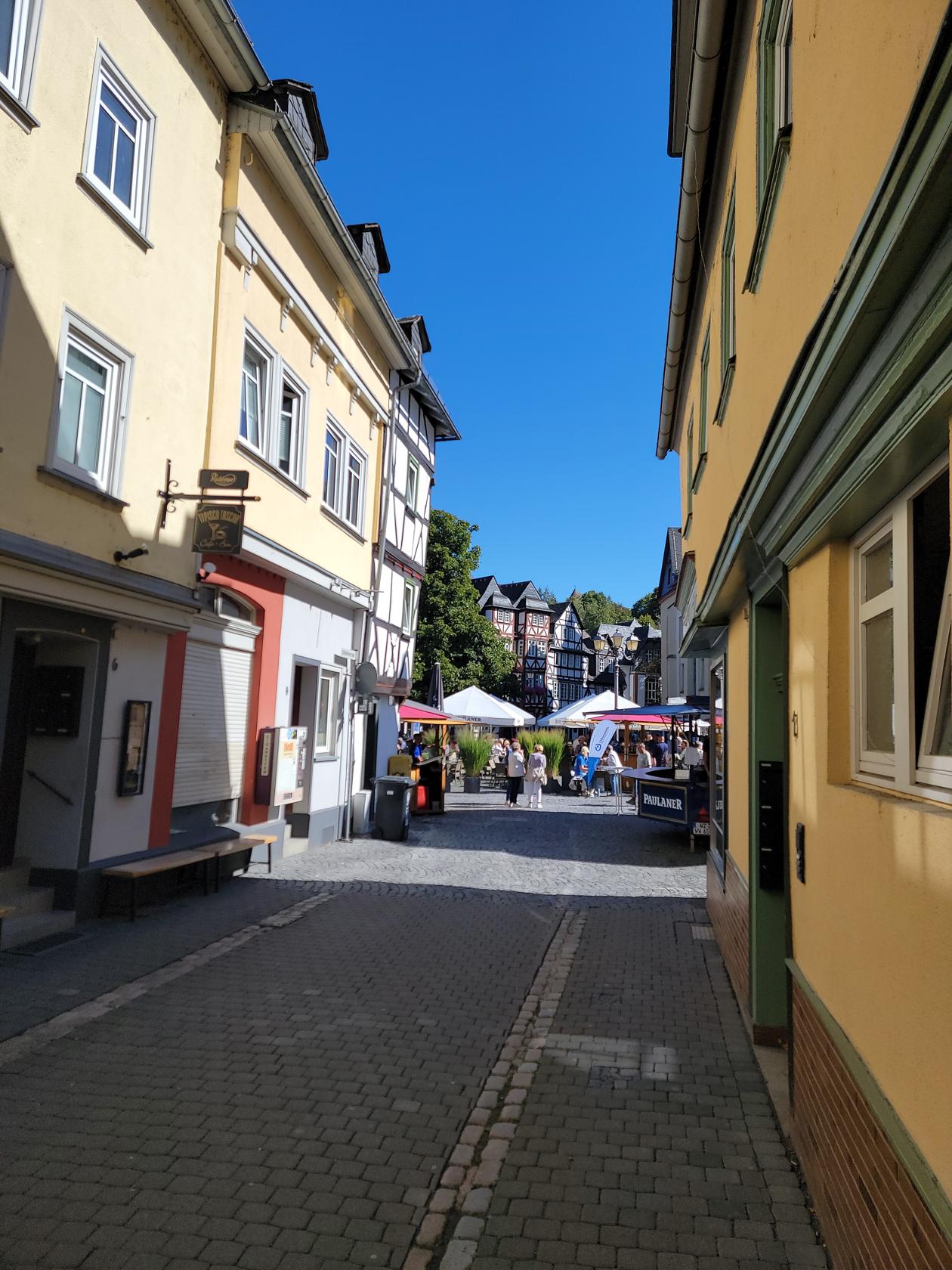
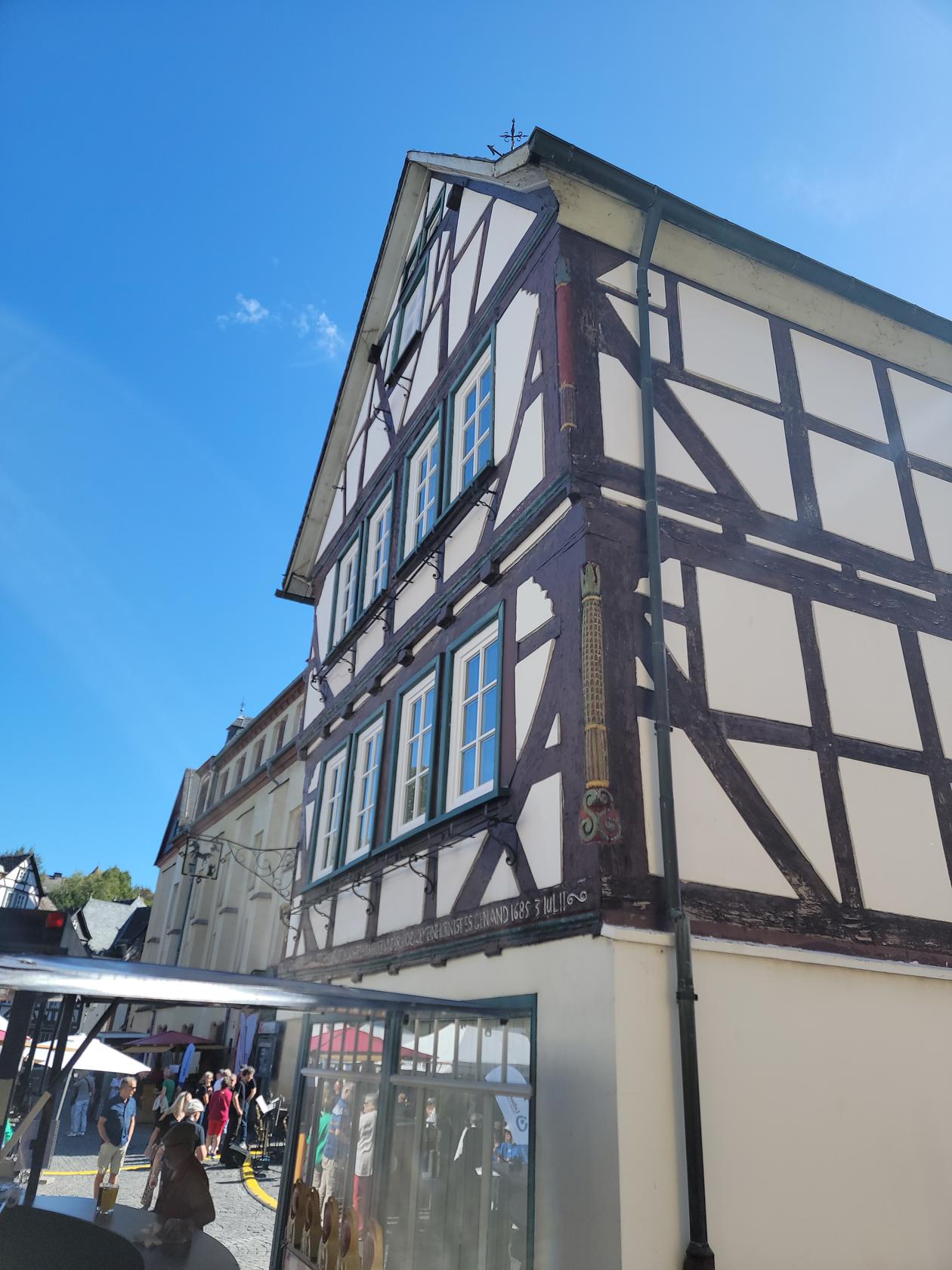
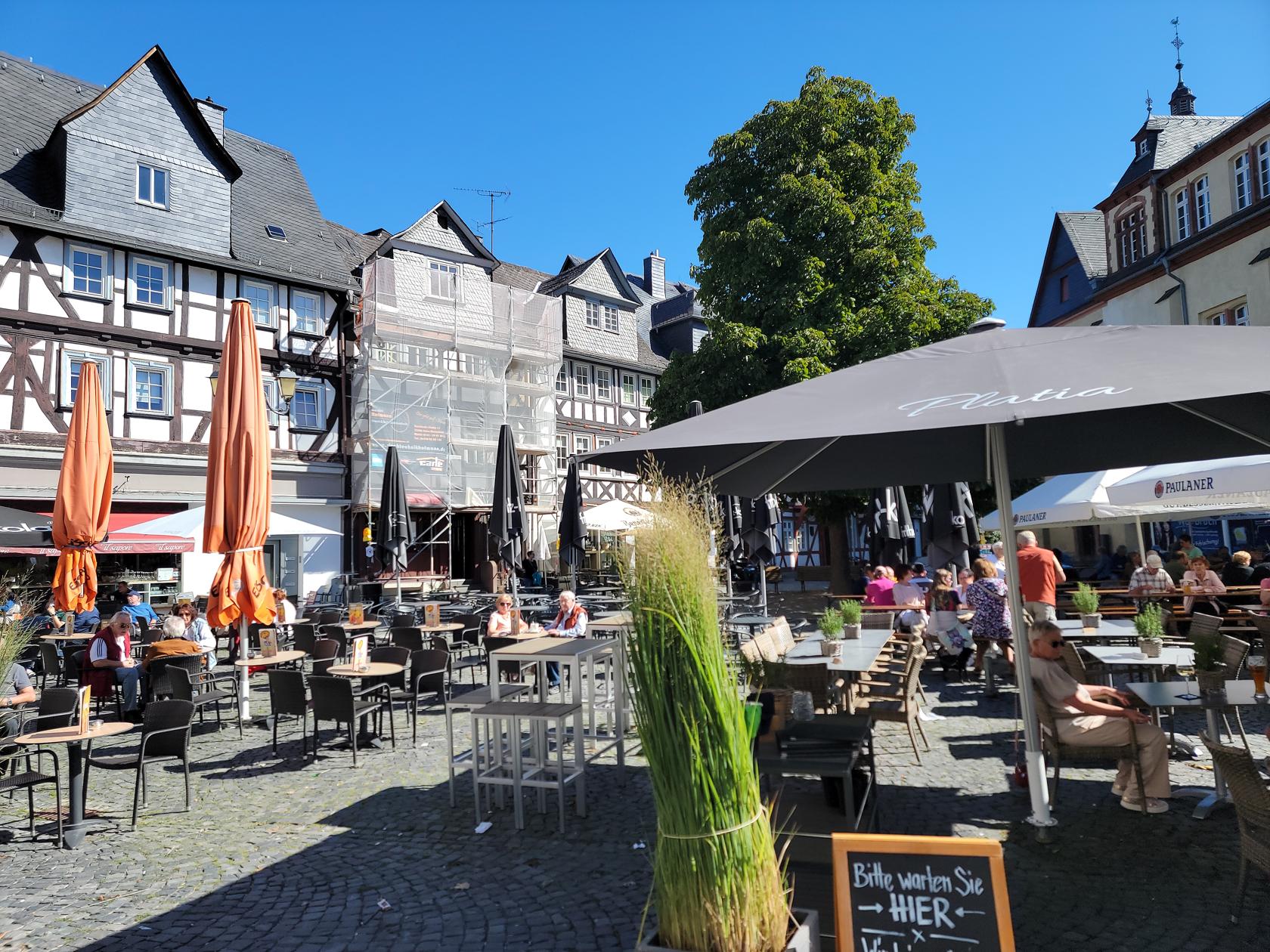
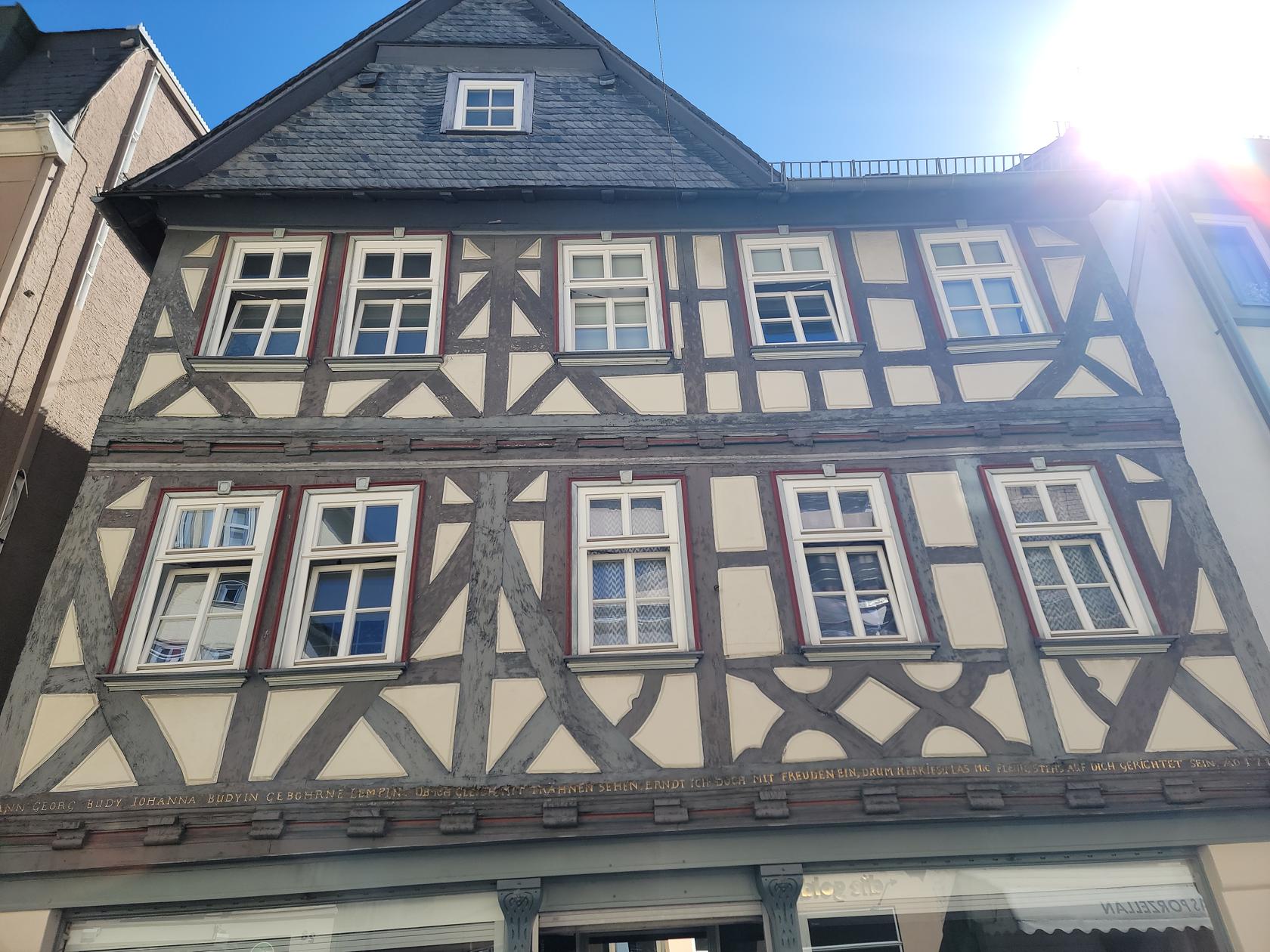
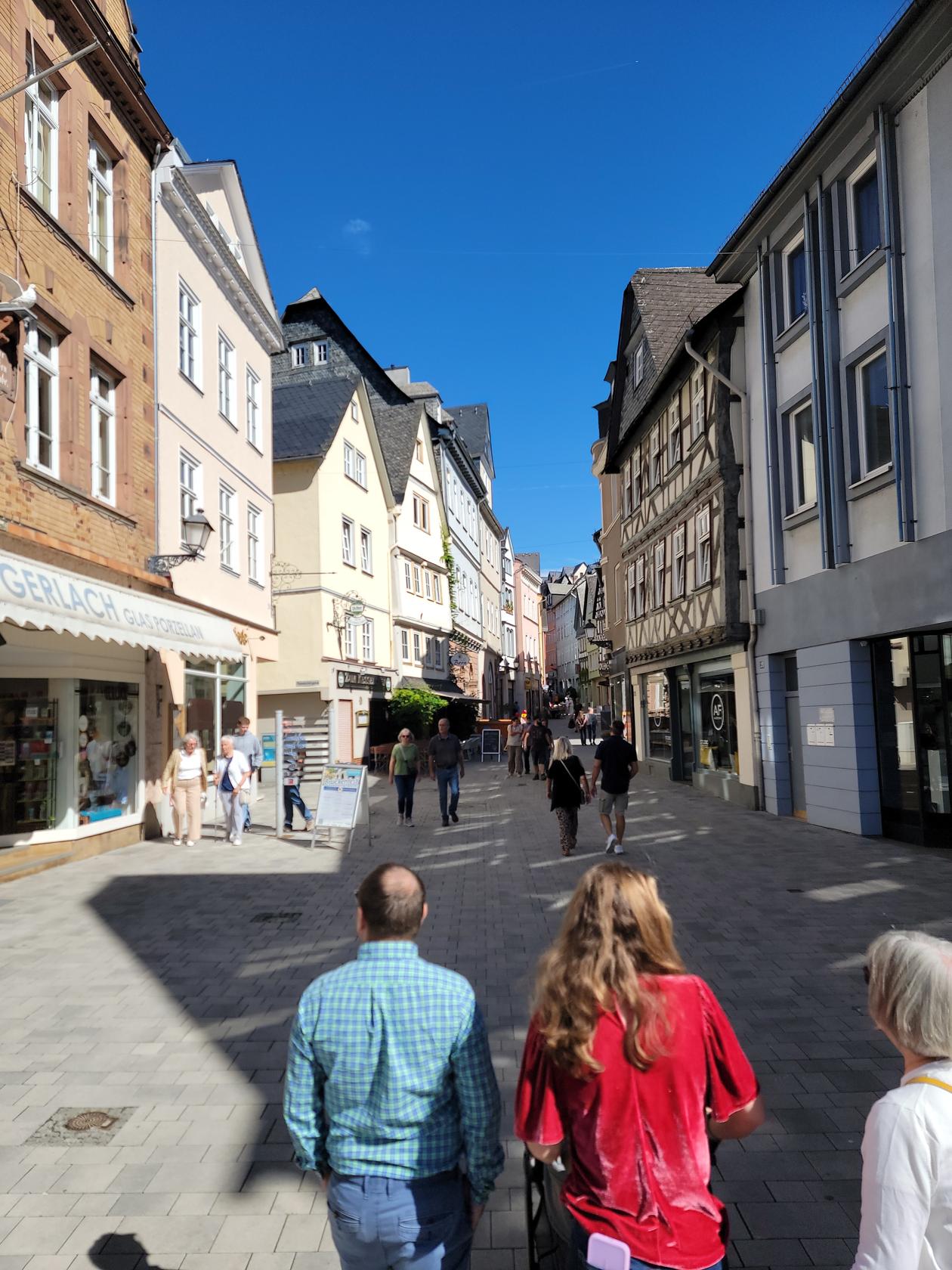
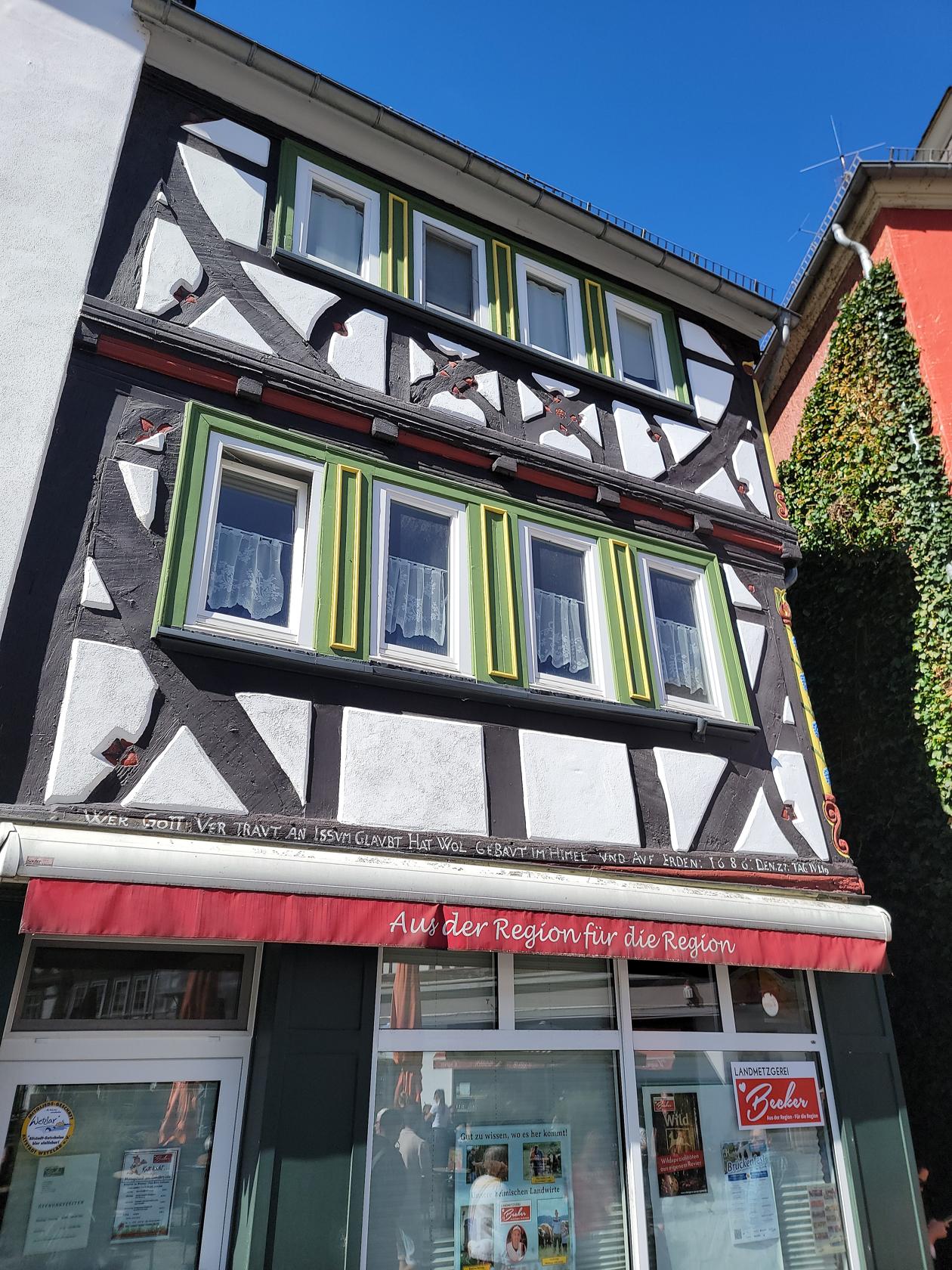
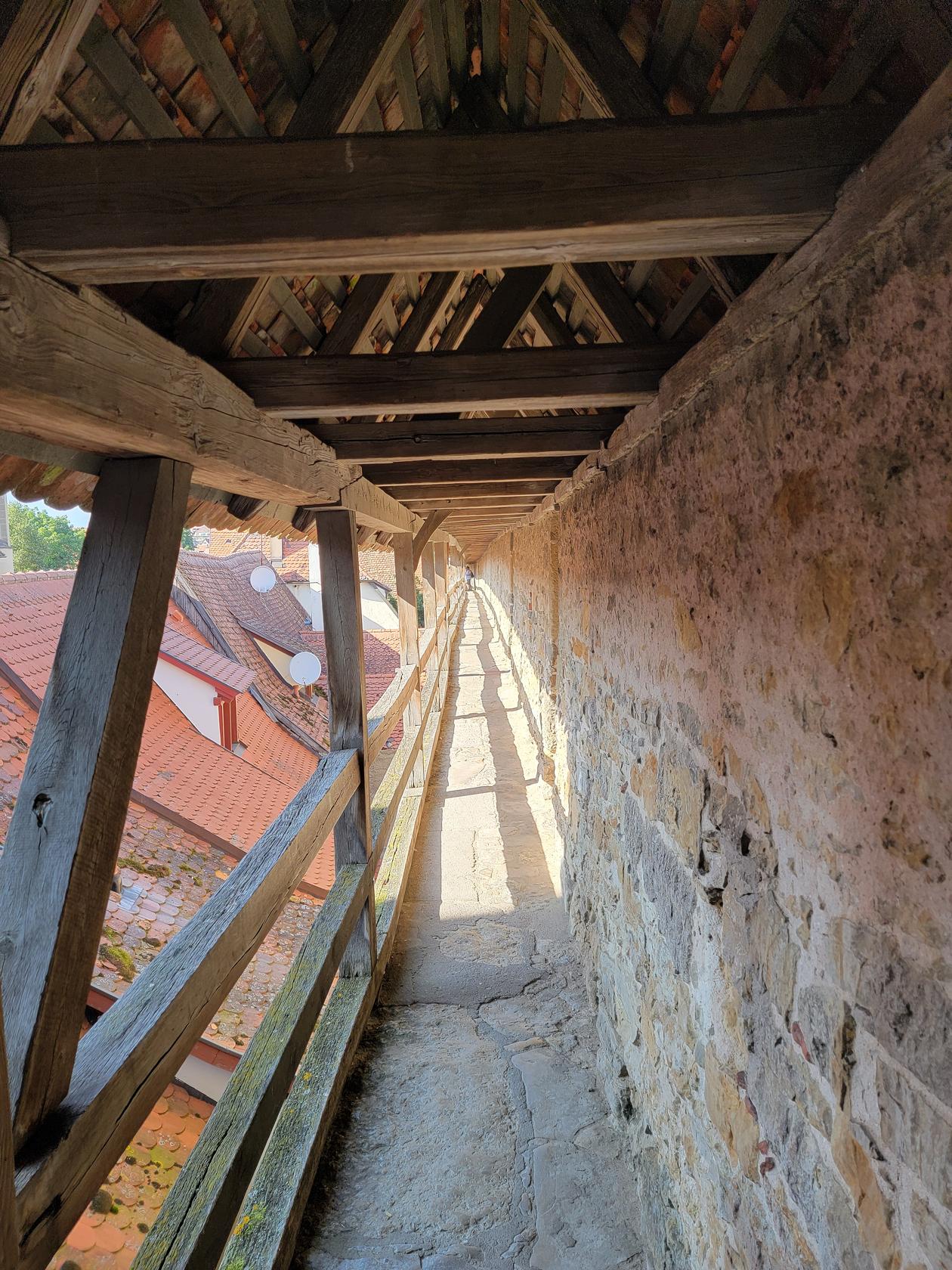
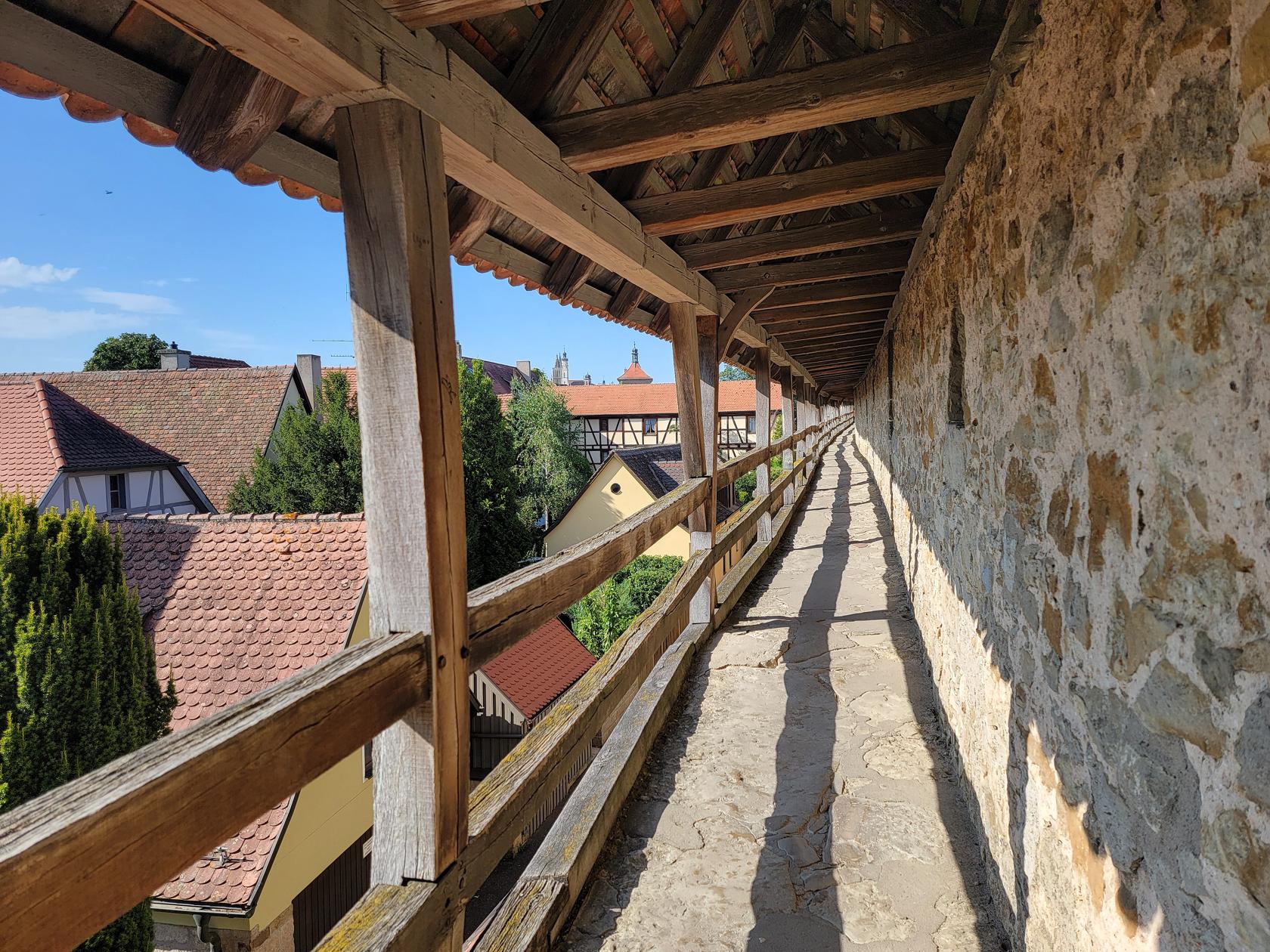
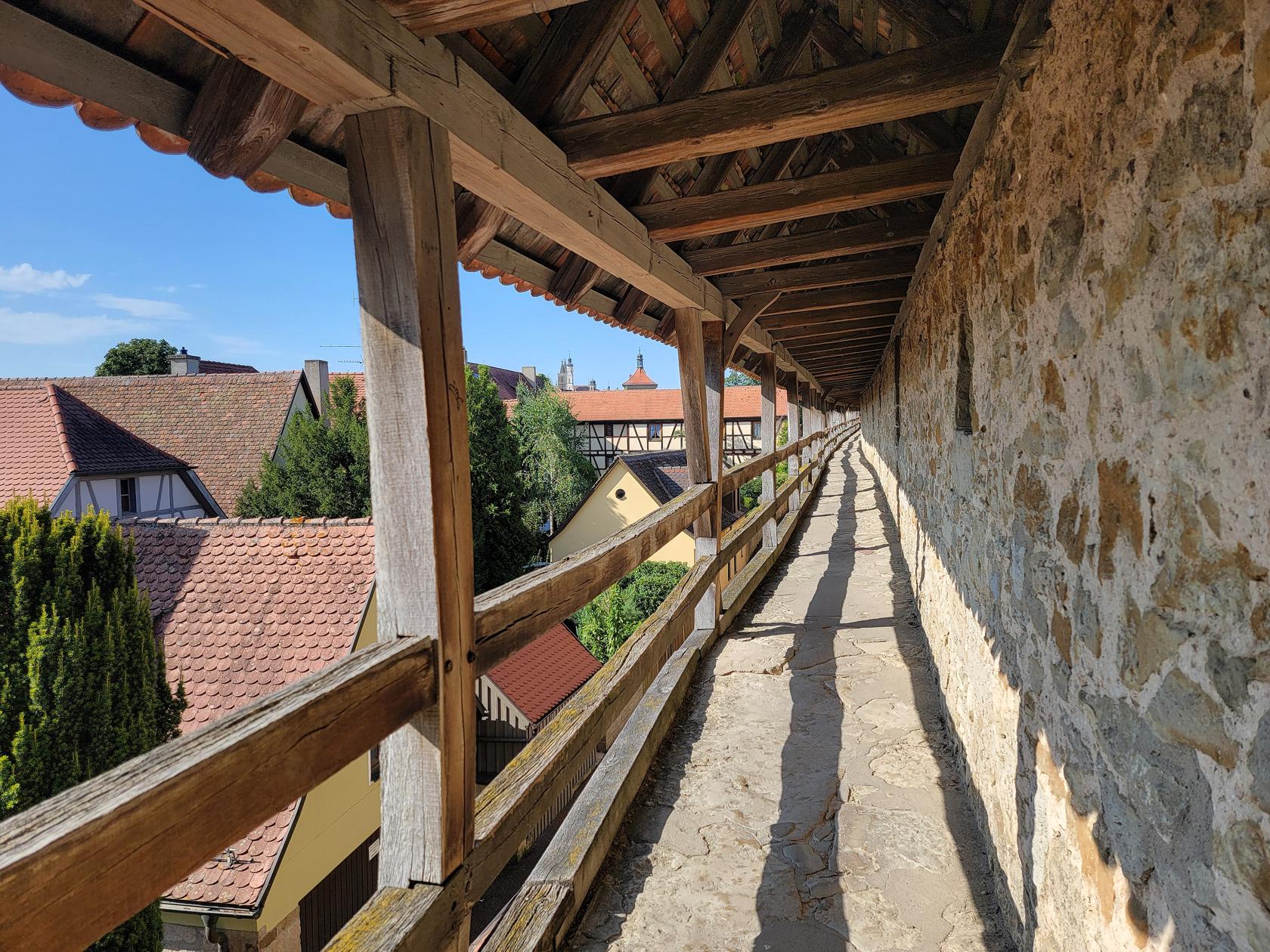
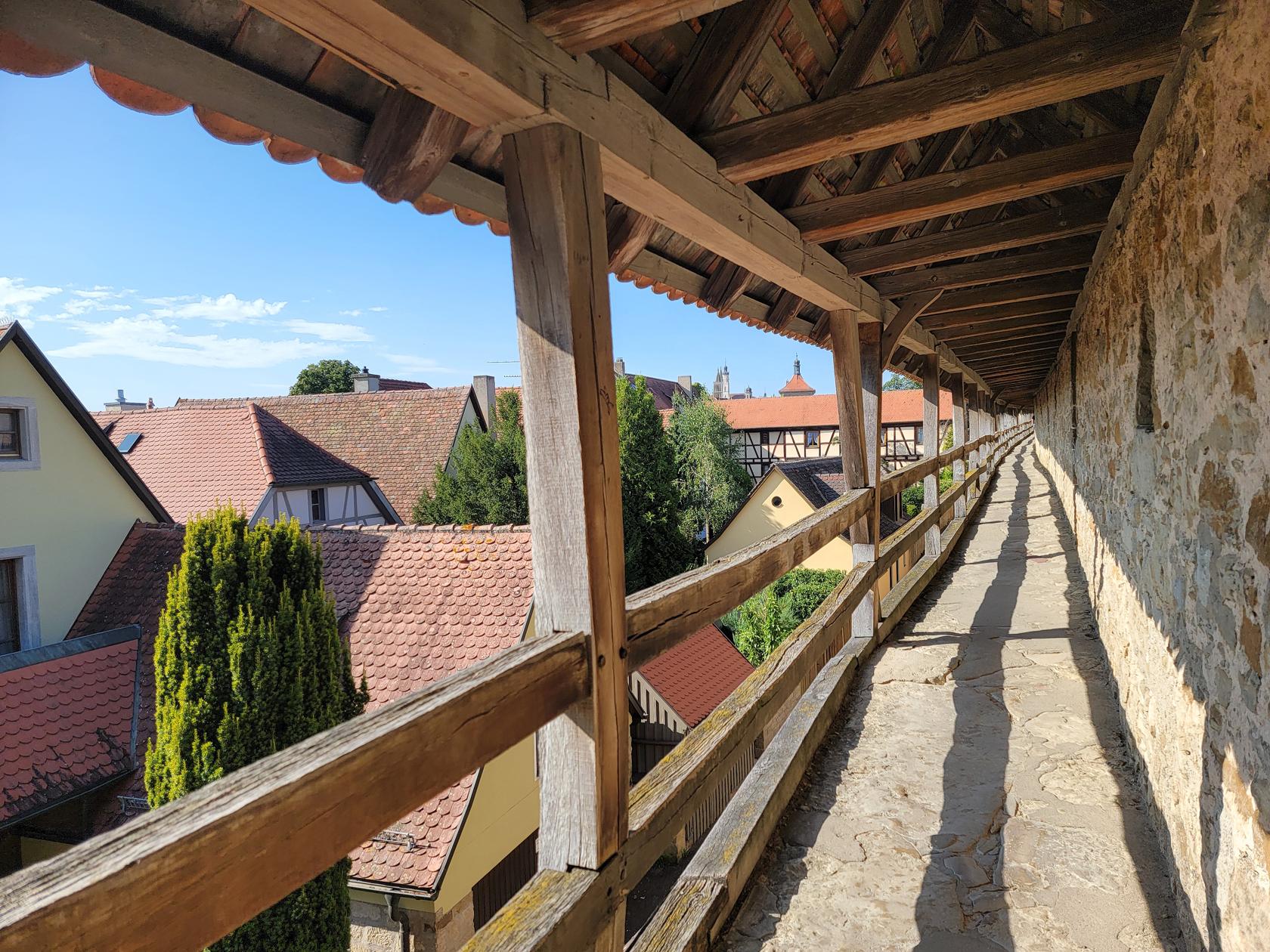
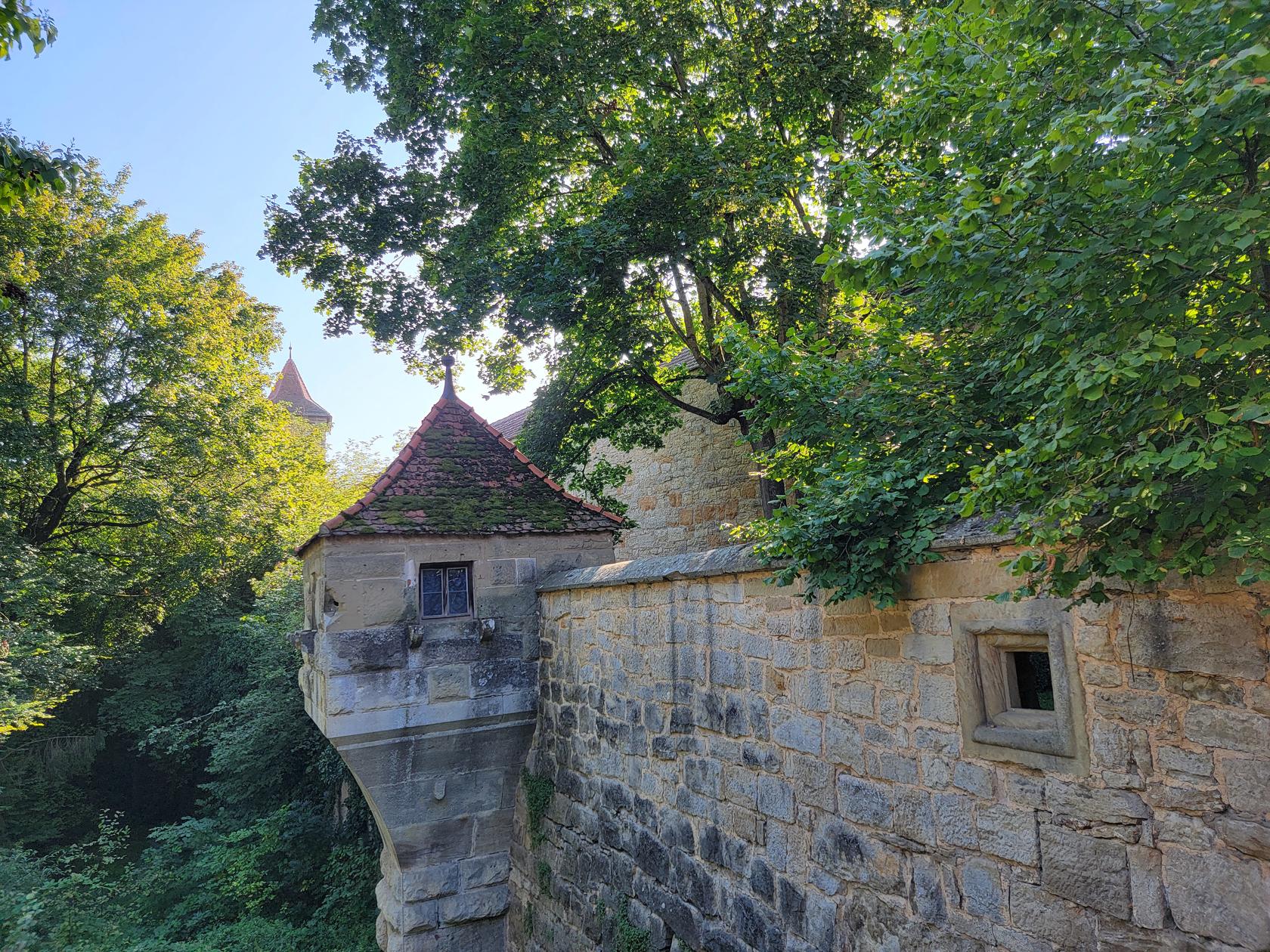
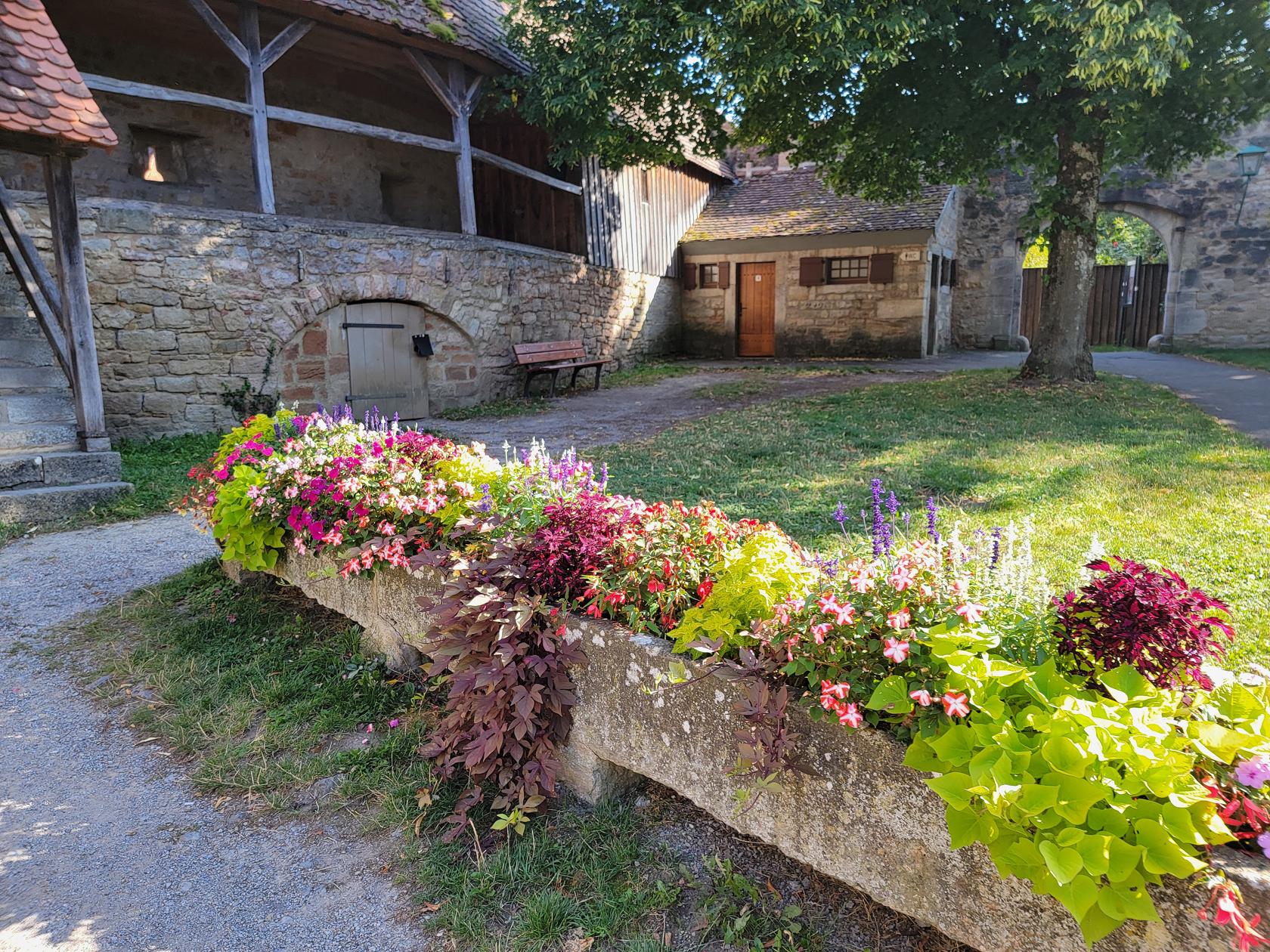
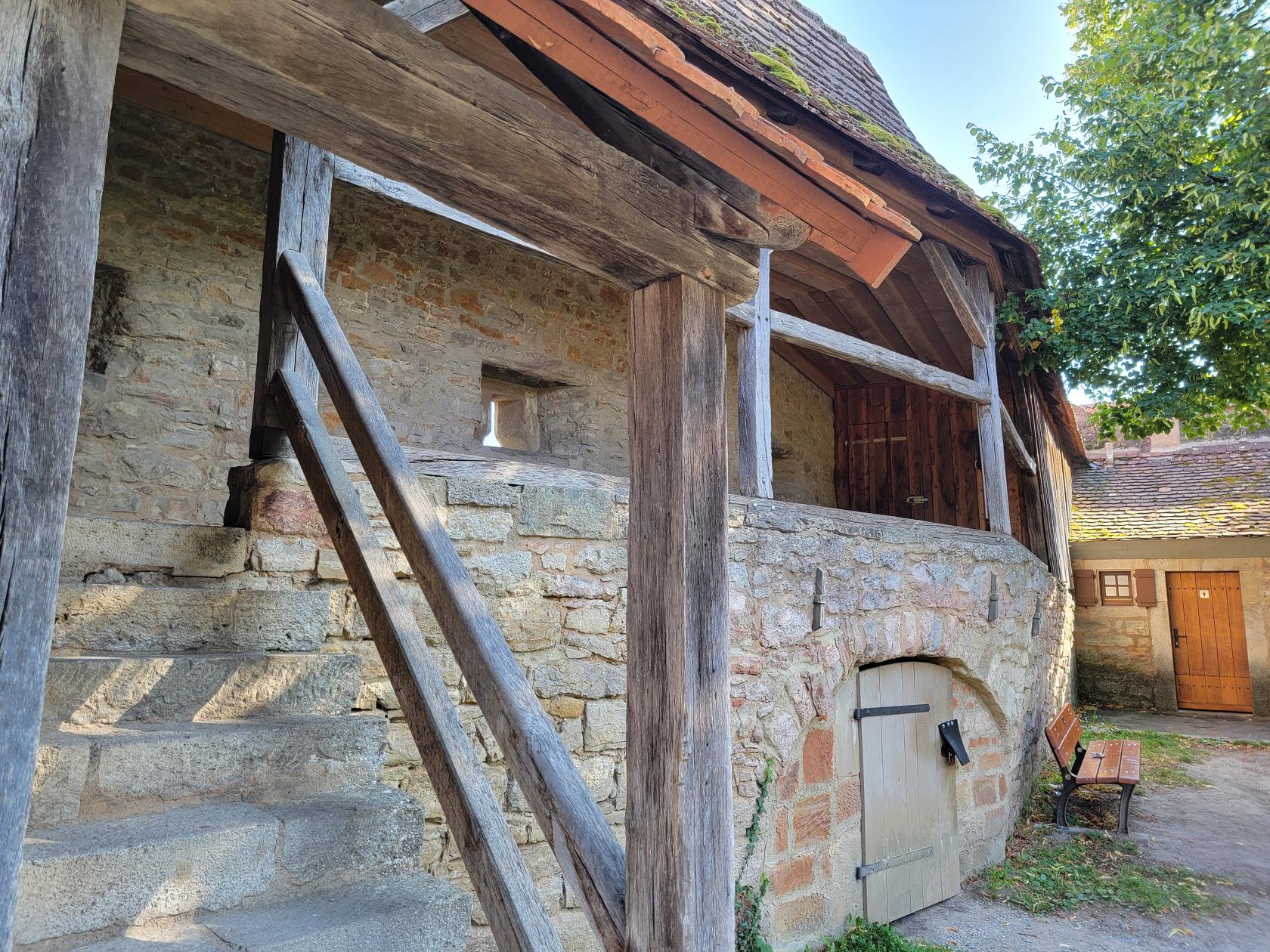
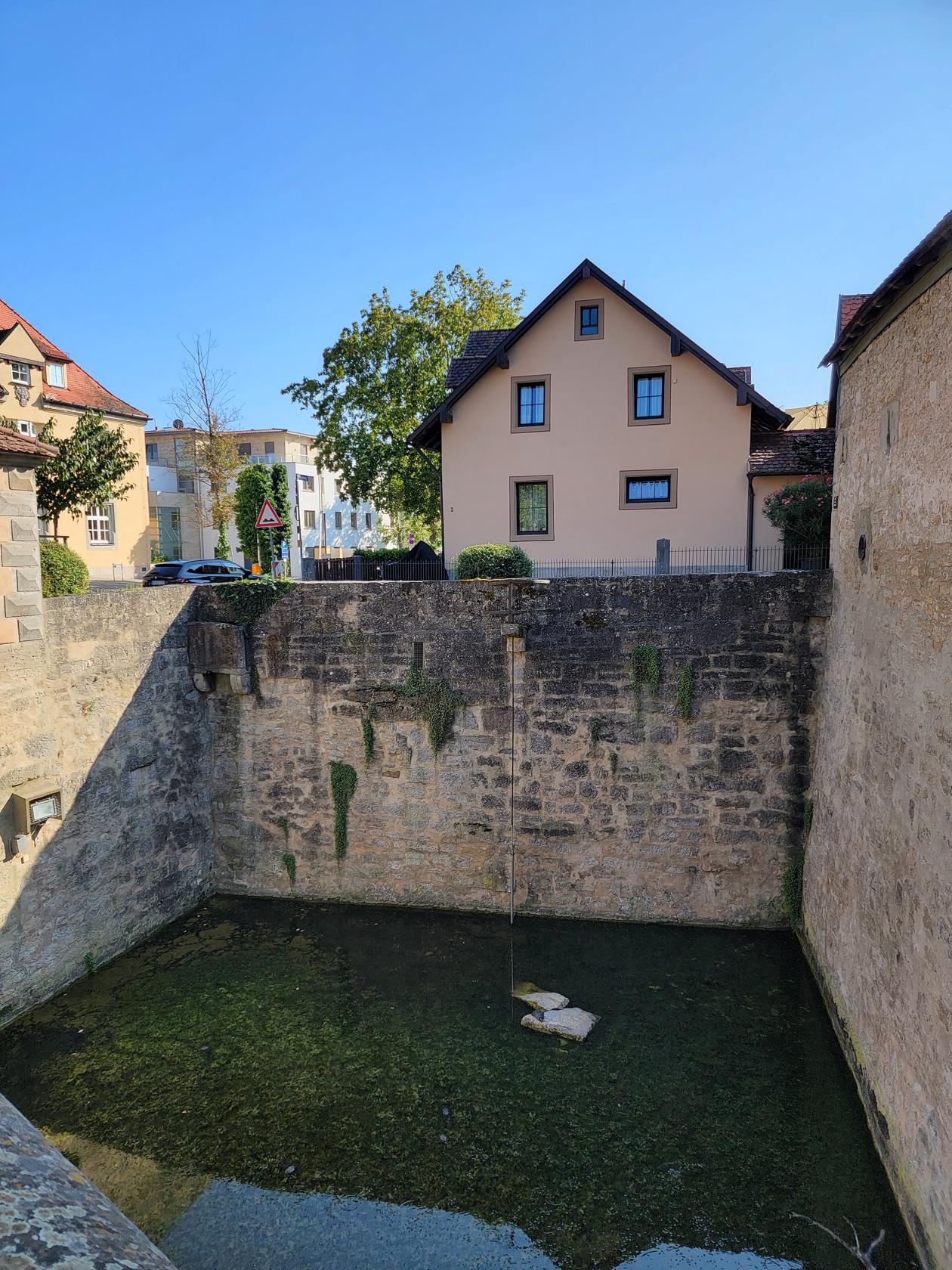
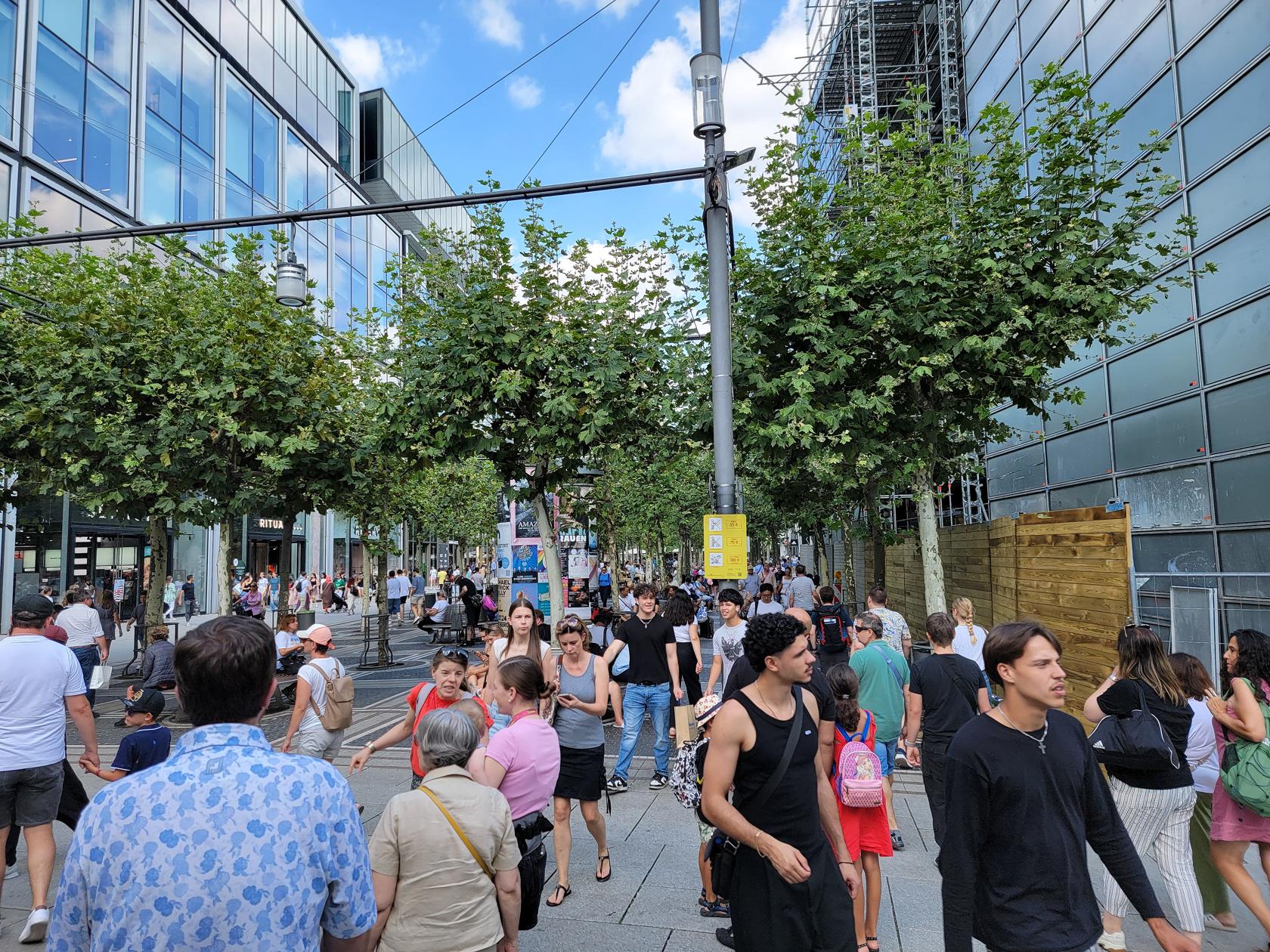
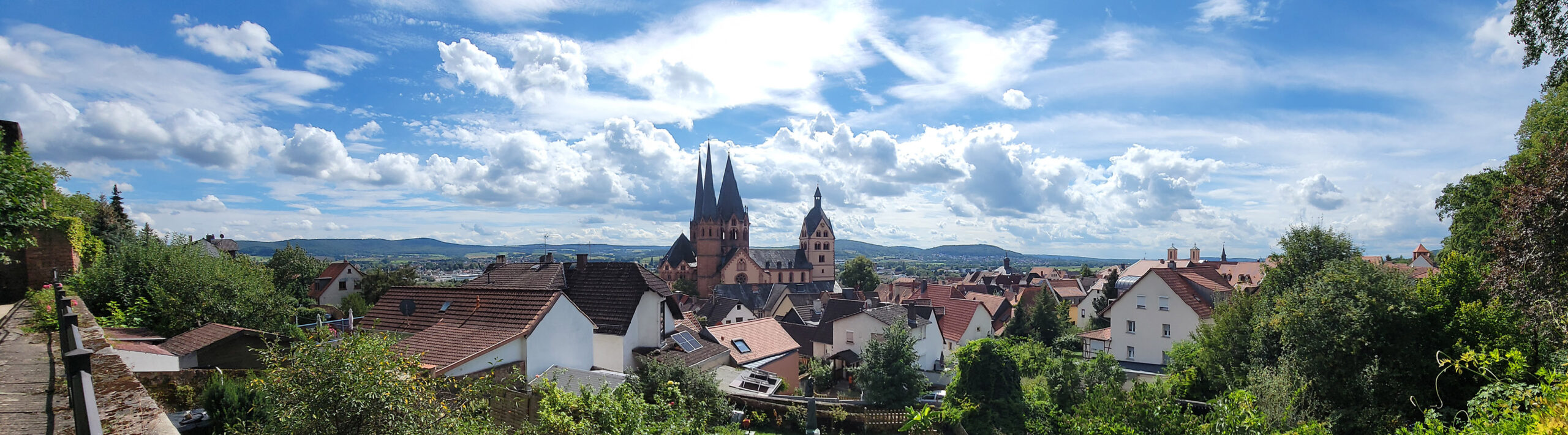
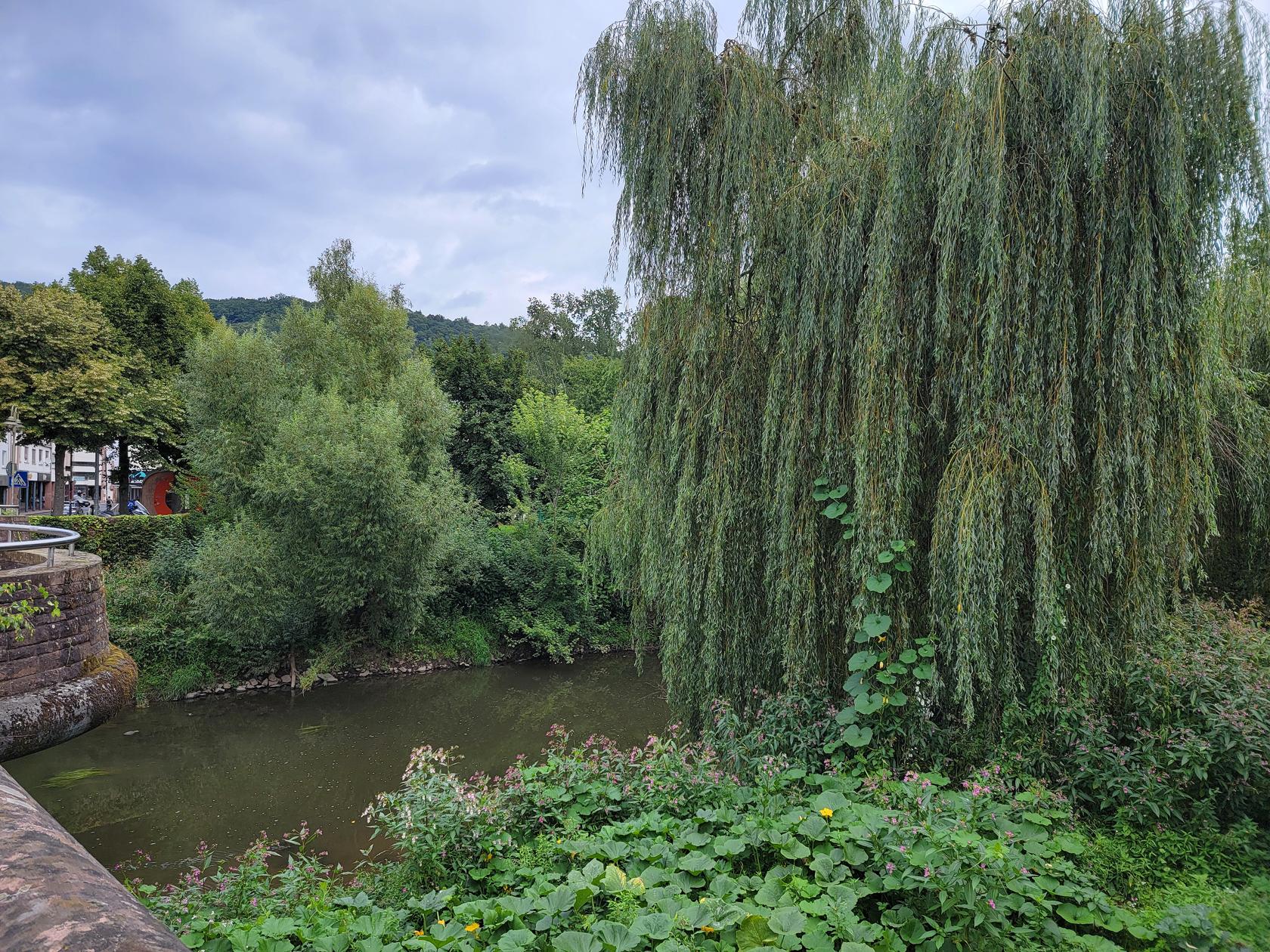
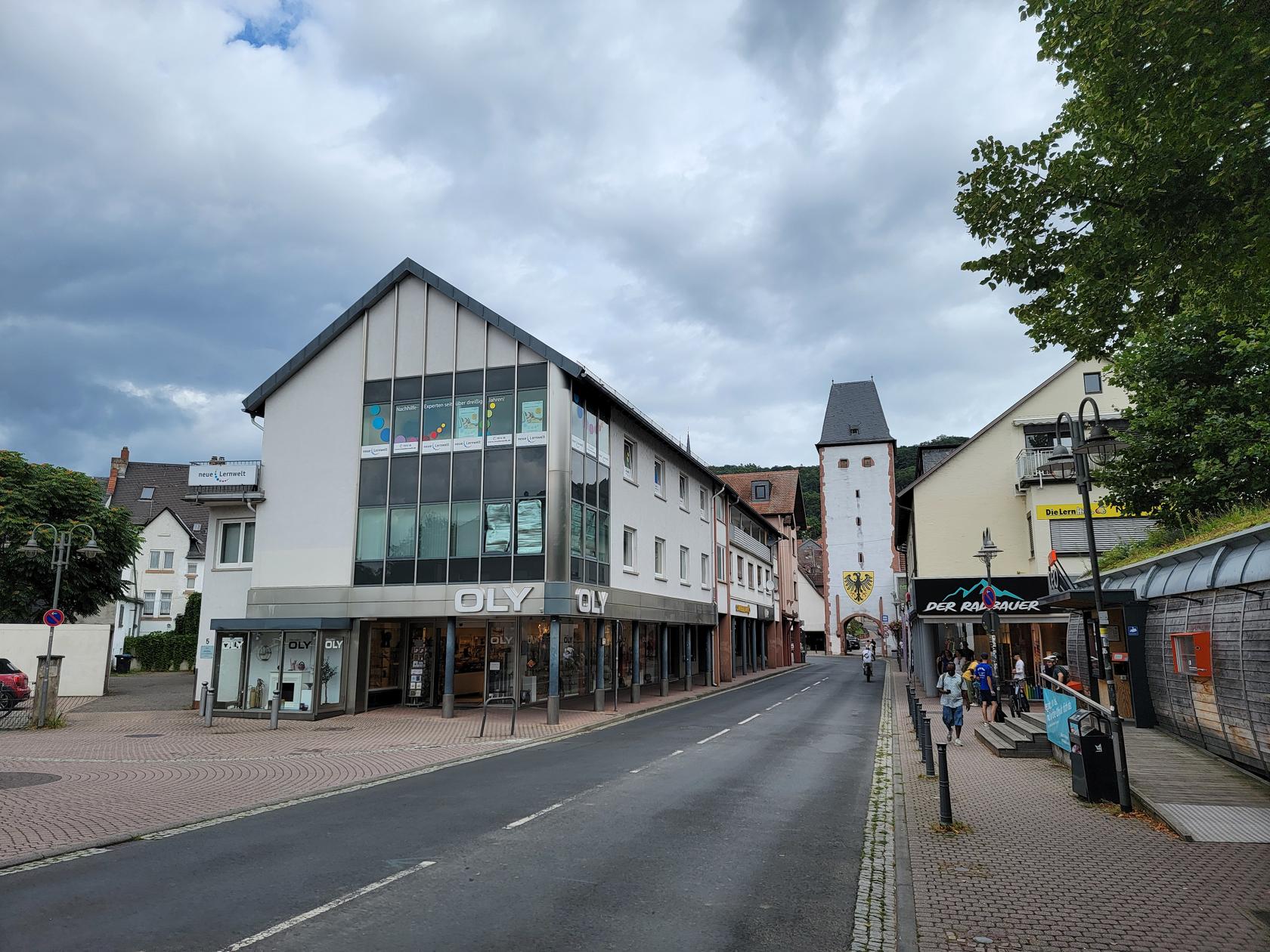
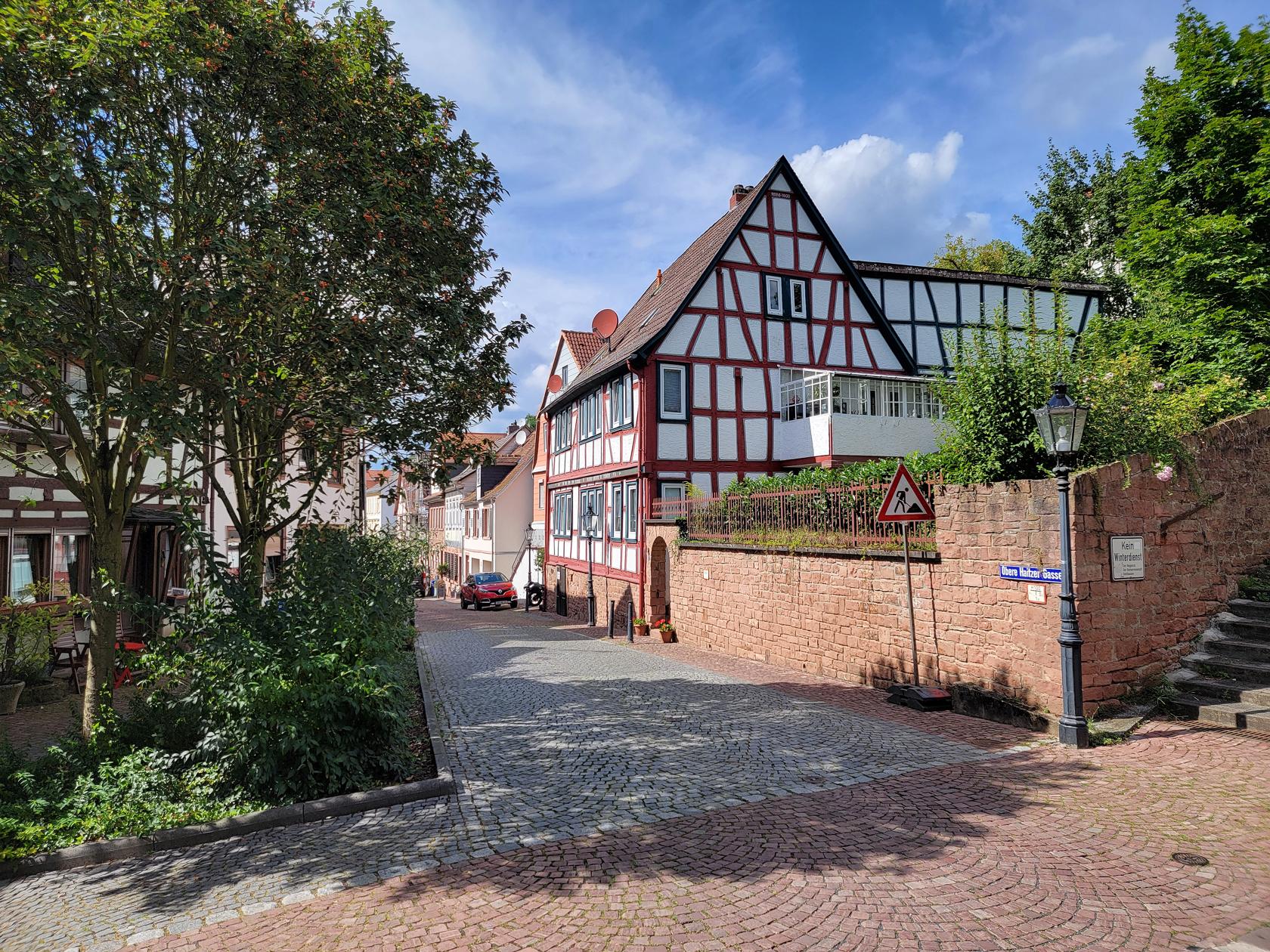
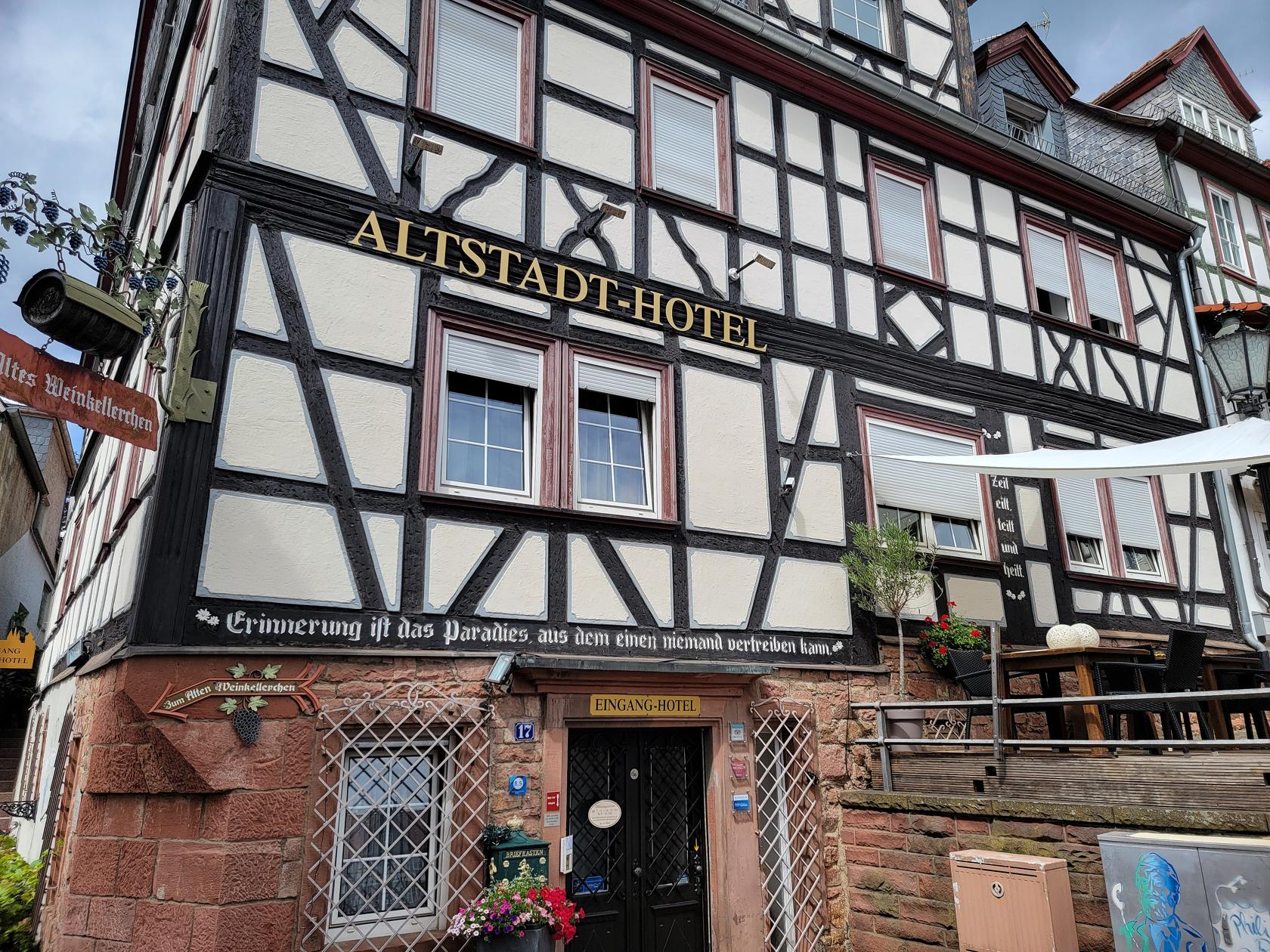
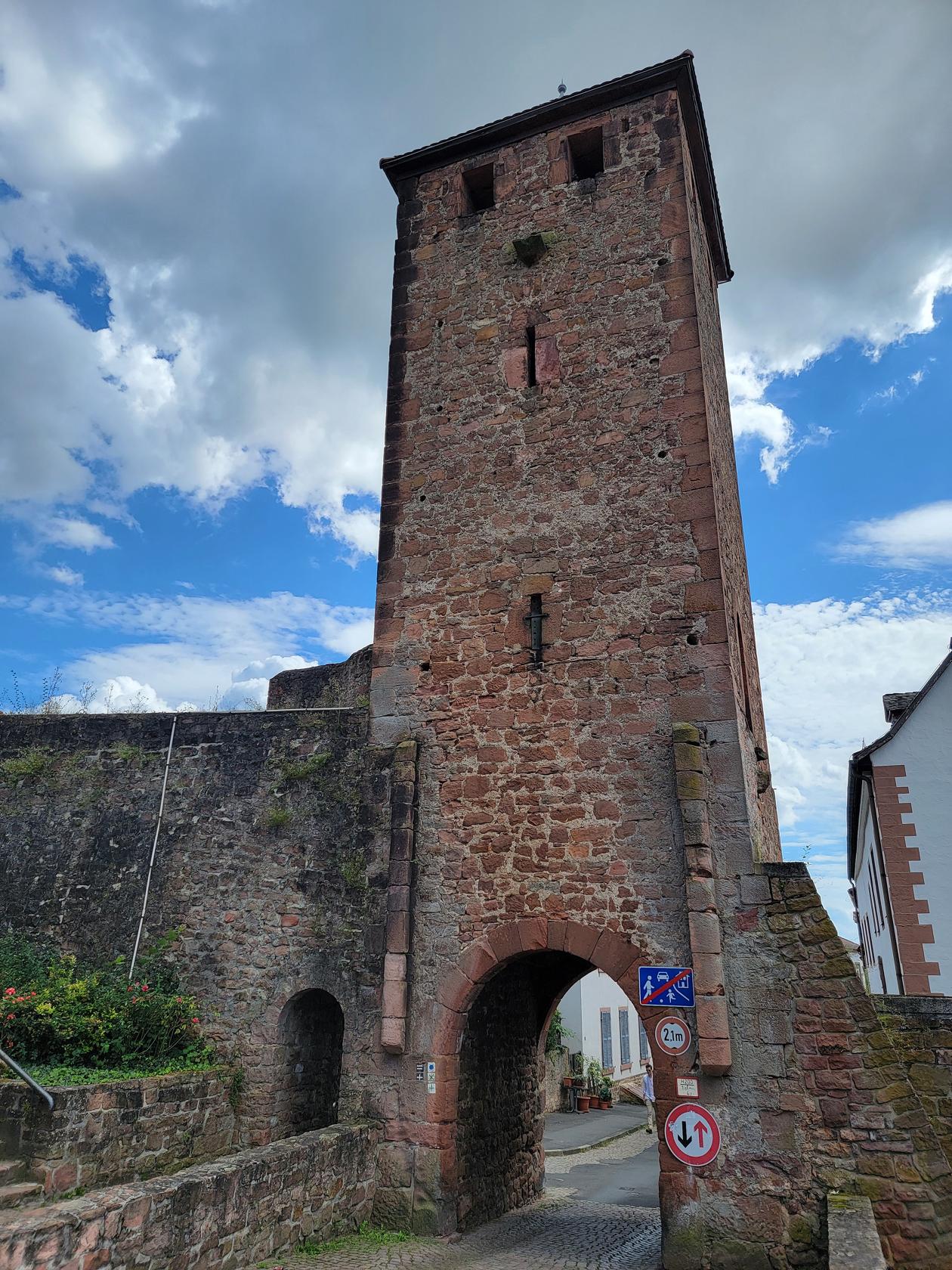
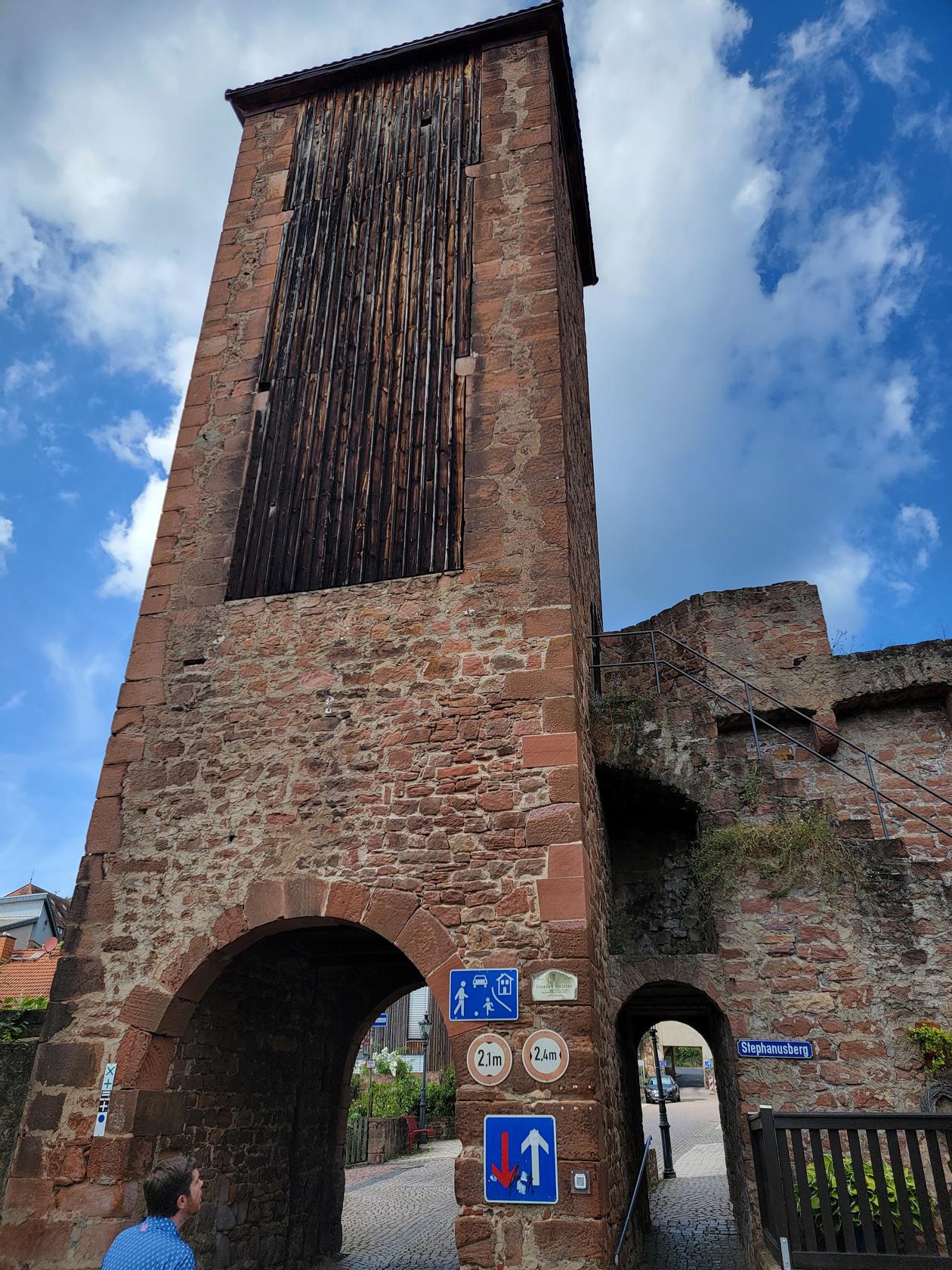
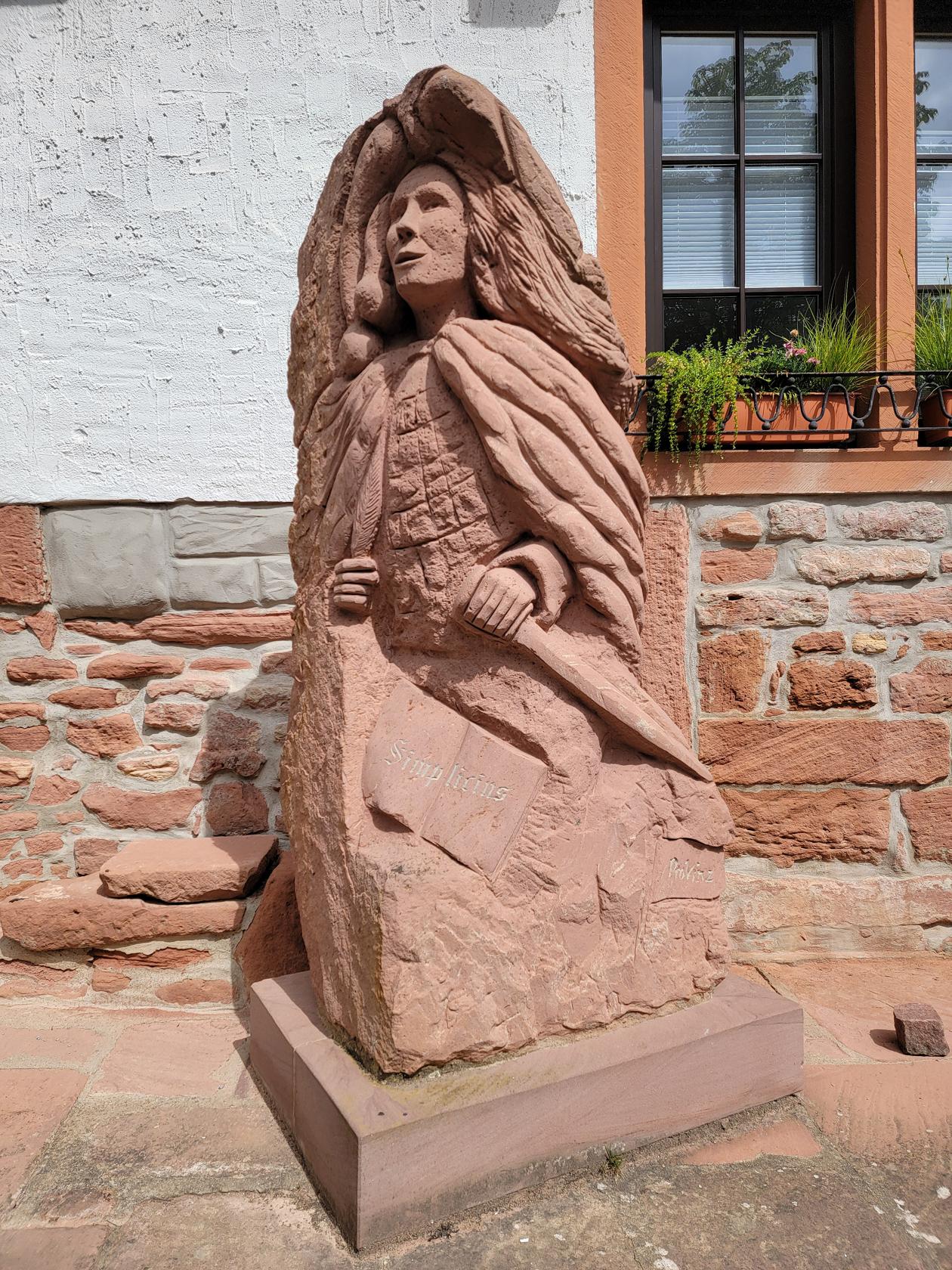
The old town of Wetzlar, Germany, is an old free imperial city whose claim to fame is the seat of the Imperial Supreme Court. It is a favorite among the locals and during this time of year they hold weekend festivities with bands and other attractions. It’s a good destination for a weekend day-trip.
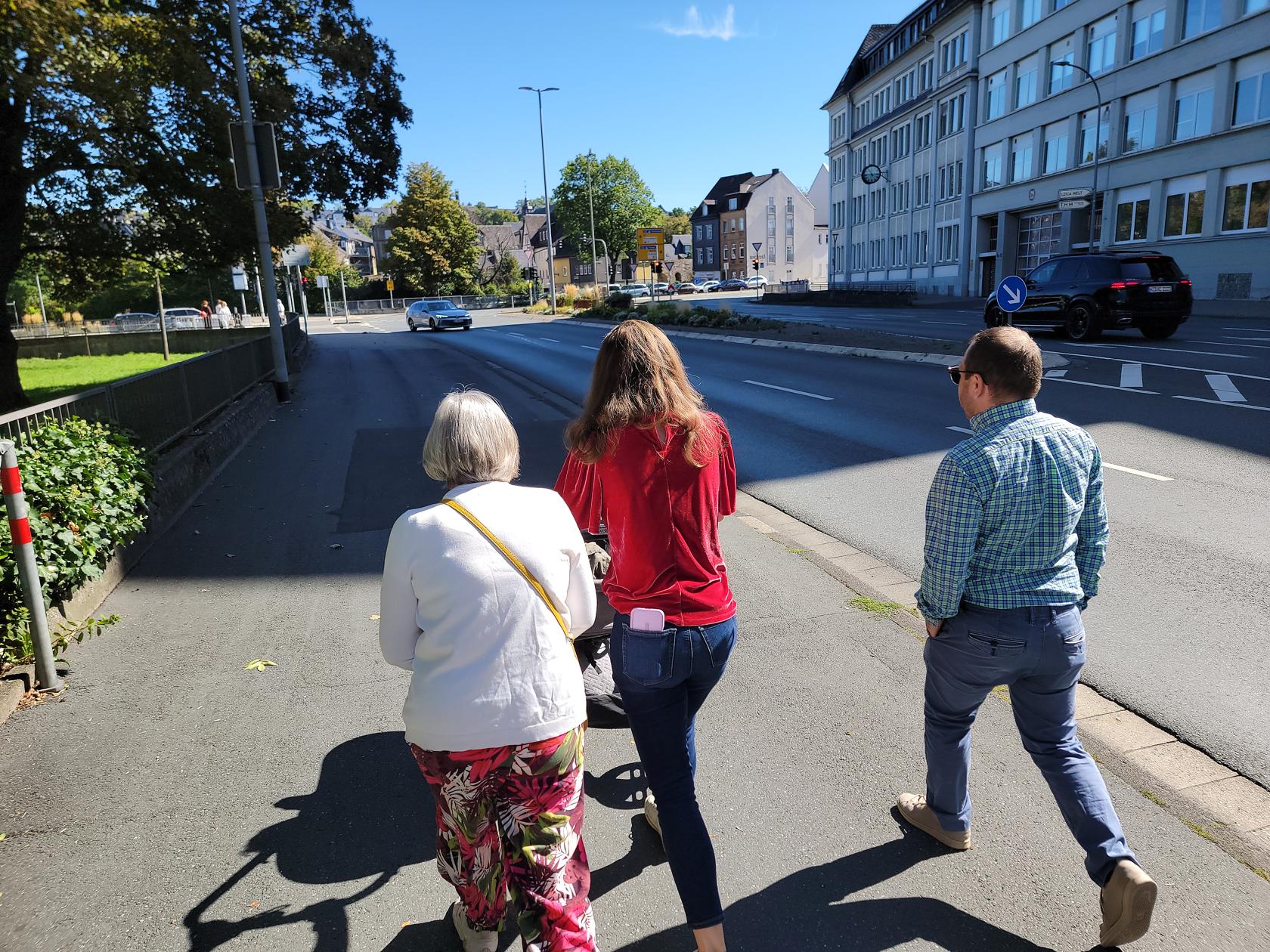
Patti, Ericka and Gabi – Going to the Altstadt – Wetzlar, Germany
Wetzlar
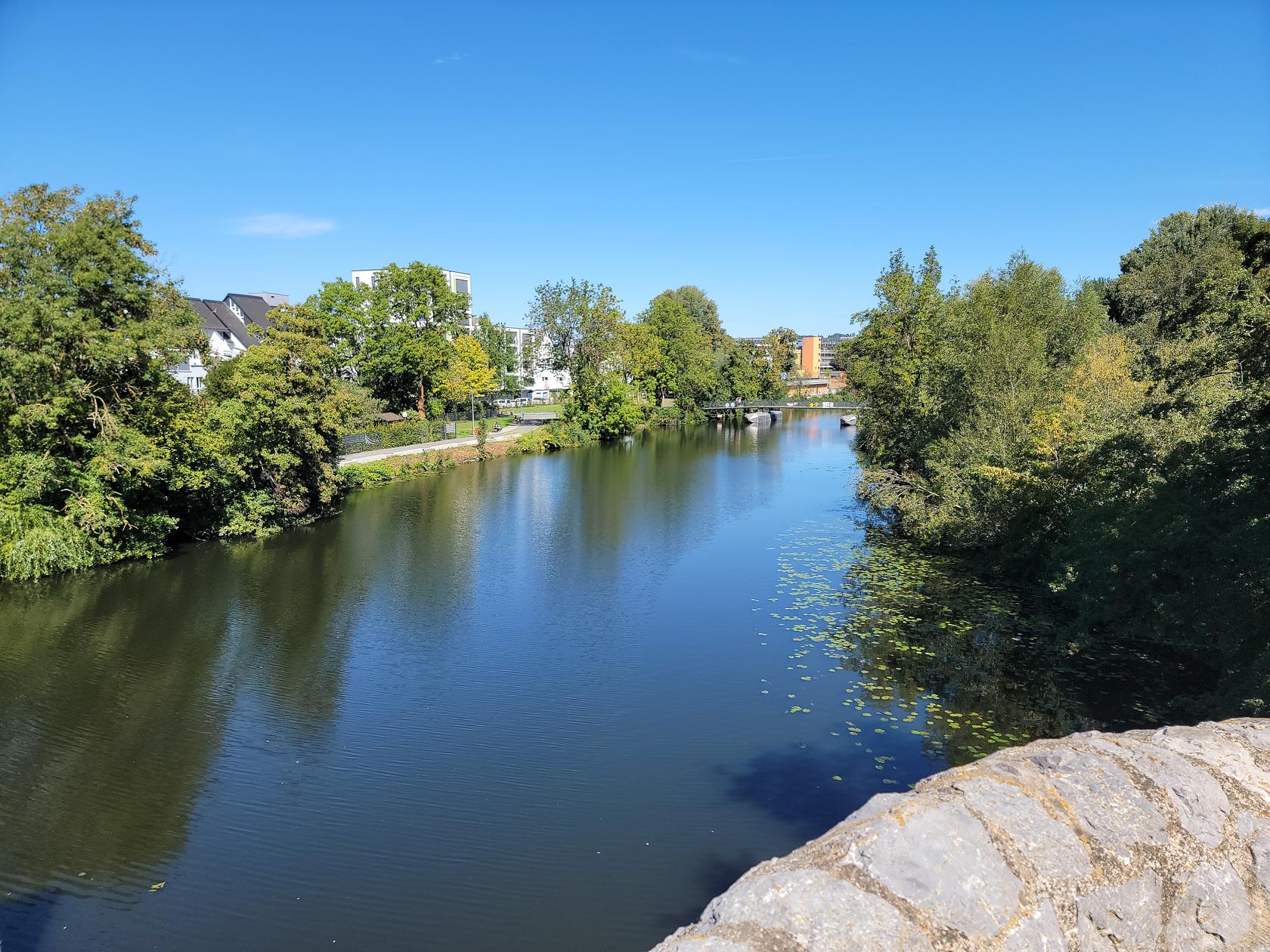
Located on the Lahn River, Wetzlar is a fan favorite for canoist, kayakers and other non-motor boat enthusiasts. The waterfront has a small boat launch that eases entry to the Lahn for people who come to enjoy the fast running white water. Rentals are available in town for those that do not own their own equipment. The town is also a mecca for cyclists and there are several places in town where bike rentals are offered.
The town itself has a few main squares that setup for weekend festivities, the Schillerplatz, the Eisenplatz and less so the Domplatz. There is also the area along the Mühlgraben that is lined with Biergarten and other stalls where food and beverages can be purchased, as you walk lazily through area along the river.
Entering Schillerplatz – Wetzlar, Germany
Schillerplatz – Wetzlar, Germany
Schillerplatz – Wetzlar, Germany
Silhöferstrasse – Wetzlar, Germany
Silhöferstrasse – Wetzlar, Germany
Schillerplatz – Wetzlar, Germany
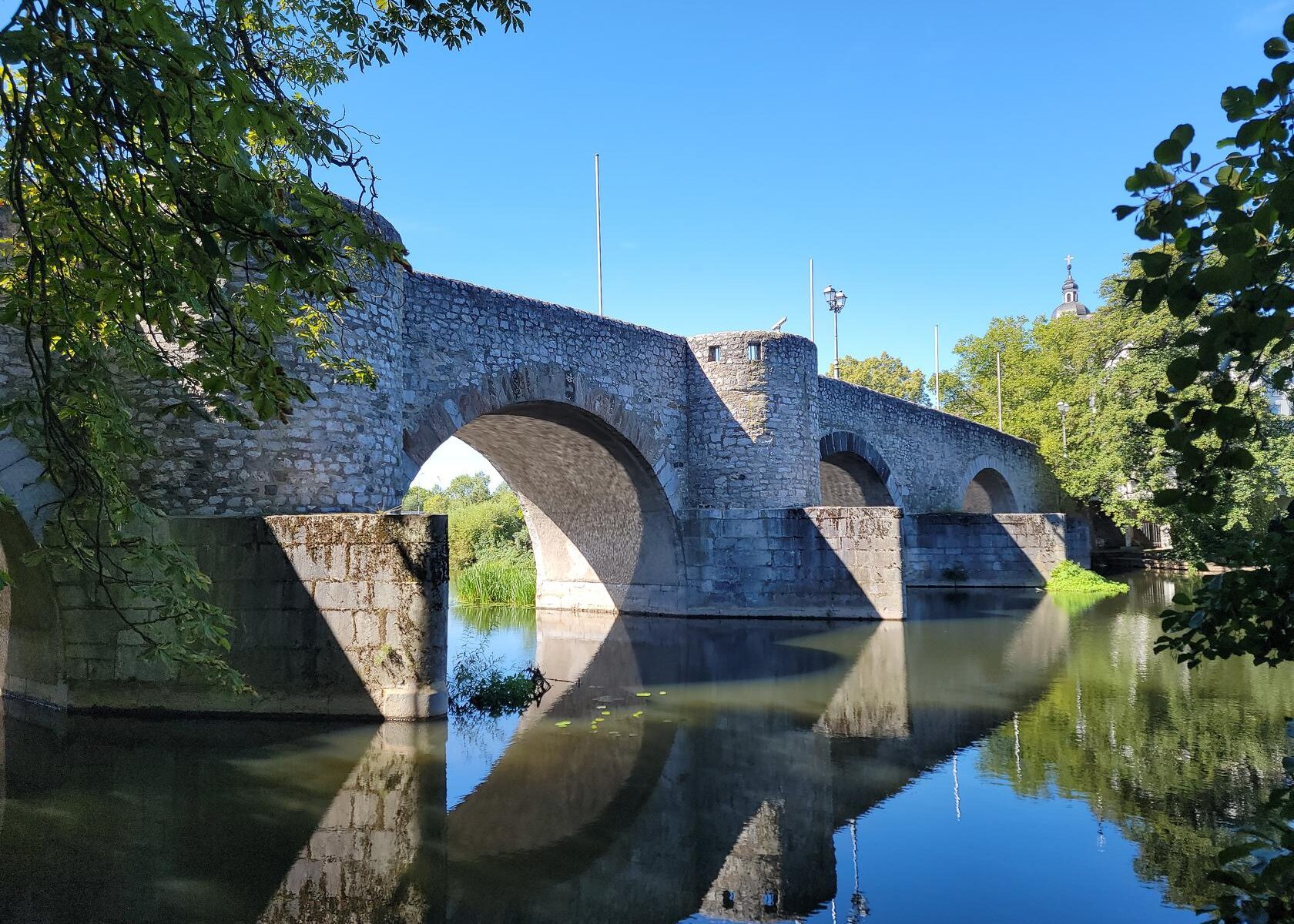
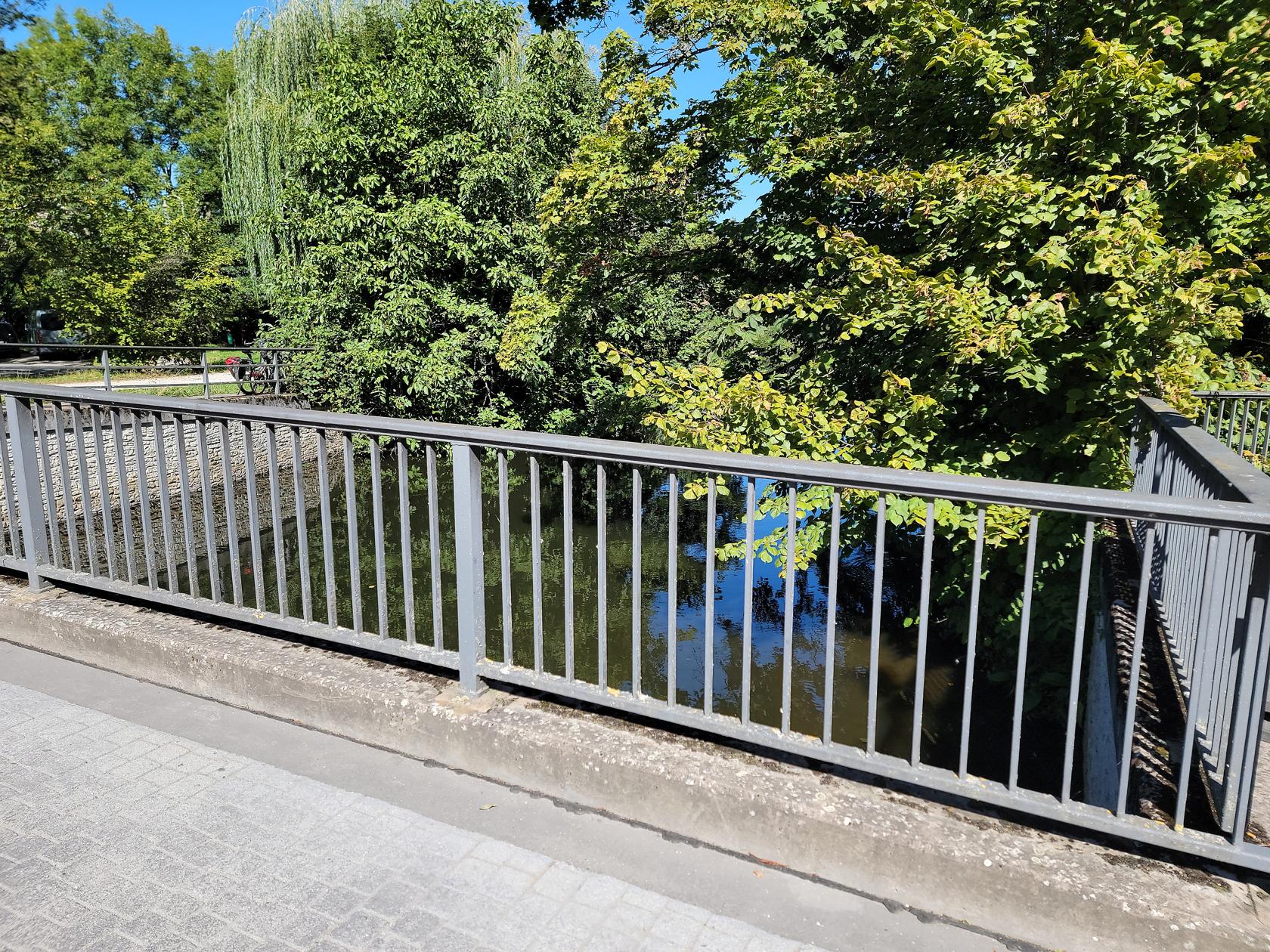
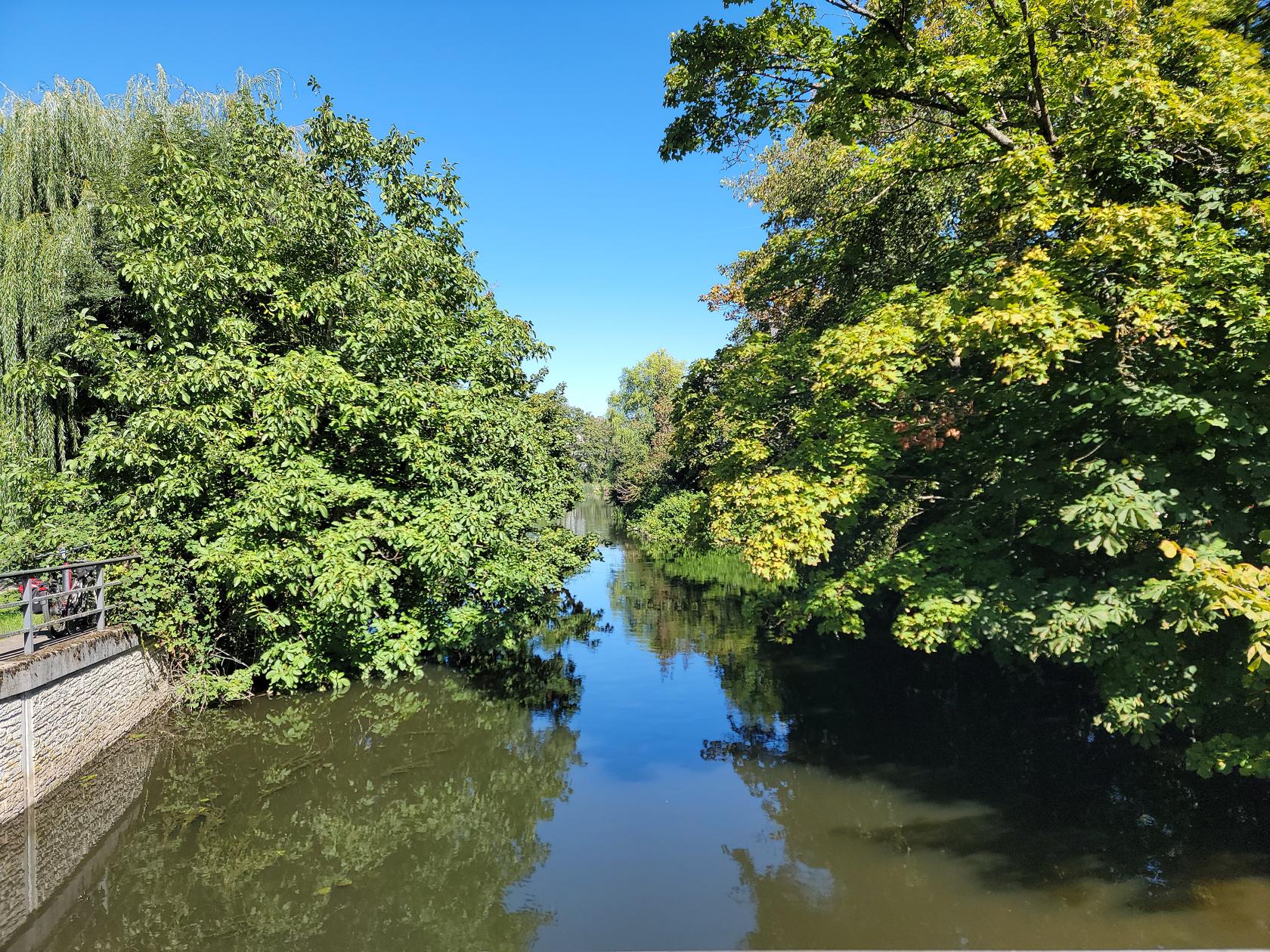
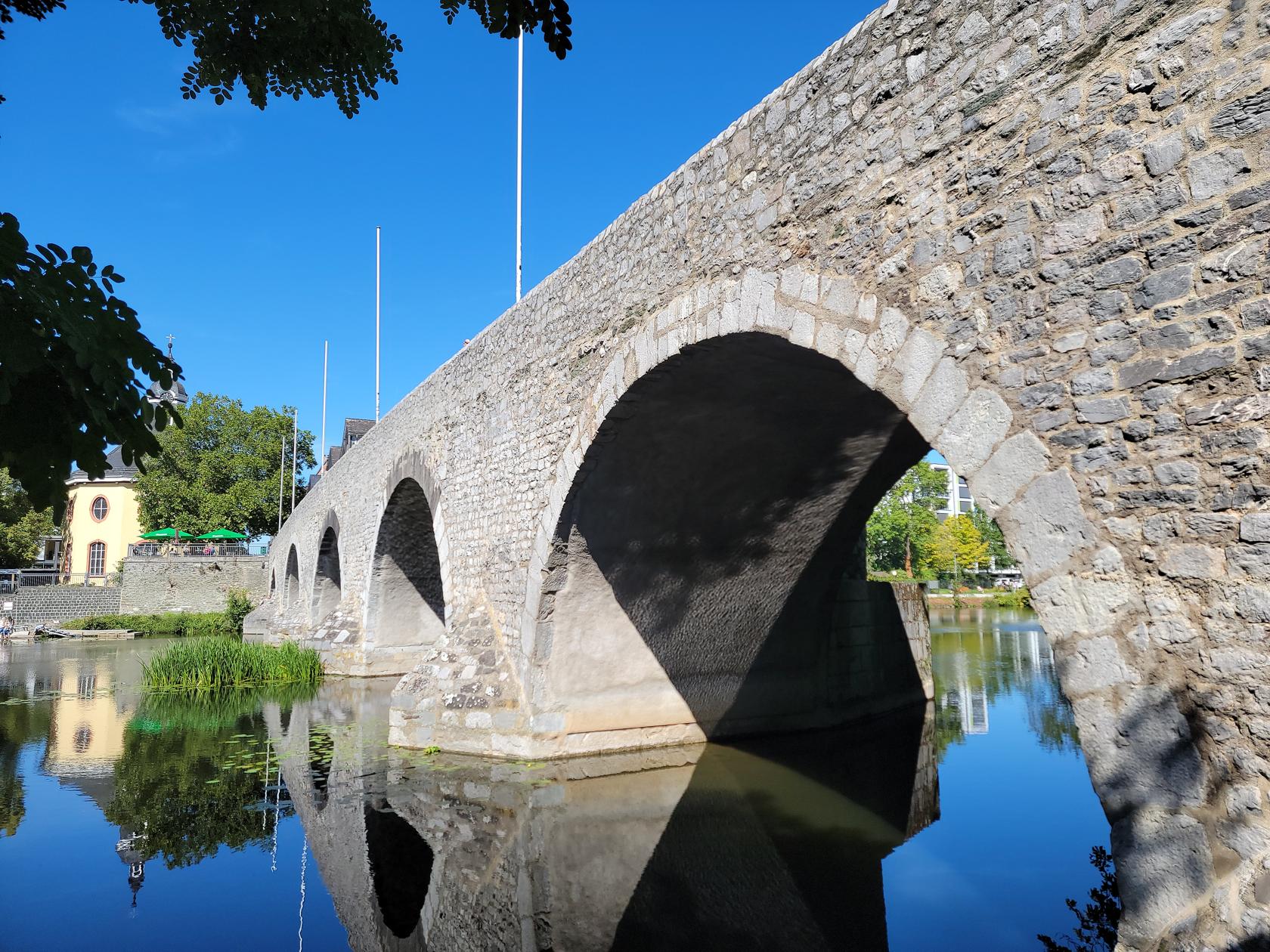
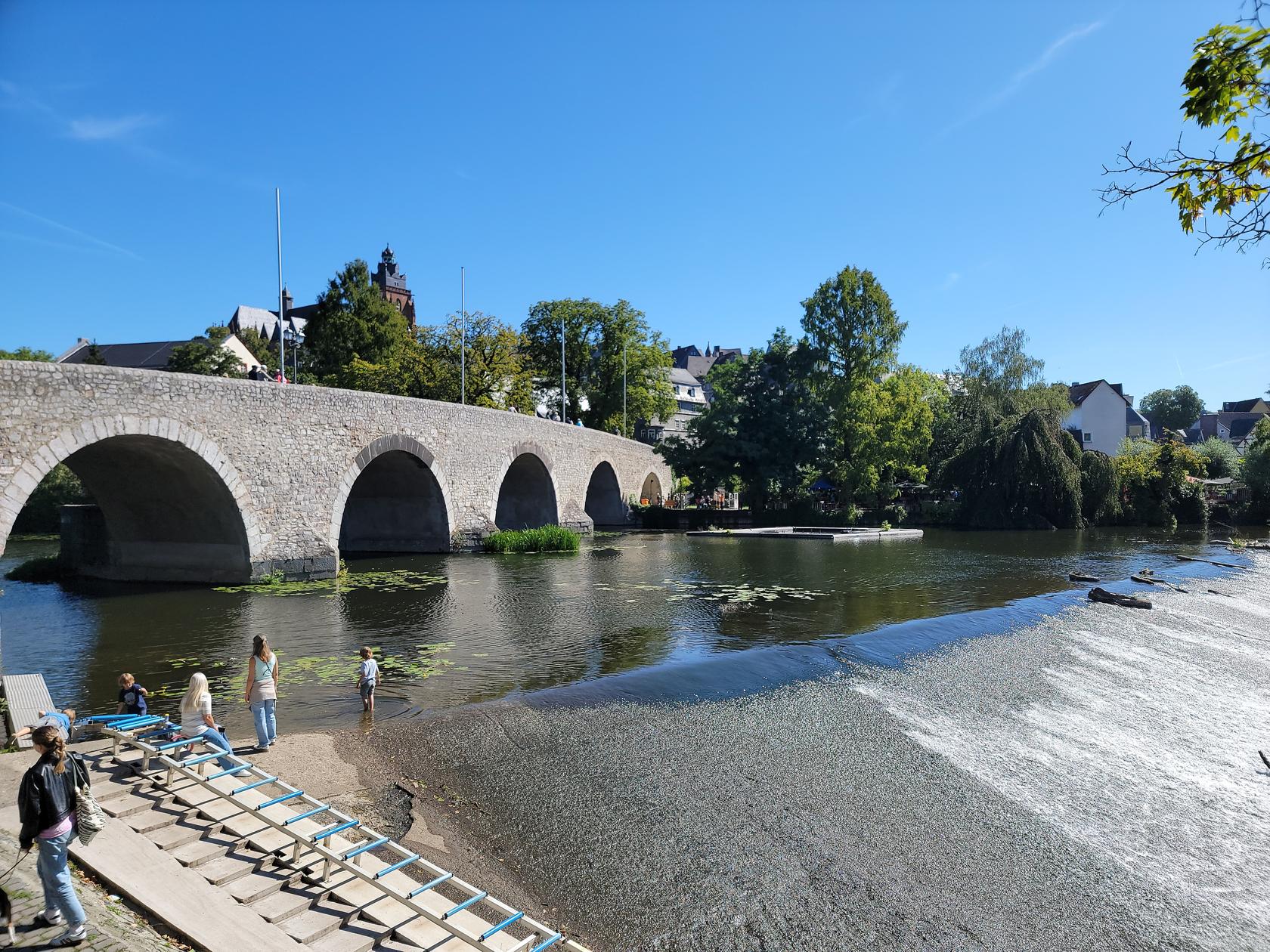
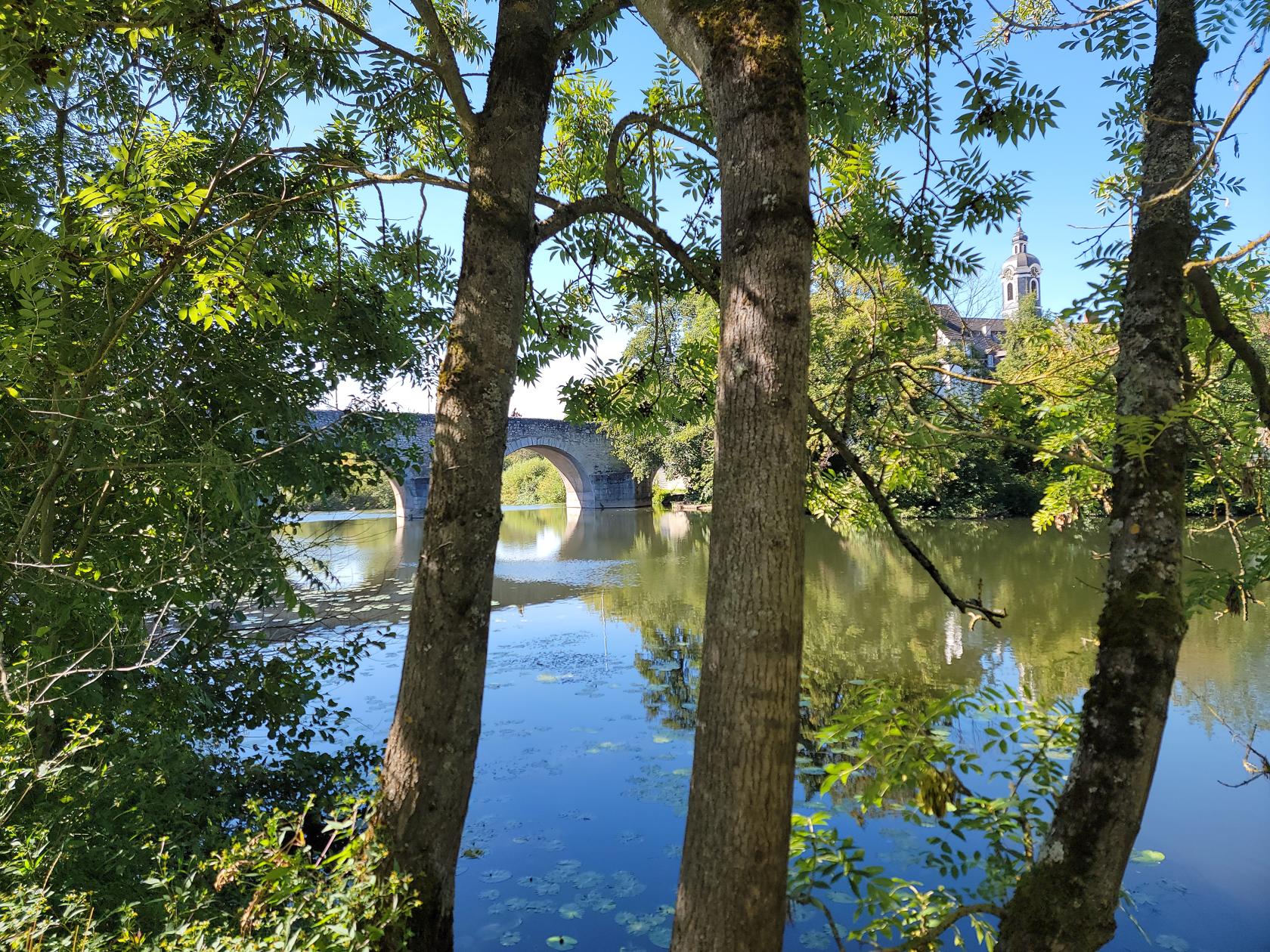
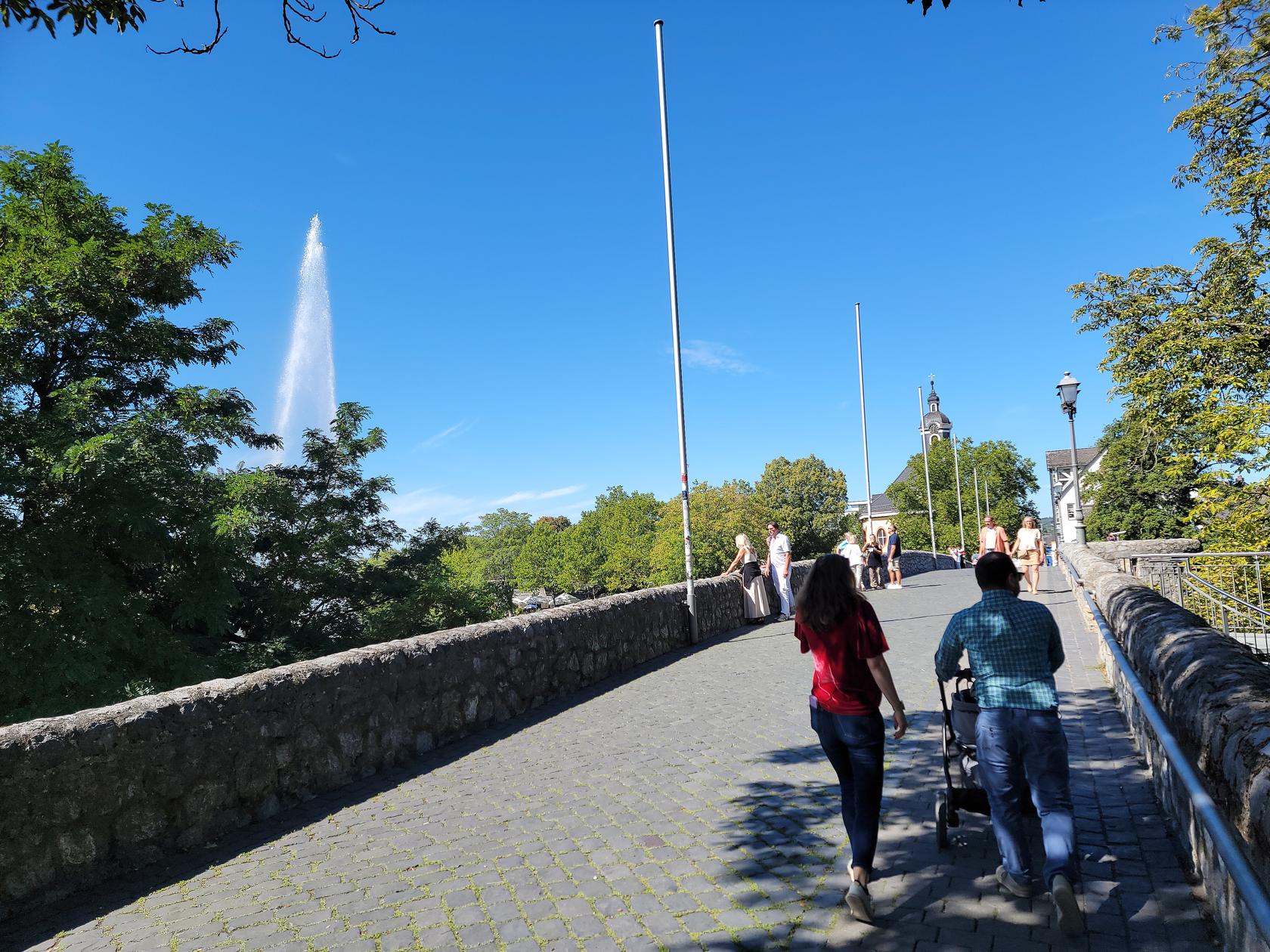
The Alte Lahnbrücke spans the Lahn River about at the midpoint of the old town, connecting the Eisenmarkt with the Neustadt on the other side of the river. Here you will also find several Biergarten, a playground for children and outside seating to enjoy the atmosphere in this lovely little town.
Alte Lahnbrücke – Lahn River – Wetzlar, Germany
Alte Lahnbrücke – Lahn River – Wetzlar, Germany
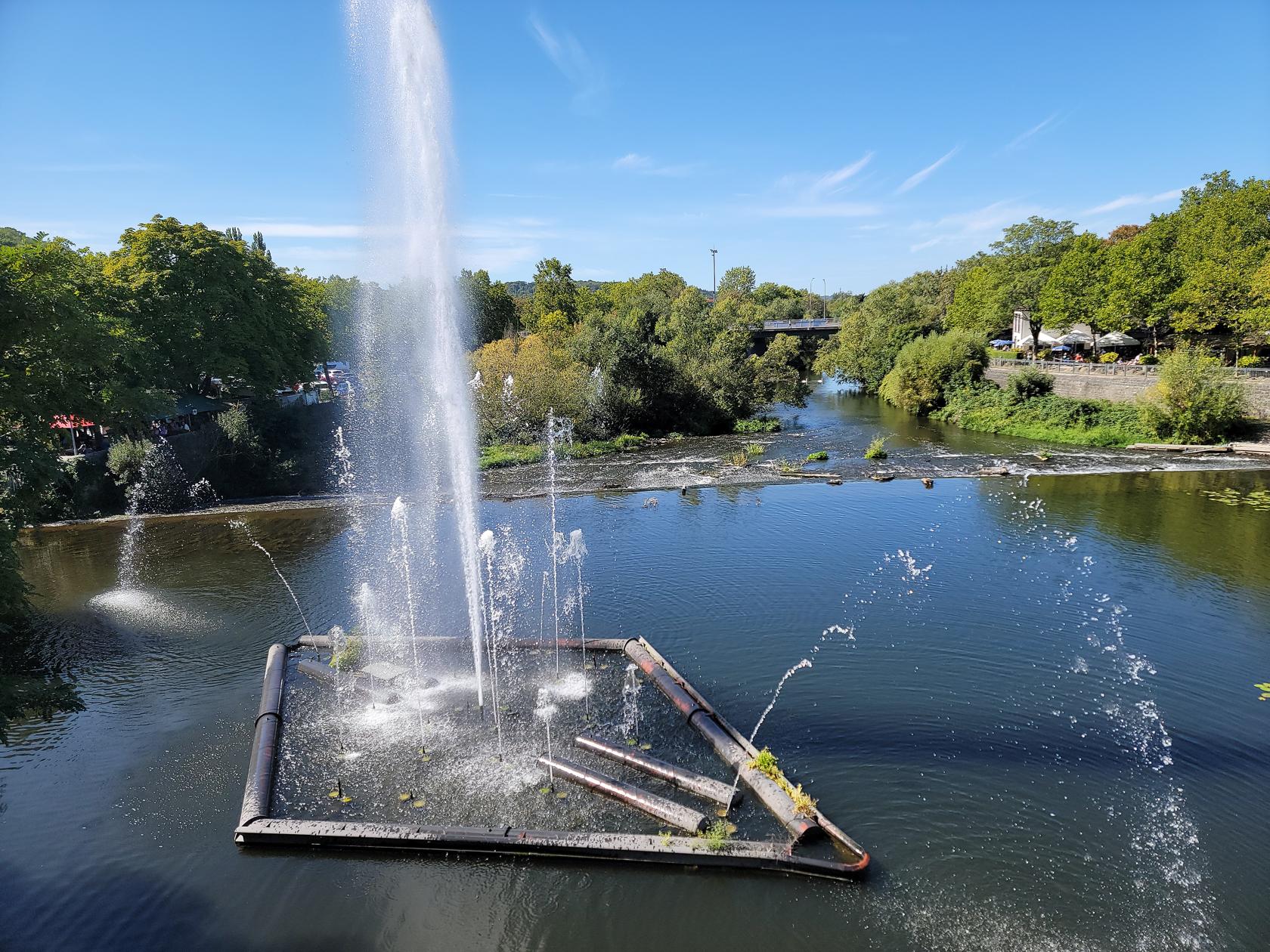
Wasserorgel – Alte Lahnbrücke – Lahn River – Wetzlar, Germany
Lahn River – Wetzlar, Germany
Alte Lahnbrücke – Lahn River – Wetzlar, Germany
Alte Lahnbrücke – Lahn River – Wetzlar, Germany
Getting There
Wetzlar is about a thirty to forty minute drive north of Frankfurt am Main on the A5 and off the A45. It should be noted that at the time of this writing the A5 has some construction that will slow your travels down somewhat, but all-in-all it wasn’t too bad. The city also has a train stop, so that is always an option.
Churches And Cathedrals
Wetzlar Dom
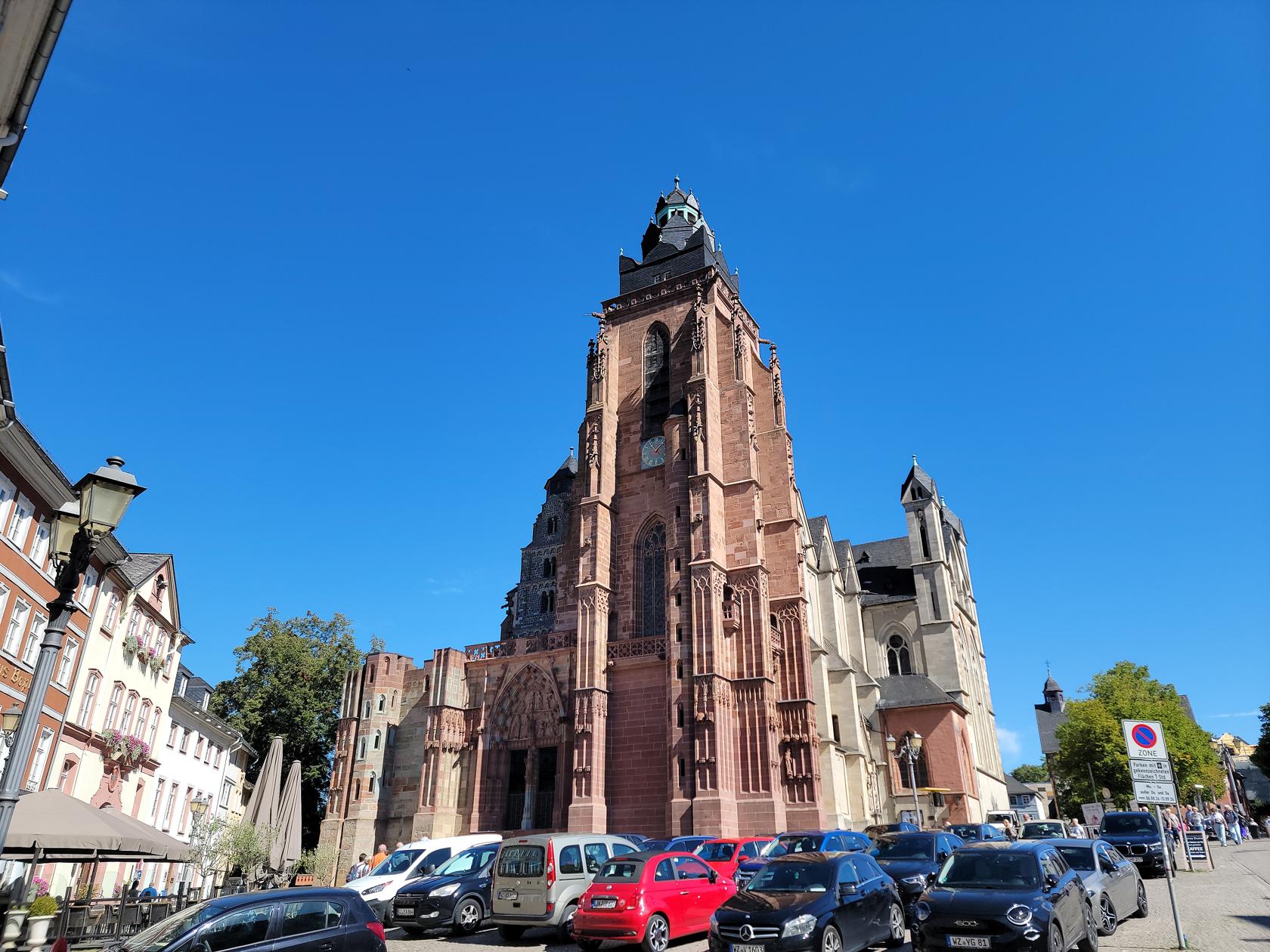
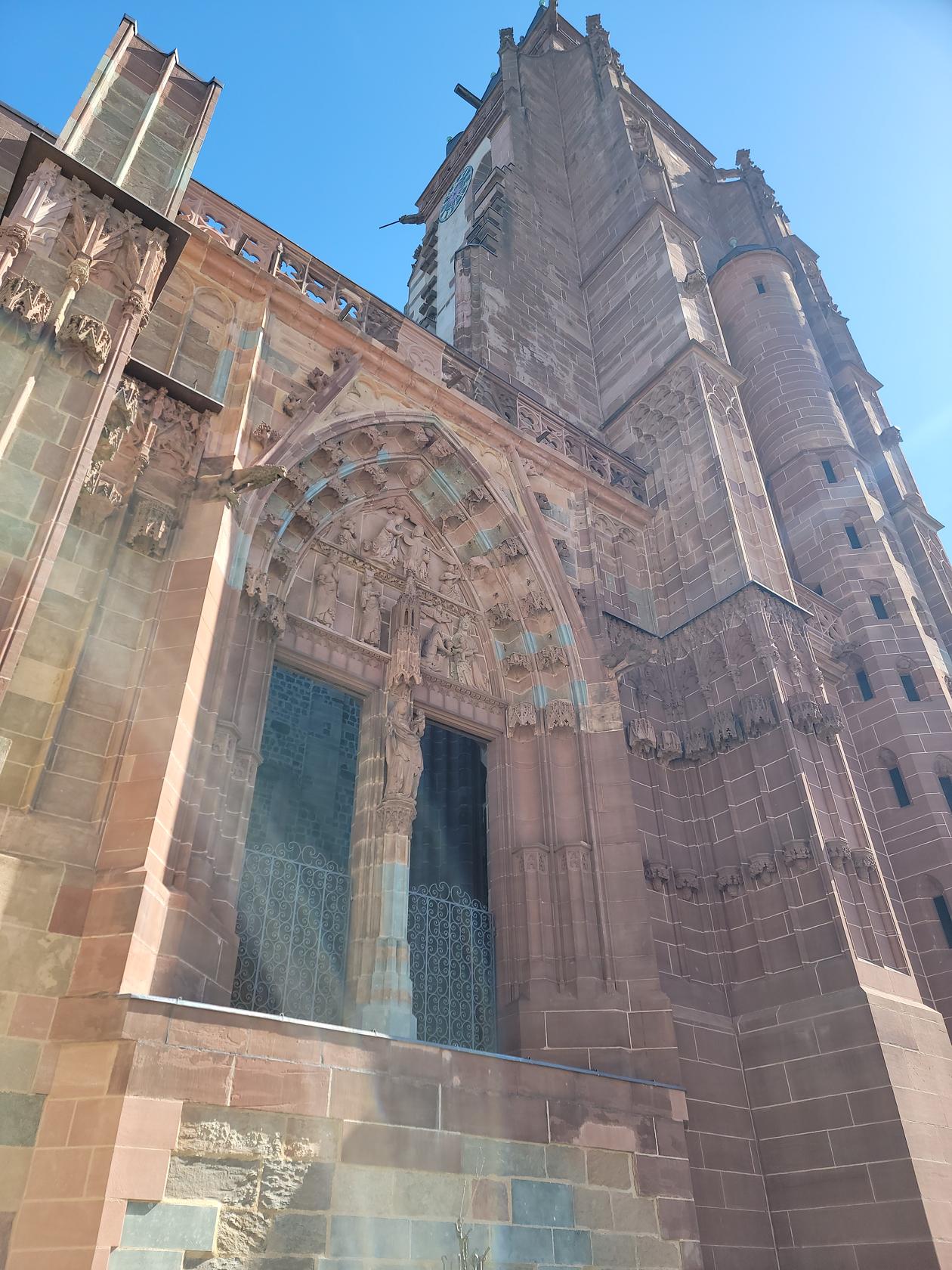
The Wetzlar Dom, or Cathedral of Saint Mary, is a shared catholic and protestant of medieval character. A mixture of Romanesque and Gothic styles, it was never finished and suffered from severe bomb damage during the last war. Several areas of the cathedral were never repaired properly, including the main entrance and the spire, which from a distance looks rather awkward.
Front – Wetzlar Dom – Wetzlar, Germany
Fake Facade and Tympanum – Wetzlar Dom – Wetzlar, Germany
Restaurants
Paulaner Wirtshaus Wetzlar
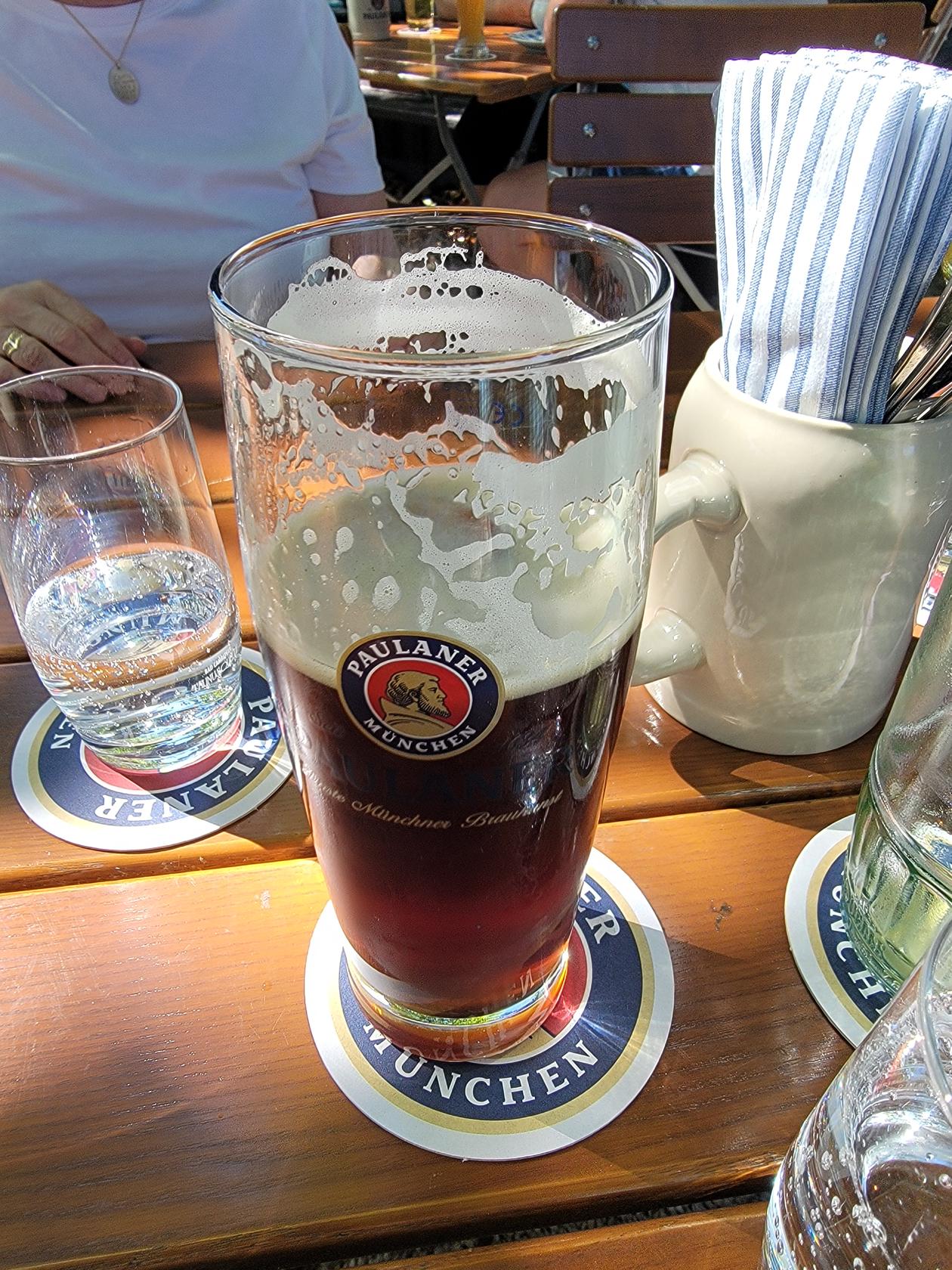
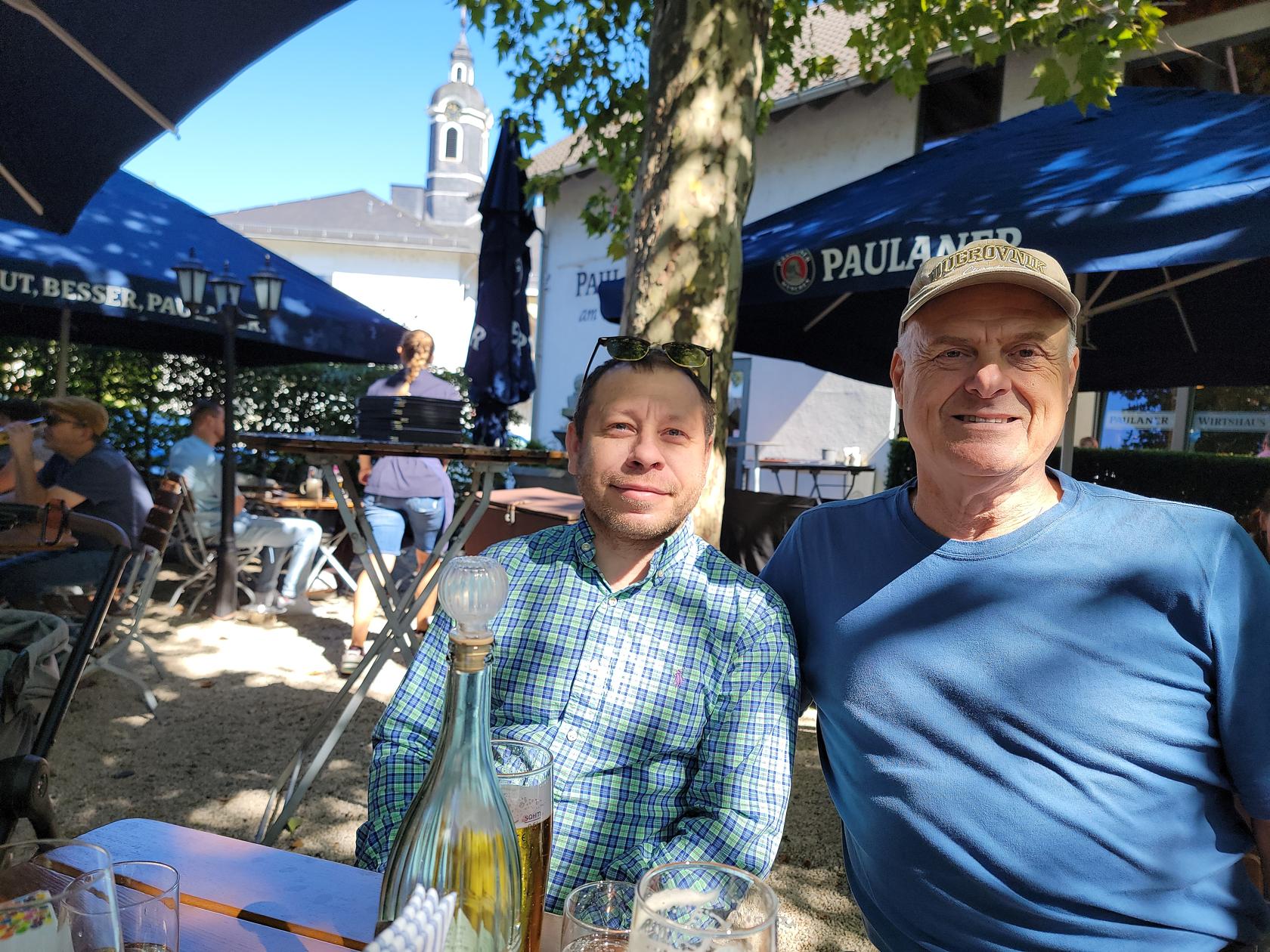
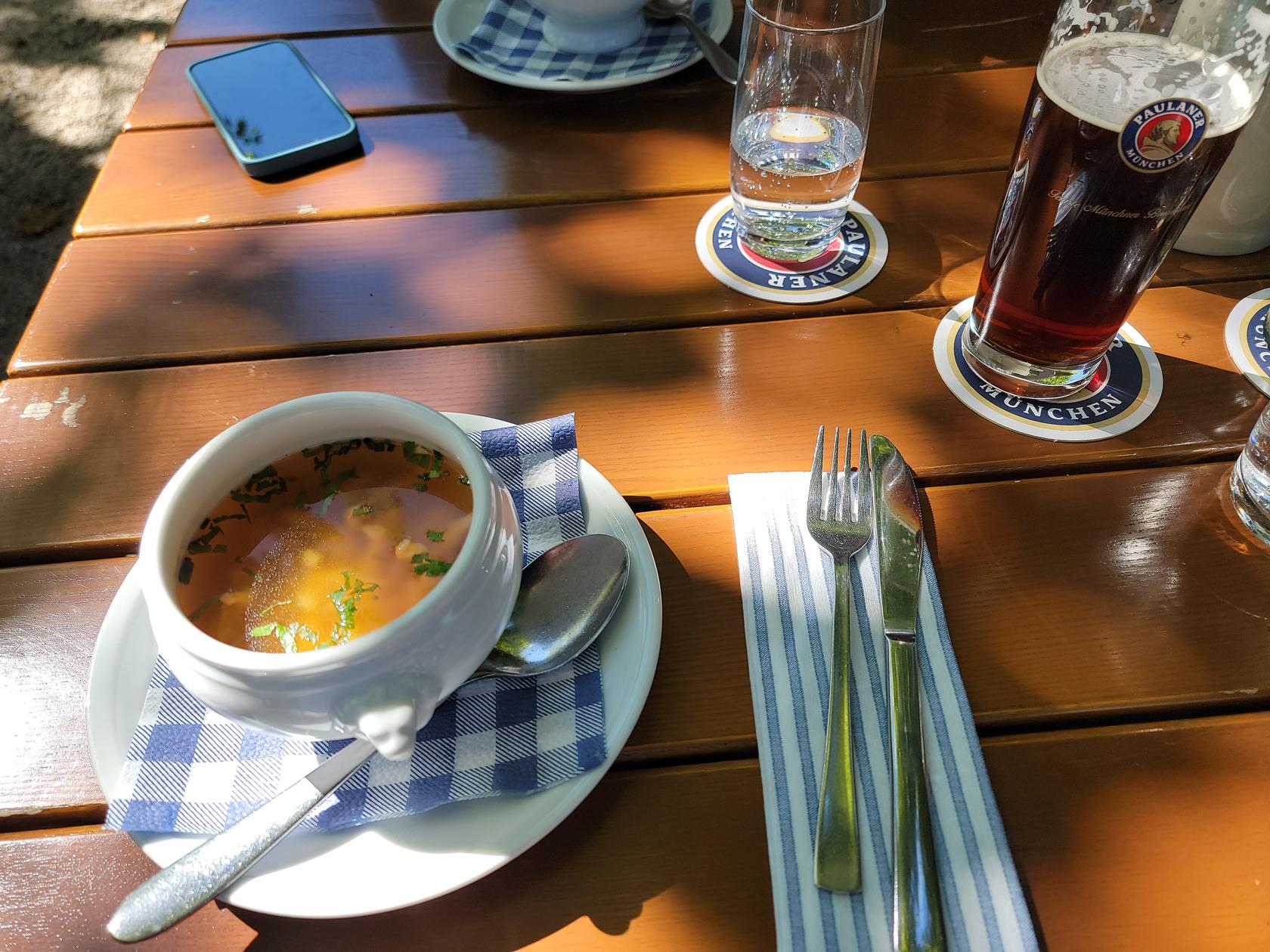
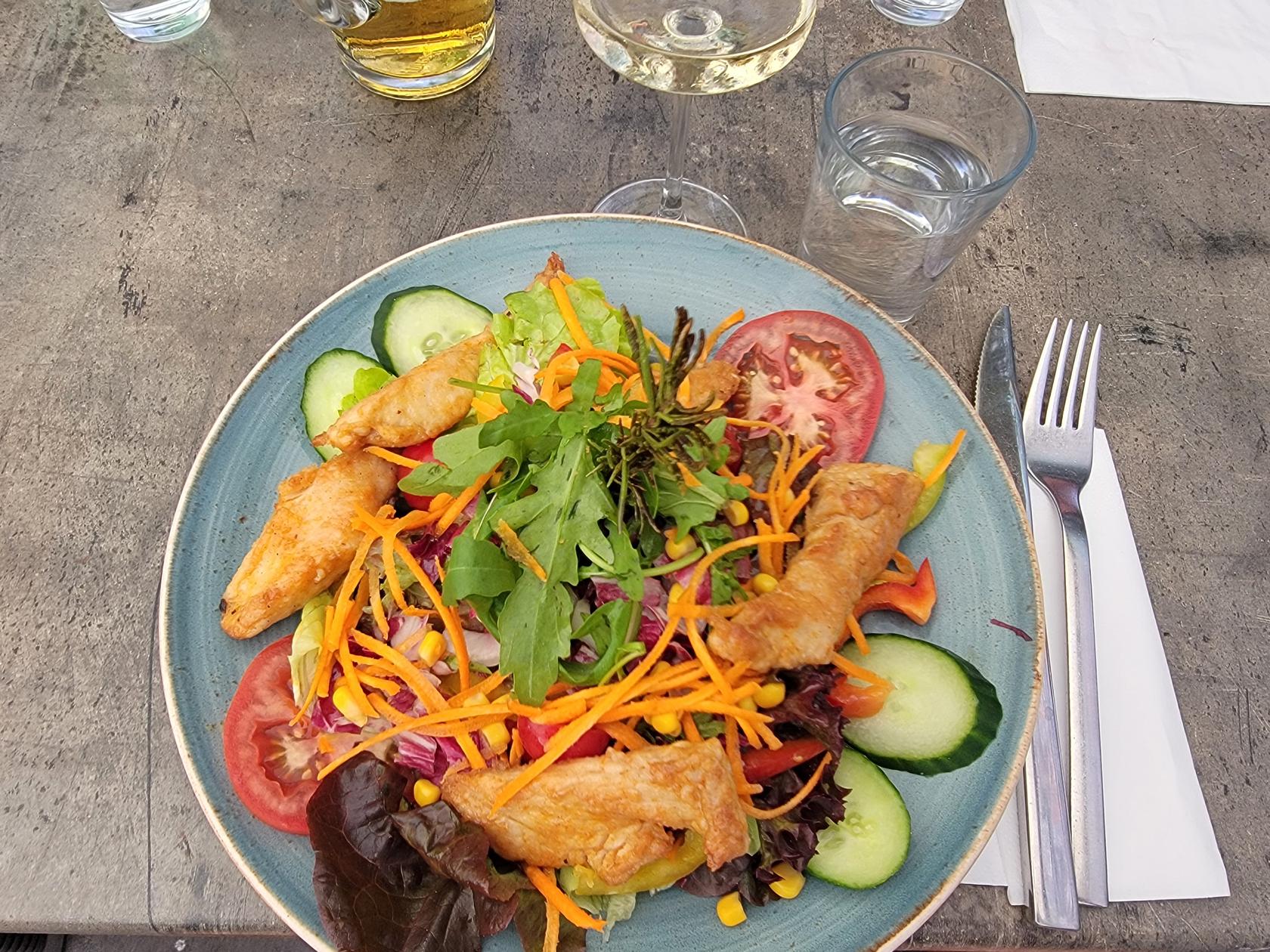
Located am Haarplatz, the Paulaner Wirtshaus Wetzlar is an excellent choice for food. Located near the Wehr on the Lahn, you can hear the rapids as you enjoy a nice glass of beer on a warm day and the food, which is a mixture of Bavarian and Swabian cuisines. You can actually order a soup with Spätzle in it!
Menu – Wirtshaus Wetzlar – Am Haarplatz – Lahn River – Wetzlar, Germany
Beer – Wirtshaus Wetzlar – Am Haarplatz – Lahn River – Wetzlar, Germany
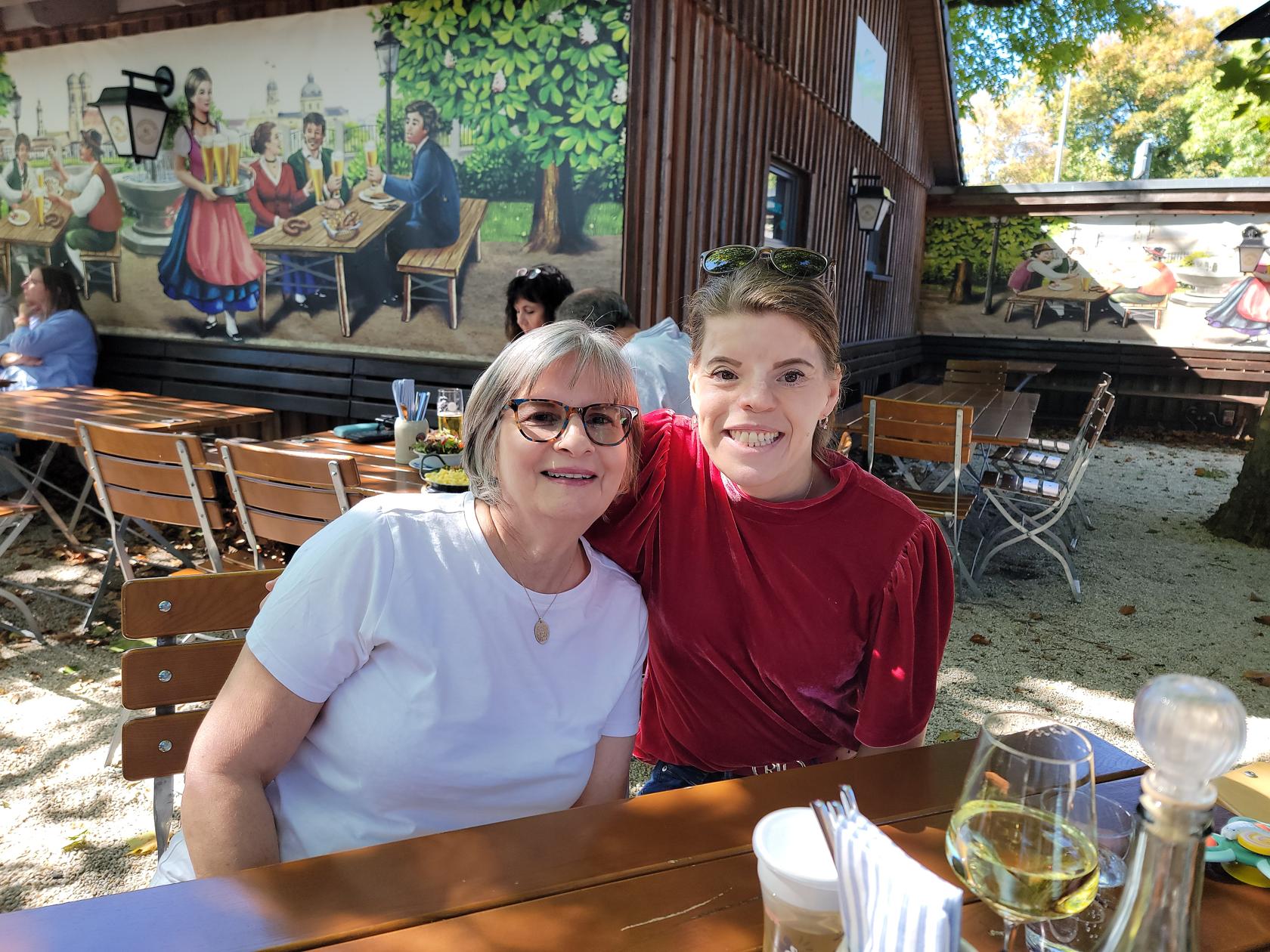
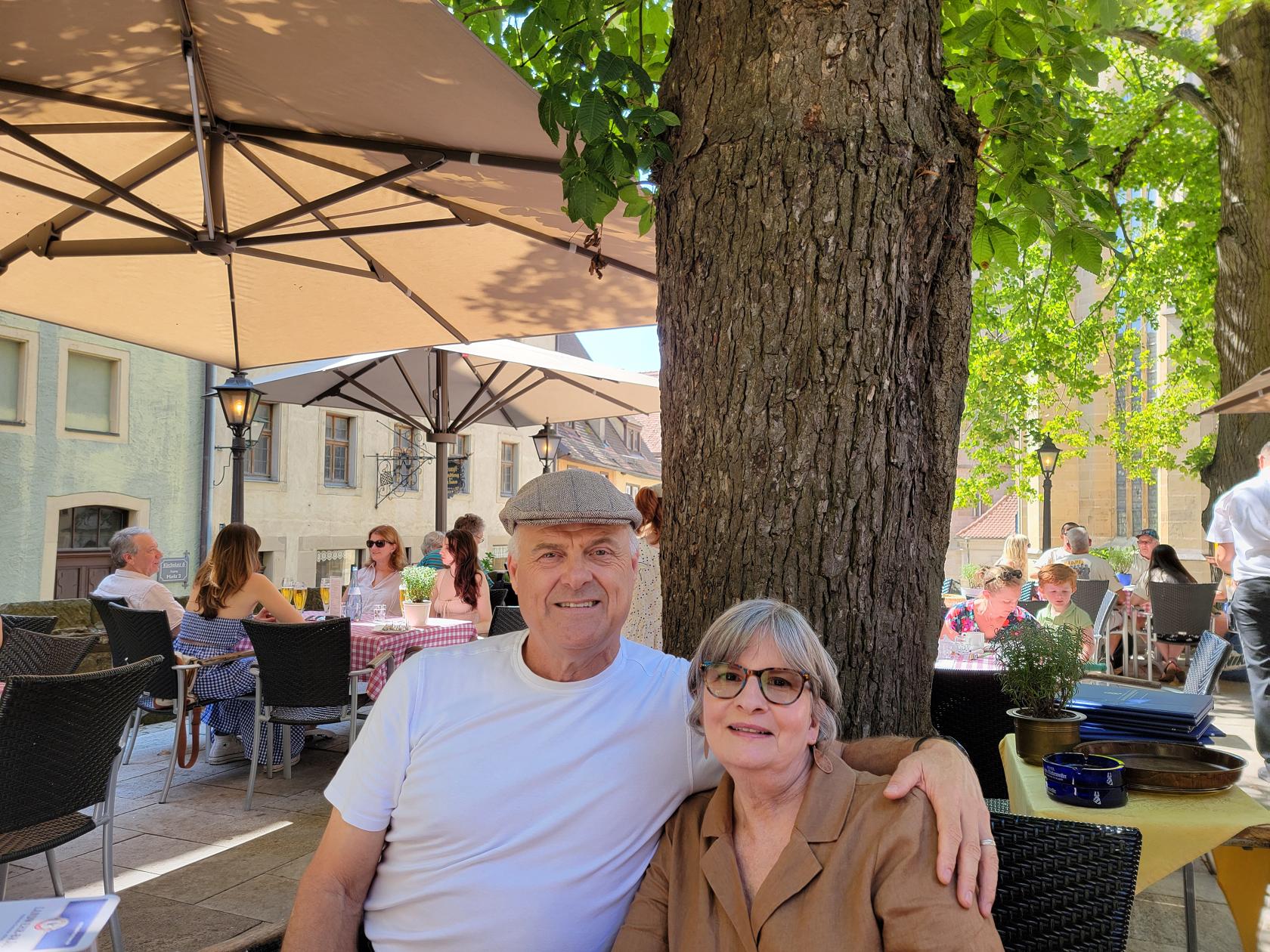
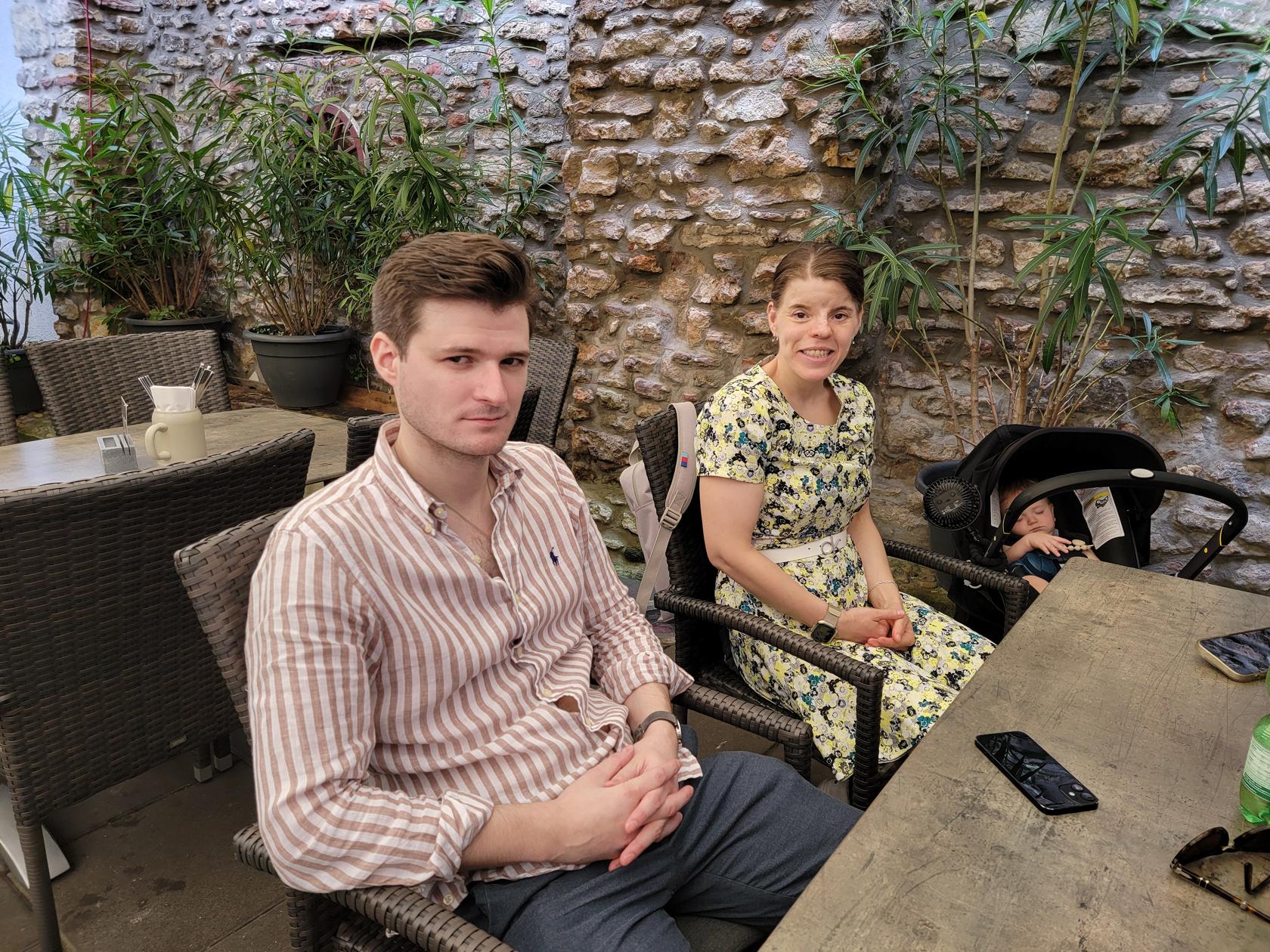
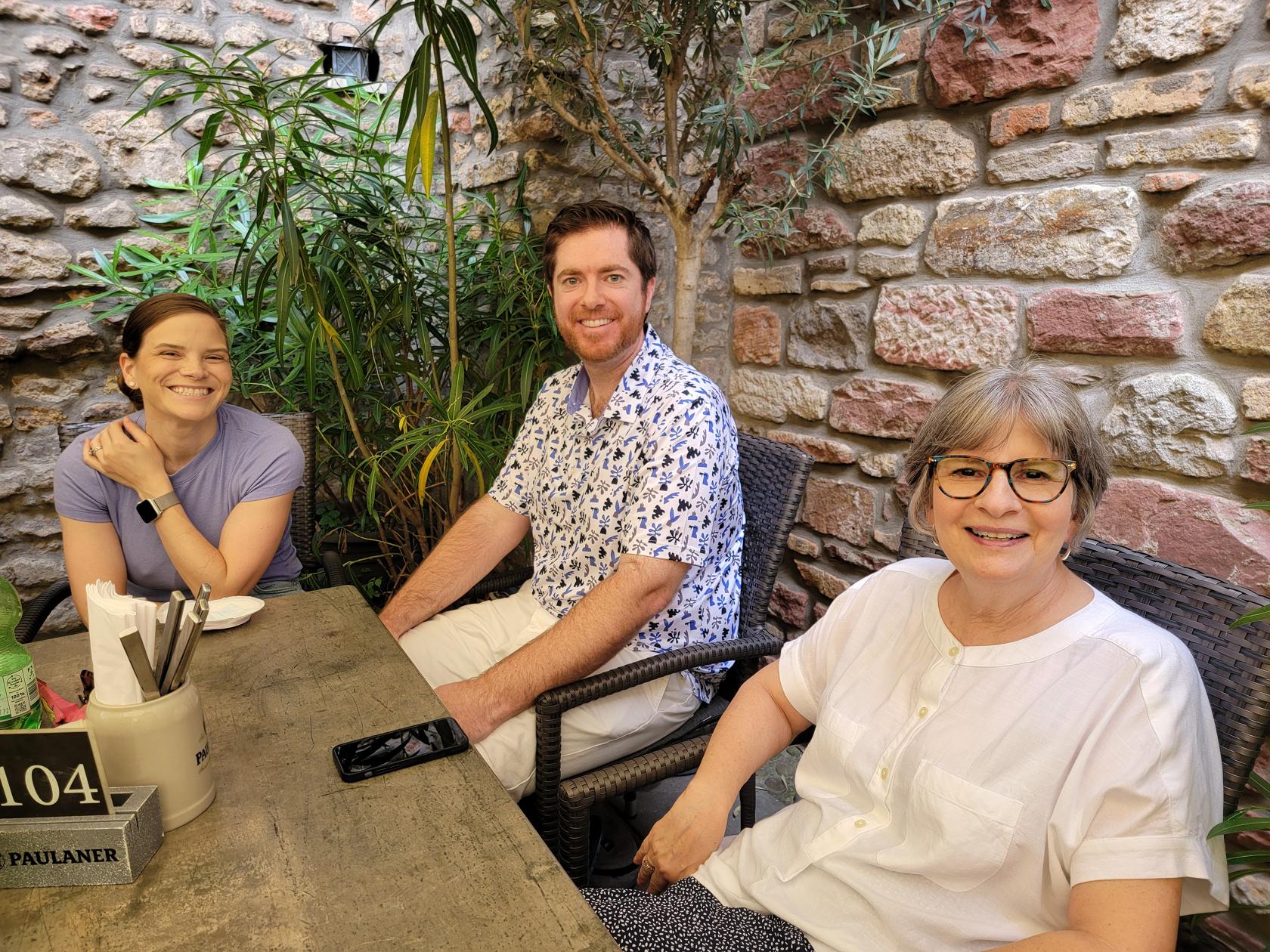
Patti and Ericka – Wirtshaus Wetzlar – Am Haarplatz – Lahn River – Wetzlar, Germany
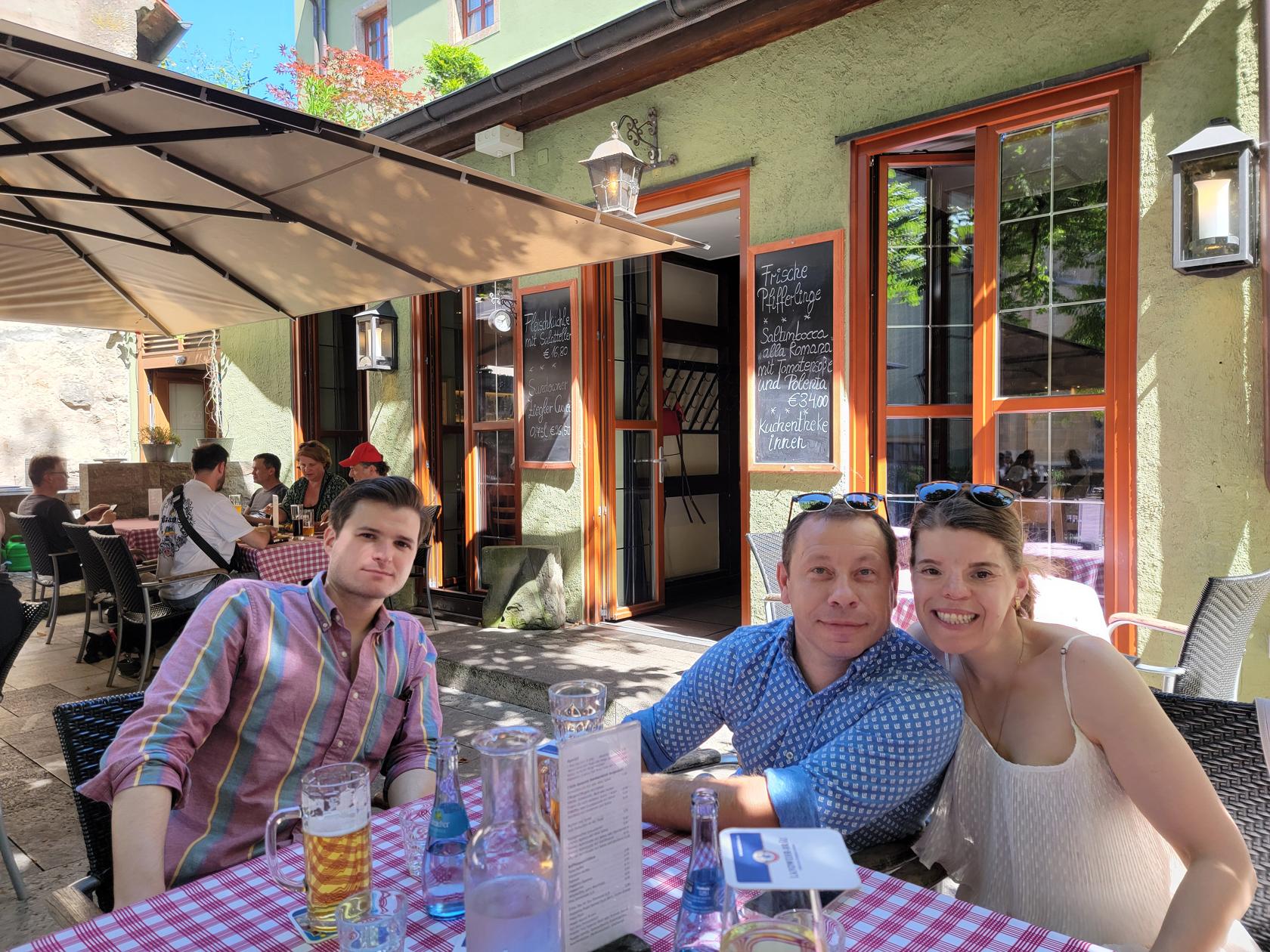
Gabi and Erick – Wirtshaus Wetzlar – Am Haarplatz – Lahn River – Wetzlar, Germany
Soup with Spätzle – Wirtshaus Wetzlar – Am Haarplatz – Lahn River – Wetzlar, Germany
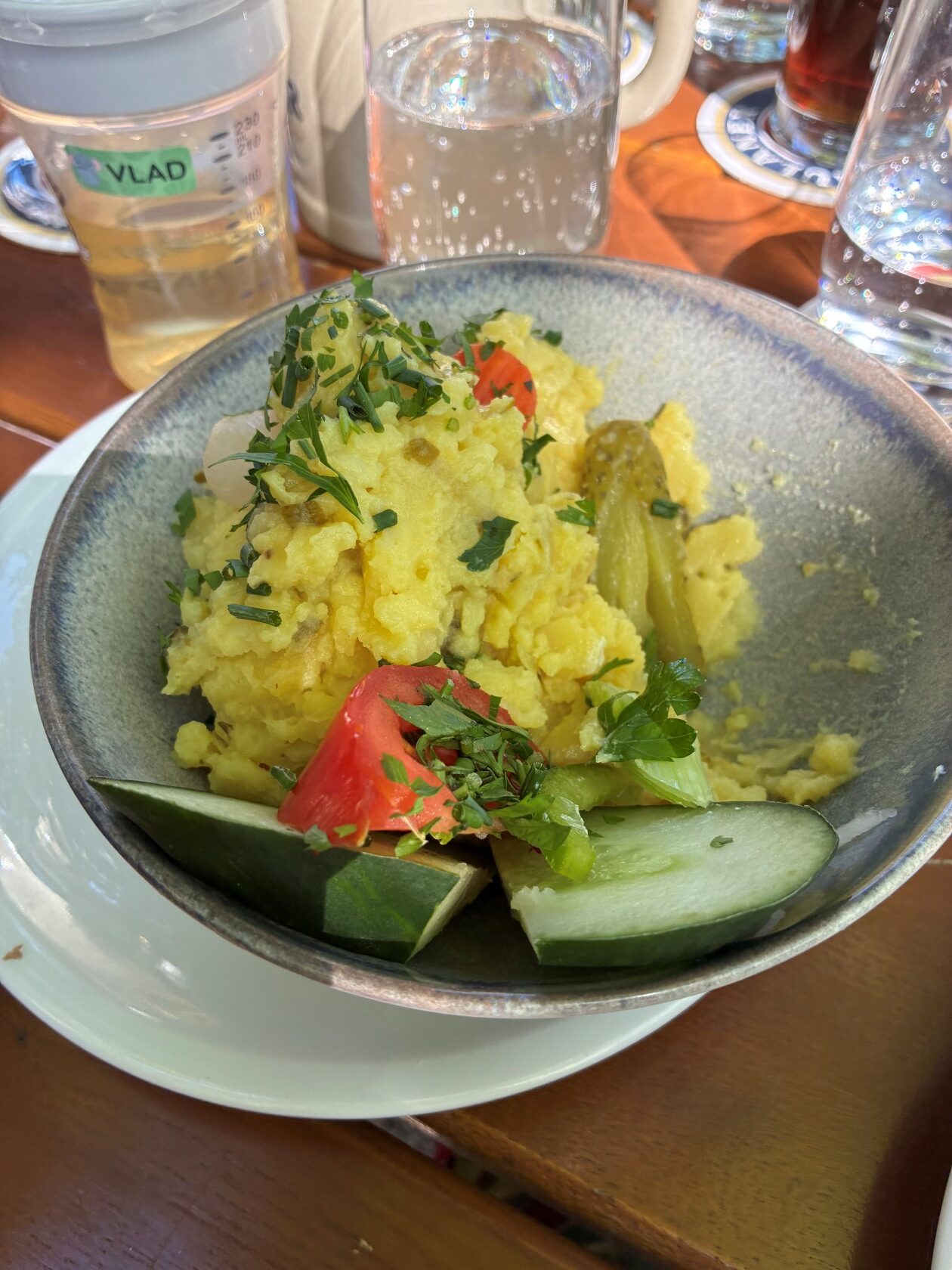
Kartoffelsalat – Wirtshaus Wetzlar – Am Haarplatz – Lahn River – Wetzlar, Germany
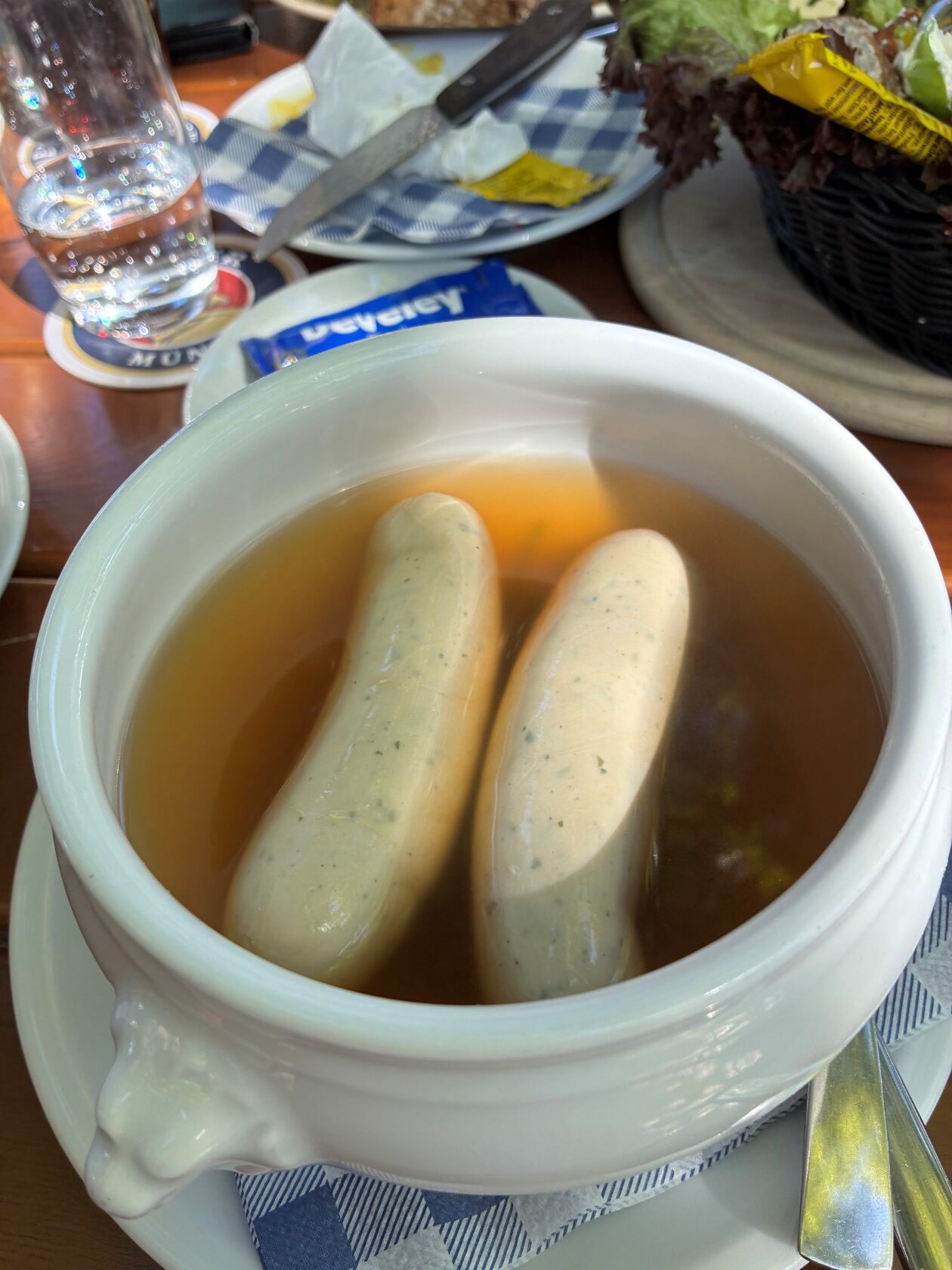
Weisswurst in Broth – Wirtshaus Wetzlar – Am Haarplatz – Lahn River – Wetzlar, Germany
Brotkorb – Wirtshaus Wetzlar – Am Haarplatz – Lahn River – Wetzlar, Germany
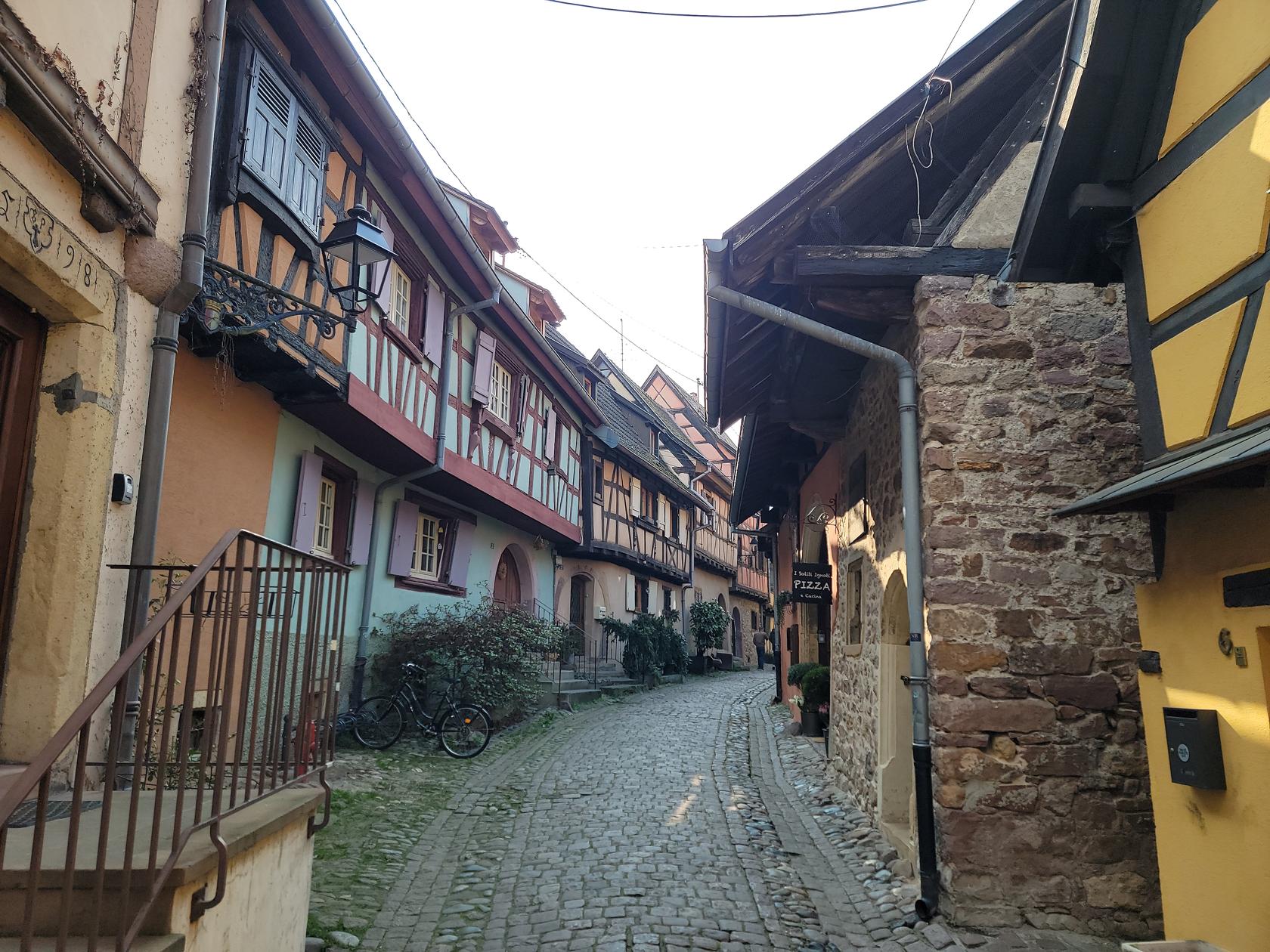
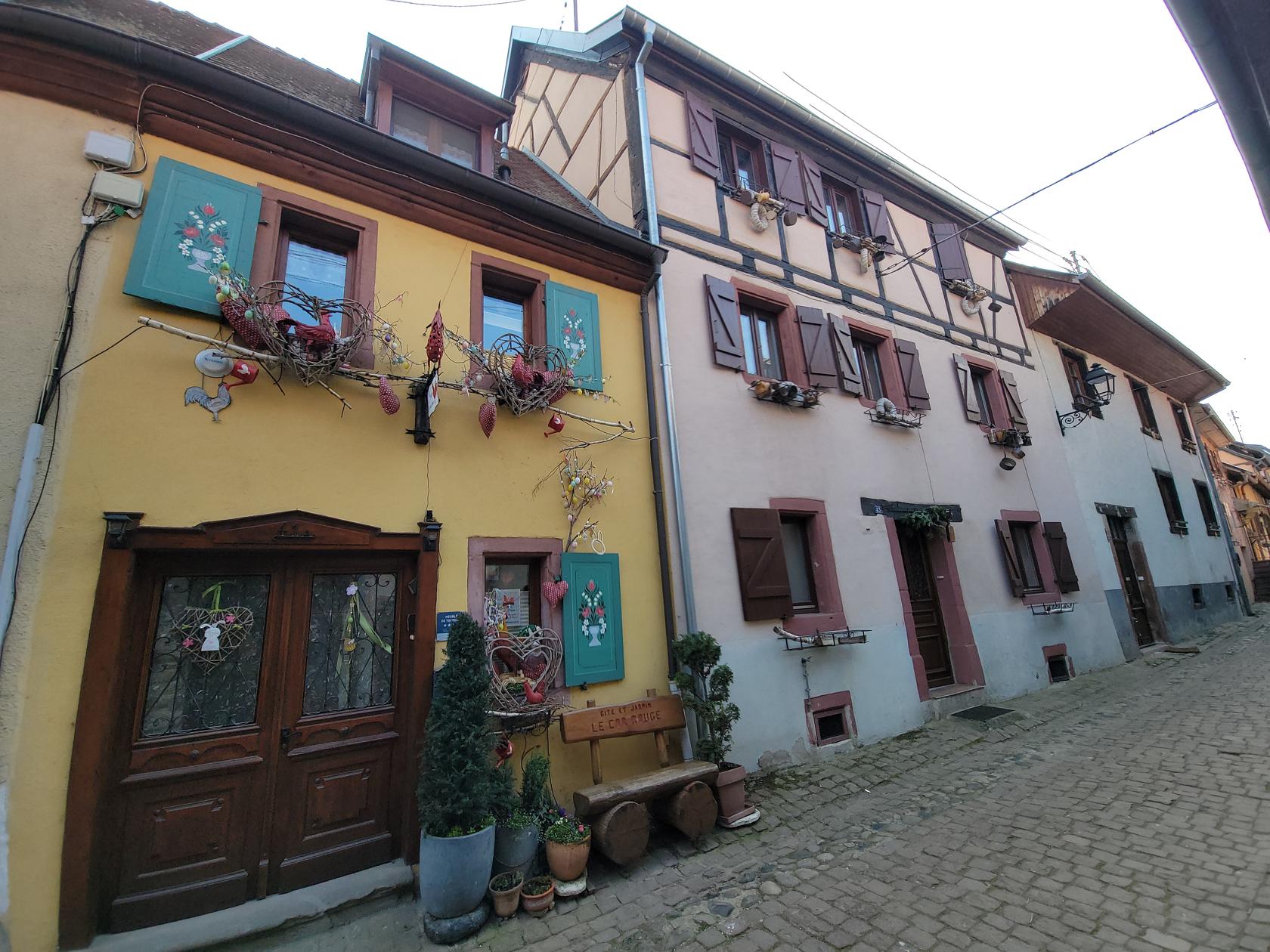
A stone’s throw from Colmar is the small Zwiebelstadt of Eguisheim[1]In German it is spelled Egisheim, France. Here you will enjoy what a small medievalAlsatian town feels like.
Equisheim
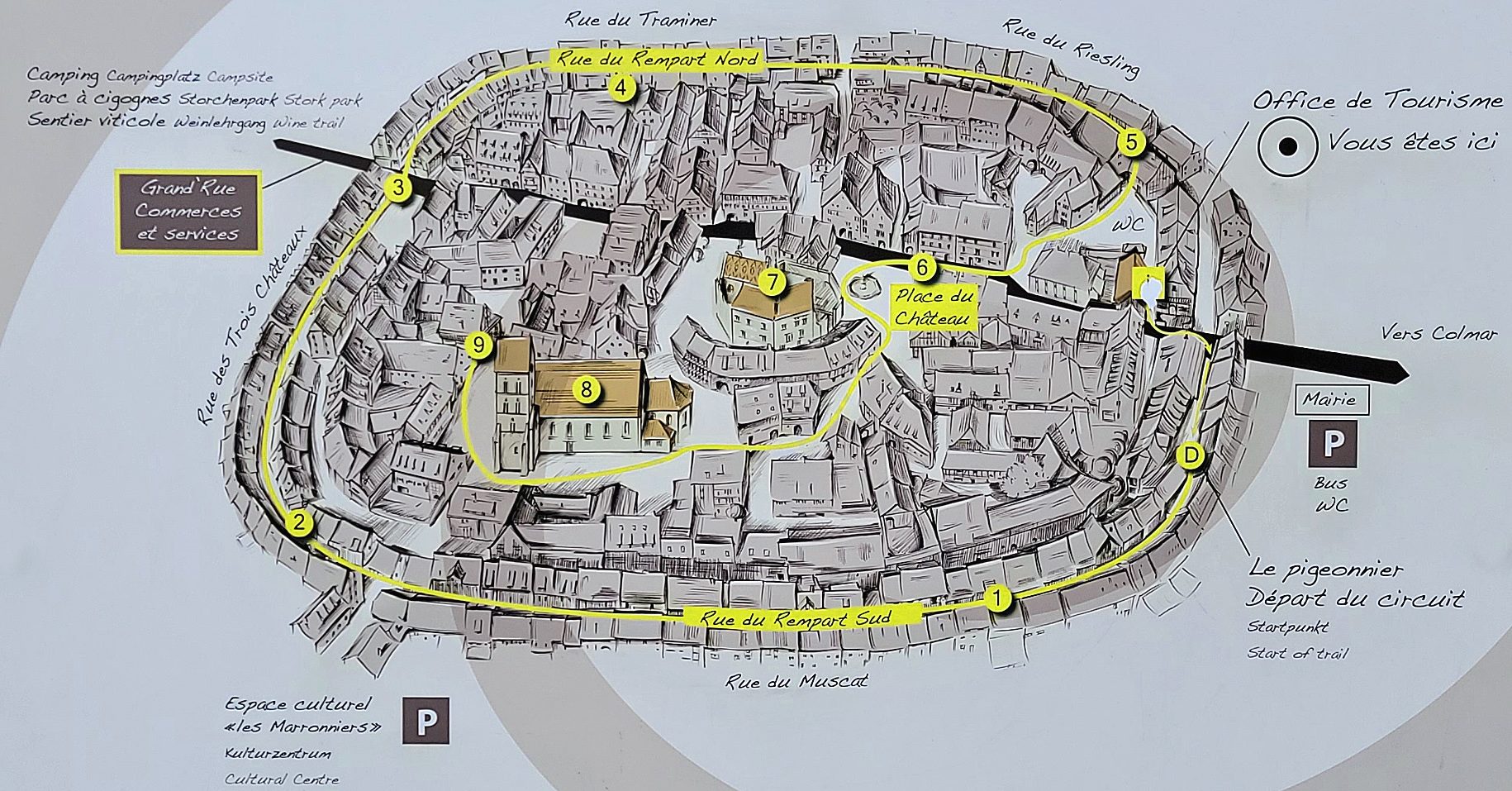
The germans use the term Zwiebelstadtto denote any small medieval town that is formed like an onion. Though typically they have eight sides with concentric alleys bisected by a Grand Rue, or main street, they may be circular or oval as well. In the center of it all you will usually find a church or main plaza.
City Map – Stadtplan – Eguisheim, France
In the above the following are noteworthy, according to town officials, starting at (D) with the Pigeon Loft.
Rue de Ramport – The colors of Eguisheim
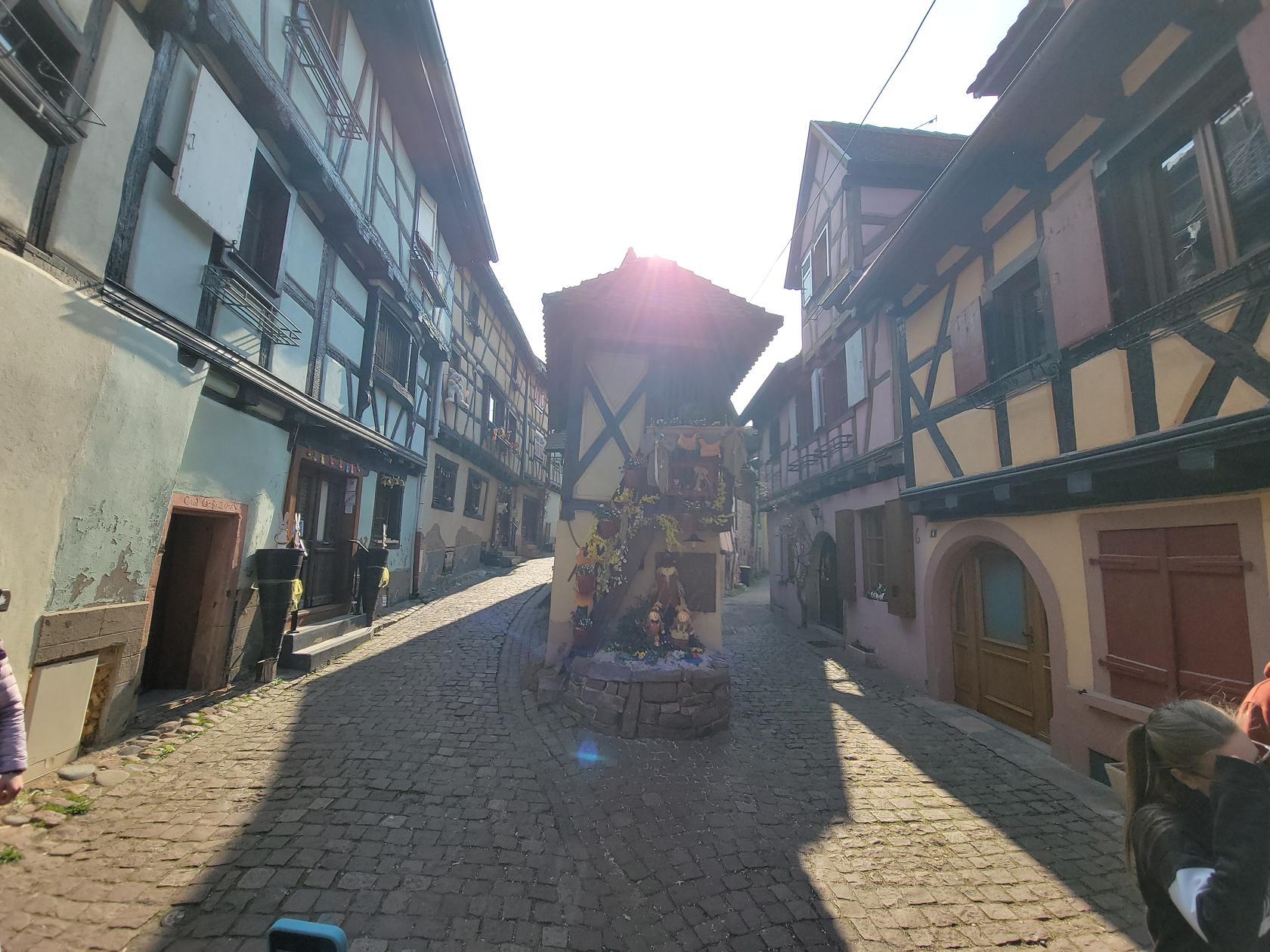
Rue de Ramport – Round and round the town
The gates of the town
The town’s inscriptions
Stone engravings
The chateau
The host of the chapel
The virgins of Eguisheim (the church)
The tithe courtyards
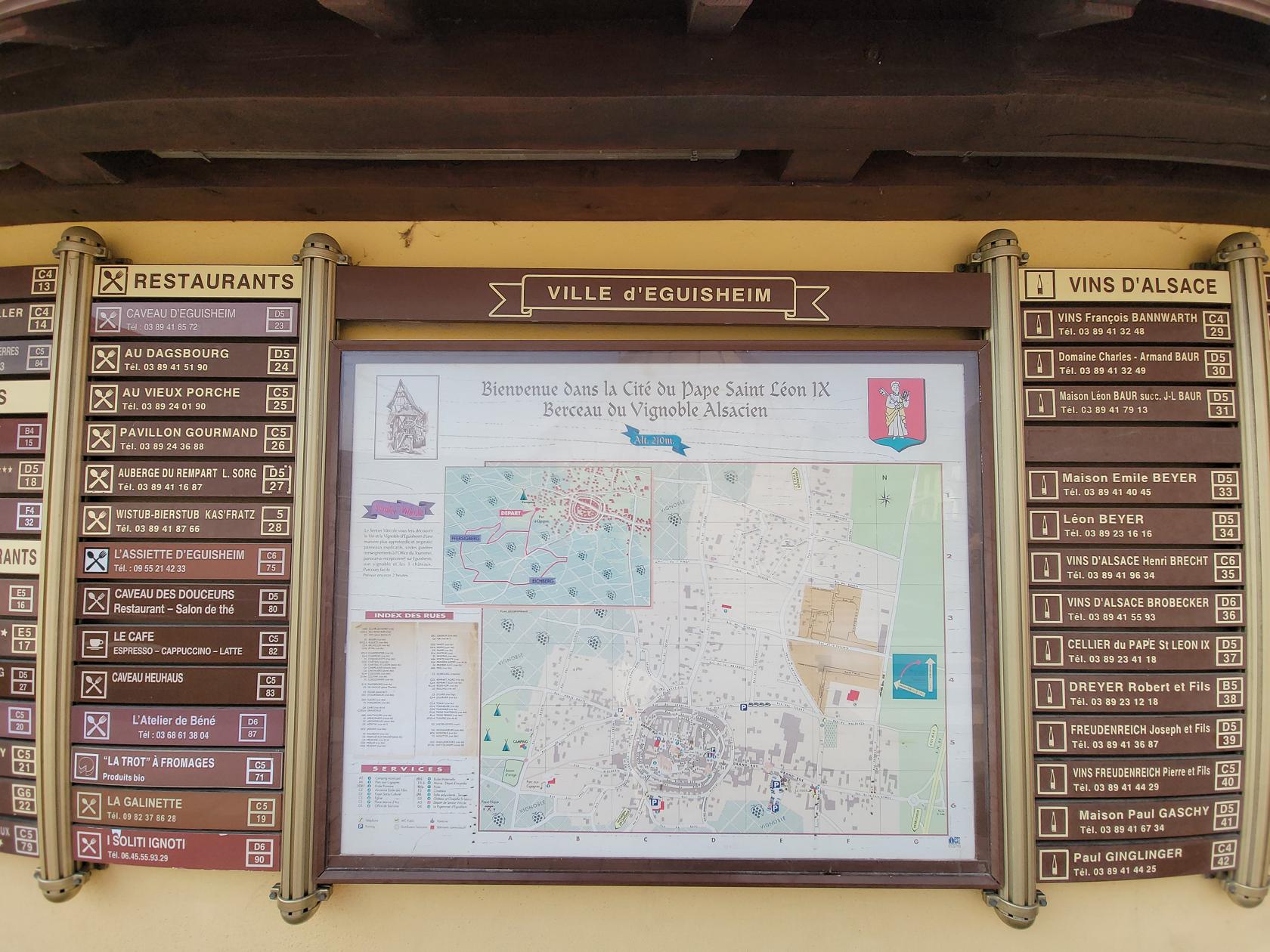
The area around the town is noted for its excellent alsatian wines. Upon entering the town visitors can see a record of the vineyards proudly displayed along with restaurants and a map of the town.
Alsatian WIneries – Eguisheim, France
Getting There
From Colmar a quick drive down the Rue de Tiefenbach or the Route de Rouffach puts you on the D83 for a short time before you reach one of the many small roads that will take you into town, though typically it would be the Rue de la 1er Armée.
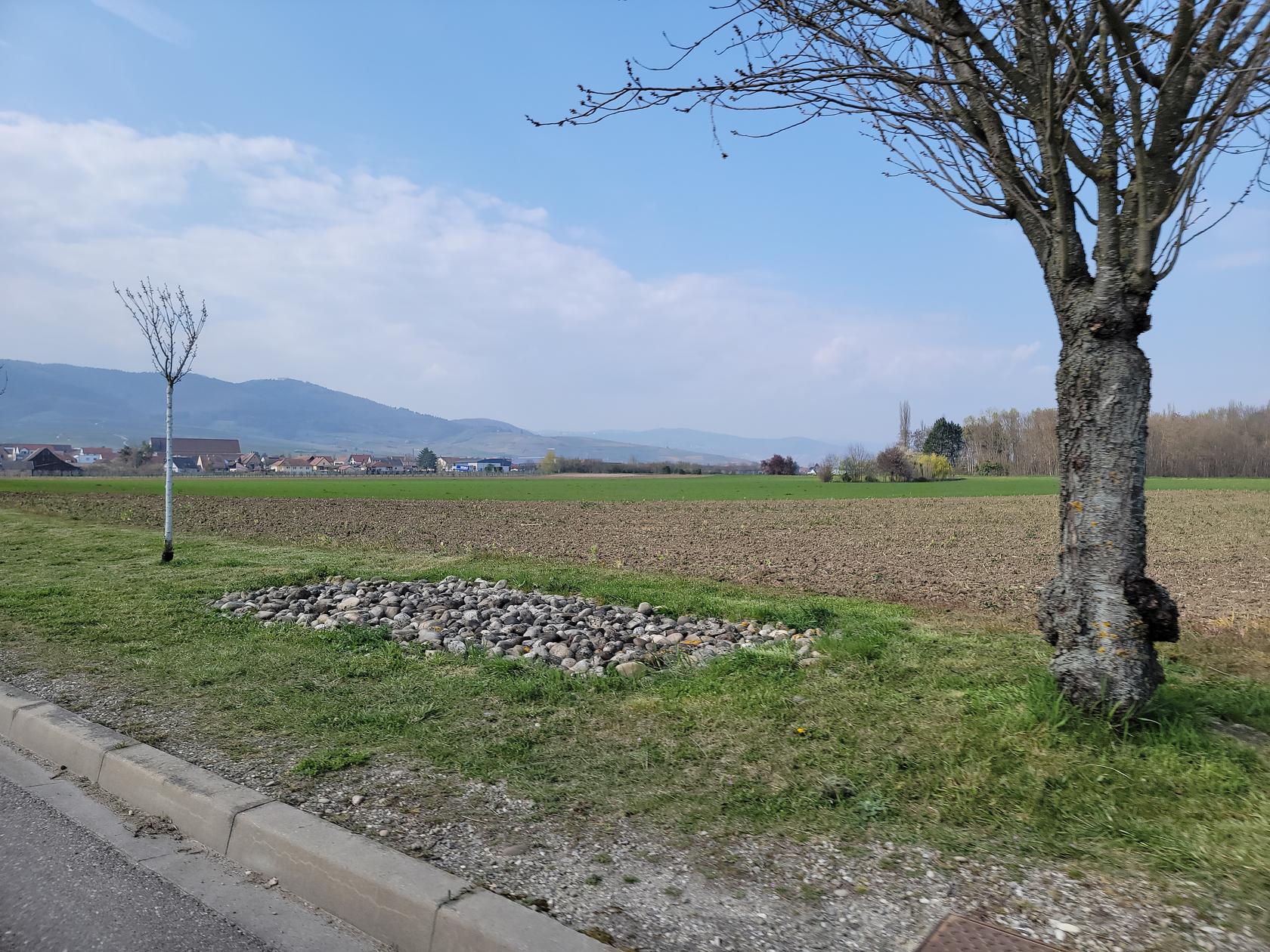
The fields outside – Entering the town – Eguisheim, France
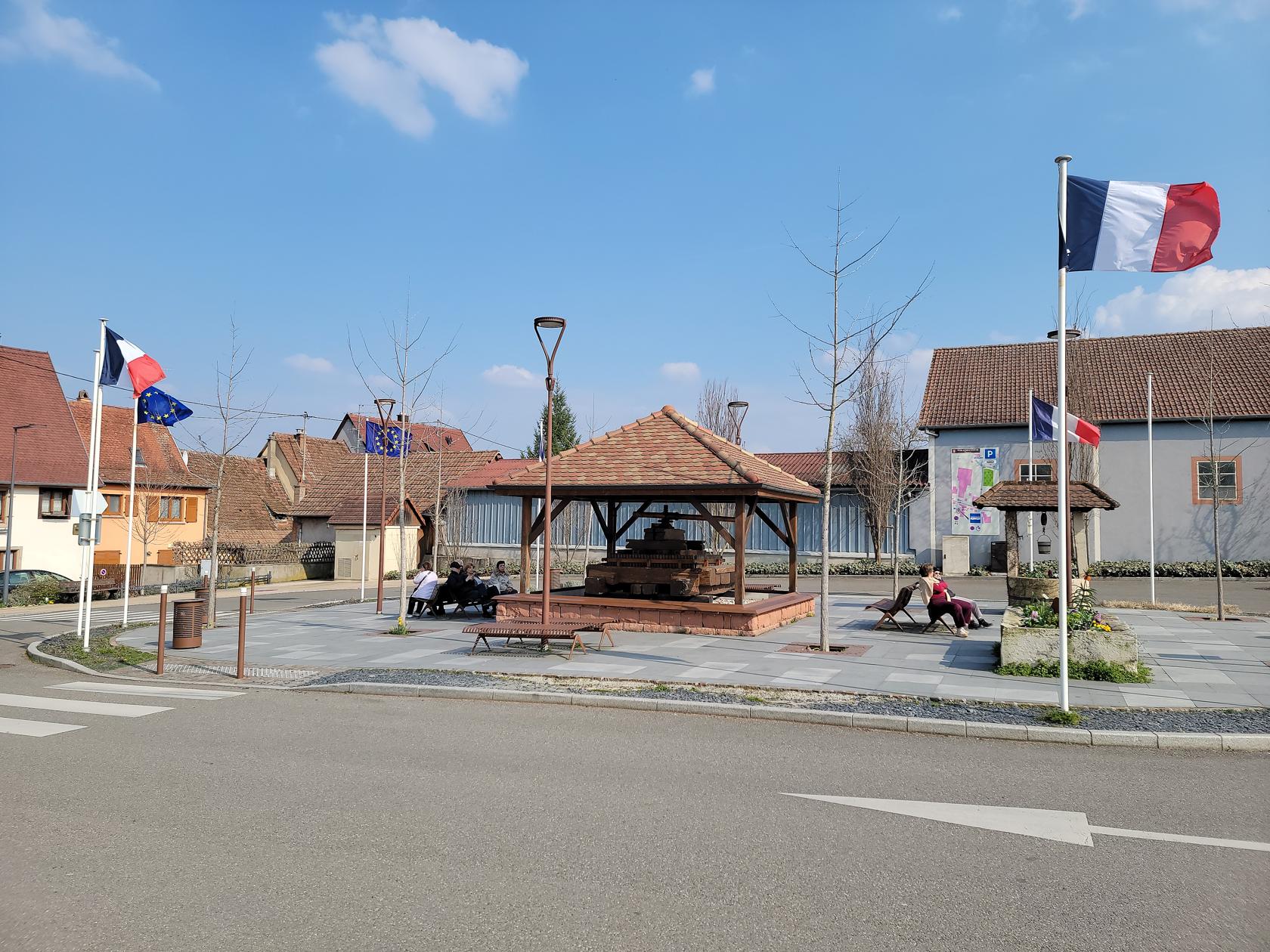
Wine press near parking lot – Eguisheim, France
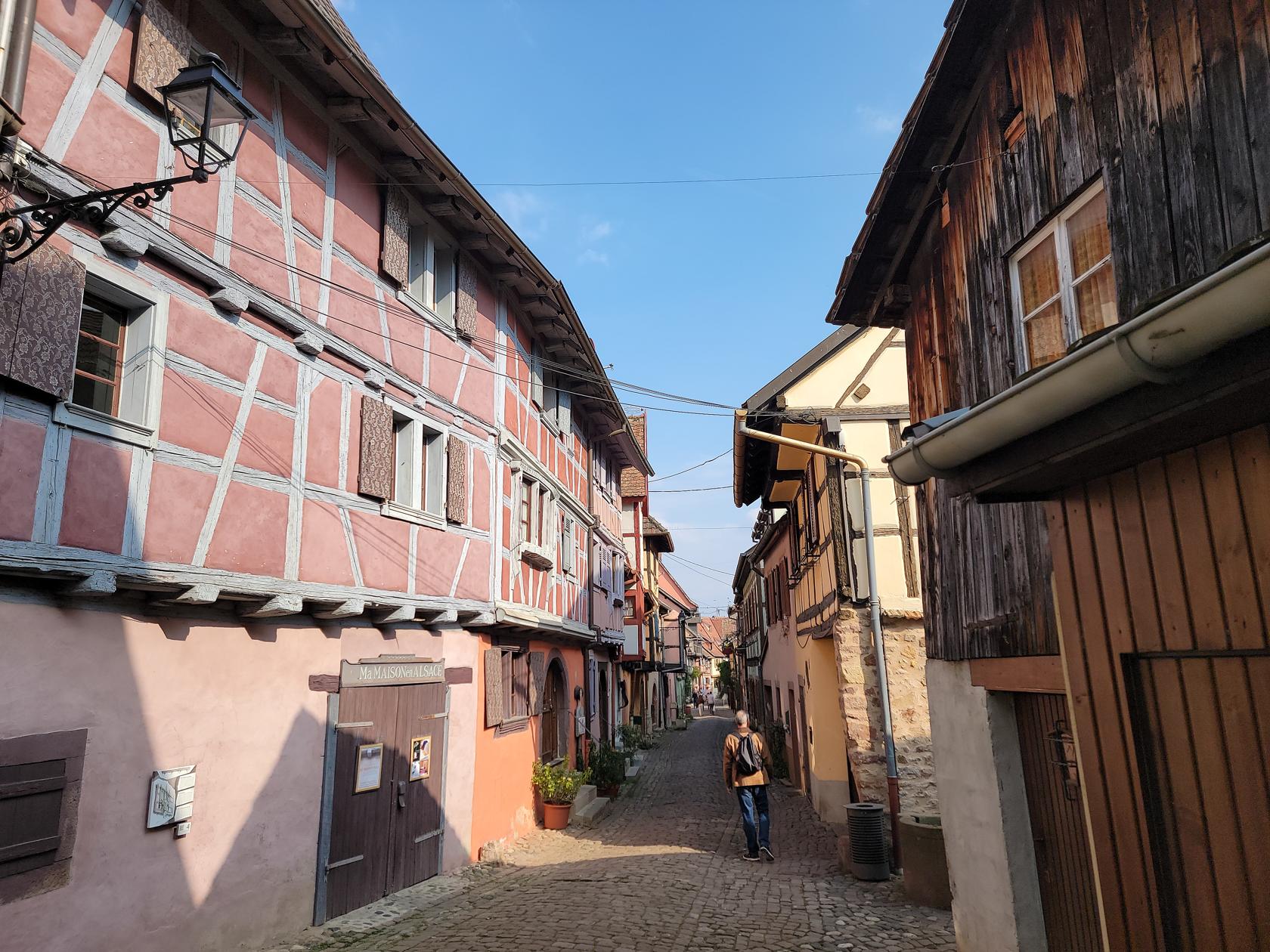
Grand Rue
Cutting through the center of town is the Grand Rue, or main street. Here is where you will find most all of the shops and many of the wineries.
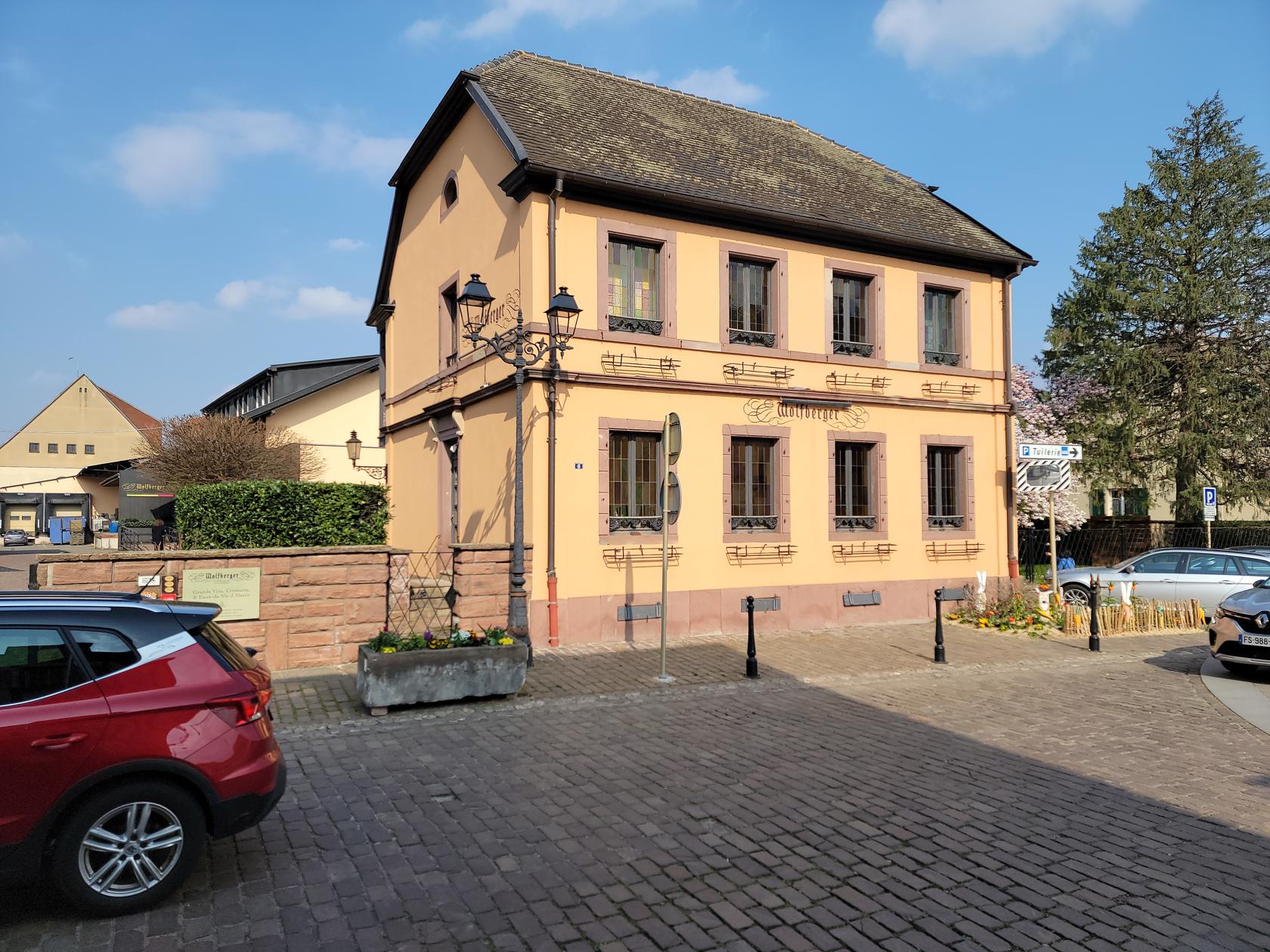
Typical winery on the edge of town – Eguisheim, France
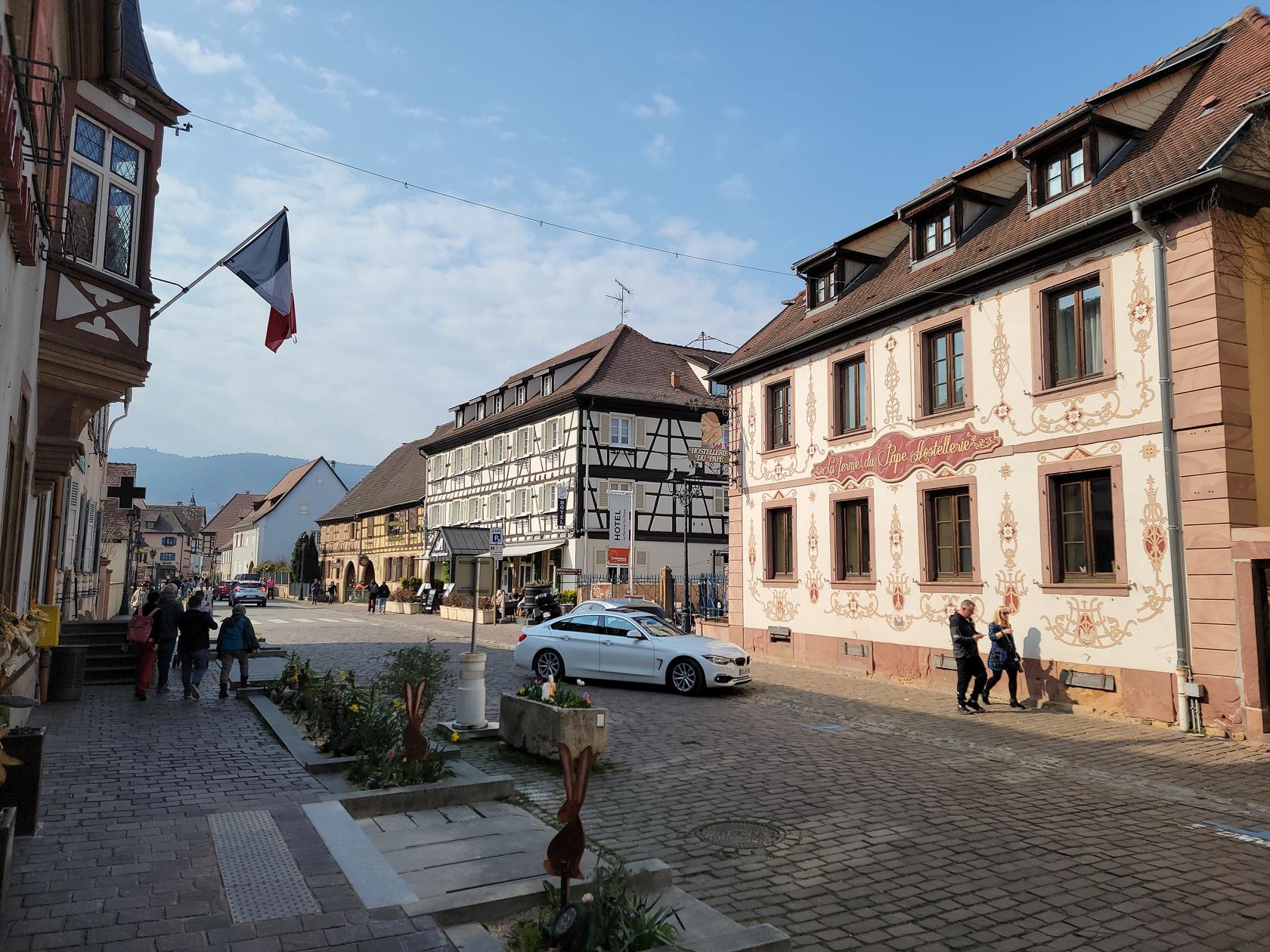
Entering town – Grand Rue – Eguisheim, France
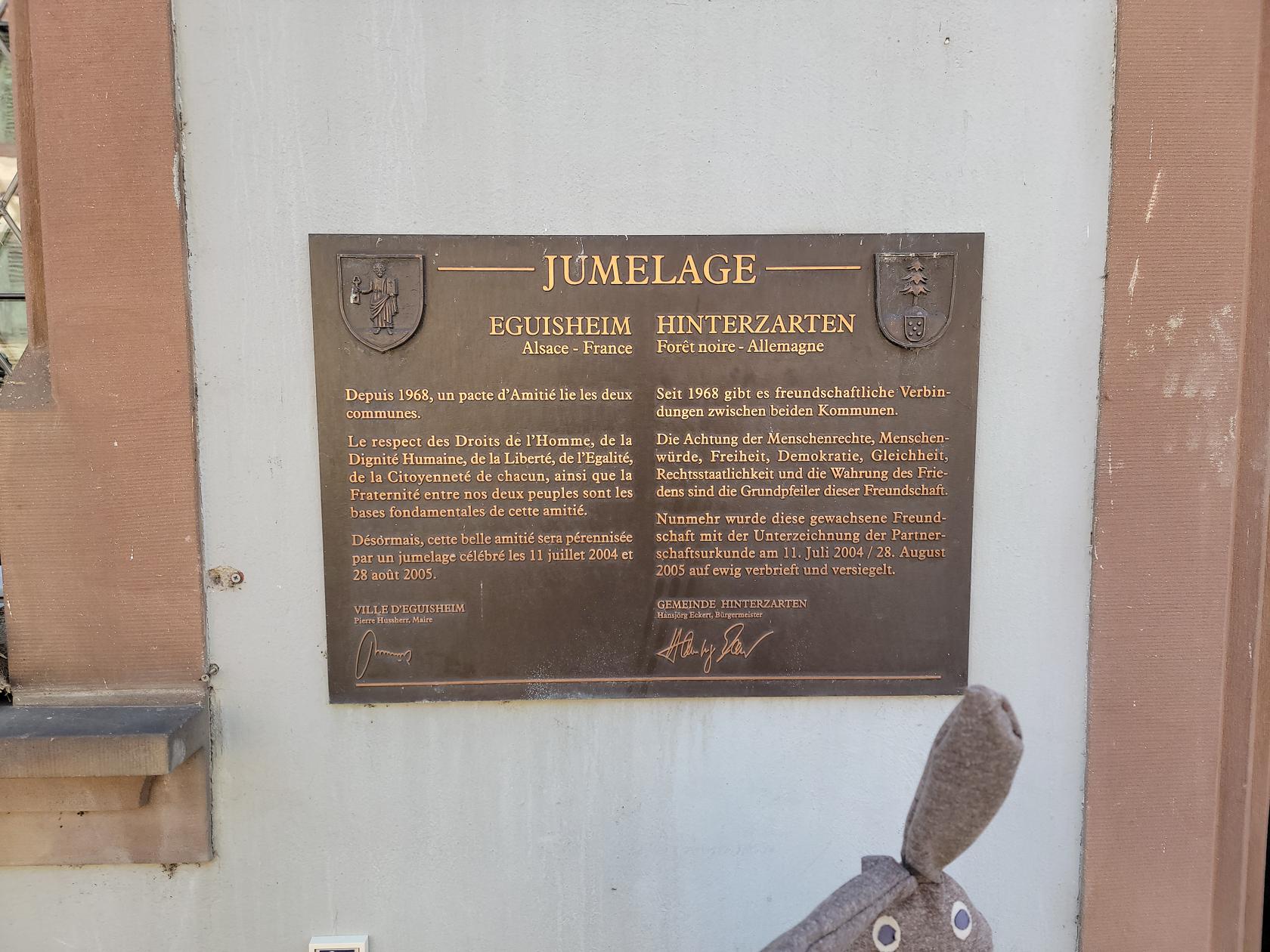
Paired towns Eguisheim and Hinterzarten – Grand Rue – Eguisheim, France
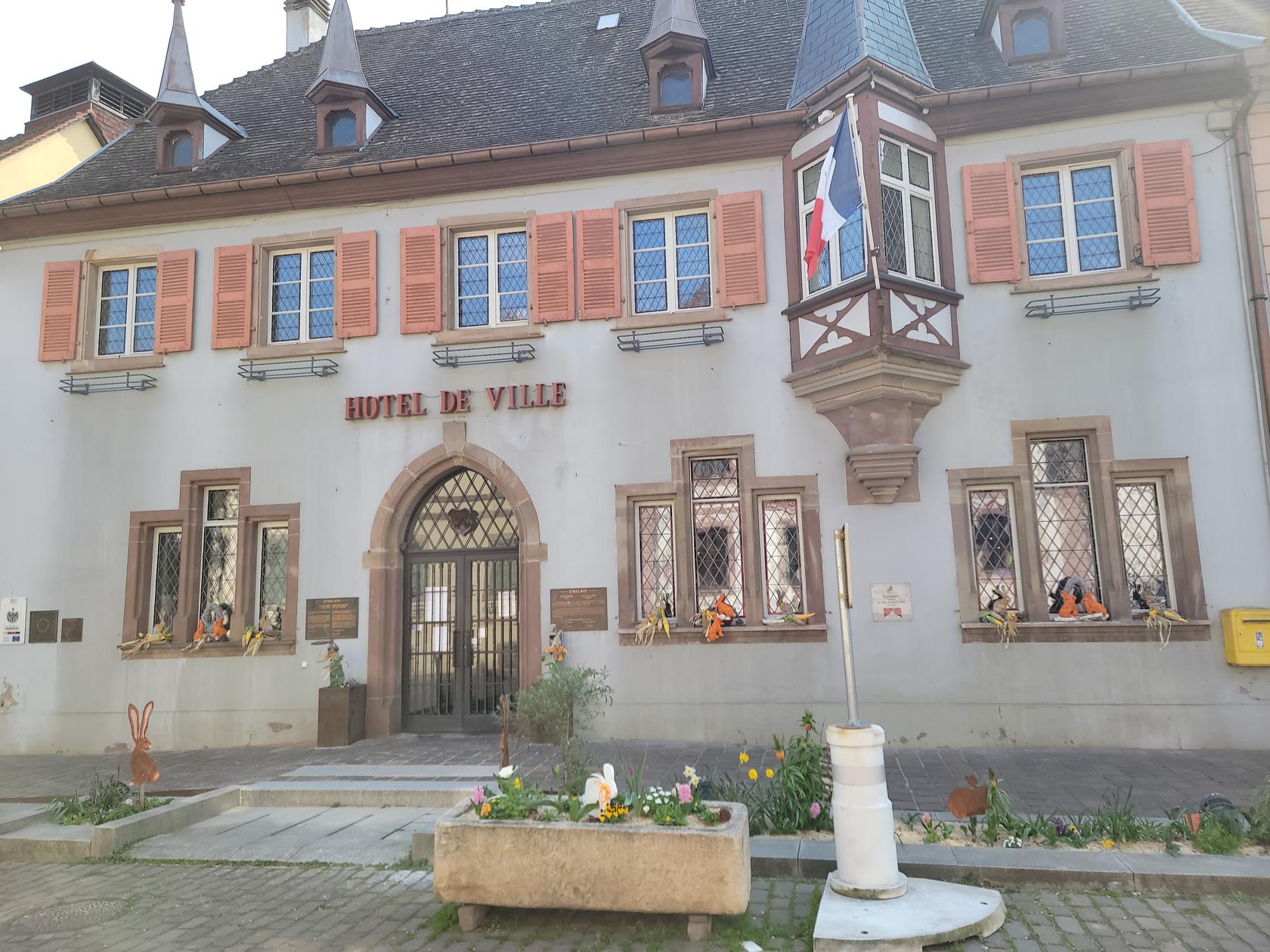
Hotel de Ville – Grand Rue – Eguisheim, France
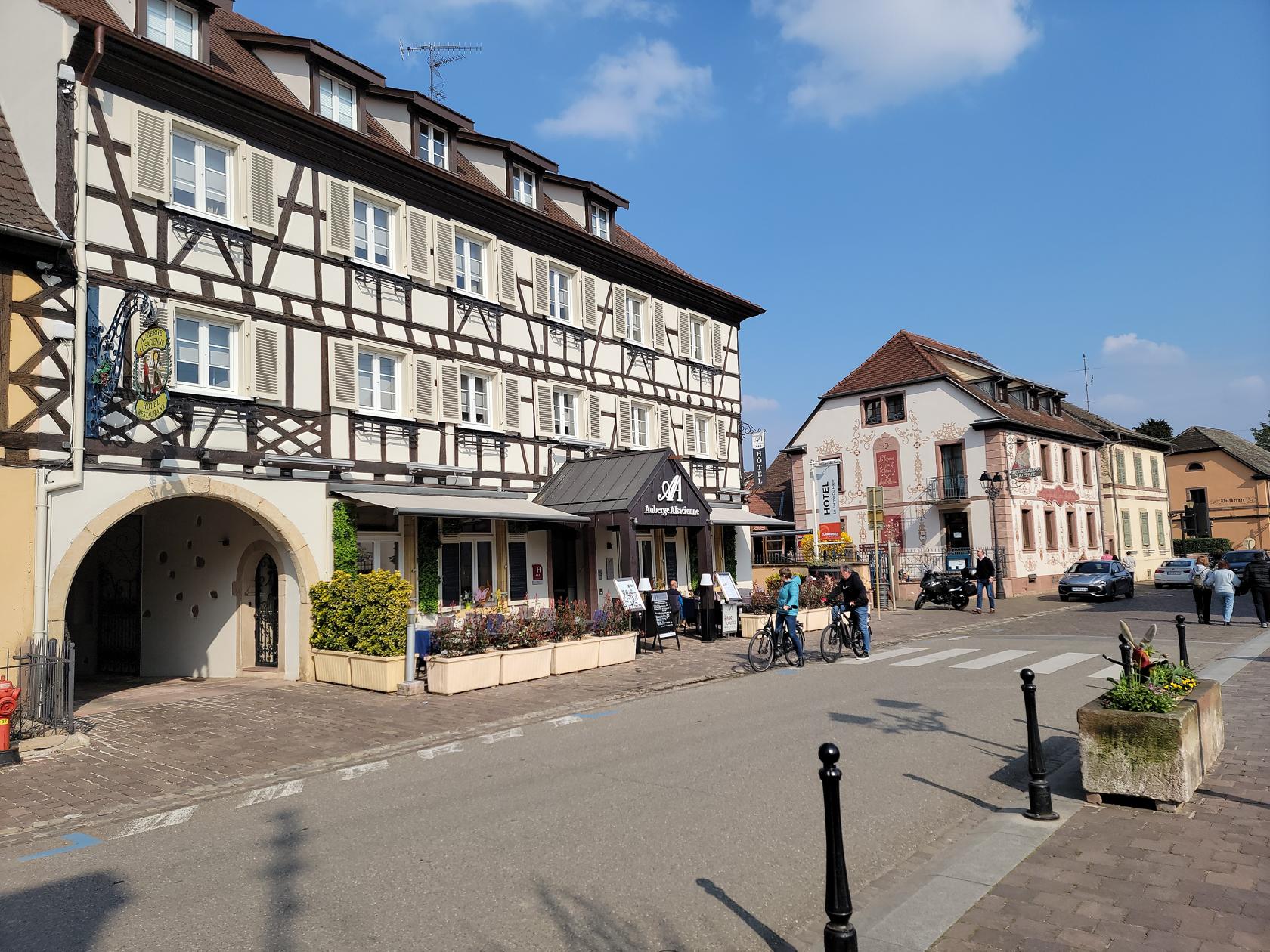
More hotels – Grand Rue – Eguisheim, France
Winery – Grand Rue – Eguisheim, France
The tourism office is close by the Eguisheim Fountain, so once you locate that, it’s just a stone’s throw away.
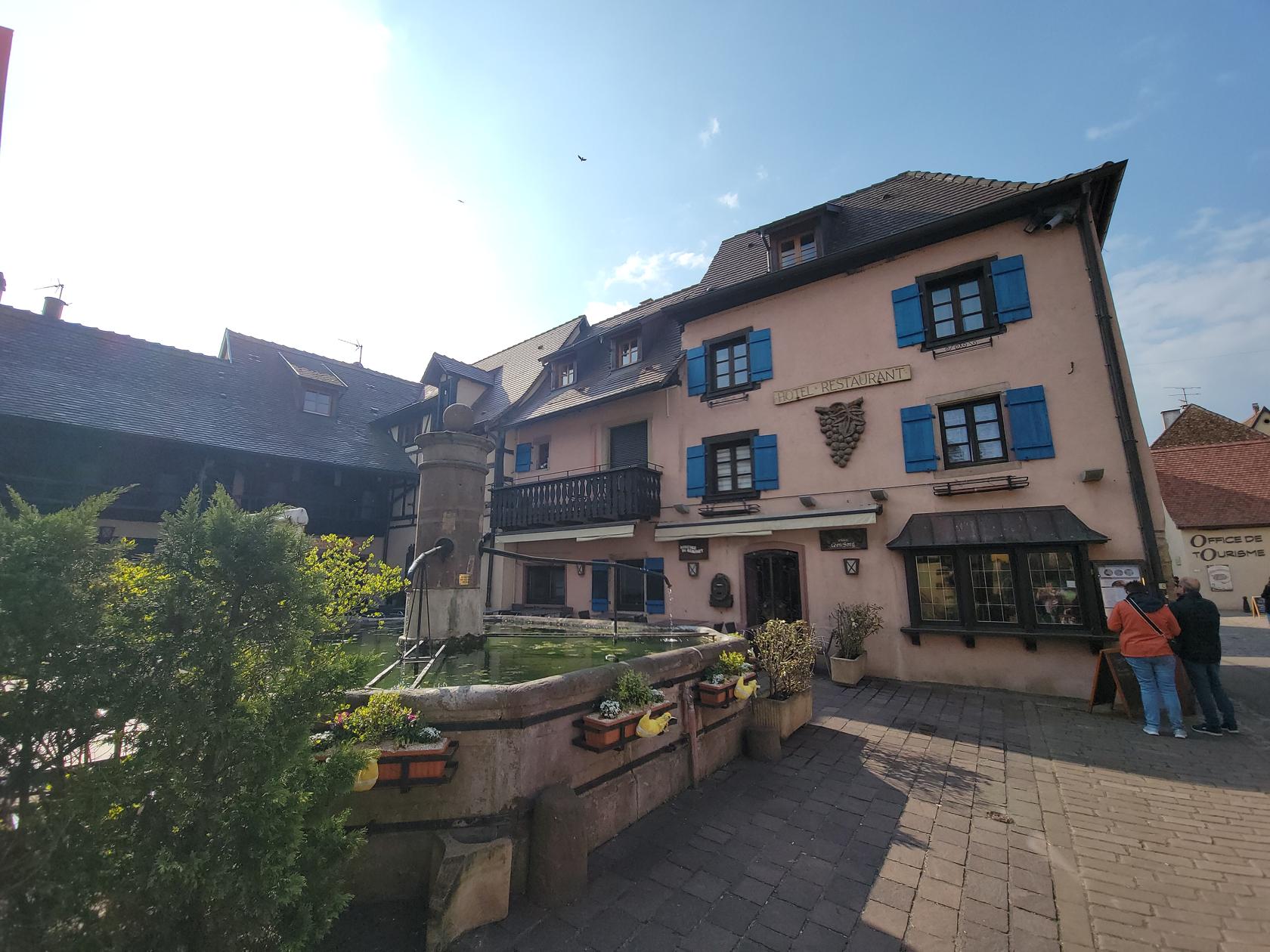
Fountain of Eguisheim – Grand Rue – Eguisheim, France
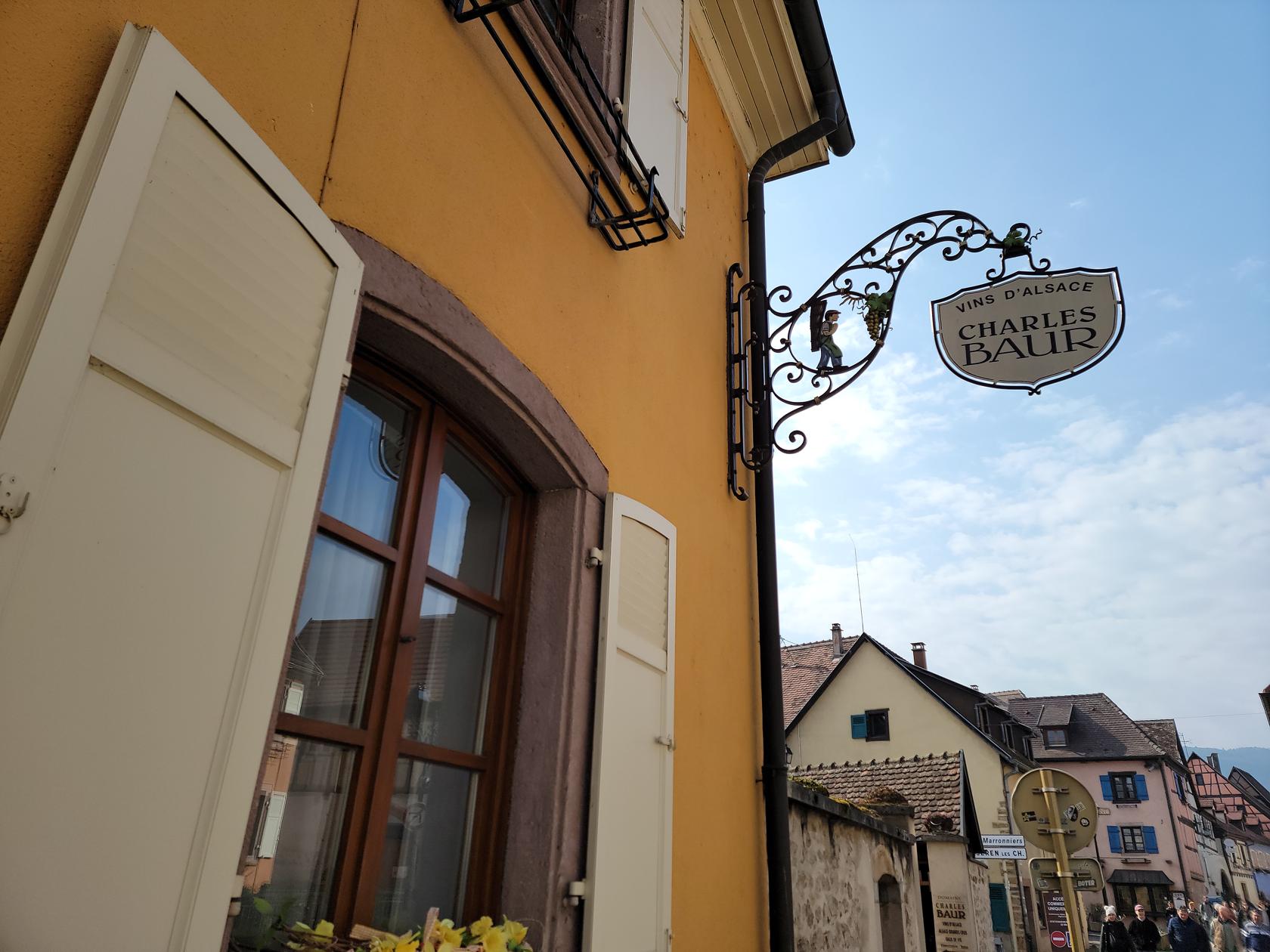
Charles Bauer winery – Grand Rue – Eguisheim, France
Rue de Rempart
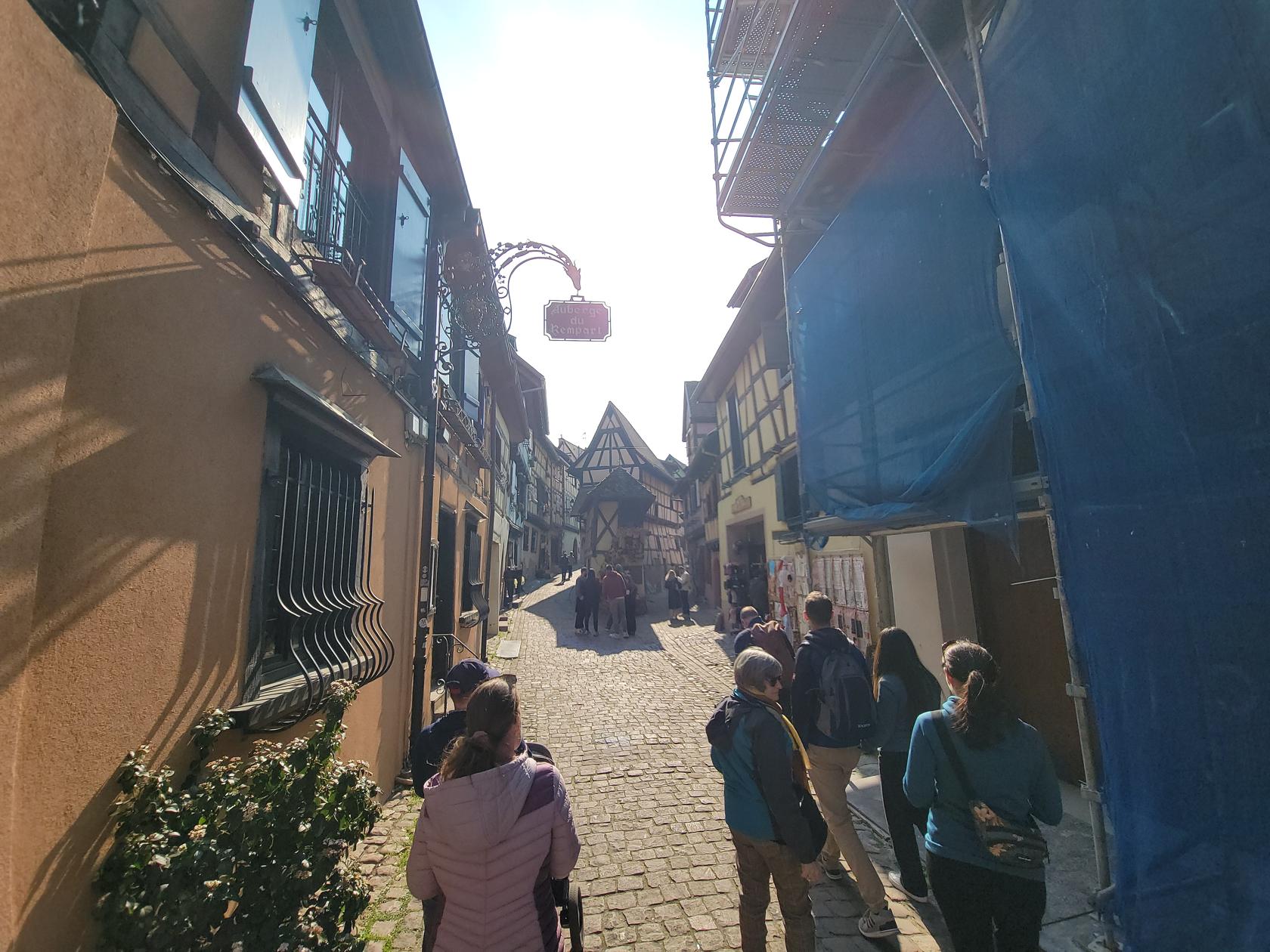
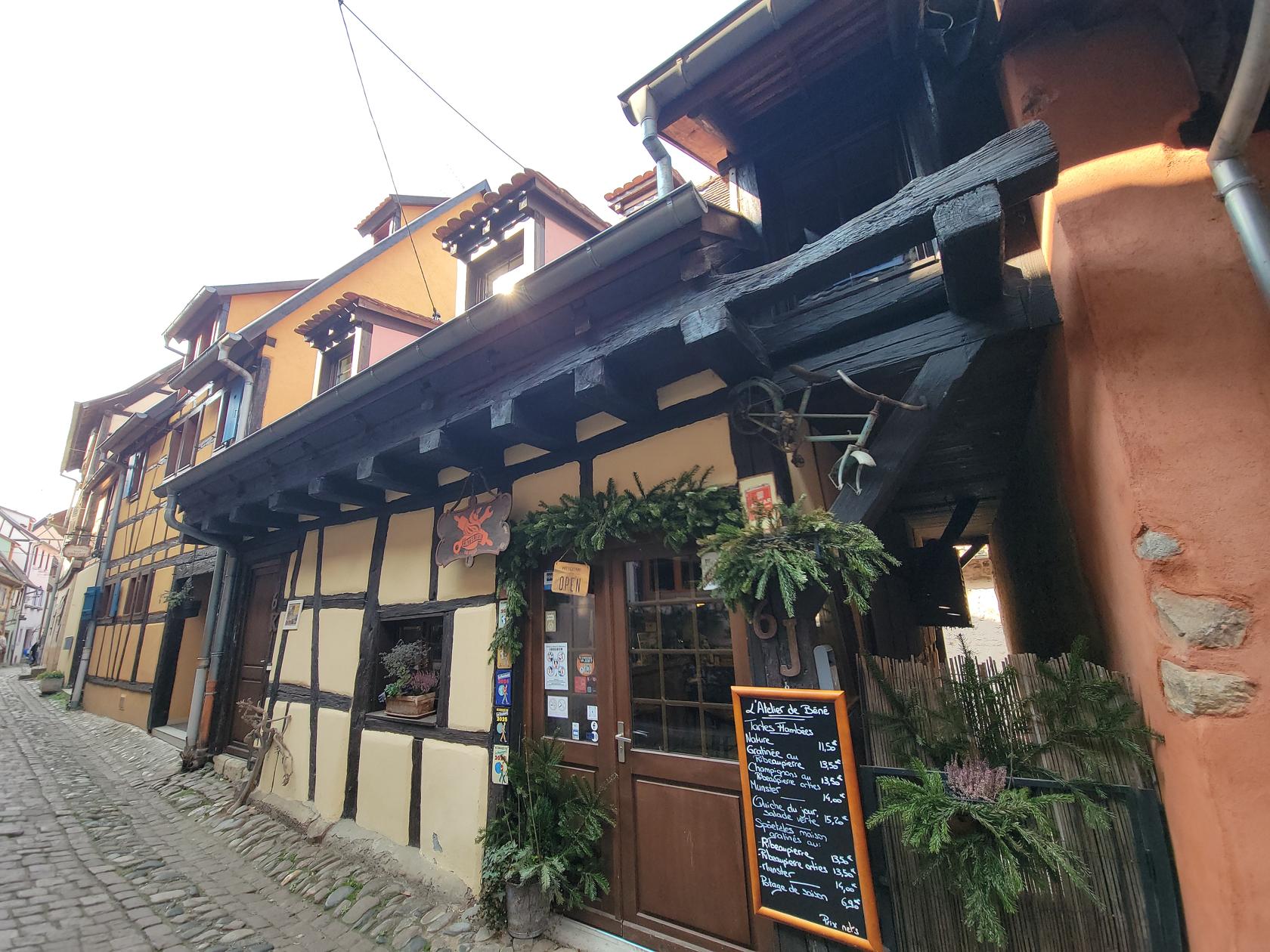
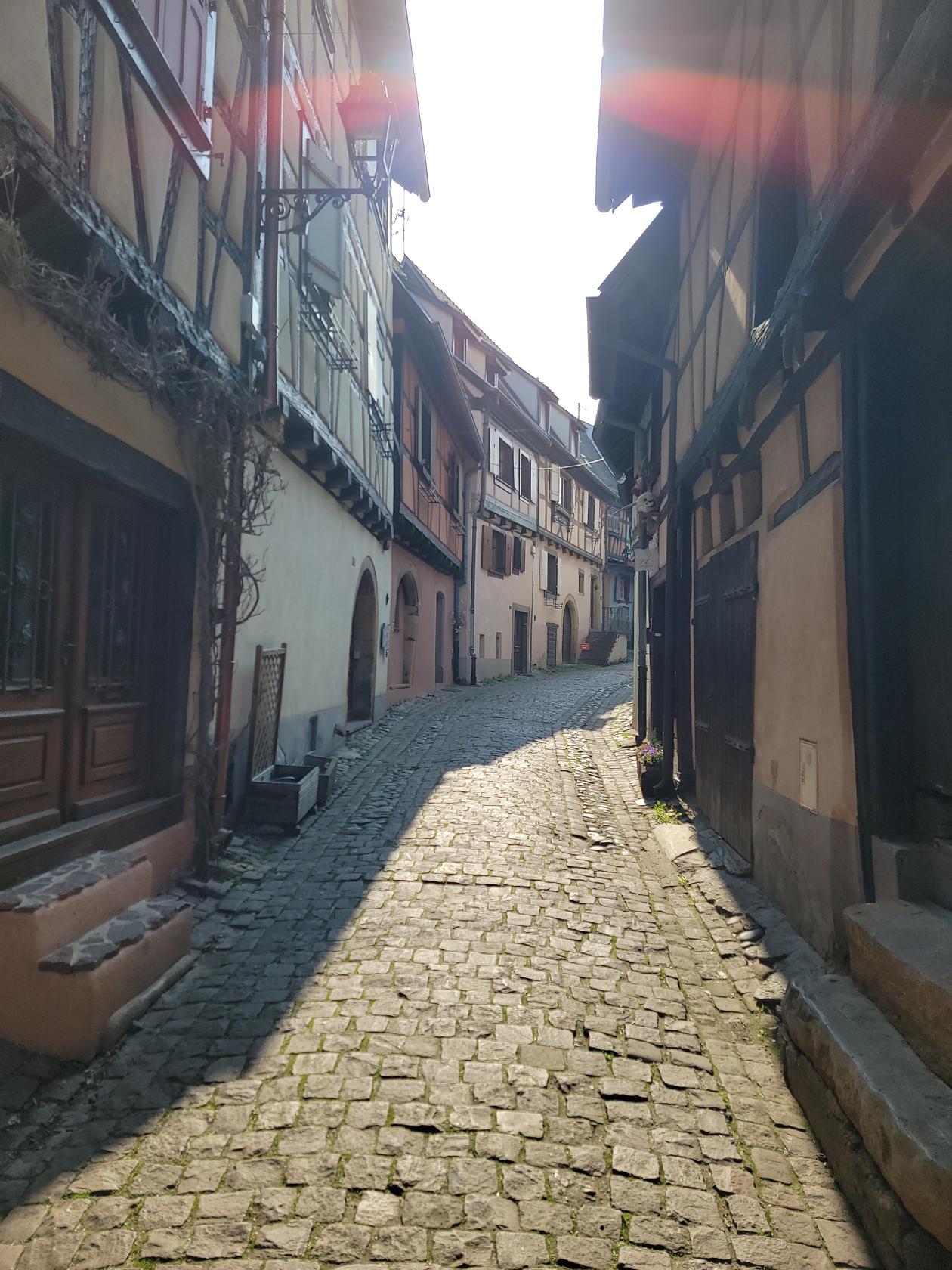
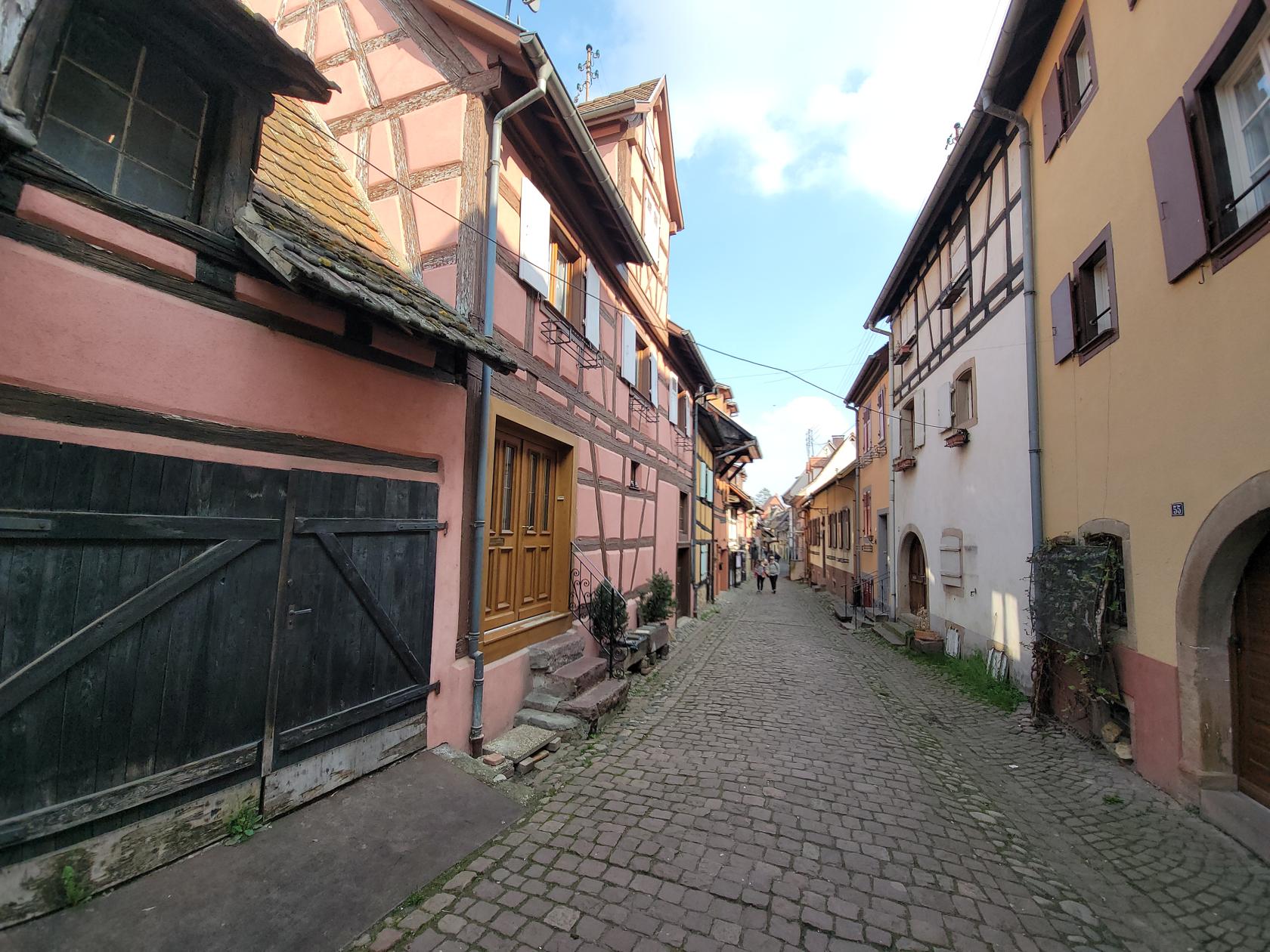
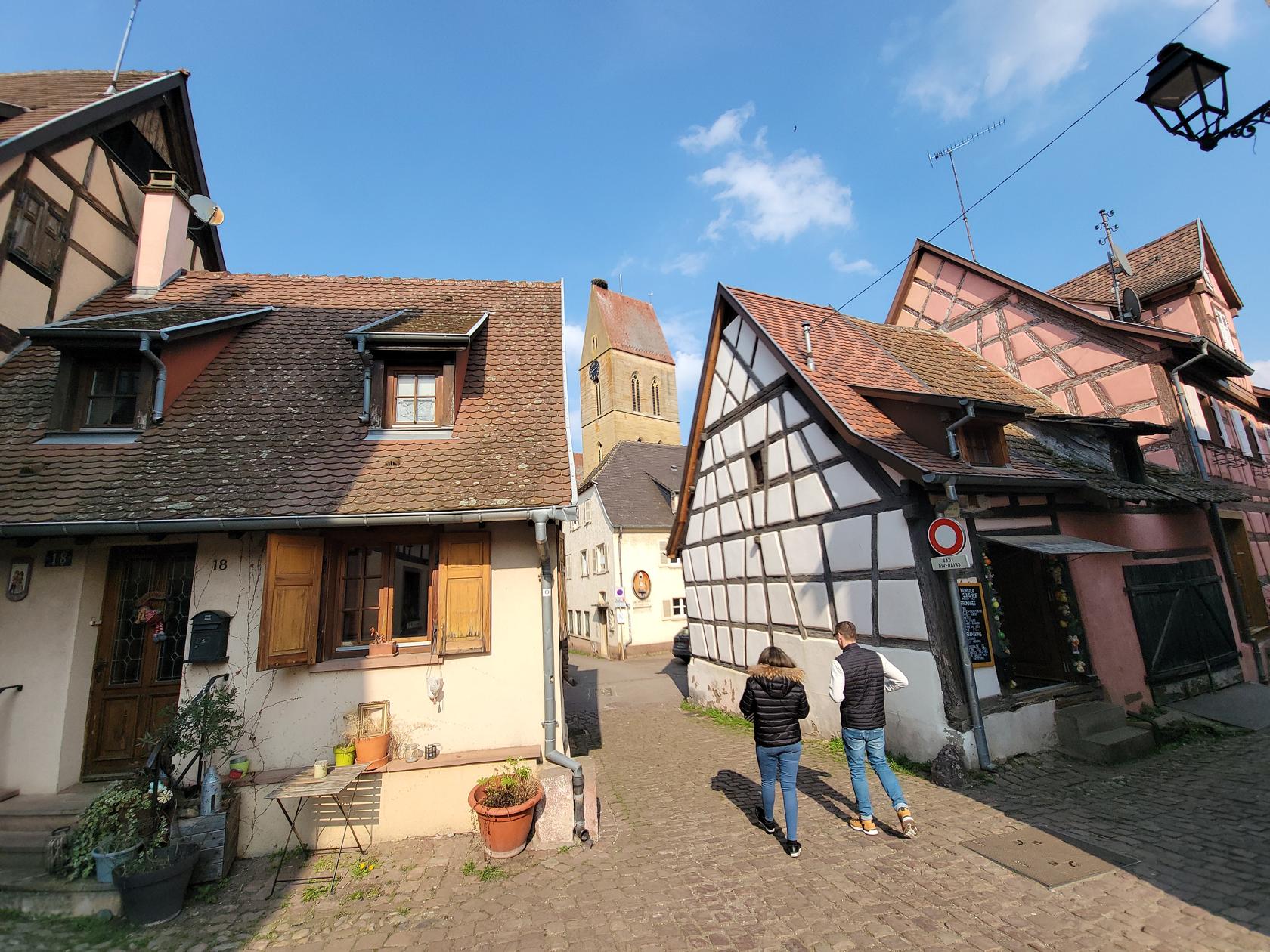
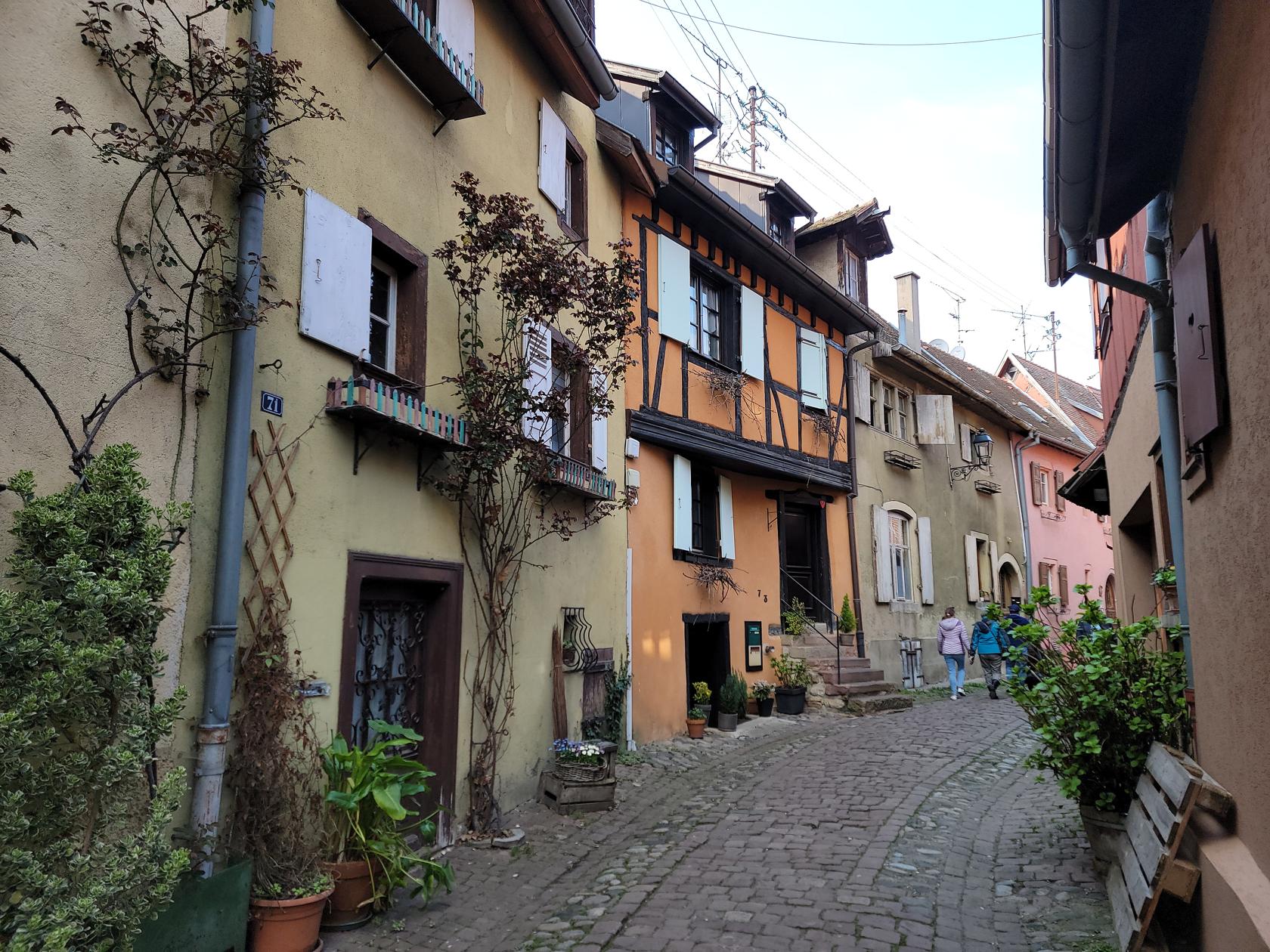
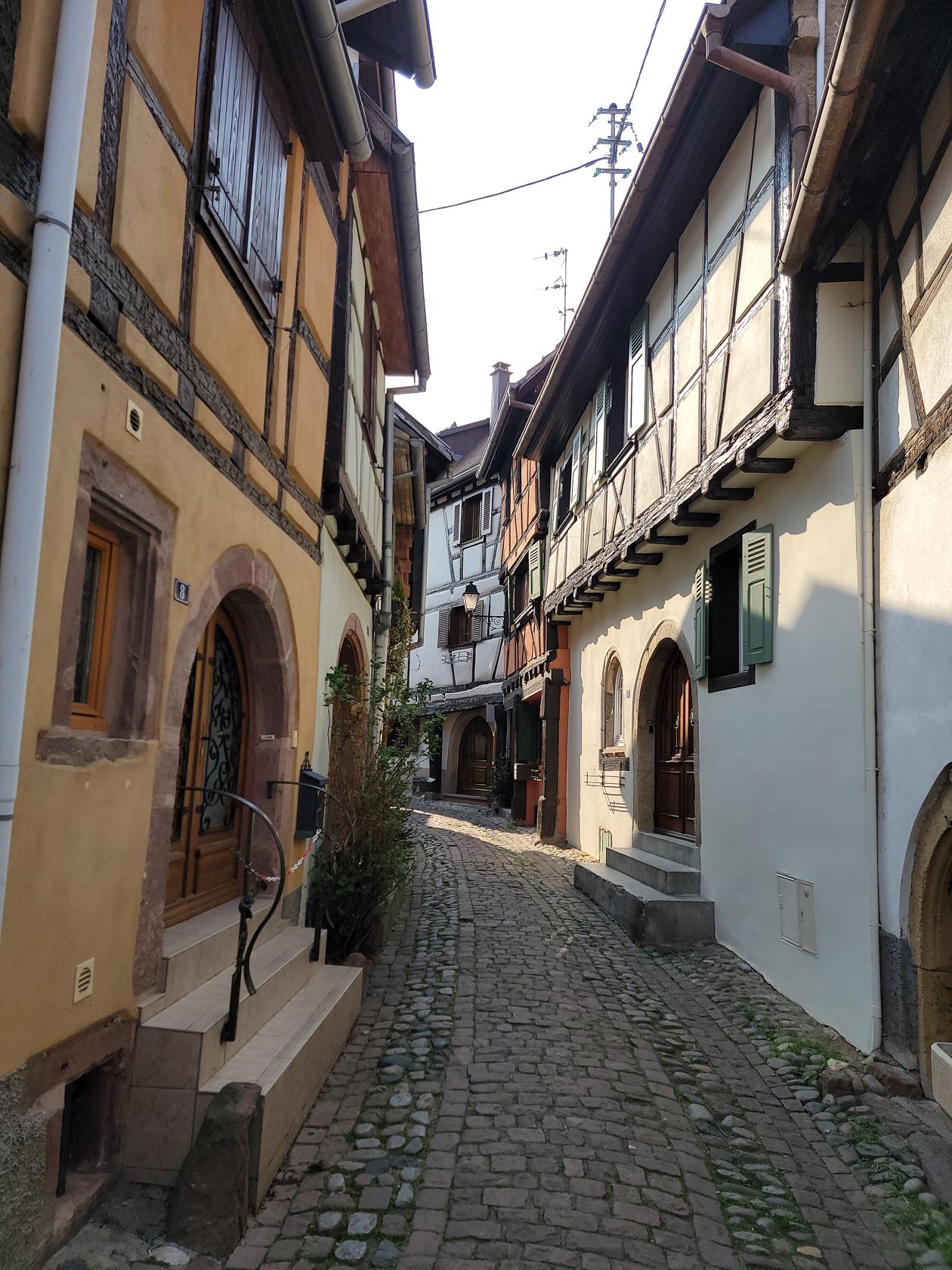
We spent most of our time walking this alley, which circumnavigates the town. Since the town is laid out like an onion, you will eventually come back to where you started.
La Grange de Eguisheim – Rue de Rempart – Eguisheim, France
La Grange de Eguisheim – Rue de Rempart – Eguisheim, France
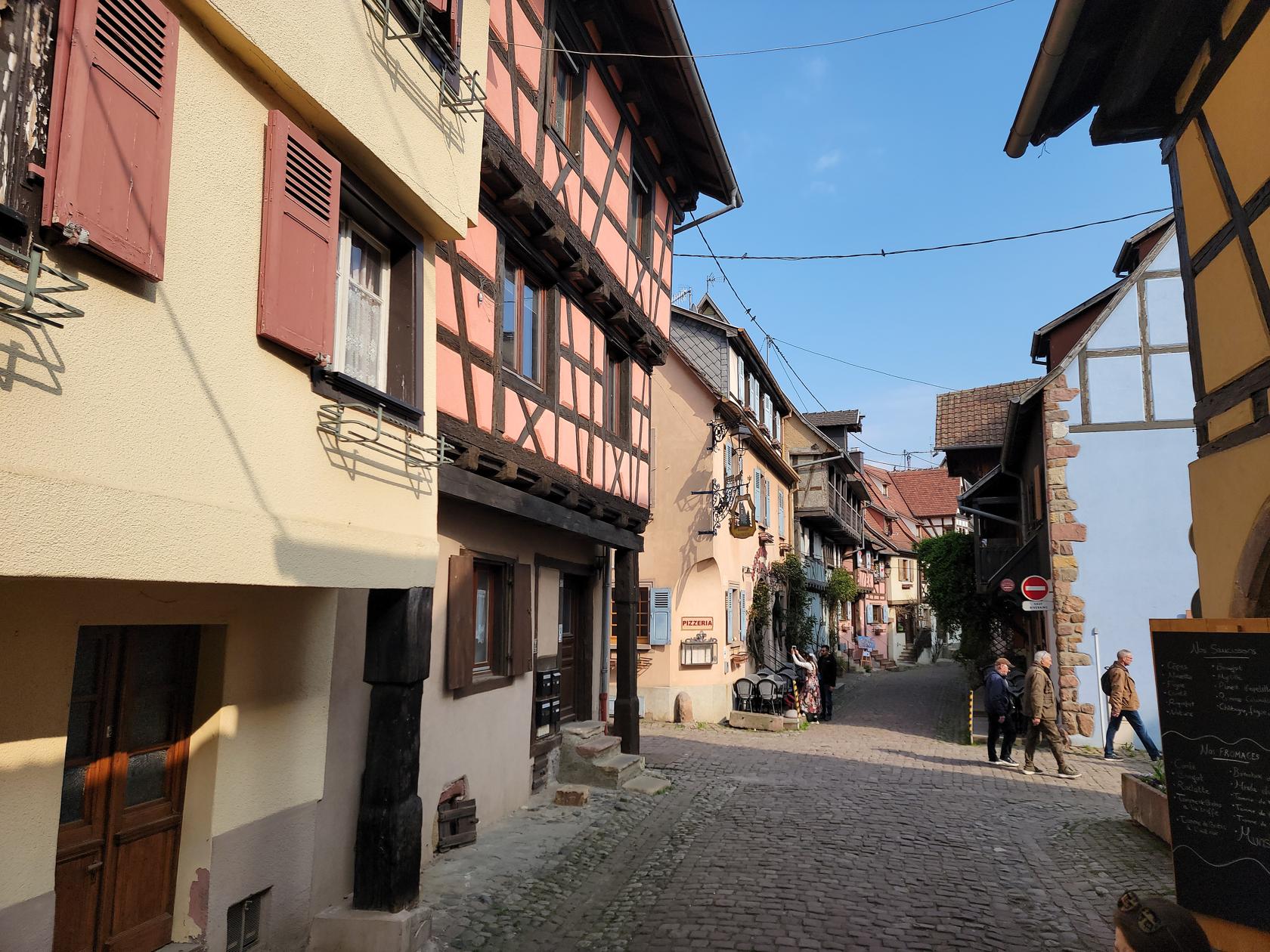
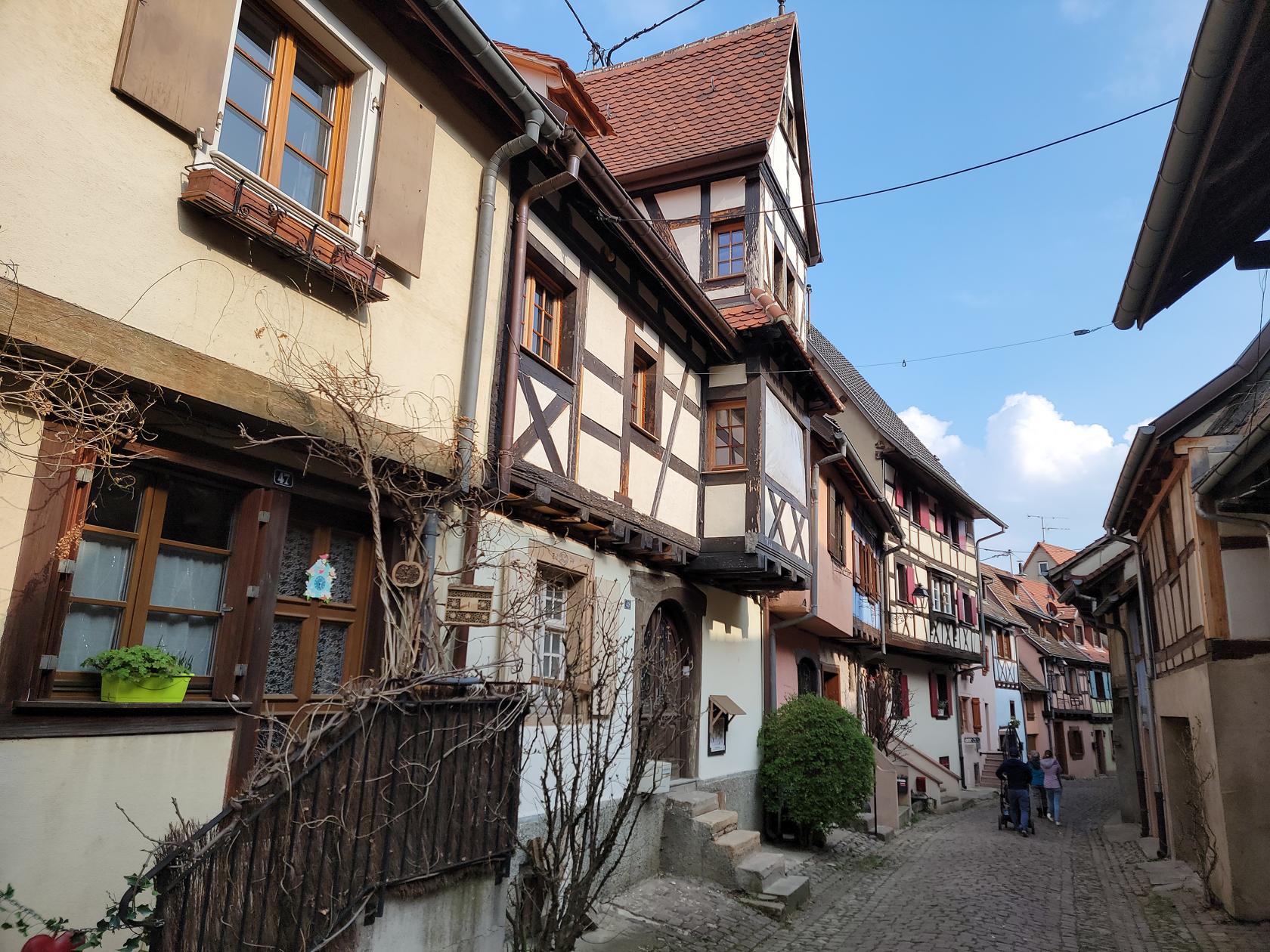
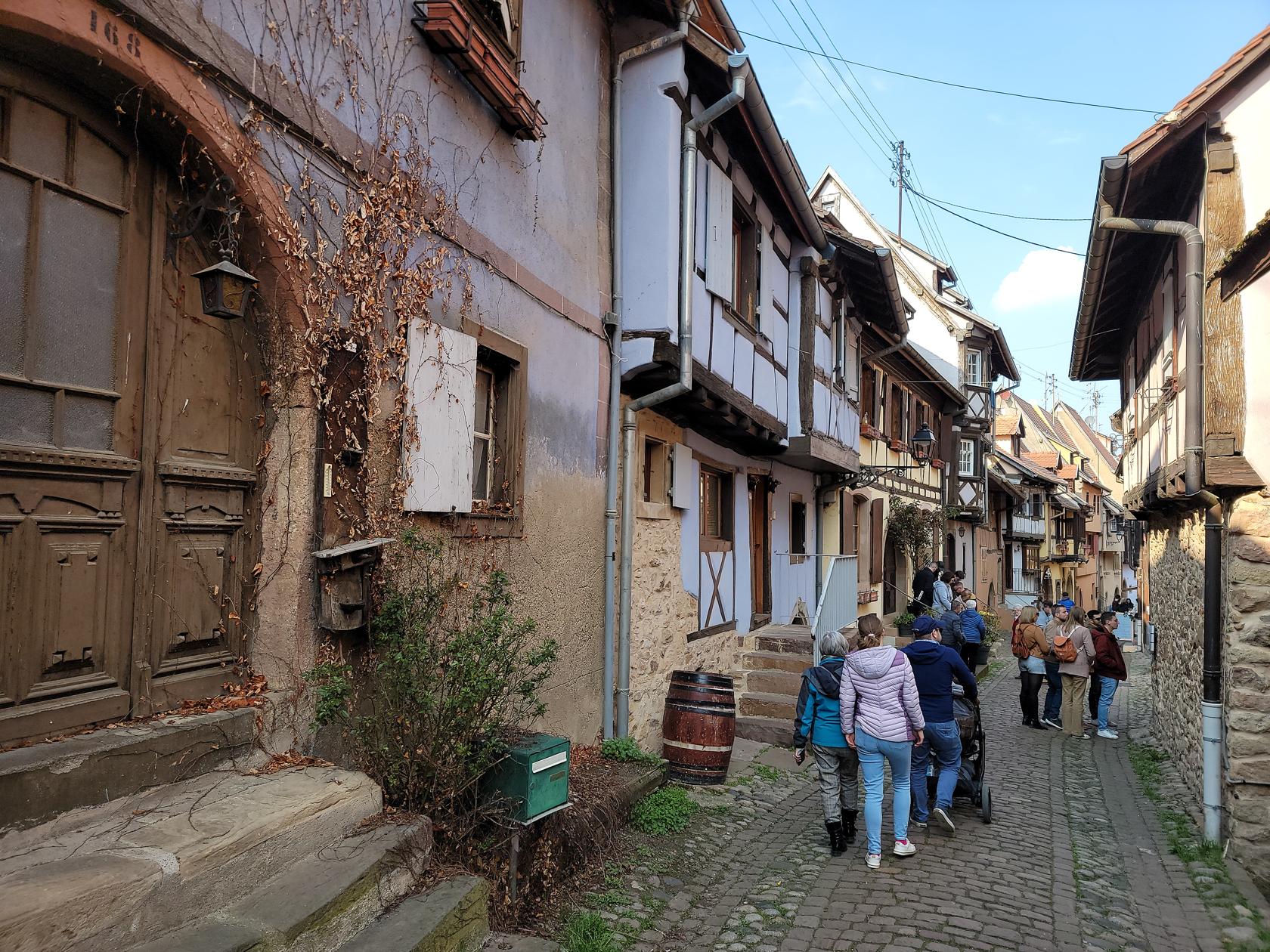
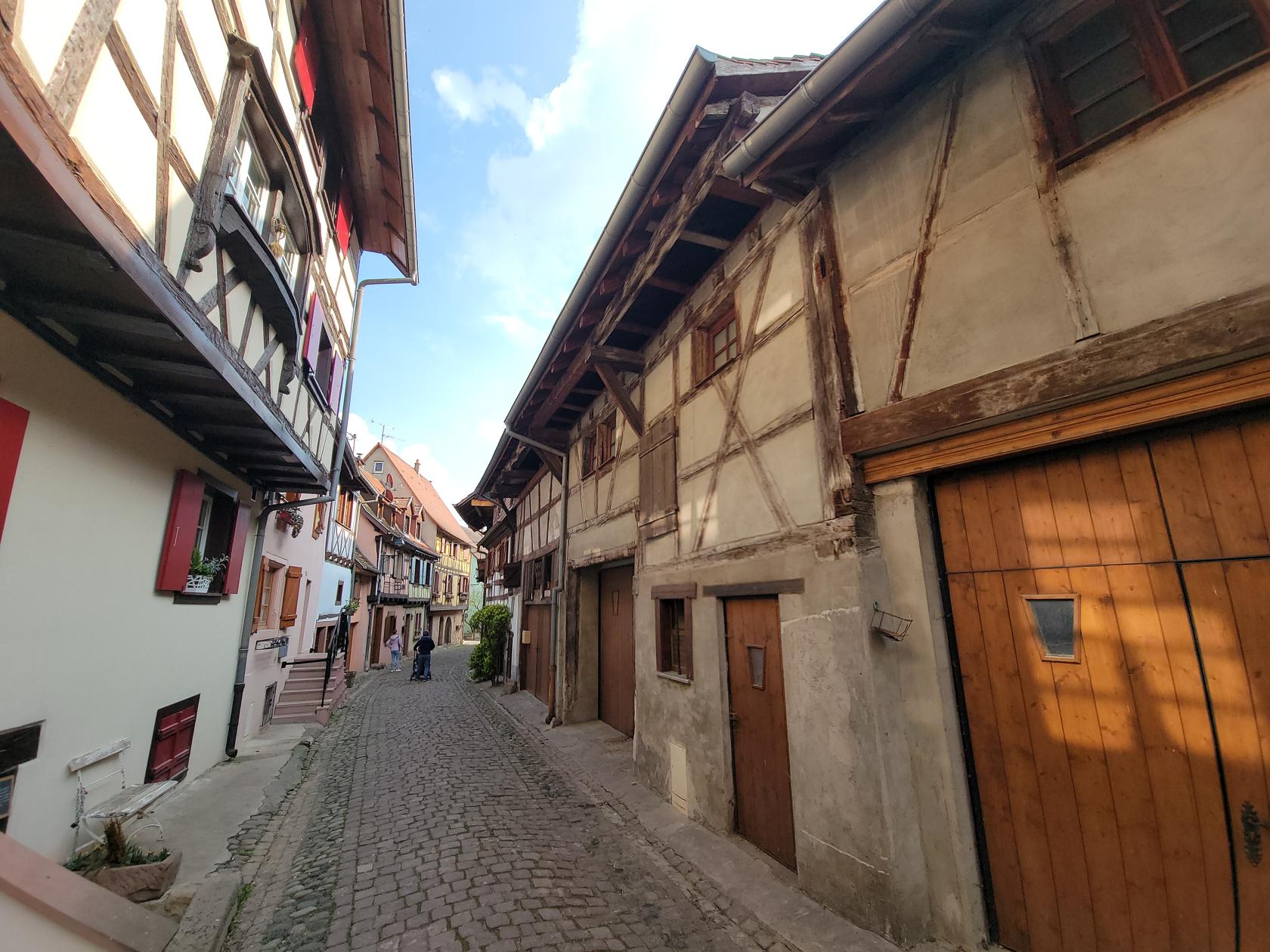
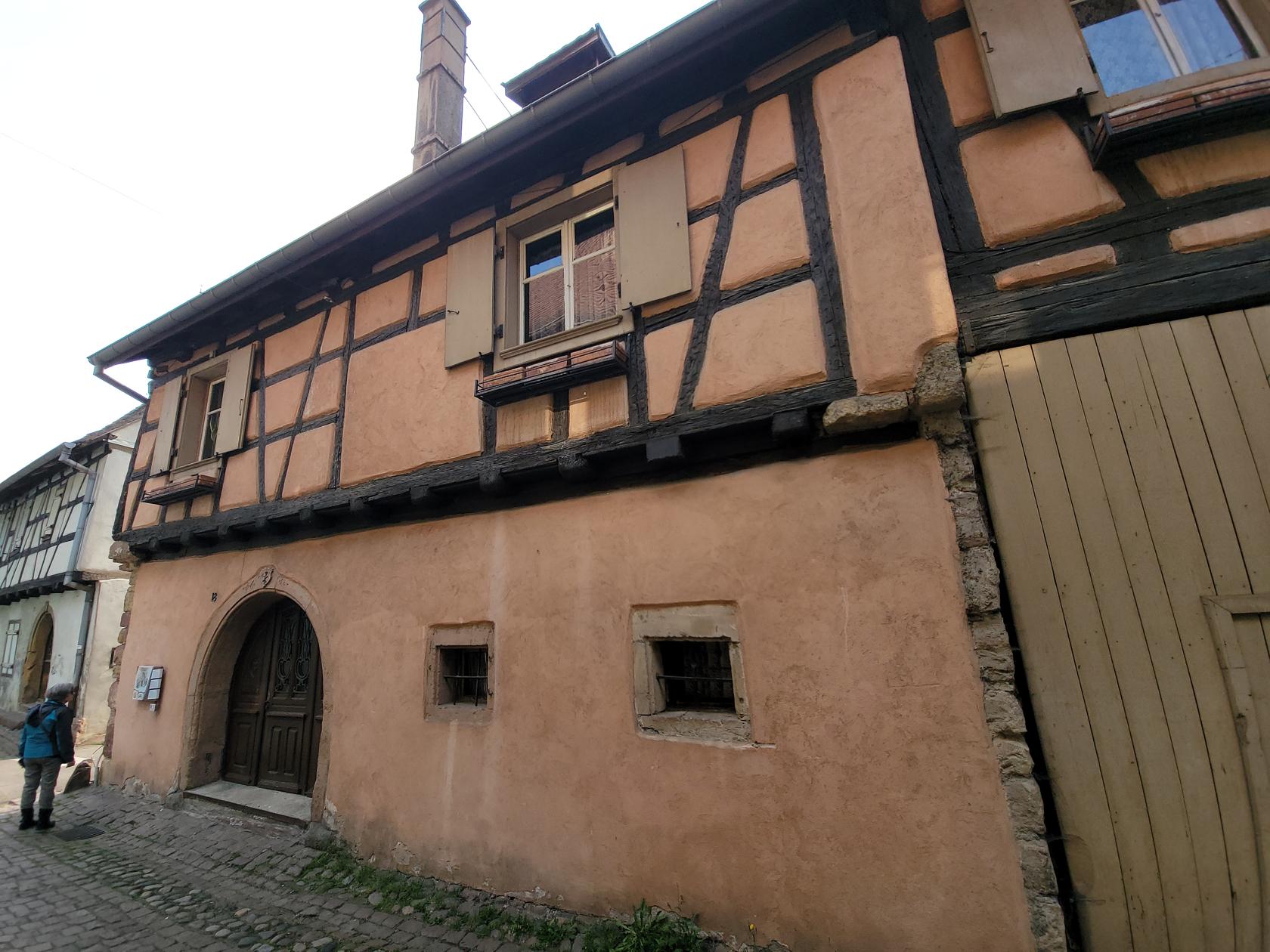
Timber Houses – Rue de Rempart – Eguisheim, France
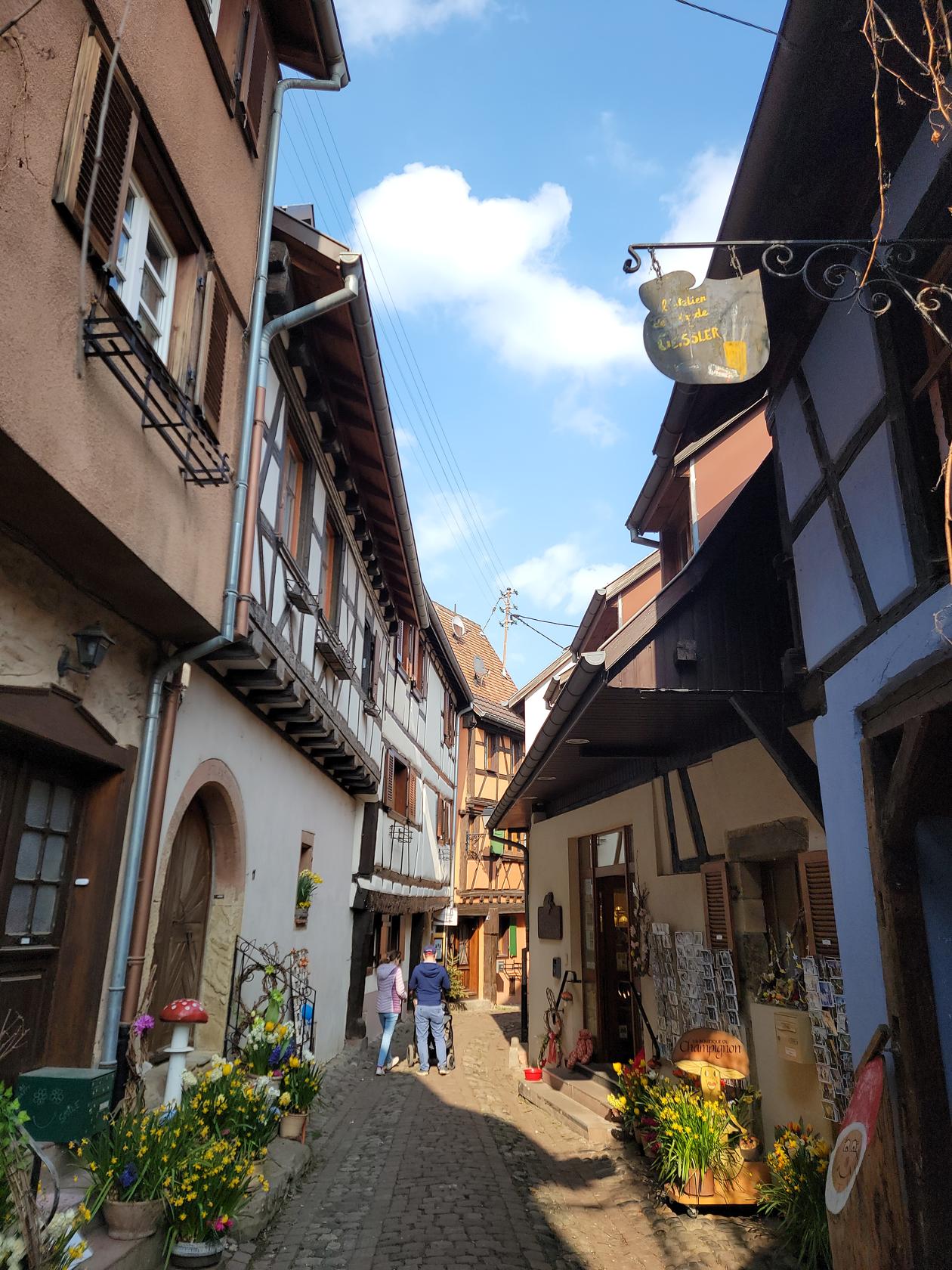
Quaint cafe – Rue de Rempart – Eguisheim, France
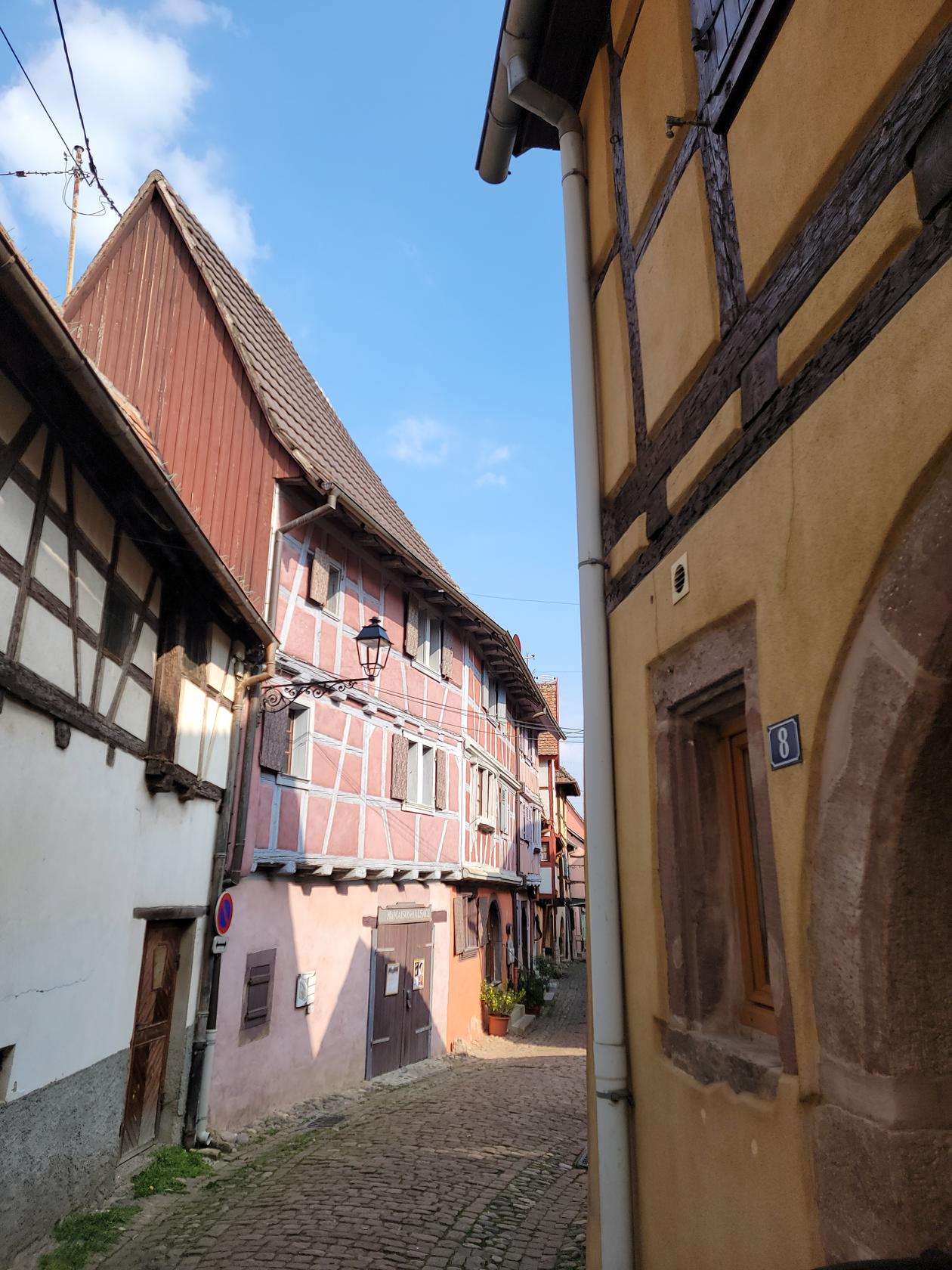
Cobbled alley – Rue de Rempart – Eguisheim, France
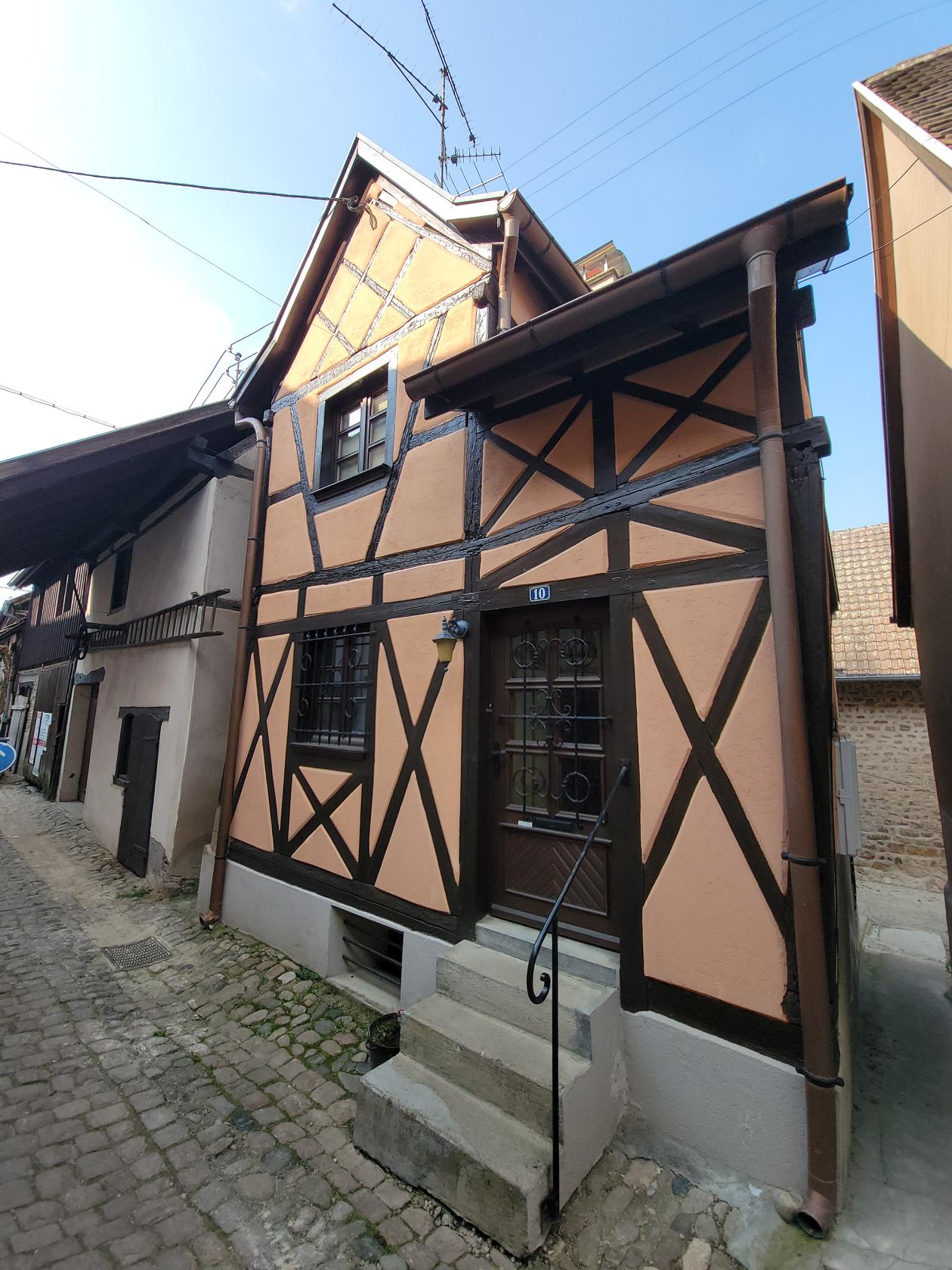
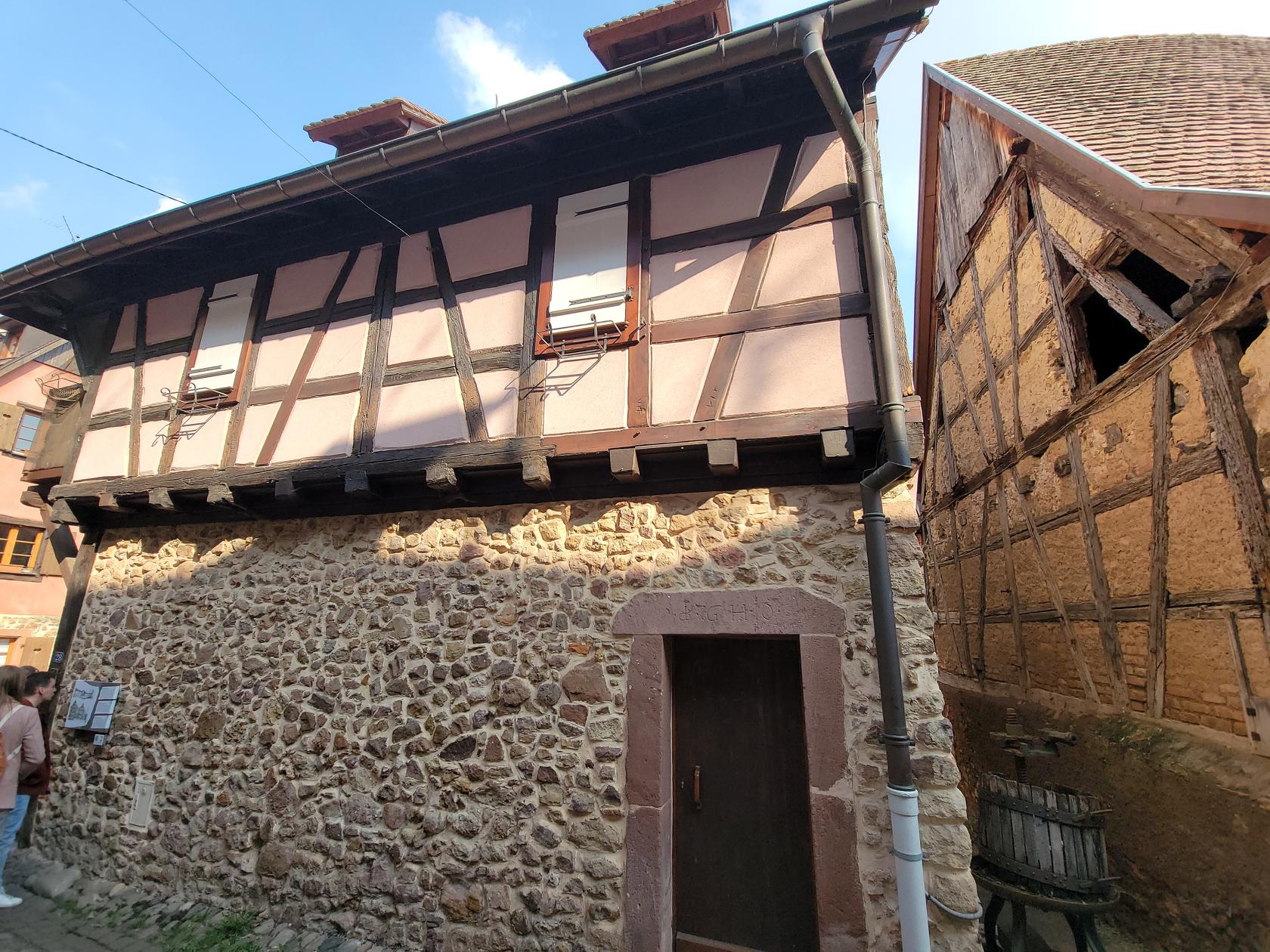
Small timbered house – Rue de Rempart – Eguisheim, France
More timbered houses – Rue de Rempart – Eguisheim, France
Walking along – Rue de Rempart – Eguisheim, France
Tower of Église Saints-Pierre-et-Paul – Rue de Rempart – Eguisheim, France
Ericka, Gabi, Vlad and Patti walking ahead – Rue de Rempart – Eguisheim, France
The Rue de Rempart creates two rows of buildings that acted like fortifications for the town. Since the town was not initially meant to be a fortress, but was more economical in nature, the outside wall turned into another row of houses some time in the sixteenth century.
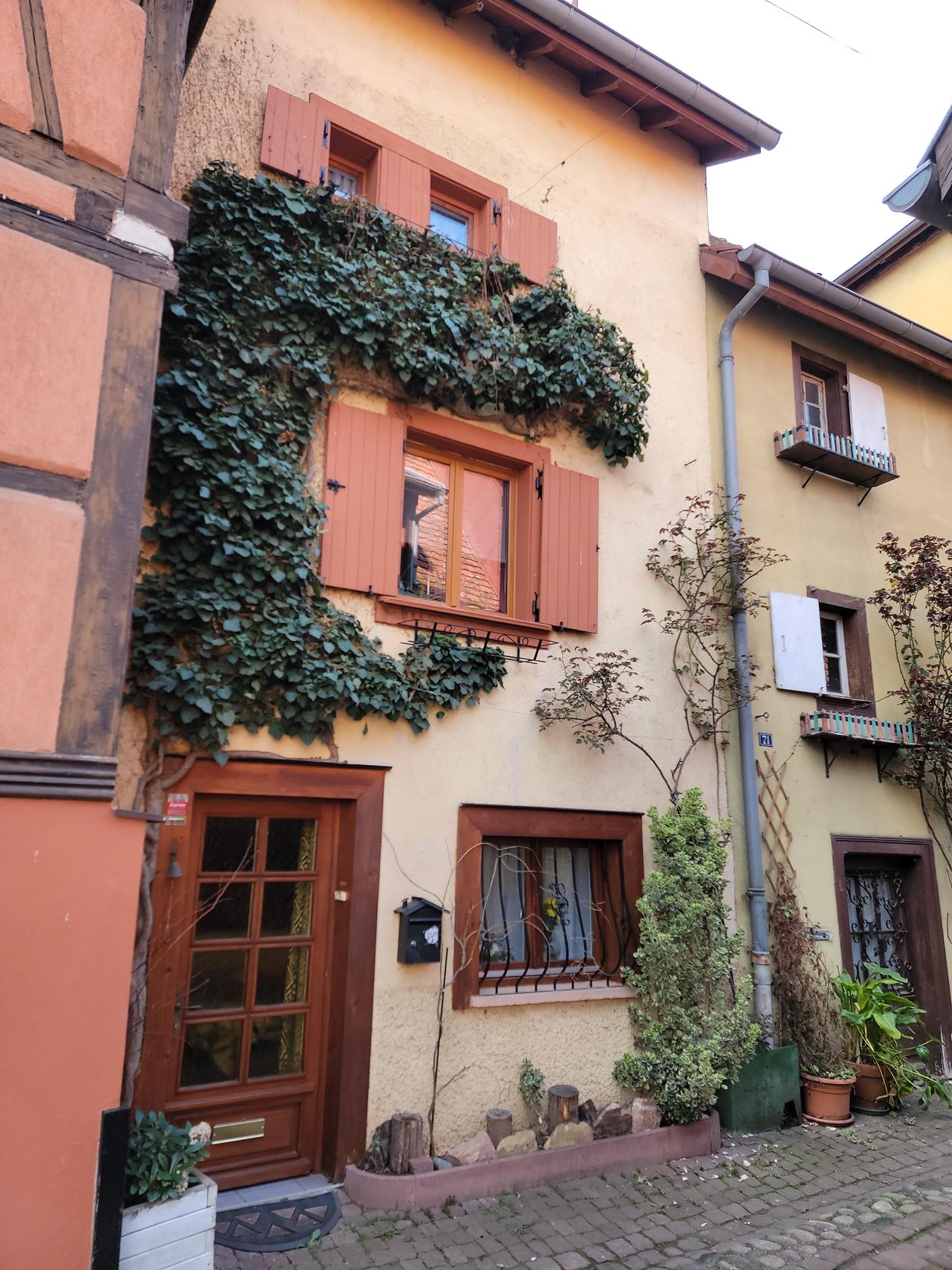
Ivy on house – Rue de Rempart – Eguisheim, France
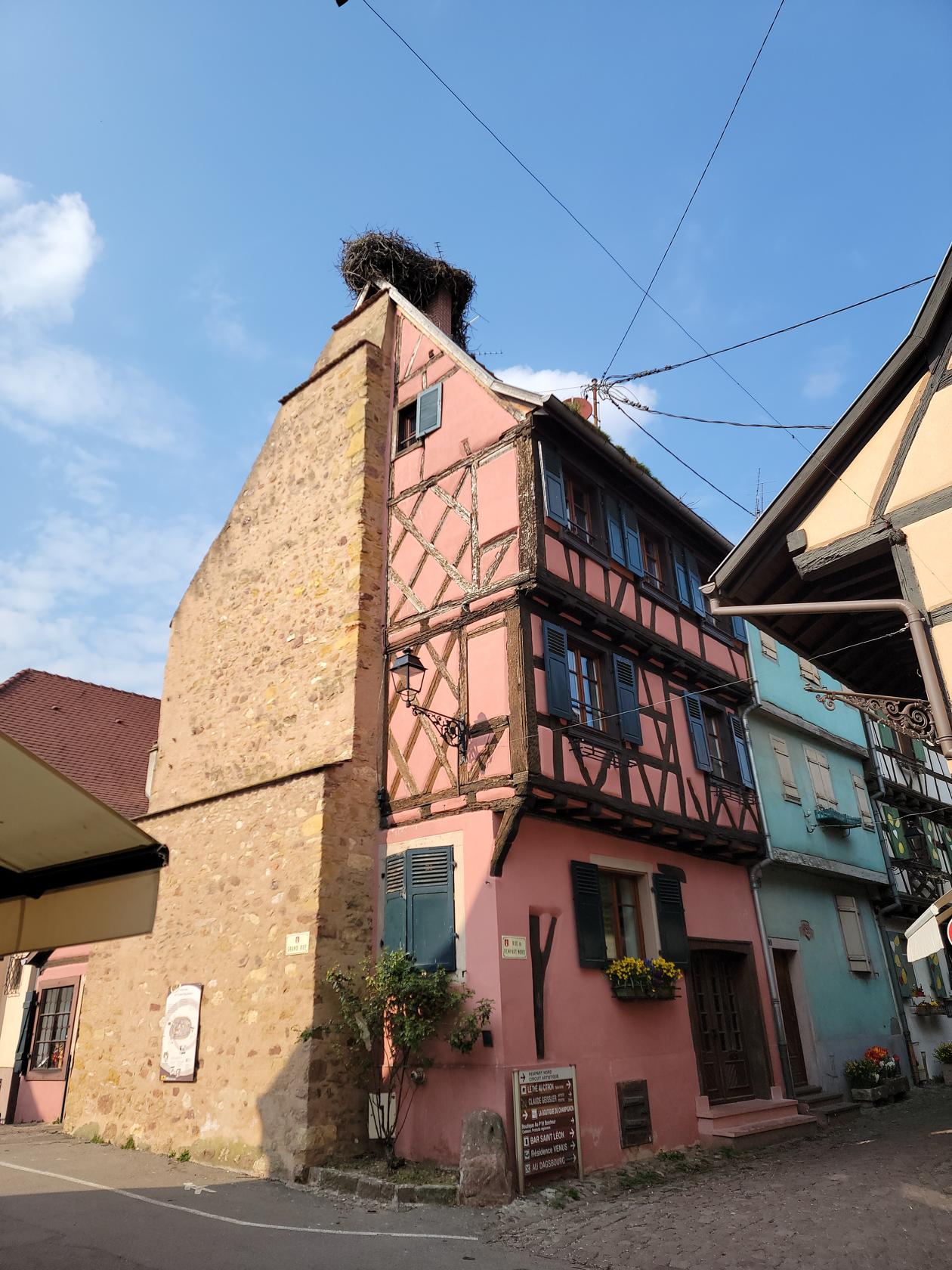
Storks are everywhere – Rue de Rempart – Eguisheim, France
Shops – Rue de Rempart – Eguisheim, France
Houses that formed the outter wall of the original town – Rue de Rempart – Eguisheim, France
Houses that formed the outter wall of the original town – Rue de Rempart – Eguisheim, France
Round and round Eguisheim – Rue de Rempart – Eguisheim, France
Intersection of Grand Rue – Rue de Rempart – Eguisheim, France
And on it goes in a great circle – Rue de Rempart – Eguisheim, France
Ericka, Gabi, Vlad and Patti walking ahead – Rue de Rempart – Eguisheim, France
Less renovated houses – Rue de Rempart – Eguisheim, France
Many buildings in the town are also adorned with coats-of-arms. Many of the pediments and lintels are decorated with them and other engravings, usually left by the stone masons themselves. In most cases the coat-of-arms indicated who lived in the house according to their profession, a butcher’s block for a butcher for example. However, a sword crossing a shield would indicate a master craftsman in that profession.
Coats of arms on buildings and other markings – Rue de Rempart – Eguisheim, France
Chapelle Saint-Léon IX
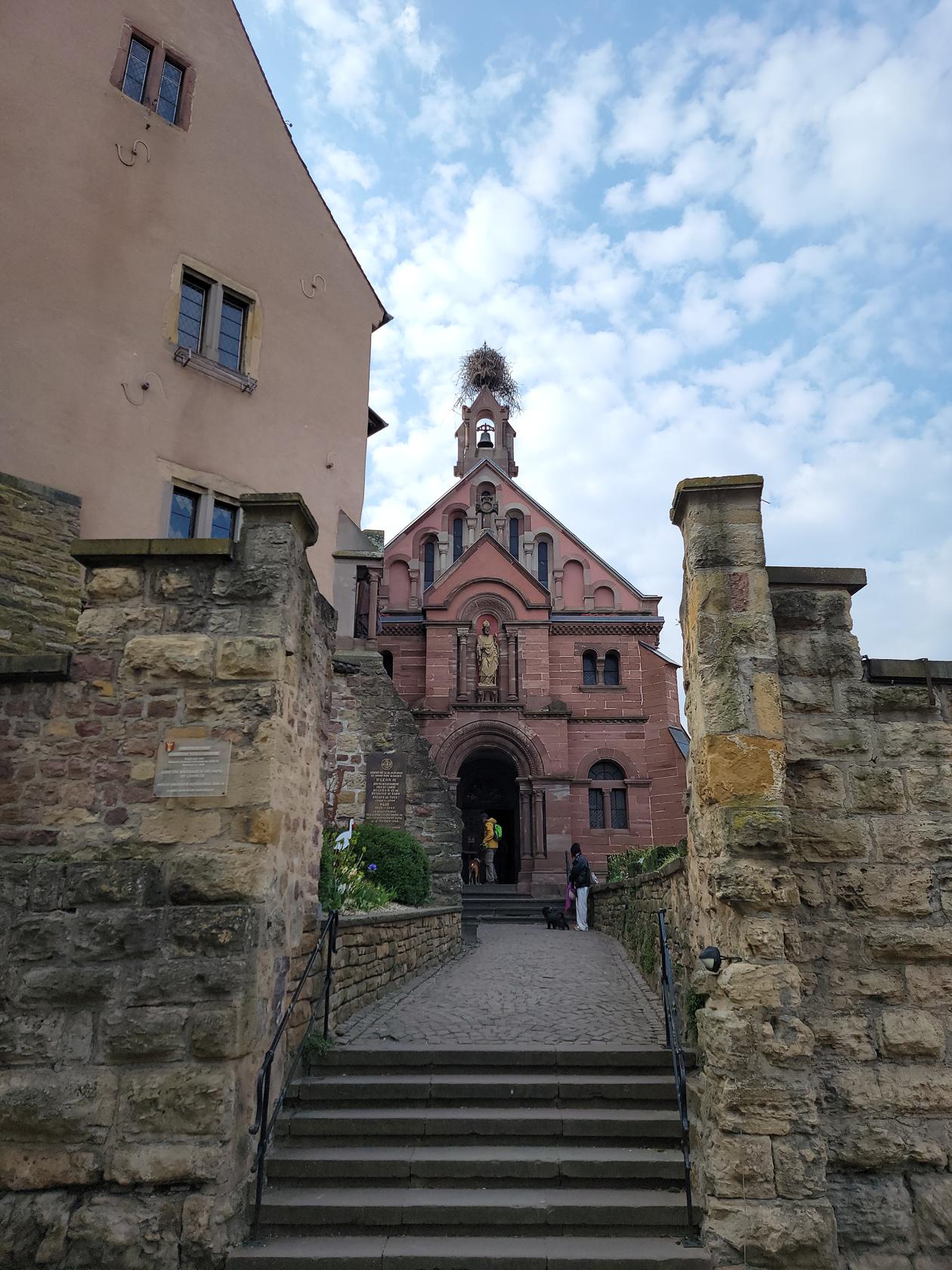
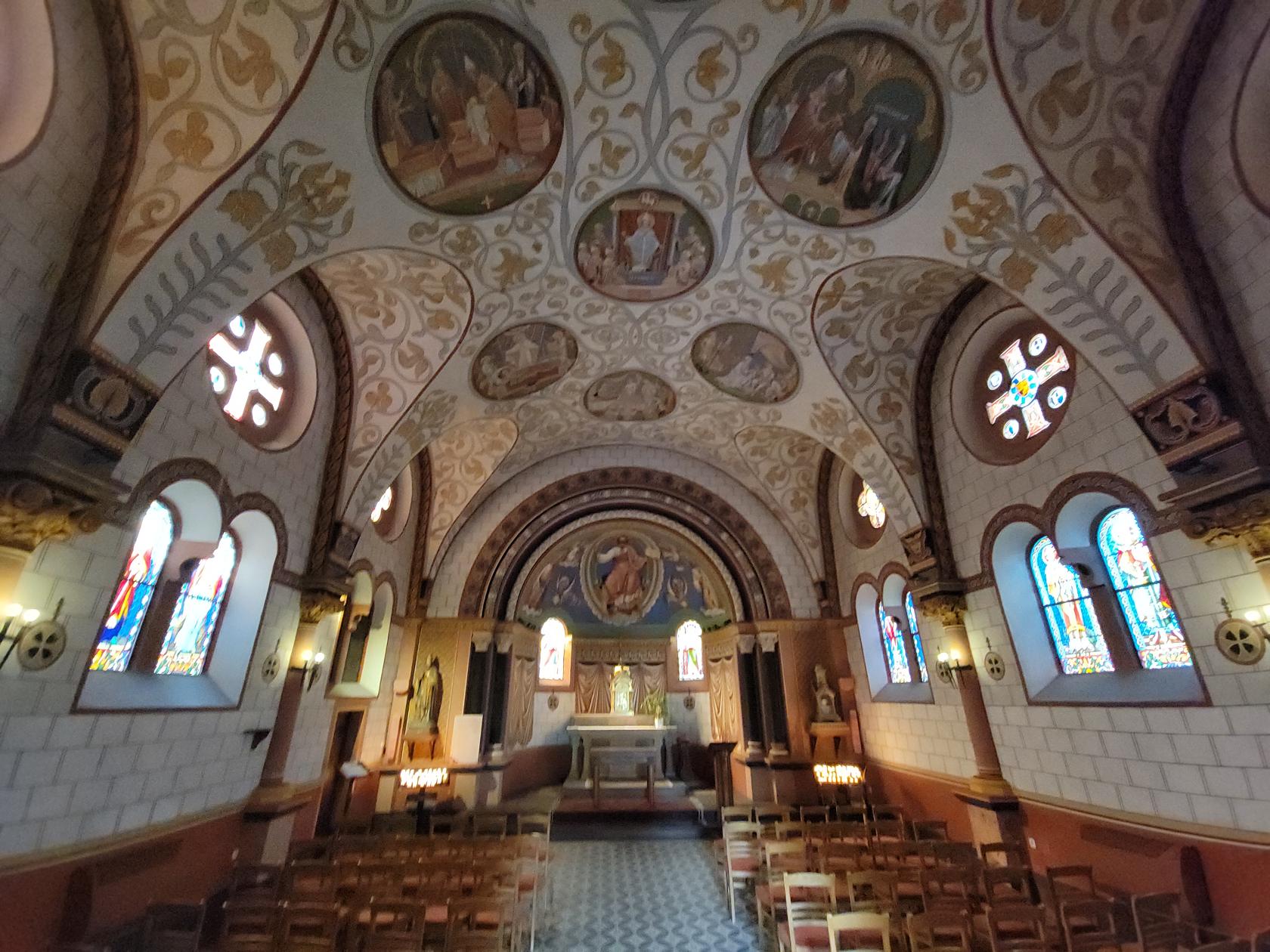
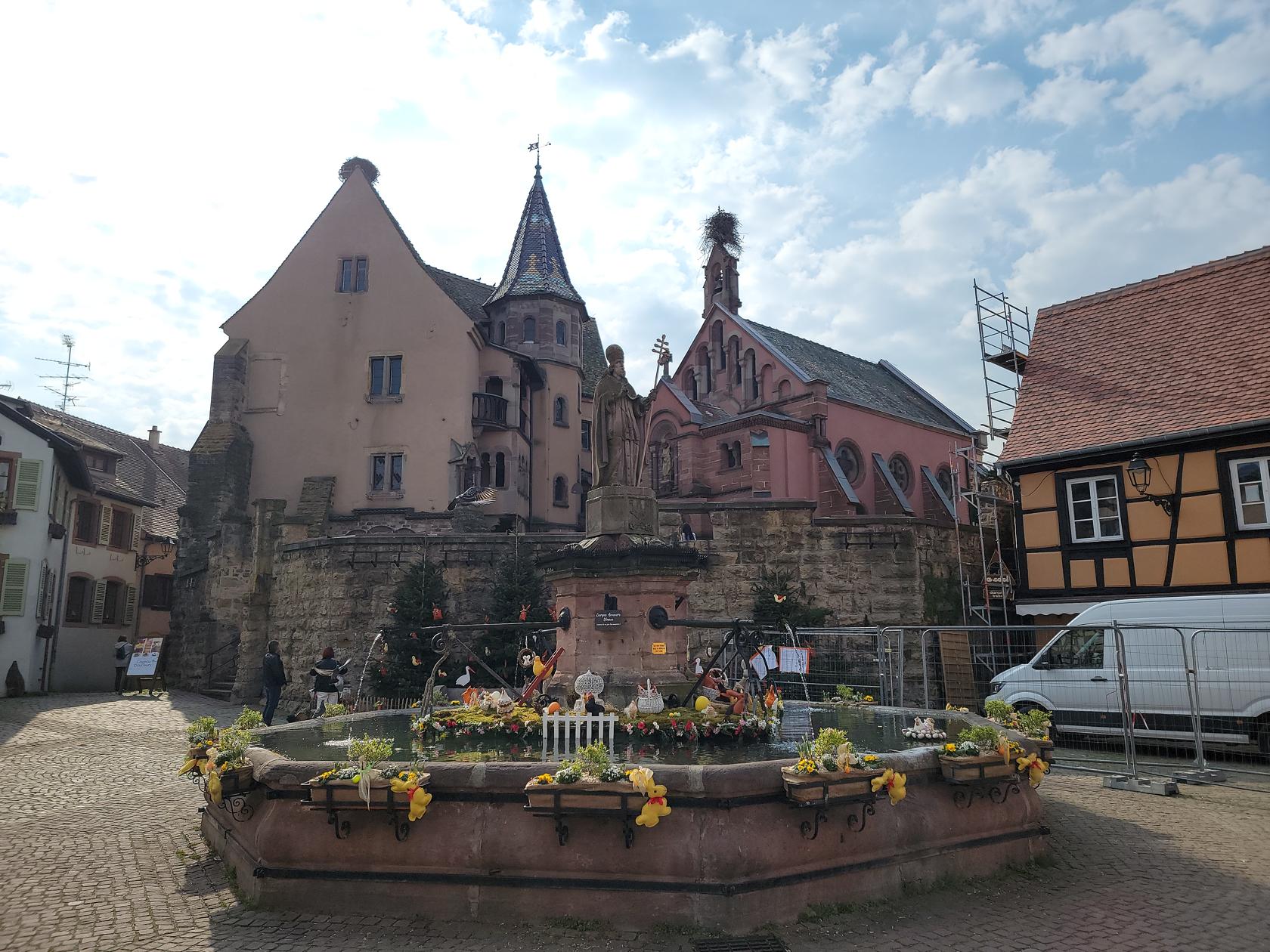
Along with the chateau that is close by, the Chapel of Saint Leon IX is a central sight. The fountain of Saint Leon is directly below the stairs to the chapel.
Chapelle Saint-Léon IX – Place du Château Saint Léon – Eguisheim, France
Chapelle Saint-Léon IX – Inside – Place du Château Saint Léon – Eguisheim, France
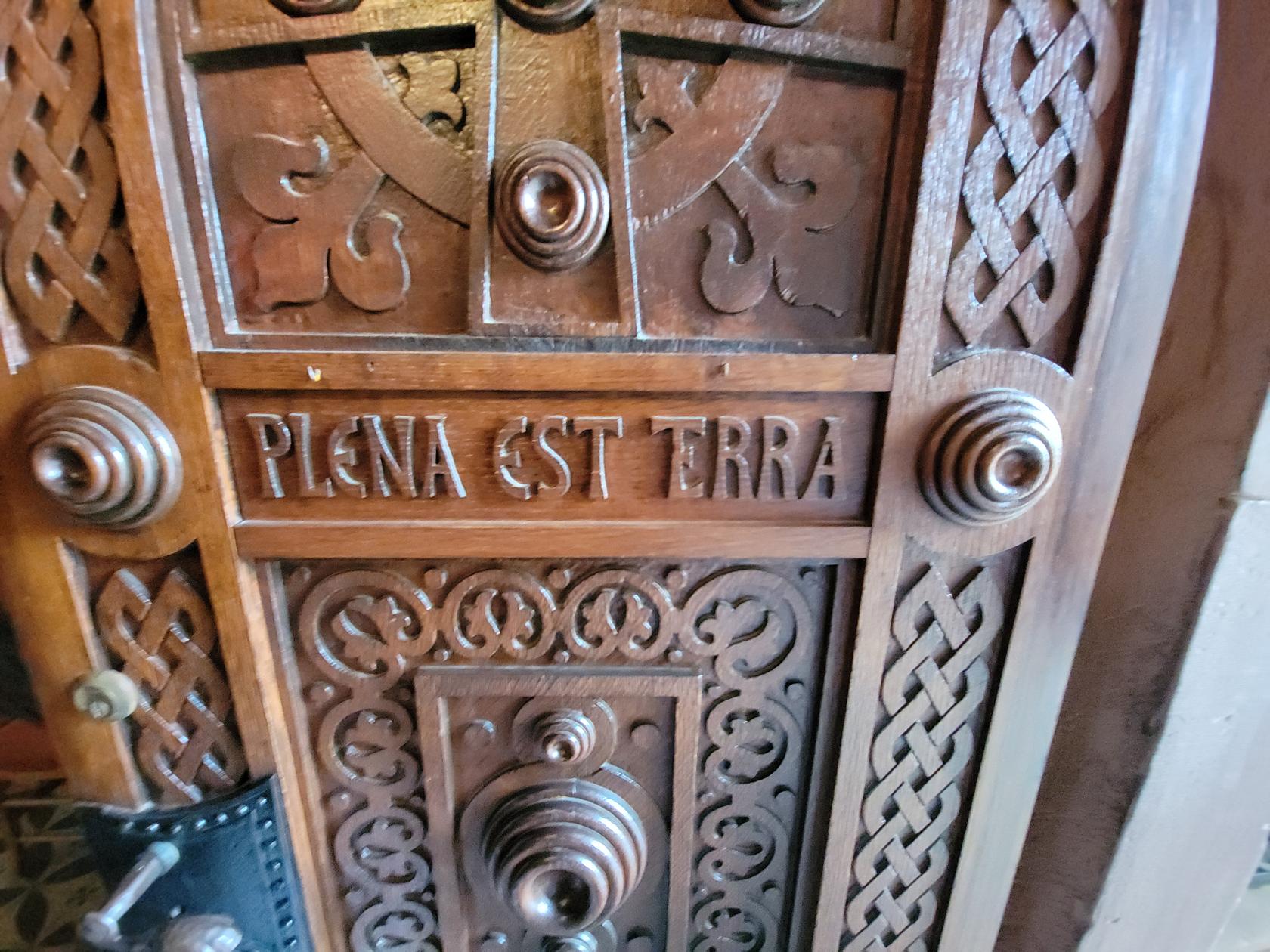
Chapelle Saint-Léon IX – Main Entrance – Place du Château Saint Léon – Eguisheim, France
Place du Château Saint Léon – Eguisheim, France
Église Saints-Pierre-et-Paul
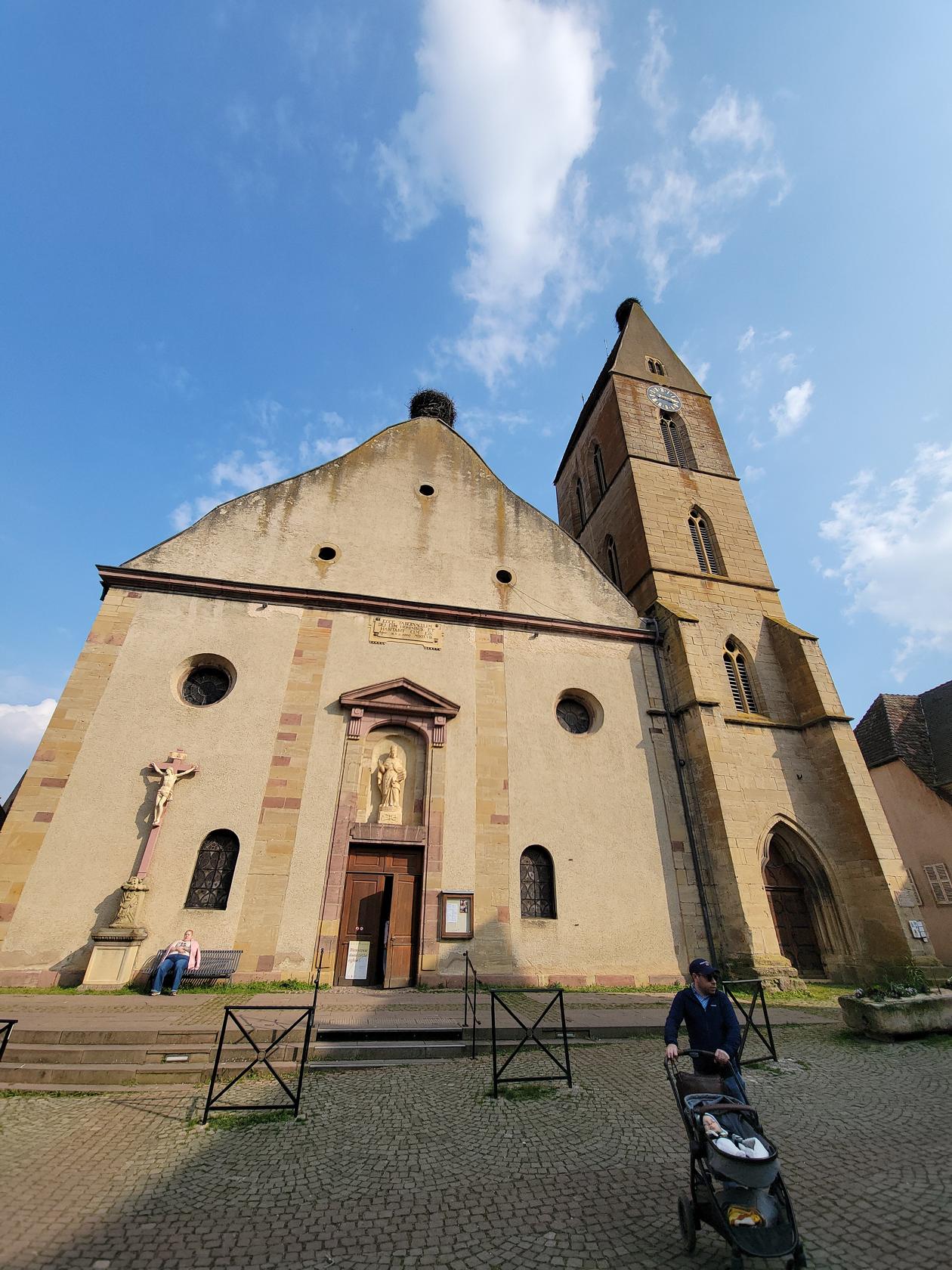
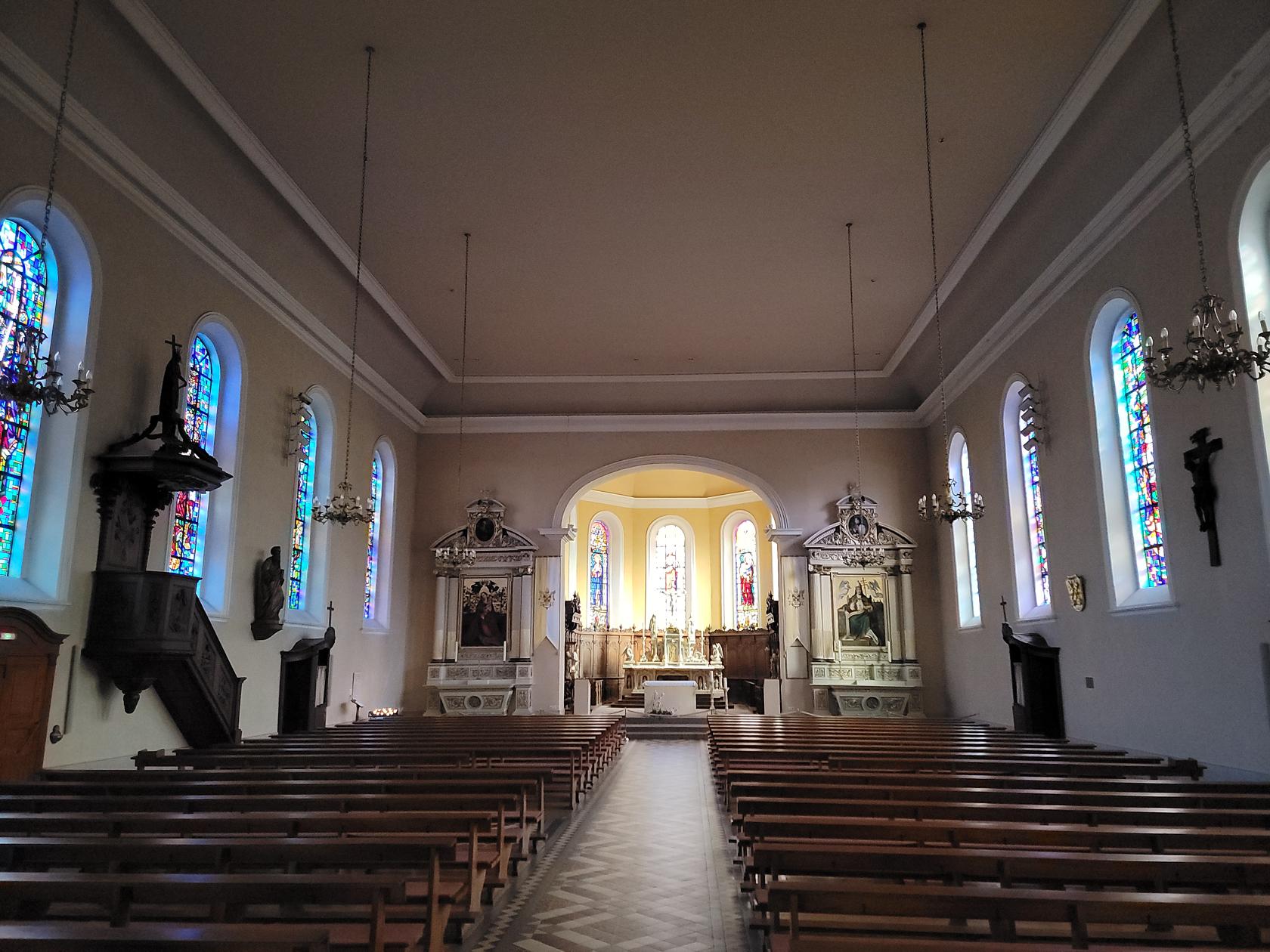
Off on another street is the Church of Saints Peter and Paul. Though larger than the chapel, the outside and inside are more austere.
Église Saints-Pierre-et-Paul – Eguisheim, France
Église Saints-Pierre-et-Paul – Inside – Eguisheim, France
Other Sights
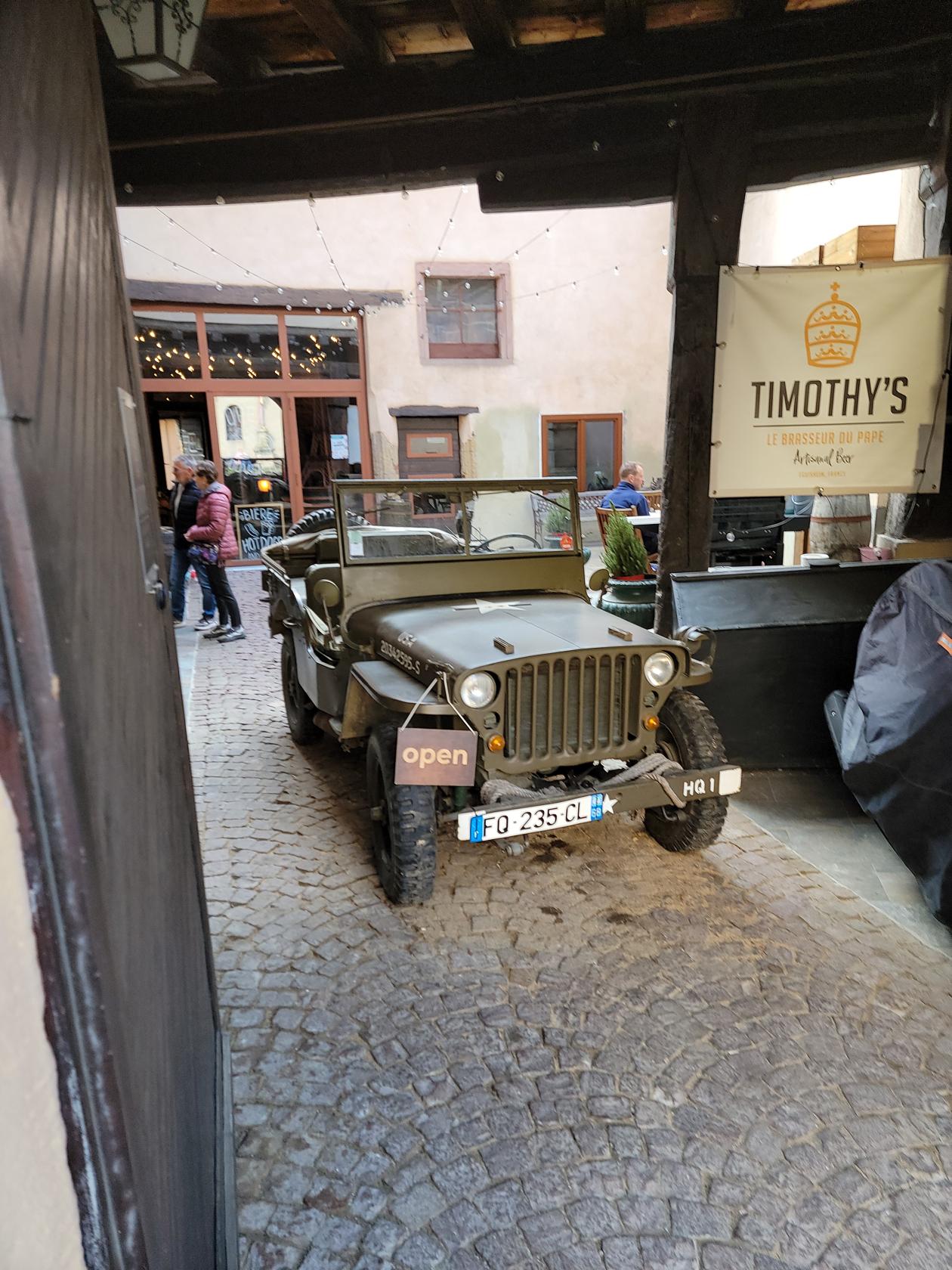
If you walk enough you will find an old American Willeys Jeep left over from the war. There are also several other wineries of the main streets as well.
One last view – Eguisheim, France
Old American Willeys Jeep – Eguisheim, France
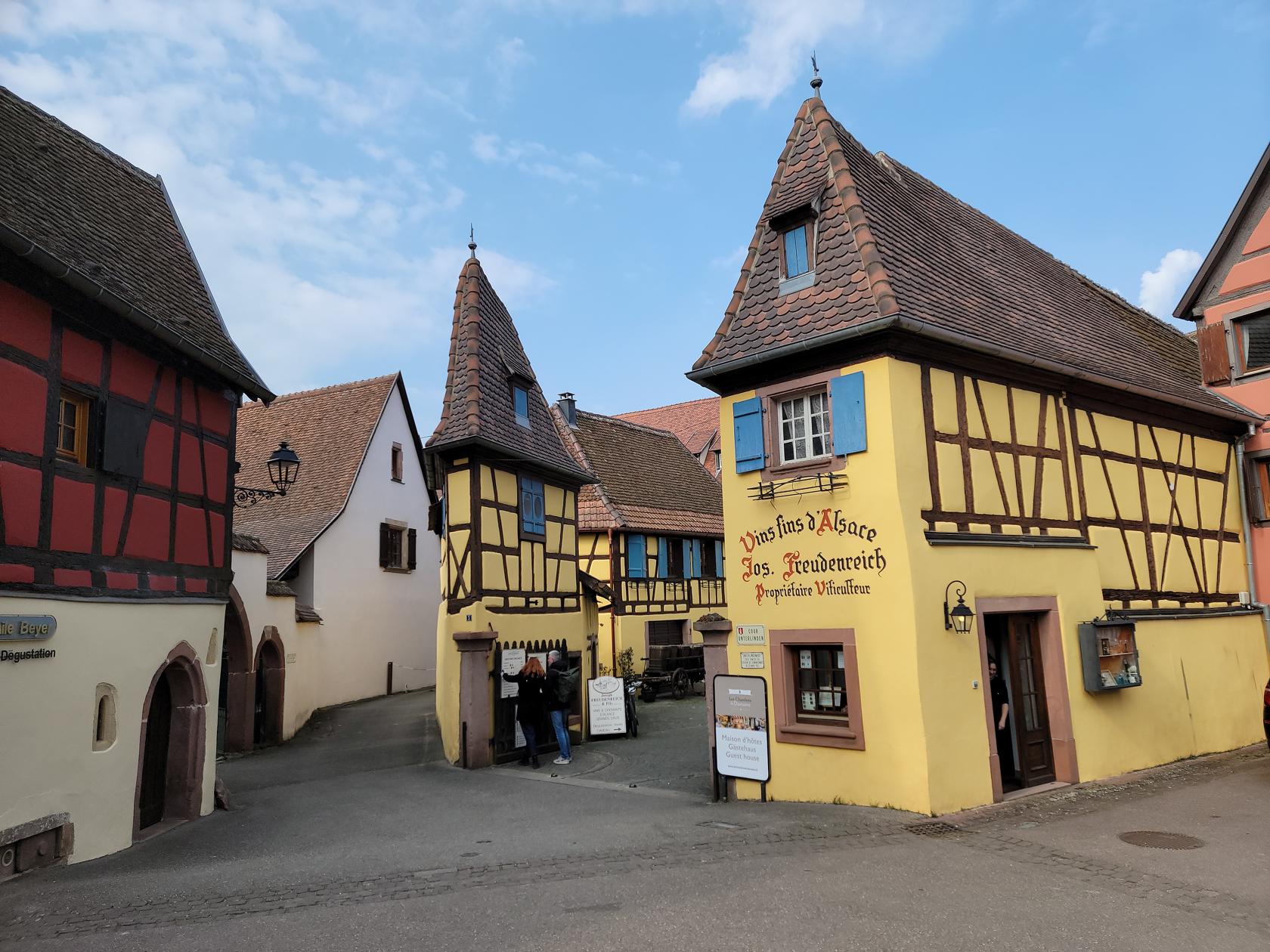
Jos. Freudenreich Winery – Cour Unterlinden – Eguisheim, France
Though we only spent a few hours here, we thoroughly enjoyed it, especially since the weather was very nice. It might make more sense though, to stay a bit longer and enjoy a wine tour throught he vineyards and one or two wine tastings. In any event, it is a great place to stop and is highly recommended.
Restaurants
Unfortunately, we cannot commend a place to eat or drink, since we did neither in Eguisheim. A wine tasting might be commended though, since it is at the center of Alsatian wine country!
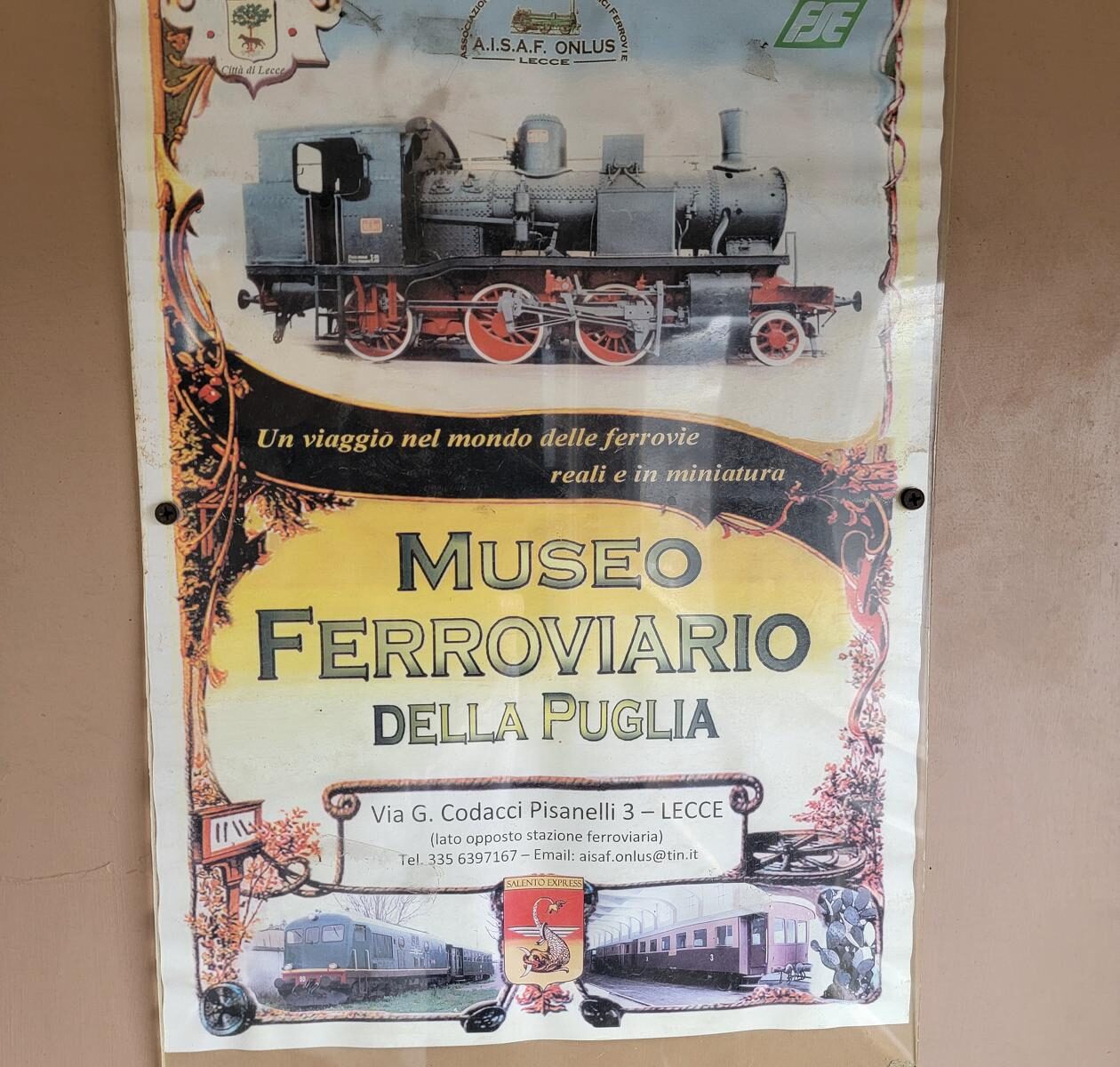
Anyone who has ever had an interest in trains, or perhaps would just enjoy a trip down memory lane, the Museo Ferroviario dell Puglia might be the place to stop on a lazy day during vacation or the weekend.
Museo Ferroviario della Puglia
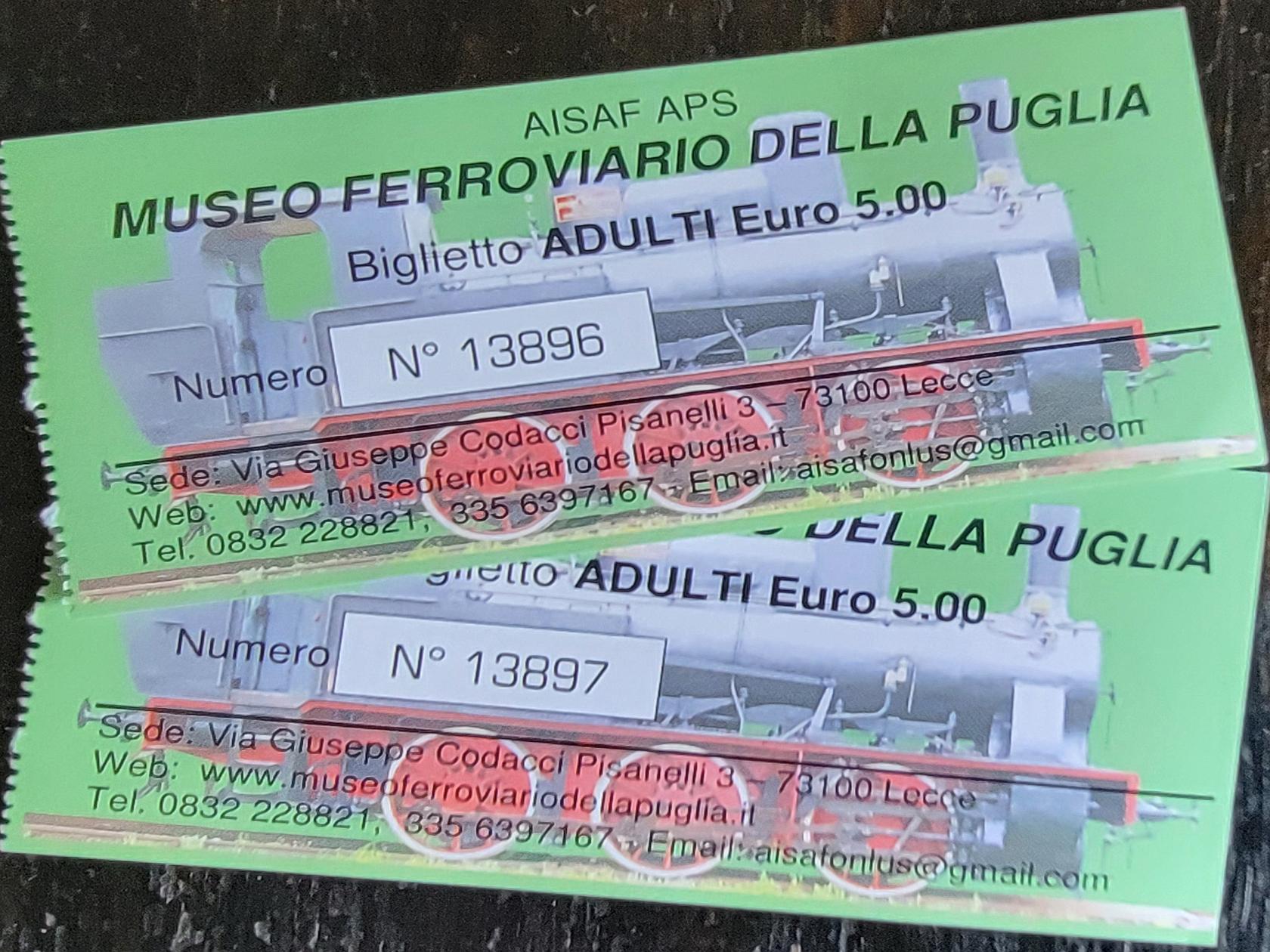
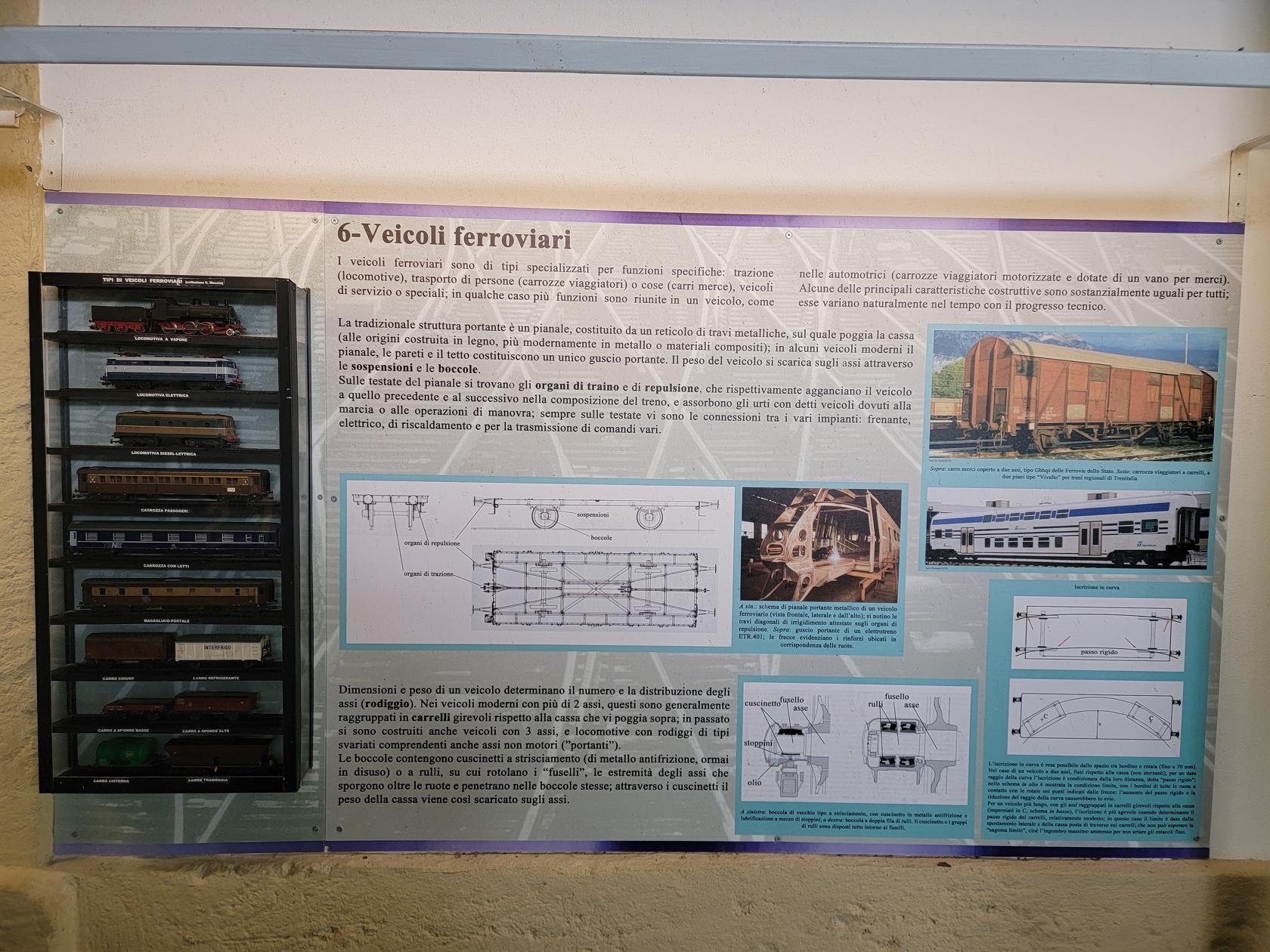
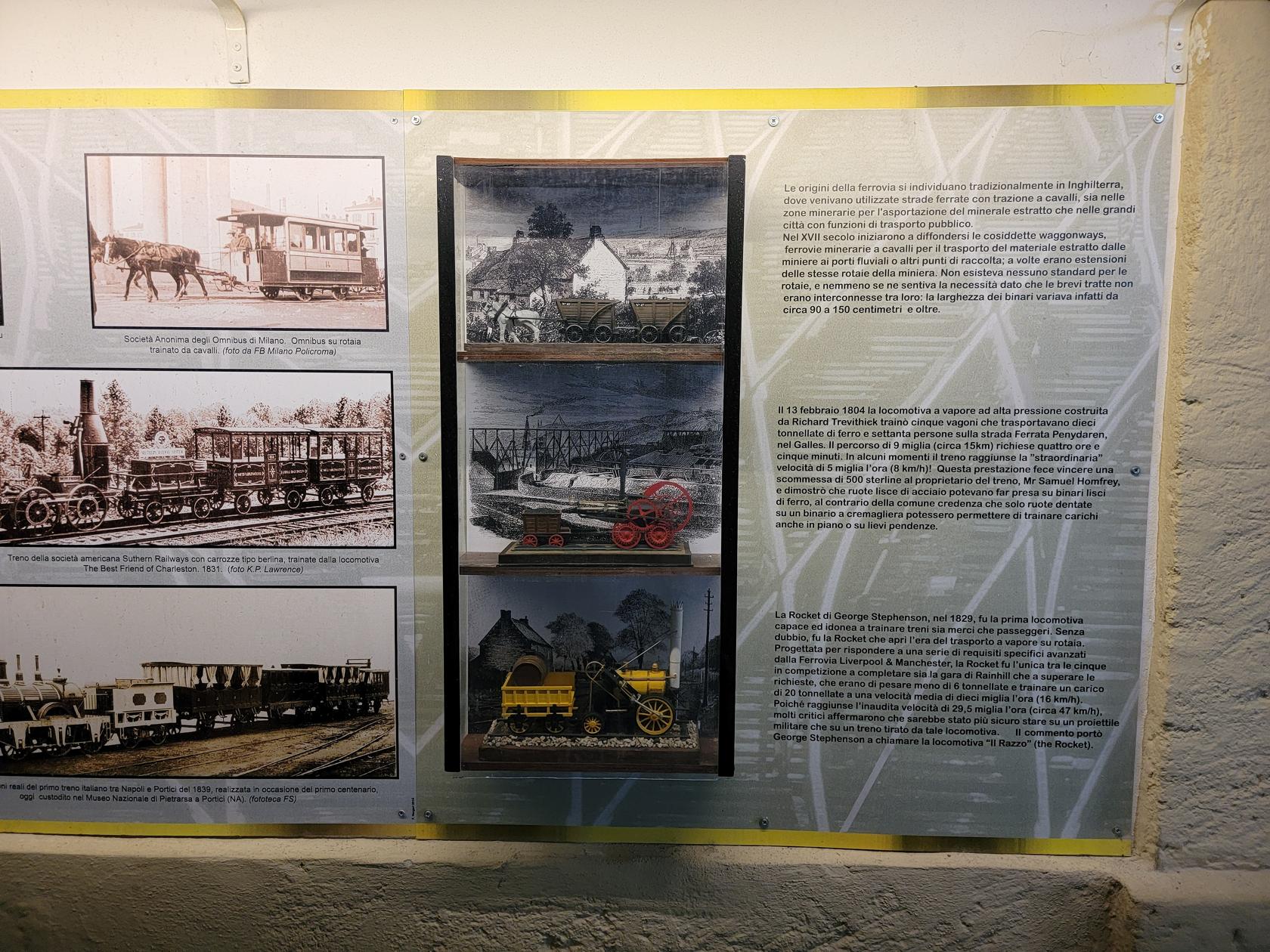
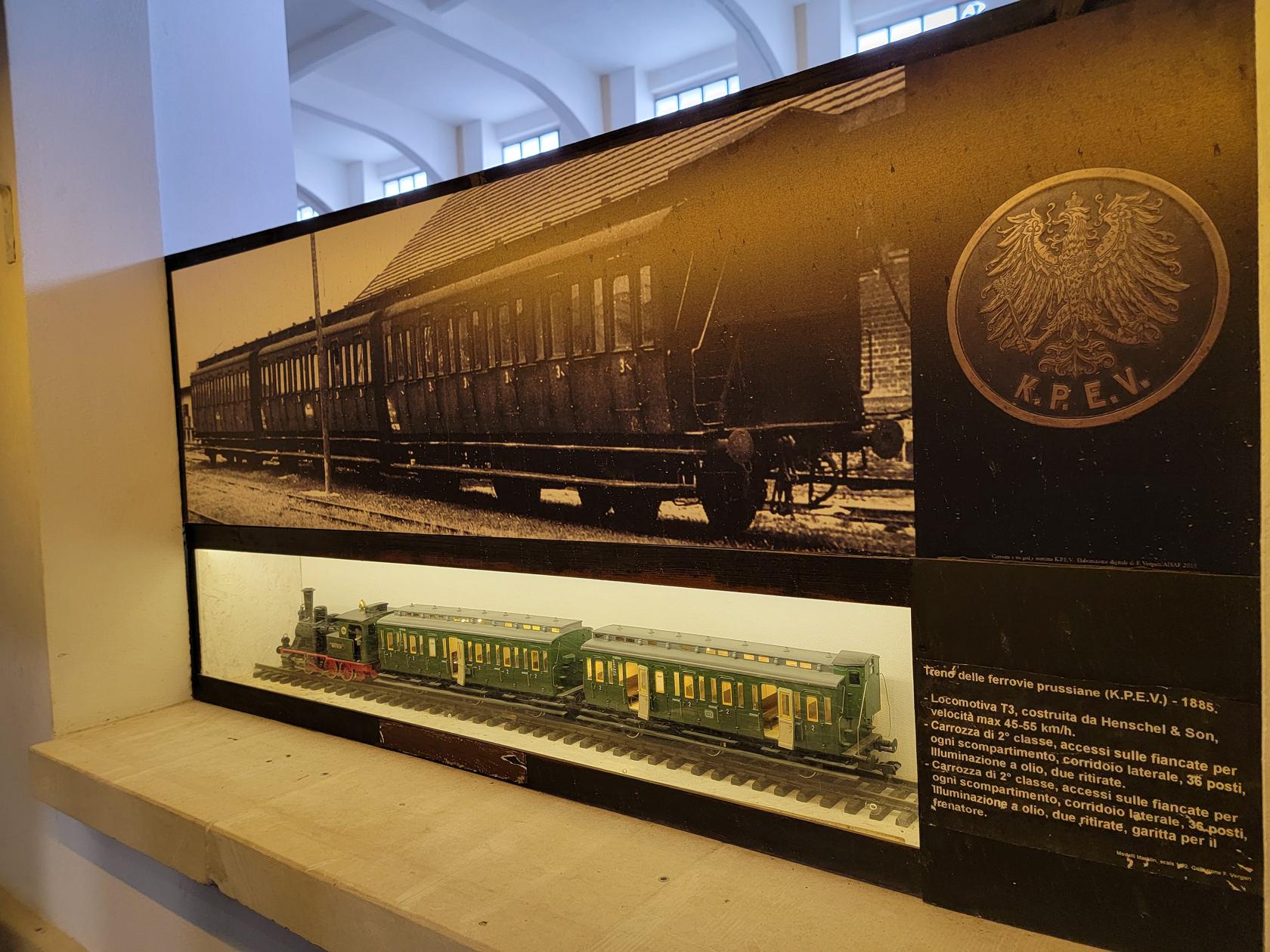
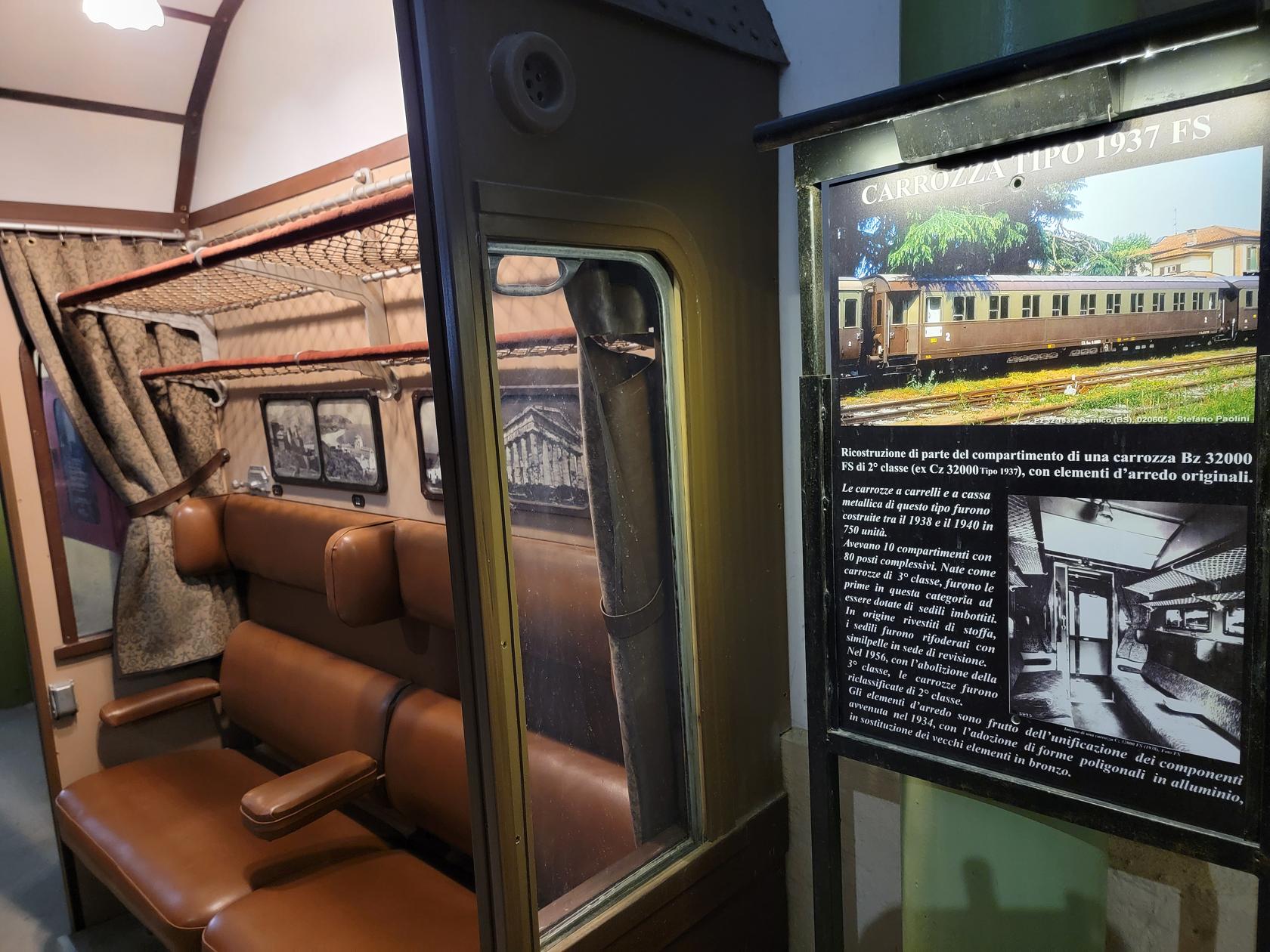
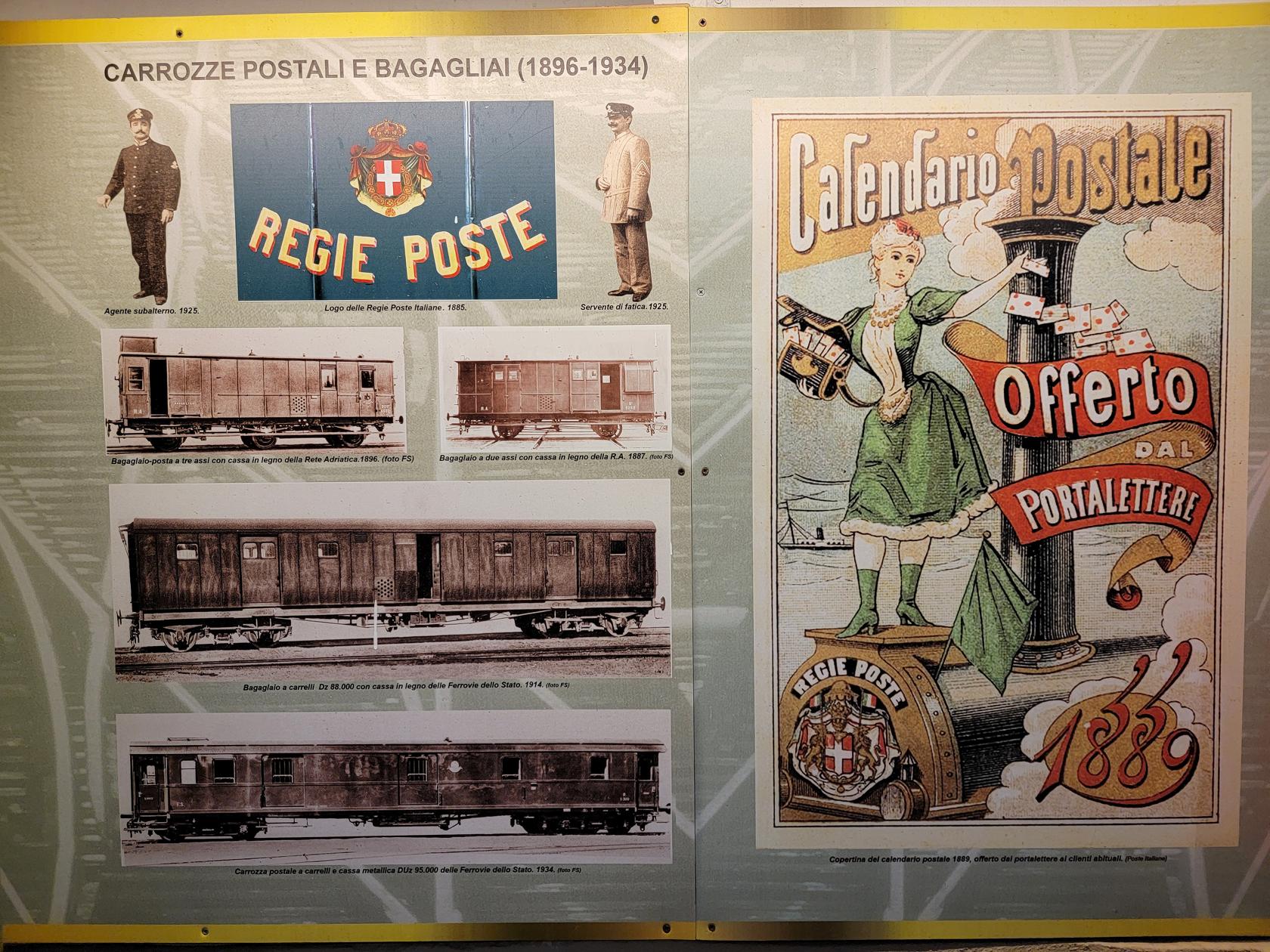
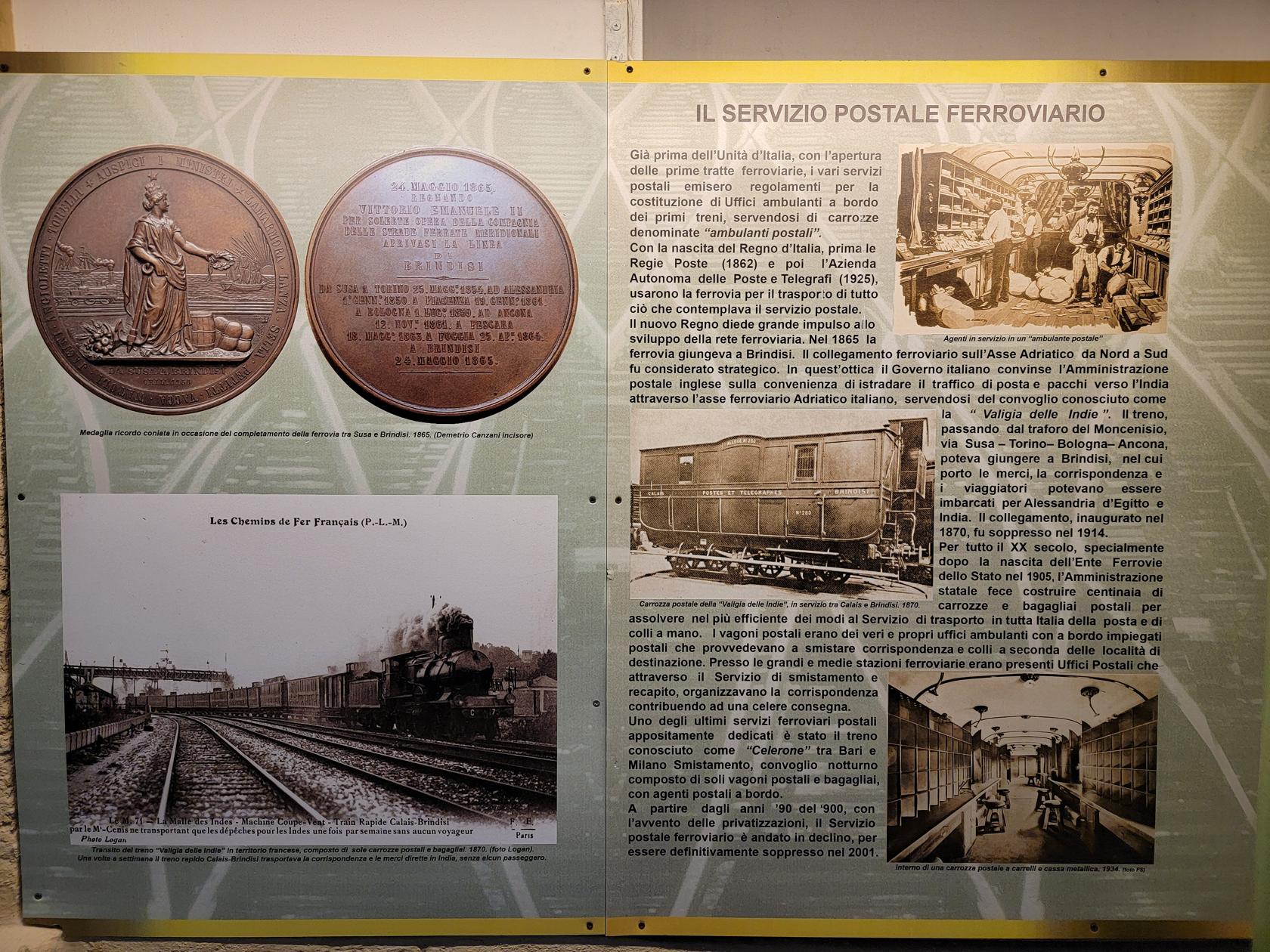
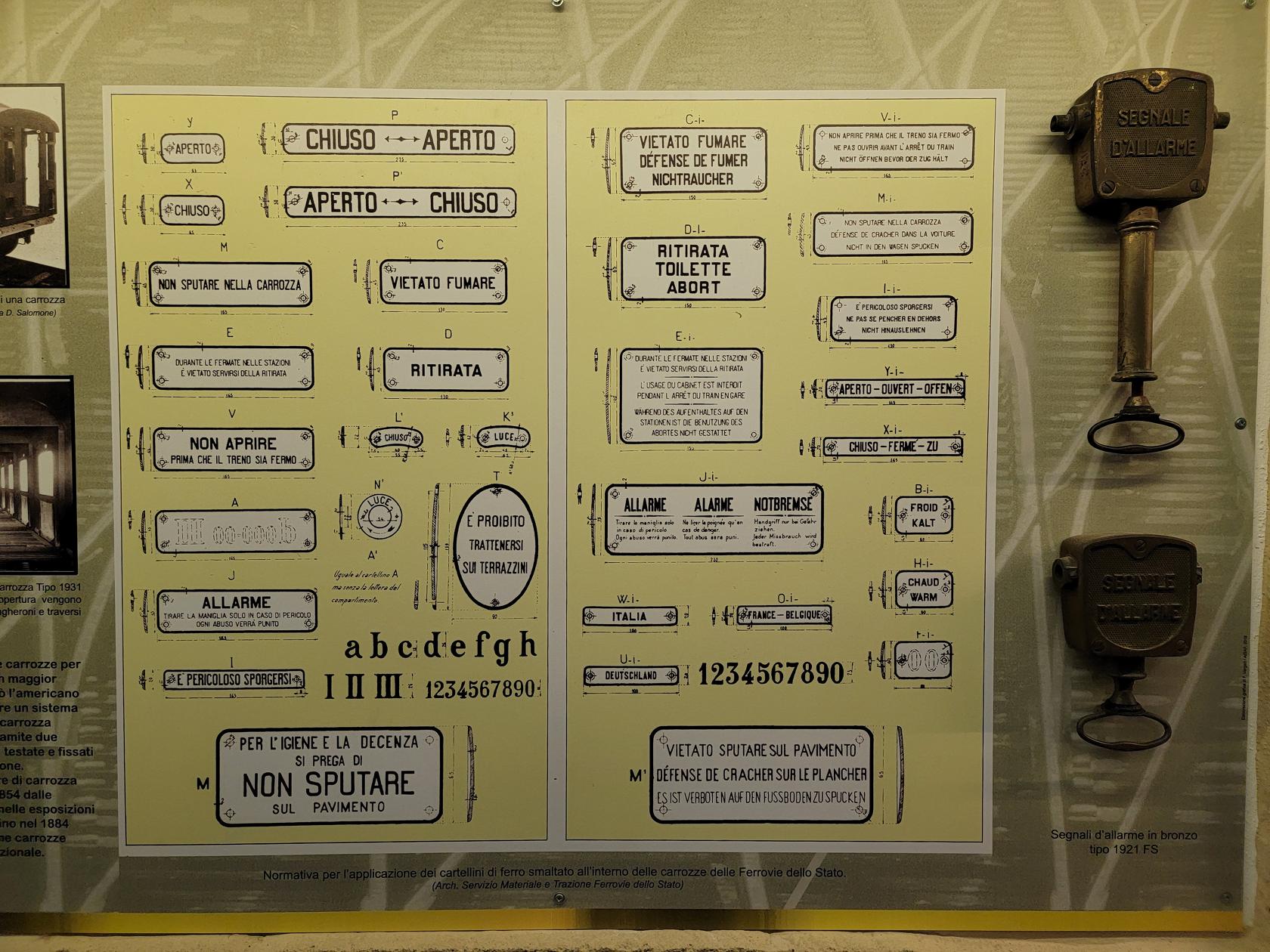
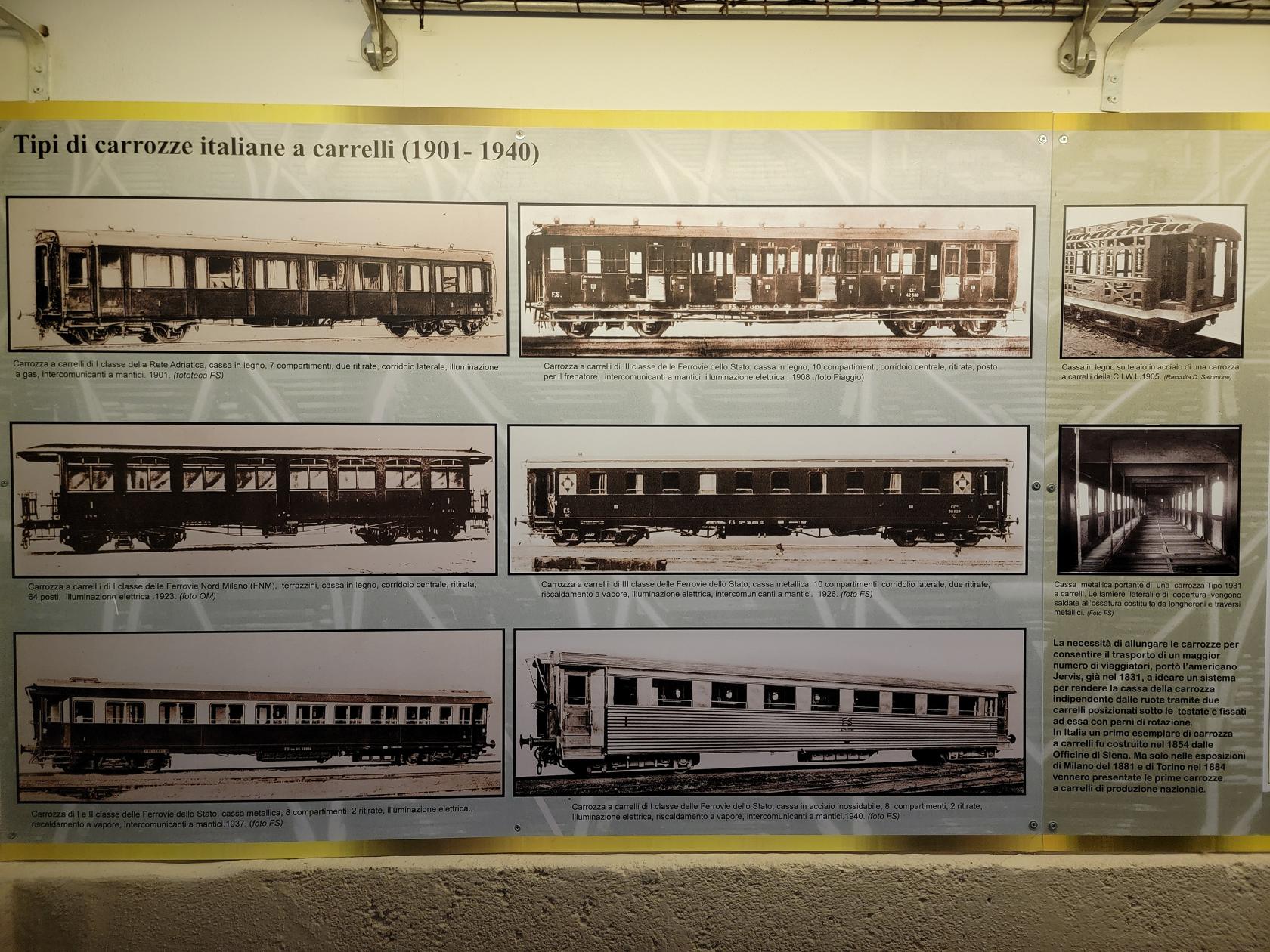
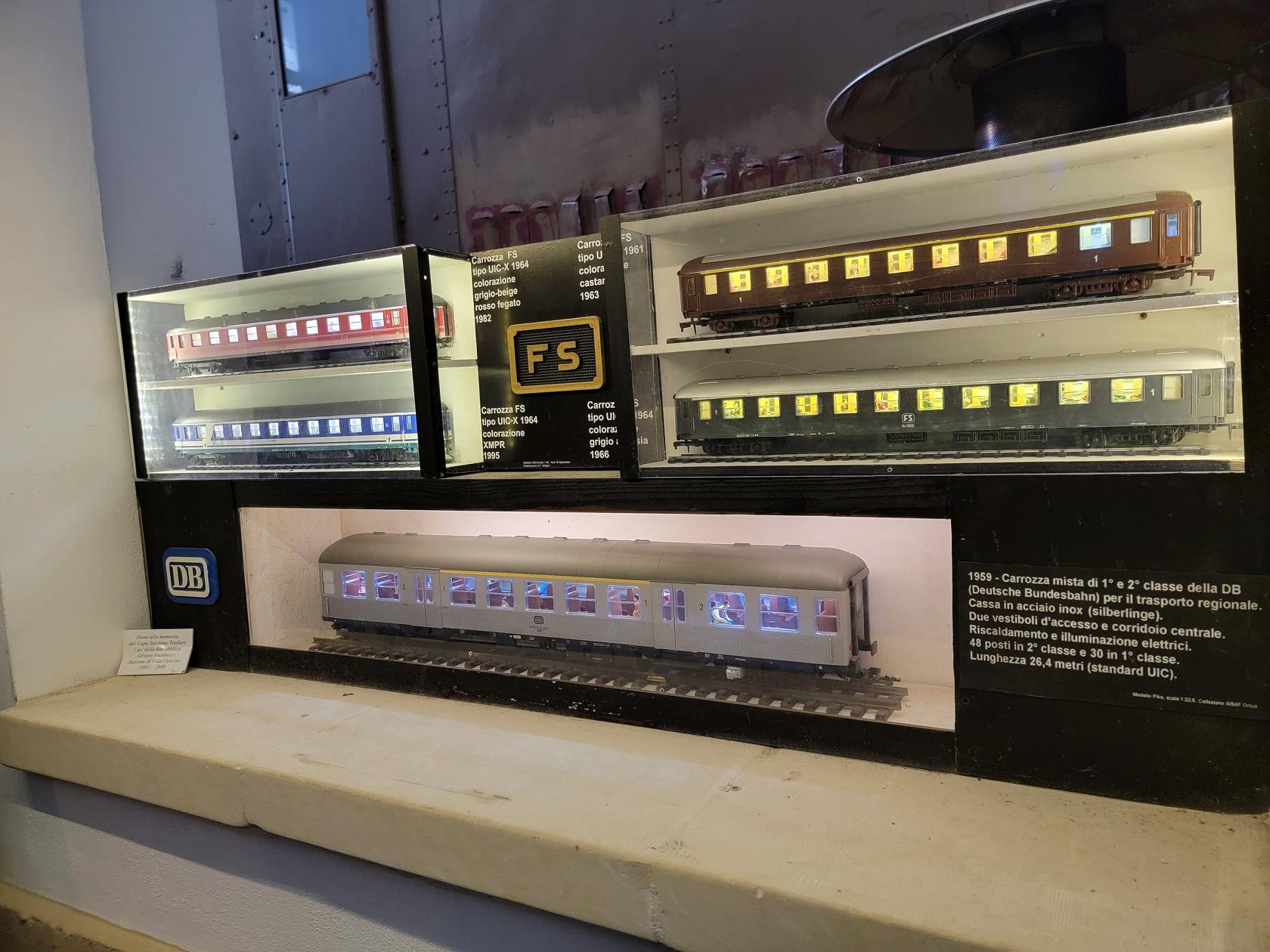
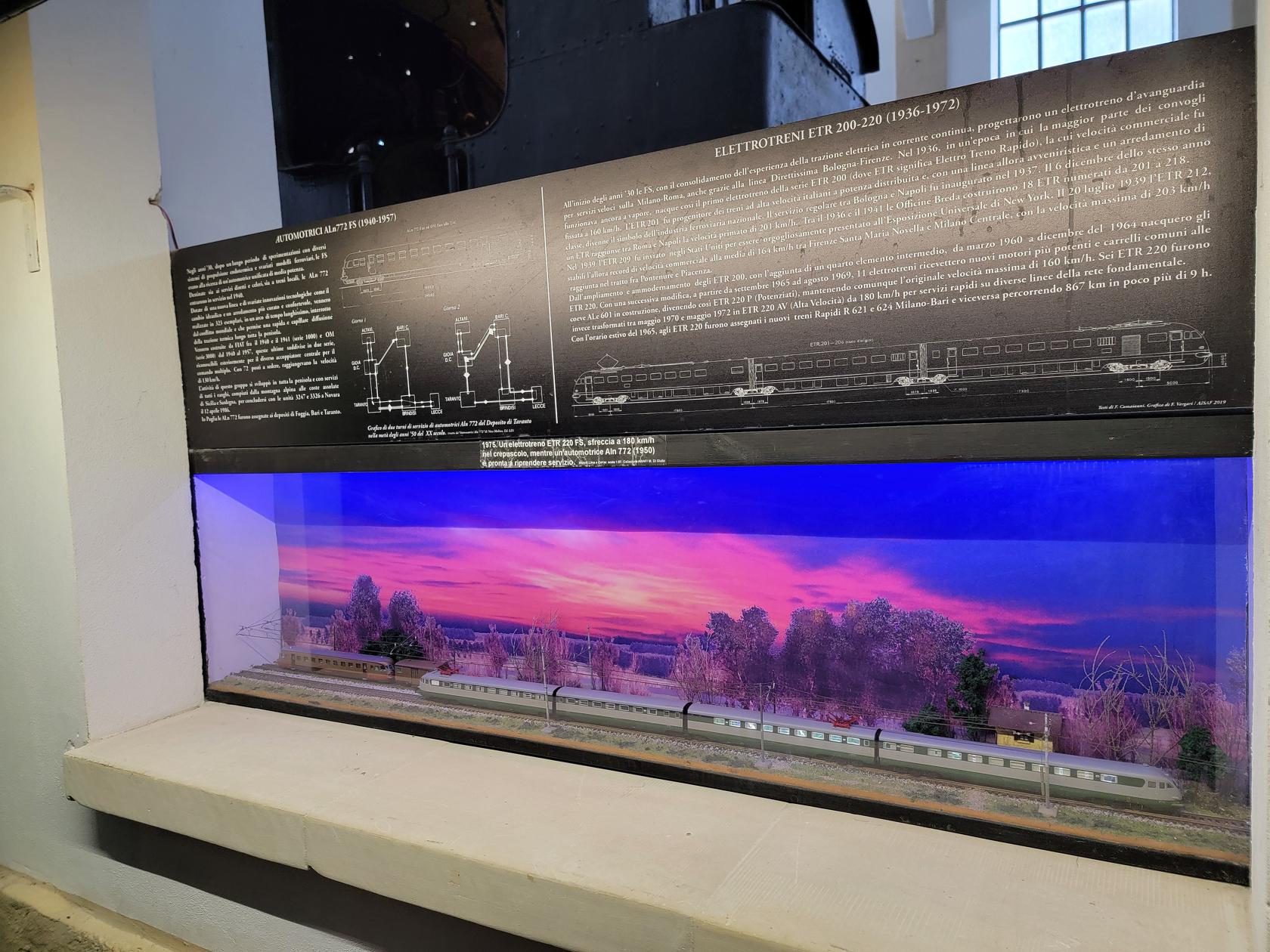
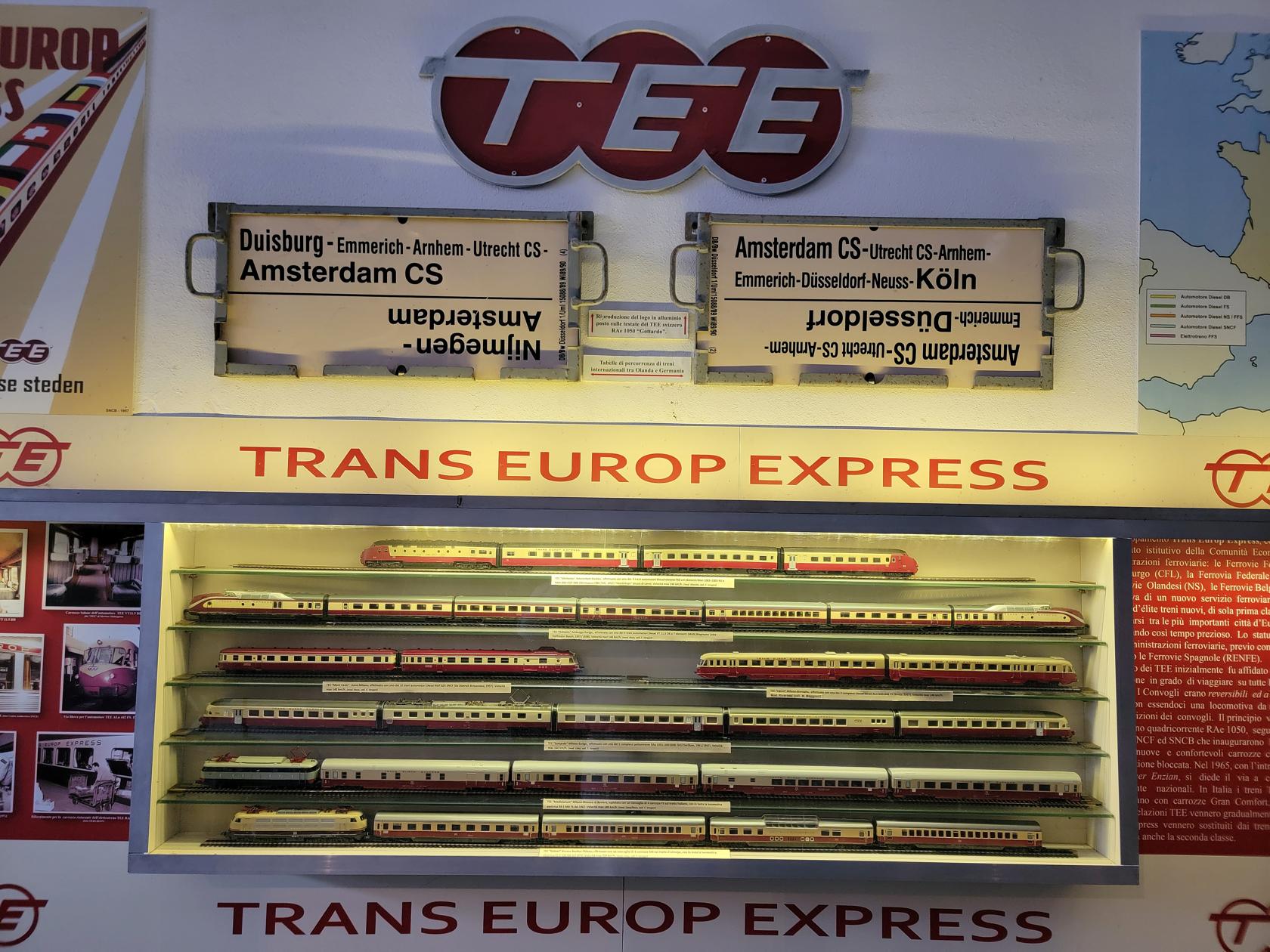
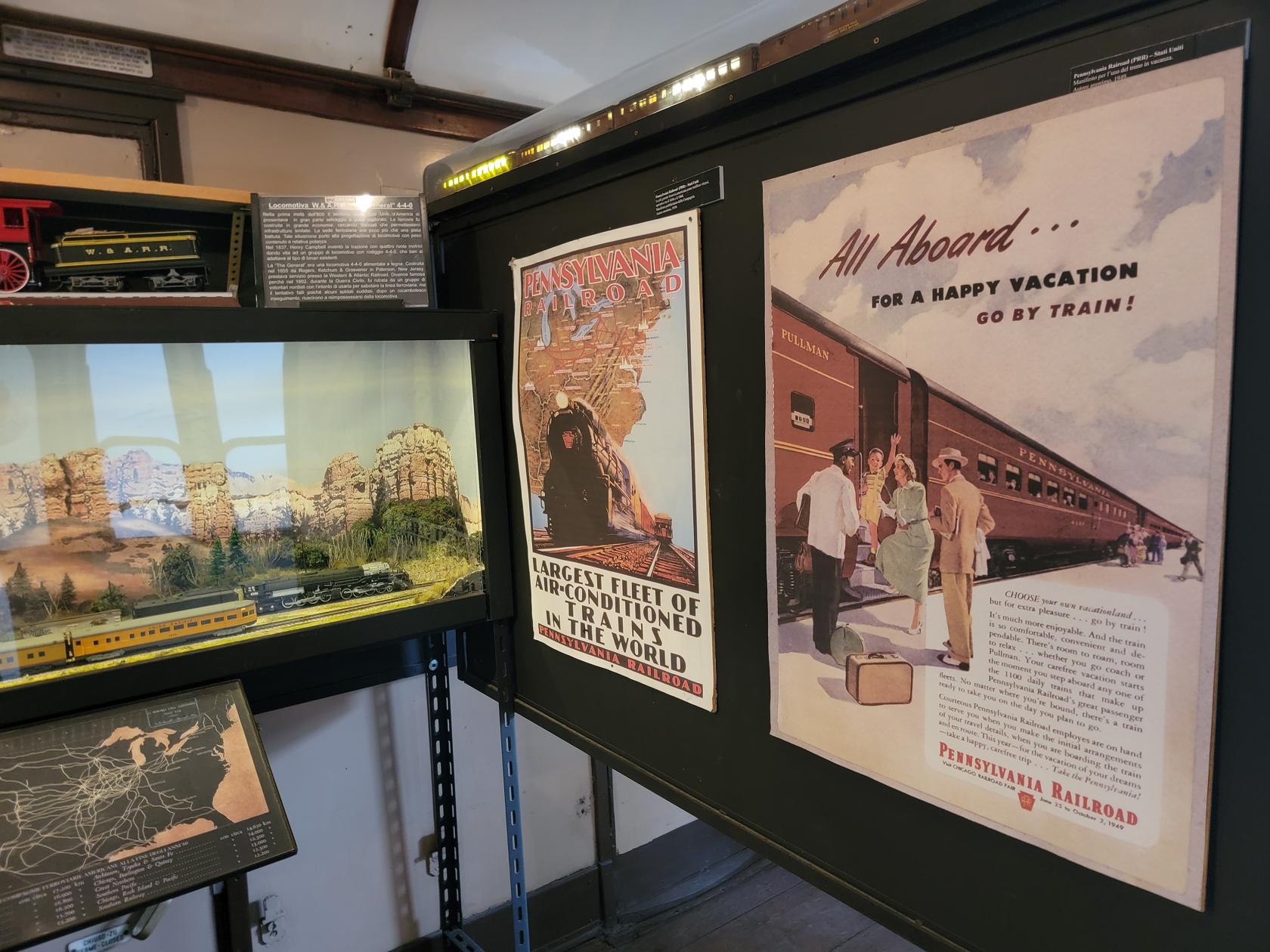
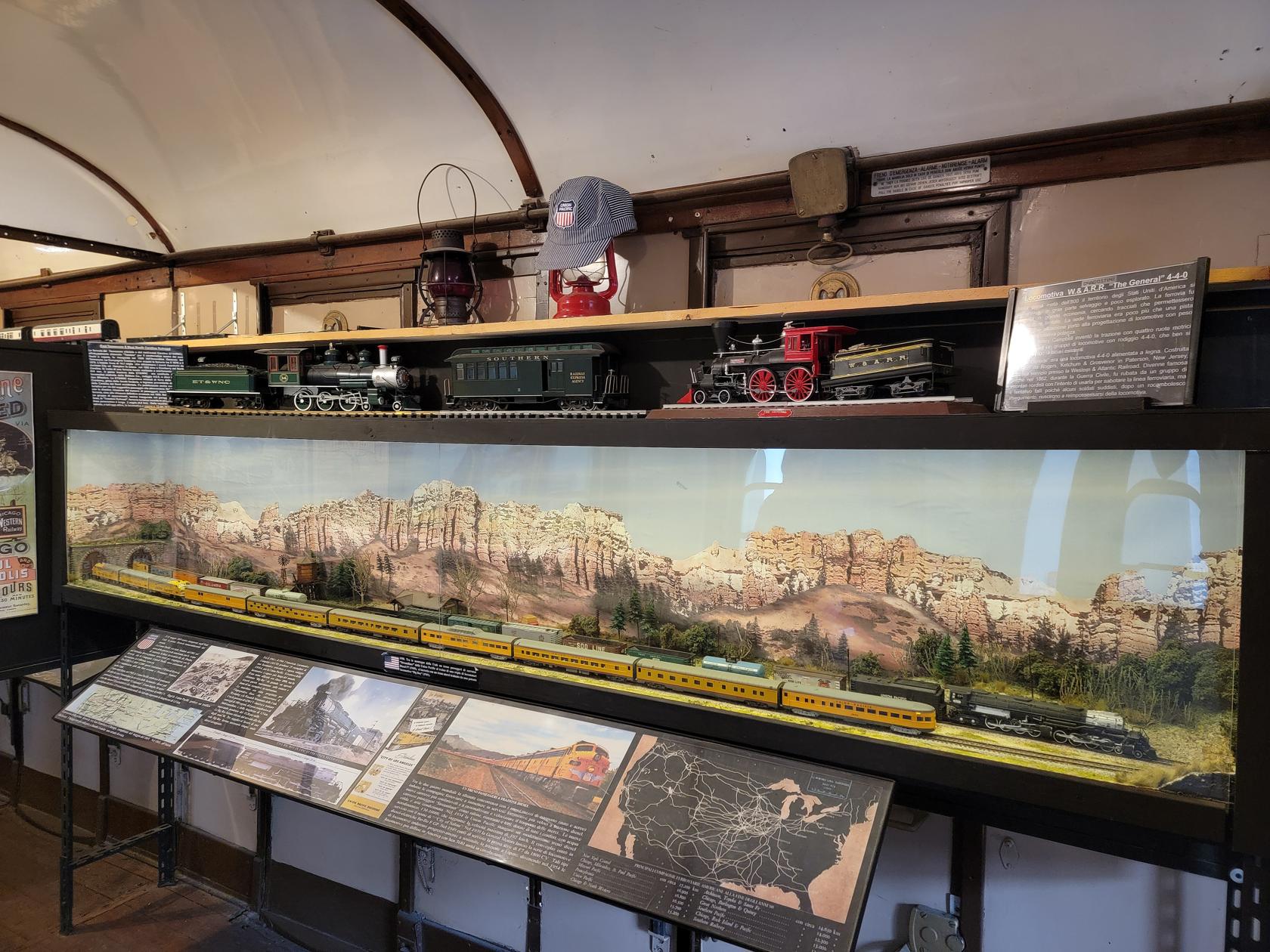
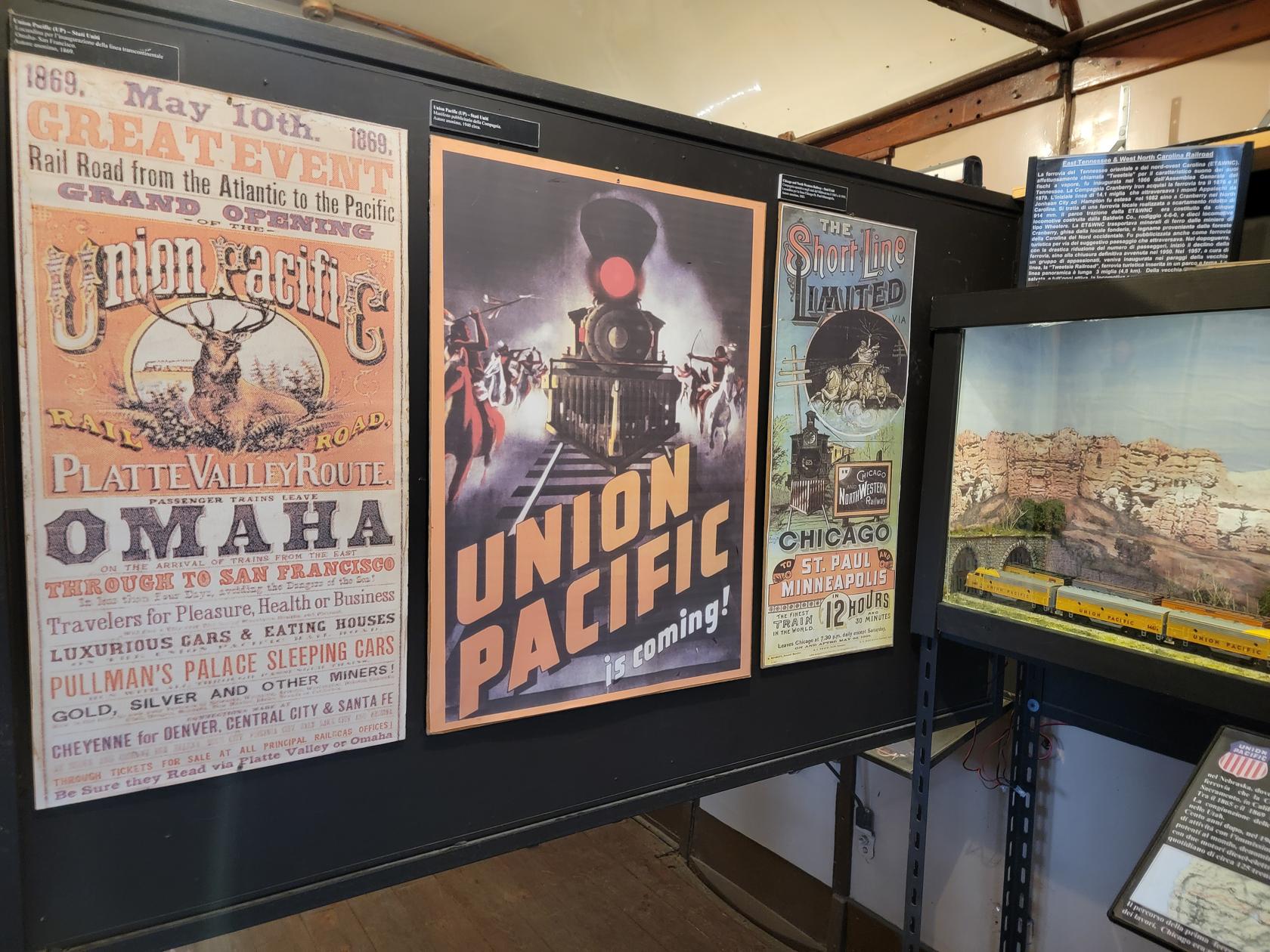
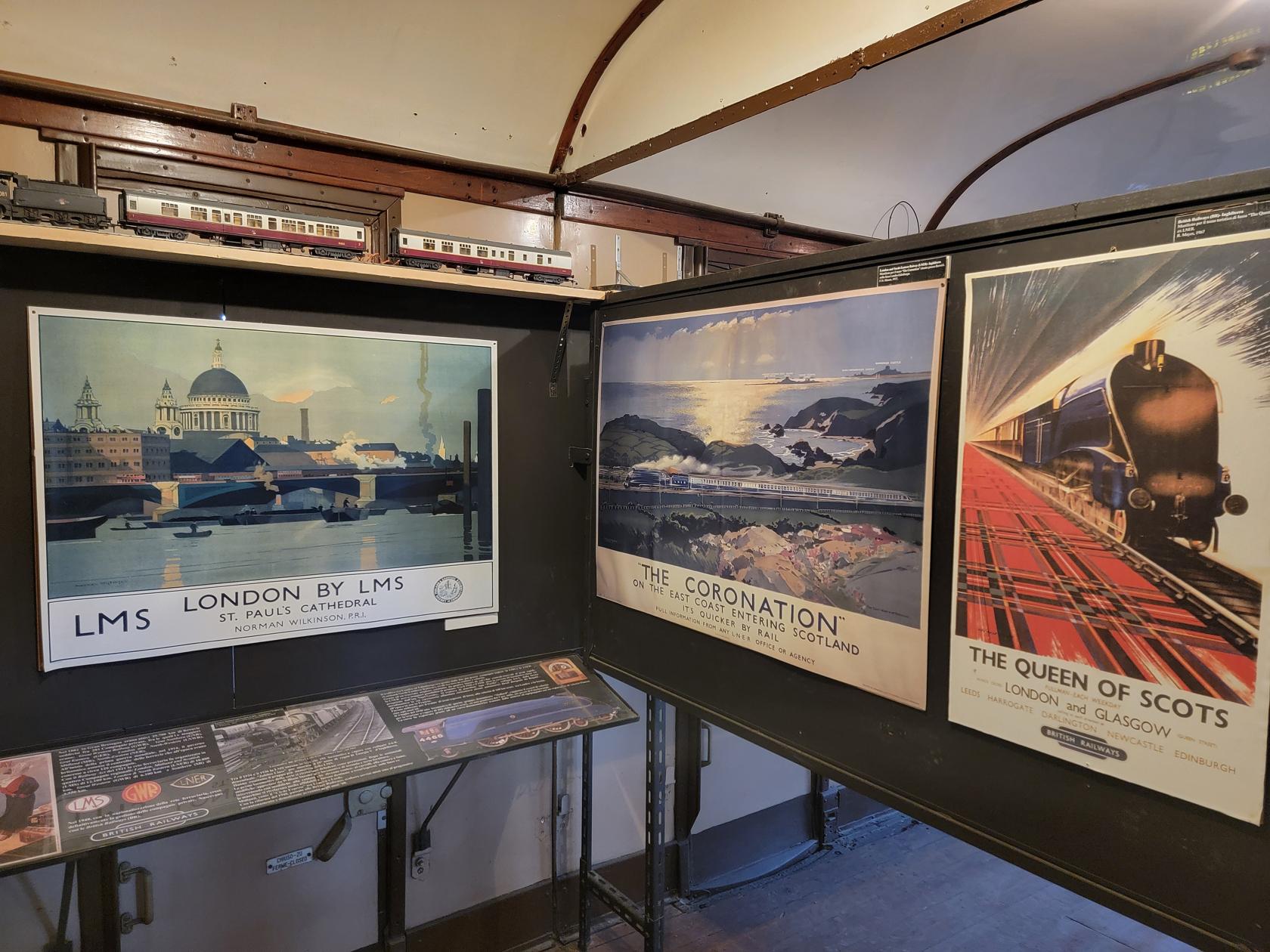
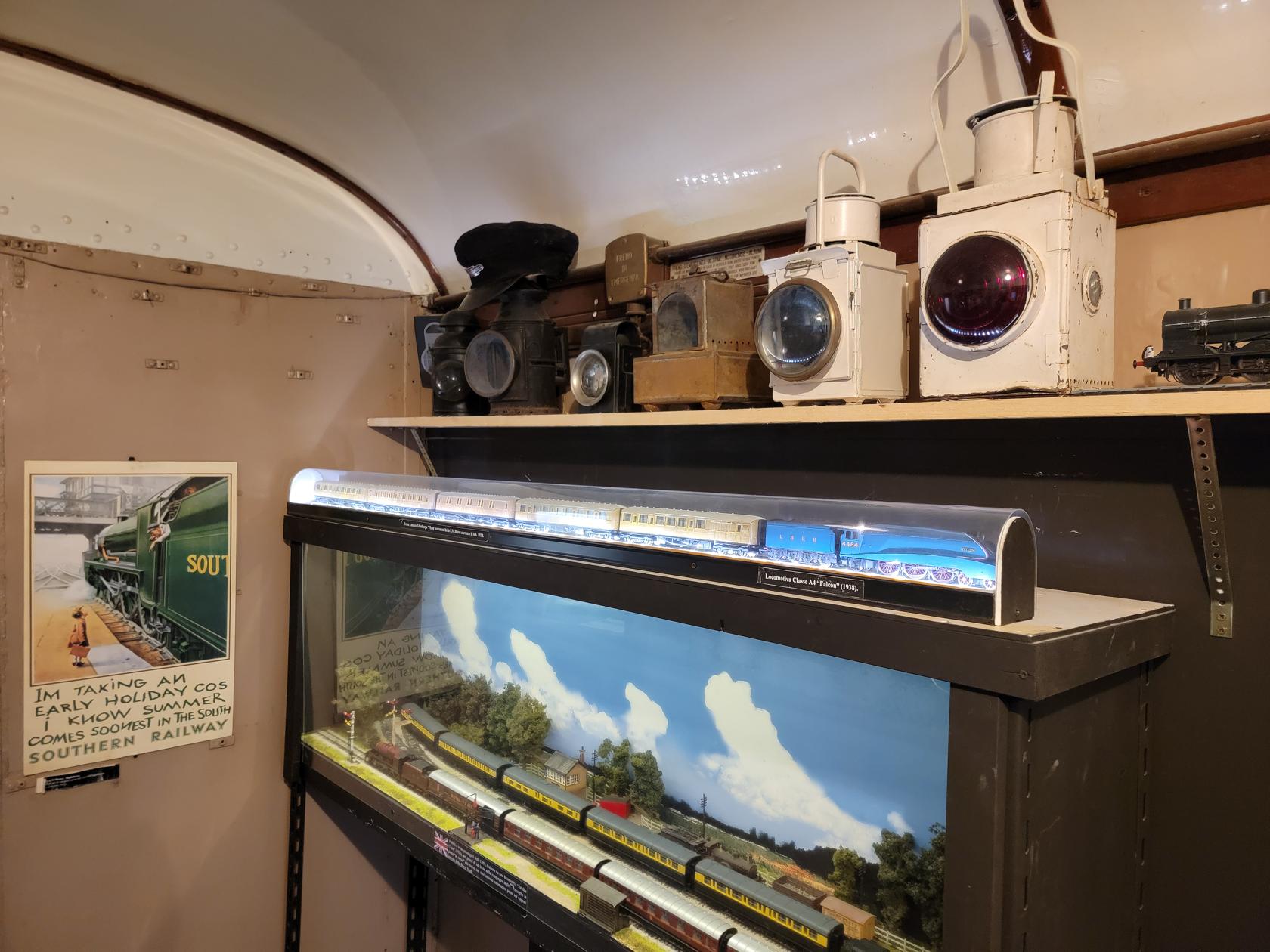
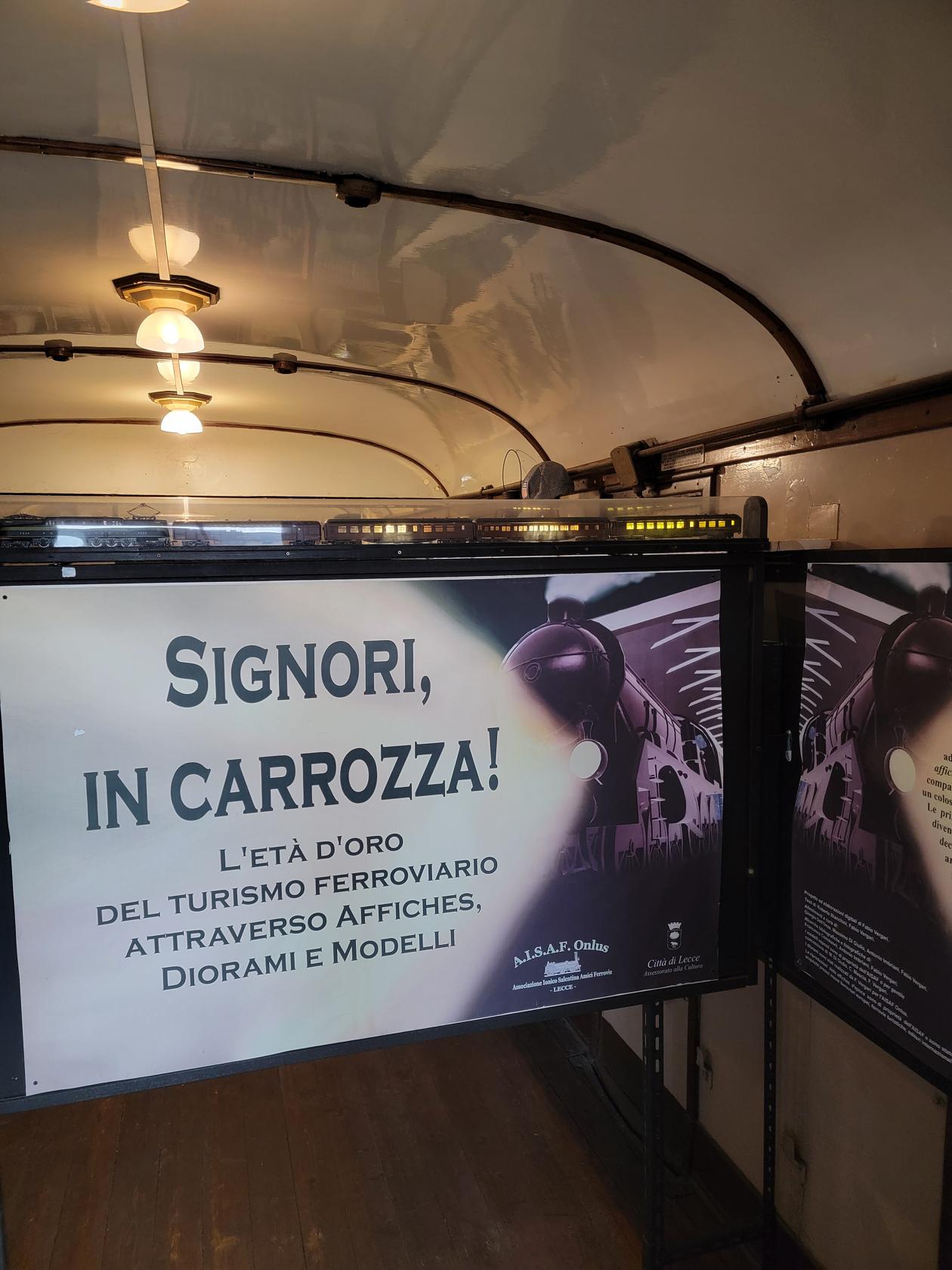
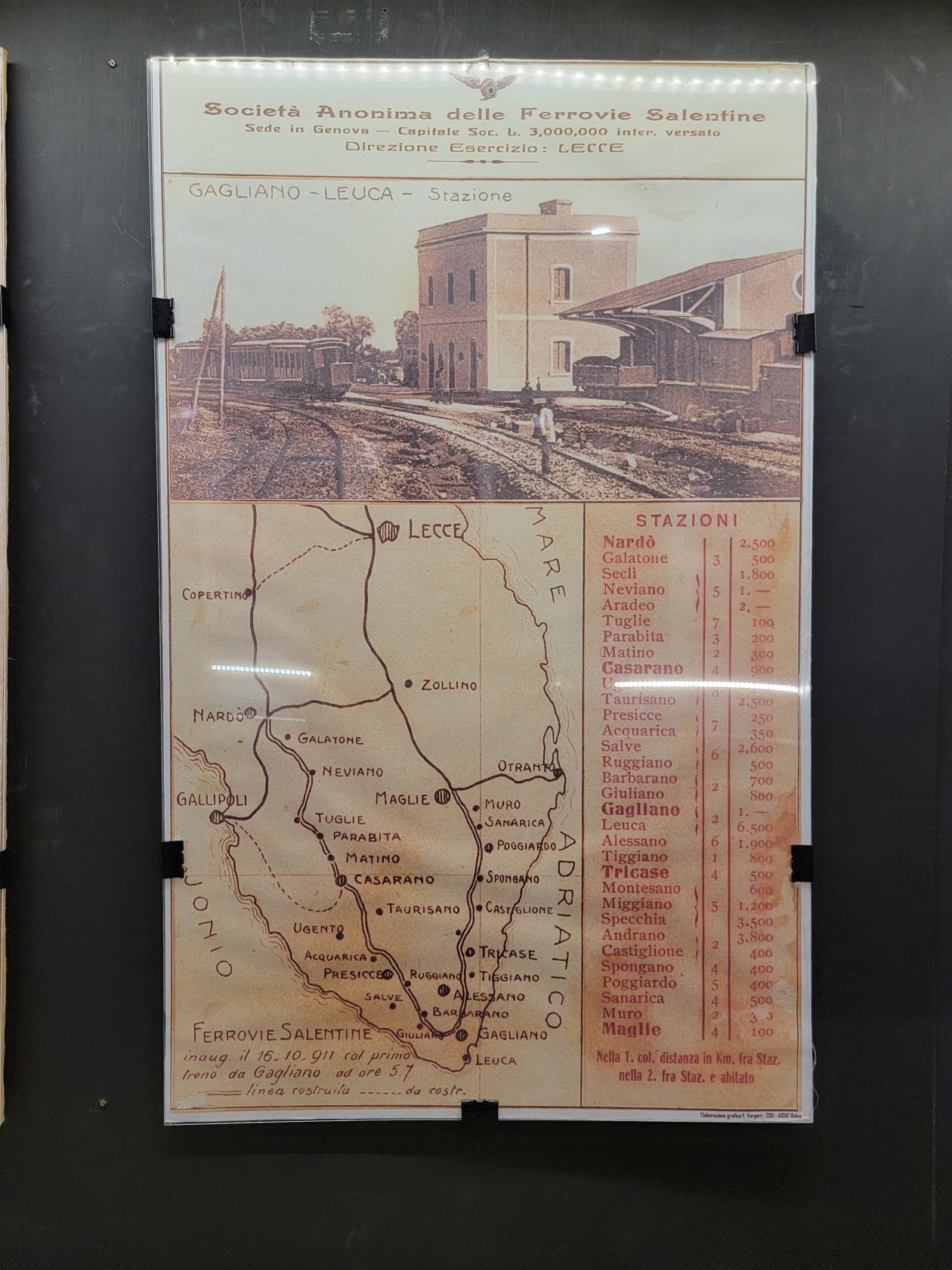
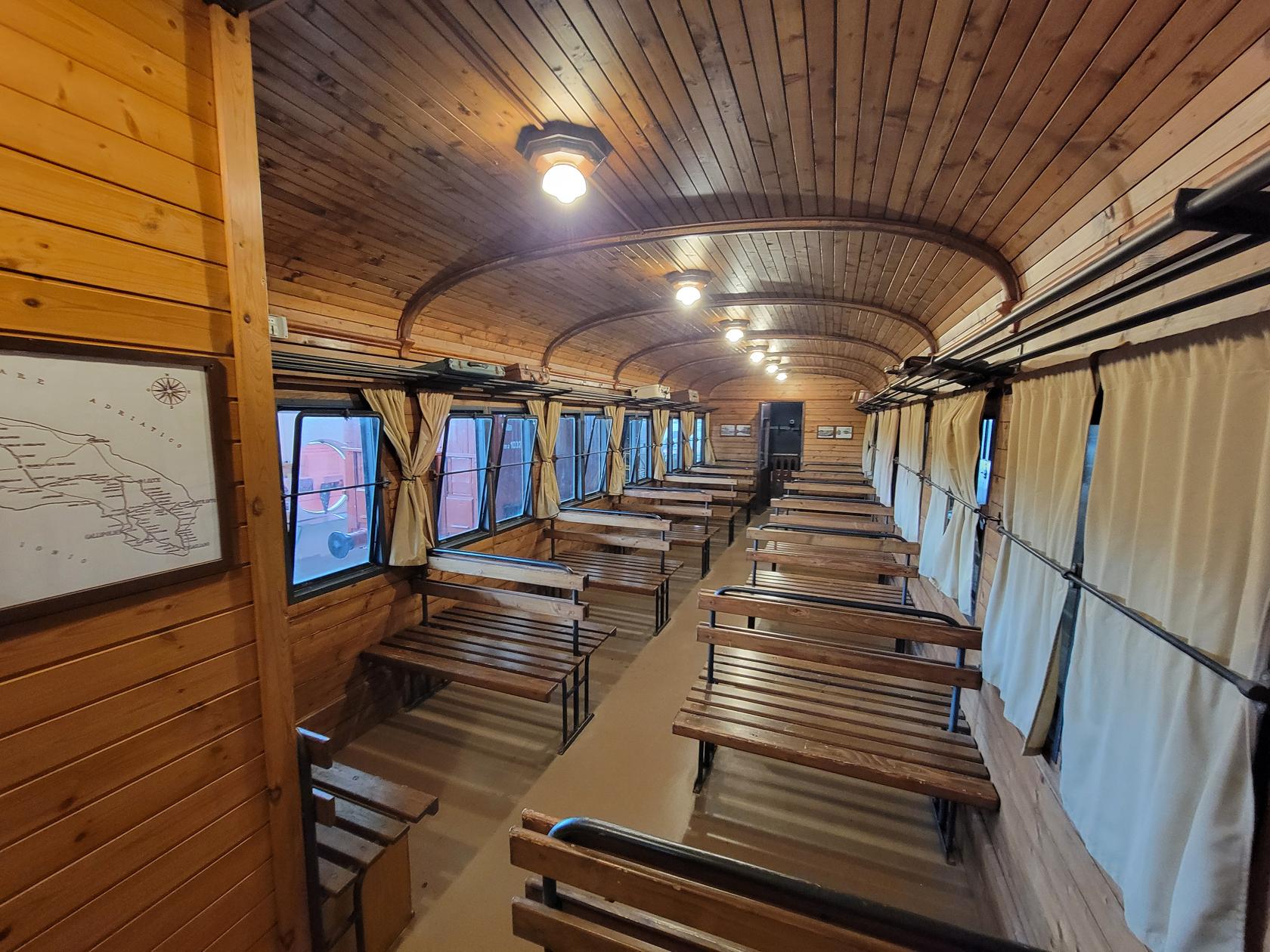
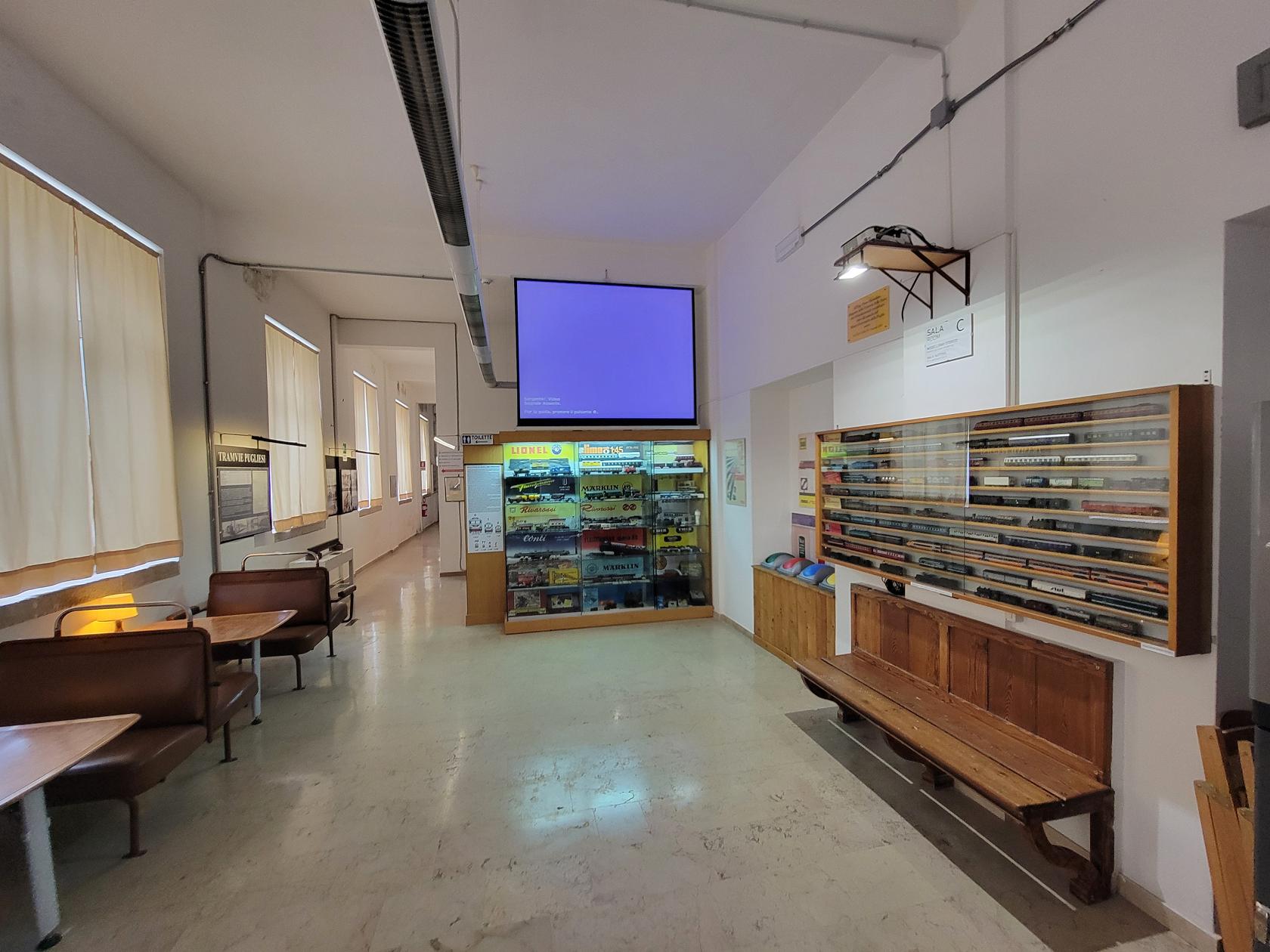
Located in Lecce is the Museo Ferroviario della Puglia, or the Train Museum of Puglia. The museum has an extensive collection of period photographs, models and dioramas which reconstruct the evolution of the carriage compartment and other railroad memorabilia from 1937 onwards. From the first nineteenth century carriages with their steam locomotives, which were very similar to the old stagecoaches, the visitor enjoys a tour through railroad history. With displays on the Trans European Express (TEE), there are not only Italian examples of carriages, locomotives and communication history, but also examples from other European countries. There is also a brief display on the development of public railroads in America, before they were forced to their demise by politicians beholding to the automobile and oil industries, never to recover. The entrance fee is 5€ per person and worth every Euro. It took a little over an hour to complete the tour, stopping for photographs and reading many of the displays.
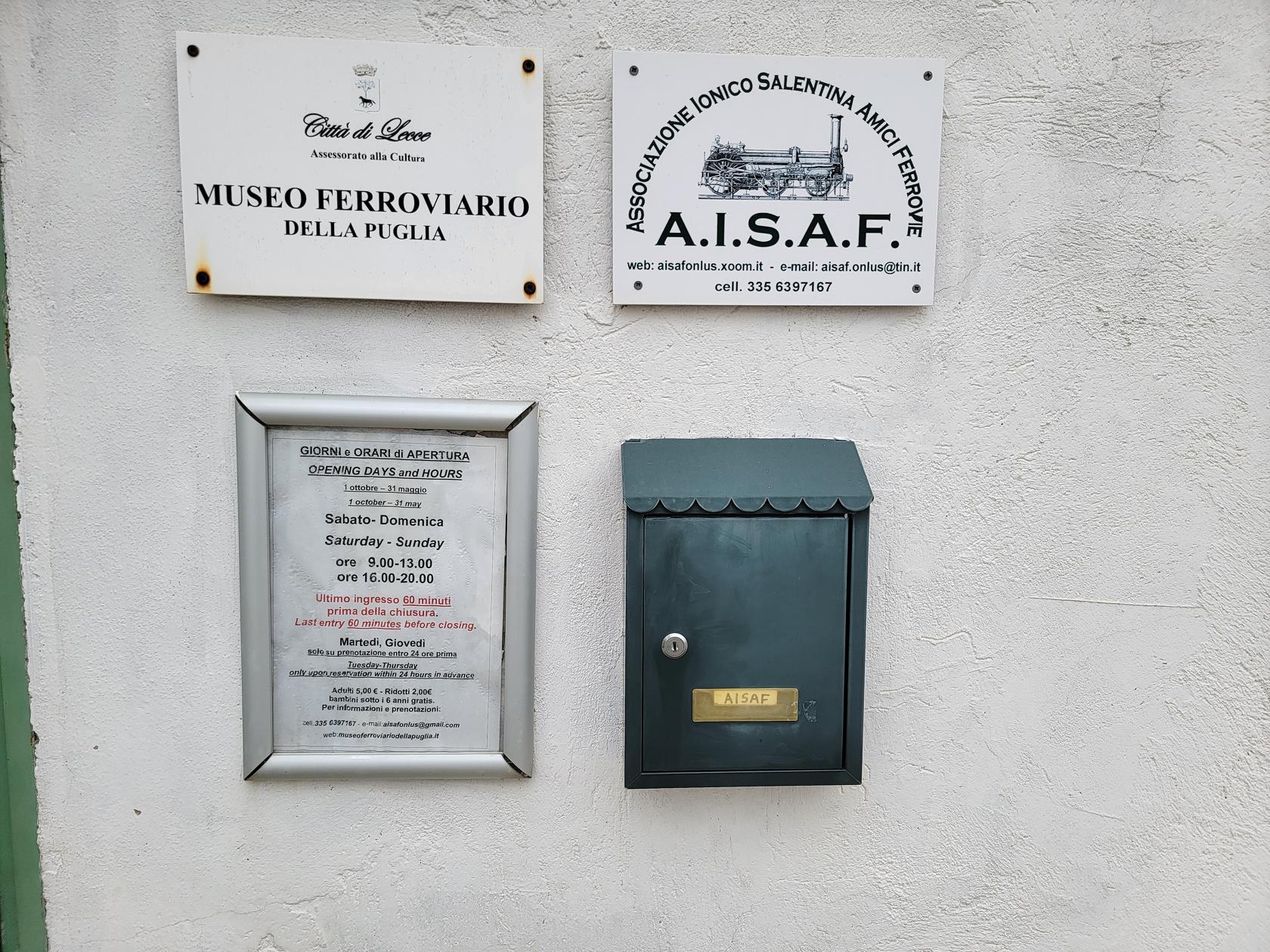
Warning: The opening and closing times for this museum may vary, so check to make sure you have plenty of time to get there before you try to go. The staff close the doors a little under an hour before the posted closing time and will not entertain any new visitors, so get there early or well within the closing time posted, or you will be turned away!
Museo Ferroviario della Puglia – Tickets For Two – Lecce, Italy
The Building And Sheds
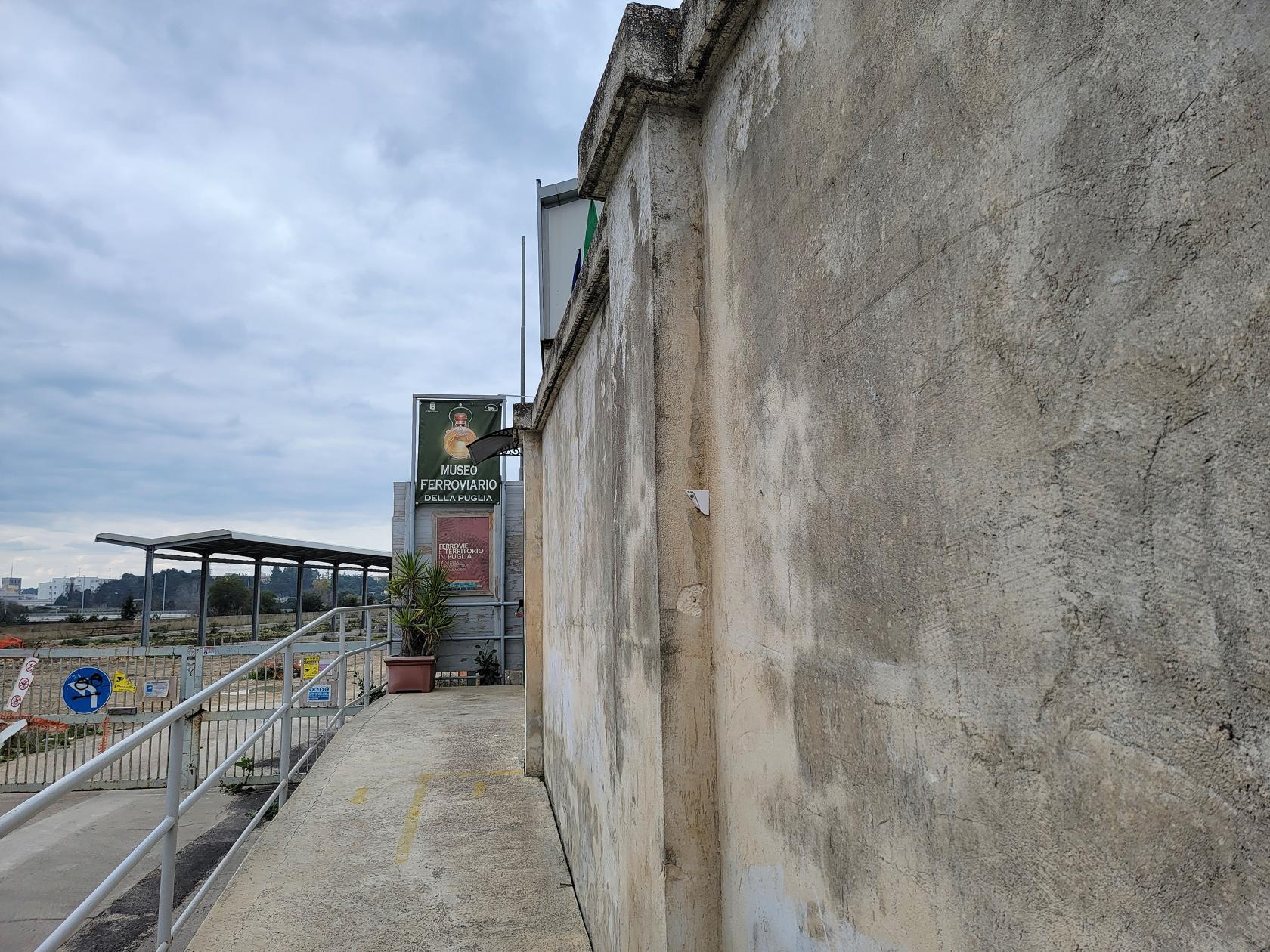
The building where the museum is housed were former workshops of the Squadra Rialzo, or State Railways. These were in full operation until 1992 when their functions were transferred to newer facilities in Surbo Scalo.
Museo Ferroviario della Puglia – Entrance – Lecce, Italy
Museo Ferroviario della Puglia – Entrance Accolades – Lecce, Italy
In the workshop, customary maintenance was performed on all carriages, locomotives and freight wagons at the time. Its name is derived from the fact that maintenance for the rolling stocks of the trains were actually carried out here for all axles, wheels, in addition to the carriage bodies and their contents. The current facility consists of two sheds, the first erected in the 1930s, the second with the trusses was built later, sometime in the 1970s. Both were used for numerous purposes, including offices, warehouse stocks, carpentry, forge, upholstery and heating systems. The yard had accommodation to raise wheel sets with a hoist, so that they may be reconditioned and maintained.
The Story
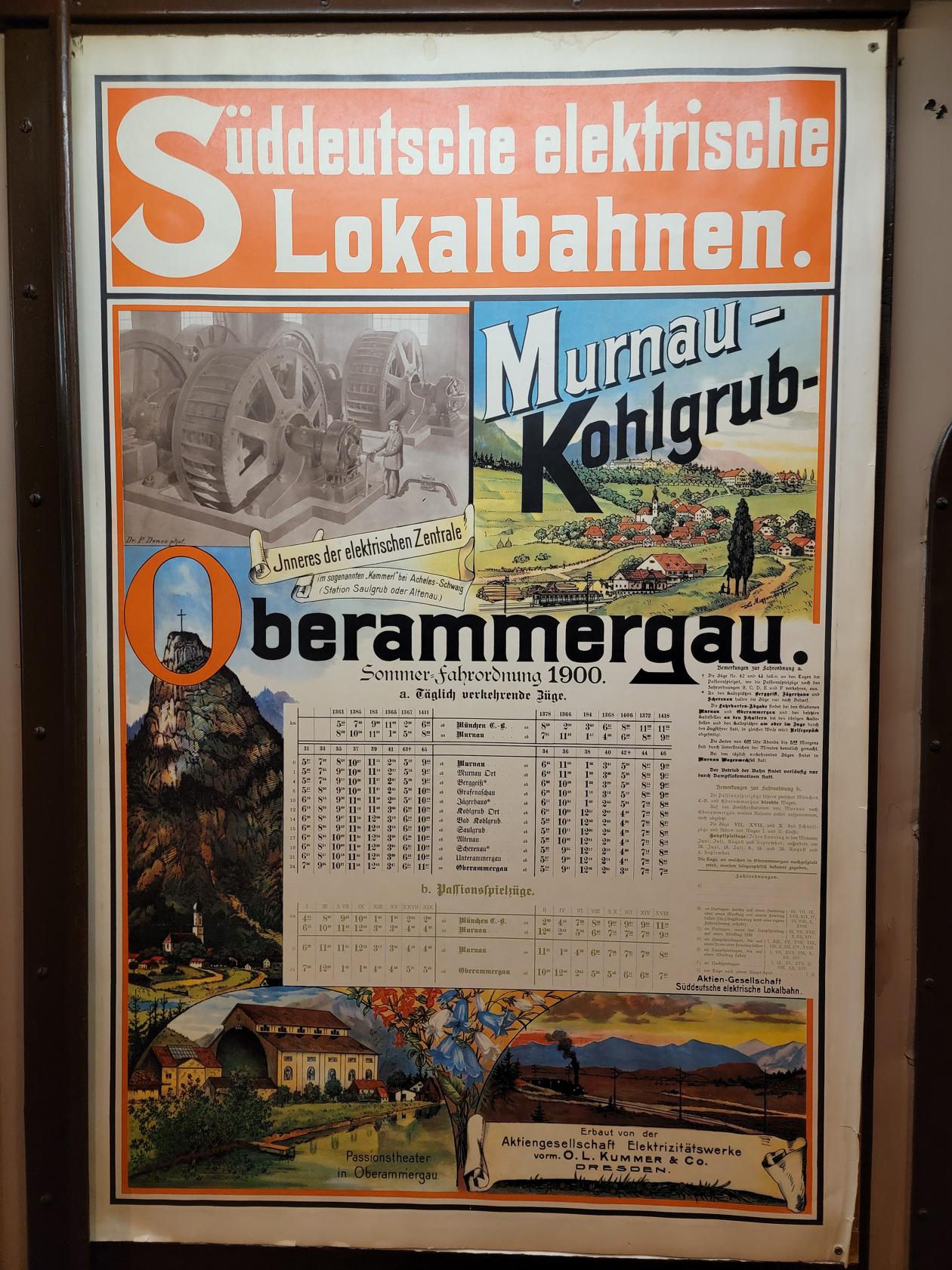
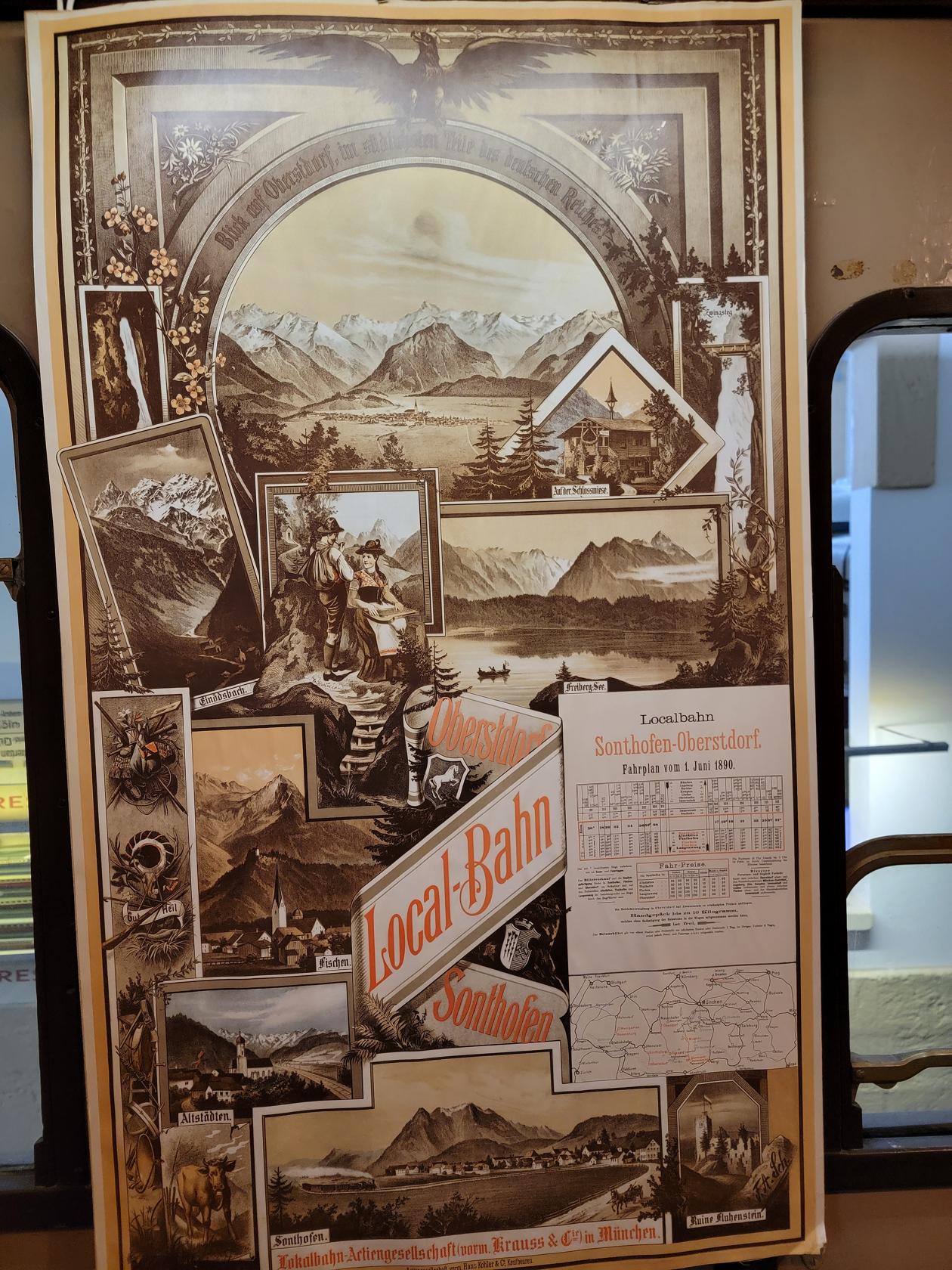
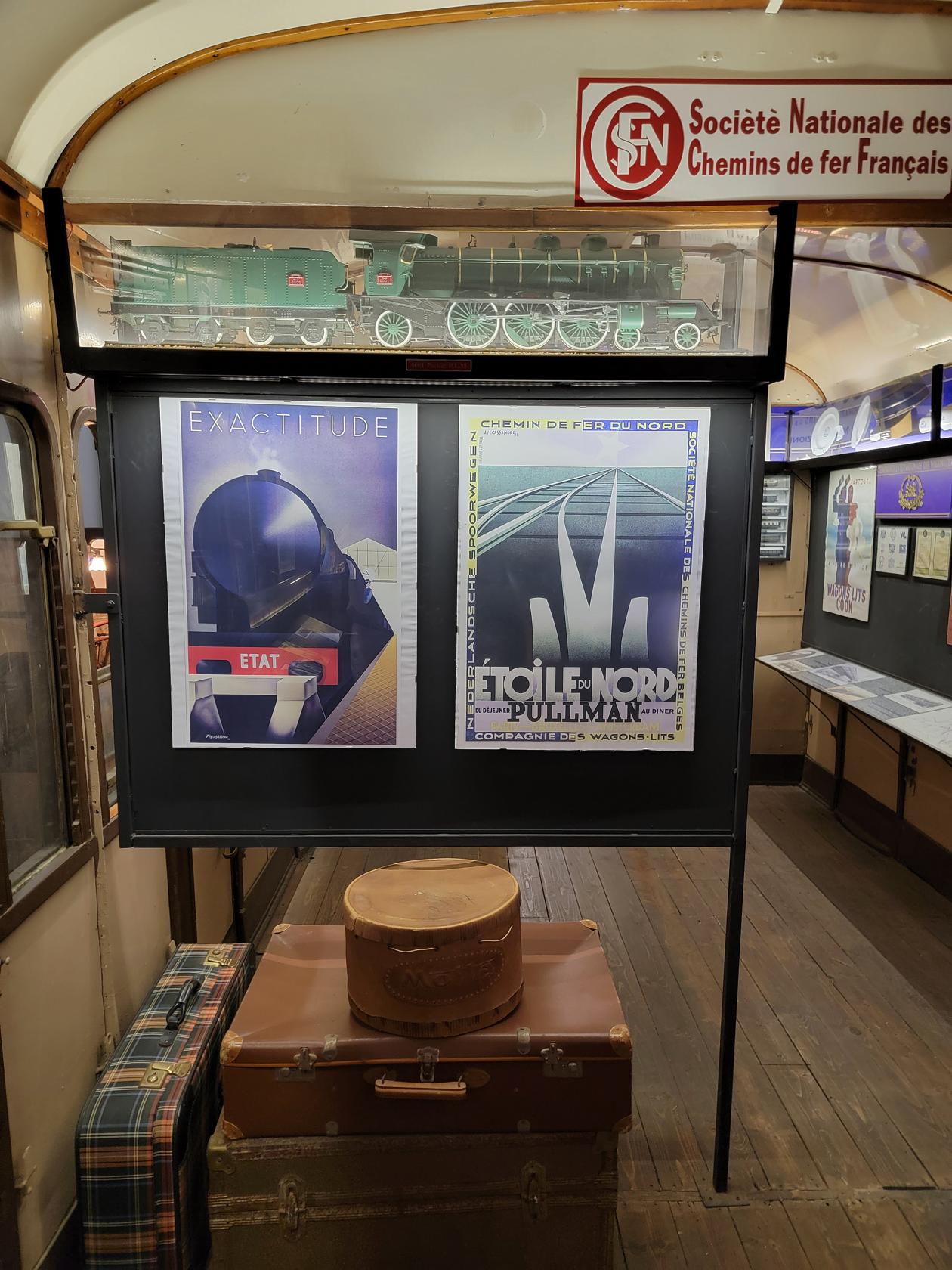
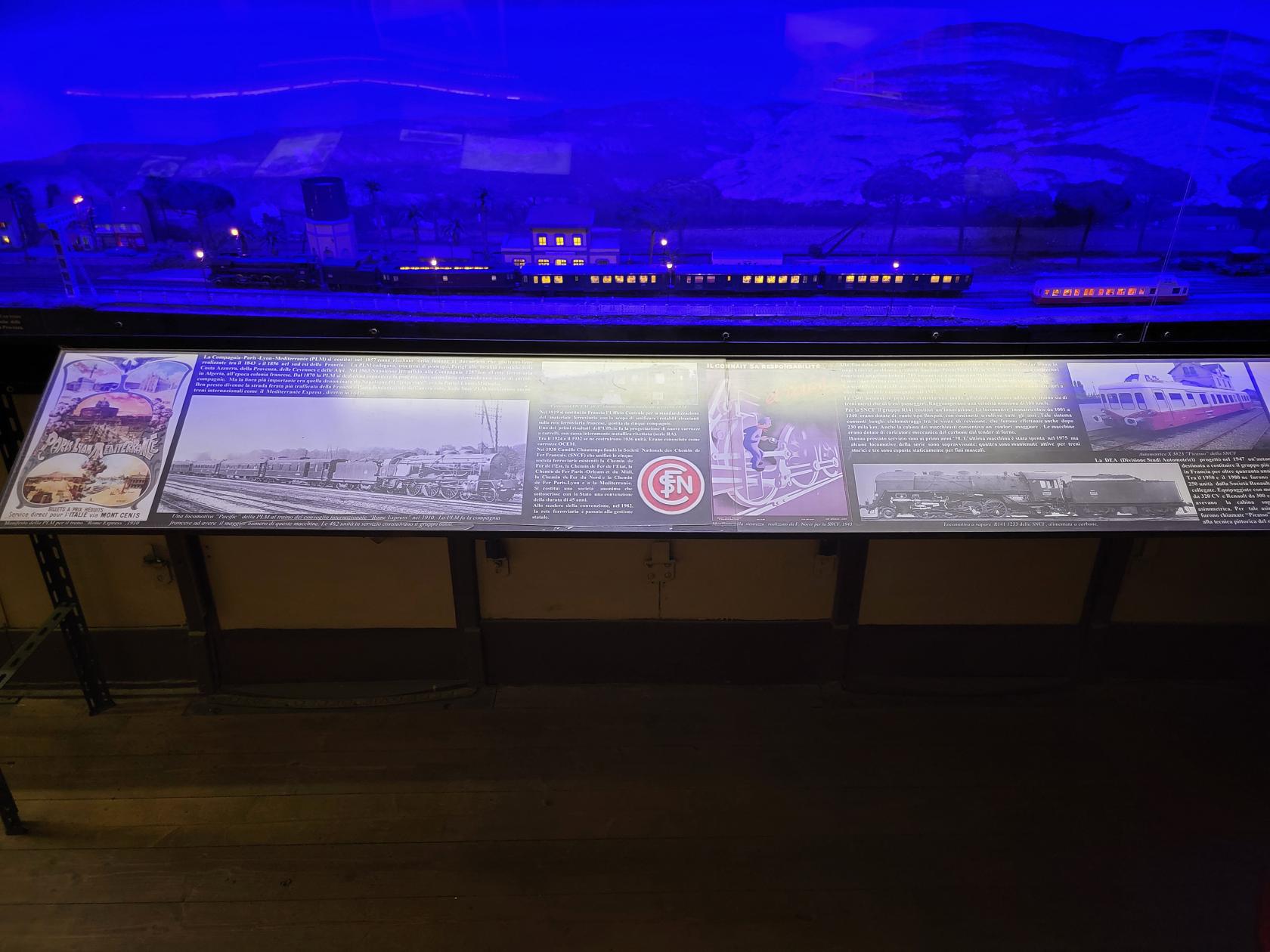
There is a long exhibit that details the history promised in the introduction. Taking you through the stages of evolution of the twentieth century train system in Italy. There are numerous boards to read, posters and model carriages to see along the first stage of the exhibits.
Museo Ferroviario della Puglia – Tour – Lecce, Italy
Museo Ferroviario della Puglia – Tour – Lecce, Italy
Museo Ferroviario della Puglia – Tour – Lecce, Italy
Museo Ferroviario della Puglia – Old Carriage 1937 – Lecce, Italy
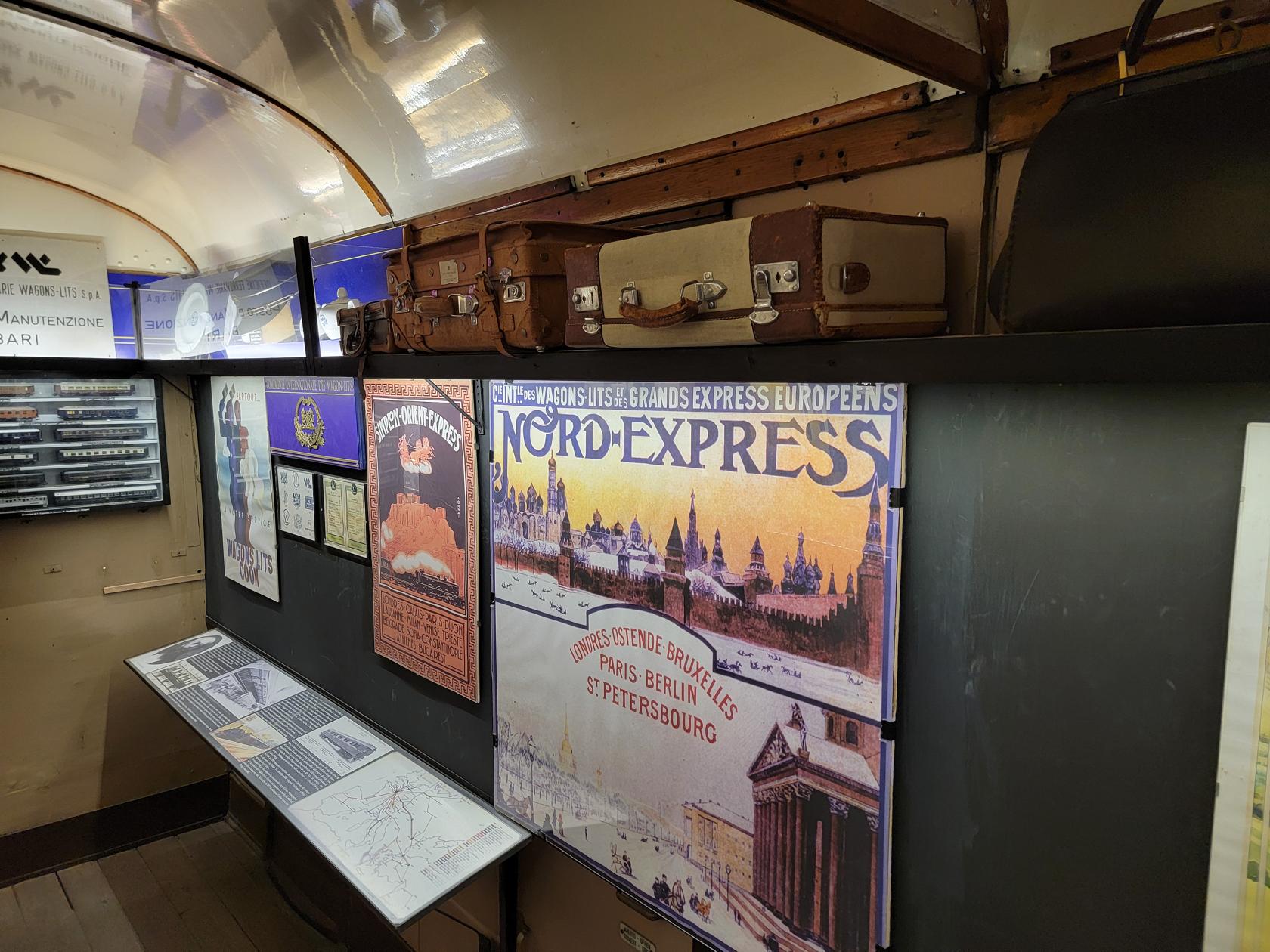
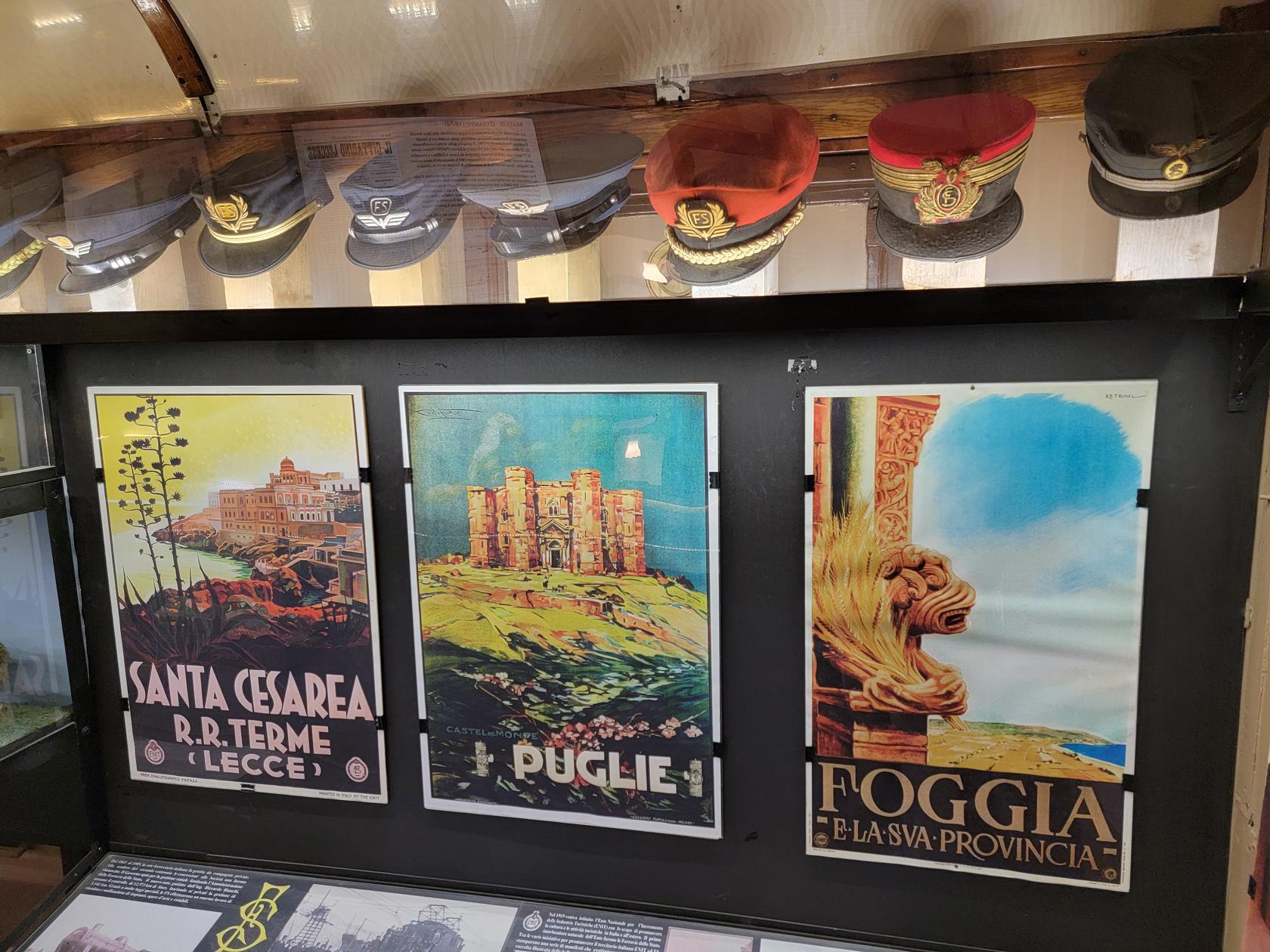
Museo Ferroviario della Puglia – Old Posters – Lecce, Italy
Museo Ferroviario della Puglia – Postal Service – Lecce, Italy
Museo Ferroviario della Puglia – Italian Signs – Lecce, Italy
Museo Ferroviario della Puglia – Cars from 1901-1940 – Lecce, Italy
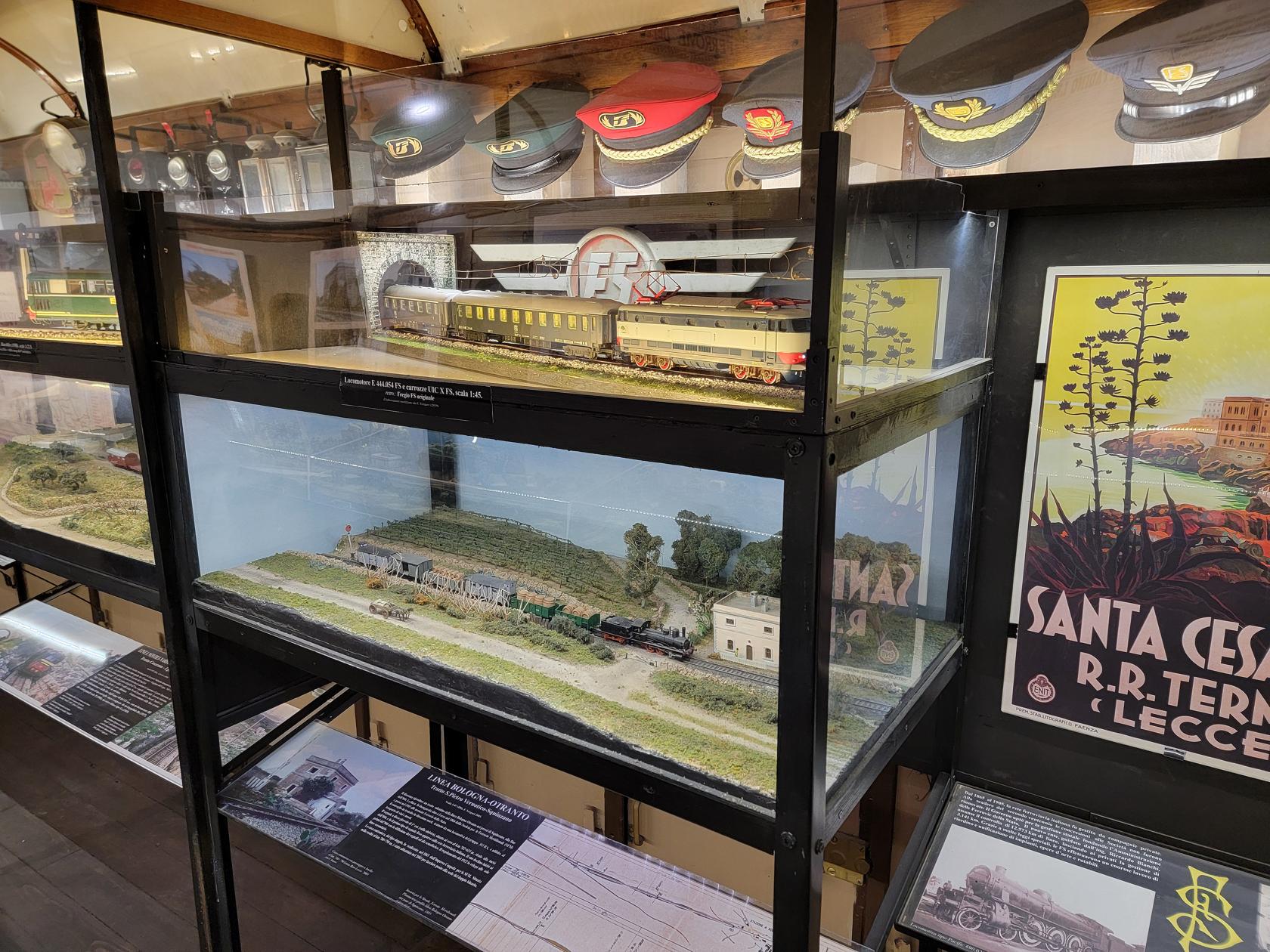
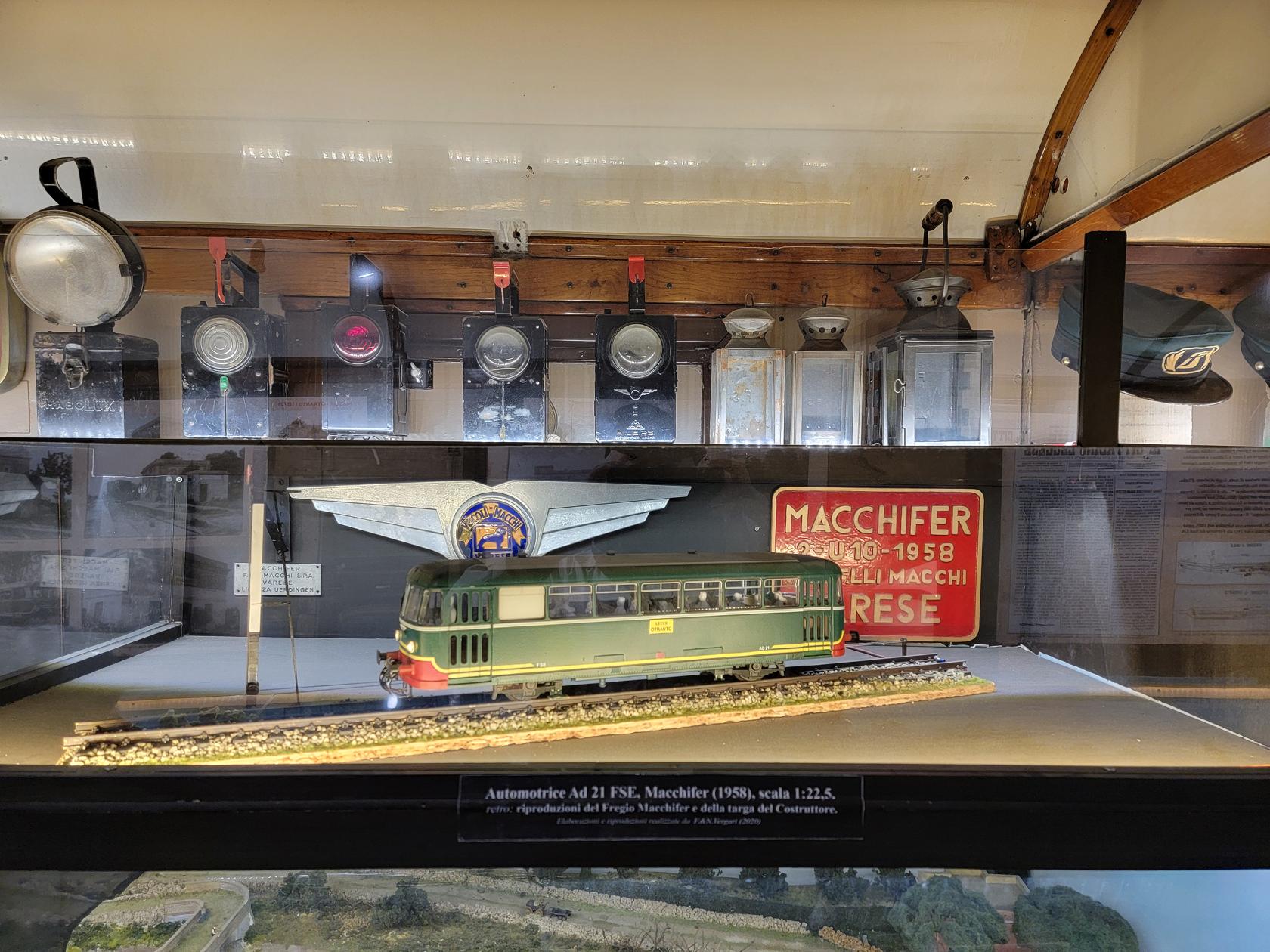
Museo Ferroviario della Puglia – Models – Lecce, Italy
Museo Ferroviario della Puglia – Models – Lecce, Italy
Museo Ferroviario della Puglia – Models – Lecce, Italy
Museo Ferroviario della Puglia – Models – Lecce, Italy
Museo Ferroviario della Puglia – American Lines – Lecce, Italy
Museo Ferroviario della Puglia – American Lines – Lecce, Italy
Museo Ferroviario della Puglia – English Lines – Lecce, Italy
Museo Ferroviario della Puglia – English Lines – Lecce, Italy
Museo Ferroviario della Puglia – Models – Lecce, Italy
Museo Ferroviario della Puglia – German Lines – Lecce, Italy
Museo Ferroviario della Puglia – German Lines – Lecce, Italy
Museo Ferroviario della Puglia – German Lines – Lecce, Italy
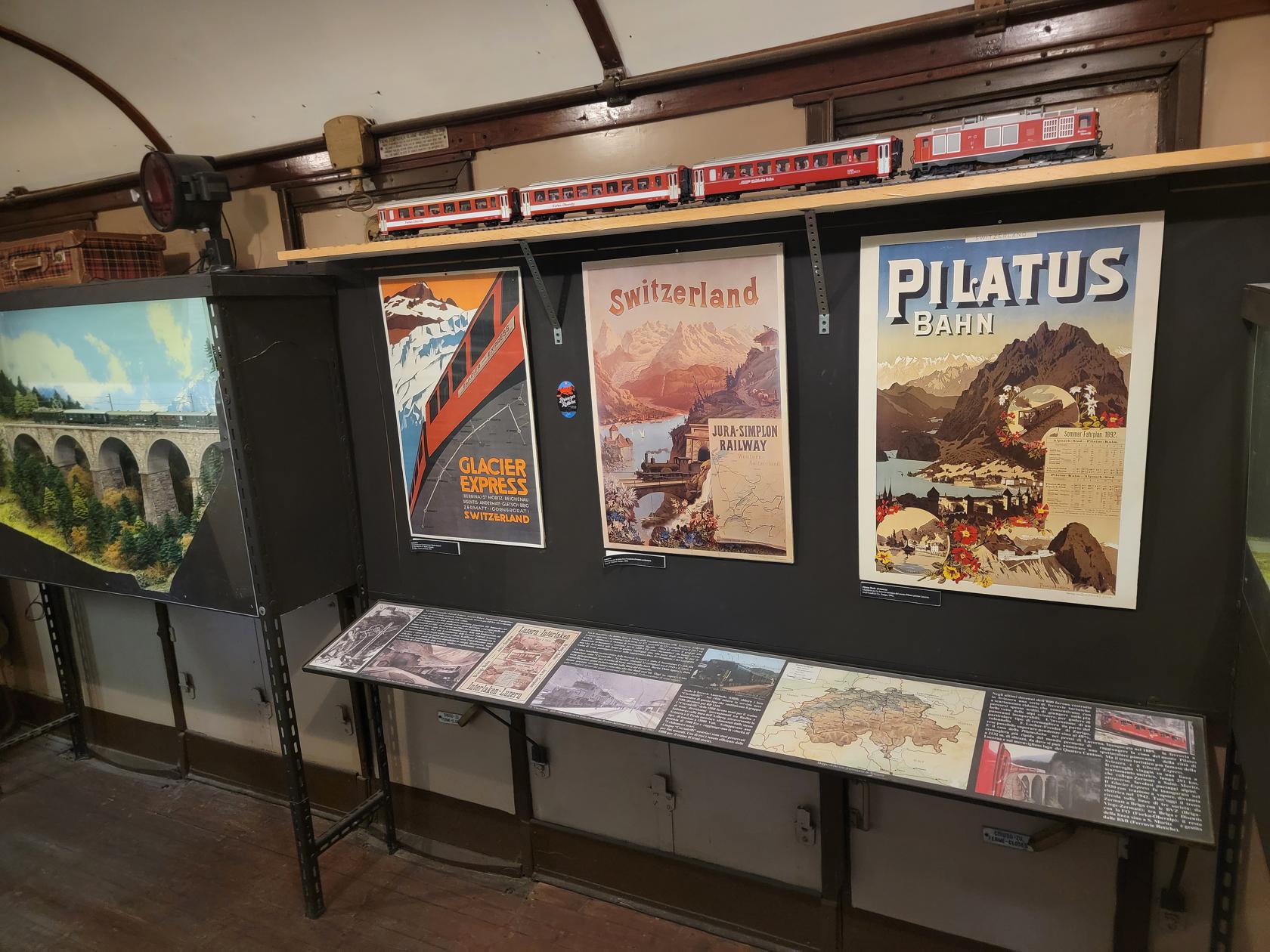
Museo Ferroviario della Puglia – Swiss Lines – Lecce, Italy
Museo Ferroviario della Puglia – Tour – Lecce, Italy
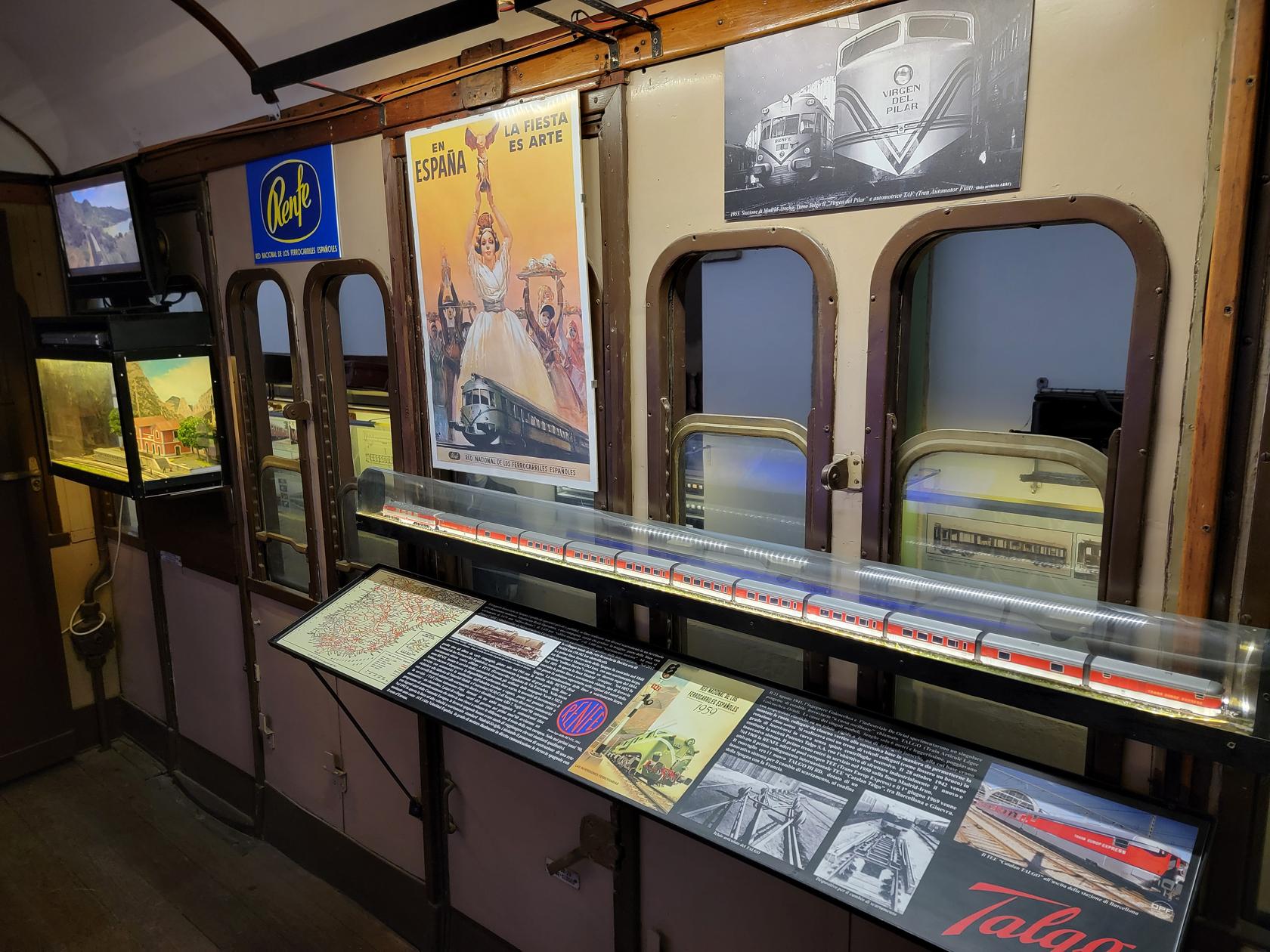
Museo Ferroviario della Puglia – French Lines – Lecce, Italy
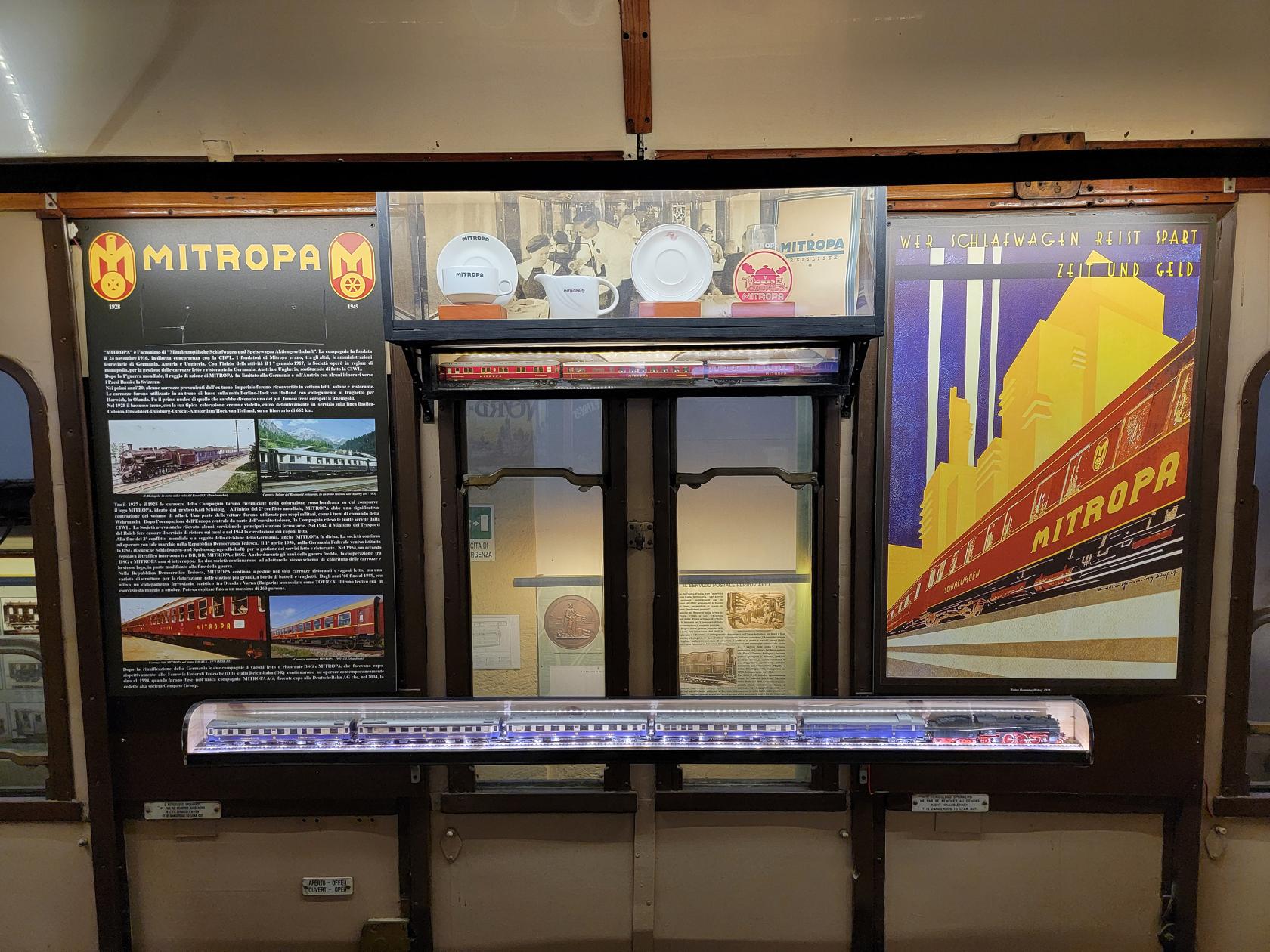
Museo Ferroviario della Puglia – Mitropa Lines – Lecce, Italy
Museo Ferroviario della Puglia – Southern Italian Lines – Lecce, Italy
Museo Ferroviario della Puglia – Southern Italian Lines – Lecce, Italy
Museo Ferroviario della Puglia – Southern Italian Lines – Lecce, Italy
Museo Ferroviario della Puglia – Southern Italian Lines – Lecce, Italy
Museo Ferroviario della Puglia – Southern Italian Lines – Lecce, Italy
Museo Ferroviario della Puglia – French Lines – Lecce, Italy
The Carriages, Locomotives and other Railcars
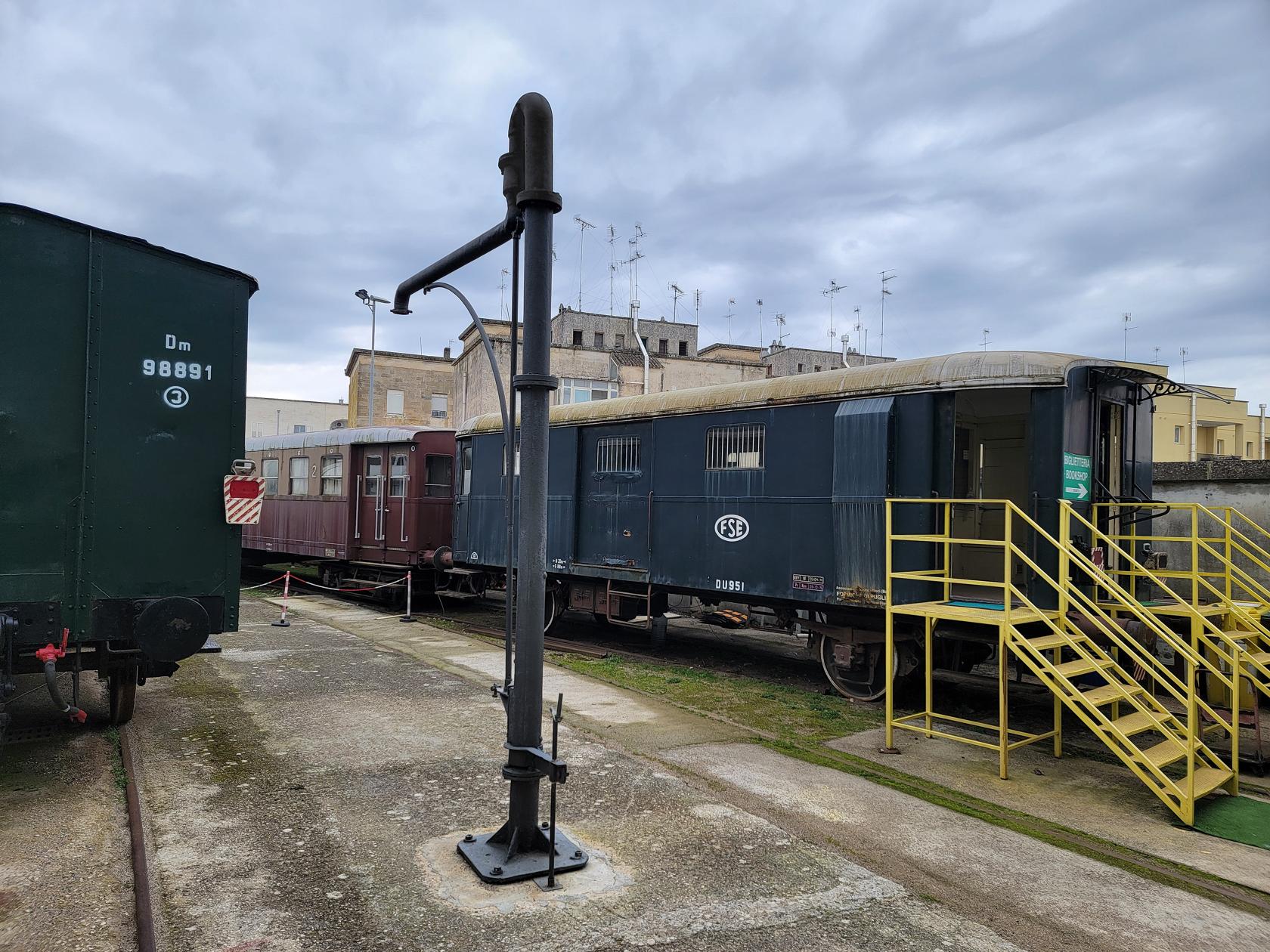
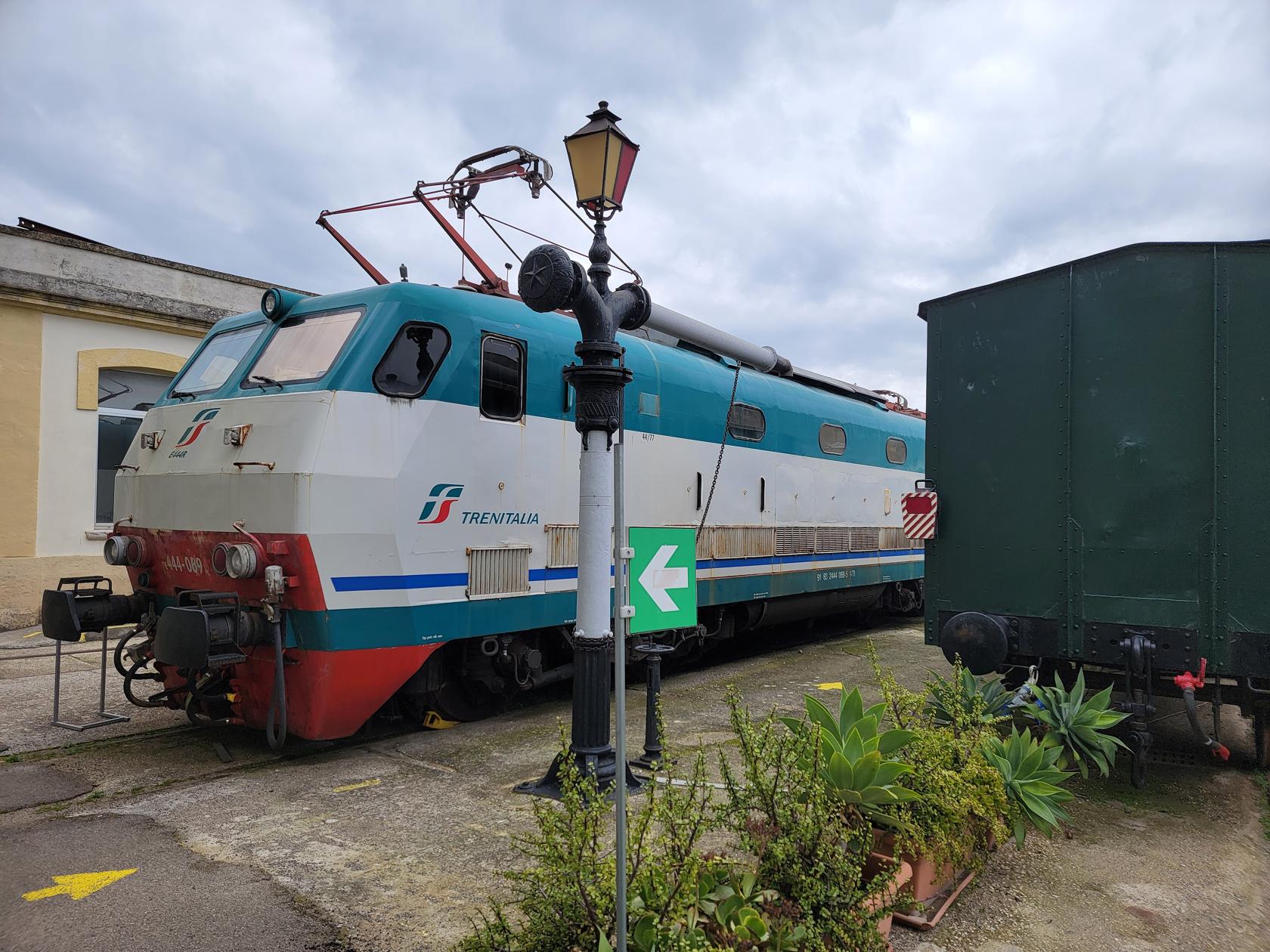
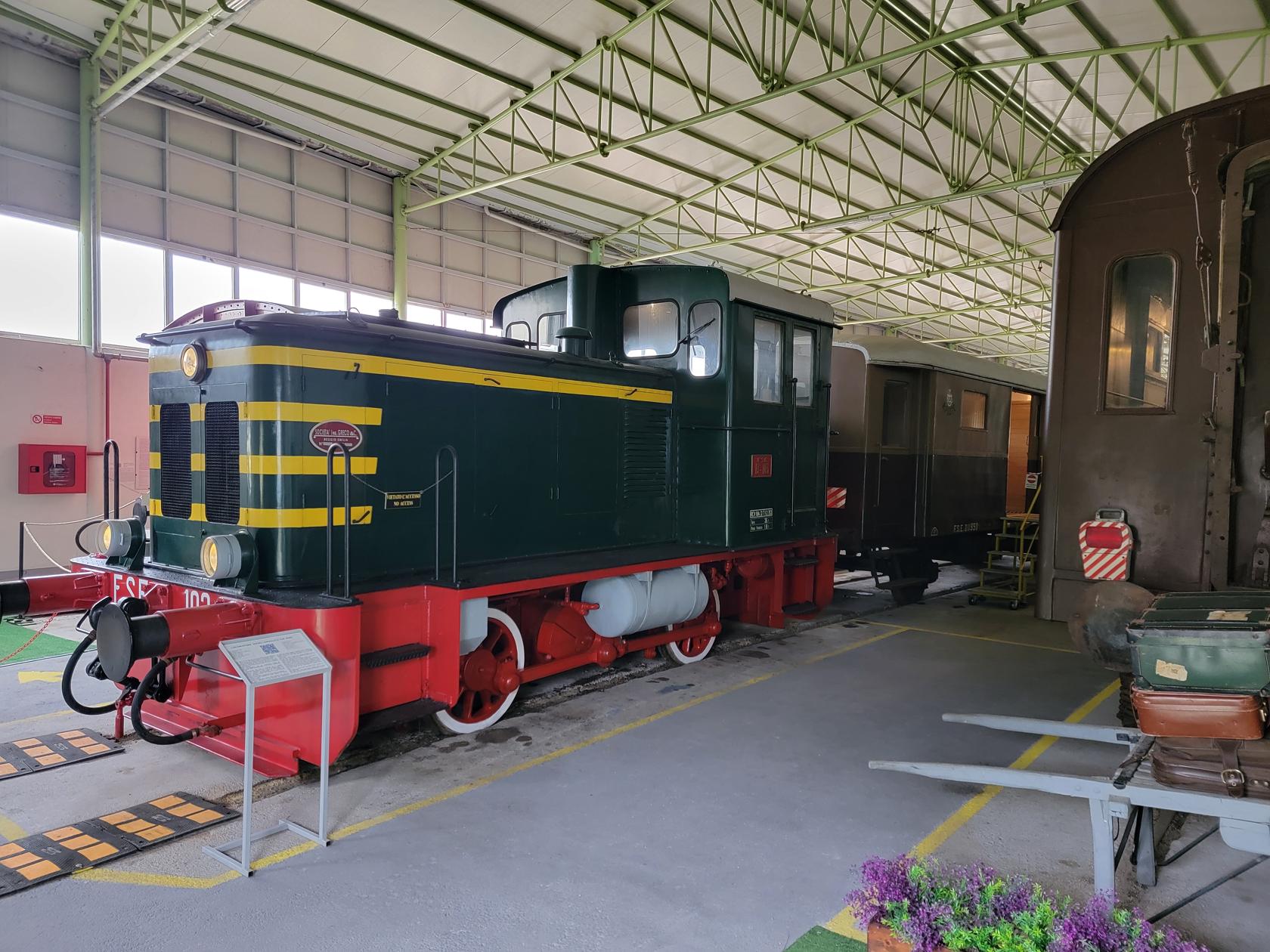
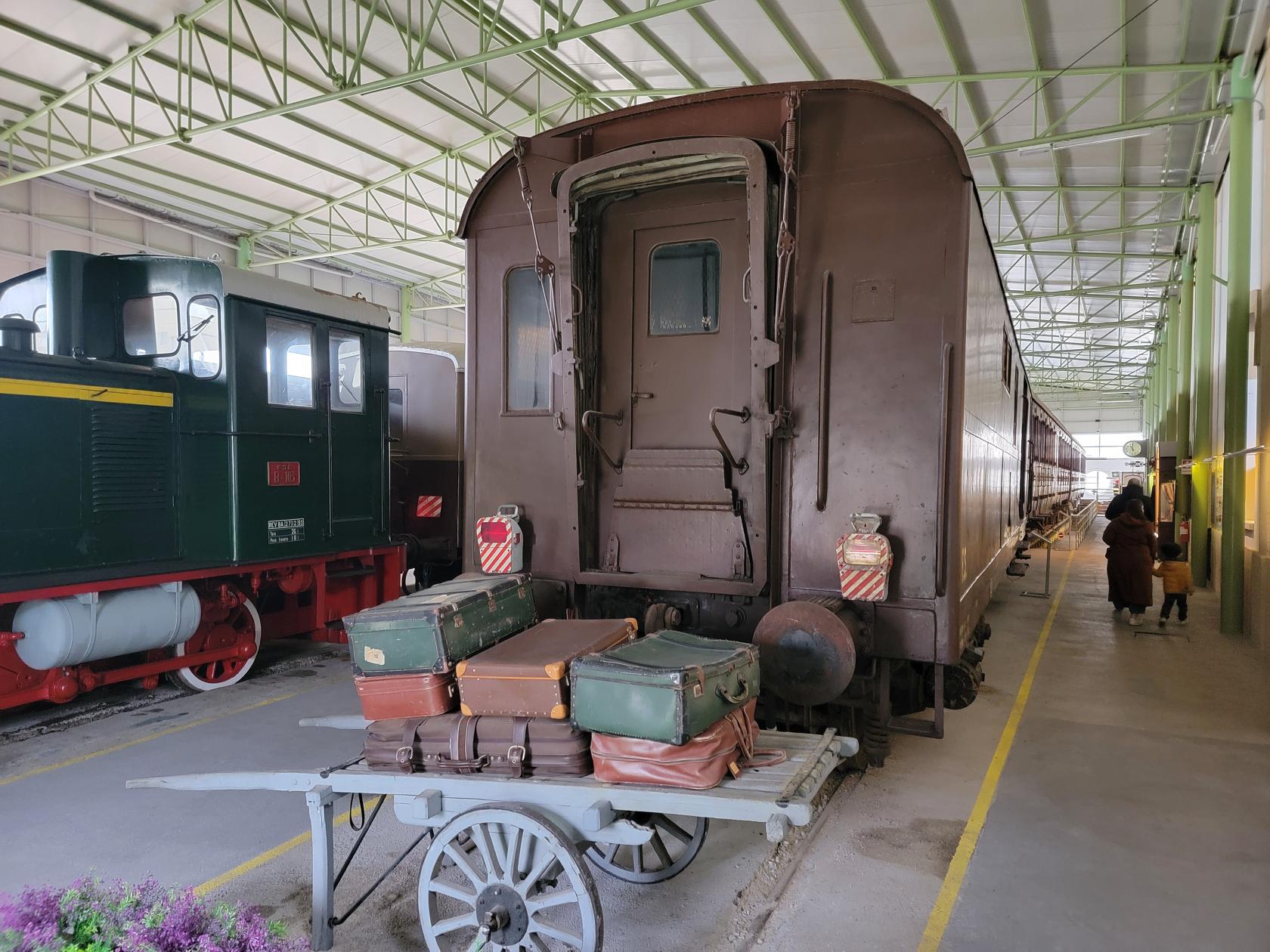
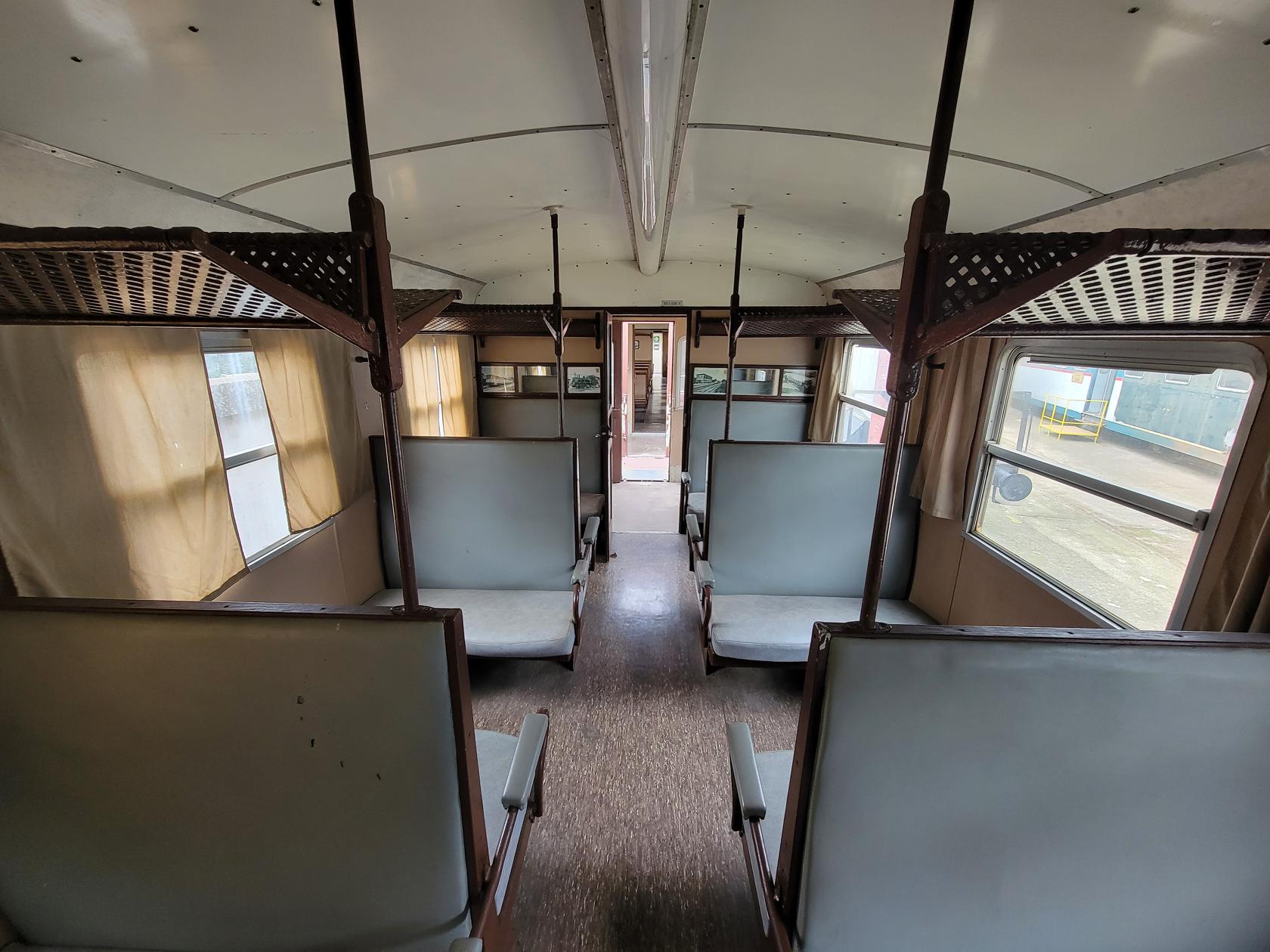
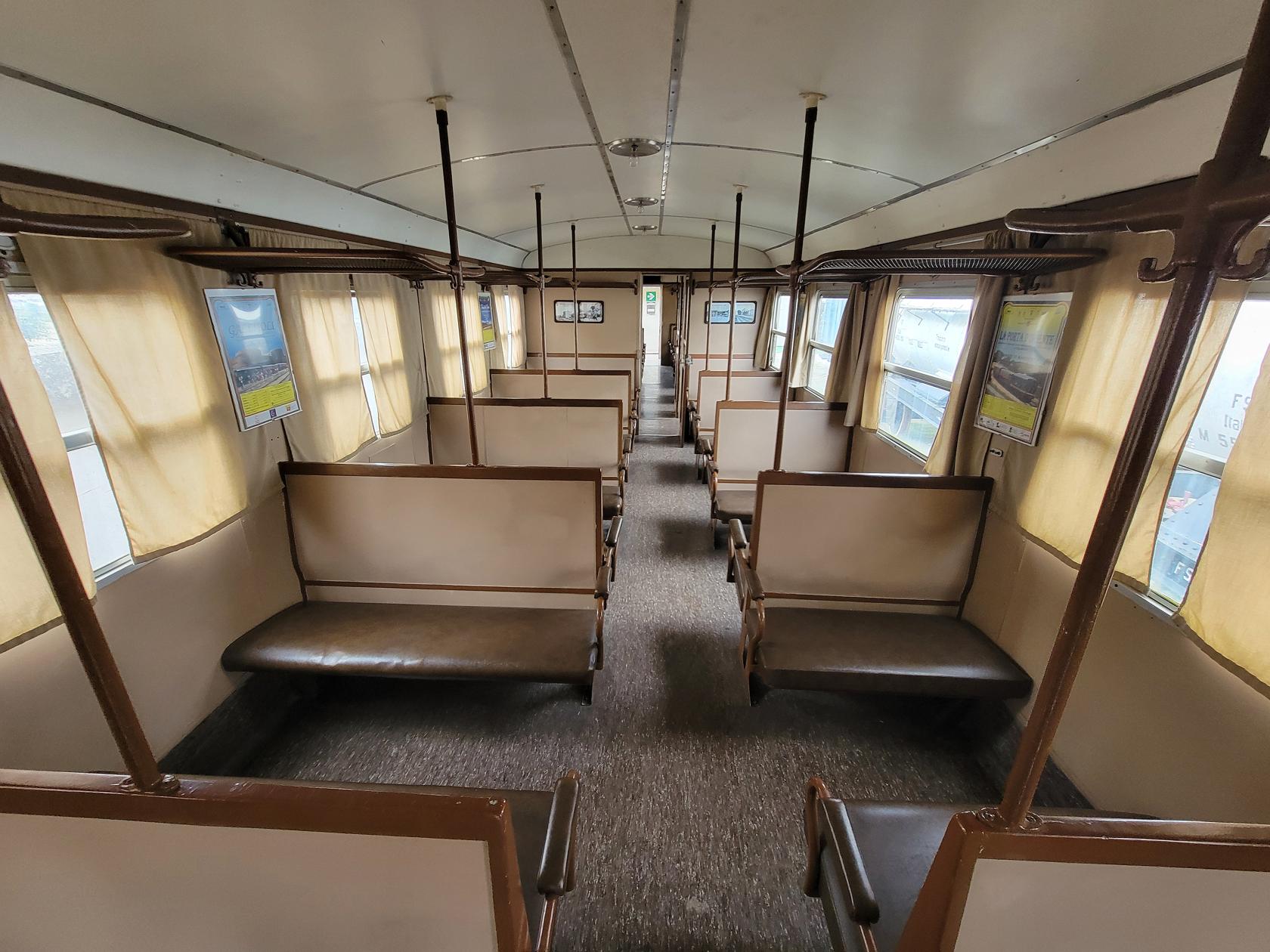
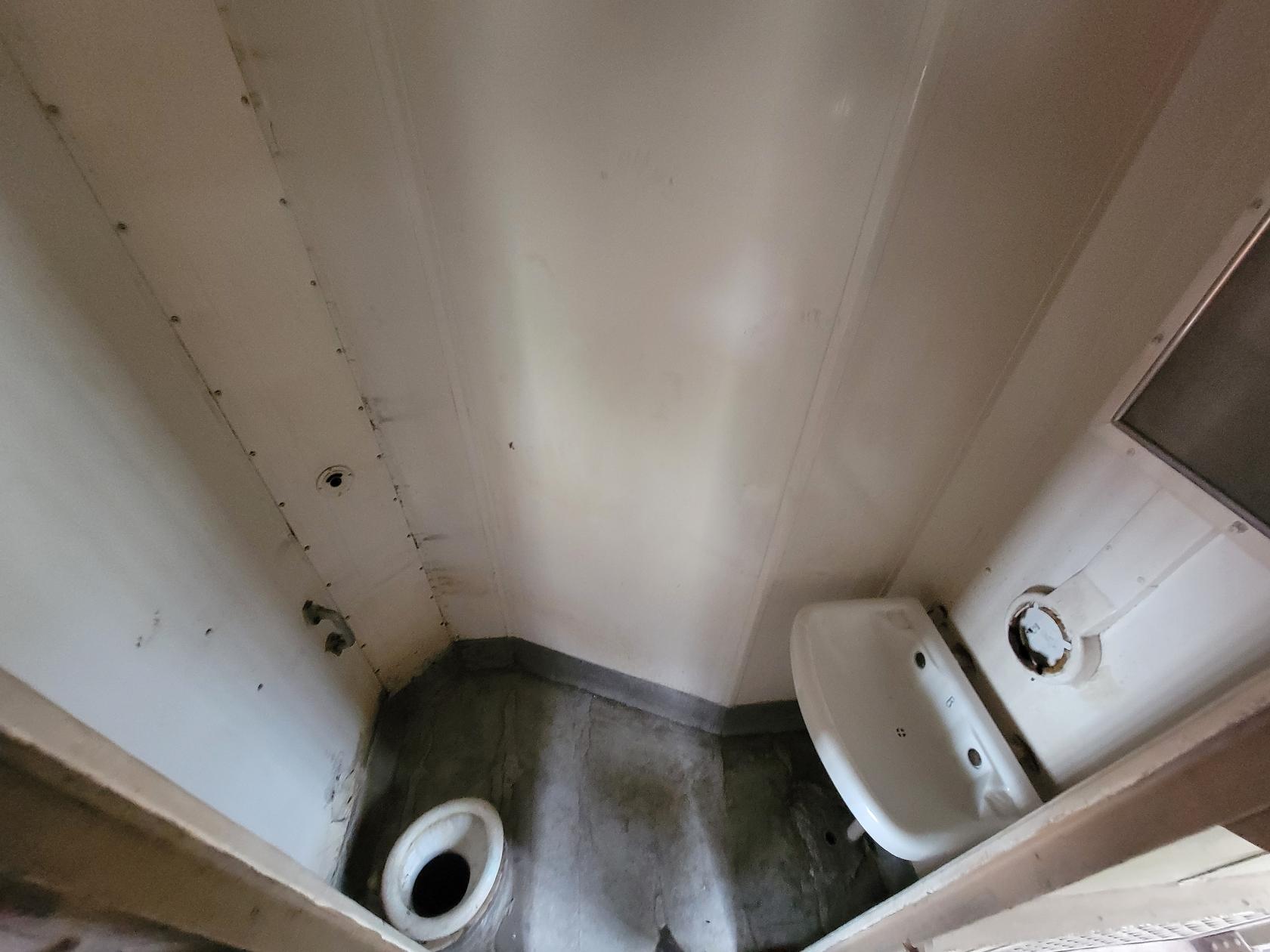
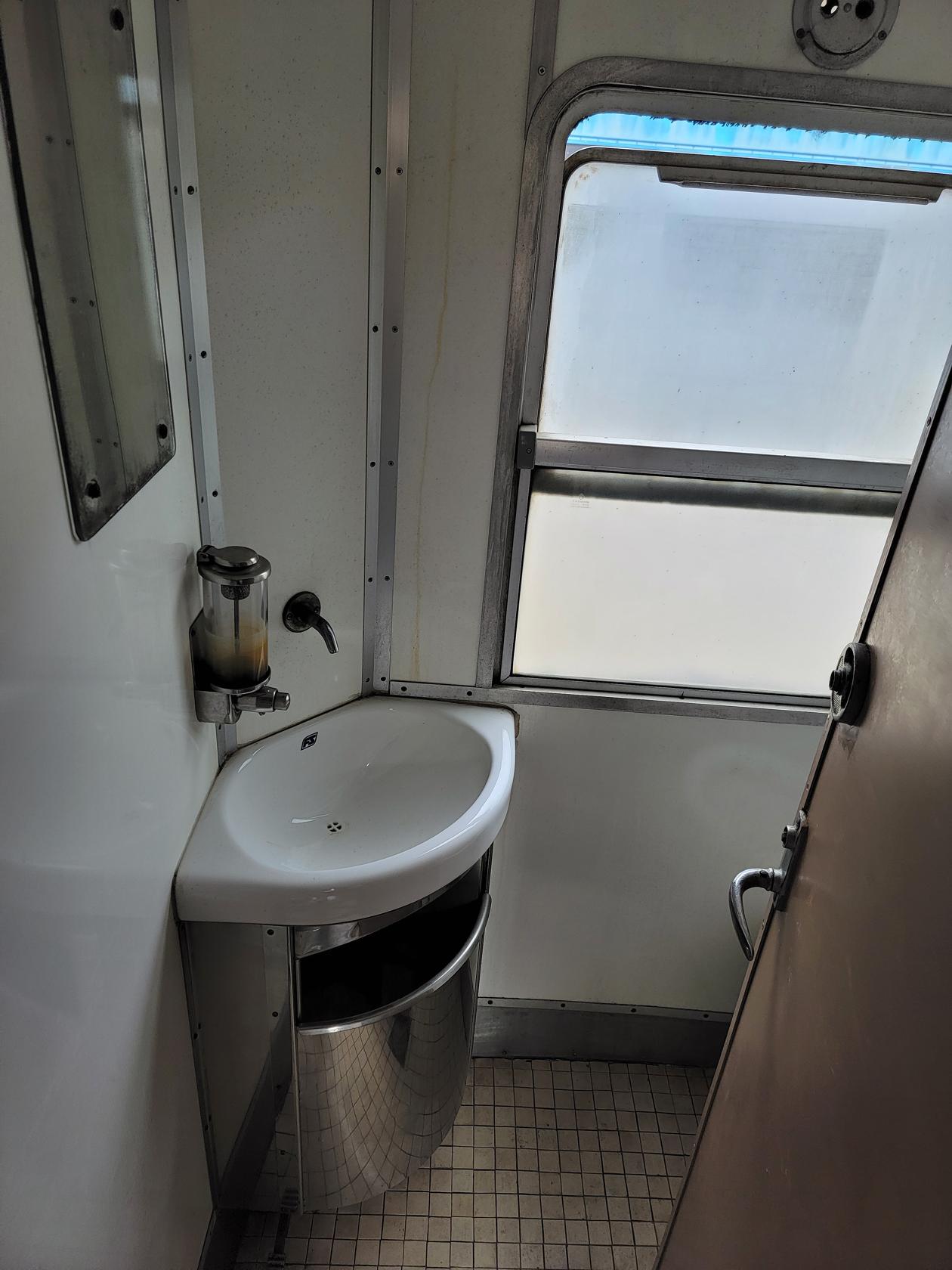
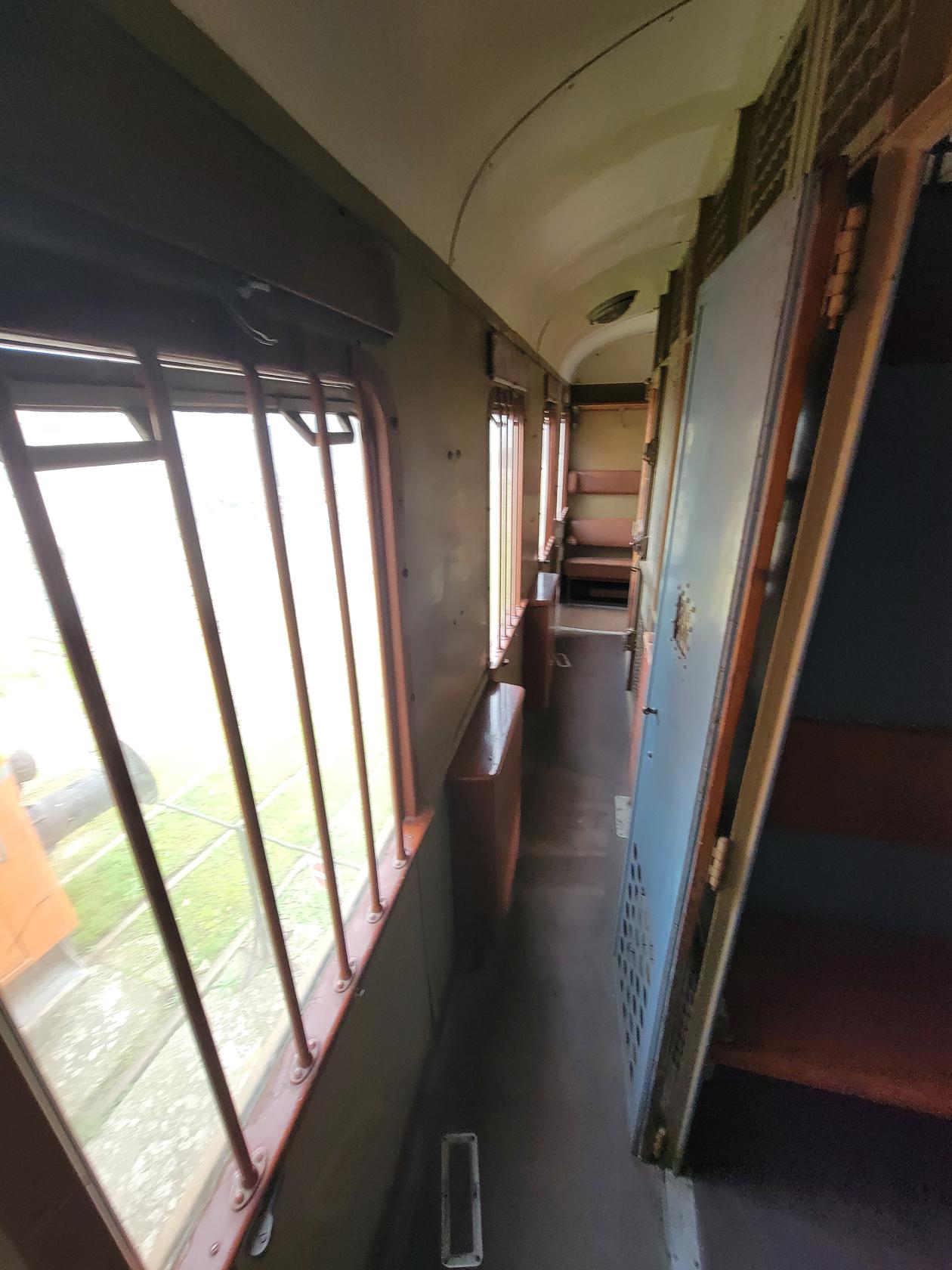
There are life size exhibits of some of the carriages, freight cars, locomotives and other vehicles, some of which you can actually enter.
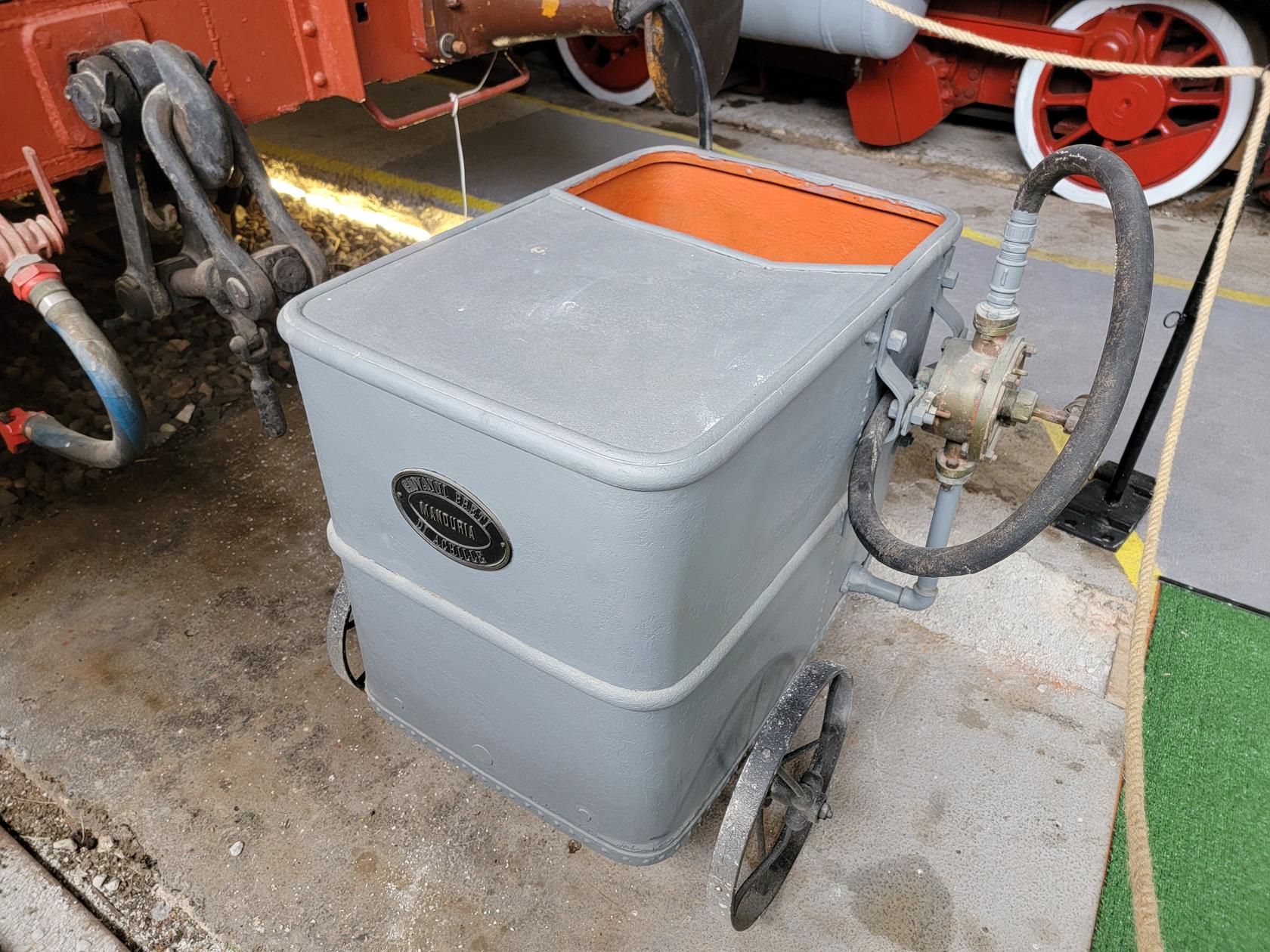
Museo Ferroviario della Puglia – Water Pump for Steam Engines – Lecce, Italy
Museo Ferroviario della Puglia – Follow The Arrows – Lecce, Italy
Museo Ferroviario della Puglia – Tour – Lecce, Italy
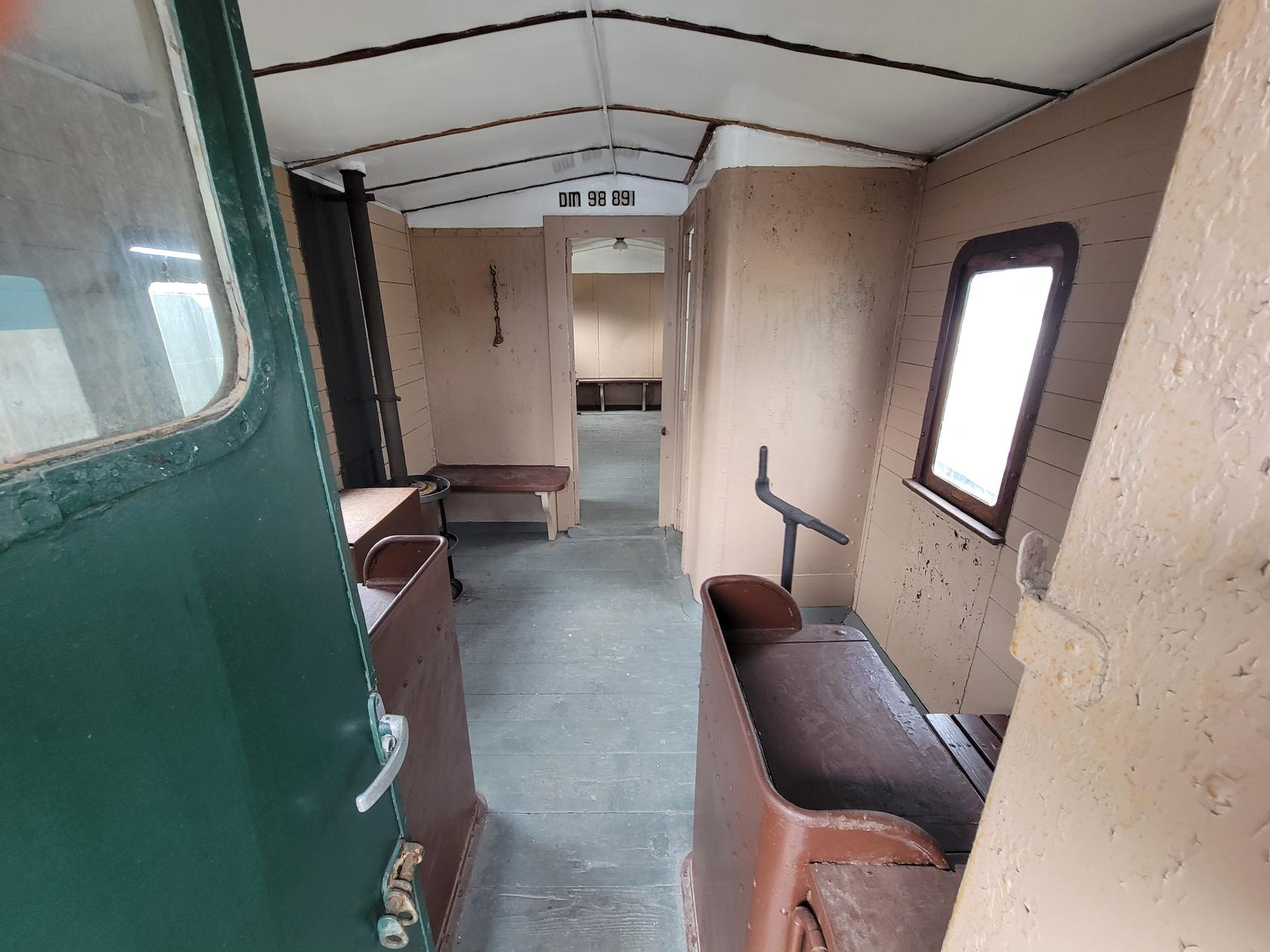
Museo Ferroviario della Puglia – Bagagliaio/Riscaldatore FS VDrz 809.251 Heated Carriage – Lecce, Italy
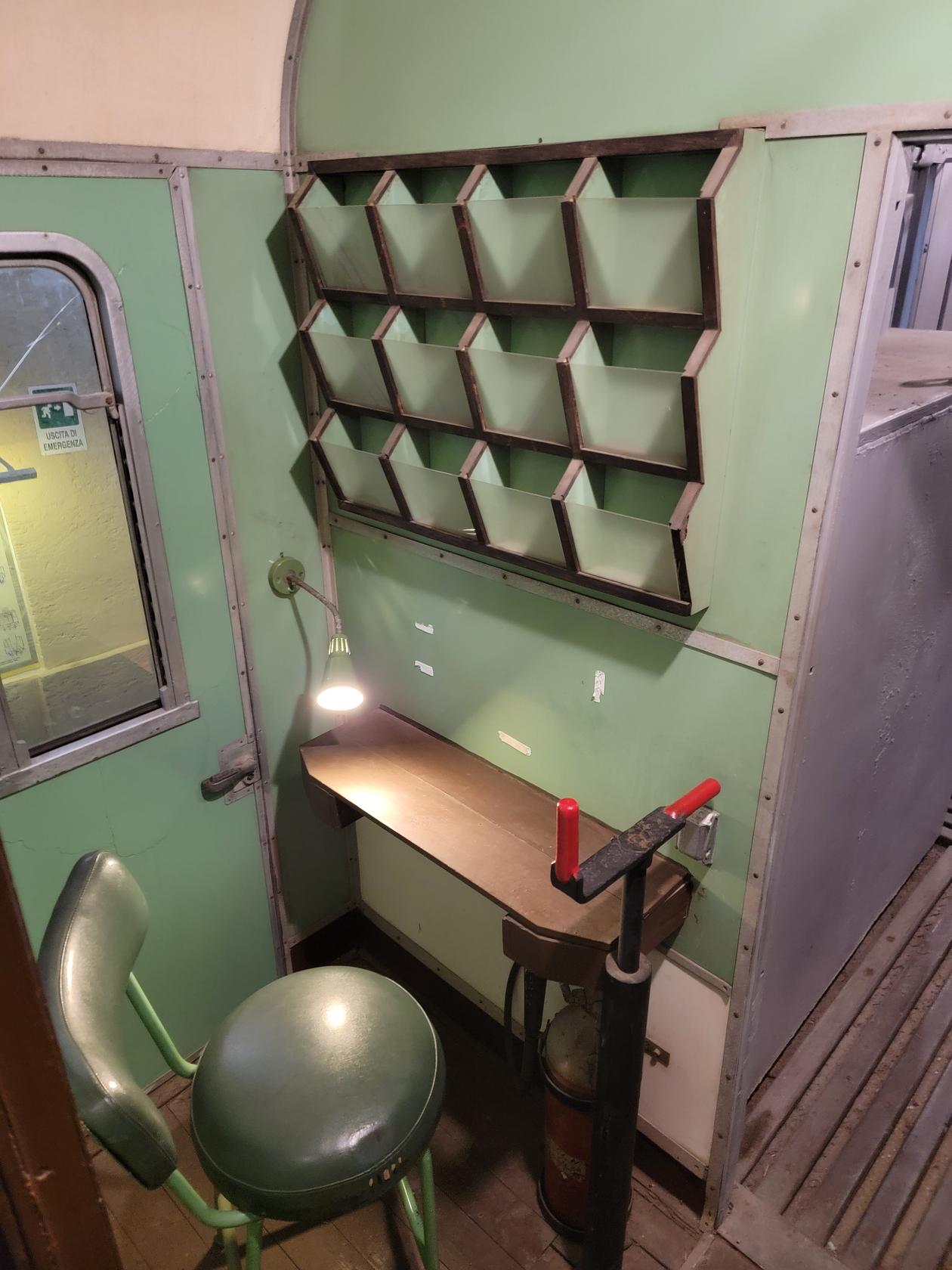
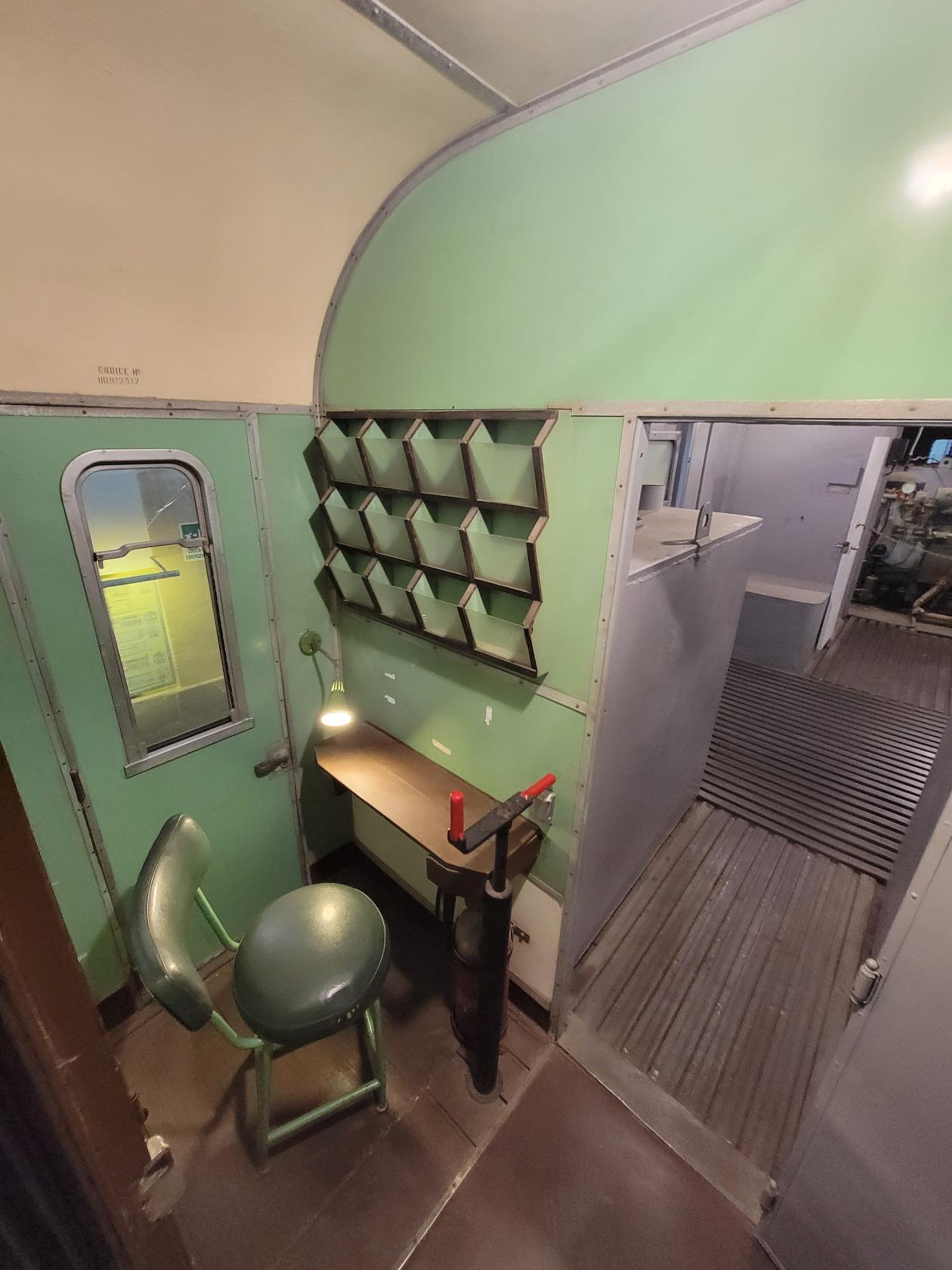
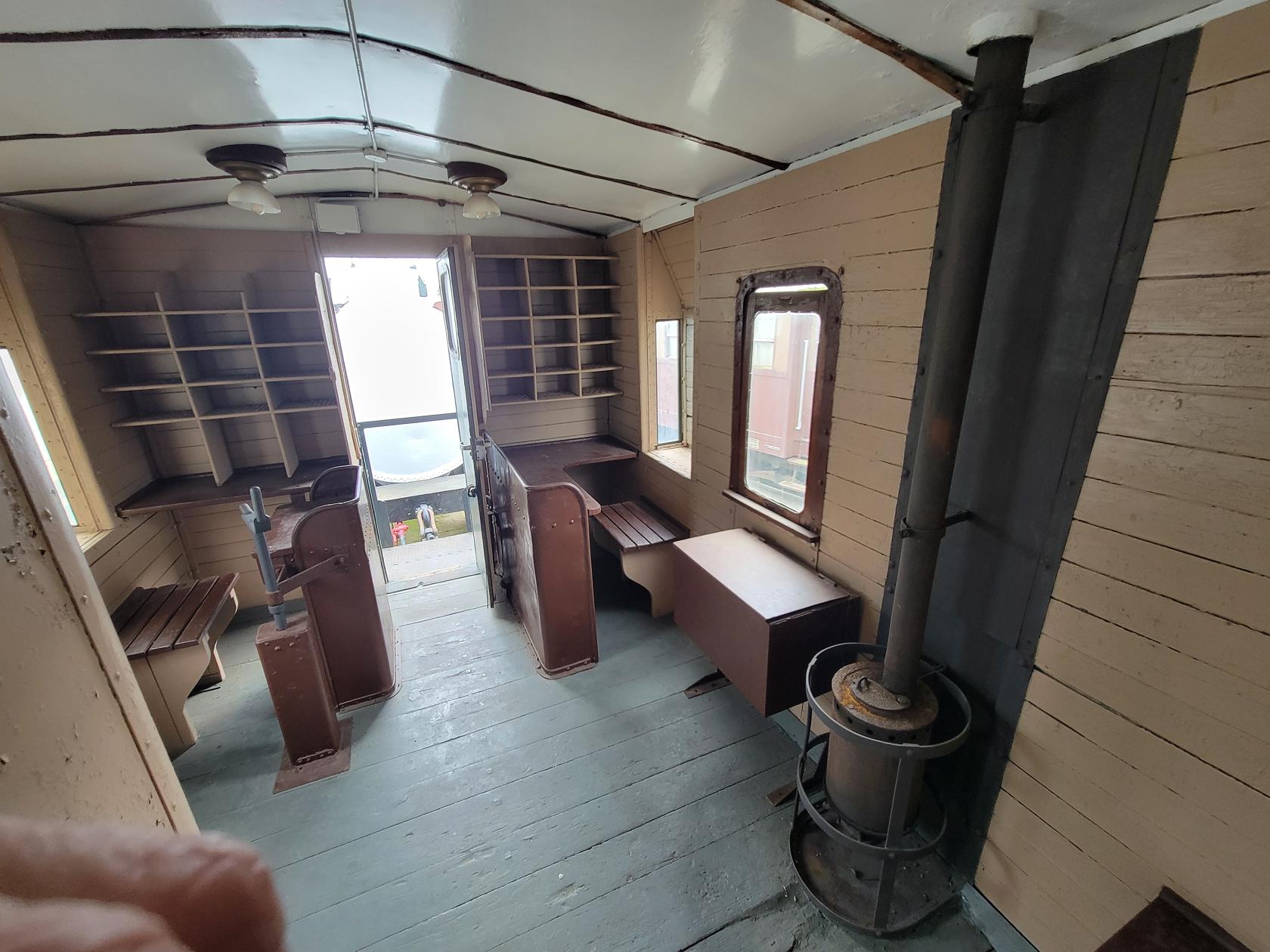
Museo Ferroviario della Puglia – Conductor Station – Lecce, Italy
Museo Ferroviario della Puglia – Conductor Station – Lecce, Italy
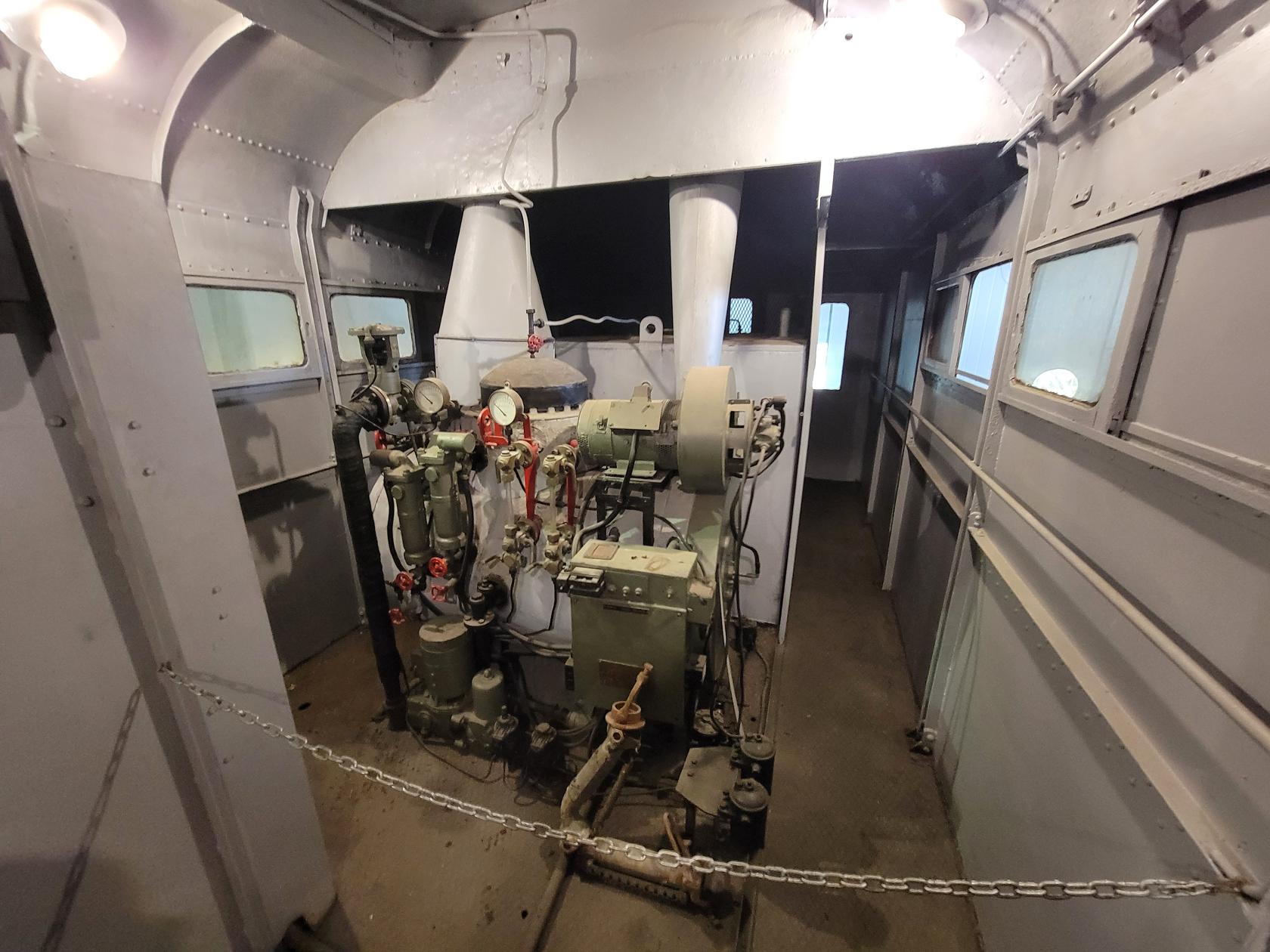
Museo Ferroviario della Puglia – Hot Water Heater for the VDr 917 – Lecce, Italy
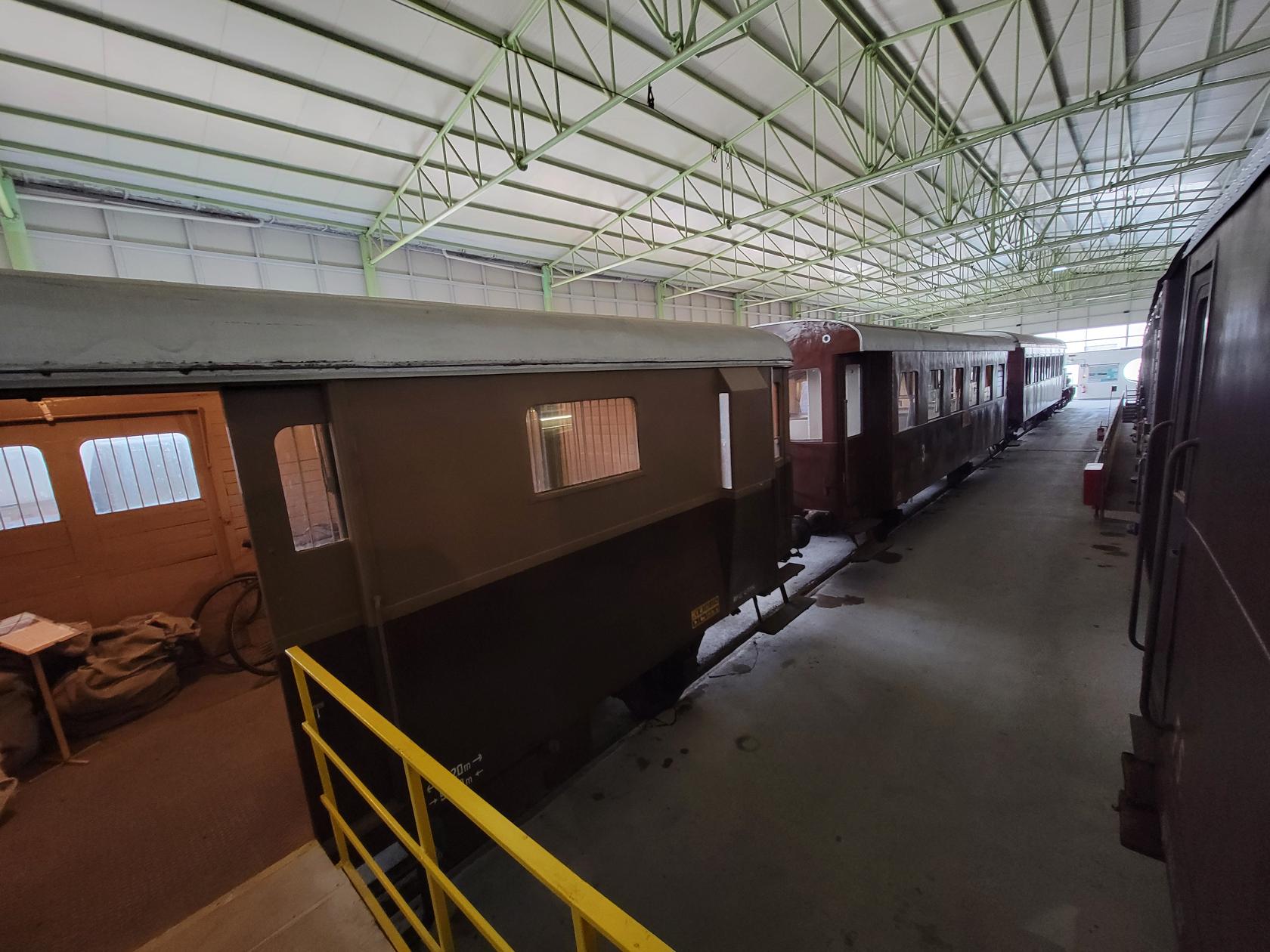
Museo Ferroviario della Puglia – Exterior of Old Carriages – Lecce, Italy
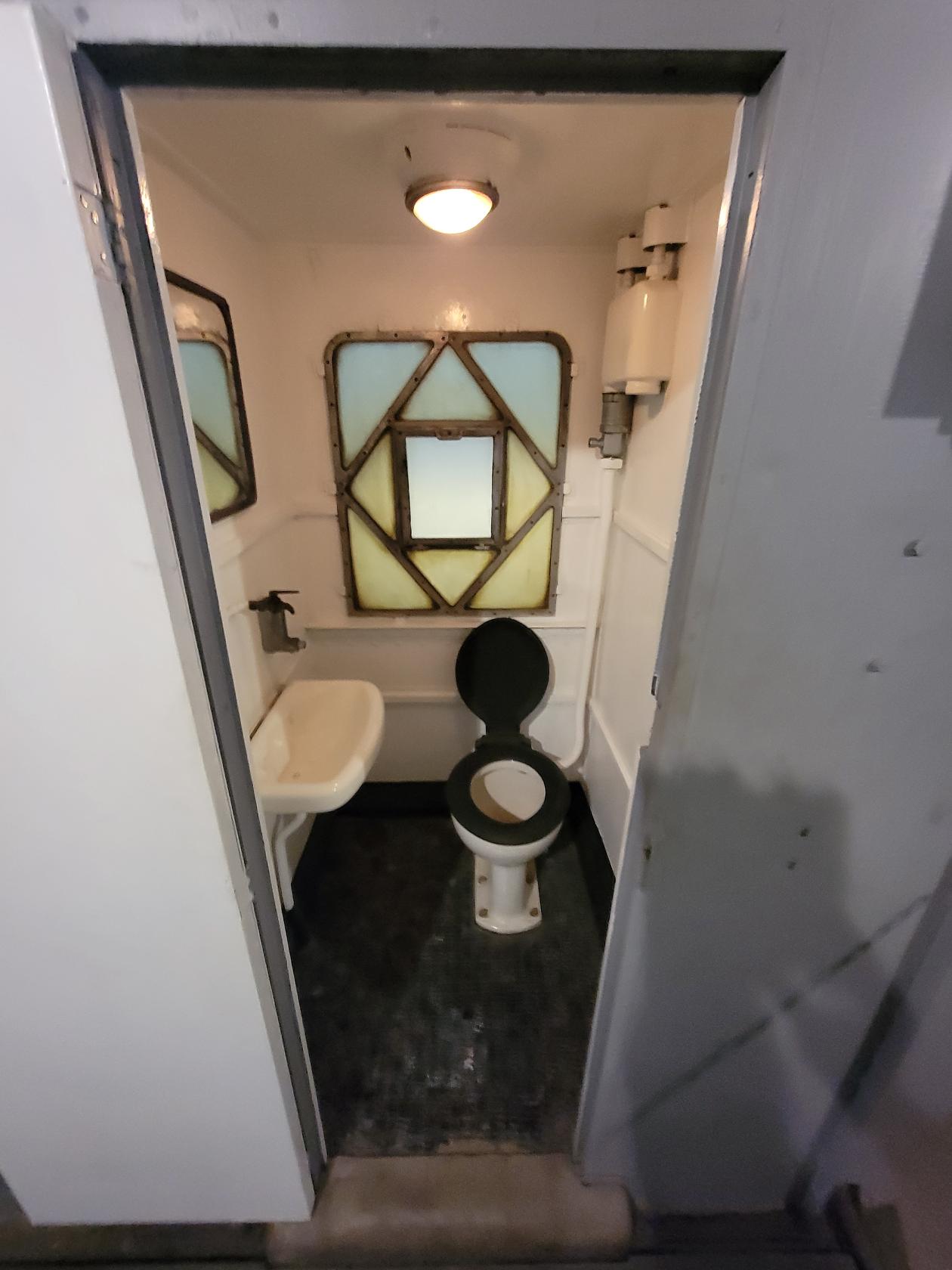
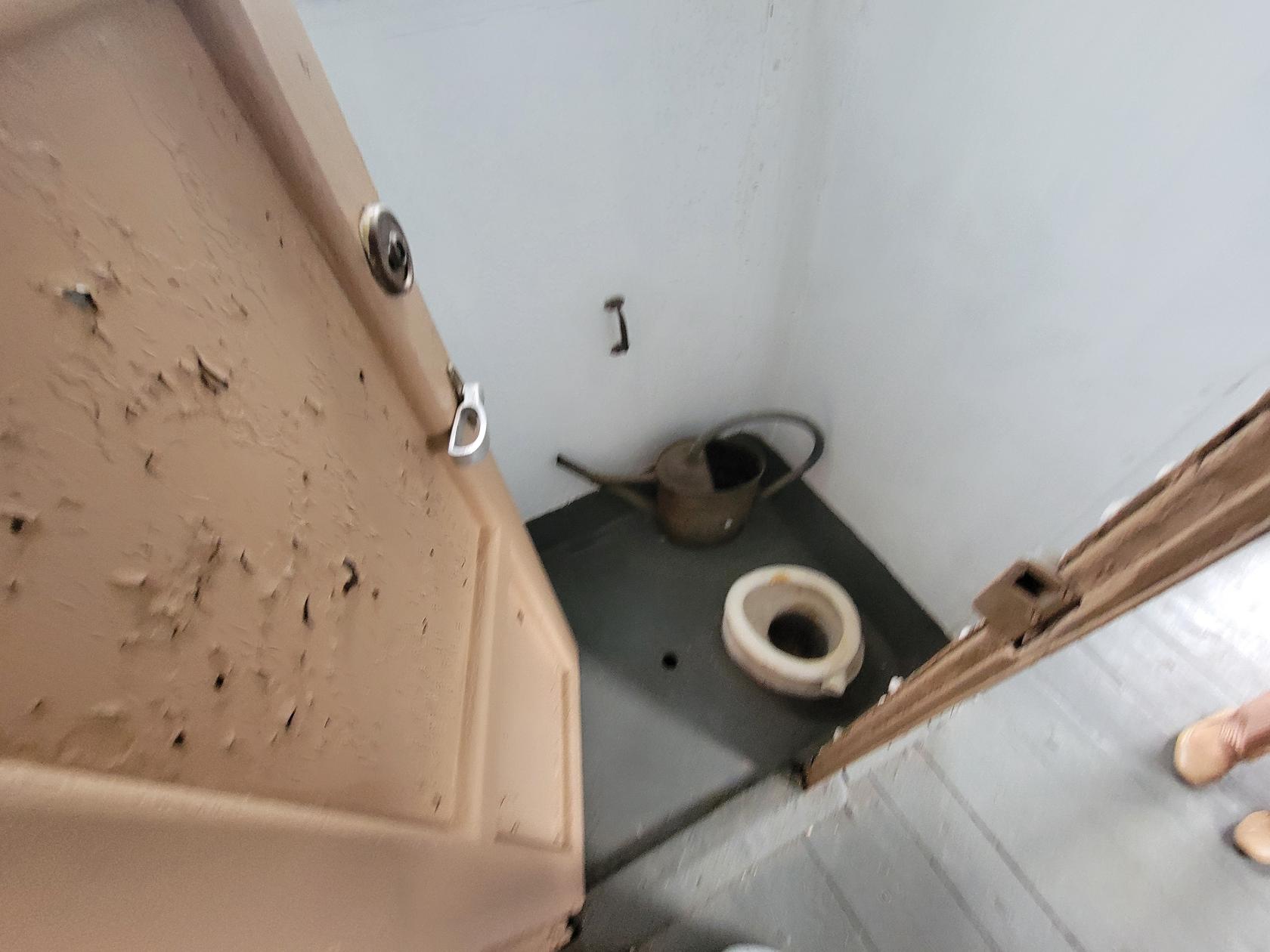
Museo Ferroviario della Puglia – Toilets – Lecce, Italy
Museo Ferroviario della Puglia – Exterior of Old Carriages – Lecce, Italy
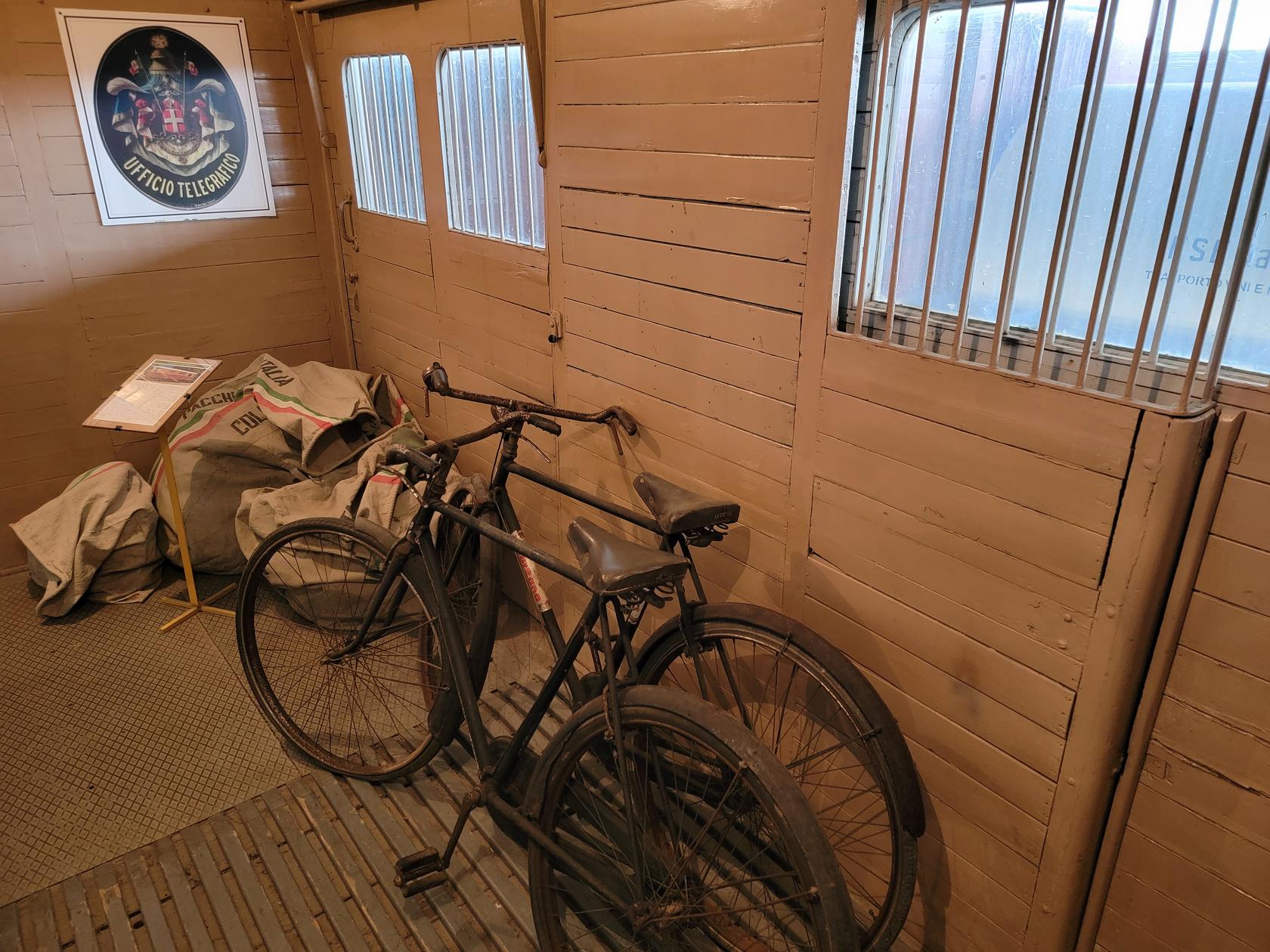
Museo Ferroviario della Puglia – Mail or Post and Cargo Room – Lecce, Italy
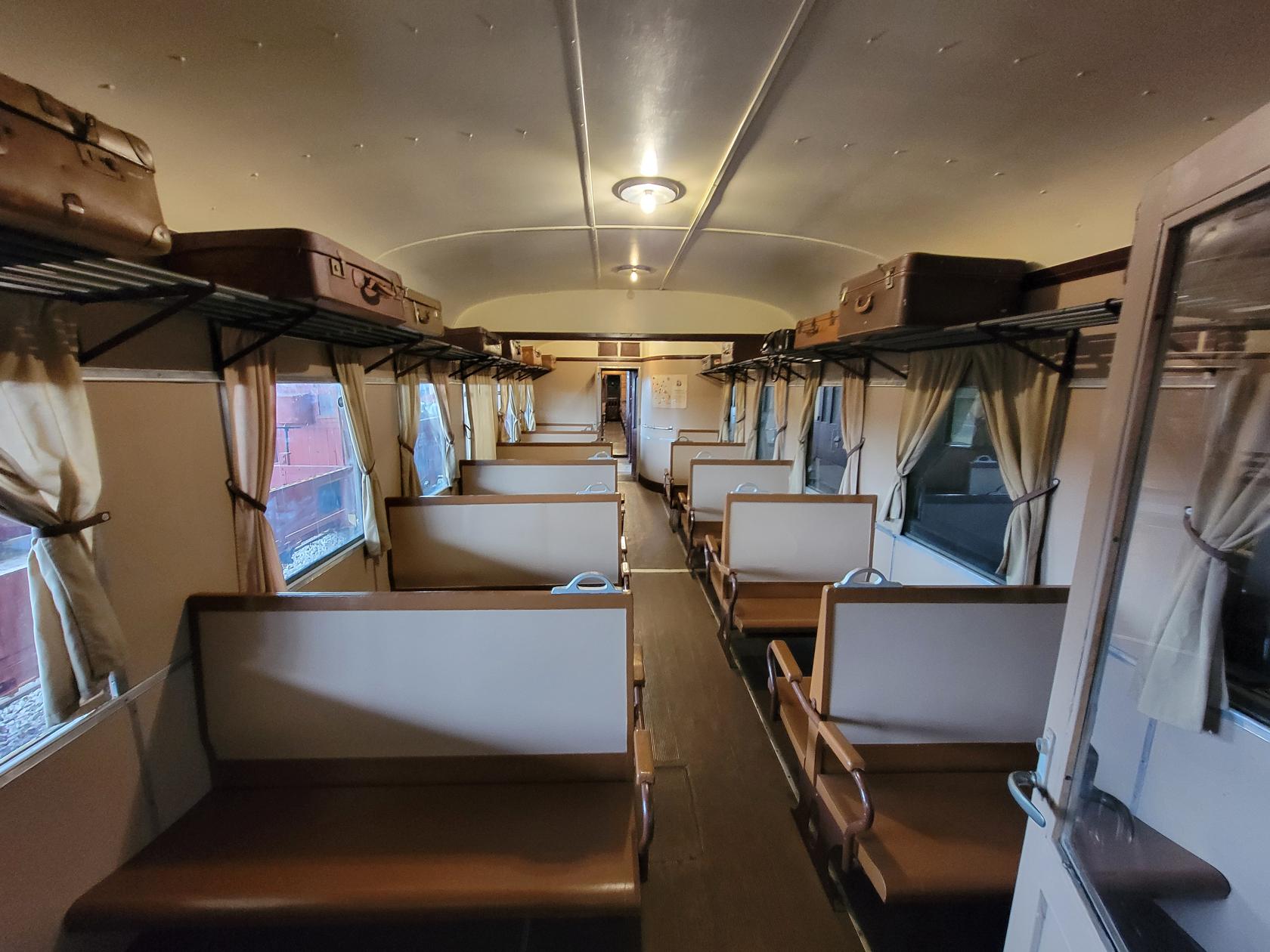
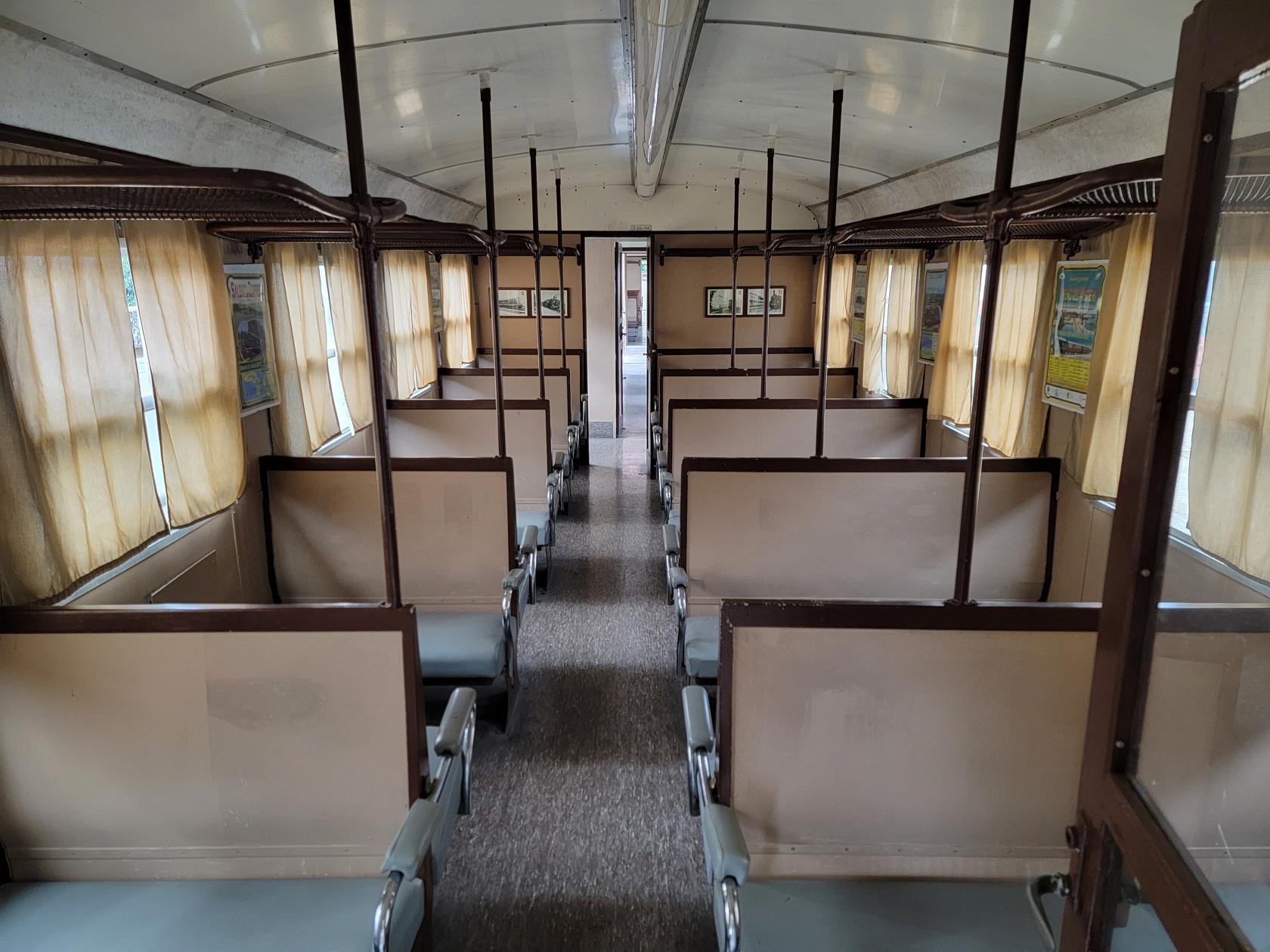
Museo Ferroviario della Puglia – Second Class – Lecce, Italy
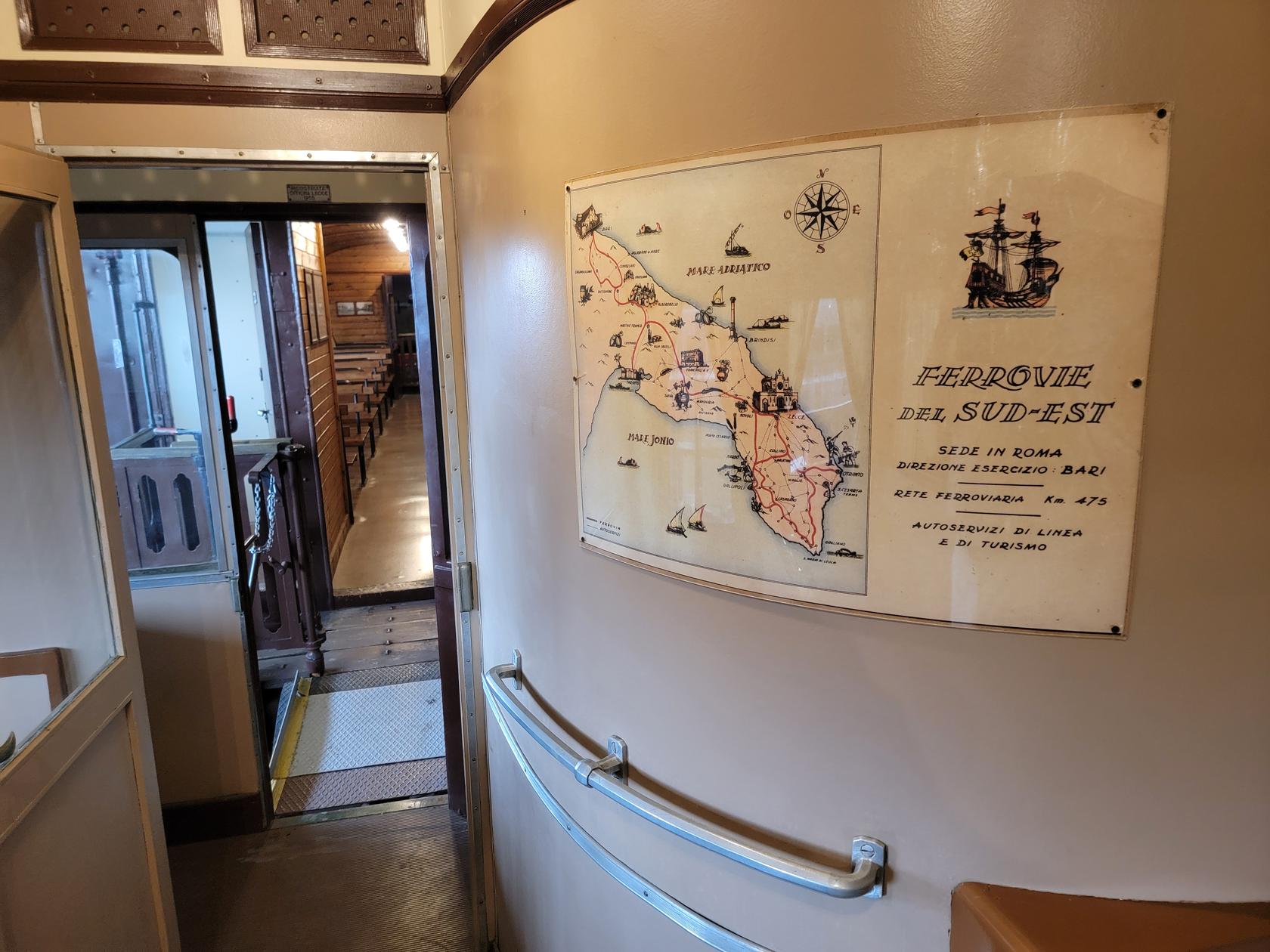
Museo Ferroviario della Puglia – Southeast Line – Lecce, Italy
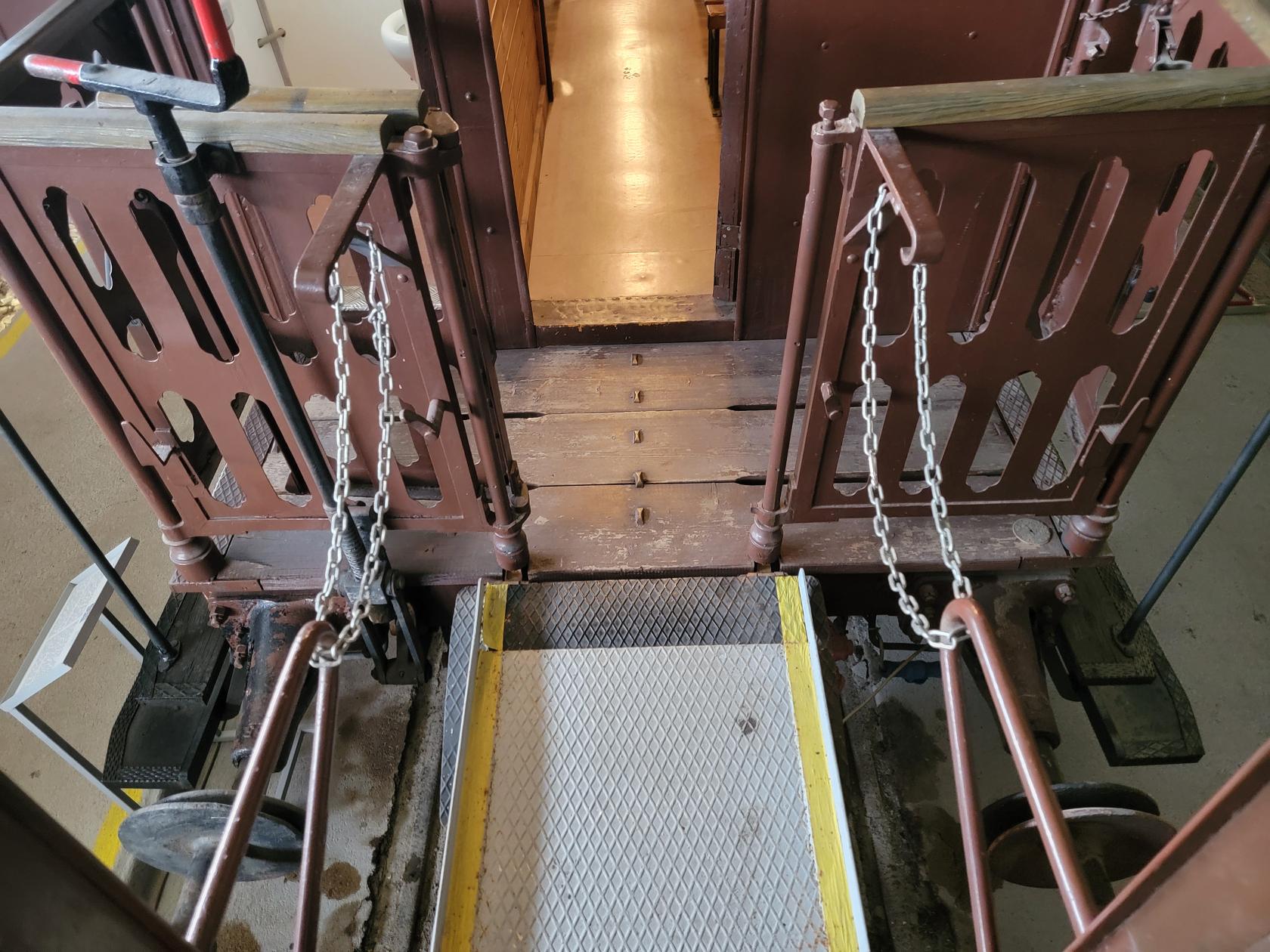
Museo Ferroviario della Puglia – Carriage Connections – Lecce, Italy
Museo Ferroviario della Puglia – Second Class – Lecce, Italy
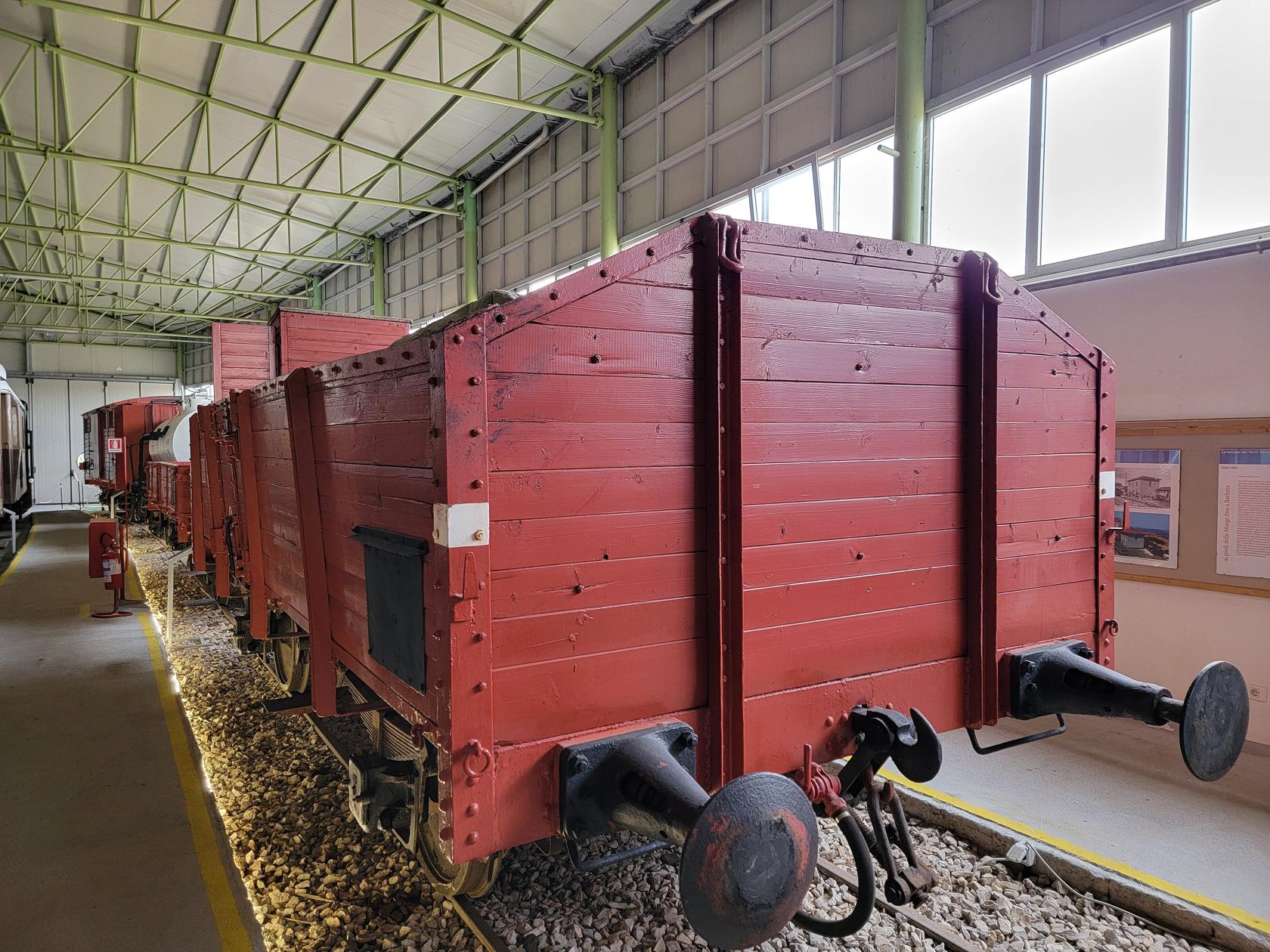
Museo Ferroviario della Puglia – Cargo and Freight – Lecce, Italy
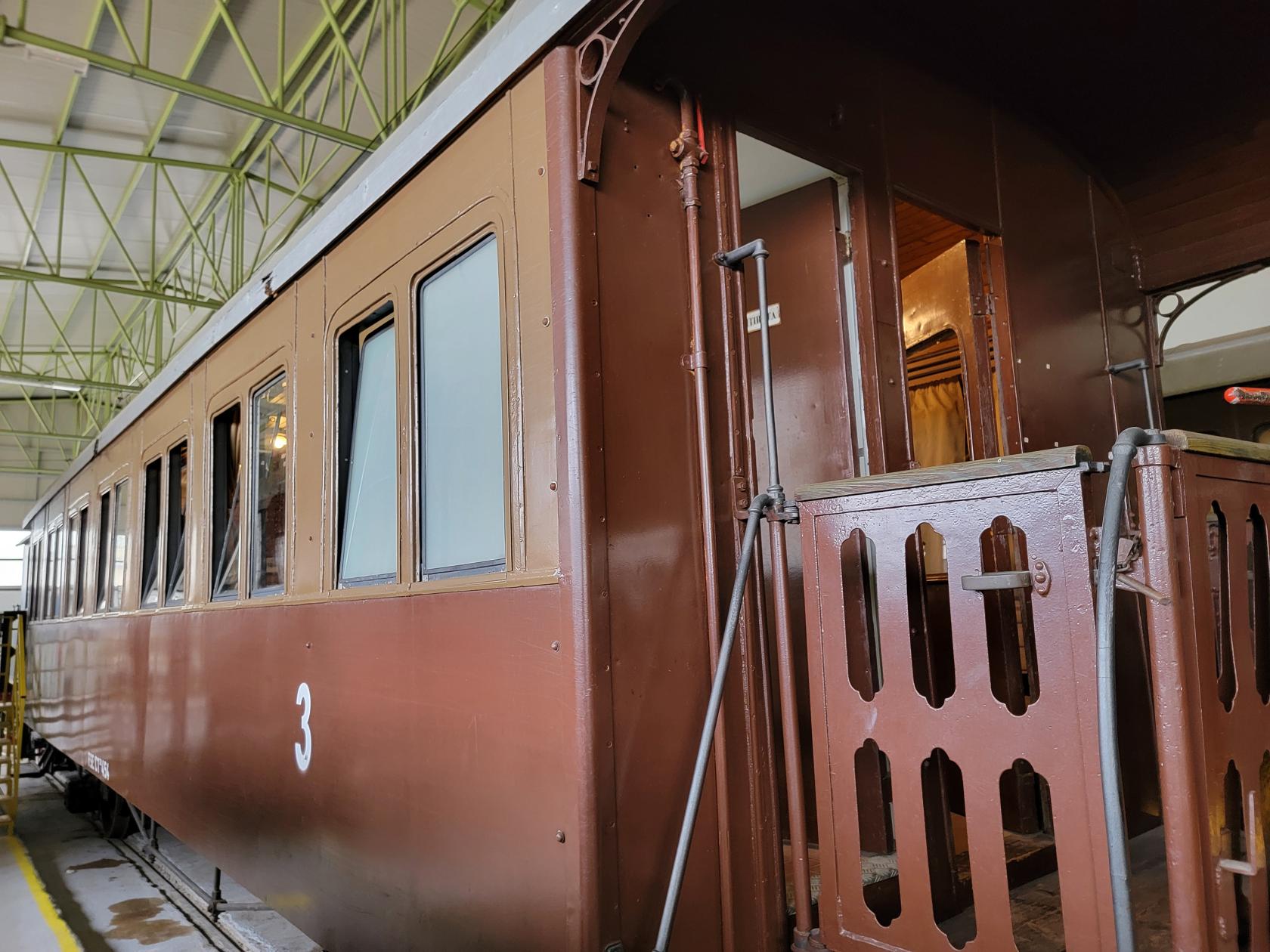
Museo Ferroviario della Puglia – Exterior of Carriage, Carrozza Passeggeri FSE CTcr 454 Milan – Lecce, Italy
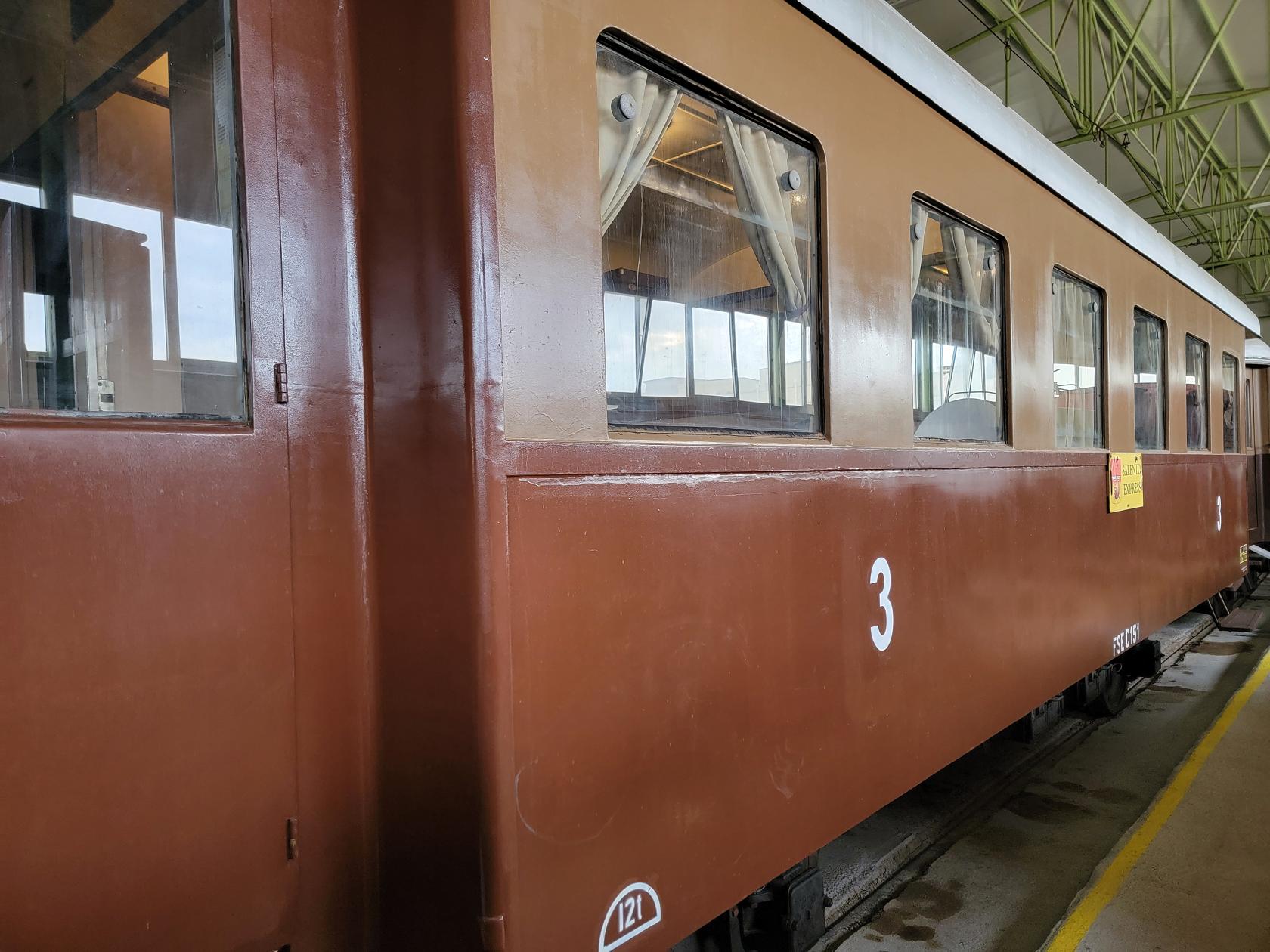
Museo Ferroviario della Puglia – Exterior of Carriage Museo Ferroviario della Puglia – Exterior of Carriage, Carrozza Passeggeri FSE C 151 – Lecce, Italy – Lecce, Italy
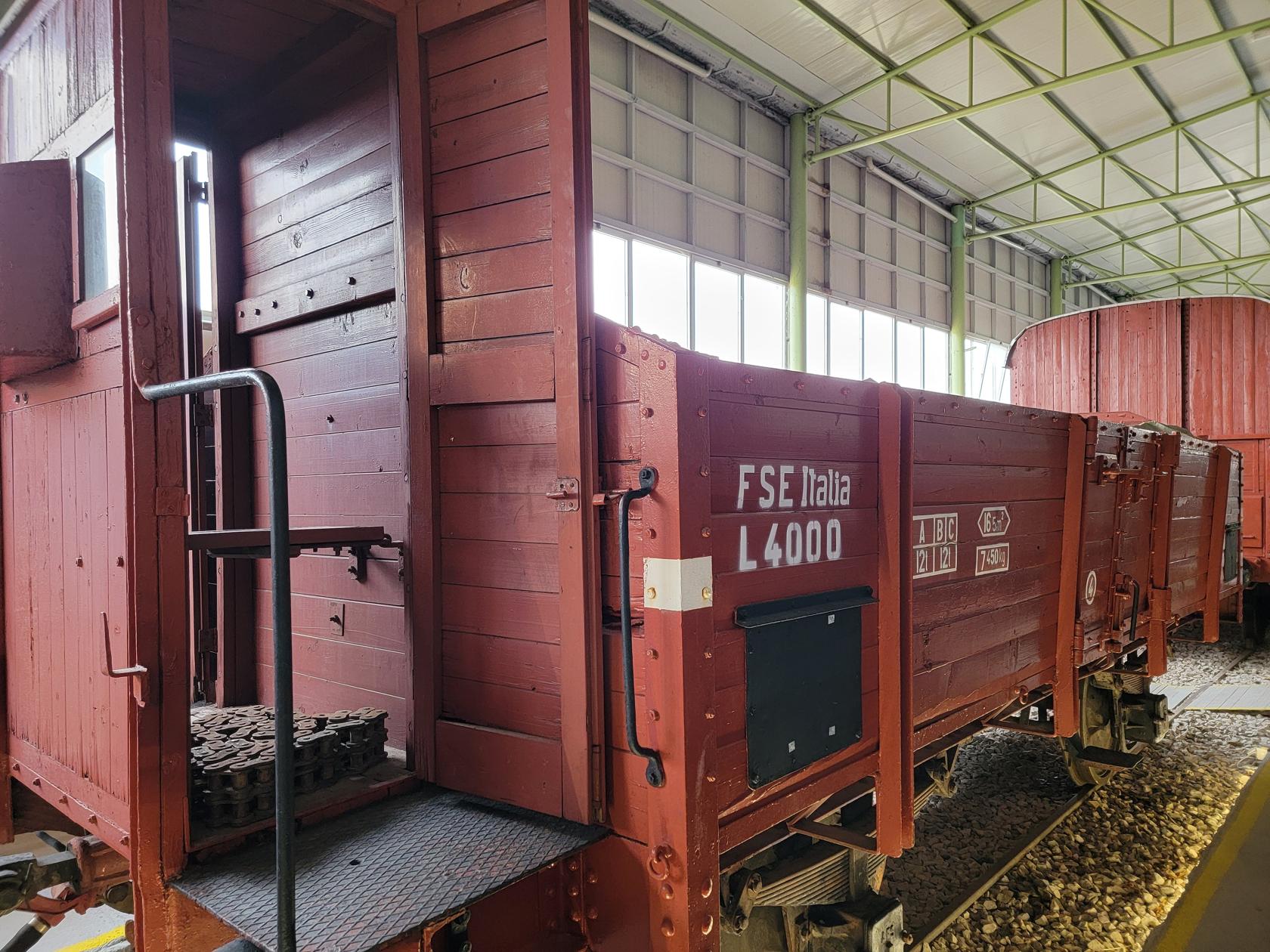
Museo Ferroviario della Puglia – Anonima Ferrovie Salentine (AFS) Carri Merci Aperti FSE L 4000 + P 6221 – Lecce, Italy
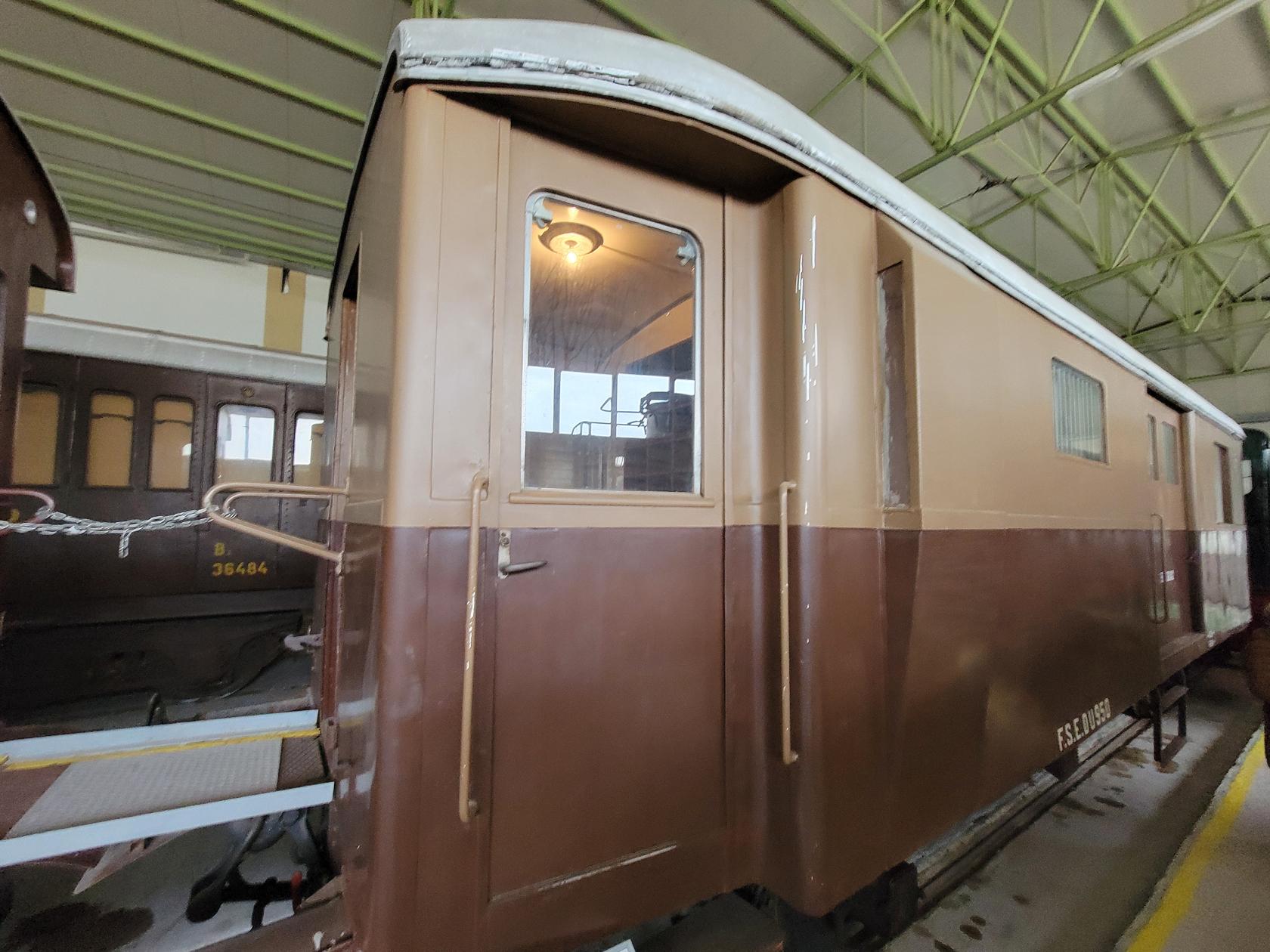
Museo Ferroviario della Puglia – Exterior of Bagagliaio/Postale FSE DU 950 e DU 951 – Lecce, Italy
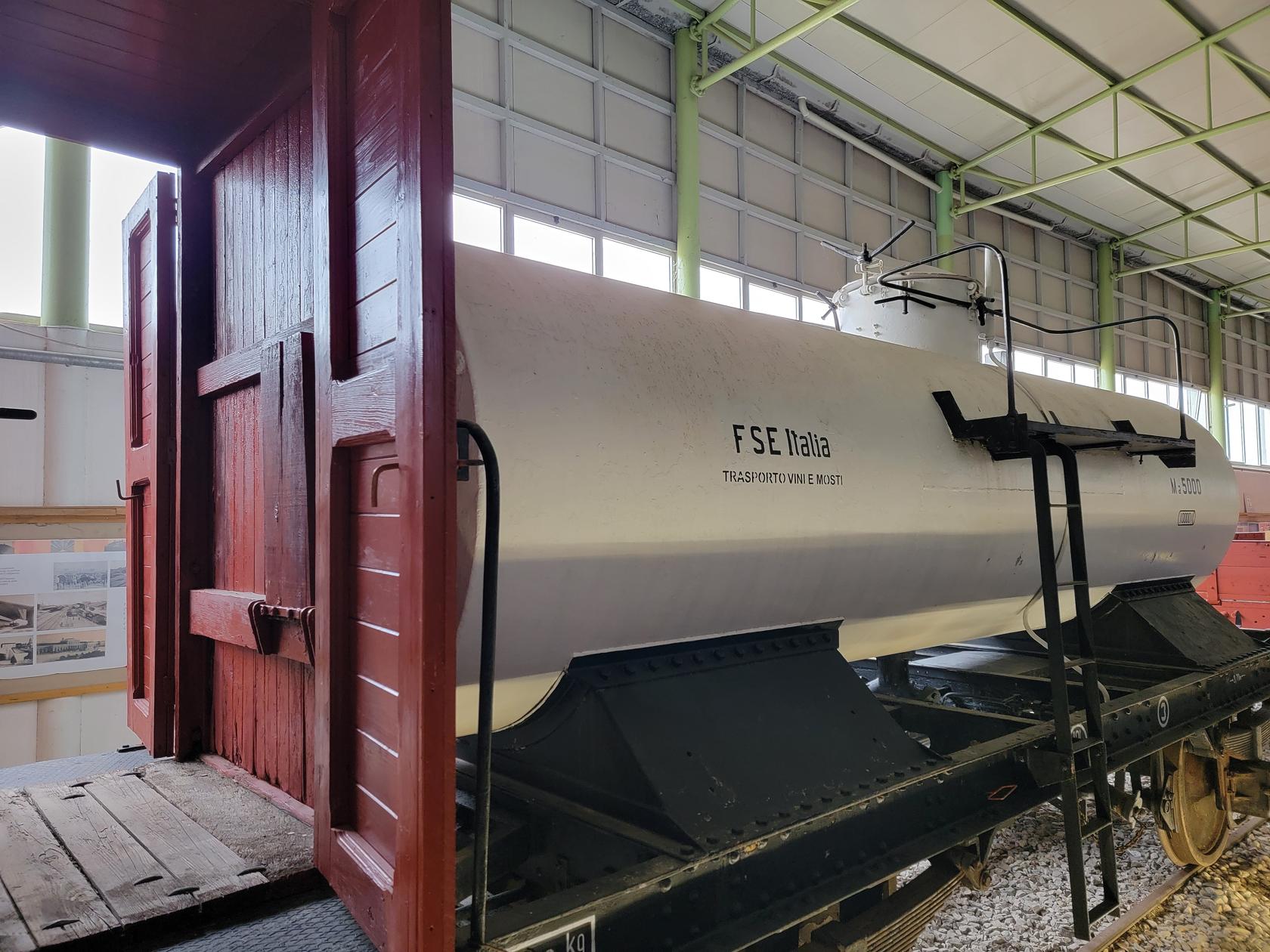
Museo Ferroviario della Puglia – Vessel for Wine, the Carri Merci Chiuso e Cisterna FSE Ma 5000 + F 1402 – Lecce, Italy
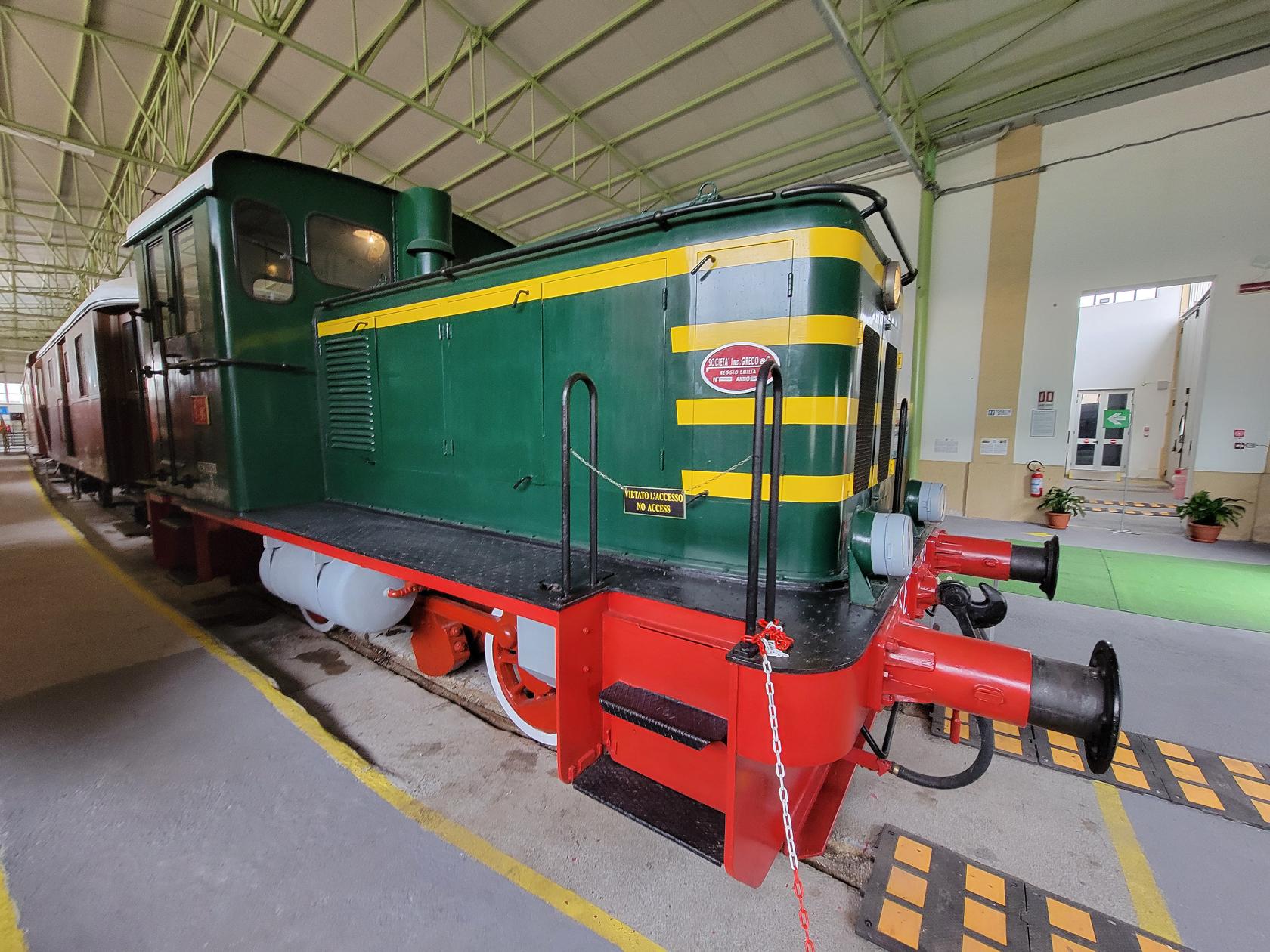
Museo Ferroviario della Puglia – Diesel Engine – Lecce, Italy
Museo Ferroviario della Puglia – Old Machine – Lecce, Italy
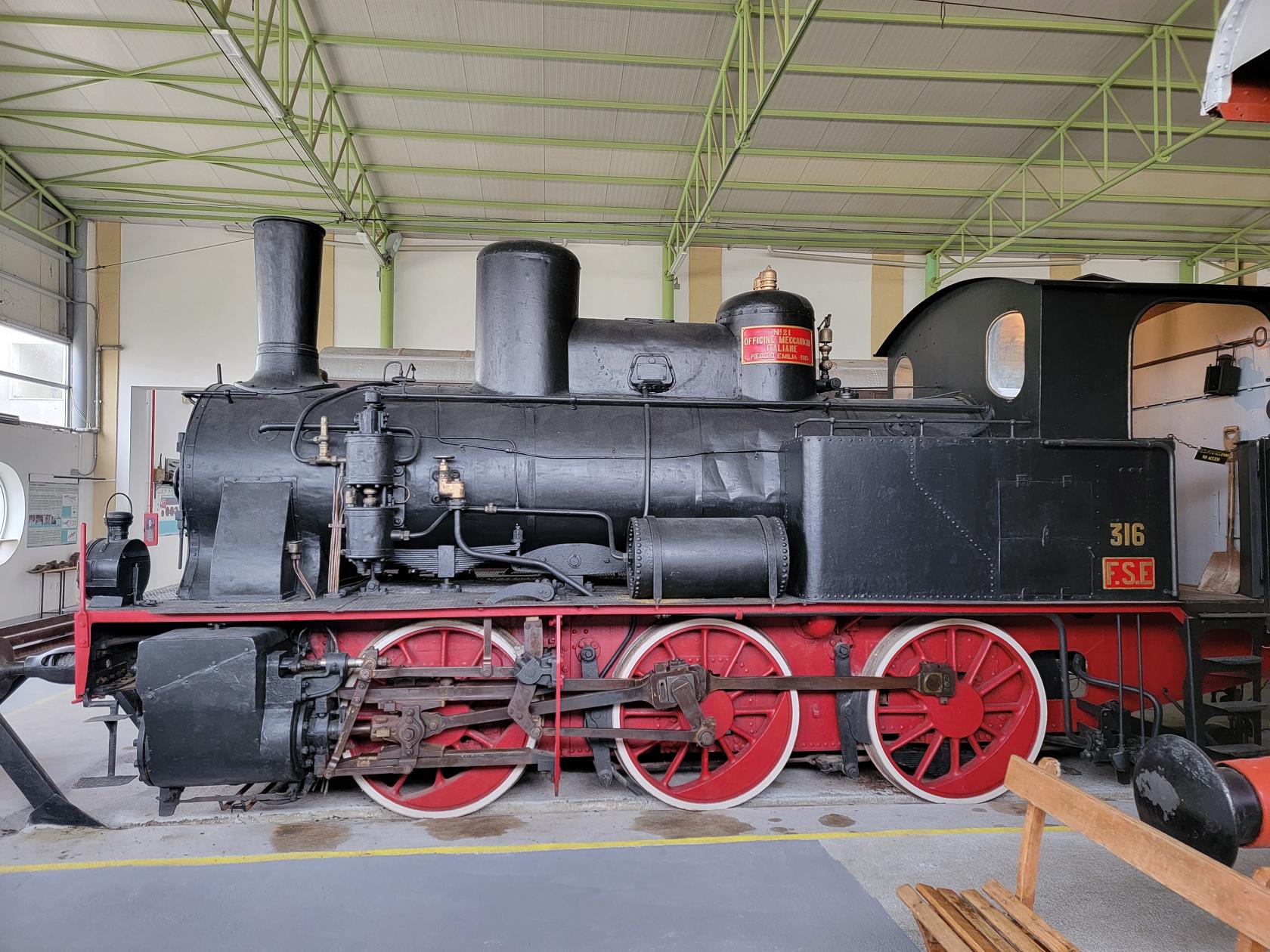
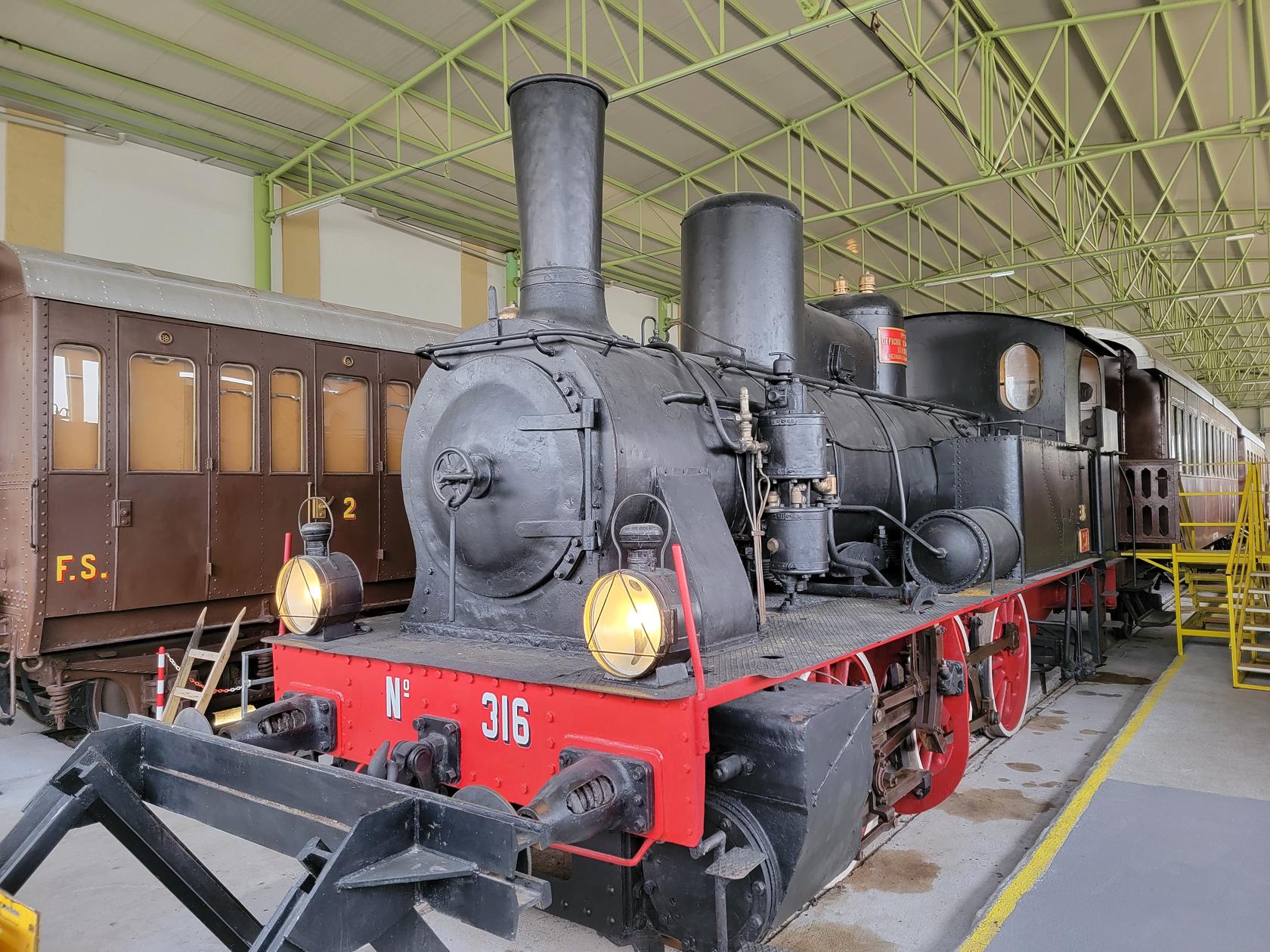
Museo Ferroviario della Puglia – Old Steam Engine, Locomotiva a Vapore FSE N. 316 – Lecce, Italy
Museo Ferroviario della Puglia – Old Steam Engine, Locomotiva a Vapore FSE N. 316 – Lecce, Italy
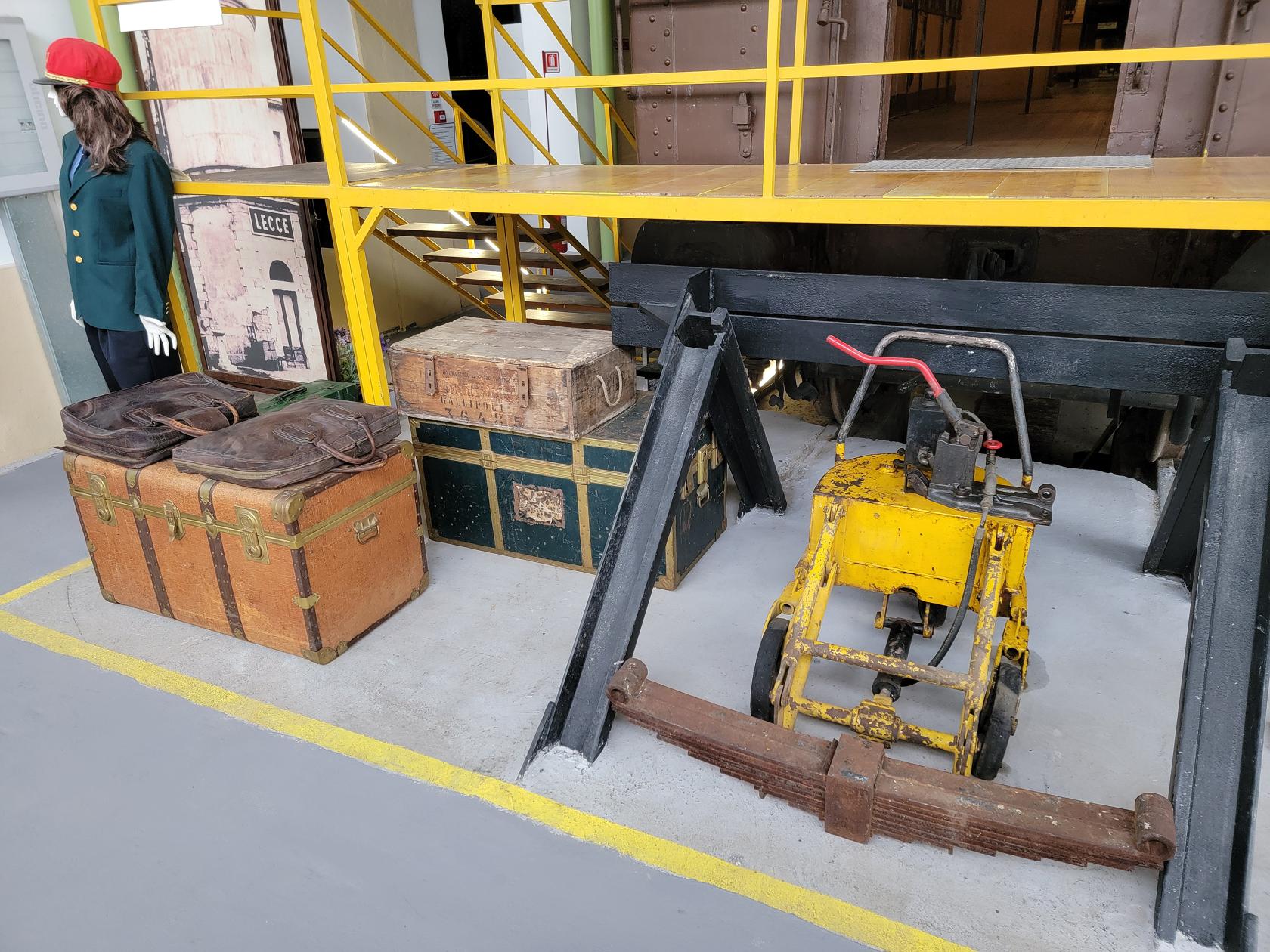
Museo Ferroviario della Puglia – Old Spring, Machine and Baggage – Lecce, Italy
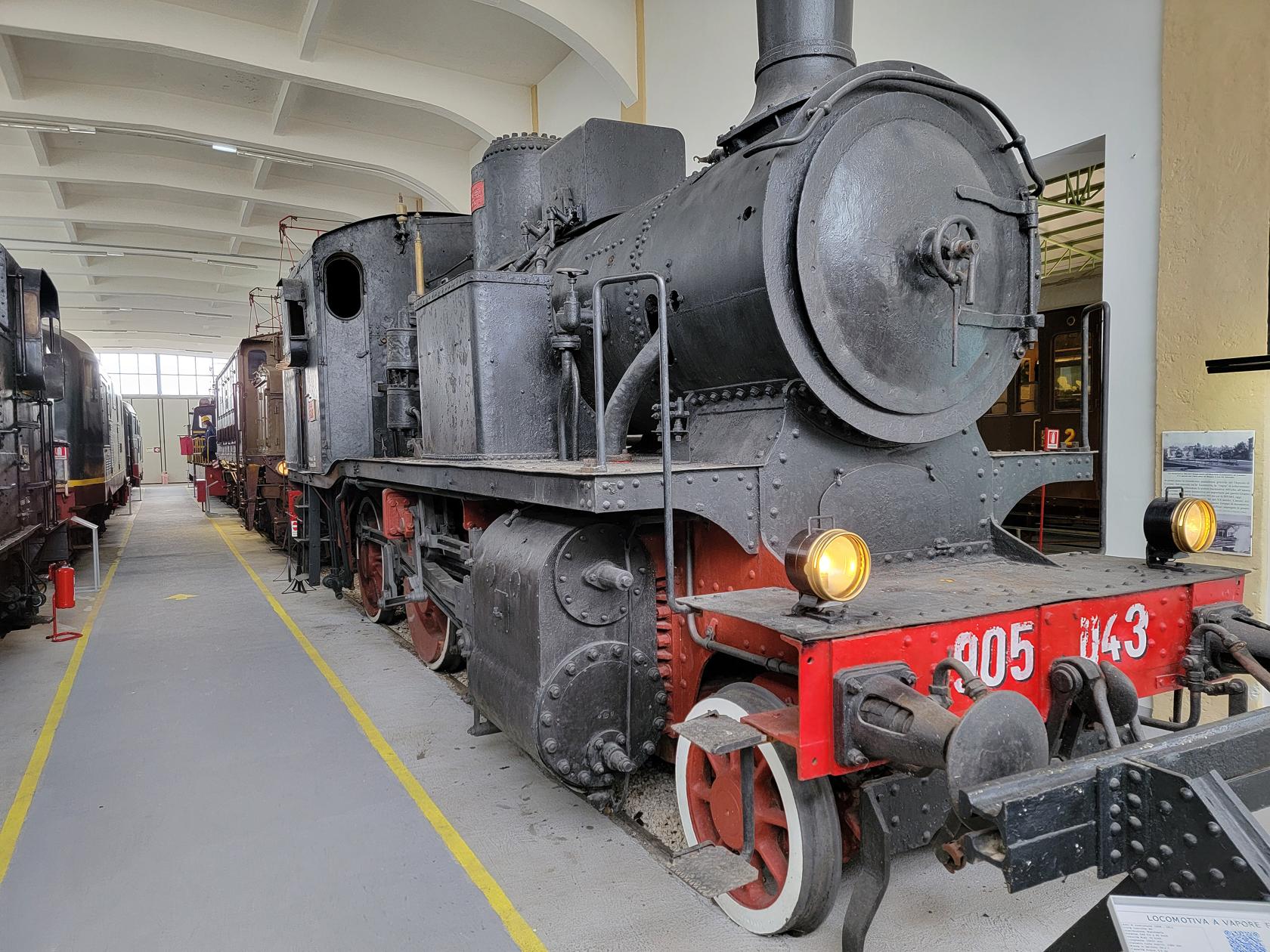
Museo Ferroviario della Puglia – Old Steam Engine, Locomotiva a Vapore FS Gr.905.043 – Lecce, Italy
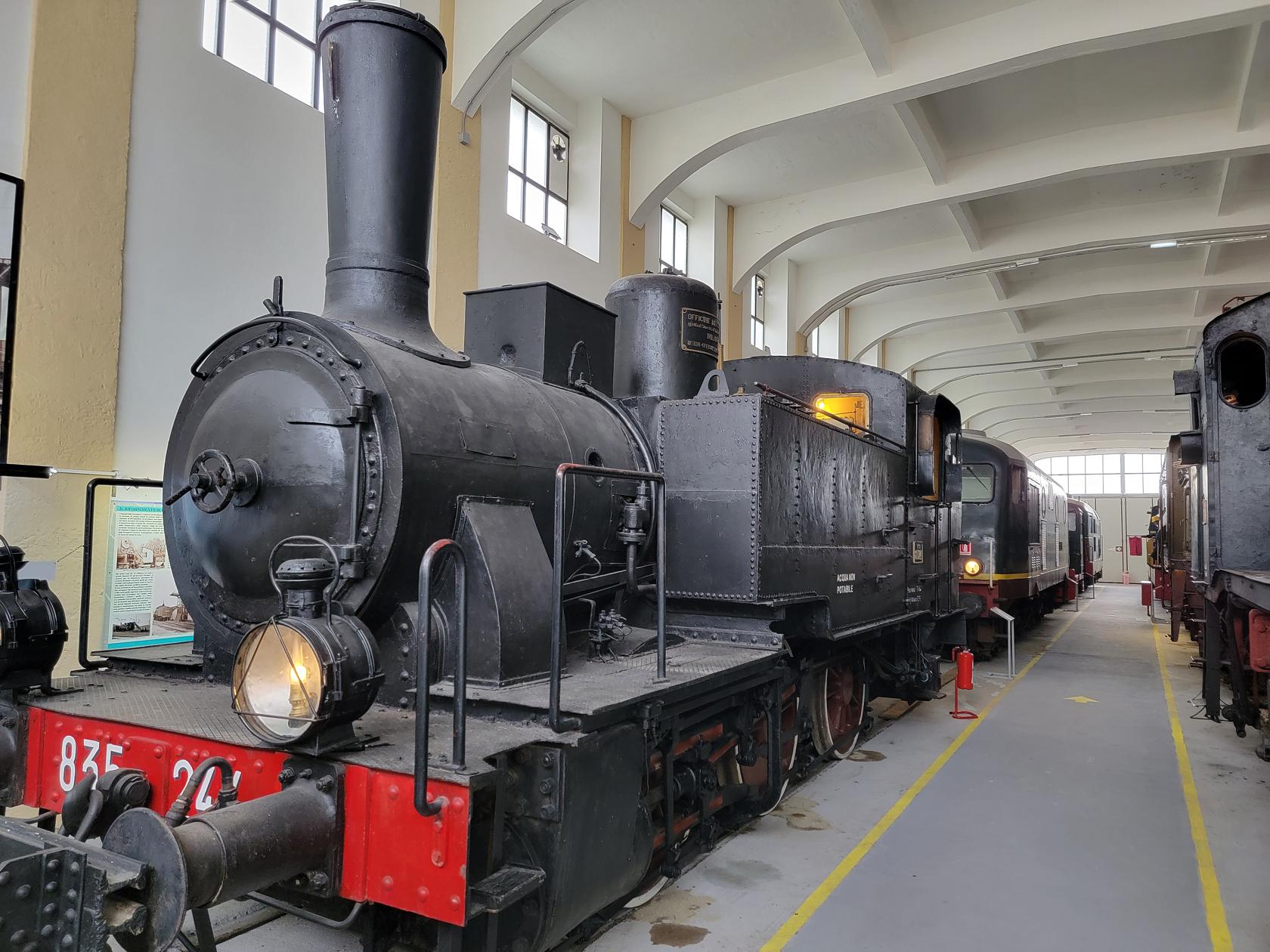
Museo Ferroviario della Puglia – Old Steam Engine, Locomotiva a Vapore FS Gr.835.244 – Lecce, Italy
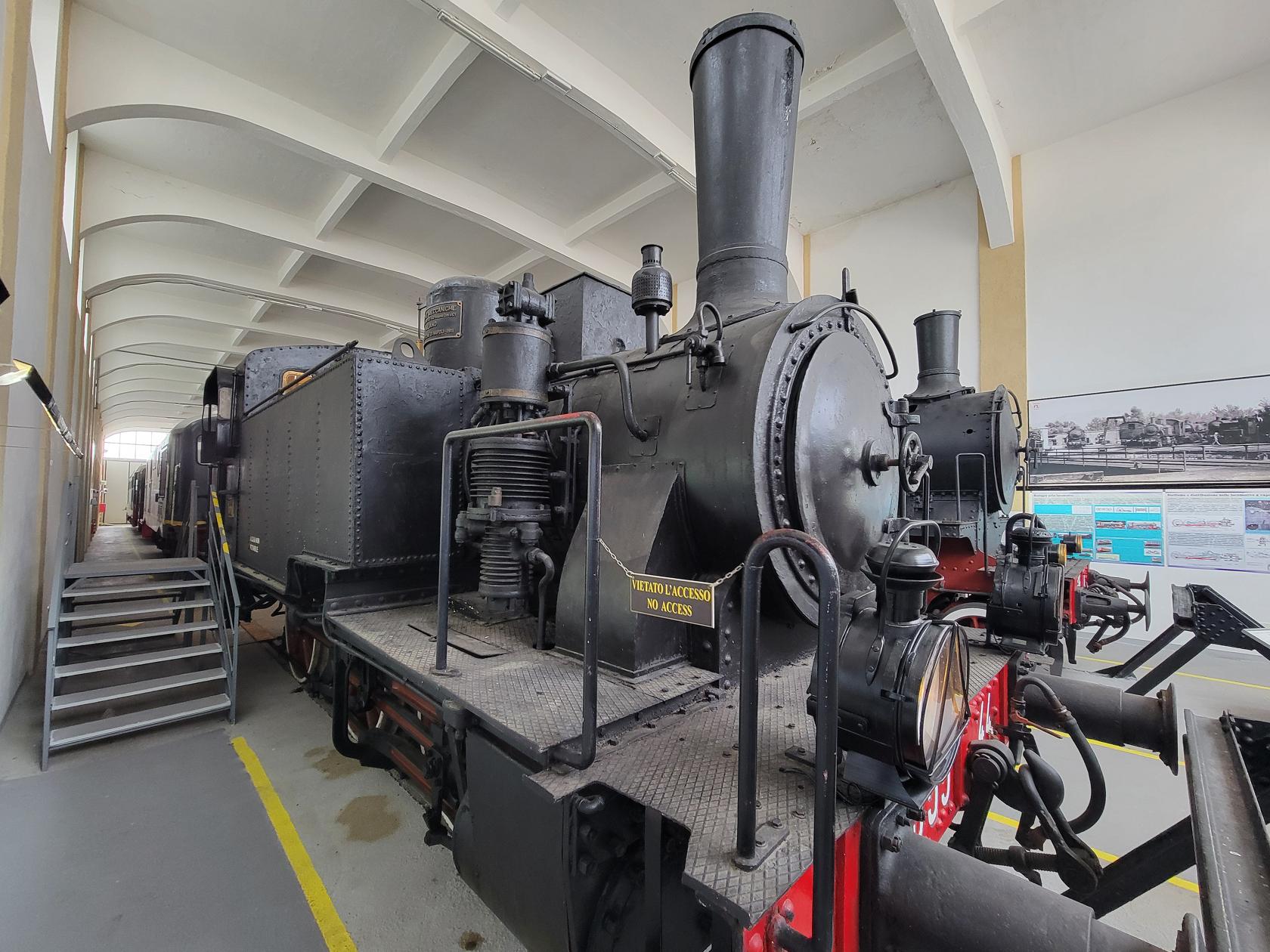
Museo Ferroviario della Puglia – Old Steam Engine, Locomotiva a Vapore FS Gr.835.244 Boiler – Lecce, Italy
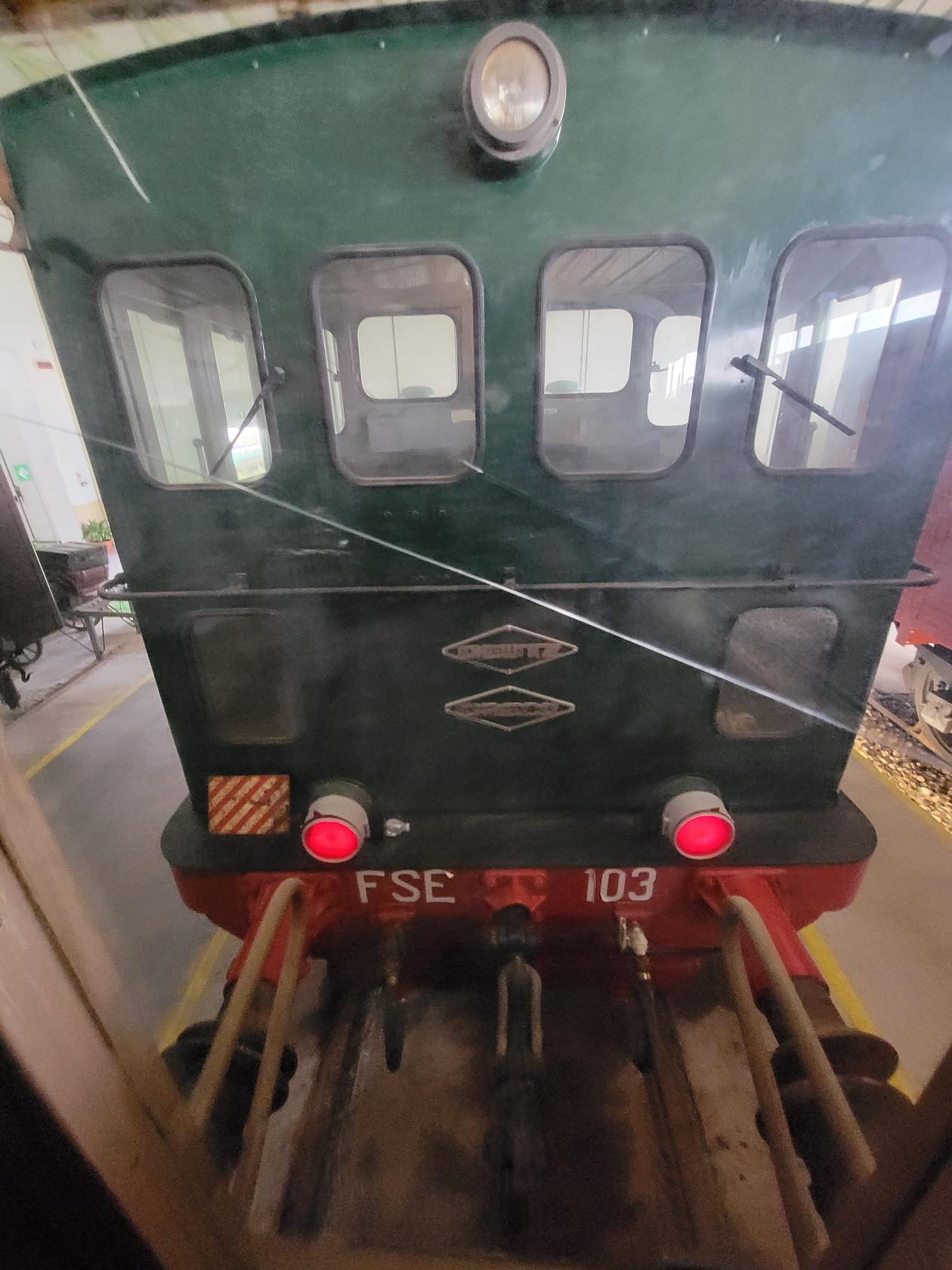
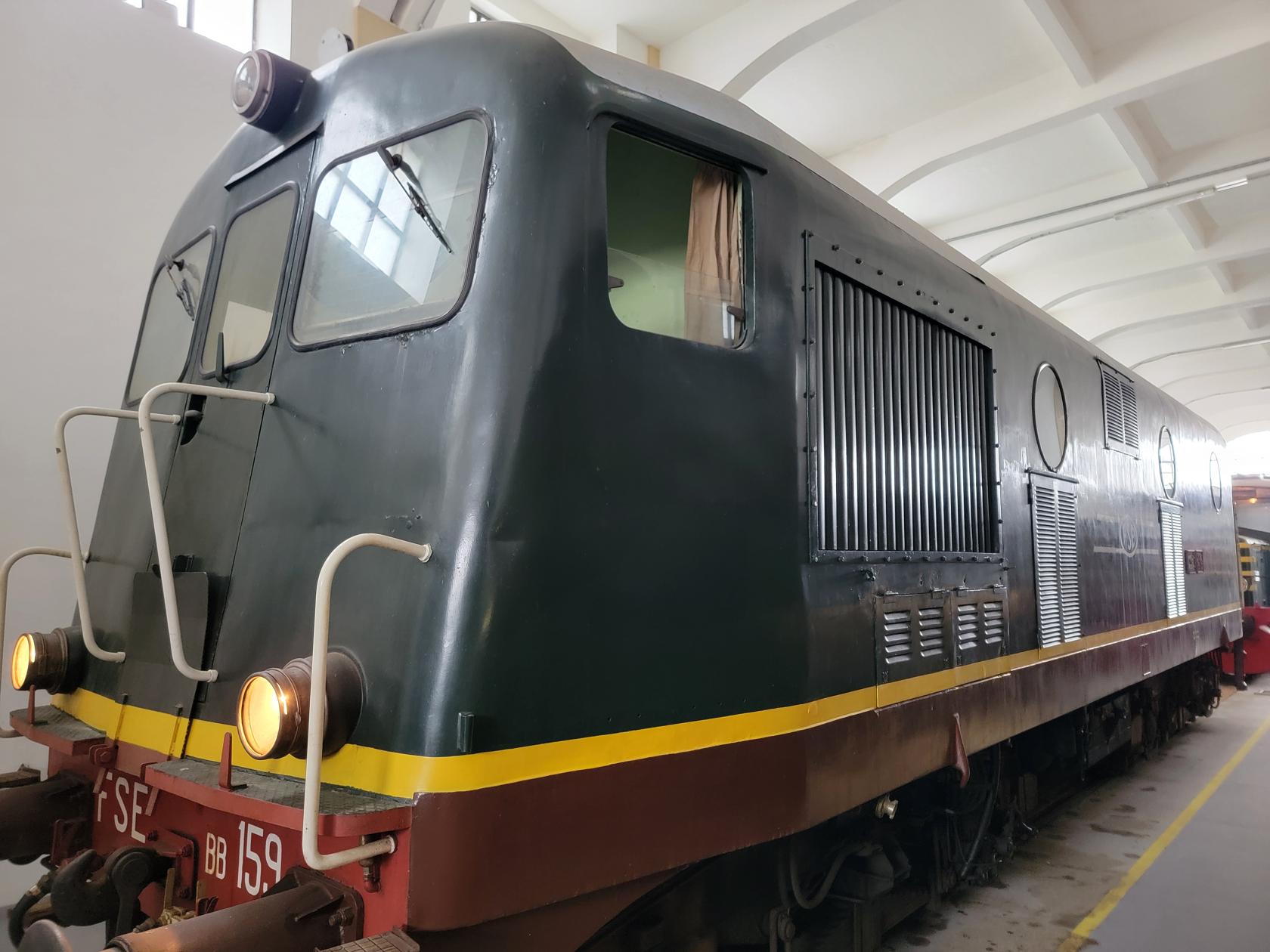
Museo Ferroviario della Puglia – Old Electric Engine, Locomotore Diesel-Elettrico FSE BB 159 – Lecce, Italy
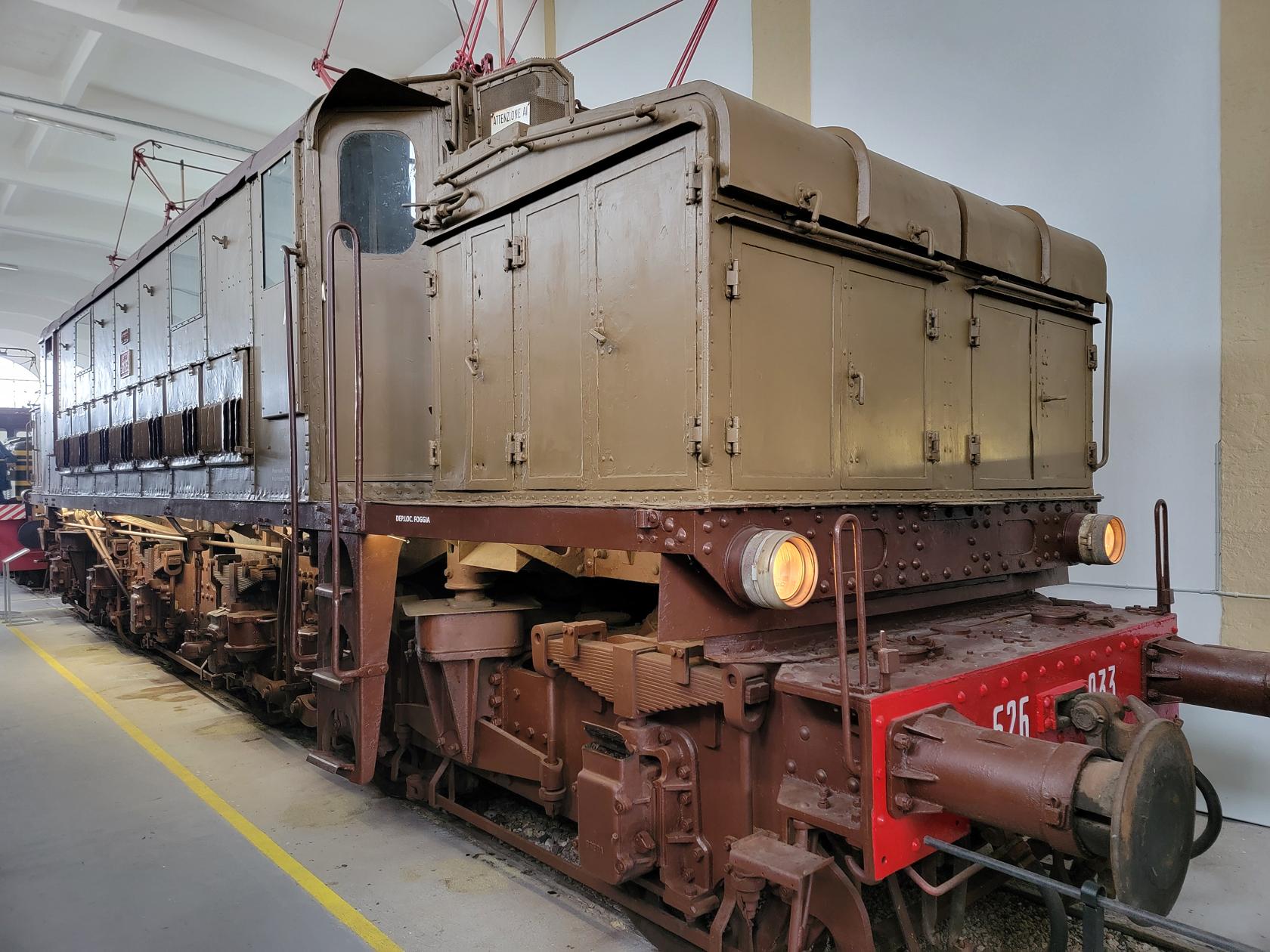
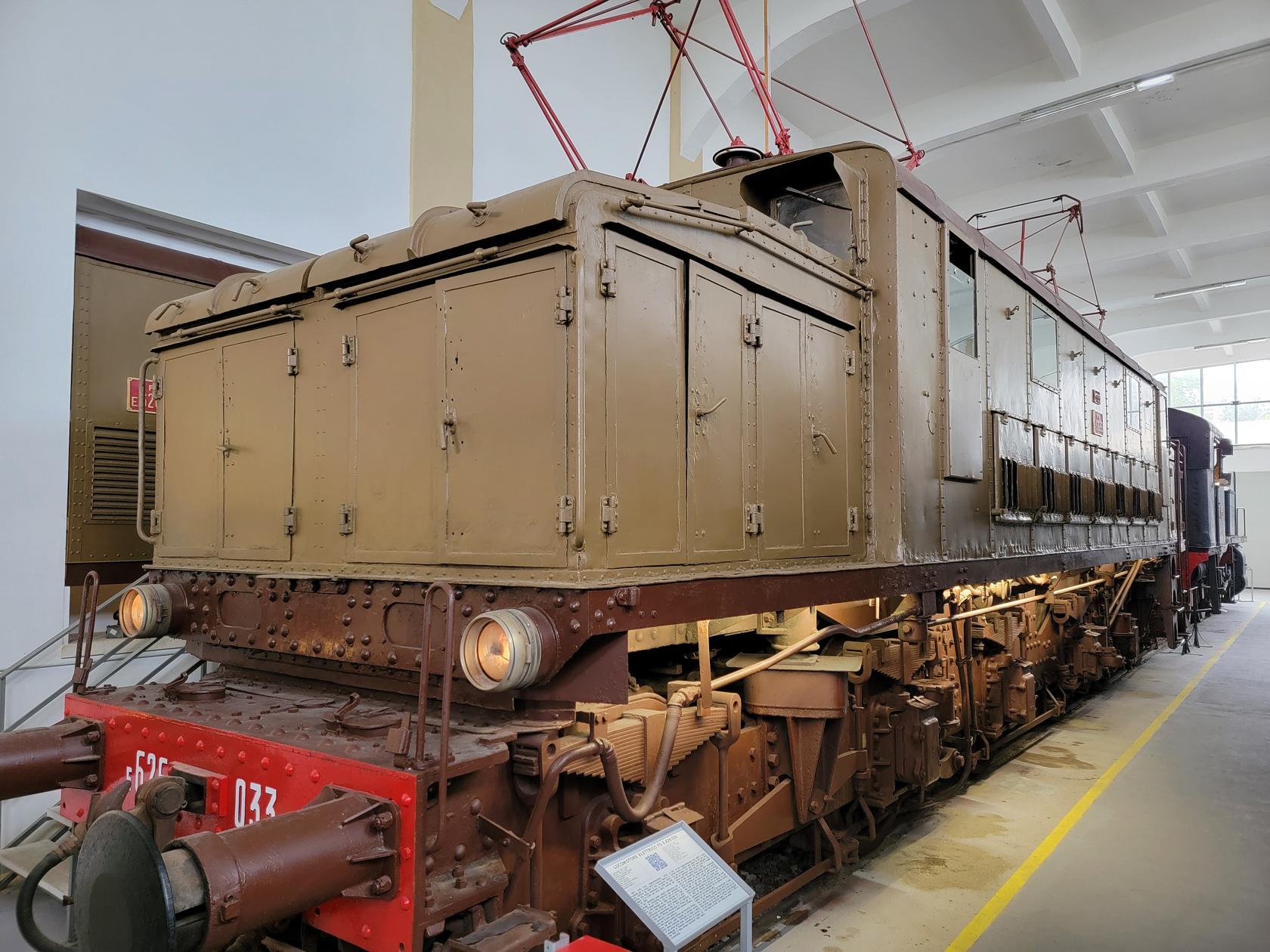
Museo Ferroviario della Puglia – Old Electric Engine, Locomotore Diesel-Elettrico FS E626.033 – Lecce, Italy
Museo Ferroviario della Puglia – Old Electric Engine, Locomotore Diesel-Elettrico FS E626.033 – Lecce, Italy
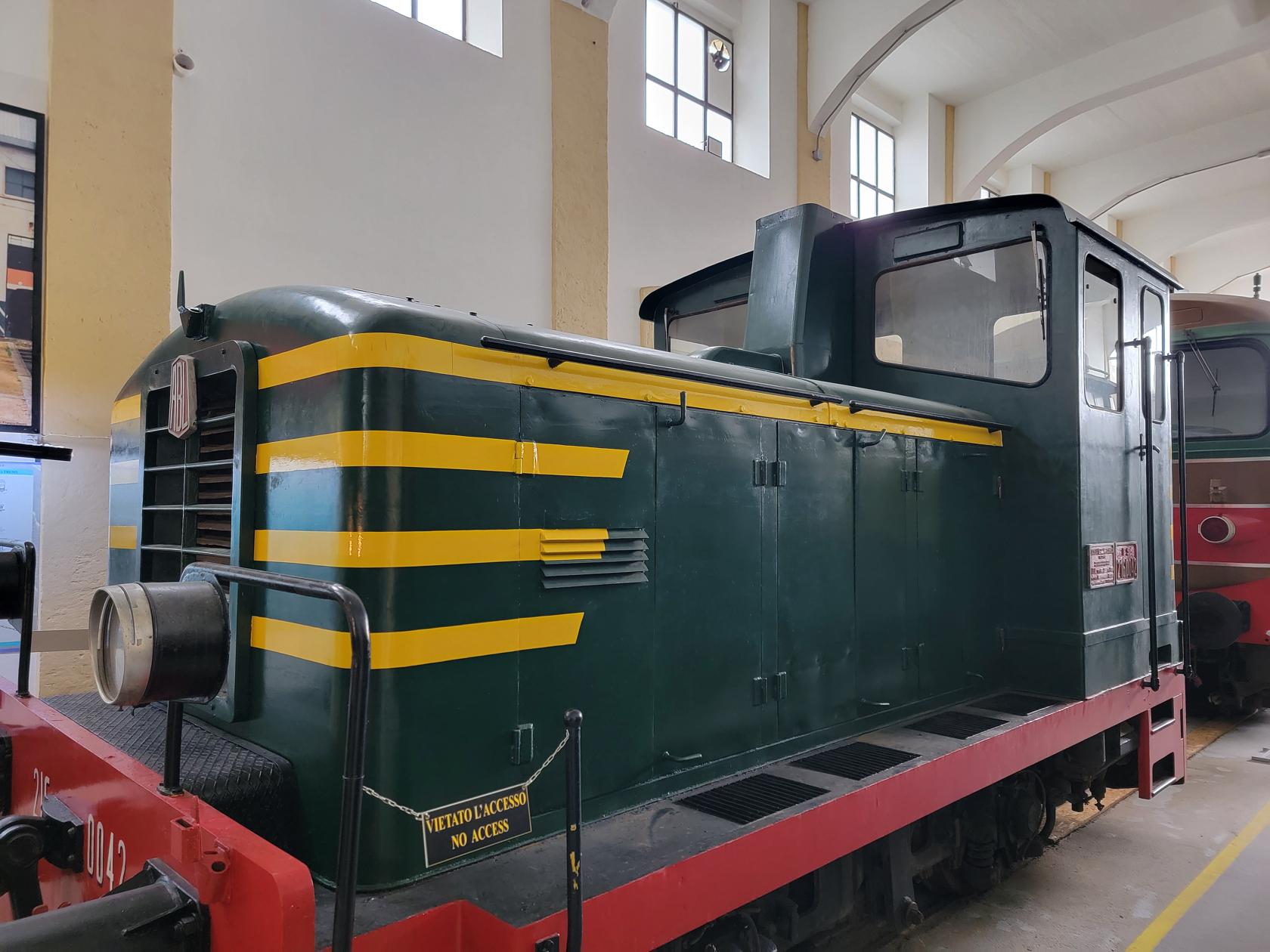
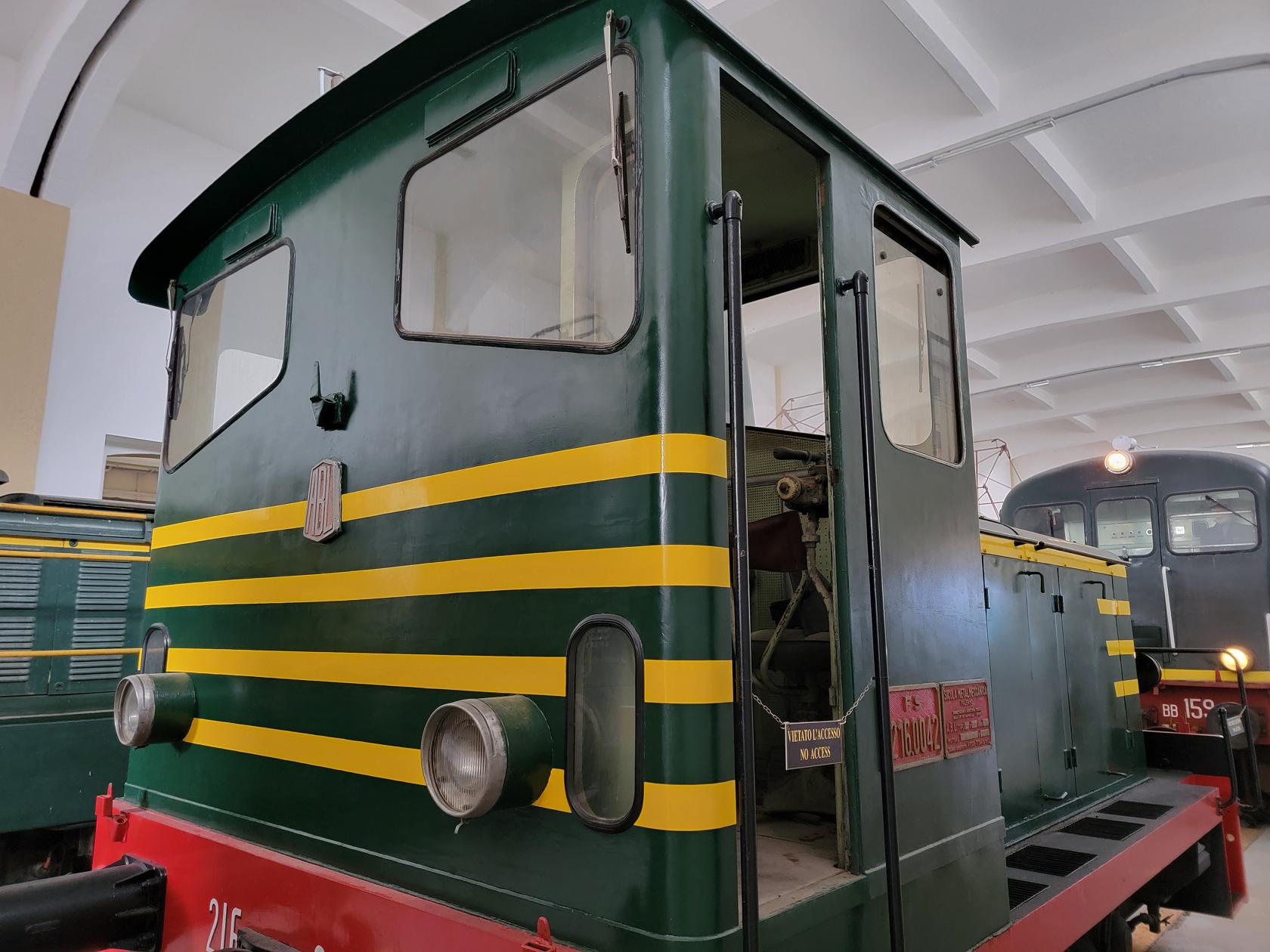
Museo Ferroviario della Puglia – Old Engine, Automotore FS 216.0042 – Lecce, Italy
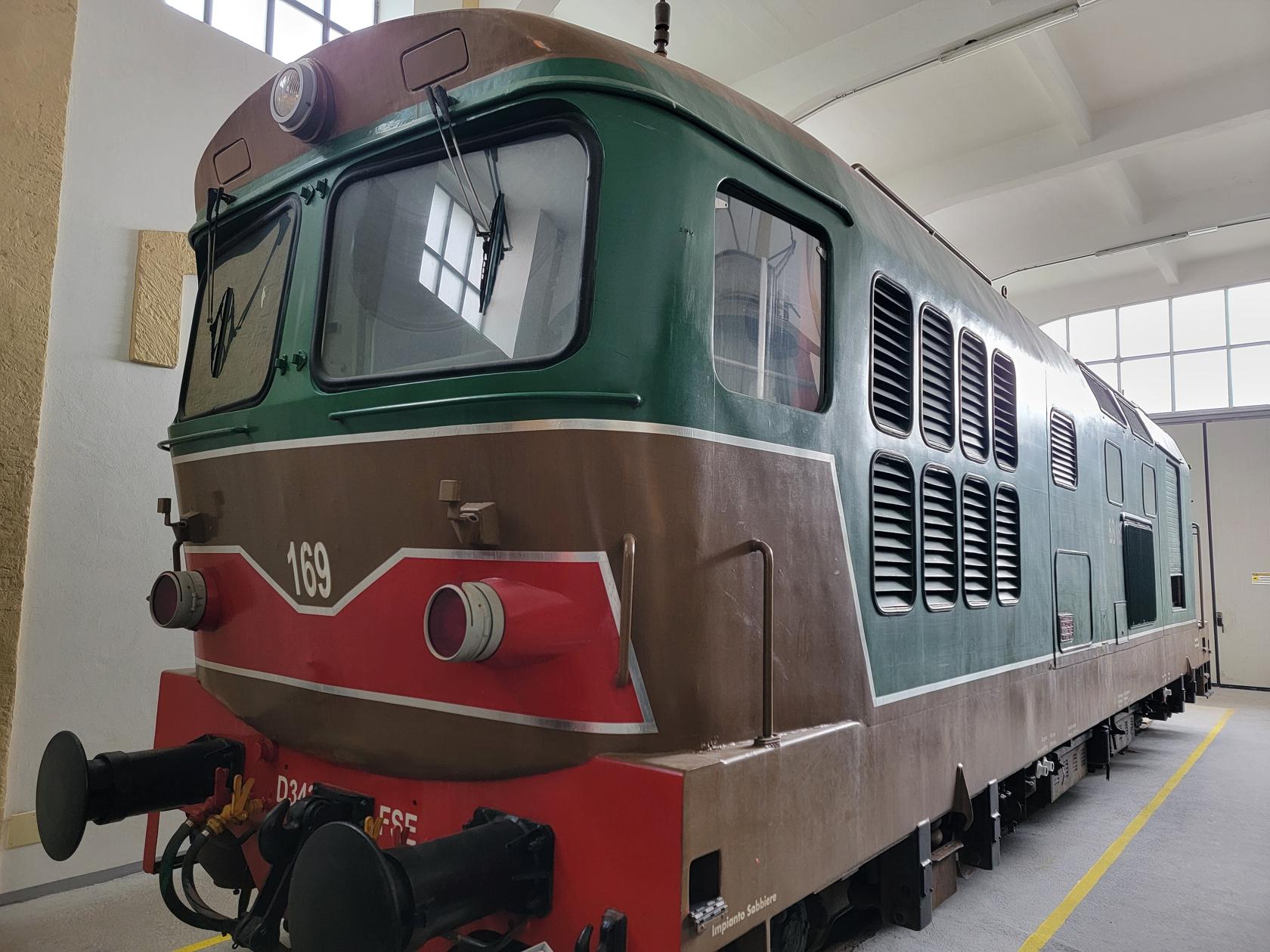
Museo Ferroviario della Puglia – Old Engine, Locomotore Diesel-Ellettrico FSE BB 169 – Lecce, Italy
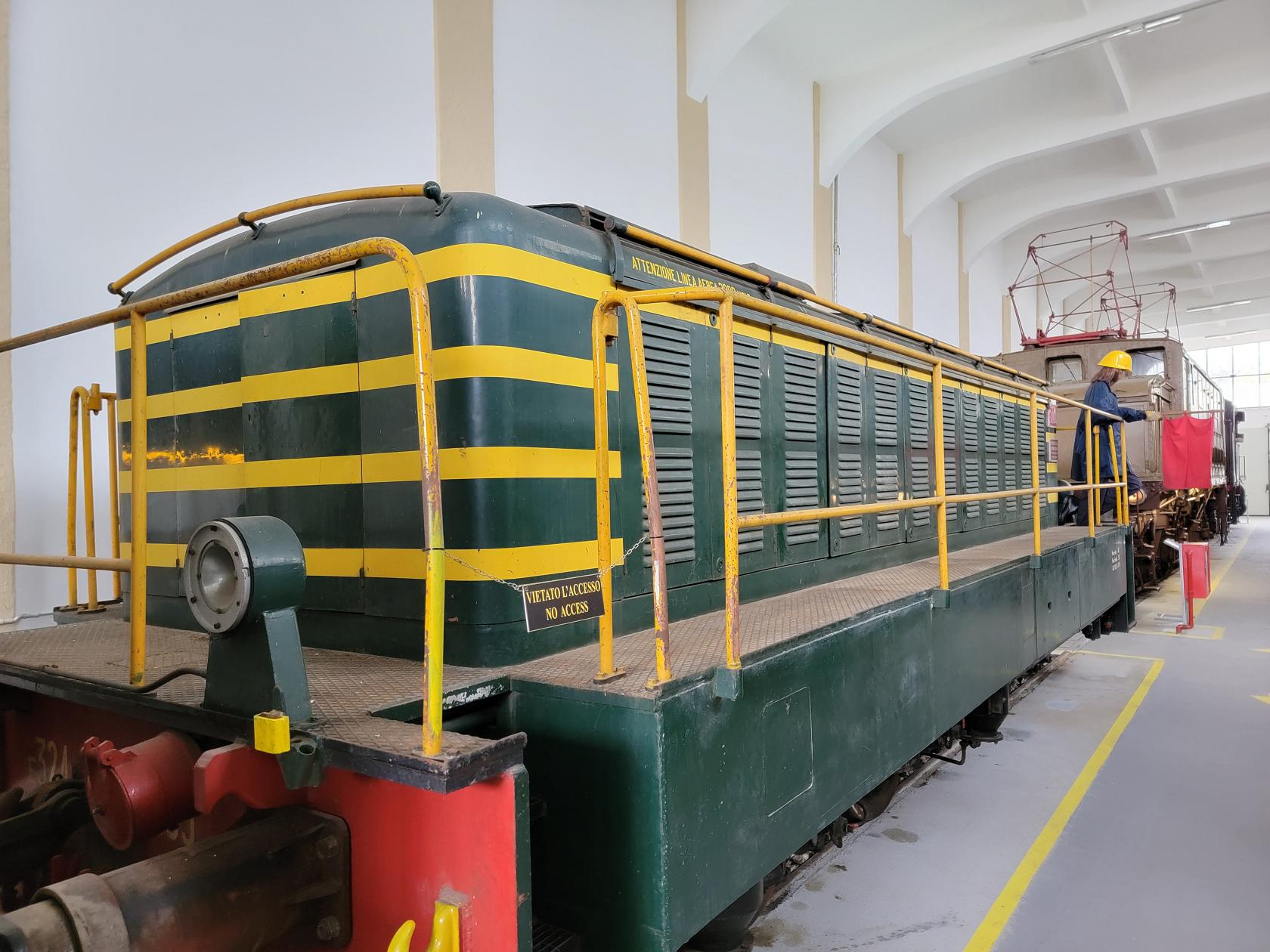
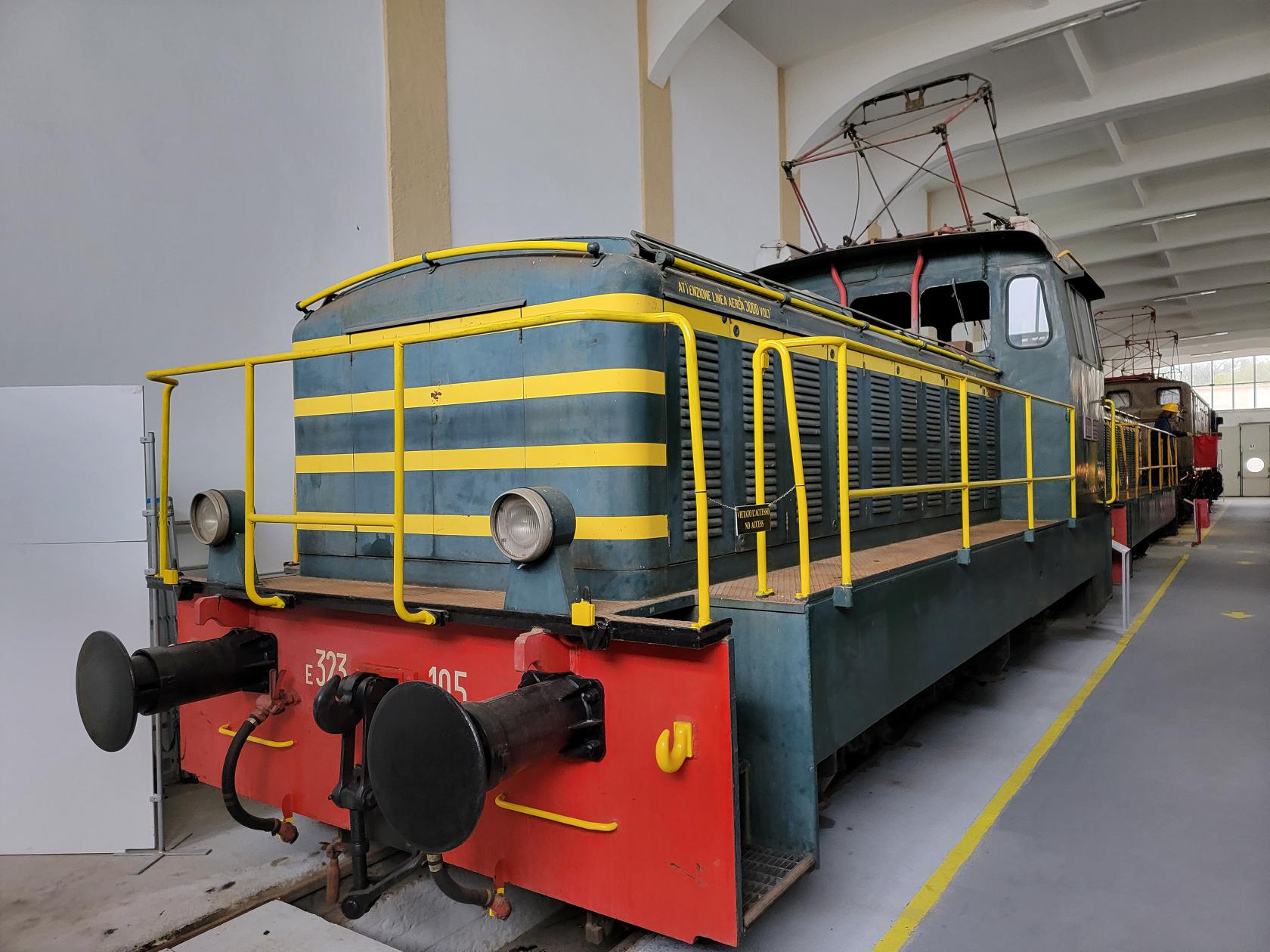
Museo Ferroviario della Puglia – Old Engine, Locomotori Ellettrici FS E.323.105 + E.324.105 – Lecce, Italy
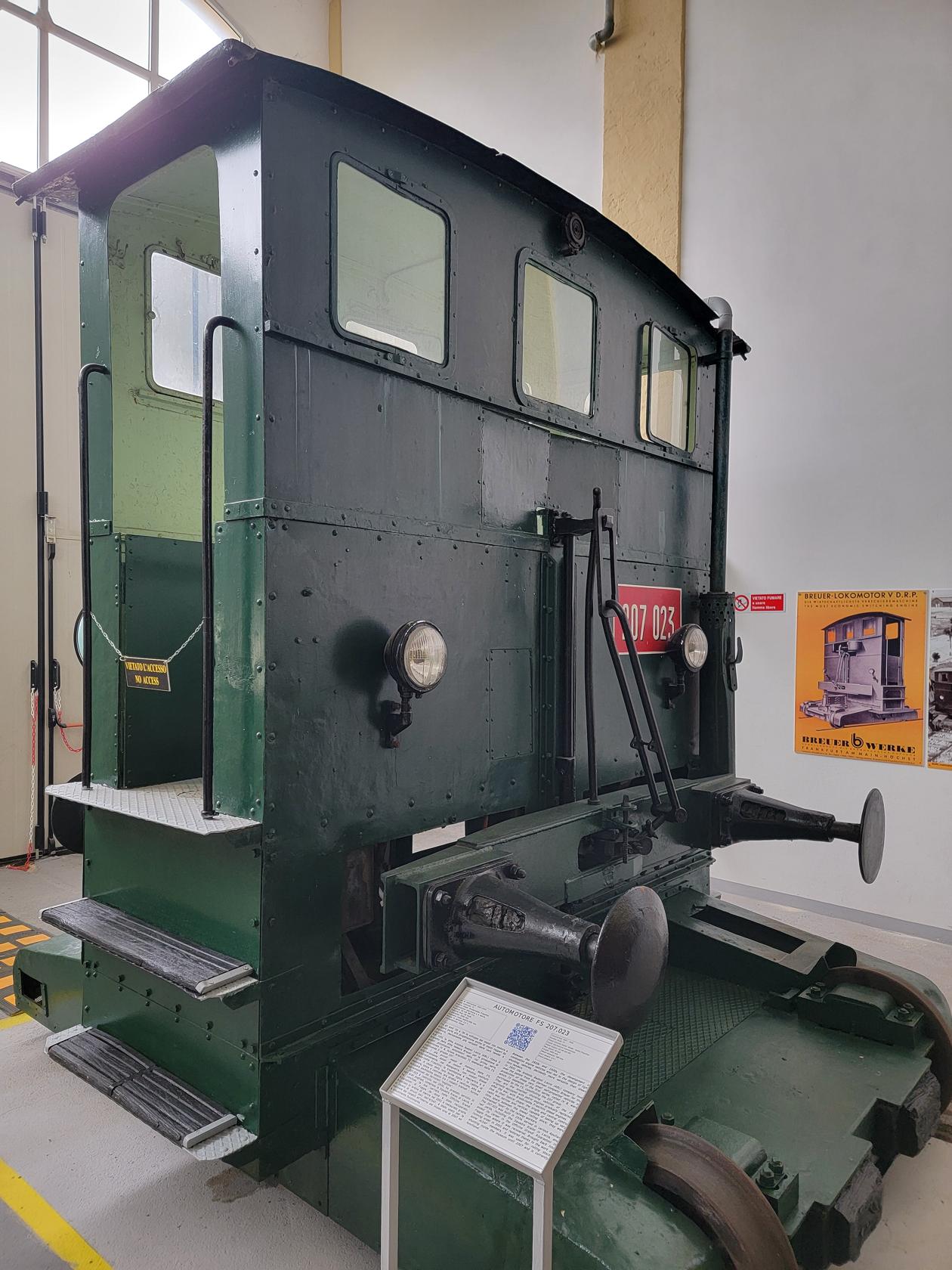
Museo Ferroviario della Puglia – Old Engine, Automotore FS 207.023 – Lecce, Italy
Museo Ferroviario della Puglia – Old Freight Yard Engine – Lecce, Italy
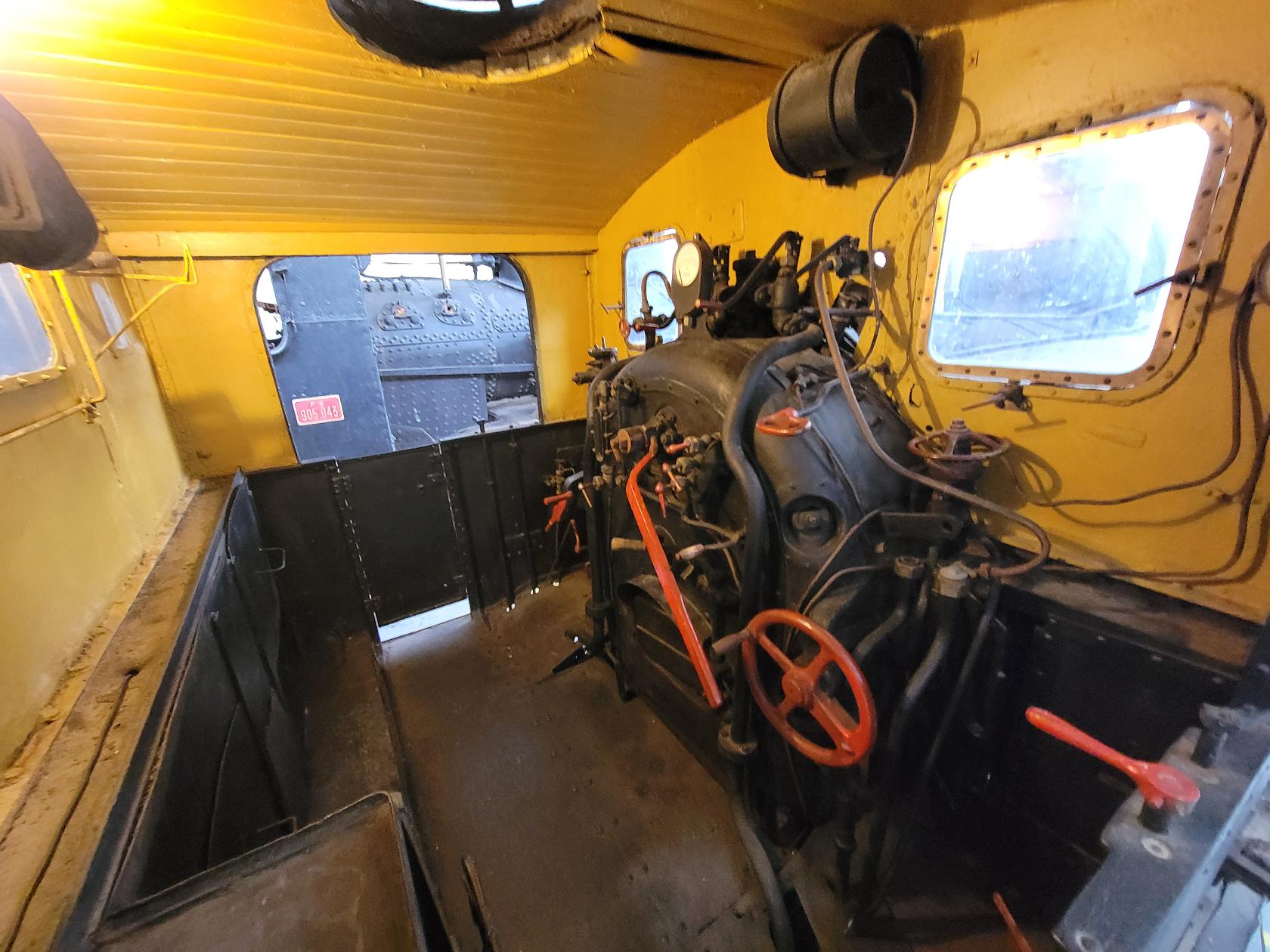
Museo Ferroviario della Puglia – Old Steam Engine, Locomotiva a Vapore FS Gr.835.244 Boiler and Controls – Lecce, Italy
Museo Ferroviario della Puglia – Old Engine, Automotore FS 207.023 – Lecce, Italy
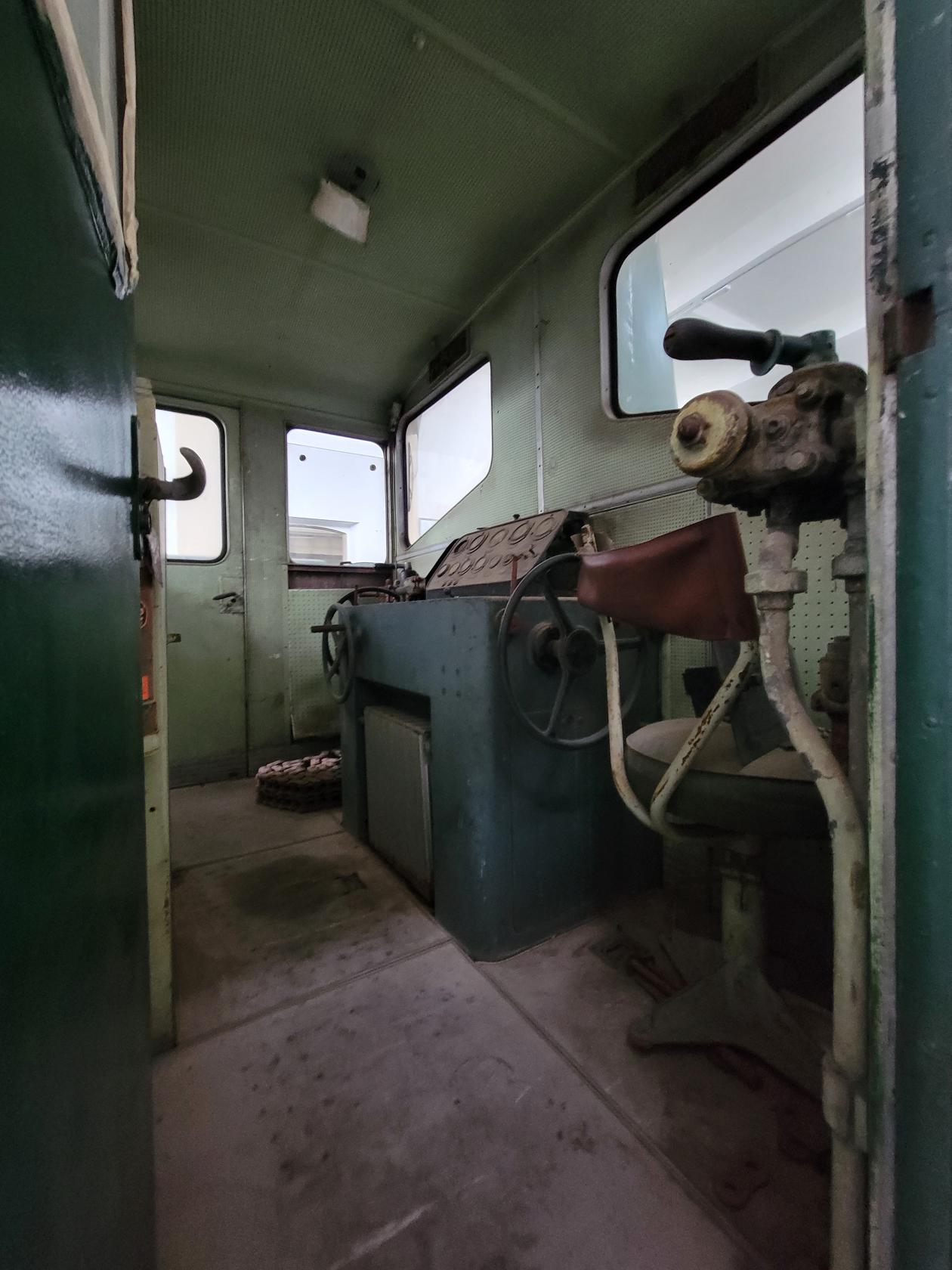
Museo Ferroviario della Puglia – Old Engine, Automotore FS 207.023 Controls – Lecce, Italy
Museo Ferroviario della Puglia – Old Steam Engine, Locomotiva a Vapore FS Gr.835.244 – Lecce, Italy
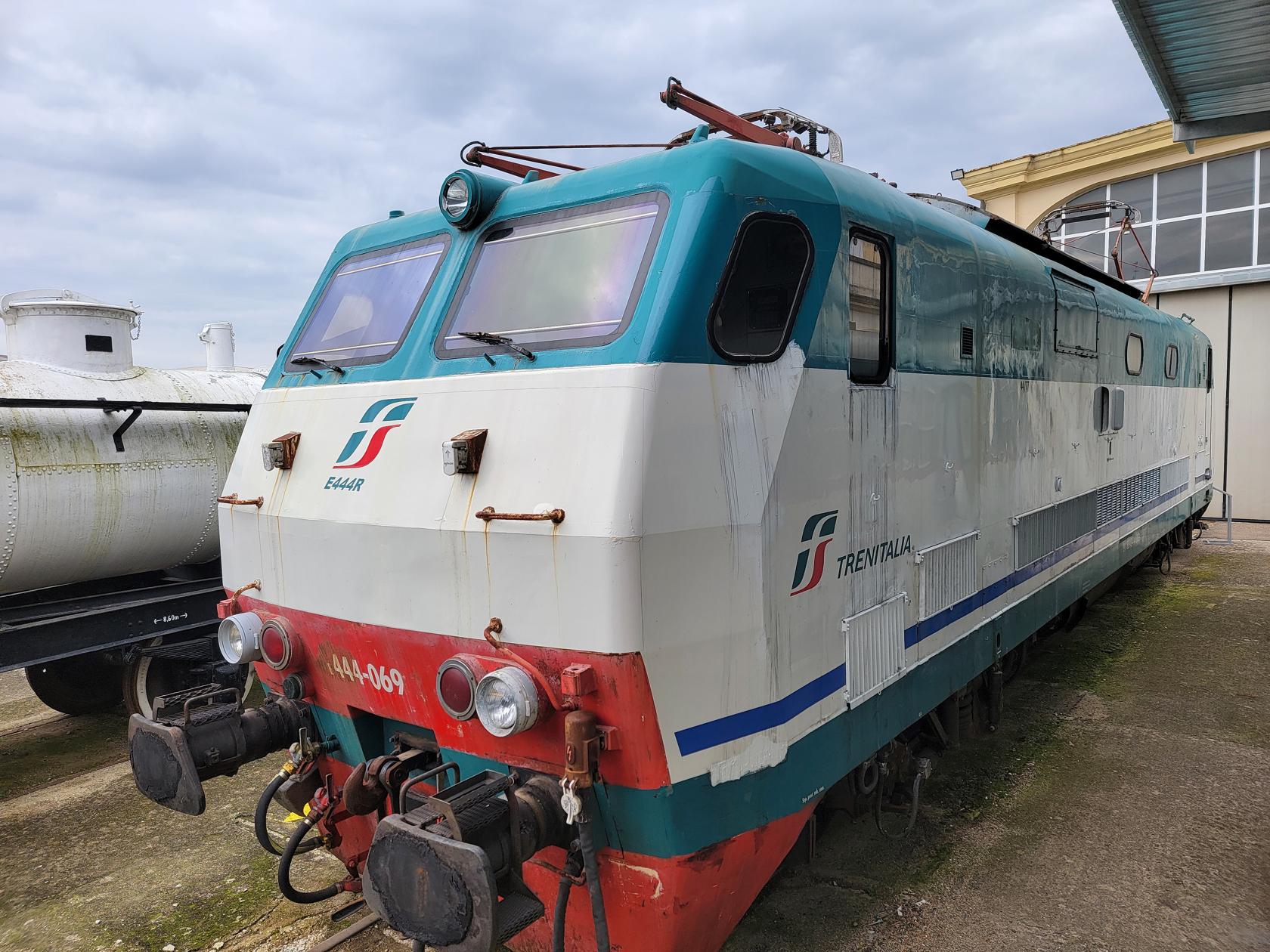
Museo Ferroviario della Puglia – Locomotore Elettrico FS E 444.069 – Lecce, Italy
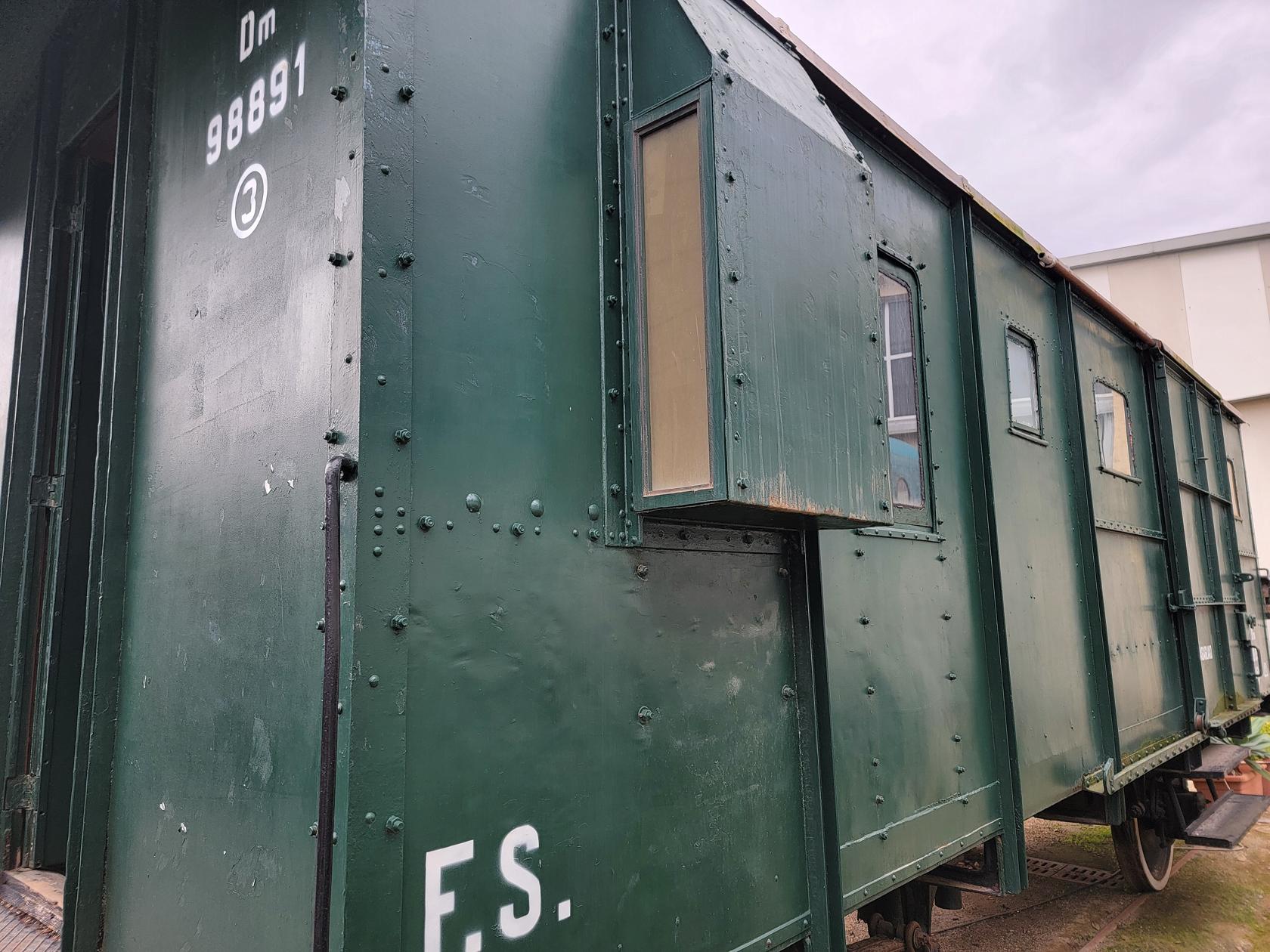
Museo Ferroviario della Puglia – Il “Treno dell’Acqua” FS Dm 98.891 + M 950150 + M 550842 – Lecce, Italy
Museo Ferroviario della Puglia – Il “Treno dell’Acqua” FS Dm 98.891 + M 950150 + M 550842 – Lecce, Italy
Museo Ferroviario della Puglia – Il “Treno dell’Acqua” FS Dm 98.891 + M 950150 + M 550842 – Lecce, Italy
Museo Ferroviario della Puglia – Il “Treno dell’Acqua” FS Dm 98.891 + M 950150 + M 550842 – Lecce, Italy
Museo Ferroviario della Puglia – Carrozze Passeggeri FSE ABz 758 + Bz 614 – Lecce, Italy
Museo Ferroviario della Puglia – Carrozze Passeggeri FSE ABz 758 + Bz 614 – Lecce, Italy
Museo Ferroviario della Puglia – Carrozze Passeggeri FSE ABz 758 + Bz 614 – Lecce, Italy
Museo Ferroviario della Puglia – Carrozze Cellulare FS Kz 48.622 – Lecce, Italy
Museo Ferroviario della Puglia – Carrozze Passeggeri FSE ABz 758 + Bz 614 – Lecce, Italy
Museo Ferroviario della Puglia – Carrozze Cellulare FS Kz 48.622 – Lecce, Italy
Dioramas and other Models
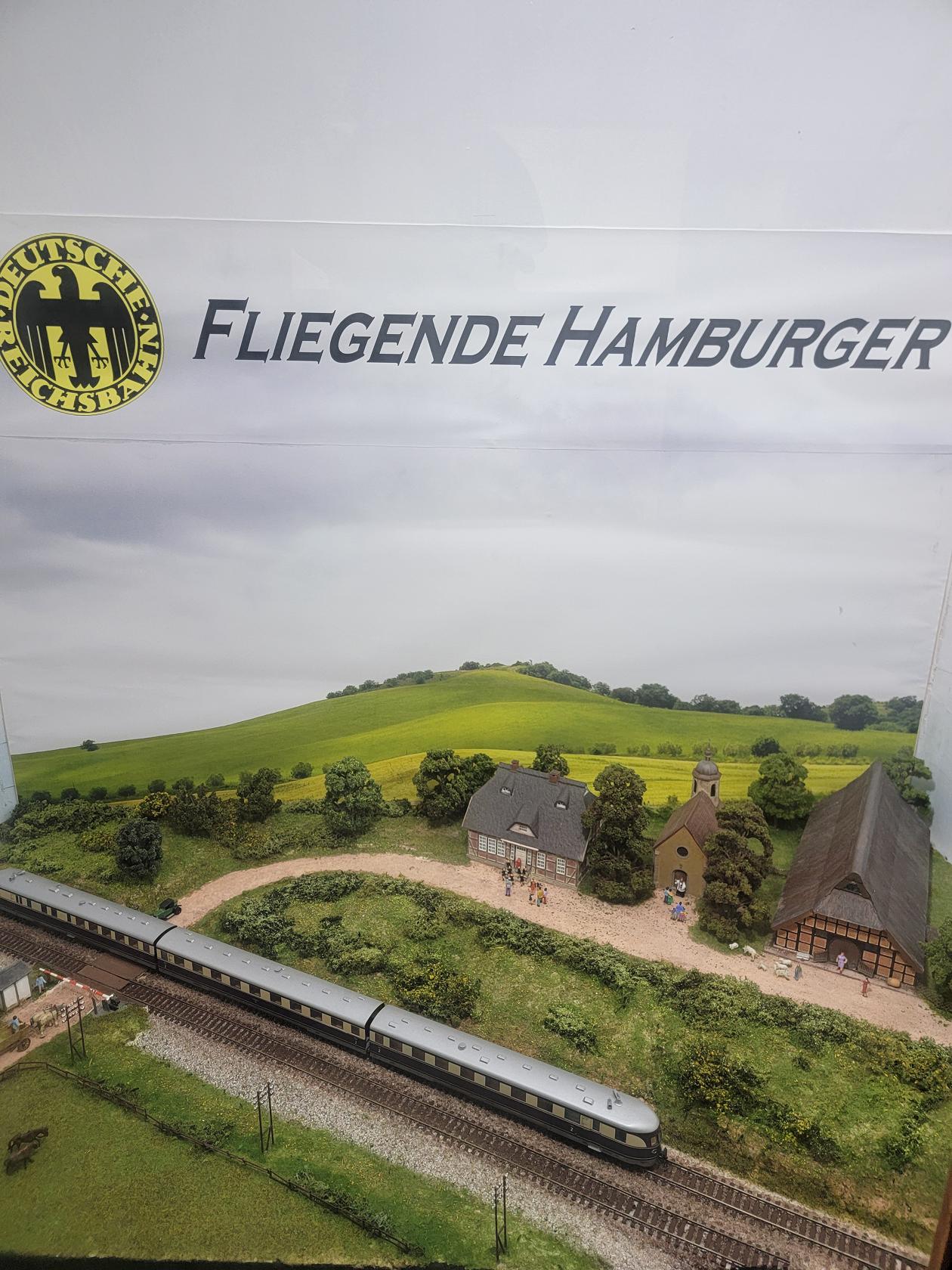
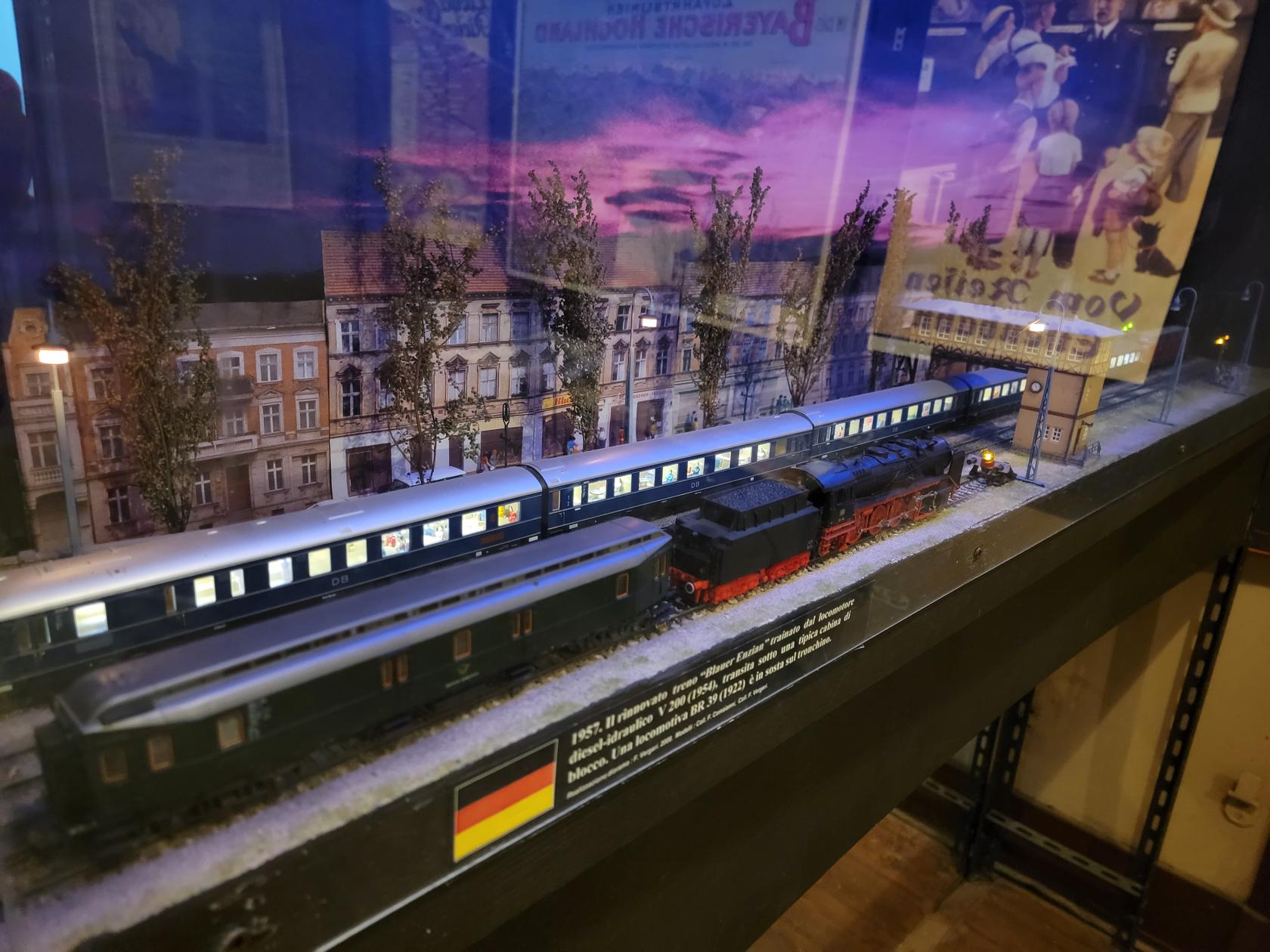
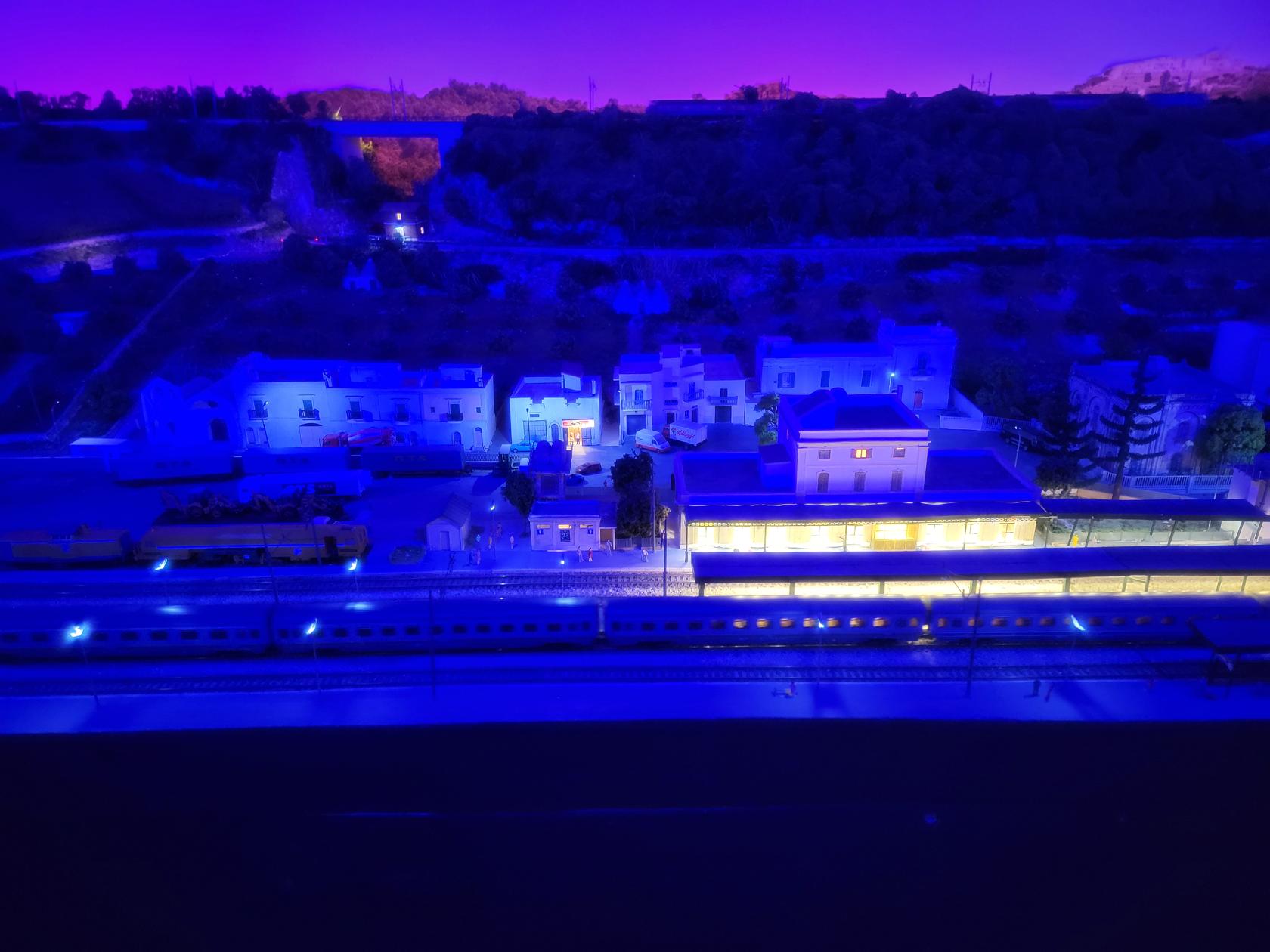
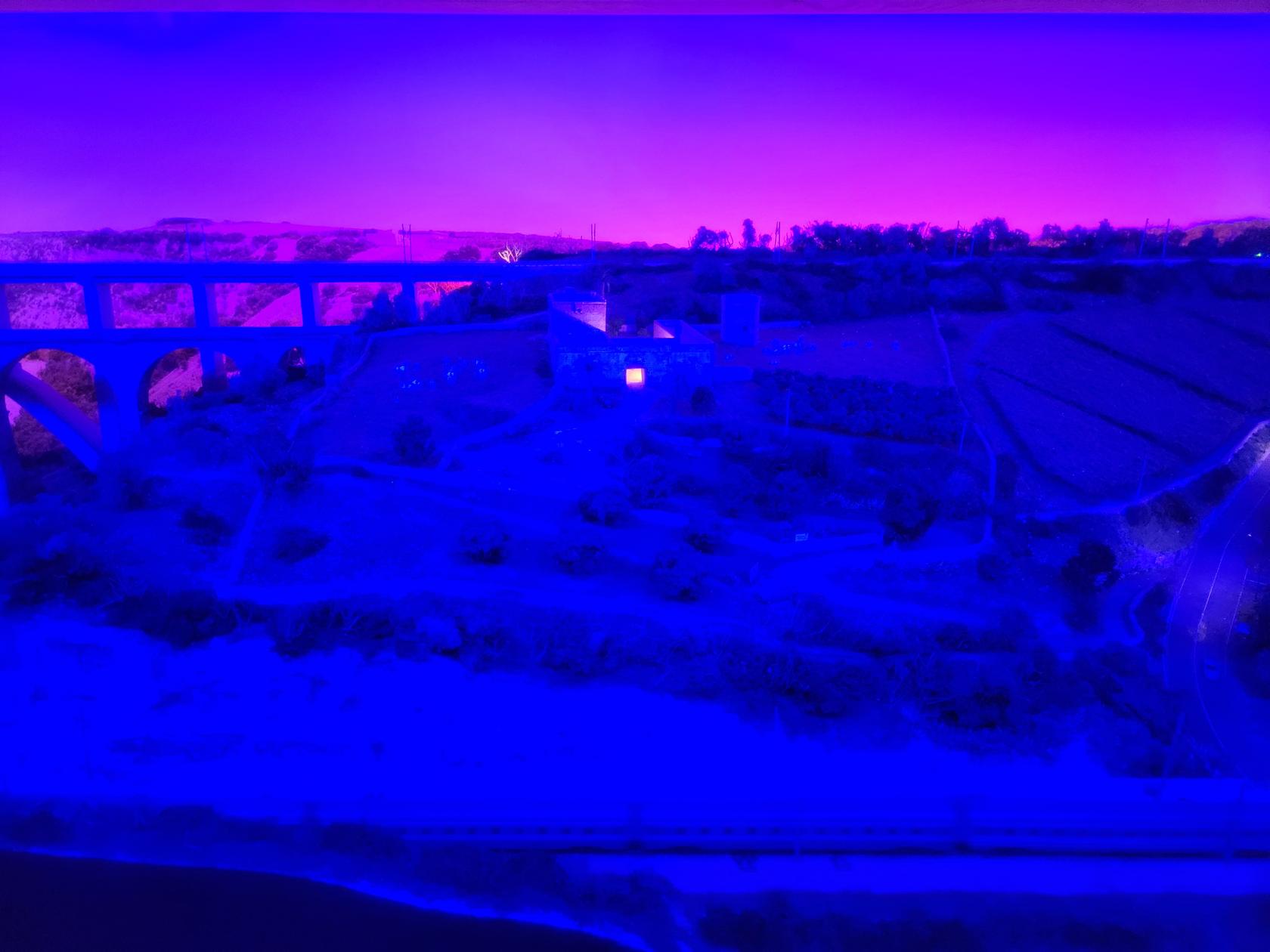
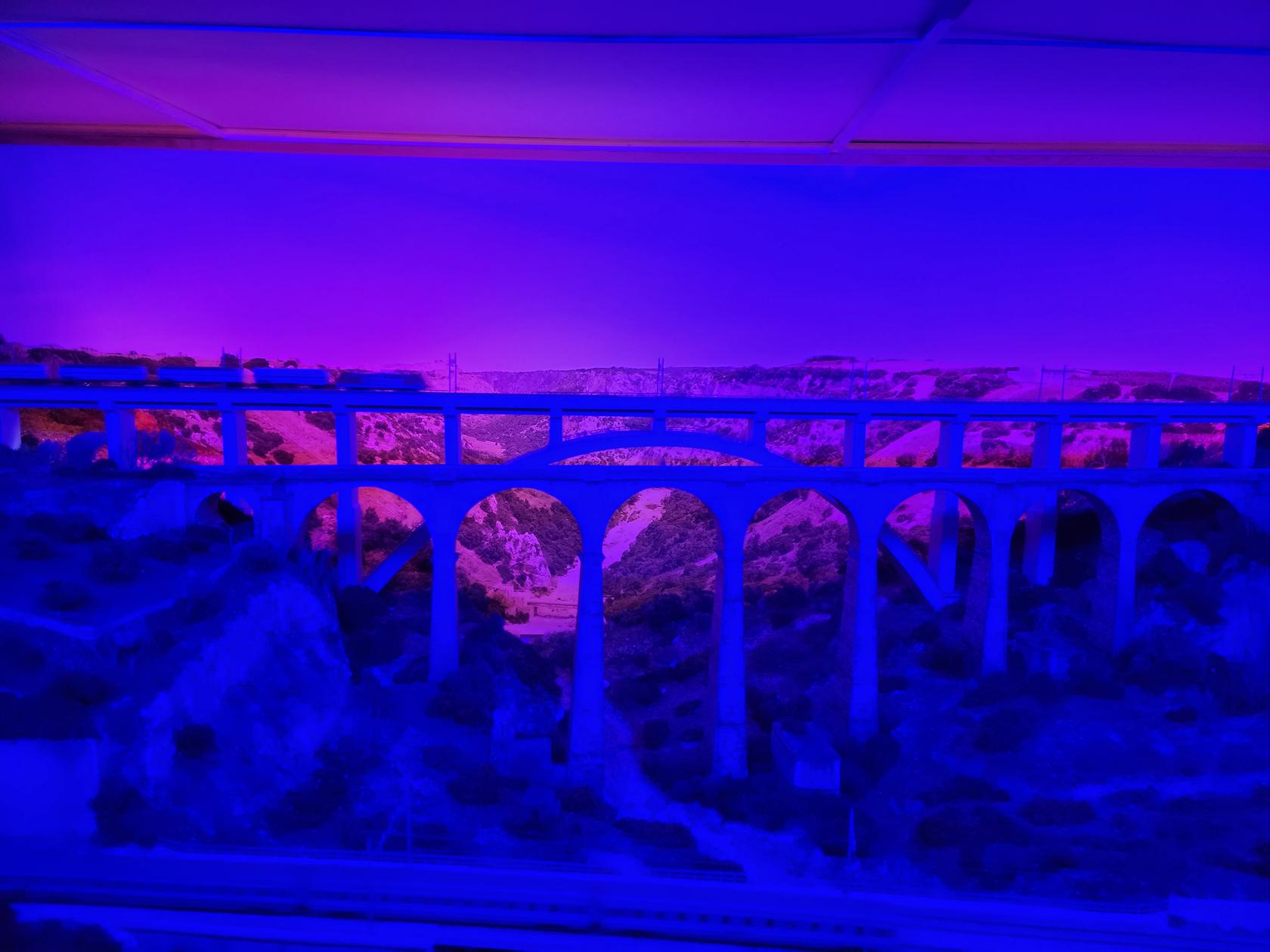
In the later stages of the exhibits, there are numerous large train models, electrified train sets and other dioramas to enjoy. The scale of some of the train sets is impressive and one can immerse oneself in their activity for quite some time.
Museo Ferroviario della Puglia – Models – Lecce, Italy
Museo Ferroviario della Puglia – German Lines – Lecce, Italy
Museo Ferroviario della Puglia – Models – Lecce, Italy
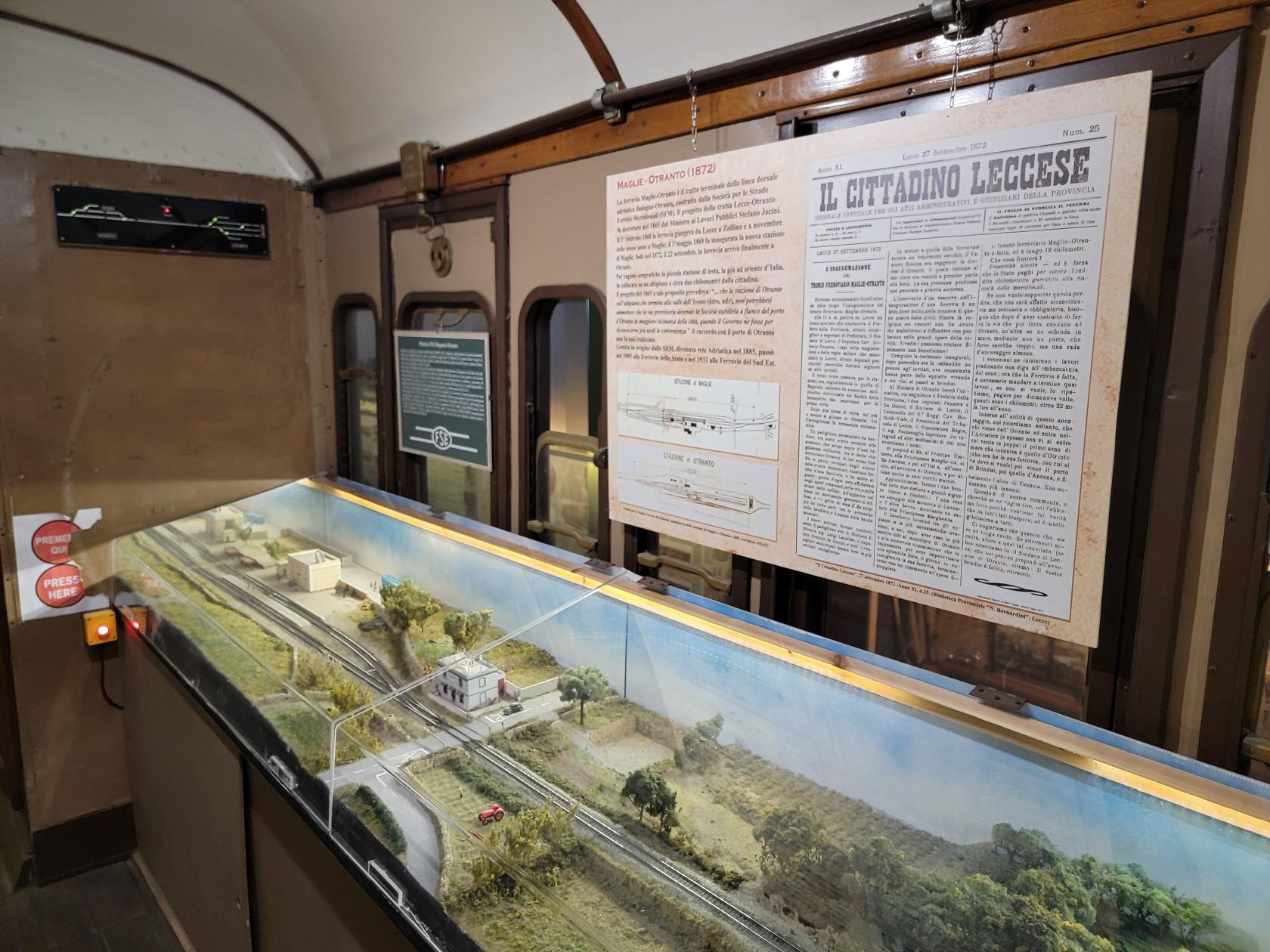
Museo Ferroviario della Puglia – Diorama – Lecce, Italy
Museo Ferroviario della Puglia – Diorama – Lecce, Italy
Museo Ferroviario della Puglia – Diorama – Lecce, Italy
Railroad Communications, Equipment and Forgery
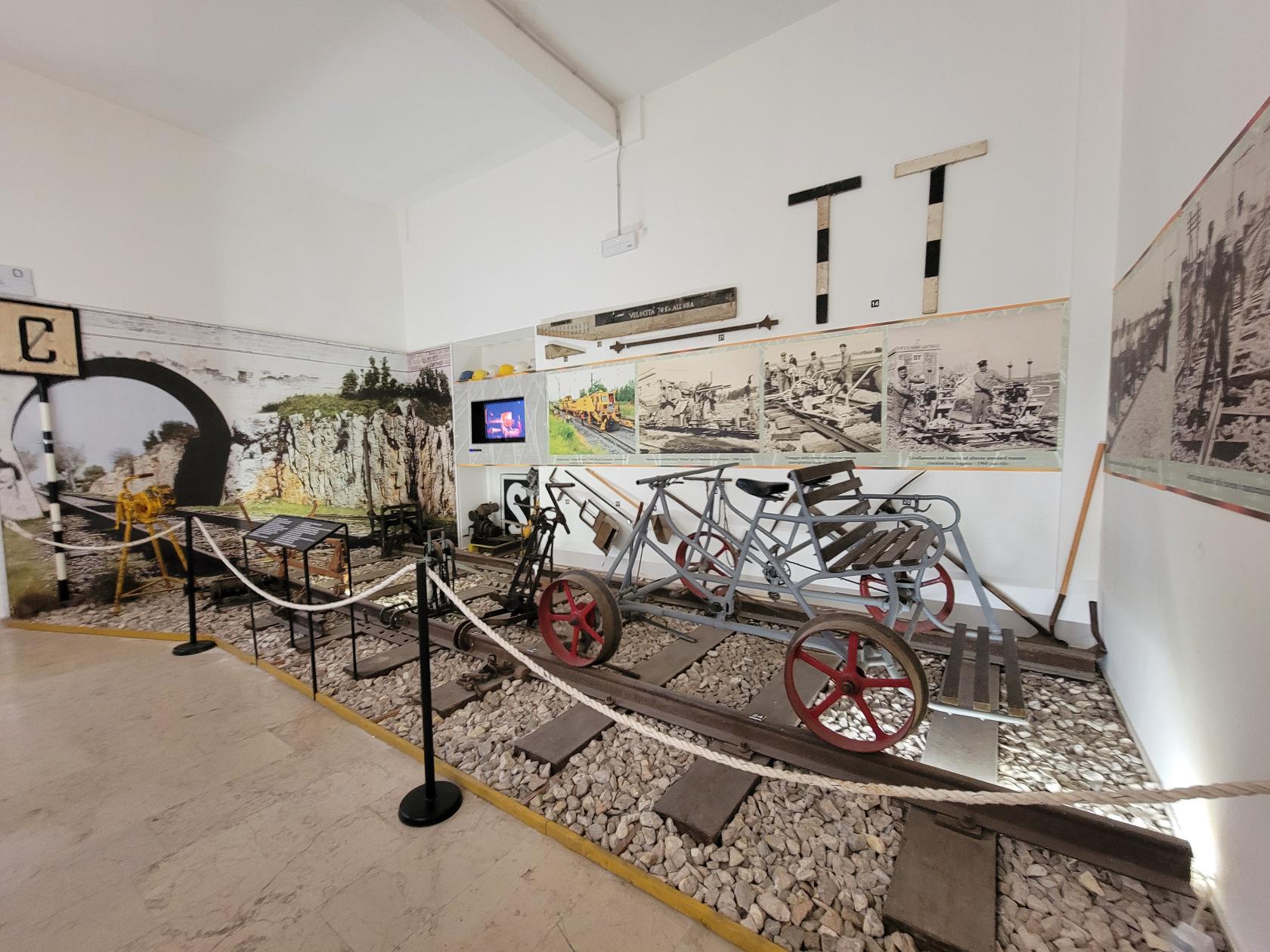
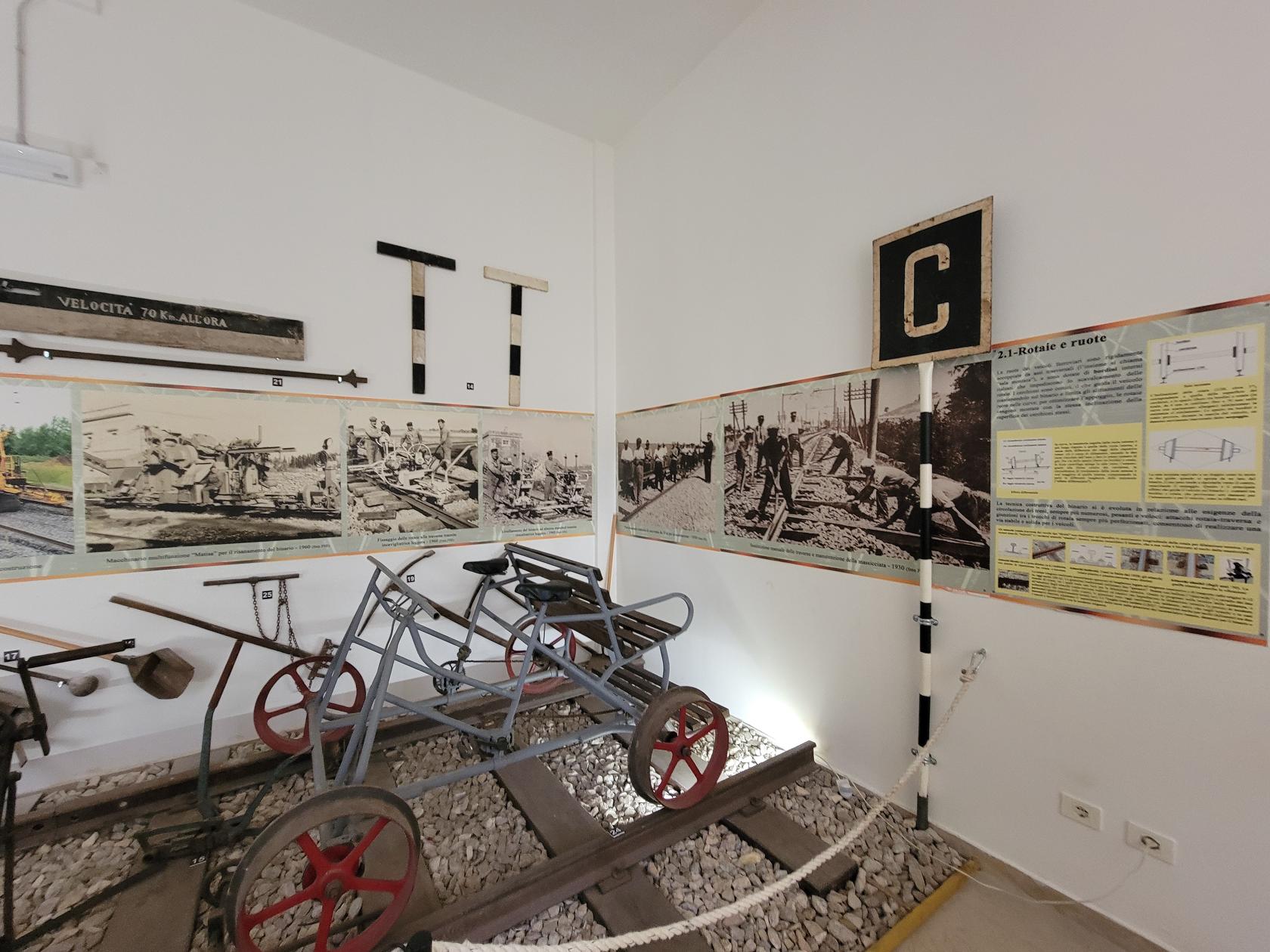
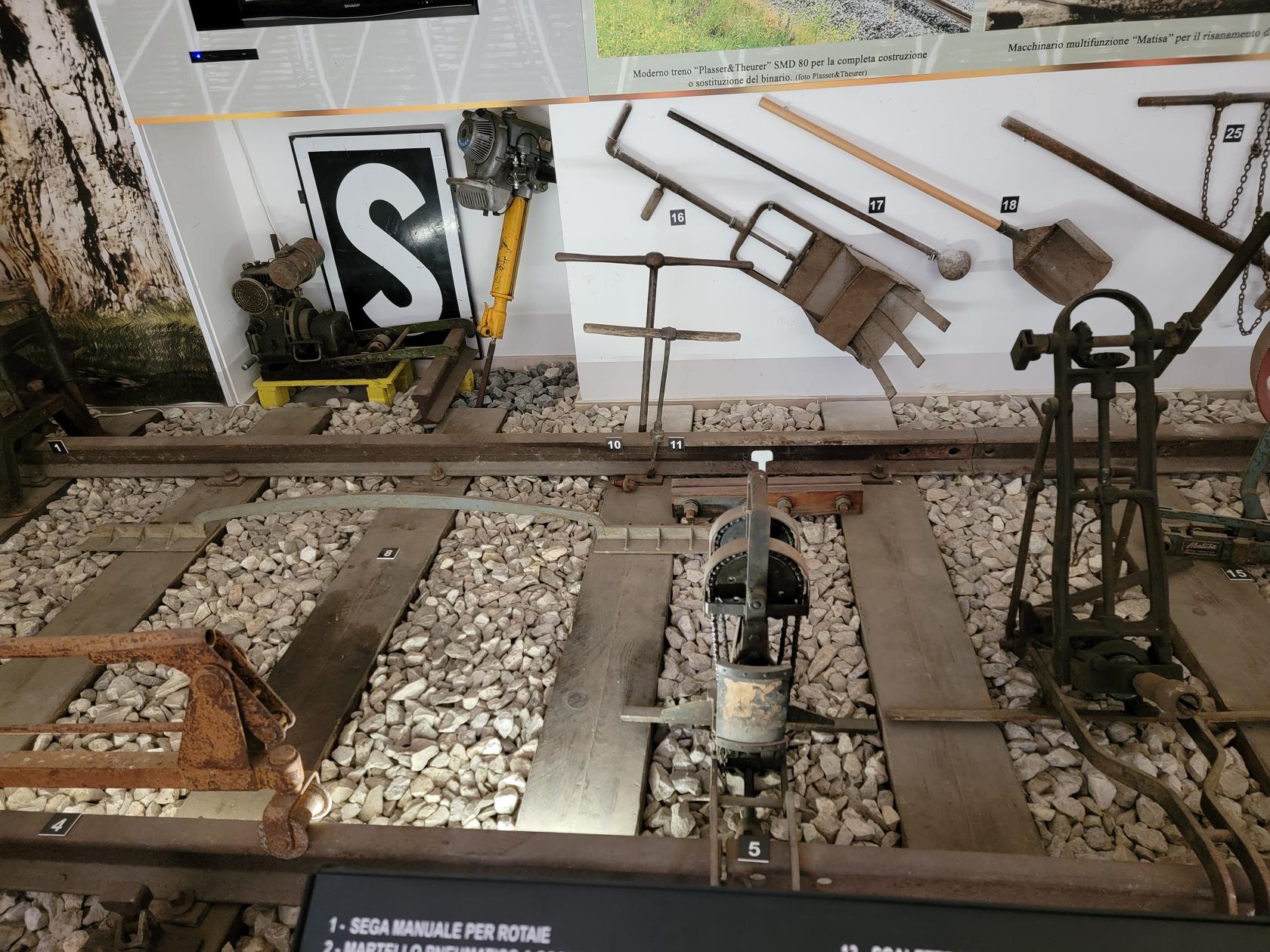
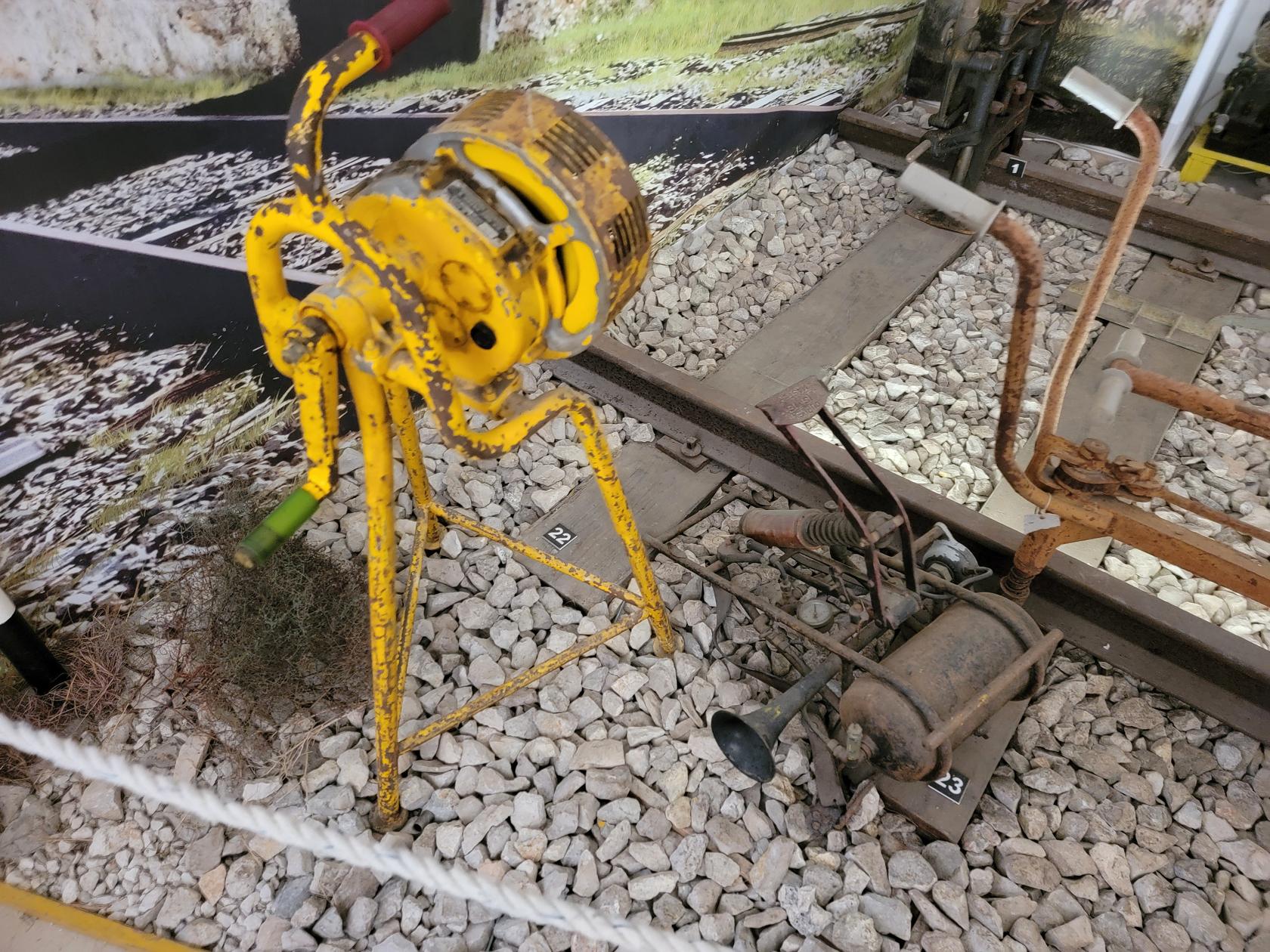
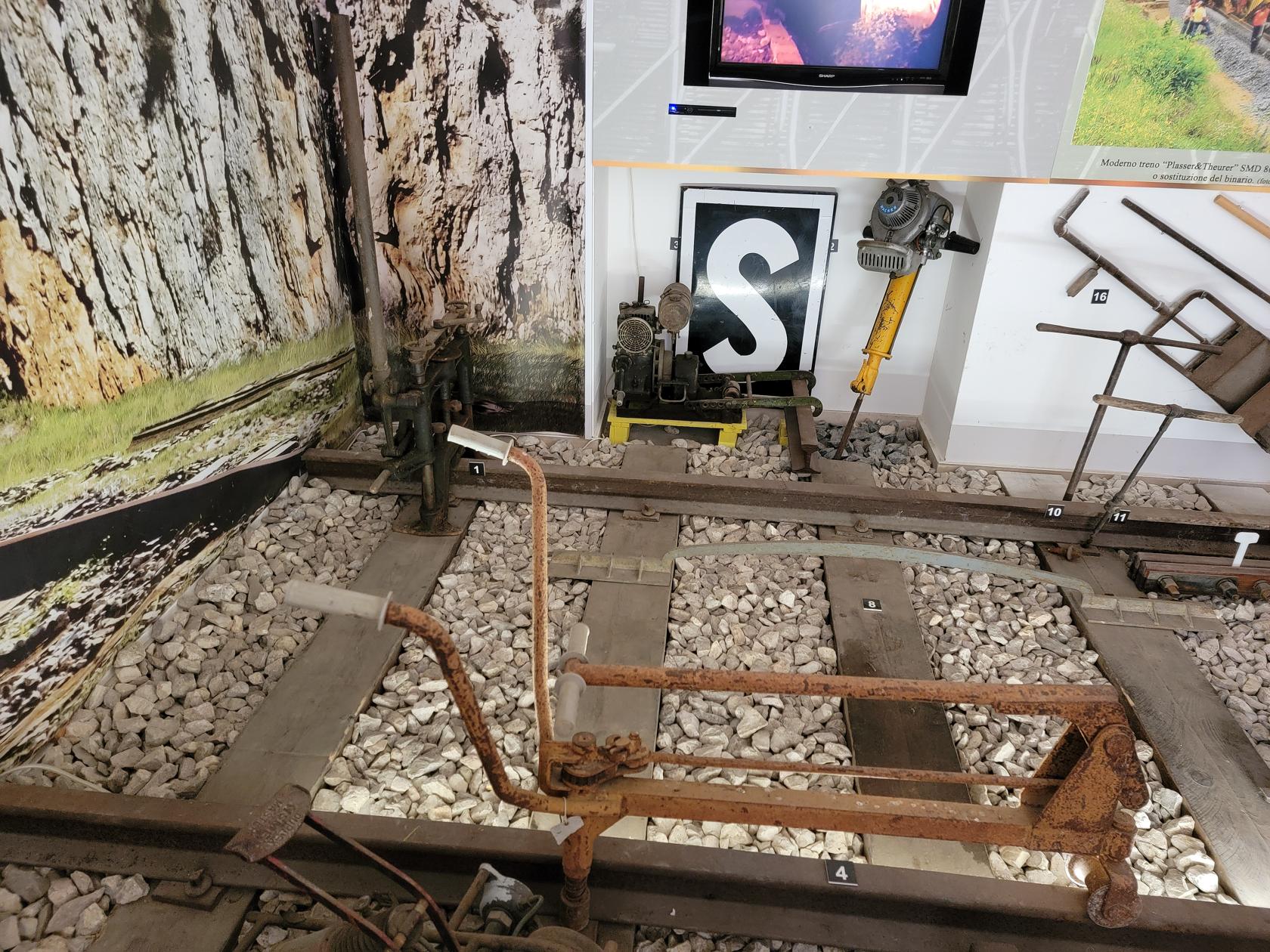
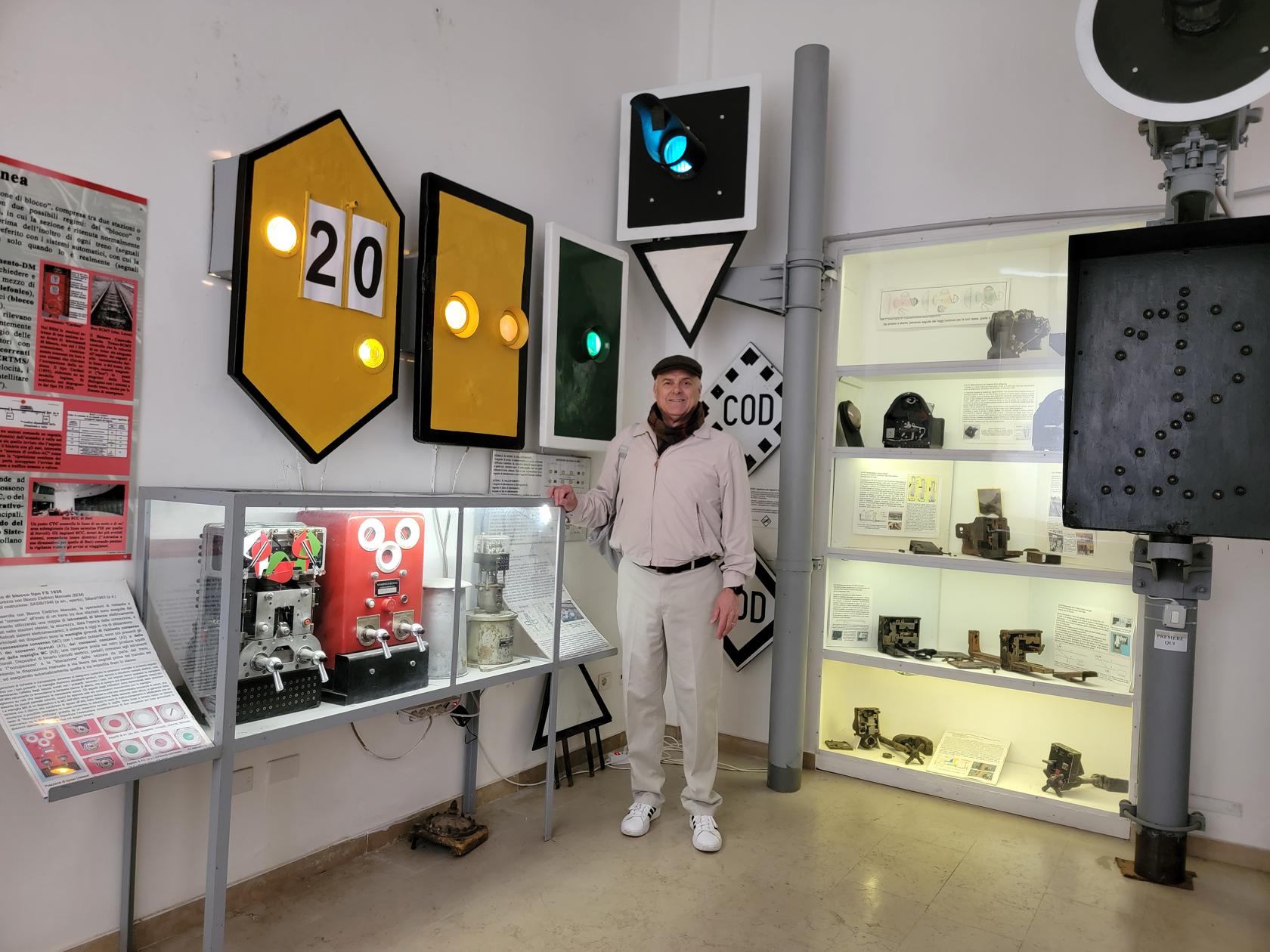
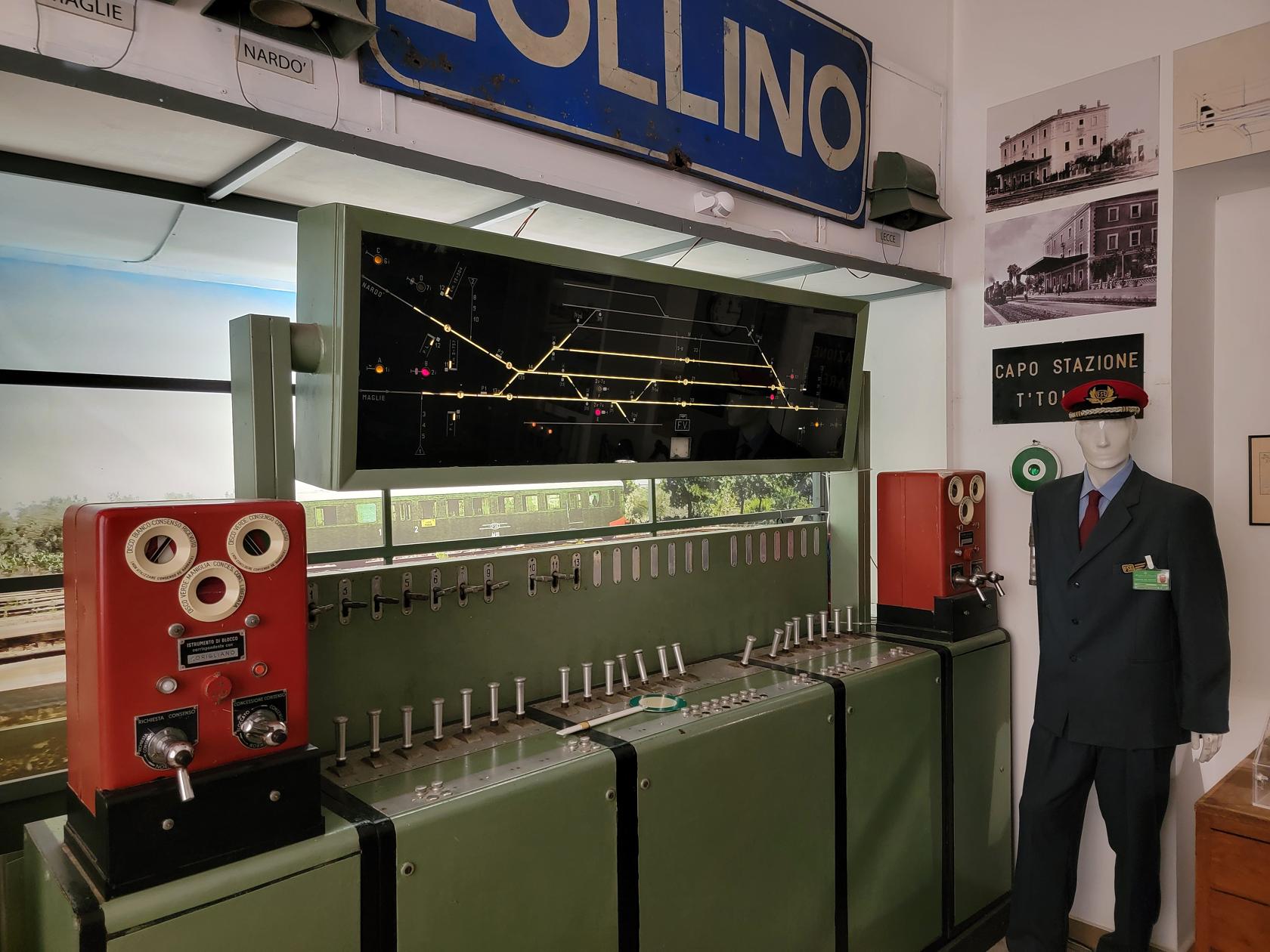
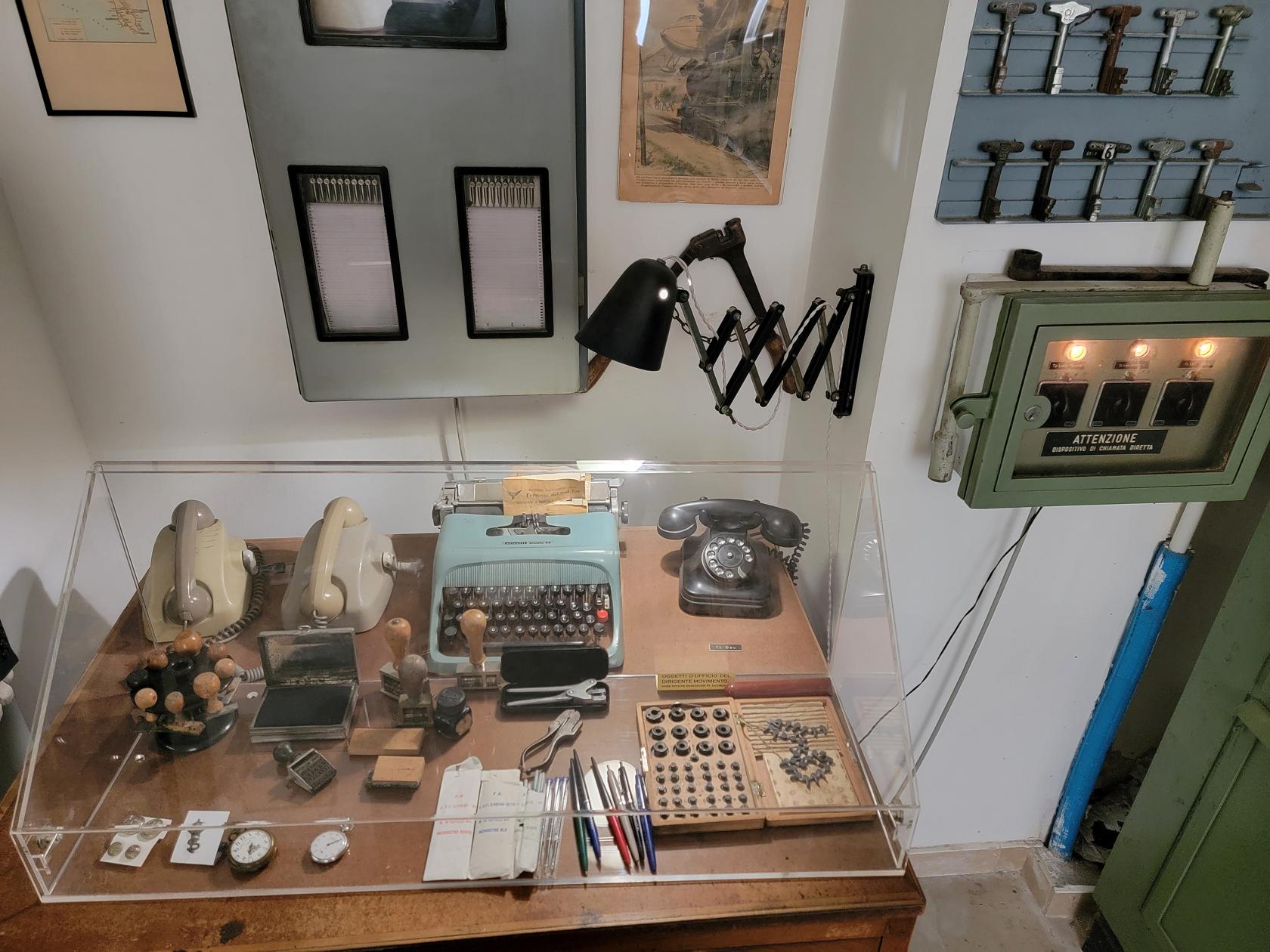
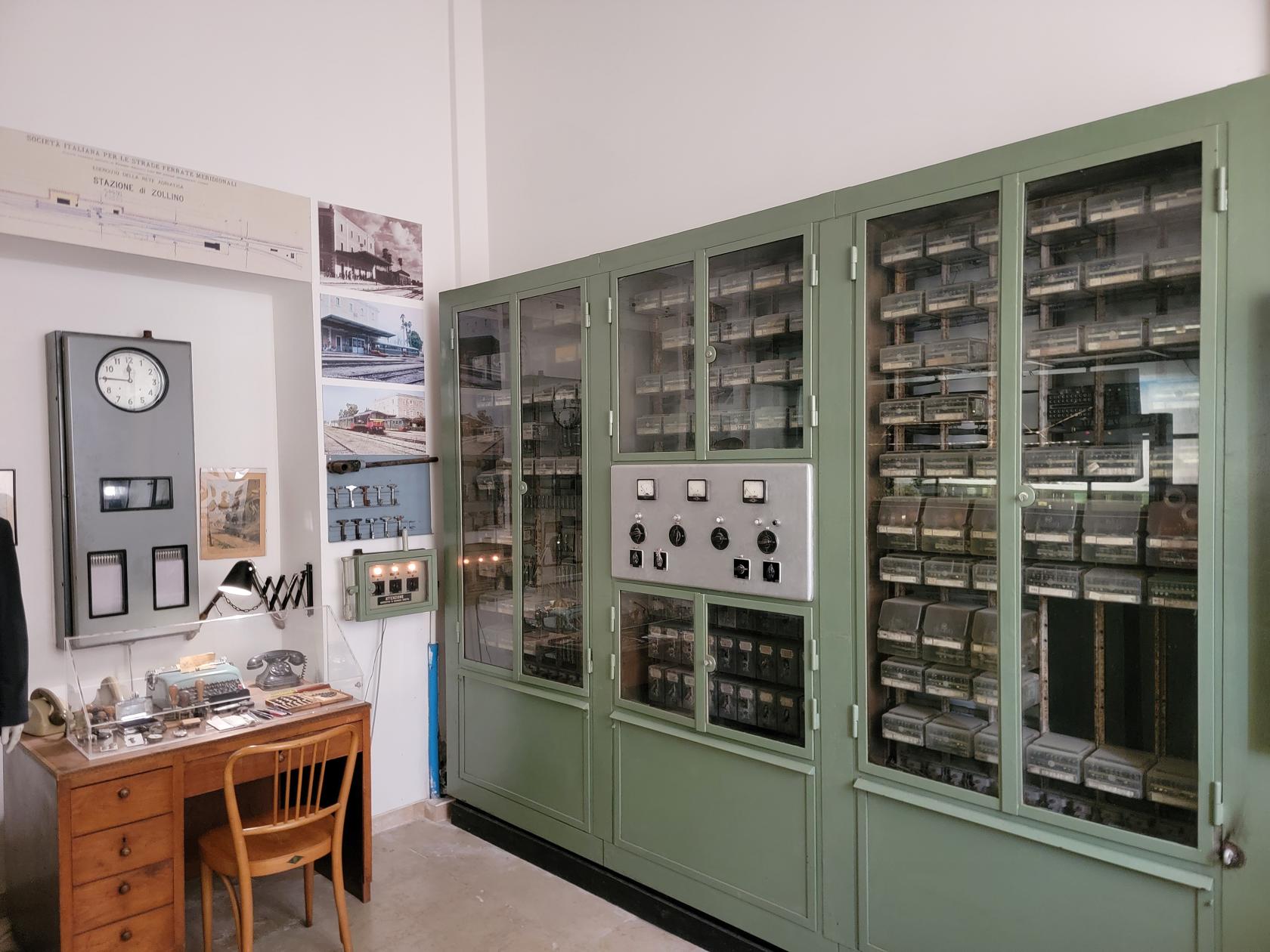
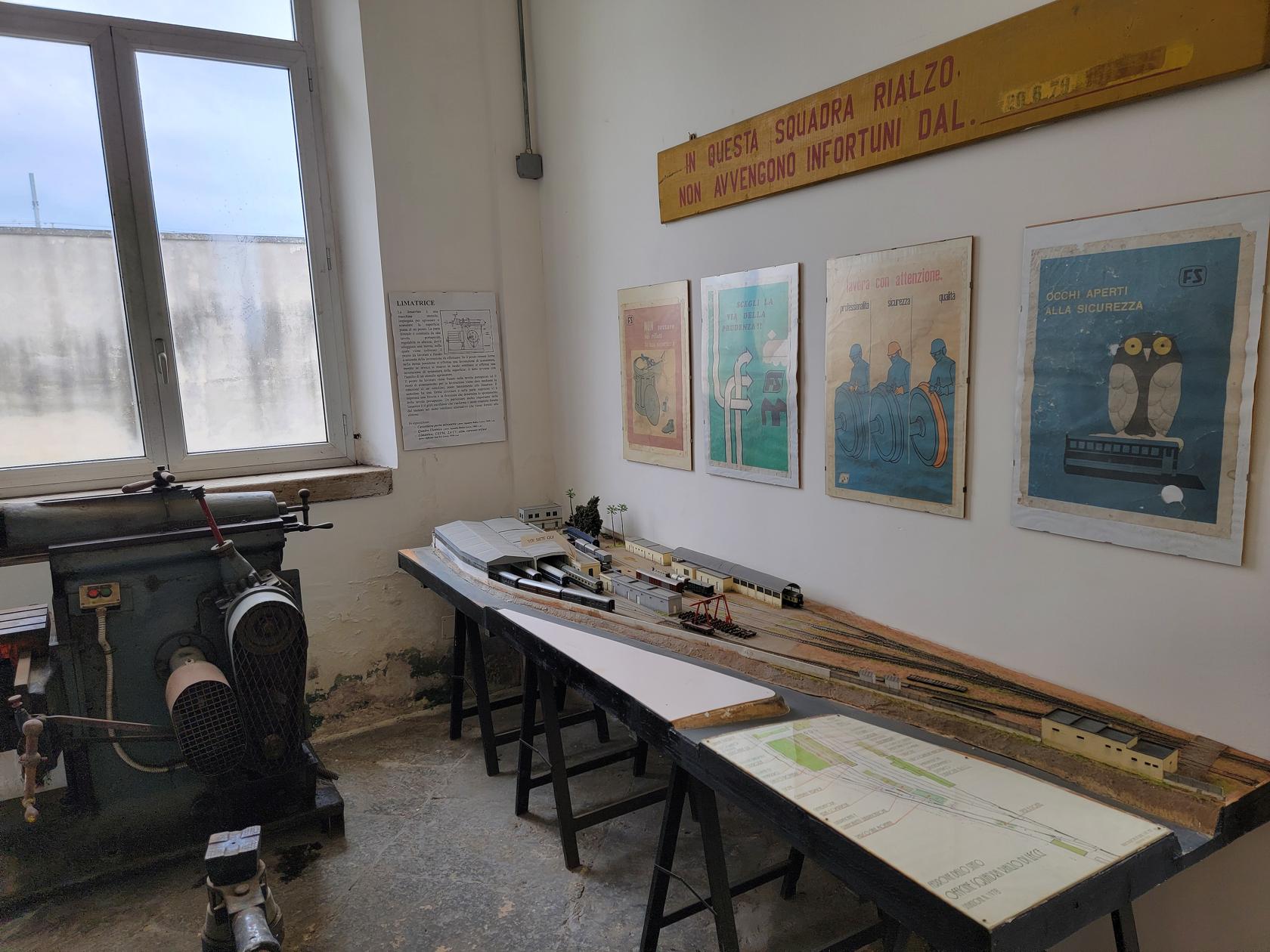
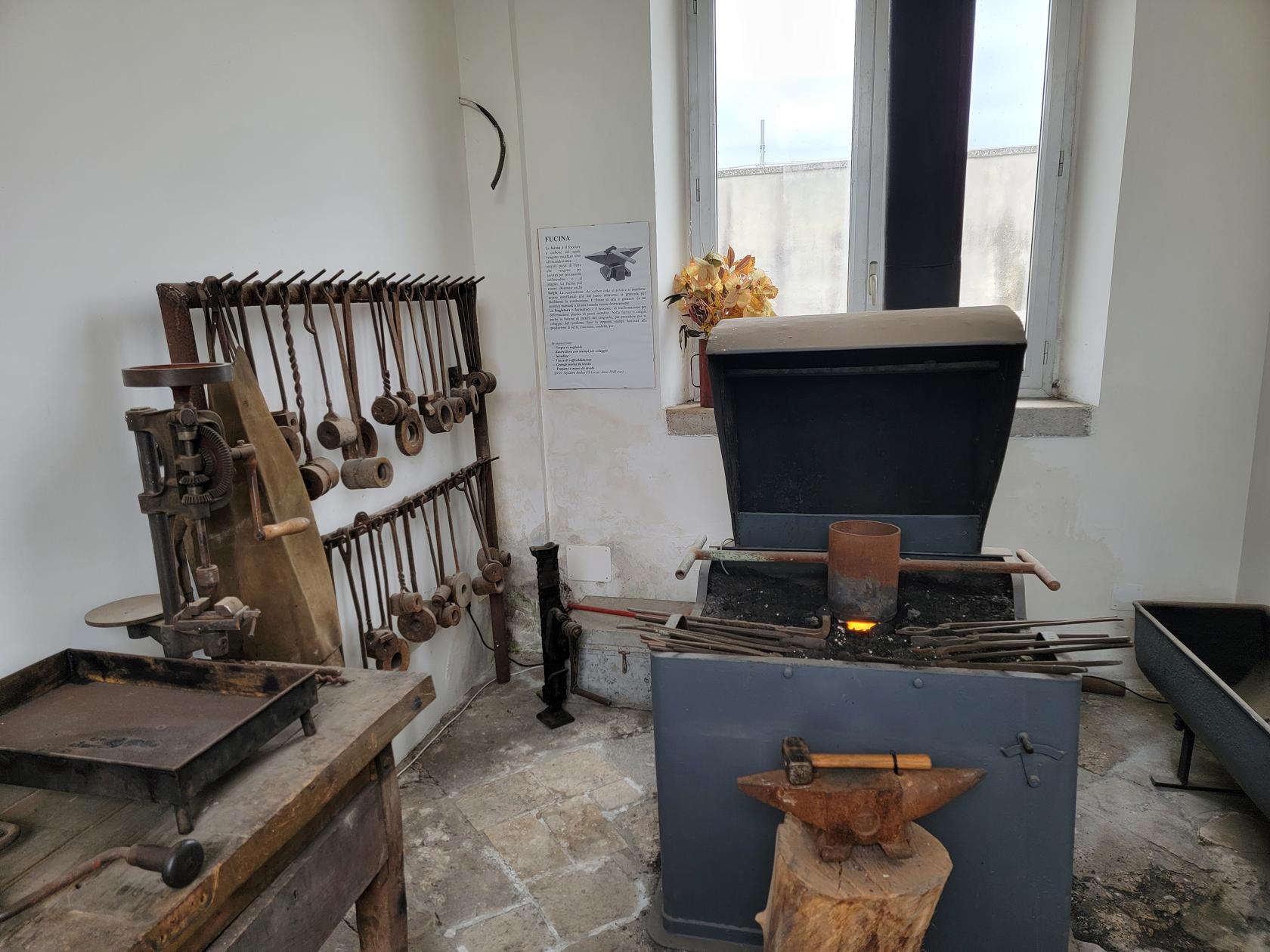
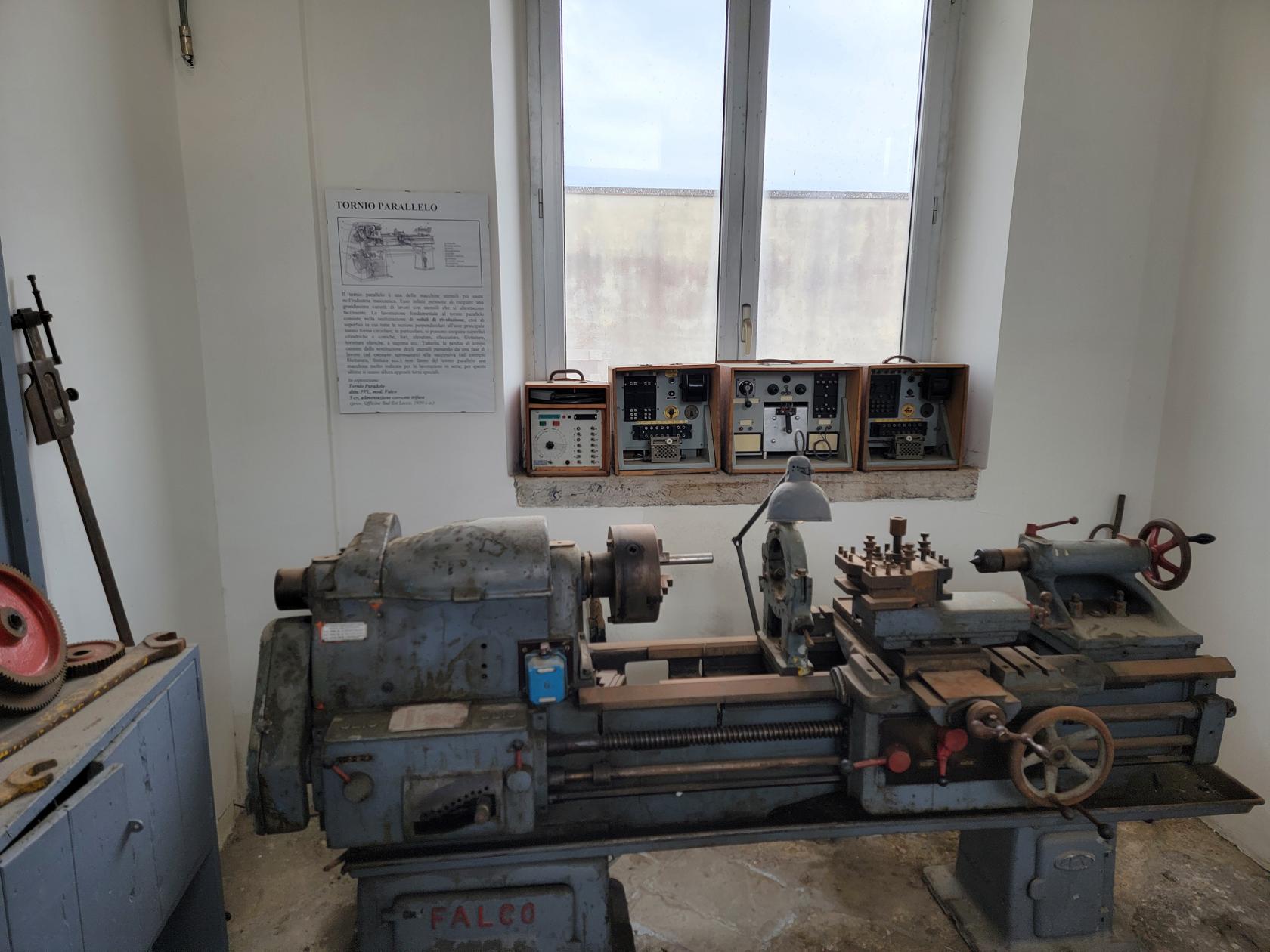
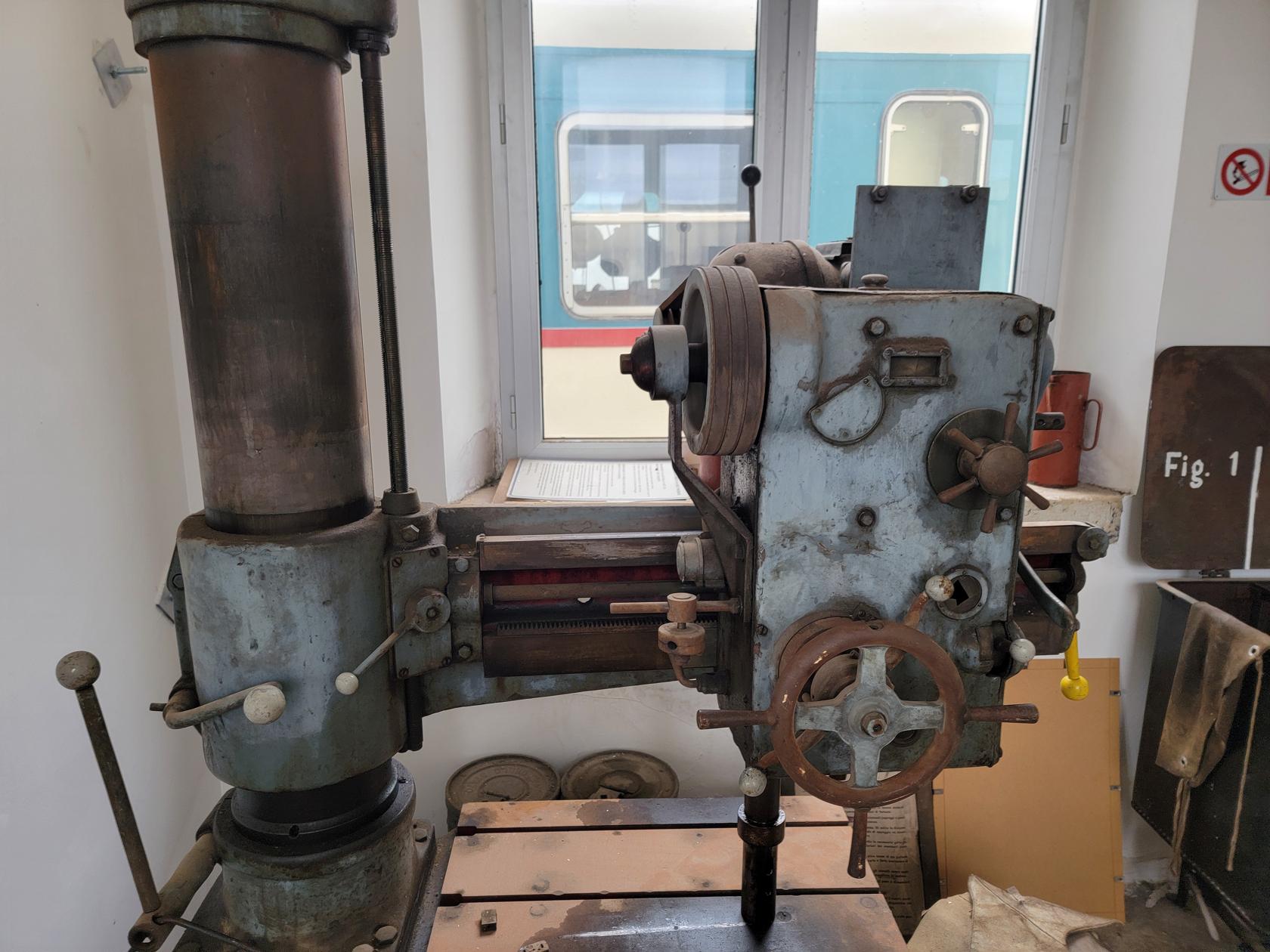
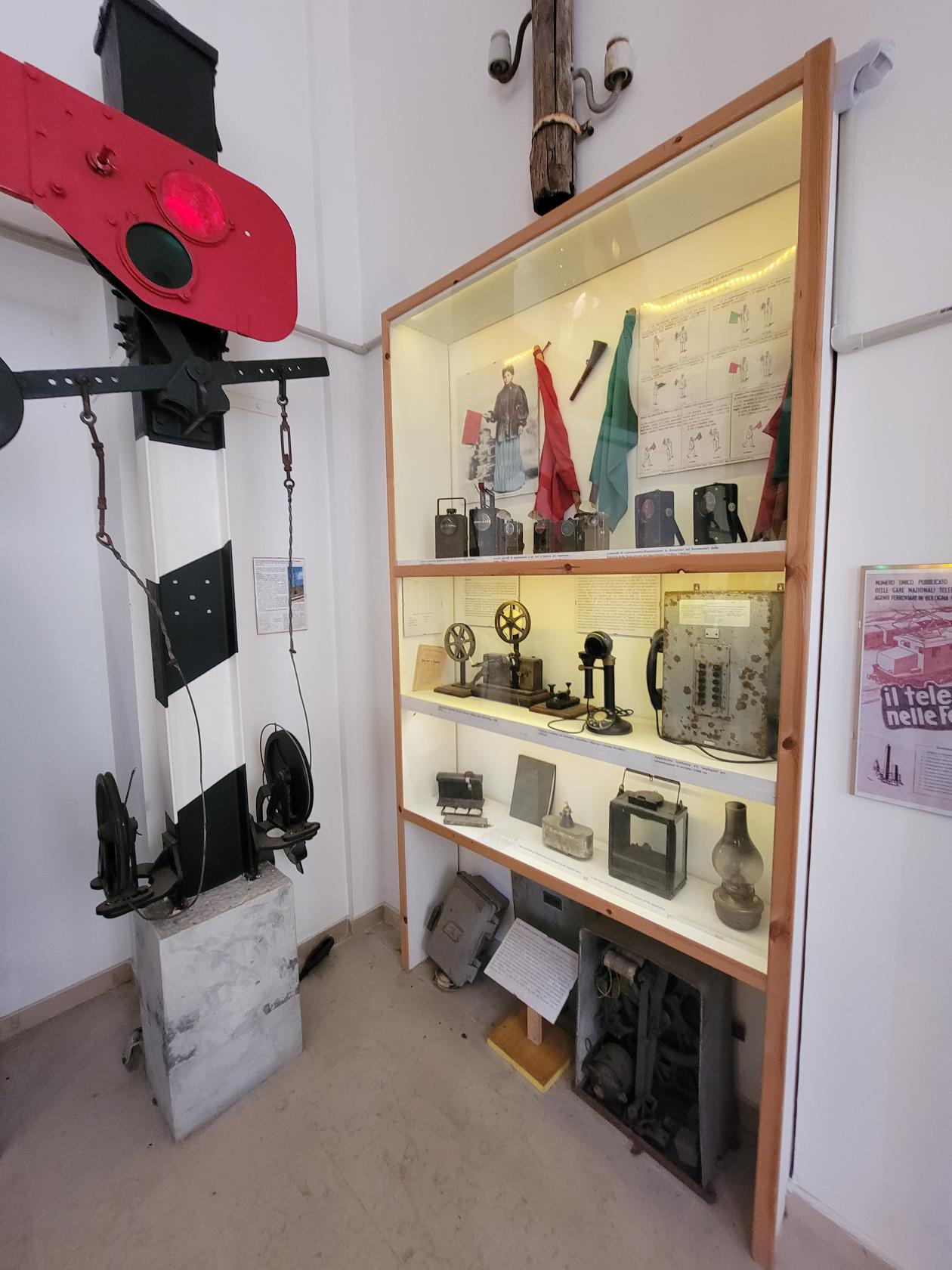
There is a fairly large display on railroad communications from the mid to later twentieth century. Multiple versions of telephony equipment, switch control rooms and even maintenance shops with an old forge.
Museo Ferroviario della Puglia – Models – Lecce, Italy
Museo Ferroviario della Puglia – Devices Used In The Yard – Lecce, Italy
Museo Ferroviario della Puglia – Devices Used In The Yard – Lecce, Italy
Museo Ferroviario della Puglia – Devices Used In The Yard – Lecce, Italy
Museo Ferroviario della Puglia – Devices Used In The Yard – Lecce, Italy
Museo Ferroviario della Puglia – Devices Used In The Yard – Lecce, Italy
Museo Ferroviario della Puglia – Devices Used In The Yard – Lecce, Italy
Museo Ferroviario della Puglia – Devices Used In The Yard – Lecce, Italy
Museo Ferroviario della Puglia – Old Signals, Switches and Signs – Lecce, Italy
Museo Ferroviario della Puglia – Erick enjoying the displays – Lecce, Italy
Museo Ferroviario della Puglia – Erick posing in his uniform – Lecce, Italy
Museo Ferroviario della Puglia – Old Communication Equipement – Lecce, Italy
Museo Ferroviario della Puglia – Old Communication Equipement – Lecce, Italy
Museo Ferroviario della Puglia – Diorama – Lecce, Italy
Museo Ferroviario della Puglia – Blacksmith tools – Lecce, Italy
Museo Ferroviario della Puglia – Old Machine Lathe – Lecce, Italy
Museo Ferroviario della Puglia – Drill Press – Lecce, Italy
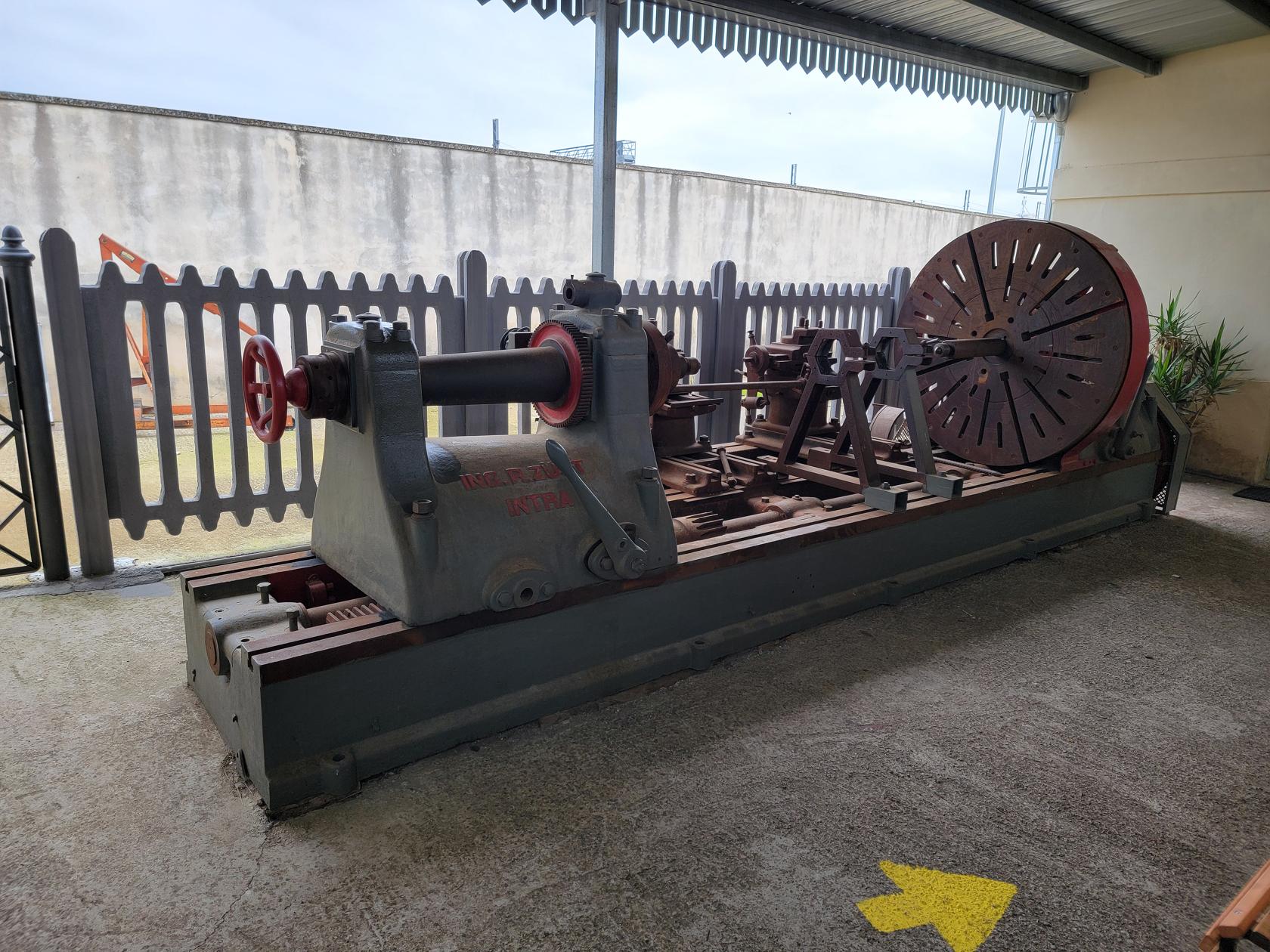
Museo Ferroviario della Puglia – Old Giant Machine Lathe For Resurfacing Wheels And Other Rail Equipment – Lecce, Italy
Museo Ferroviario della Puglia – Old Electric Devices, Radios and Communications – Lecce, Italy
The Museo Ferroviario della Puglia, or Railway Museum of Puglia, is located on Via G. Codacci Pisanelli 3 in Lecce. From the entrance of the castle, it is probably a twenty-five to thirty minute walk along Viale Francesco Lo Re under the railroad underpass and to the right; it is located behind the existing train station of Lecce.
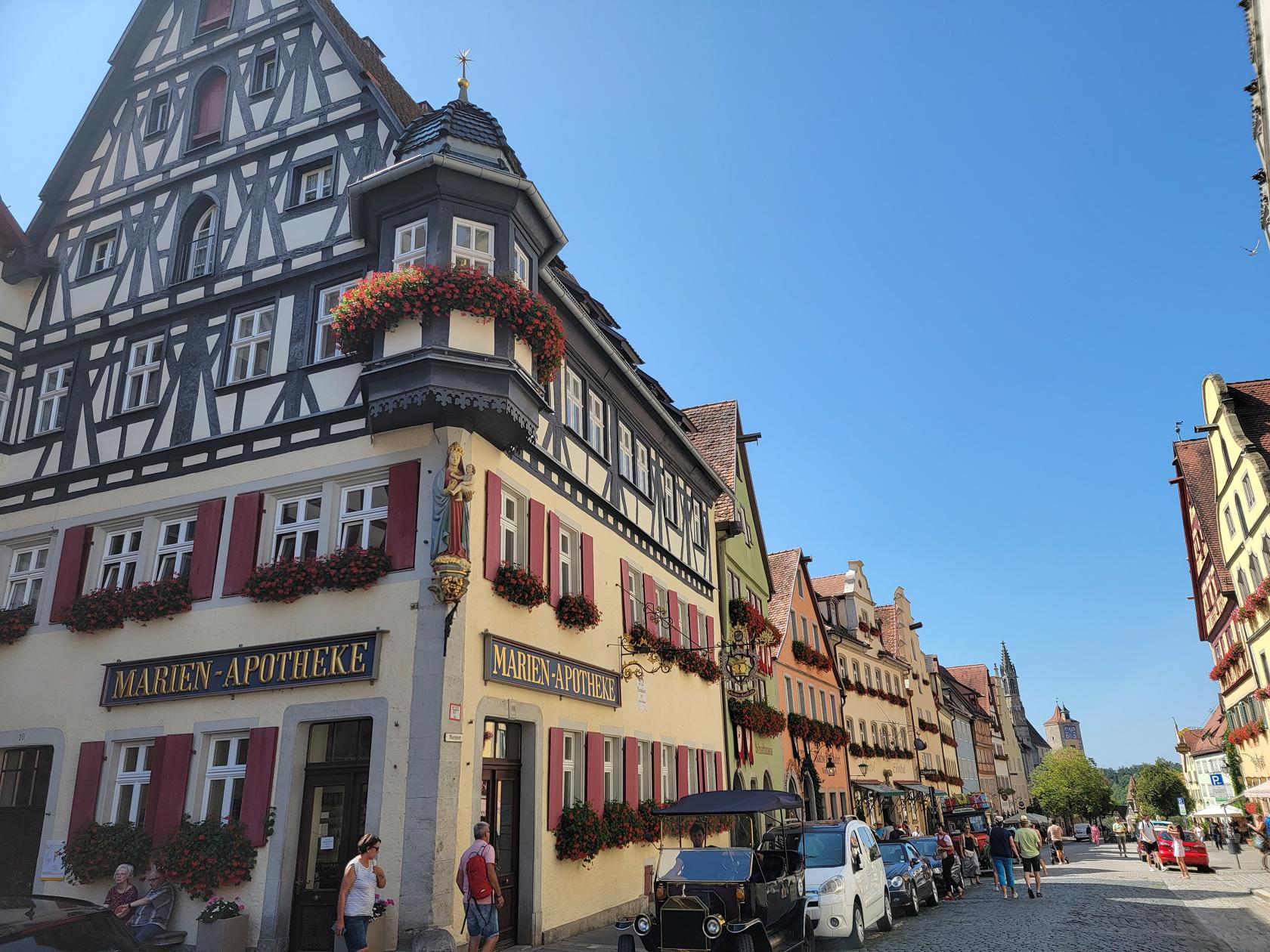
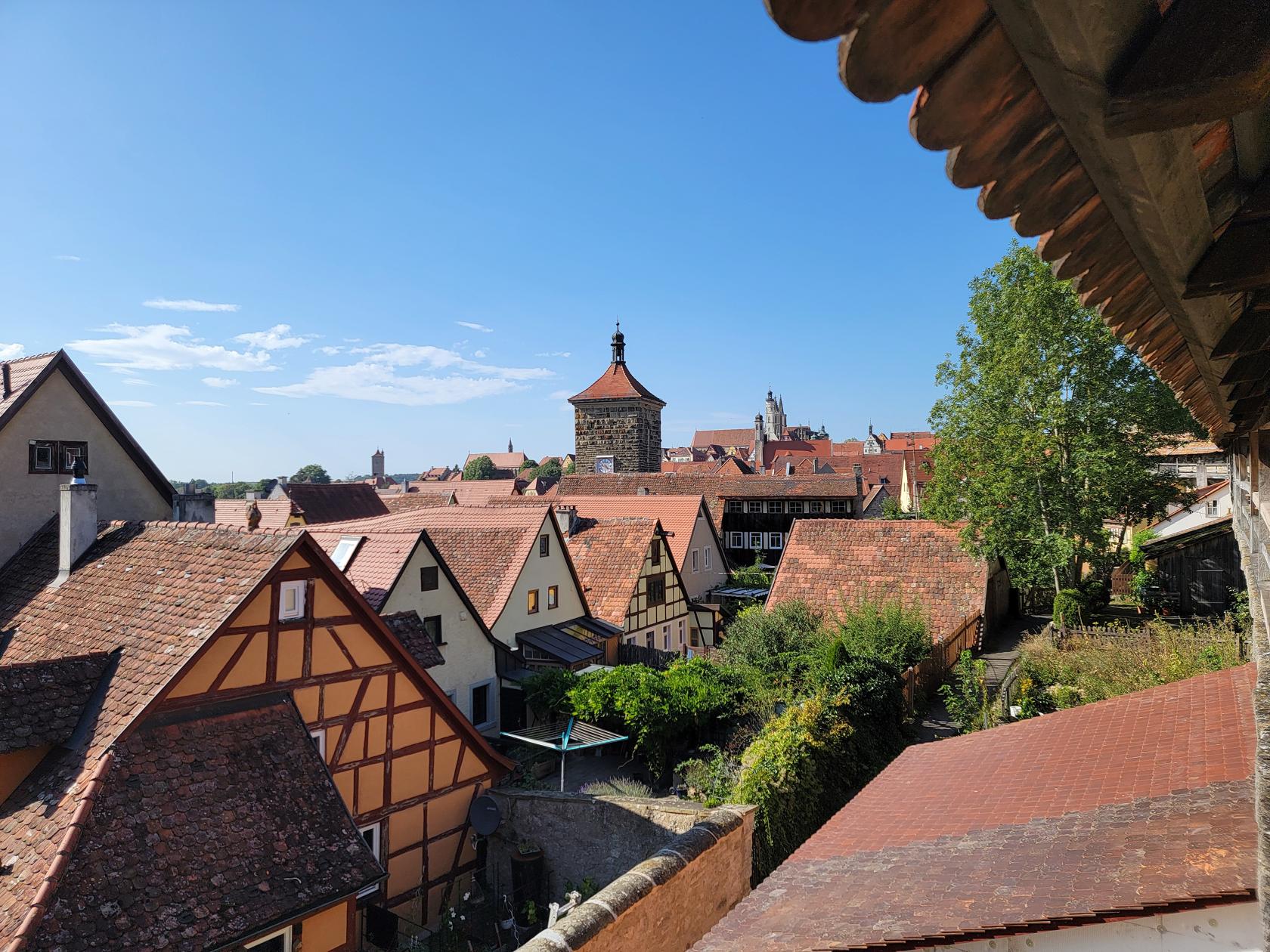
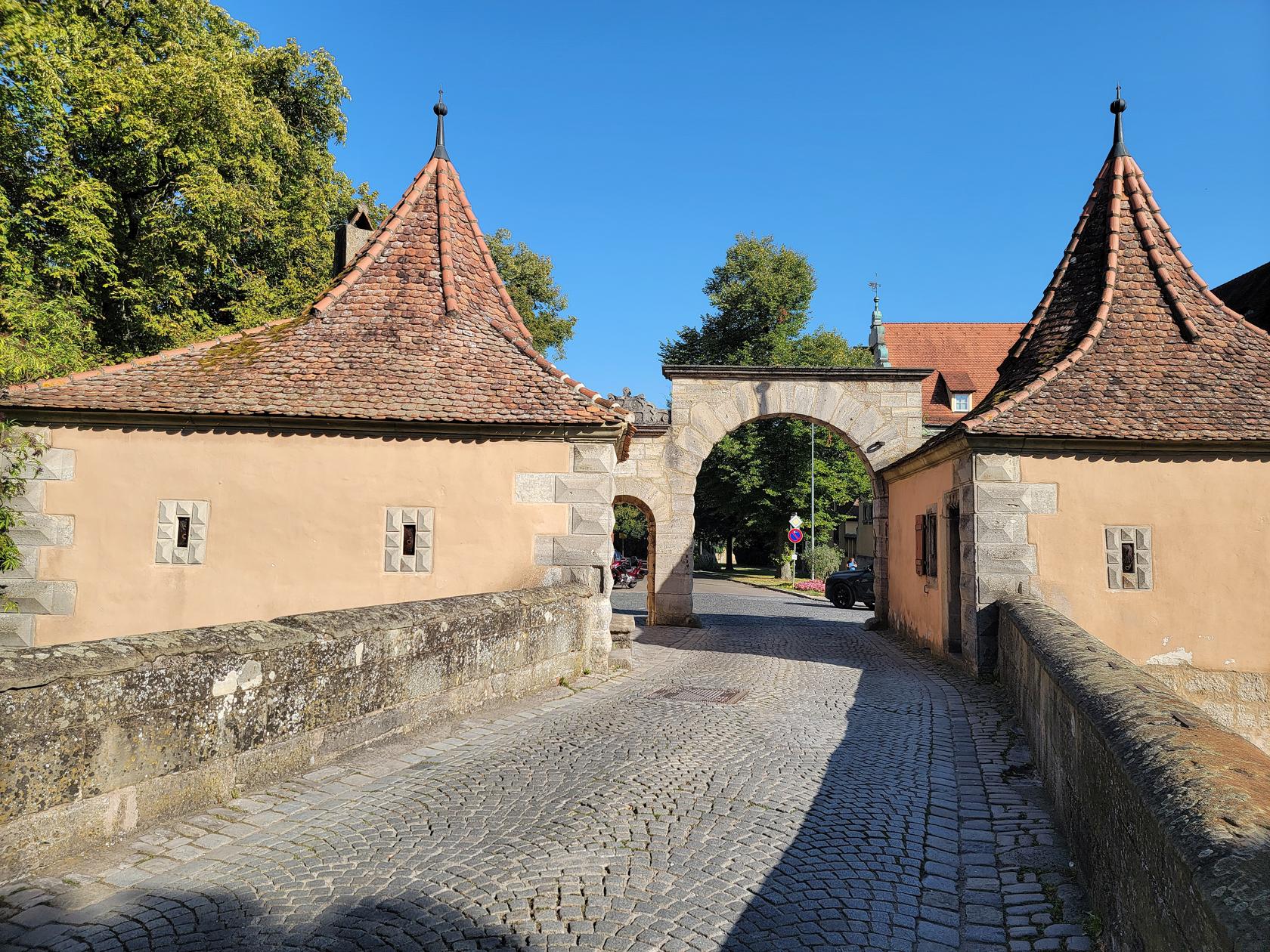
Rothenburg ob der Tauber is not doubt a miracle town amongst towns in Germany. Partially bombed during World War II, it took an American officer and the German commander of the city at the time to spare this town. The results of which, we are able to enjoy this middle-age town as it appears today, forty percent of which was nevertheless destroyed by allied bombing before it was stopped.
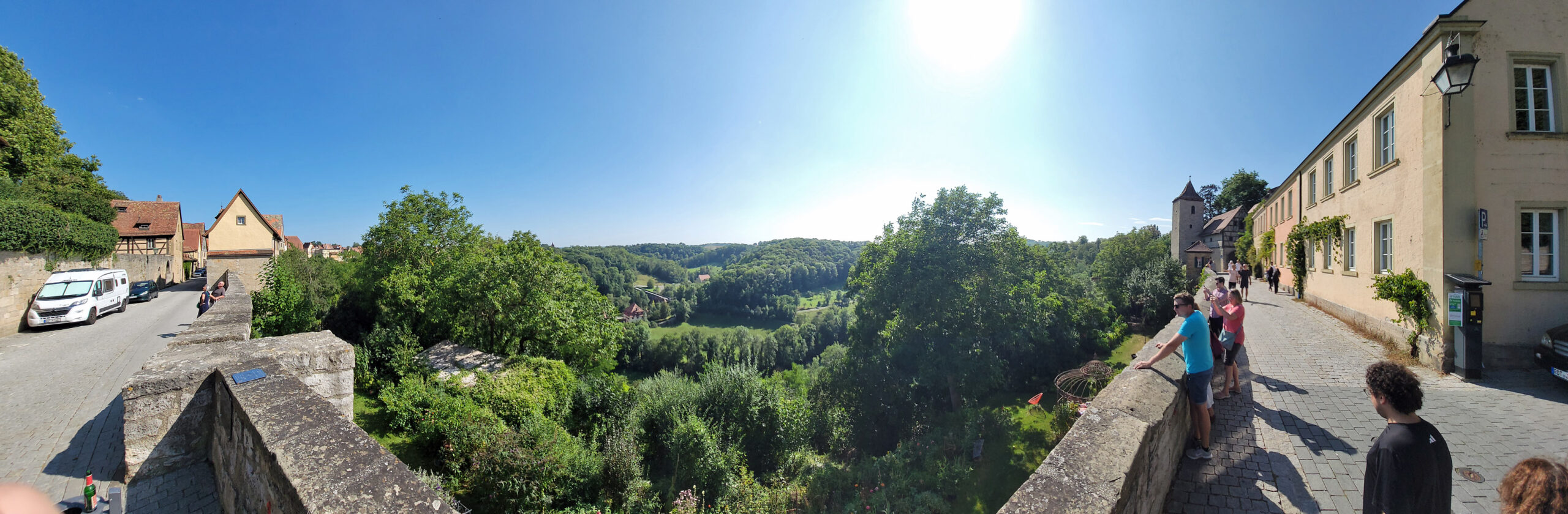
Panorama Tauber river valley – Rothenburg ob der Tauber, Germany
It is located in Bavaria and is about one and a half to two hours drive from the Frankfurt area on the A3 and A7, weather permitting of course. There are several parking areas to choose from for visitors, though we found street parking a block or so further out for free.
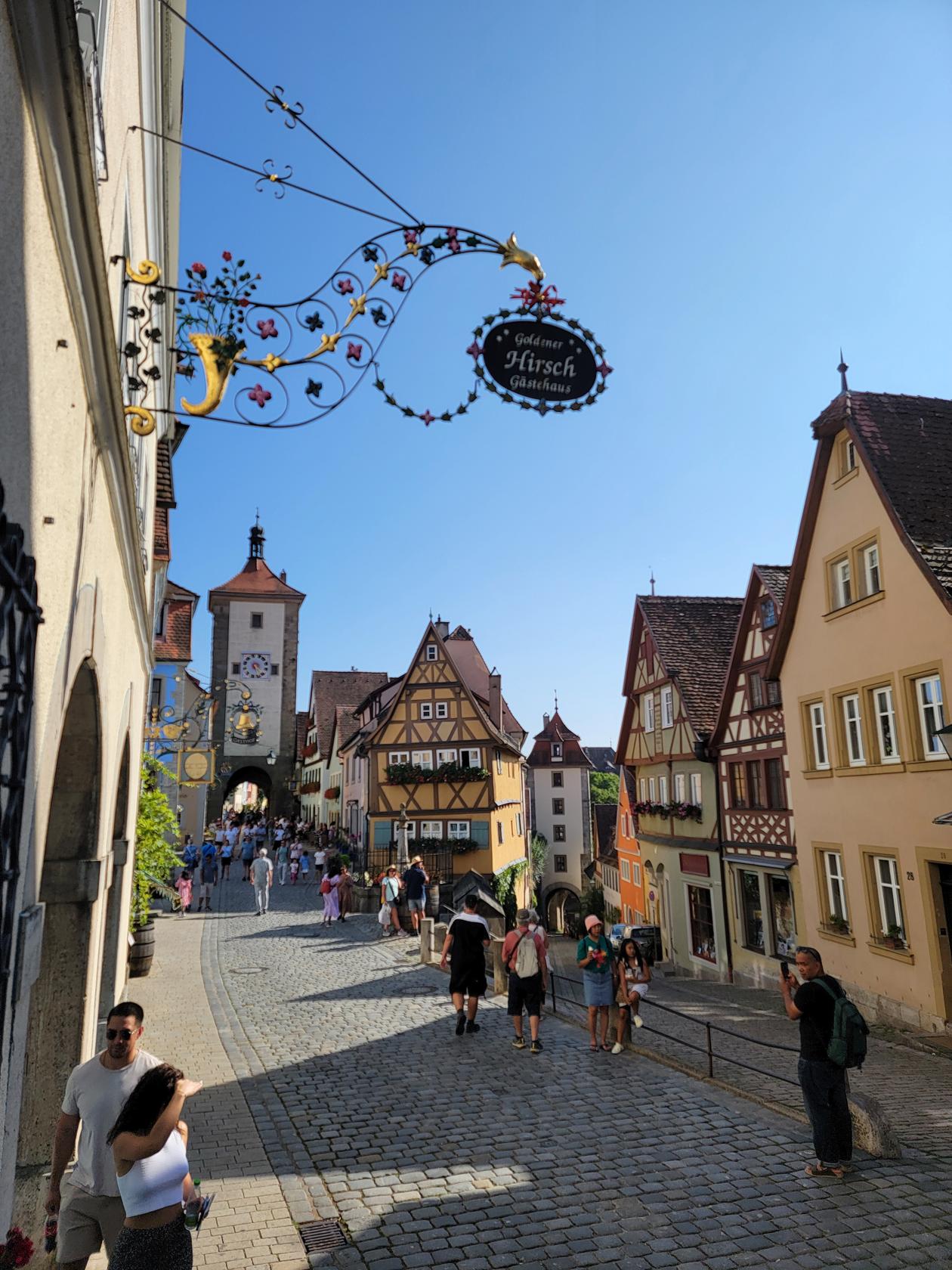
Plönlein with Kobolzeller Steige and Spitalgasse – Rothenburg ob der Tauber, Germany
Rothenburg ob der Tauber
If it weren’t for it’s strange history at the end of World War II, this town would be easily overlooked. Not necessarily by Germans, but definitely by international tourists always looking for some interesting sidebar or reason to visit. Luckily, even on a Saturday, we did not find it all that busy for a tourist destination. We only hope that it will stay that way.
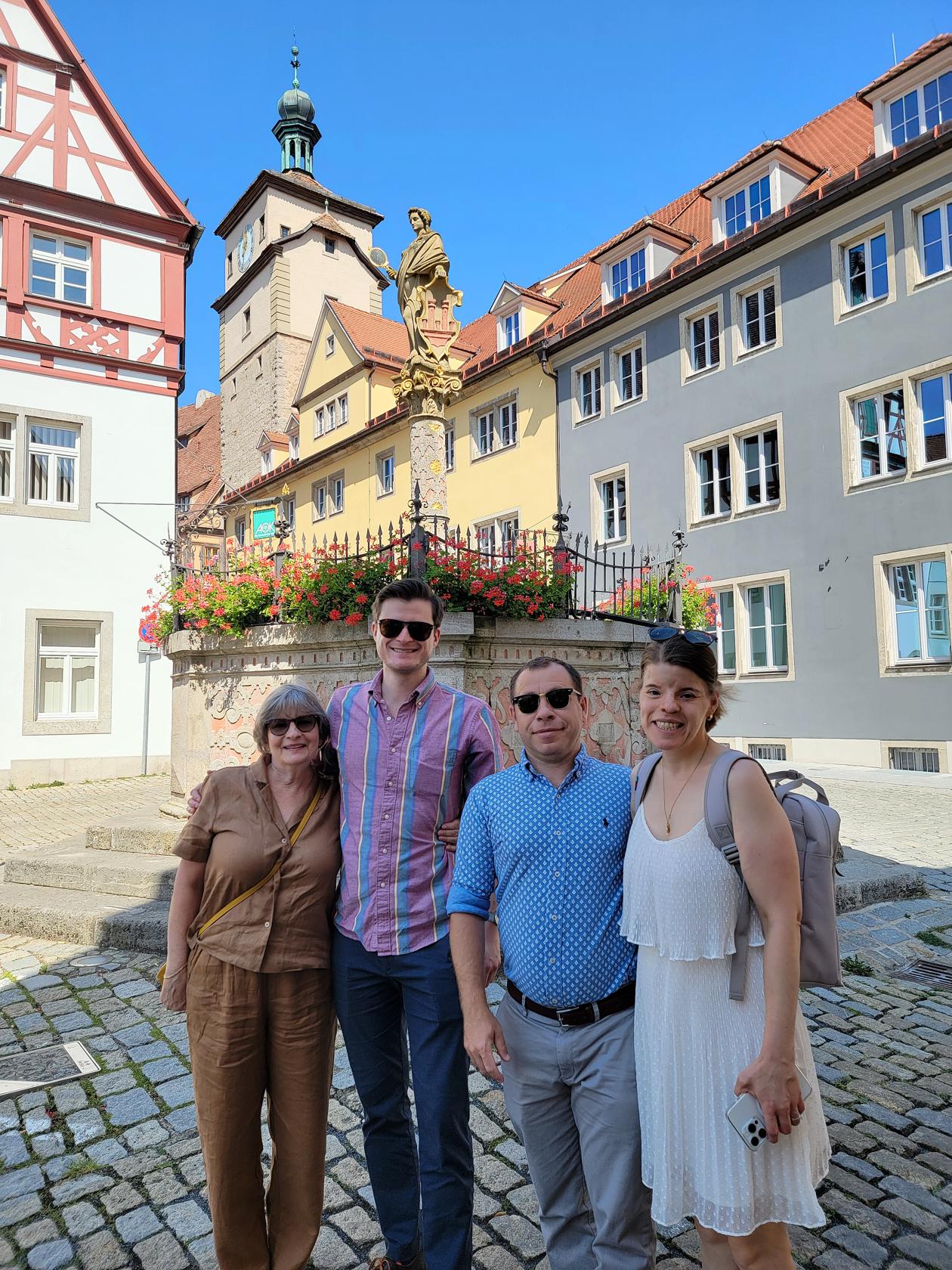
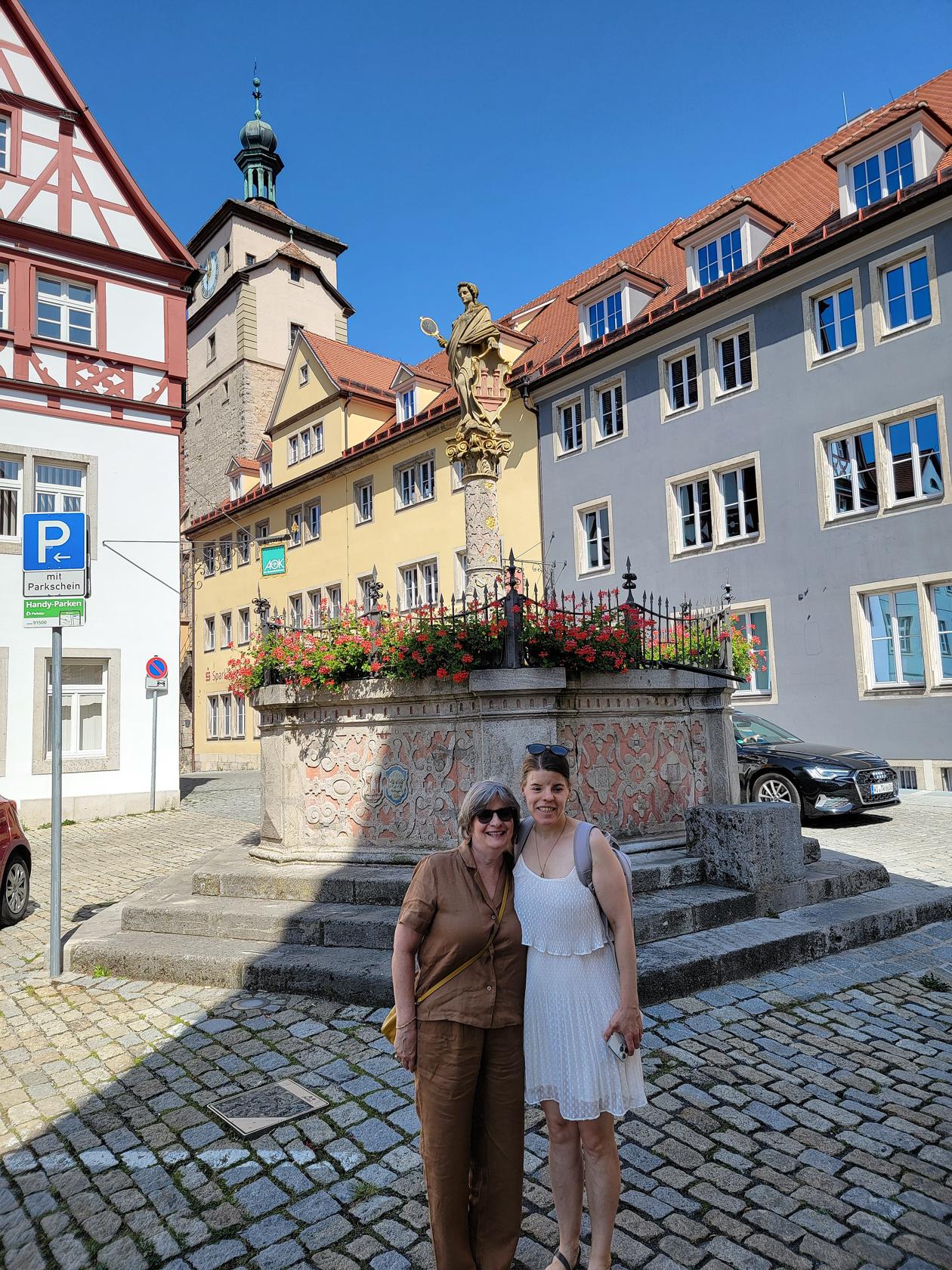
Patti, Dana, Gabi and Ericka – Seelbrunnen – Rothenburg ob der Tauber, Germany
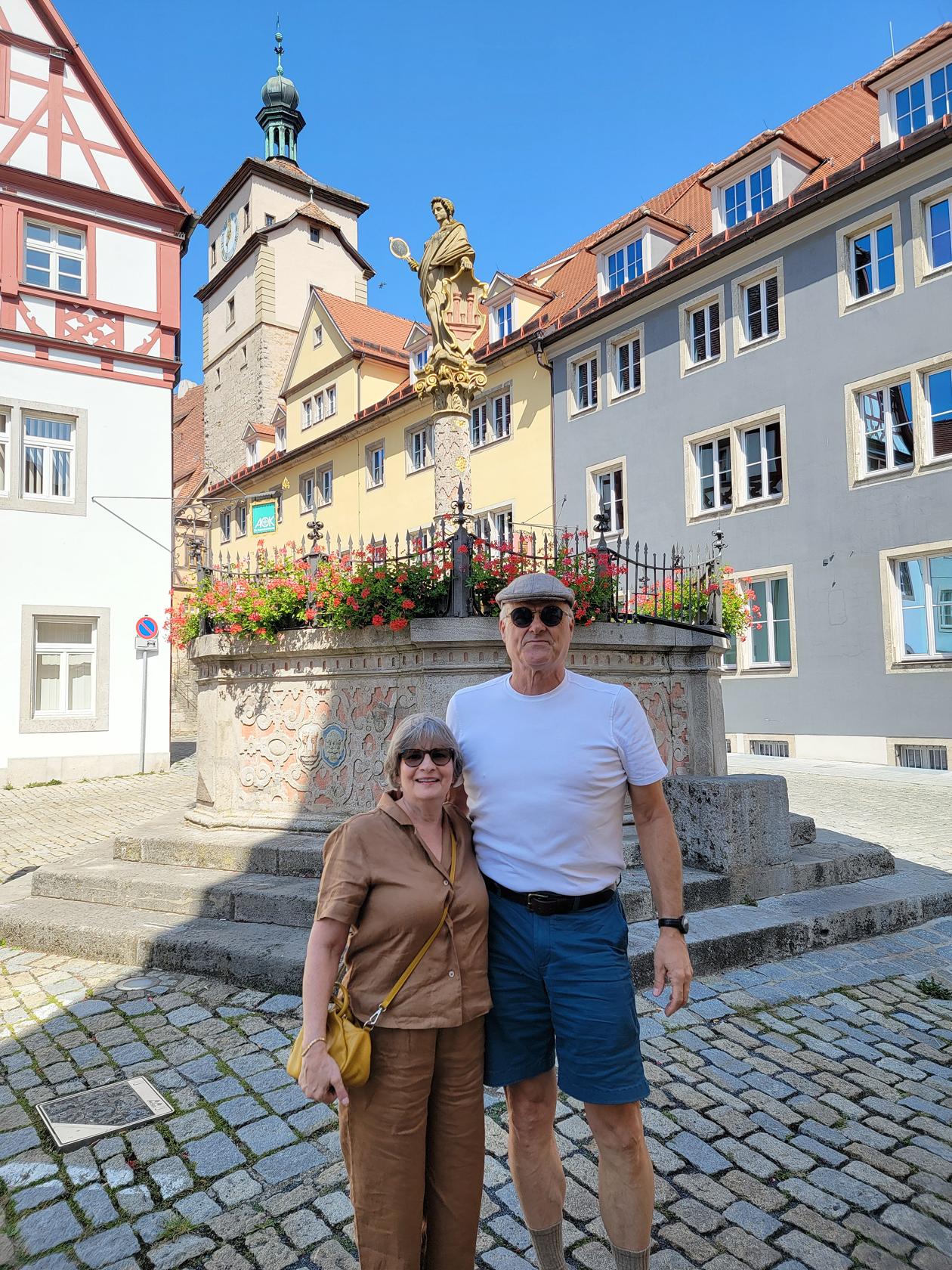
Patti and Erick – Seelbrunnen – Rothenburg ob der Tauber, Germany
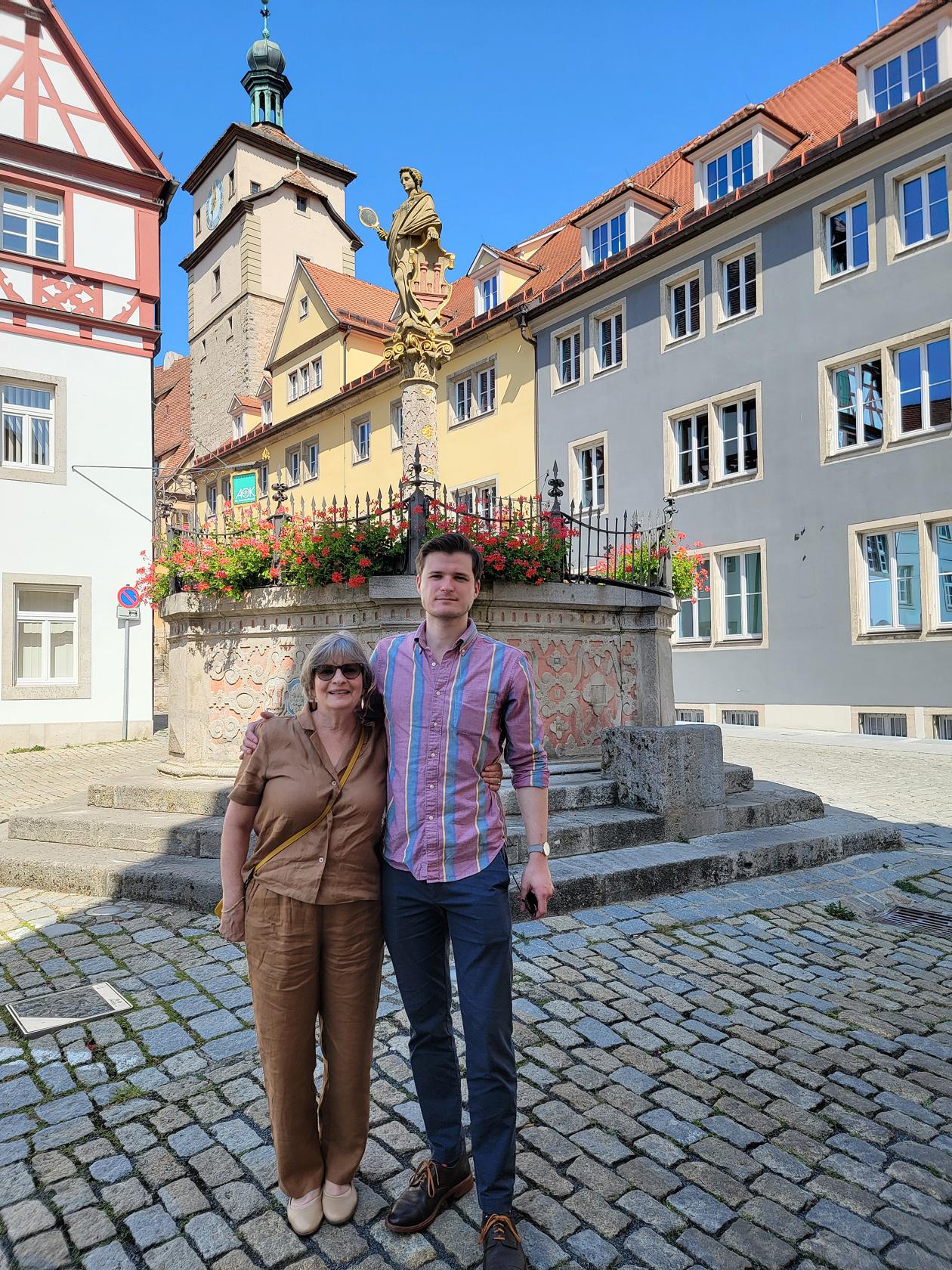
Patti and Dana – Seelbrunnen – Rothenburg ob der Tauber, Germany
Ericka and Dana – Seelbrunnen – Rothenburg ob der Tauber, Germany
Patti and Ericka – Seelbrunnen – Rothenburg ob der Tauber, Germany
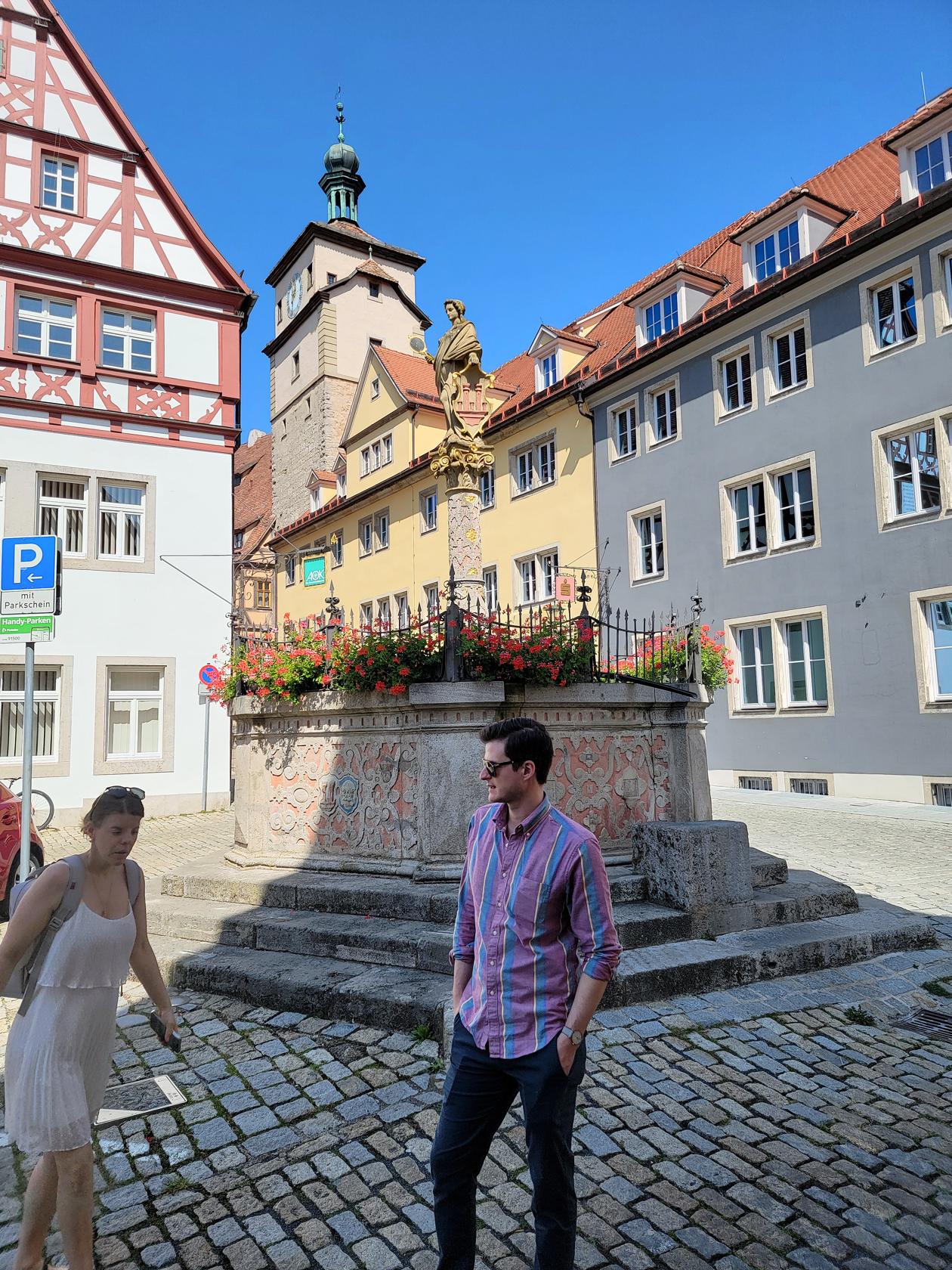
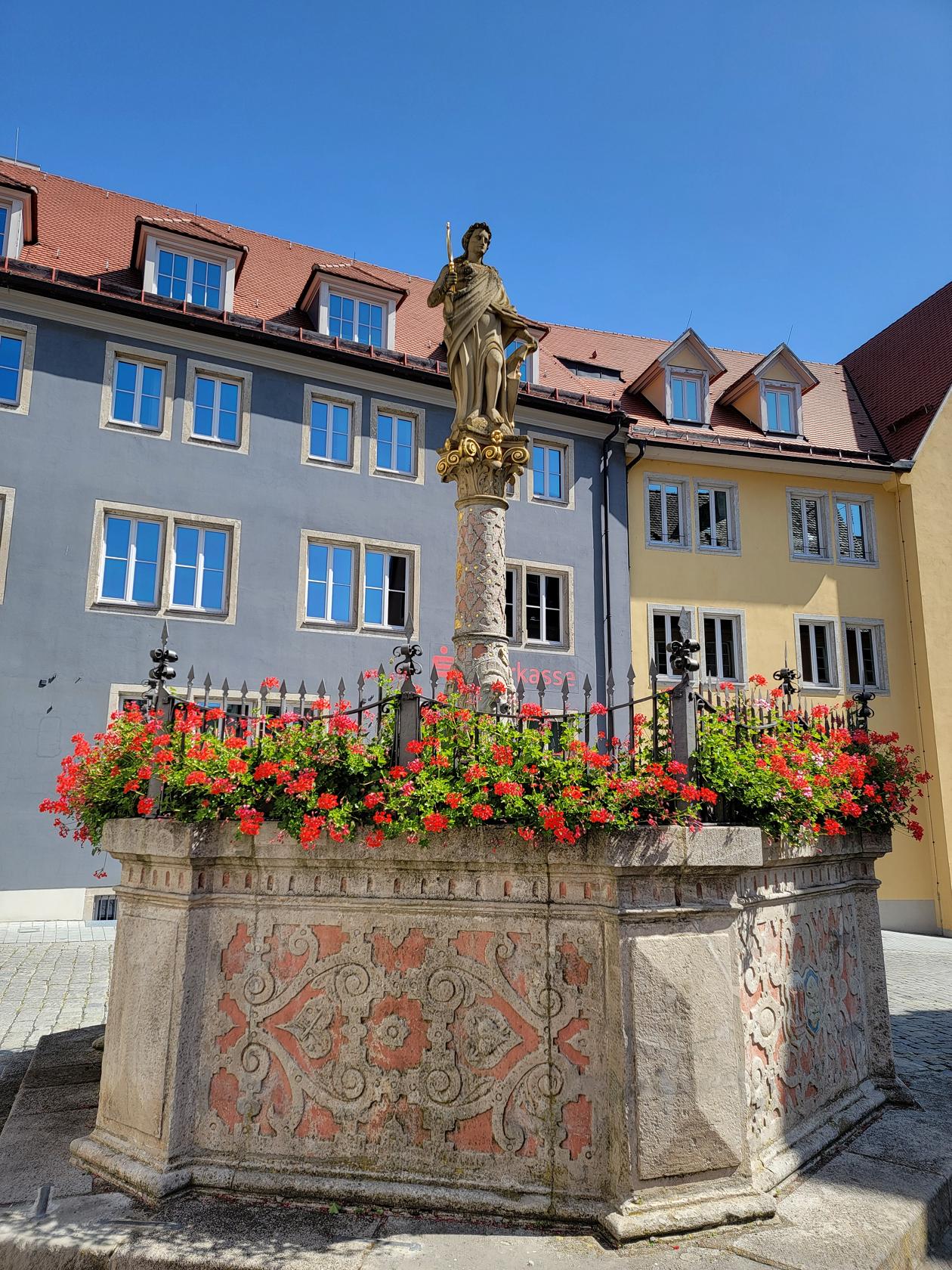
Seelbrunnen – Rothenburg ob der Tauber, Germany
Marktplatz
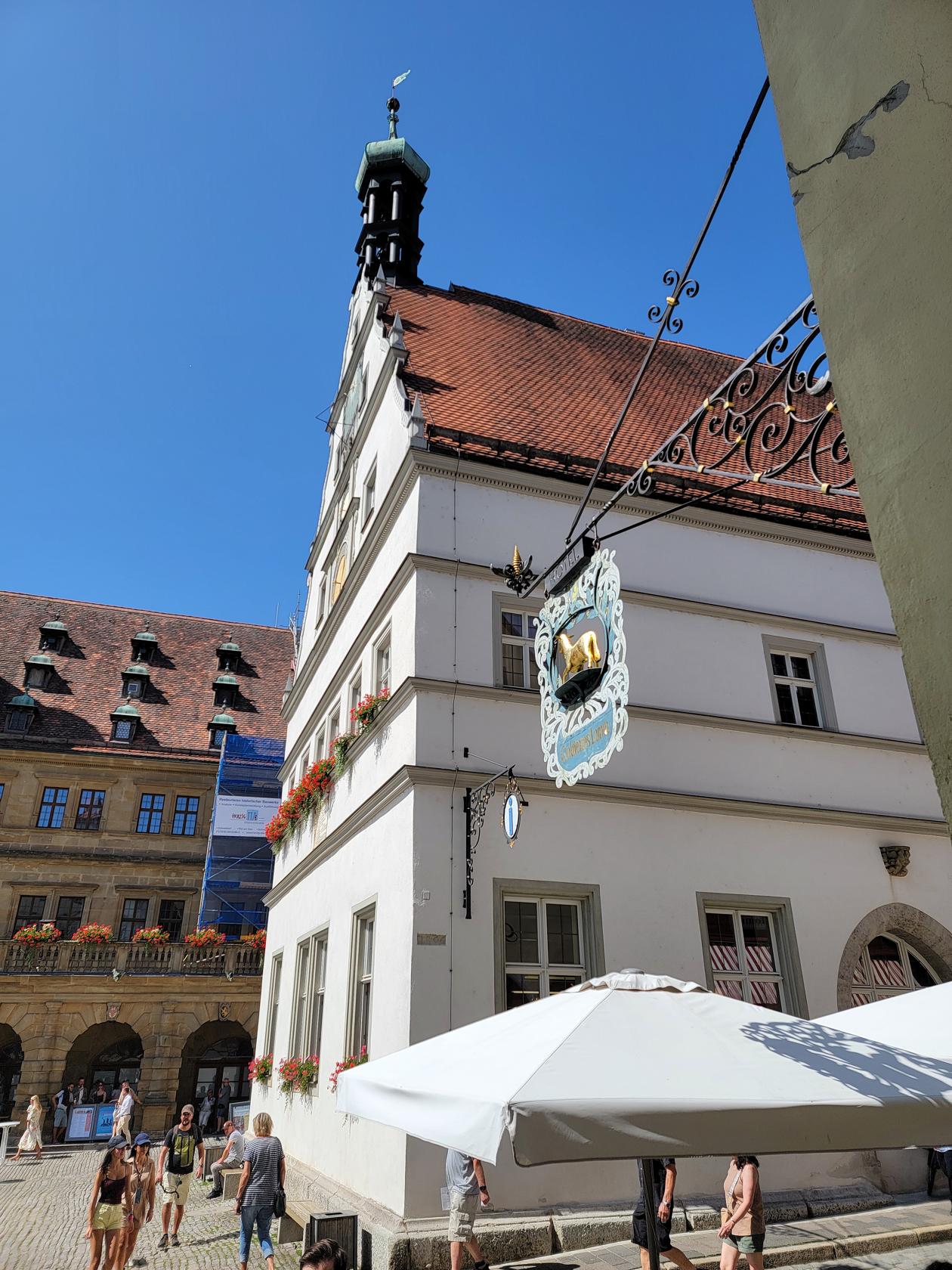
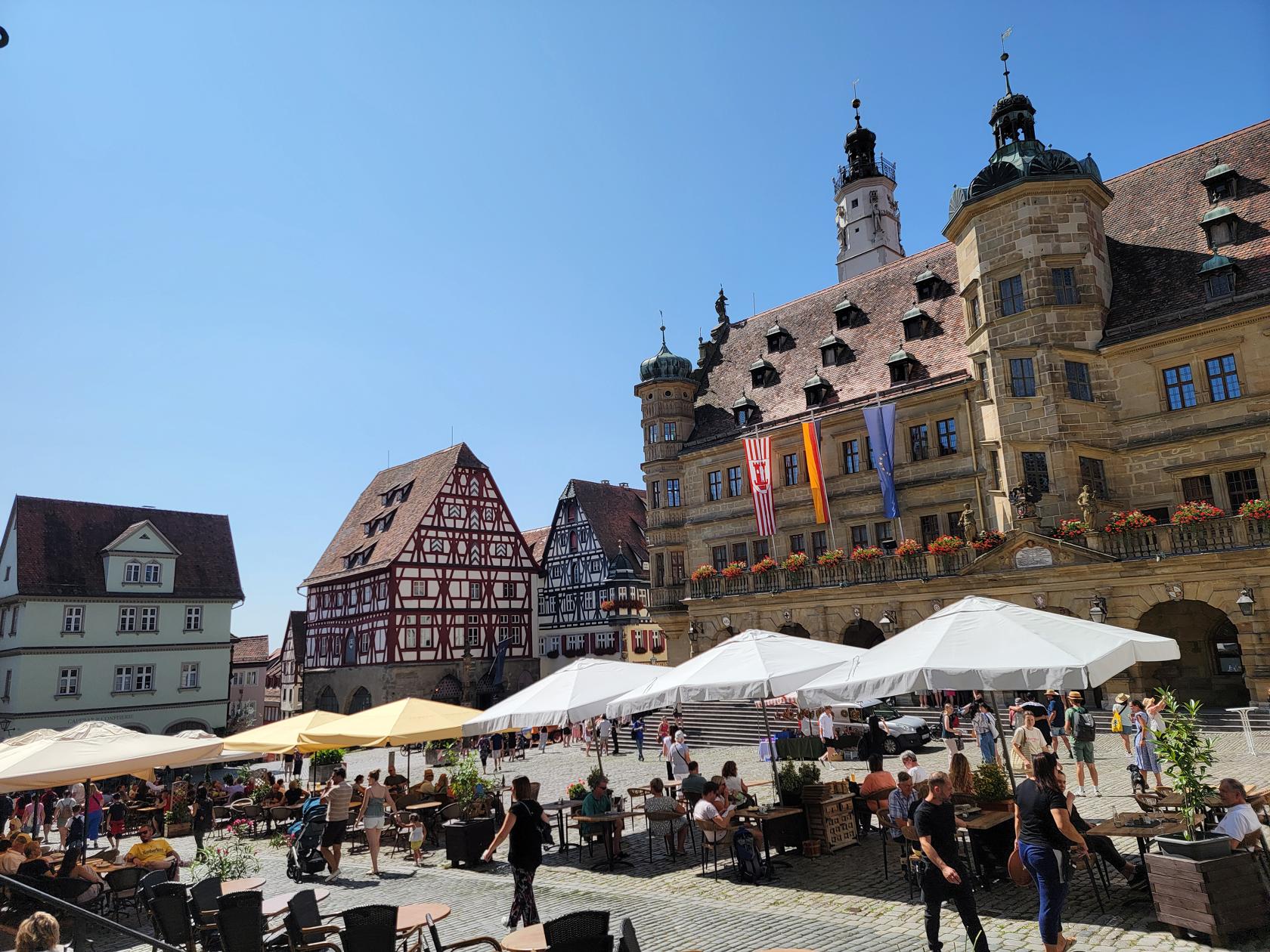
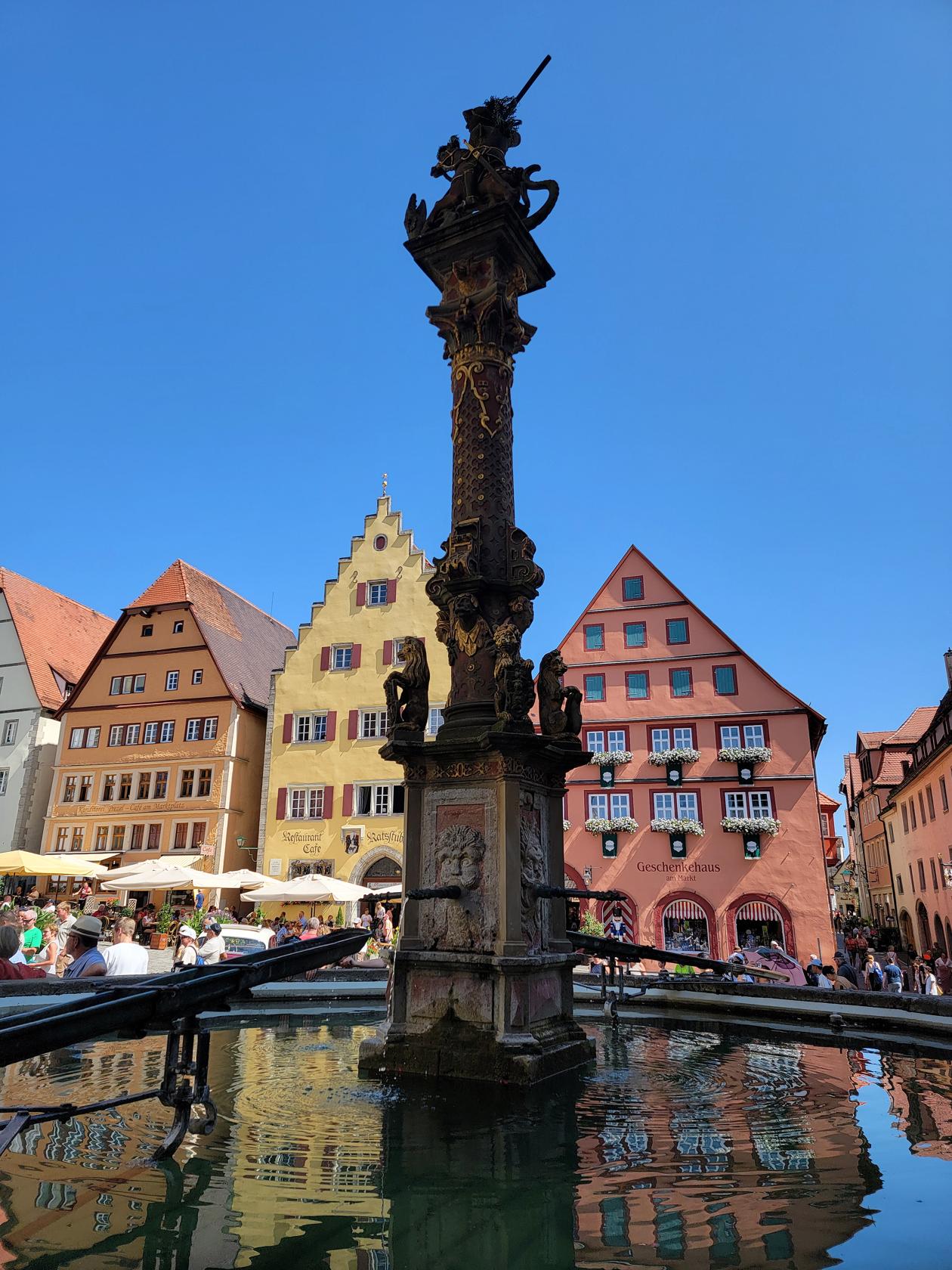
The center square hosts various shops and restaurants, as well as the Town Hall and Ratstrinkstube Clock Tower. Saint George’s fountain can also be found here toward the lower part of the square.
Business shields – Rothenburg ob der Tauber, Germany
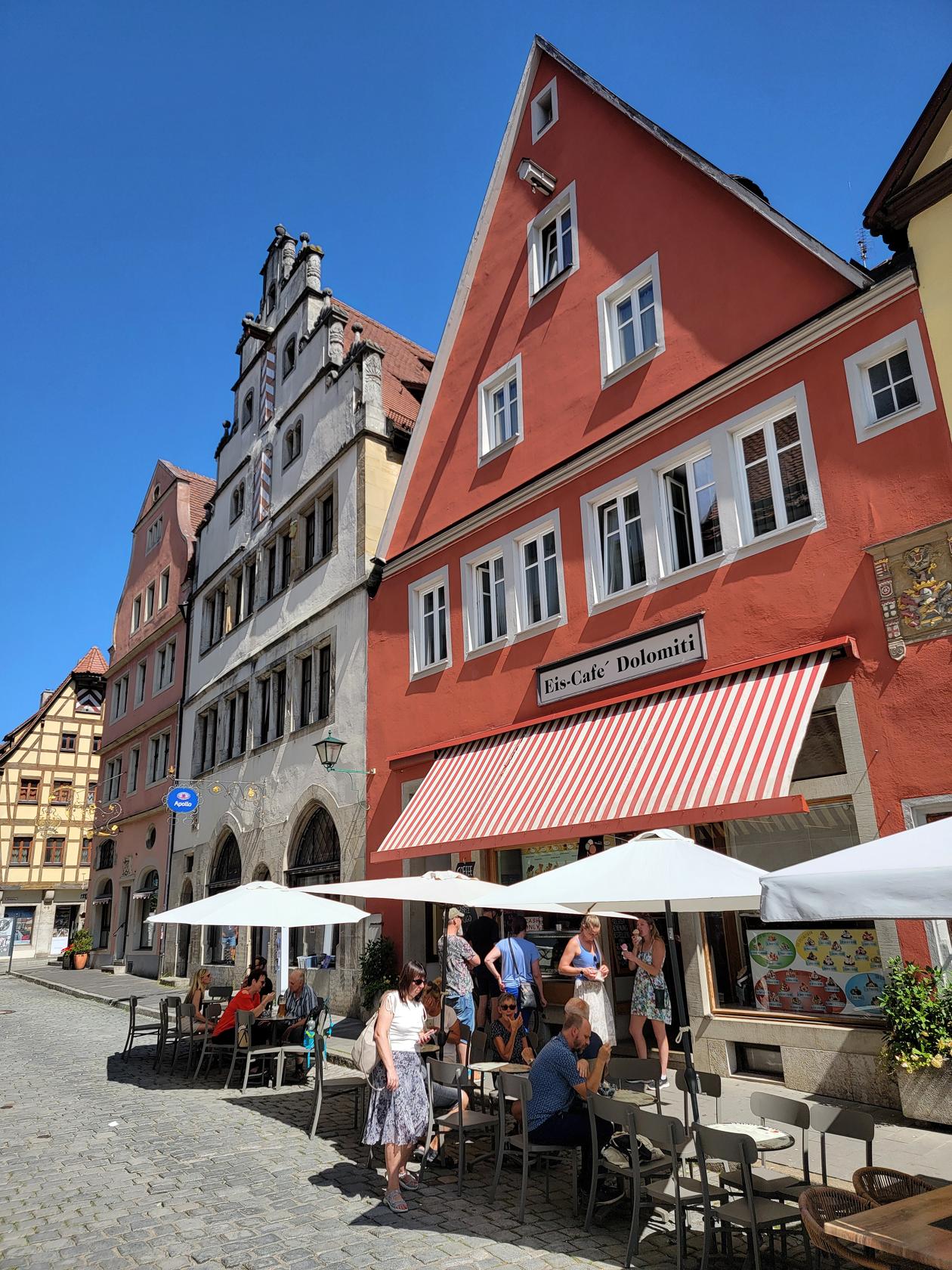
Italian Ice place – Rothenburg ob der Tauber, Germany
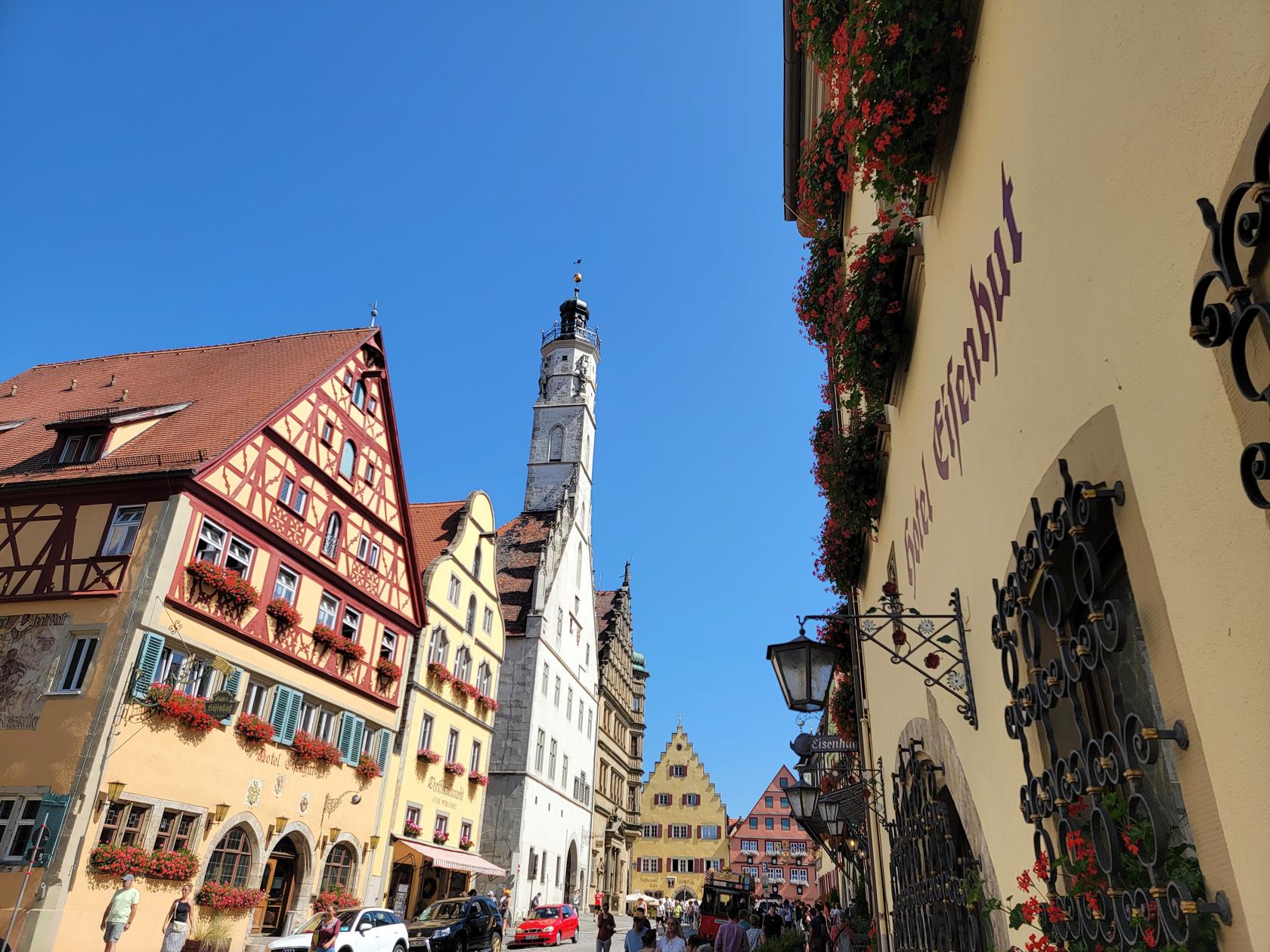
Spitalgasse with Spitalturm in distance – Rothenburg ob der Tauber, Germany
Marktplatz – Rothenburg ob der Tauber, Germany
Rathausturm – Rothenburg ob der Tauber, Germany
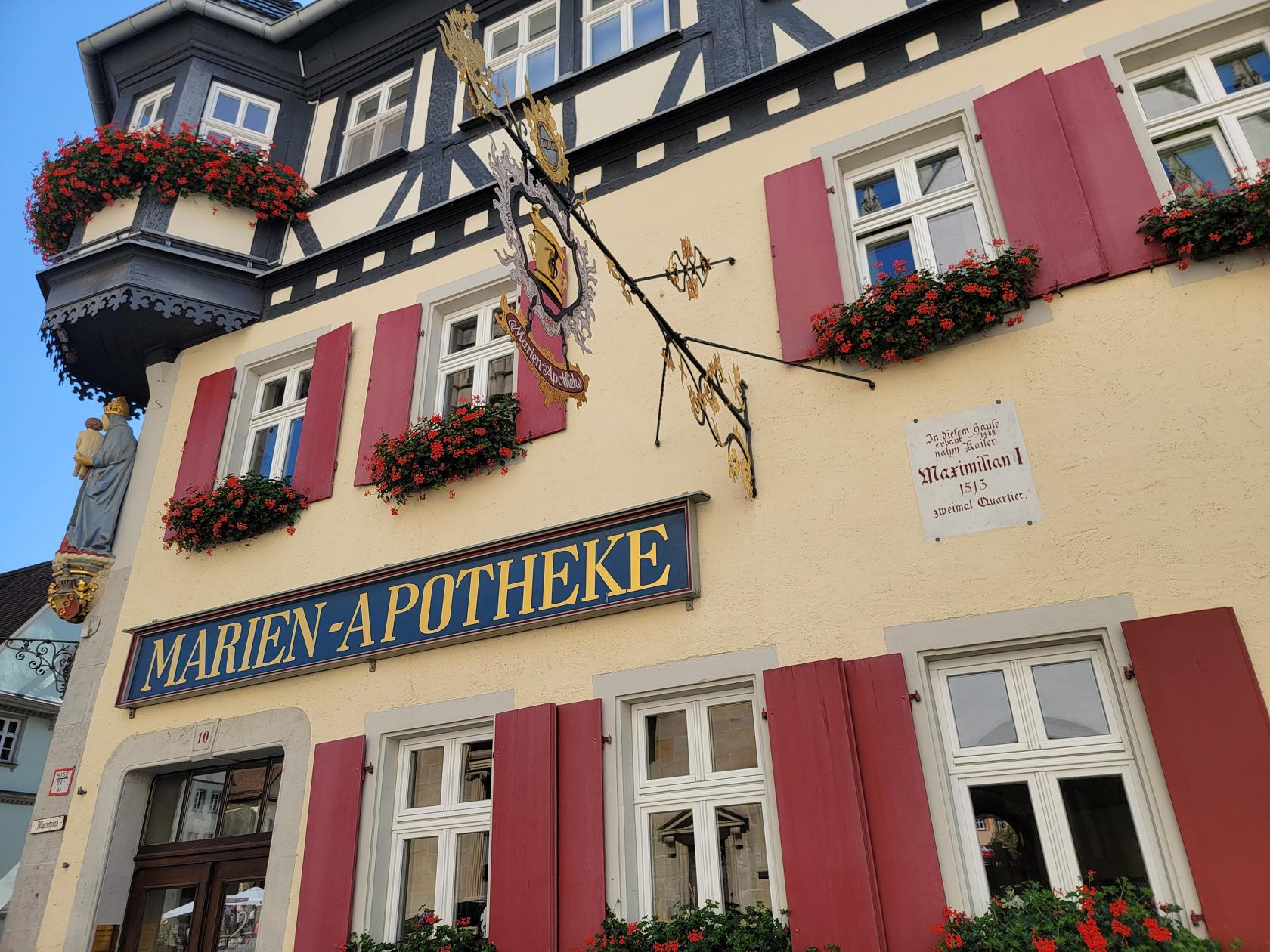
Apotheke shield – Rothenburg ob der Tauber, Germany
St. George fountain – Marktplatz – Rothenburg ob der Tauber, Germany
Dana – Rothenburg ob der Tauber, Germany
Towers
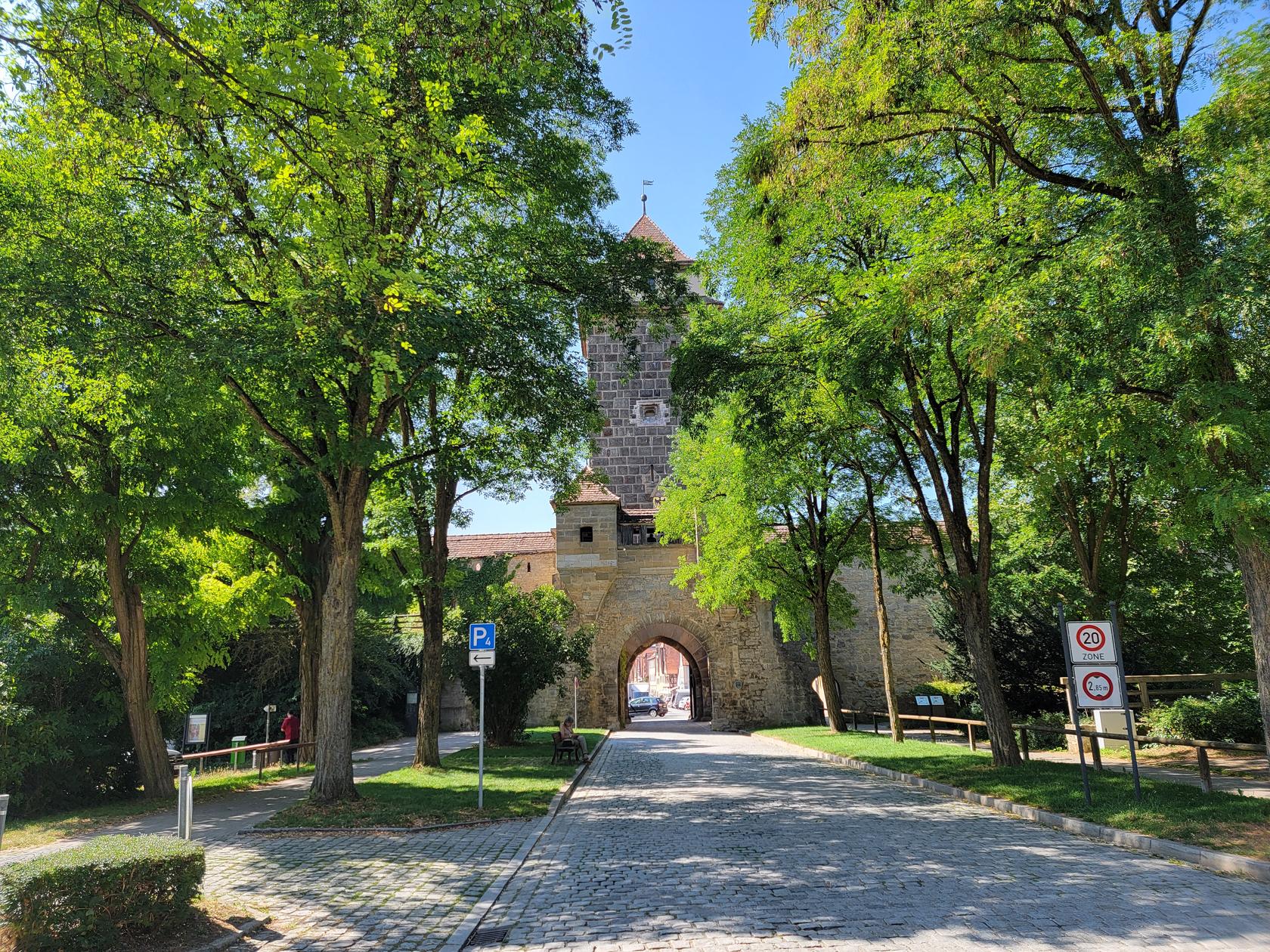
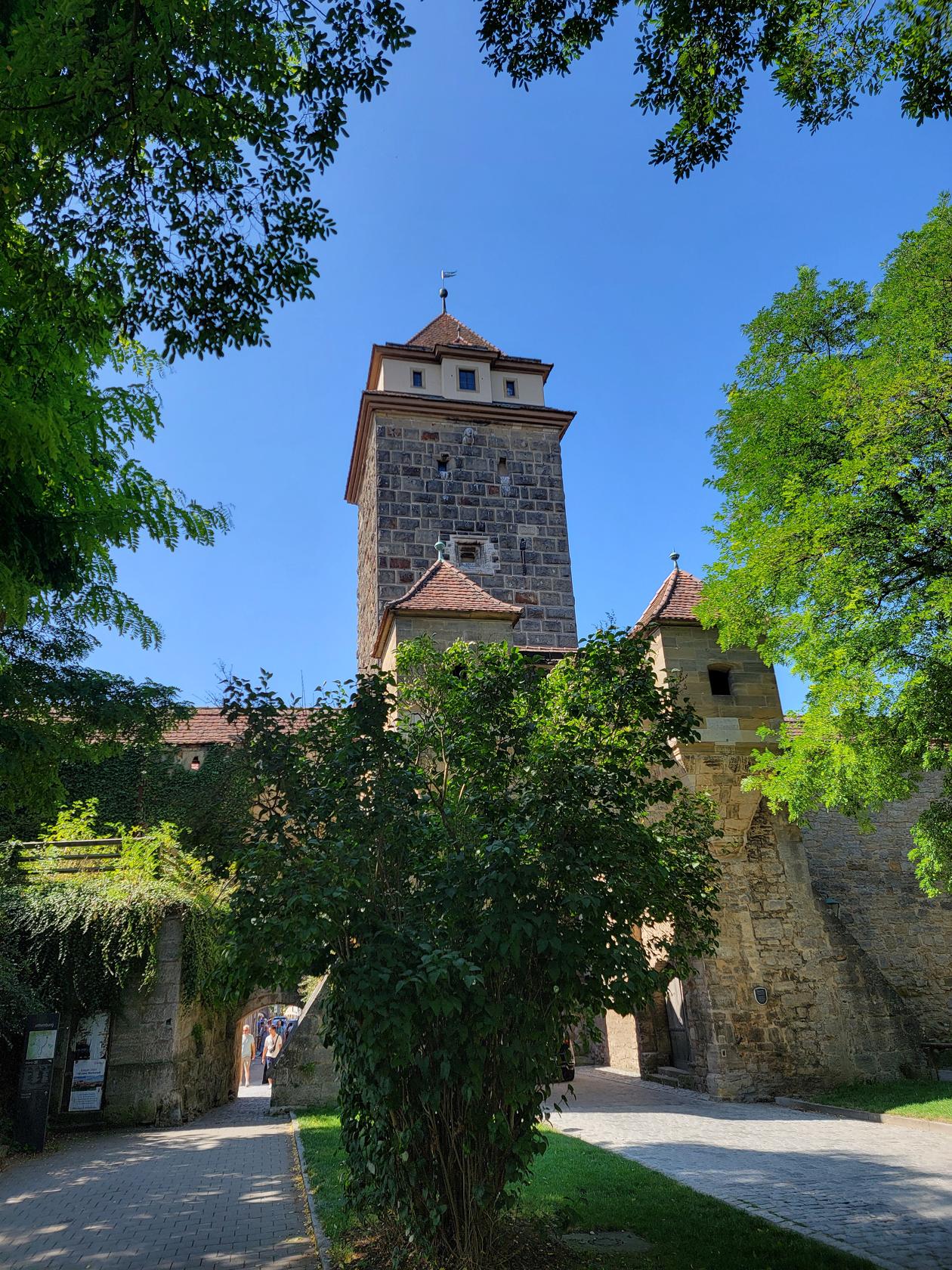
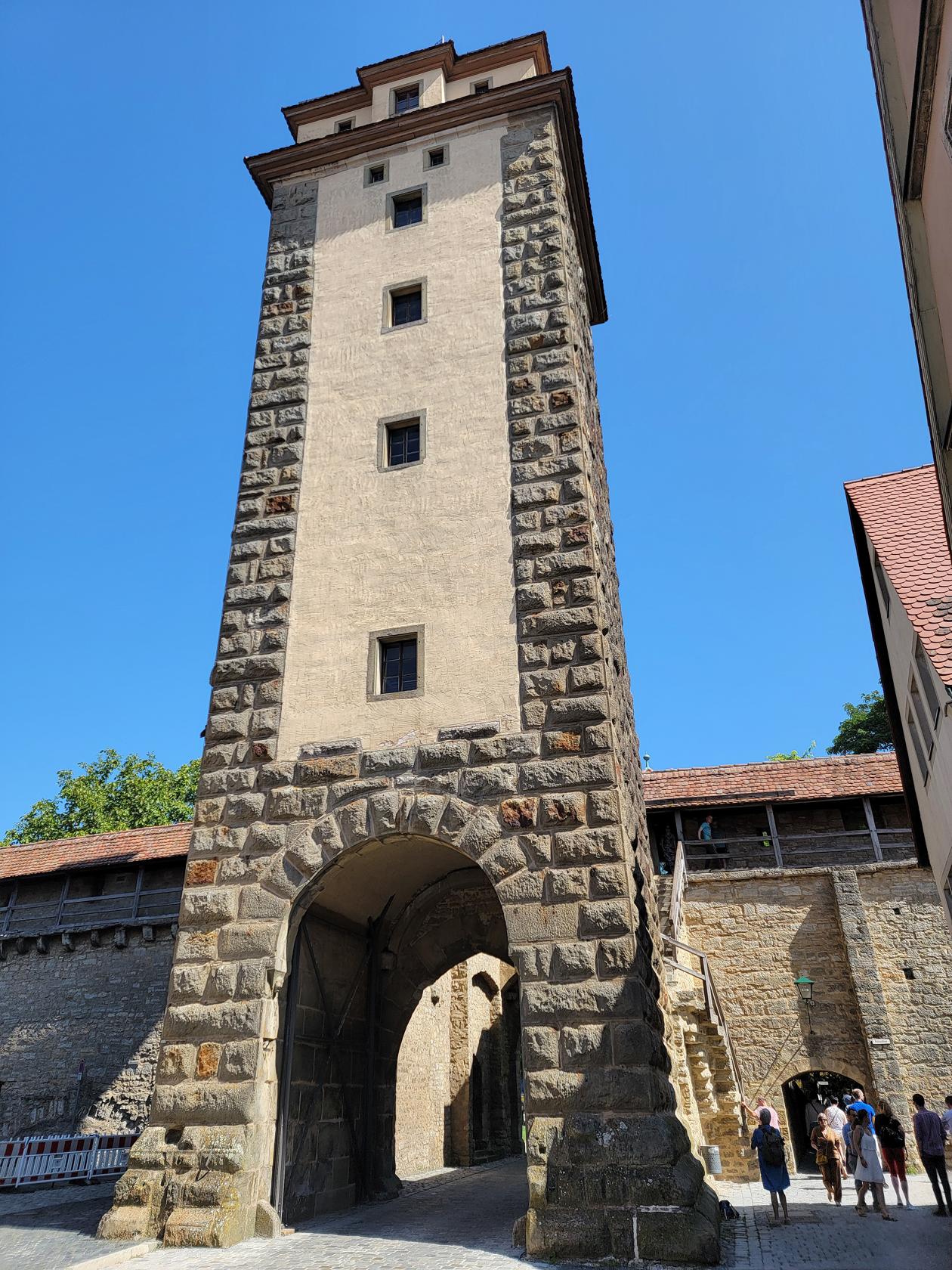
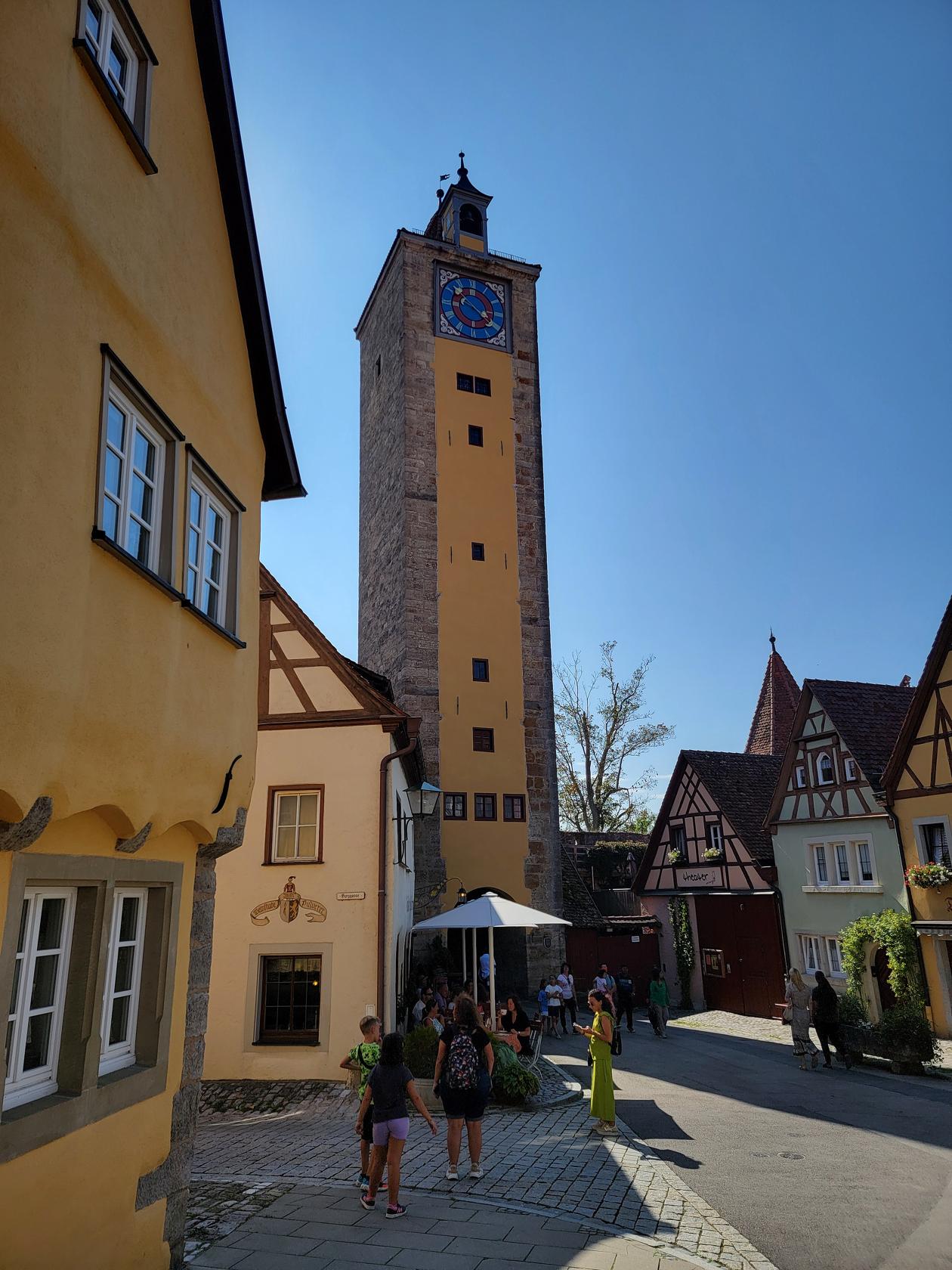
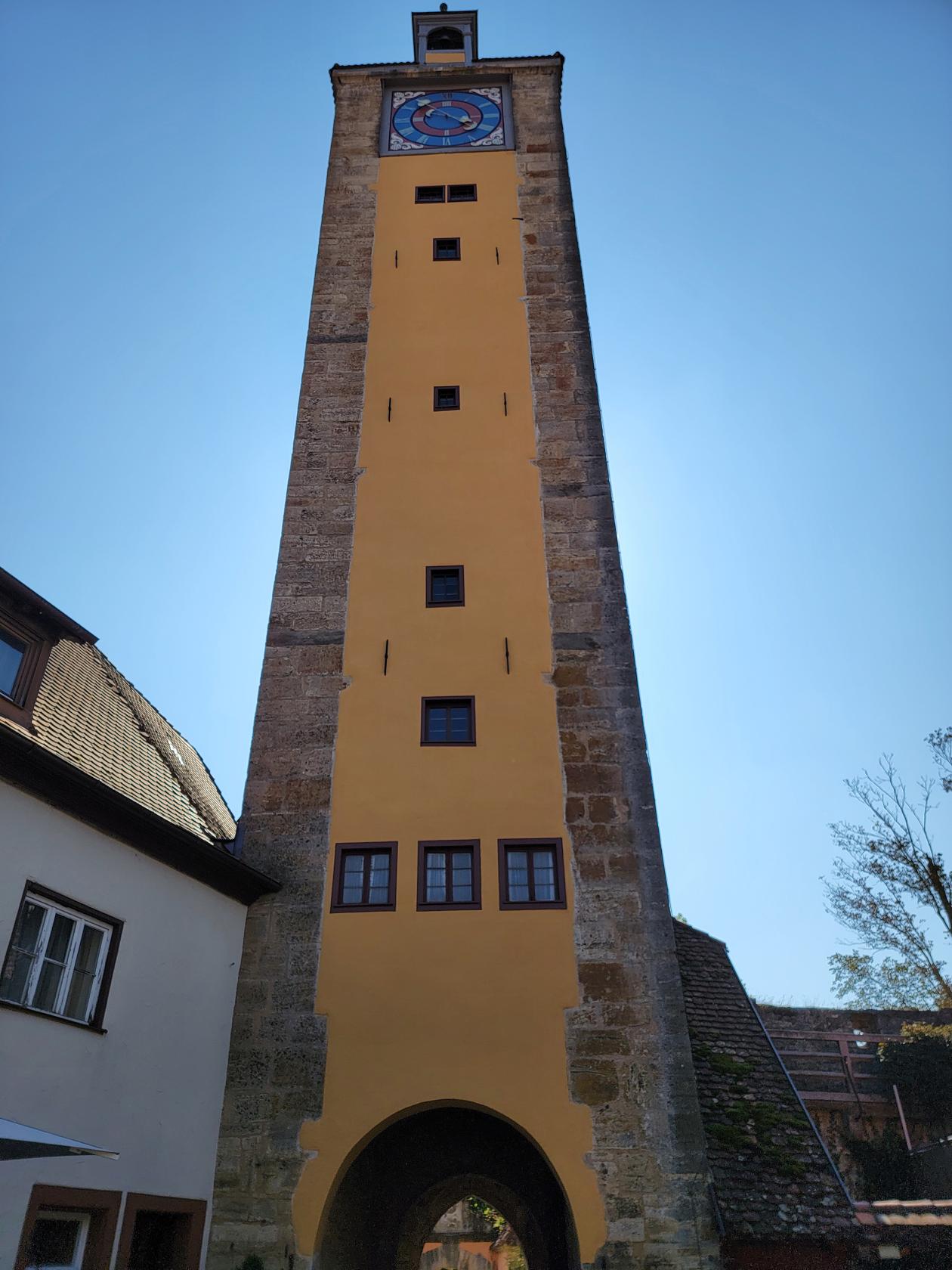
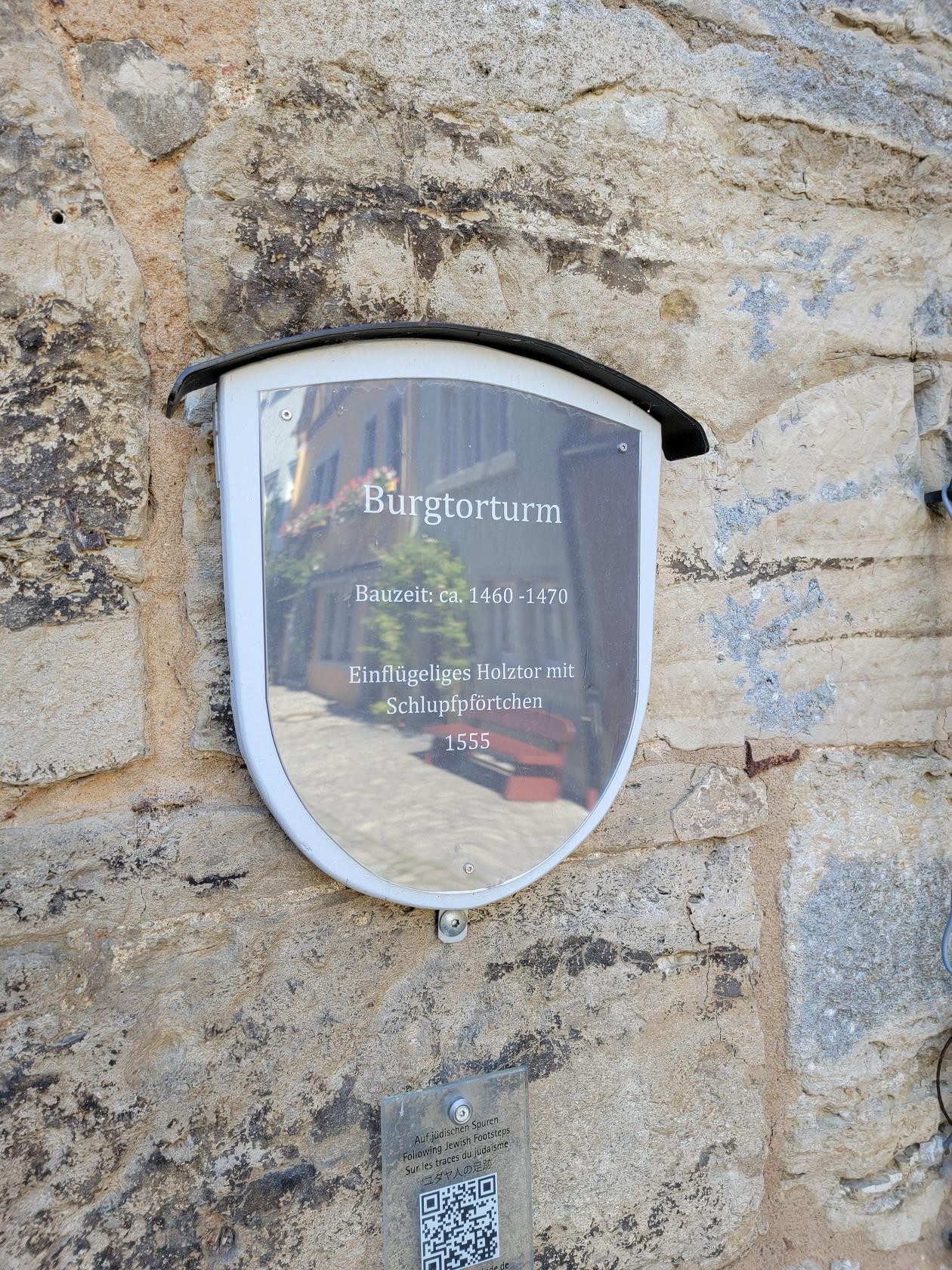
Rothenburg has many towers on all sides of the town, especially on the eastern side. The main entrance towers are of course grander, but the little ones are no less impressive.
Gallows Gate – Rothenburg ob der Tauber, Germany
Gallows Gate – Rothenburg ob der Tauber, Germany
– Rothenburg ob der Tauber, Germany
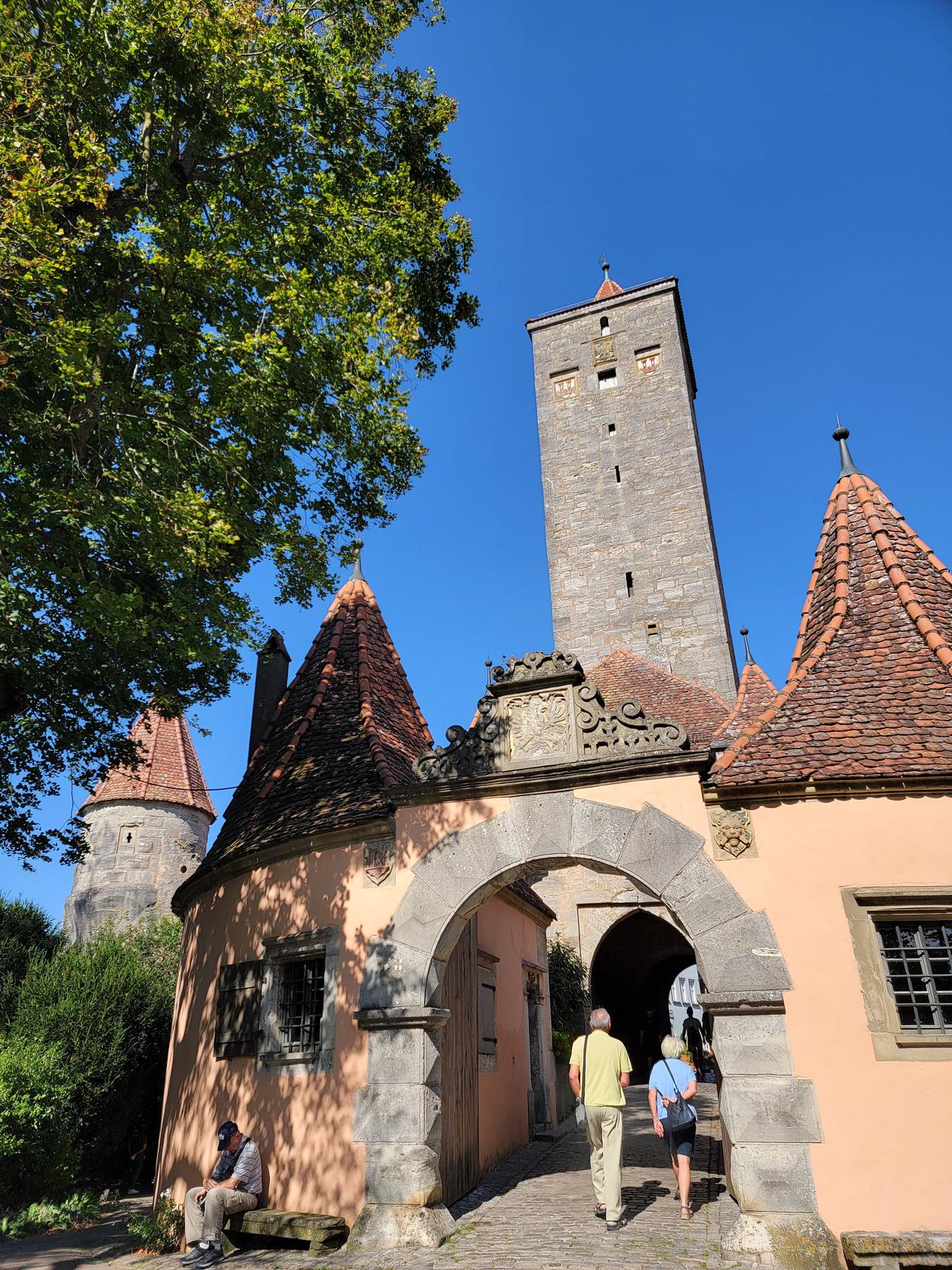
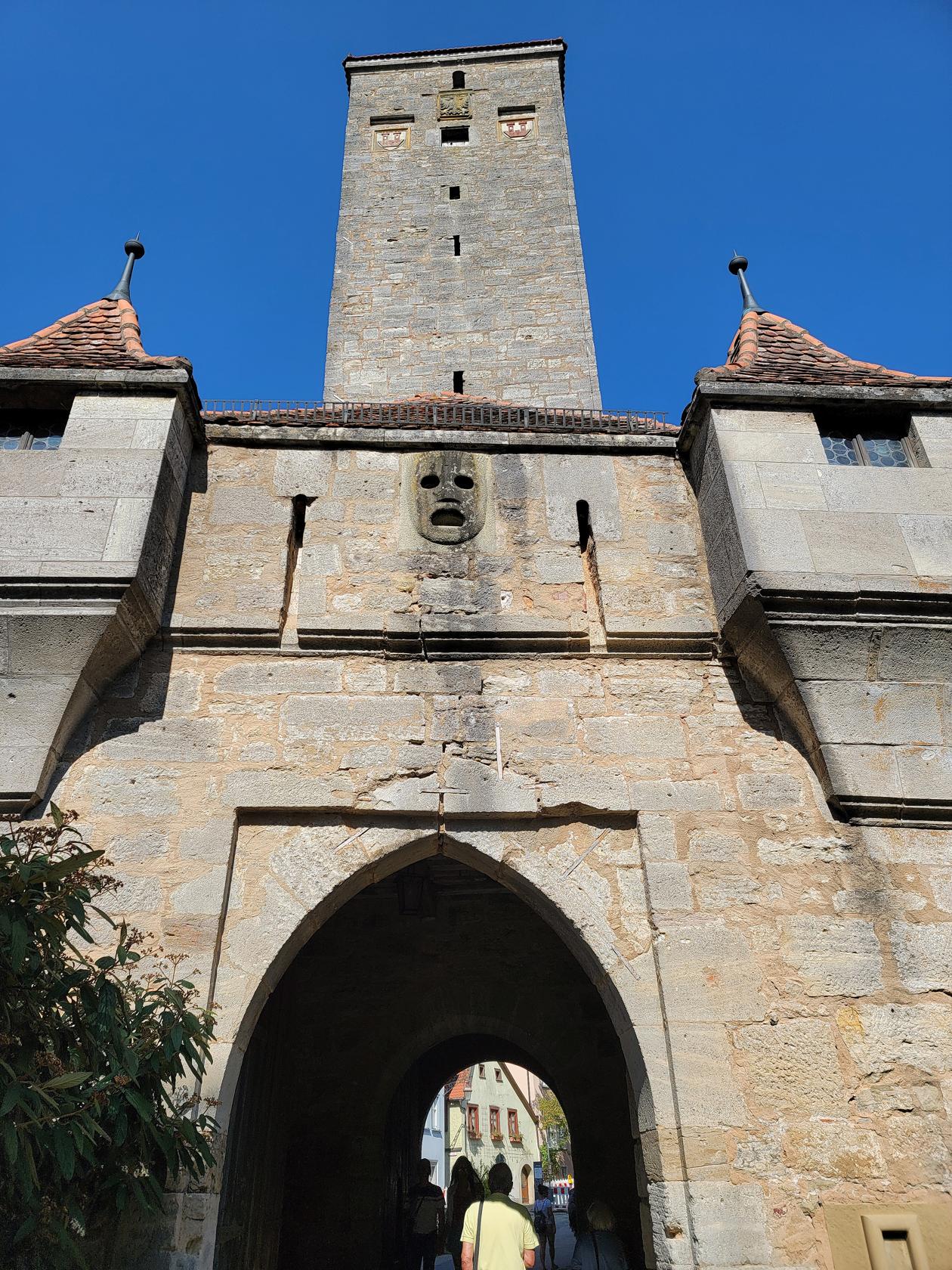
Burgtorturm – Rothenburg ob der Tauber, Germany
Burgtorturm – Rothenburg ob der Tauber, Germany
Burgtorturm – Rothenburg ob der Tauber, Germany
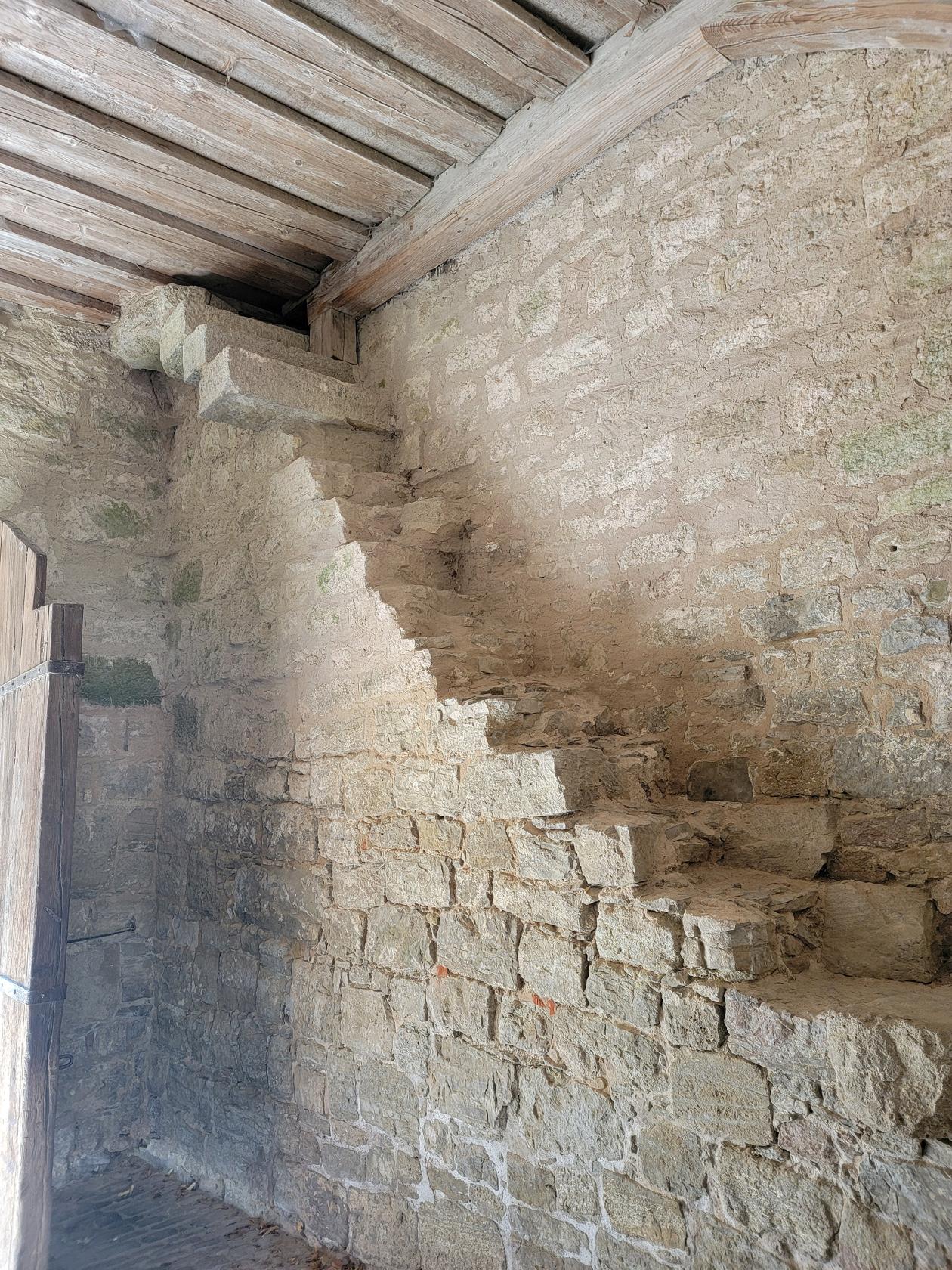
Old unused staircase – Burgtorturm – Rothenburg ob der Tauber, Germany
Front and entrance – Burgtorturm – Rothenburg ob der Tauber, Germany
Front and entrance – Burgtorturm – Rothenburg ob der Tauber, Germany
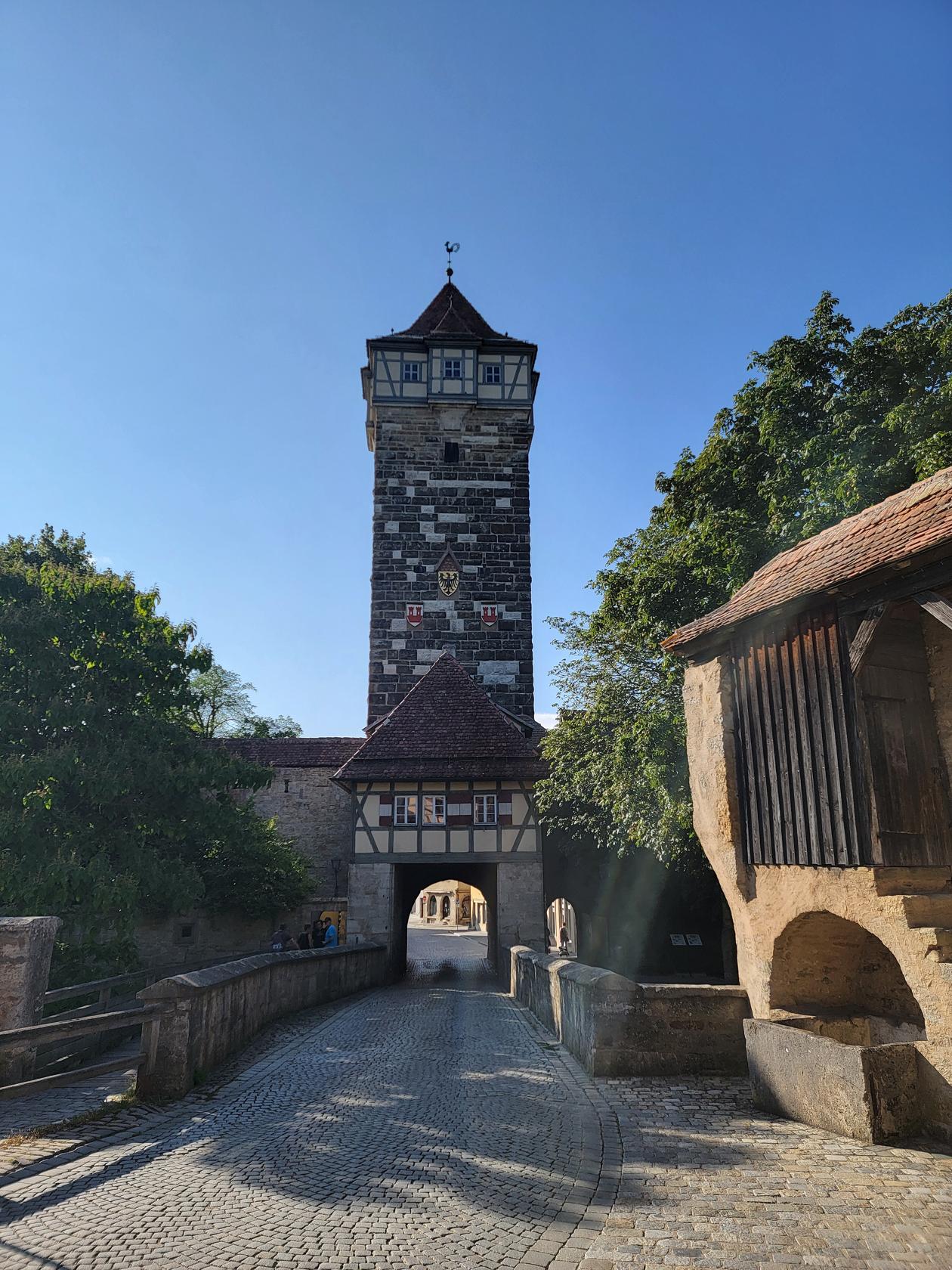
Röderturm – City wall – Rothenburg ob der Tauber, Germany
The City Wall
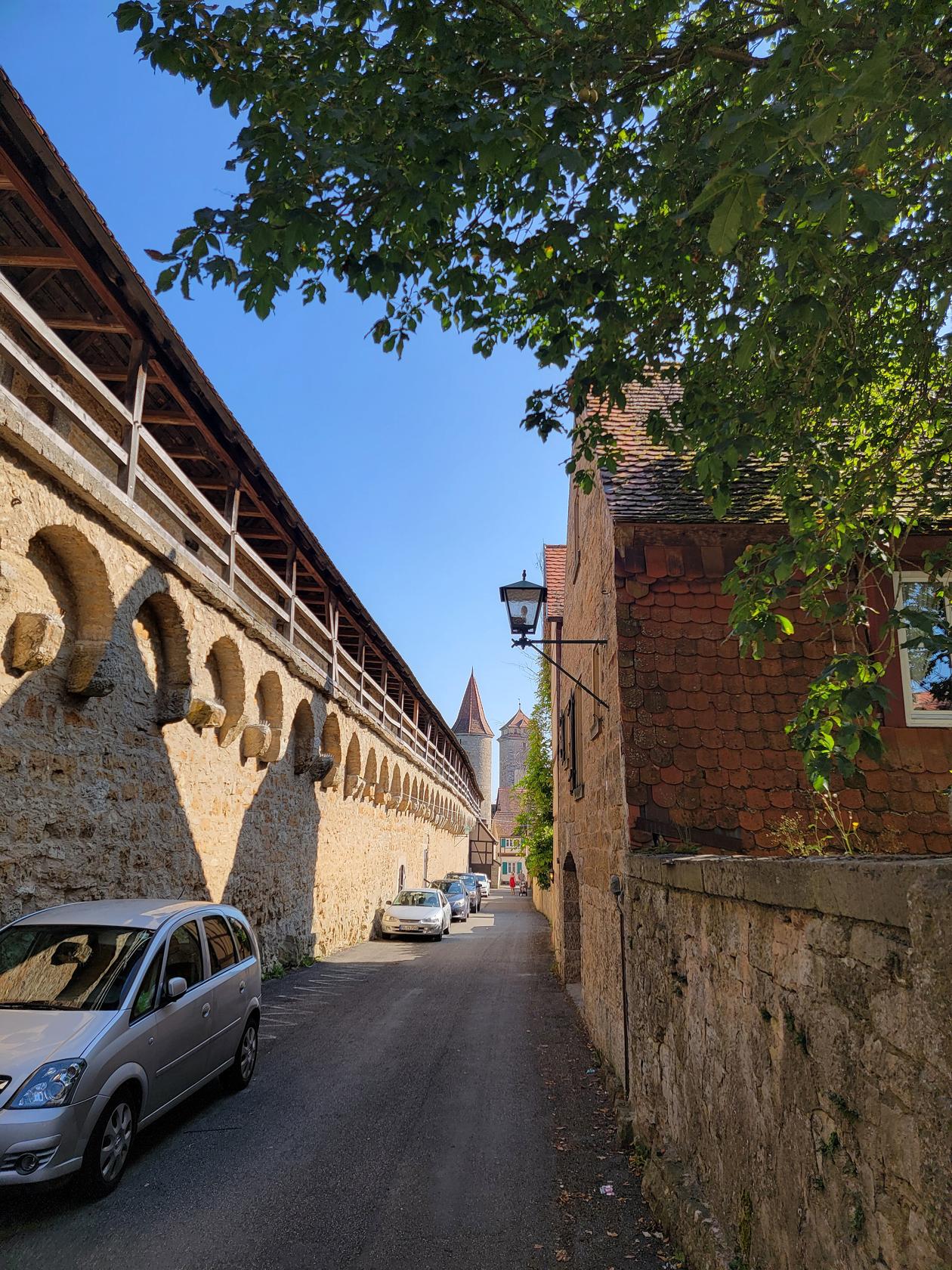
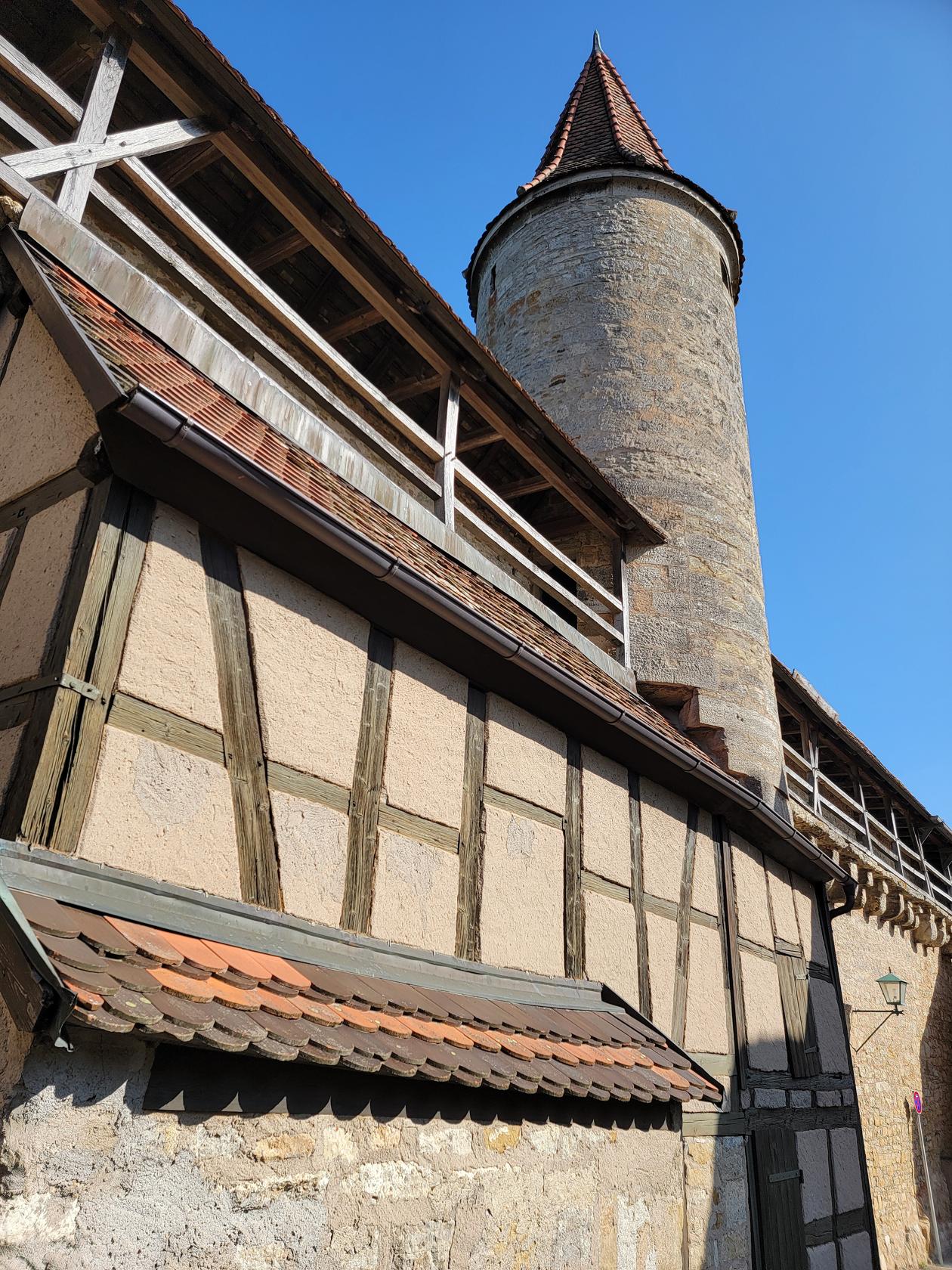
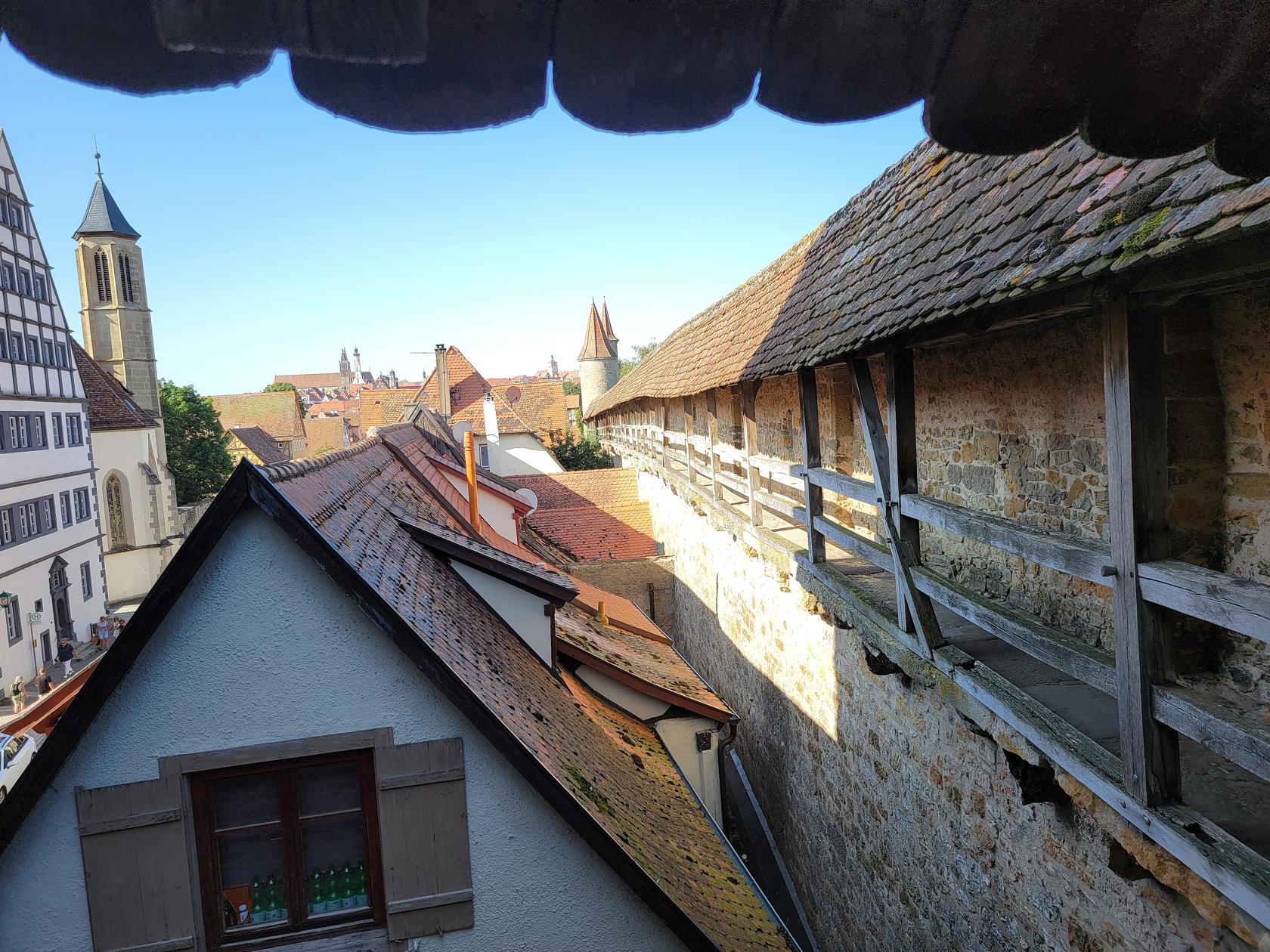
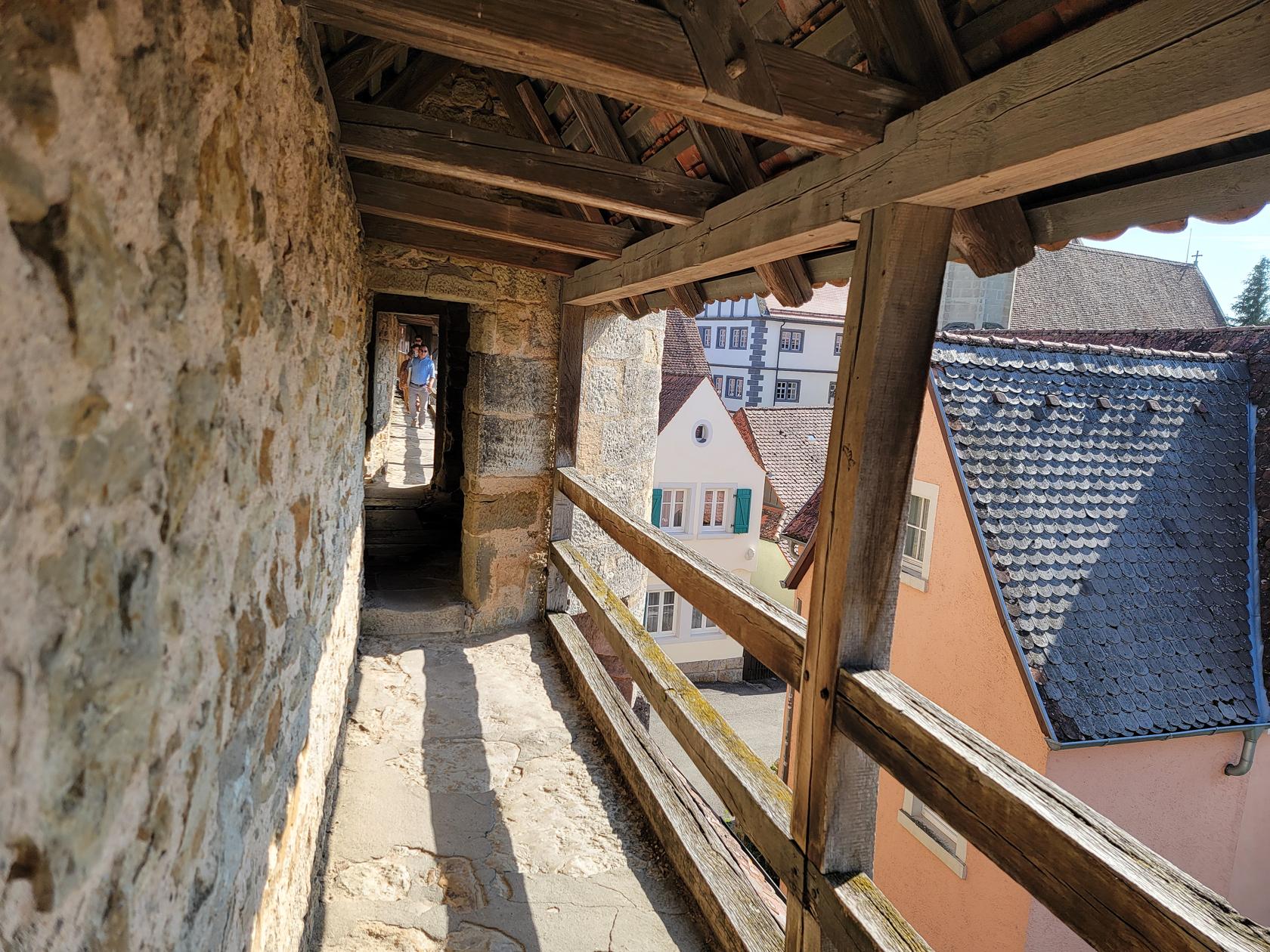
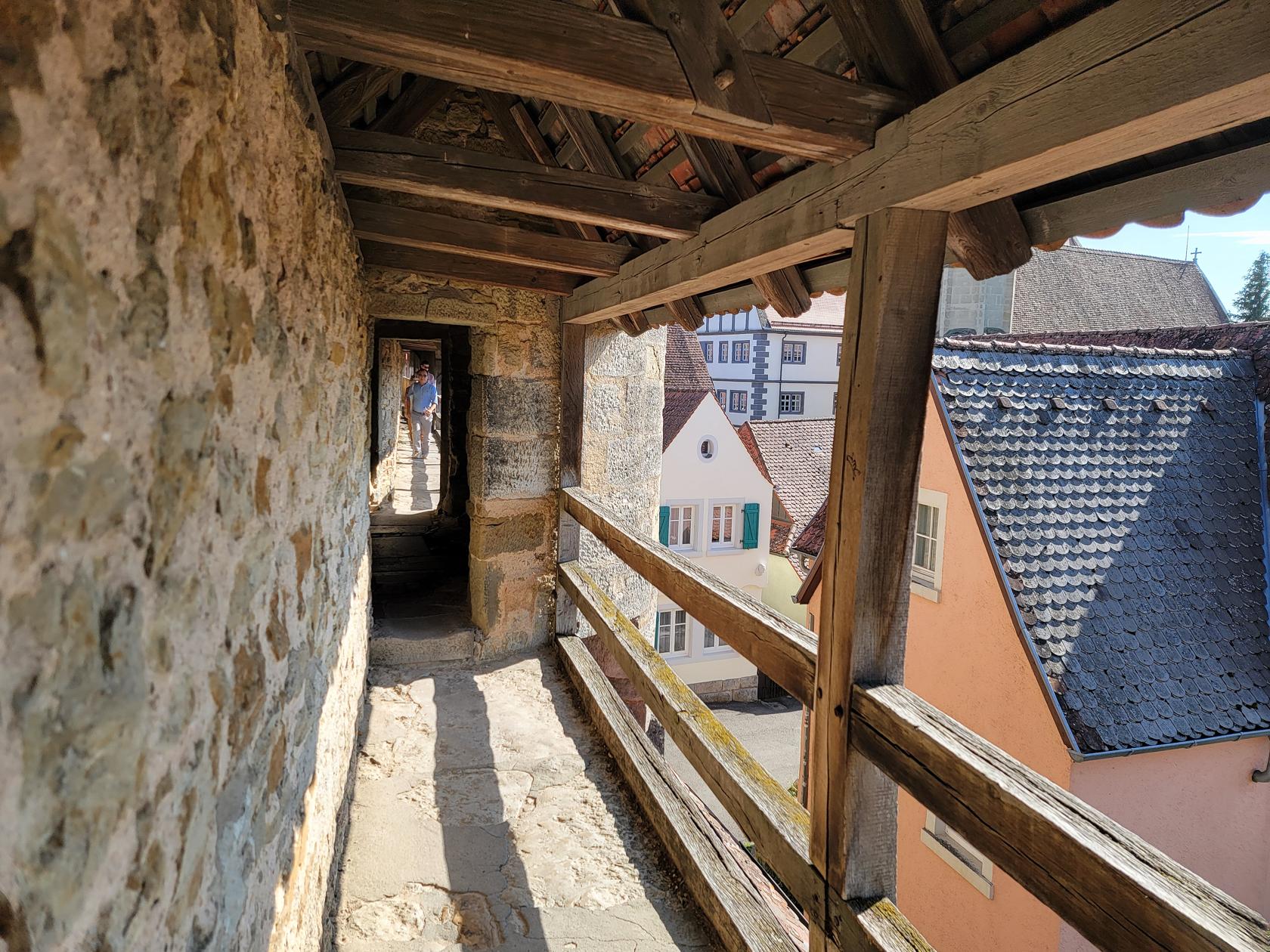
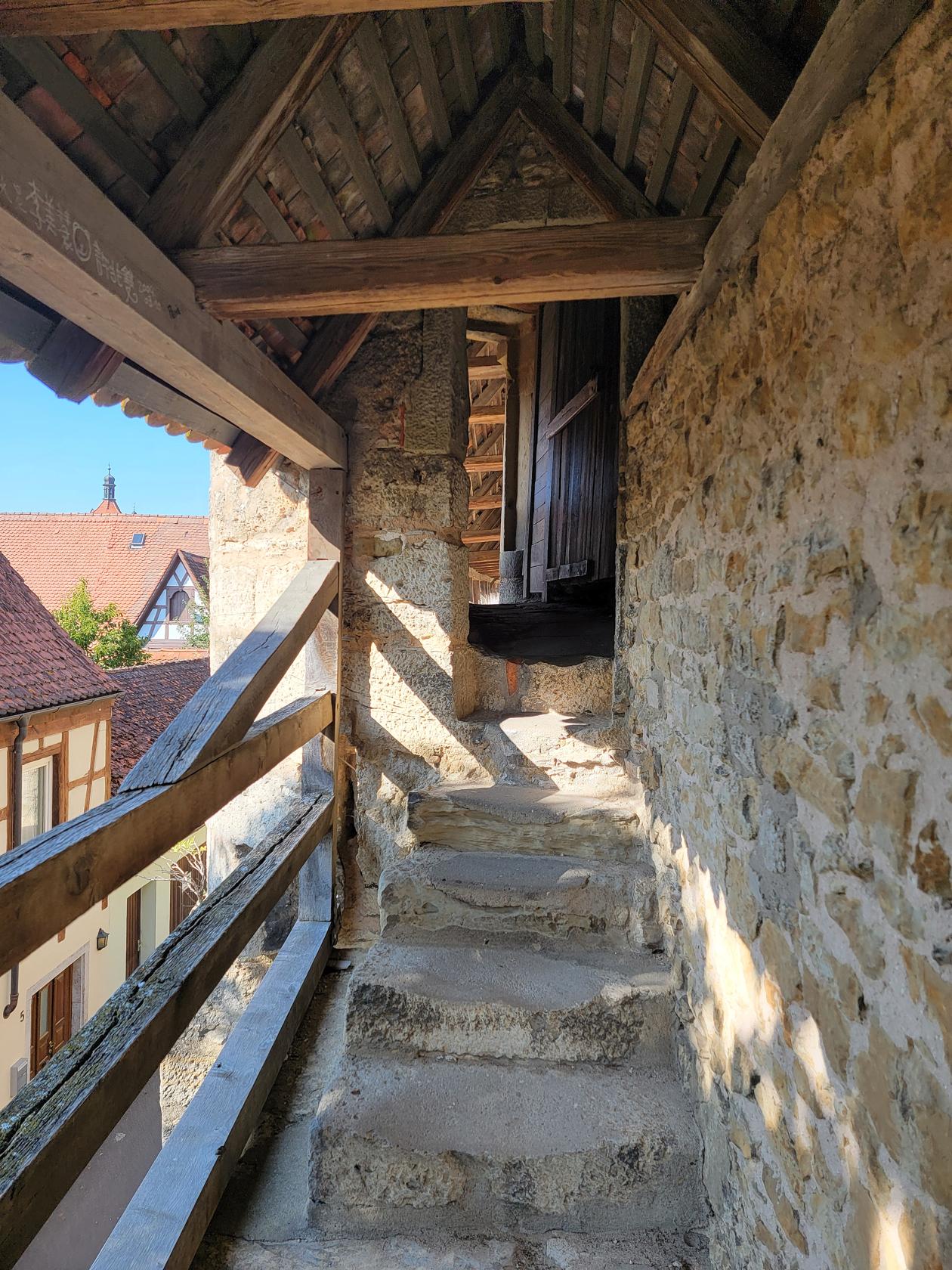
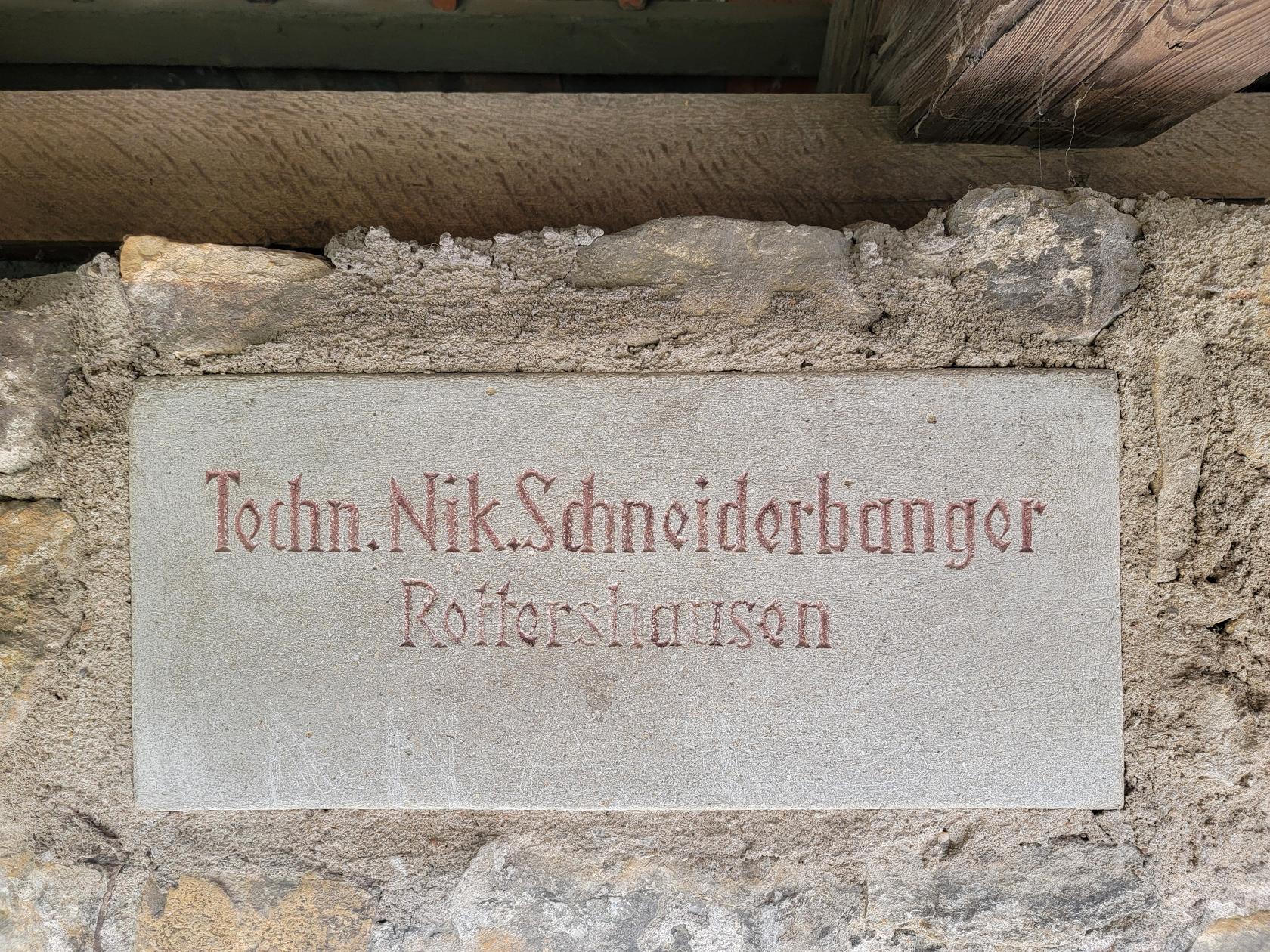
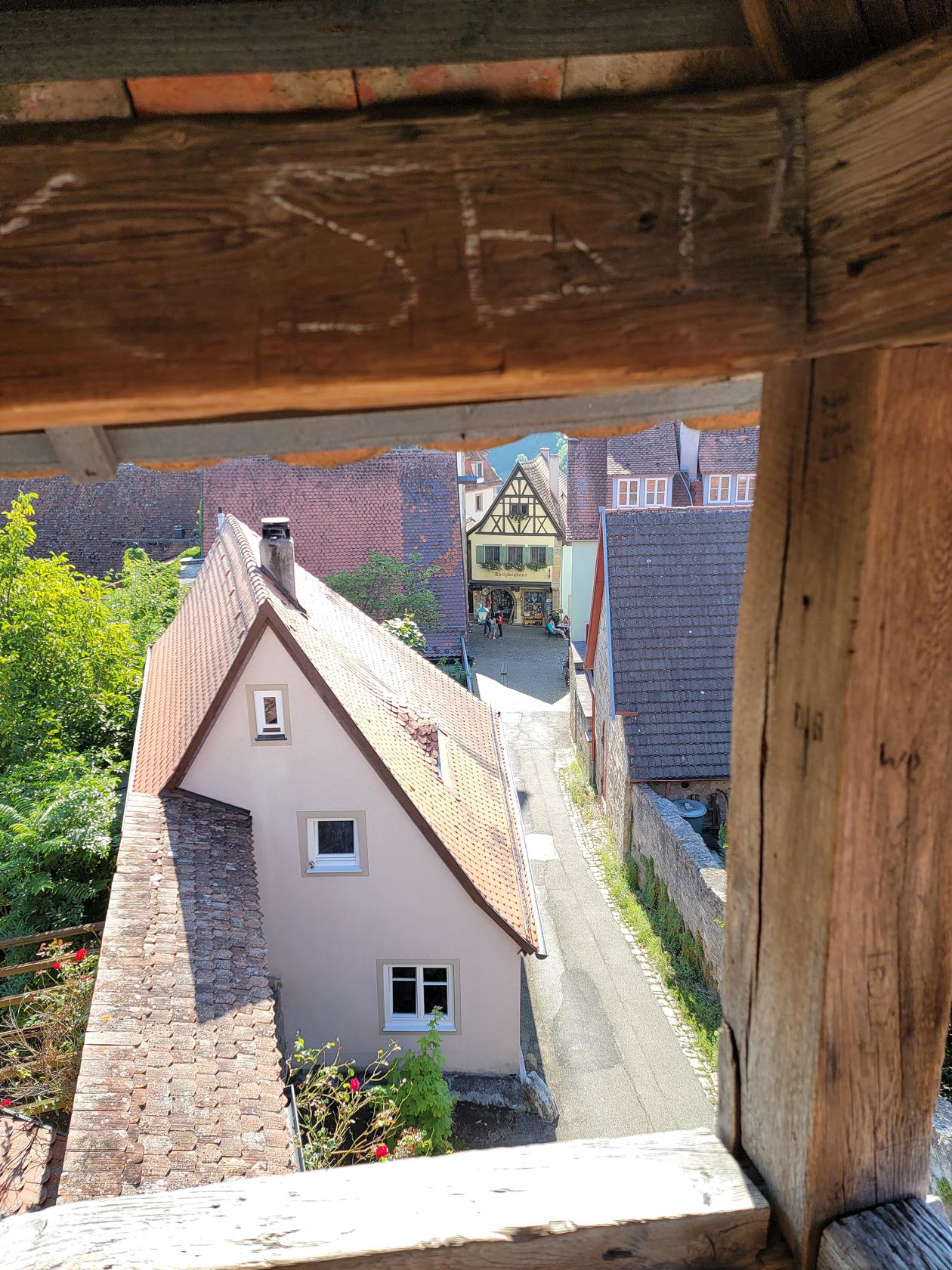
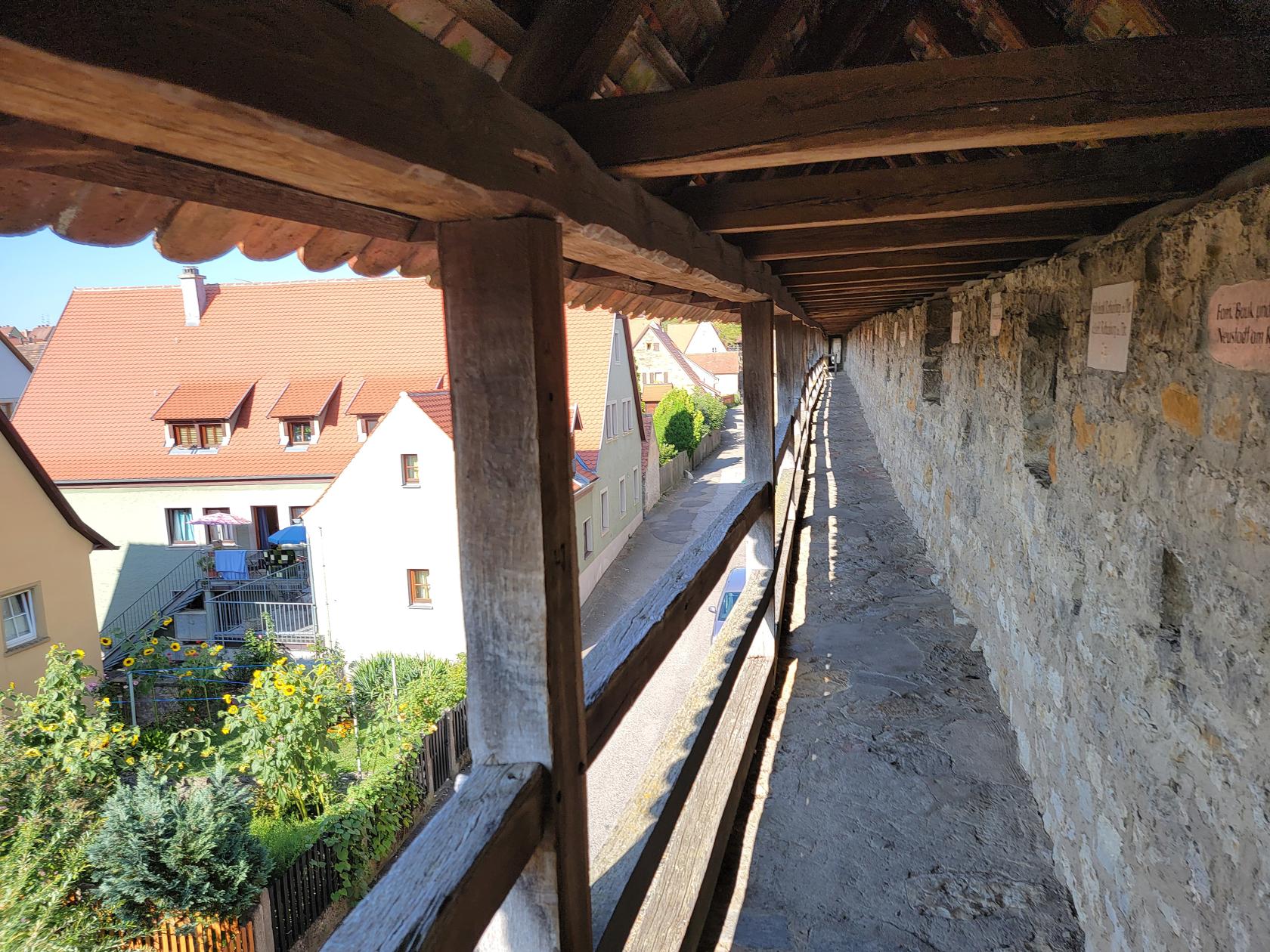
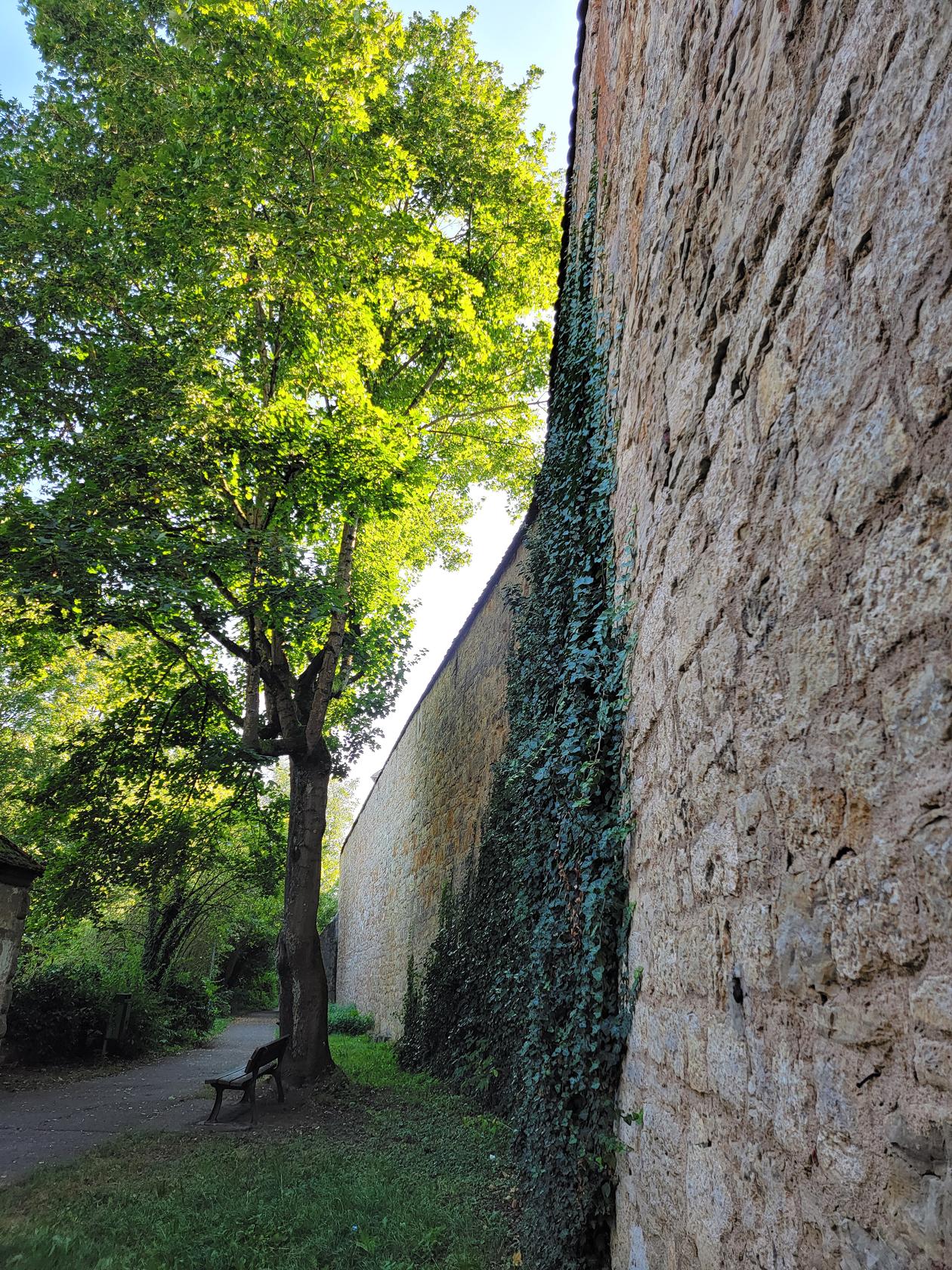
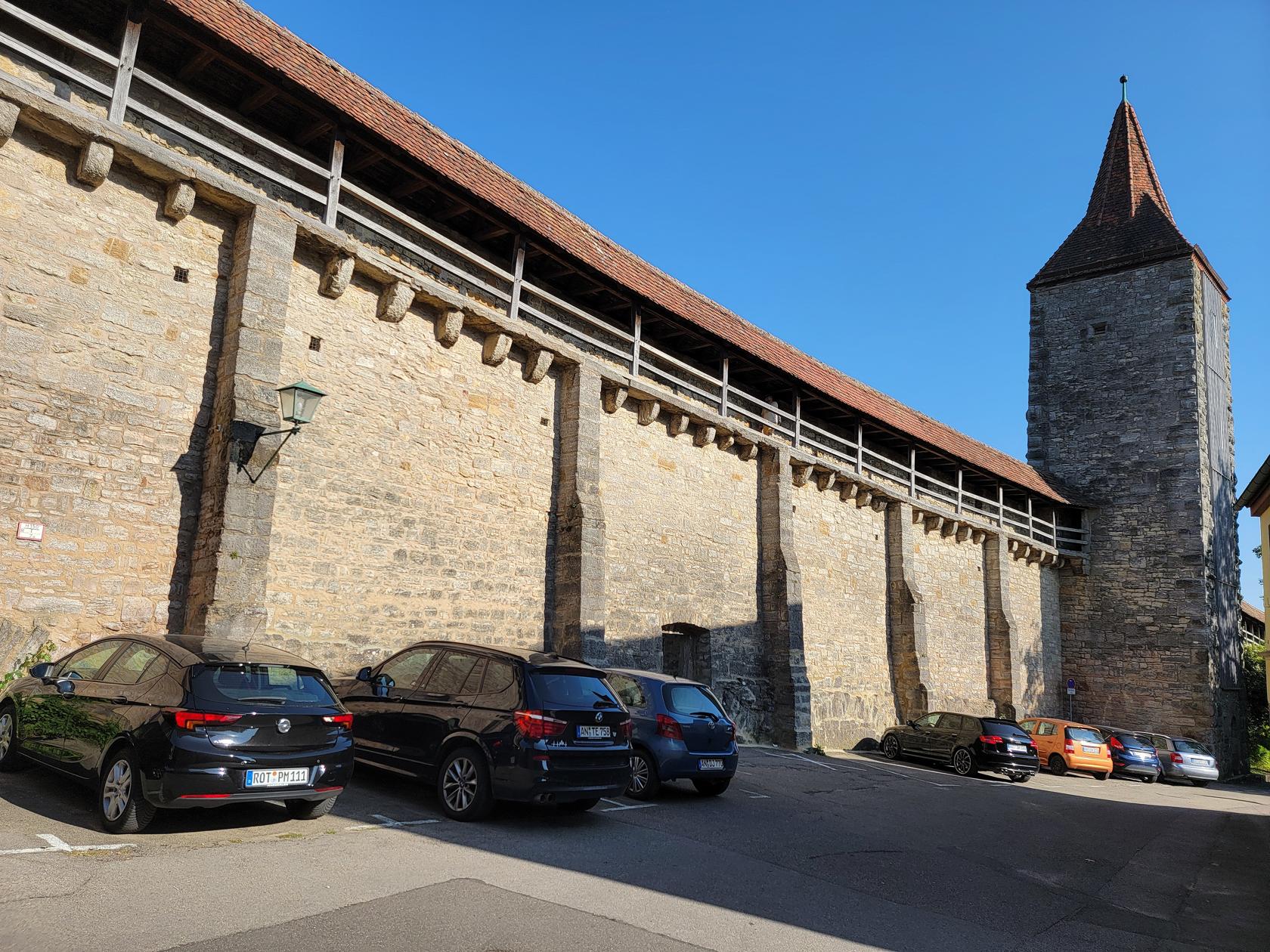
It is one of only three towns in Germany which is still encompassed by a fully intact town wall. The eastern part of the wall, the one which we were actually able to walk on, was mostly repaired after its destruction at the end of the war.
Burgtorturm – Rothenburg ob der Tauber, Germany
Old unused staircase – Burgtorturm – Rothenburg ob der Tauber, Germany
Front and entrance – Burgtorturm – Rothenburg ob der Tauber, Germany
Front and entrance – Burgtorturm – Rothenburg ob der Tauber, Germany
Several parts are boarded up or unreachable, but many people from around the world contributed funds in the effort to reconstruct it, making it possible to enjoy it today. There are several main entry points, Gallows Gate, Thomas Tower and one near Ruckesse Tower, to name a few.
Sterngasse and the city wall – Rothenburg ob der Tauber, Germany
Tower on city wall – Rothenburg ob der Tauber, Germany
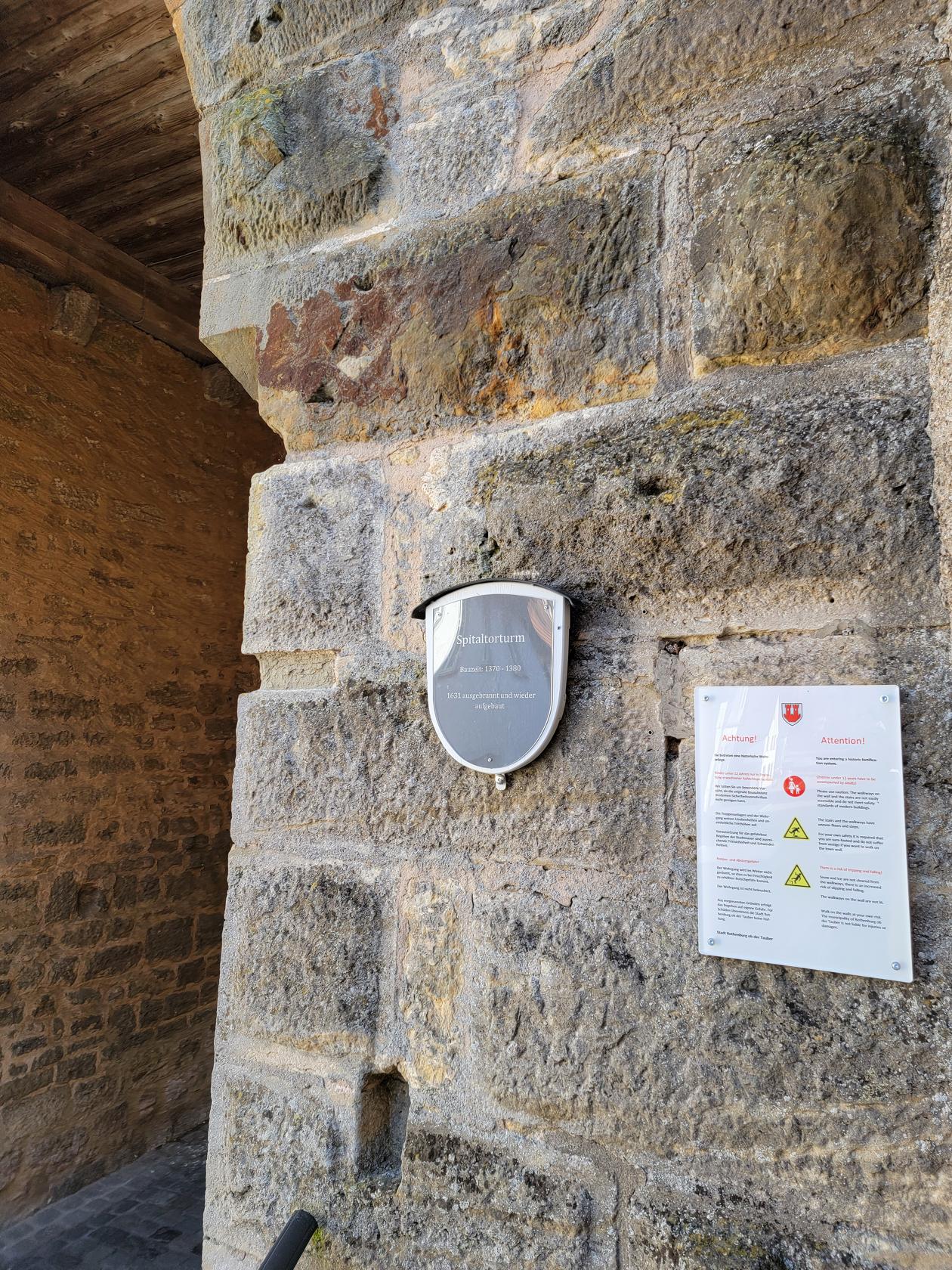
Spitaltorturm – City wall – Rothenburg ob der Tauber, Germany
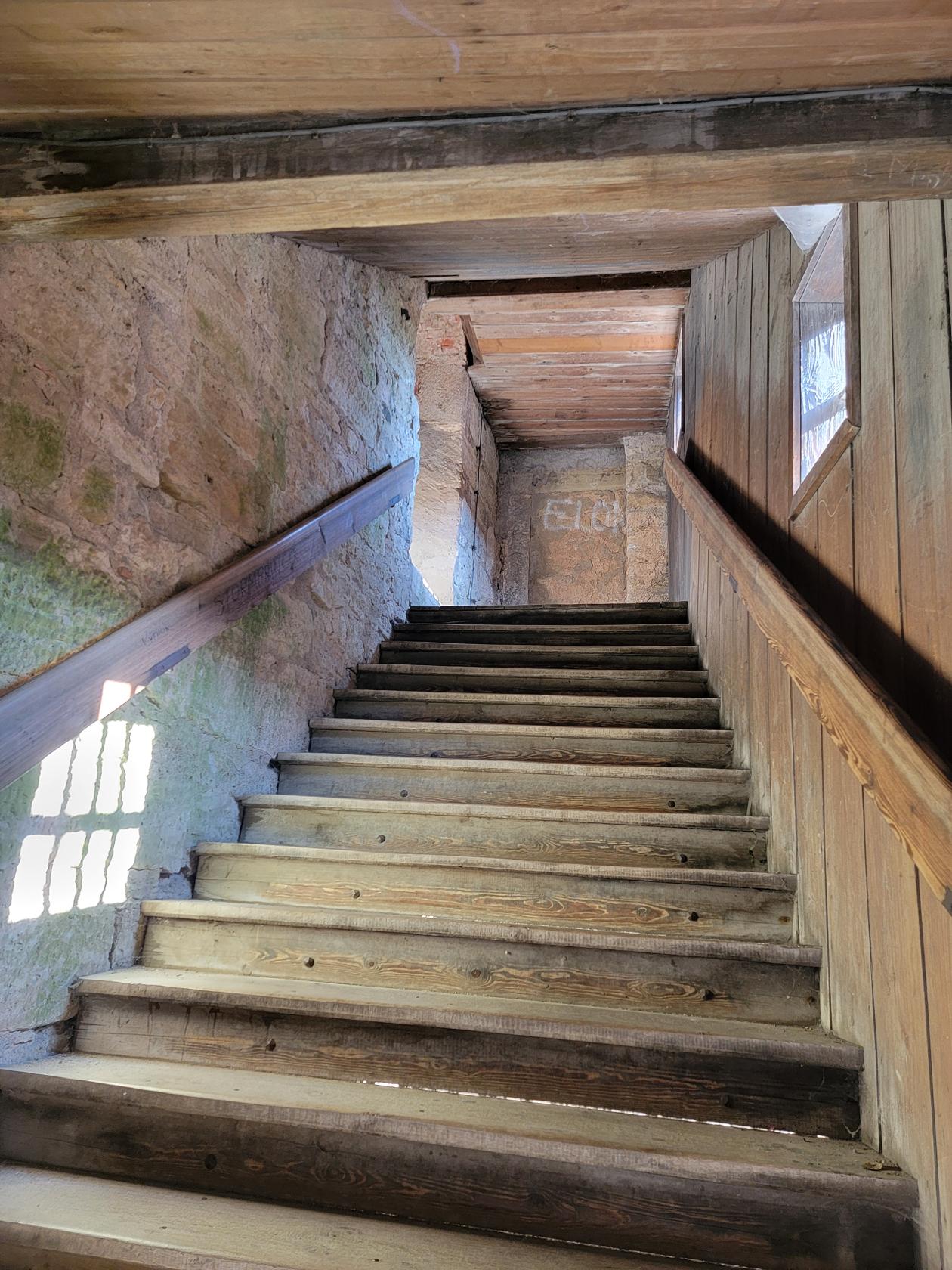
Stairs at entry point – City wall – Rothenburg ob der Tauber, Germany
Narrow entrance – City wall – Rothenburg ob der Tauber, Germany
City wall – Rothenburg ob der Tauber, Germany
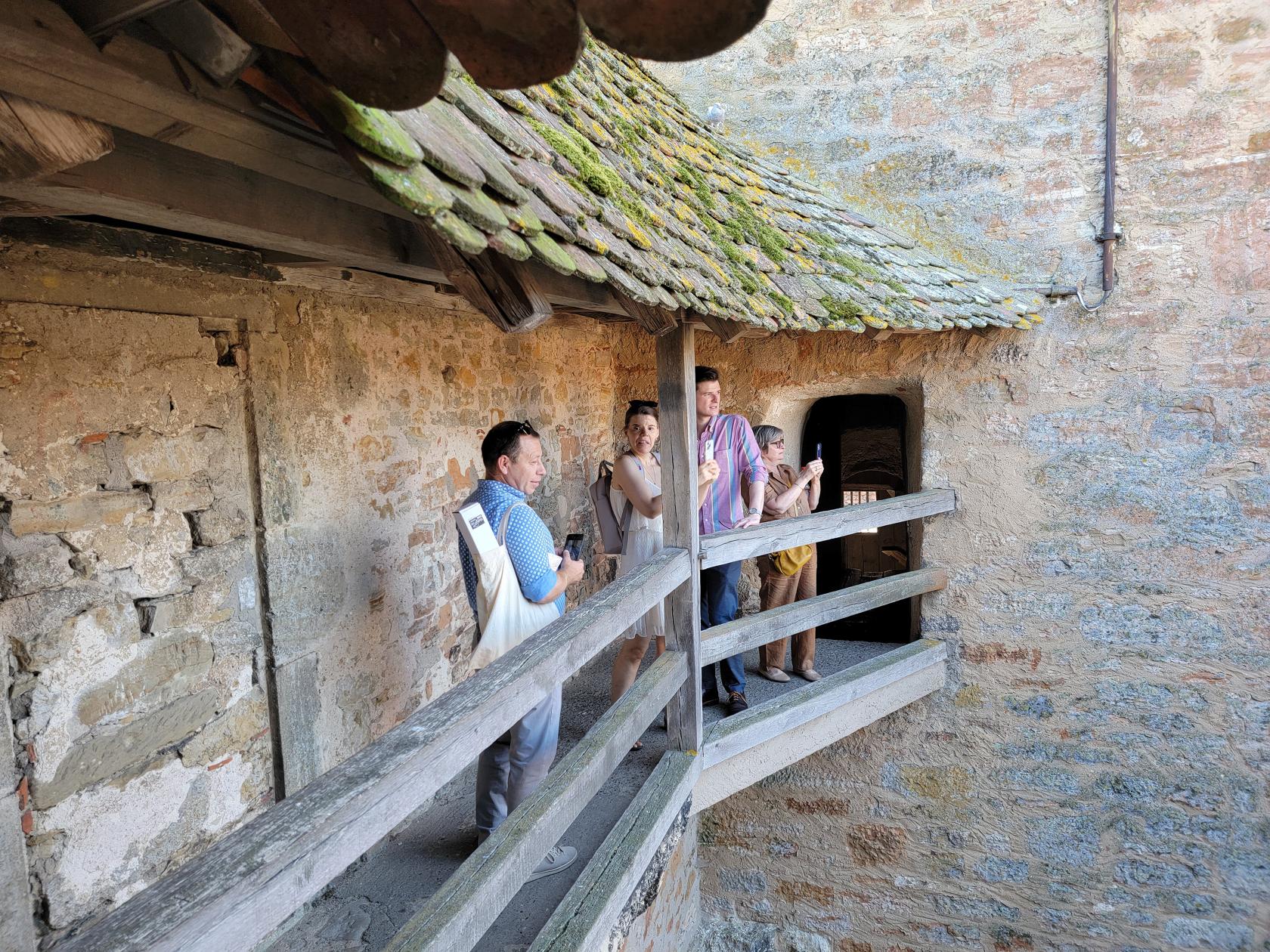
Gabi, Ericka, Dana and Patti – City wall – Rothenburg ob der Tauber, Germany
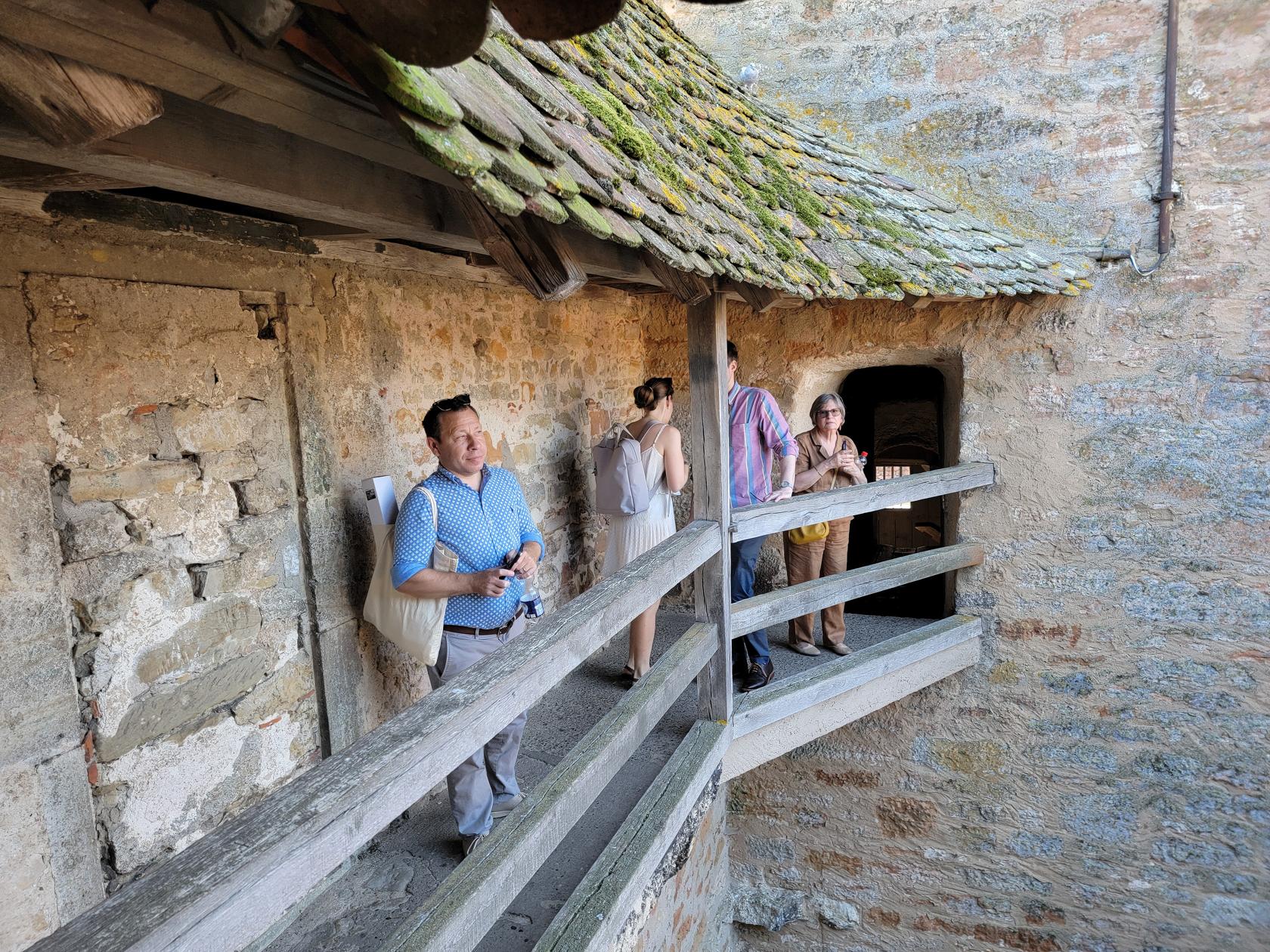
Gabi, Ericka, Dana and Patti – City wall – Rothenburg ob der Tauber, Germany
Wall with removable roof – City wall – Rothenburg ob der Tauber, Germany
City wall – Rothenburg ob der Tauber, Germany
City wall – Rothenburg ob der Tauber, Germany
City wall – Rothenburg ob der Tauber, Germany
City wall – Rothenburg ob der Tauber, Germany
City wall – Rothenburg ob der Tauber, Germany
City wall – Rothenburg ob der Tauber, Germany
Siebersturm – City wall – Rothenburg ob der Tauber, Germany
Donation thank you – City wall – Rothenburg ob der Tauber, Germany
City wall – Rothenburg ob der Tauber, Germany
City wall – Rothenburg ob der Tauber, Germany
City wall – Rothenburg ob der Tauber, Germany
Old guard tower – City wall – Rothenburg ob der Tauber, Germany
Area by Röderturm – City wall – Rothenburg ob der Tauber, Germany
Röderturm – City wall – Rothenburg ob der Tauber, Germany
Motte – Röderturm – City wall – Rothenburg ob der Tauber, Germany
Röderturm gate – City wall – Rothenburg ob der Tauber, Germany
Thomas tower – Rothenburg ob der Tauber, Germany
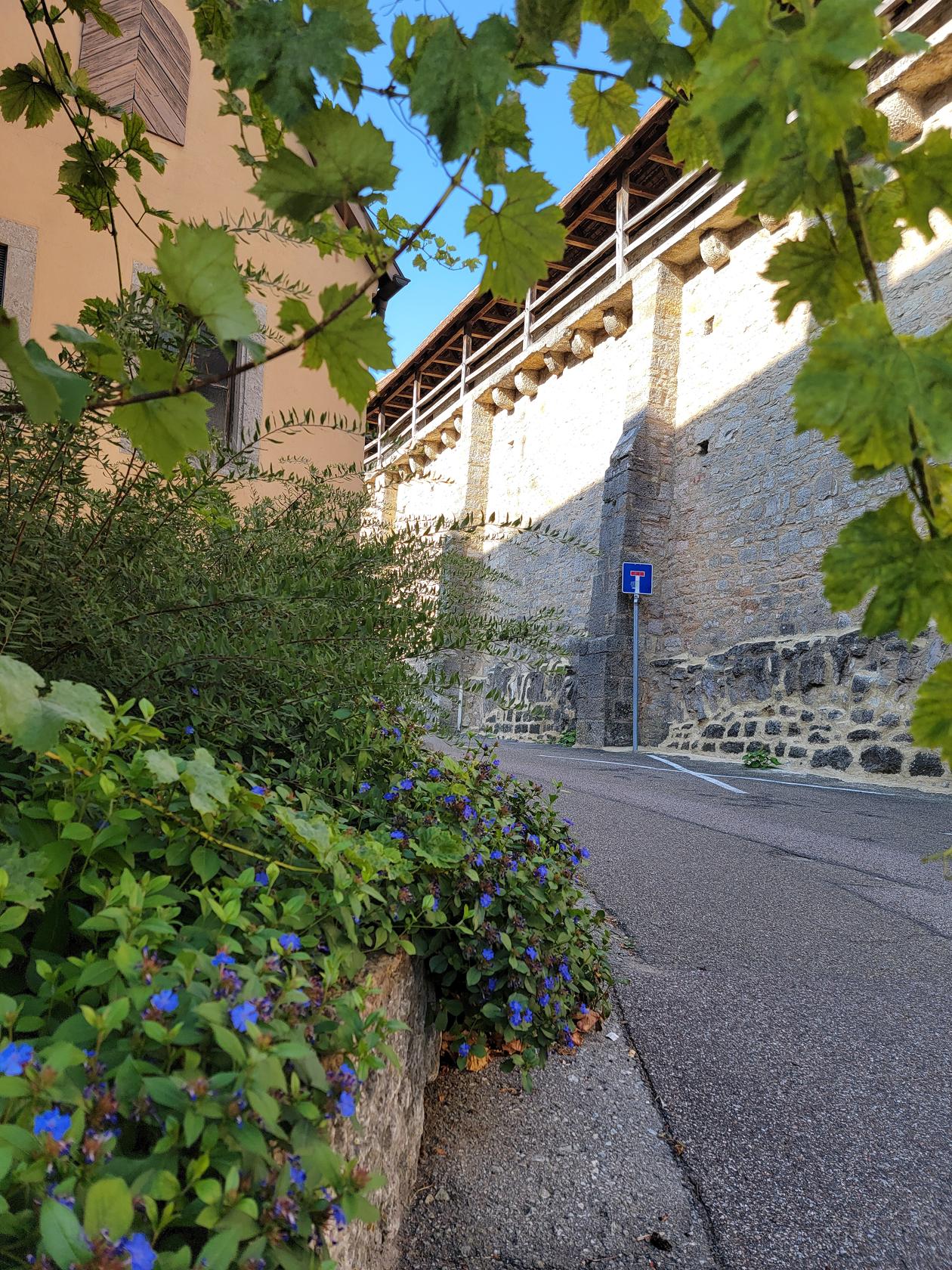
Flowers and grape leaves by City wall – Rothenburg ob der Tauber, Germany
Restaurants
There are many restaurants to choose from in Rothenburg, many of which are located in or near the town square. Luckily, we failed on locating an Italian restaurant that was open, but it is August and the Italians are notorious for taking the entire month off for vacation. That forced to find the amazing place that we did below.
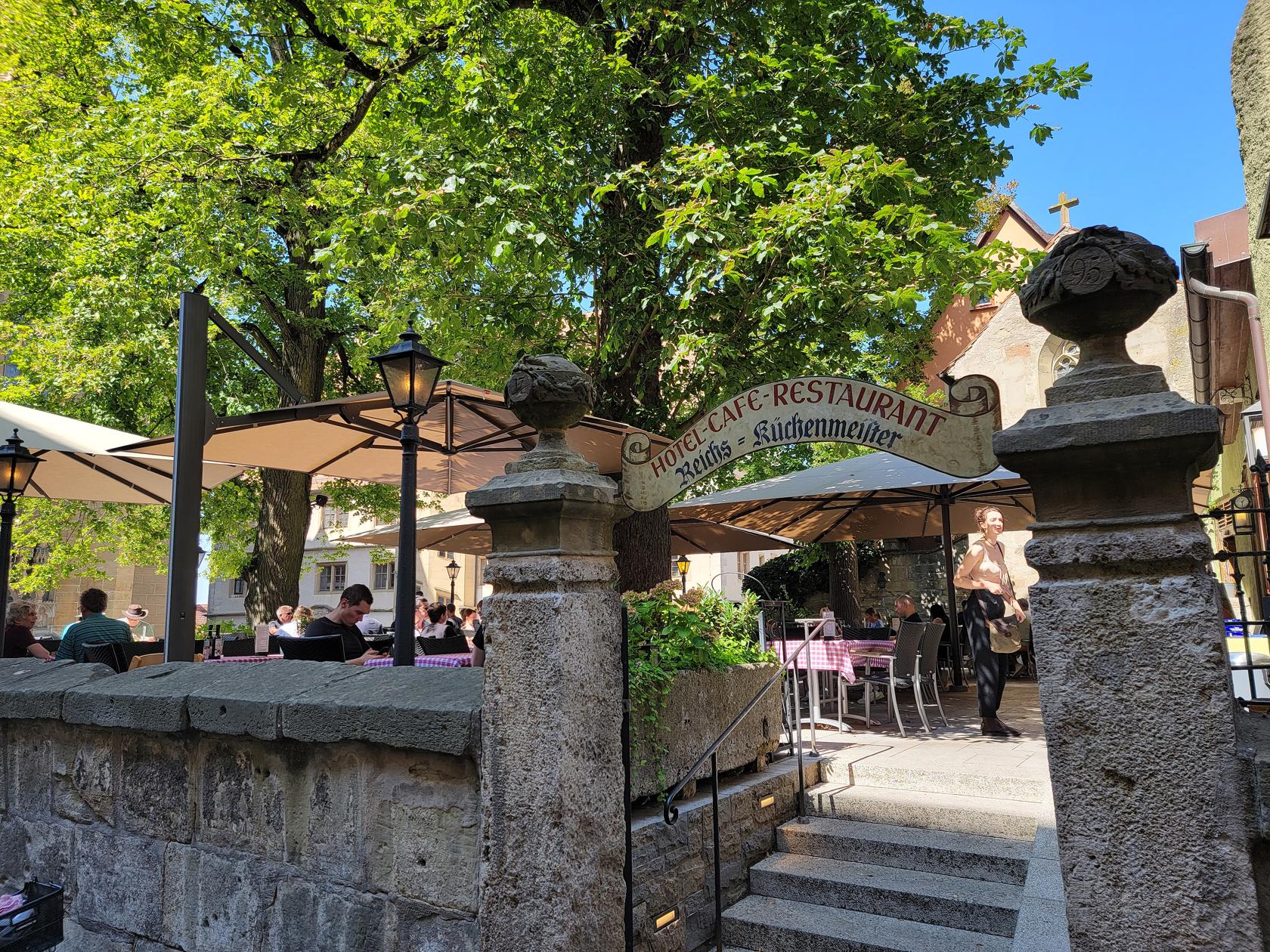
Reichsküchenmeister – Das Herz von Rothenburg
If you are able to obtain a seat in the garden, one of the go to places in Rothenburg for a weekend lunch or early dinner.
Reichskückenmeisterer – Herz von Rothenburg restaurant – Rothenburg ob der Tauber, Germany
The garden is just amazing, a totally relaxed atmosphere where we were fortunate enough to have a very responsive waiter. The menu is varied enough where one should be able to find something to fit their culinary needs.
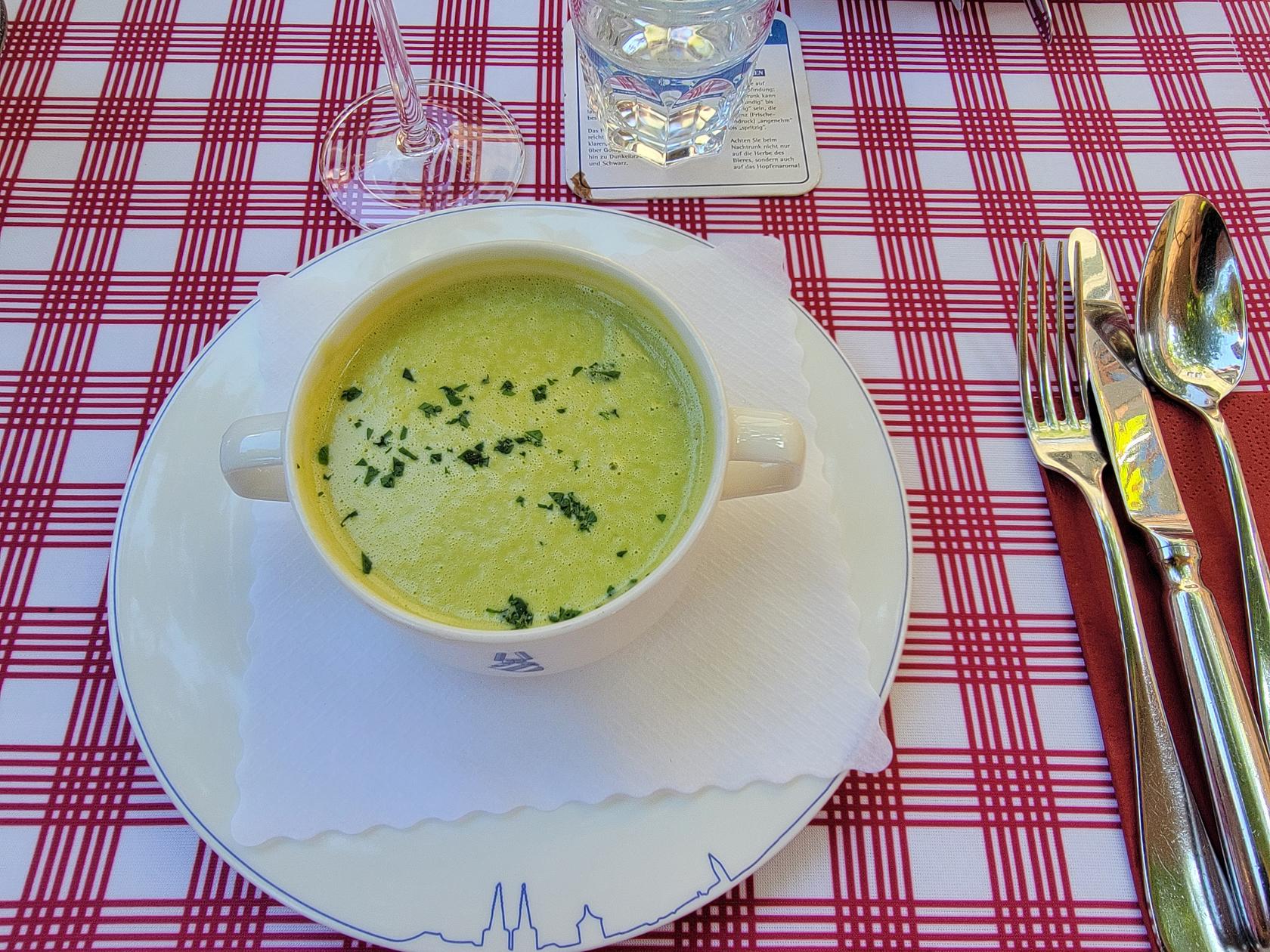
Erbsensuppe – Reichskückenmeisterer – Herz von Rothenburg restaurant – Rothenburg ob der Tauber, Germany
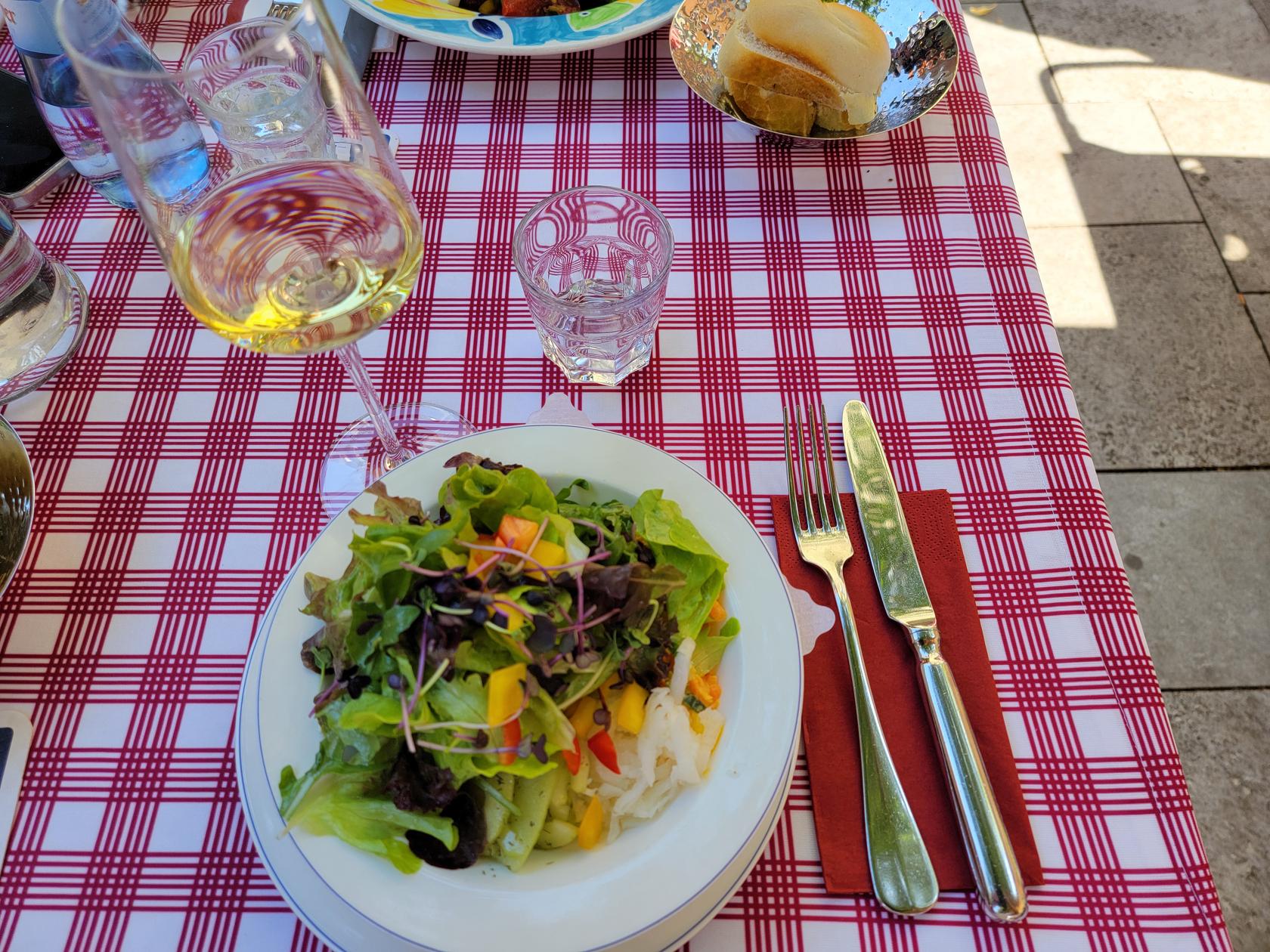
Mixed salad – Reichskückenmeisterer – Herz von Rothenburg restaurant – Rothenburg ob der Tauber, Germany
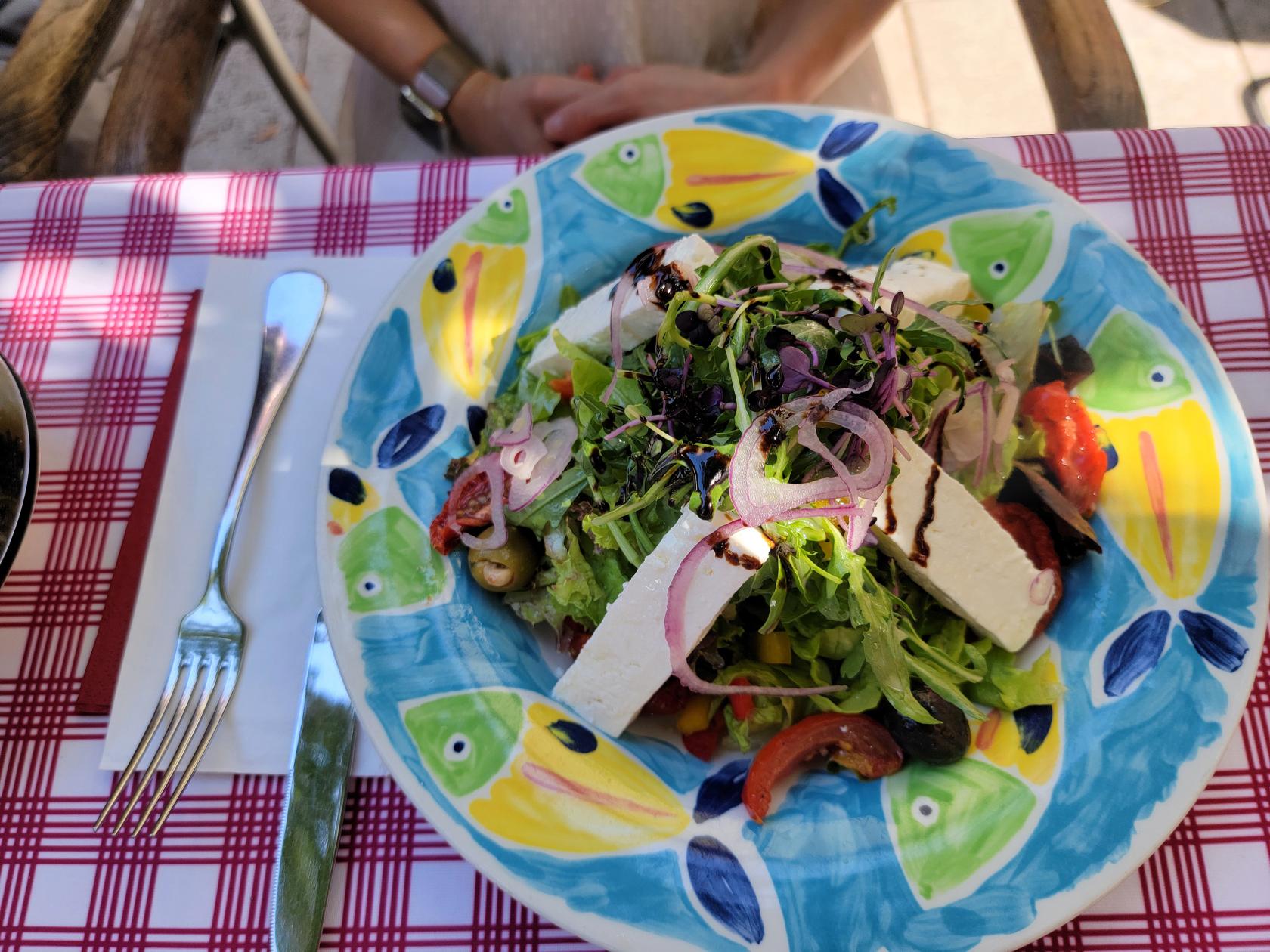
Mixed salad with Feta – Reichskückenmeisterer – Herz von Rothenburg restaurant – Rothenburg ob der Tauber, Germany
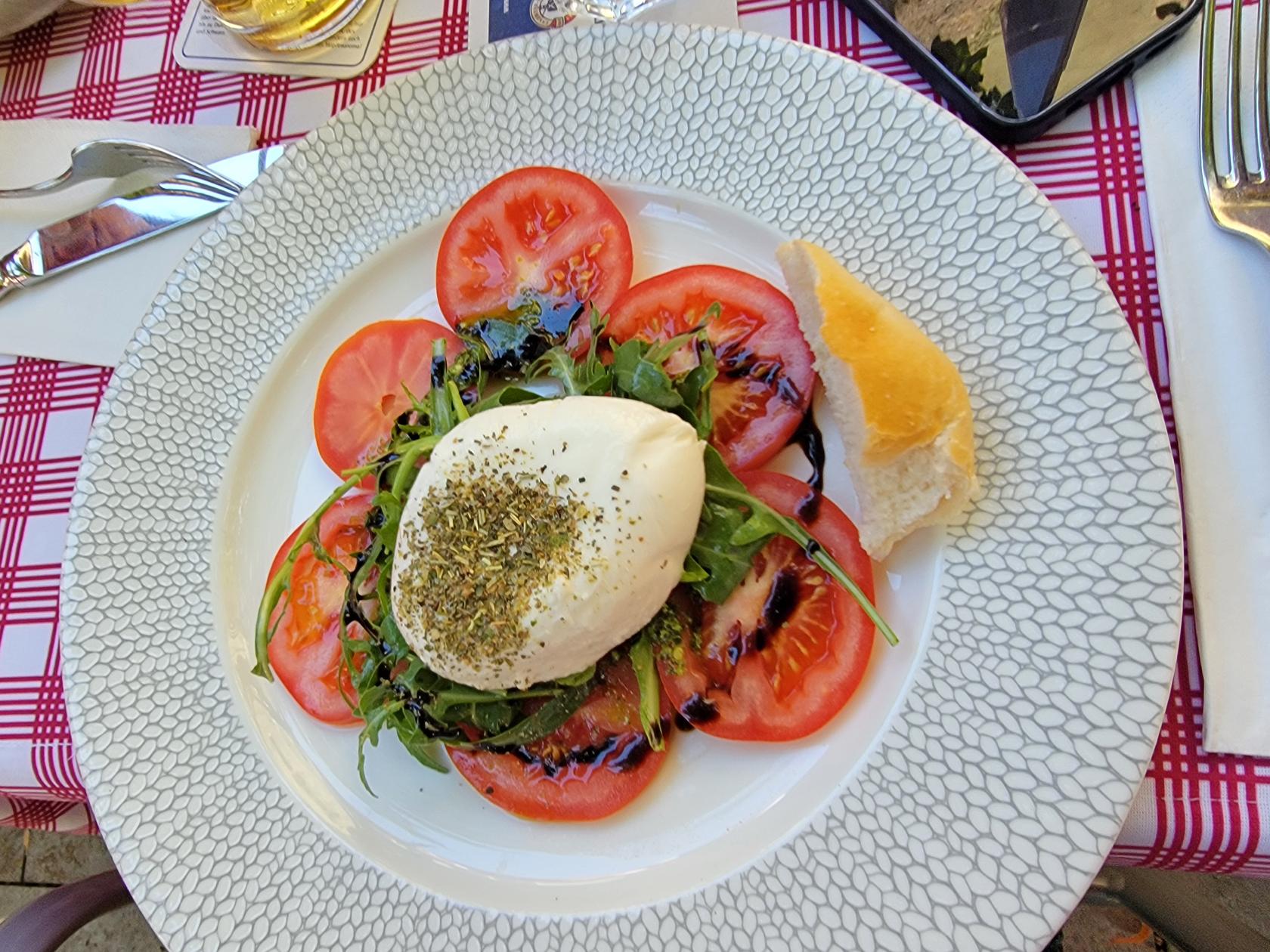
Caprese salad – Reichskückenmeisterer – Herz von Rothenburg restaurant – Rothenburg ob der Tauber, Germany
Erick and Patti – Reichskückenmeisterer – Herz von Rothenburg restaurant – Rothenburg ob der Tauber, Germany
Dana, Gabi and Ericka – Reichskückenmeisterer – Herz von Rothenburg restaurant – Rothenburg ob der Tauber, Germany
Not having an abundance of time, we decided to stay somewhat local a few times and visit Mainz and Frankfurt, both of which are but a stone’s throw away from Offenbach. Since we have been to both several times, we wanted to show other family members these two cities and will post mostly photographs without a lot of text.
Mainz
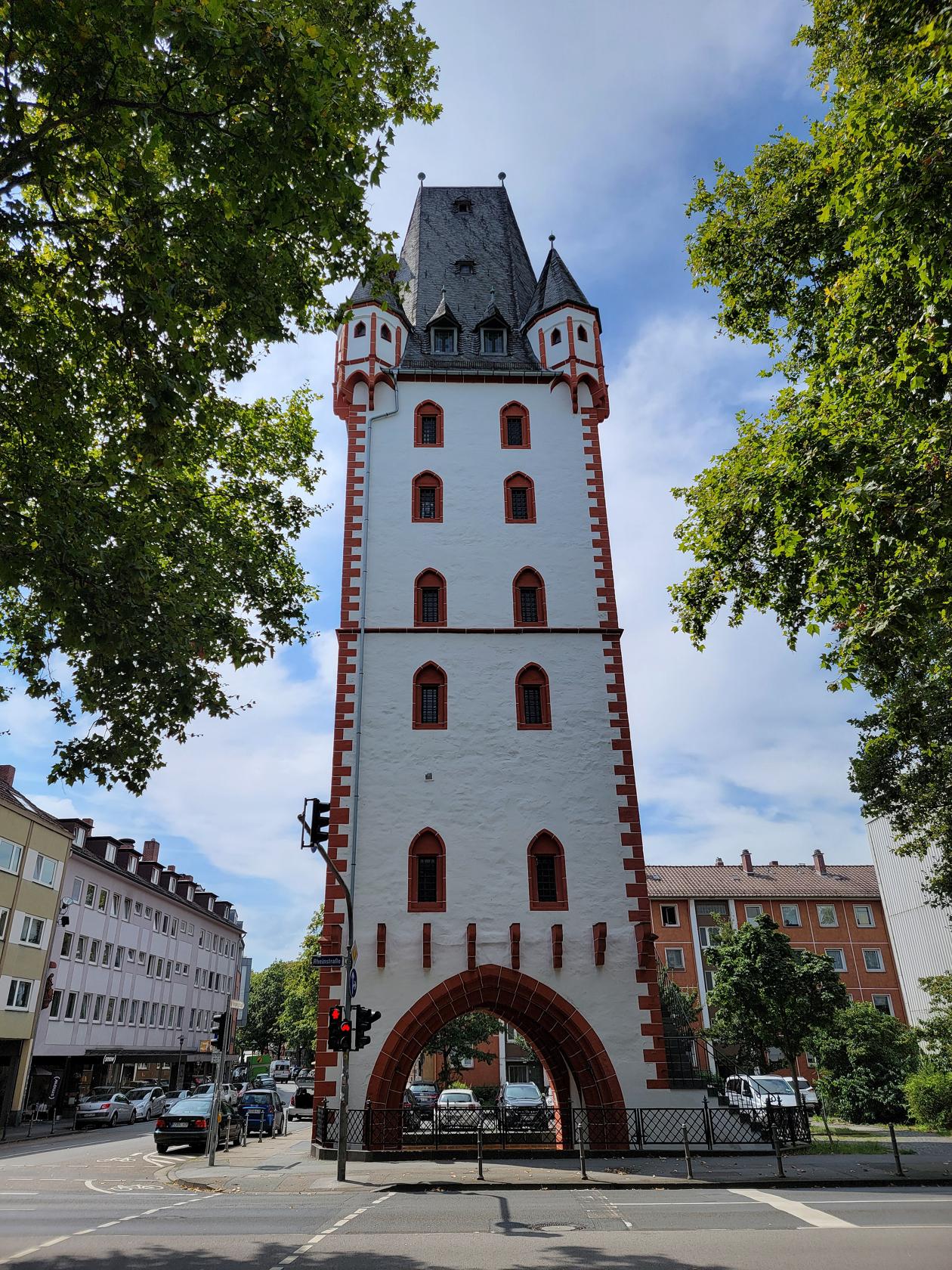
Holzturm of the old city wall – Mainz, Germany
The Wine Gate – Mainz, Germany
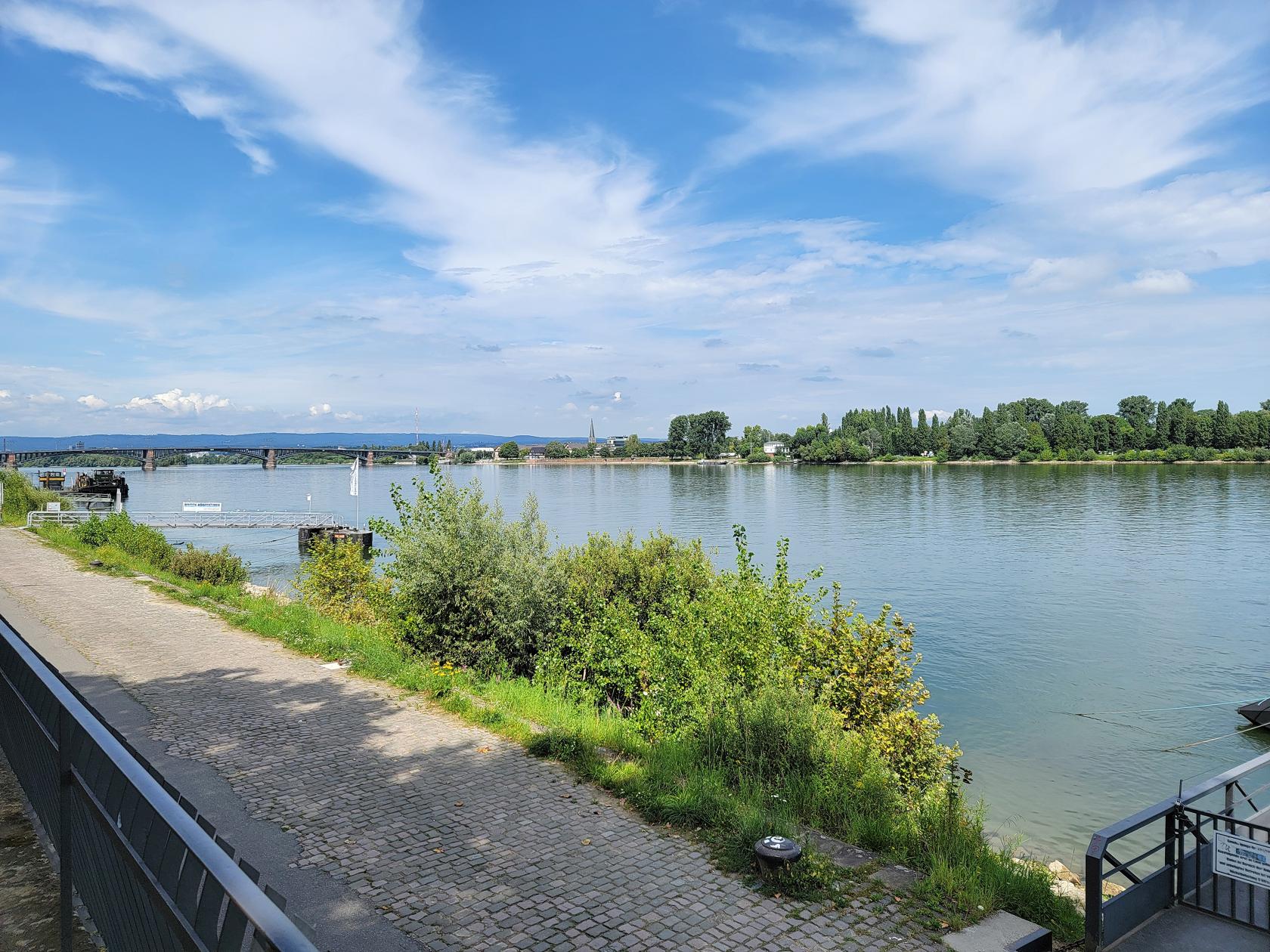
The Rhine river – Mainz, Germany
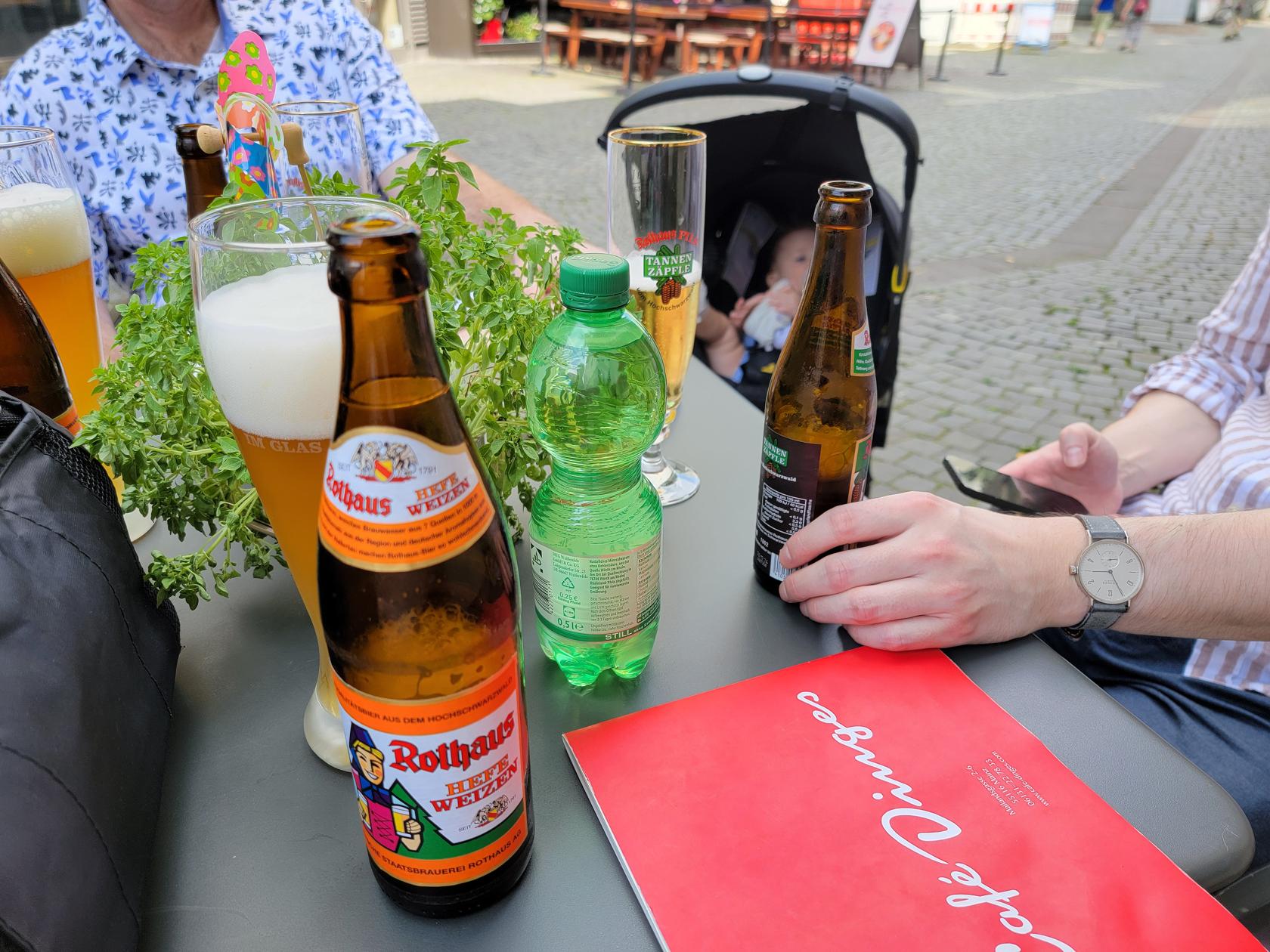
Rothaus – Mainz, Germany
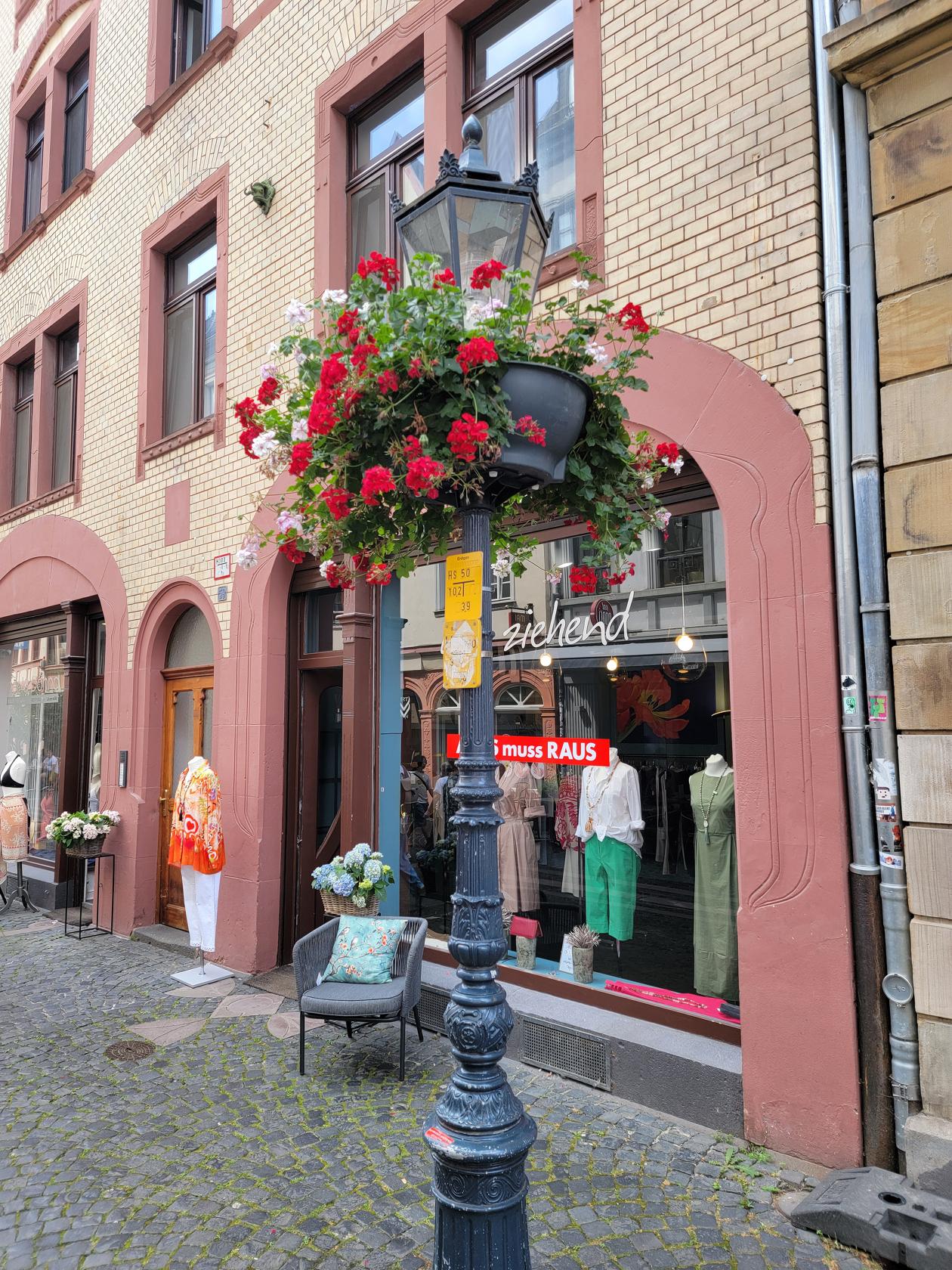
Street flowers – Mainz, Germany
Restaurants
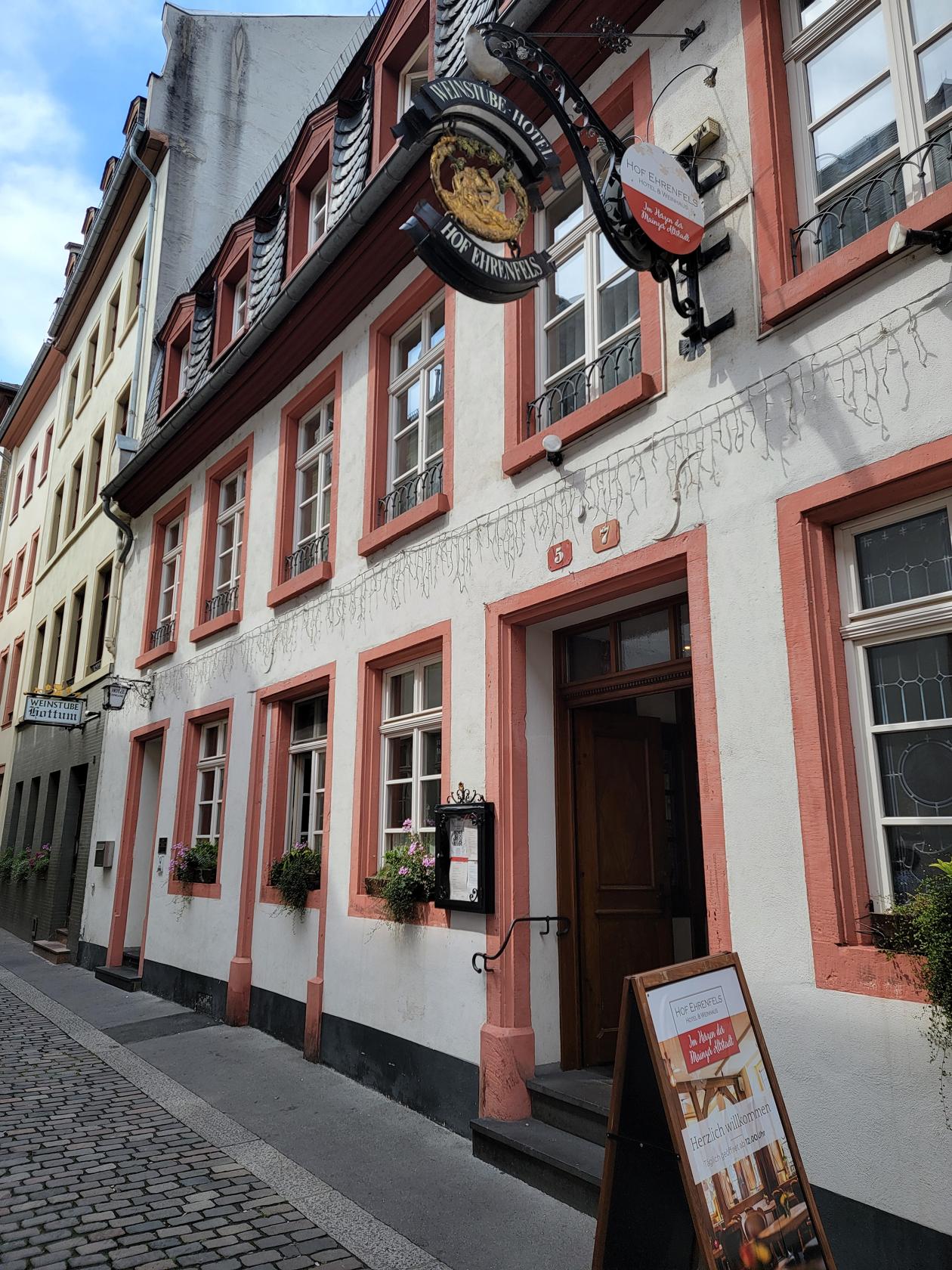
While in Mainz, we stopped at one of our favorite restaurants, or in this case a Wine house (Weinhaus), that our friends Karl Heinz and Isolde Seegräber introduced us to in the course of one of our earlier visits.
With a cohort of eight, we found it impossible with only one car to make a day trip on the weekend of August the 17th, so we took the Regional Train direct from Offenbach Hauptbahnhof (Hbf). In 25 mintues with the RE51 you can be in Gelnhausen, or with the RB51 slightly longer; both operate often and at regular intervals.
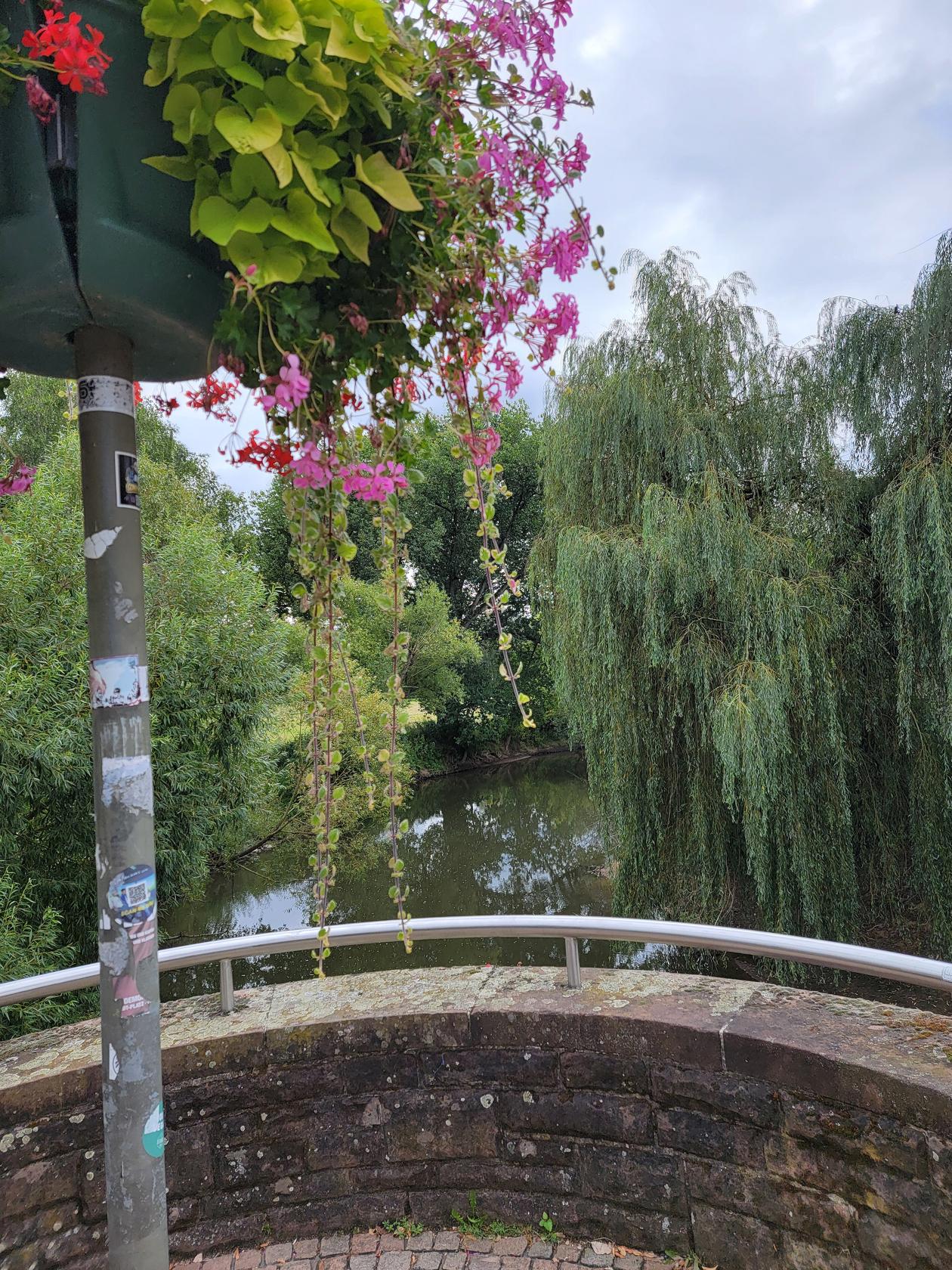
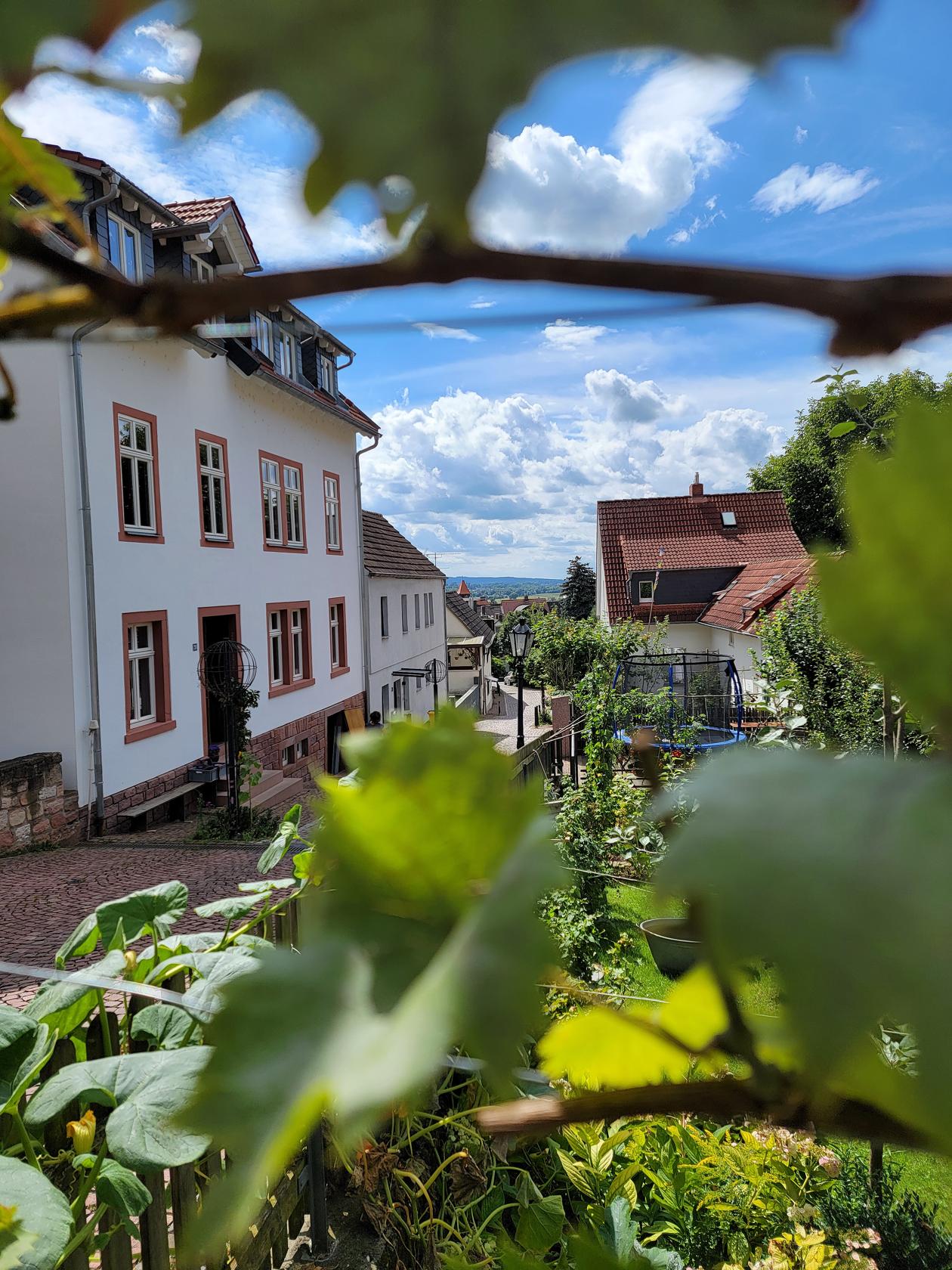
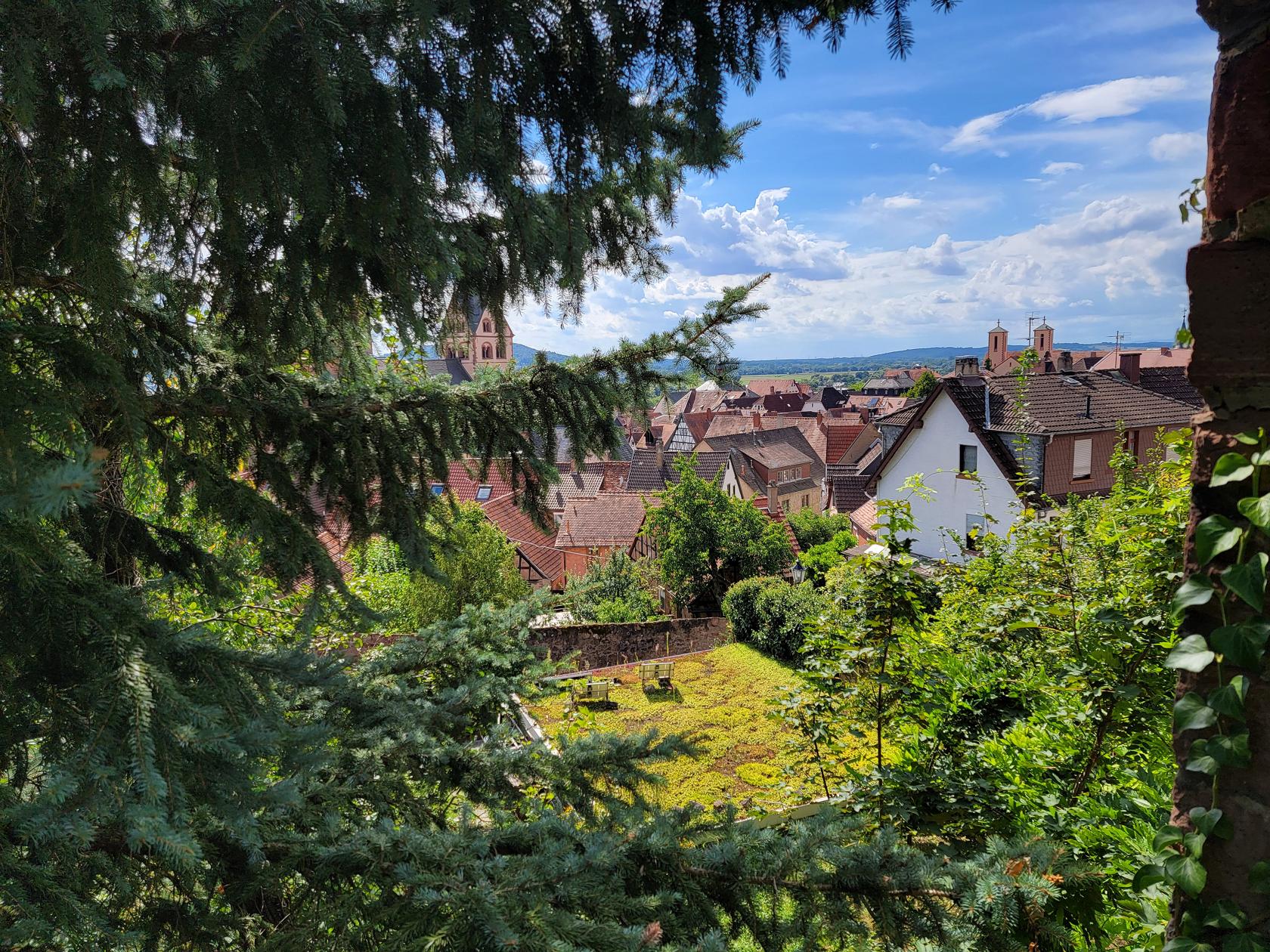
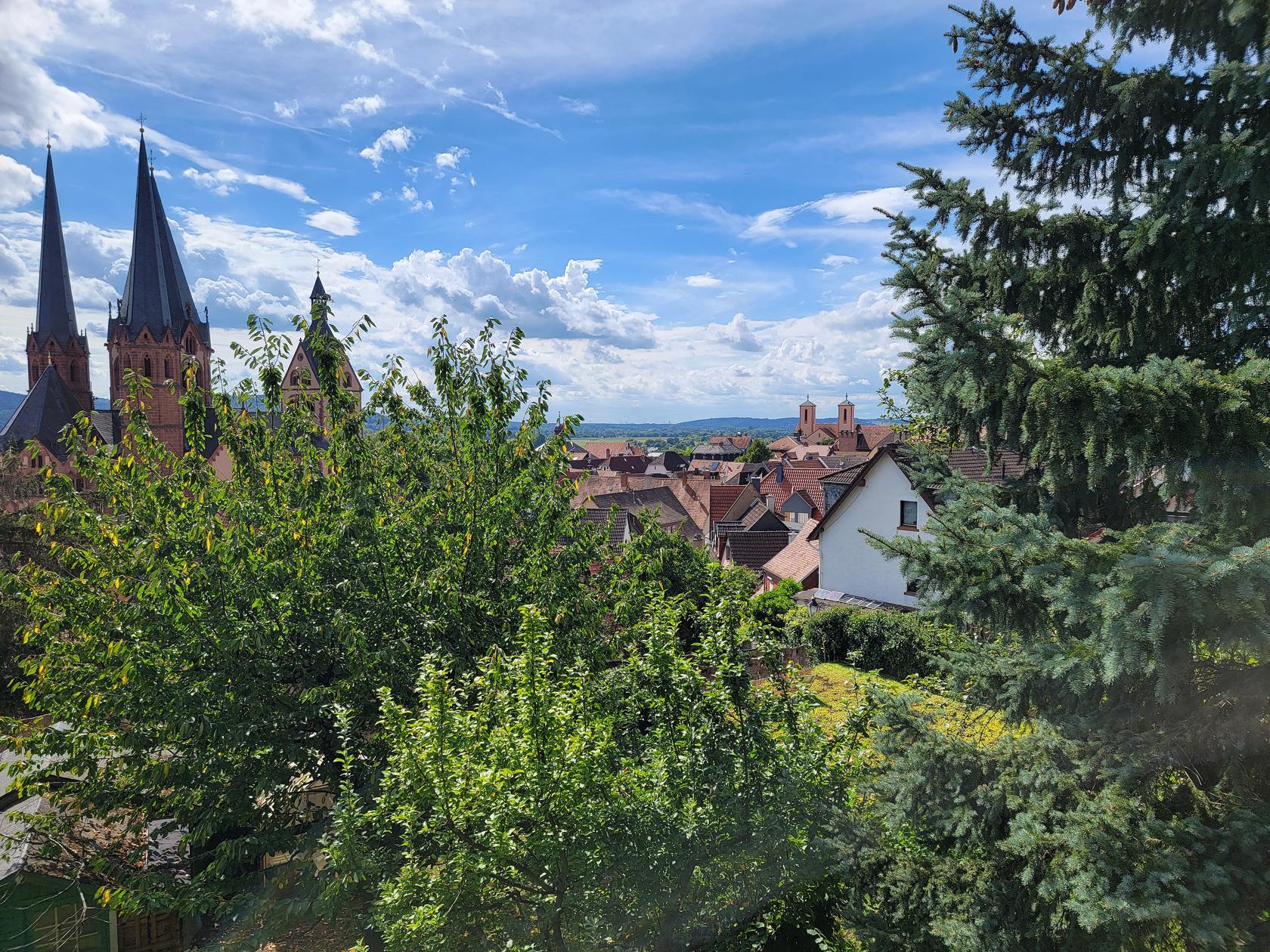
Overlook of the town – Gelnhausen, Germany
Gelnhausen
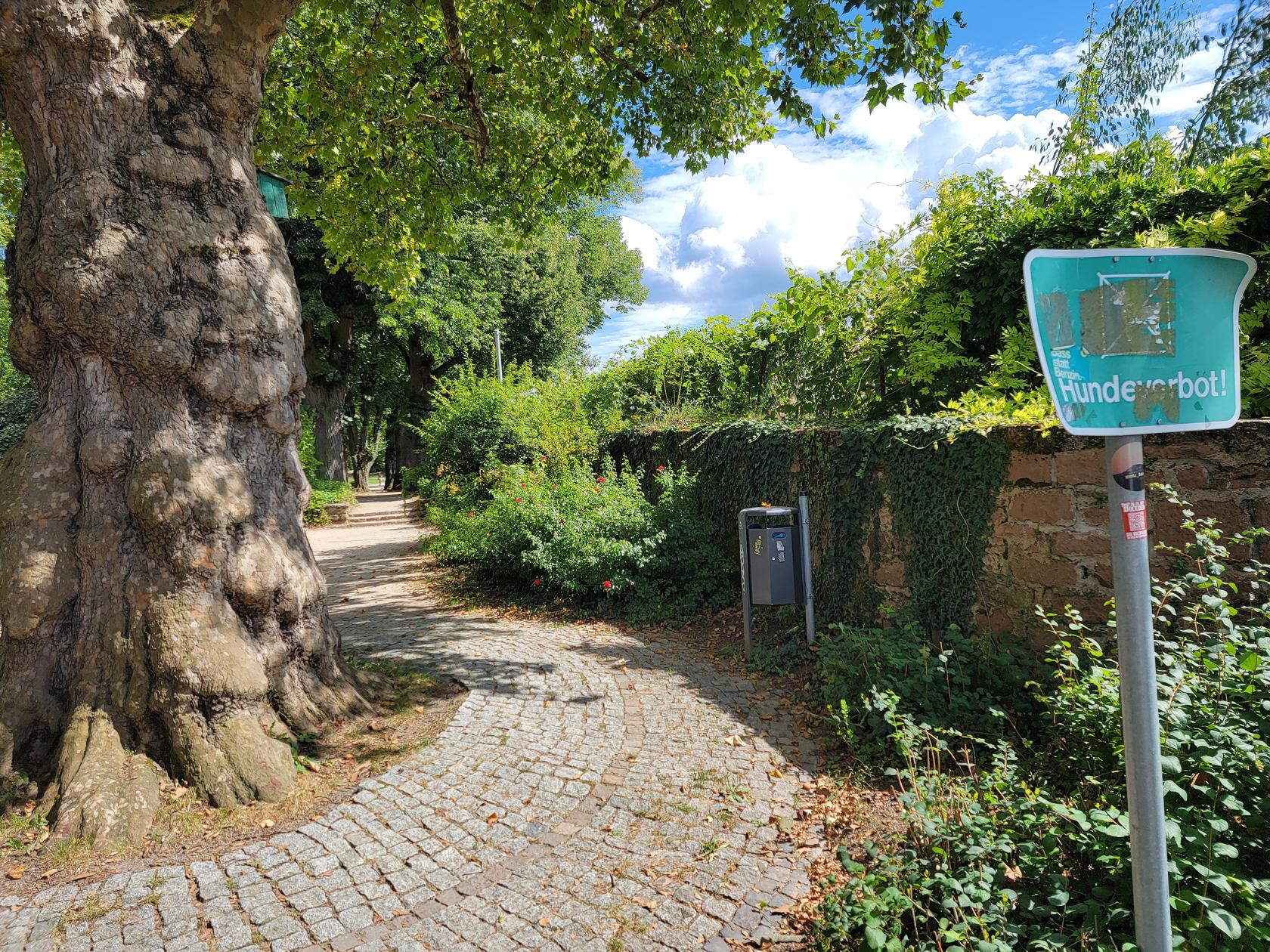
An unusual destination for non-Germans, Gelnhausen does not offer much but a change of scenery, a lazy stroll in the park and perhaps different opportunities to eat.
Kinzig River – Gelnhausen, Germany
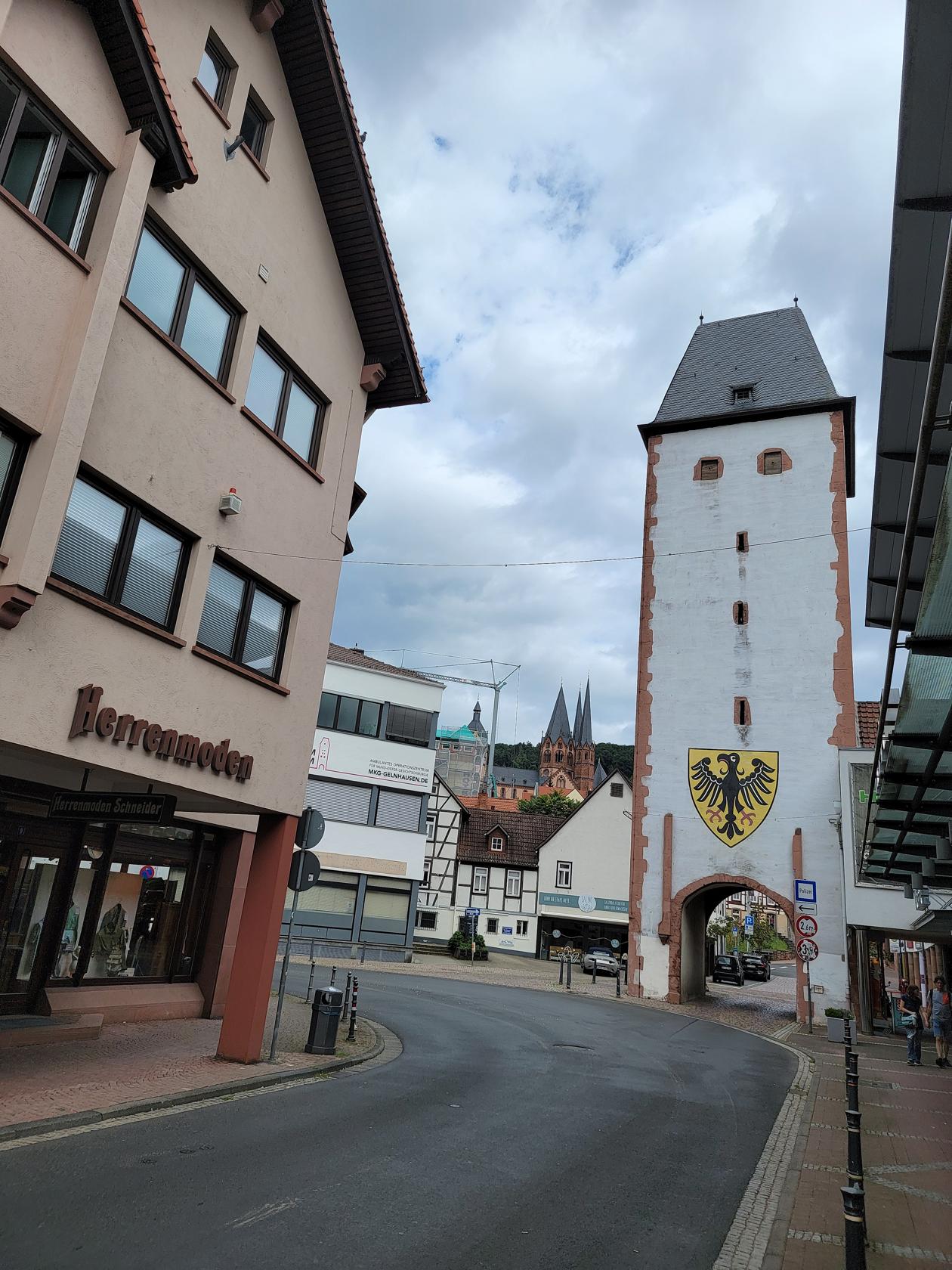
Ziegelturm – Gelnhausen, Germany
Kinzig River – Gelnhausen, Germany
Ziegelturm – Gelnhausen, Germany
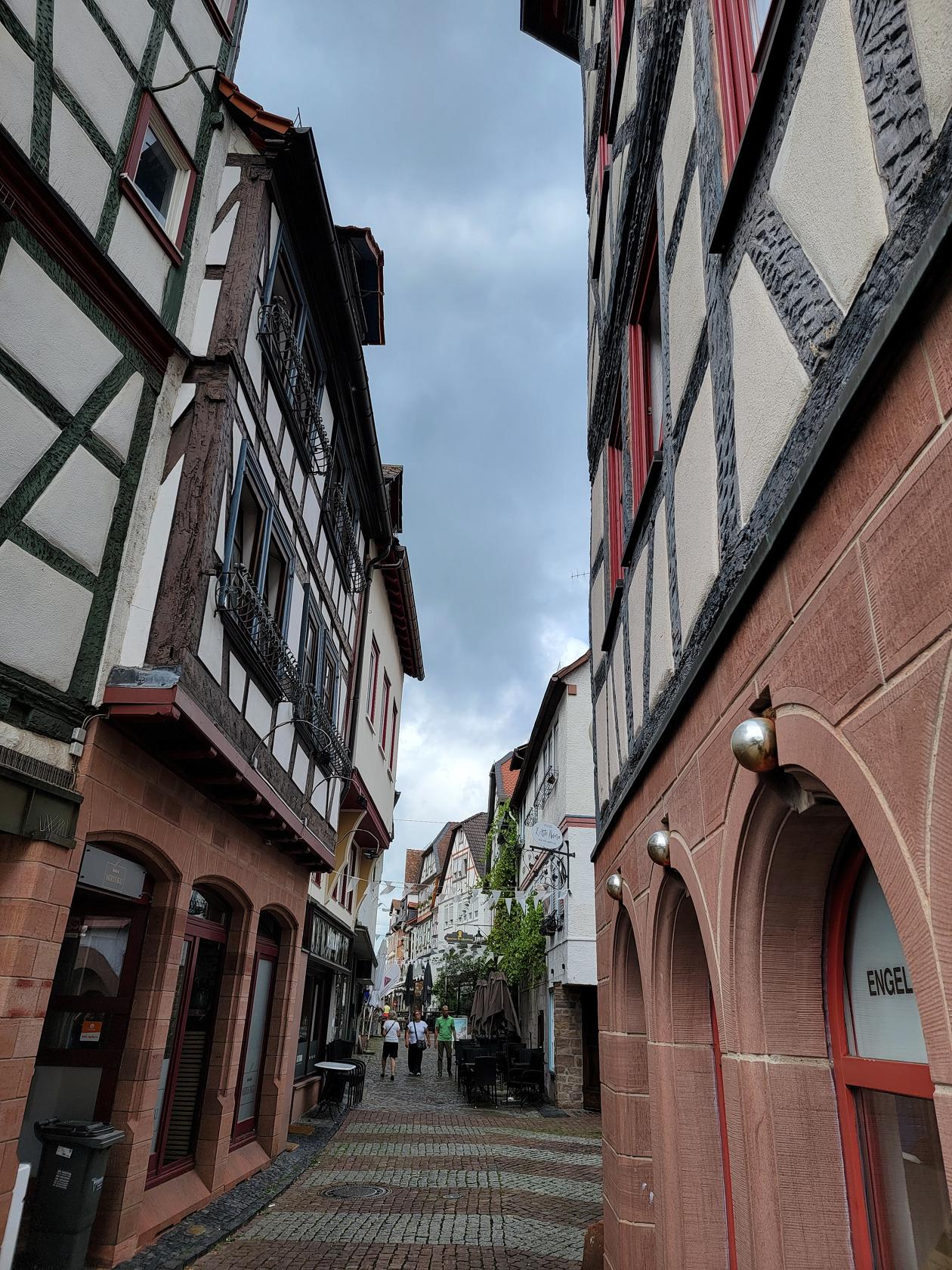
Schmidtgasse – Gelnhausen, Germany
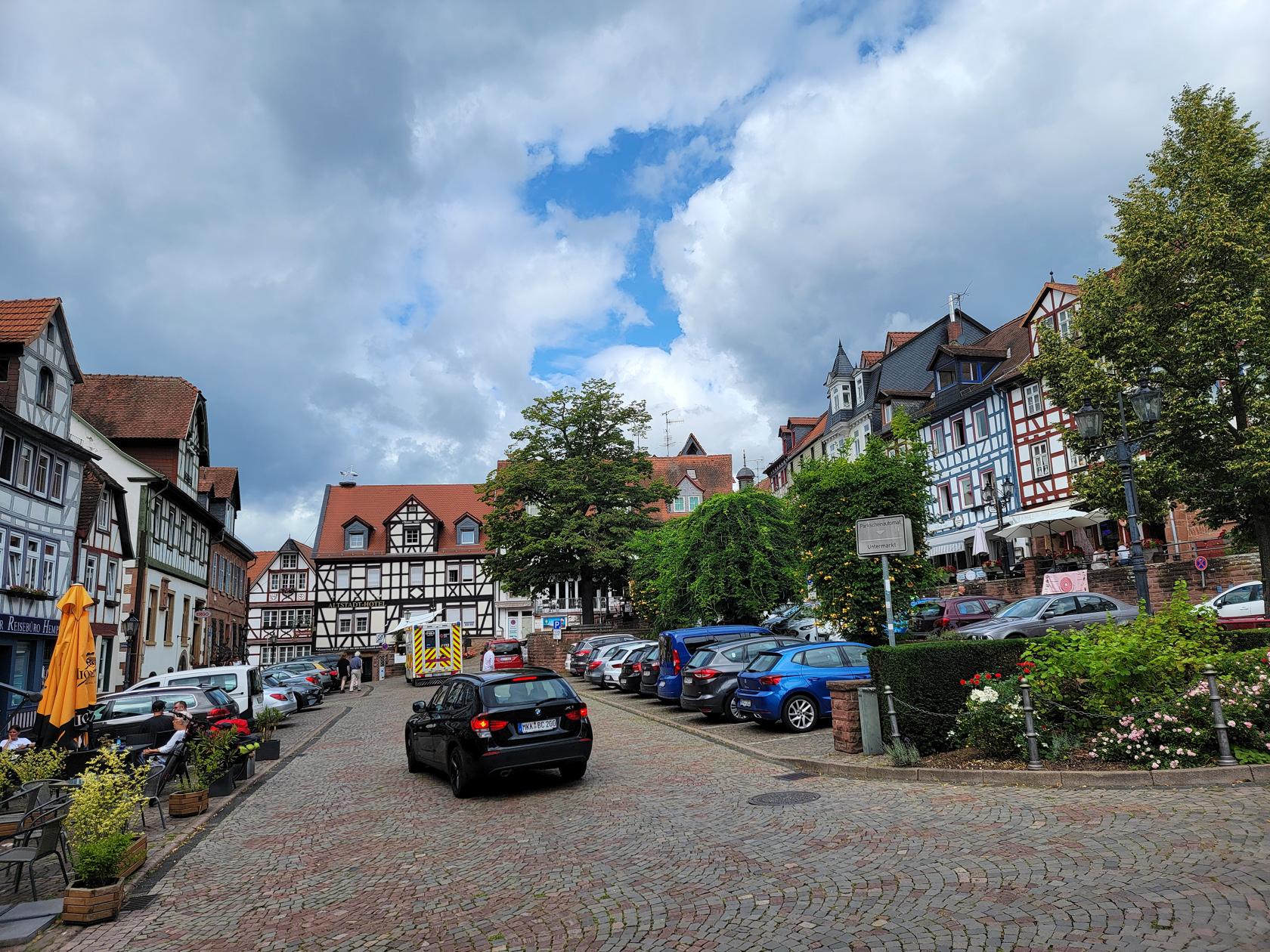
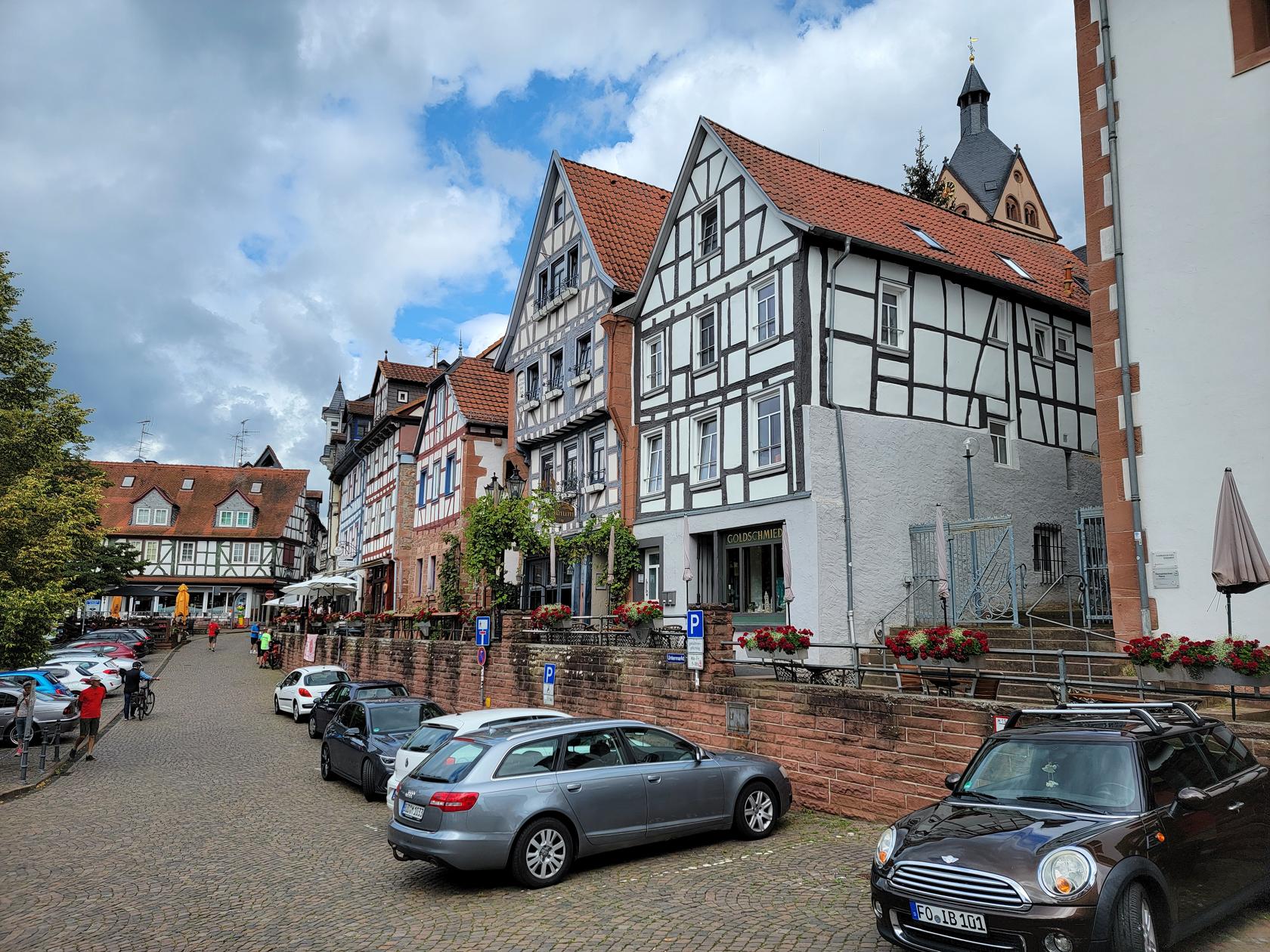
Untermarkt – Gelnhausen, Germany
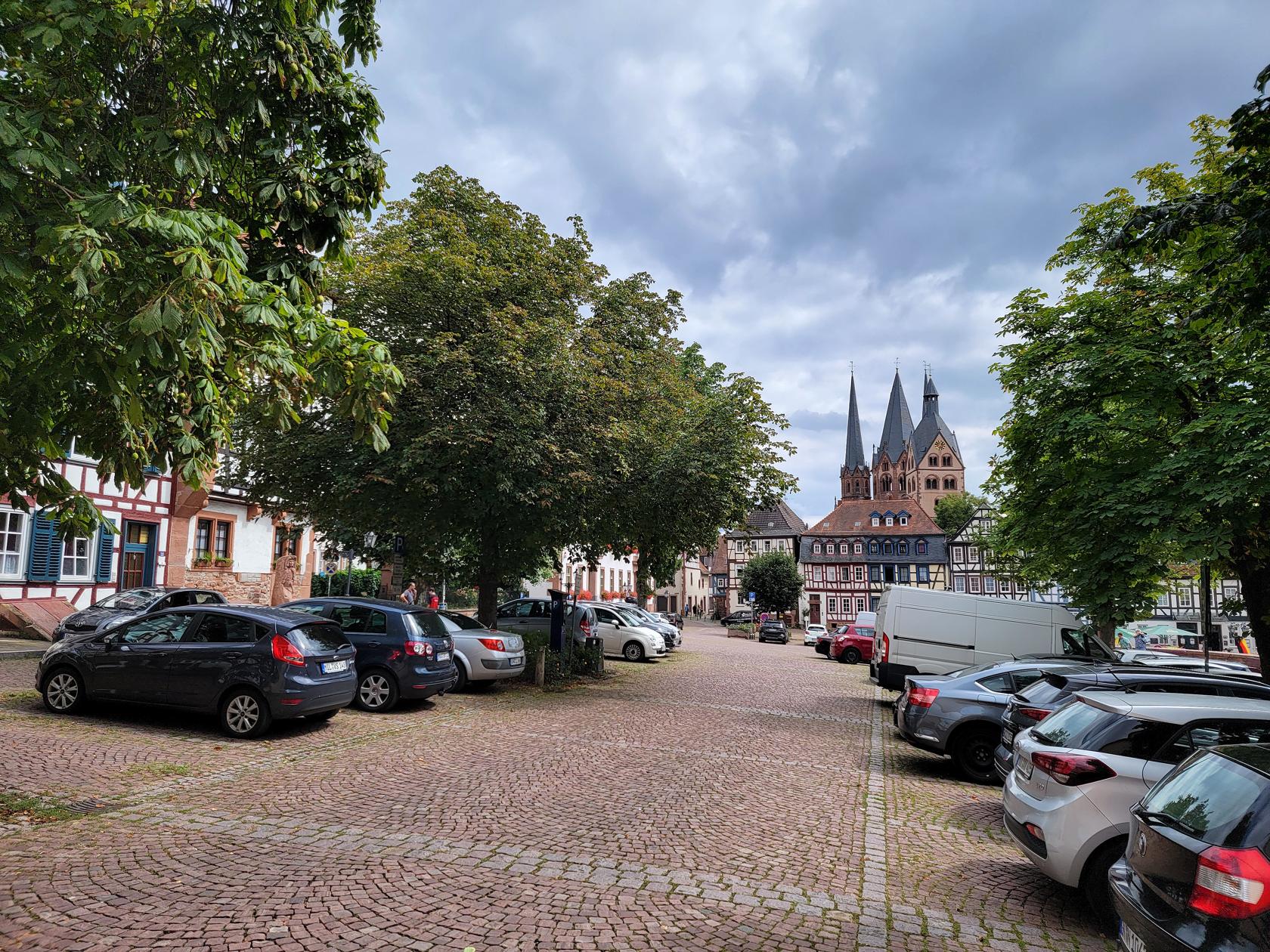
The town is separated into lower and upper market places, or Unter- and Obermarkt, both of which act as parking lots for locals and visitors alike. Since we took the train, the entry to the town was over the Kinzig river and through the Ziegelturm.
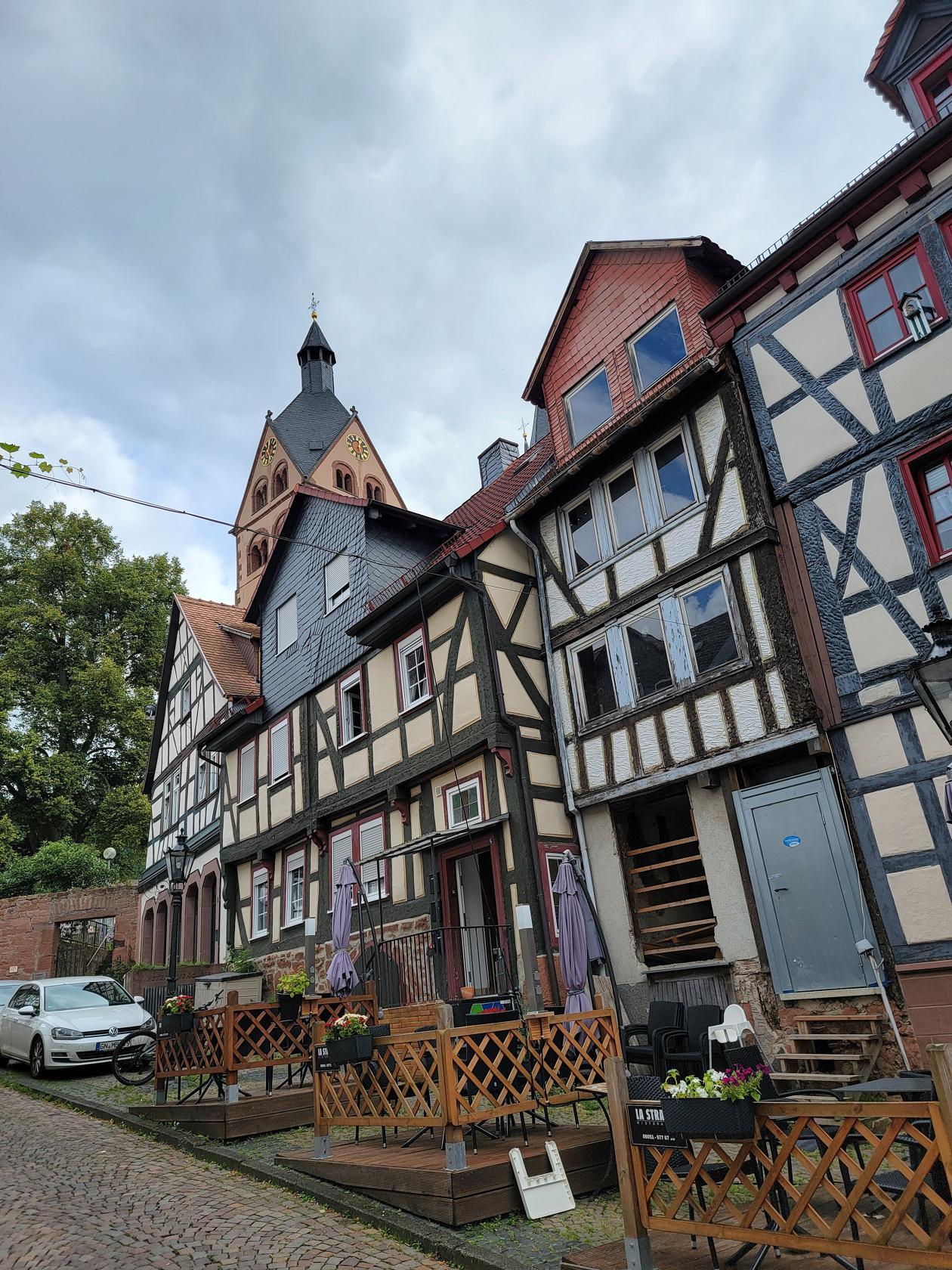
Houses of timber – Gelnhausen, Germany
Innenstadt – Gelnhausen, Germany
Untermarkt – Gelnhausen, Germany
Obermarkt – Gelnhausen, Germany
Untermarkt – Gelnhausen, Germany
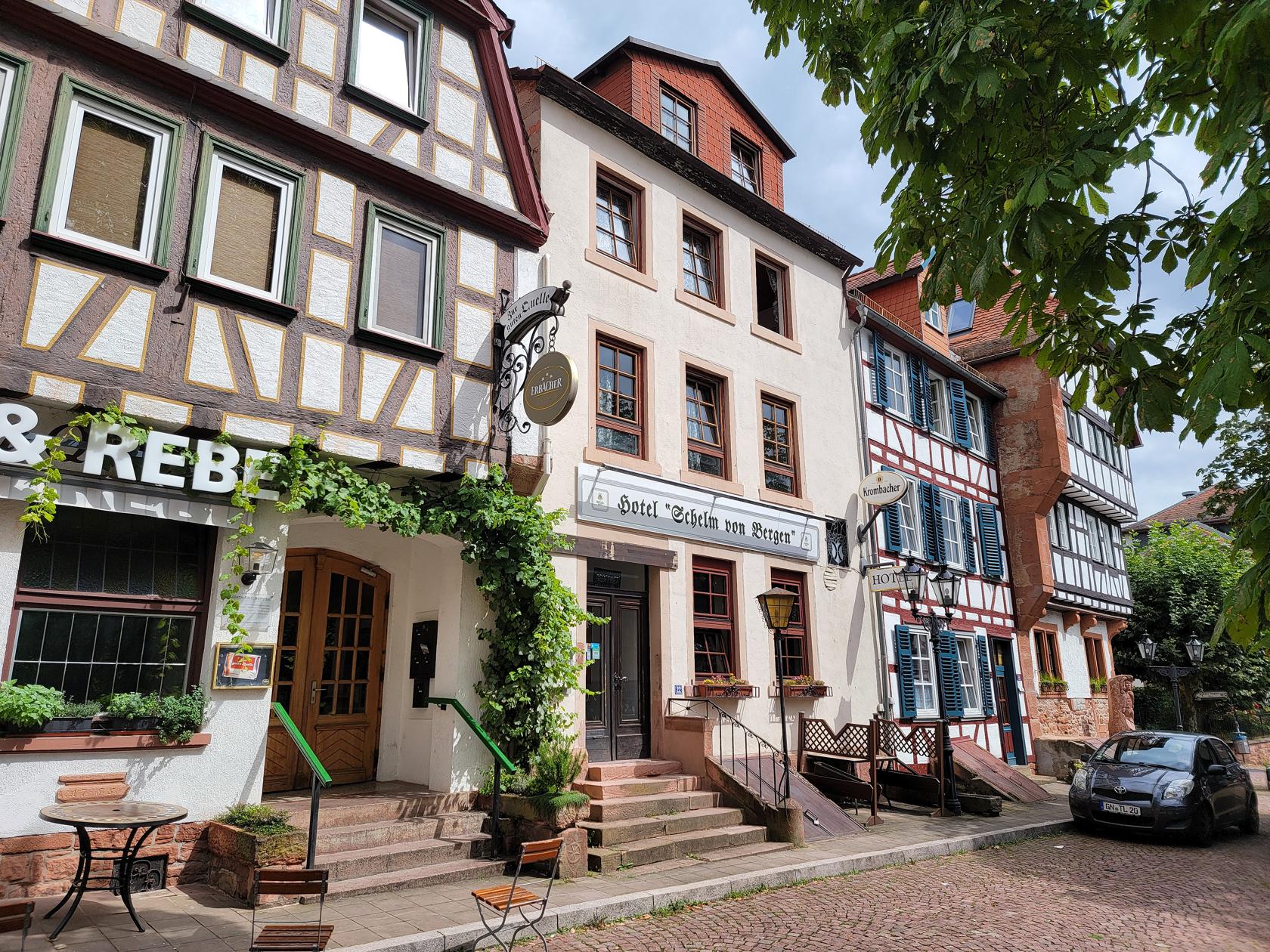
Hotel in the Obermarkt – Gelnhausen, Germany
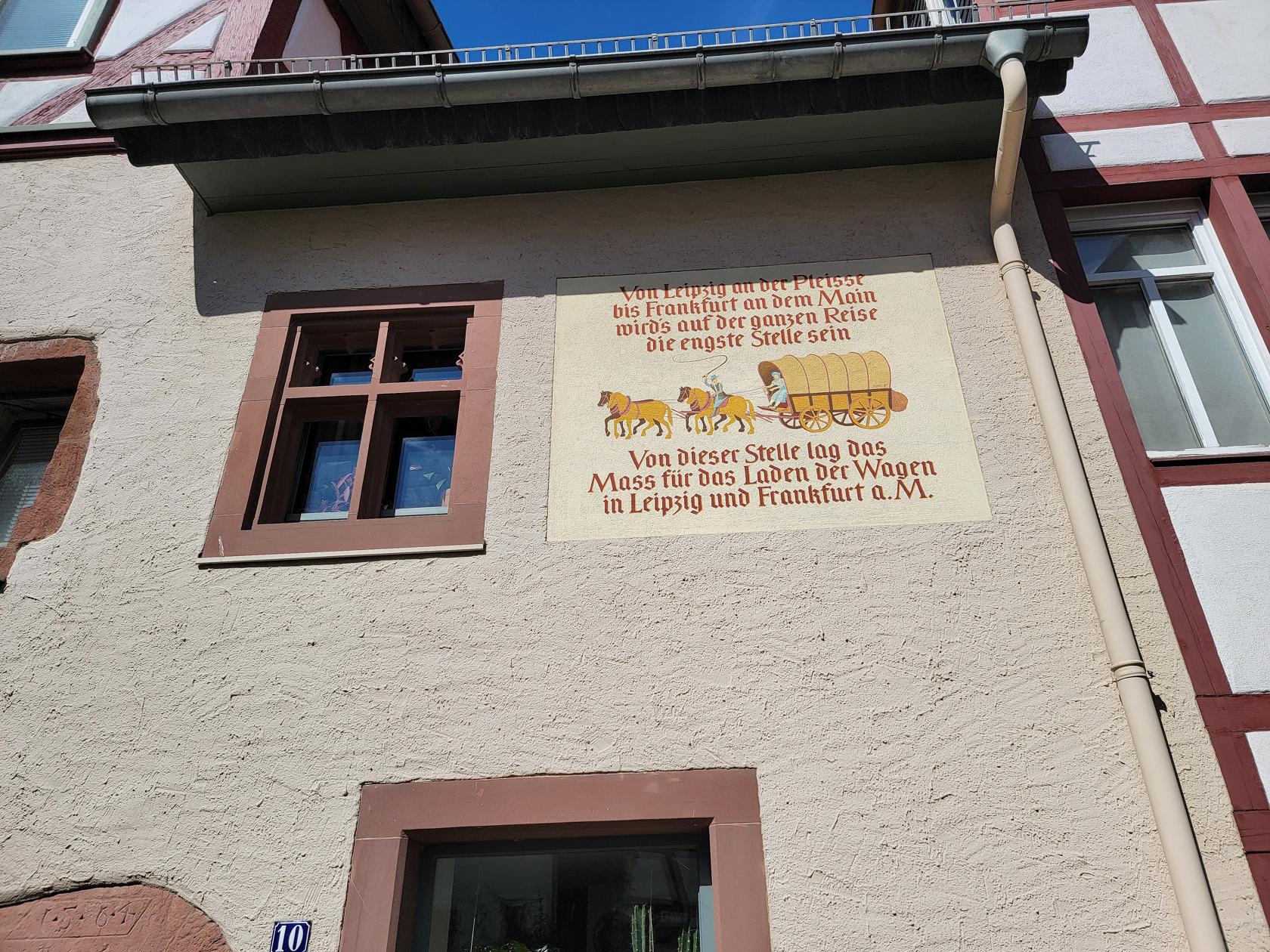
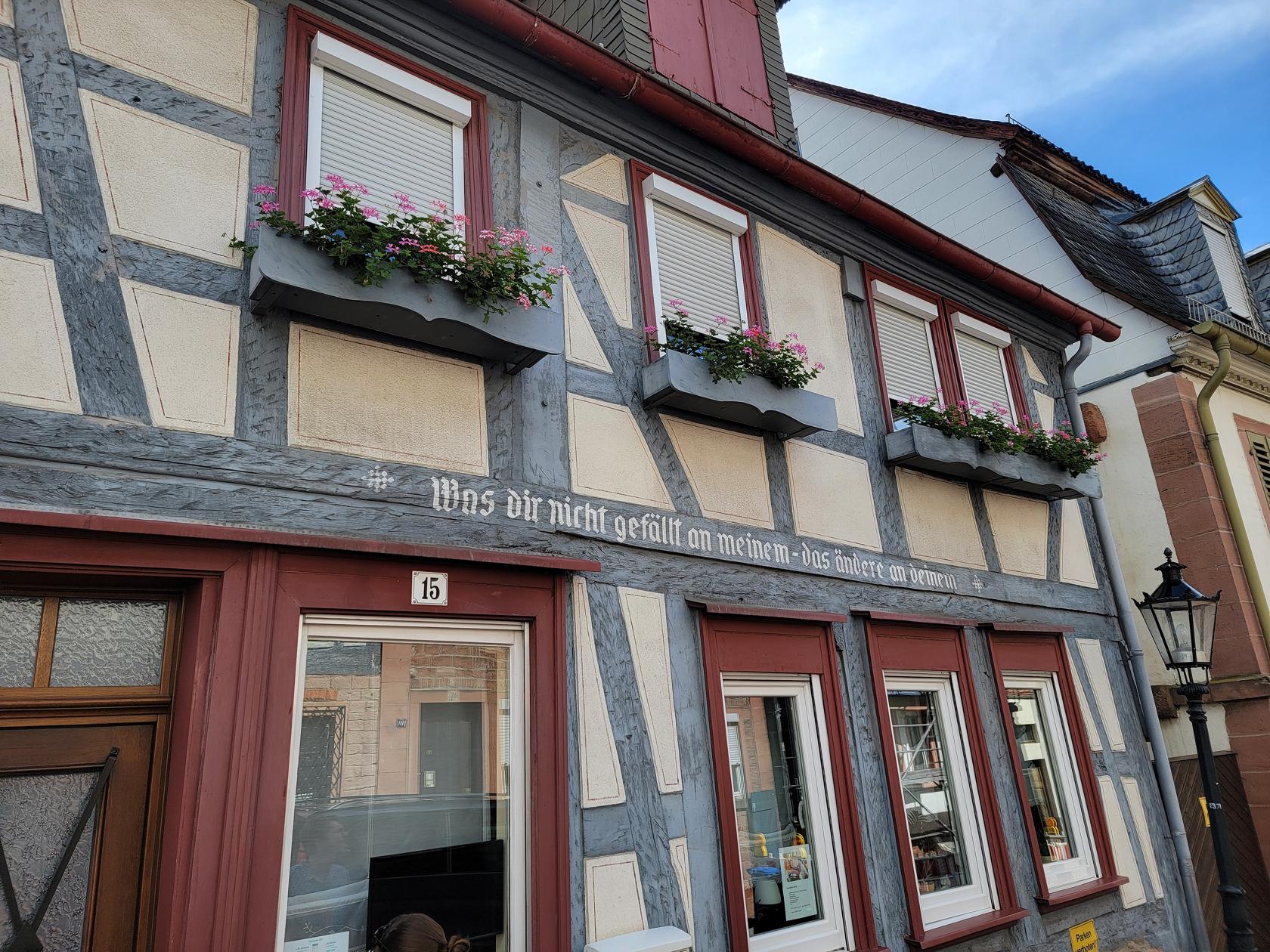
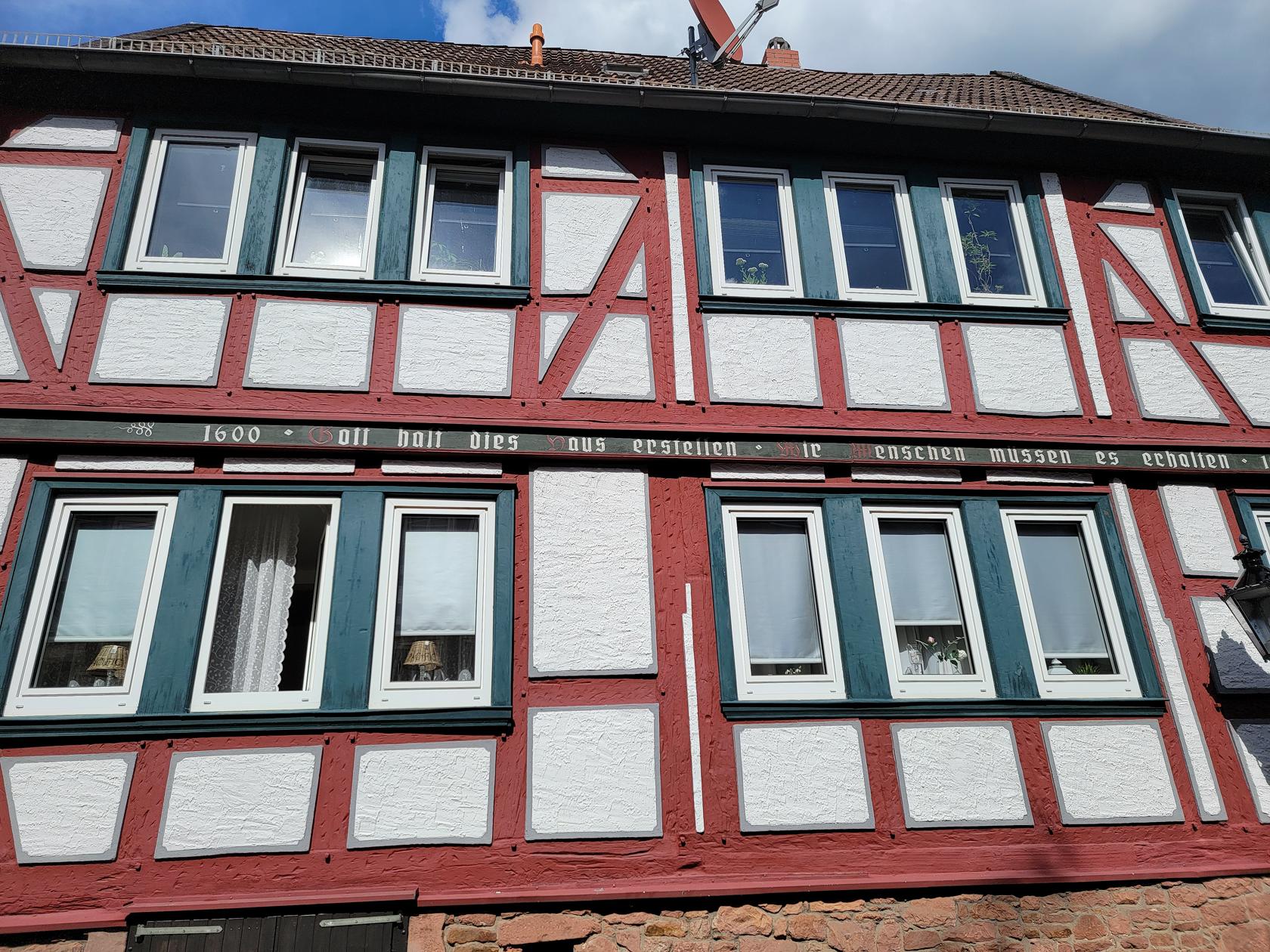
Walking the narrow streets of Gelnhausen the visitor will notice numerous timber houses with sayings on them. In many towns, this is an old practice which has been used probably for centuries, either to provide some humor or commentary on the events of the time.
More sayings – Gelnhausen, Germany
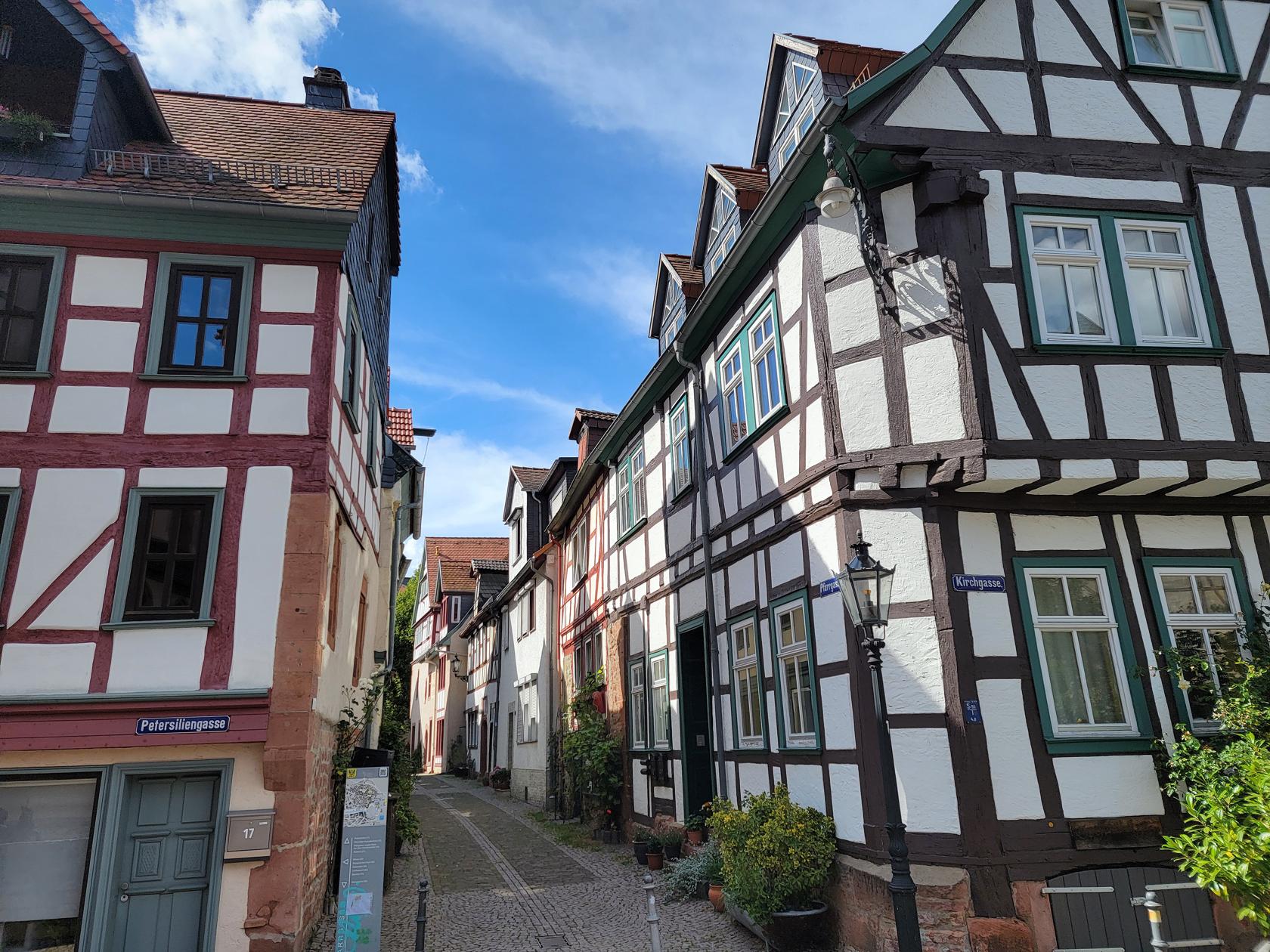
Pfarrgasse – Gelnhausen, Germany
Cute sayings on house – Gelnhausen, Germany
Very old house – Gelnhausen, Germany
More timber houses – Stadtgarten Halbmond – Gelnhausen, Germany
Altstadt Hotel – Gelnhausen, Germany
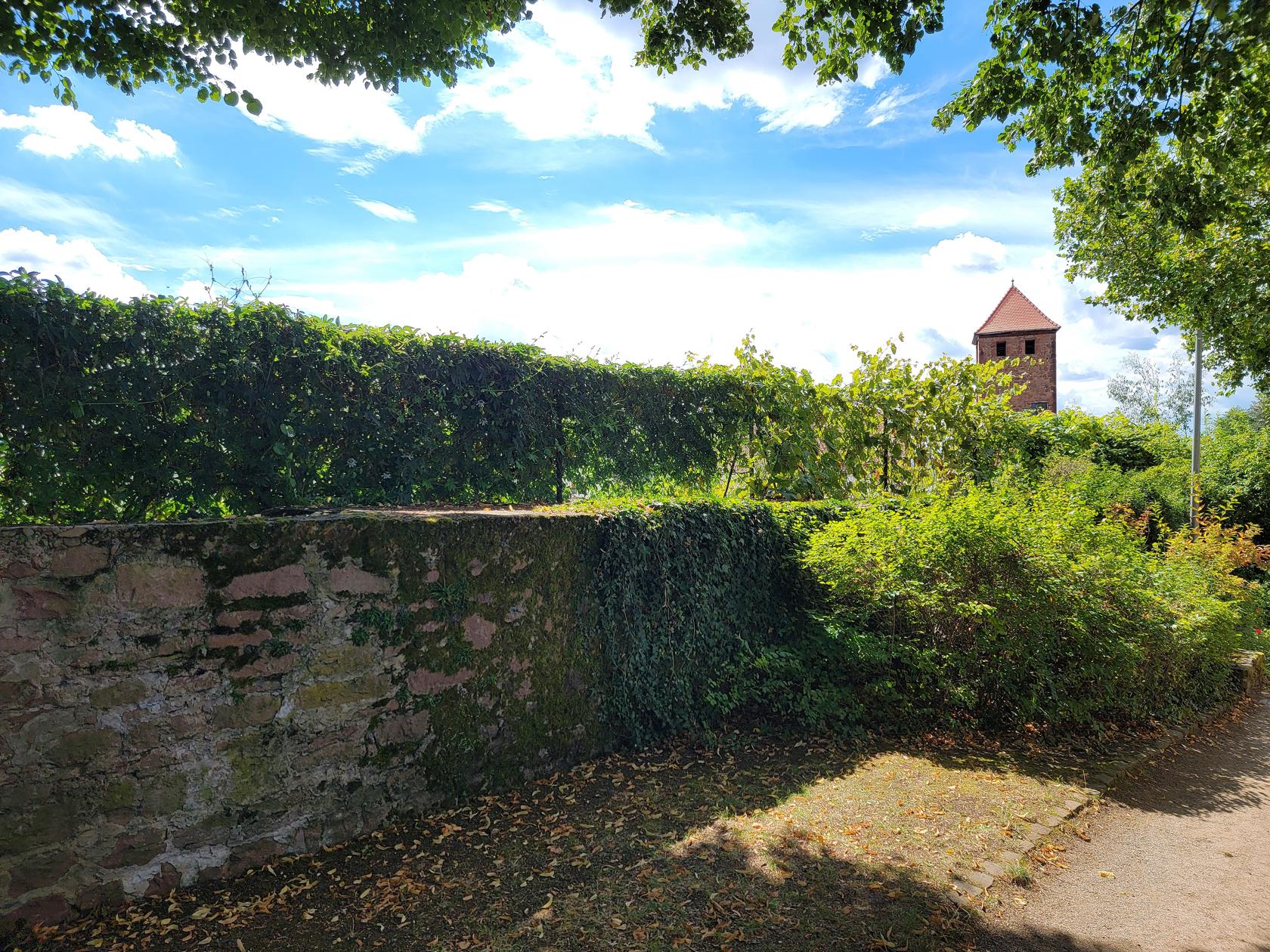
On the other end of town, after the Obermarkt you can wander through the Holzgasse Tower to find the old town wall. Here you will enjoy a very nice park with an overlook of the town and surrounding area.
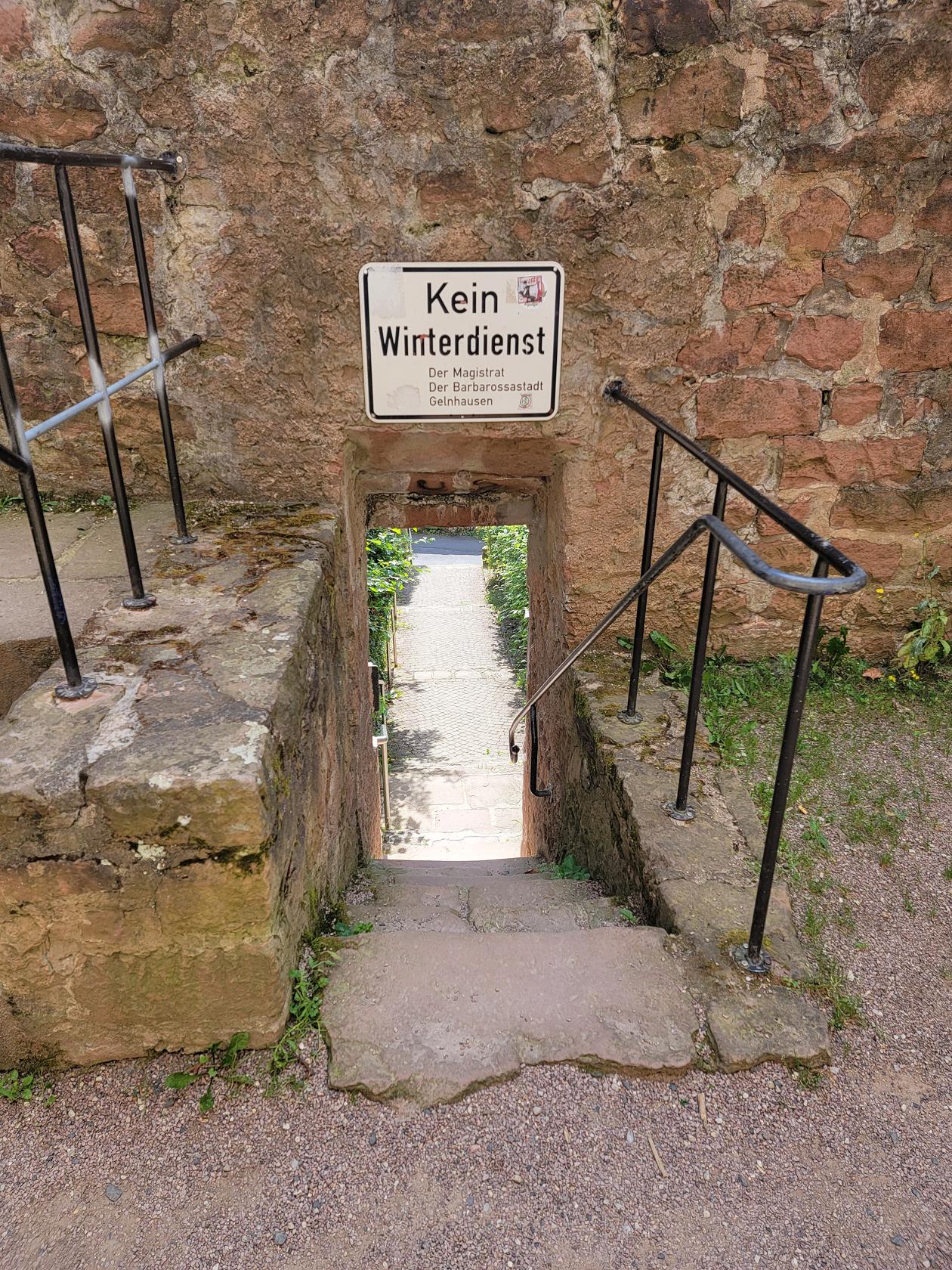
No weather maintenance (snow) – Stadtgarten Halbmond – Gelnhausen, Germany
Town – Stadtgarten Halbmond – Gelnhausen, Germany
Town overlook from wall – Stadtgarten Halbmond – Gelnhausen, Germany
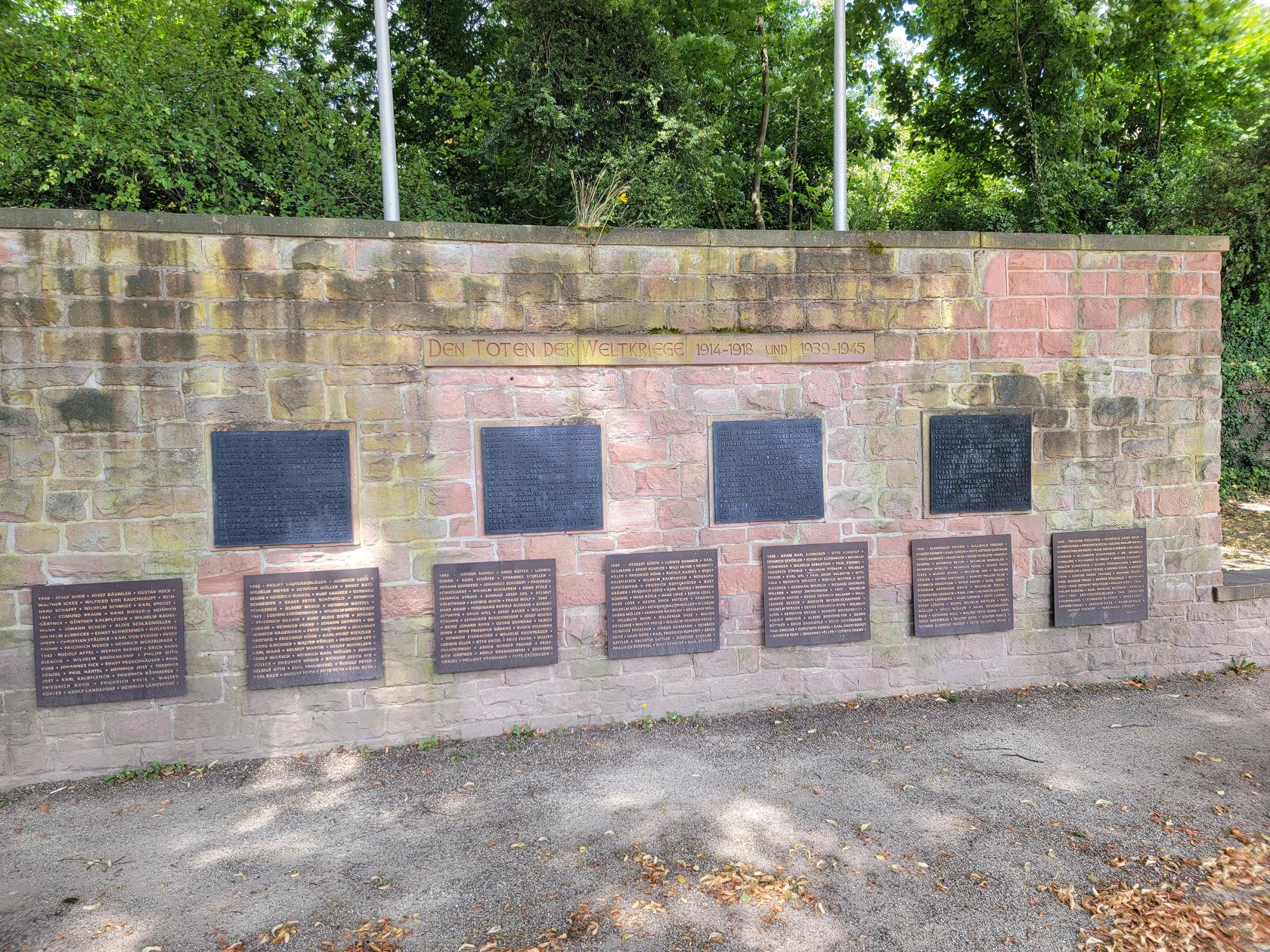
Not far from the entrance is a memorial to the fallen soldiers of the town from the two world wars.
War Memorial – Stadtgarten Halbmond – Gelnhausen, Germany
War Memorial – Stadtgarten Halbmond – Gelnhausen, Germany
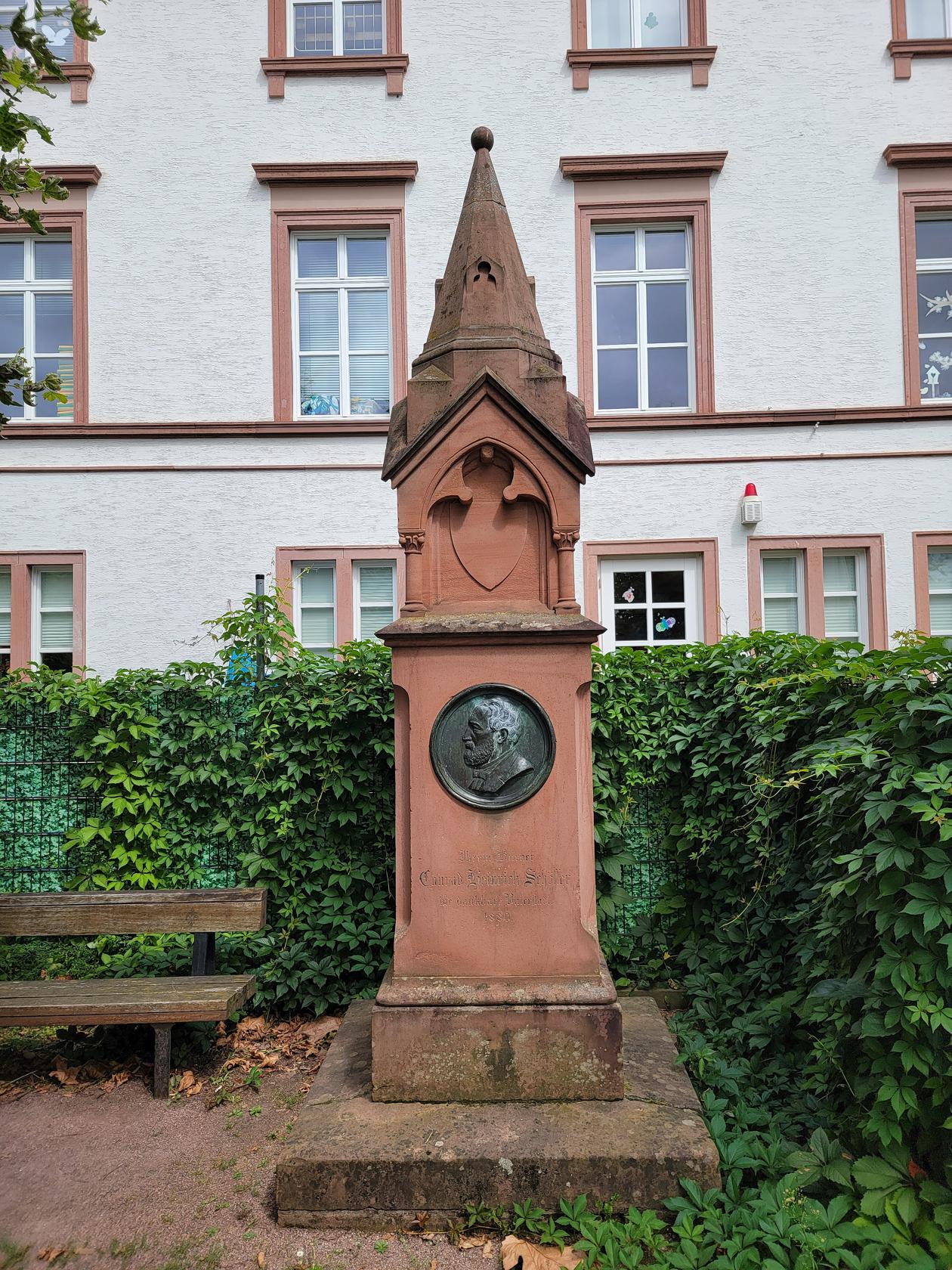
The town also has a few other monuments or fountains worth visiting.
Schoeller memorial – Gelnhausen, Germany
Statue in the Obermarkt – Gelnhausen, Germany
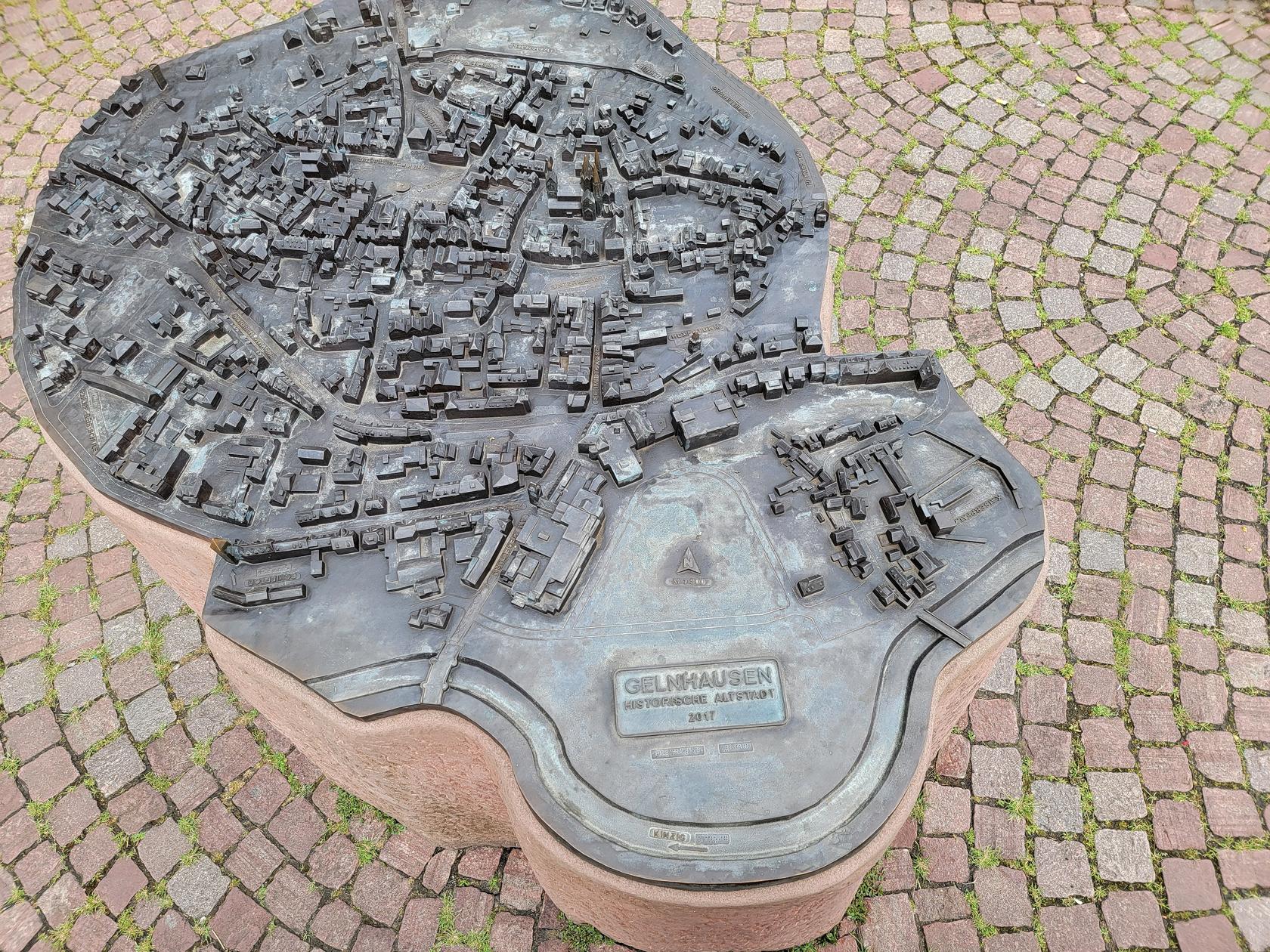
Stadtplan – Gelnhausen, Germany
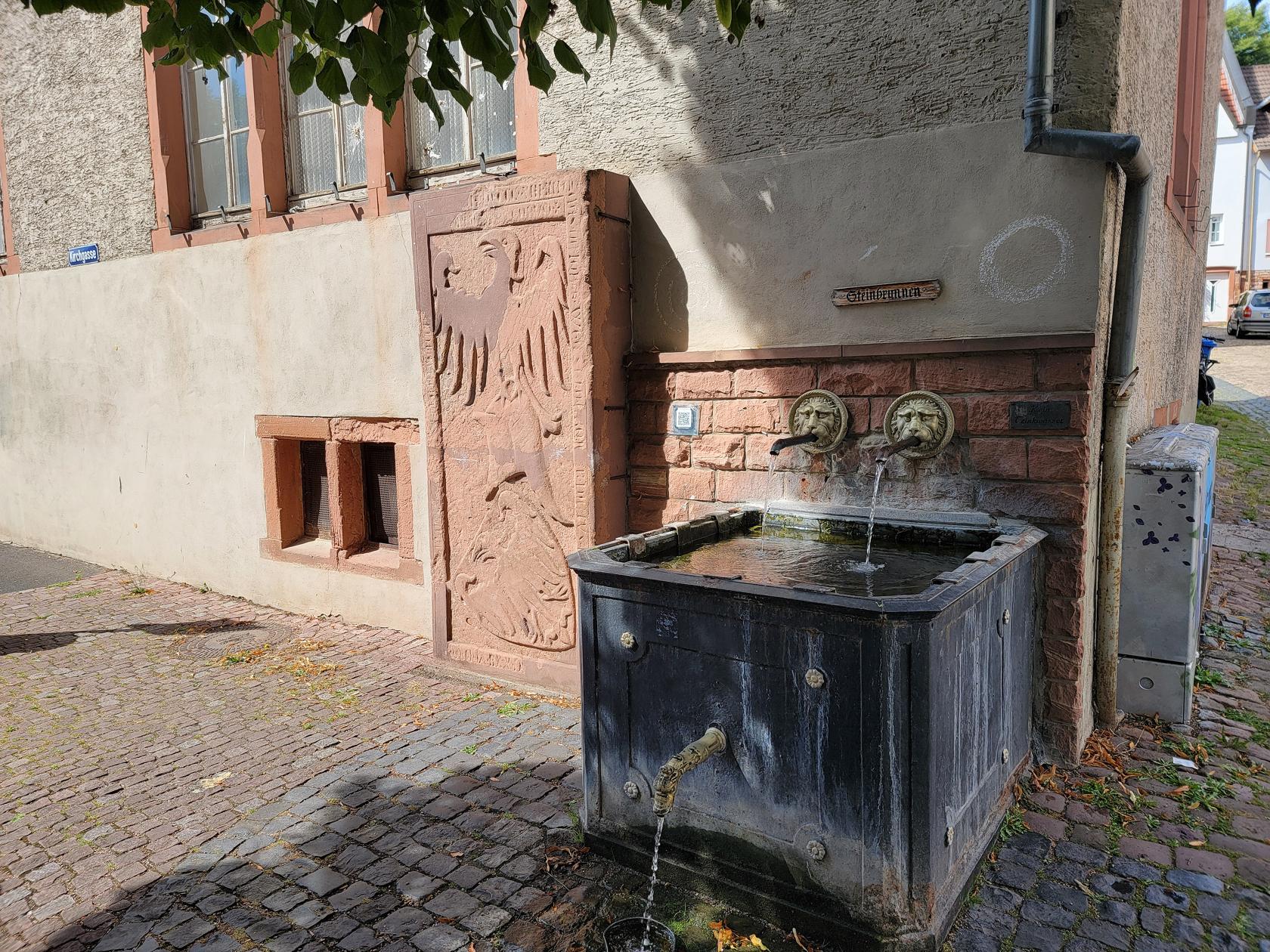
Old town fountain – Gelnhausen, Germany
Restaurants
There are many restaurants in this small town, though few were open. However, from what we could tell, there would be many cuisines to choose from had the other restaurants been open.
Malamatina’s Greek Restaurant
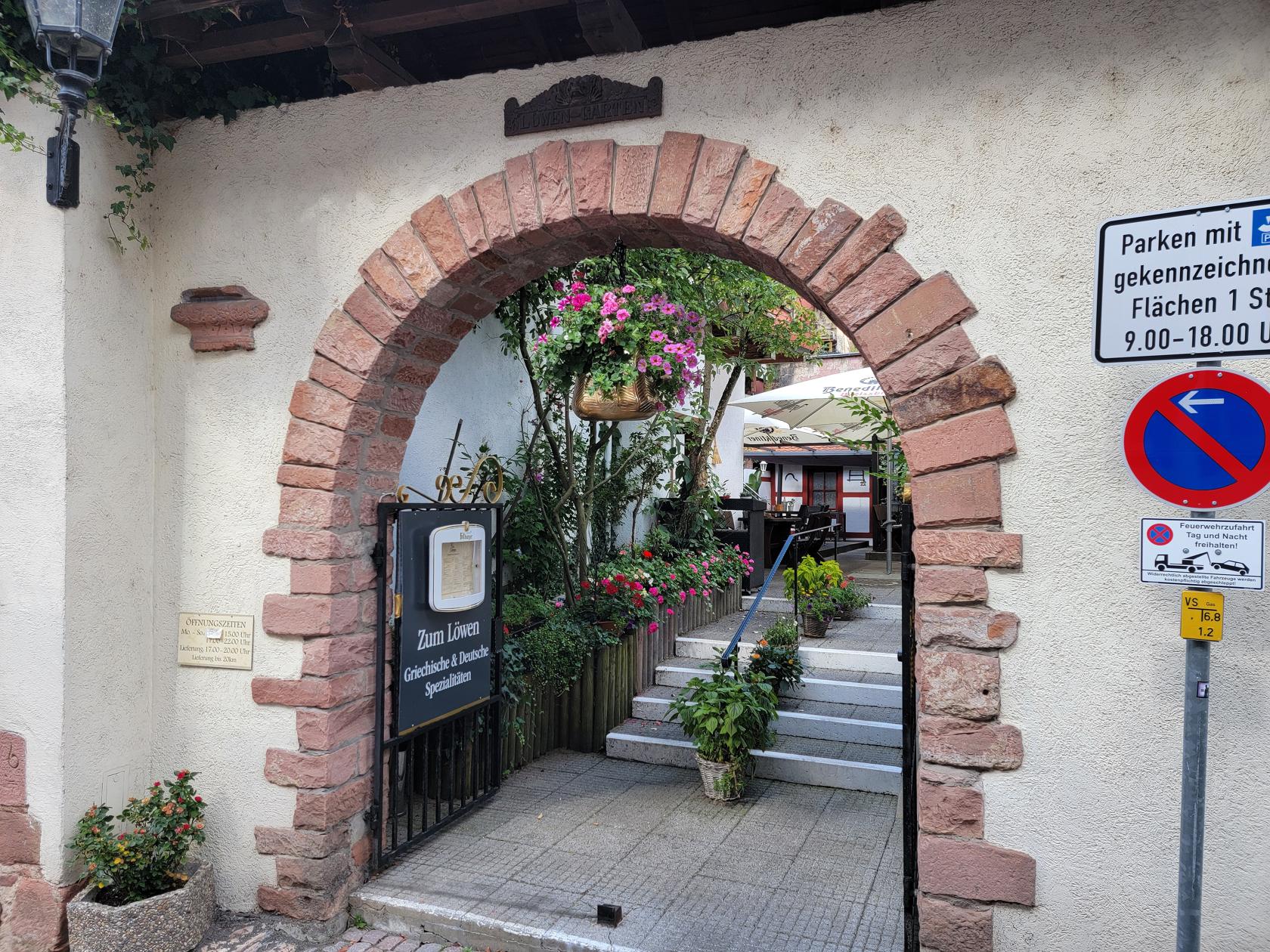
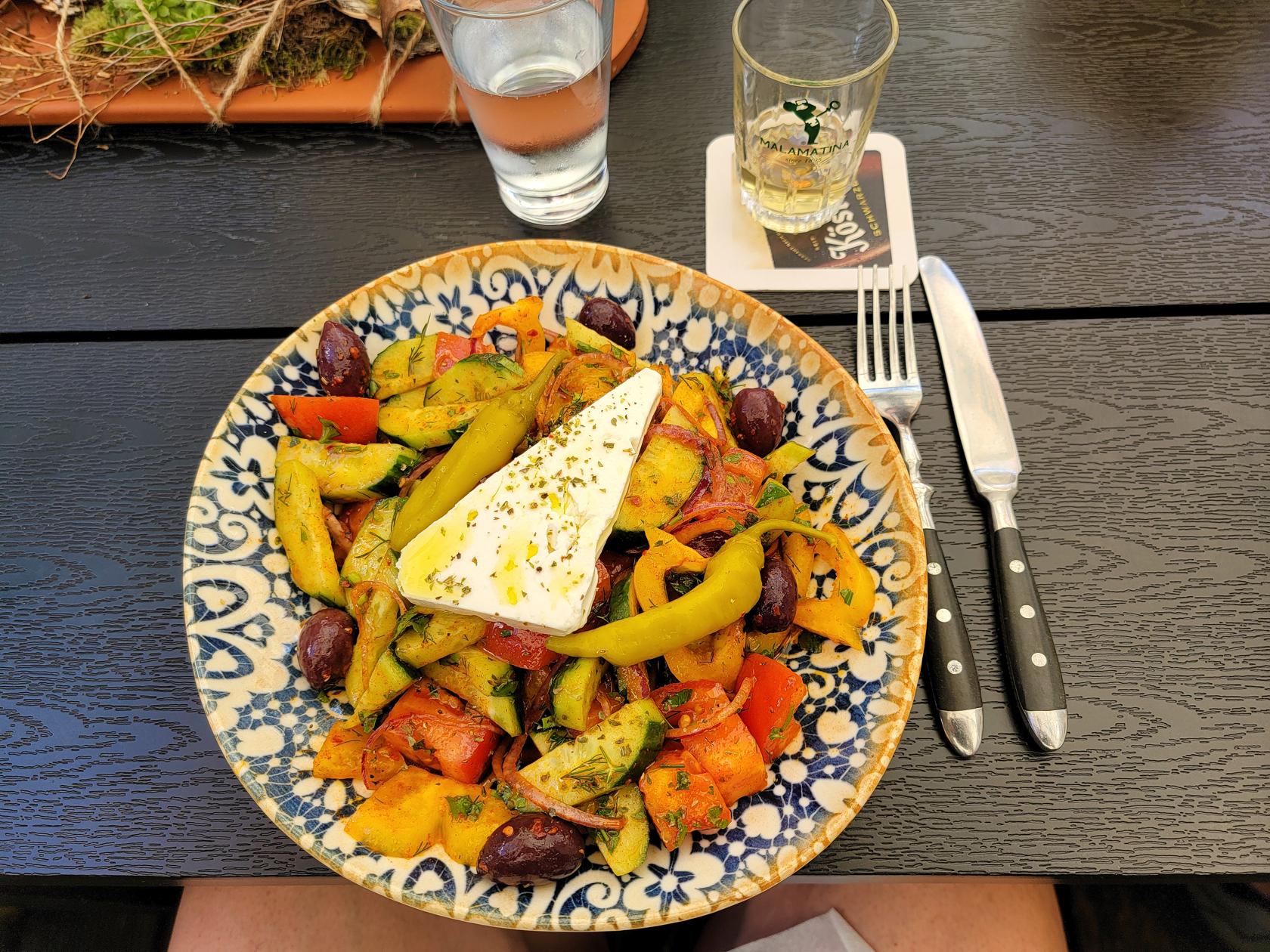
Off the beaten path and not far from the Obermarkt, is Malamatina’s Greek restaurant. Though the sign says, Greek and German food, we didn’t see much in the way of German food on the menu..
Probably one of the most clean European cities you will come across is the city of Luxemburg in the country of Luxemburg, or as they prefer to spell both, Luxembourg. The people here speak many different languages, including their own. They have to, they are wedged between Belgium, France and Germany and are frequented by tourist from English speaking countries as well.
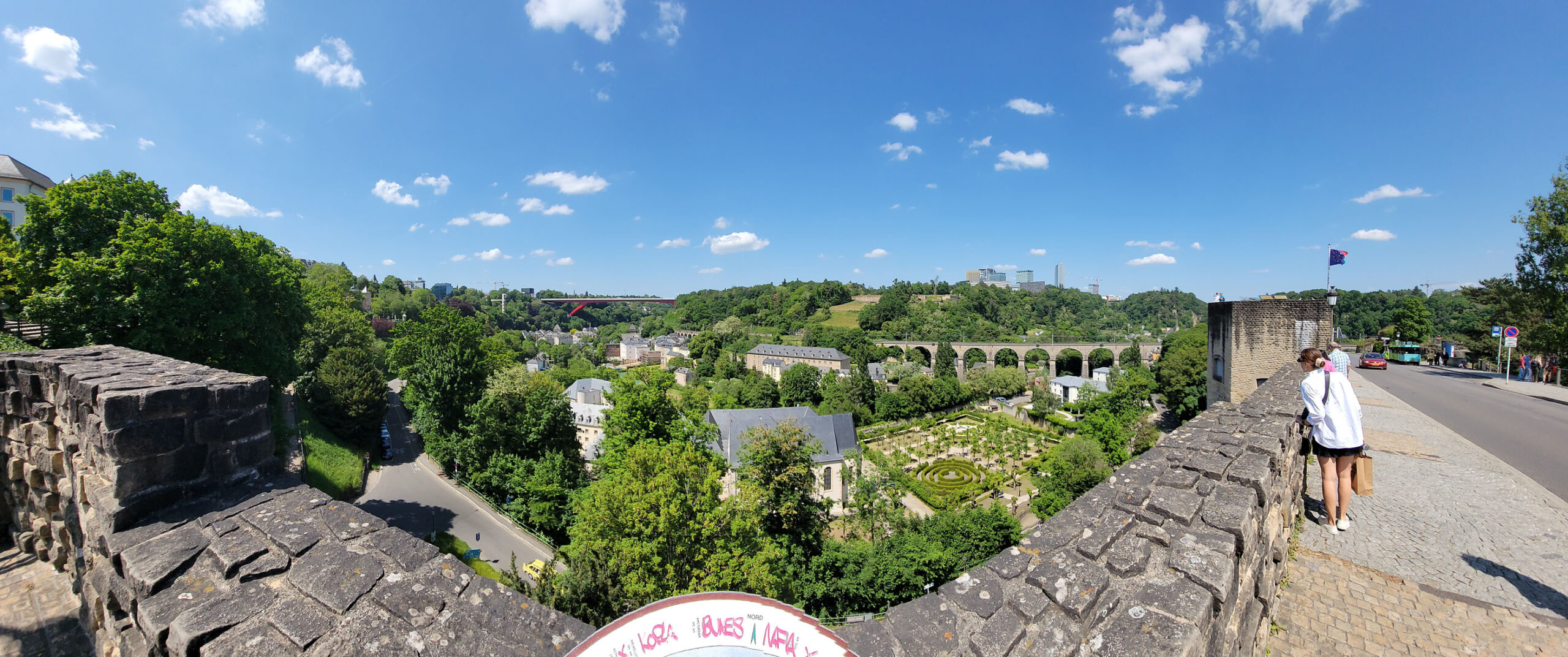
Looking north – Luxemburg, Luxemburg
Luxembourg
The city was created on its rocky perch during the Roman times, most likely due to its excellent defensive qualities. Then later in the tenth century a count acquired the rights to the land and started to build the family’s kingdom. From modest beginnings, the Kingdom of Luxembourg grew from here and became very important because of its strategic position.
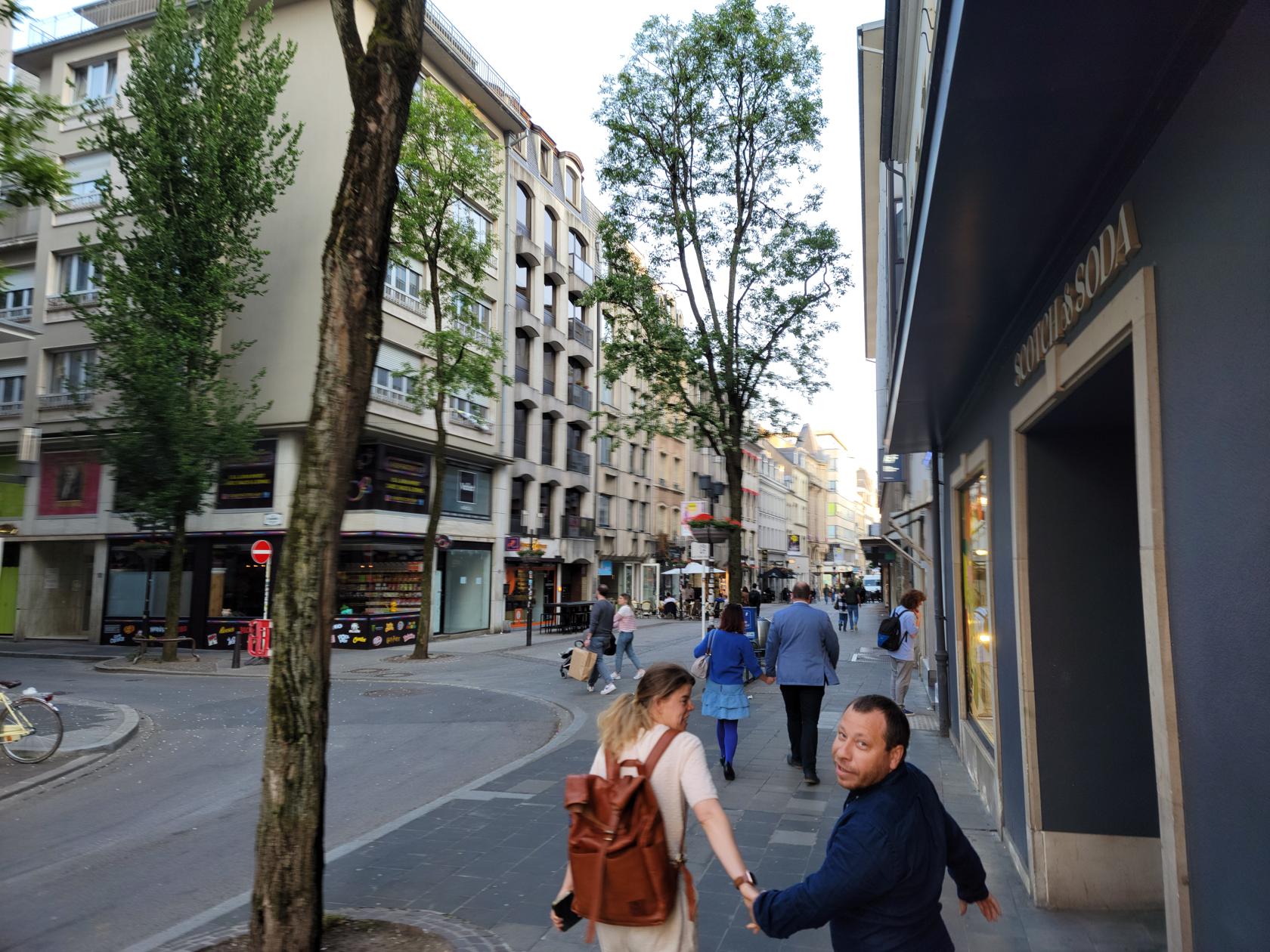
Ericka and Gabi leaving hotel – Luxemburg, Luxemburg
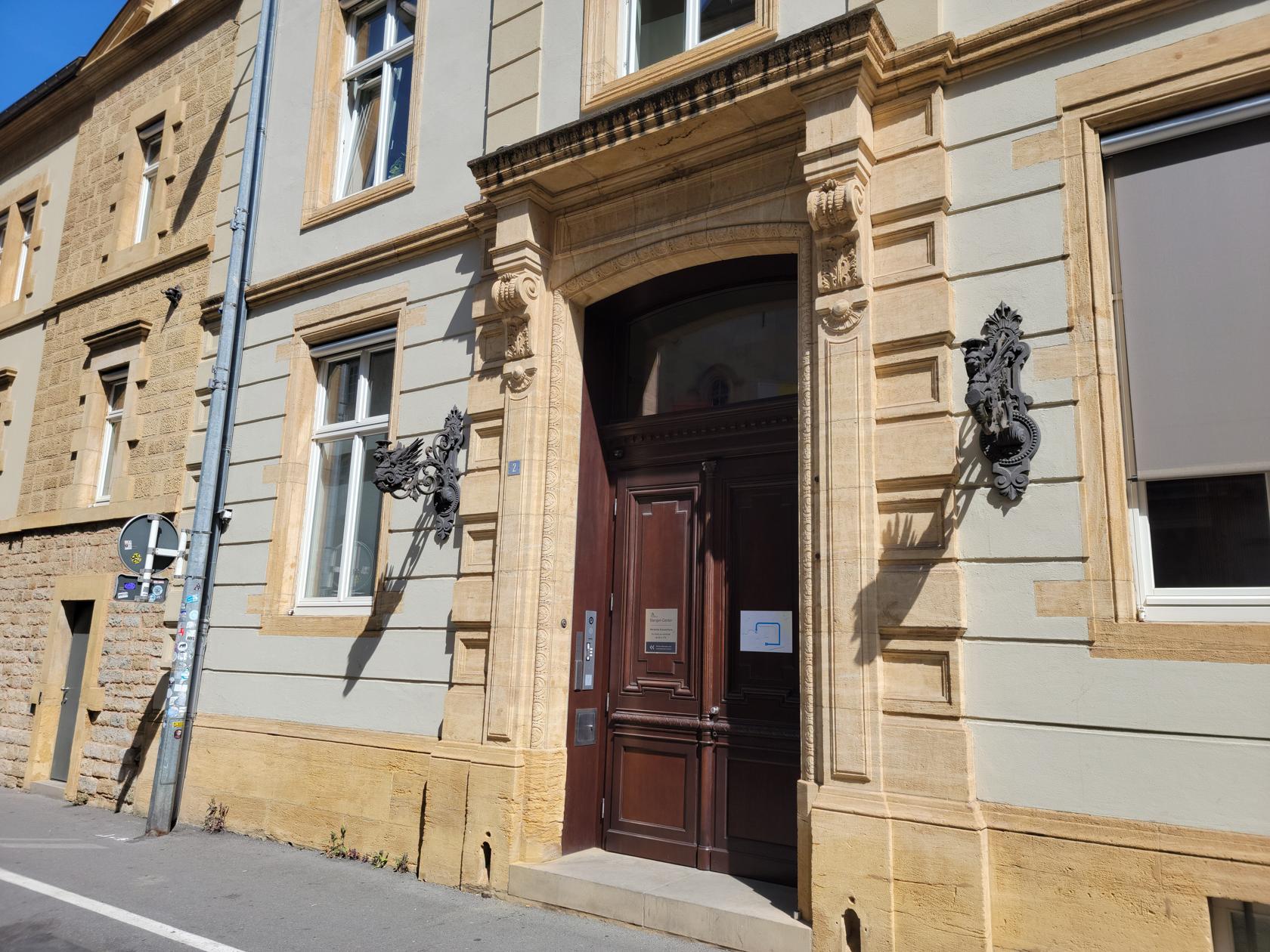
Avenue de la Porta Neuve – Luxemburg, Luxemburg
Avenue de la Porta Neuve – Luxemburg, Luxemburg
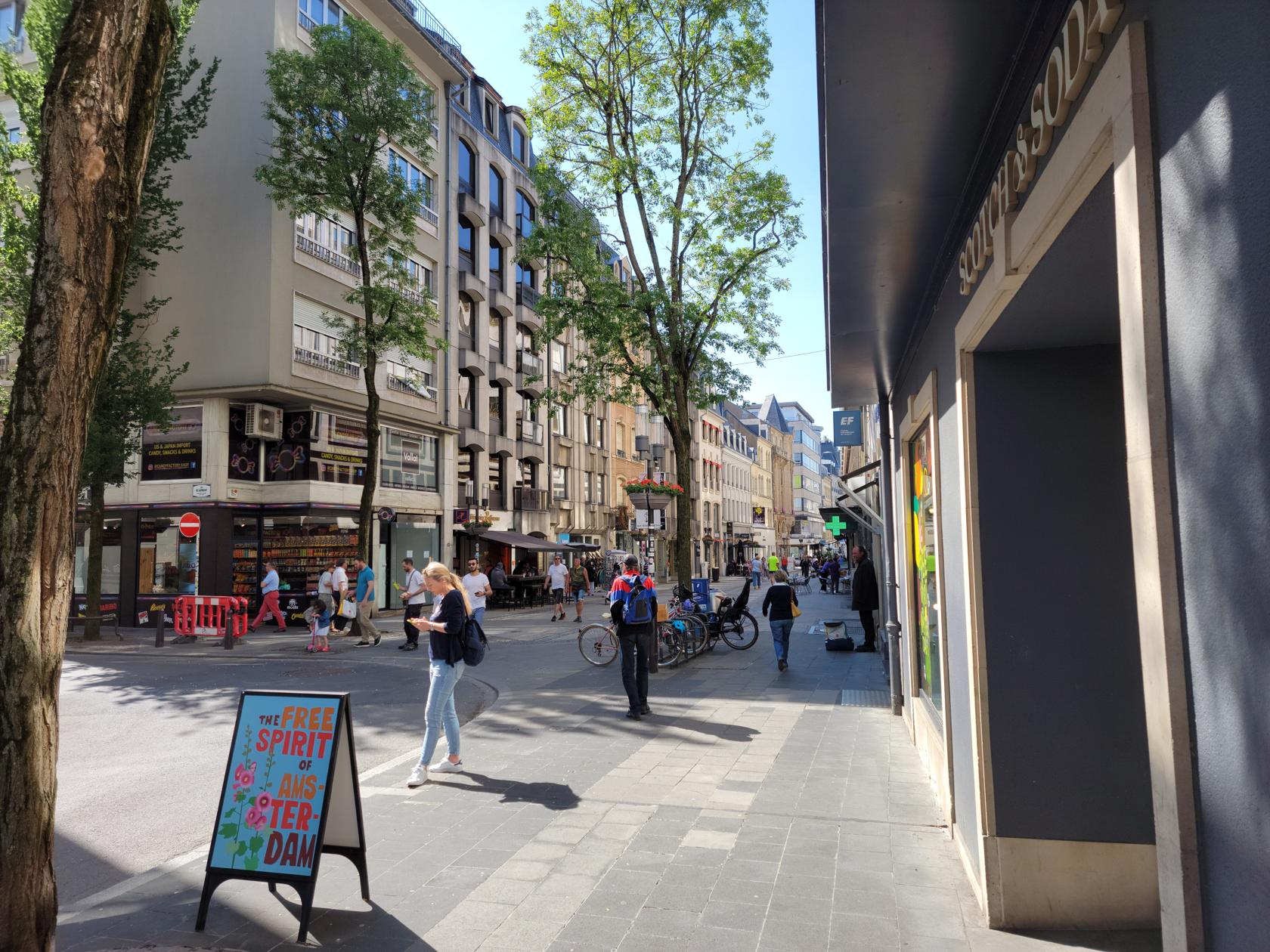
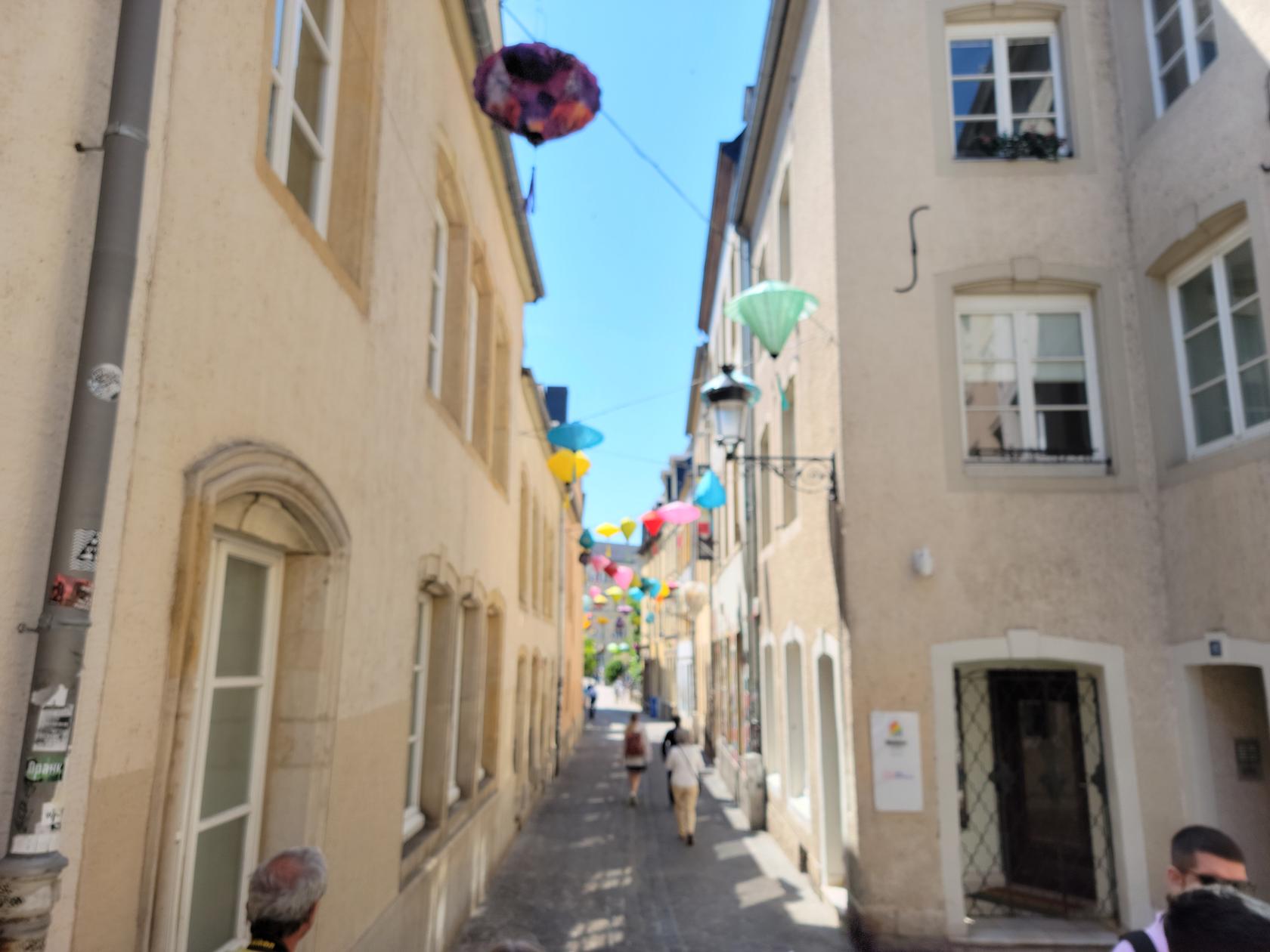
City streets – Luxemburg, Luxemburg
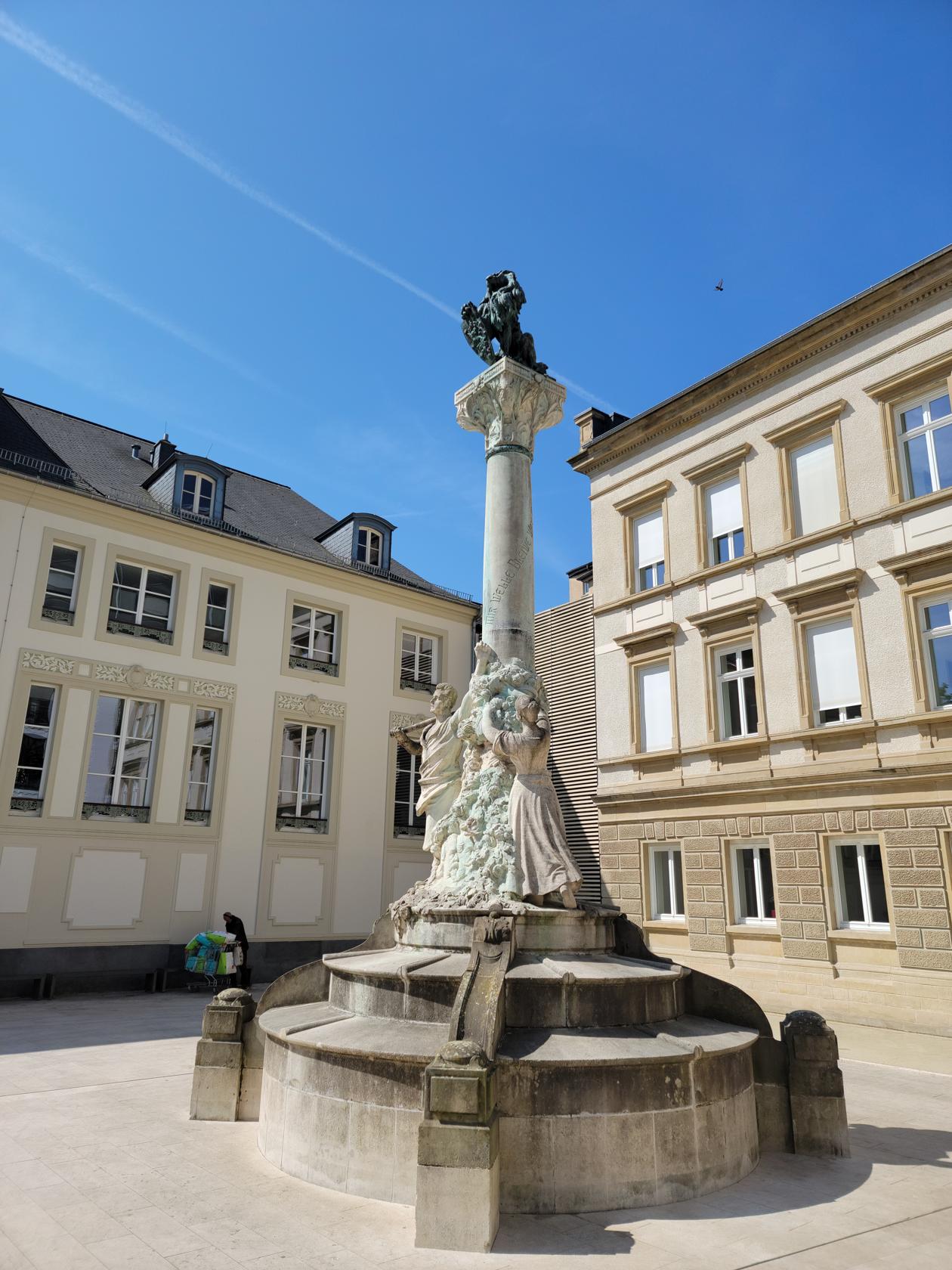
Memorial – Luxemburg, Luxemburg
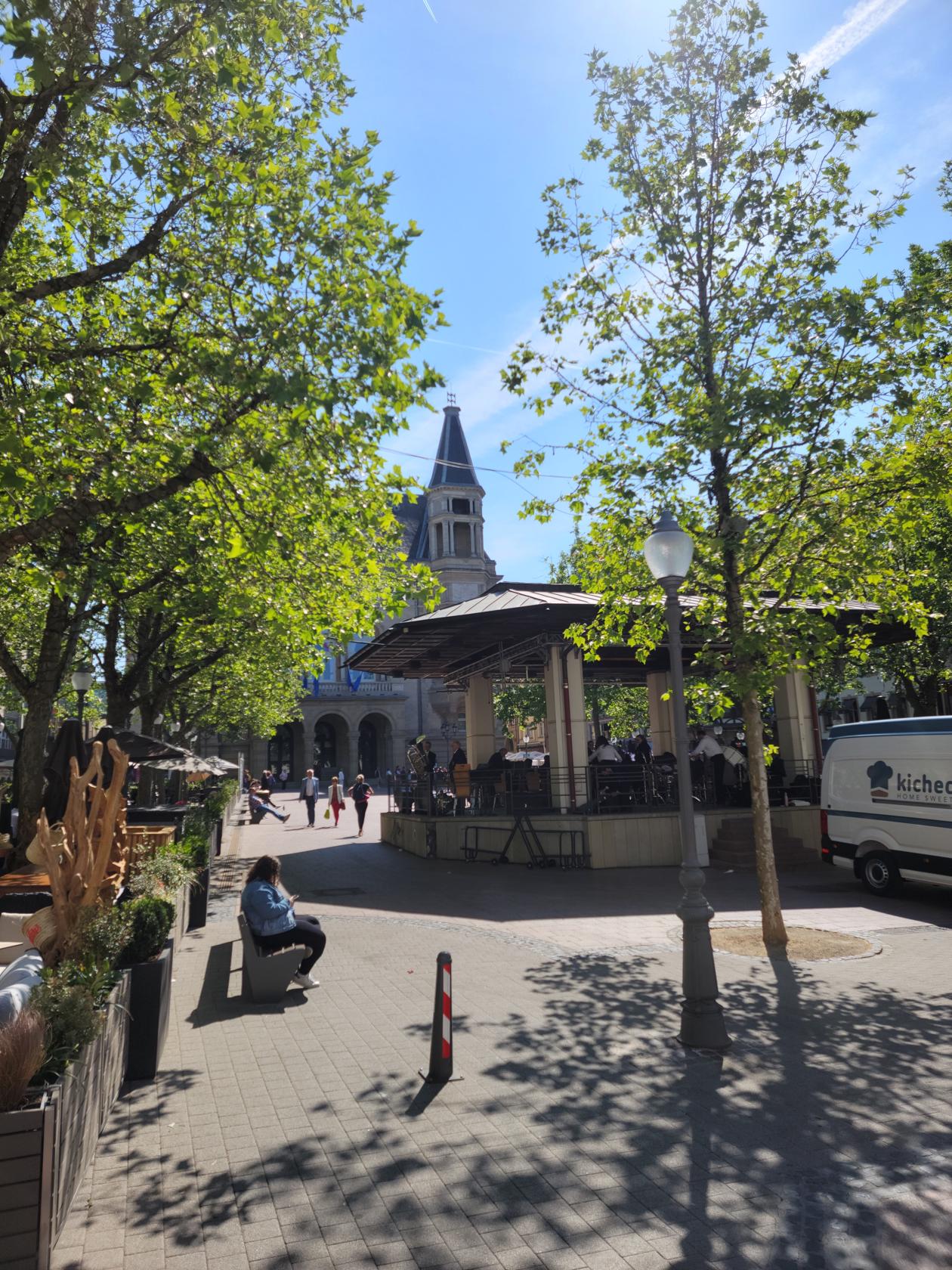
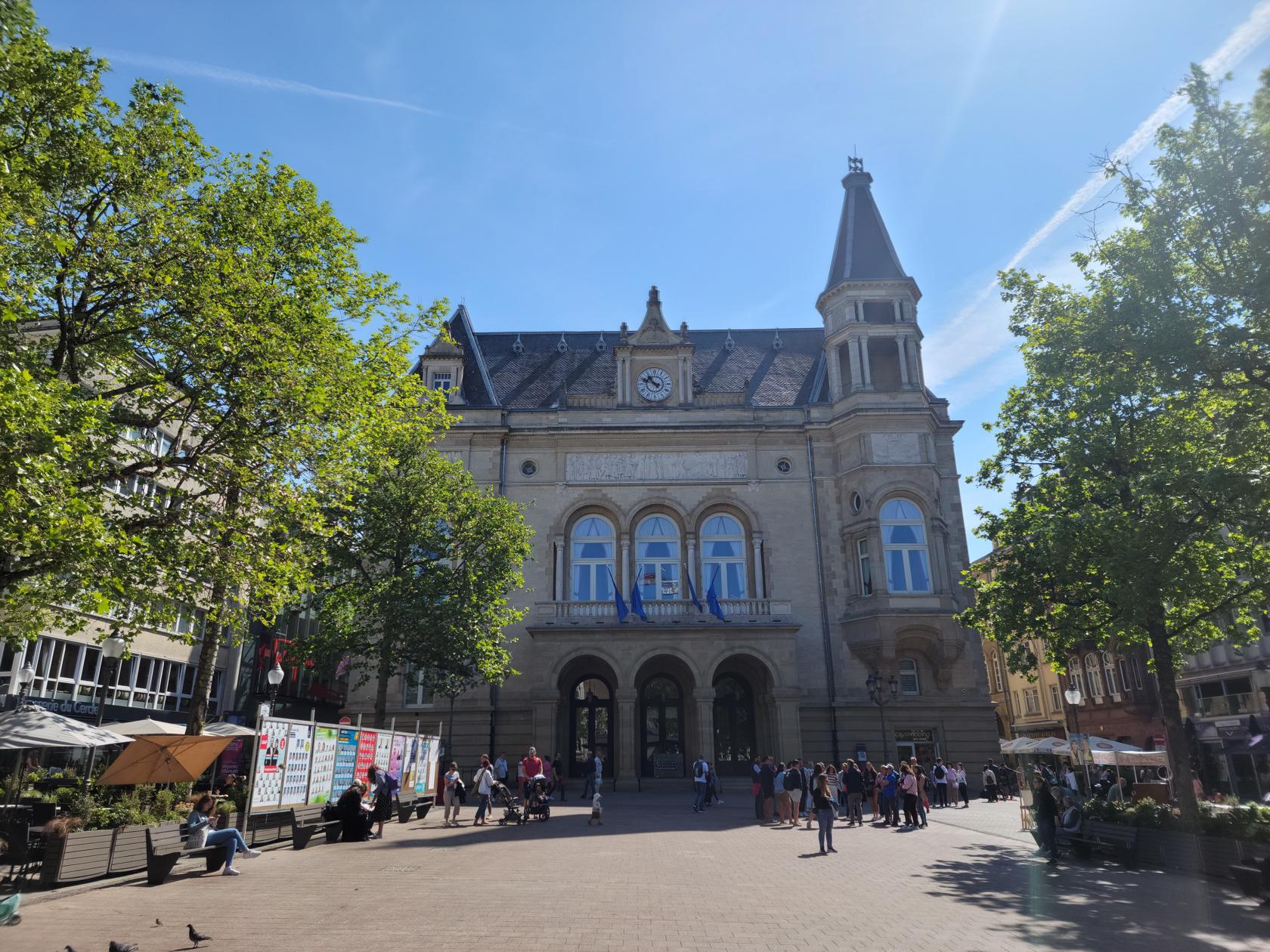
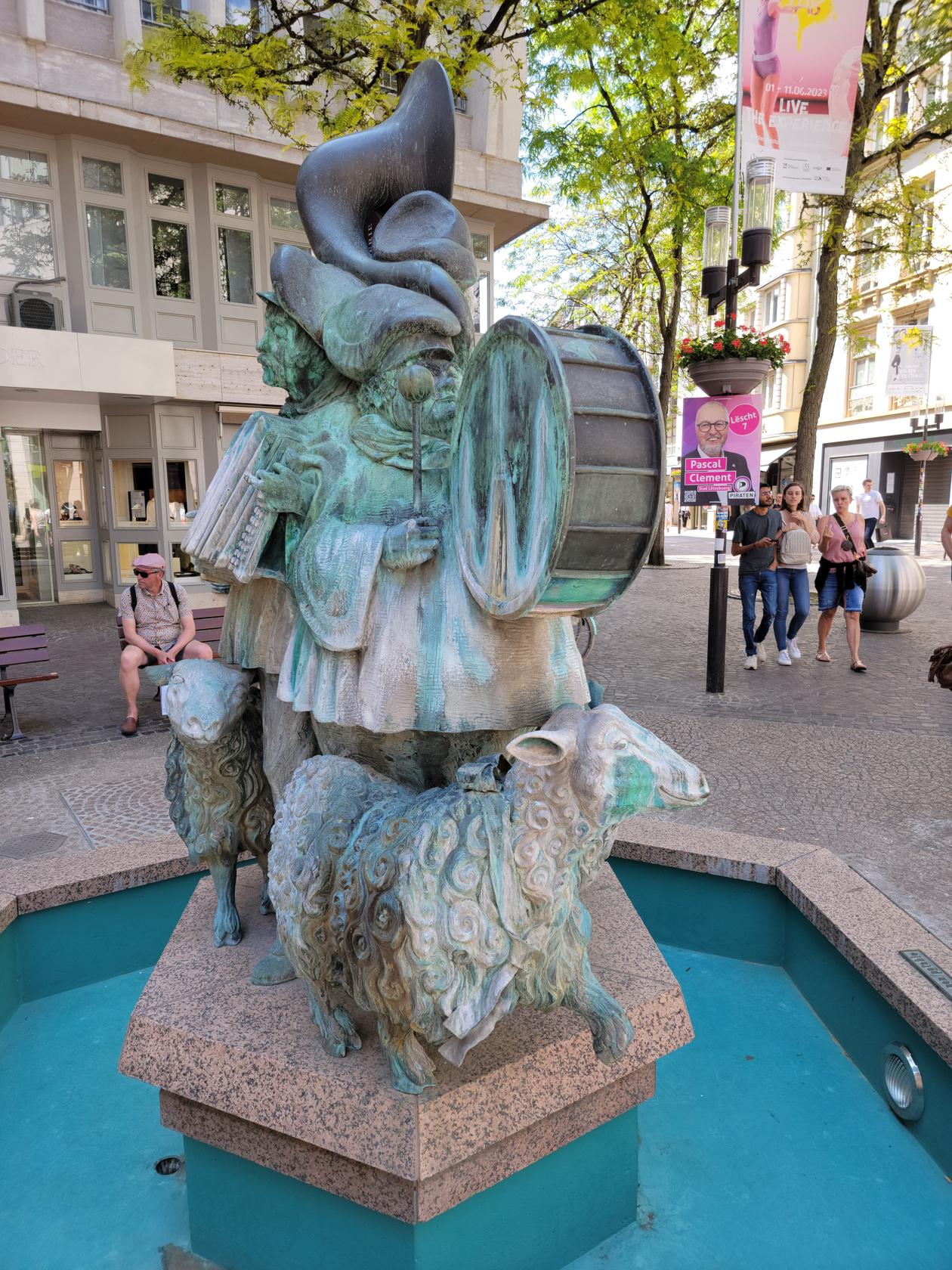
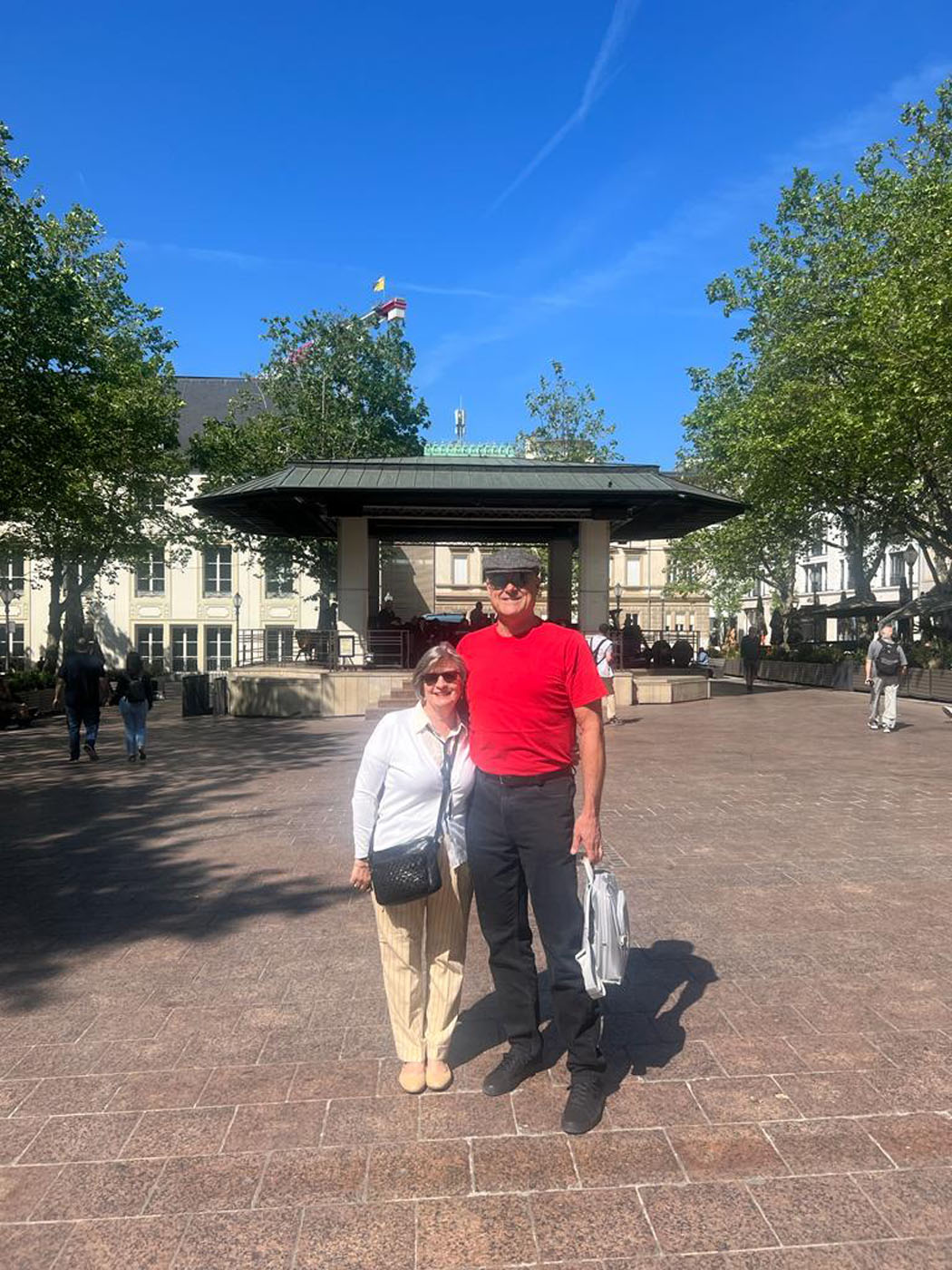
Main square and bandstand – Luxemburg, Luxemburg
City streets – Luxemburg, Luxemburg
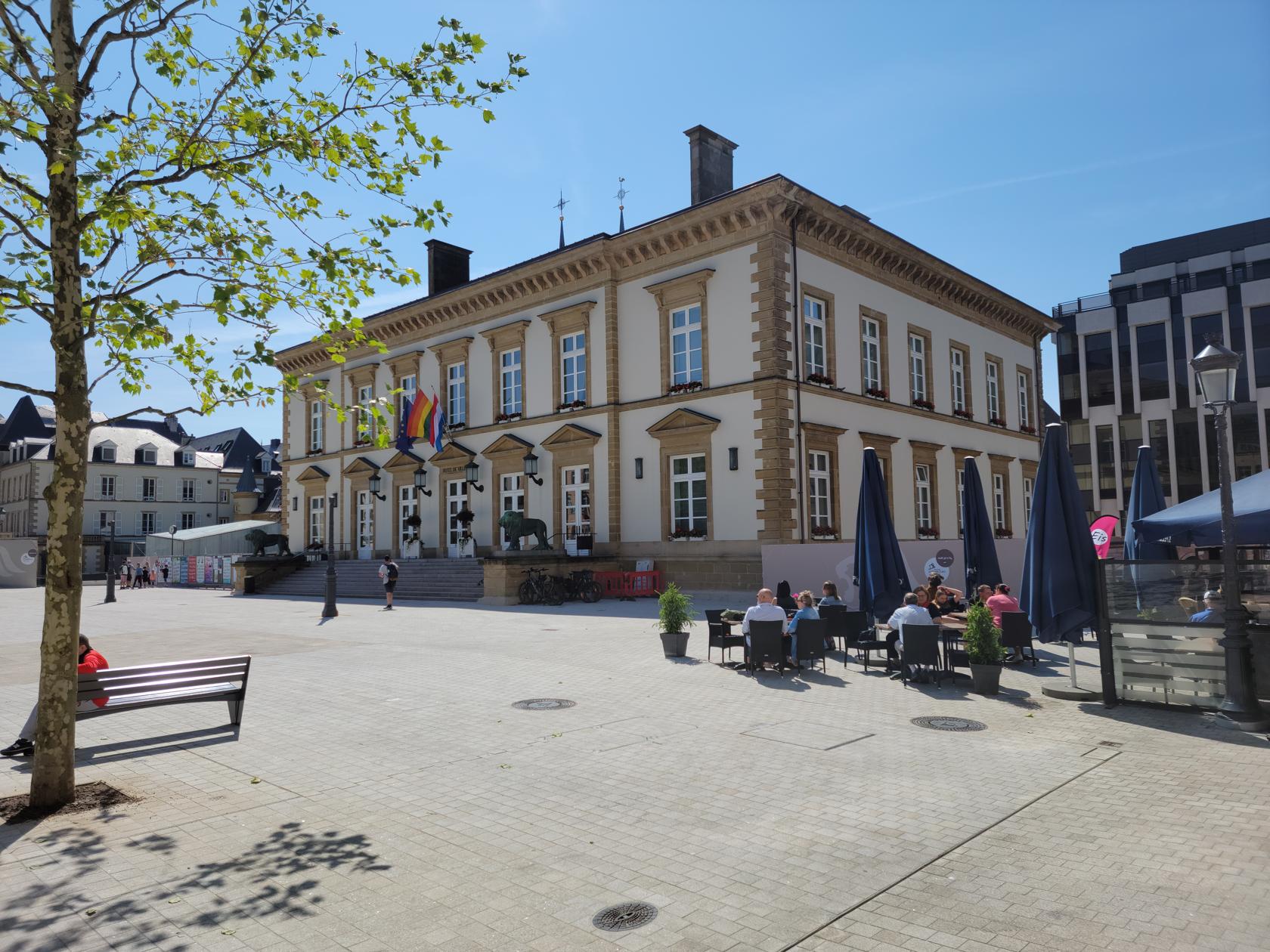
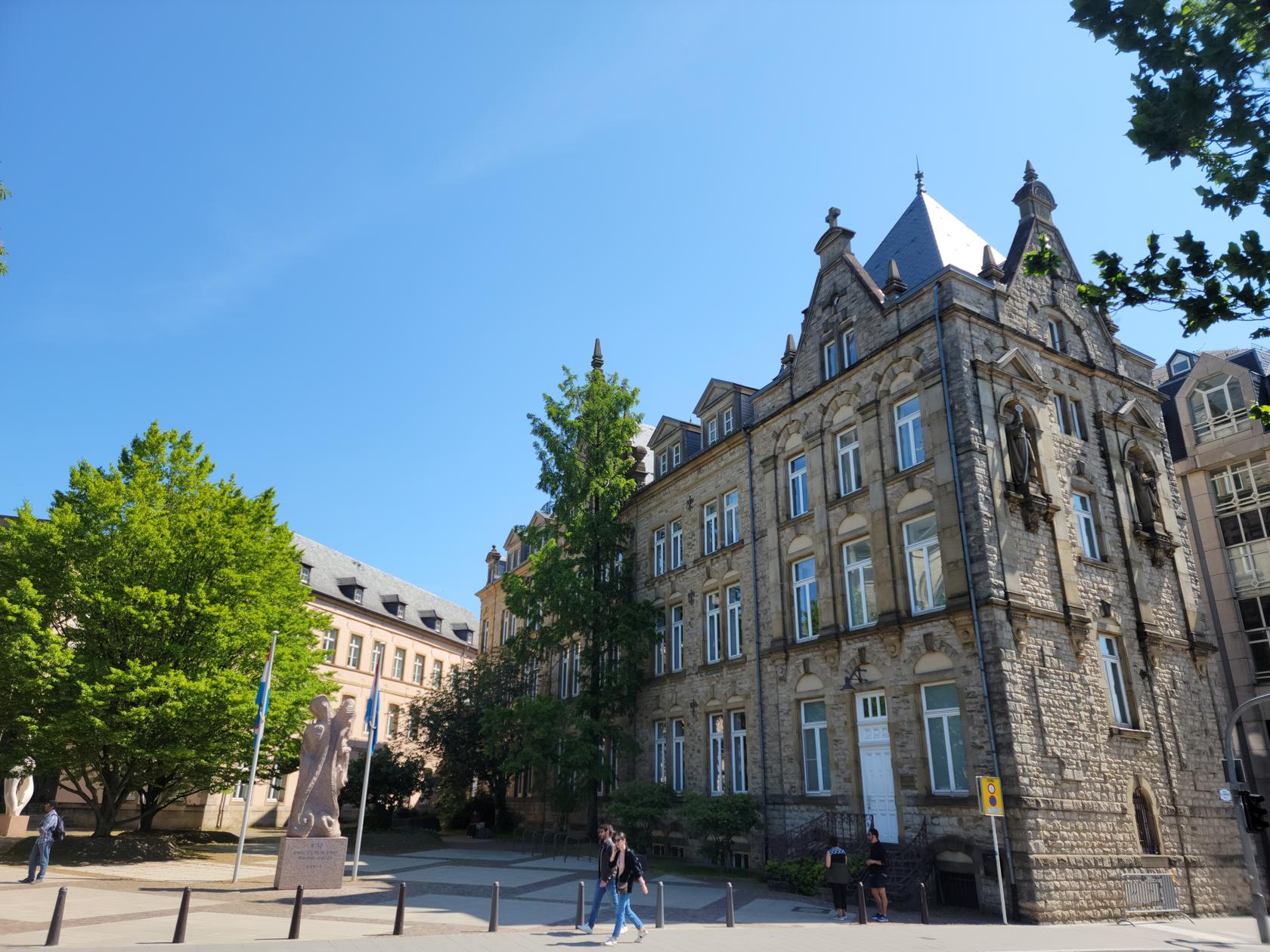
Municipal center – Luxemburg, Luxemburg
City streets – Luxemburg, Luxemburg
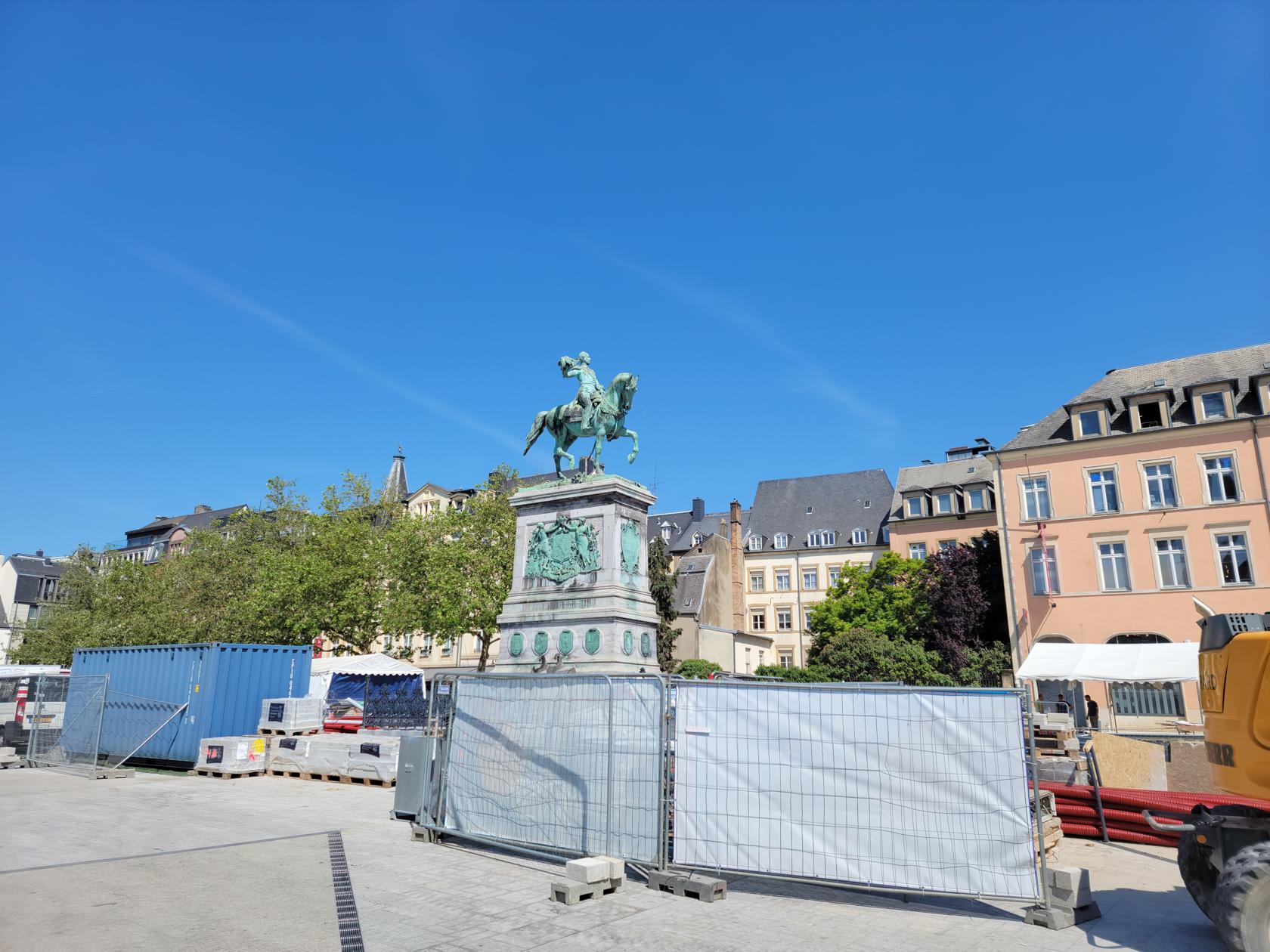
Place Guillaume II – Luxemburg, Luxemburg
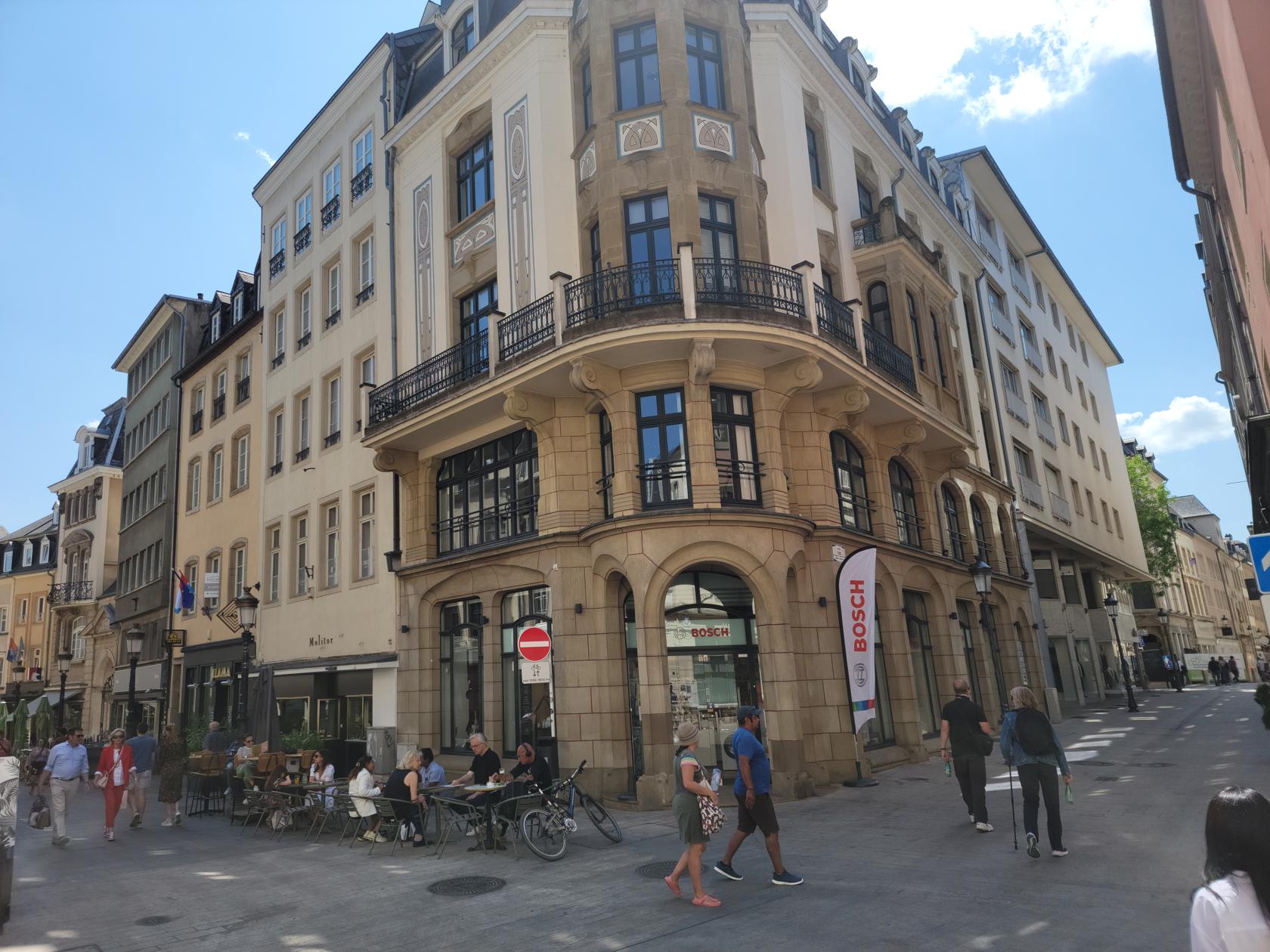
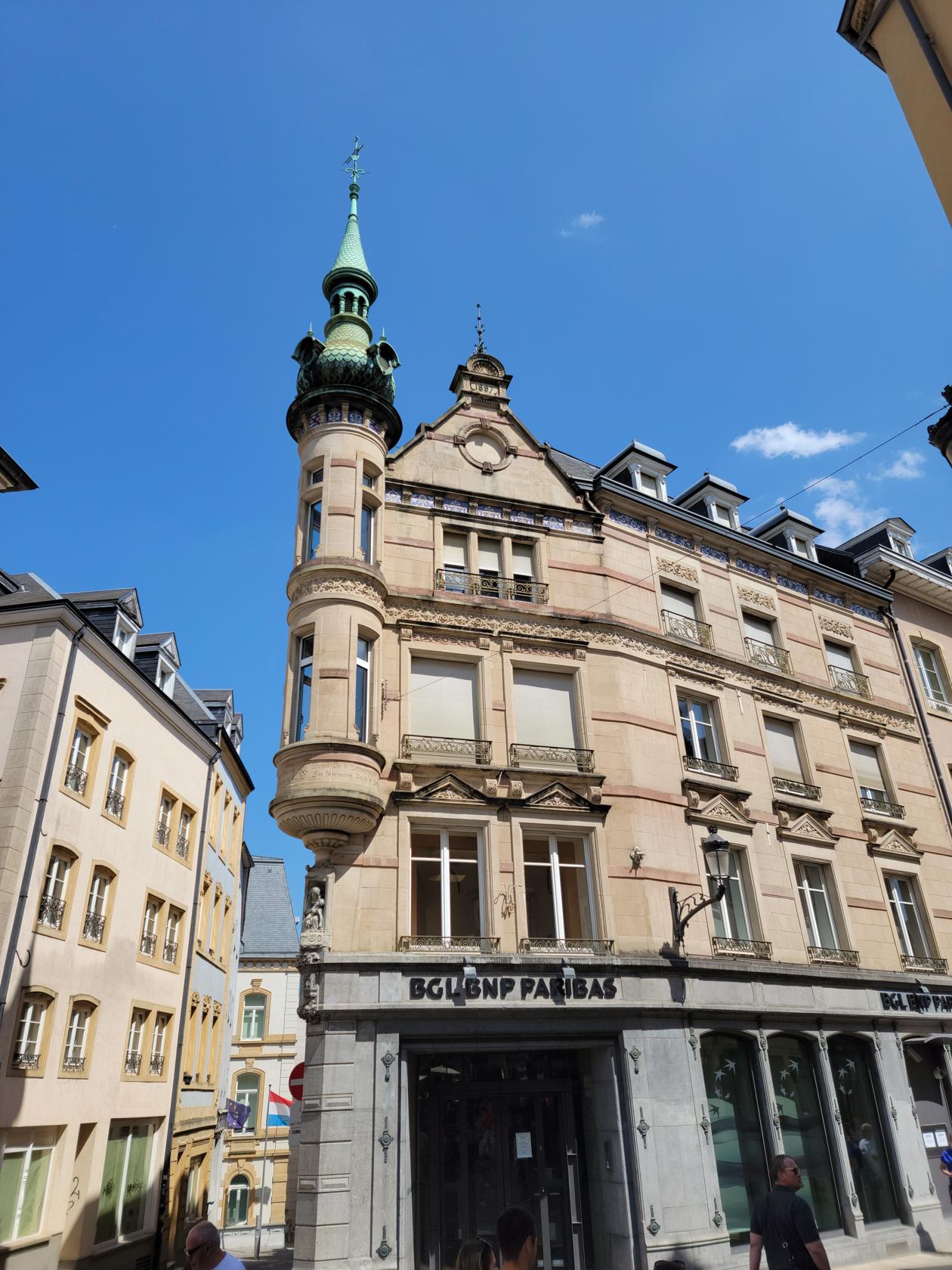
Interesting building – Luxemburg, Luxemburg
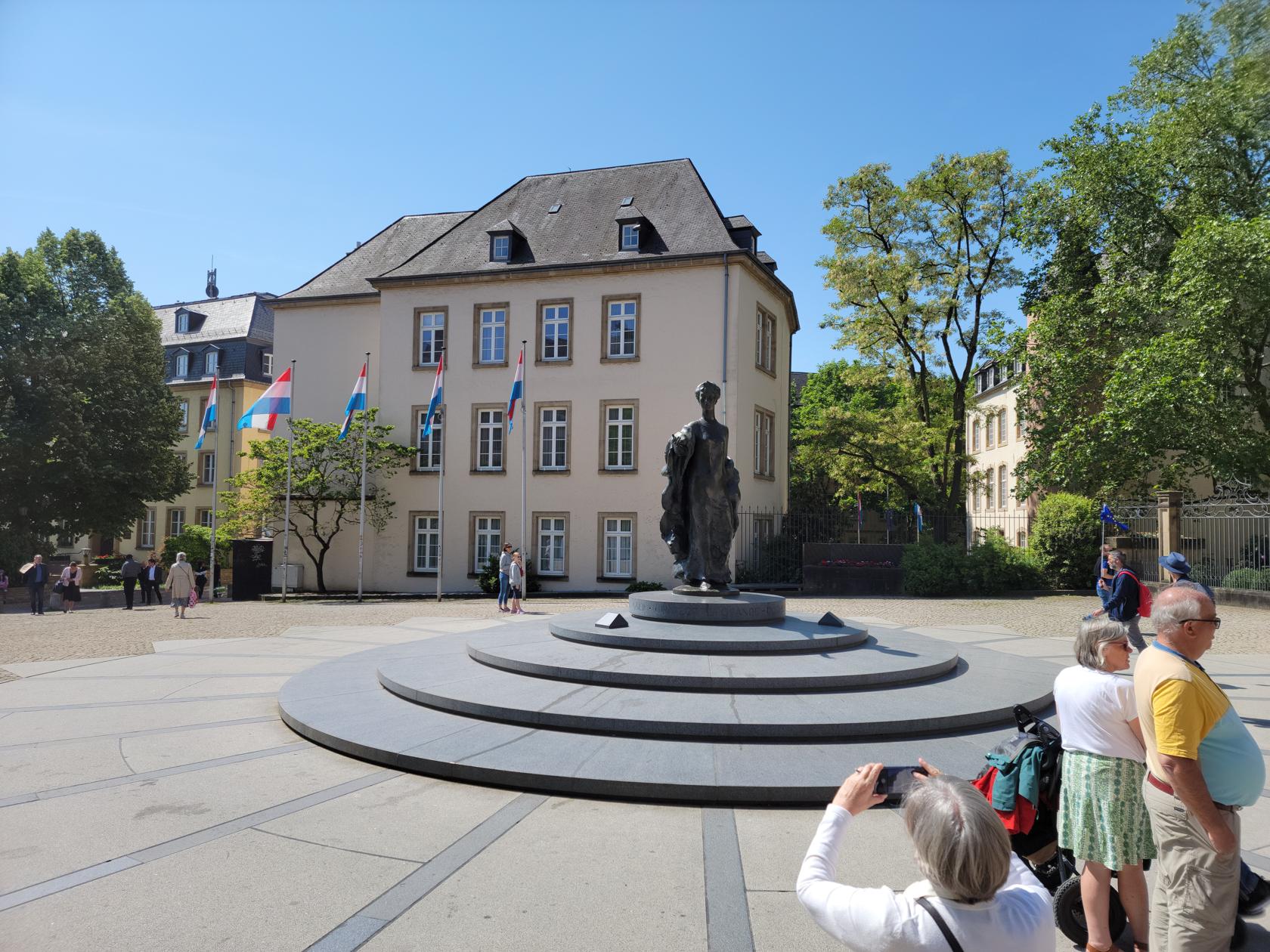
Statue of Charlotte Monument – Luxemburg, Luxemburg
Remembrance memorial – Luxemburg, Luxemburg
Jewish Kadish monument – Luxemburg, Luxemburg
Fancy street – Luxemburg, Luxemburg
Street view – Luxemburg, Luxemburg
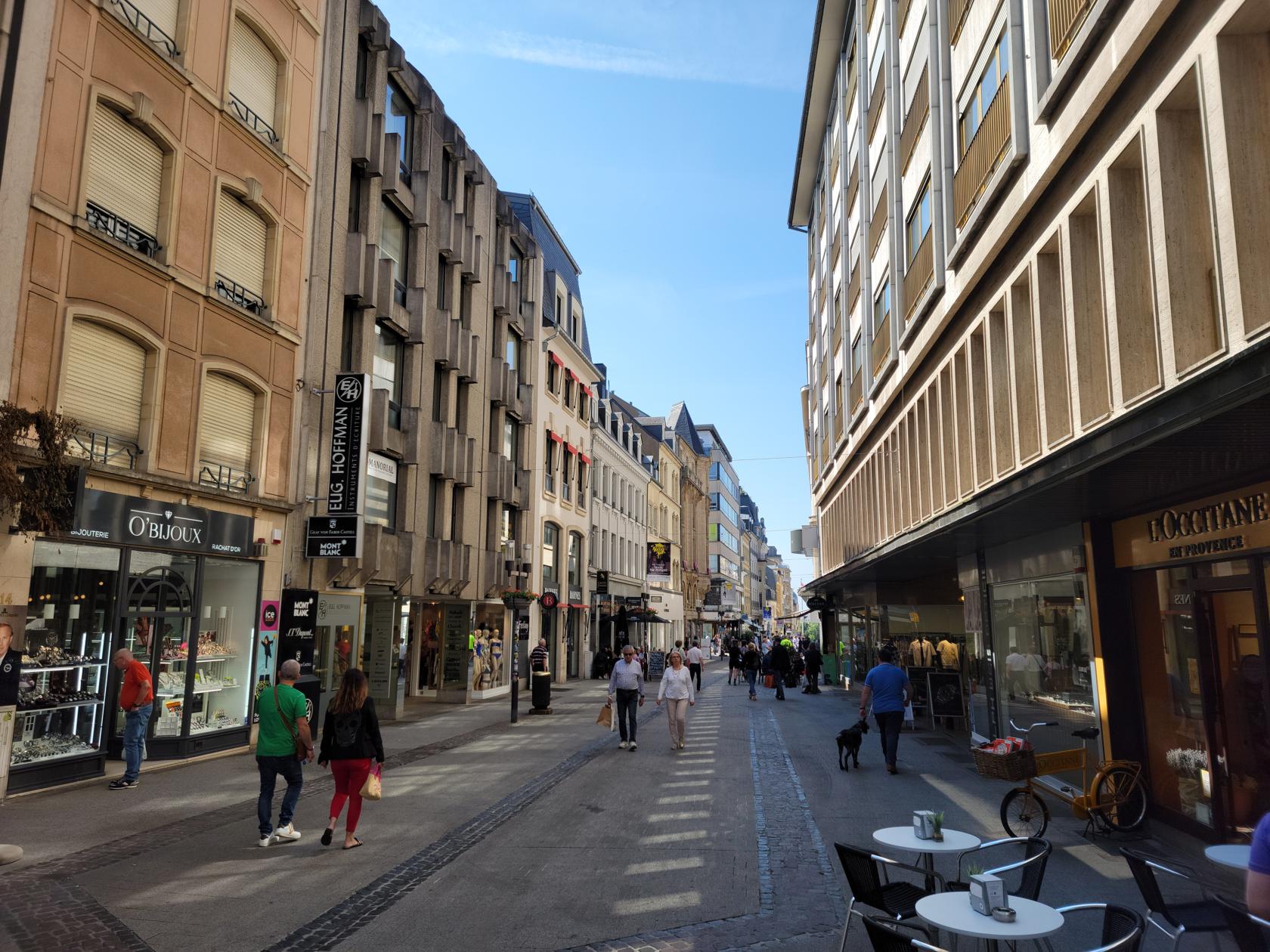
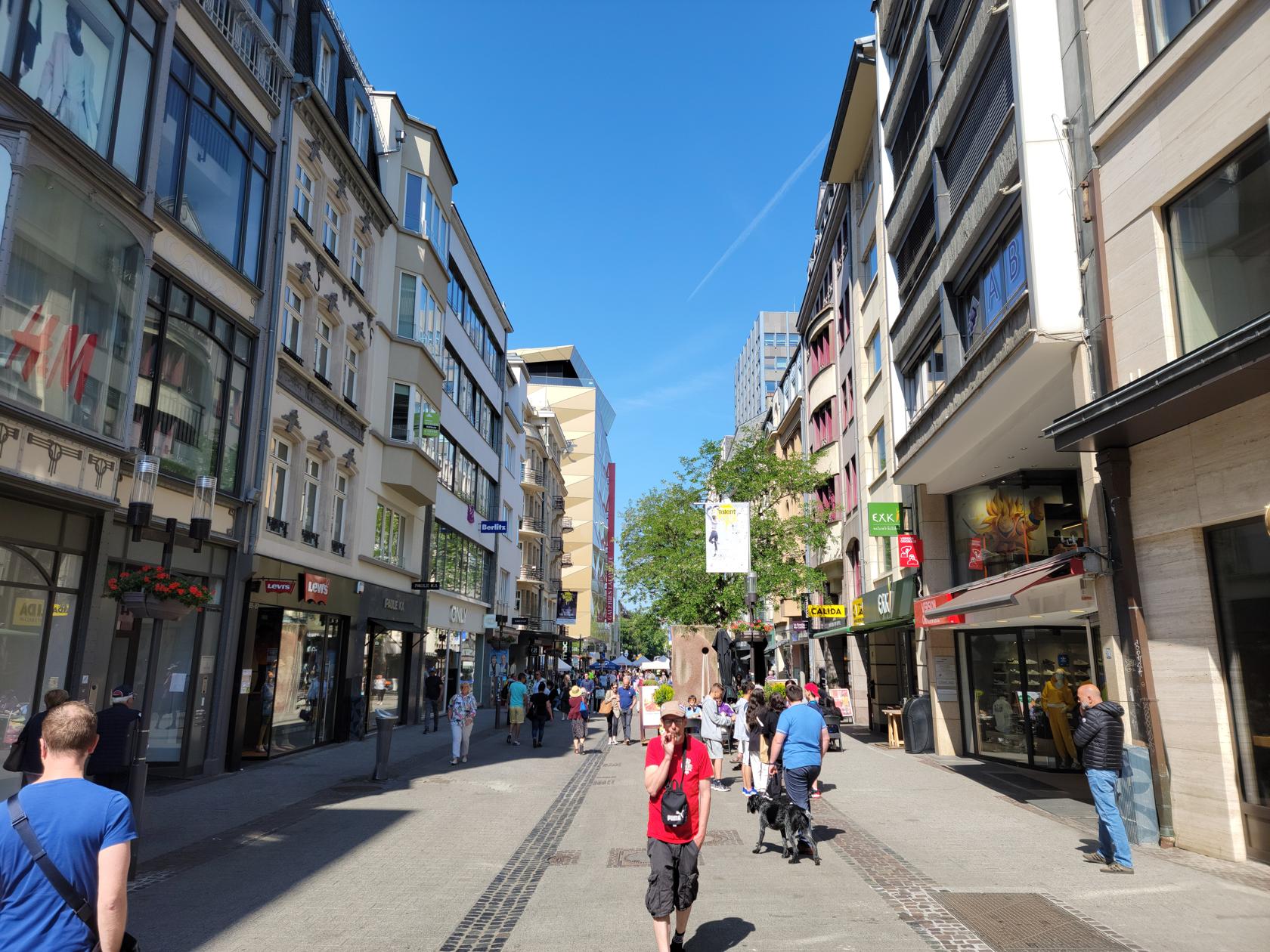
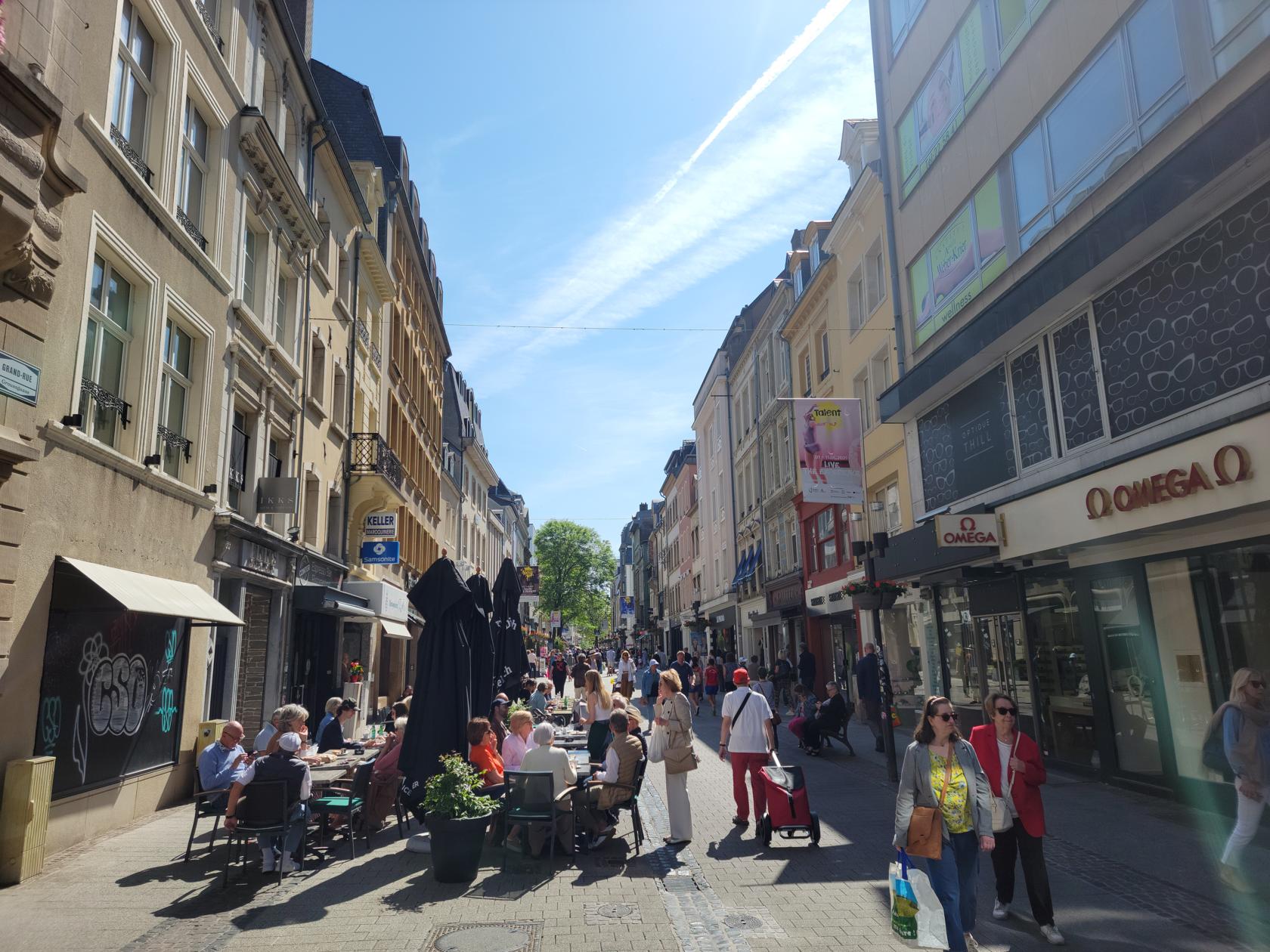
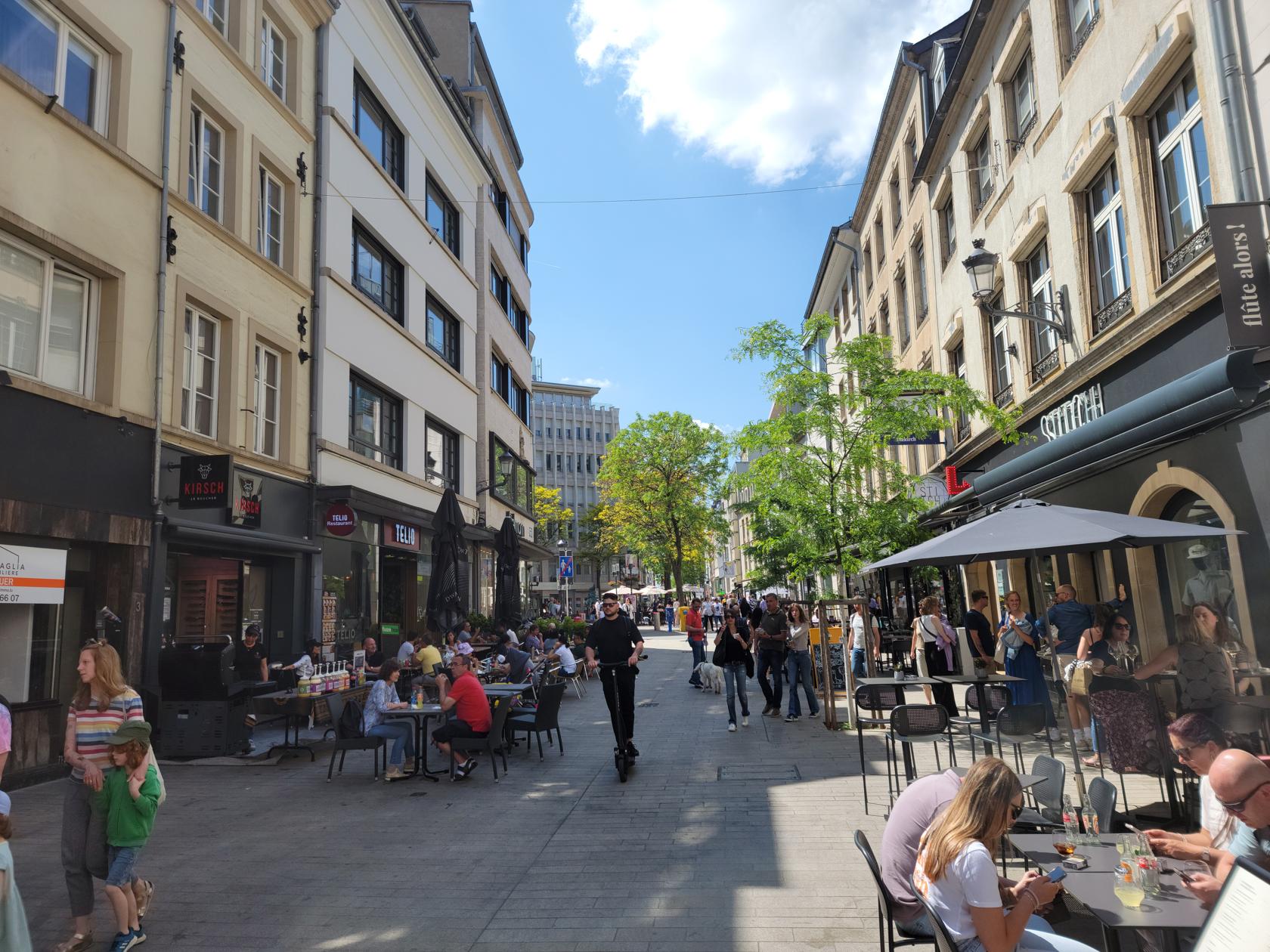
The main shopping street – Grand Rue – Luxemburg, Luxemburg
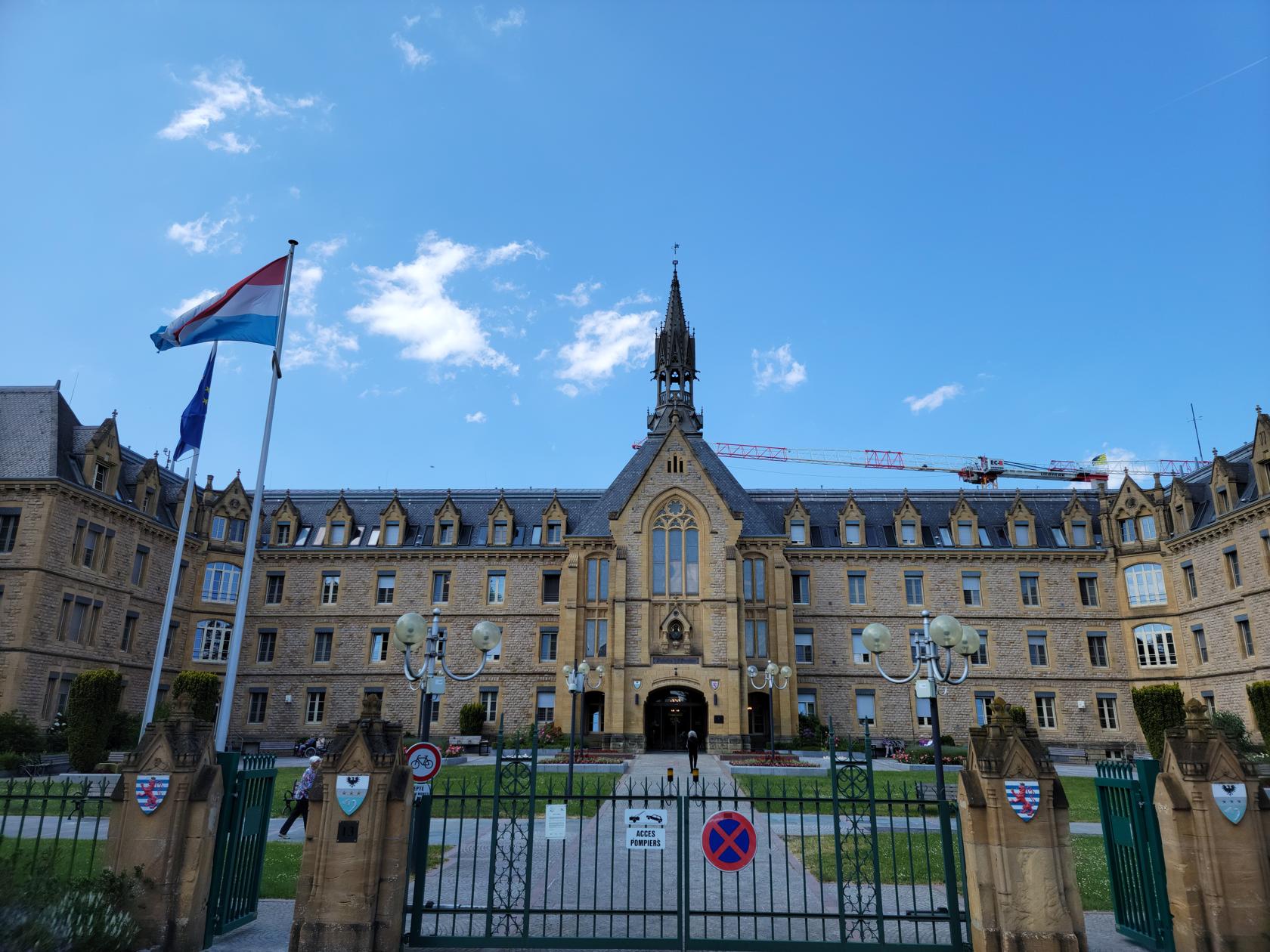
Pescatore – Retirement home – Luxemburg, Luxemburg
Roude Pëtz Square – Luxemburg, Luxemburg
Interesting building – Grand Rue – Luxemburg, Luxemburg
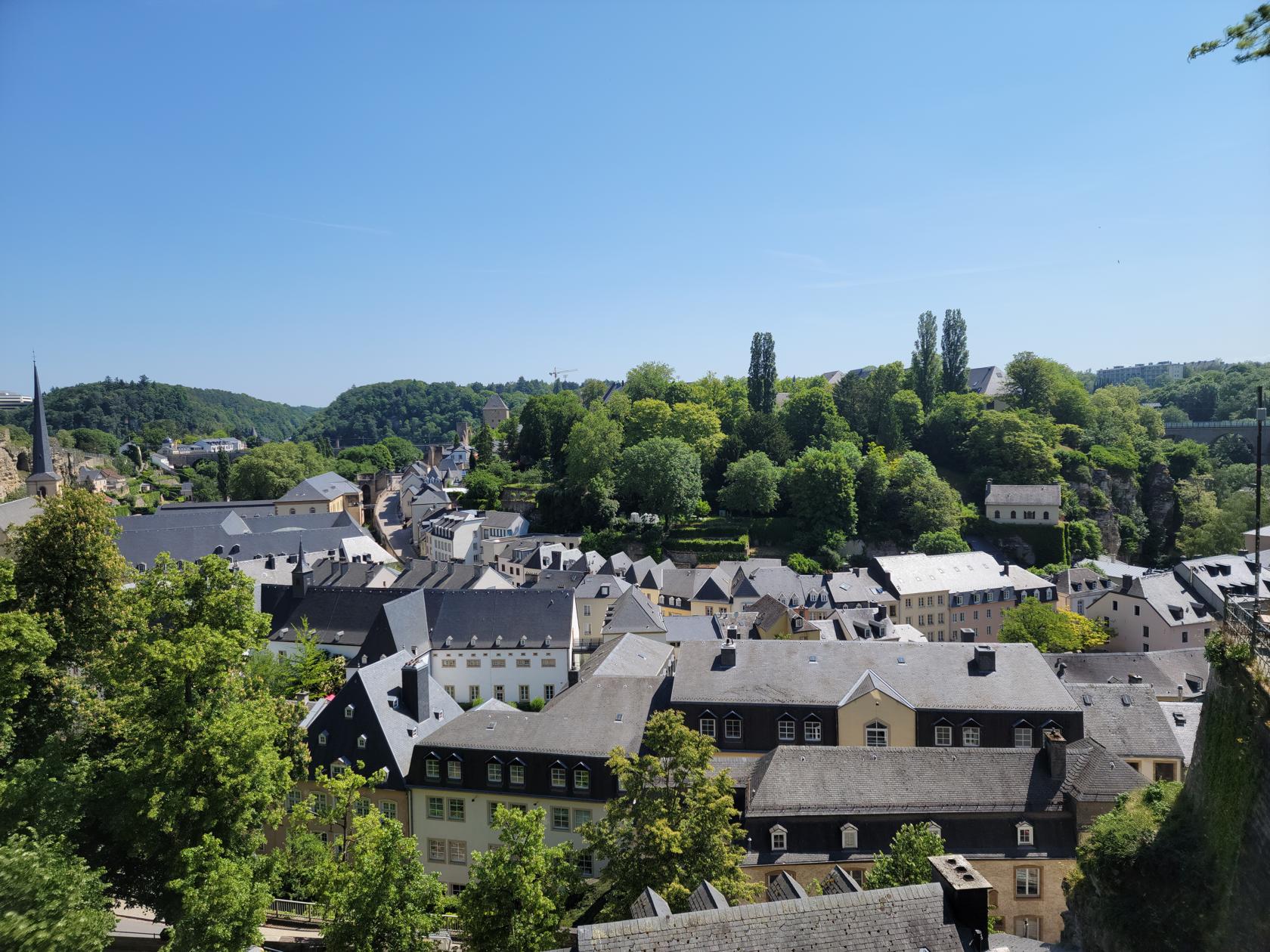
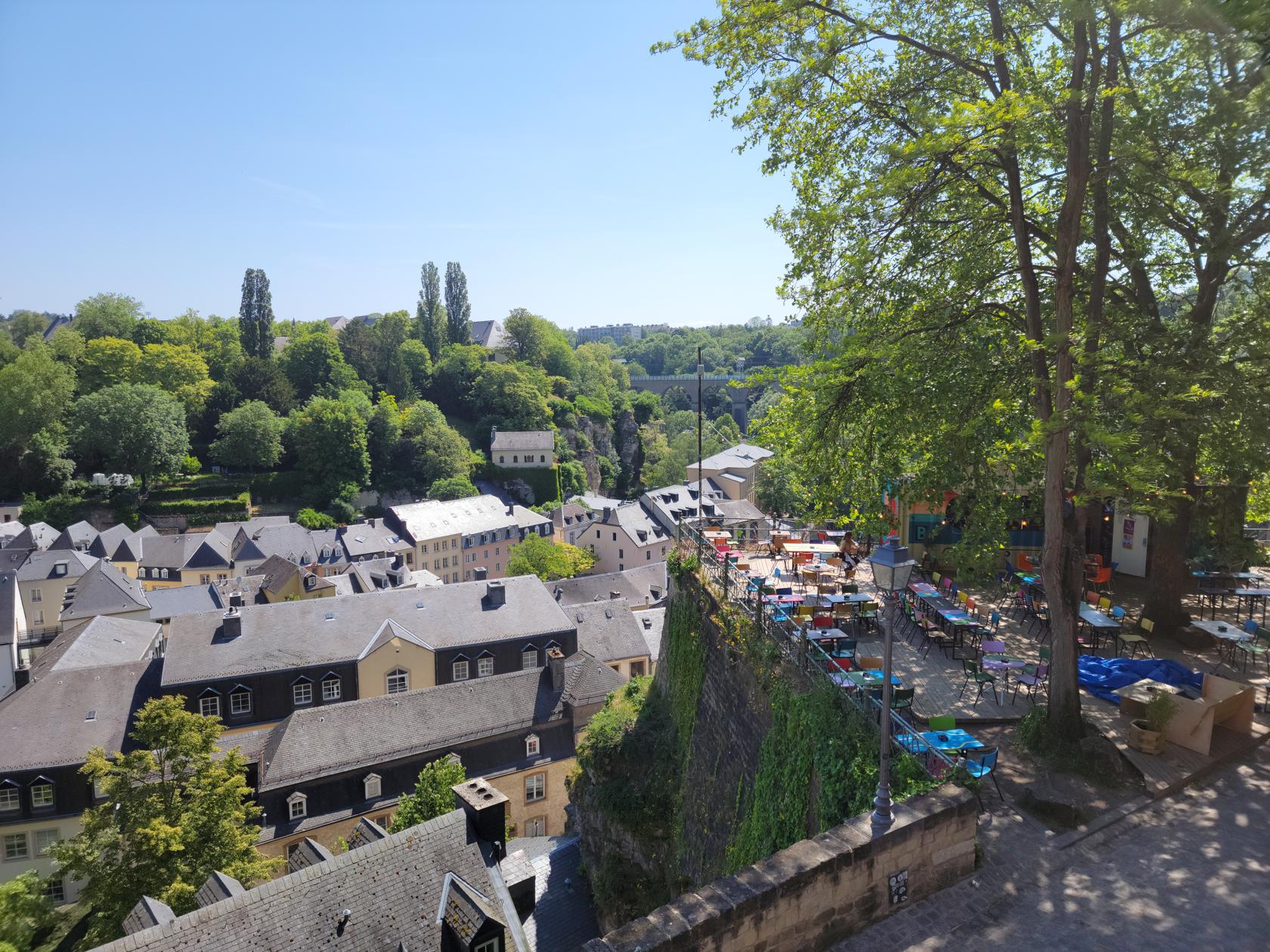
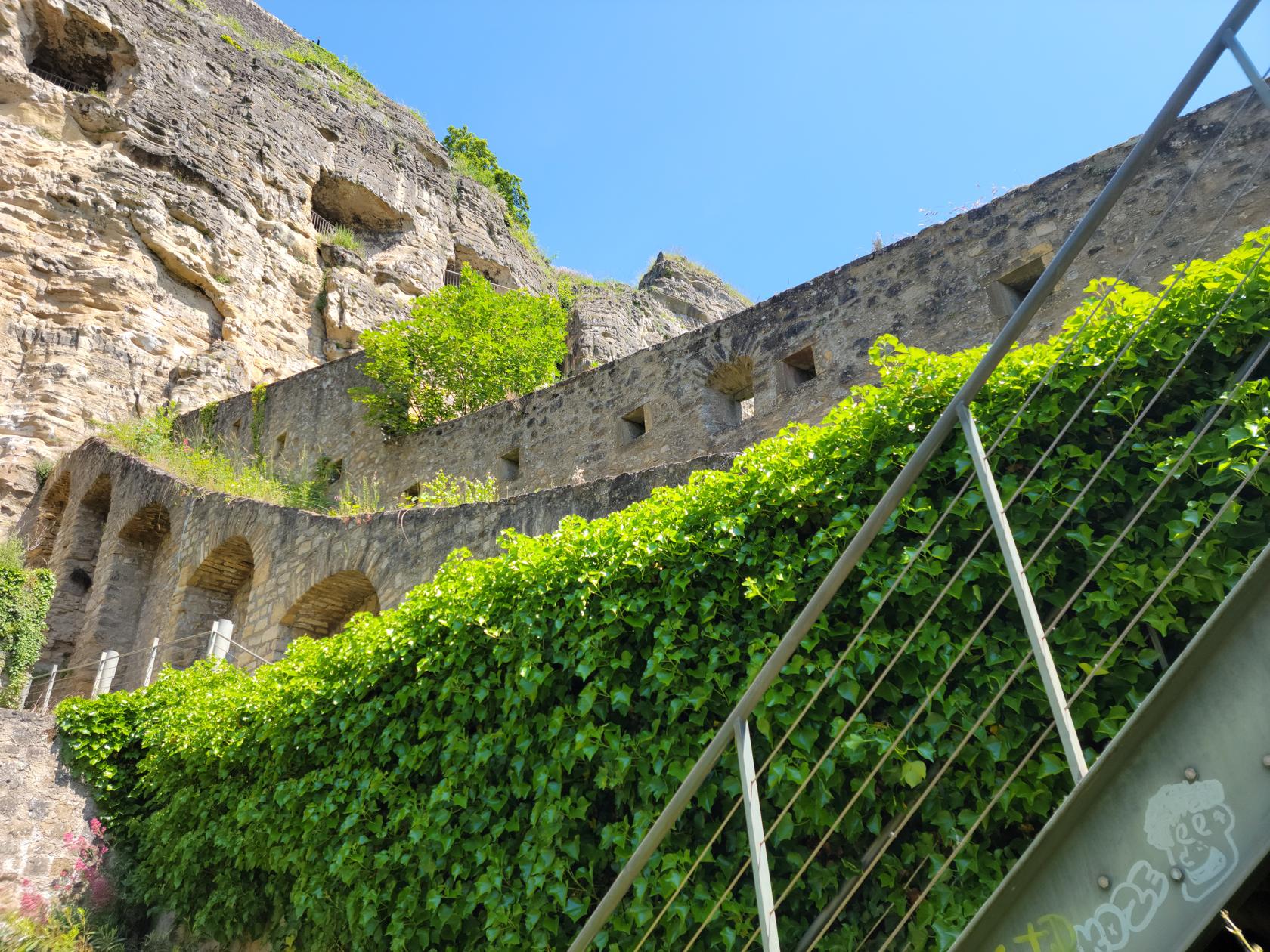
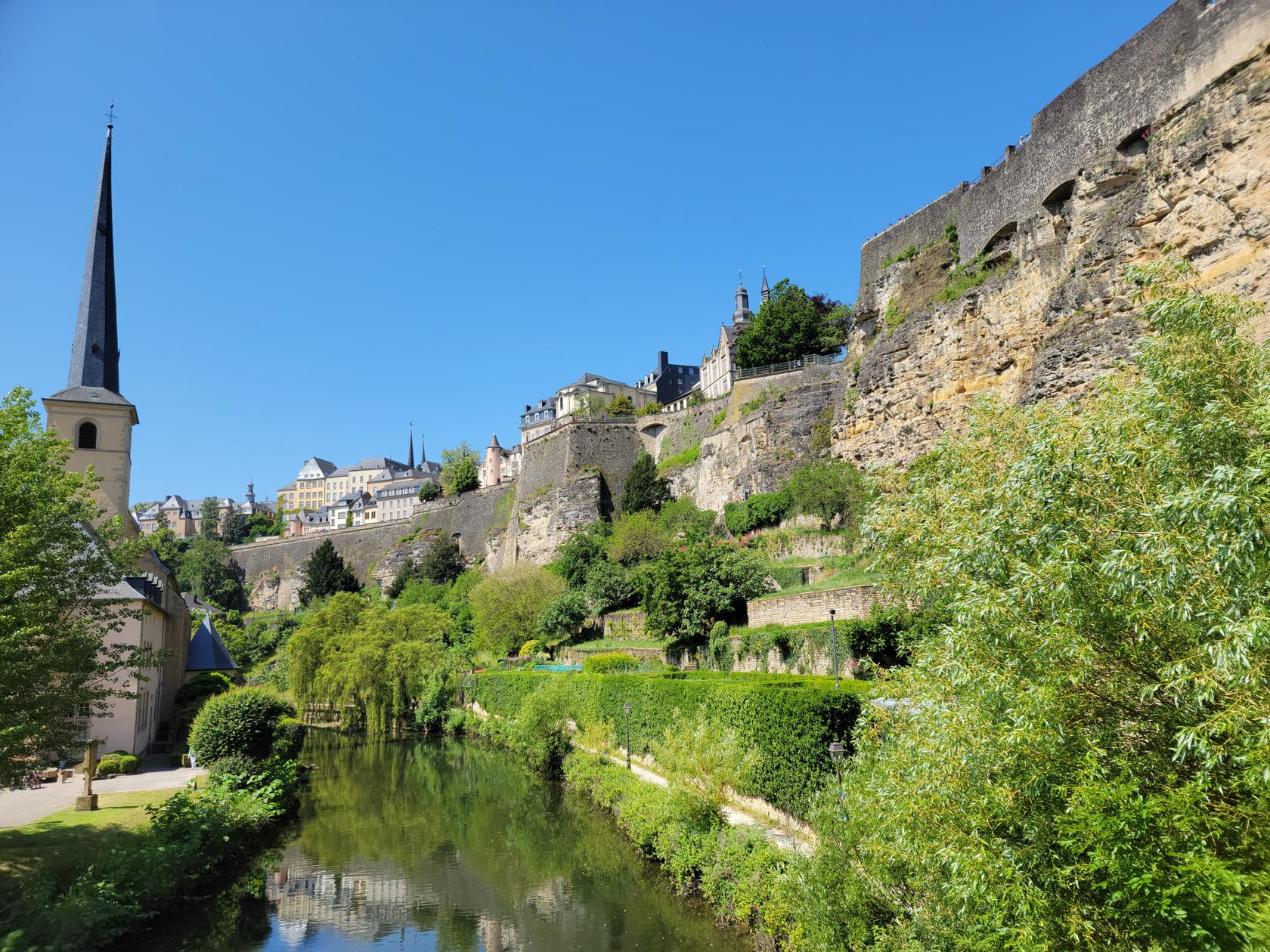
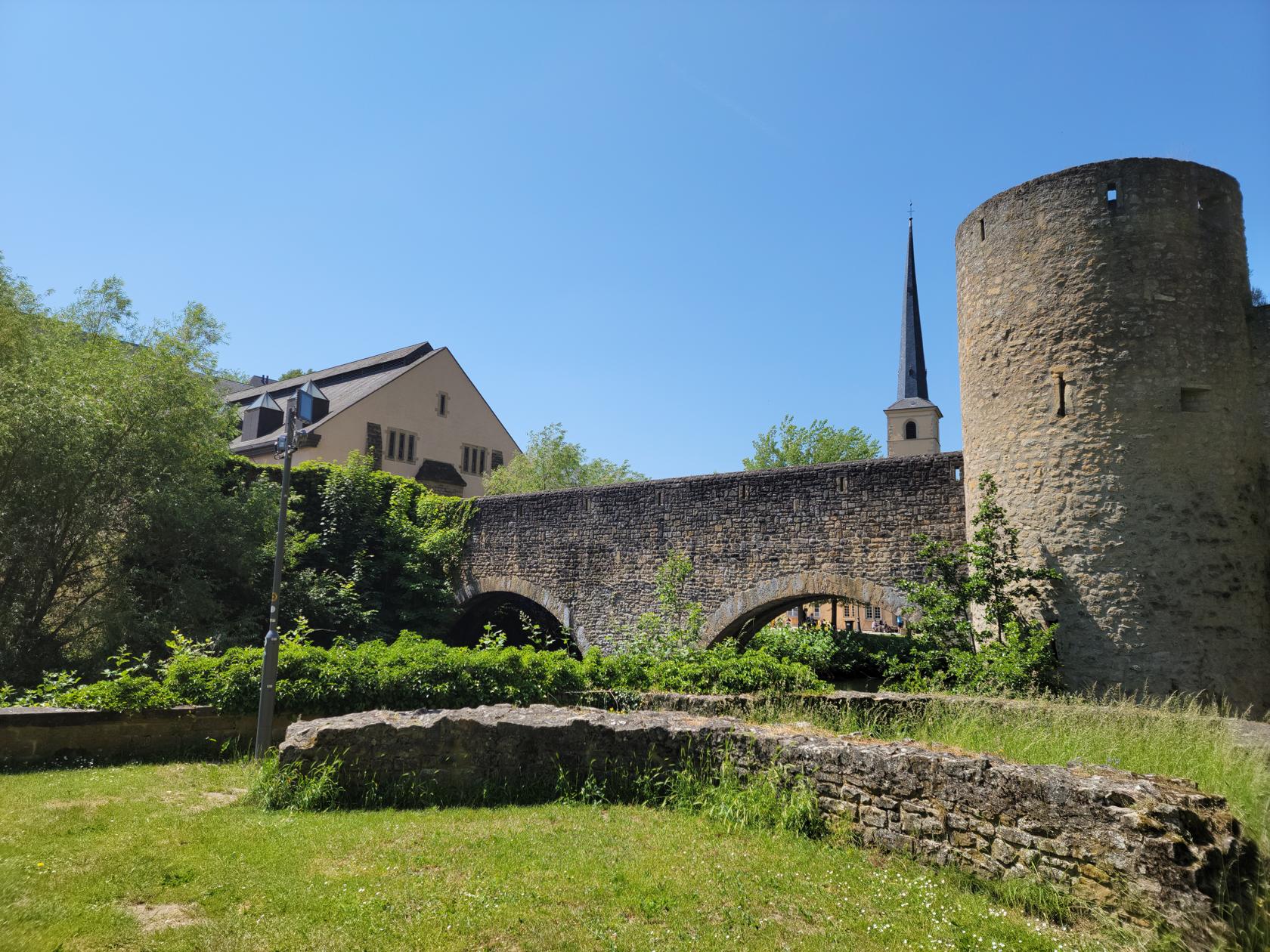
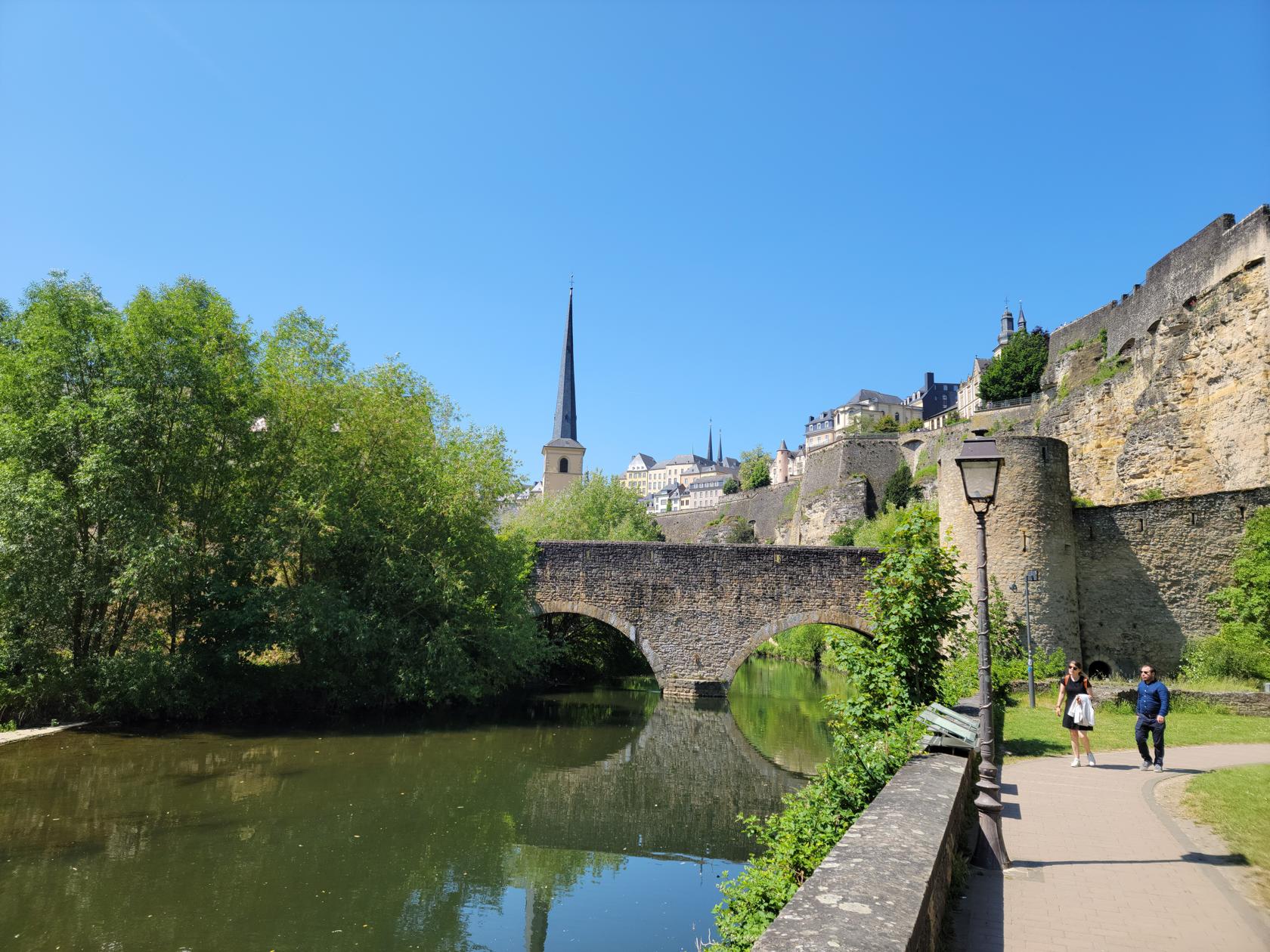
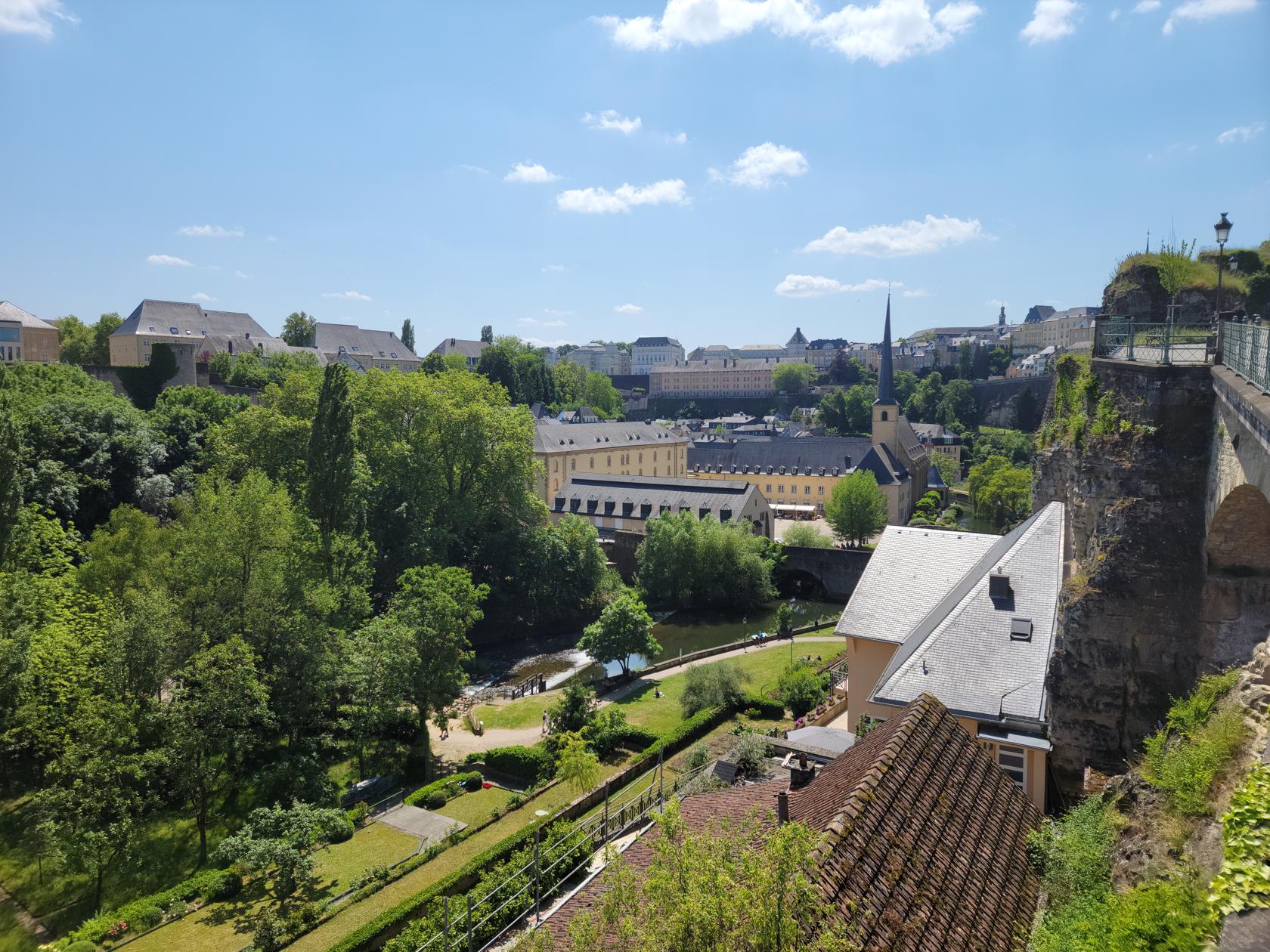
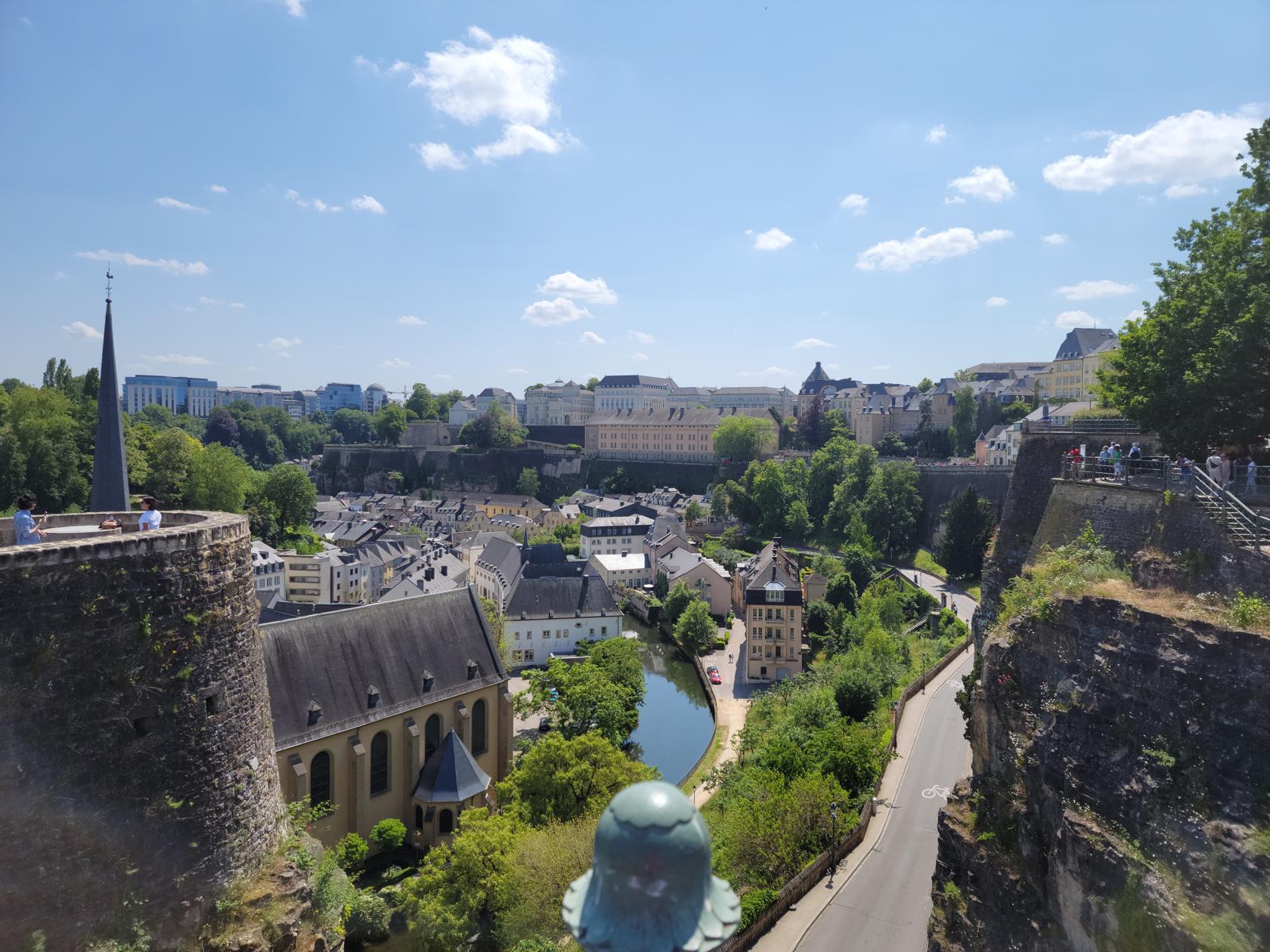
The city has fortifications and remnants of them on three sides. Some are in better condition than others, but you can at least enjoy the ones that follow the river Alzette.
Plateau de Rham – Luxemburg, Luxemburg
Plateau de Rham – Luxemburg, Luxemburg
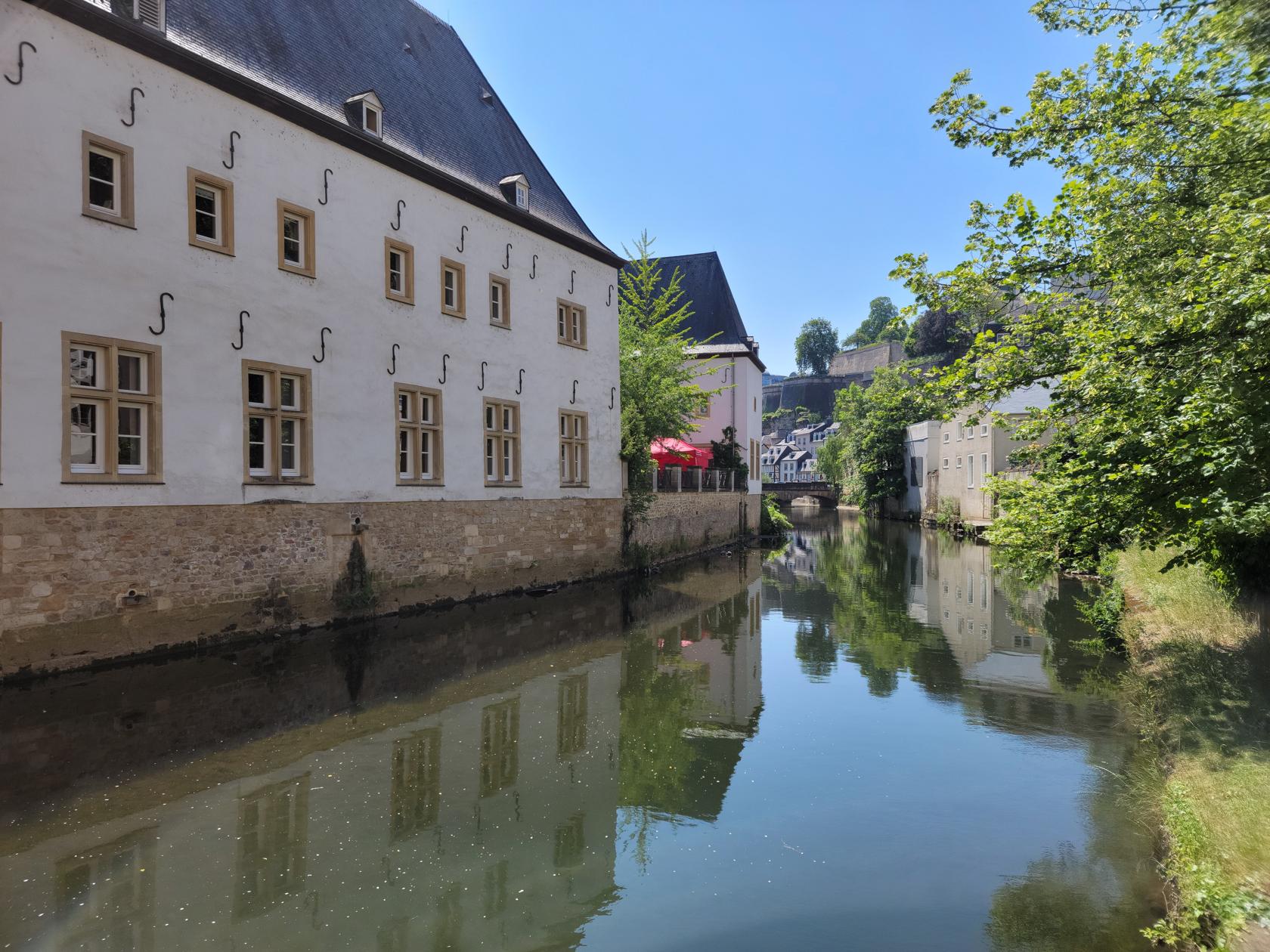
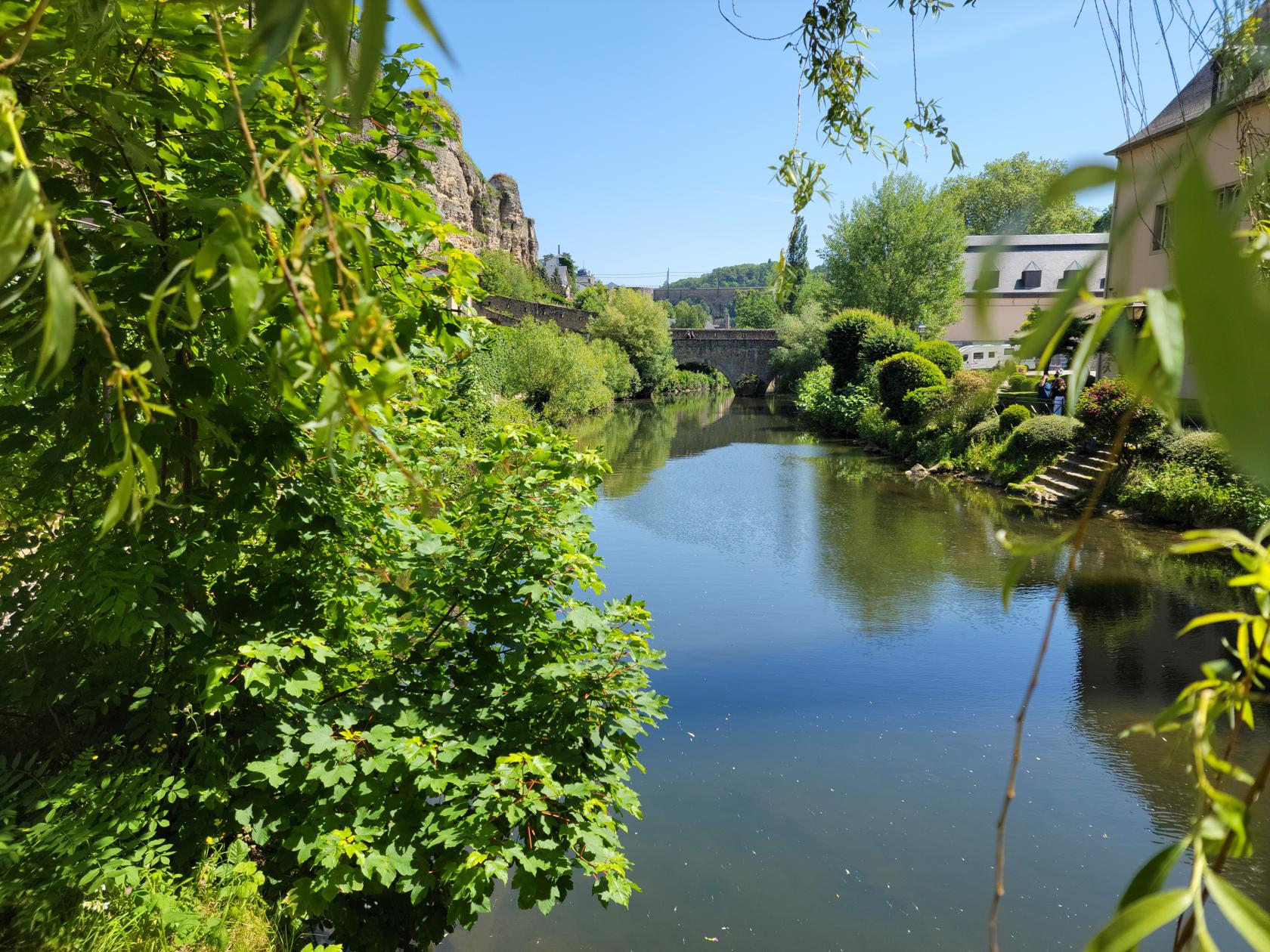
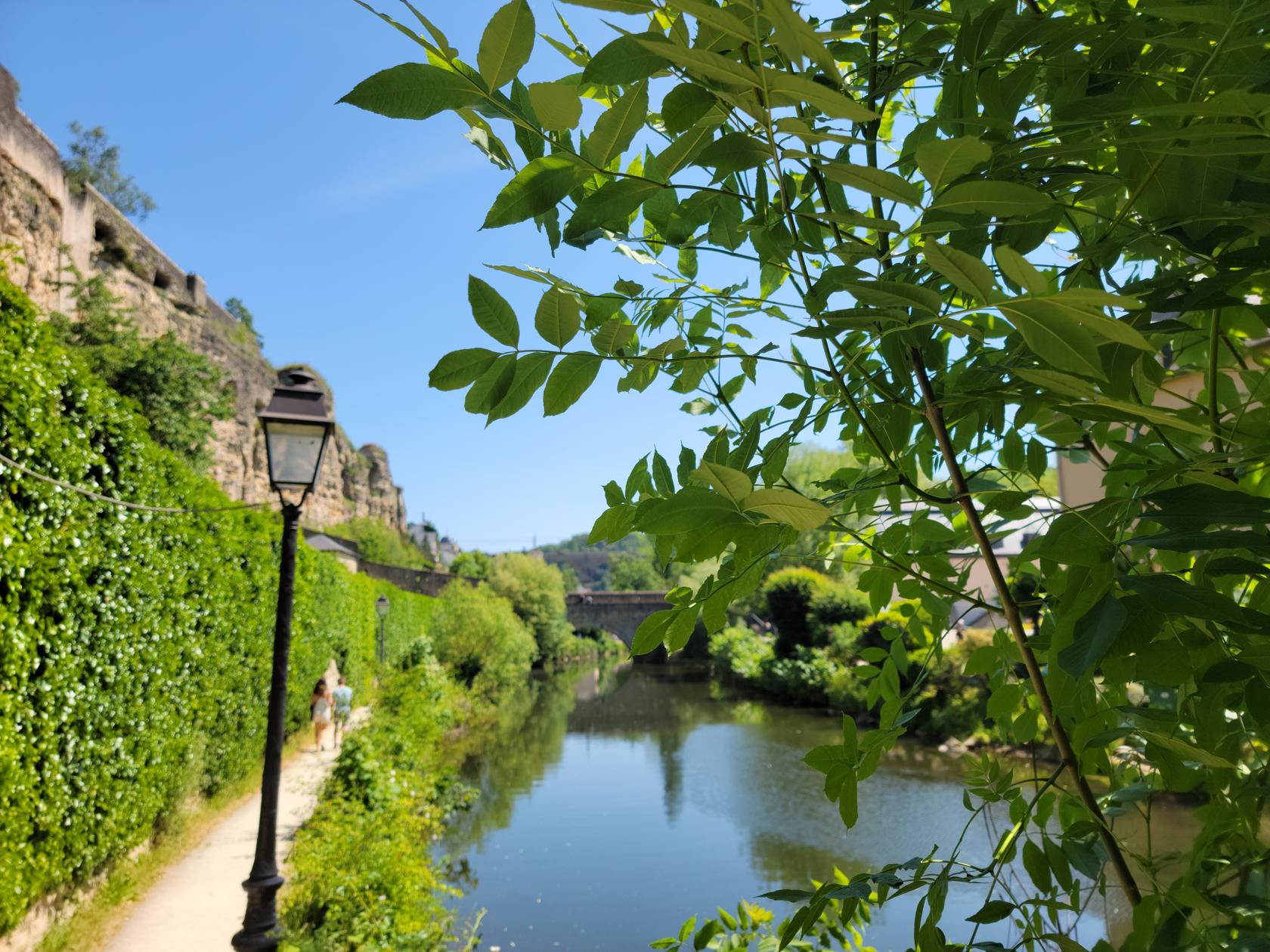
Alzette river – Luxemburg, Luxemburg
Alzette river – Luxemburg, Luxemburg
Alzette river – Luxemburg, Luxemburg
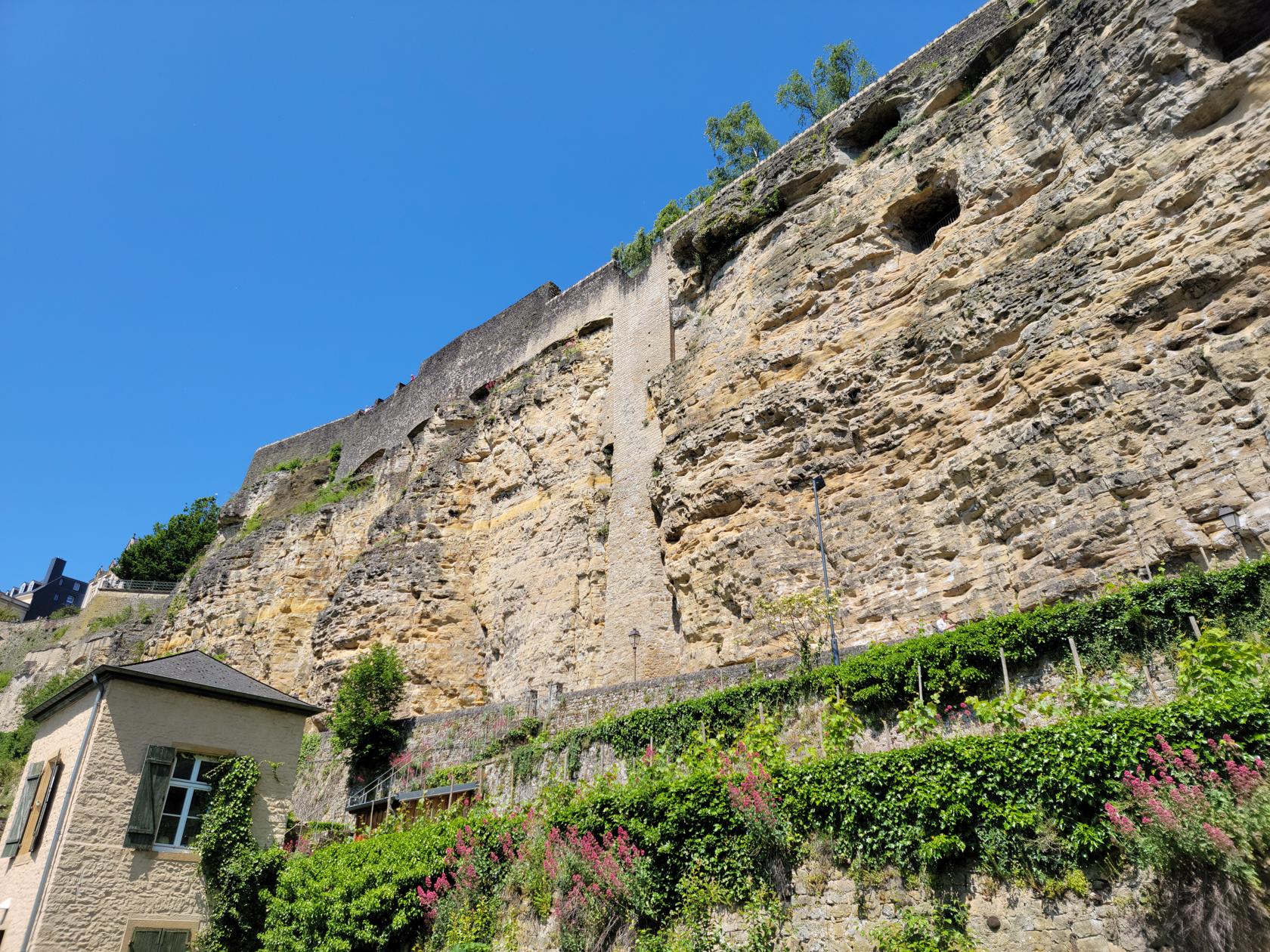
Cliffs of Luxemburg – Luxemburg, Luxemburg
Pont du Stierchen over Alzette river – Luxemburg, Luxemburg
Cliffs of Luxemburg – Luxemburg, Luxemburg
Pont du Stierchen over Alzette river – Luxemburg, Luxemburg
Pont du Stierchen over Alzette river – Luxemburg, Luxemburg
Wier and Sleuce Gate with Pont du Stierchen over Alzette river – Luxemburg, Luxemburg
Overlook of Alzette river – Luxemburg, Luxemburg
Overlook of the river Alzette – South side – Luxemburg, Luxemburg
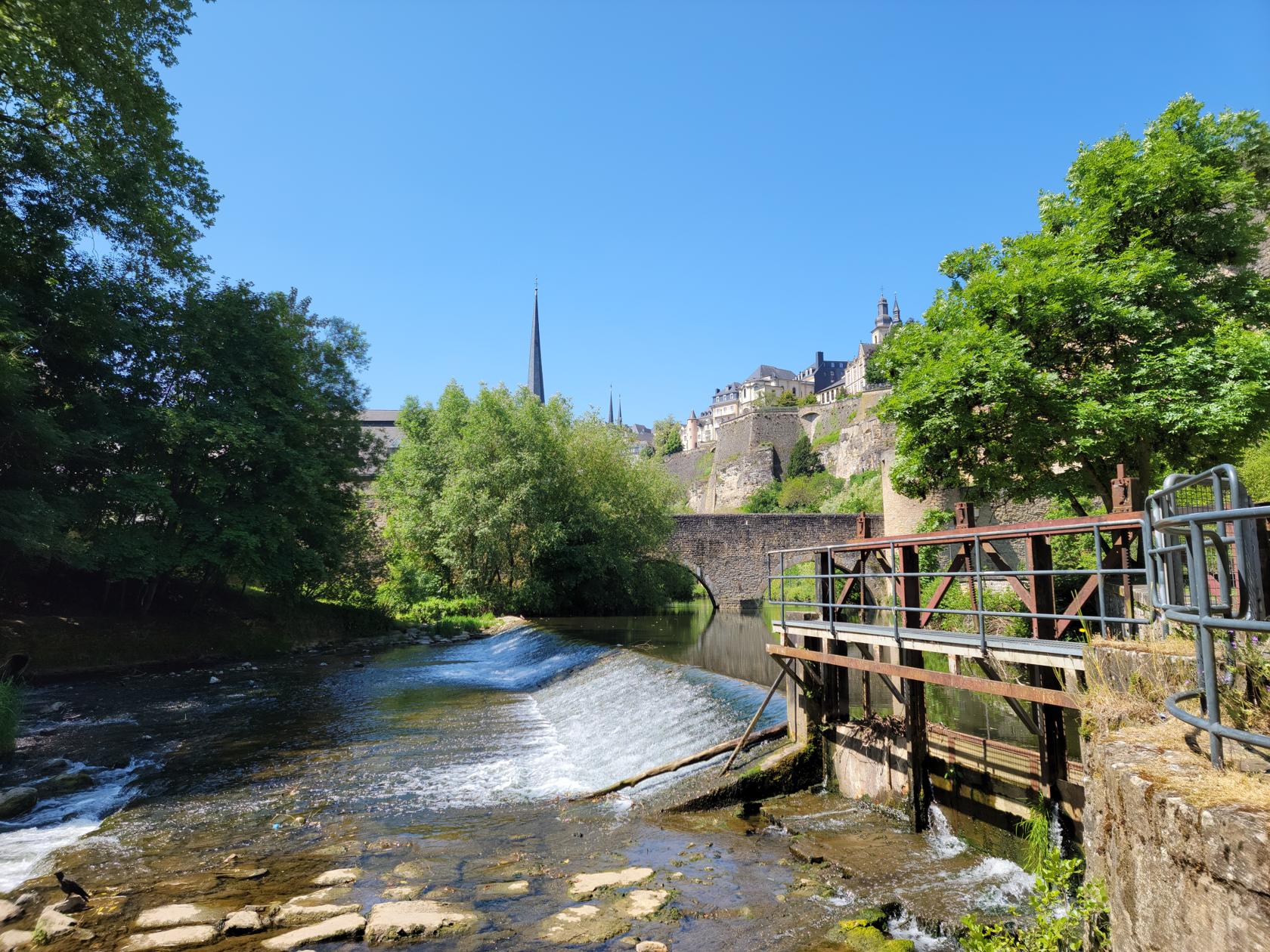
There is also a wonderful weir on the river between the Plateau du Rham and the City Center. From here the water flows over a set of rapids making for a very relaxing and shaded place to walk. There is even a bridge that crosses the river here where you may also enjoy it.
Casements of Luxemburg
The casements of Luxemburg city are underground facilities were originally built as passages and storage areas for the former castle of Luxemburg. During World War II, they were used for various purposes by both sides, including shelter during bombings. The one that was open while we were there was called Casemates de la Pétrusse, named after the river Pétrusse. Unfortunately, they were all booked the day we came for the entire weekend, so purchase your tickets early, if you want to go below and enjoy the guided tour of this unusual exhibit. It is located under the Monument of Remembrance.
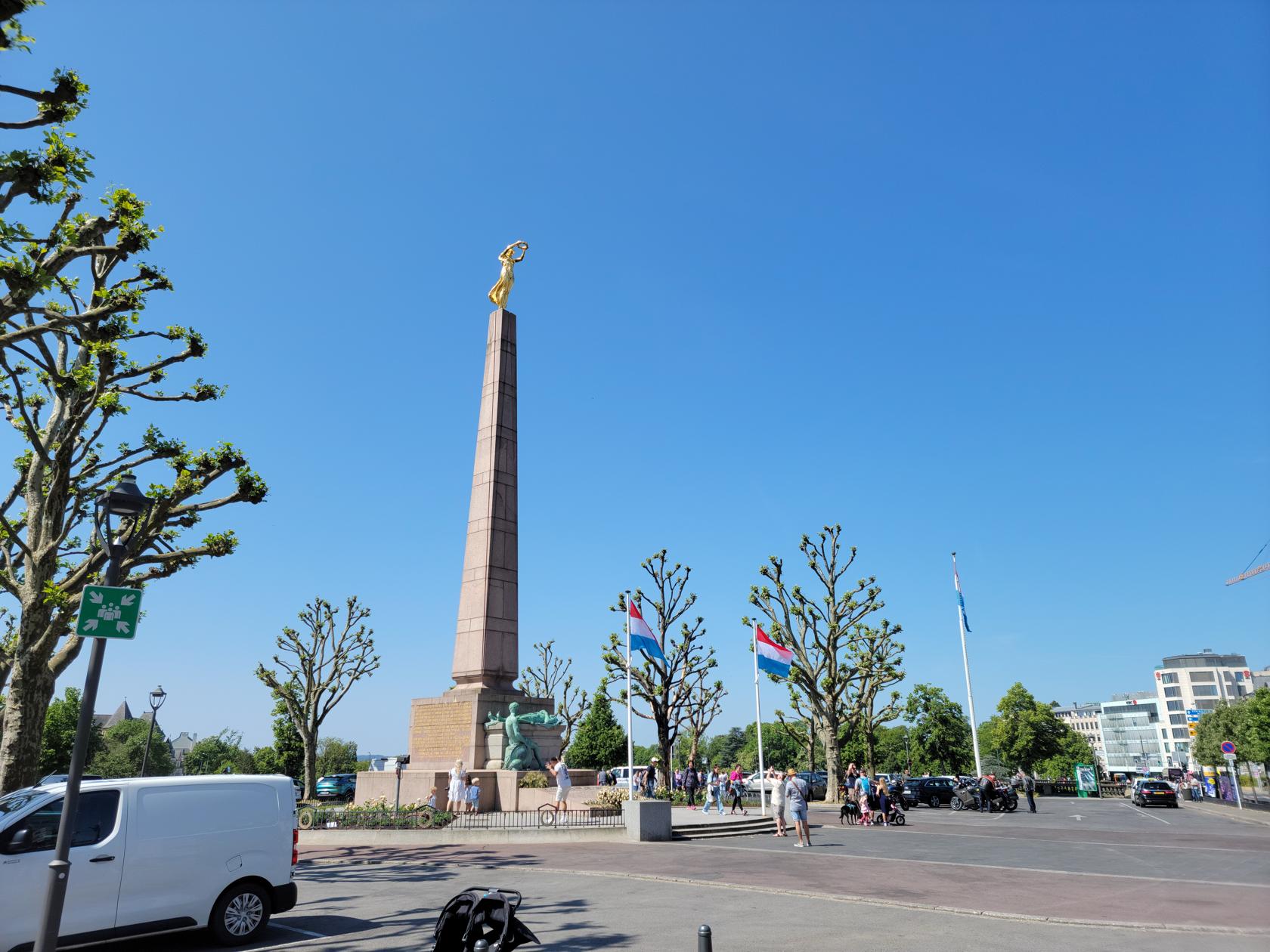
Remembrance memorial – Luxemburg, Luxemburg
The other casement is Casements du Bock which currently is temporarily closed. When it opens, tickets can be purchased for a guided tour and this one is located on Mount de Clausen near the Casement Memorial.
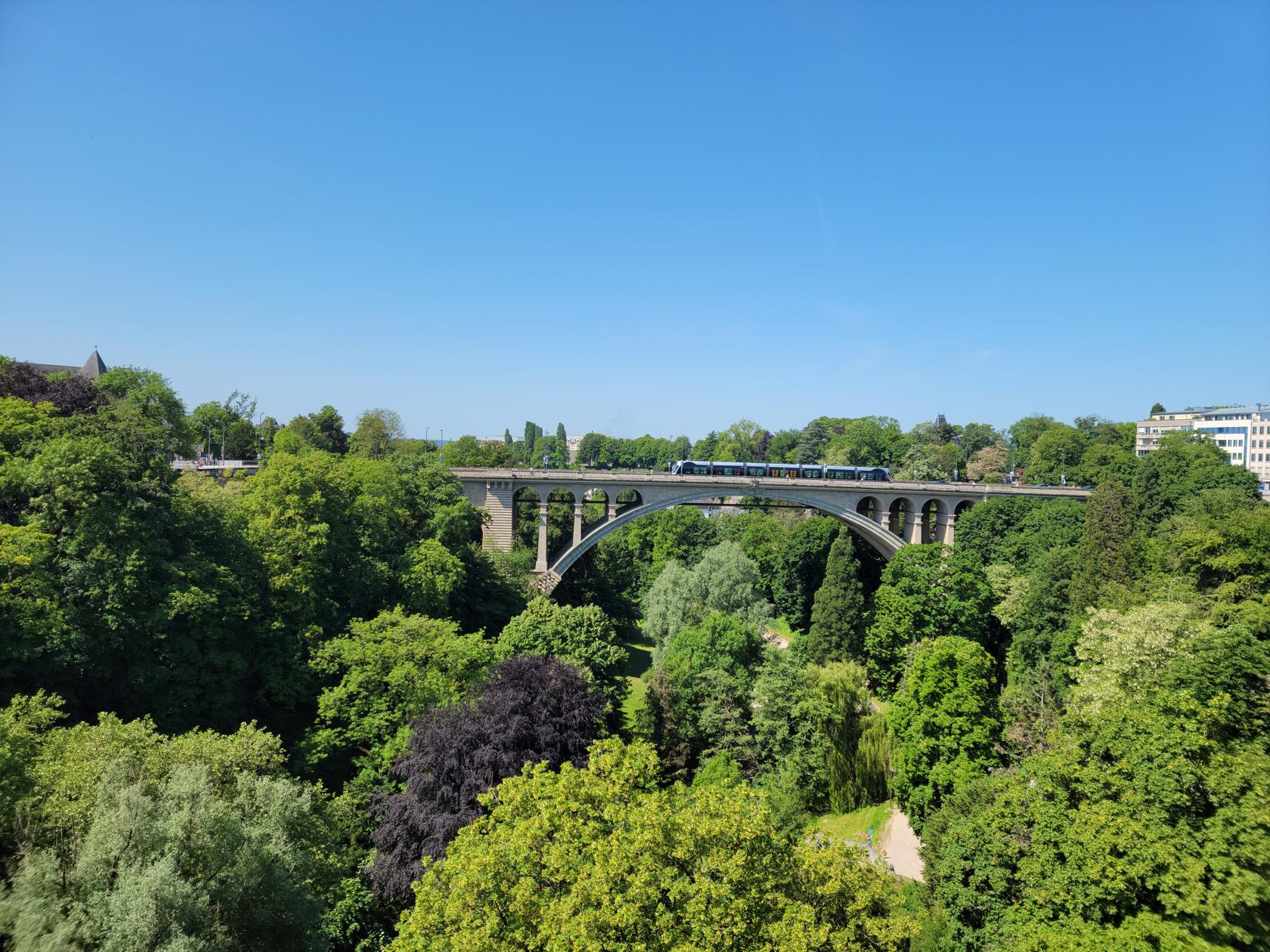
Adolphe bridge – Luxemburg, Luxemburg
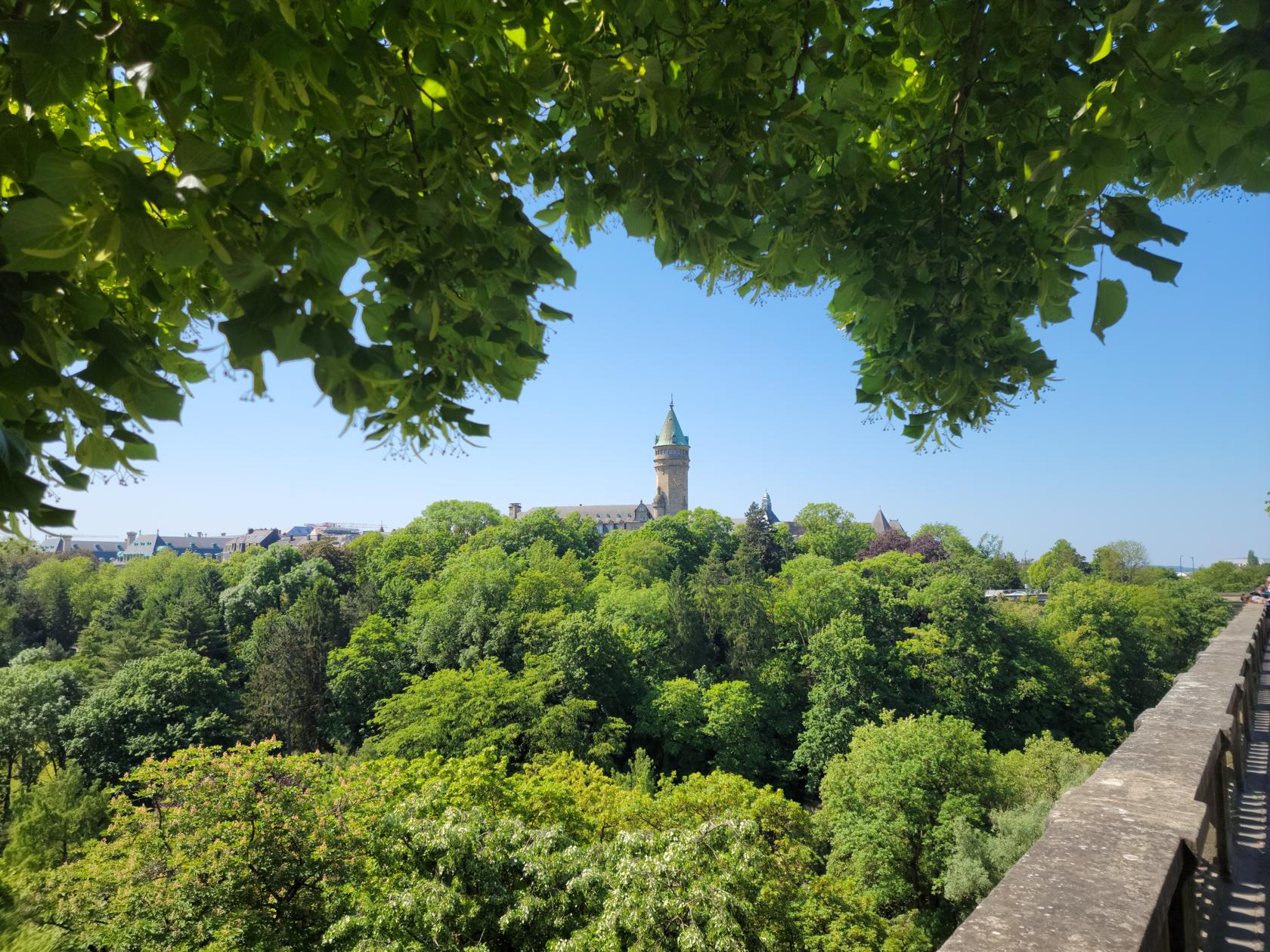
Muesee de la Banque Tower – Luxemburg, Luxemburg
Church of Saint Michael’s
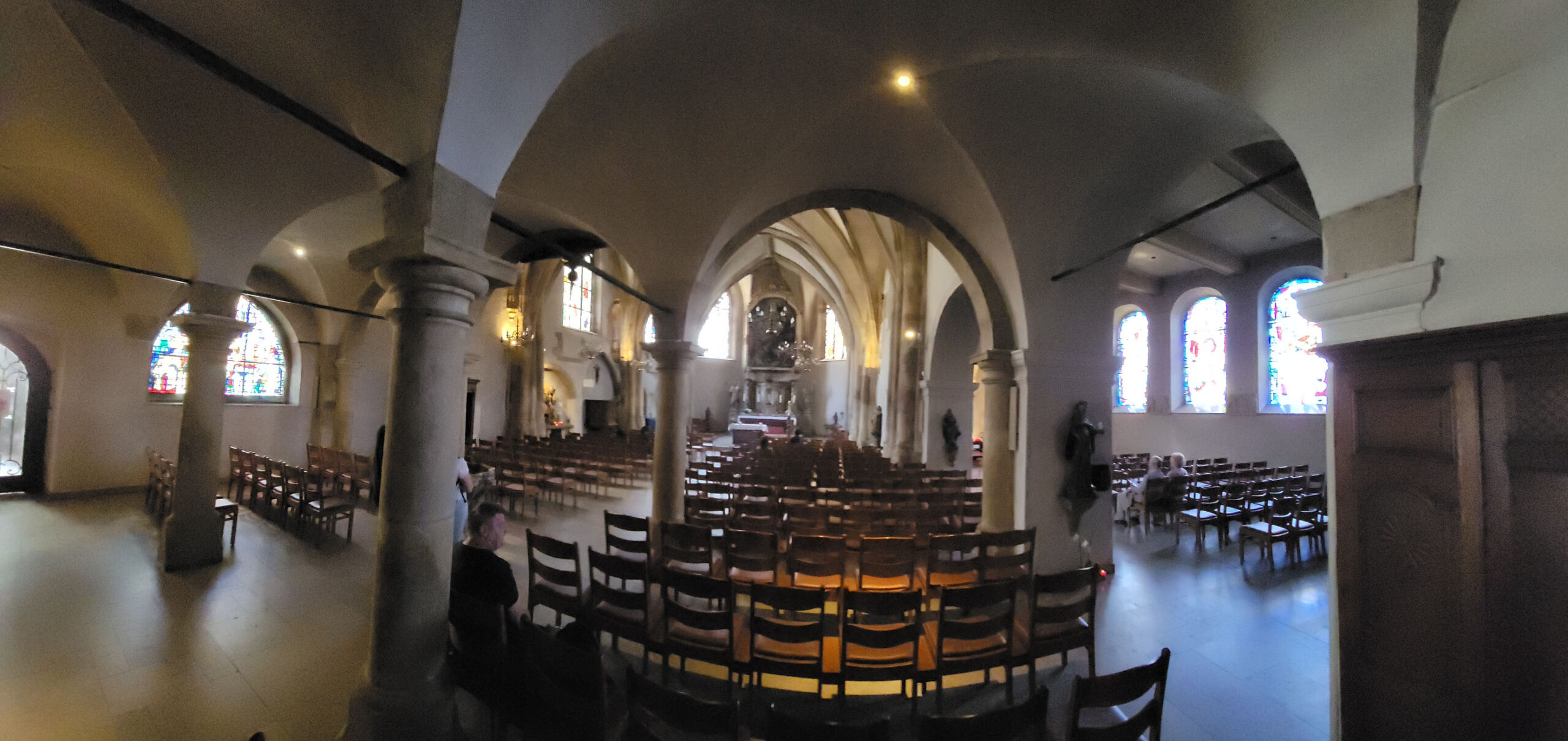
The church of Saint Michael’s has a beautiful set of windows to enjoy. Built in the tenth century and originally named Church of the Redemption, the new and colorful windows were installed after much of the city was destroyed during the war and the new church was reconsecrated as the church of Saint Michael.
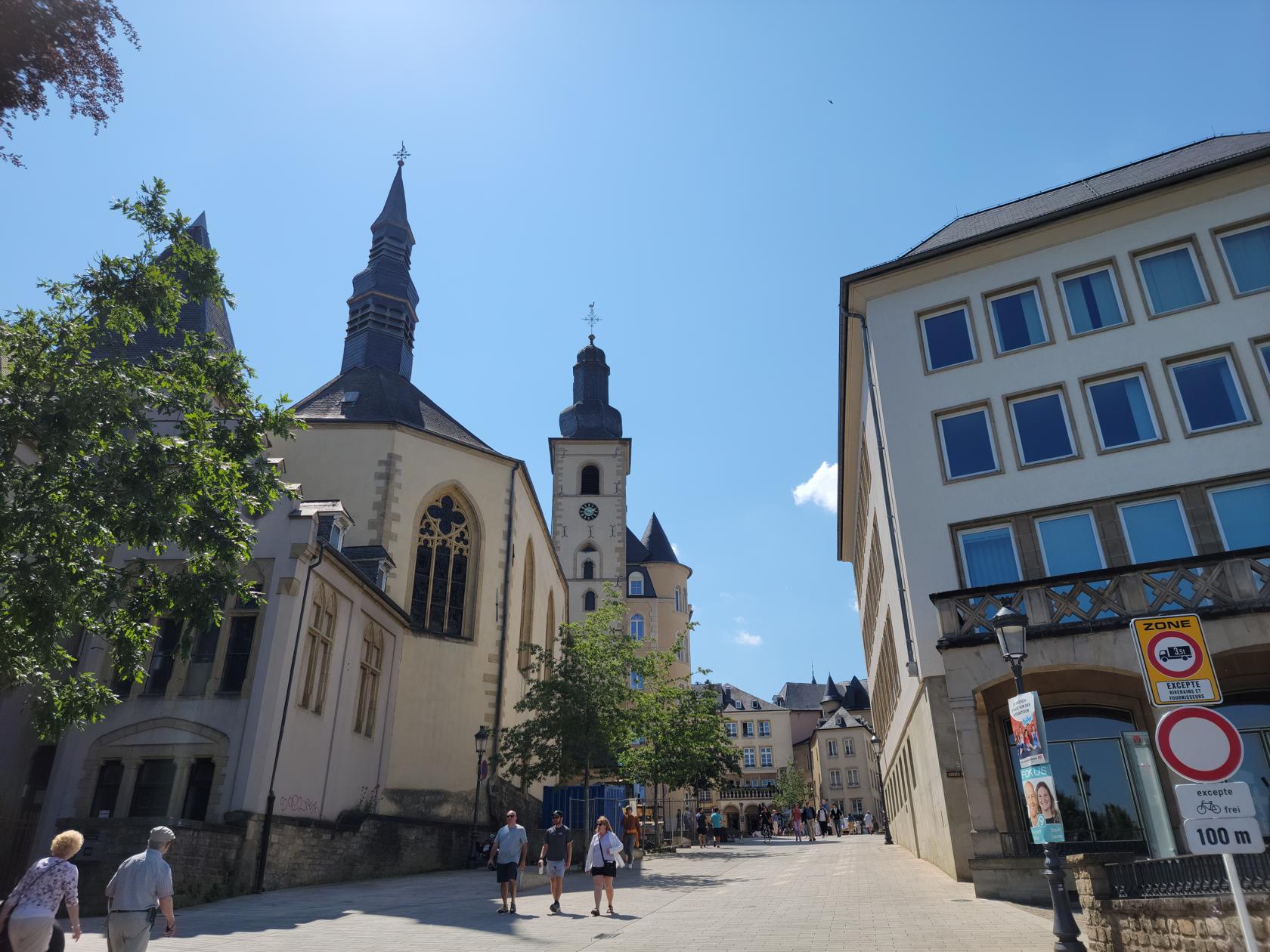
Saint Michael’s church – Luxemburg, Luxemburg
Inside panorama of Saint Michael’s church – Luxemburg, Luxemburg
Stained glass – Saint Michael’s church – Luxemburg, Luxemburg
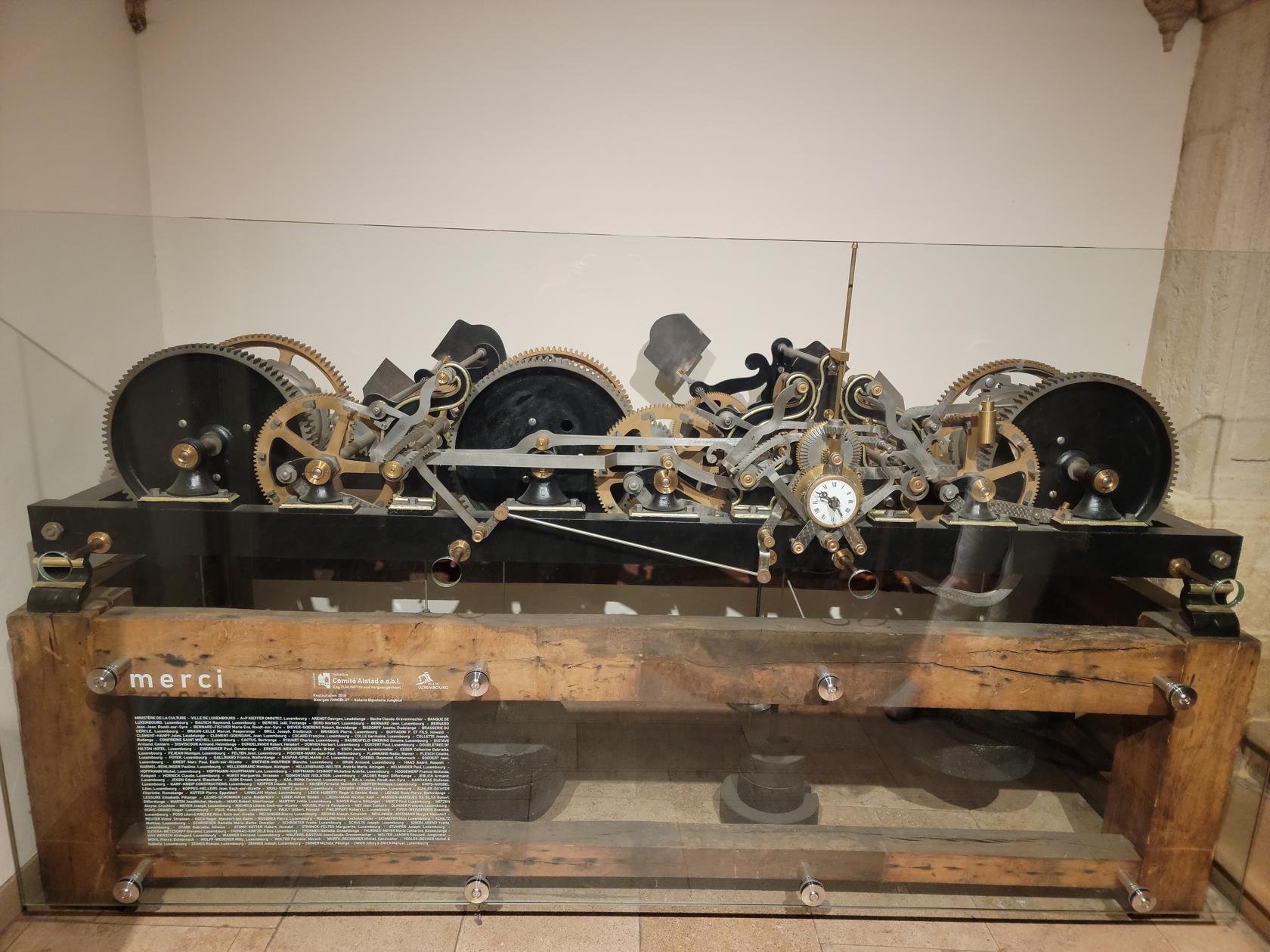
The other point of interest in this church is the old church turret clock.
Turret clock from 1902 – Saint Michael’s church – Luxemburg, Luxemburg
The city does offer other things to see and do, for those who are so inclined. However, for a short weekend stay, I thought we enjoyed a fair amount of what the city had to offer and enjoyed ourselves immensely. The people are very friendly and fluent in many languages. The city is clean, well cared for and vibrant and there is plenty of history to be found walking among its streets. Being only a few hours drive from Frankfurt and other cities, it is well situated for a weekend trip. Going by train is a bit longer, since there is no direct route and flying is an option, though an unjustifiable cost given the destination and the amount of time one has to spend in airports these days to get anywhere.
Patti and Erick – Luxemburg, Luxemburg
Restaurants
One thing that can be said about restaurants in Luxemburg is, eating out is rather expensive. Our opinion is, it’s more in line with eating out in Switzerland or at an expensive restaurant in the United States.
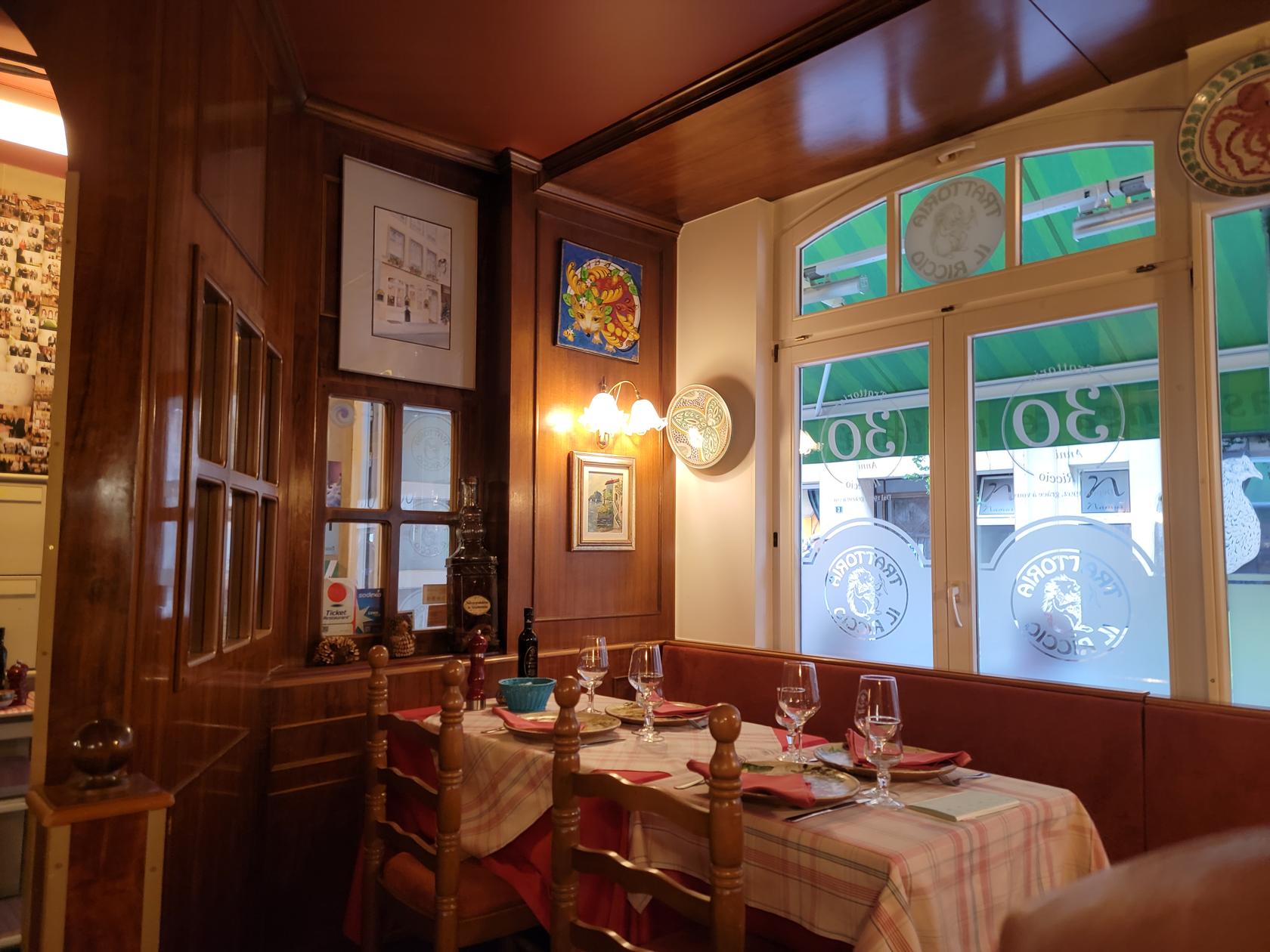
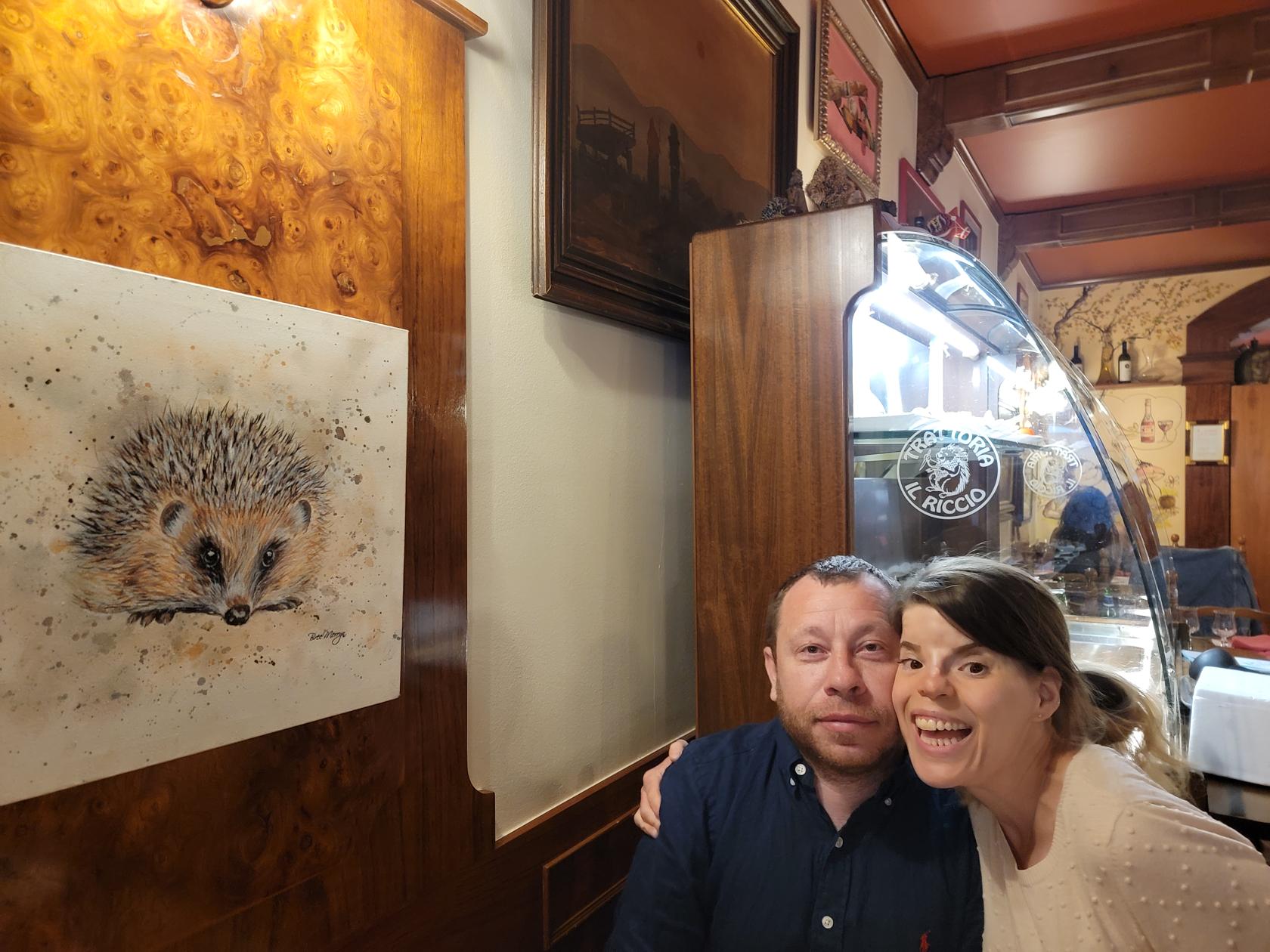
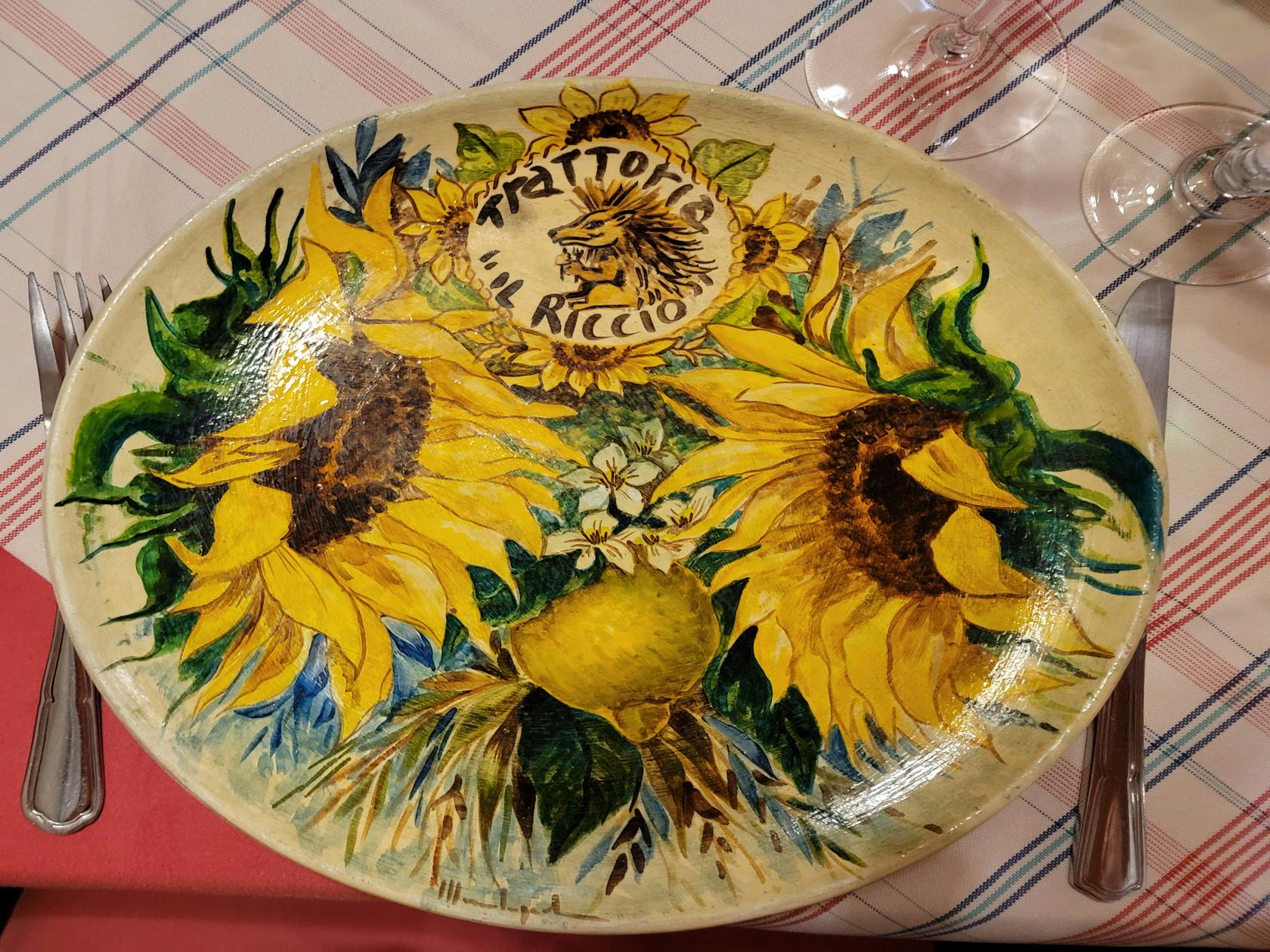
Trattoria Il Riccio
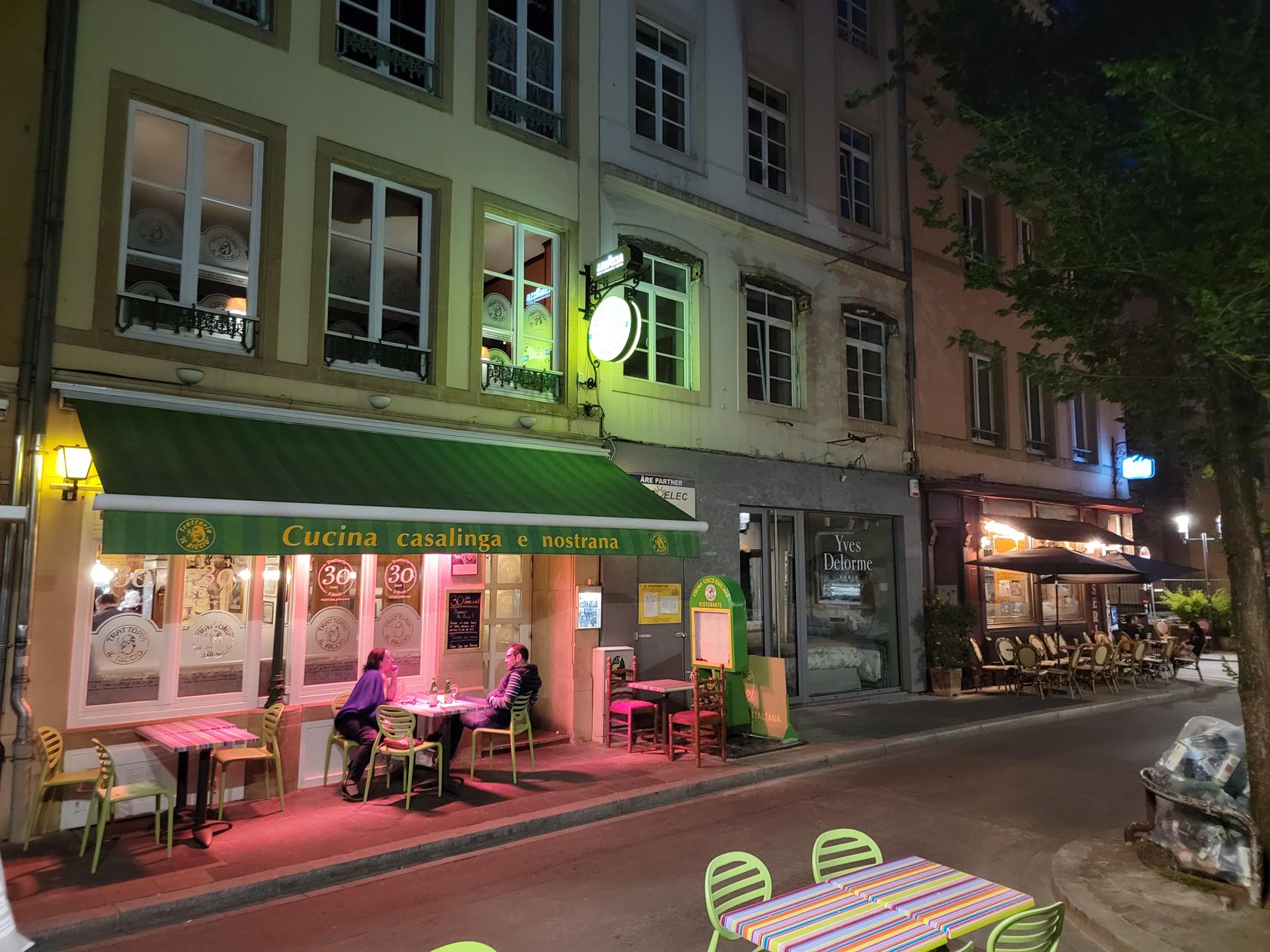
This is a cozy, but expensive little Italian gem on the Rue Beaumont.
Ristorante Il Riccio – Luxemburg, Luxemburg
Ristorante Il Riccio – Luxemburg, Luxemburg
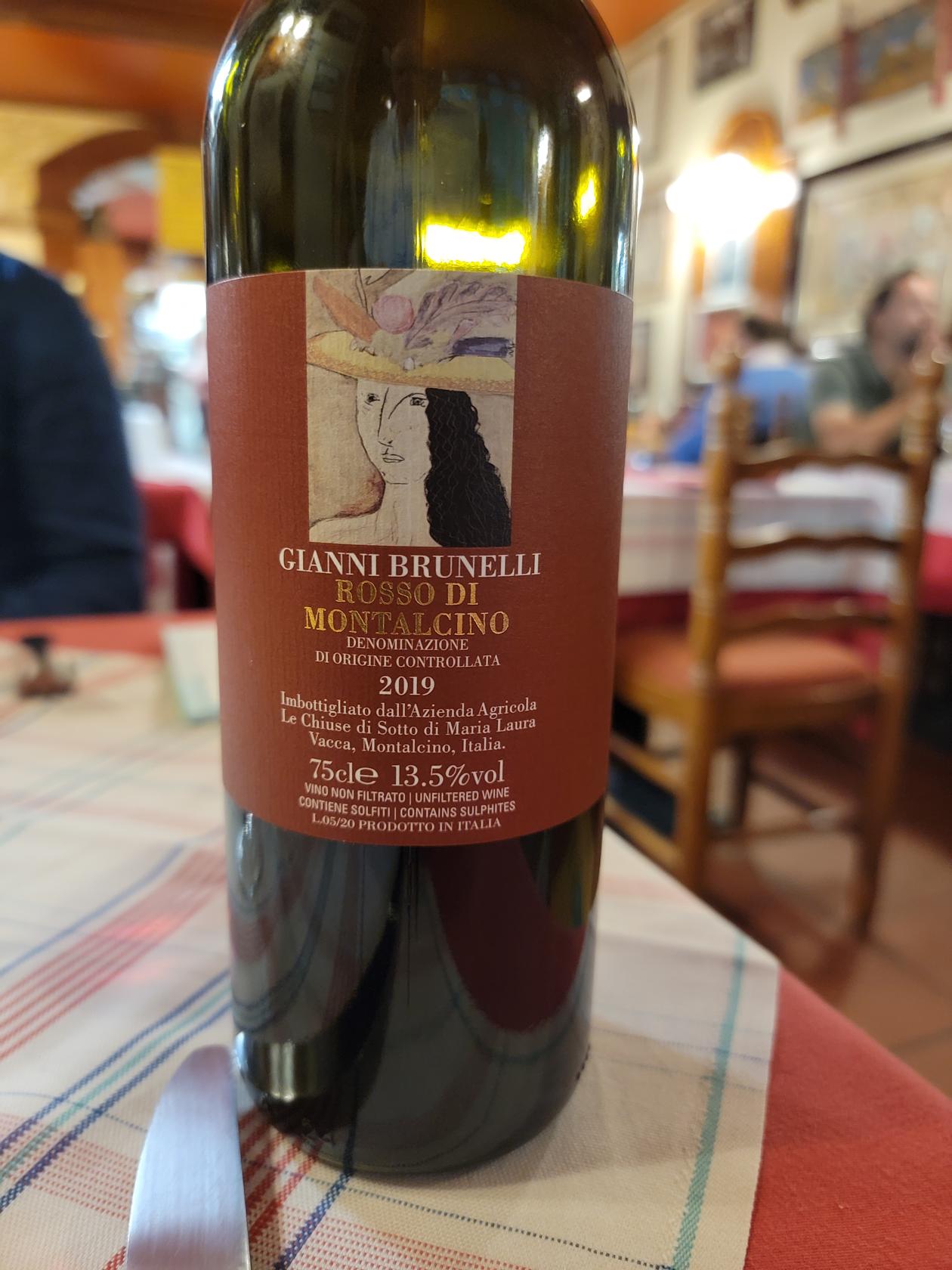
We had an excellent and delicious meal here, complete with two bottles of fairly expensive wine (56€/ea) and the total for four came to 450€. Of course, we all had an appetizer, primi and secondi.
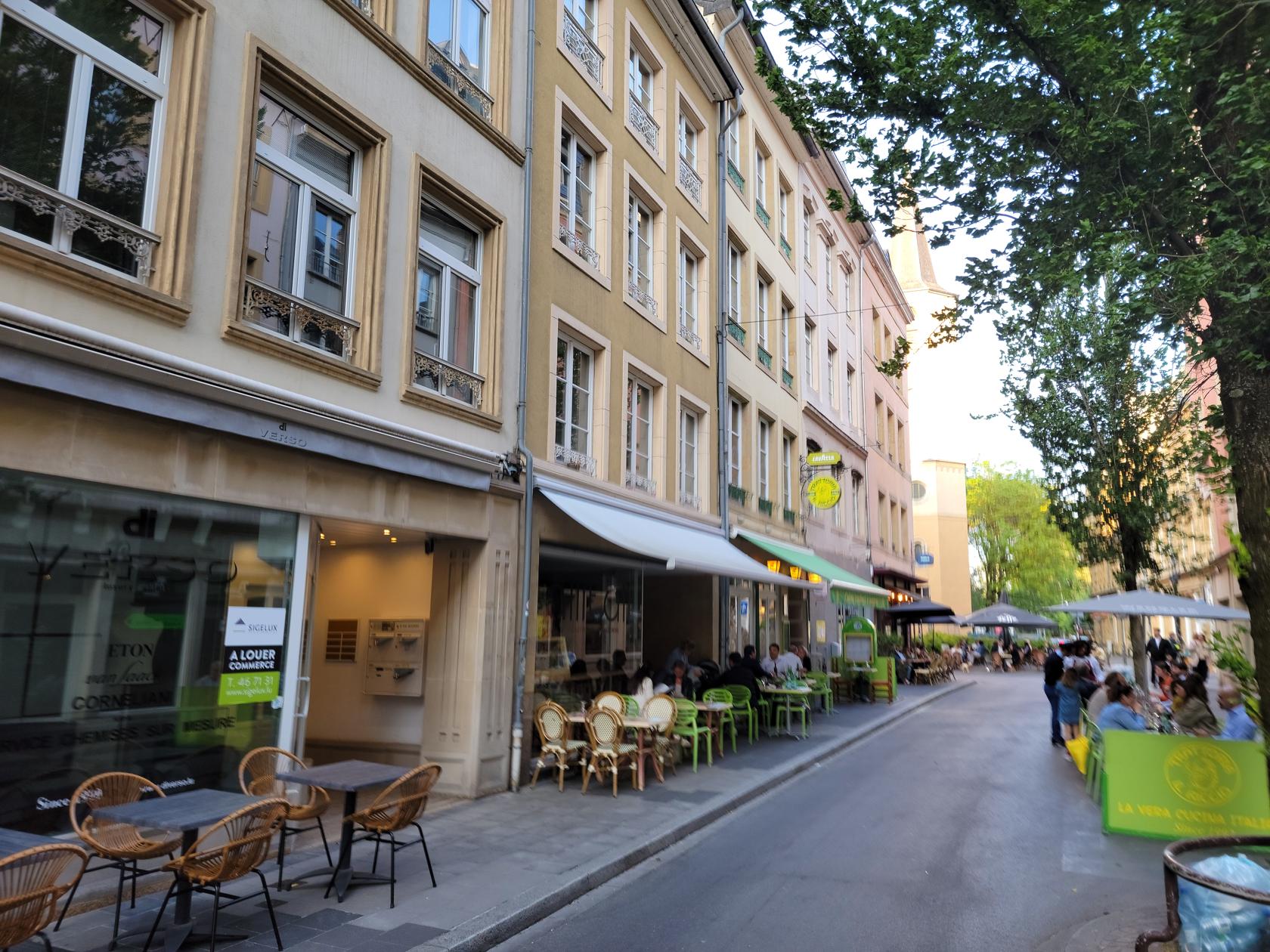
Rue Beaumont – Luxemburg, Luxemburg
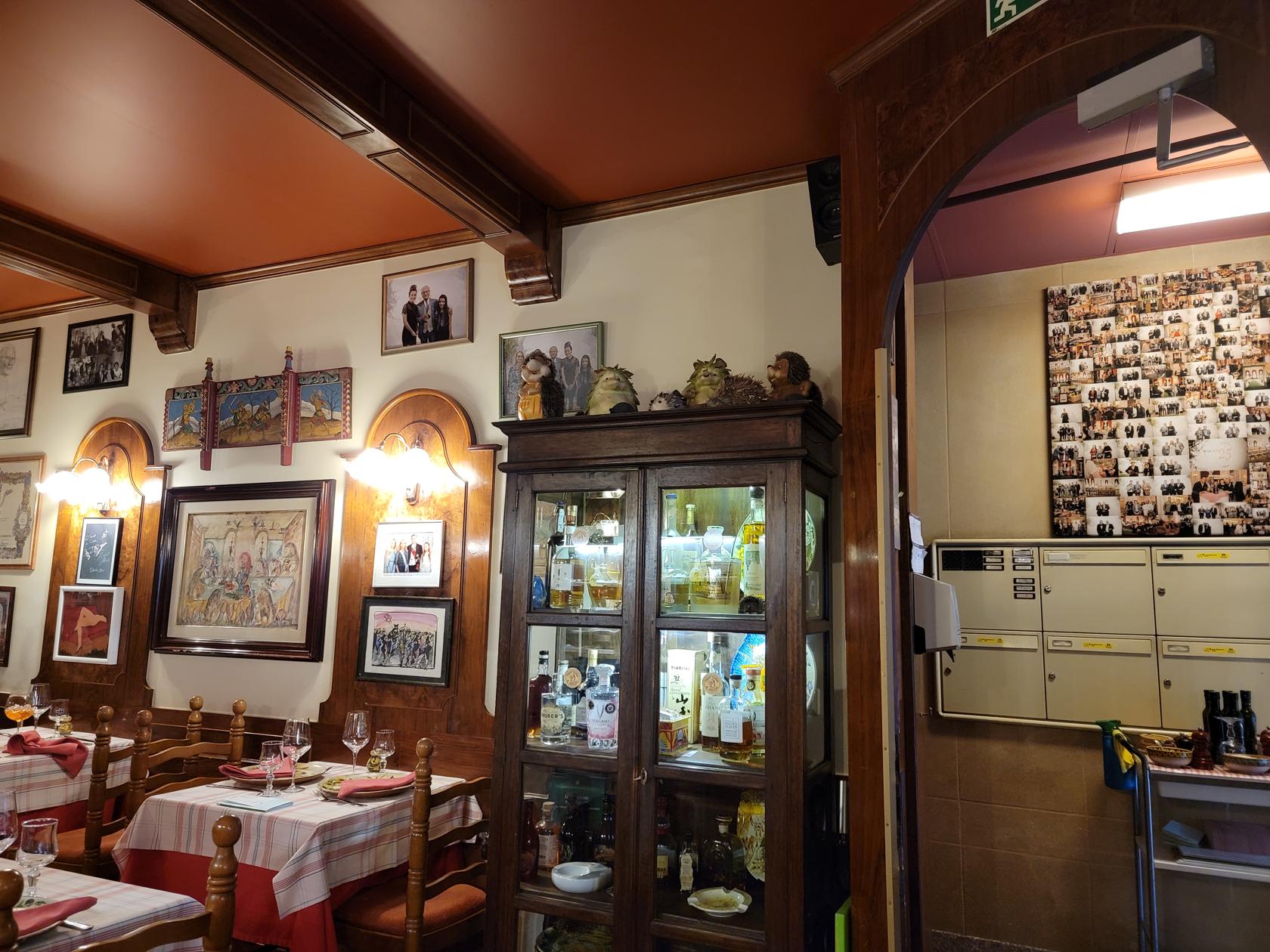
Ristorante Il Riccio – Luxemburg, Luxemburg
Ristorante Il Riccio – Luxemburg, Luxemburg
Gabi and Ericka – Ristorante Il Riccio – Luxemburg, Luxemburg
Ristorante Il Riccio – Luxemburg, Luxemburg
Gianni Brunelli Montalcino – Ristorante Il Riccio – Luxemburg, Luxemburg
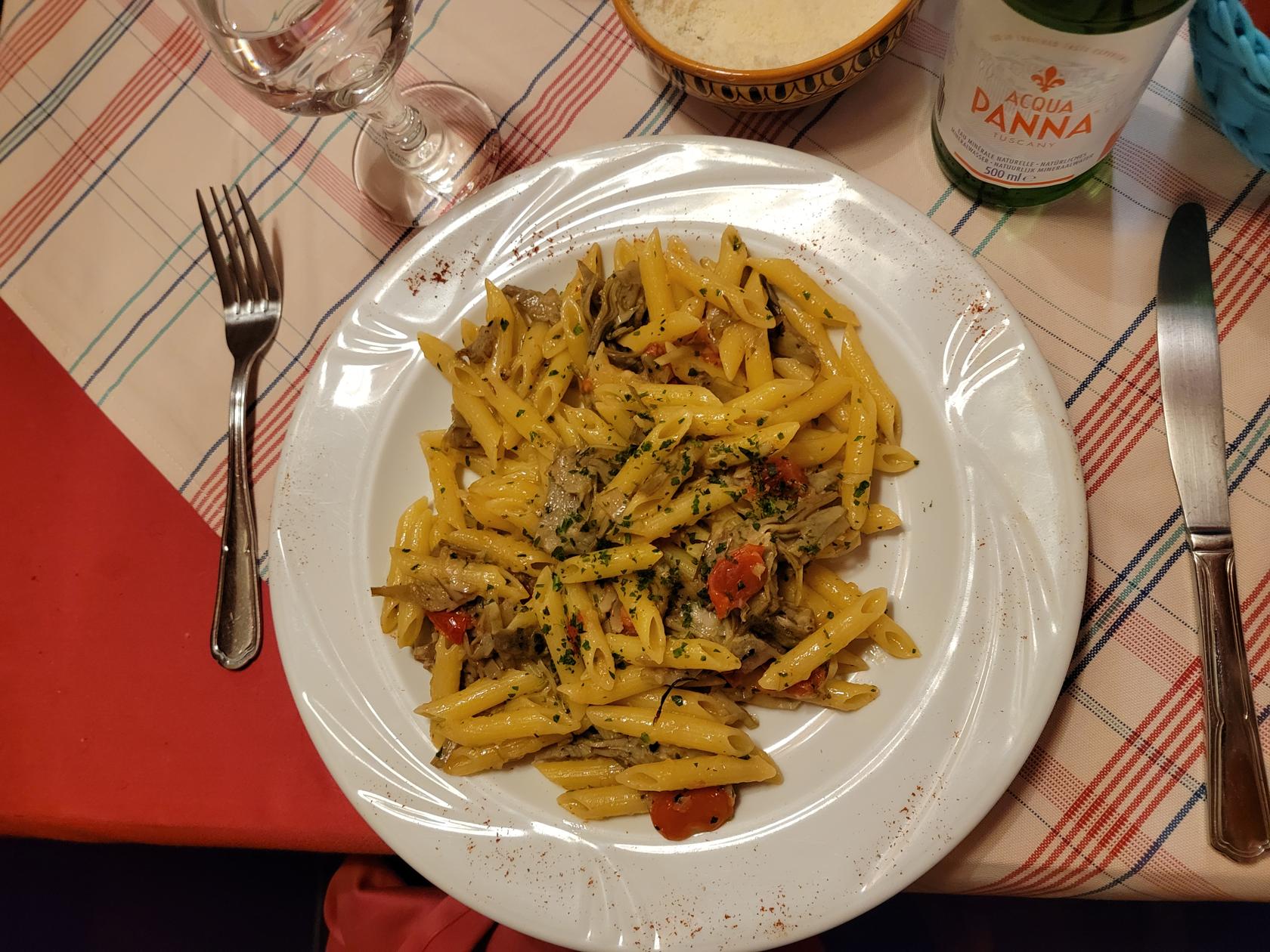
Penne with artichokes and tomatoes – Ristorante Il Riccio – Luxemburg, Luxemburg
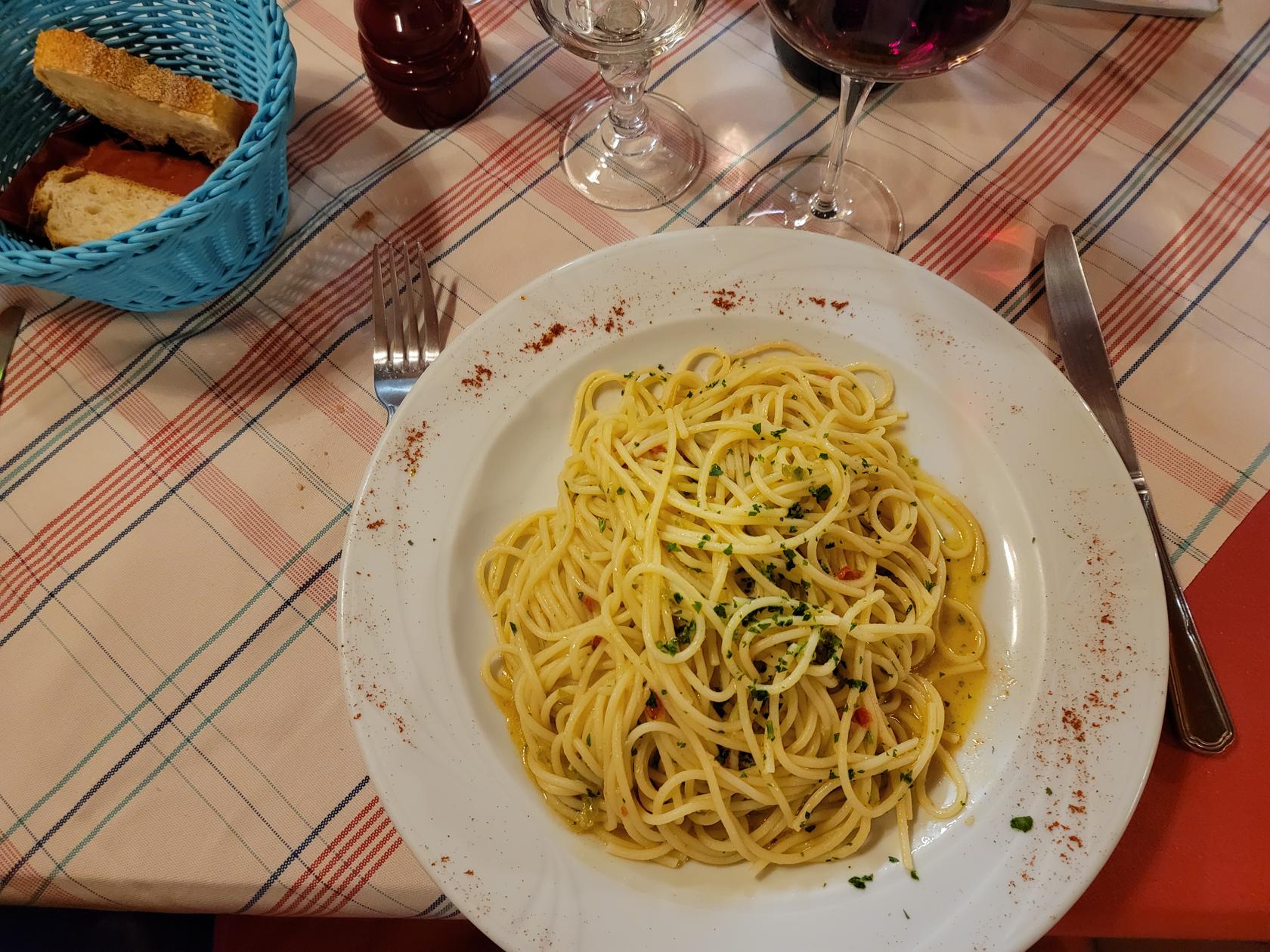
Spaghetti with garlic and oil- Ristorante Il Riccio – Luxemburg, Luxemburg
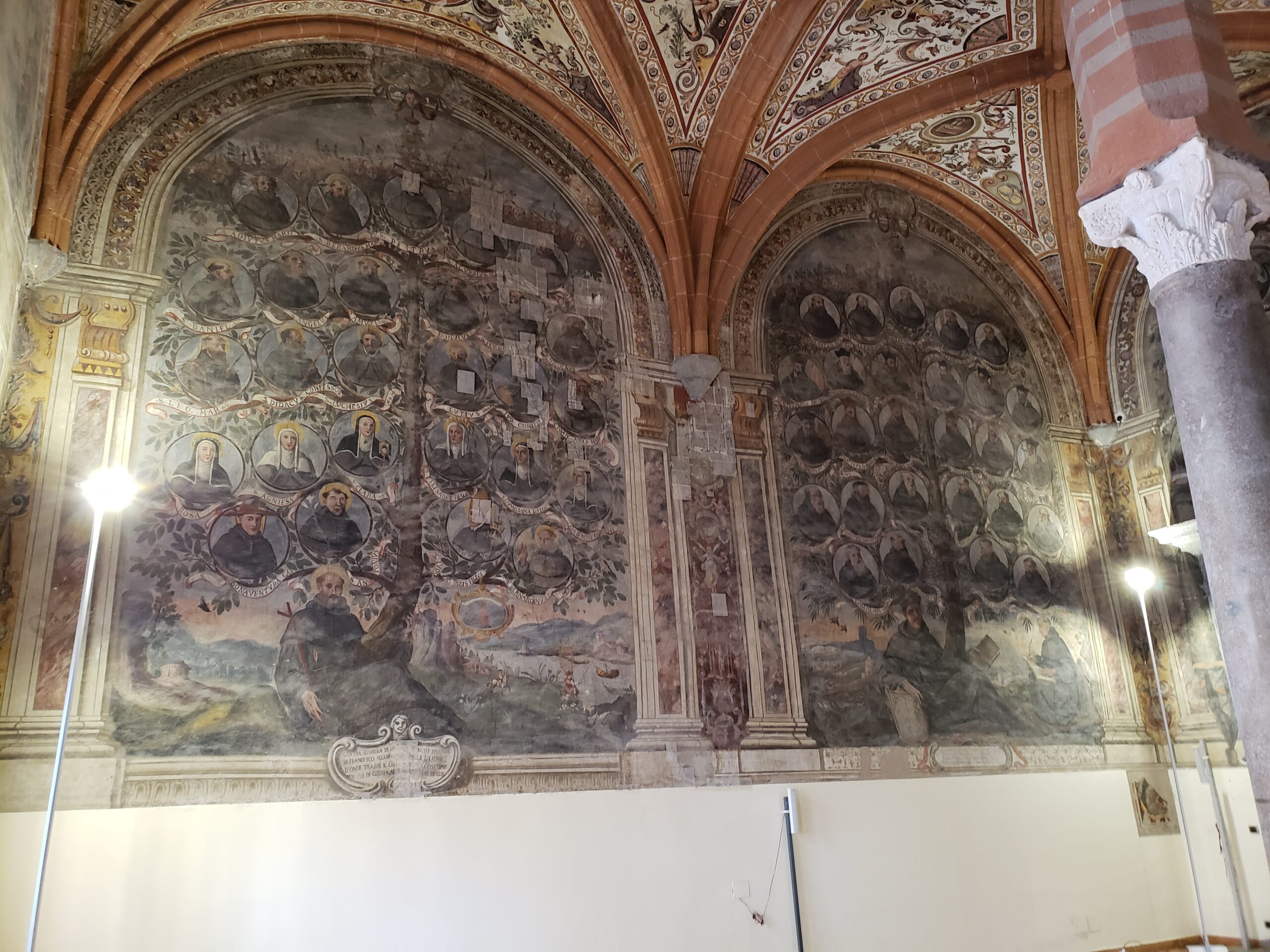
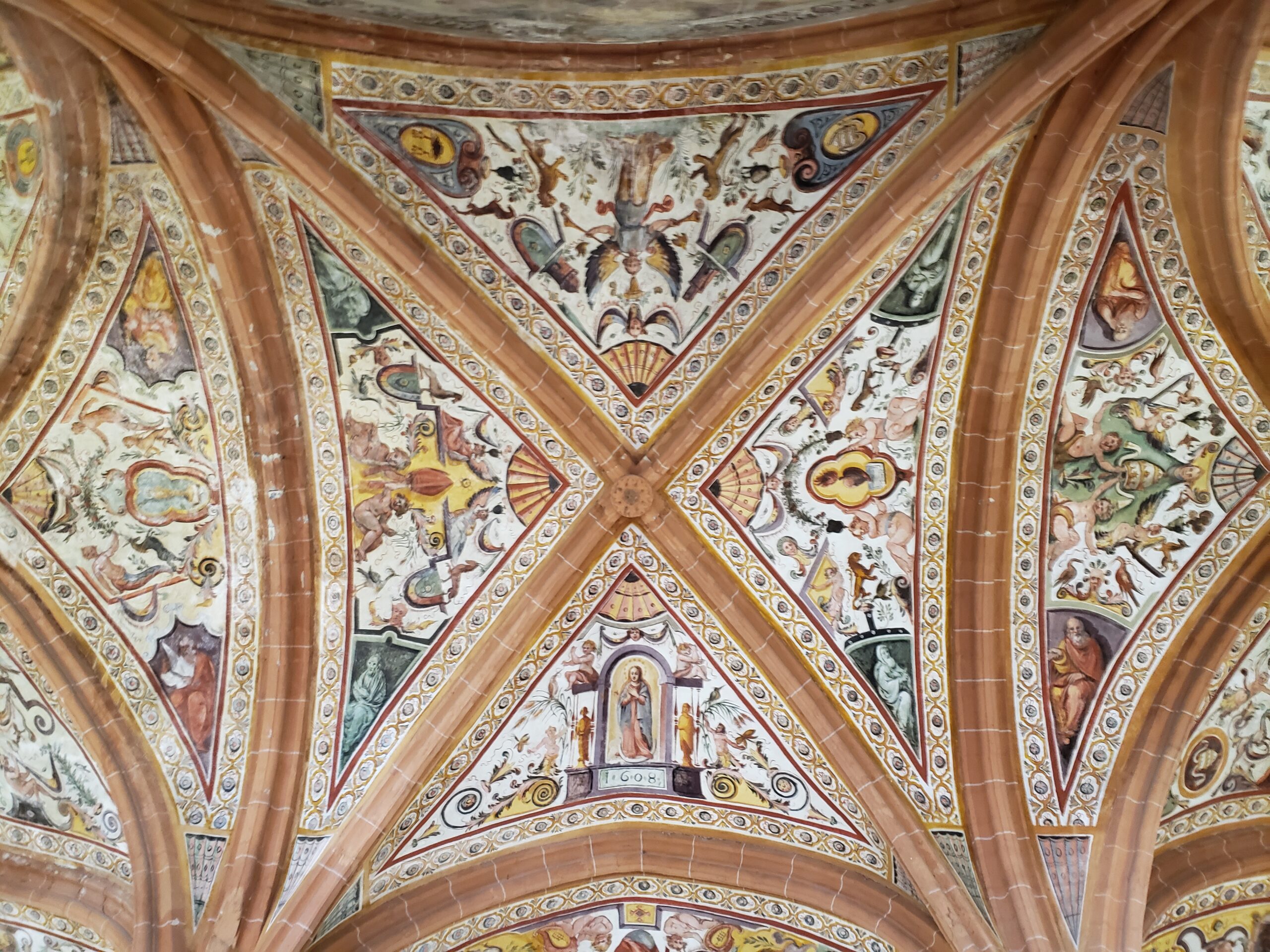
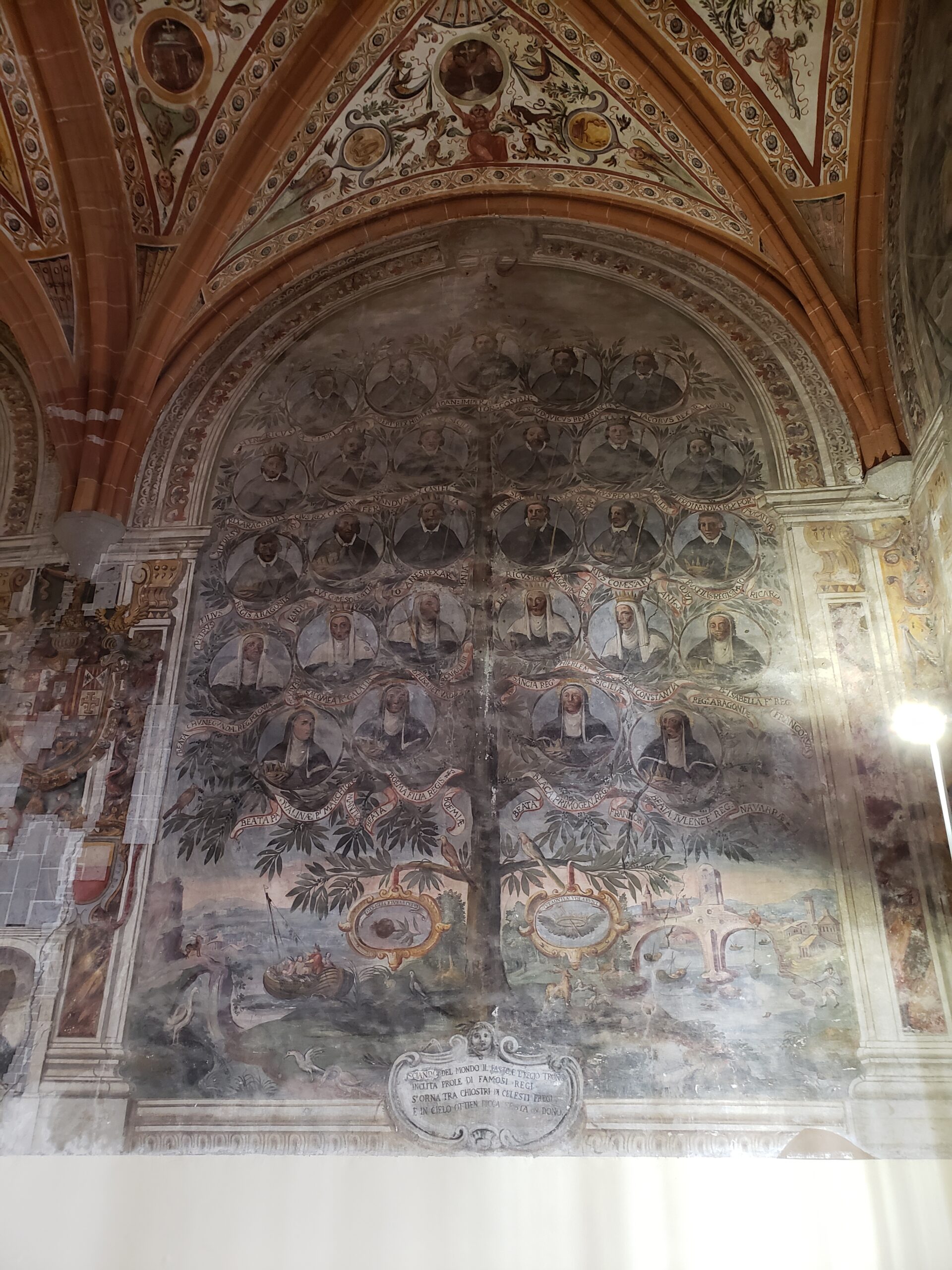
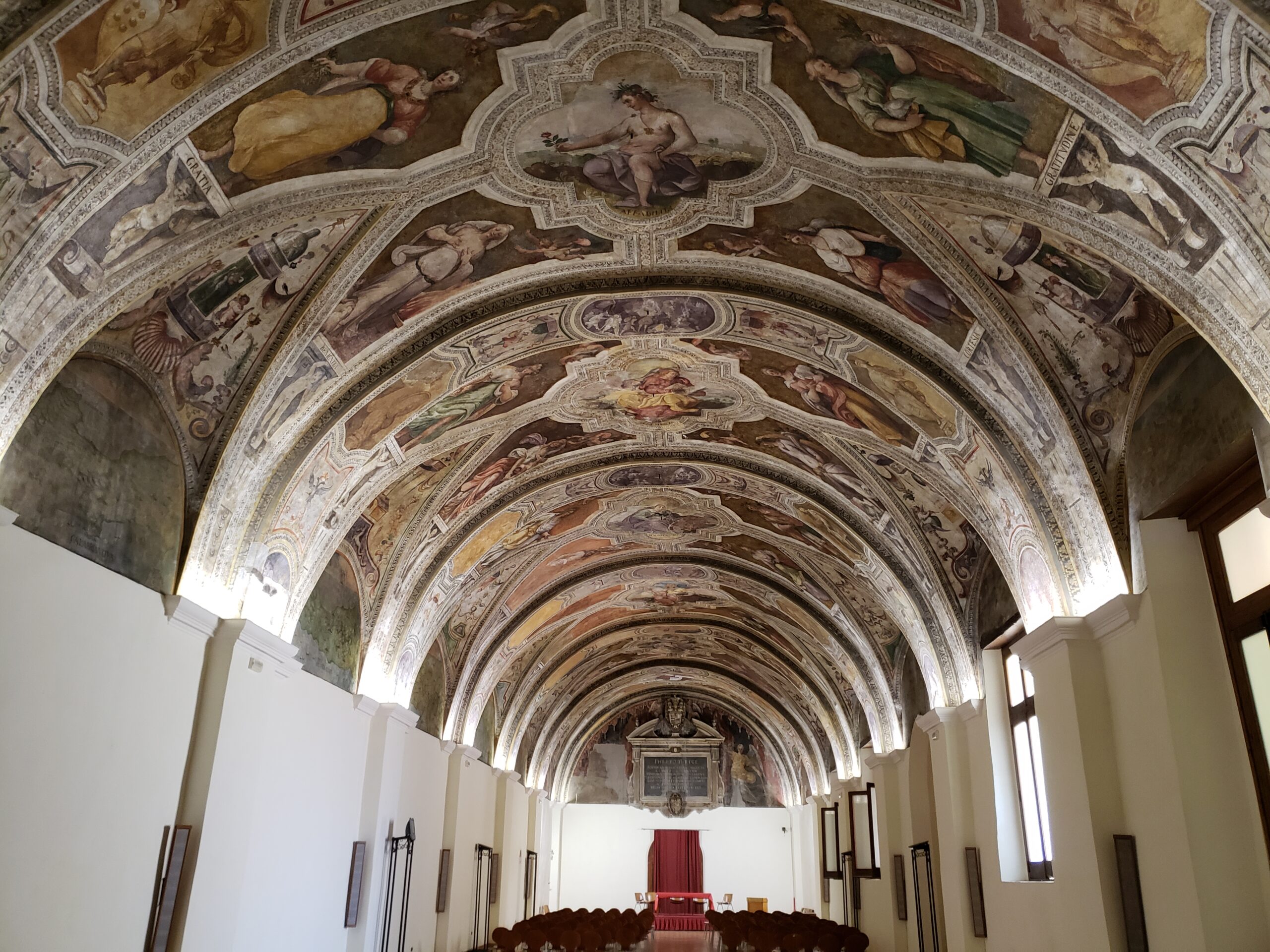
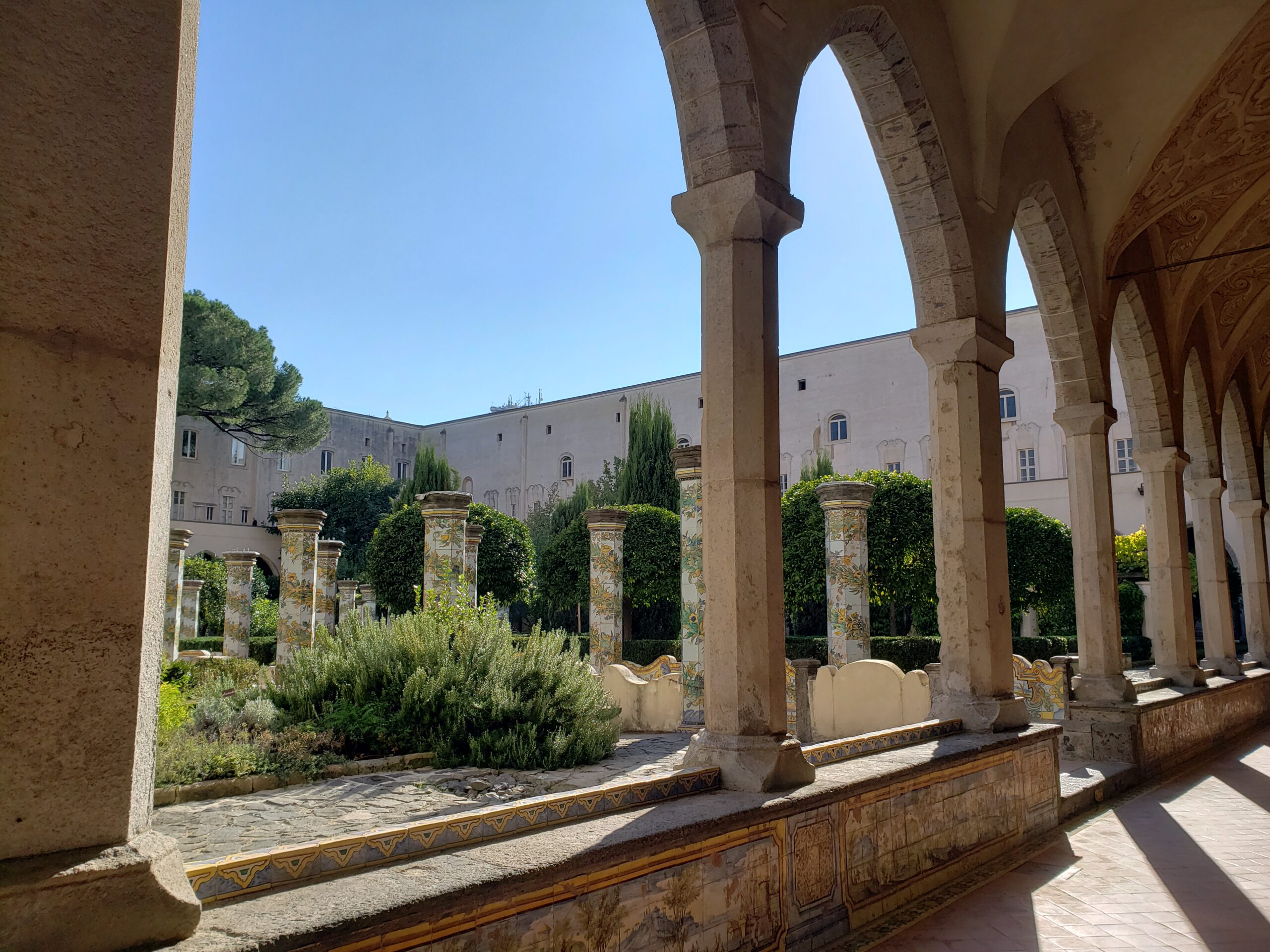
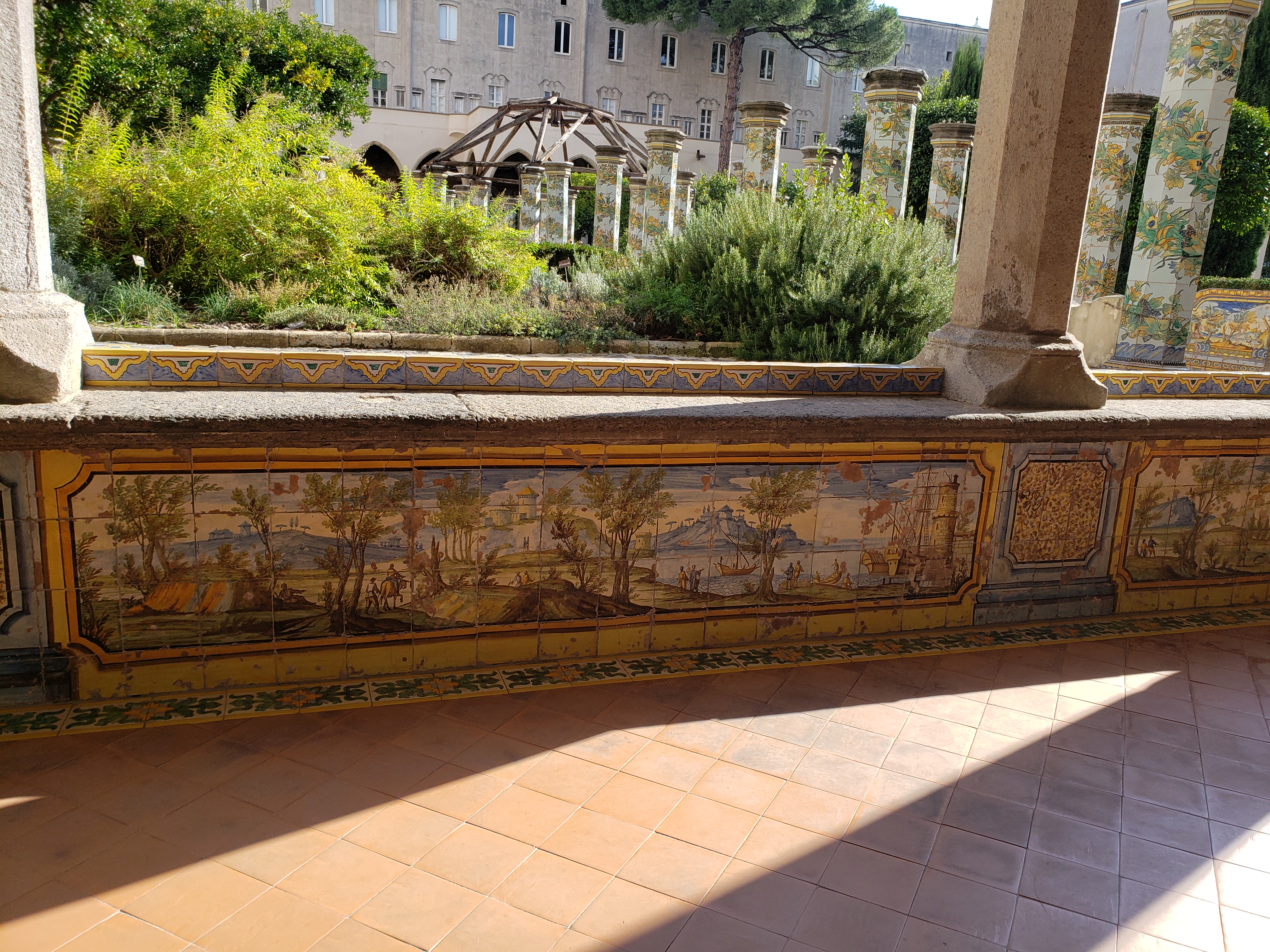
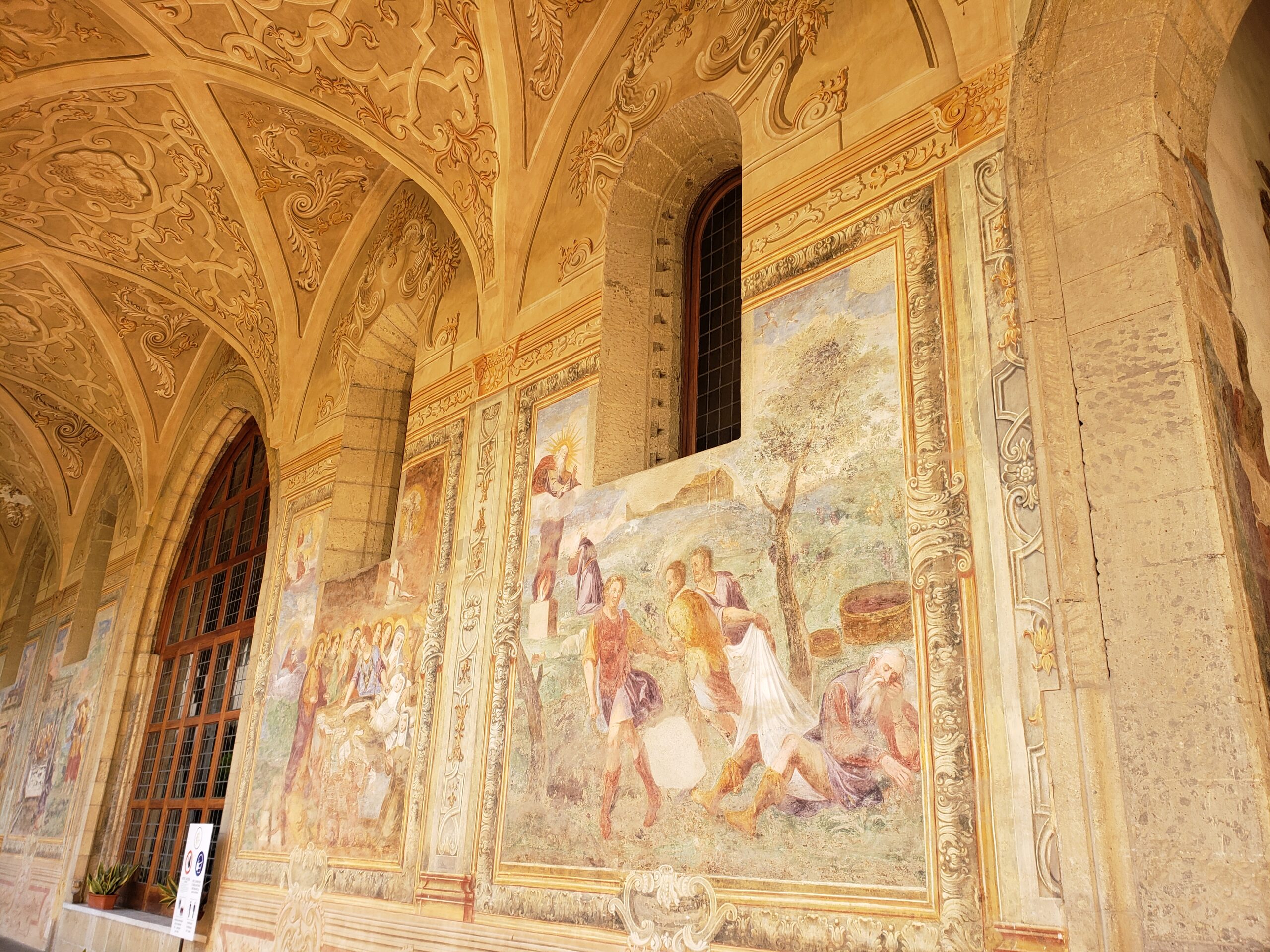
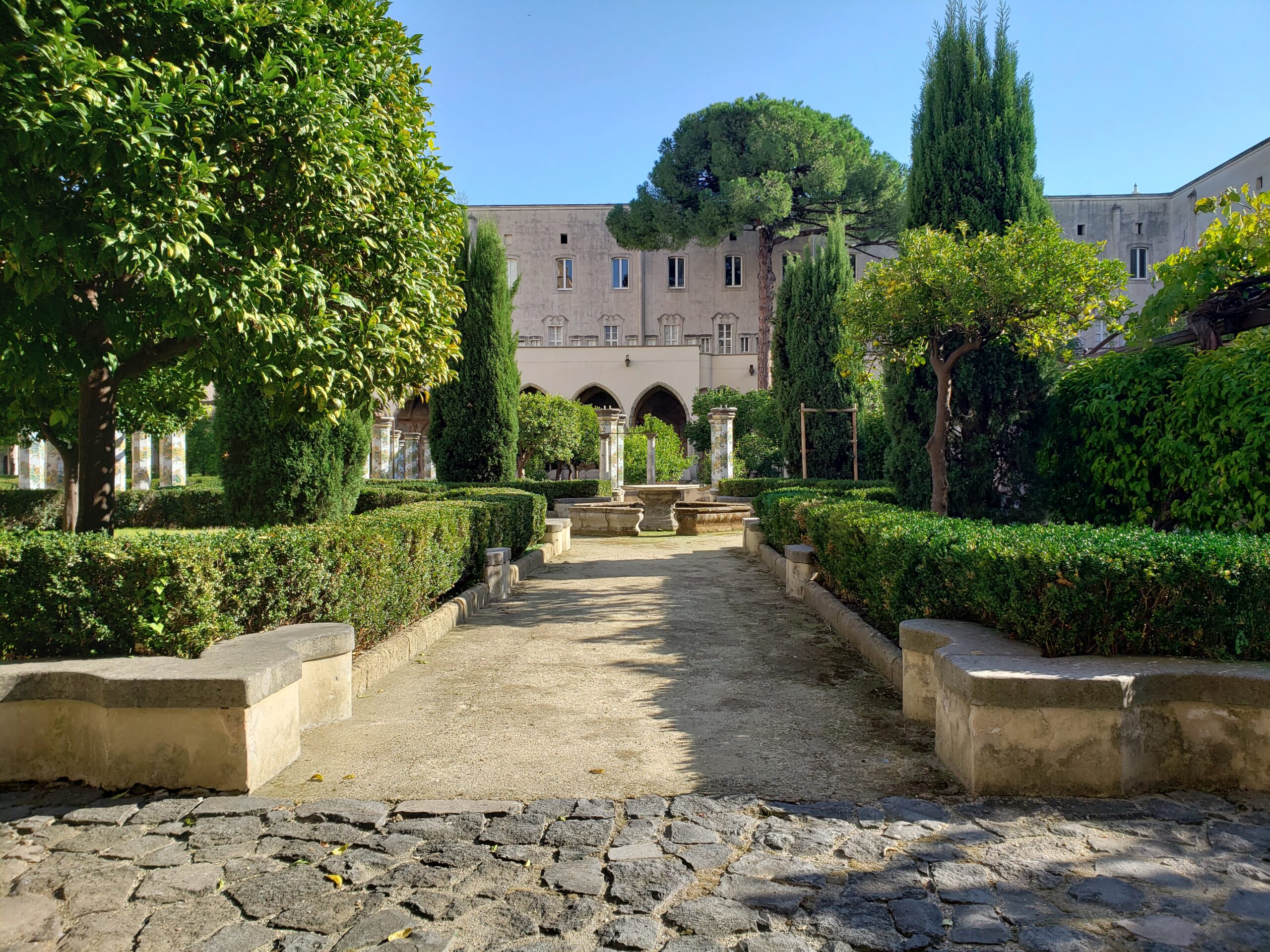
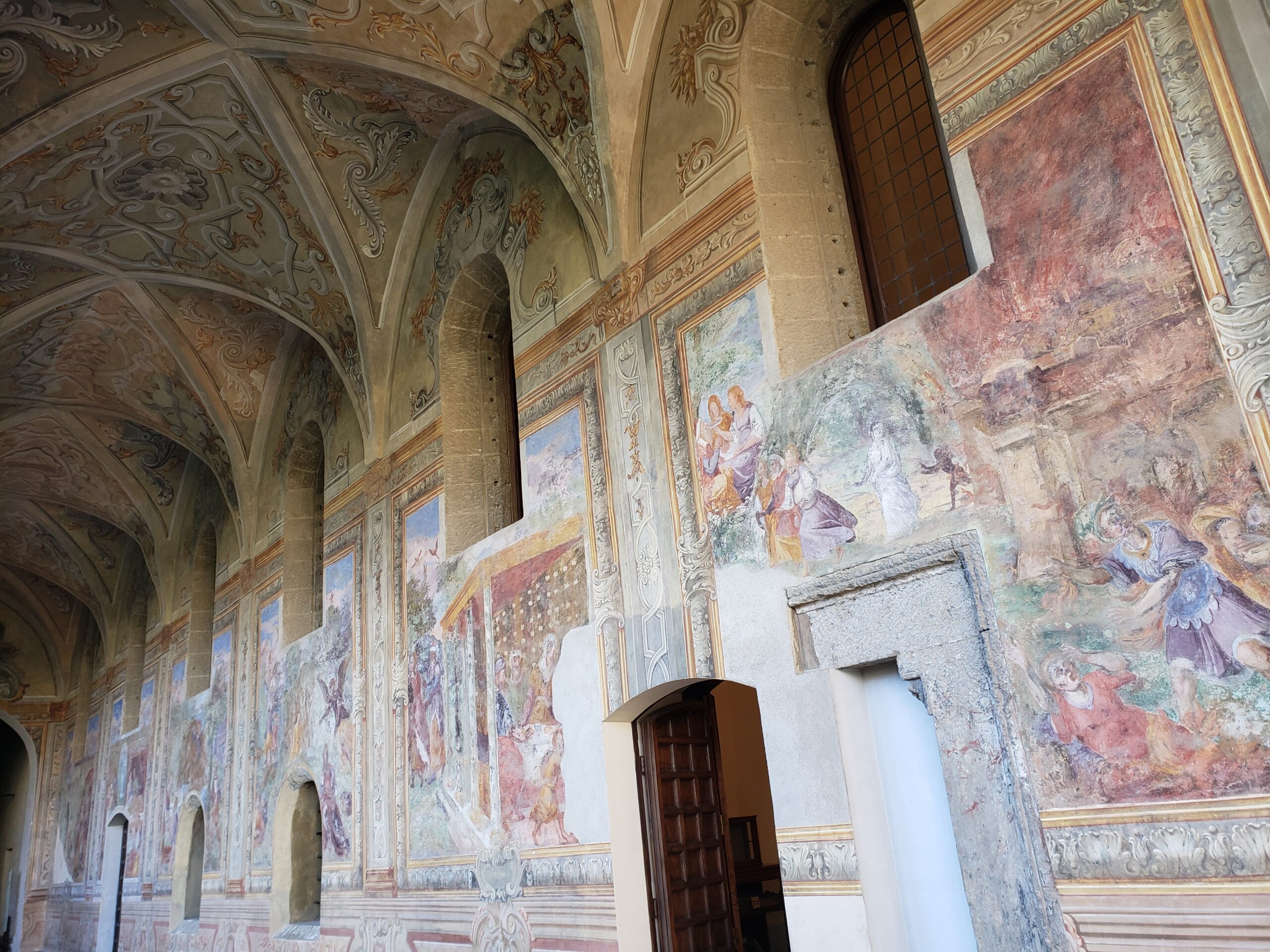
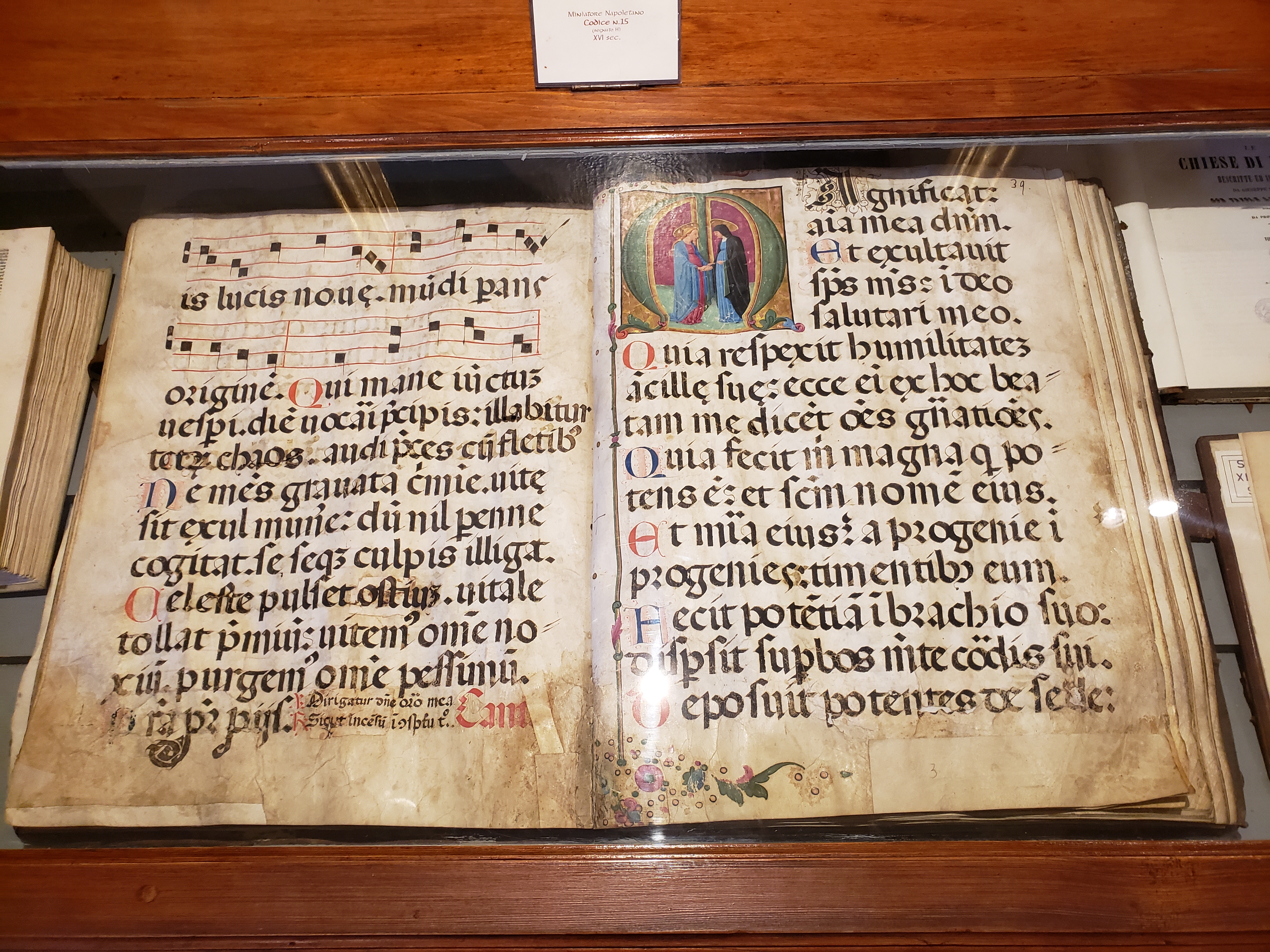
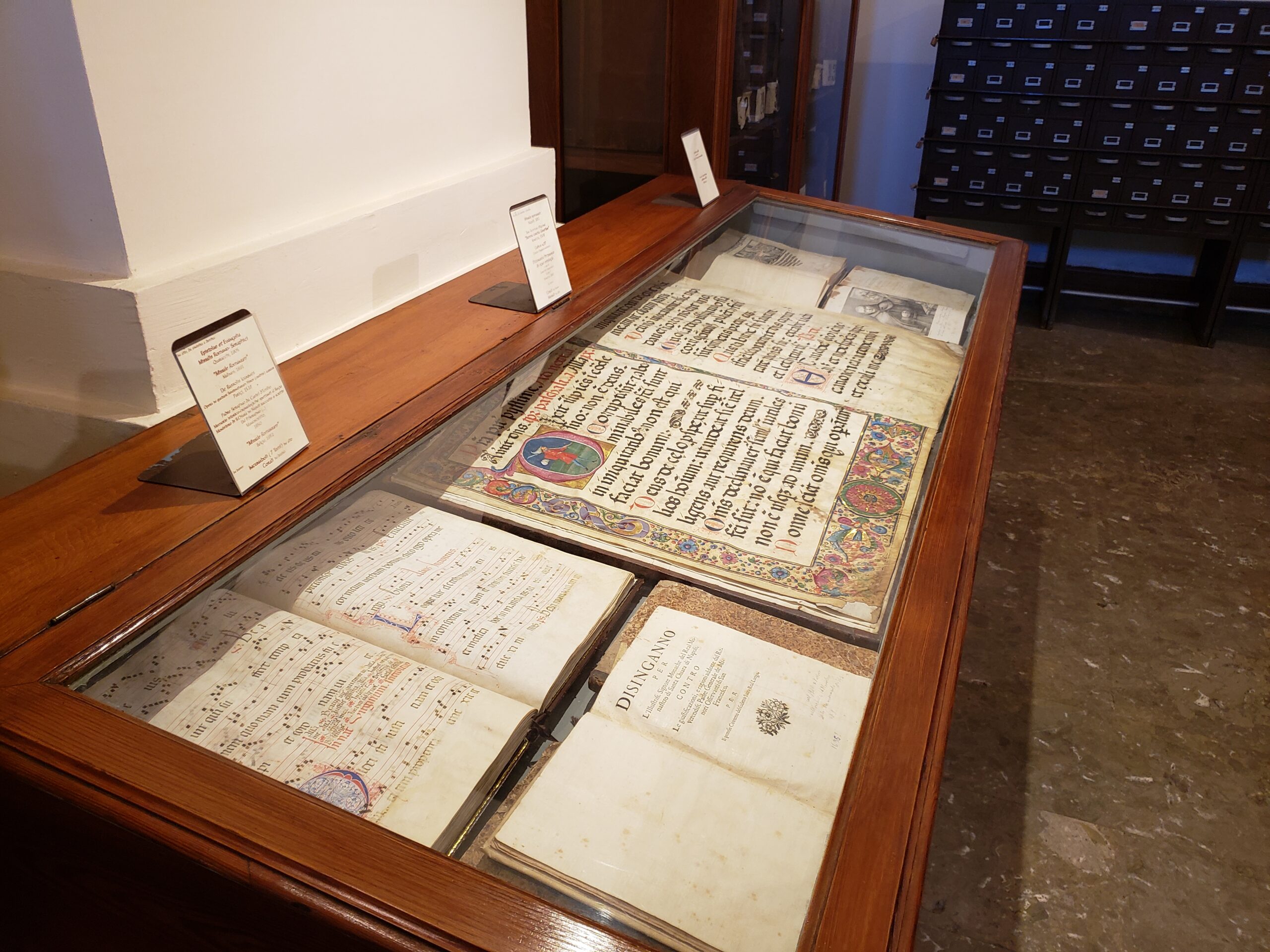
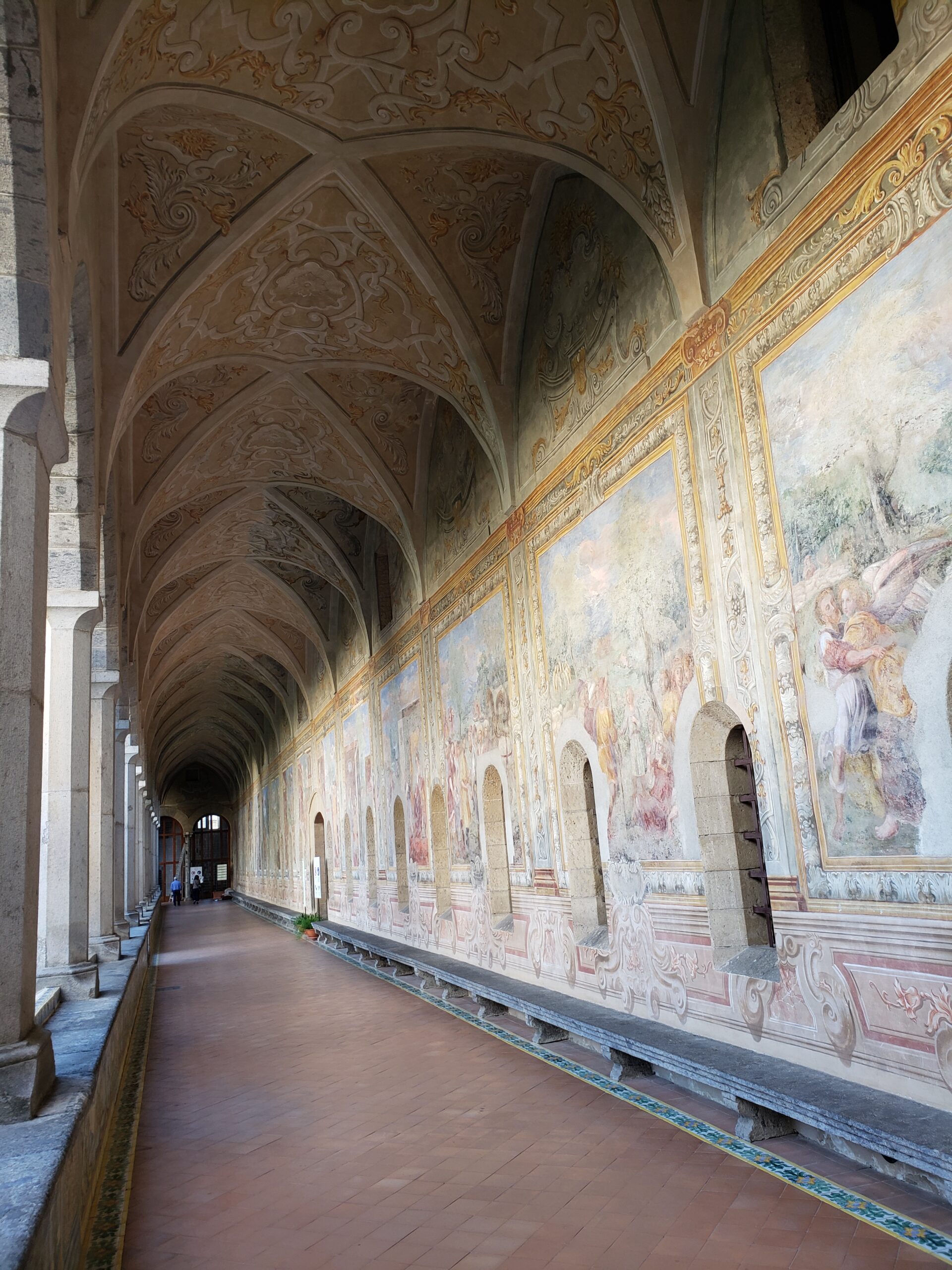
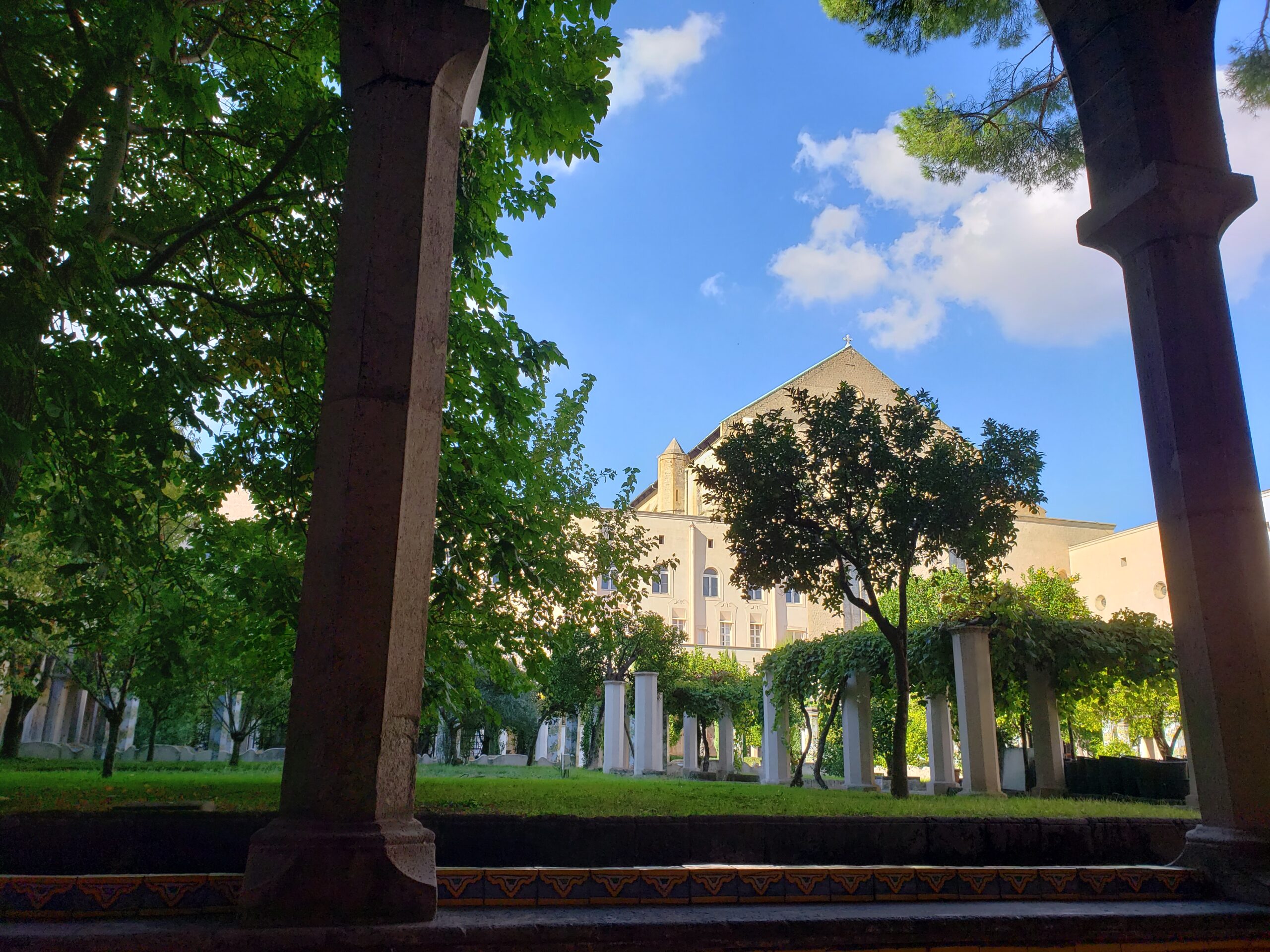
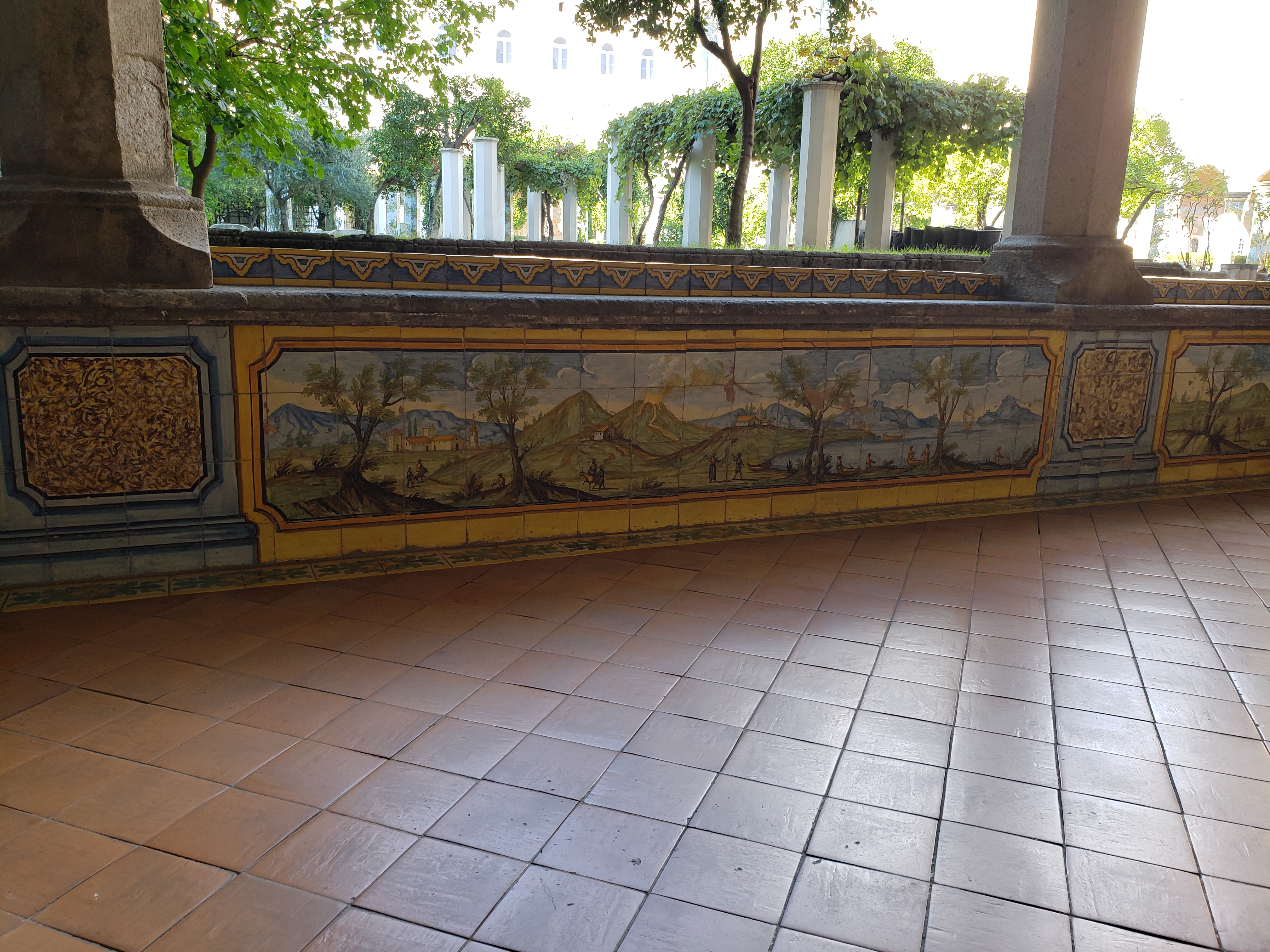
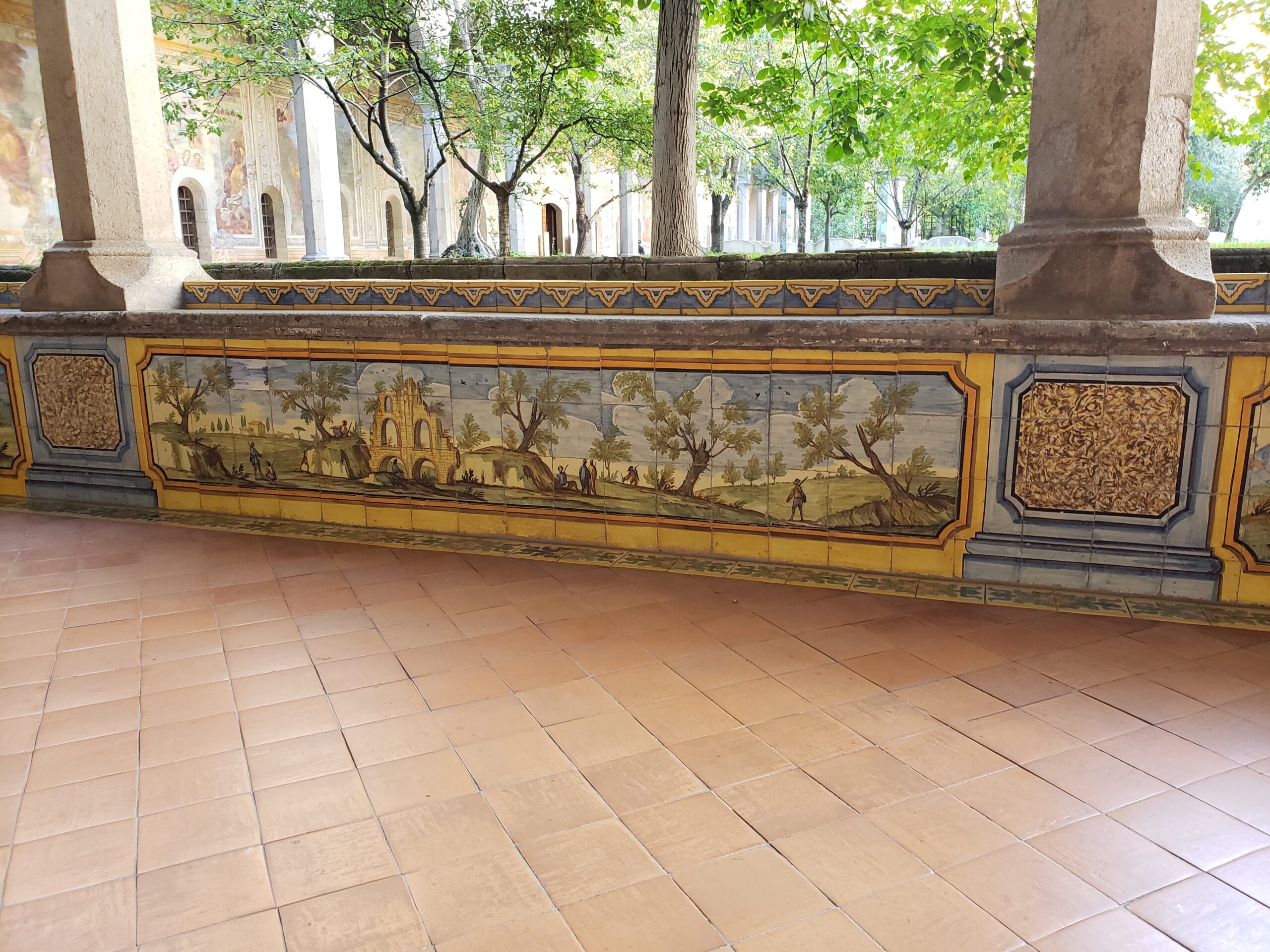
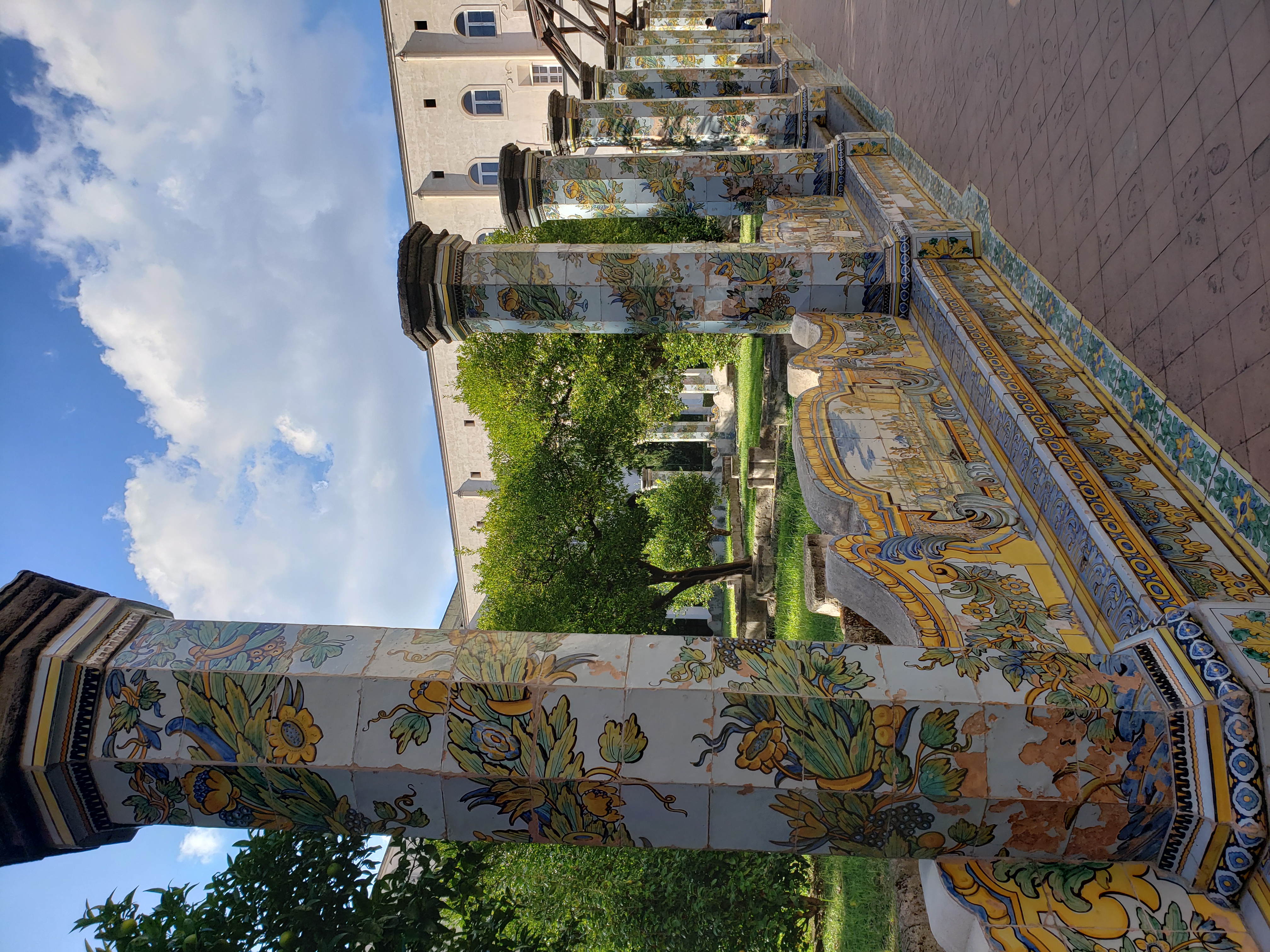
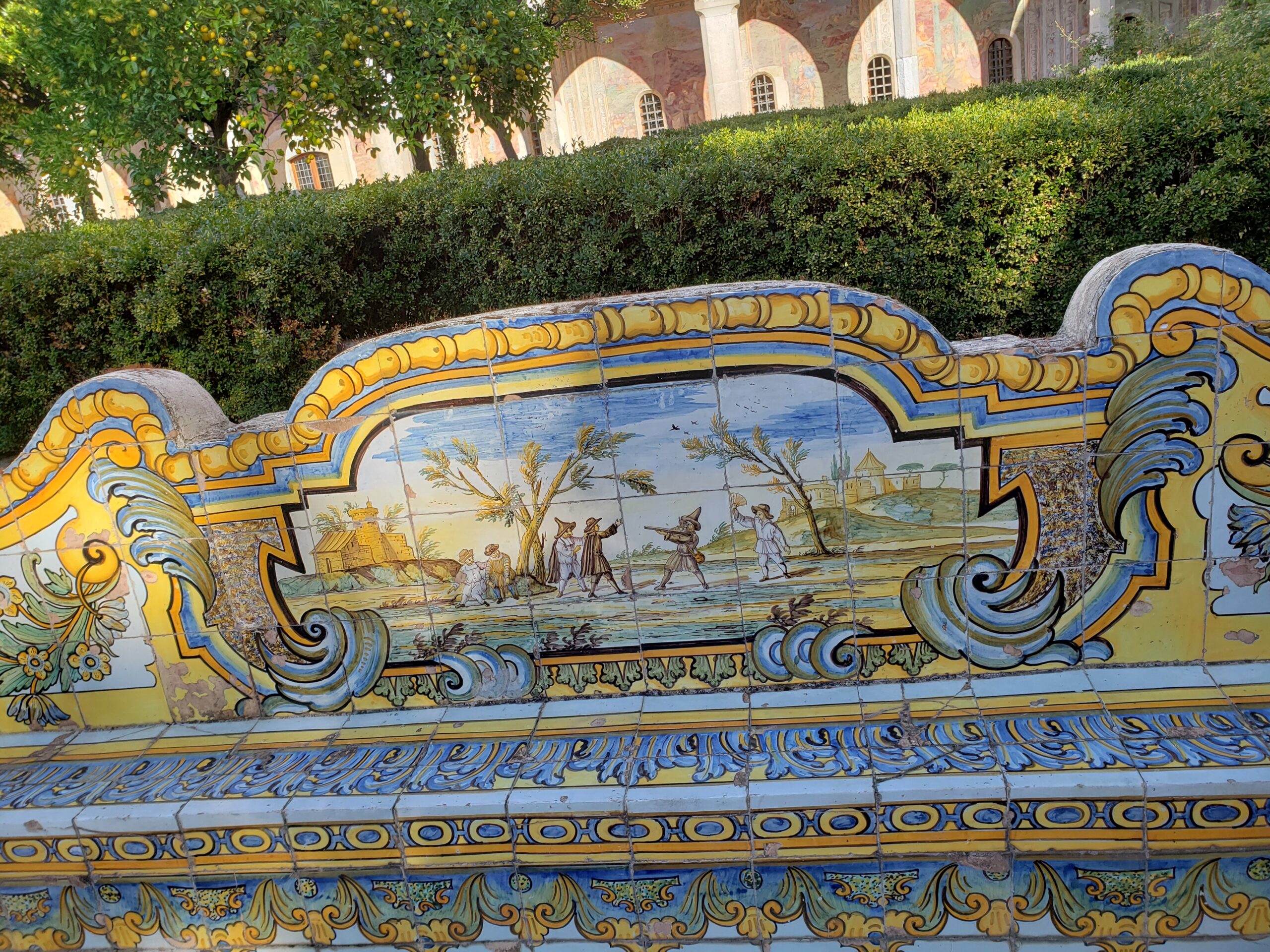
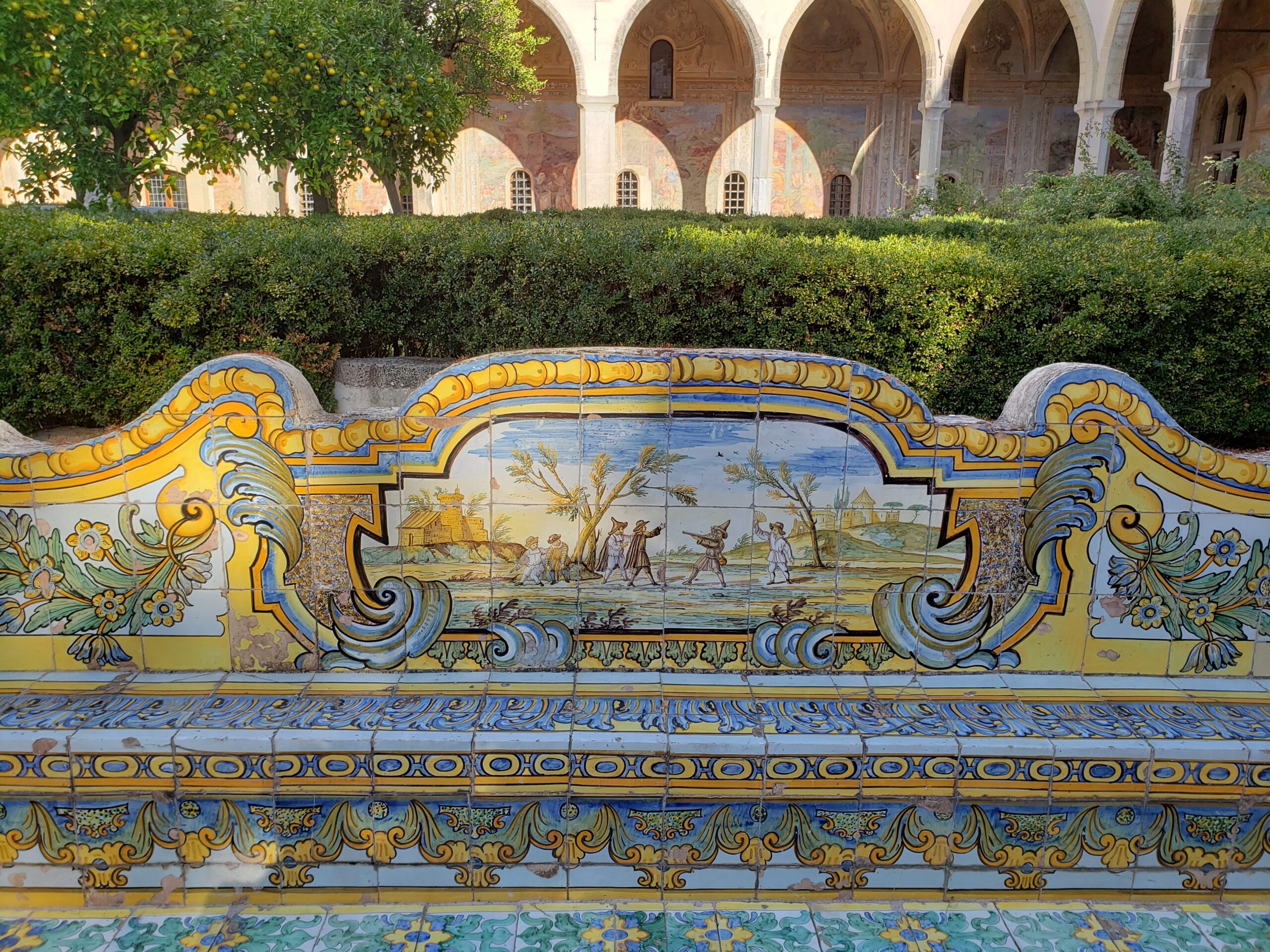
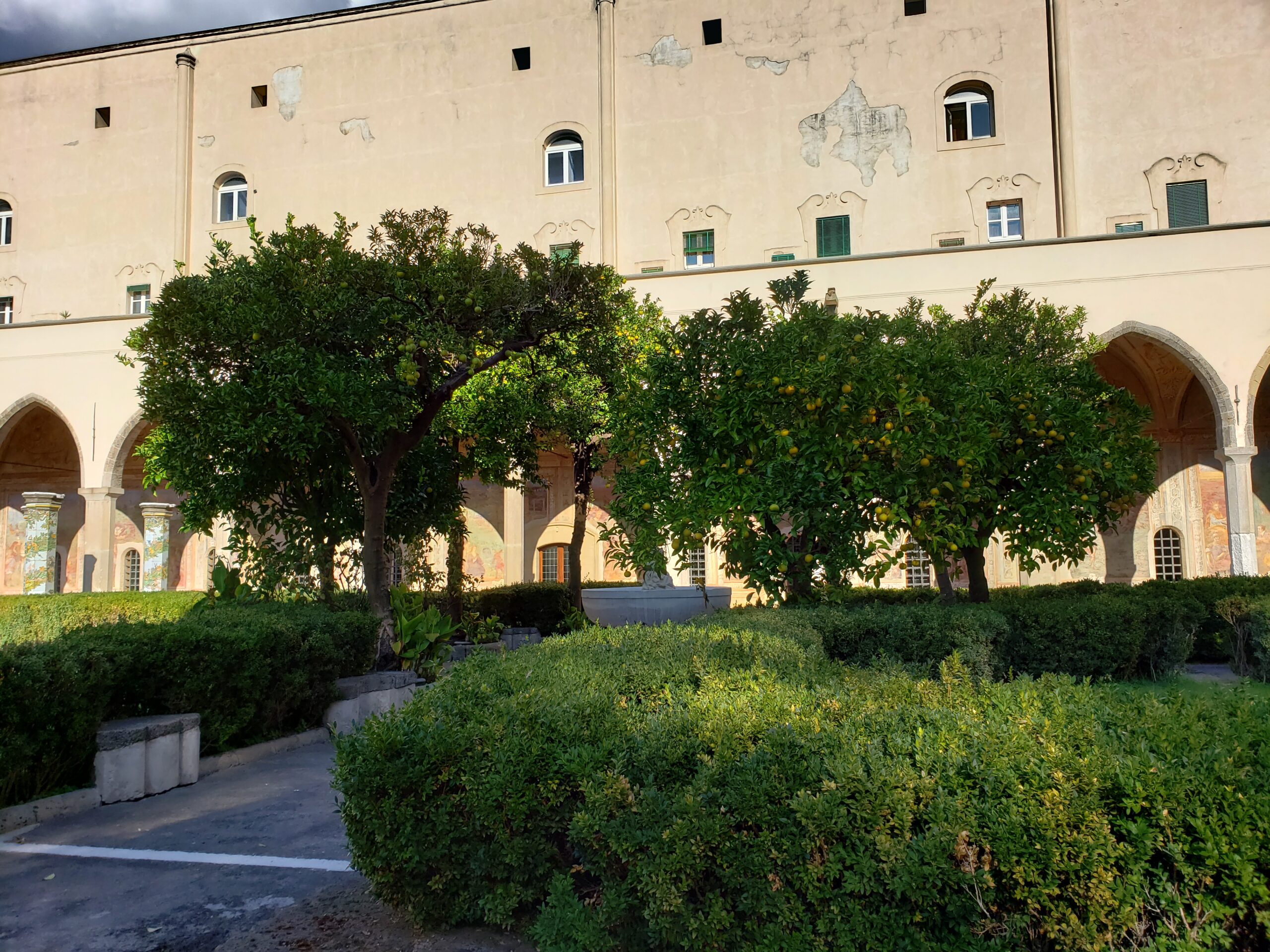
There are a few cloisters in Naples worth visiting, if you have the time and interest. Since it was at the end of our trip and we were lacking time, we chose the Cloister of Santa Chiara to visit, which sits right in the middle of the Historic Center and not far from all of the shopping, which we were interested in doing as well.
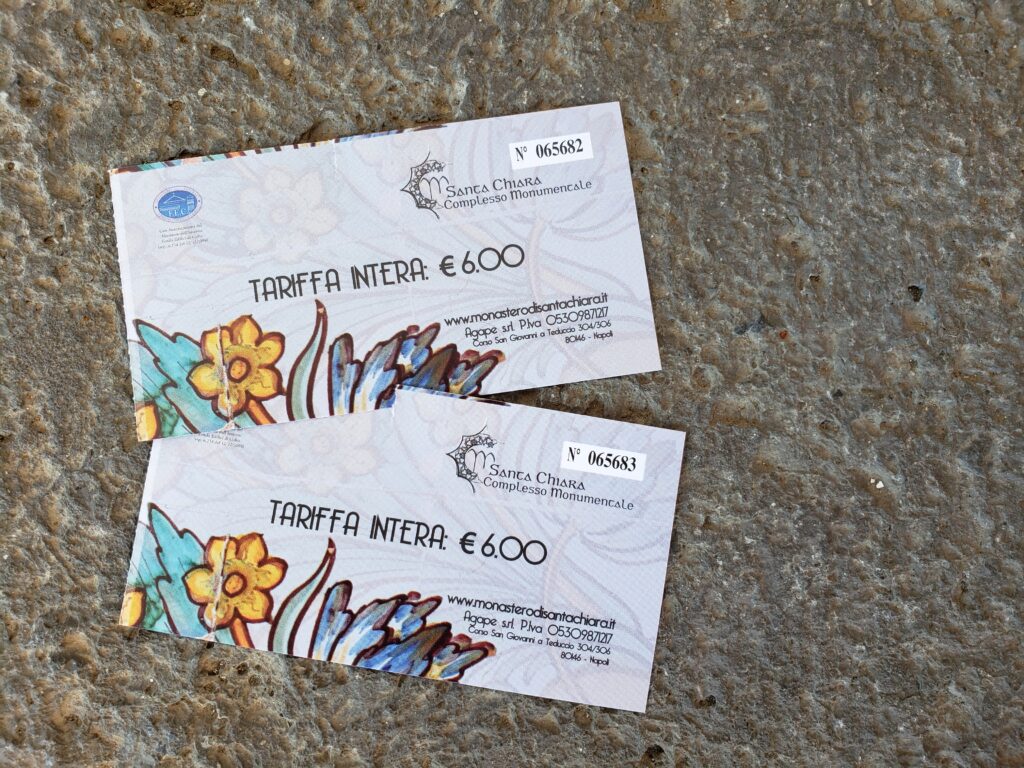
Cloister – Tickets For Two
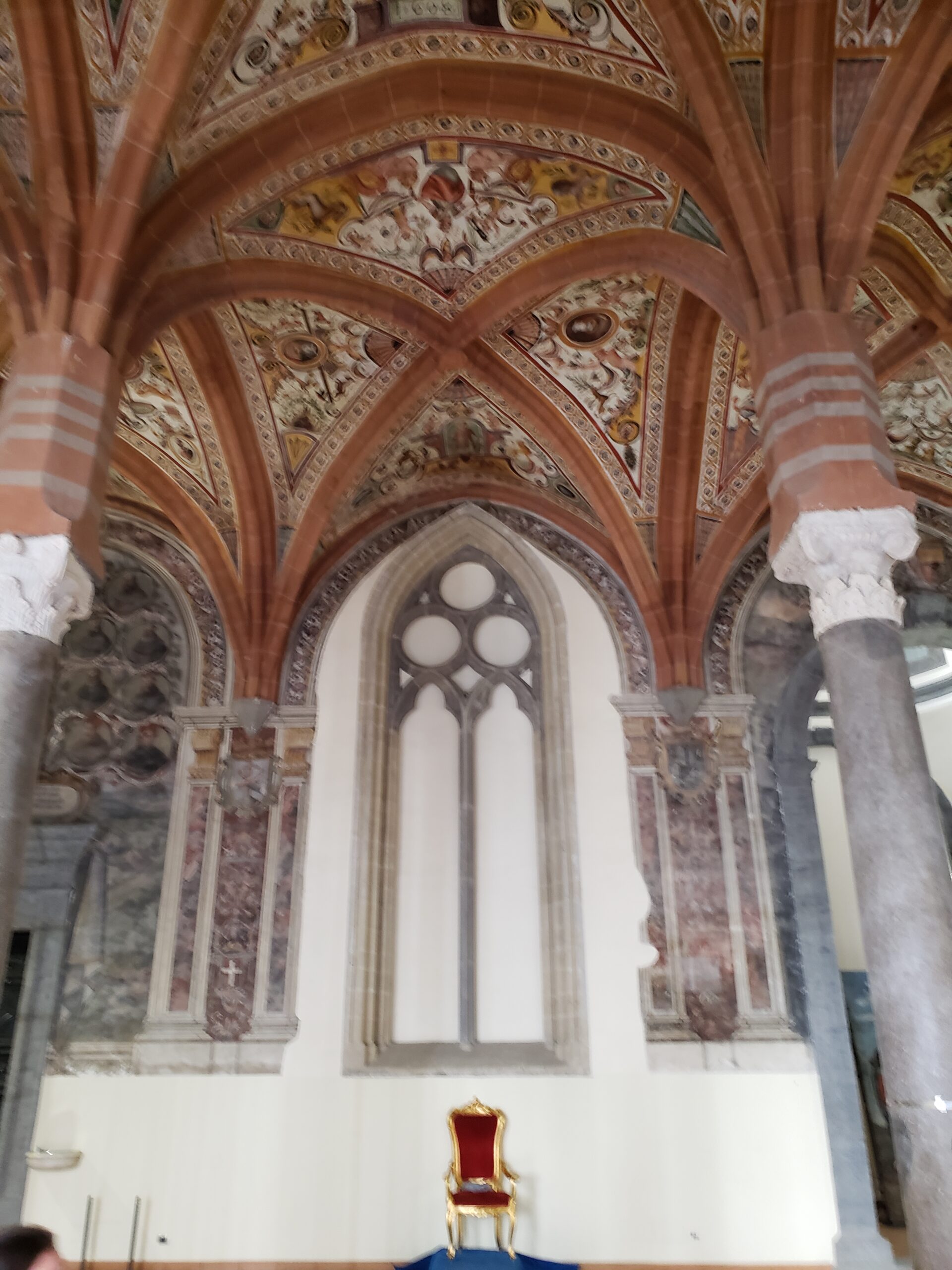
Chiostro di Santa Chiara
The cloister is behind a large church which suffered greatly during the allied bombings of Naples in the 1940s. Apparently the church took most of the damaged and the cloister was left, more of less, intact for us to enjoy today.
After a thorough introduction to Naples, we decided it was time to see some things we had shoved to one side until we got time.
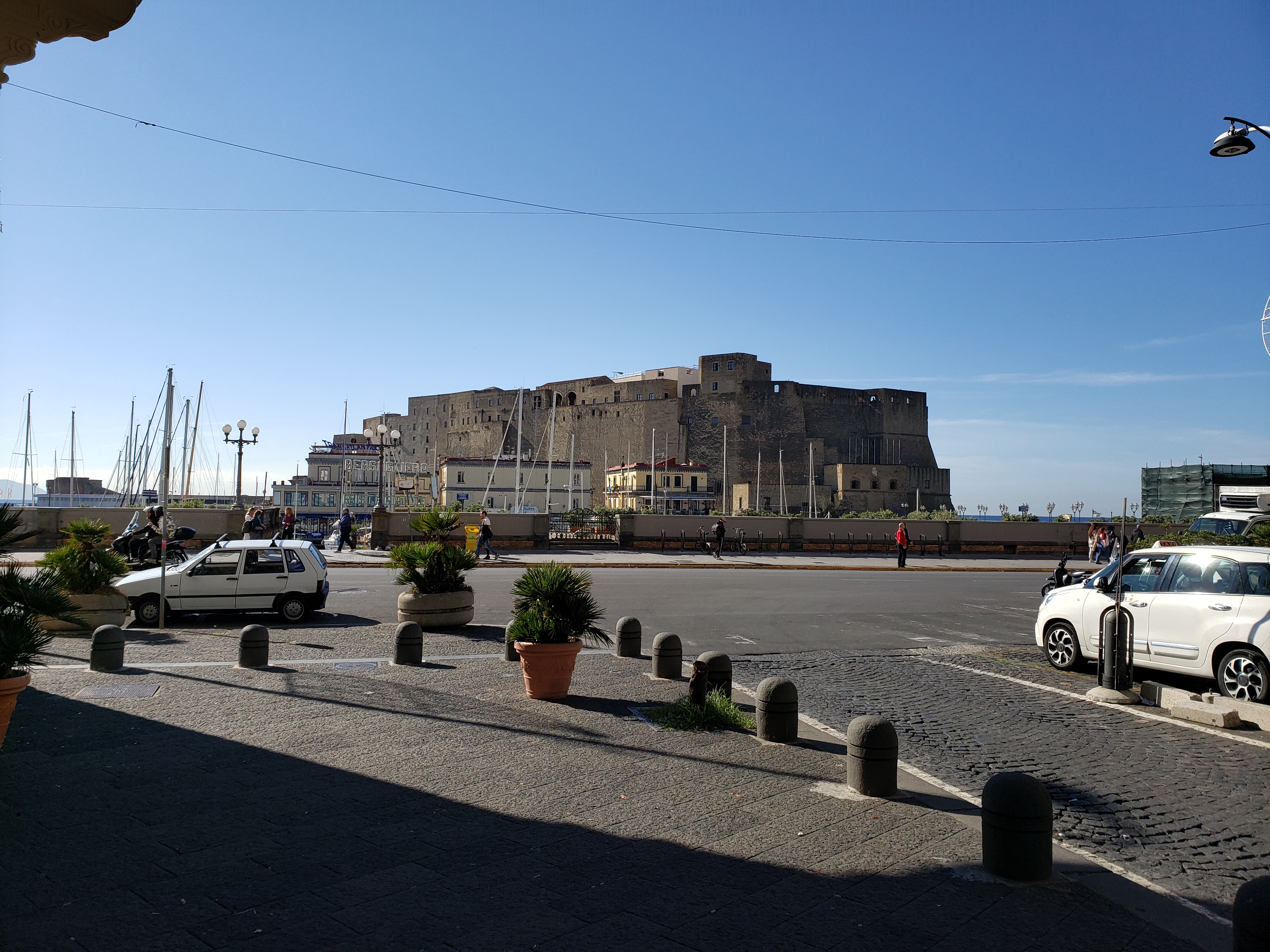
Castle dell’Ovo
Castle dell’Ovo
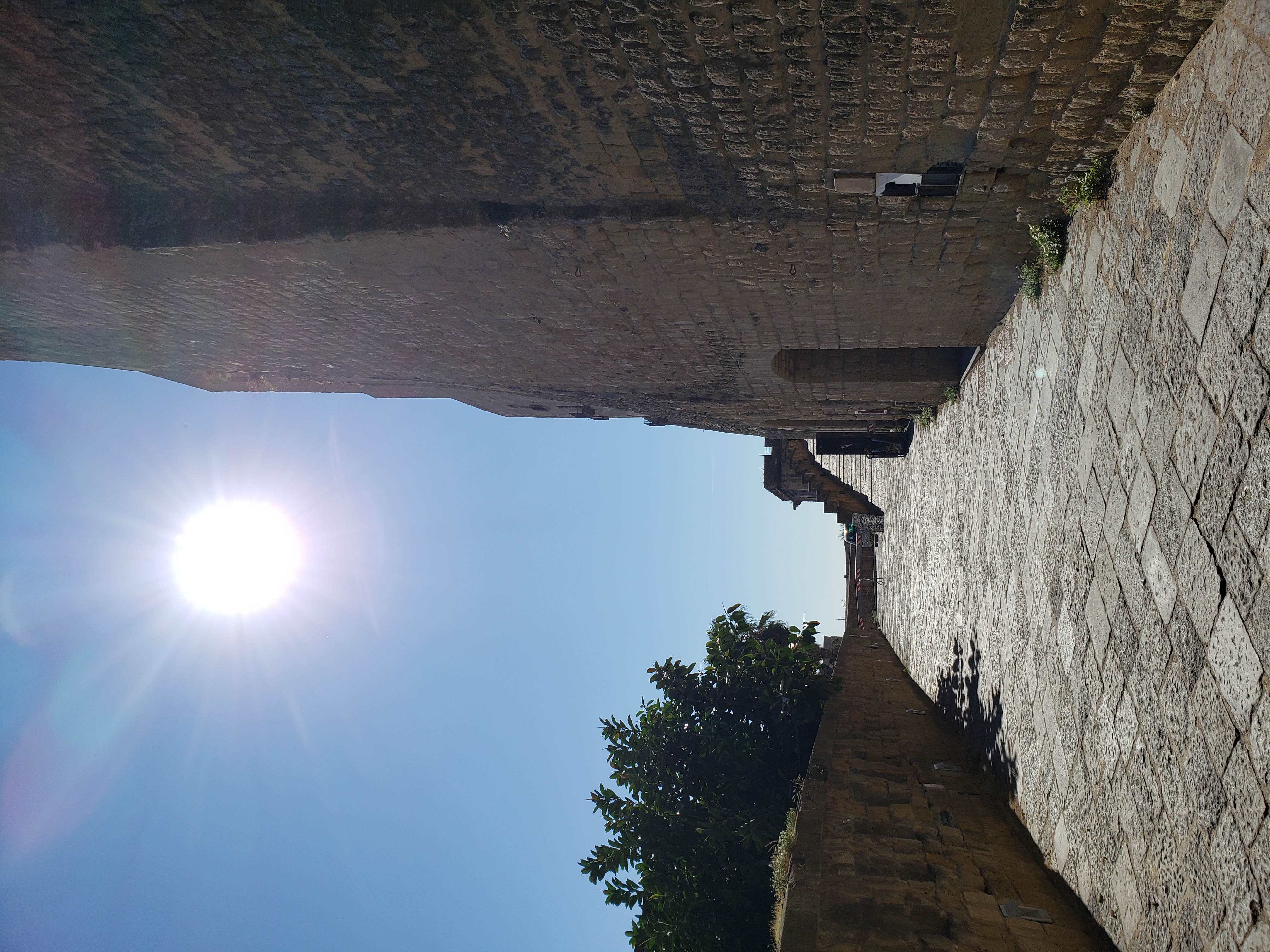
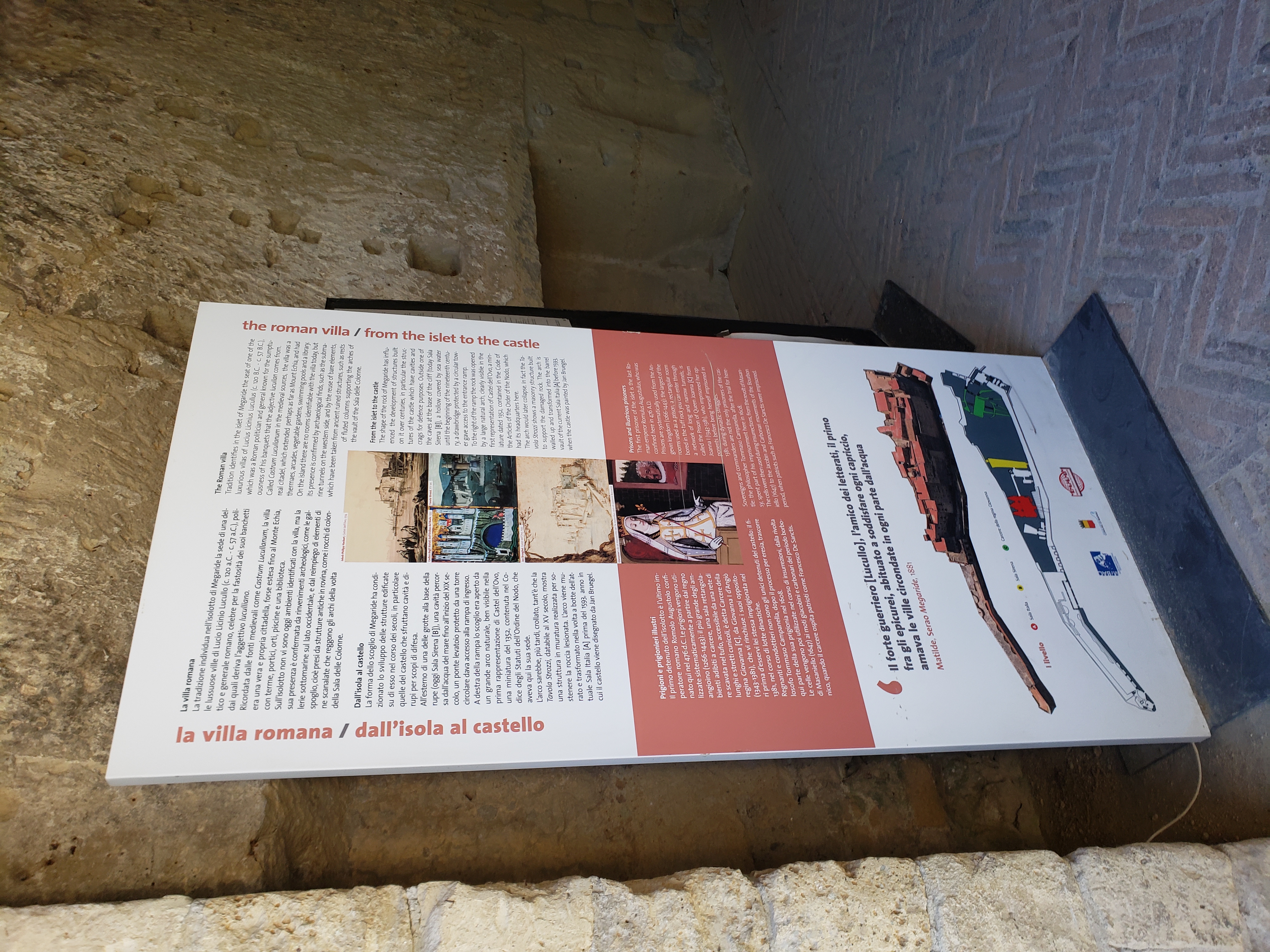
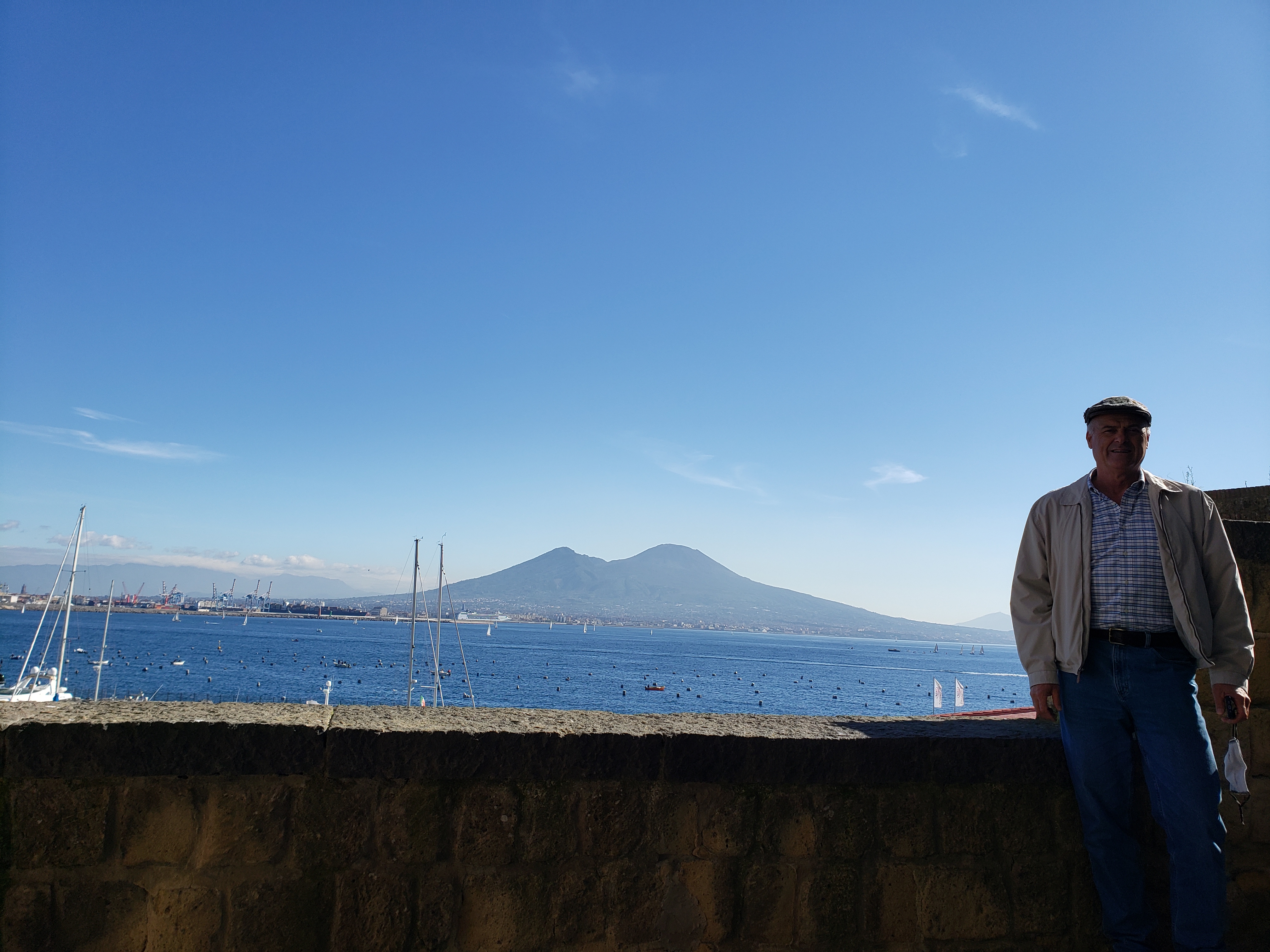
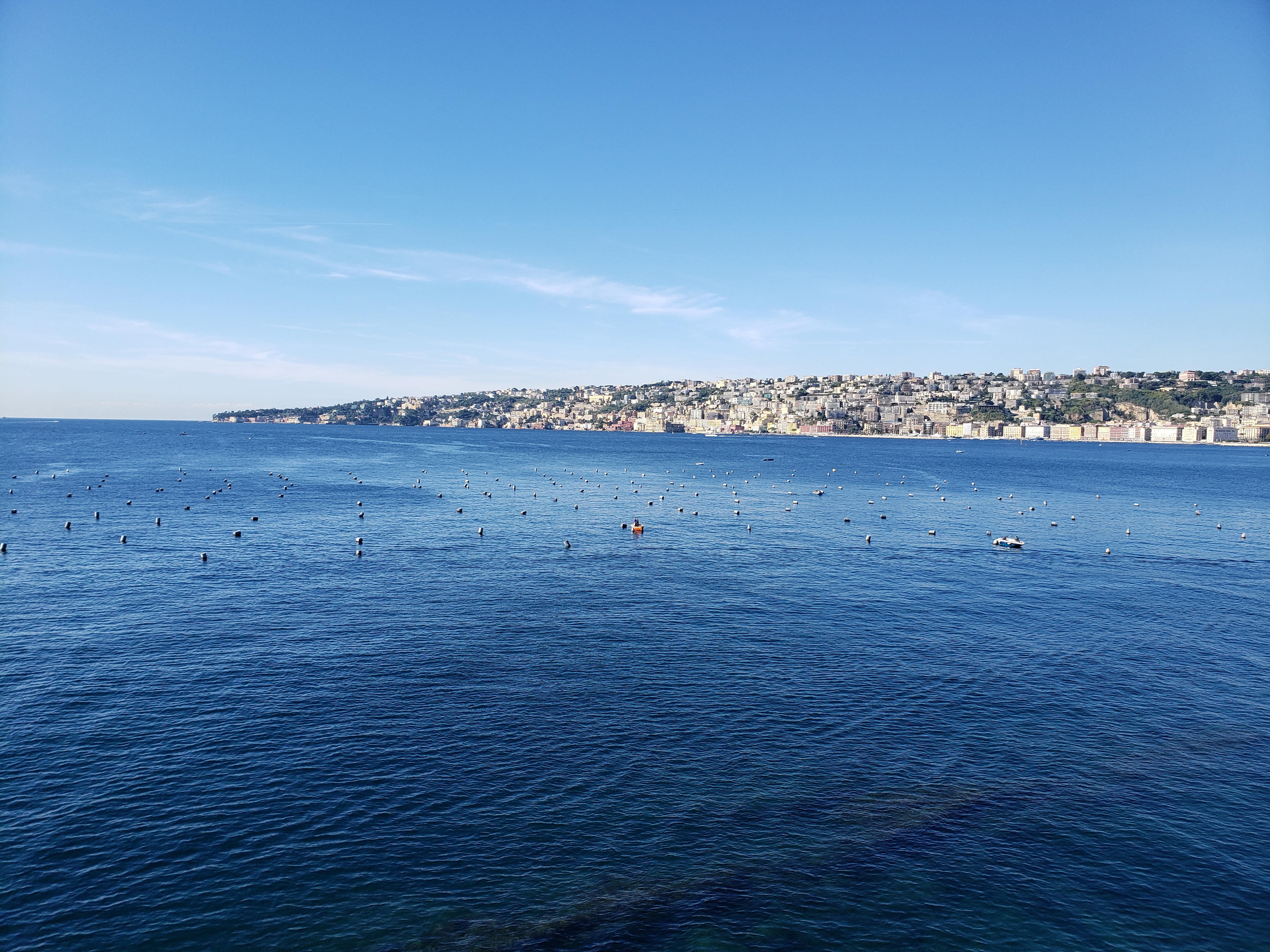
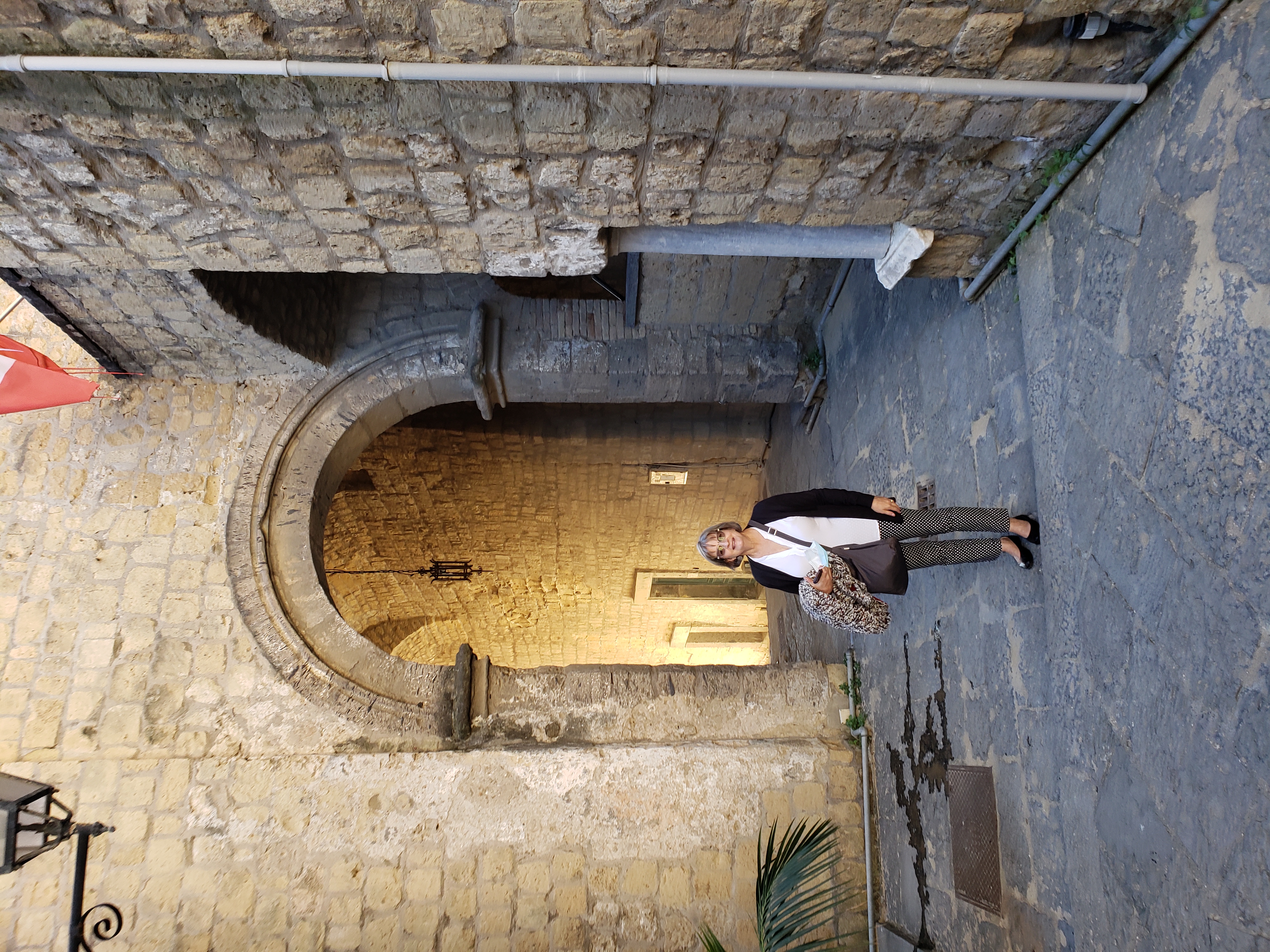
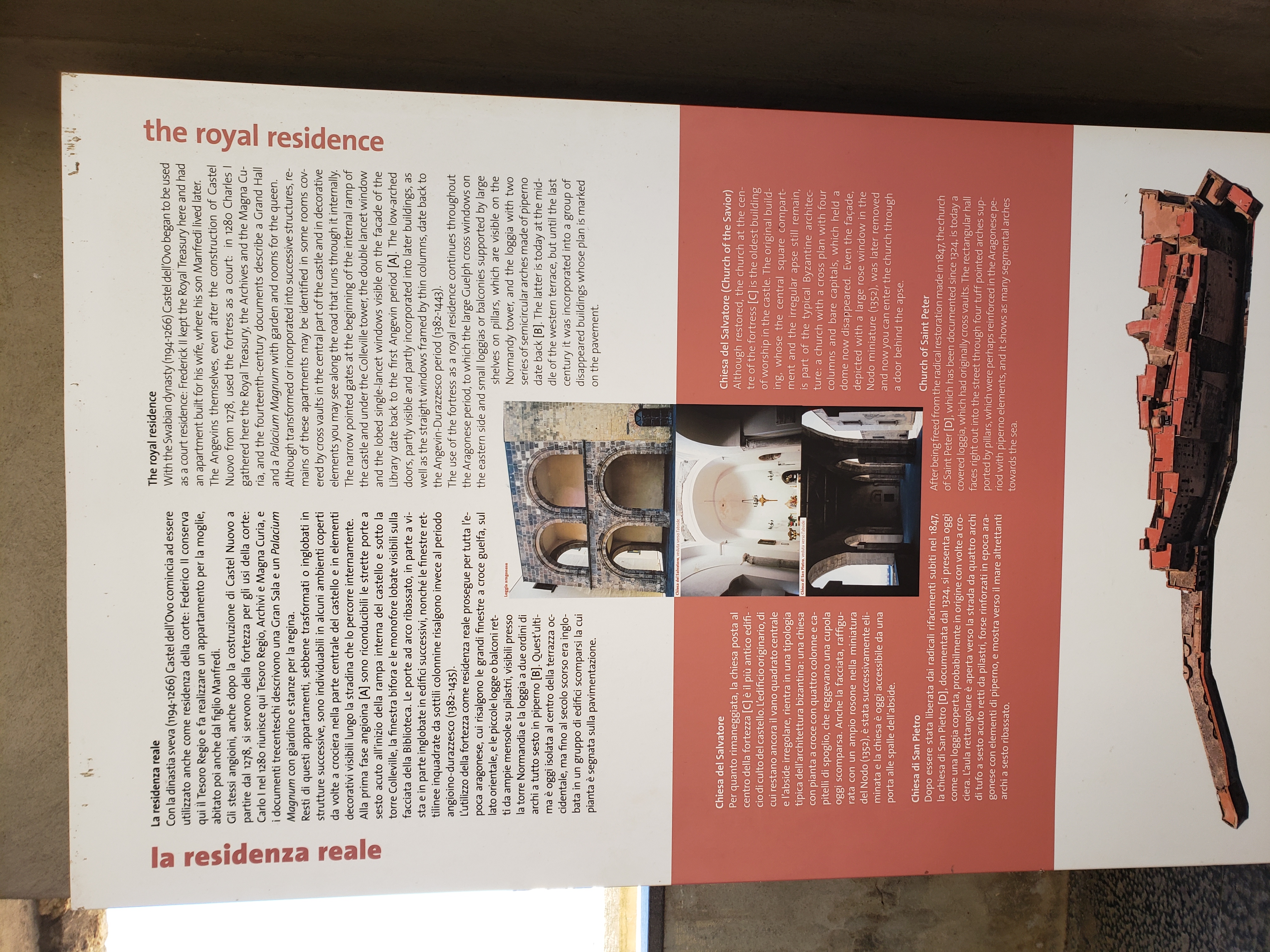
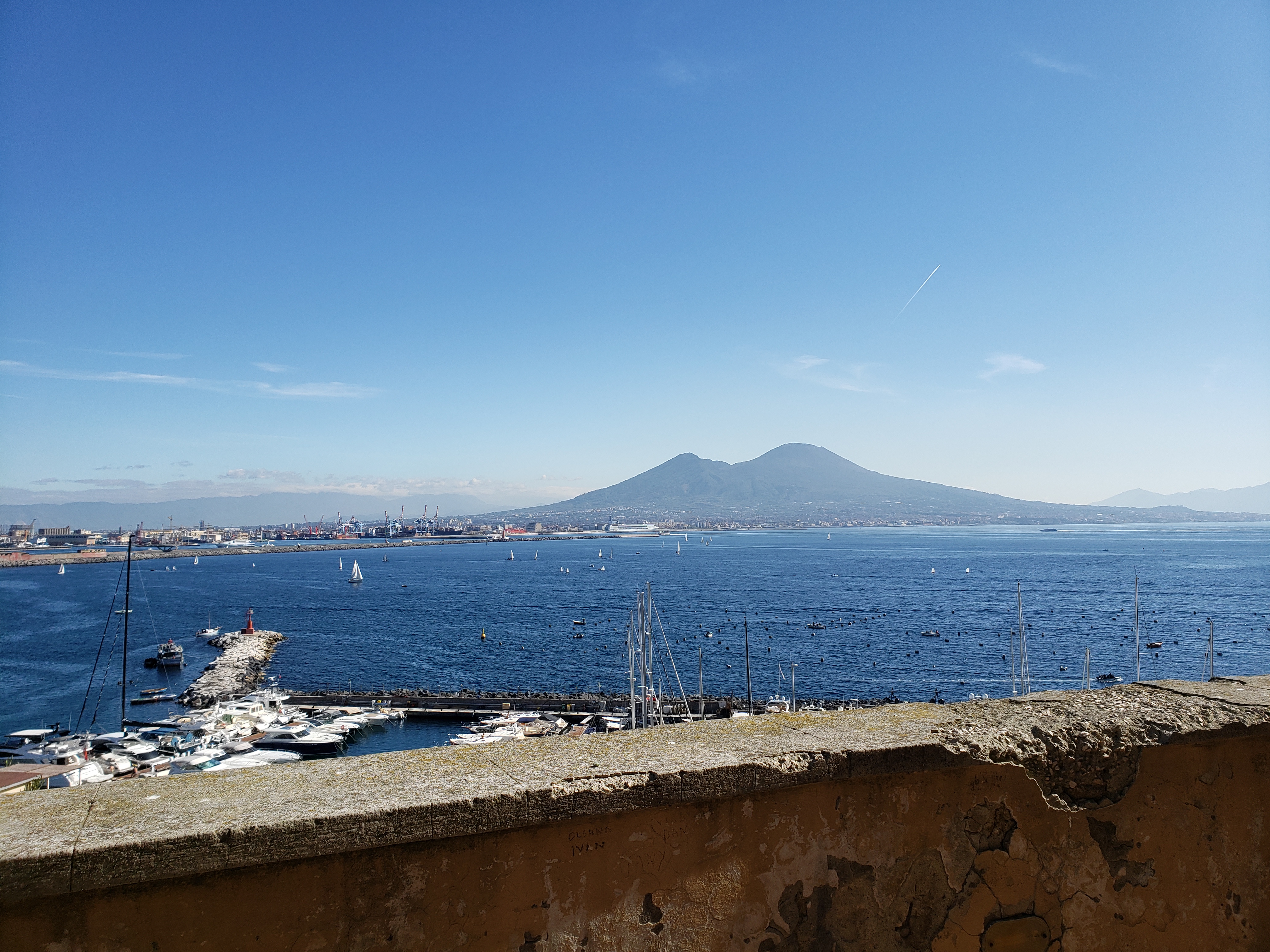
Castel dell’Ovo, also known as The Egg or the Egg Castle is situated in the Bay of Naples. It used to be a small island, but was attached some time ago to make it more accessible. Entrance is free, even though you do have to schedule your attendance online. However, aside from the views, there truly is not much to see. It appears to have been reused for administration and other city or port related uses.
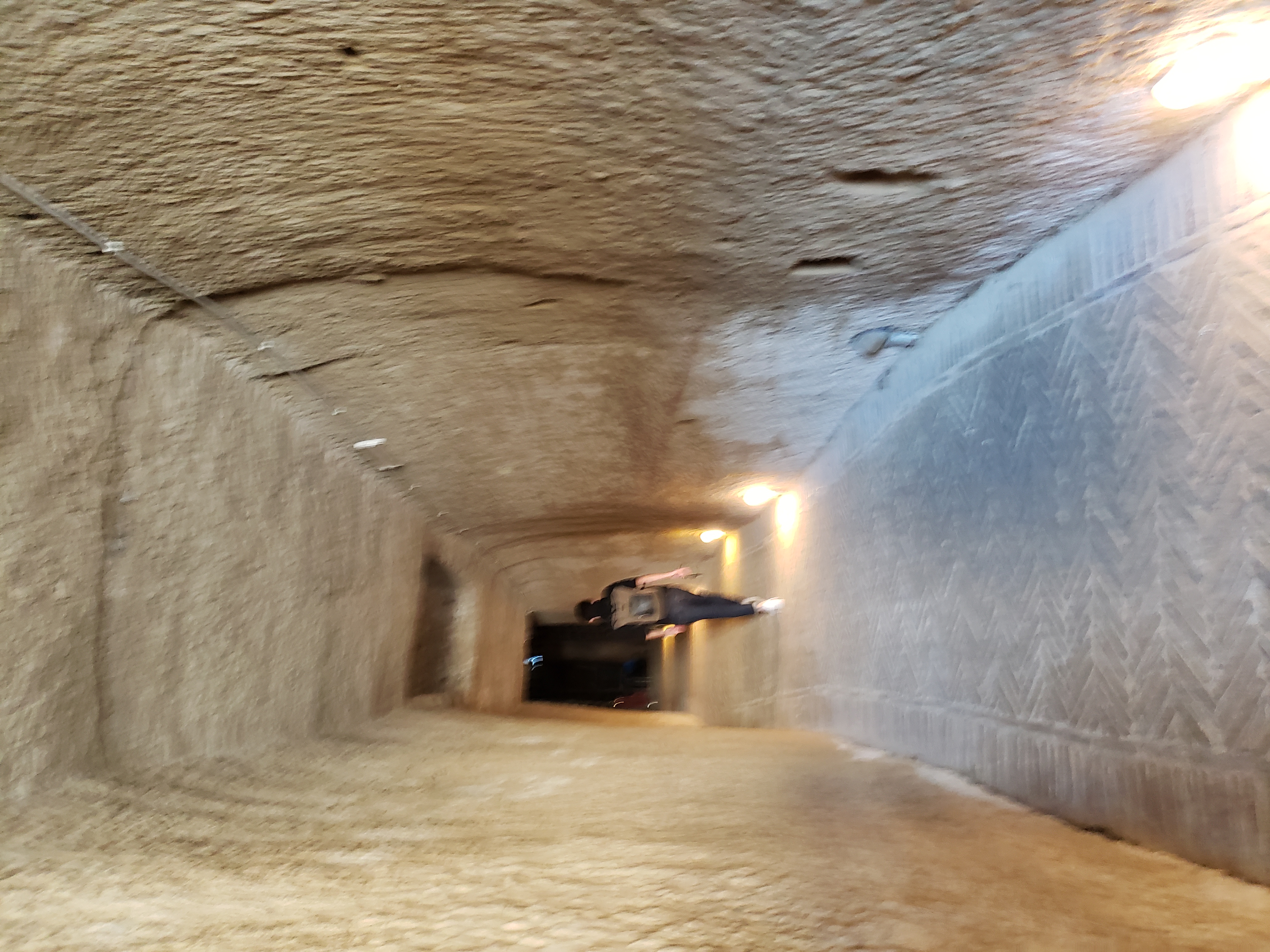
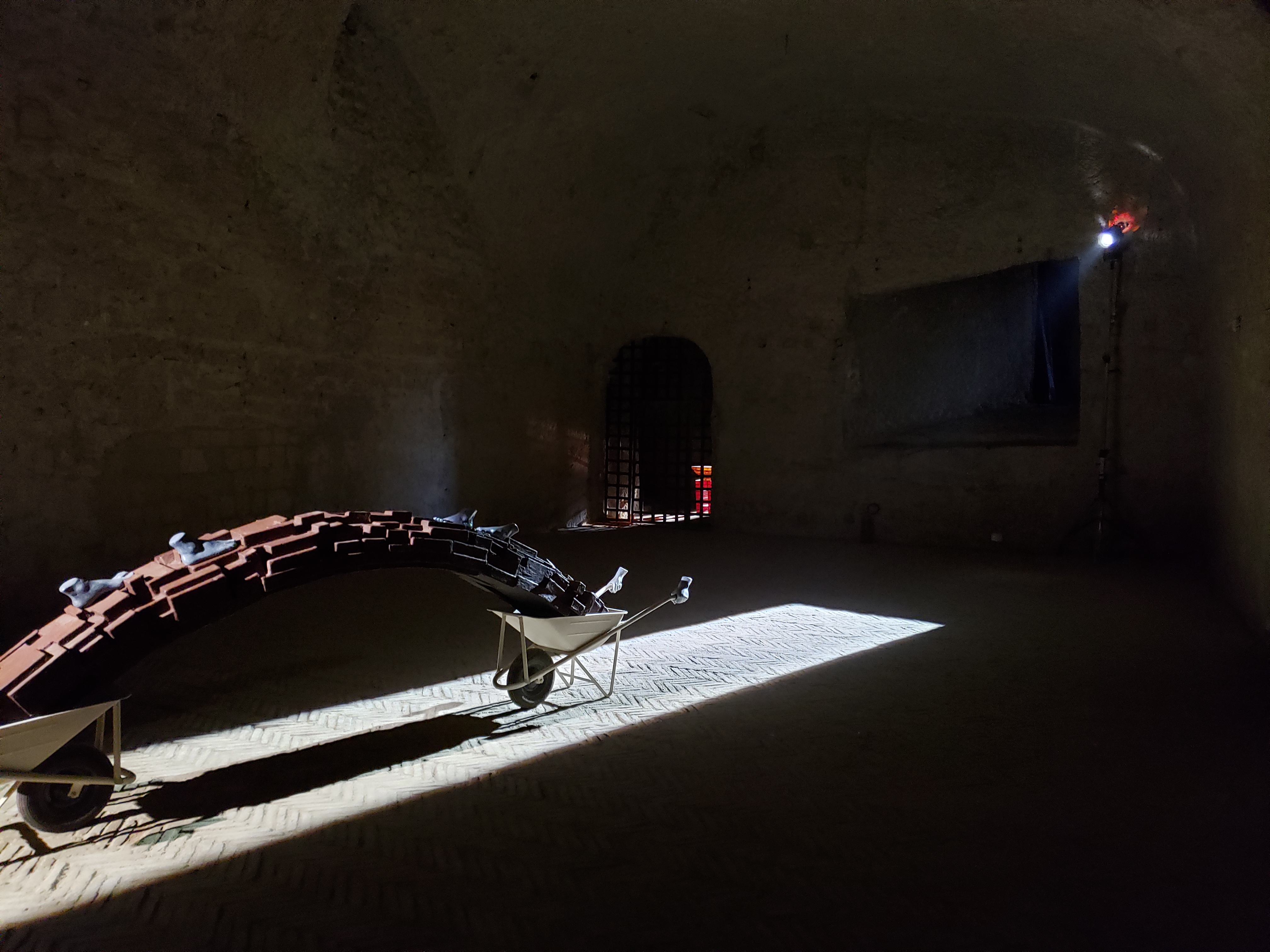
Hallway to art exhibit
Art exhibit
Along the parapets
Chiaia, Naples from the castle
Patti at the Castle
Vesuvius
The Bourbon Tunnels
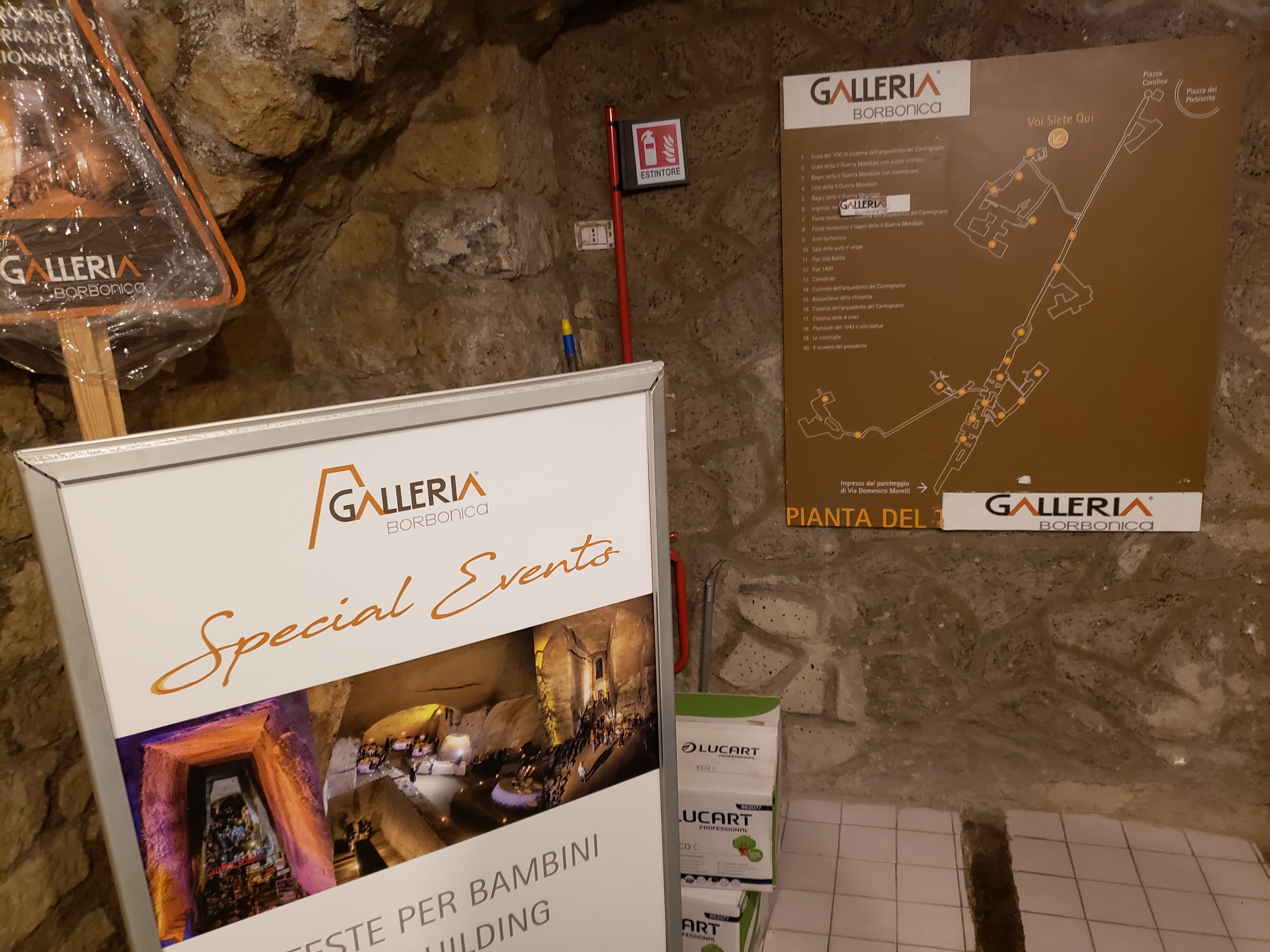
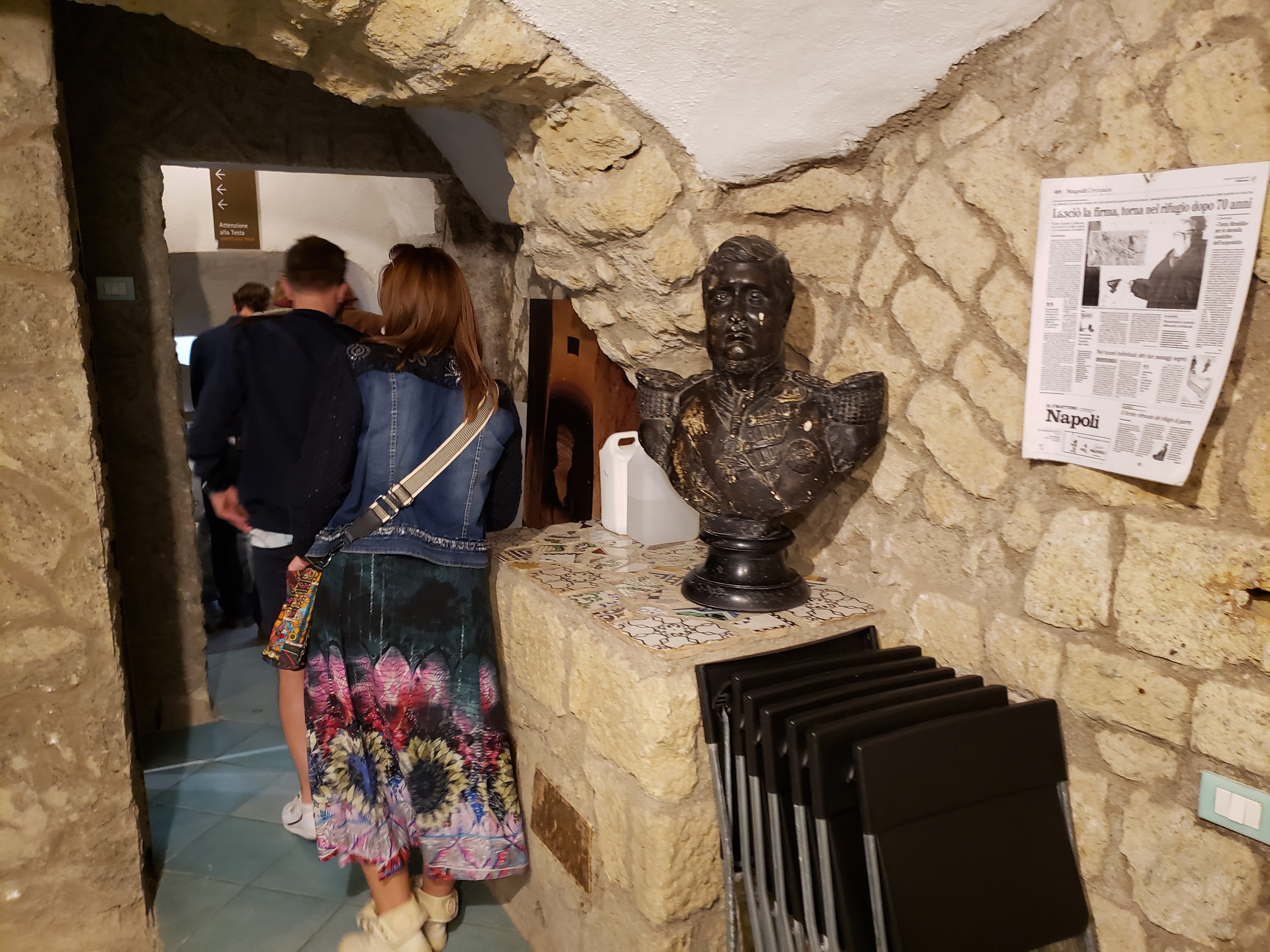
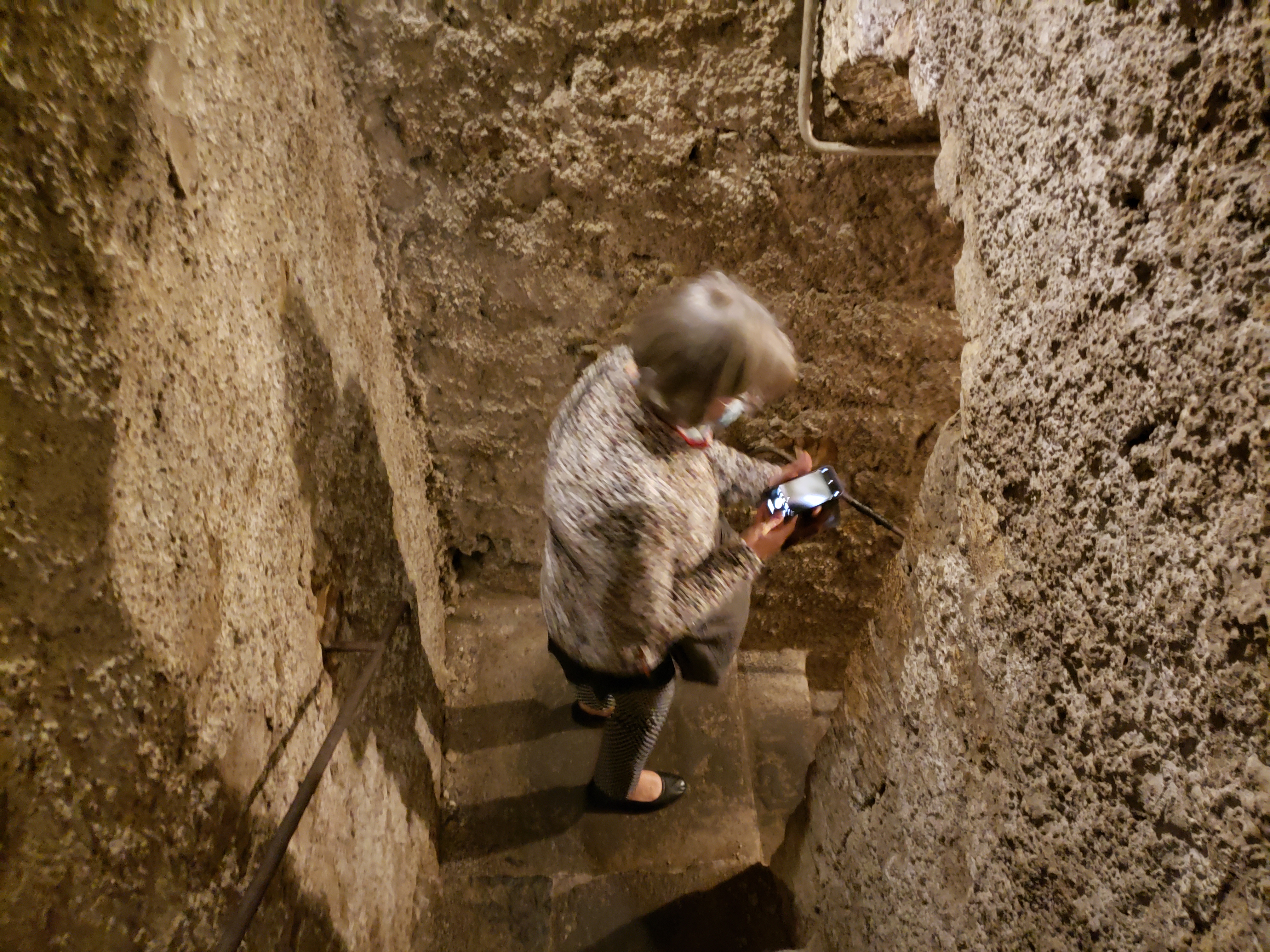
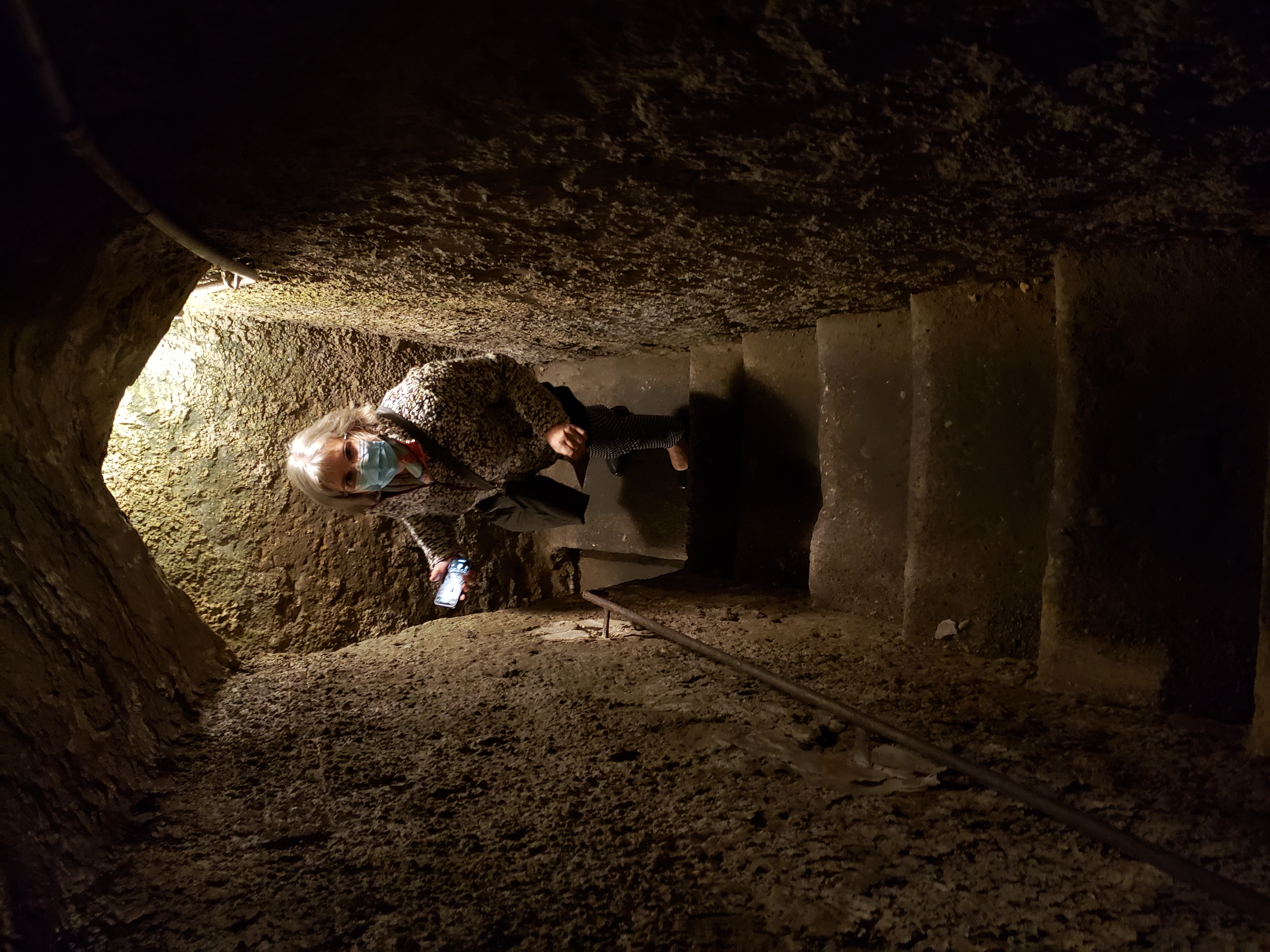
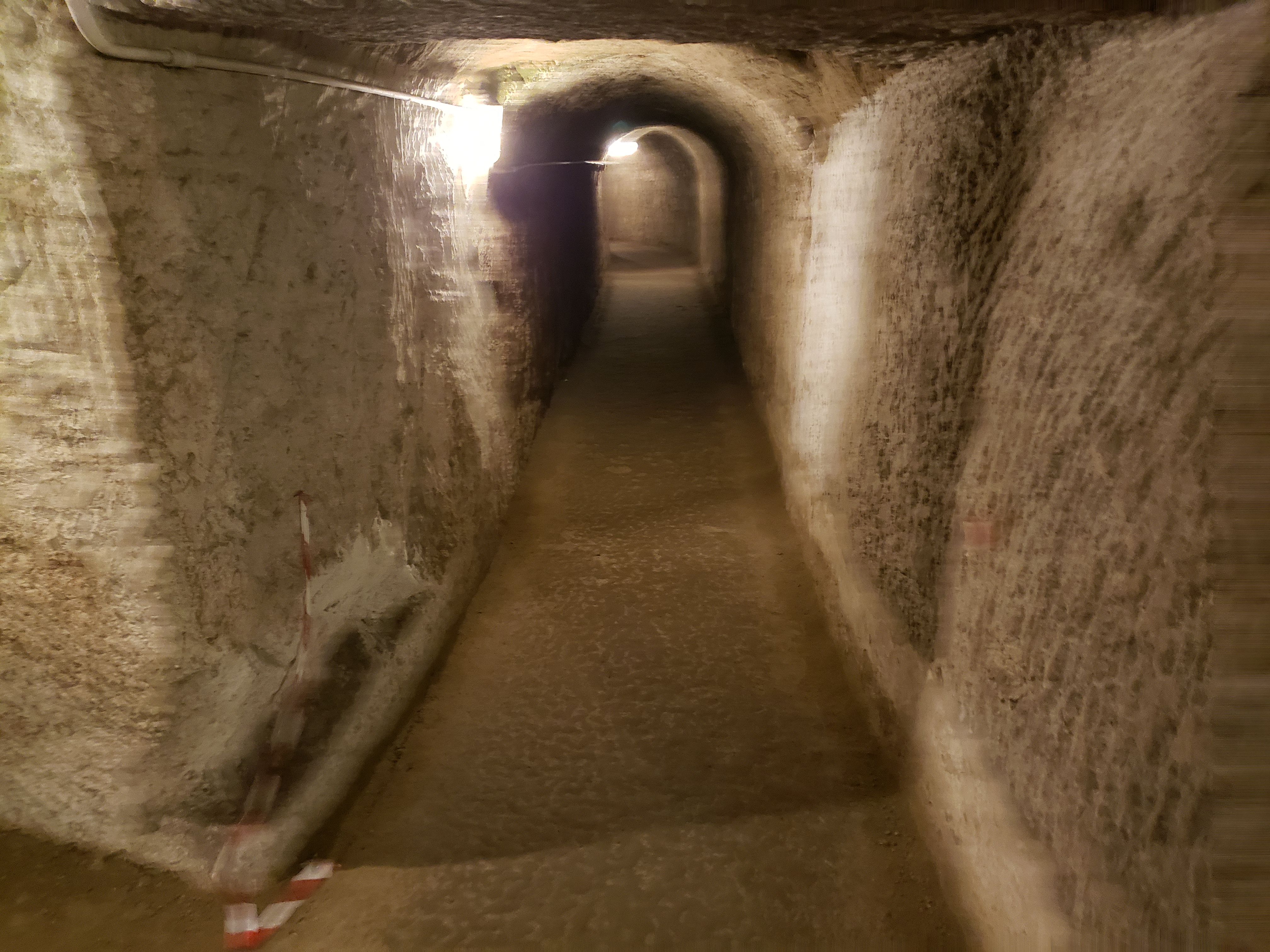
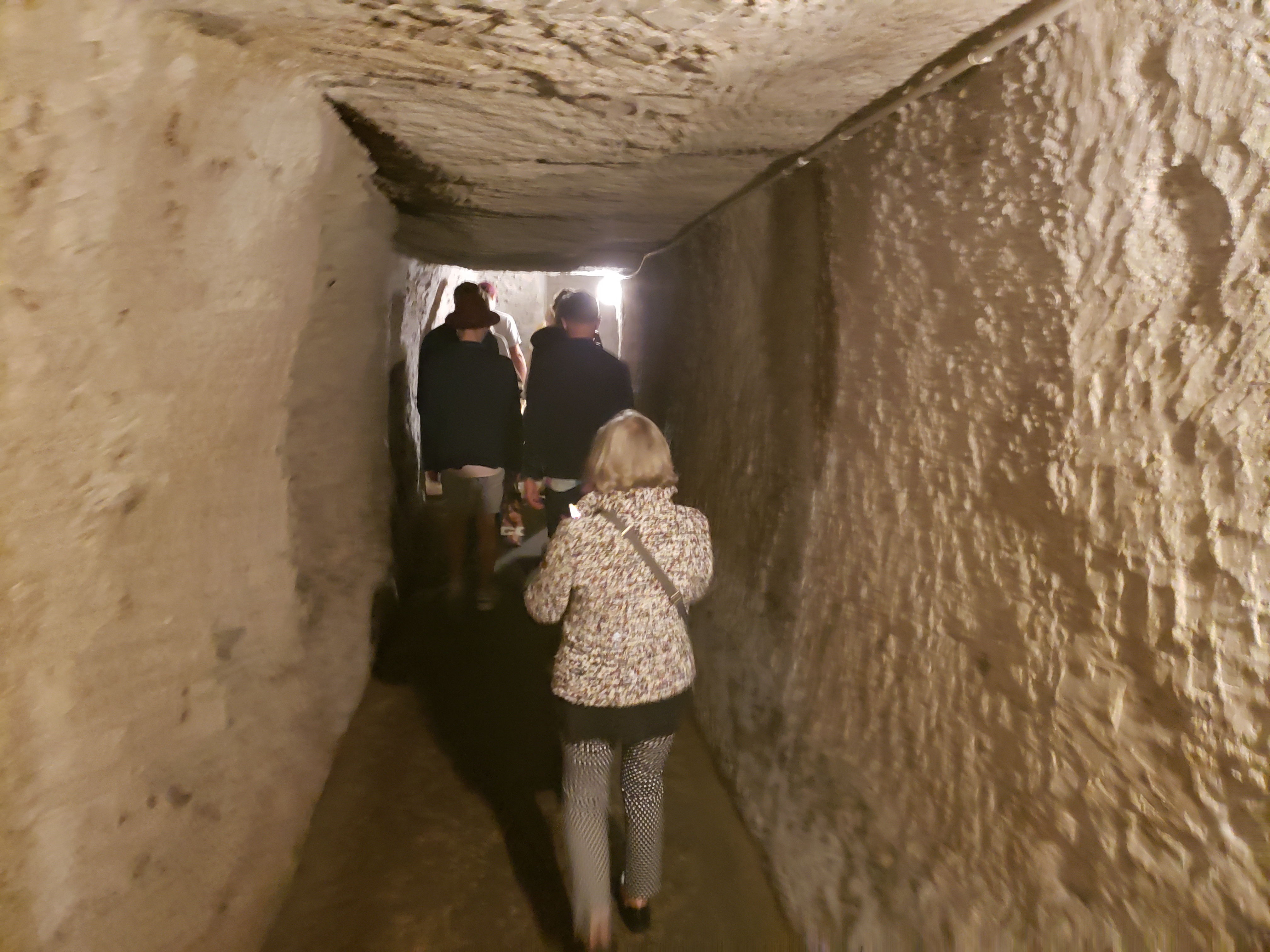
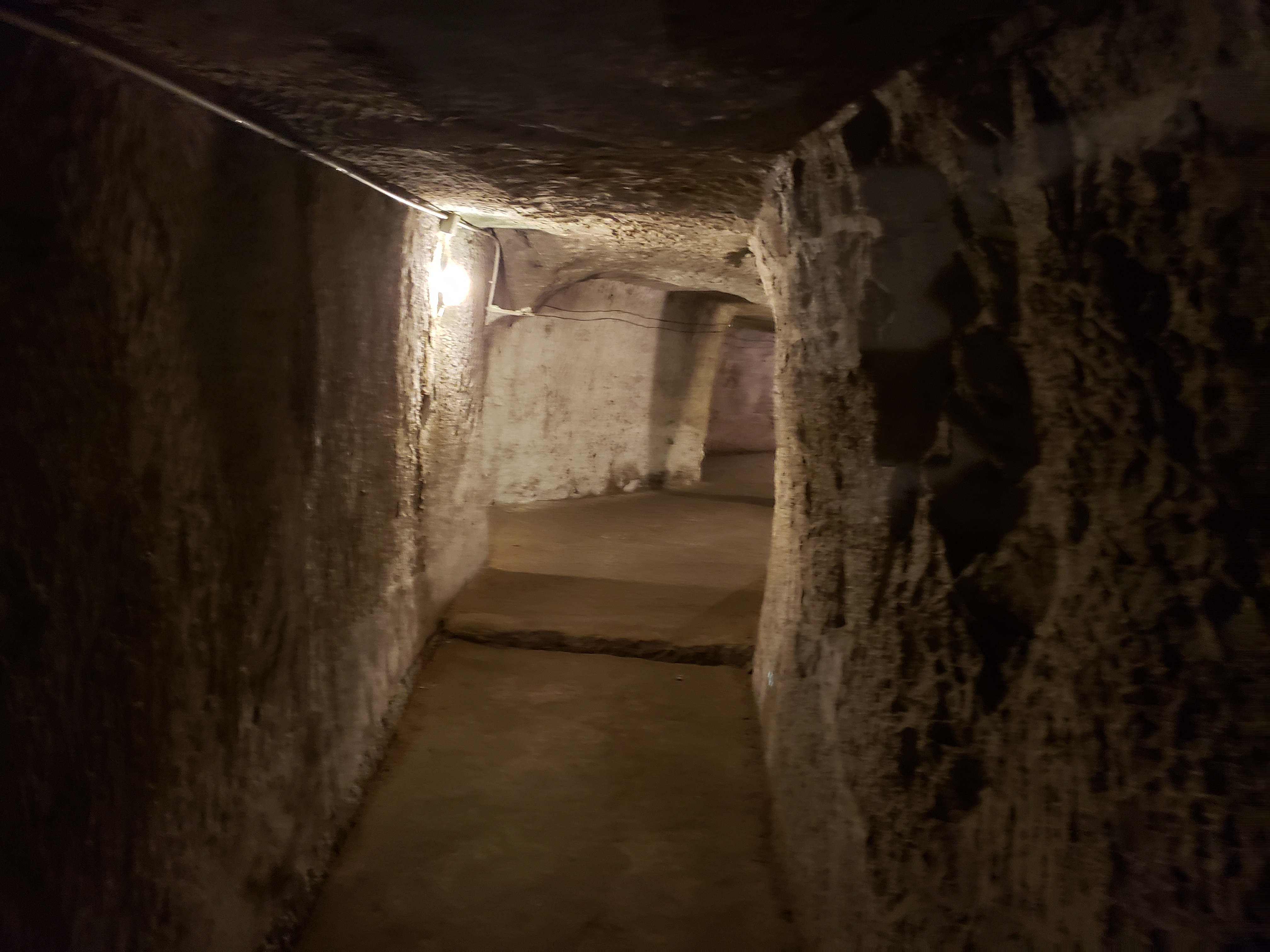
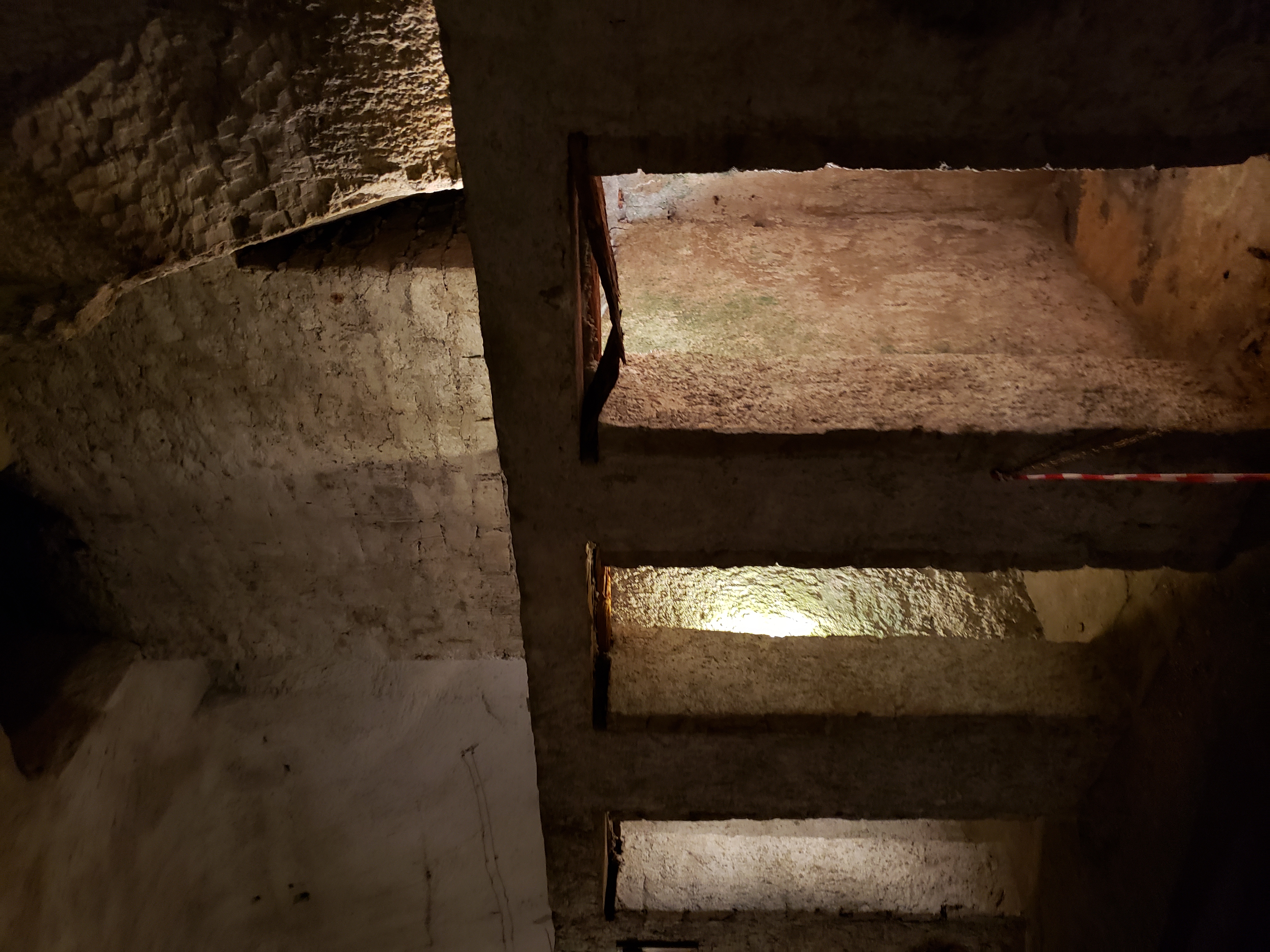
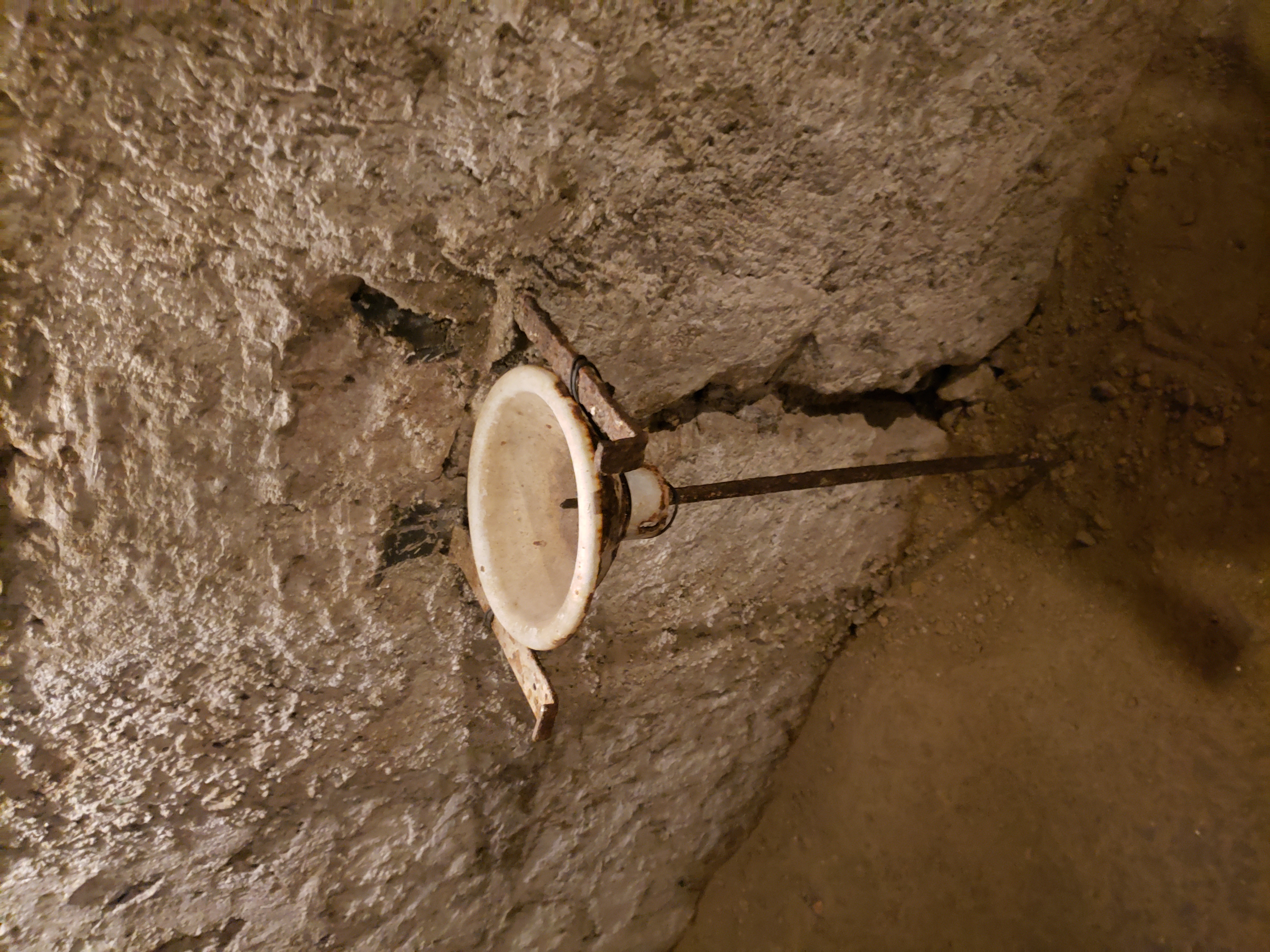
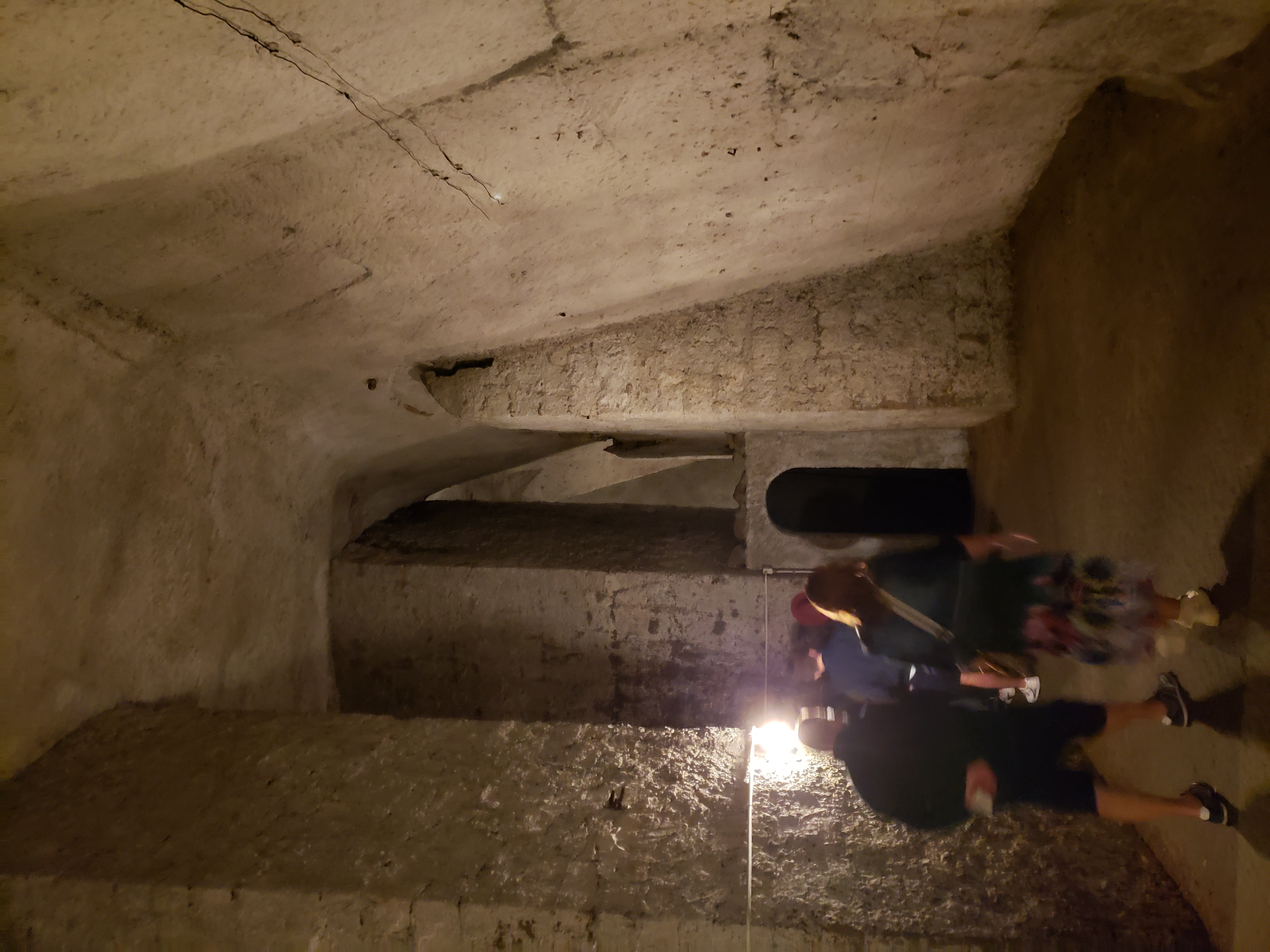
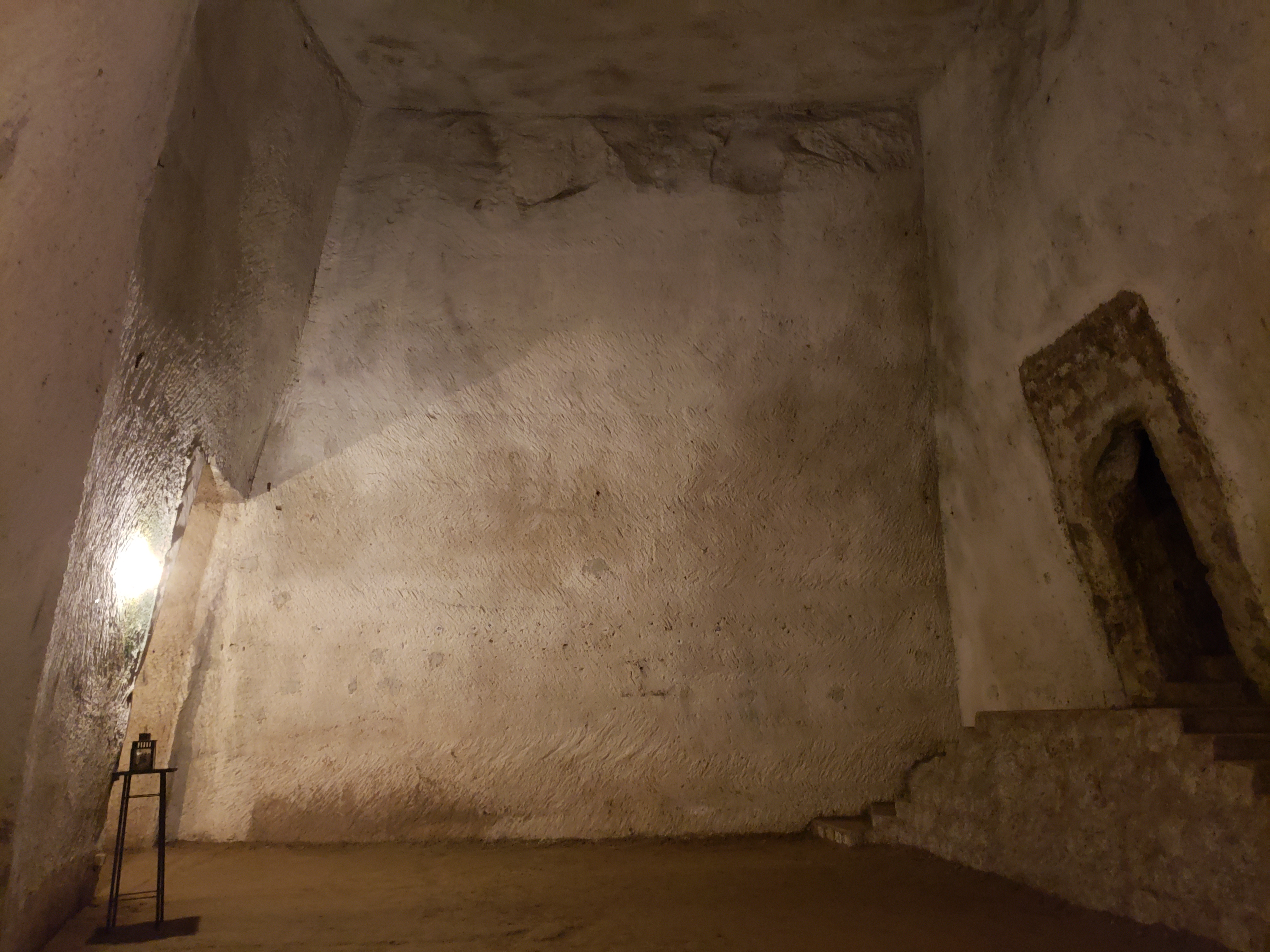
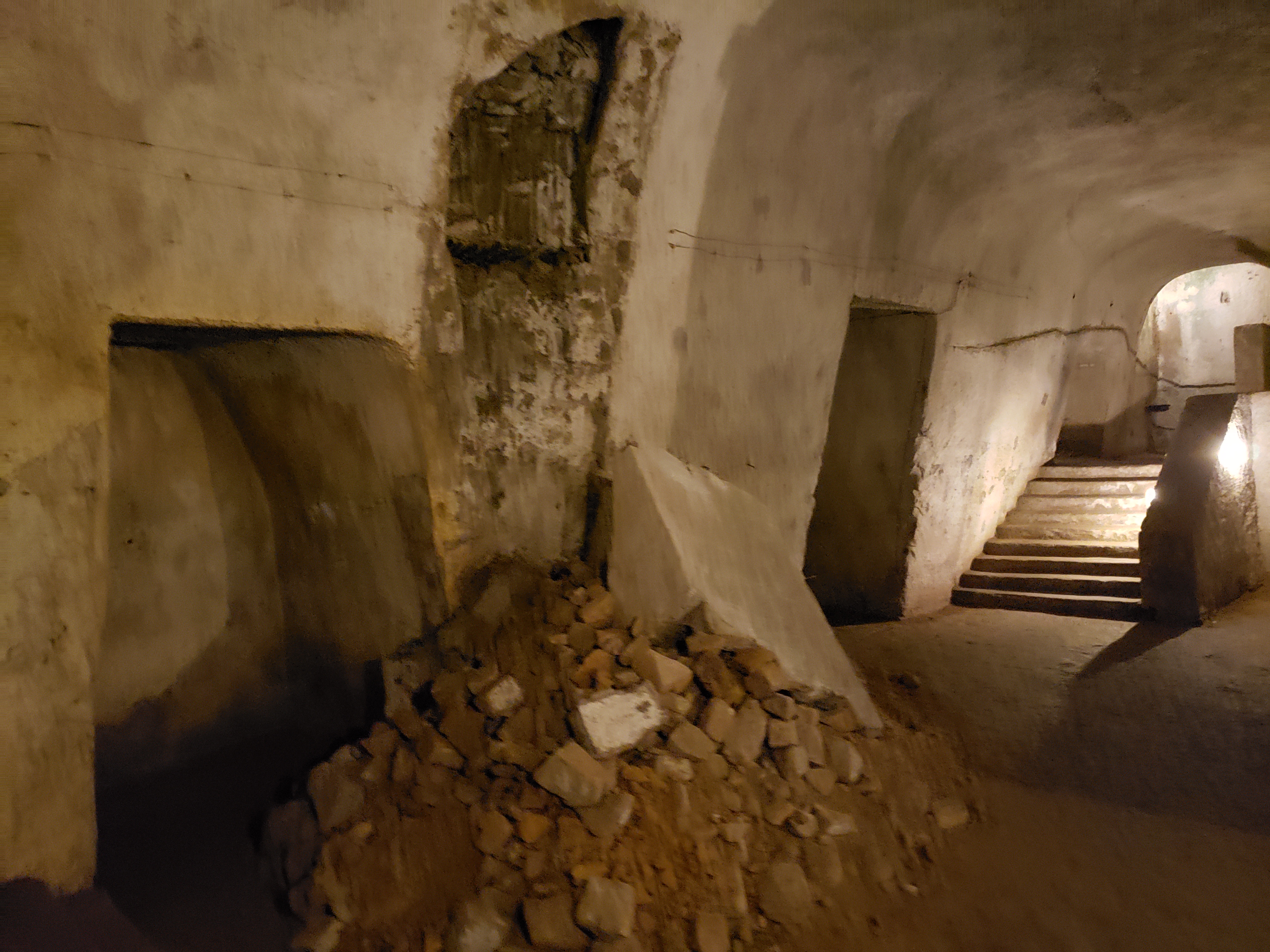
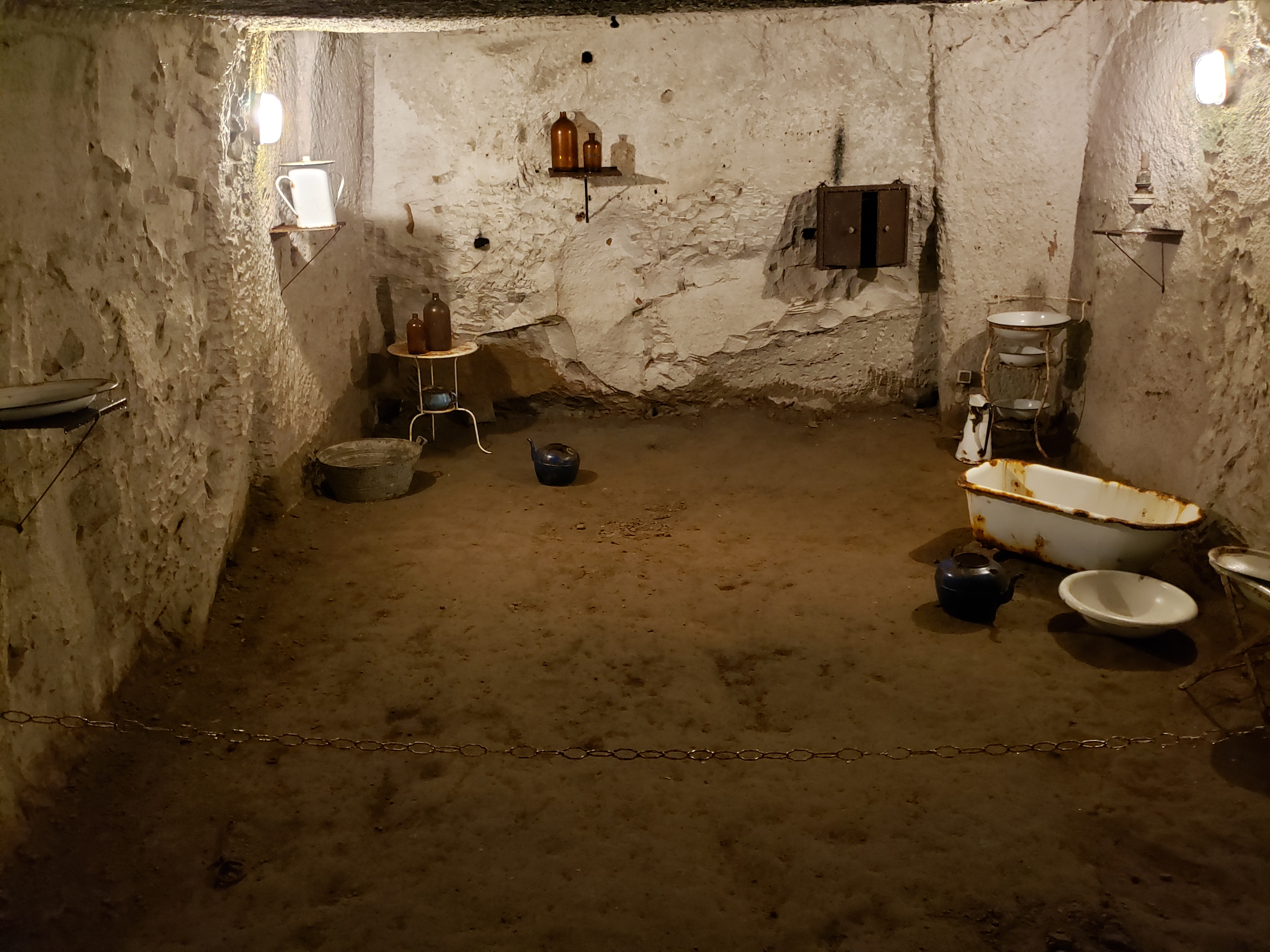
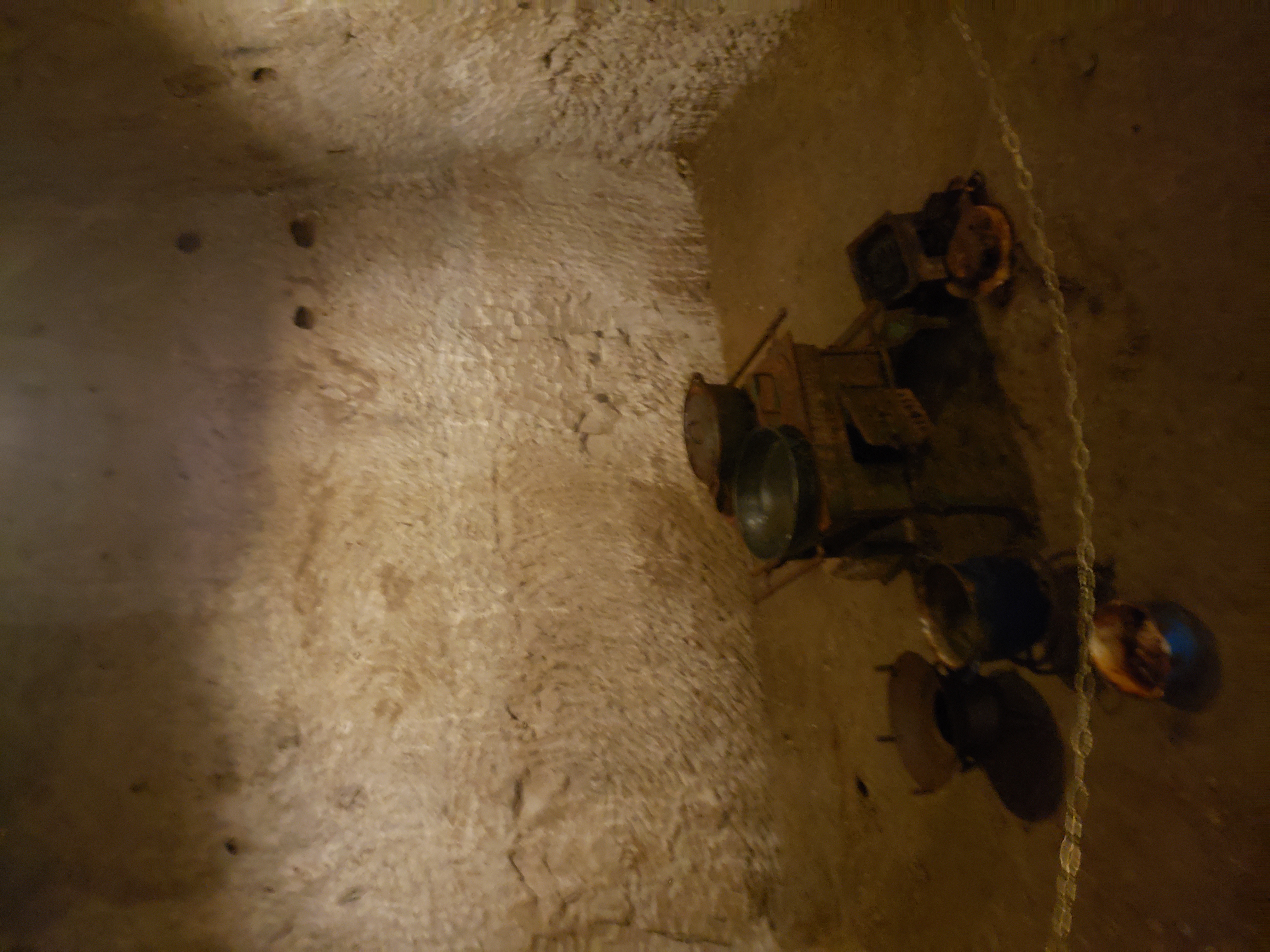
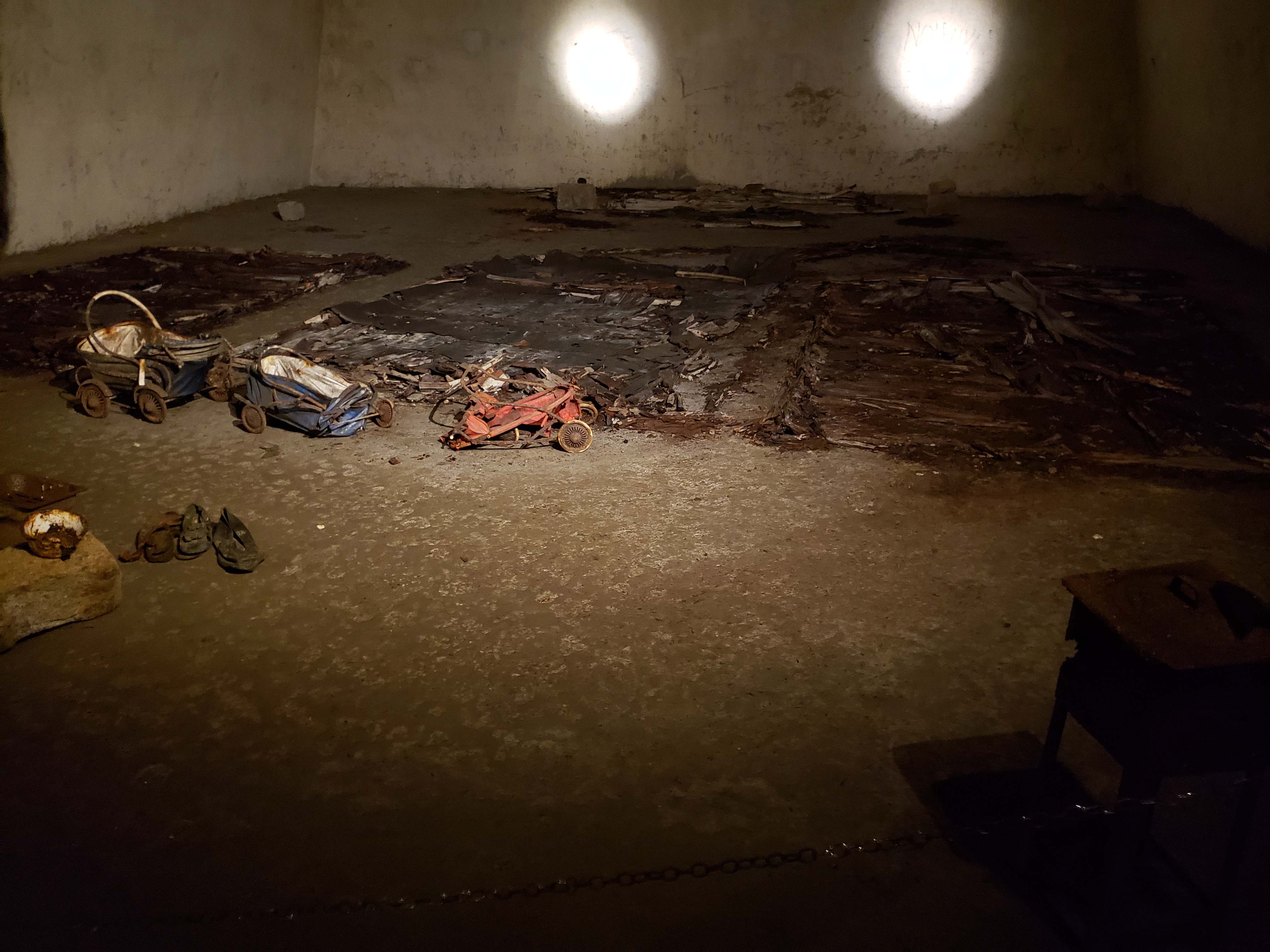
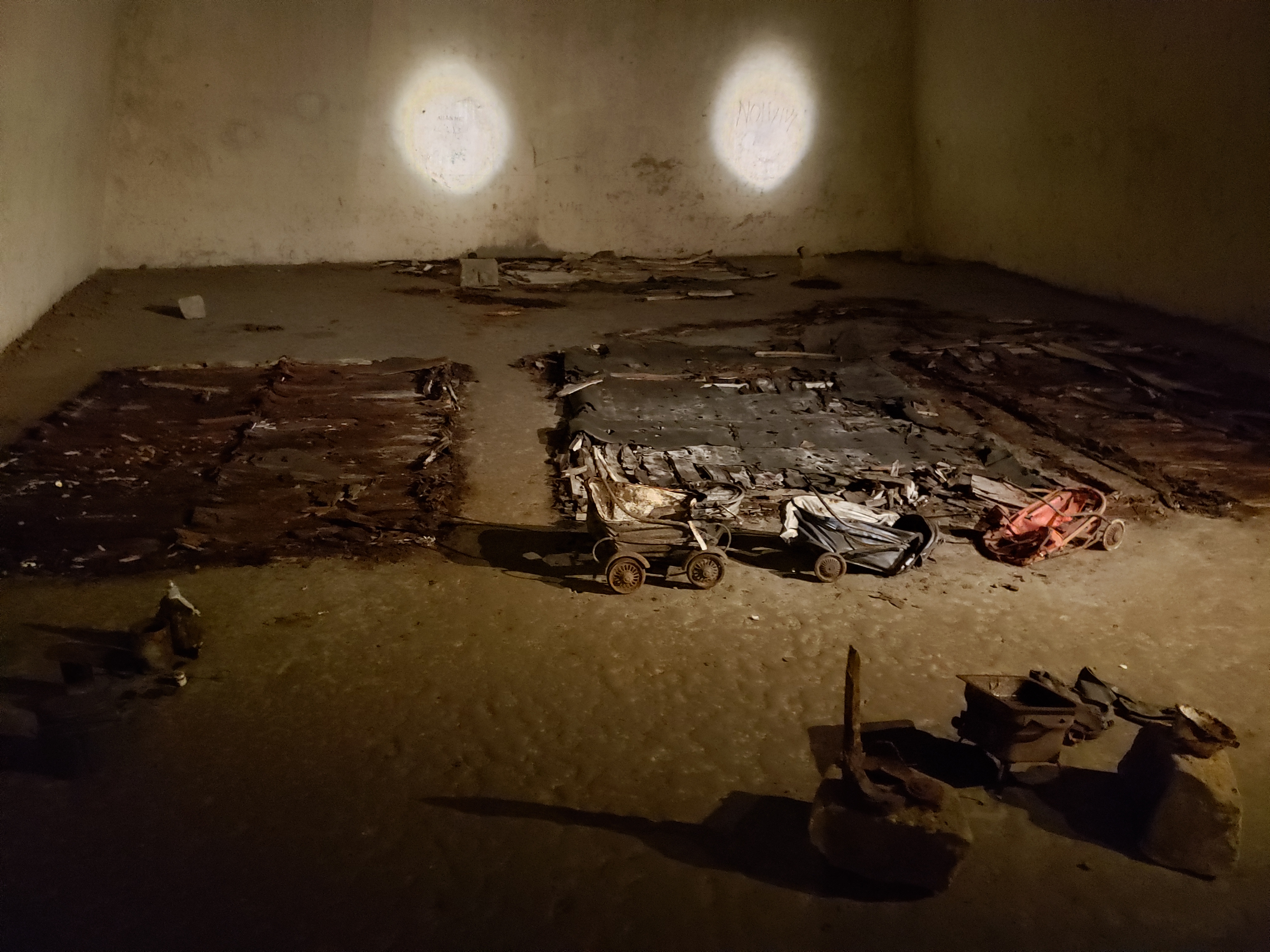
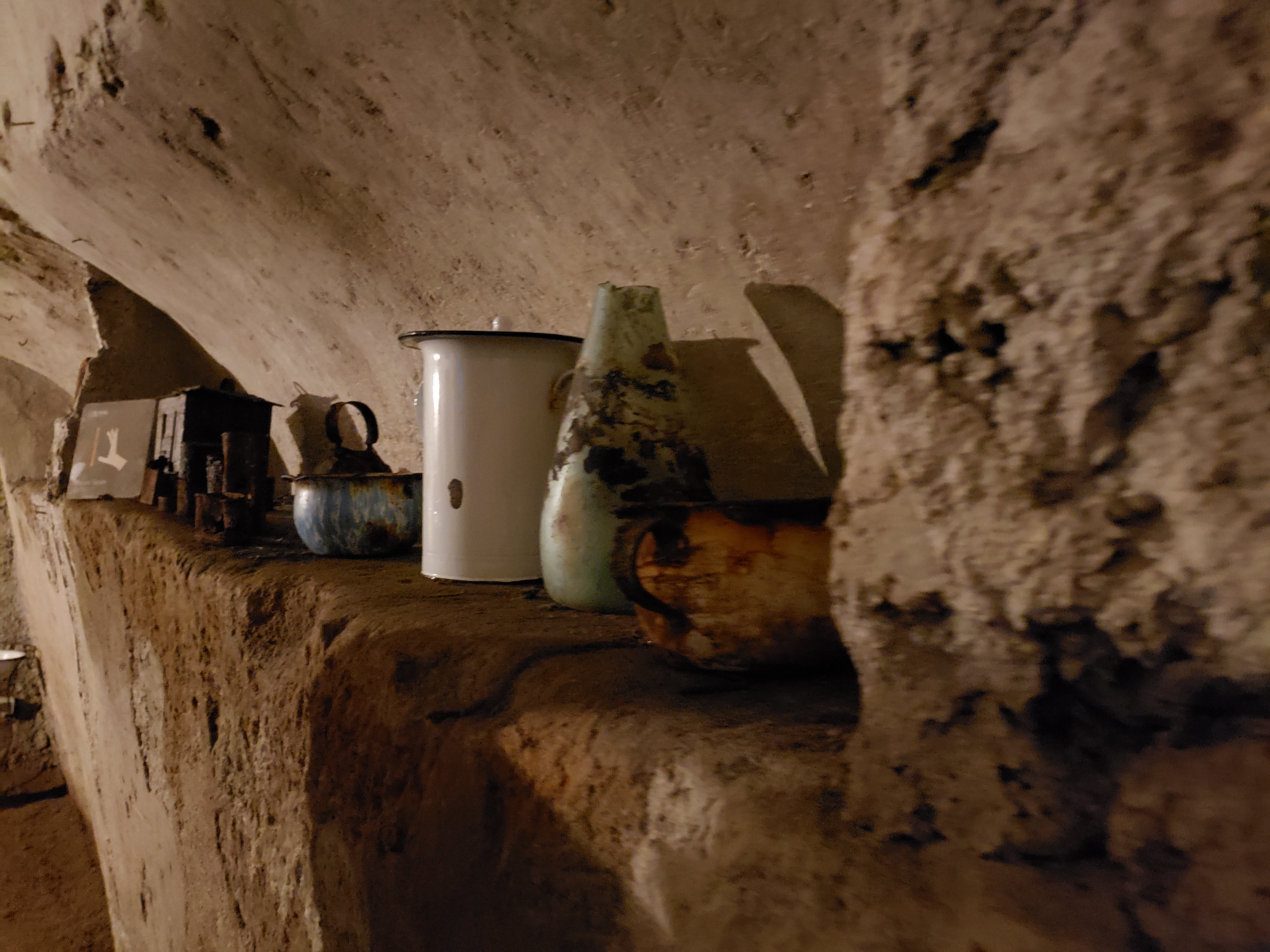
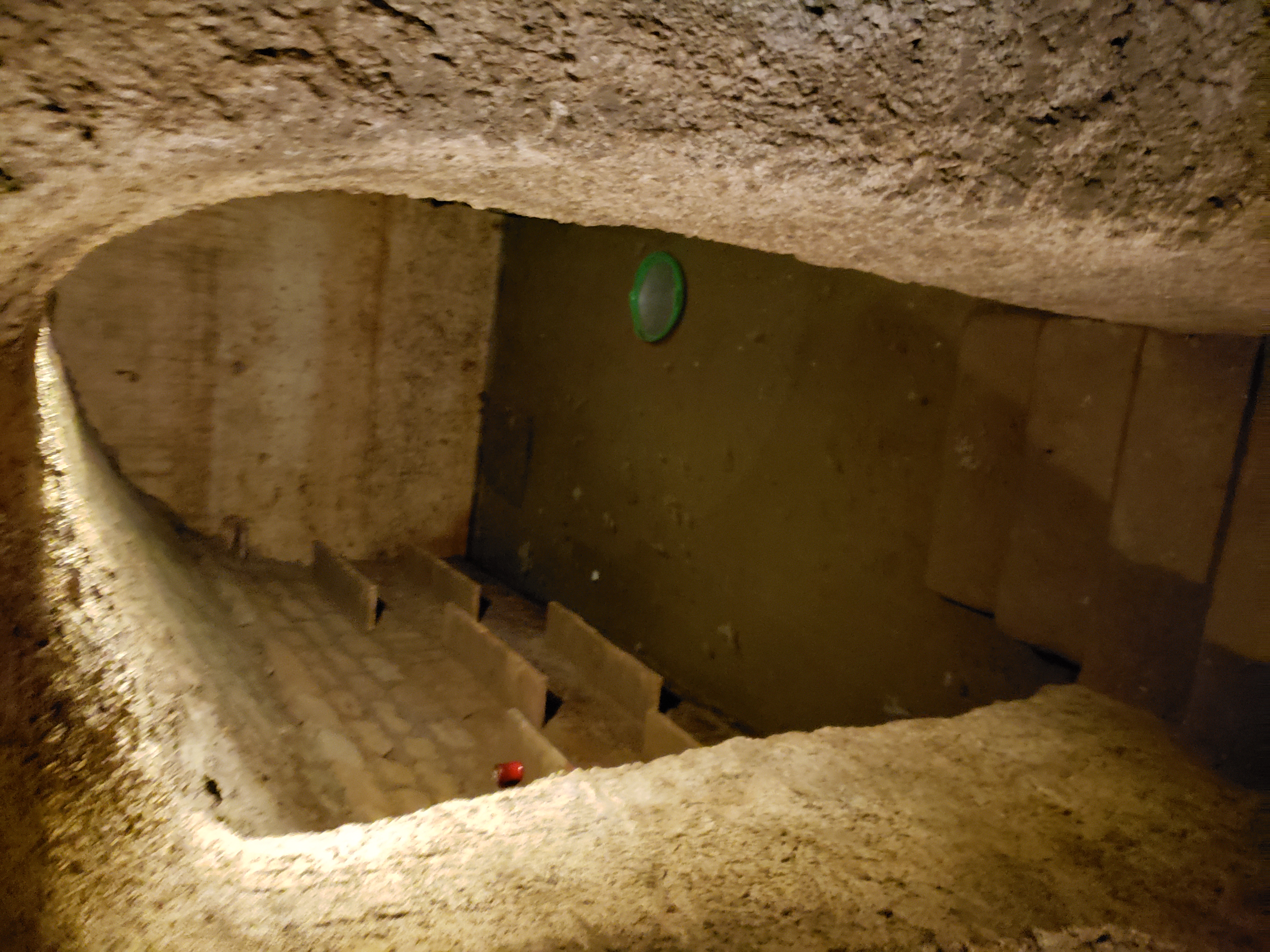
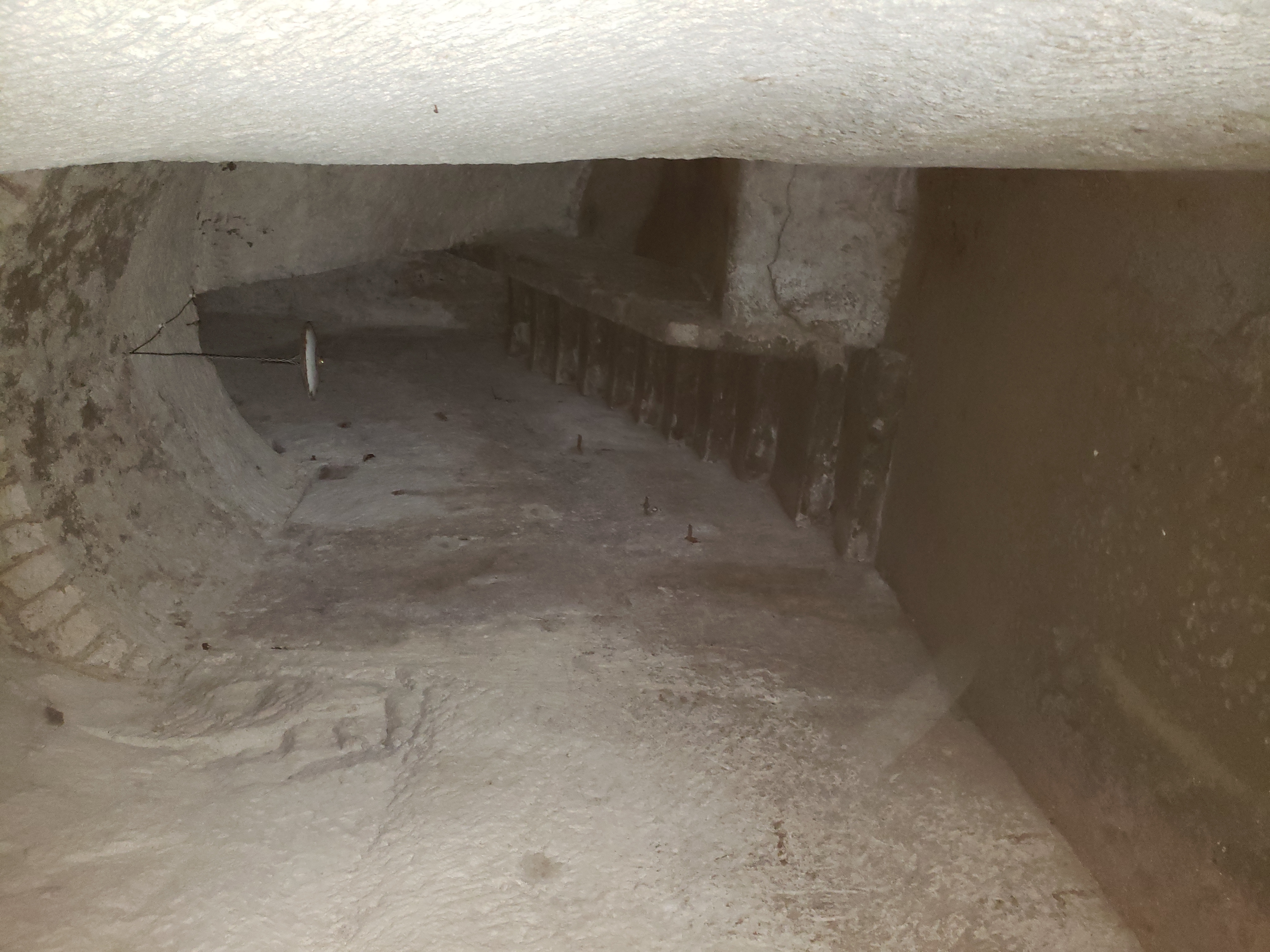
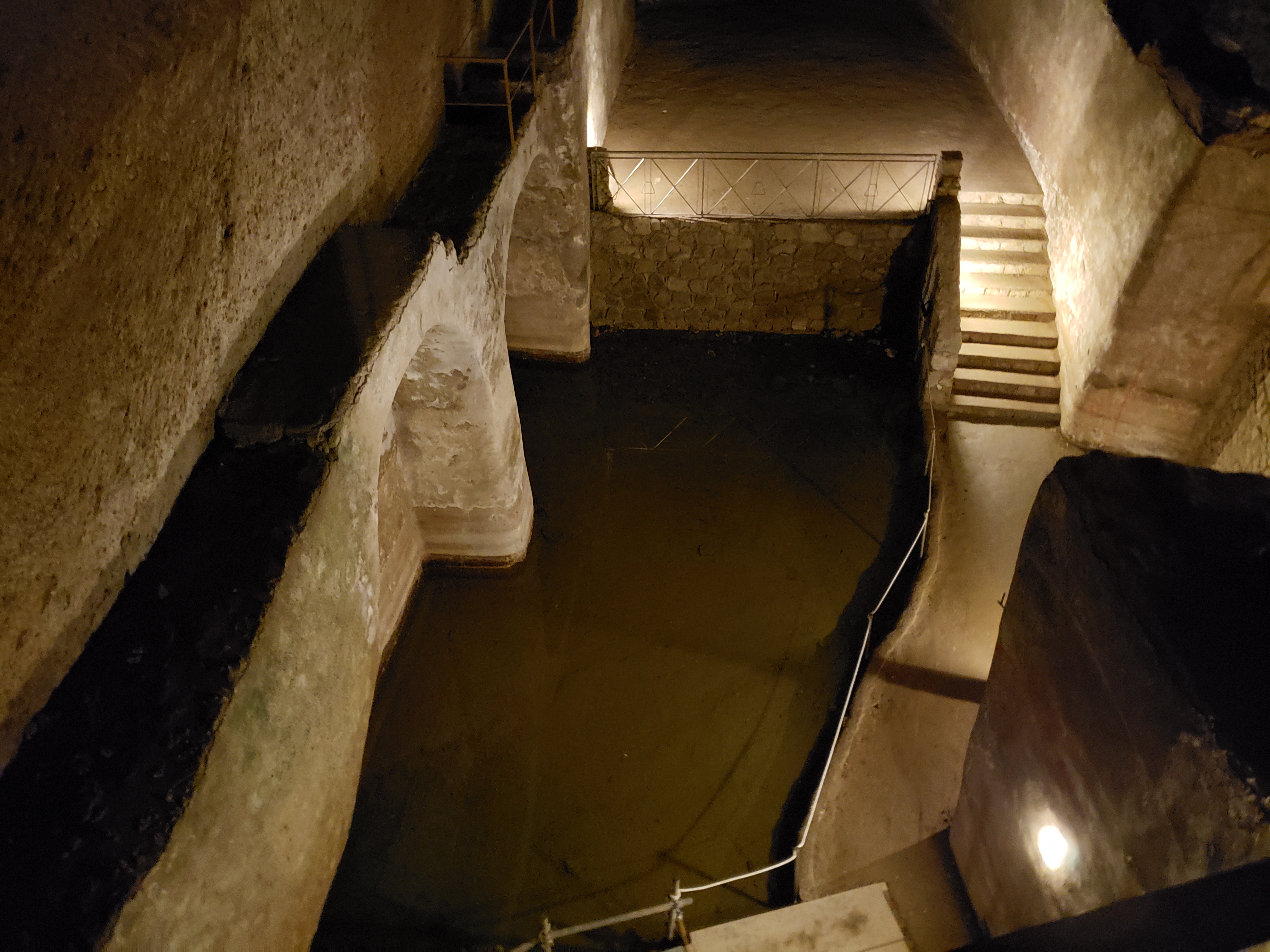
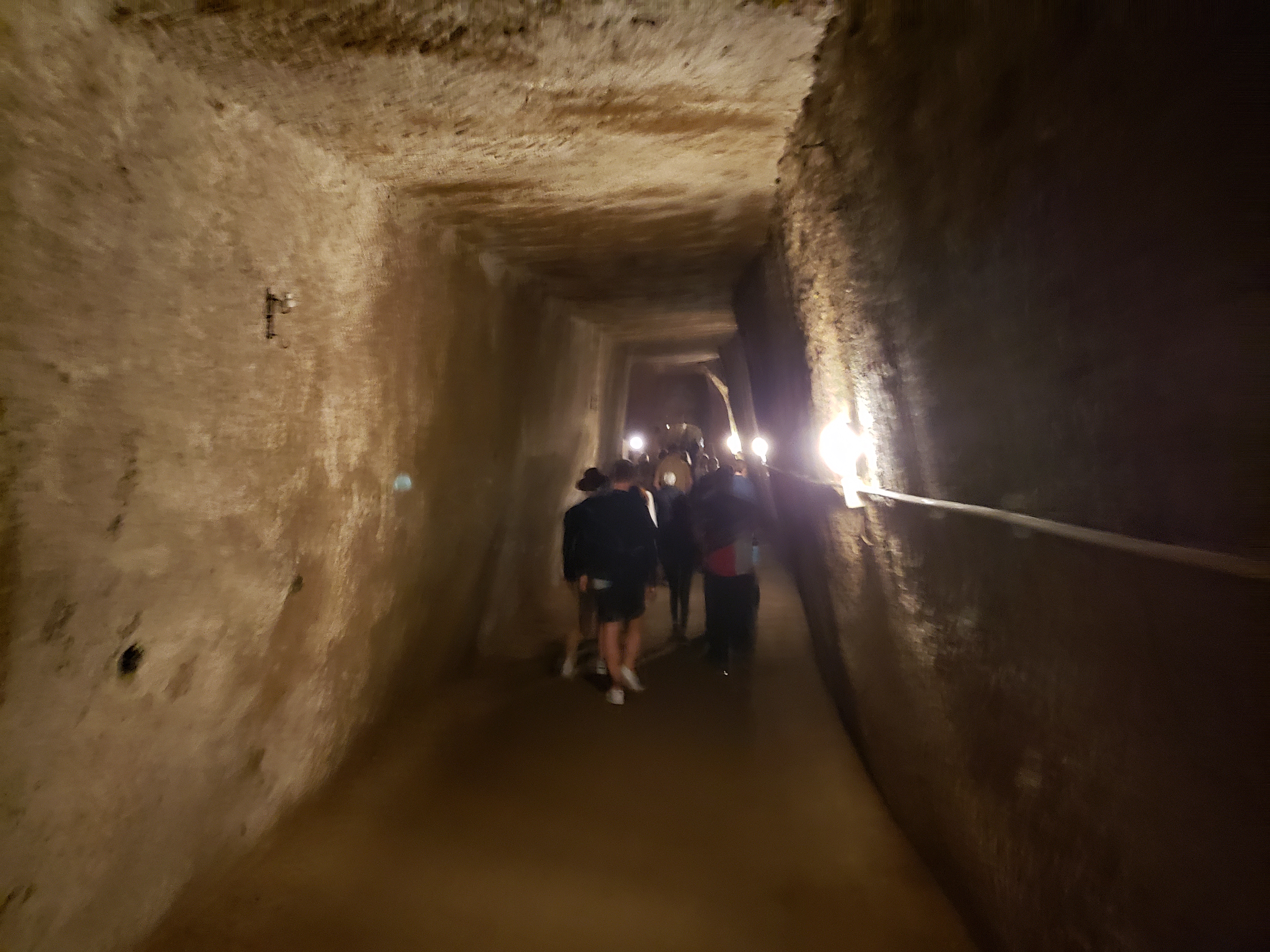
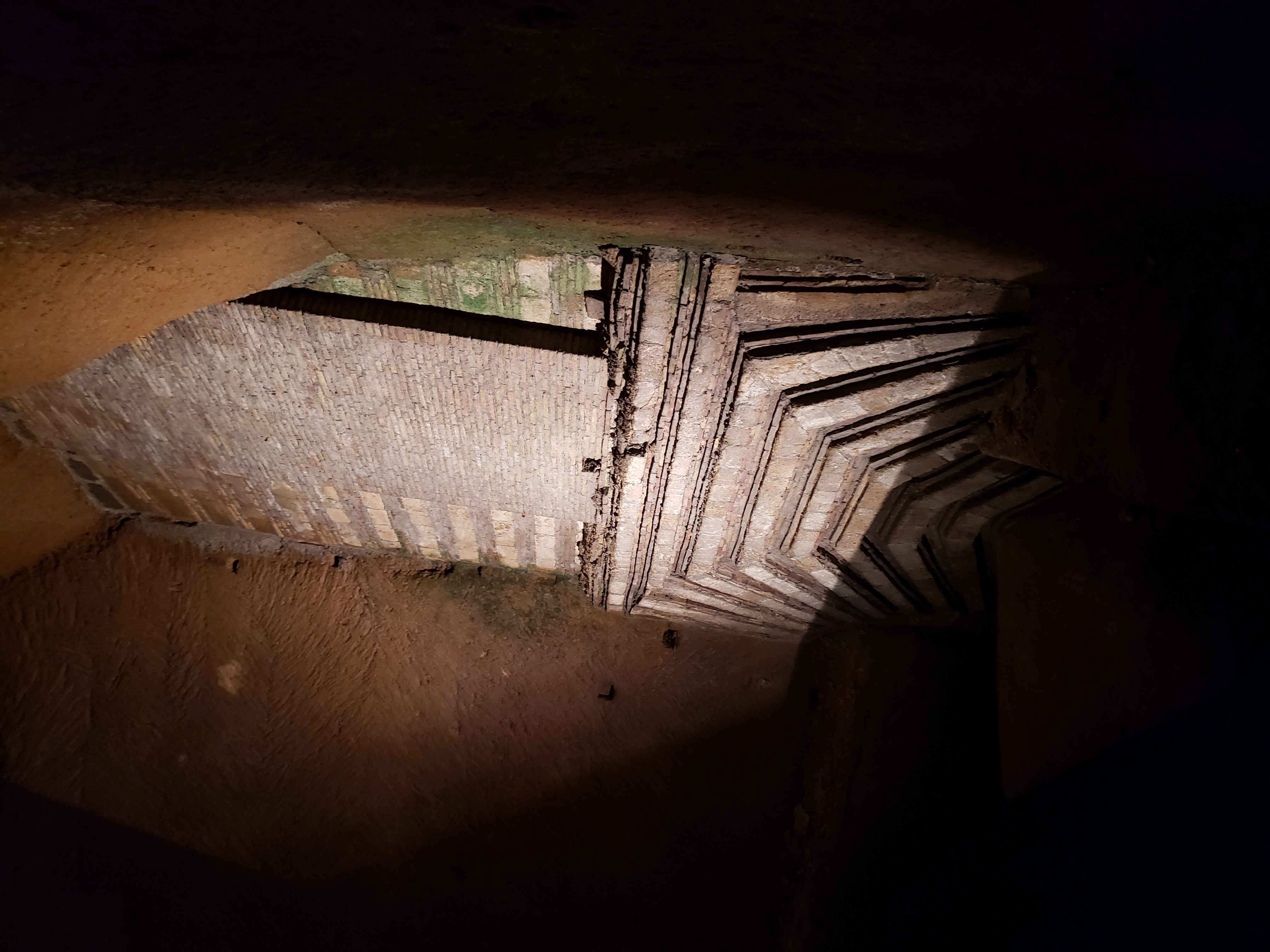
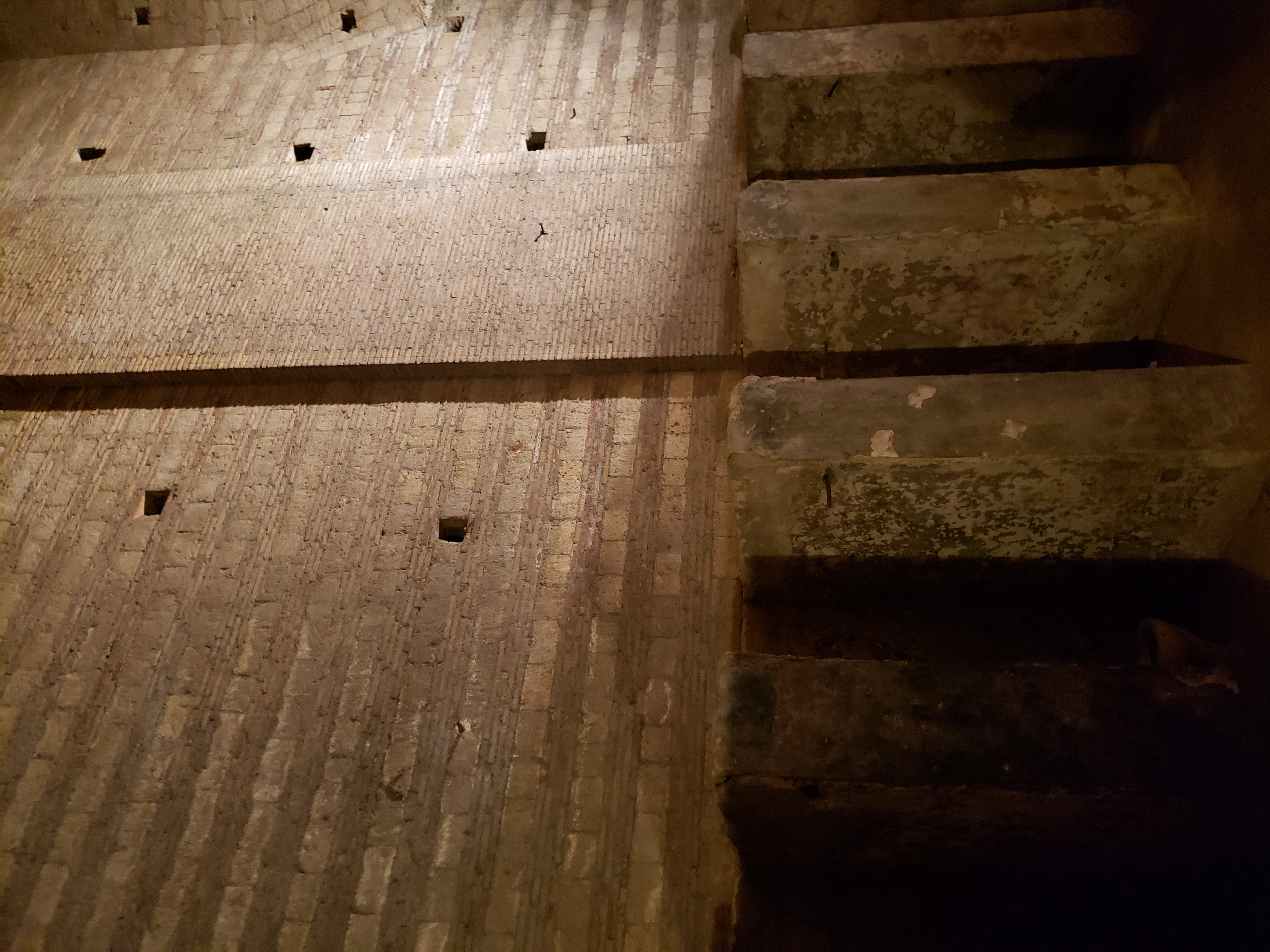
There are tunnels, aqueducts and other underground features all throughout Naples. None has probably had more contemporary use than the Bourbon Tunnels, which were converted and used during World War II as bomb shelters and storage. There are two entrances to this underground museum, for scheduling reason we had to enter Vico del Grottone, the same street that our restaurant below for lunch was on, so very convenient.
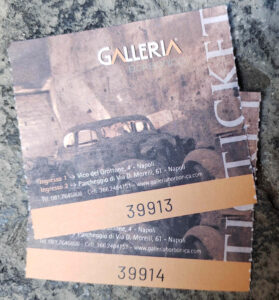
Tickets for Two – Bourbon Tunnels
The following of our tour is provided uncaptioned, there is more information in the above internet link.
Patti descending
Patti
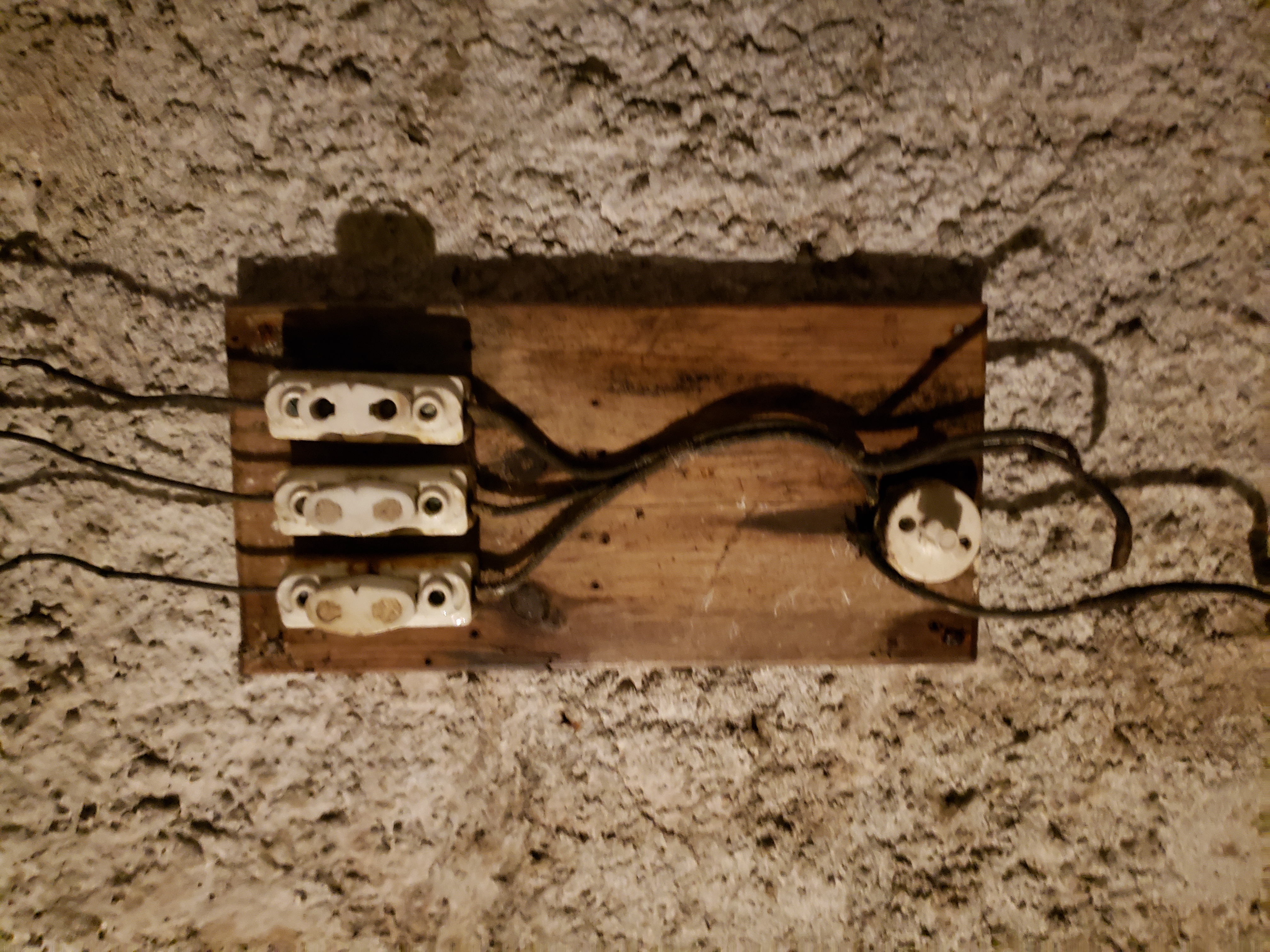
WW II electricity installlation
Restaurants
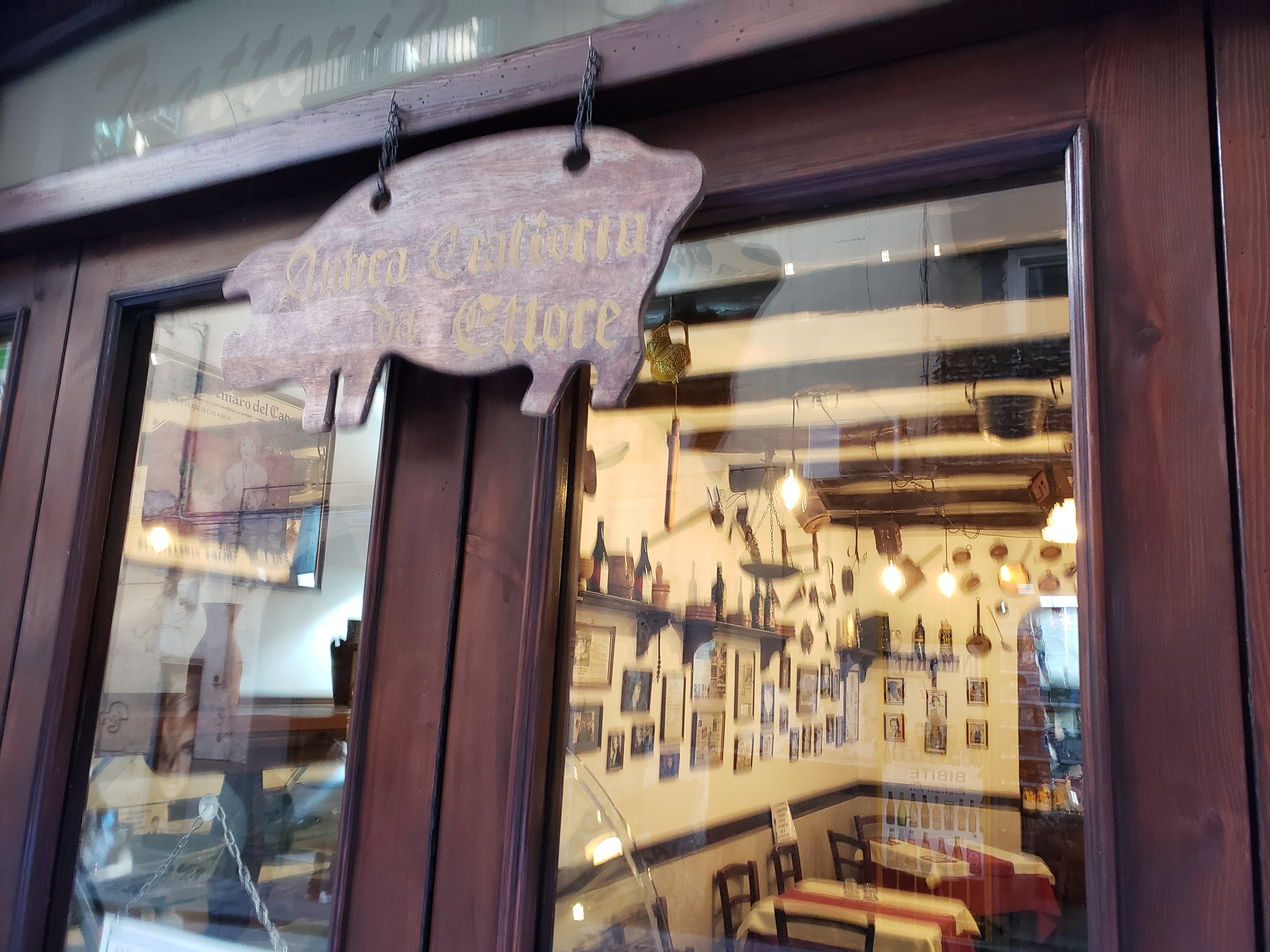
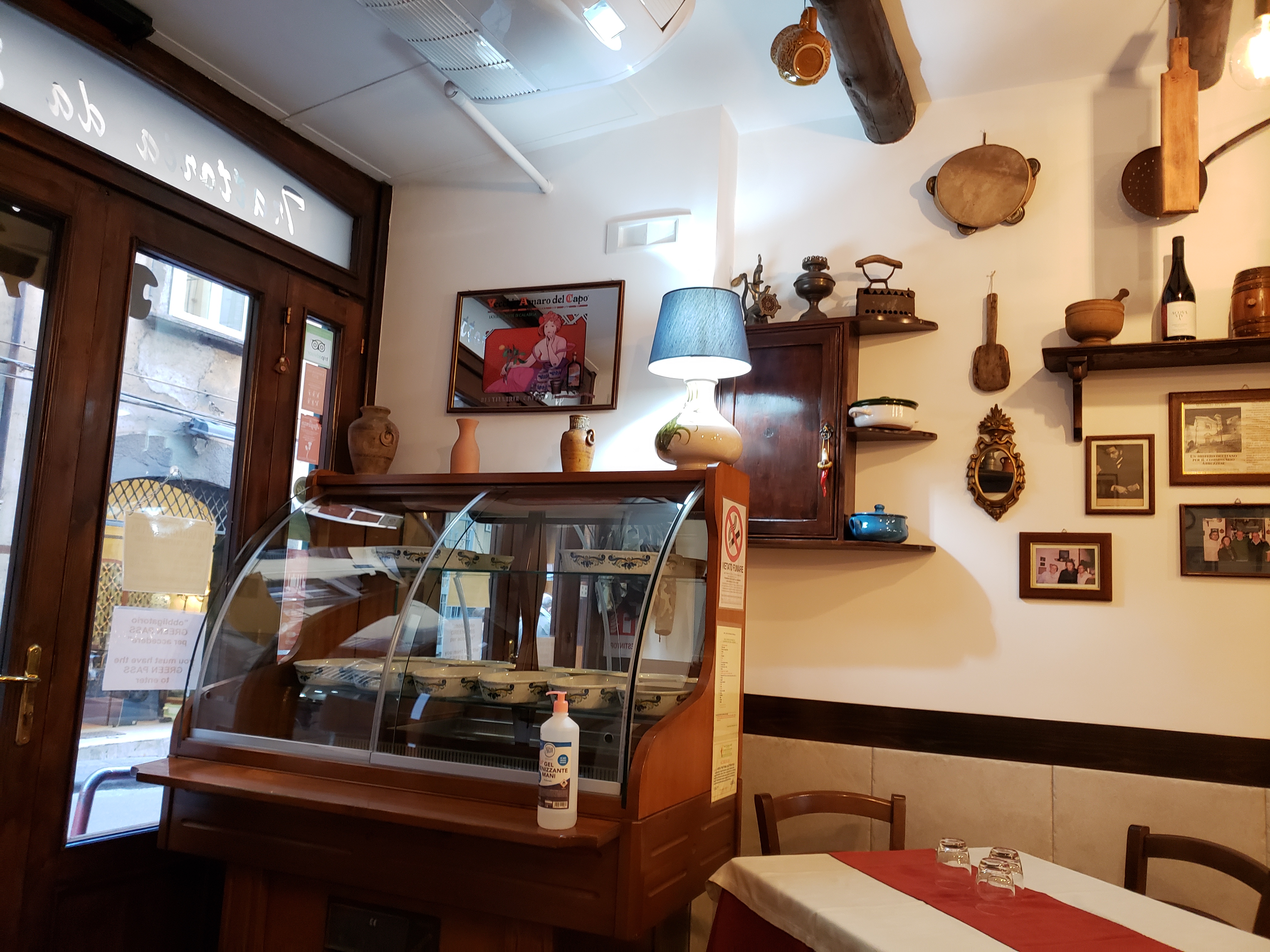
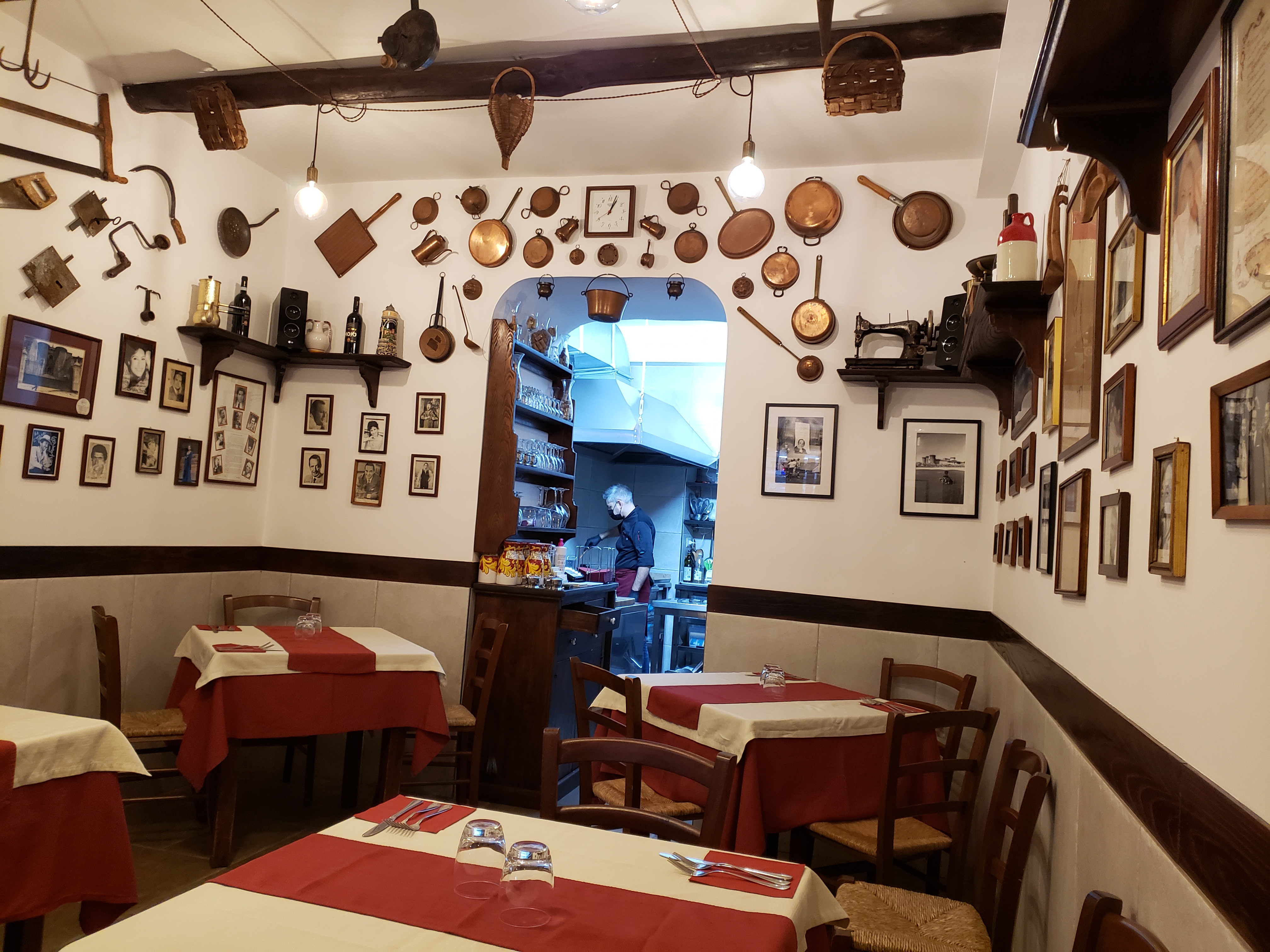
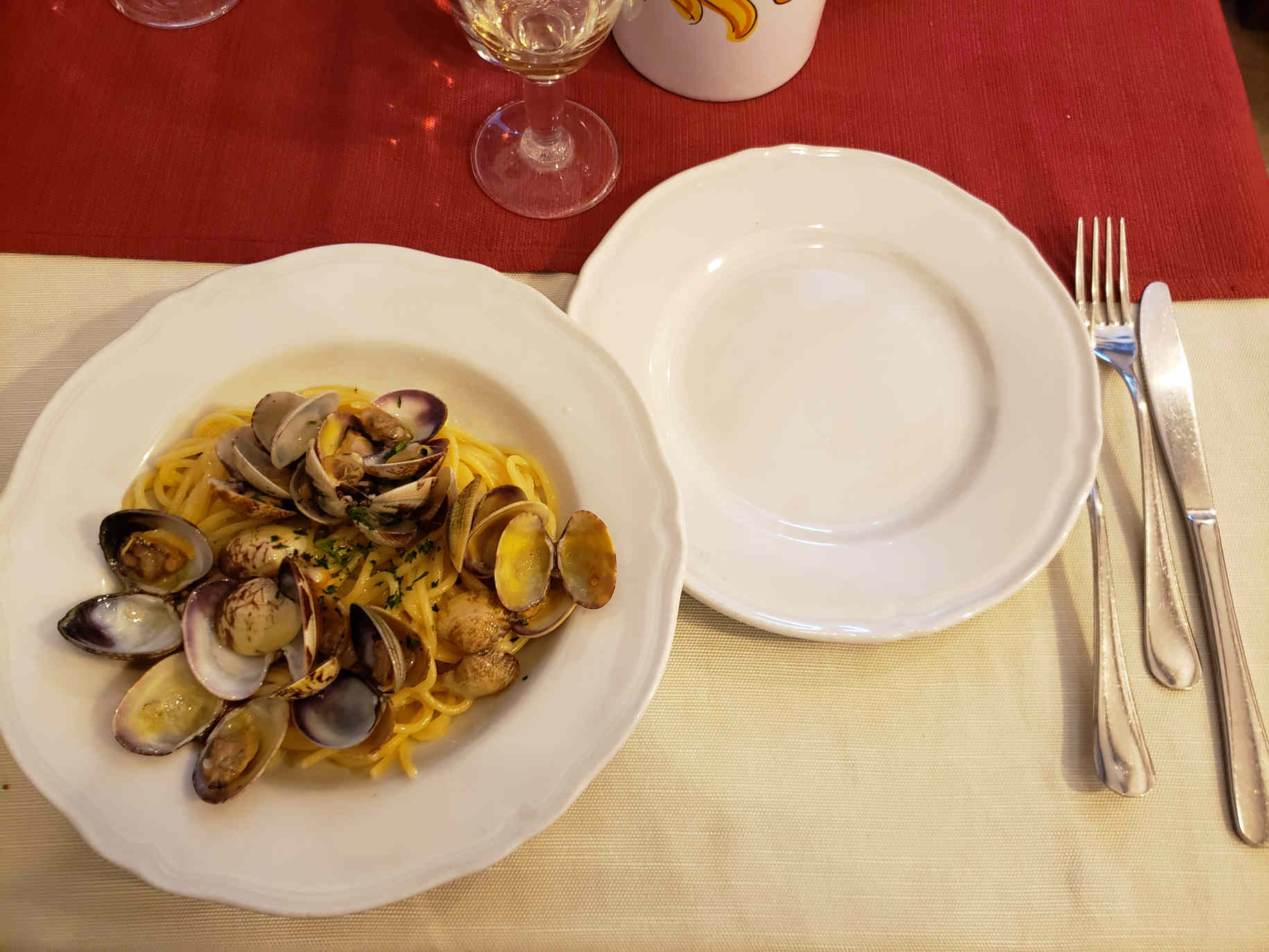
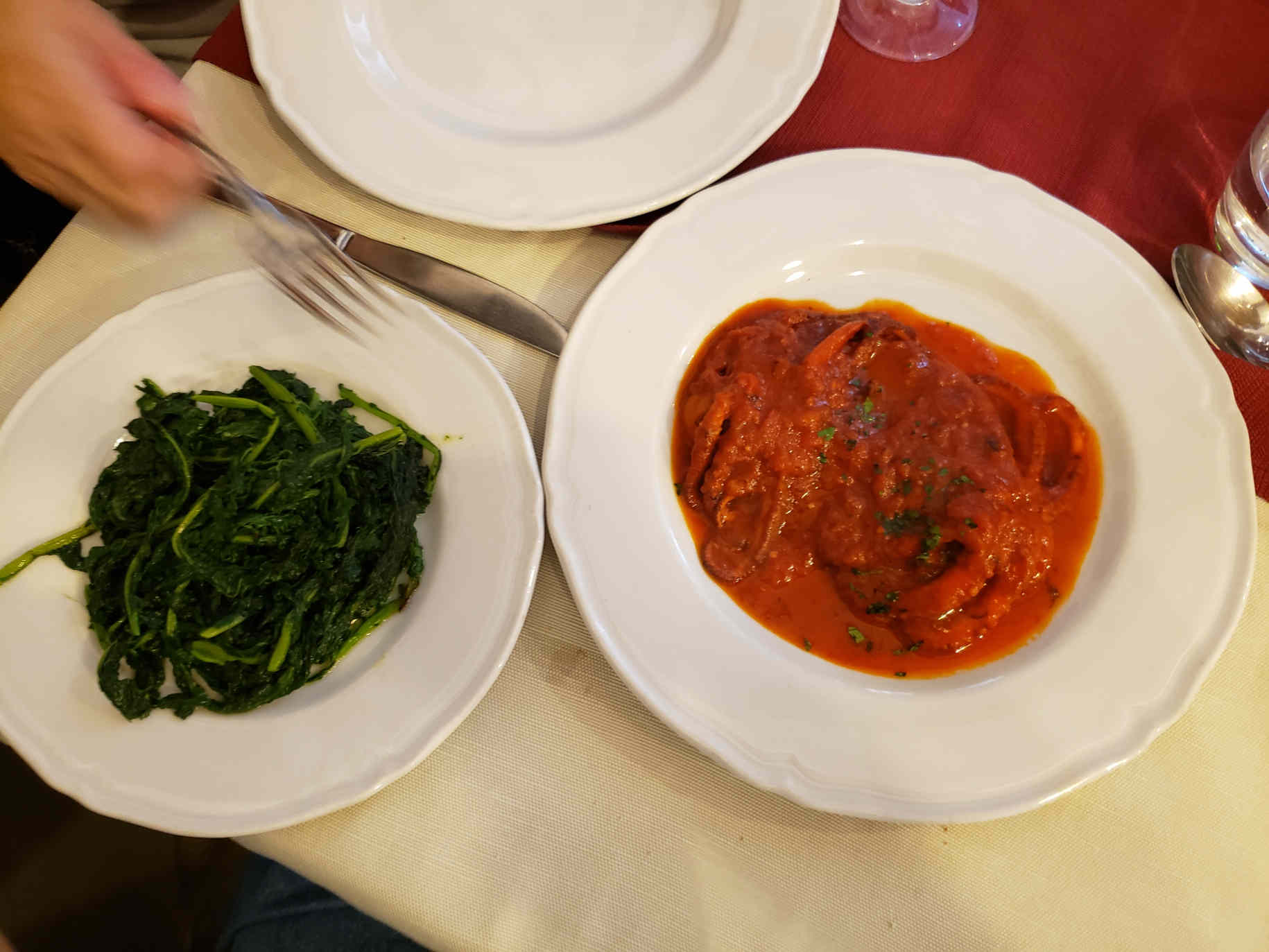
Trattoria da Ettore
This trattoria, as many others outside of the touristy areas, is an excellent little mom and pop restaurant. It has only six tables and when they are full for lunch, you are turned away (the same is true for dinner and probably for most restaurants in Italy, when they are full, they are full, so get there early). It is located on Vico del Grottone and it is figuratively speaking a hole in the wall.
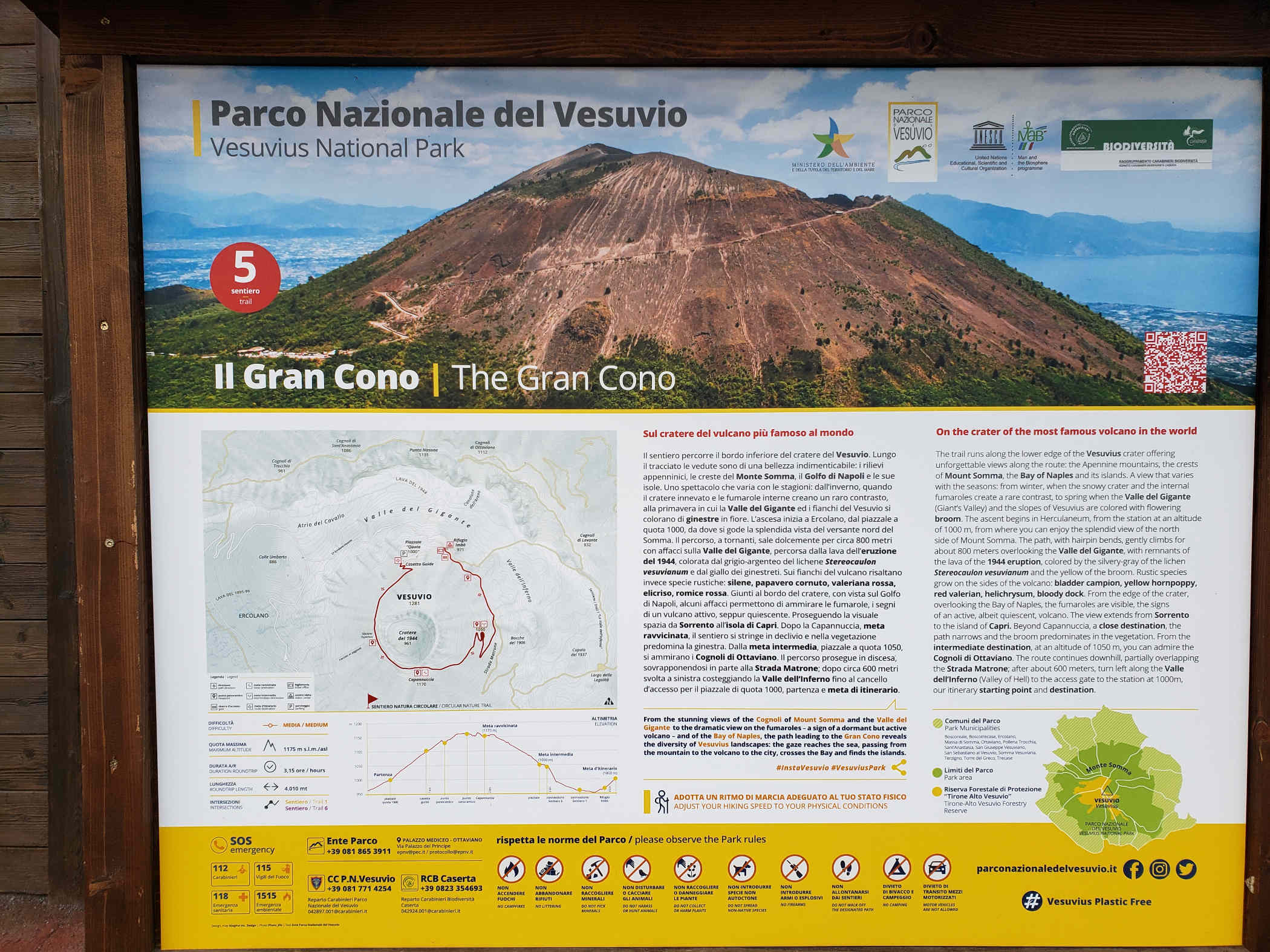
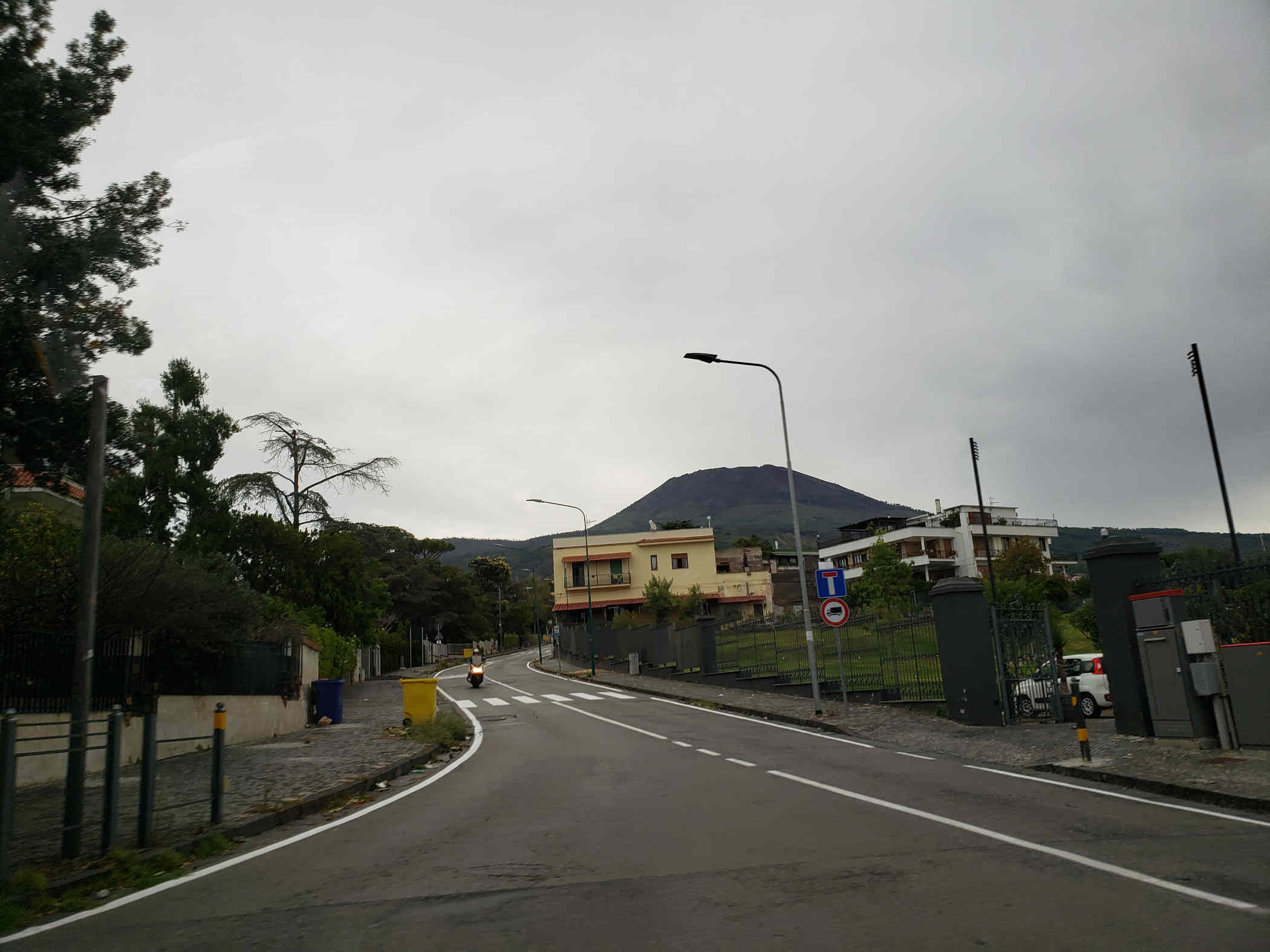
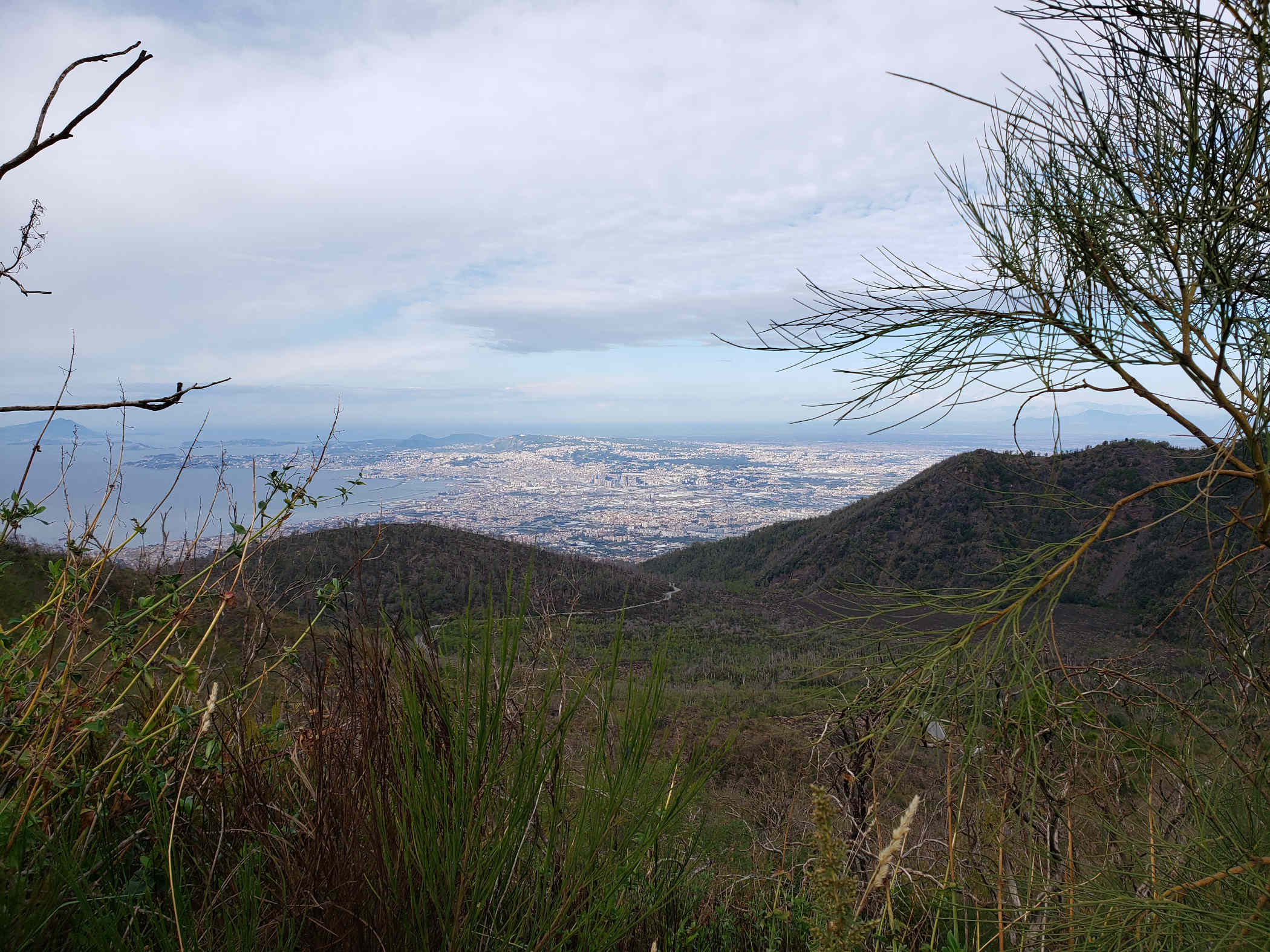
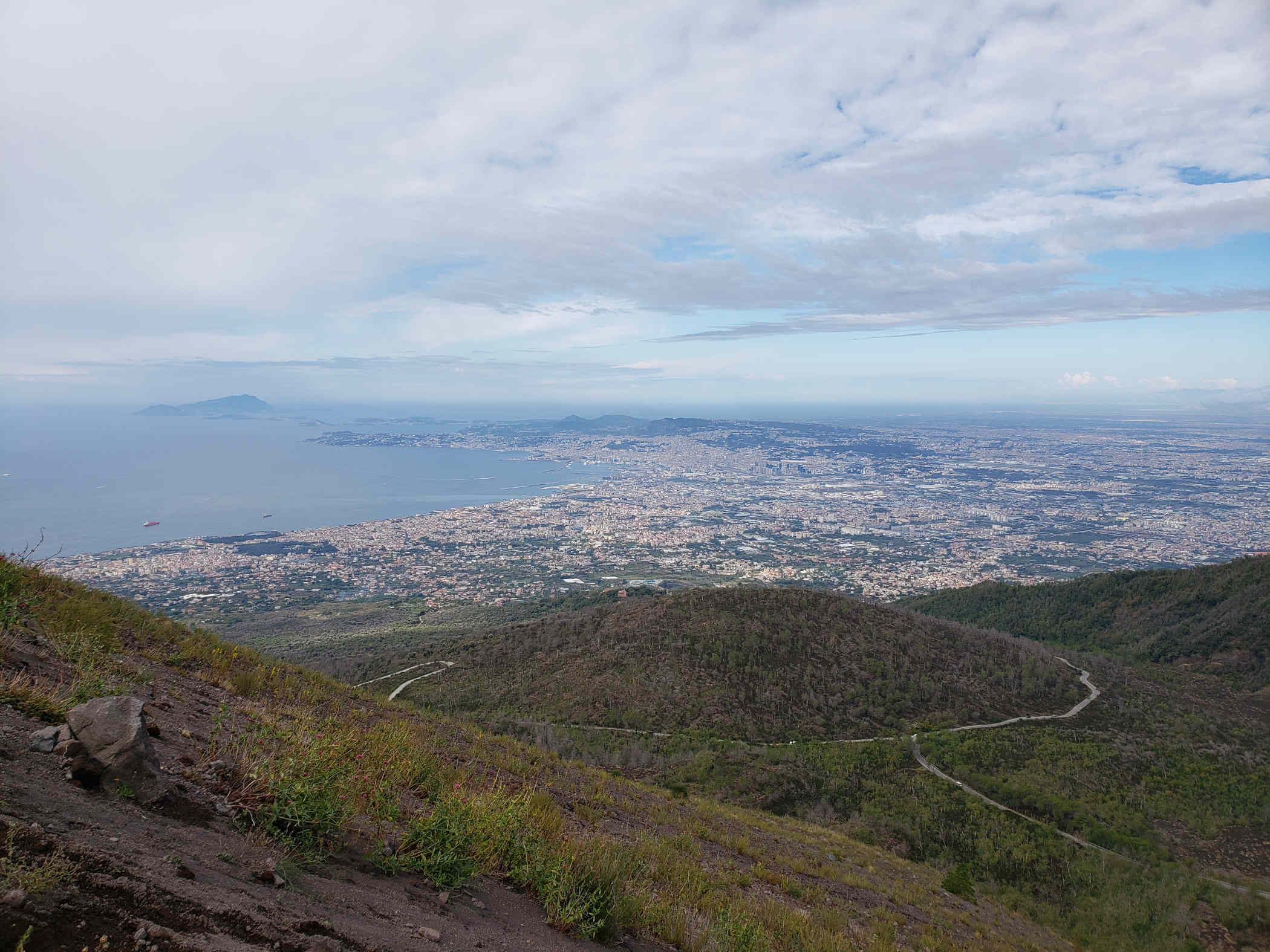
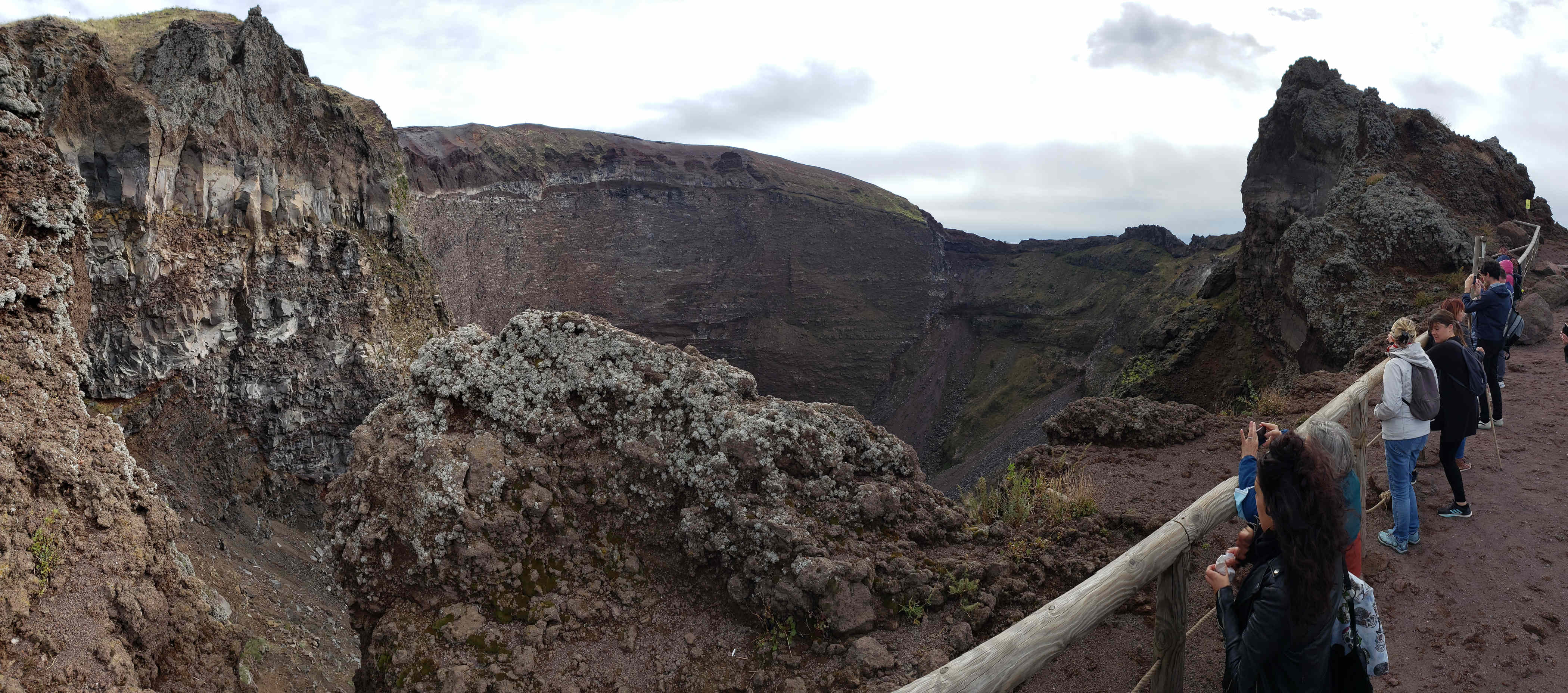
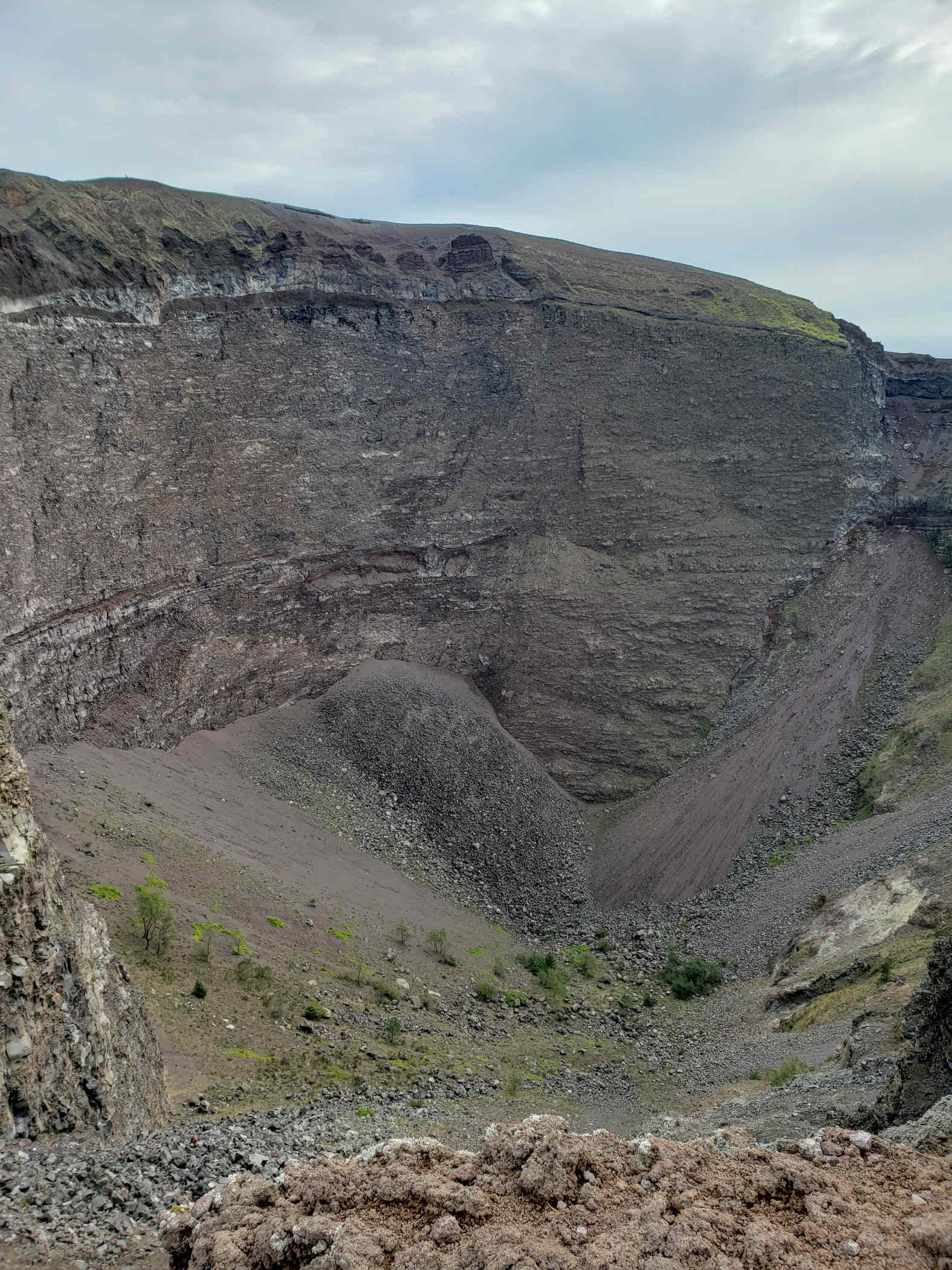
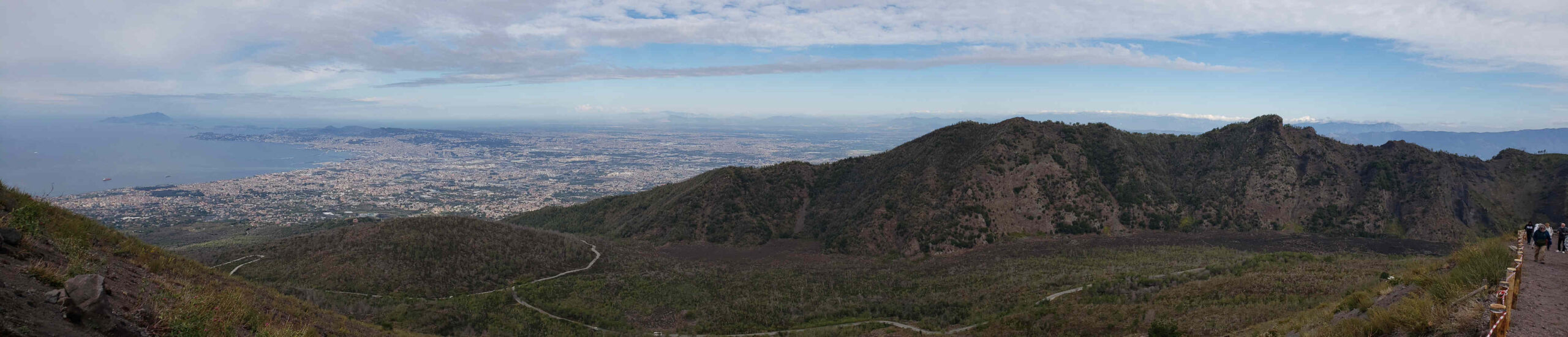
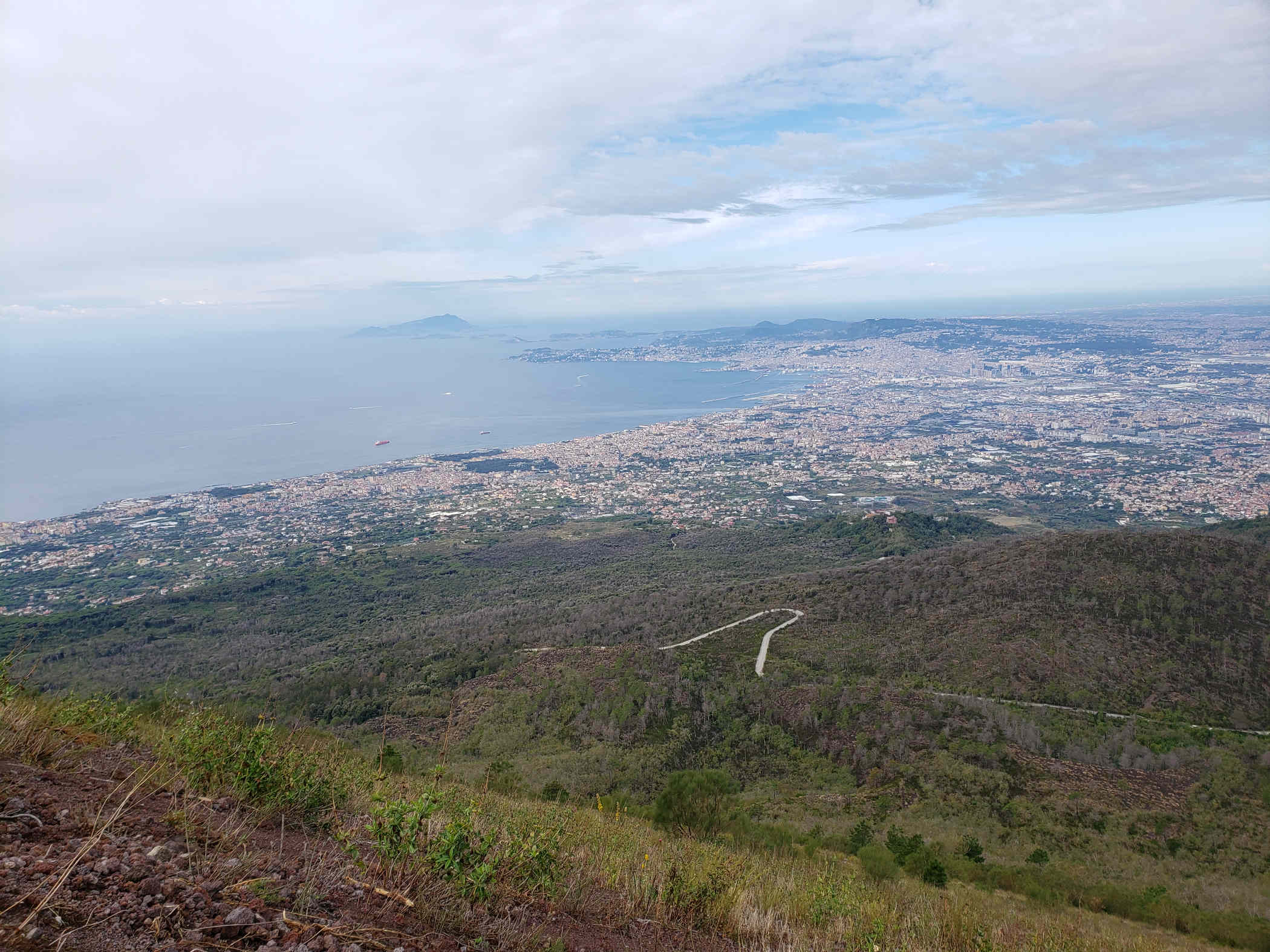
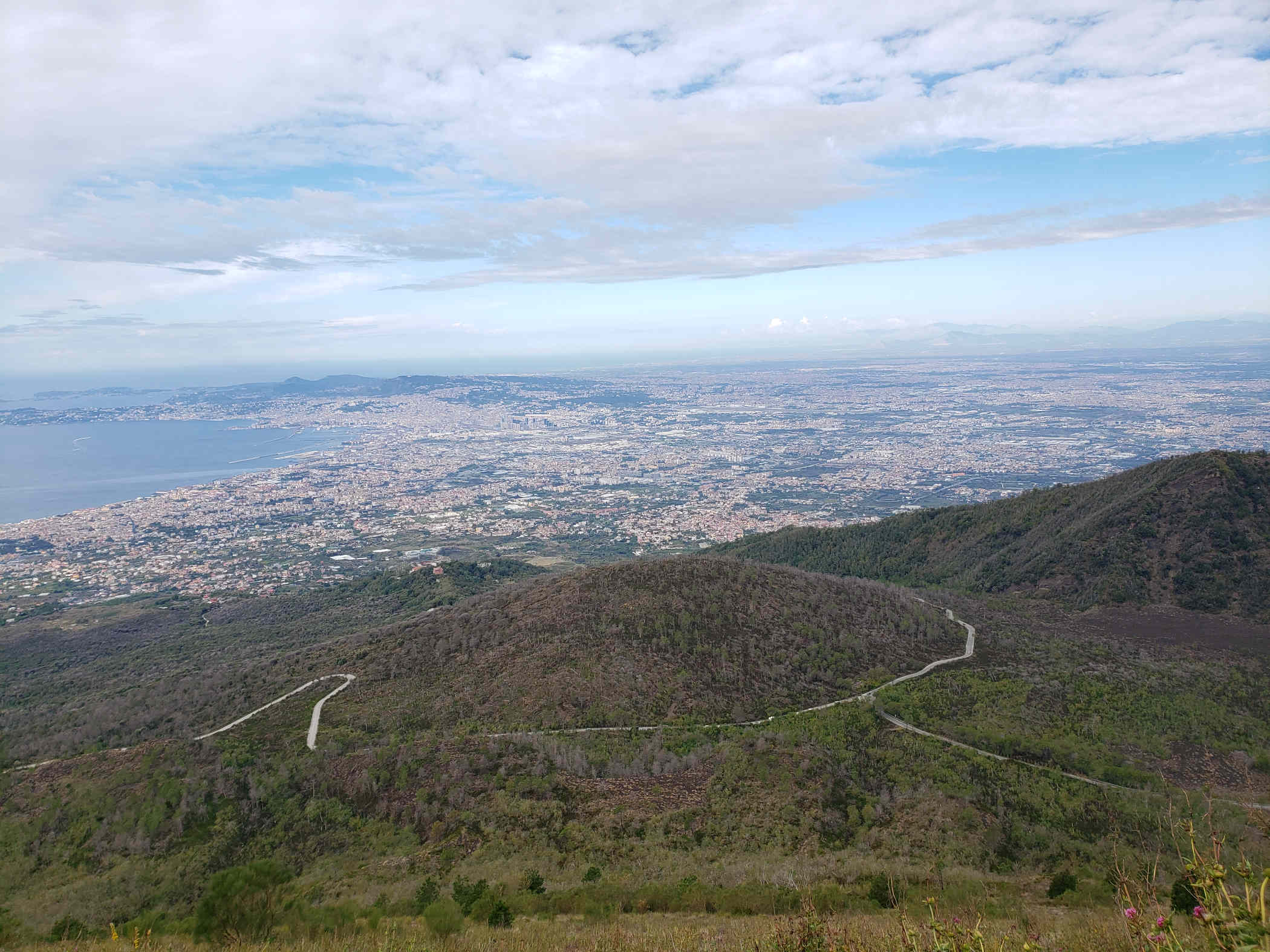
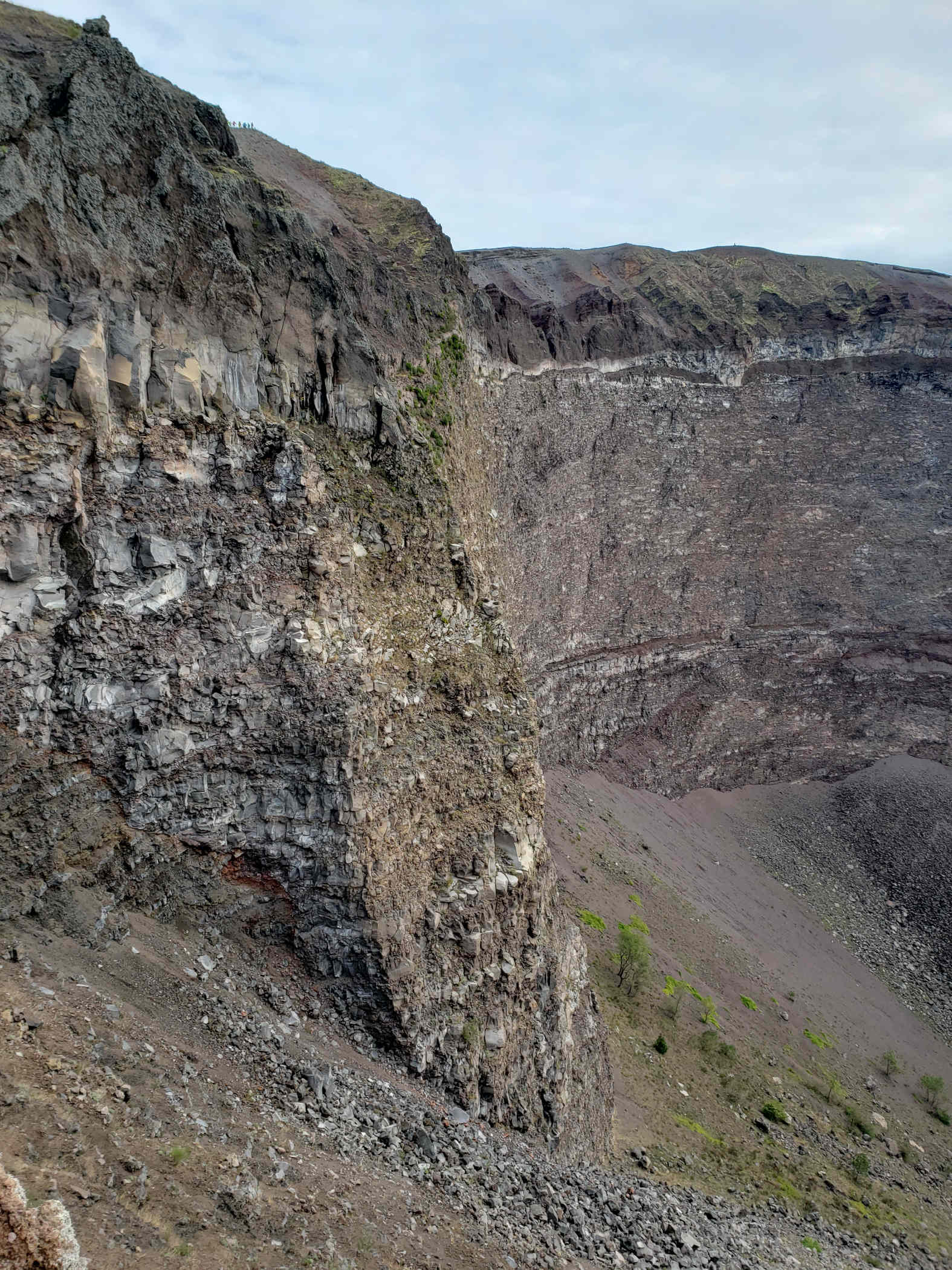
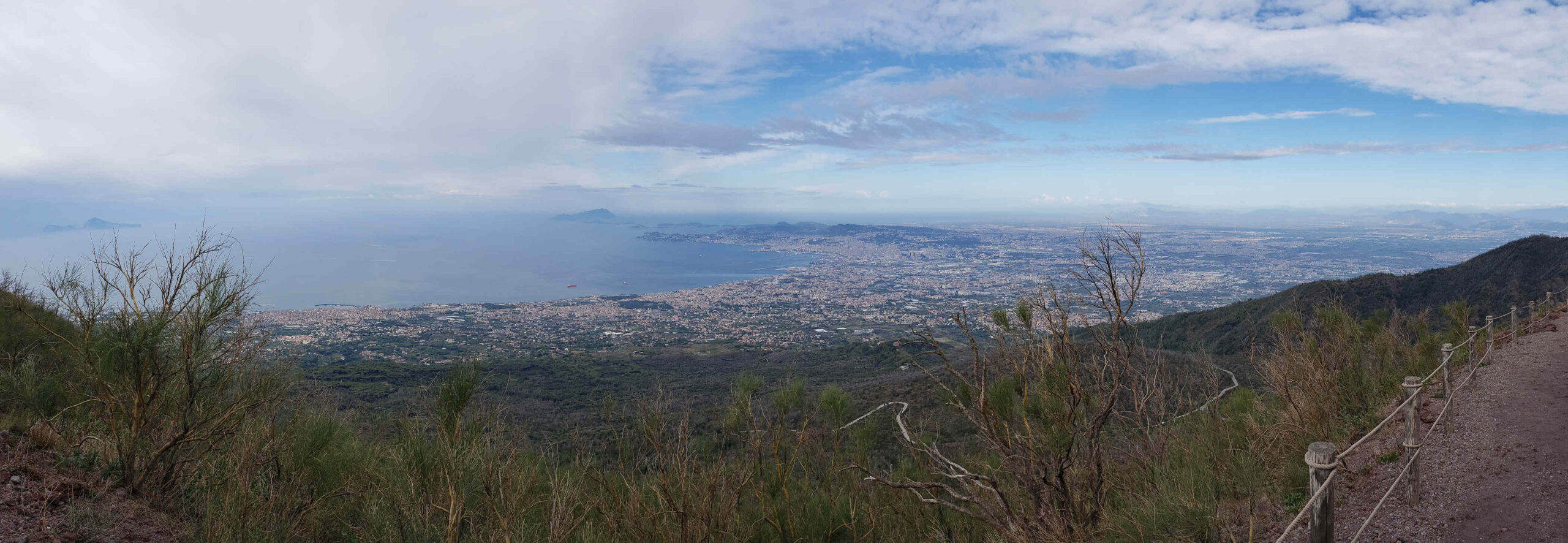
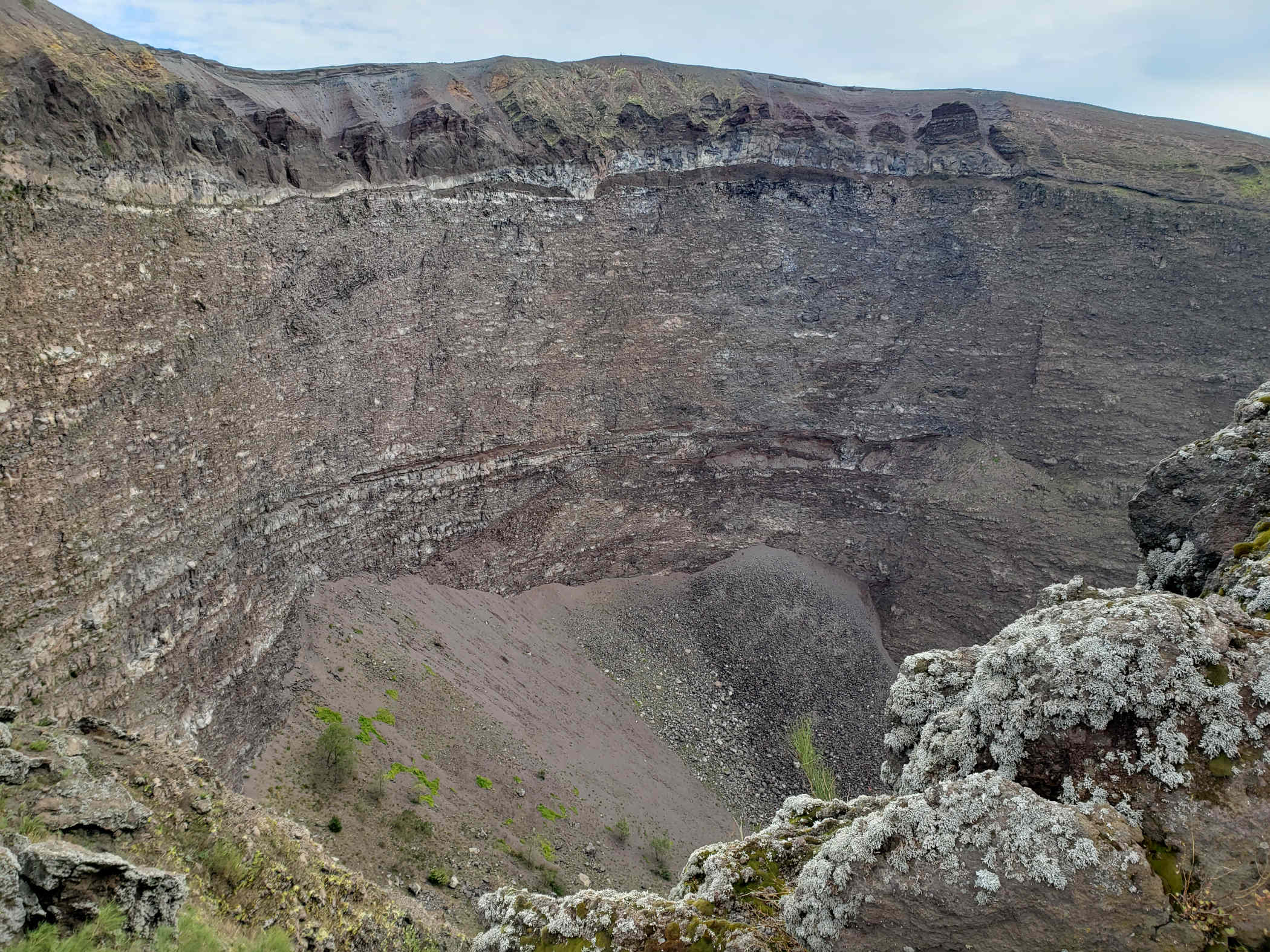
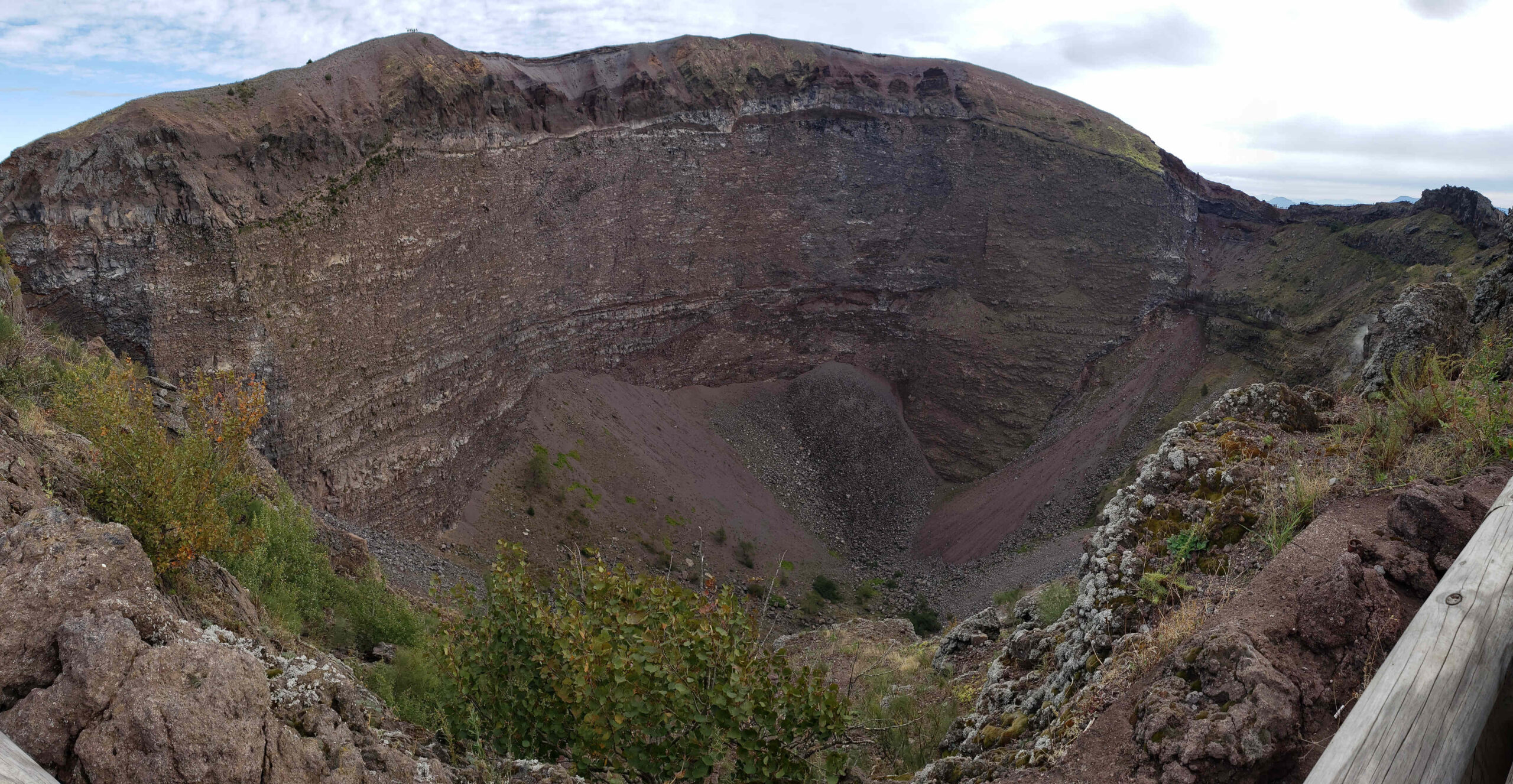
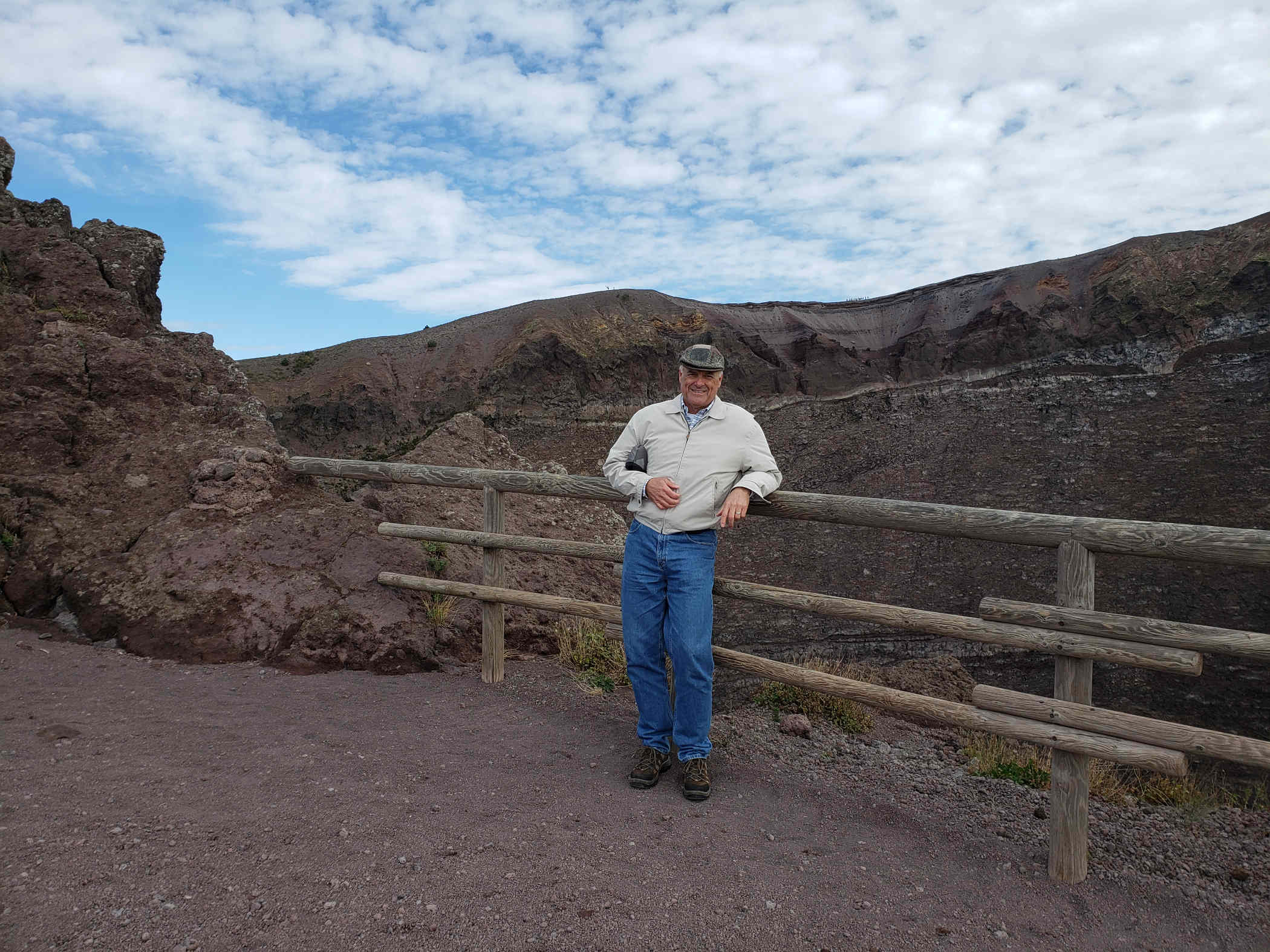
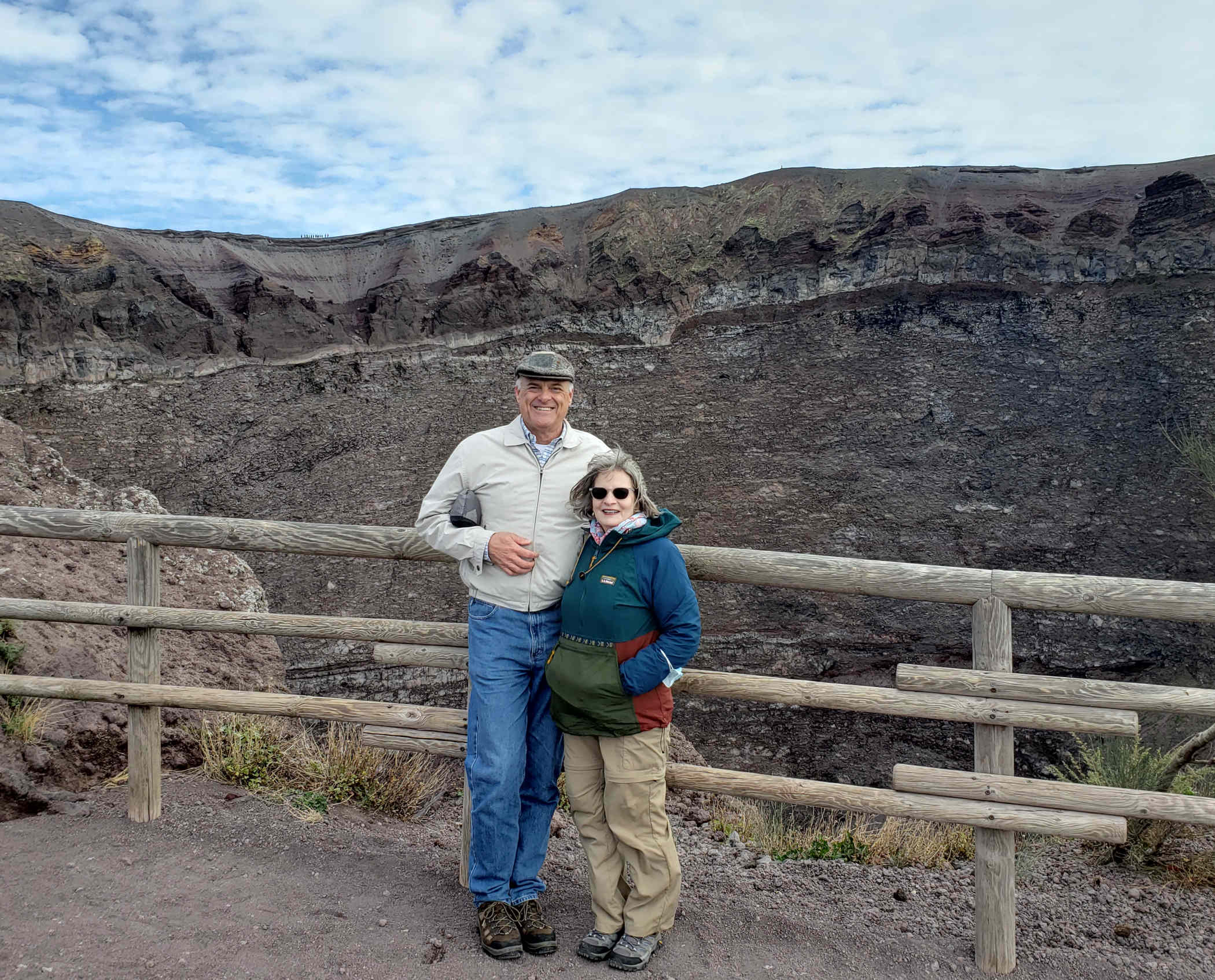
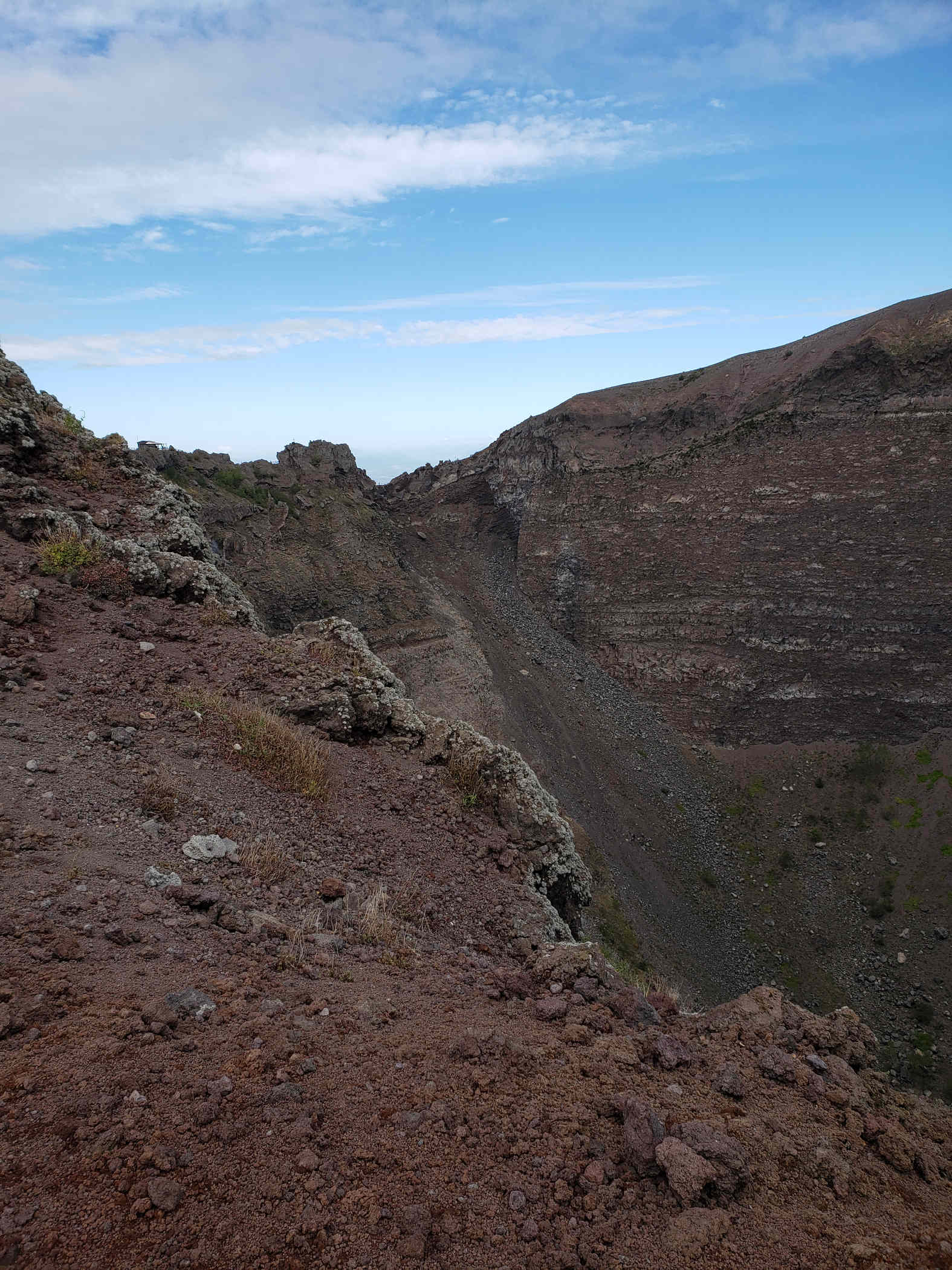
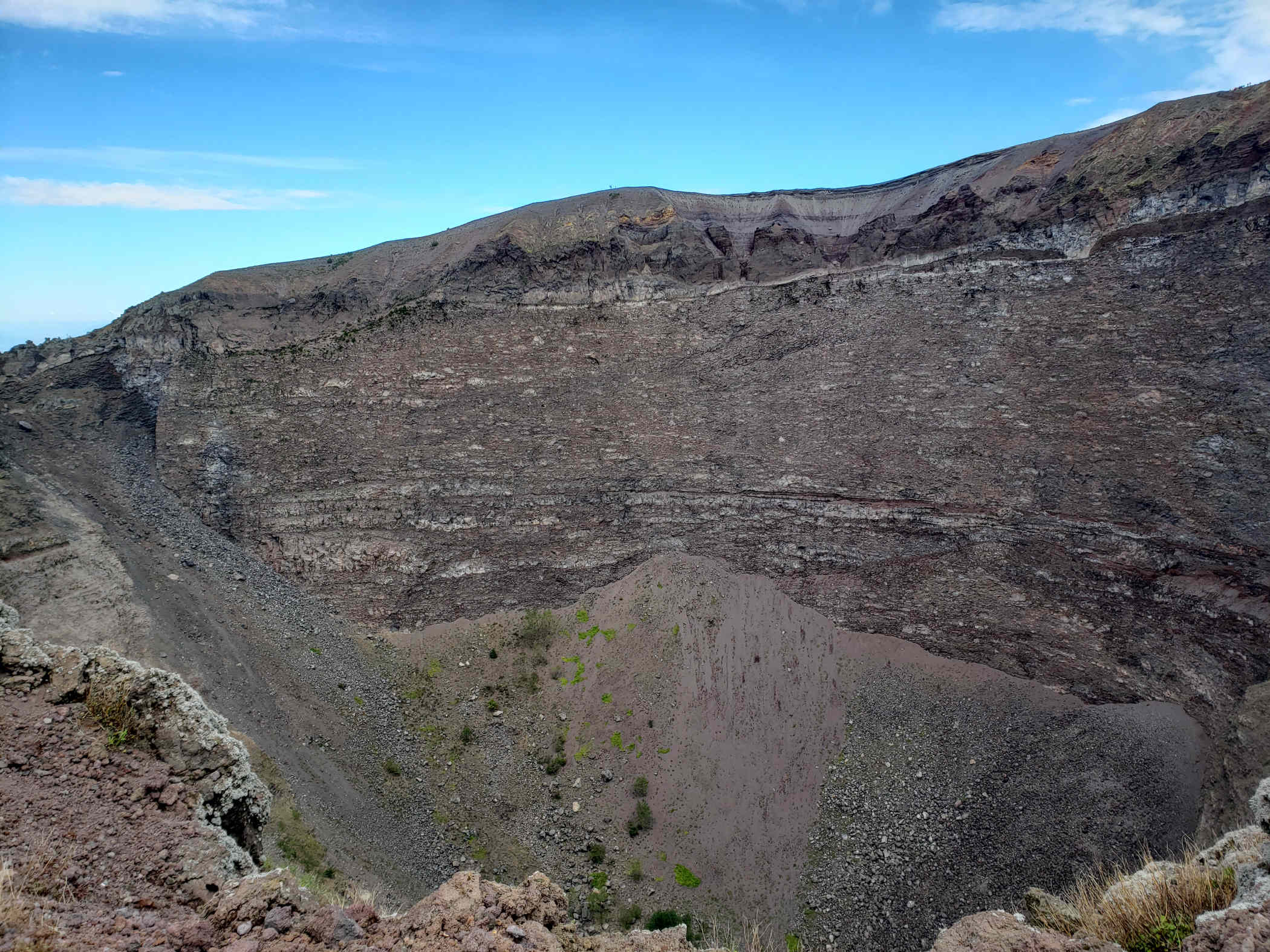
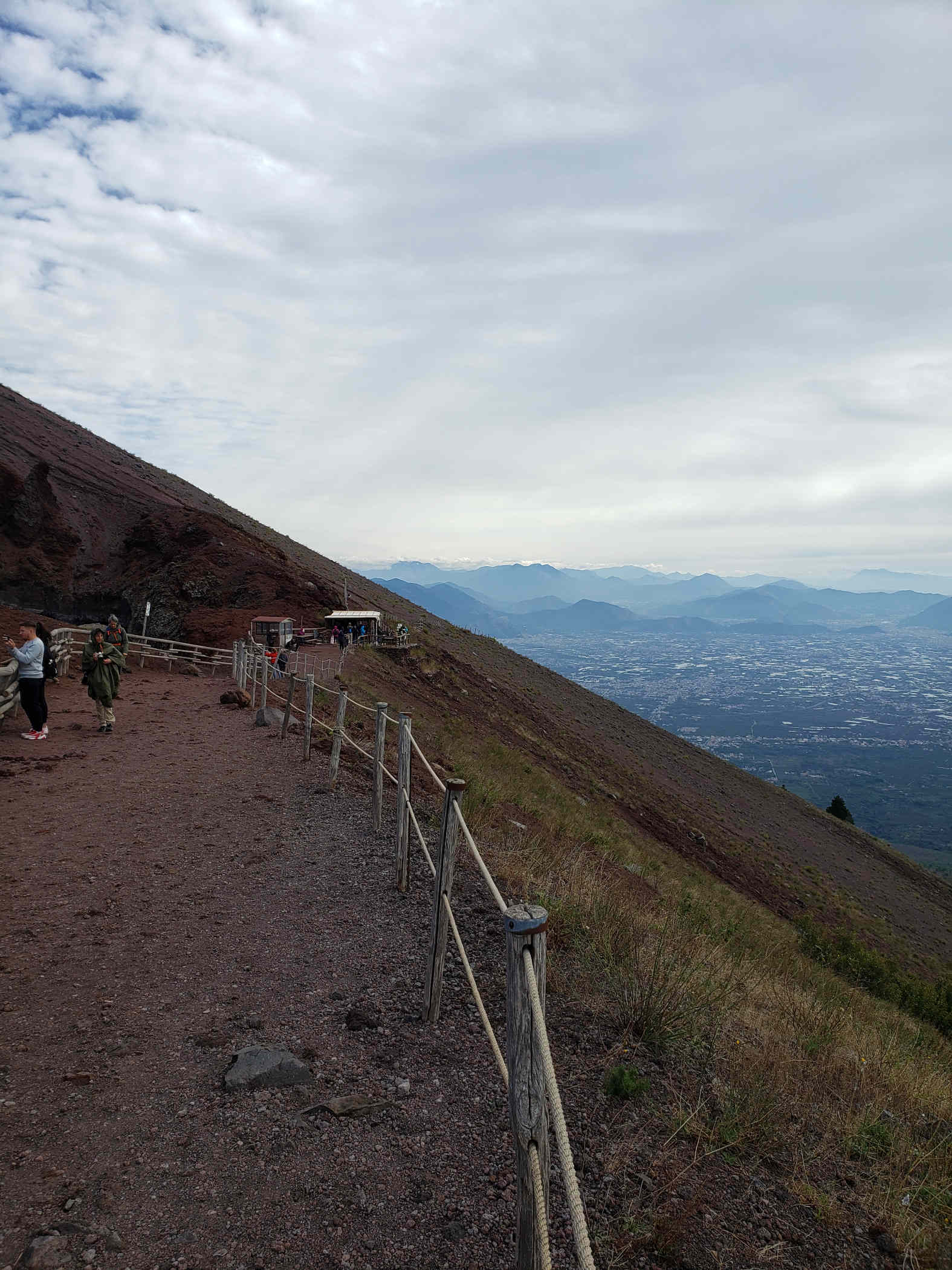
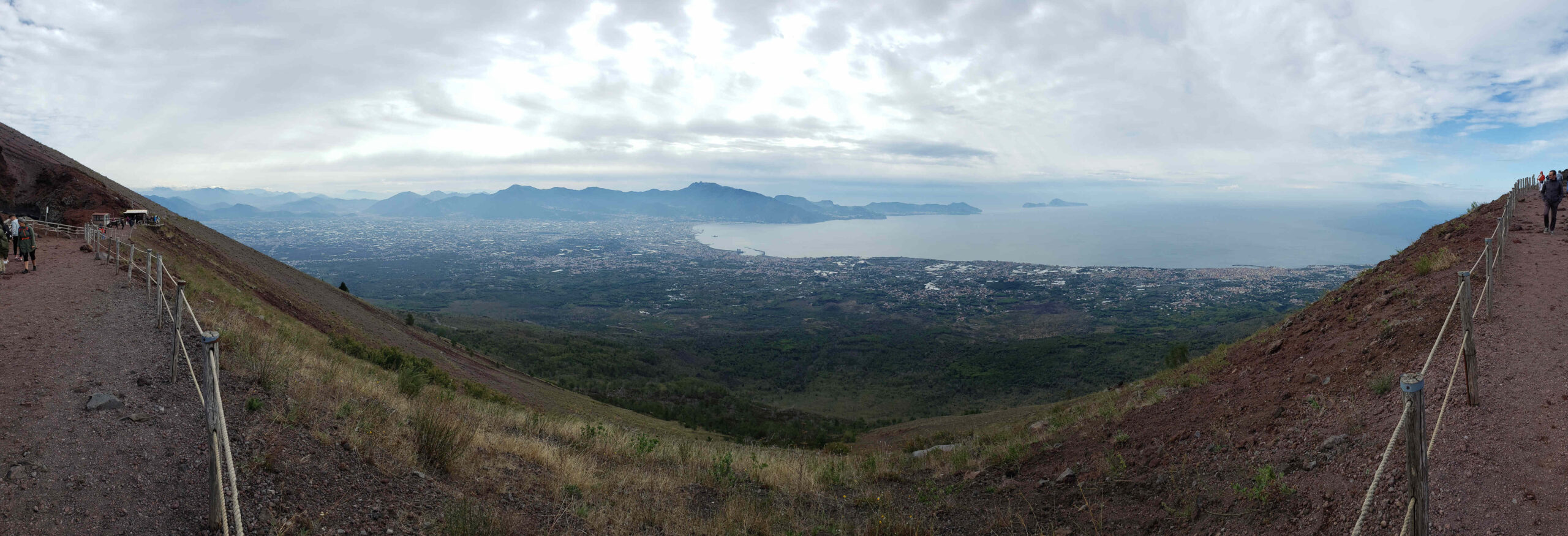
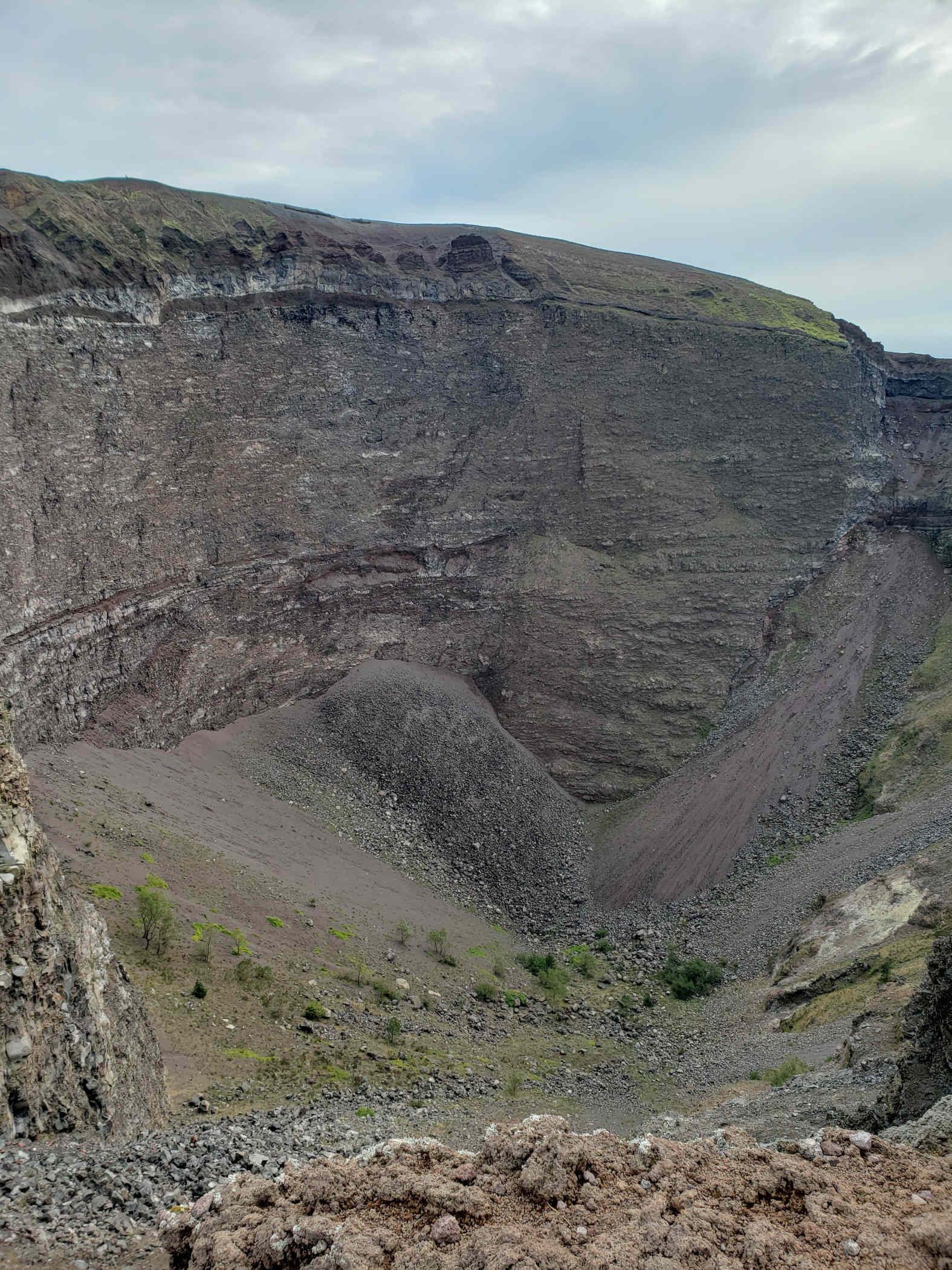
It is possible to hike to the summit of Mount Vesuvius. For a modest fee you can put on your best walking of hiking shoes and climb to the summit from within a few hundred meters in elevation. On a clear day, it is totally worth it, not only for the views of Naples but also for that curious look at what might be going on inside the crater. Our guide Federica, from MindTheNap Tours, along with Pasquale our driver took us there for the day. She has excellent knowledge of the volcano, its history and all its eruptions, as well as other off beat information regarding the consecration of the volcano by the church.
The Climb
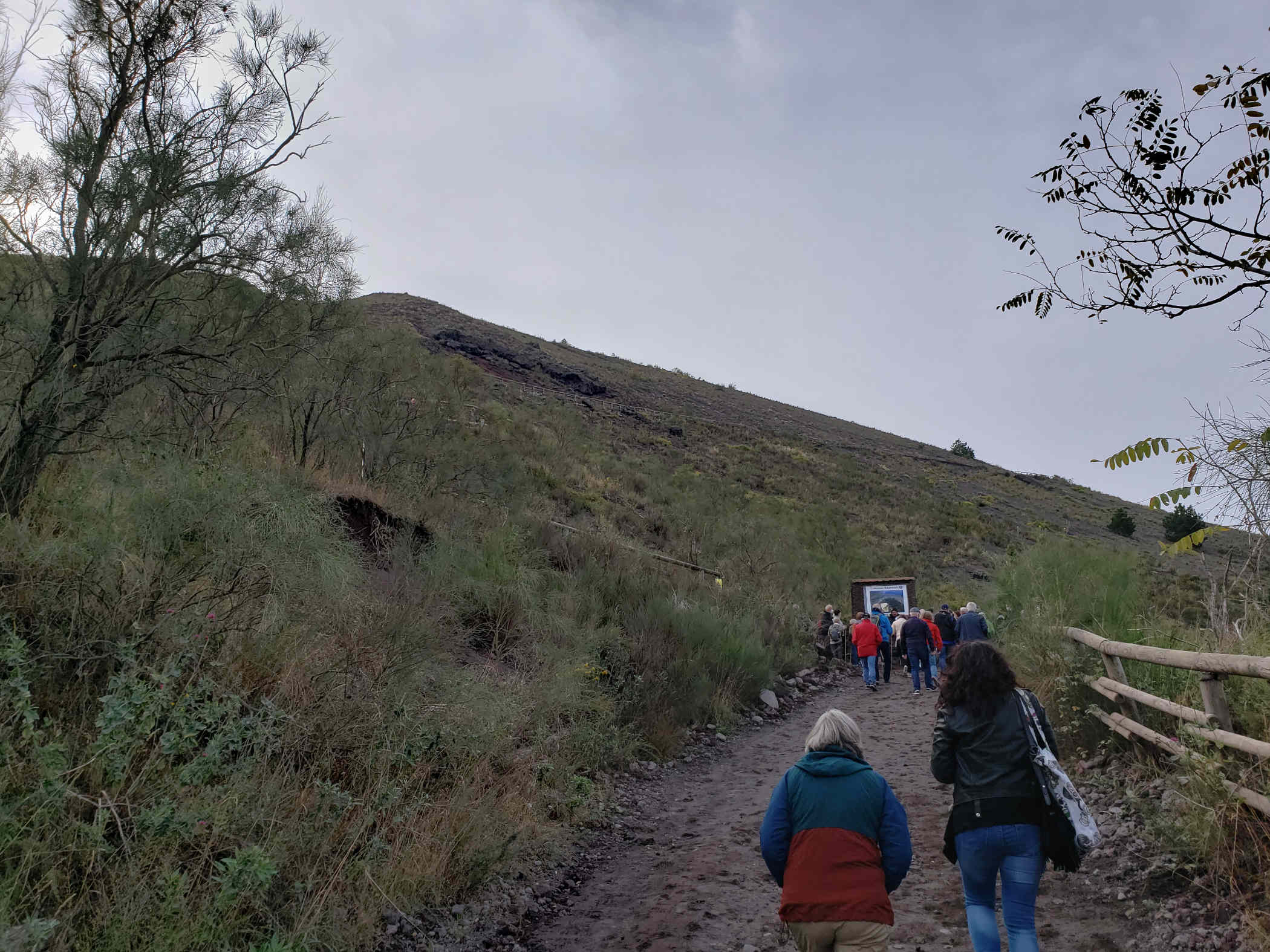
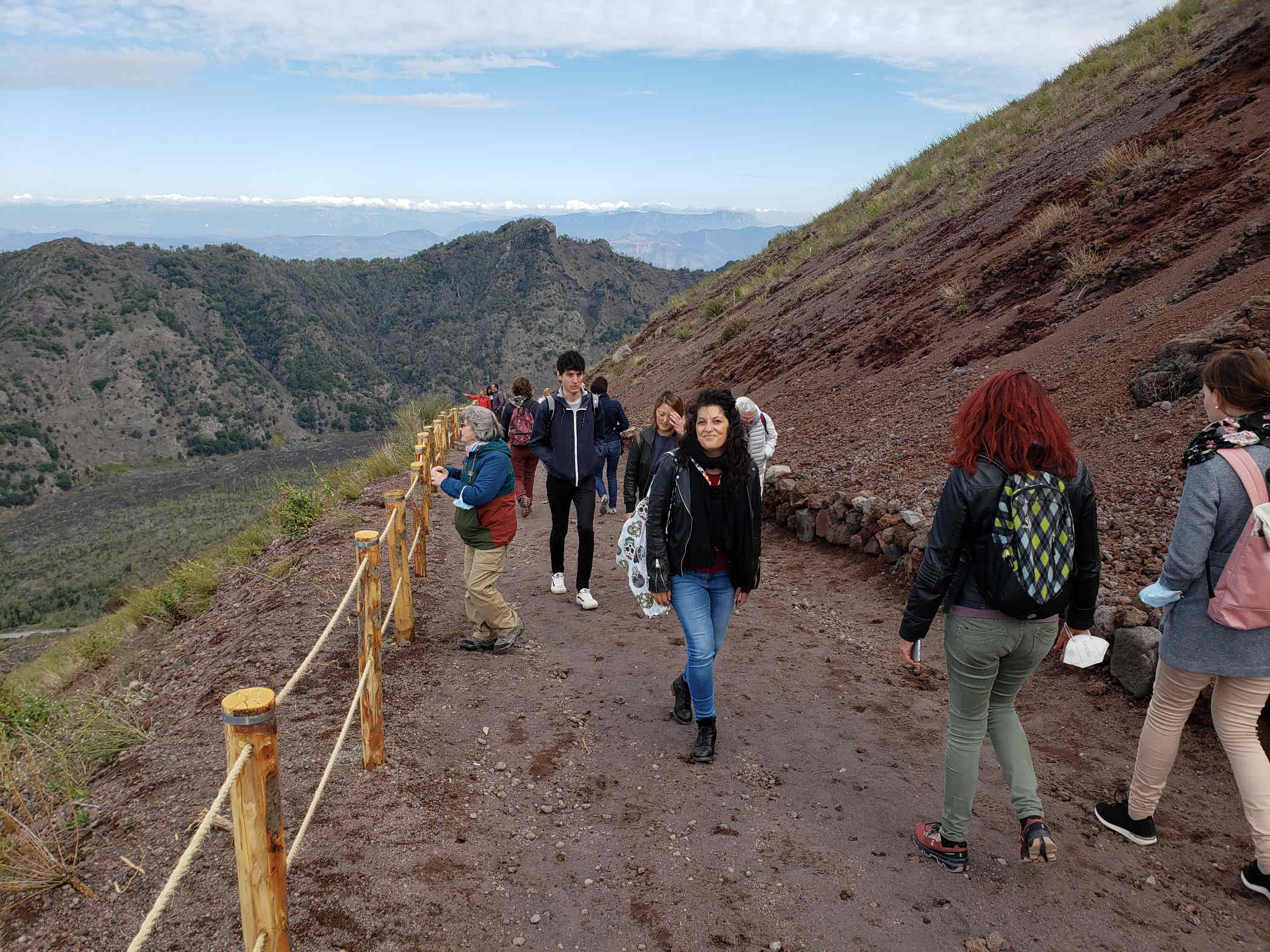
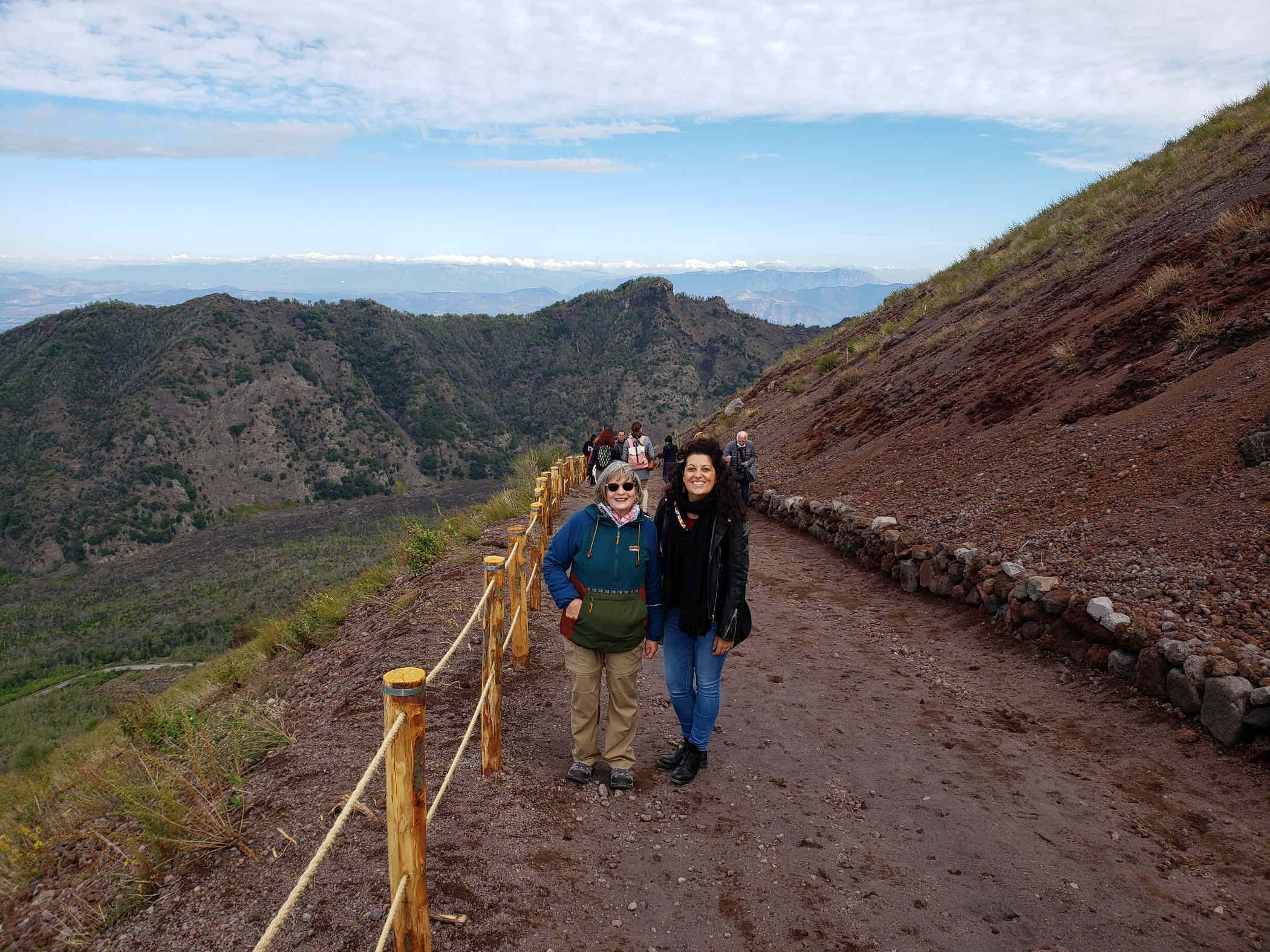
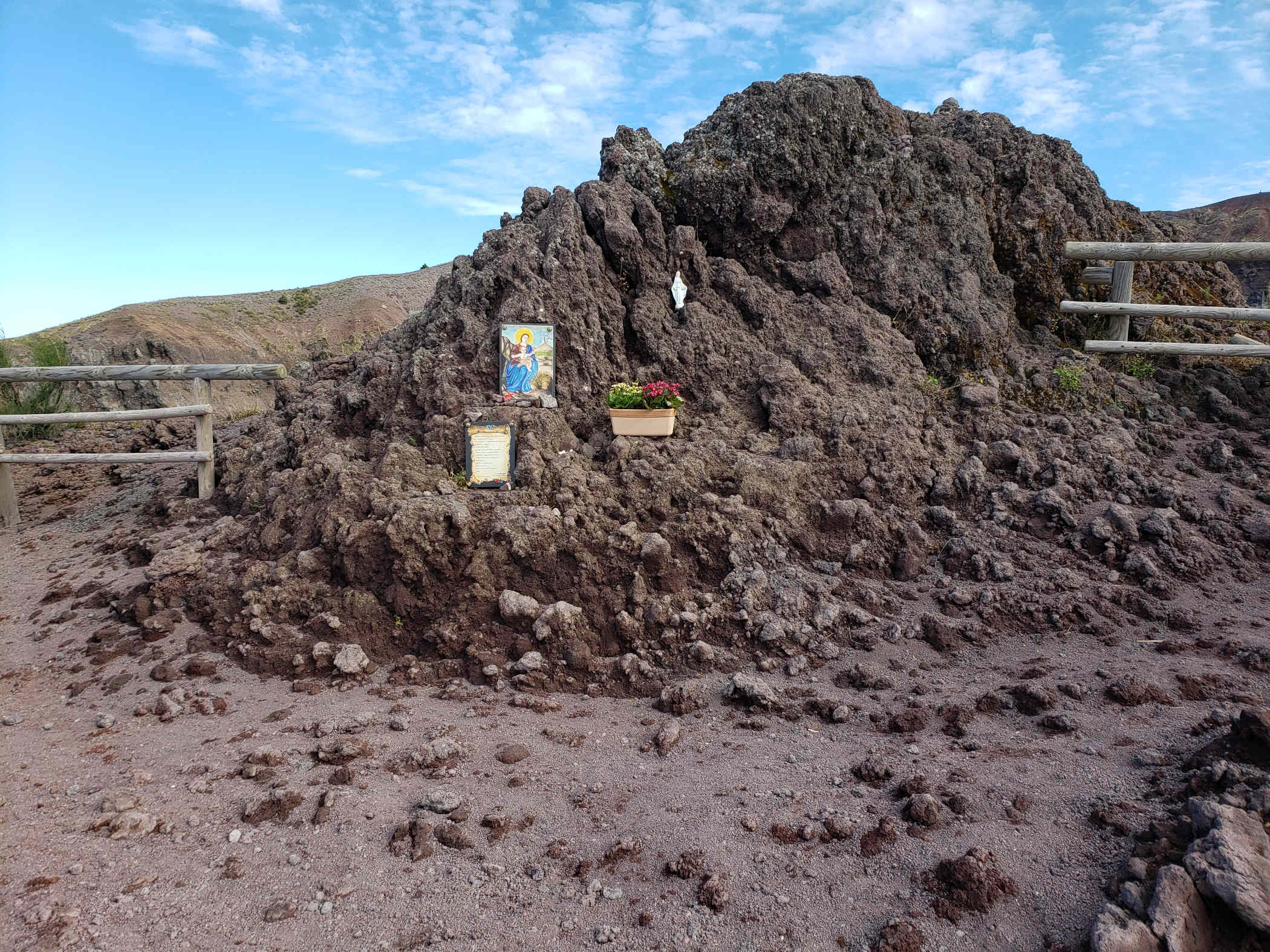
The ascent is not very rigorous, there are plenty of old people walking up and they do hand out walking sticks, if you are so inclined. Now, on to the slide show for which I have not captioned anything, since most should be self explanatory.
Patti and Federica walking behind me
Patti and Federica
Erick
Erick and Patti on top of Vesuvius
A few short videos while we were on the way up and at the summit. The audio is probably terrible, it was very windy and cold that day.
The trip up, around the crater wall and back down took us a little over an hour. But it can be completed faster, we just happened to take our time. The drive there on the other hand depends on traffic, which as you can imagine can be problematic in Naples.
Wineries
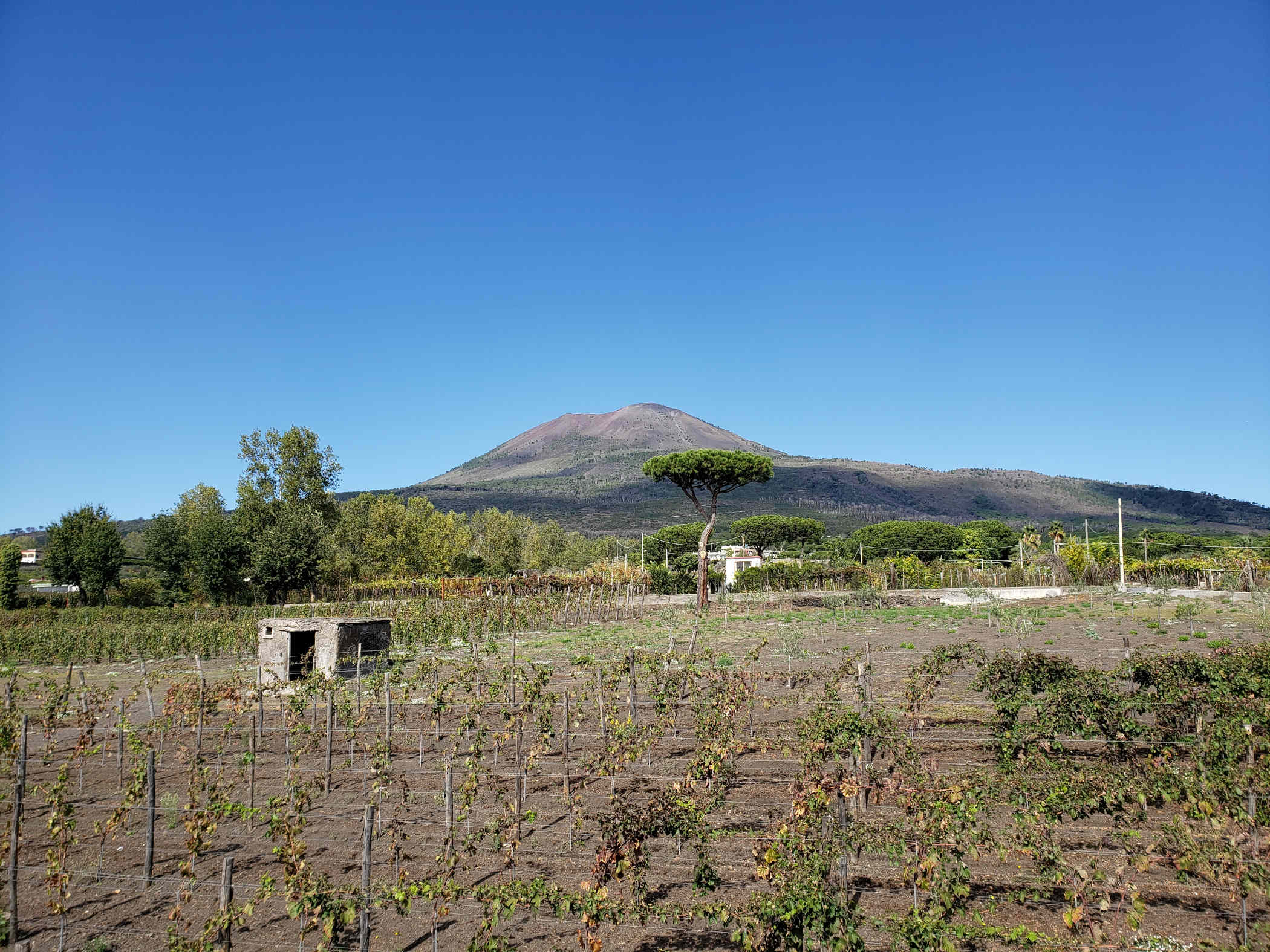
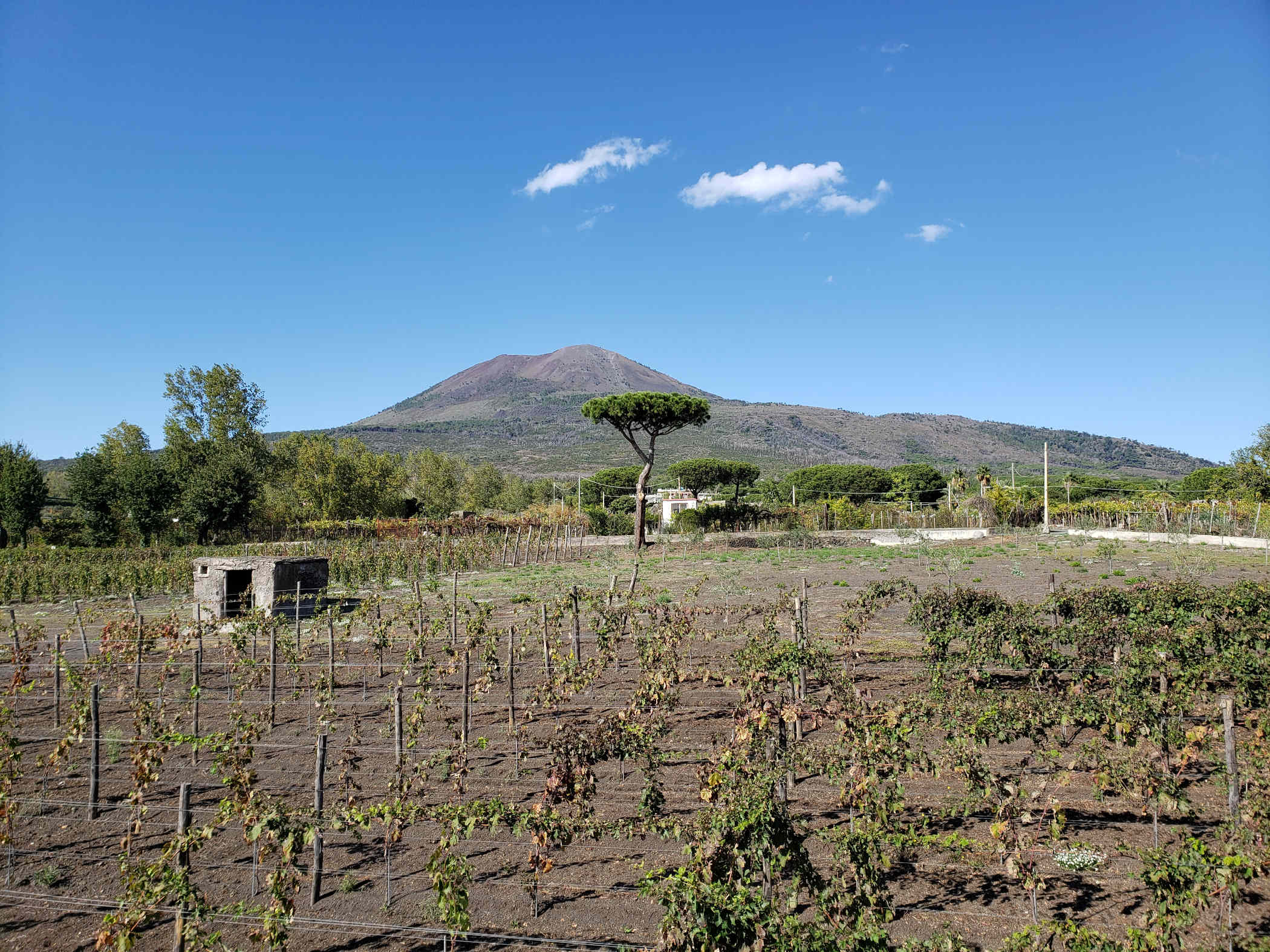
At the foot of Mount Vesuvius are many wineries, which grew certain types of varietals, aglianico, caprettone and piedrosso, that work well with the volcanic soils.
Cantina Del Mount Vesuvio Winery Russo Family
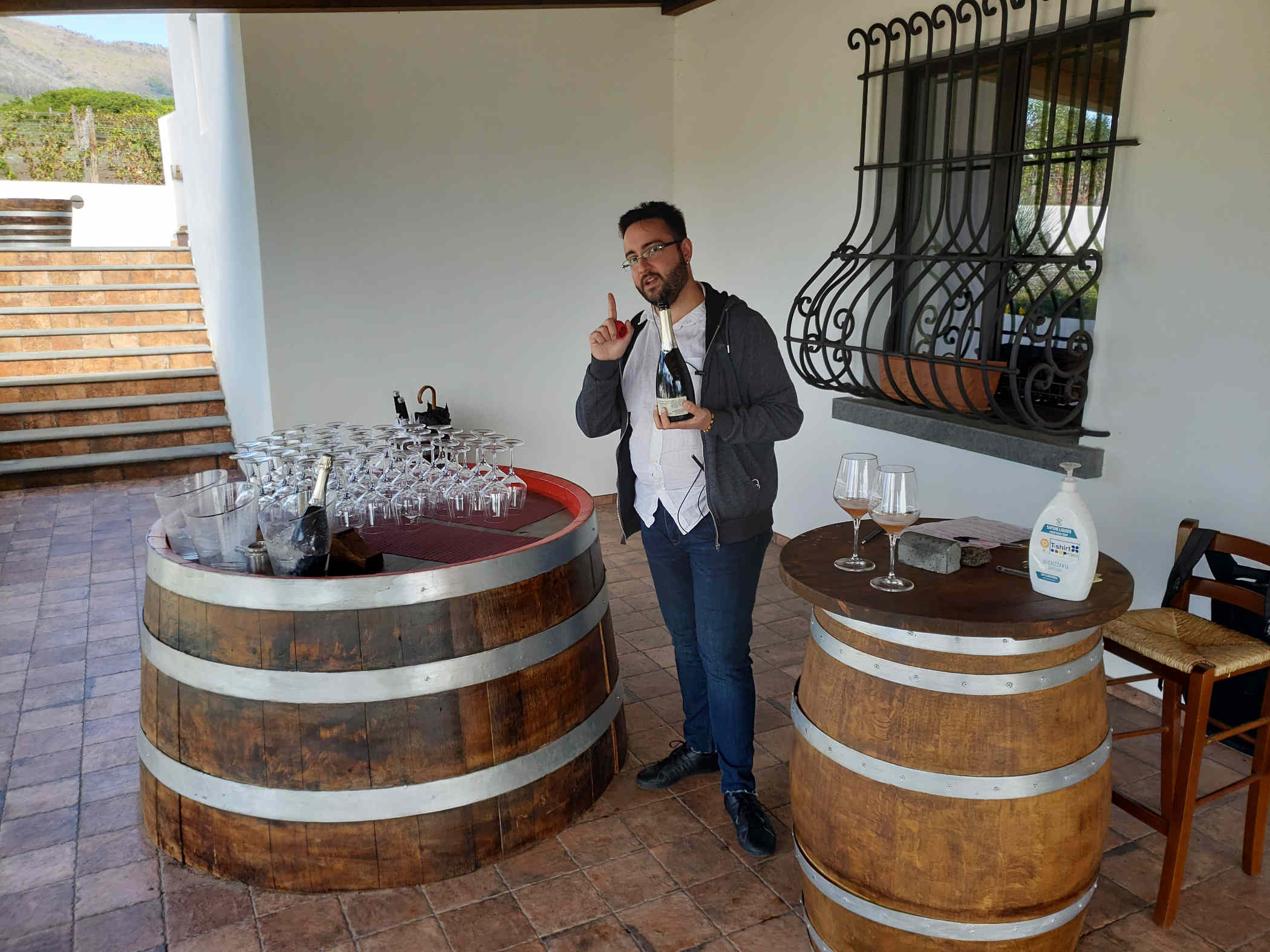
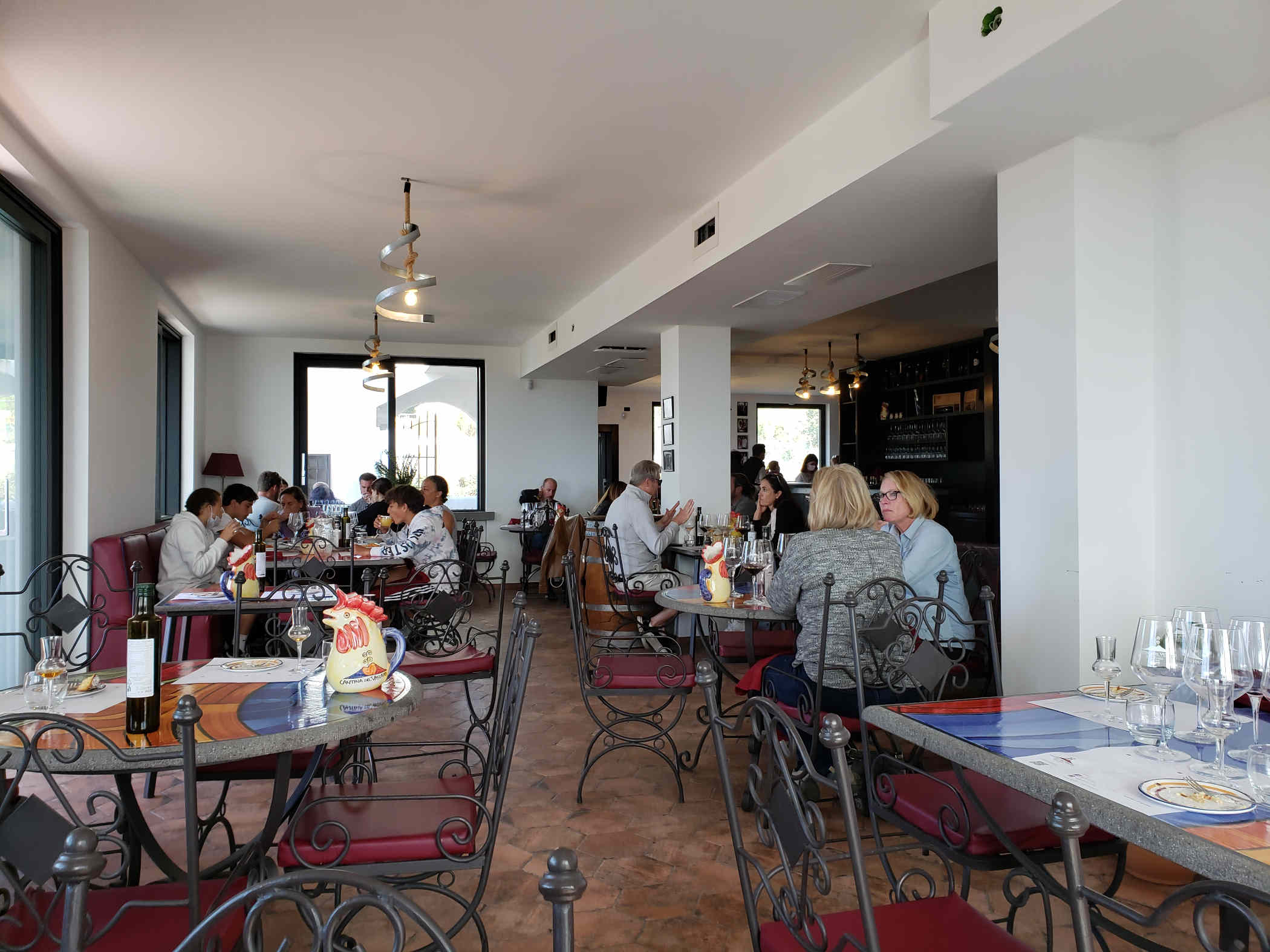
After our ascent up the mountain we spent a few hours in the afternoon having a tour, wine tasting and lunch at the Cantina Del Mount Vesuvio Winery of the Russo Family. We tasted the following before and during our lunch.
– Rosè Sparkling Wine (100% aglianico grapes)
– Lacryma Christi del Vesuvio Bianco DOP (100% caprettone grapes)
– Lacryma Christi Rosato DOP (100% piedirosso grapes)
– Lacryma Christi del Vesuvio Rosso DOP (100% piedirosso grapes)
– Lacryma Christi Riserva (80% piedirosso e 20% aglianico grapes)