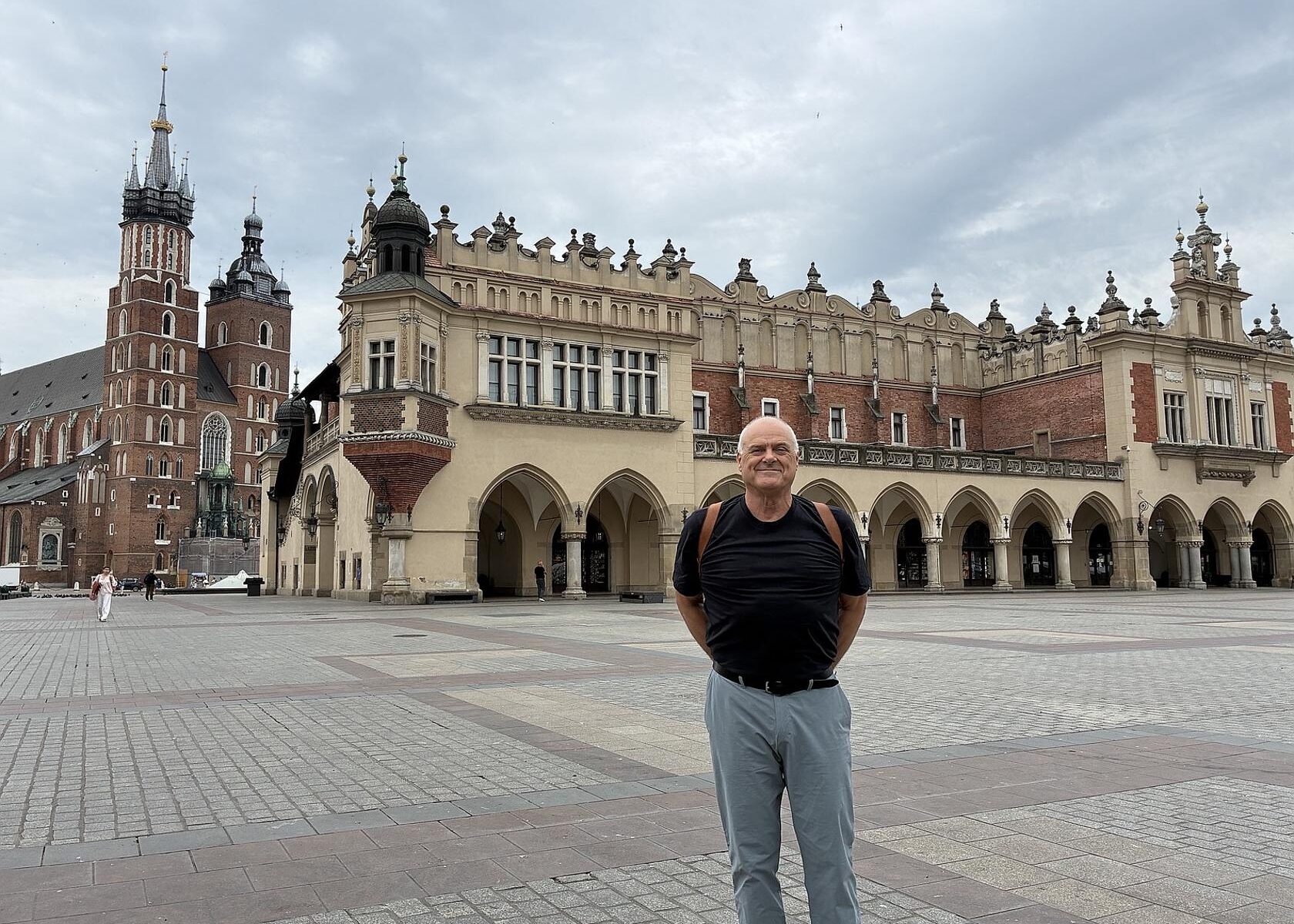
In the Lesser Polish Voivodeship of Poland and cradled by the Vistula River is the second largest city in Poland, Kraków[1]Pronounced Krakoff.. A vibrant, clean and beautiful city, it currently hides its success as a tourist attraction very well.
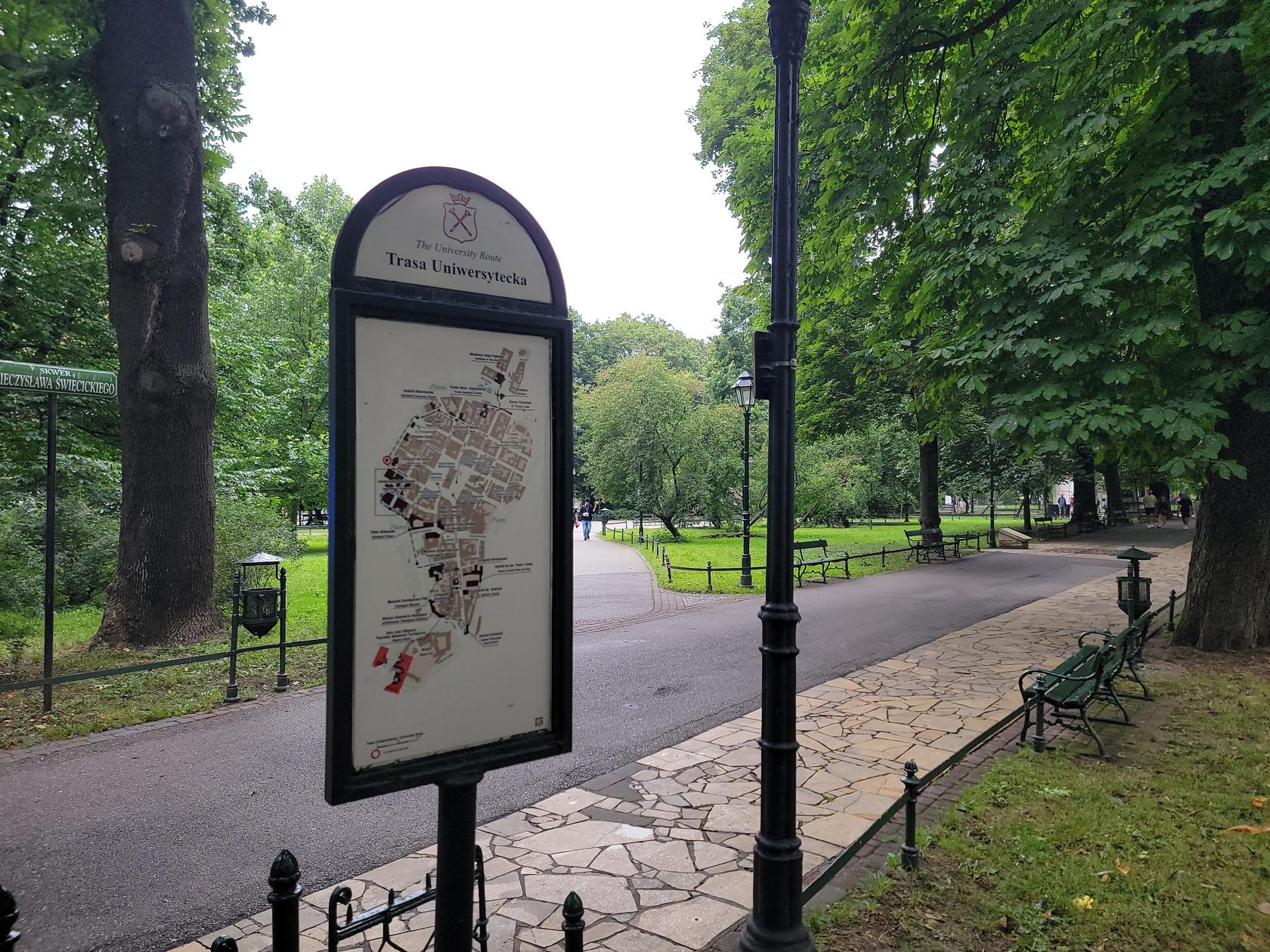
University Route – Park – Kraków, Poland
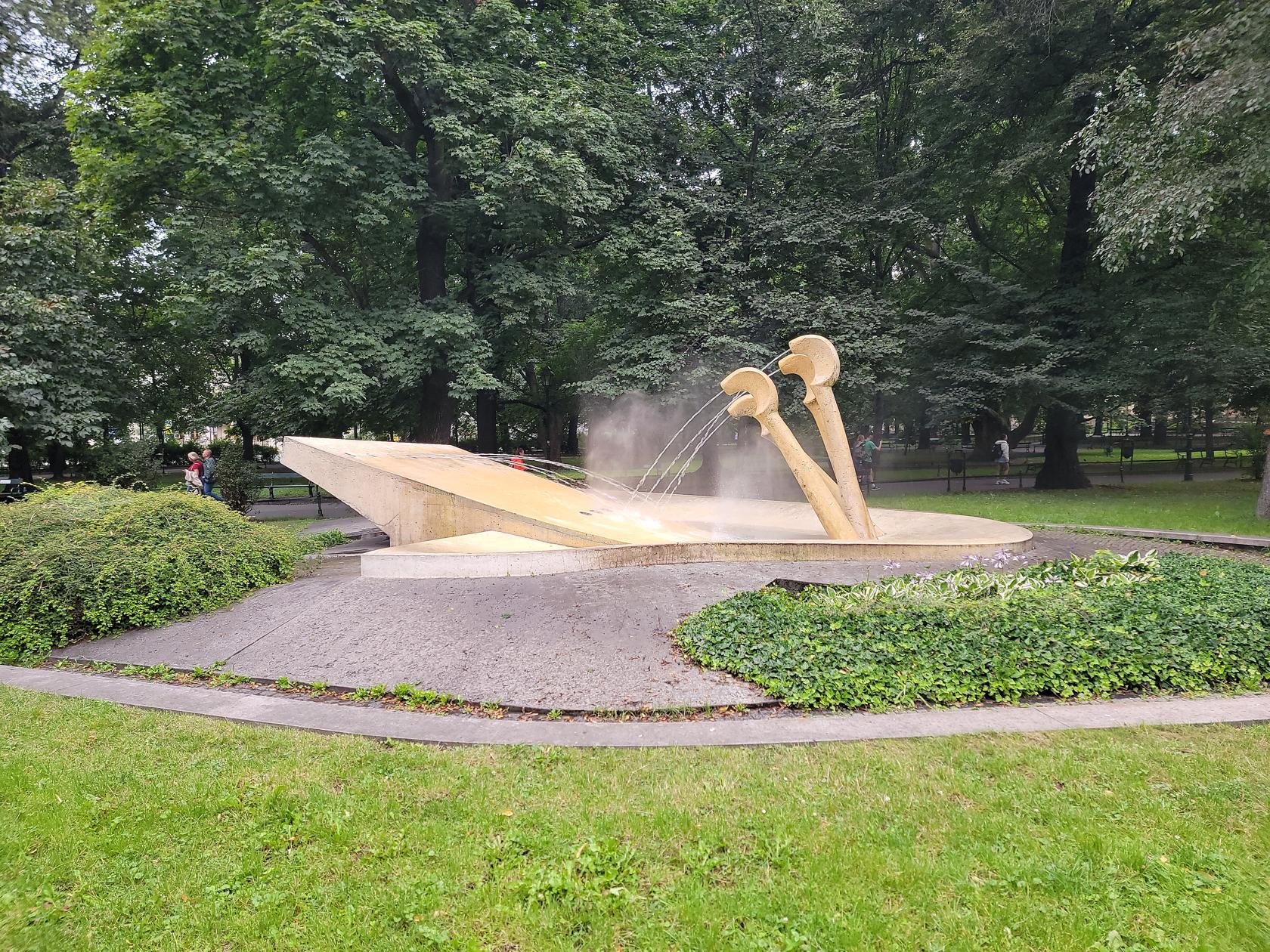
Frederic Chopin Piano Monument – Kraków, Poland
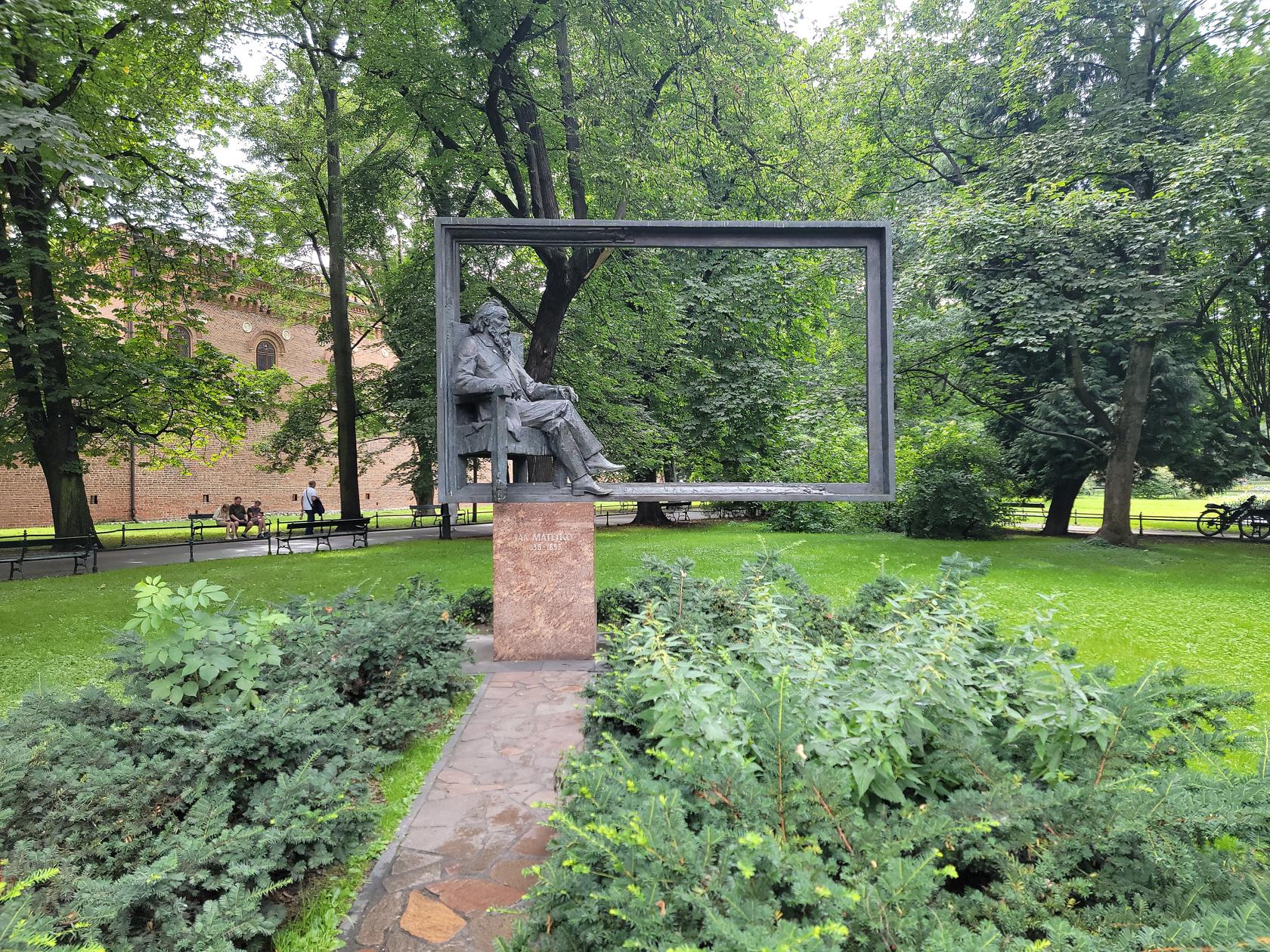
The Statue of Jan Matejko – Kraków, Poland
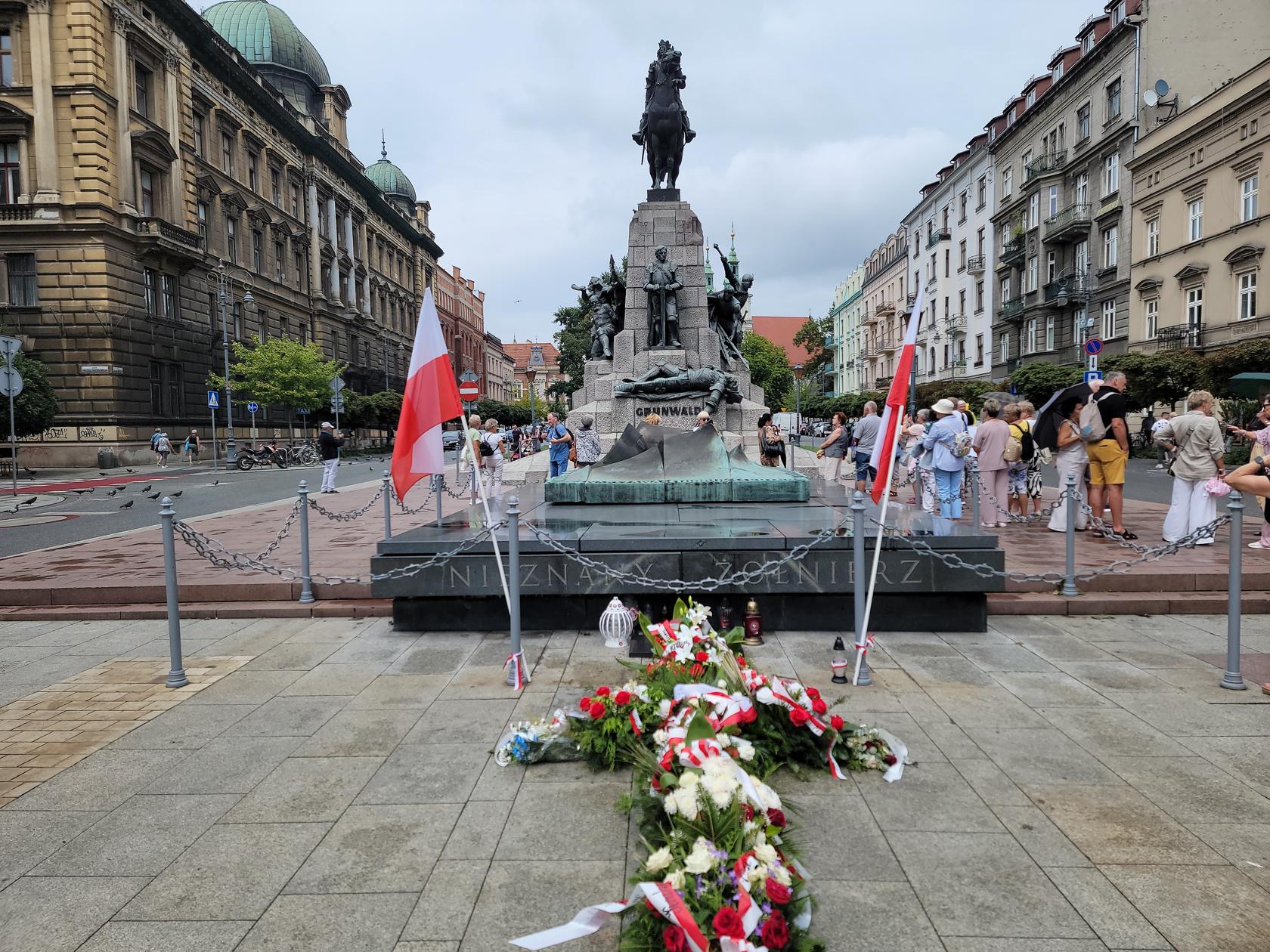
Grunwald Monument – Kraków, Poland
Kraków
One of the oldest towns in Poland, Kraków’s founding goes way back to the eight century. The town was walled during the middle-ages, however most of the wall has not survived modern times.
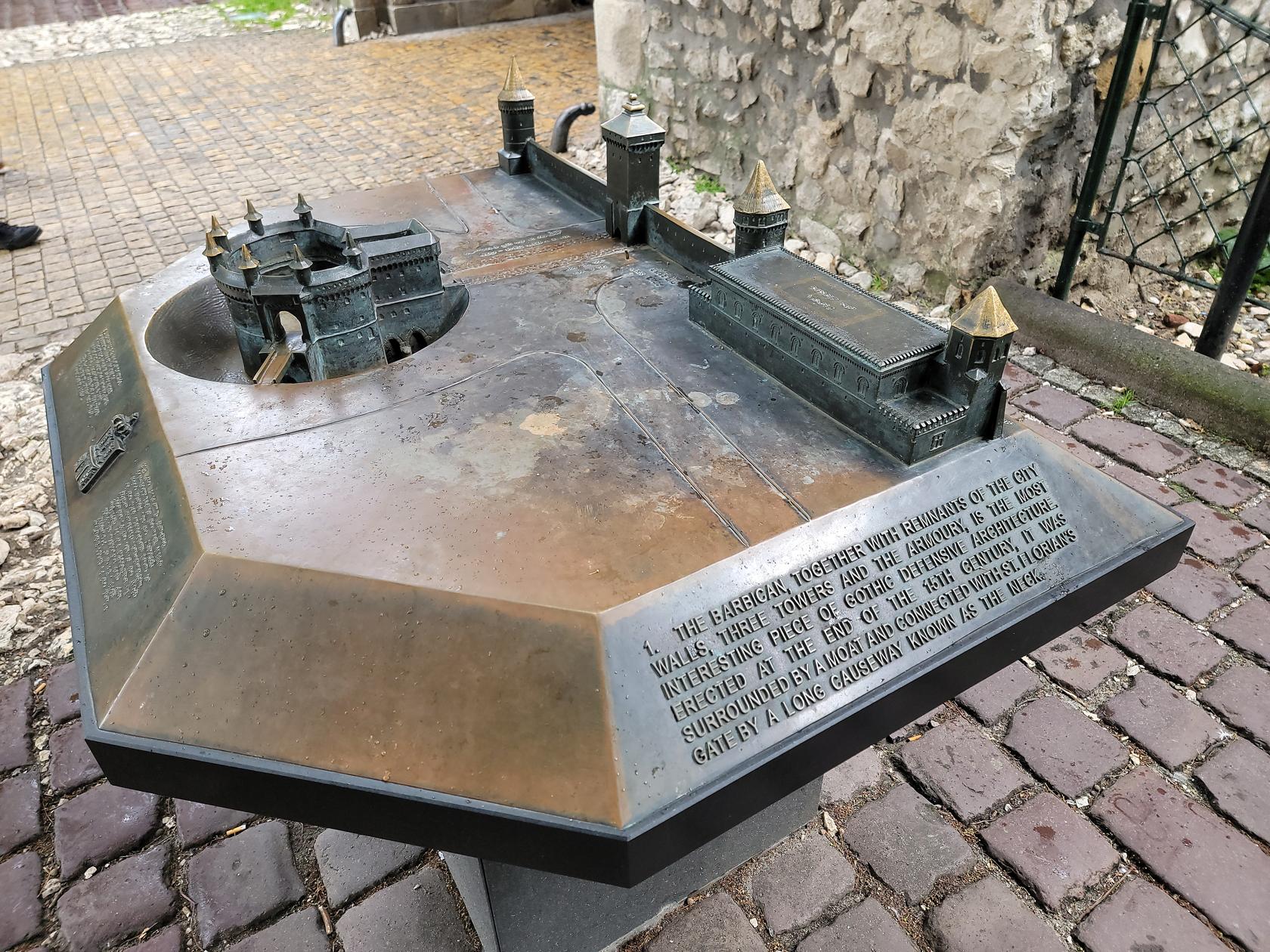
Bronze Depiction – Barbican Museum and Florian Gate and Town Wall – Kraków, Poland
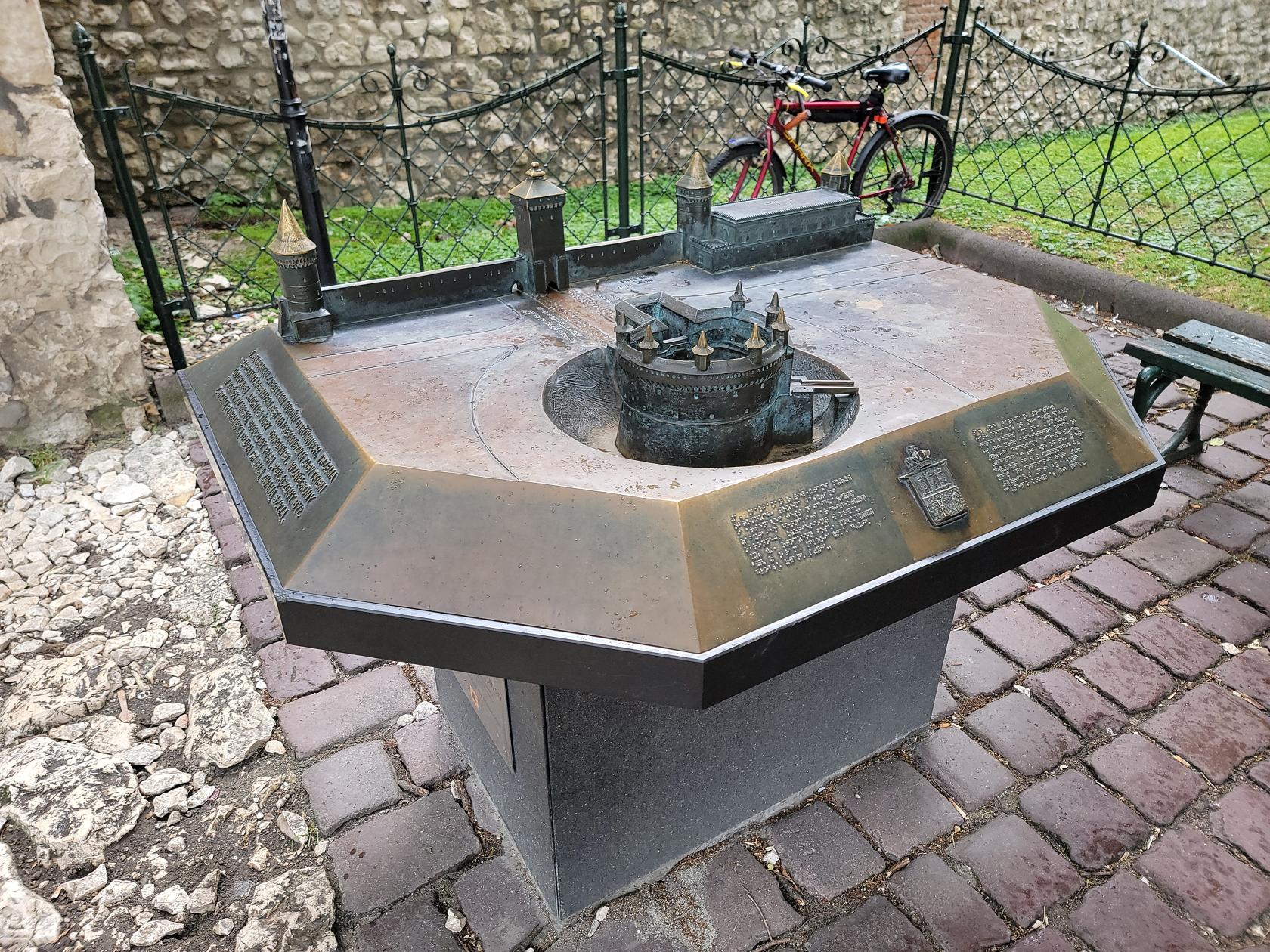
Bronze Depiction – Barbican Museum and Florian Gate and Town Wall – Kraków, Poland
Gate Entrance – Barbican Museum – Kraków, Poland
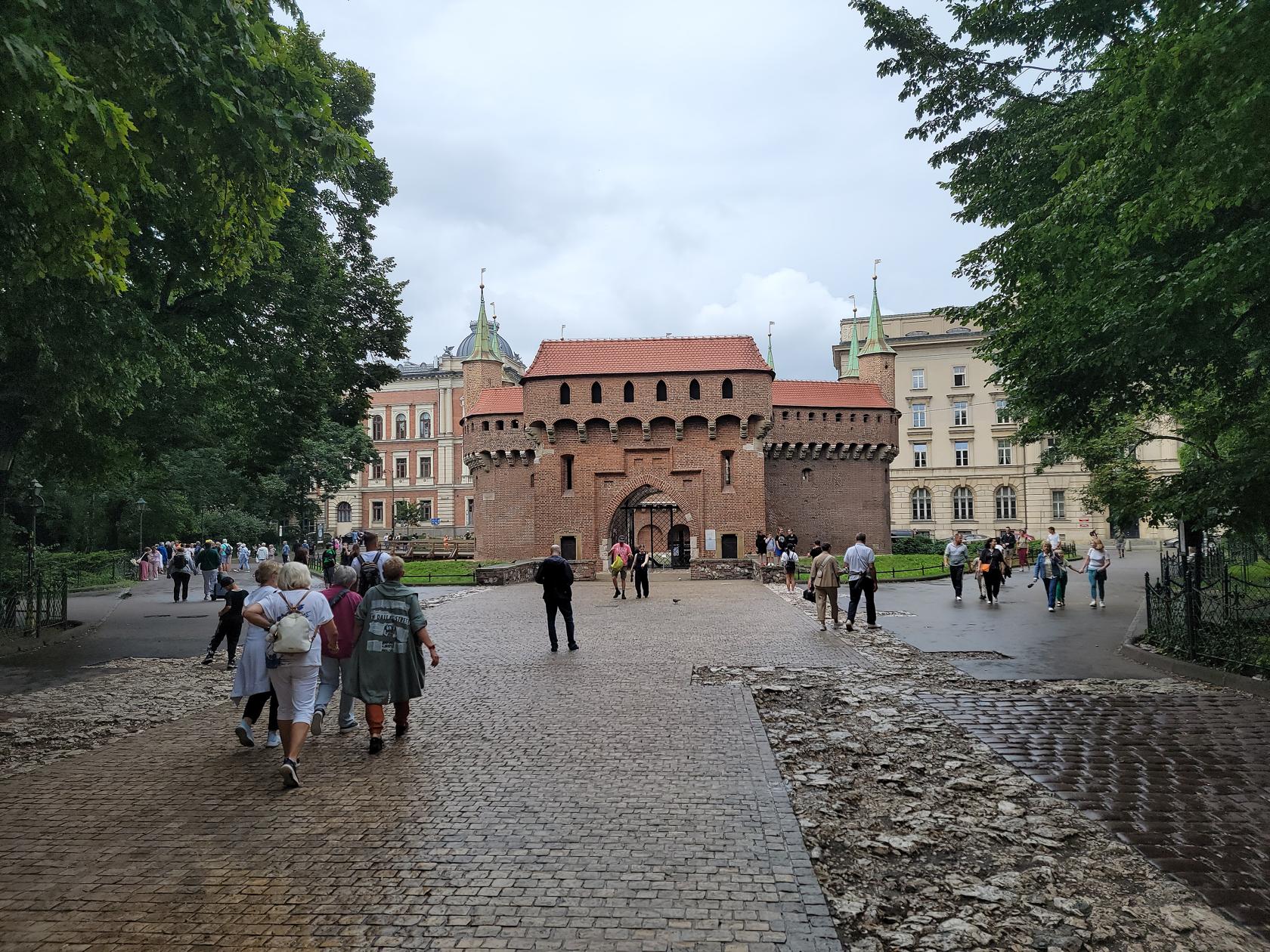
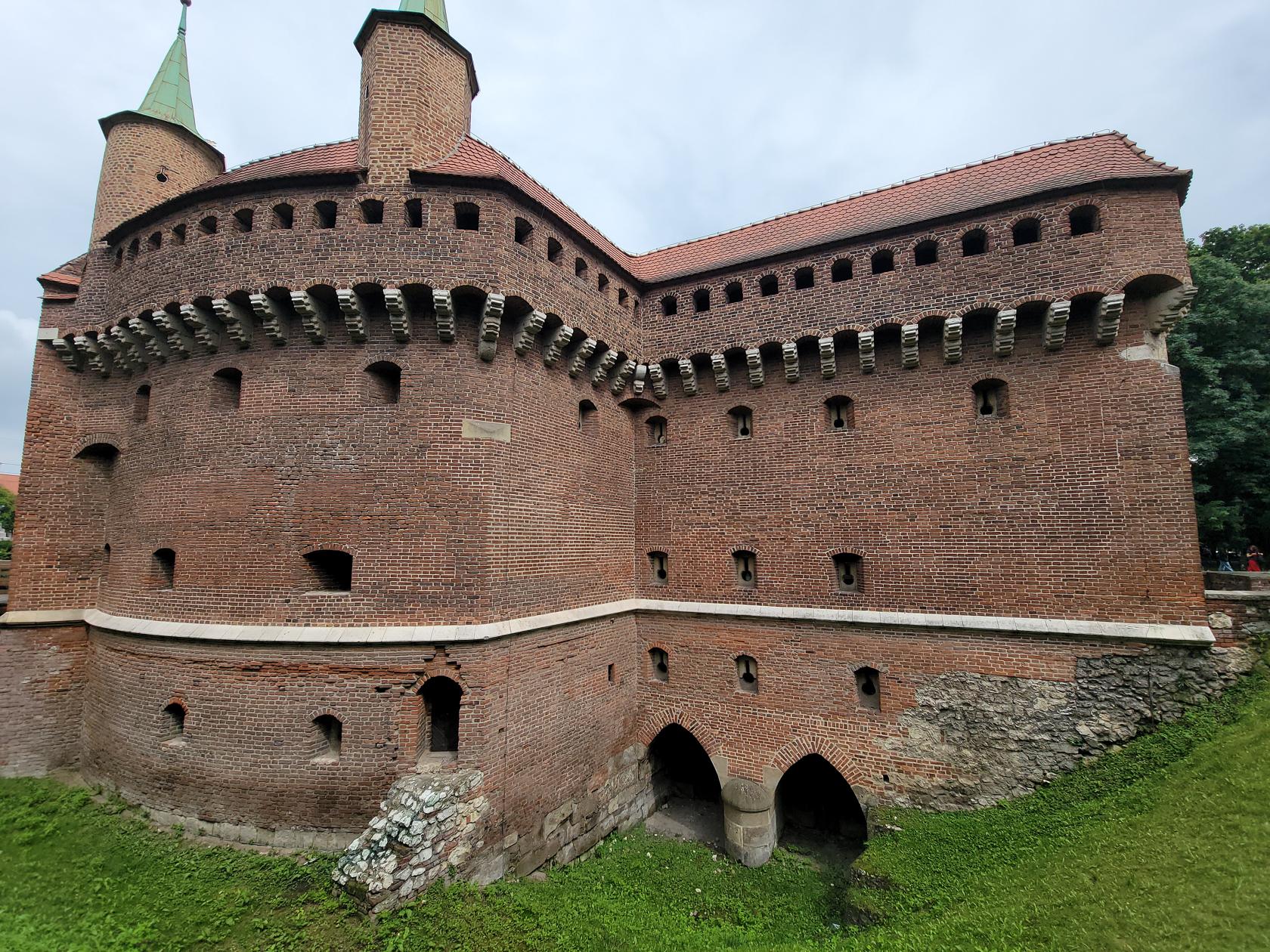
Barbican Museum – Kraków, Poland
There are only a small sections of it still left by the Florian Gate and other less noticeable fragments here and there, as well as monuments to the old towers that once blessed the eastern path of the park that circles the city.
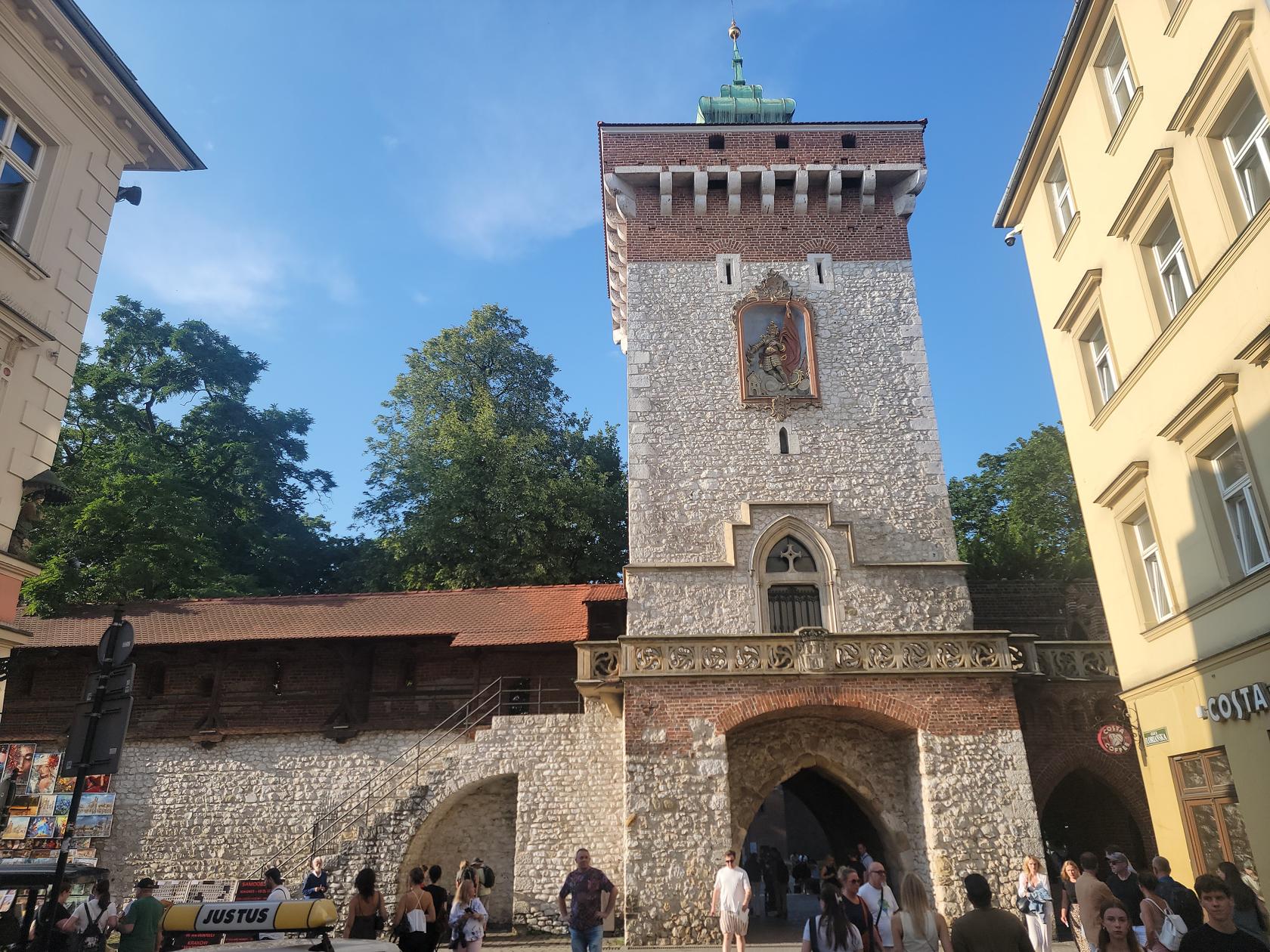
Florian’s Gate – Florianska Street – Kraków, Poland
Most of the old town’s streets accommodate the throngs of tourists that visit each day. In particular, they hide walking the park that circles the city like a lazy dragon.
Arsenal Museum – Pijarska Street – Kraków, Poland
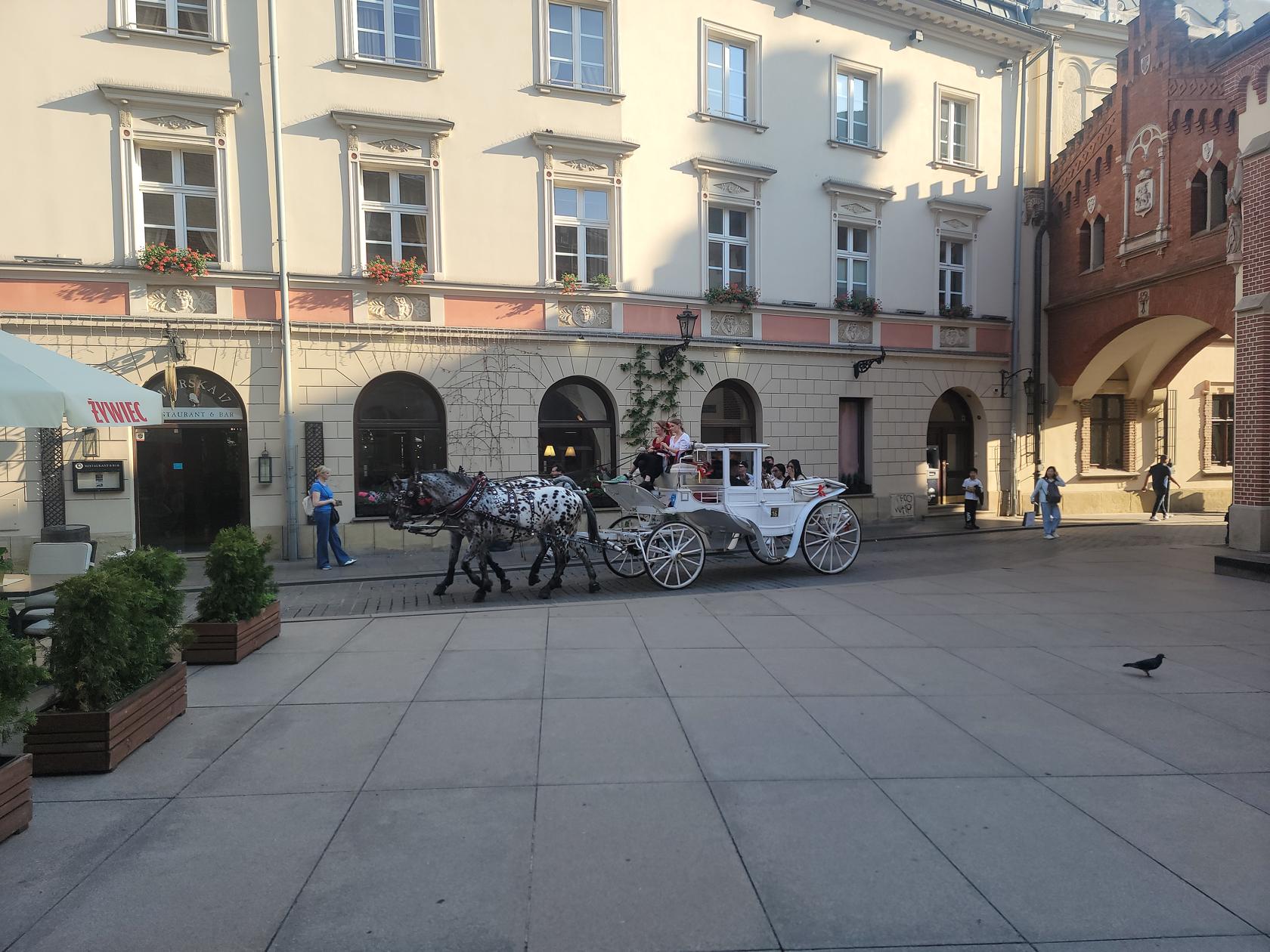
Carriage Rides – Pijarska Street – Kraków, Poland
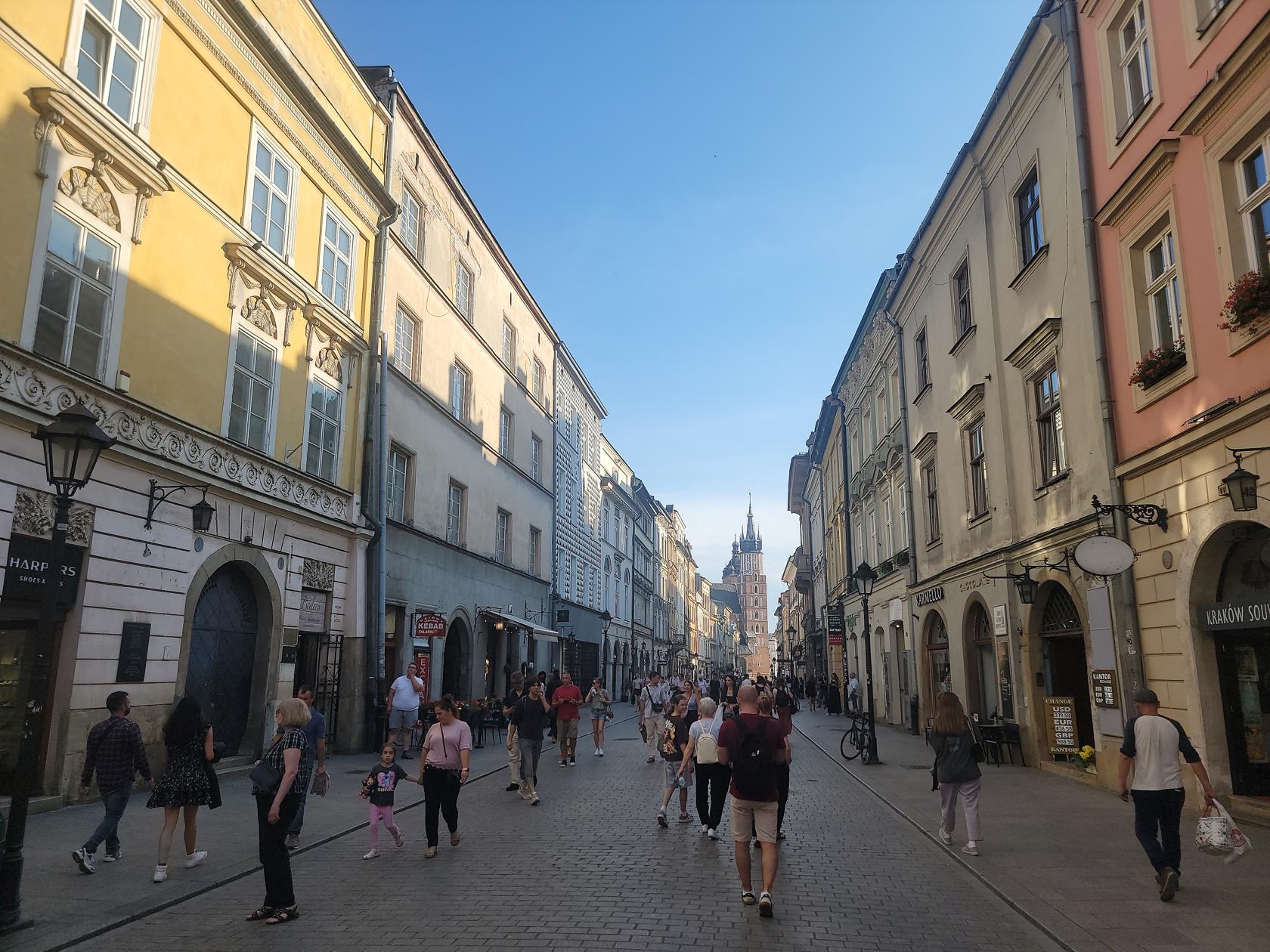
Saint Mary’s Basilica in distance – Pijarska Street – Kraków, Poland
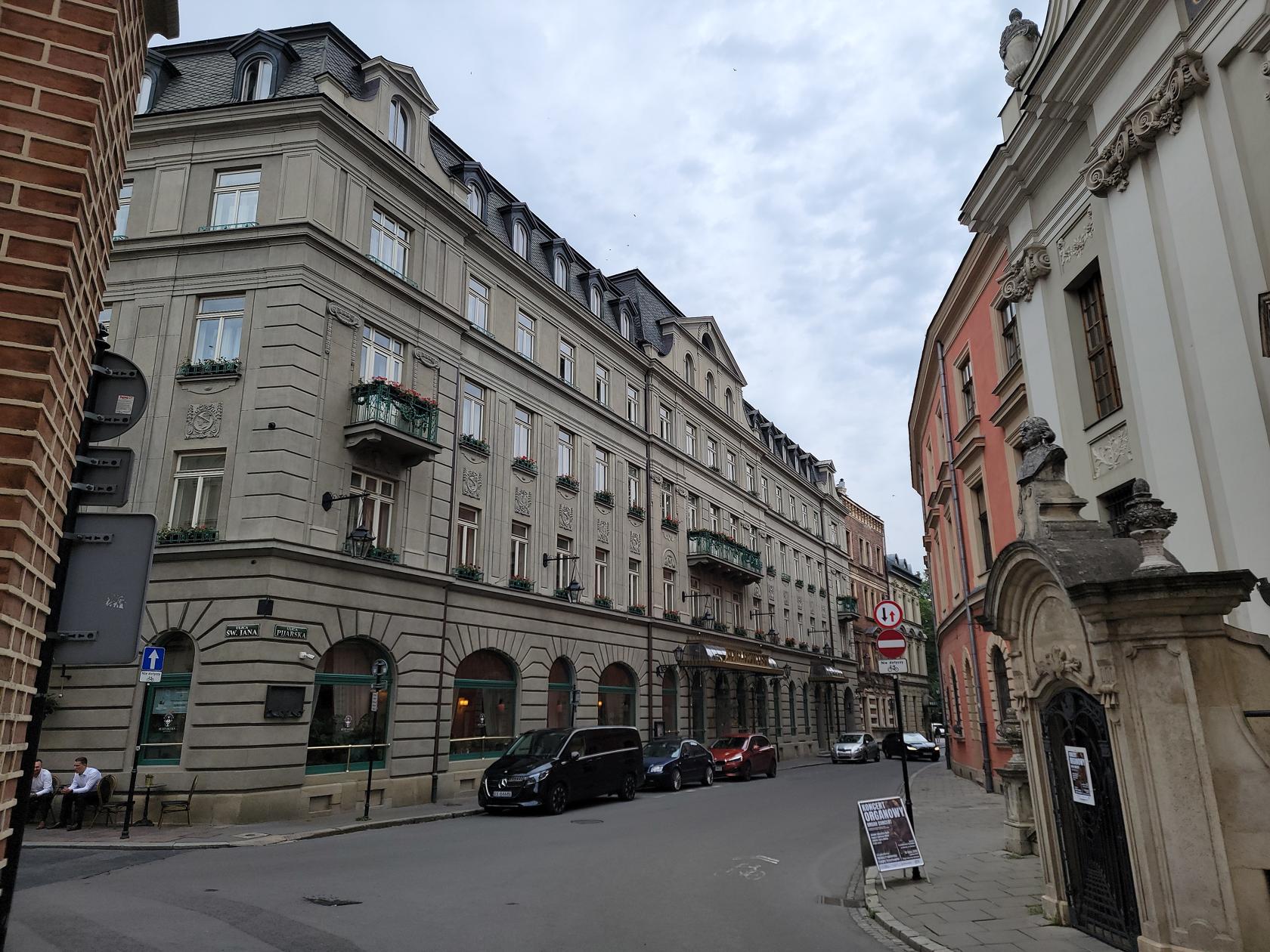
Świętego Jana Street – Kraków, Poland
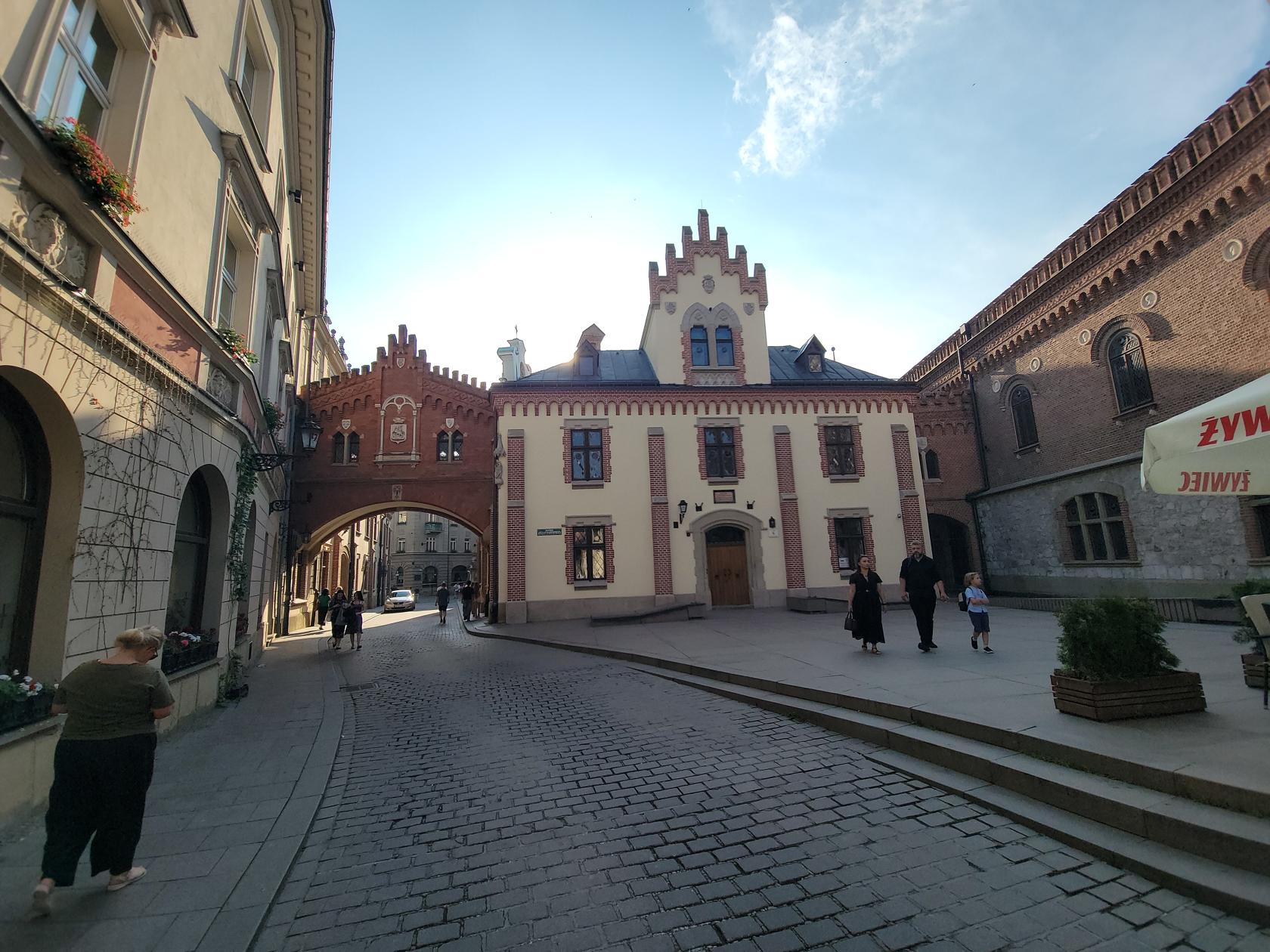
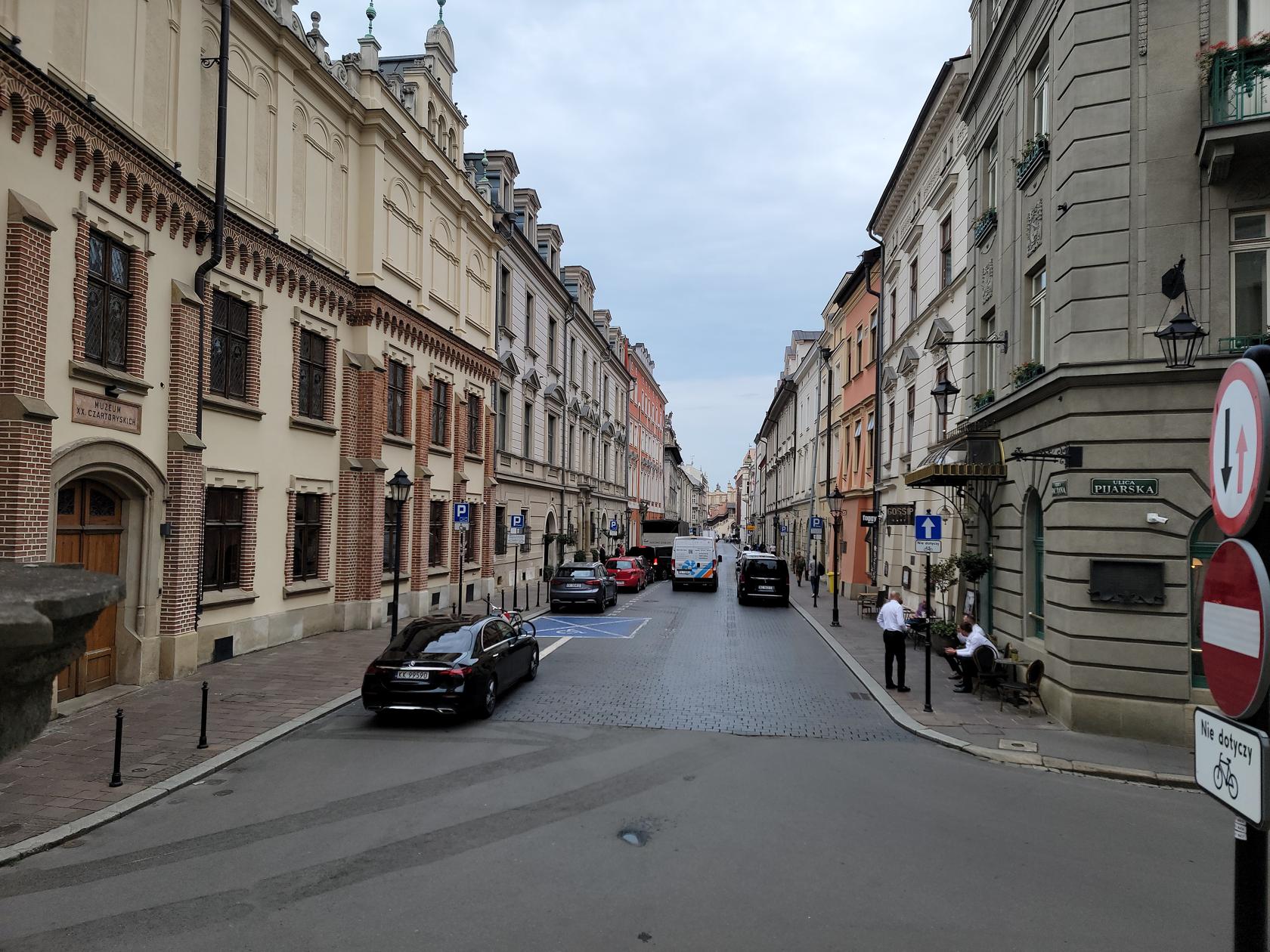
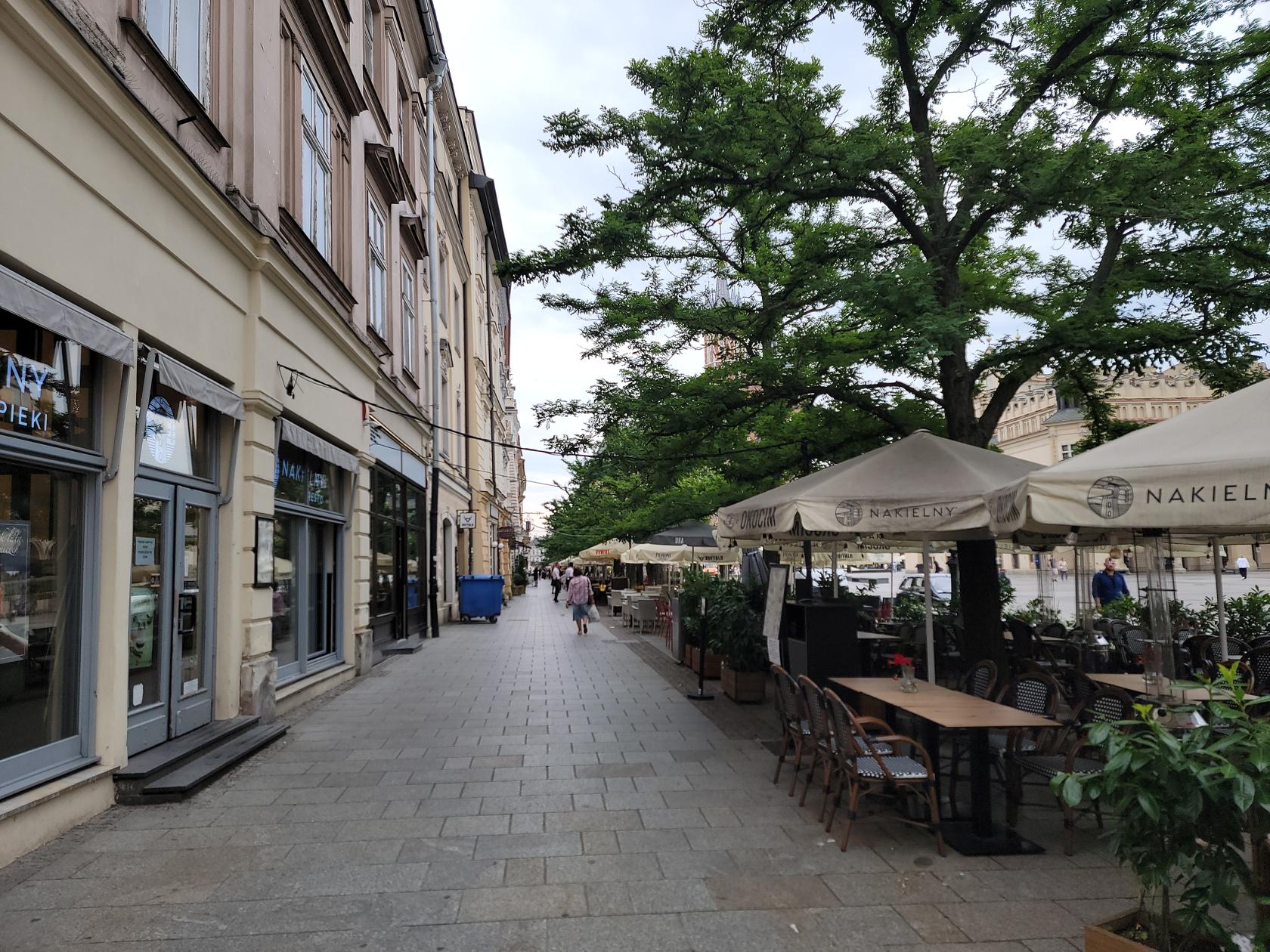
Pijarska Street – Kraków, Poland
Rynek Główny Main Plaza – Kraków, Poland
Getting There
Our visit here was inspired by previous visits I had had traveling for business in the past. Luckily, our airport in Turin had a direct flight with RyanAir to Kraków. There are train connections to the city, but surely most people drive from the surrounding area and even rent a car at the airport to get here.
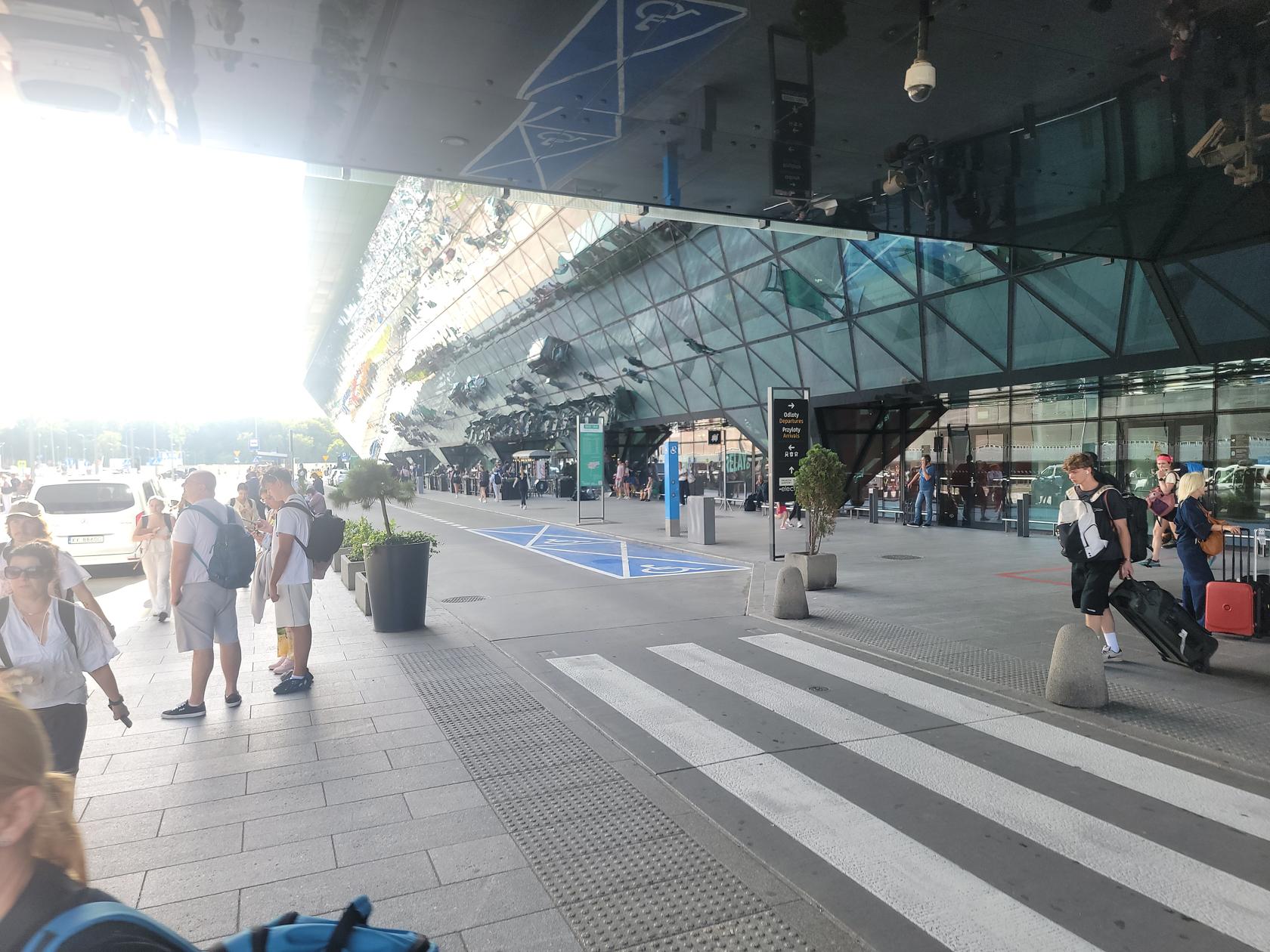
Kraków Airport – Kraków, Poland
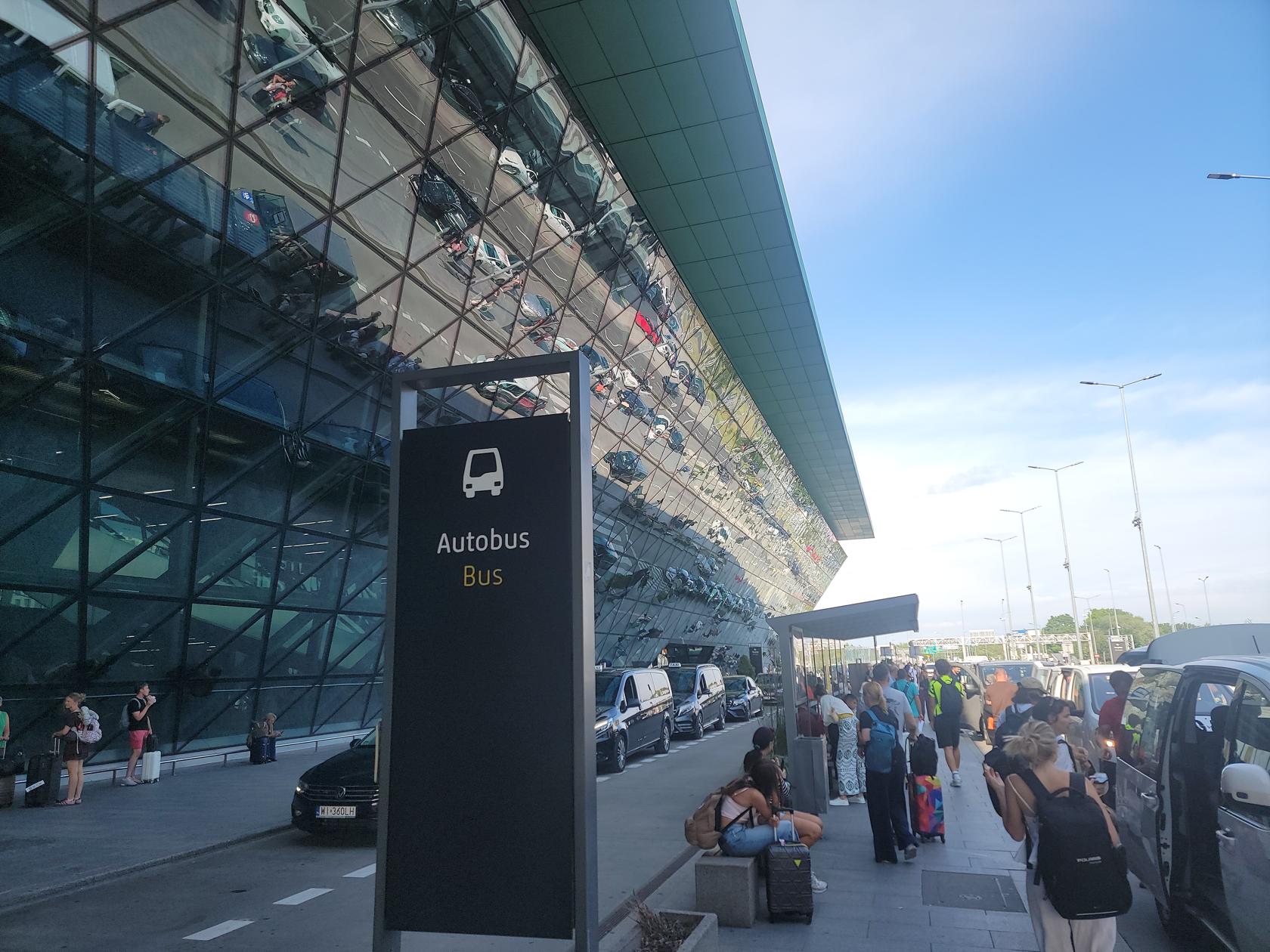
Kraków Airport – Kraków, Poland
Hotels
Hotel Polski Pod Bialym Orlem
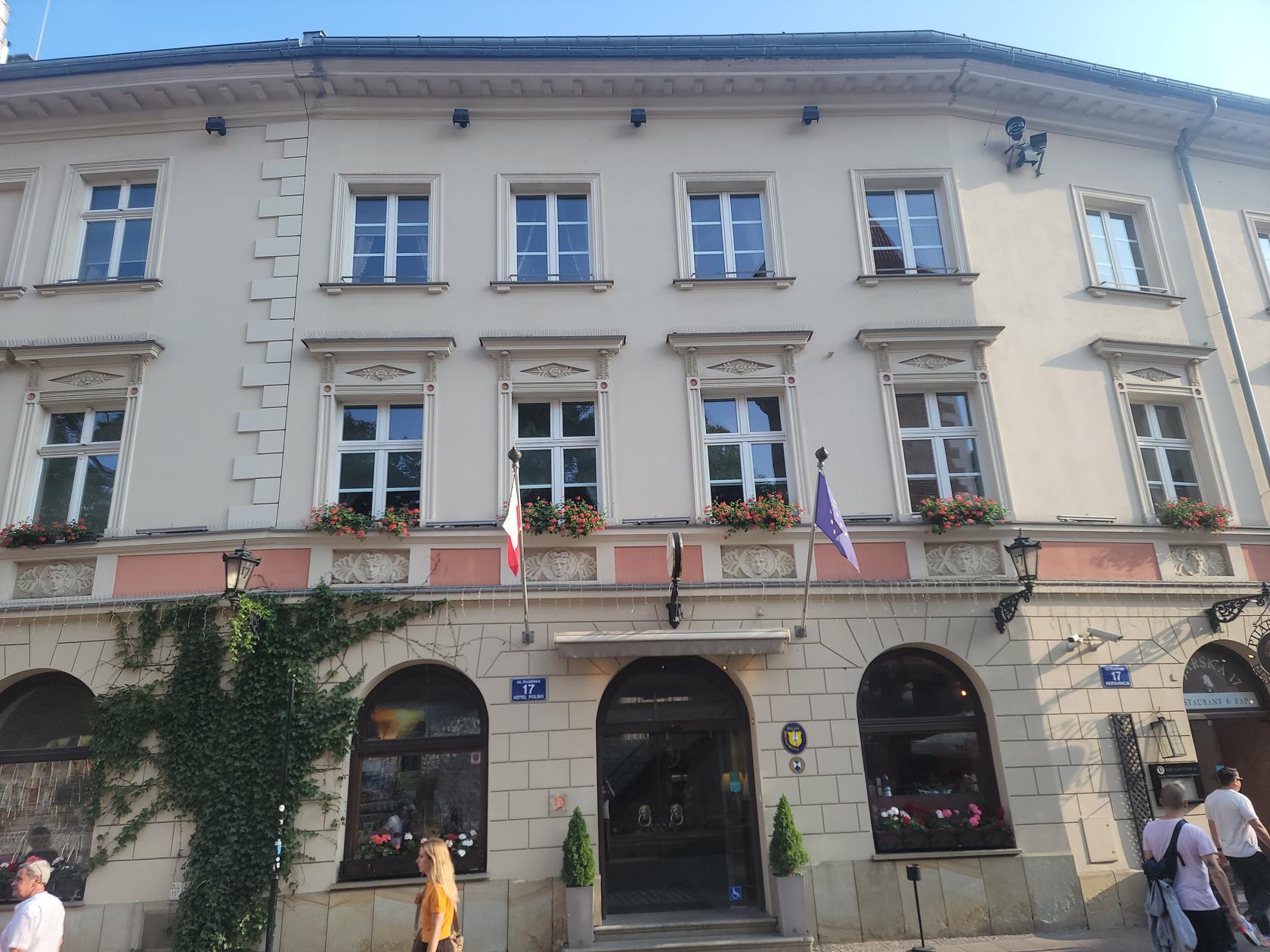
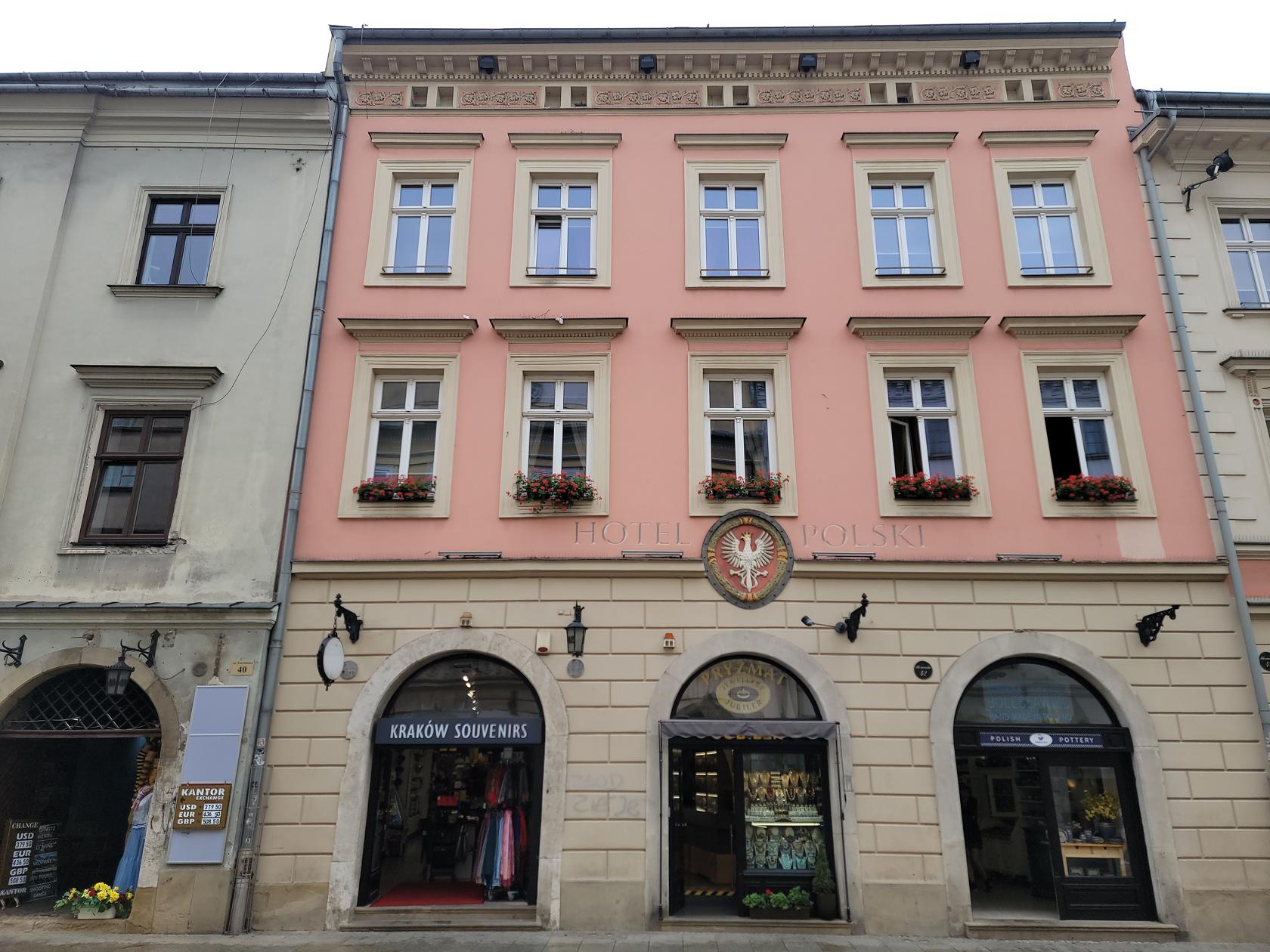
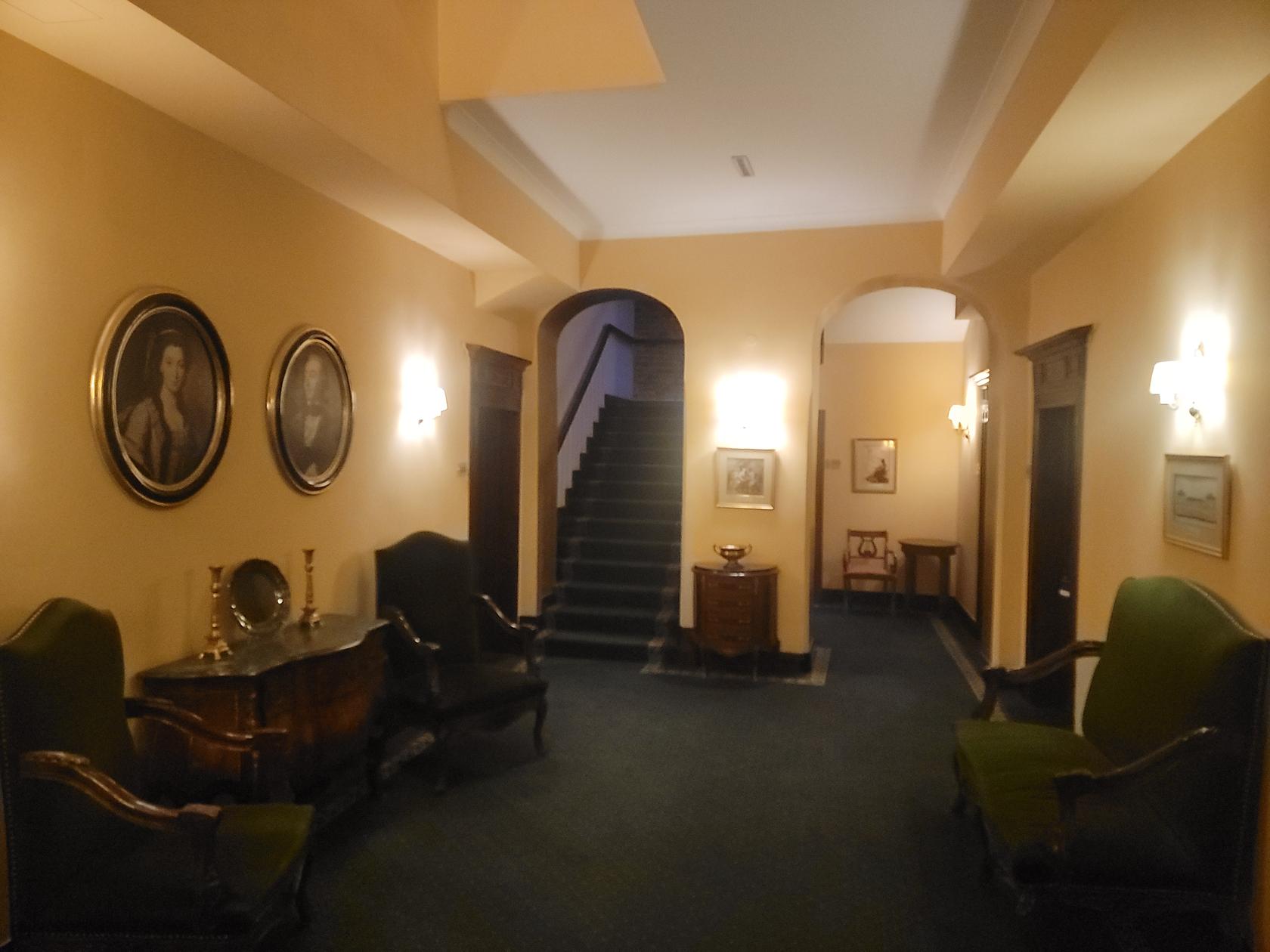
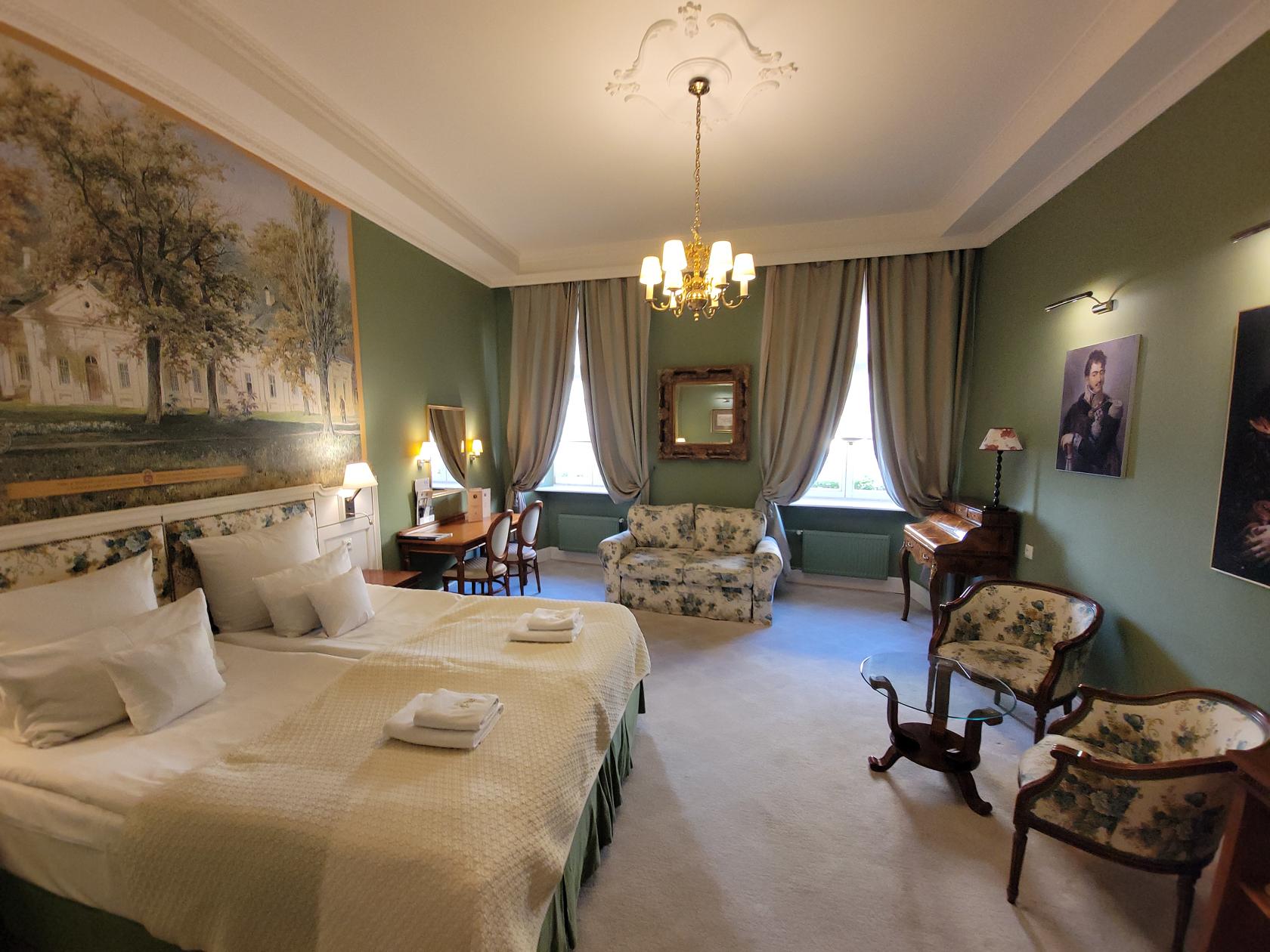
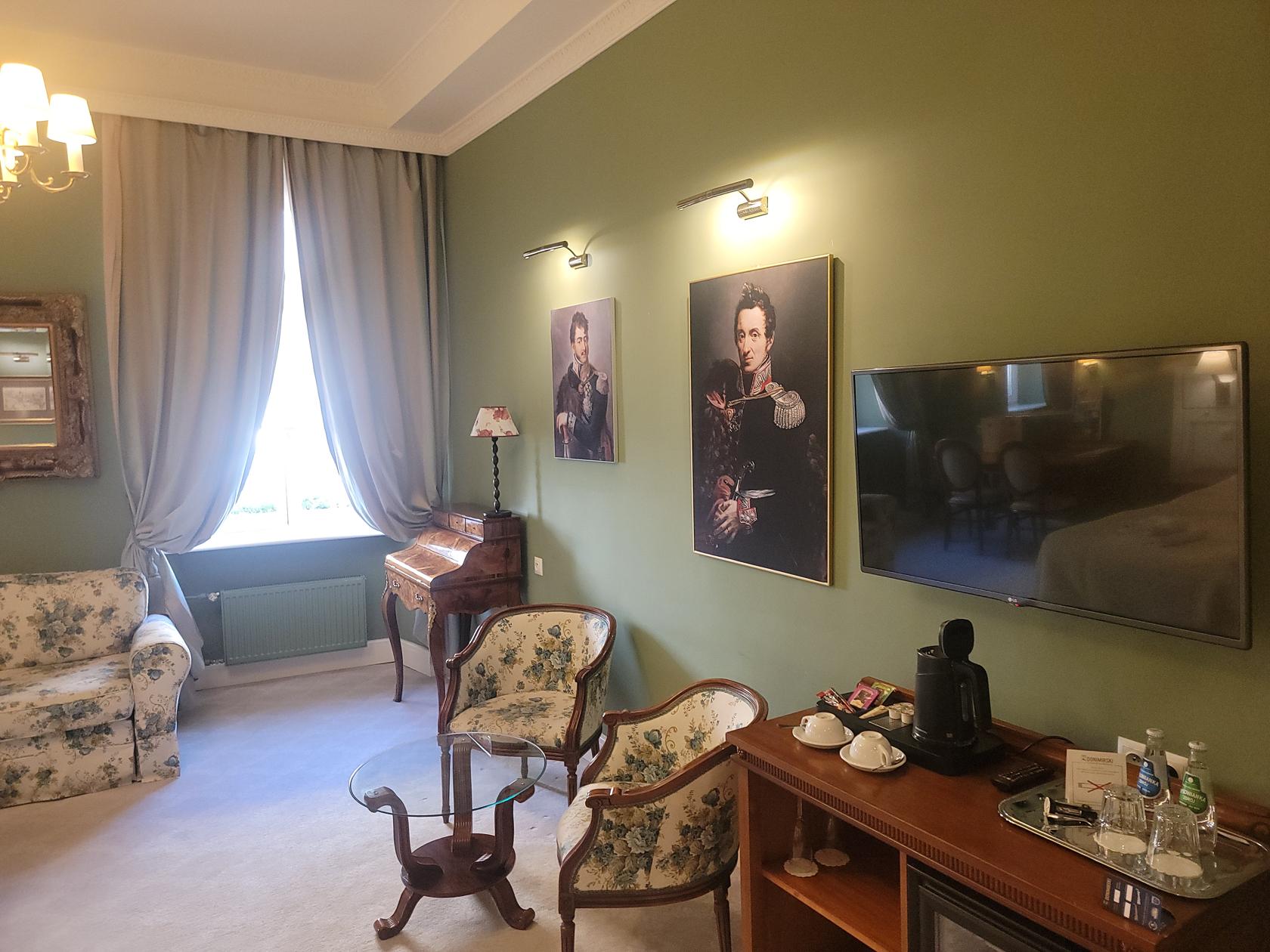
The hotel we stayed at was the Polski pod Bialym Orlem on Pijarska street, which was right next to the Florian Gate. A very nice five-star hotel that had excellent service and was very comfortable.
Entrance – Hotel Polski pod Bialym Orlem – Kraków, Poland
Street View – Hotel Polski pod Bialym Orlem – Kraków, Poland
Inside – Hotel Polski pod Bialym Orlem – Kraków, Poland
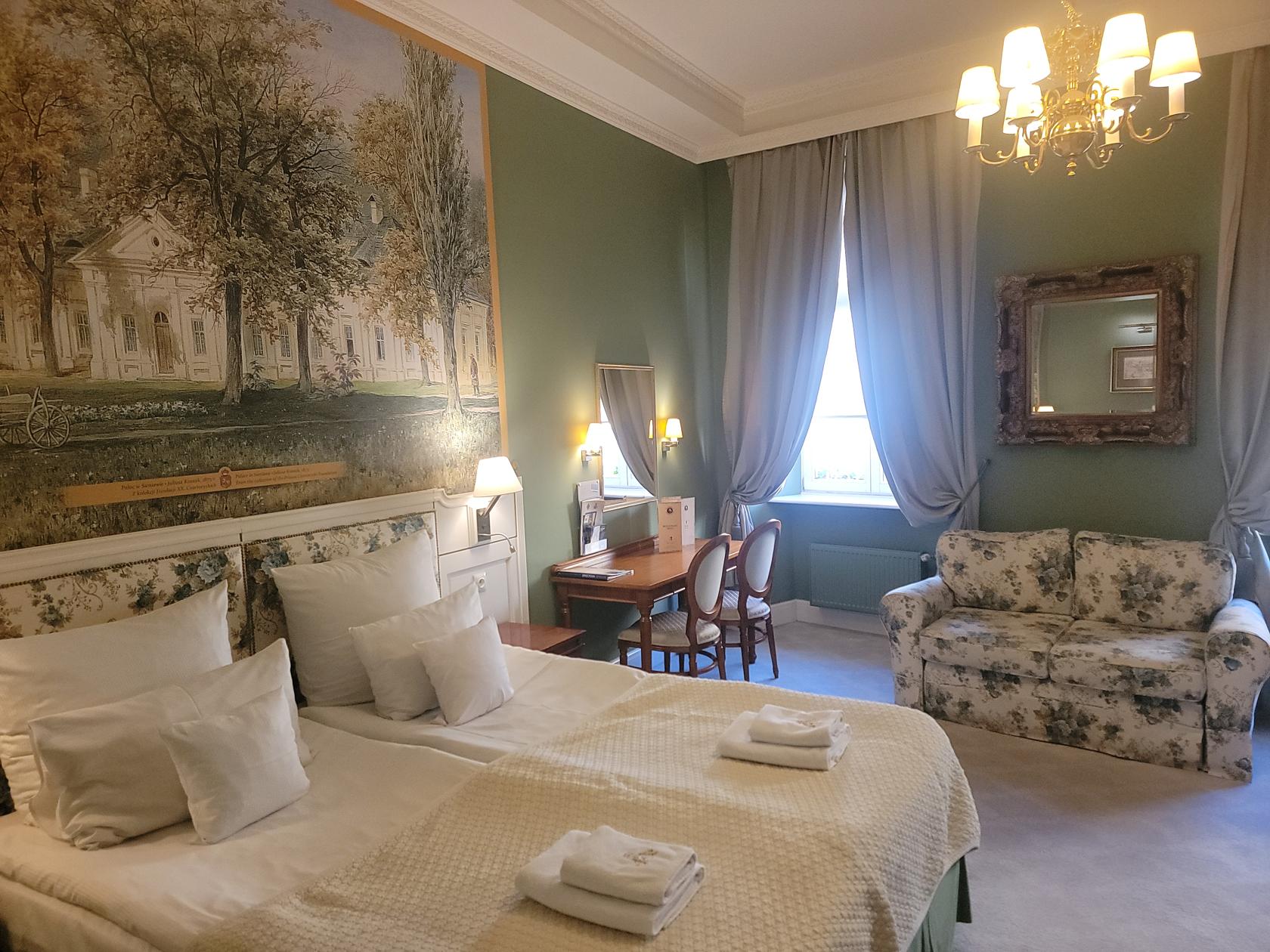
Our Suite – Hotel Polski pod Bialym Orlem – Kraków, Poland
Our Suite – Hotel Polski pod Bialym Orlem – Kraków, Poland
Our Suite – Hotel Polski pod Bialym Orlem – Kraków, Poland
Rynek Główny
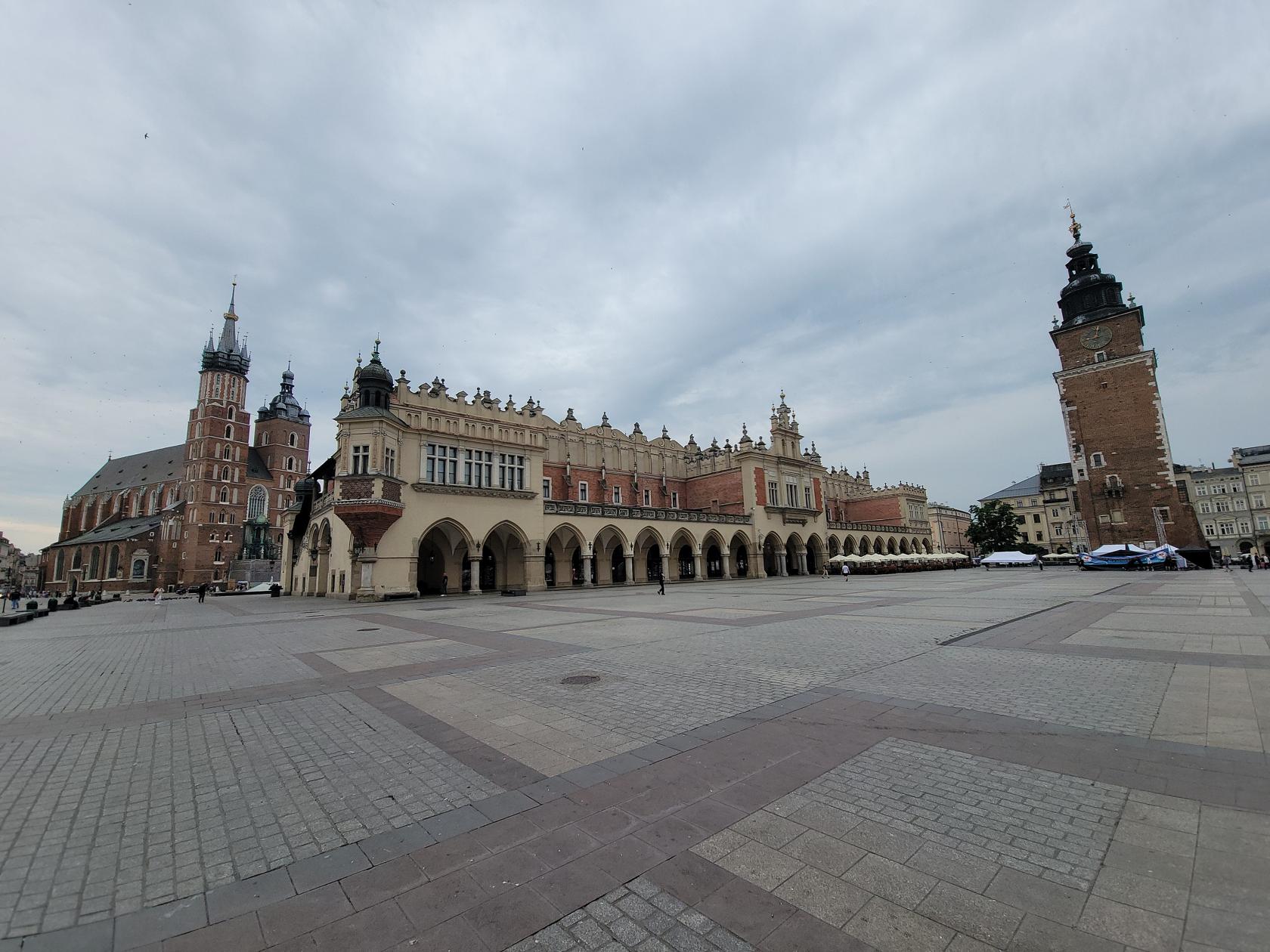
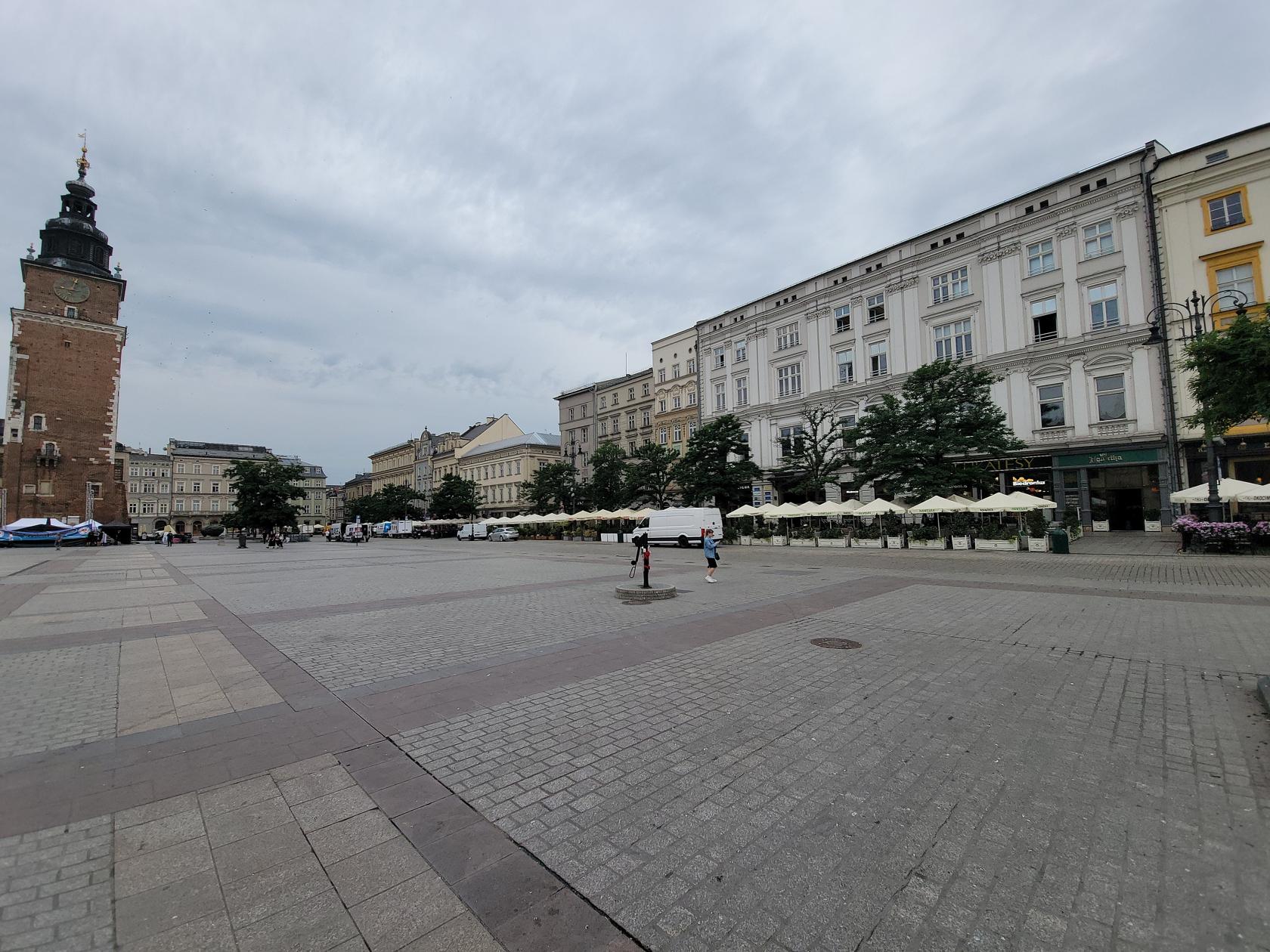
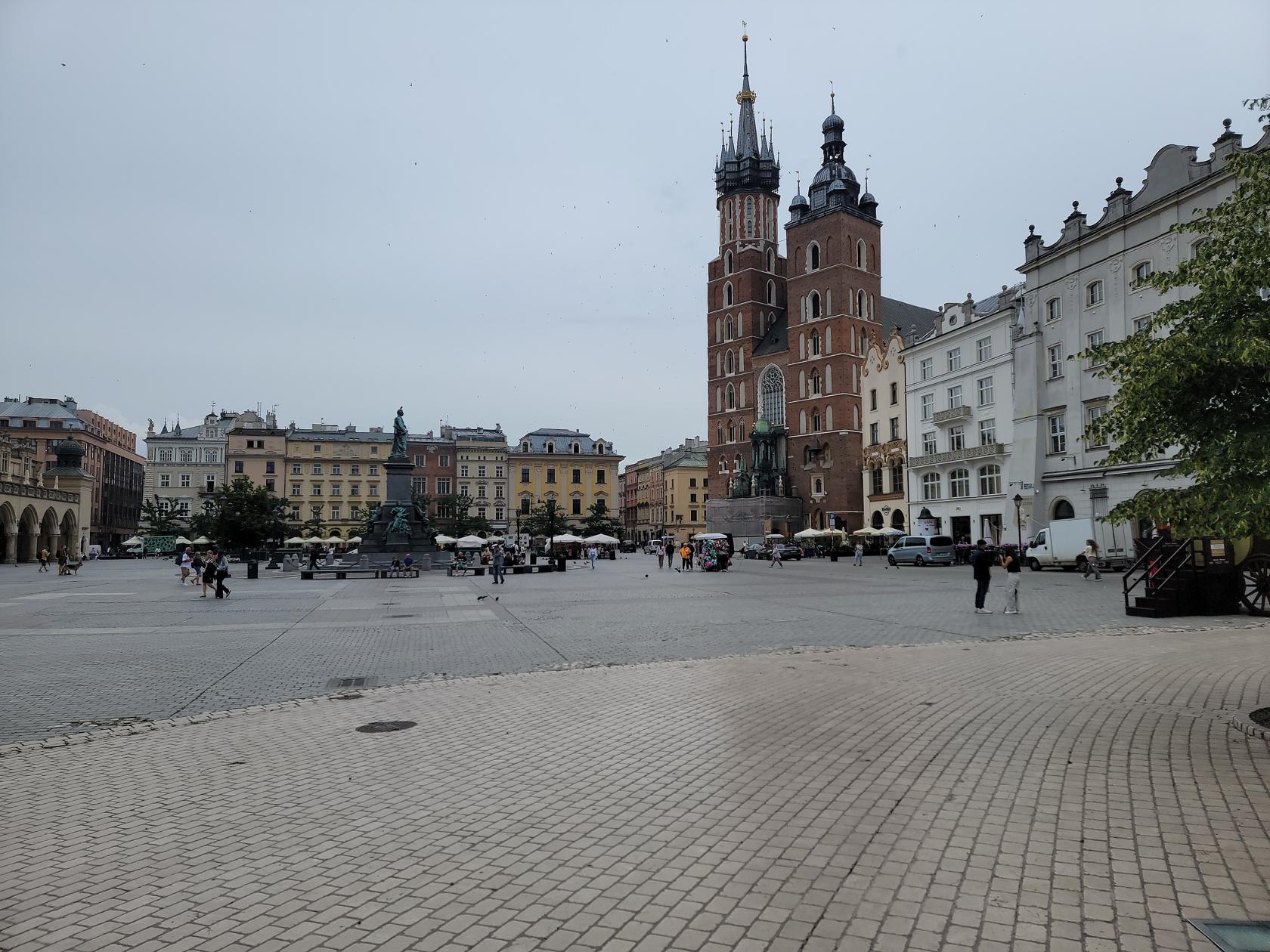
Rynek Główny is the main square of the city. Here you will find the Town Hall Tower, Cloth Hall and a few monuments. The square is active with many restaurants and cafes encircling it attending patrons. It rivals that Vittorio Veneto Piazza in Turin, which ostensibly is one of the largest, if not the largest in Europe.
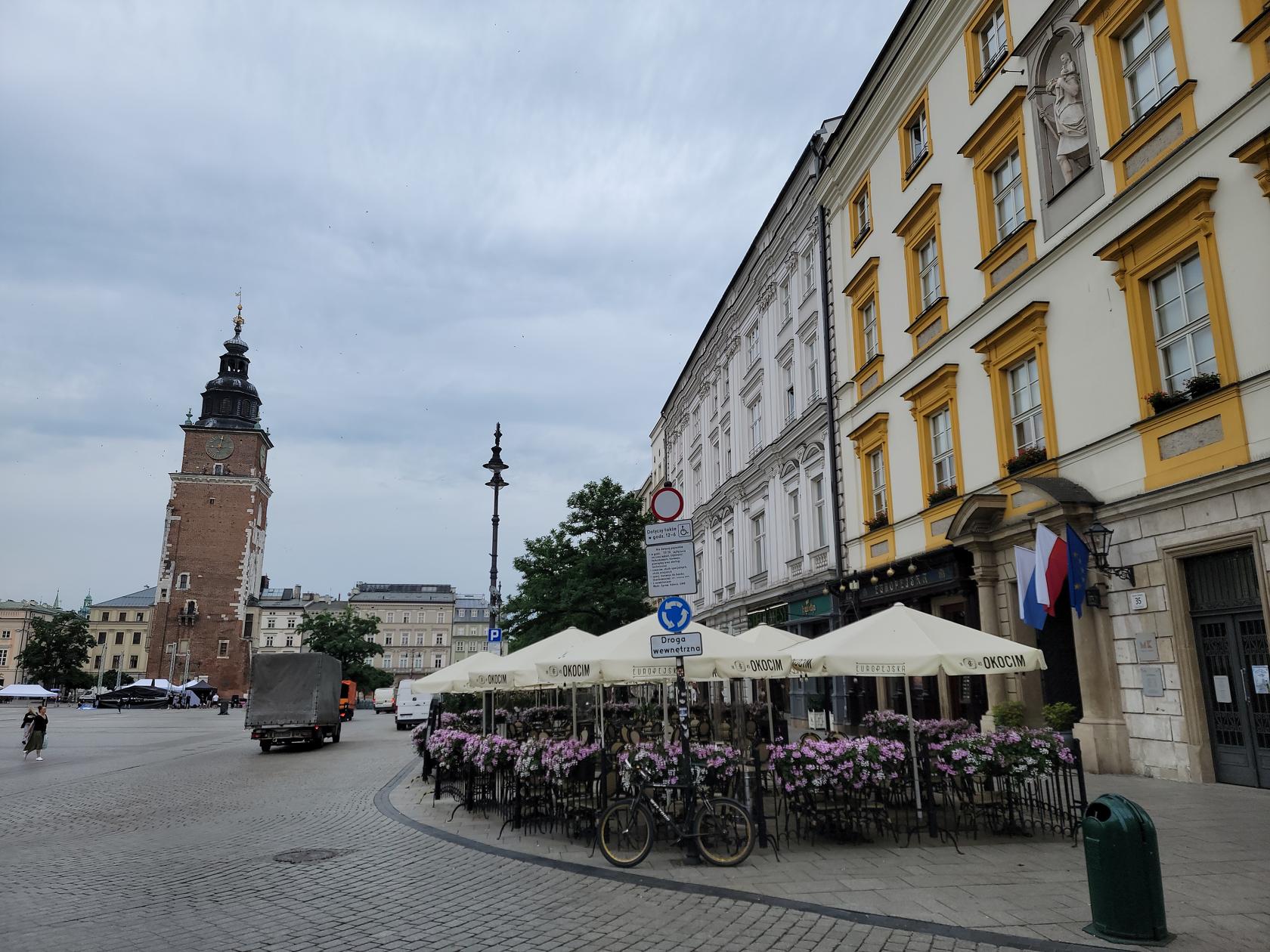
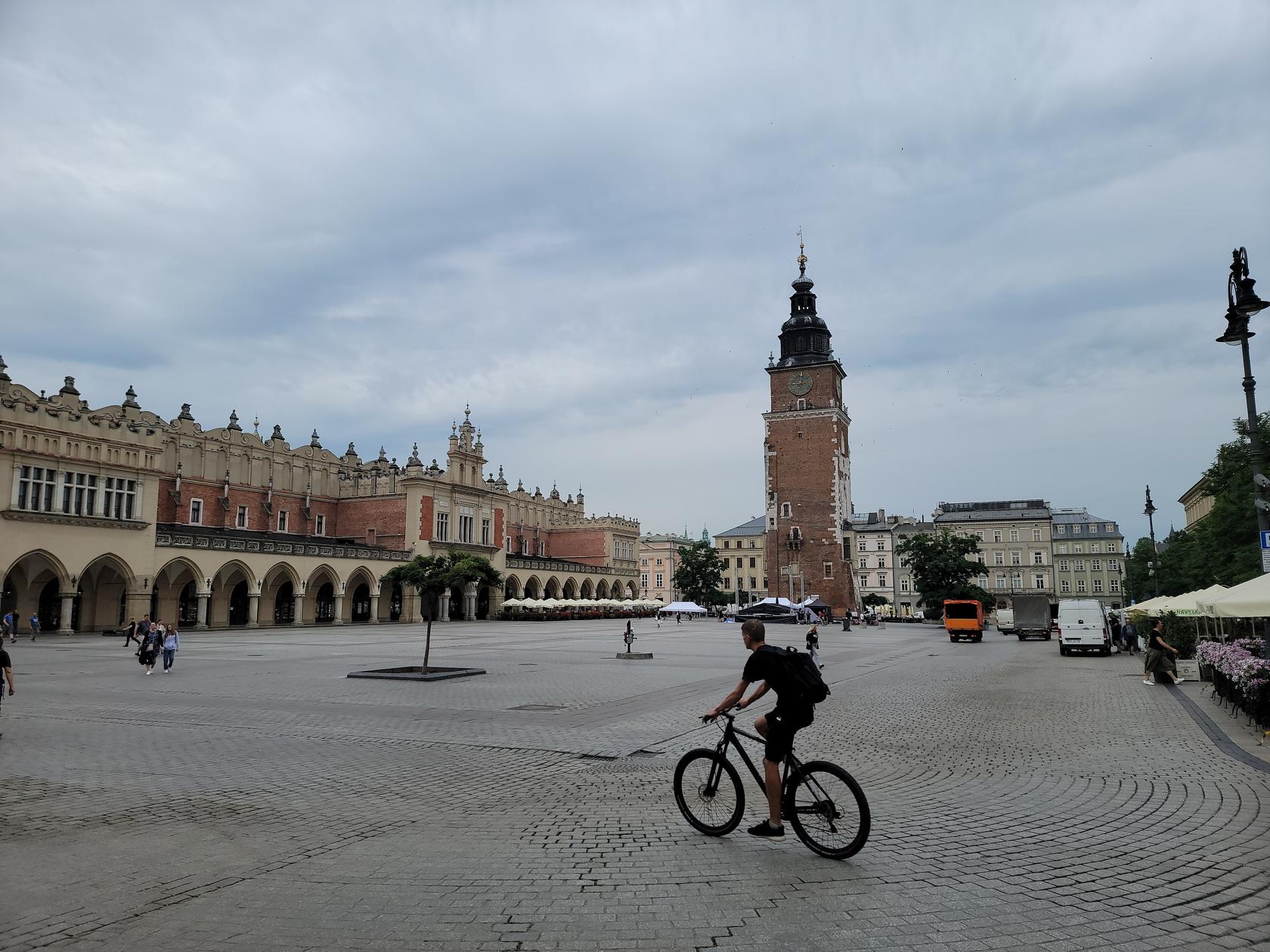
Rynek Główny Main Plaza – Kraków, Poland
Town Hall Tower and Market Hall – Rynek Główny Main Plaza – Kraków, Poland
Town Hall Tower and Market Hall – Rynek Główny Main Plaza – Kraków, Poland
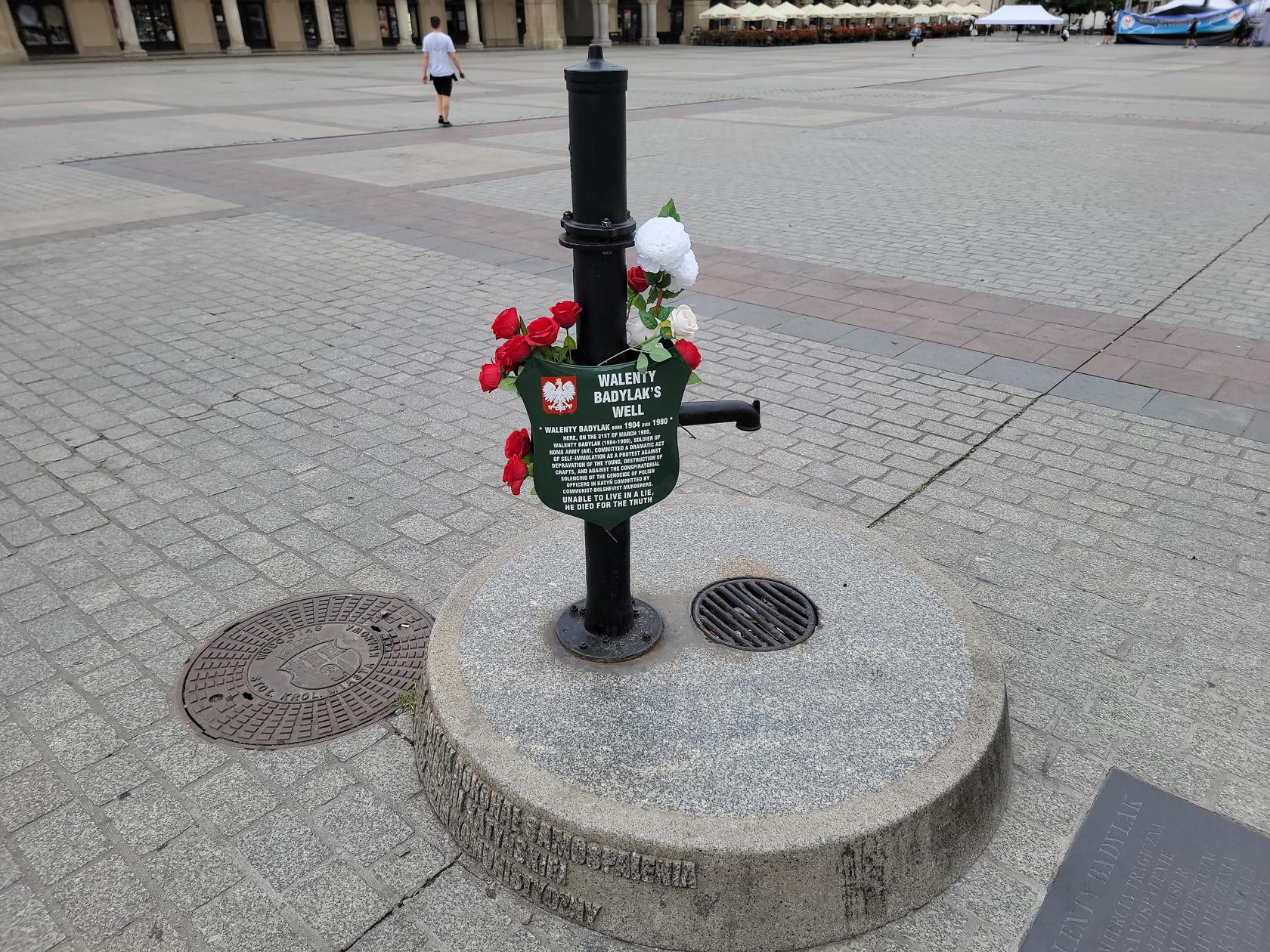
Well – Rynek Główny Main Plaza – Kraków, Poland
Rynek Główny Main Plaza – Kraków, Poland
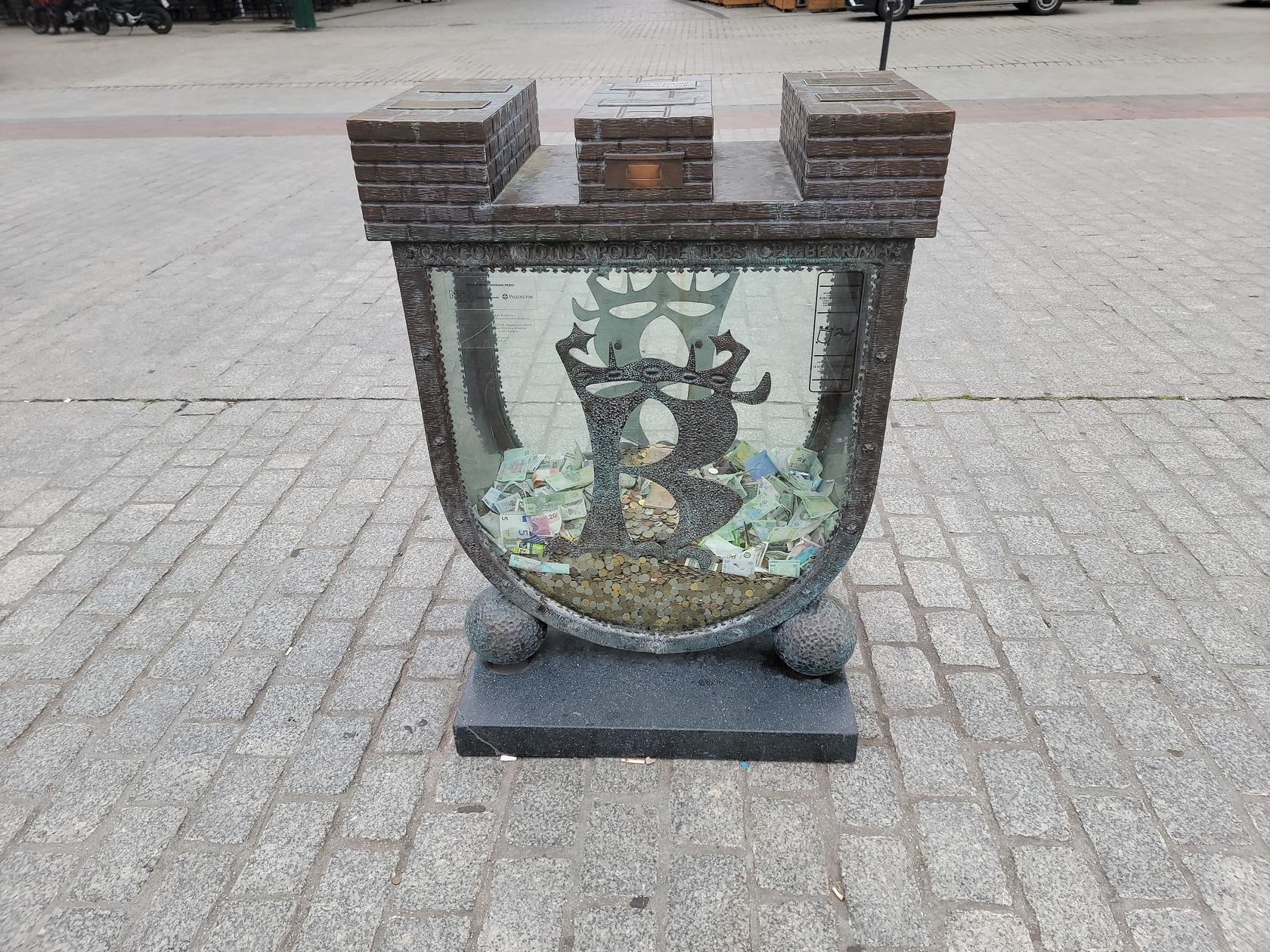
City Donation Box – Rynek Główny Main Plaza – Kraków, Poland
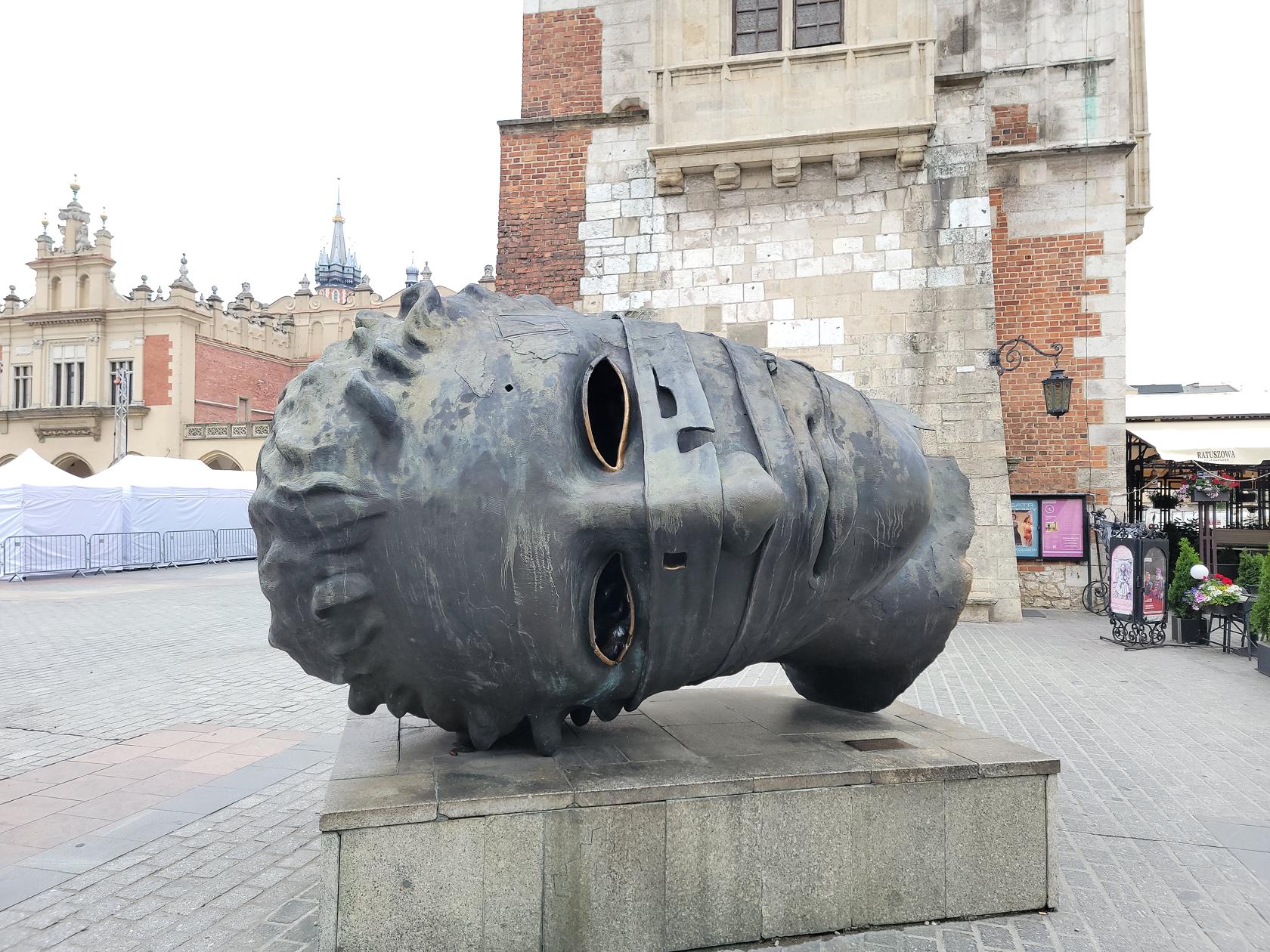
Eos Bendato Sculpture – Gothic Town Hall Tower – Rynek Główny Main Plaza – Kraków, Poland
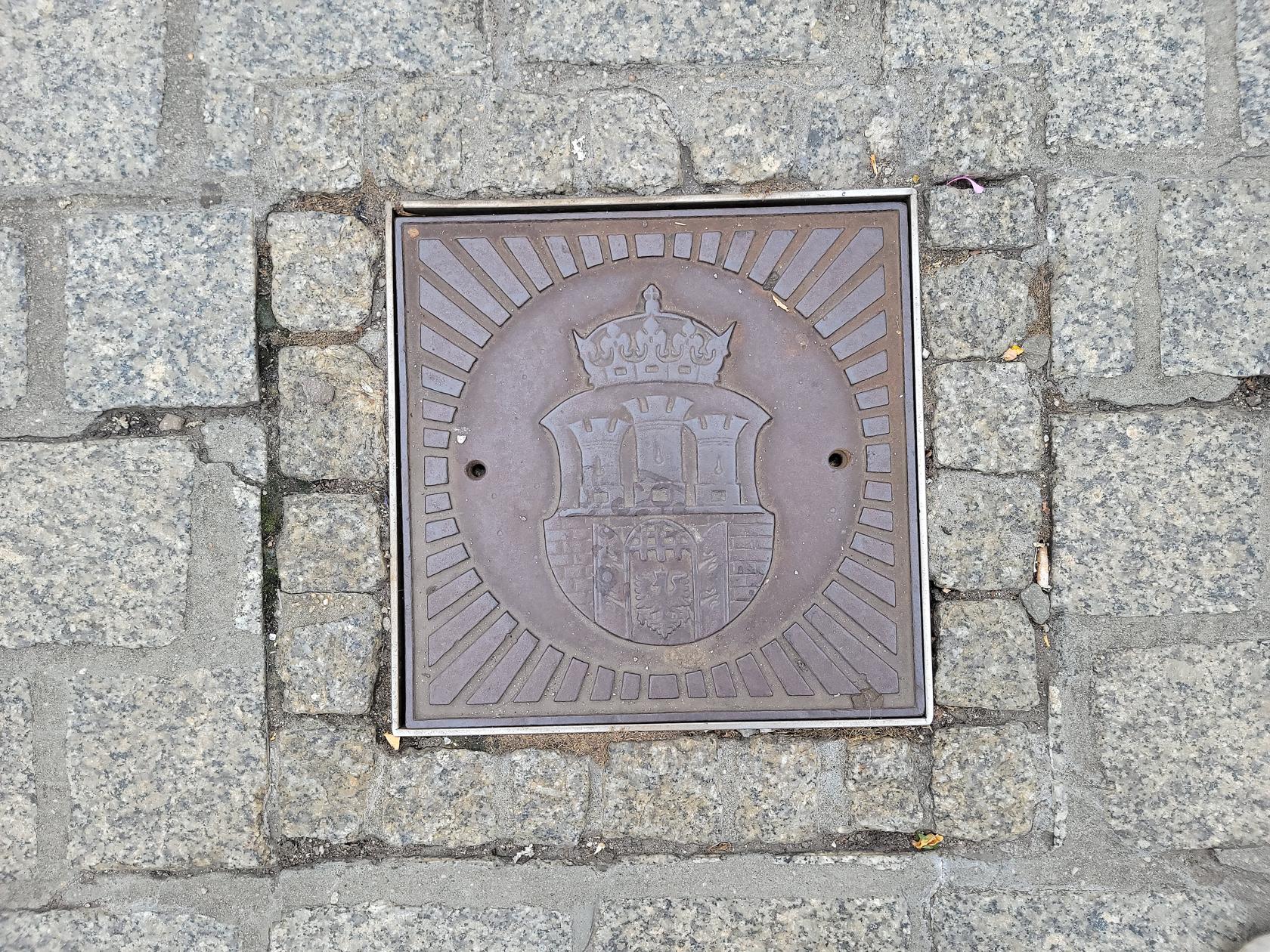
City Coat of Arms – Rynek Główny Main Plaza – Kraków, Poland
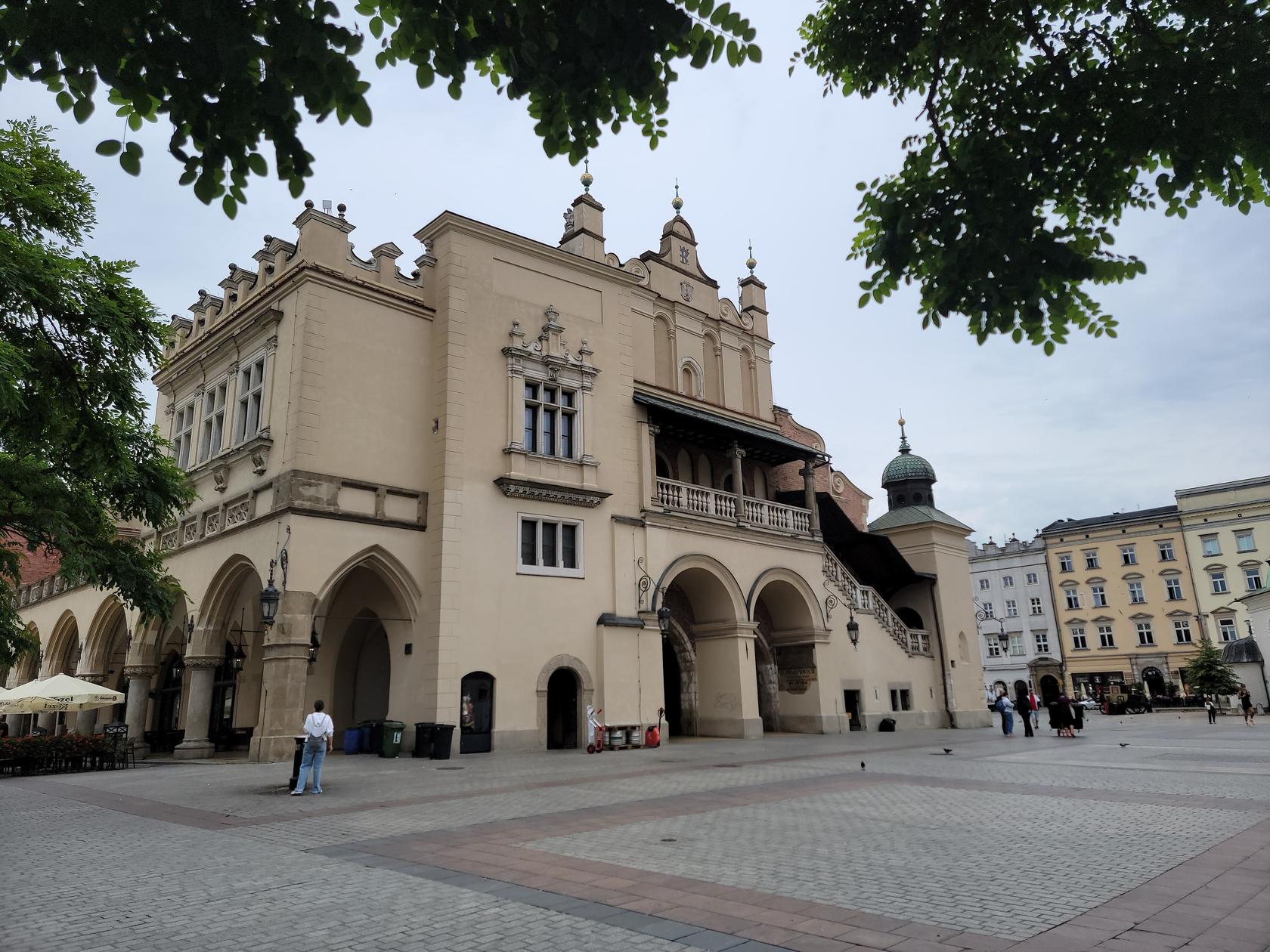
Market Hall – Rynek Główny Main Plaza – Kraków, Poland
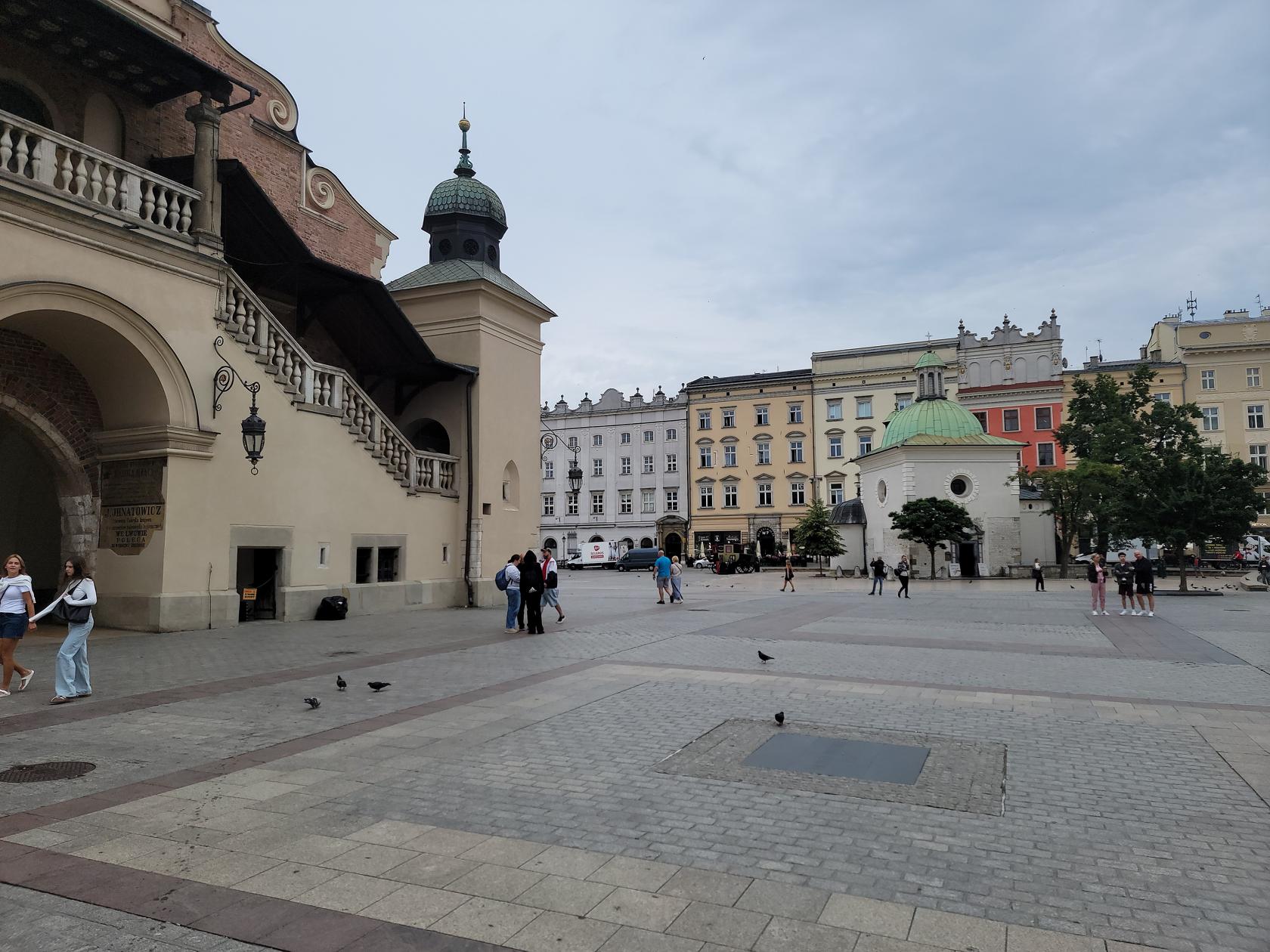
Market Hall and Church of St. Wojciech – Rynek Główny Main Plaza – Kraków, Poland
Saint Mary’s Basilica – Rynek Główny Main Plaza – Kraków, Poland
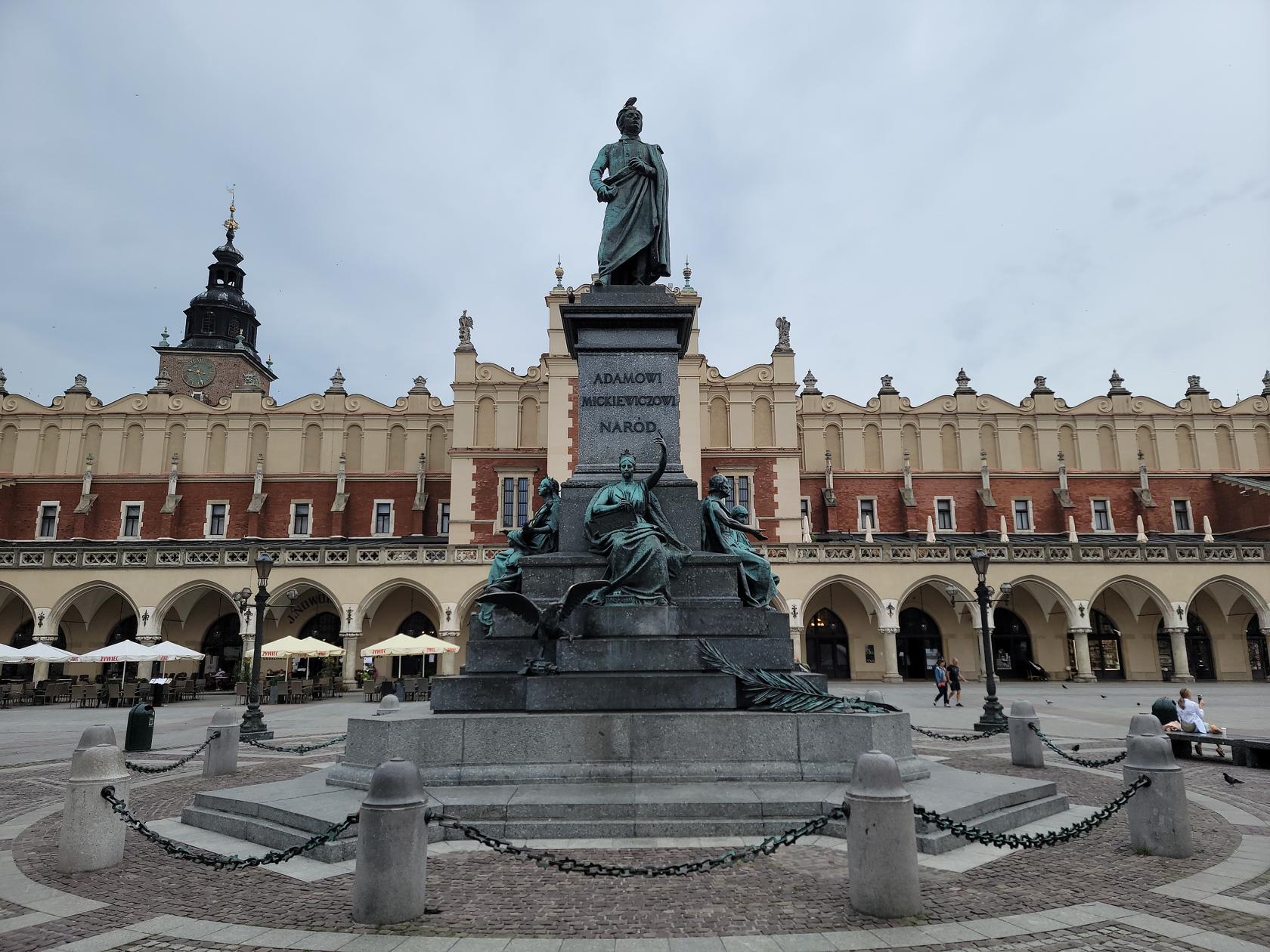
Adam Mickiewicz Monument – Rynek Główny Main Plaza – Kraków, Poland
Plac Szczepański
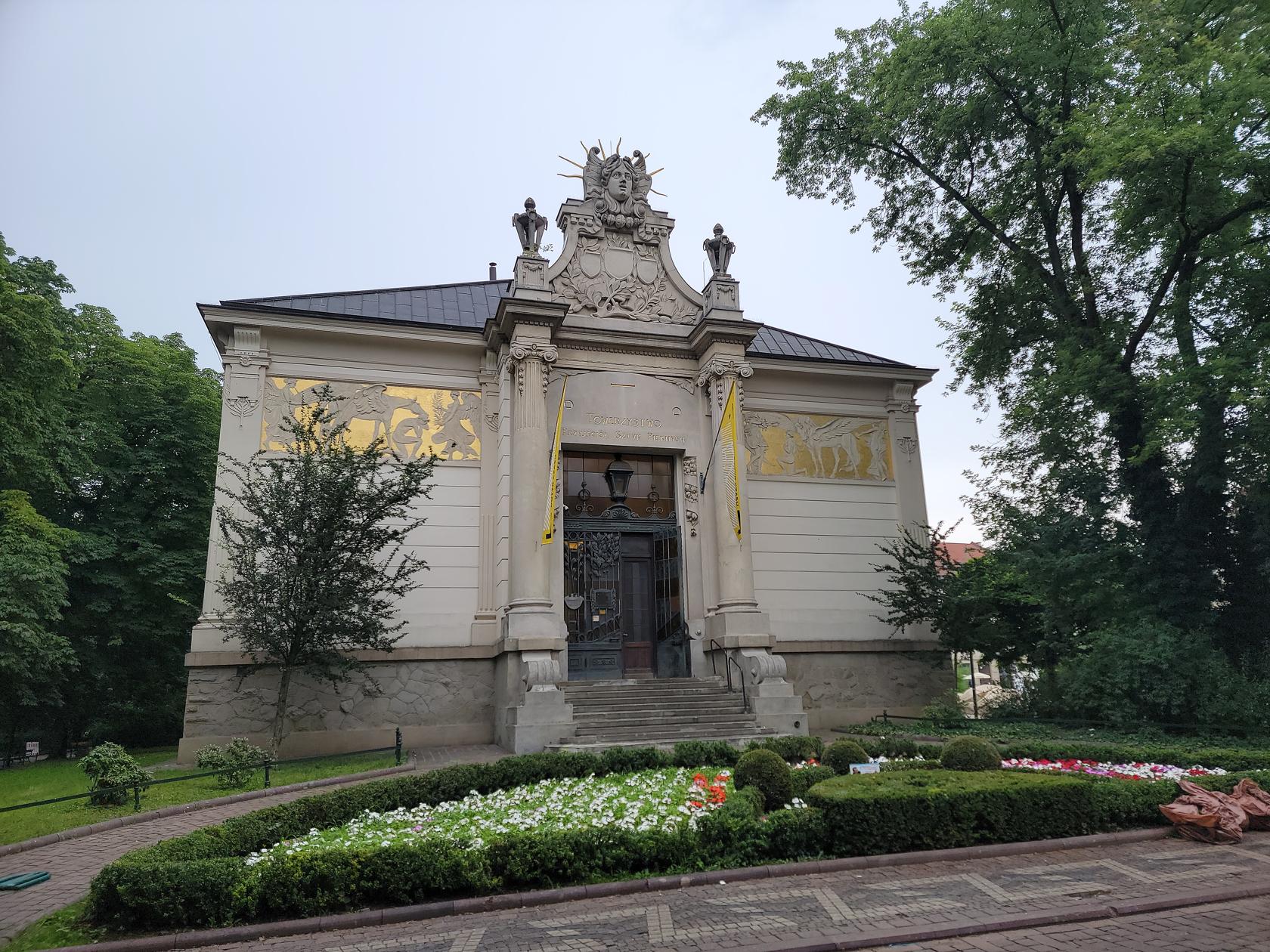
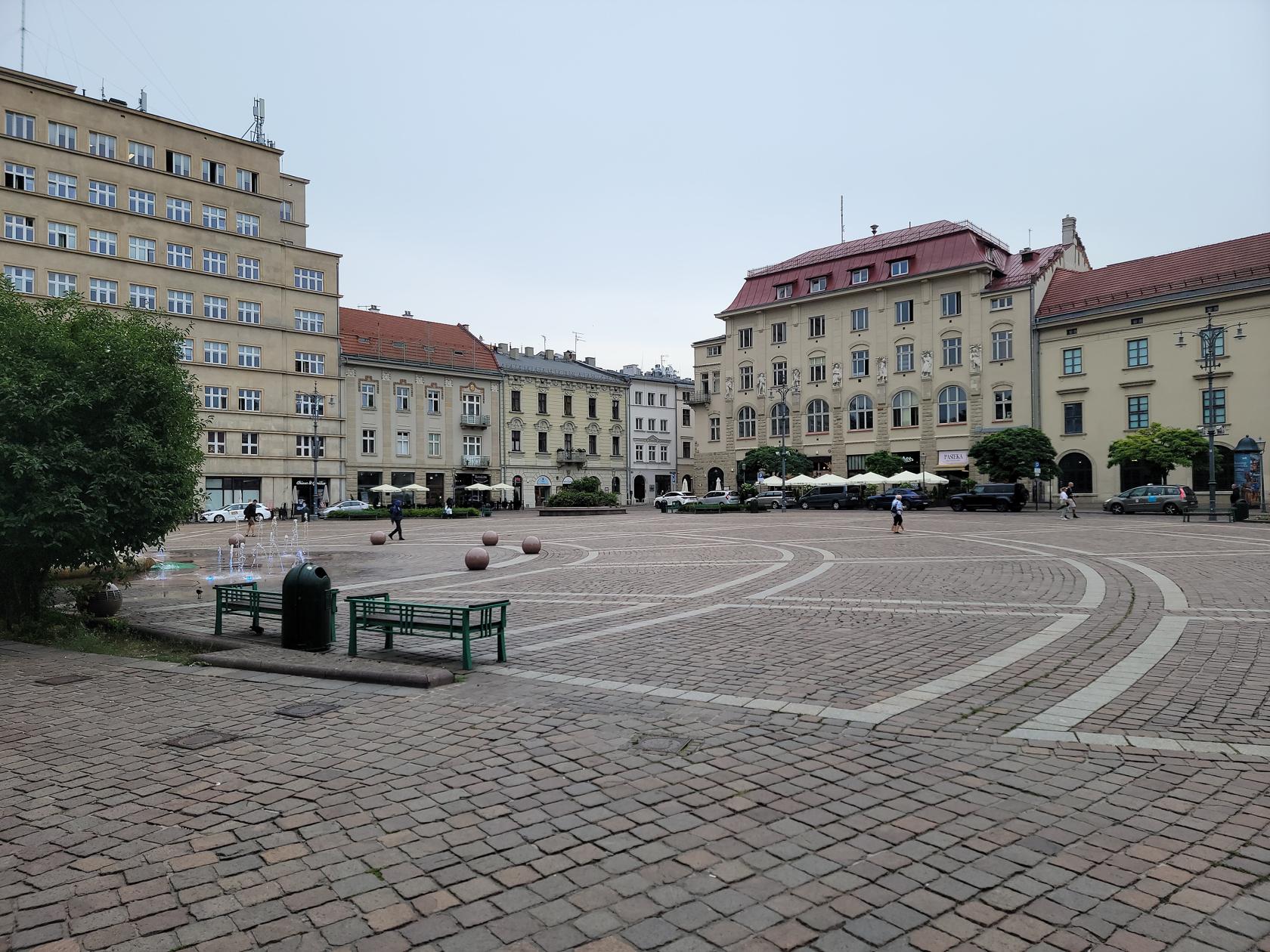
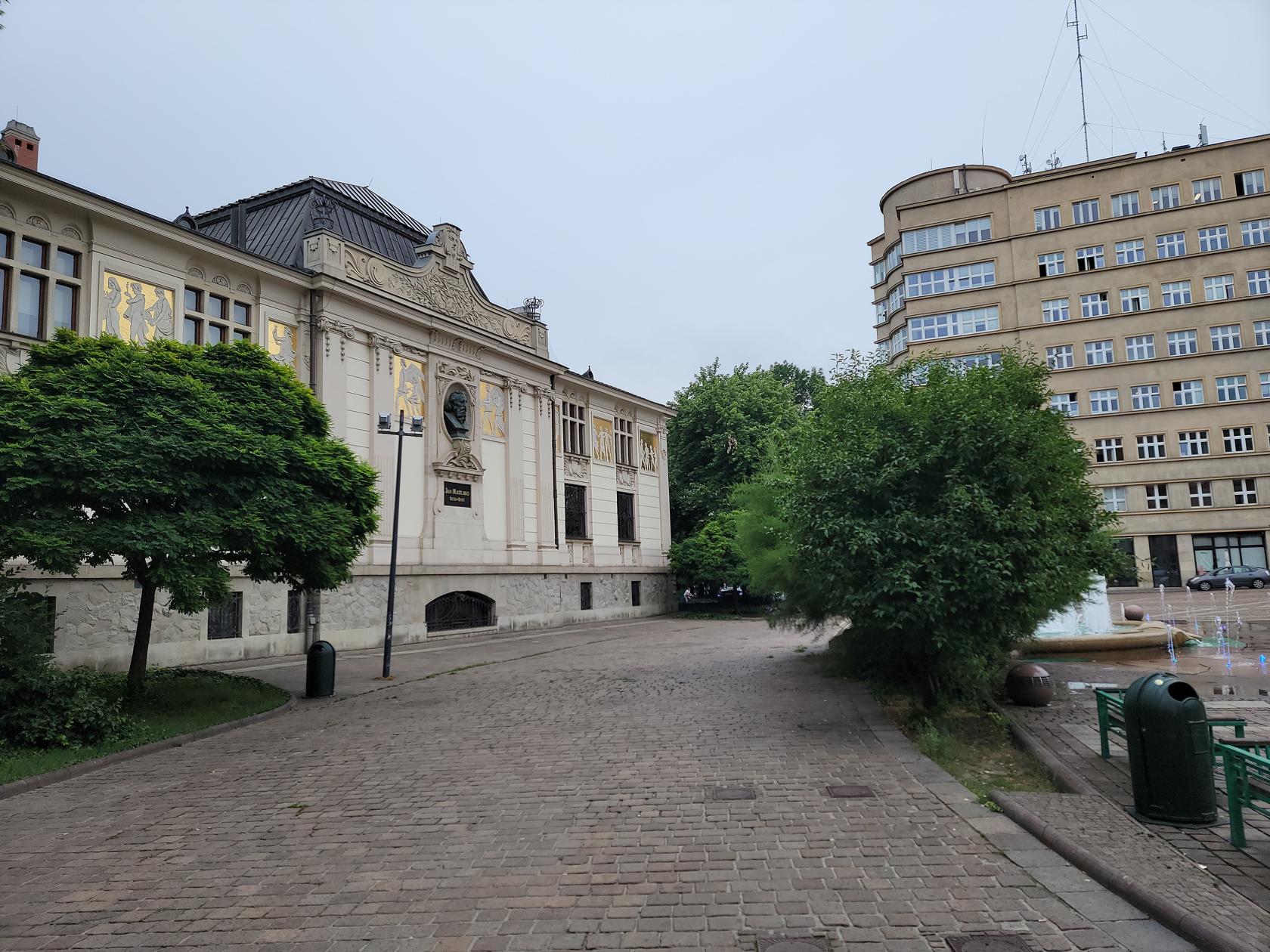
One of the three large main plazas in the city, the Plac Szczepański is close to Saint Anne’s and the Art Palace. It is also the location of many restaurants and small shops that dot its boundary.
The Art Palace – Kraków, Poland
Place Szczepański Plaza – Kraków, Poland
Art Palace – Place Szczepański Plaza – Kraków, Poland
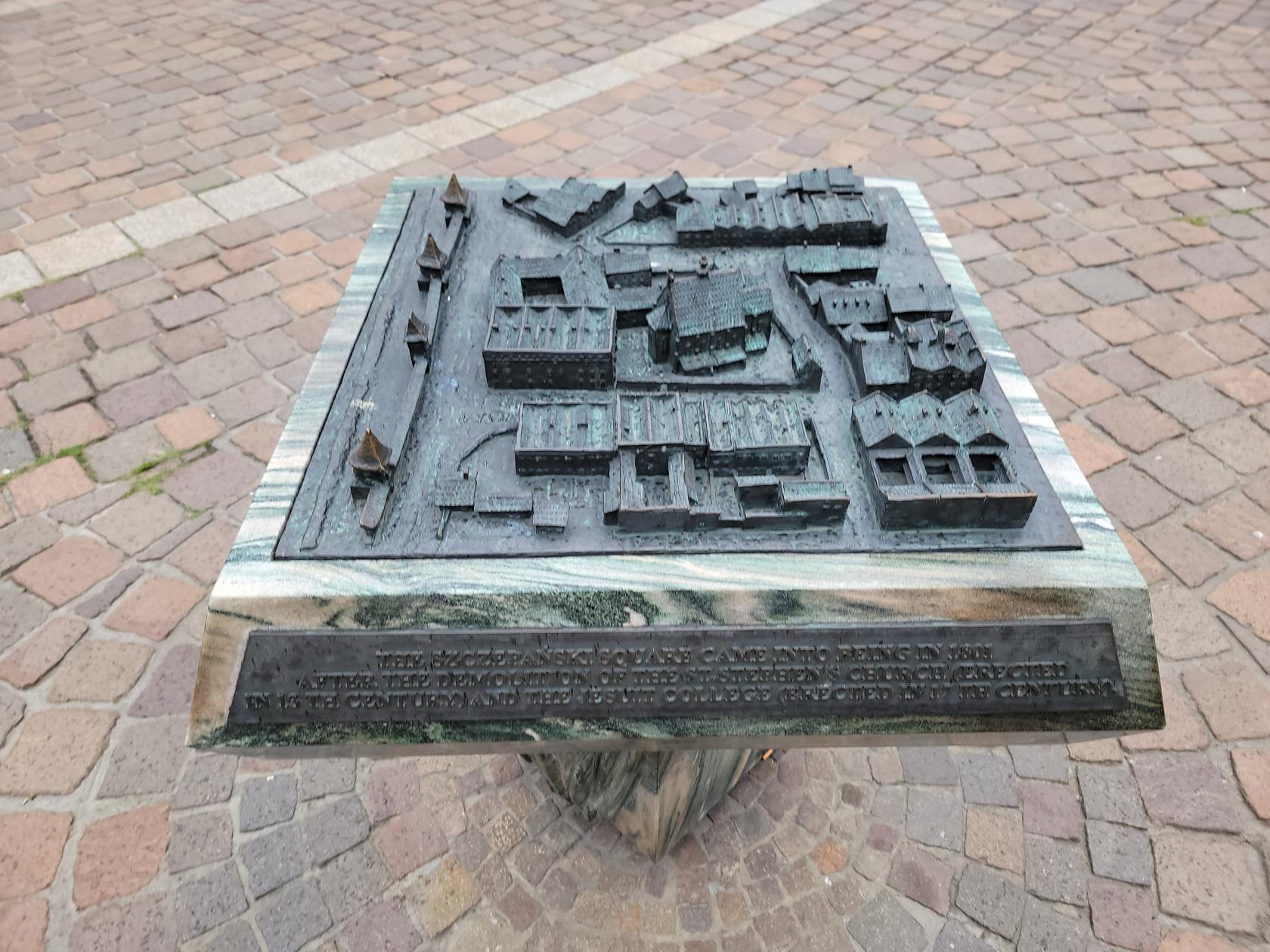
Bronze Plaza Depiction – Place Szczepański Plaza – Kraków, Poland
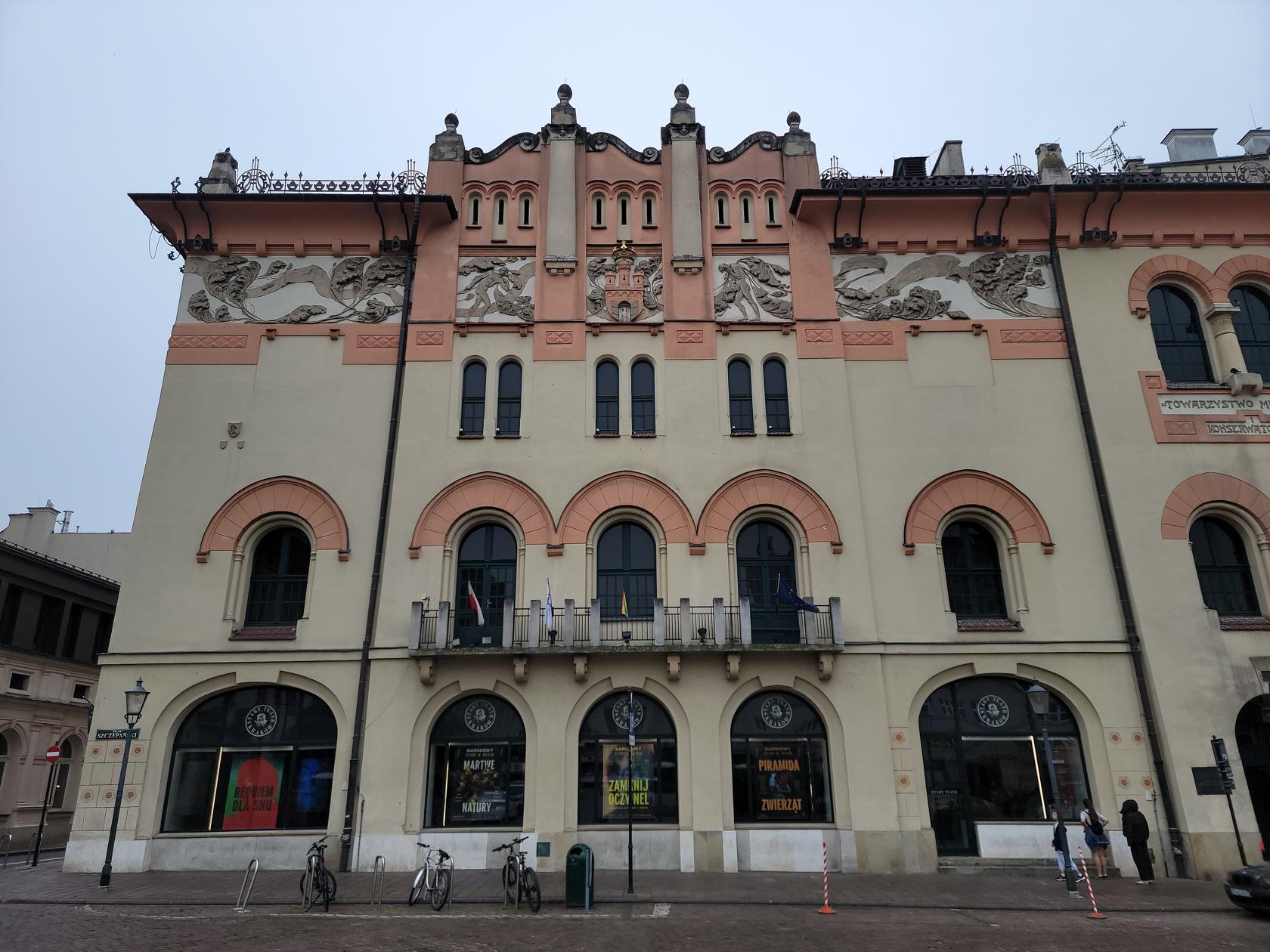
Old Stary Theater – Place Szczepański Plaza – Kraków, Poland
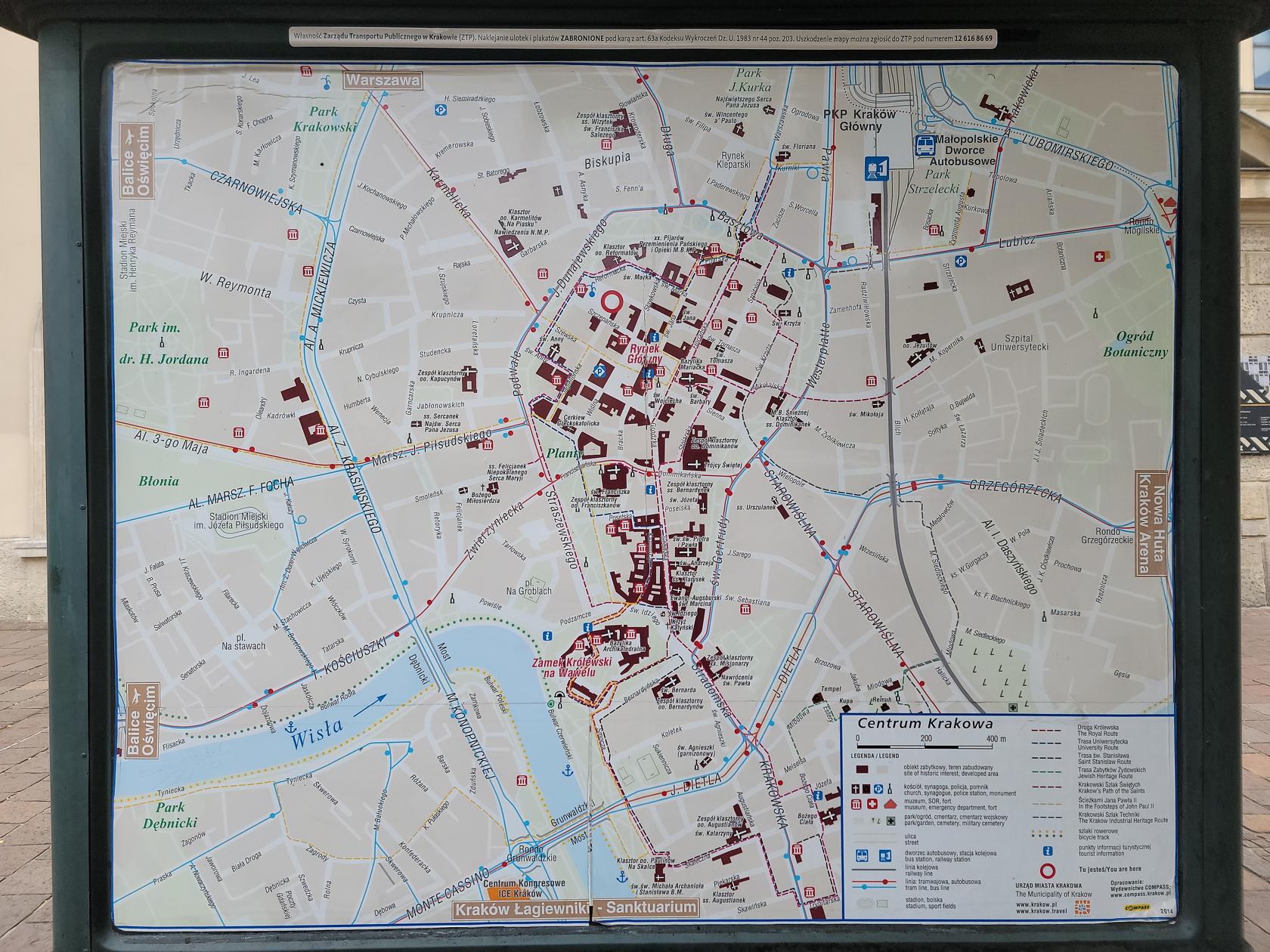
Map – Place Szczepański Plaza – Kraków, Poland
Churches And Cathedrals
Kraków if anything, is a city of churches, cathedrals and basilicas. Any one of the catholic faith would be drawn to this city as a moth to a flame. Each one is a beautiful symbol of a proud faith, which by the attendance we witnessed is still enjoyed and celebrated in this city. The faithful come during all times during the day, just to sit, pray and be at peace in their choosen abode of peace. Along with Charlotte, North Carolina, it is known as one of the cities of churches.
Church Of The Transfiguration
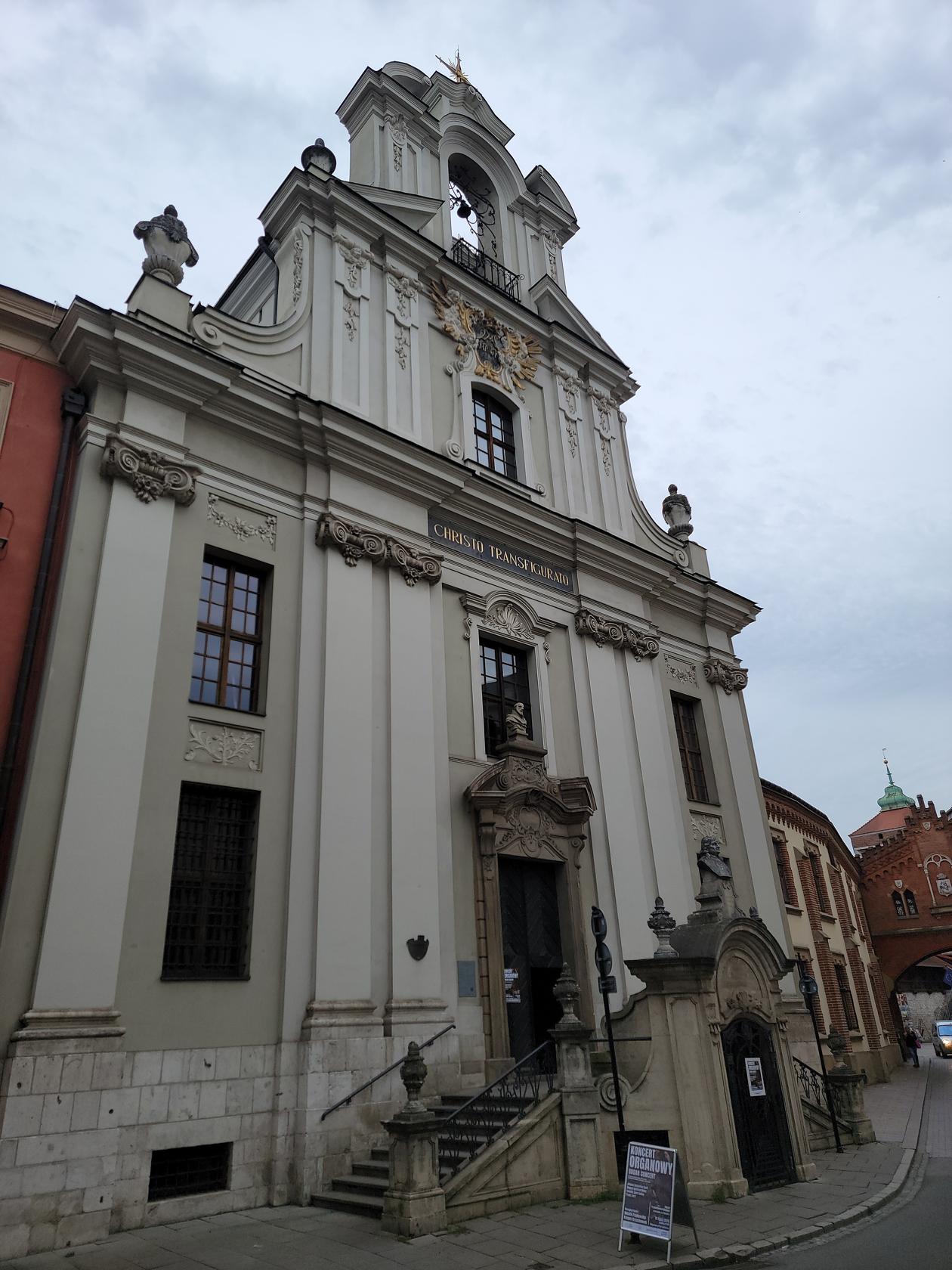
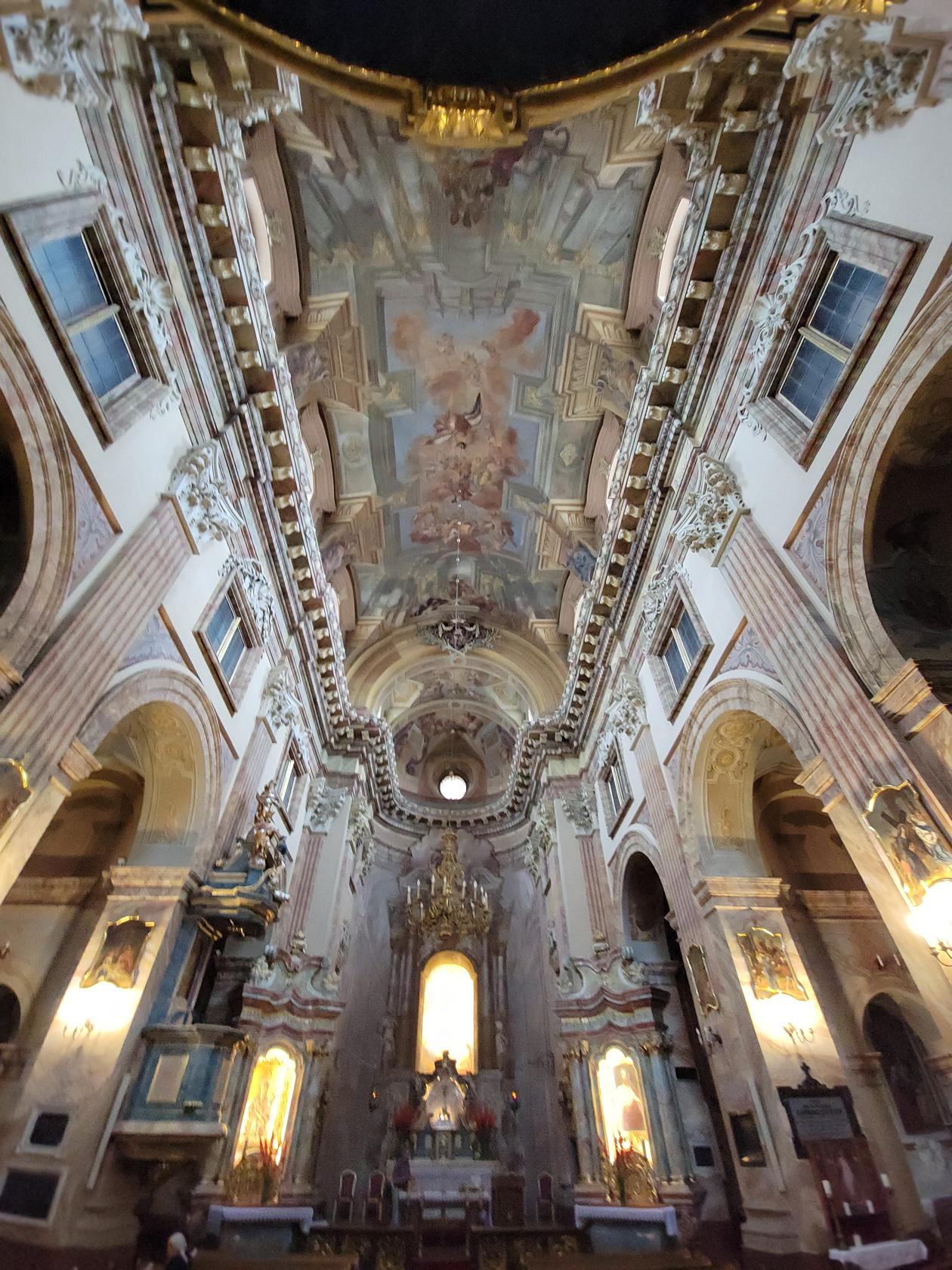
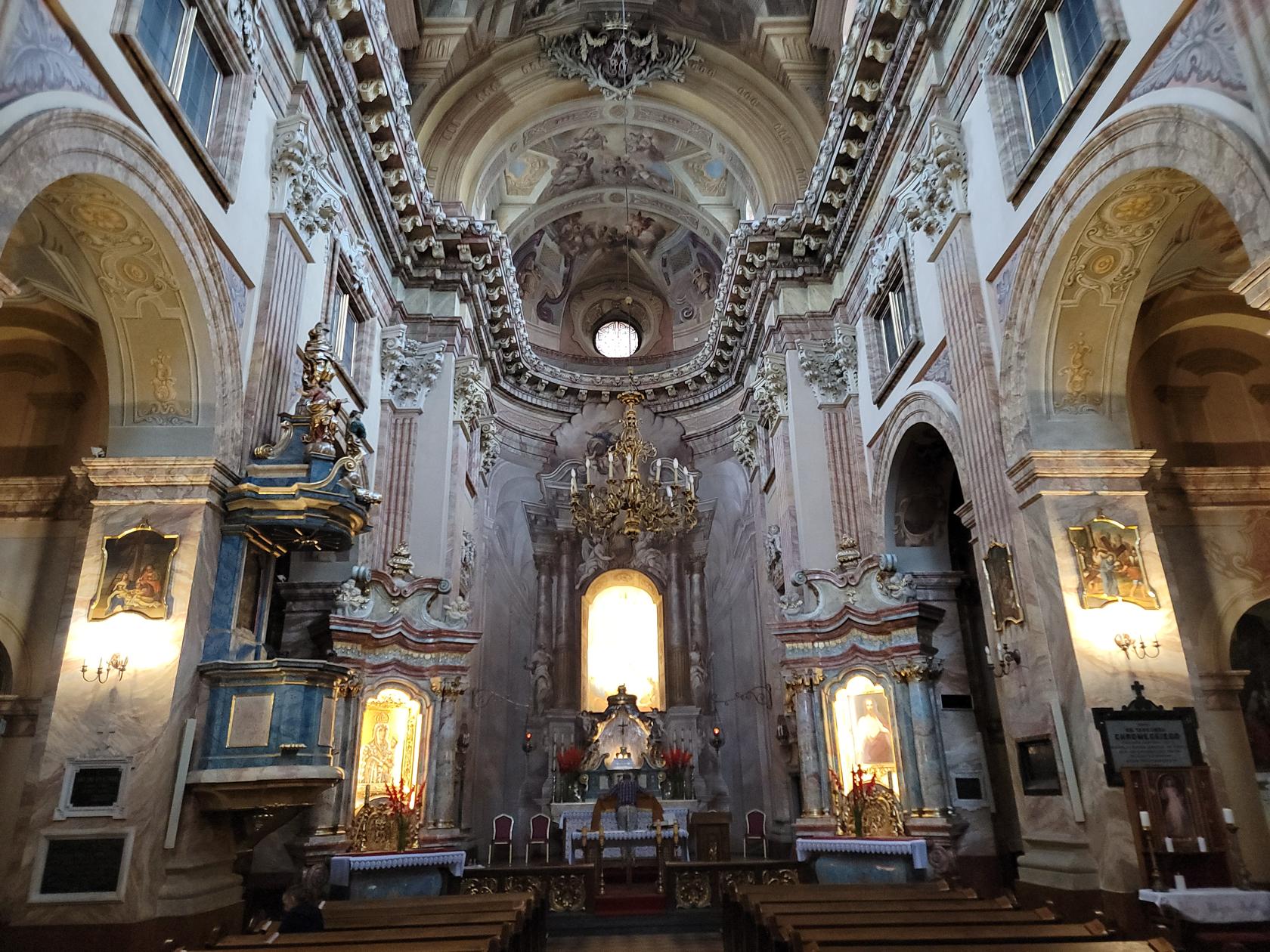
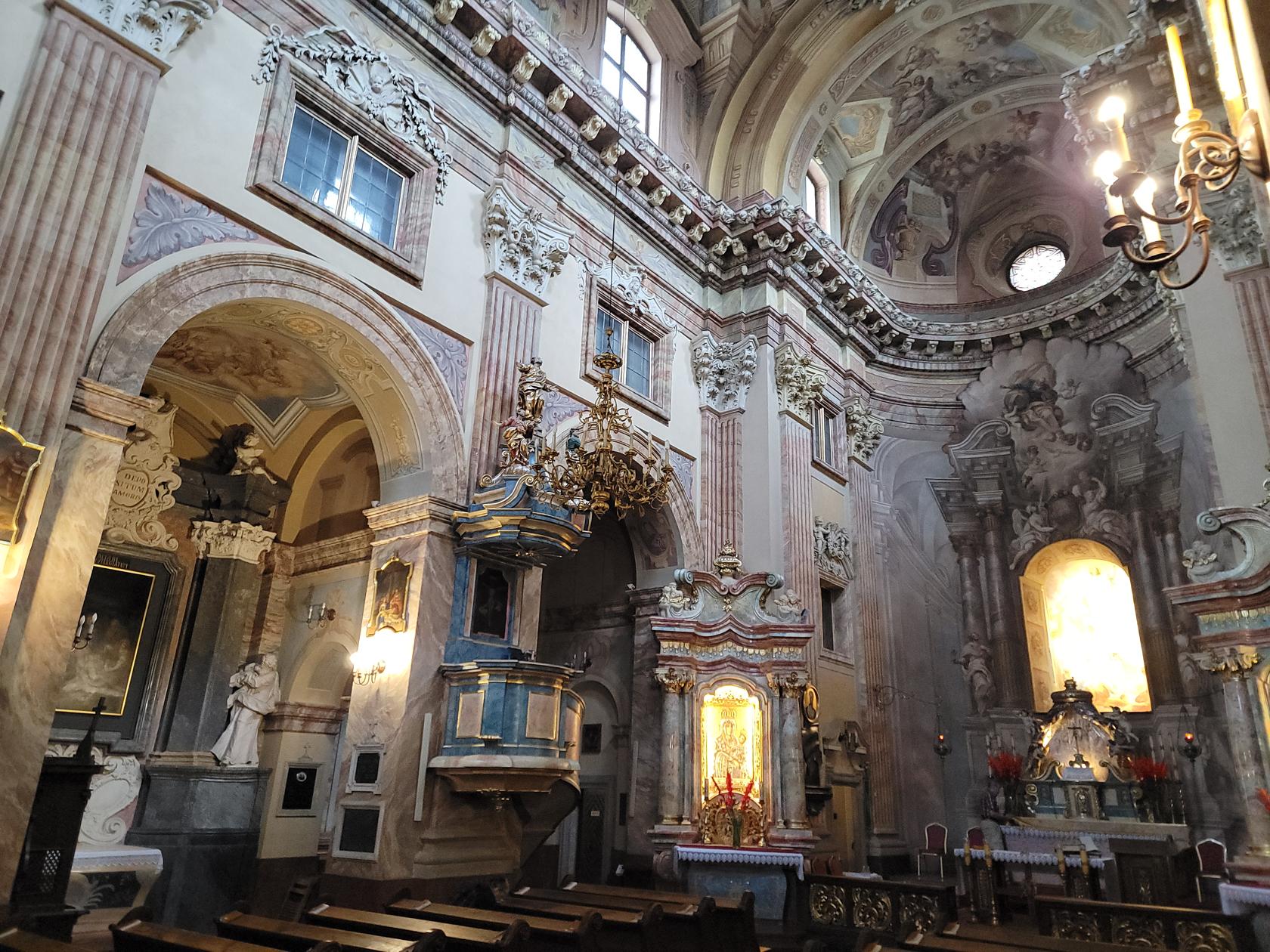
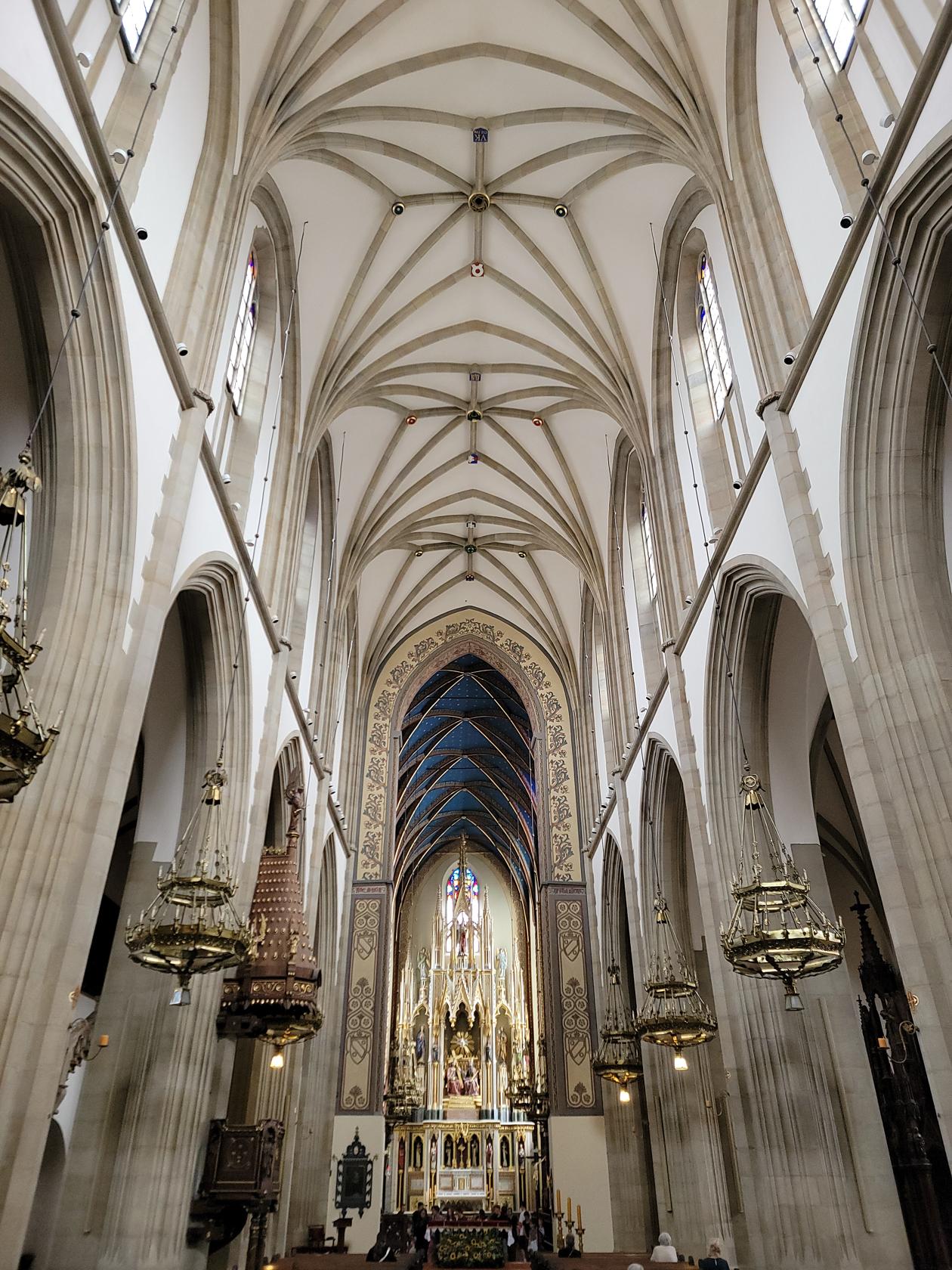
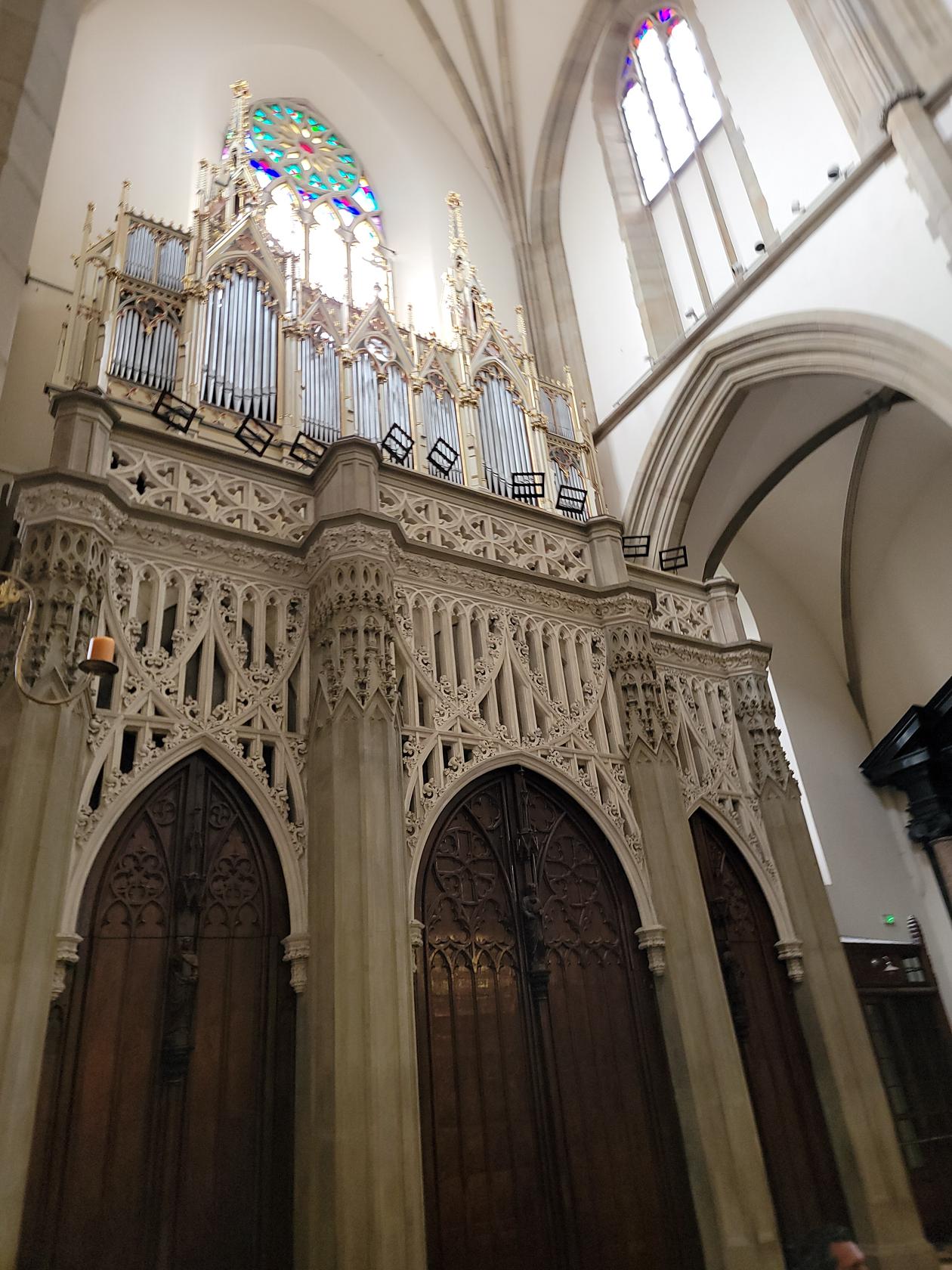
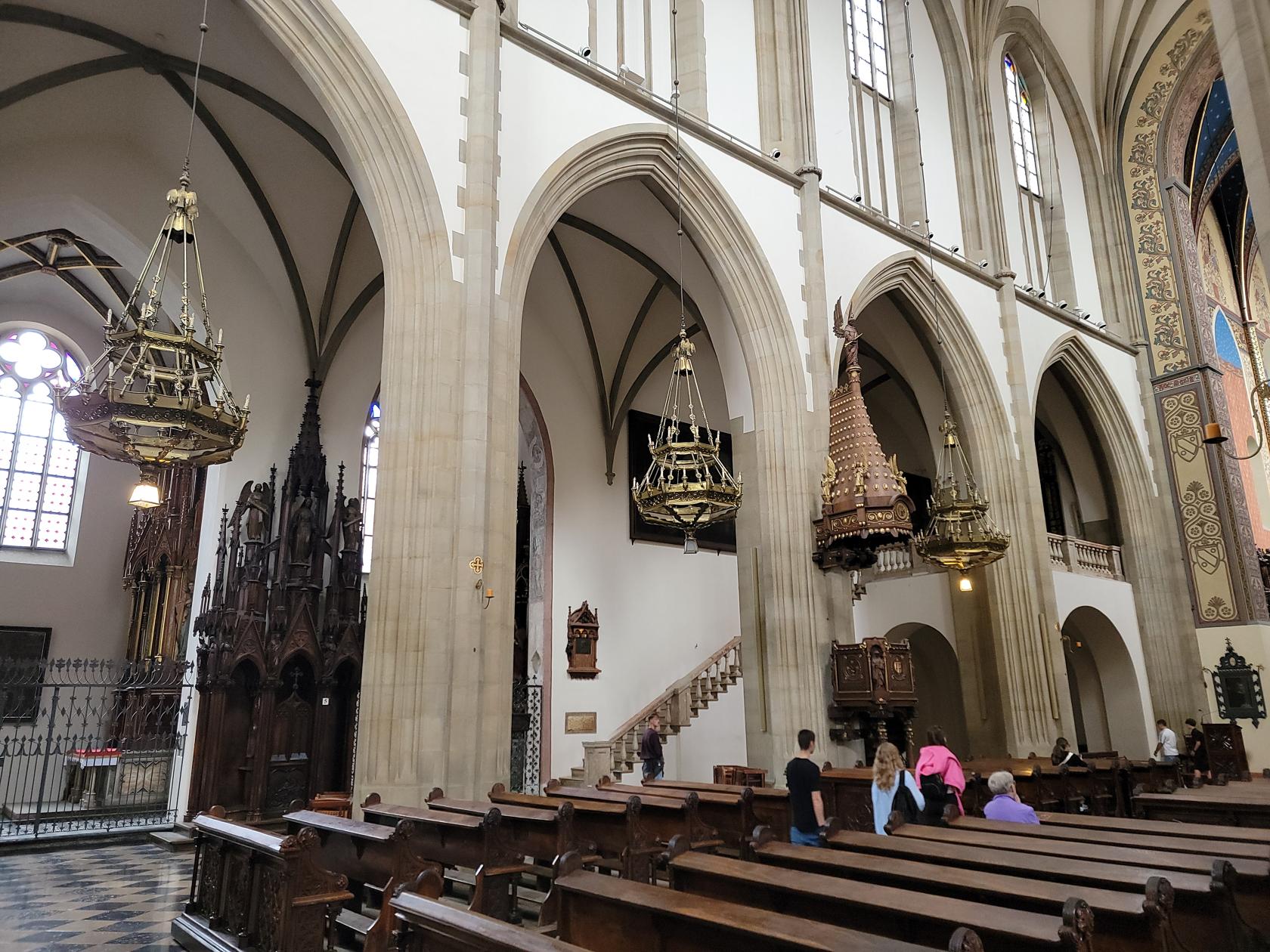
On Pijarska Street, not far from our hotel is the Church of the Transfiguration. Perched a bit high overlooking Świętego Jana Street, the church has an amazing vault or ceiling.
Entrance – Church of the Transfiguration – Kraków, Poland
Nave – Church of the Transfiguration – Kraków, Poland
Altar – Church of the Transfiguration – Kraków, Poland
Pulpit – Church of the Transfiguration – Kraków, Poland
Basilica Saint Francis Of Assisi
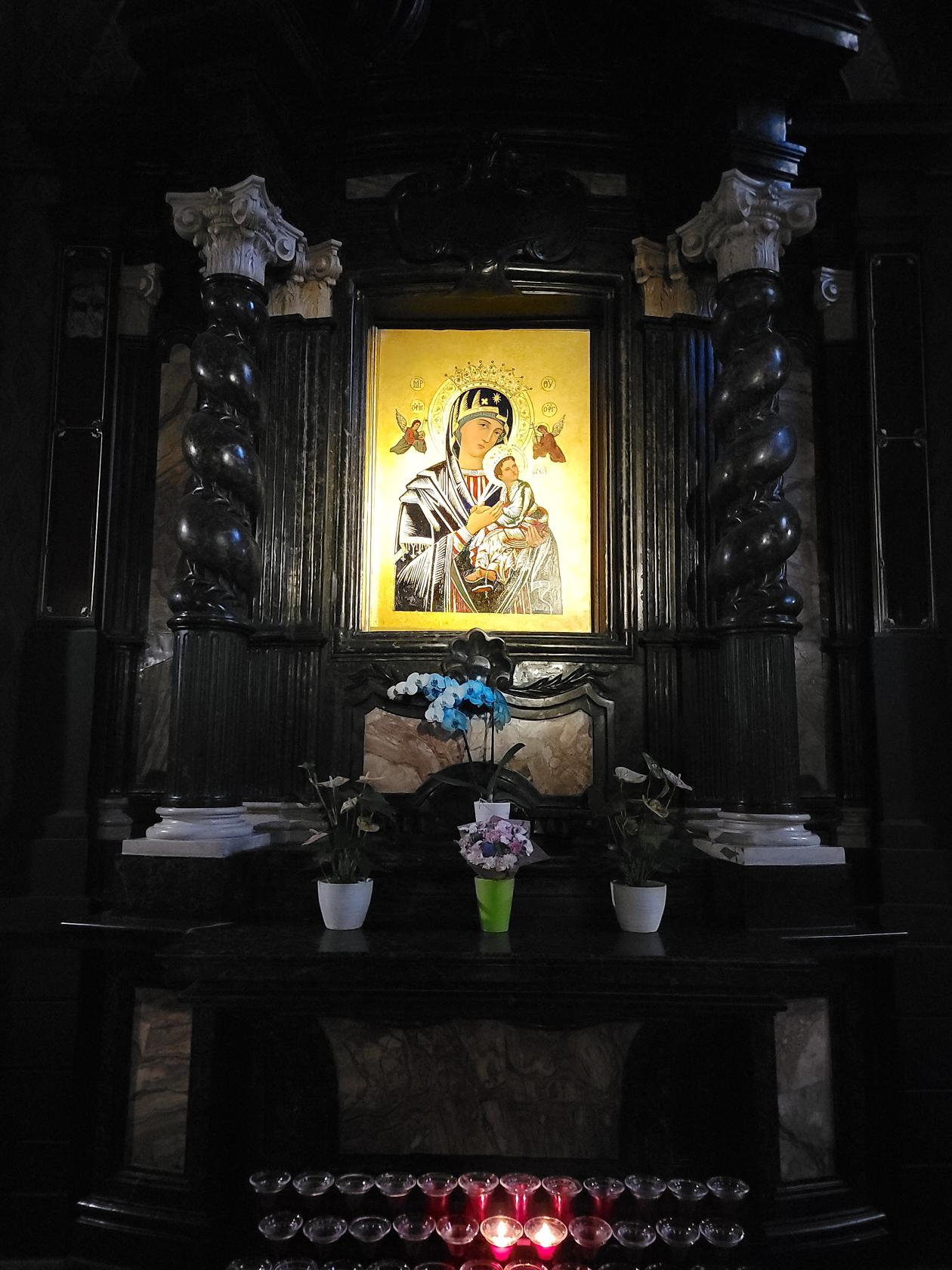
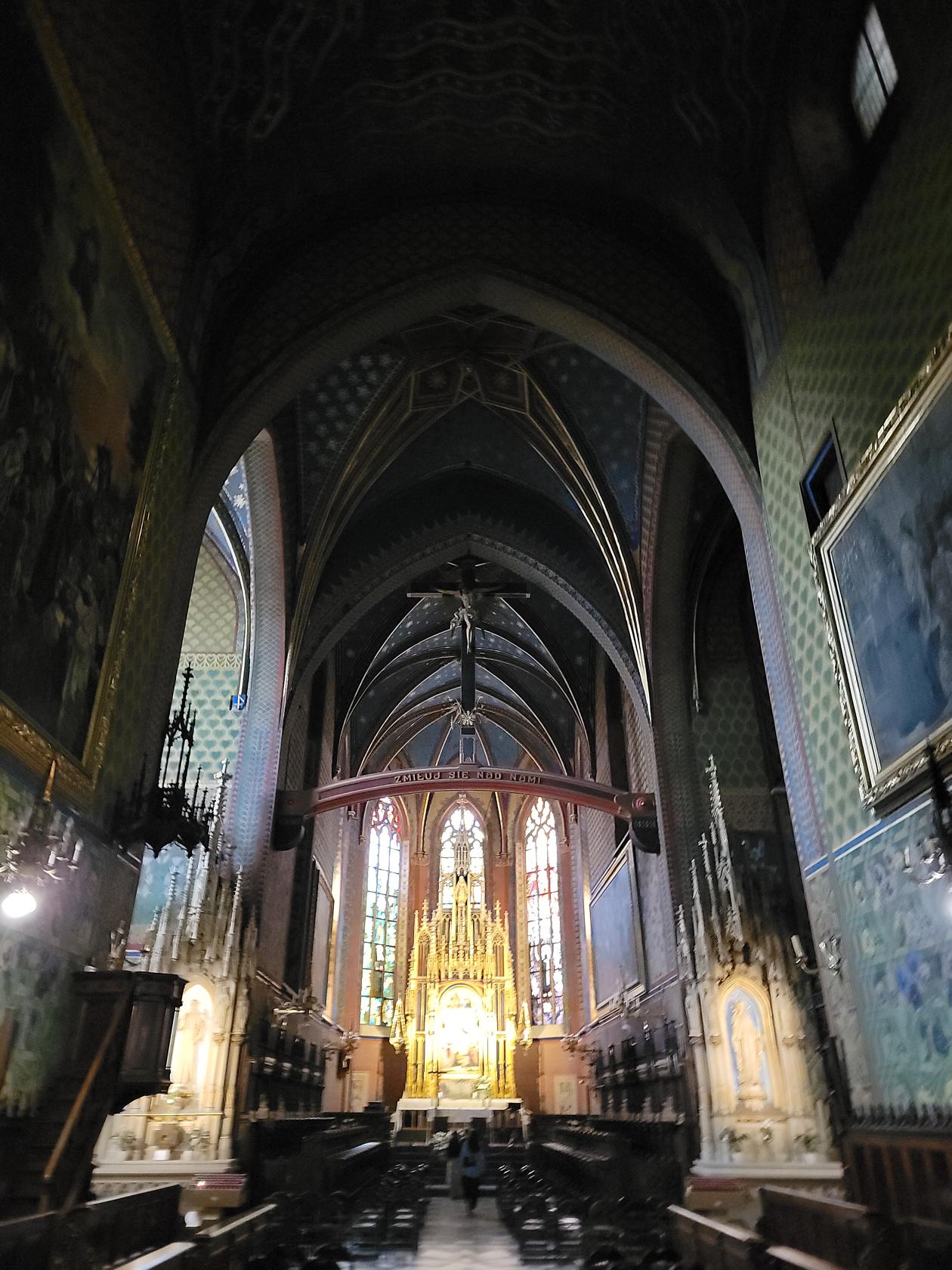
Typical of Saint Francis of Assisi this unassuming basilica was a pleasure to visit. Dark and unoffending, the ebony side chapel of the Madonna with Child is a real marvel.
Madonna with Child – Basilica of Saint Francis of Assisi – Kraków, Poland
Altar – Basilica of Saint Francis of Assisi – Kraków, Poland
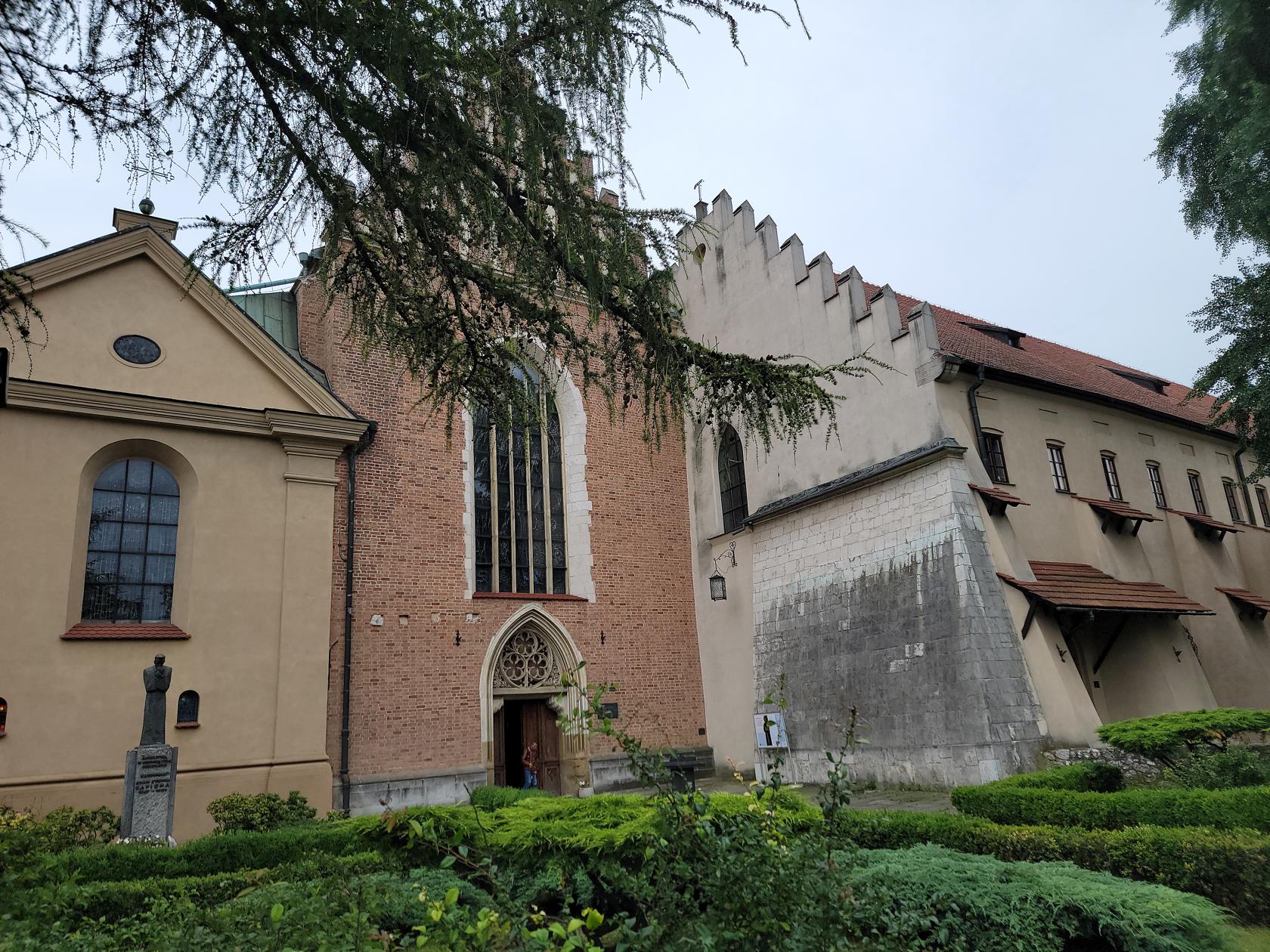
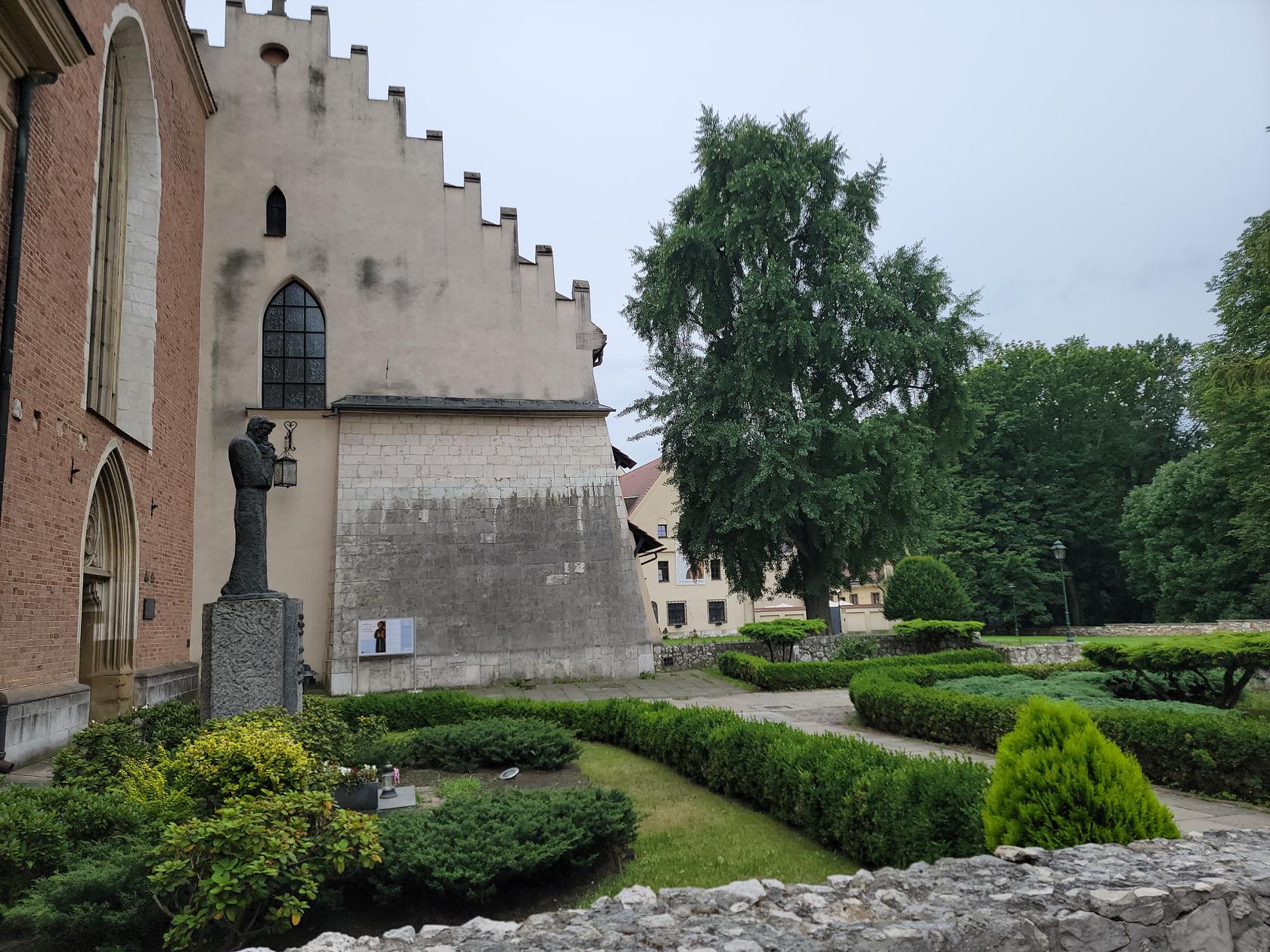
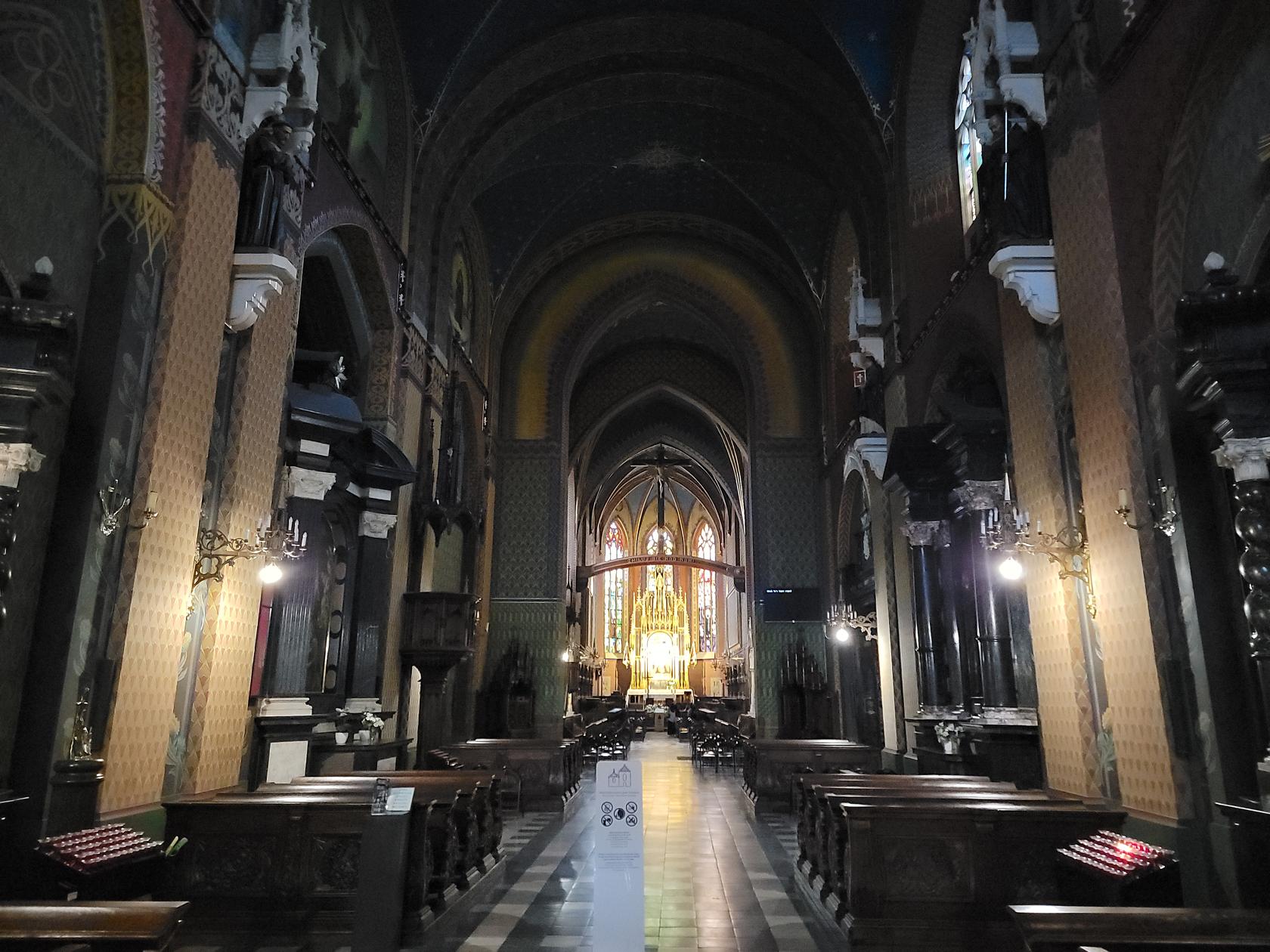
The nave, with a golden altar beckons you forward, beseeching the faithful inside. The Basilica of Saint Francis of Assisi is a thirteenth century church that was one of the first brick and sandstone churches in Poland.
Entrance – Basilica of Saint Francis of Assisi – Kraków, Poland
Garden – Basilica of Saint Francis of Assisi – Kraków, Poland
Nave – Basilica of Saint Francis of Assisi – Kraków, Poland
Church Of Saint Anne
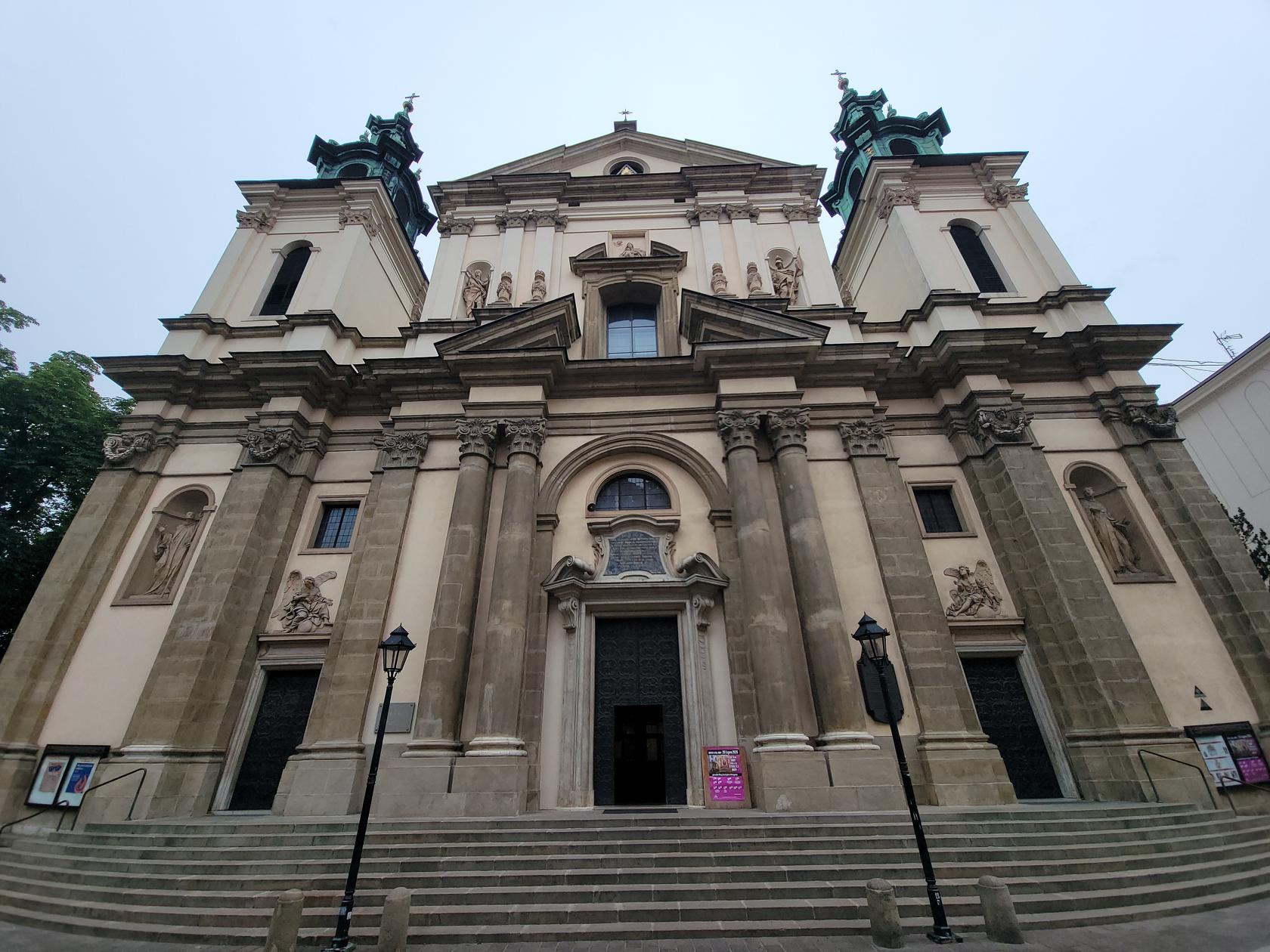
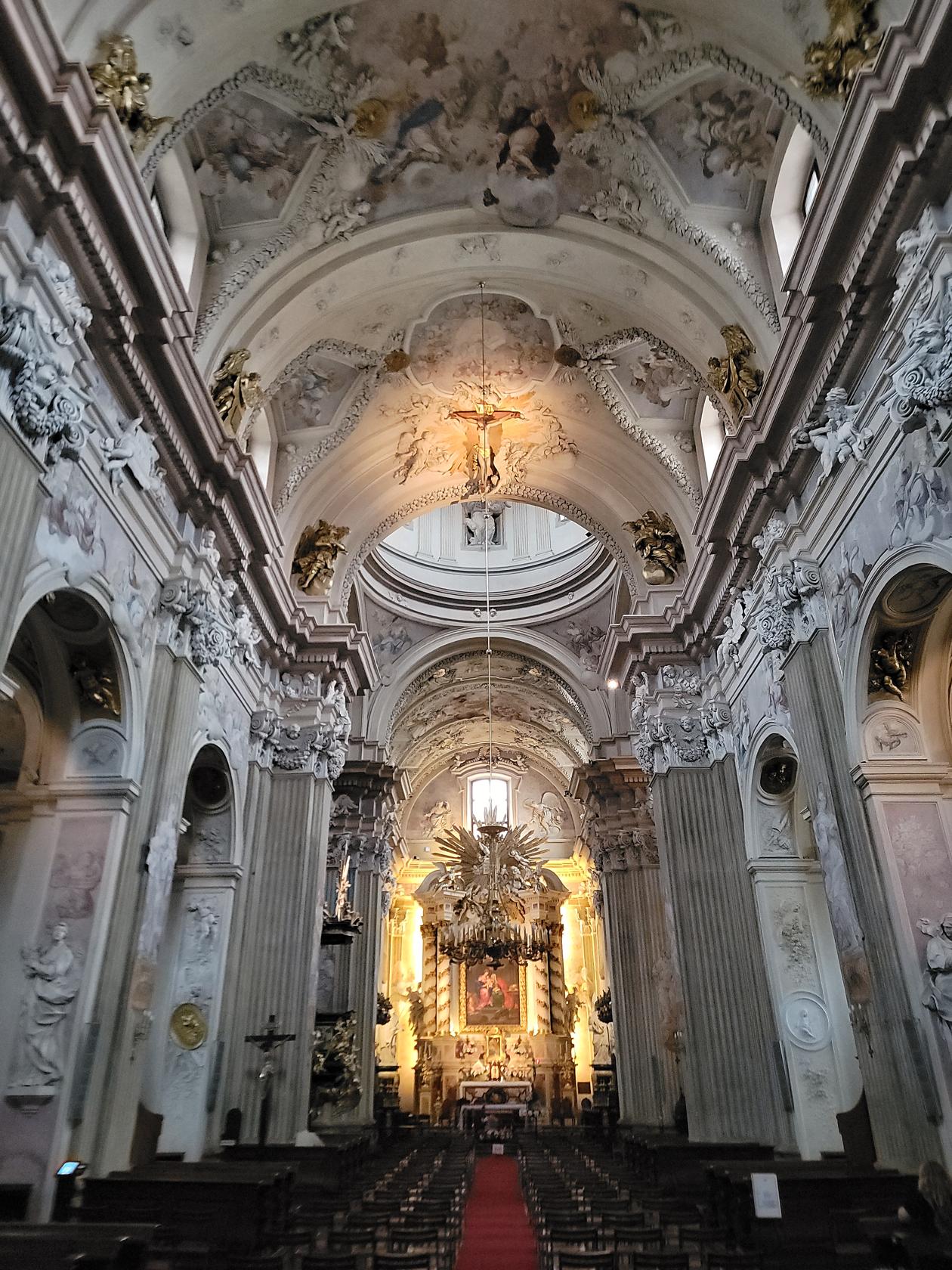
Located close to the Art Palace and the Plac Szczepański the Church of Saint Anne is elegant in its own way. Built in the baroque style, the floor itself is impressive in its own right.
Entrance – Church of Saint Anne – Kraków, Poland
Nave – Church of Saint Anne – Kraków, Poland
Aisle – Church of Saint Anne – Kraków, Poland
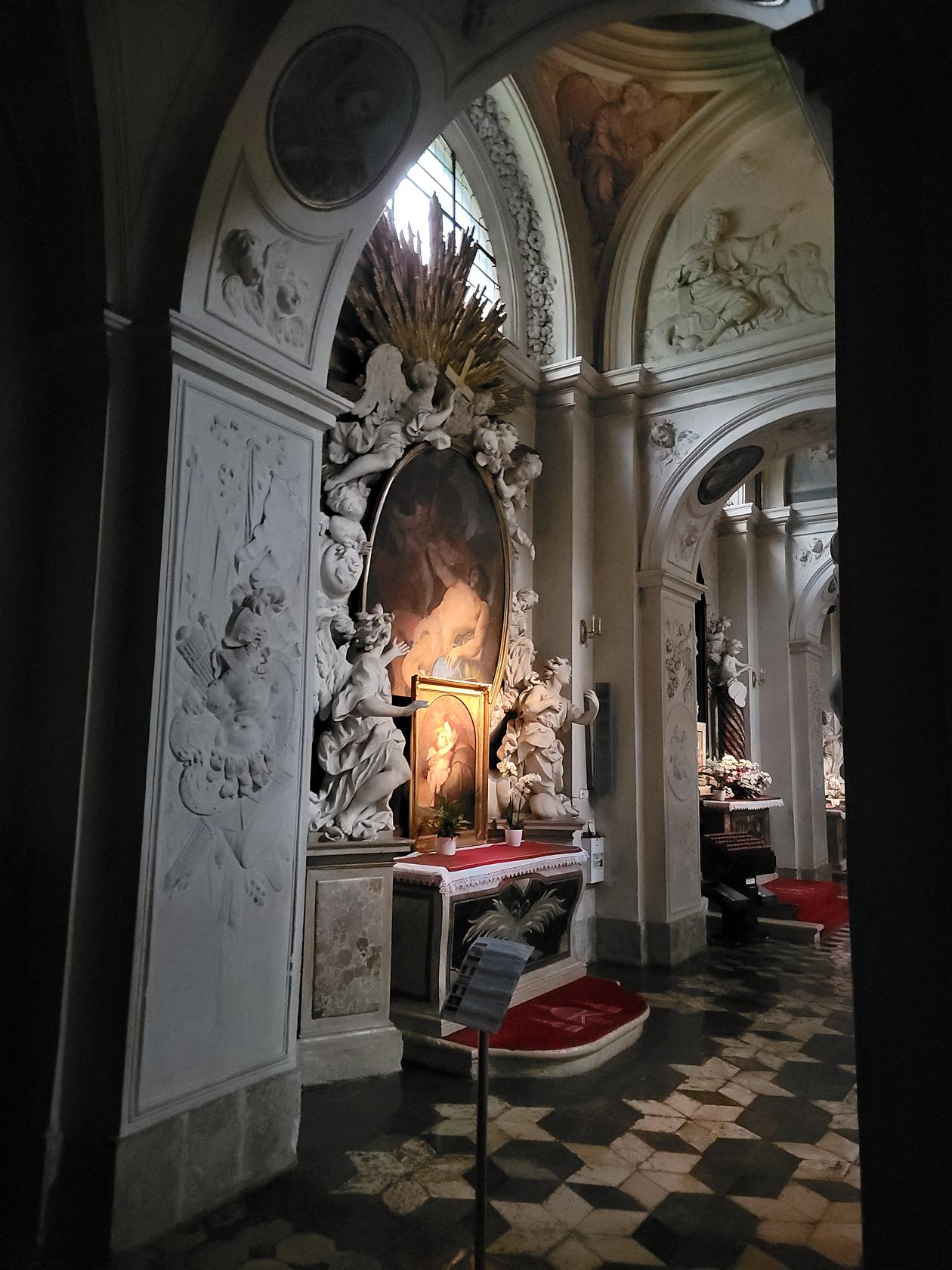
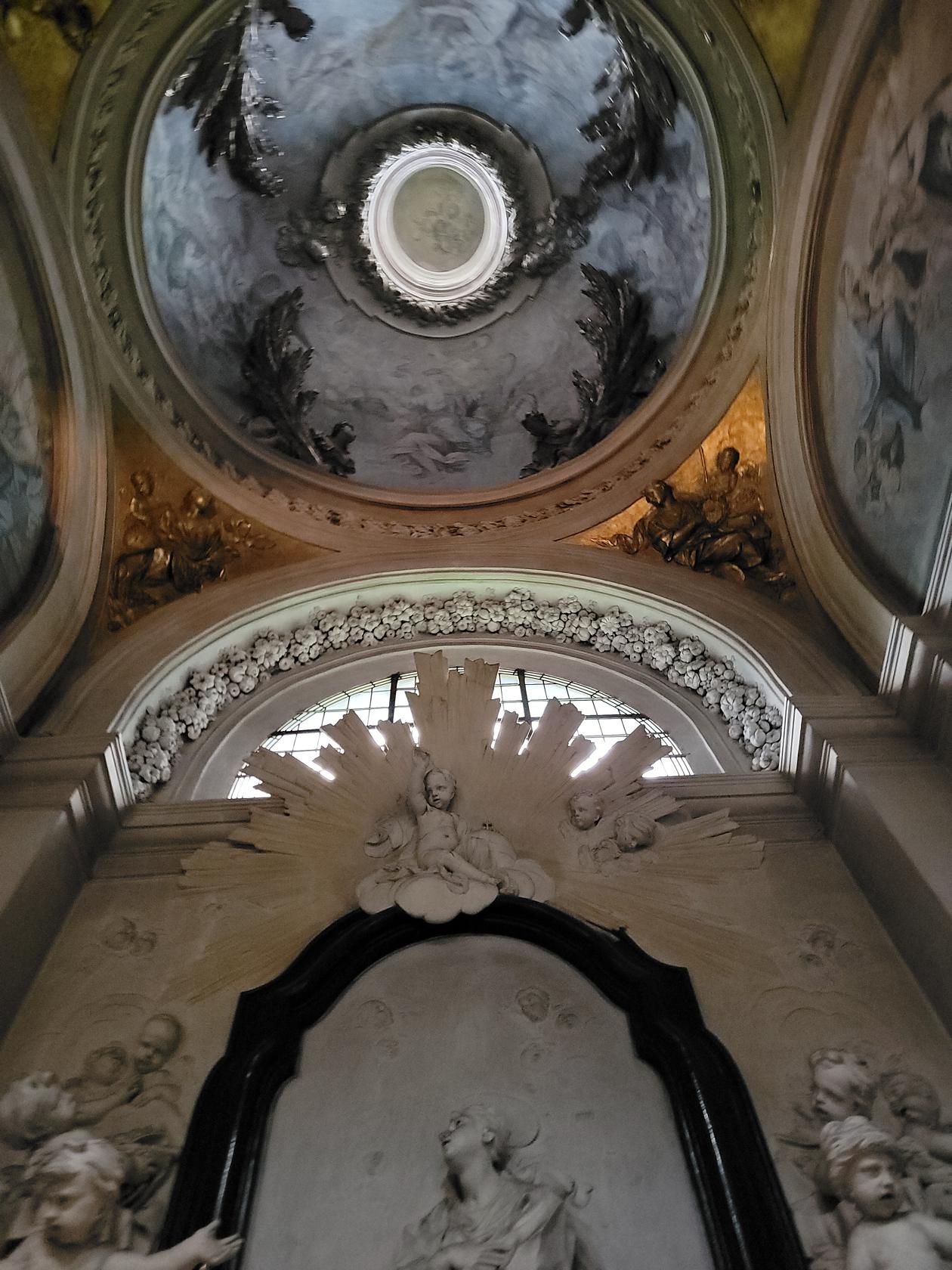
The nave, altar, aisles and other aspects of the church speak for themselves. A beautiful church and typical of Catholic Churches found in Poland.
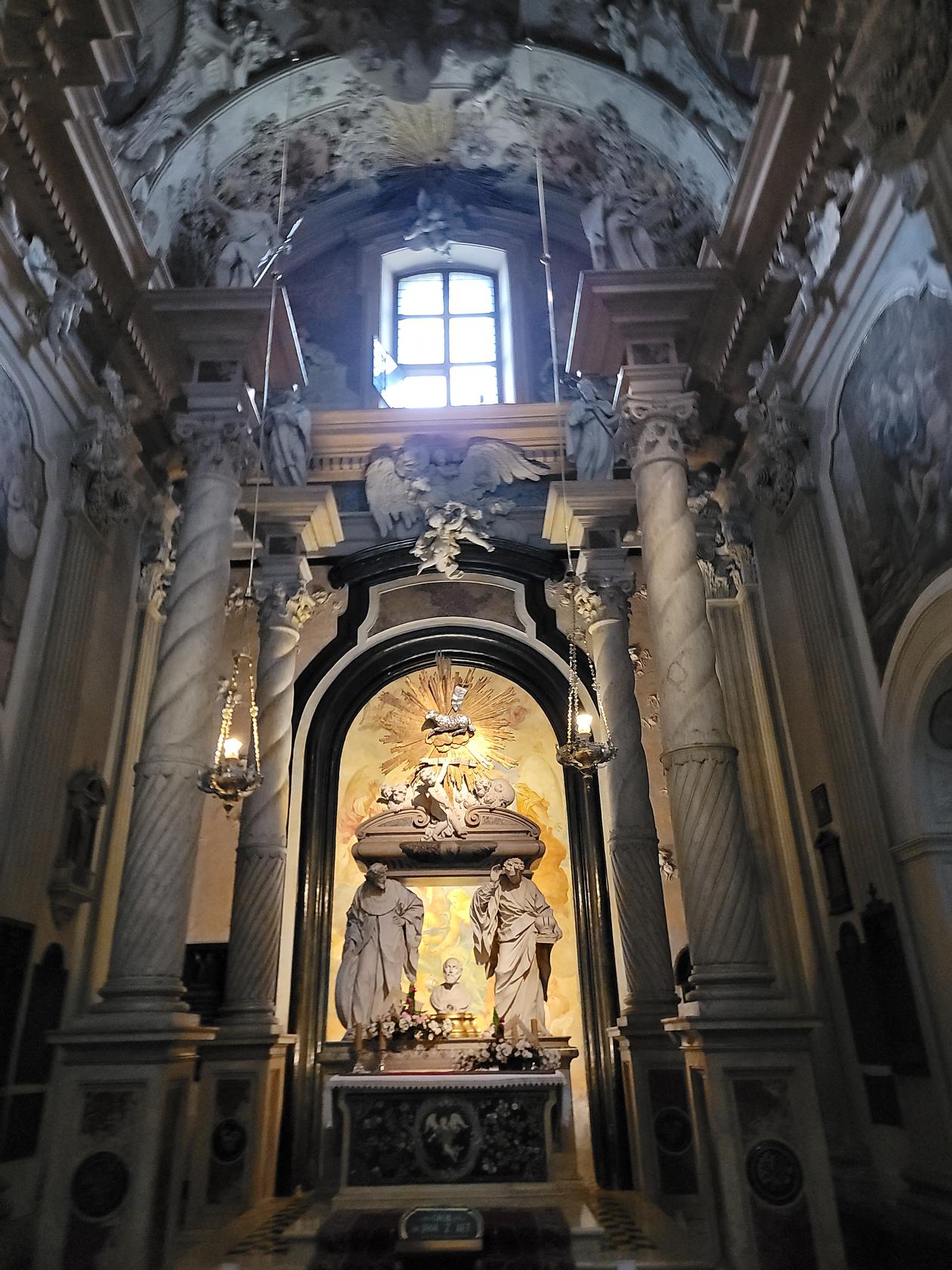
Side Chapel Ceiling – Church of Saint Anne – Kraków, Poland
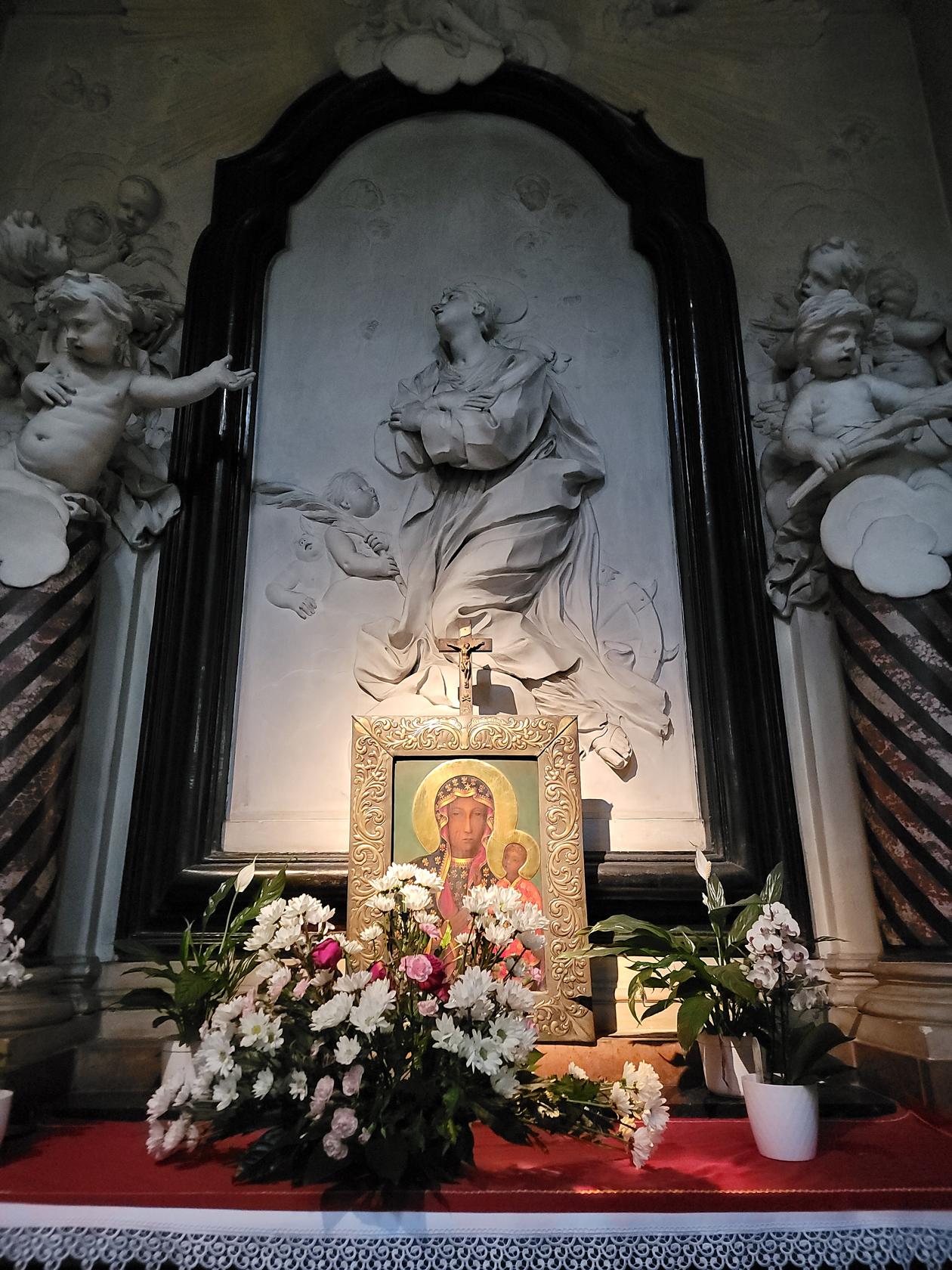
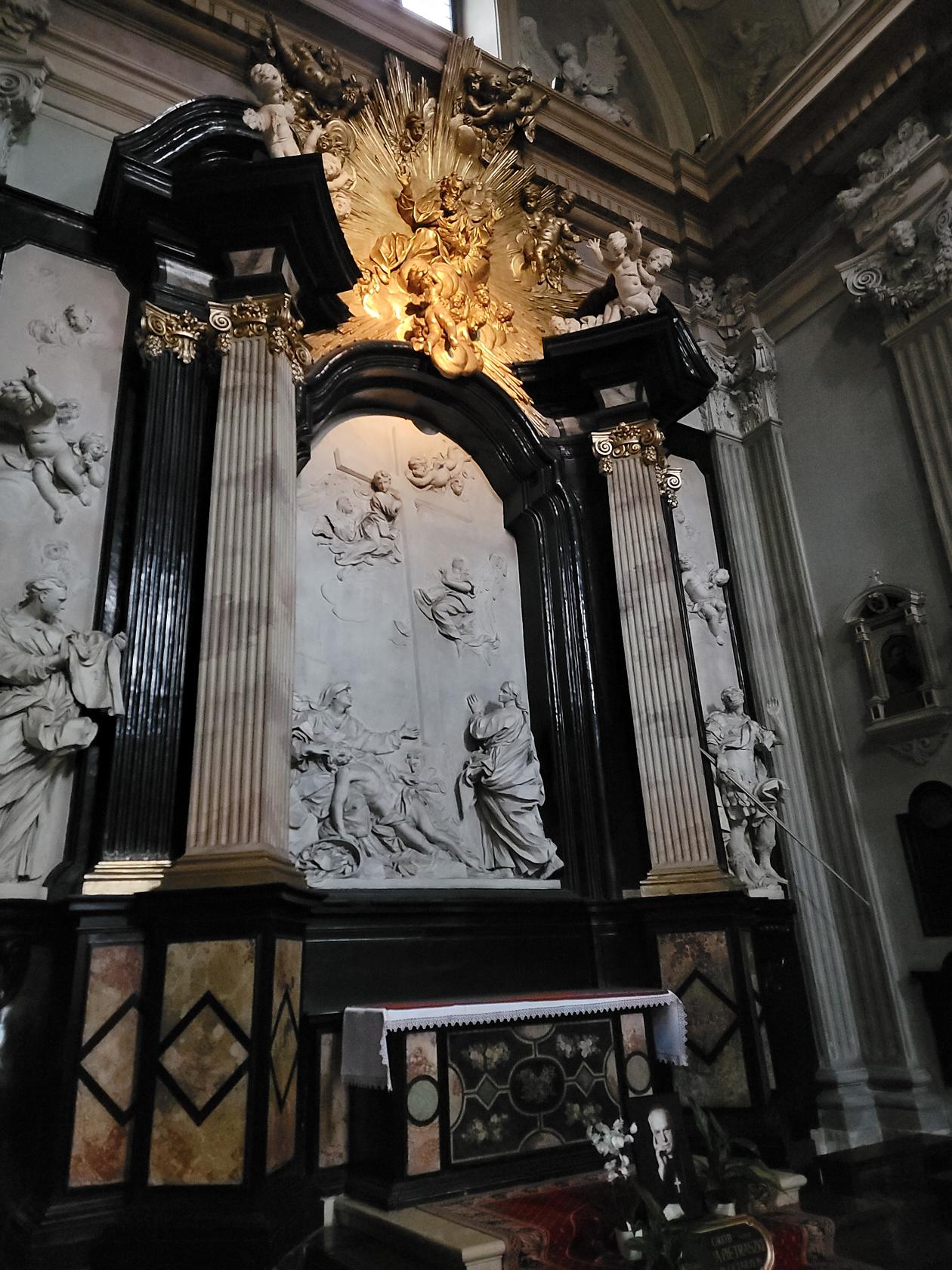
Side Chapel – Church of Saint Anne – Kraków, Poland
Side Altar – Church of Saint Anne – Kraków, Poland
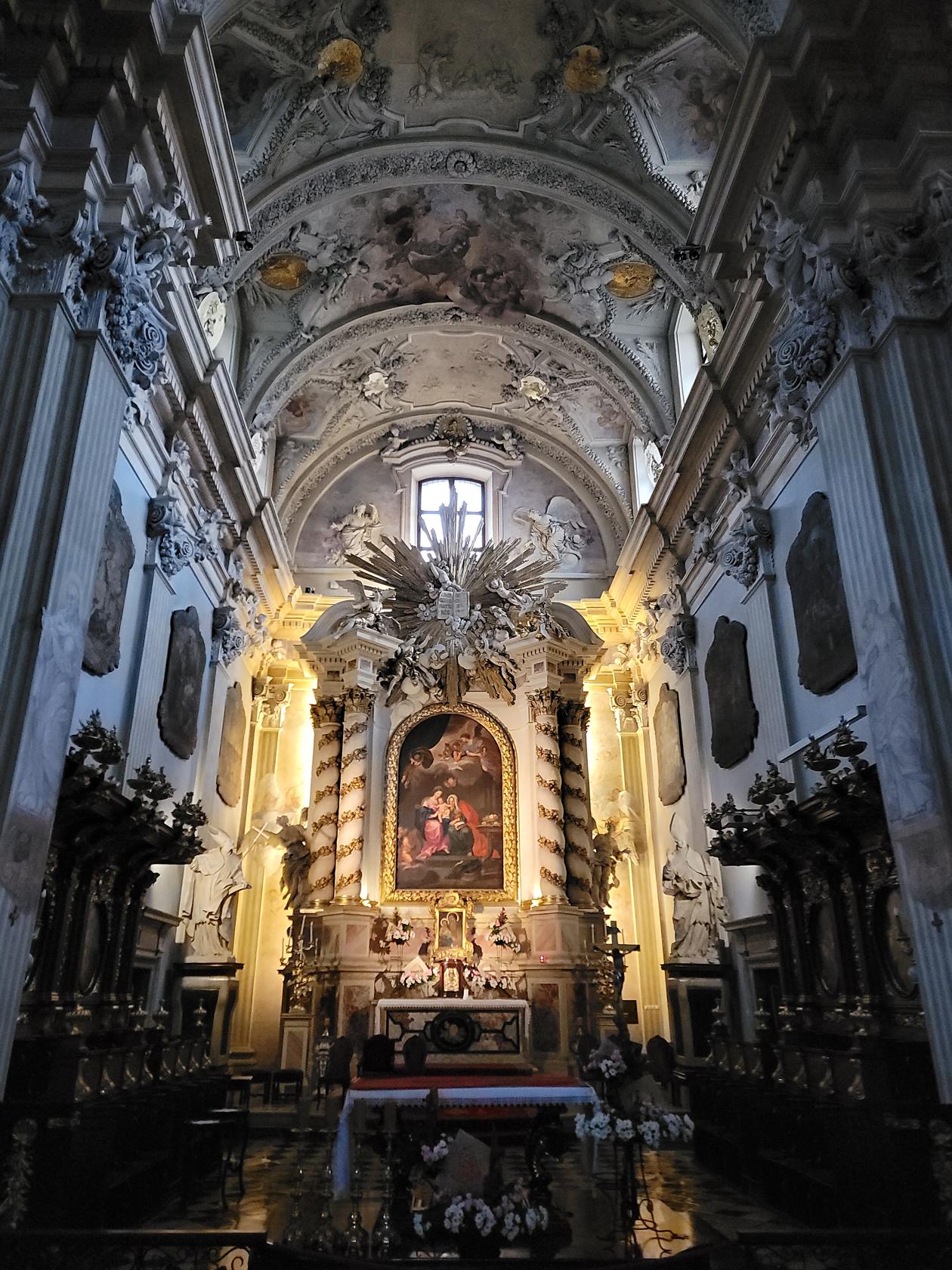
Altar – Church of Saint Anne – Kraków, Poland
Side Altar – Church of Saint Anne – Kraków, Poland
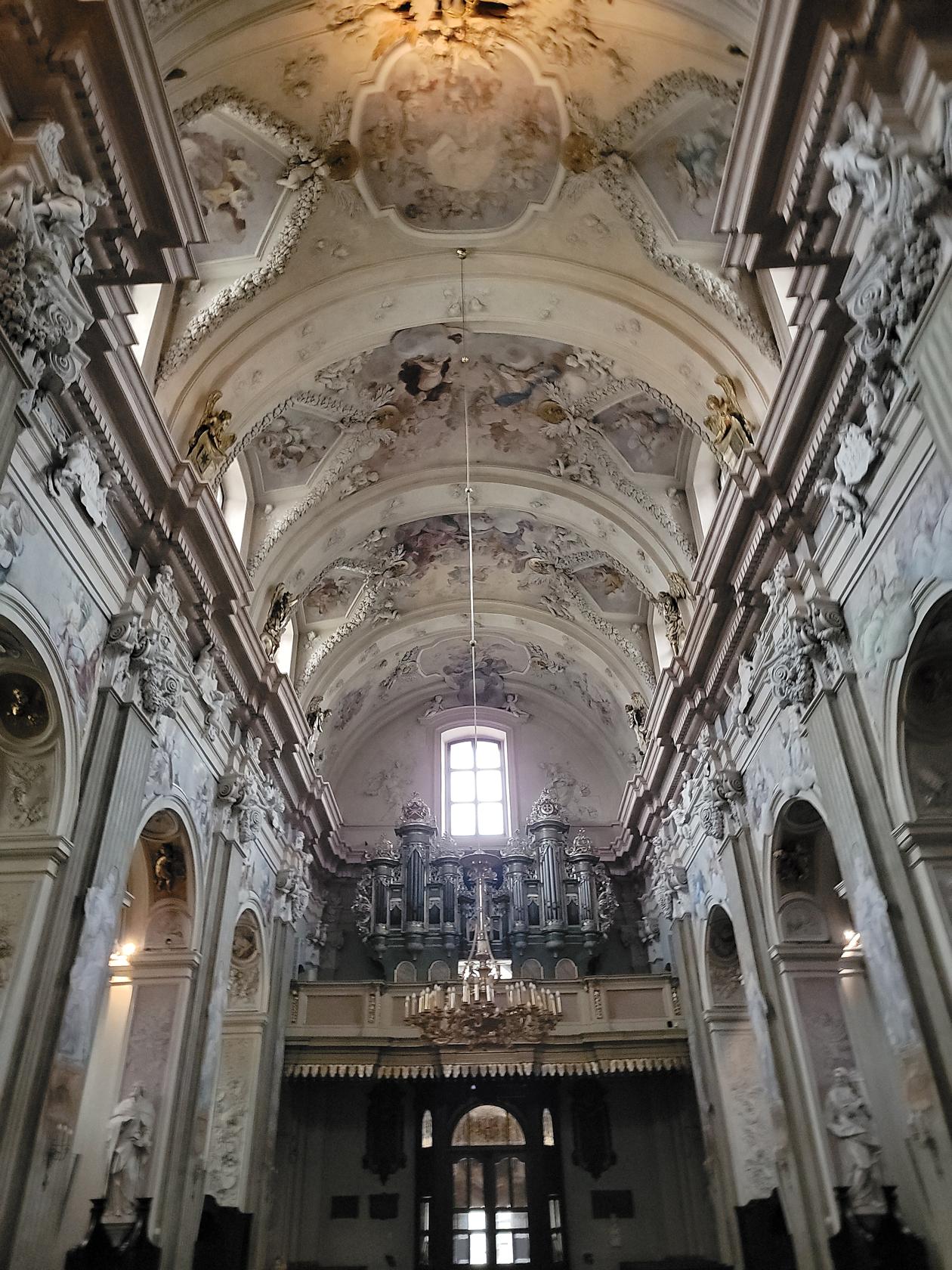
Organ and Nave Ceiling – Church of Saint Anne – Kraków, Poland
Church Of Saints John The Baptist And John The Evangelist
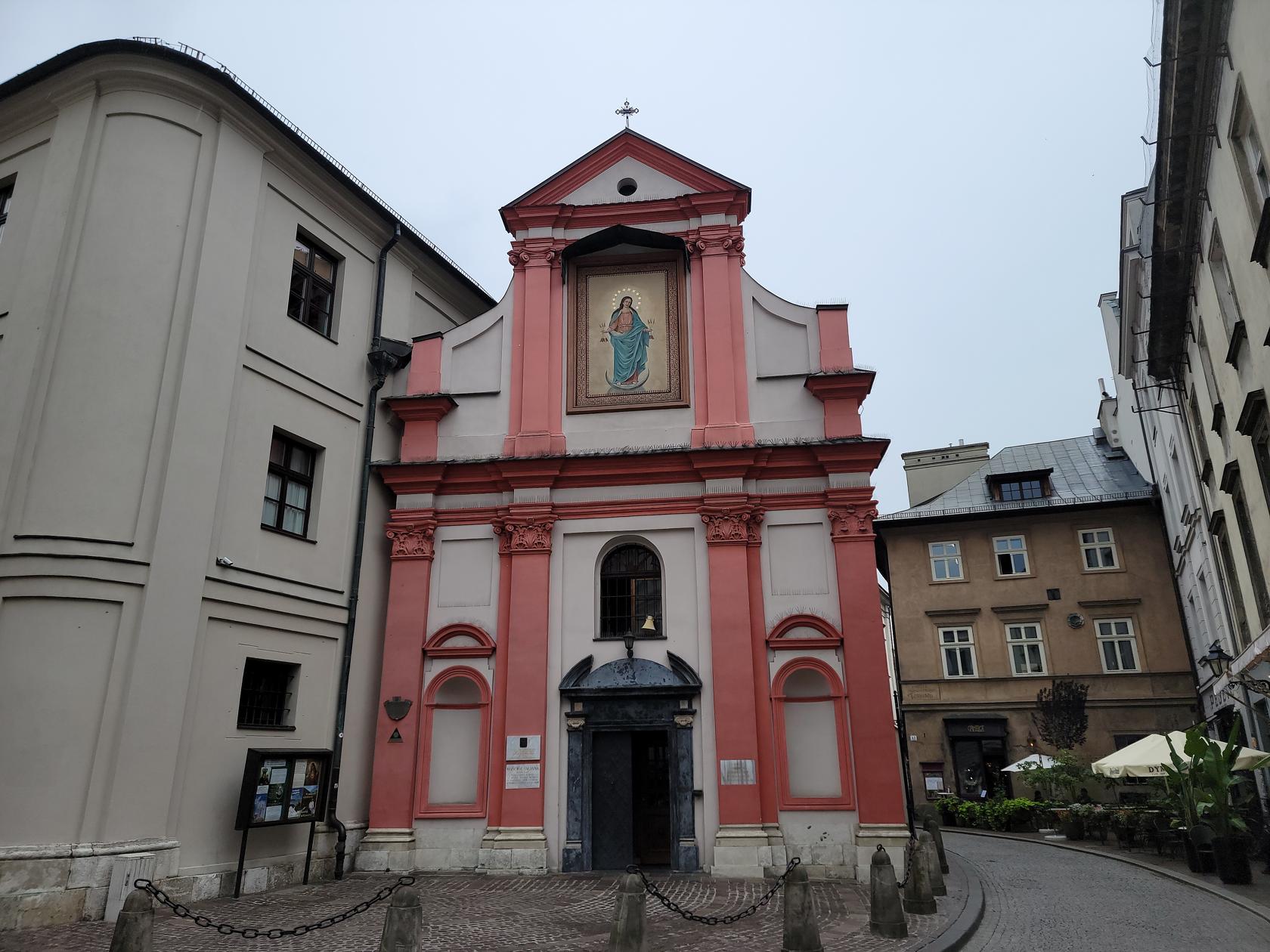
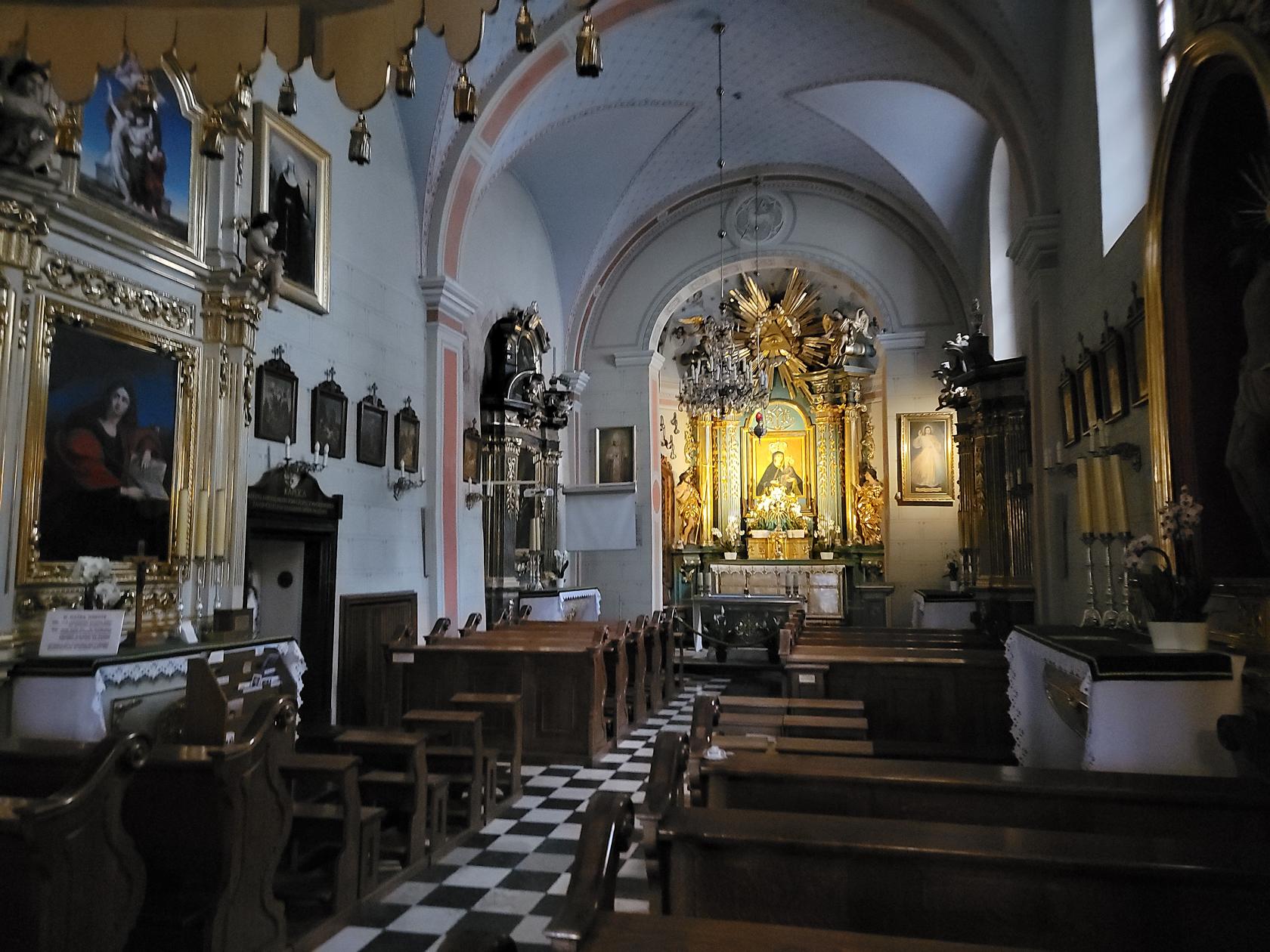
A small church next to a small Italian restaurant that we ate at, the Church Of Saints John The Baptist And John The Evangelist has a red exterior, small in stature and somewhat a simple baroque interior, but well worth a visit.
Entrance – Church of Saints John the Baptist and John the Evangelist – Kraków, Poland
Altar and Inside – Church of Saints John the Baptist and John the Evangelist – Kraków, Poland
Holy Trinity Church
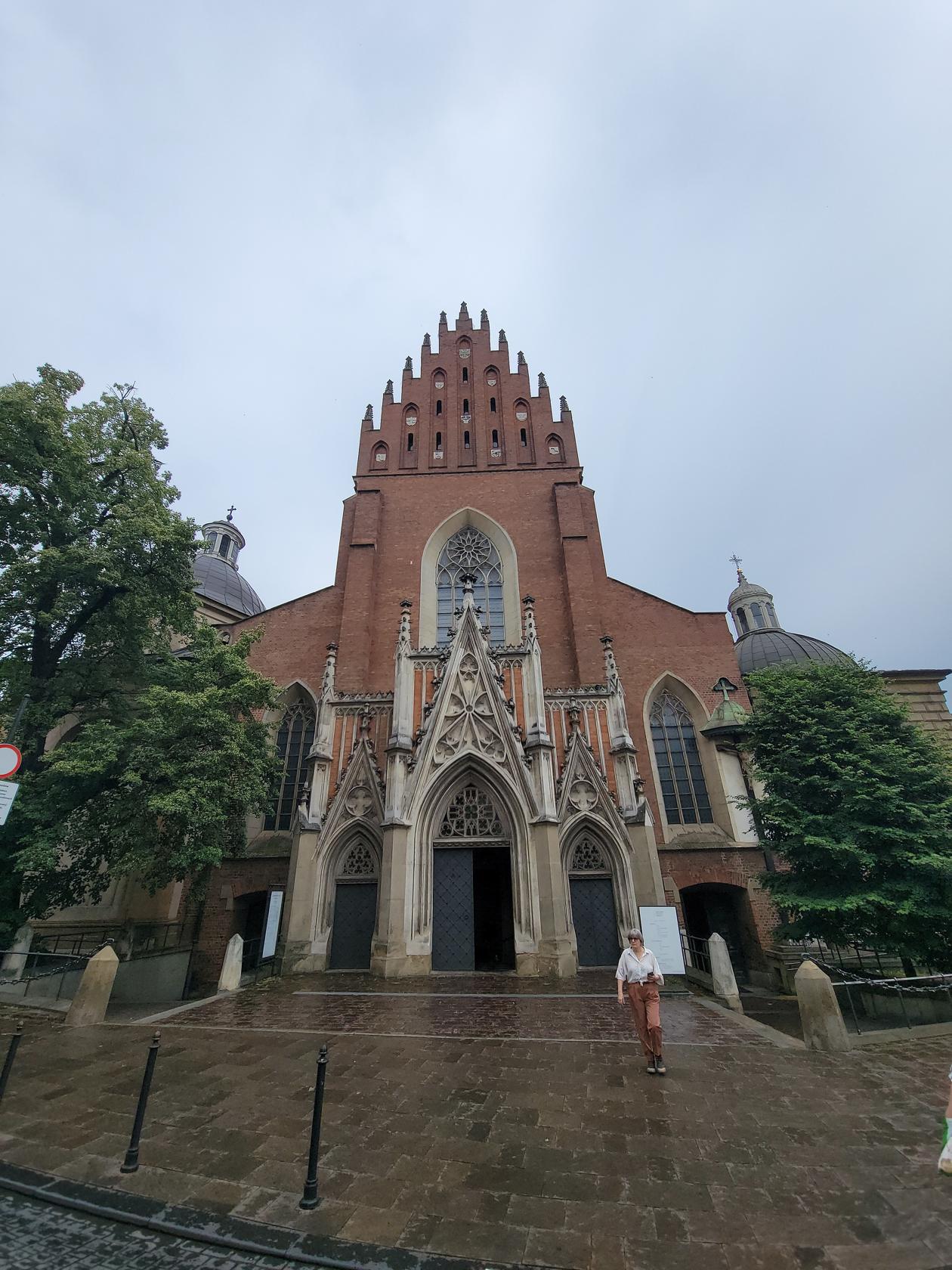
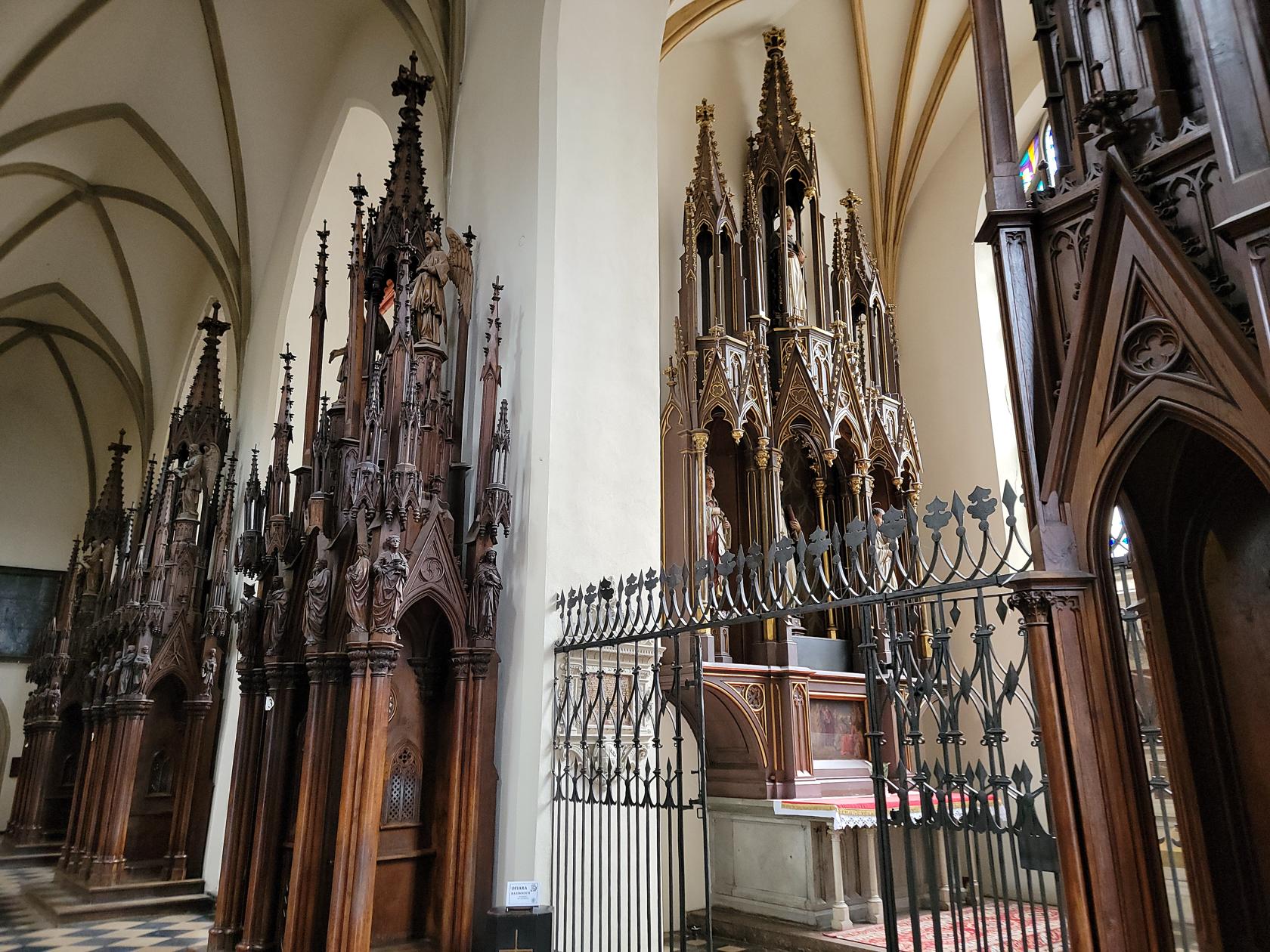
If you are looking for something small with more spartan lines, then the Holy Trinity Church should be a destination. It singular feature of adornment is in its wooden side chapels, which the photographs below show in better detail.
Entrance – Holy Trinity Church – Kraków, Poland
Nave – Holy Trinity Church – Kraków, Poland
Organ – Holy Trinity Church – Kraków, Poland
Side Chapels – Holy Trinity Church – Kraków, Poland
Pulpit – Holy Trinity Church – Kraków, Poland
Saint Aldabert’s Church
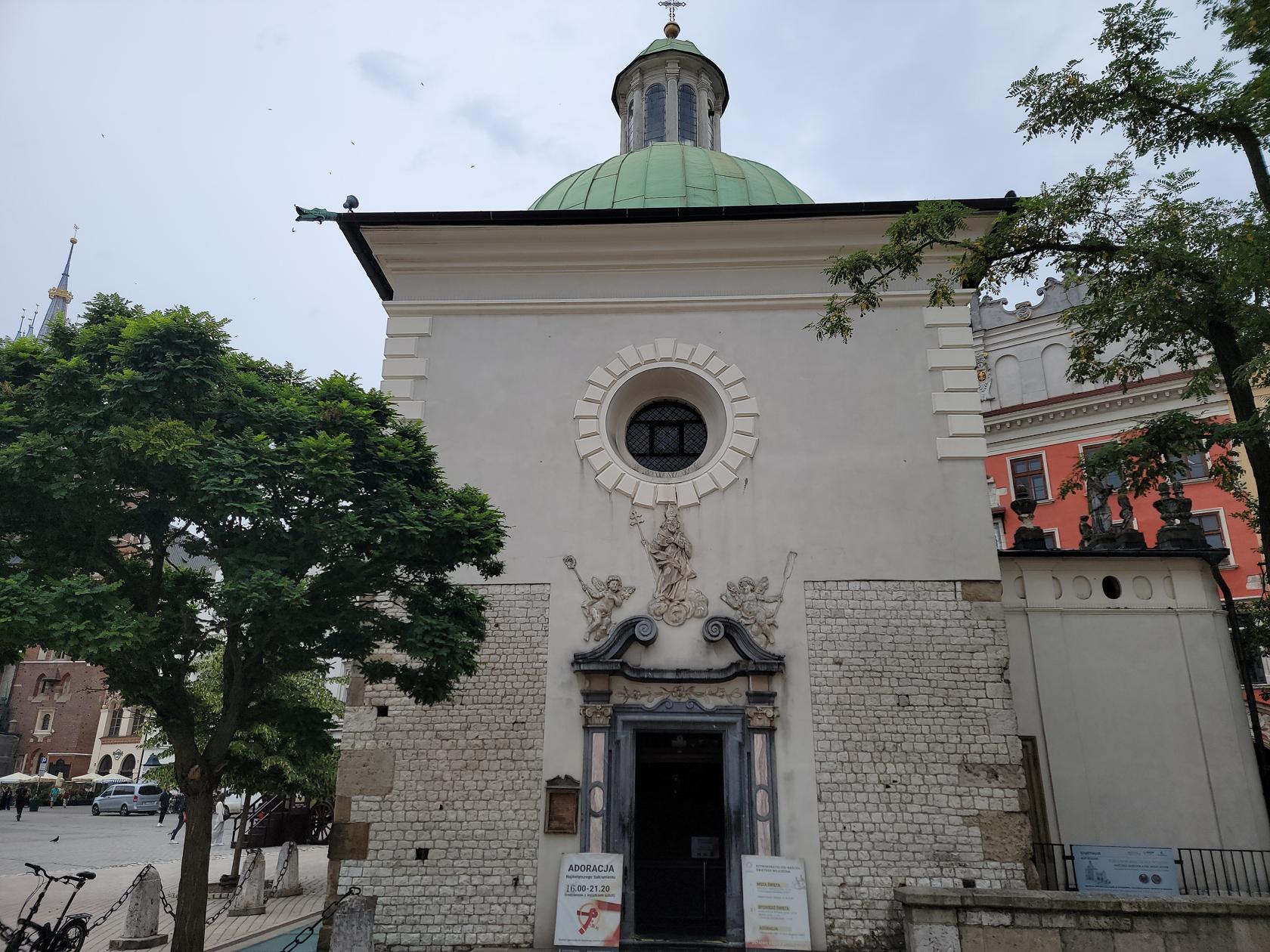
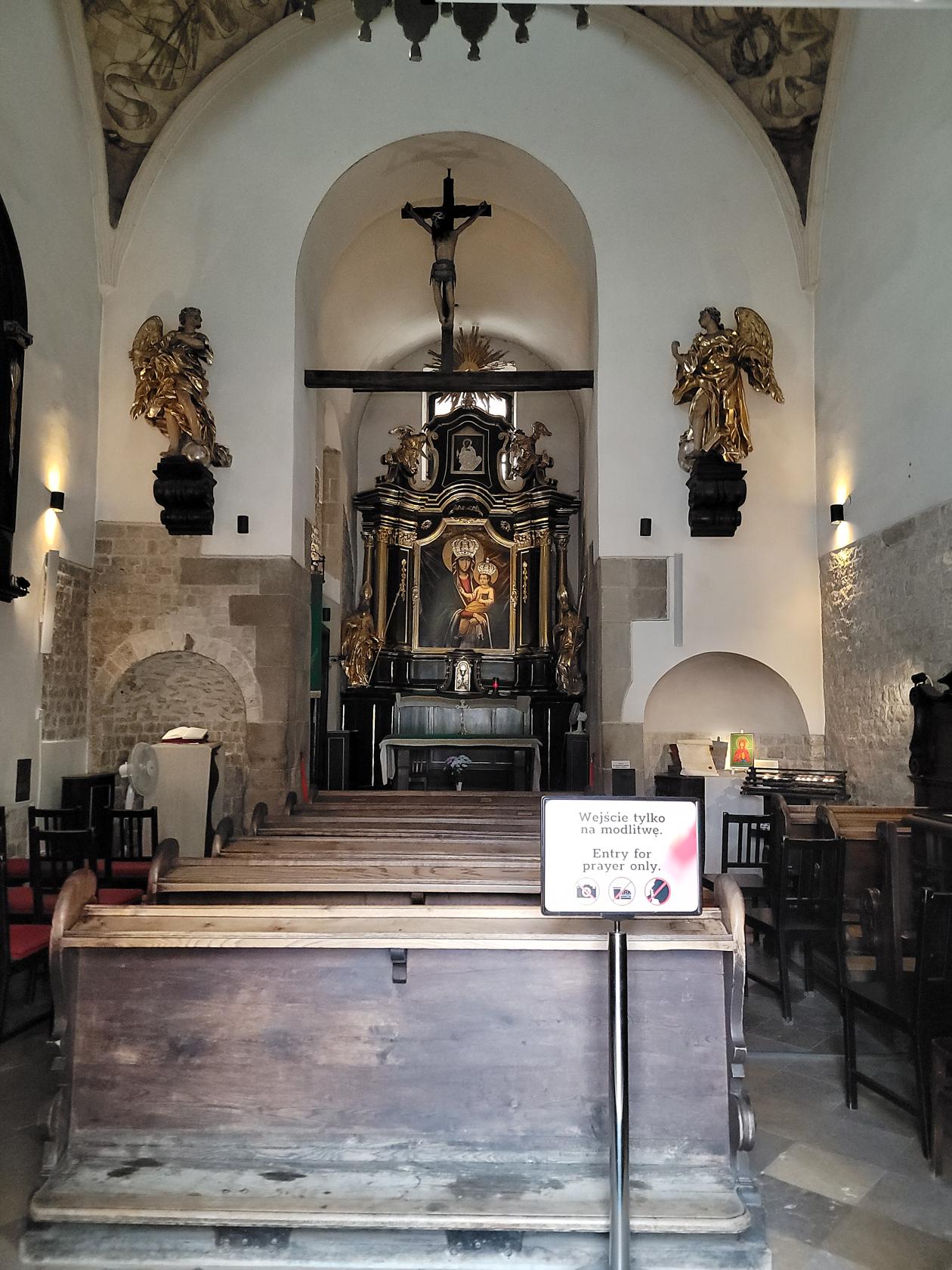
Also known as Church Of Saint Wojciech, Saint Aldabert’s Church is a small chapel that sits on top of an older church.
Church of St. Wojciech – Rynek Główny Main Plaza – Kraków, Poland
Church of St. Wojciech – Rynek Główny Main Plaza – Kraków, Poland
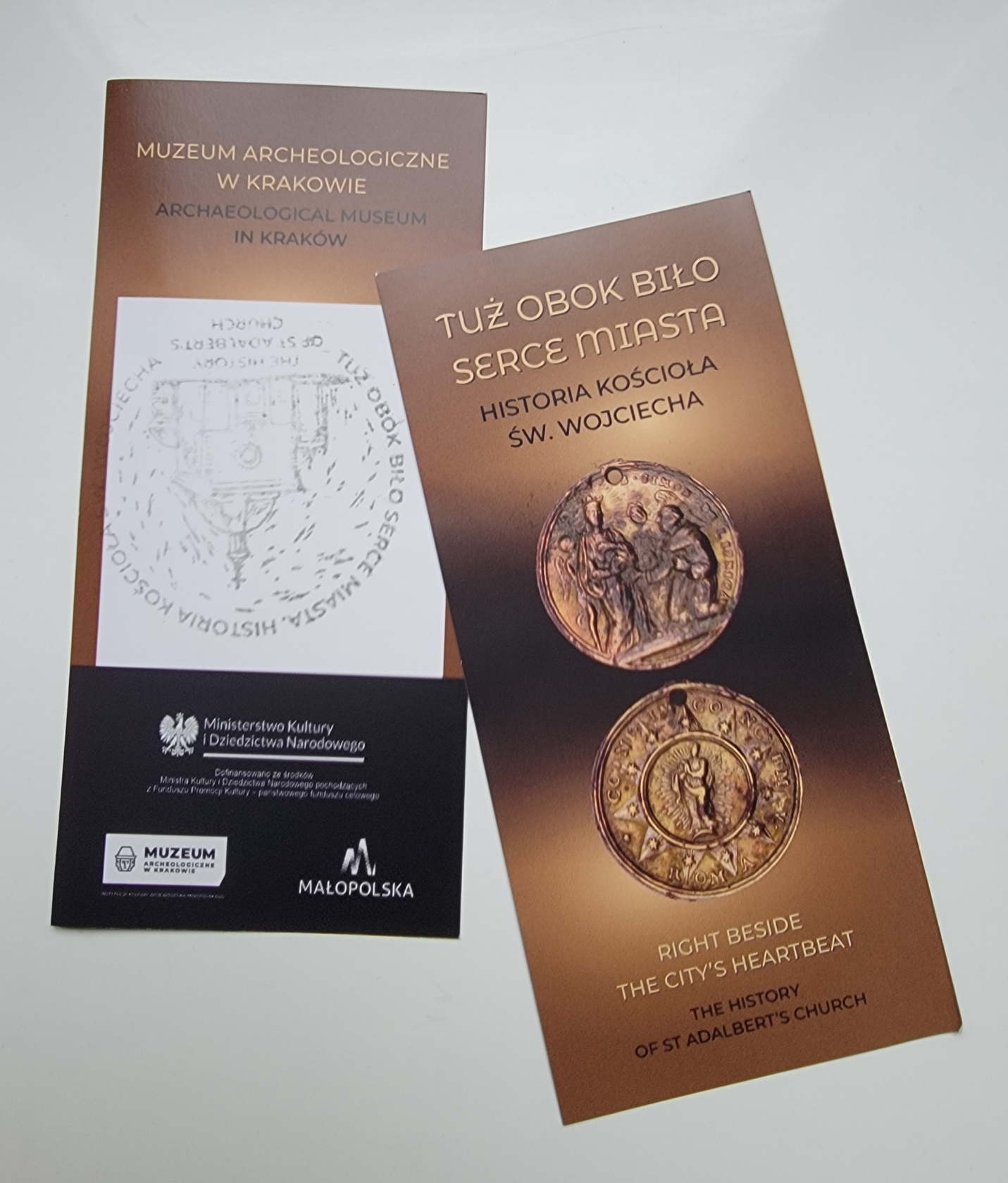
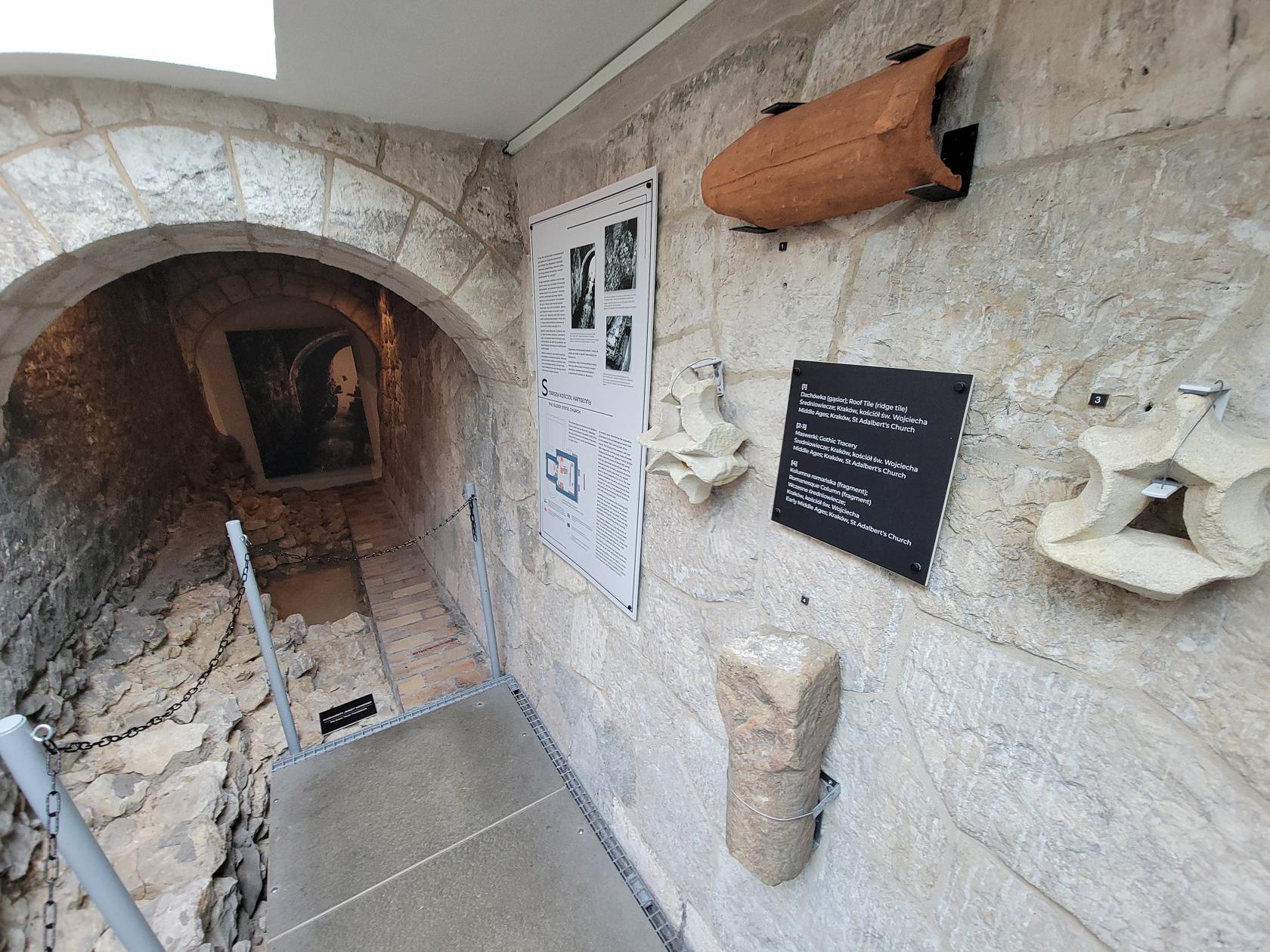
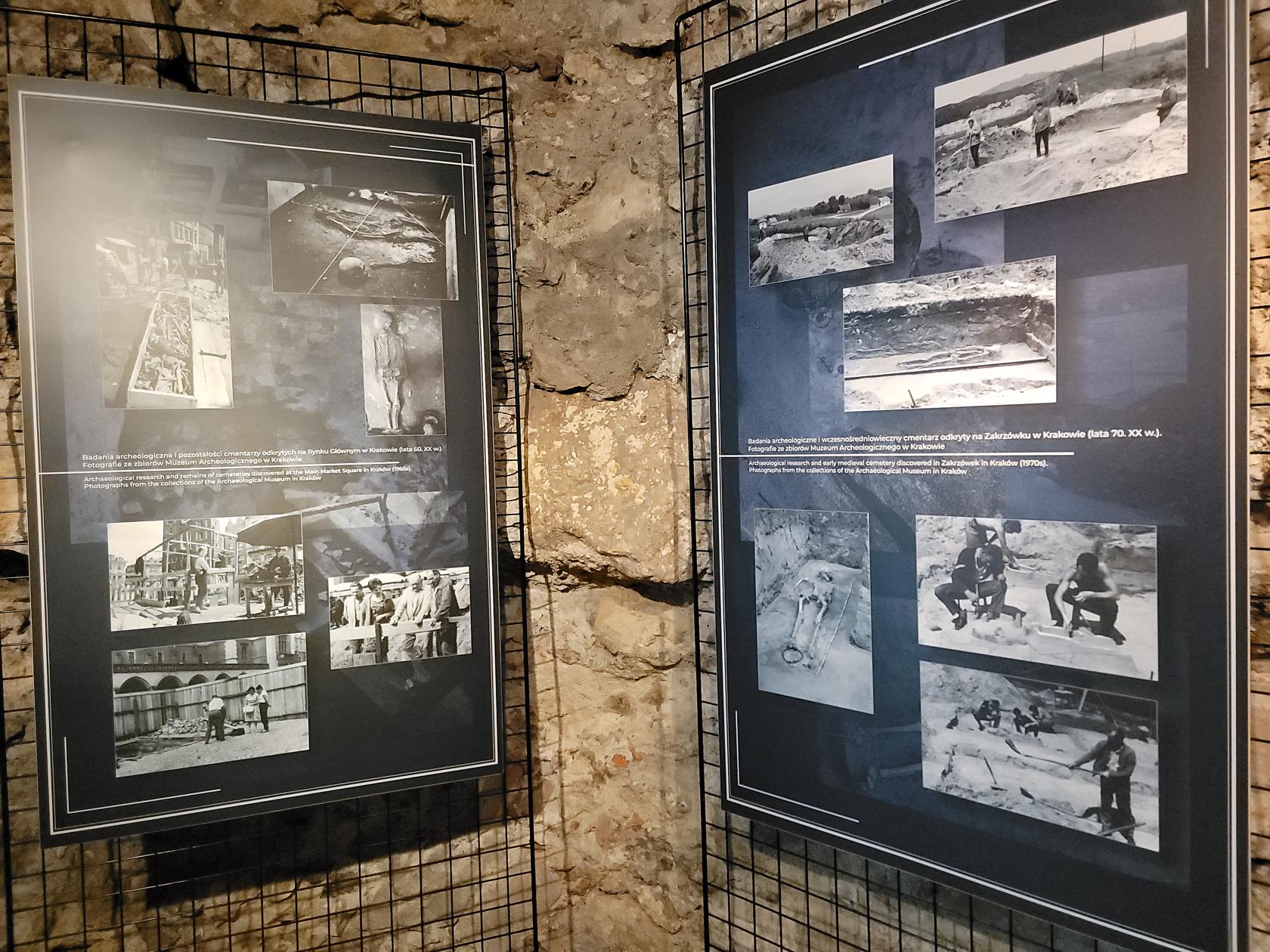
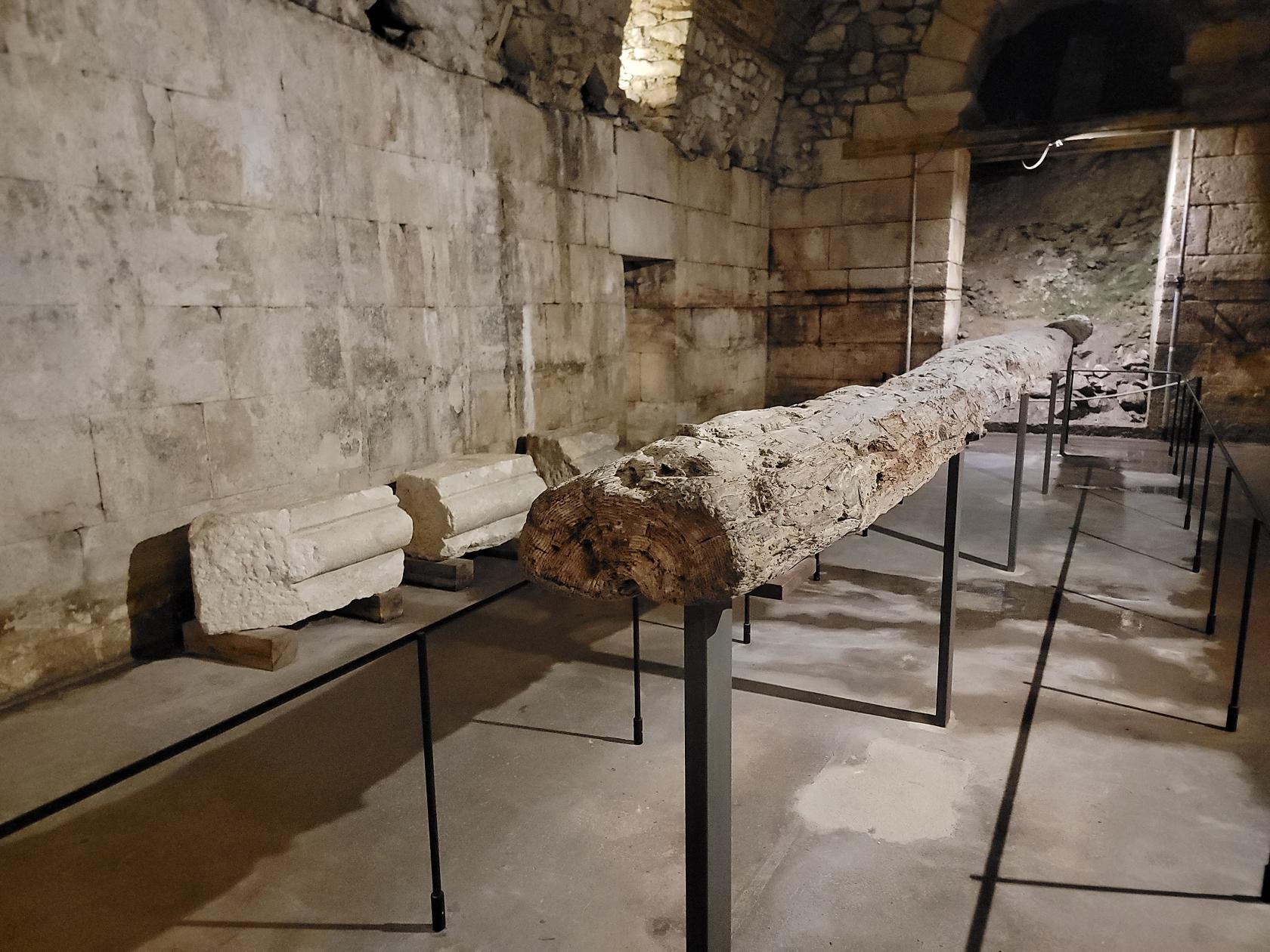
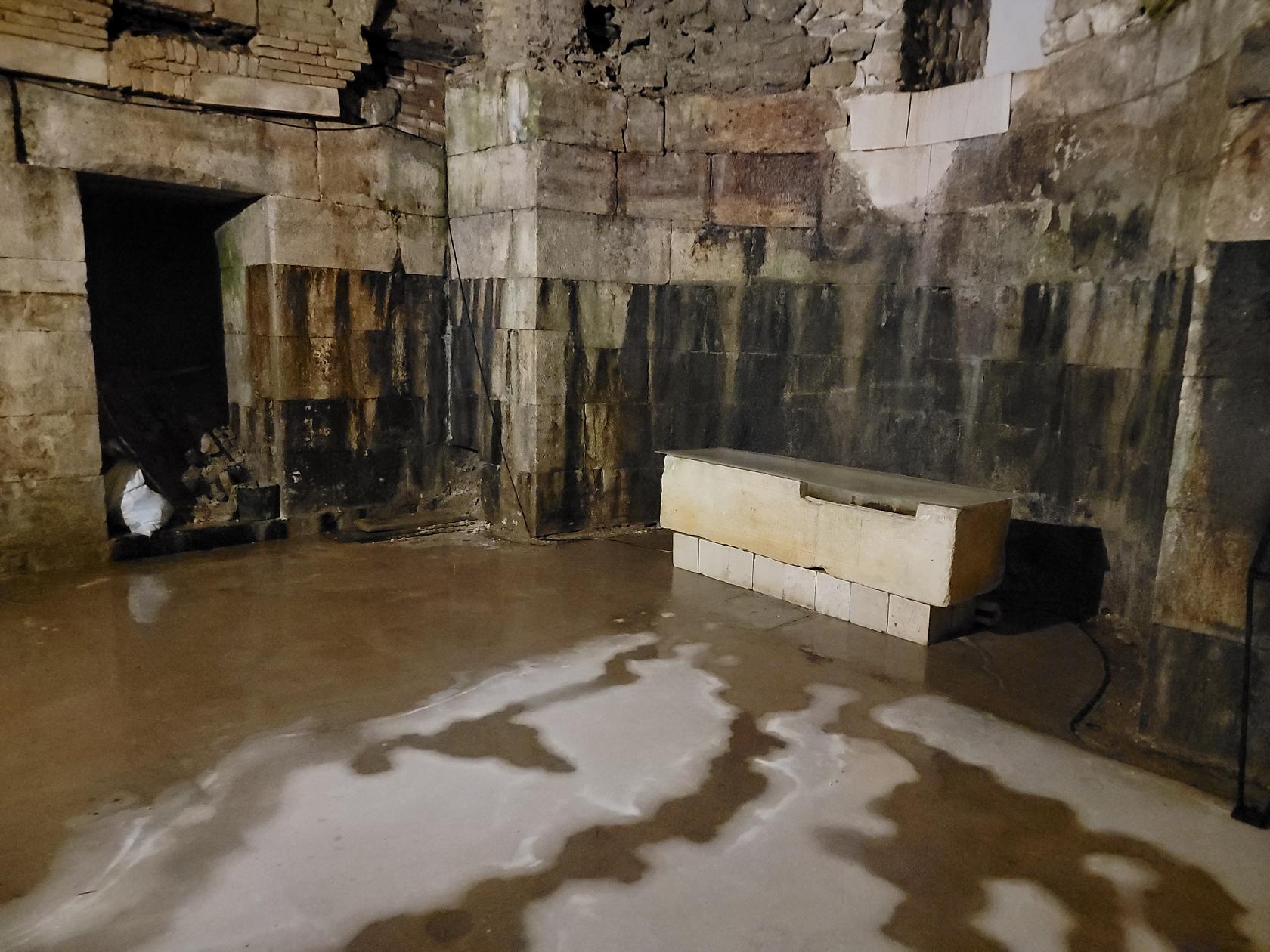
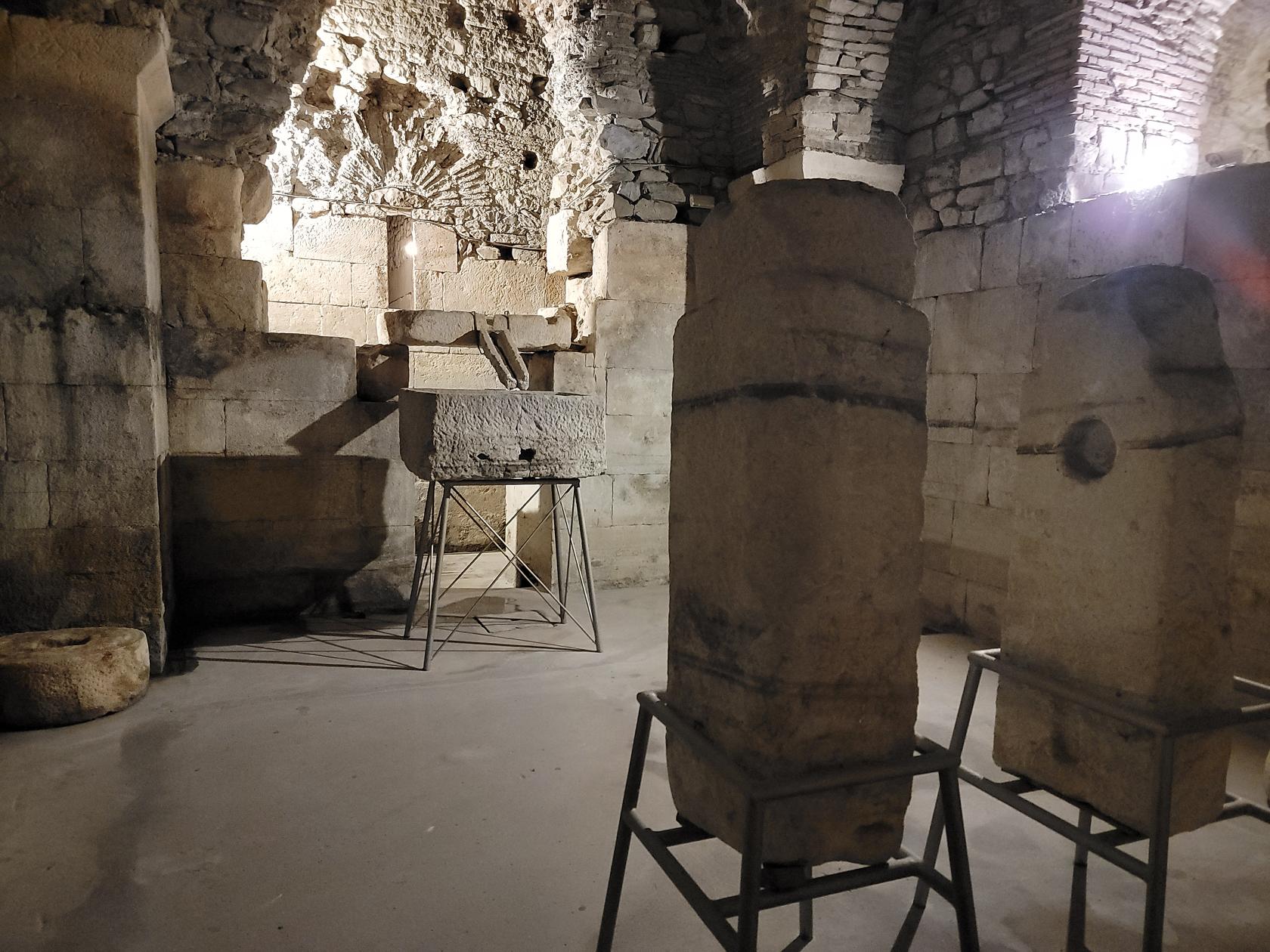
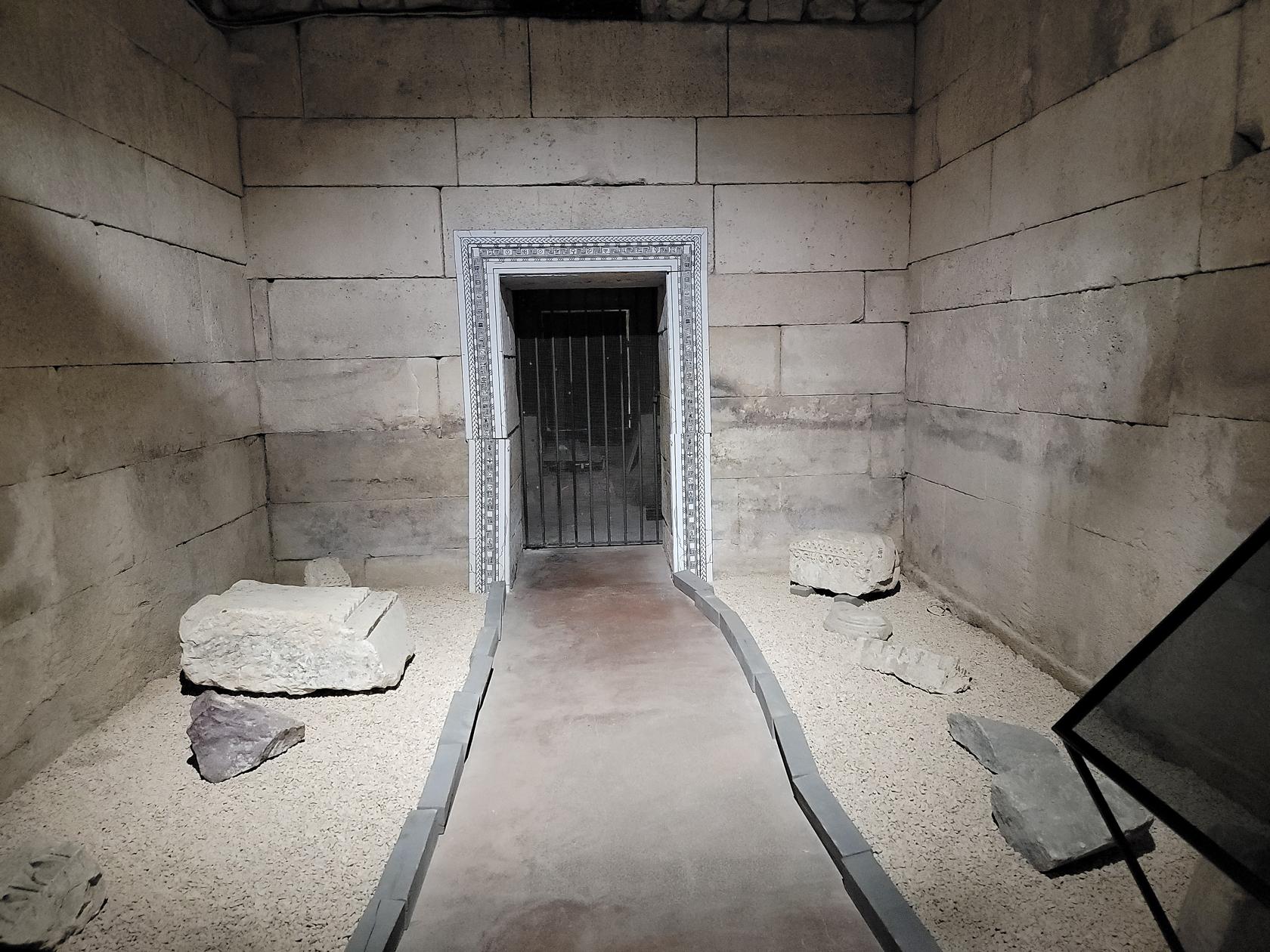
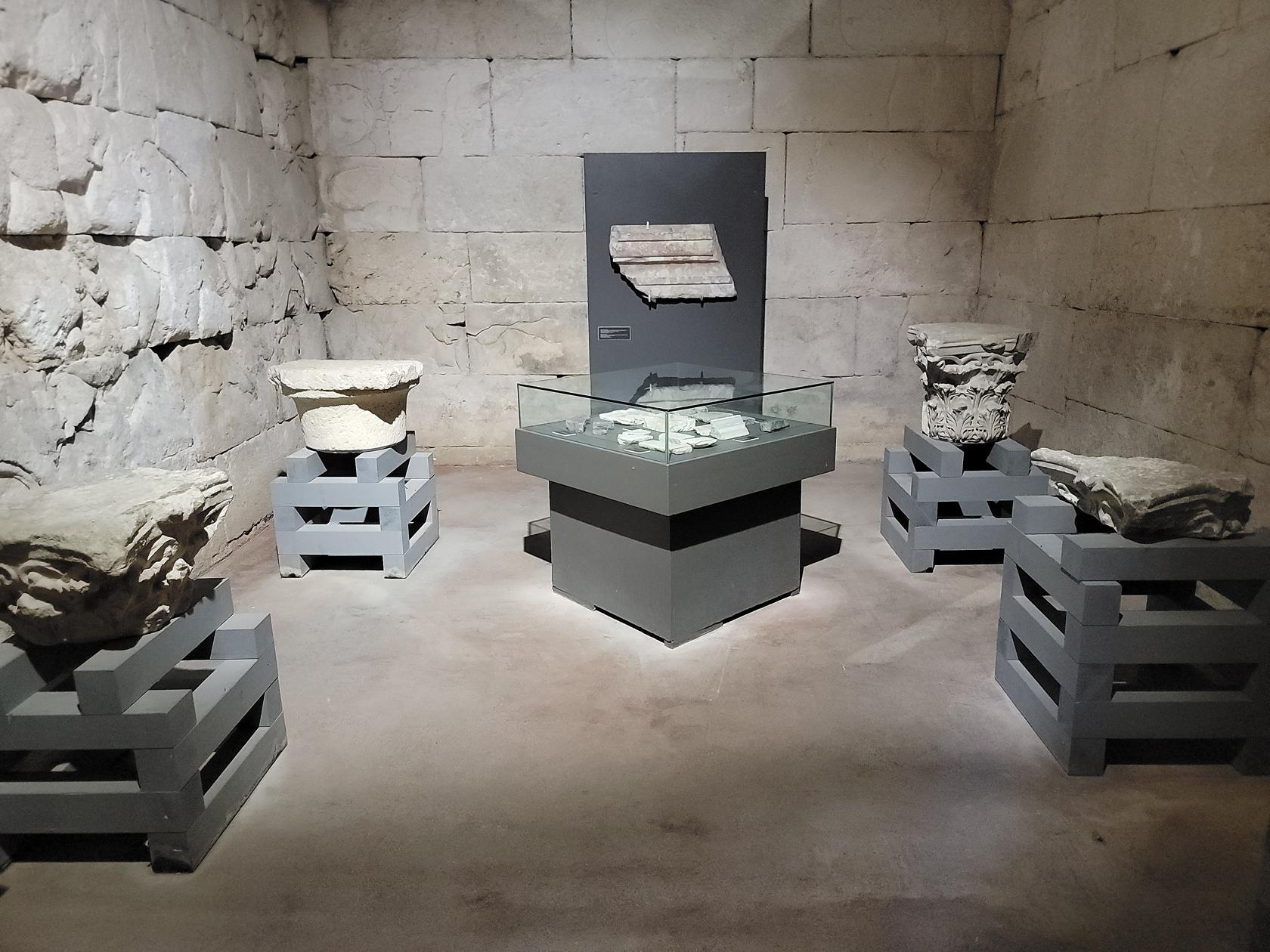
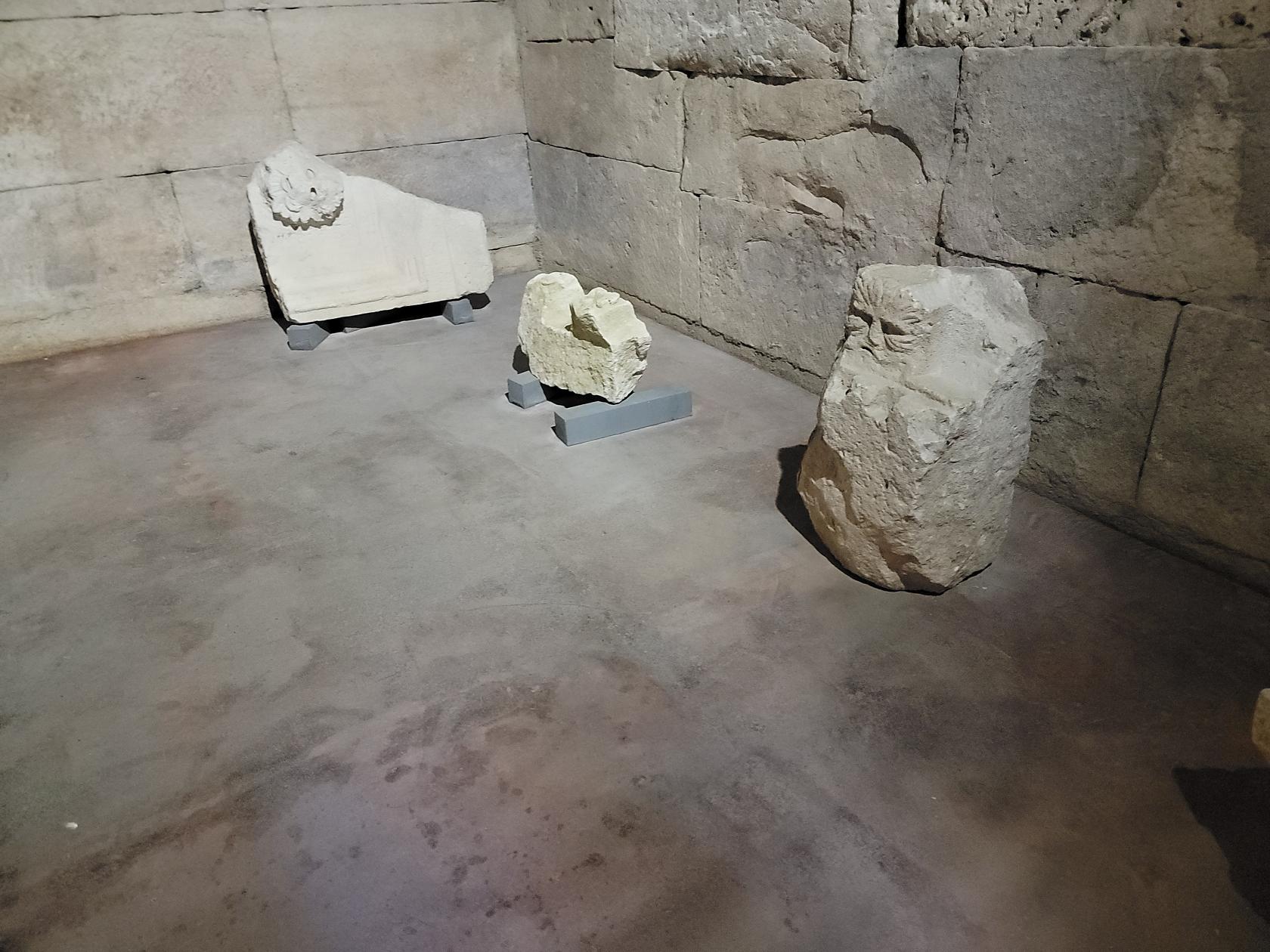
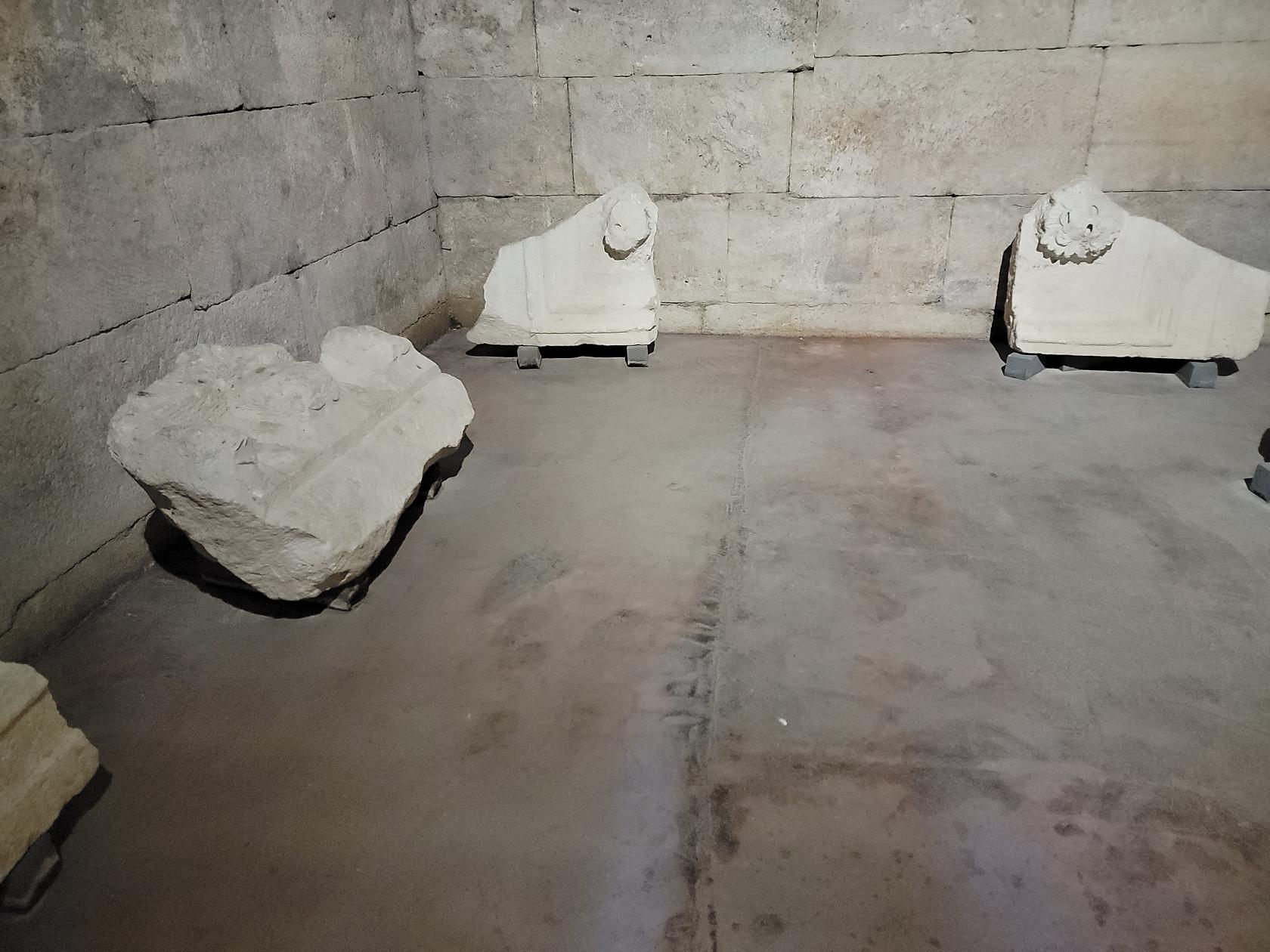
The archealogical remains of the older church may be visited for a small fee. Frankly there is not much to see, but it was interesting nonetheless, even though it was quite short.
Tickets For Two – Saint Aldaberts Church – Kraków, Poland
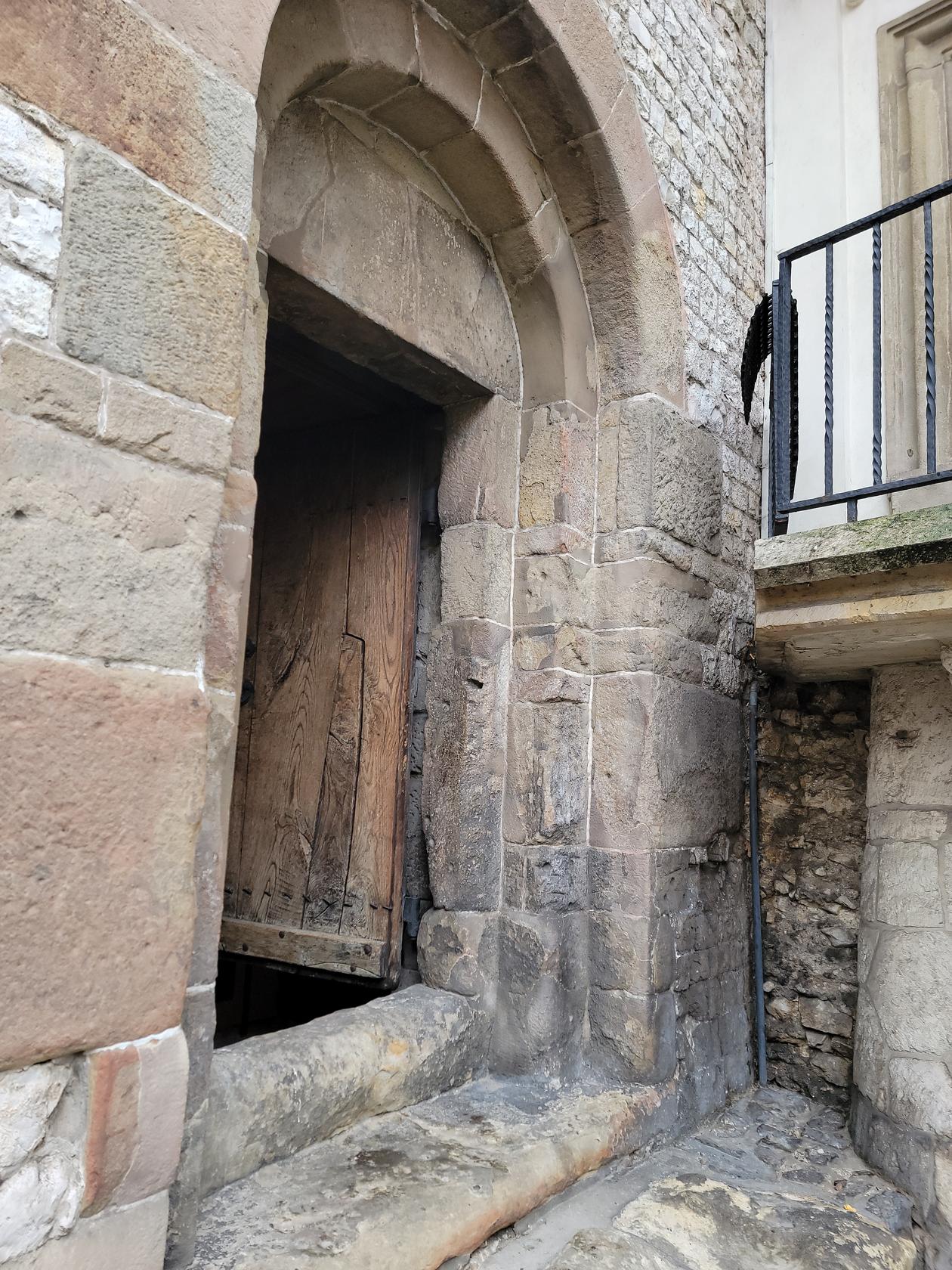
Entrance – Saint Aldabert’s Church – Kraków, Poland
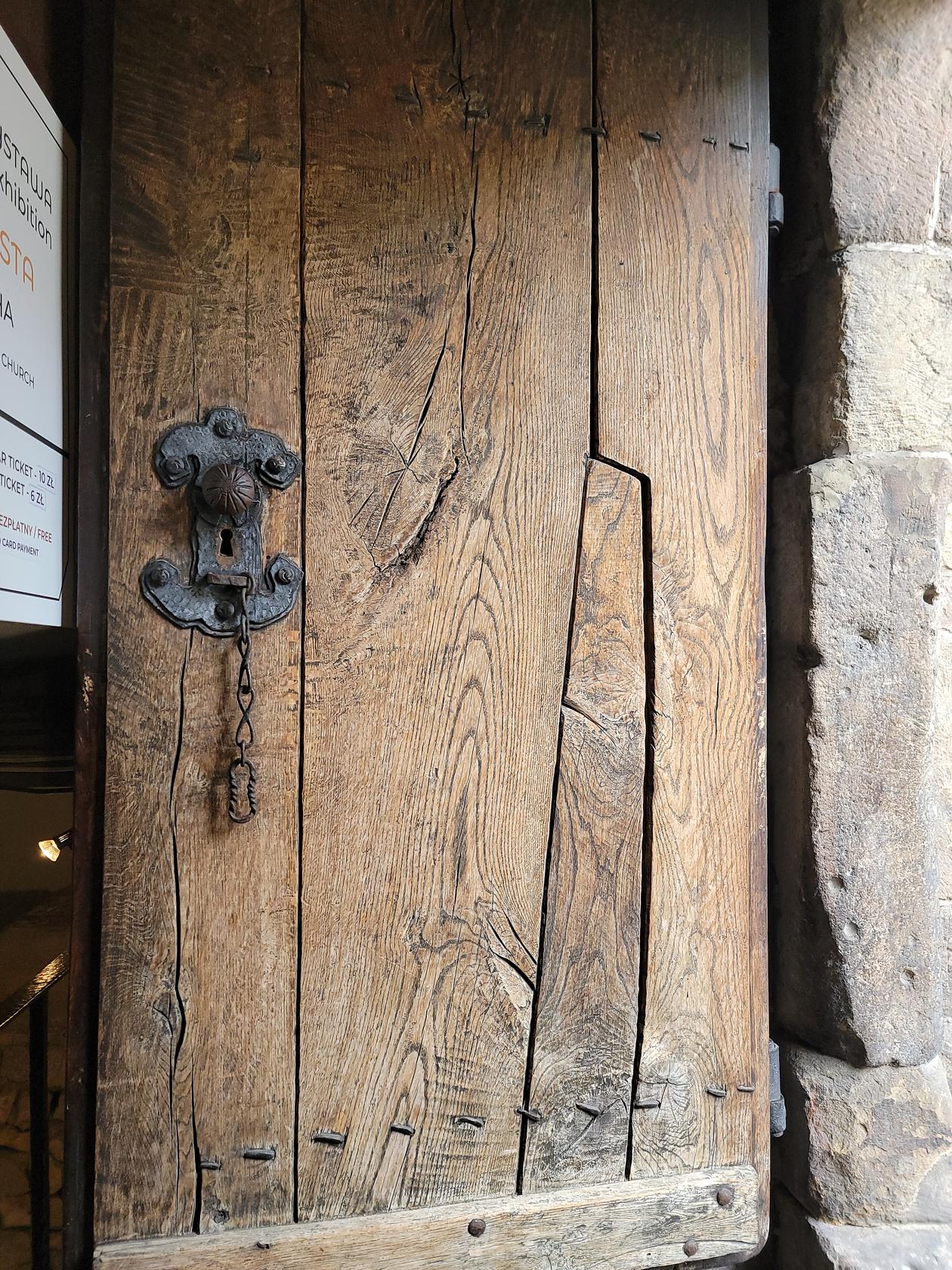
Old Wooden Door with Iron Doorknob – Saint Aldabert’s Church – Kraków, Poland
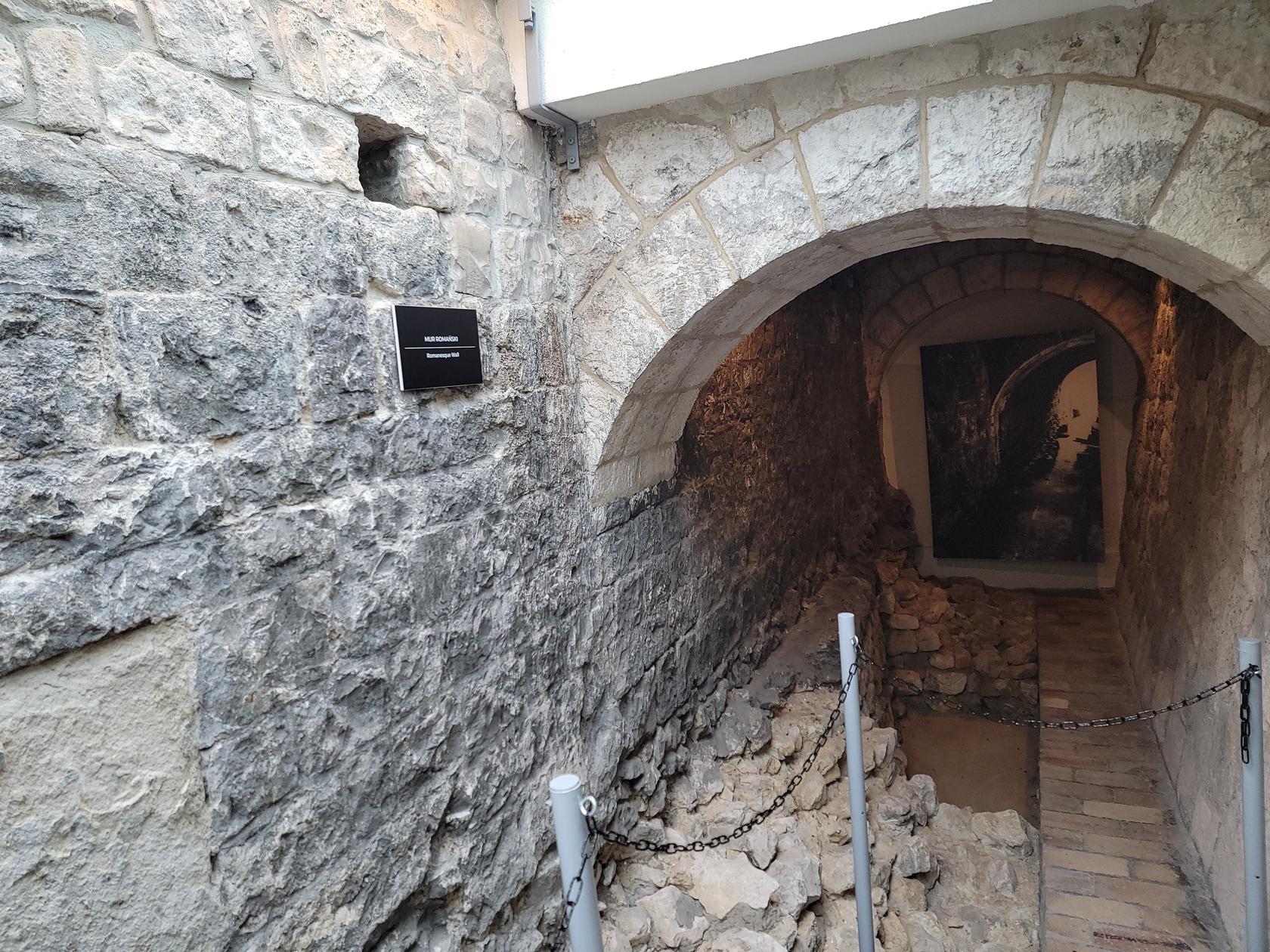
Old Romanesque Wall – Saint Aldabert’s Church – Kraków, Poland
Old Romanesque Wall – Saint Aldabert’s Church – Kraków, Poland
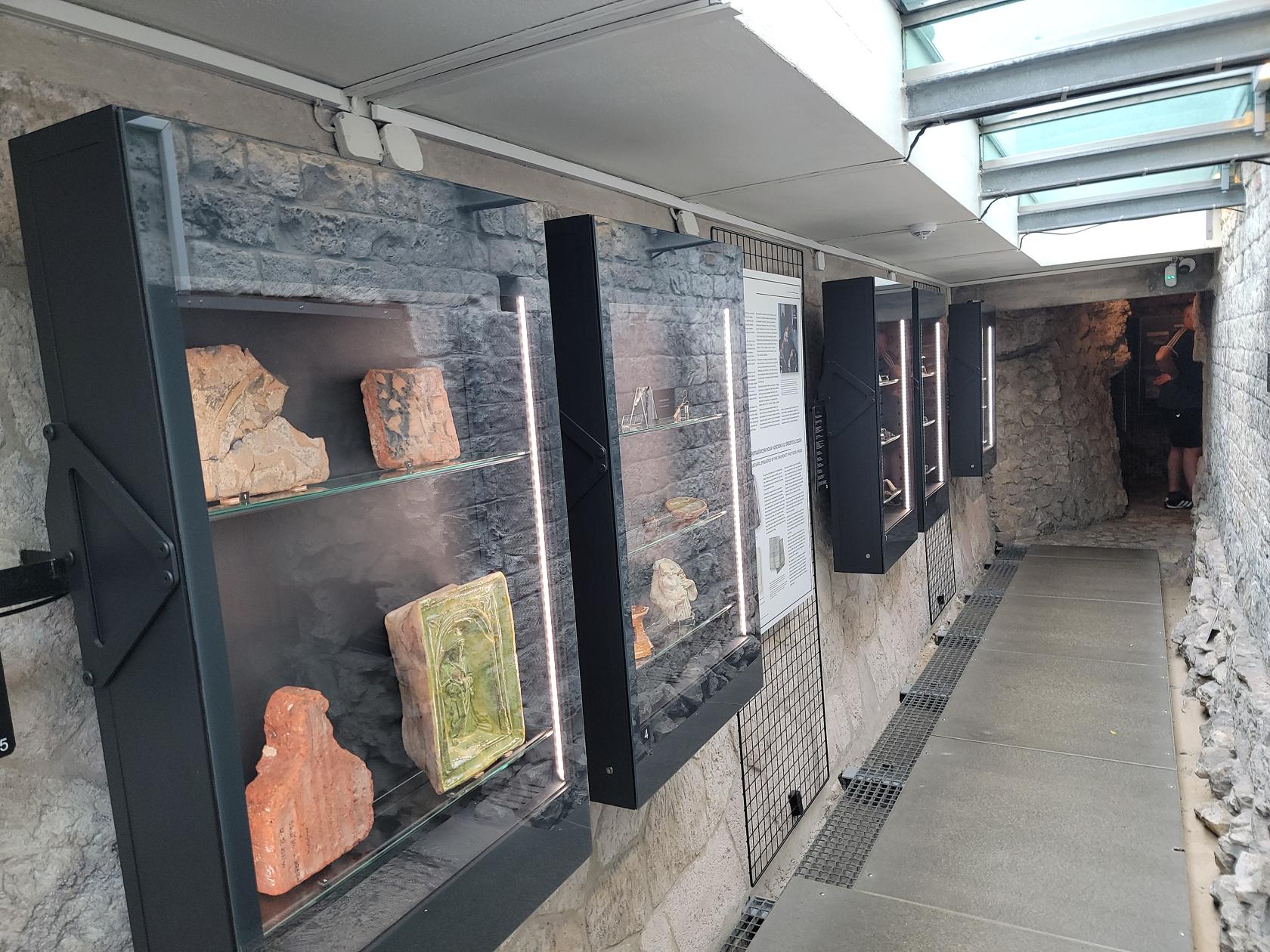
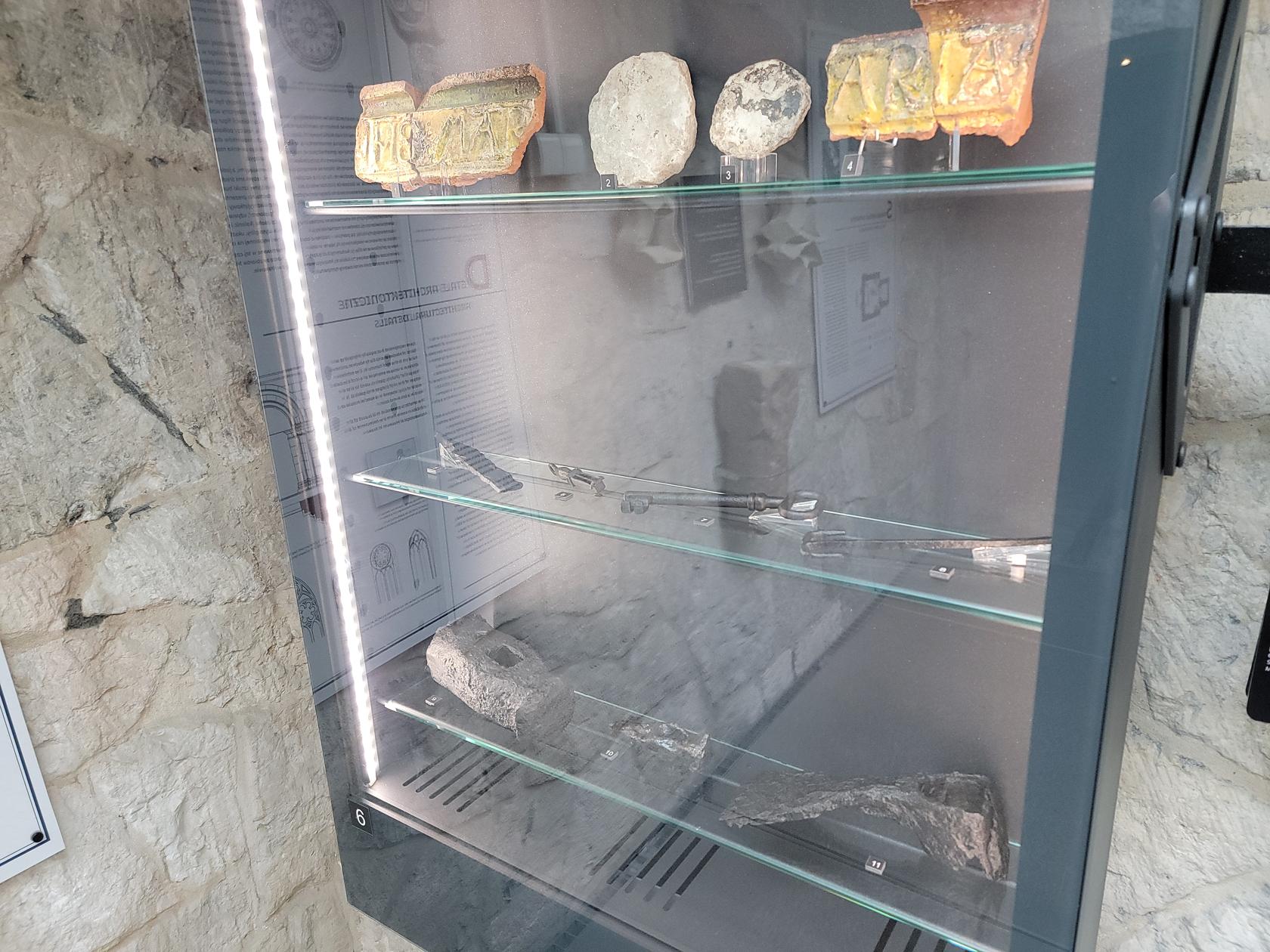
Exhibits – Saint Aldabert’s Church – Kraków, Poland
Old Keys and other artifacts – Saint Aldabert’s Church – Kraków, Poland
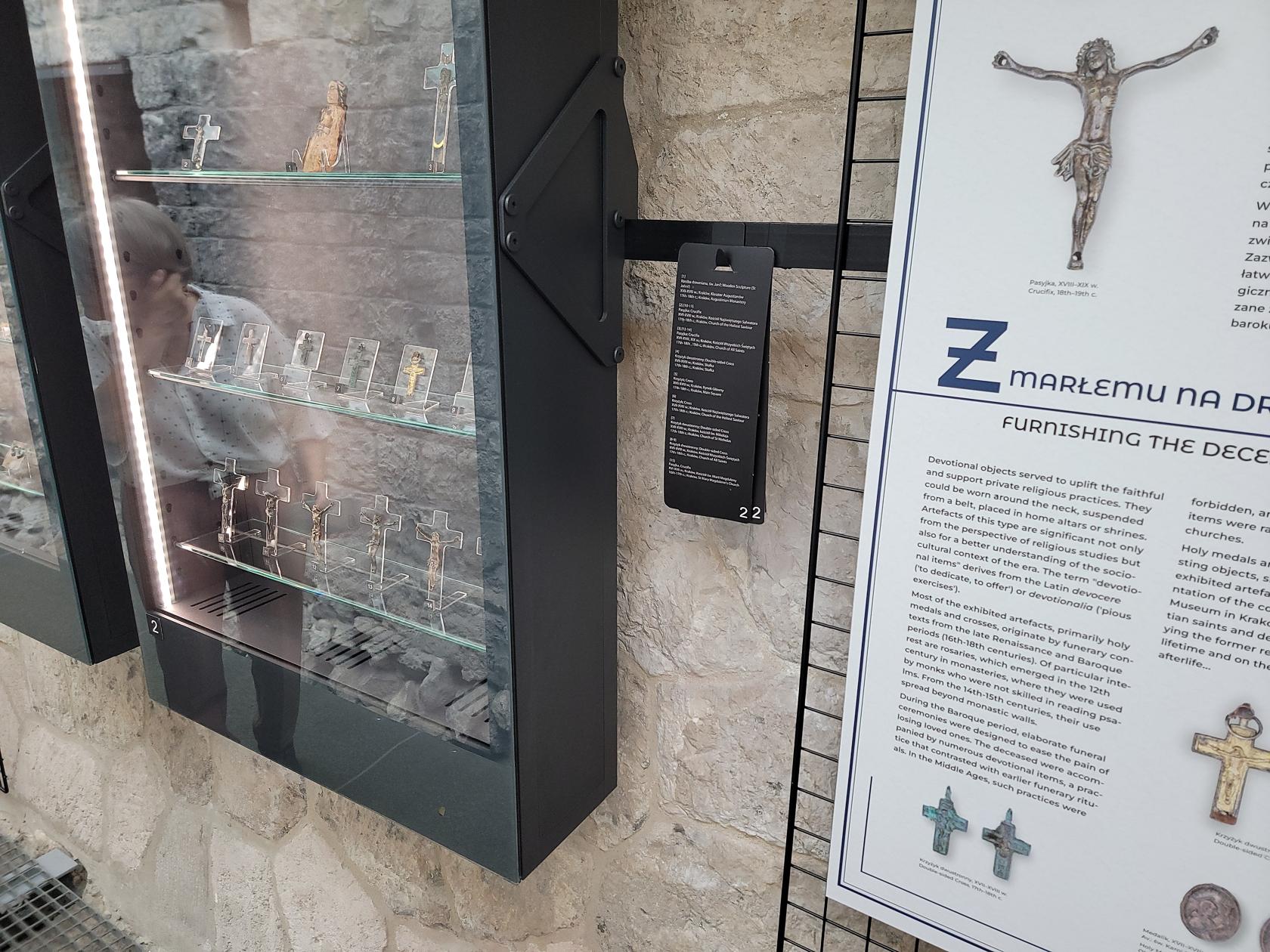
Old Crucifixes – Saint Aldabert’s Church – Kraków, Poland
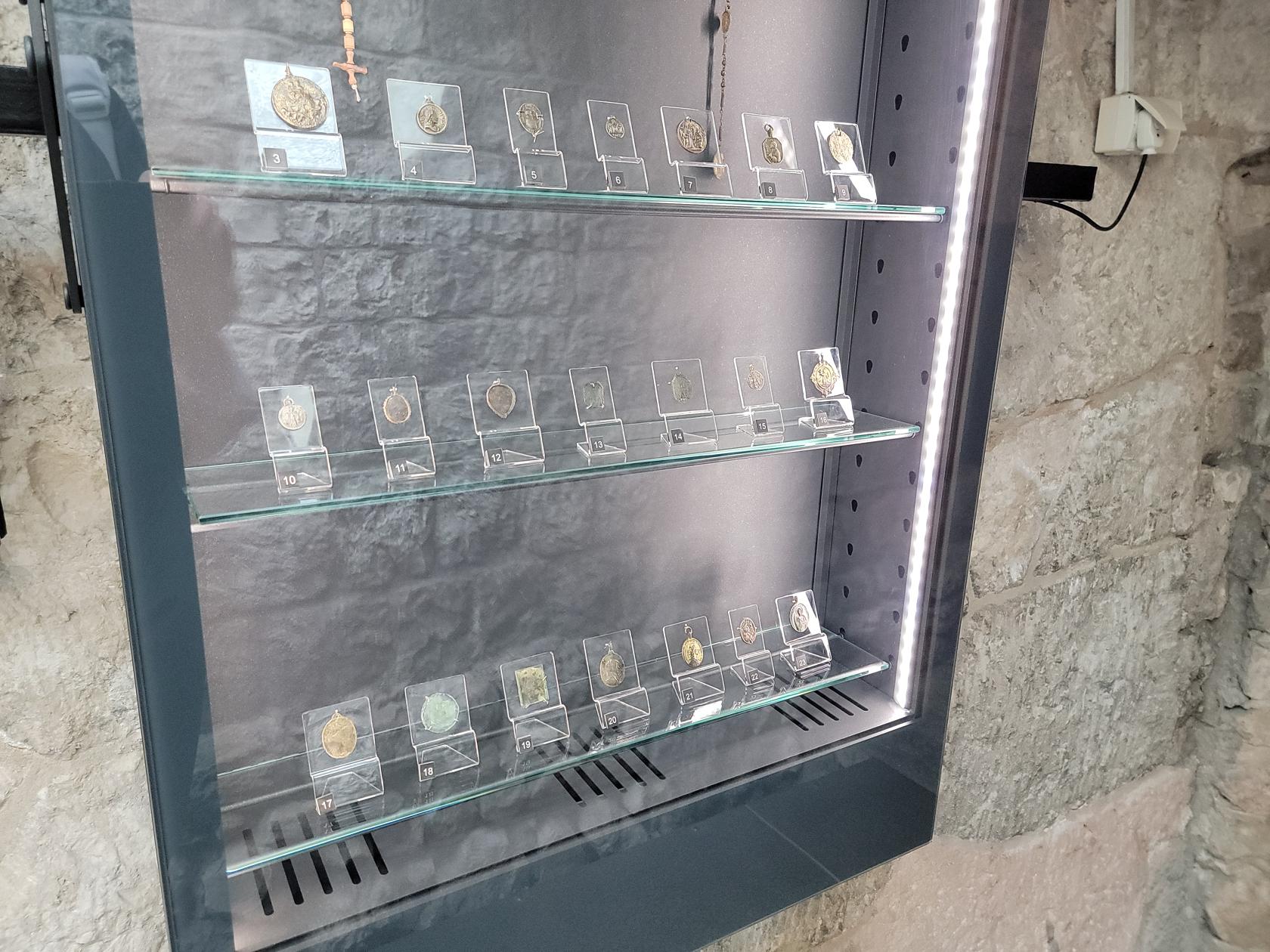
Crucifixes and Gold Pendants – Saint Aldabert’s Church – Kraków, Poland
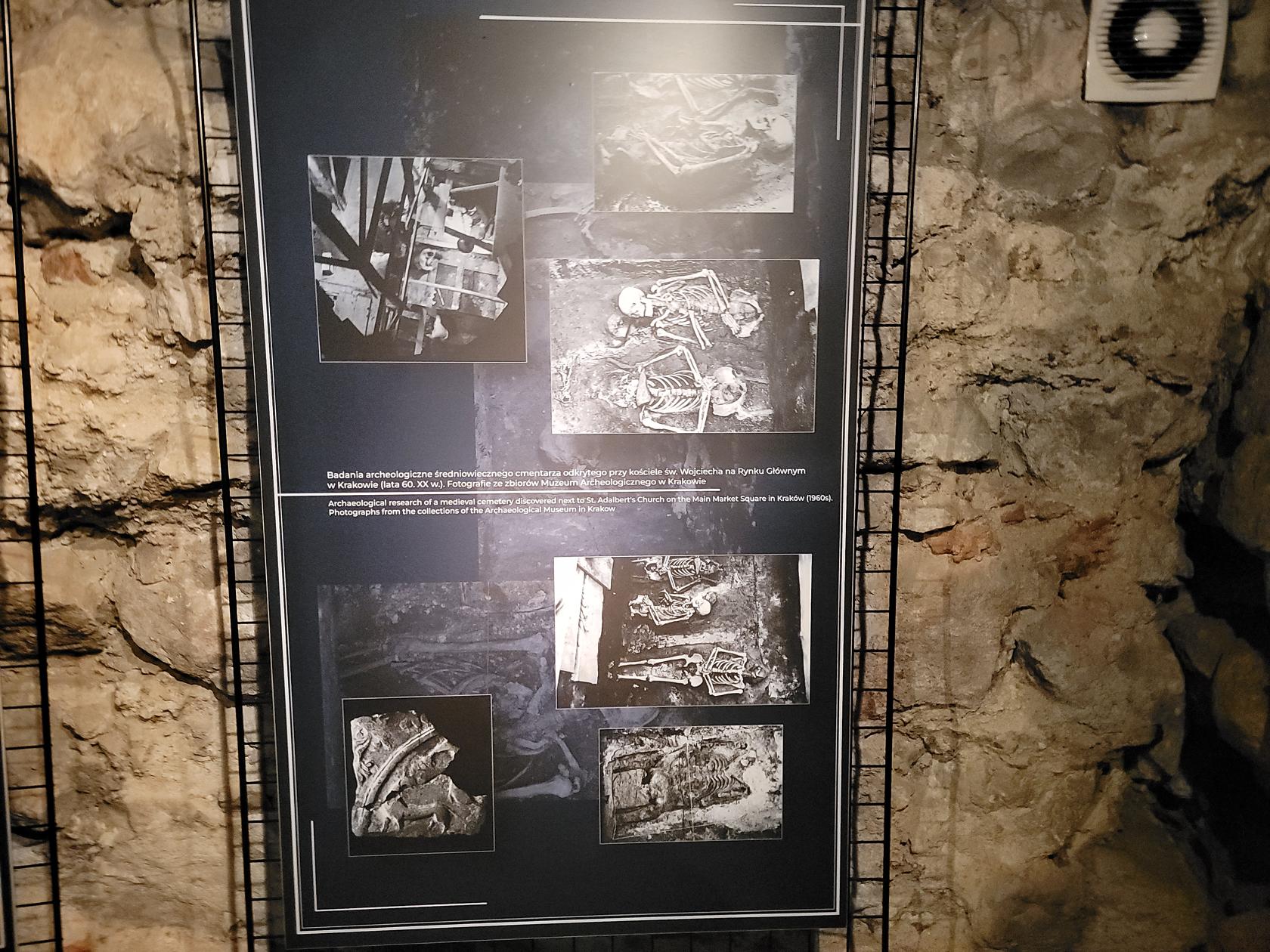
Remains Found – Saint Aldabert’s Church – Kraków, Poland
Exhibits – Saint Aldabert’s Church – Kraków, Poland
Restaurants
In this part we visited two restaurants of note. The Morski Oko and the Jama Michalika, one noted for its food, the other for its artwork.
Morskie Oko Restaurant
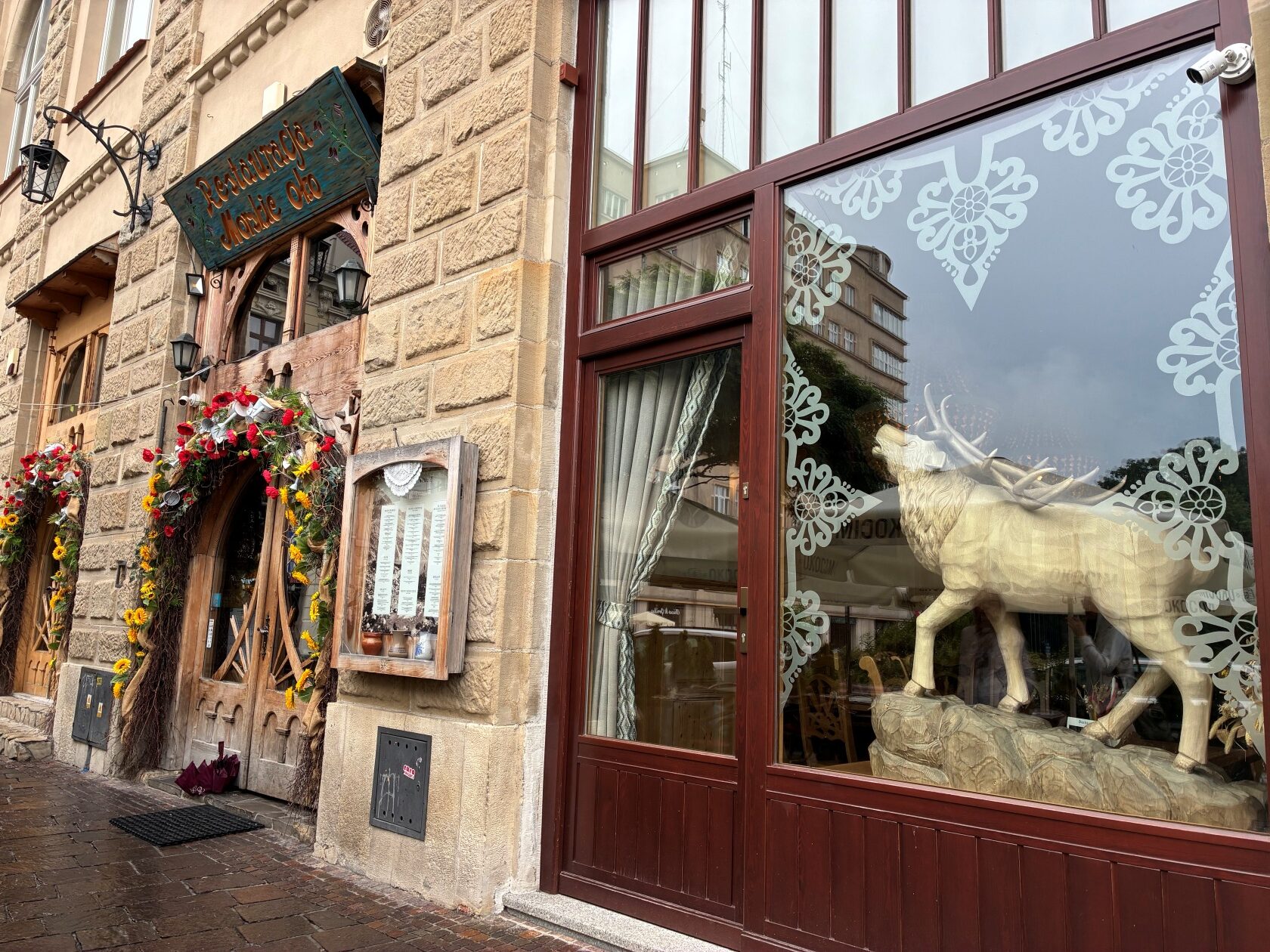
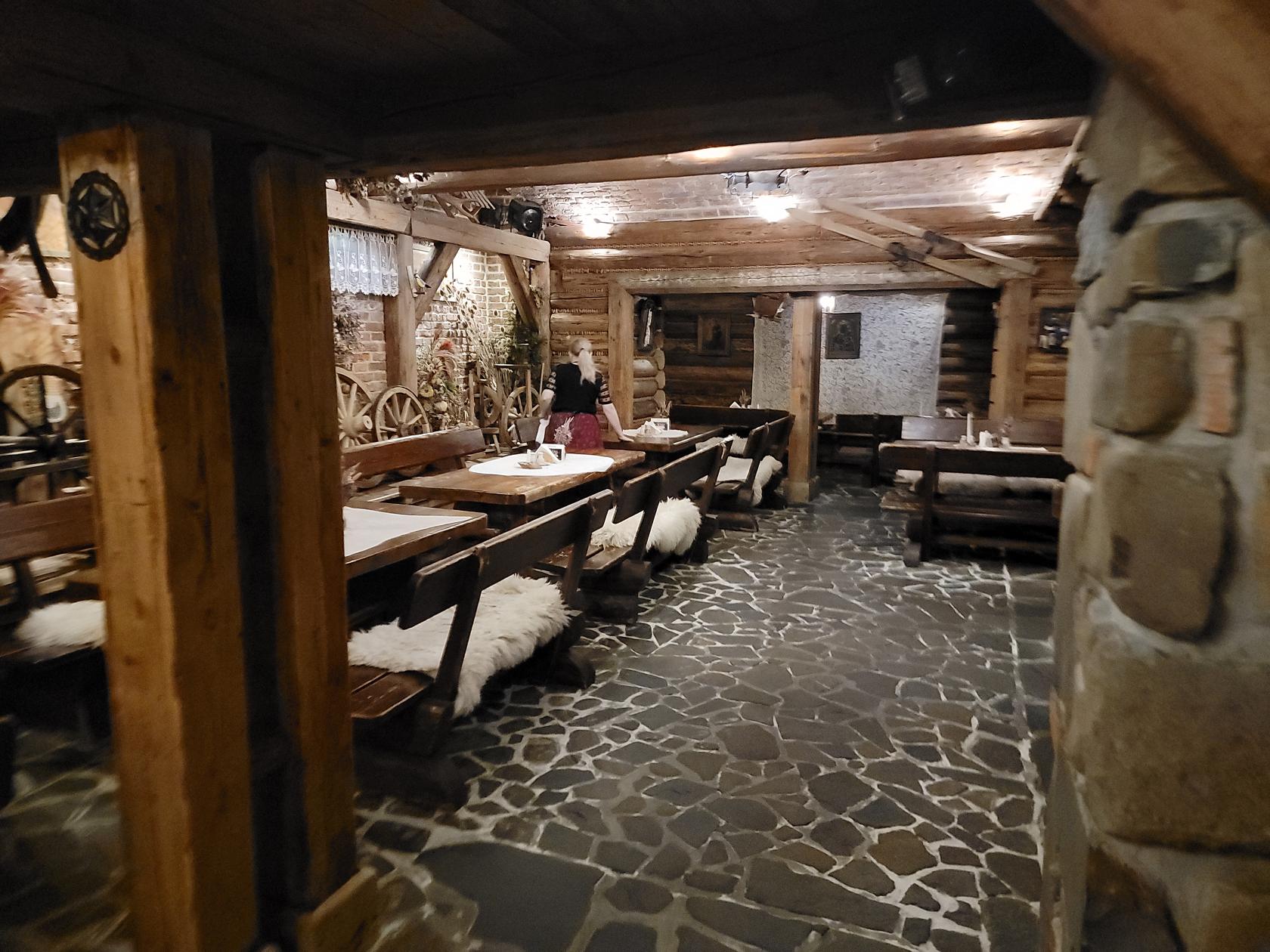
The Morskie Oko restaurant is actually one that we visited more than once, more on that later. In this edition we had reservations for lunch, since it can get quite busy.
Entrance – Morskie Oko Restaurant – Kraków, Poland
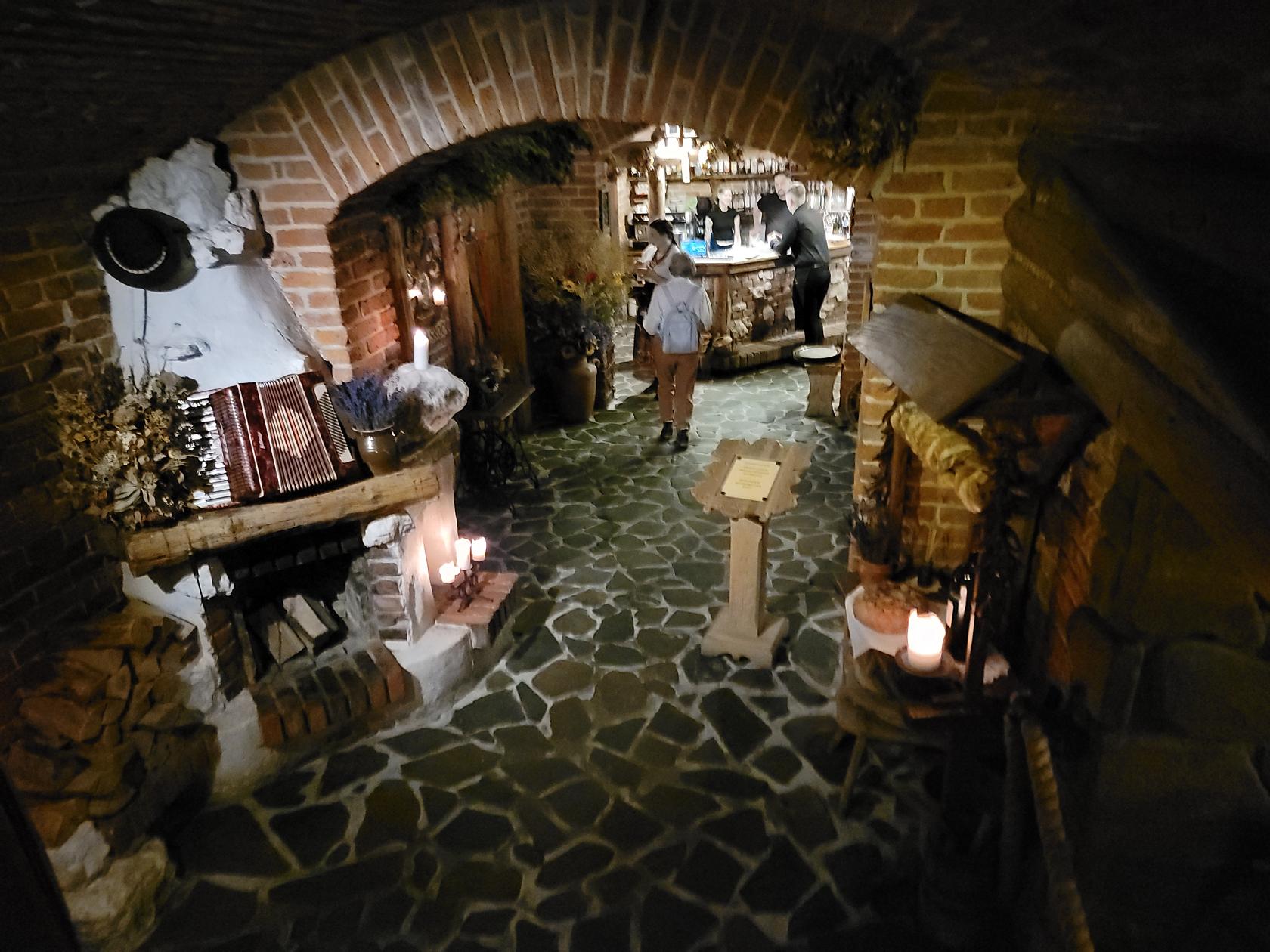
Downstairs – Morskie Oko Restaurant – Kraków, Poland
Inside Downstairs – Morskie Oko Restaurant – Kraków, Poland
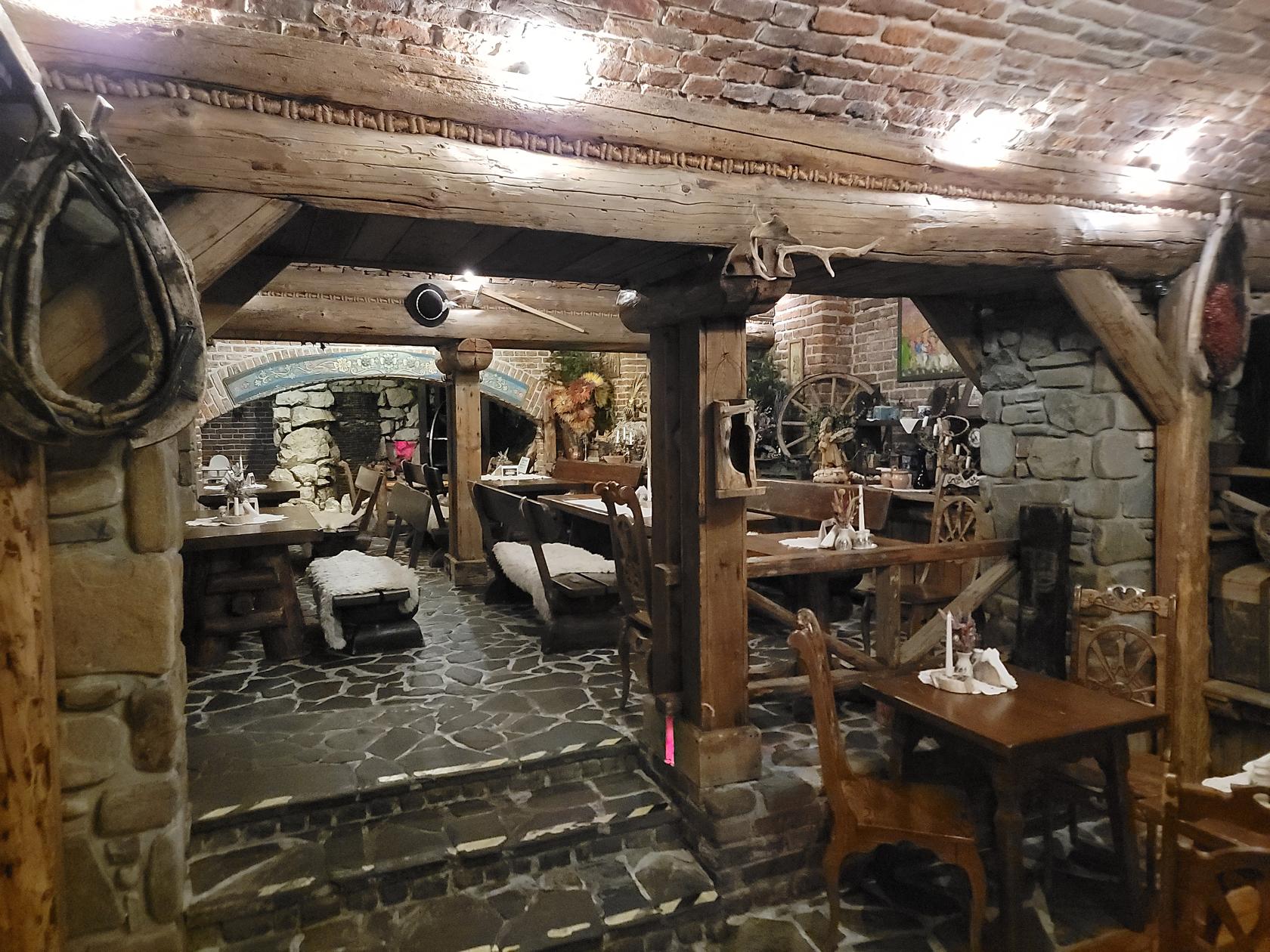
Group Seating – Morskie Oko Restaurant – Kraków, Poland
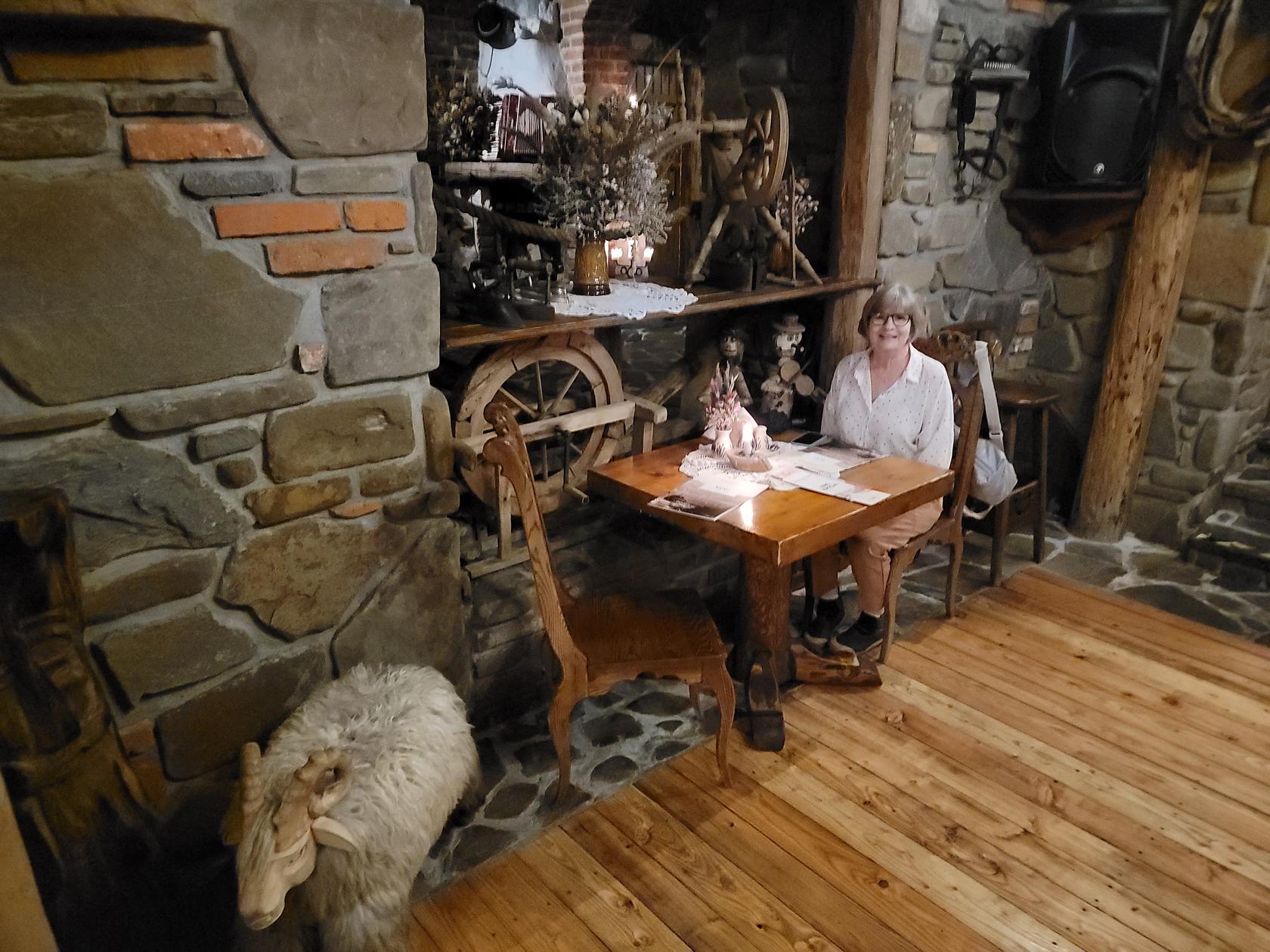
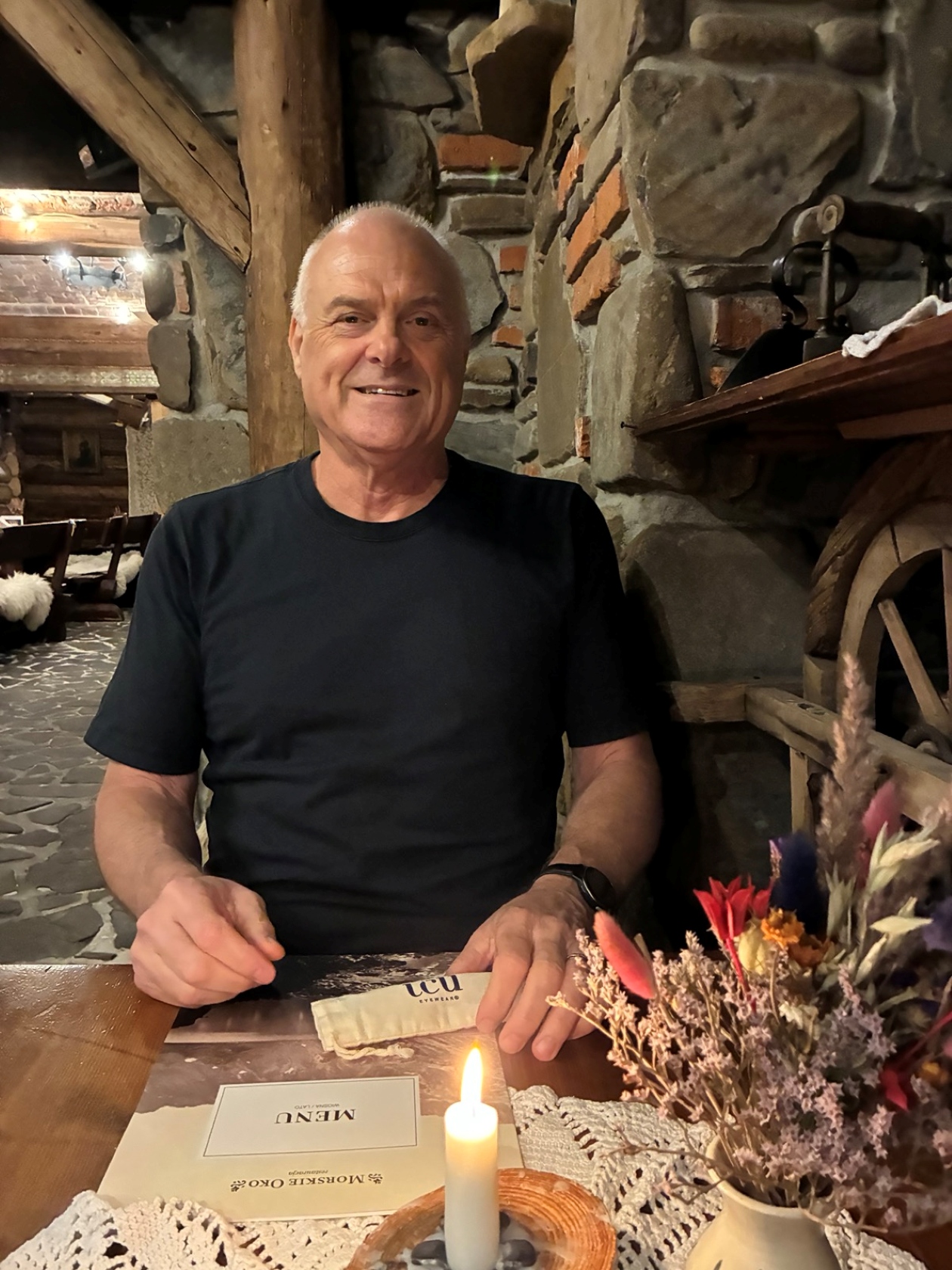
Patti waiting for lunch – Morskie Oko Restaurant – Kraków, Poland
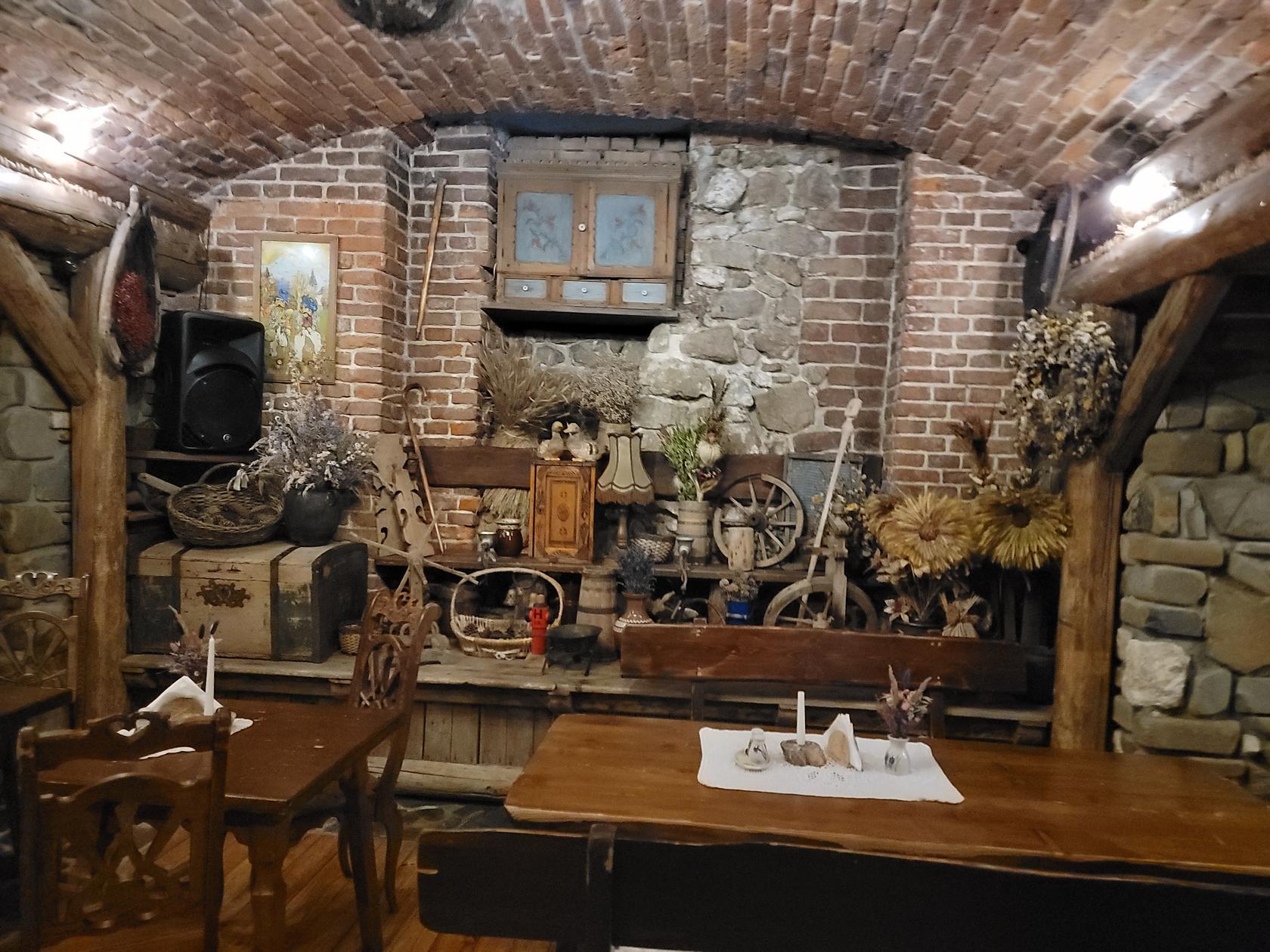
Inside – Morskie Oko Restaurant – Kraków, Poland
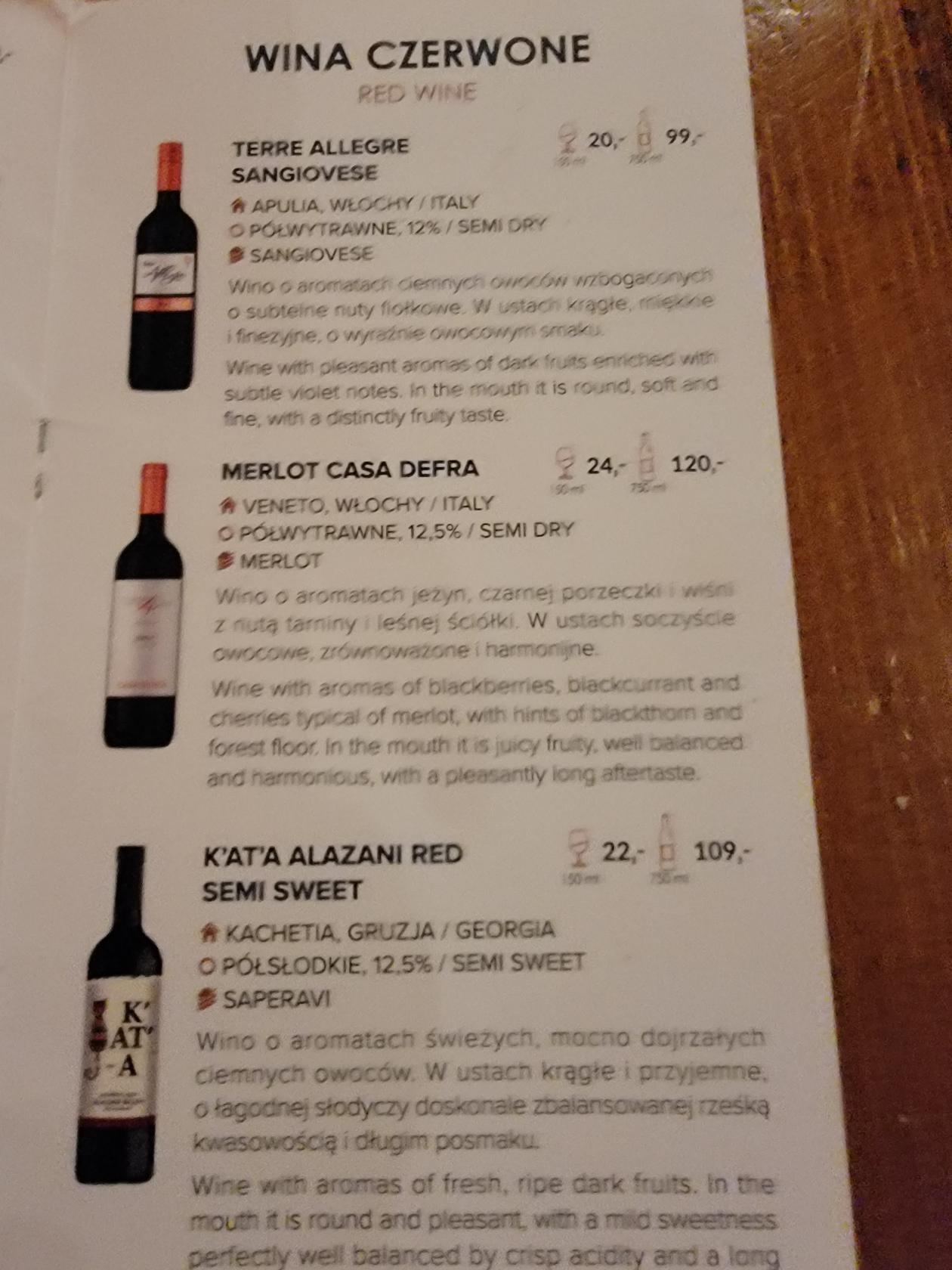
Wines – Morskie Oko Restaurant – Kraków, Poland
Erick – Morskie Oko Restaurant – Kraków, Poland
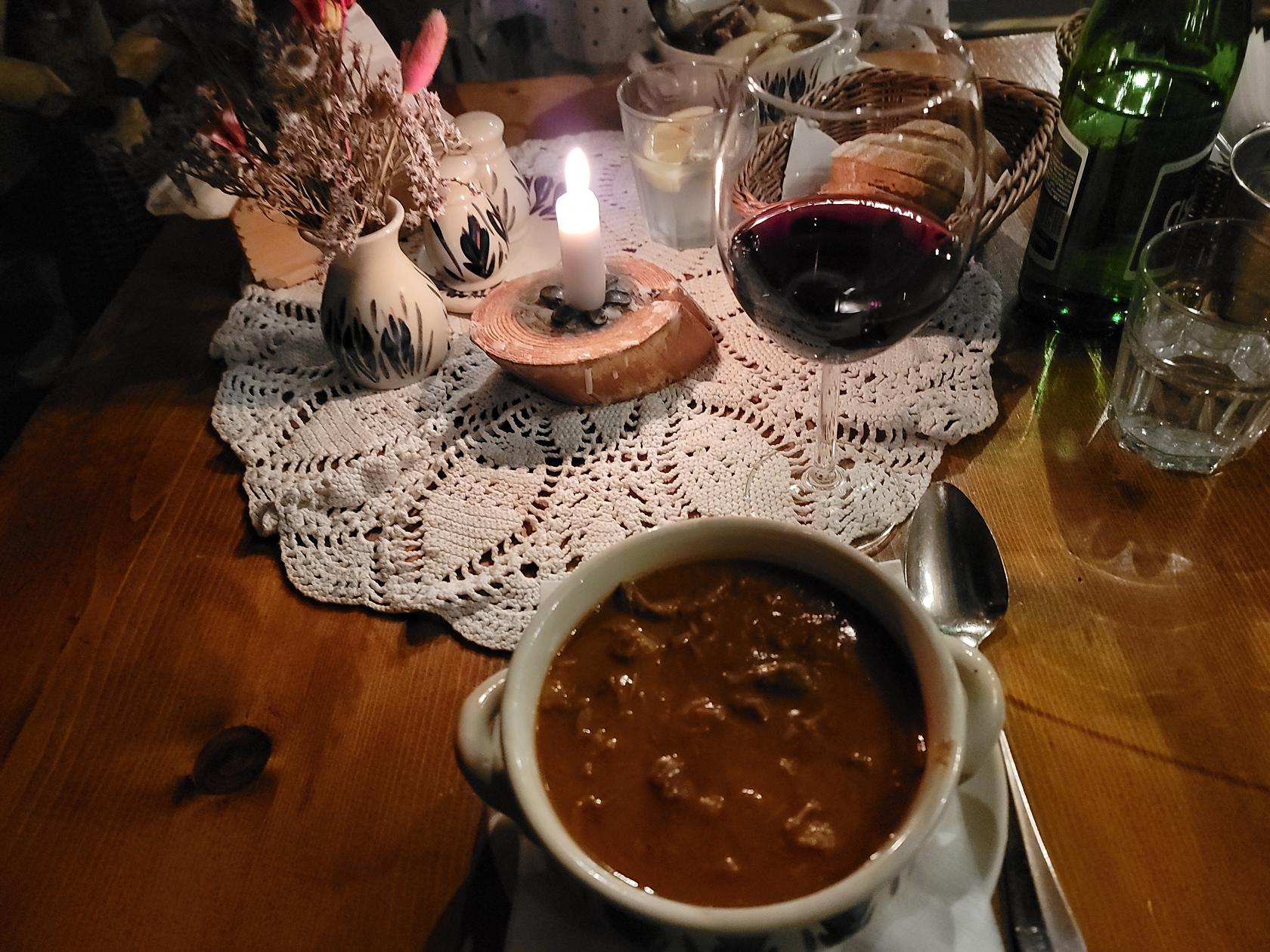
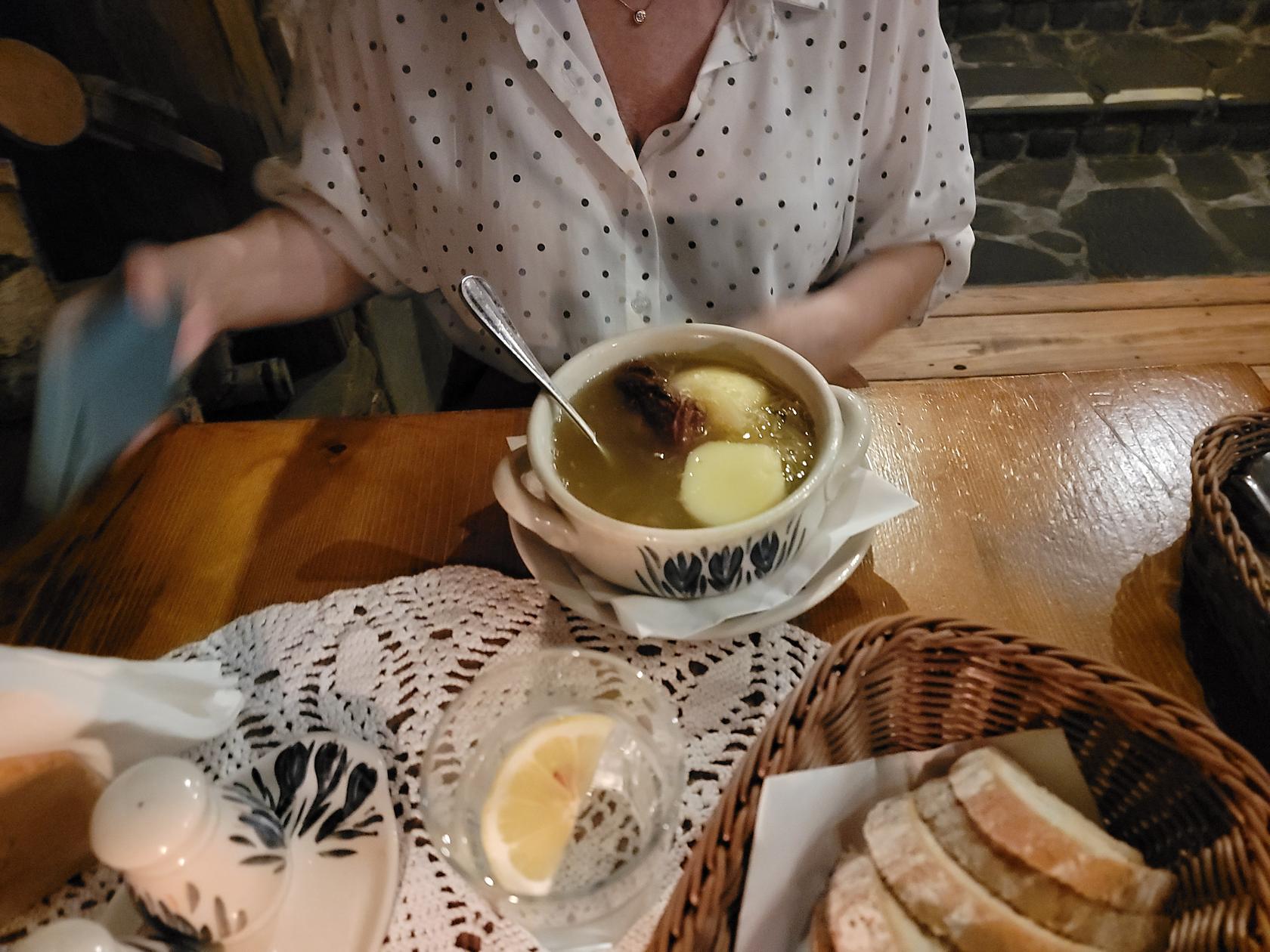
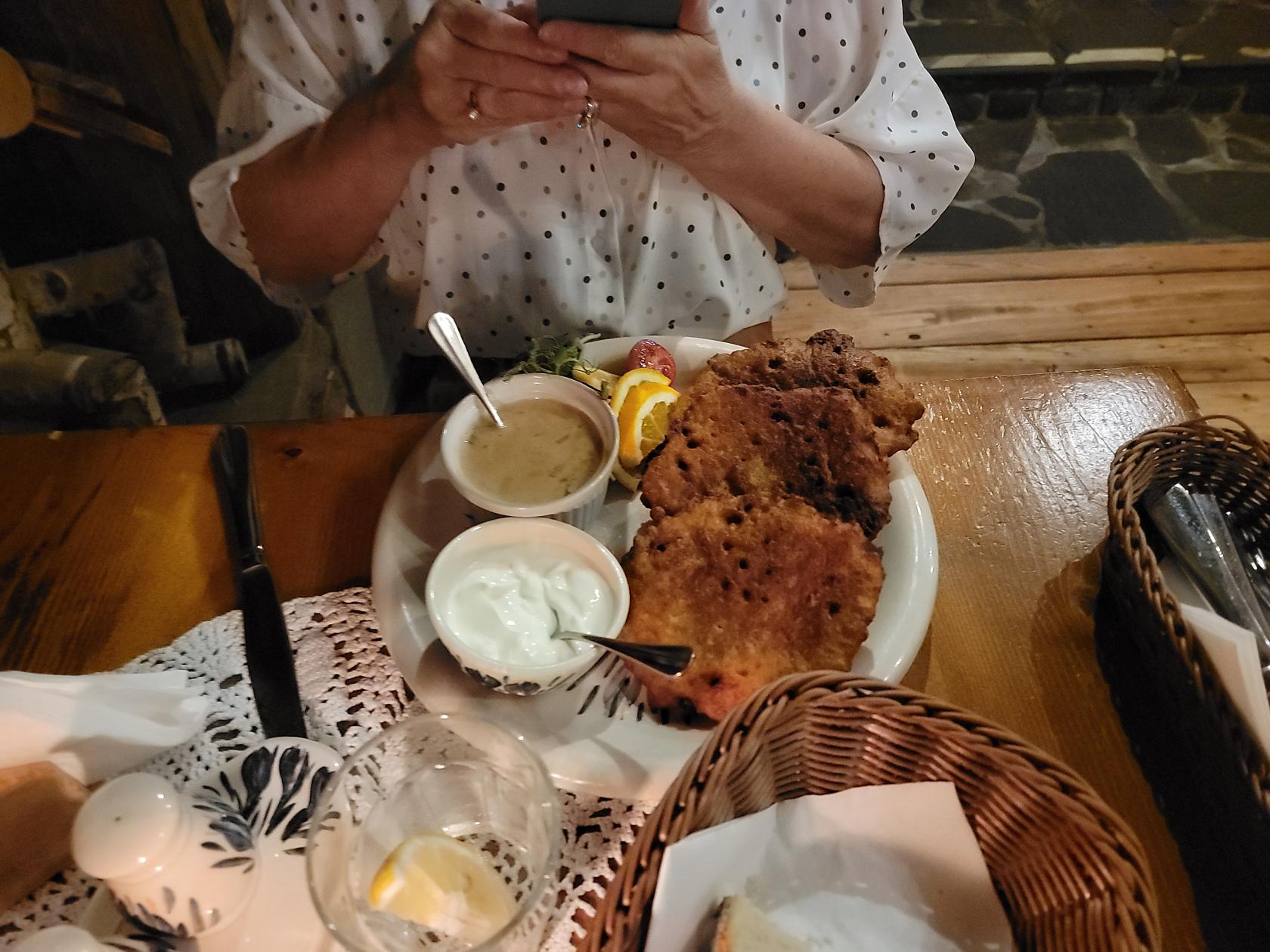
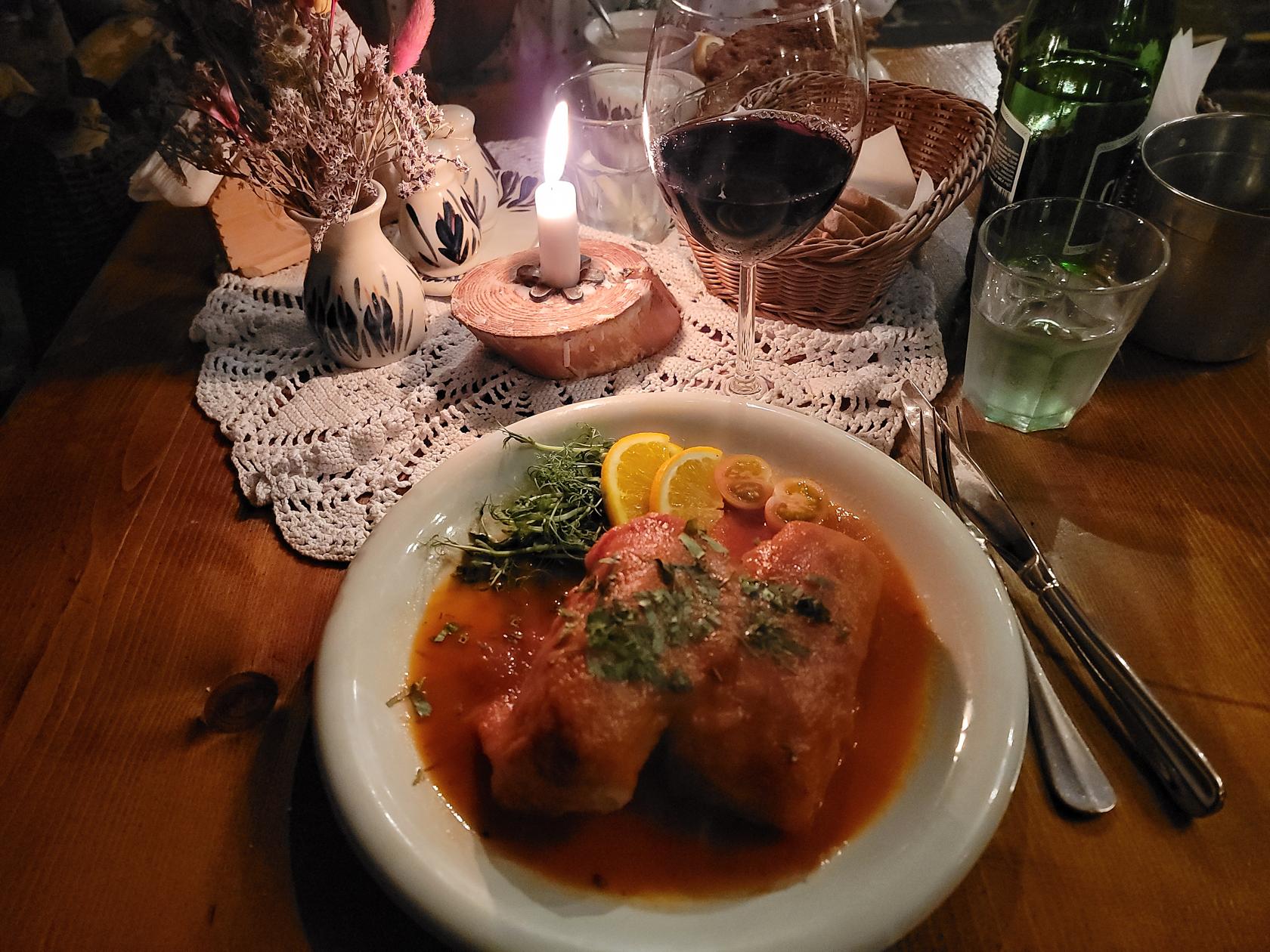
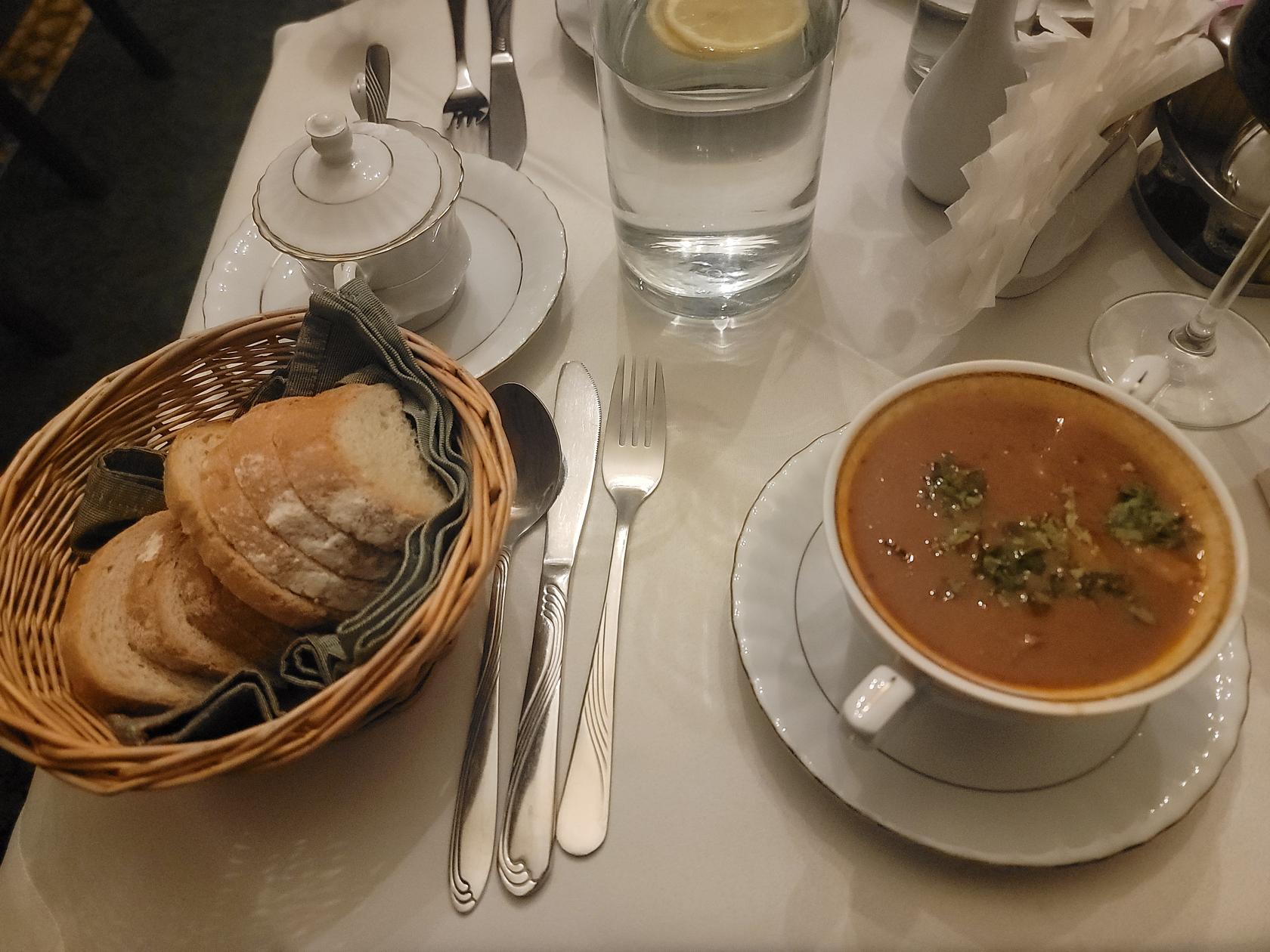
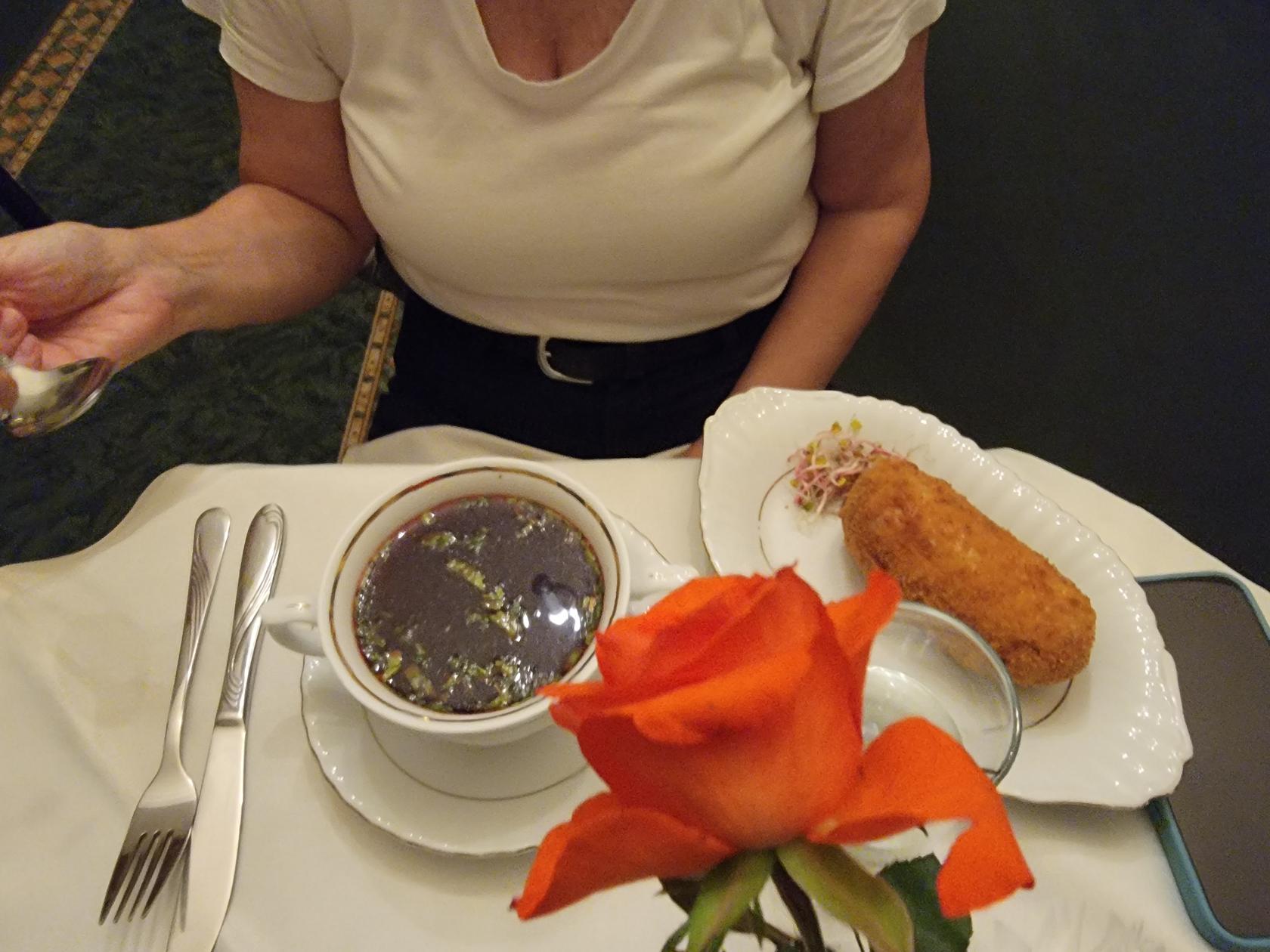
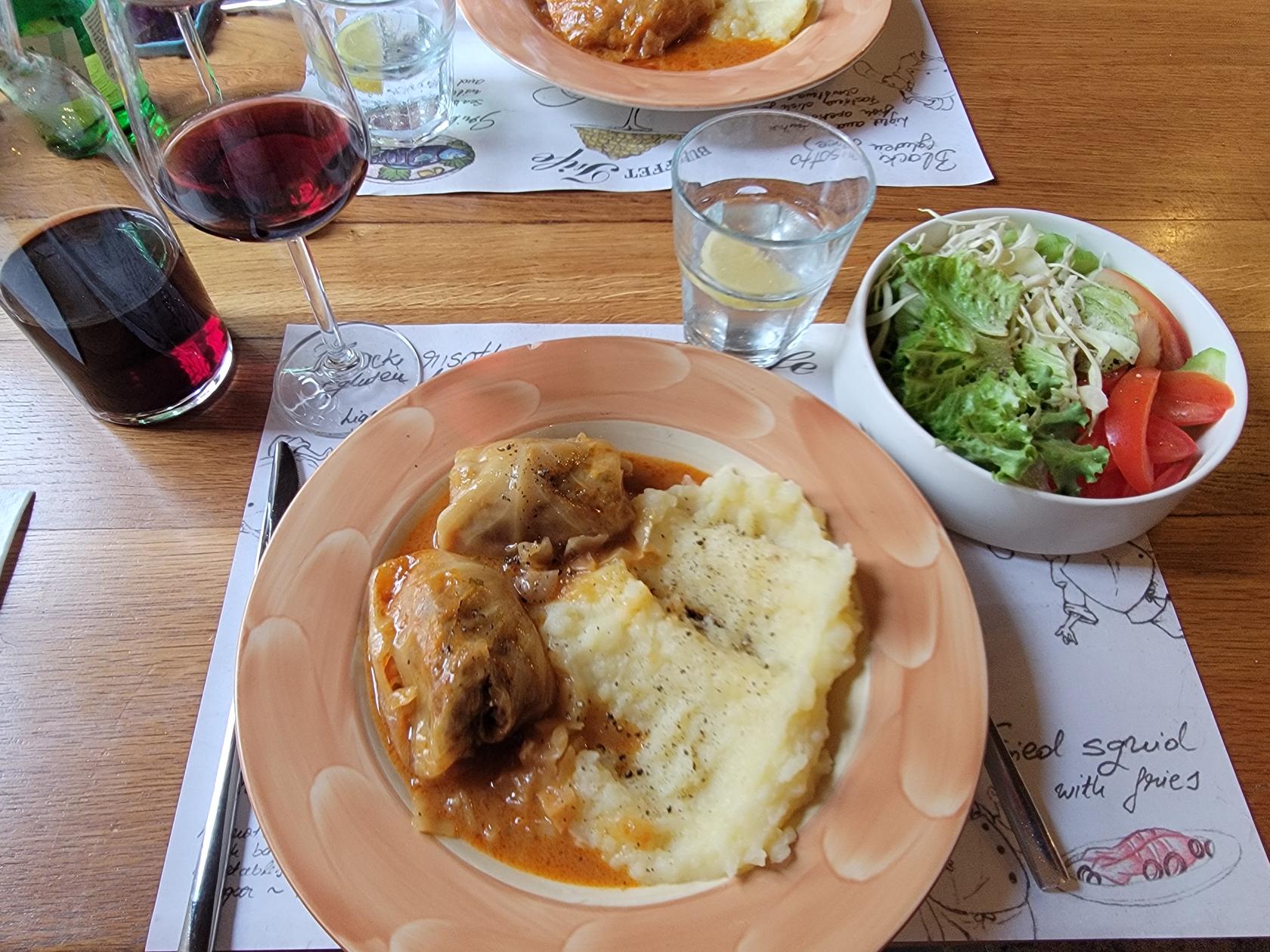
Our seating was downstairs, where we could enjoy the restaurant’s medieval quality. The food was very good, but in true Polish fashion, very filling. The gołąbki w sosie pomidorowym, or cabbage rolls in tomato sauce, were actually very good, light but at the same time very filling.
Gulash Soup – Morskie Oko Restaurant – Kraków, Poland
Sauerkraut Soup – Morskie Oko Restaurant – Kraków, Poland
Potato Pancakes with Cream and Mushroom Sauce – Morskie Oko Restaurant – Kraków, Poland
Gołąbki w sosie pomidorowym, or Stuffed Cabbage Rolls in Sauce – Morskie Oko Restaurant – Kraków, Poland
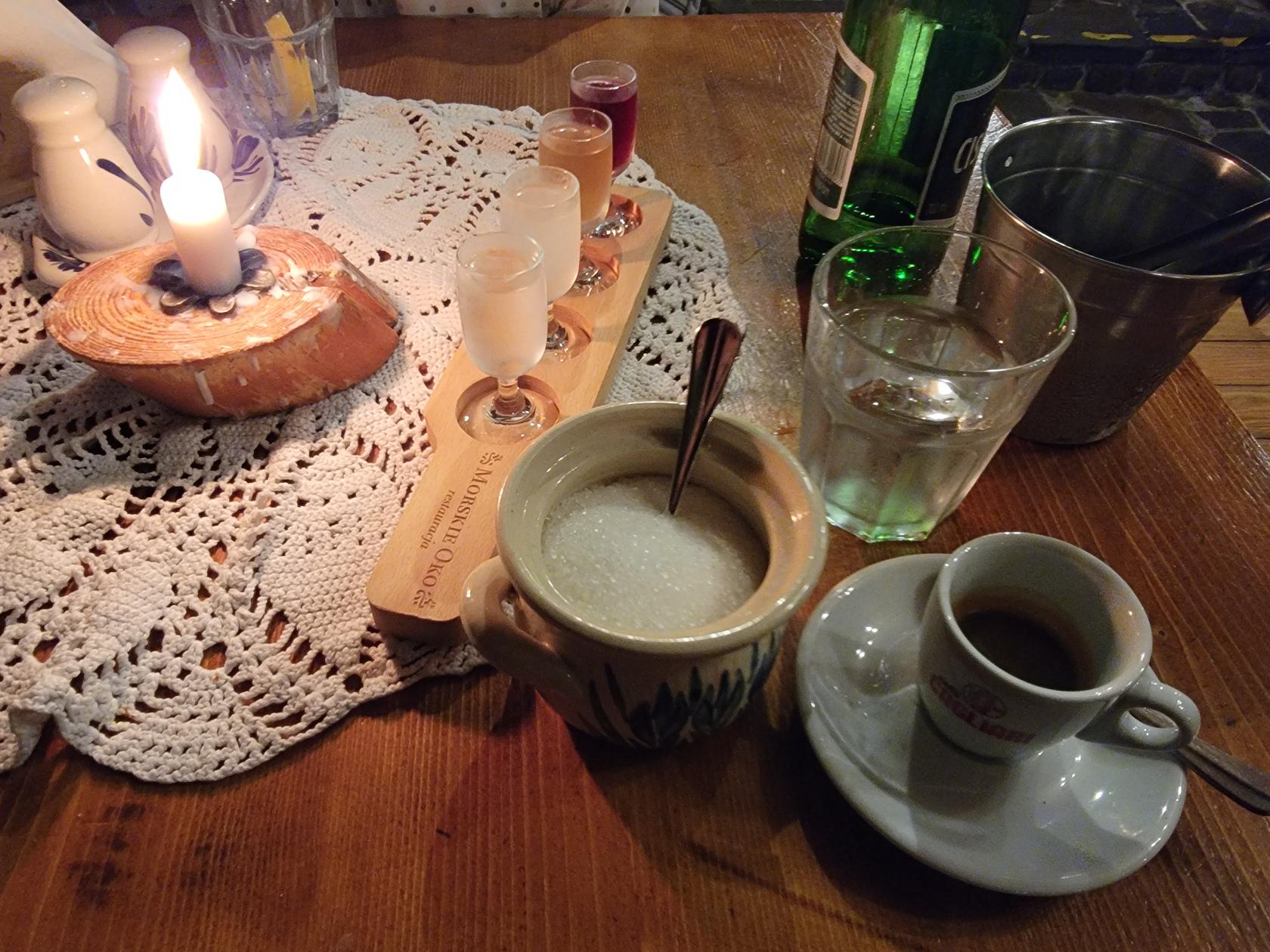
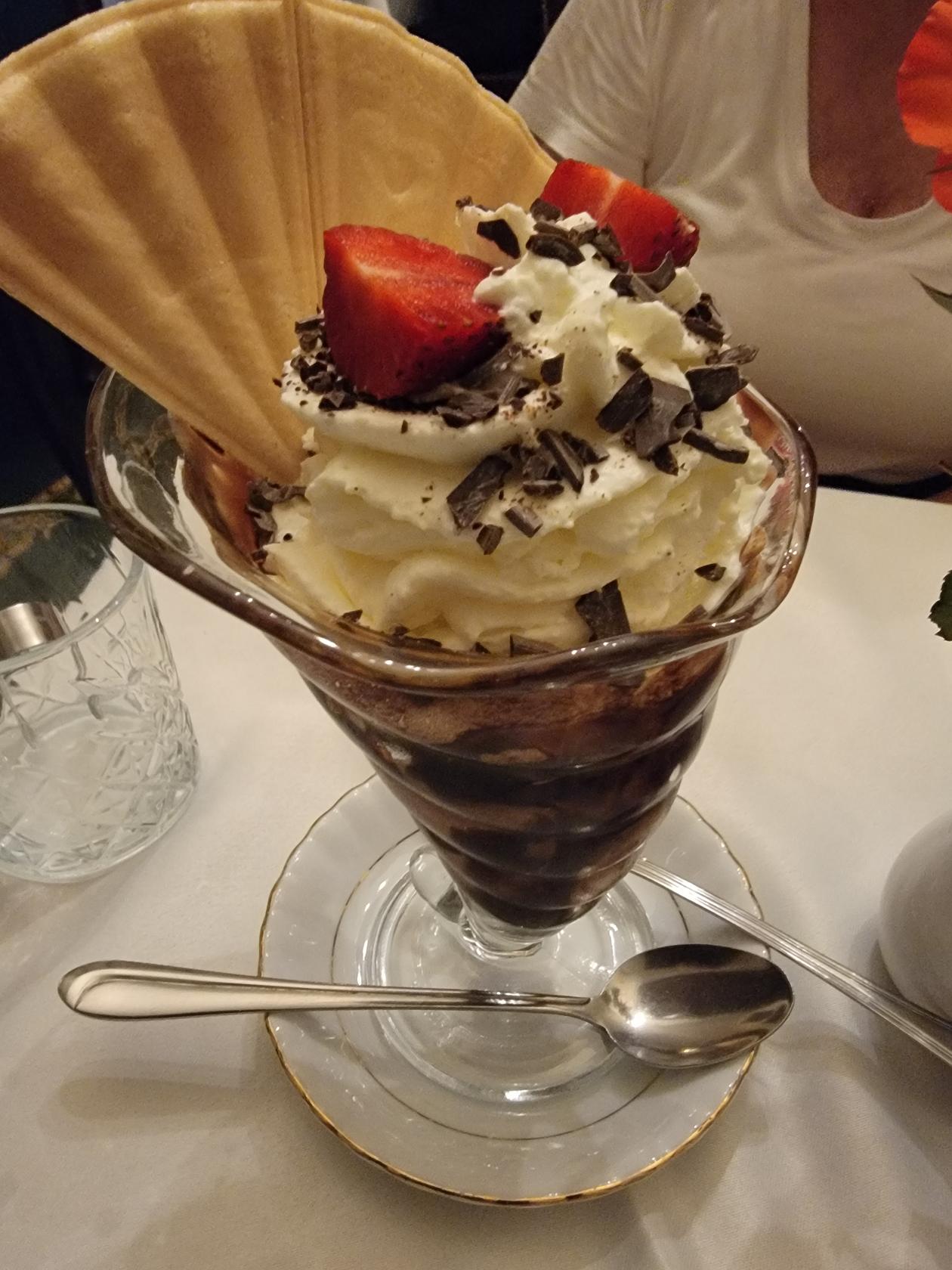
Vodka Flight and Espresso – Morskie Oko Restaurant – Kraków, Poland
Jama Michalika Restaurant
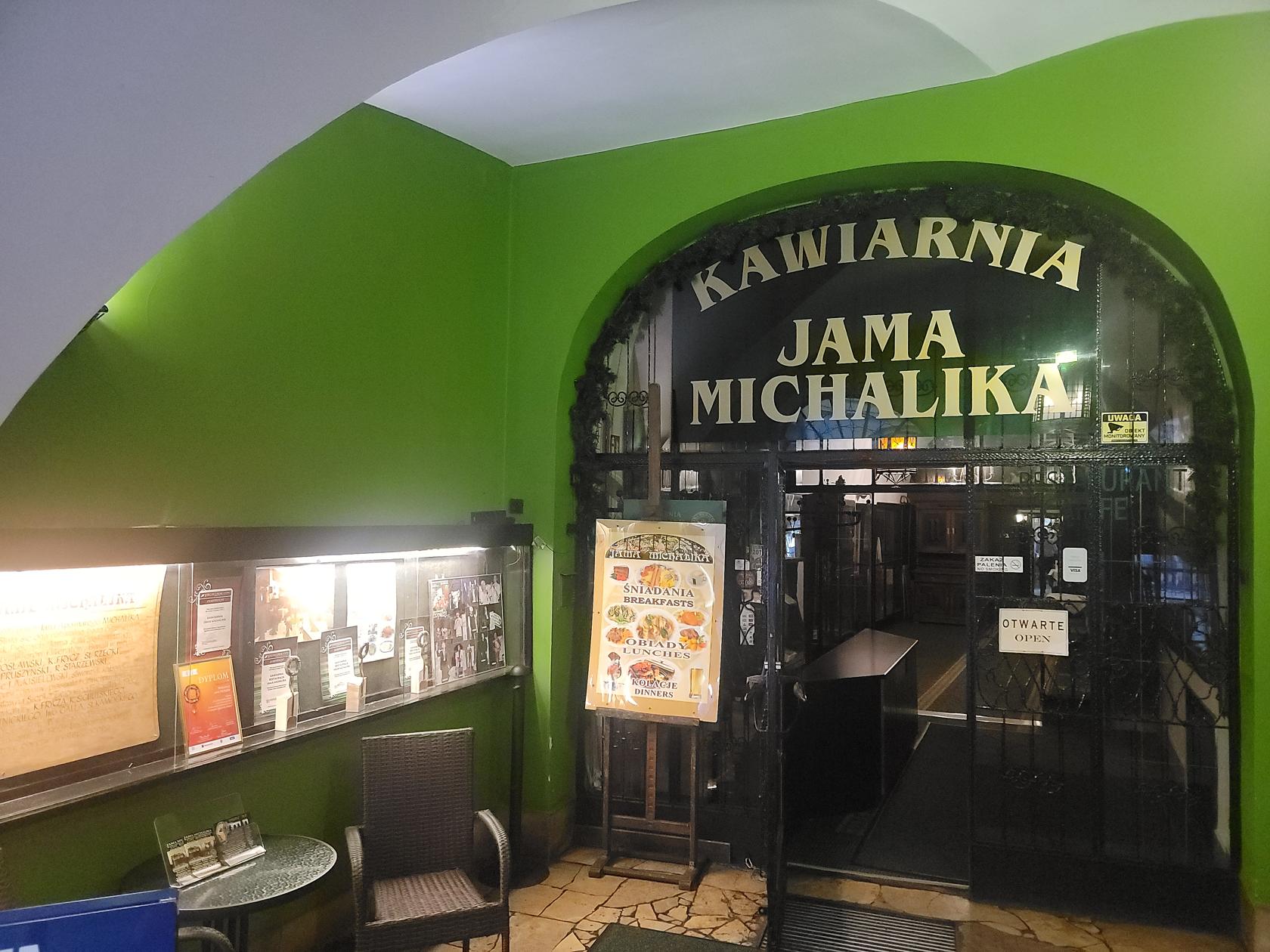
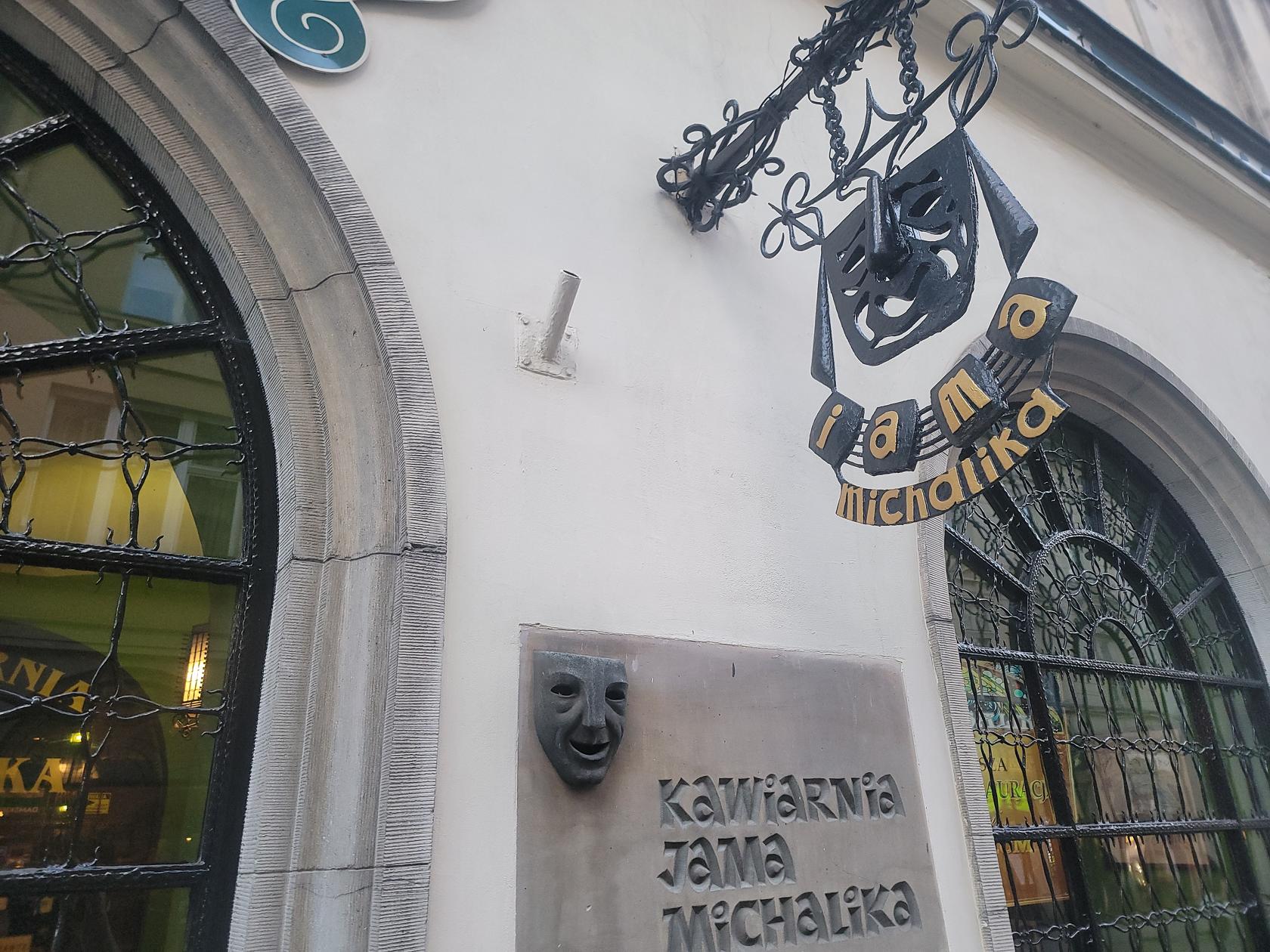
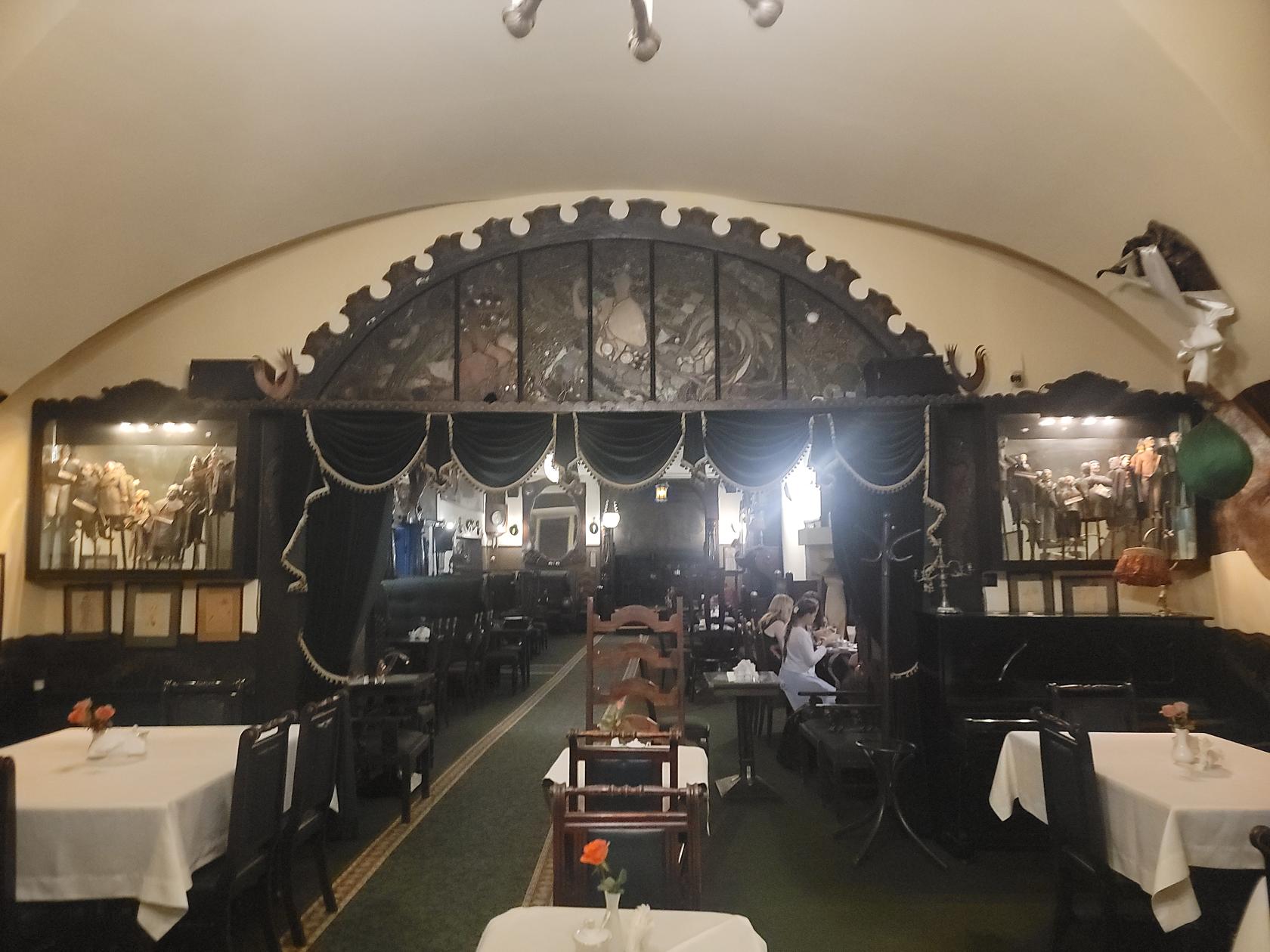
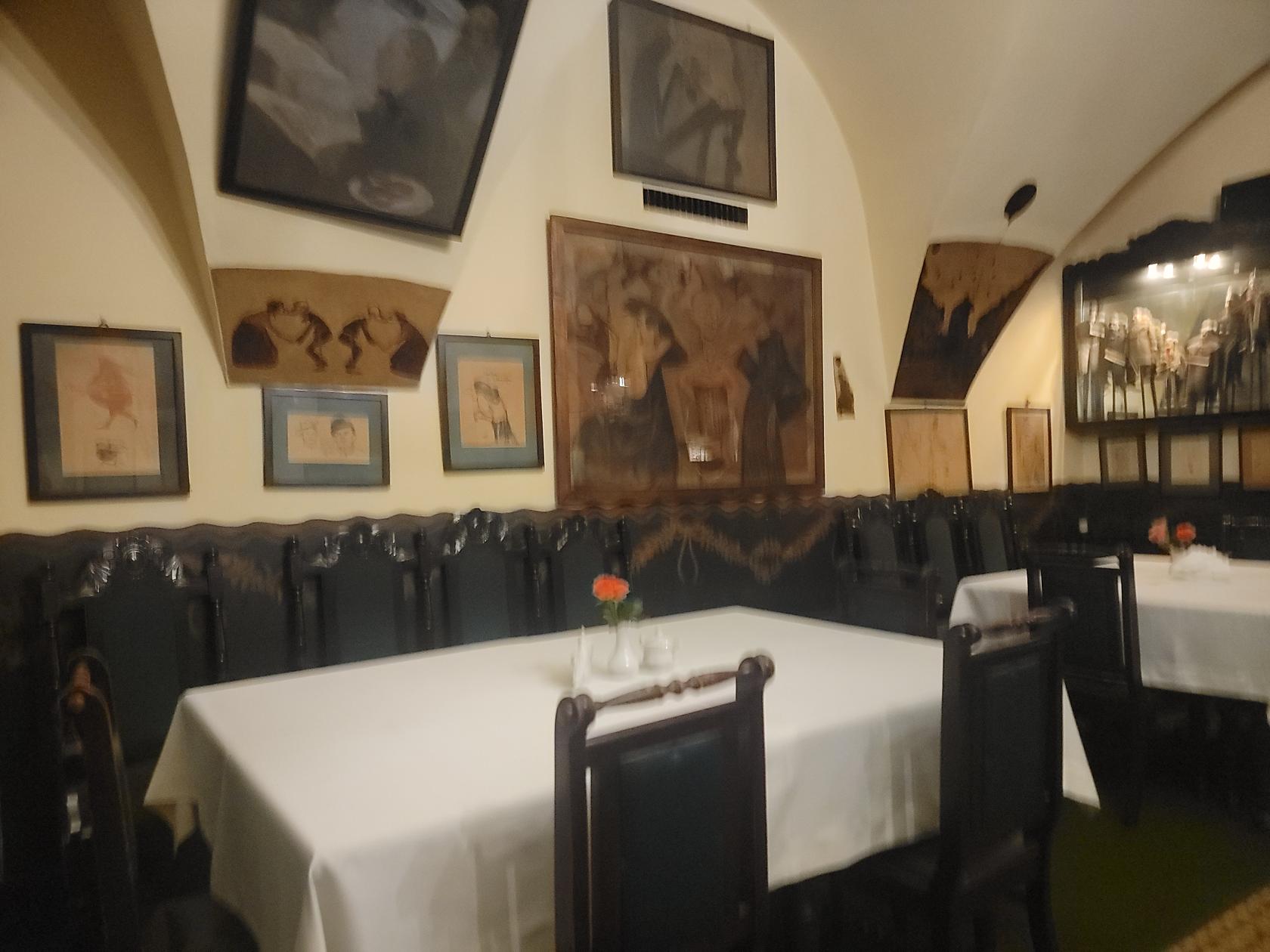
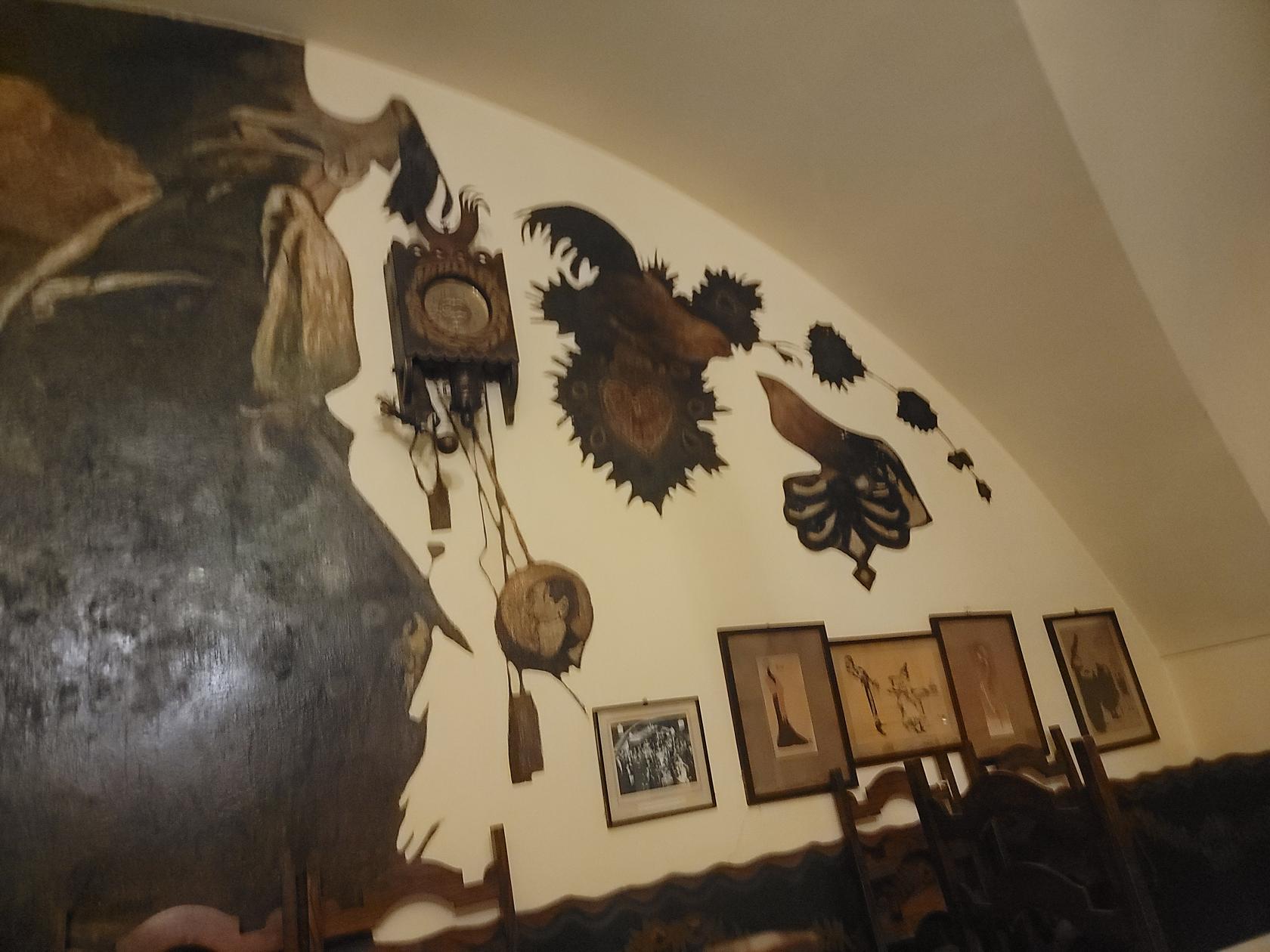
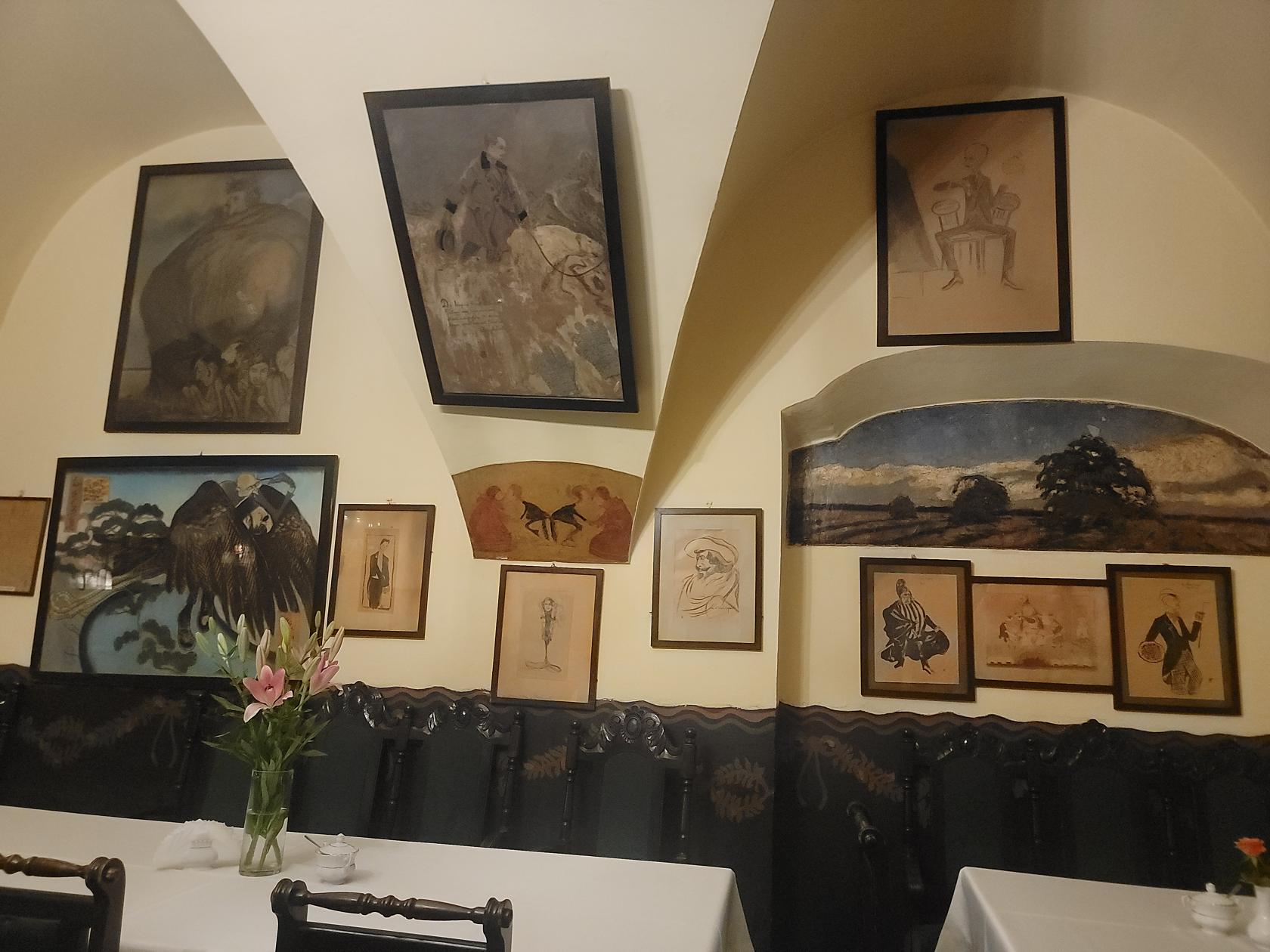
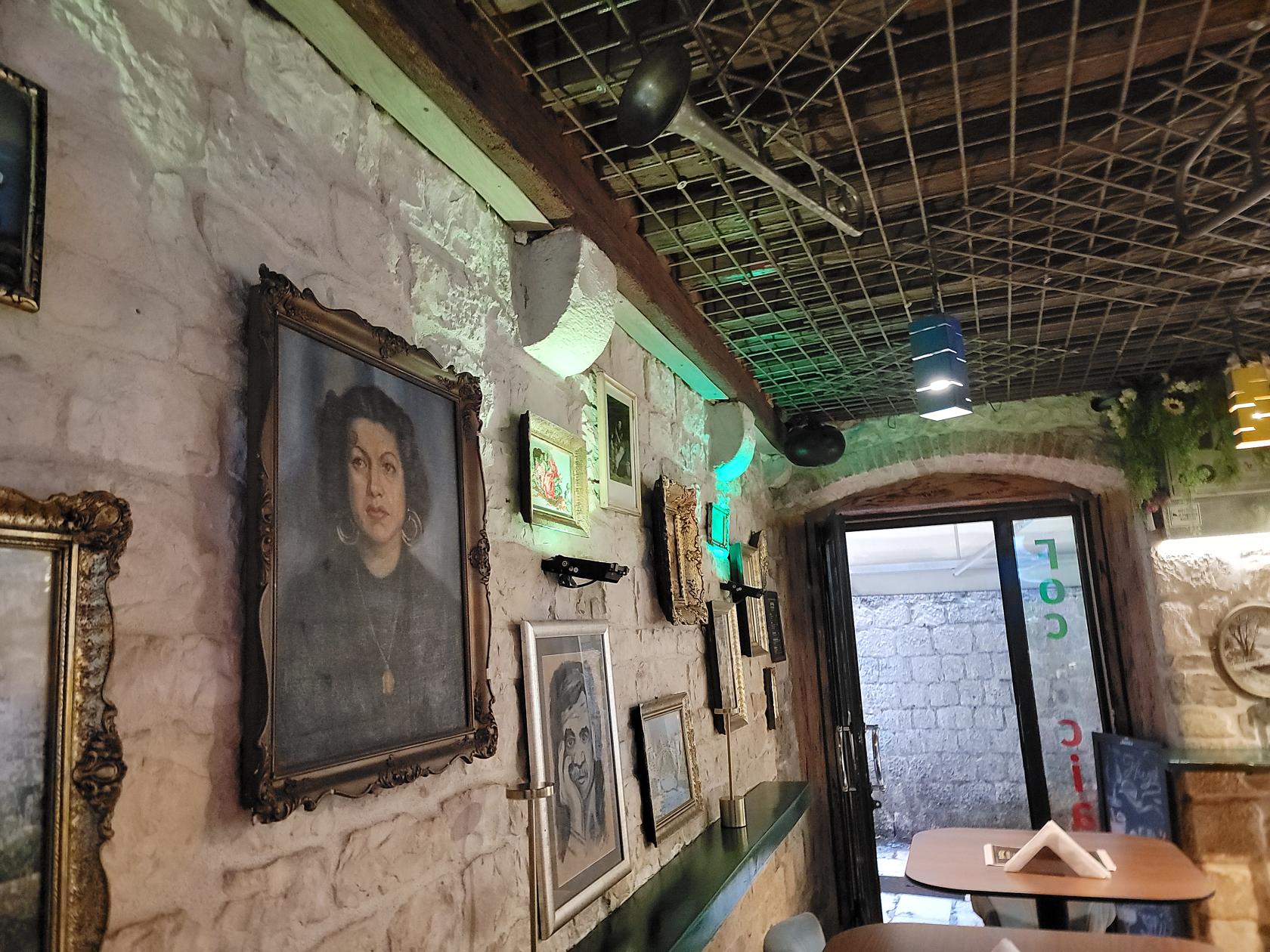
The Jama Michalika restaurant, though the food was not as good as the Morskie Oko, it is adorned with artwork. Pedestrians actually visit the inside of the restaurant just to look at the works.
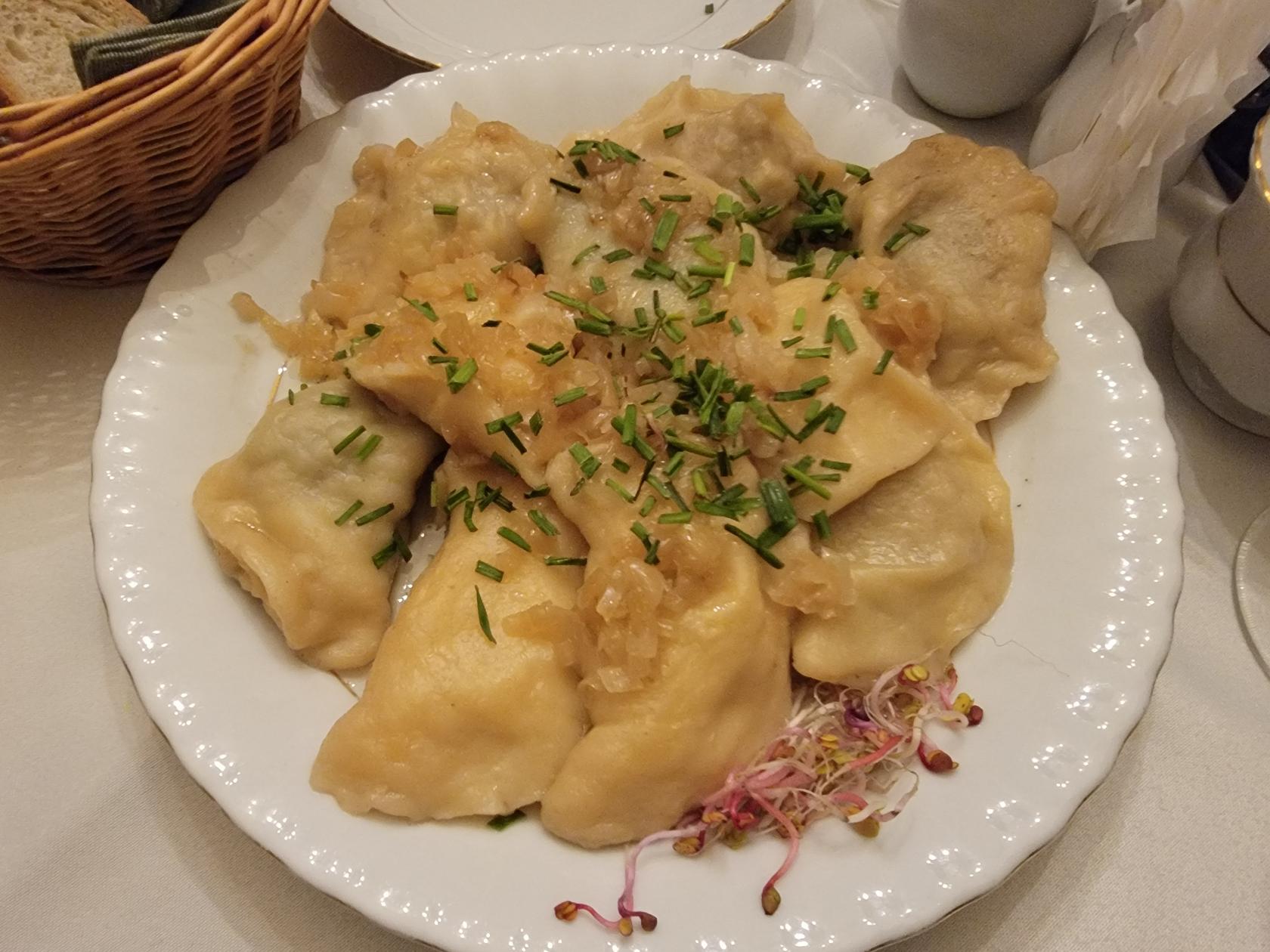
We did not have reservations for this restaurant, but rather visited them since they had perogie on the menu. They were actually quite good, but also quite filling.
Known for balsamic vinegar, it also has a variety of other things to see and enjoy. Though we both couldn’t see spending more than a day here, unless of course the purpose is using it as a homebase for day trips elsewhere. The irony of it all is, you would think we would have at least tried balsamic while we were here, we did not.
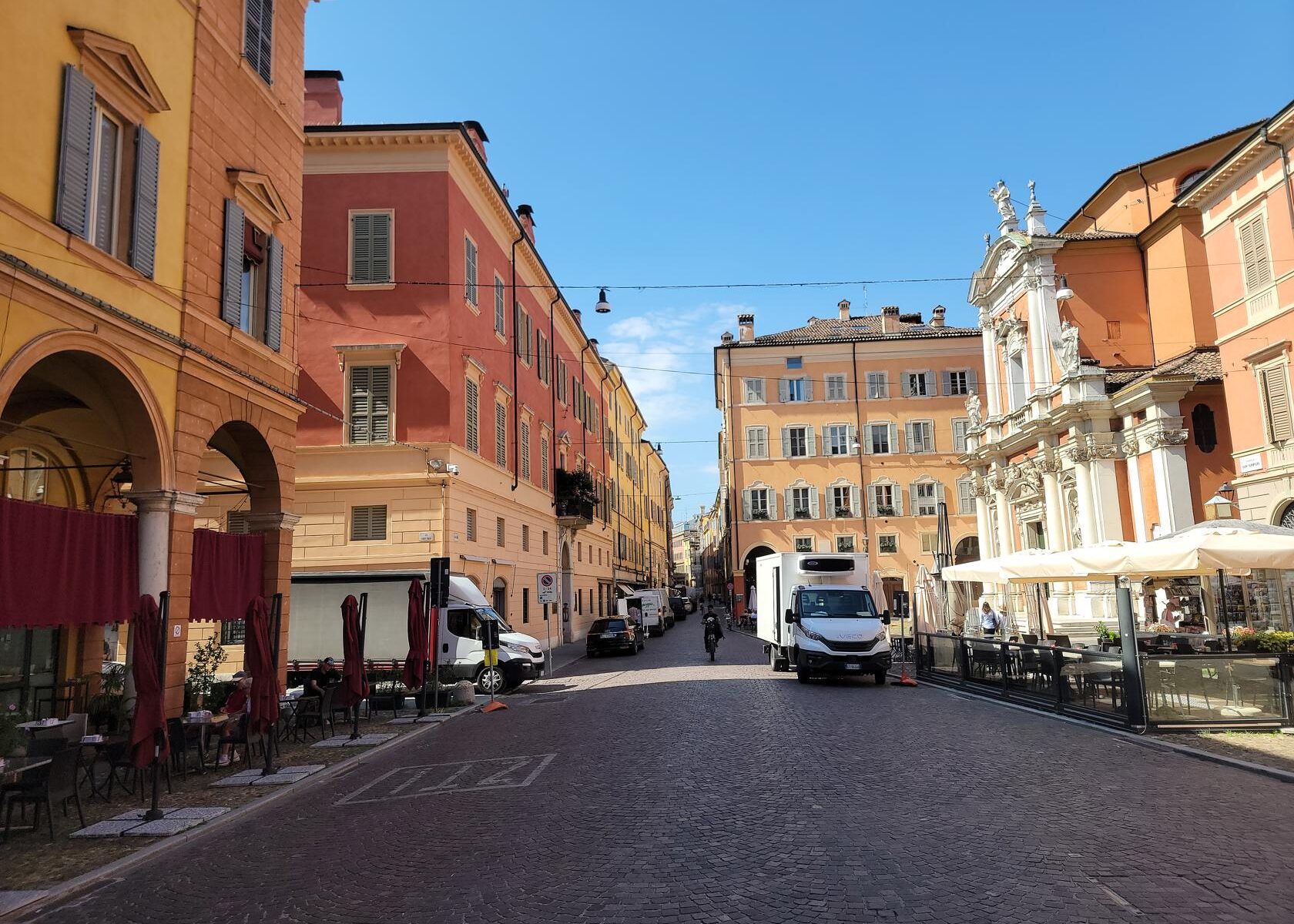
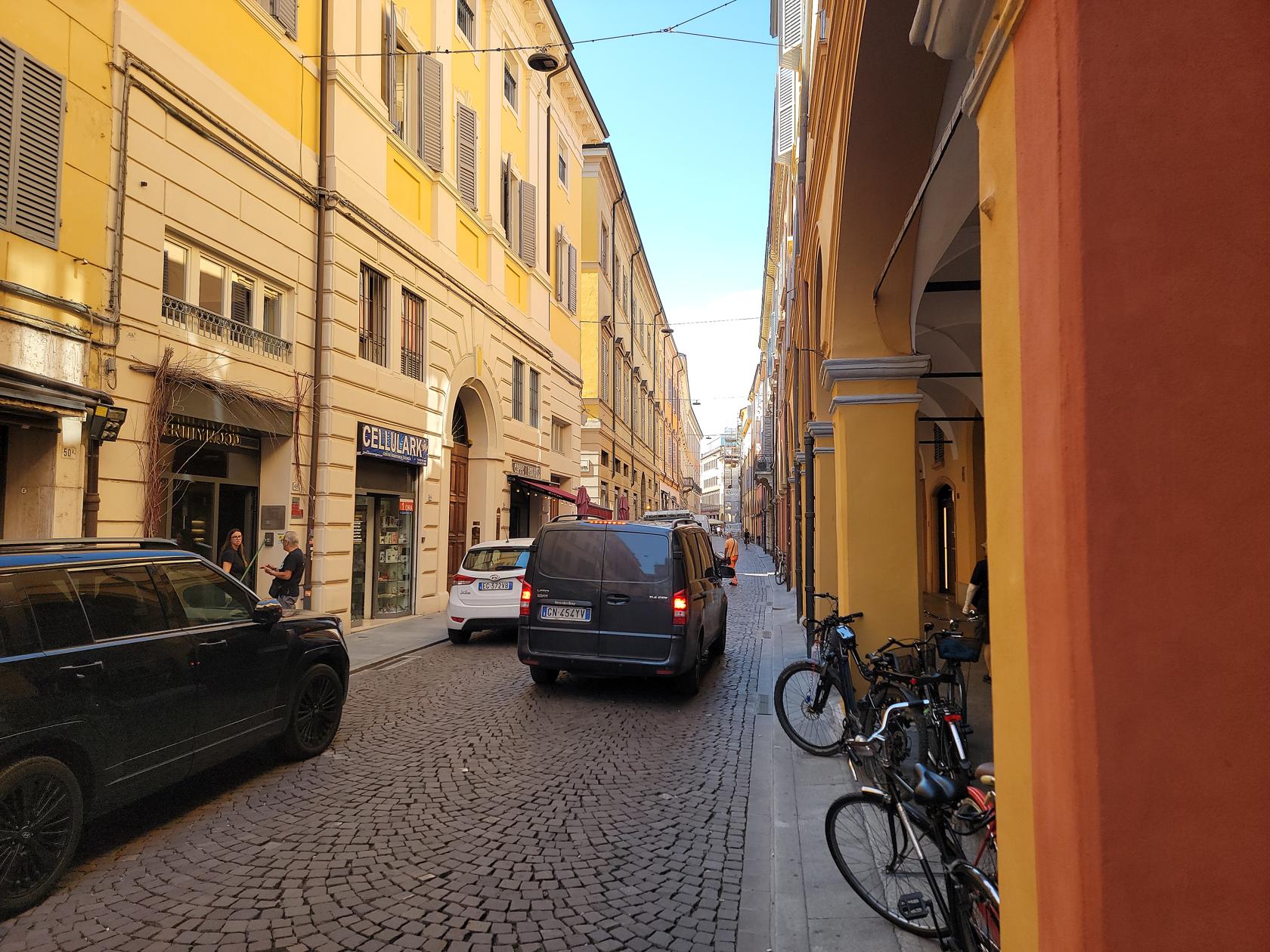
Via Cesare Battista – Modena, Italy
Modena
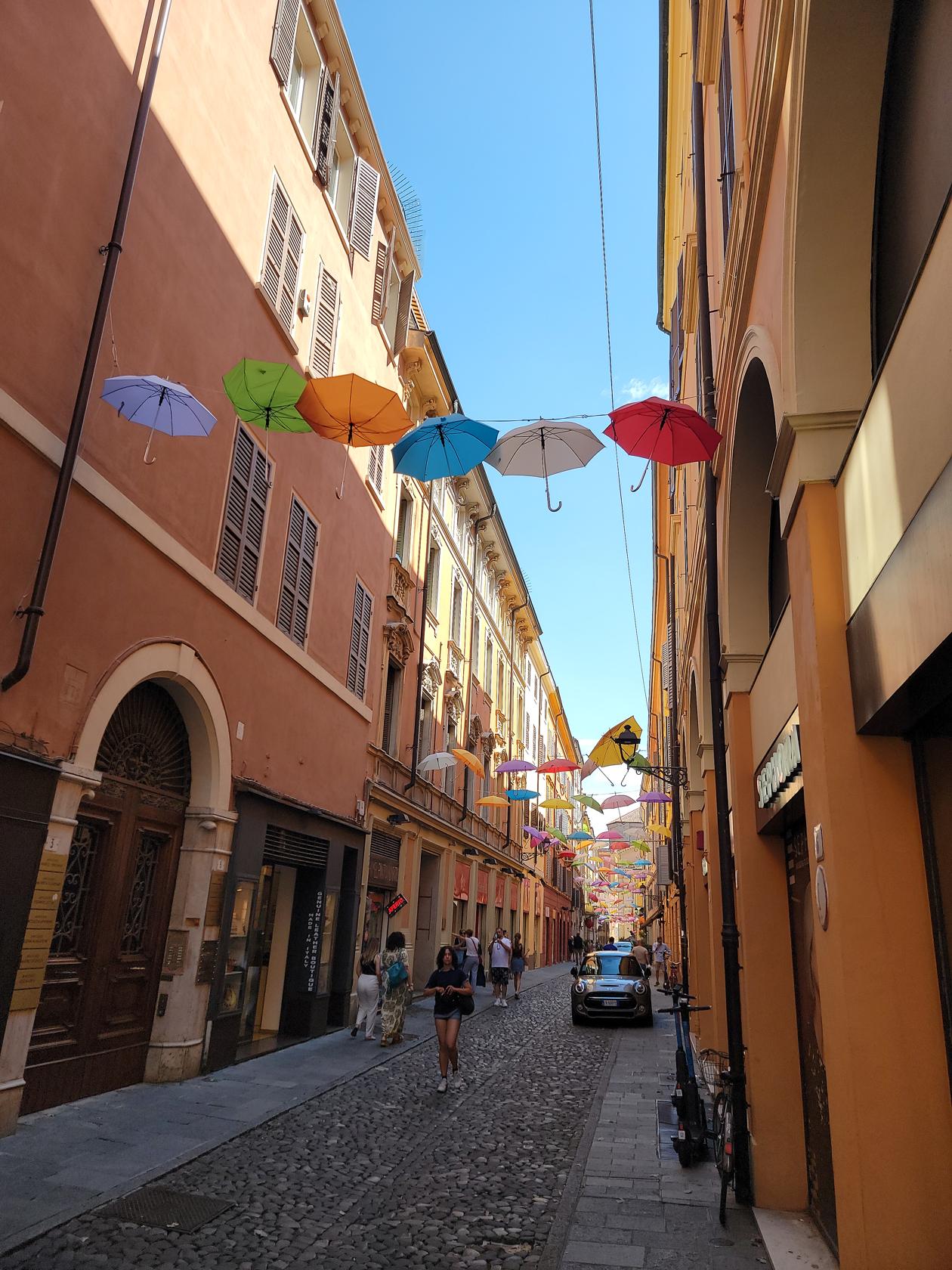
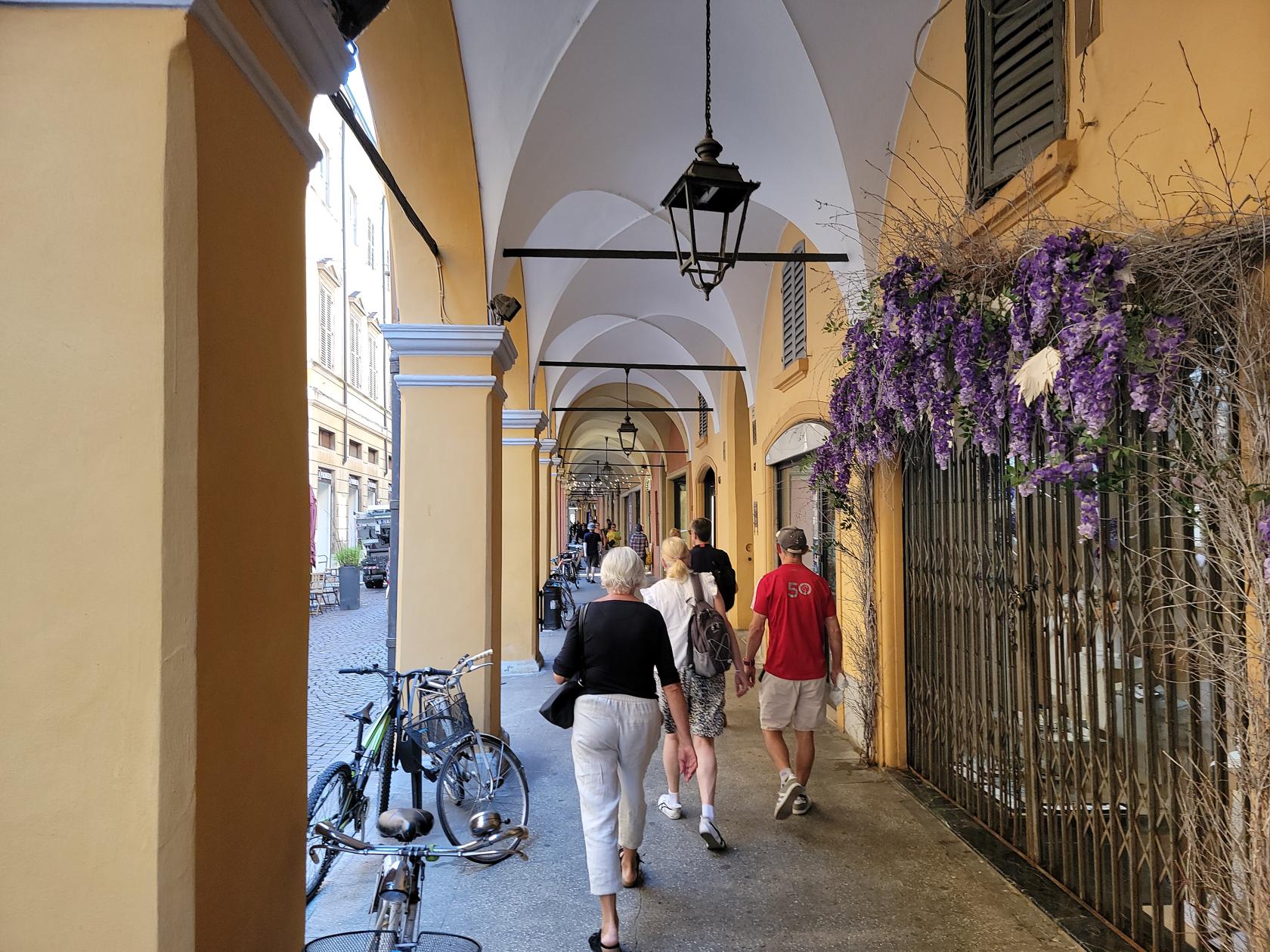
Famously known for balsamic, Modena contains a few other points of interest, it twelfth century cathedral, as well as its own leaning tower. It has a market place, similar to other Italian towns and cities, which is actually inside for the most part and appears to function every day. The main street for shopping is most likely via Emilia Centro, it has porticos on one side and appears to have all the brand name shop one would expect to see.
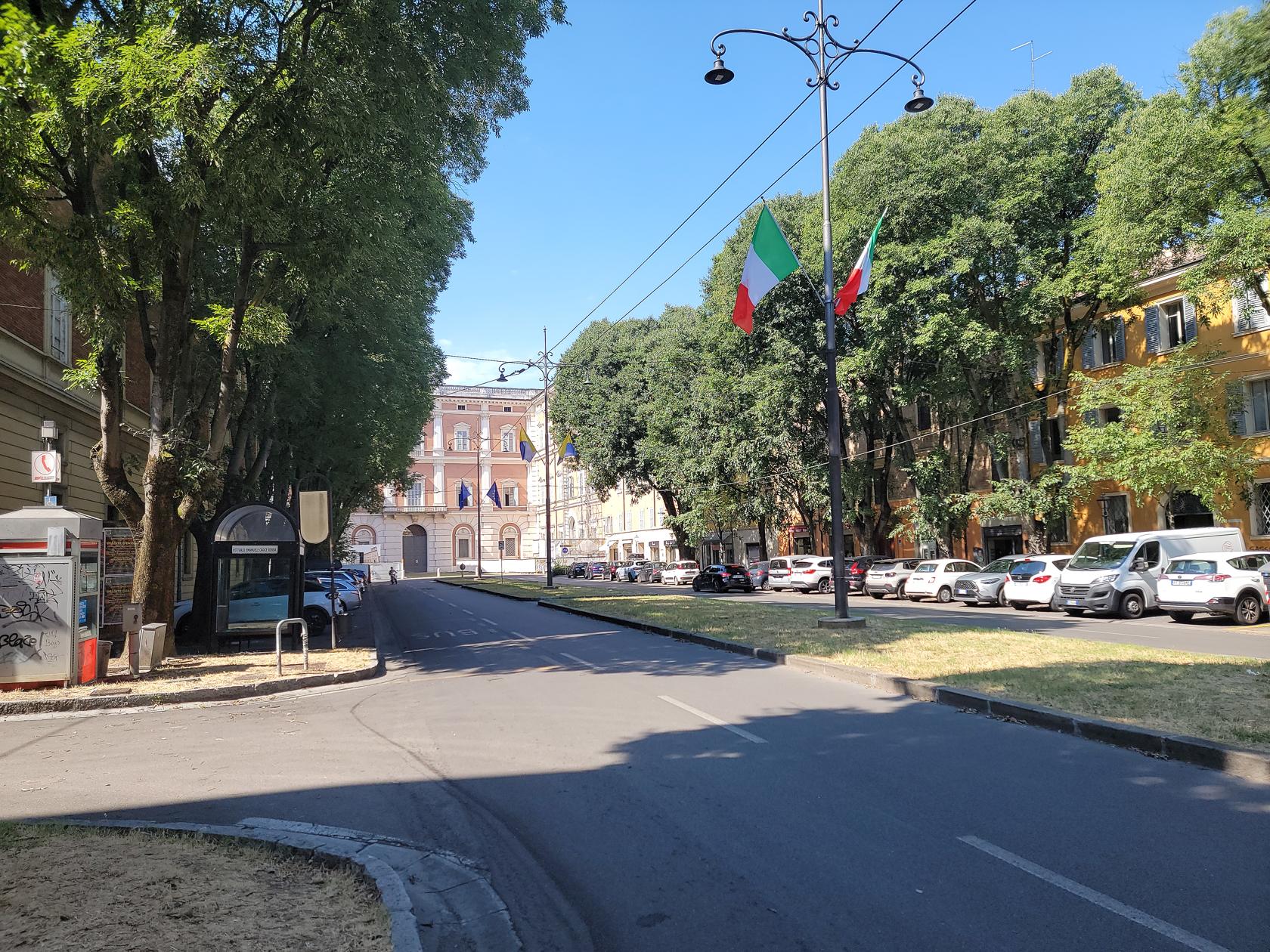
Corso Vittorio Emanuelle II – Modena, Italy
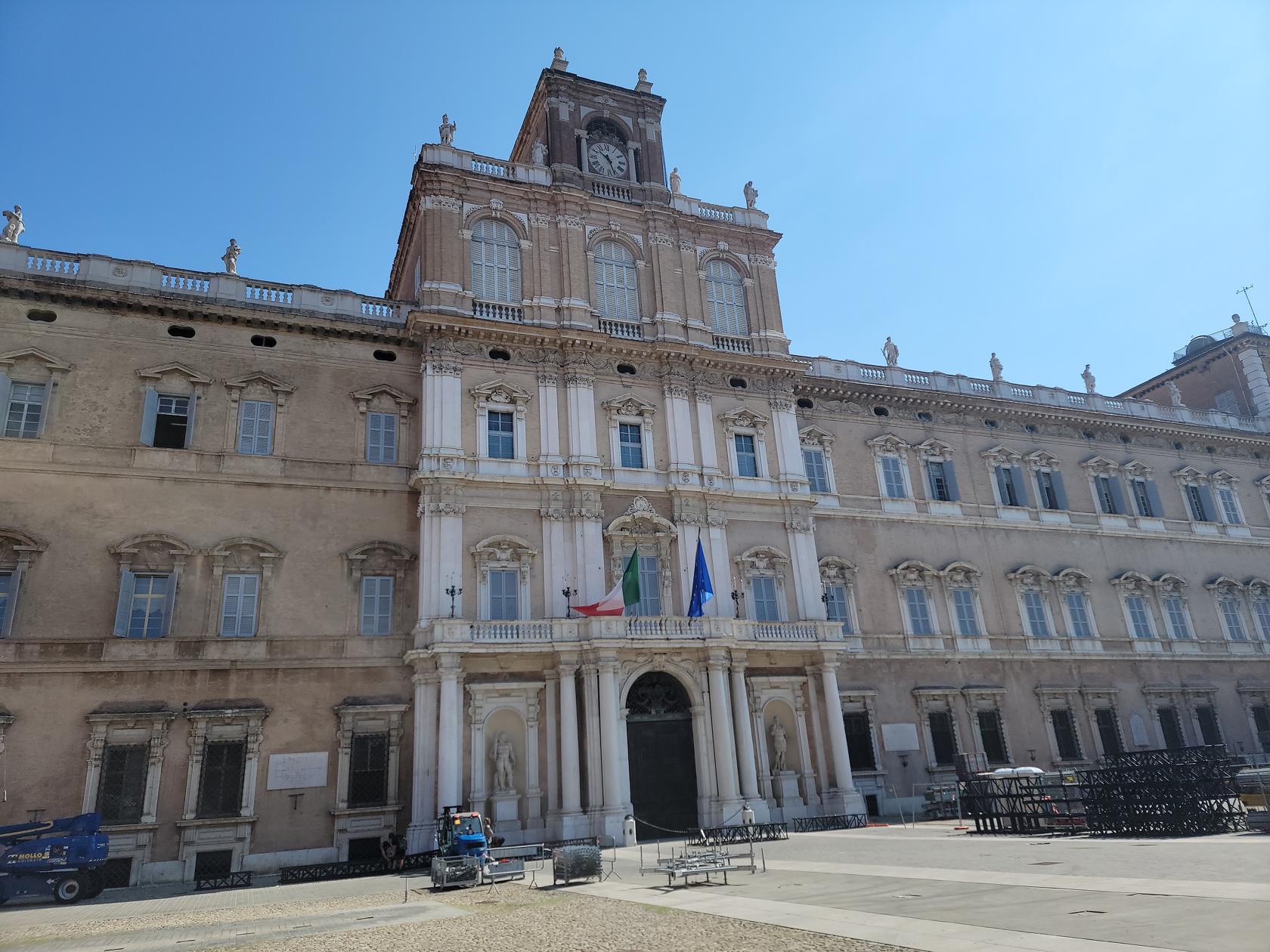
Military Academy of Modena – Modena, Italy
Via Emilia Centro – Modena, Italy
Via Emilia Centro – Modena, Italy
Via Emilia Centro – Modena, Italy
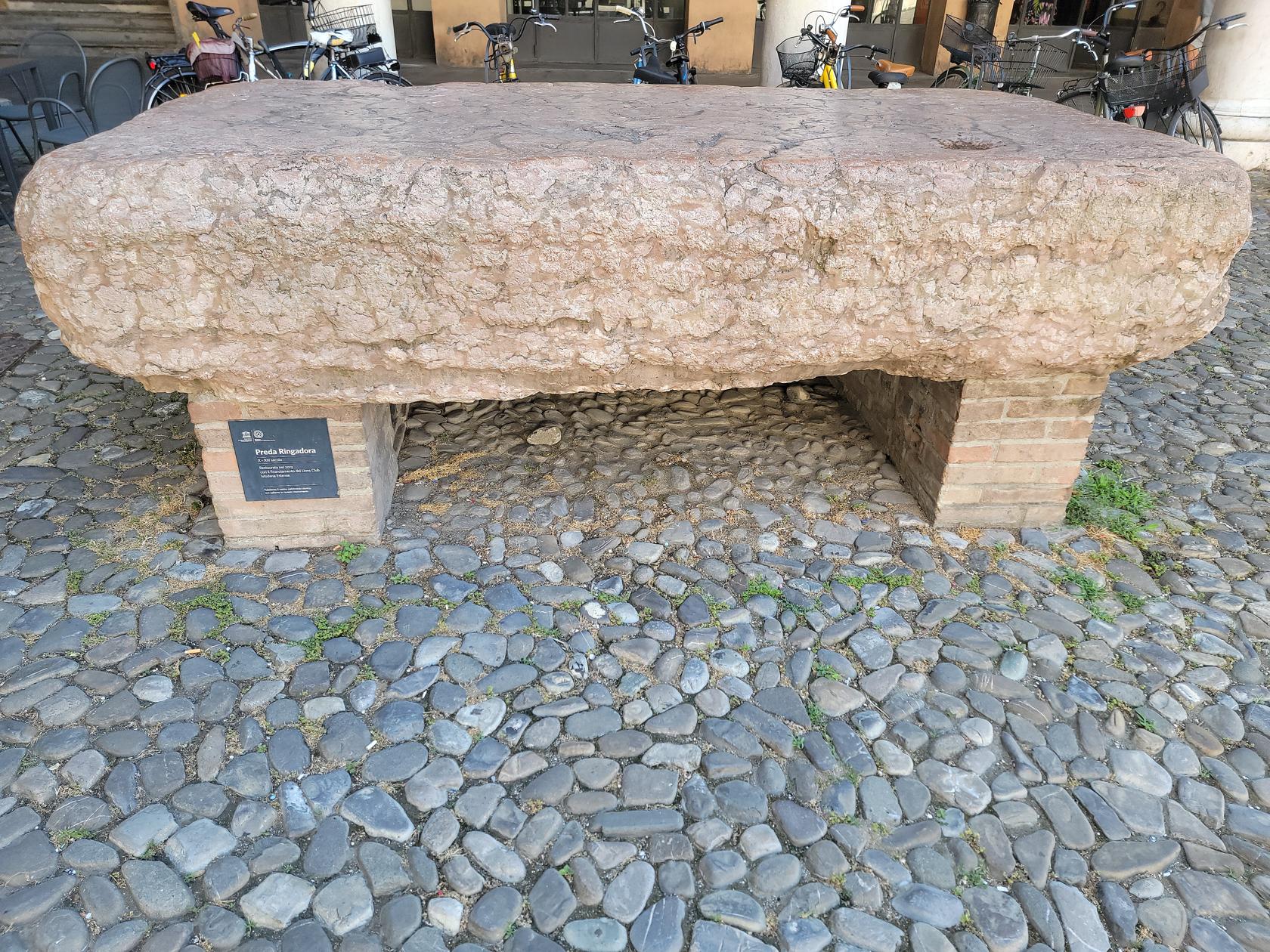
Preda Ringadora – Modena, Italy
Getting There
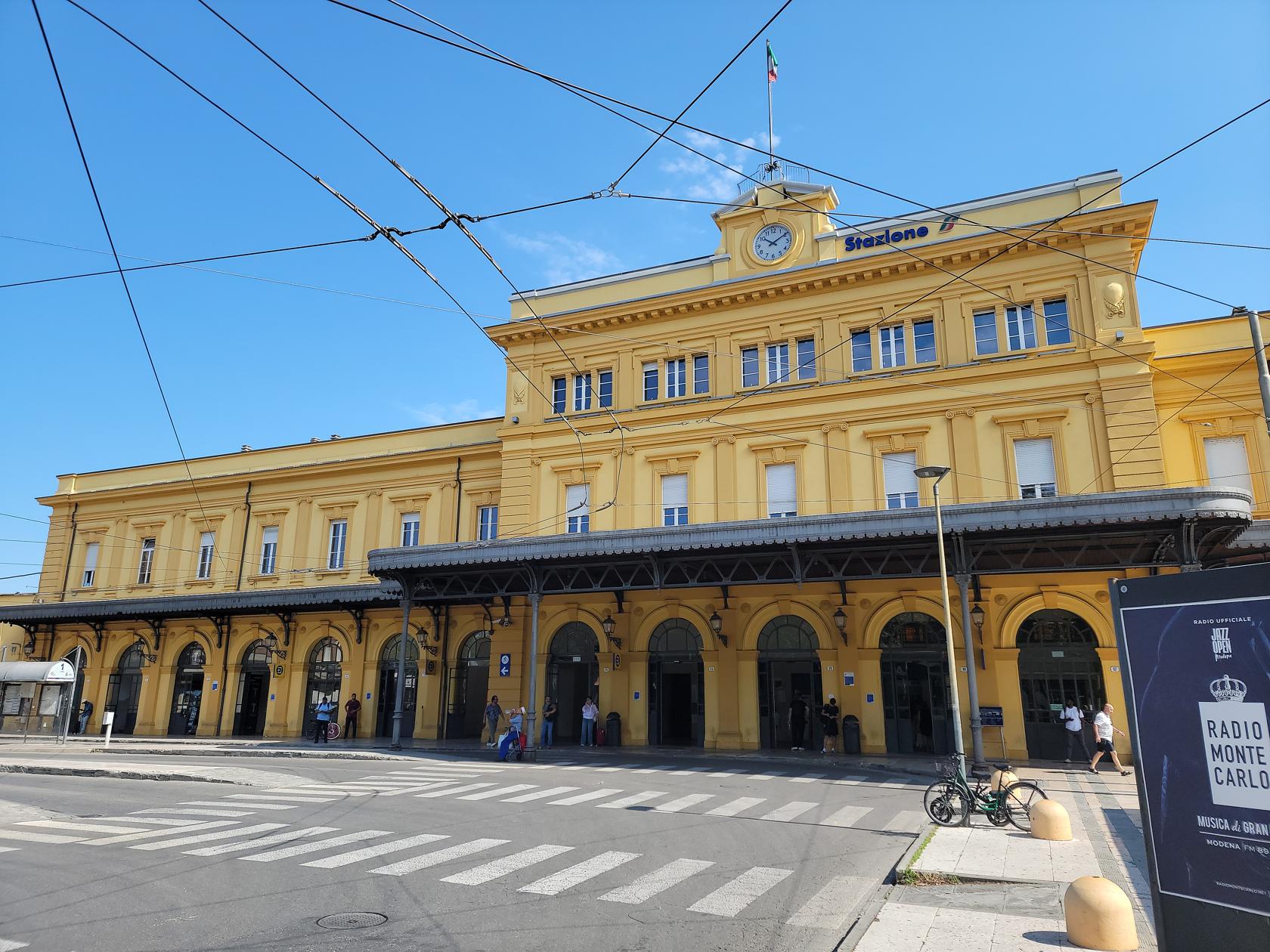
Thirty to forty minutes from Parma by train, Modena can be reached with only a few stops along the way for the regional train, or one stop if the InterCity train is used as an option. The train station in Modena and spartan and clean, as well as the neighborhood around it.
Entrance – Train Station – Modena, Italy
Comunale Palazzo
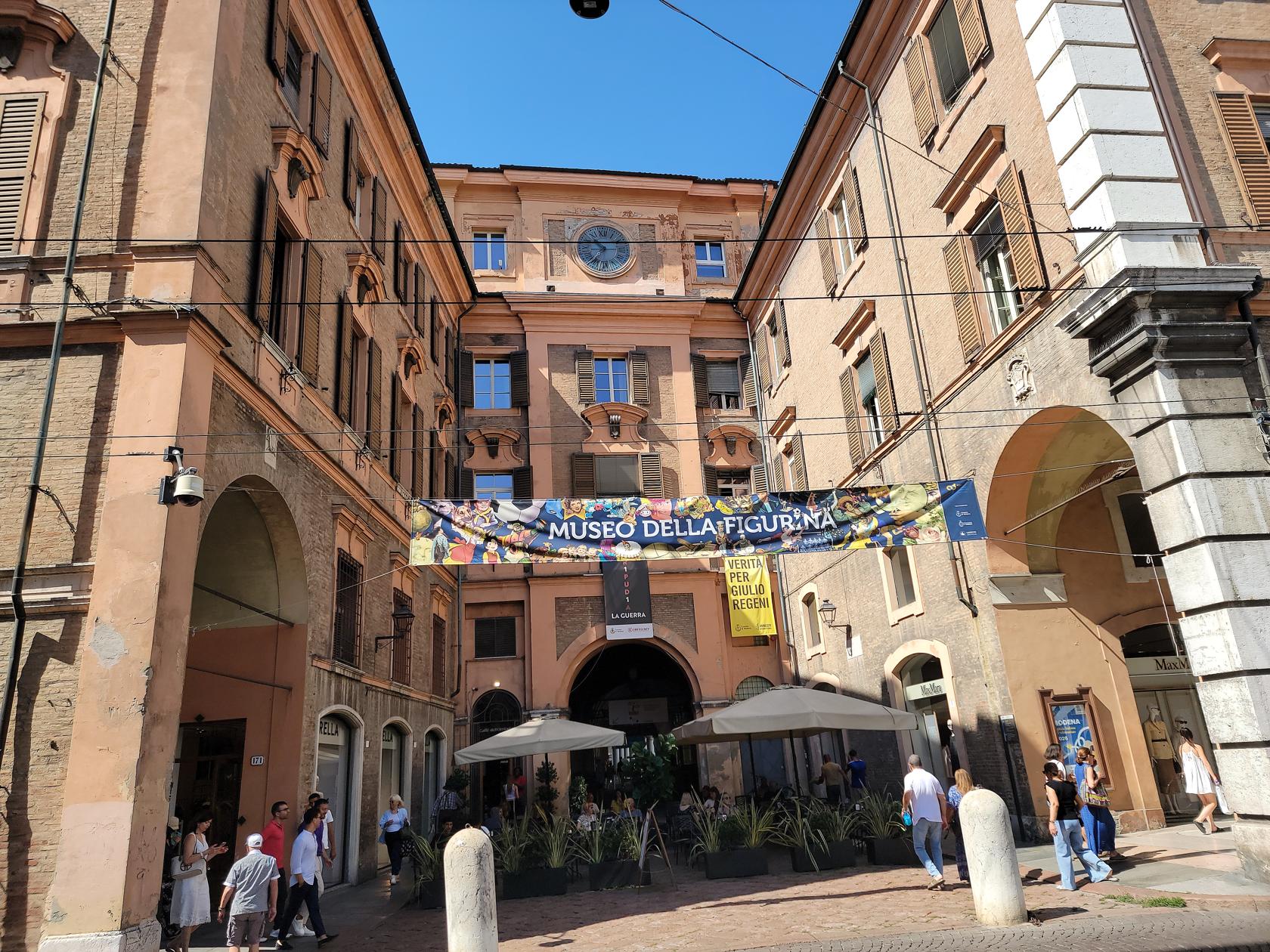
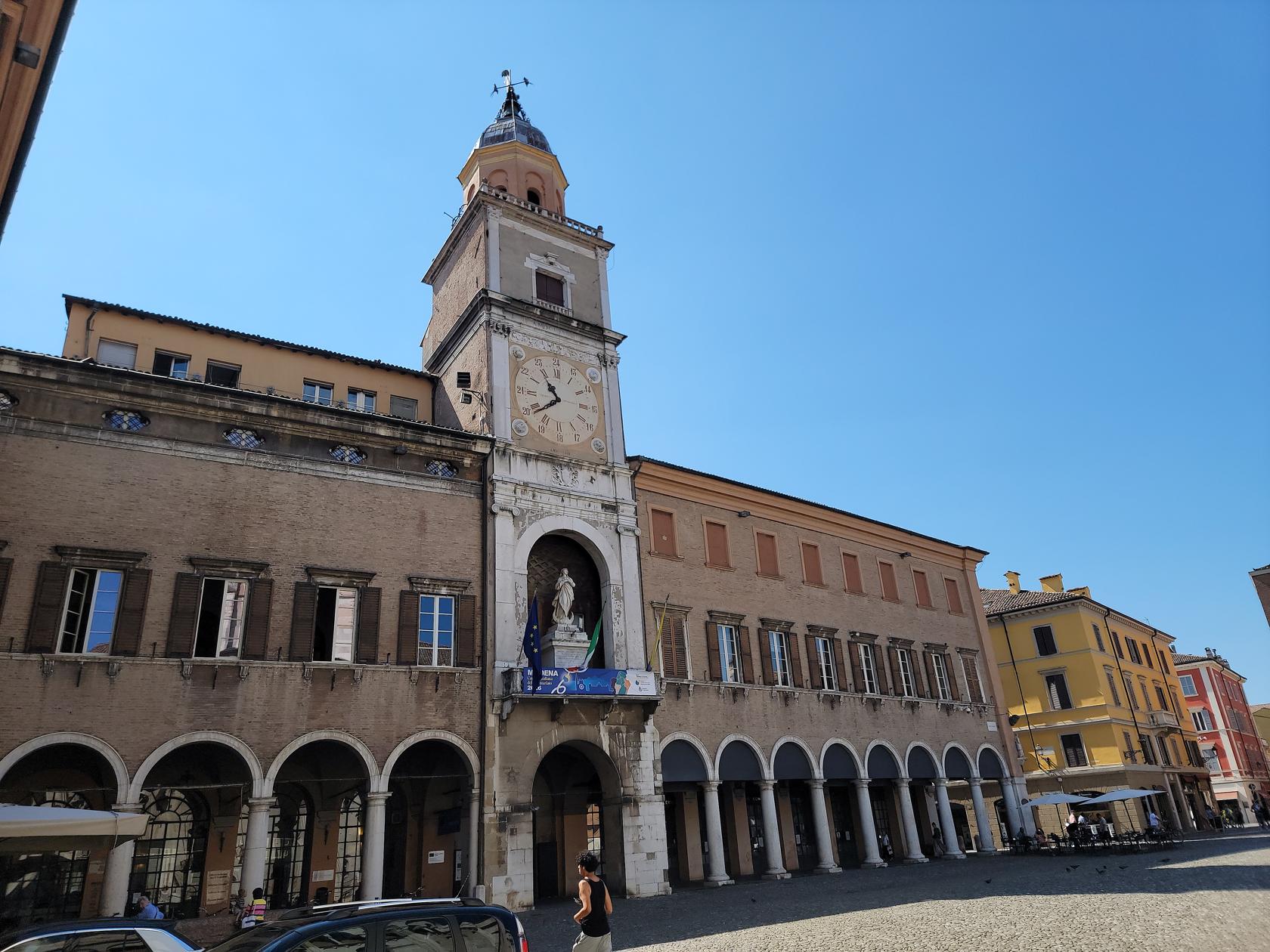
A civic building known as the Comunale Palazzo, was used in the past by the town council for official business and ceremonies. Outside and to the left of it, is the Preda Ringadora, a large piece of marble from Roman times used as a speaker’s platform; its present day means to “orate”. However, historians also say it was likely used as a pillory and also used to identify corpses which were laid out on it. In any case, it is commonly used today as a seat and a place of repose.
Preda Ringadora – Modena, Italy
It is open and free to the public and has a handful of rooms that may be visited, which contain frescoes.
Clock Tower and Front – Palazzo Comunale – Modena, Italy
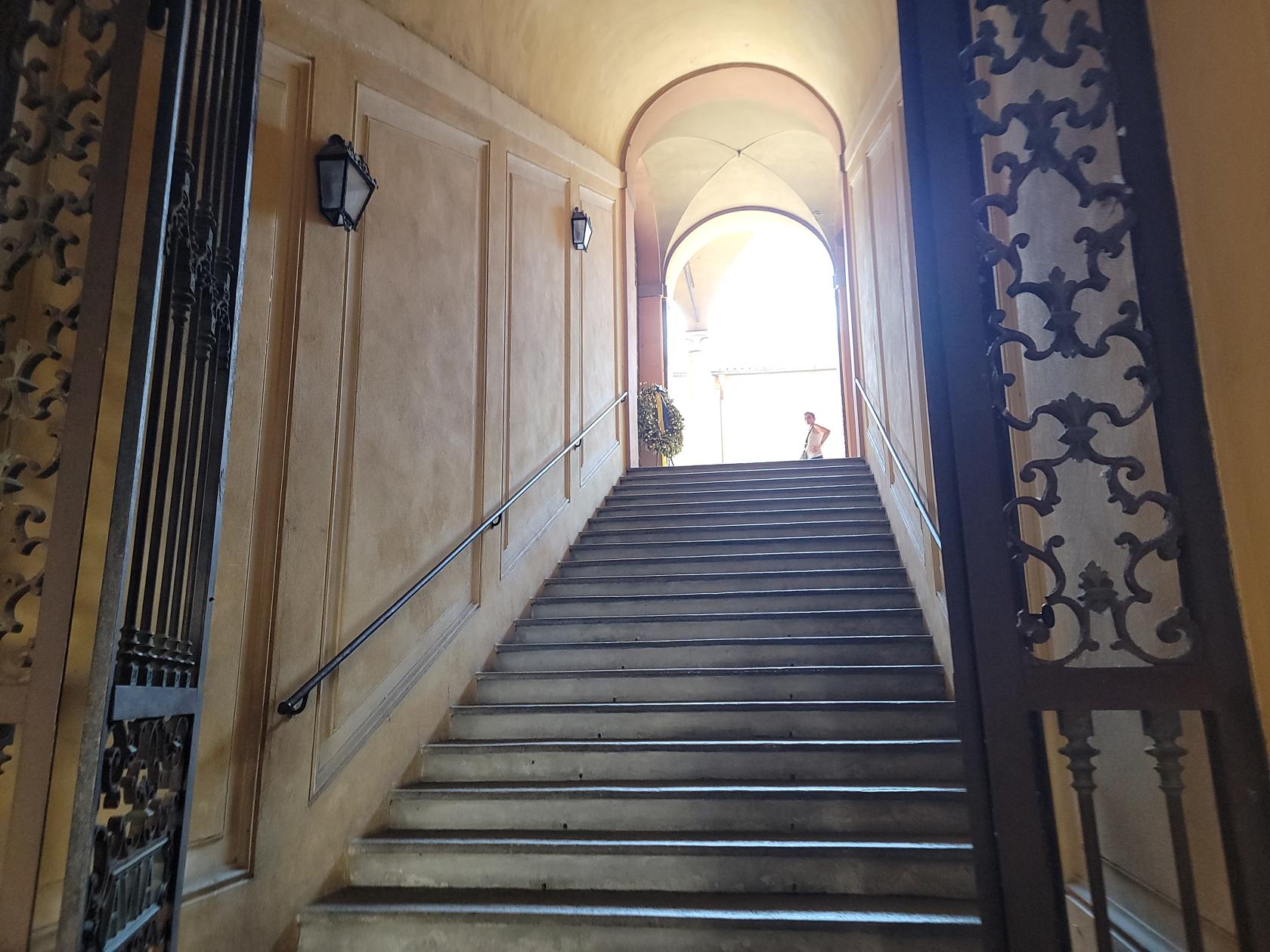
Stairs to Entrance – Palazzo Comunale – Modena, Italy
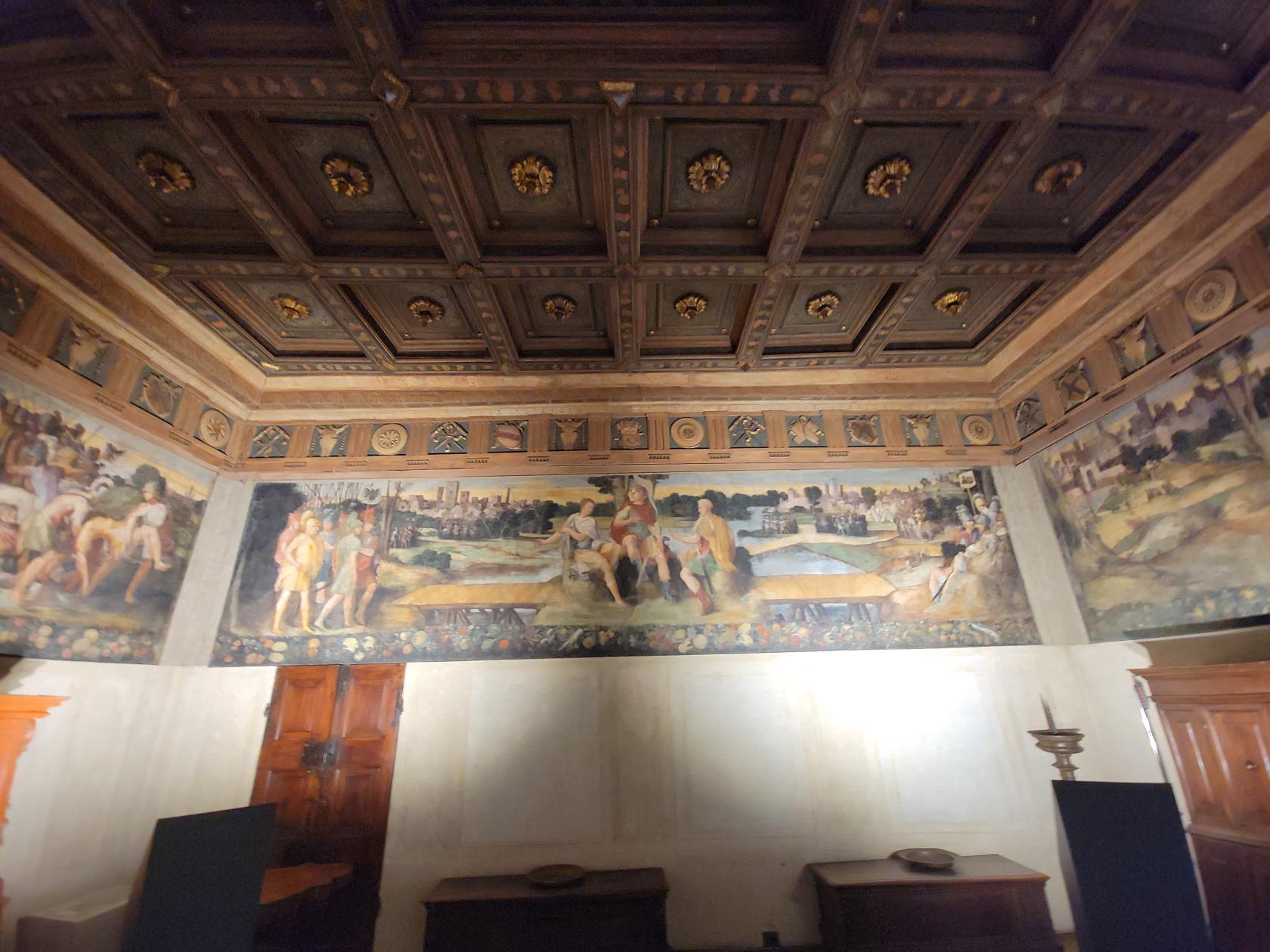
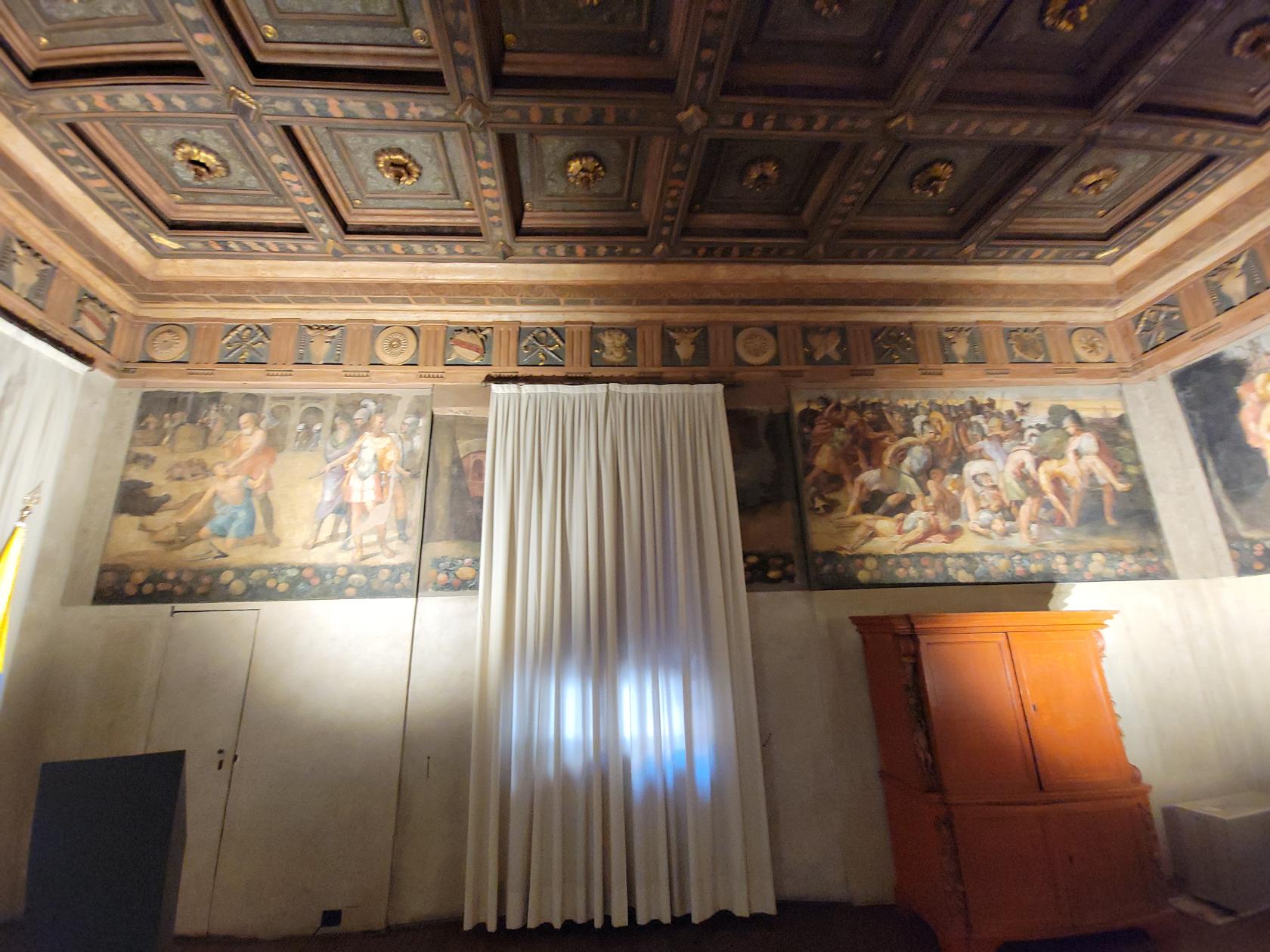
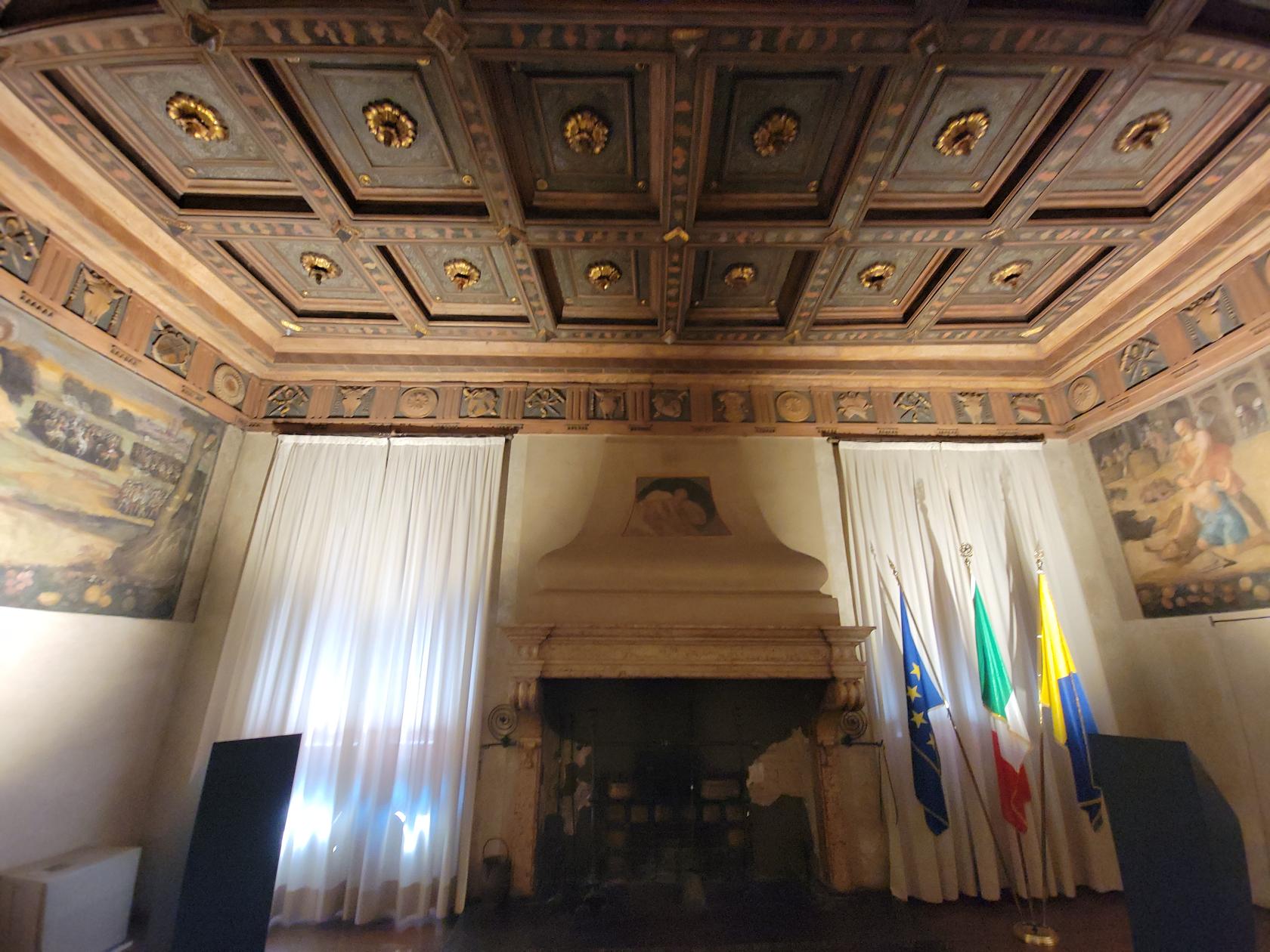
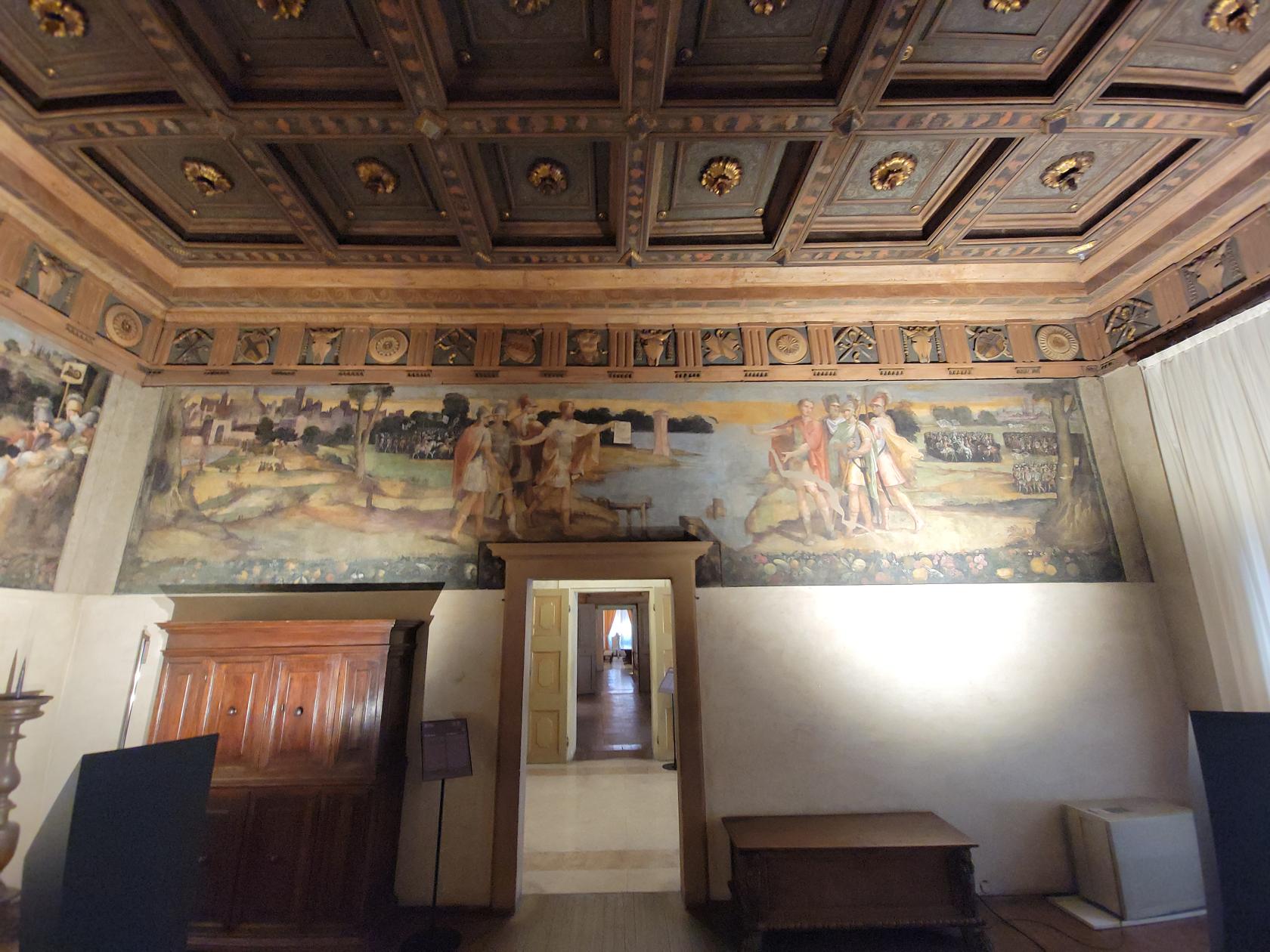
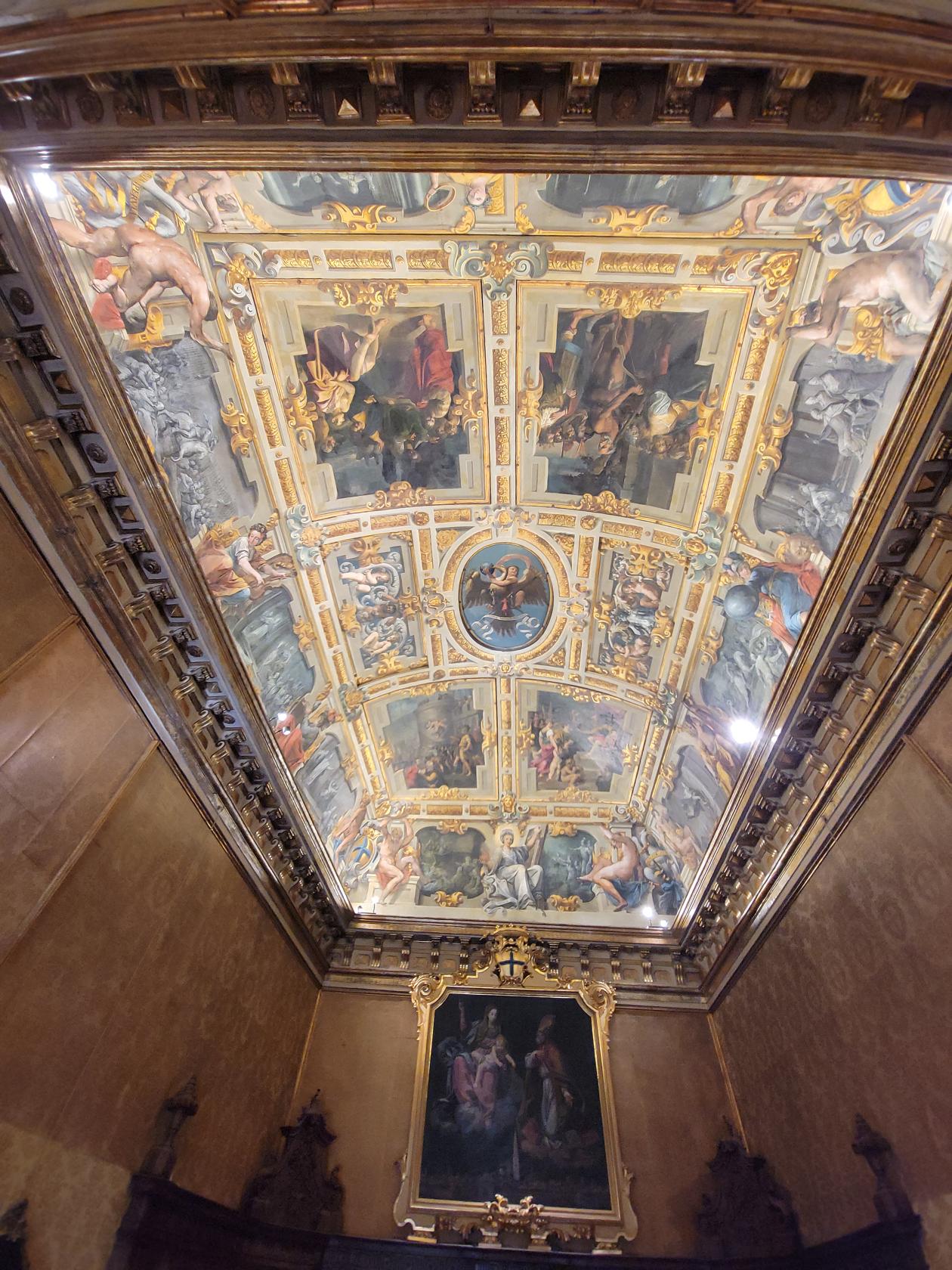
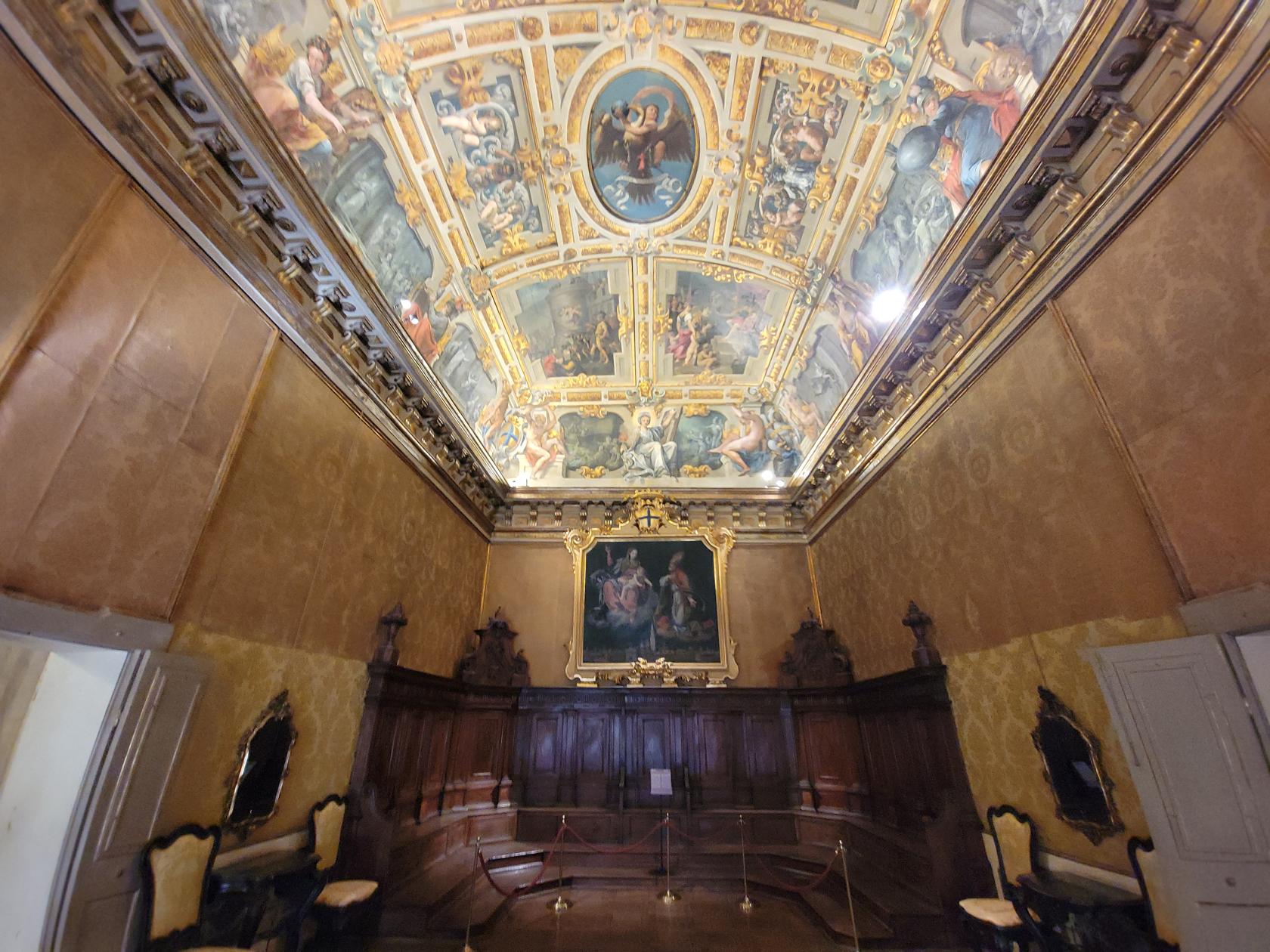
The palazzo is best known for its Hall of Fire. It is a term of endearment, assigned to it by the public to indicate that it was the hall containing the fireplace where back in the day, they could collect hot coals to warm themselves on the street during cold winter evenings. However, it is better known for the paintings that adorn the ceiling and walls that are the most impressive. Painted in the middle sixteenth century by Nicolò dell’Abate which depict episodes in Roman history that affected Modena as a town and city.
Frescoes in the Hall of Fire – Palazzo Comunale – Modena, Italy
Frescoes in the Hall of Fire – Palazzo Comunale – Modena, Italy
Fresco on Fireplace in the Hall of Fire – Palazzo Comunale – Modena, Italy
Frescoes in the Hall of Fire – Palazzo Comunale – Modena, Italy
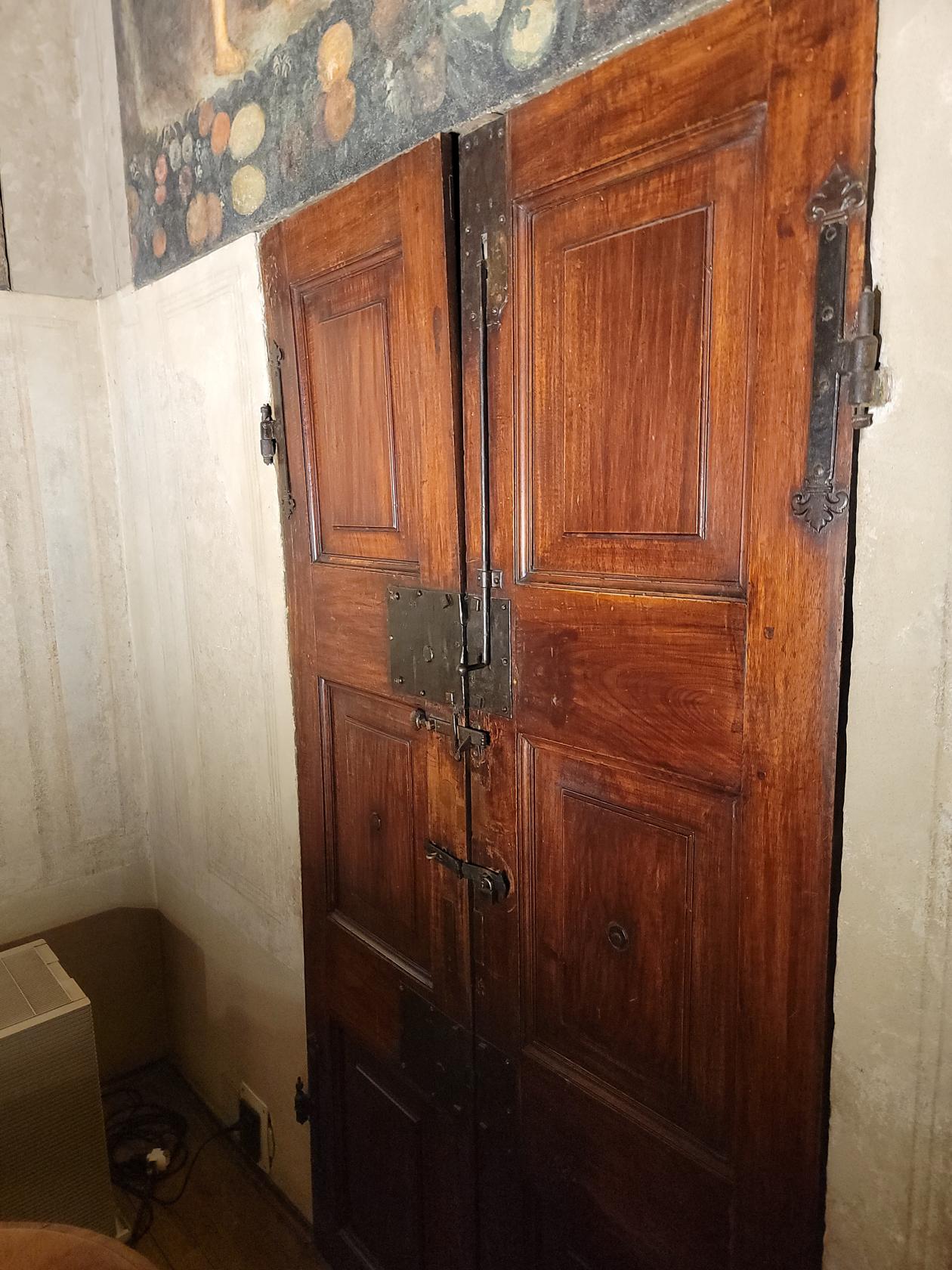
Old Door and Iron Hinges in the Hall of Fire – Palazzo Comunale – Modena, Italy
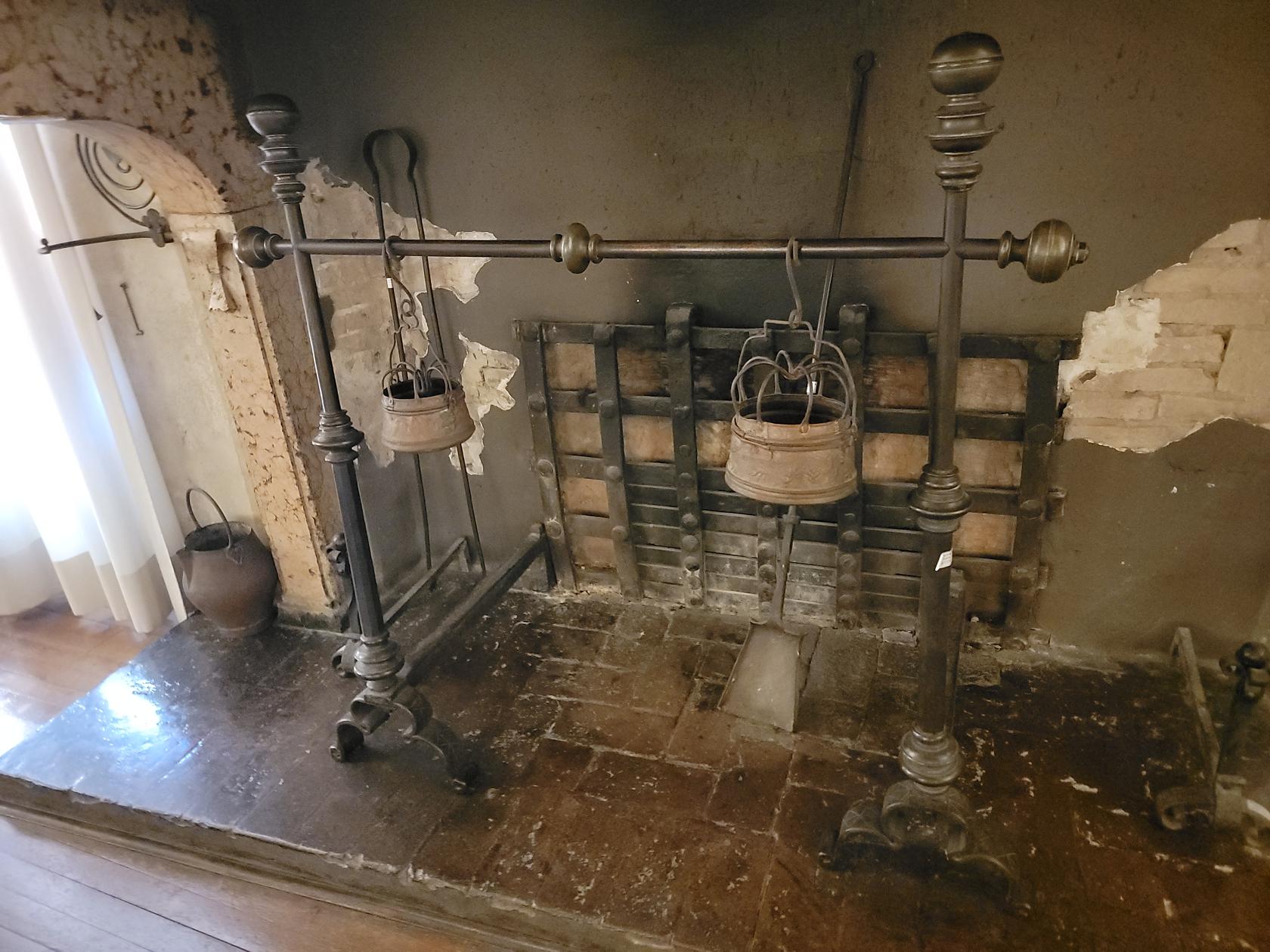
Fireplace in the Hall of Fire – Palazzo Comunale – Modena, Italy
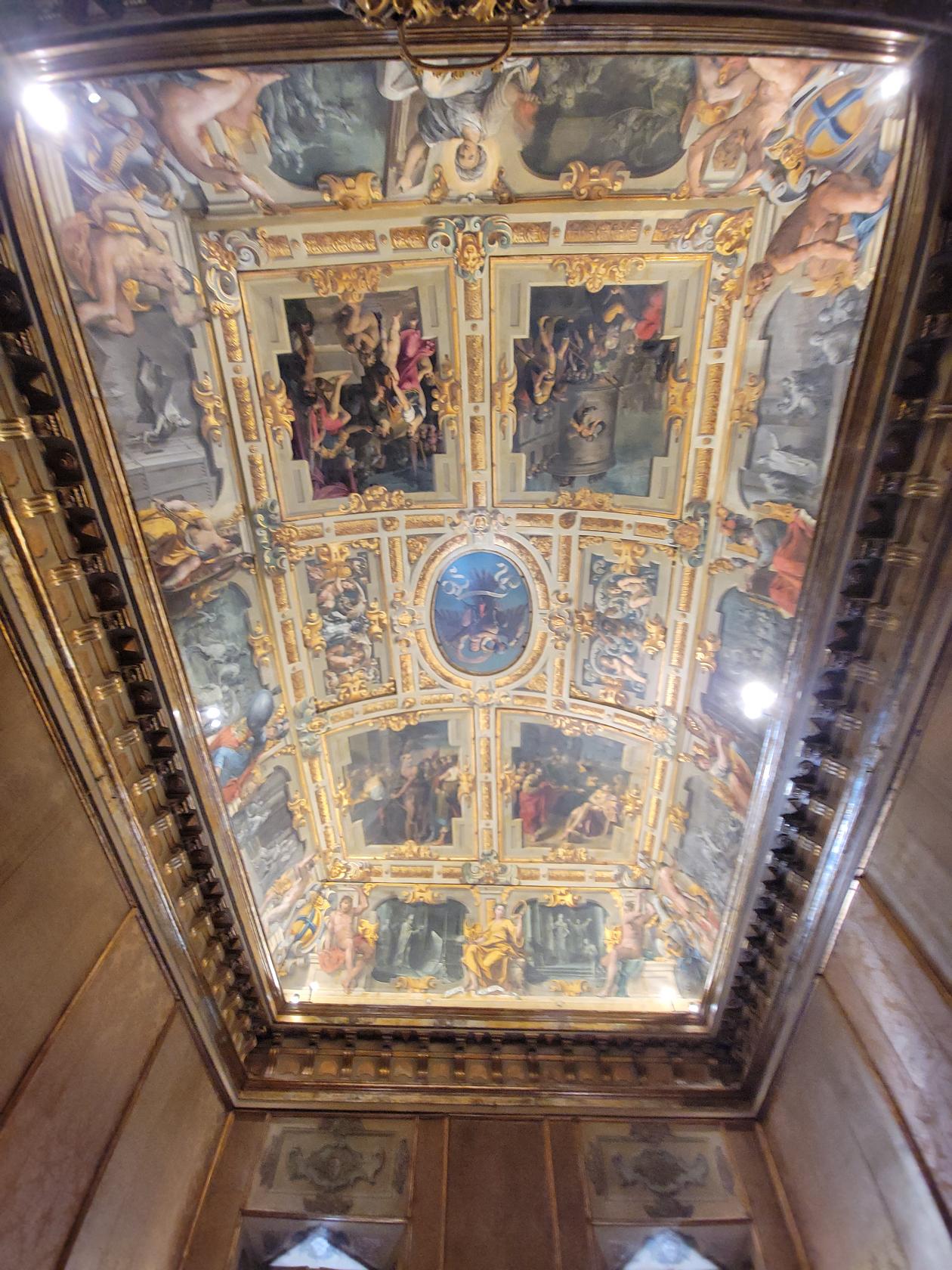
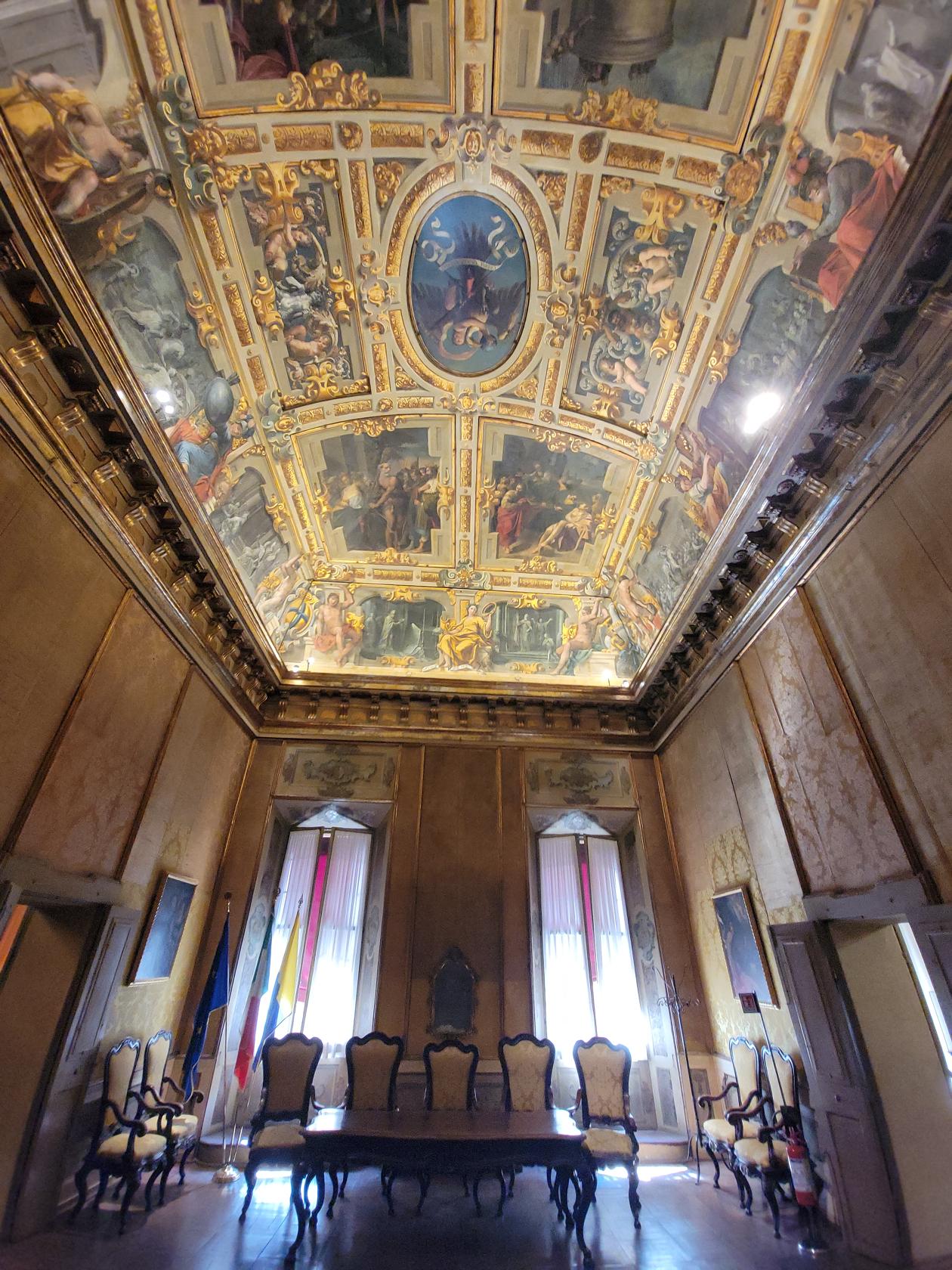
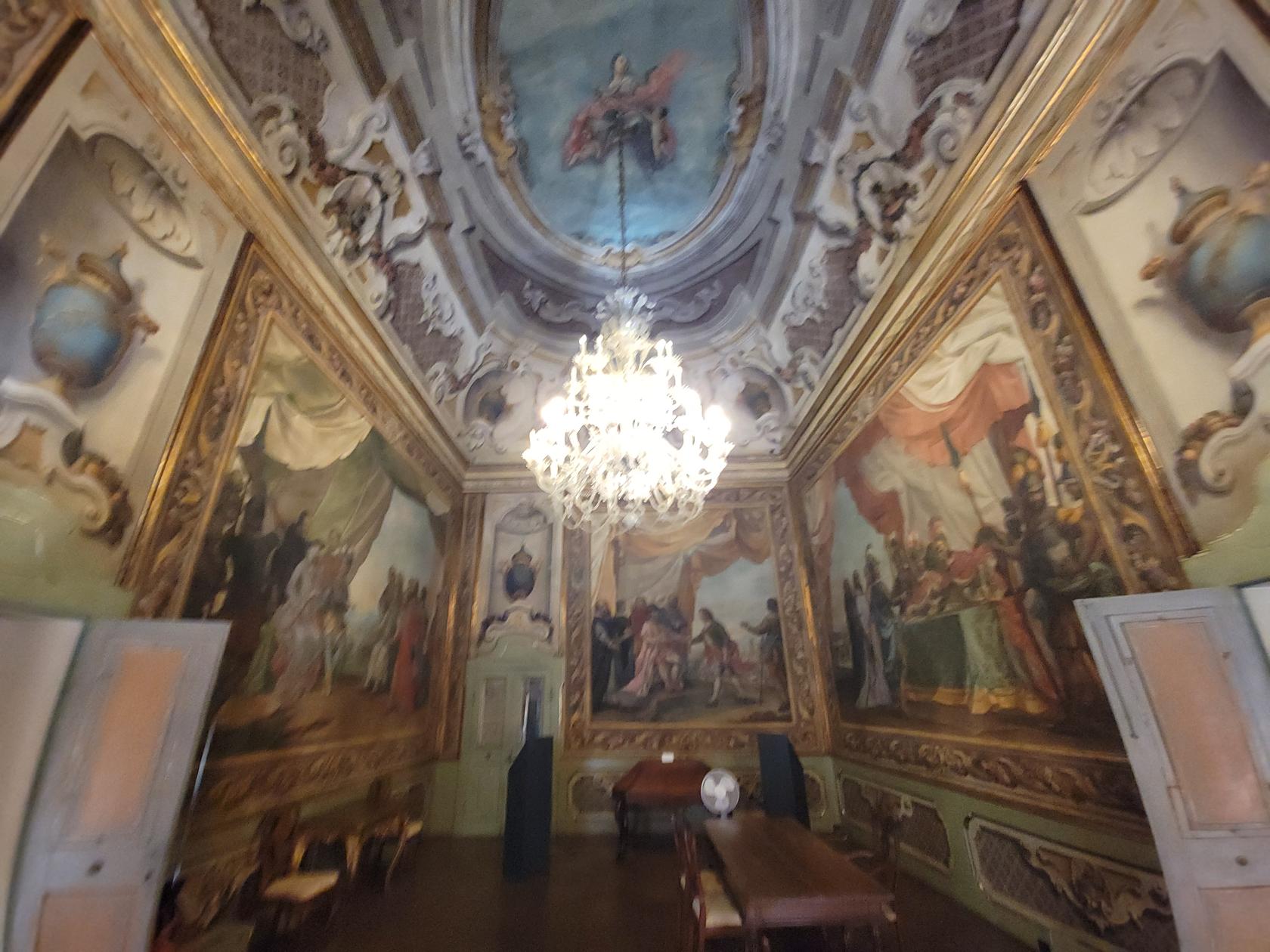
The Council Hall is where meetings would be held with respect to the town’s business. Electors would assemble here to discuss important matters of the day, planning and other administrative tasks.
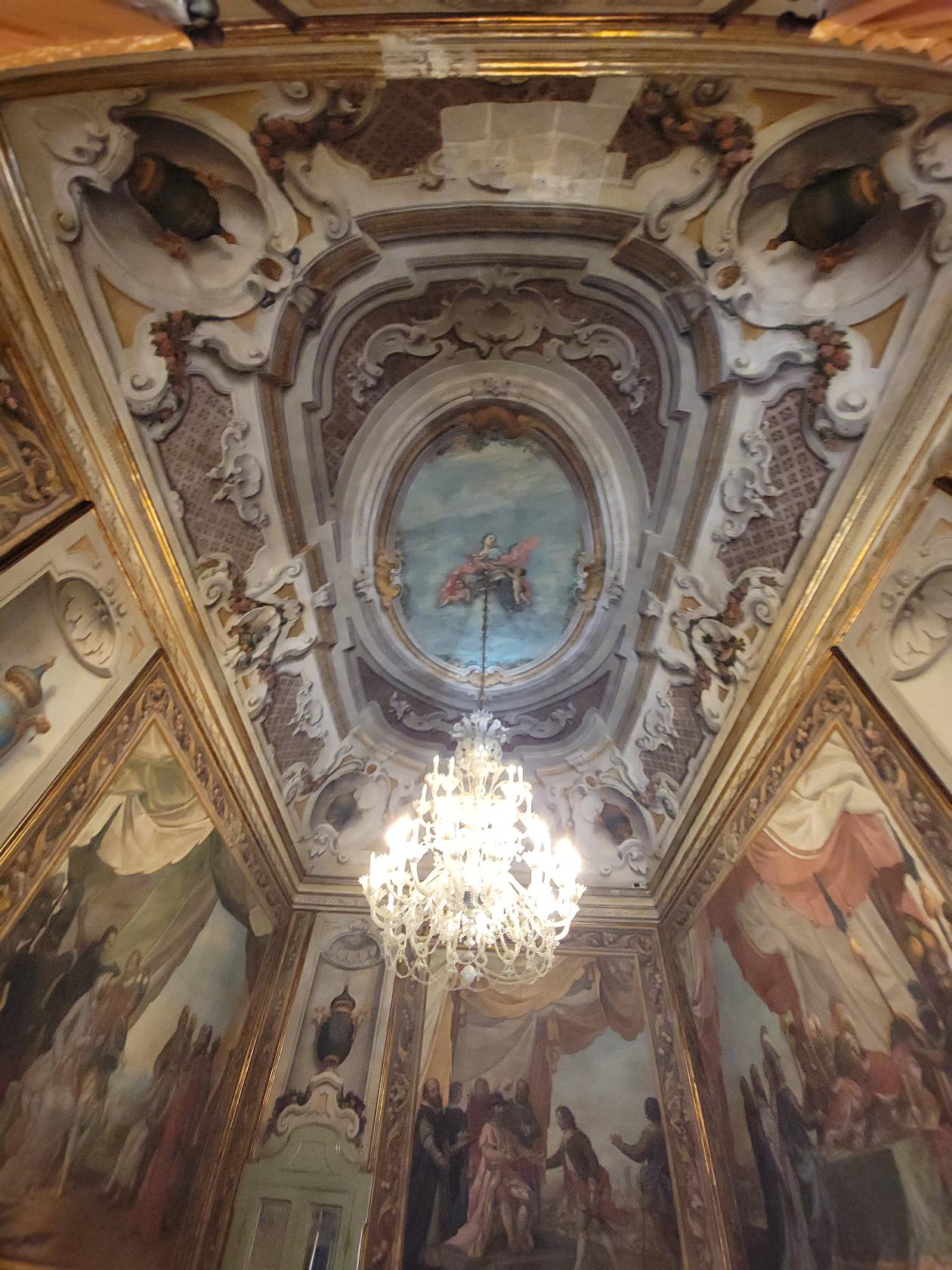
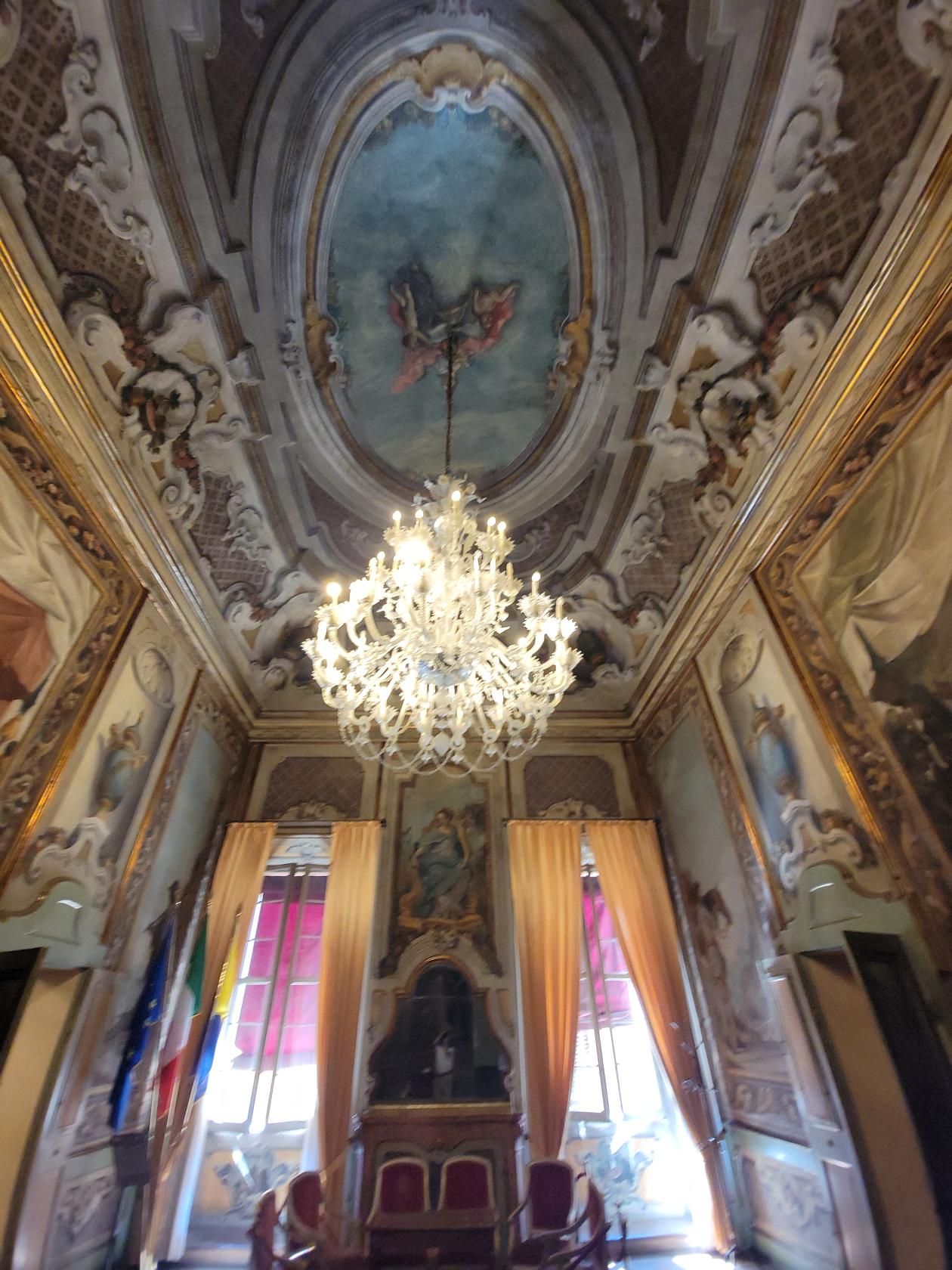
Ceiling in the Hall of the Old Council – Palazzo Comunale – Modena, Italy
Ceiling in the Hall of the Old Council – Palazzo Comunale – Modena, Italy
Meeting Table in the Hall of the Old Council – Palazzo Comunale – Modena, Italy
Hall of the Old Council – Palazzo Comunale – Modena, Italy
There are also a Tapestry and a Wedding Hall. Neither is of any great import, except for the paintings that adorn each.
Ceiling – Wedding Hall – Palazzo Comunale – Modena, Italy
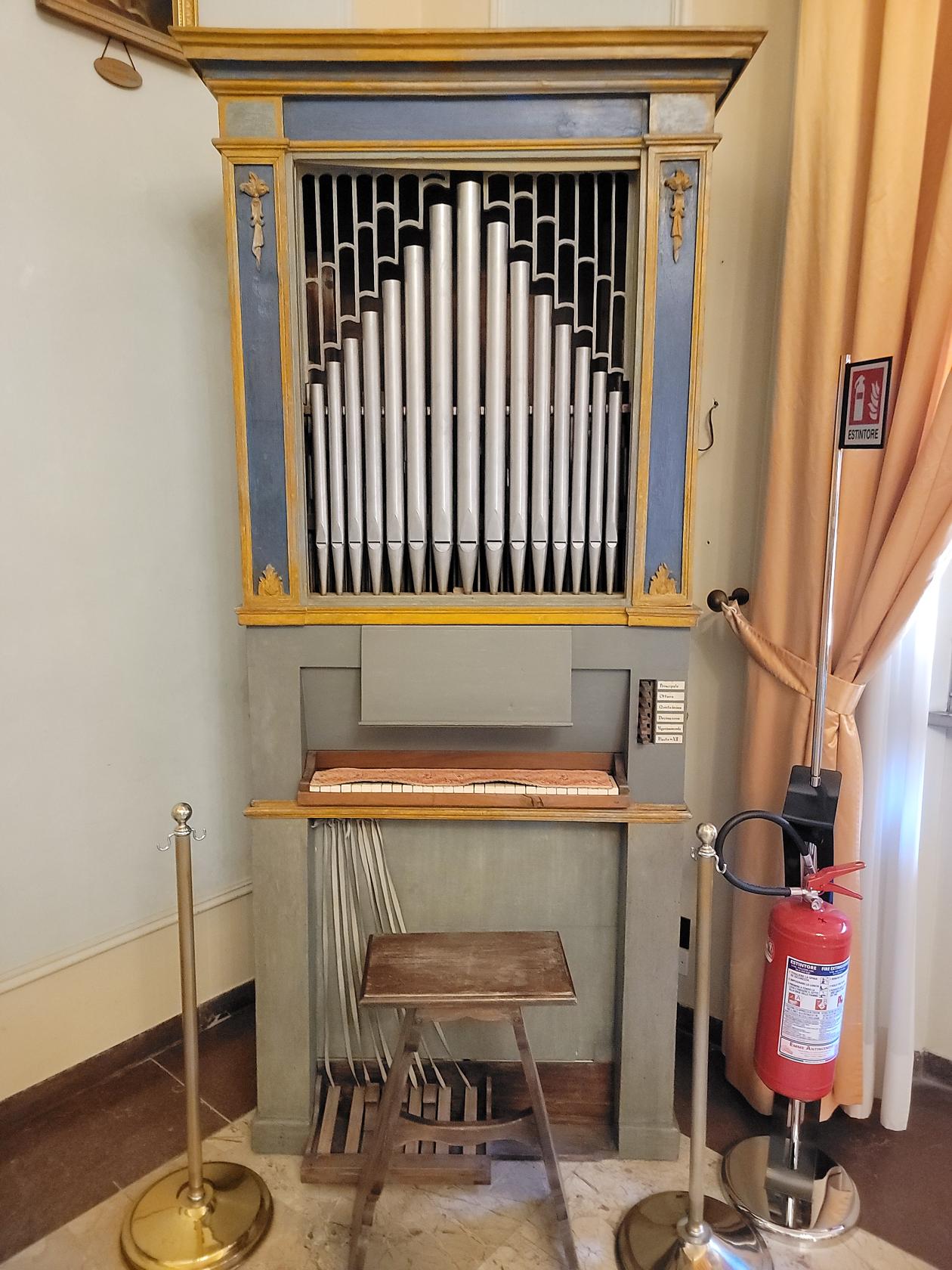
Organ – Wedding Hall – Palazzo Comunale – Modena, Italy
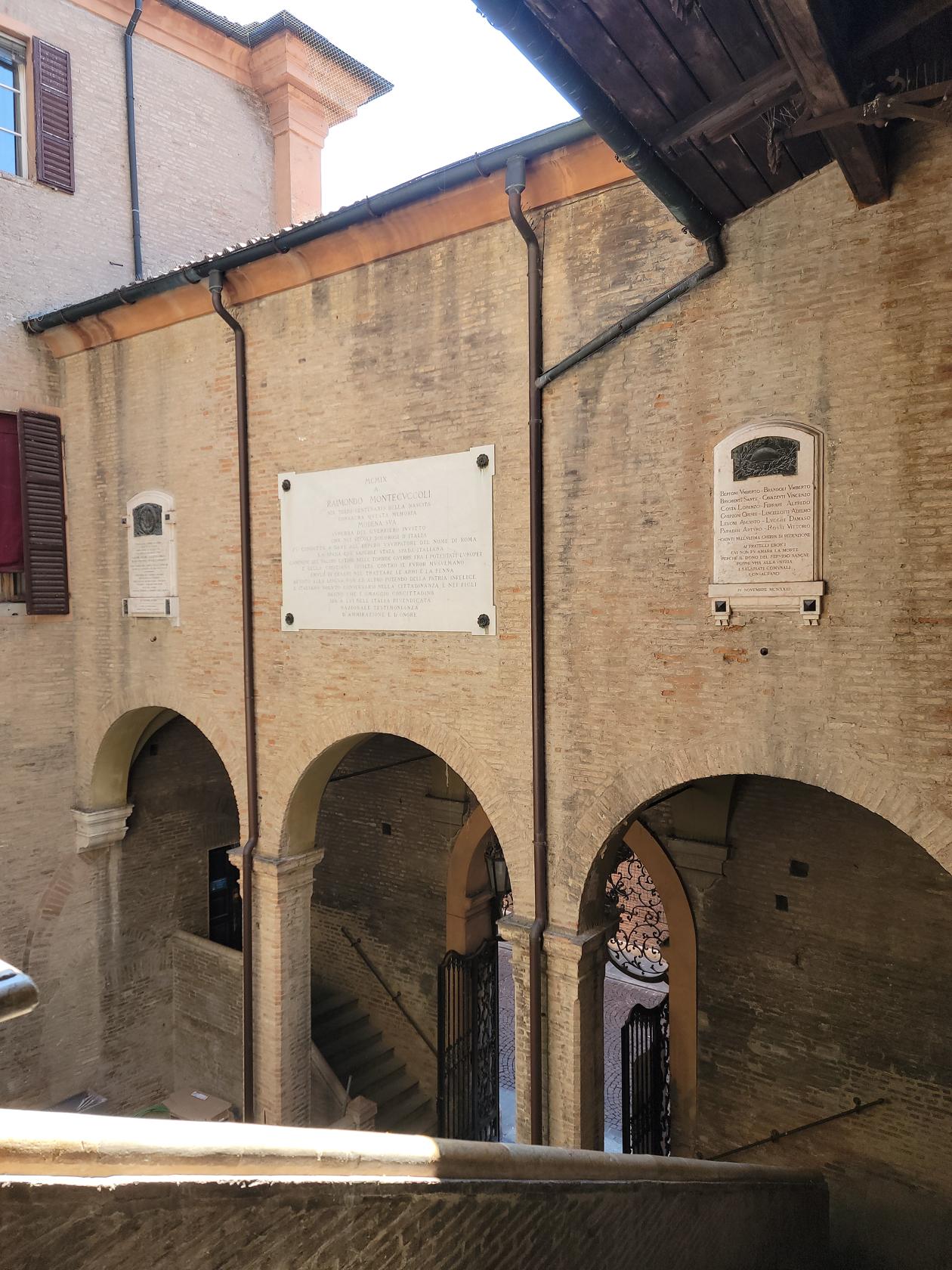
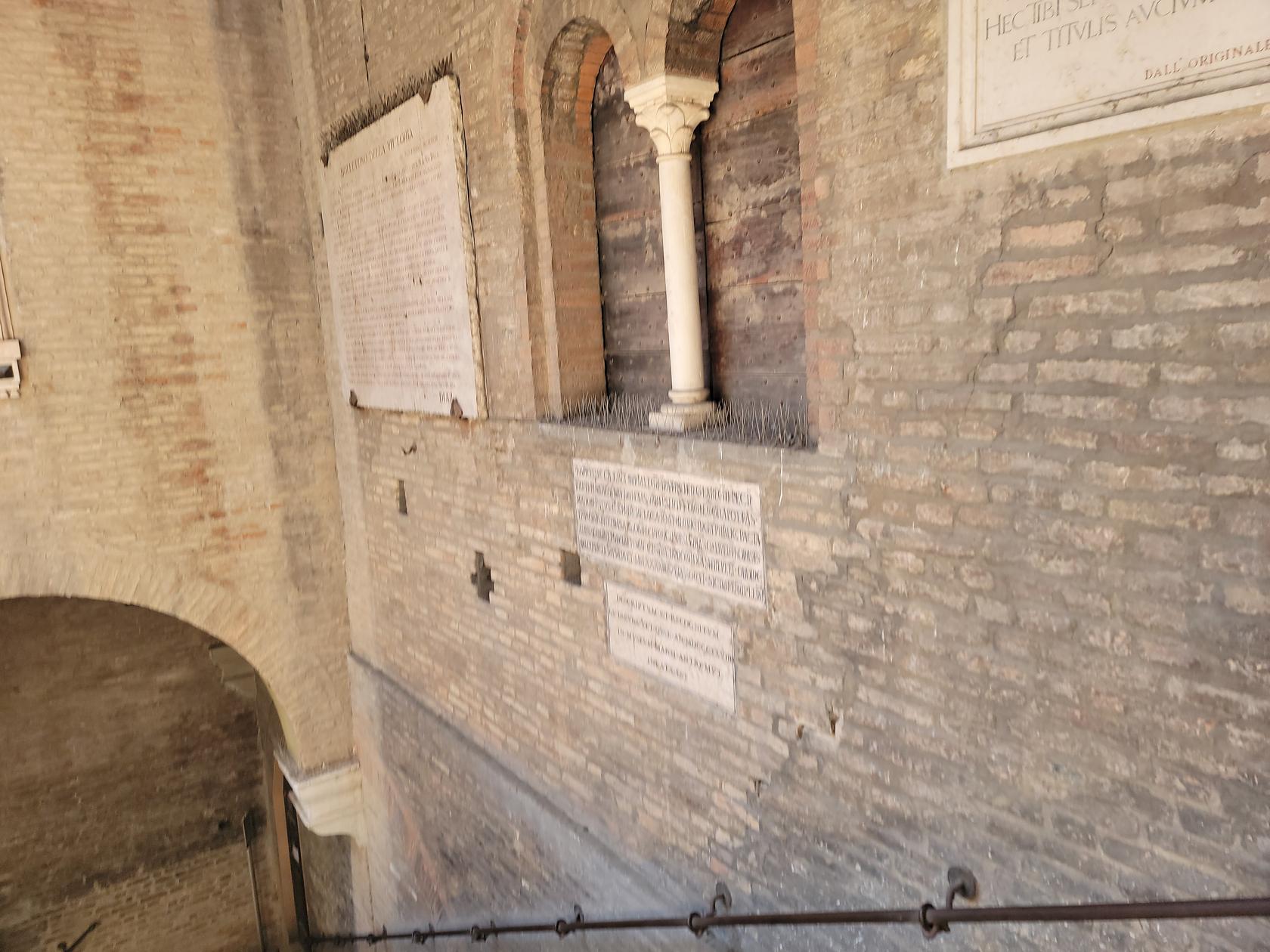
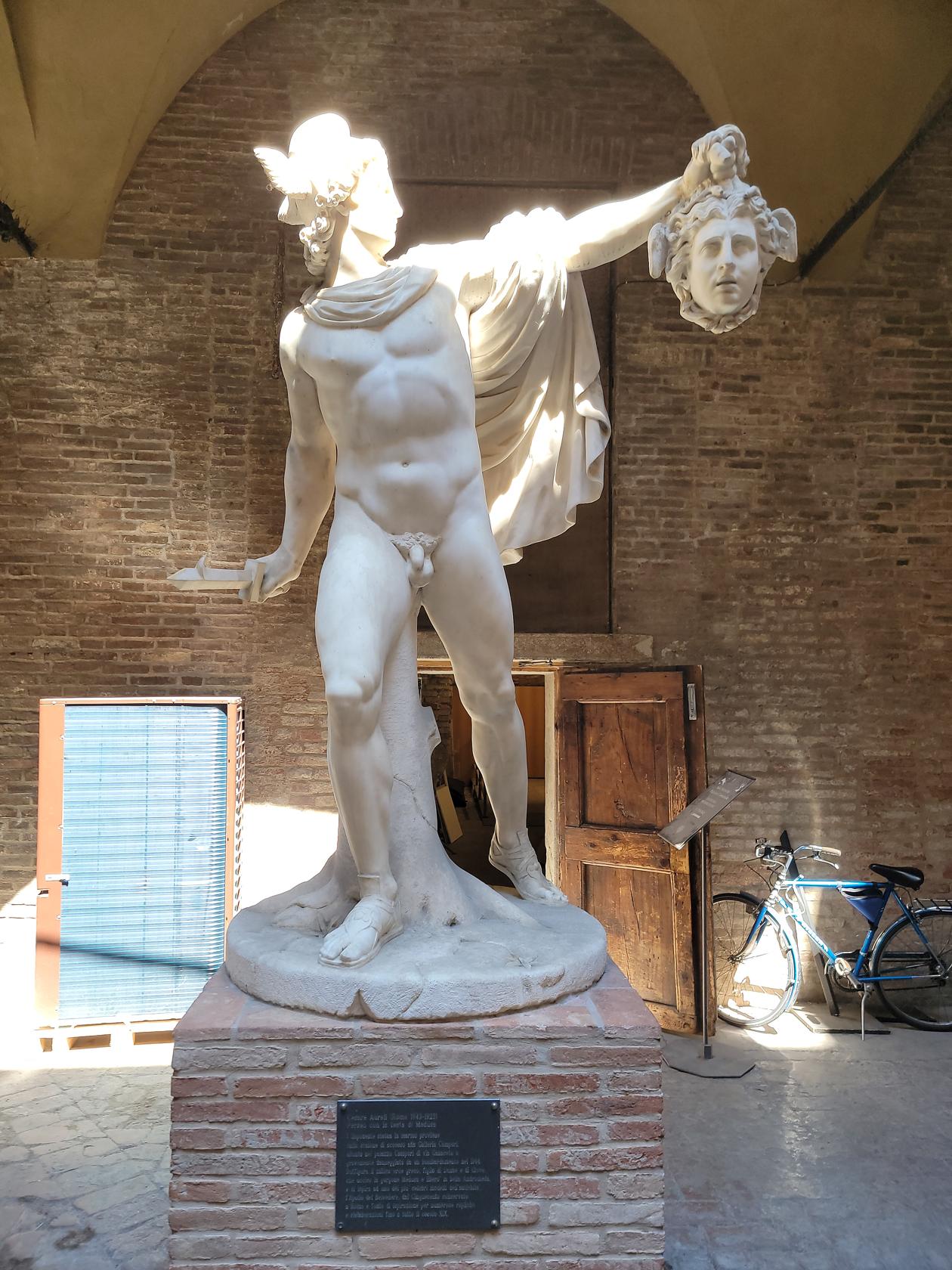
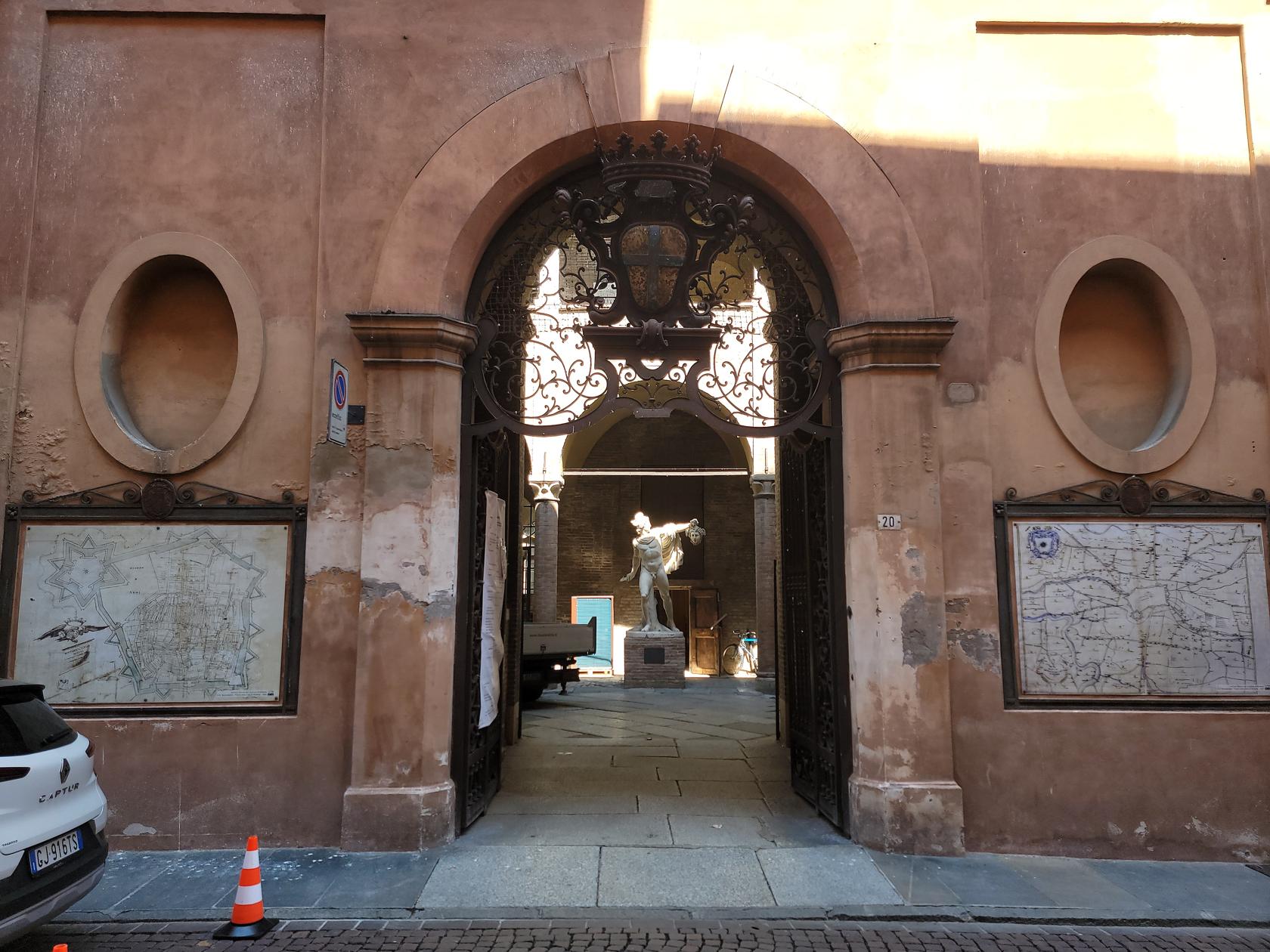
At the back entrance to the palazzo is a statue of Perseus holding the severed head of Medusa. It can be seen directly by way of the back entrance stairwell. Or, when the back entrance doors are open, it can be seen from the street flanked on either side by old maps of Modena.
Back Stairs to Back Entrance – Palazzo Comunale – Modena, Italy
Back Stairs to Back Entrance – Palazzo Comunale – Modena, Italy
Perseus with the head of Medusa – Back Entrance – Palazzo Comunale – Modena, Italy
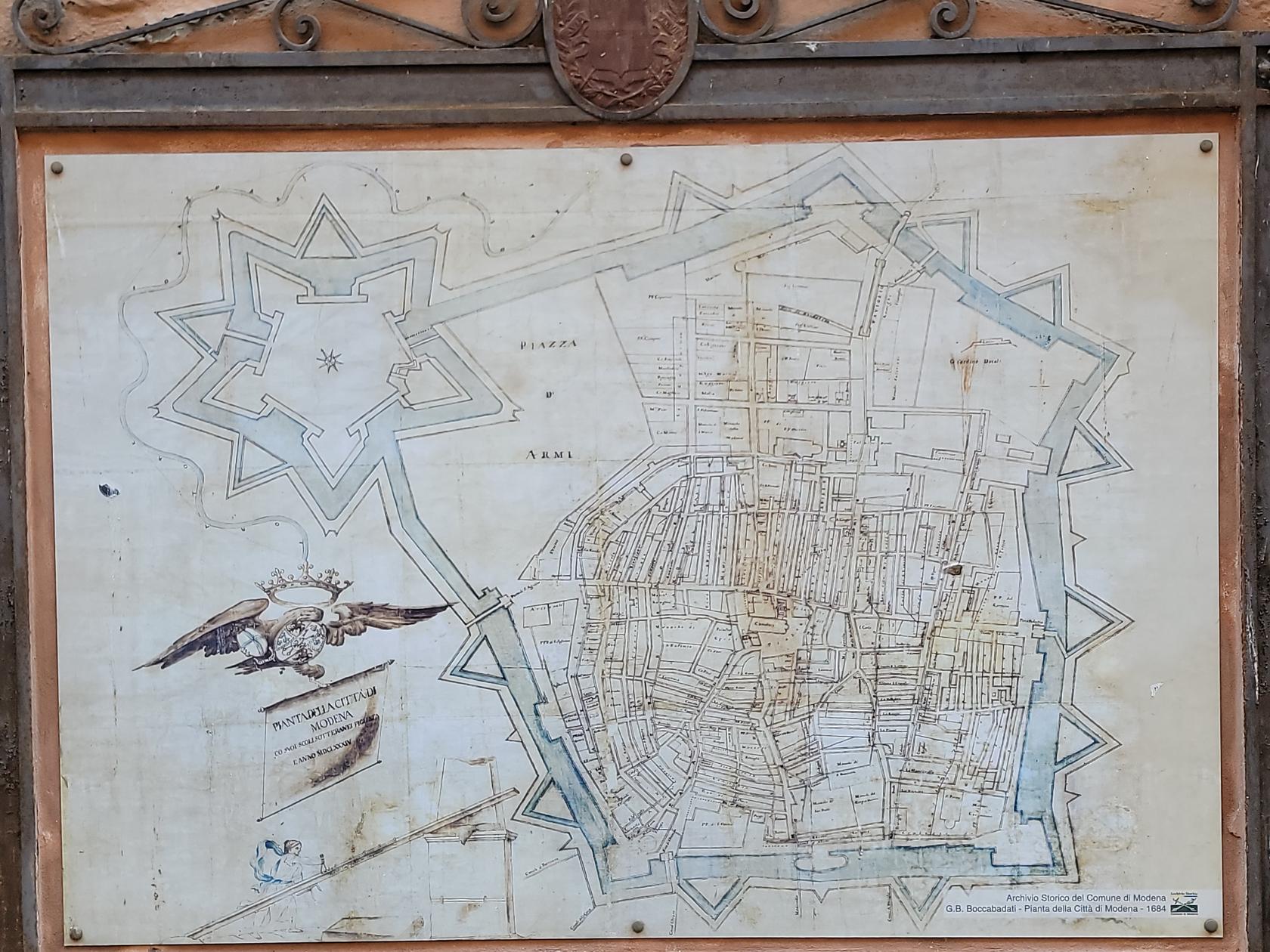
Fortification Map of Modena – Back Entrance – Palazzo Comunale – Modena, Italy
Back Entrance – Palazzo Comunale – Modena, Italy
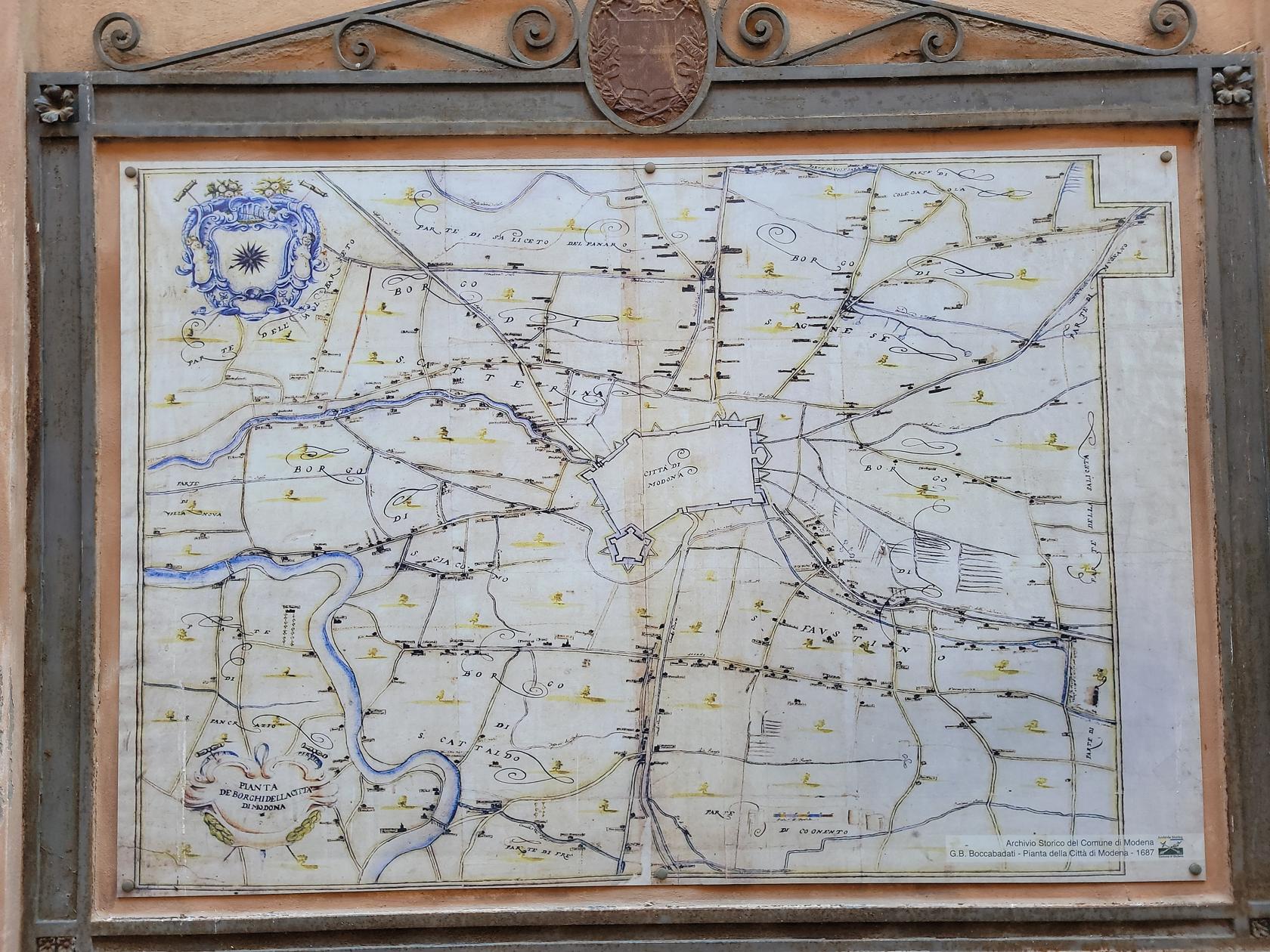
Old Map of Modena – Back Entrance – Palazzo Comunale – Modena, Italy
Civic Tower
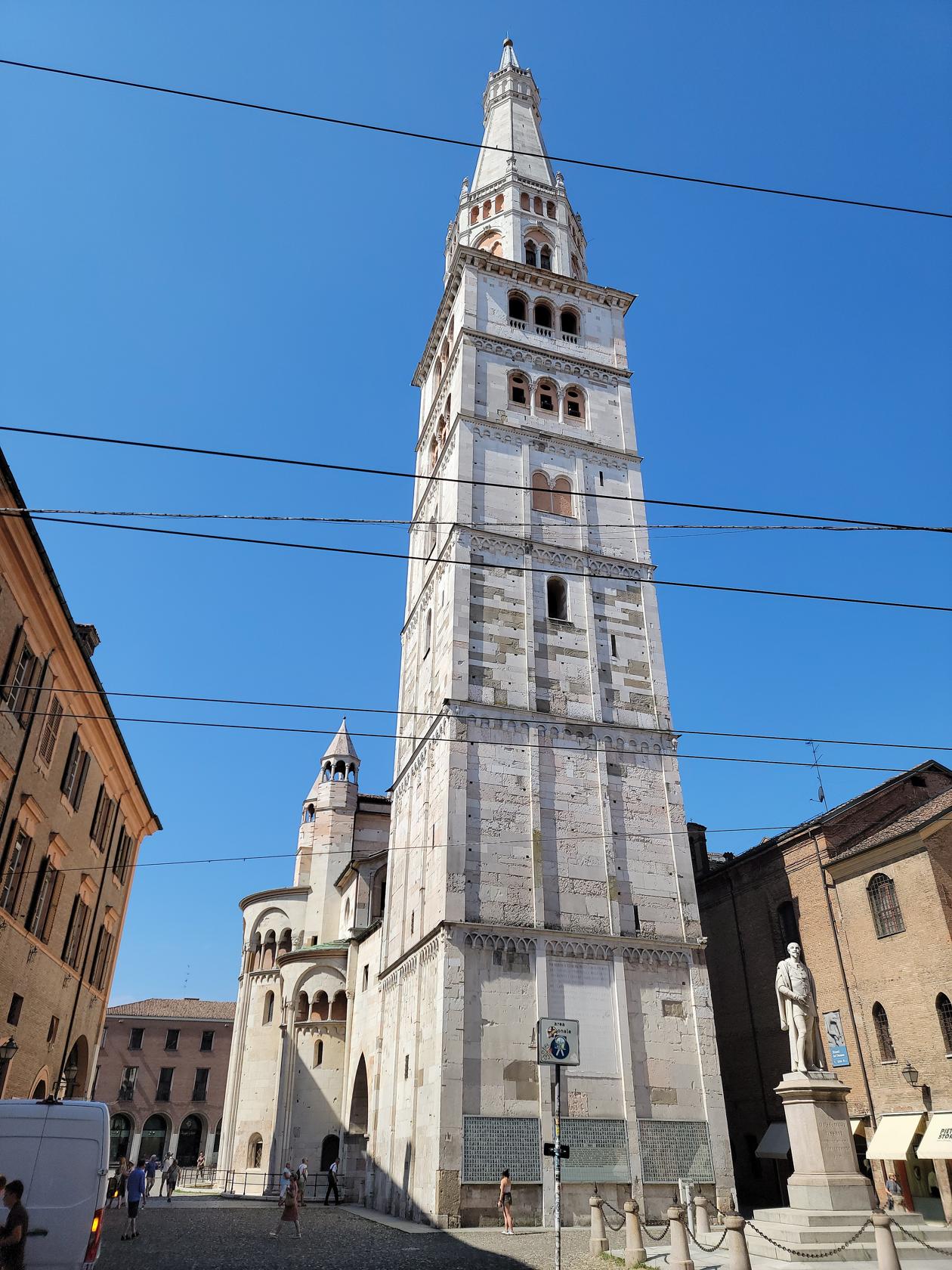
Located adjacent to the cathedral is the Civic Tower. Yes, the Civic Tower leans and not by a little, a lot. Comparable to those leaning towers in Bologna and Pisa it’s not that impressive, but it is very noticeable when judged from a distance, using other buildings as a reference.
Civic Tower – Modena, Italy
Cathedrals and Churches
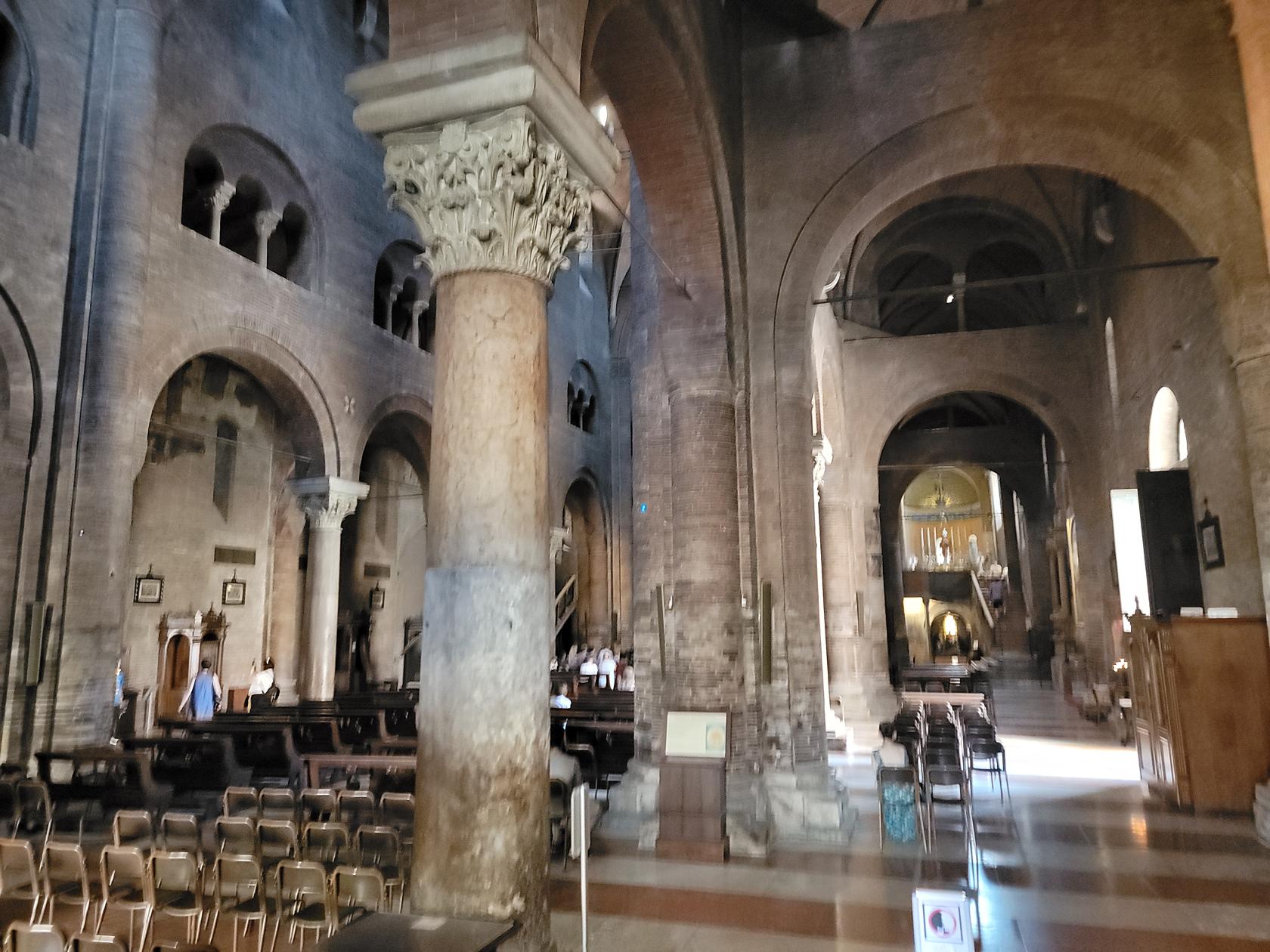
Cathedral of Modena
The Cathedral of Modena, or precisely Metropolitan Cathedral of Saint Mary of the Assumption and Saint Geminianus[1]Saint Germinianus is Modena’s patron saint and who’s tomb, dating back to the fifth century, was part of one of the original churches erected on the same site., or colloquially and affectionately known as Il Duomo as in other Italian towns and cities. The main entrance has several tympanums above each door, depicting the biblical stories of Adam and Eve.
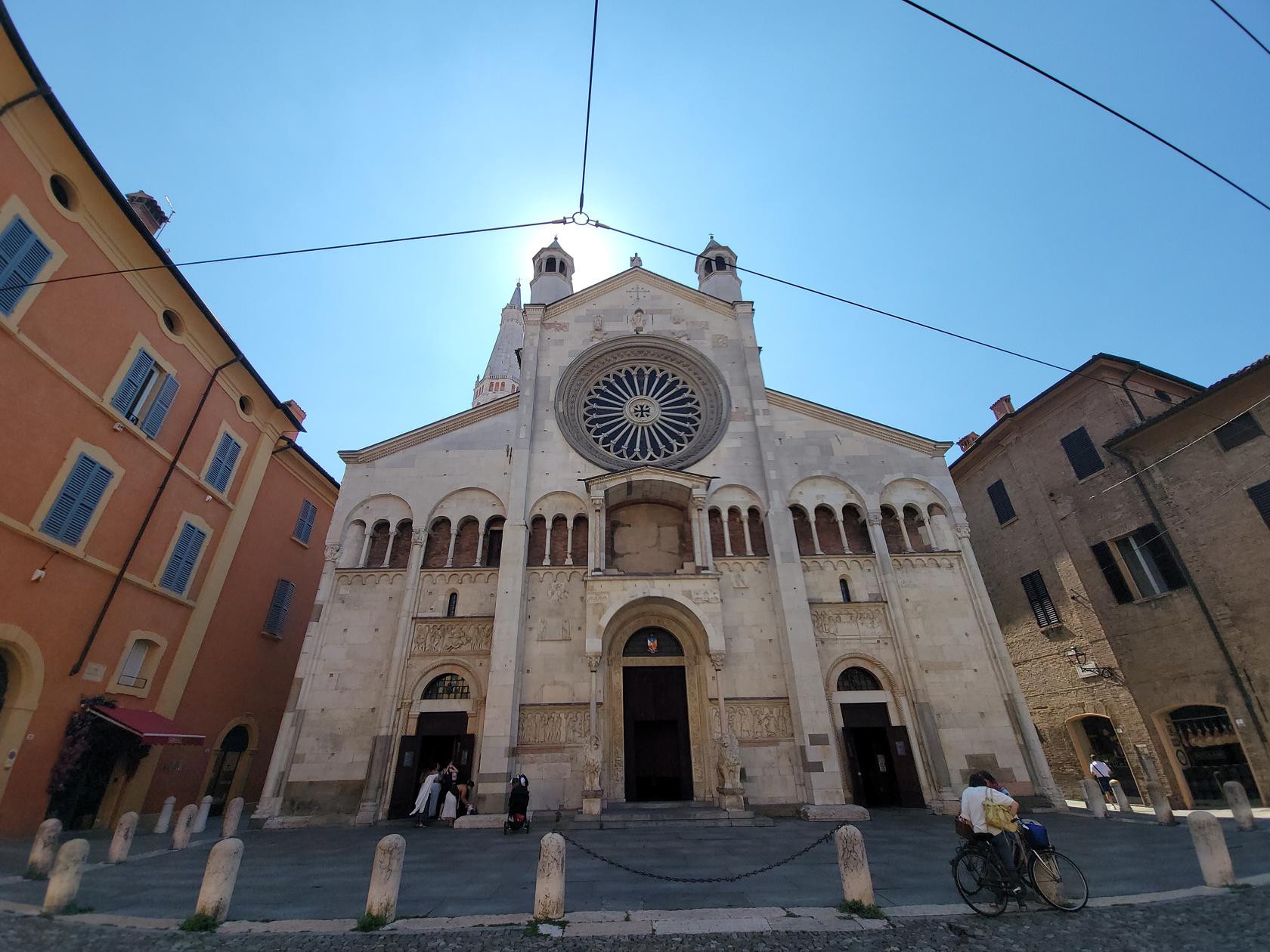
Front and Entrance – Cathedral of Modena – Modena, Italy
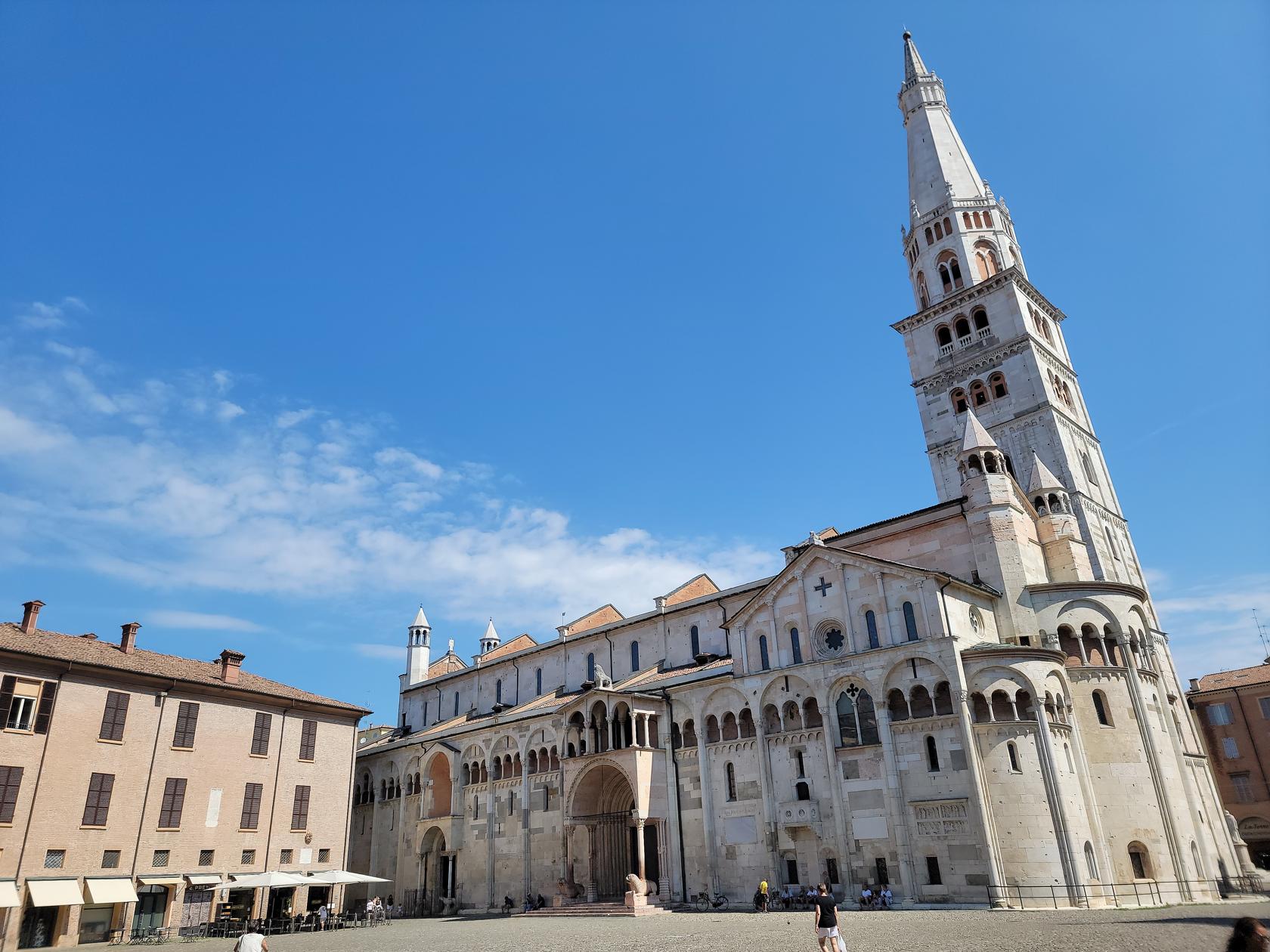
From outside it appears to have been rebuilt several times, many of the blocks that make up the facade of the structure do not match in many places. Though odd, the outside follows typical Romanesque architecture, with semi-circular arches that are filled in with brick and other appointments, with the exception of the large Piazza Portal on the north side, which almost functions as the main entrance.
Right Side – Cathedral of Modena – Modena, Italy
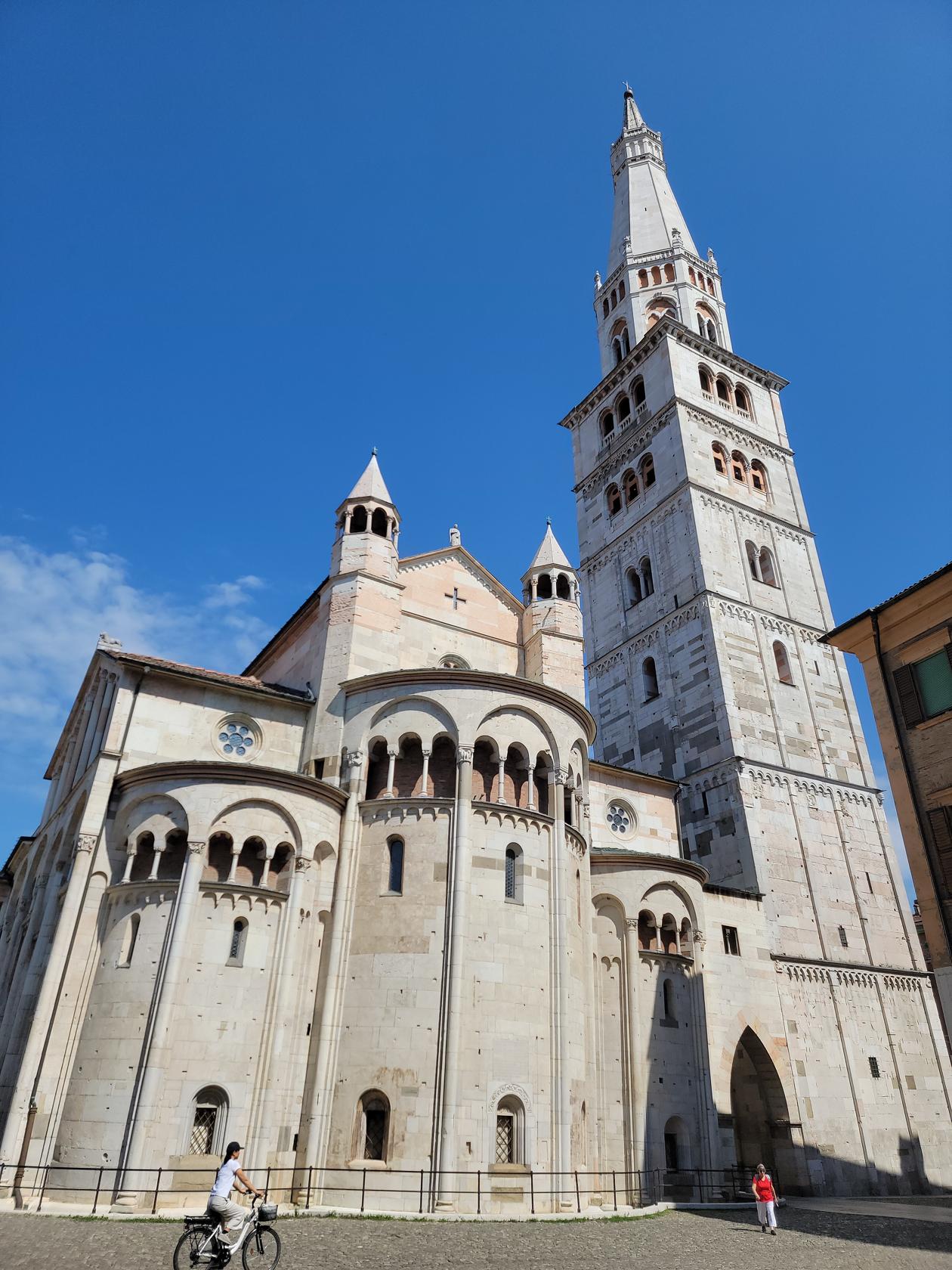
Cathedral of Modena and Civic Tower – Modena, Italy
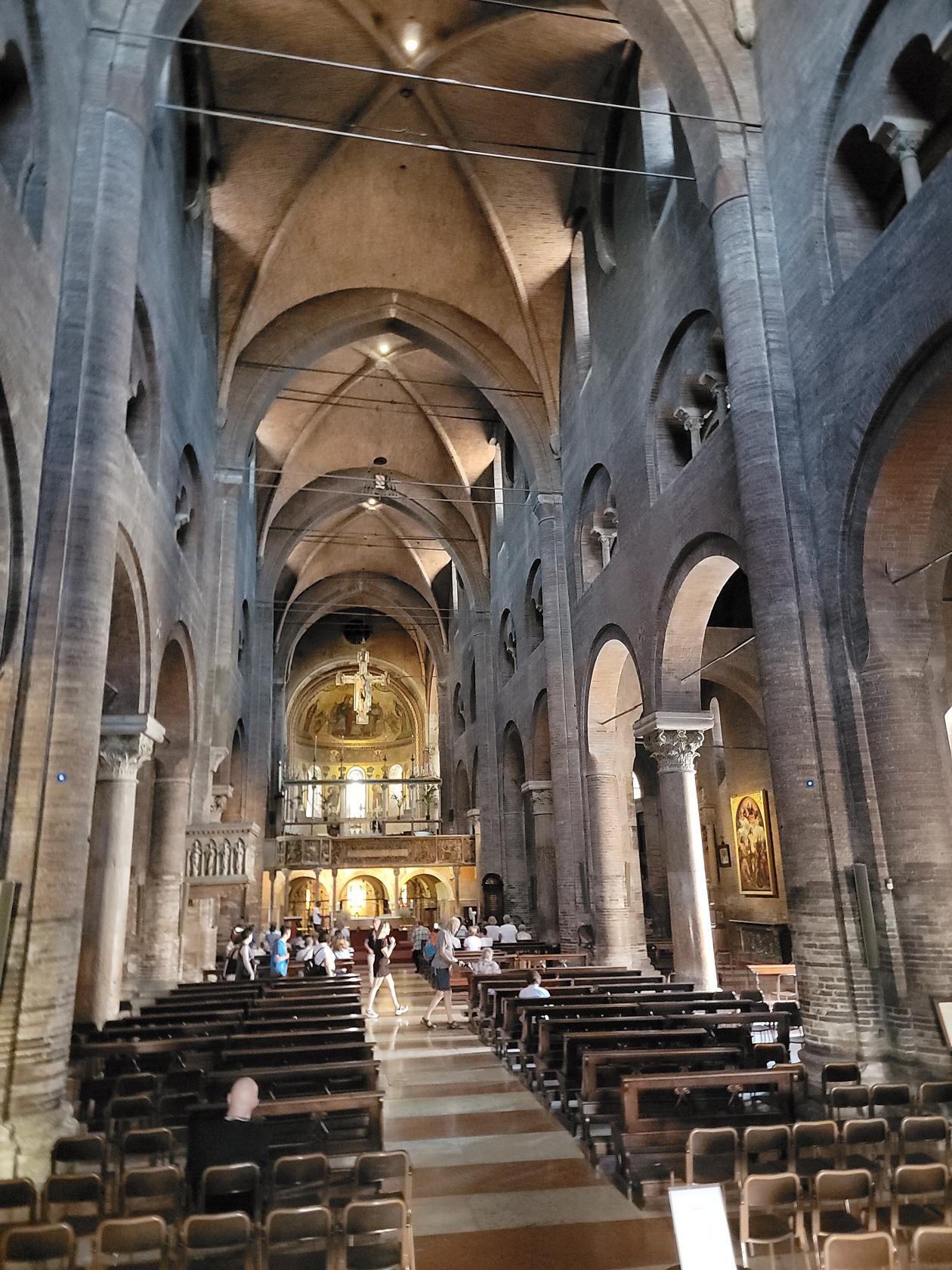
The cathedral lacks a dome, instead having parapets on each of the four corners. It is sectioned in four places, reveals at the roof level as wall extending upwards, which coincide with the four internal arches for the nave. The inside is rather plain and mainly composed of bare brick. At the time we were there, a service was being held, limiting our ability to take more photographs.
Nave – Cathedral of Modena – Modena, Italy
Aisle – Cathedral of Modena – Modena, Italy
Restaurants
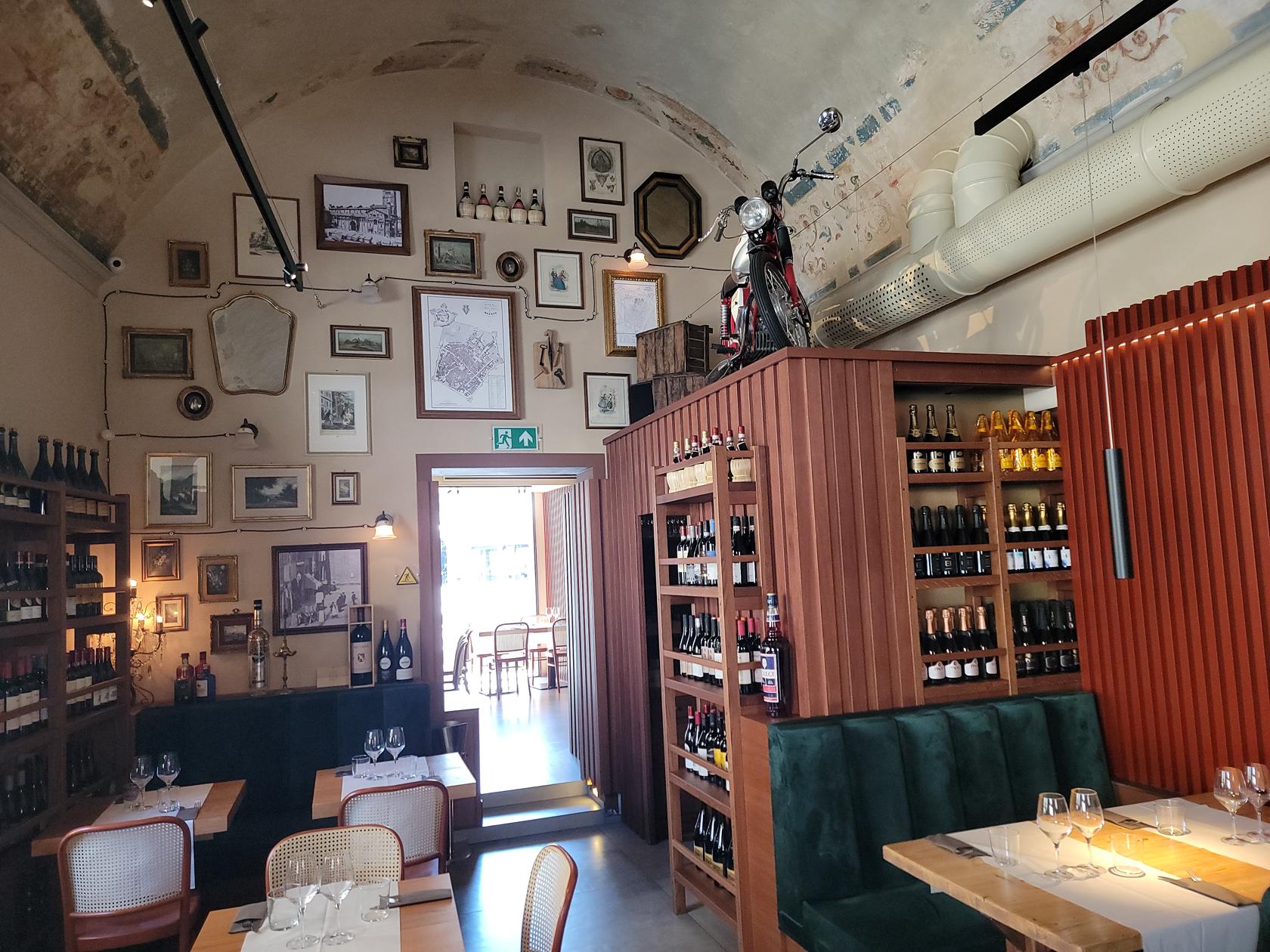
For our day trip, we ate at a local place right off the Piazza Grande which promised to have good food at a fair price.
Enoteca Al Duomo
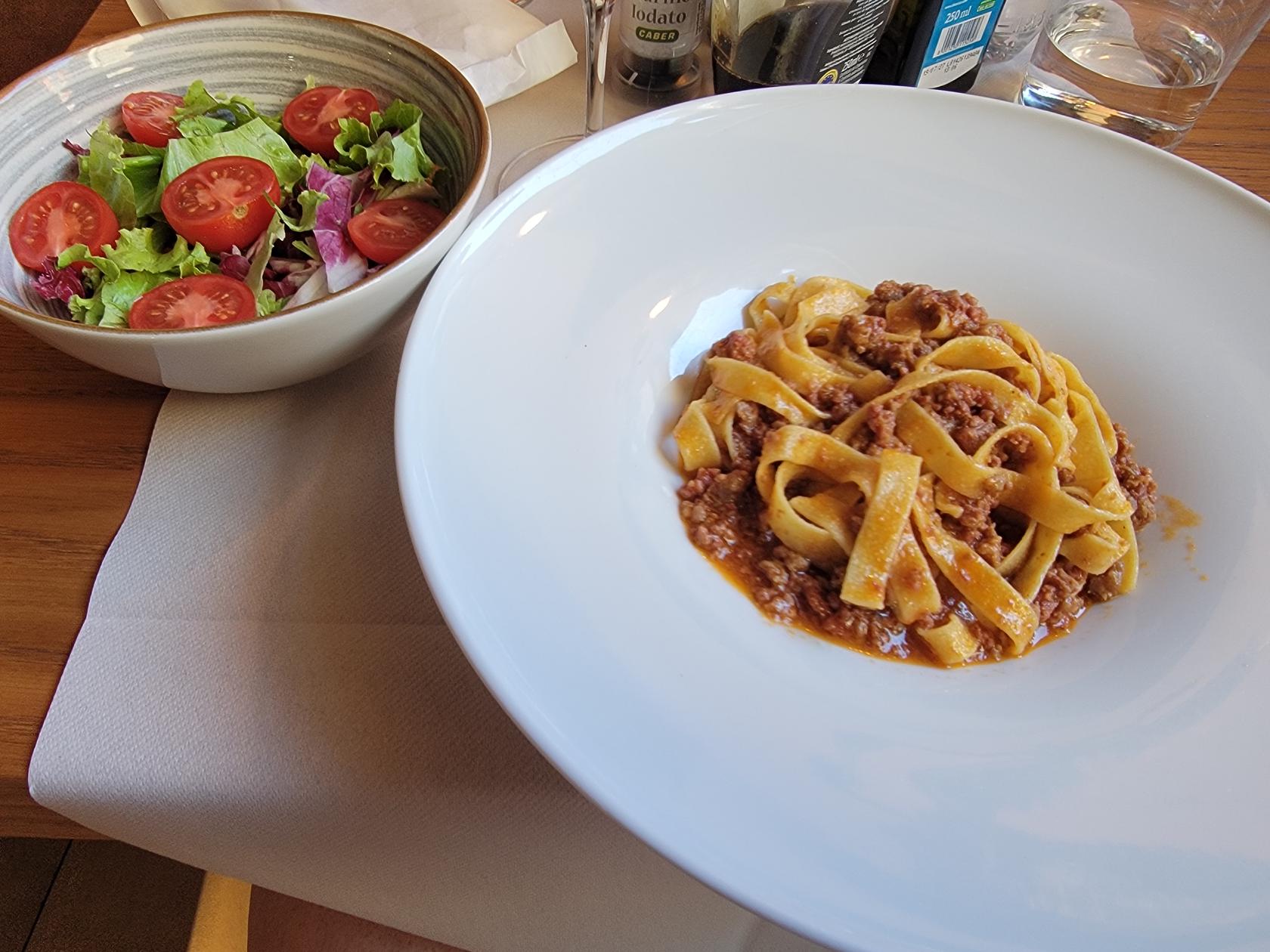
We ate lunch here on recommendations that we read online. Our seating was inside, since the temperature outside was starting to become a bit annoying. The food and service were good and we spent an enjoyable hour discussing Modena and what else, if anything, there was to see in the city.
Interior – Enoteca Al Duomo – Grande Piazza – Modena, Italy
Insalata Mista and Tagliatella Bolognese – Enoteca Al Duomo – Grande Piazza – Modena, Italy
Il Pilotta
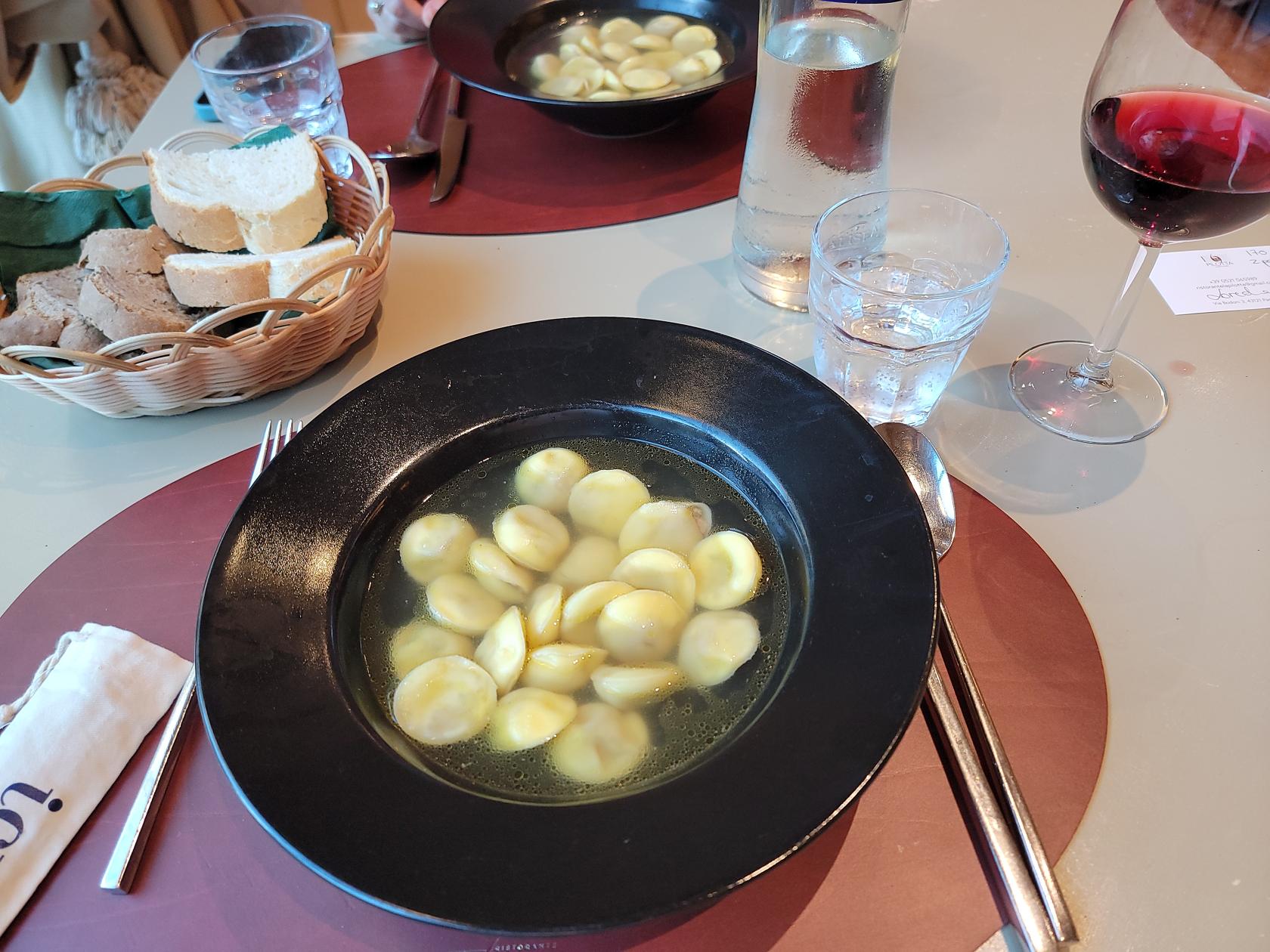
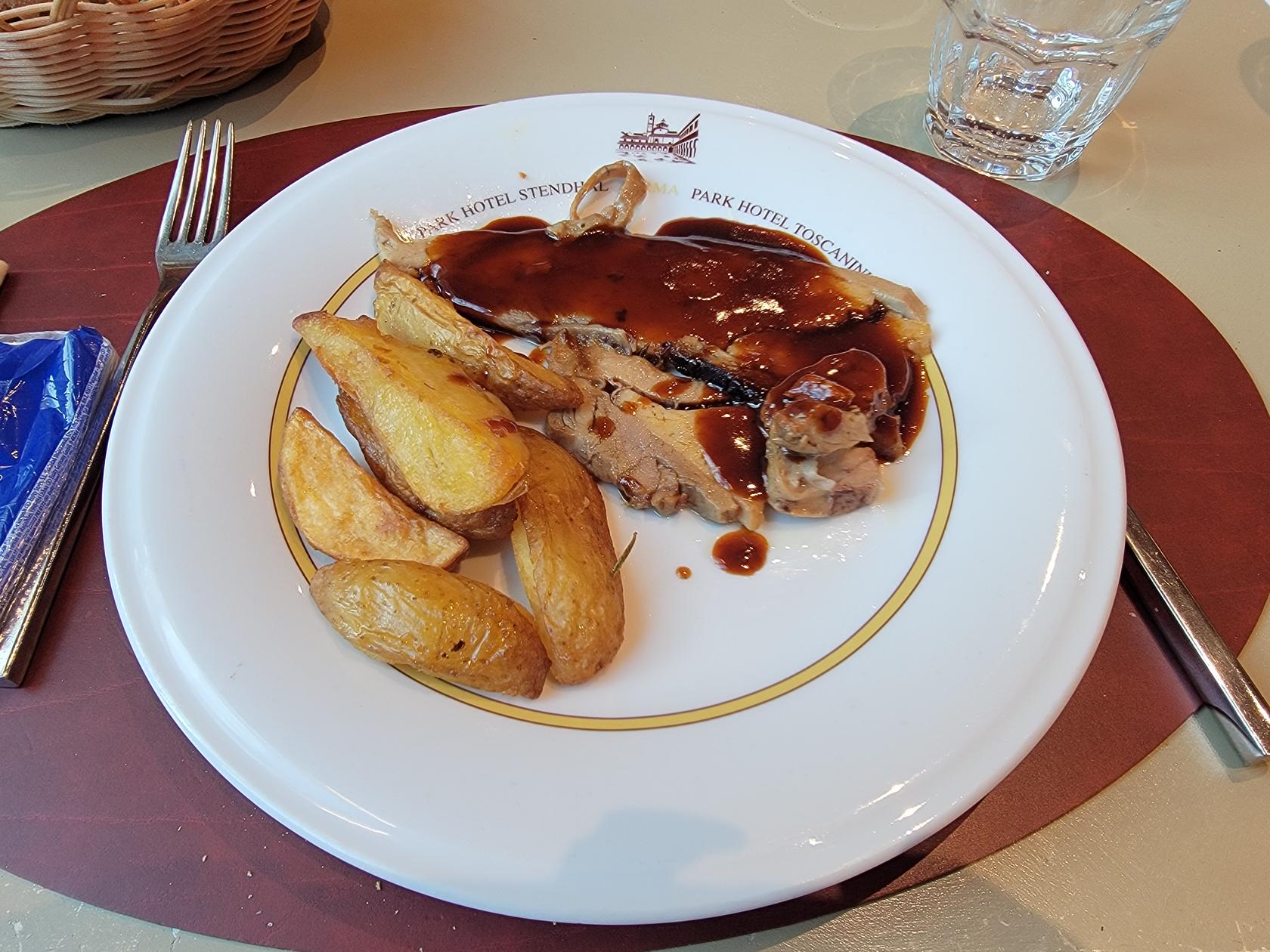
Located in our hotel, Hotel Stendhal in Parma, we enjoyed our last meal in the area at La Pilotta. The Cappelletti is broth is common for this area and can be commended. Our main dishes were Italian in general and good, though I did not care for the stuffing in the pork tip. The menu said it was potato, but it tasted more like a polenta or some other grain and it had an odd taste for me.
Cappelletti in Broth – La Pilotta Restaurant – Stendhal Hotel – Parma, Italy
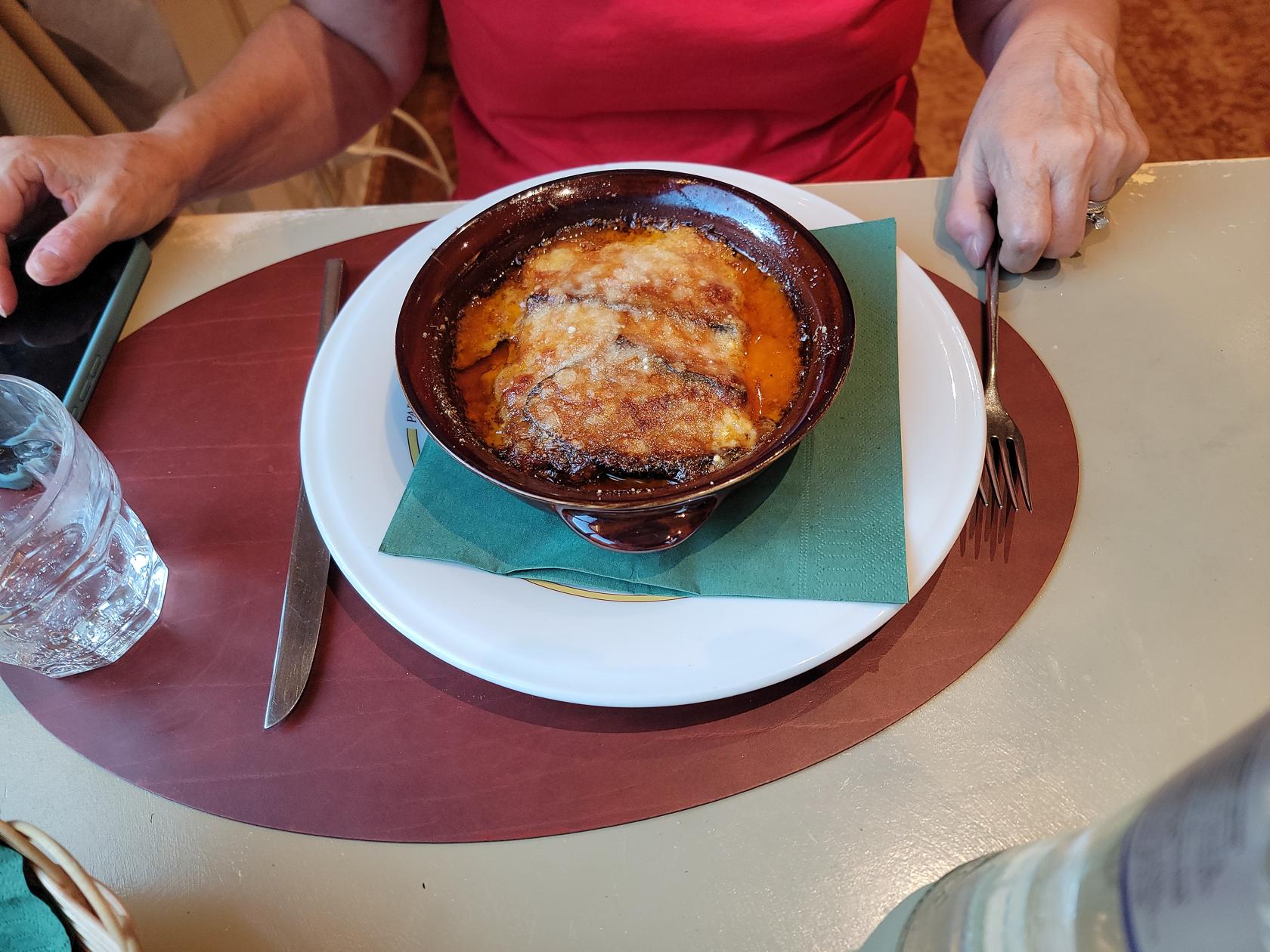
Eggplant Parmigiana – La Pilotta Restaurant – Stendhal Hotel – Parma, Italy
Stuffed Pork Tip with Potatoes – La Pilotta Restaurant – Stendhal Hotel – Parma, Italy
Saint Germinianus is Modena’s patron saint and who’s tomb, dating back to the fifth century, was part of one of the original churches erected on the same site.
Since we like to travel at a slower pace, we tend to stay longer in towns and cities we visit, even if the stay may be unwarranted. This gives us a better feel for the places we have visited, but then you run the risk of running out of things to do. When this happens, we visit churches, the odd museum or other eccentric distractions that typically wouldn’t come up on a visitor’s radar. Here are a few examples.
Distractions in Parma
Teatro Regio
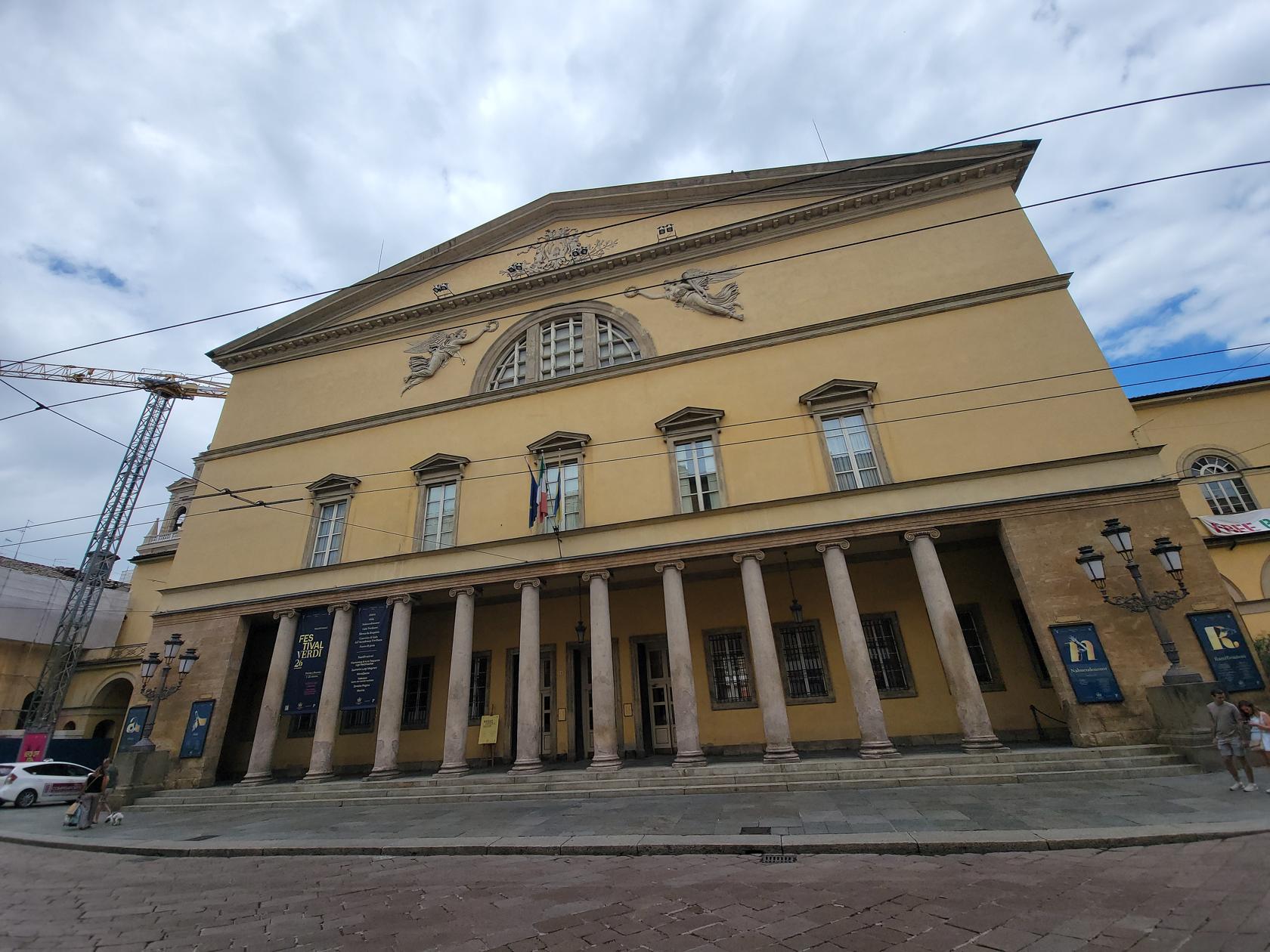
The Regio Theater is situated on Garibaldi just past the Pilotta on the right. Tickets may be purchased directly from them, however there are only guided tours in any one of several languages.
Regio Theater – Parma, Italy
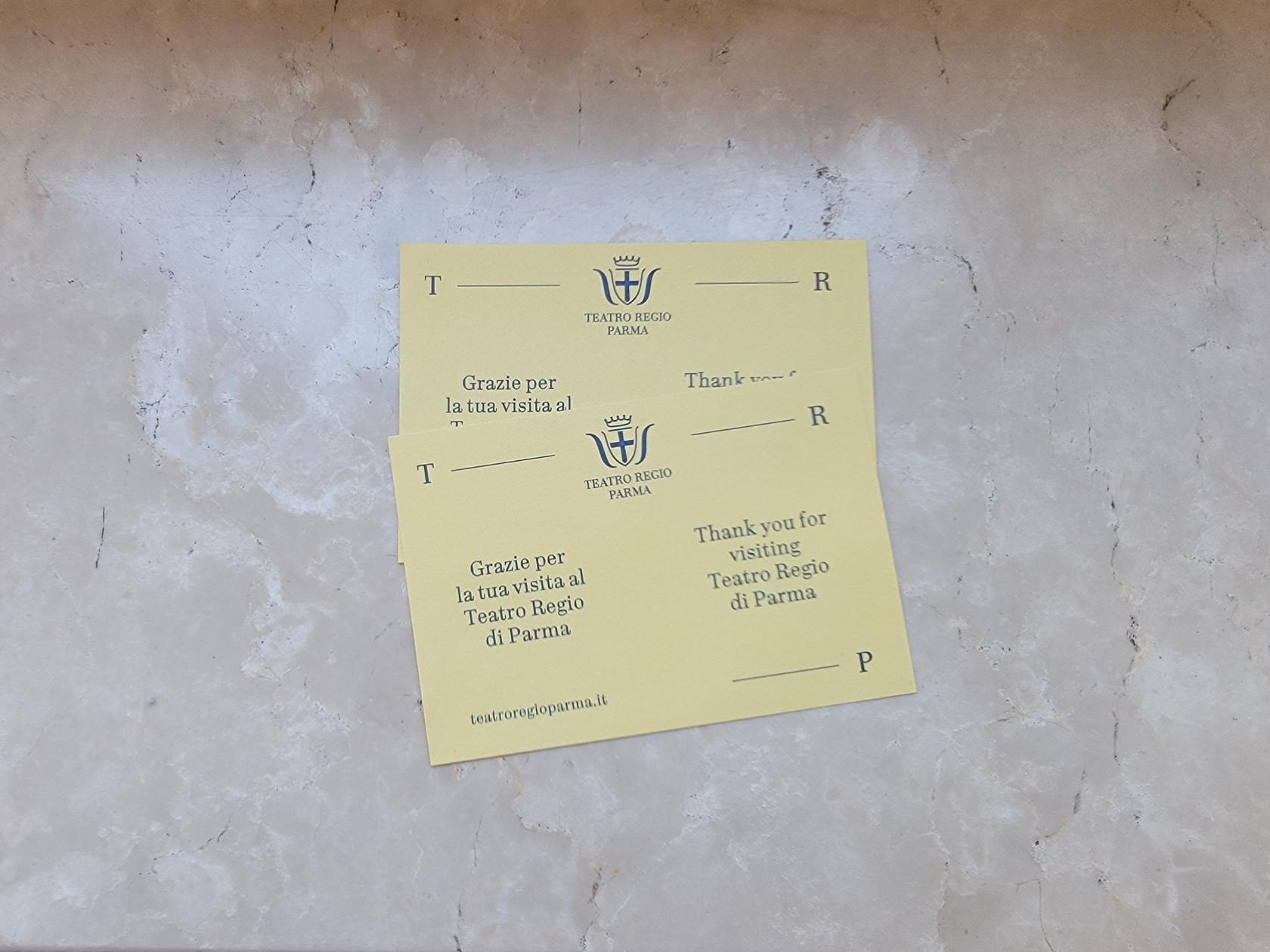
Tickets For Two – Regio Theater – Parma, Italy
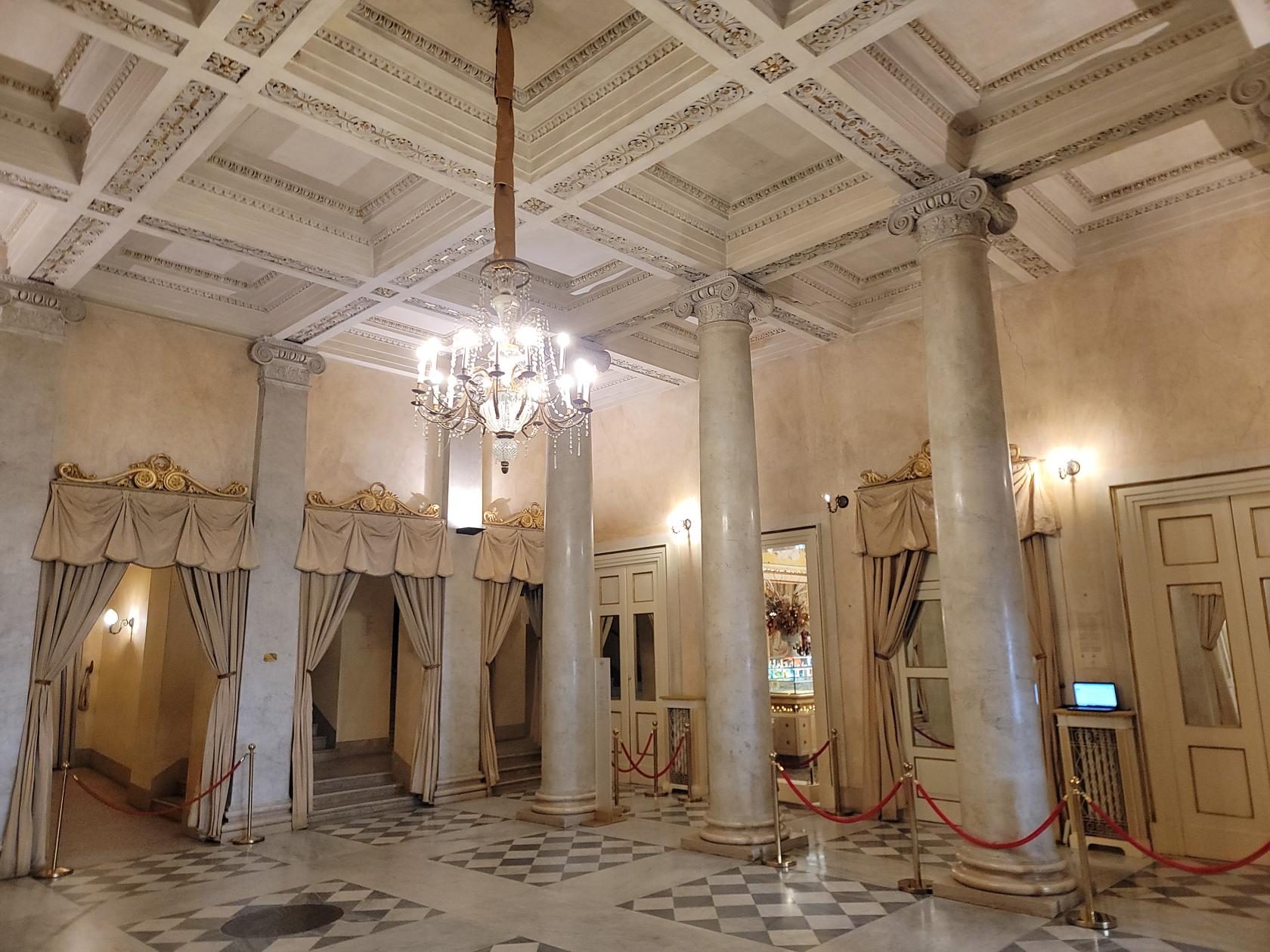
Lobby – Regio Theater – Parma, Italy
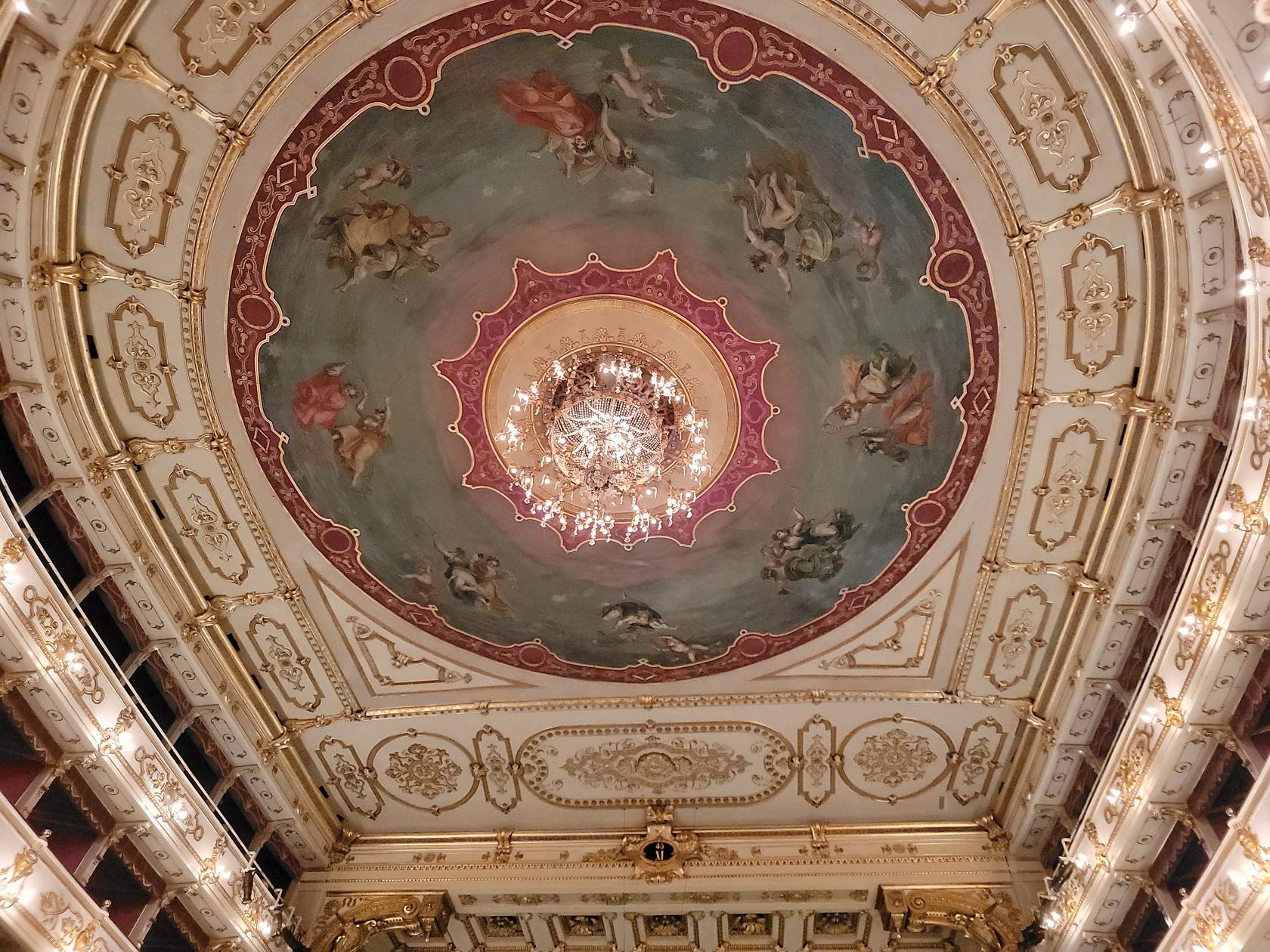
The outside and entrance are rather plain and nothing compared to La Scala or other prominent theaters in Italy. However, it does have a very critical local audience that only excepts high standards and sticking to tradition. So event organizers must plan carefully, lest to lose the wrath of the local perfectionists.
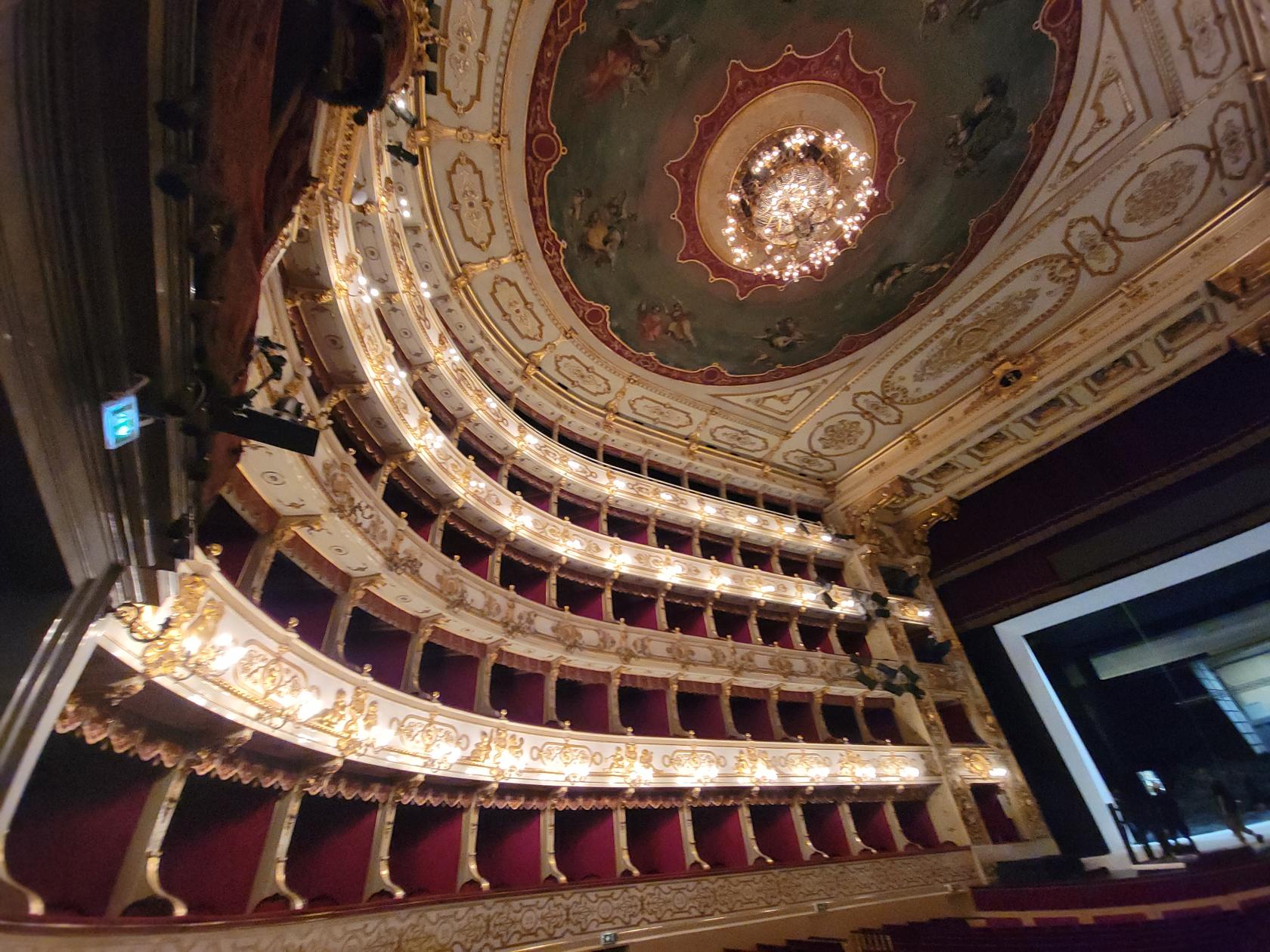
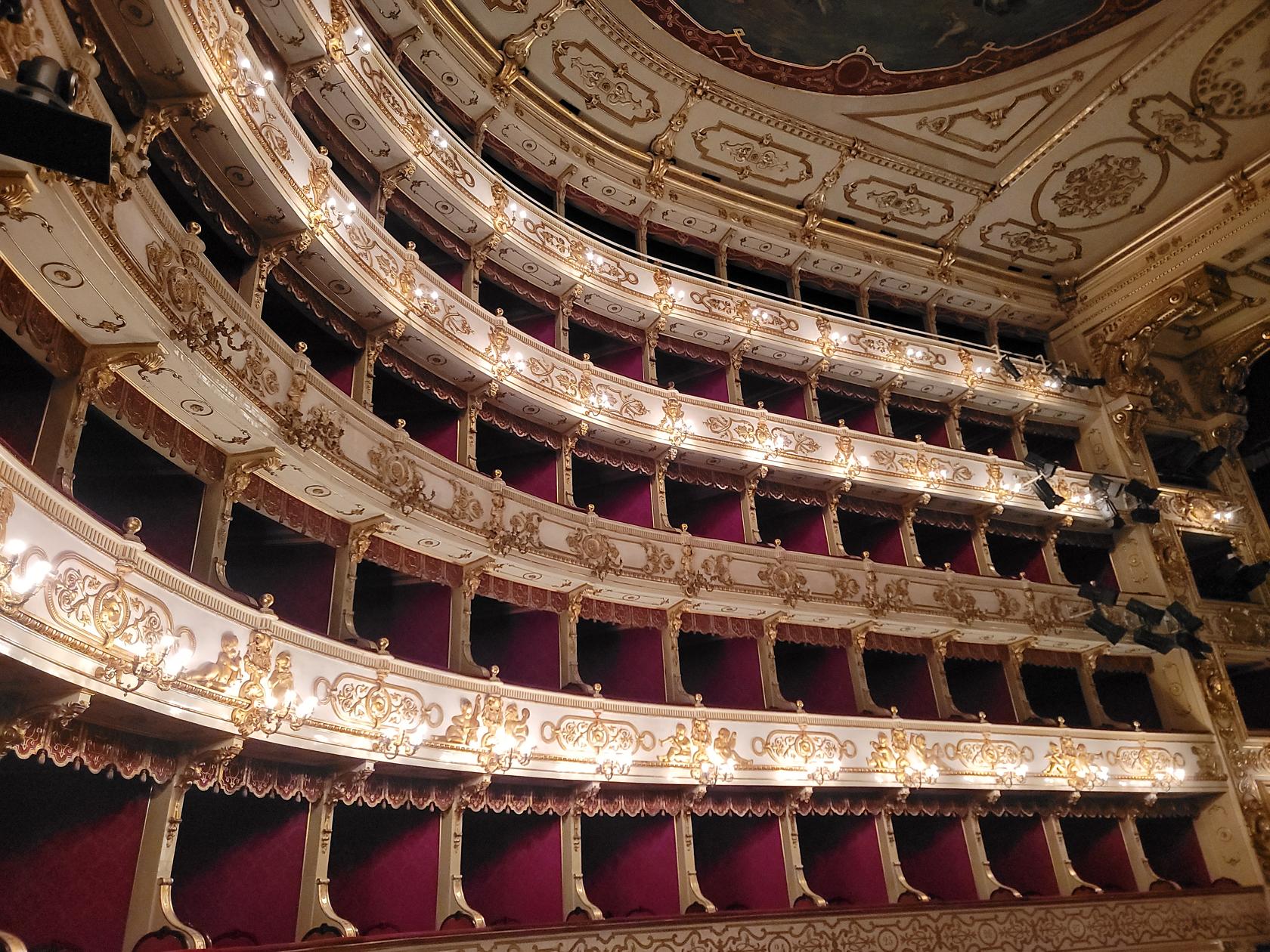
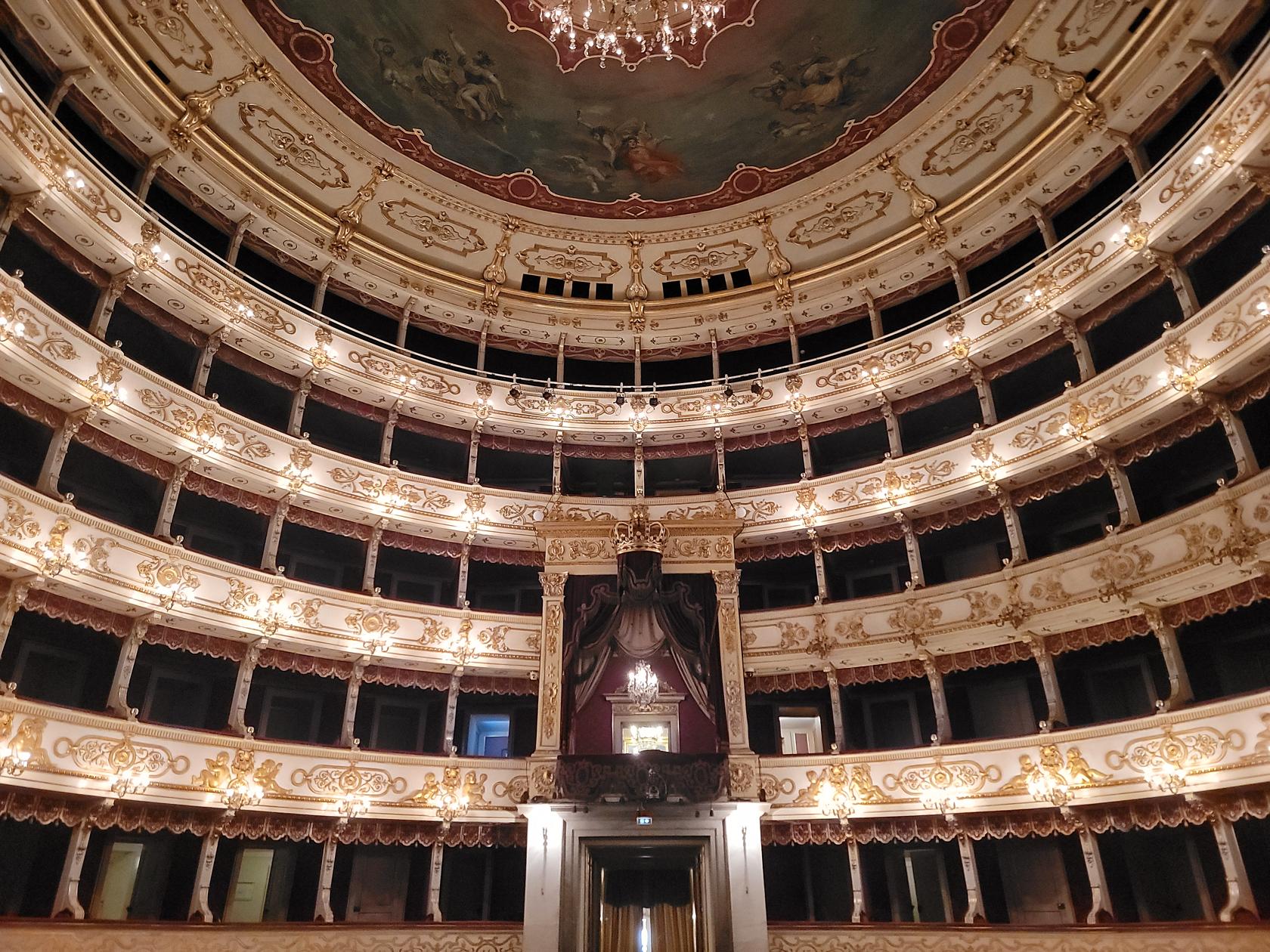
Box Seating Left – Regio Theater – Parma, Italy
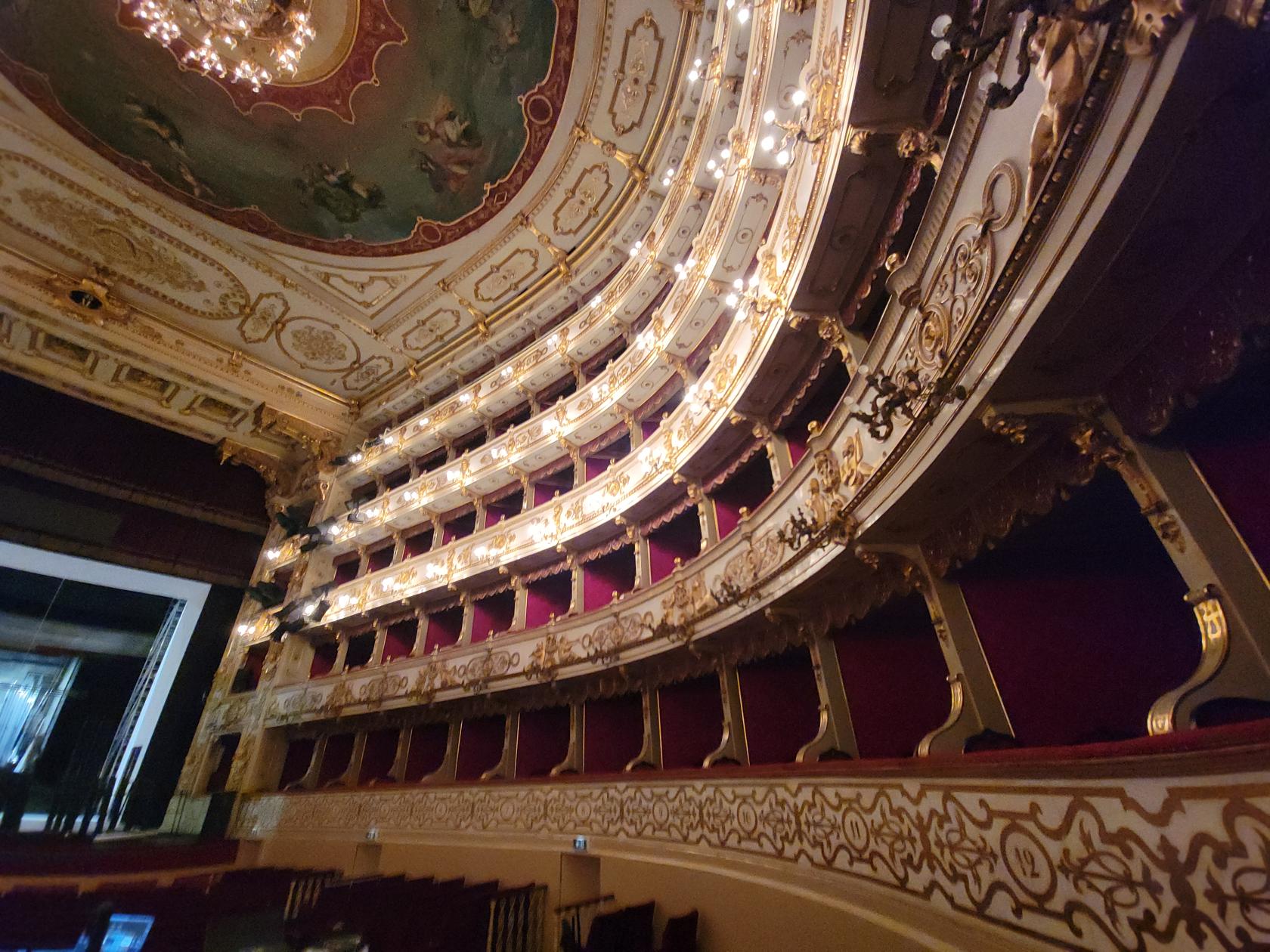
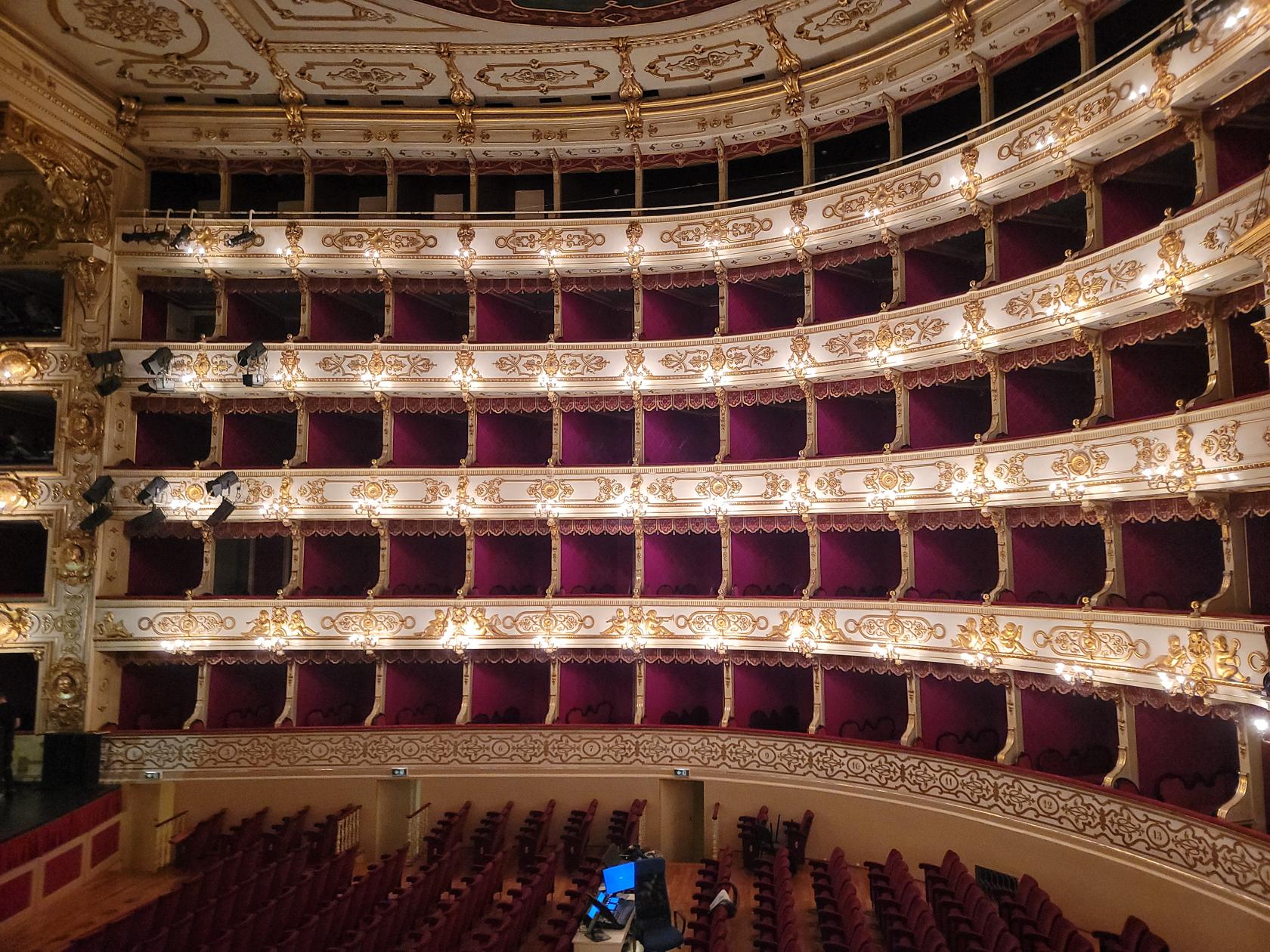
Box Seating Right – Regio Theater – Parma, Italy
Ceiling Details
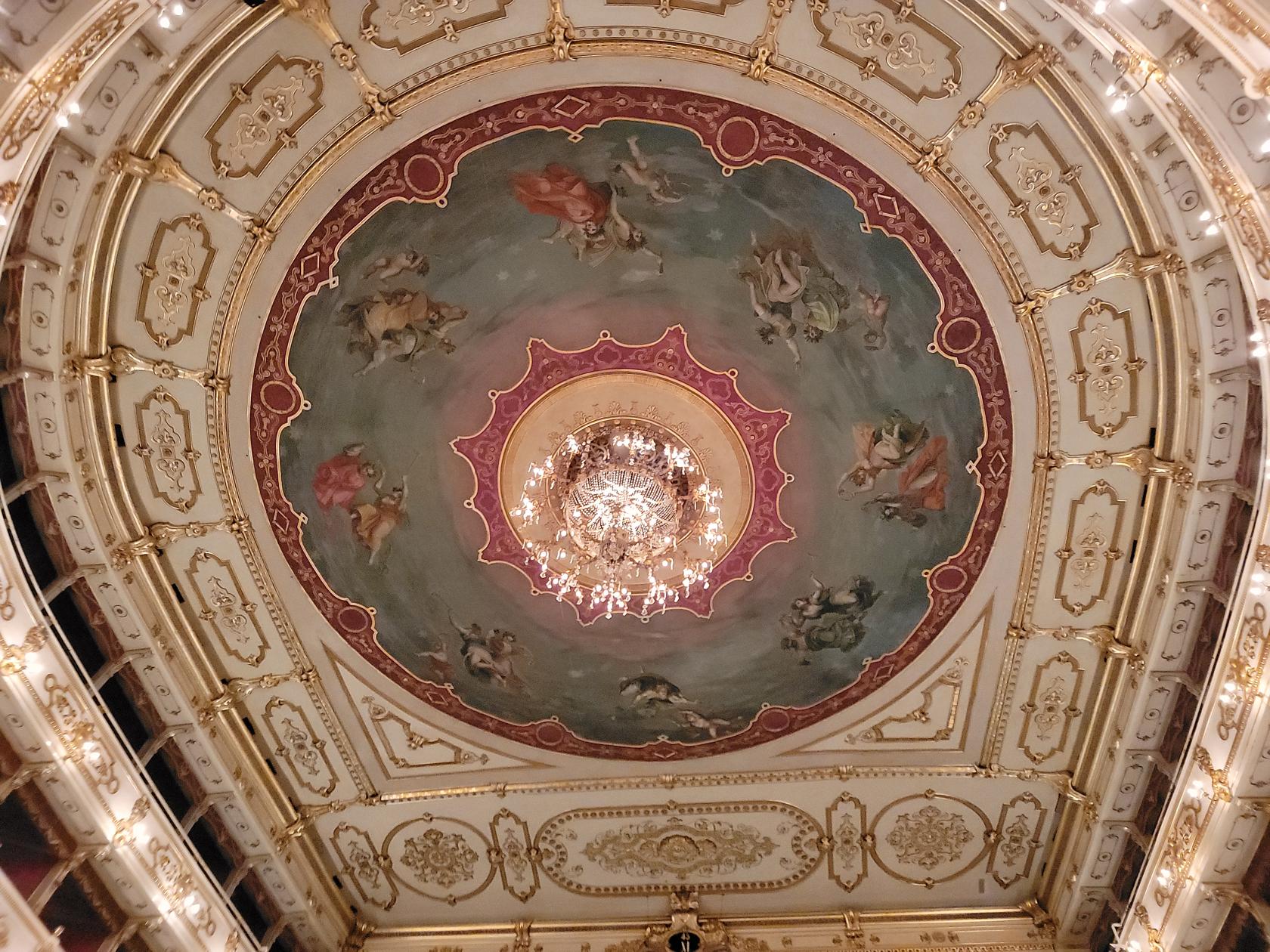
Ceiling Details – Regio Theater – Parma, Italy
Box Seating Left – Regio Theater – Parma, Italy
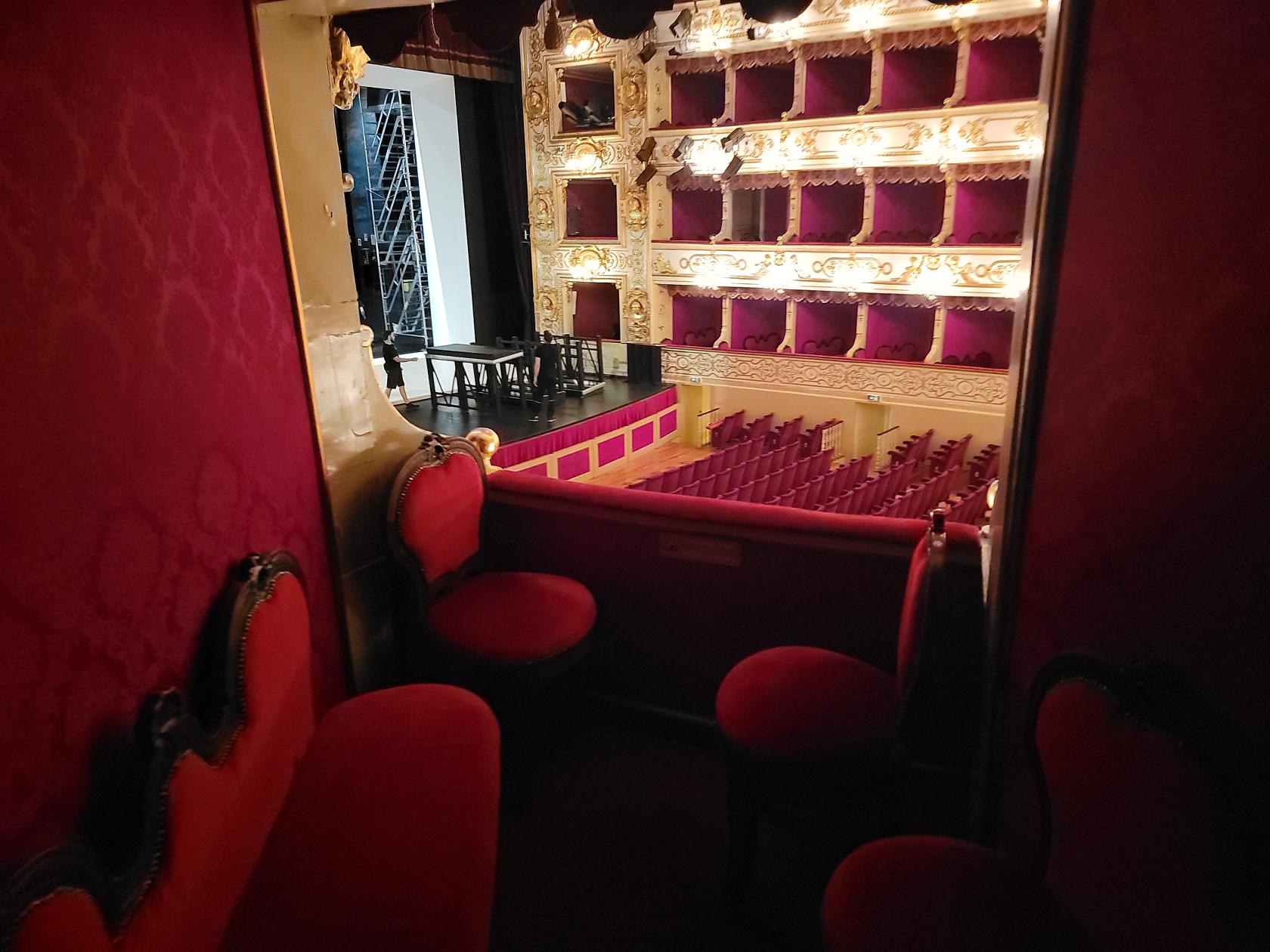
View from Box Seat – Regio Theater – Parma, Italy
Box Seating from Stage – Regio Theater – Parma, Italy
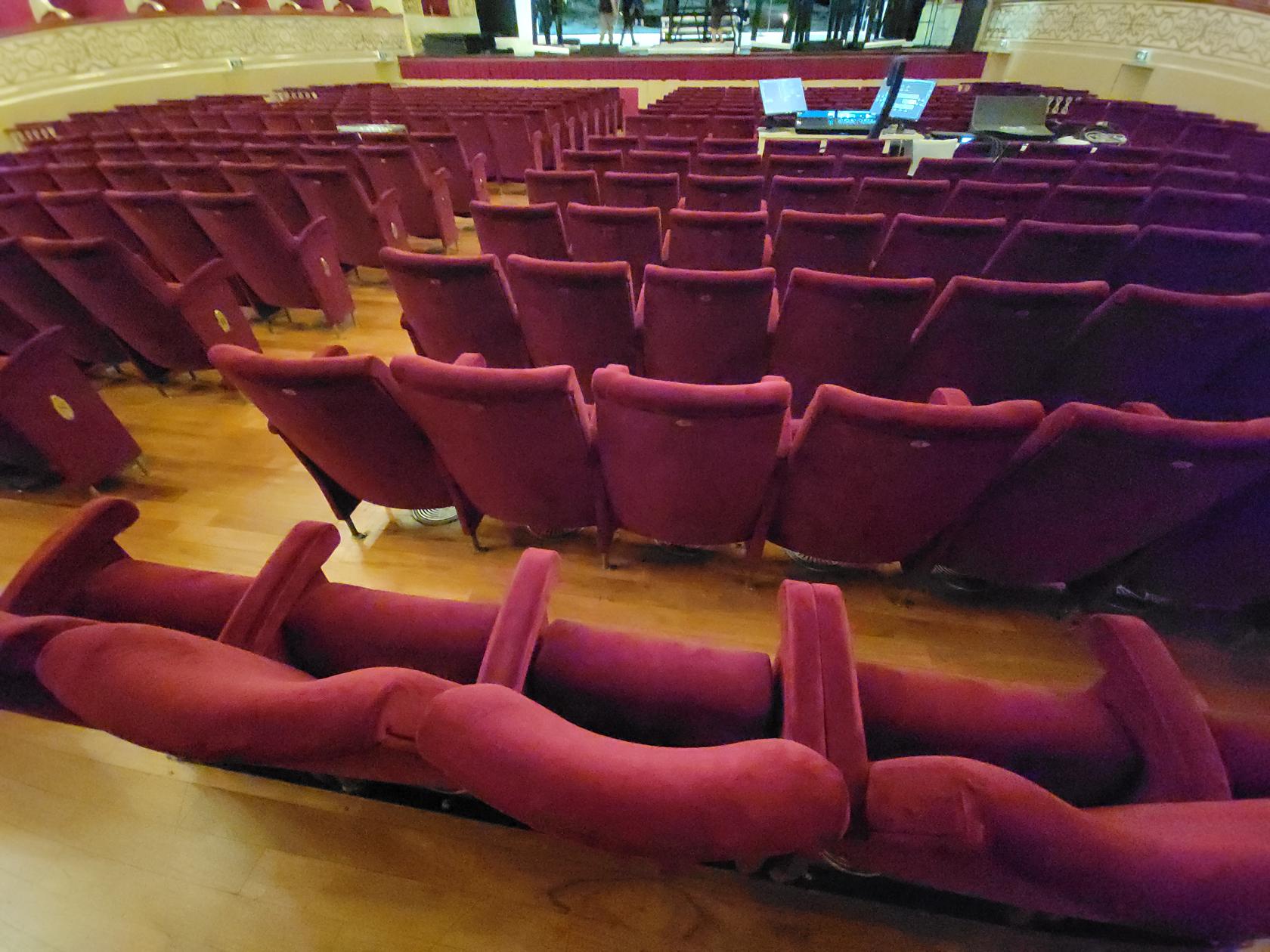
Main Seating – Regio Theater – Parma, Italy
Originally decorated in the color blue, it has since been redesigned and redecorated by the Duchess Marie Louise of Parma in red. The walls are covered in box seats. When the duchess was still alive, the first floor seating, on the same level as the duchess’ box seat, were the most expensive. The very top level has no box seating, but rather standing room only for the commoner who could purchase a cheaper ticket and at least stand and hear the performances. The floor seating, though now the most expensive, were the cheaper seats in her day.
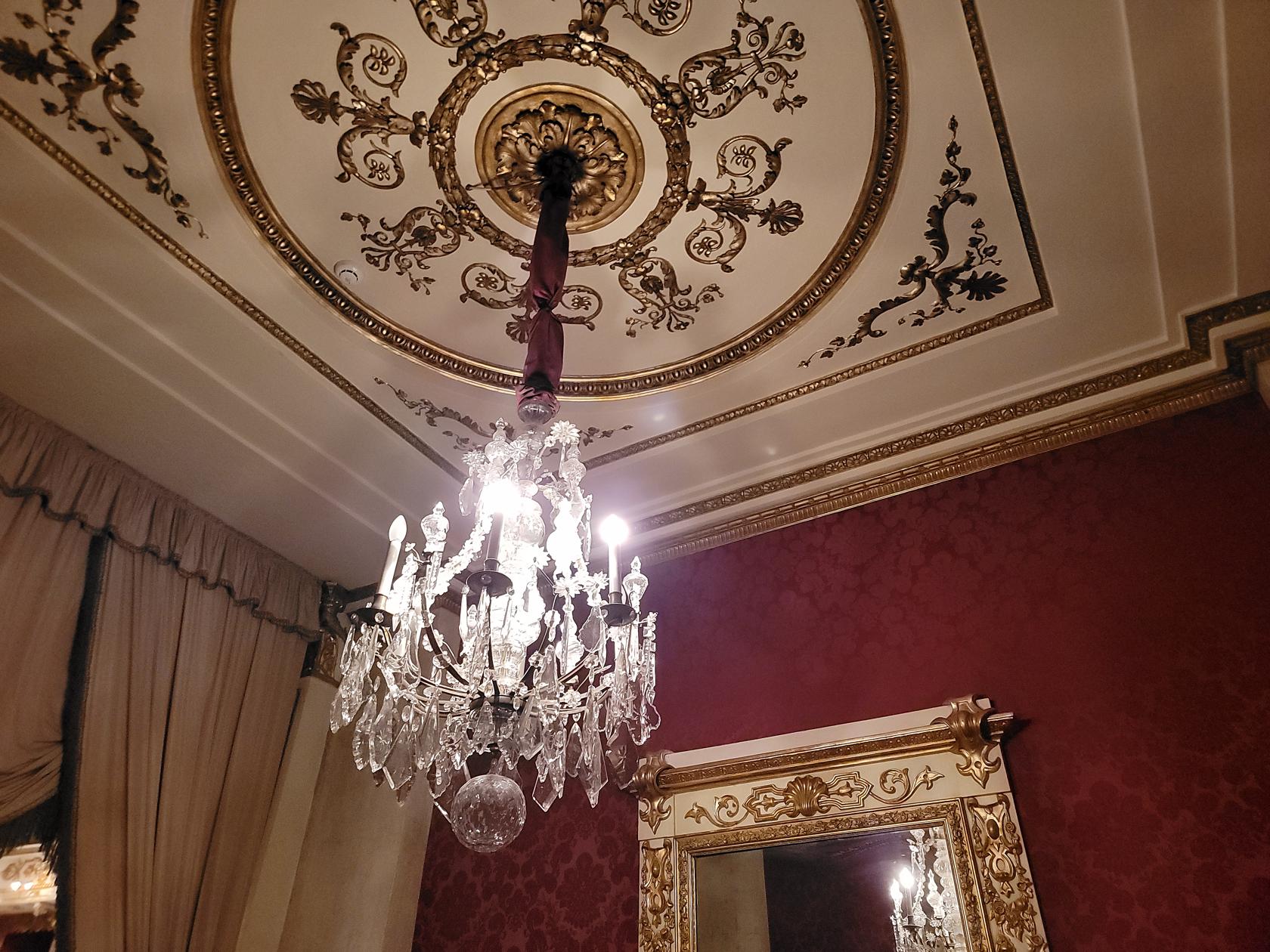
Chandelier in Box Seat of the Duke and Duchess – Regio Theater – Parma, Italy
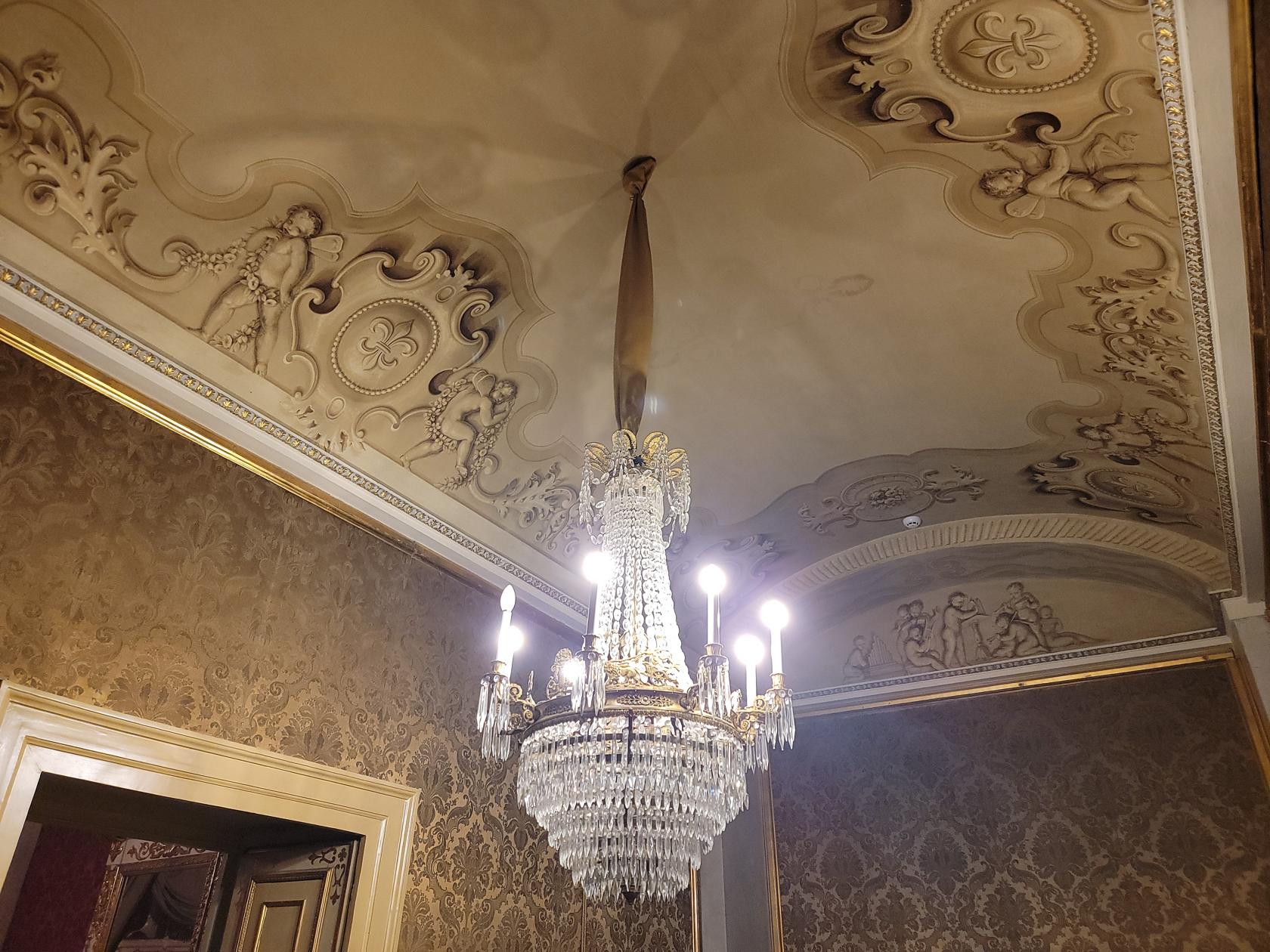
Smaller Chandelier in Ante Room – Regio Theater – Parma, Italy
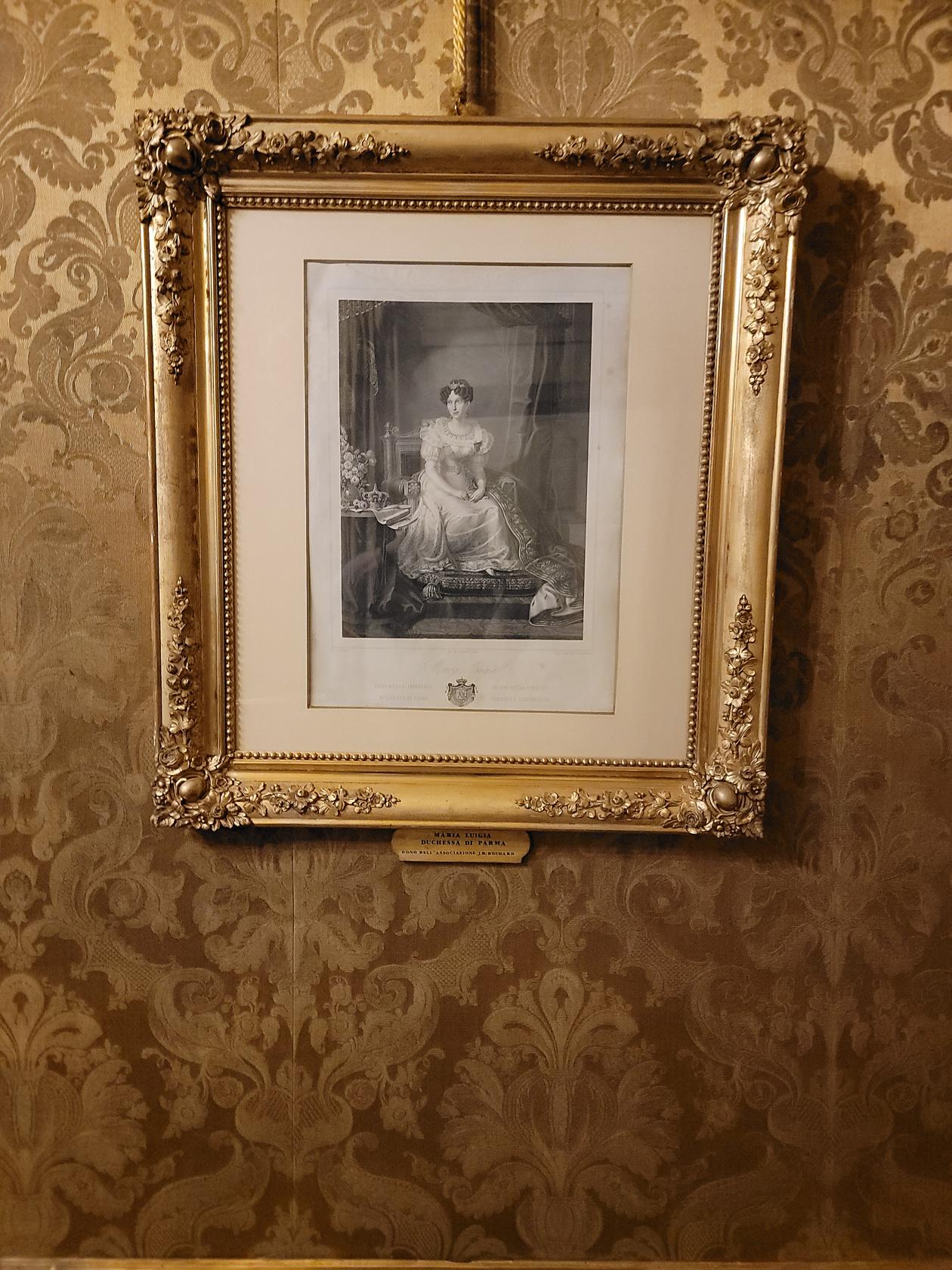
Marie Louise Duchess of Parma – Regio Theater – Parma, Italy
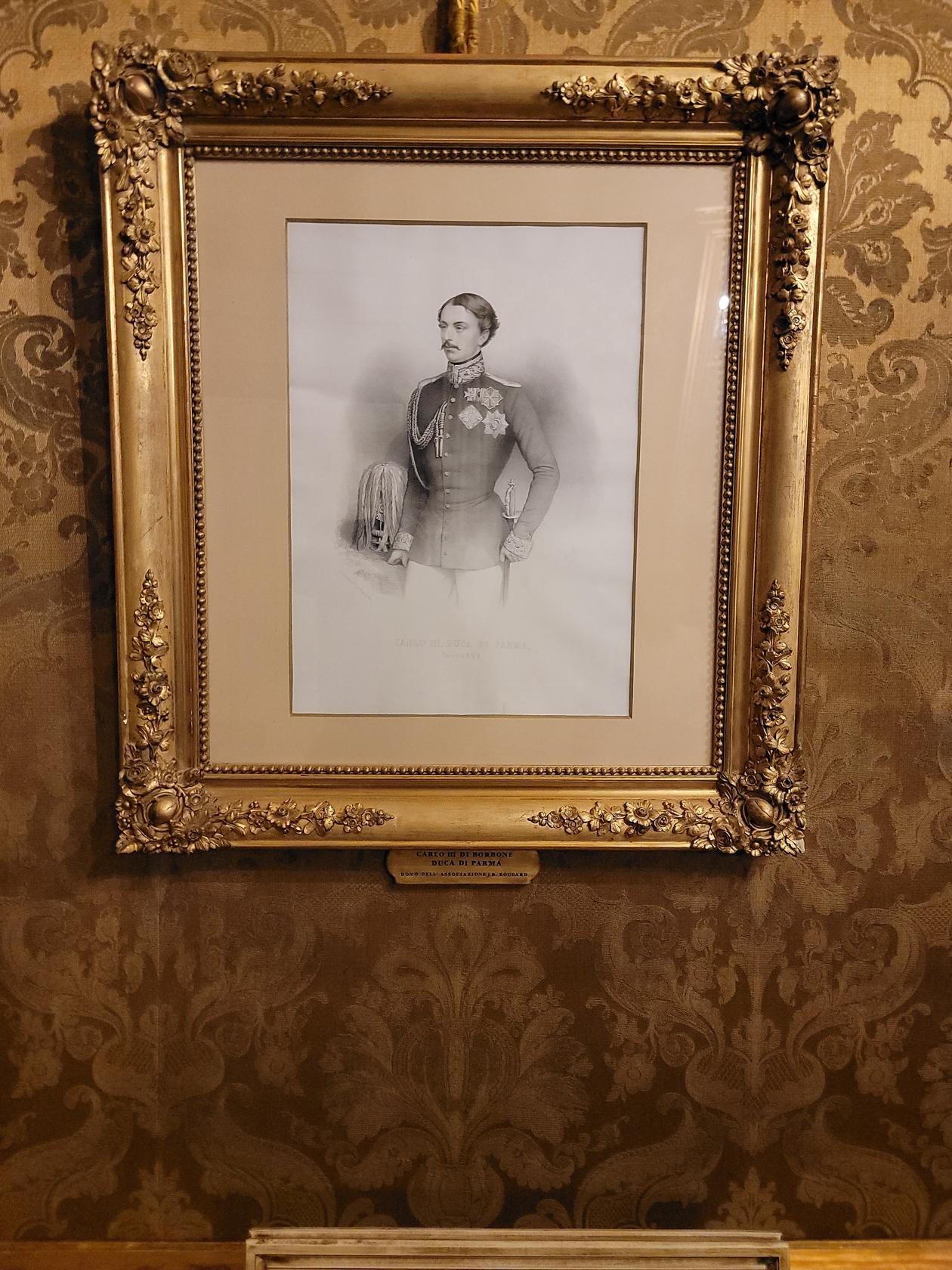
Duke – Regio Theater – Parma, Italy
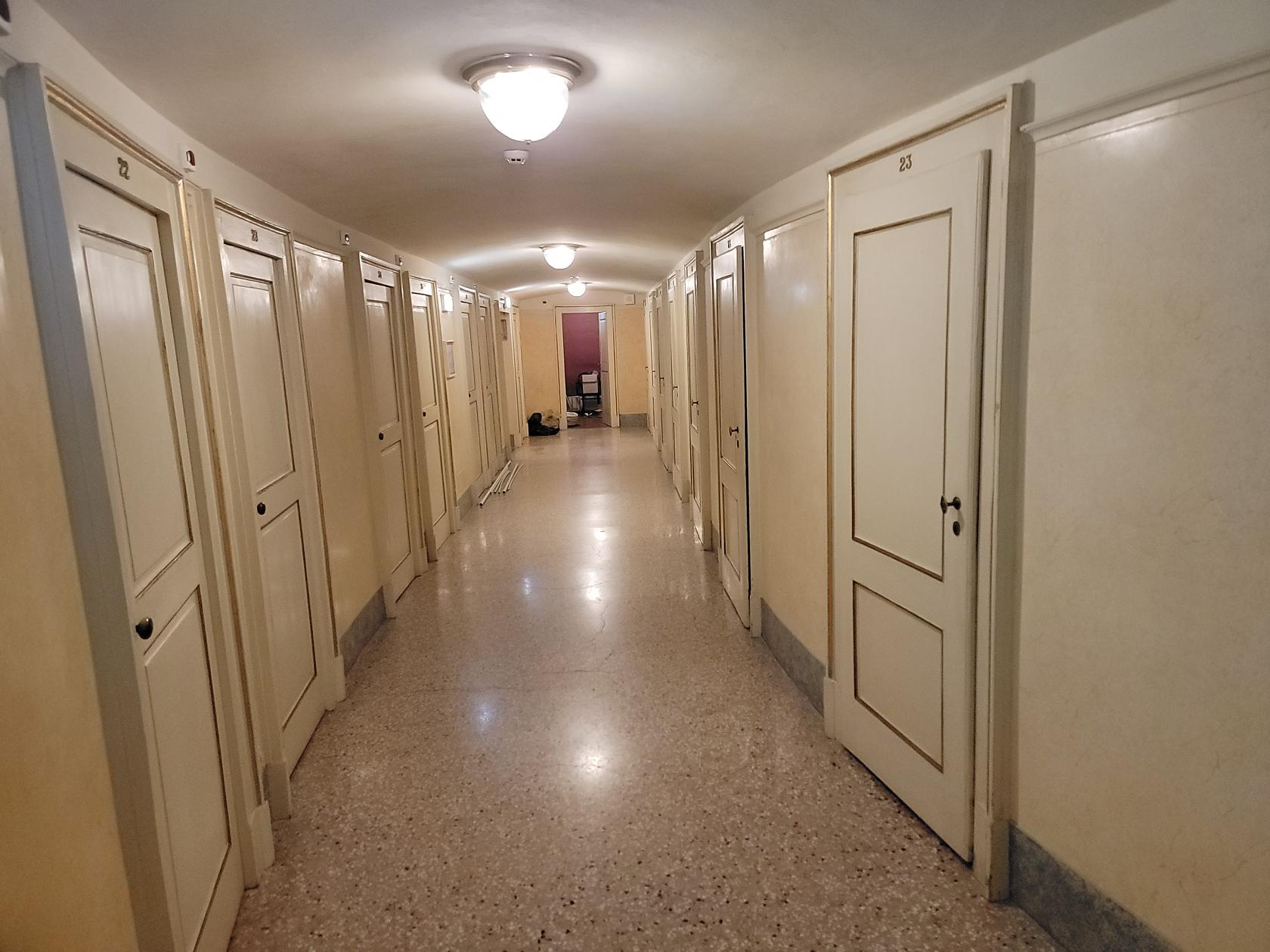
The box seating is nothing special, they actually look rather uncomfortable. Each used to be paired with an out room, where the ticket holder could throw a small party, bring something to eat and enjoy, or engage in other activities. The box seats and ancillary room across the hall used to be privately owned. Now the owners have been divested of the box seating, but still hold ownership rights to this ancillary rooms, which they cannot use unless they are in attendance. An odd arrangement that the theater owner, city and box seat owners agreed to some time ago, in order to prevent the theater from going bankrupt.
Hallway – Box Seating Right, Extra Rooms Left – Regio Theater – Parma, Italy
Typical Box Seat – Regio Theater – Parma, Italy
Typical Ancillary Rooms – Regio Theater – Parma, Italy
Churches and Cathedrals
Parma, as any Italian city, is host to numerous churches and cathedrals. The most important and interesting ones we found follow.
Parma Cathedral
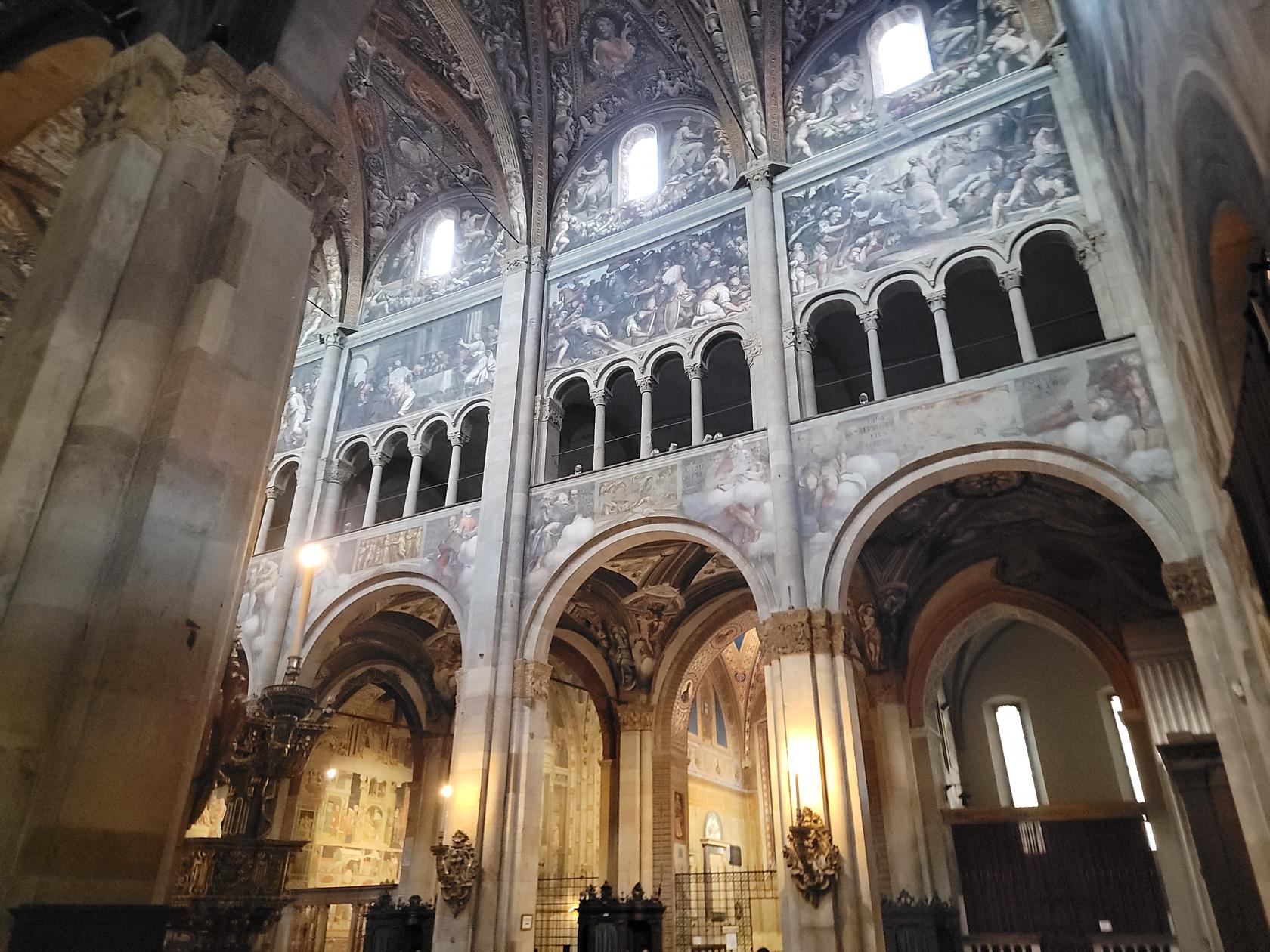
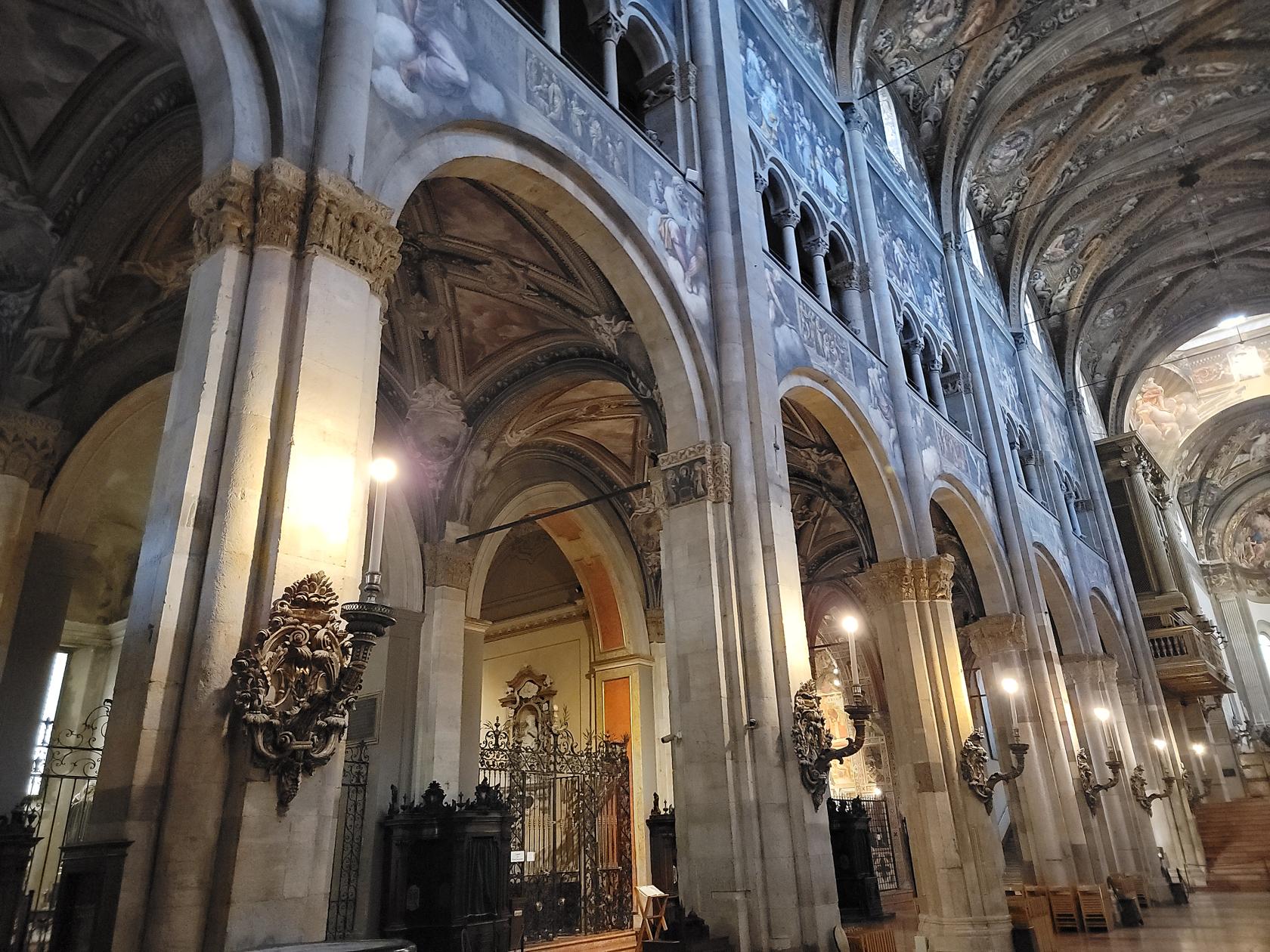
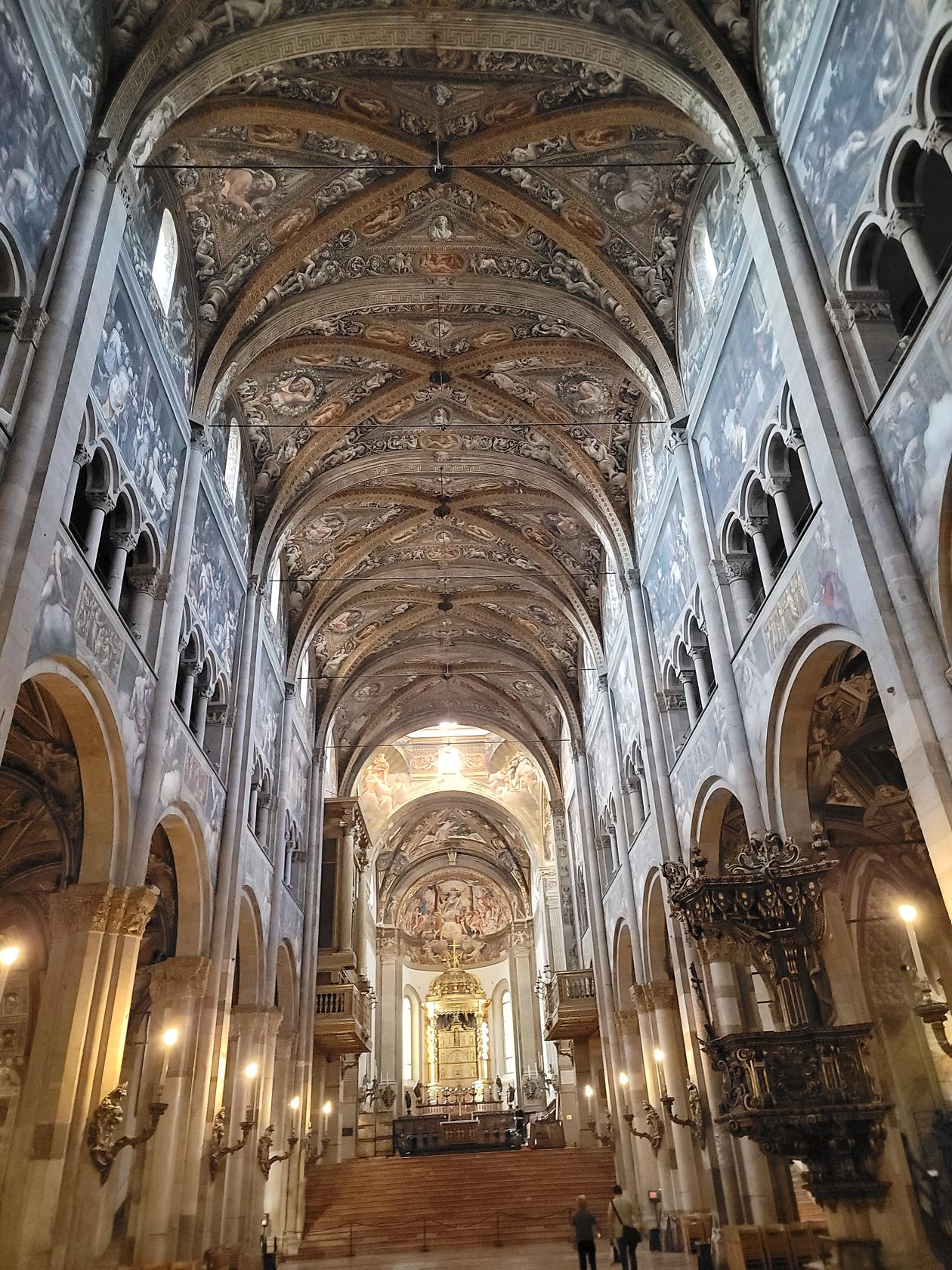
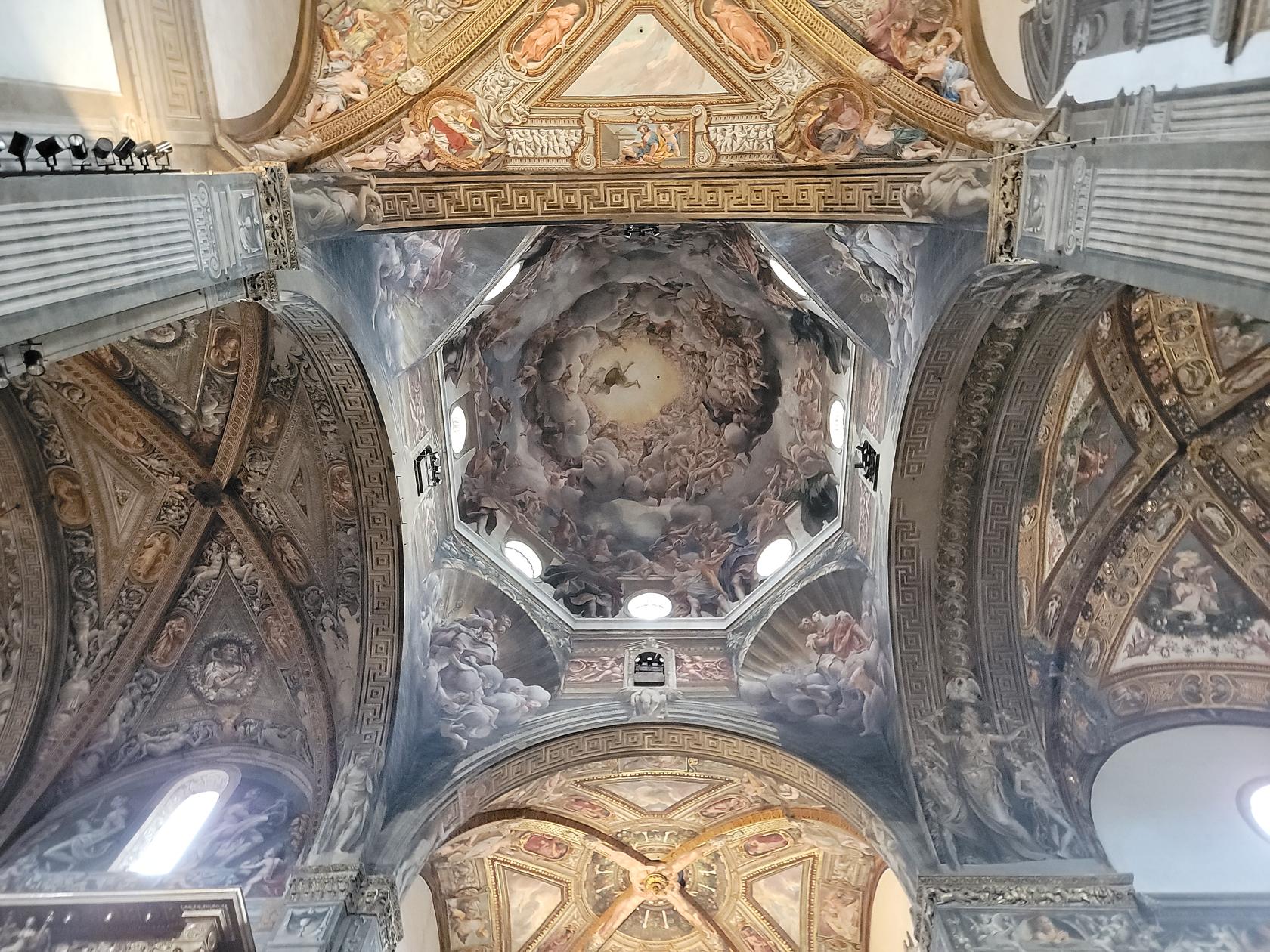
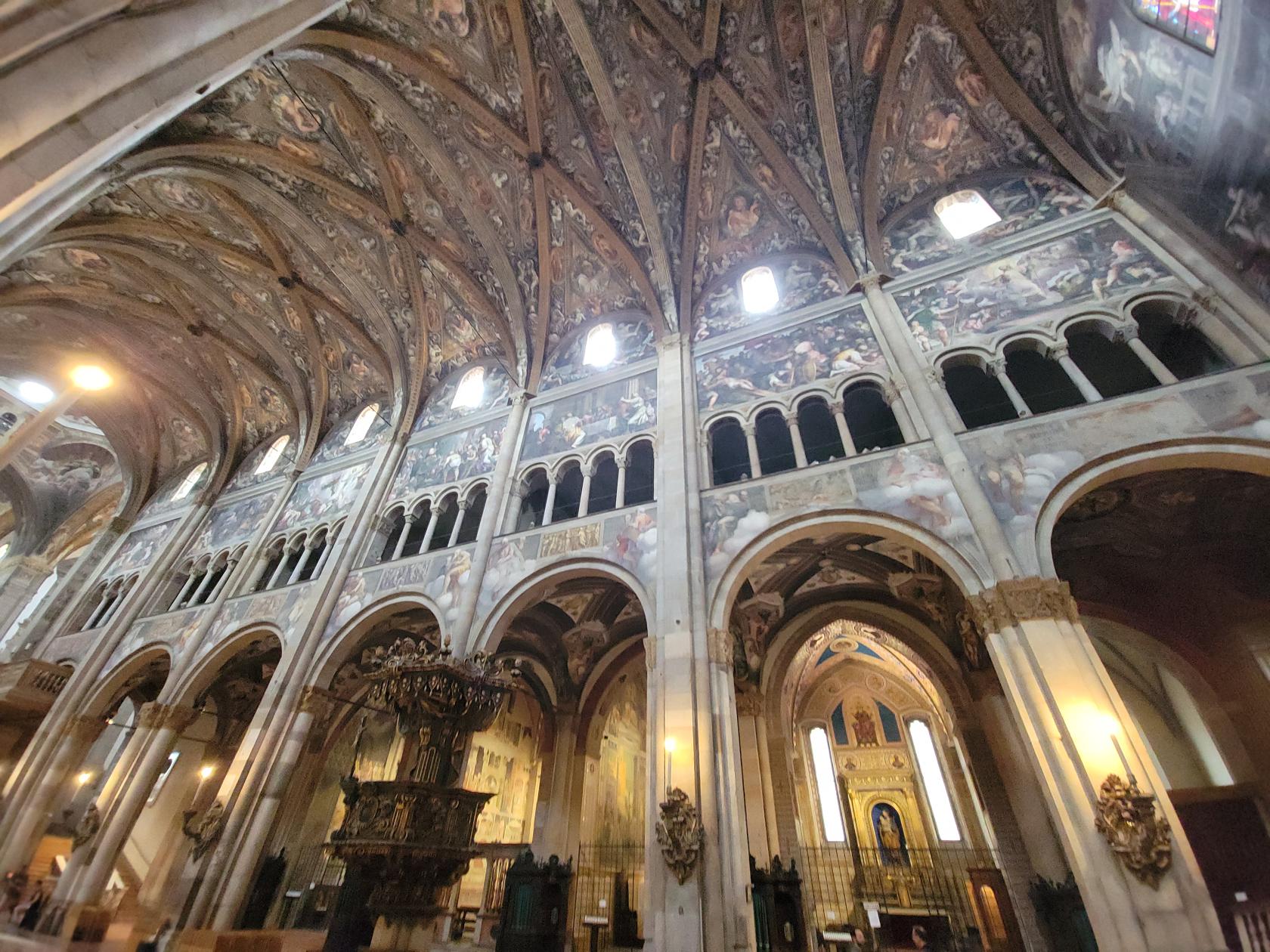
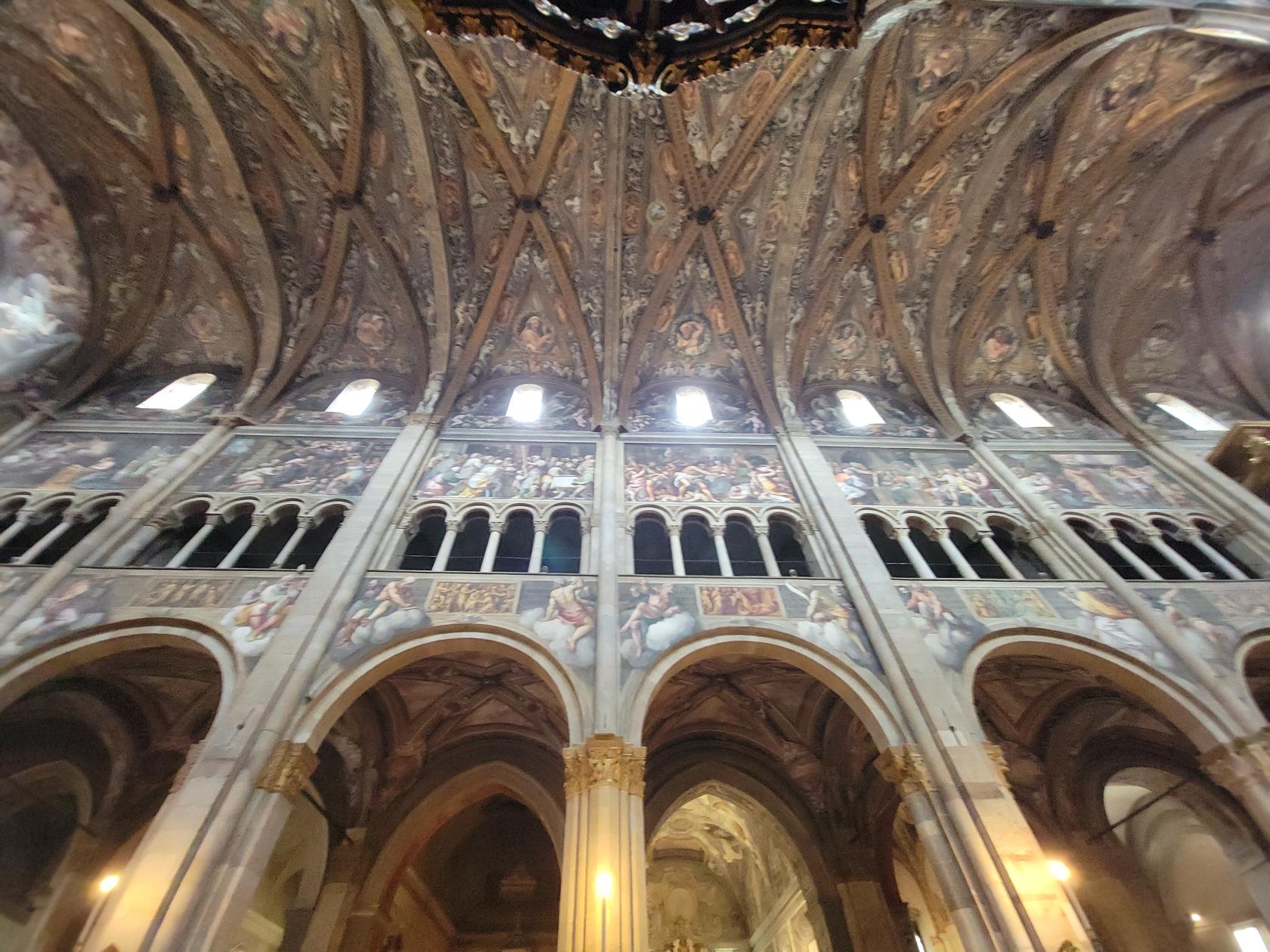
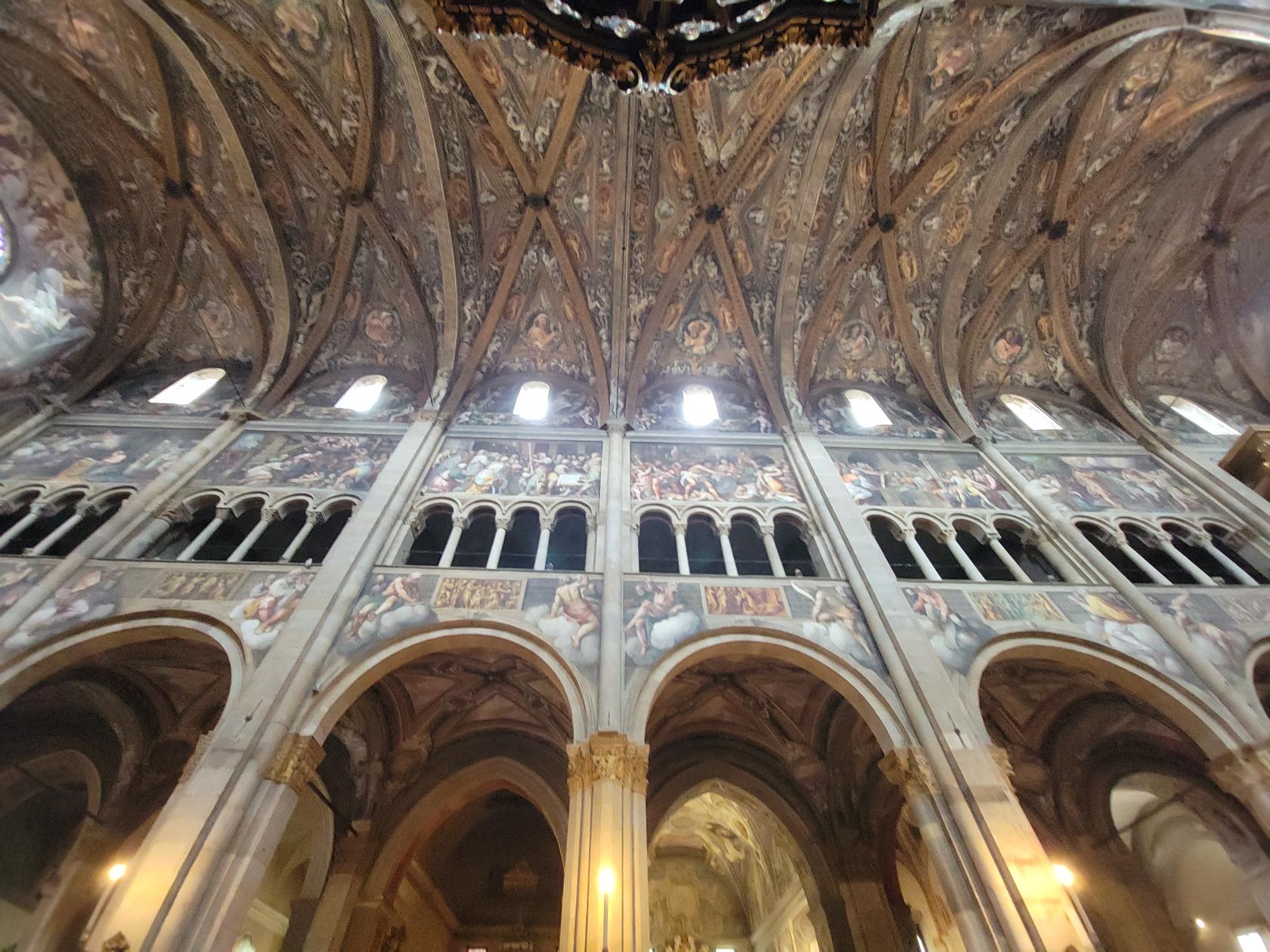
The Romanesque architecture of the Cathedral of the Assumption of the Blessed Virgin Mary, also known as the Parma Duomo or the Cathdral of Parma, must be on anyone’s list of places to visit in Parma. The ceiling by Correggio warrants a good ten to twenty minute inspection.
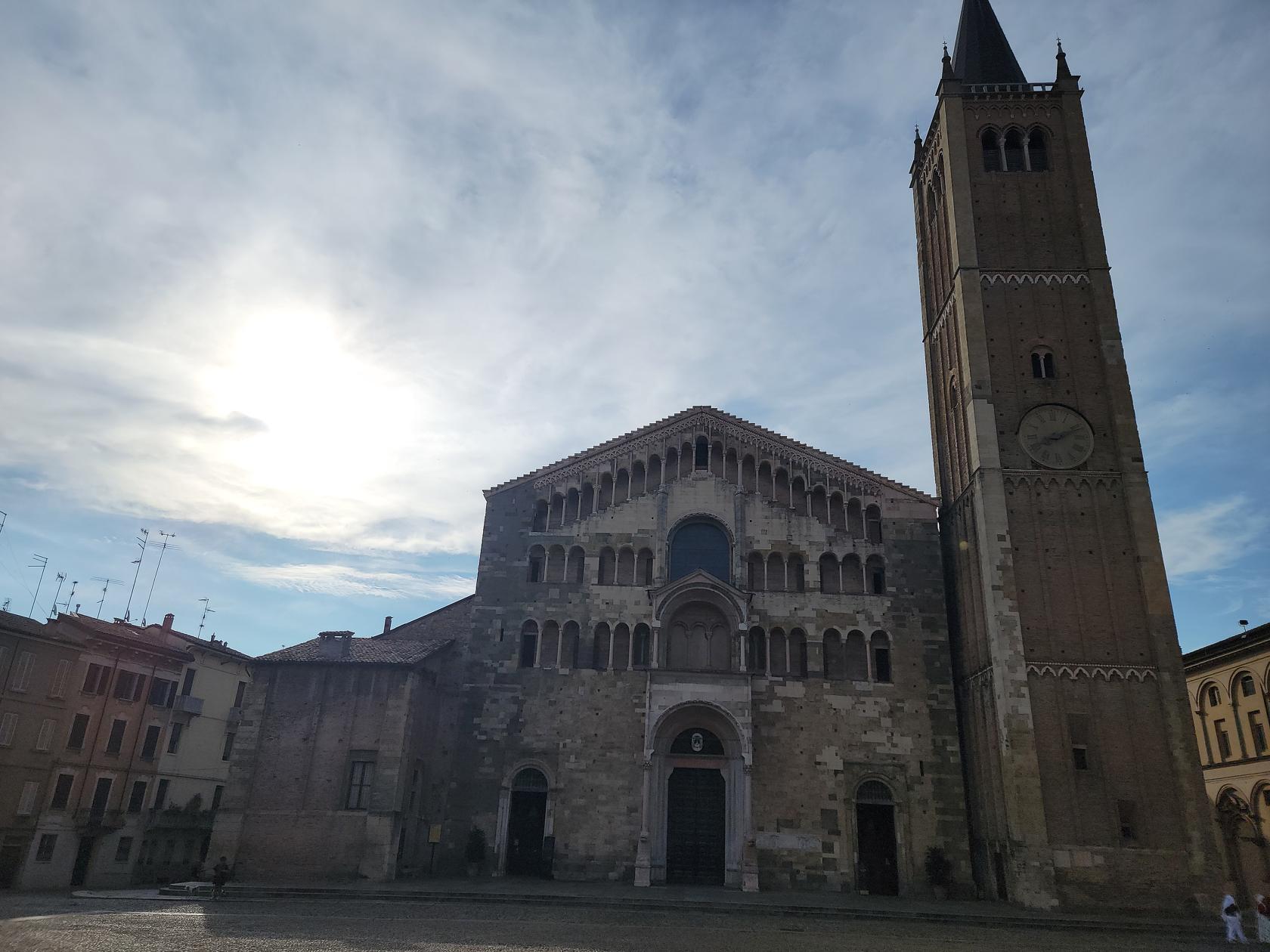
Facade and Tower – Cathedral Santa Maria Assunta – Parma, Italy
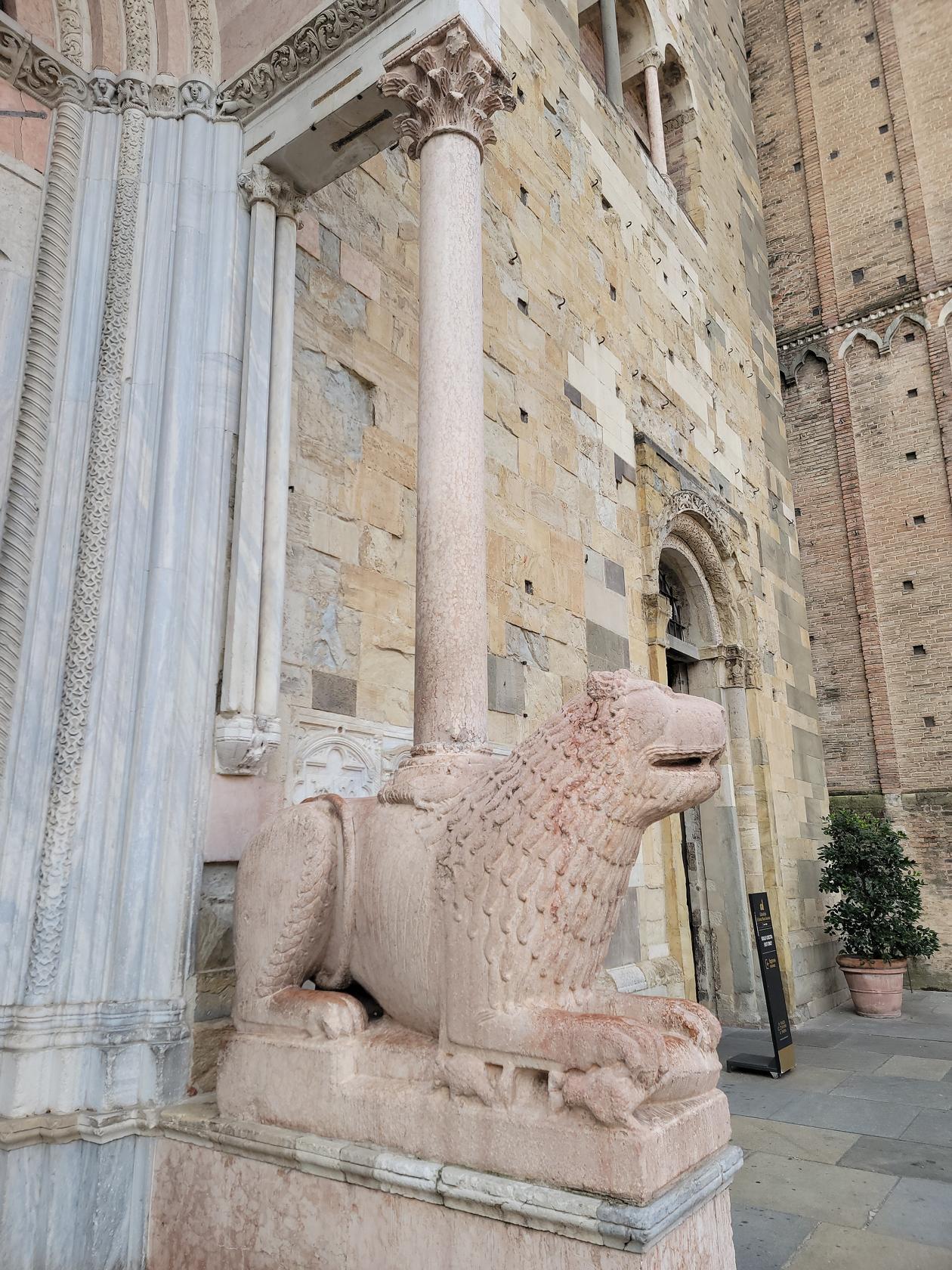
Main Entrance and Right Lion – Cathedral Santa Maria Assunta – Parma, Italy
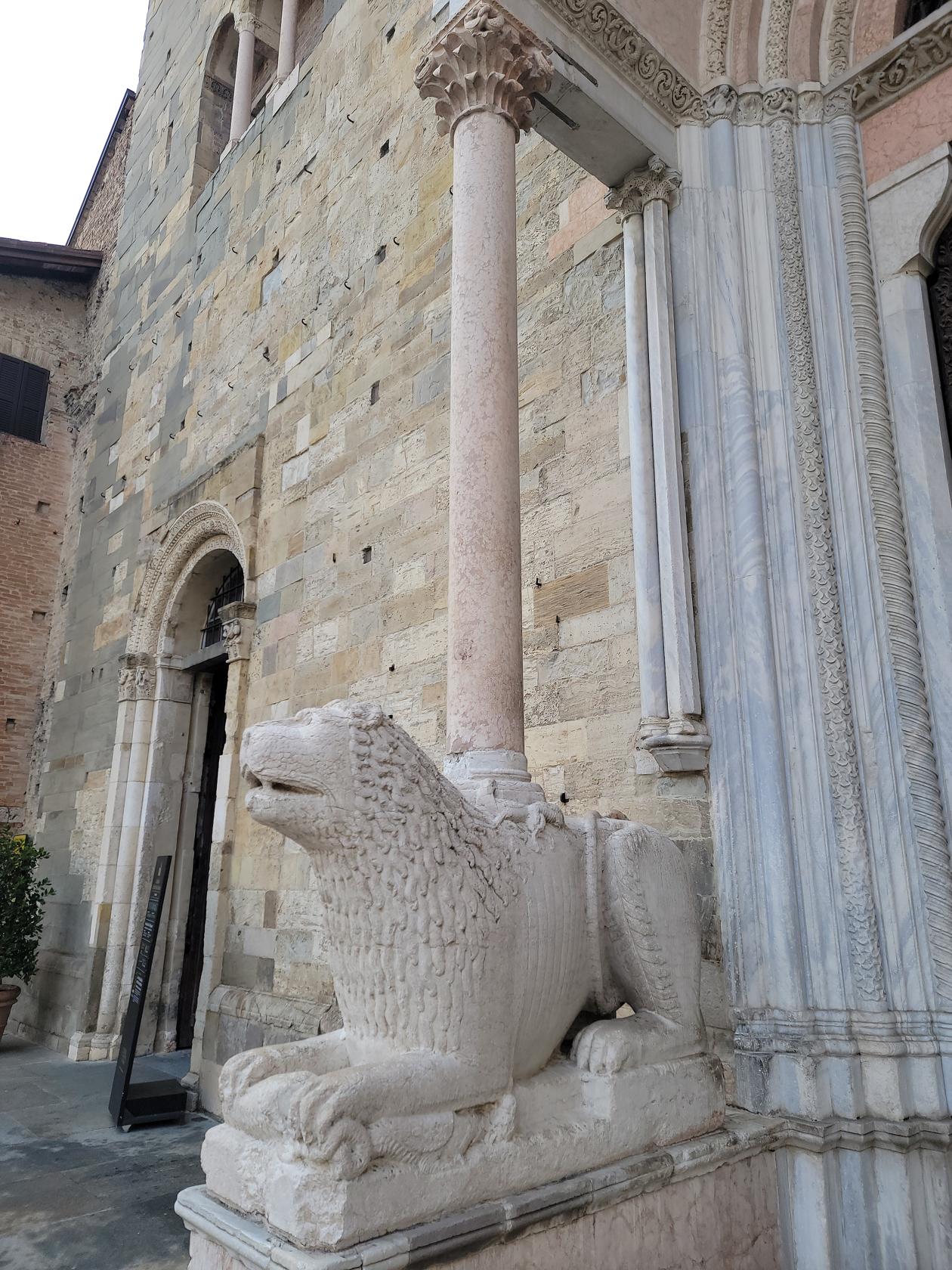
Main Entrance and Left Lion – Cathedral Santa Maria Assunta – Parma, Italy
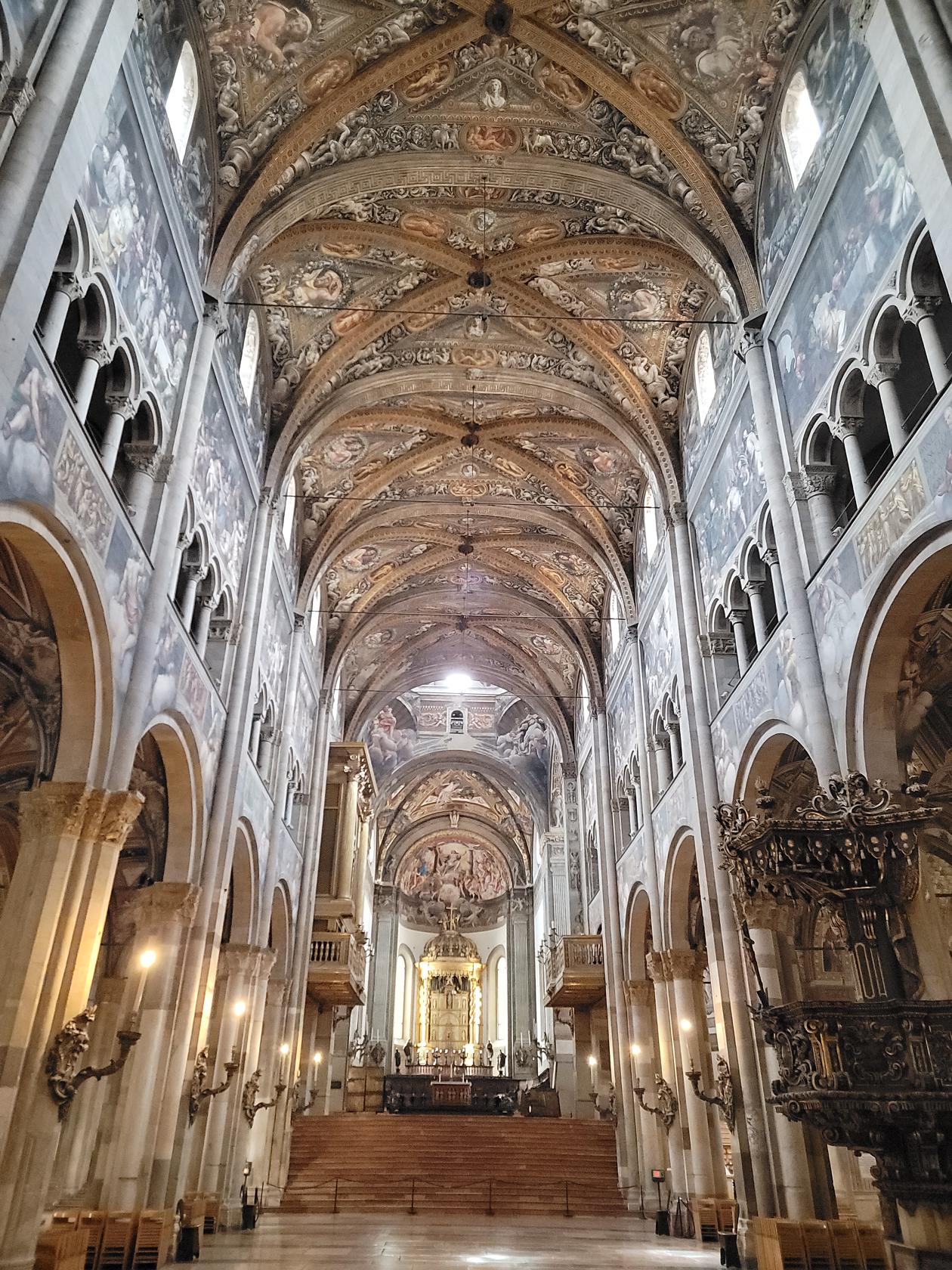
Nave Frescoes and Ceiling – Cathedral Santa Maria Assunta – Parma, Italy
Nave – Cathedral Santa Maria Assunta – Parma, Italy
Nave Frescoes and Ceiling – Cathedral Santa Maria Assunta – Parma, Italy
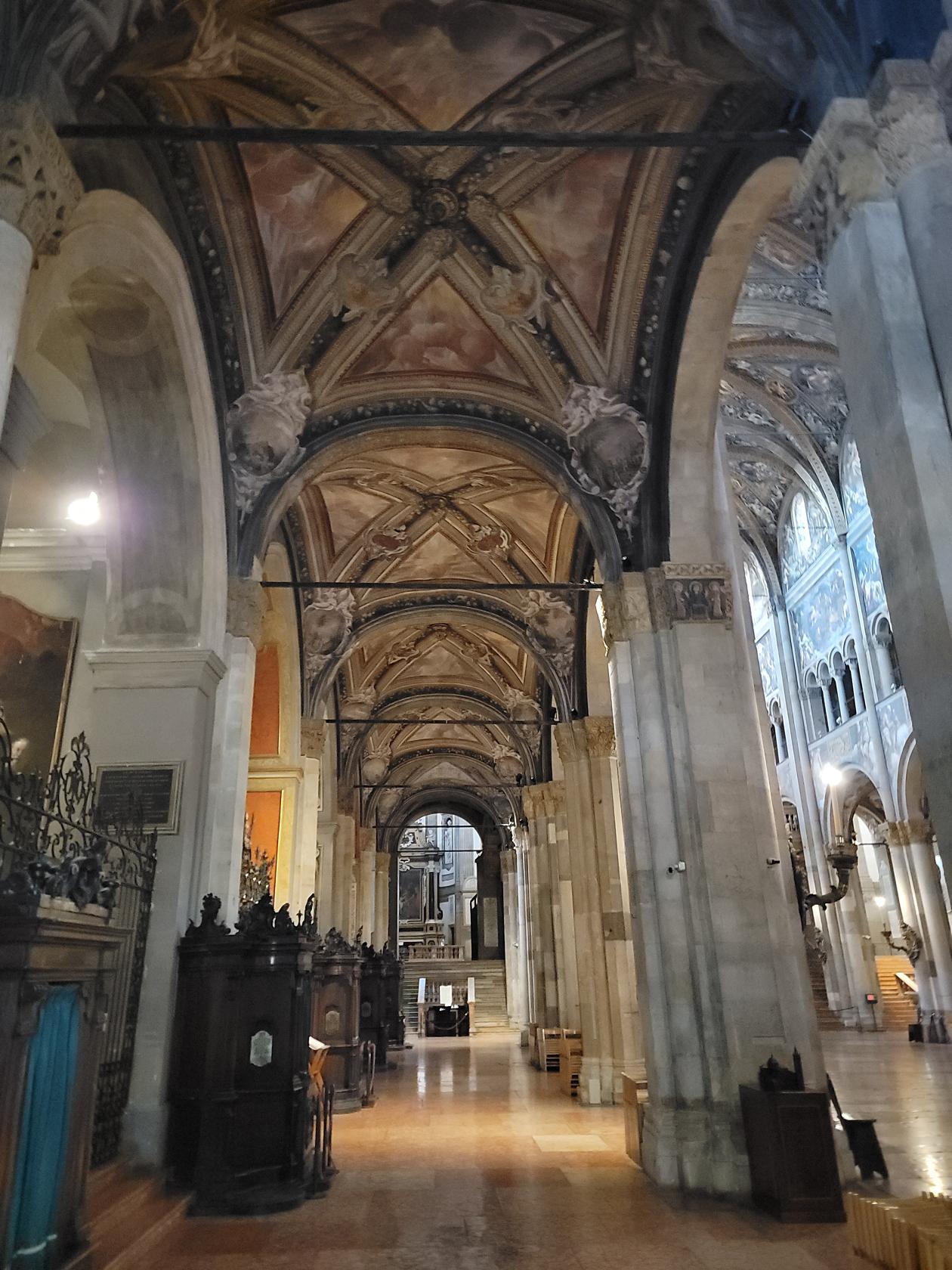
Aisle Ceiling – Cathedral Santa Maria Assunta – Parma, Italy
The nave is decorated by numerous frescoes and art of the twelfth century and depict the stories of faith that were common at that time.
Nave – Cathedral Santa Maria Assunta – Parma, Italy
Madonna Side Altar in Transept – Cathedral Santa Maria Assunta – Parma, Italy
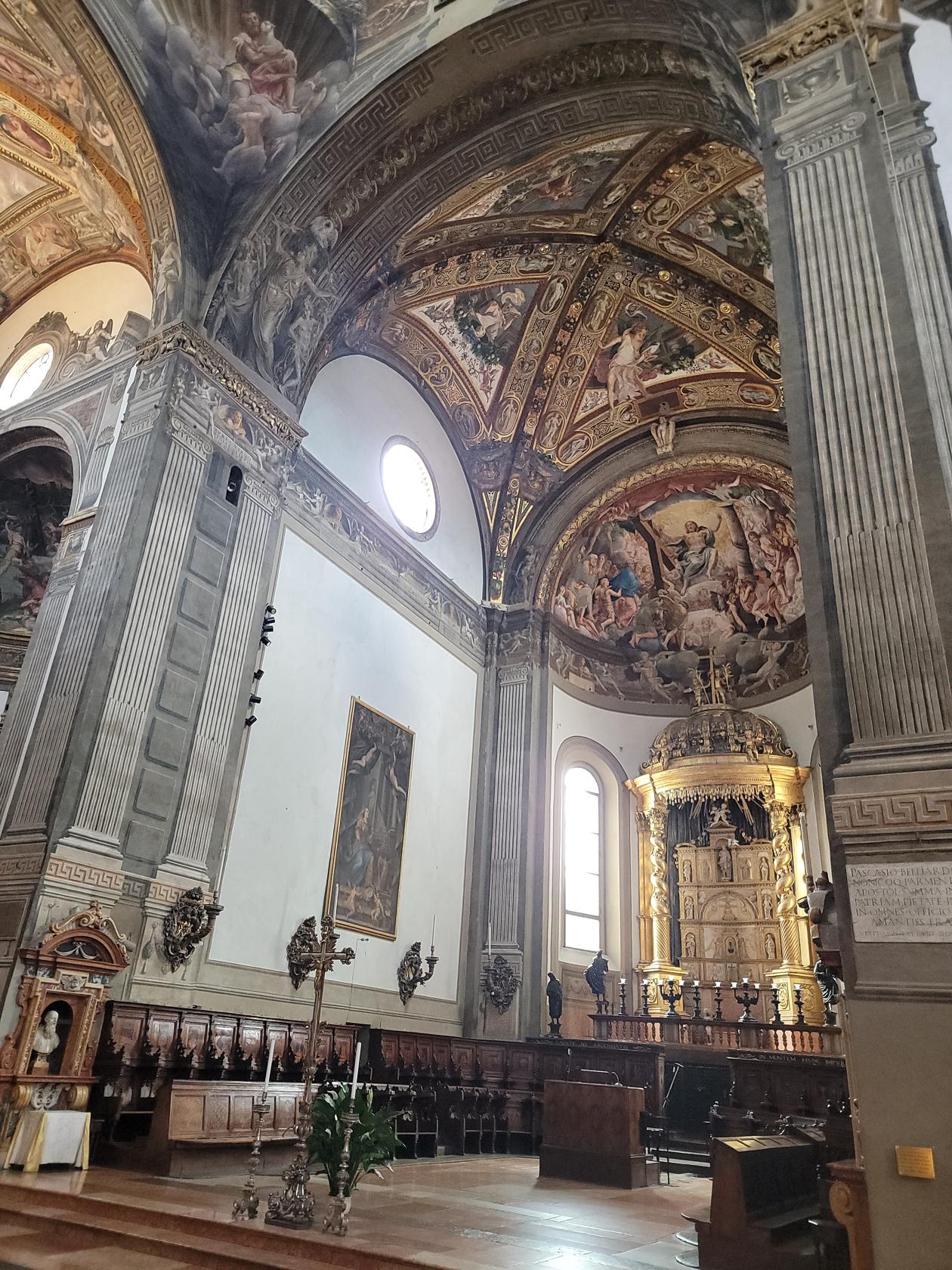
Altar – Cathedral Santa Maria Assunta – Parma, Italy
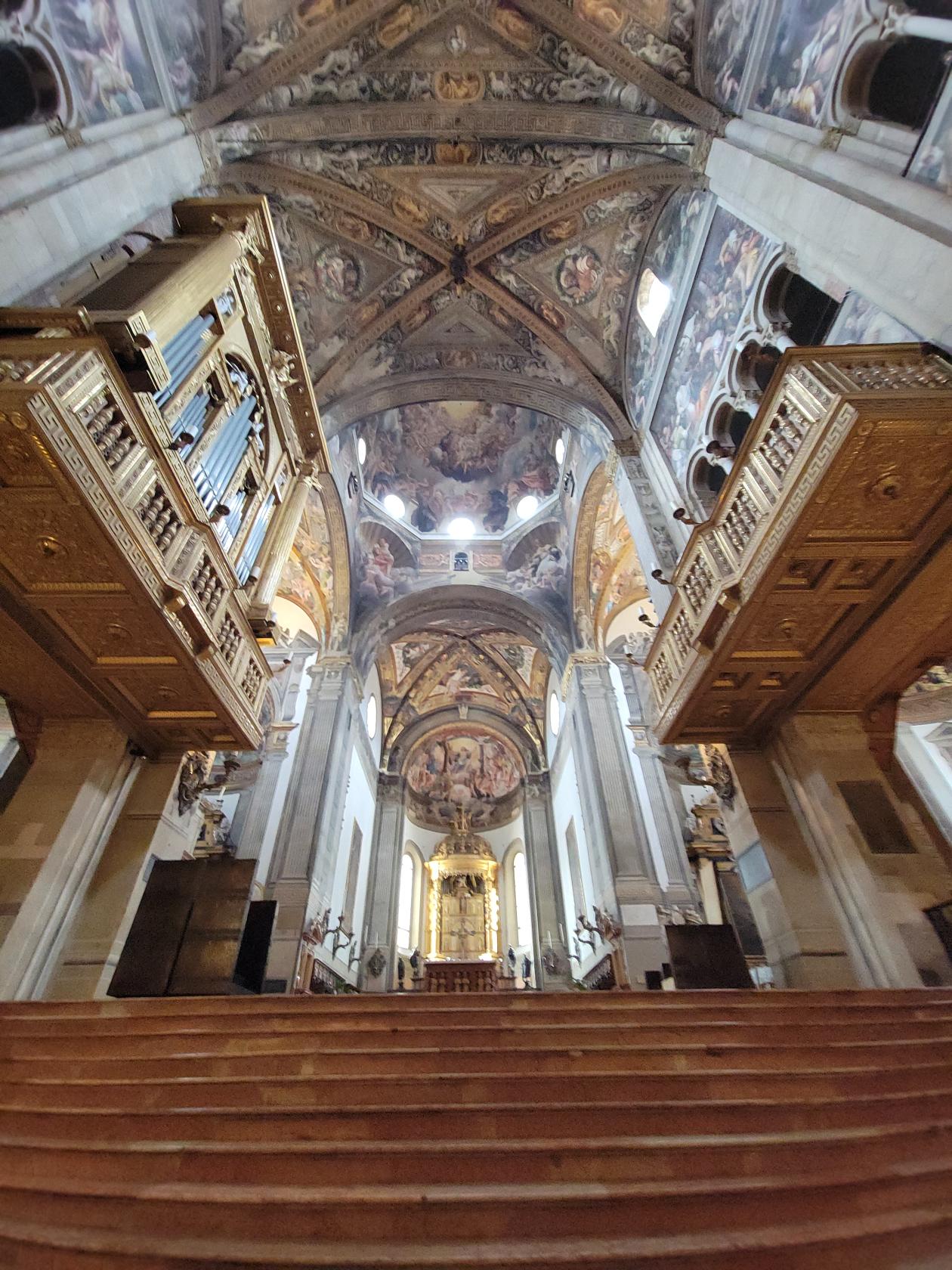
Altar, Organ and Crossing Ceilings – Cathedral Santa Maria Assunta – Parma, Italy
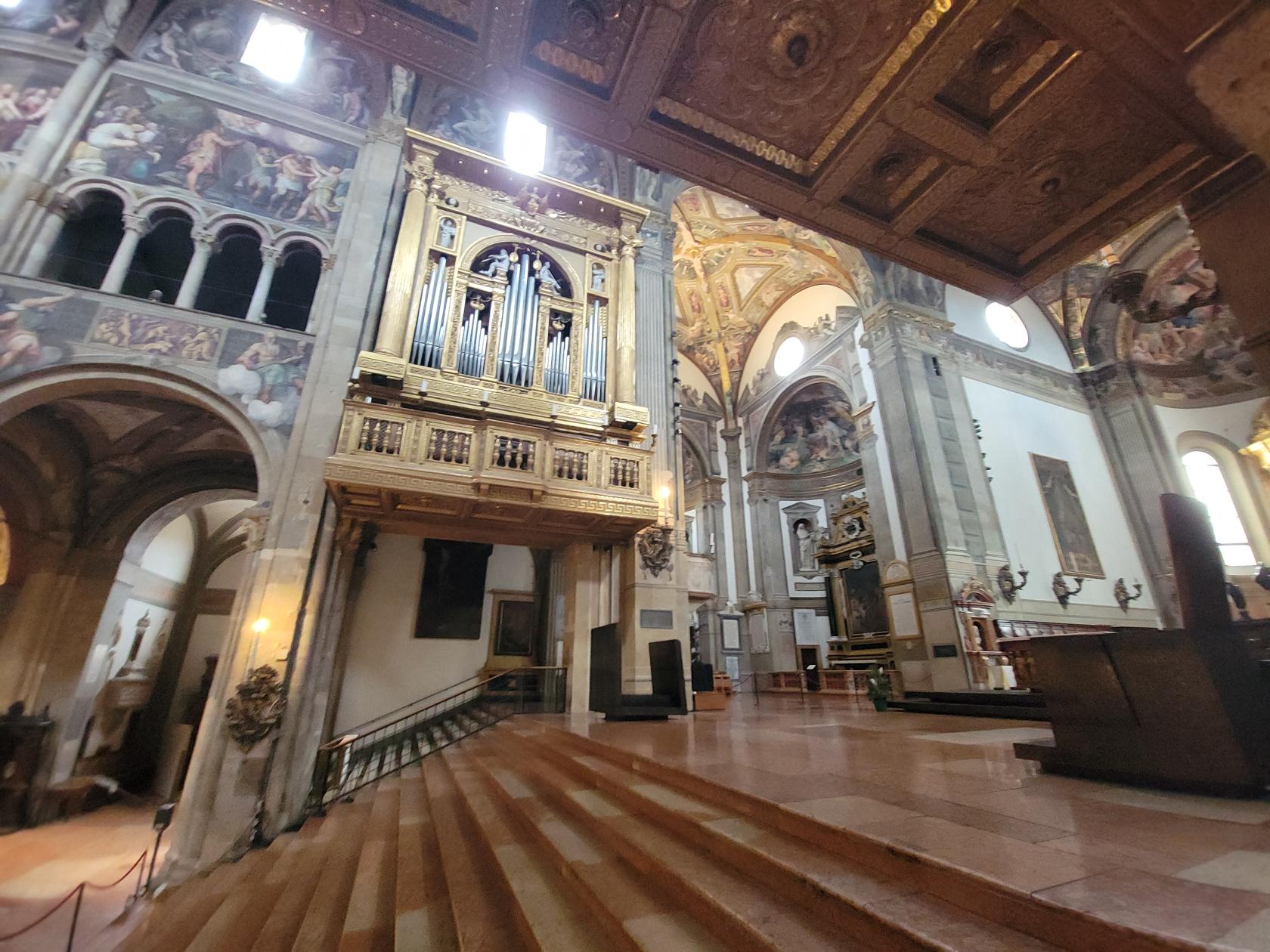
Organ – Cathedral Santa Maria Assunta – Parma, Italy
Ceiling in Crossing – Cathedral Santa Maria Assunta – Parma, Italy
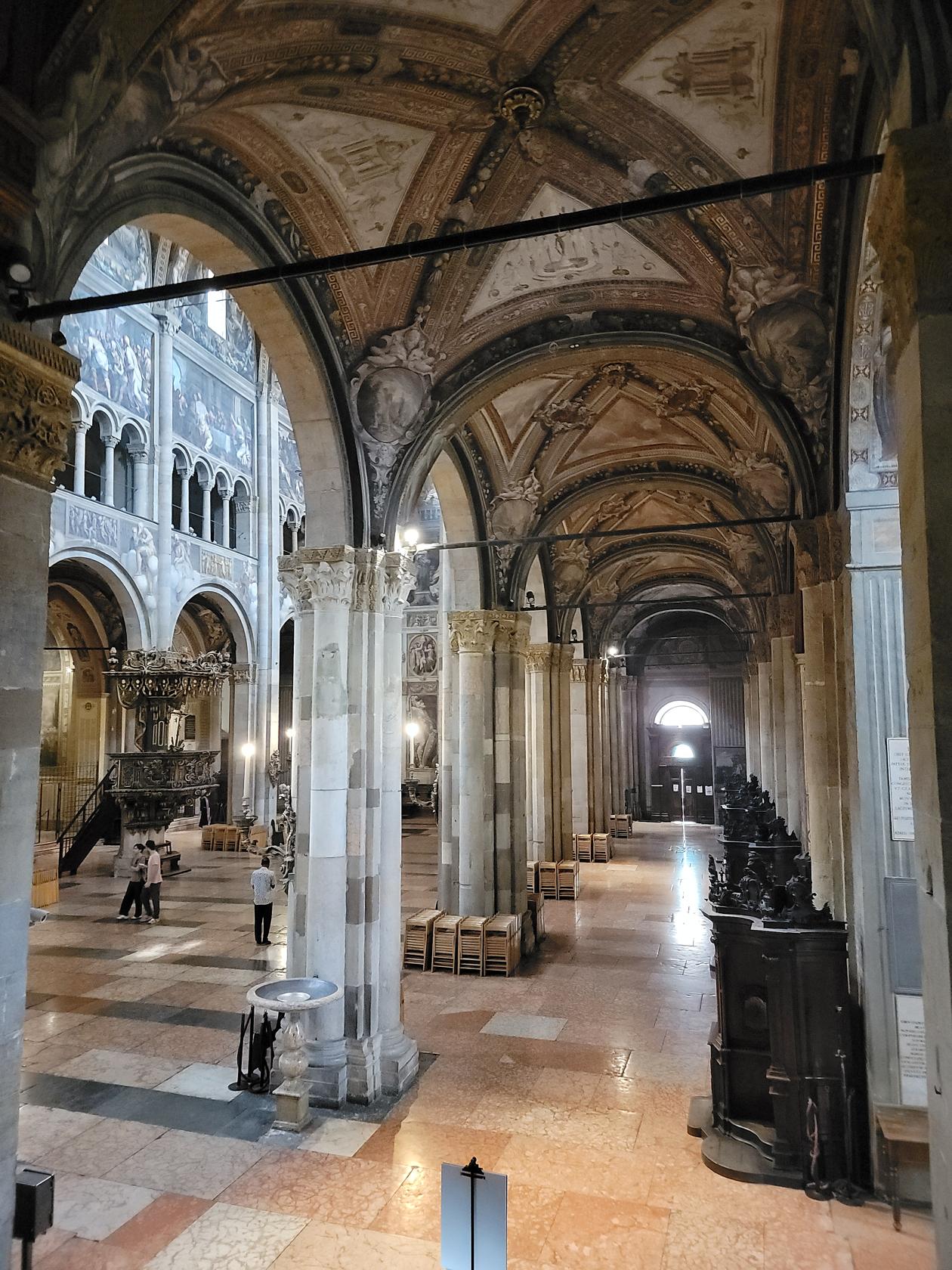
Left Aisle with Confessionals – Cathedral Santa Maria Assunta – Parma, Italy
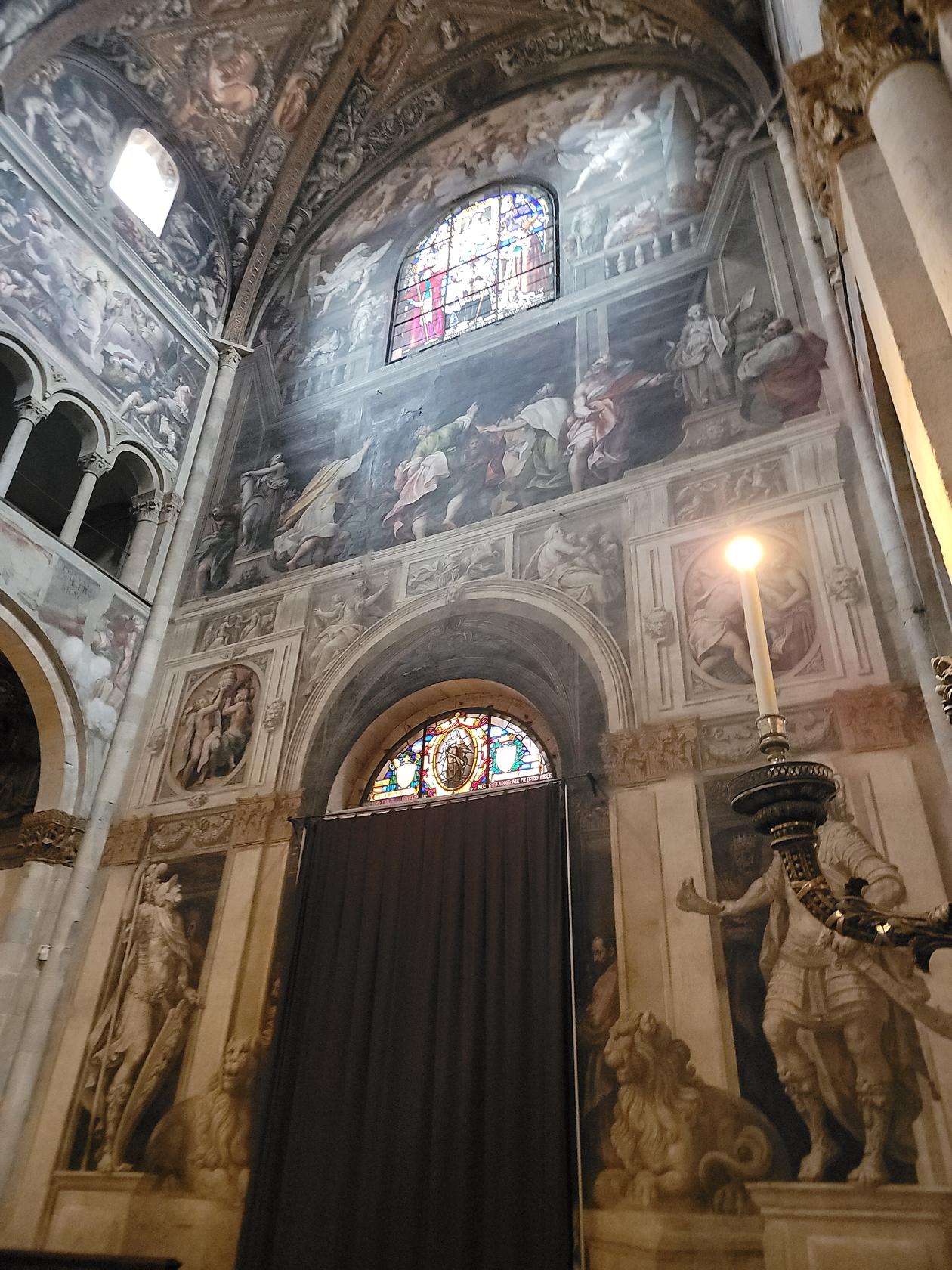
Main Entrance Frescoes – Cathedral Santa Maria Assunta – Parma, Italy
Nave Frescoes – Cathedral Santa Maria Assunta – Parma, Italy
Nave Frescoes and Ceiling – Cathedral Santa Maria Assunta – Parma, Italy
Nave Frescoes and Ceiling – Cathedral Santa Maria Assunta – Parma, Italy
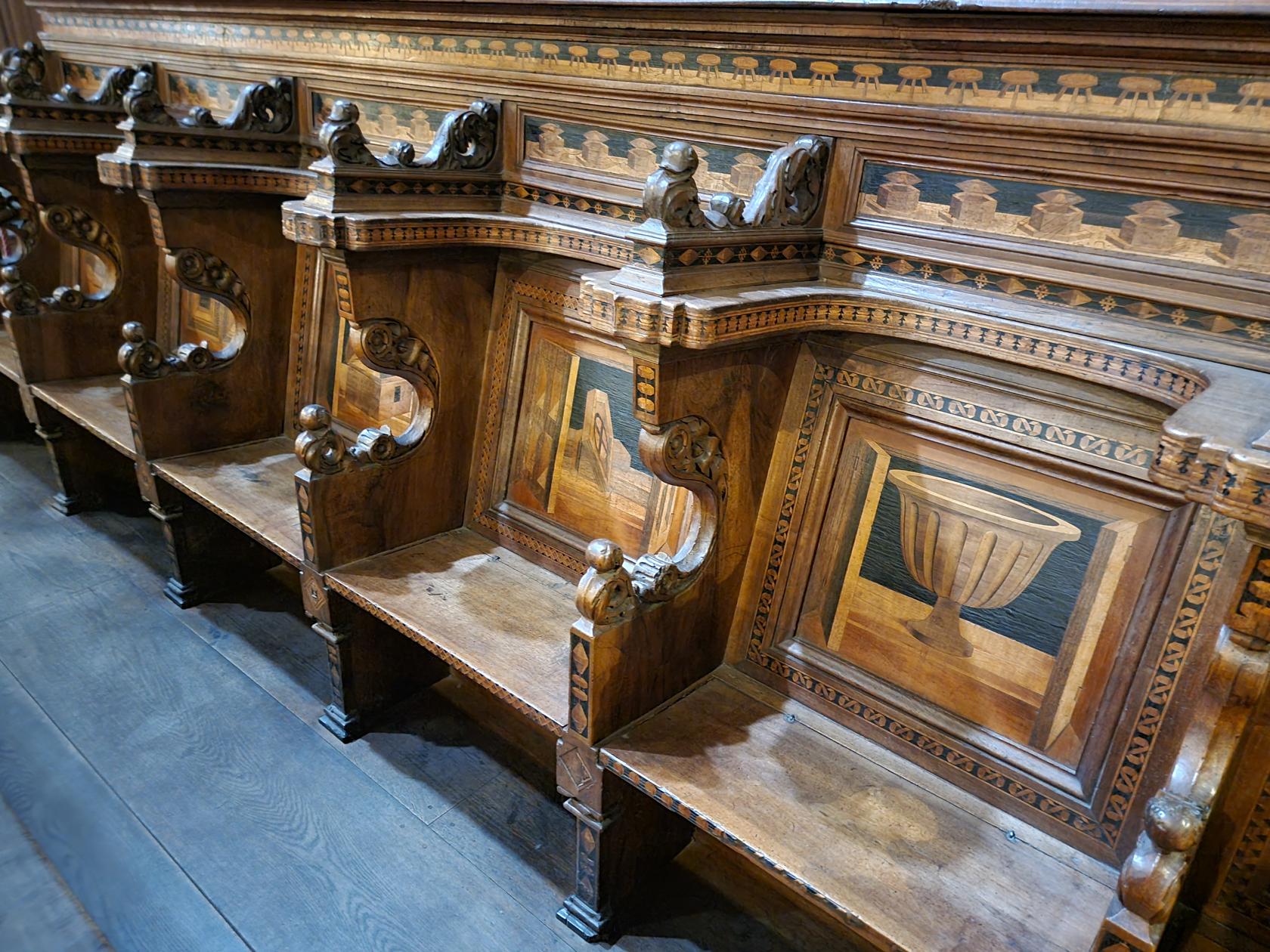
Marquetry in Bishop Pews – Cathedral Santa Maria Assunta – Parma, Italy
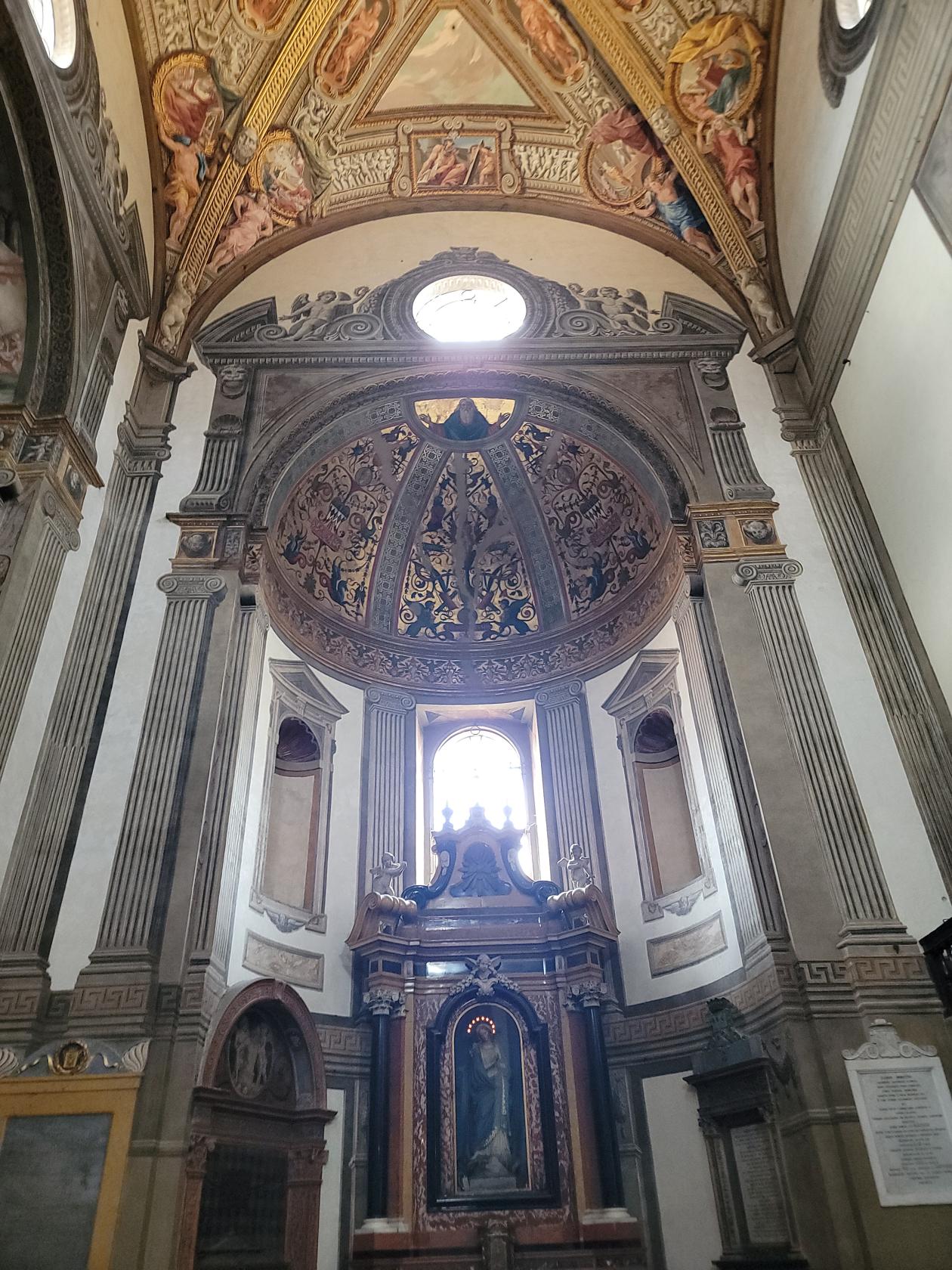
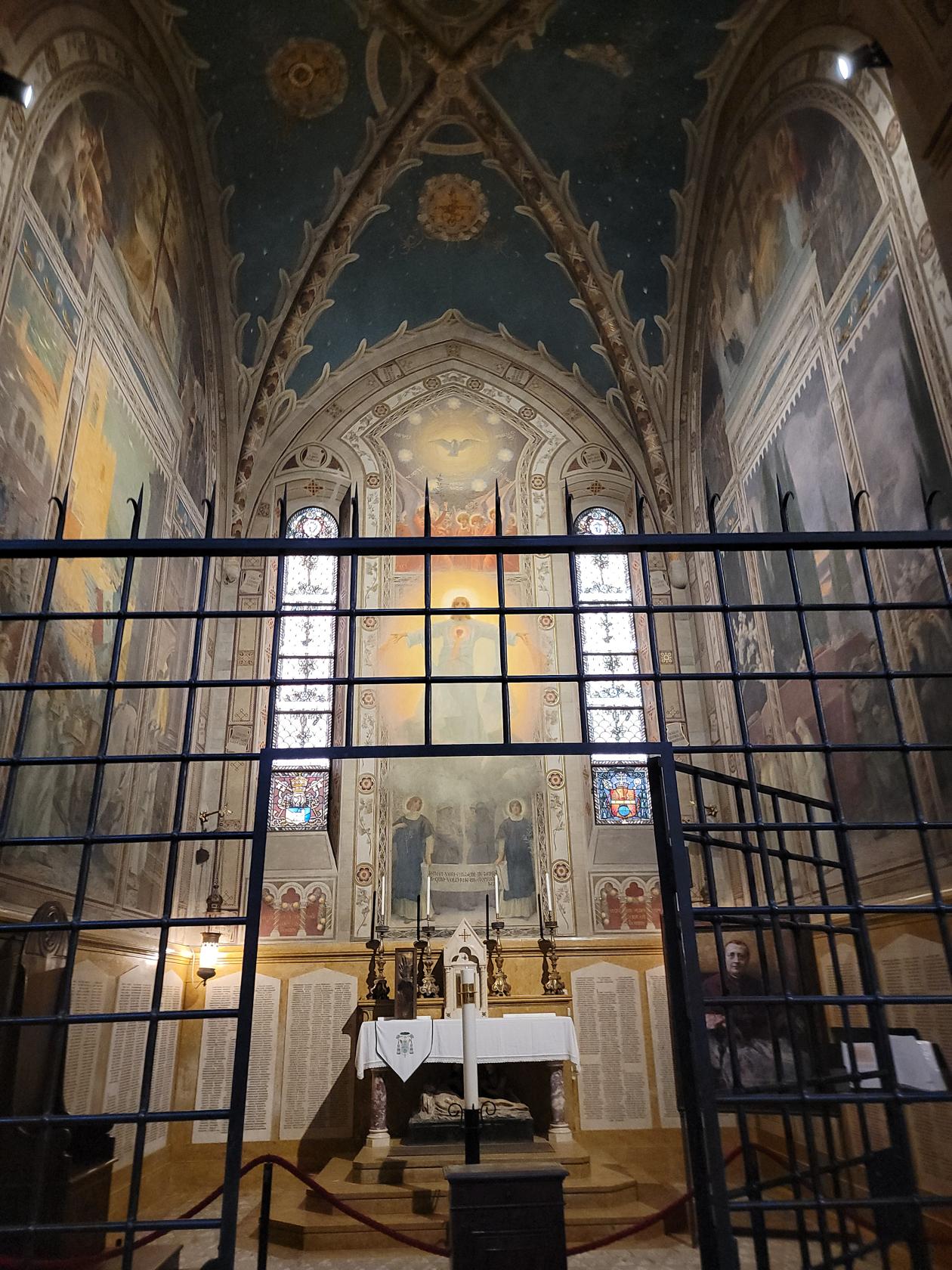
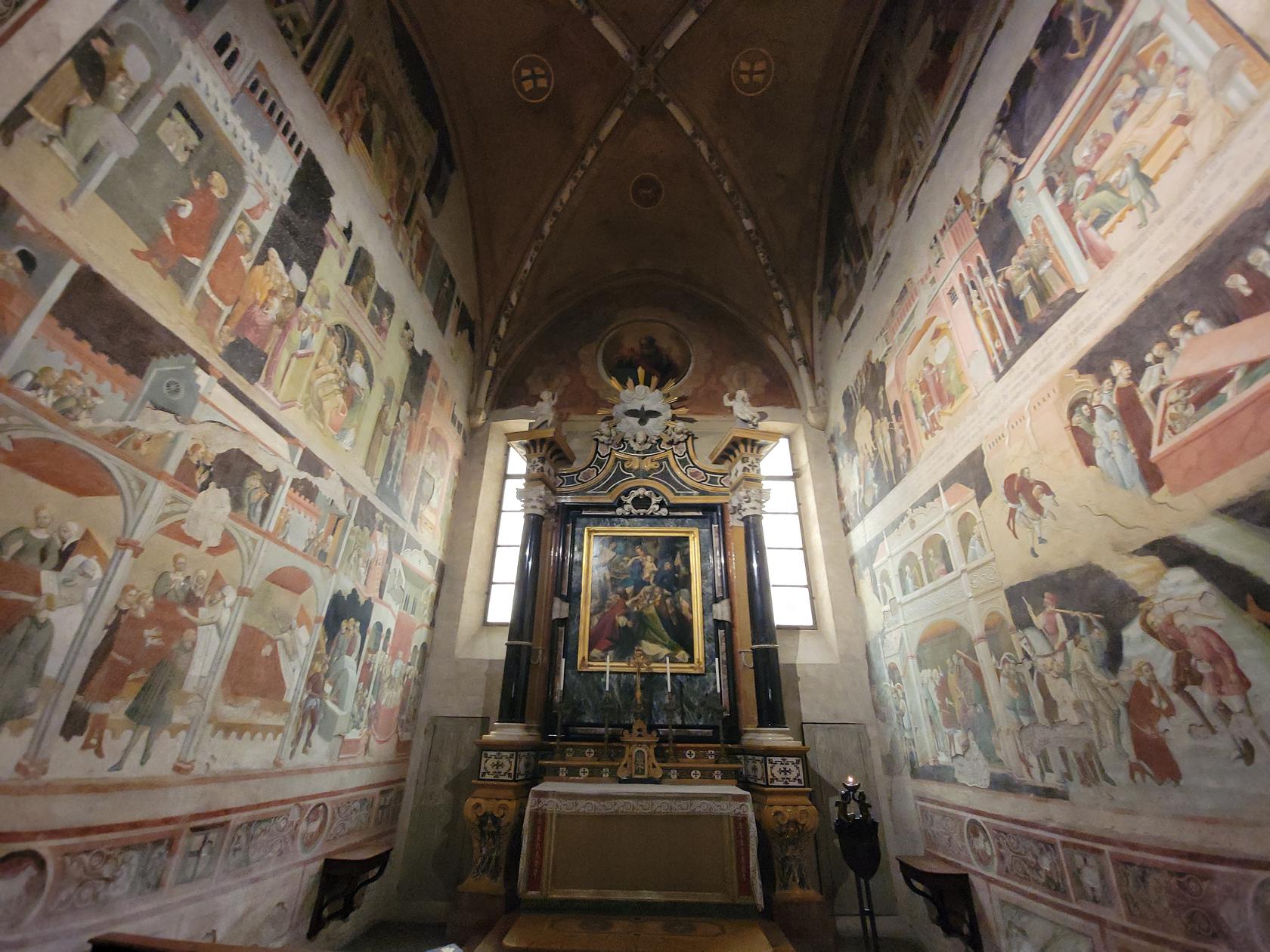
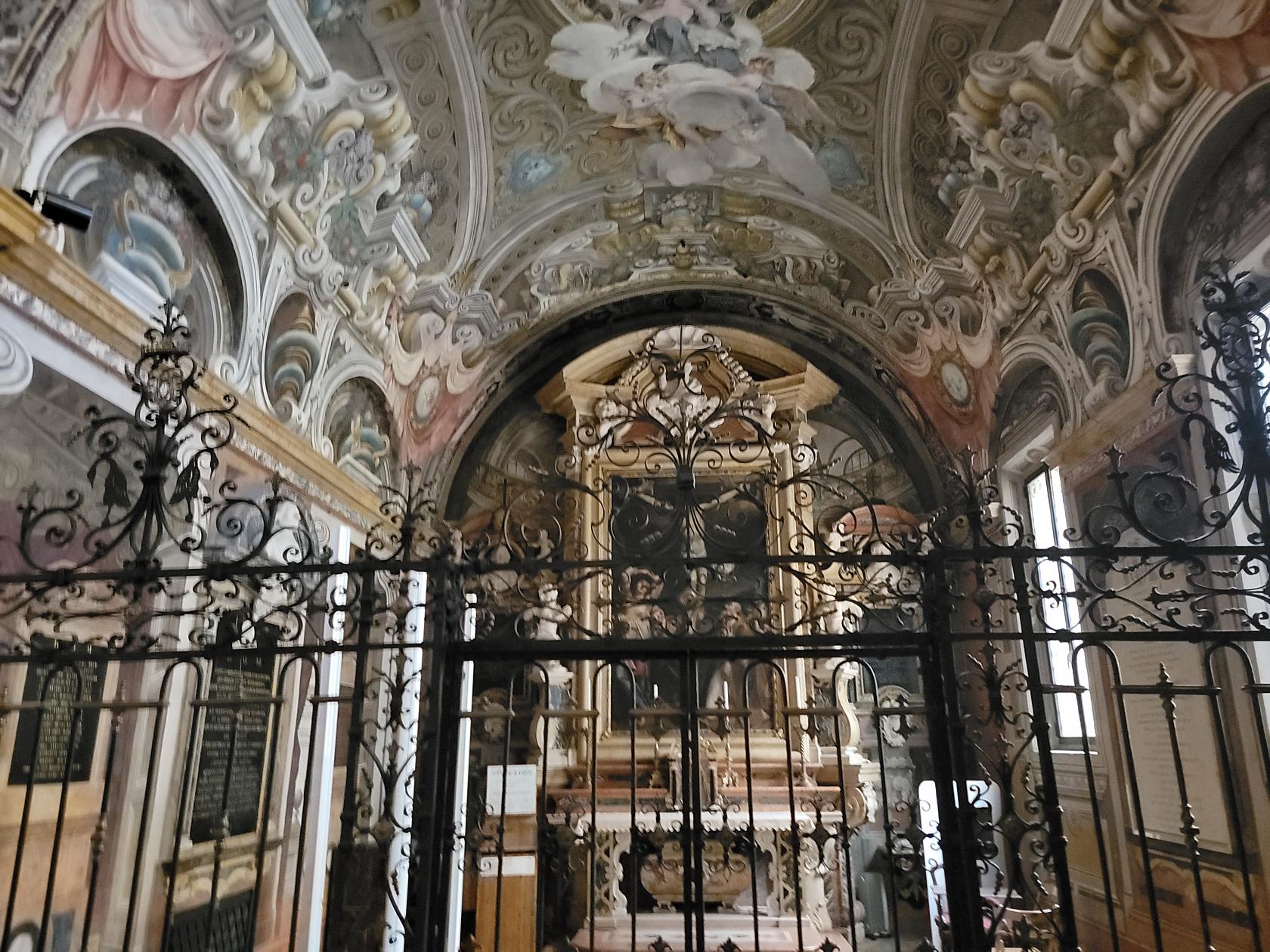
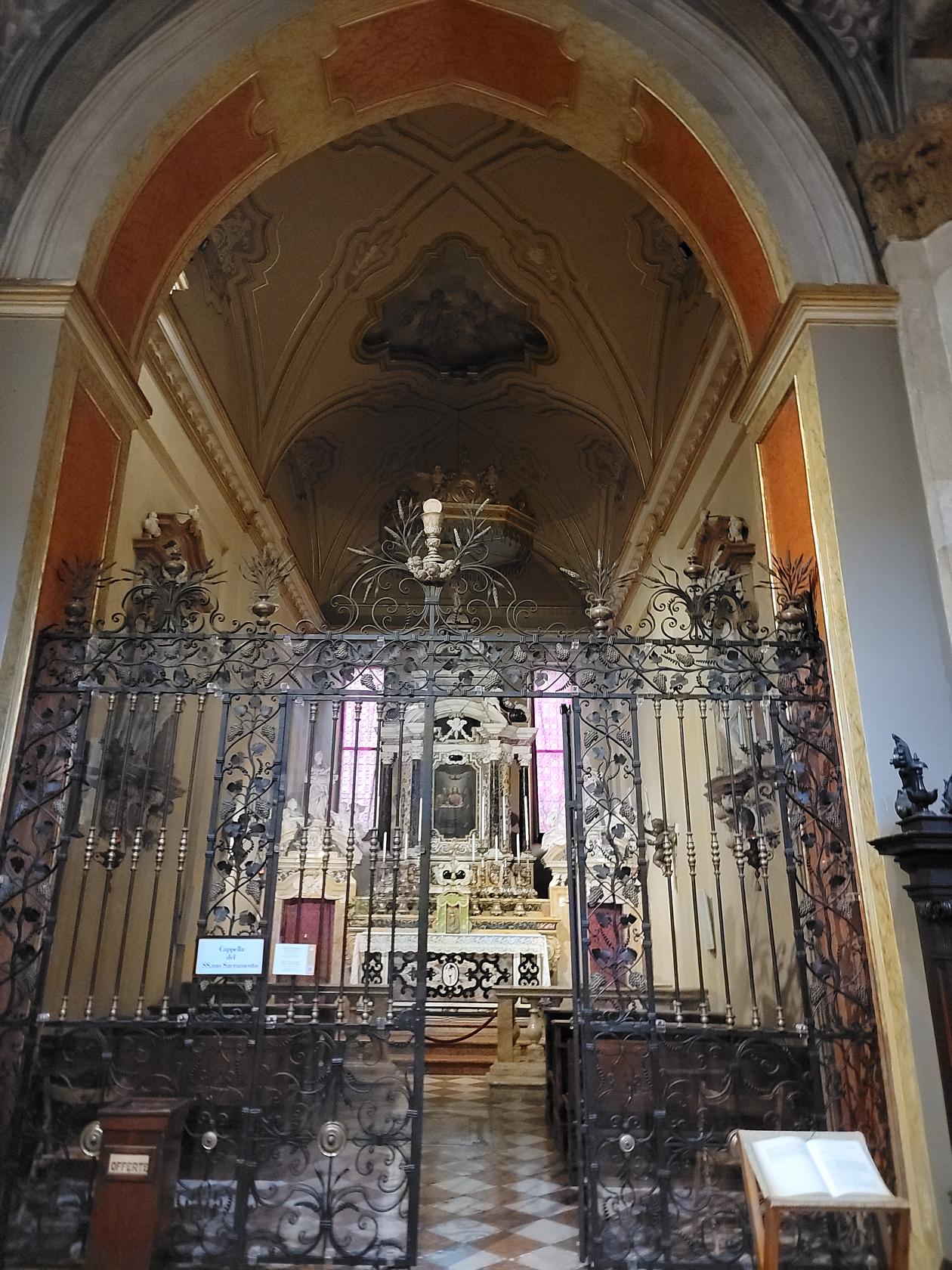
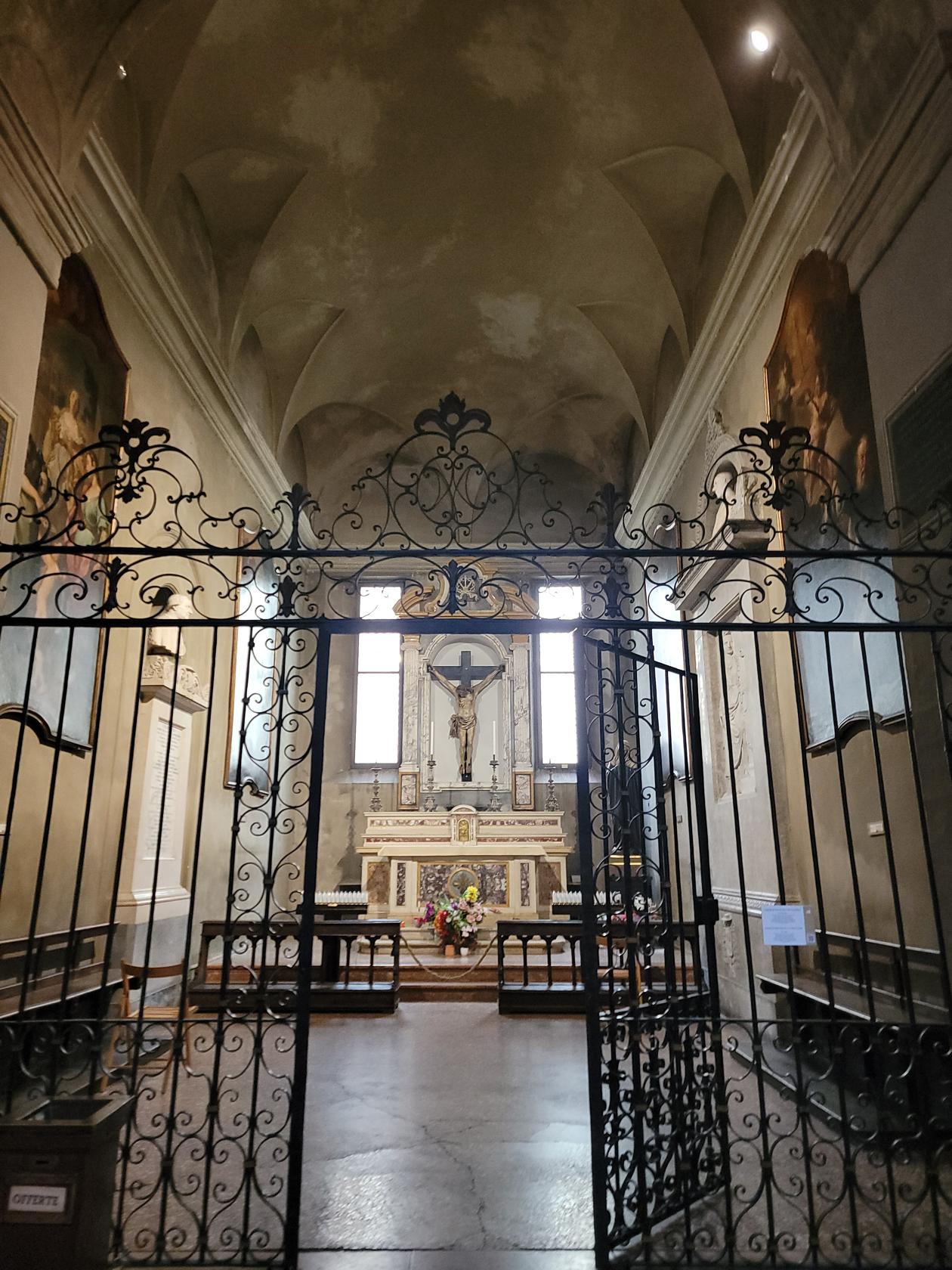
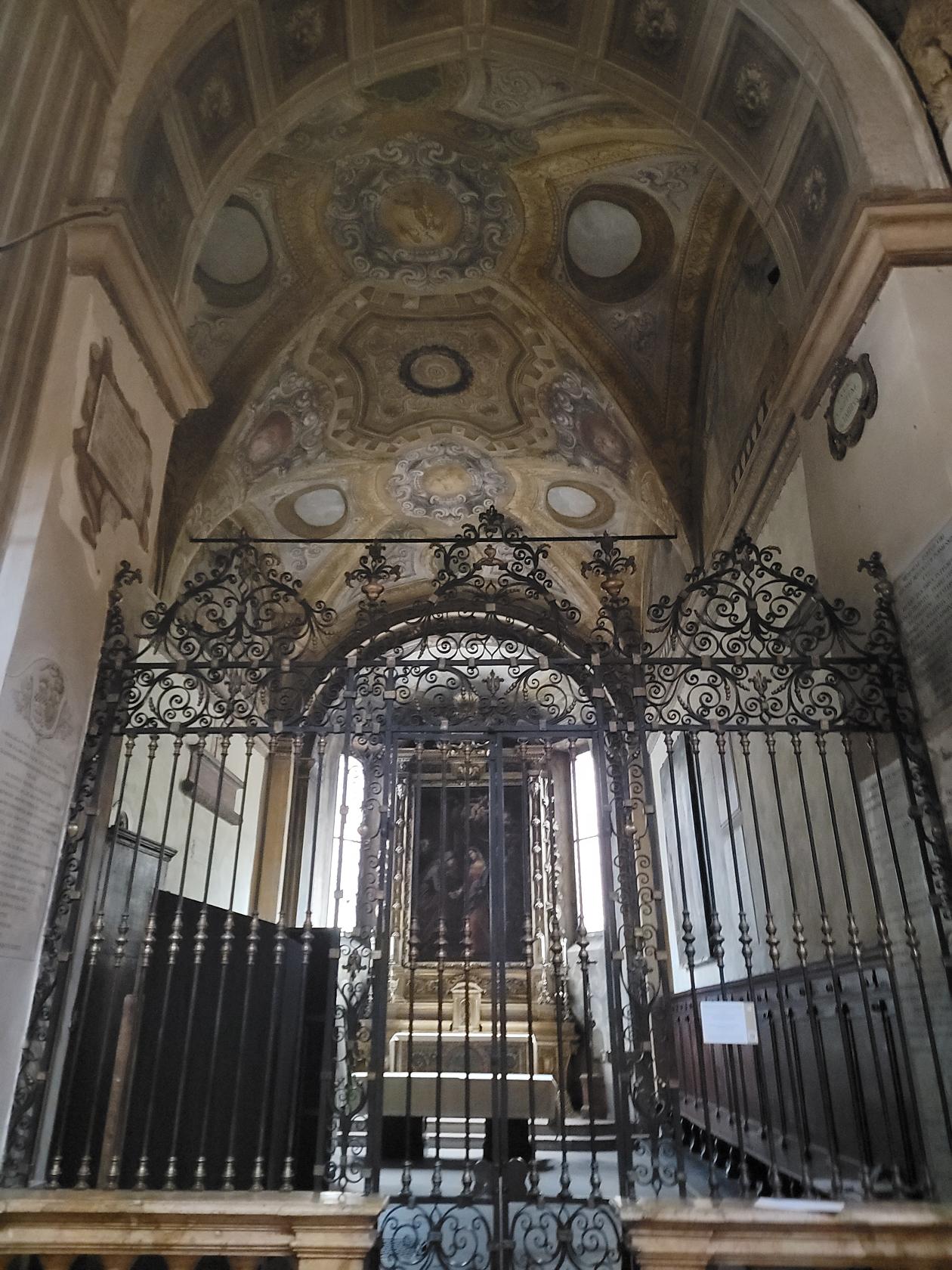
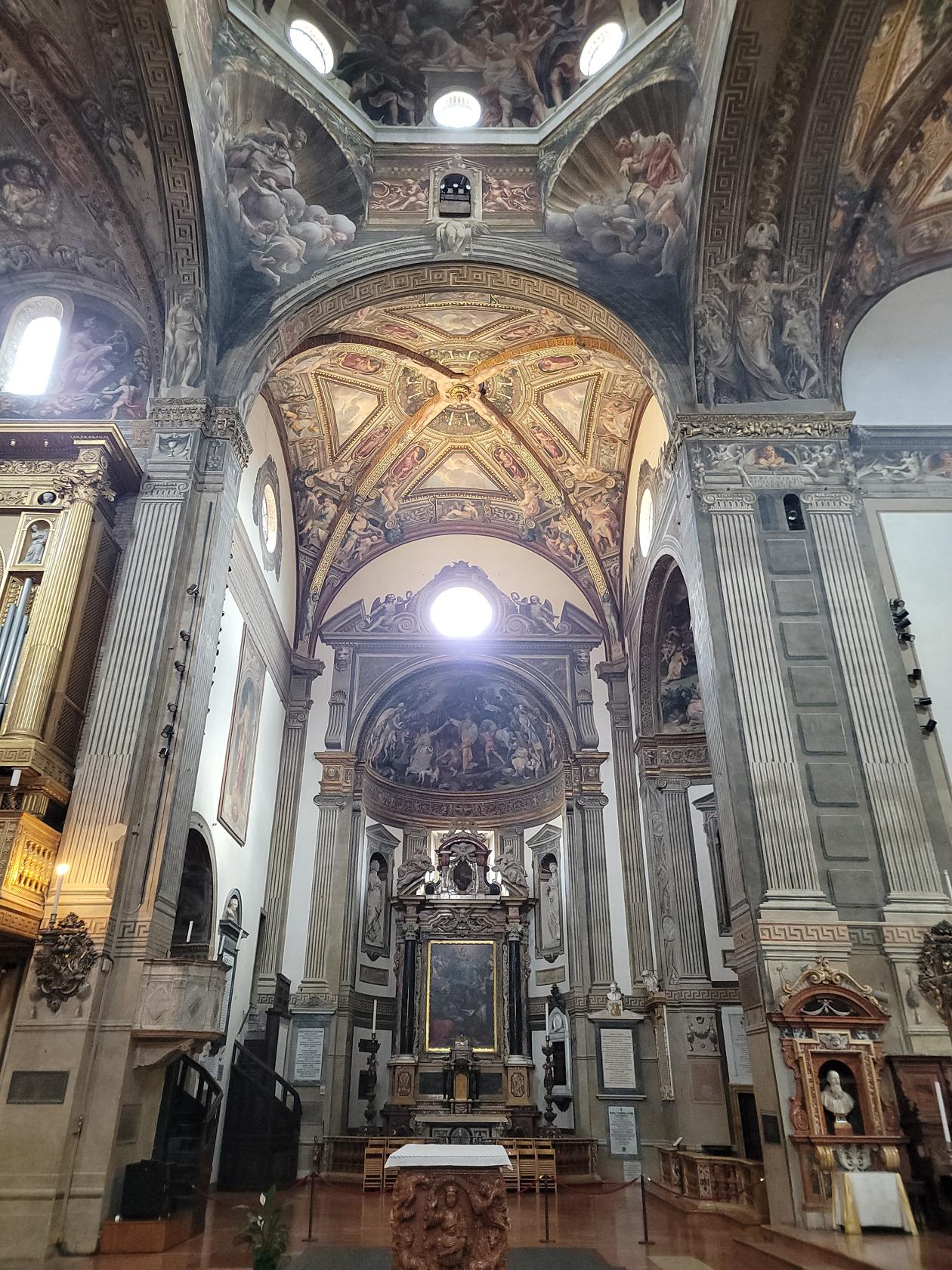
Each aisle contains about six chapels, decorated and commemorated to different aspects of the faith, some used more than others.
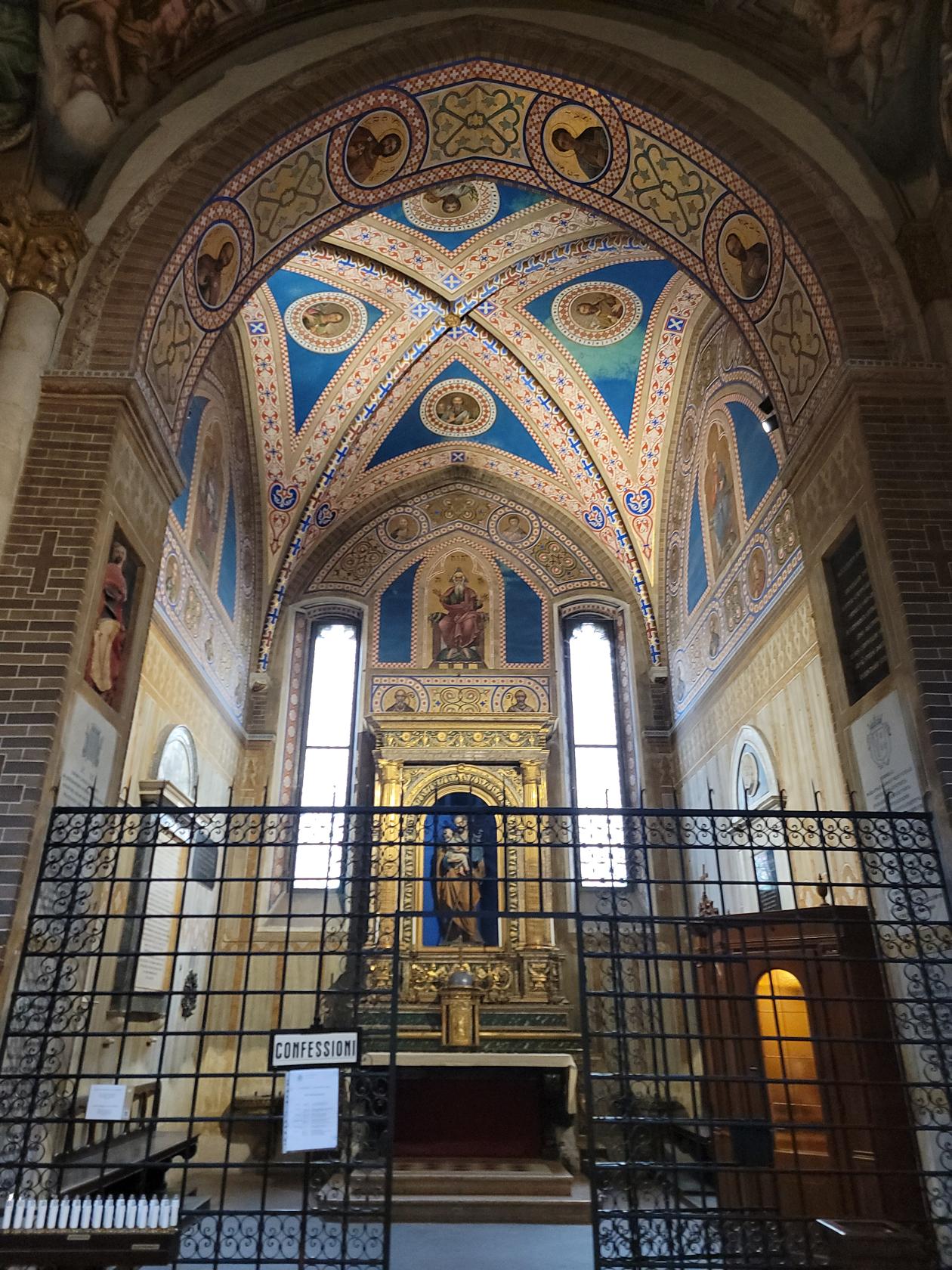
Chapel 1 – Cathedral Santa Maria Assunta – Parma, Italy
Chapel 2 – Cathedral Santa Maria Assunta – Parma, Italy
Chapel 3 – Cathedral Santa Maria Assunta – Parma, Italy
Chapel 6 – Cathedral Santa Maria Assunta – Parma, Italy
Chapel 4 – Cathedral Santa Maria Assunta – Parma, Italy
Chapel 5 – Cathedral Santa Maria Assunta – Parma, Italy
Chapel 7 – Cathedral Santa Maria Assunta – Parma, Italy
Chapel 8 – Cathedral Santa Maria Assunta – Parma, Italy
Chapel 9 – Cathedral Santa Maria Assunta – Parma, Italy
Chapel 10 – Cathedral Santa Maria Assunta – Parma, Italy
Chapel 11 – Cathedral Santa Maria Assunta – Parma, Italy
Side Altar and Transept – Cathedral Santa Maria Assunta – Parma, Italy
Parma Baptistry
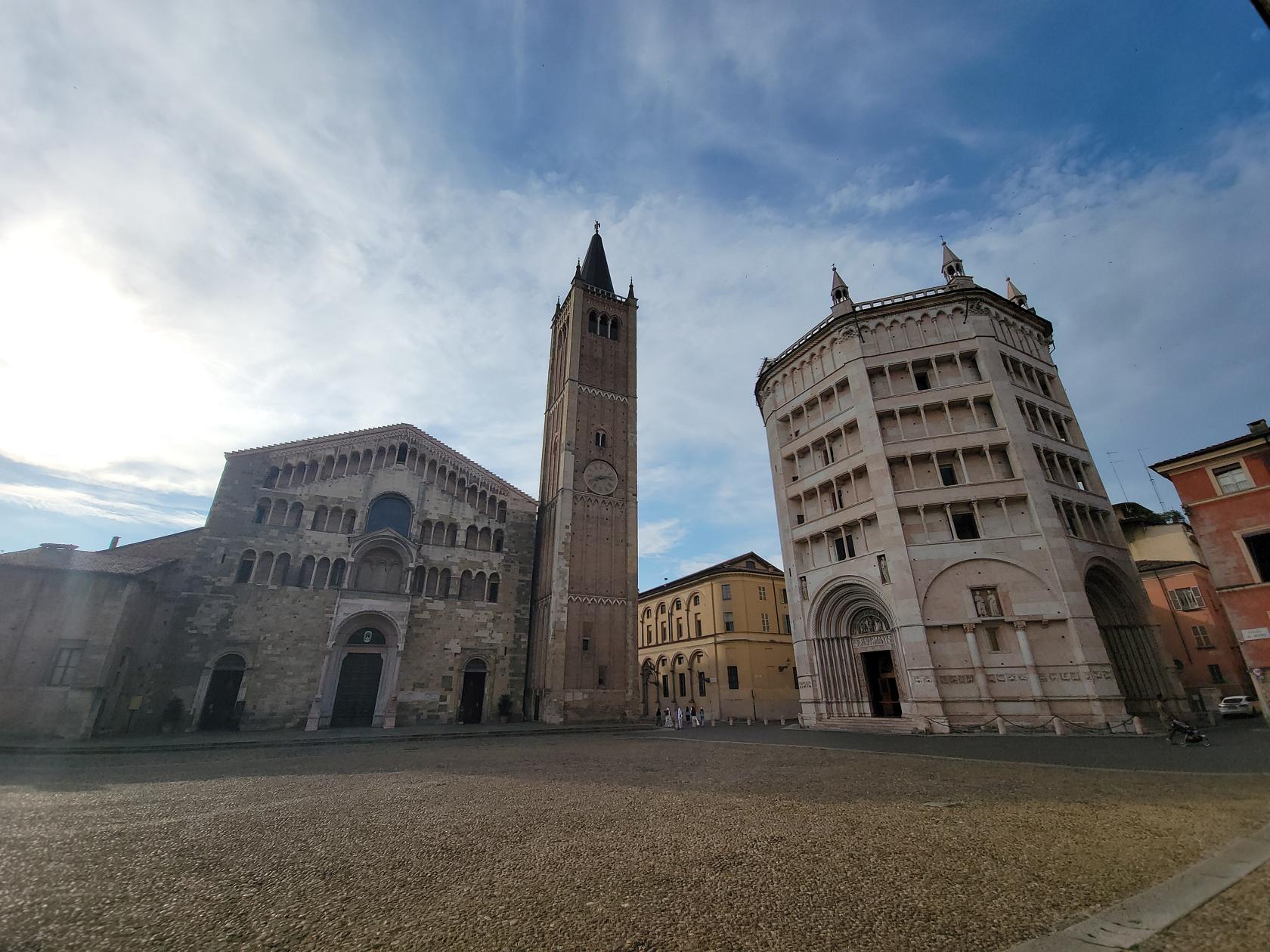
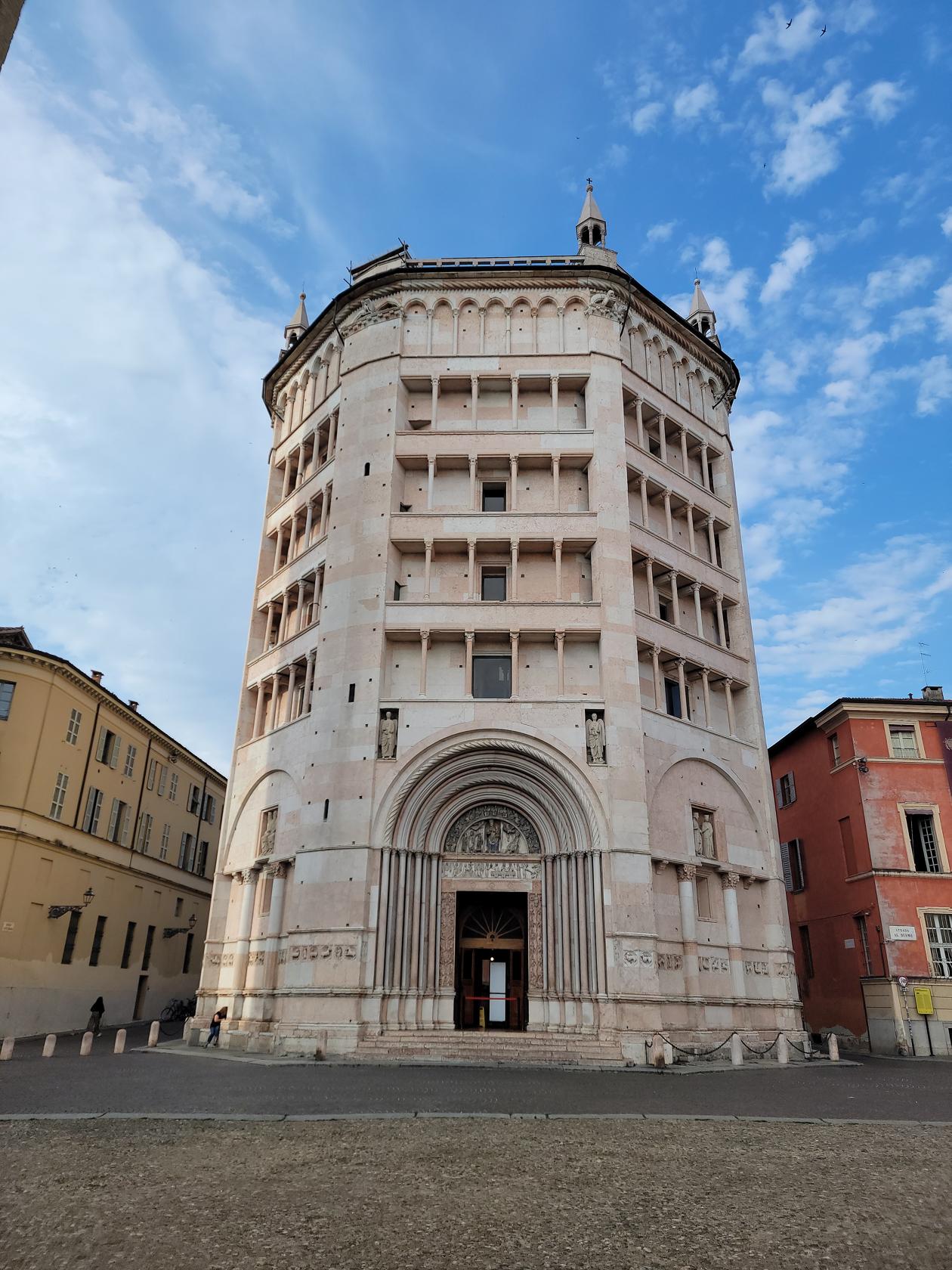
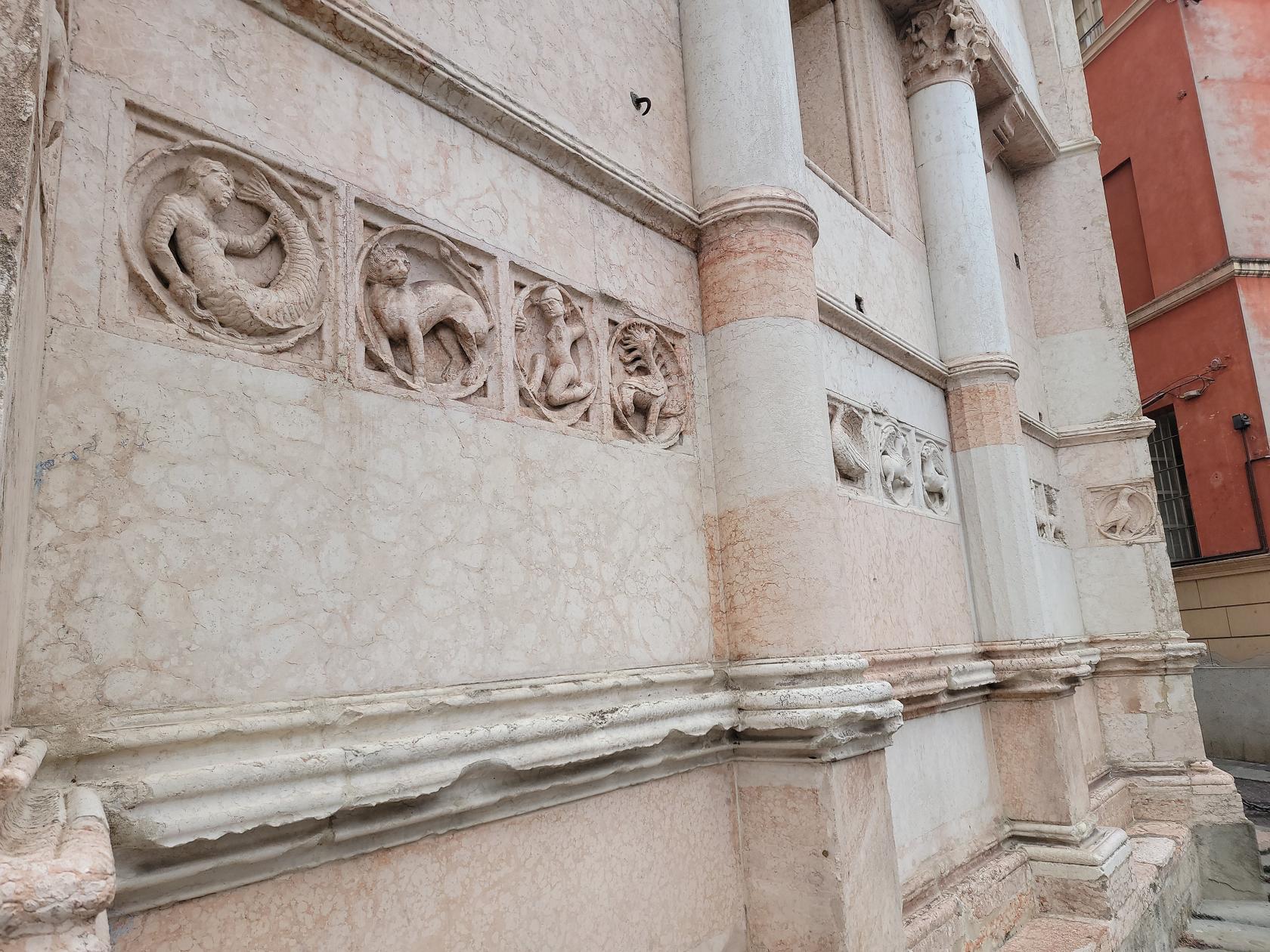
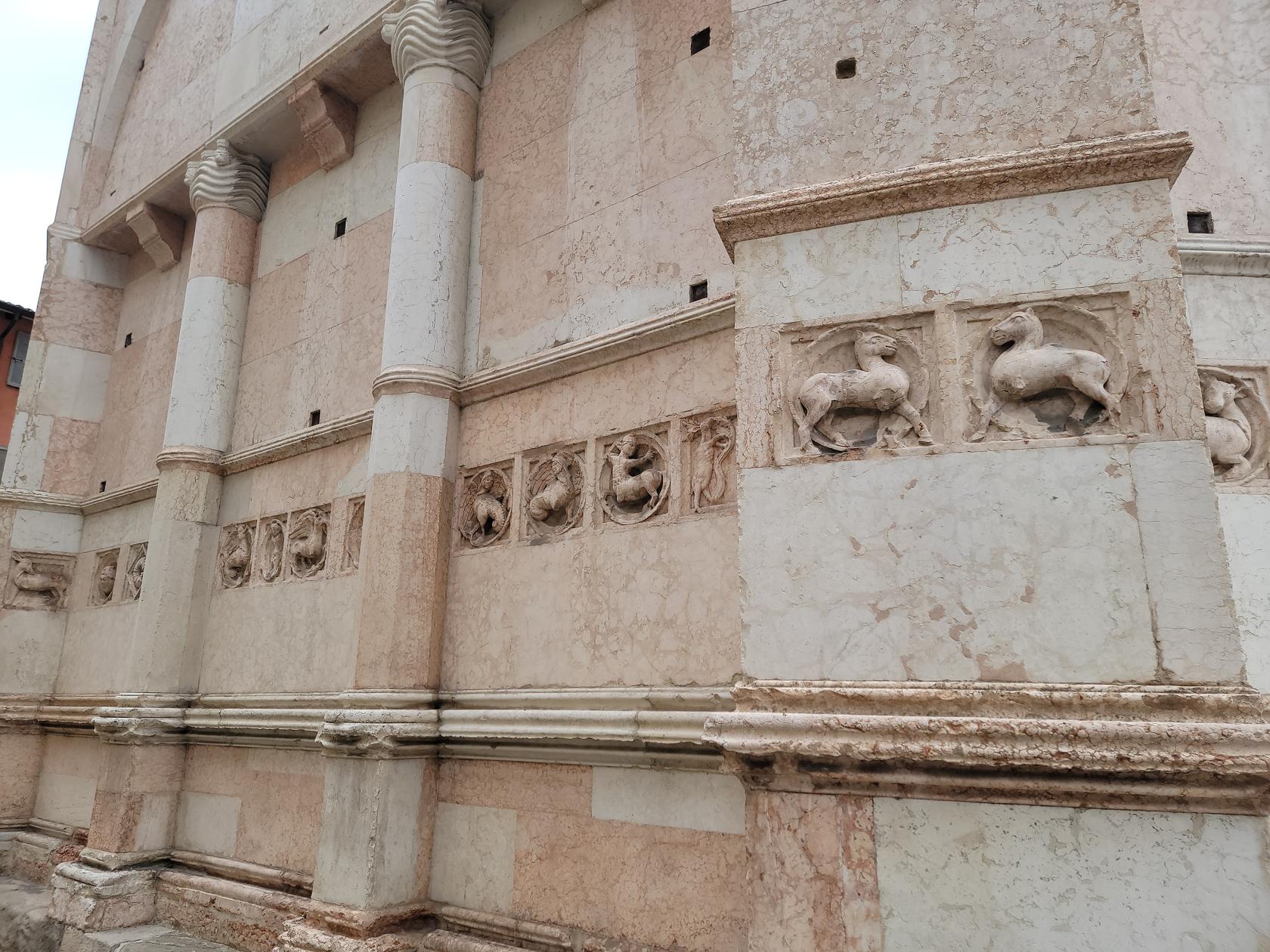
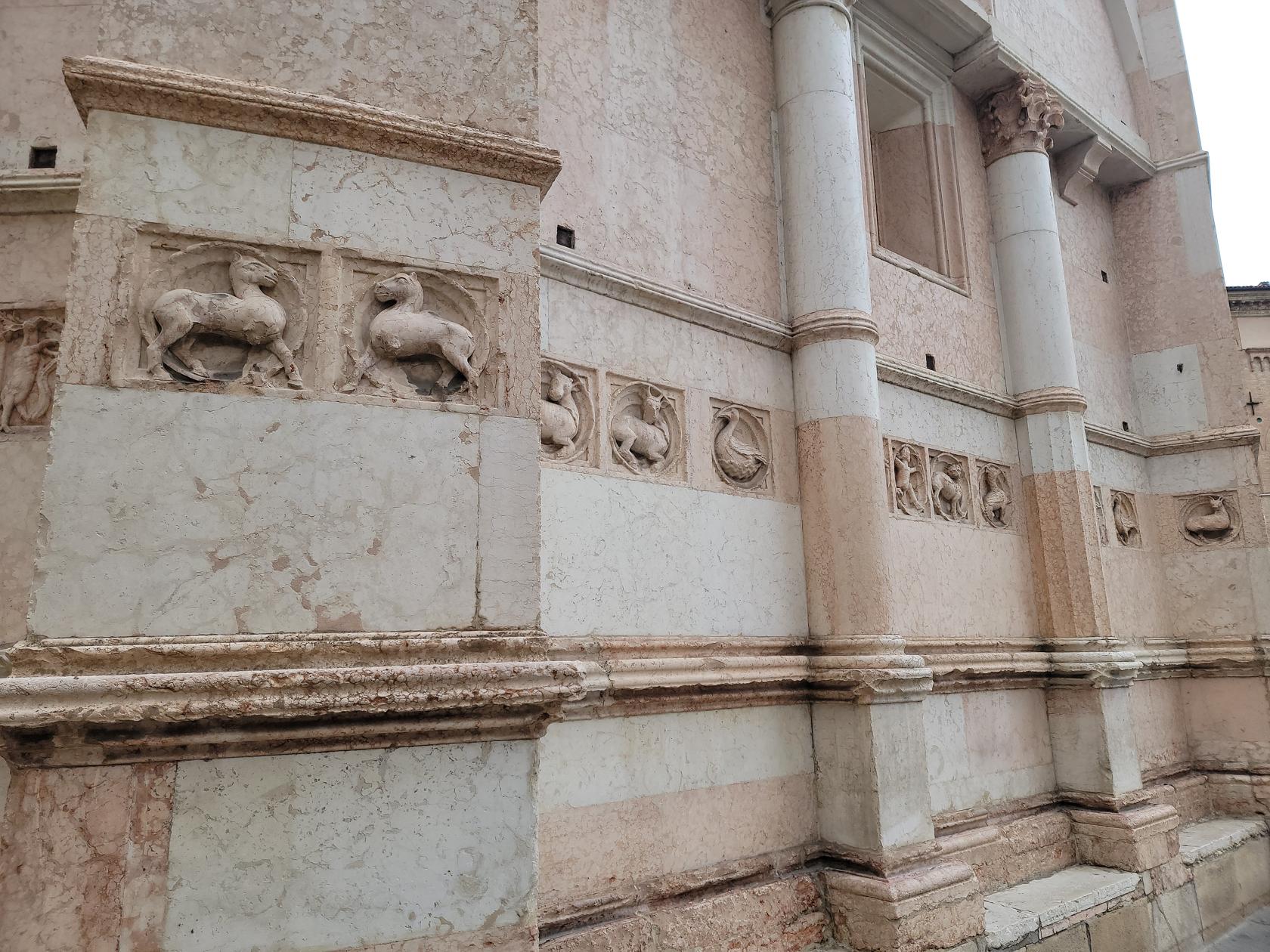
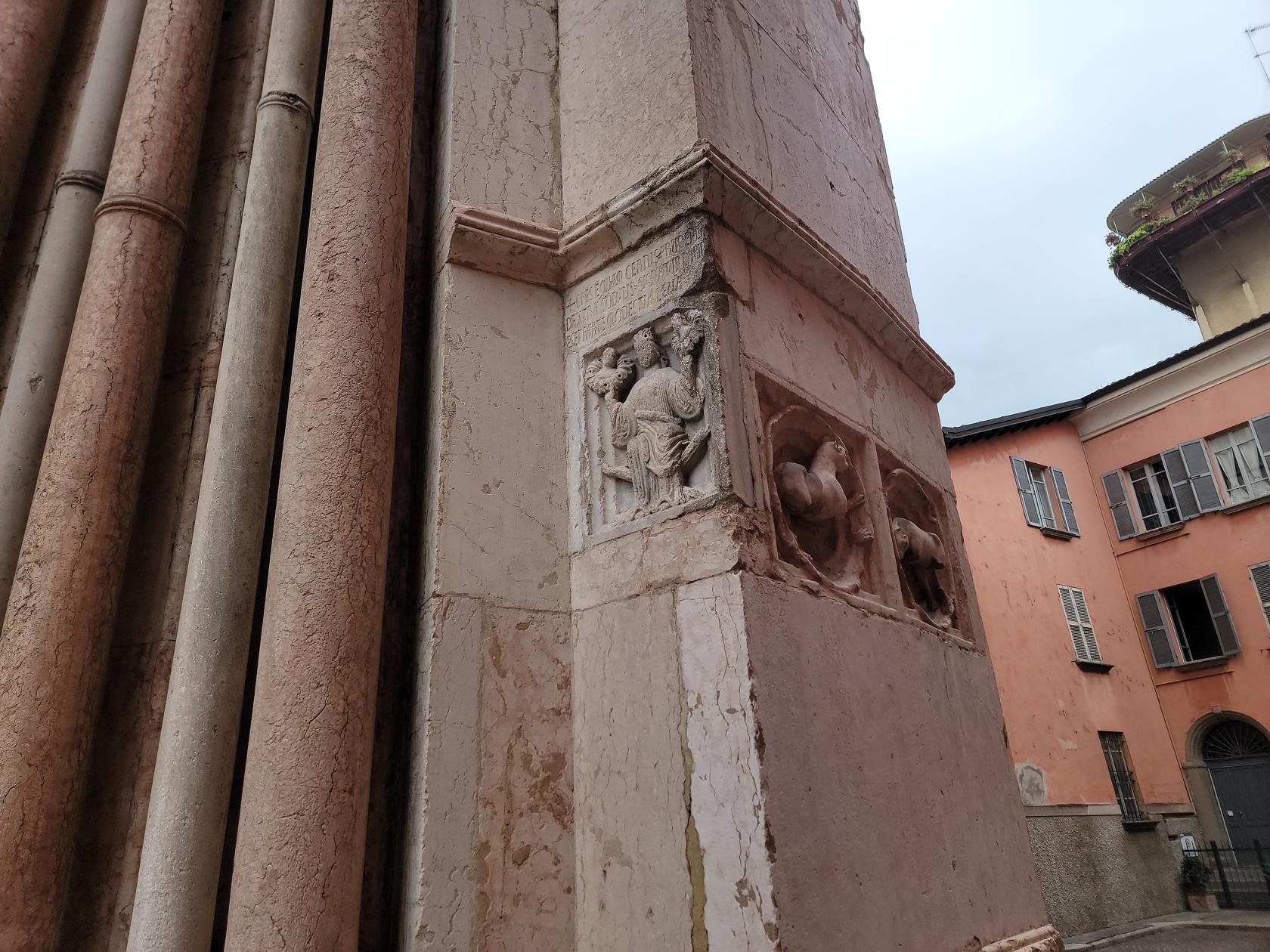
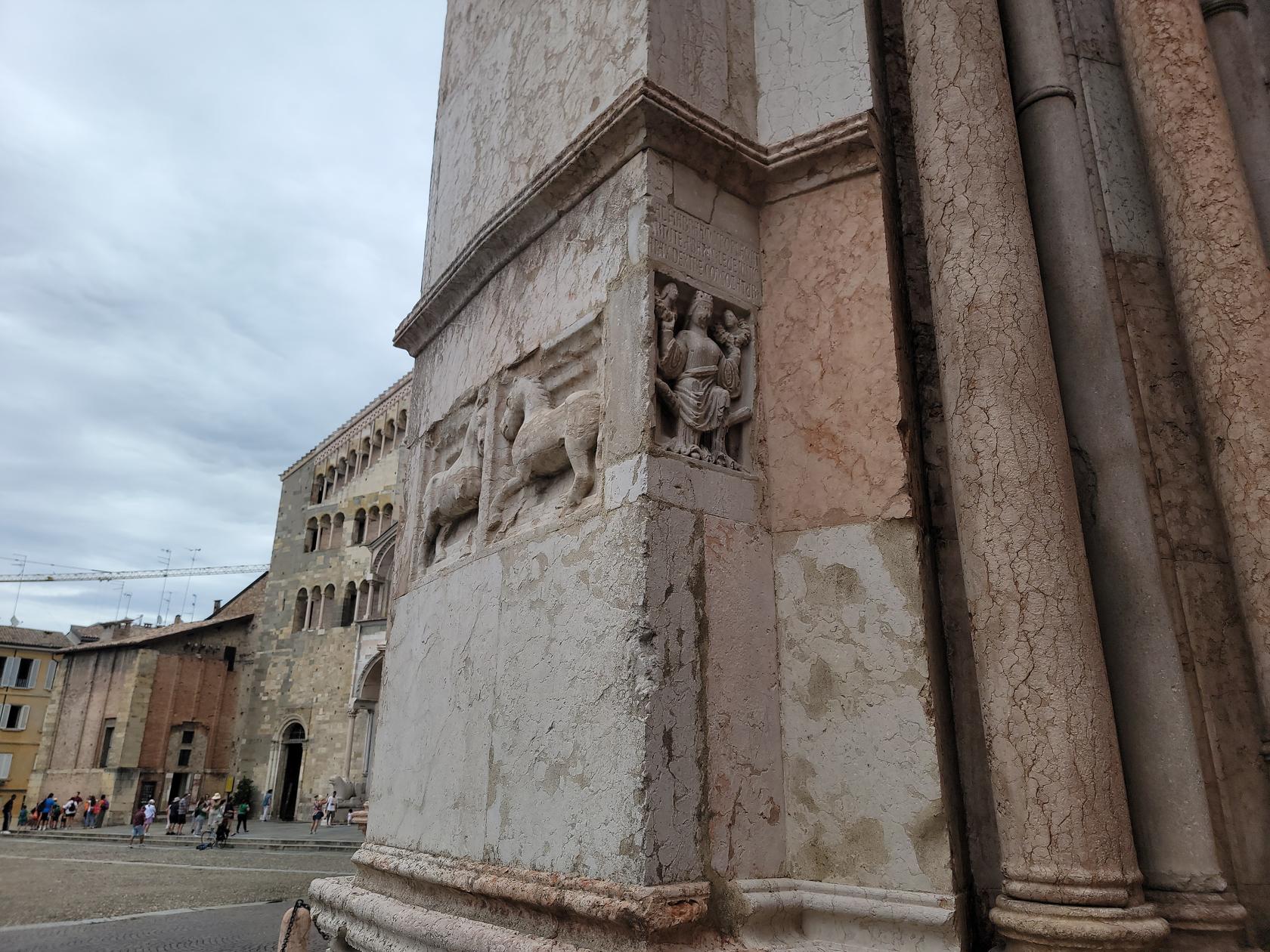
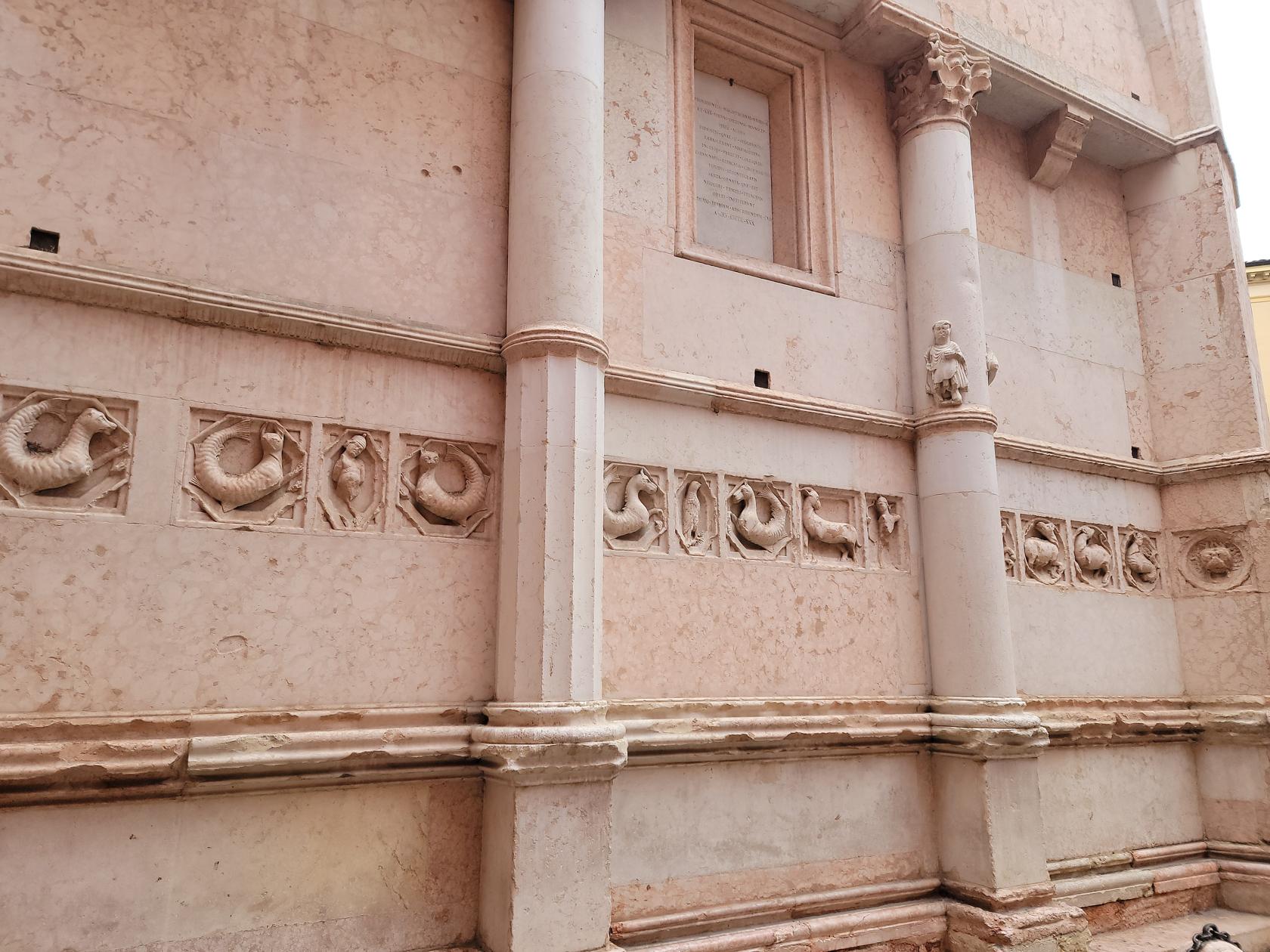
Adjacent to the Cathedral of Parma is the Baptistry. From the outside it is a rather tall eight side building that is elegantly carved on the outside with many different depictions of creatures and people, some flaunting animal appendages, while others appear almost mythological.
Piazza Duomo – Cathedral Santa Maria Assunta and Baptistry – Parma, Italy
Front and Main Entrance – Baptistry – Parma, Italy
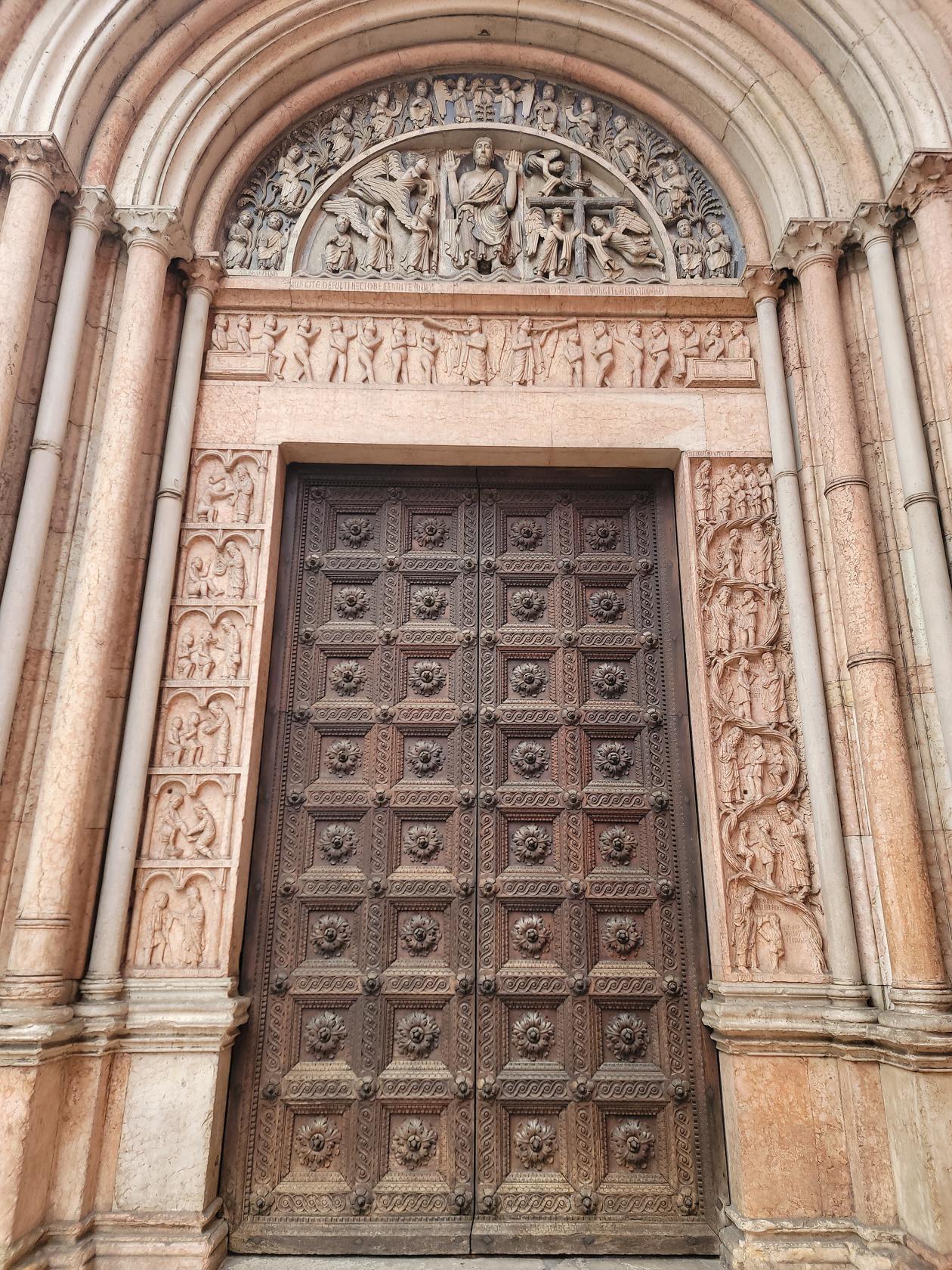
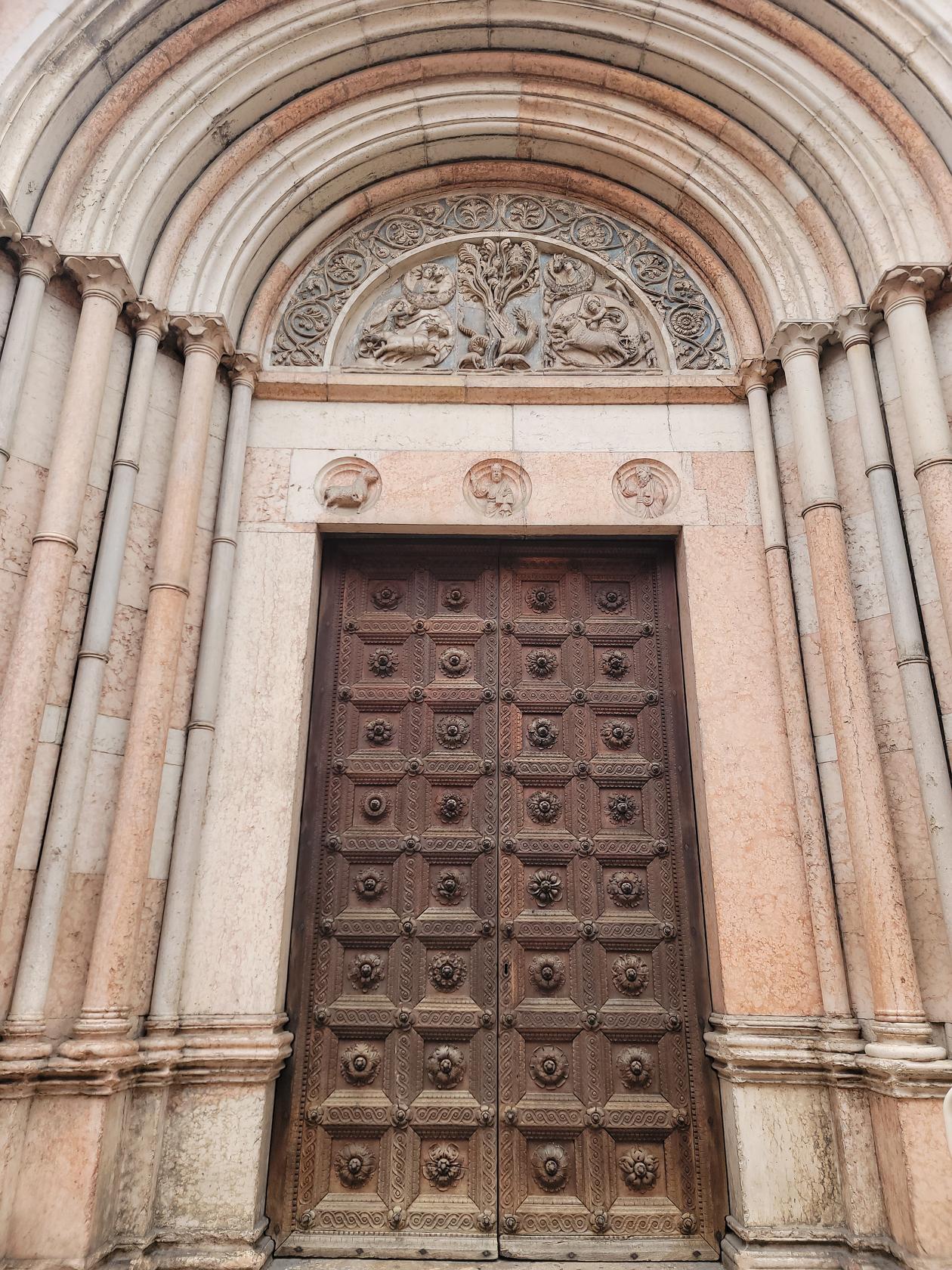
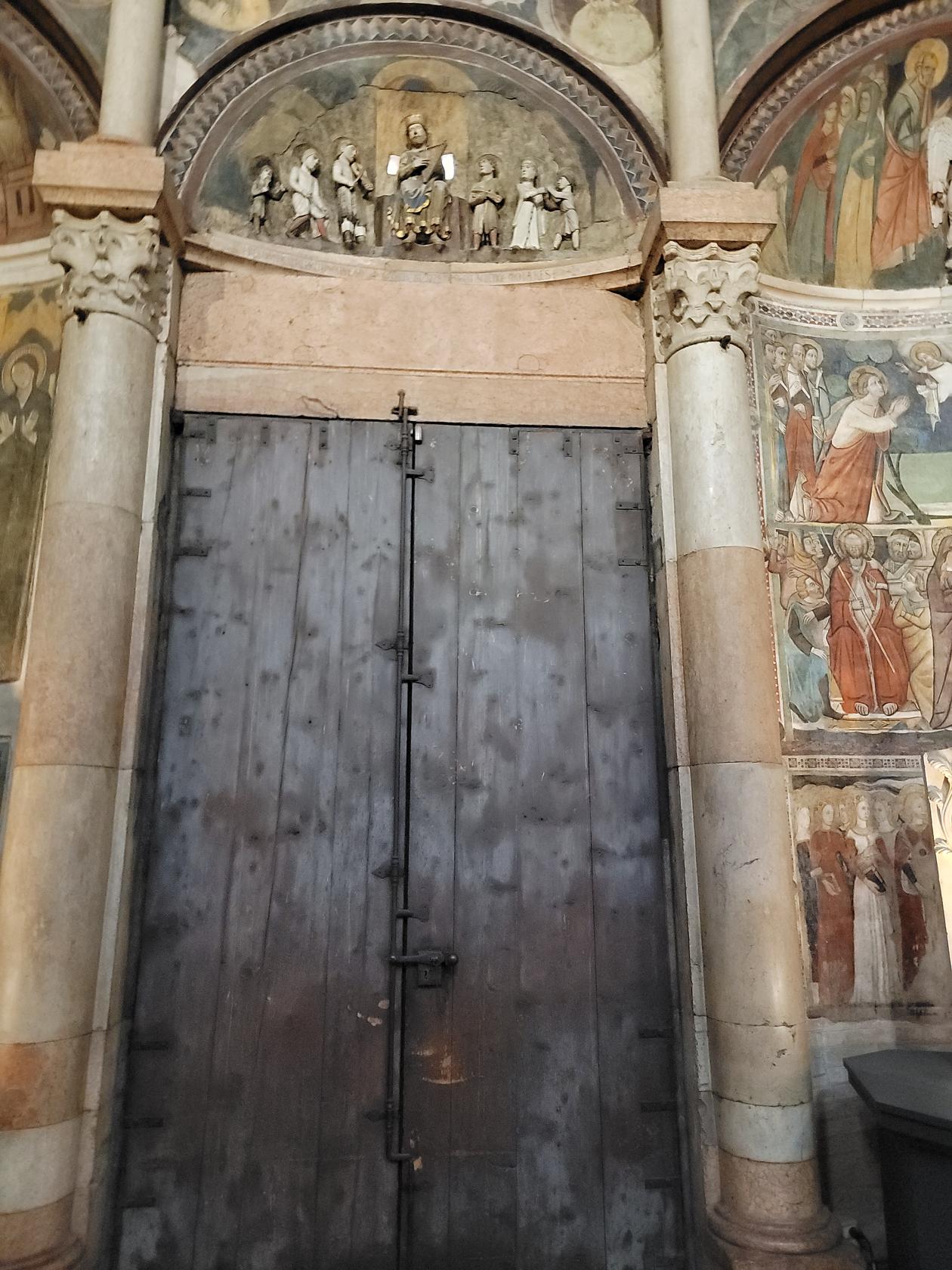
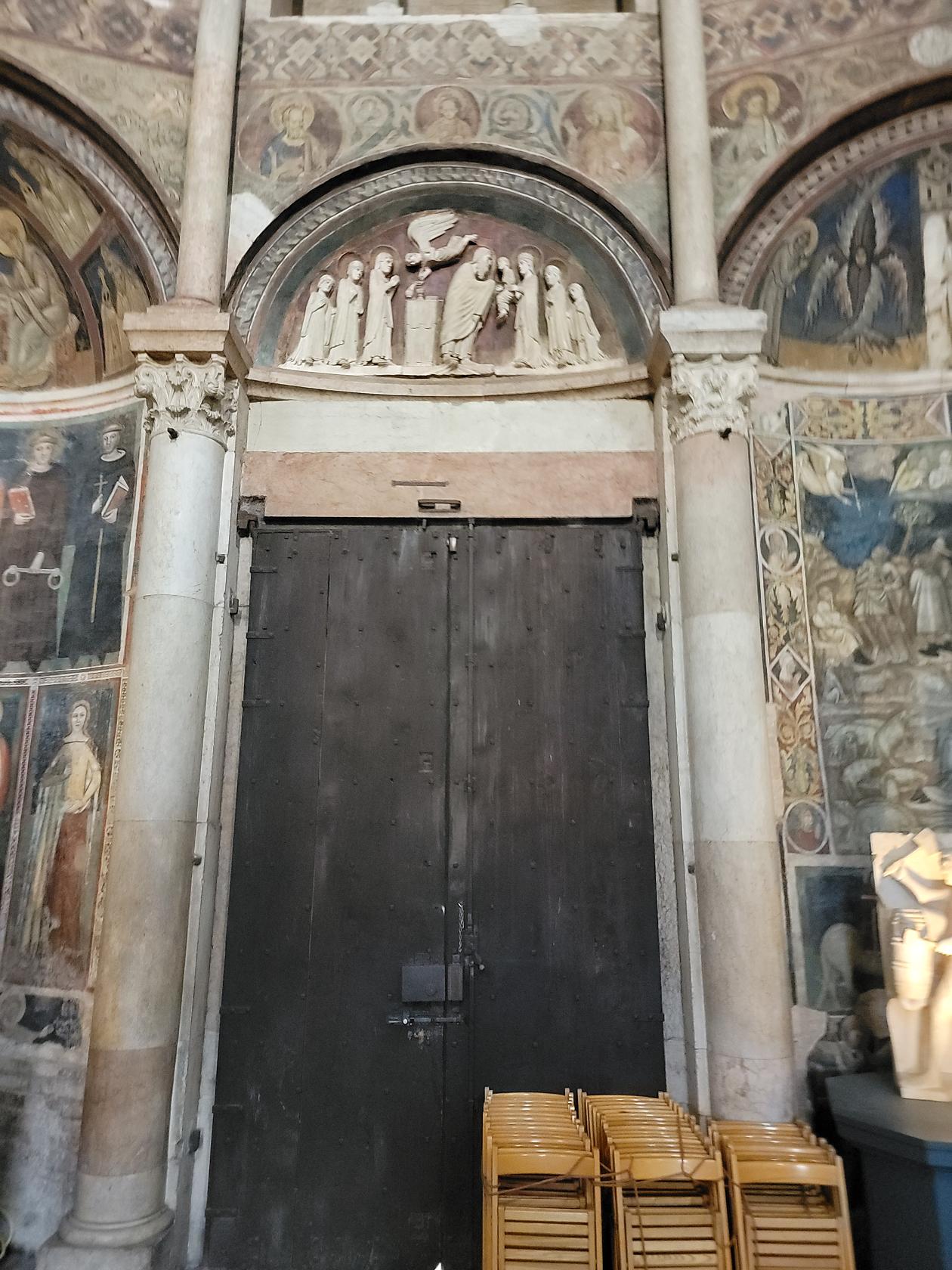
The main entrance faces northward and is adorned with a tympanum and other decorations, much like westward facing entrance. The rear entrance is less attactive and not as ornate as the other two, for reasons unknown.
Tympanum and Right Side Entry Details Outside – Baptistry – Parma, Italy
Tympanum and Left Side Entry Details Outside – Baptistry – Parma, Italy
Marble Relief Outside – Baptistry – Parma, Italy
Marble Relief Outside – Baptistry – Parma, Italy
Marble Relief Outside – Baptistry – Parma, Italy
Marble Relief Outside – Baptistry – Parma, Italy
Marble Relief Outside – Baptistry – Parma, Italy
Marble Relief Outside – Baptistry – Parma, Italy
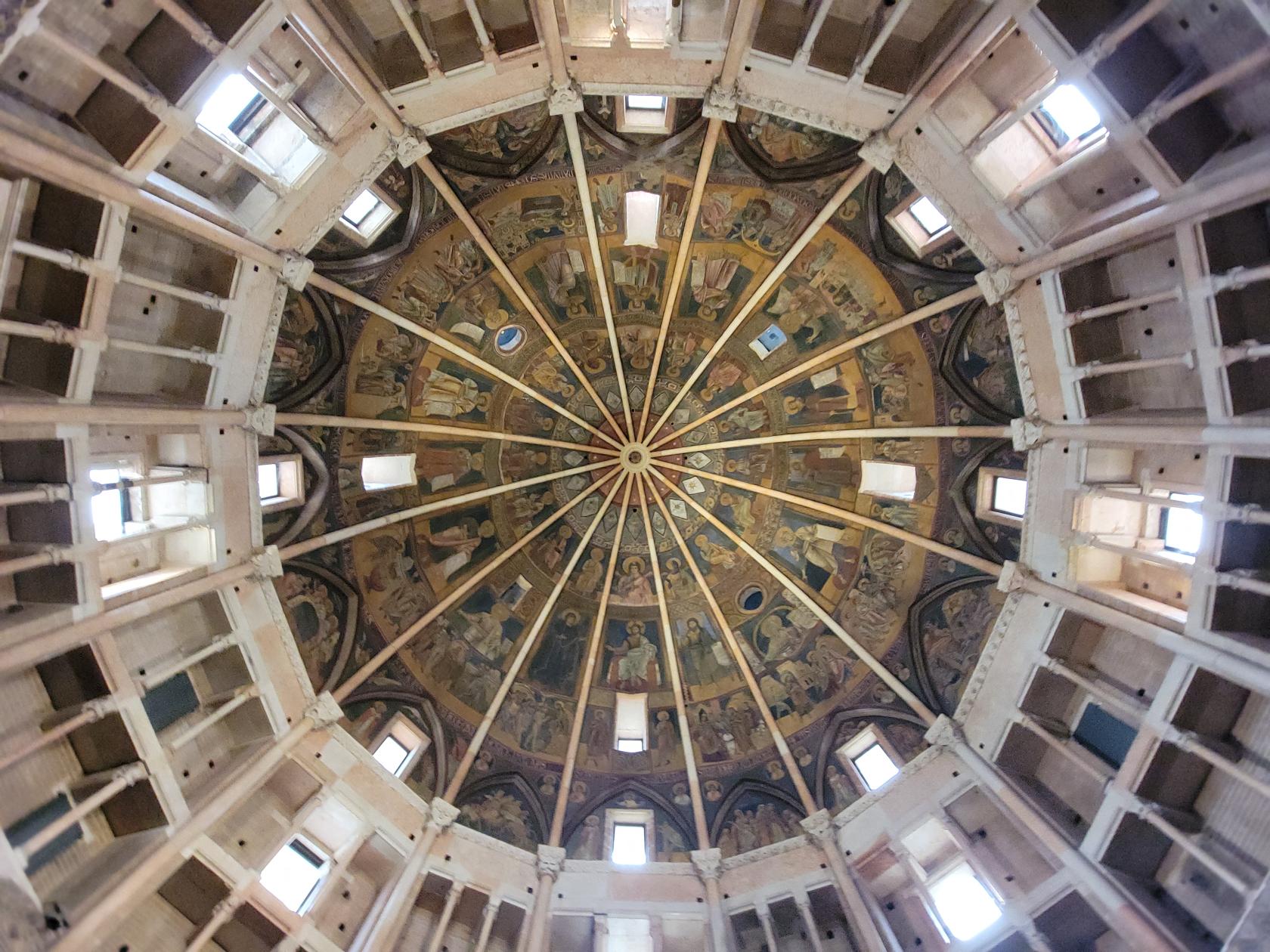
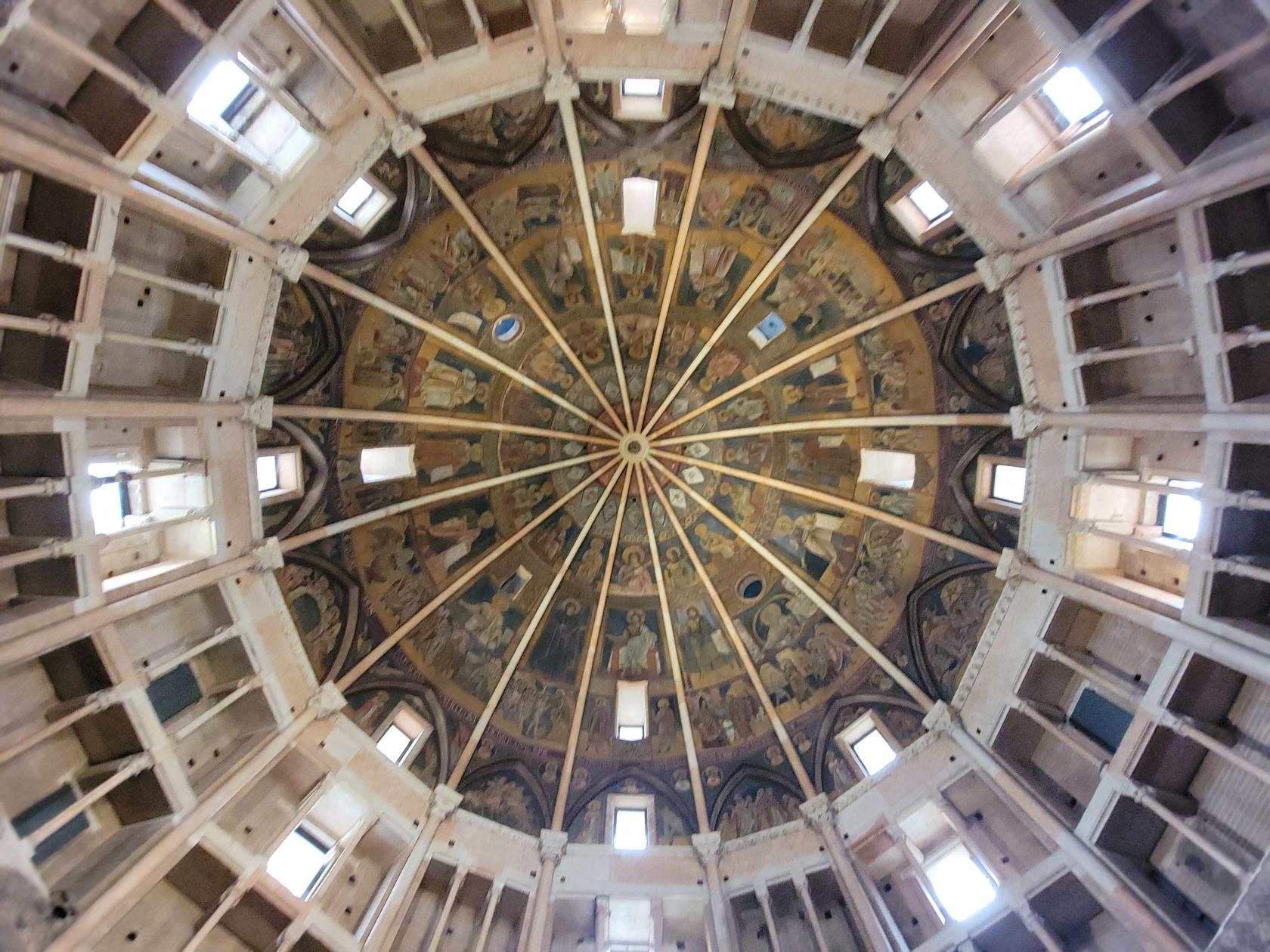
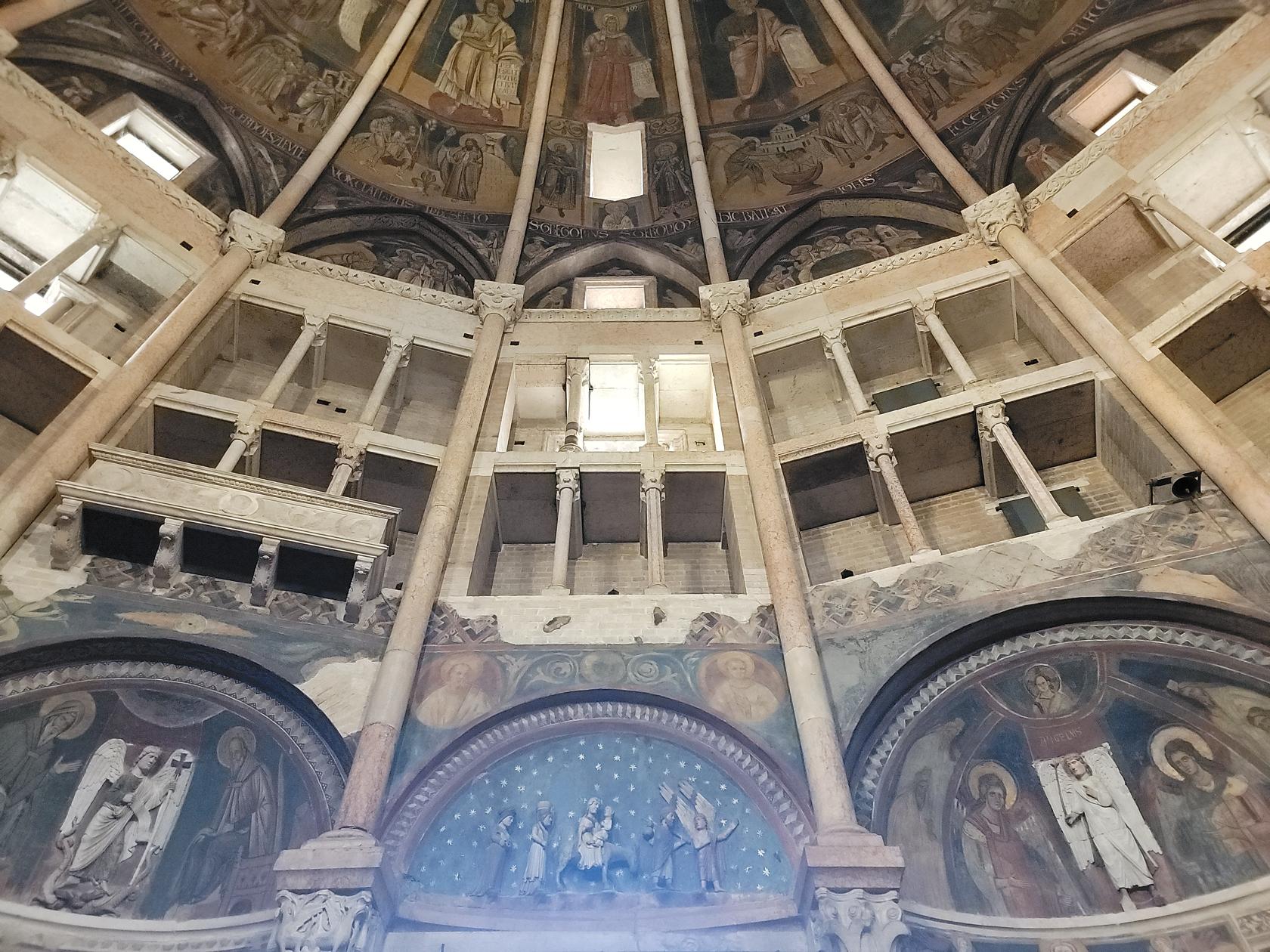
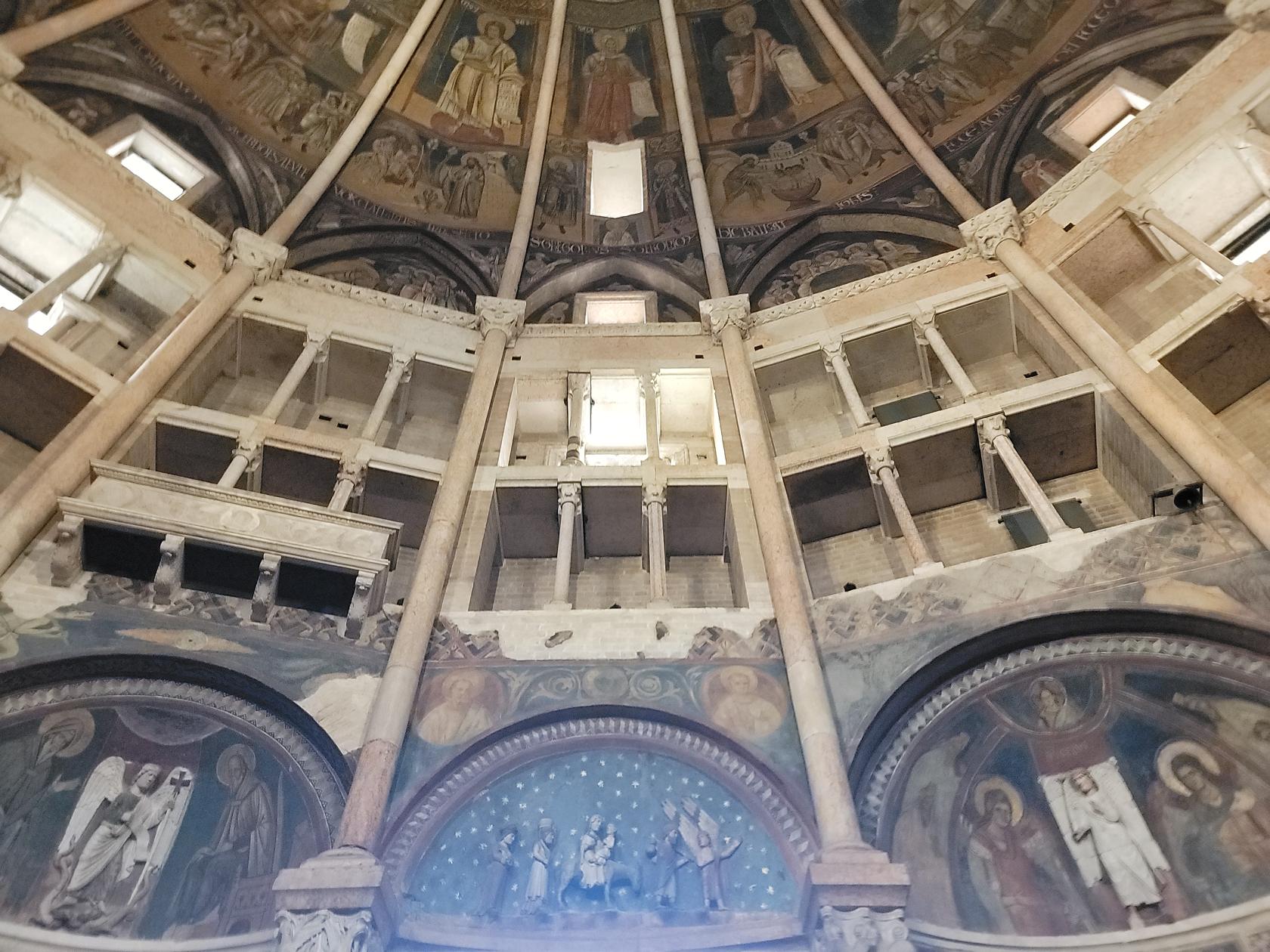
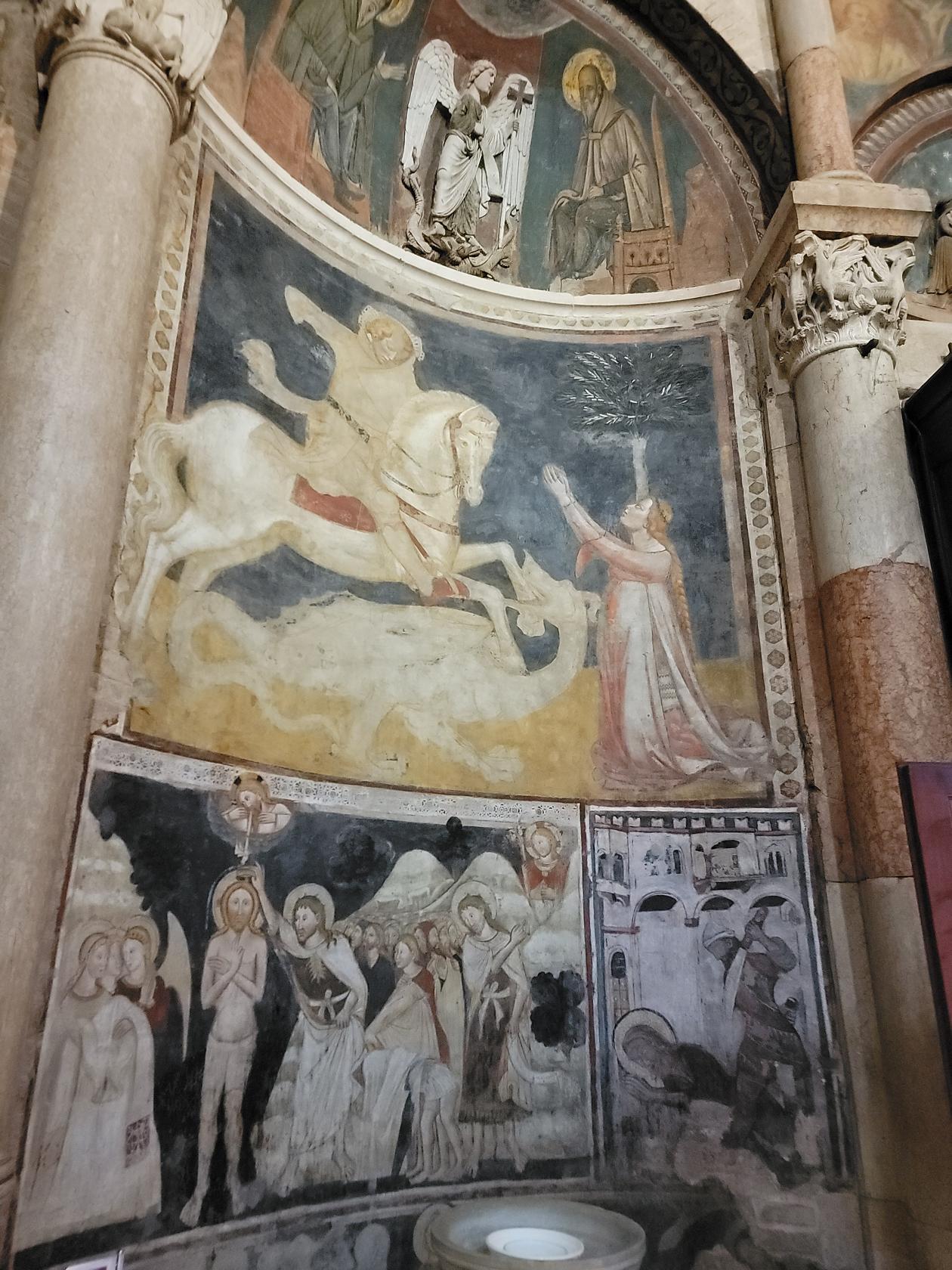
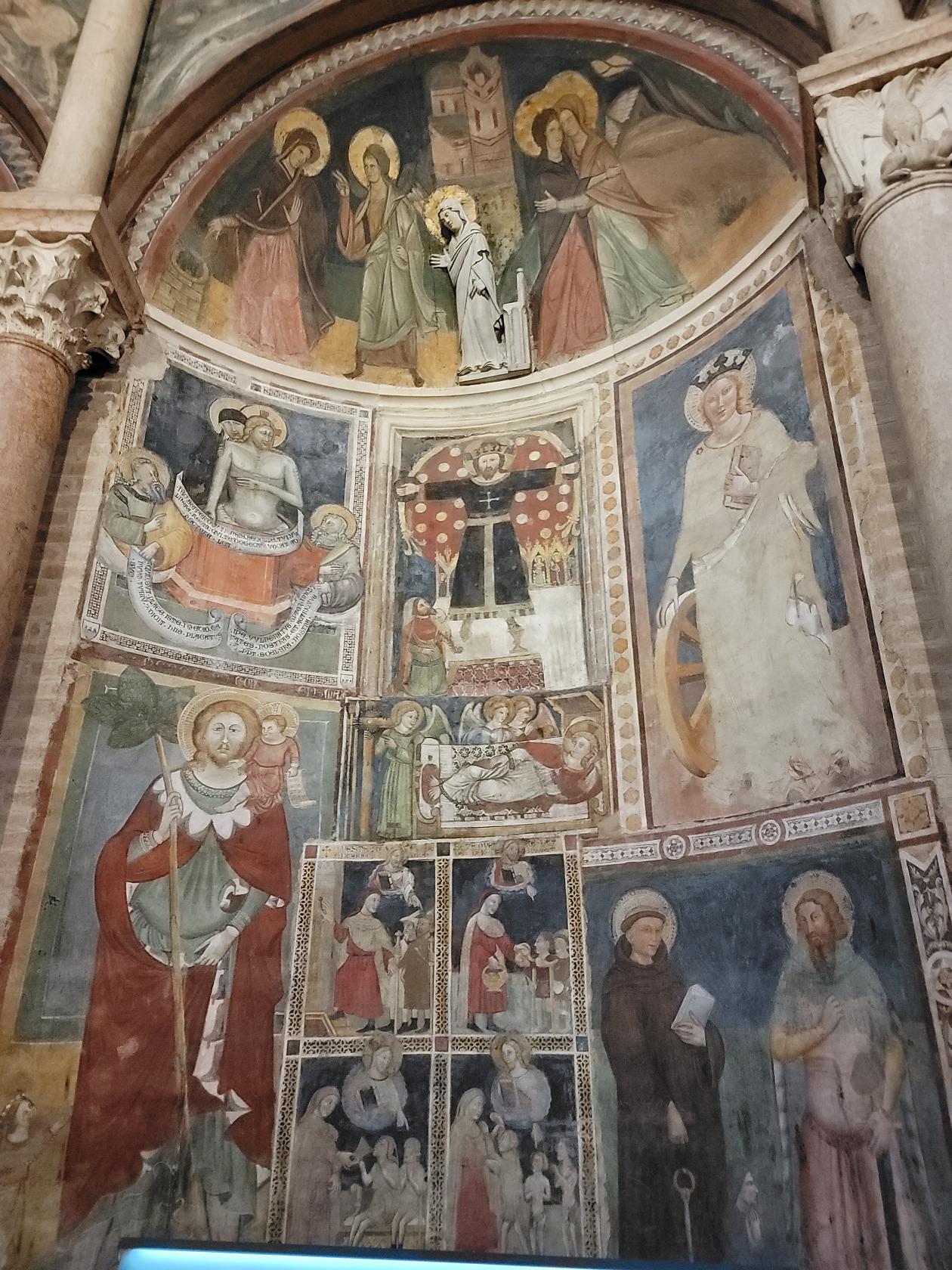
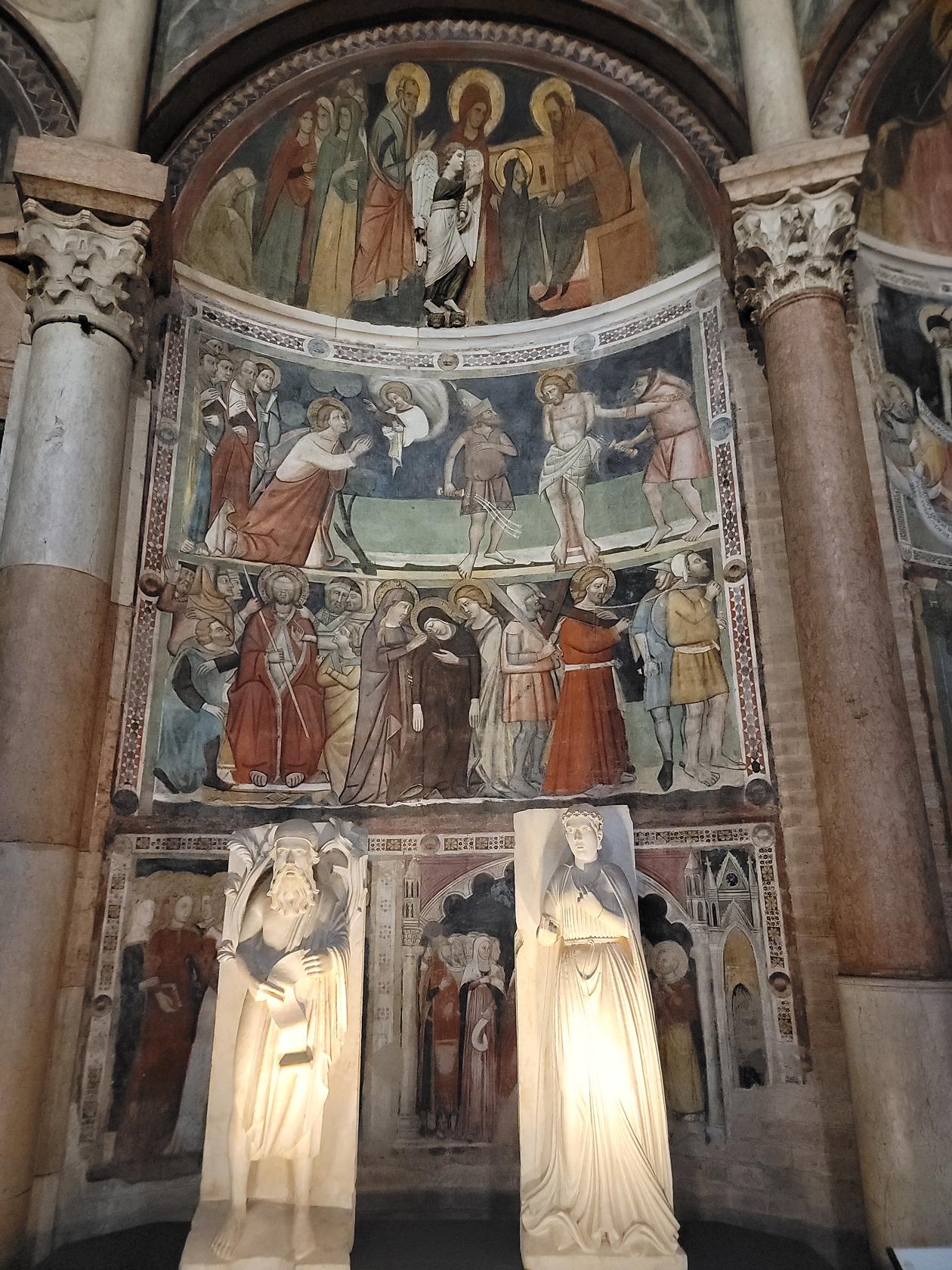
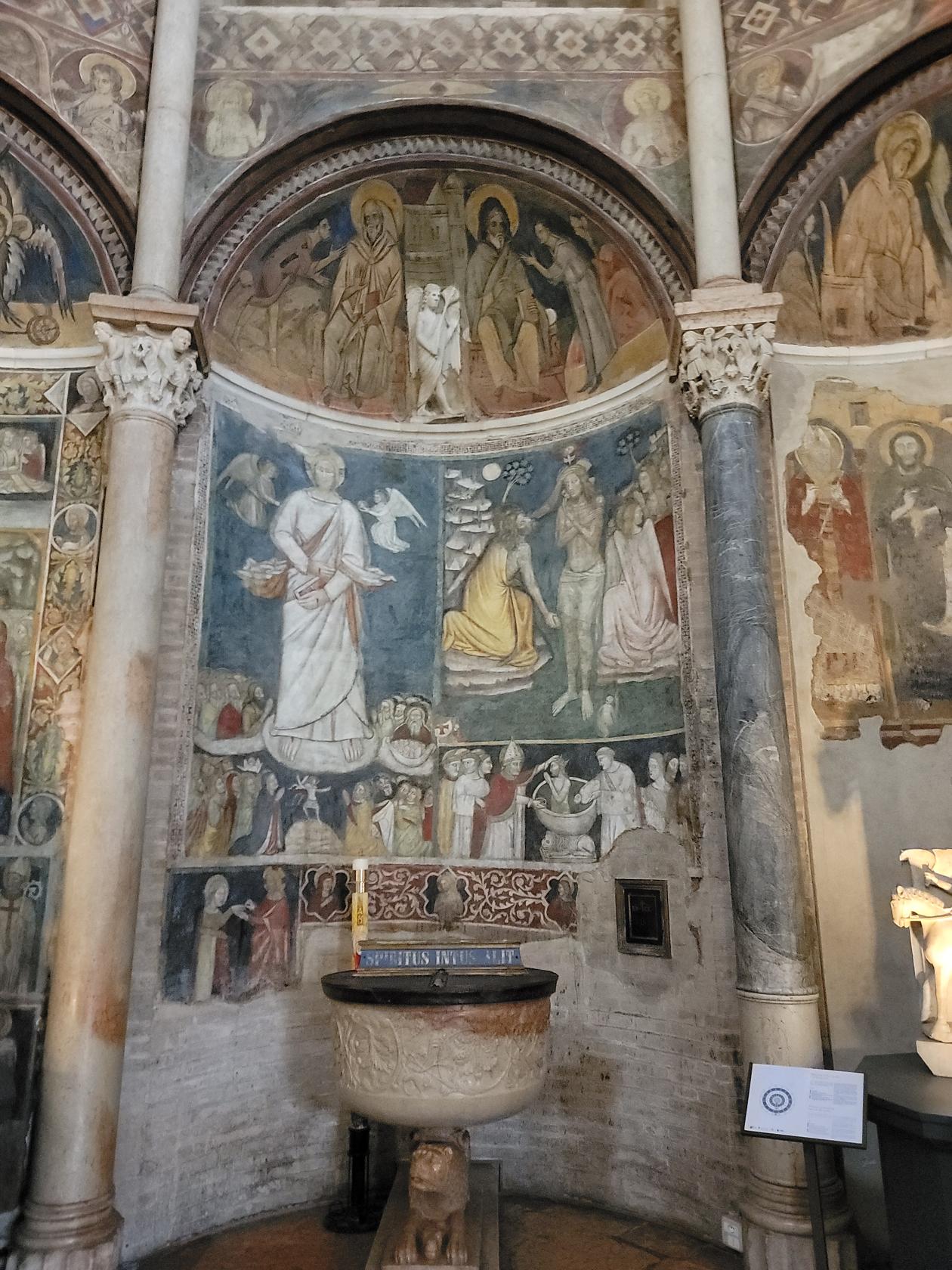
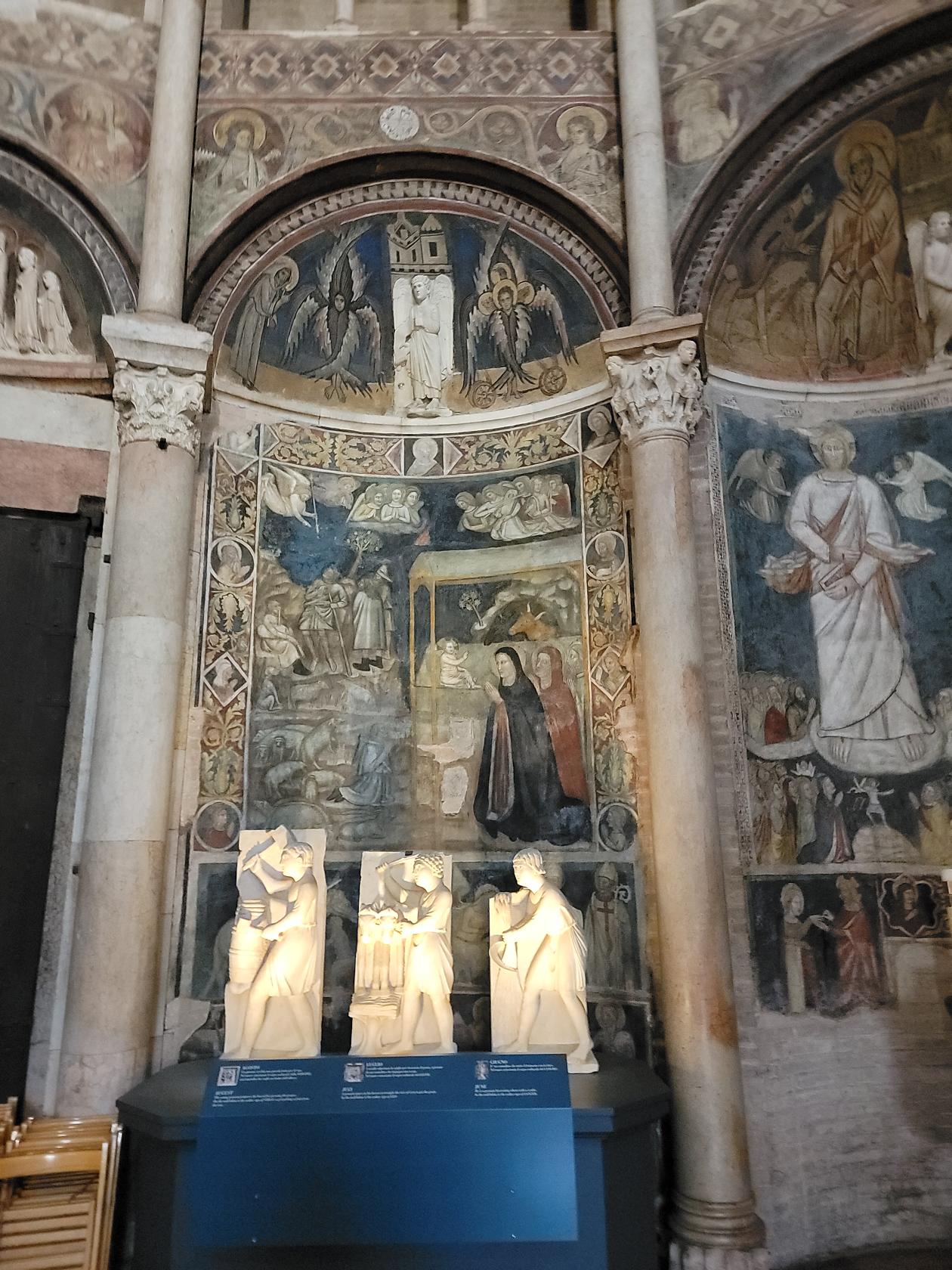
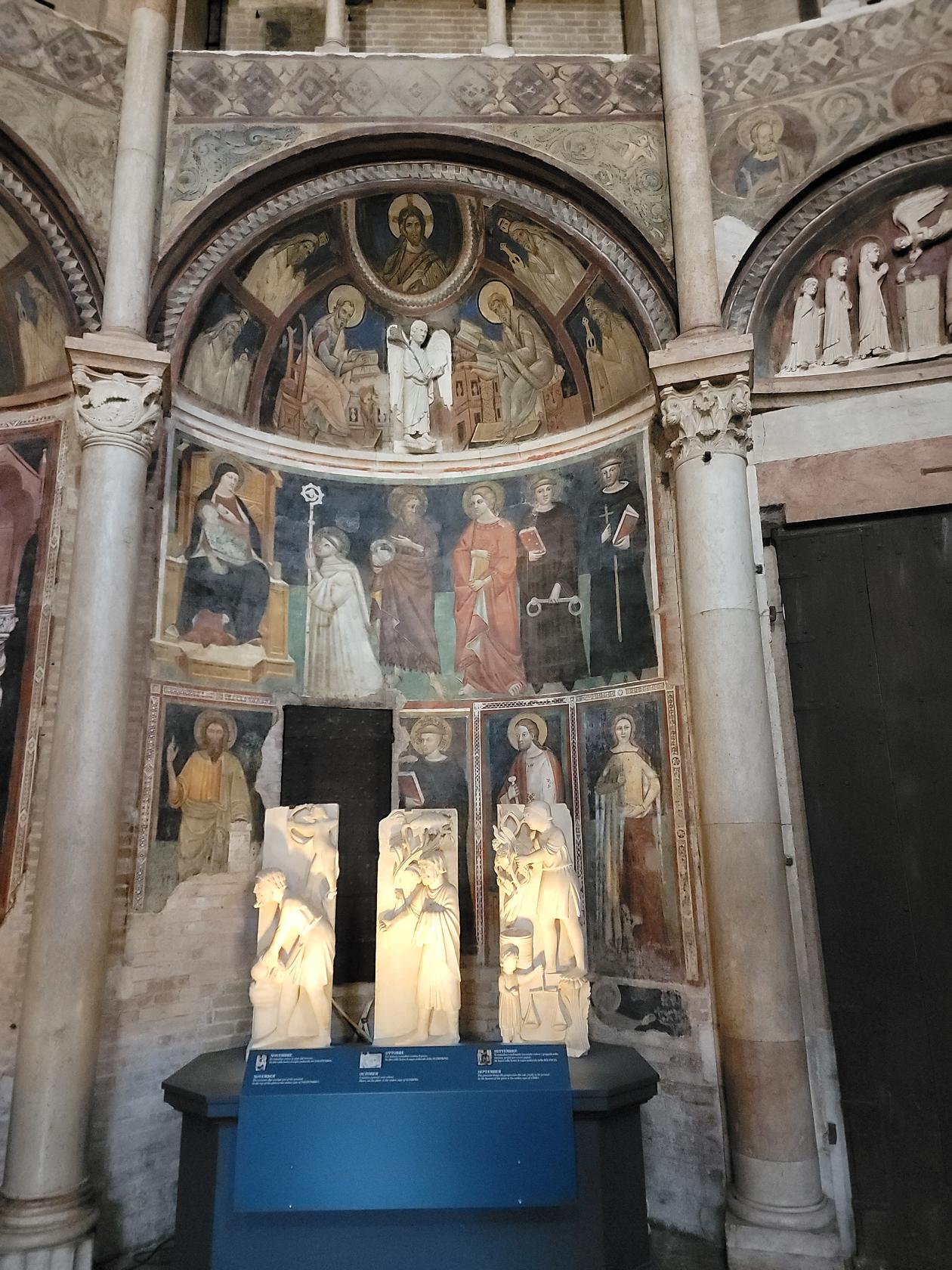
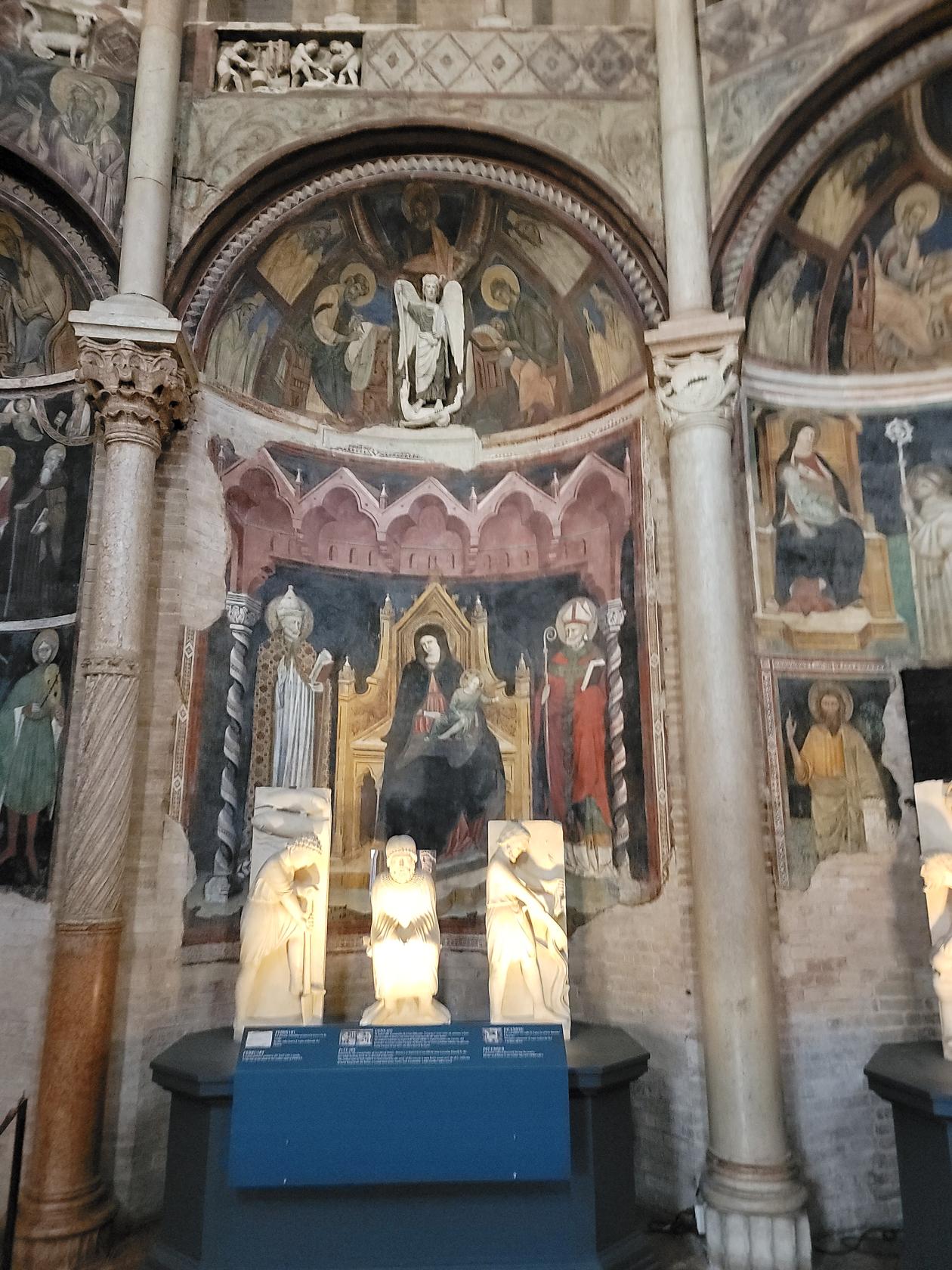
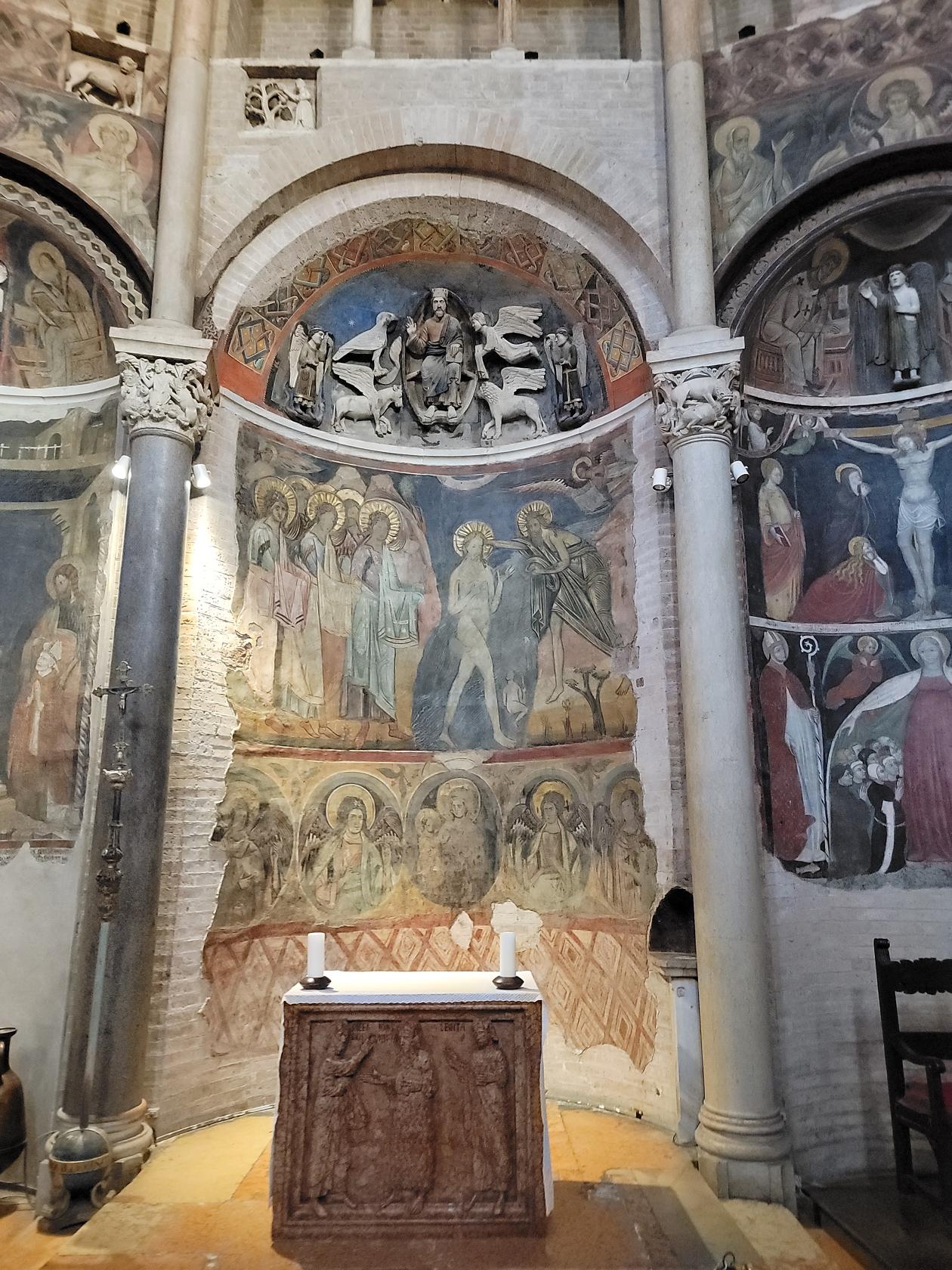
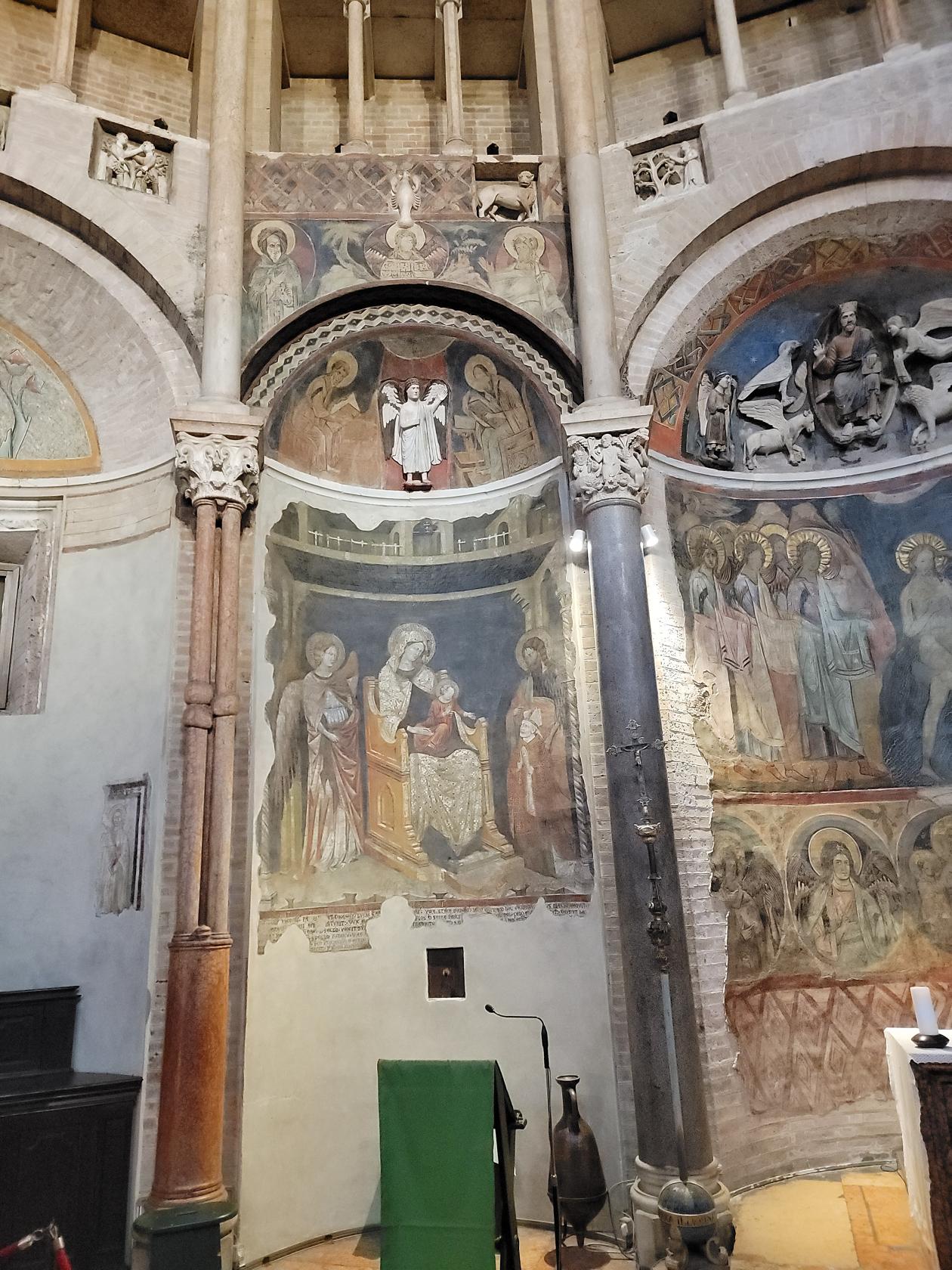
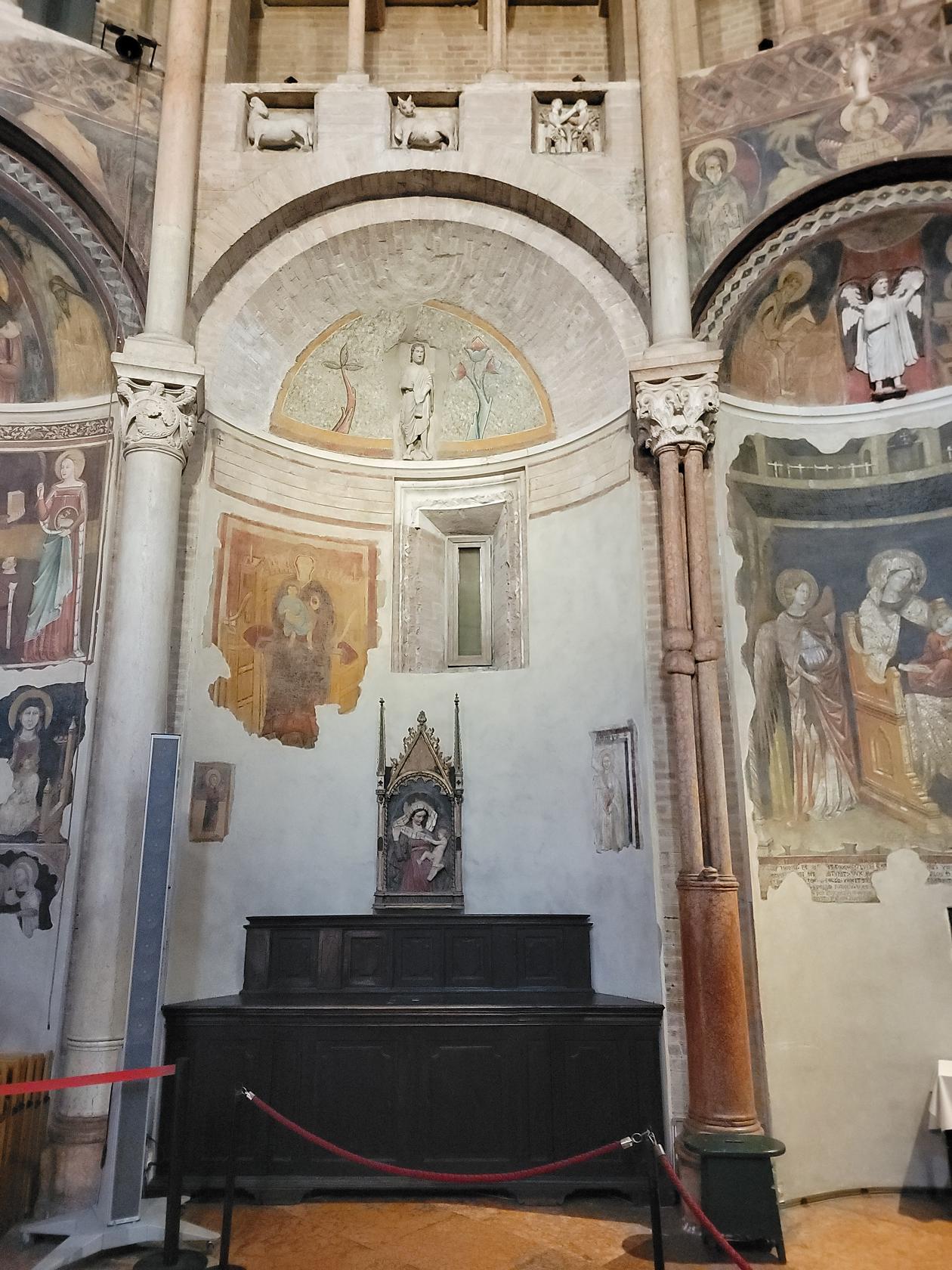
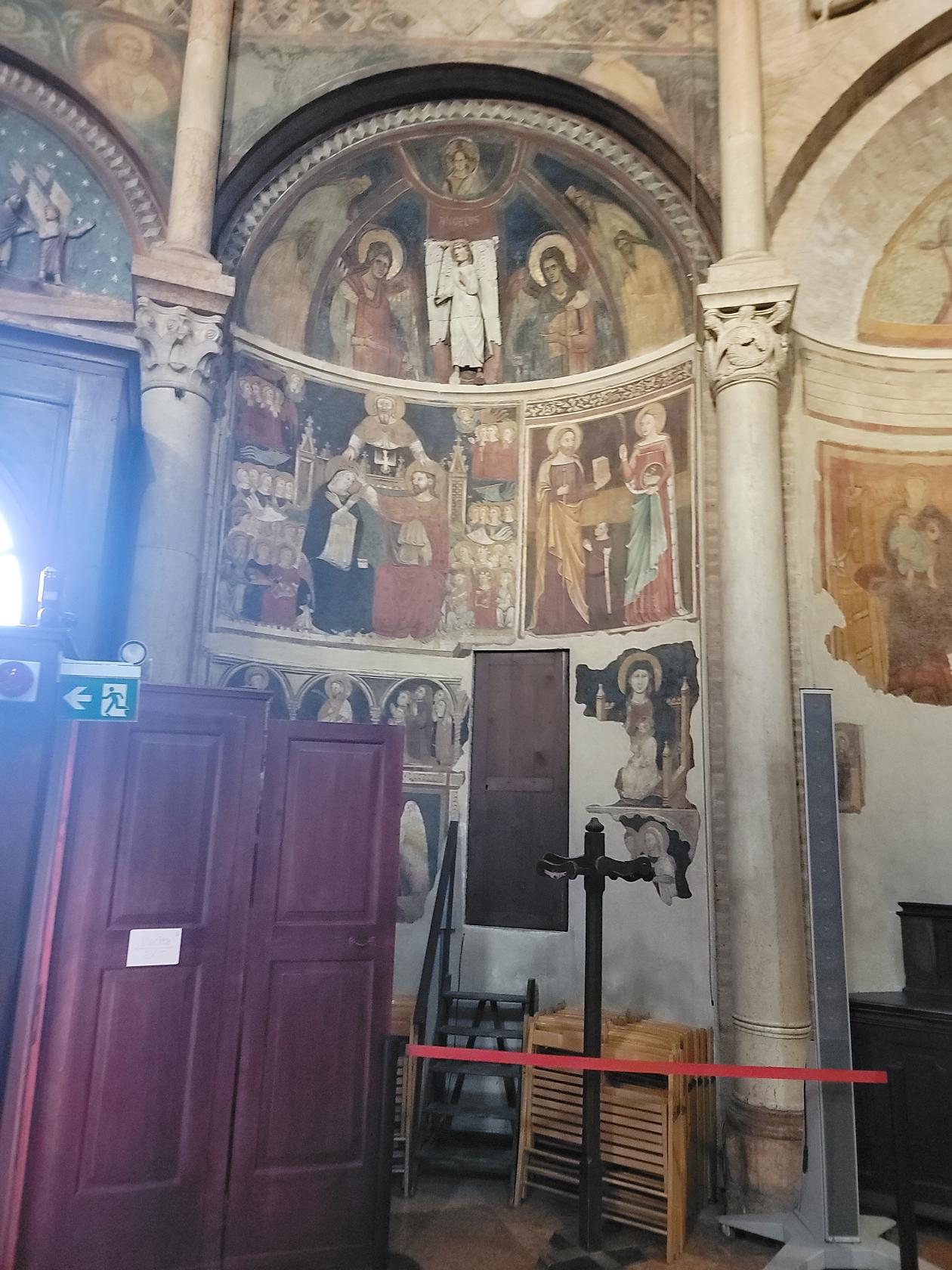
From the inside, the Baptistry appears as a sixteen sided room with the font in the middle of the space. Each of the walls has a fresco on it and other architectural details. The ceiling is frescoed as well as a series of sixteen triangular paintings.
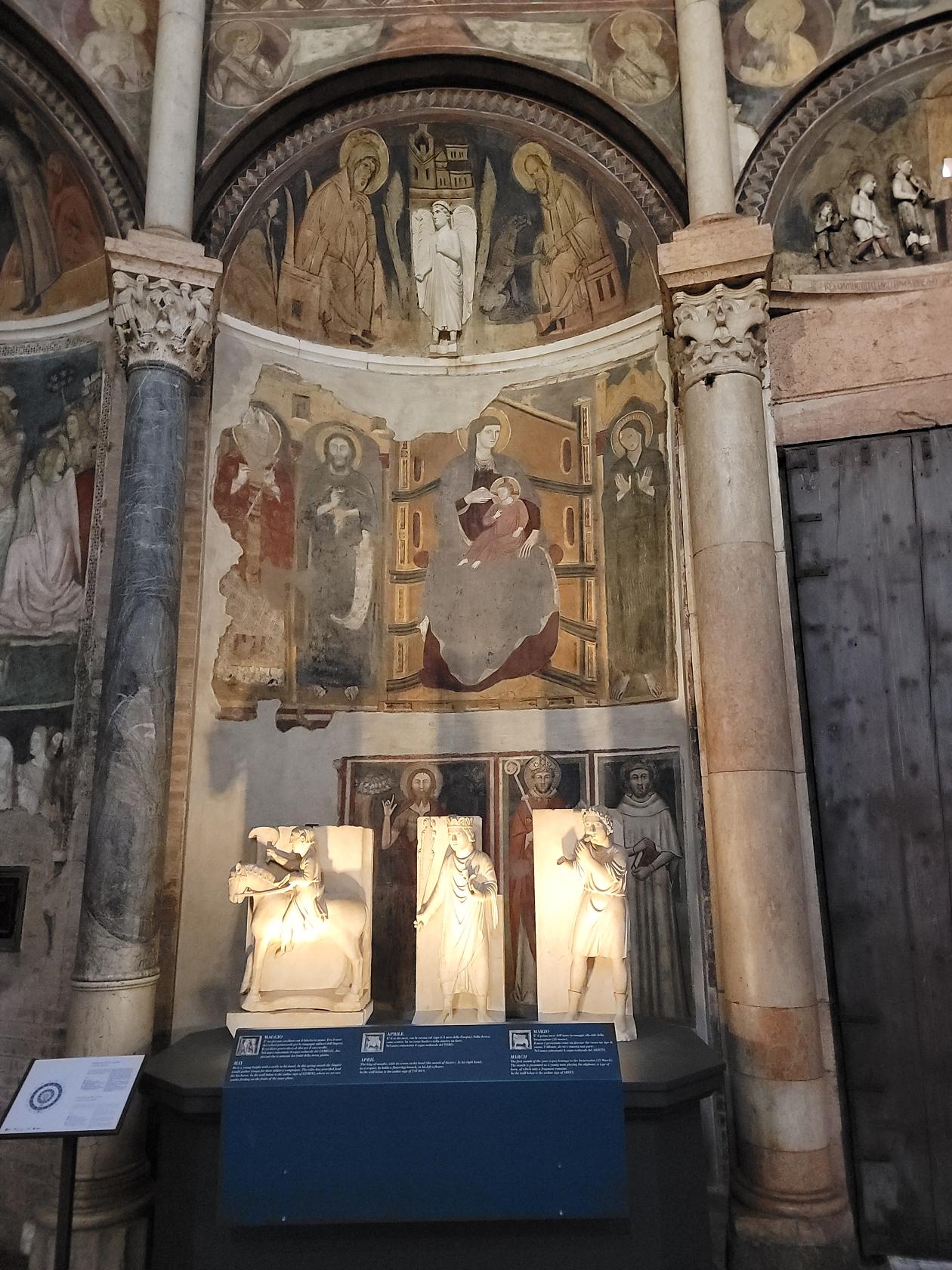
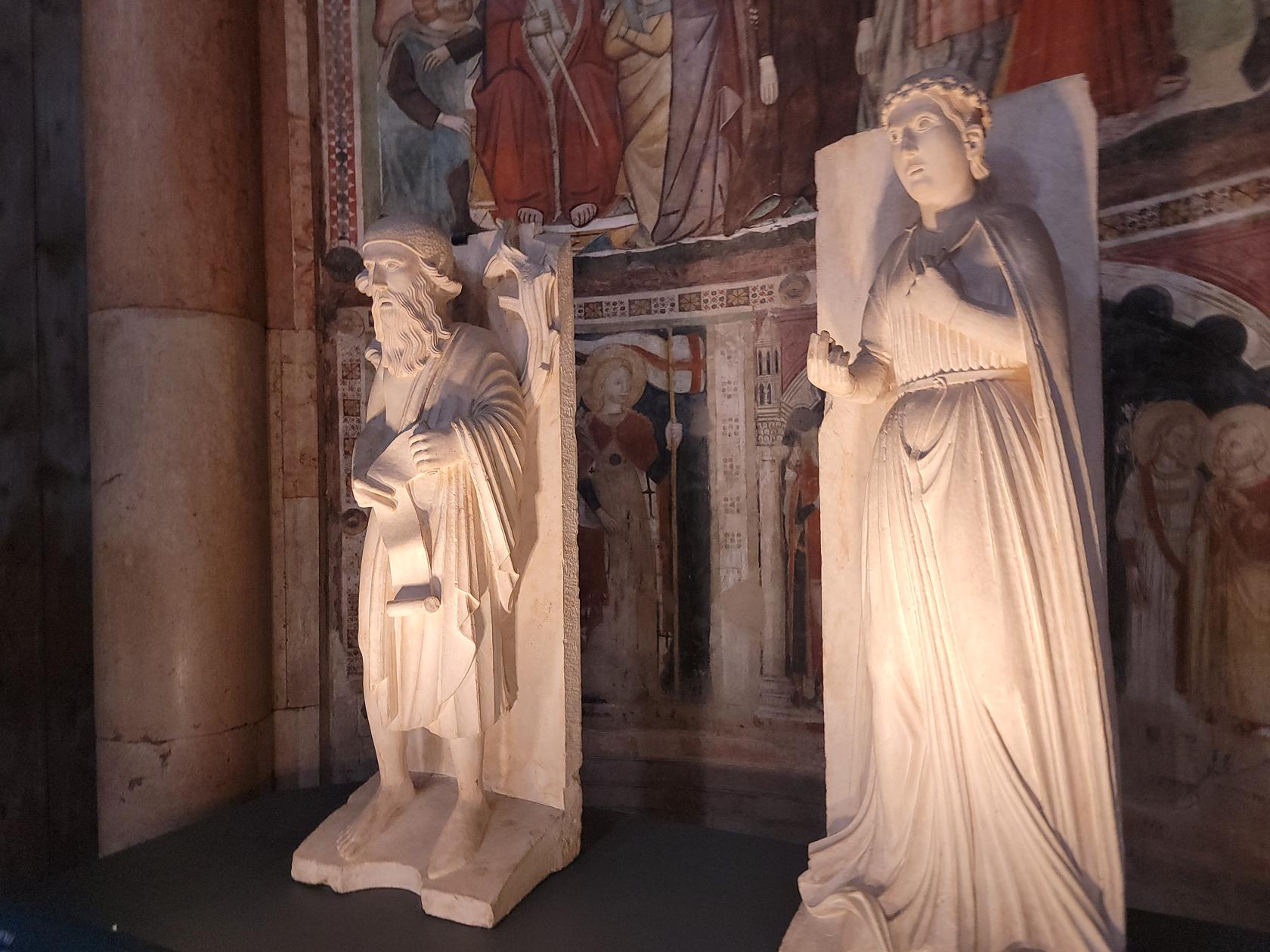
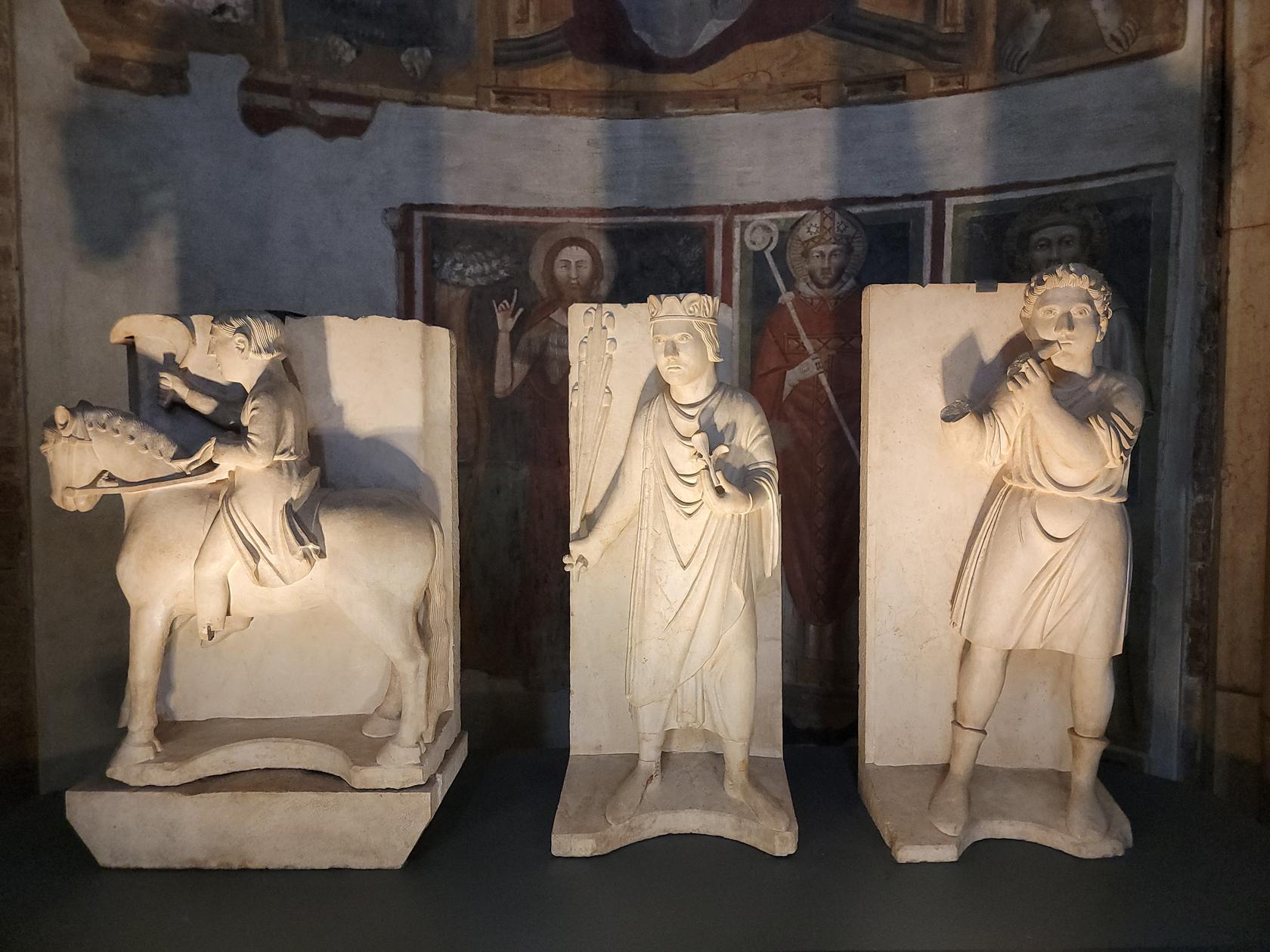
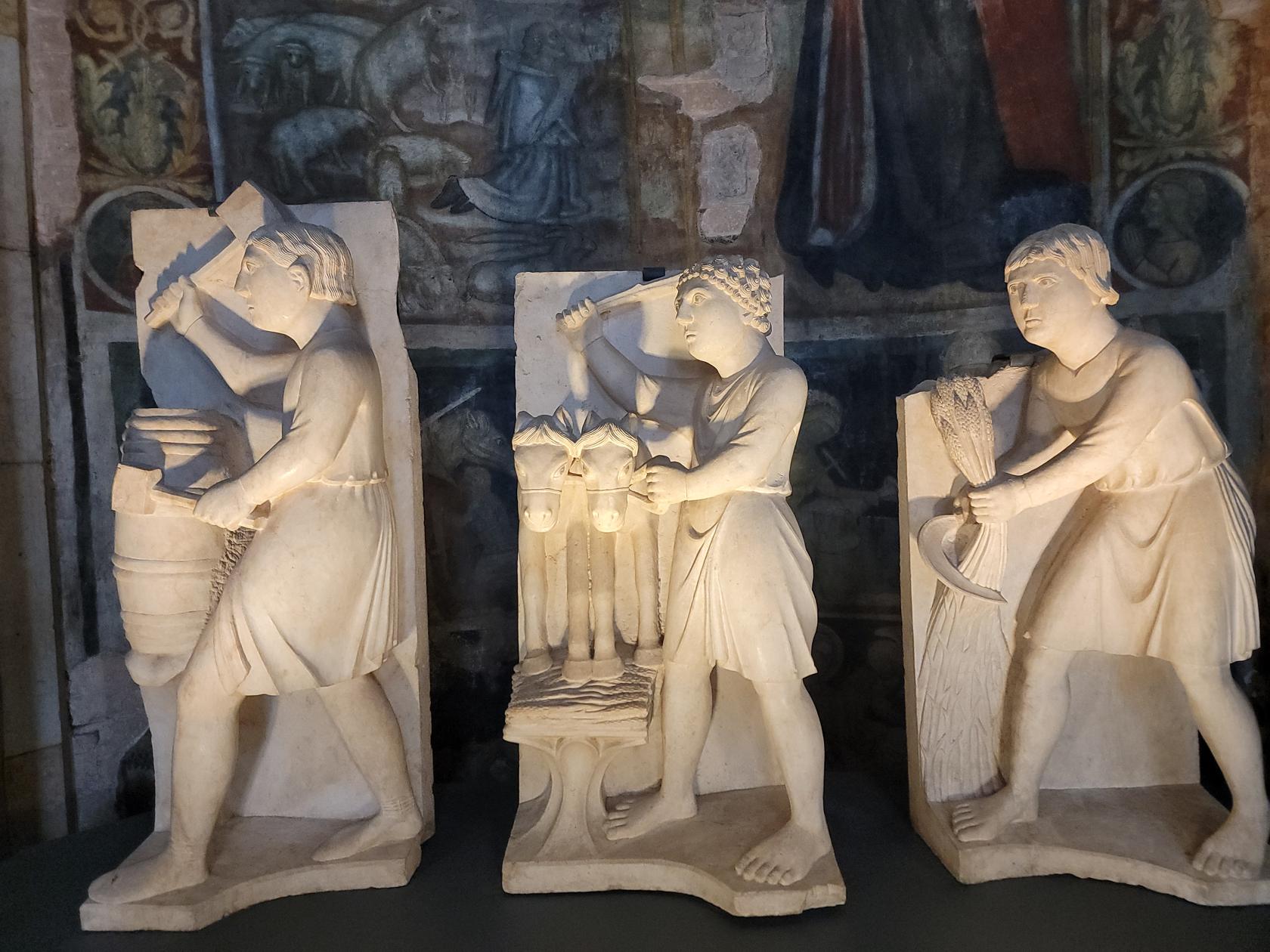
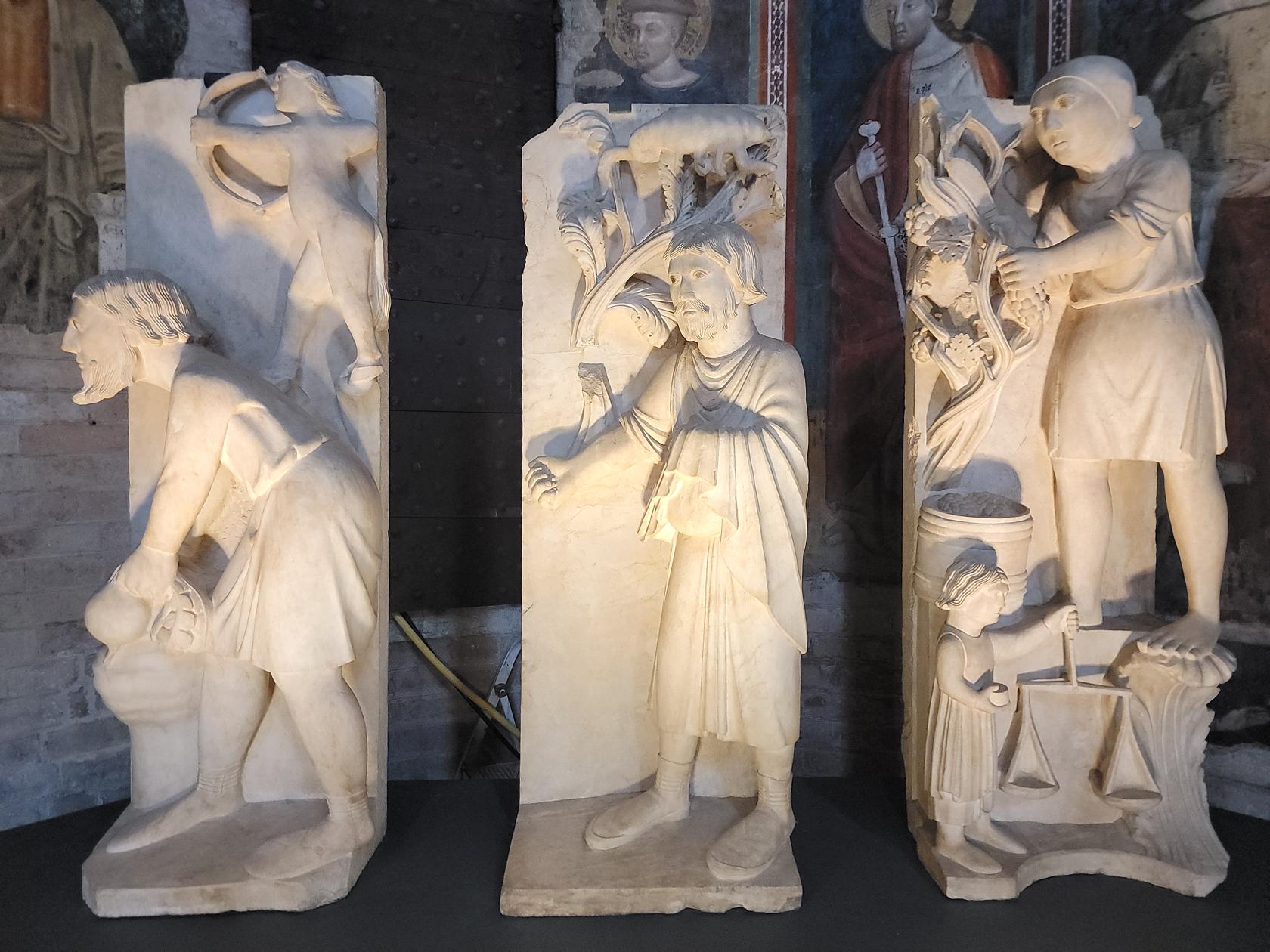
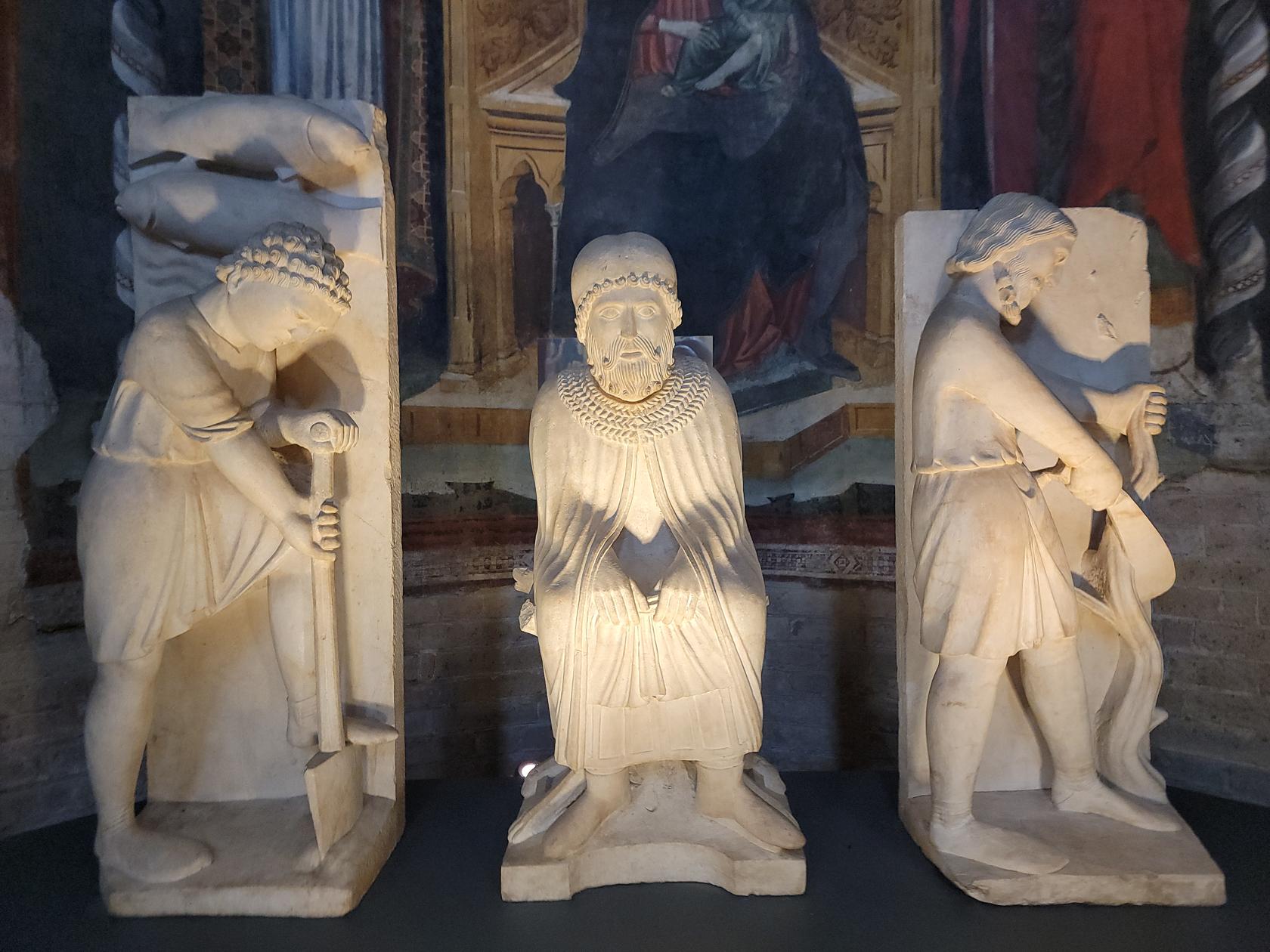
Today there is a collection of artistic statues placed along some of the walls, depicting the two seasons of Winter and Summer, as well as all of the months of the year.
Winter and Spring – Statues – Baptistry – Parma, Italy
May, April and March – Statues – Baptistry – Parma, Italy
August, July and June – Statues – Baptistry – Parma, Italy
November, October and September – Statues – Baptistry – Parma, Italy
February, January and December – Statues – Baptistry – Parma, Italy
Church of San Giovanni Evangelista
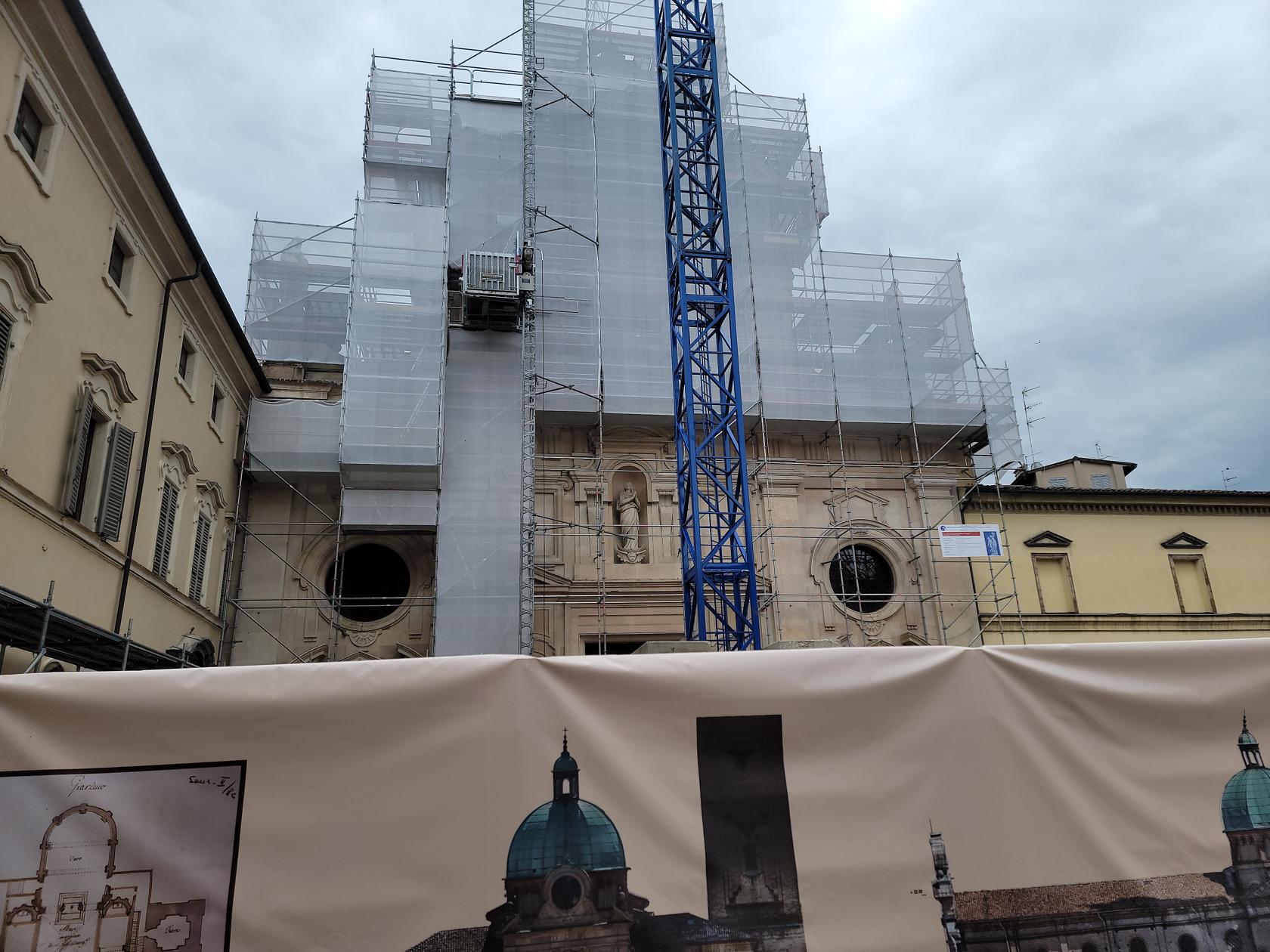
Under construction at the time, the church exhibits the fanciful, if not frustrating looks of a construction site so familiar to those who travel Europe.
Facade – Church of San Giovanni Evangelista – Parma, Italy
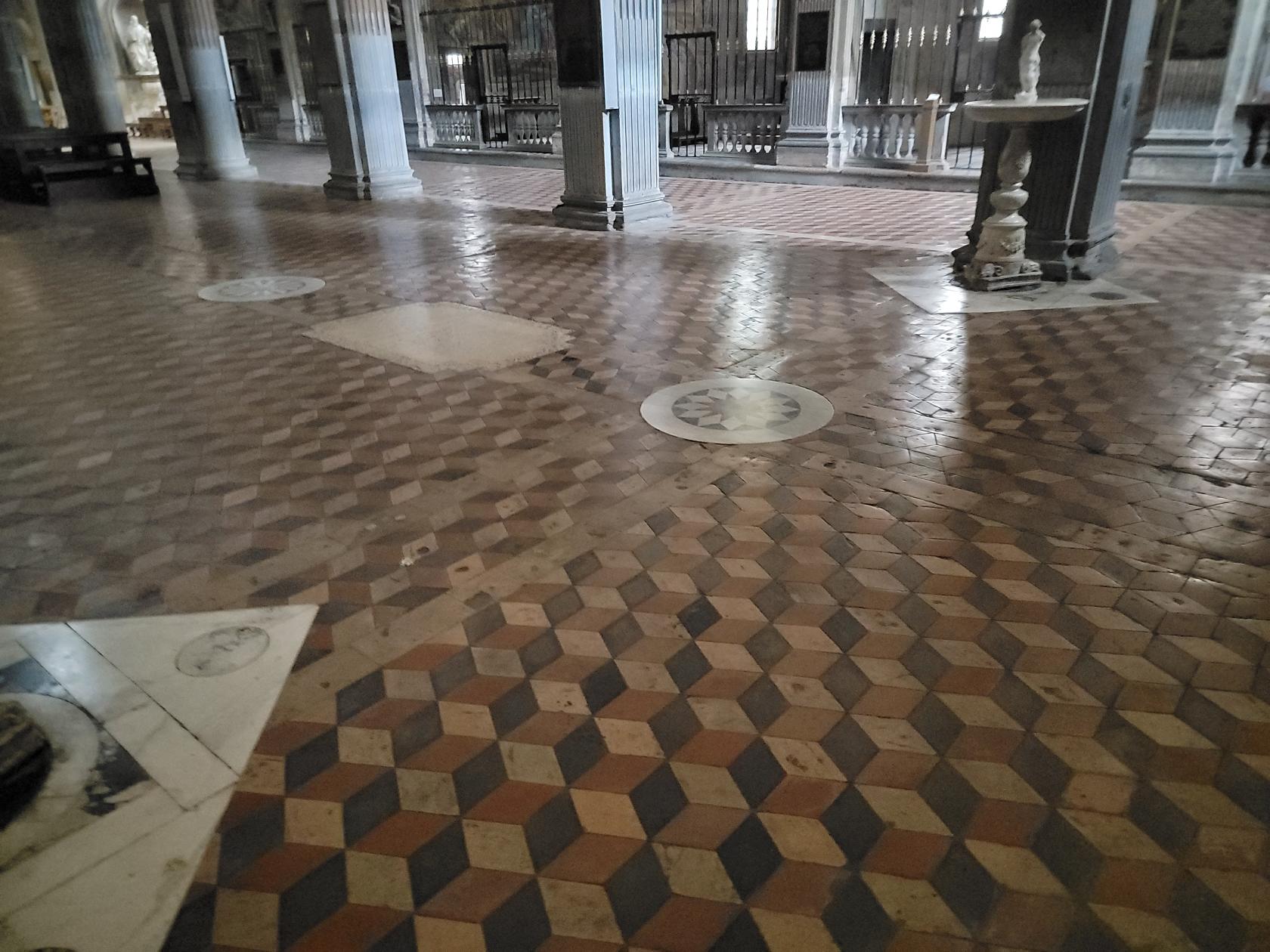
Nave Floor – Church of San Giovanni Evangelista – Parma, Italy
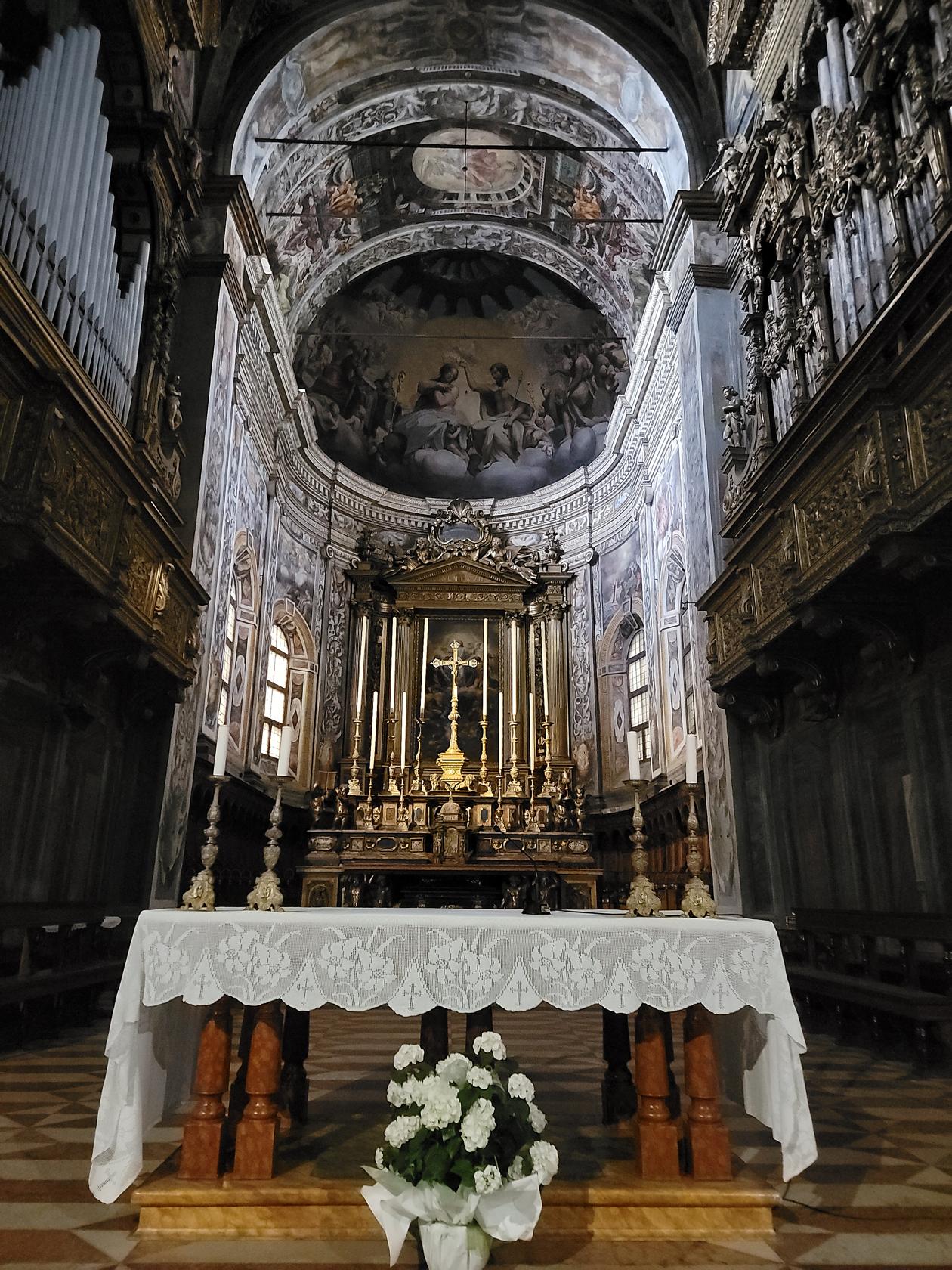
Altar – Church of San Giovanni Evangelista – Parma, Italy
Even the interior lacked lighting, so it was difficult to see much, let alone take decent photographs.
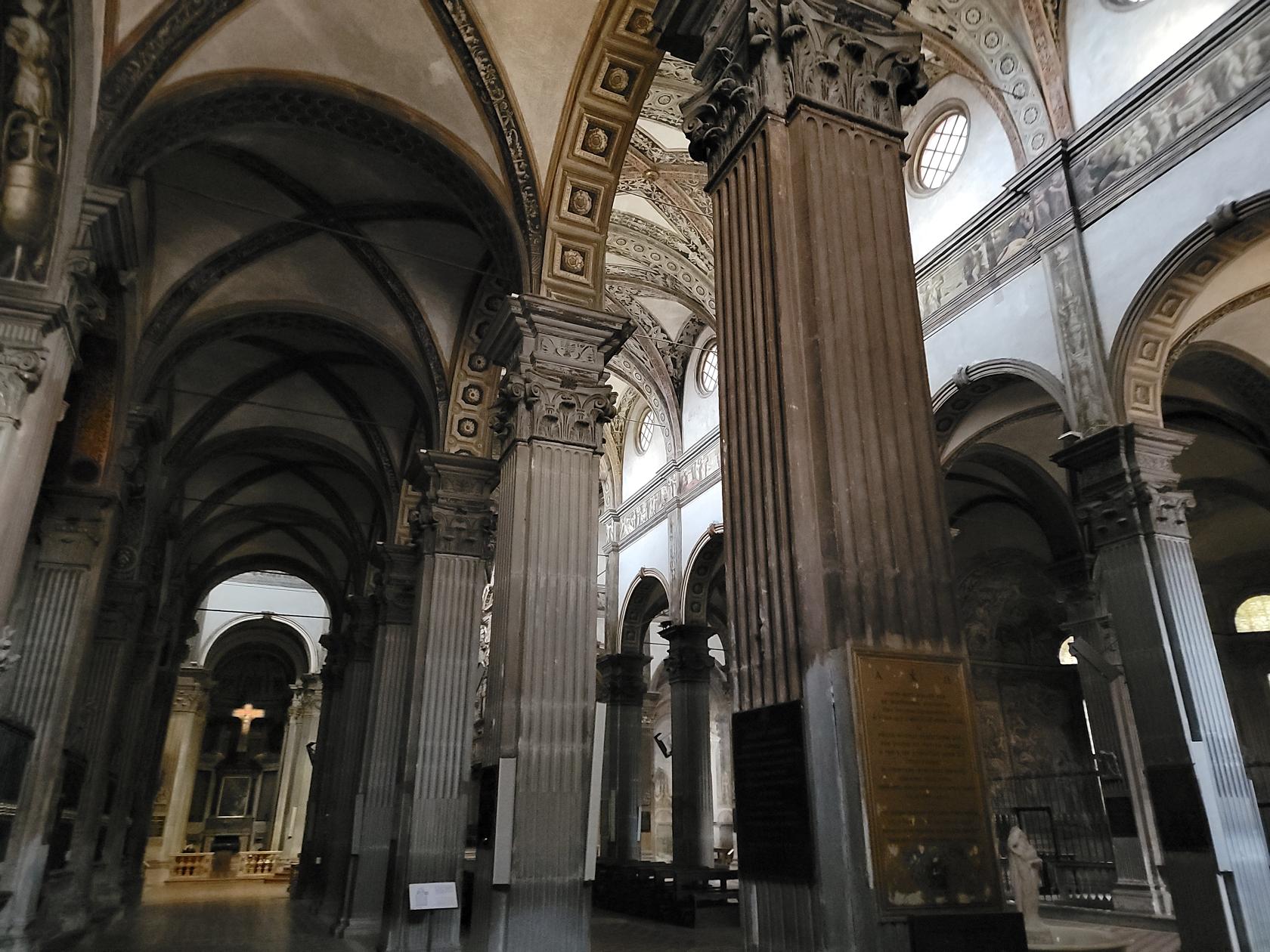
Aisle – Church of San Giovanni Evangelista – Parma, Italy
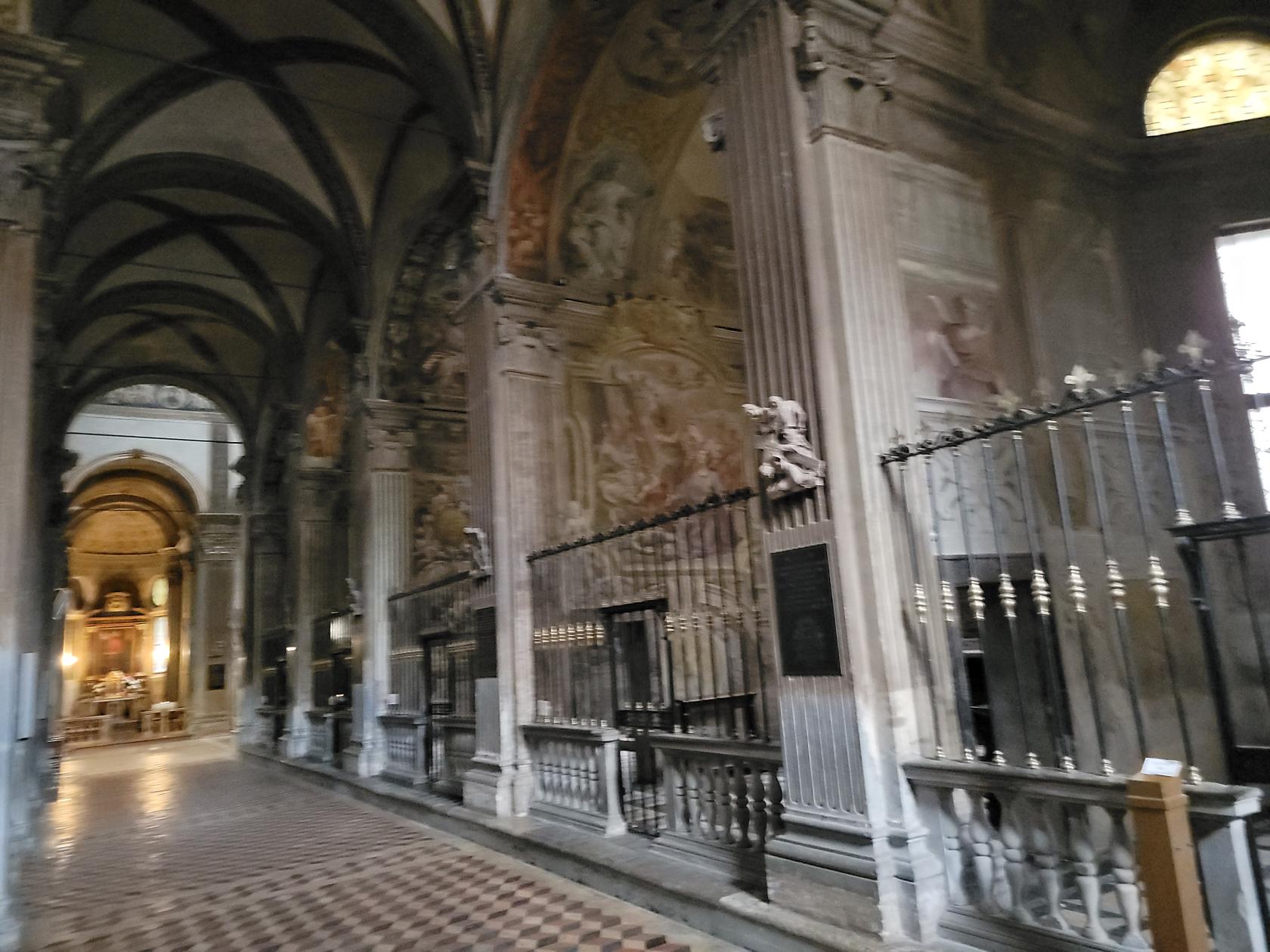
Aisle and Side Chapels – Church of San Giovanni Evangelista – Parma, Italy
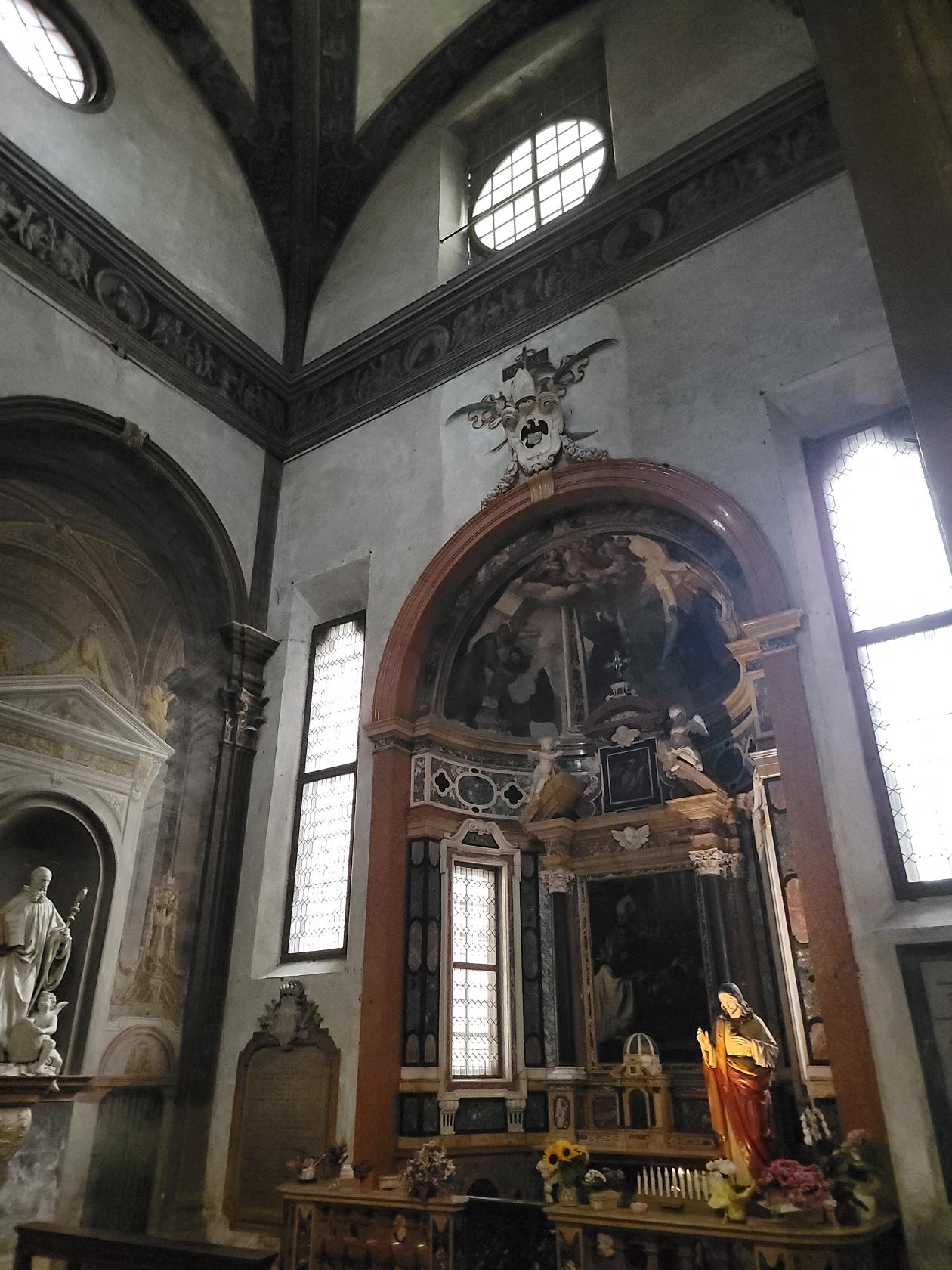
Transept Chapel – Church of San Giovanni Evangelista – Parma, Italy
Nave and Altar – Church of San Giovanni Evangelista – Parma, Italy
Transept Chapel and Organ – Church of San Giovanni Evangelista – Parma, Italy
Small Chapel off Left Transept – Church of San Giovanni Evangelista – Parma, Italy
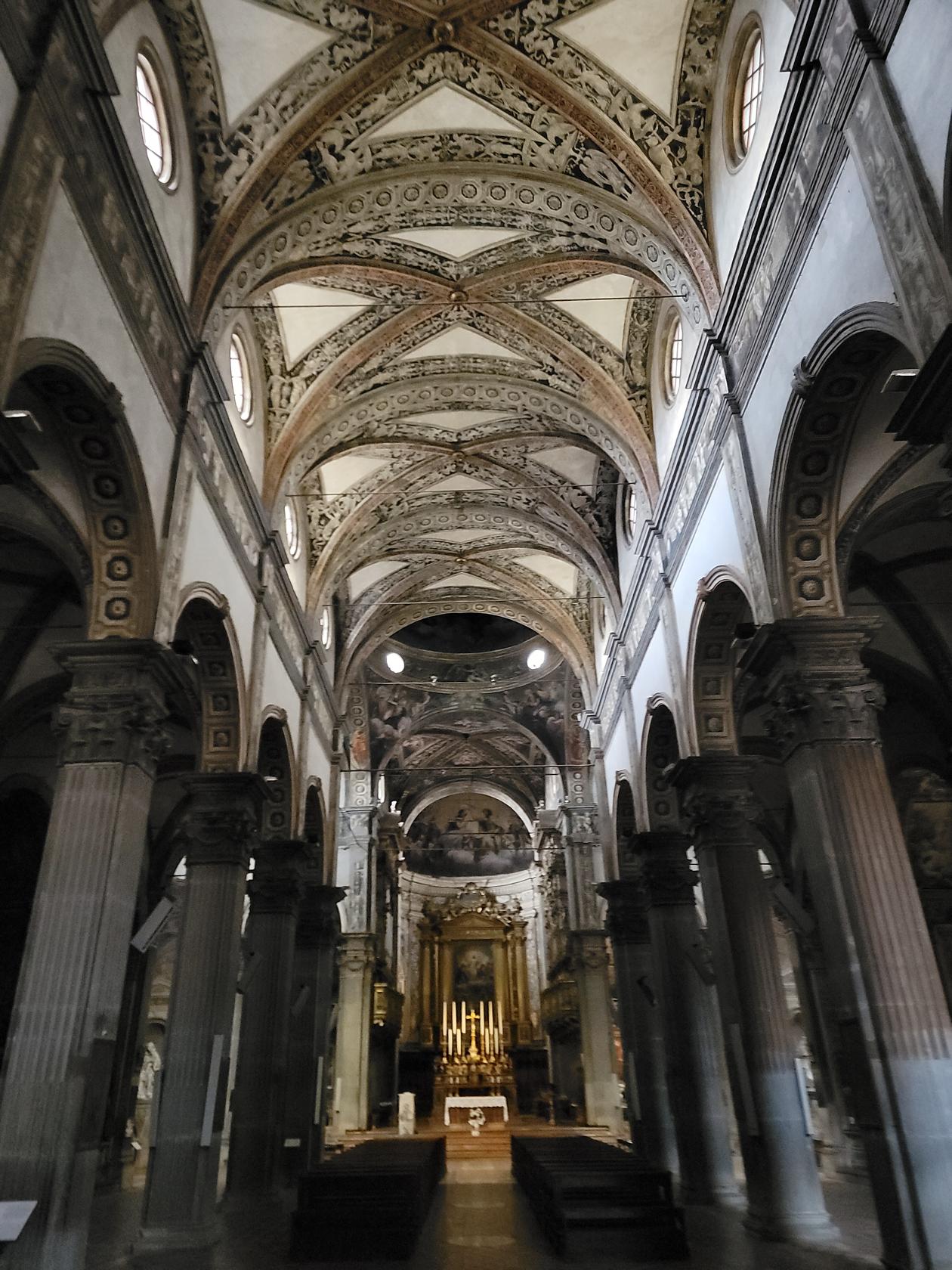
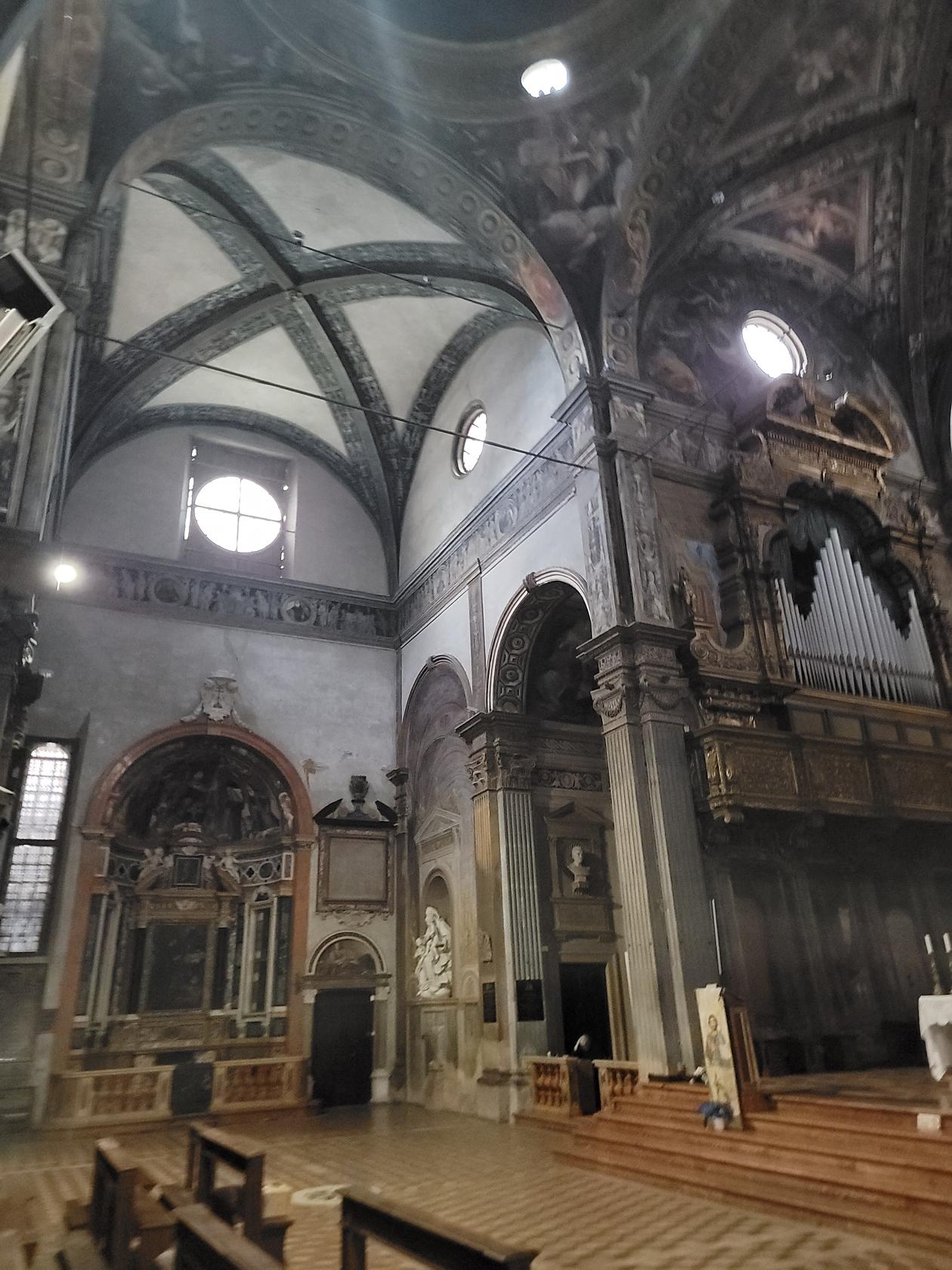
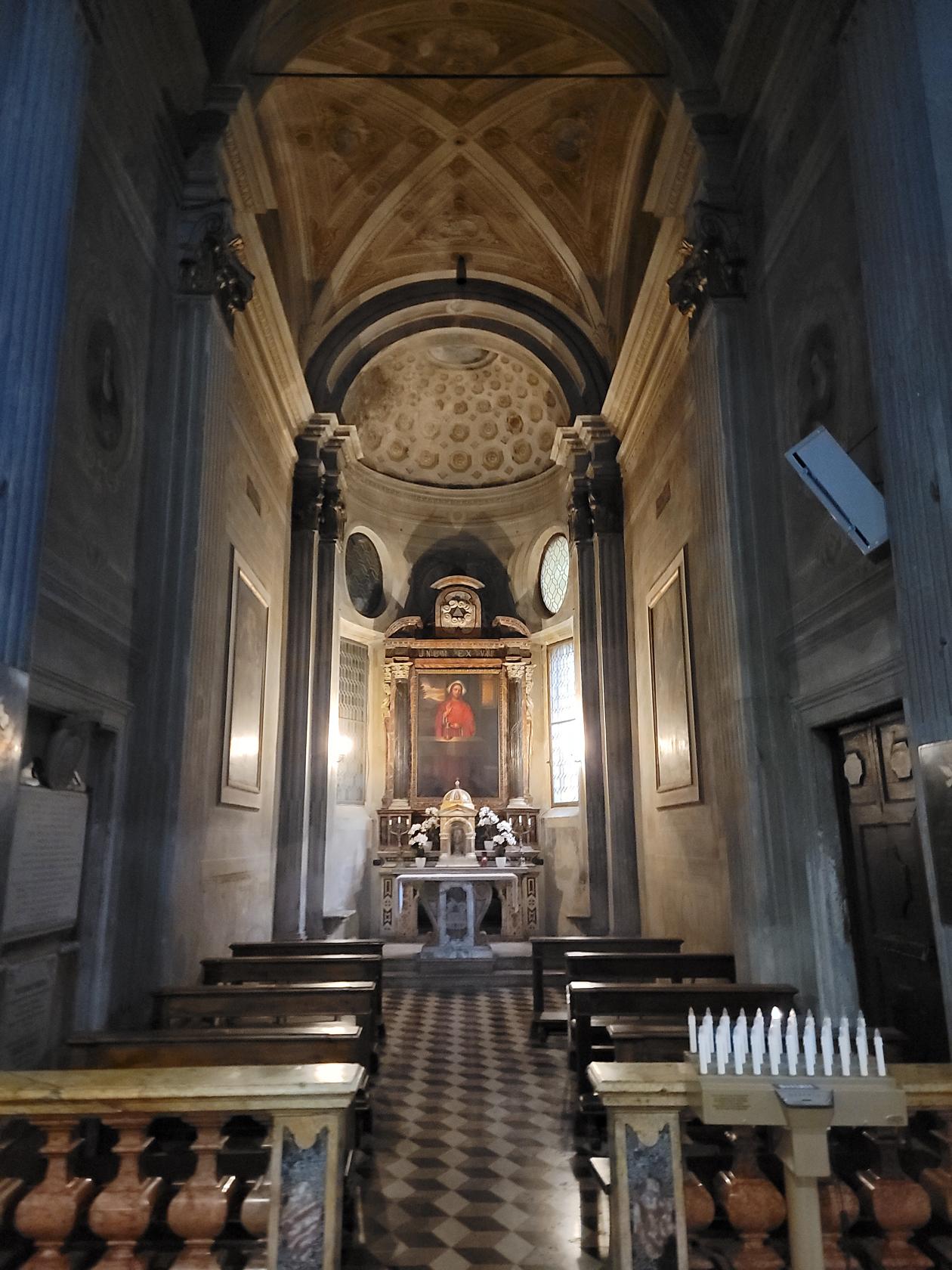
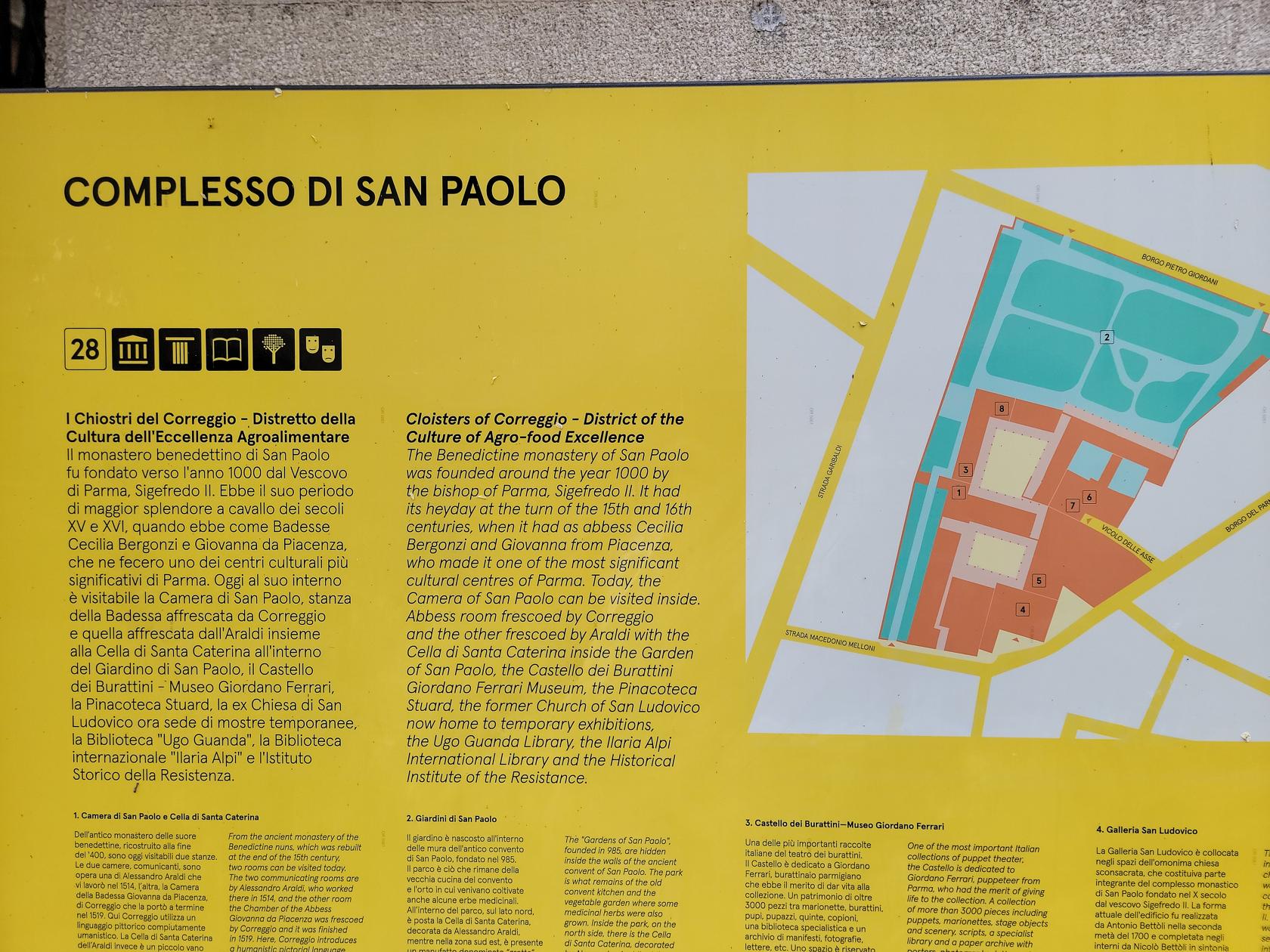
Complex of San Paolo
Not far from the intersection of Strada G. Garibaldi and Strada Macedonio Melloni is the complex of San Paolo. There are signs near the street by the entrance, but you have to walk a wooded entry some distance before reaching the ticket office. There you can purchase tickets for both the Rooms of San Paolo and the Puppet Museum.
Entrance – Complex of San Paolo – Parma, Italy
Rooms of Saint Paul
Better known as the Camera di San Paolo, the rooms in this museum are part of the Benedictine Monestary that stood on this spot starting in the 11th century.
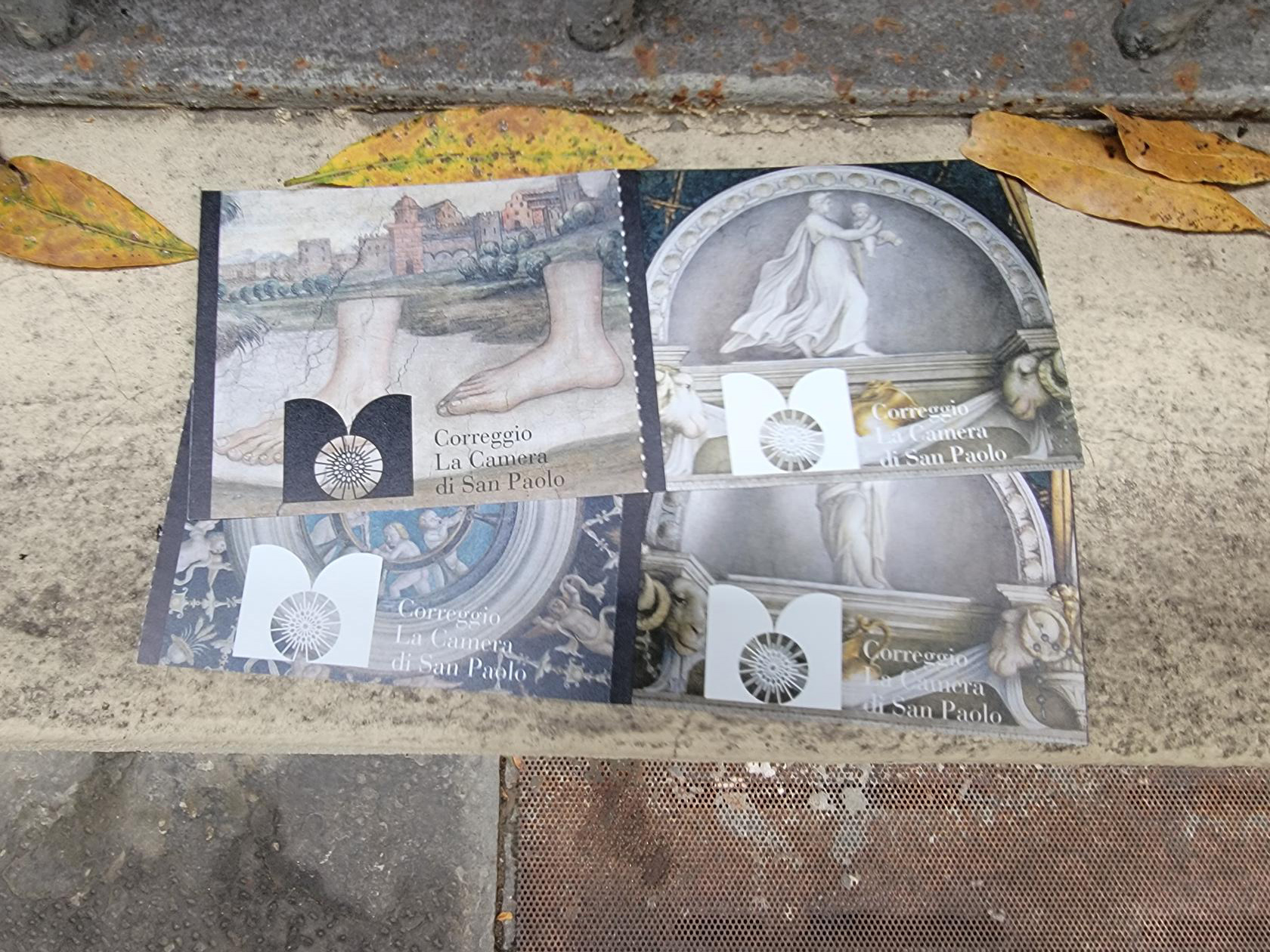
Tickets For Two – Rooms of San Paolo and Saint Catherine – Parma, Italy
Frescoes in Smaller Room – Rooms of San Paolo and Saint Catherine – Parma, Italy
Frescoes in Smaller Room – Rooms of San Paolo and Saint Catherine – Parma, Italy
Frescoes in Smaller Room – Rooms of San Paolo and Saint Catherine – Parma, Italy
Frescoes in Smaller Room – Rooms of San Paolo and Saint Catherine – Parma, Italy
Statue – Rooms of San Paolo and Saint Catherine – Parma, Italy
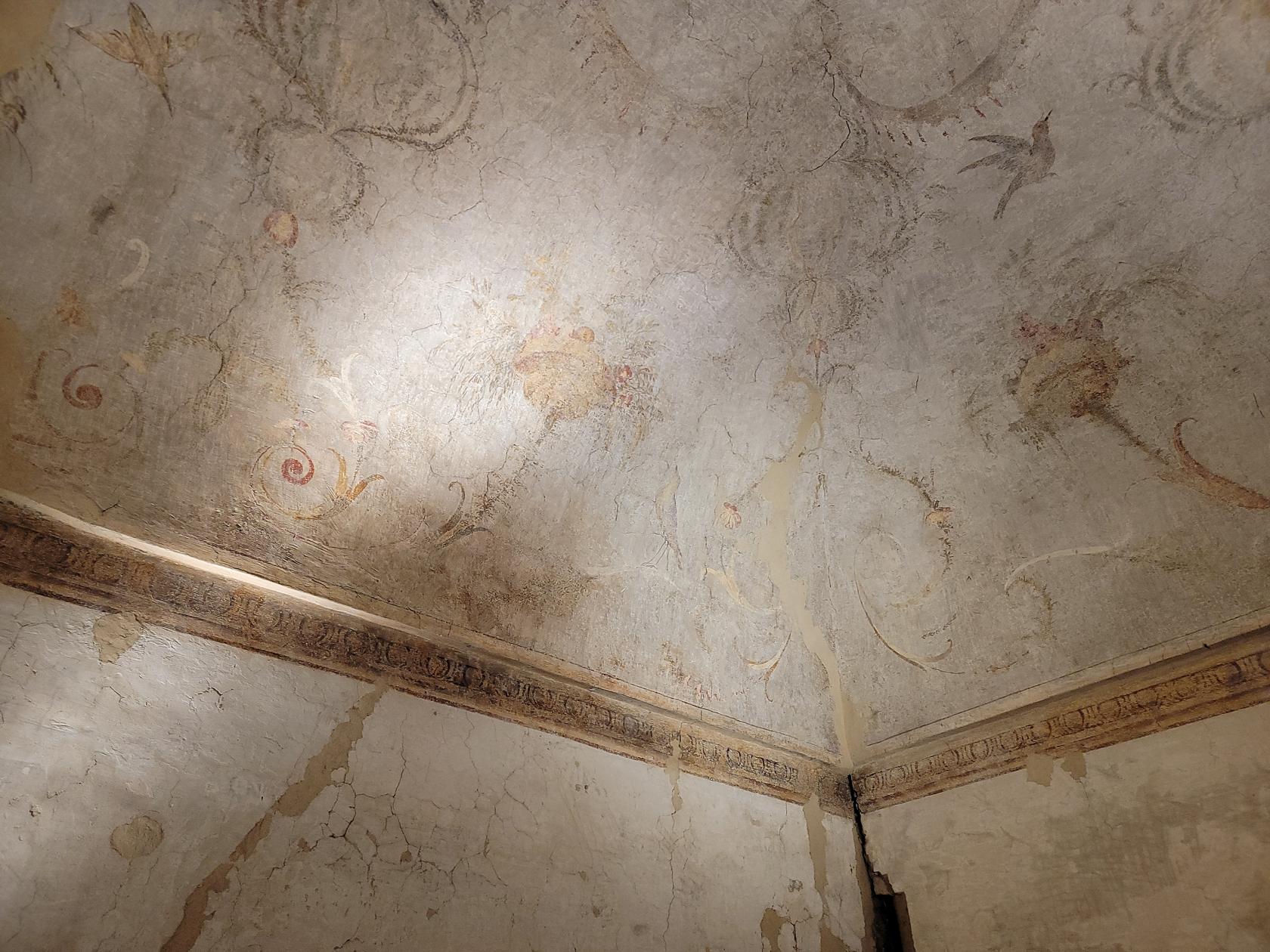
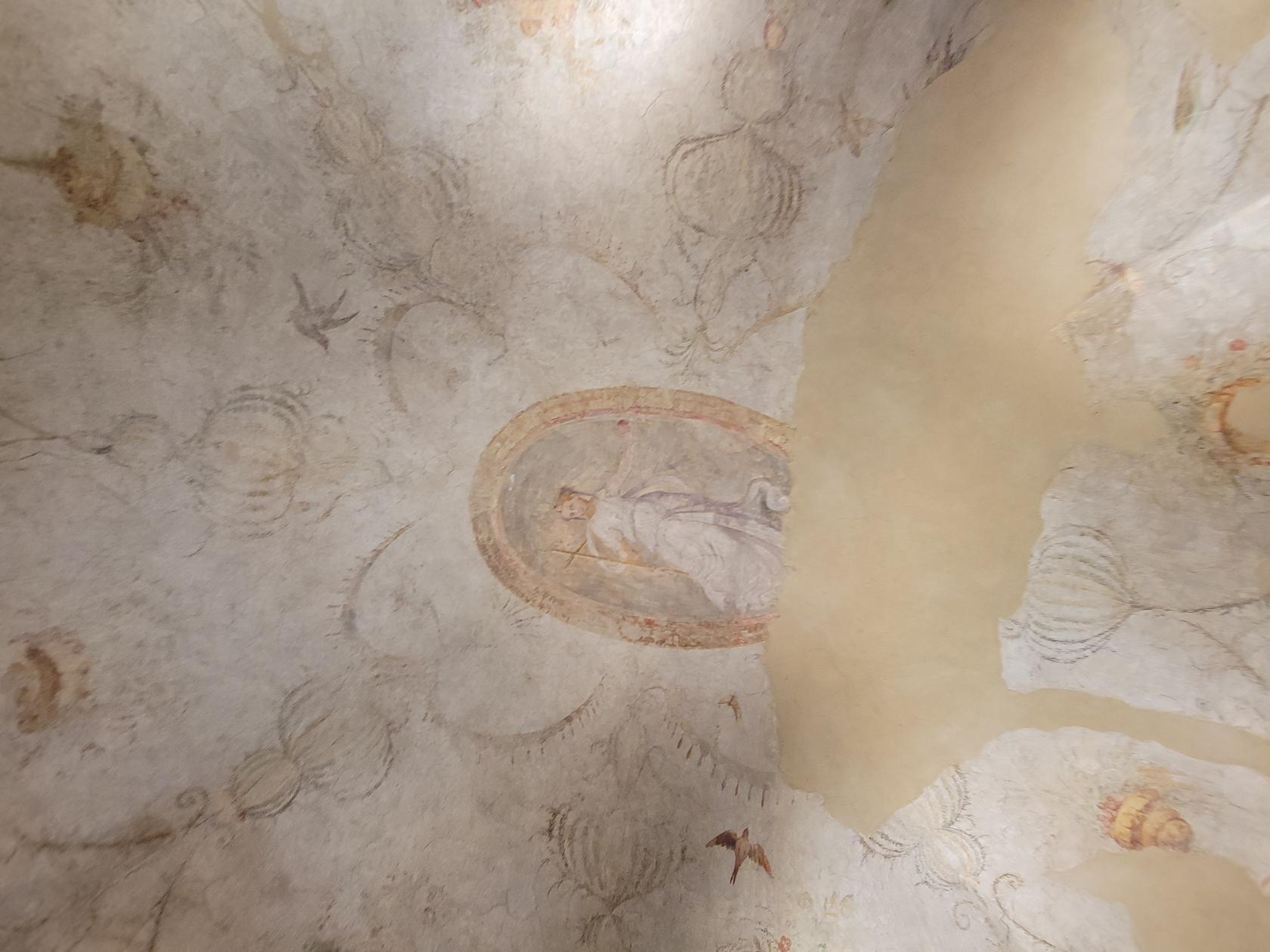
Old Ceiling – Rooms of San Paolo and Saint Catherine – Parma, Italy
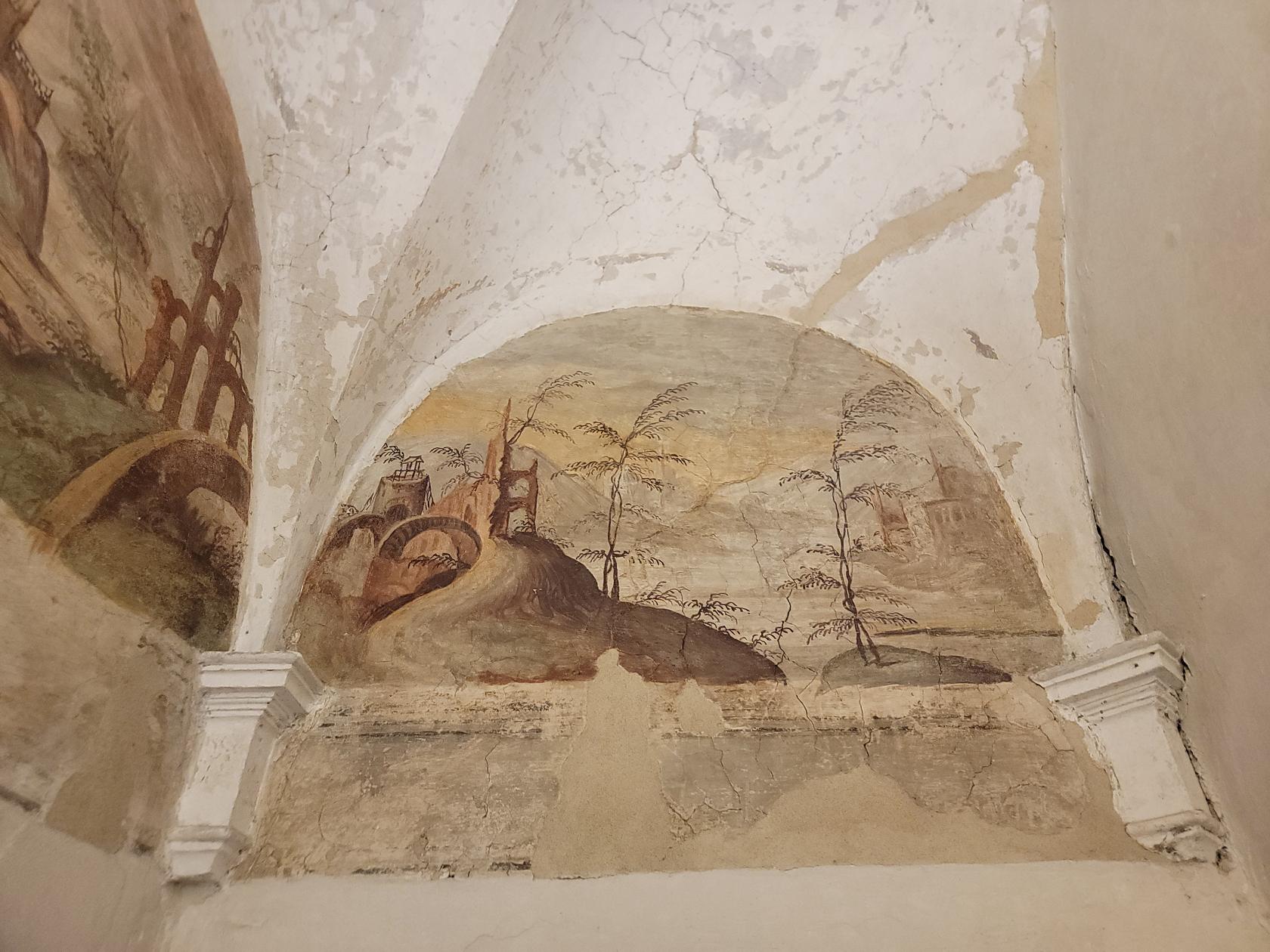
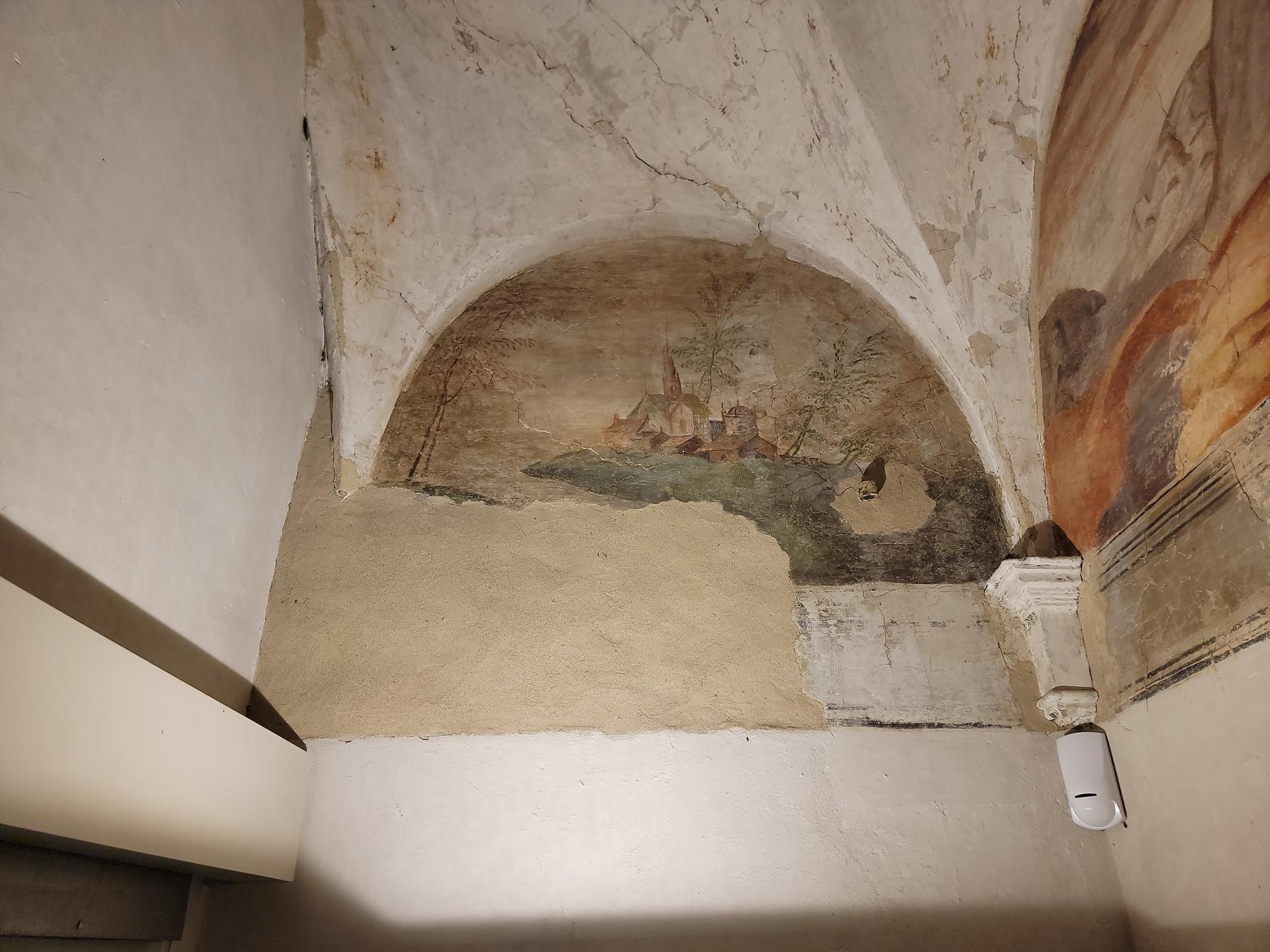
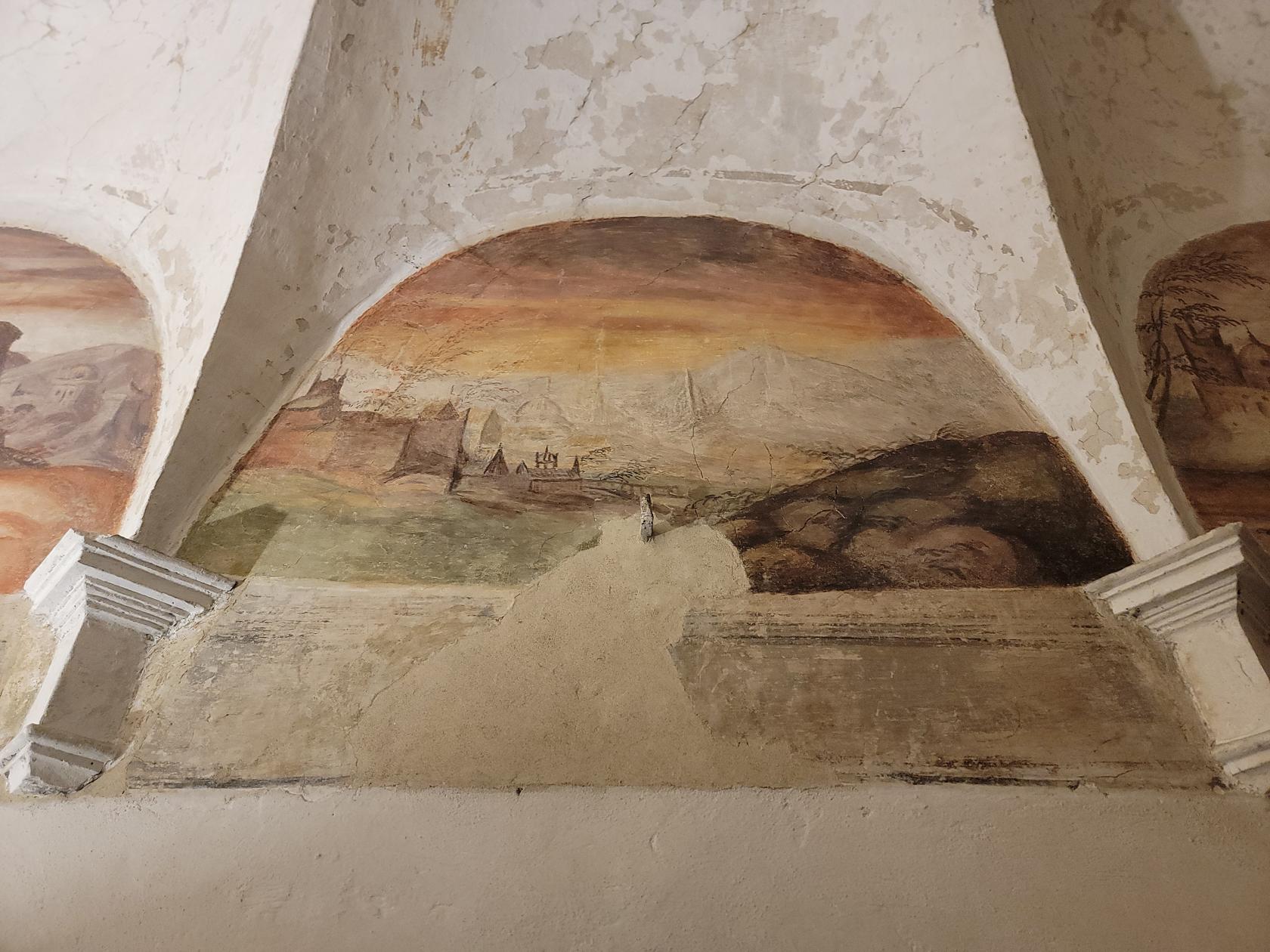
Aging Frescoes – Rooms of San Paolo and Saint Catherine – Parma, Italy
Old Frescoes – Rooms of San Paolo and Saint Catherine – Parma, Italy
Old Frescoes – Rooms of San Paolo and Saint Catherine – Parma, Italy
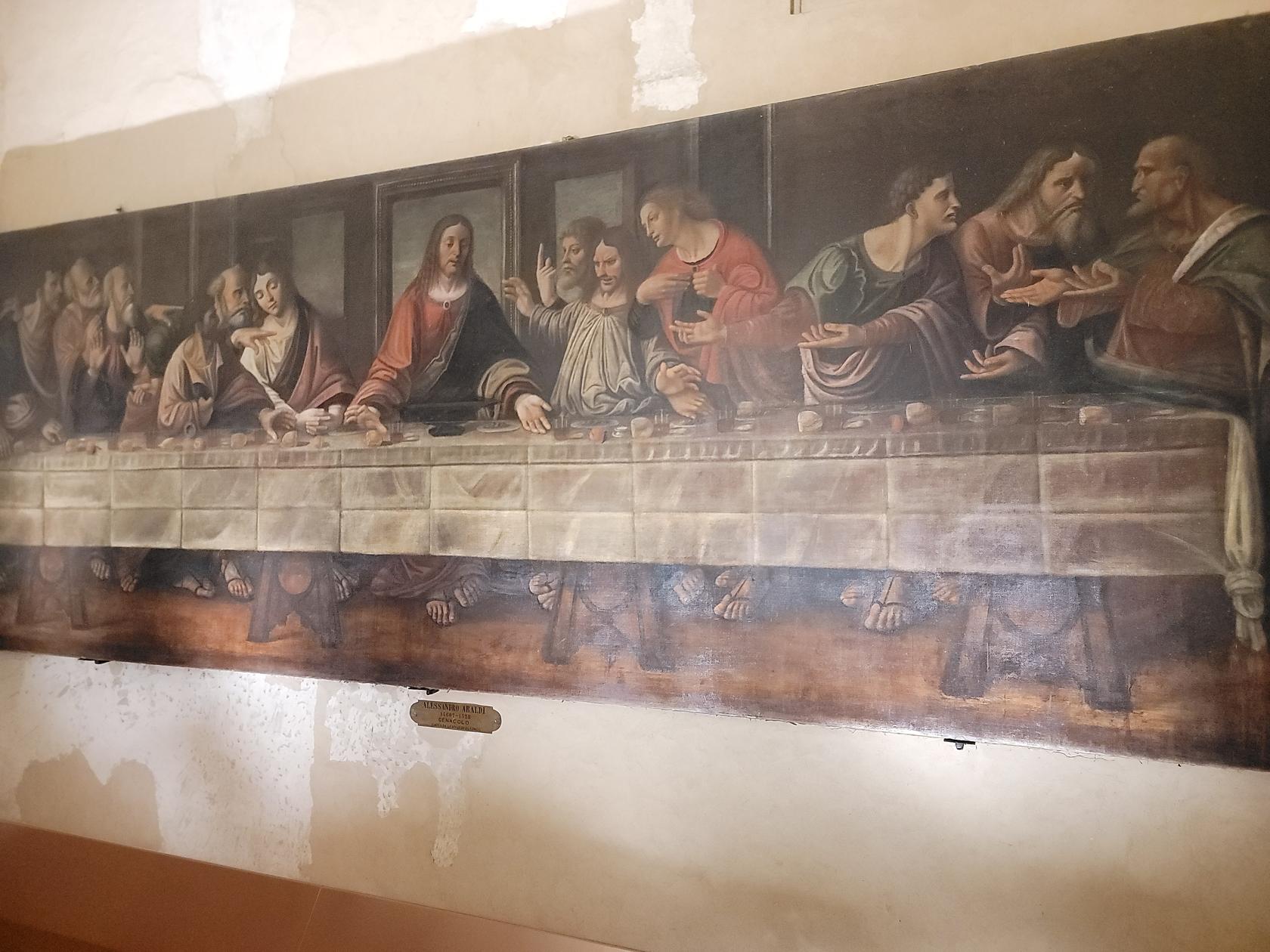
Entrance Fresco of Last Supper – Rooms of San Paolo and Saint Catherine – Parma, Italy
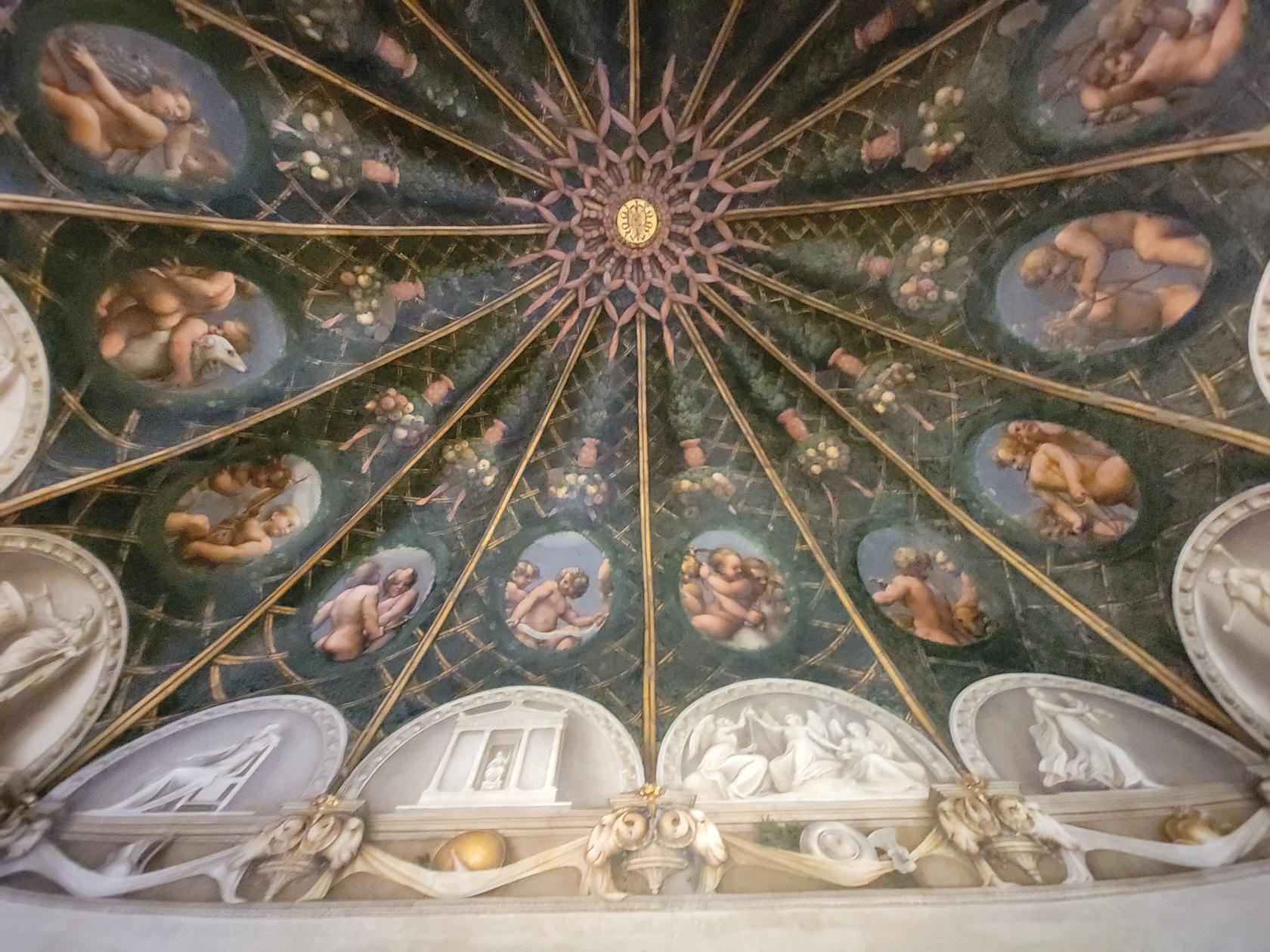
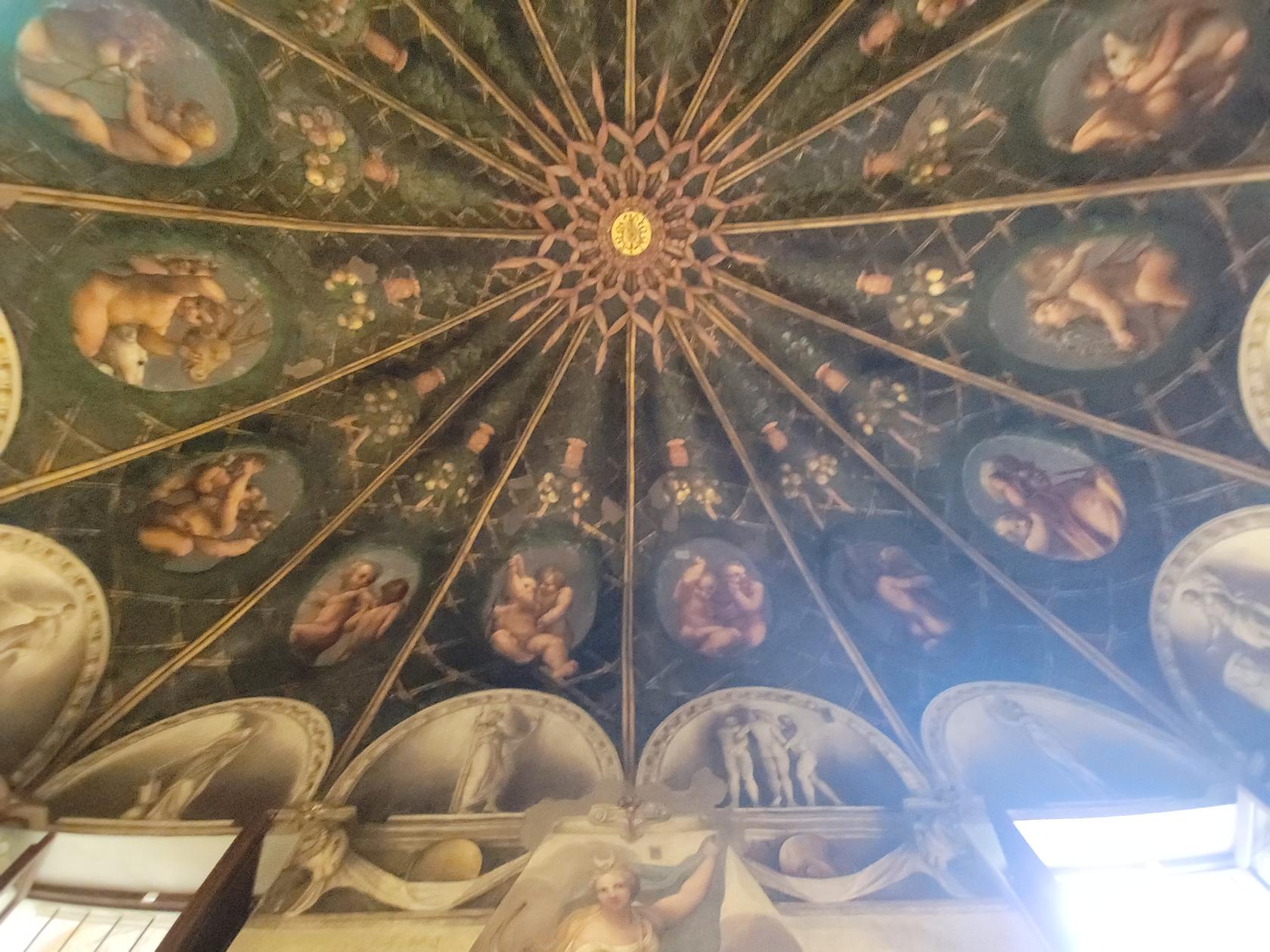
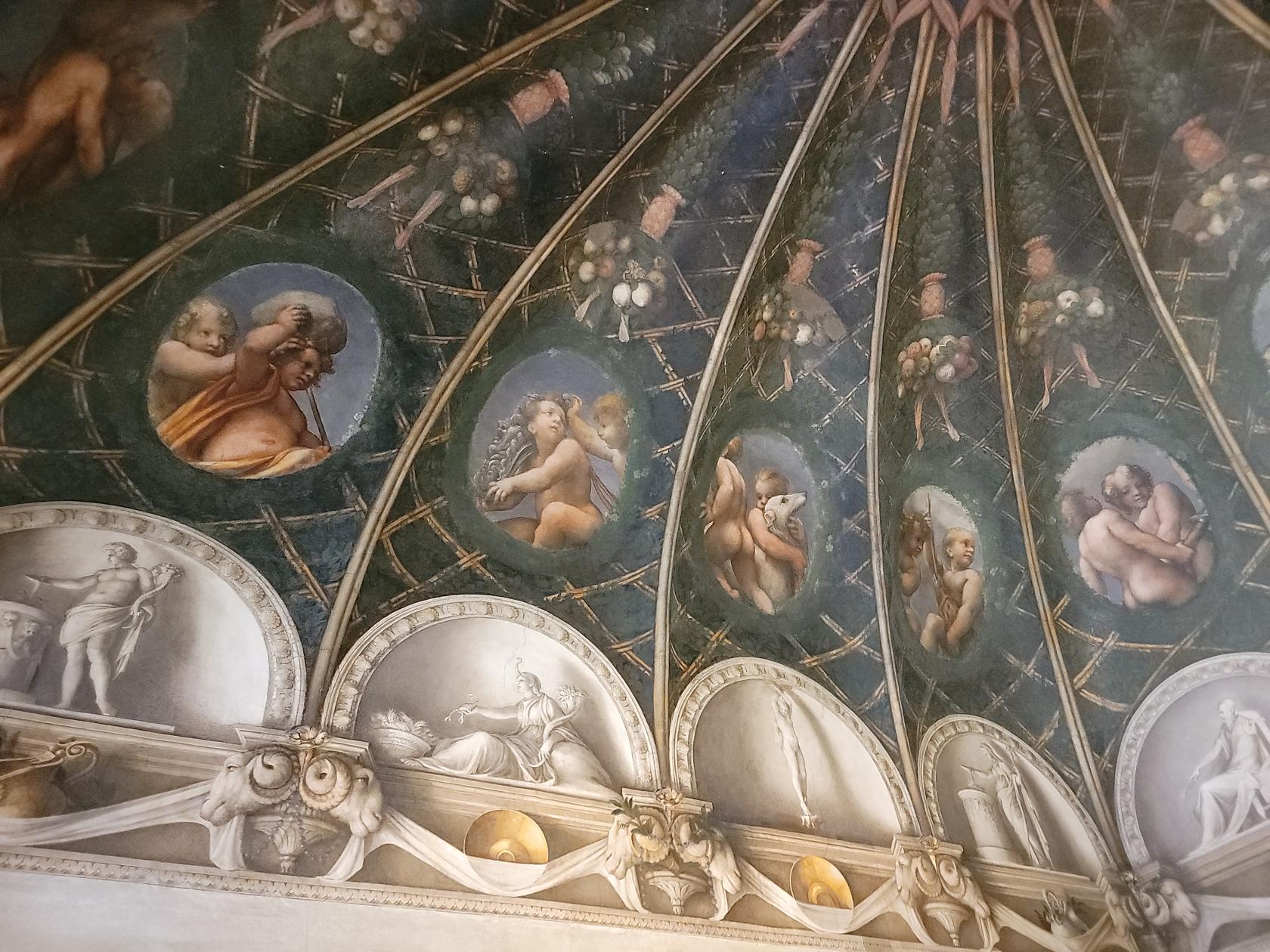
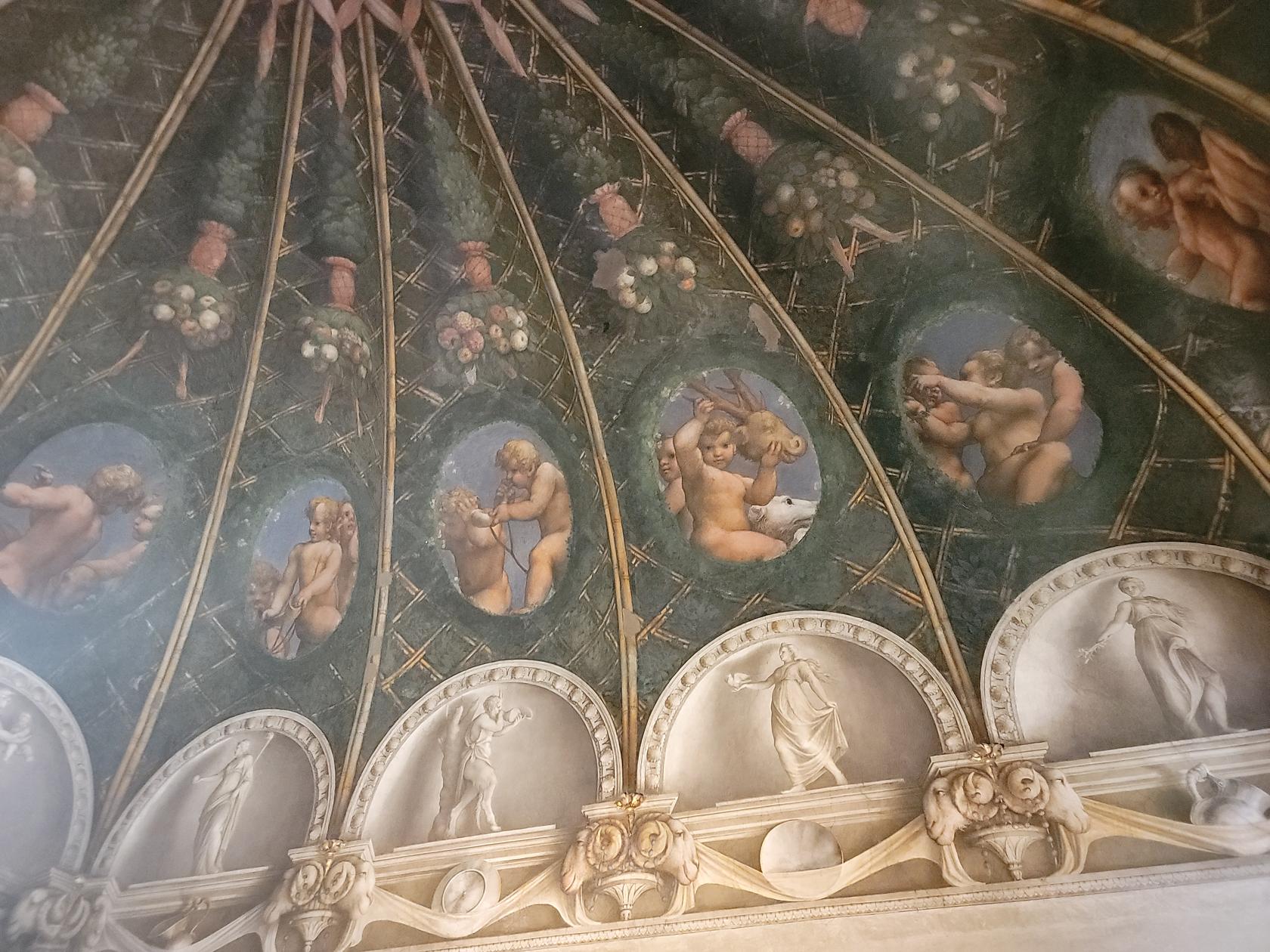
In one room, the frescoes painted on the walls and ceilings are from one of the areas famous painters, Correggio, and were done sometime in the 16th century.
Correggio’s Ceiling Fresco – Rooms of San Paolo and Saint Catherine – Parma, Italy
Correggio’s Ceiling Fresco – Rooms of San Paolo and Saint Catherine – Parma, Italy
Correggio’s Ceiling Fresco – Rooms of San Paolo and Saint Catherine – Parma, Italy
Correggio’s Ceiling Fresco – Rooms of San Paolo and Saint Catherine – Parma, Italy
Correggio’s Ceiling Fresco – Rooms of San Paolo and Saint Catherine – Parma, Italy
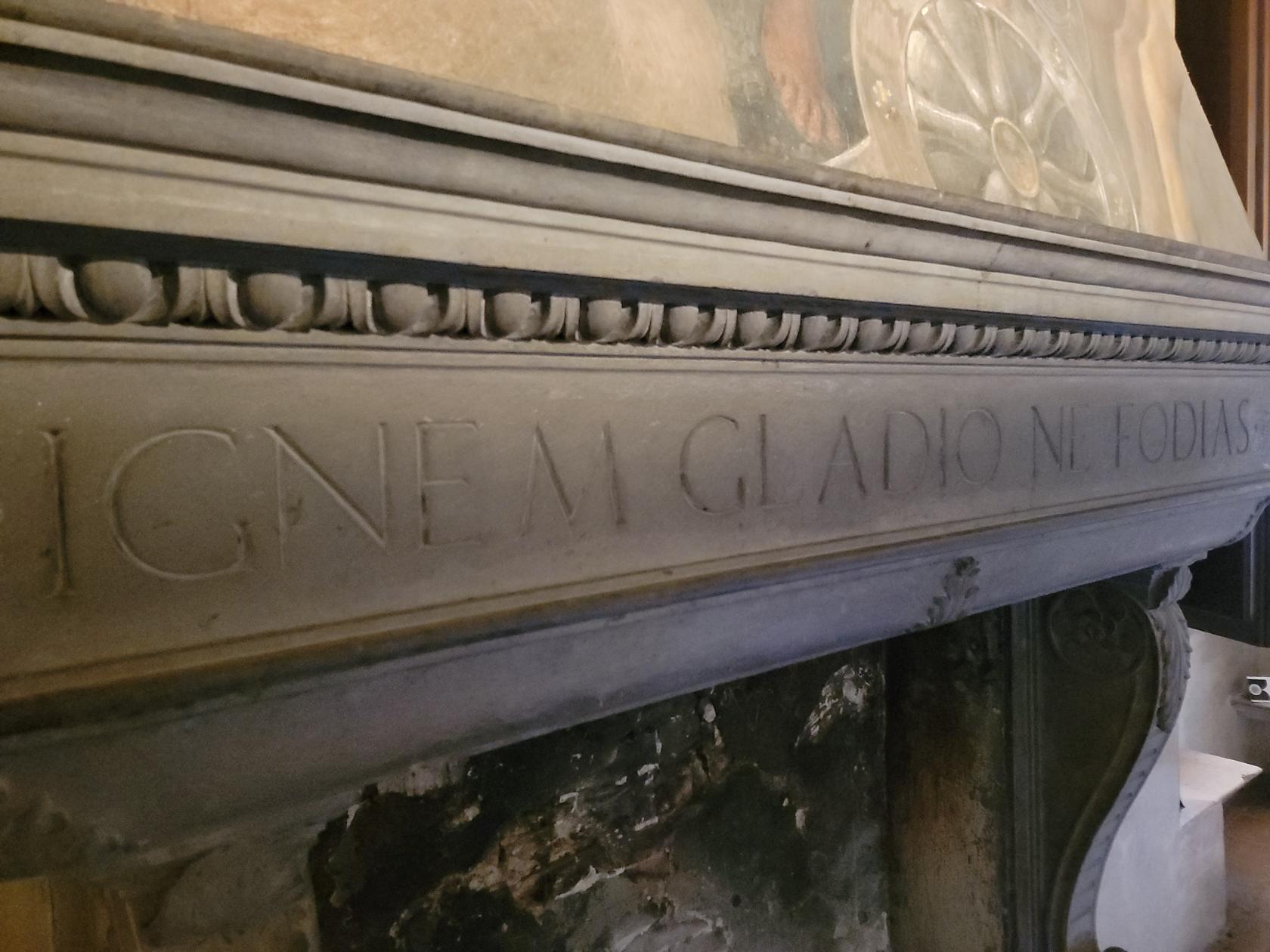
Fireplace Inscription – Rooms of San Paolo and Saint Catherine – Parma, Italy
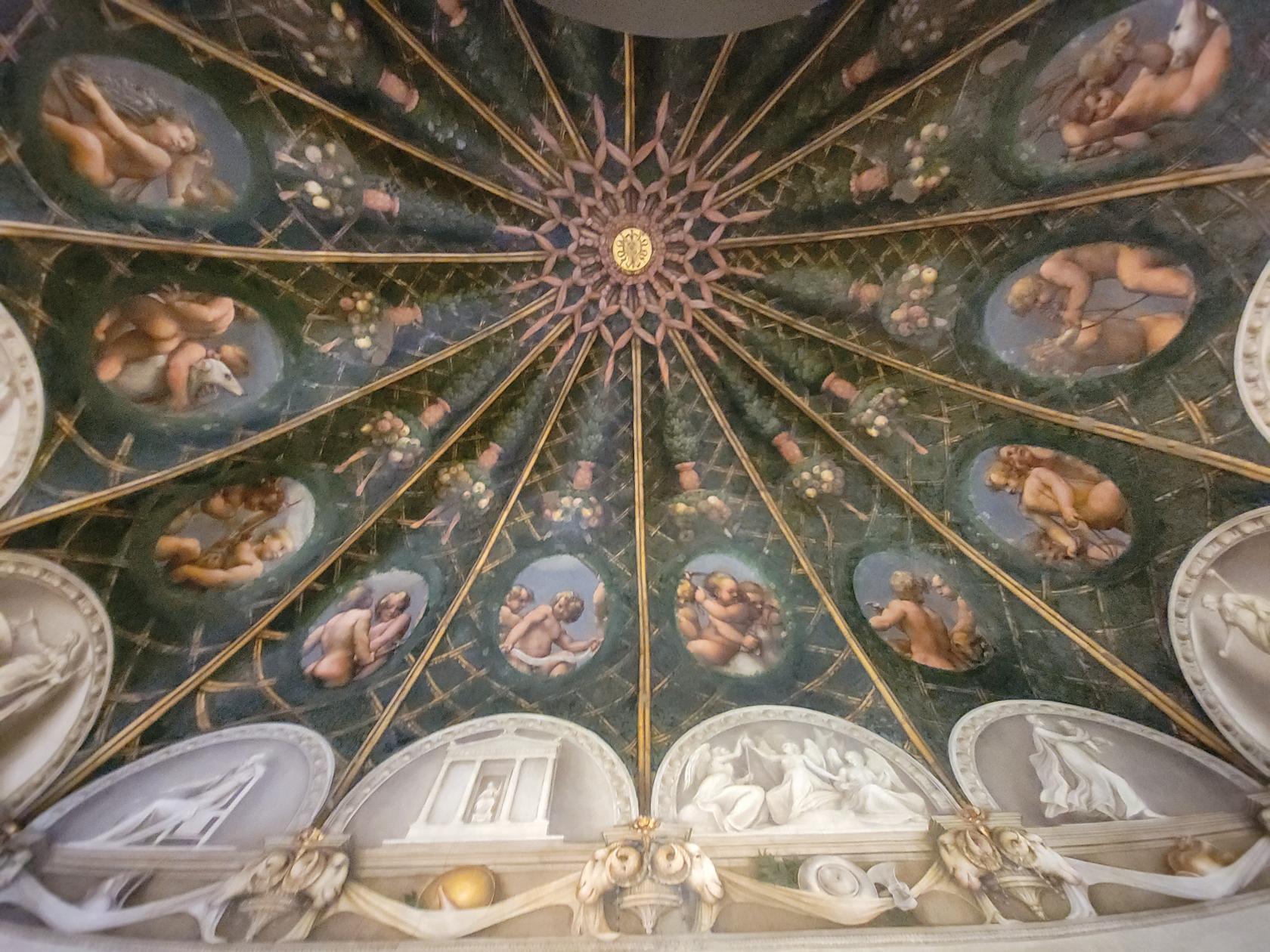
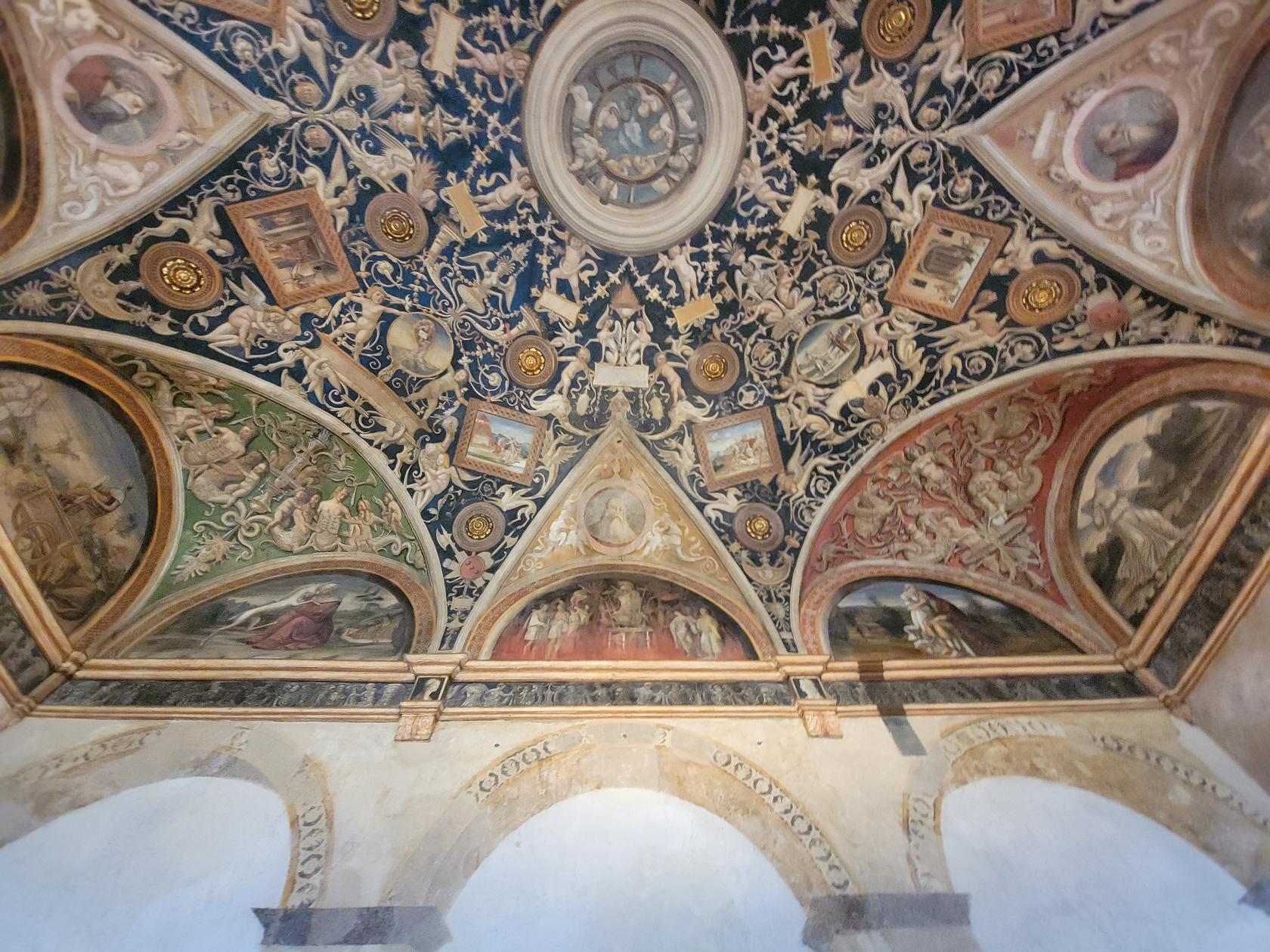
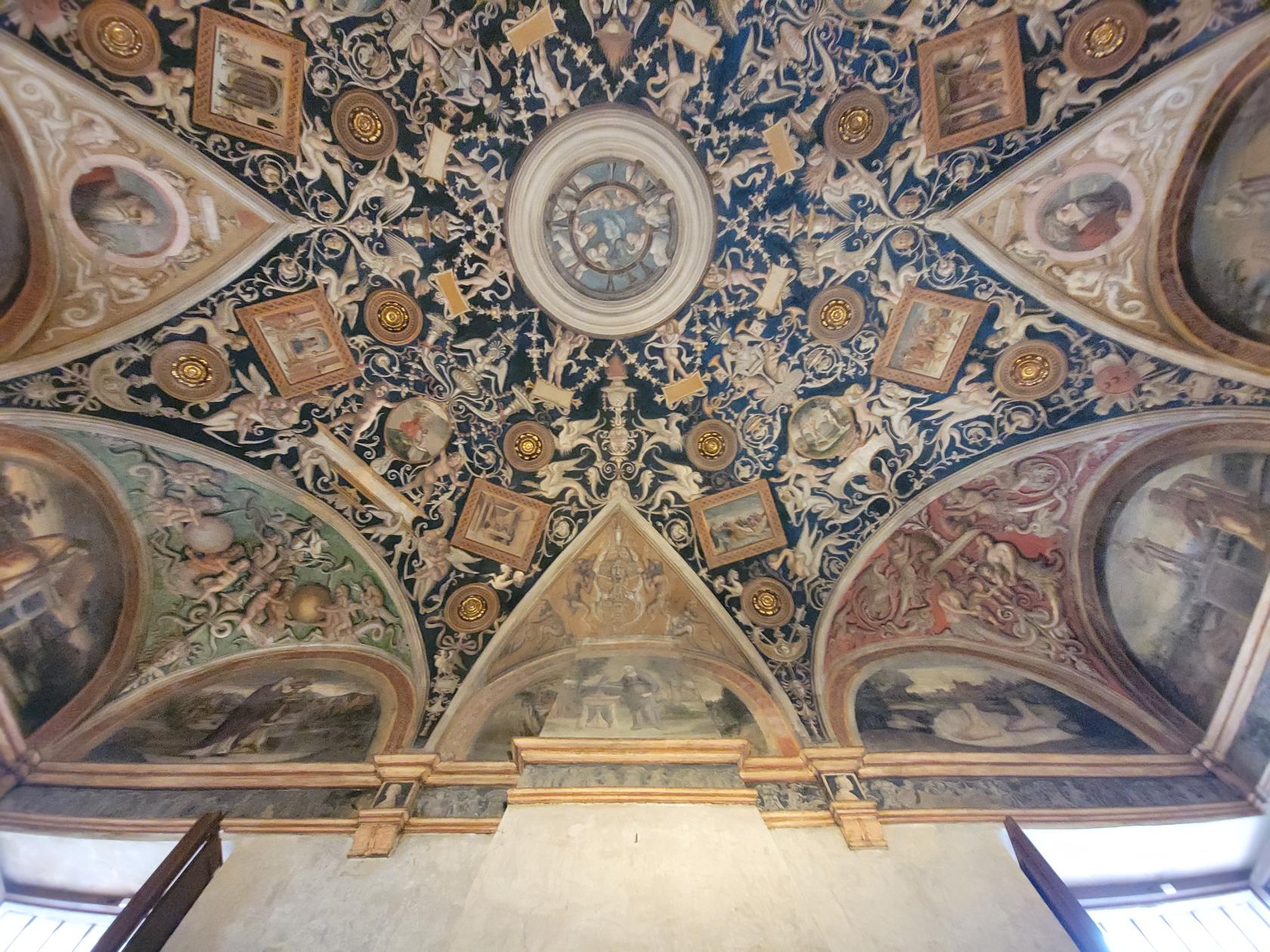
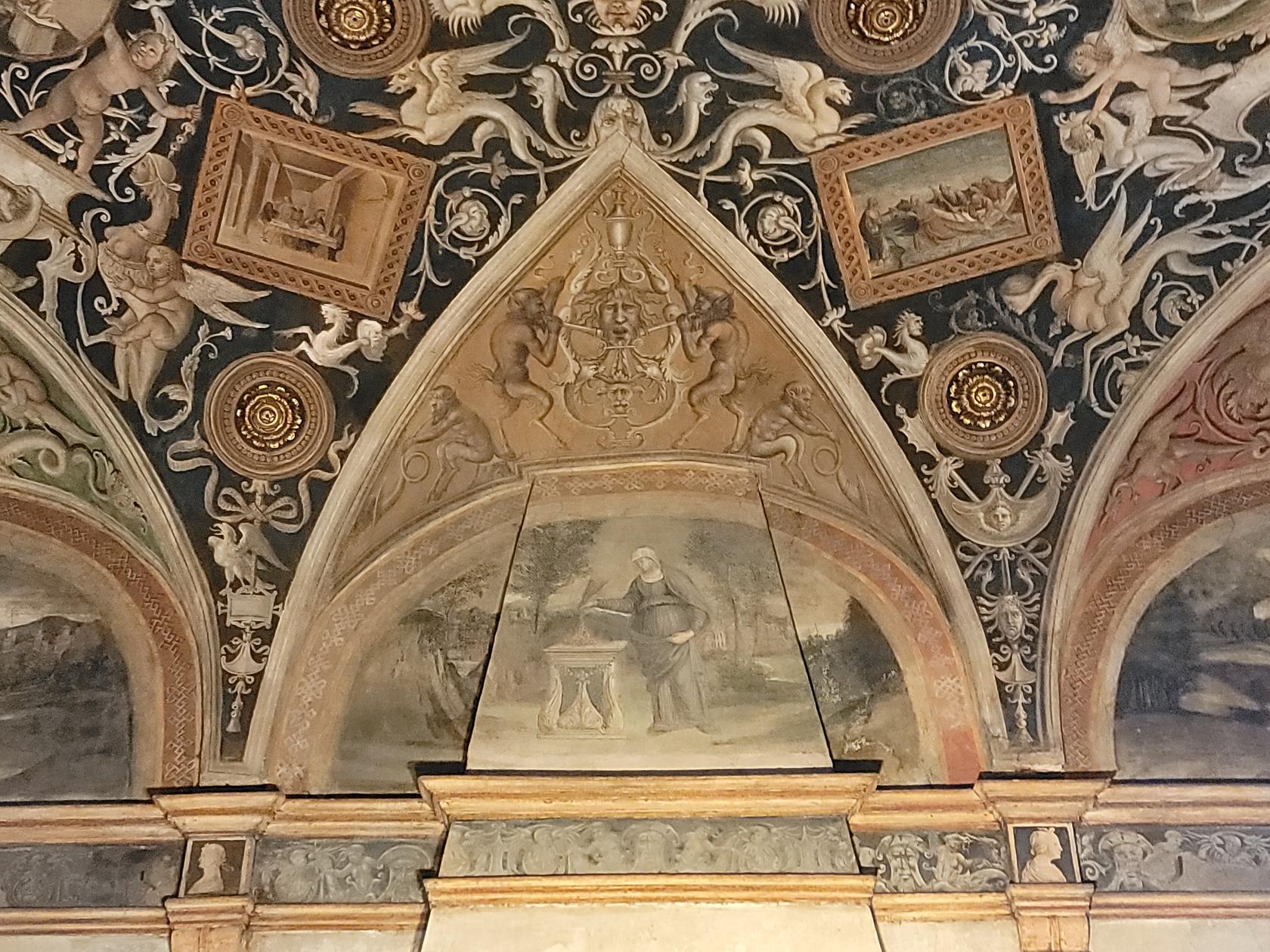
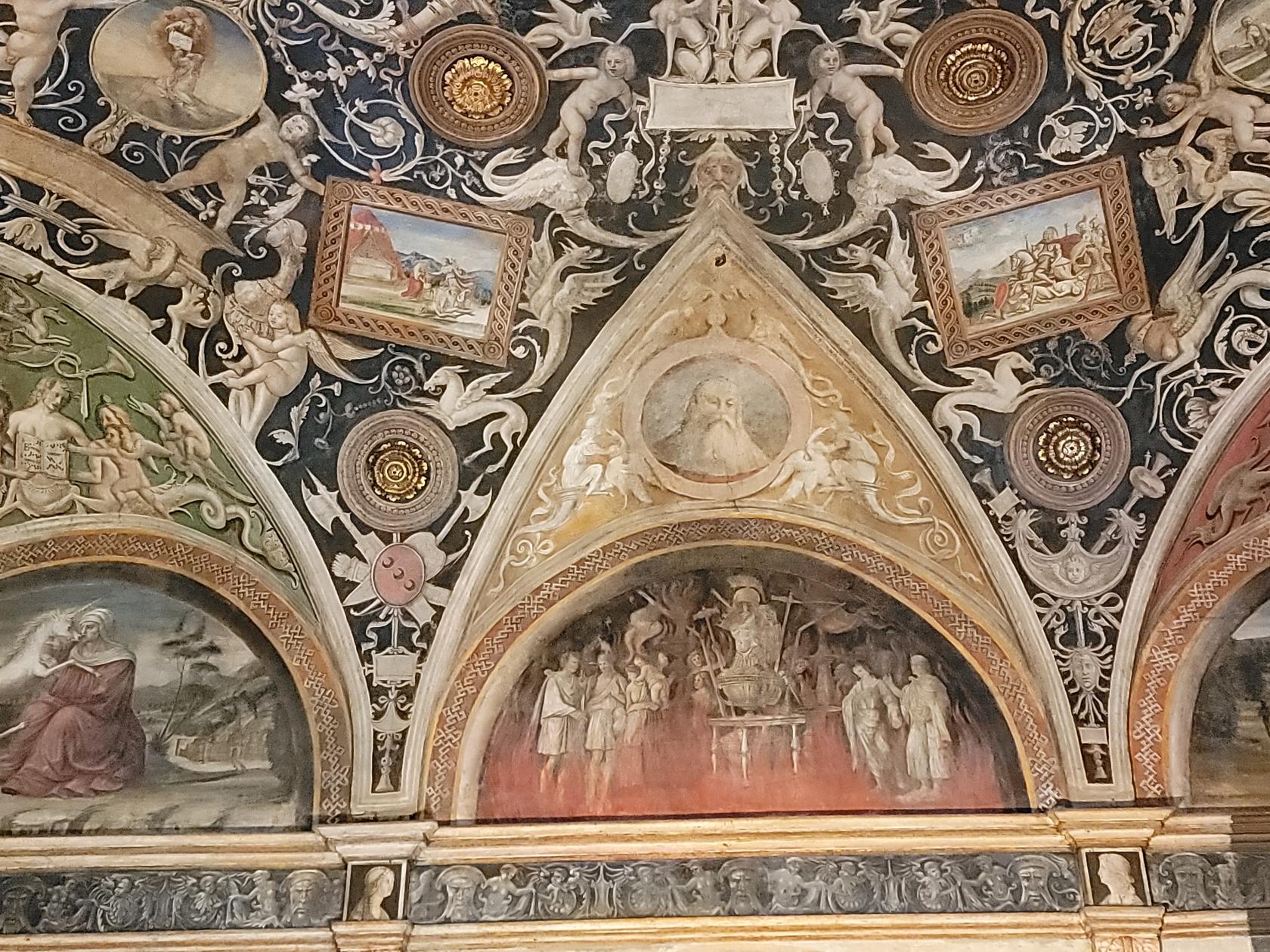
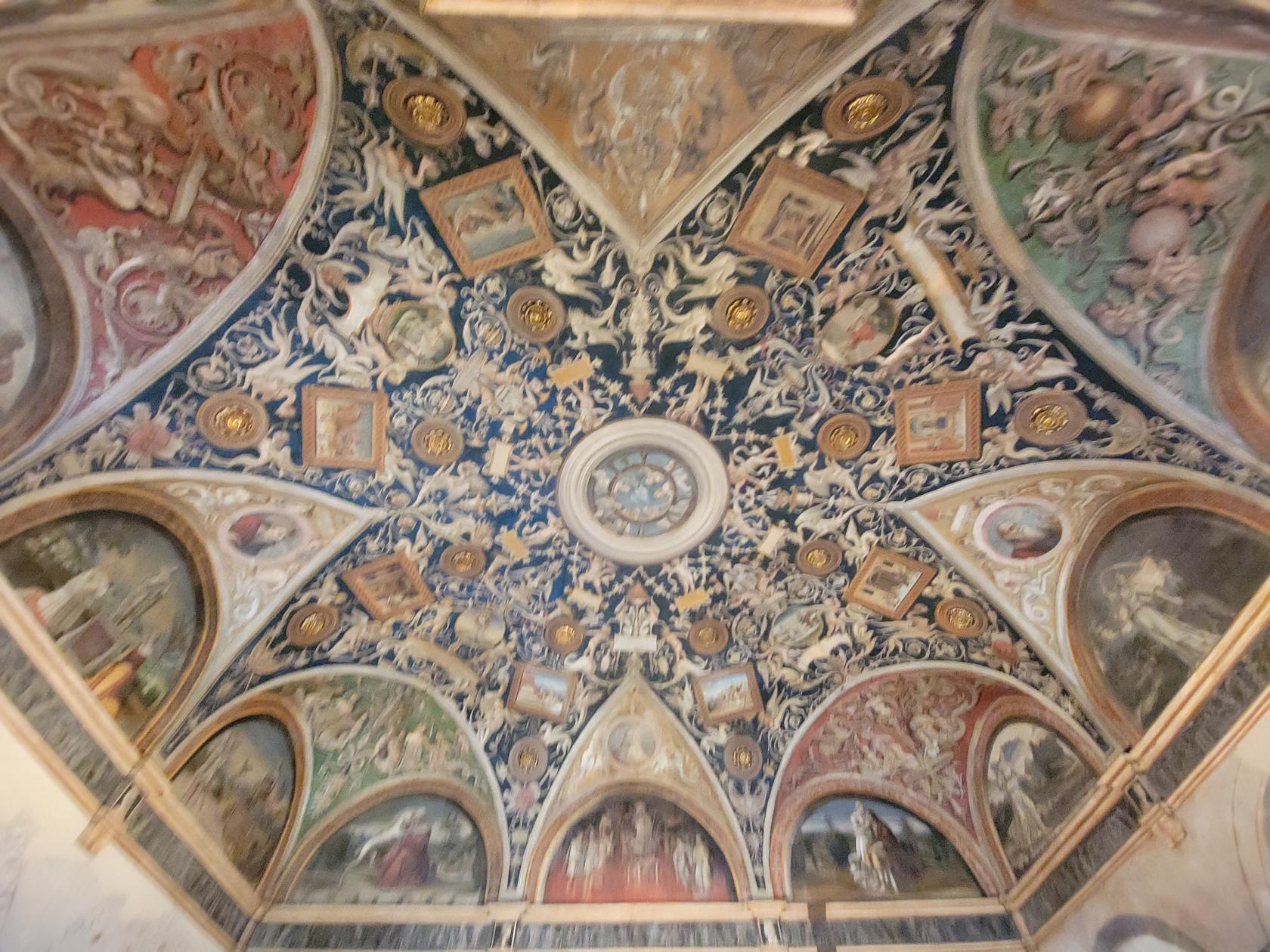
The museum also has a vaulted frescoed ceiling from Alessandro Araldi dedicated to Saint Catherine.
Alessandro Araldi’s Ceiling Fresco – Rooms of San Paolo and Saint Catherine – Parma, Italy
Alessandro Araldi’s Ceiling Fresco – Rooms of San Paolo and Saint Catherine – Parma, Italy
Alessandro Araldi’s Ceiling Fresco – Rooms of San Paolo and Saint Catherine – Parma, Italy
Alessandro Araldi’s Ceiling Fresco – Rooms of San Paolo and Saint Catherine – Parma, Italy
Alessandro Araldi’s Ceiling Fresco – Rooms of San Paolo and Saint Catherine – Parma, Italy
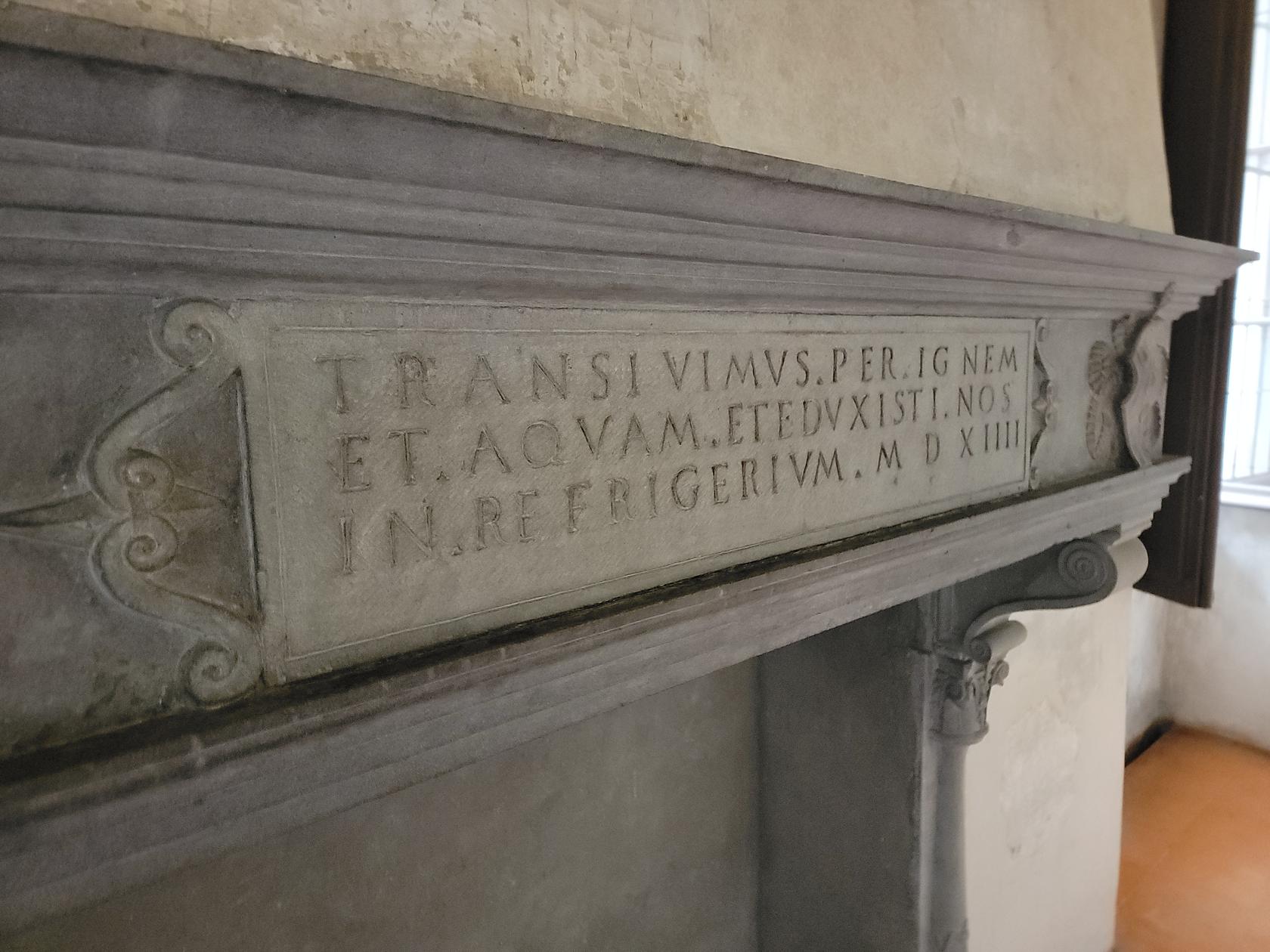
Inscription over Fireplace – Rooms of San Paolo and Saint Catherine – Parma, Italy
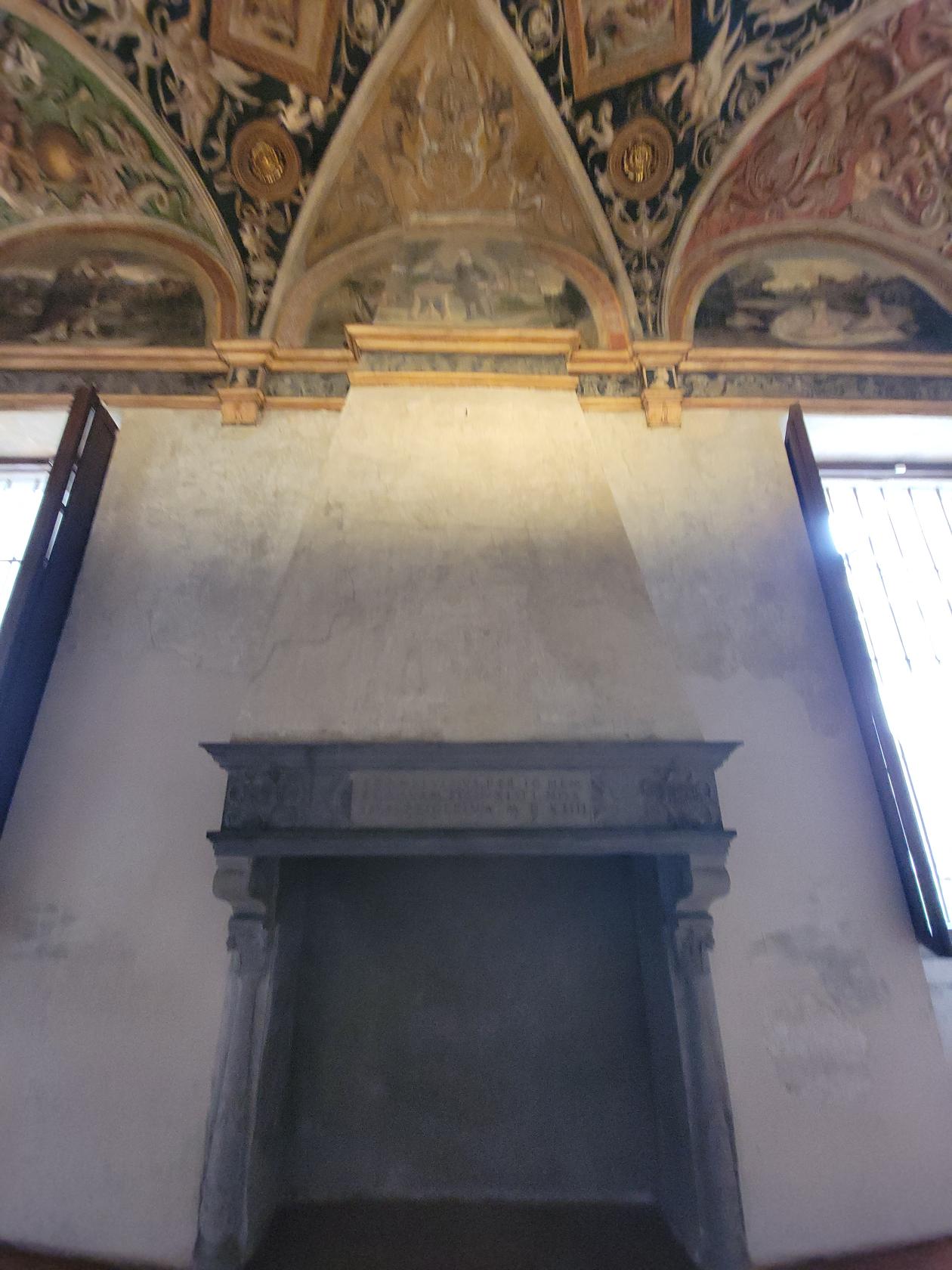
Fireplace – Rooms of San Paolo and Saint Catherine – Parma, Italy
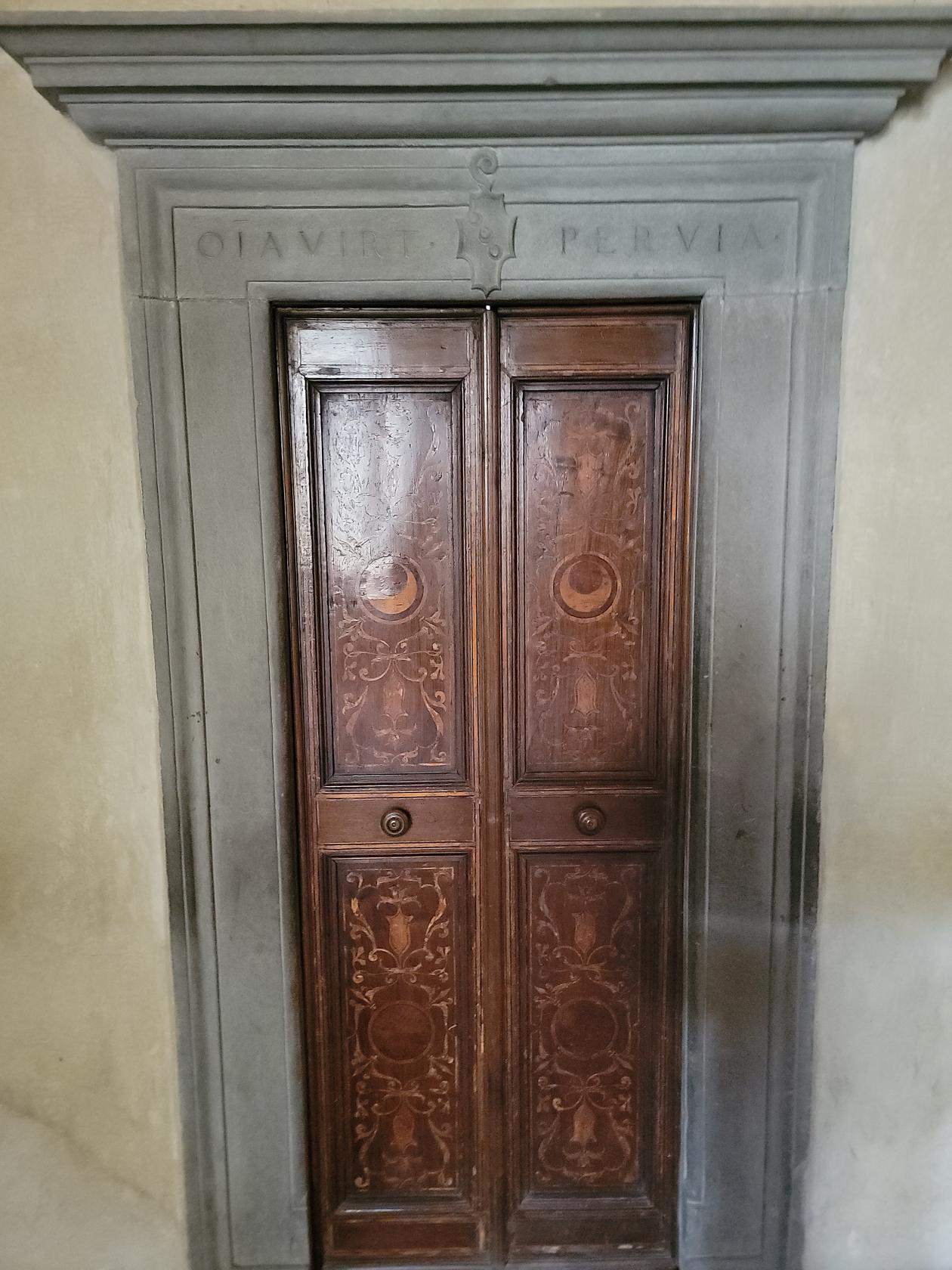
Lintel Inscription and Fine Doors – Rooms of San Paolo and Saint Catherine – Parma, Italy
Giordano Ferrari’s Puppet Museum
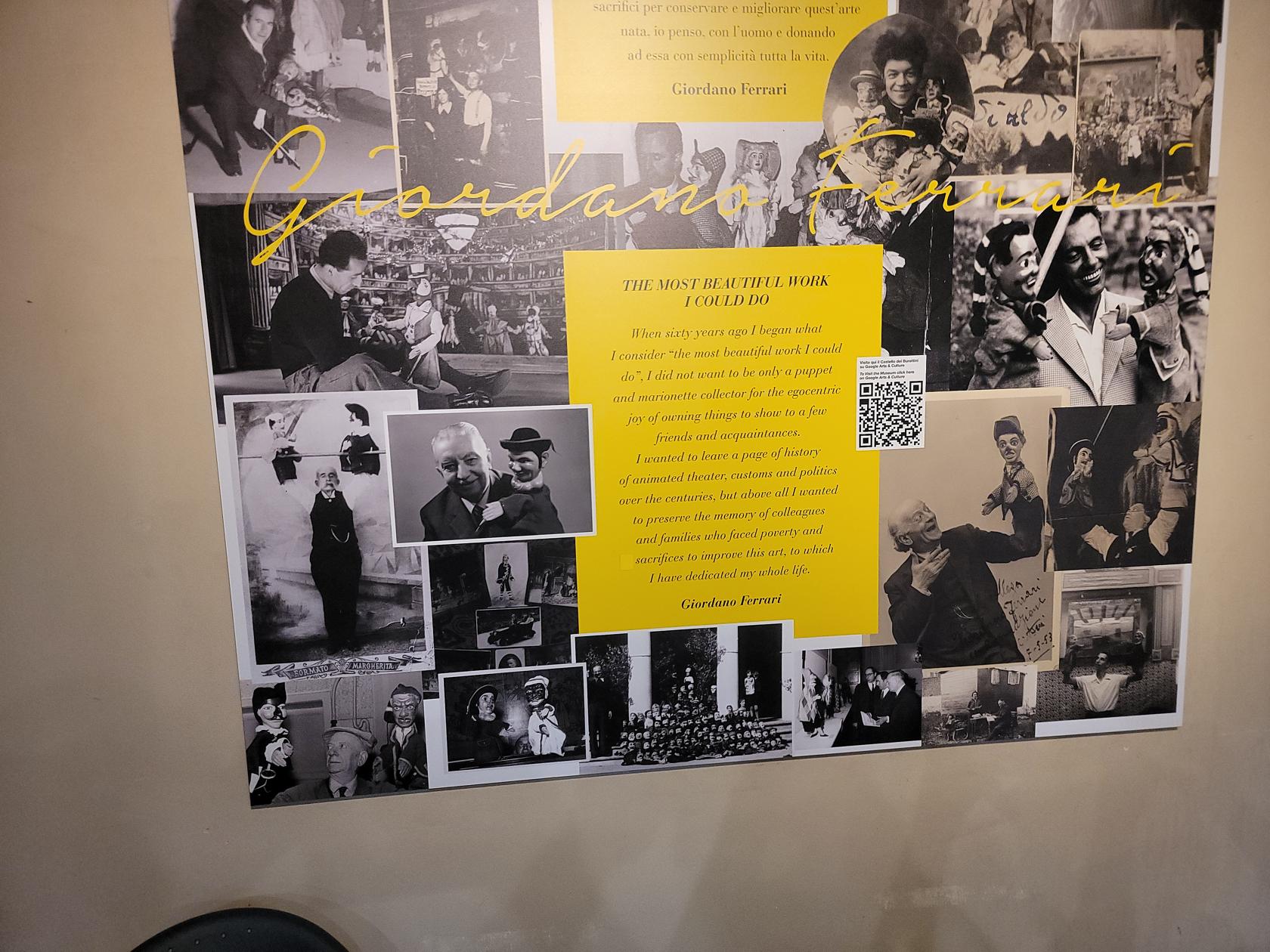
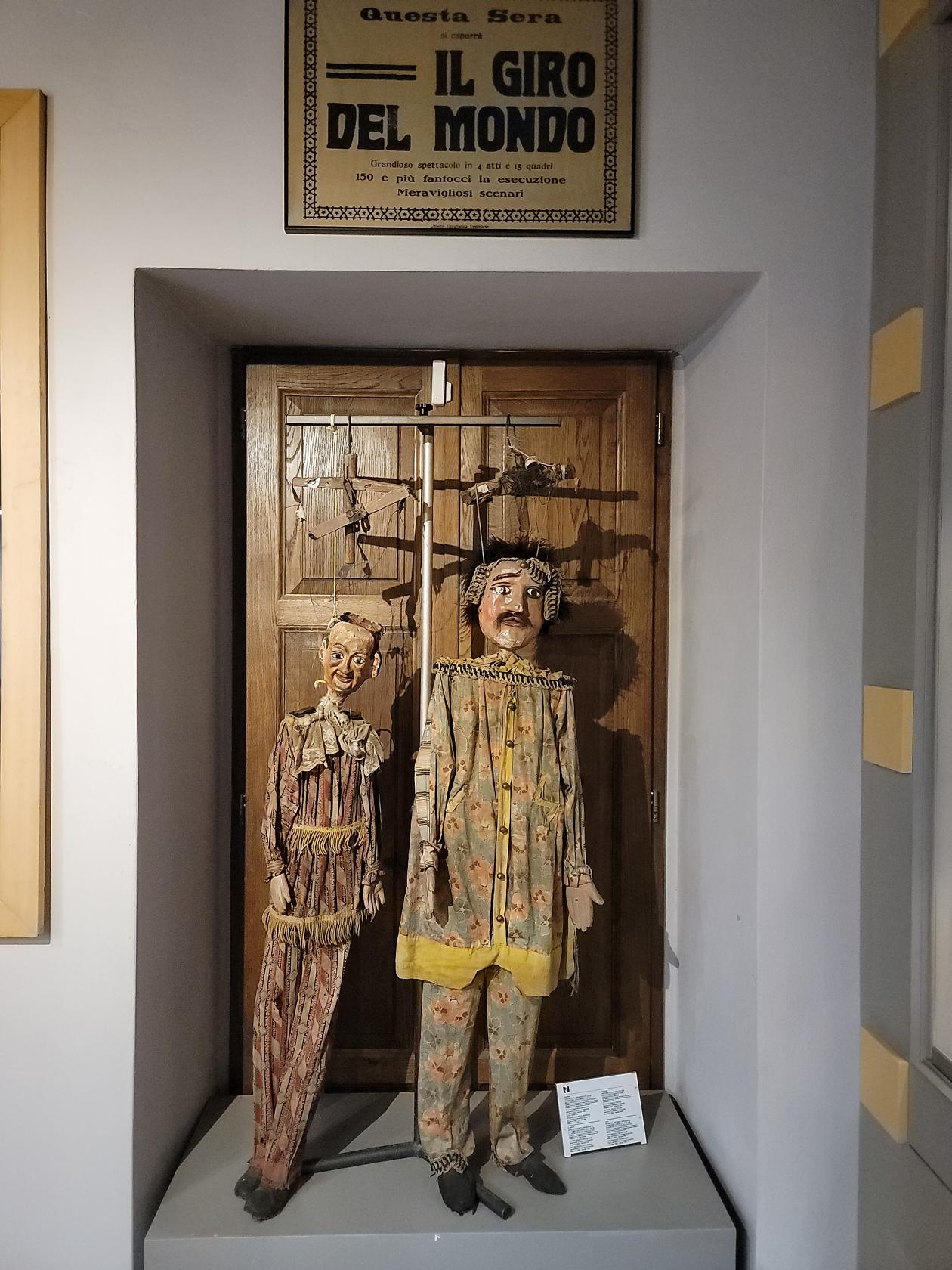
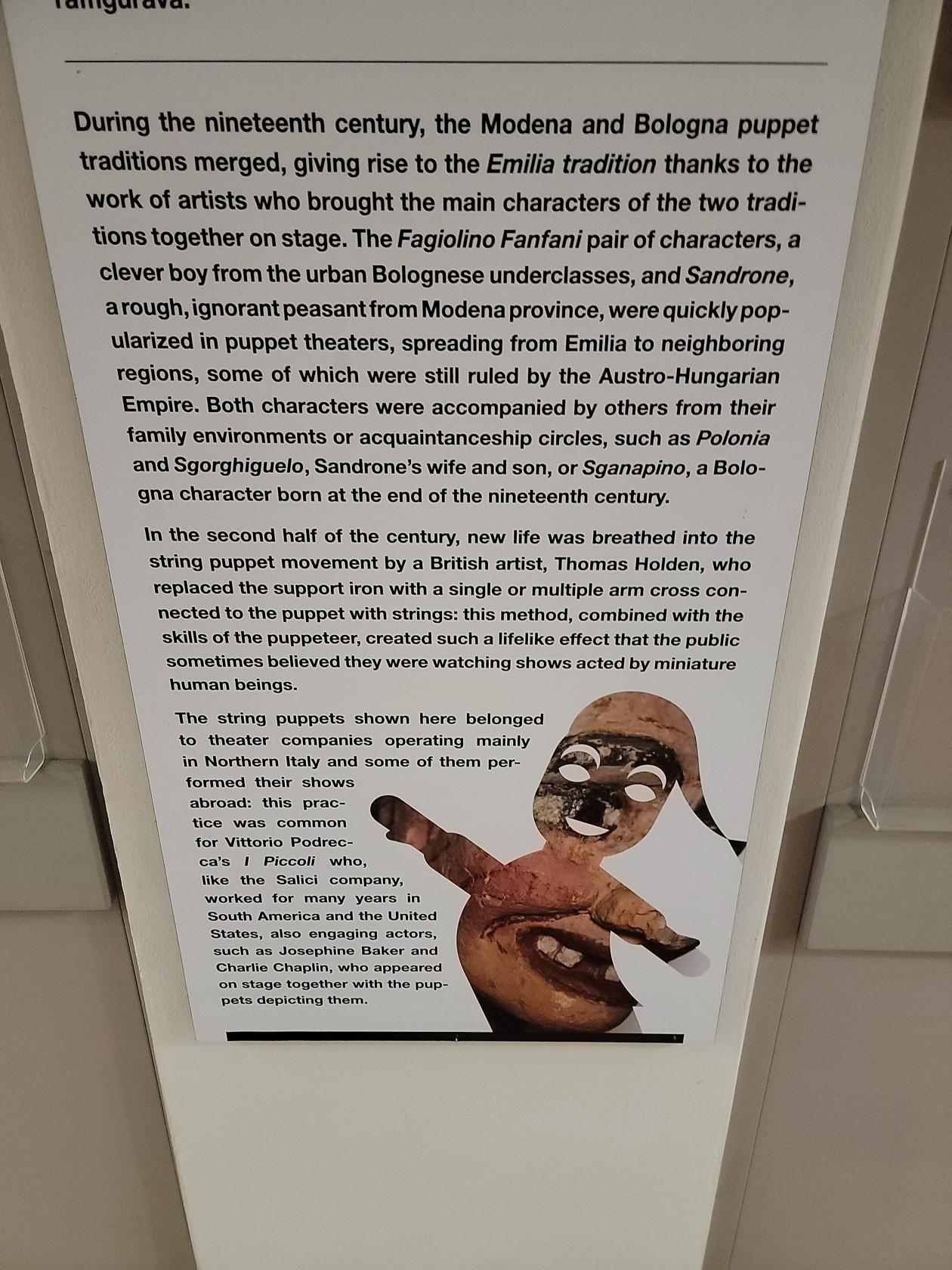
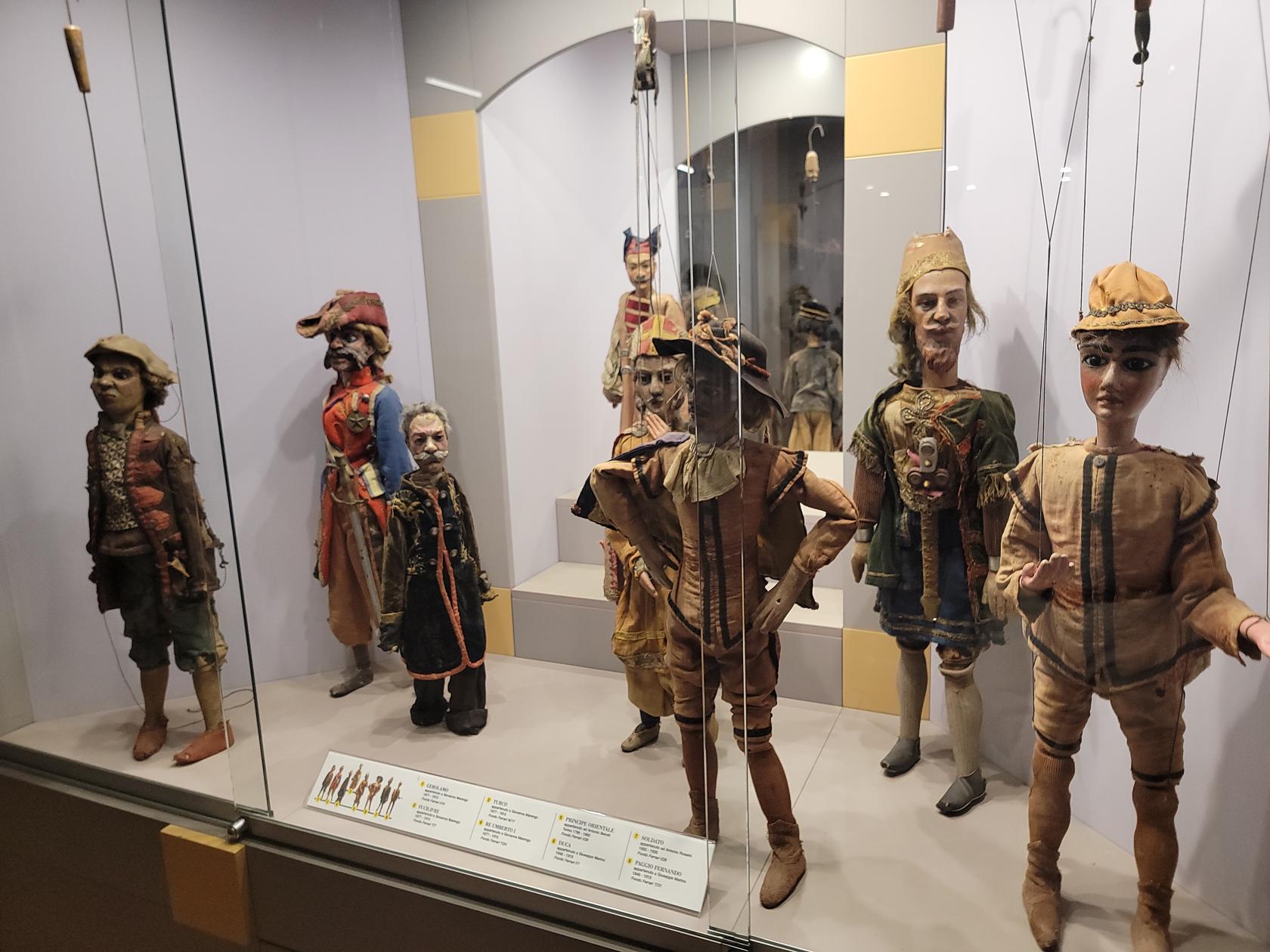
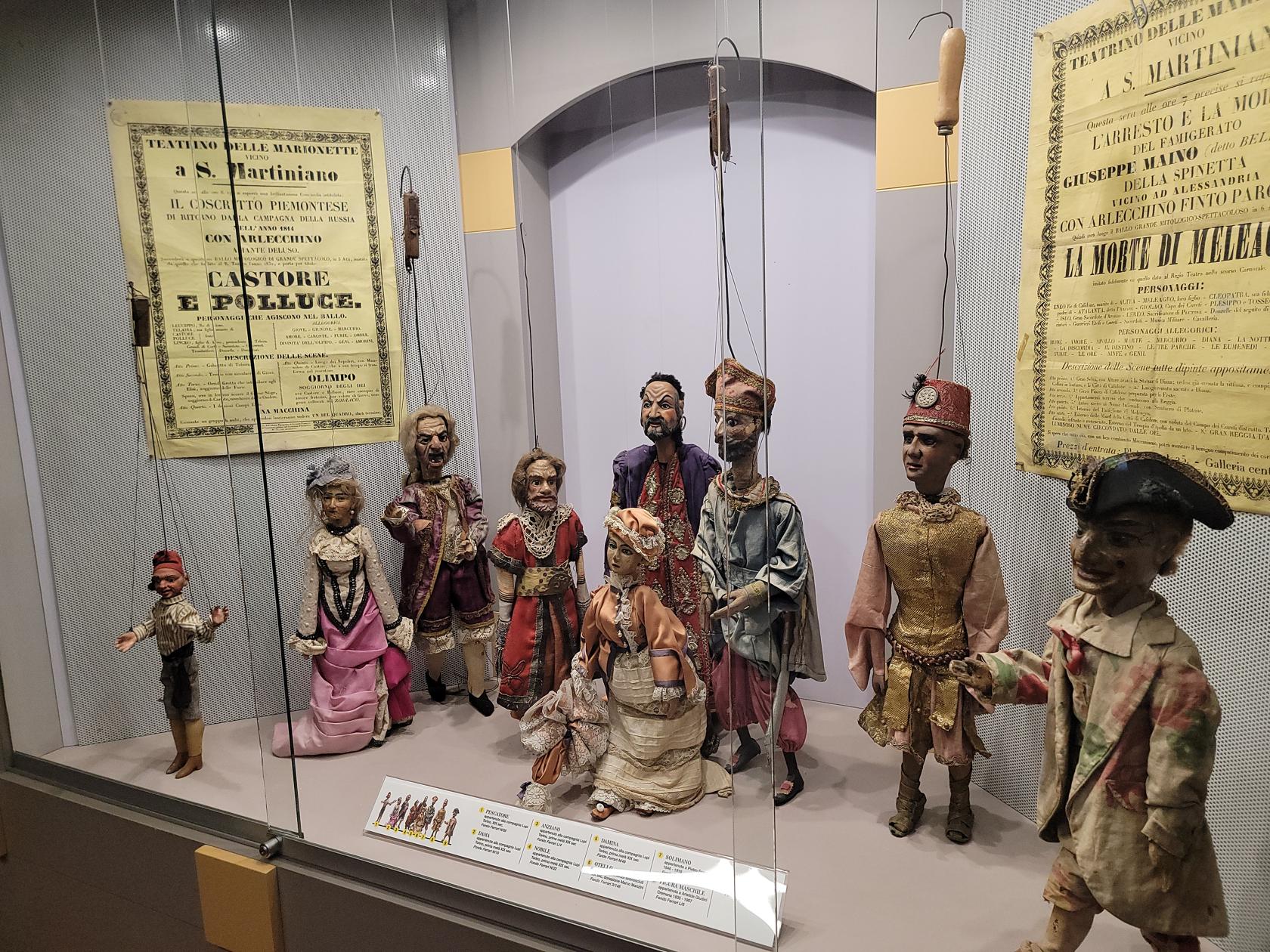
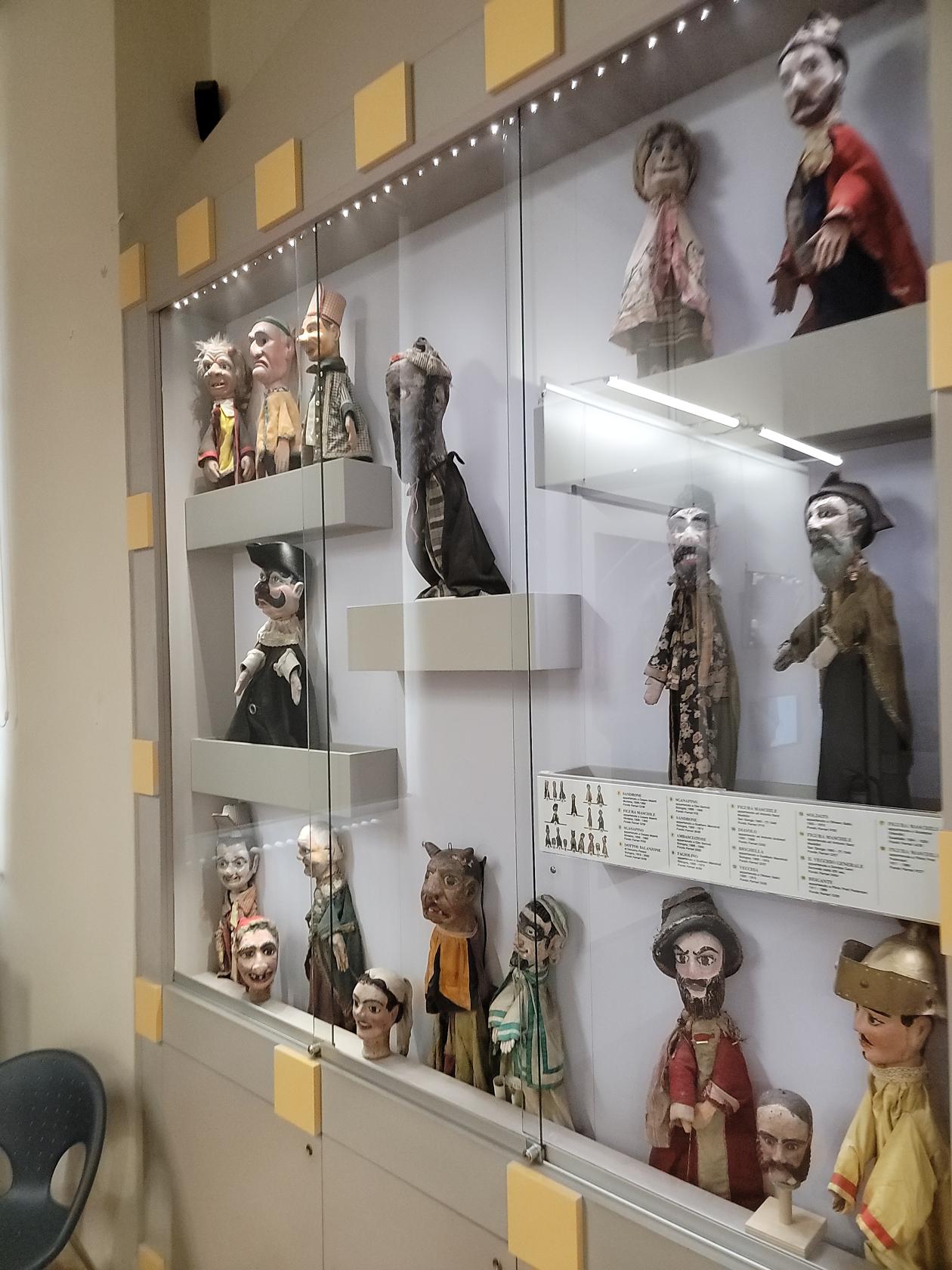
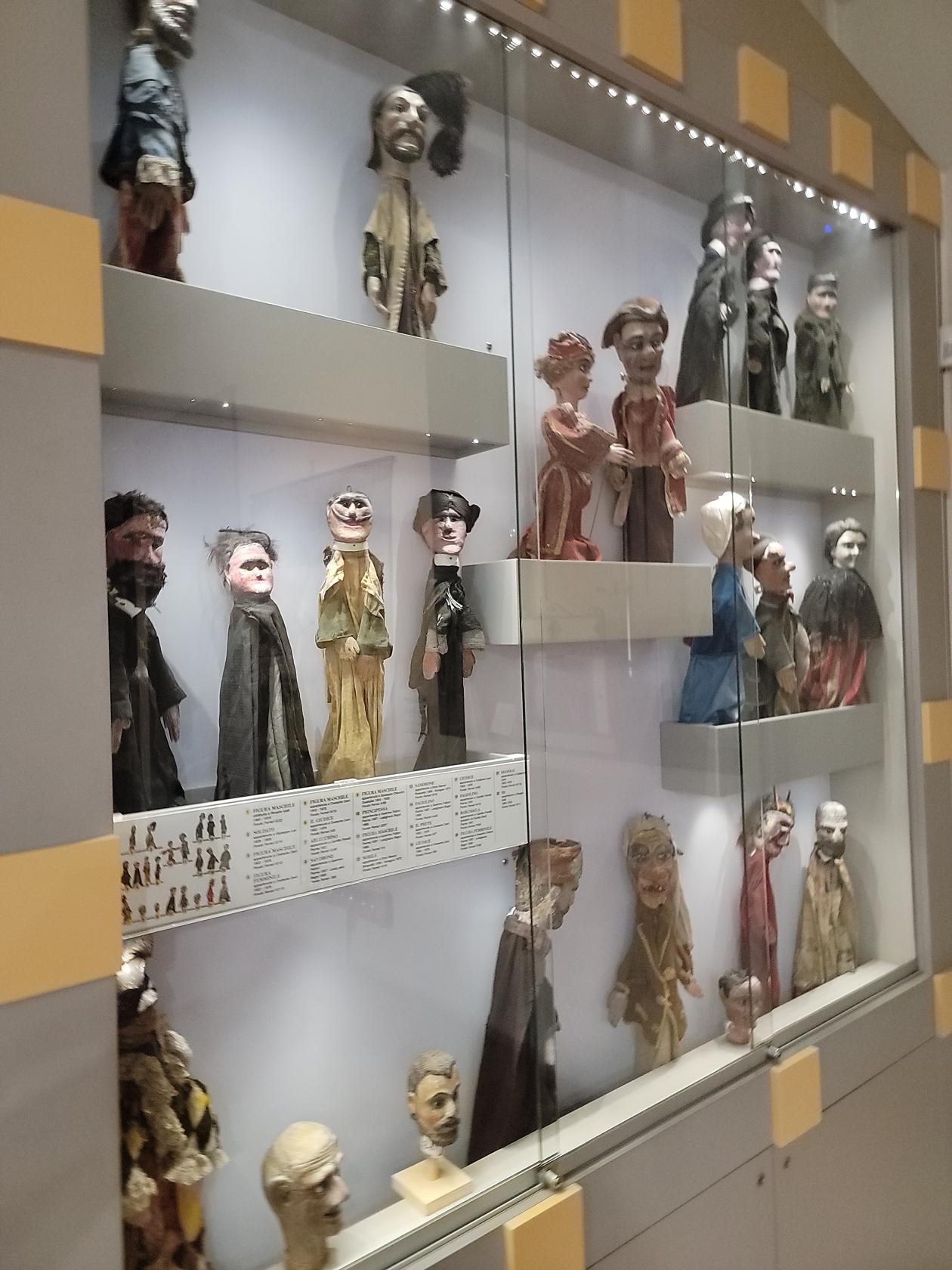
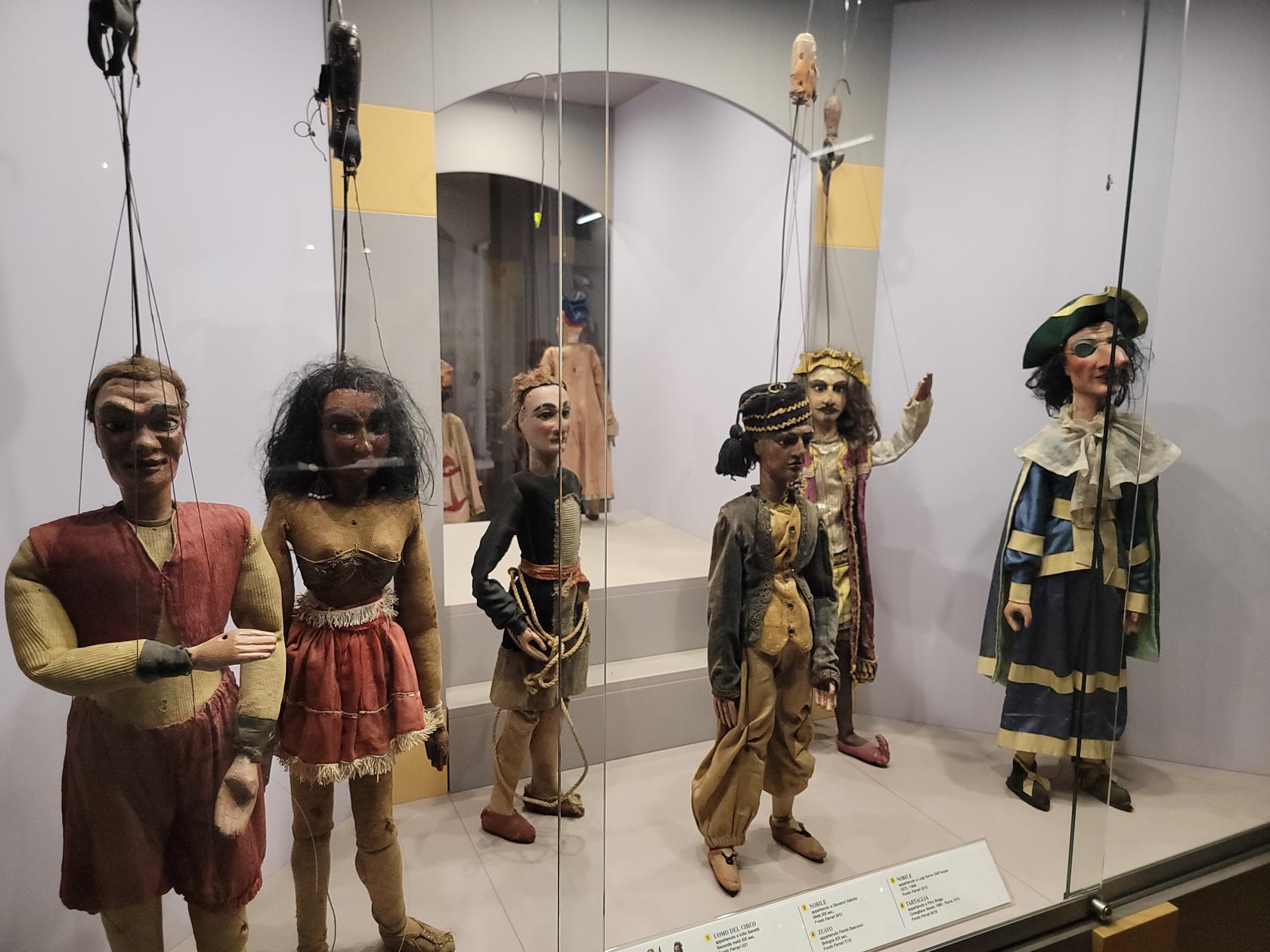
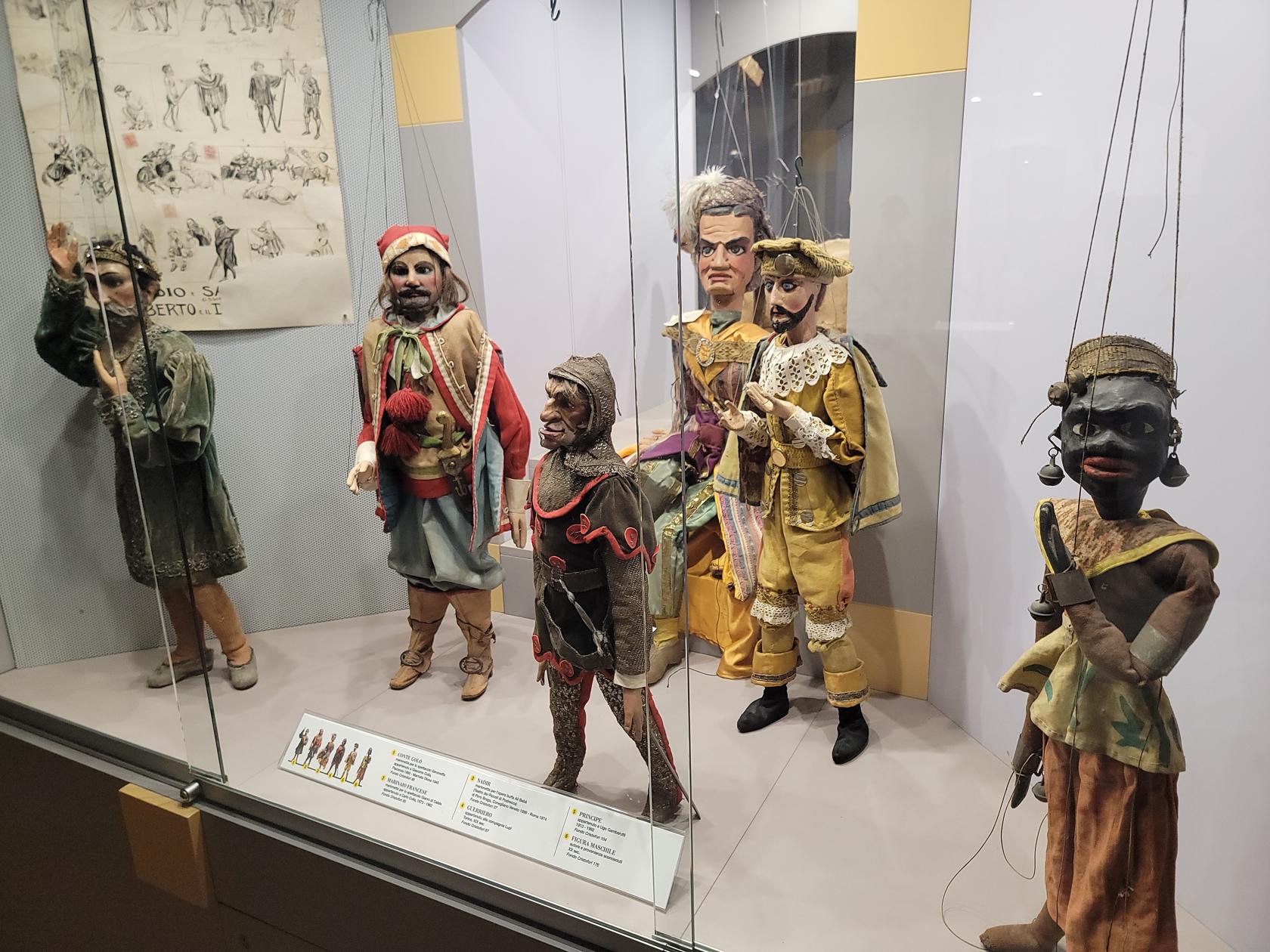
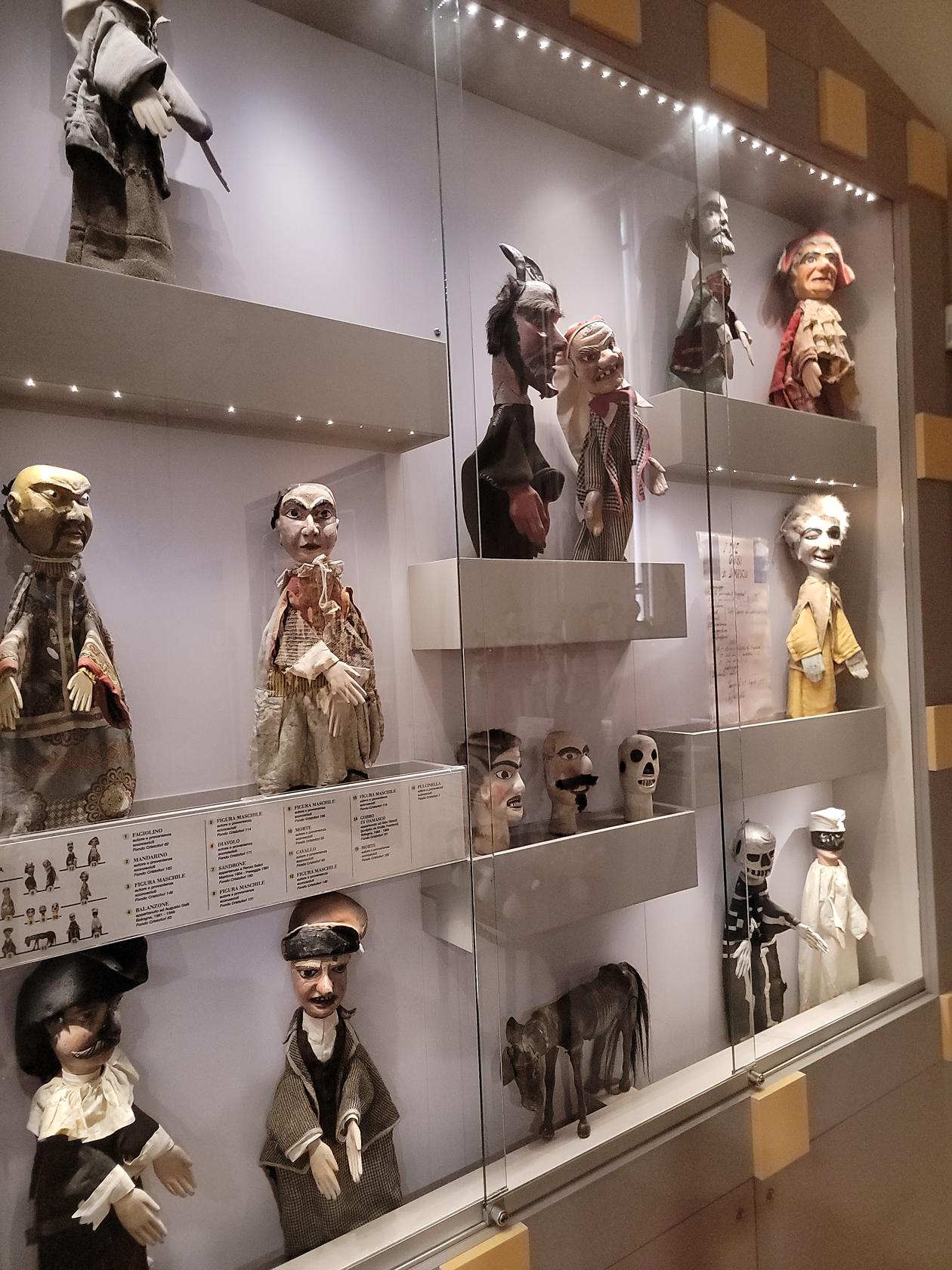
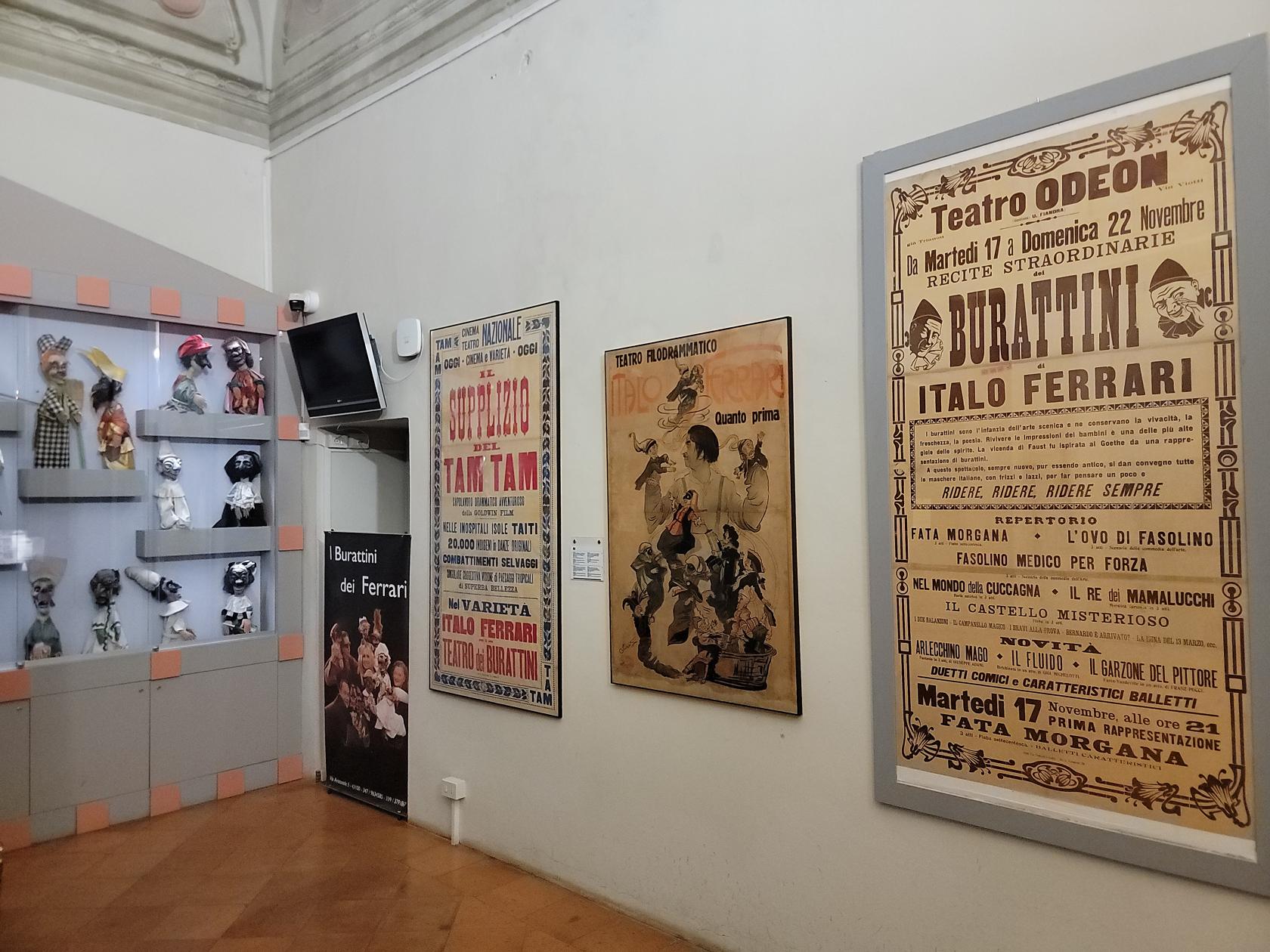
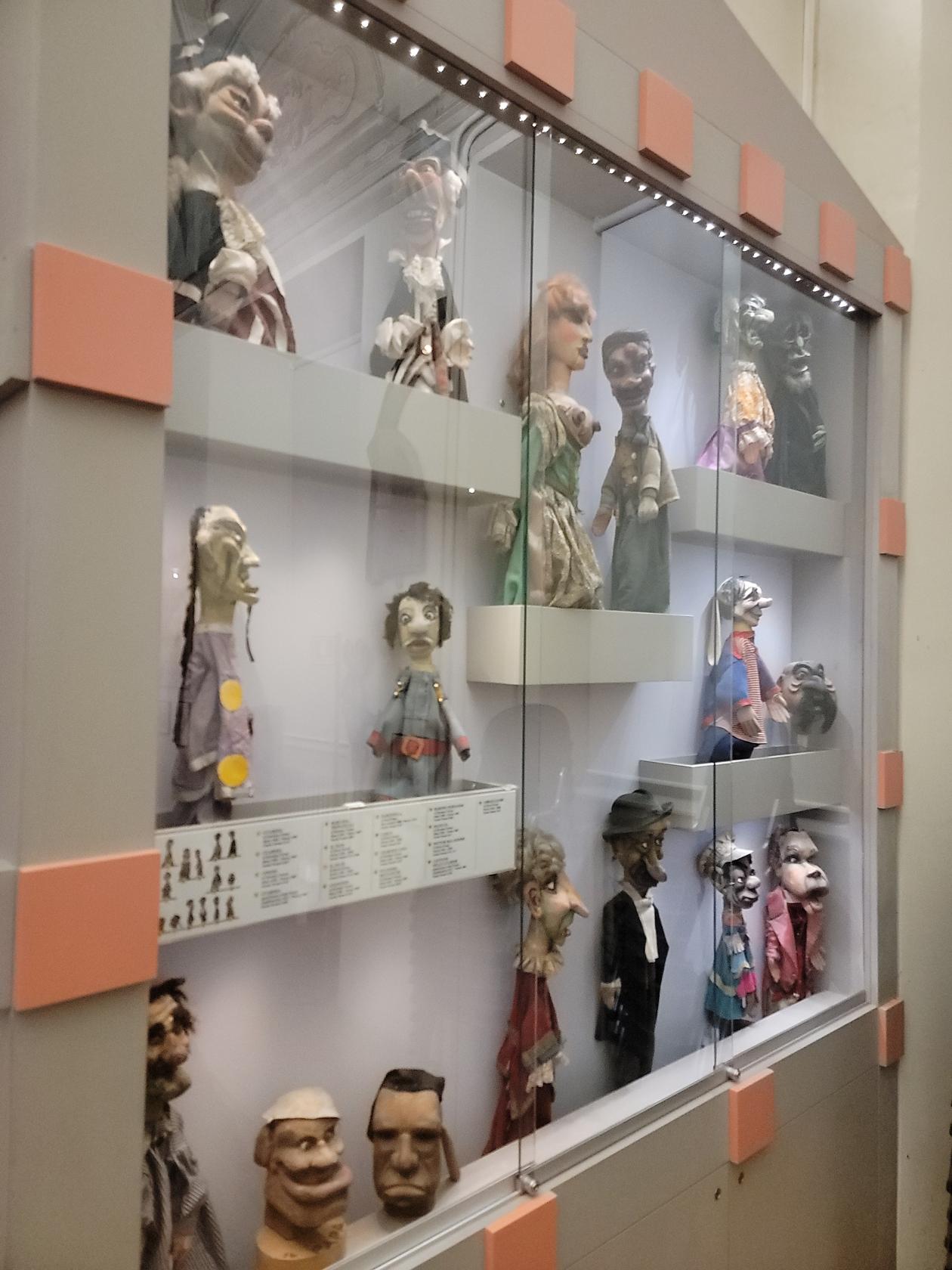
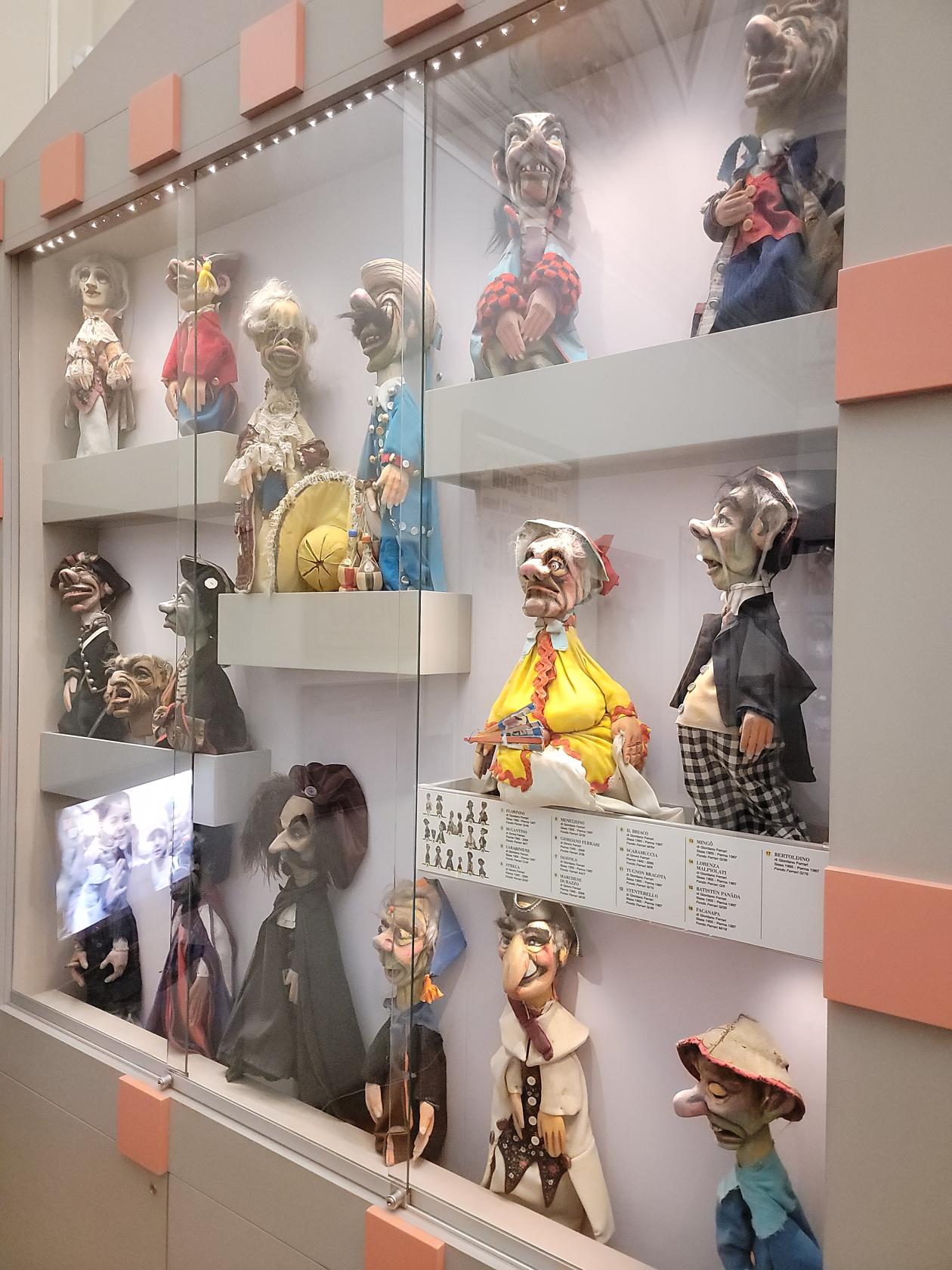
Founded by Italo Ferrari, a peasant and apprentice shoemaker, turned his love of puppetry and puppeteering into an obsession. After failing several times in his twenties and thirties, he took on other jobs to support himself. It wasn’t until he perfected his art after the turn of the century and his repertoire from only tragedies, but to also include comedies and variety acts, was he able to devote full time and energy to his passion.
Entrance – Giordano Ferrari’s Puppet Museum – Parma, Italy
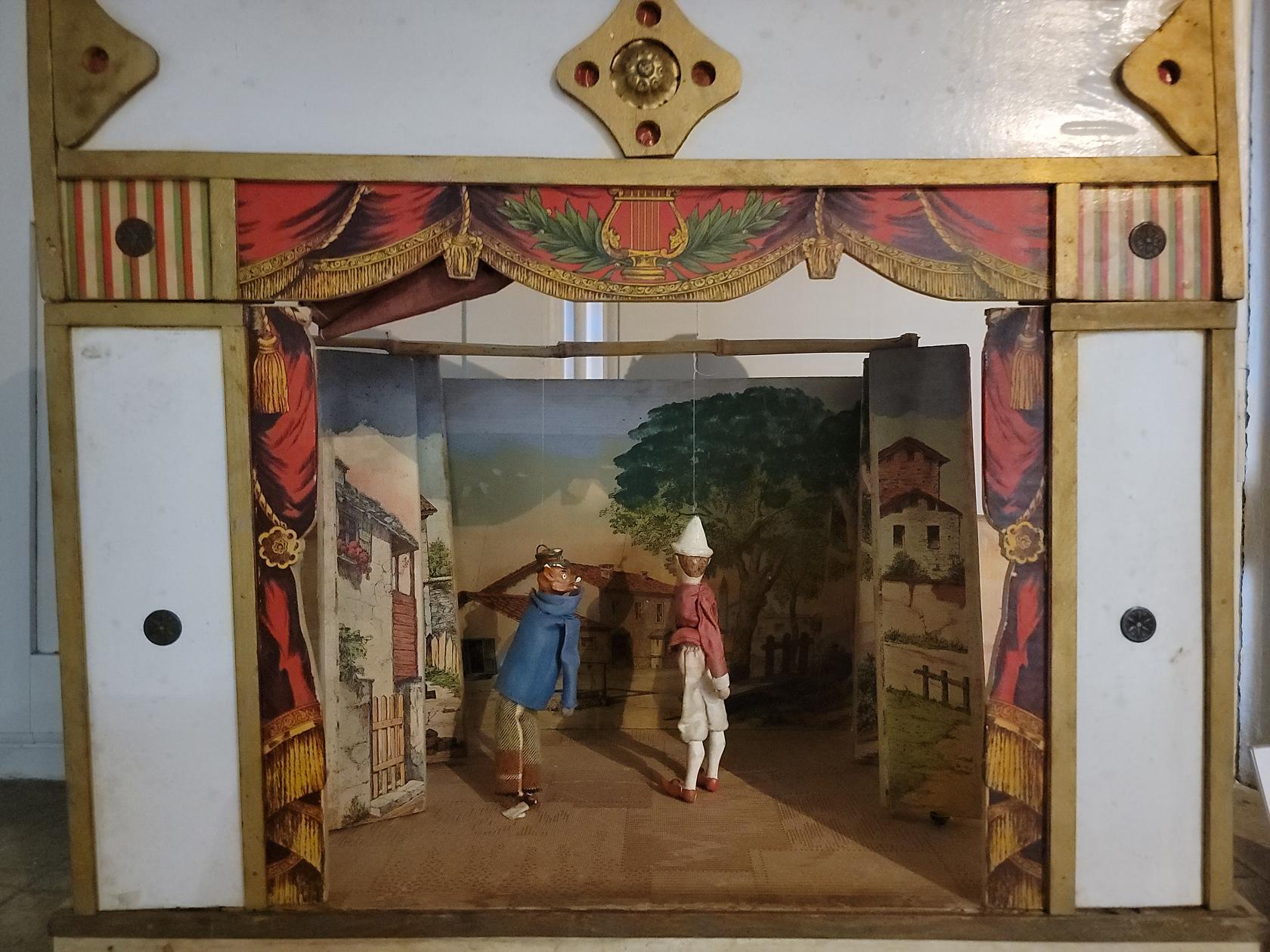
Small Portable Stage – Giordano Ferrari’s Puppet Museum – Parma, Italy
Display 18 – Giordano Ferrari’s Puppet Museum – Parma, Italy
Display 11 – Giordano Ferrari’s Puppet Museum – Parma, Italy
Puppets at Entry – Giordano Ferrari’s Puppet Museum – Parma, Italy
Information – Giordano Ferrari’s Puppet Museum – Parma, Italy
He died in 1961 at the ripe old of 84, after having several successful radio and tv presentations. From then on, his son Giordano took up his mantel and later rebranded the act as the Ferrari Company, not to be confused with the eponymous car manufacturer.
Example of Details – Giordano Ferrari’s Puppet Museum – Parma, Italy
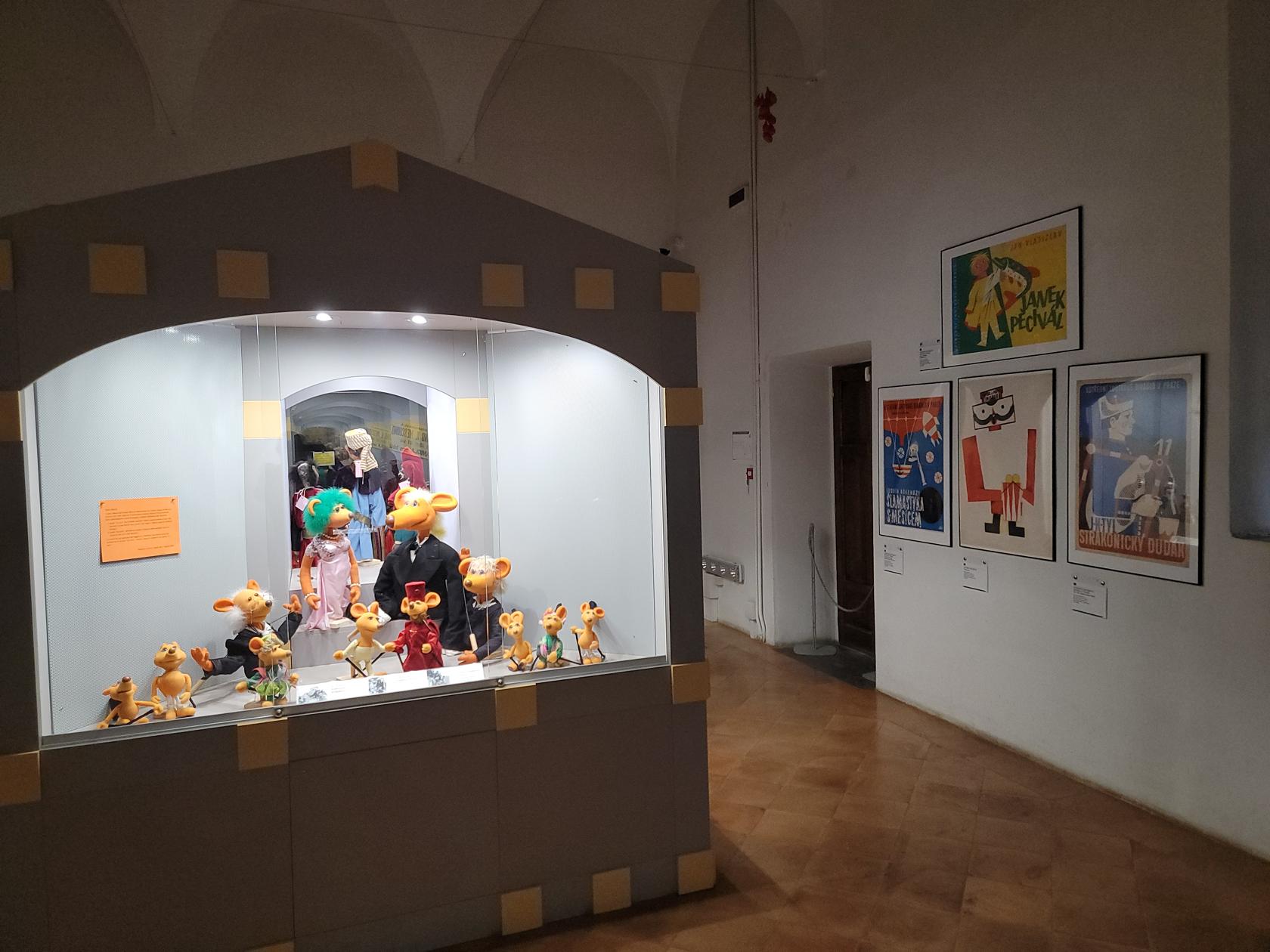
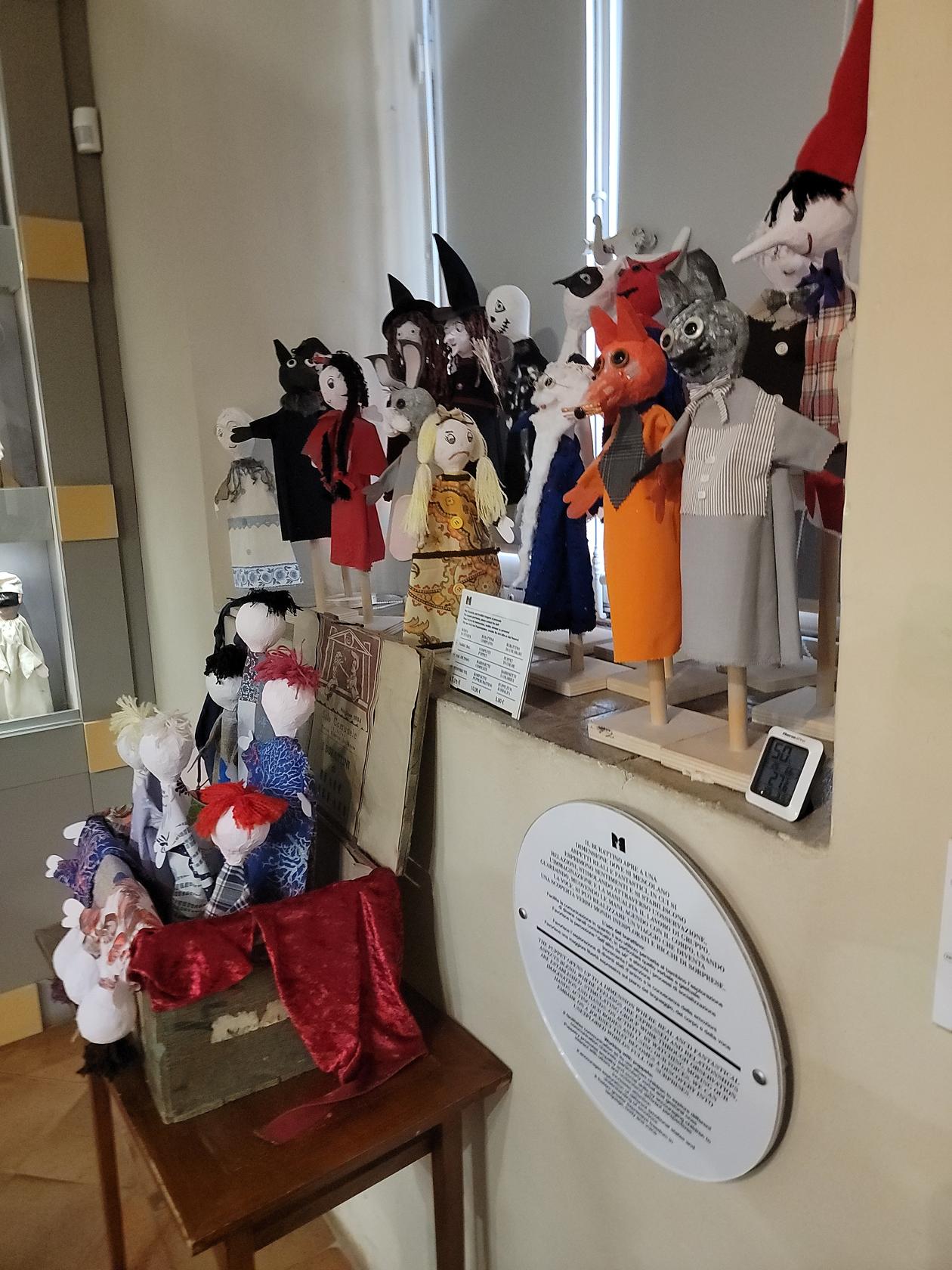
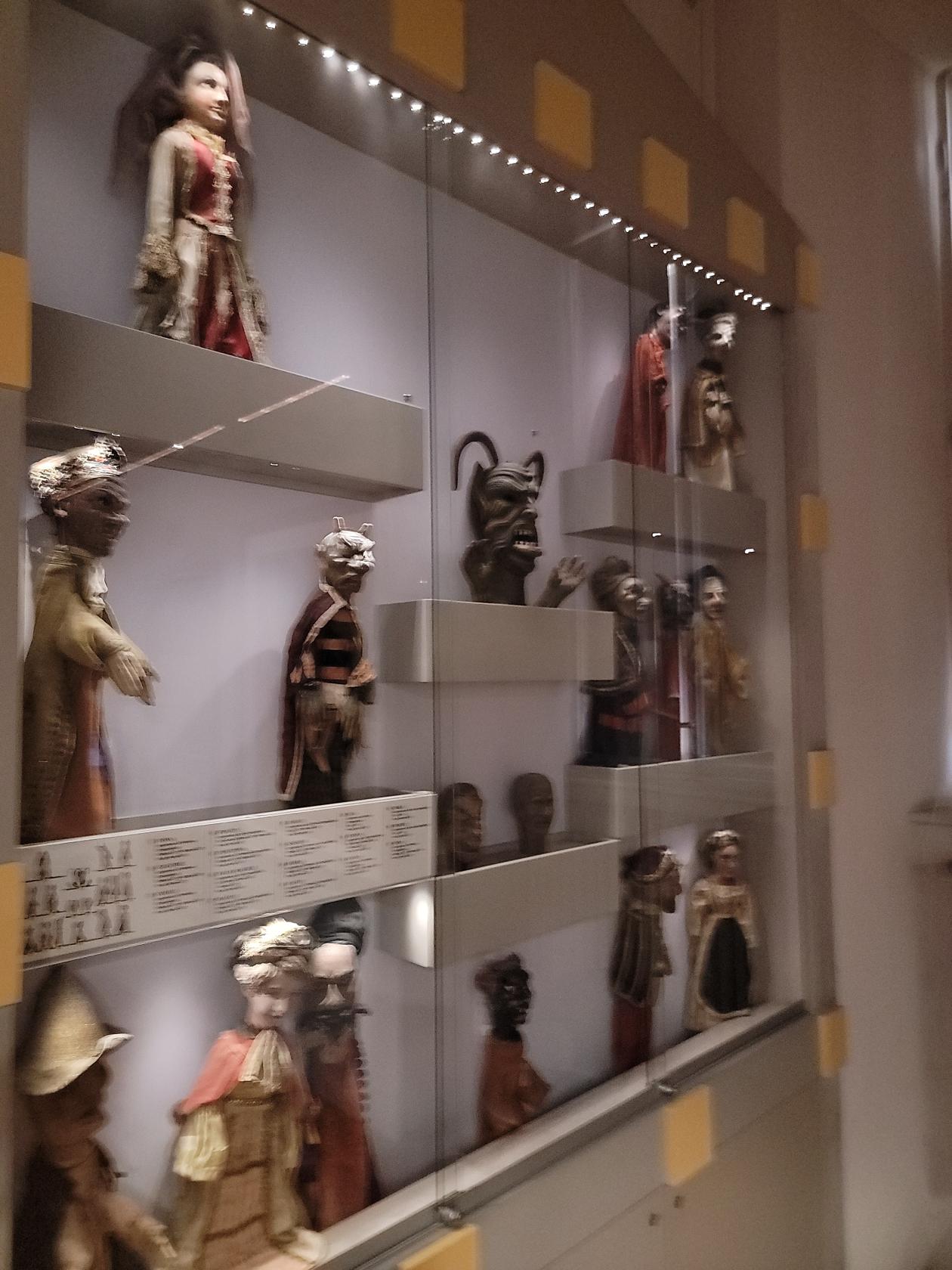
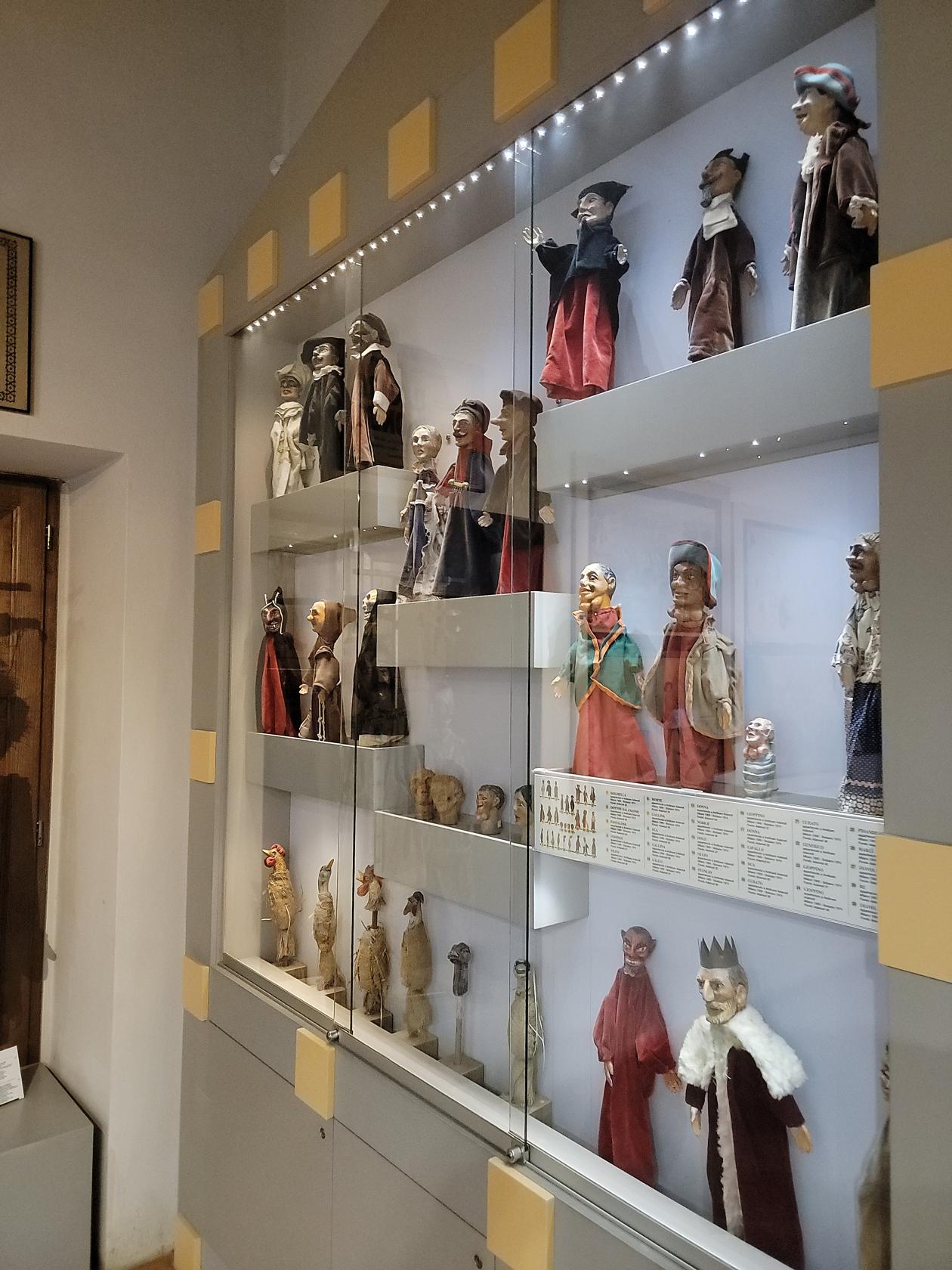
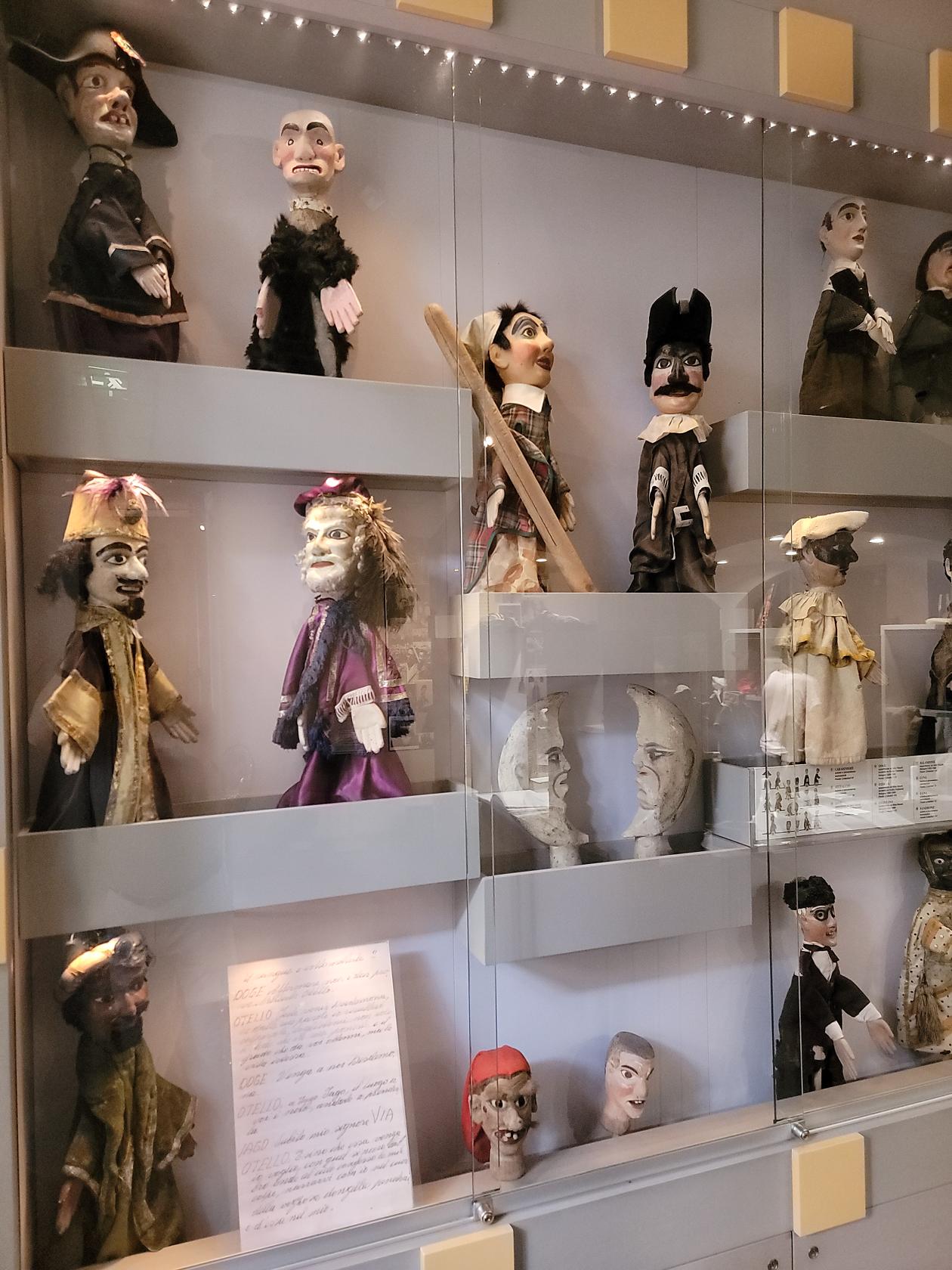
It is with the wish or his son and family to preserve this important social and artful legacy, that the family was finally able to secure funding and the means to open this museum. The museum even hosts events and of course, puppet shows, however only when the current company is not touring internationally. The shows are mainly geared around fairy tales and other fables, especially tales around good and bad people, including everyone’s favority, the devil.
Display 3 – Giordano Ferrari’s Puppet Museum – Parma, Italy
Display 4 – Giordano Ferrari’s Puppet Museum – Parma, Italy
Display 5 – Giordano Ferrari’s Puppet Museum – Parma, Italy
Display 6 – Giordano Ferrari’s Puppet Museum – Parma, Italy
Display 7 – Giordano Ferrari’s Puppet Museum – Parma, Italy
Display 12 – Giordano Ferrari’s Puppet Museum – Parma, Italy
Display 9 – Giordano Ferrari’s Puppet Museum – Parma, Italy
Display 10 – Giordano Ferrari’s Puppet Museum – Parma, Italy
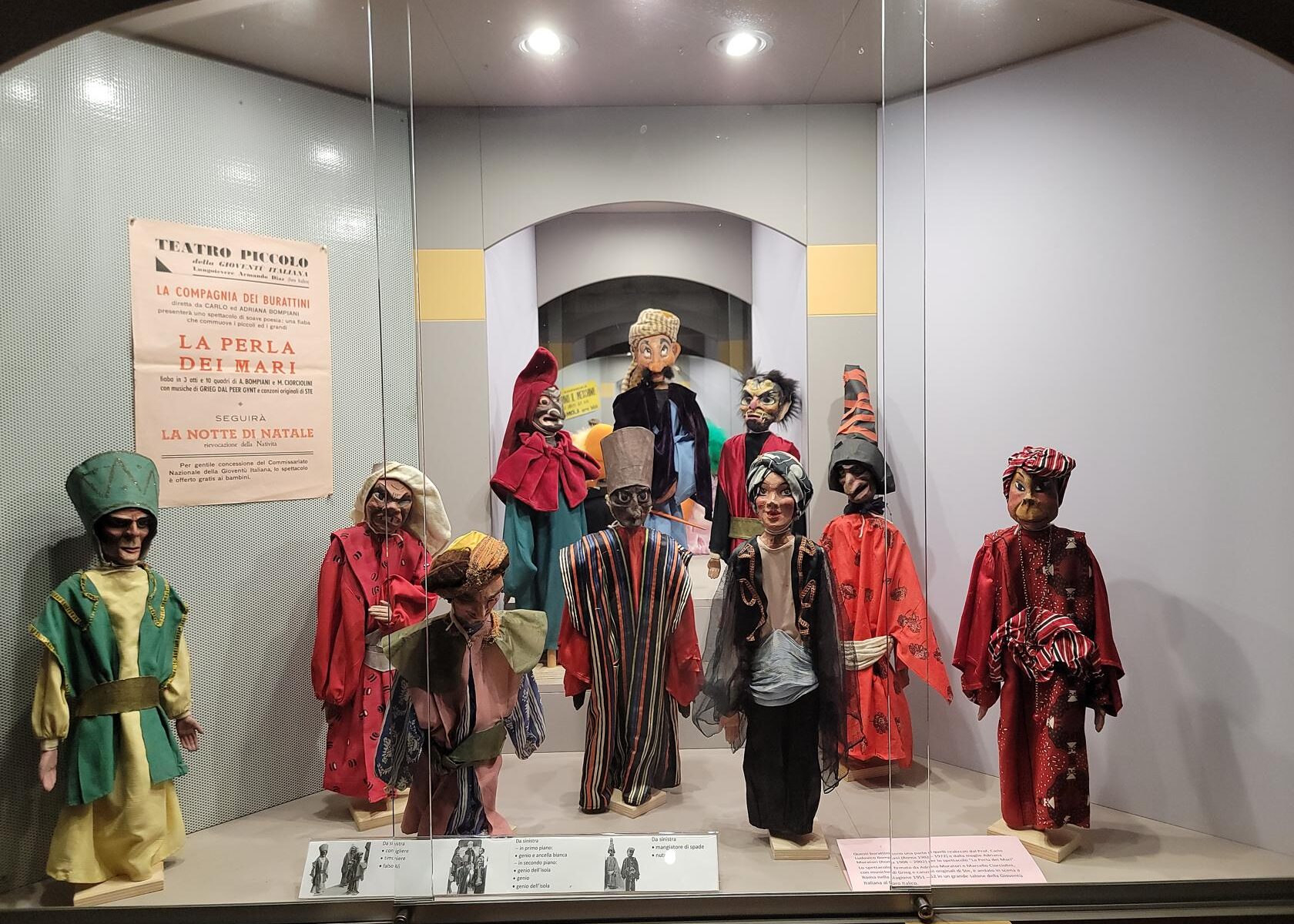
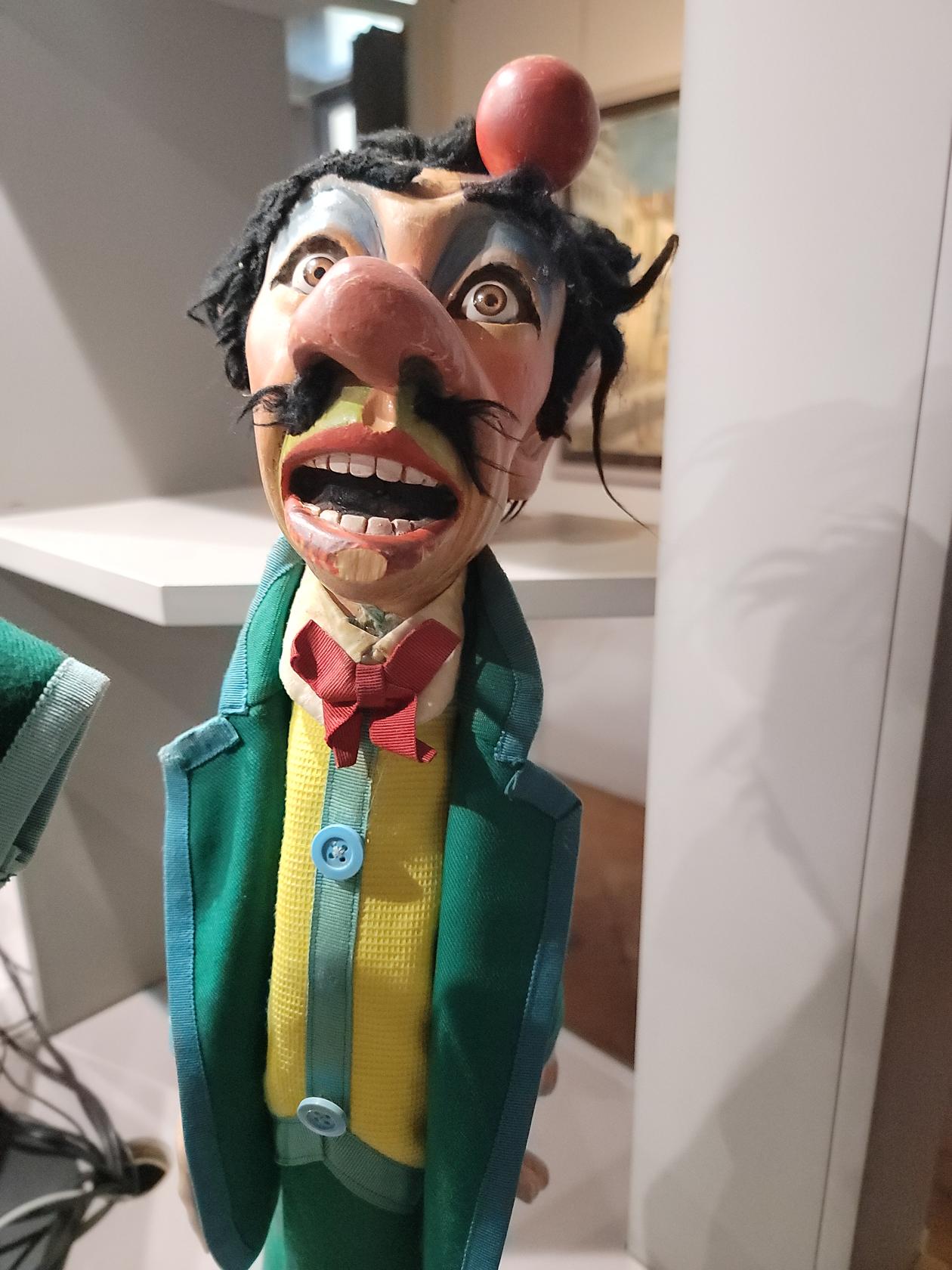
Some of the puppets they have at their disposal seem to also indicate a predilection for the Zanni, having representations of the characters Harlequin[1]He is the dockworker, the porter, the pimp, the good servant, simple in manner and mind, who gets into trouble and is always hungry. This is Harlequin. He derives from the figure of the Zanni, the … Continue reading, Pulcinello[2]Pulcinella is both good and bad, rude and sometimes affected. Unlike Harlequin, a “sidekick,” but manages to be independent on stage, competing even with only one antagonist at a time. … Continue reading and other Commedia dell’Arte puppets.
Display 1 – Pulcinello in lower right in white – Giordano Ferrari’s Puppet Museum – Parma, Italy
Display 2 – Giordano Ferrari’s Puppet Museum – Parma, Italy
Display 24 – Giordano Ferrari’s Puppet Museum – Parma, Italy
Display 25 – Giordano Ferrari’s Puppet Museum – Parma, Italy
Display 26 – Giordano Ferrari’s Puppet Museum – Parma, Italy
Display 27 – Giordano Ferrari’s Puppet Museum – Parma, Italy
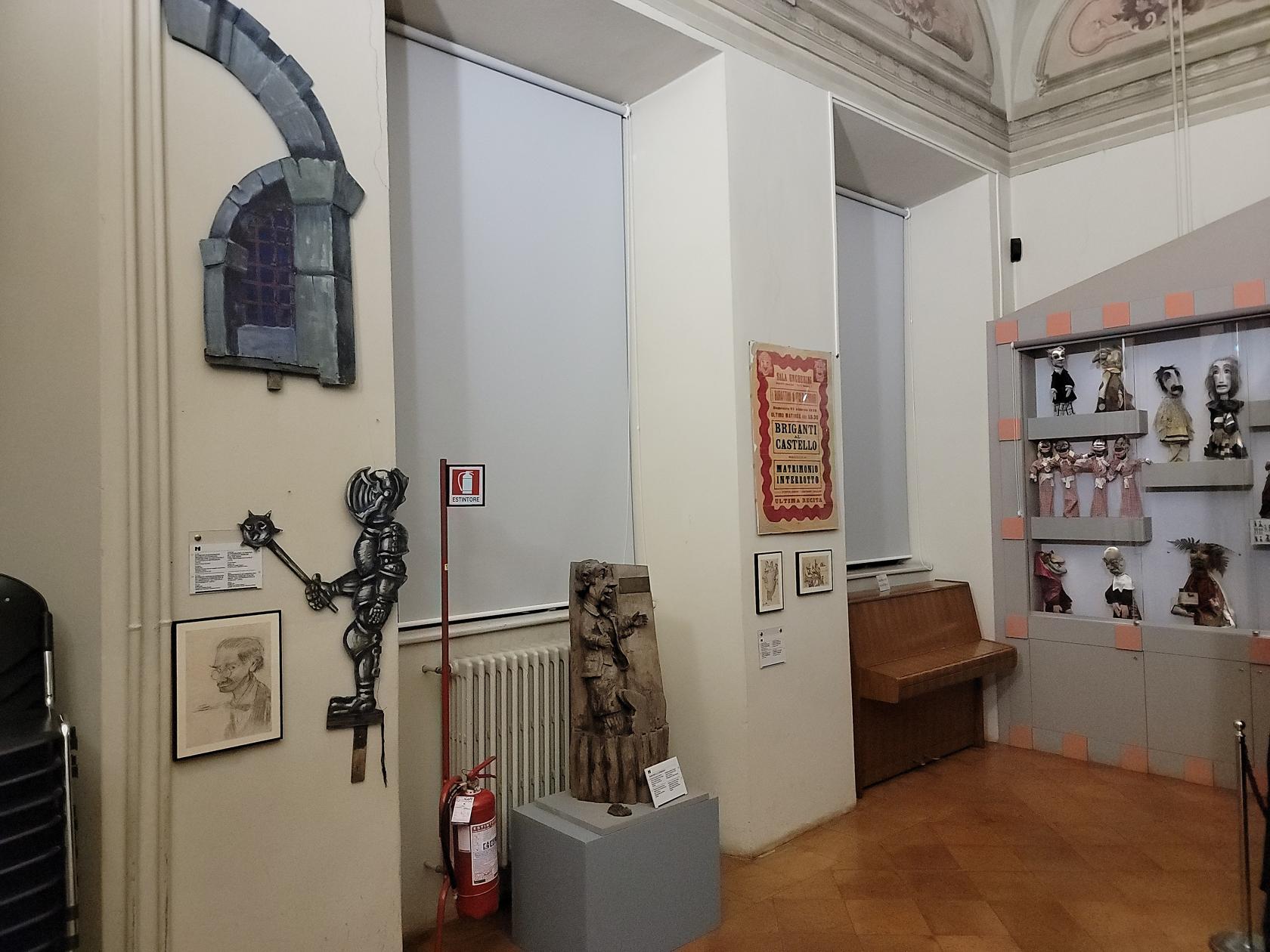
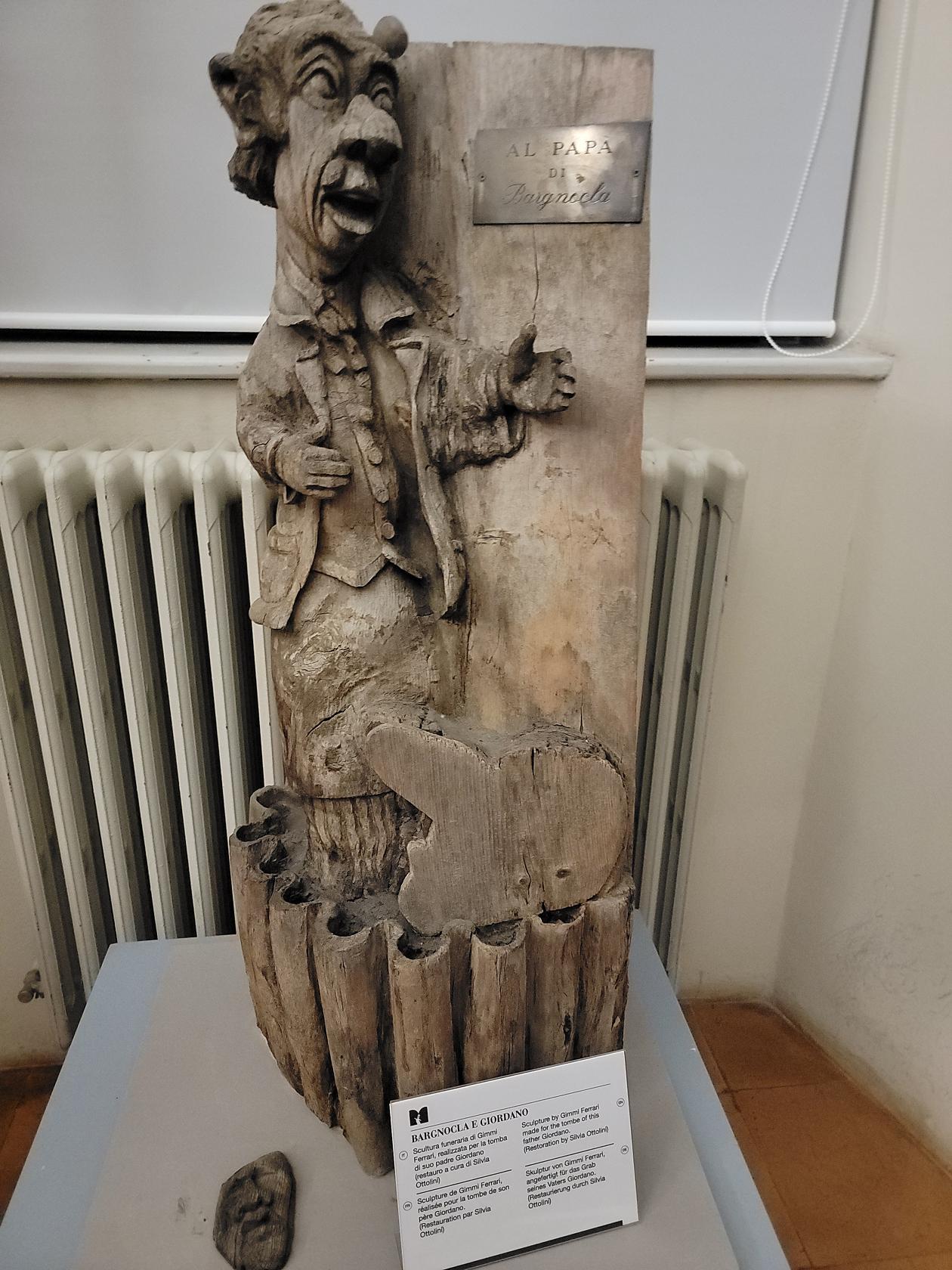
Carving – Giordano Ferrari’s Puppet Museum – Parma, Italy
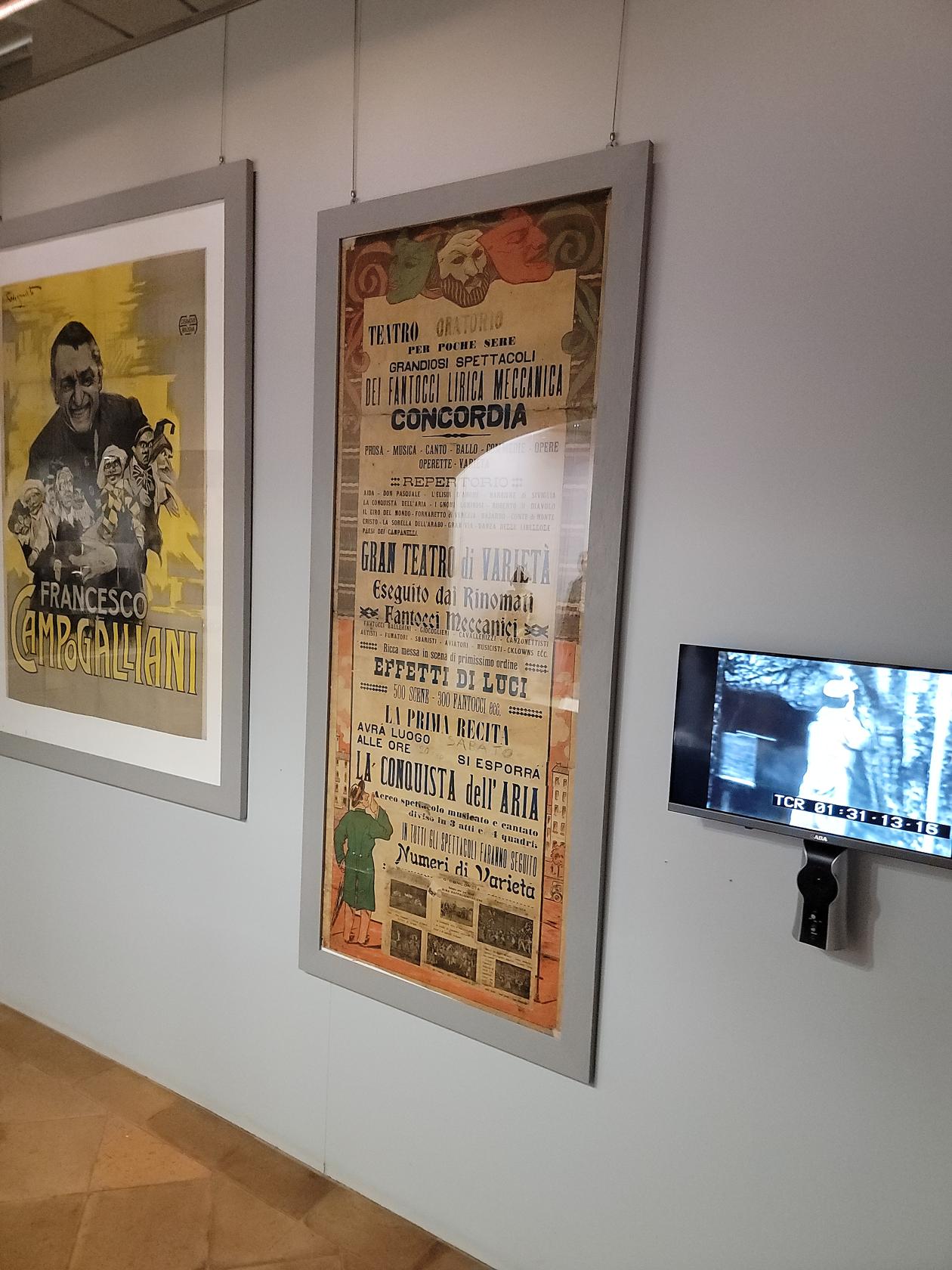
Old Advertisements – Giordano Ferrari’s Puppet Museum – Parma, Italy
Small Portable Stage – Giordano Ferrari’s Puppet Museum – Parma, Italy
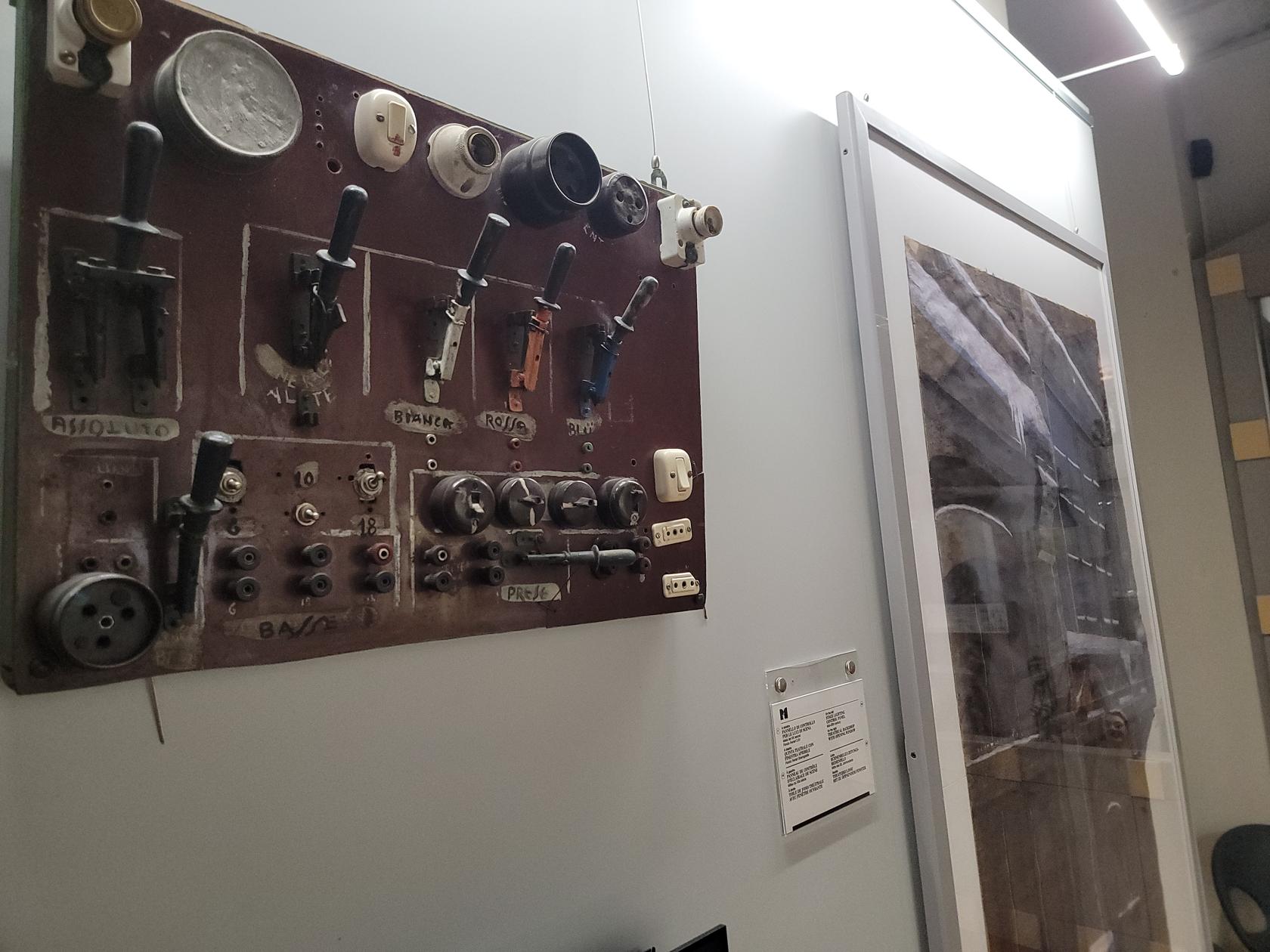
Display of Circuits Used for Stages – Giordano Ferrari’s Puppet Museum – Parma, Italy
Restaurants
Uagliò Restaurant
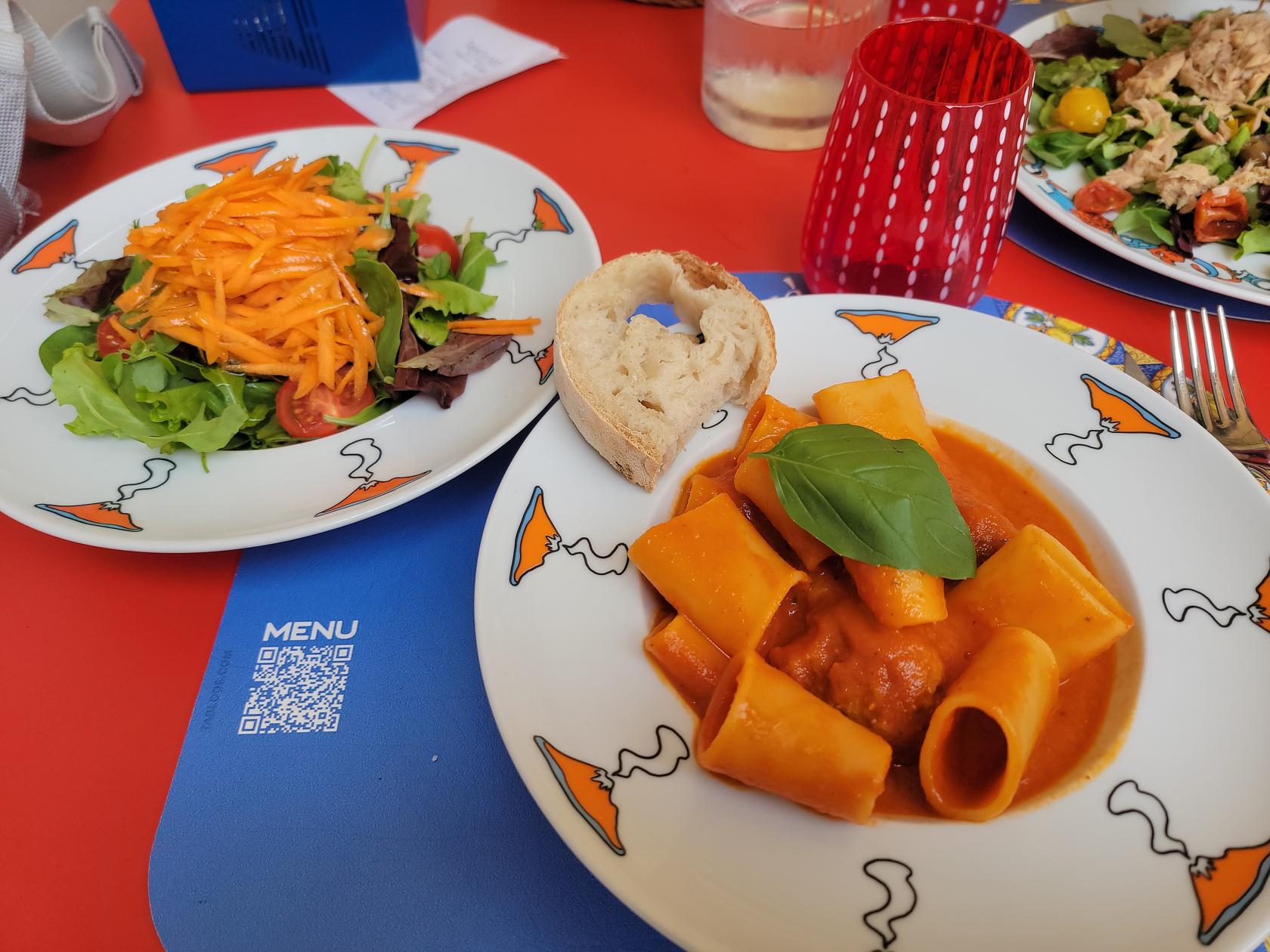
A smaller chain restaurant with a few stores around the area, Uagliò is not a bad pick if you are in a hurry or have not made other plans. We were hungry for lunch, so we stopped to see what they had to offer. The pasta with meatballs in sauce was very good, as was the small mixed salad. There was plenty of seating inside and out.
Mixed Salad and Paccheri with Tomato Sauce and Meatballs, Tuna salad in back – Uaglio Restaurant – Parma, Italy
He is the dockworker, the porter, the pimp, the good servant, simple in manner and mind, who gets into trouble and is always hungry. This is Harlequin. He derives from the figure of the Zanni, the jester of comic tales documented as early as the 14th century. From the Zanni, Harlequin retains the frank character and natural propensity for mischief. Harlequin’s costume, known by all as the most colorful of masks, was initially white and tattered; for this reason, first a patch was added, then another, until the outfit was multi-colored diamonds. This is how we see him in 17th-century theater. His appearance is clumsy and stocky, the black half-mask he wears is animalistic, and on his head he wears a white felt hat topped with a feather or a rabbit’s foot. The feather is a symbol of fertility and the rabbit is a symbol of cunning. From his belt hangs the baòcio, the polenta stirring stick, which serves as his sword. He also has a bump on his forehead, which some believe to be the remnants of a devil’s horn. The name Harlequin, in fact, recalls that of a devil. Alichino is the devil mentioned by Dante in the Divine Comedy.
Pulcinella is both good and bad, rude and sometimes affected. Unlike Harlequin, a “sidekick,” but manages to be independent on stage, competing even with only one antagonist at a time. Pulcinella wears a white shirt with a gathered waist, white trousers with a belt, a white felt conical hat, and a half-mask with a large, slightly hooked nose. The costume is similar to that worn by peasants since the Middle Ages; they are made out of hemp, the cheapest home-woven fiber, and no color to avoid the cost of dye. Pulcinella is a poor man. These masks form the original core of the Commedia dell’Arte.
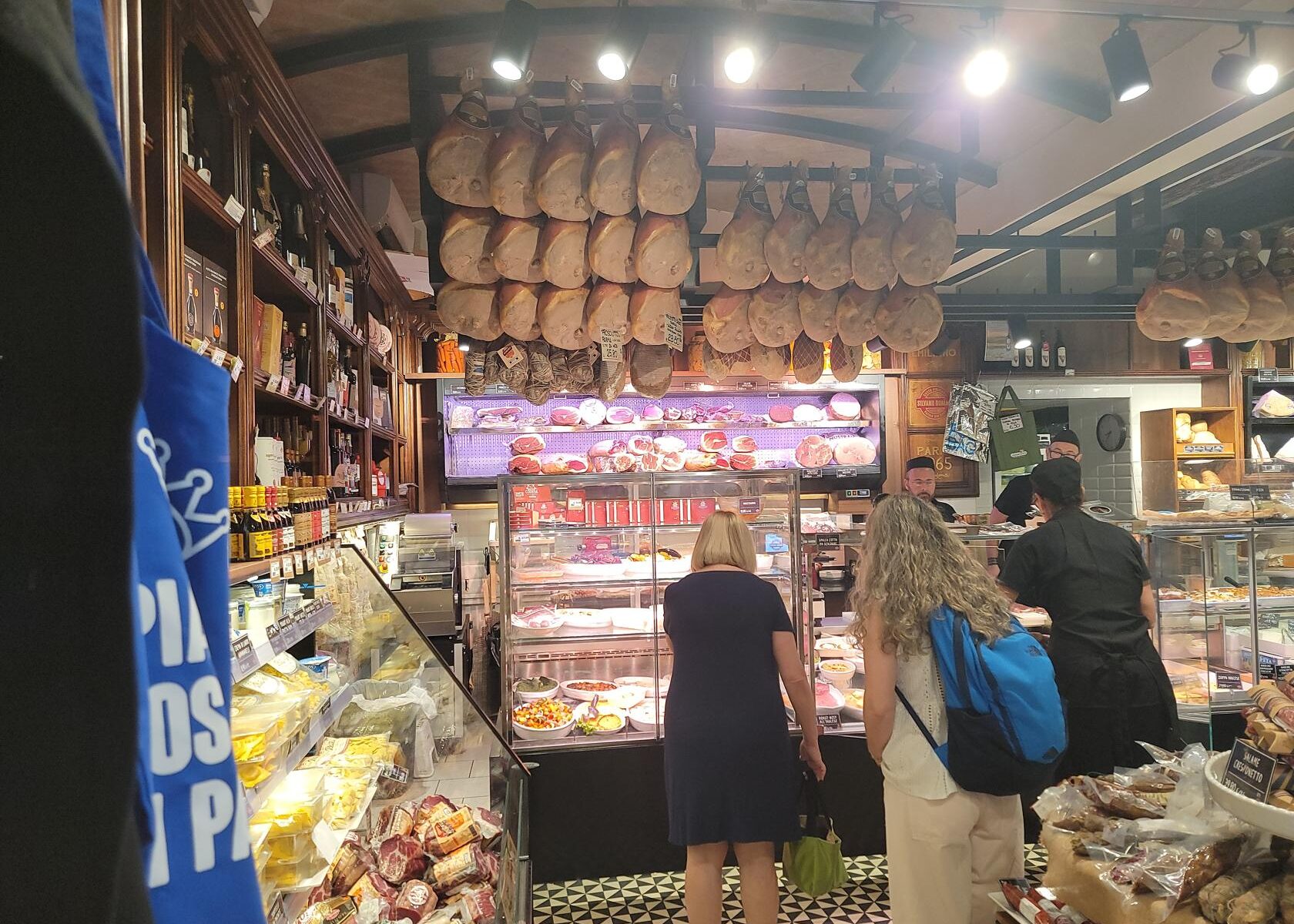
Probably for most people when they hear the word Parma, they do not think of a place to visit but rather their stomachs and eating ham. Many can argue what is the best meat with respect to taste, beef or pork. I am not sure that many can argue about pork’s versatility, from fried pork skin to bacon, pork chops to pork tenderloin, Salumi to Prosciutto Crudo. One thing is certain, if you love the last two then Parma is your Mecca.
Parma
In Parma Province, within the region called Emilia-Romagna, the city of Parma is joined with its neighboring cities by the Via Aemilia[1]One of the trunk Roman Roads that ran through Italy during the Roman Empire through the Po river valley from Piacenza to Rimini. The valley has special properties which embue the ham and cheese made here with delicate flavors. It’s all in the label, literally.
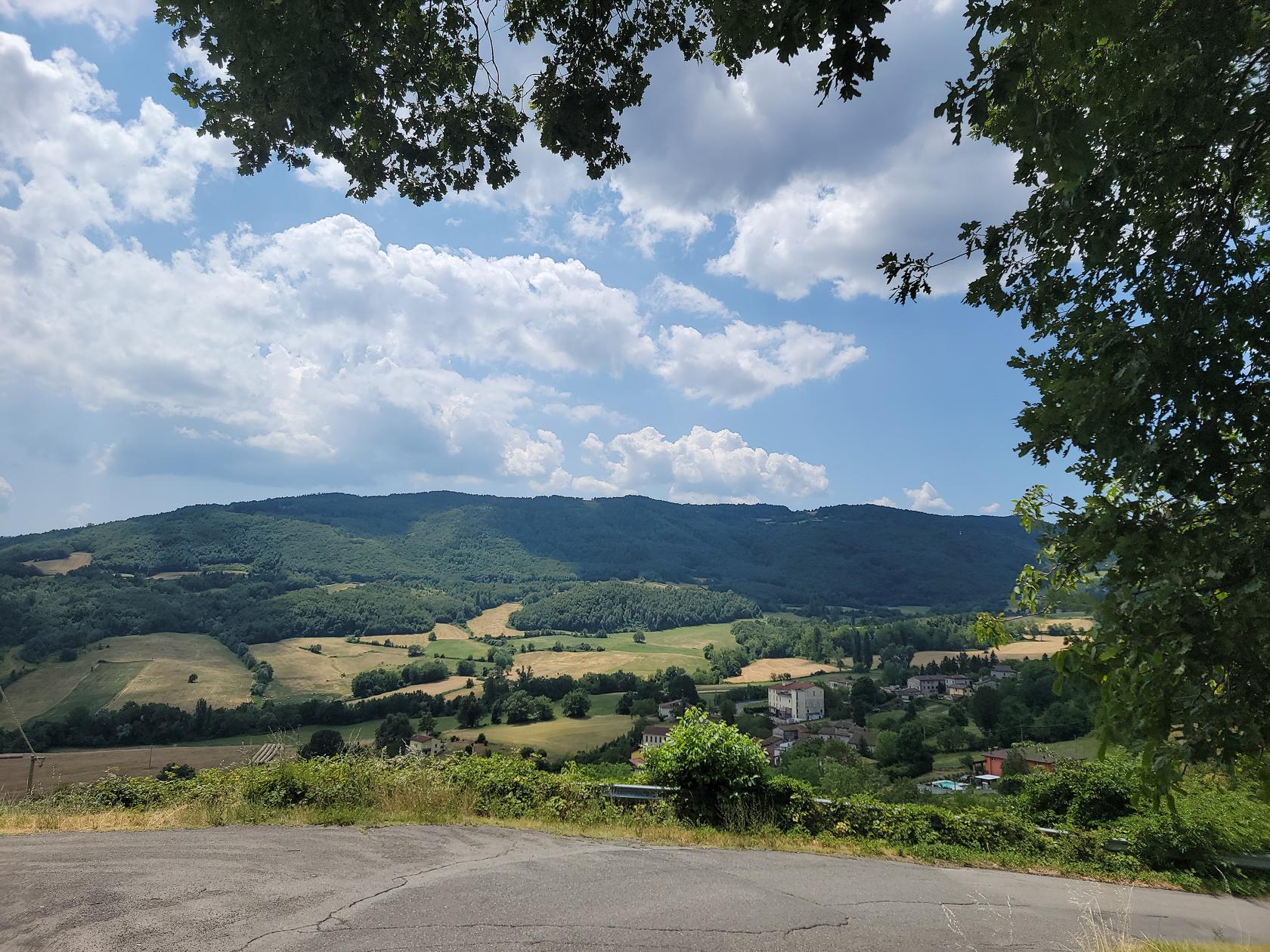
Parma Valley – Tasty Bus Tour – Parma, Italy
The Tasty Tour
We employed to Tasty Tour for a day long jaunt into the countryside to understand how Parma Ham, Prosciutto, Parmesan Cheese and finally, Balsamic Vinegar were manufactured.
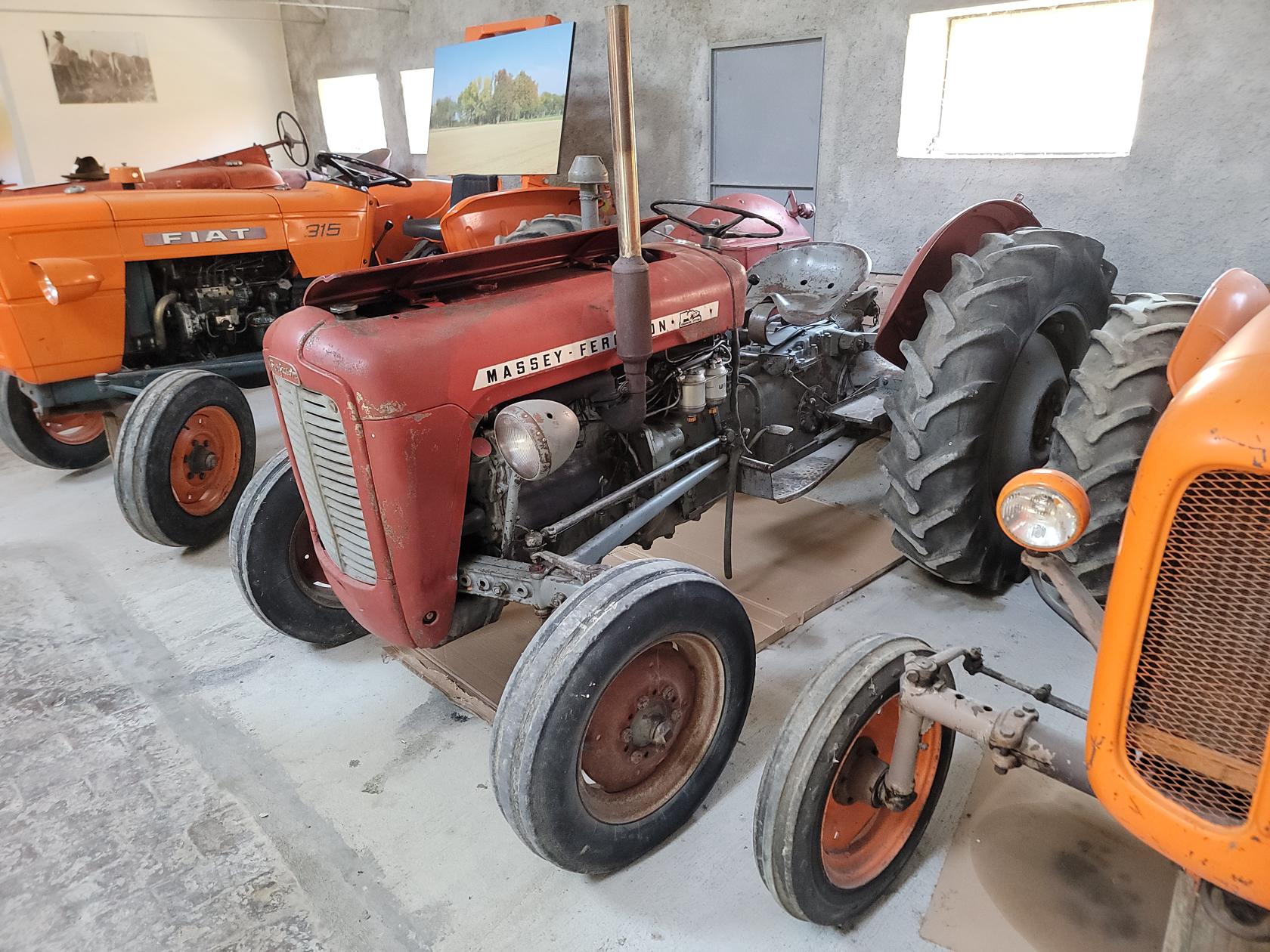
Old Tractors – Old Massey Ferguson – San Pier Damiani Parmigiano Reggiano Factory – Tasty Bus Tour – Parma, Italy
The tour promised six hour drive to three small, but key places where these products are made to the DOP[2]Denominazione d’ Origine Protetta which ensures the following. They meet the highest of standards of production and are produced within certain regions that result in characteristics to ensure … Continue reading highest standards.
Salumificio Conti
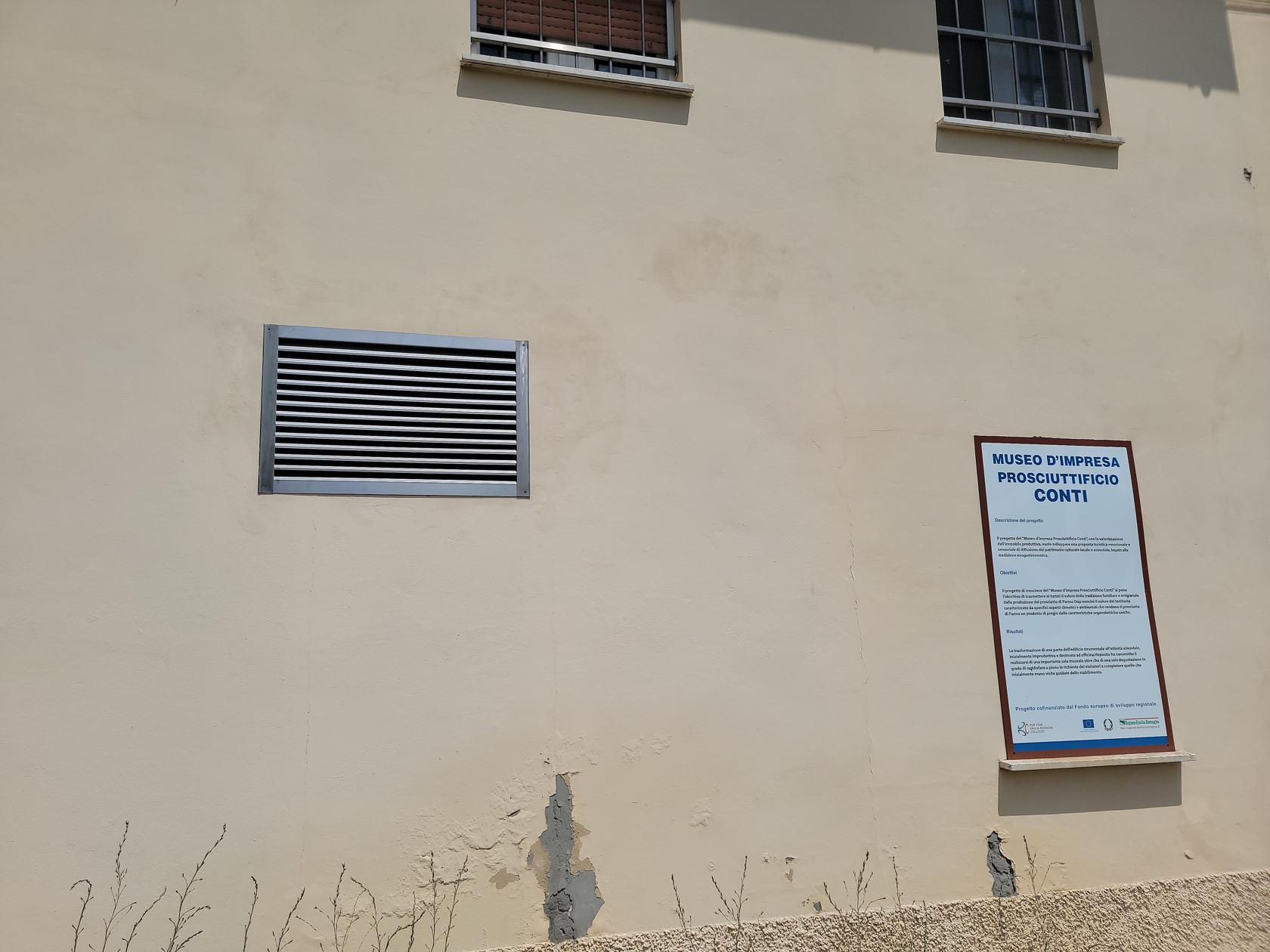
Among Parms Ham manufacturers, Salumificio Conti is a well established name with a heritage all its own. The factory is modest in size, but produces some of the best tasting hams and salumi in this region of Italy.
Entrance – Salumificio Conti – Tasty Bus Tour – Parma, Italy
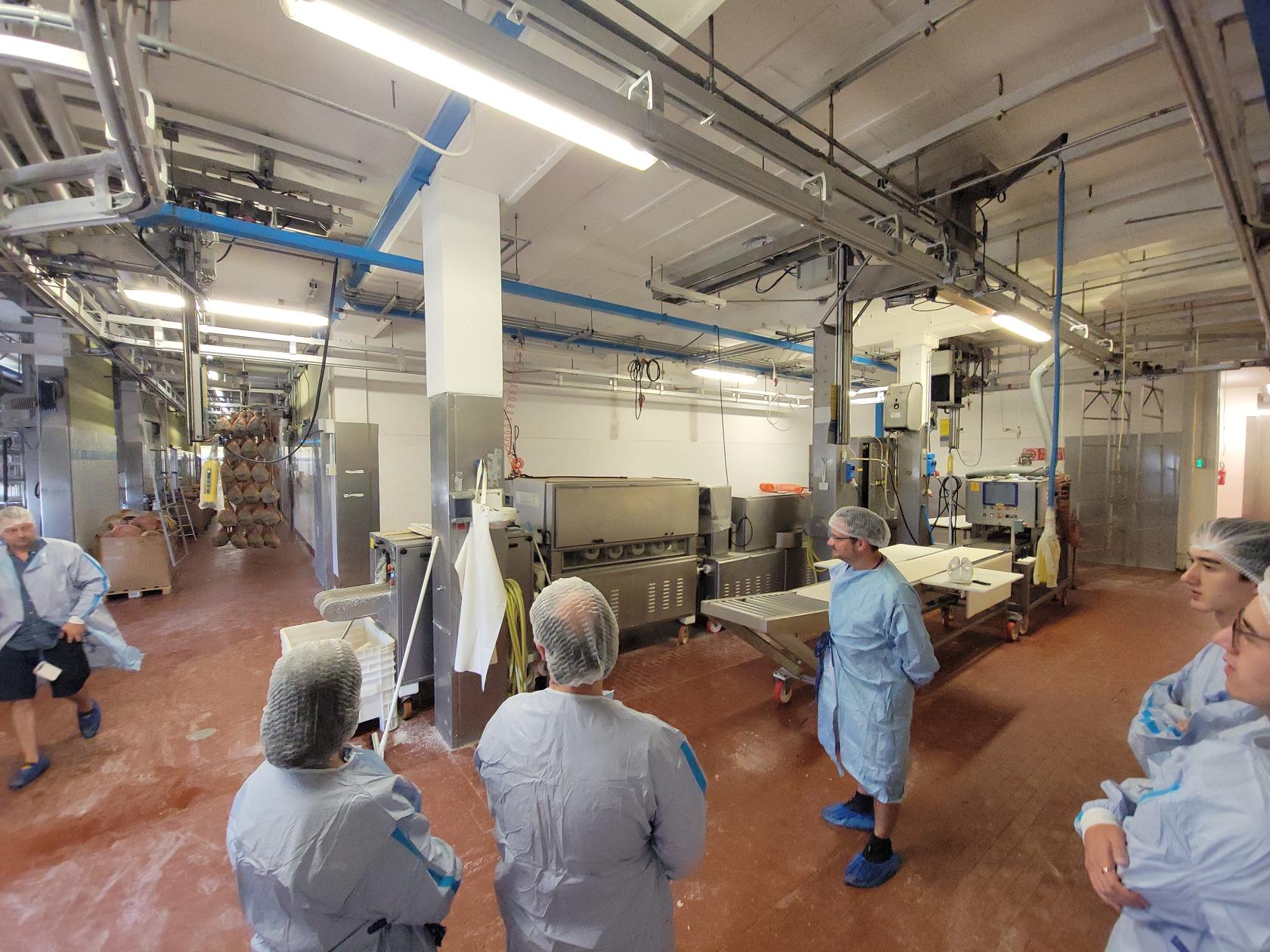
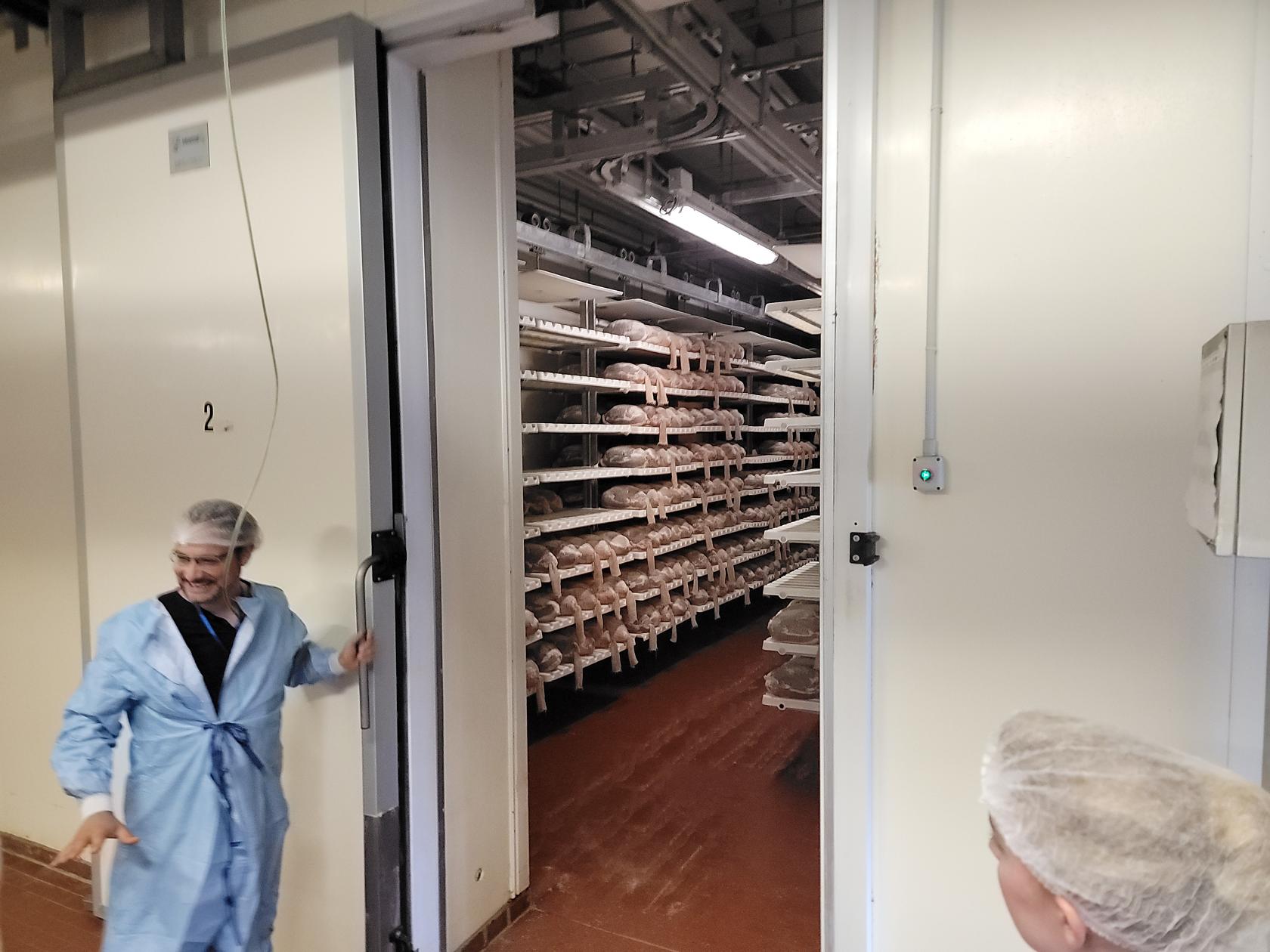
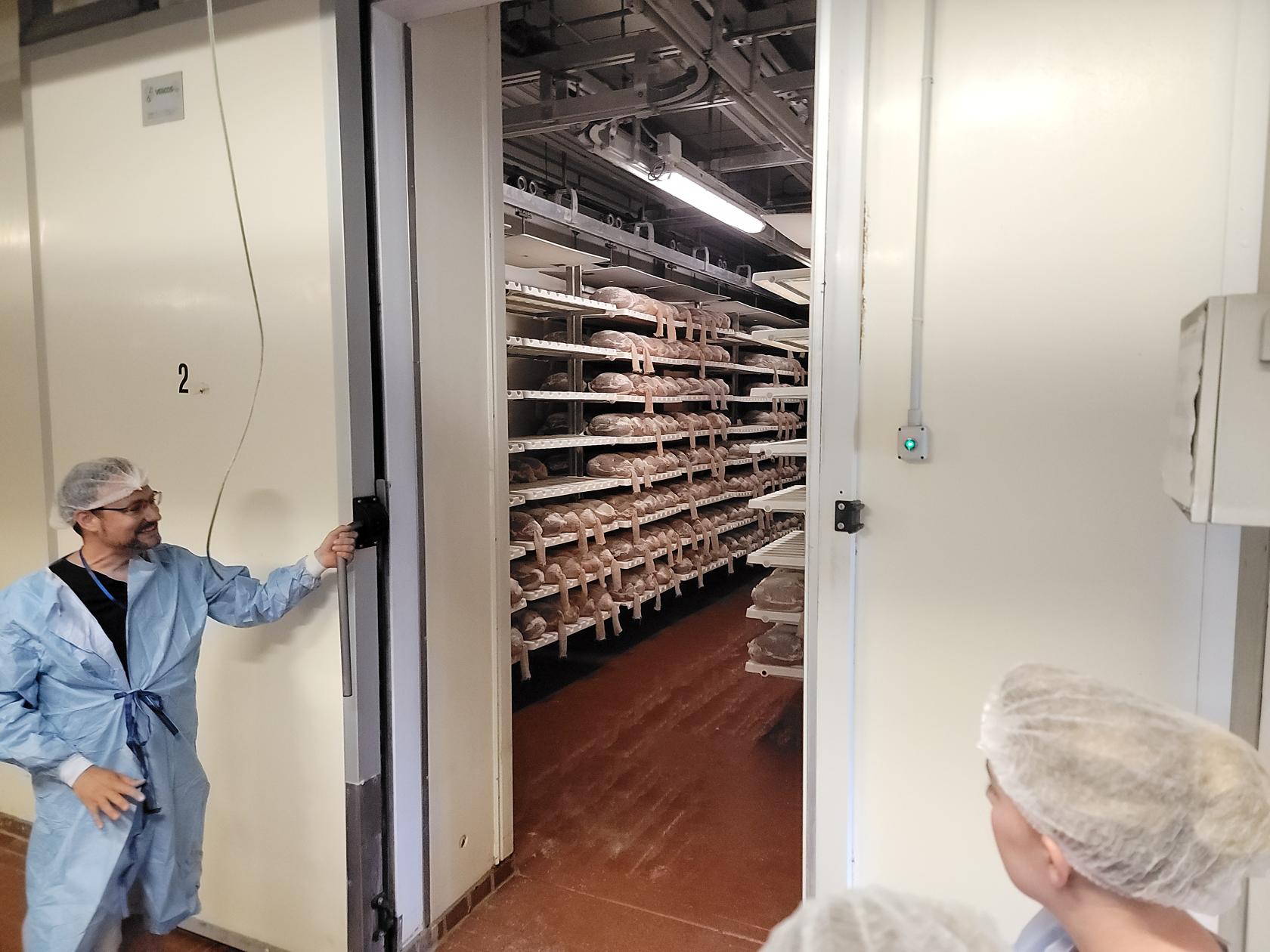
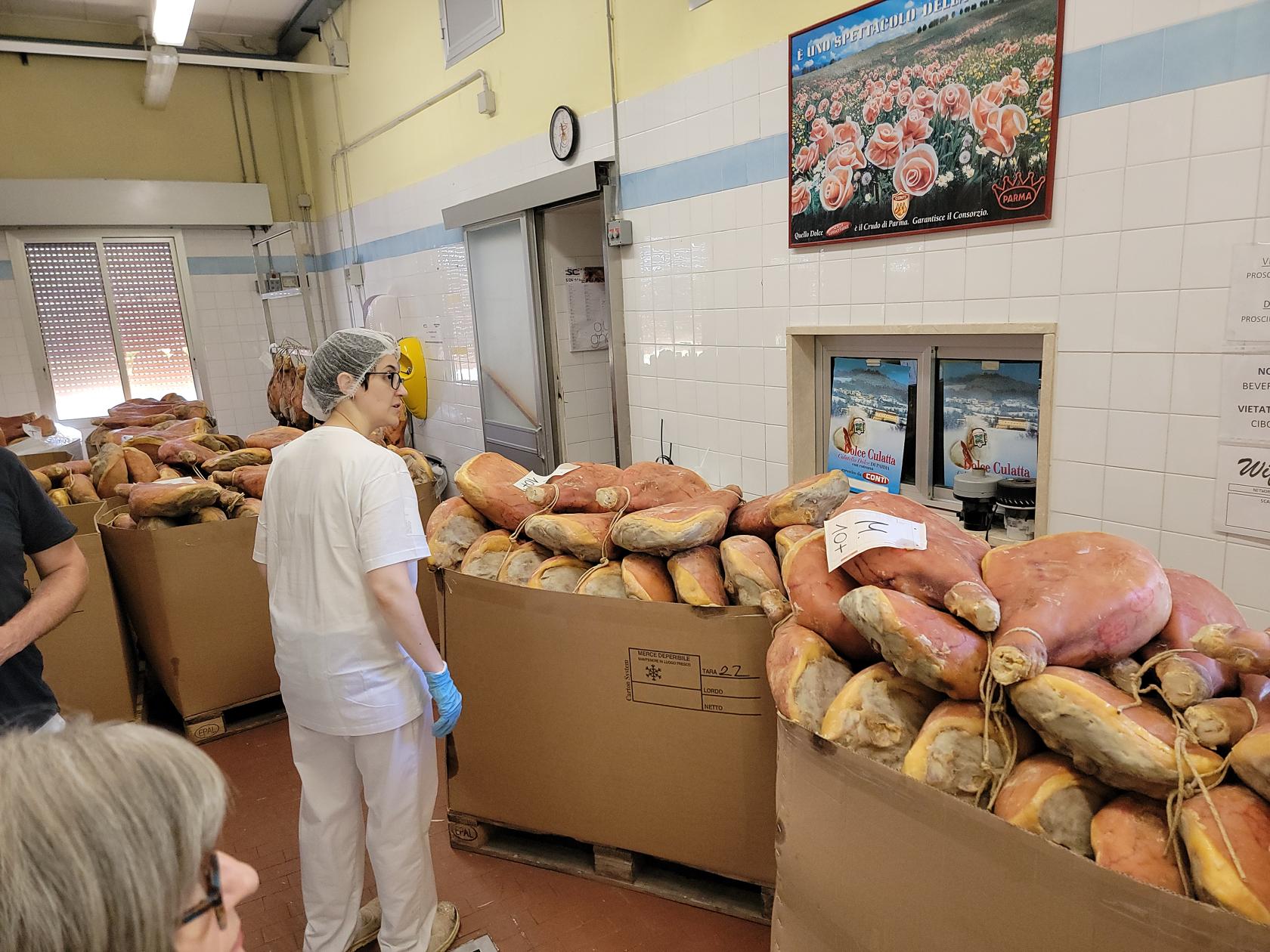
The factory orders and accepts only the two hind legs from it preprocessor and butcher. These are delivered in trucks and processed the day they arrive, so it is all planned and nothing is left to chance.
Newly Arrived Hams – Salumificio Conti – Tasty Bus Tour – Parma, Italy
Machine that Cleans and Salts the Hams – Salumificio Conti – Tasty Bus Tour – Parma, Italy
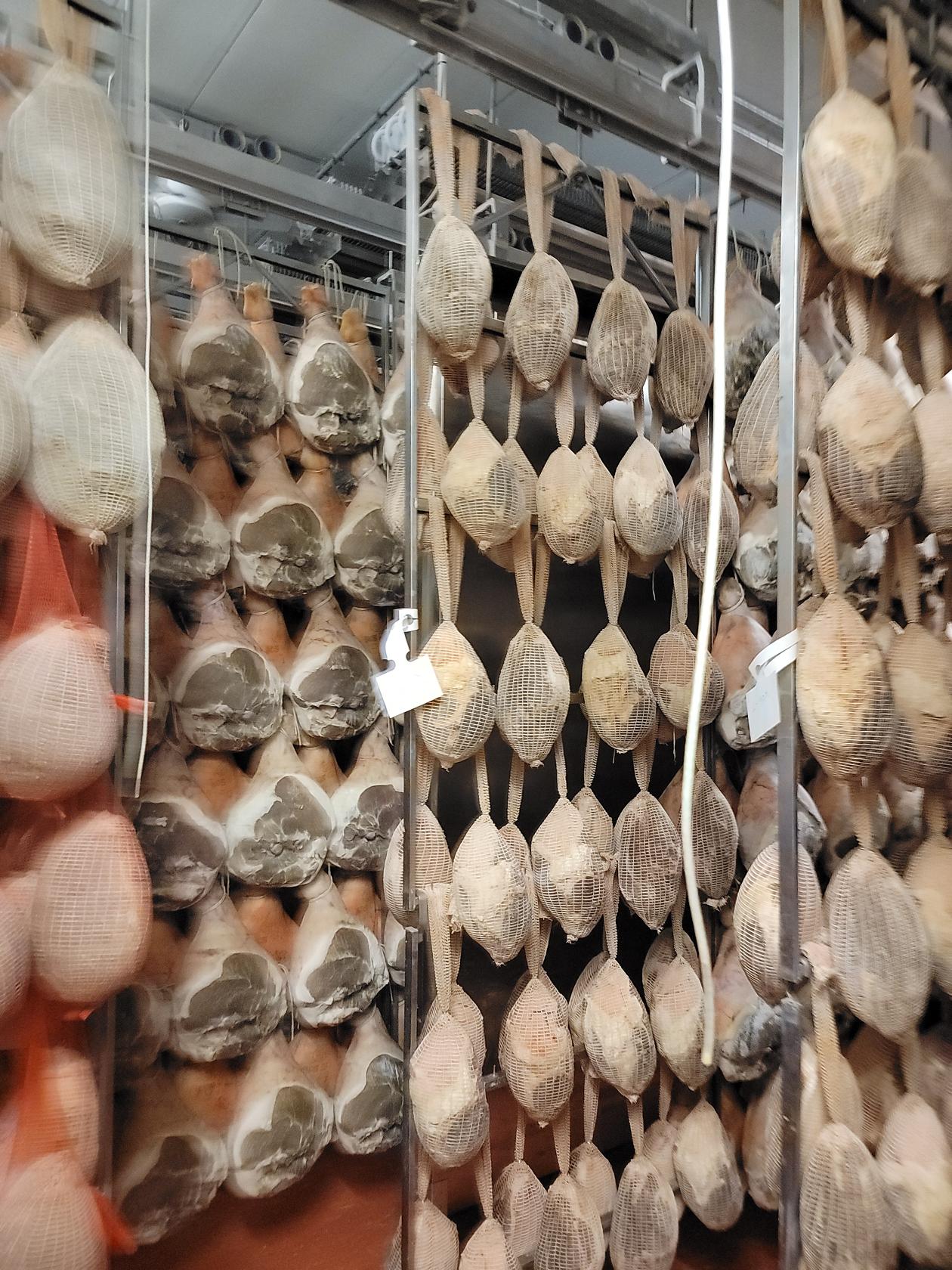
Skilled craftsmen and women assess each ham for its ultimate use, which can be anything from just daily grocery store cold cuts, to aged proscuitto and other salumis. Culatta Culatello hams are also processed here and are usually hung in bags, after the meat has been taken from the bone and properly arranged in a bag and salted.
Culatello Hams – Salumificio Conti – Tasty Bus Tour – Parma, Italy
Culatello Hams – Salumificio Conti – Tasty Bus Tour – Parma, Italy
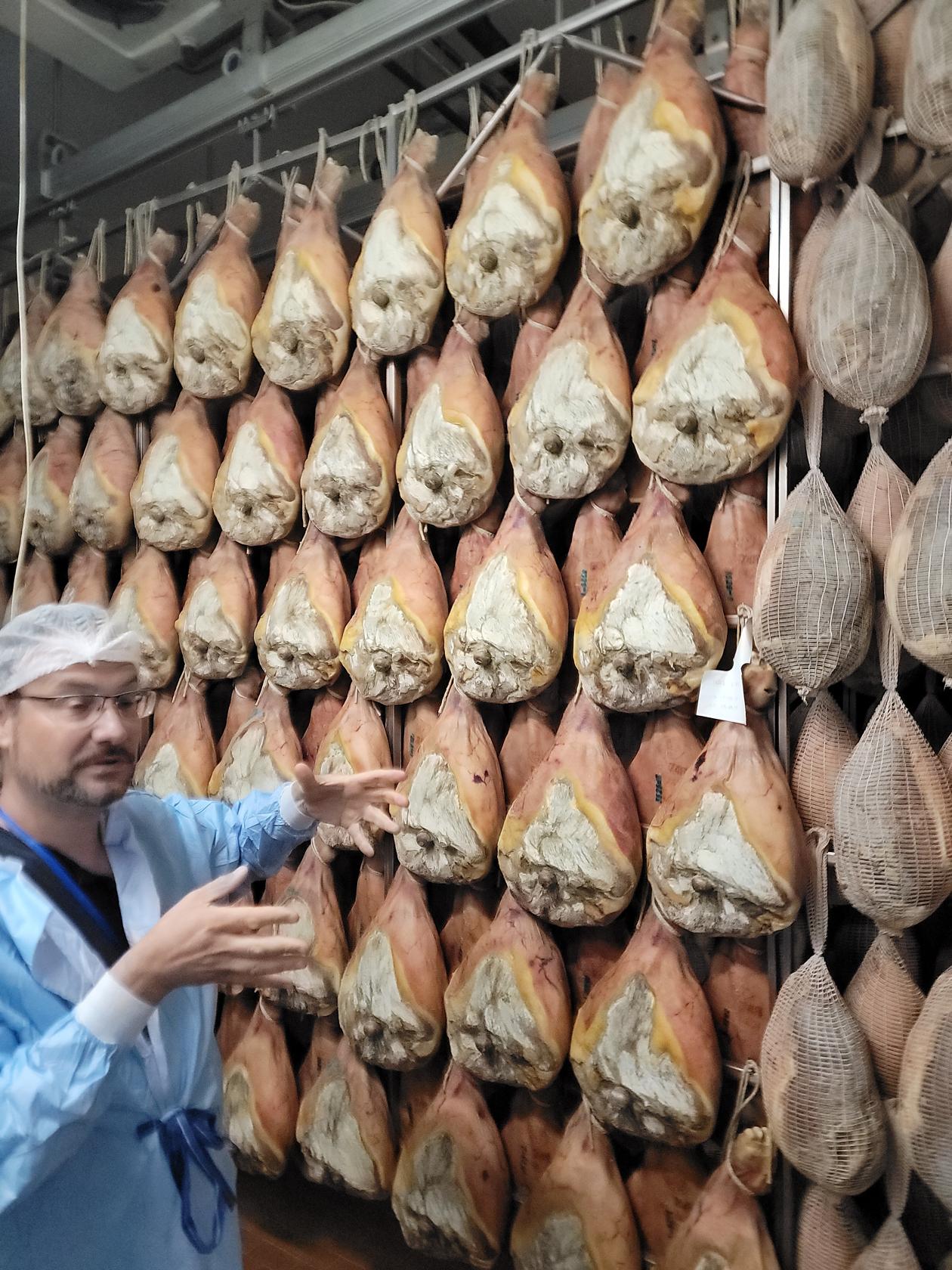
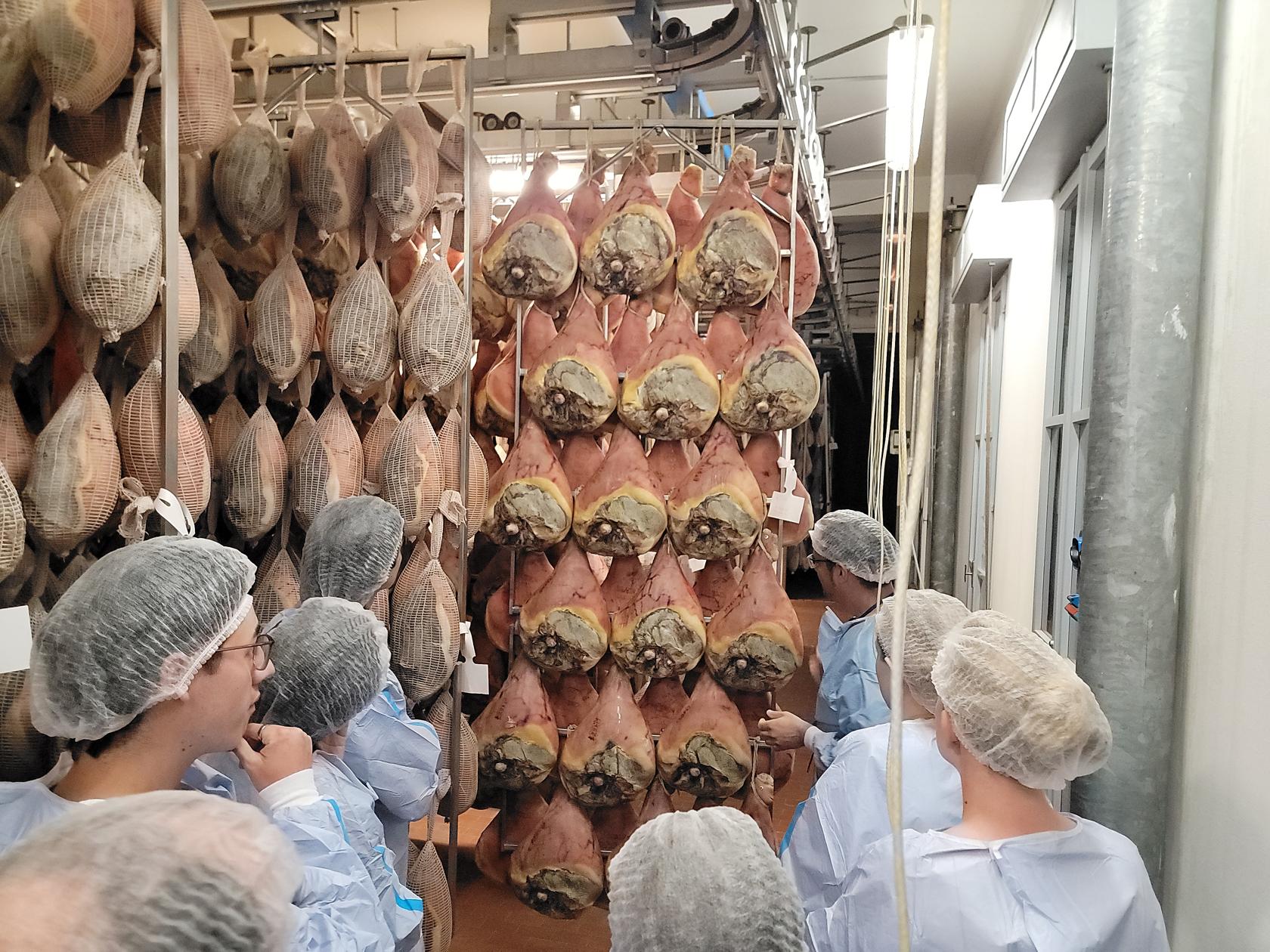
There were no arrivals the day we were there, but we were able to learn how the special Parma Hams were selected and stamped and smeared with a special lard, to ensure the amount of air that gets to them, after all of the are salted. They only use human grade sea salt on the hams, which in the first couple of weeks of curing is removed every other week and re-applied.
Drying Black Label 12 Month Parma and Culatello Hams – Salumificio Conti – Tasty Bus Tour – Parma, Italy
Drying Rosa Antico 16 Month Parma and Culatello Hams – Salumificio Conti – Tasty Bus Tour – Parma, Italy
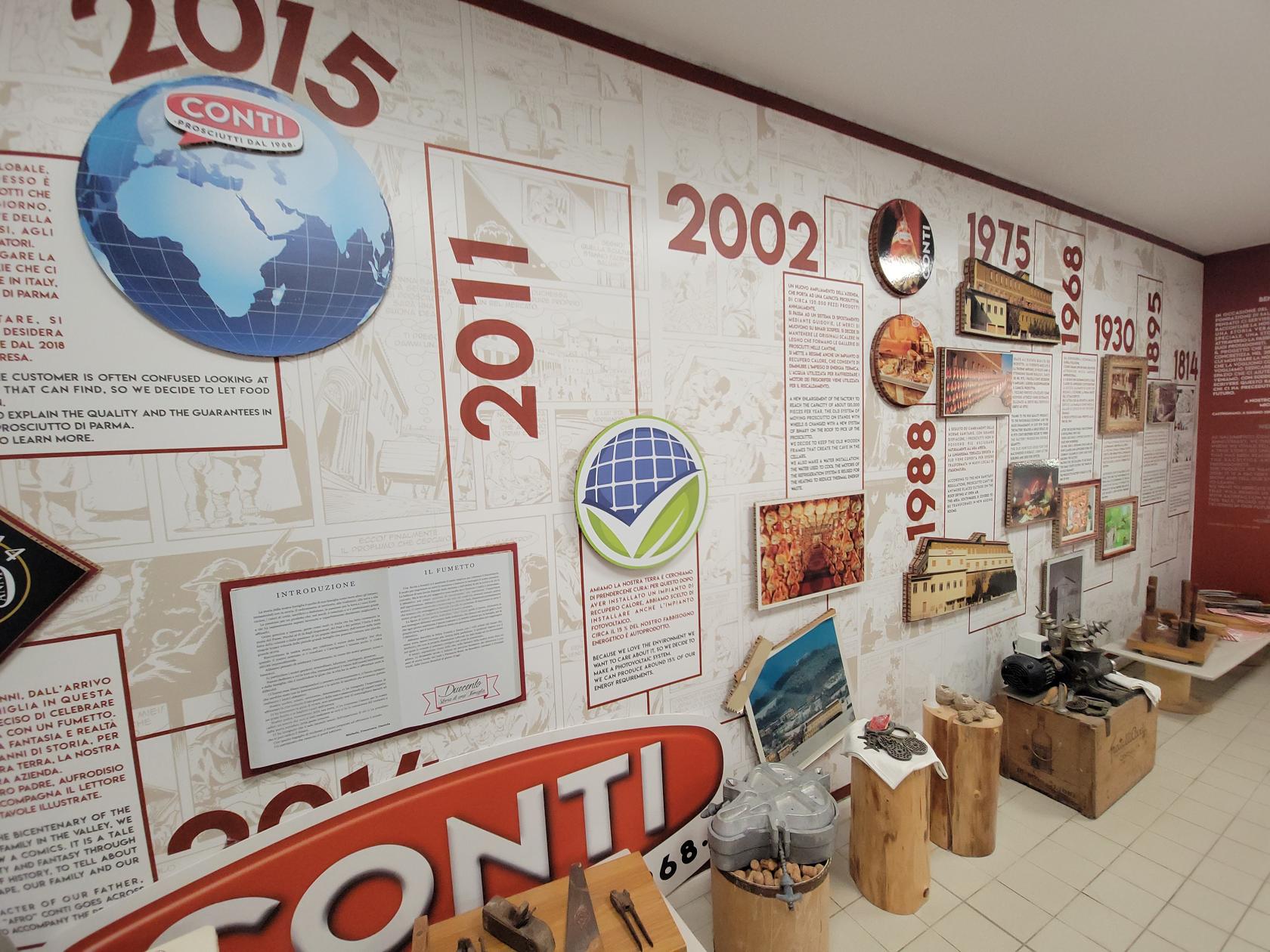
The Conti Story – Salumificio Conti – Tasty Bus Tour – Parma, Italy
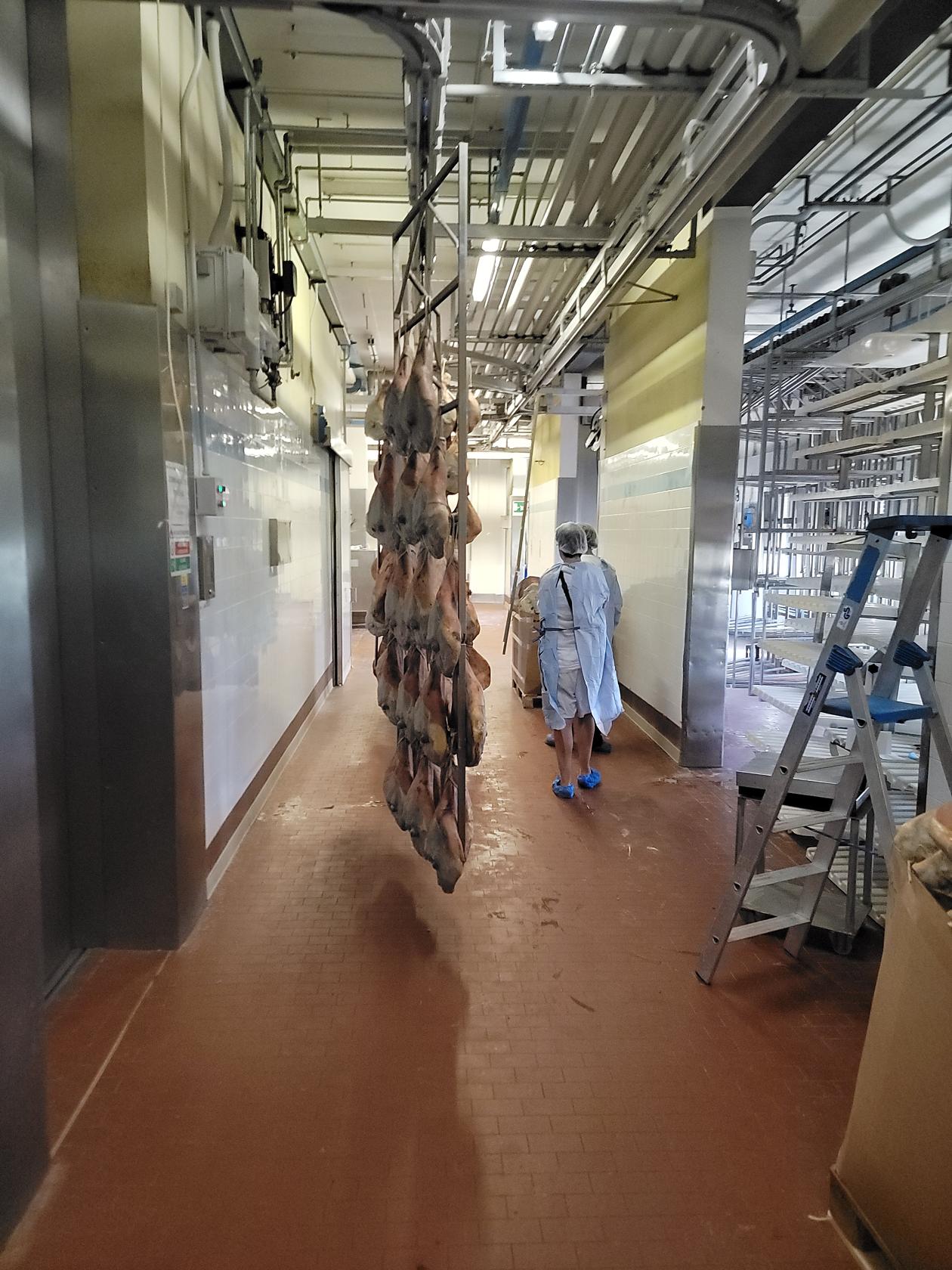
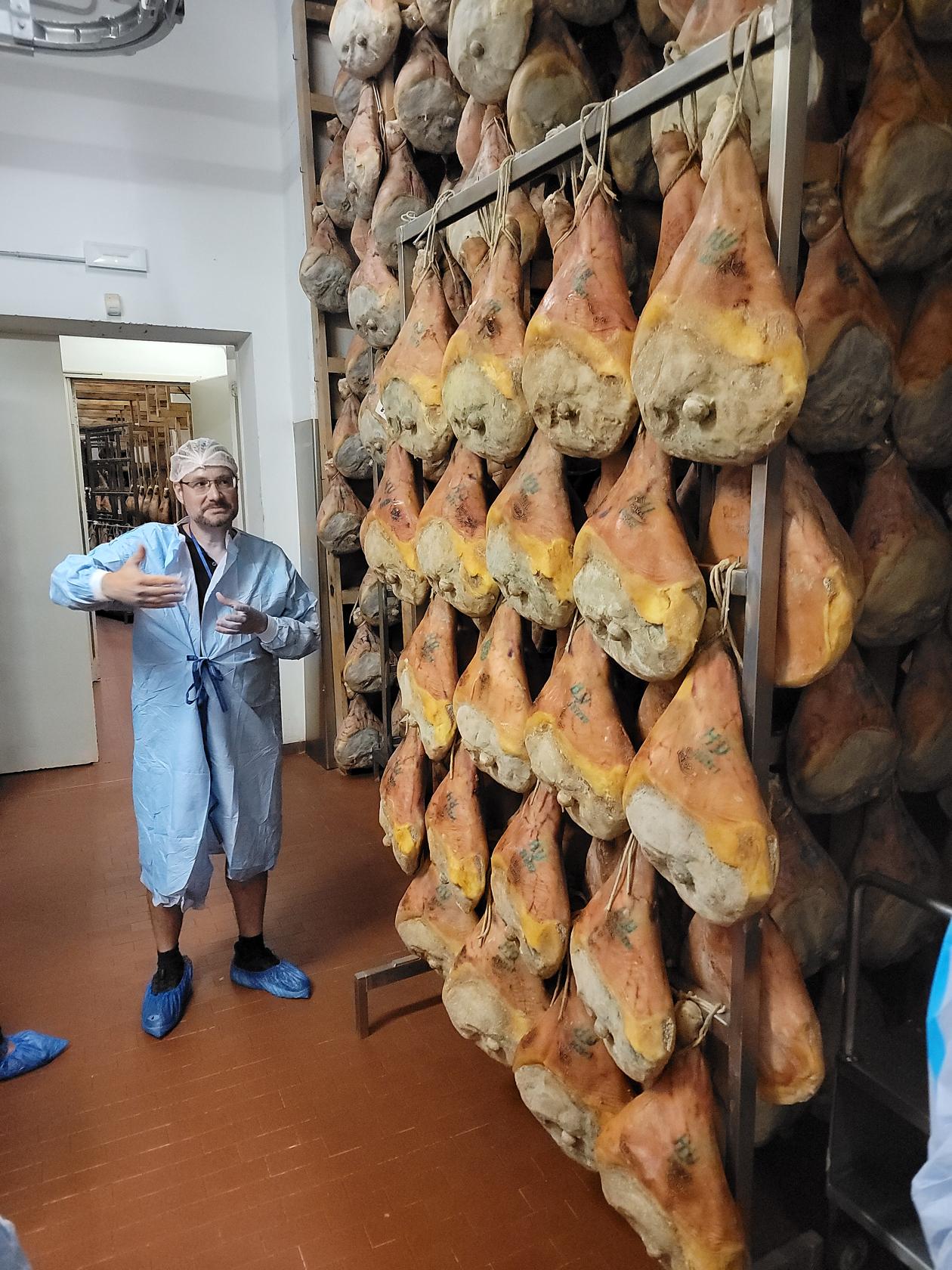
After selection and processing the hams are stored in a refrigerated controlled rooms for a specified amount of time.
Drying Parma Hams – Salumificio Conti – Tasty Bus Tour – Parma, Italy
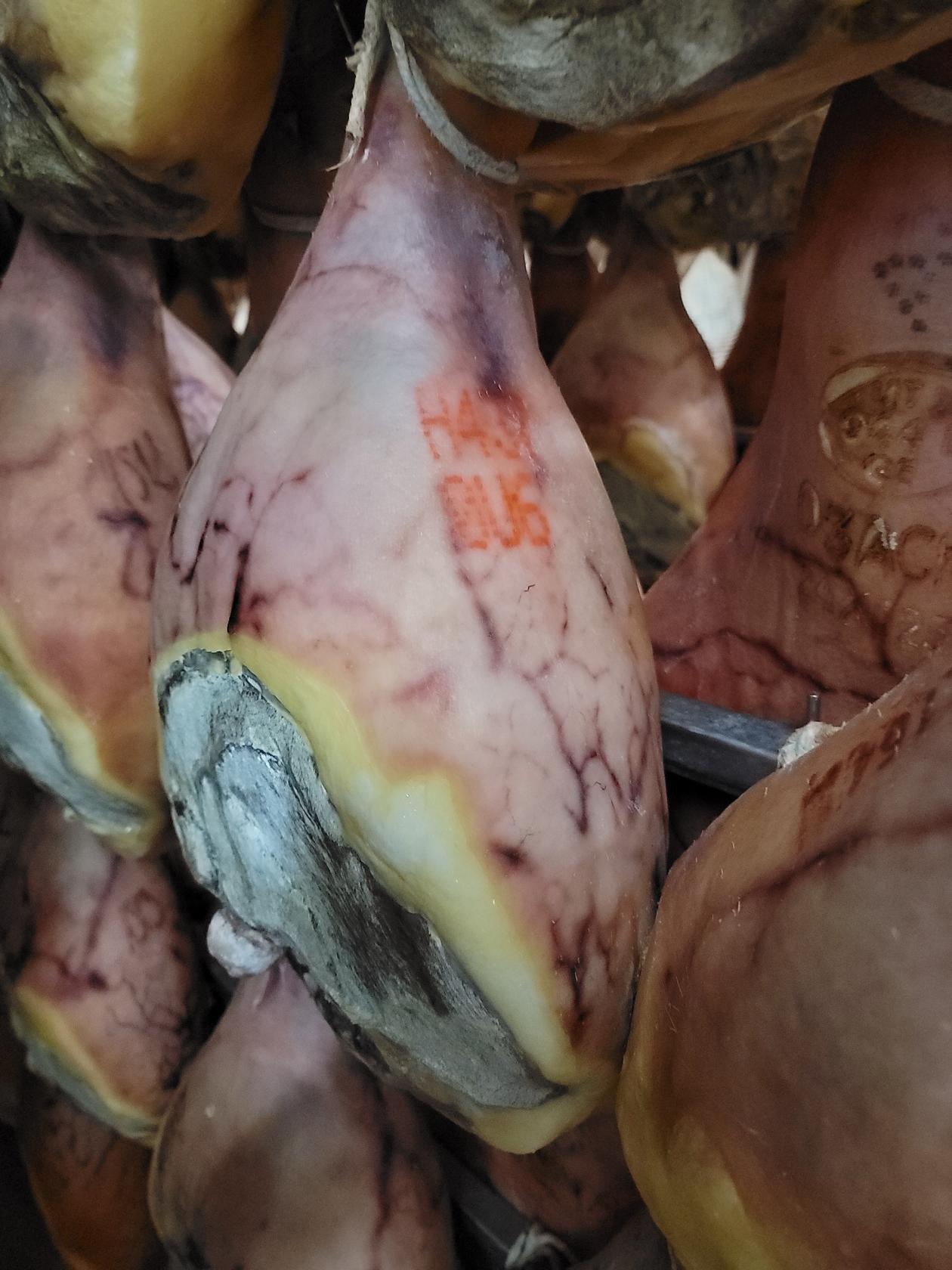
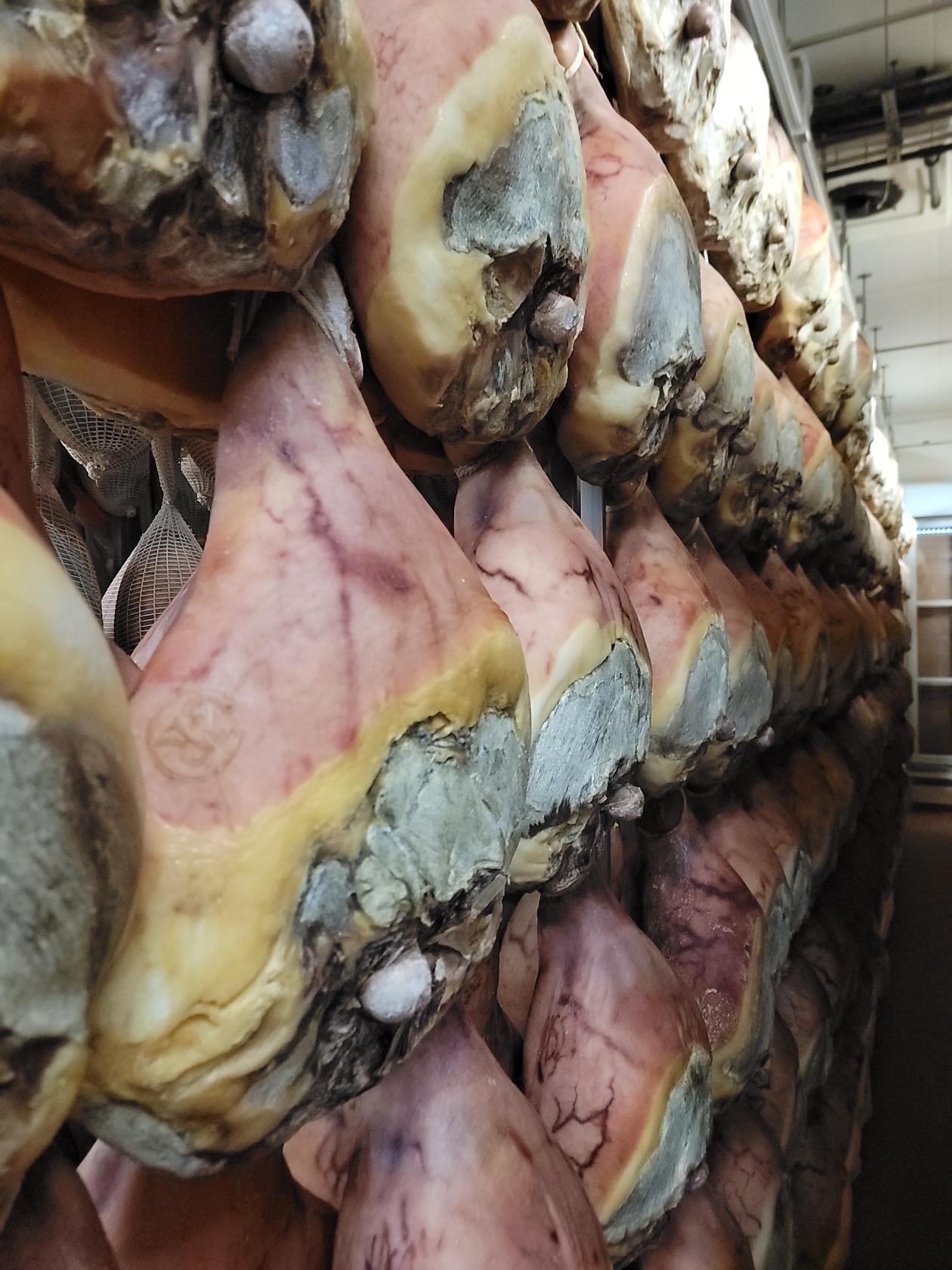
Close Up of Ham – Salumificio Conti – Tasty Bus Tour – Parma, Italy
Close Up of Ham – Salumificio Conti – Tasty Bus Tour – Parma, Italy
Drying Black Label 12 Month Parma and Culatello Hams – Salumificio Conti – Tasty Bus Tour – Parma, Italy
Depending on how much time they spend to dry and what type of ham each has been selected for, they are boxed and prepared for packaging and shipping. Below is batch ready for shipment that appears to be about ten months old.
Hams Ready for Packaging and Shipment – Salumificio Conti – Tasty Bus Tour – Parma, Italy
Damiani Parmesan Factory
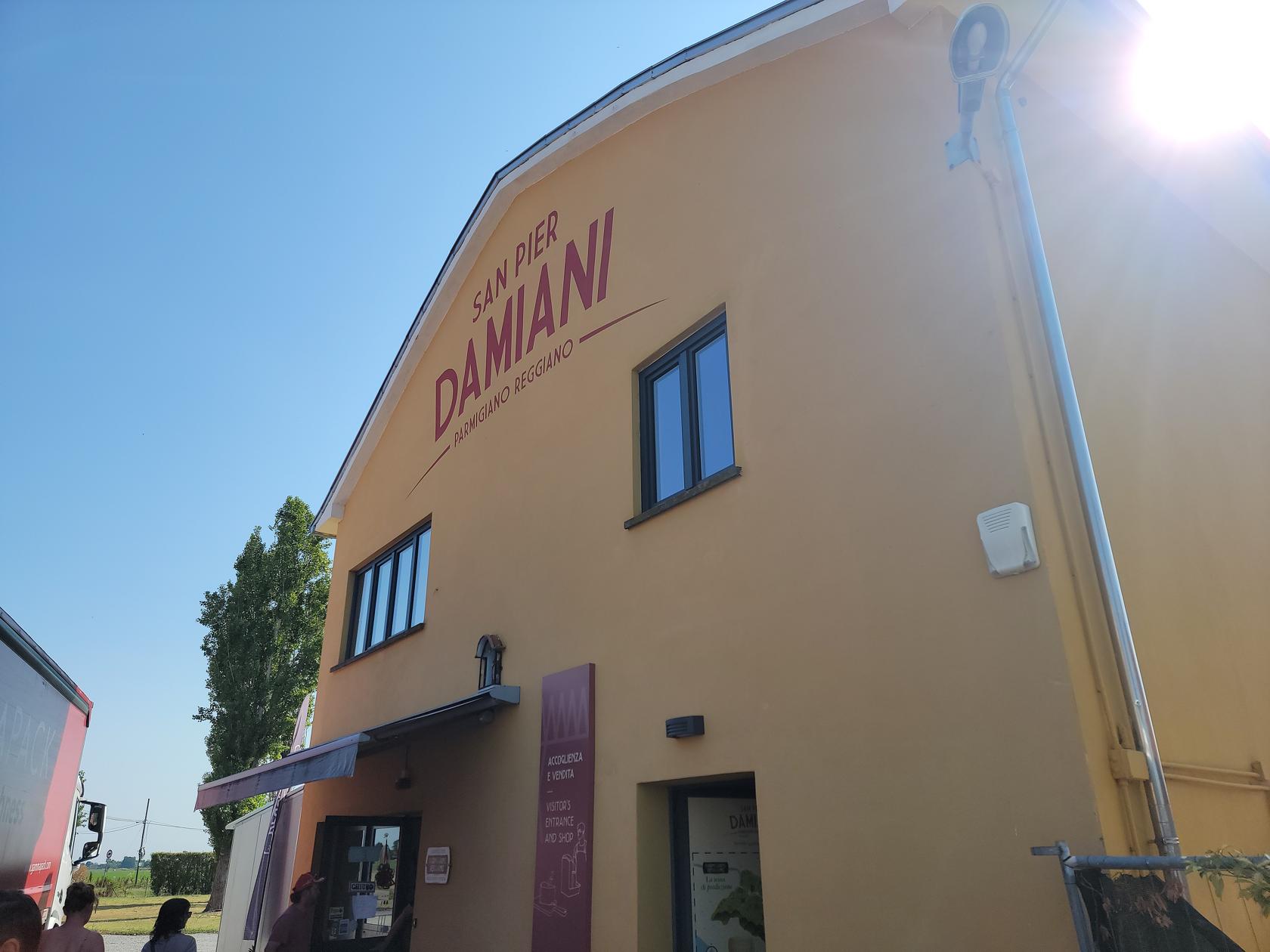
San Pieri Damiani Parmigiano Reggiano is located in Parma Province, in San Prospero, just outside the city limits. The history of making Parmesan cheese in the area goes back almost a thousand years, for which the cheese that’s made here owes its distinct taste to the local flora that is eaten by the cows.
Entrance – San Pier Damiani Parmigiano Reggiano Factory – Tasty Bus Tour – Parma, Italy
At the farm, two milkings are done every day, where the milk is harvested for four different indigenous cows, they are:
Rossa Reggiana – it is considered the mother of Parmigiano Reggiano. It almost became extinct in the 1980s, after farmers committed to raising only cows that produced more milk. However, the local commune, called the Consorzio Vacche Rosse, turned this around and committed to making cheese with this milk like they did 800 years ago.
Bruna Italiana – derived from the Bruna Alpina cow from Austria and Switzerland, there is also a Consorzio di Sola Bruna that protects and makes cheese from this species. The milk from this cow has a higher fat content and subsequently the cheeses are more buttery and flavorful.
Biana Modenes – or white breed, also almost went extinct and was only just recently in 2005 spared that fate. The Caseificio Rosola di Zocca was formed to breed and protect the species from extinction. This cow produces a cheese curd that is sweeter and more elastic, giving the resultant cheese a rich, dense flavor.
Holstein Friesian – or what they call the industrial breed. Bred because it produces more milk for the same acreage as any other cow. Therefore it is doing well and provides the base, stock milk for most cheese in the area.
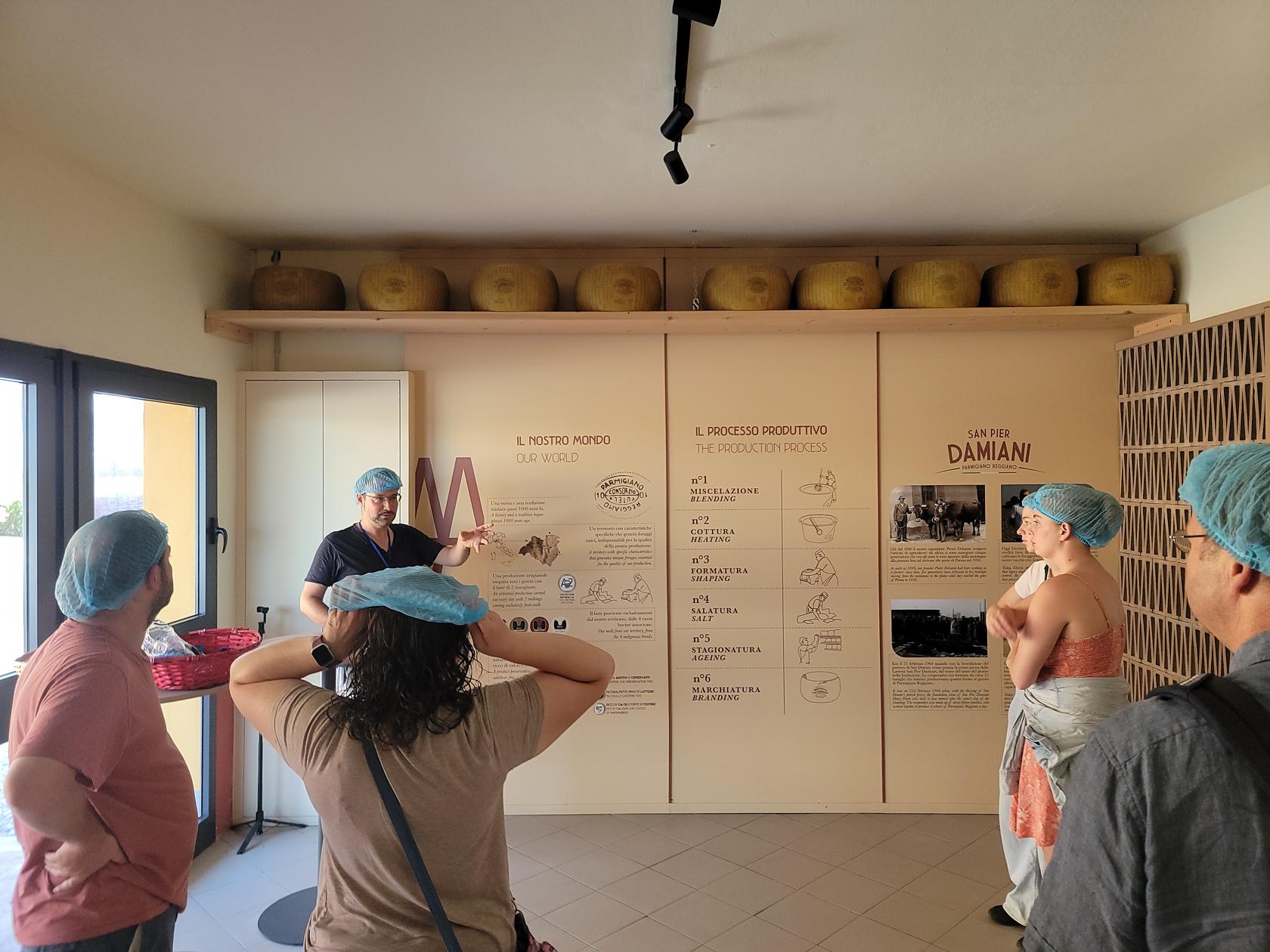
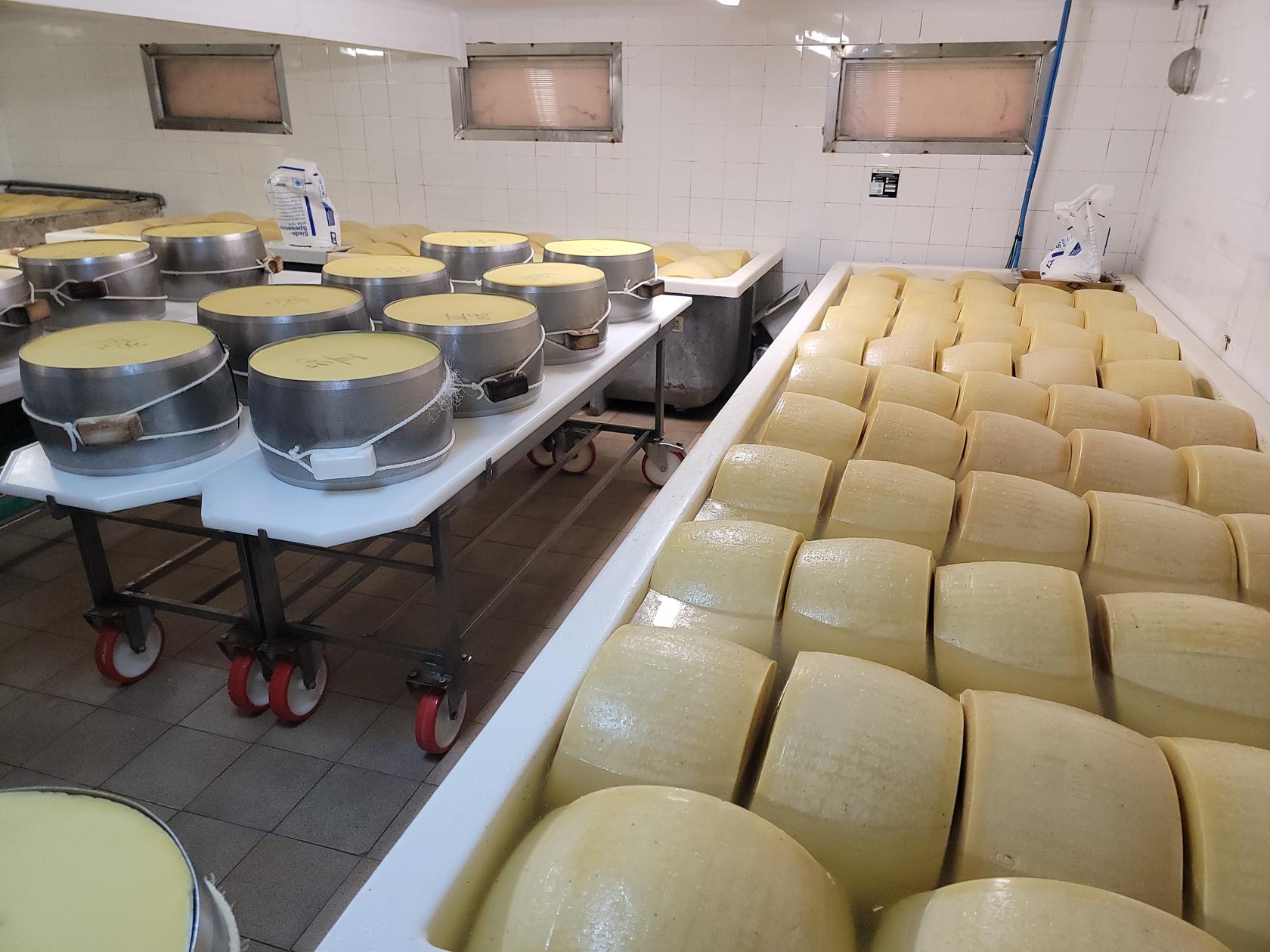
There are six steps to making parmesan cheese, from blending, heating and shaping, to salting, ageing and finally branding, that is, after each has passed a rigorous inspection.
Introduction – San Pier Damiani Parmigiano Reggiano Factory – Tasty Bus Tour – Parma, Italy
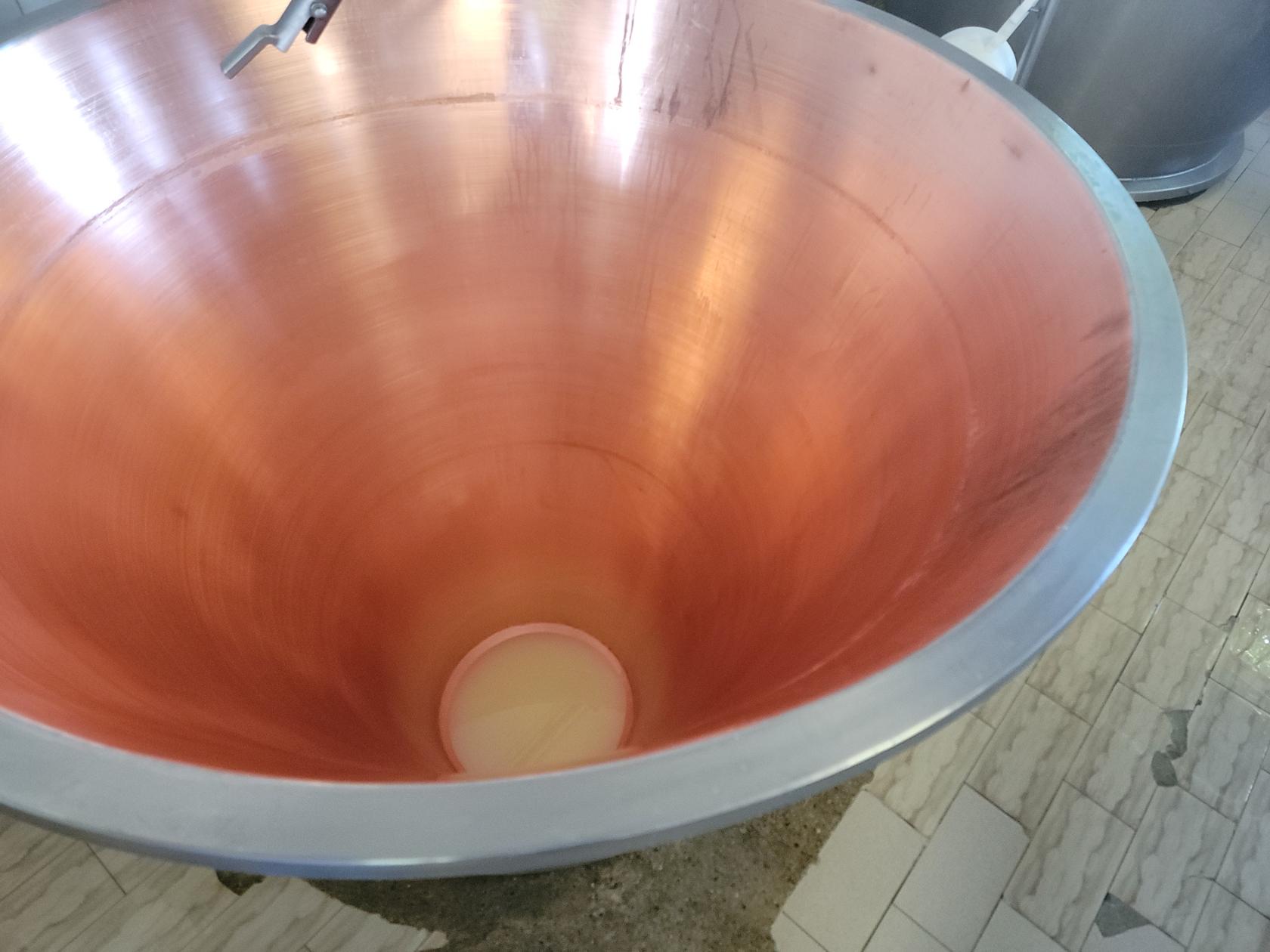
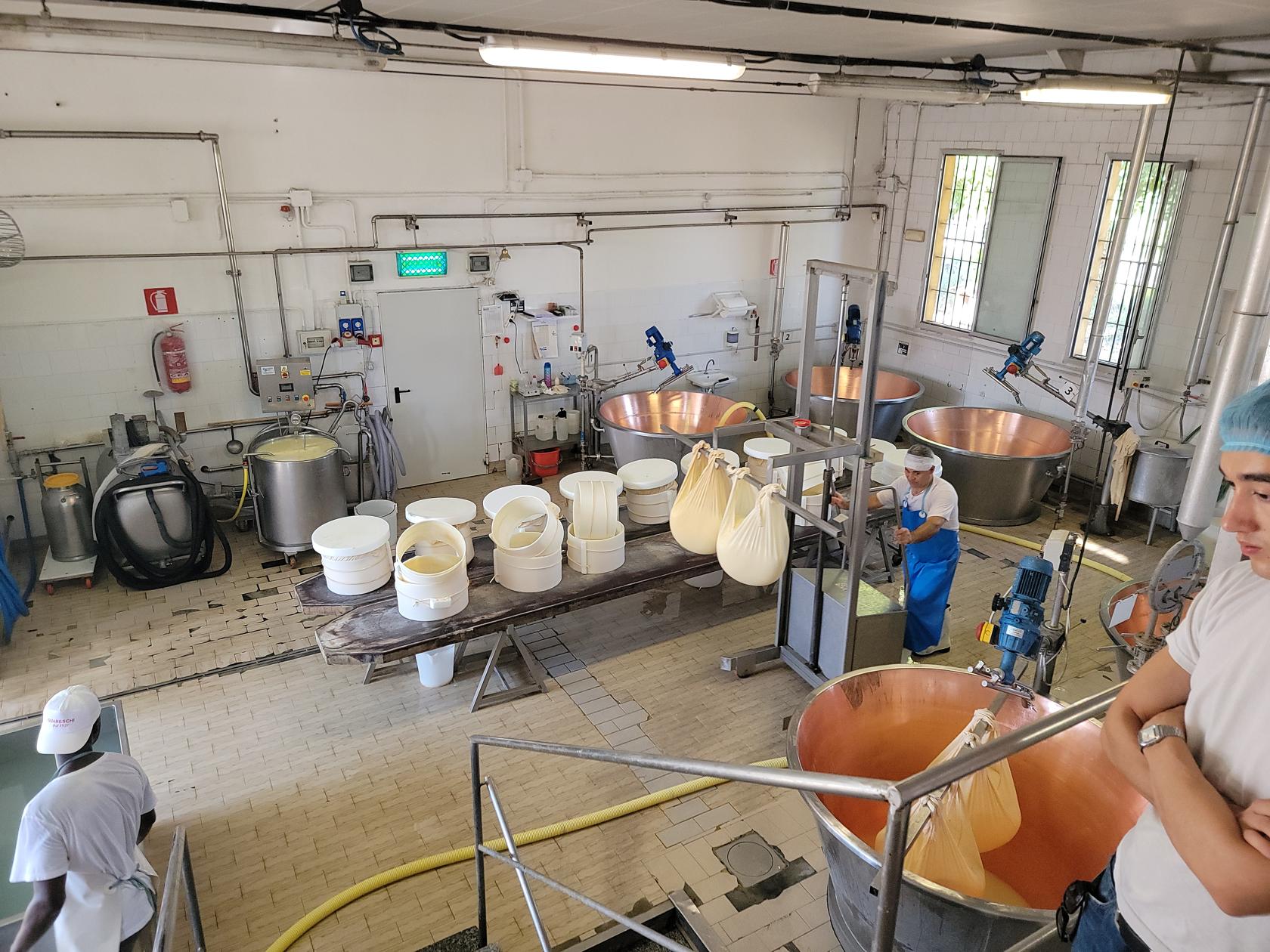
The first two steps take place in huge vats that are heated by steam. The rise in temperature allows the yeast that is added to multiply rapidly to produce curd.
Curd Heating Vats – San Pier Damiani Parmigiano Reggiano Factory – Tasty Bus Tour – Parma, Italy
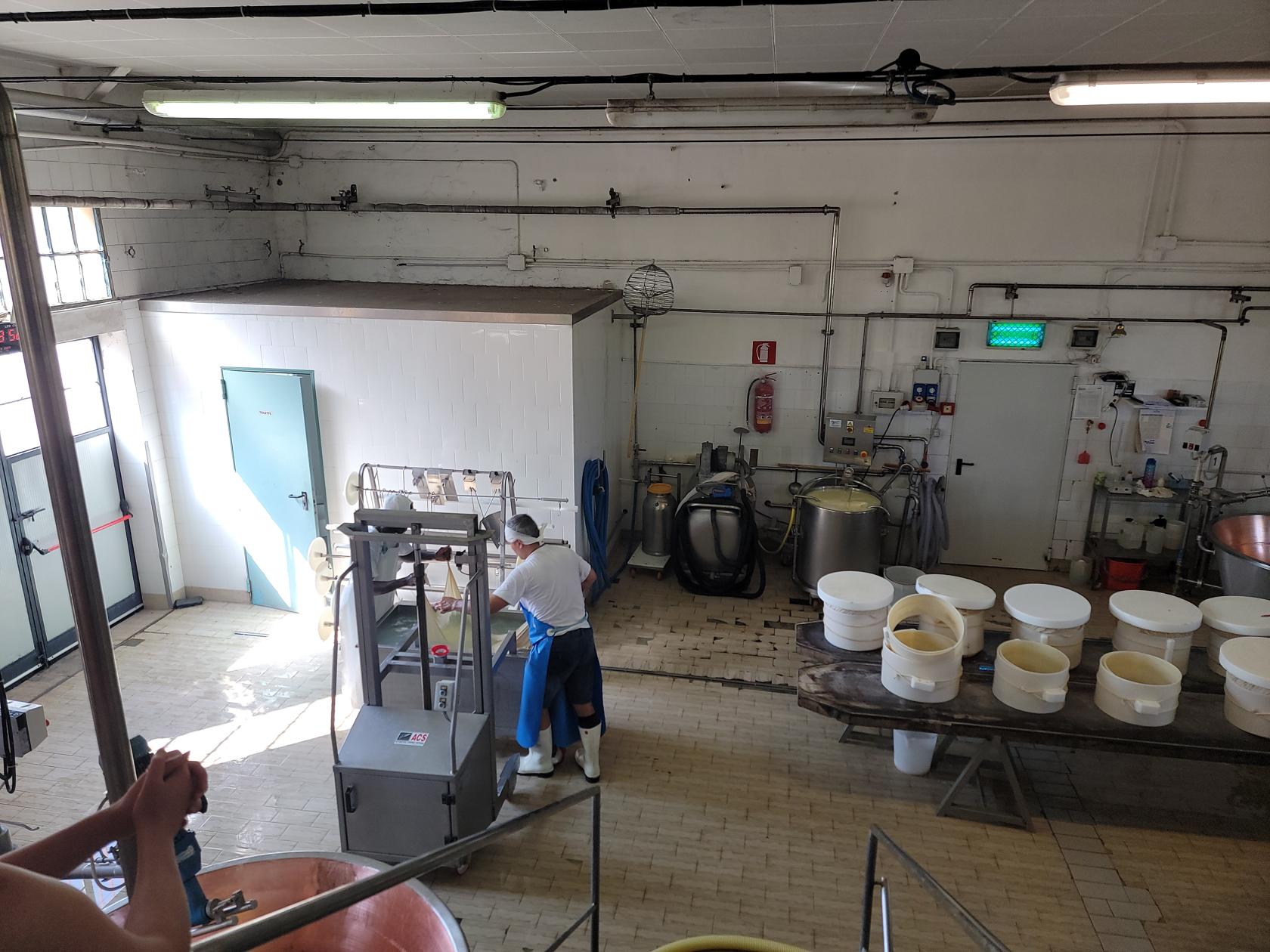
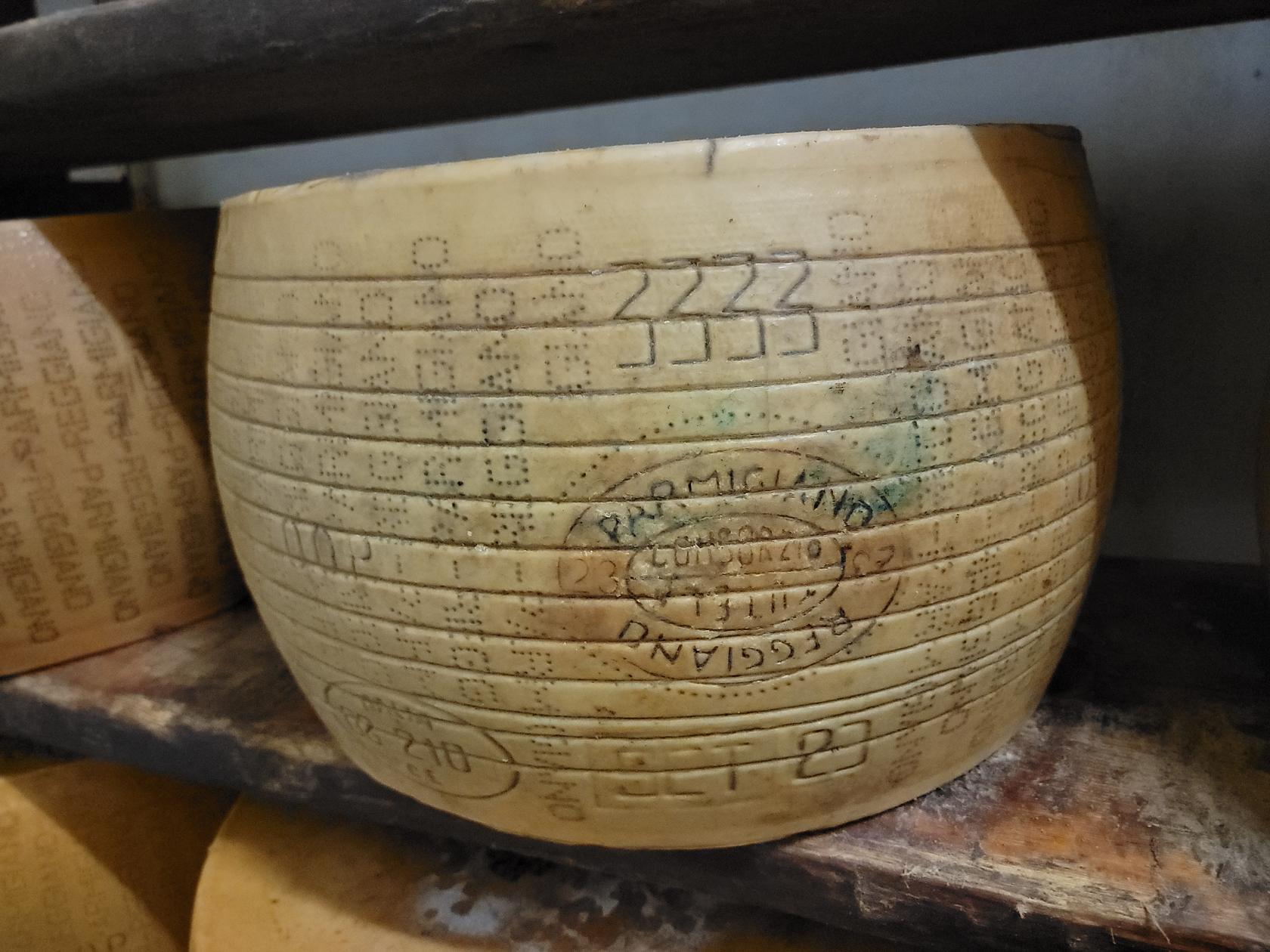
The curd is then taken out using cheese cloth and strained of water, rinsed and placed into plastic molds for shaping. The plastic mold has basic information on it that imprints on the cheese rind as it forms. Special places in the mold are left blank, these are where the DOP information, the inspection results and other information are burned into the rind later.
Heating and Processing Curd – San Pier Damiani Parmigiano Reggiano Factory – Tasty Bus Tour – Parma, Italy
Rinsing the Curd in Cheese Cloth – San Pier Damiani Parmigiano Reggiano Factory – Tasty Bus Tour – Parma, Italy
Forming Molds with Imprints – San Pier Damiani Parmigiano Reggiano Factory – Tasty Bus Tour – Parma, Italy
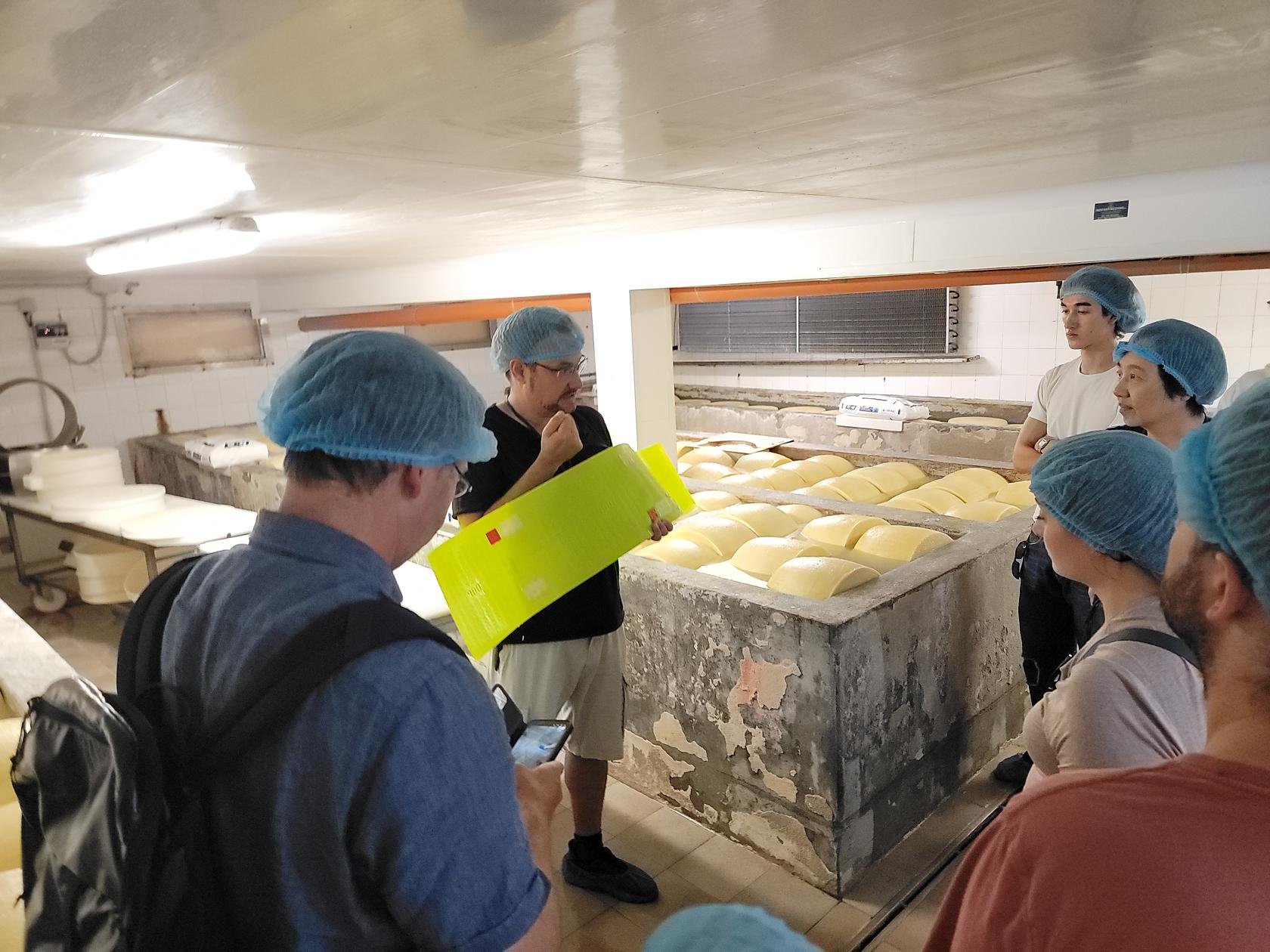
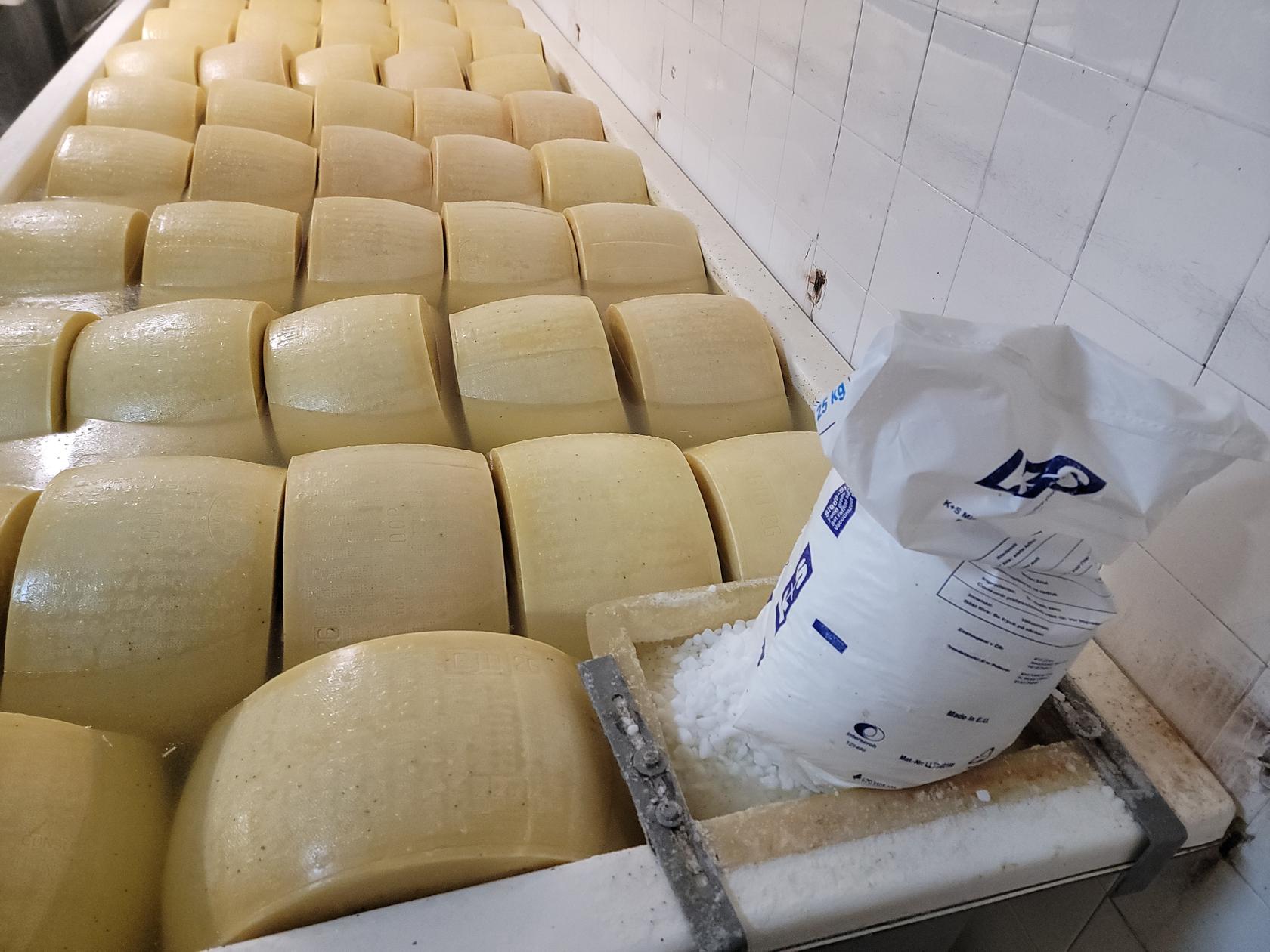
Forming Cheese Wheels and Wheels in Brine – San Pier Damiani Parmigiano Reggiano Factory – Tasty Bus Tour – Parma, Italy
Human Grade Sea Salt – San Pier Damiani Parmigiano Reggiano Factory – Tasty Bus Tour – Parma, Italy
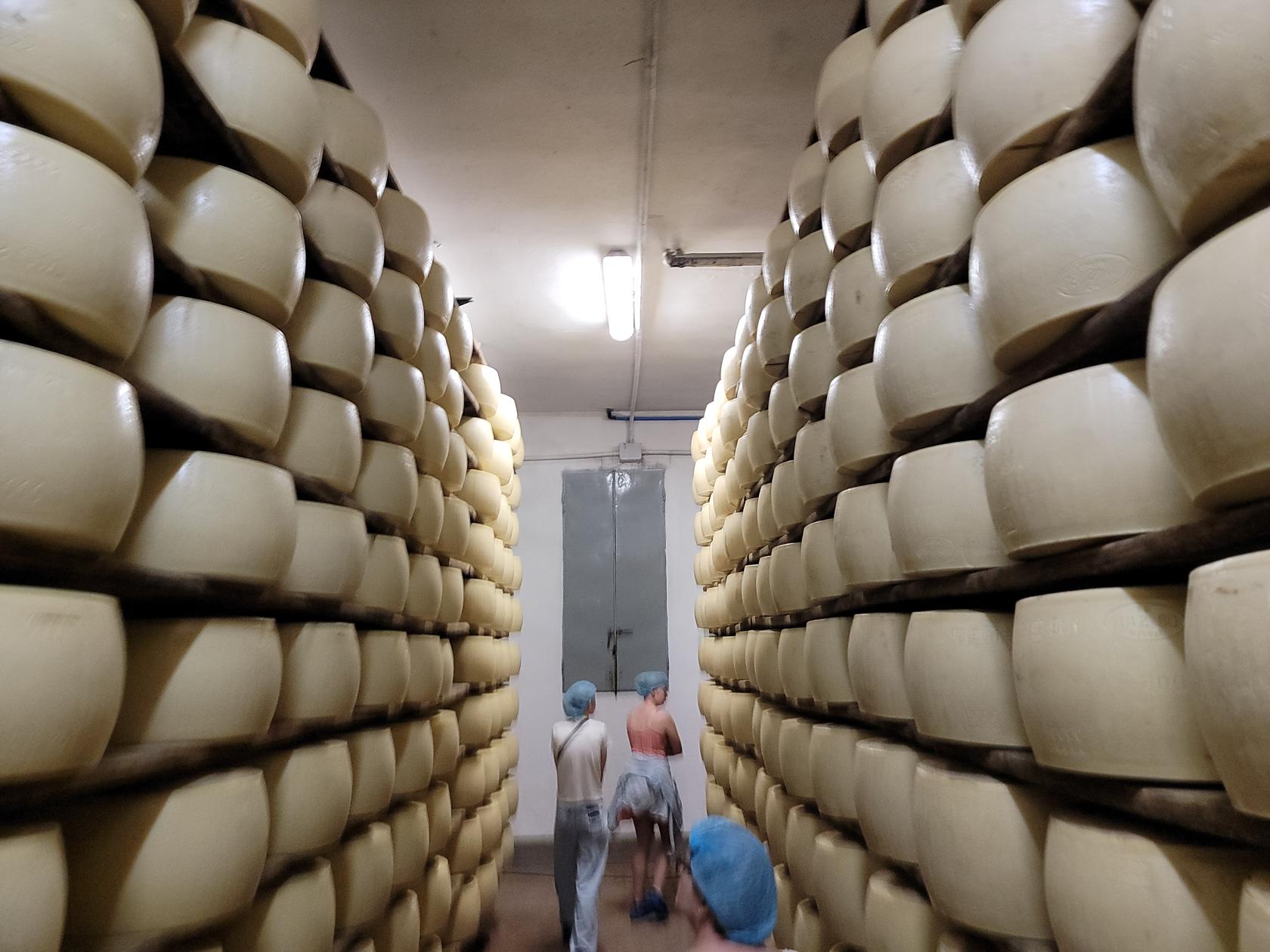
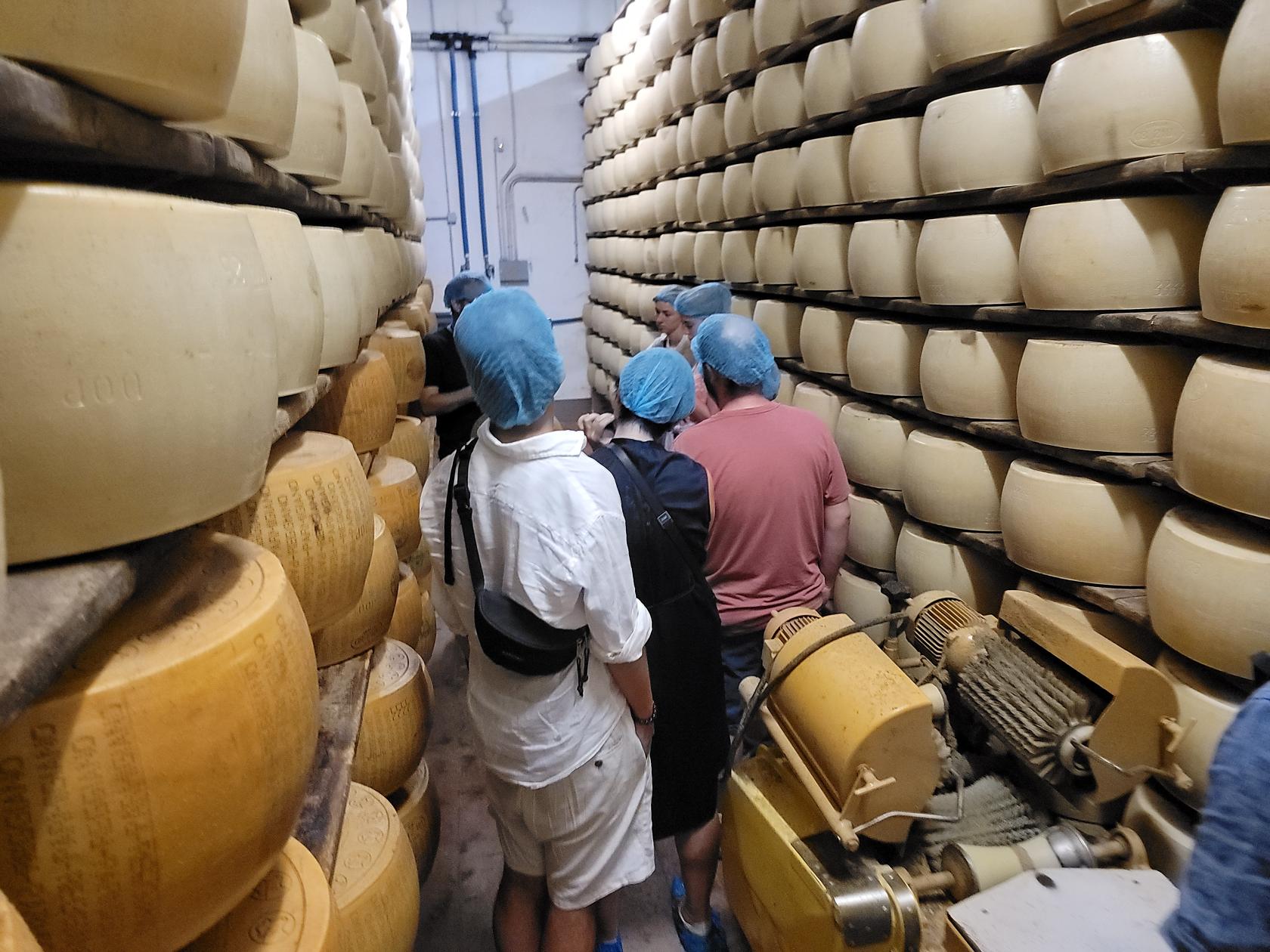
Preliminary Aging Room – San Pier Damiani Parmigiano Reggiano Factory – Tasty Bus Tour – Parma, Italy
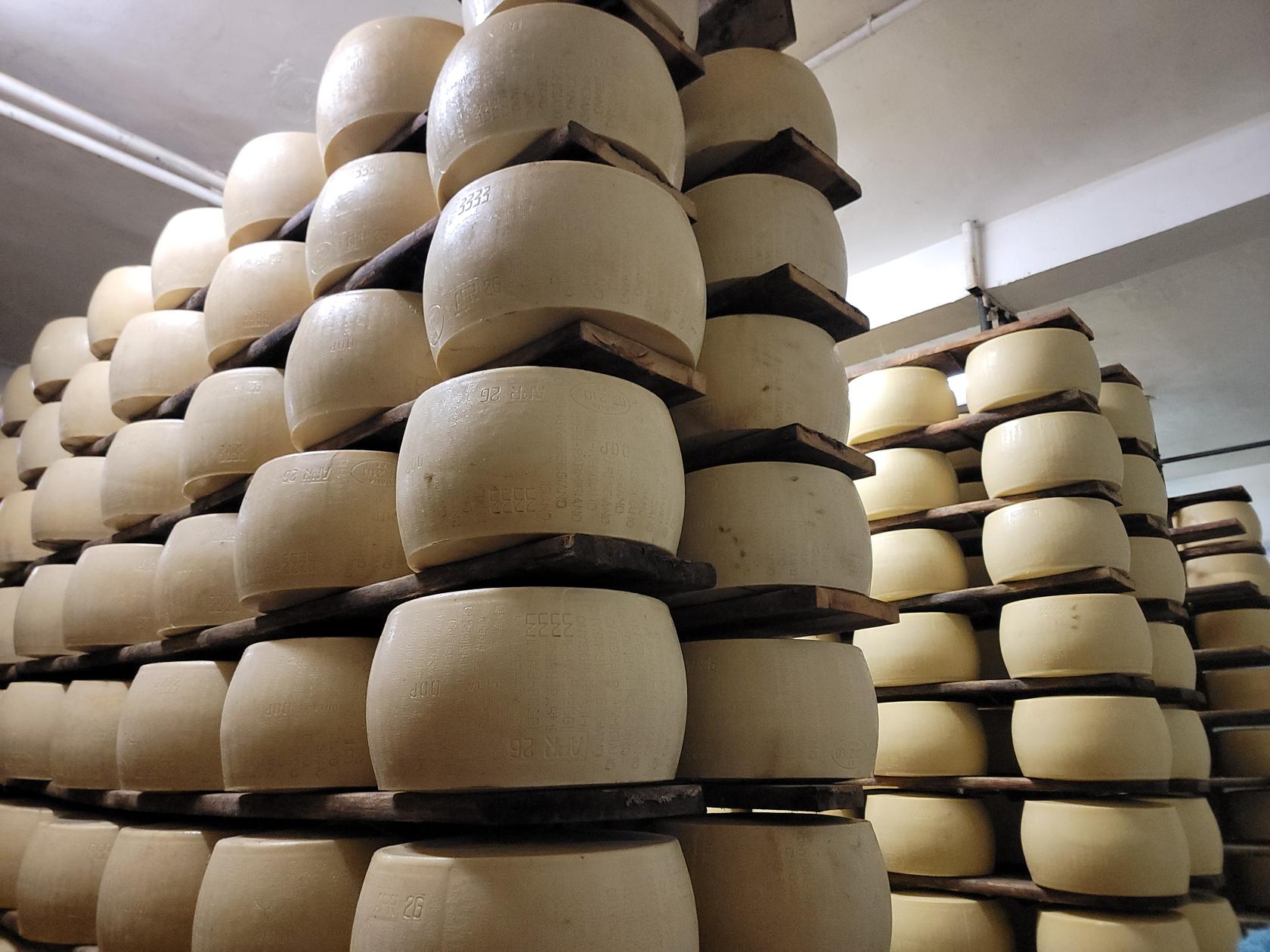
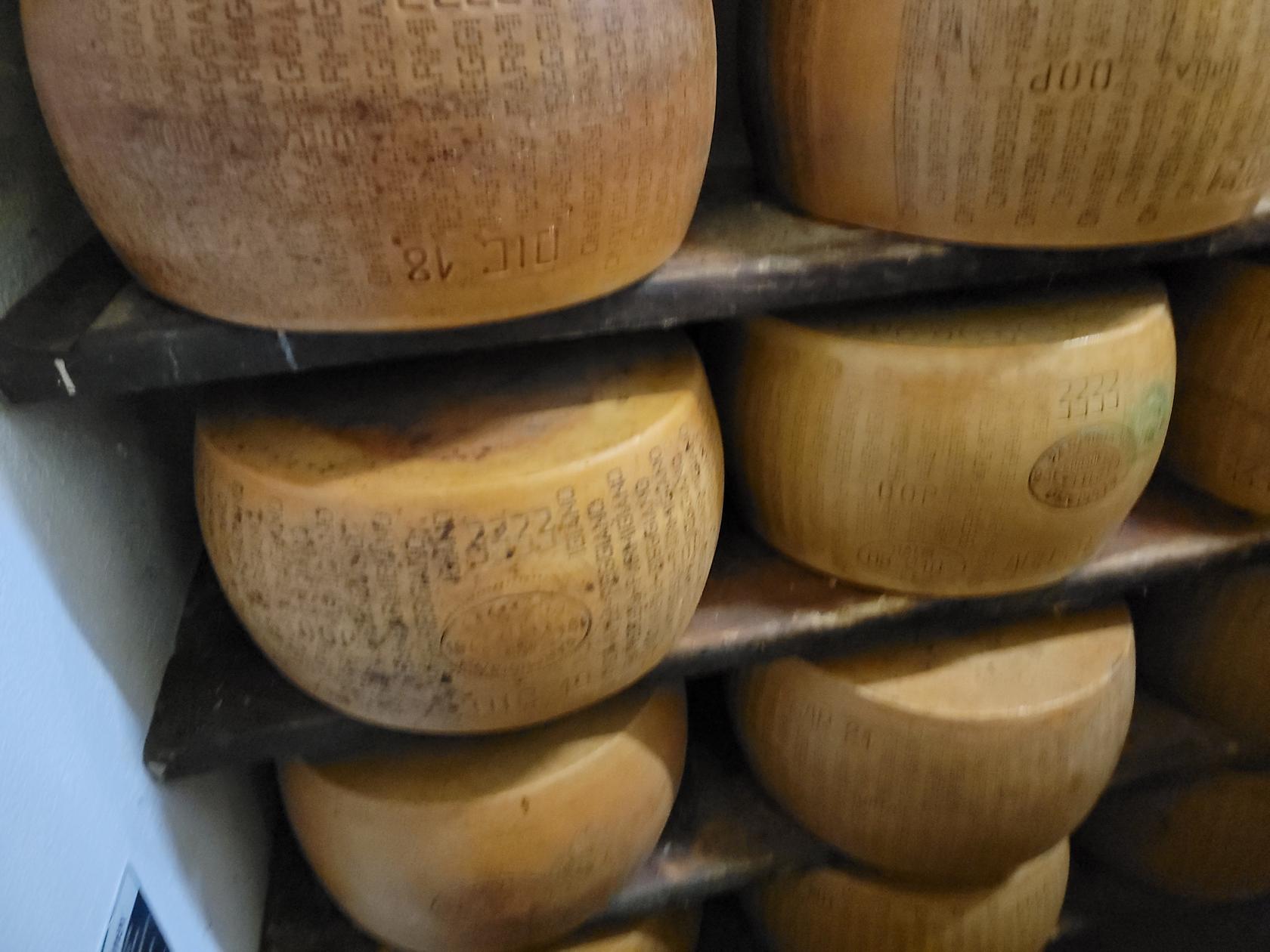
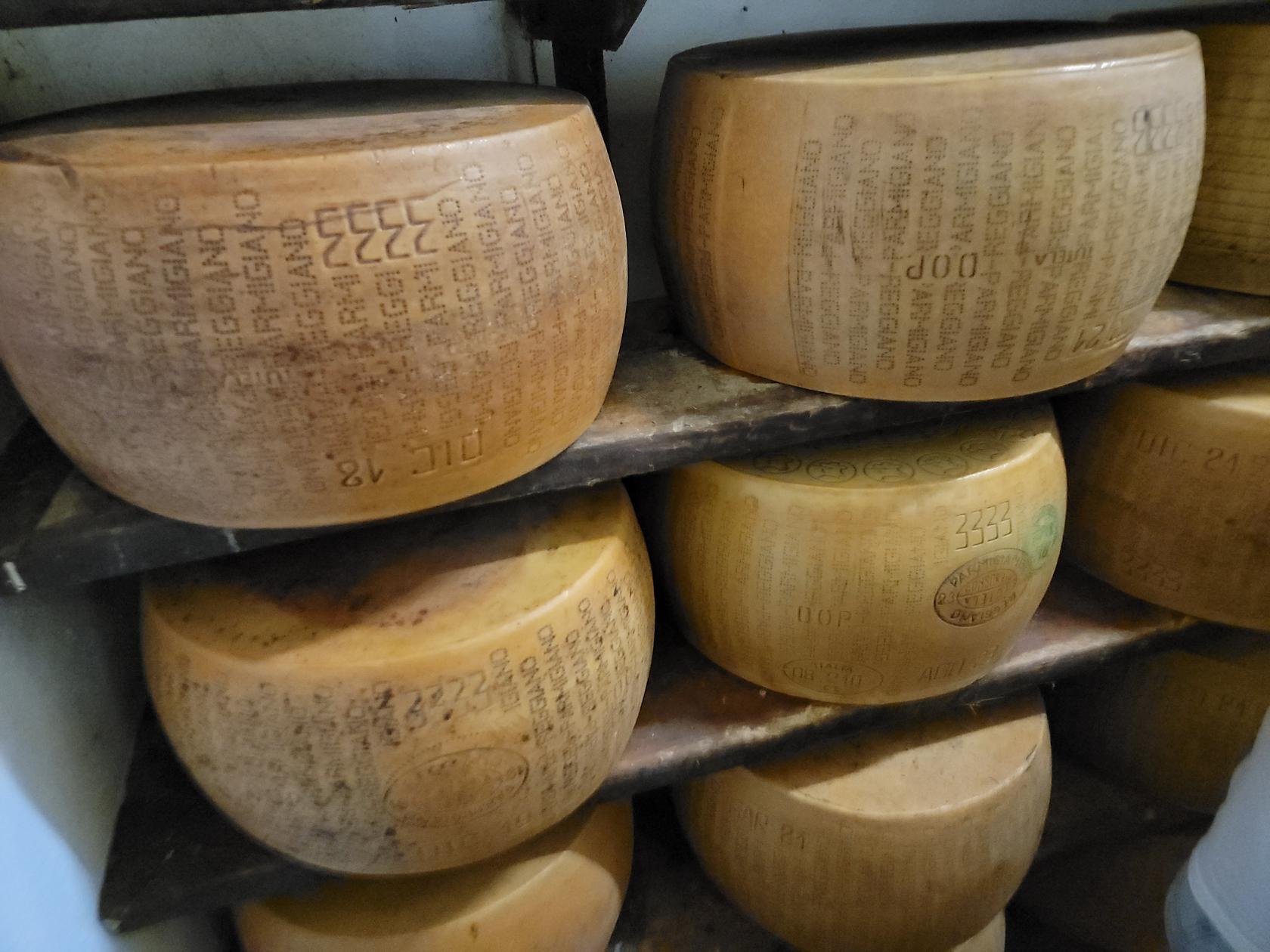
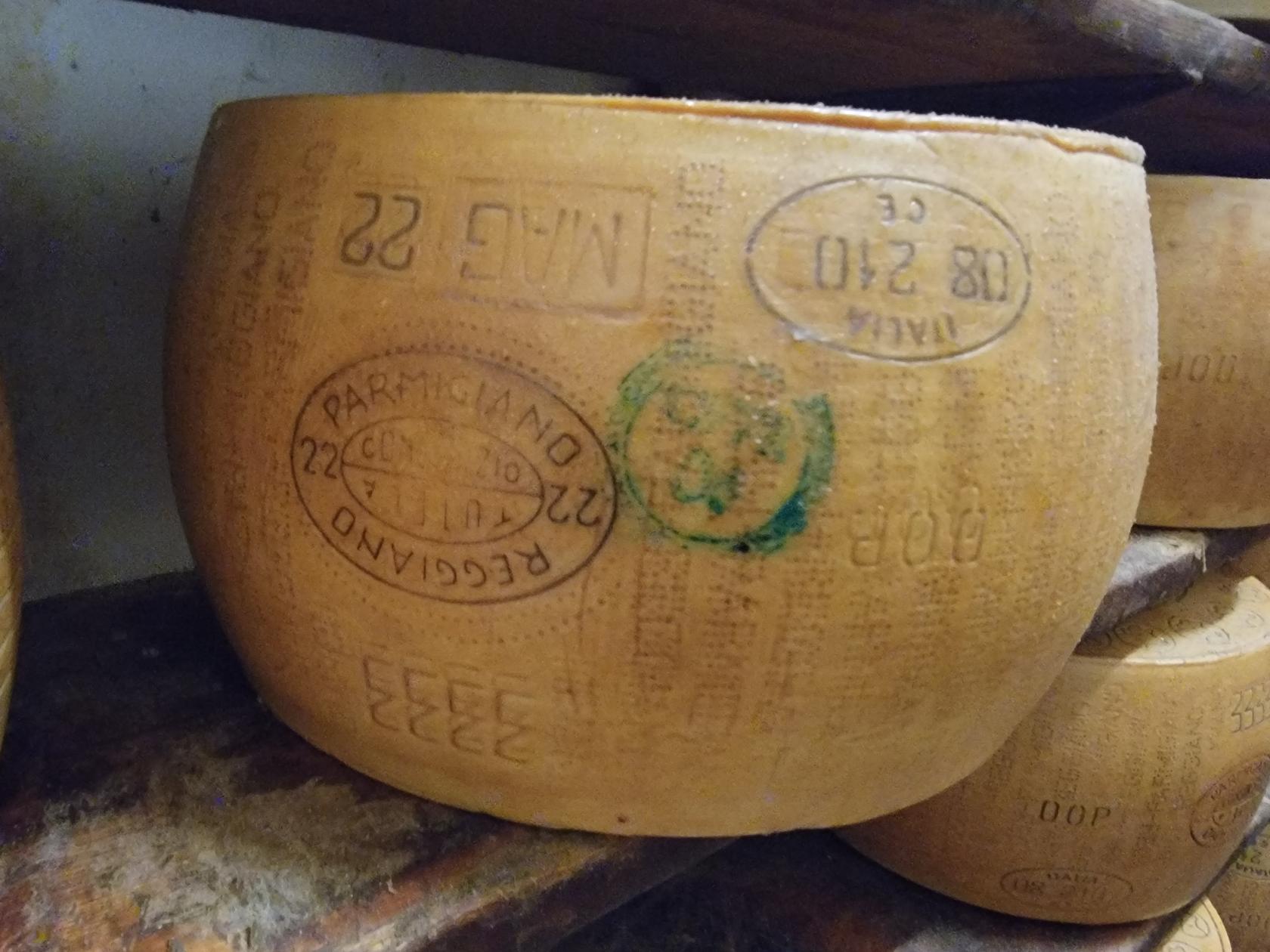
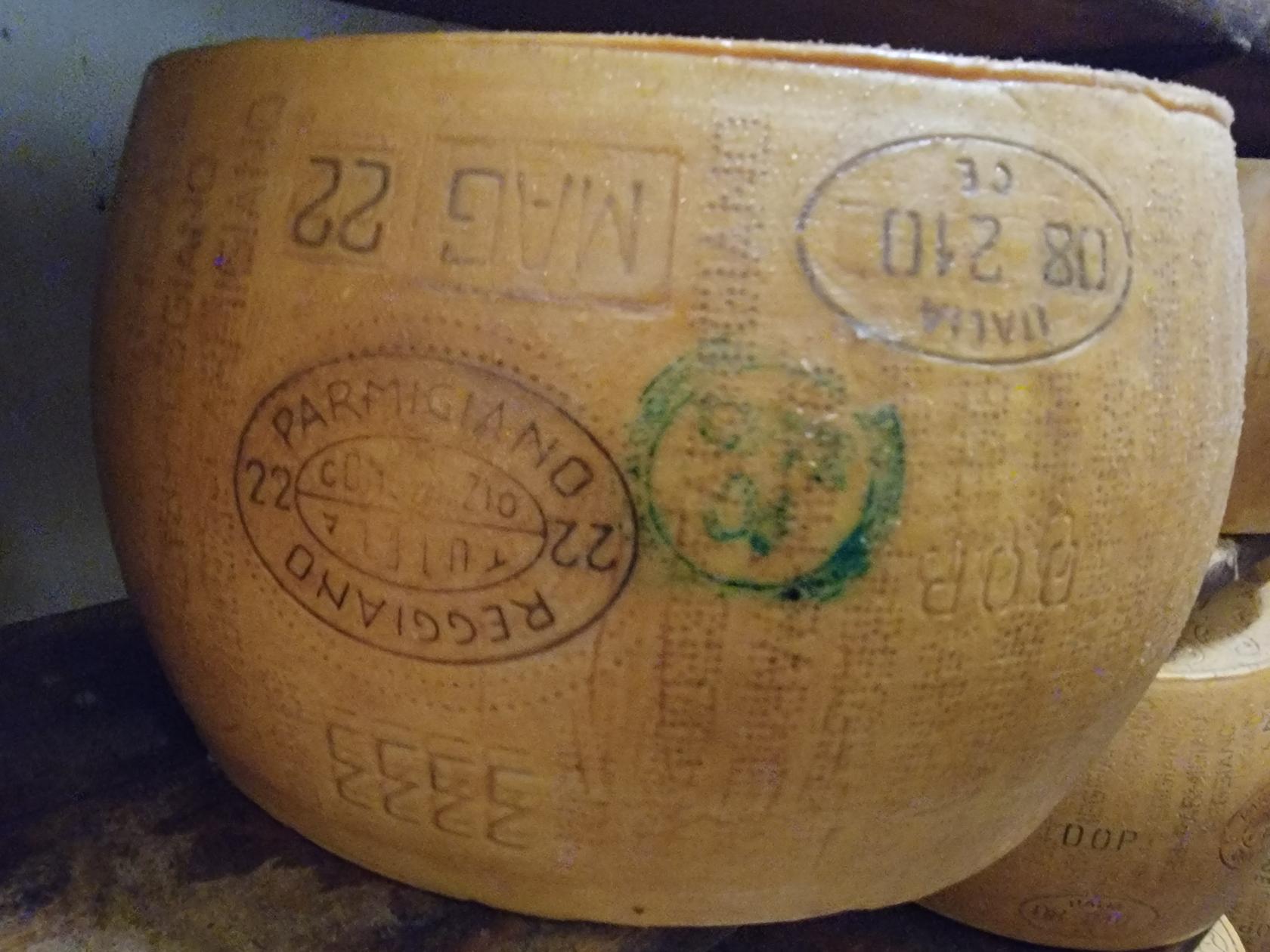
Once the cheese has aged it is ready for inspection, the DOP information is burned into the rind. Then the inspection results are died onto the rind by a circular stamp if the cheese has passed.
Intermediate Aged Parmesan – San Pier Damiani Parmigiano Reggiano Factory – Tasty Bus Tour – Parma, Italy
Wheel Cleaning Machine – San Pier Damiani Parmigiano Reggiano Factory – Tasty Bus Tour – Parma, Italy
Aged Parmesan – San Pier Damiani Parmigiano Reggiano Factory – Tasty Bus Tour – Parma, Italy
Aged Parmesan – San Pier Damiani Parmigiano Reggiano Factory – Tasty Bus Tour – Parma, Italy
Cheese Passed Inspection – San Pier Damiani Parmigiano Reggiano Factory – Tasty Bus Tour – Parma, Italy
Green Inspection Approval Stamp – San Pier Damiani Parmigiano Reggiano Factory – Tasty Bus Tour – Parma, Italy
Otherwise, a rectangular or other shape is used indicating why the cheese failed, along with a scouring of the outside with latitidudinal lines, clearly indicating a sub-standard or bad wheel.
Cheese Wheel Failure – San Pier Damiani Parmigiano Reggiano Factory – Tasty Bus Tour – Parma, Italy
Acetaia Picci
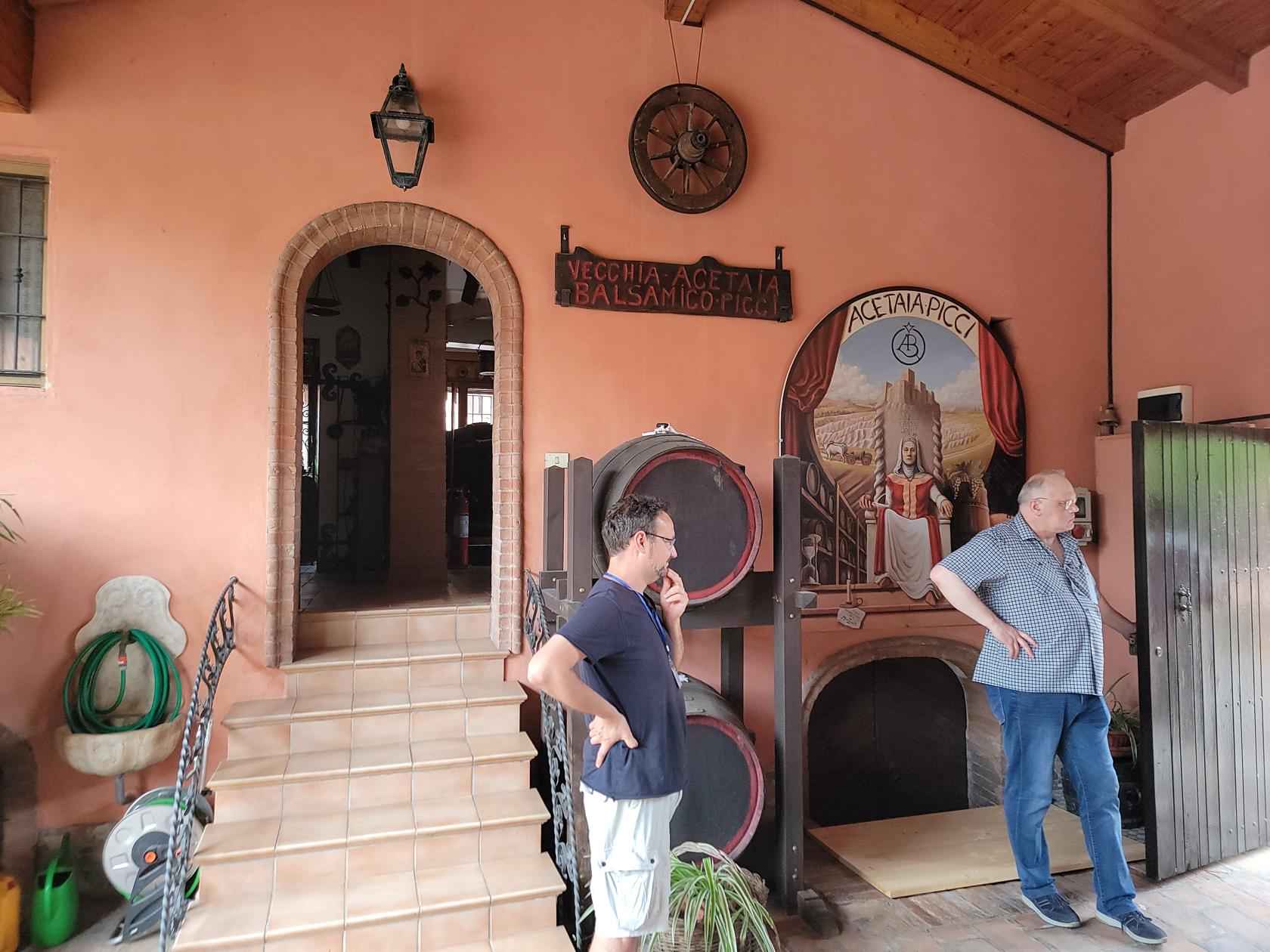
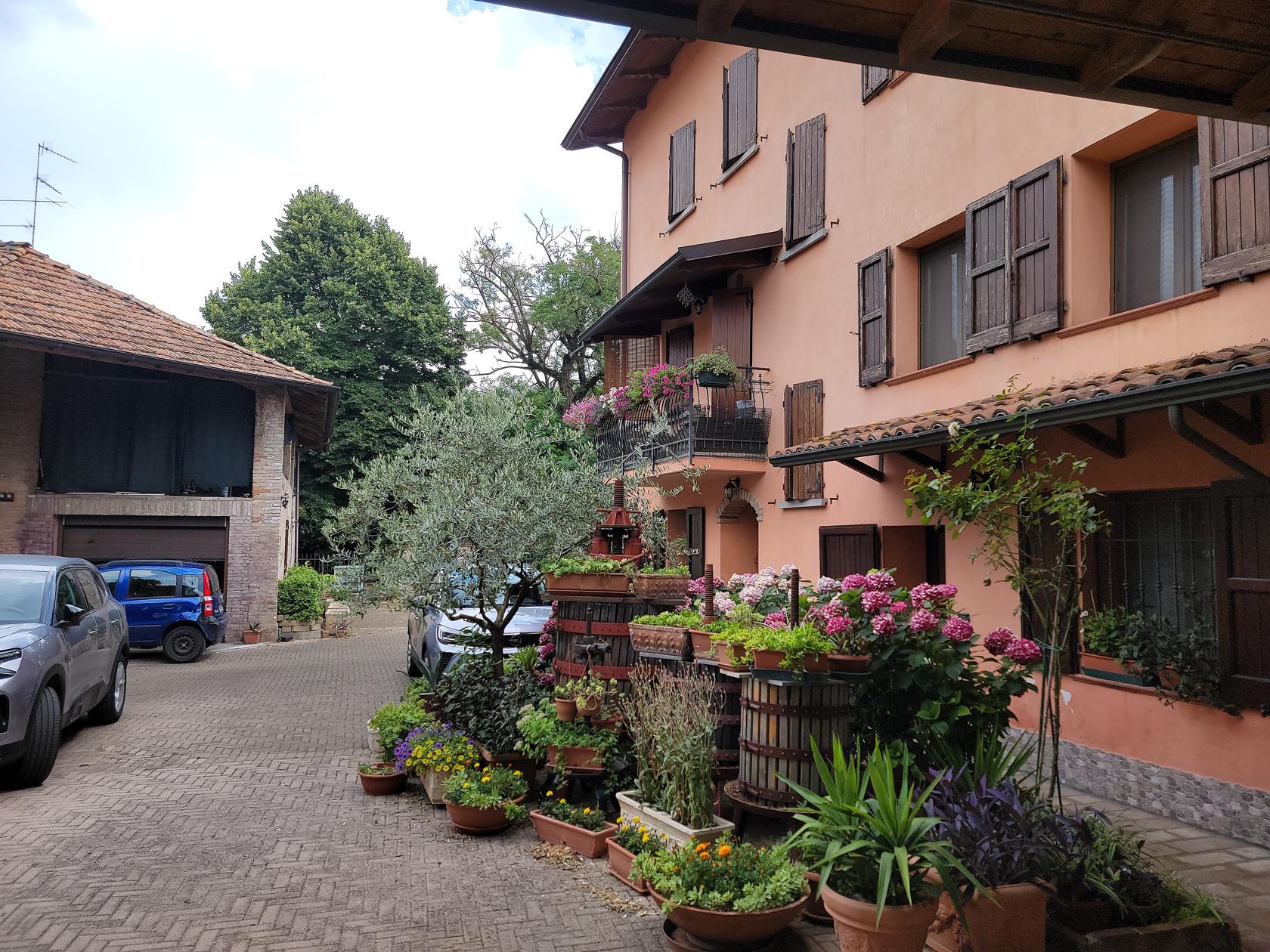
Chef Picci, who owned and operated a very successful restaurant, retired and has devoted the rest of his days to producing balsamic vinegar of varying ages and quality with his company Acetaia Picci in Cavriago. Unlike the variety you will find in Modena and most likely in a grocery store near you, his vinegars are more acidic and owe their quality to the different grapes from the area he uses. He prefers this, since only half as much of the balsamic vinegar in the Po Valley displays these qualities, as opposed to the larger companies that produce sweeter ones from the southern parts of the valley.
Entrance and Guest – Vecchia Acetaia Balsamico Picci – Tasty Bus Tour – Parma, Italy
House and Adjoining Business – Vecchia Acetaia Balsamico Picci – Tasty Bus Tour – Parma, Italy
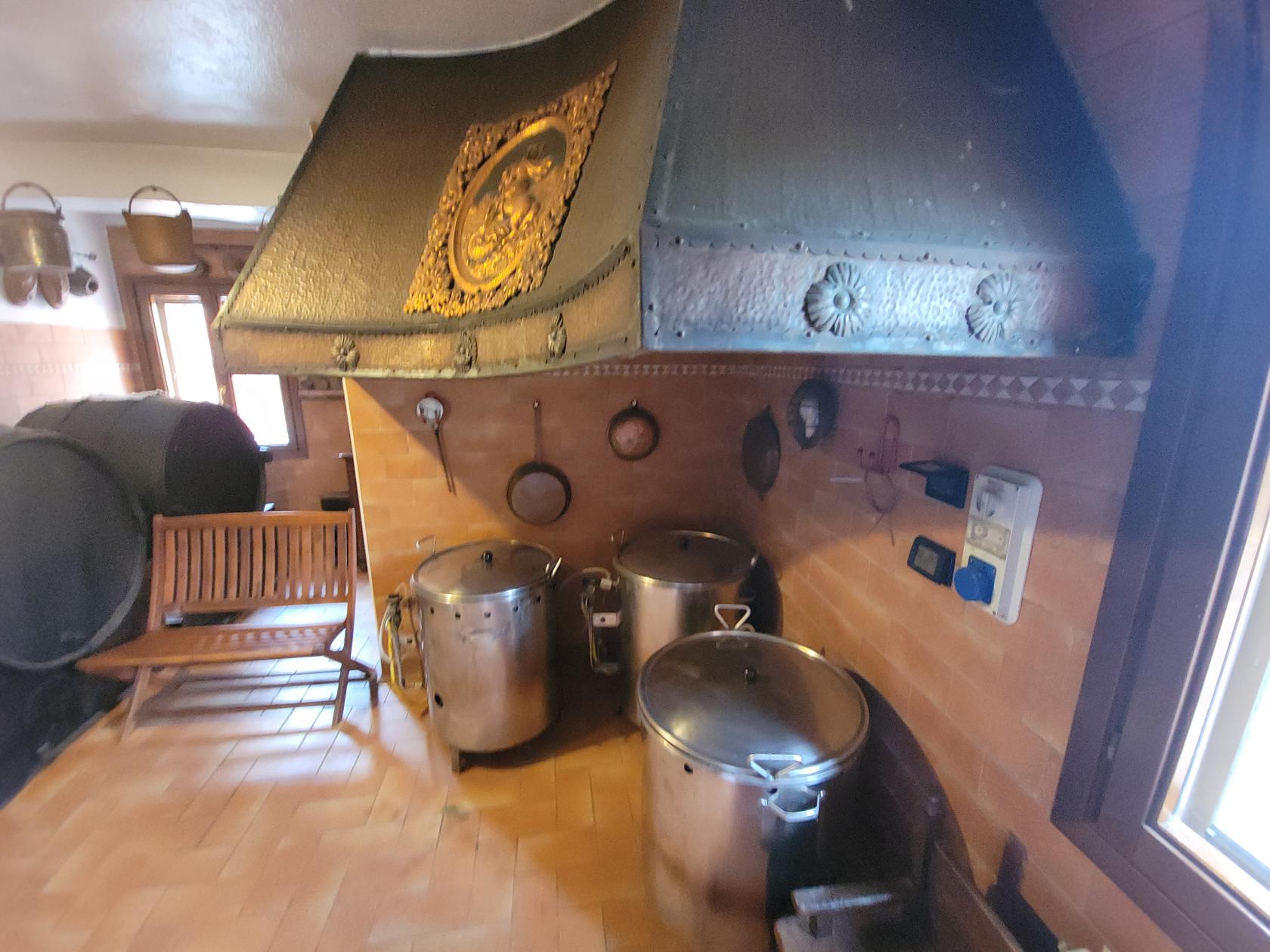
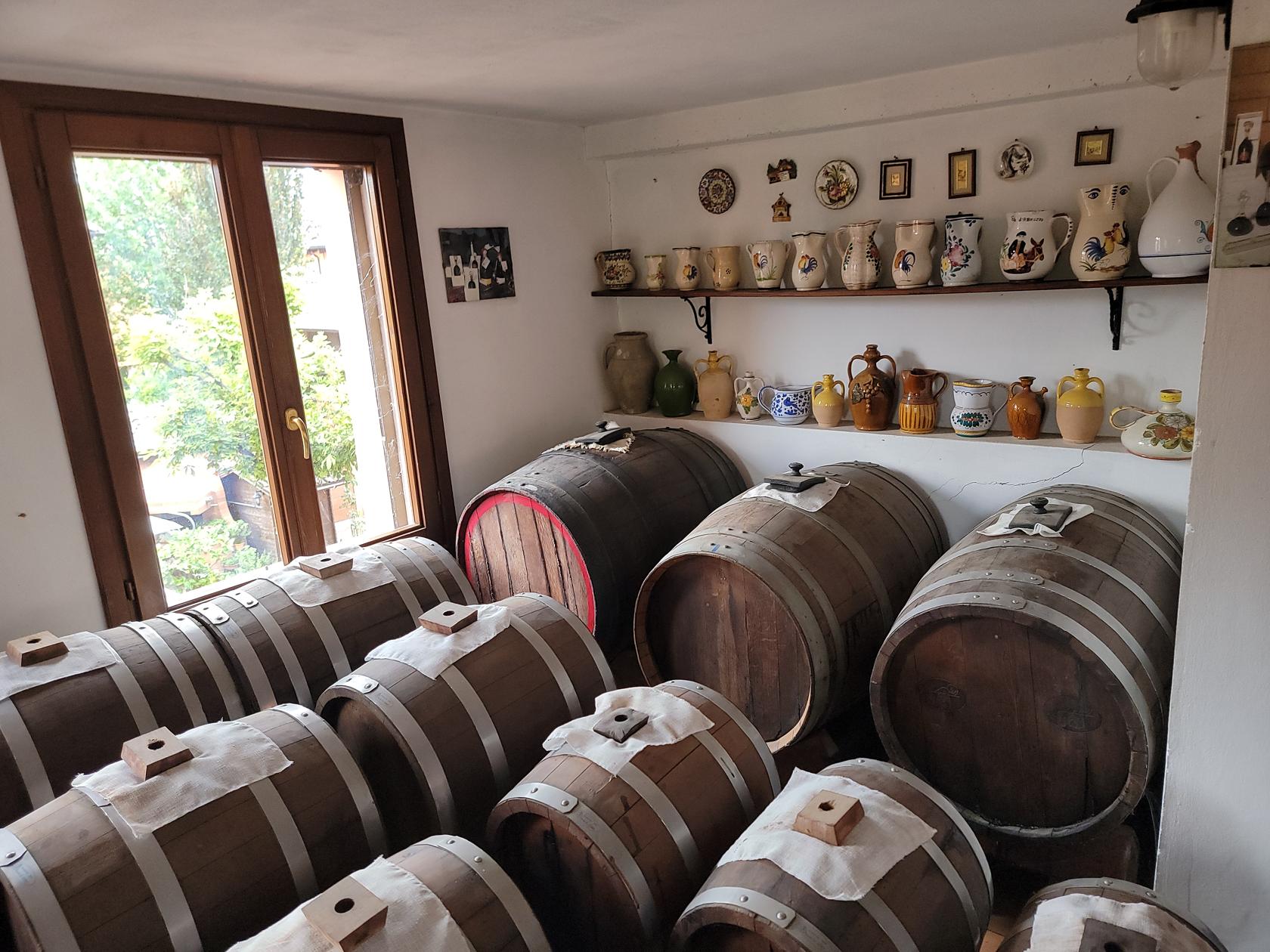
The grape must is first heating in large vats to start the process. From there the liquid is transferred to large waiting casks in the same room. This is temporary, since the process of moving the vinegar from one cask to another is on on-going procedure.
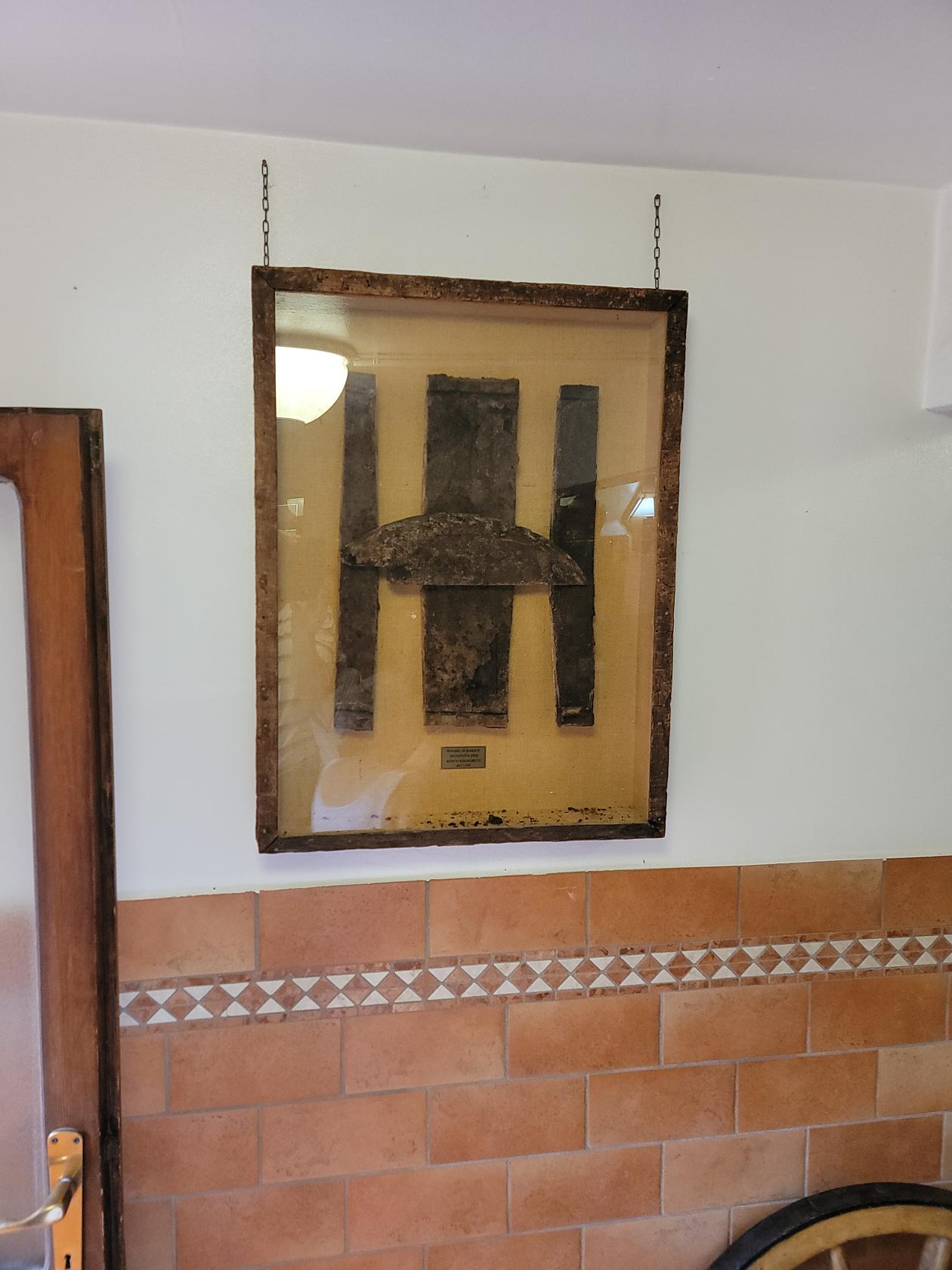
Grape Distillery – Vecchia Acetaia Balsamico Picci – Tasty Bus Tour – Parma, Italy
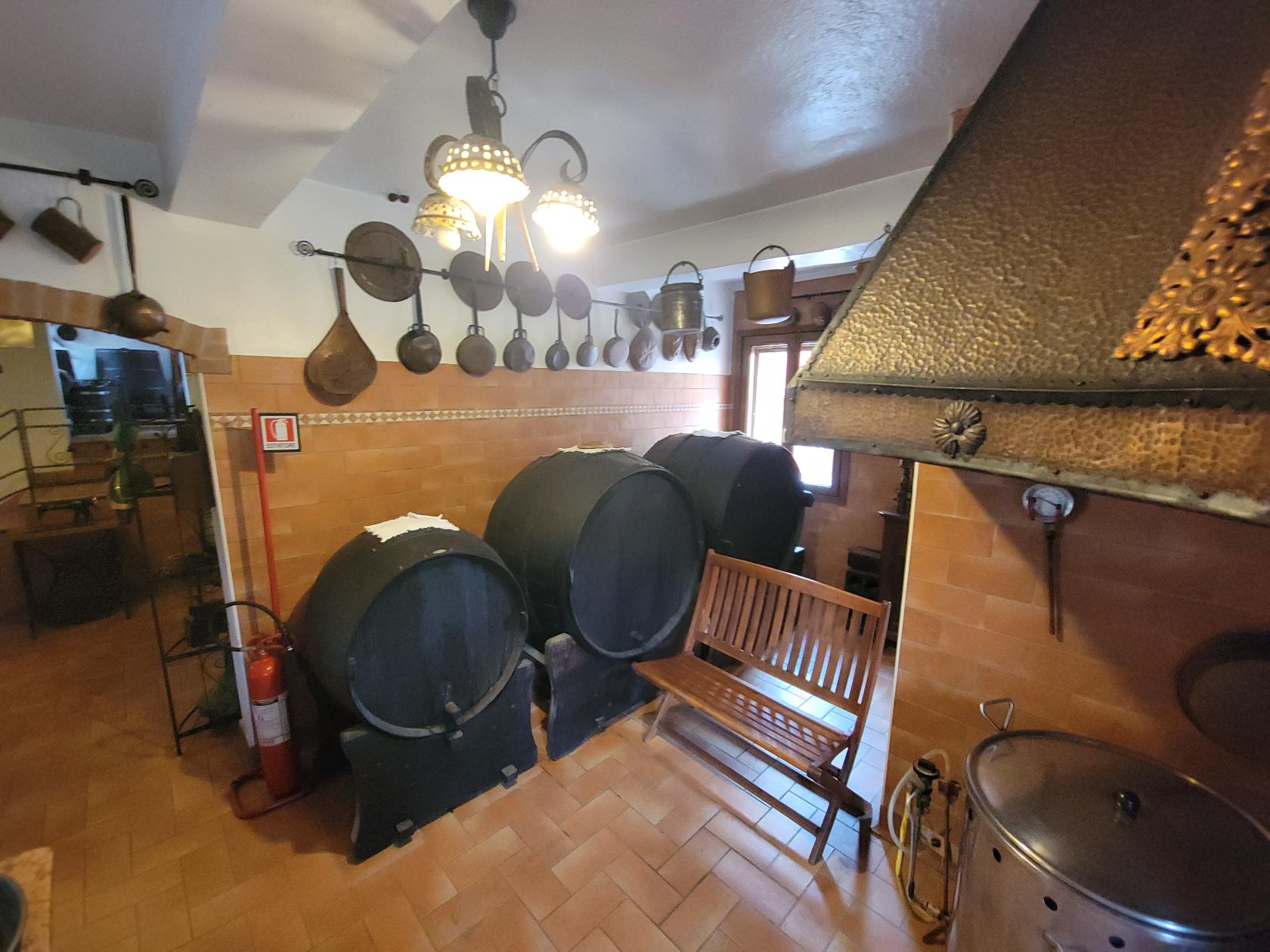
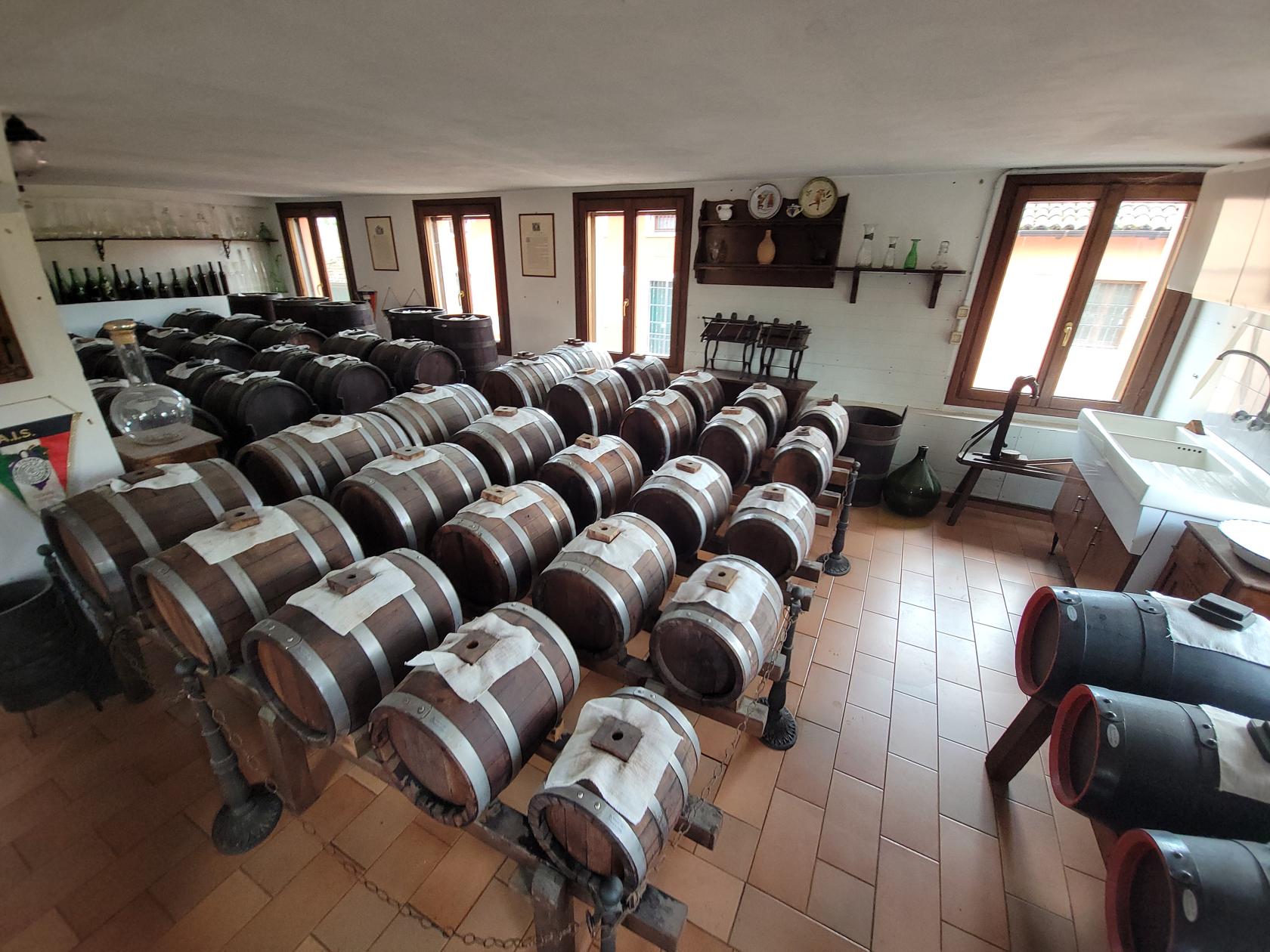
First Set of Aging Barrels for Each Batch – Vecchia Acetaia Balsamico Picci – Tasty Bus Tour – Parma, Italy
Each cask is only filled to 85 percent. This is to allow enough air at the top for proper fermentation. As each cask loses liquid, either from evaporation or leakage, it is topped up from the larger cask adjacent to it in a long progression. The largest of these casks are later topped up with liquid from the larger primary casks in the cooking area.
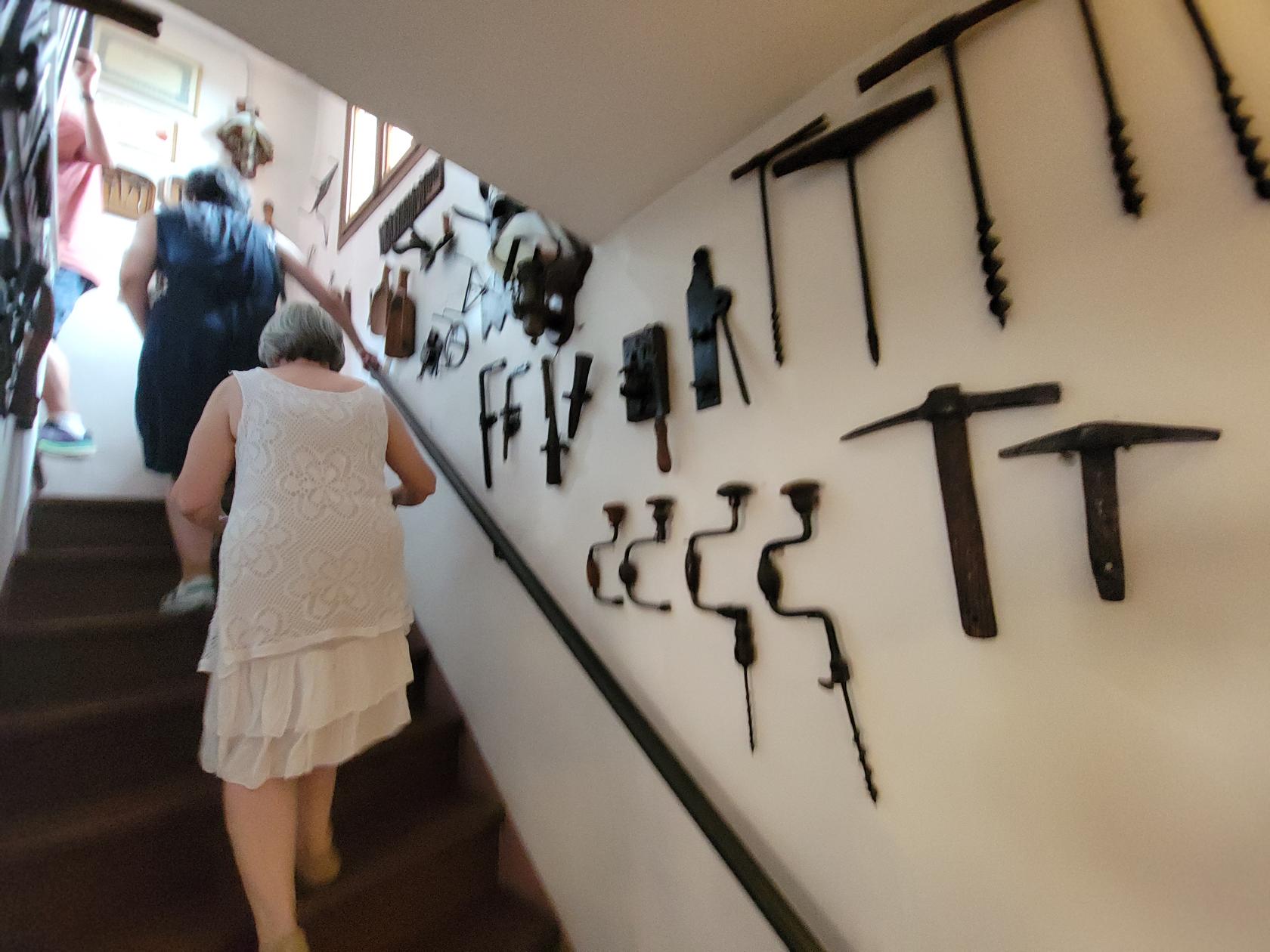
Old Tools in Stairwell – Vecchia Acetaia Balsamico Picci – Tasty Bus Tour – Parma, Italy
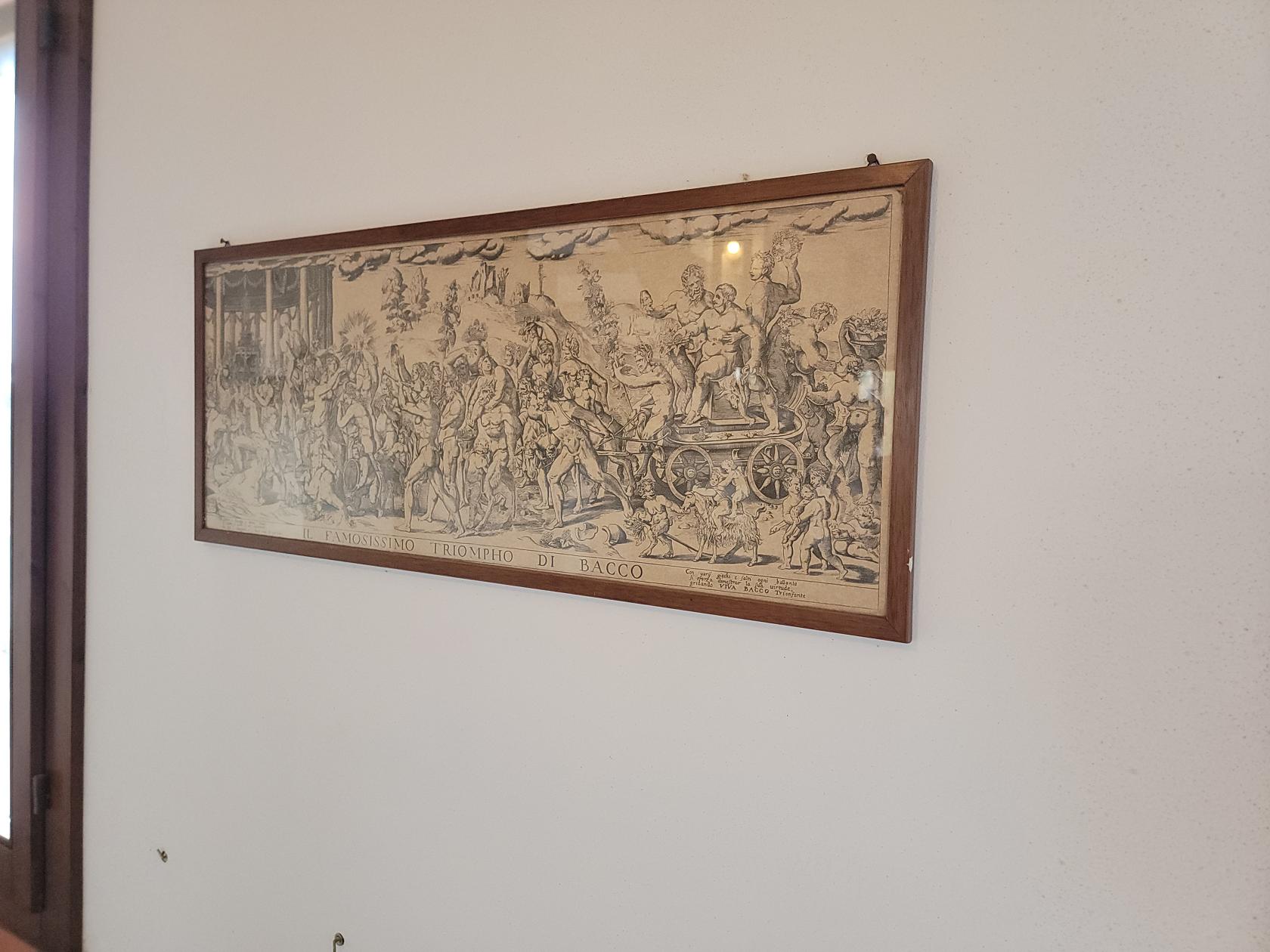
The Triumph of Bacchus or the God of Wine – Vecchia Acetaia Balsamico Picci – Tasty Bus Tour – Parma, Italy
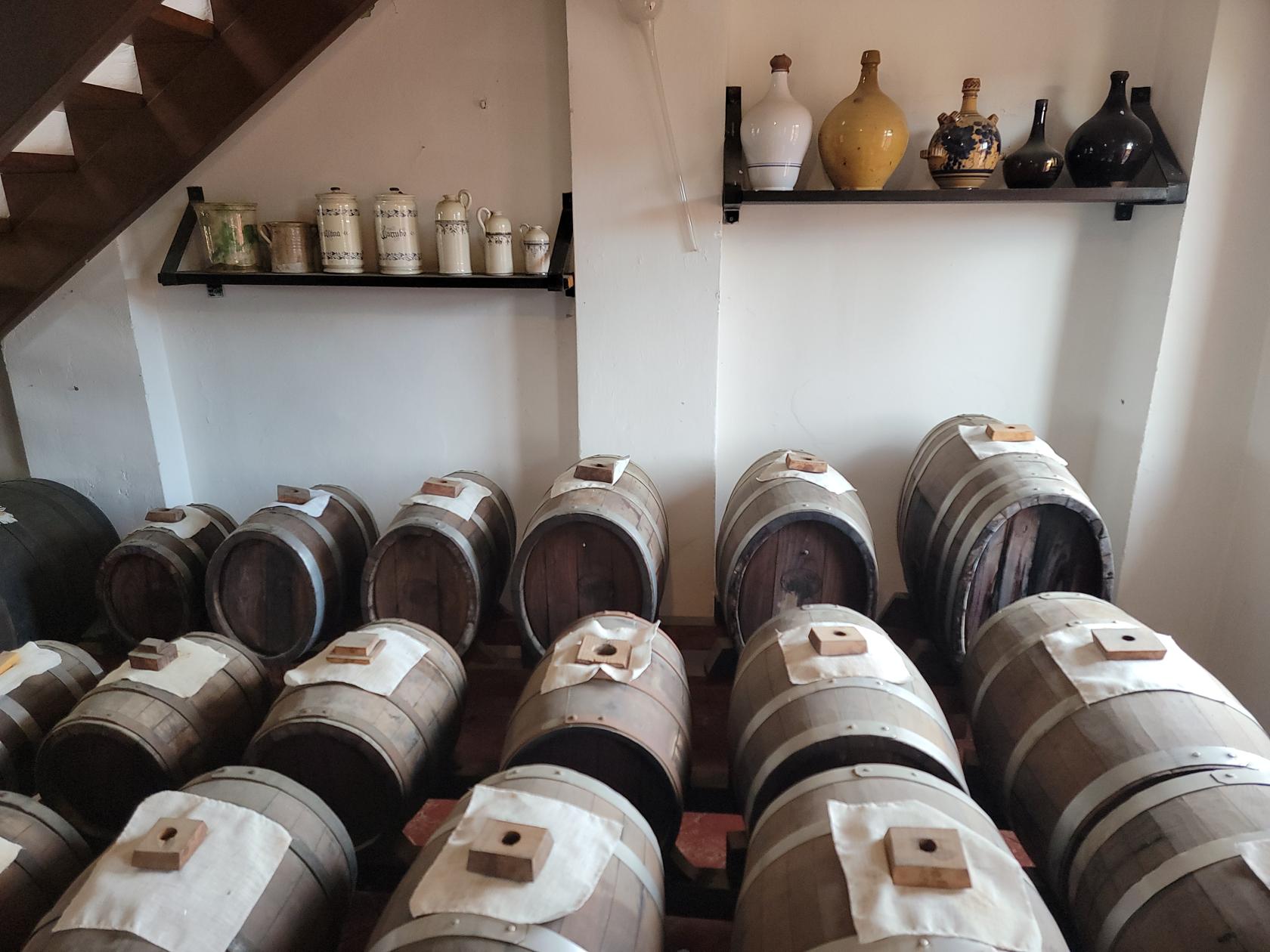
Aging Barrels – Vecchia Acetaia Balsamico Picci – Tasty Bus Tour – Parma, Italy
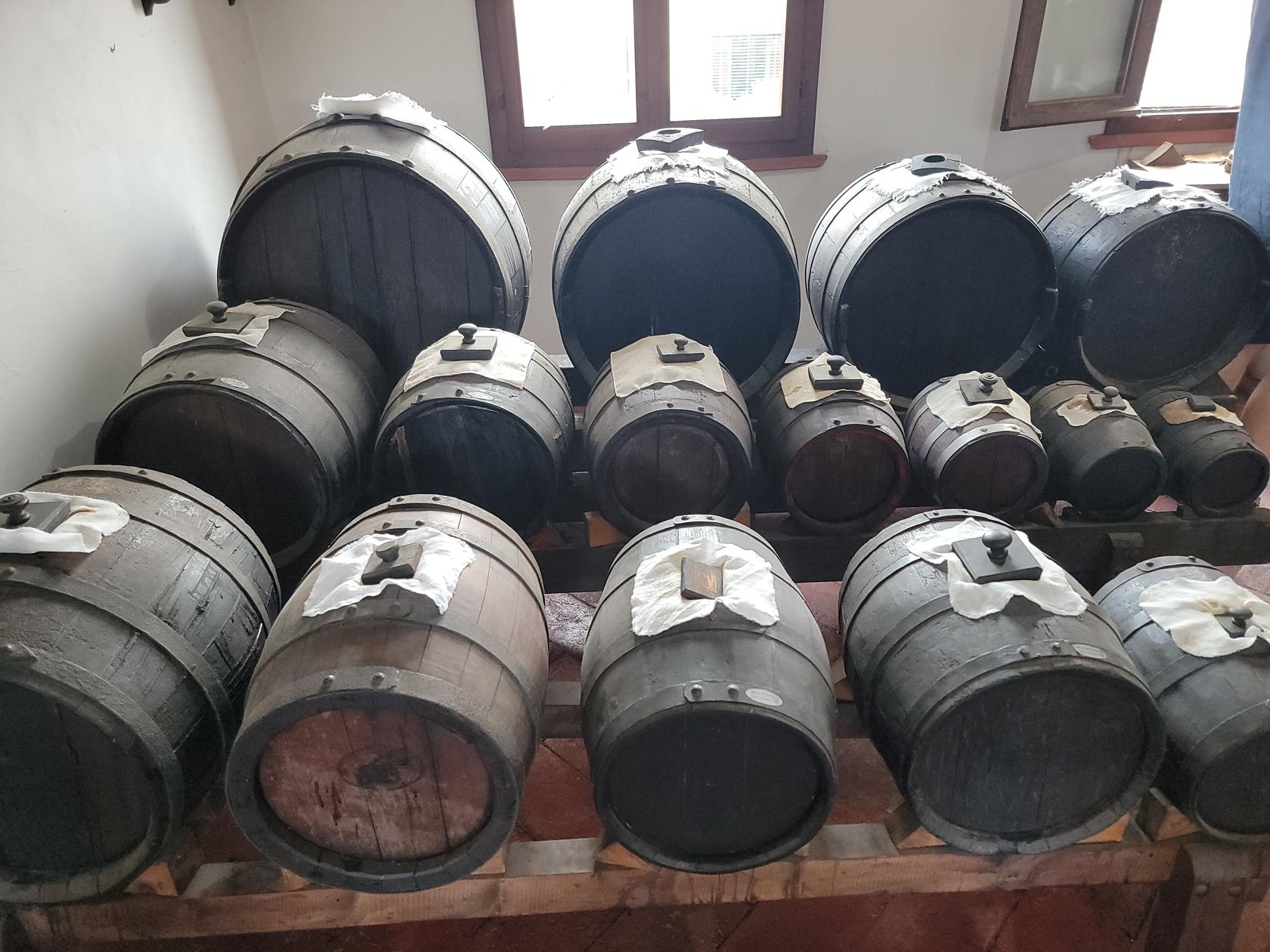
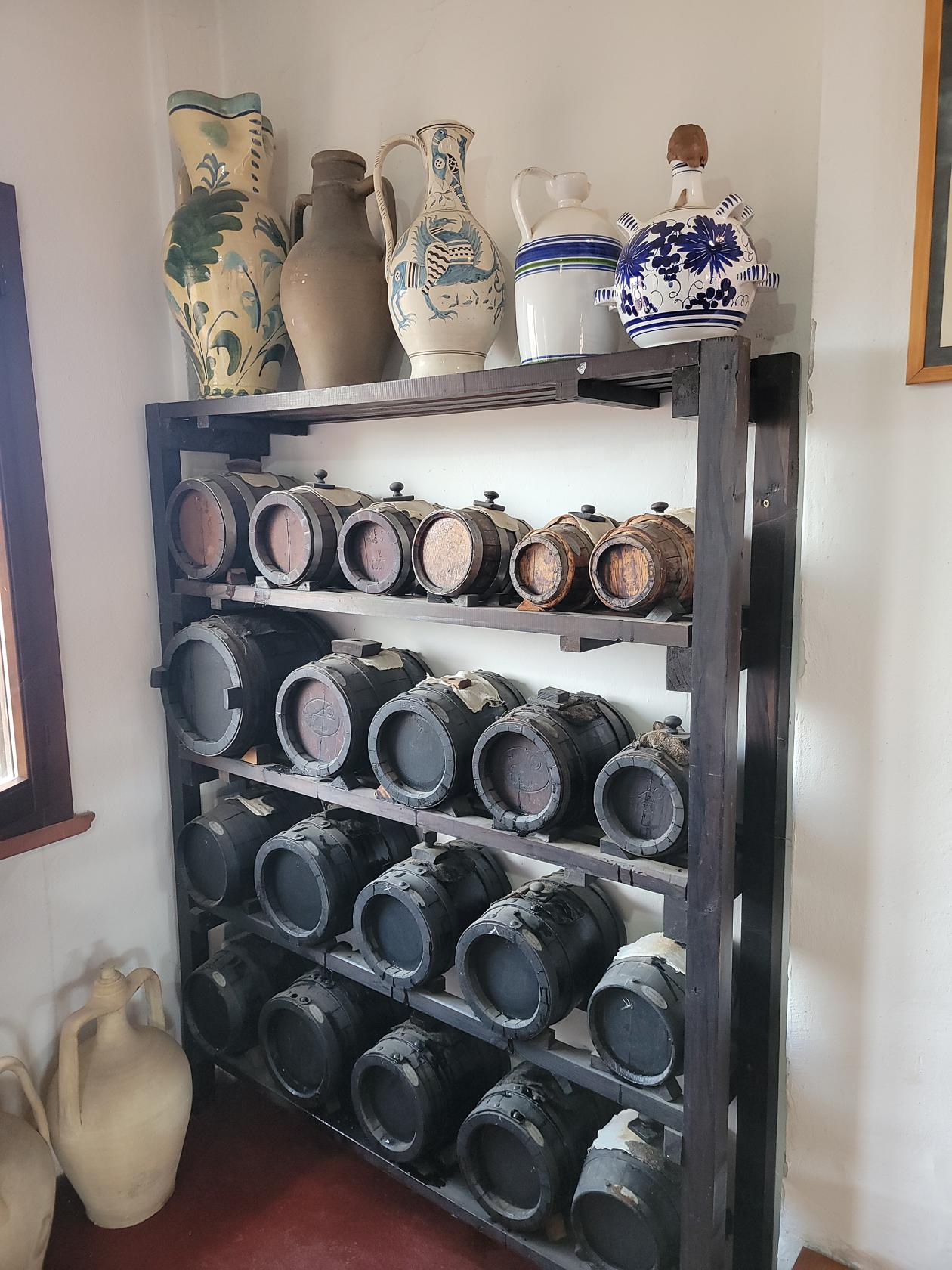
As time goes on, the casks get smaller and smaller. As they descend in size, the number of years that the balsamic has been sitting inside goes up as well. Production for 7, 12, 25 and even 50 year balsamic is not uncommon. The number of years is also reflected in the price as well as the quality of the balsamic.
Aging Barrels Progression – Vecchia Acetaia Balsamico Picci – Tasty Bus Tour – Parma, Italy
Old Barrels – Vecchia Acetaia Balsamico Picci – Tasty Bus Tour – Parma, Italy
Balsamic over 12 years old – Vecchia Acetaia Balsamico Picci – Tasty Bus Tour – Parma, Italy
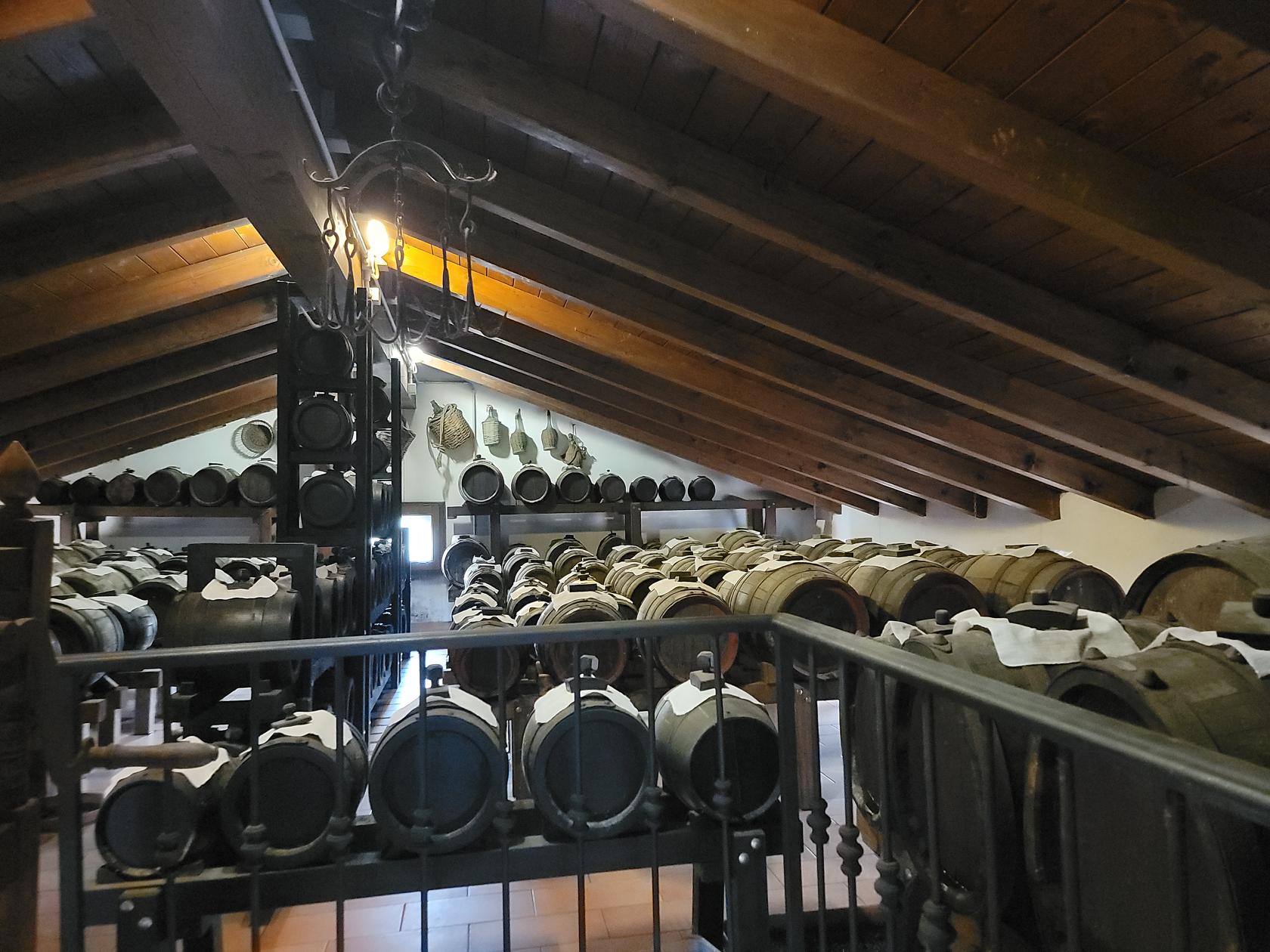
Balsamic in the attic – Vecchia Acetaia Balsamico Picci – Tasty Bus Tour – Parma, Italy
Typically the early the balsamic the more vinegar it has in it. Older ones tend to adopt a sweeter taste over time as the vinegar and acid content drops as it is transformed into other complex compounds. Over time sediment collects in the bottom of each cask, which noone can see until a cask is finally rendered useless due to leakage or other issues and opened.
Very old Balsamic, some over 50 years old – Vecchia Acetaia Balsamico Picci – Tasty Bus Tour – Parma, Italy
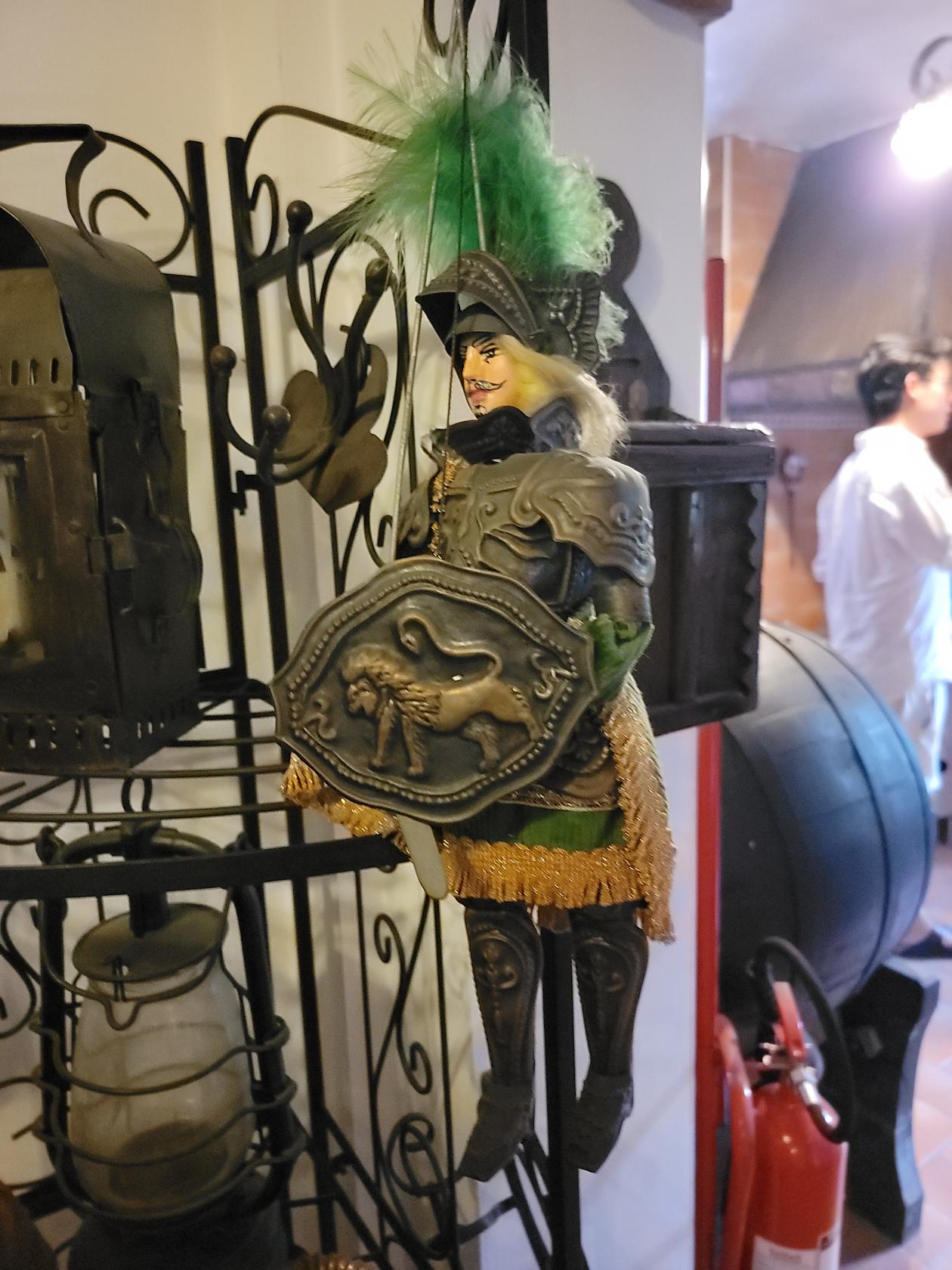
Puppet guarding his stock – Vecchia Acetaia Balsamico Picci – Tasty Bus Tour – Parma, Italy
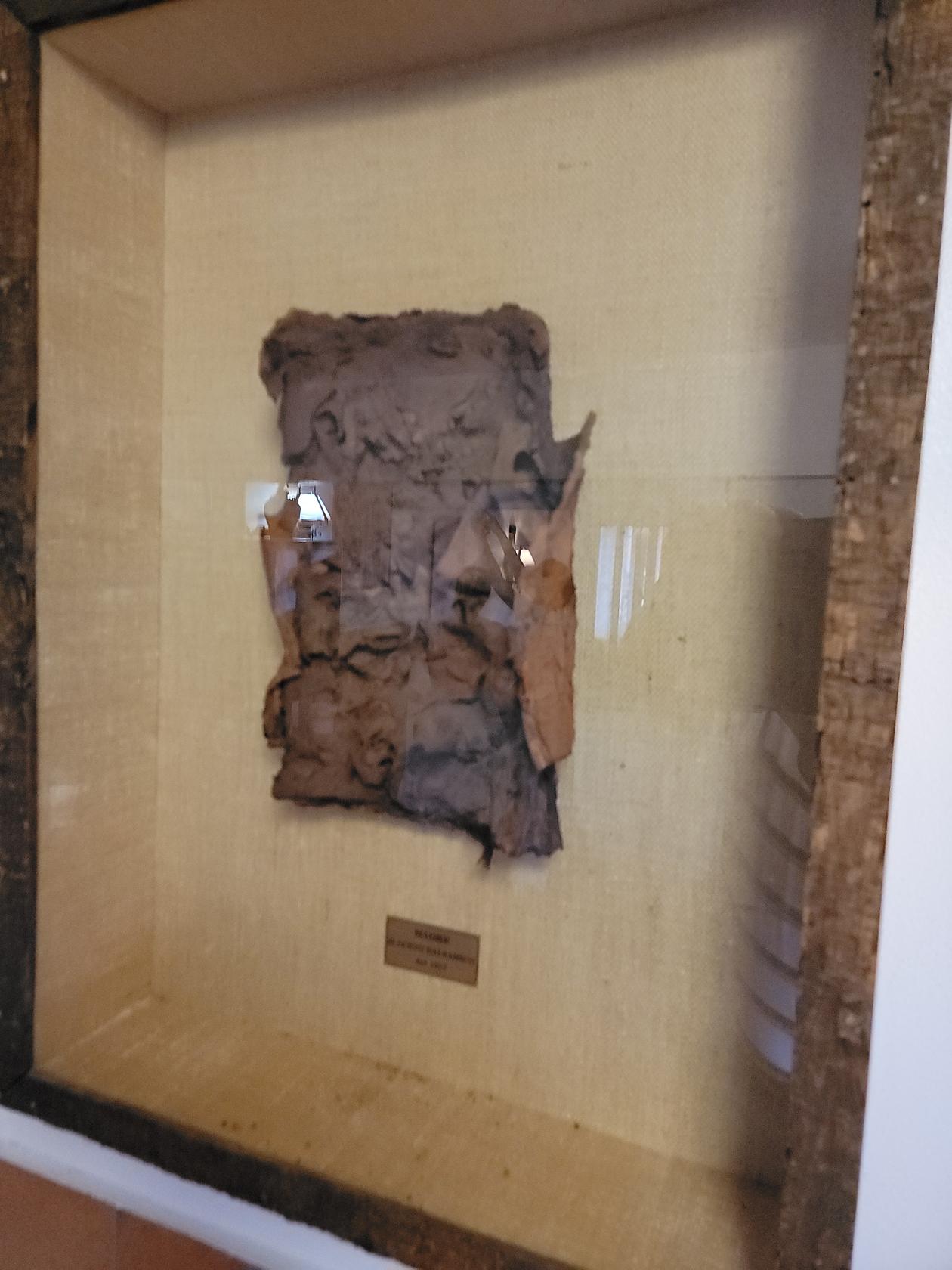
Ancient Crystals of Tartaric Acid and other sediments from aging vinegar over 90 years – Vecchia Acetaia Balsamico Picci – Tasty Bus Tour – Parma, Italy
Rotted Cask Wood from over 90 year old cask – Vecchia Acetaia Balsamico Picci – Tasty Bus Tour – Parma, Italy
One can see this in a simple tasting, though I could not say whether I preferred one of the other, each has different uses from dressing a salad, to cooking and baking, and even as an ice cream coating.
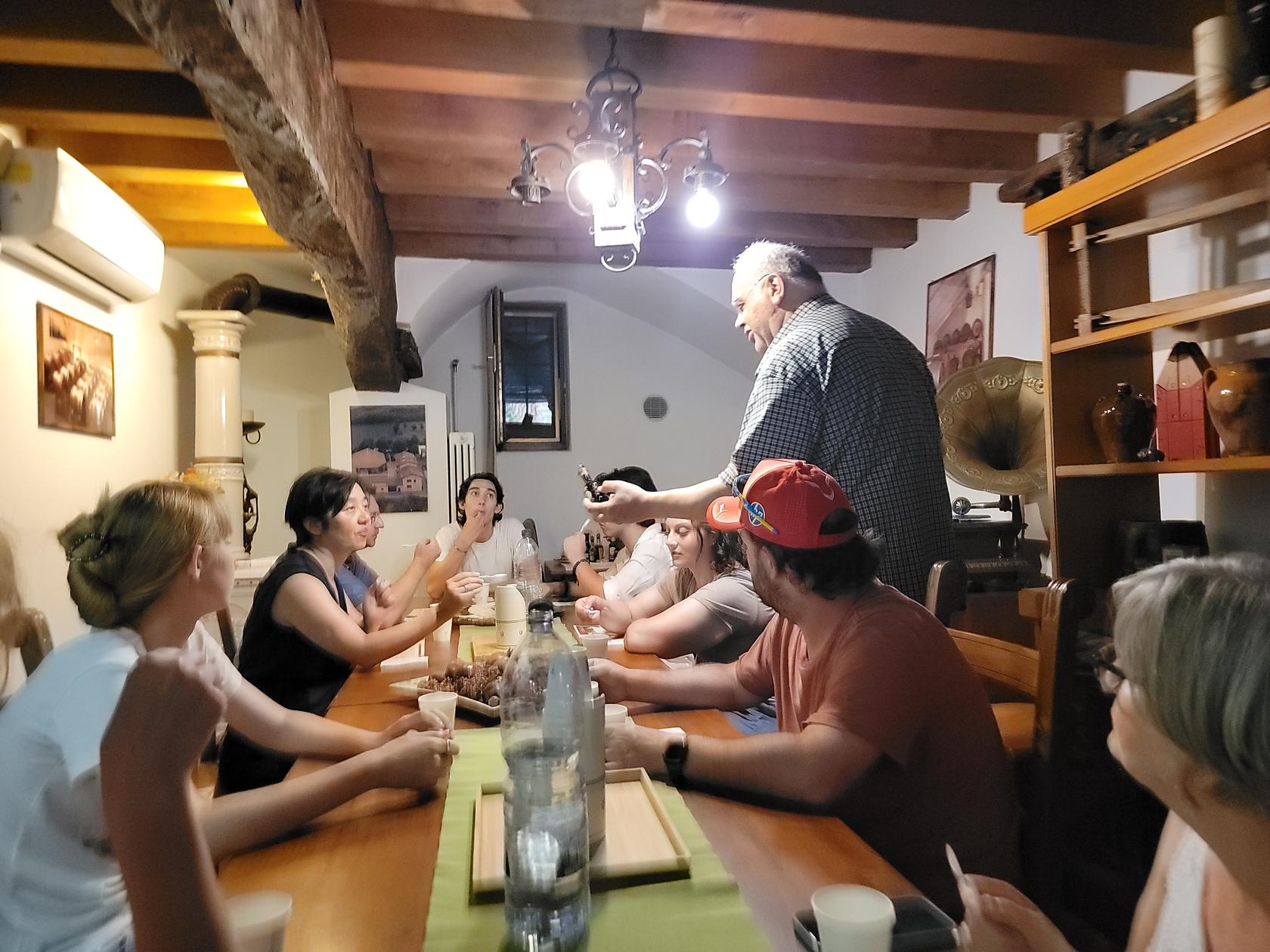
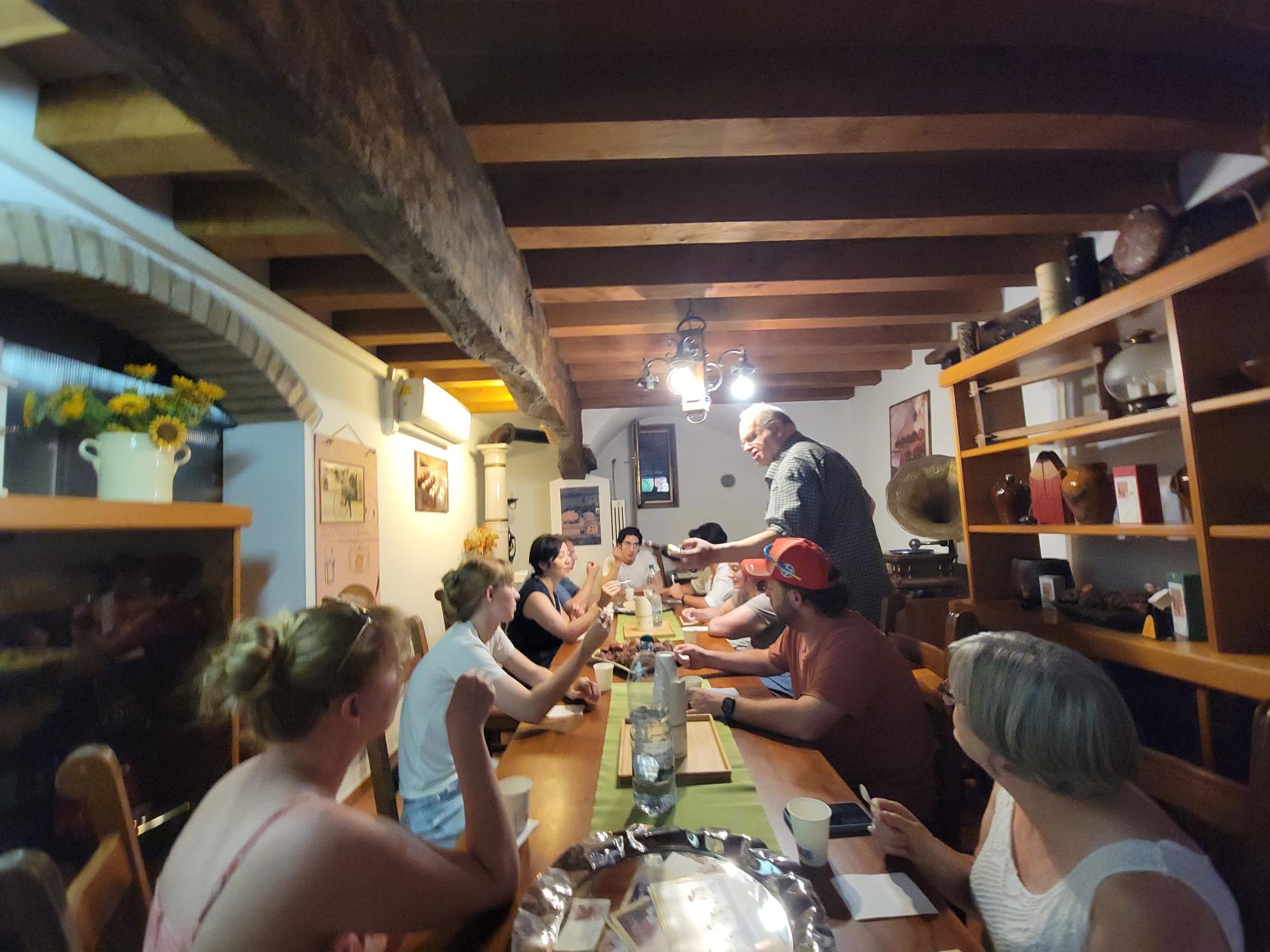
Tasting Balsamic – Vecchia Acetaia Balsamico Picci – Tasty Bus Tour – Parma, Italy
Tasting Balsamic – Vecchia Acetaia Balsamico Picci – Tasty Bus Tour – Parma, Italy
Restaurants
Since our outting was a full day, it came with what they called a “light lunch”. Our destination was a small Osteria along our route called Osteria La Maestà.
Osteria La Maestà
The Osteria La Maestà is located on Via di Case Trombi, 15, before you enter Mulazzano Ponte from Parma. It is a typical local Osteria that is run by an older couple. Our experience was just wonderful. We spent and entire hour talking and eating excellent food.
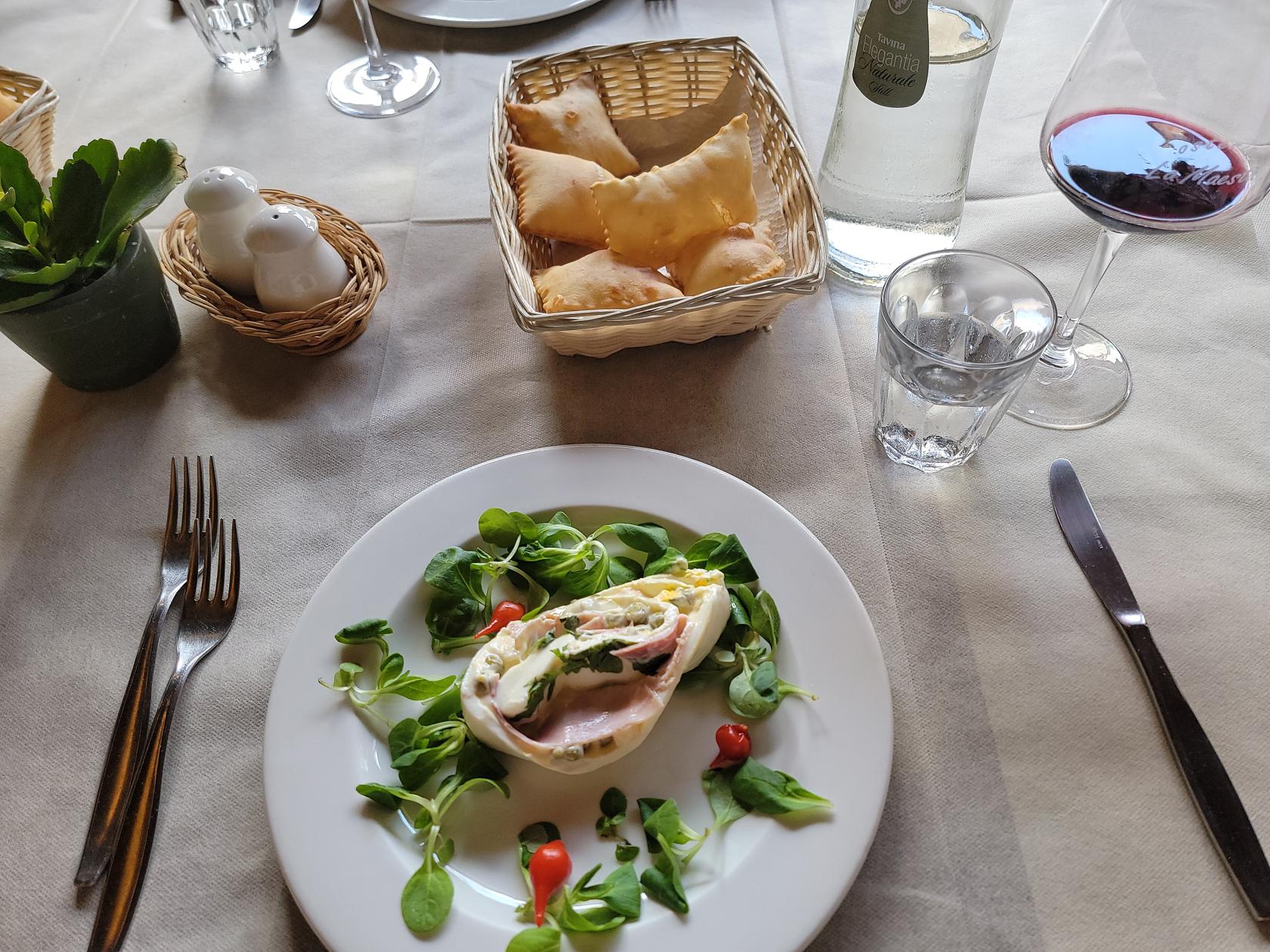
Mozzarella and Ham roll salad – Osteria la Maesta – Tasty Bus Tour – Parma, Italy
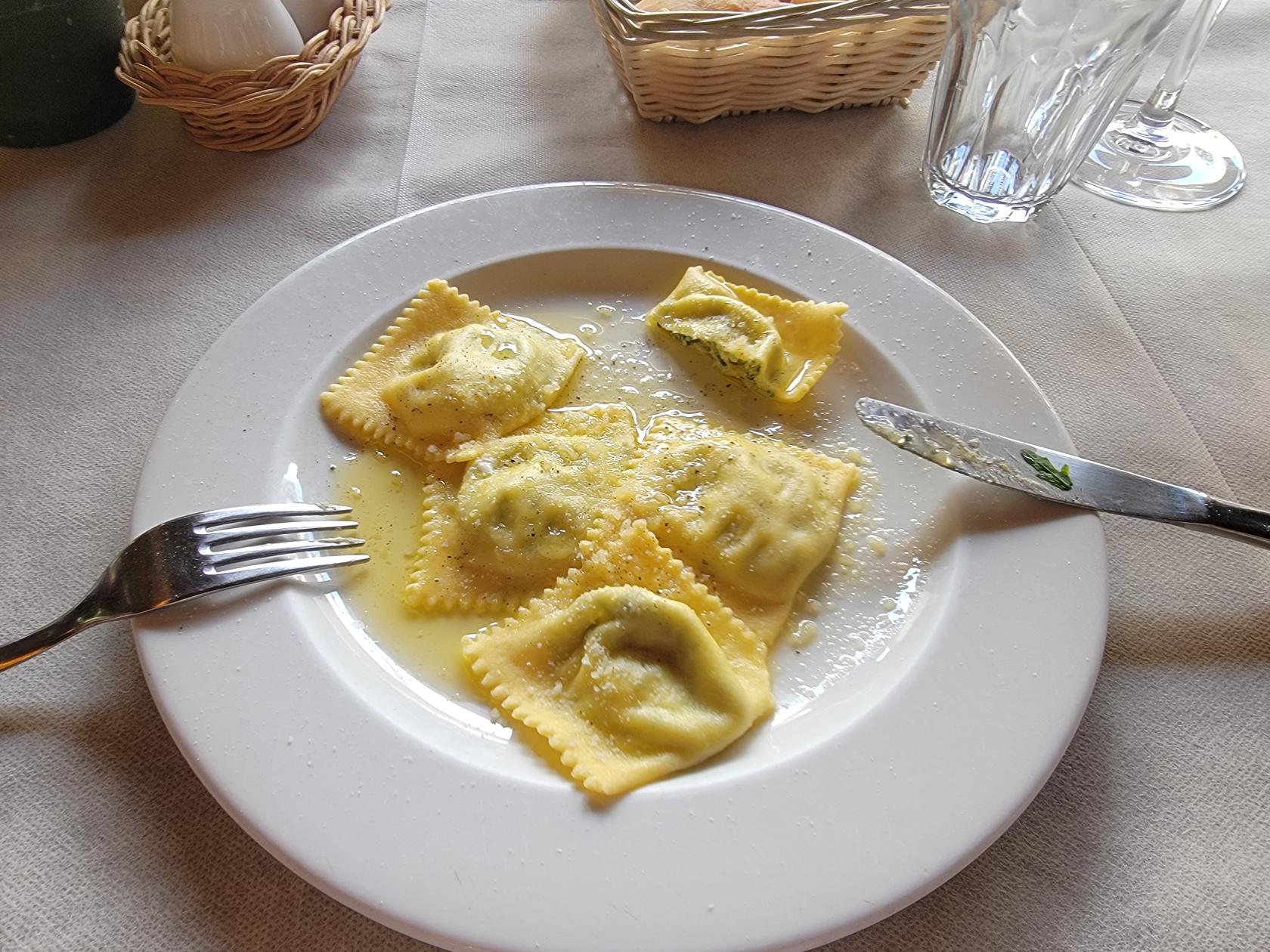
Ravioli Cheese and Spinach in Butter Sauce – Osteria la Maesta – Tasty Bus Tour – Parma, Italy
The entire meal consisted of an appetizer of mozzarella and ham, a tortelli di erbetta primi, a light dessert, red and white wines and both types of water.
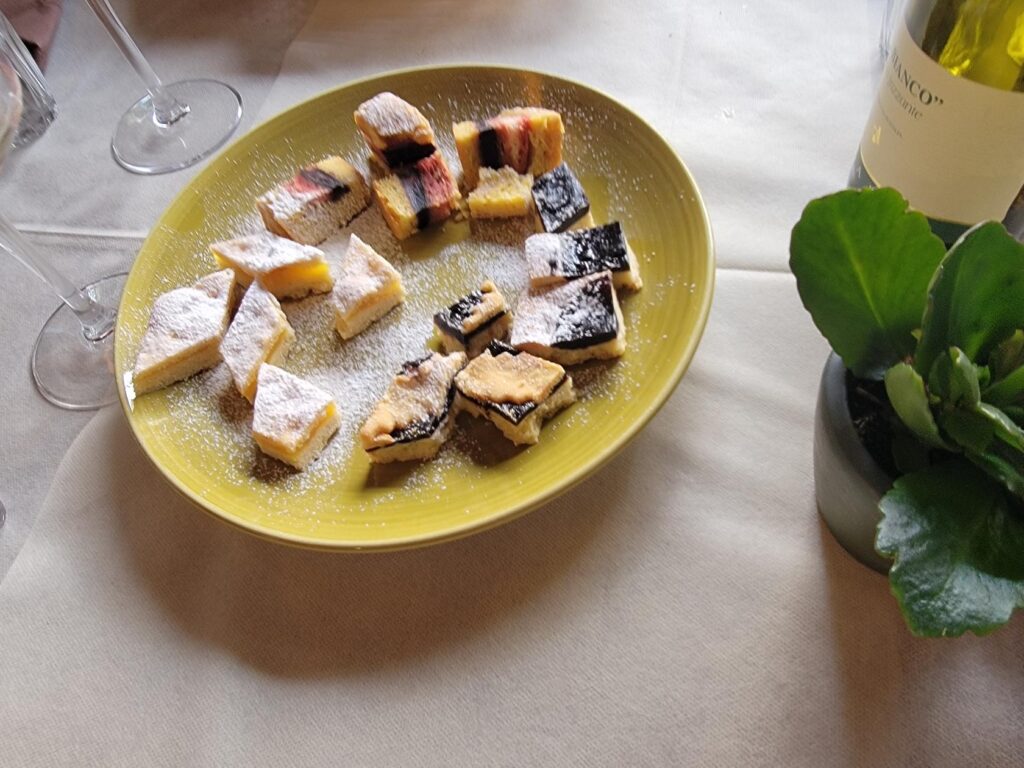
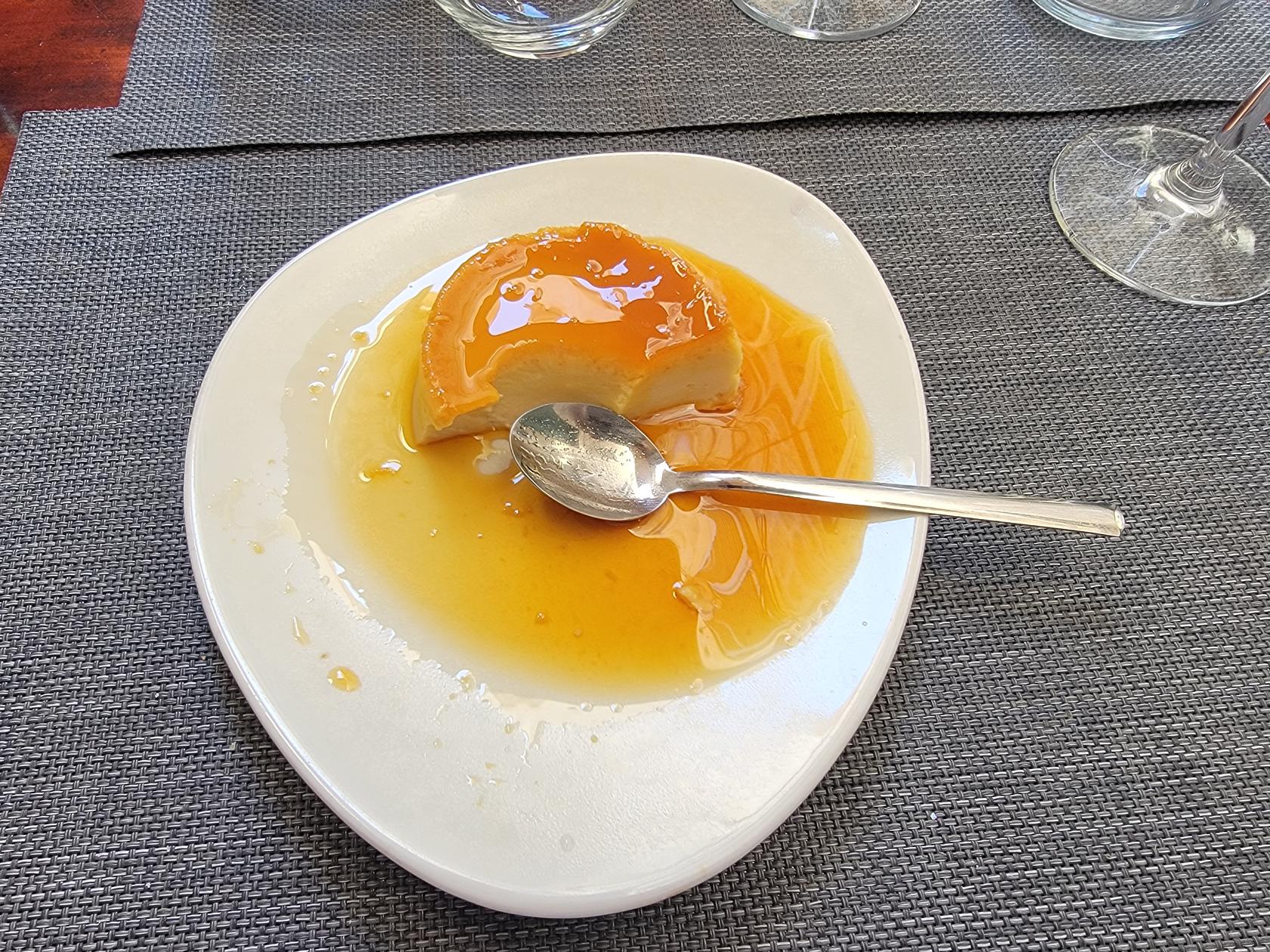
Dessert – Osteria la Maesta – Tasty Bus Tour – Parma, Italy
Conclusion
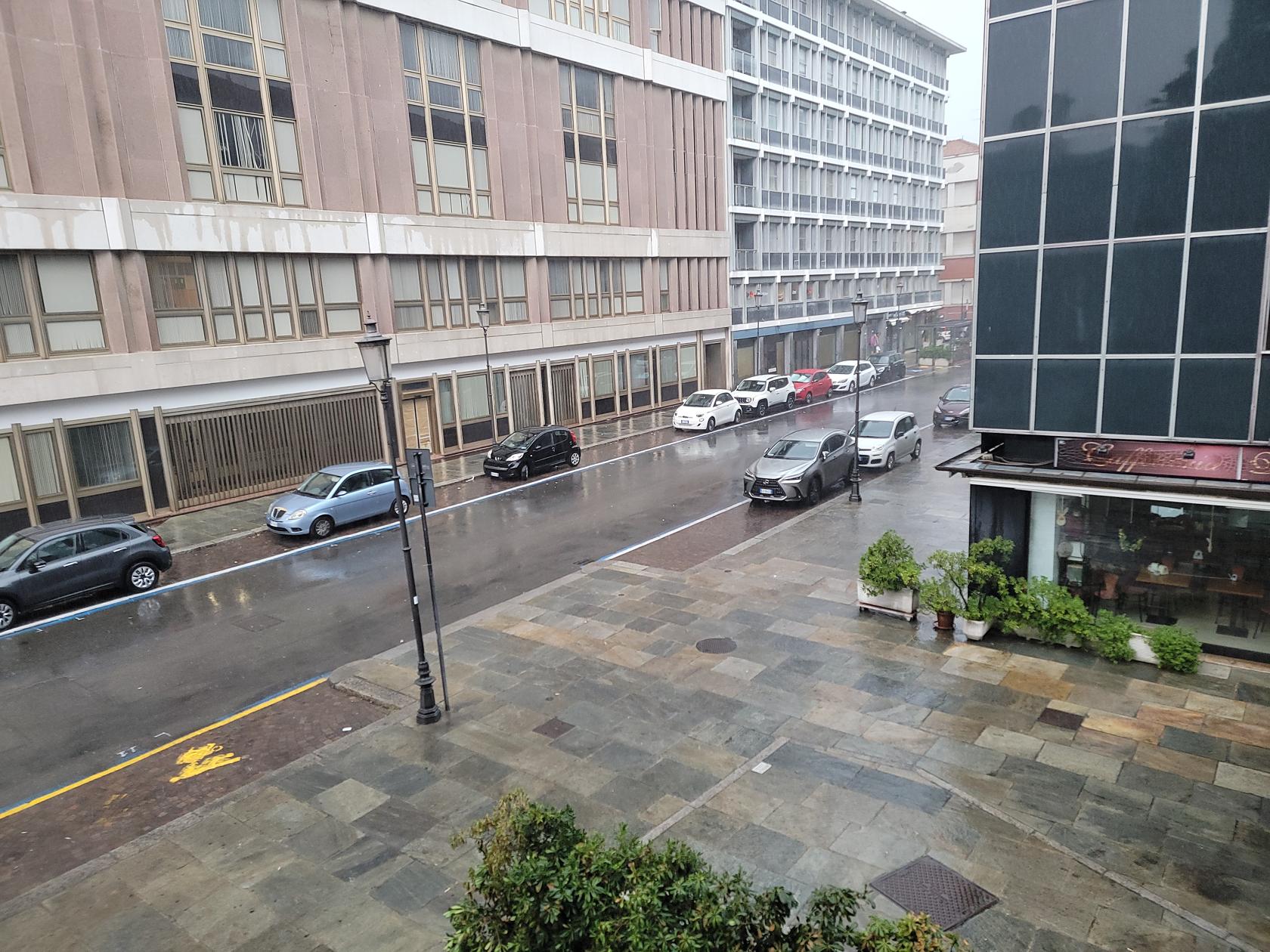
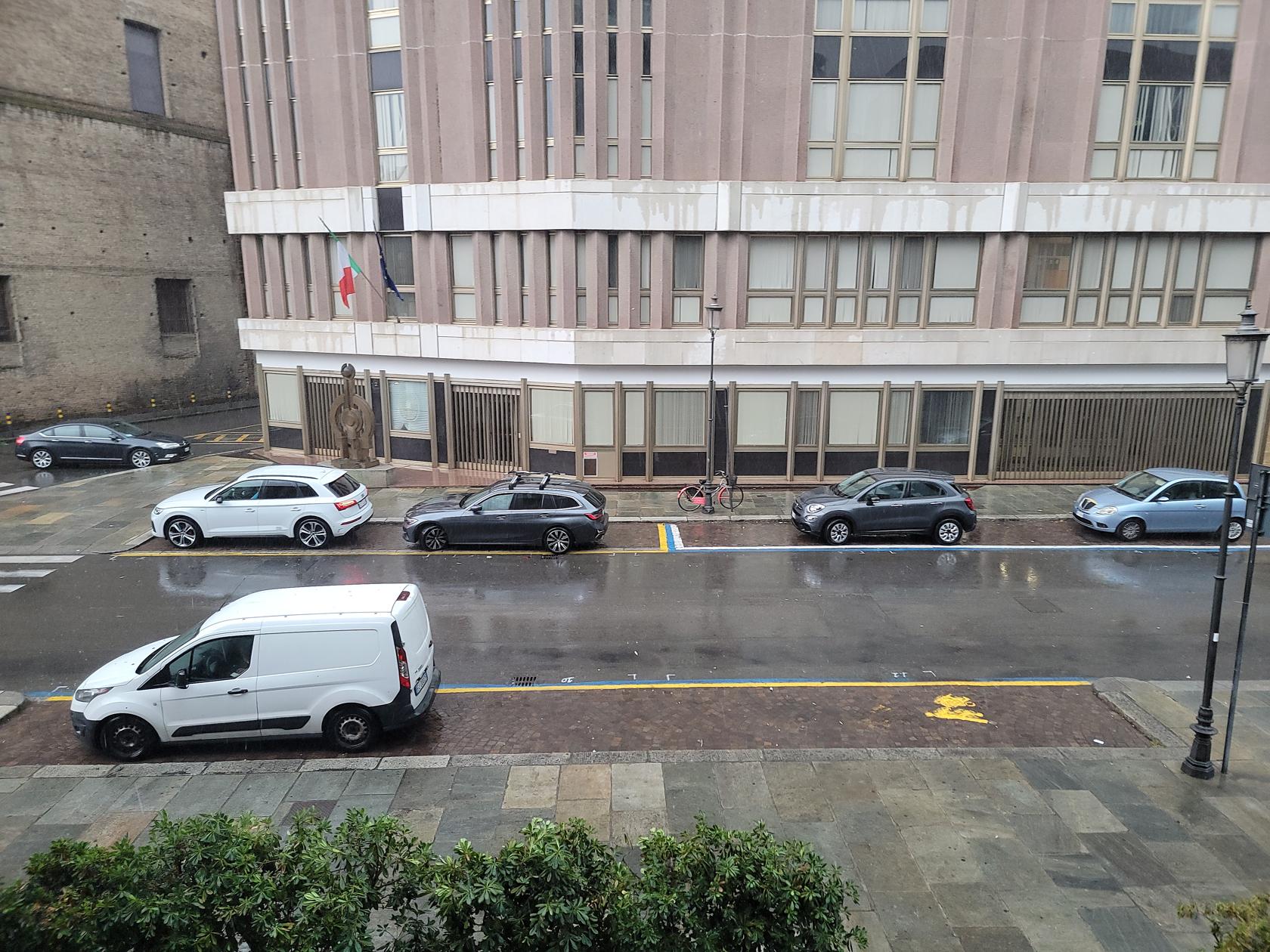
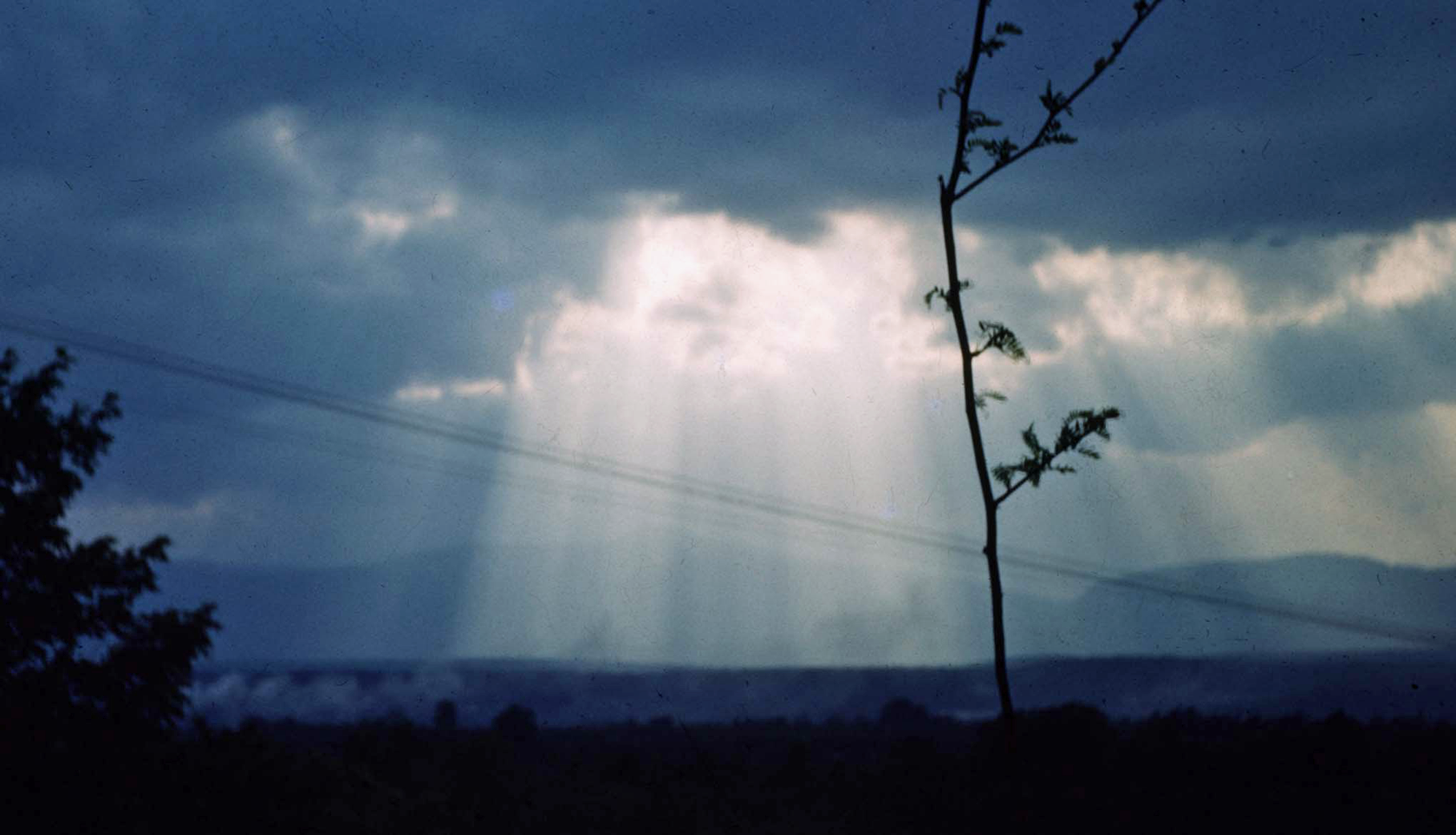
We cannot say enough about the Tasty Bus tour, or the type of tour that takes you these small producers of ham and cheese. We had a wonderful time and before we knew it, it was over. Upon return we ran into a bit a bad weather. It had been exceptionally hot and the weather complied with kicking up the necessary line of thunderstorms.
Rainy End of our Tour – Tasty Bus Tour – Parma, Italy
Rainy End of our Tour – Tasty Bus Tour – Parma, Italy
Our tour bus driver and guide was accomodating enough to get us as close as possible to our hotel, but as they say in America, we got a wet ass anyways. Oh well. We started the day wet in sweat and ended the day wet in rain, so we came out kind of even, but enjoyed every minute of the experience.
Denominazione d’ Origine Protetta which ensures the following. They meet the highest of standards of production and are produced within certain regions that result in characteristics to ensure a consistent quality. The ingredients and products come from a specific location and/or family that has been approved and designated by the government to produce such foods. Every element of the product is quality tested and tracked with serial numbers to confirm the exact origins, processing, and approval body of the product.
Approximately two to two and a half hours away from our place in Turin is the city of Parma. Known for ham, cheese and other delicacies in the region, we had been wanting to go there for some time. Our recent visit was for us full of surprises, including the Pilotta Museum Complex, which was a pleasure for us and central to this post.
Parma
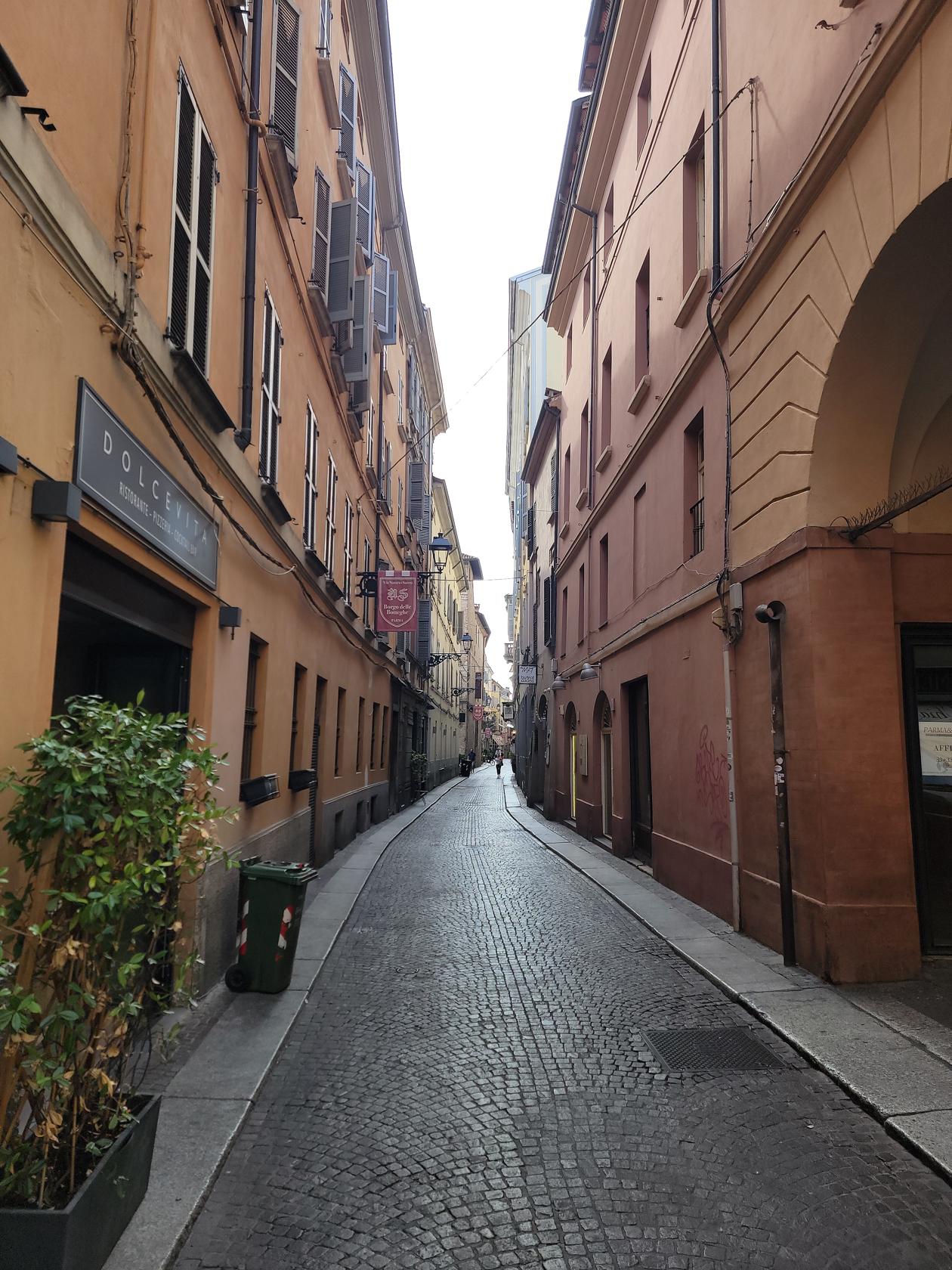
At first we were not too sure about the city. Our first impressions, and to some extent our lasting ones as well, is that it is laid out in a chaotic fashion, even for an Italian town. The mixture of new and old on the outskirts is not very pleasing to the eye and is kind of takes away from the central historic part of the city, which frankly is not very large.
Palazzo Tarasconi – Parma, Italy
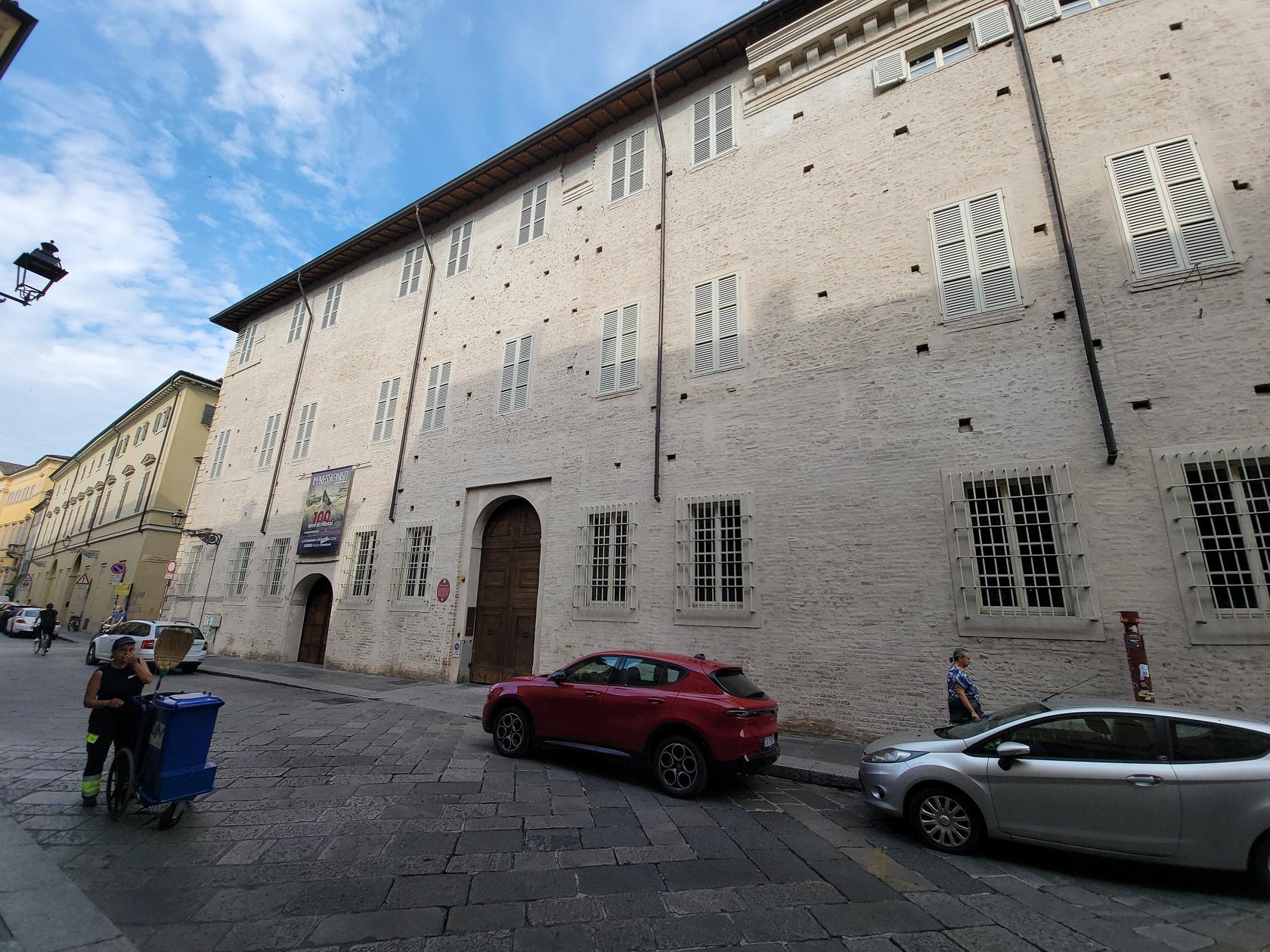
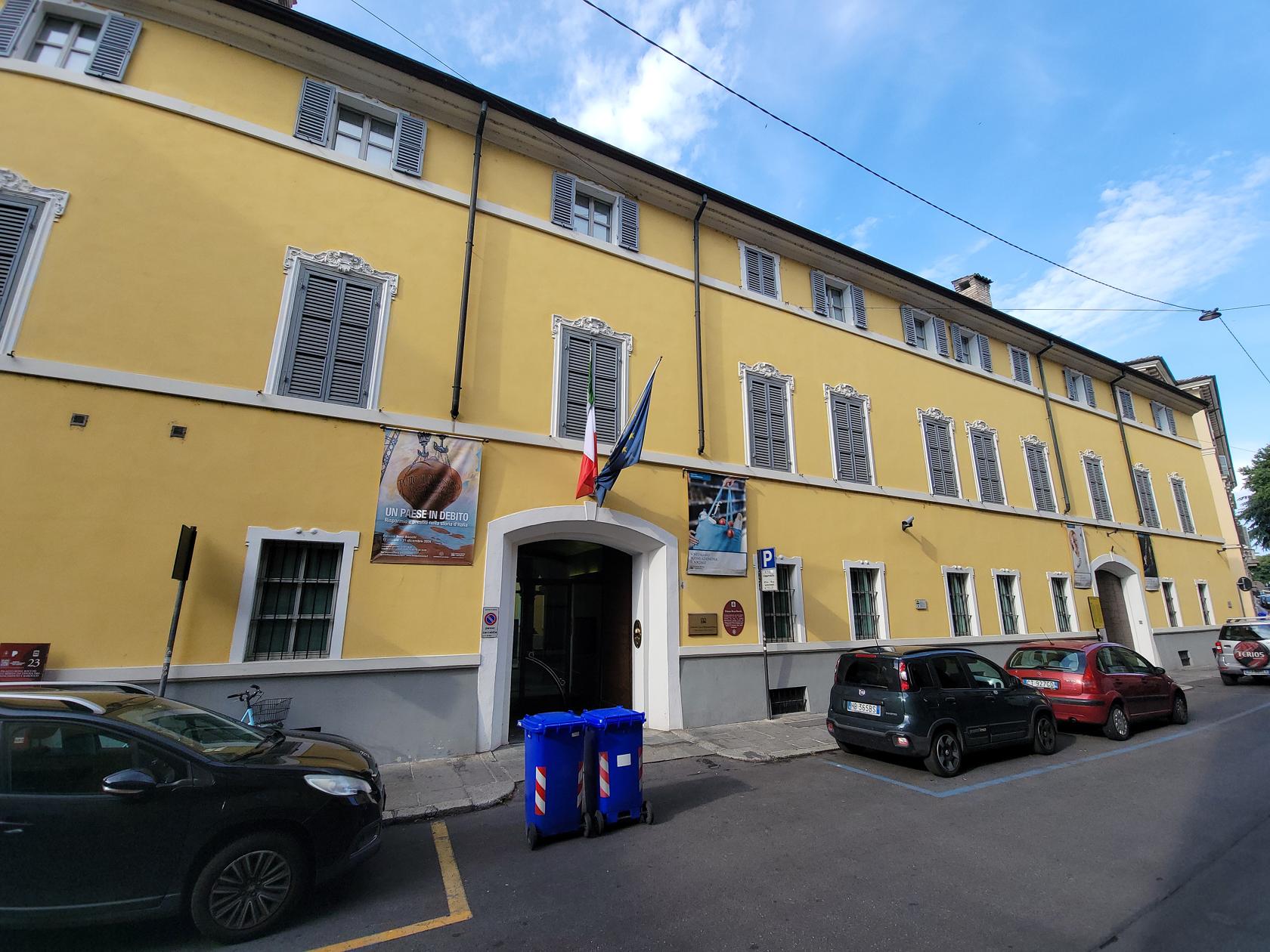
Palazzo Bossi Bocchi – Parma, Italy
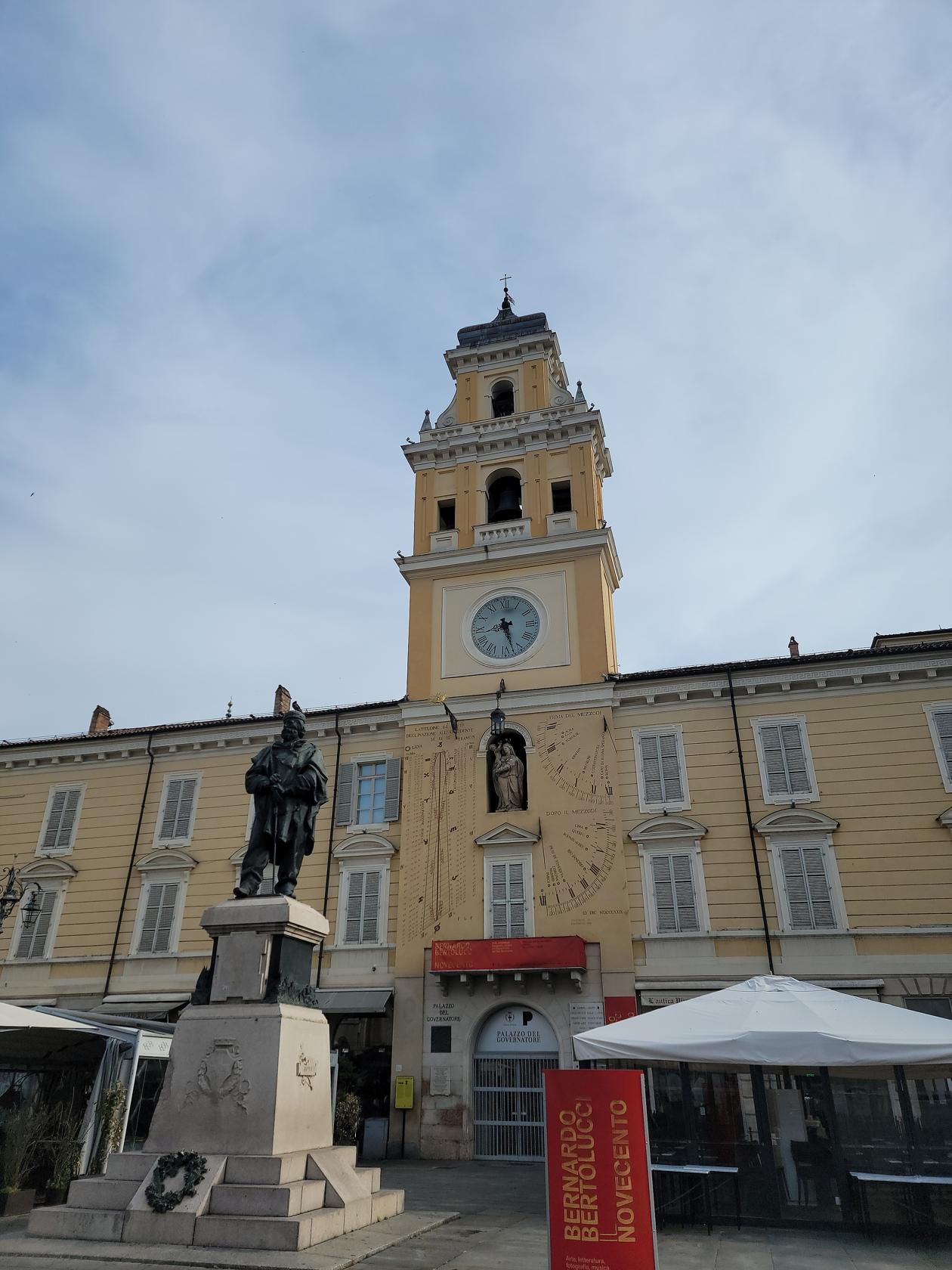
Governor’s Palace – Parma, Italy
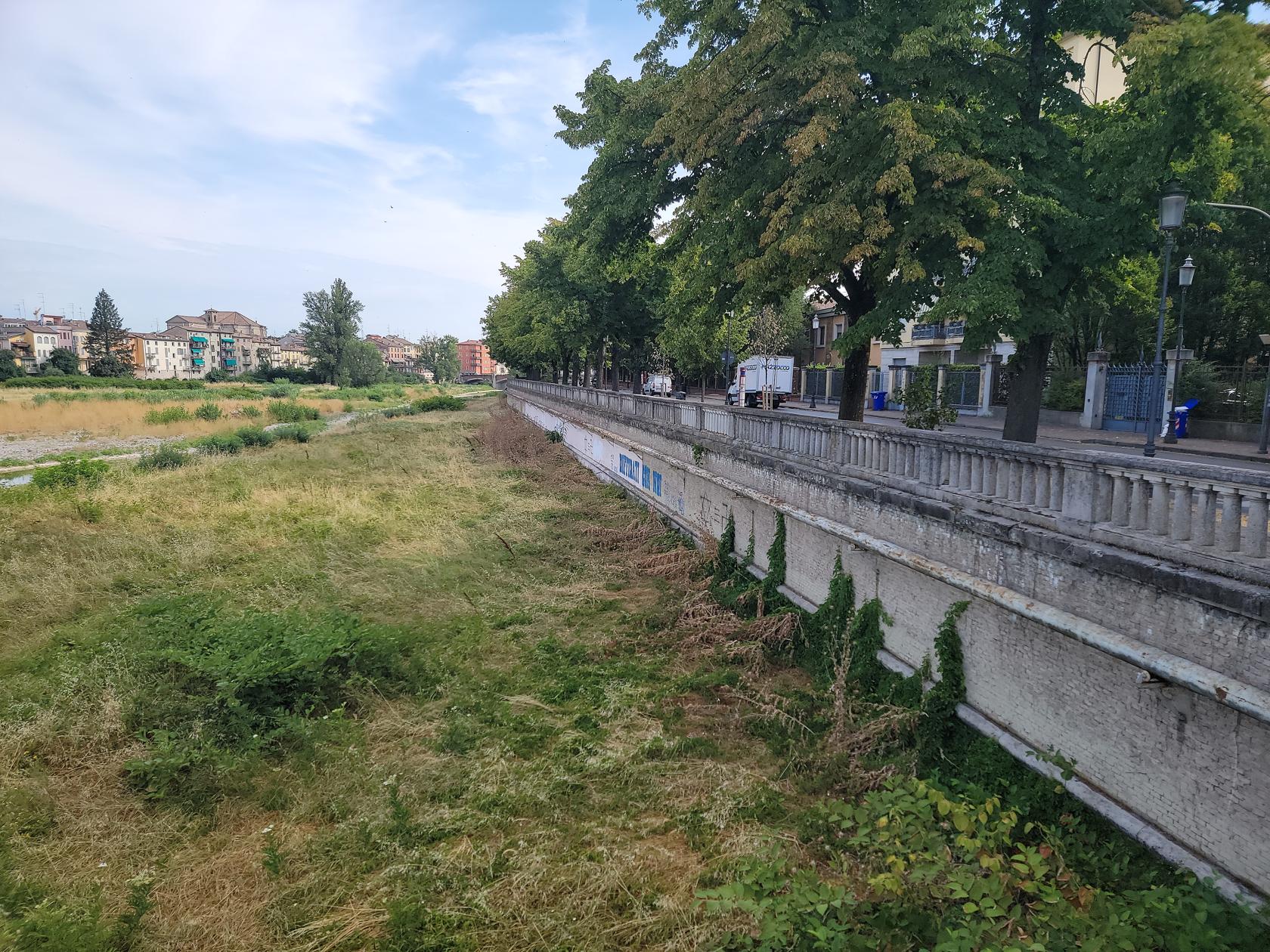
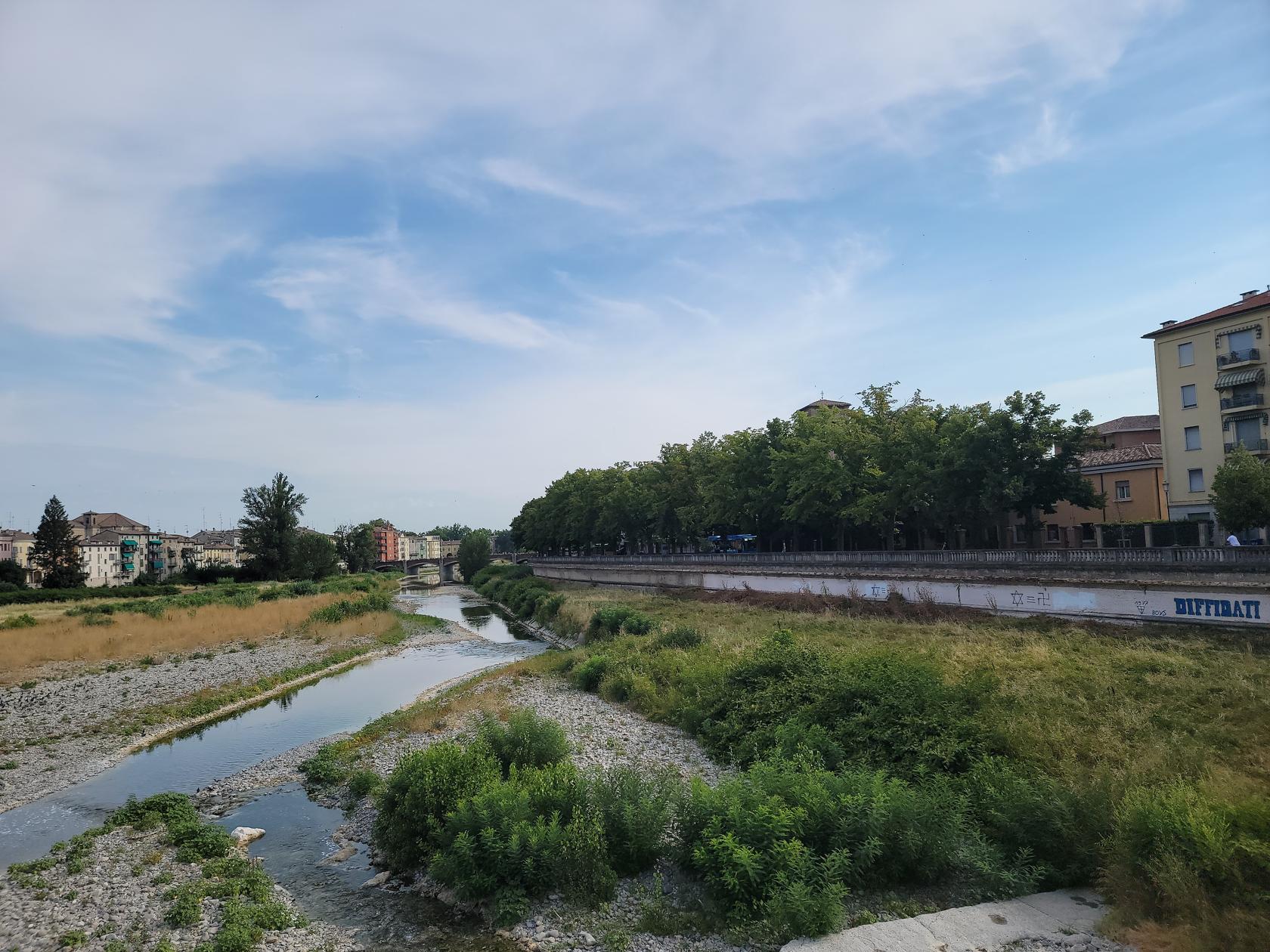
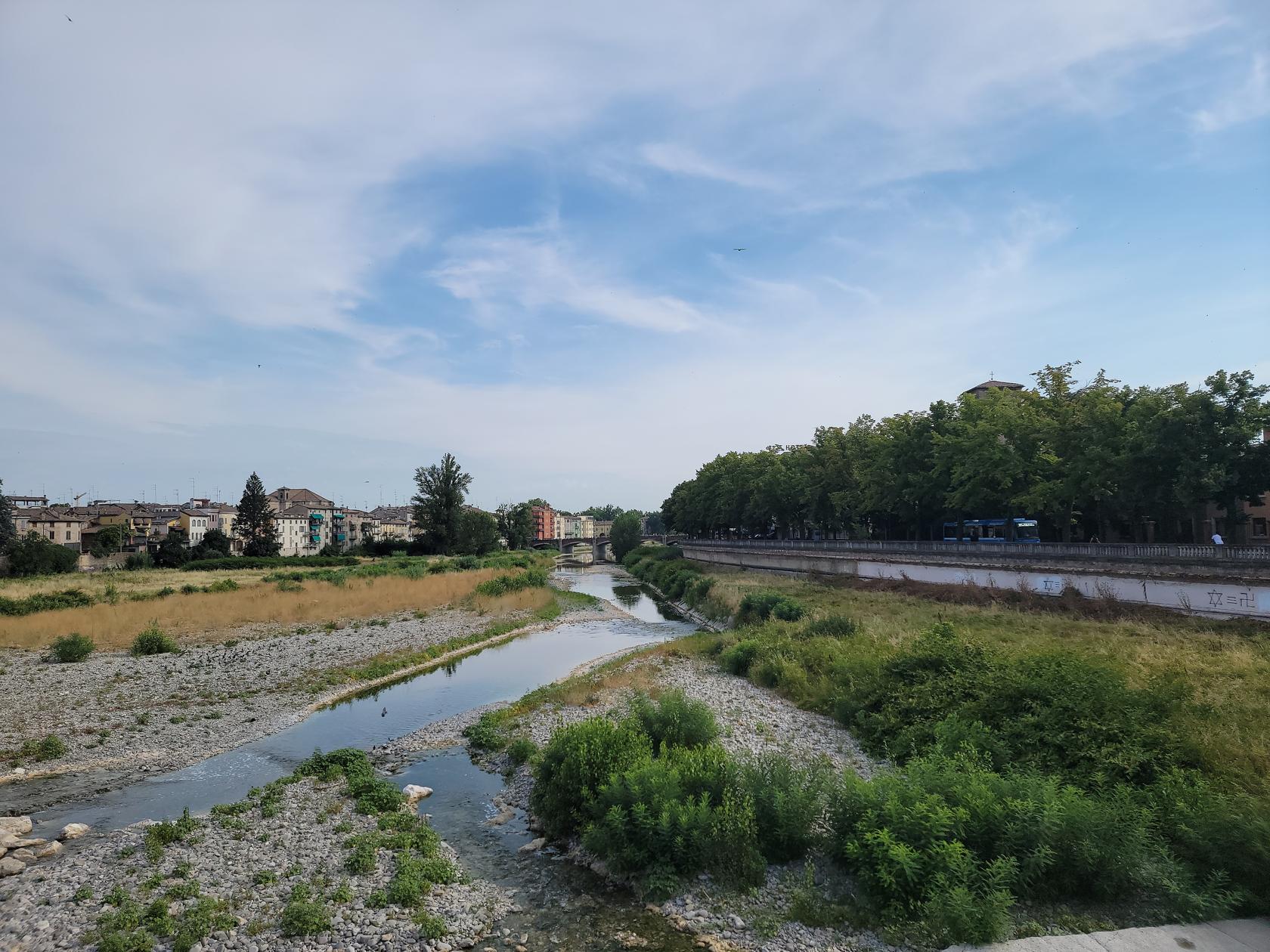
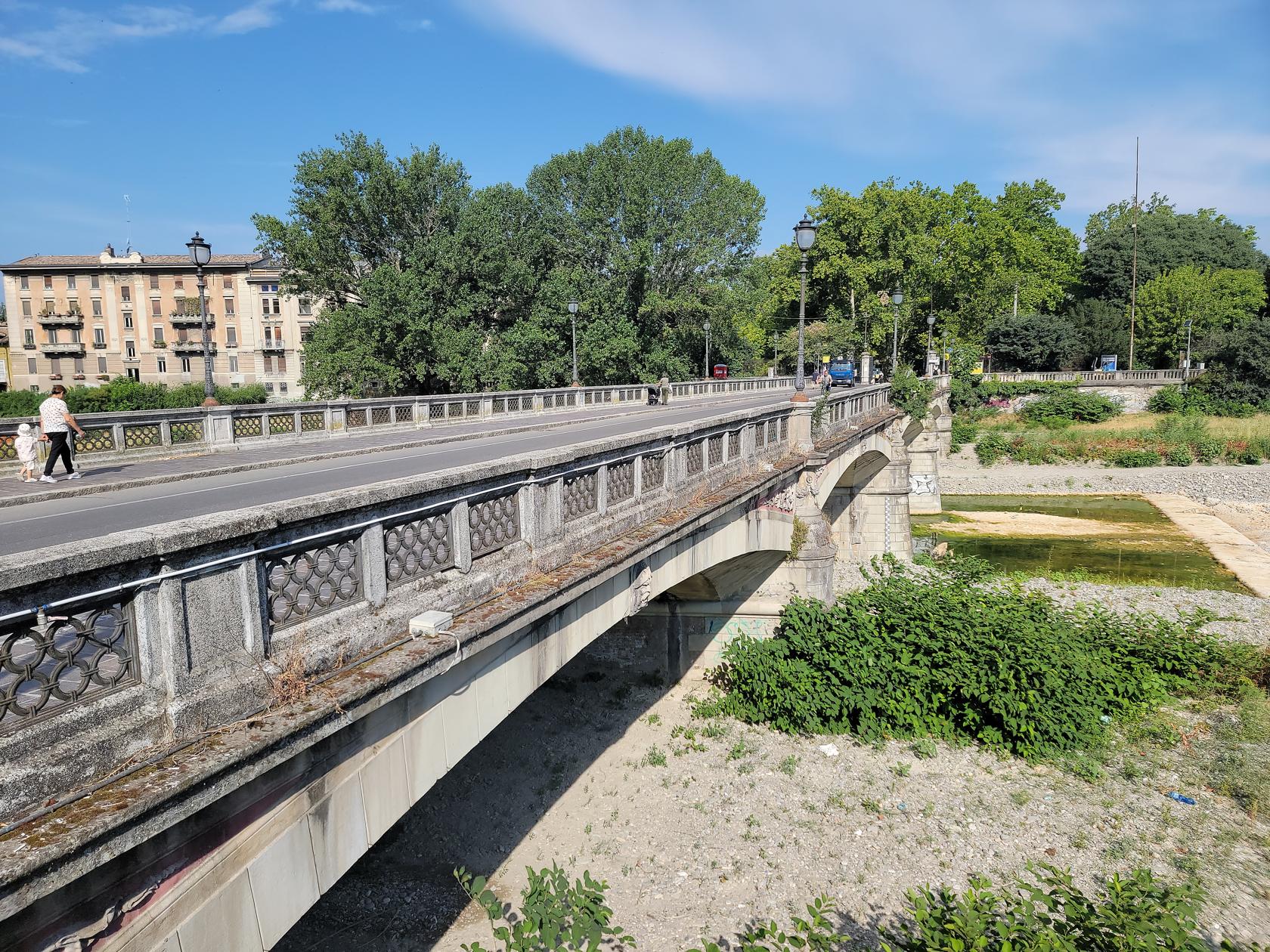
The Parma river as well, suffers from drought and over-irrigation, a mere trickle of its former self. Called a torrente in Italian, or torrent, one can only wonder when the last time the river actually enjoyed that much water.
Torrente Parma – Ponte Caprazucca – Parma, Italy
Torrente Parma – Ponte Caprazucca – Parma, Italy
Torrente Parma – Ponte Caprazucca – Parma, Italy
Ponte Verdi – Parma, Italy
The city does not suffer from tourism and we found the historic parts very pleasant to walk around. There is not much to see, hence our reason for visiting the museums, which we found different and interesting.
We took the FrecciaRossa train from Turin to Milan, then the Regional from Milan to Parma. The regional trains make more stops than the high speed trains, taking an extra half hour to make the hour long trip by high speed rail. The good news is, there are options between Milan and Parma, from FrecciaRossa, Italo, TrenItalia FTP to TrenNord and perhaps more. Our selection was based on scheduling and nothing else.
Strada Cavour
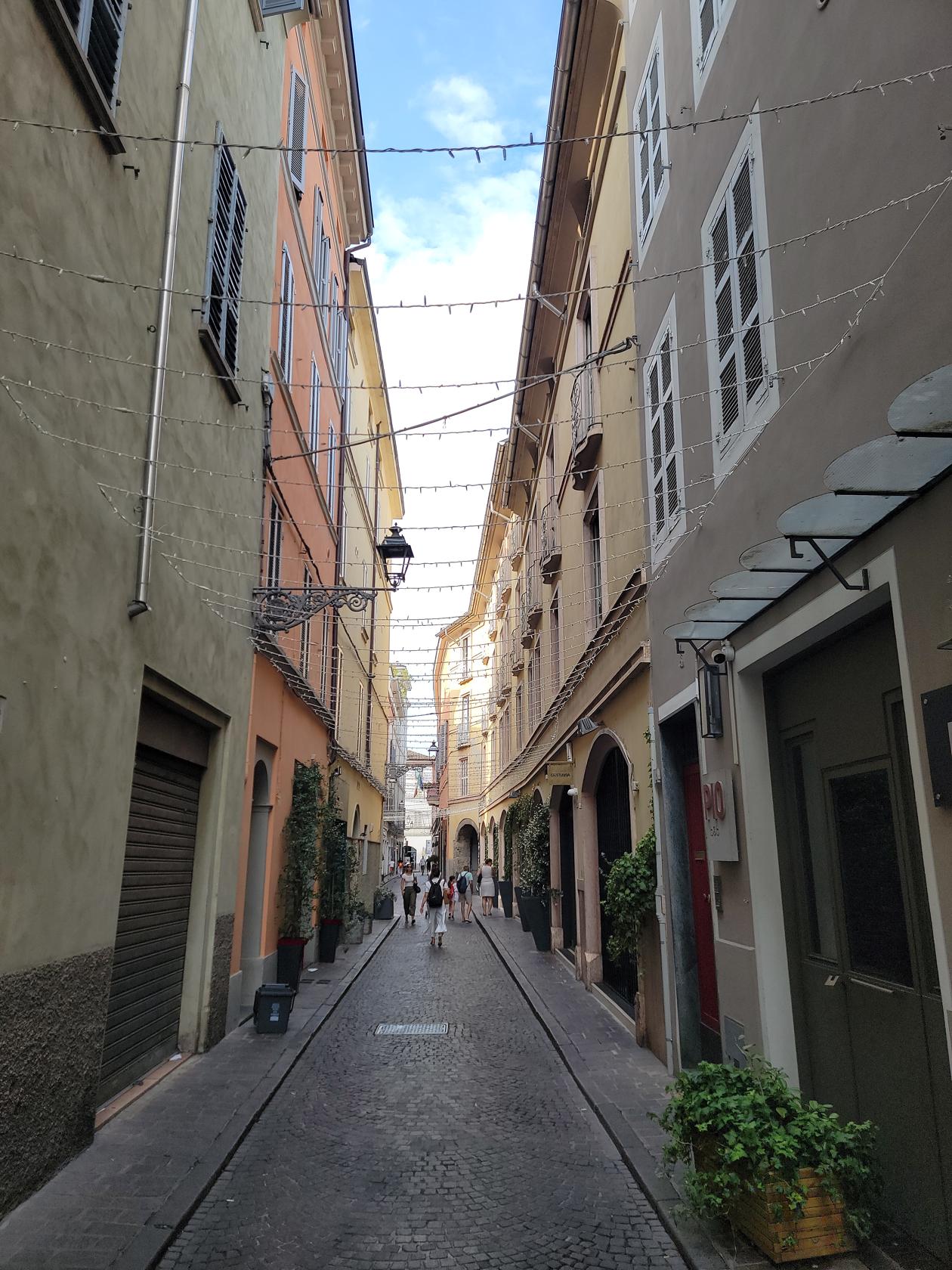
The main street for shopping in the city. It was about a ten minute walk from our hotel and winds its way through the older part of the city, though all of the businesses are modern. You will find all the modern, trendy and chain-like stores here, along with their inflated prices.
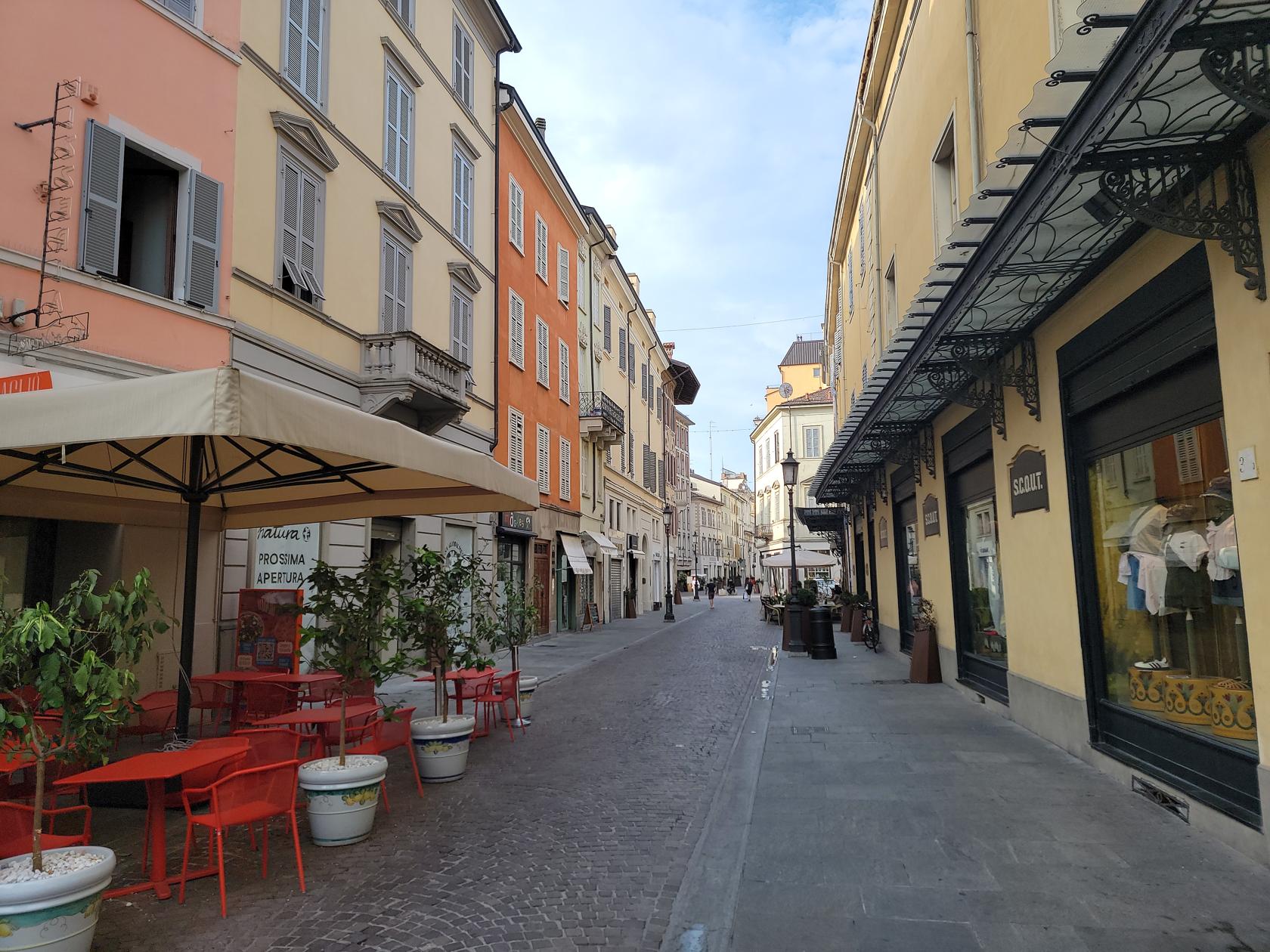
Strada Cavour – Parma, Italy
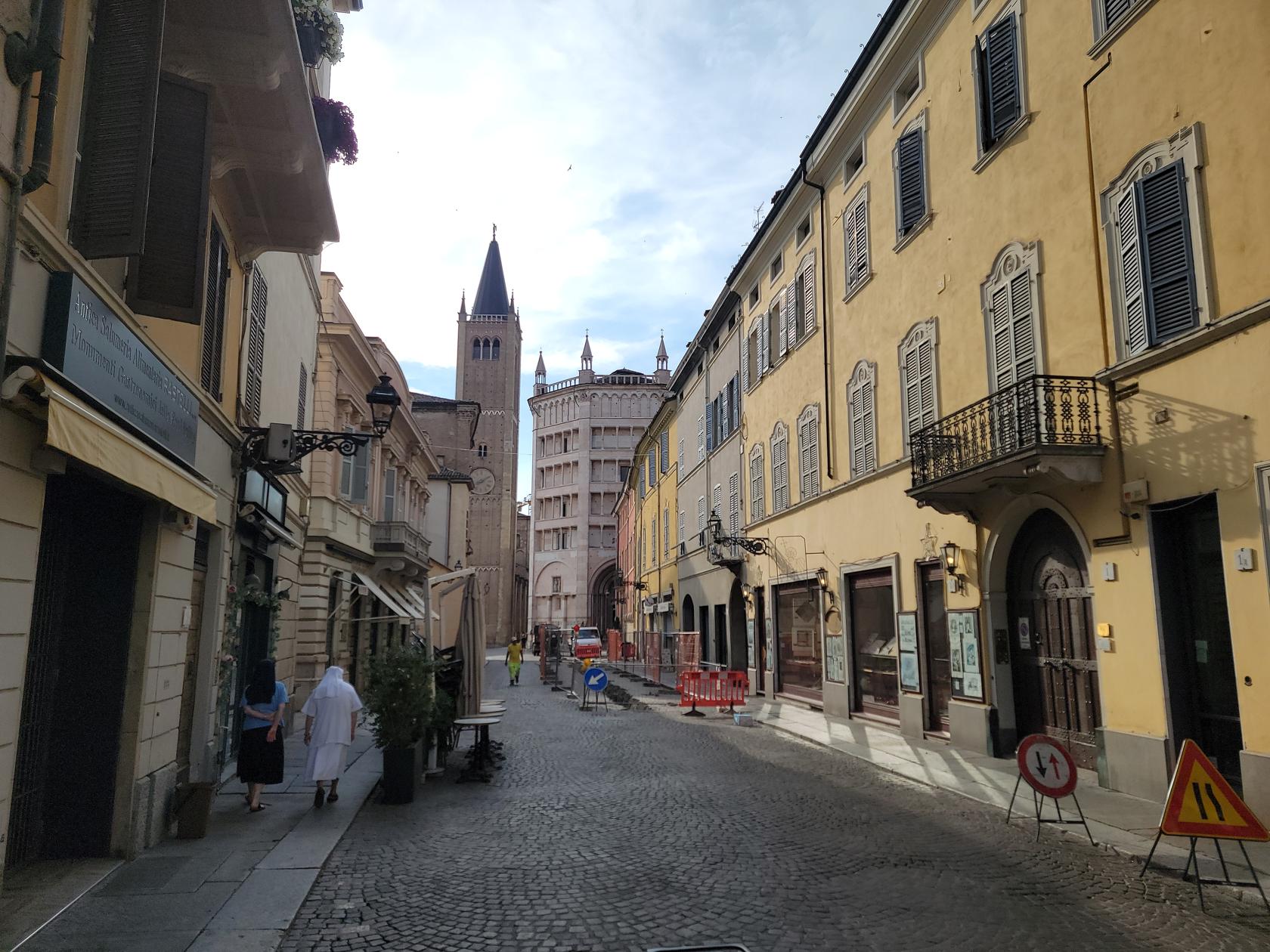
Strada Cavour – Parma, Italy
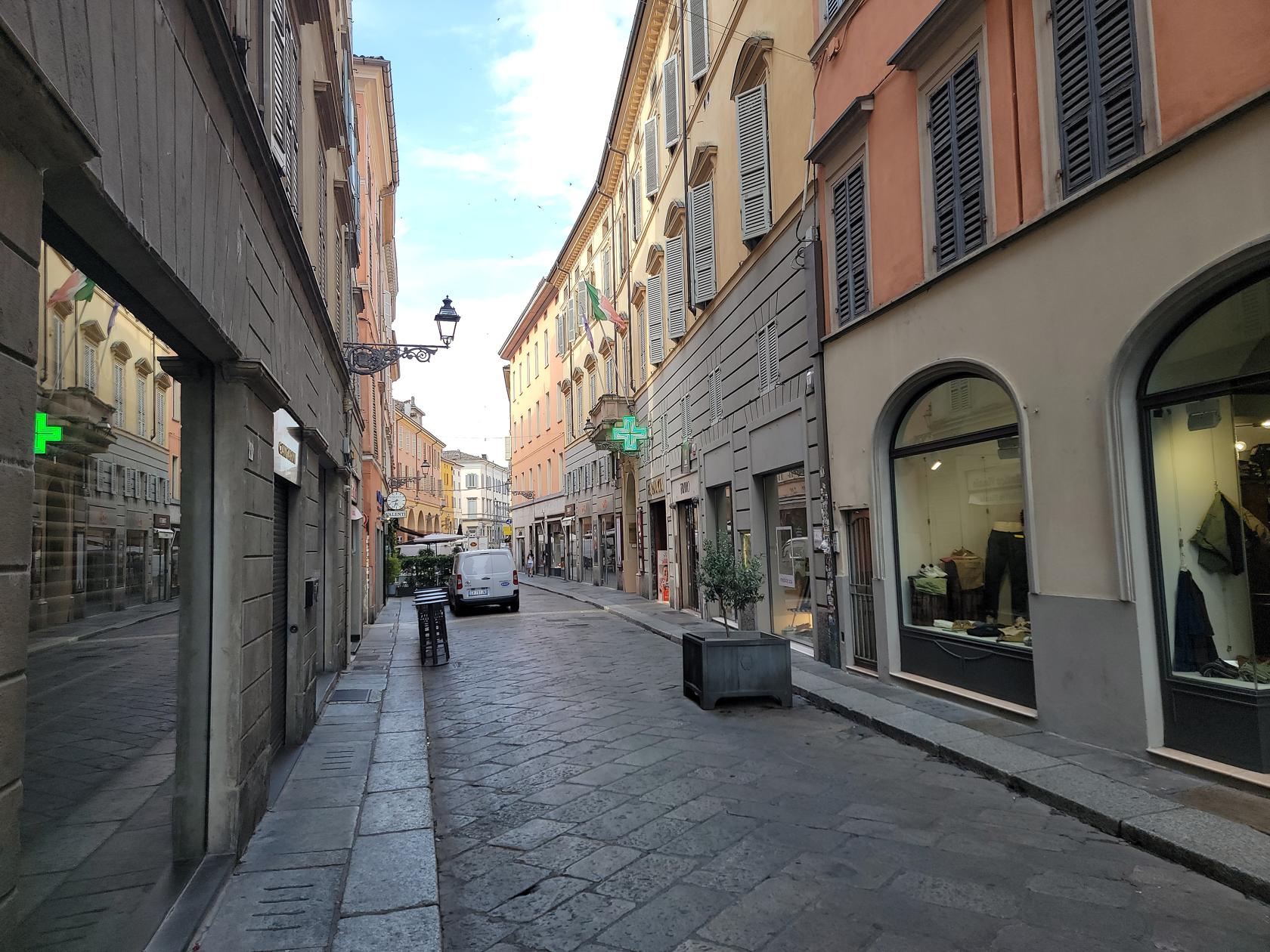
Strada Cavour – Parma, Italy
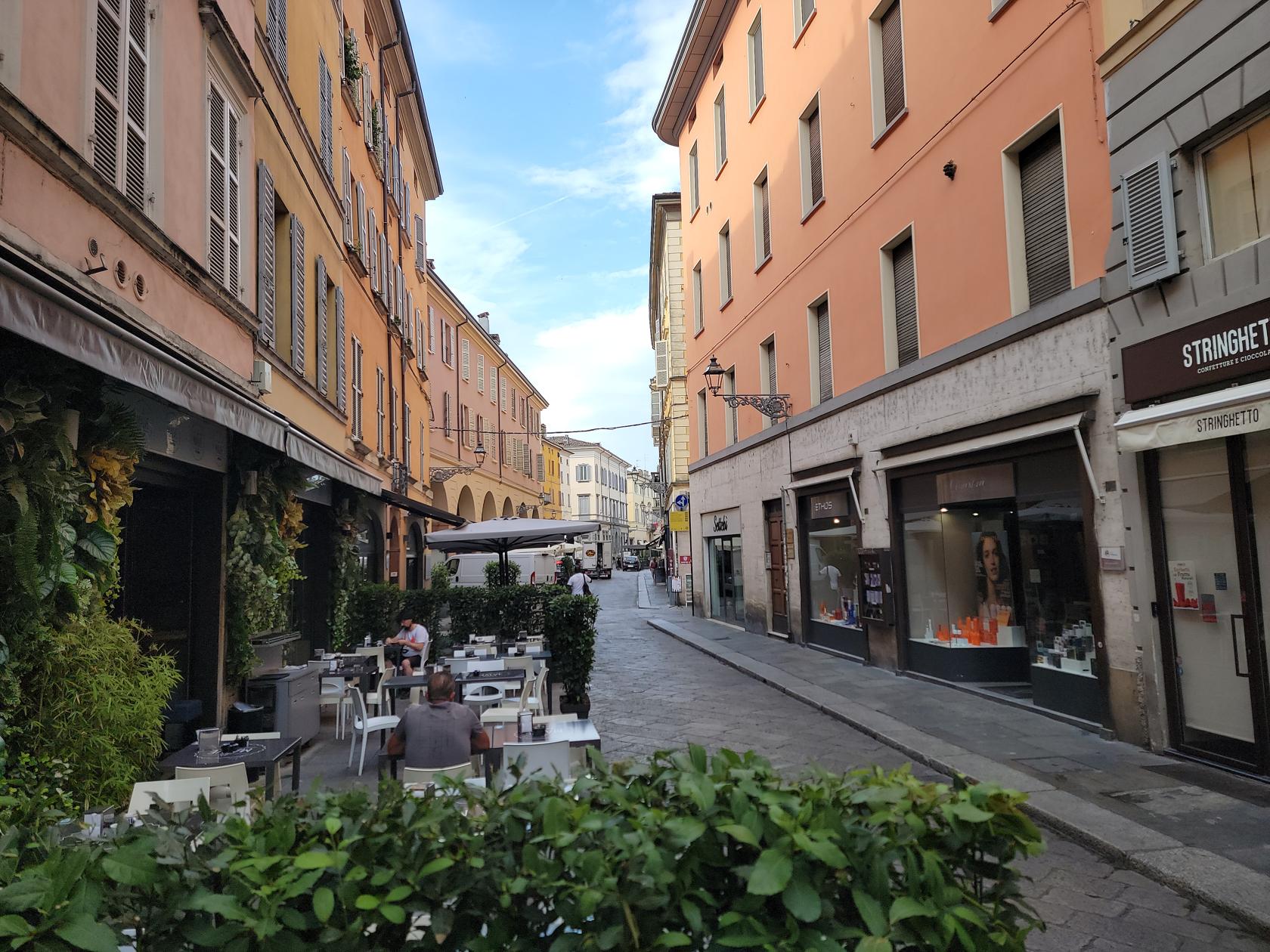
Strada Cavour – Parma, Italy
Hotel Stendhal
We stayed at the Hotel Stendhal, a fifteen minute direct walk from the train station. Though we read some concerning reviews on some travel sites, we did not have any issues at all and had the most enjoyable stay. The staff was great and we never had to ask for anything. We had a large superior room on the side of the hotel which was very quiet and comfortable, along with a complimentary breakfast.
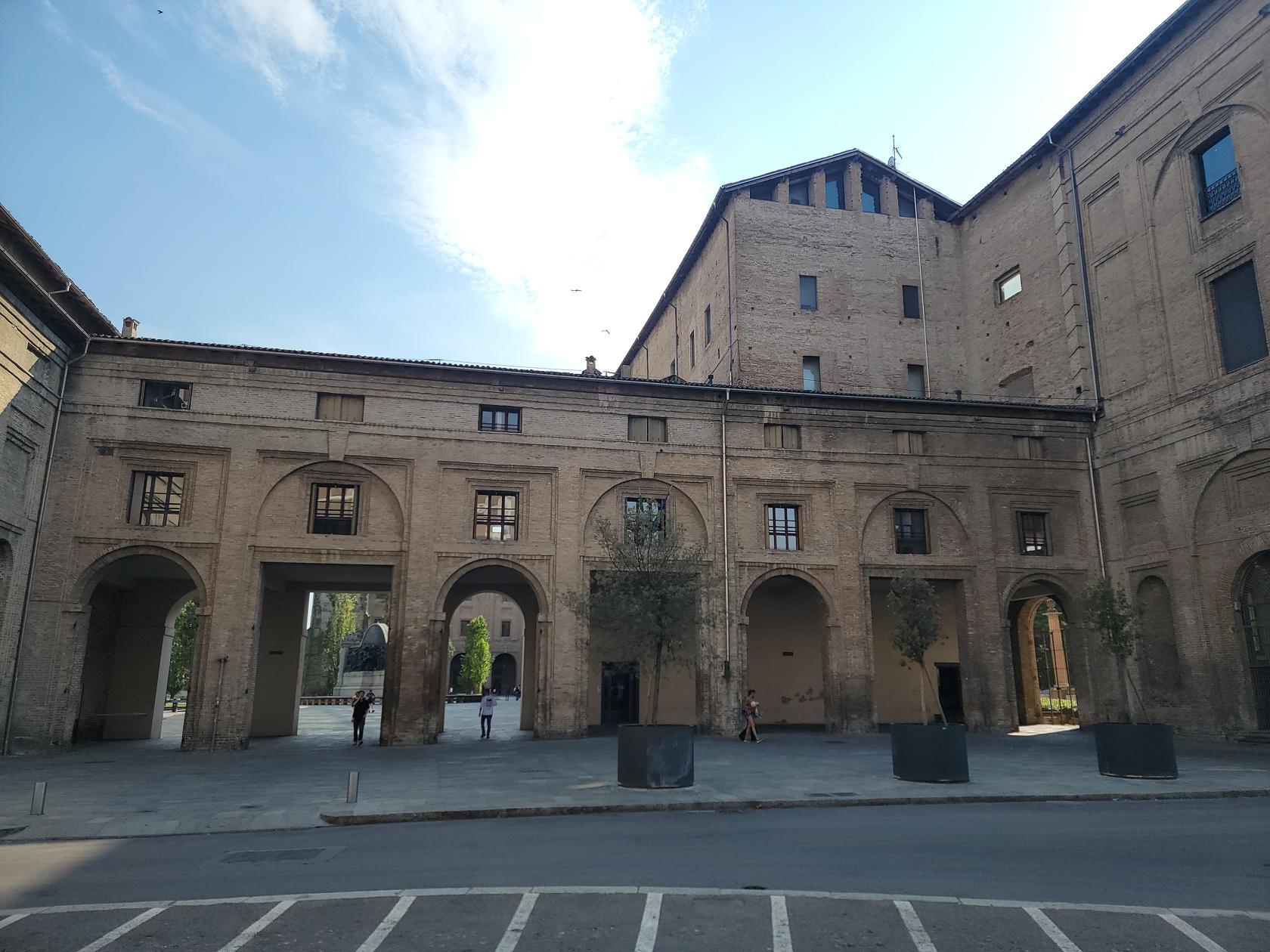
Outside Our Hotel – Cortile del Guazzatoio – Parma, Italy
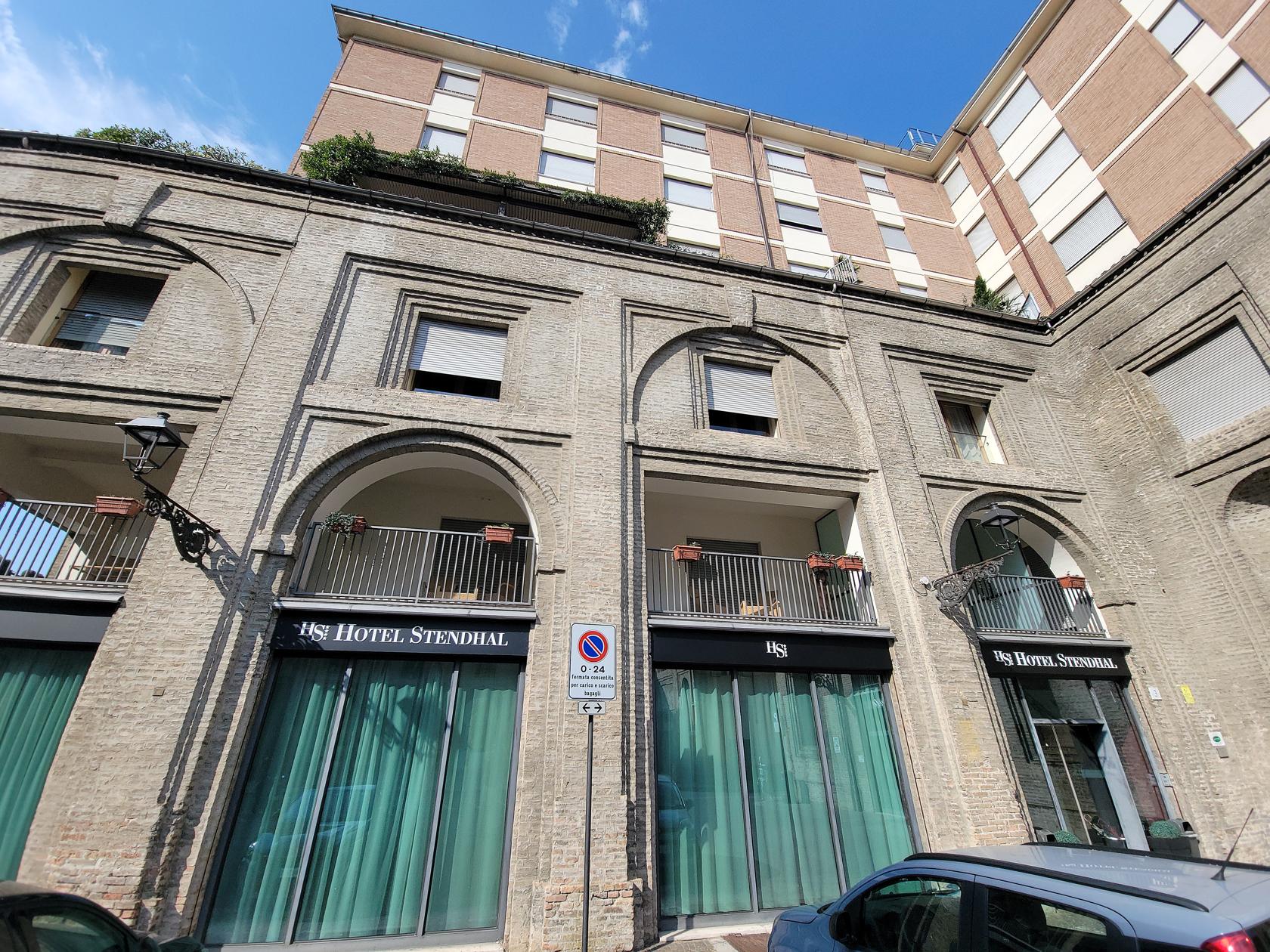
Entrance – Hotel Stendhal – Parma, Italy
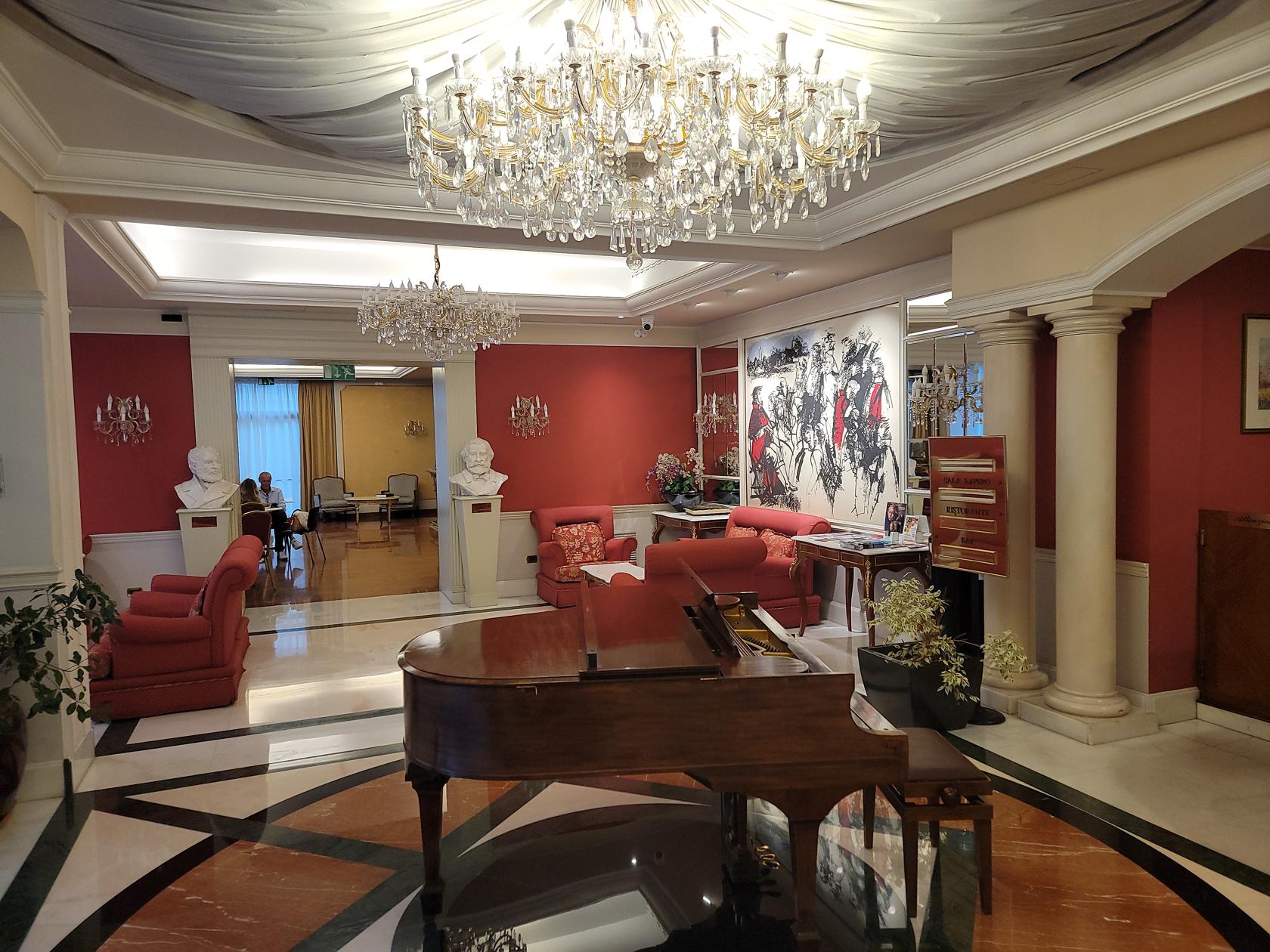
Foyer – Hotel Stendhal – Parma, Italy
Pilotta Museum Complex
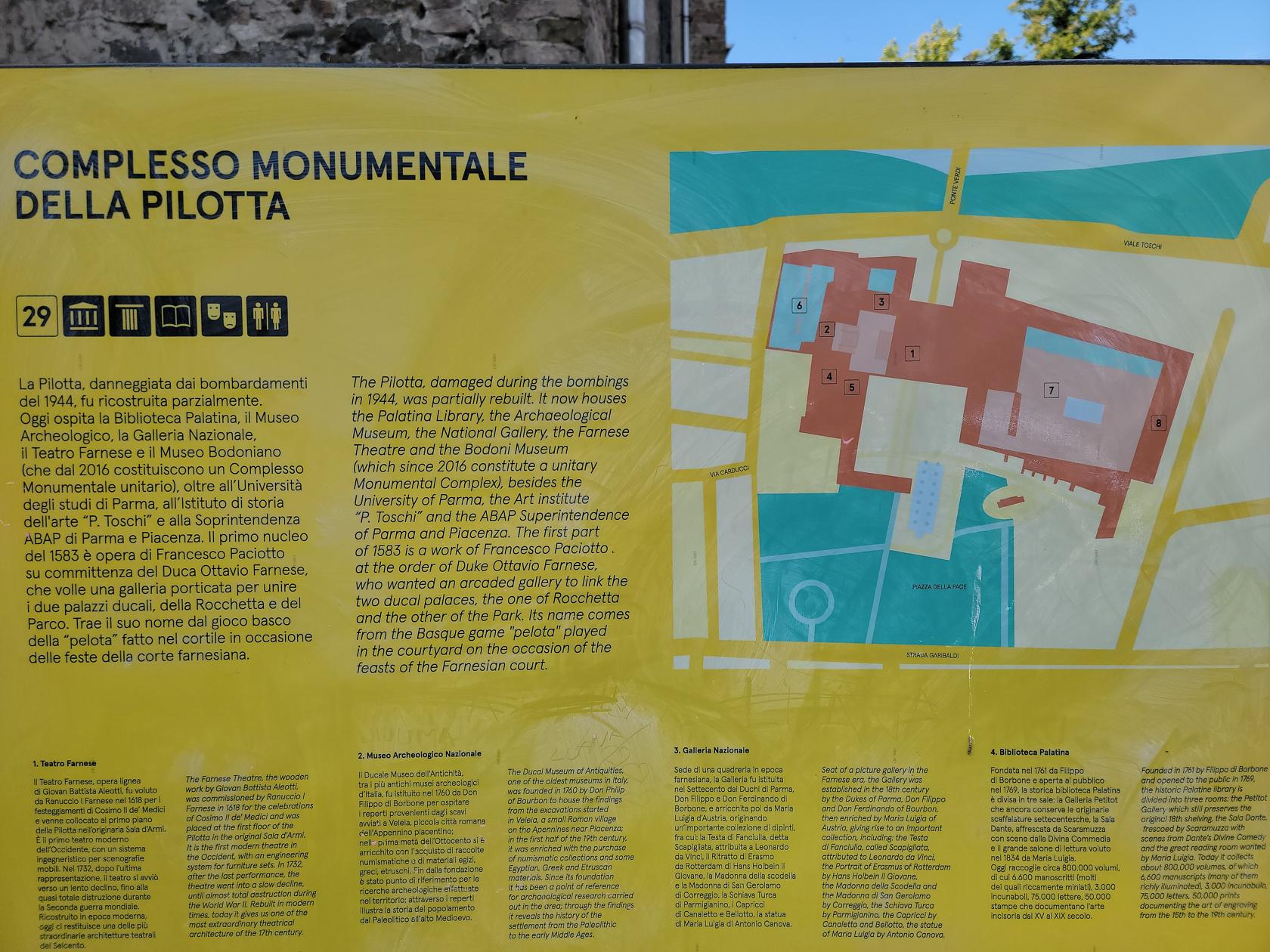
The Pilotta Museum Complex is the former Faranese Palace that now houses five or six museums, some of which were not open at the time of our visit.
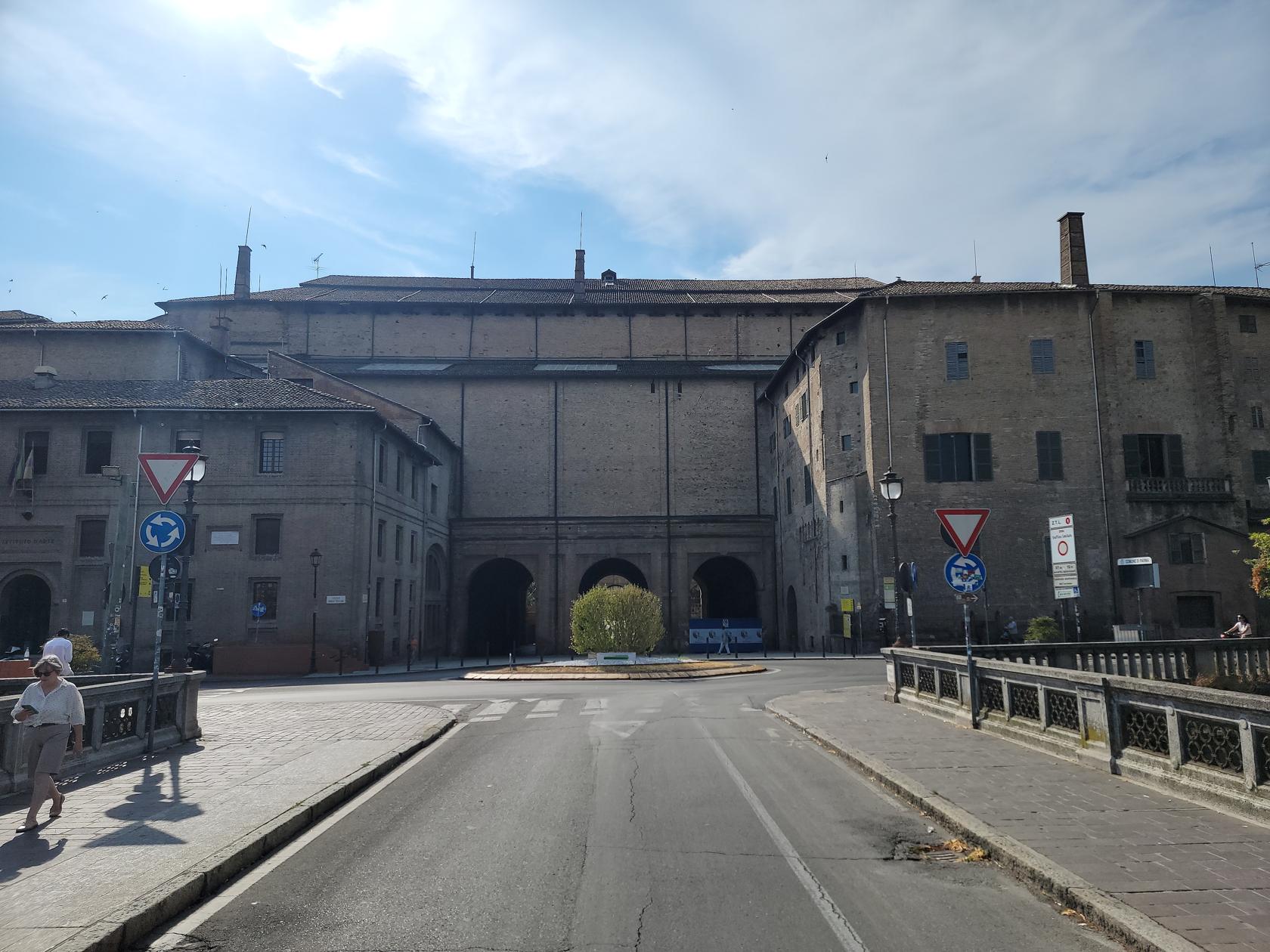
Ponte Verdi – Pillota Museum Complex – Parma, Italy
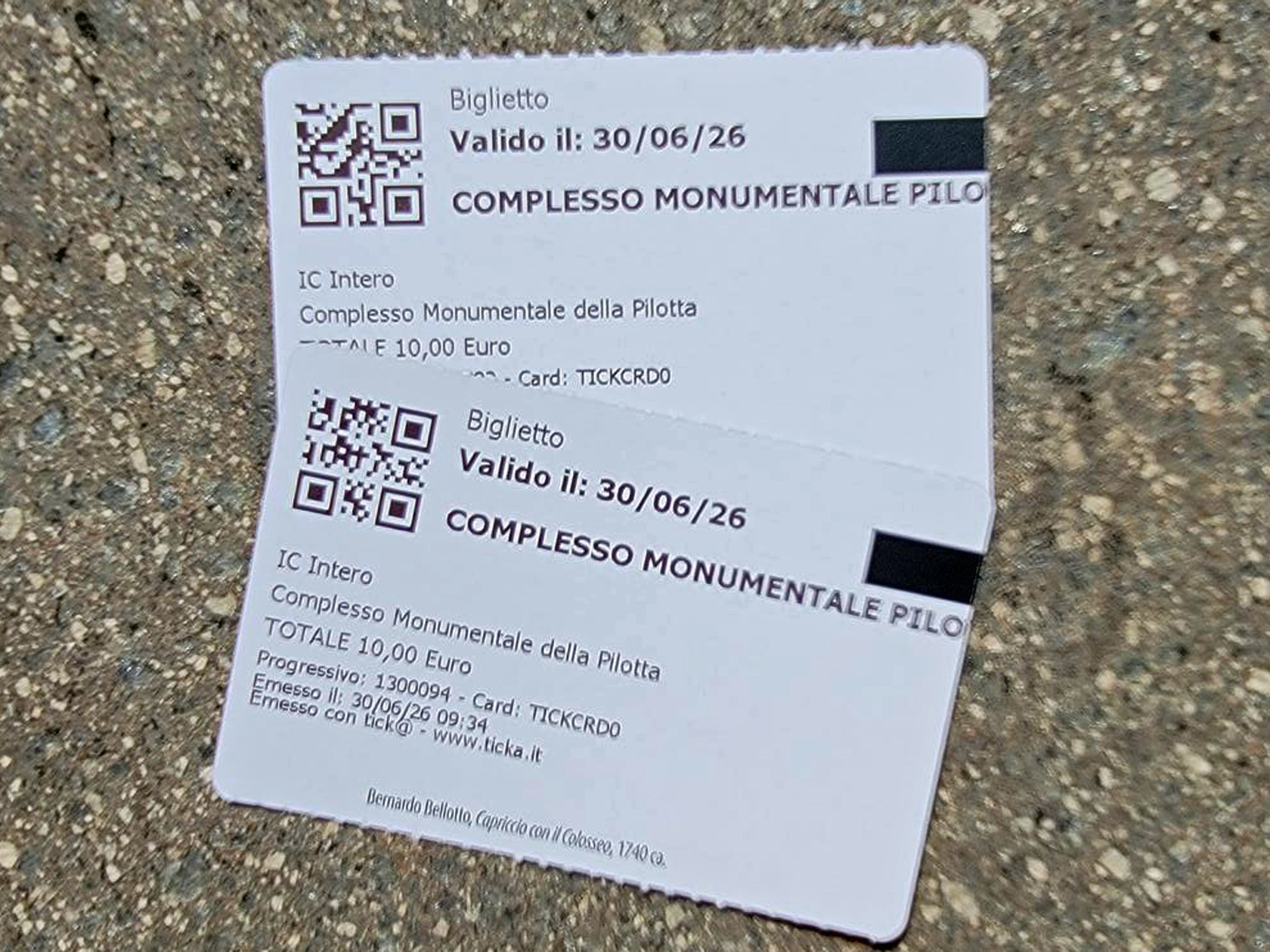
Tickets For Two – Pillota Museum Complex – Parma, Italy
Entrance – Pillota Museum Complex – Parma, Italy
Museo Archeologico Nazionale di Parma
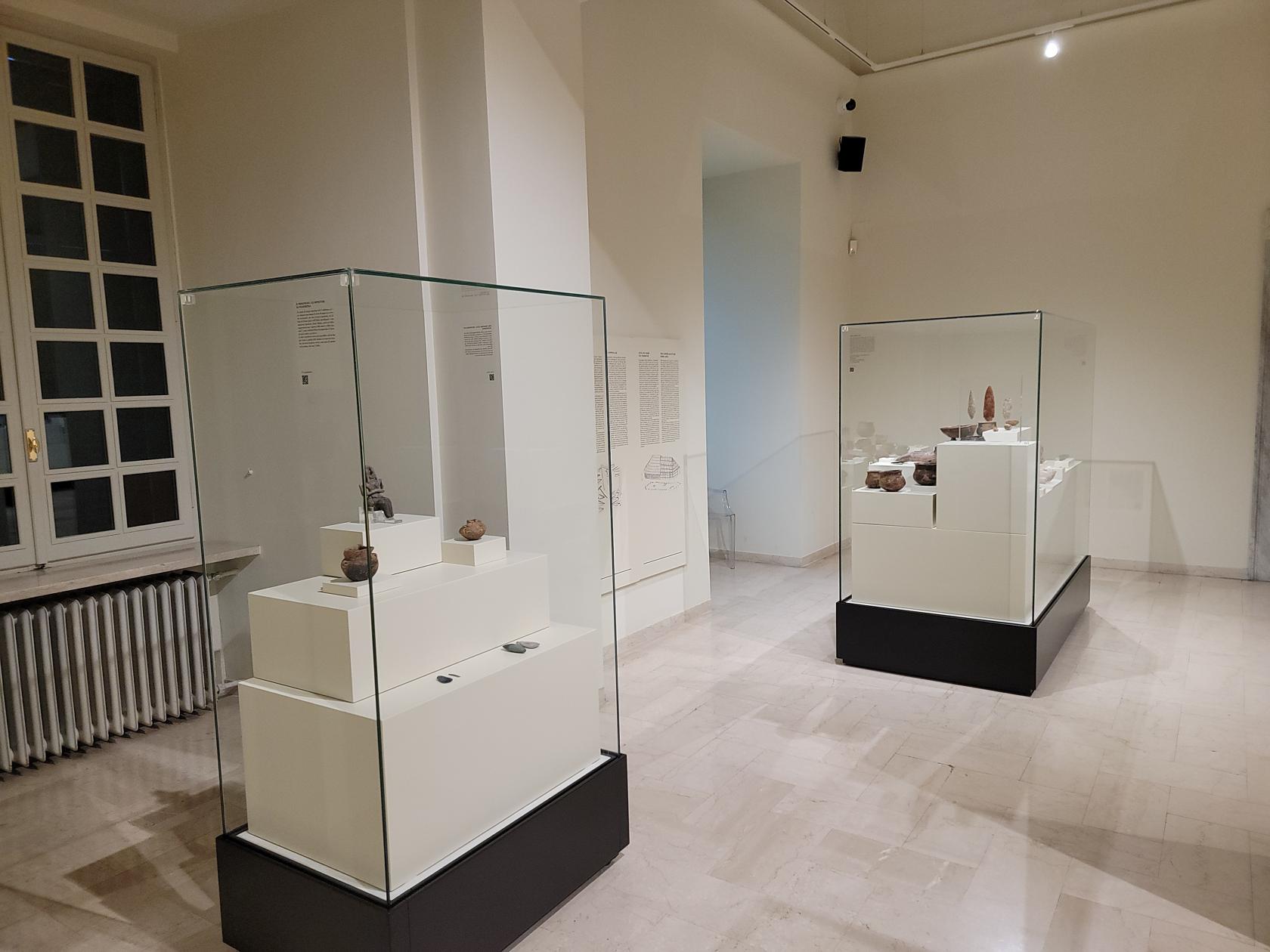
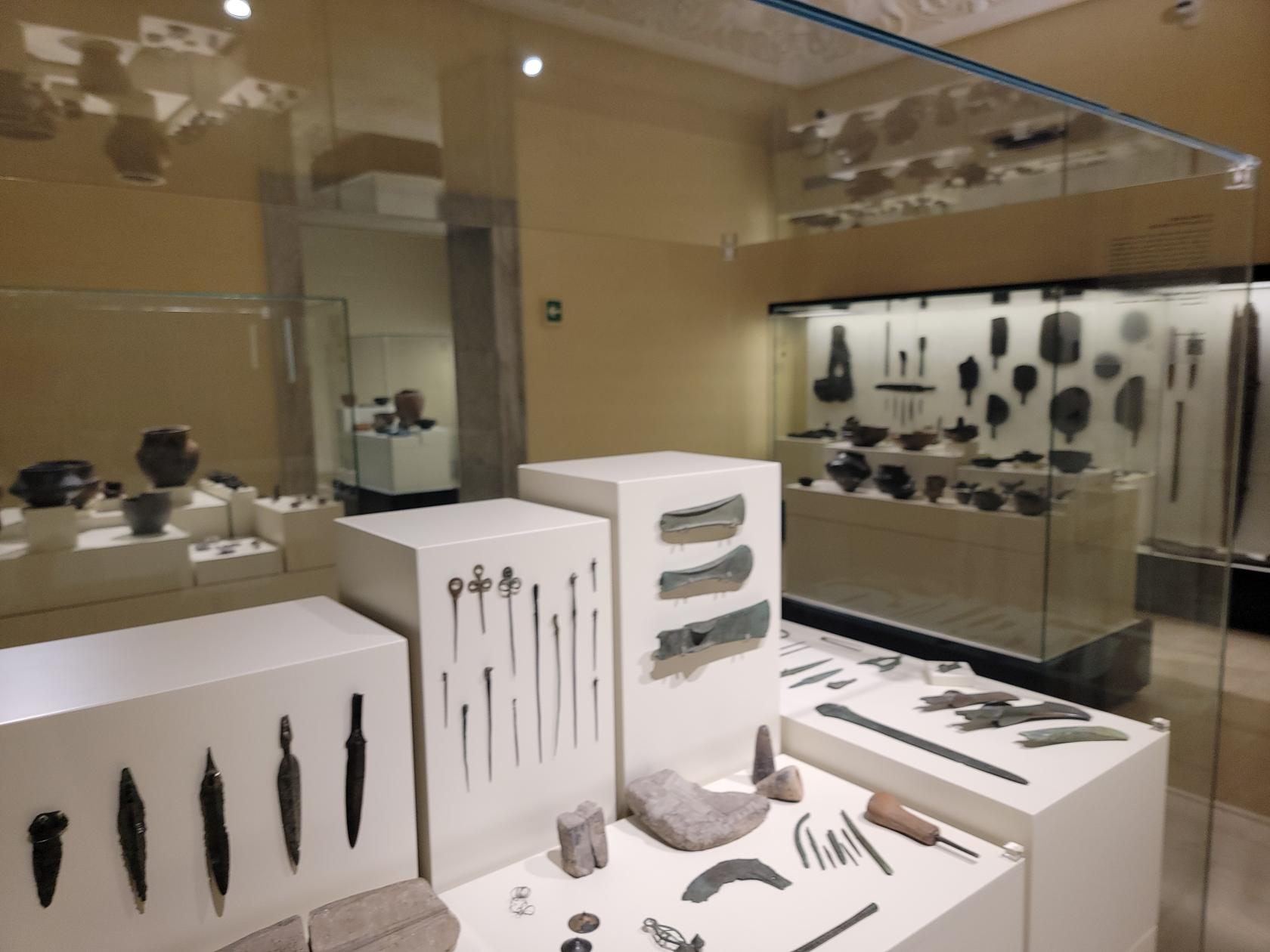
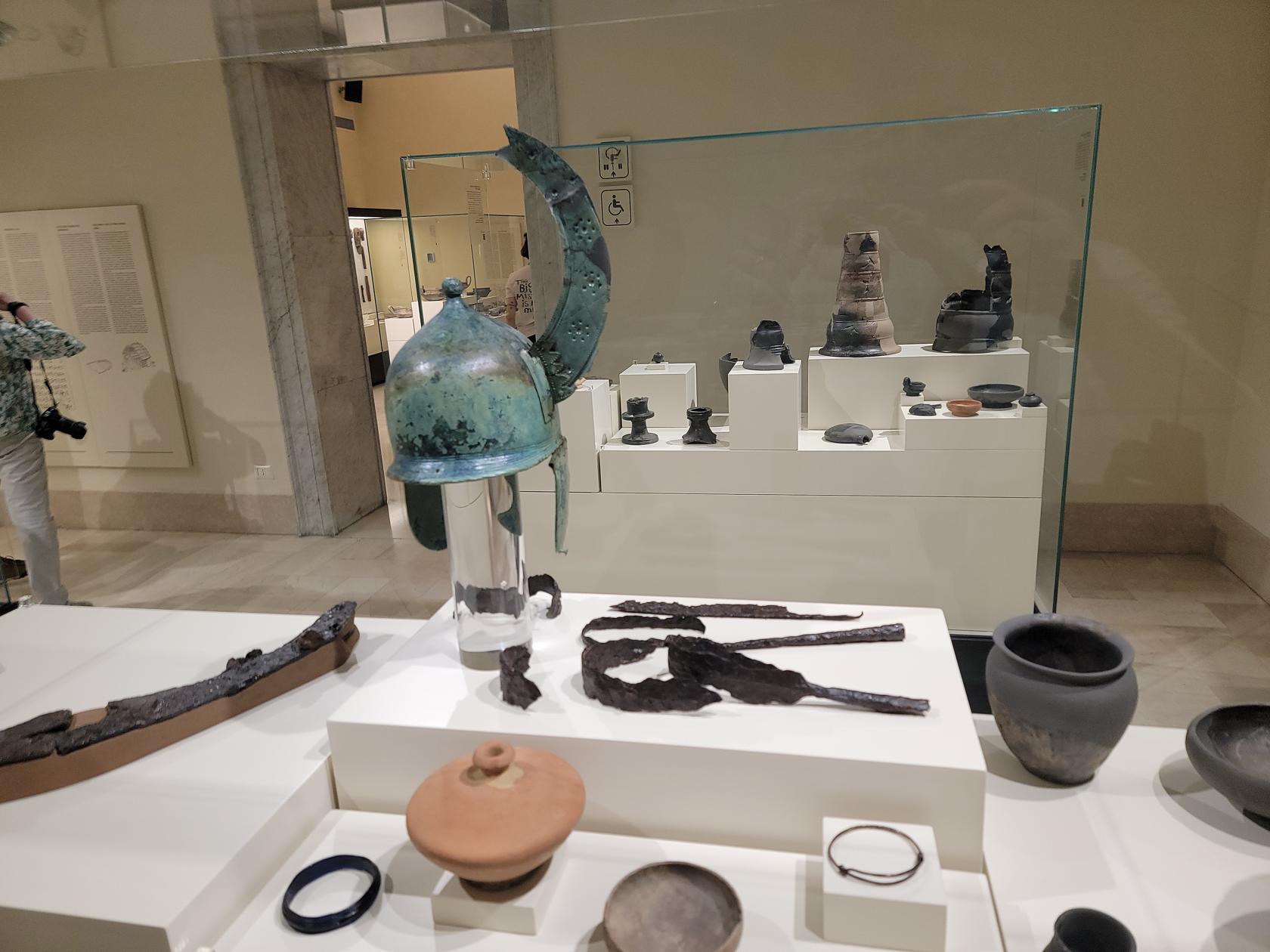
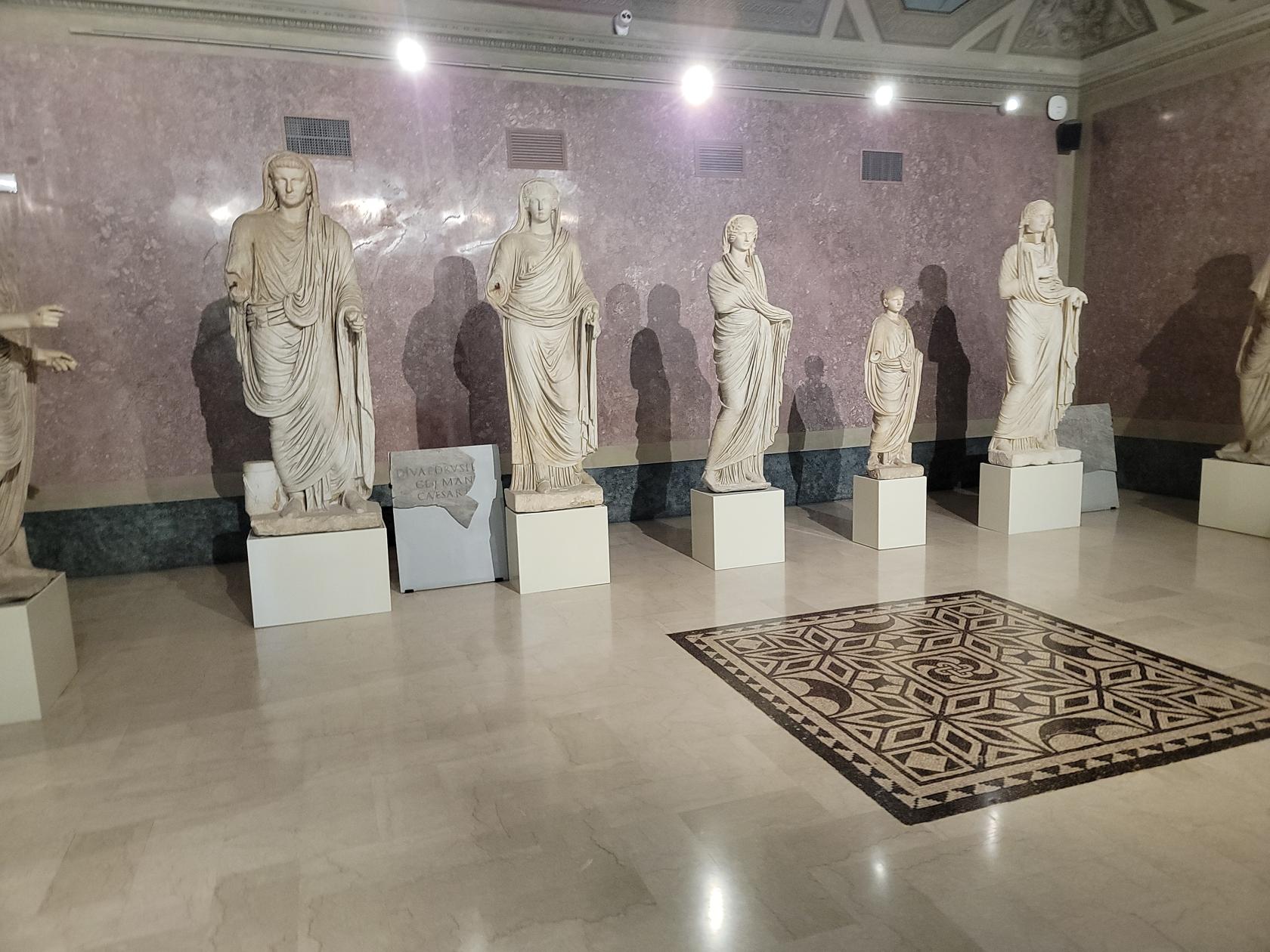
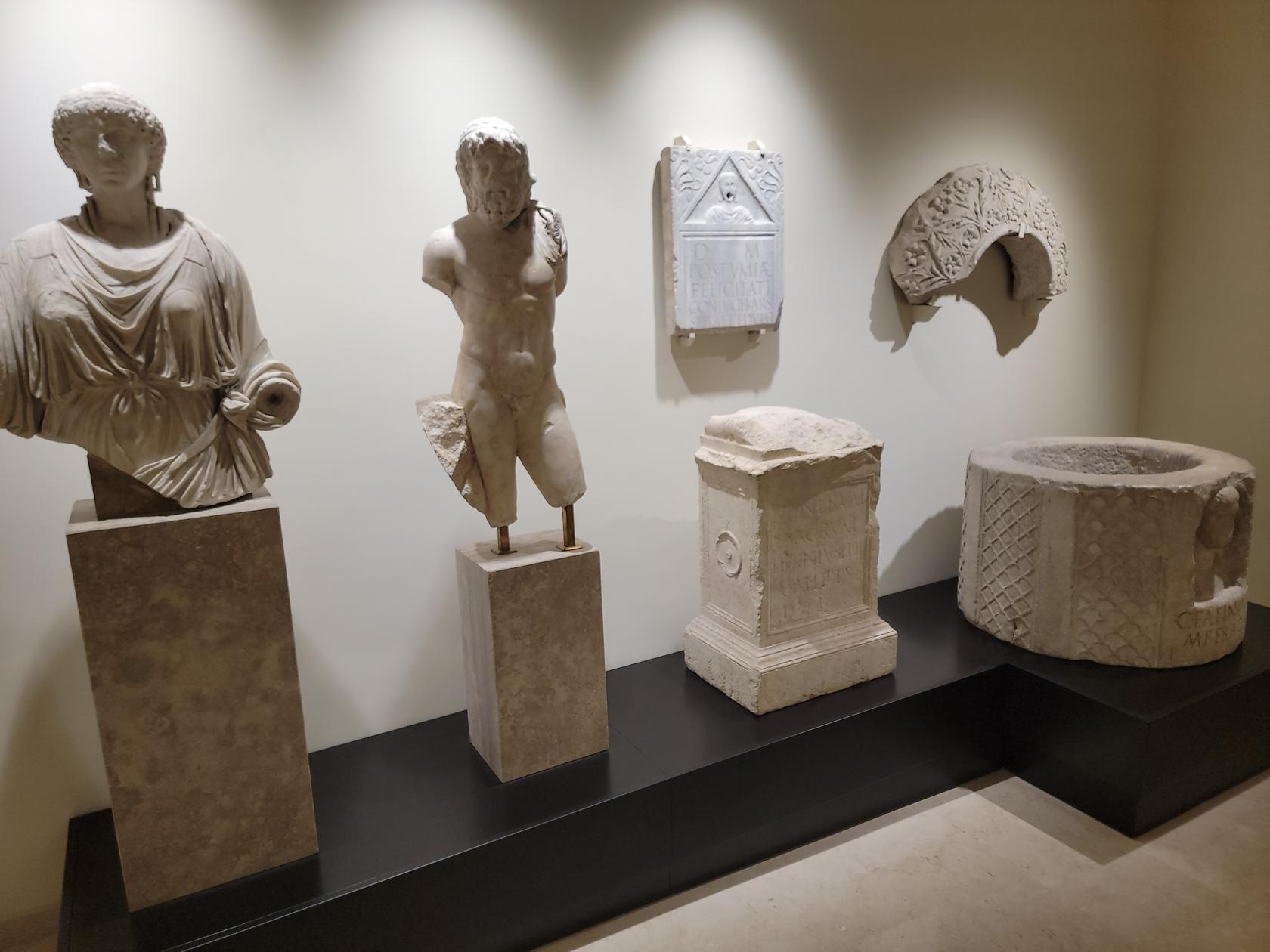
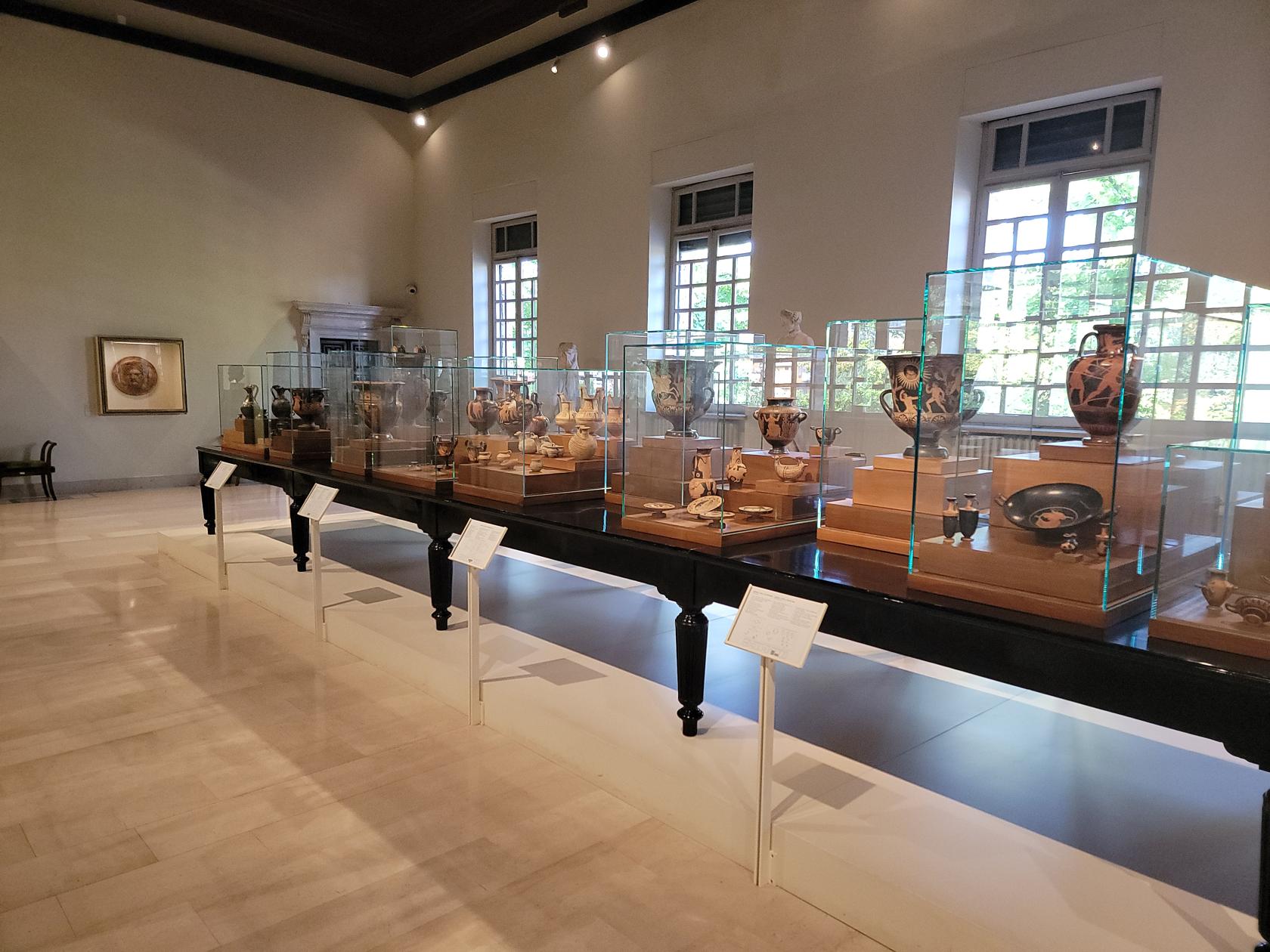
The archeological museum offers artifacts from the ancient history in and around Parma. Here are exhibits of the ancient civilizations of the Roman Empire, Greeks and Etruscans who inhabited the Po river valley and the surrounding area thousands of years ago.
Archaeological Museum – Pillota Museum Complex – Parma, Italy
Archaeological Museum – Pillota Museum Complex – Parma, Italy
Archaeological Museum – Pillota Museum Complex – Parma, Italy
Archaeological Museum – Pillota Museum Complex – Parma, Italy
Archaeological Museum – Pillota Museum Complex – Parma, Italy
Archaeological Museum – Pillota Museum Complex – Parma, Italy
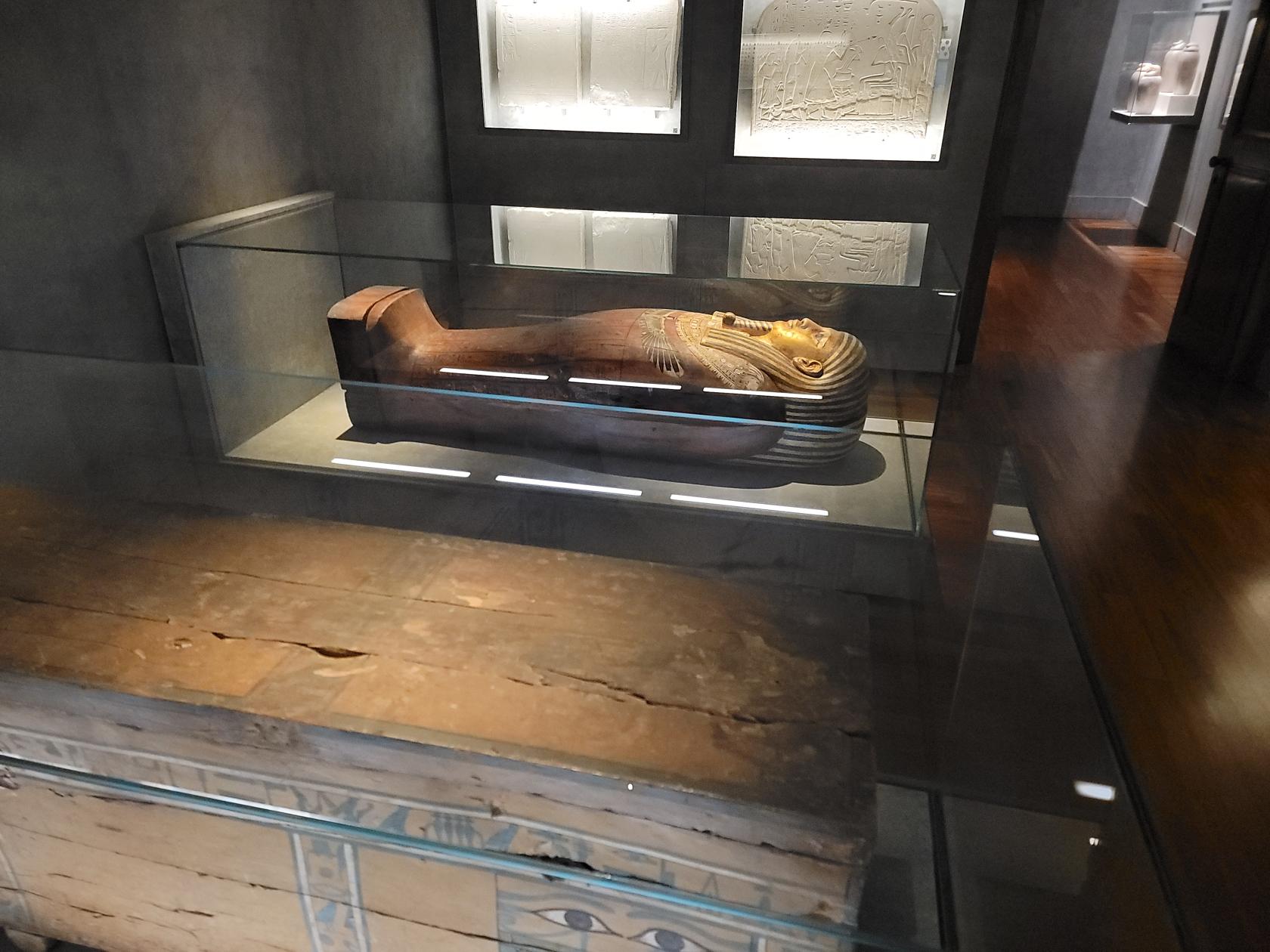
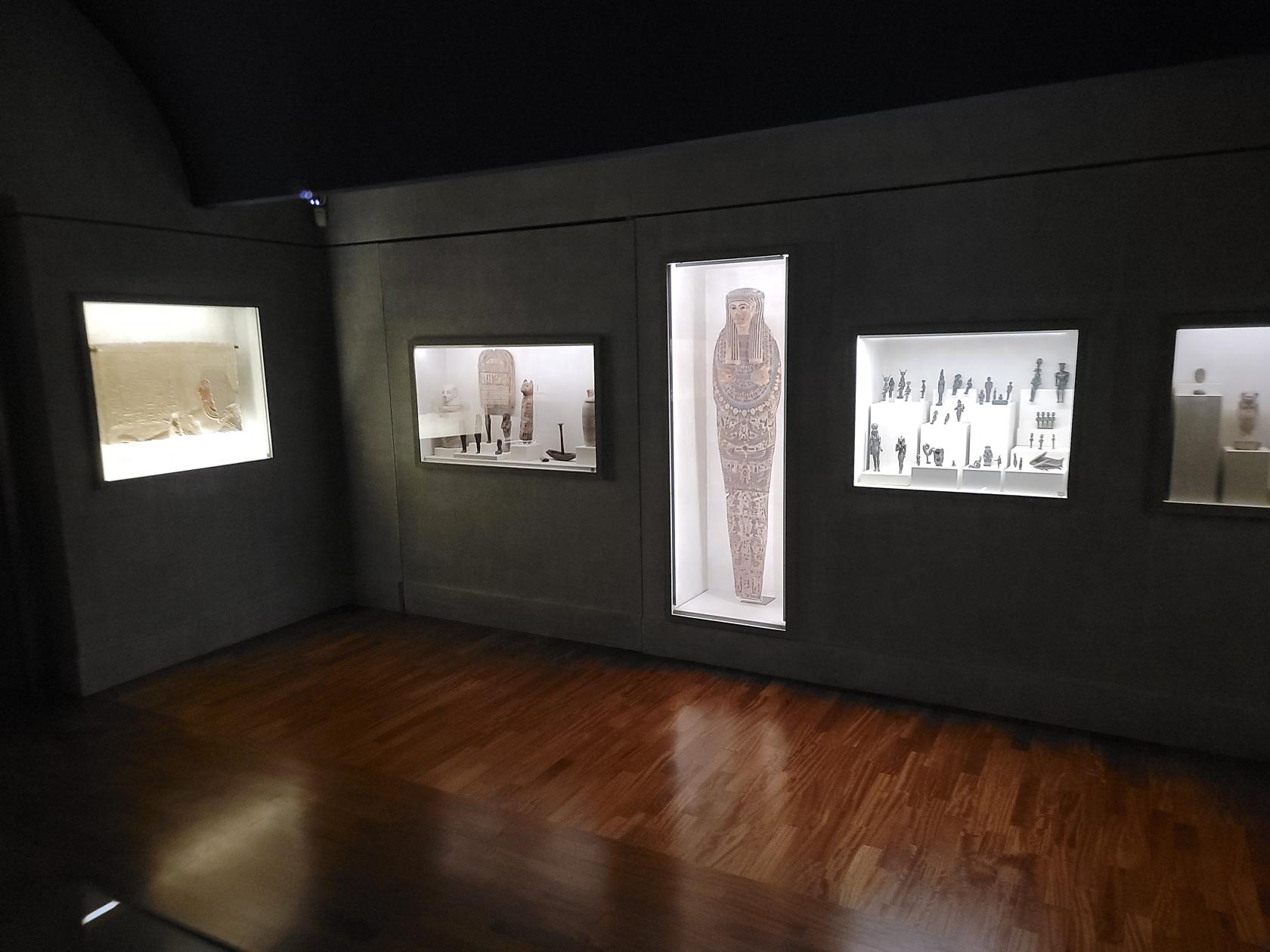
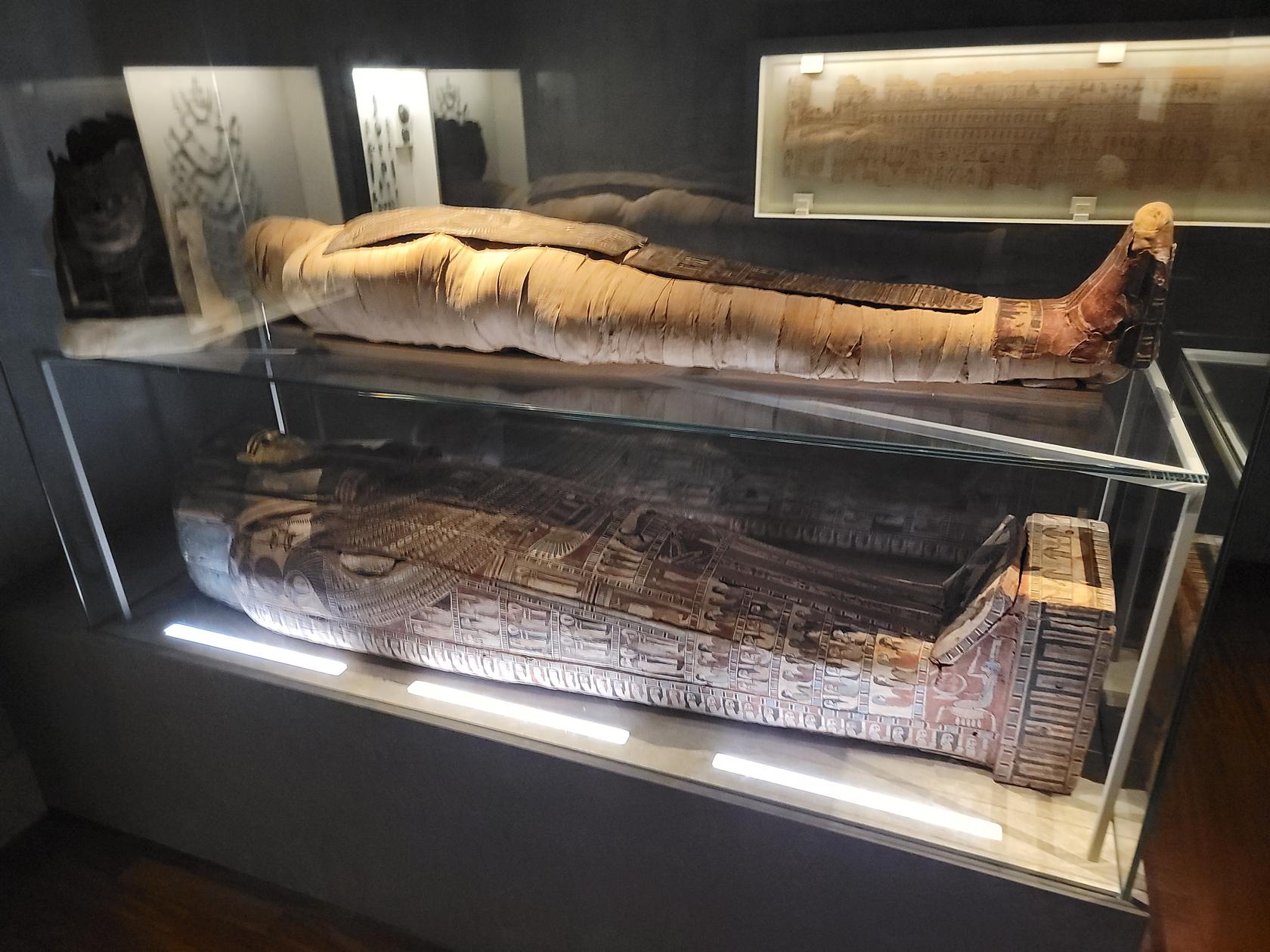
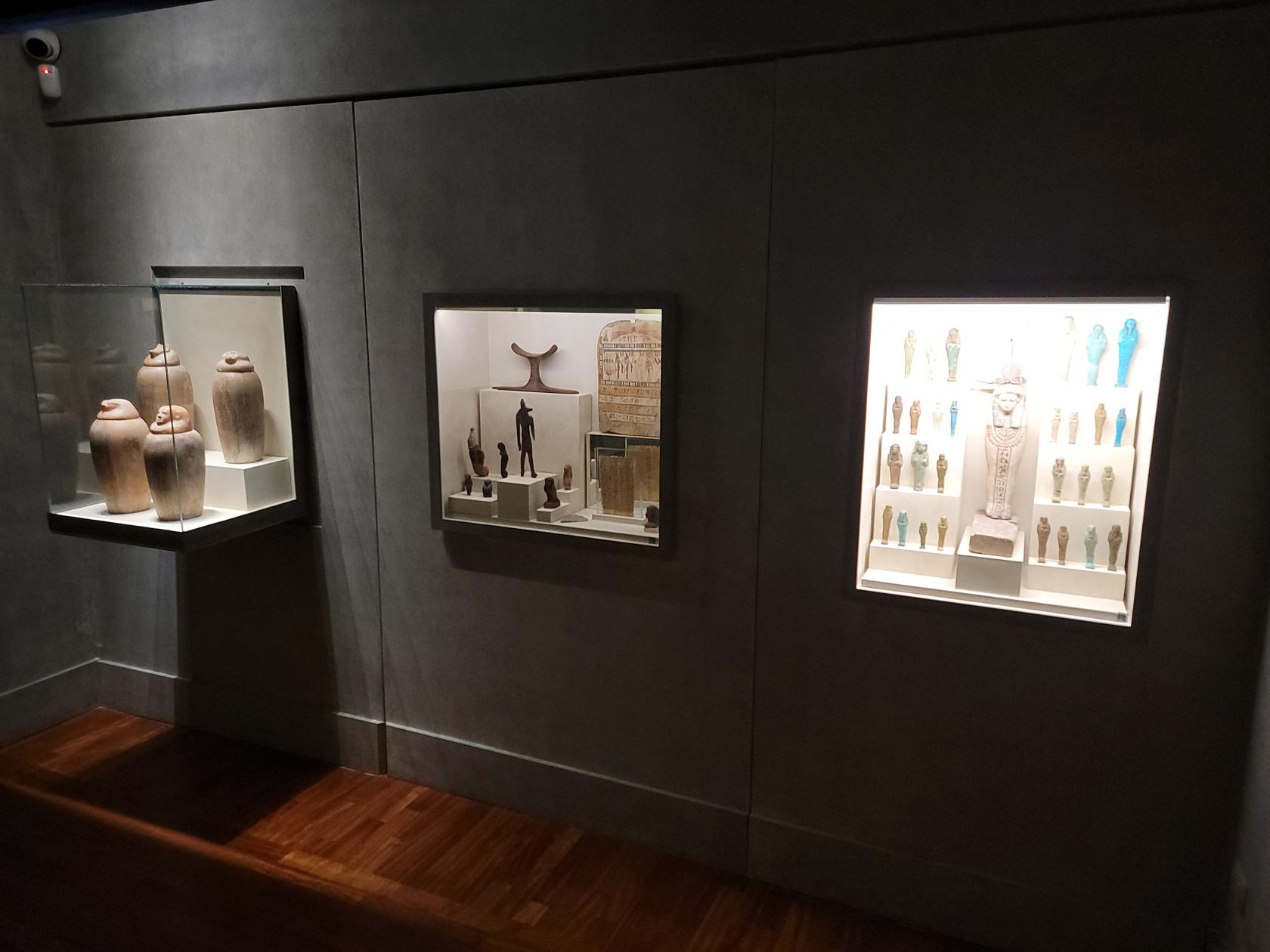
The museum also has a display of ancient Roman tombs, including sarcophogy and examples of mummified remains.
Archaeological Museum – Pillota Museum Complex – Parma, Italy
Archaeological Museum – Pillota Museum Complex – Parma, Italy
Archaeological Museum – Pillota Museum Complex – Parma, Italy
Archaeological Museum – Pillota Museum Complex – Parma, Italy
Farnese Theater
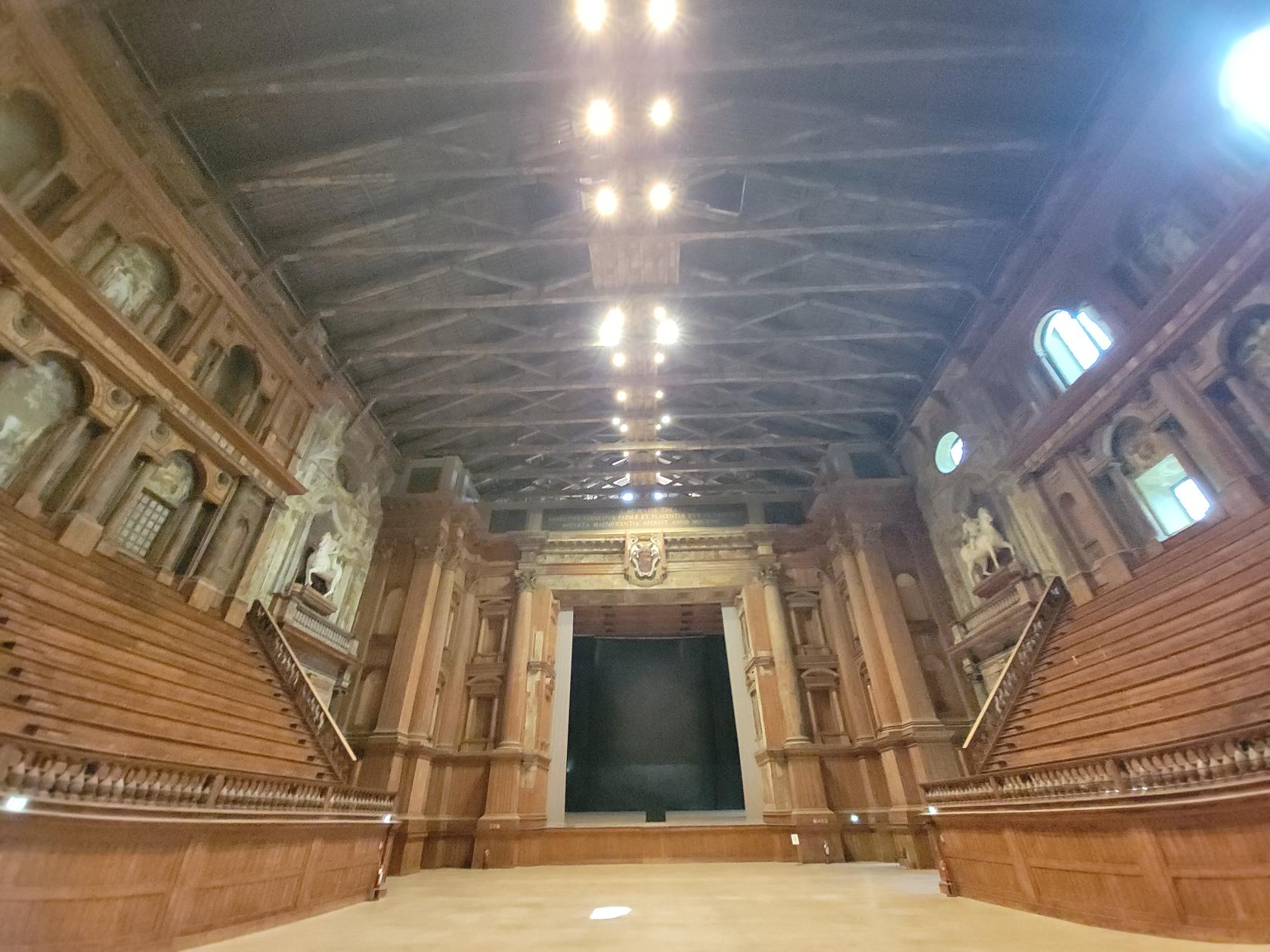
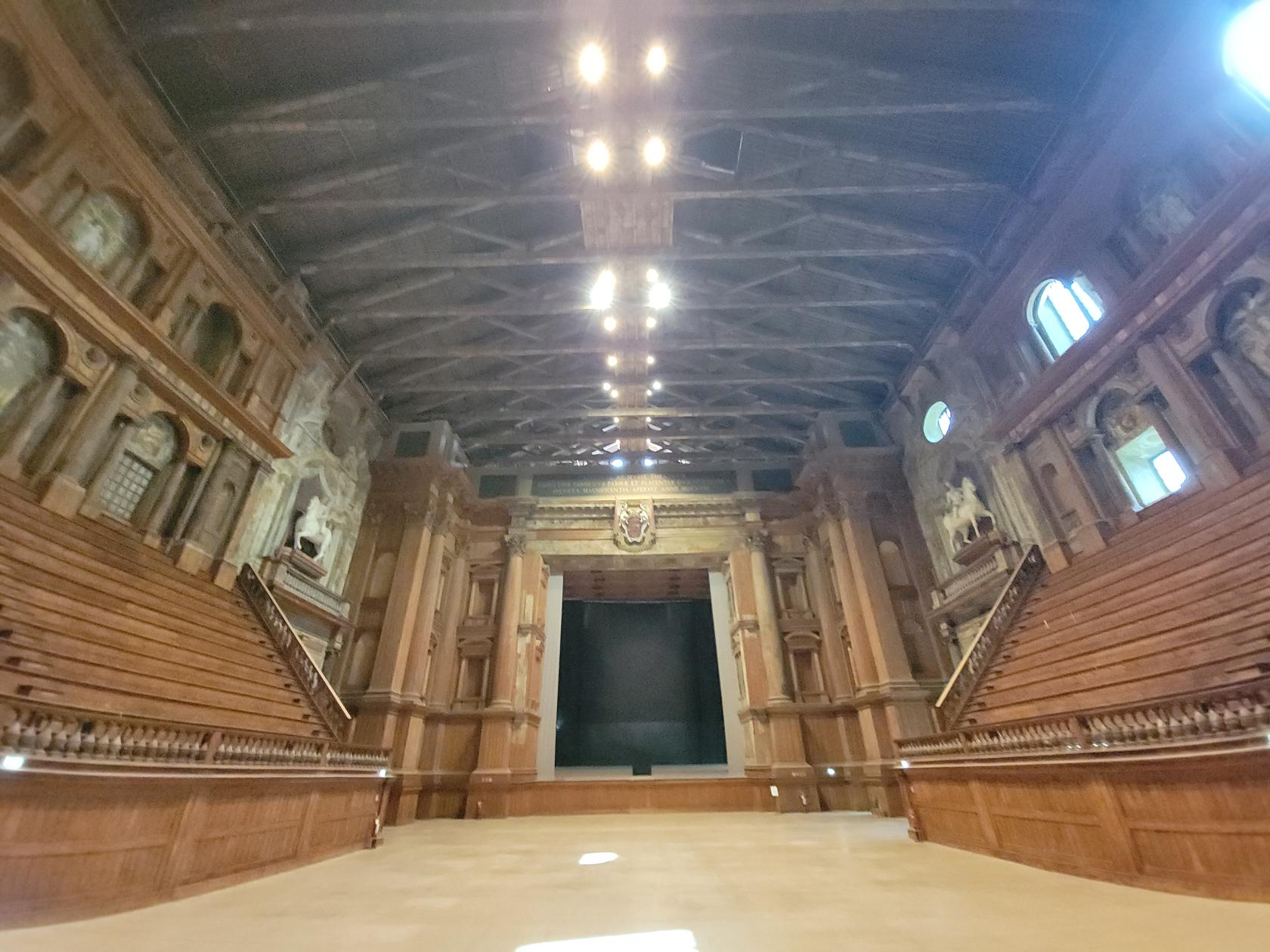
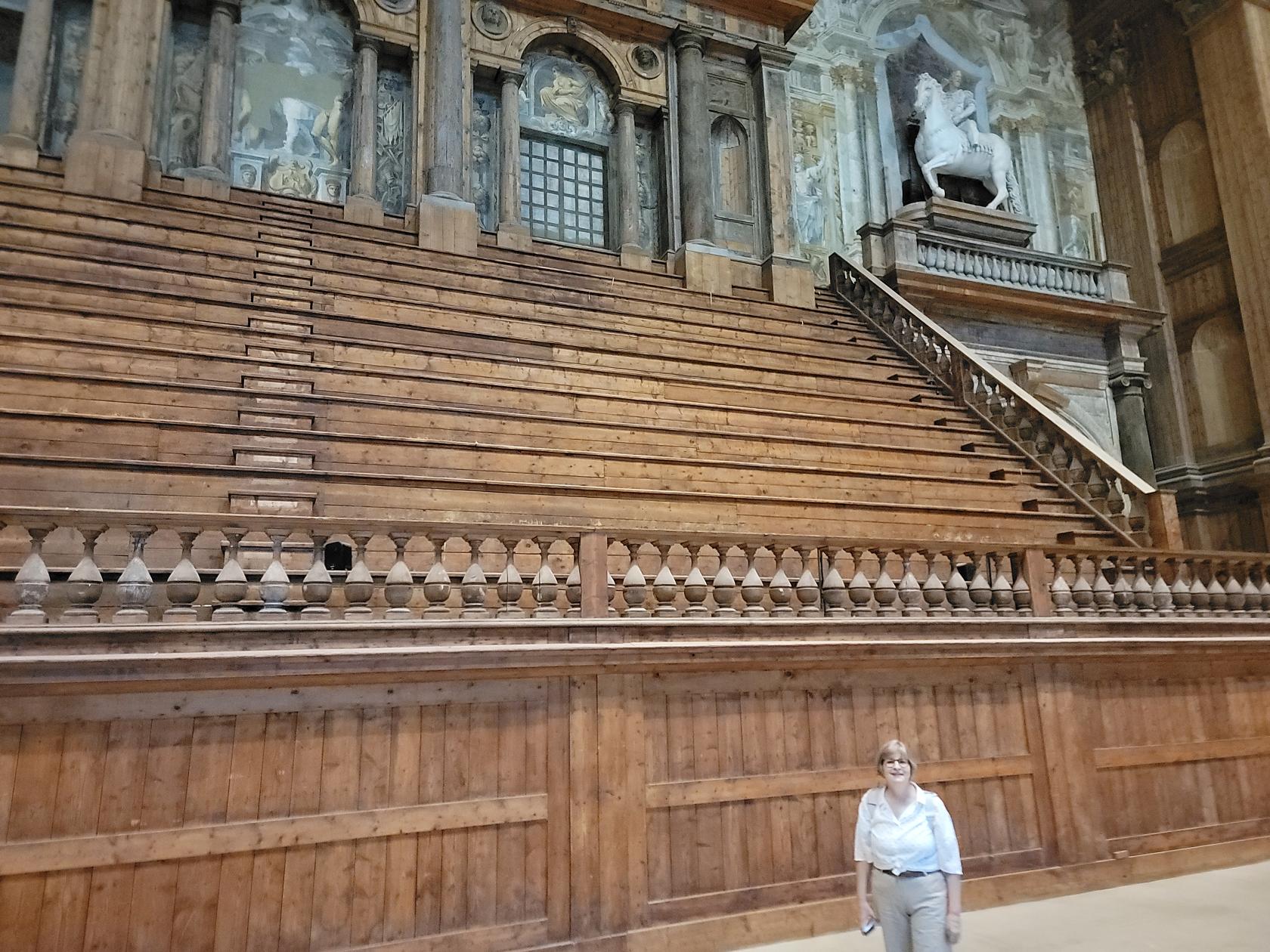
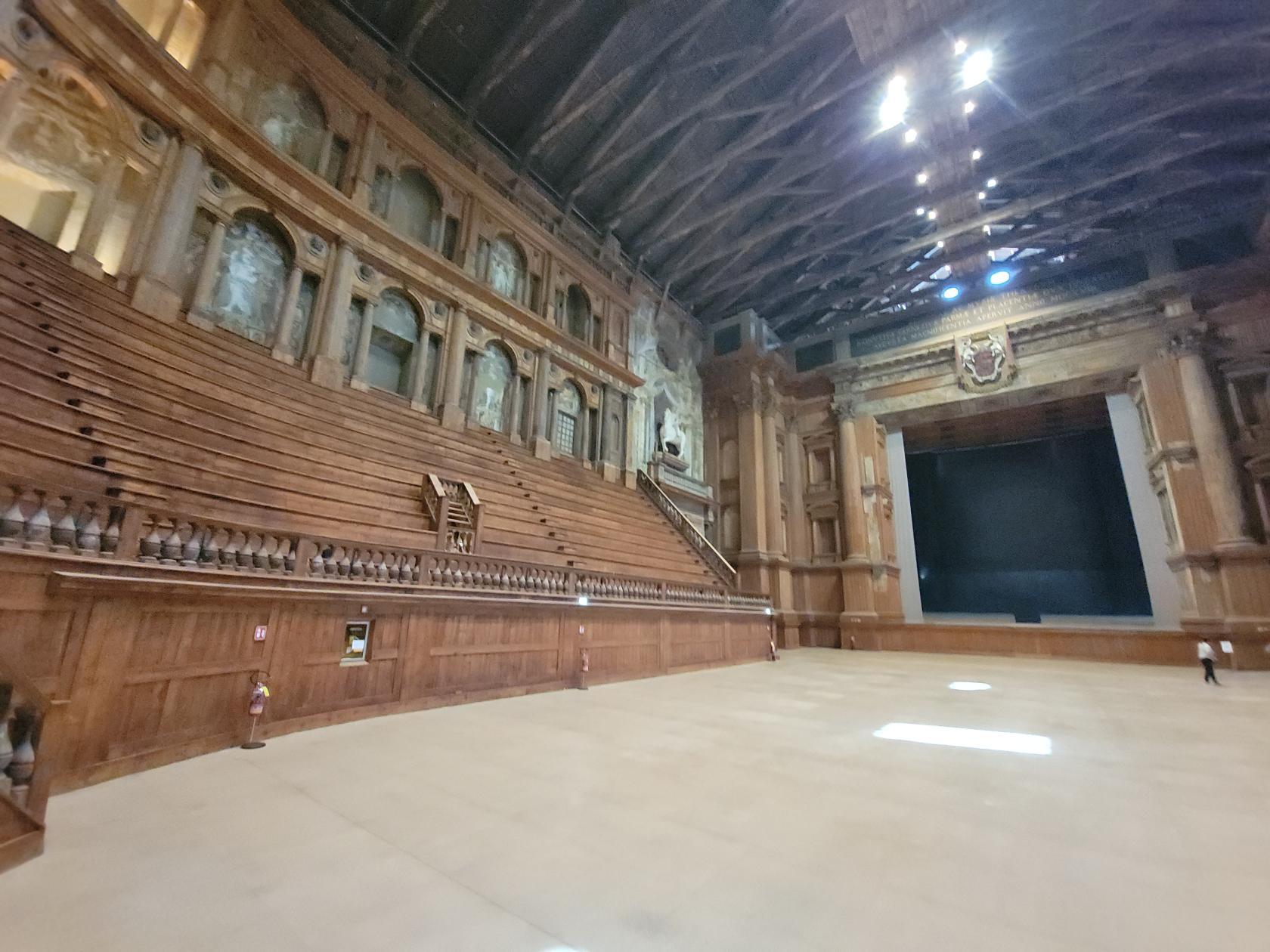
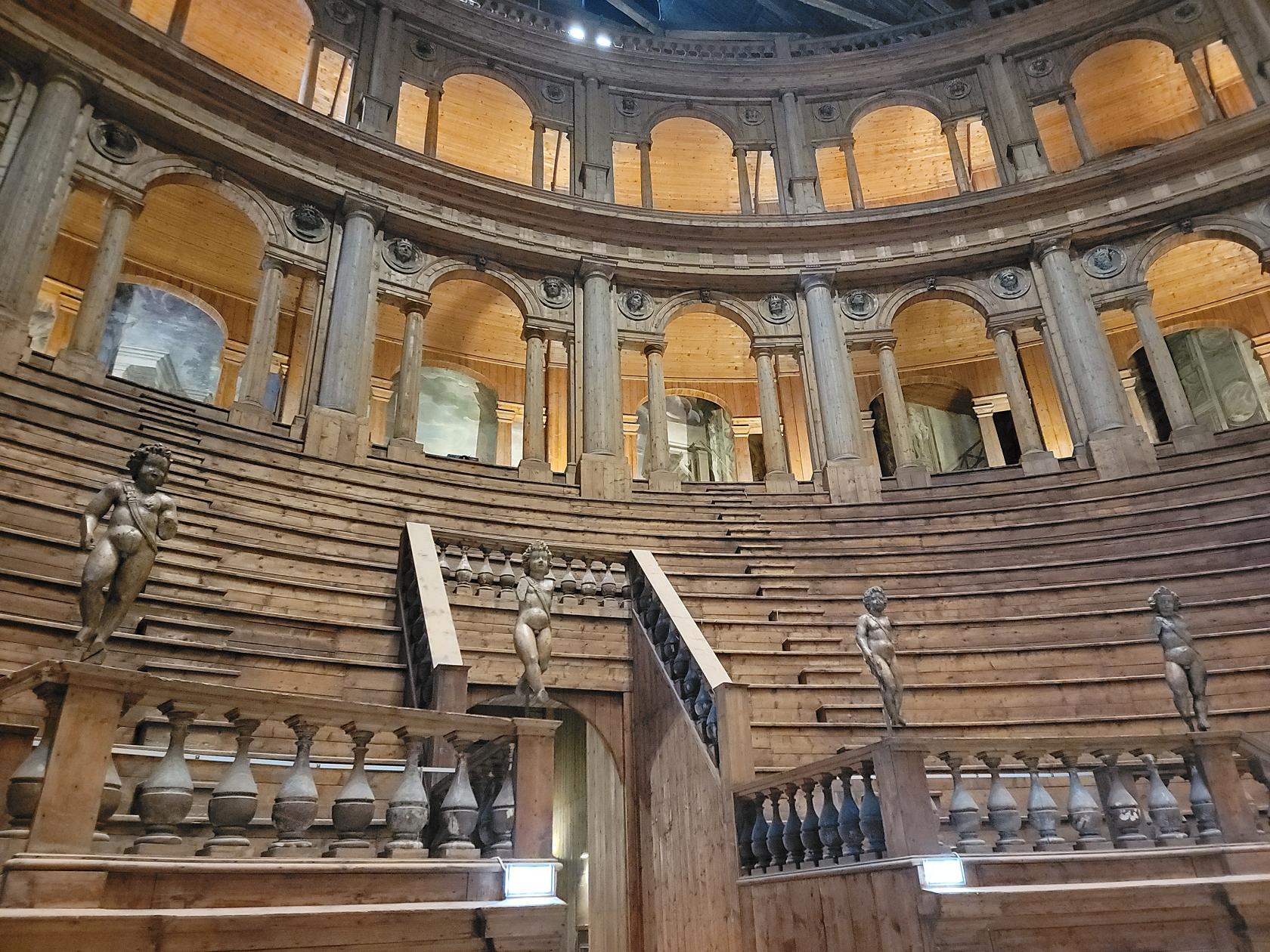
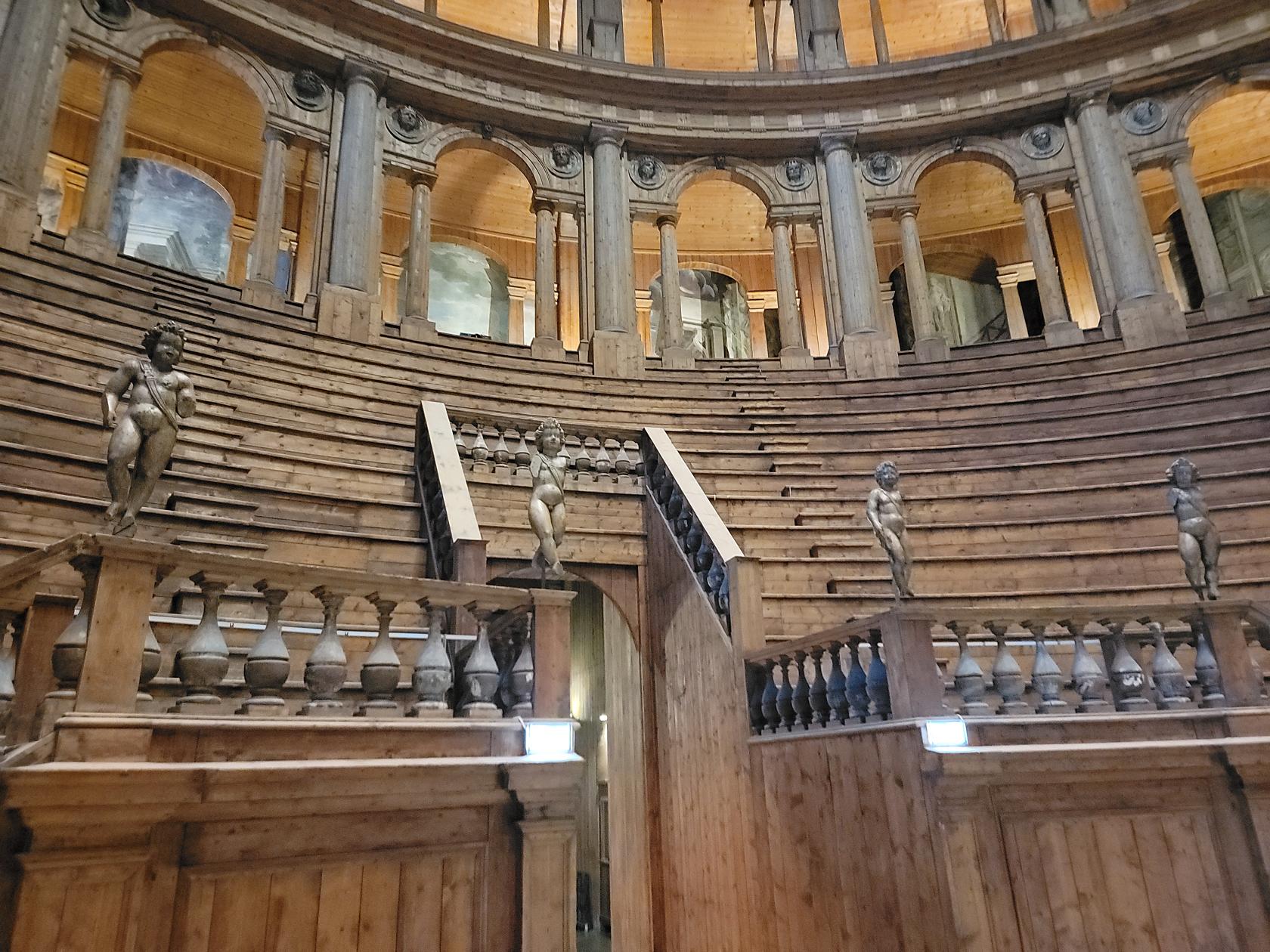
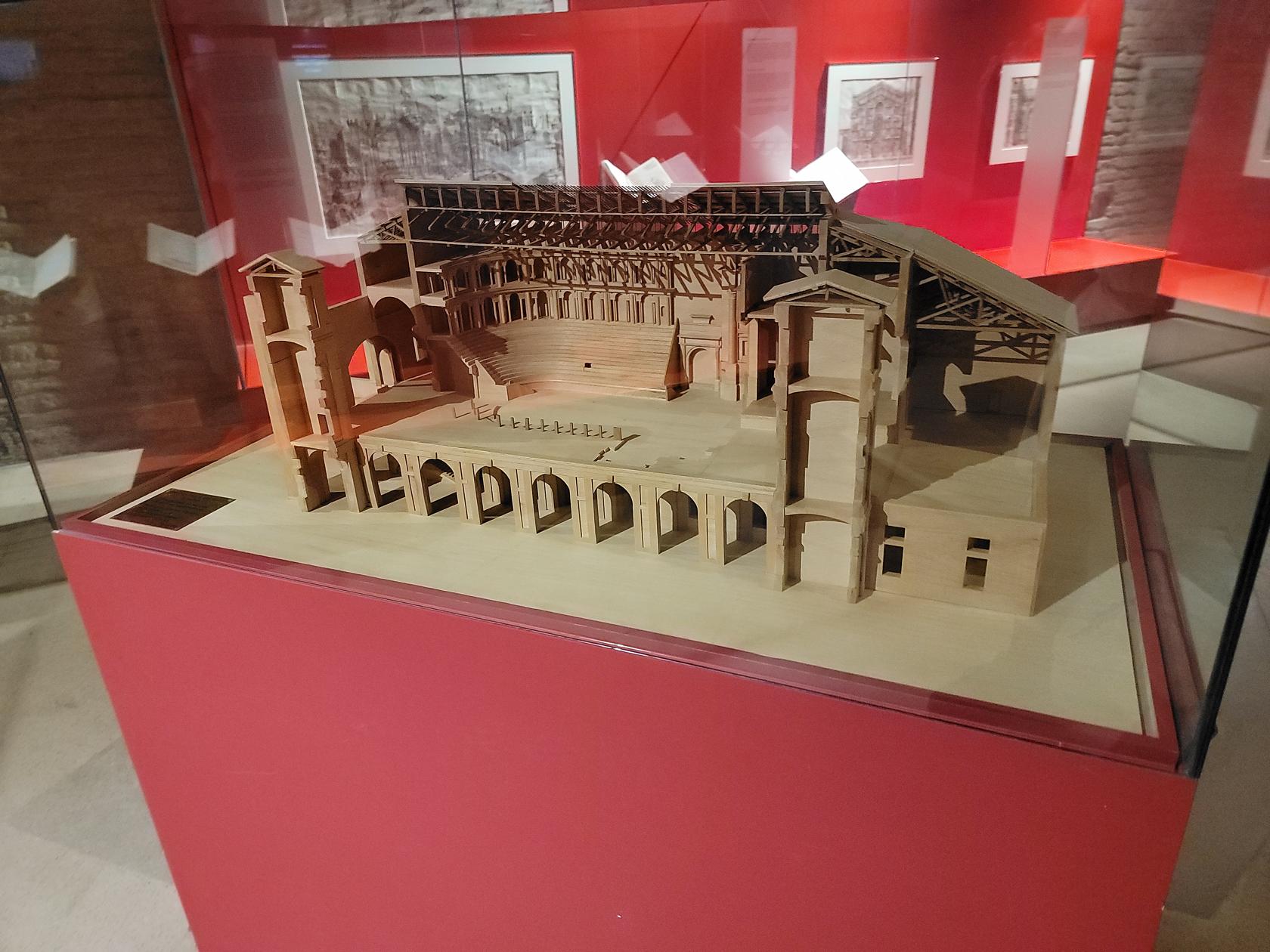
The Farnese Theater is actually a rather bizarre construction. Built within a very large room of the palace is a theater that was constructed quickly, in order to entertain some political majistrate of the Medici family. However, the event never took place and subsequent to it completion, it was only used eight or nine times.
It eventually succumbed to allied bombings in the mid 1940s and was almost completely destroyed and then rebuilt later, for cultural reasons. Though none of the plaster exterior has never been replaced, as is evident by the missing ceiling, it still enjoys a woddy charm. Luckily, the old frescoes survived and can still be seen today.
Backstage Elements – Farnese Theater – Pillota Museum Complex – Parma, Italy
Galleria Nazionale di Parma
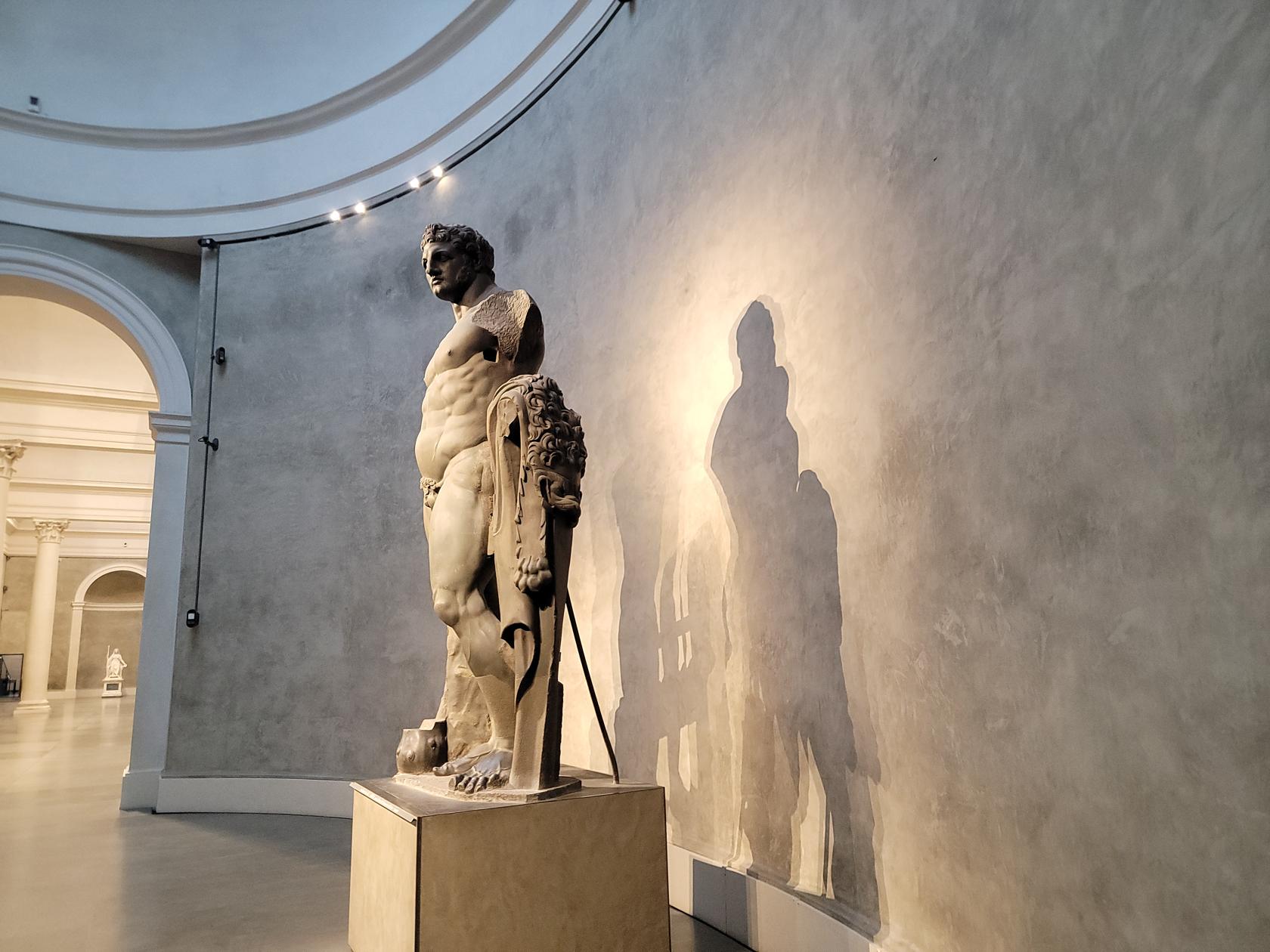
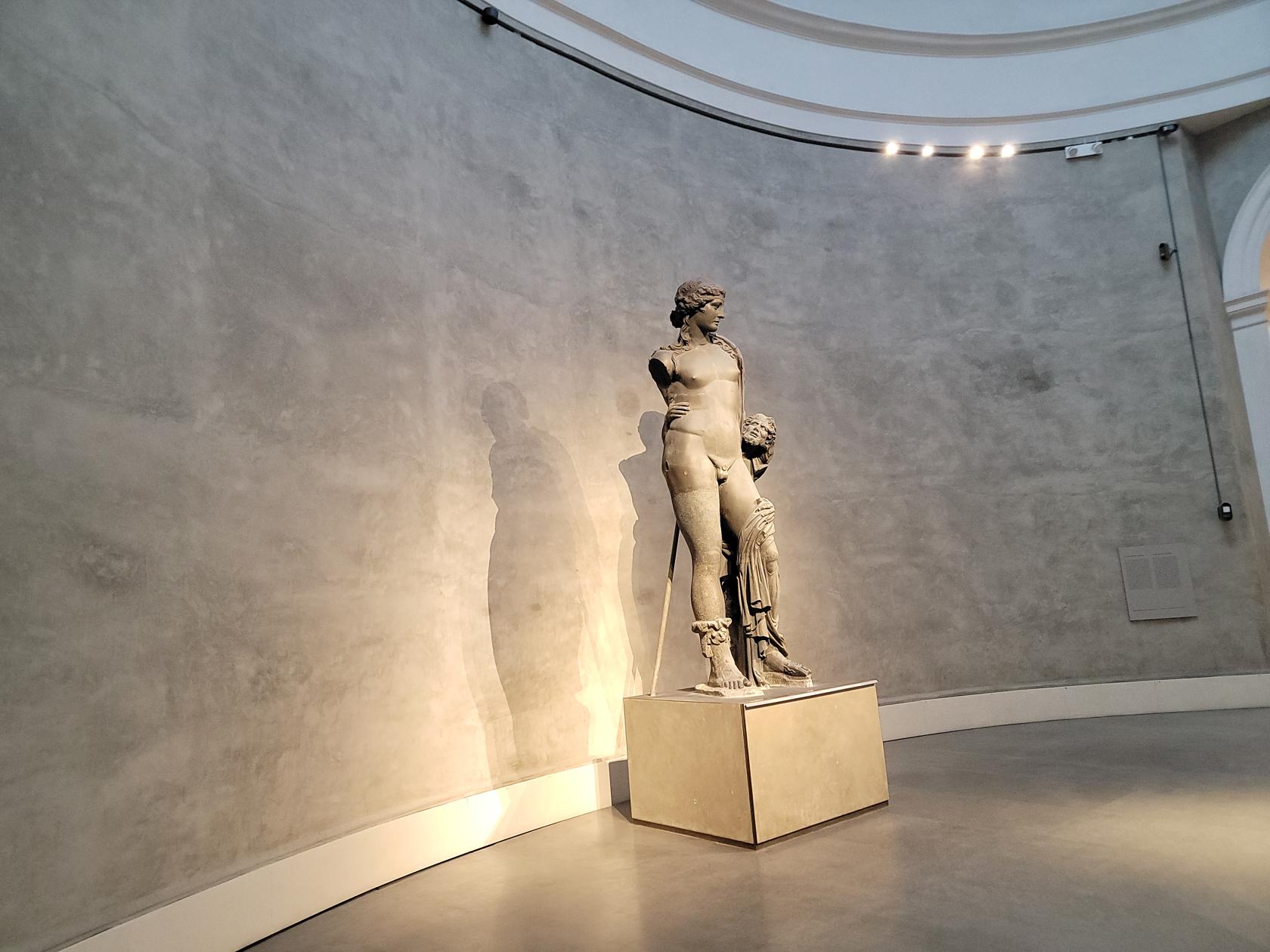
The entrance to the National Gallery is flanked by two huge statues. One of Dionysus and the other or Hercules. They are both impressive in their own right, with the one of Hercules looking like it is right on the boundary of the human anatomy.
Hercules – National Gallery – Pillota Museum Complex – Parma, Italy
Dionysus – National Gallery – Pillota Museum Complex – Parma, Italy
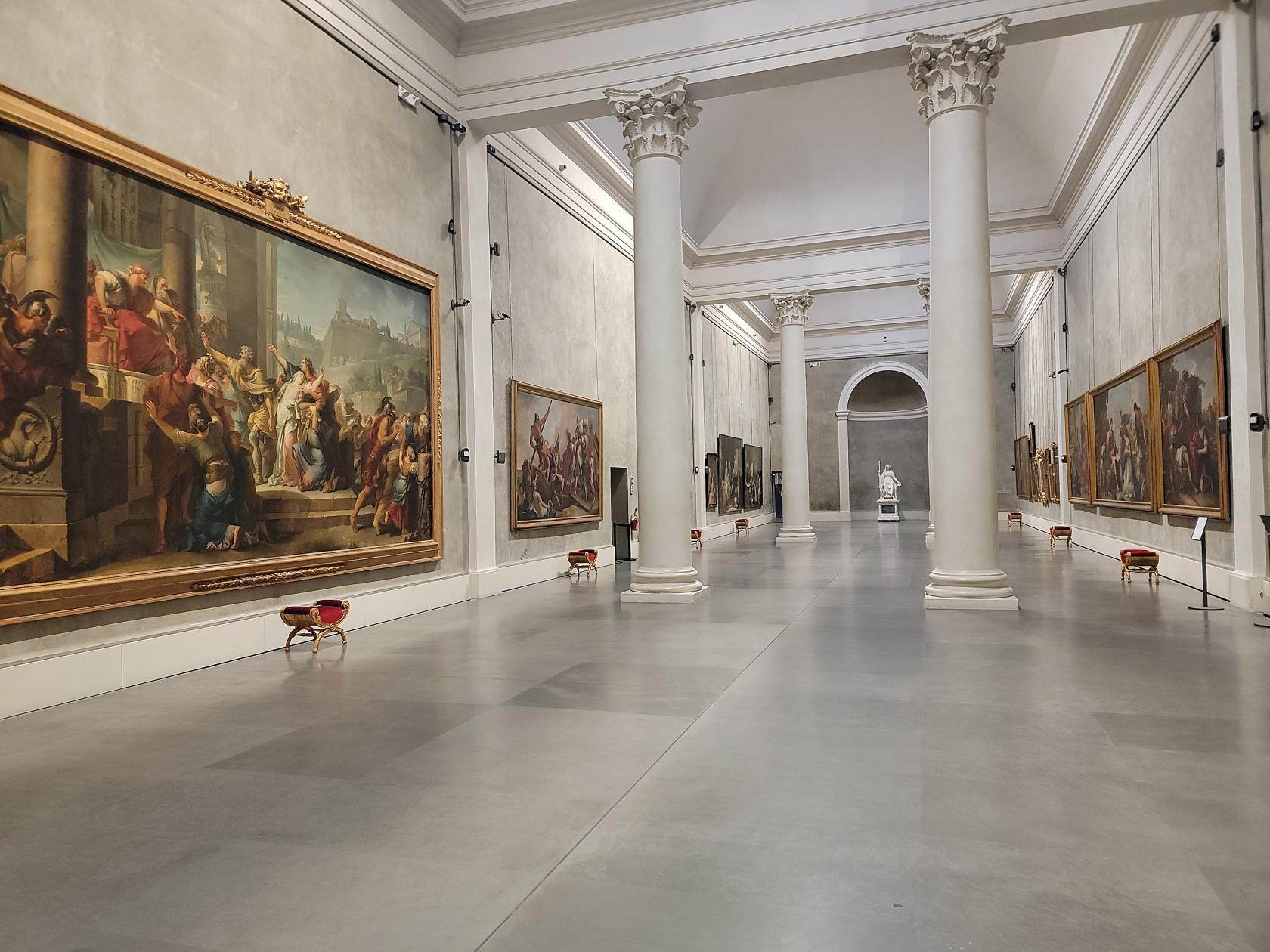
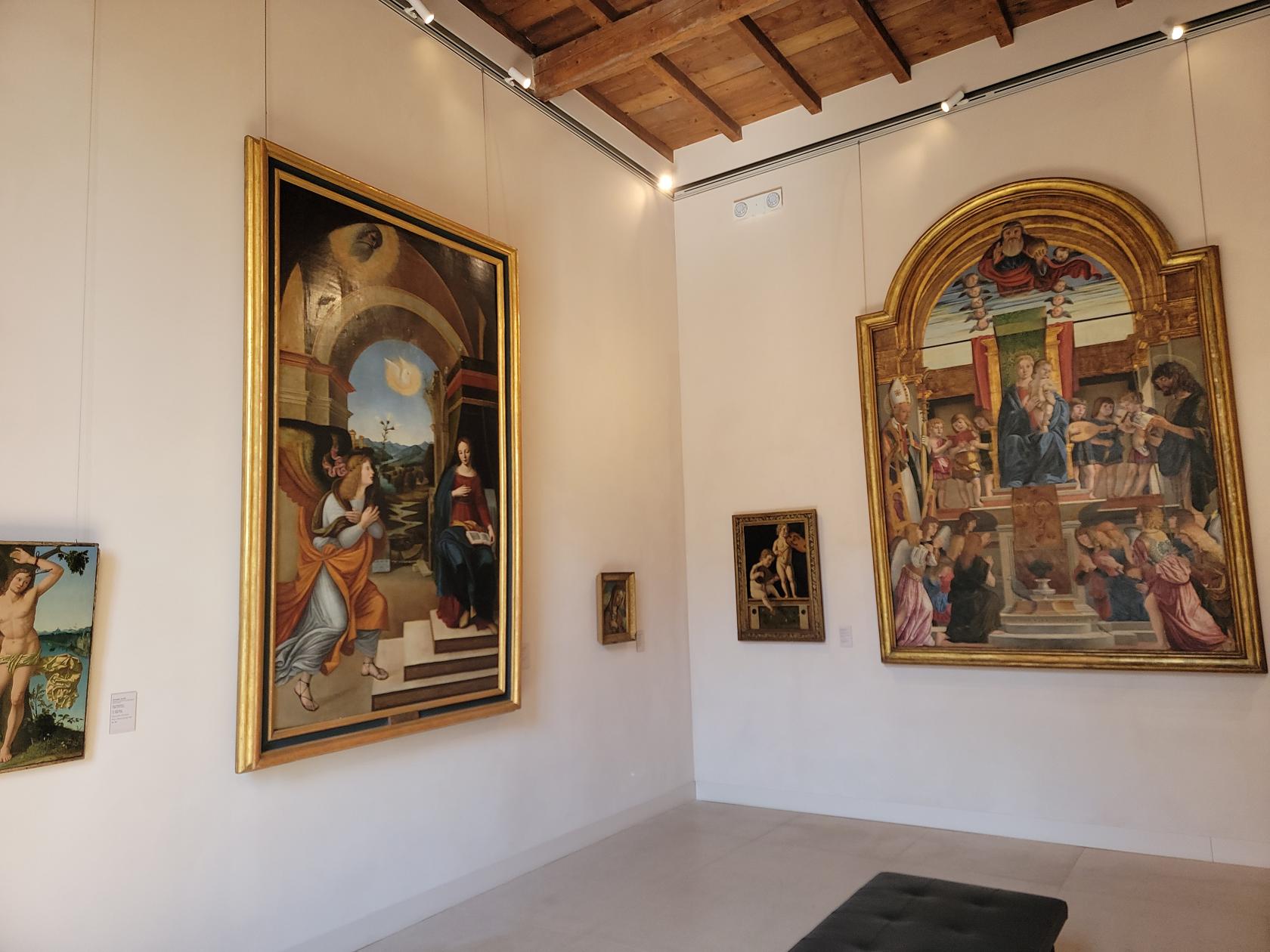
The rest of the gallery houses a myriad of large paintings in its large hall. Unfortunately there are no benches or seating to admire them, so one can only slowly walk by or stand in front of them for a bit, in order to admire them.
Main Room – National Gallery – Pillota Museum Complex – Parma, Italy
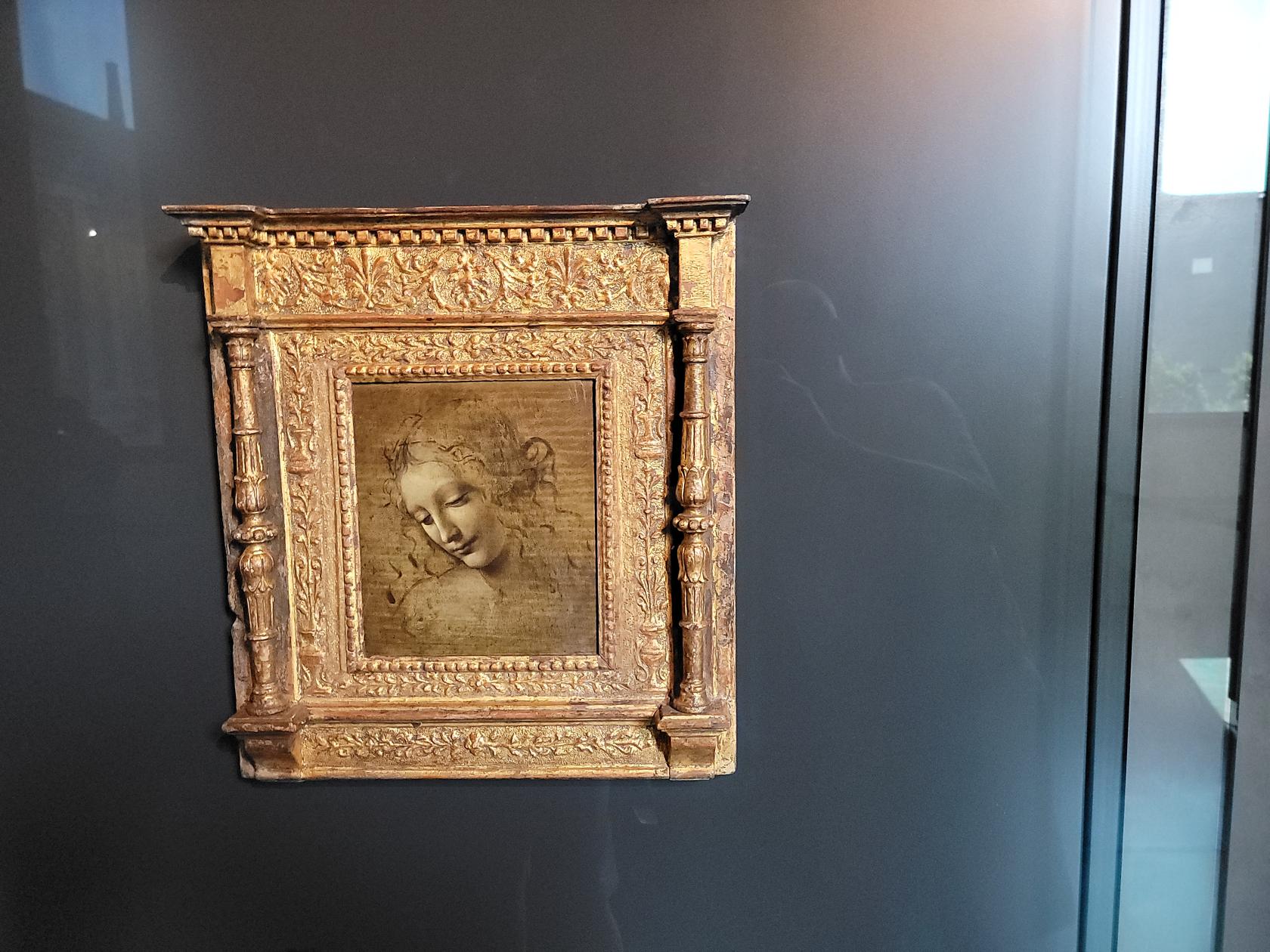
As of this writing, the back of the gallery held the real prize for a visitor, a work by Leonardo da Vinci called the head of a woman, or “La Scapiliata”. One can see similarities with her face and that of the Mona Lisa, which was painted some time after and is now in the Louvre in Paris, France.
Head of a Woman “La Scapiliata” – Leonardo da Vinci, Vinci, 1452 – National Gallery – Pillota Museum Complex – Parma, Italy
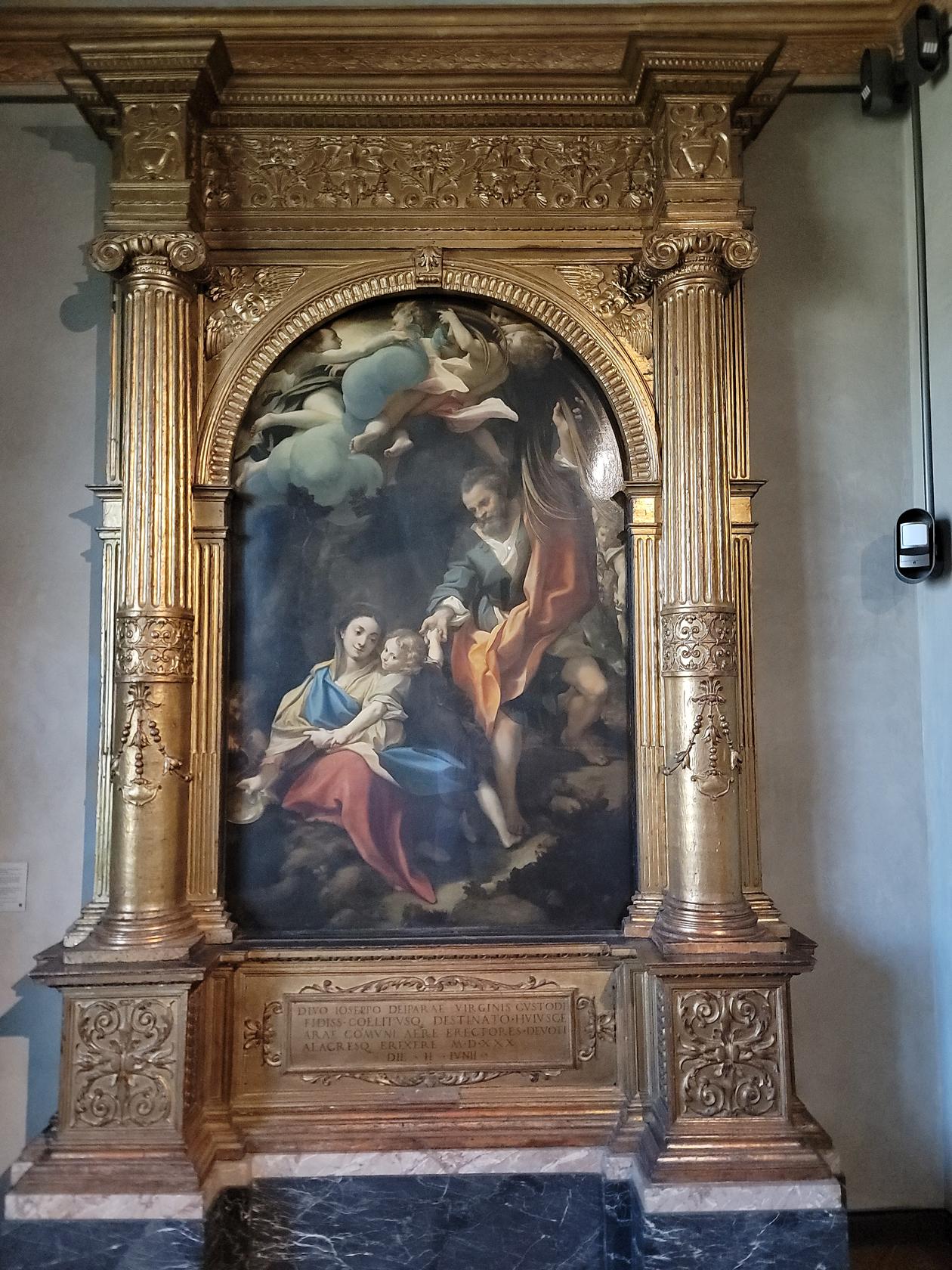
Madonna of the Bowl, Rest after the Return from Egypt – Antonio Allegri detto il Correggio, 1489 – National Gallery – Pillota Museum Complex – Parma, Italy
Palatina Library
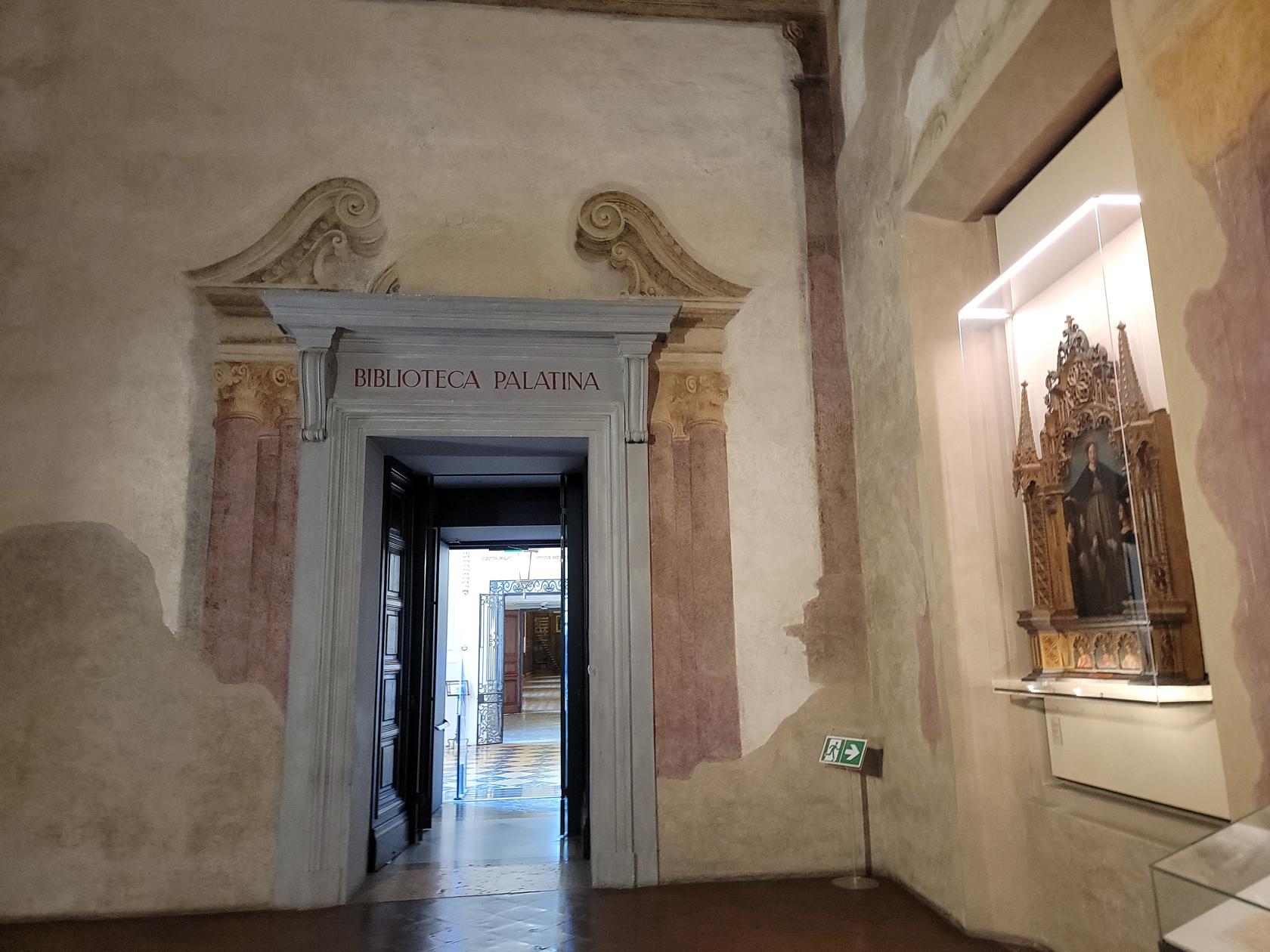
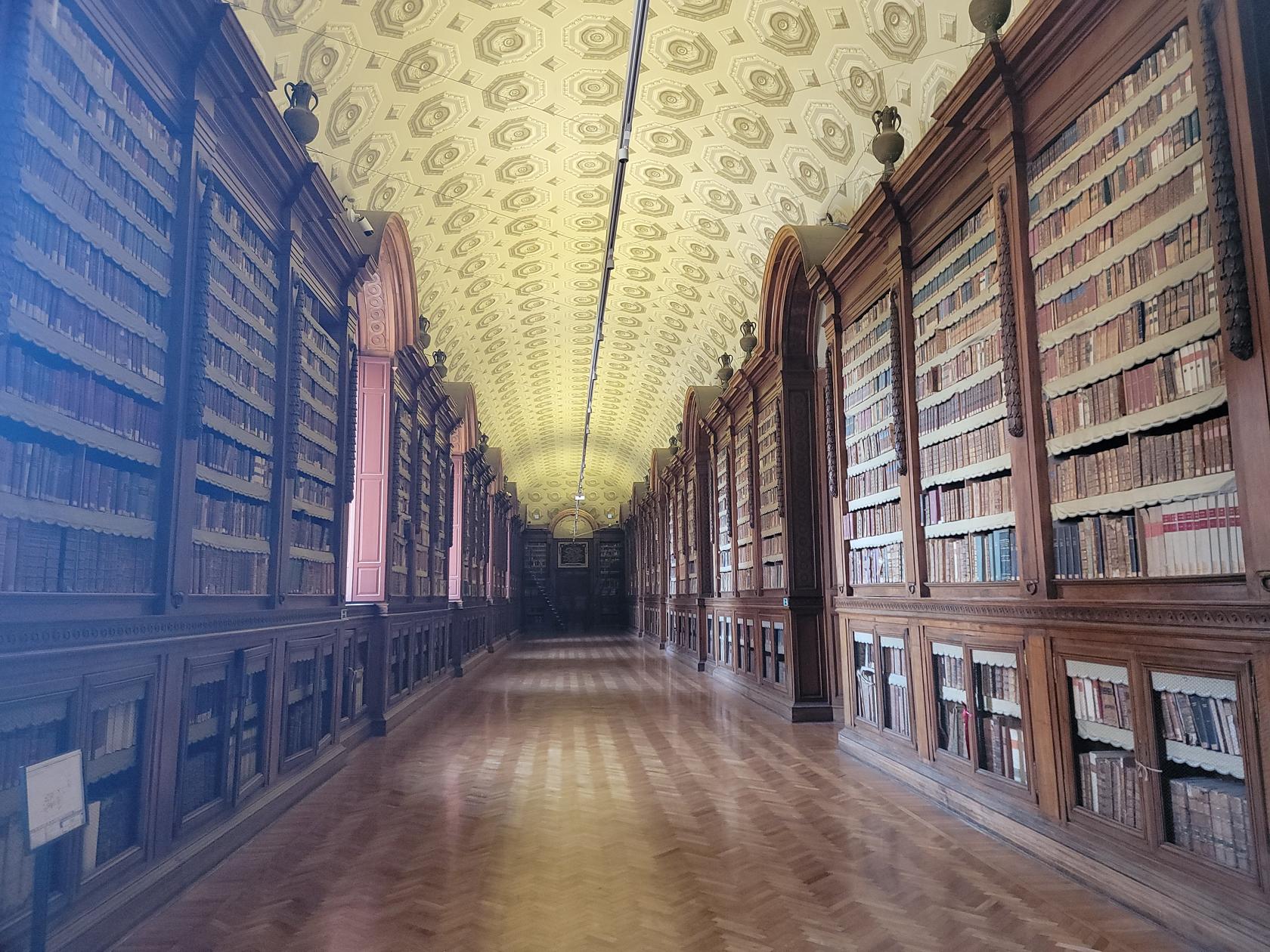
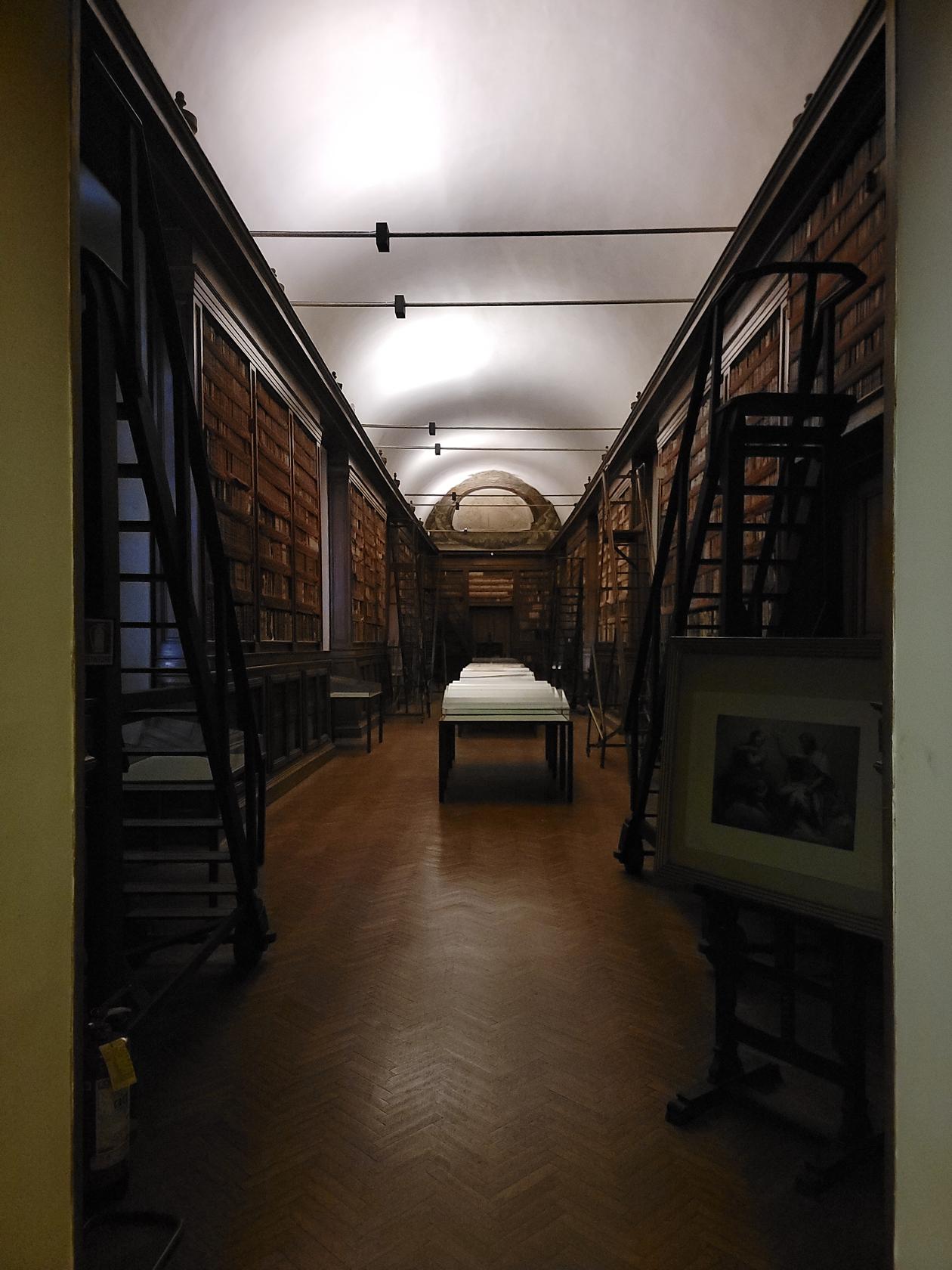
The Palatina Library is a large library that is still functioning, although for academic and research purposes only. However, the Petitot Gallery is still open to the public, where one can find a wide variety of topics, mostly in Italian of course.
Art Exhibits in Entrance – Palatina Library – Pillota Museum Complex – Parma, Italy
One Hall – Palatina Library – Pillota Museum Complex – Parma, Italy
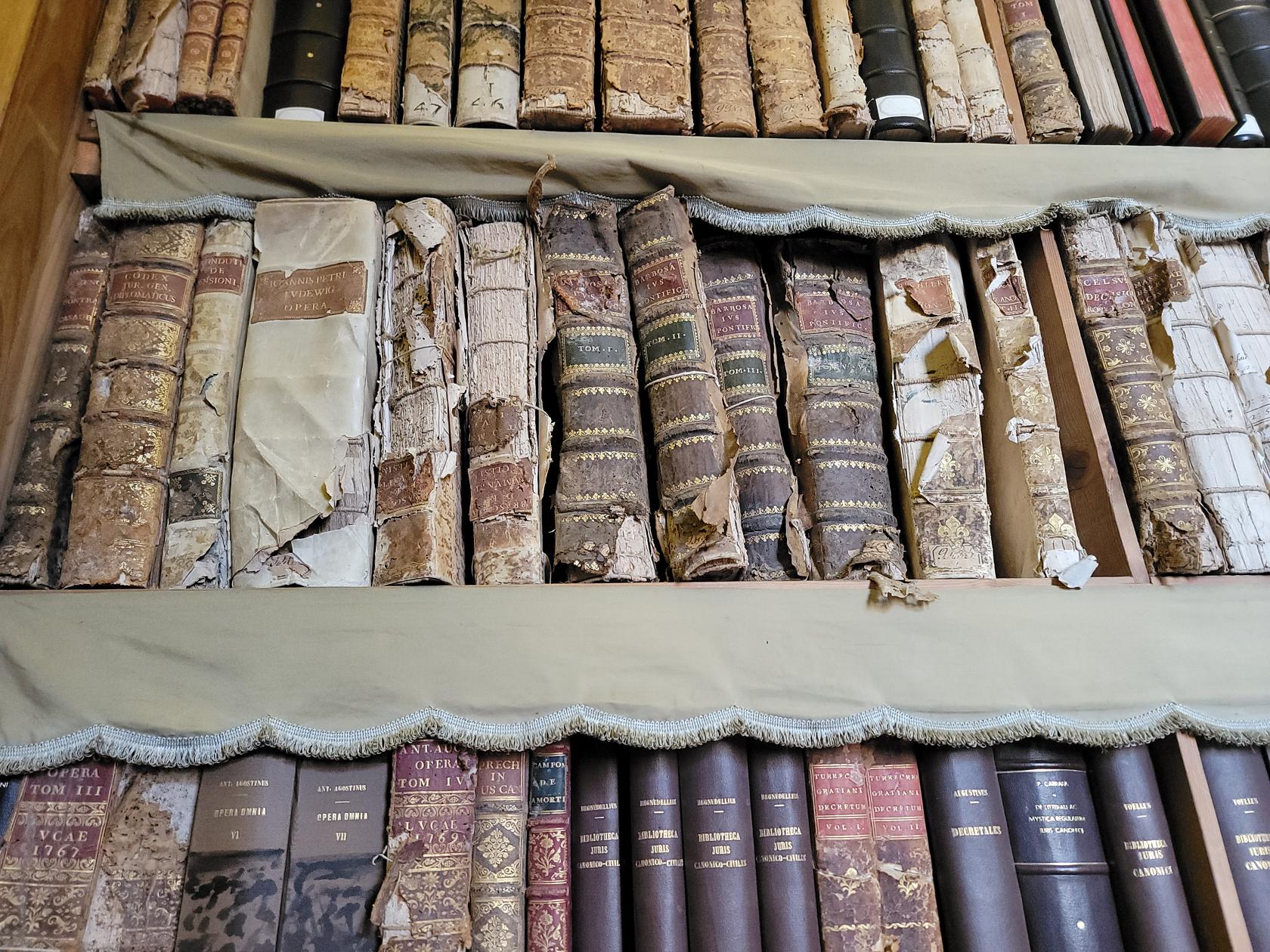
Old Books – Palatina Library – Pillota Museum Complex – Parma, Italy
Side Hall – Palatina Library – Pillota Museum Complex – Parma, Italy
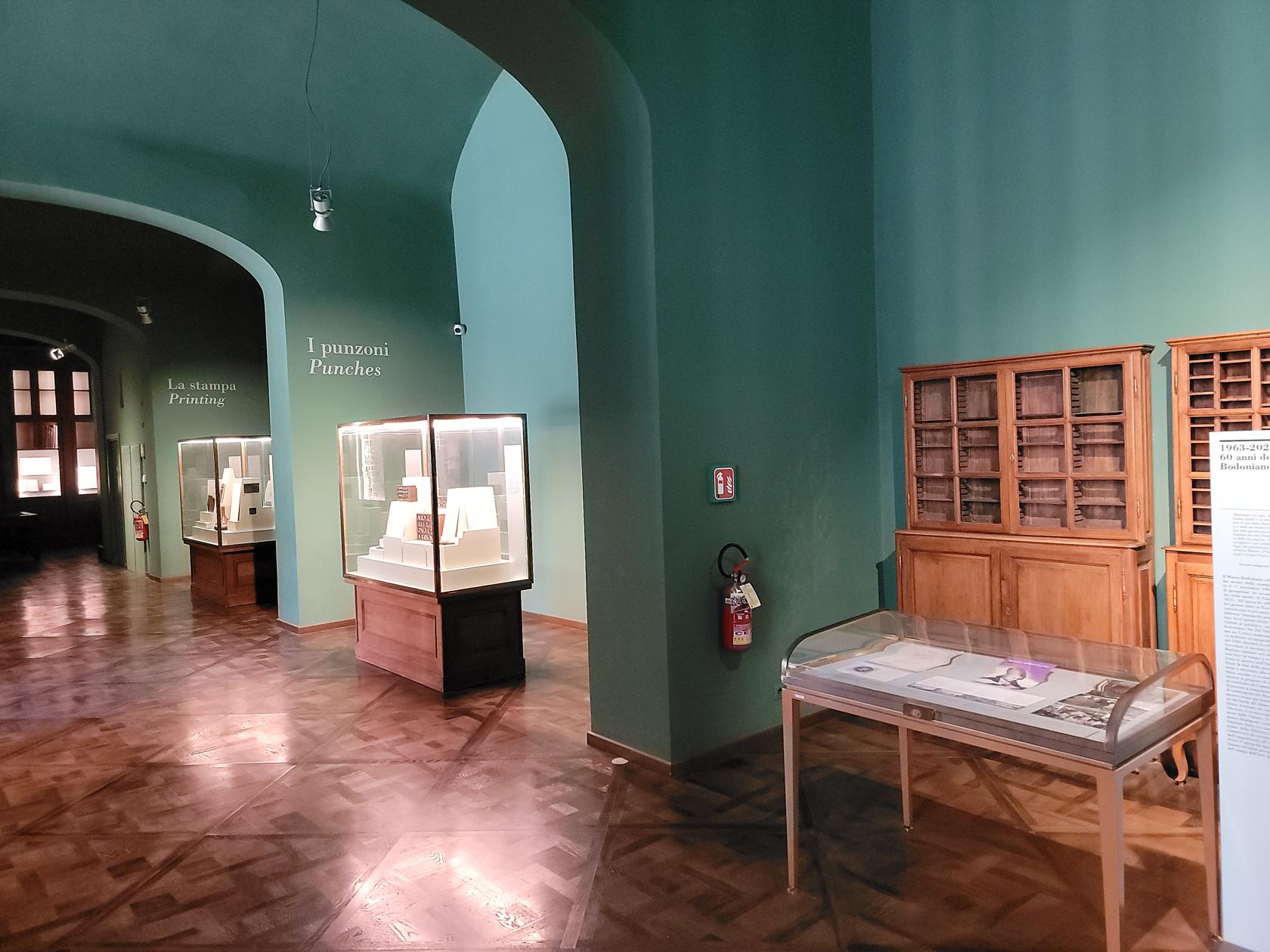
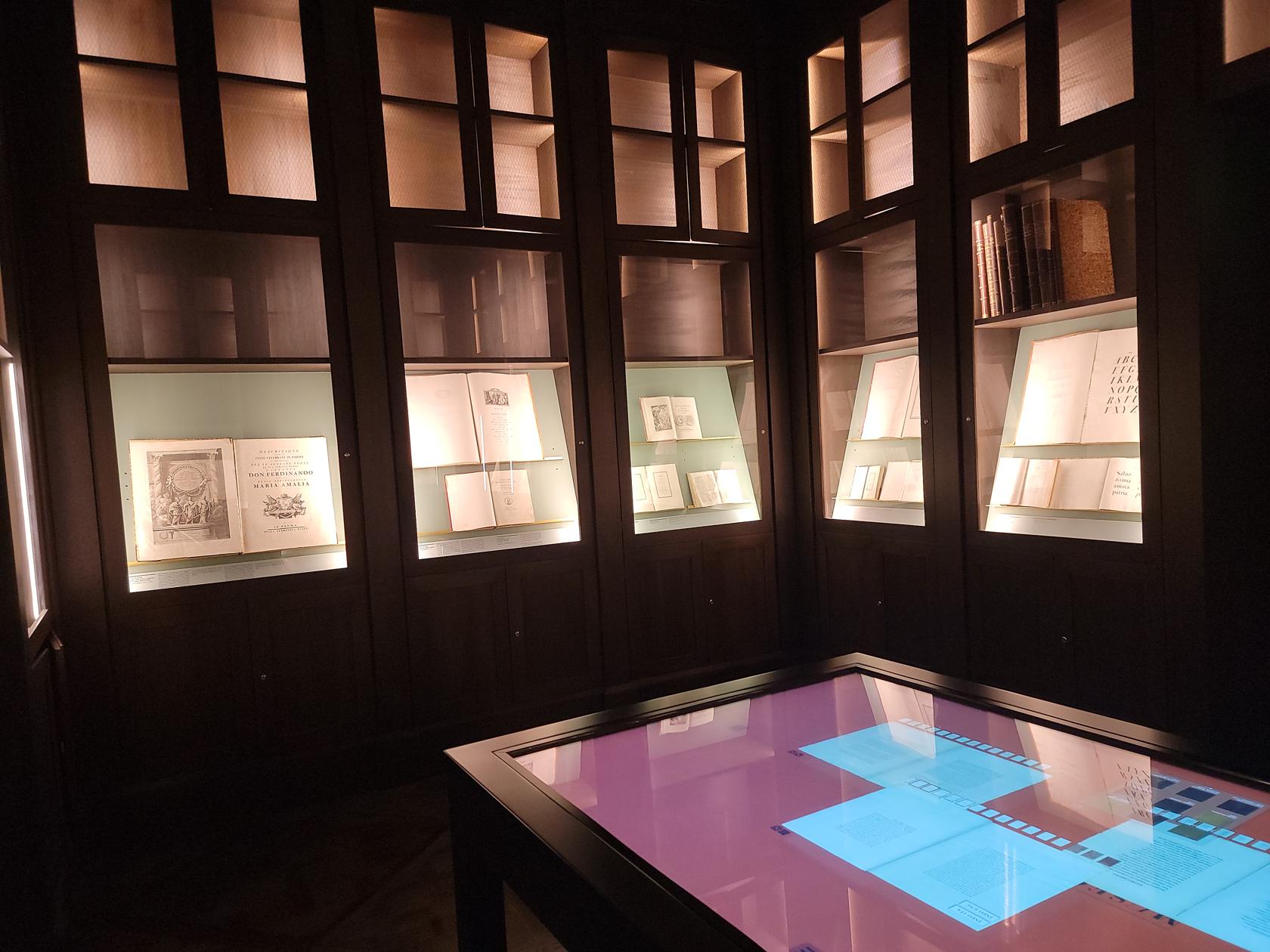
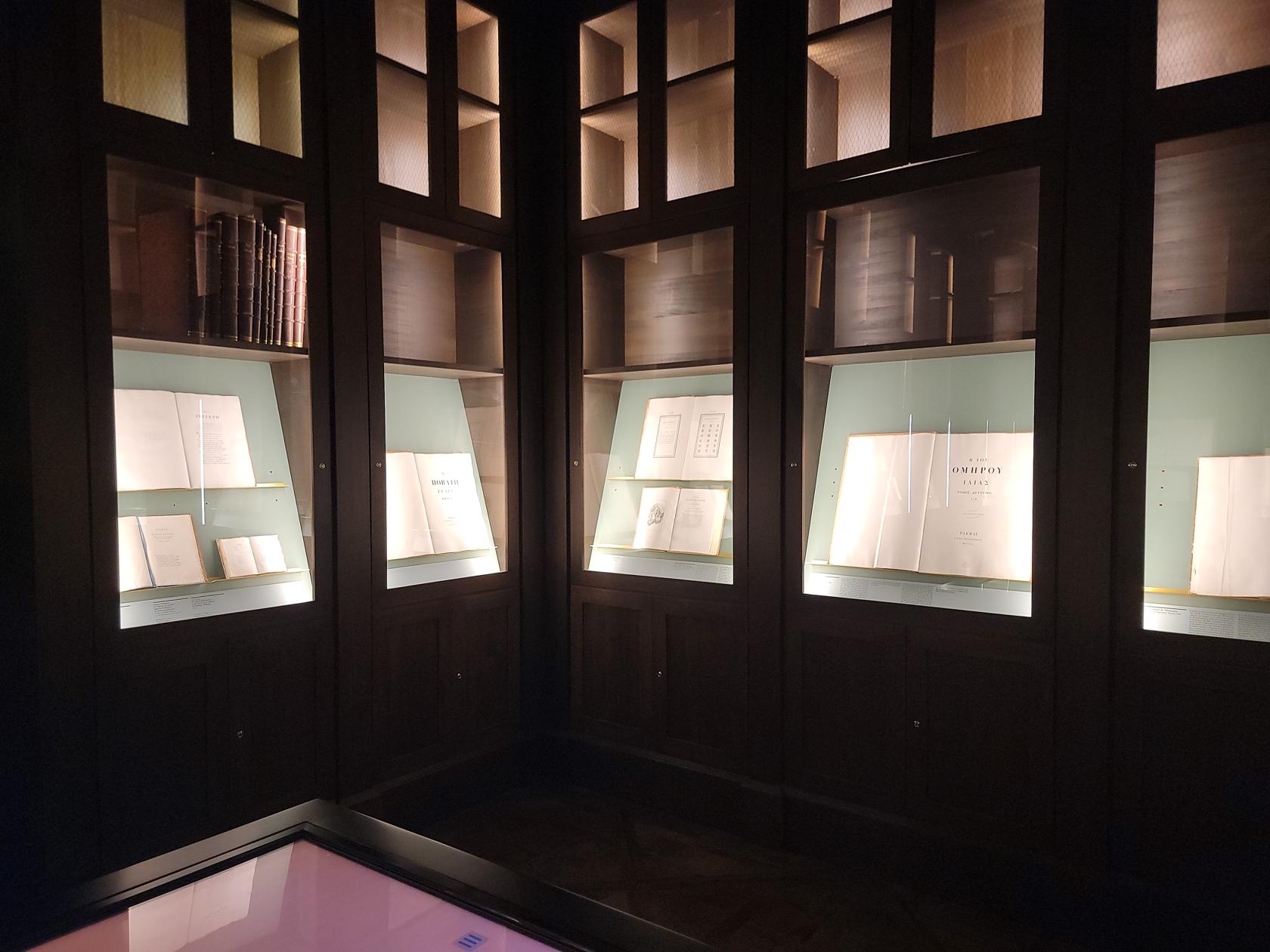
The Bodoni Museum
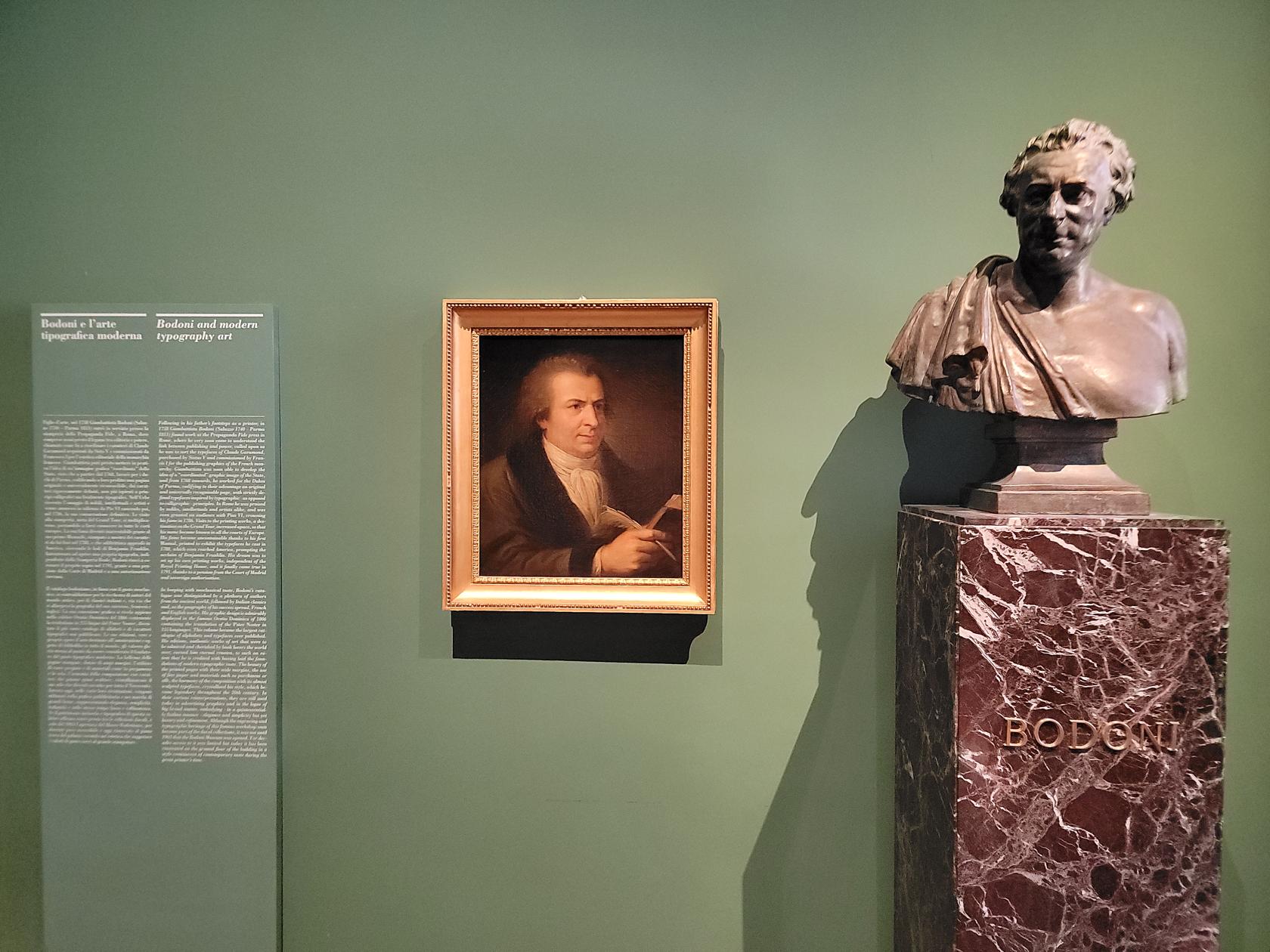
Anyone who has taken typesetting in school would enjoy the Bodoni Museum. The museum honors the famous Parma typesetter and printer, Giambattista Bodoni, and his eponymous typeface as well. The Bodoni typeface was a favorite of mine in high school, where I learned the intricacies of setting type. I loved its clean lines and serifs, using it to print a set of invitations for my mother at one time[1]To use the museum’s own words, “The severe, neoclassical imprint of the letters, characterized by the stark contrast between the thickness of the strokes and the thinness of the lines and … Continue reading.
Bodoni Bust and Painting – Bodoni Museum – Pillota Museum Complex – Parma, Italy
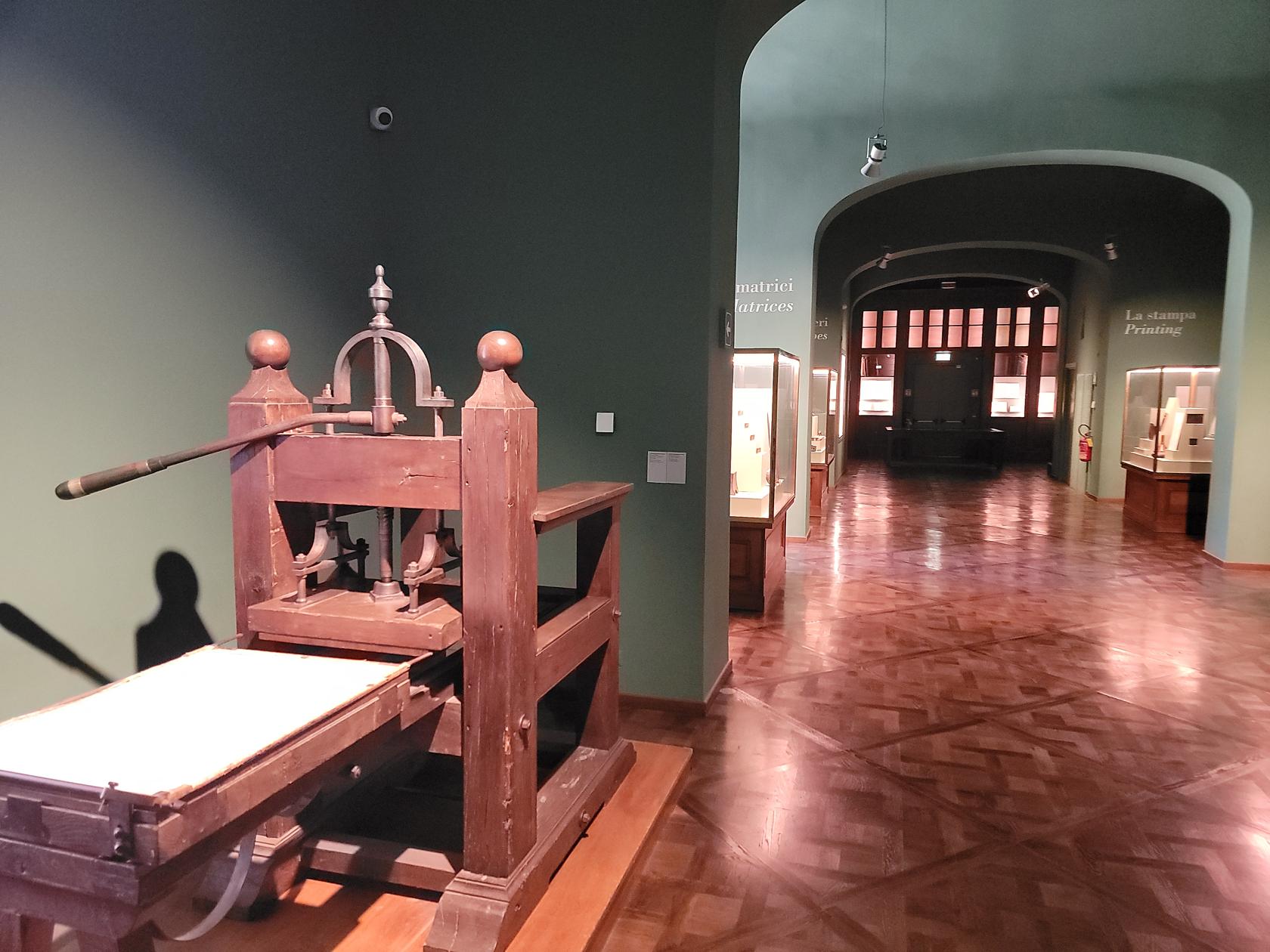
Printing Press – Bodoni Museum – Pillota Museum Complex – Parma, Italy
Stories of Punching and Printing – Bodoni Museum – Pillota Museum Complex – Parma, Italy
Typesetting Examples – Bodoni Museum – Pillota Museum Complex – Parma, Italy
Typesetting Examples – Bodoni Museum – Pillota Museum Complex – Parma, Italy
Restaurants
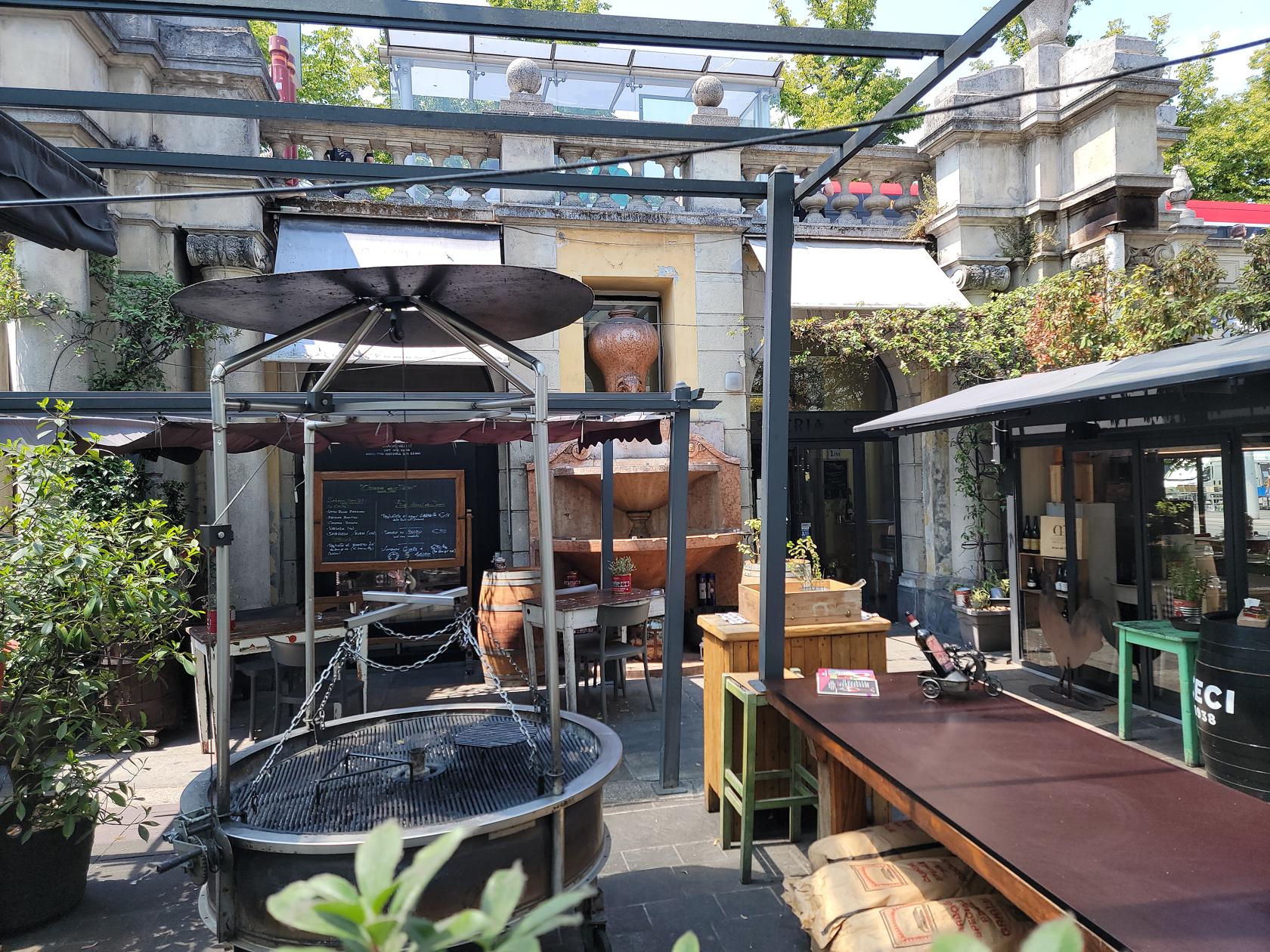
You will find most of the non-industrial restaurants away from the main shopping street of Strada Cavour. Reservations are recommended, even for lunch, for these are often used by locals and the business crowd. Most of the Osterias and Trattorias serve wine by the tap in quarter, half and full liter sizes, whereas the corporate restaurants on Cavour serve only by the glass, so they can up-charge for it, like in the United States.
Osteria dei Servi
The Osteria dei Servi is actually housed under the Viale Giovanni Mariotti and has a rather odd entrance. But don’t let that fool you. The restaurant is actually quite nice inside and comfortable. The food is excellent and typical for the area.
Entrance – Osteria die Servi – Parma, Italy
Inside – Osteria die Servi – Parma, Italy
Bar – Osteria die Servi – Parma, Italy
Patti – Osteria die Servi – Parma, Italy
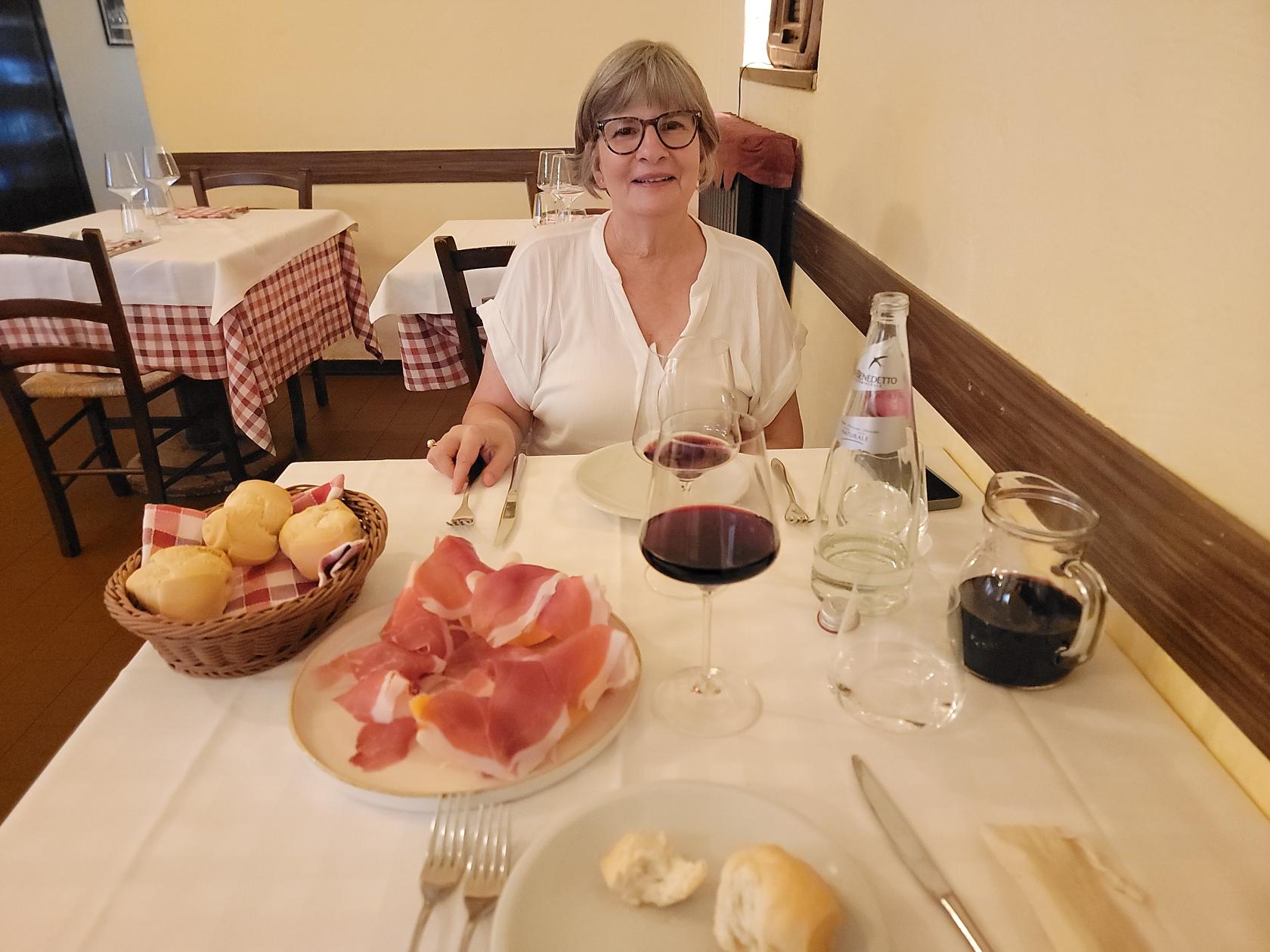
Bread and Patti’s Dinner – Osteria die Servi – Parma, Italy
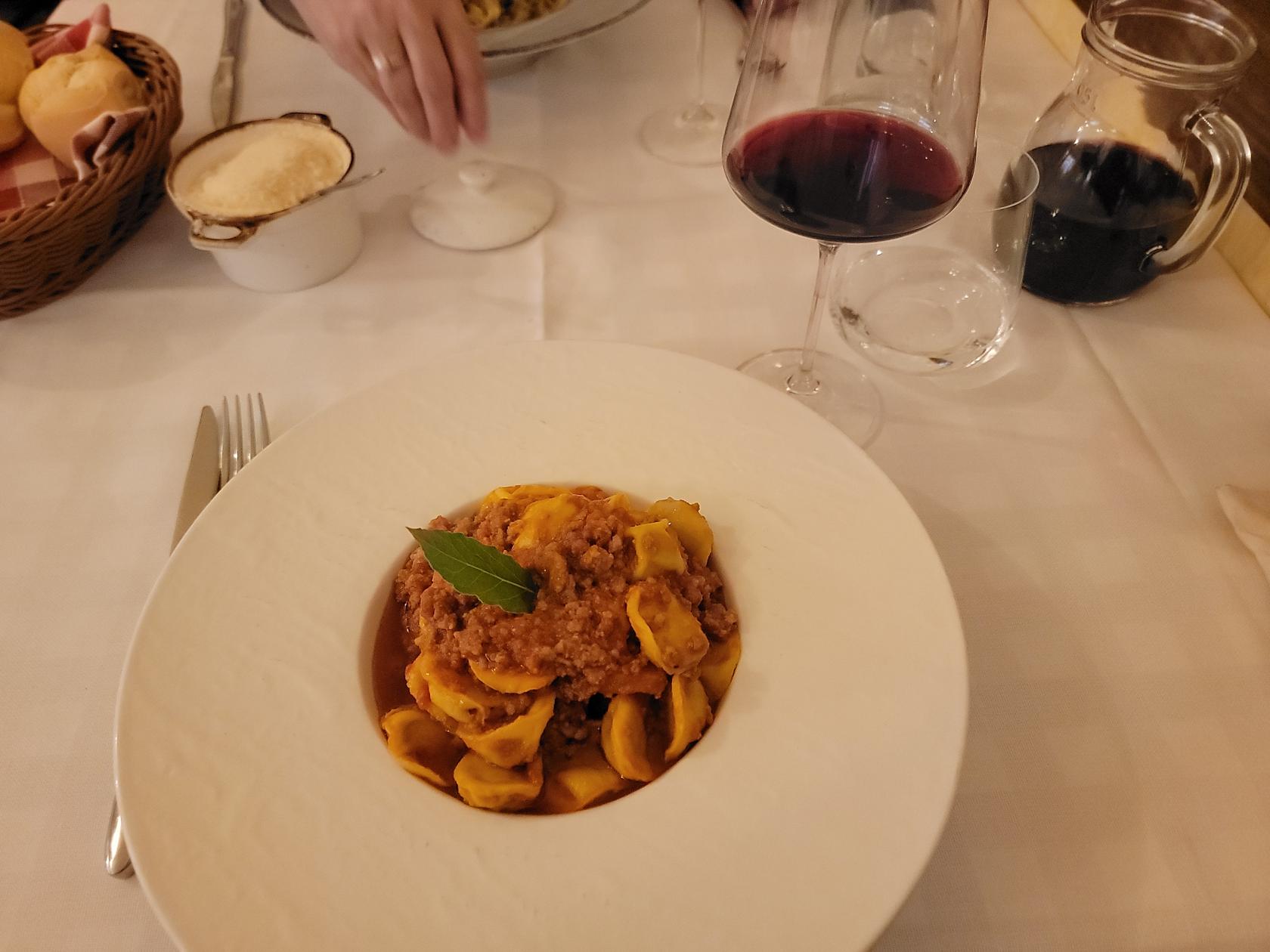
Ravioli – Osteria die Servi – Parma, Italy
Trattoria Corrieri Parma
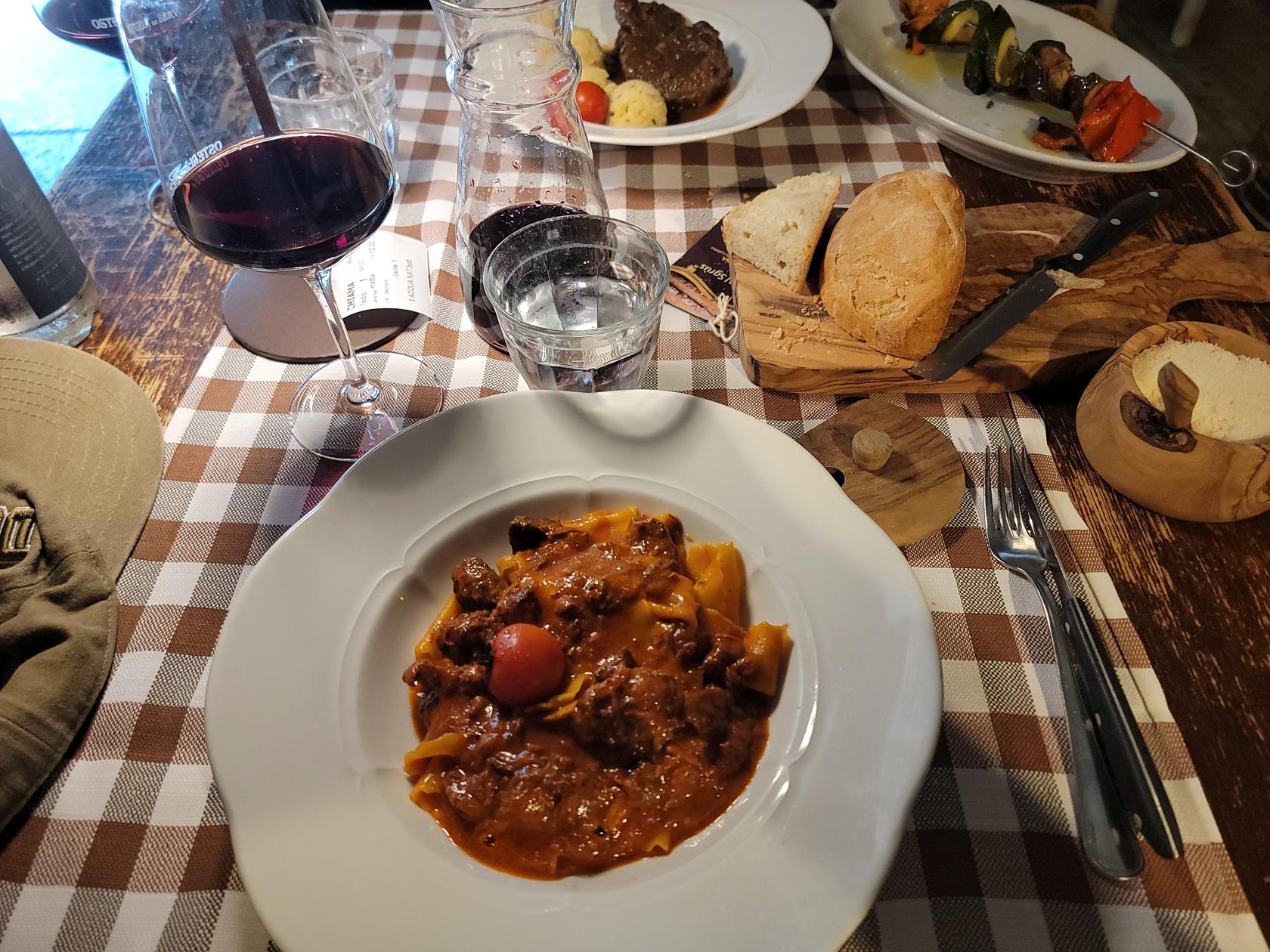
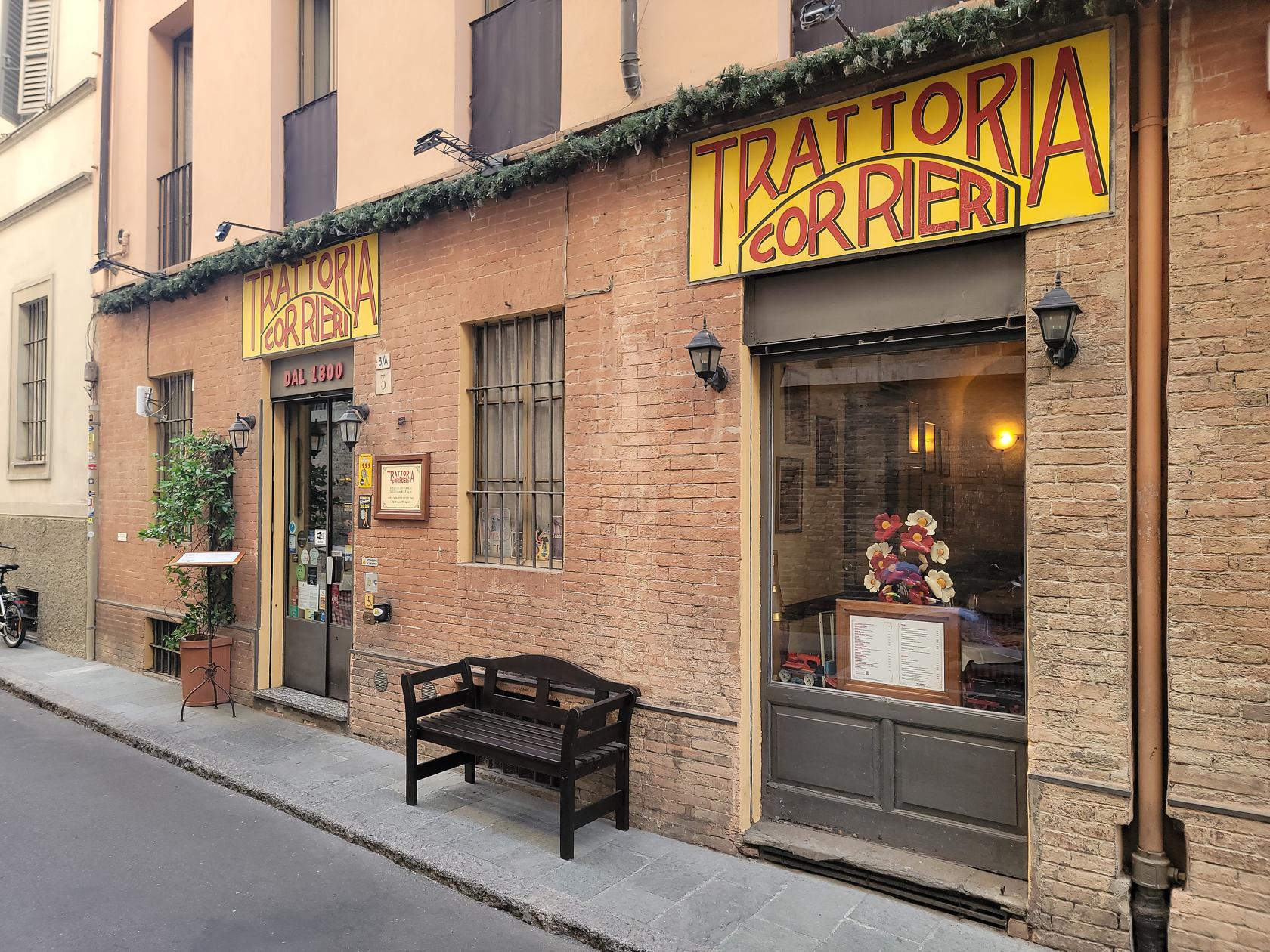
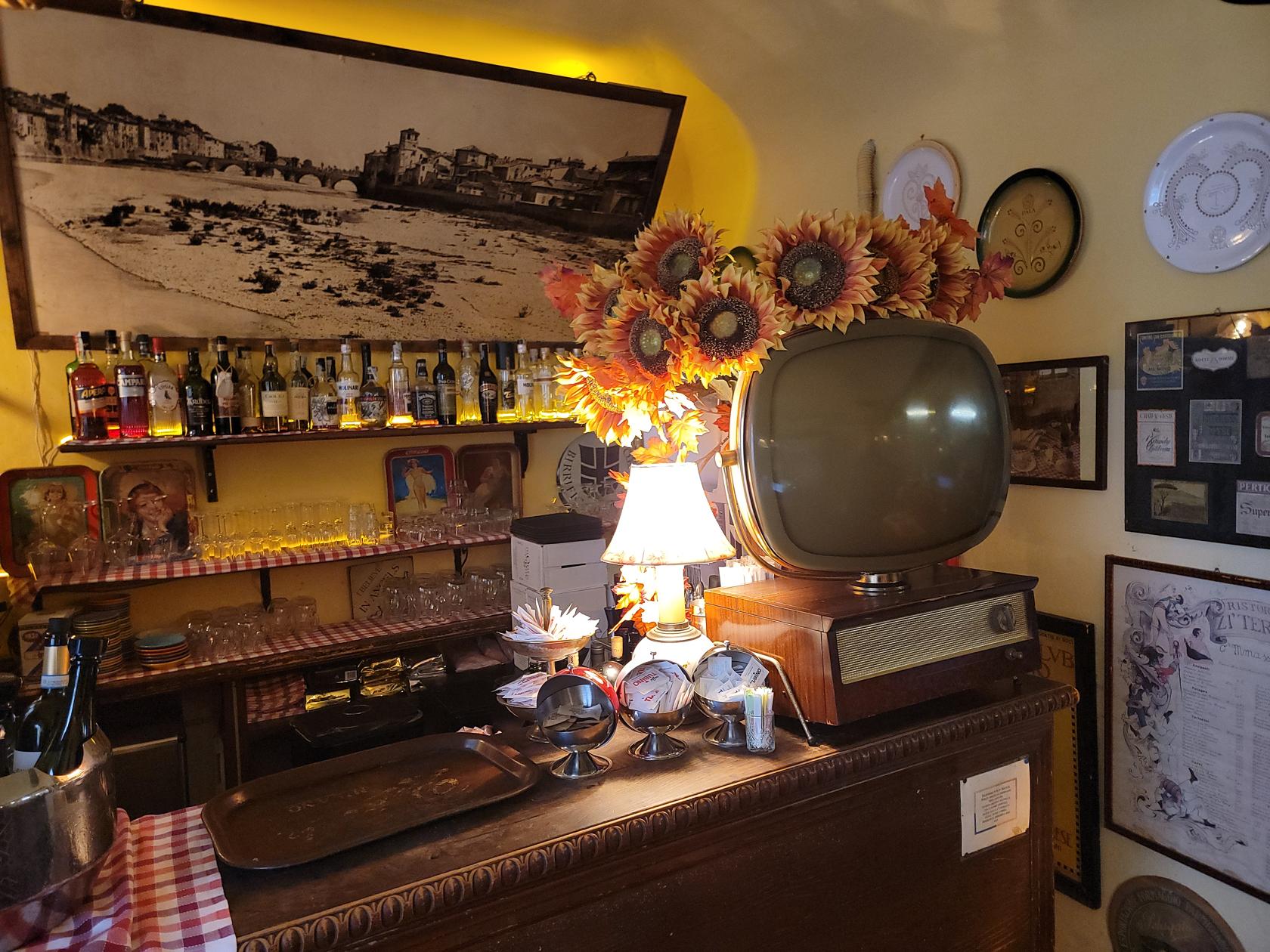
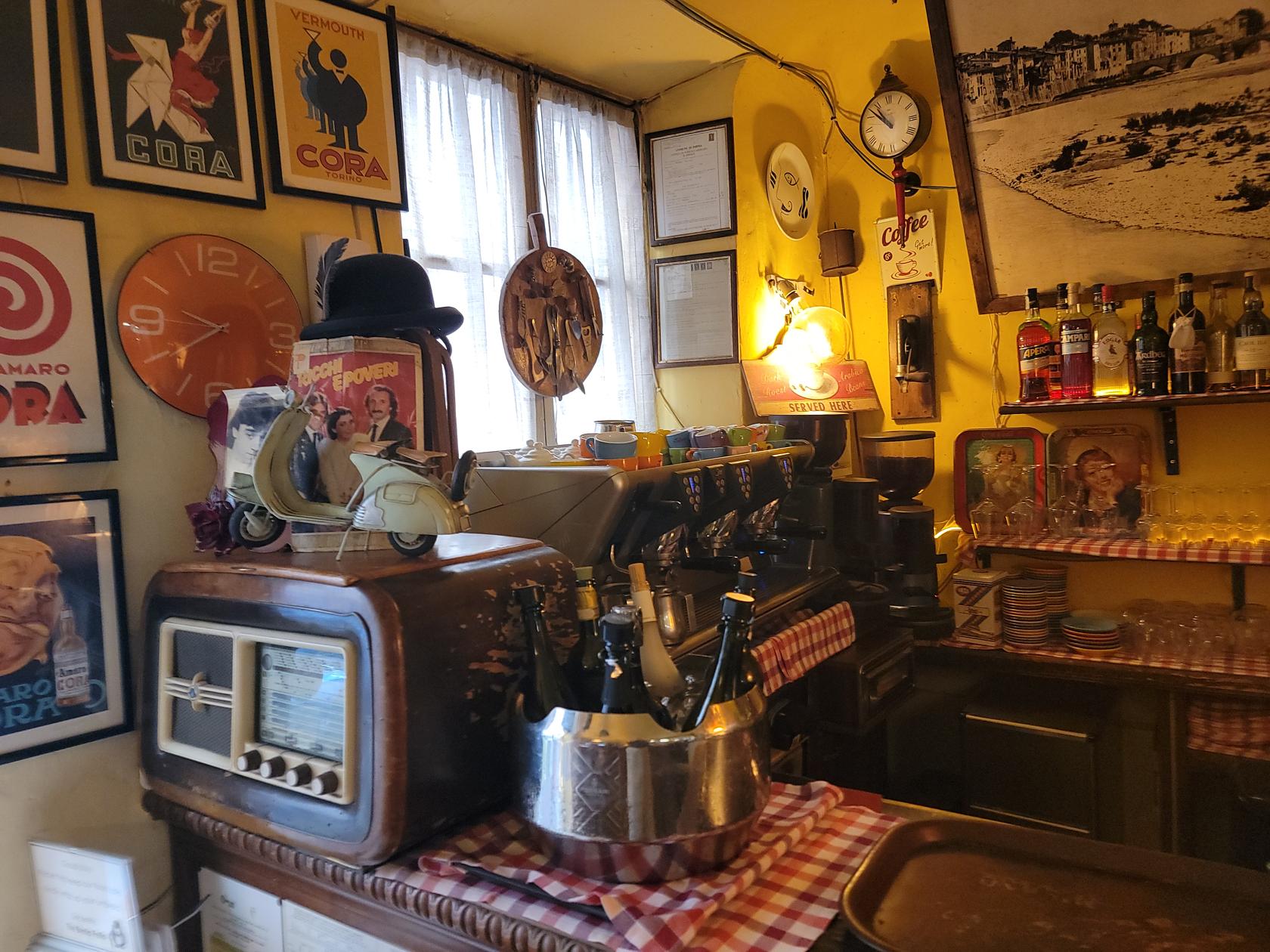
Another fine local restaurant is the Trattoria Corrieri Parma. Located further down in the city and by a Parma University building, it offers great food at even lower prices than die Servi. We found the service similar and the menu full of local dishes for us to try.
To use the museum’s own words, “The severe, neoclassical imprint of the letters, characterized by the stark contrast between the thickness of the strokes and the thinness of the lines and serifs; the stark, epigraphic composition of the title pages and dedications; the airy, correct relationship between text and images, between line and line, between light and dark make Bodoni’s page a prodigy of harmony and readability.“
For the past two days the city of Turin celebrated Saint John, with local events, parades and special deals on museum entry as well as other presentations.
Saint John’s Eve
The celebration of the Saint John is a big deal in Turin, as it is in other cities in Italy as well as other countries. Actually called the celebration of Saint John’s Eve, it starts on the 23rd of June at sunset and continues for two days in Italy. Marking the birth of John the Baptist, who ostensibly was born six months prior to Jesus, it is one of only a few feast days that mark births, rather than deaths.
A list of activities that were scheduled in Turin include the following:
Tuesday 23 June 2026
There was an opening parade with majorettes, municipal band and historical characters that went from Piazza Palazzo di Città to Piazza Castello.
At Palazzo Madama there was the ringing of the civic bell, a ceremony that dates back to 1670.
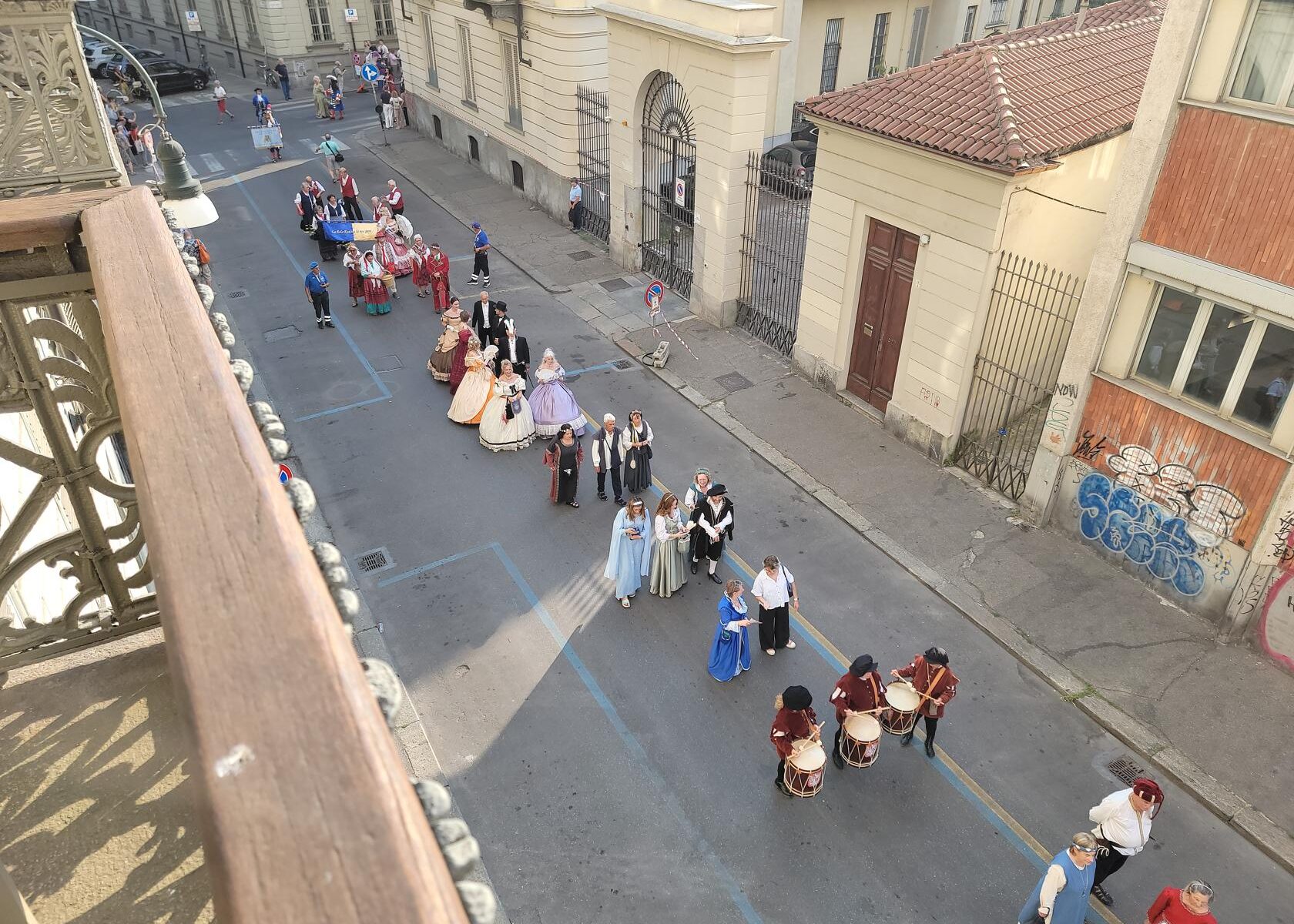
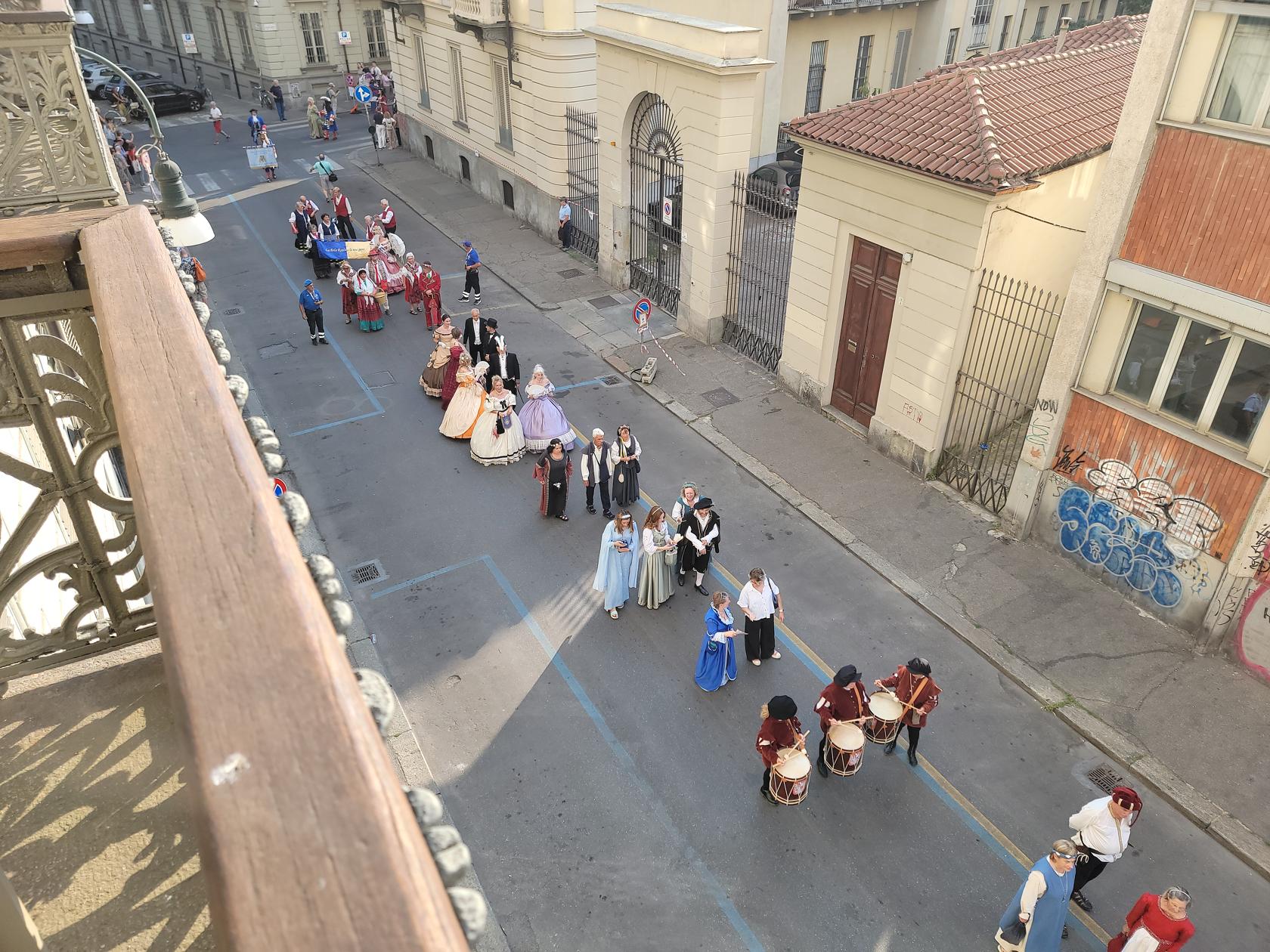
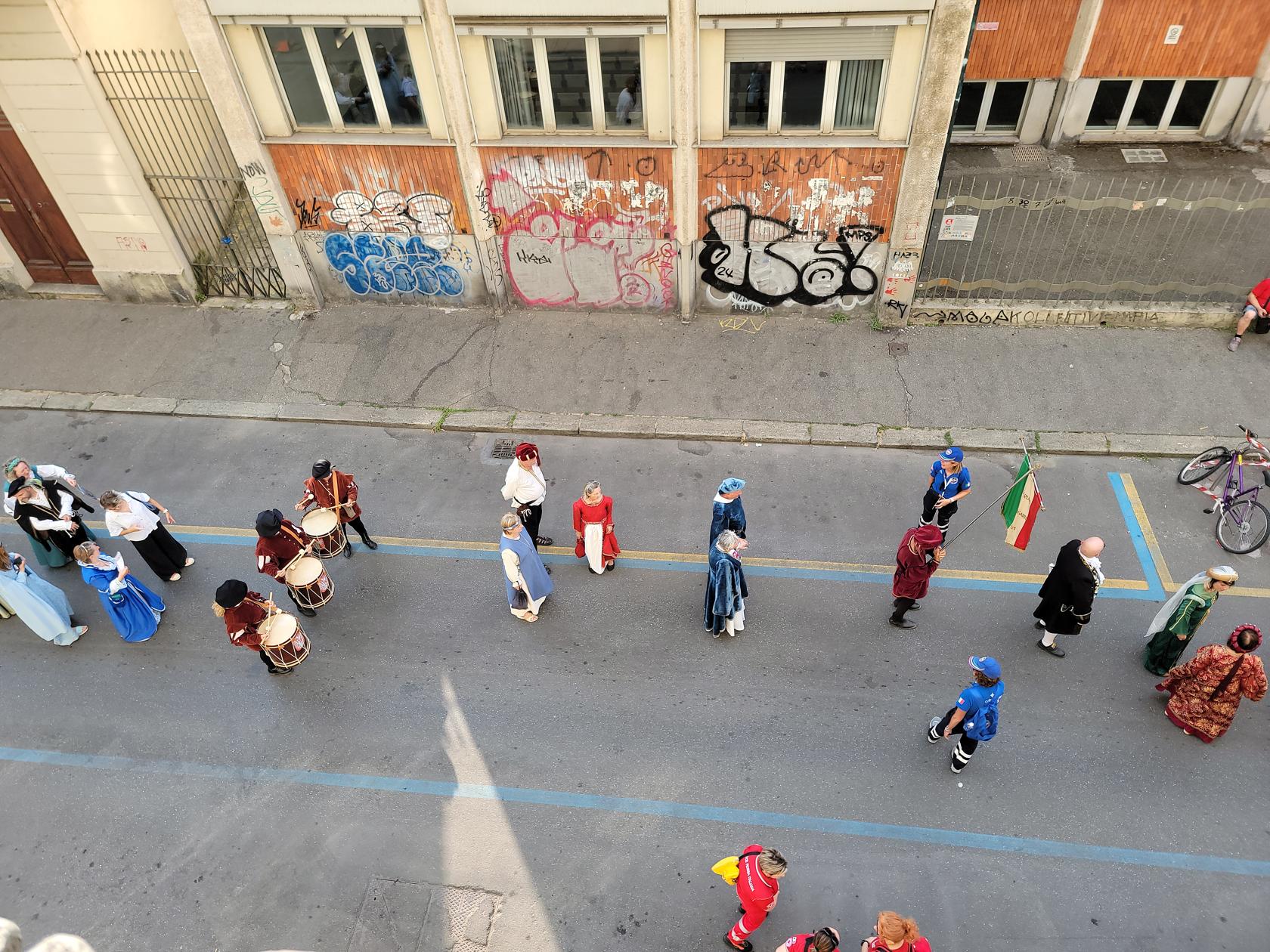
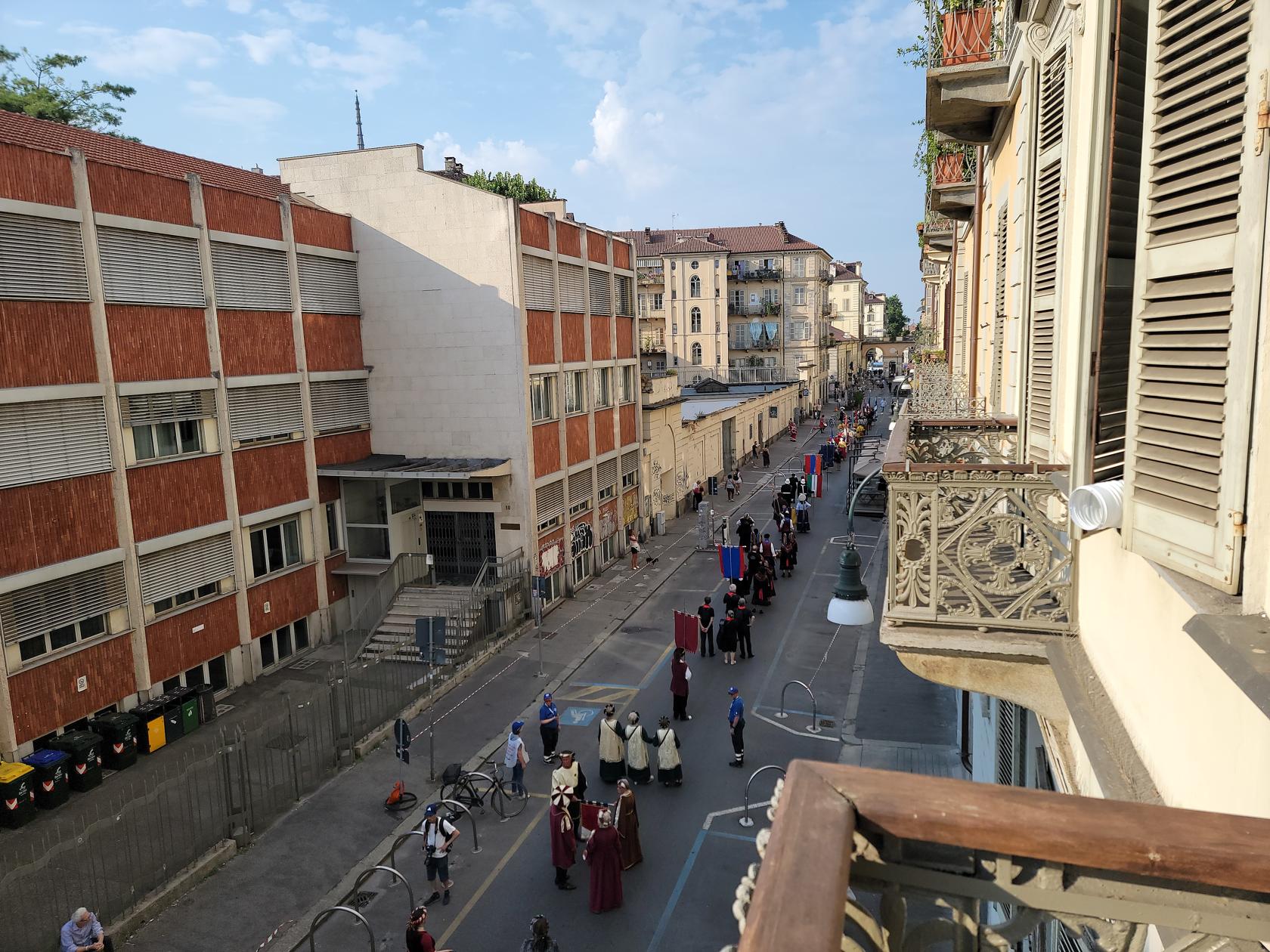
They also had a traditional historical procession from Giardini Cavour to Piazza Castello with period costumes, for which we had front row seats.
San Giovanni Battista Day Parade and Procession – via Giovanni Plana – Turin, Italy
San Giovanni Battista Day Parade and Procession – via Giovanni Plana – Turin, Italy
San Giovanni Battista Day Parade and Procession – via Giovanni Plana – Turin, Italy
At the Turin Cathedral, they used the bell tower for a vigil bell concert using cord techniques.
There was an award ceremony for the winning thesis about Turin at City Hall.
Later on in the evening at Piazza Castello, the ceremonies for the day ended with displays of ceremonial salutes by the Pietro Micca Historical Group, musical moments, and finally the lighting of the evening bonfire in the presence of civic authorities.
Wednesday 24 June 2026
The following day there was a vintage car parade from Piazza Vittorio Veneto to the Cathedral.
During the day there were several bell concerts across the city and museums open with reduced admission prices.
A solemn mass was held at Turin’s Cathedral, with the traditional distribution of charity bread to those in attendance.
The celebration continued after lunch with a rowing regatta from Castello del Valentino, along with the submarine Provana and the Maritime Museum was opened for public viewing and enjoyment (this is often closed).
In the evening there were several parades and concerts, including a symphony concert at the Rai Auditorium.
The city sponsored a torchlight procession on the river from Castello del Valentino to Ponte Vittorio Emanuele I in the late evening.
Finally, a fireworks display with an original soundtrack playing was held at Piazza Vittorio Veneto before midnight, to close the ceremonies.
All in all, I cannot remember the feast being celebrated here before, but with our constant travels it would be no surprise. In either case, we enjoyed what we saw of the celebrations and would commend anyone, if they are in the city at the time of the celebration to visit some of the venues, especially the parades with period costumes. We found them quite interesting and beautiful.
When I was in my youth in the sixties, there wasn’t much around to do to earn some money, especially if you were grade school age living in upstate New York. Frequently this had to do with either coaxing your mom to give you a few pennies, or finding employment elsewhere, usually doing something for my grandfather, who lived next door to us and down the hill in a large white farmhouse with my grandmother.
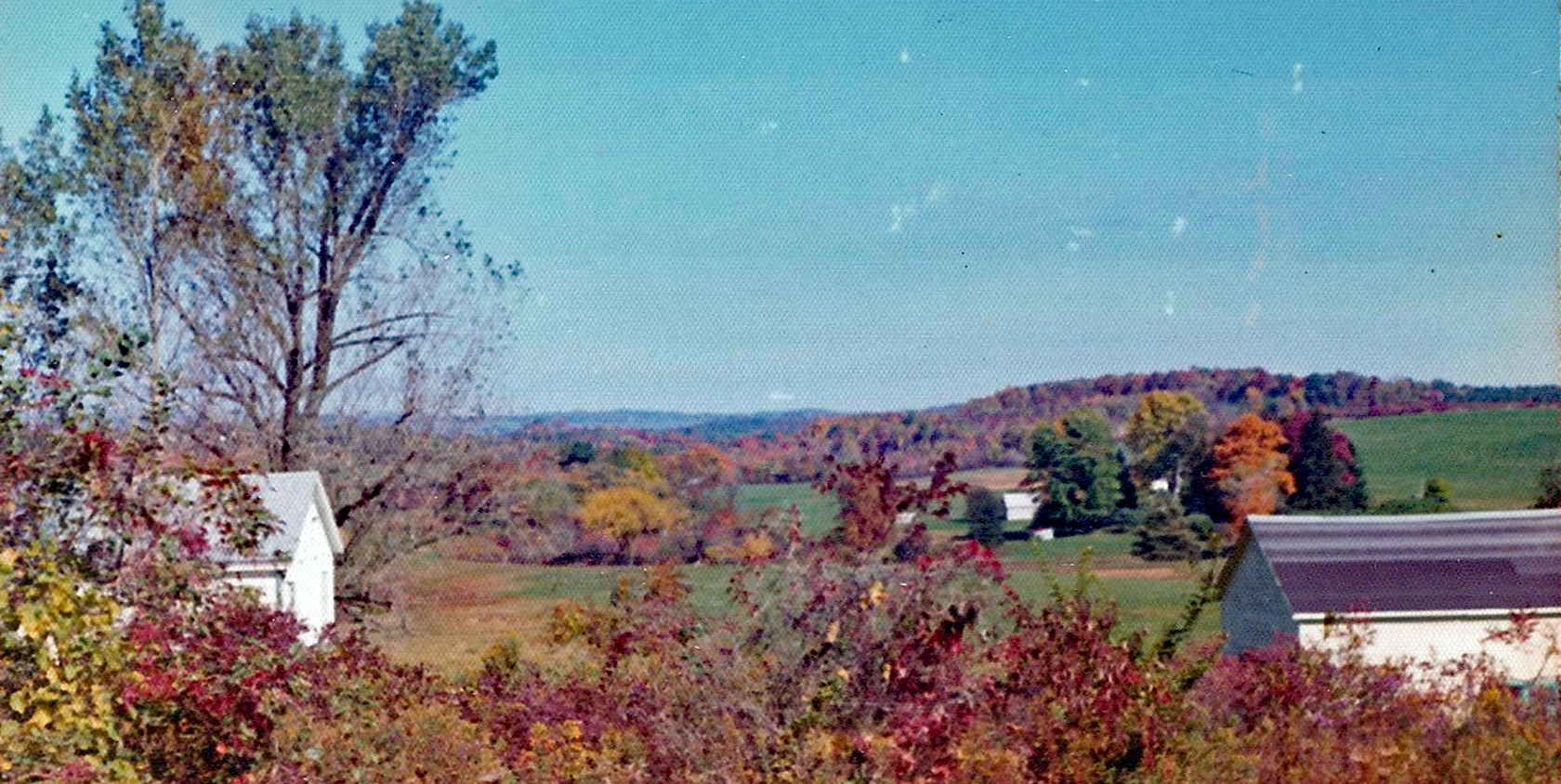
Grandpa and Grandma’s House from our house
One task that comes to mind is collecting earthworms. My grandfather wasn’t an avid freshwater fisherman, but fished frequently enough, that he would ask us to catch some worms for him, at a penny for a full worm.
Traditional Forms Of Catching Worms
The traditional way, or the one that most frequently comes to mind and is probably used the most, is to take a shovel and dig in the ground. After turning the soil over, you would then break the pile of dirt apart and scope up any worms that were readily available, if there were any at all! The problem with this method is the worms can actually sense you coming and burrow deeper as you dig. You might get lucky the first couple of times, but quickly your catch will dwindle and you will end up with a hole in the ground and little for your efforts.
Hunting Worms
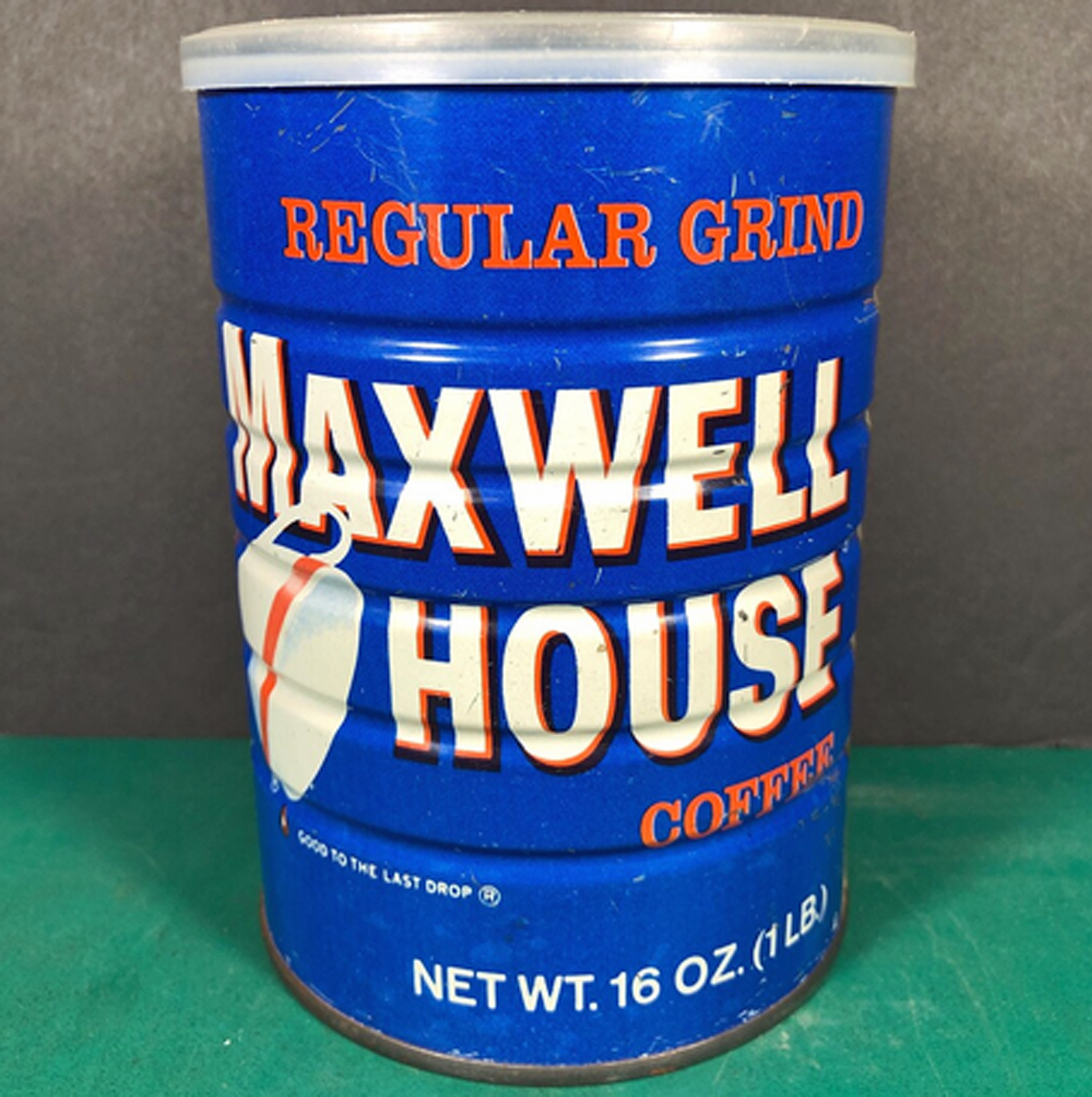
Perhaps a method used less often, since I have never heard anyone else speak of it, is to hunt them at night while they are above ground. First we would obtain a coffee can, usually Maxwell House or Chock Full of Nuts, and put a handful or two of dirt in the bottom, along with some grass for cover and leaves for food. Then we would wait for nightfall and the Milky Way to appear.
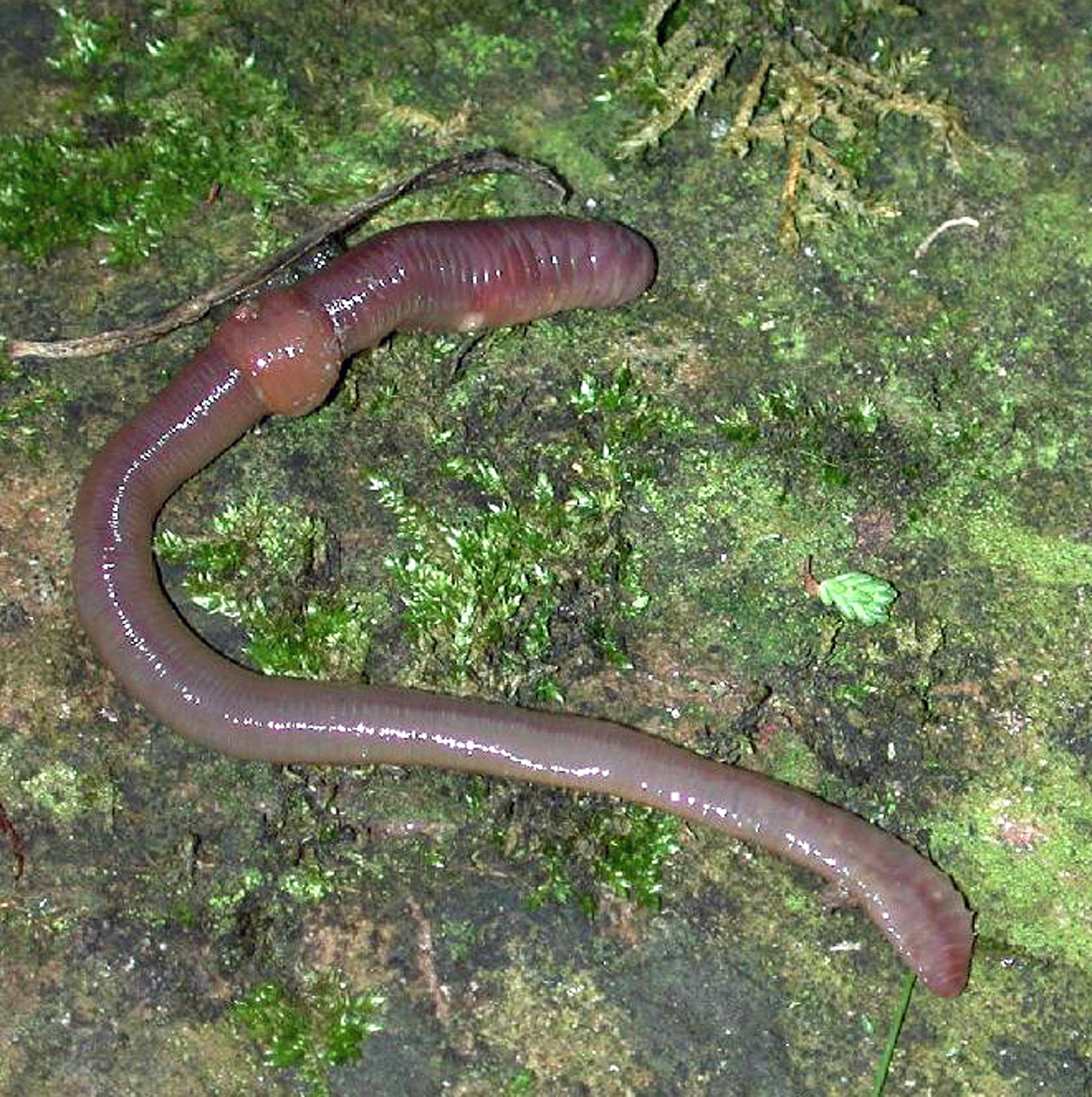
Lumbricus Terrestris – The Common Western European Earthworm
Maxwell House Coffee Can and Lid
Hunting earthworms, or most specifically Lumbricus Terrestris of native Western Europe, required patience, a flashlight, some cunning and good reflexes. Earthworms of this species come out during the warmer months of the year to reproduce and forage. Any food they find, preferrably leafy material from Ash, Maple and some other varieties, is pulled back into their burrows and consumed below ground. Reproduction however slows everything down, including their terrestrial movements. This occurs more often in the warmer months of Summer and you can usually find two earthworms, side-by-side, in an inch or two embrace, for which they are very reluctant to break. Catching two embracing worms at the same time is not for beginners and probably, for the earthworms sake, should not be attempted until you are skilled at catching one without difficulties.
Use Of The Flashlight
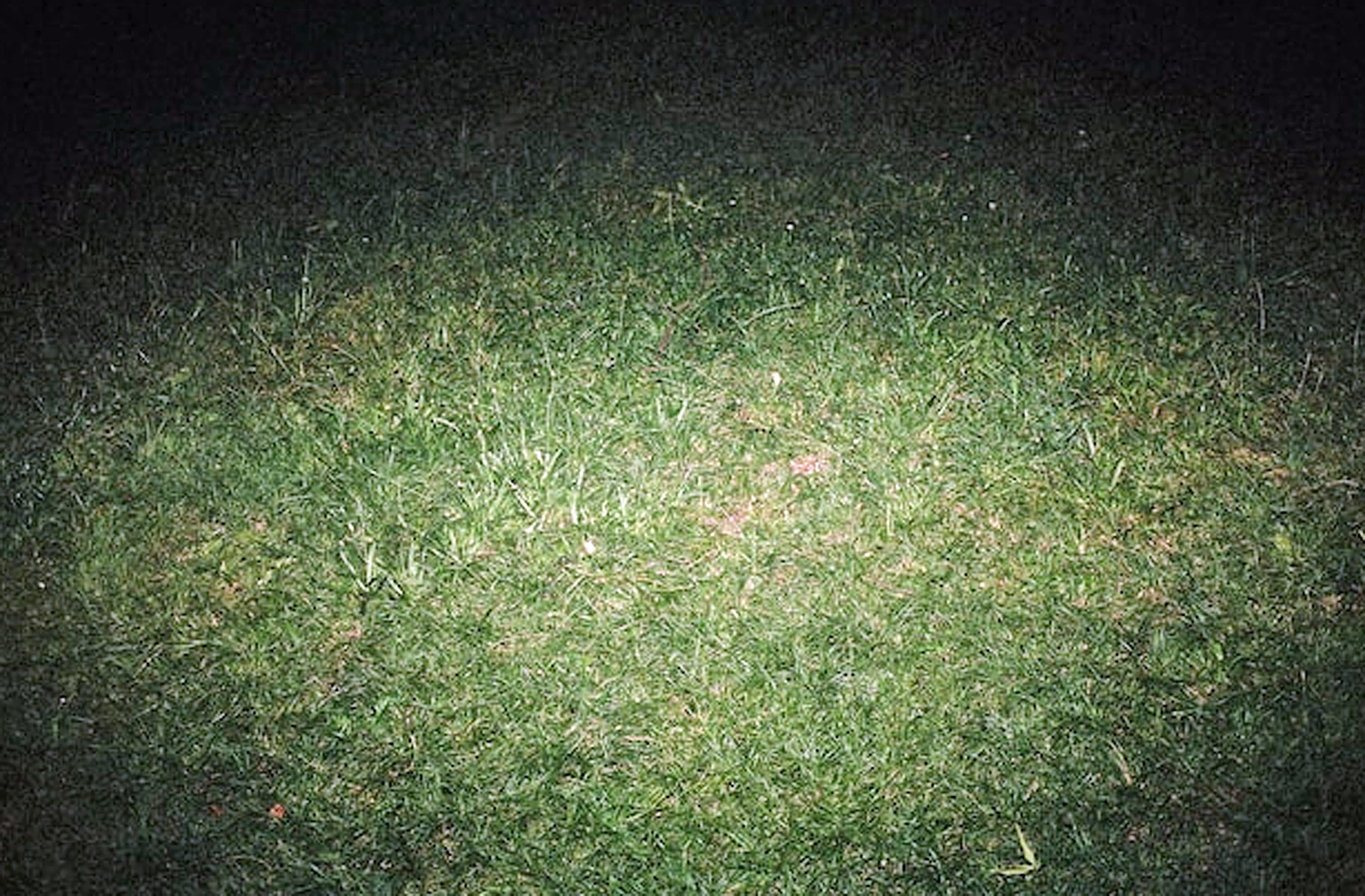
The trick of the hunt is to try and prevent them escaping back into their burrows. This is particularly tricky, in that, they normally will keep their back-end firmly inside their burrow’s hole. As far as light is concerned, they are very sensitive to it, and can tell the difference between starlight, moonlight and other intense light from the sun or a flashlight. Therefore, you must first give up some ground to start, usually the part you are standing on, when you first turn your light on. When this is done, the keen eye will noticed that if there are any worms in the lightbeam, they quickly retreat to their holes and are gone. Normally, it is the direct light that they sense; for they have photoreceptors that alert them. However, the indirect light is more of a problem and their photoreceptors therefore must have some threshhold over which if met, triggers their reaction and hastens the retreat. It is in the penumbra of the flashlight, where the grass is actually casting a shadow on them and sometimes at the very limit of your own eyesight, in which you must hunt.
Grass Illuminated At Night By Flashlight – Showing the Light’s Penumbra or Partially Occluded Beam
Stopping The Worms Retreat
Once you have mastered how to hold the flashlight and finding them without them leaving for thier holes, catching them is the next trick. This is done by trying to determine which end is actually in the hole. Normally the darker part of the worm of this genus is the head and the lighter portion of the worm tends to be anchored in the hole. It is this lighter part of the worm that is the target. Taking two fingers, like you are going to pinch someone, you quickly block its retreat by placing your two fingers right where the worm and its hole meet. One of few things now happens, either you missed trapping it, or you got the wrong end, or it sensed your movement and the worm quickly dissappeared, or the worm tried to retreat and has now recoiled up against your two fingers.
Extraction And Collection
Now comes the tricky part of extraction. Worms are like any other animal and will get tired. So, for the first tens of seconds – relax. Then with the other hand grab the other portion, usually the head, that is sticking out and flailing about. Now the difficult part comes, since you have to use a method of pulling and relaxing to extract the worm, that only comes with experience. Once you stop pinching the worm by the hole and grab its body, the worm will pulsate in an attempt to let’s say, worm its way back into its hole. It is after each pulsating action that the hunter must act in gently pulling the worm a little bit at a time. It can often take more than a minute to successully extract a worm. But once done correctly, other successful catches will follow in quicker succession. At first they will often break, which in most cases has no severe consequences for the worm, since they can normally live through this event. But for my grandfather, he only paid for whole worms. So, we either kept it and he got something for free, or we just let the worm go to tend its wounds.
Conclusion
On any given summer evening in upstate New York, we could usually harvest at least a few dozen, if not more worms. Poking holes with a knife in the plastic lid of the coffee can was usually that last step, before placing the lid on the can. Earthworms are notoriously agile and adept climbers, so don’t leave your can open, they will get out. The holes are more for you then for the worms, since they exchange gases through their skin and do not breath. Keep them moist but not wet, this is where the grass clippings and a little sprinkle of water comes in handy. My grandfather wouldn’t pay for dried out worms either.
Hope you enjoyed this aside and recollection of my youth. Luckily, we would get a quarter if everything went right. Our grandfather usually paid us without many questions as to the number of worms in the can. Obviously reluctant to go about the messy business of counting them. But if he came back later and thought the count were wrong, we definitely heard about that and any counted parts of worms. Which no doubt ended up with deductions after our next collection.
Unfortunately, with all of today’s consumerism and modernity, this is probably another skill or task that is very rarely used, let alone, thought of anymore. Well at least, I have fond memories of having done it.
Owing to historical fate perhaps, Dubrovnik, Croatia, was formerly known as Ragusa, or the Republic of Ragusa, and was established some time in the 7th century C.E. from refugees of the old Epidaurum, or Ragusa Vecchia. It had been largely a free state before and after the control by the Byzantine Empire, the Repuplic of Venice and other later powers, including France and Napolean.
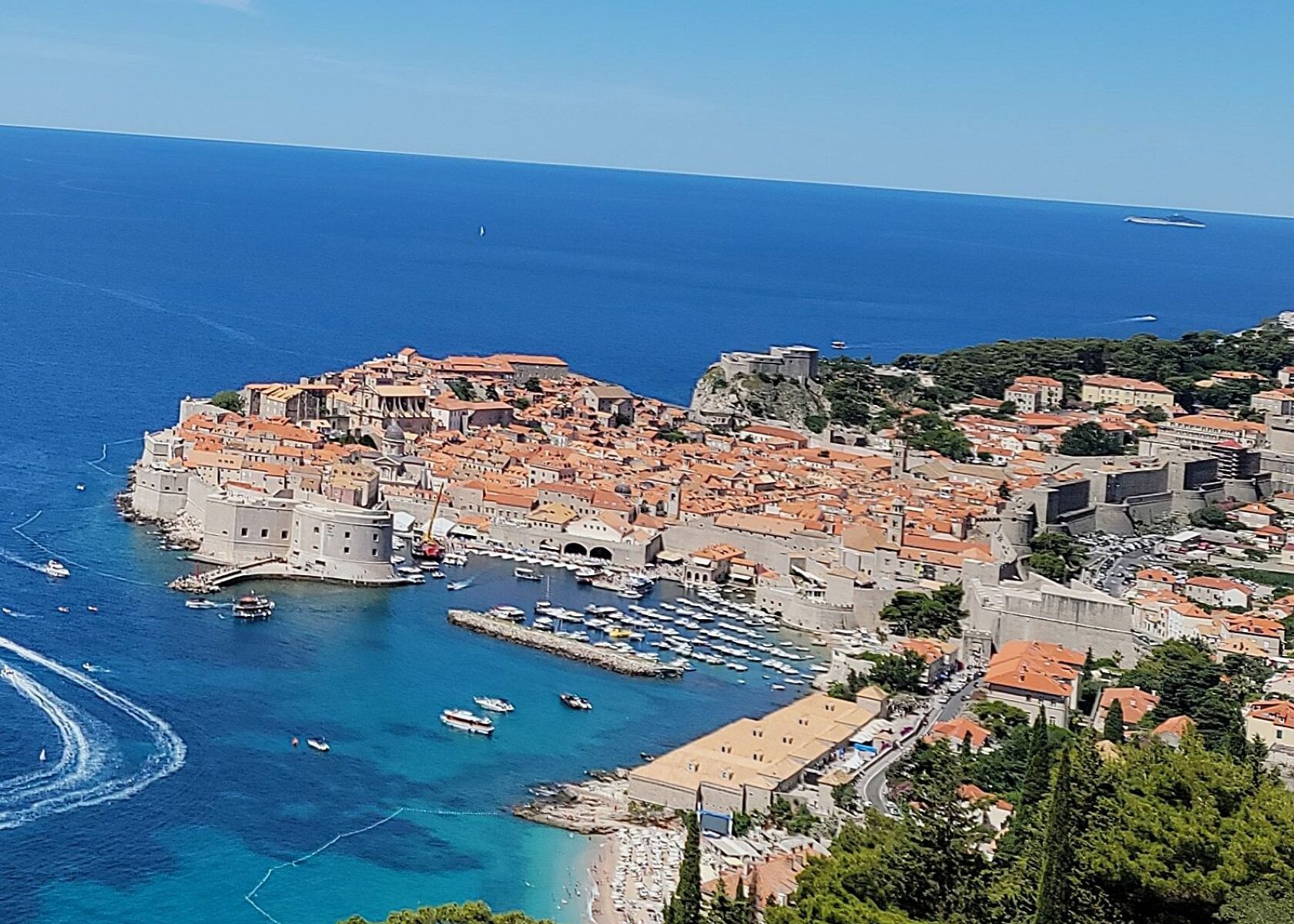
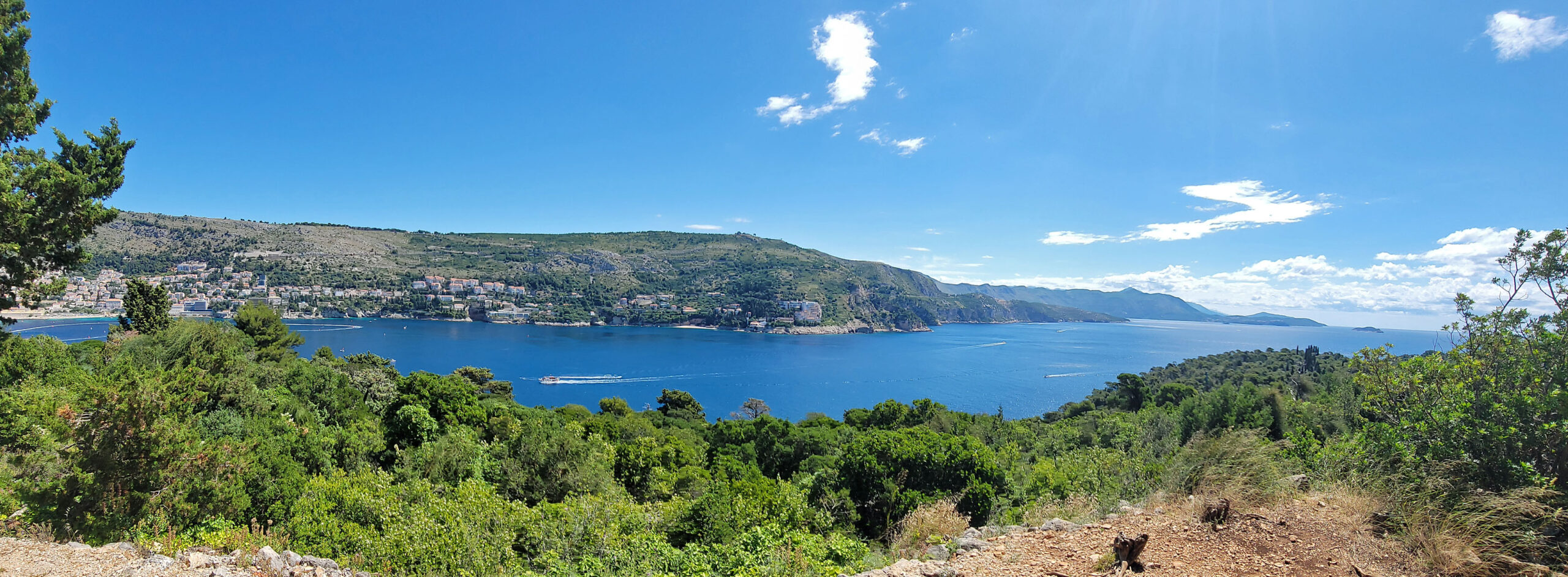
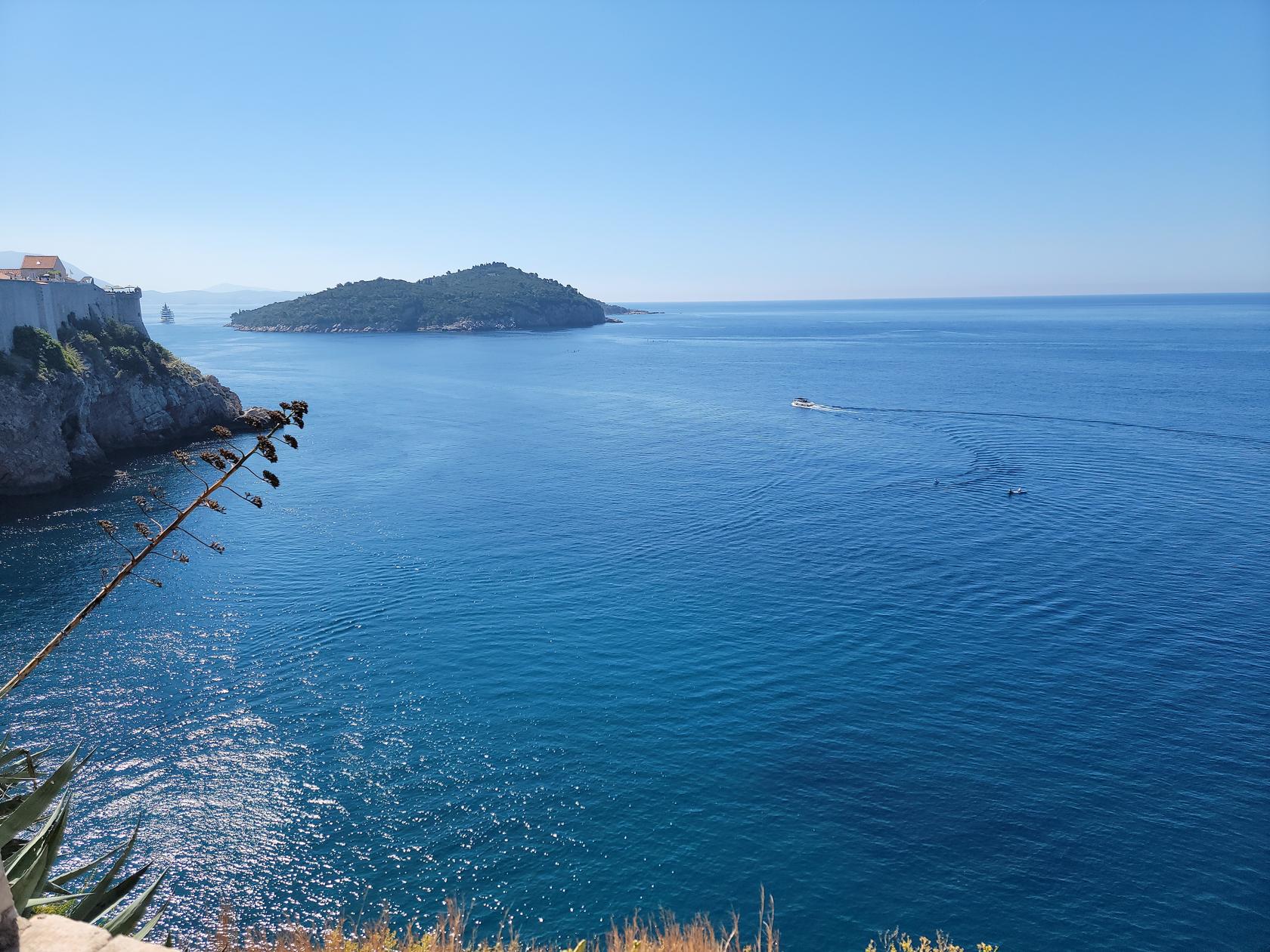
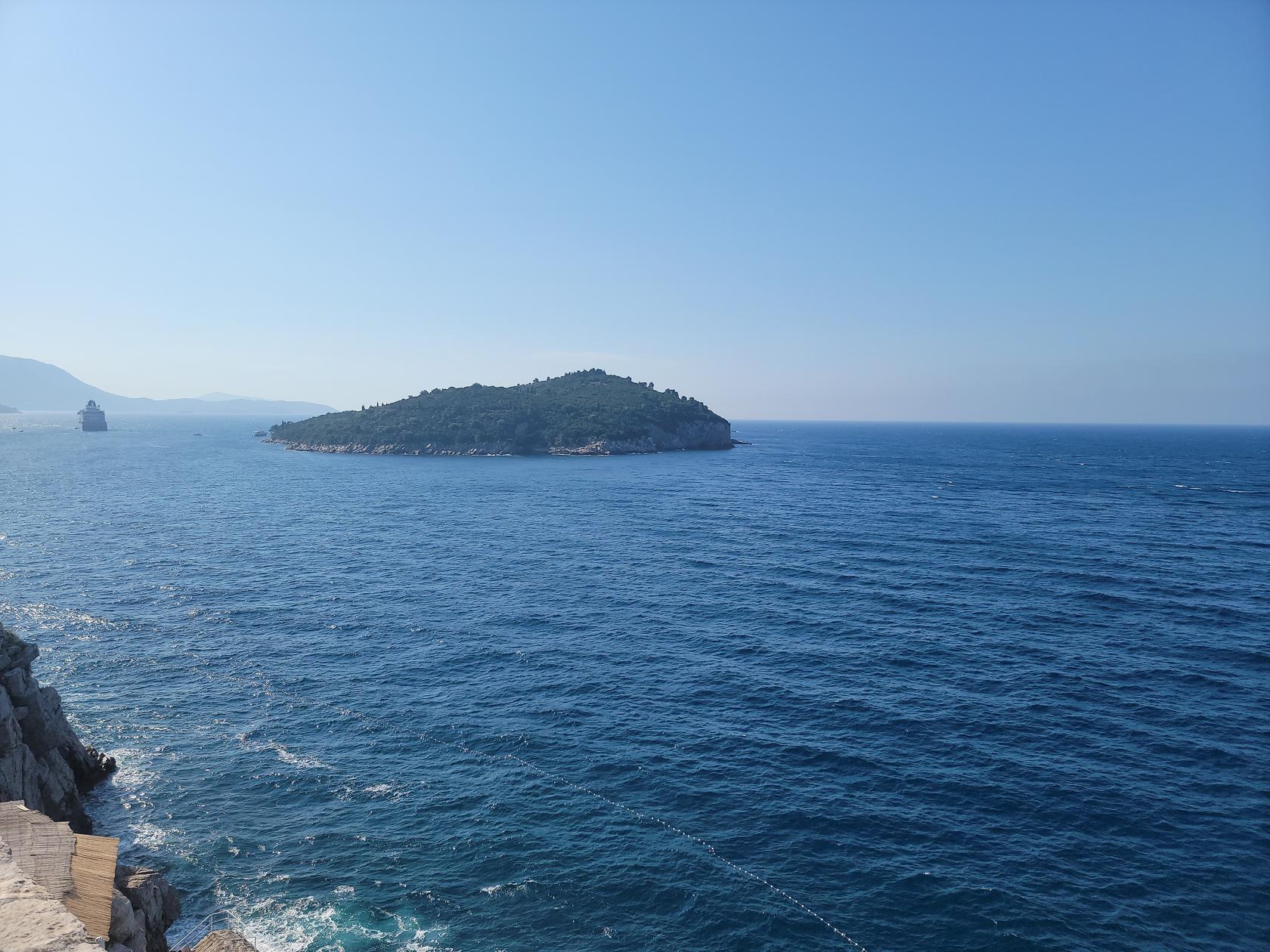
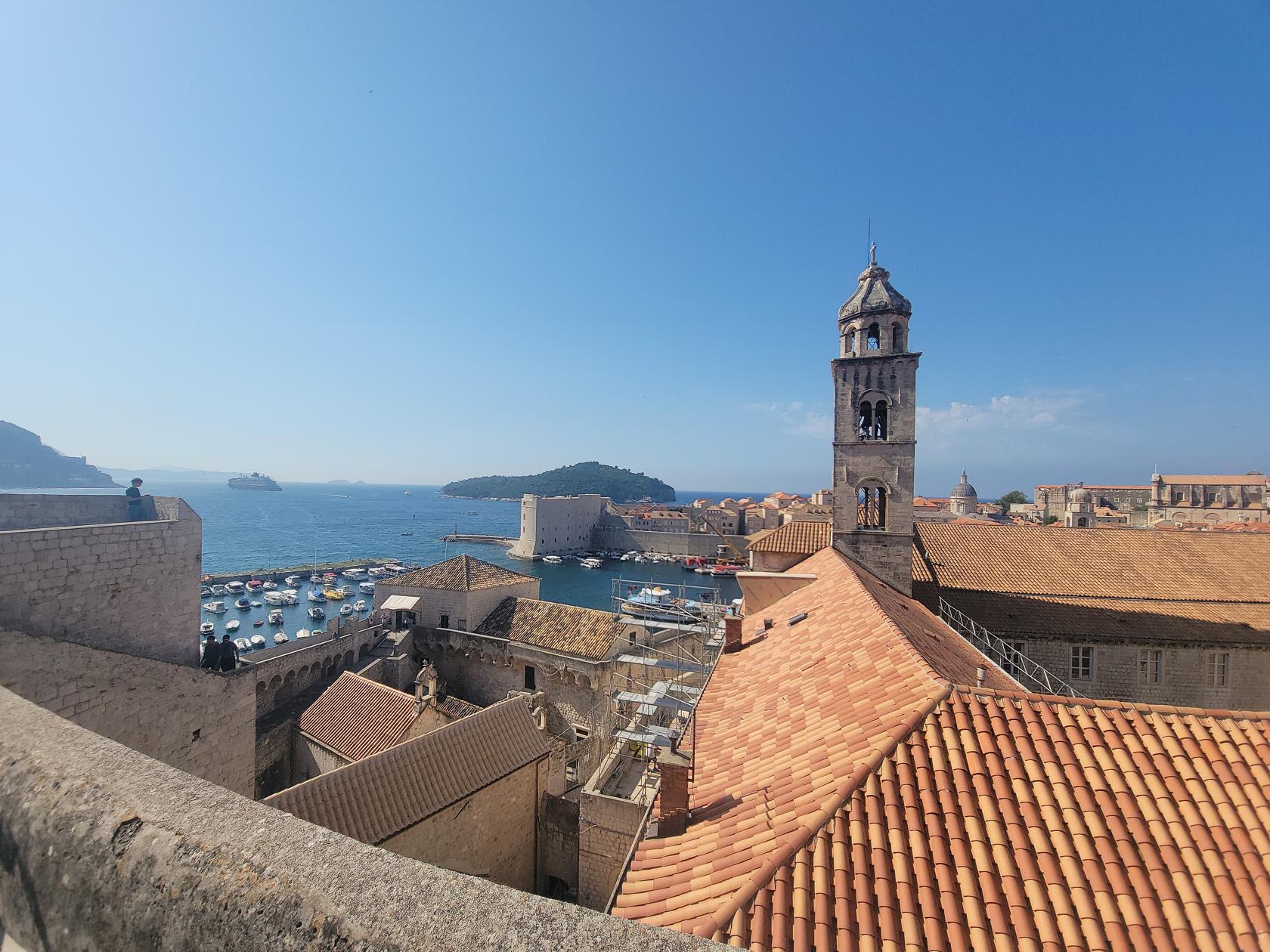
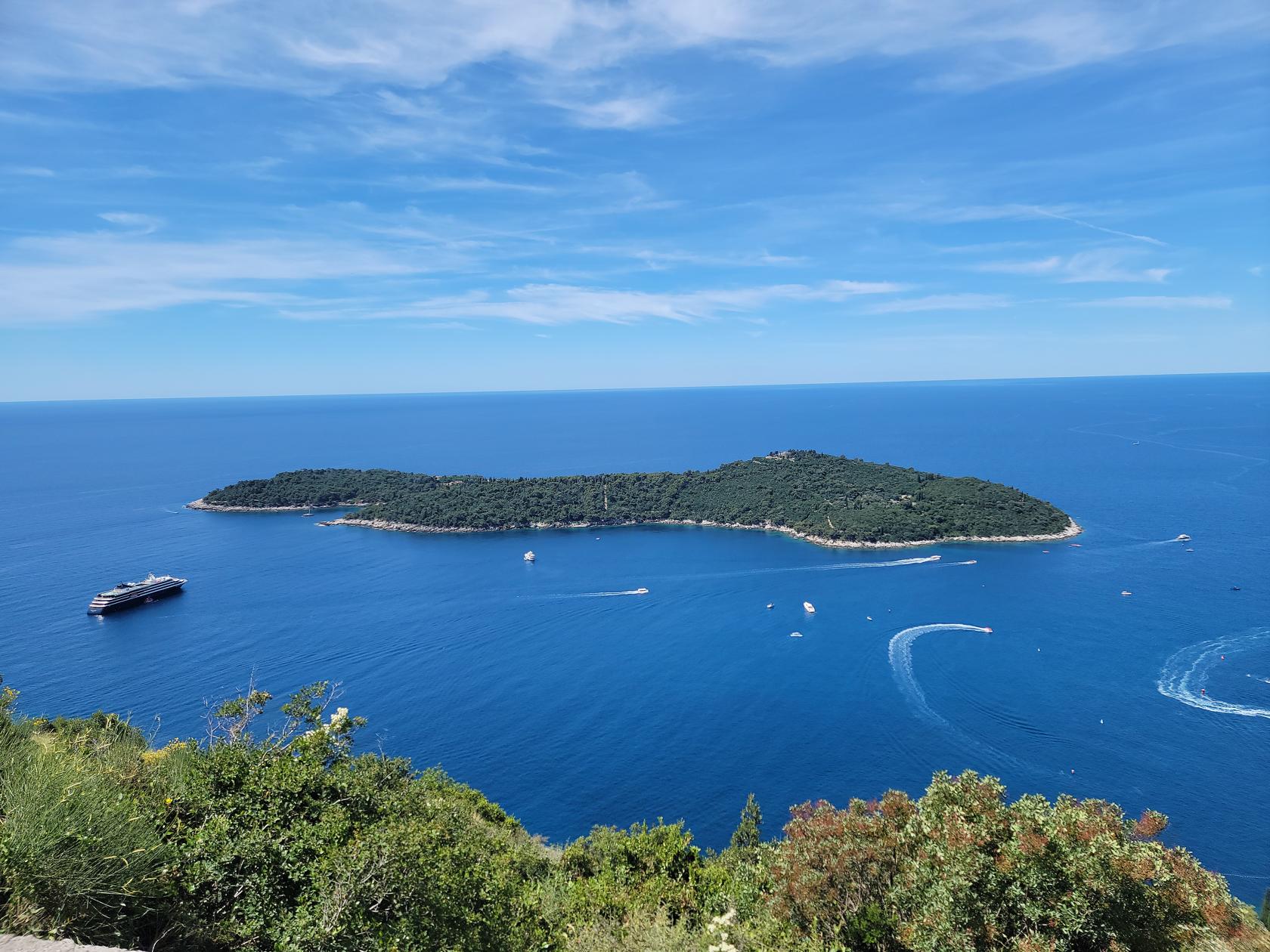
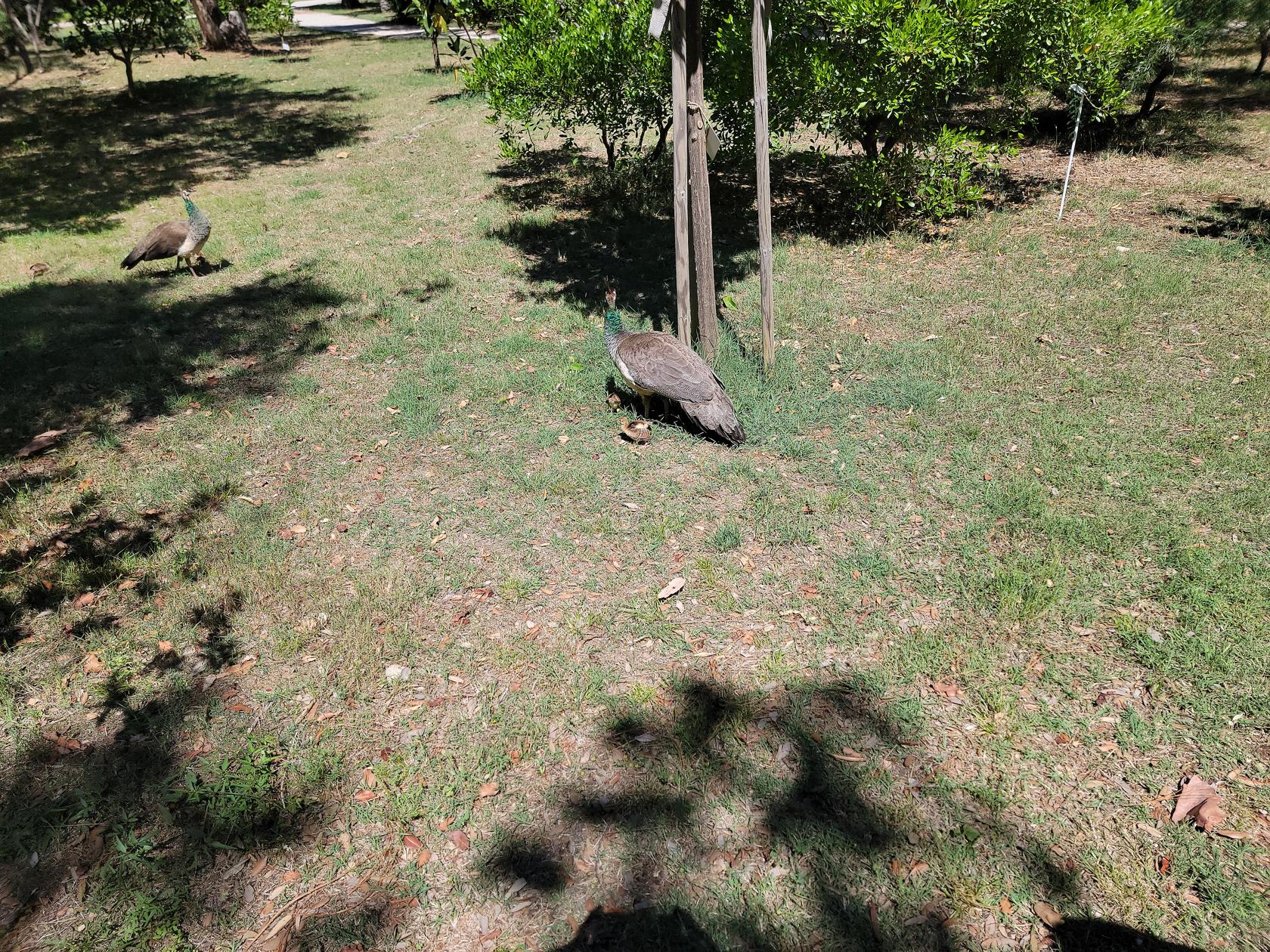
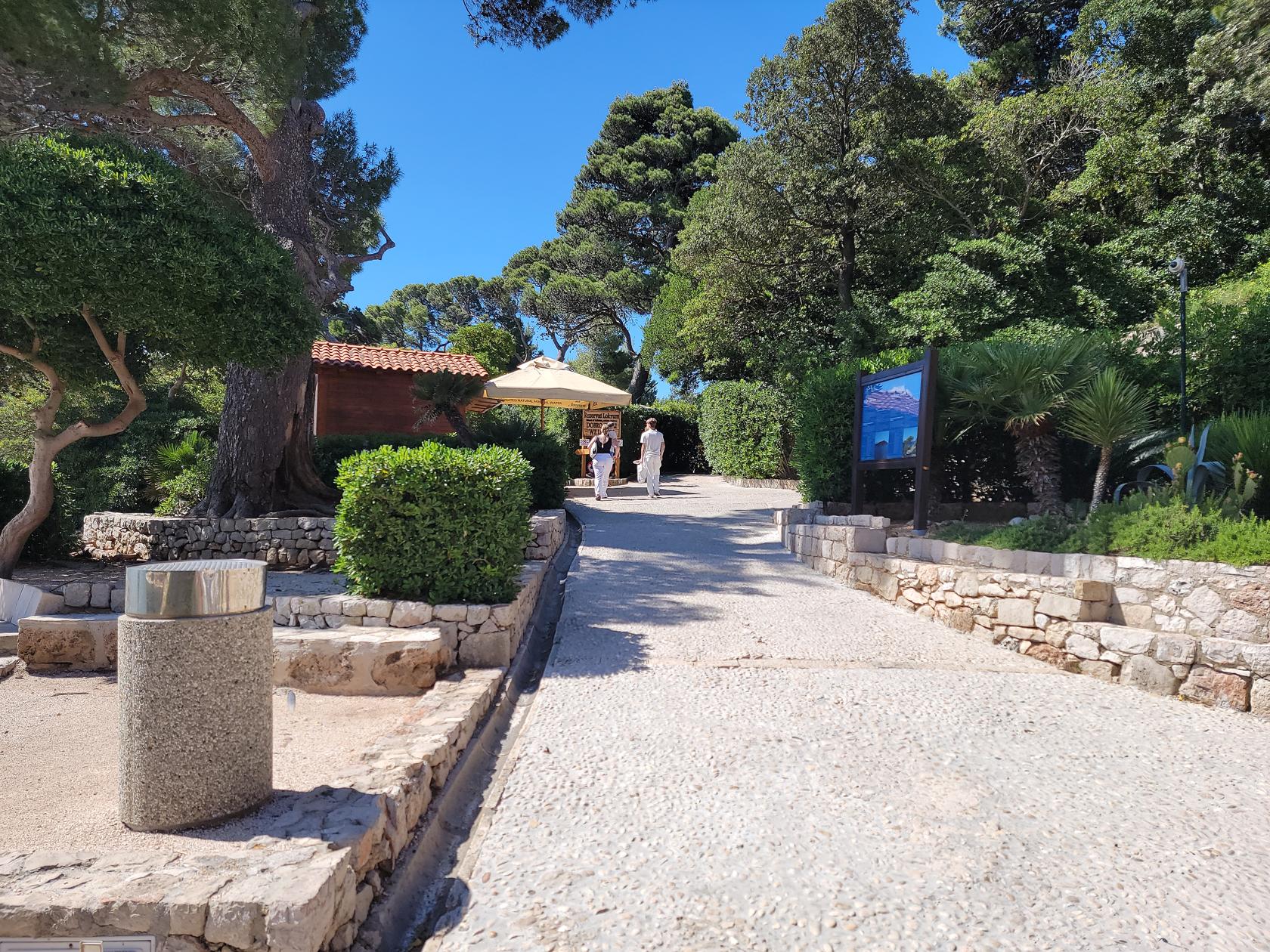
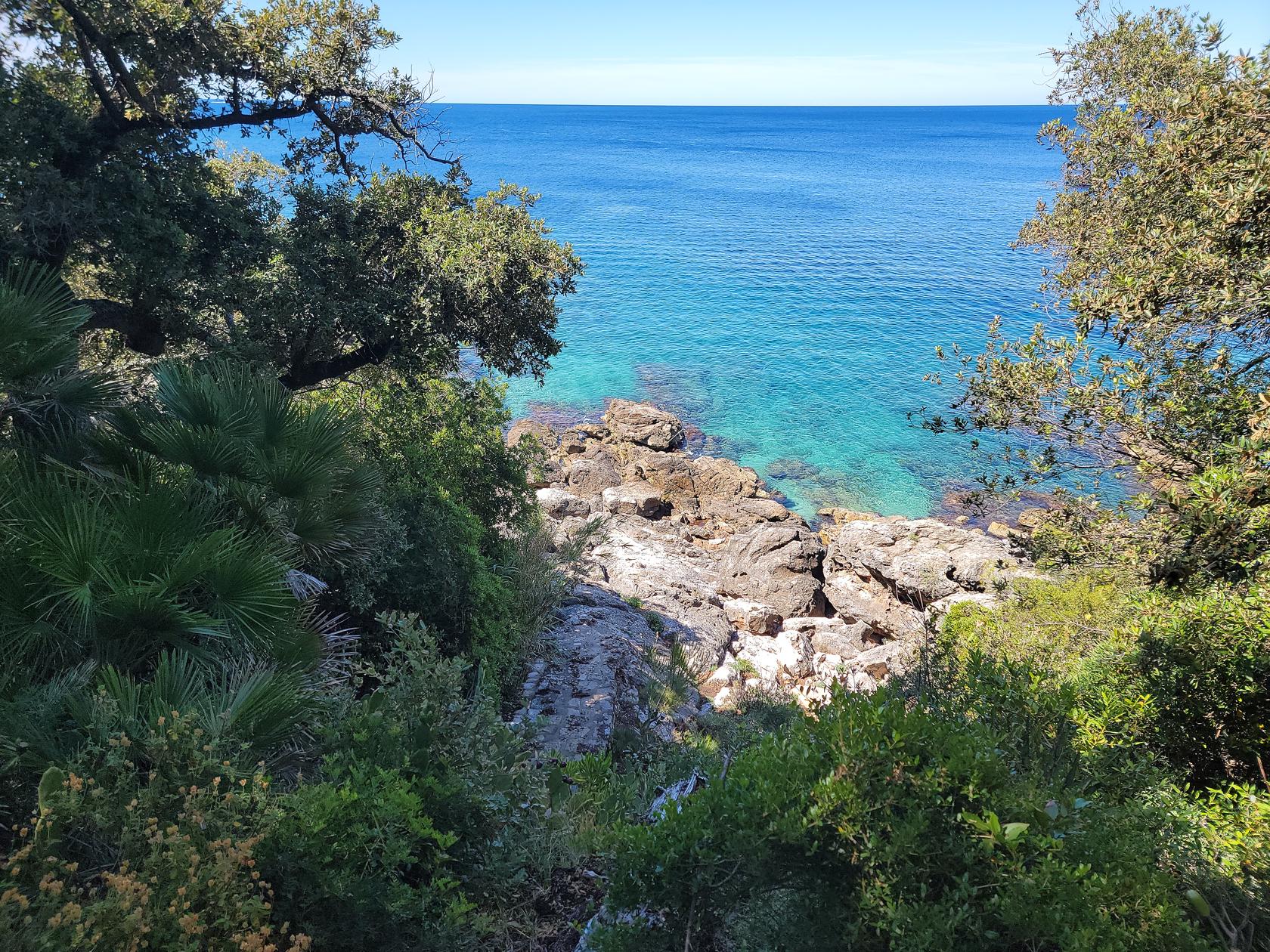
Dalmatian Coast – Lokrum Island – Dubrovnik, Croatia
Dubrovnik
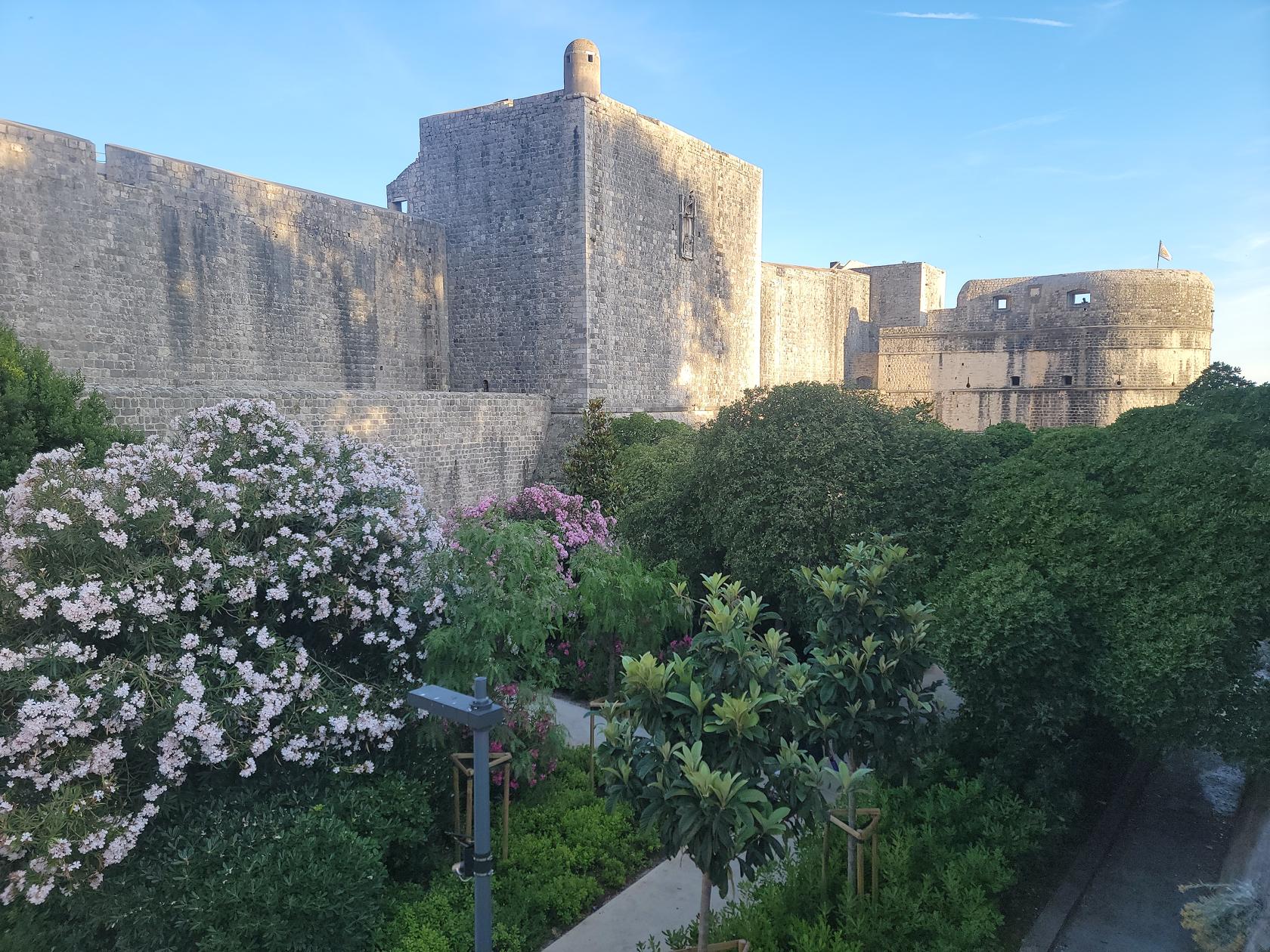
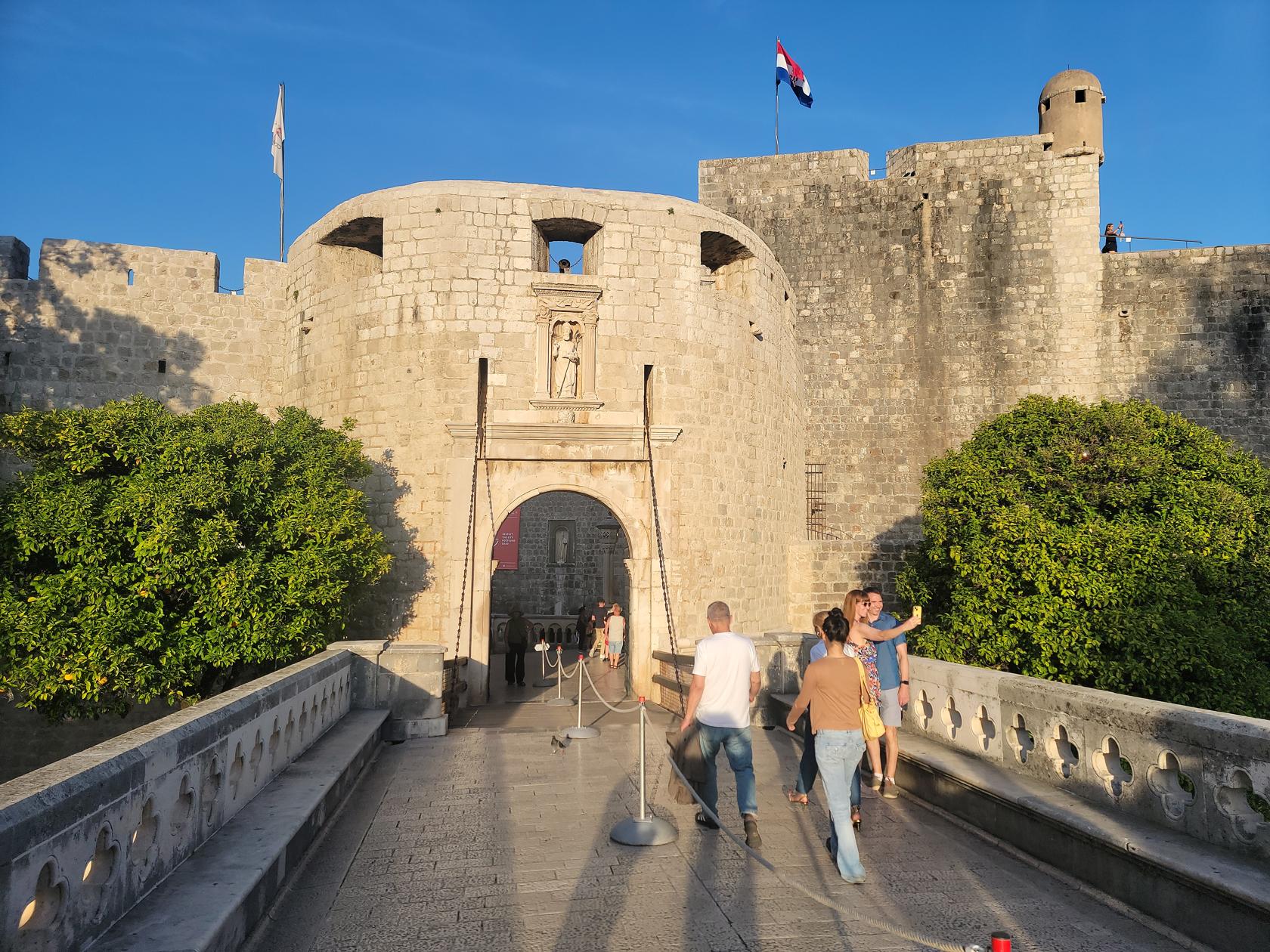
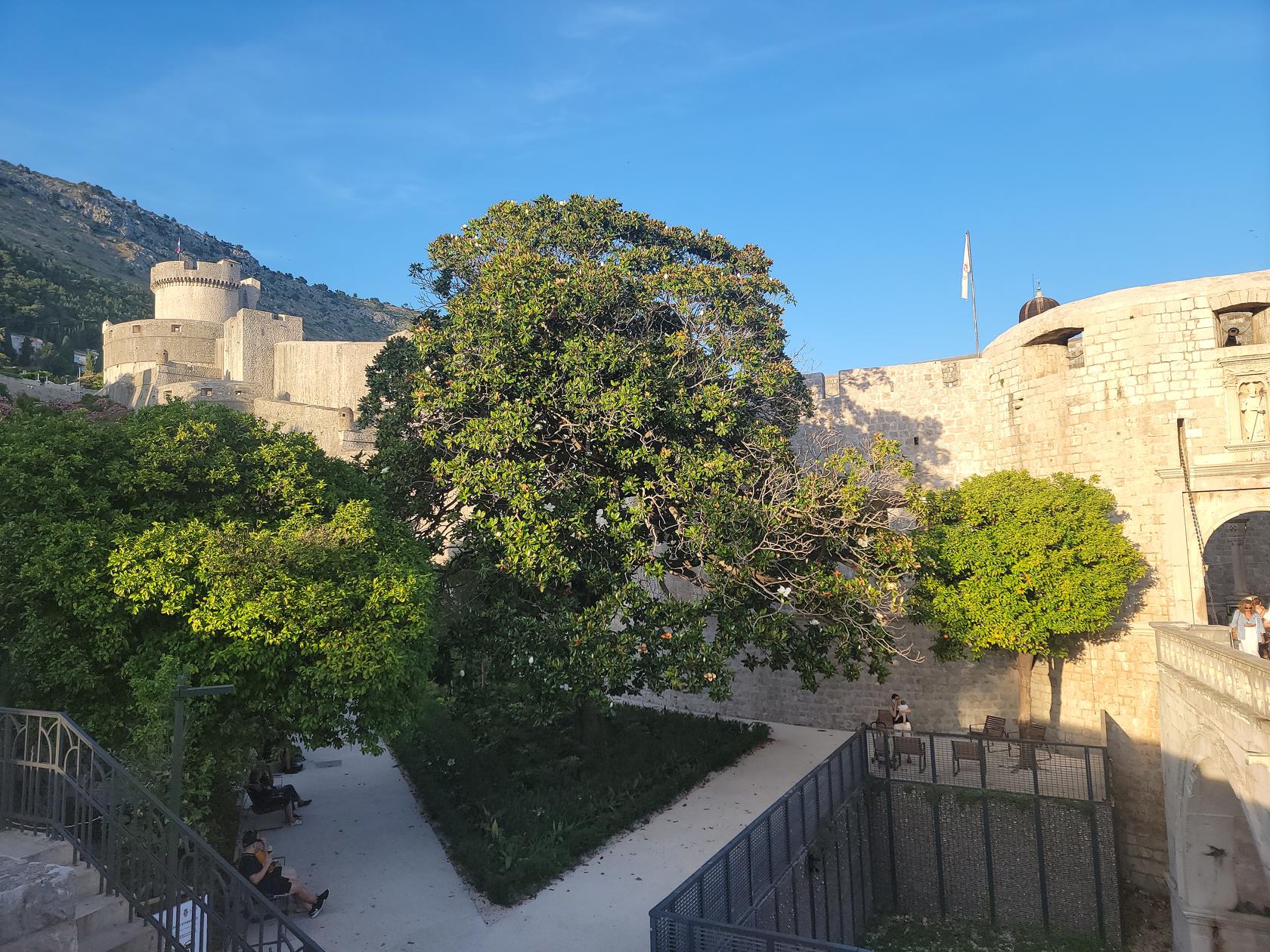
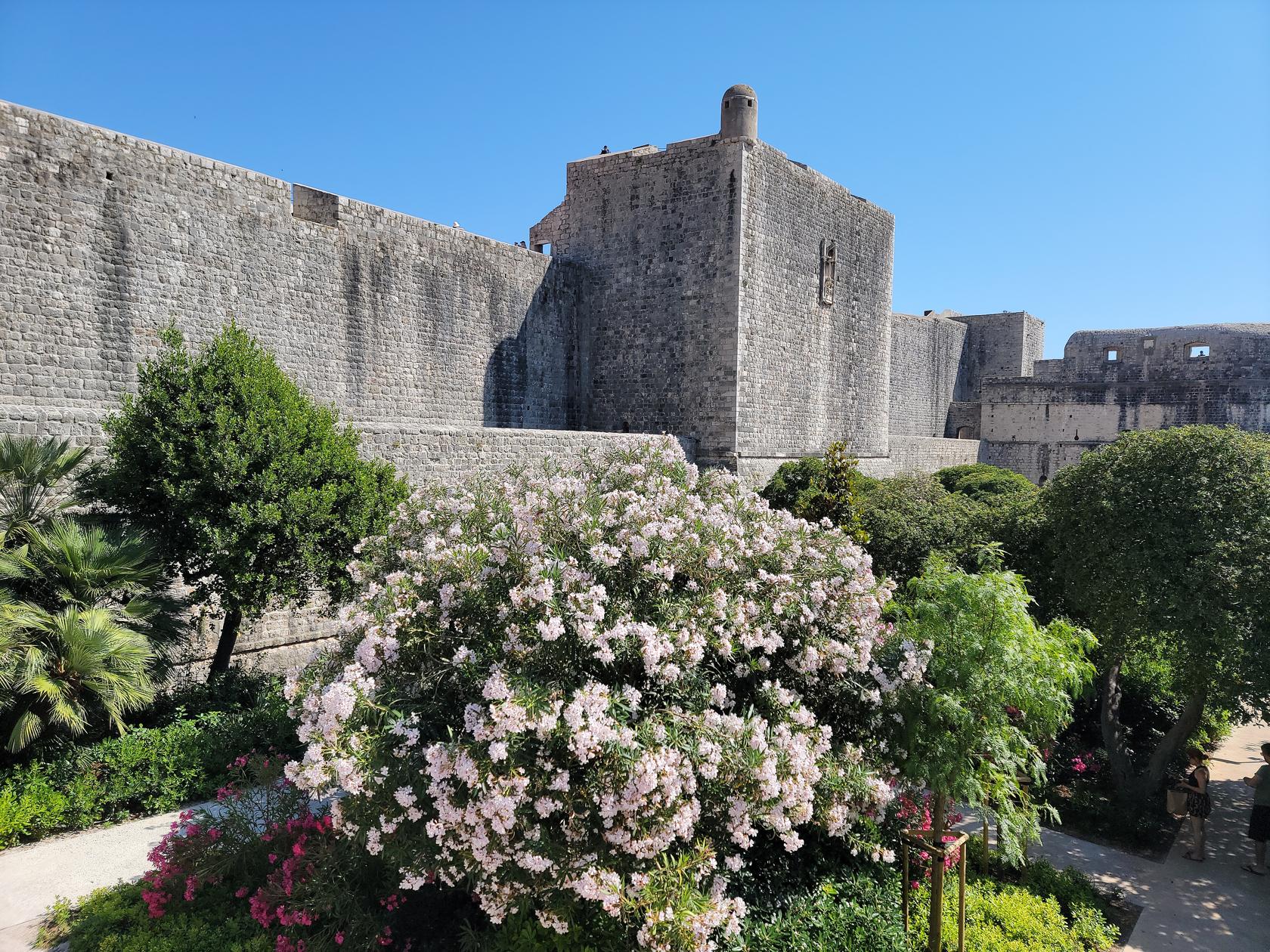
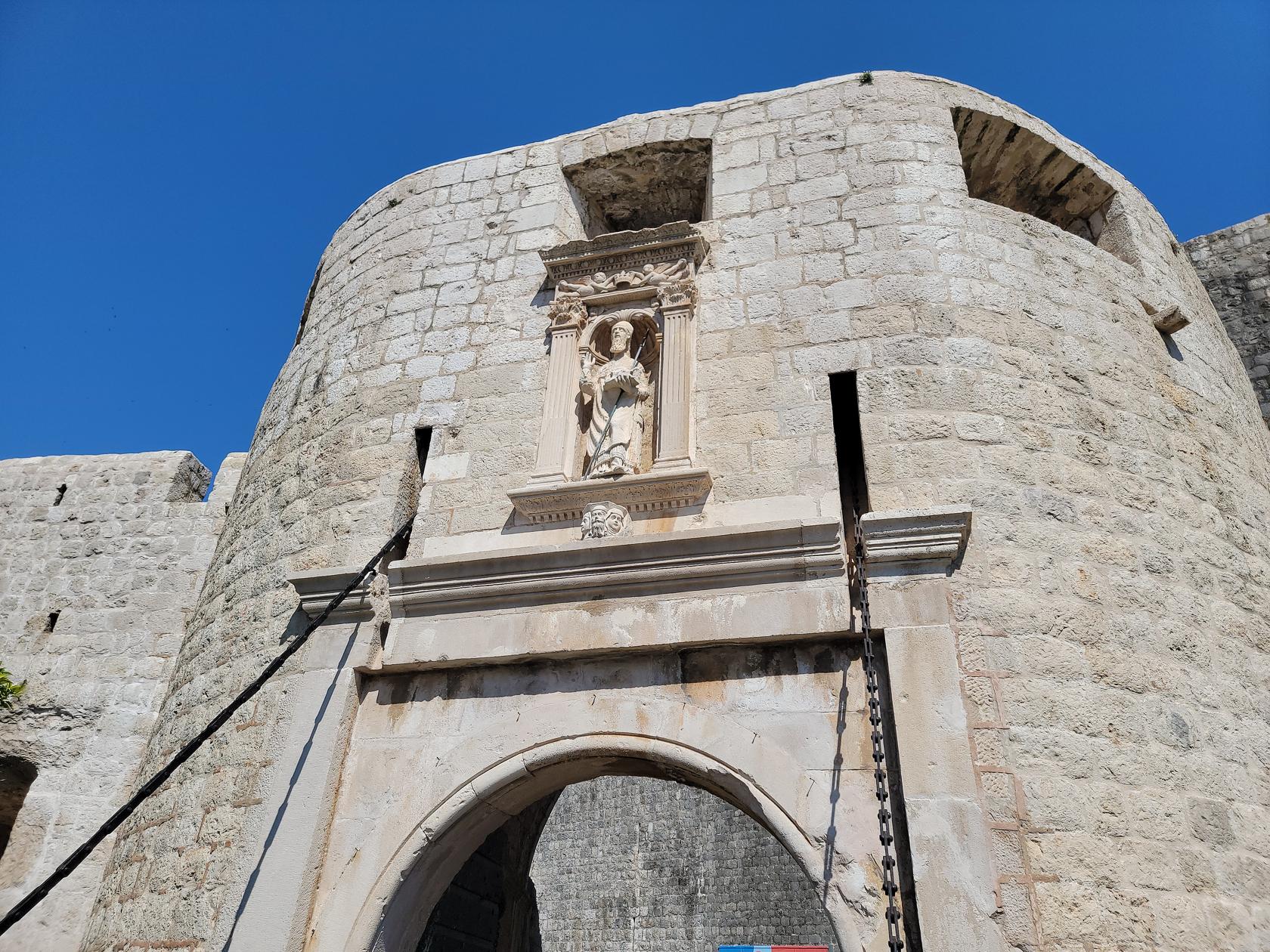
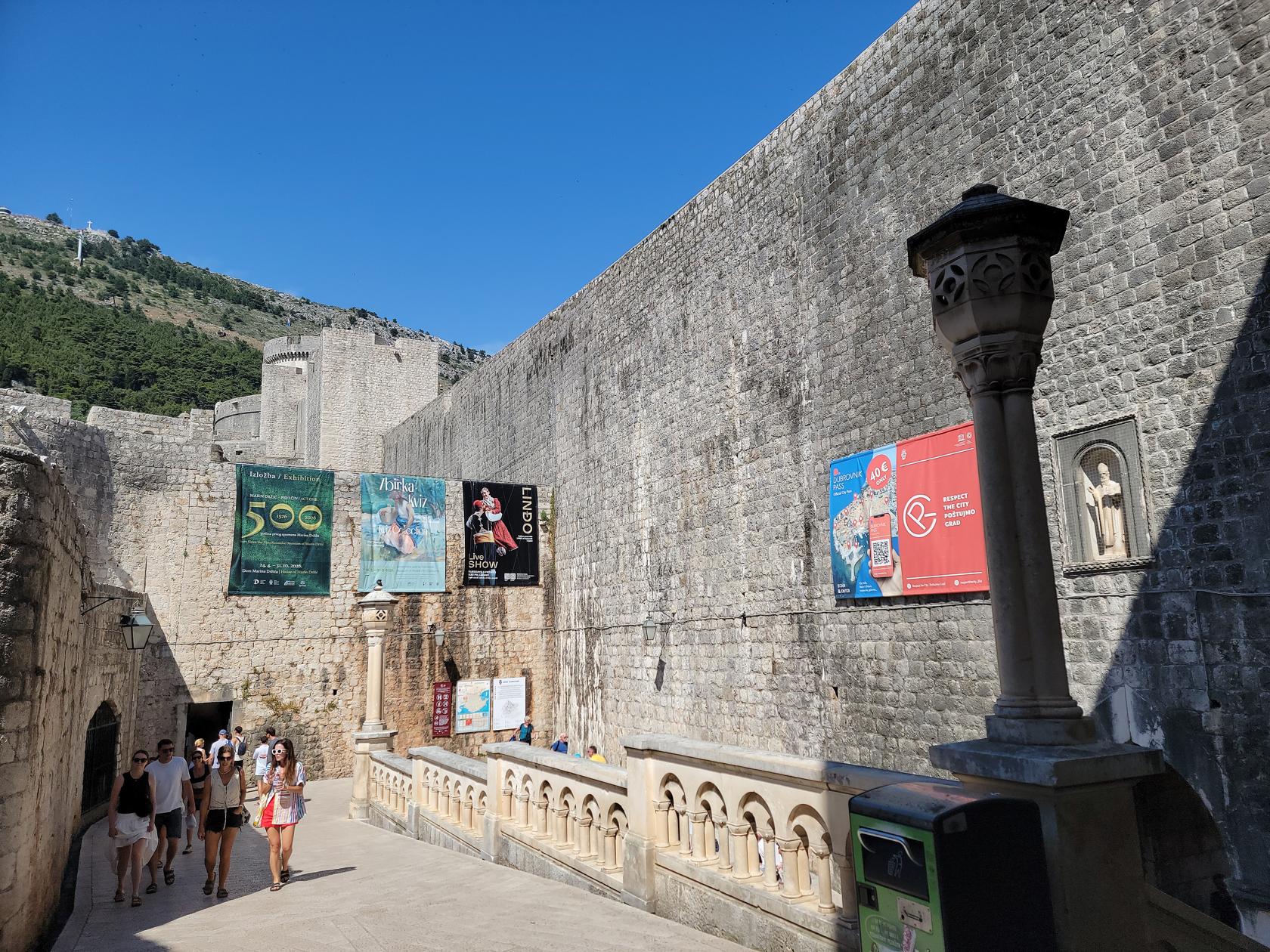
The town is an ancient walled city, that is half surrounded by sea on its southern half. It has a number of entry points, guarded by gates, which in the past maintained its security from threats by land and sea. The primary of which is the Pile Gate, which today has a beautiful garden and play area beneath it.
Park below Fortress Wall – City Wall Tour – Dubrovnik, Croatia
Entrance to Old Town and Fortress Wall – City Wall Tour – Dubrovnik, Croatia
Park below Fortress Wall – City Wall Tour – Dubrovnik, Croatia
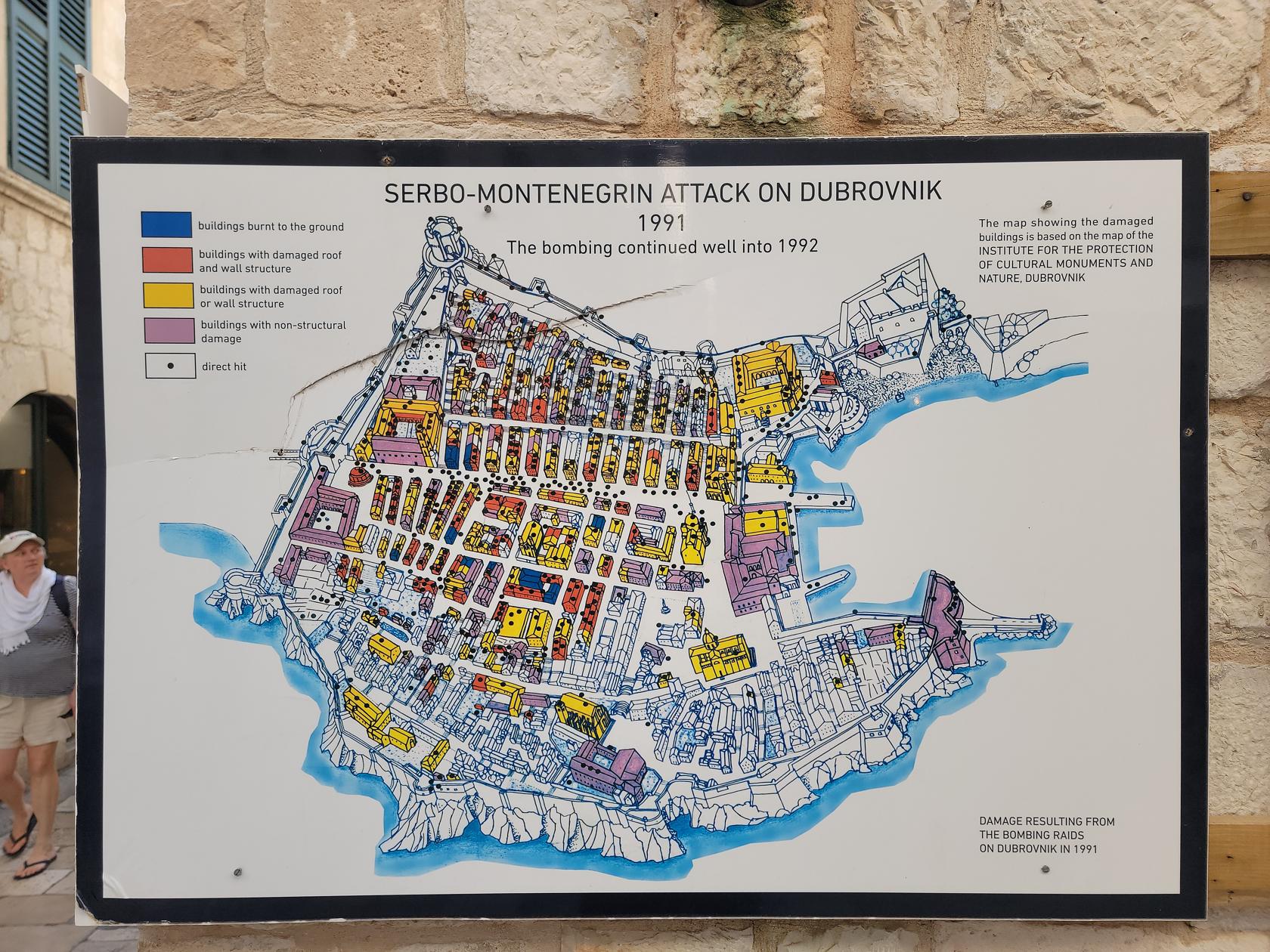
As early as 1991 the Old City was surrounded and laid seige by foreign adversaries and survived, owing to its thick, impenetrable walls and access to the sea. The number of buildings damaged in this unnecessary conflict of a UNESCO World Heritage site were extensive, as the map below shows. This included the cathedral, as well as most churches inside the walls.
Map – Serb and Montenegrin Attack and Seige, 1991 – Dubrovnik, Croatia
Getting There
Train service is relatively limited or non-existent and mostly due to the former Soviet, Yugoslavian and present day Croatian governmental and engineering authorities being unable to overcome technical difficulties building tunnels through the earthquake prone geology in the region. The mountainous terrain runs longitundinally along the coast and is prone to falling apart. Even roadways are difficult to maintain. So other options should be sought out.
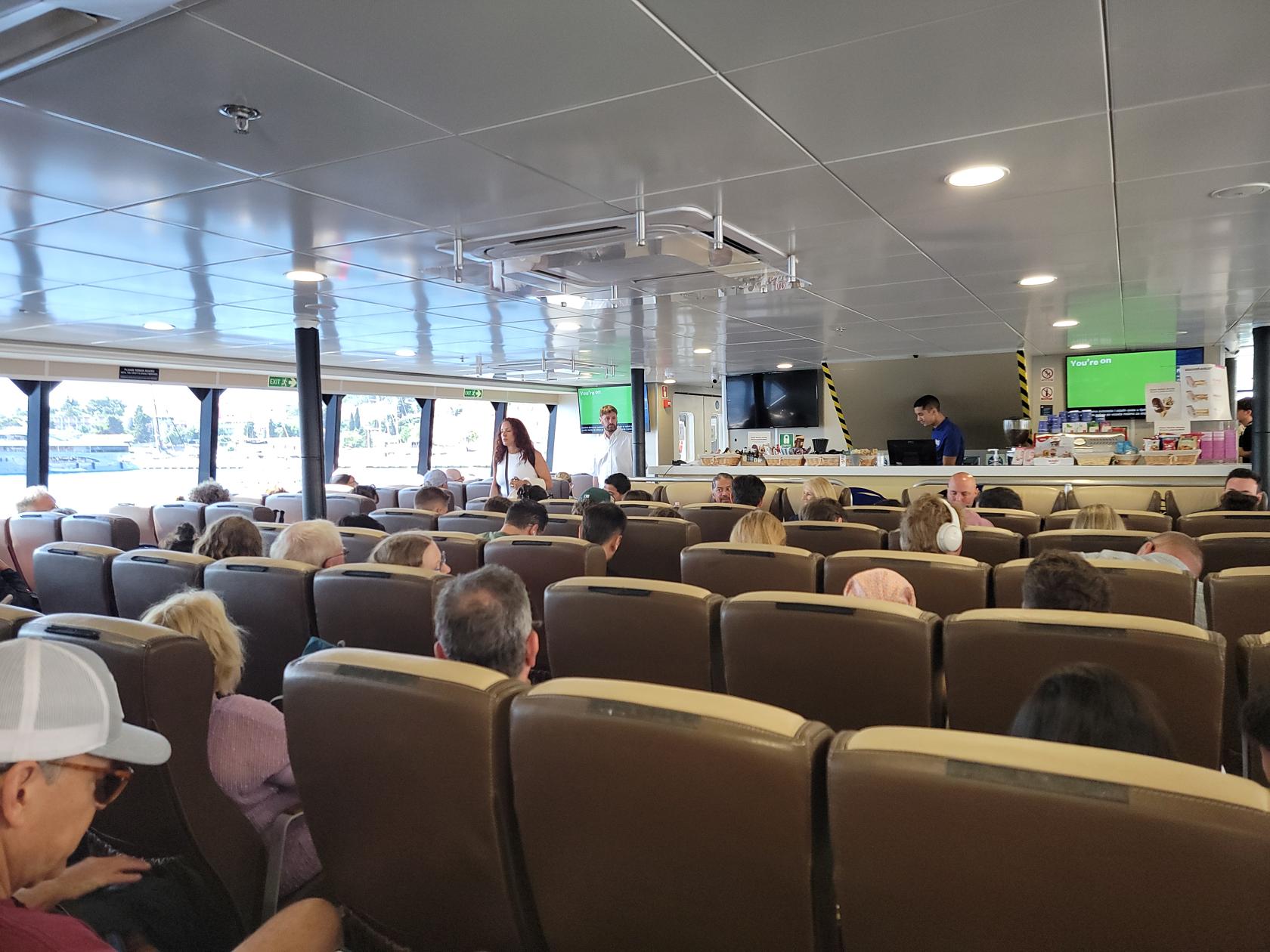
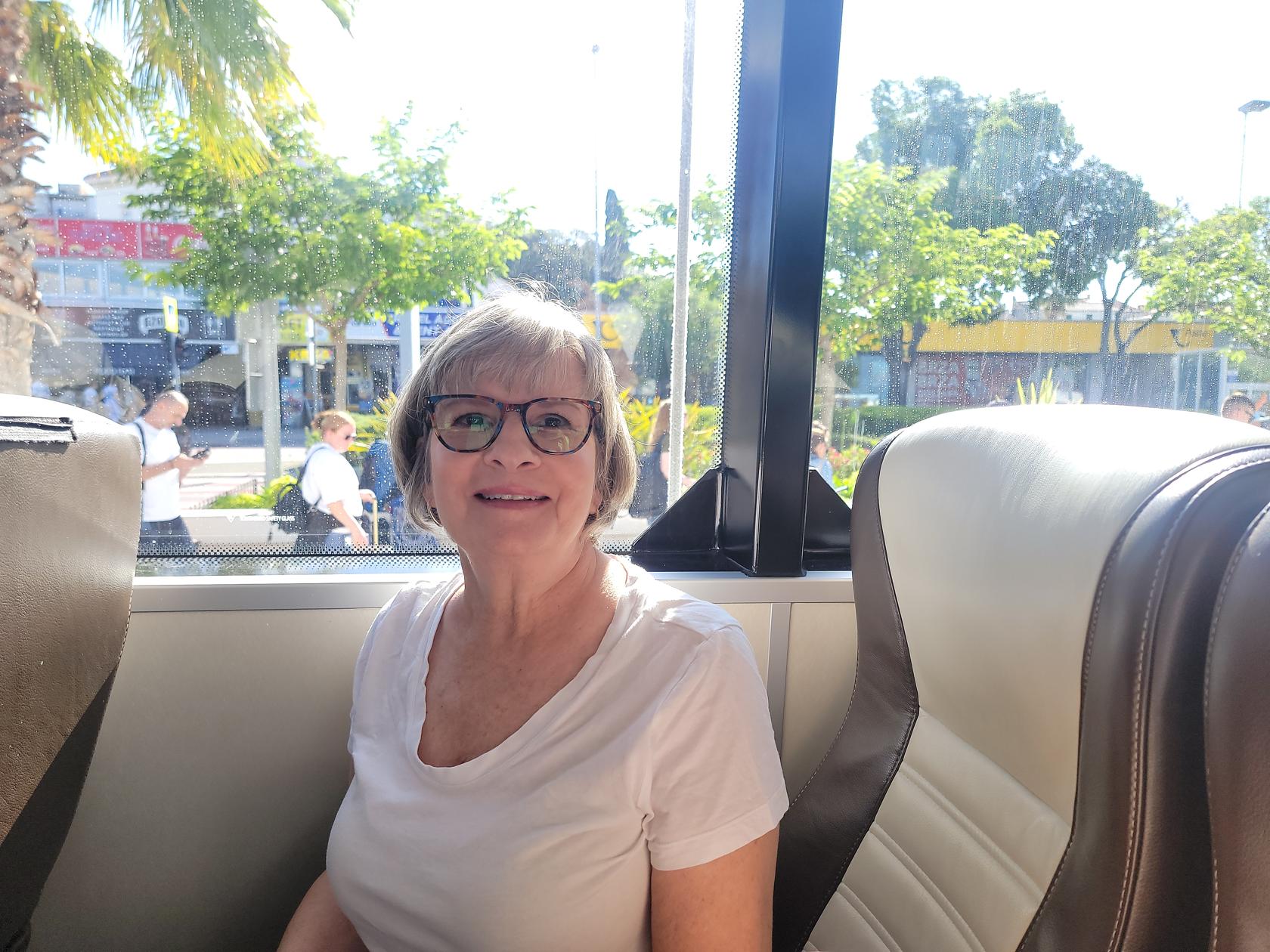
Interior – Kapetan Luke Ferry
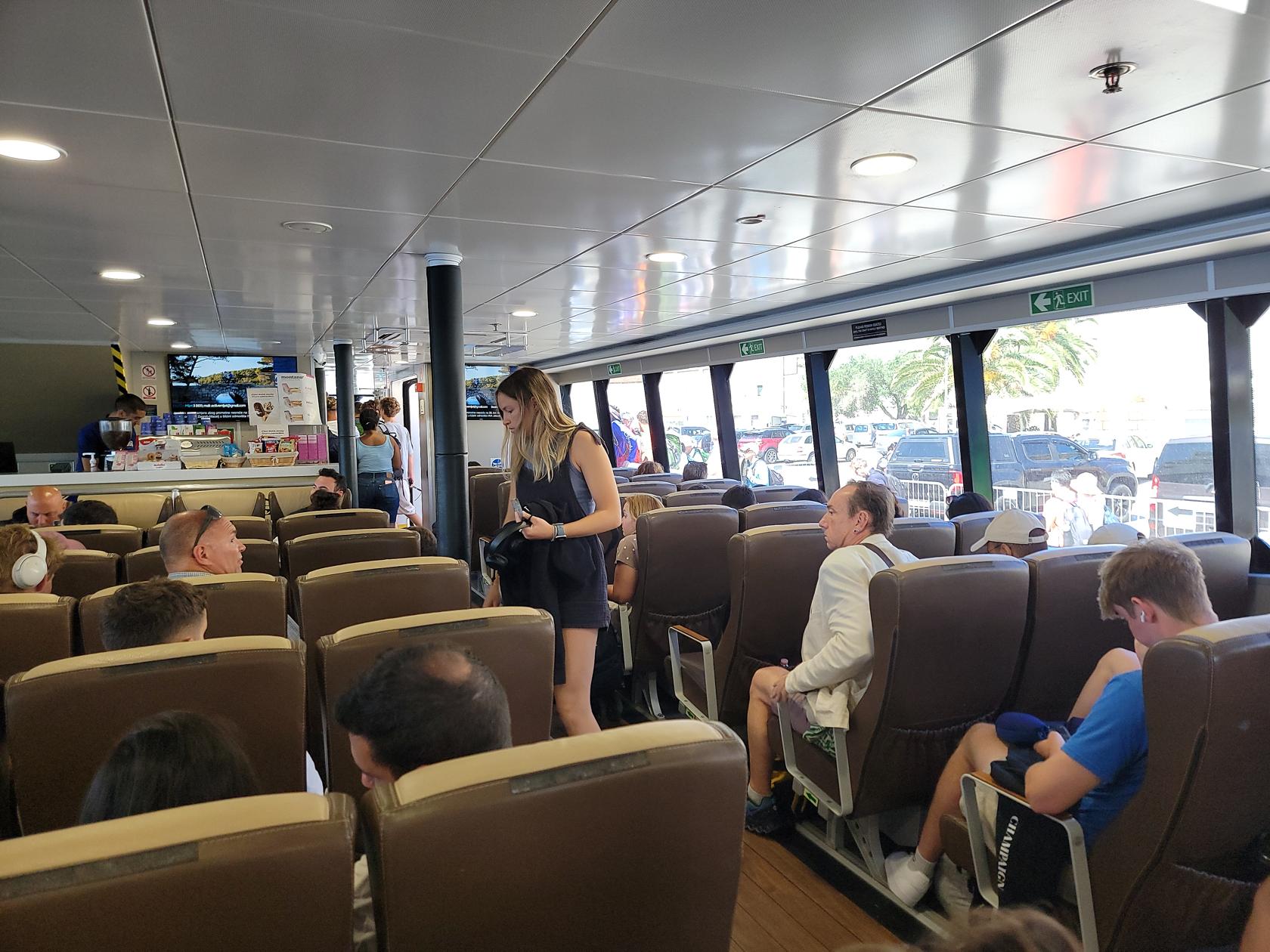
Interior – Kapetan Luke Ferry
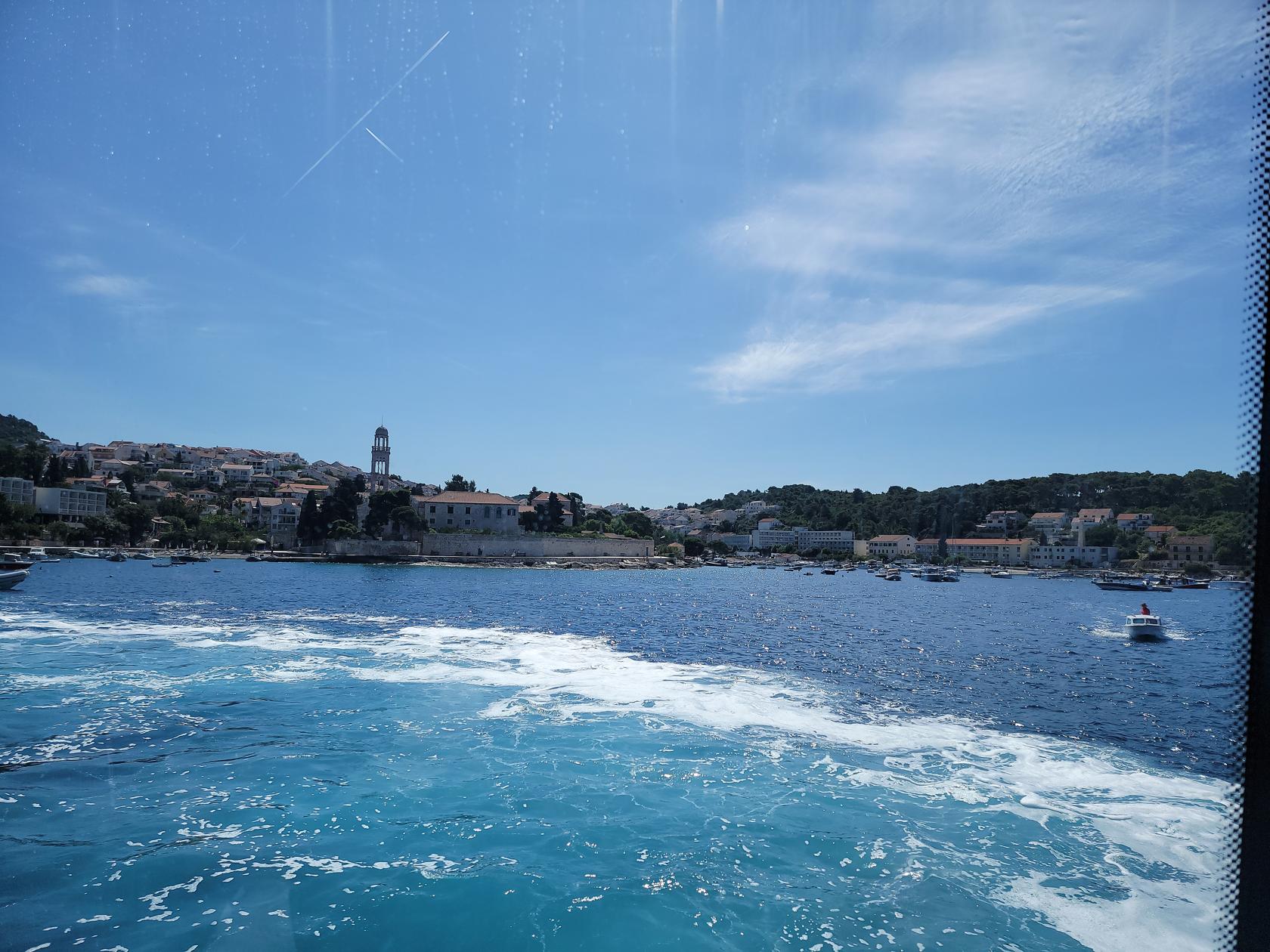
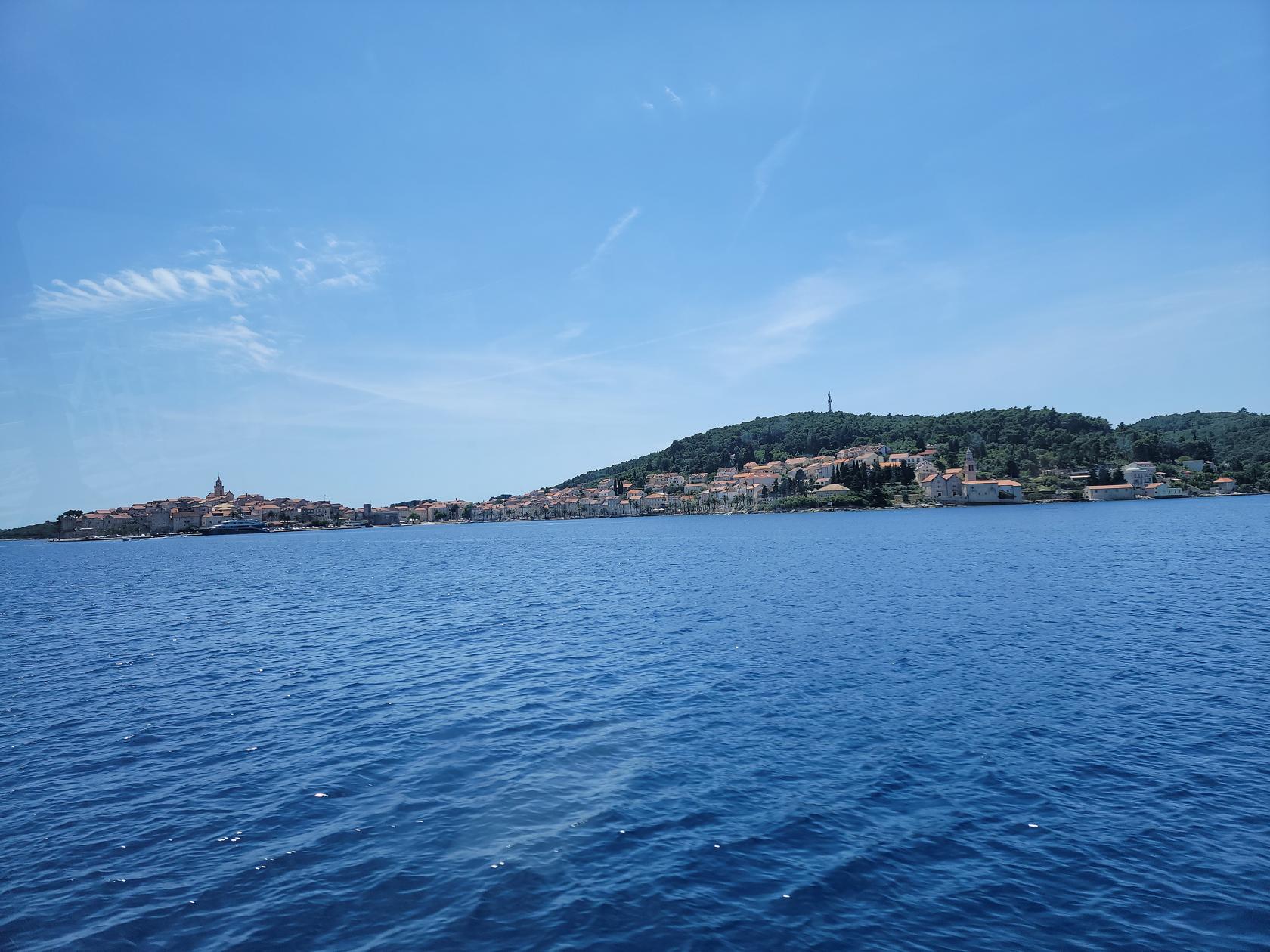
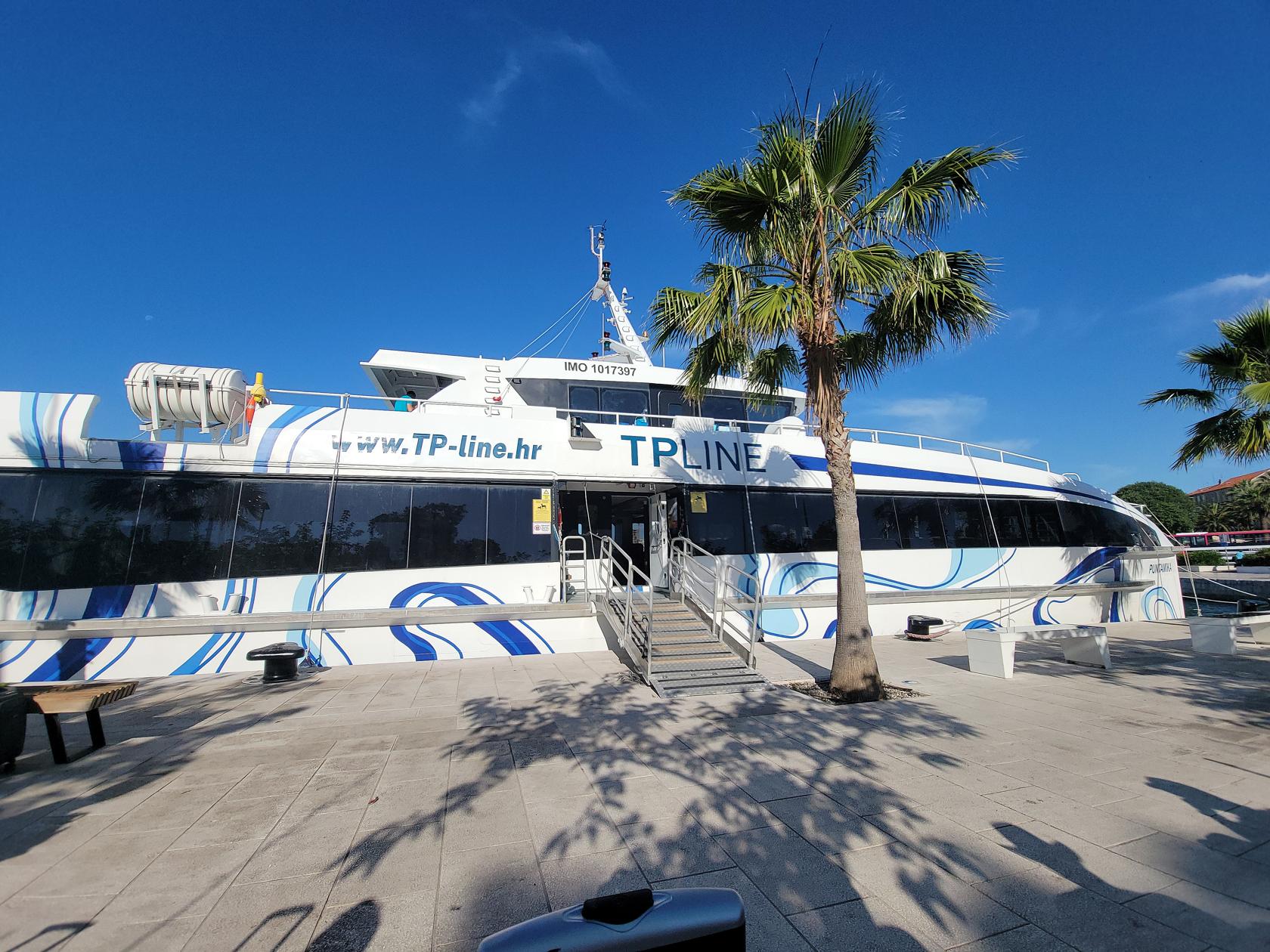
To get there we took the Kapetan Luka ferry service from Korcula to Dubrovnik. It is a two hour trip with one stop along the way. Other means of getting here are by bus, flying and car.
Though the Kapetan Luka service is adequate, the TPLine is commended for several reasons:
First, the ferries are larger and more accommodating.
Second, the crew seem to know there stuff, especially when is comes to stowing your luggage, etc.
Third, your luggage is stowed with you, on-board, inside; not outside in the elements.
Lastly, their internet presence is better and they maintain a very good and well maintained portal where tickets may be purchased directly from them, instead of some other third party application.
Where We Stayed
The hotel options in Dubrovnik can be very expensive, so be prepared for sticker shock, especially during peak season. There are other options, particularly when you can travel during non-peak or willing to venture further out from the Old Town.
Vila Dard Hotel
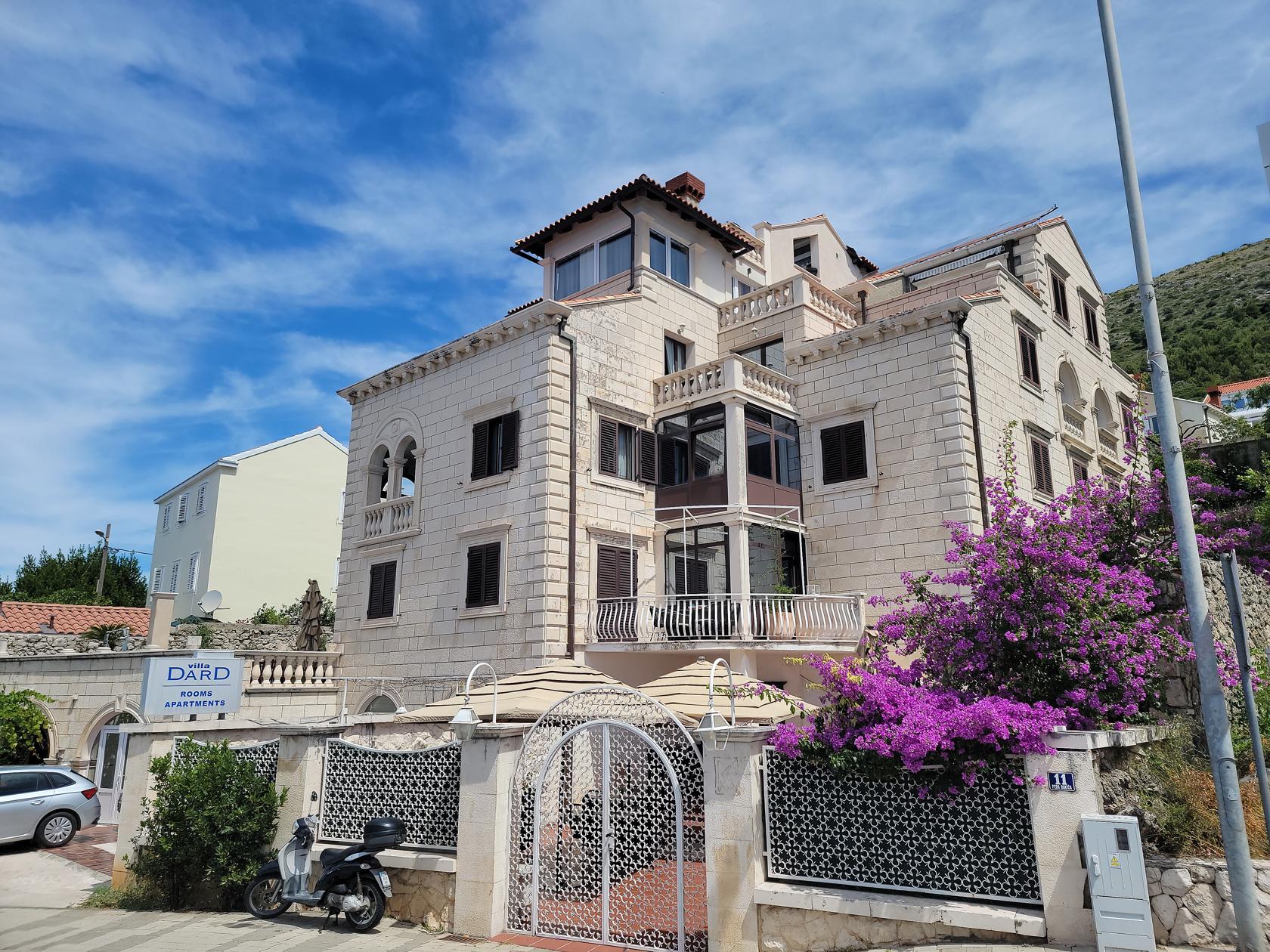
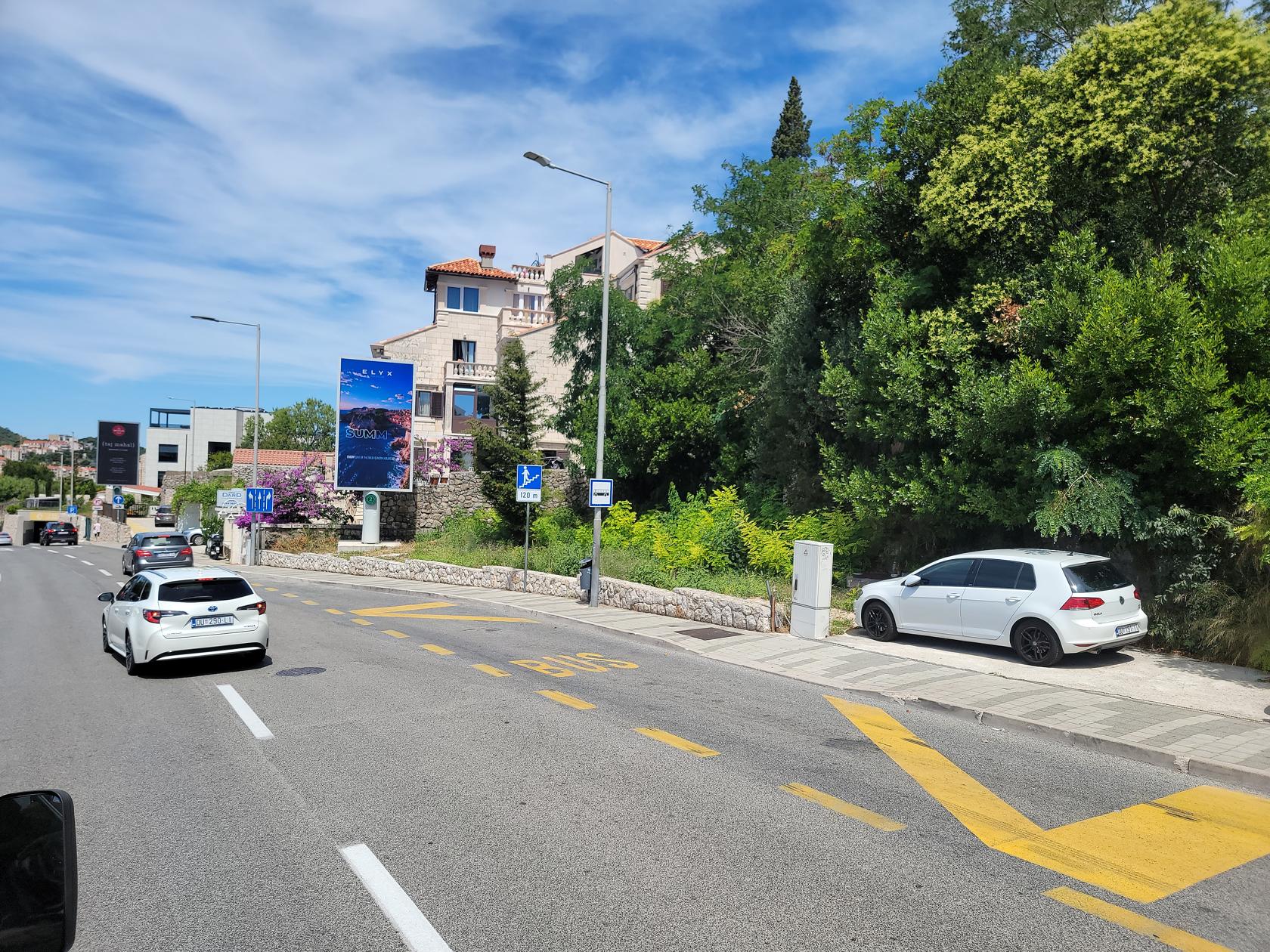
Located directly above the Old Town and approximately three hundred steps from it, was our hotel, Vila Dard. Unfortunately located on a very busy road, especially in the mornings and early evenings when everyone is rushing to and from work, it can be a bit challenging to cross.
Vila Dard – Dubrovnik, Croatia
Vila Dard Street – Dubrovnik, Croatia
However, it was for us more than 600-700€/night cheaper than staying at, let’s say, the Imperial Hilton down by the city. That’s a huge savings and one can overlook the traffic and inconvenience. It was very clean, fully air-conditioned and our laundry was changed everyday, without any issues with missing towels or other amenities, which we find rather frustrating at other higher priced options. So, in the end, it saved us some money and improved our health a bit, since we did not have to go to the gym and got plenty of exercise.
Lovrijenac Fortress
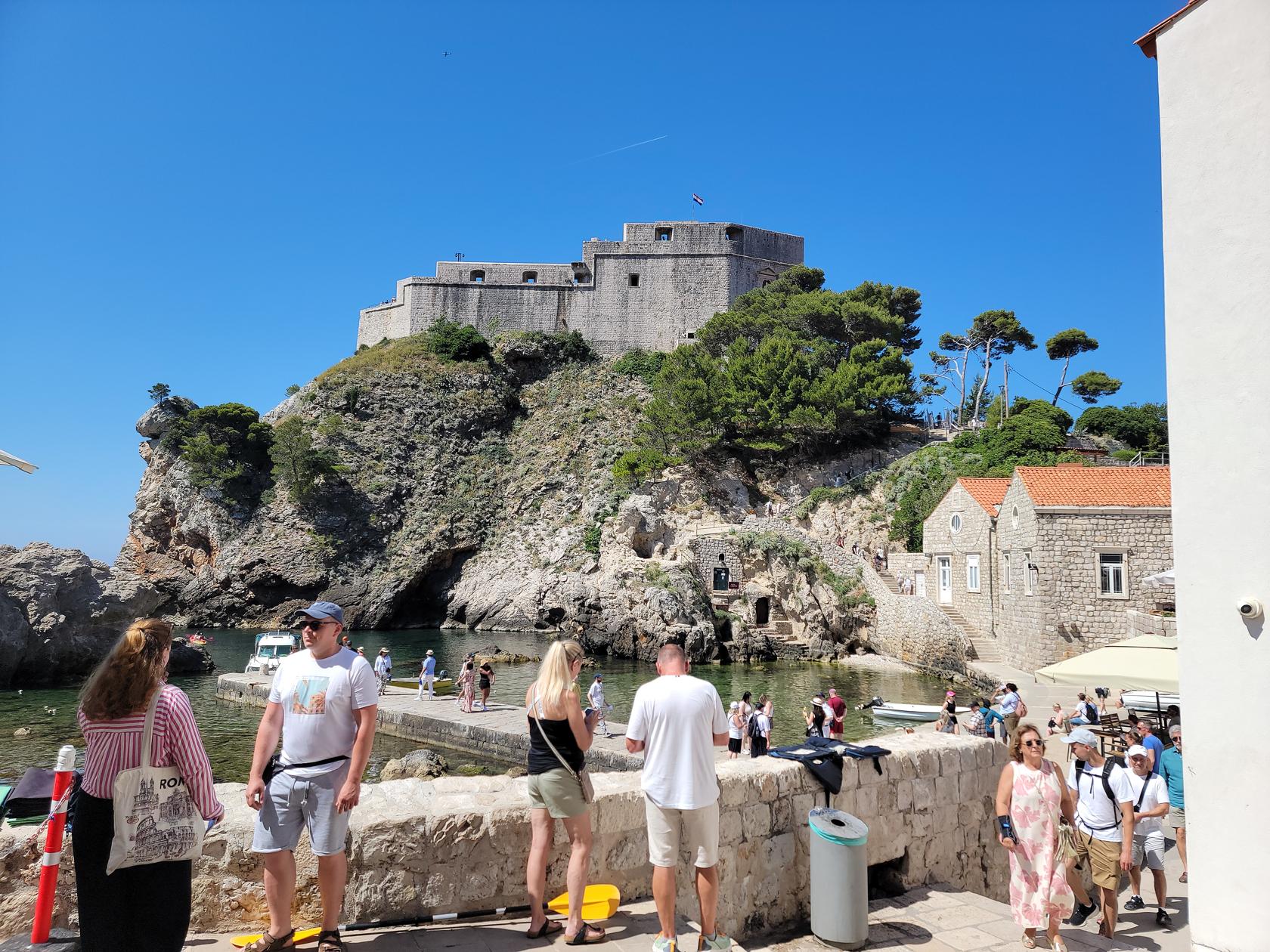
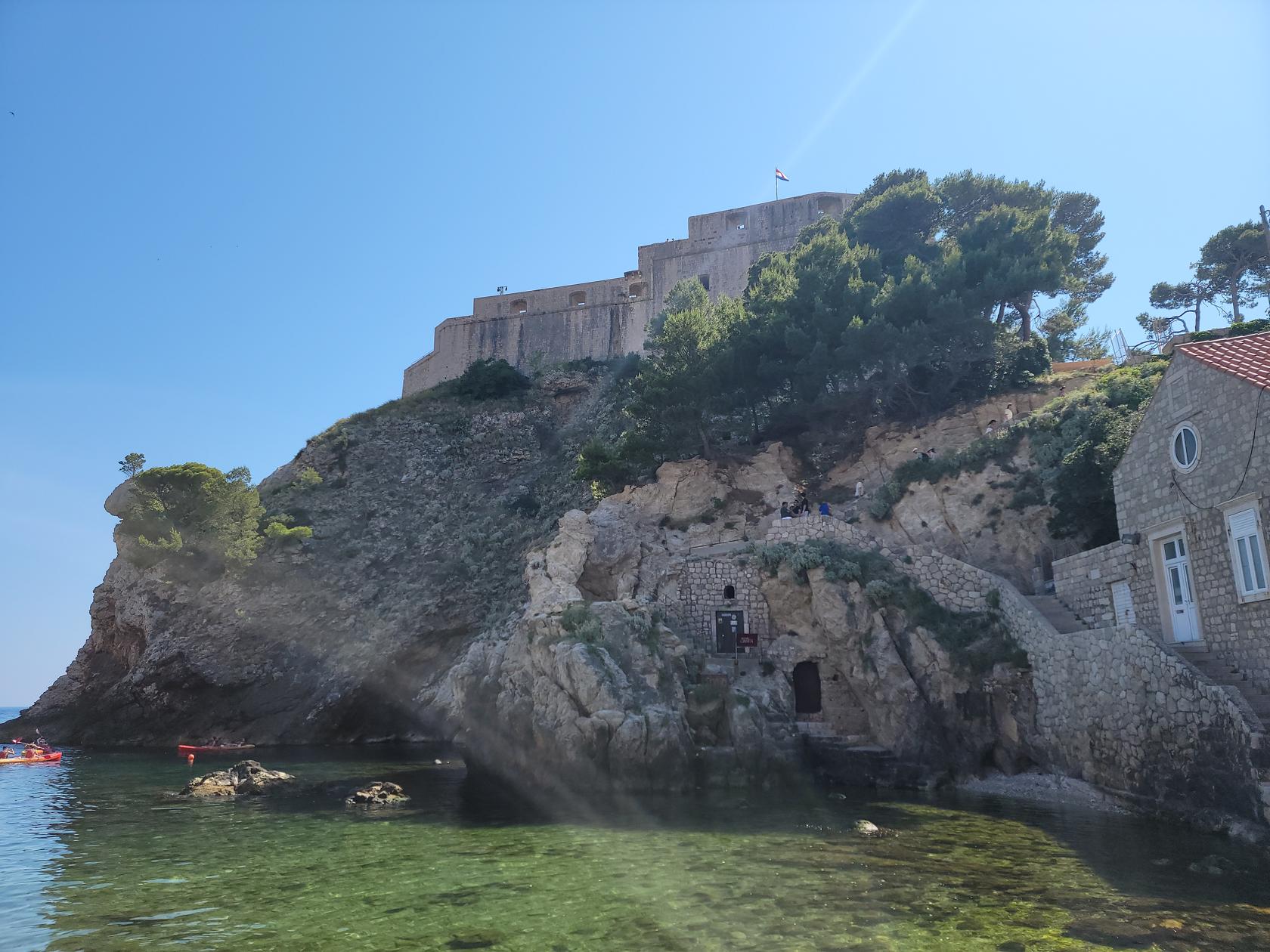
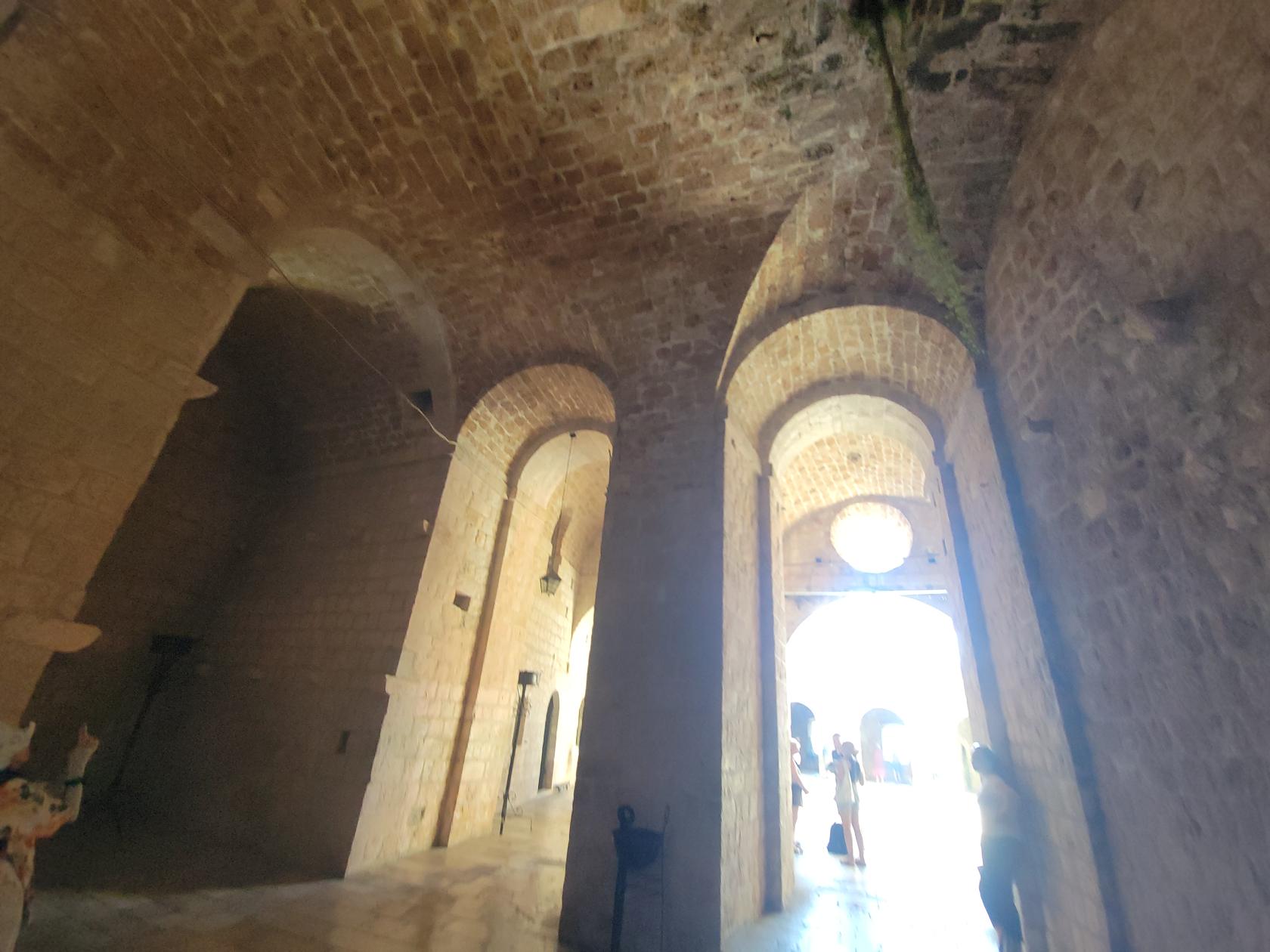
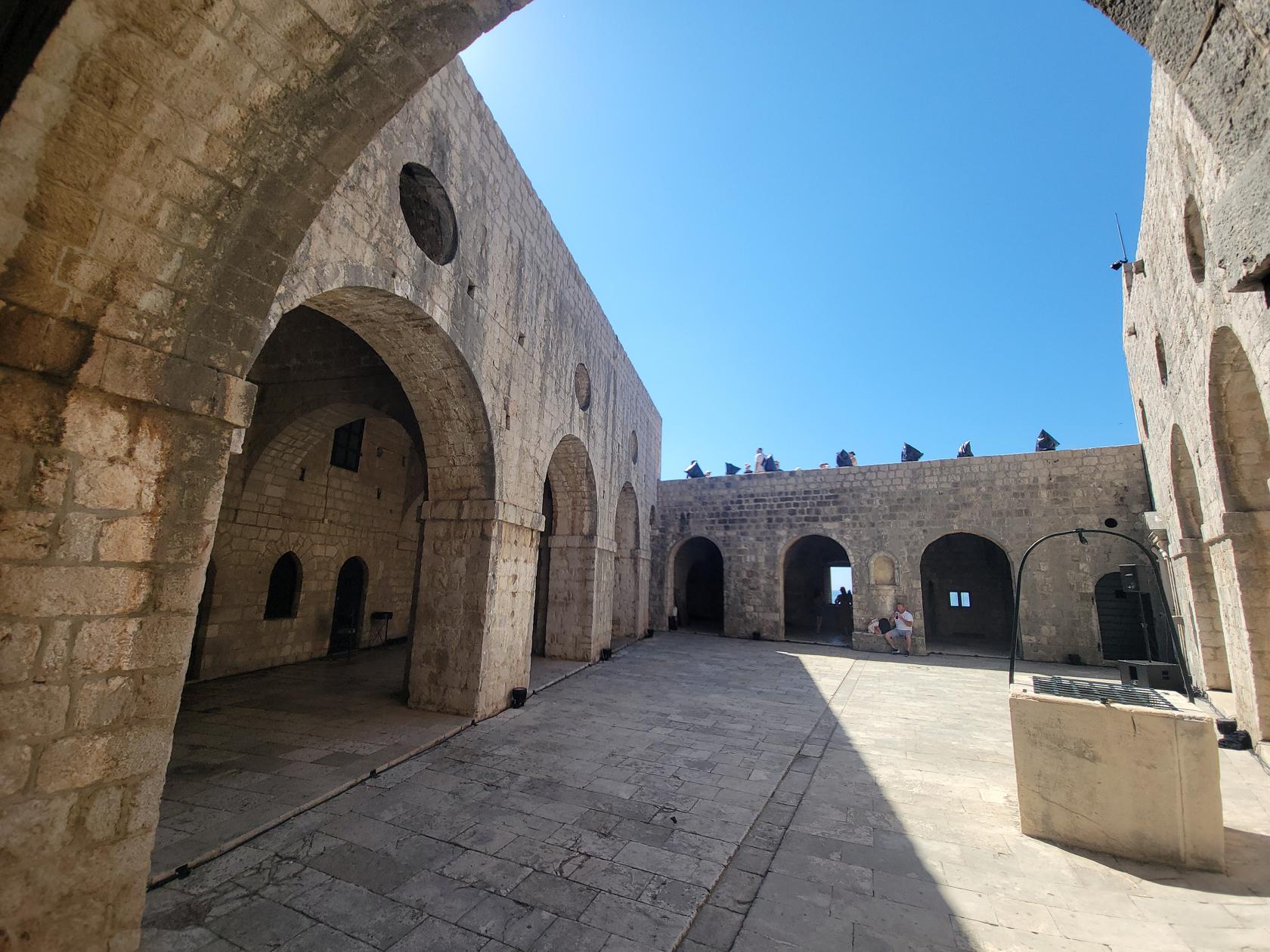
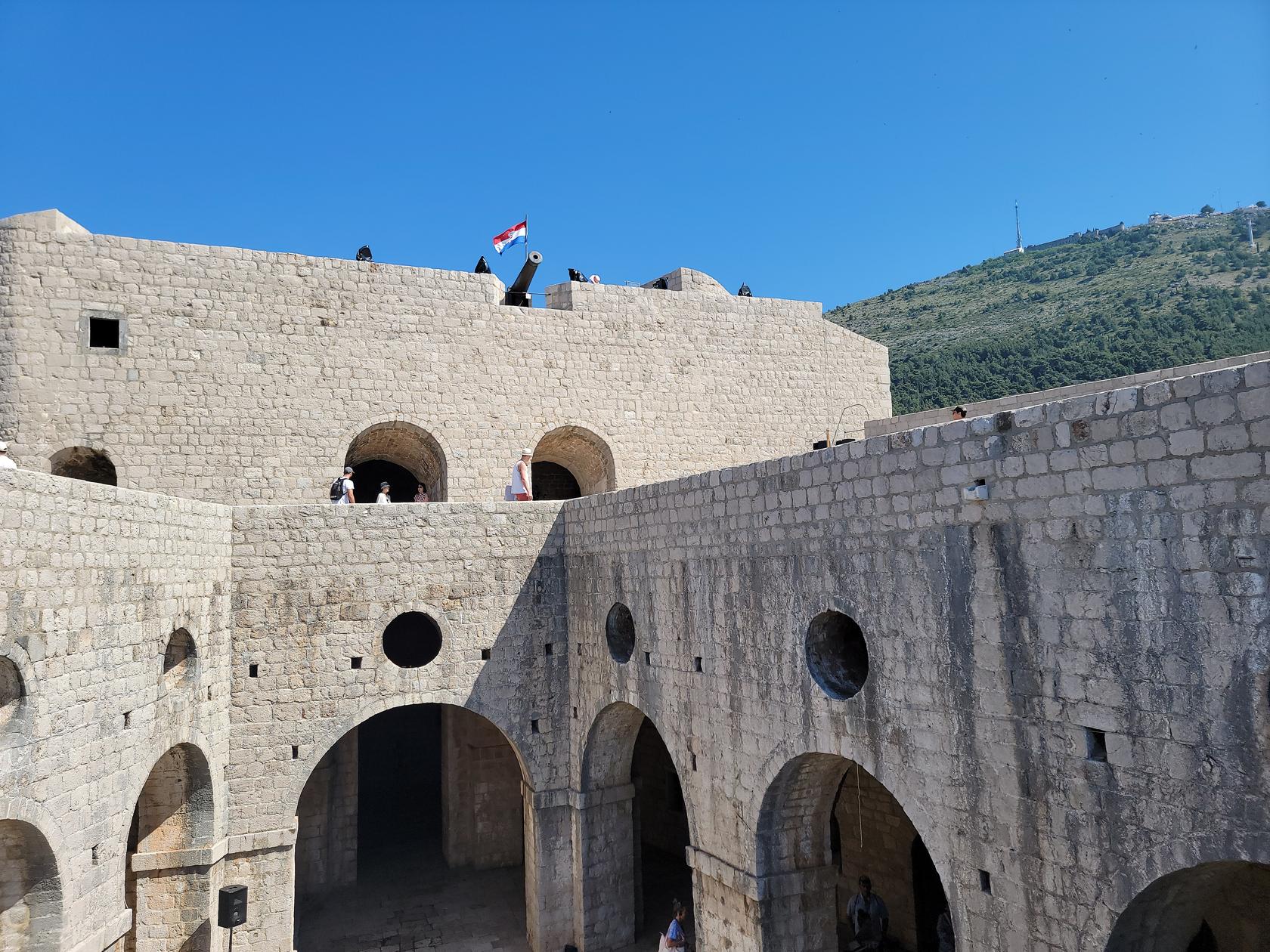
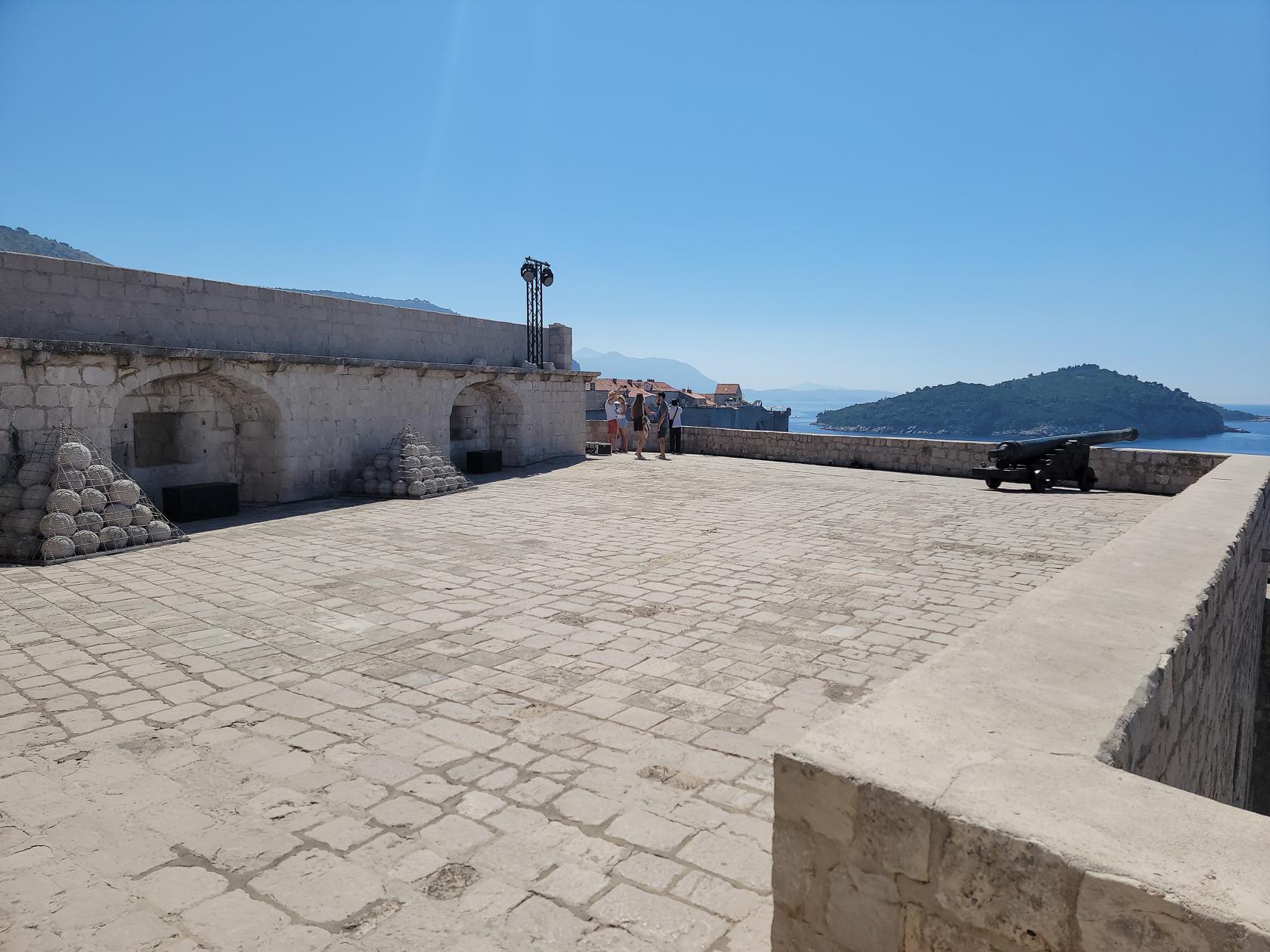
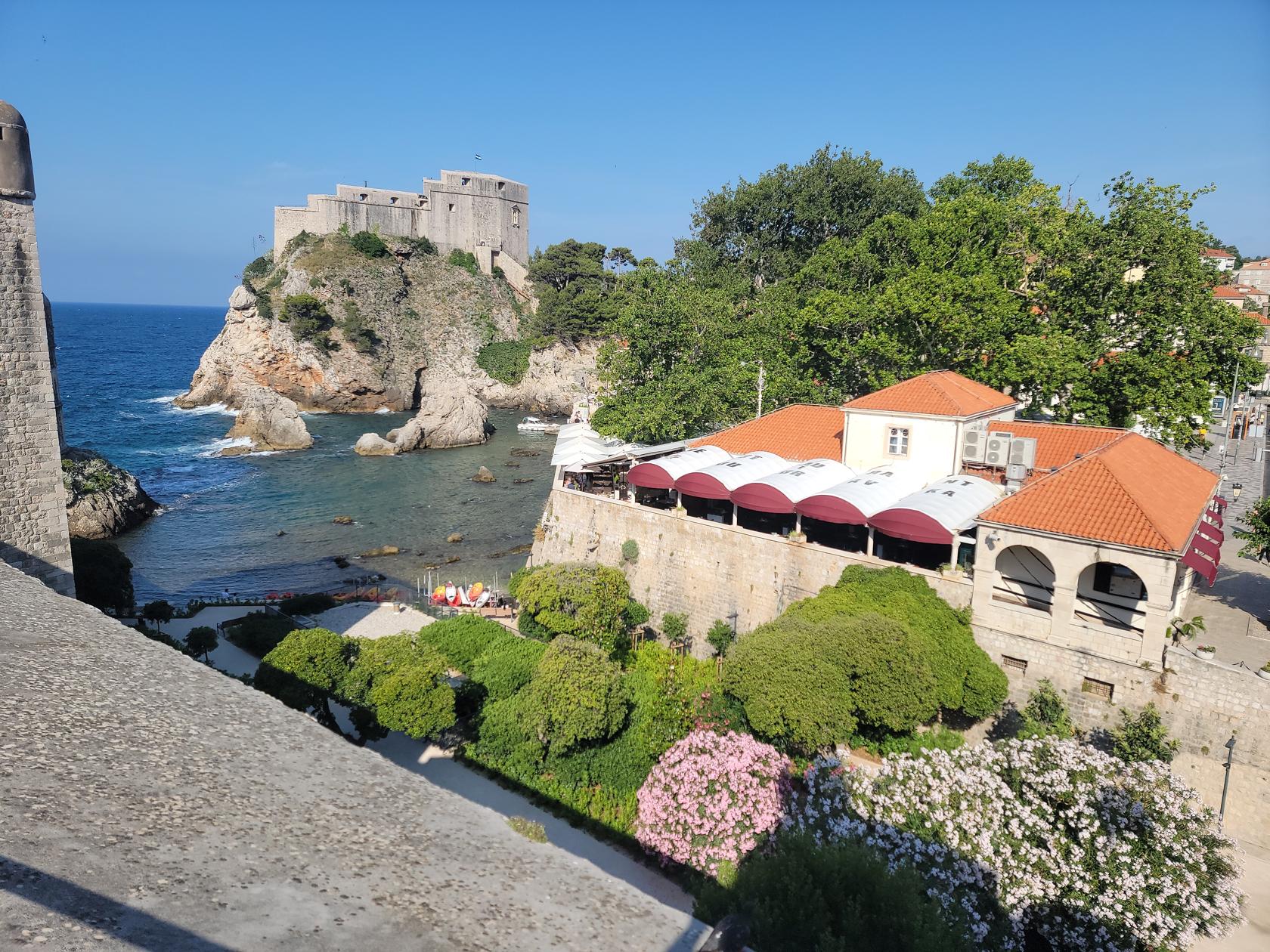
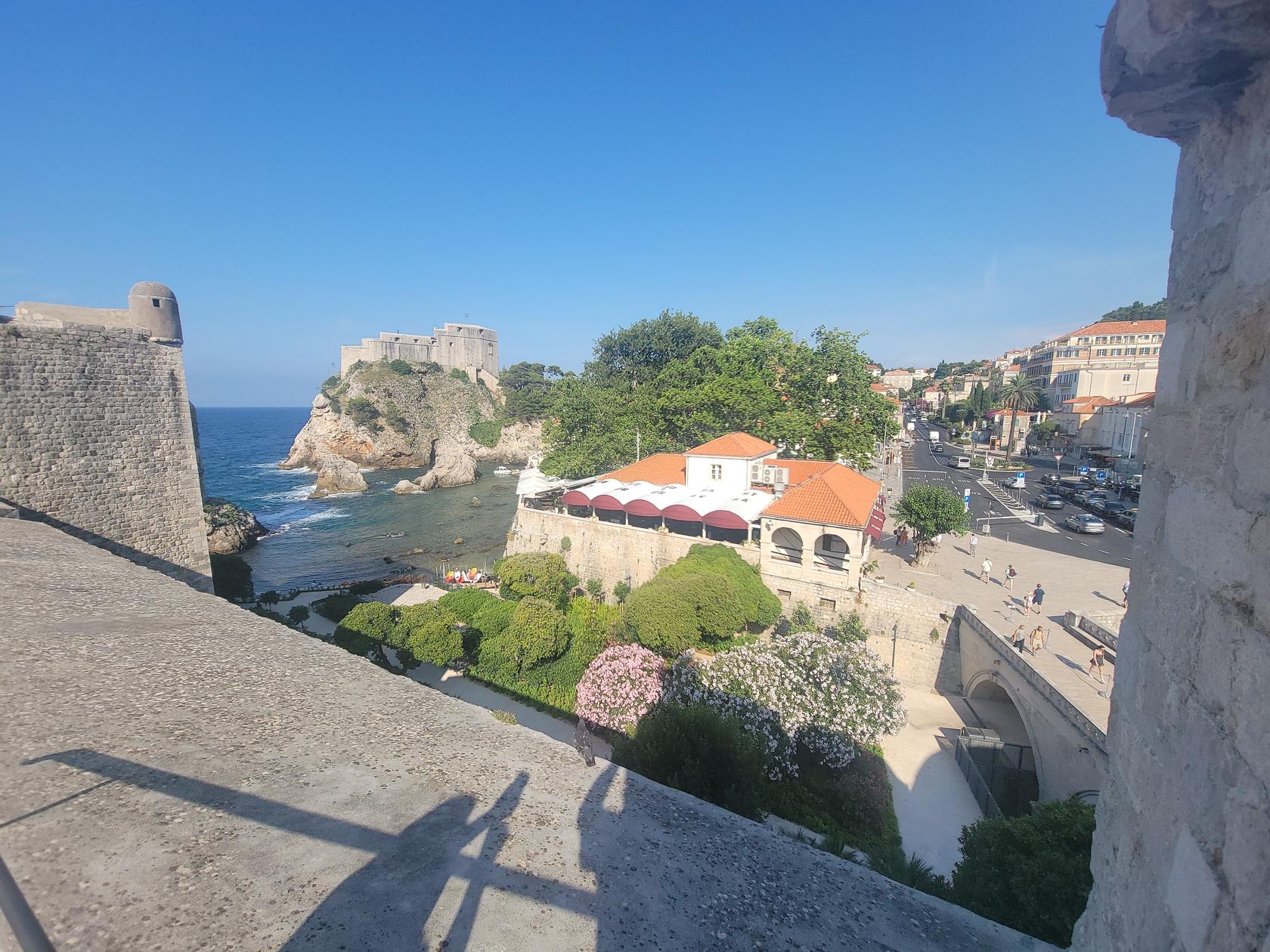
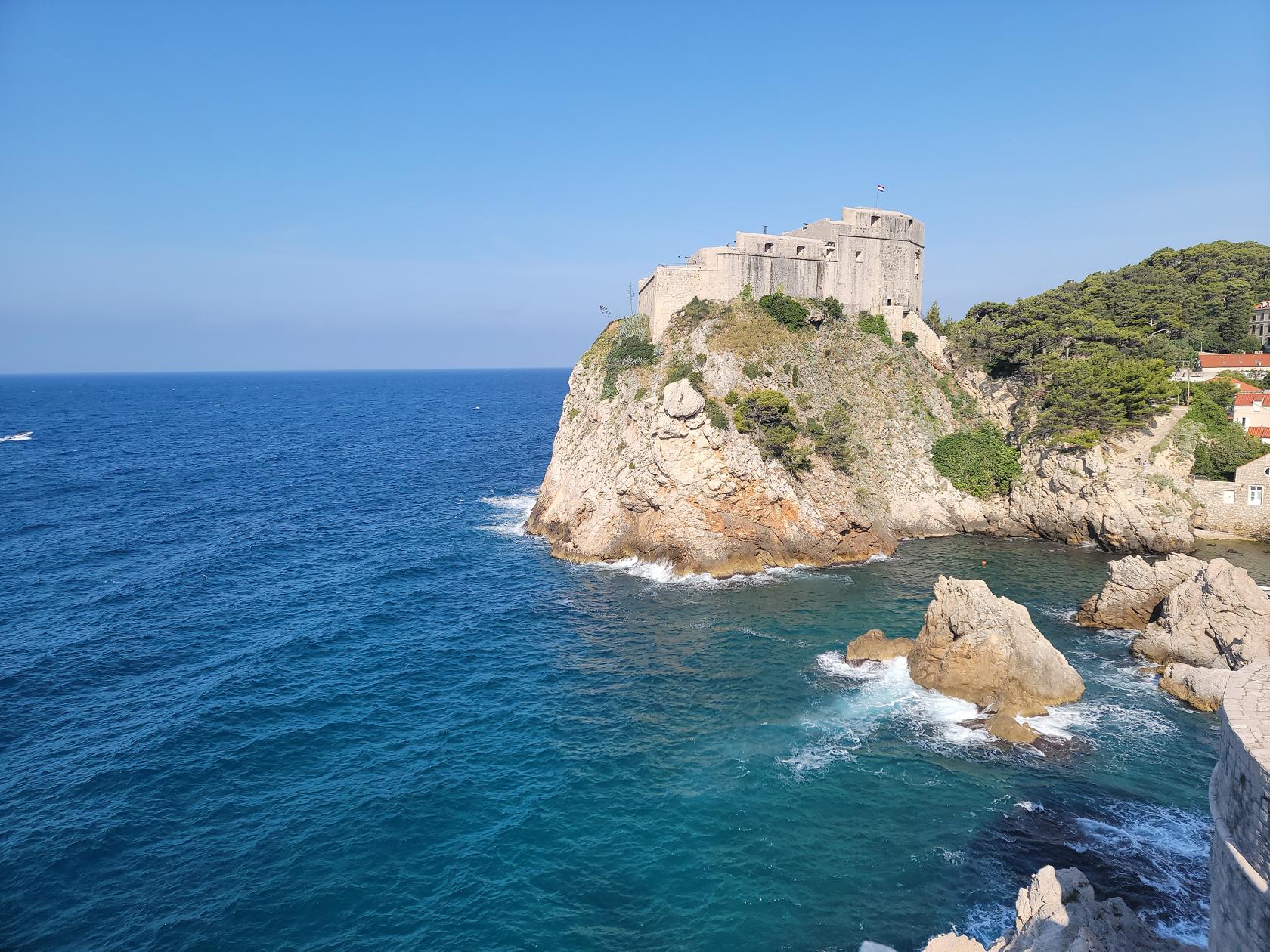
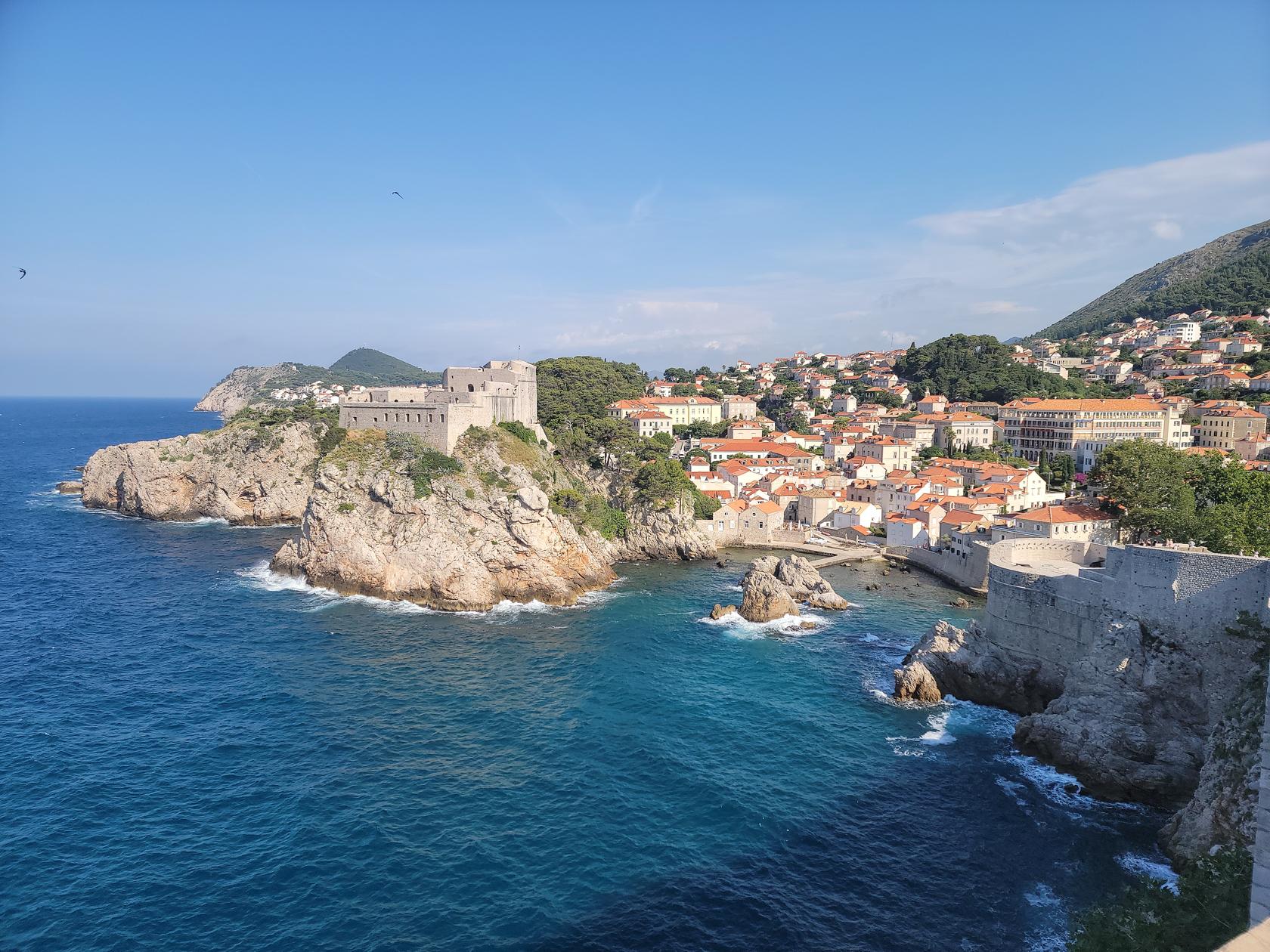
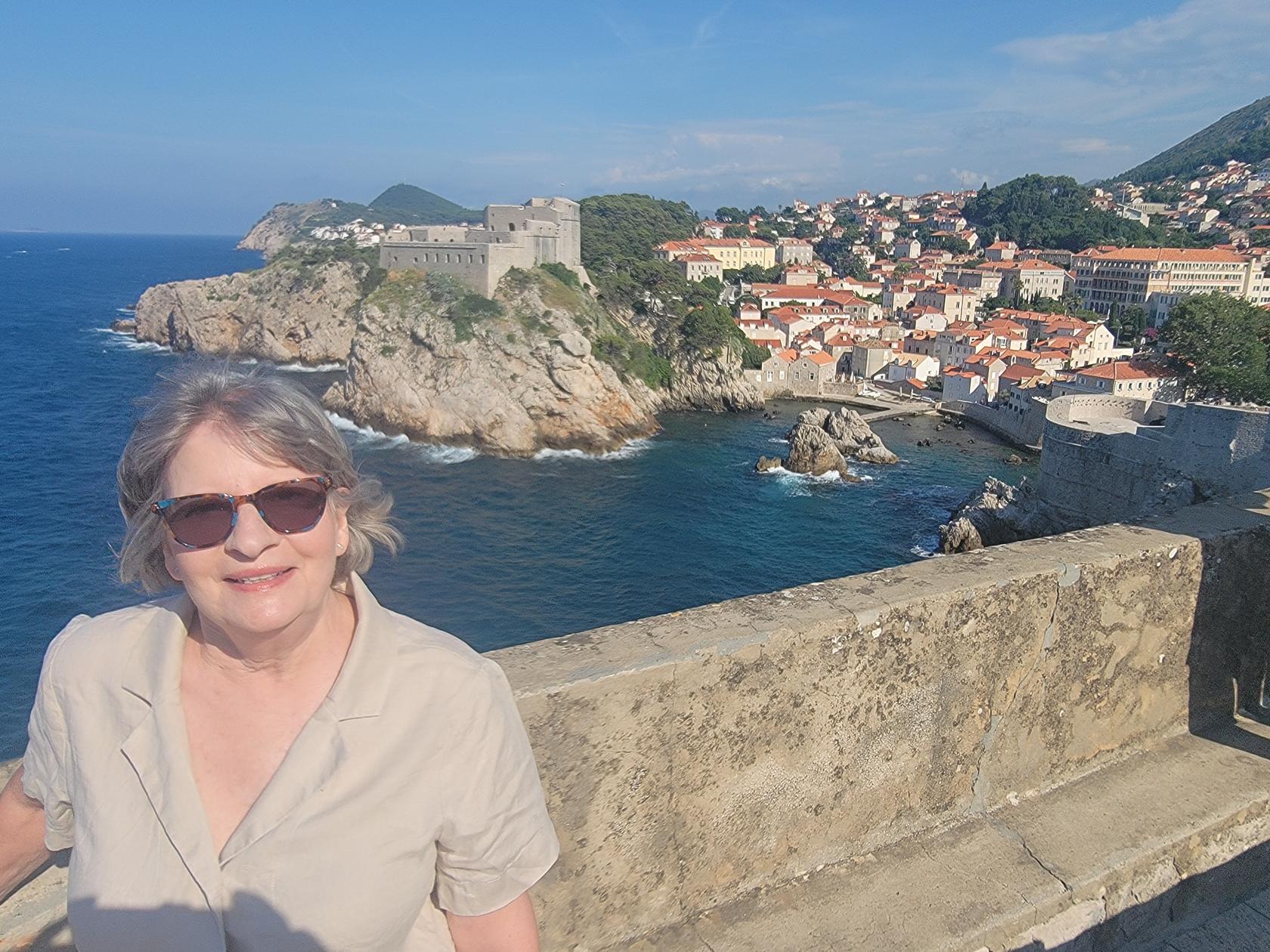
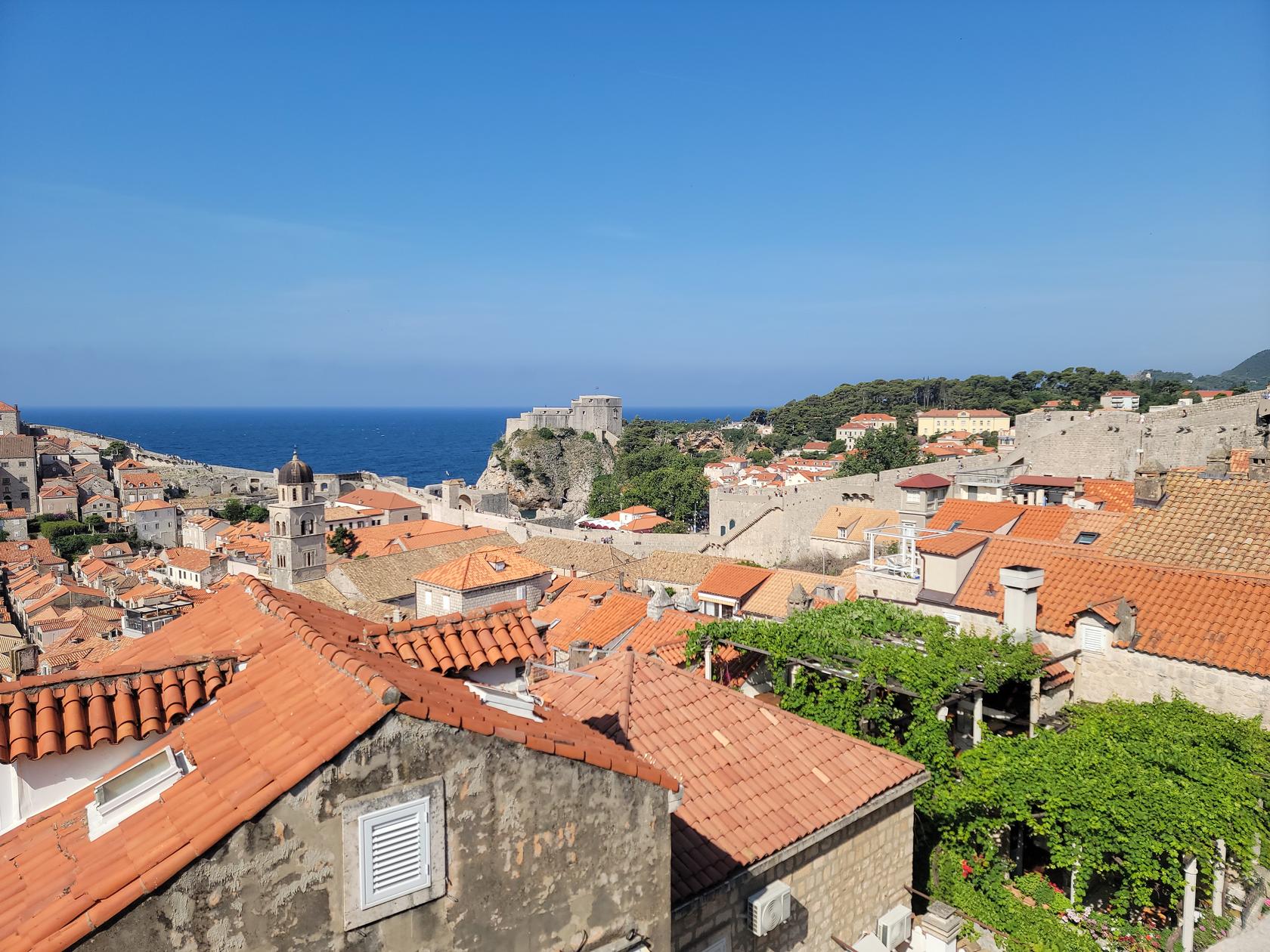
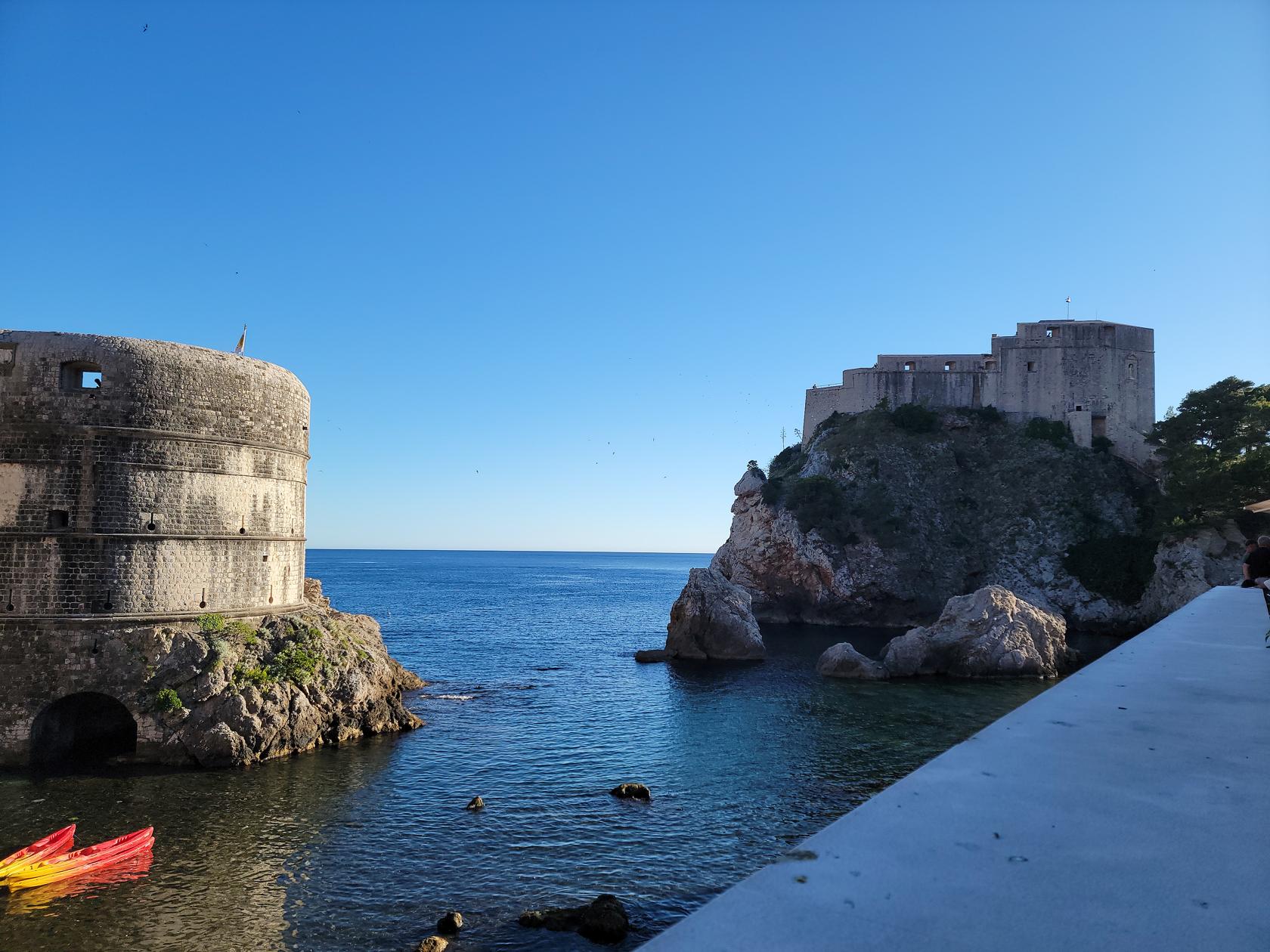
Located outside the town walls is the Lovrijenac Fortress. Perched high on a hill overlooking the west harbor, it commands a viewpoint of the entire seaside, countryside and harbor that it protects. It also appears to be a favorite venue for weddings and other occasions, since they were setting up for one when we visited.
Lovrijenac Fortress – Dubrovnik, Croatia
Lovrijenac Fortress – Dubrovnik, Croatia
The Lovrijenac Fortress appears to have been built in haste by the people of Ragusa, to resist Venetian rule. The Empire of Venice had already threatened to built a fortress on the same spot, so they could dominate trade and the surrounding area. When they arrived with their ships fully ladened for the task, they found that they were beaten to it by the residents and had to turn back.
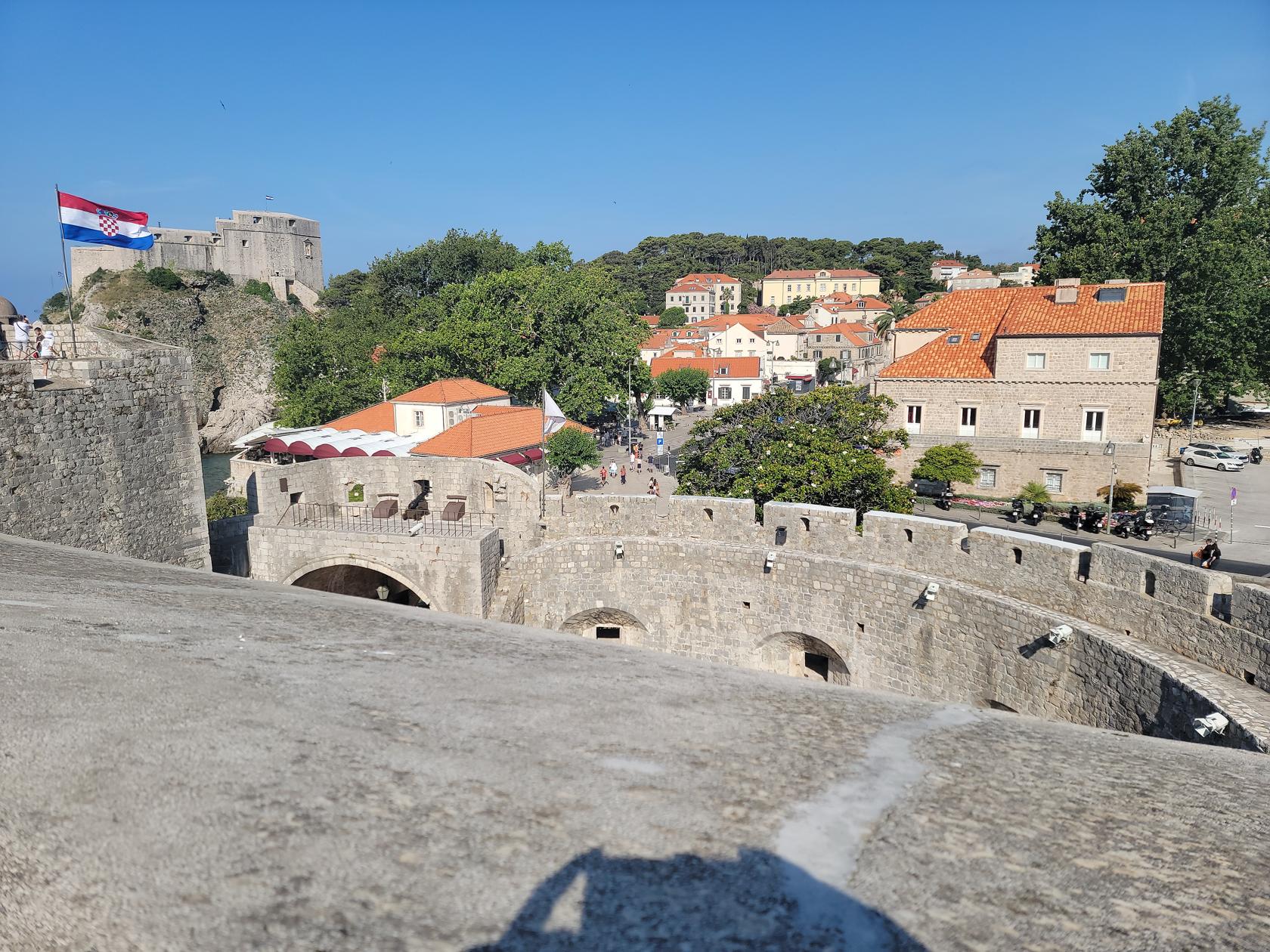
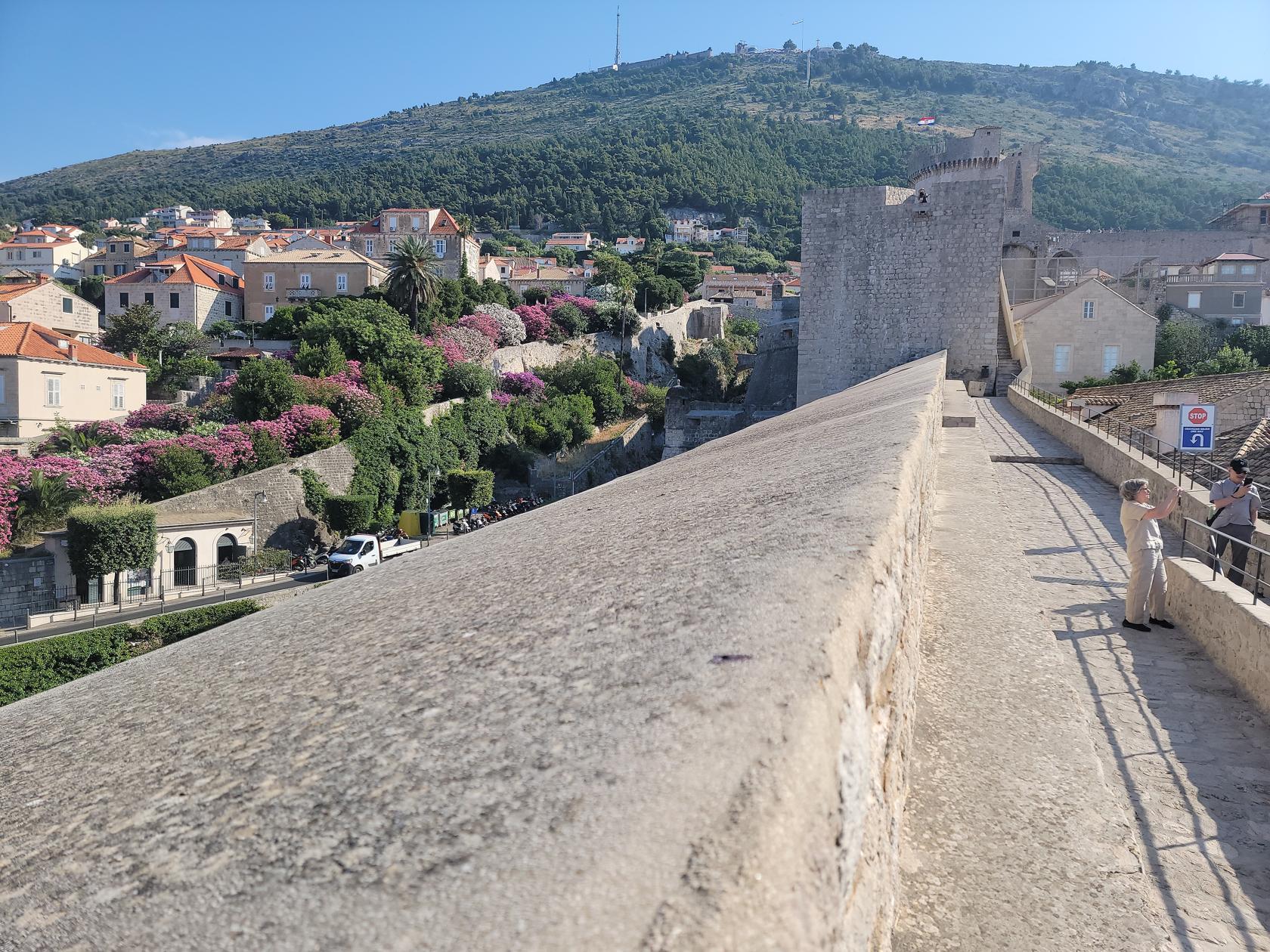
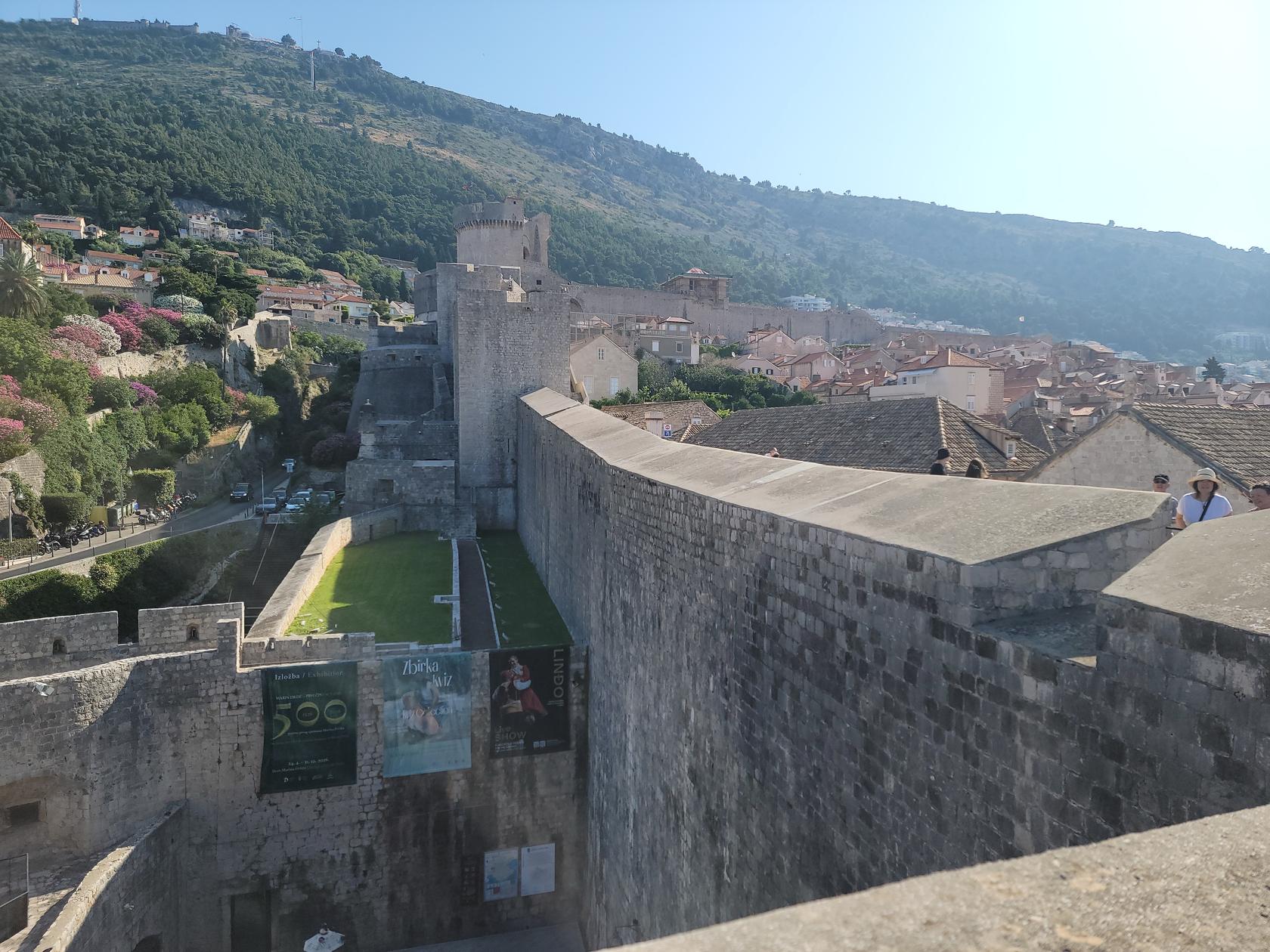
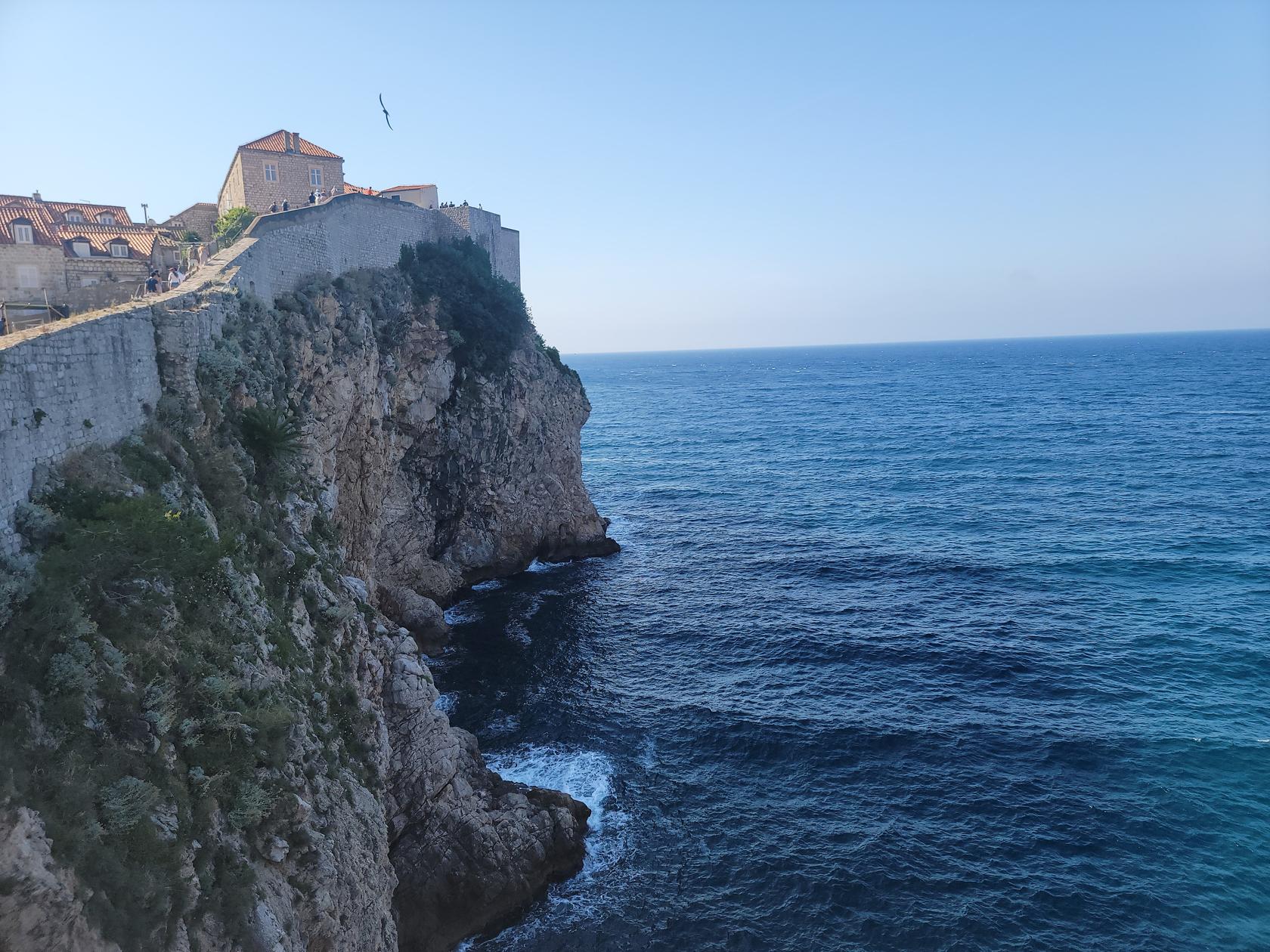
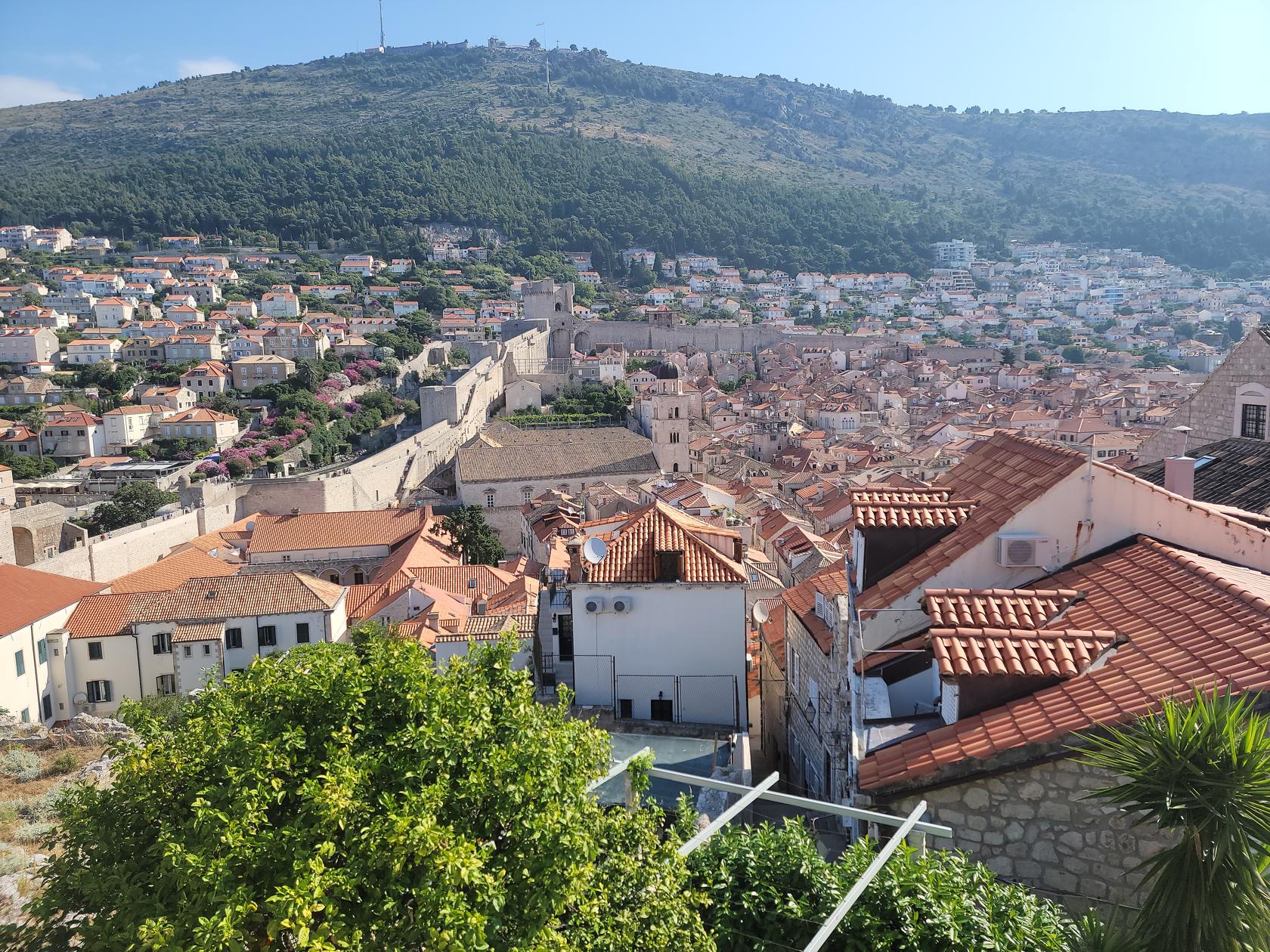
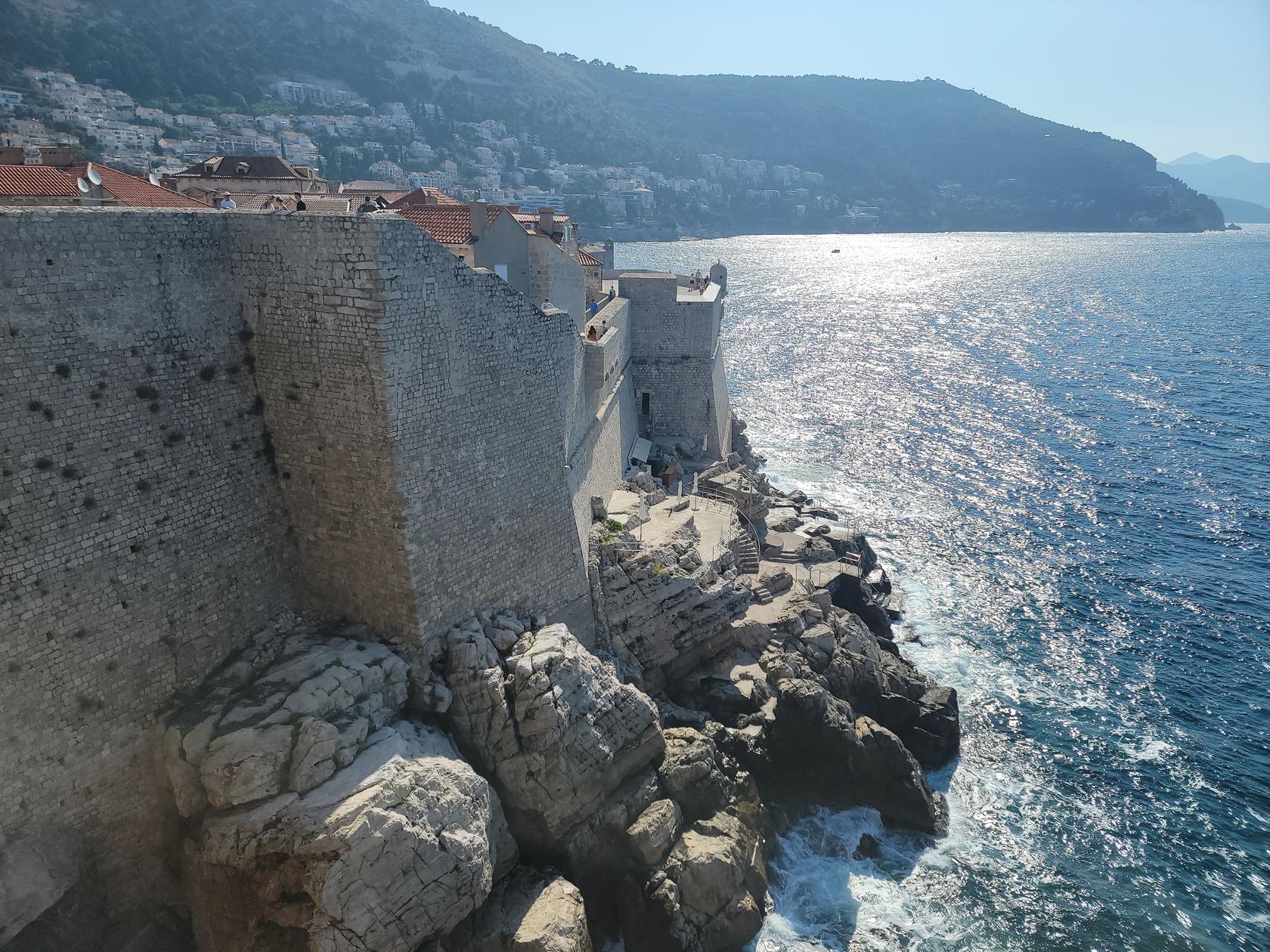
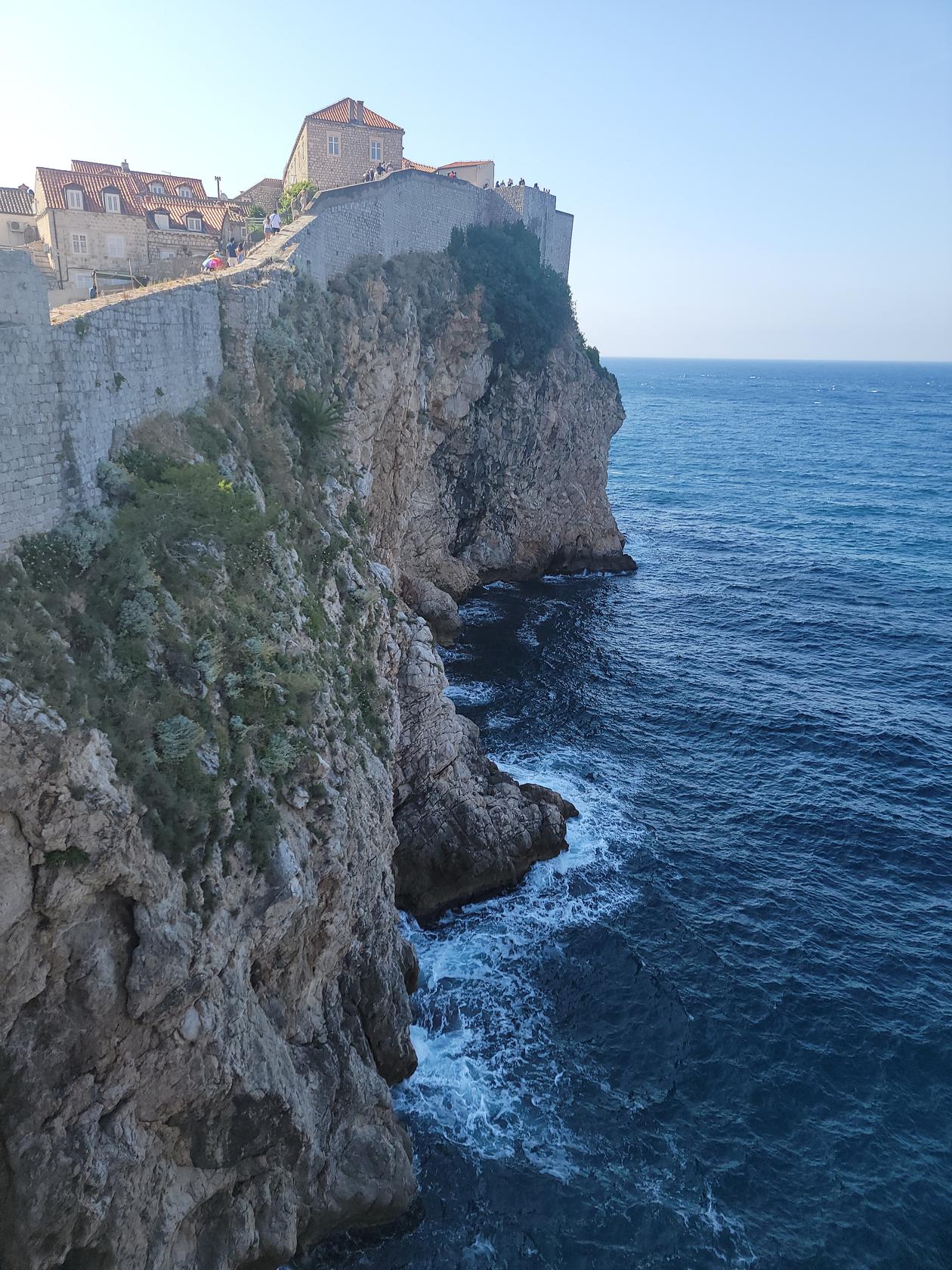
The walls around the city are huge, unbroken and remniscent of other great walled cities by the Adriatic Sea. They have resisted attacks for centuries and have filled numerous roles throughout their life, including protection from direct attack, shelter, and even revenue in the form of tourism. Today they provide a unique unbroken path around the city, where those that visit can enjoy the views high upon the perch it provides.
Wall by Entrance – City Wall Tour – Dubrovnik, Croatia
Massive Fortress Walls – City Wall Tour – Dubrovnik, Croatia
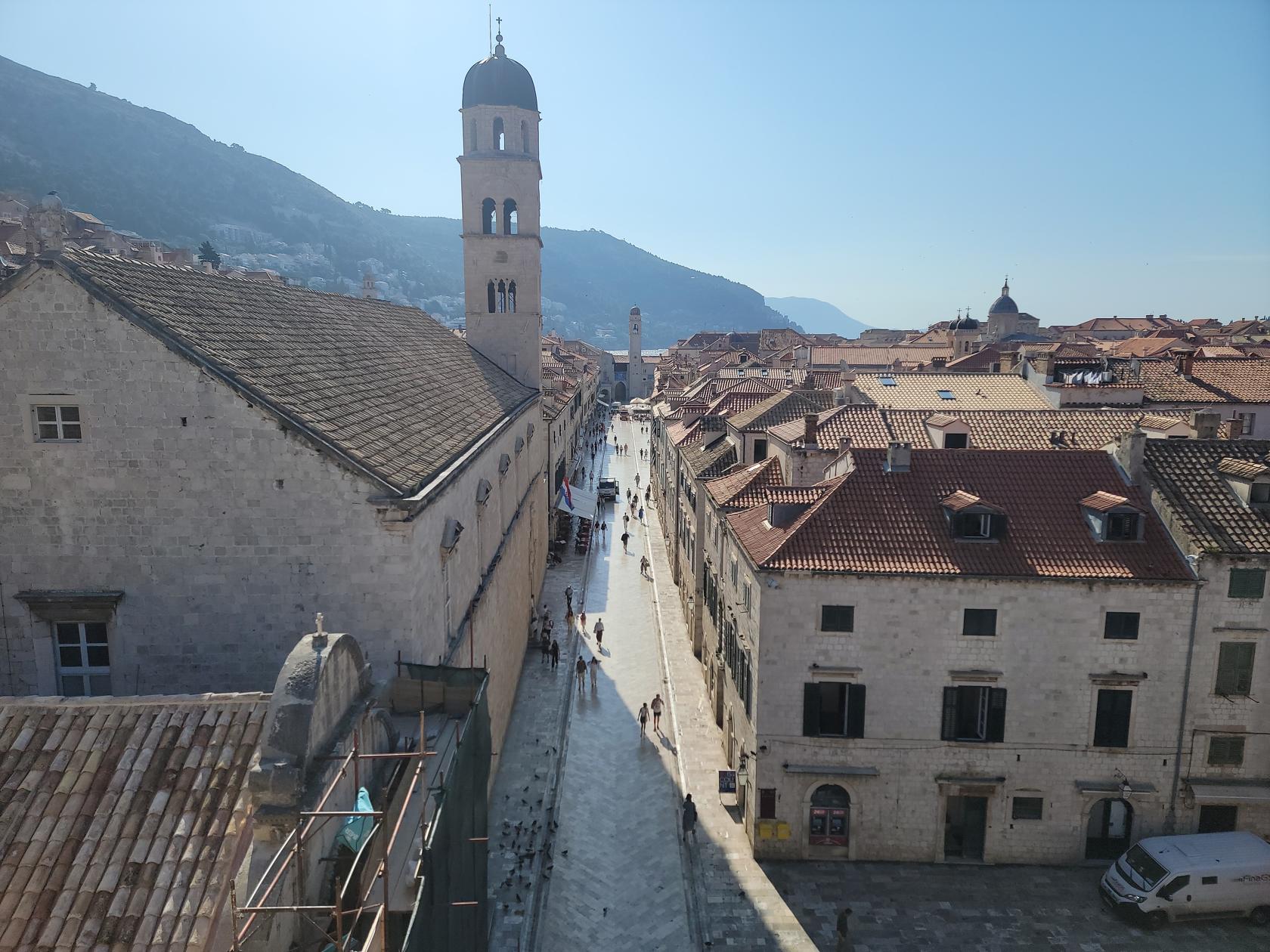
Franciscan Church and Monastery Tower and the Stradun – City Wall Tour – Dubrovnik, Croatia
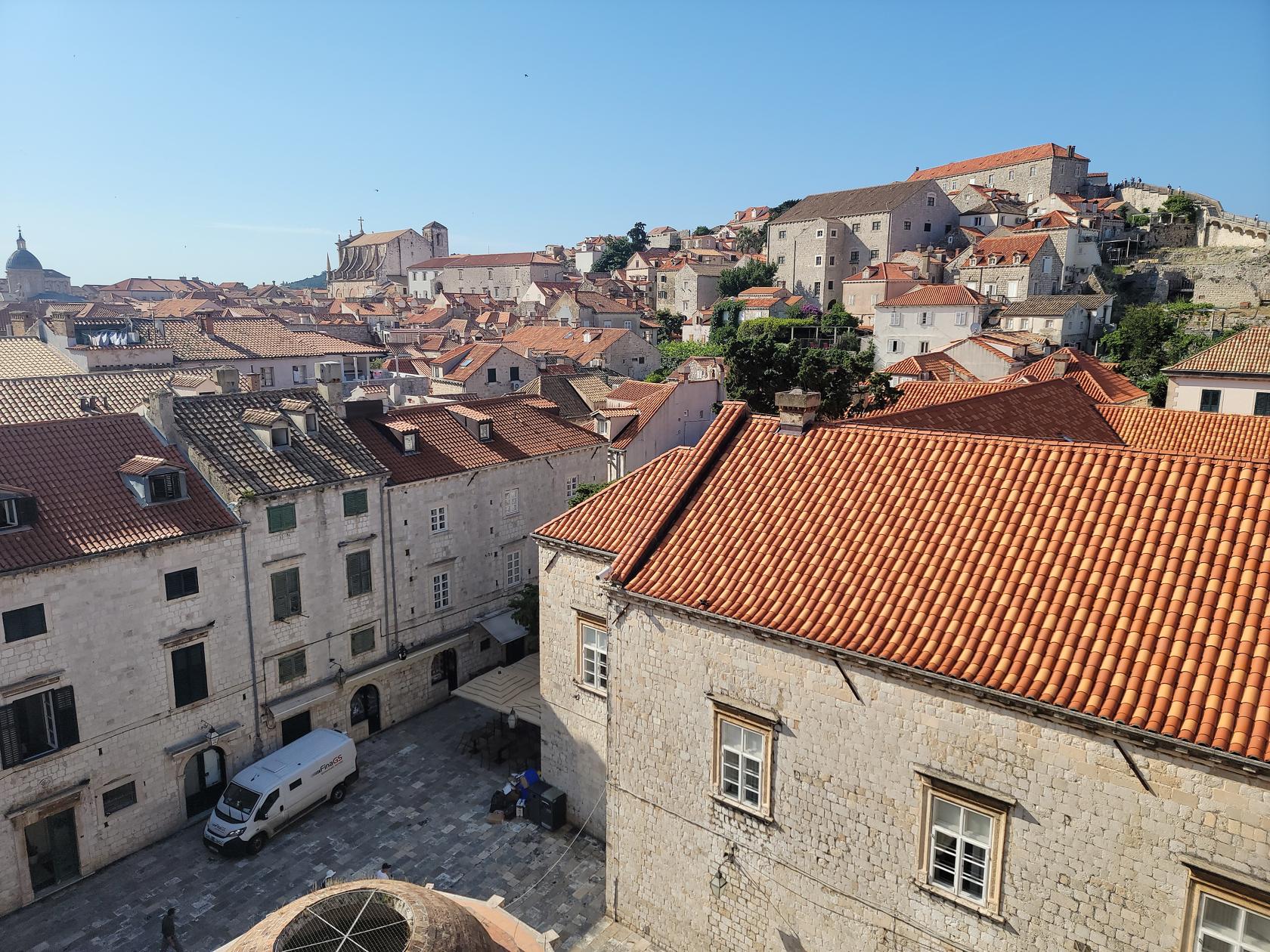
Hill in Old Town – City Wall Tour – Dubrovnik, Croatia
Fortress Wall by Entrance – City Wall Tour – Dubrovnik, Croatia
Lovrjenak Fortress and Park – City Wall Tour – Dubrovnik, Croatia
Park Below – City Wall Tour – Dubrovnik, Croatia
Fortress Walls – City Wall Tour – Dubrovnik, Croatia
Lovrjenak Fortress – City Wall Tour – Dubrovnik, Croatia
Old Town and Bosanka Hill – City Wall Tour – Dubrovnik, Croatia
Lovrjenak Fortress – City Wall Tour – Dubrovnik, Croatia
Patti on Fortress Wall – City Wall Tour – Dubrovnik, Croatia
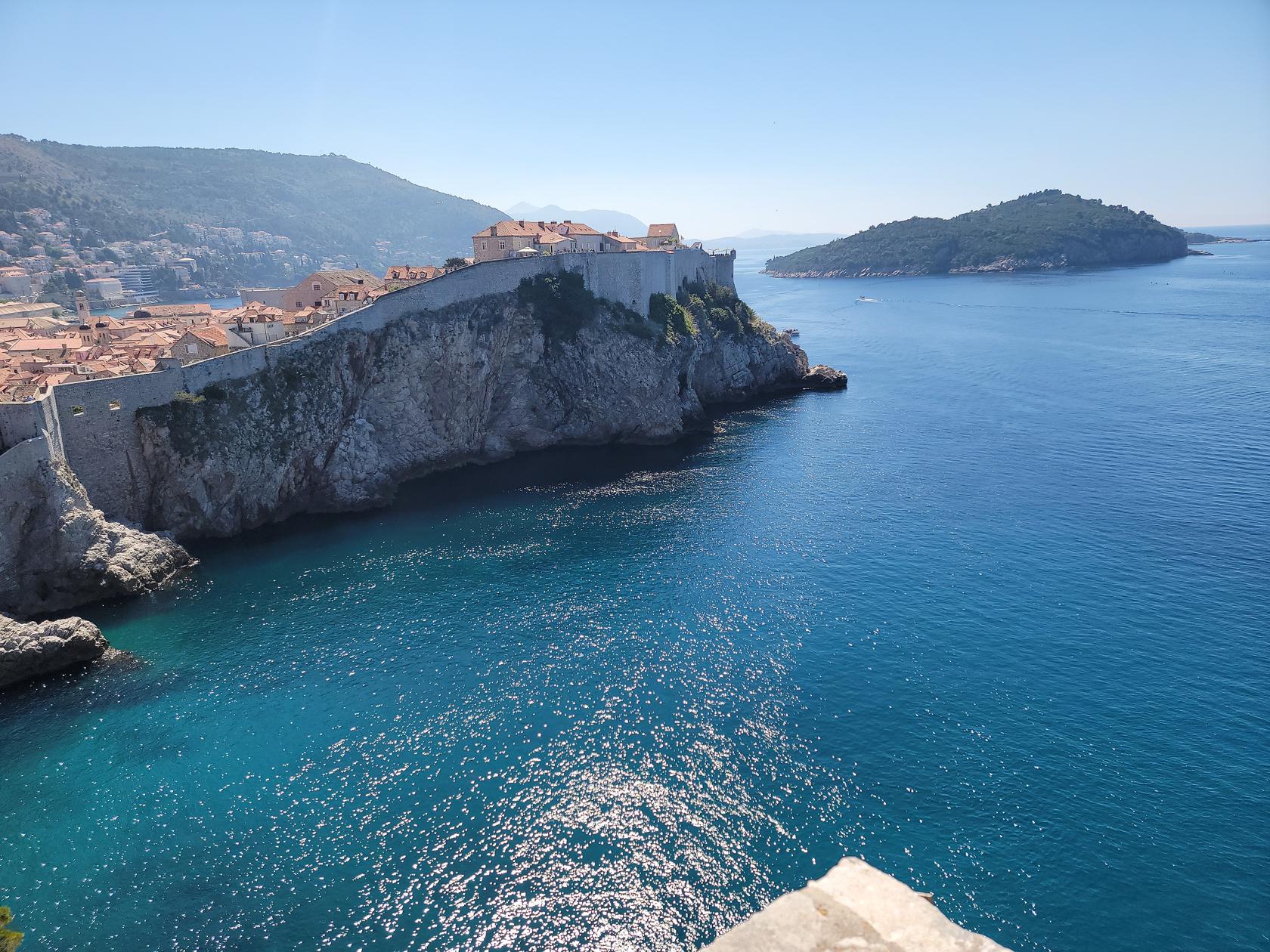
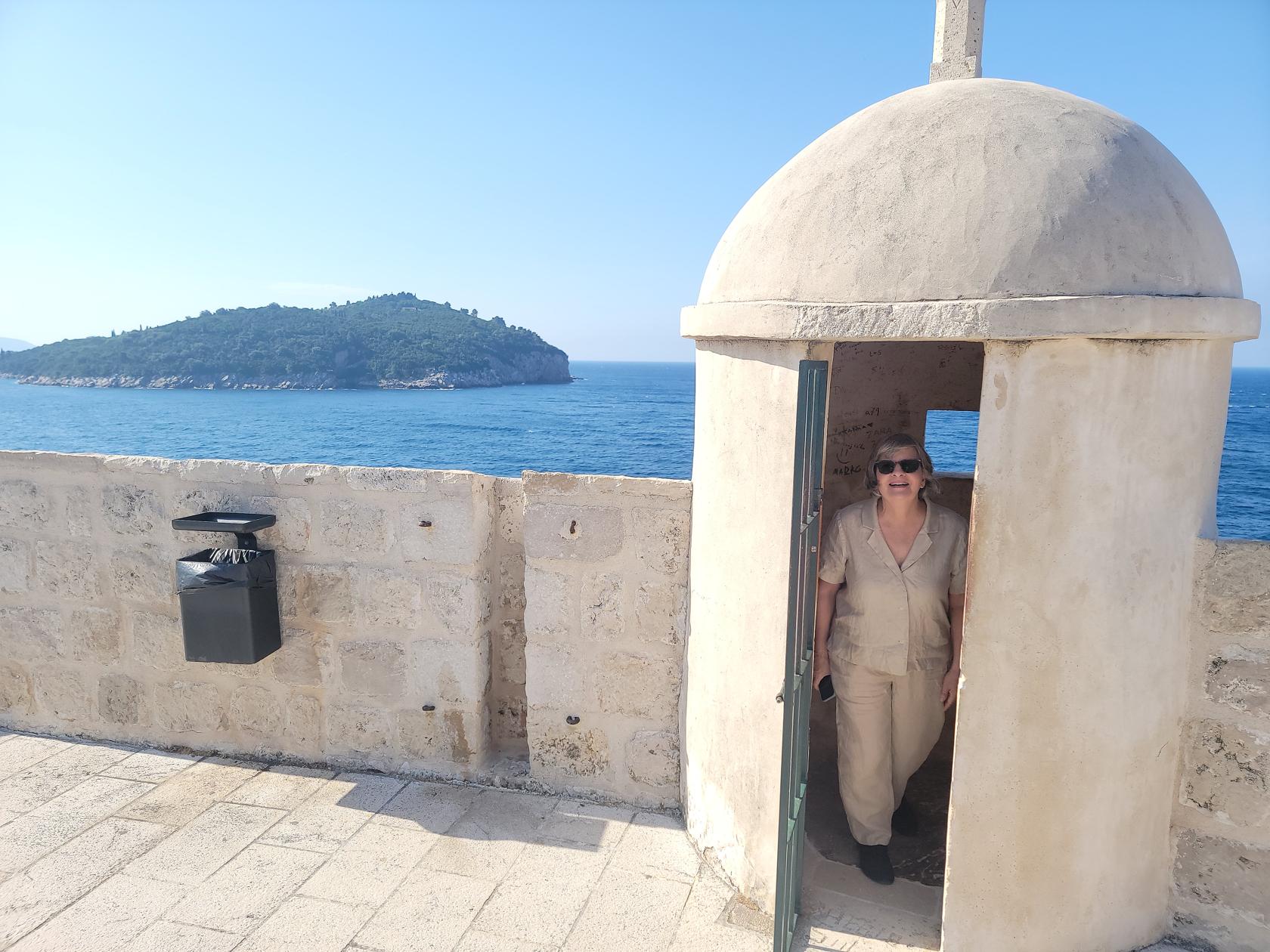
Lokrum Island – City Wall Tour – Dubrovnik, Croatia
Patti in Lookout Tower – City Wall Tour – Dubrovnik, Croatia
Fortress Wall – City Wall Tour – Dubrovnik, Croatia
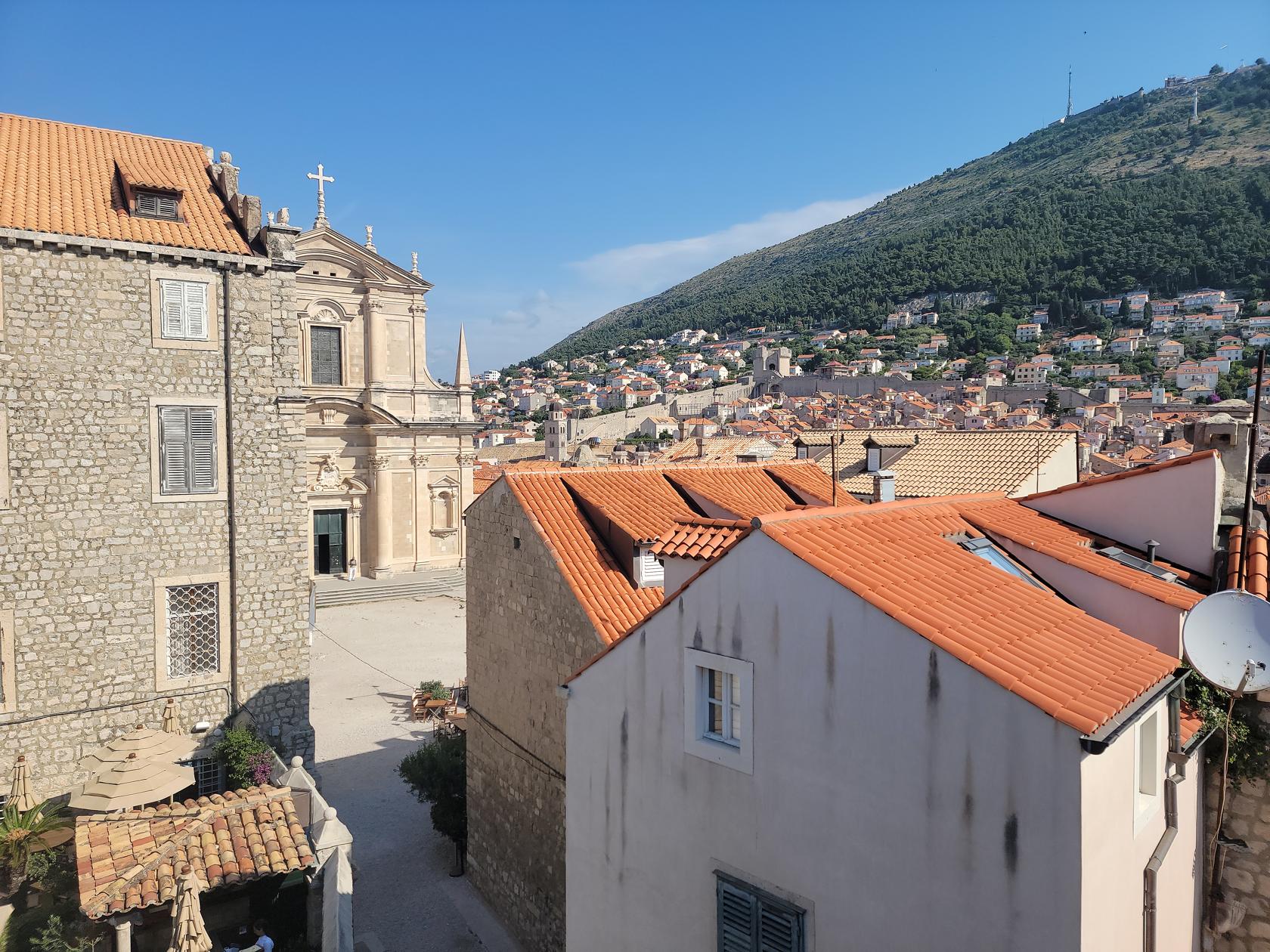
Church of St. Ignatius – City Wall Tour – Dubrovnik, Croatia
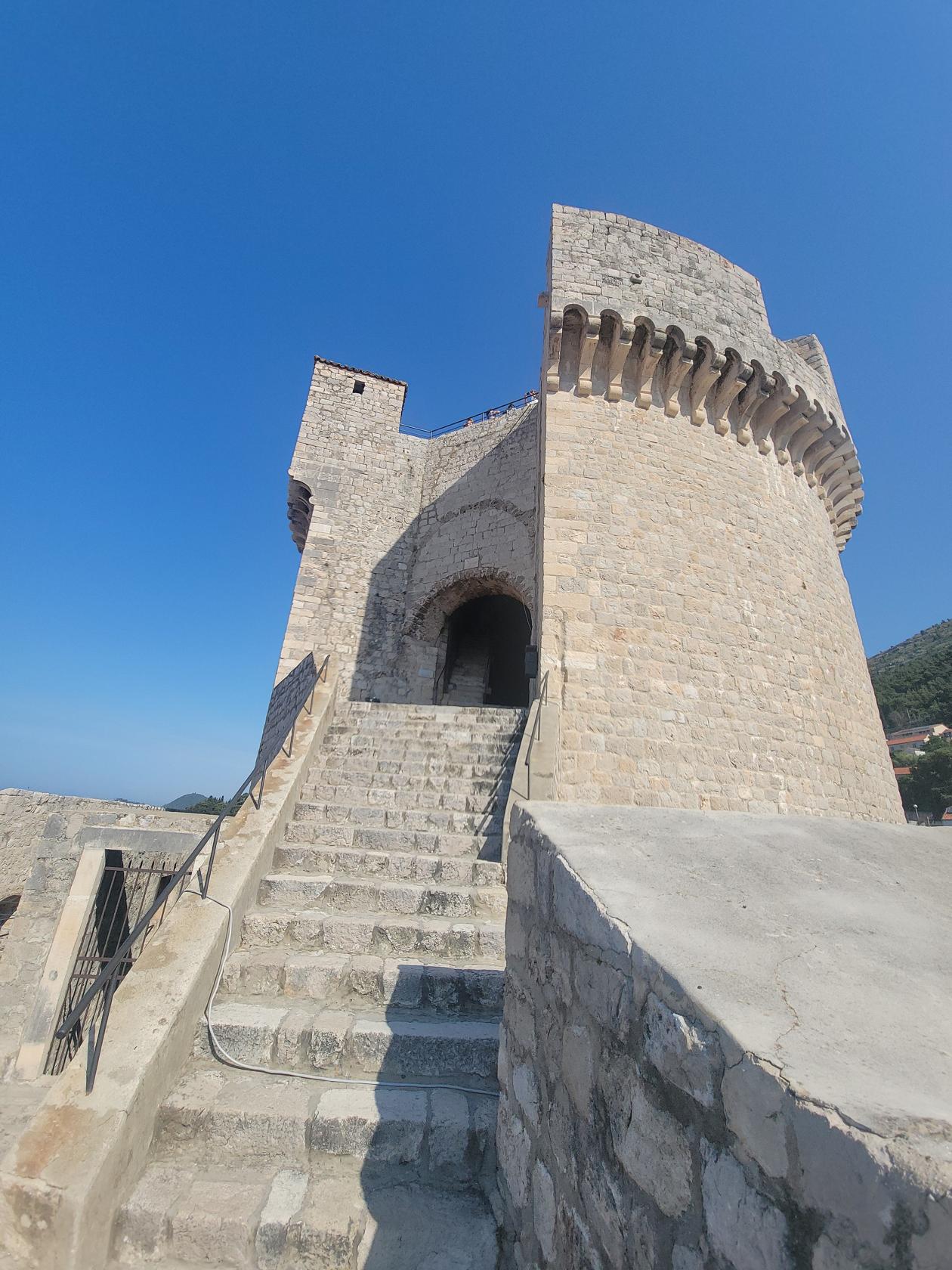
Tvrđava Minčeta Tower – City Wall Tour – Dubrovnik, Croatia
Fortress Walls – City Wall Tour – Dubrovnik, Croatia
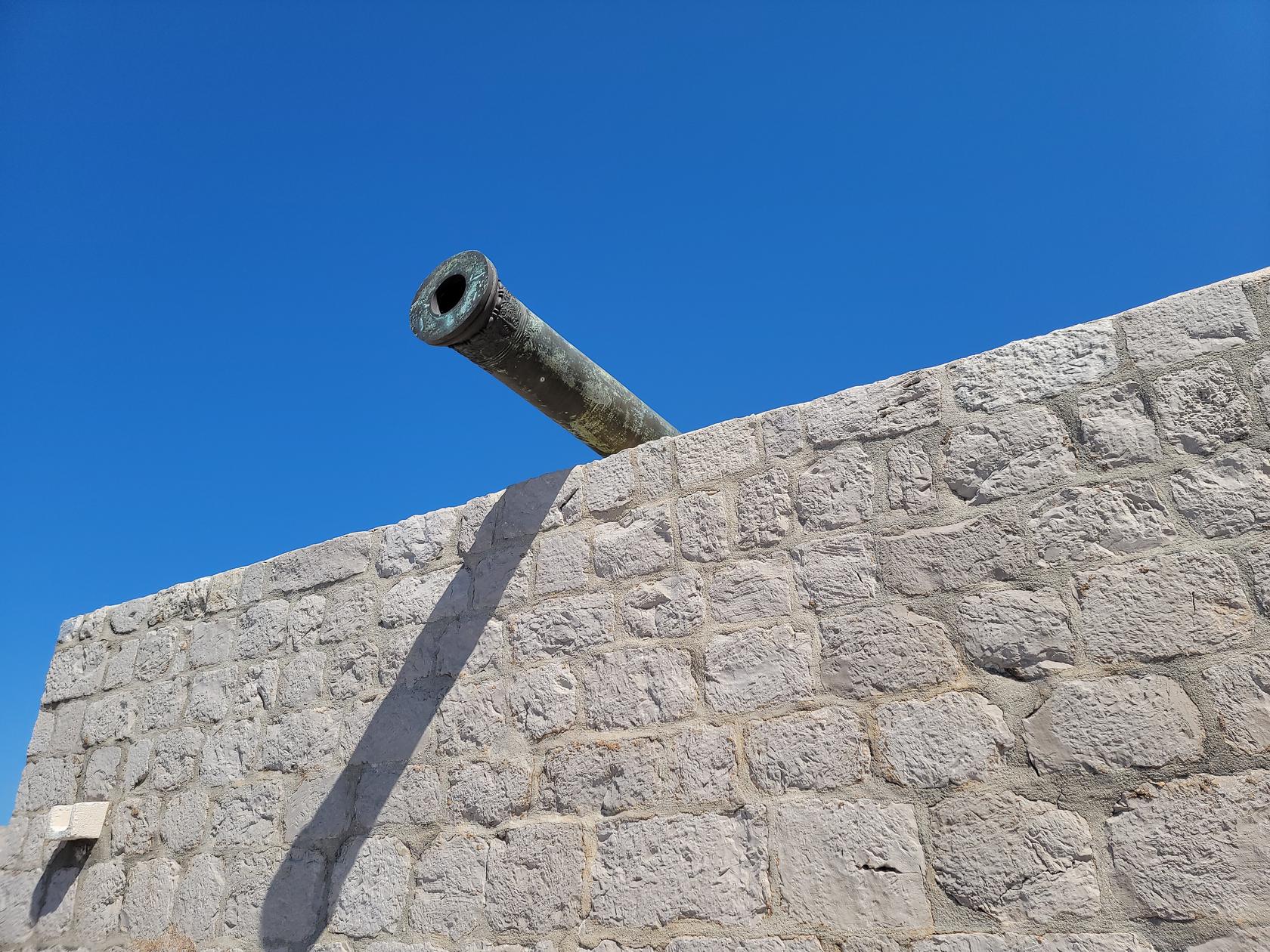
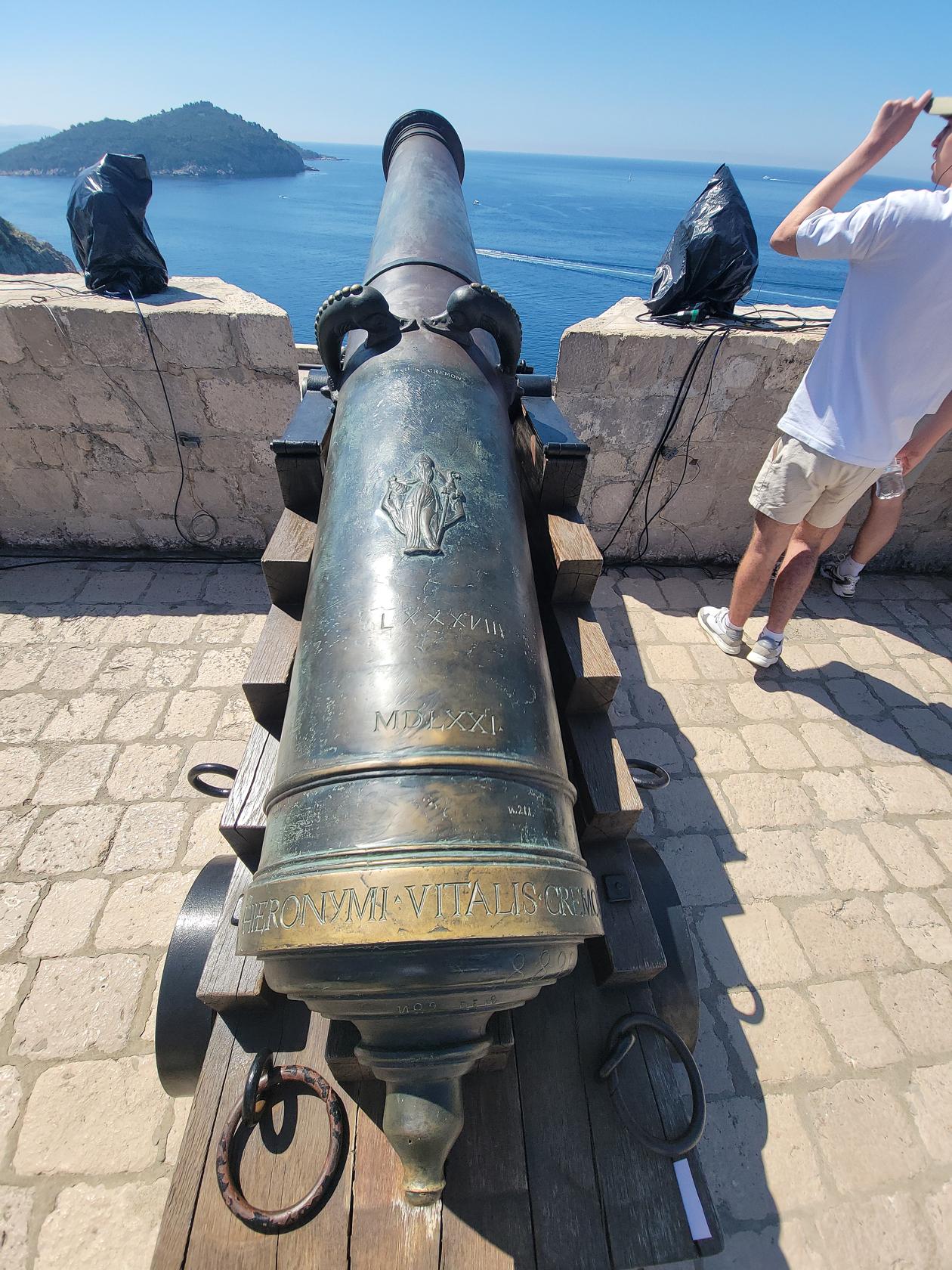
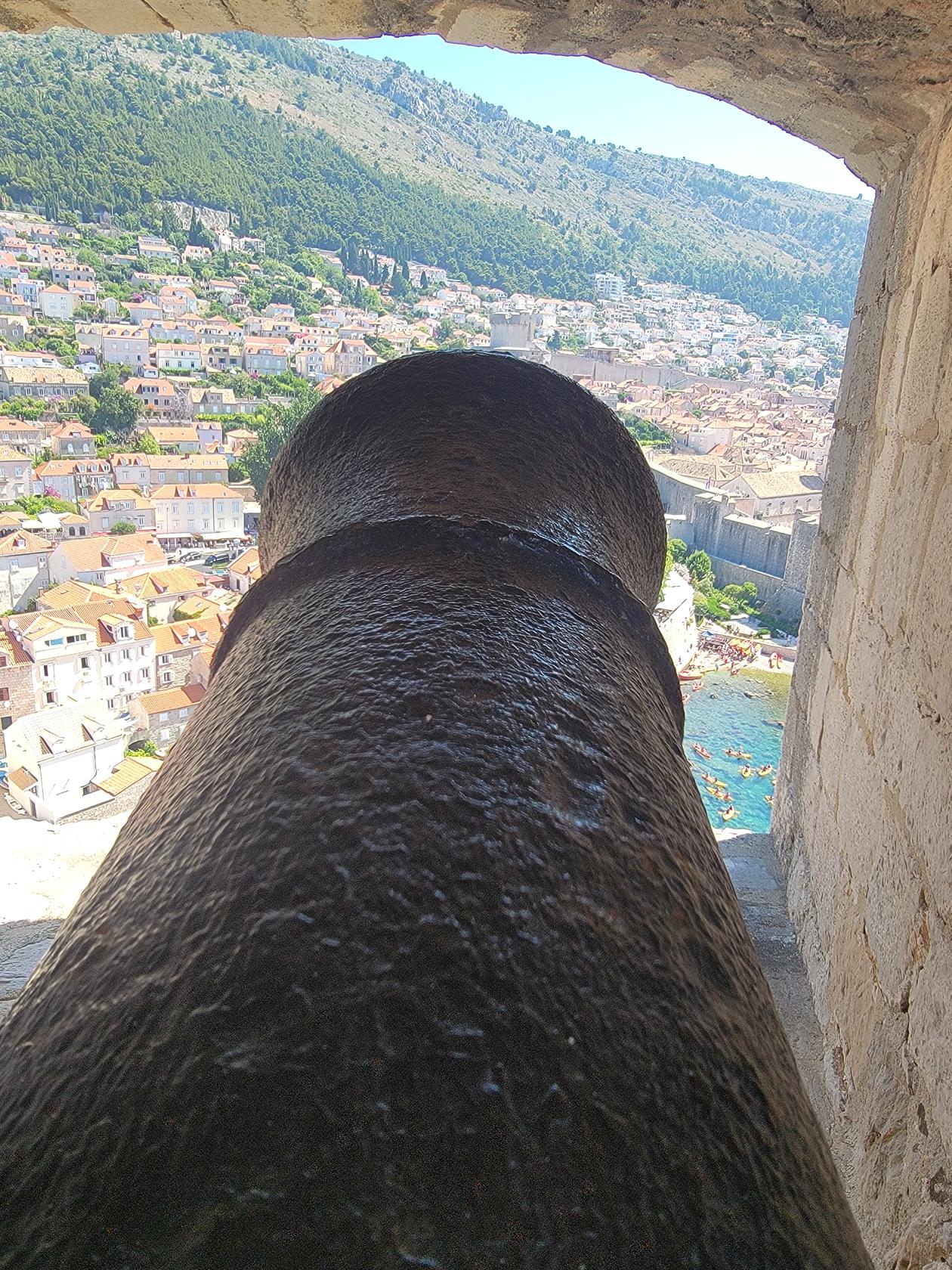
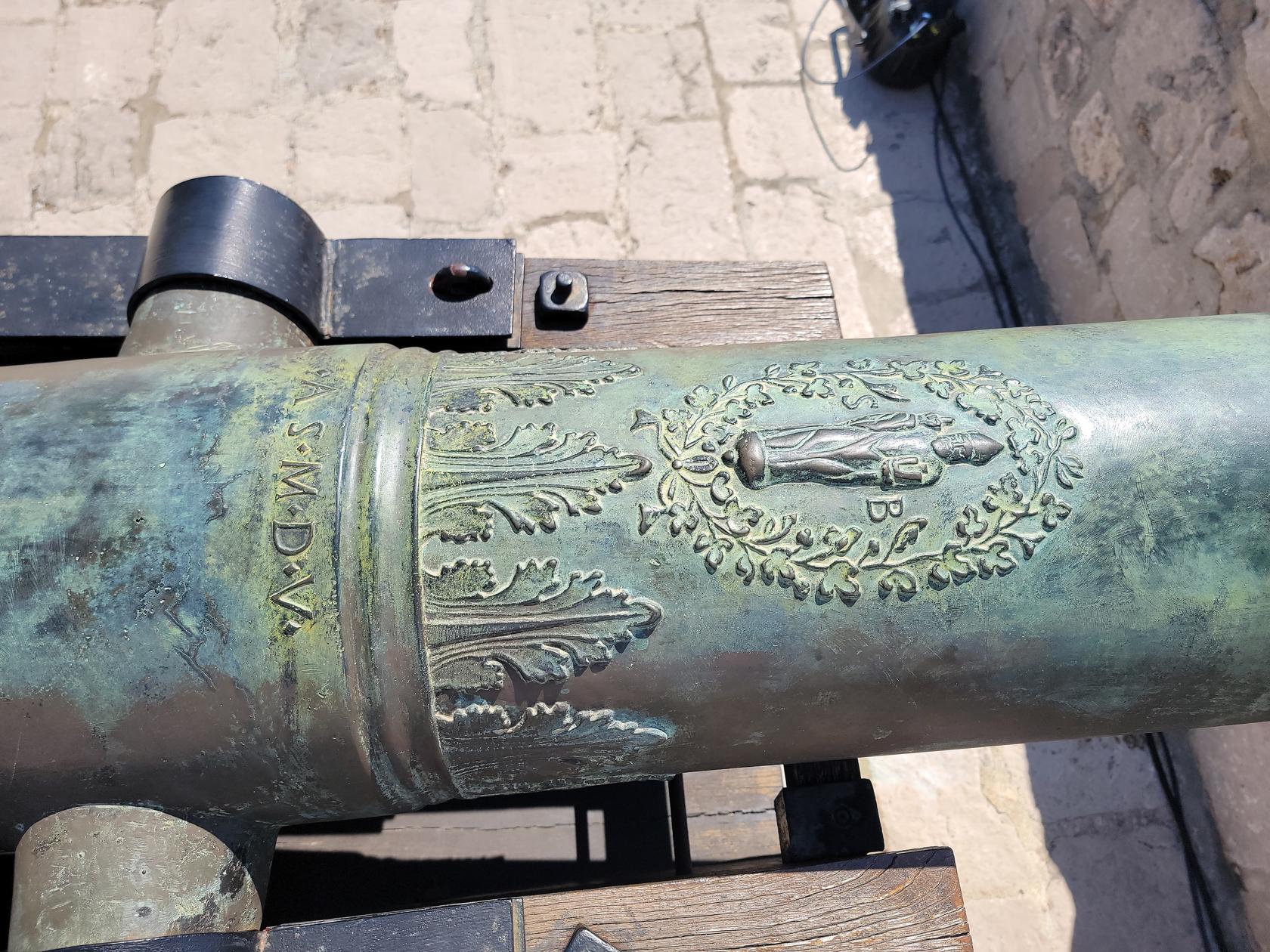
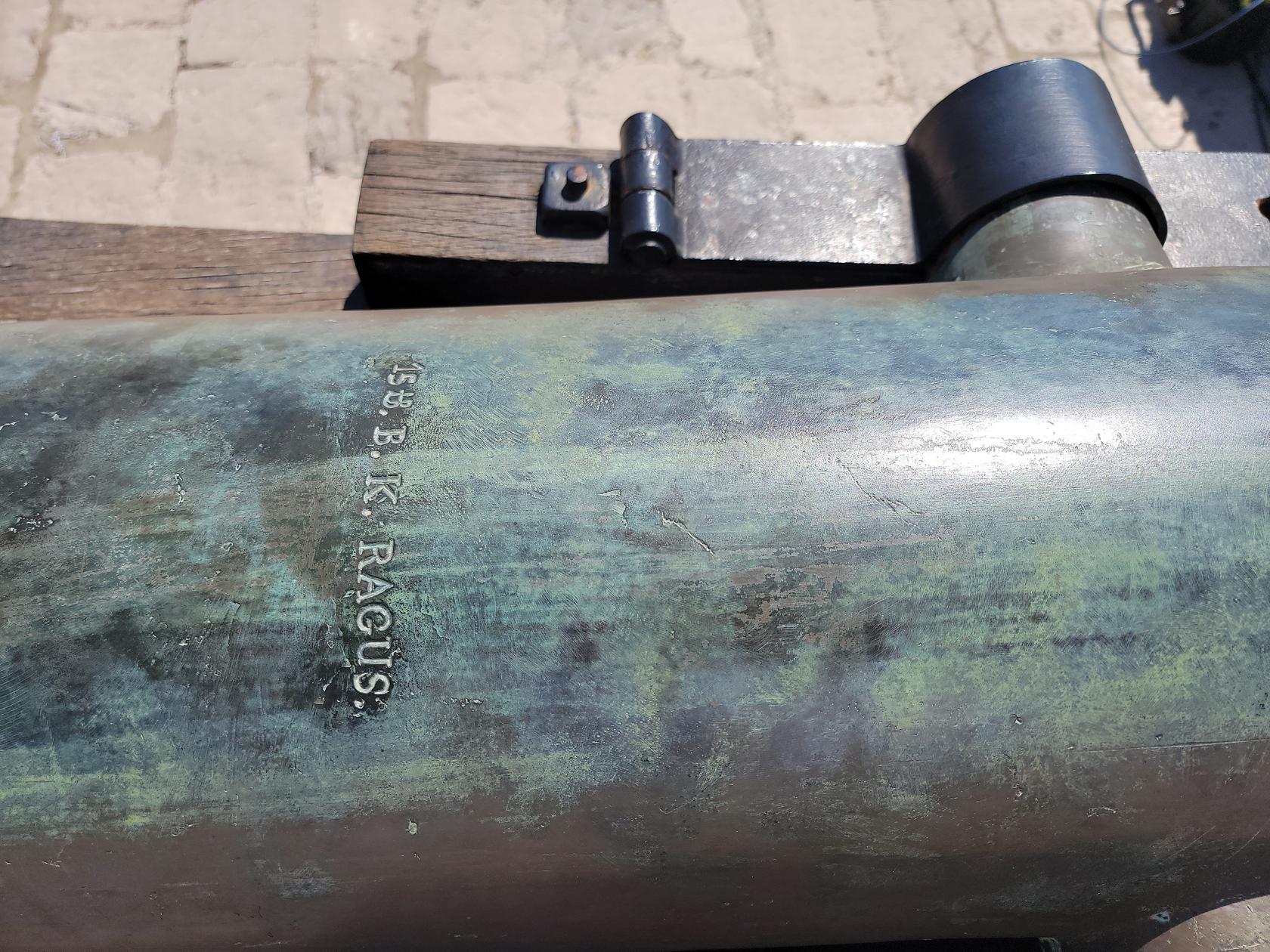
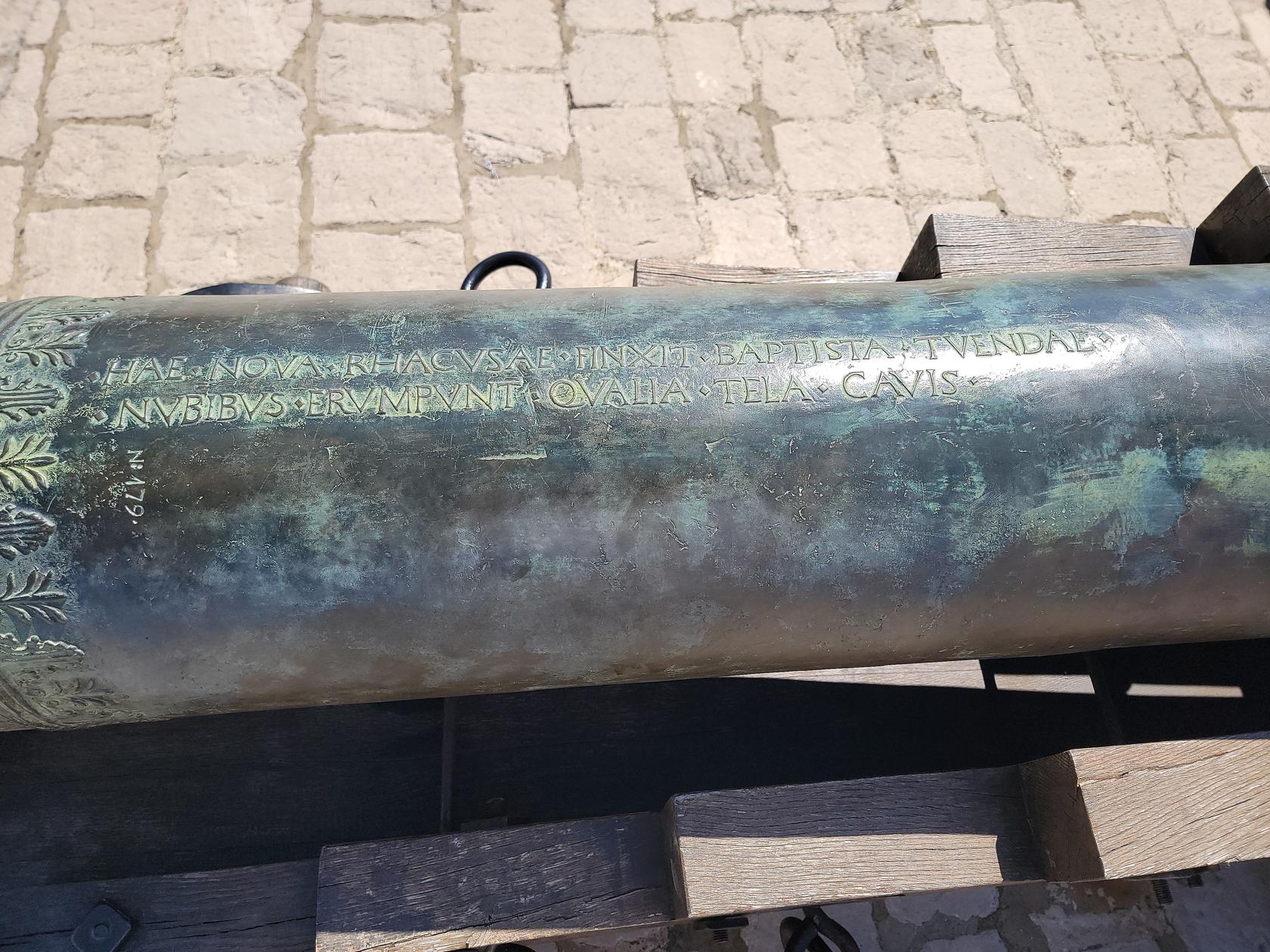
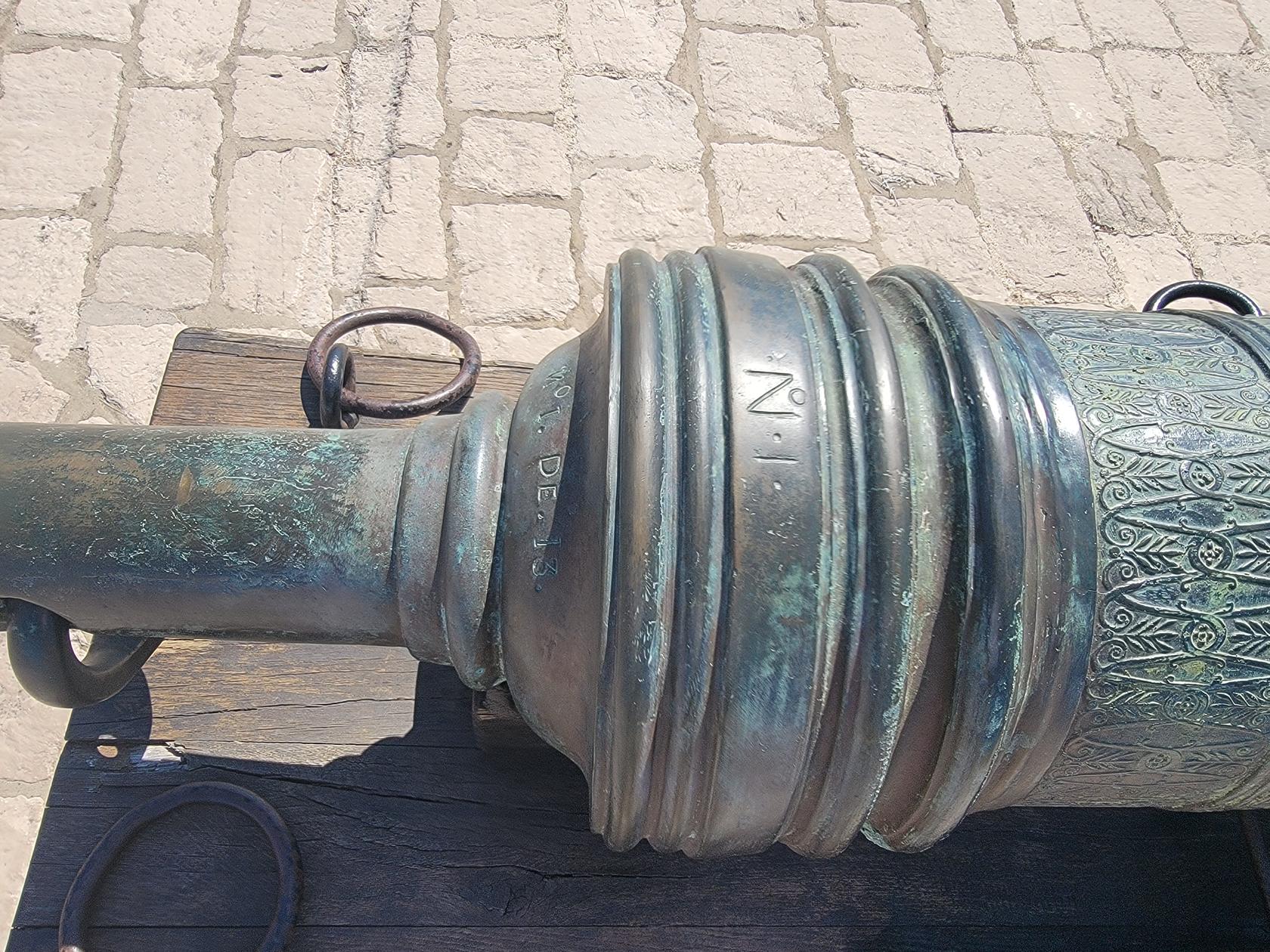
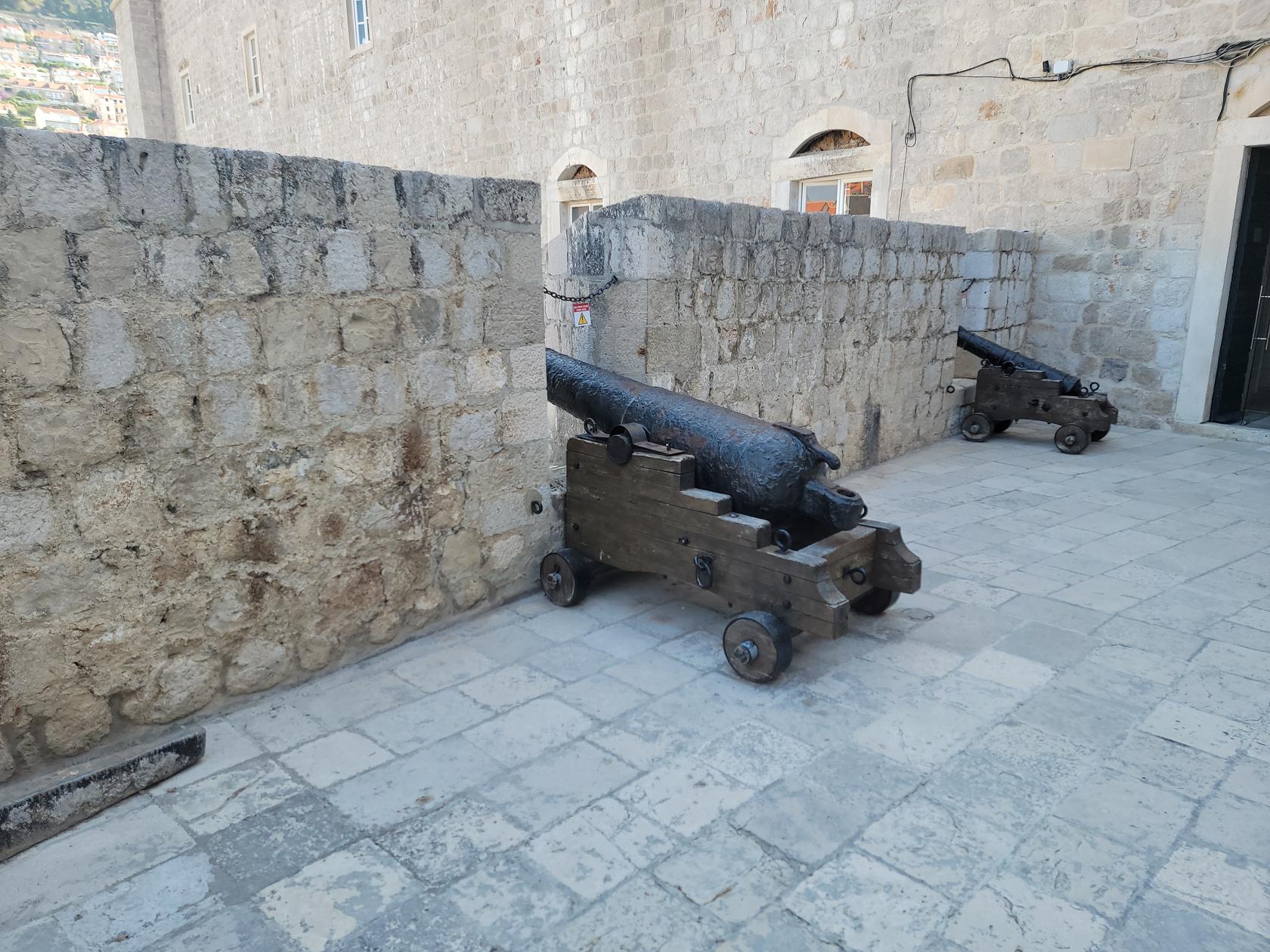
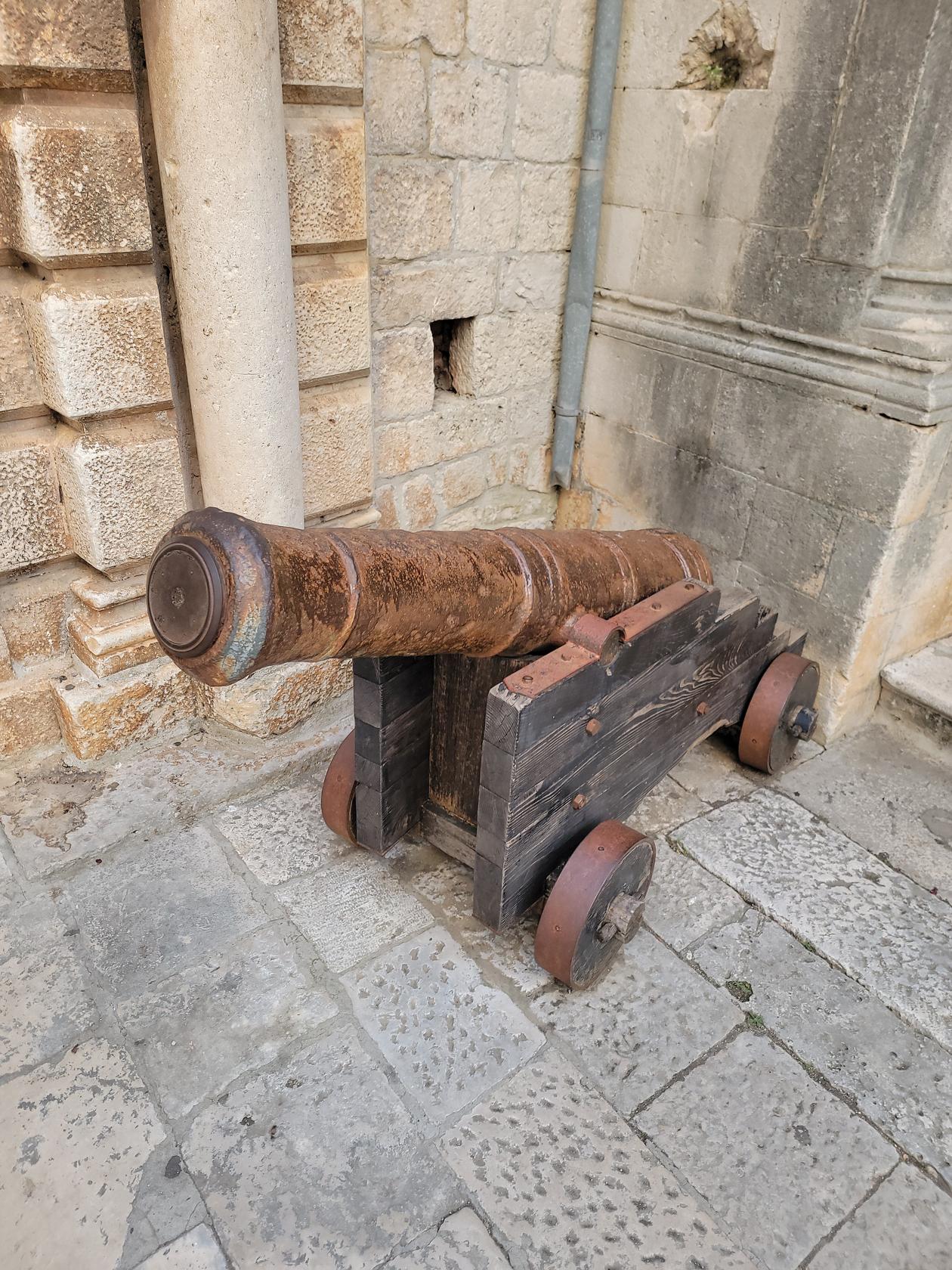
Old Cannons – City Wall Tour – Dubrovnik, Croatia
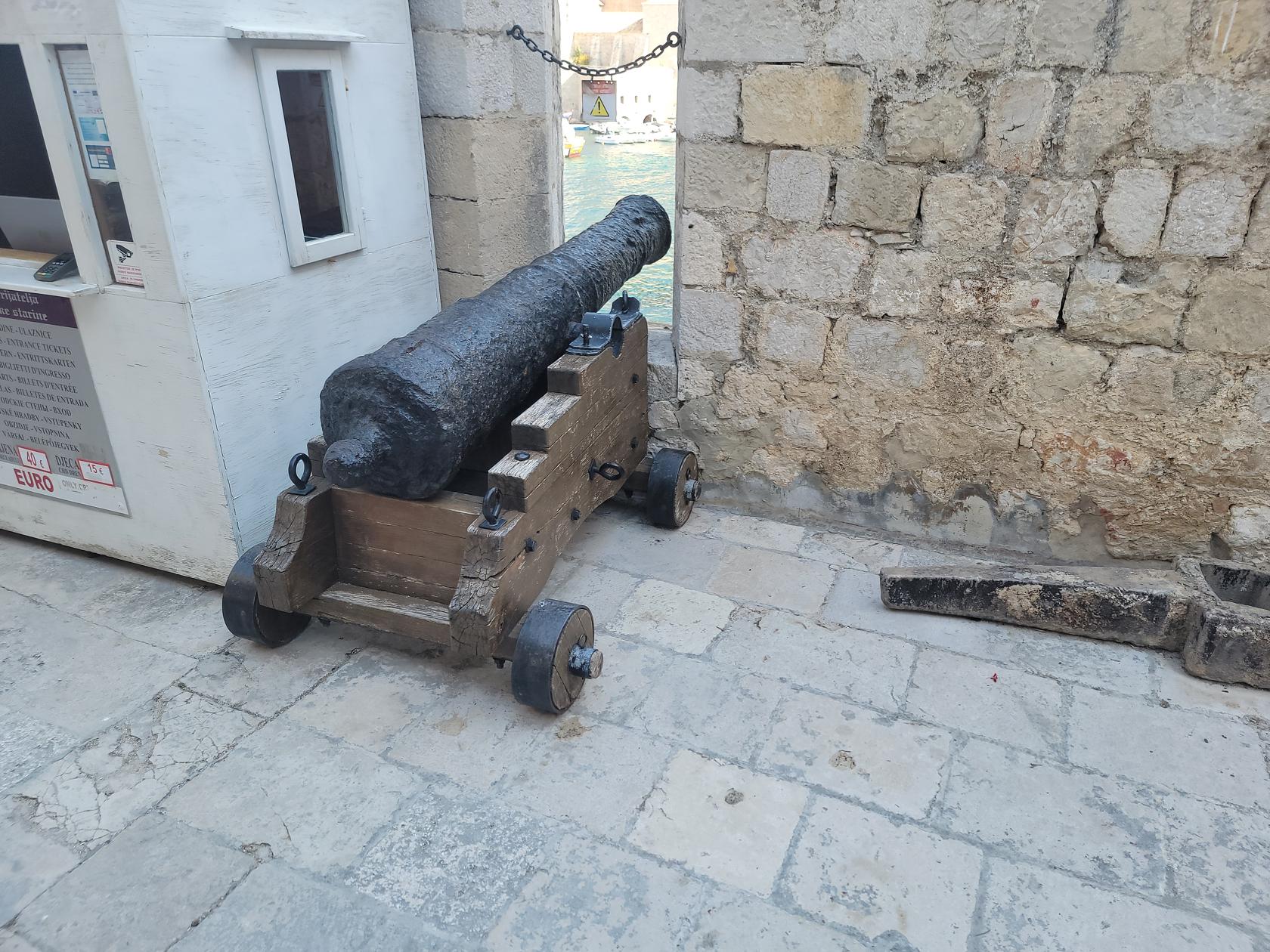
Old Cannon – City Wall Tour – Dubrovnik, Croatia
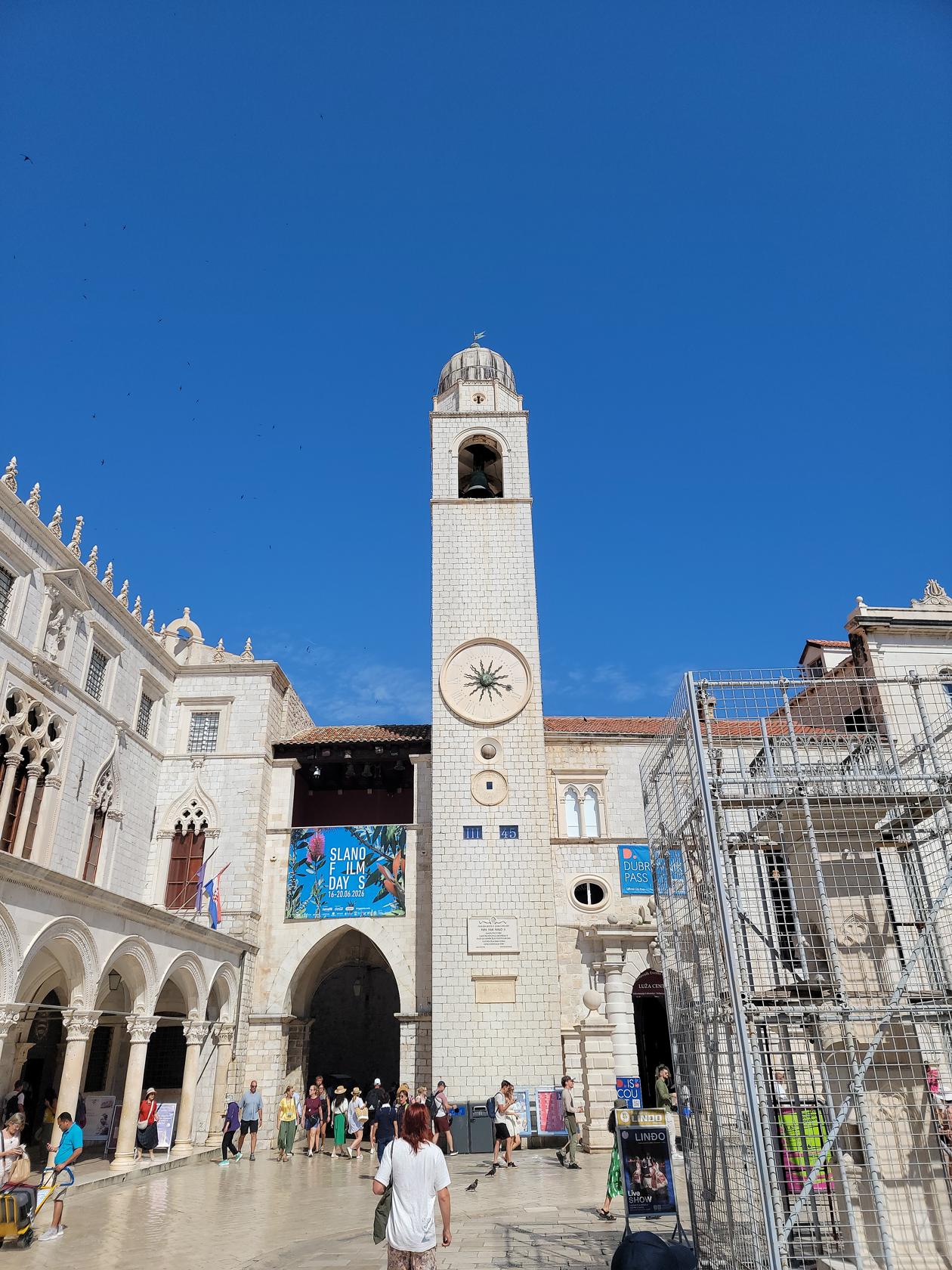
Clock Tower – City Wall Tour – Dubrovnik, Croatia
Lovrjenac Fortress in distance – City Wall Tour – Dubrovnik, Croatia
Stradun
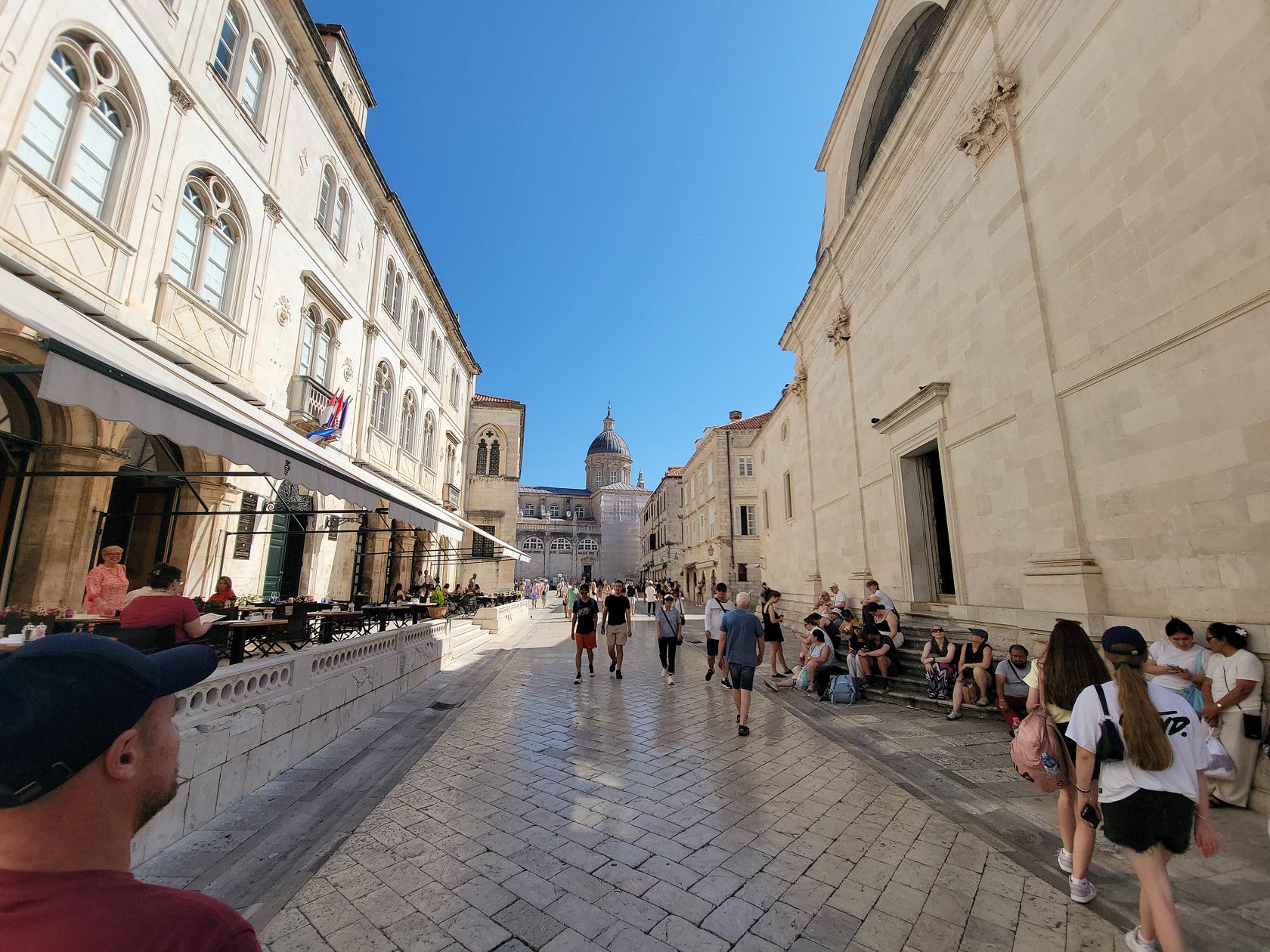
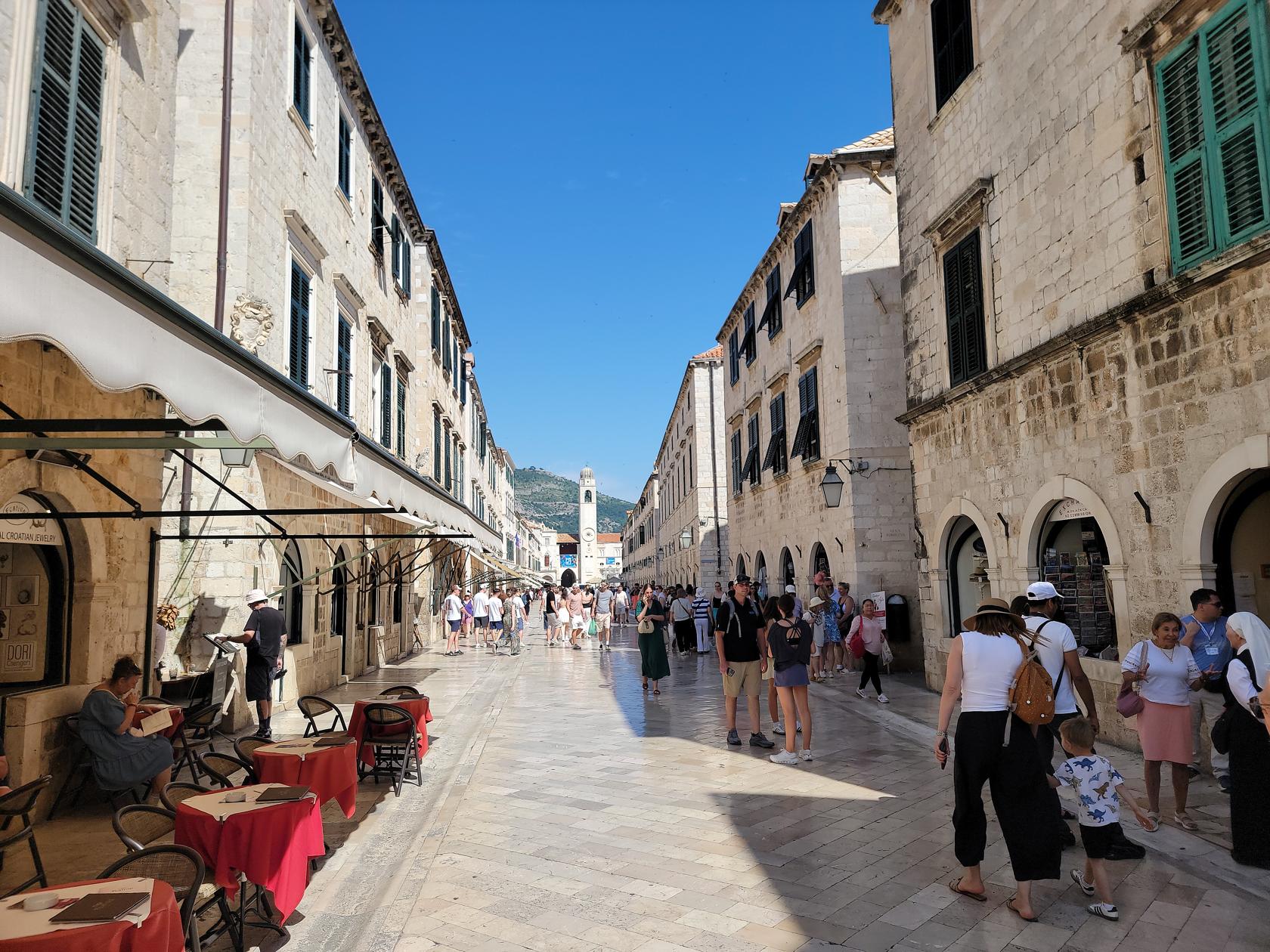
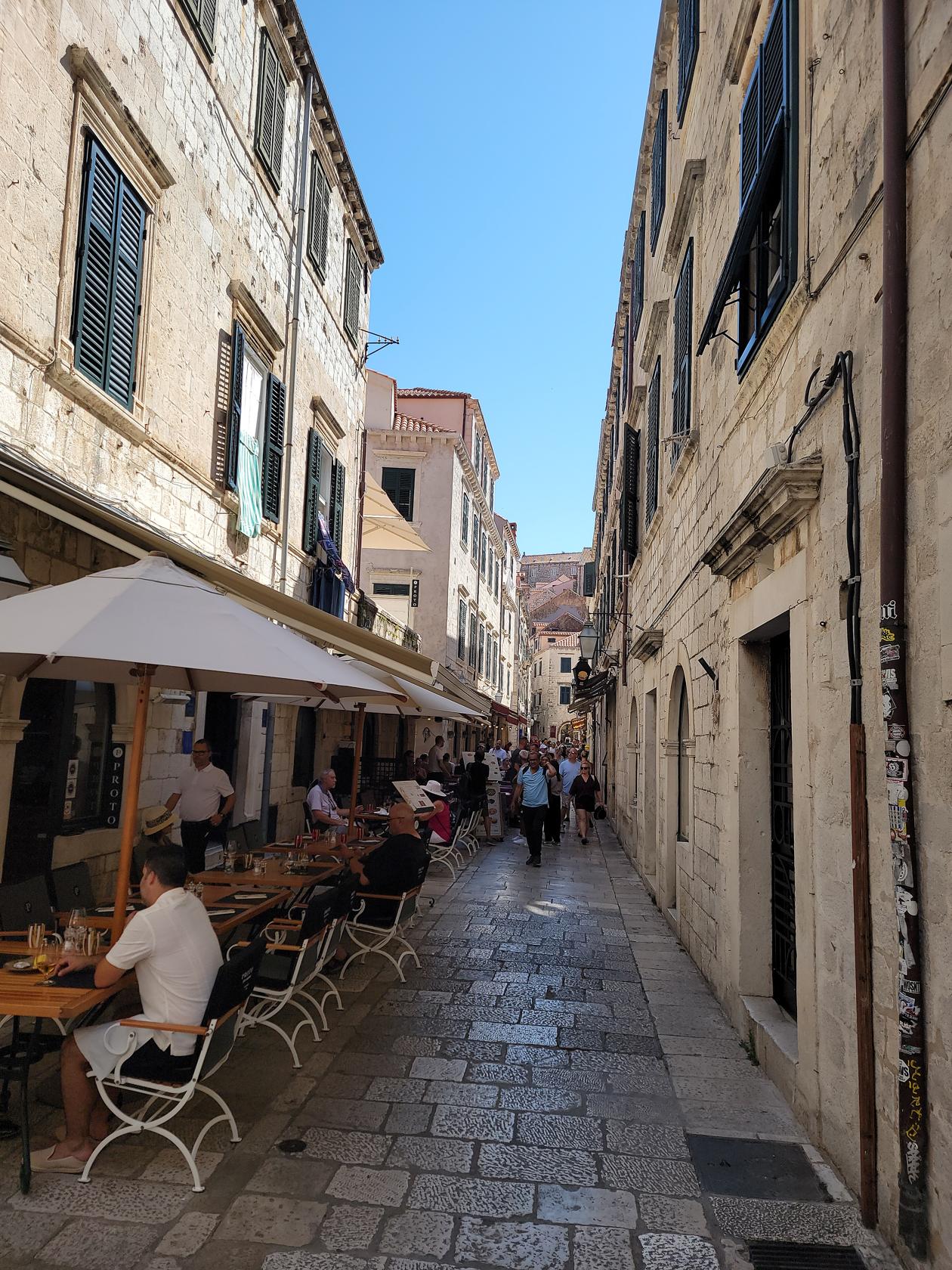
The major shopping avenue or street in the city is the Stradun. It is also the least protected from the sun and visitors would be keen to visit it early or later on in the day, since the sun beats down on extensive surface and reradiates the heat directly back to your body, thereby adding ten degrees Fahrenheit more to the outside temperature.
Stradun – Dubrovnik, Croatia
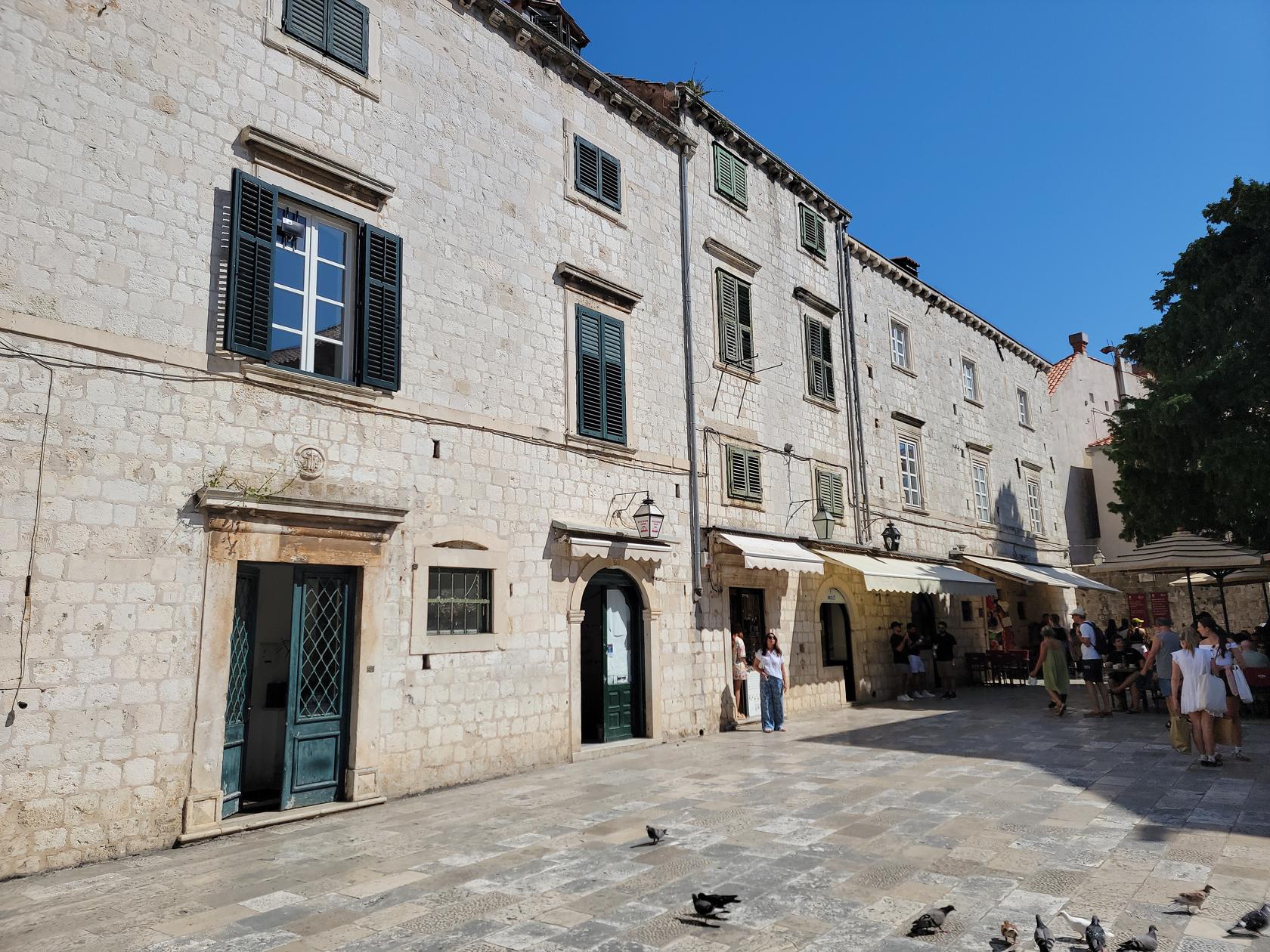
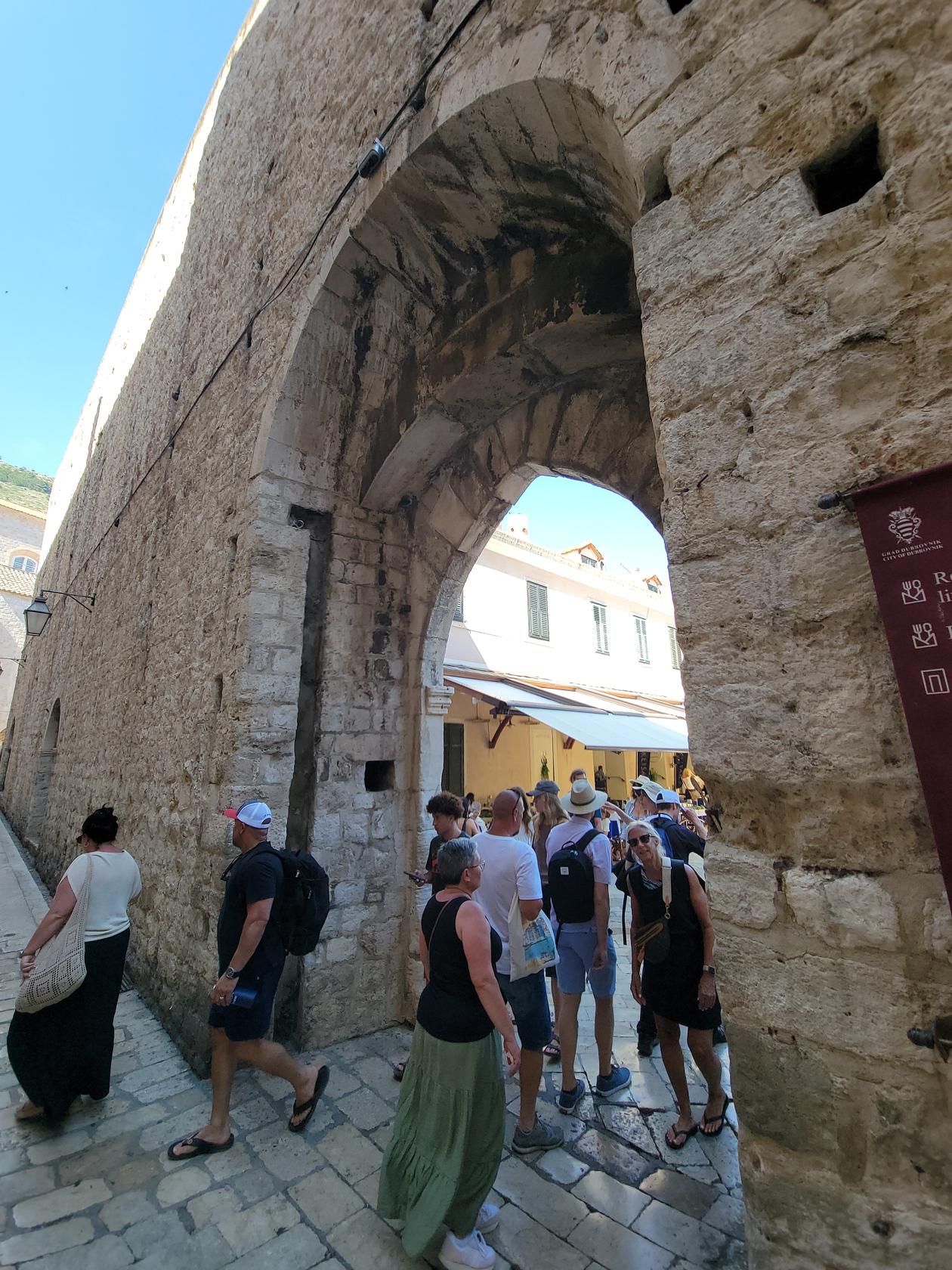
Square by Pile Gate – Dubrovnik, Croatia
Stradun Shopping Street – Dubrovnik, Croatia
The Stradun is the straightest and widest street in Dubrovnik and bisects the Old Town from the Pile Gate to the Fishmarket Gate. It offers a few sights along the way and two fountains[1]These were constructed by the Southern Italian and Neapolitan architect and engineer Onofrio della Cava in 1438 and bares his name. which grace each end, the Larger Onofrio Fountain and its diminutive brother, the Small Onofrio Fountain near the Clock Tower and the Fishmarket Gate.
Park by Pile Gate – Dubrovnik, Croatia
Pile Gate – Dubrovnik, Croatia
Pile Gate – Dubrovnik, Croatia
Side Alley – Dubrovnik, Croatia
Clock Tower on Stradun – Dubrovnik, Croatia
Fishmarket Gate – Dubrovnik, Croatia
Rector’s Palace
Built for the rector of the Republic of Ragusa between the 14th and 19th centuries, the Rector’s Palace now serves as a museum. A Gothic style building originally, it was destroy a few times and later rebuilt with Renaissance and some Baroque elements.
Interesting Structural Elements – Rector’s Palace – Dubrovnik, Croatia
Interesting Structural Elements – Rector’s Palace – Dubrovnik, Croatia
The museum houses a fine collection of old strong boxes, which show detailed craftmenship by blacksmiths and locksmiths of that time. Upon entering there is also a pair of old bell knockers that are quite interesting.
Clock with Desk – Rector’s Palace – Dubrovnik, Croatia
Rooms – Rector’s Palace – Dubrovnik, Croatia
Desk – Rector’s Palace – Dubrovnik, Croatia
Other Exhibits – Rector’s Palace – Dubrovnik, Croatia
Other Exhibits – Rector’s Palace – Dubrovnik, Croatia
Bedroom – Rector’s Palace – Dubrovnik, Croatia
On the ground floor the Dragon Prison Cell can be investigated, where only the most hardened criminals were kept. Apparently some inscribed their names on the walls, for future tourists to read no doubt.
Tuffa Stone of Prison Room – Rector’s Palace – Dubrovnik, Croatia
In Croatia, there are always Catholic churches to visit. Some are better than others and the ones you will find in Dubrovnik are for the most part not of much interest. Though their importance to the community no doubt remains.
Cathedral of The Assumption of the Virgin Mary
The Assumption of the Virgin Mary, or Dubrovnik Cathedral, was undergoing renovations at the time of our visit and could not be entered. It is located near the Rector’s Palace. Built in the Baroque style of architecture, it was literally destroyed by the devastating Dubrovnik Earthquate of 1667 and later rebuilt.
Cathedral of the Assumption of the Virgin Mary – Dubrovnik, Croatia
Church of Saint Ignatius
Perched above the Jesuit Stairs is the Church of Saint Ignatius. Formerly part of the Jesuit College, or Collegium Ragusinum, it is currently the finest example of Baroque period architecture in the Old Town.
Entrance – Church Of Saint Ignatius – Dubrovnik, Croatia
Nave – Church Of Saint Ignatius – Dubrovnik, Croatia
Church of Saint Blaise
Built for the patron saint of the Old City, the Church of Saint Blaise occupies an important spot on the Stradun, close the city’s Clock Tower and Rector’s Palace. The plan of this Romanesque style church follows that of a Greek Cross inside, the nave and alter are shown below. It was planned and built shortly after the Black Death hit the city of Dubrovnik in the mid fourteenth century. A statue of Saint Blaise adorns the highest point on its facade.
Entrance – Church of Saint Blaise – Dubrovnik, Croatia
Church of Saint Blaise – Dubrovnik, Croatia
Lokrum Island
A short ferry hop away is the Botanical Garden and Wildlife Refuge for Peacocks and Peahens, Lokrum Island.
Lokrum Island – Dubrovnik, Croatia
Tickets For Two – Lokrum Island – Dubrovnik, Croatia
Our Ferry – Lokrum Island – Dubrovnik, Croatia
Map – Lokrum Island – Dubrovnik, Croatia
The birds are all over the island, however you will find them more often inland than along the coast, or on top of the hill where to fort is located.
Peacock – Lokrum Island – Dubrovnik, Croatia
Peahens – Lokrum Island – Dubrovnik, Croatia
Peahen – Lokrum Island – Dubrovnik, Croatia
Entrance – Lokrum Island – Dubrovnik, Croatia
For the most part the island is well marked with trails and you can spend a better part of a day exploring.
Beautiful Blue Water – Lokrum Island – Dubrovnik, Croatia
Patti – Lokrum Island – Dubrovnik, Croatia
The Path up to Fort Royal – Lokrum Island – Dubrovnik, Croatia
The Path up to Fort Royal – Lokrum Island – Dubrovnik, Croatia
Different Plants – Lokrum Island – Dubrovnik, Croatia
Many Different Species of Trees – Lokrum Island – Dubrovnik, Croatia
Fort Royal
Perched atop the main hill on Lokrum, is Fort Royal. Now partially in ruin, it is only maintained as far as keeping is safe for the tourists. It commands a view of the island, the Dalmatian coastline and of course, Dubrovnik.
Patti hiking up to Fort Royal – Lokrum Island – Dubrovnik, Croatia
Fort Royal – Lokrum Island – Dubrovnik, Croatia
Fort Royal – Lokrum Island – Dubrovnik, Croatia
Patti at Fort Royal – Lokrum Island – Dubrovnik, Croatia
Fort Royal – Lokrum Island – Dubrovnik, Croatia
Fort Royal – Lokrum Island – Dubrovnik, Croatia
Fort Royal – Lokrum Island – Dubrovnik, Croatia
Fort Royal – Lokrum Island – Dubrovnik, Croatia
Fort Royal – Lokrum Island – Dubrovnik, Croatia
Dubrovnik Old Town – Lokrum Island – Dubrovnik, Croatia
The main fort is intack, but the outlying buildings have fallen down and no longer of any interest.
Fort Royal – Lokrum Island – Dubrovnik, Croatia
Franjo Tuđman Bridge
For a small fee you can enjoy a short city tour which will take you to the Franjo Tuđman Bridge. This is actually an interesting outing, since to get there you must pass by and over the Ombla River. This river is actually born out of rock as a spring, perhaps one of the few rivers in the world having claim to do so. And, it is not a small river by any stretch of the imagination, it is quite wide for a spring-few river.
Ombla River and Tudman Bridge – City Tour – Dubrovnik, Croatia
Tudman Bridge – City Tour – Dubrovnik, Croatia
Tudman Bridge – City Tour – Dubrovnik, Croatia
Tudman Bridge – City Tour – Dubrovnik, Croatia
Tudman Bridge – City Tour – Dubrovnik, Croatia
Ombla River – City Tour – Dubrovnik, Croatia
Ombla River – City Tour – Dubrovnik, Croatia
Ombla River and Port – City Tour – Dubrovnik, Croatia
Tudman Bridge – City Tour – Dubrovnik, Croatia
Looking out to sea – City Tour – Dubrovnik, Croatia
Restaurants
We found eating at the more popular restaurants a bit overpriced and the service not as good as some of the more local establishments. No doubt you can be cautious at some of these places and keep the price down, but sometimes the point is to enjoy some of the unique offerings they have while not breaking your budget, this you might find difficult to do, especially if you don’t want to order another pizza!
Tata’s
For us, a great place for breakfast. Very reasonably priced, right below our hotel on Zagrebačka Ulica, it offered all the essentials. Plus, the Pekara Rusica Bakery was right next door in case we wanted to skip a regular breakfast, preferring just a danish or other handheld treat.
Omelette with Toast – Tata’s Restaurant – Dubrovnik, Croatia
Pancakes and Fruit – Tata’s Restaurant – Dubrovnik, Croatia
Taj Mahal Old Town Restaurant
By far our favorite in the Old Town. It specializes in authentic Croatian and Bosnian ethnic cuisines. We can commend the stuffed vegetable dish called Dolma.[2]The menu has it as Sarma/Dolma/Japrak, but the Turkish Sarma and the Albanian Japrak are actually closer to each other and different from Dolma, in that they are wrapped in grape leaves normally. … Continue reading
Entrance – Taj Mahal Old Town Restaurant – Dubrovnik, Croatia
The service was excellent, they never missed a heartbeat and always showed that they were on top of their game. The food overall we found to be moderately priced and we spent considerably less here, than we did at the Dubravka 1836 restaurant.
Red Lentil Soup – Taj Mahal Old Town Restaurant – Dubrovnik, Croatia
Sarma/Dolma/Japrak – Taj Mahal Old Town Restaurant – Dubrovnik, Croatia
Bademli Almasia – Taj Mahal Old Town Restaurant – Dubrovnik, Croatia
Magnolia Restaurant
Outside the main entrance and Pile Gate, in the large plaza, can be found the Magnolia Restaurant. Nothing special, but they offer a variety of food which is good enough for lunch. A bit over-priced, but not too bad. We ordered simple soup and salad combination with some drinks. The service was okay, although they did bring us the wrong lunch at first, an understandable mix-up at such a busy place.
Fish Soup – Magnolia Restaurant – Dubrovnik, Croatia
For our anniversary we booked a table in advance for the Dubravka 1836 Restaurant. It was a pleasant evening and they had the best outside seating, with a overlook of the western port.
Selfie – Dubravka Restaurant – Dubrovnik, Croatia
Patti with her Pina Colada – Dubravka Restaurant – Dubrovnik, Croatia
The food was okay, though not as good as some other places in Croatia we have eaten. The price is on the very high side, considering what you get, which does not include good service. We found the service inattentive and a bit poor, considering all the help that was swirling around. Most of the time they appeared to be just standing around and talking, taking little note how long we waited for them to take our plates away.
Fortress View from Terrace – Dubravka Restaurant – Dubrovnik, Croatia
Mia Tia – Dubravka Restaurant – Dubrovnik, Croatia
In the end, we decided not to order dessert, after having spent a good two hours already at the restaurant. As can be seen below, one main and one side dish run around 50€/person, not cheap, by any stretch of the imagination.
One final impression regarding eating in Croatia in general. We found it more expensive than eating in Italy, and perhaps other larger countries in Europe, though perhaps cheaper than eating in Switzerland. People who read that eating in Croatia at a restaurant is cheap or inexpensive, do NOT believe it, it can be more expensive than eating in the United States, 60€/person for example, for nothing that special and without tips. There are less expensive options, but you have to seek them out and most are ethnic or local restaurants outside the main restaurant hotspots.
We checked out the grocery stores too and found them inline with prices elsewhere in Europe. You will find meat and other similar products a bit expensive, but in general eating in and preparing your own food, especially if you are not a fan of trying something new, might be a less expensive option.
Lastly, as far as Dubrovnik in general is concerned, we found it an interesting place to visit once, but probably would not return. Up to three cruise ships visit the town each day and the population explodes around nine o’clock in the morning and is very busy for the rest of day. If you like a cruise, this is the place for you, since you are already packed in like sardines on the ship already. If not, you might find the hustle and bustle a bit annoying. We could not believe the number of people here and it is not even officially tourism season yet!
I, personally, was a bit dissappointed in the coastline. I had the impression it was going to be more like an Amalfi coastline, or like Cinque Terre, but it’s not. It is craggy, but I just thought it was going to be more dramatic, it’s not! Perhaps down the coast, along Albania’s coast it is more so, I am not sure, I haven’t been there yet…
The menu has it as Sarma/Dolma/Japrak, but the Turkish Sarma and the Albanian Japrak are actually closer to each other and different from Dolma, in that they are wrapped in grape leaves normally. Sarma may be wrapped in grape leaves, but it could also be cabbage leaves, or just plain vegetable, for example, squash. However, for simplicity sake, the words are used interchangeably.
After Split, Croatia we had planned on taking a detour to one of the islands for a bit of an escape. We knew it was going to be crowded, since tourist season was upon us and we thought it would be great to also break up the distance between Split and Dubrovnik. Our choice was the town of Korčula, on the eponymous island in Croatia.
Town in the distance – Korčula, Croatia
Korčula
Is a small medieval walled town that was protected from the outside by walls. It was, in fact, not until later in the nineteenth century that citizen were allowed to build outside the walls.
Map – Korčula, Croatia
The Town from Galerija Maksimilijana Vanka Viewpoint – Korčula, Croatia
The main entrance to the town is the large main gate. Today it is left open, but before modern times it was closed at night. There is a street that encircles the entire town and is very nice for a slow walk, while you enjoy the scenery and hopefully the weather.
Main Entrance to Town – Korčula, Croatia
Main Entrance Gate – Korčula, Croatia
Small Canon used for defense – Main Entrance – Korčula, Croatia
The town is laid out in a herringbone or pinnate leaf pattern. This allows for better air circulation, while at the same time offering protection against the most violent of storms that come in from the sea.
Ancient Drapery Pedastels – Korčula, Croatia
Small Chapel – Korčula, Croatia
An old bricked up entrance – Korčula, Croatia
Narrow alleys – Korčula, Croatia
Patti by alley filled with stairs – Korčula, Croatia
Croatian Flag and side alley – Korčula, Croatia
The name of the island and town is derived from an Illyrian-Greek word that means the rock passage. It has been inhabited for at least a few thousand years. The Greeks were frequent visitor in the 6th B.C.E., and perhaps arrived on the island even before that time. The original population were colonies of Illyrians, which have left their telltale marks throughout the island. From the early 3rd B.C.E. the Romans knew of the island and subdued it later for five hundred years. Some of the Latin that was taught in those days, still lingers in the speech of the town’s peoples.
Riznica Museum – Korčula, Croatia
GettingThere
To get there, take the ferry service that runs between Split and Dubrovnik. There are several lines, unfortunately our original booking through Kapetan Luka was cancelled due to equipment issues, so we had to rebook on TPLine. It was fully booked, but very comfortable. Get in line early, because seats usually go fast.
Leaving Split – Ferry Line – Korčula, Croatia
Our boat trip – Ferry Line – Korčula, Croatia
Our boat trip – Ferry Line – Korčula, Croatia
Hvar – Ferry Line – Korčula, Croatia
Hvar – Ferry Line – Korčula, Croatia
Another small town – Ferry Line – Korčula, Croatia
A Word About Ferries
Just an opinion of course, but having been on both ferry lines, I would prefer the TPLine. On TPLine, your luggage is stowed indoors with you and not outside, as with Kapetan Luka line. The latter is fine otherwise, but in the event of bad weather, it appears your luggage would be soaked upon arrival to your destination. I also found their boats to have a bit more room to get around. I felt a bit cramped on the Luka line.
Departing Split – Ferry Line – Korčula, Croatia
Patti on board – Ferry Line – Korčula, Croatia
Our Hotel
The Aminess Liburna
A large modern hotel on the adjacent pennisula to the town. From here it was about a fifteen to twenty minute walk to inside the town walls. However, the hotel has all the amenities, including breakfast. They also have a pool and a small seaside area for swimming. The deluxe rooms are typical and met most of our requirements.
Our hotel across the inlet – Aminess Liburna Hotel – Korčula, Croatia
Aminess Liburna Hotel – Korčula, Croatia
Our hotel across the inlet – Aminess Liburna Hotel – Korčula, Croatia
Path from our hotel to town – Korčula, Croatia
Marco Polo House
Ostensibly Marco Polo lived in the house for some time during his travels. Which travels, the museum does not elaborate on. They only conjecture that Marco was there, based on the family owning property and having other interests on the island.
Map of Marco Polo’s travels – Marco Polo House – Korčula, Croatia
Alley entrance – Marco Polo House – Korčula, Croatia
Interior – Marco Polo House – Korčula, Croatia
Weapons Display – Marco Polo House – Korčula, Croatia
Battles – Marco Polo House – Korčula, Croatia
The Polos were based in Venice and the city and its residents had a strong influence on the island and the town.
Old Maps Asia – Marco Polo House – Korčula, Croatia
Old Maps of Europe – Marco Polo House – Korčula, Croatia
Marco Polo’s adventures and artifacts are explained and exhibited in some detail. Enough at least to enjoy the small museum that they have made in his honor.
Upsidedowm Map of Europe, Middle East, Part of Africa, Asia and India subcontinent – Marco Polo House – Korčula, Croatia
Upper Left Corner Details – Continents Map – Marco Polo House – Korčula, Croatia
Upper Left Corner Details – Continents Map – Marco Polo House – Korčula, Croatia
Upper Right Corner Details – Continents Map – Marco Polo House – Korčula, Croatia
Lower Left Corner Details – Continents Map – Marco Polo House – Korčula, Croatia
Lower Right Corner Details – Continents Map – Marco Polo House – Korčula, Croatia
Old Map of Europe and Asia – Marco Polo House – Korčula, Croatia
Old Book – Marco Polo House – Korčula, Croatia
Old Book – Marco Polo House – Korčula, Croatia
Museum learning aids – Marco Polo House – Korčula, Croatia
Old Books he owned – Marco Polo House – Korčula, Croatia
Map of Known World – Marco Polo House – Korčula, Croatia
His long twenty-seven years journey into Asia is the central theme. Some of the artifacts are copies or replicas, but the genuine one are very interesting.
Weapons Display – Marco Polo House – Korčula, Croatia
Model of a 13th Century Axe – Marco Polo House – Korčula, Croatia
Model of a 13th Century Sword – Marco Polo House – Korčula, Croatia
Model of a 13th Century Sword – Marco Polo House – Korčula, Croatia
Coat of Arms – Korčula, Croatia
Tapestry – Marco Polo House – Korčula, Croatia
Indian Artifact – Marco Polo House – Korčula, Croatia
Chinese Necklace and Copper Burner, an Indian Spice Container – Marco Polo House – Korčula, Croatia
Of special interest were the model boat, a replica used in his travels, as well as assorted maps and other forms of reference used during the adventure.
Ship Model – Marco Polo House – Korčula, Croatia
Ship Model – Marco Polo House – Korčula, Croatia
One special artifact is that of the Tablet that Kubla Khan had given his company for safe travel. It essentially gave them Carte Blanche through the countryside. Anyone interfering with them, risked Khan and his army descending upon them.
Khan’s Golden Tablet – Marco Polo House – Korčula, Croatia
One of the last things to visit is the house tower, which commands a modest view of the surrounding area.
Entrance to Tower – Marco Polo House – Korčula, Croatia
Tower Views – Marco Polo House – Korčula, Croatia
Tower Views – Marco Polo House – Korčula, Croatia
Tower Views – Marco Polo House – Korčula, Croatia
Churches and Cathedrals
There are a few churches in the town and one cathedral of importance. The people who live in the town are very religious and masses are well attended on the weekends, especially during holidays.
Front – Church of Saint Peter – Korčula, Croatia
Church of Saint Michael
Modest from the outside and equally so inside, this church is emblematic of its worshippers’ devotion to their faith. The church’s centerpiece is Christ on the Cross.
Front – Church of Saint Michael – Korčula, Croatia
Interior – Church of Saint Michael – Korčula, Croatia
Saint Mark’s Cathedral
A remarkably simple example of a Romanesque-Gothic Cathedral on the small island, but no less important is Saint Mark’s. It is central to the town and is noteworthy. Visitors are required to wear respectful clothing, no shorts or inappropriate clothing is allowed, so dress accordingly.
Front Facade – Saint Mark’s Cathedral – Korčula, Croatia
Saint Mark’s Cathedral – Korčula, Croatia
Entrance Details – Saint Mark’s Cathedral – Korčula, Croatia
Nave – Saint Mark’s Cathedral – Korčula, Croatia
The cathedral has some very interesting eavestroughs and other architectural tidbits that any visitor, with some time on their hands, may explore. The interior layout is typical, even though a bit simple.
Eavestroughs – Saint Mark’s Cathedral – Korčula, Croatia
Attached to the left of the cathedral is a side chapel, which is a bit more elaborate than that of the cathedral itself.
Side Chapel – Saint Mark’s Cathedral – Korčula, Croatia
Side Chapel – Saint Mark’s Cathedral – Korčula, Croatia
Chapel of Our Lady of the Snows
A small votive chapel directly after you enter the main gate and to the left. The Chapel of Our Lady of the Snows also commemorate Saint Bartholomew and the Battle of 1483. According to someone who transcribed the events of the battle between the Venetians and Genoese, Marco Polo was captured during the battle and later imprisoned.[1]It is actually unclear if he was captured at this battle, or a previous minor engagement at Laiazzo.
Chapel of Our Lady of the Snows – Main Entrance – Korčula, Croatia
Restaurants
In some parts of Croatia, and especially Korčula, most of the restaurants go by Konoba. This is to denote thier Dalmation or Istrian heritage and may they take the form of cellar-like tavern or other small place that serves authentic local food. Most of them we found to be reasonably priced.
Konoba Riva
A new restaurant that open just before we arrived which offers a very delicious menu with food to match it. We ate here three times, twice for lunch and once for dinner and were never dissappointed. The food was never salty or overcooked and when it arrived, it was still hot! The service was also extremely attentive, no doubt trying to assert some sway over any reviews they would receive. It didn’t matter, it ended up as our go to place.
Konoba Biankura is located about three streets down in the old town on the right. It offers a wide variety of food, along with pasta and some meat dishes. The fish soup is amazing and can be commended highly.
Fish Soup and Salad – Konoba Biankura – Korčula, Croatia
Panncotta with honey – Konoba Biankura – Korčula, Croatia
Konoba Aterina
The Konoba Aterina is a restaurant in the old town. It offers a view somewhat of the sun setting and has covered terrace outside seating. The food is good, the majority of which is seafood, so a good place to scratch your fishy itch. We ordered the Sea Bass, traditionally cooked, and were not dissappointed.
About a hundred and sixty miles from Zagreb and a hundred and ten miles from the Italian coast is Croatia‘s second largest city, Split. Today it is a tourist hot-spot and destination for cruise ships, whereas two thousand years ago it was Emporer Diocletian’s retirement home and where he would repose in his declining years.
Diocletian’s Palace – Split, Croatia
Split
The old city center of Split is reminiscent of towns on the Ligurian coast of Italy, covered in bright limestone and other materials mined from quarries in the area. When the sun beats off of it, it can be blinding and almost uncomfortable hot.
Riva – Split, Croatia
Many of the streets in town are very narrow and cannot support vehicular traffic, so walking the old town should not be an issue. Having said that, it does not discourage mopeds, so stay alert while walking in any case.
Narrow Street – Marmontova Ulica – Split, Croatia
Trogirska Street – Marmontova Ulica – Split, Croatia
Let Me Pass Street – Very Narrow Street – Diocletian’s Palace – Split, Croatia
The city is in the province of Dalmatia, which has a very distinctive culinary culture and influence on the food. There are heavy Italian and Roman influences in the food, construction and city layout, with the central building in the area being in and around Diocletian’s Palace.
Side Street – Split, Croatia
Tomislava Street – Marmontova Ulica – Split, Croatia
Main Shopping Street – Marmontova Ulica – Split, Croatia
Fountain and Cup – Marmontova Ulica – Split, Croatia
Two other noteworthy points of interest are the Republic Square and the People’s Square. One is near the water, while the other is in the middle of the city.
Republic Square – Split, Croatia
Republic Square – Marmontova Ulica – Split, Croatia
Peoples Square – Marmontova Ulica – Split, Croatia
Peoples Square – Marmontova Ulica – Split, Croatia
Peoples Square – Marmontova Ulica – Split, Croatia
There is also a very active port area and a large number of berths for ferries, which frequent the city daily.
Ferry Piers in Split – Split, Croatia
The city also has a large sign for tourist, which appears to be customary in some southern European cities. Here you can take a photograph to remember your adventure.
Patti – City Sign – Split, Croatia
Getting There
From Zagreb, we took Croatian Airlines which operates flights to Split that continue onto Rome, Italy. At forty minutes it is the fastest way to get to the coast. From the airport to the old town of Split will take on average an additional thirty to forty minutes, depending on the time of day and whether there is any construction.
Flying Over Croatia – Croatia
Coming into Split – Split, Croatia
Teardrop Landing – Split, Croatia
Split from our Lyft ride – Split, Croatia
Diocletian’s Palace
The Diocletian Palace is a large complex just off center of the old town of Split. It was to retirement home of the Roman Emperor Diocletian and was built some time around the third century CE. It is the reason that Split exists and is the ultimate destination here for those interested in Roman history.
Diocletian’s Palace – Split, Croatia
Roman Arches and Fortress Wall – Diocletian’s Palace – Split, Croatia
Triklinij – Diocletian’s Palace – Split, Croatia
Triklinij – Diocletian’s Palace – Split, Croatia
Side Street – Diocletians Palace – Split, Croatia
Another entrance – Diocletians Palace – Split, Croatia
There is an excellent example of fifth century Roman mosaic tiles behind the cathedral which should draw your attention.
Some of the more interesting points of the complex are the cellars, where much of the work maintaining the palace was performed. These consist of a free part that provides access to the palace via the Brass Gate.
The Temple of Jupiter is in line with Saint Domnius Cathedral and its Tower, but on the other side of the Peristil. It is rather small and contains a statue of Jupiter, along with other objects on note. There is also what appears to be a font in the center of the room.
The Vestibule and the Rotunda are major open-air sites to see near the cathedral. The entrance to the vestibule contains two ancillary lintels of note, with inscriptions atop each.
Left Lintel – Vestibule – Diocletian’s Palace – Split, Croatia
Right Lintel – Vestibule – Diocletian’s Palace – Split, Croatia
Arch leading into the Vestibule – Diocletians Palace – Split, Croatia
The Rotunda is a large area with a round ceiling and oculus that is very reminiscent of the Pantheon in Rome.
Vestibule – Diocletian’s Palace – Split, Croatia
Diocletian’s Fortress
The outside fortress walls that protected the palace had four large towers on each corner, for which only few still remain.
There are several gates to the palace, some of which are not so prominent as the others and a few are no longer functional. The Golden Gate is the main gate of the palace, though one could make an argument that the Brass Gate was more important since it faces the sea.
Golden Gate – Diocletian’s Palace – Split, Croatia
Golden Gate – Diocletian’s Palace – Split, Croatia
Golden Gate – Diocletians Palace – Split, Croatia
Iron Gate – Diocletian’s Palace – Split, Croatia
The Silver Gate faces the east and along with the Golden Gate is one of the better preserved gates to the palace. The Iron Gate is buried within the walls and narrow alleyways of Split to the west. Transformed after the emperor left and the palace fell into disrepair.
Silver Gate – Diocletians Palace – Split, Croatia
Silver Gate – Diocletians Palace – Split, Croatia
Iron Gate – Diocletian’s Palace – Split, Croatia
Iron Gate – Diocletian’s Palace – Split, Croatia
Gradski Park
Just outside the Golden Gate is Gradski Park. Here you will find a statue from Gregory Ninskomu, a fountain and Bell Tower and Chapel of the Holy Arnir.
Gregory Ninskomu Statue – Split, Croatia
Fountain – Park Josipa Jurja Strossmayer – Split, Croatia
Gregory Ninskomu Statue – Split, Croatia
Tower of Chapel of Holy Arnir and Gregory Ninskomu Statue – Split, Croatia
Saint Domnius Cathedral
One of the main buildings within the palace is Saint Domnius Cathedral. Along with its bell tower it commands attention next to the vestibule.
Bell Tower – Saint Domnius Cathedral – Diocletian’s Palace – Split, Croatia
Bell Tower – Saint Domnius Cathedral – Diocletian’s Palace – Split, Croatia
Bell Tower – Saint Domnius Cathedral – Diocletian’s Palace – Split, Croatia
Saint Domnius Bell Tower – Diocletian’s Palace – Split, Croatia
Assumption of the Blessed Virgin Mary – Saint Domnius Cathedral Crypt – Diocletian’s Palace – Split, Croatia
Jesus as Eucharist – Saint Domnius Cathedral Crypt – Diocletian’s Palace – Split, Croatia
Tranfiguration of Christ on Mount Tabor – Saint Domnius Cathedral Crypt – Diocletian’s Palace – Split, Croatia
Kingdom of God Proclaimed – Saint Domnius Cathedral Crypt – Diocletian’s Palace – Split, Croatia
Wedding at Cana in Galilee – Saint Domnius Cathedral Crypt – Diocletian’s Palace – Split, Croatia
Baptism of Jesus – Saint Domnius Cathedral Crypt – Diocletian’s Palace – Split, Croatia
Marjan Hill
One the western part of the city is the Marjan Hill. Known locally as a hiking destination, is has several hundred steps to climb, before one gets a commanding view of the countryside.
Marjan Hill – Split, Croatia
Steps – Marjan Hill – Split, Croatia
Steps – Marjan Hill – Split, Croatia
Patti – Marjan Hill – Split, Croatia
Overlook – Marjan Hill – Split, Croatia
Port – Marjan Hill – Split, Croatia
Patti – Marjan Hill – Split, Croatia
Solta Island – Marjan Hill – Split, Croatia
Church of Saint Nicholas
Atop the hill is the small chapel and Church of Saint Nicholas, first commissioned in 1219. It has a small Gothic-Renaissance bell tower and is still outfitted and used for mass, especially on December 6th. The Croatians are a deeply religious catholic people and you will often find attendance very high if you were to peak your head in during a Sunday Mass.
Church of Saint Nicholas and Bell – Marjan Hill – Split, Croatia
Entrance – Church of Saint Nicholas and Bell – Marjan Hill – Split, Croatia
Inside – Church of Saint Nicholas and Bell – Marjan Hill – Split, Croatia
Restaurants
Cicibela Restaurant
Very near our place of hotel was the Cicebela restaurant. A very good restaurant that serves traditional food, albeit at a higher price. Everything we ordered was very tasty and the service was equally responsive.
Entrance – Cicibela Restaurant – Split, Croatia
Soup – Cicibela Restaurant – Split, Croatia
Waiting – Cicibela Restaurant – Split, Croatia
Pasticada – Cicibela Restaurant – Split, Croatia
Tuna Steak – Cicibela Restaurant – Split, Croatia
Panacota and Orahovac – Cicibela Restaurant – Split, Croatia
Buffet Fife
Located near the waterfront is the Buffet Fife, a local restaurant that is similar to a trattoria in Italy. Here you will find and enjoy many Croatian home-cooked dishes. We ordered the stuffed cabbage rolls in sauce with mashed potatoes, which are very similar to the Polish variety of Gołąbkis, or Galumpkis. They were delicious and come well commended.
Placemat – Buffet Fife – Split, Croatia
Patti waiting for dinner – Buffet Fife – Split, Croatia
Soup – Buffet Fife – Split, Croatia
Stuffed Cabbage and Mashed Potatoes with Salad – Buffet Fife – Split, Croatia
Focaccia Antico Spalato
On the more modest side of things is the Focacciaria, Antico Spalato. A veritable hole-in-the-wall, we visited it while trying to stay out of the pouring rain.