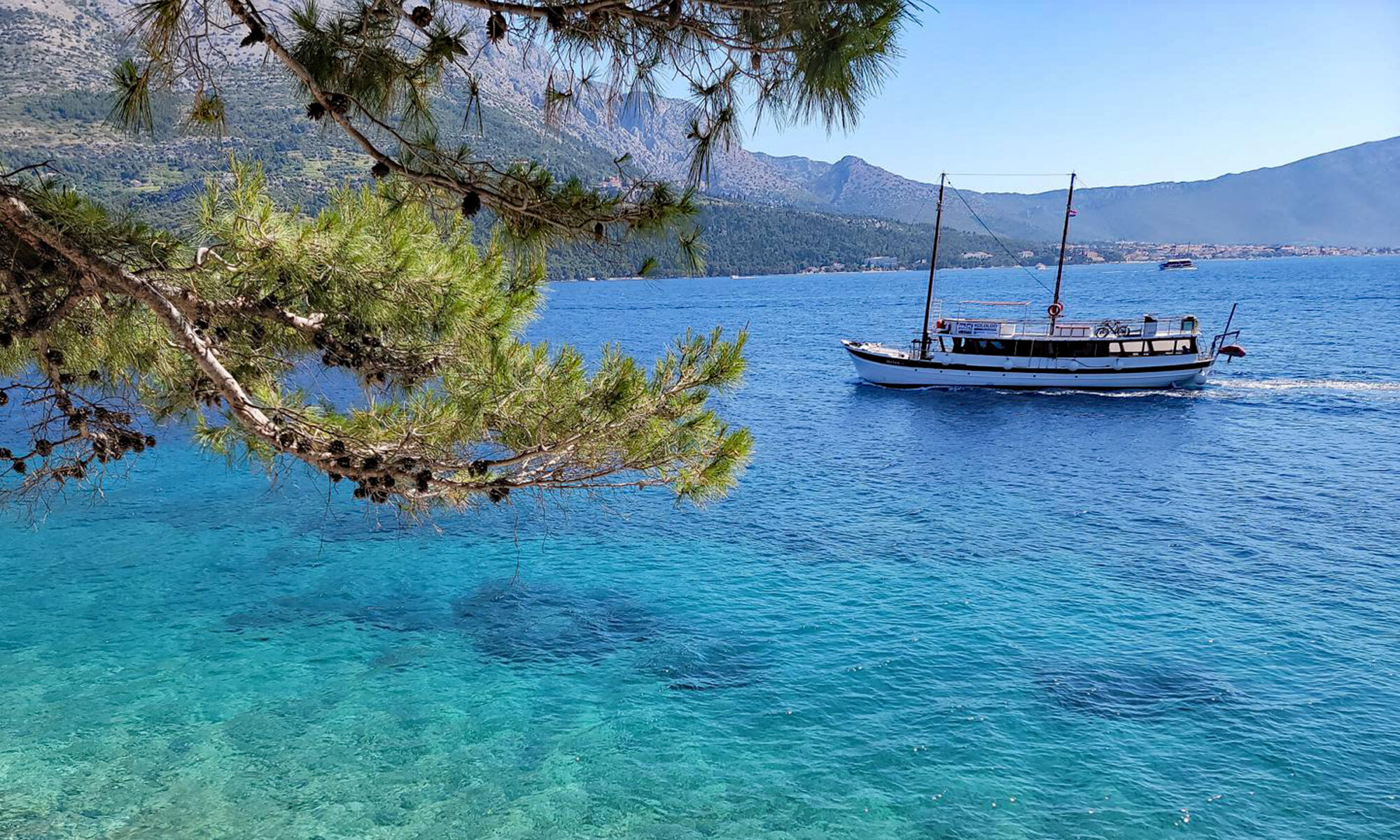
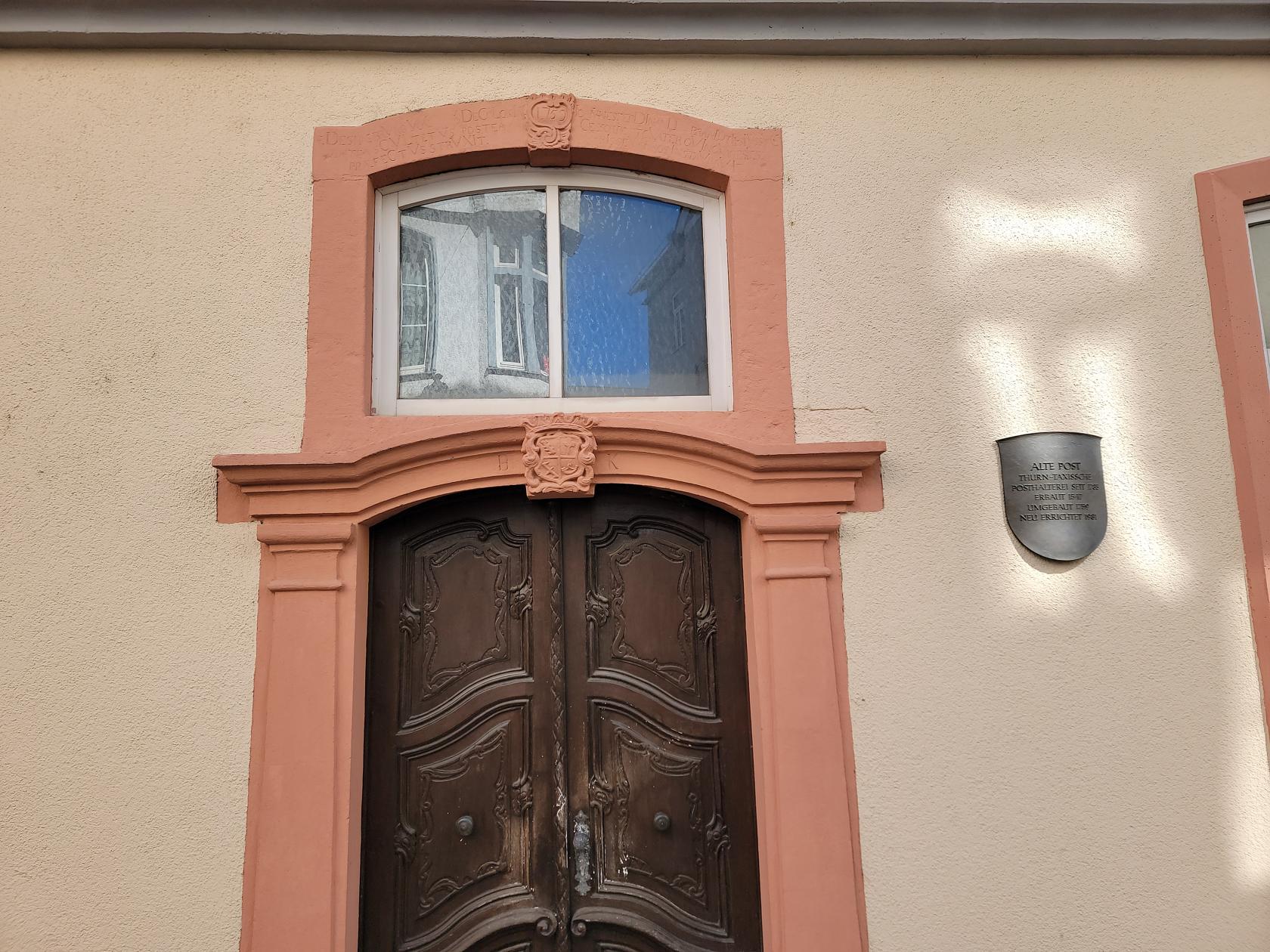
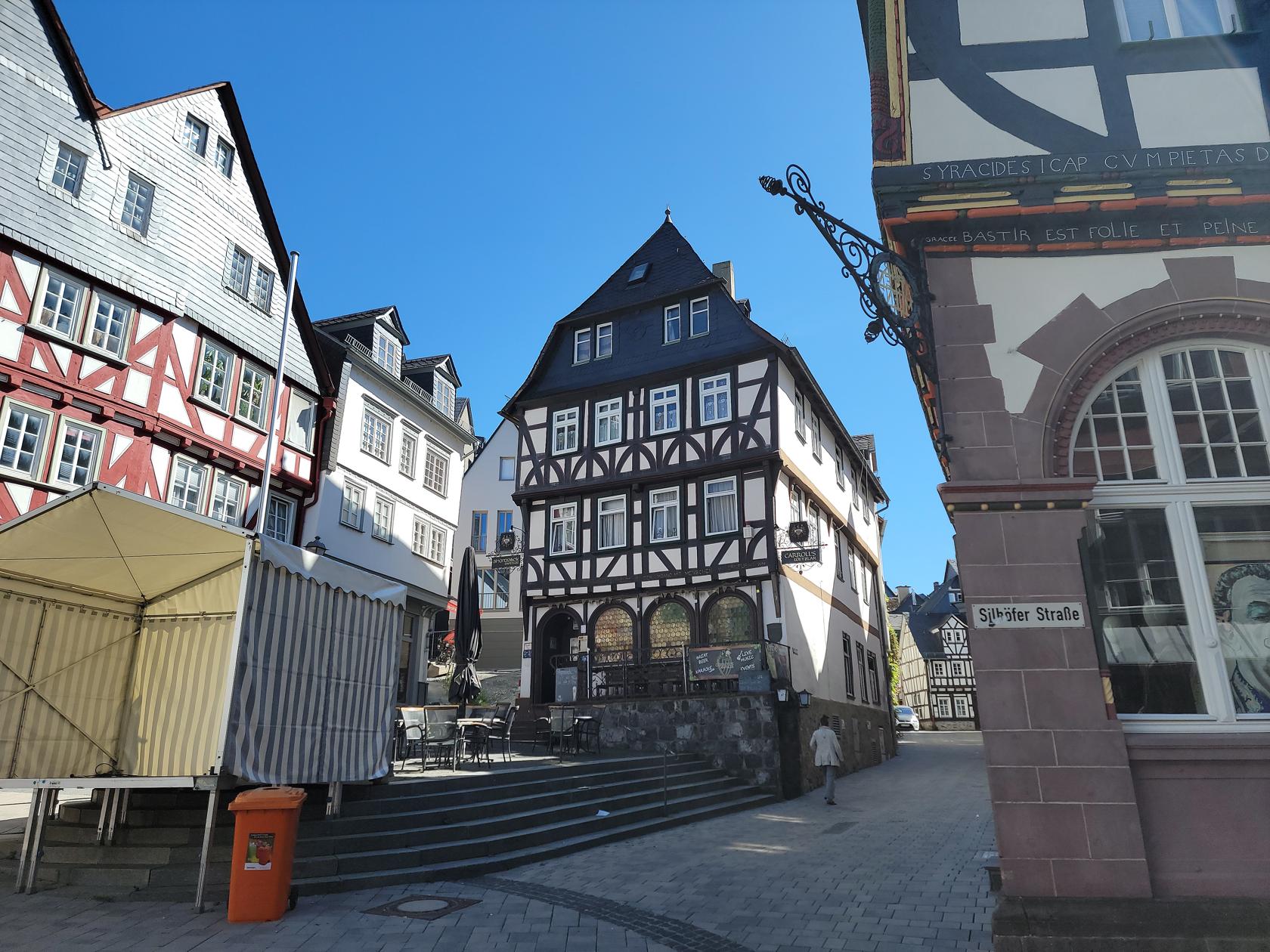
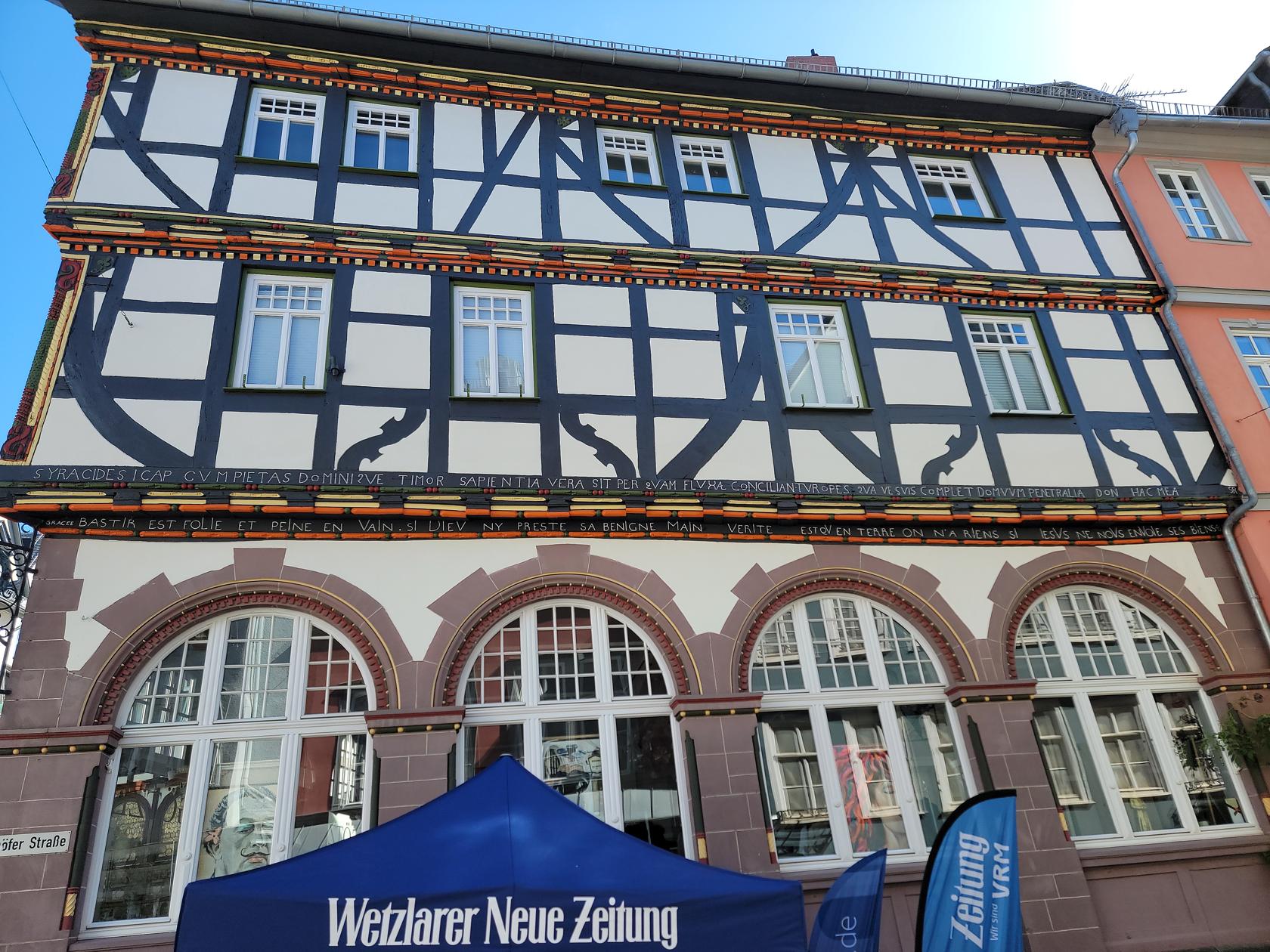
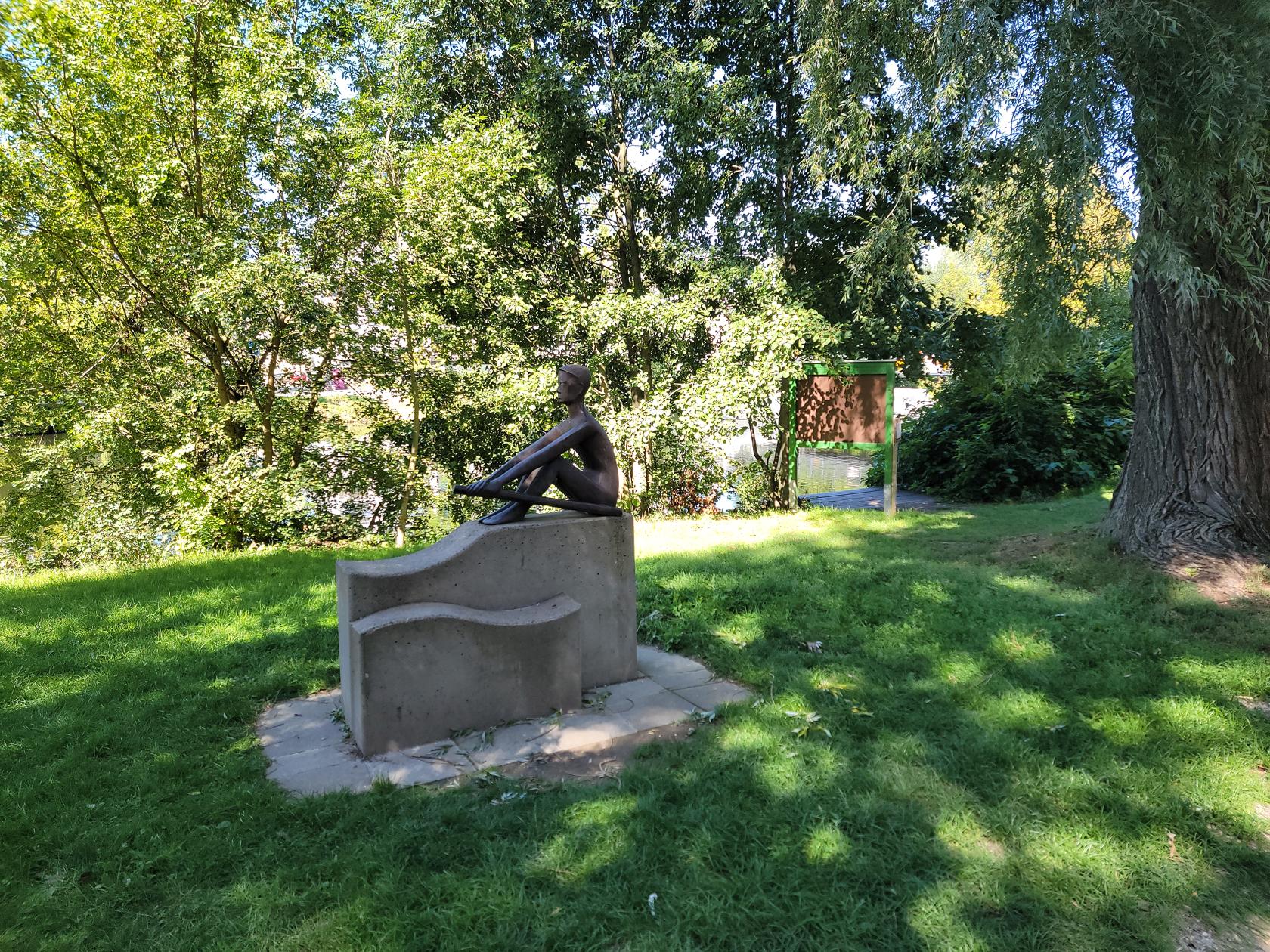
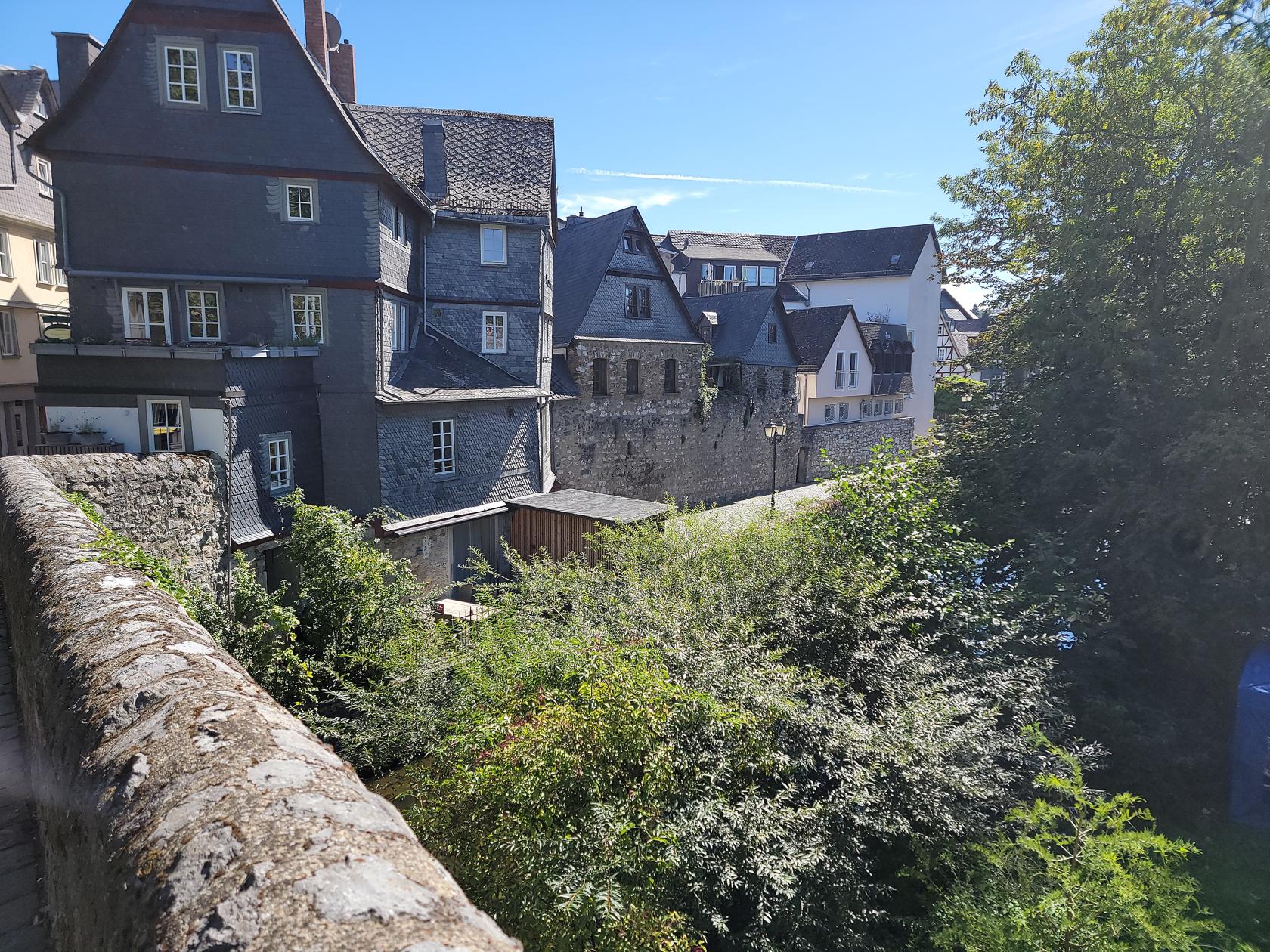
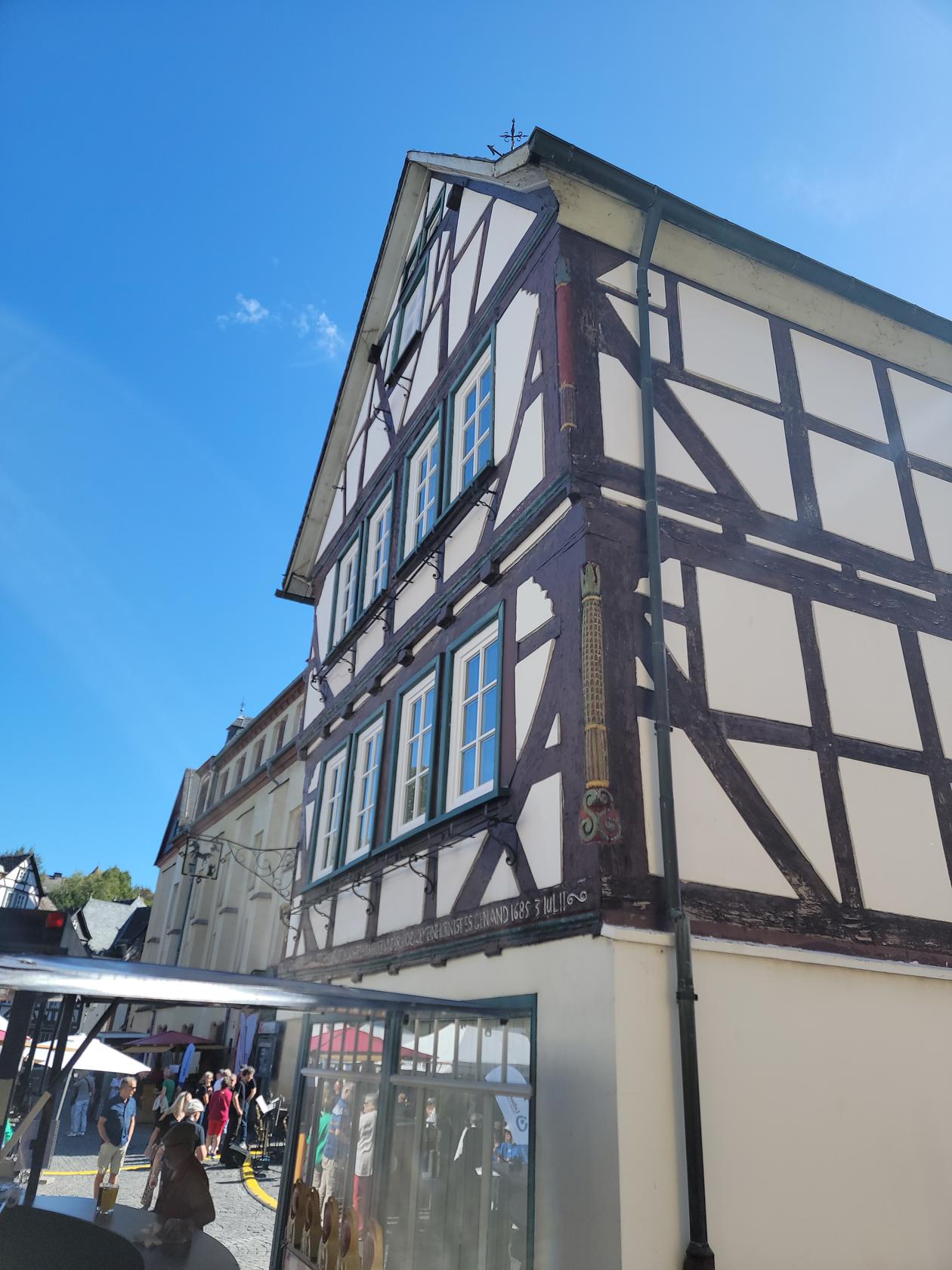
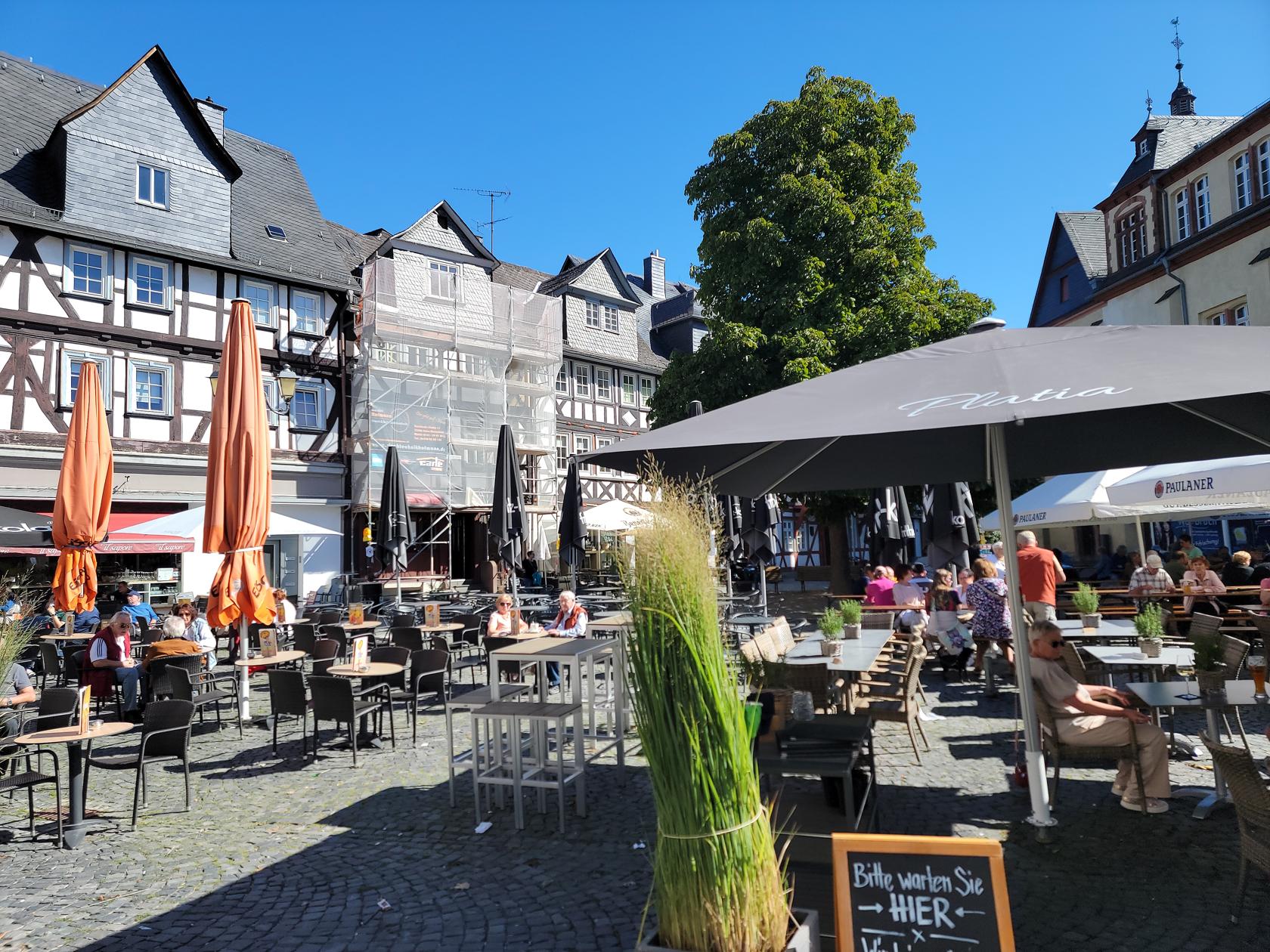
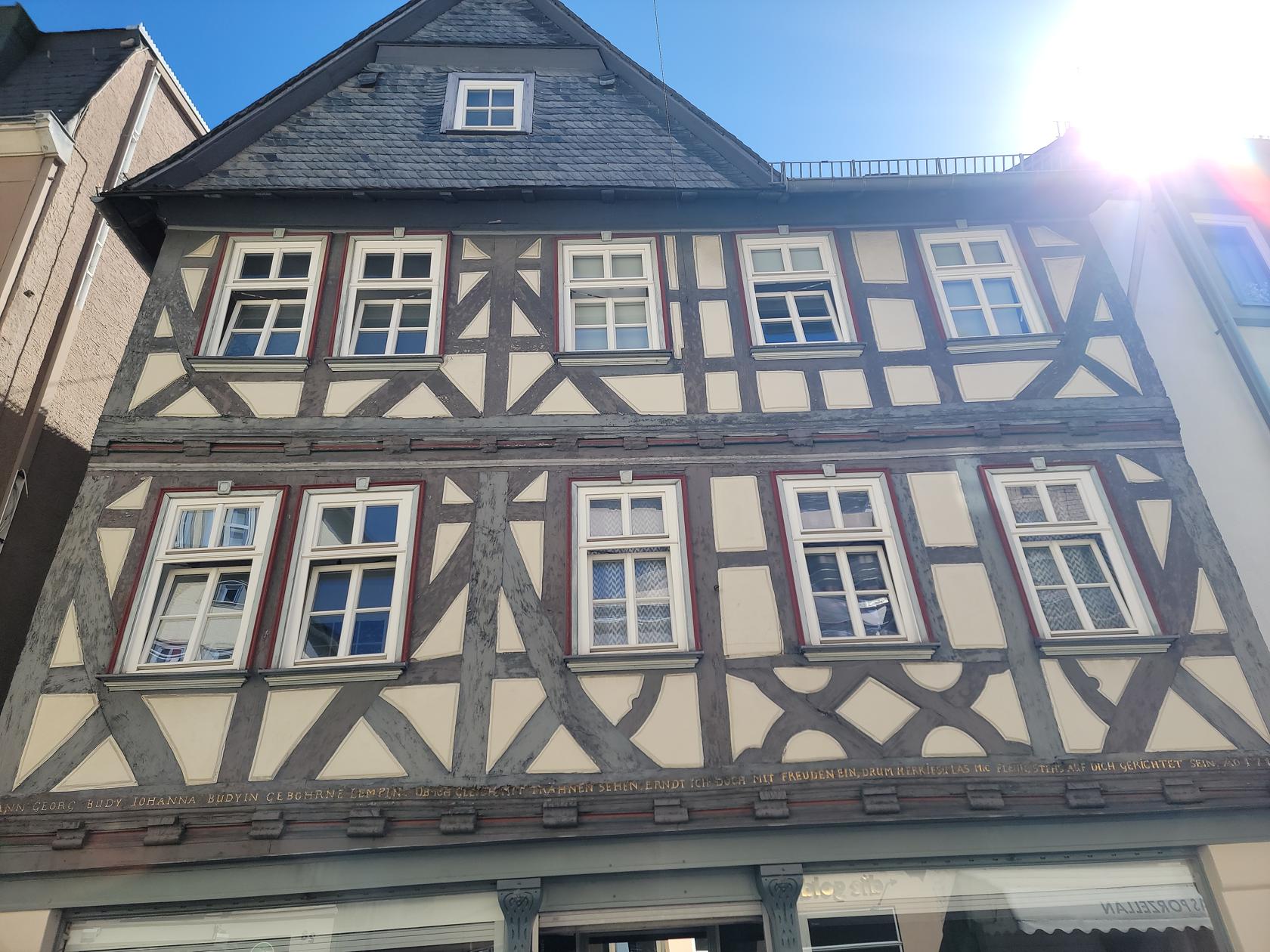
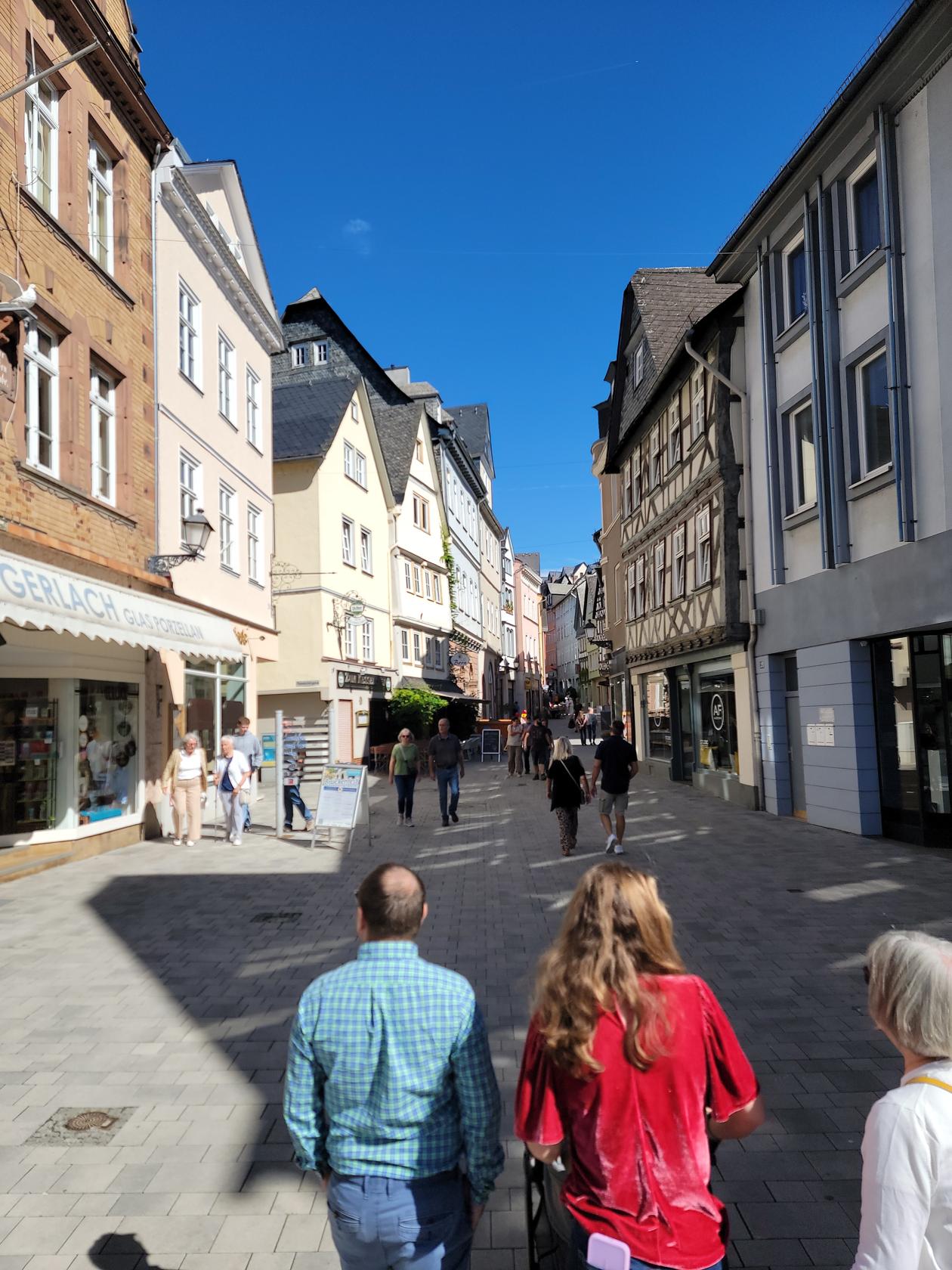
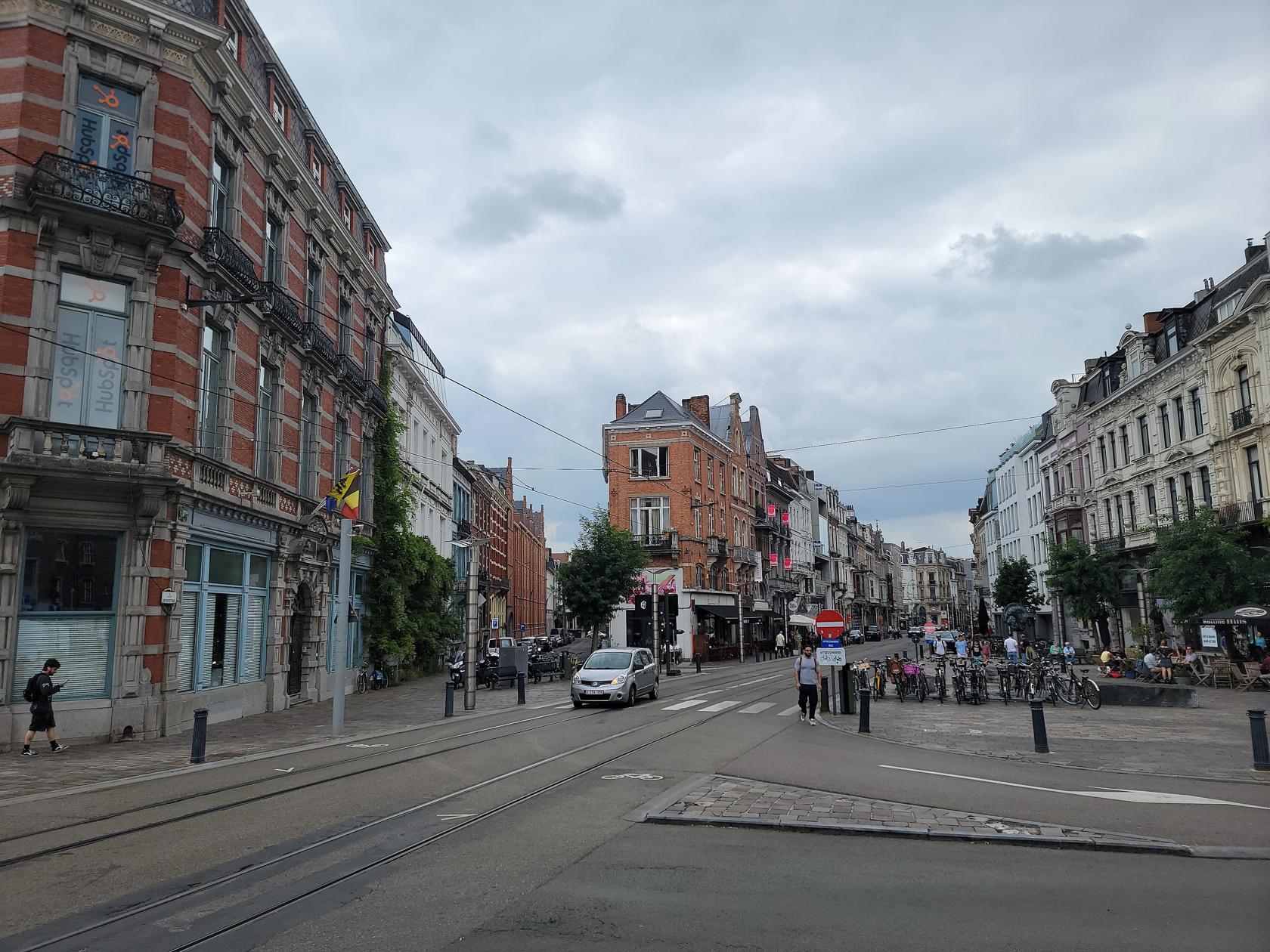
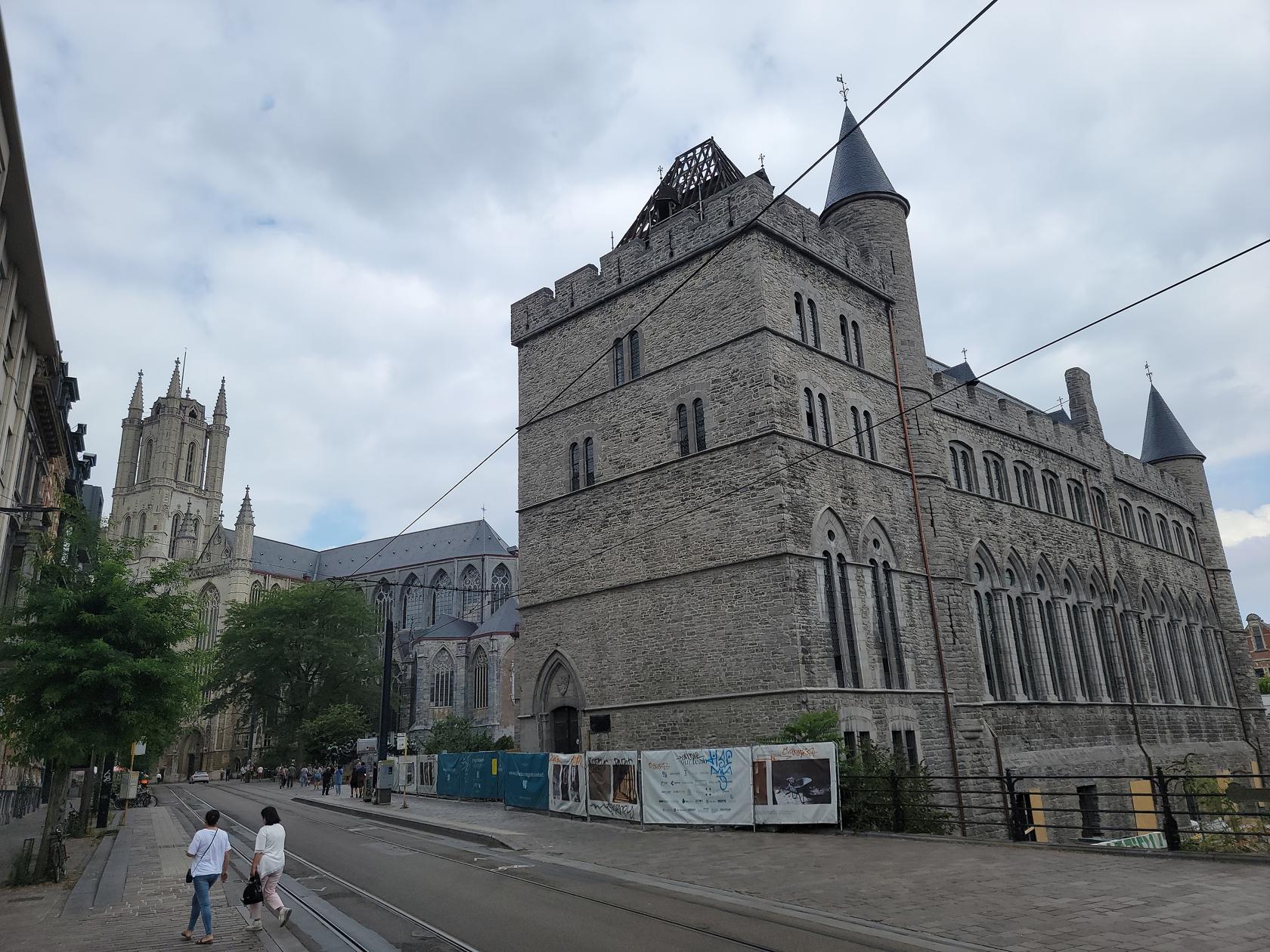
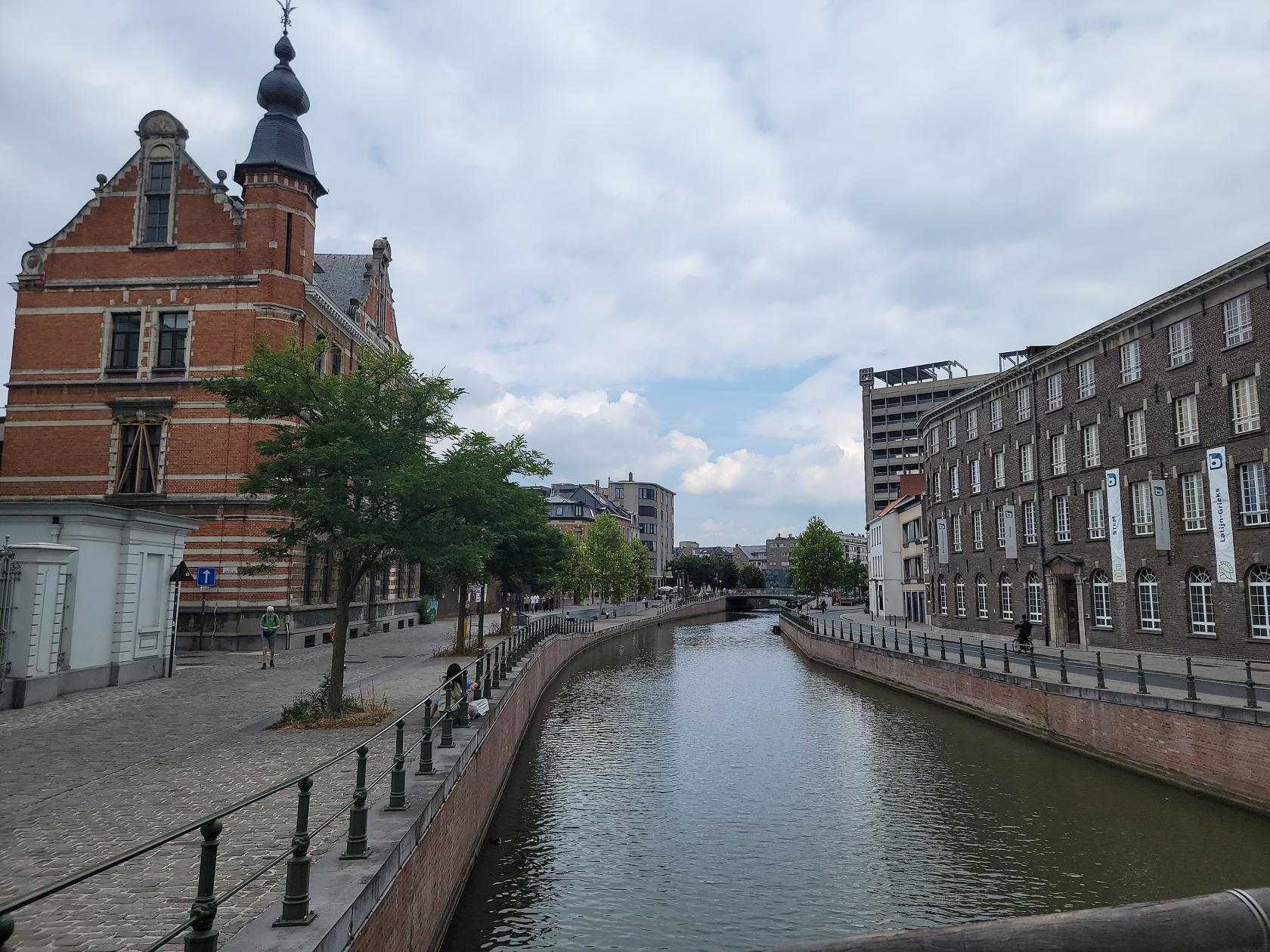
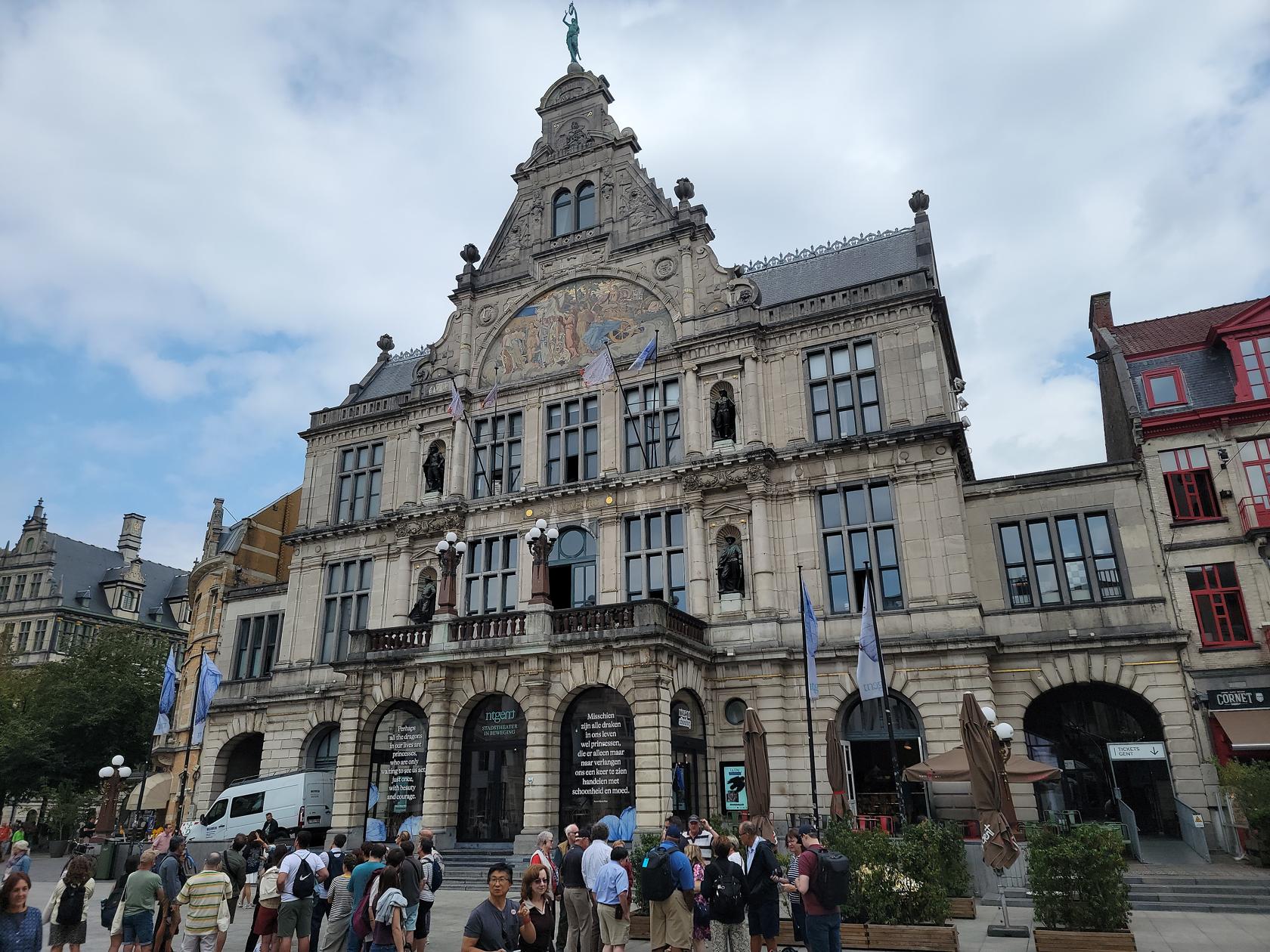
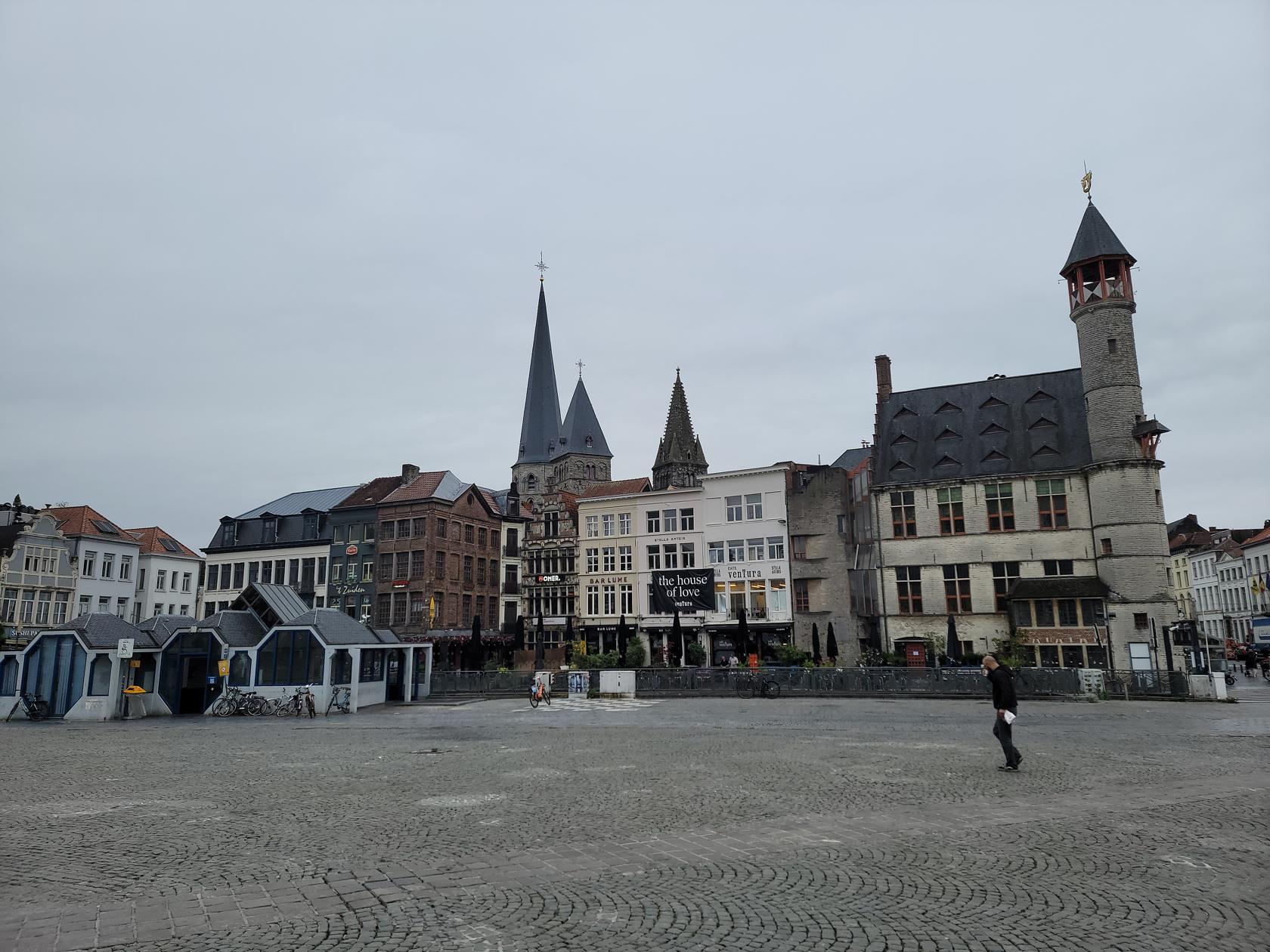
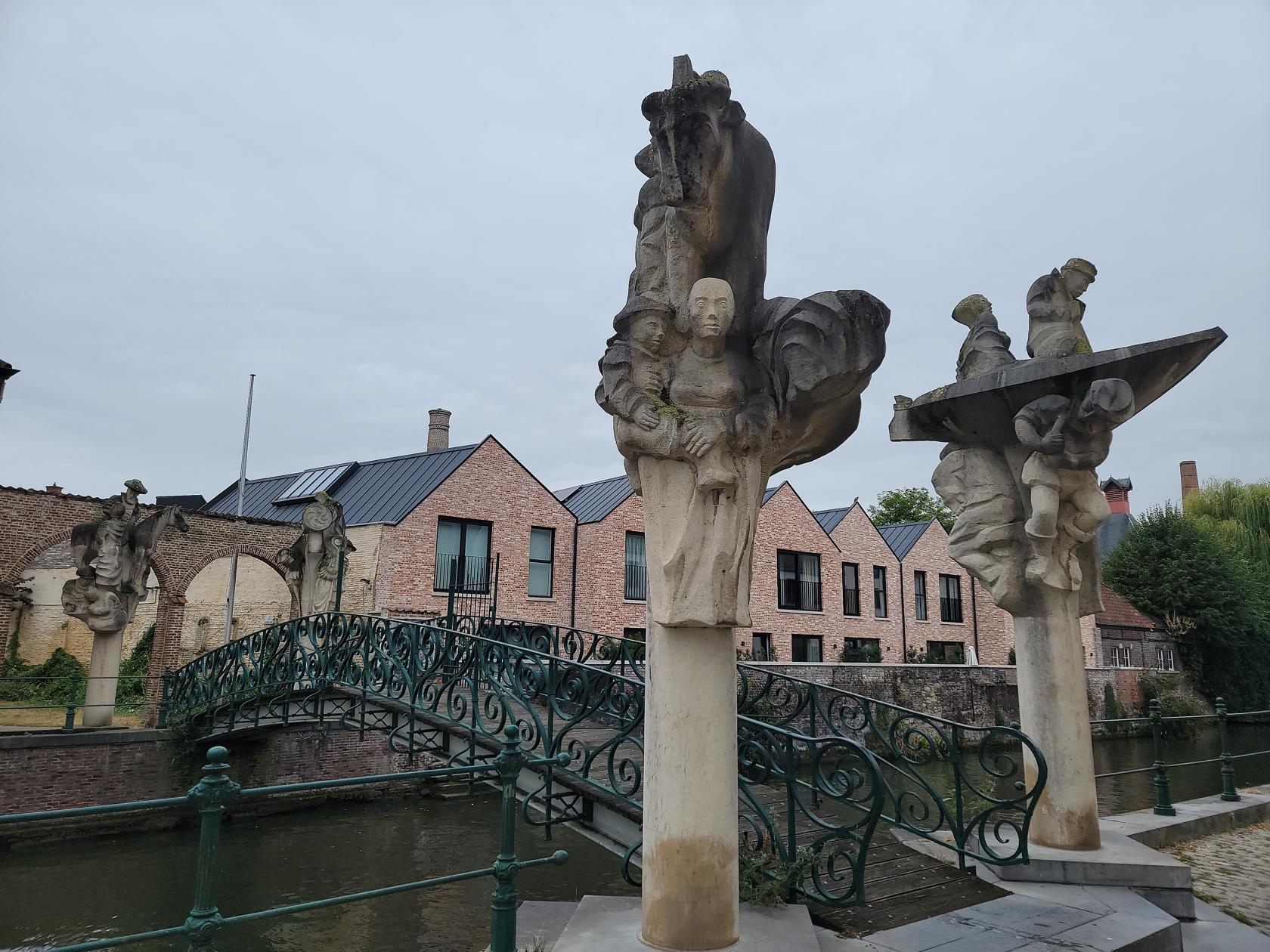
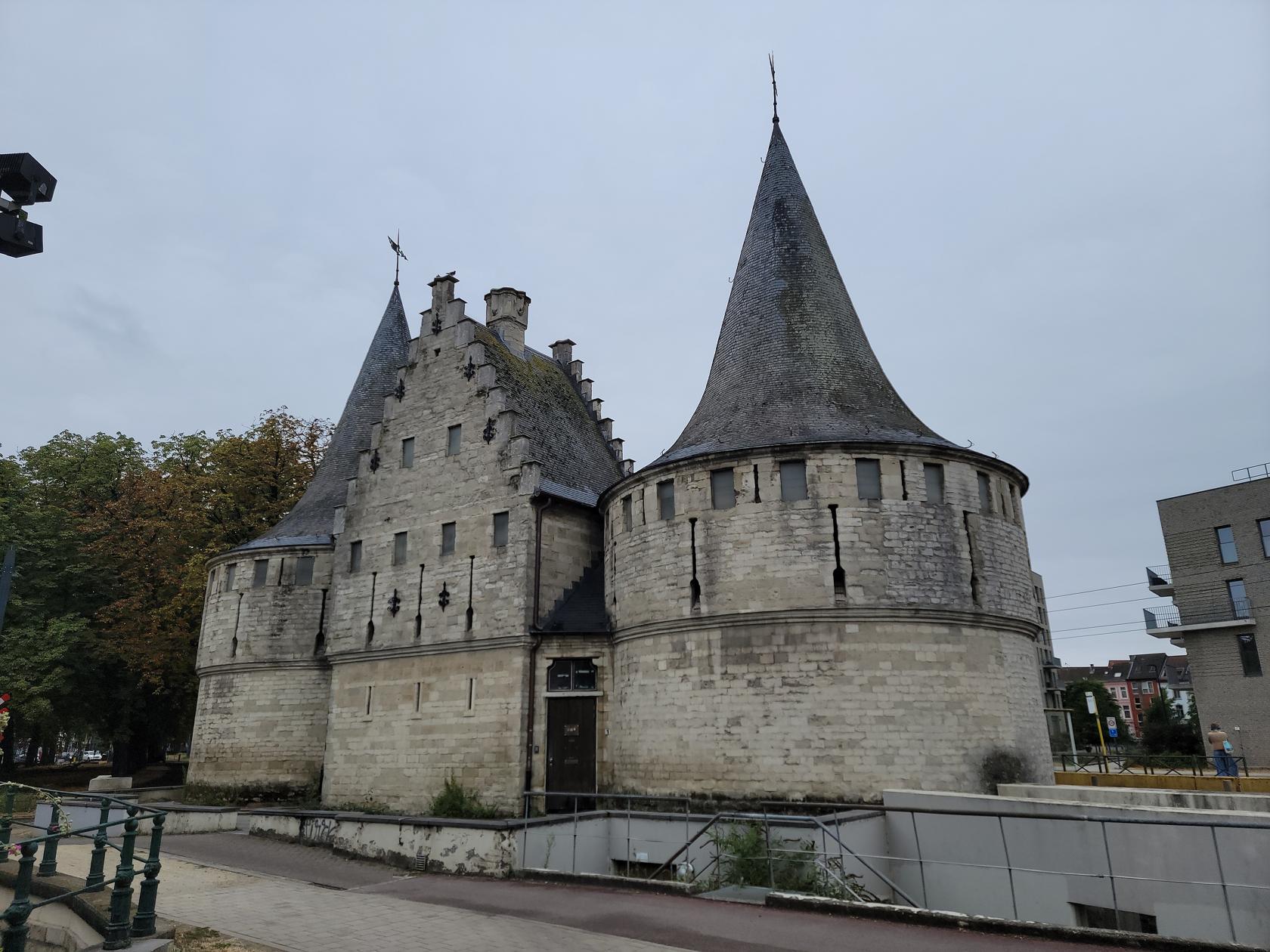
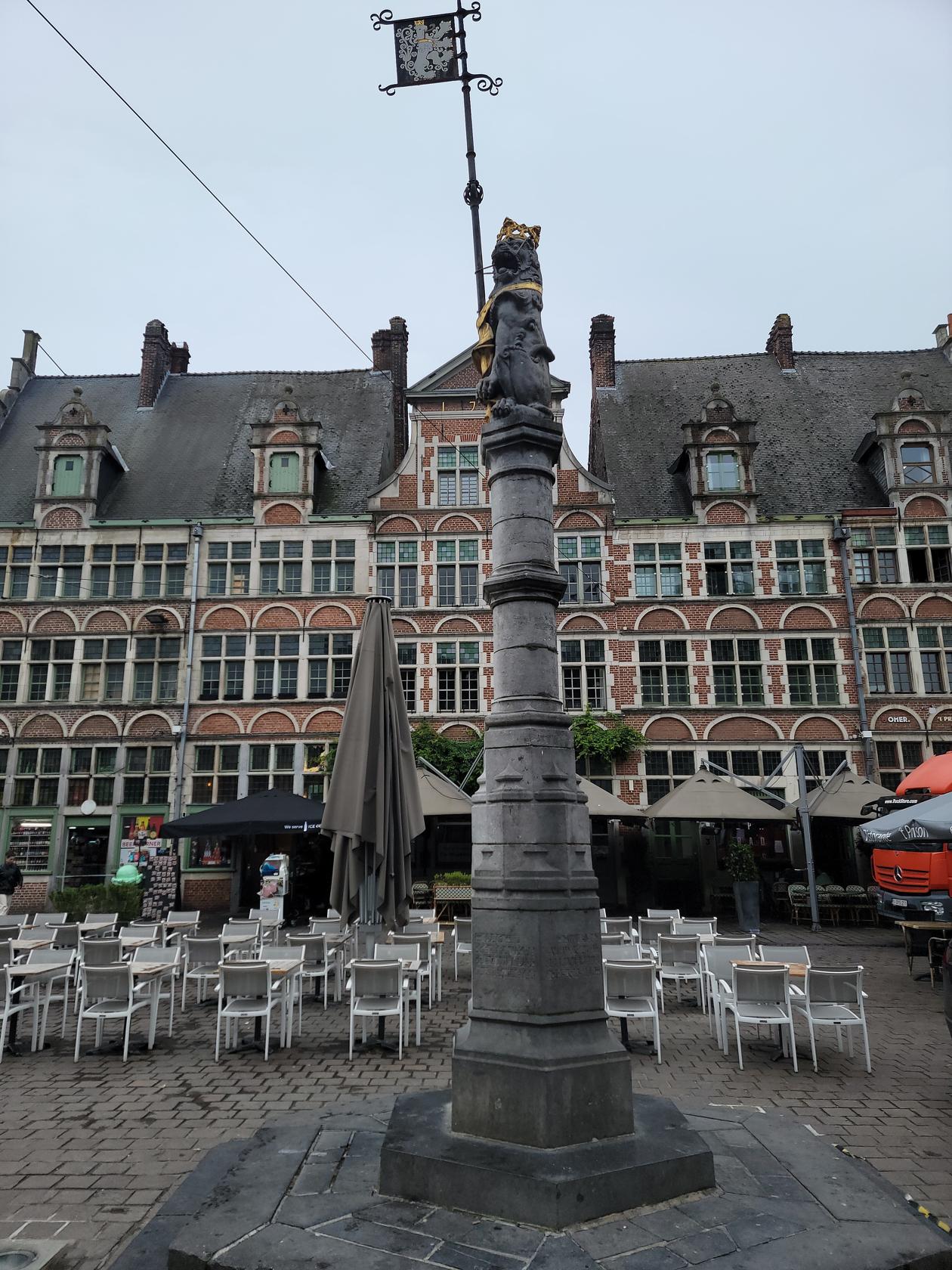
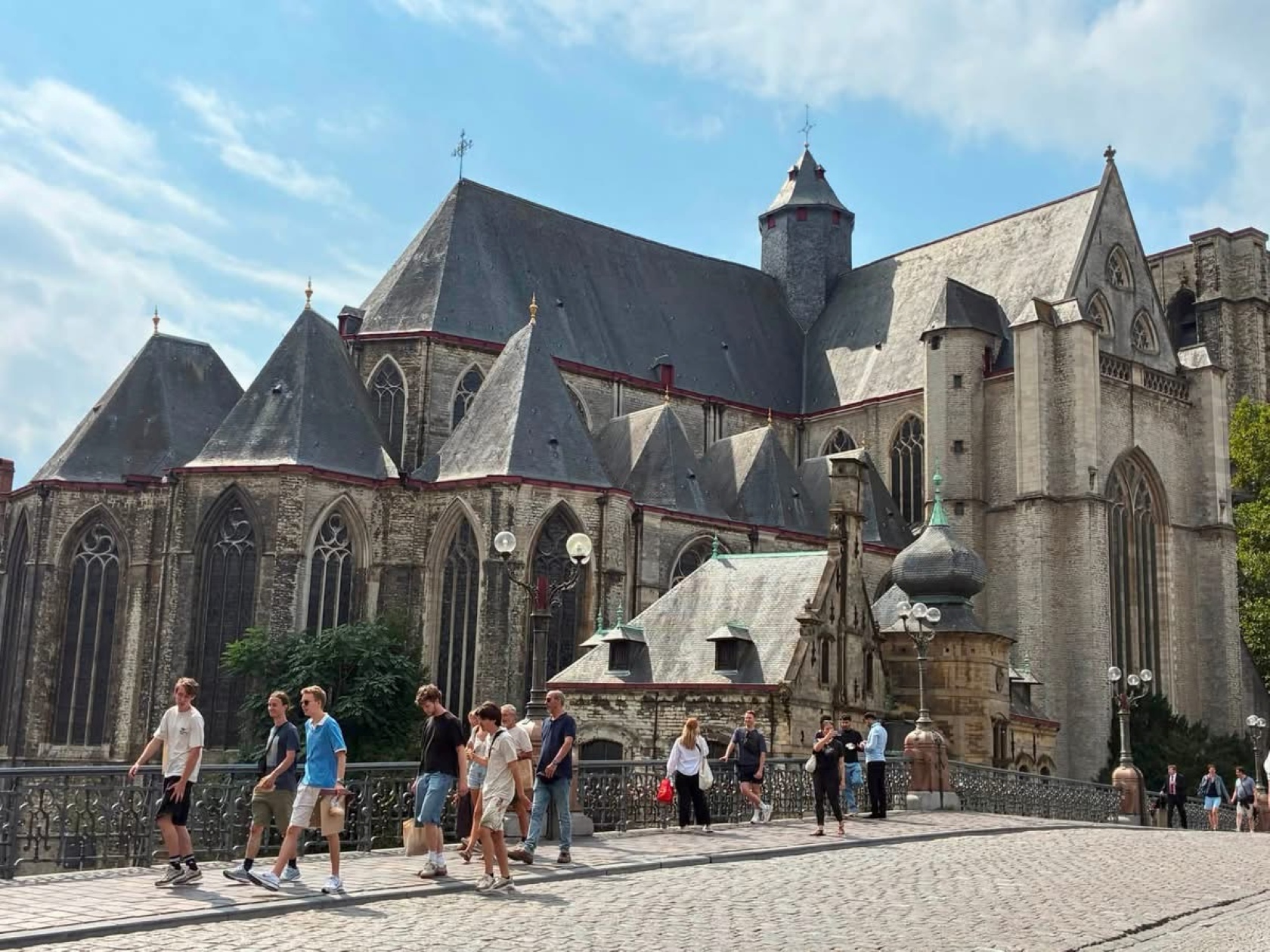
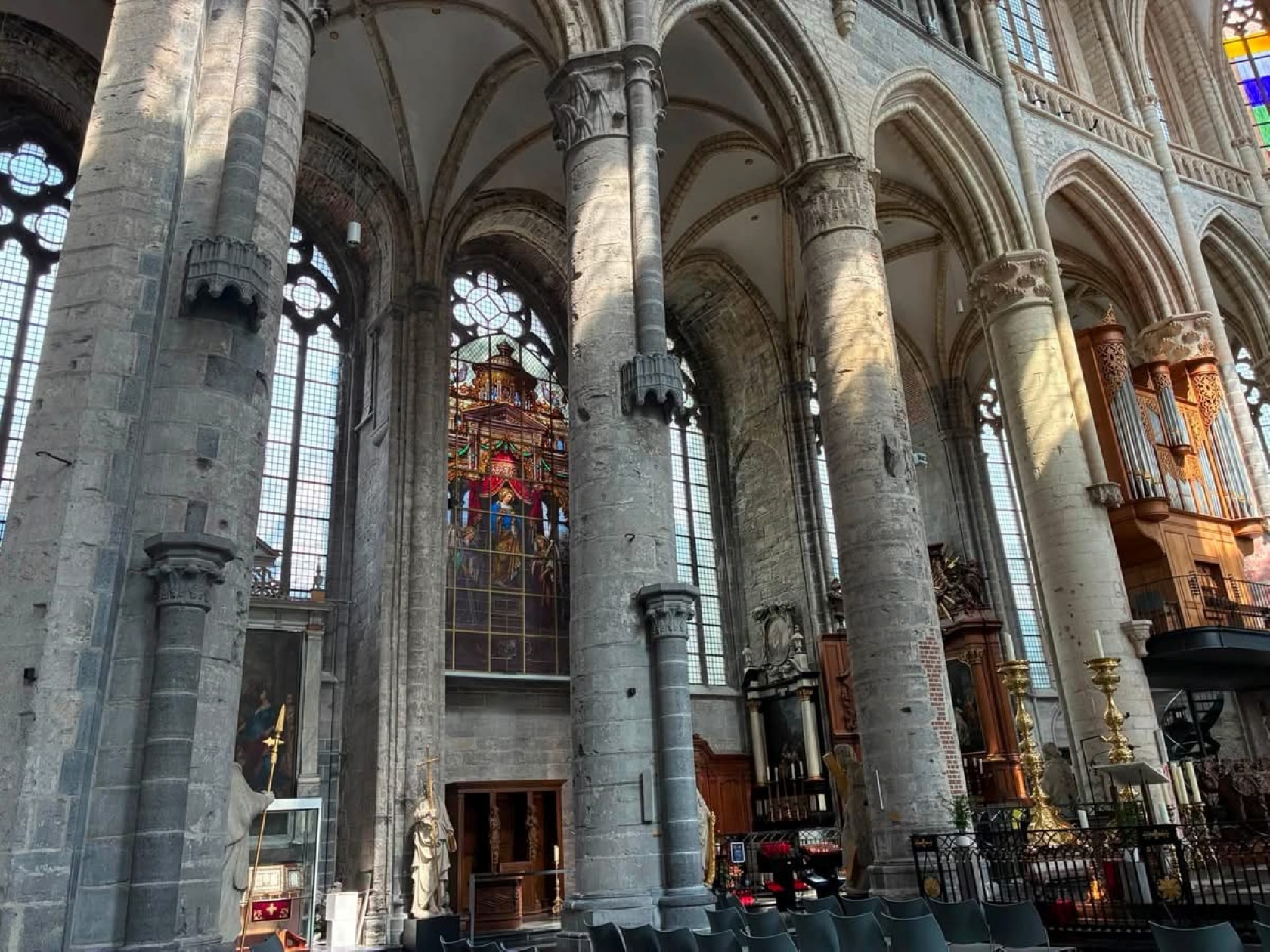
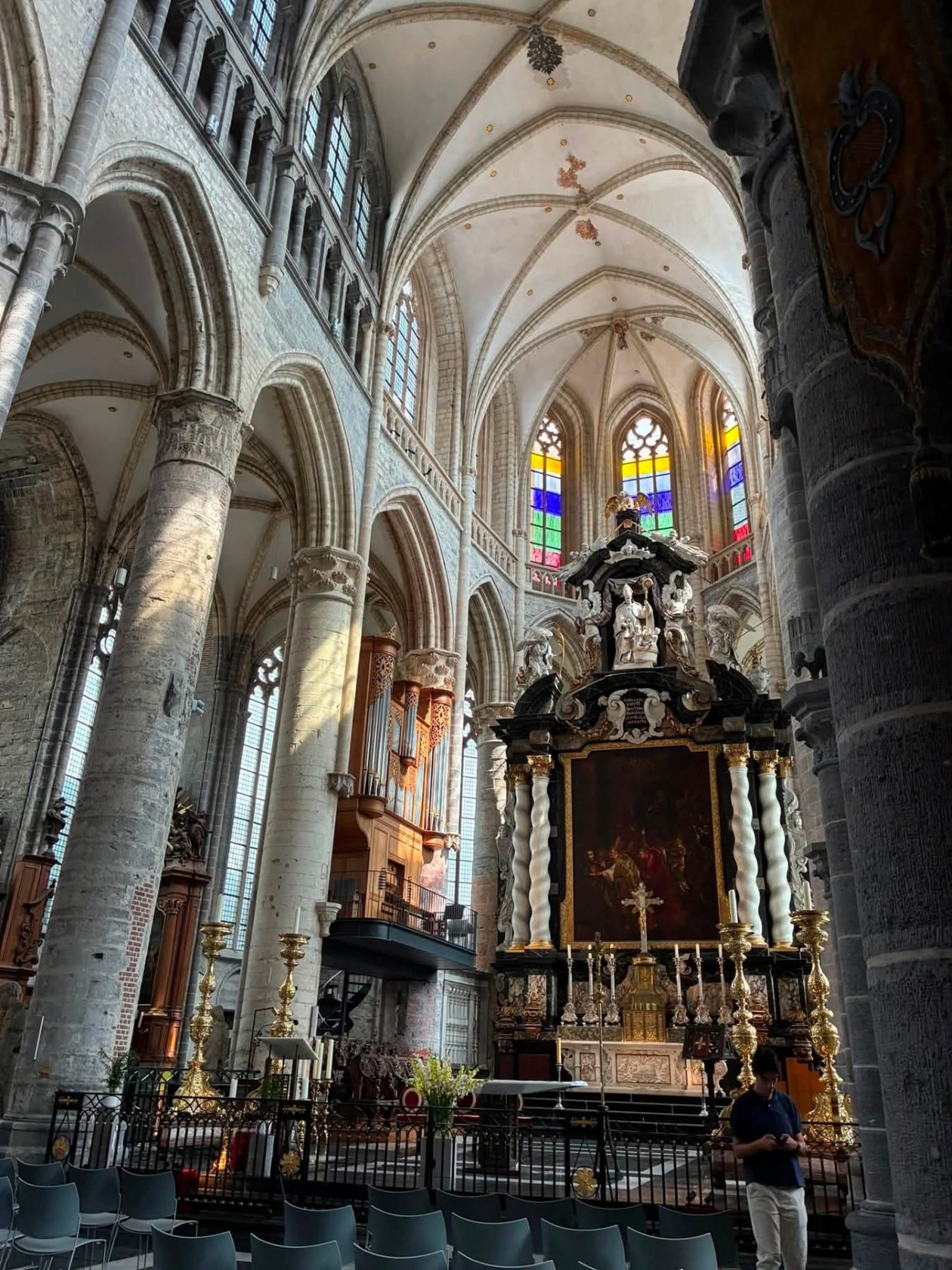
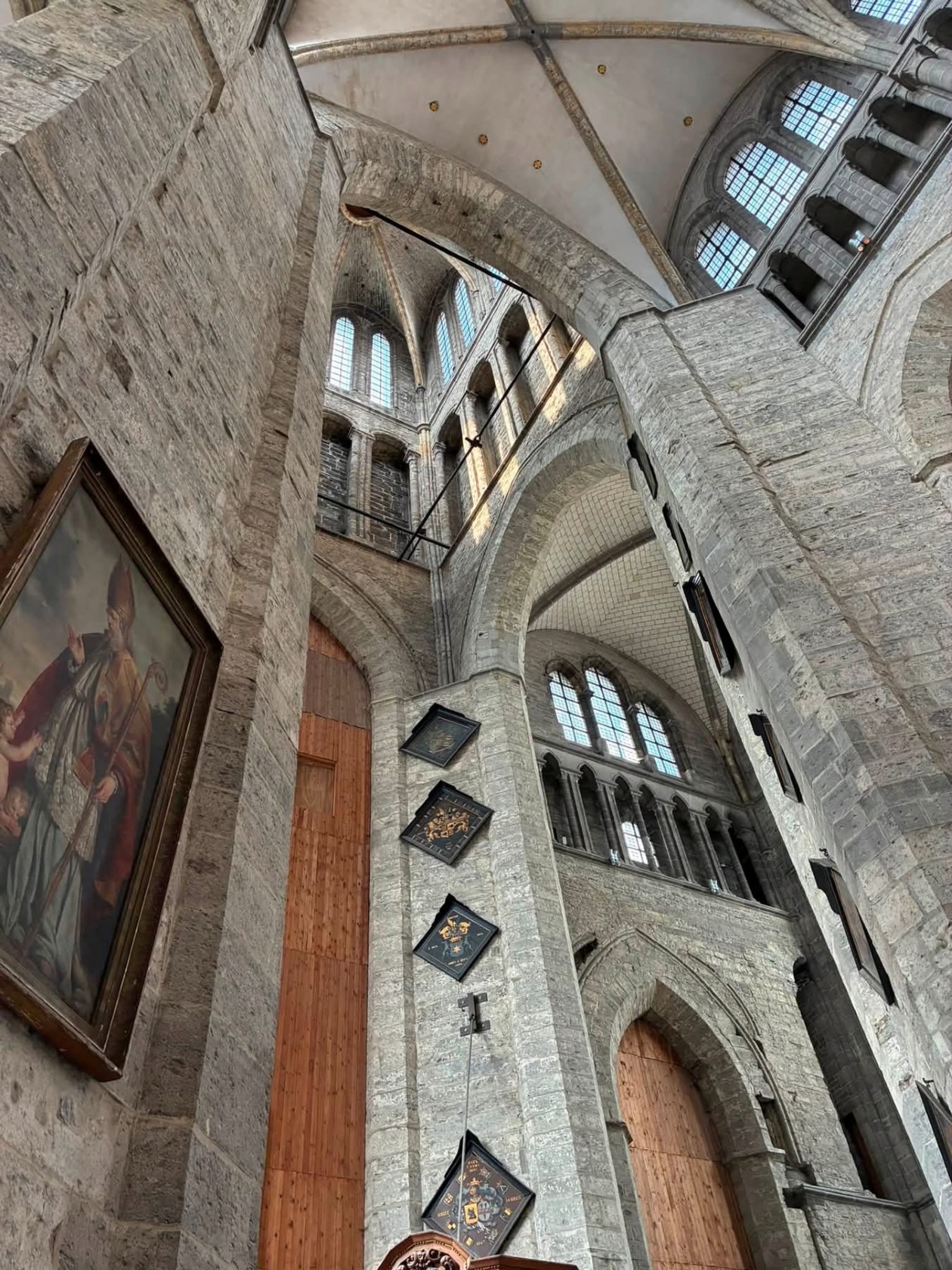
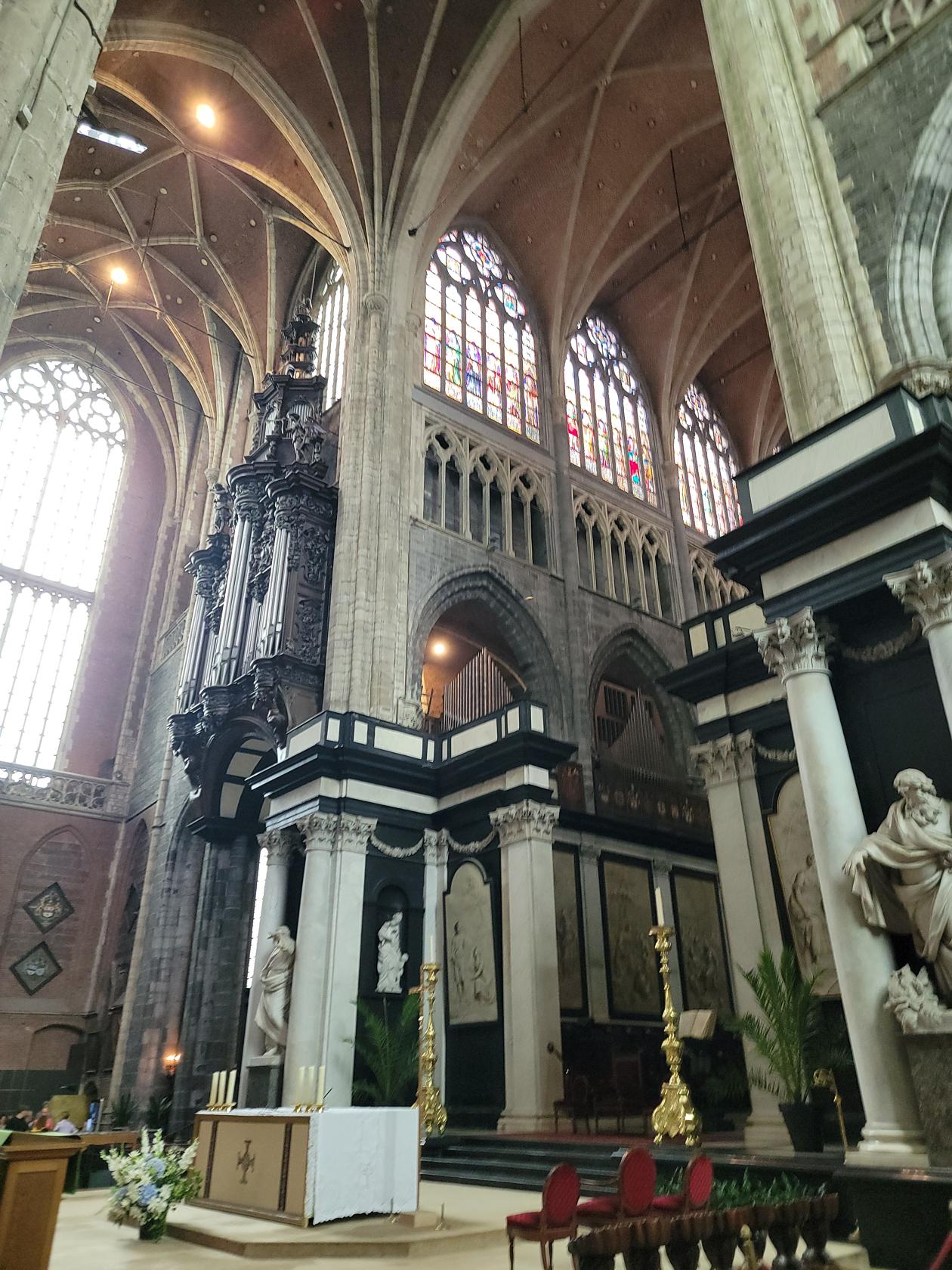
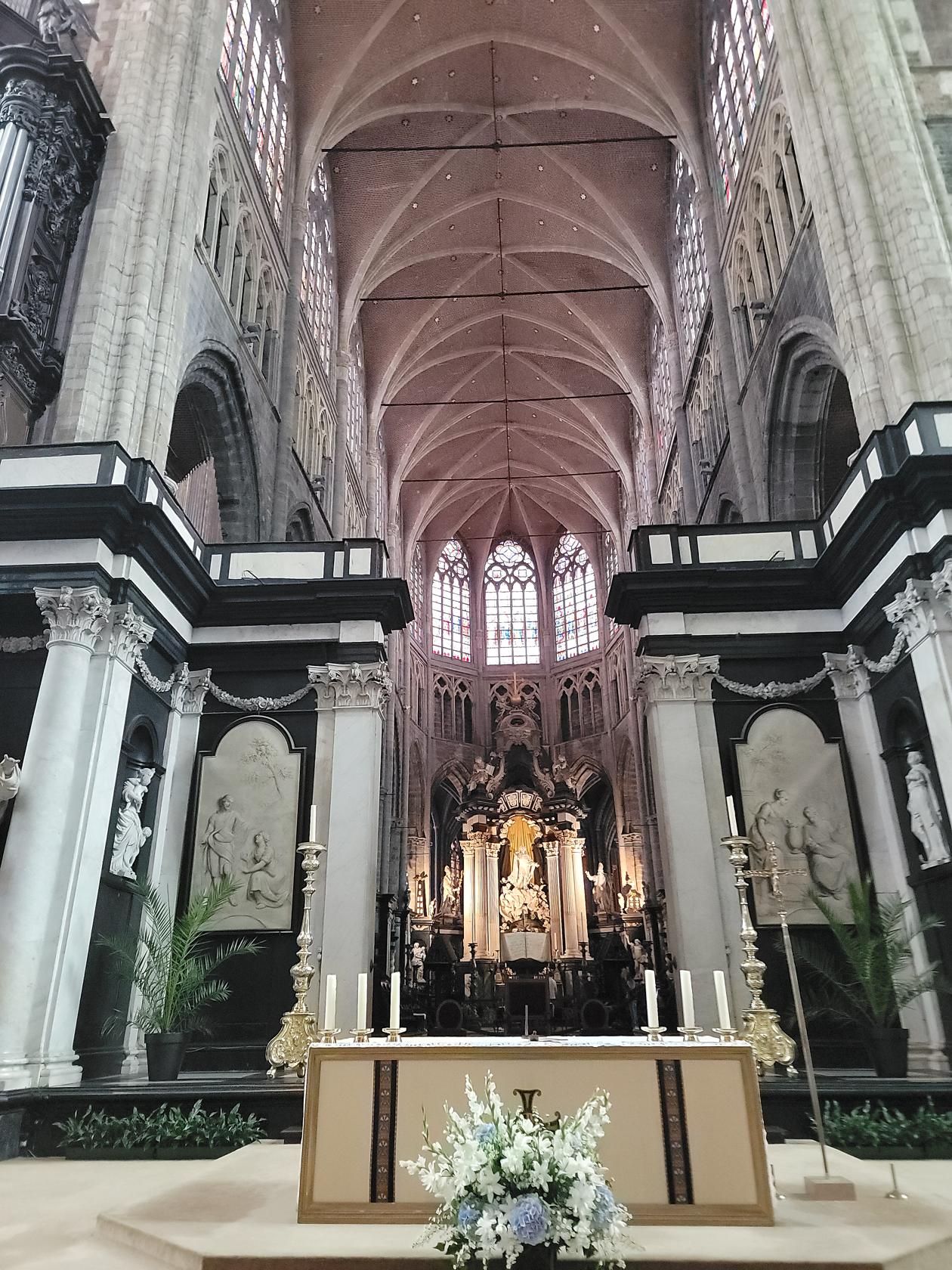
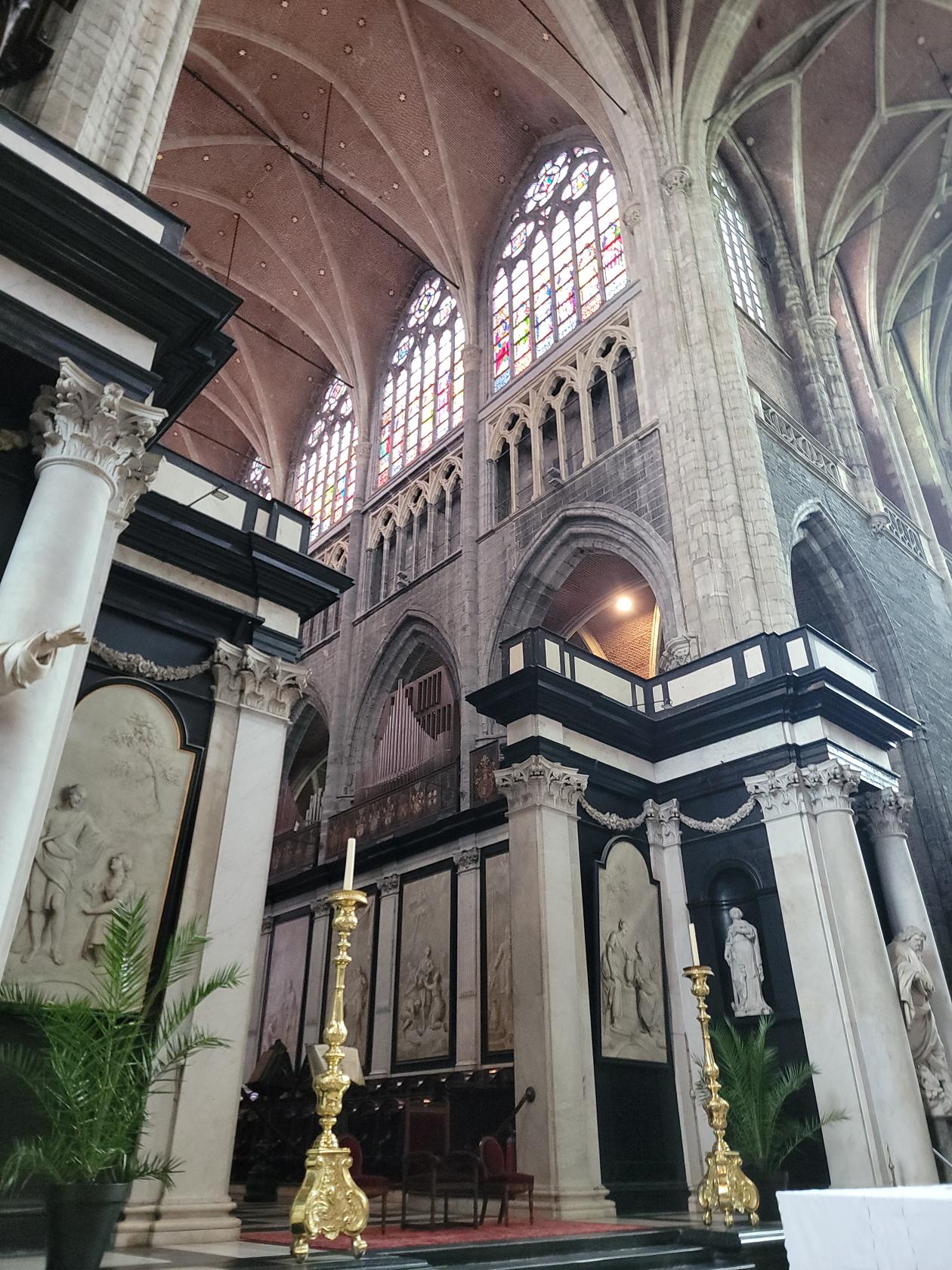
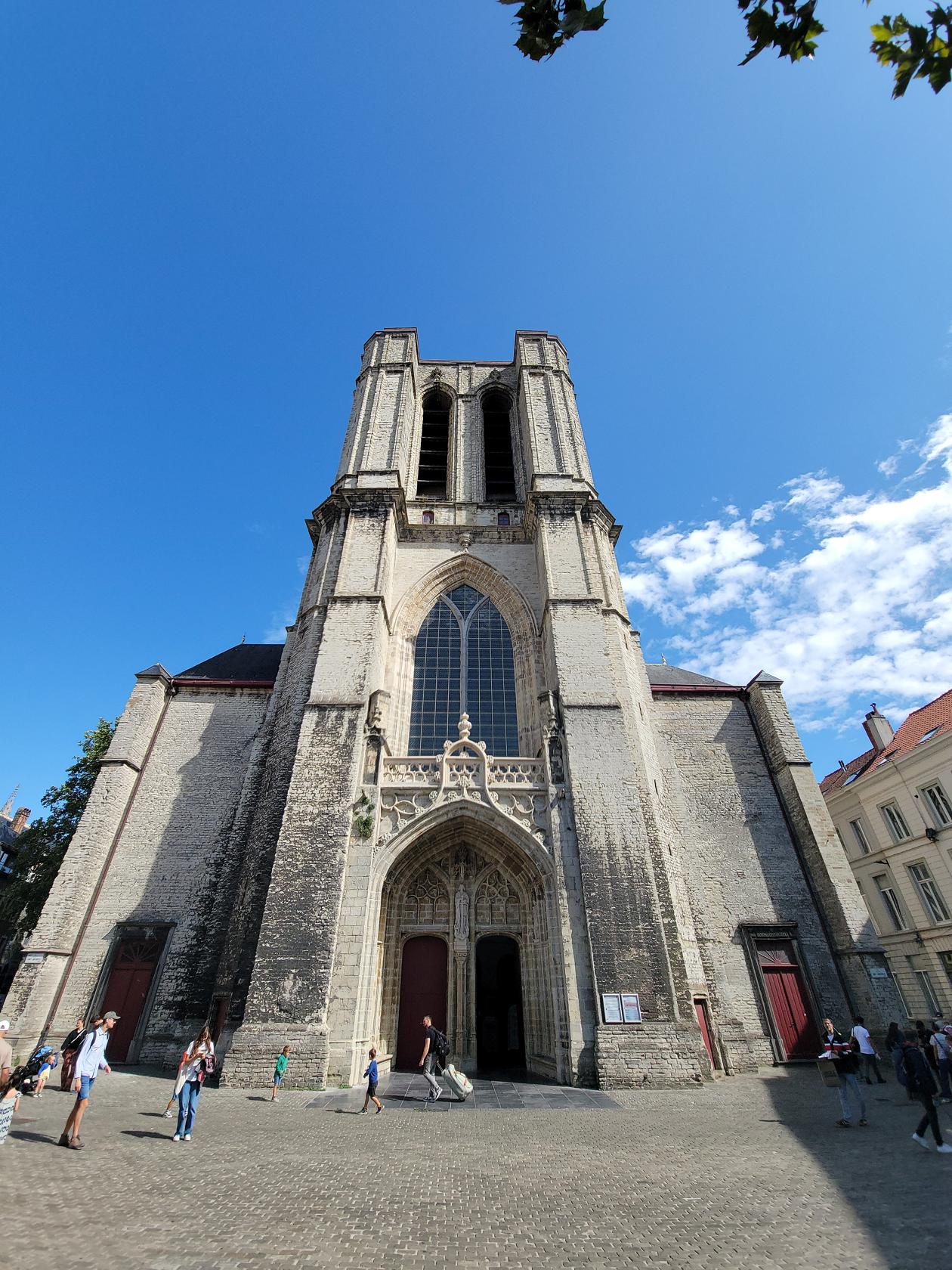
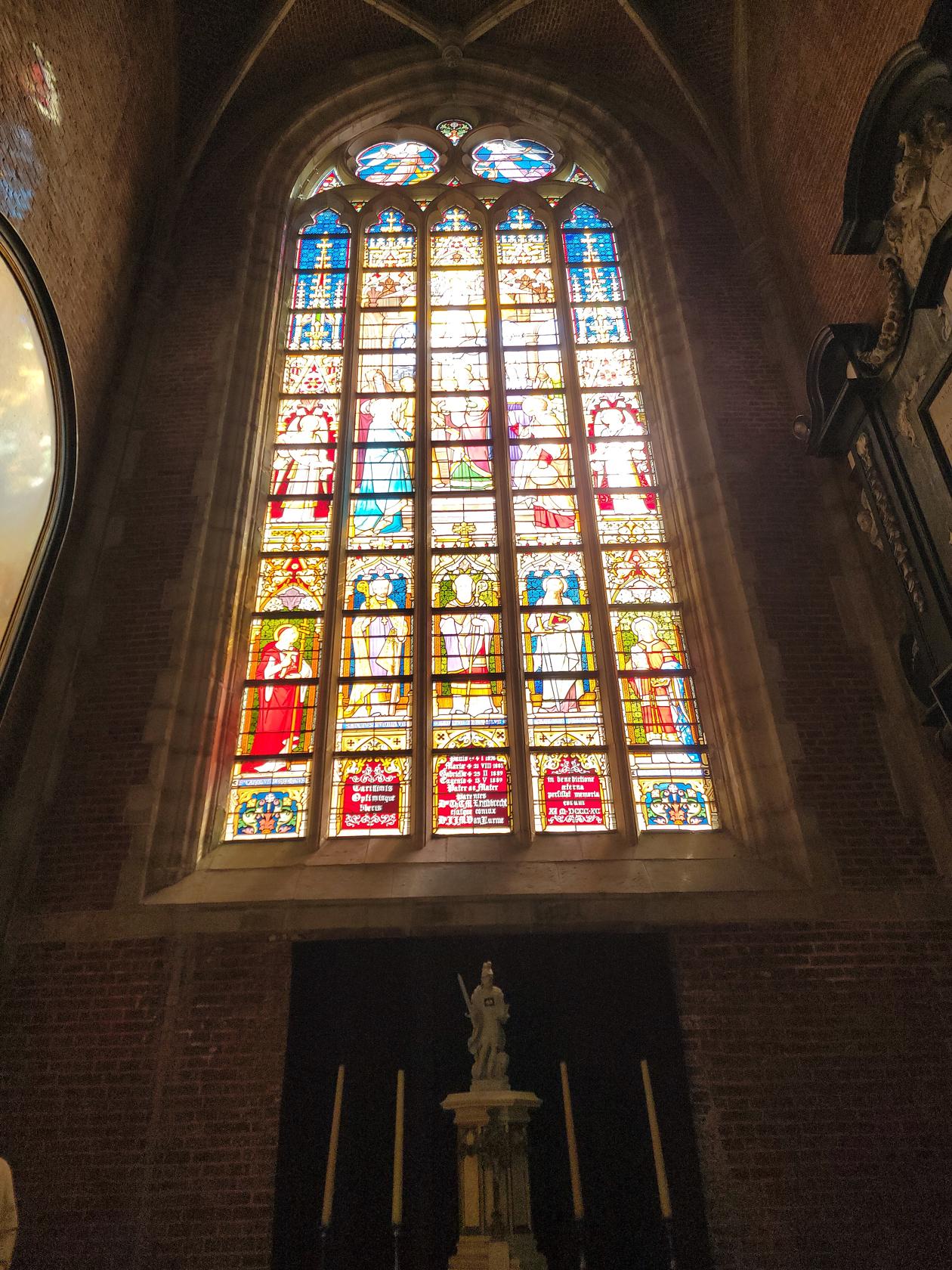
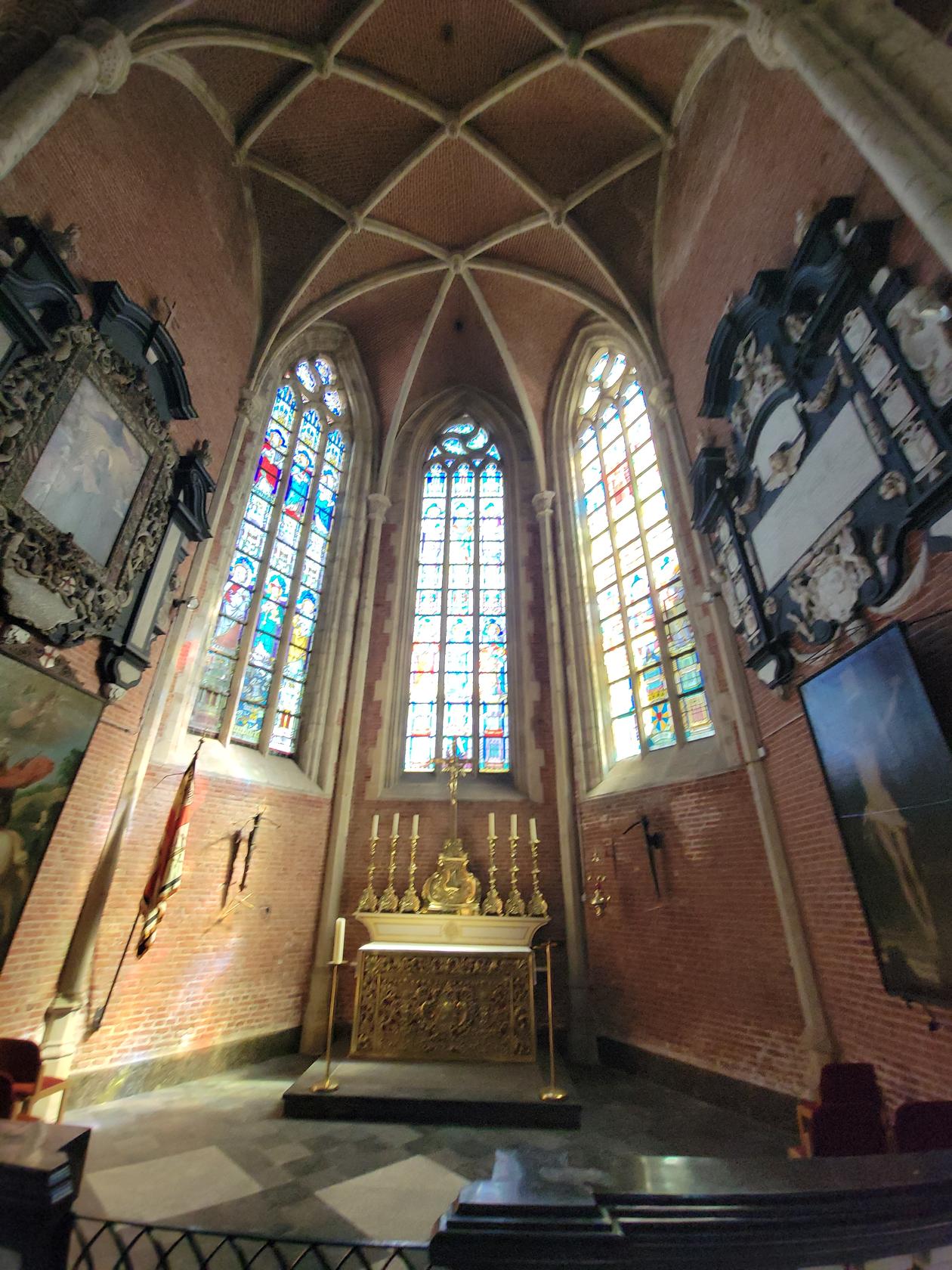
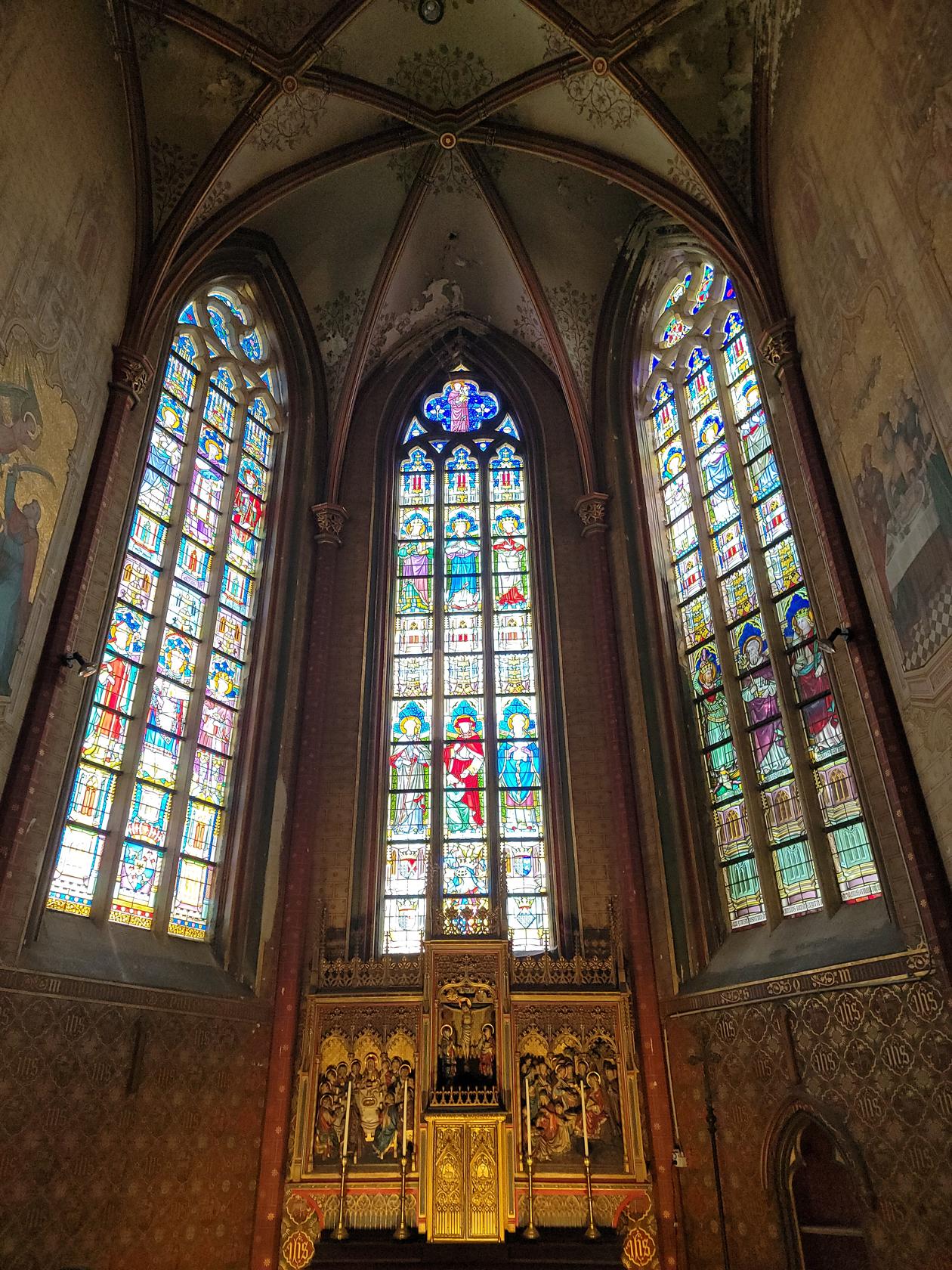
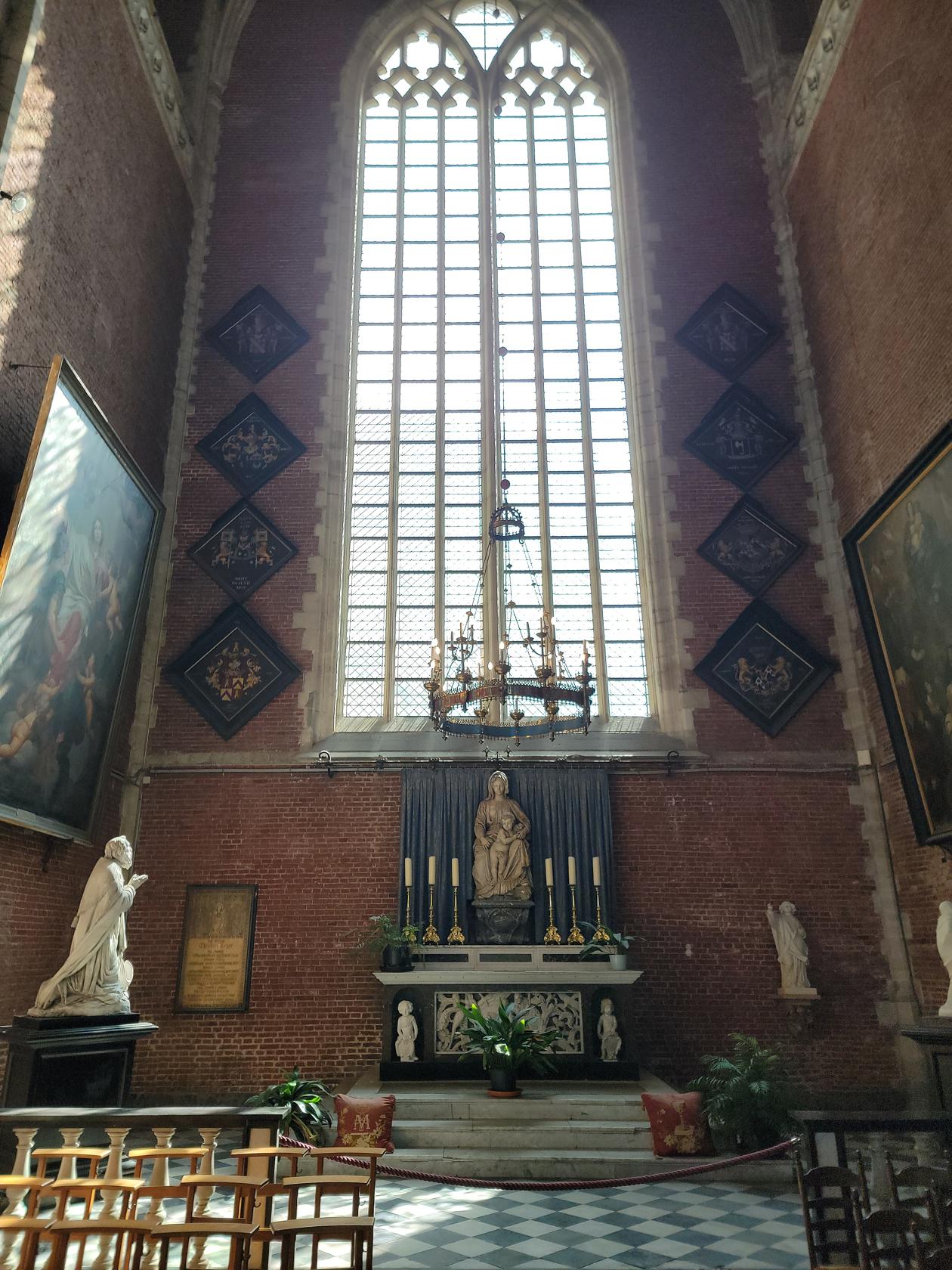
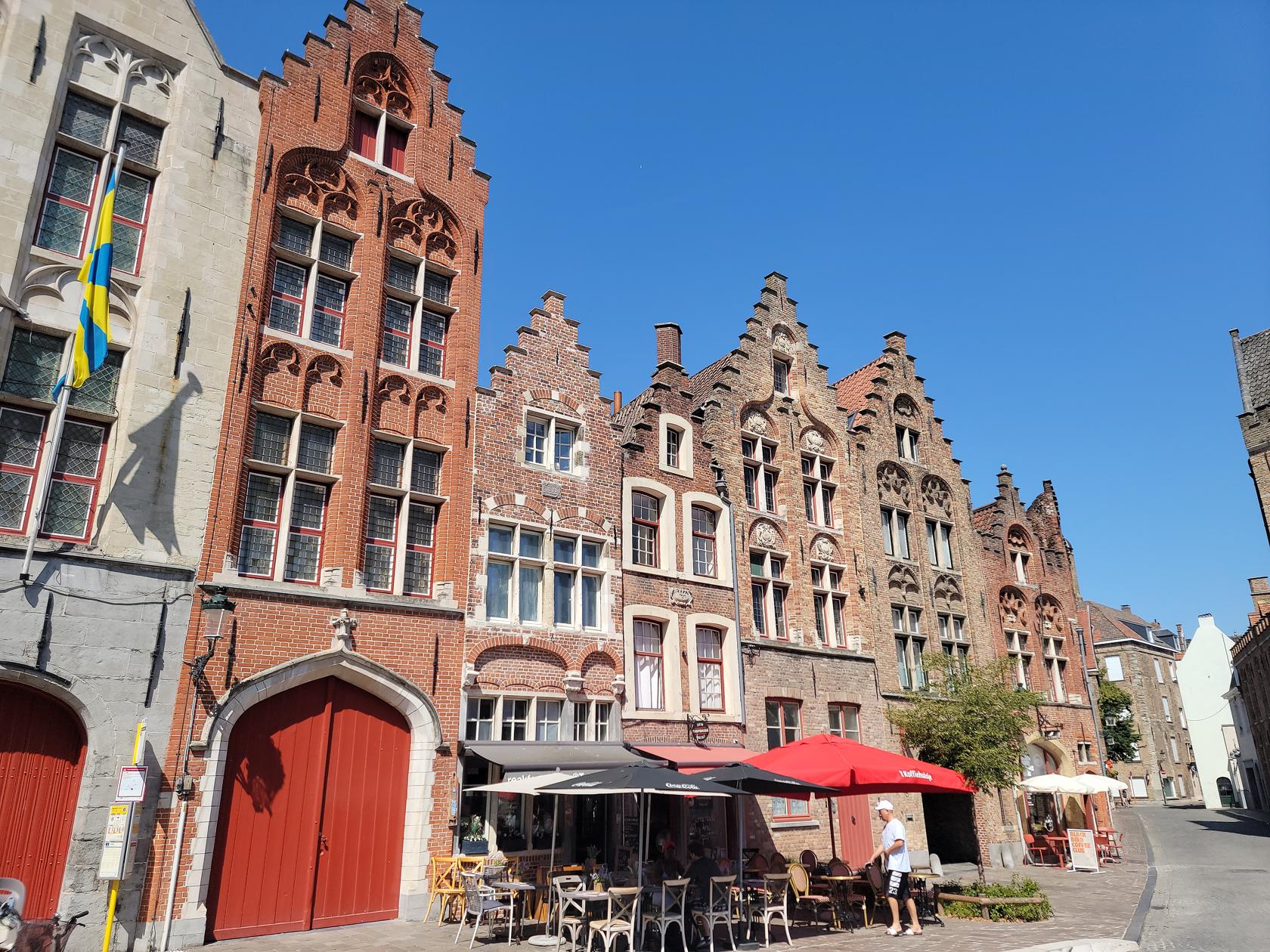
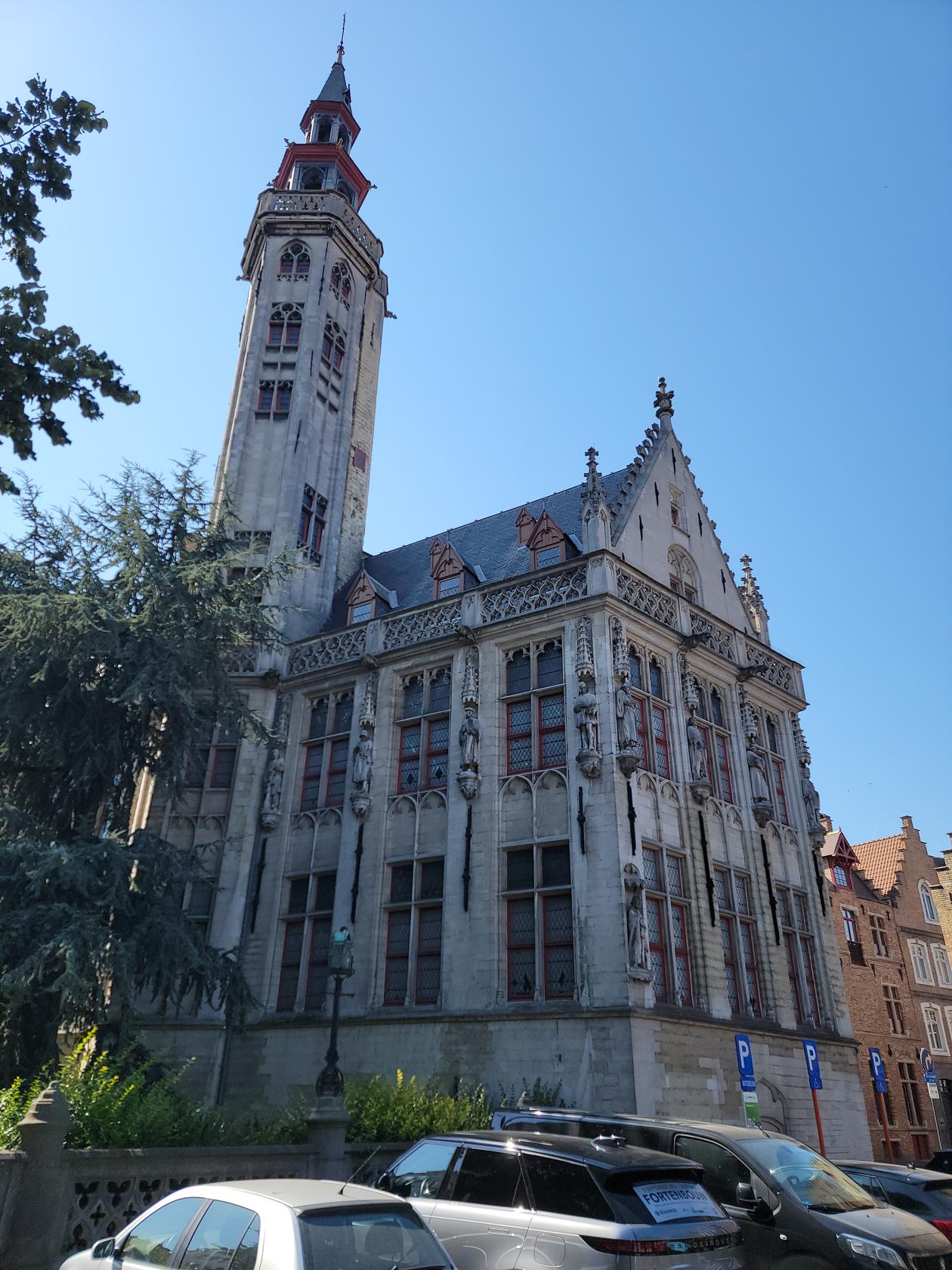
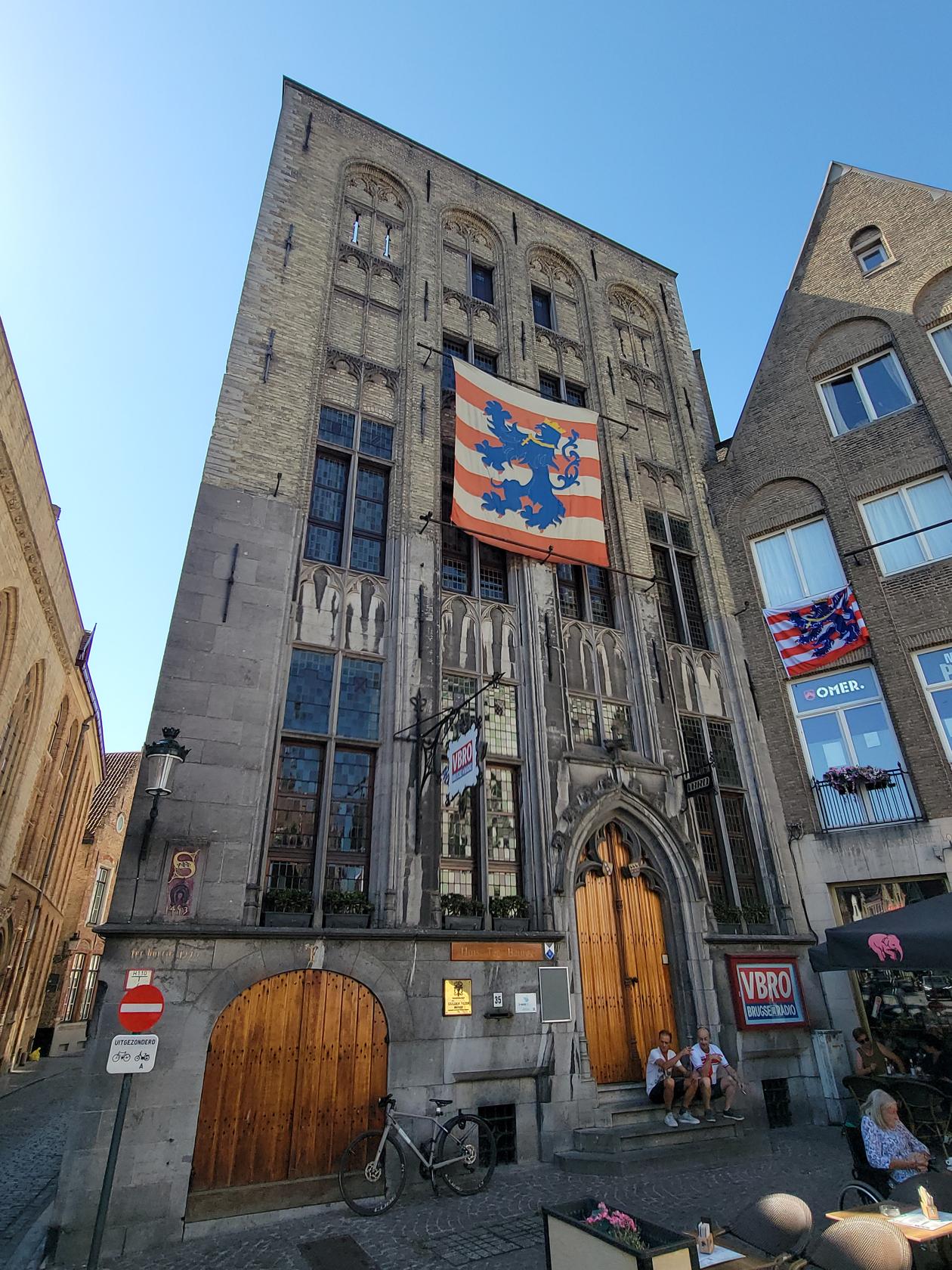
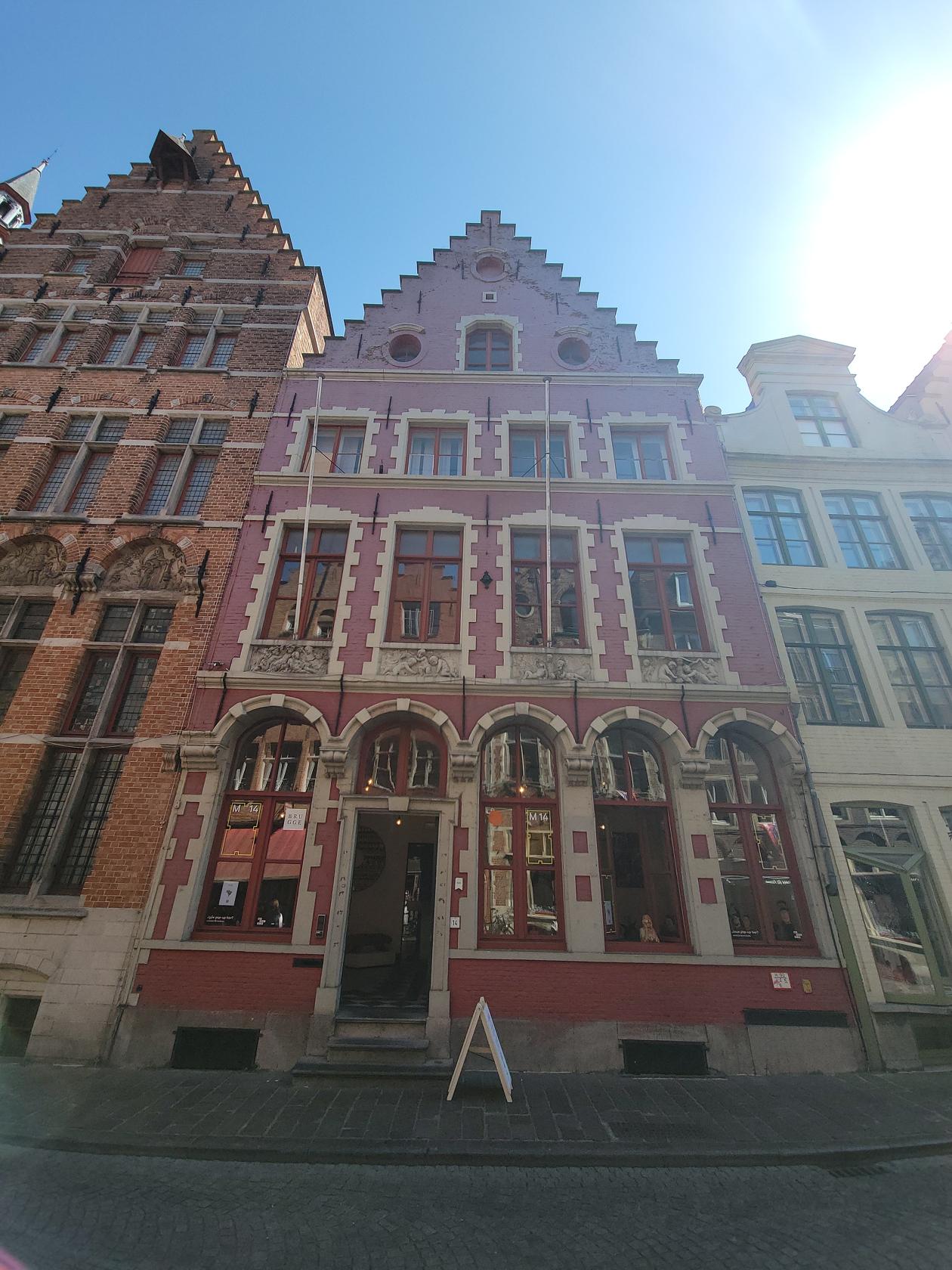
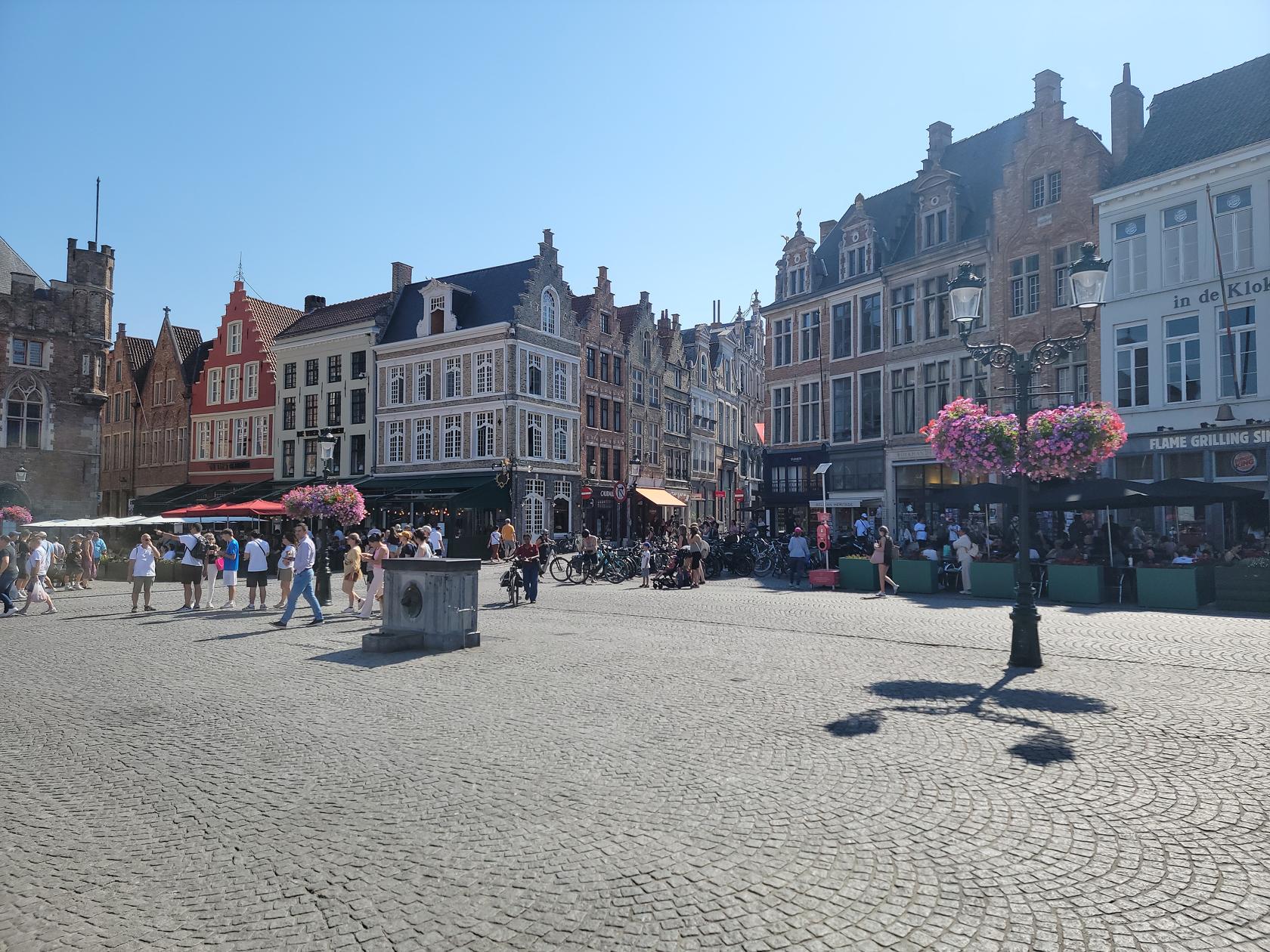
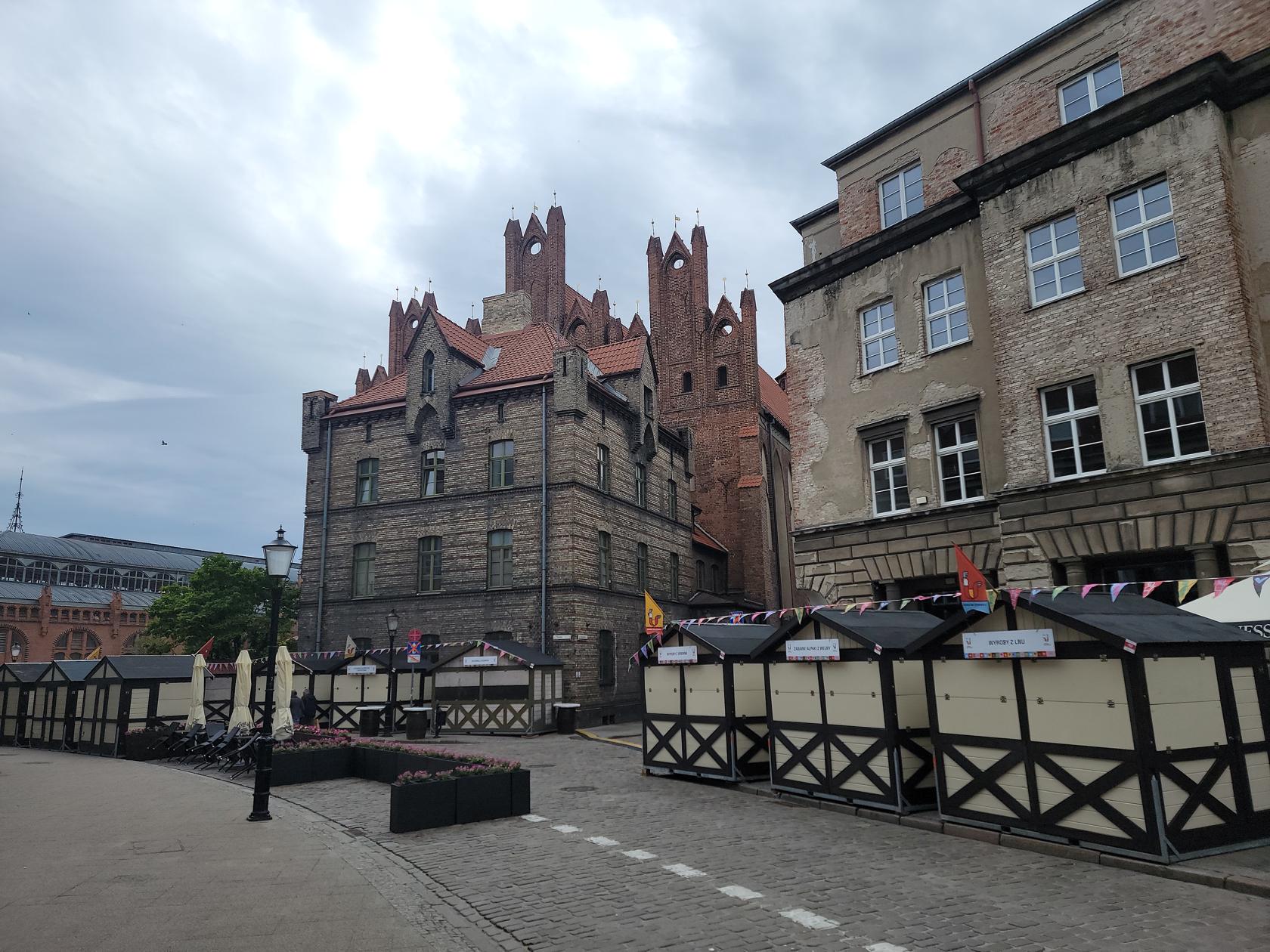
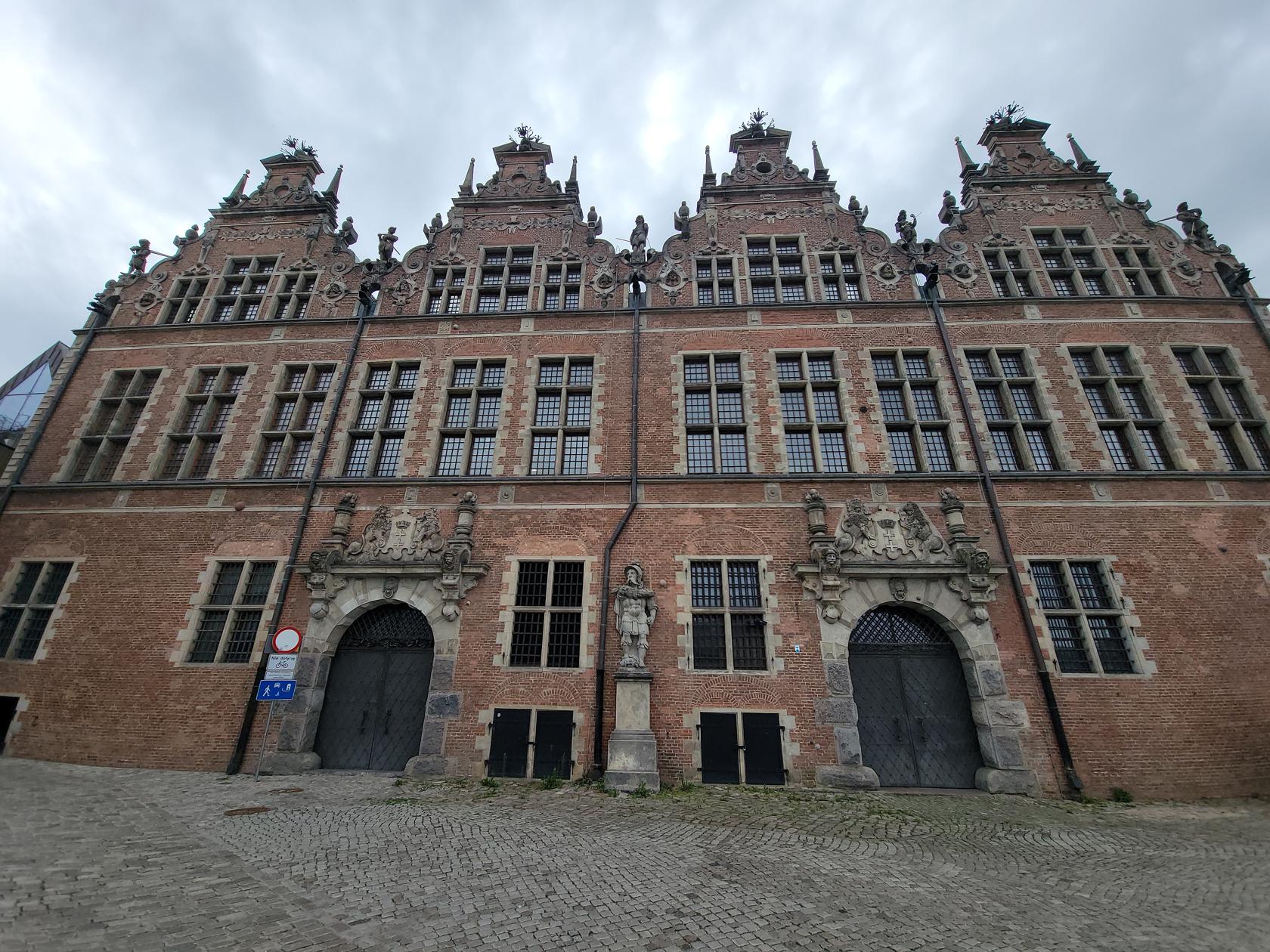
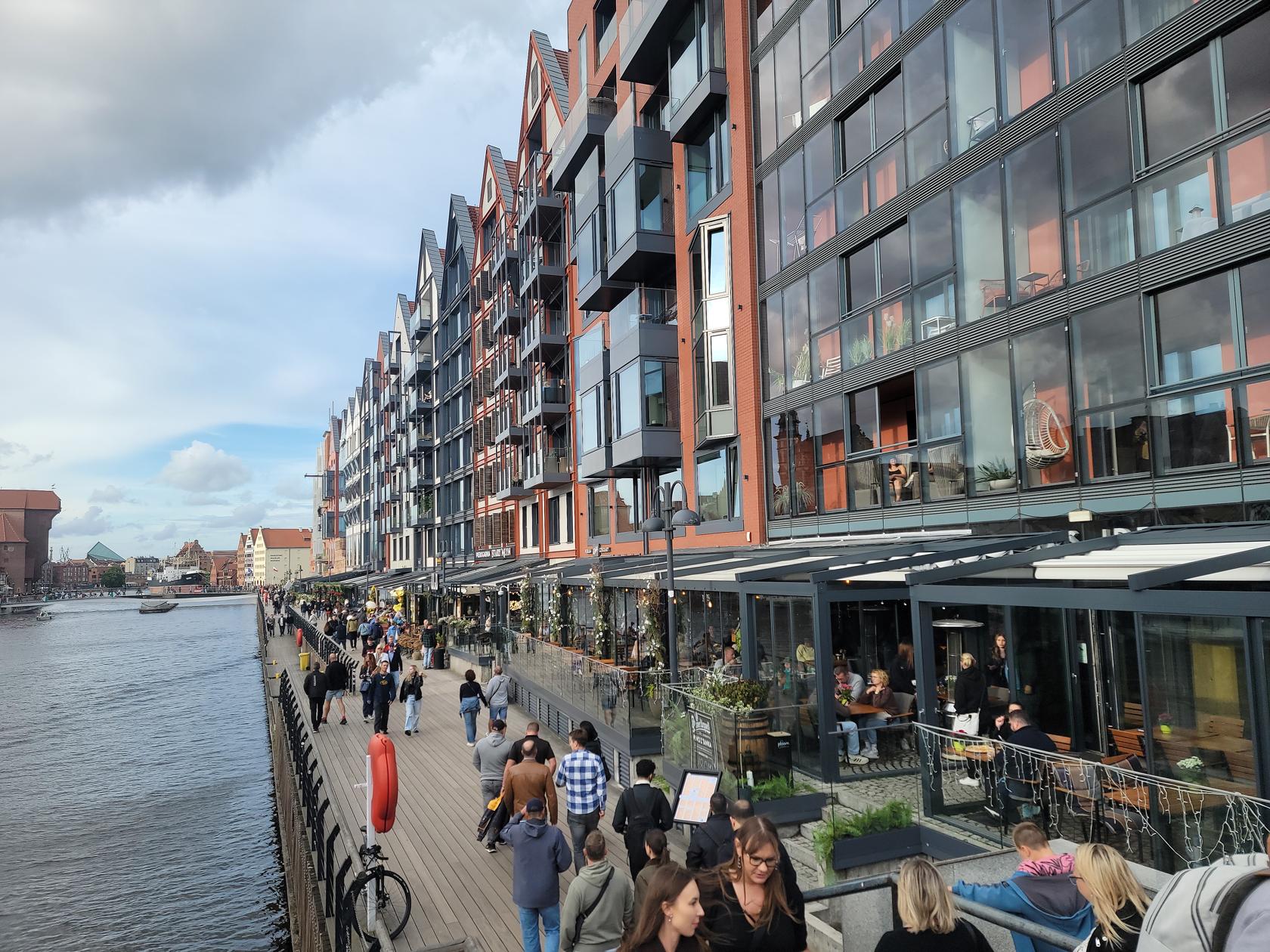
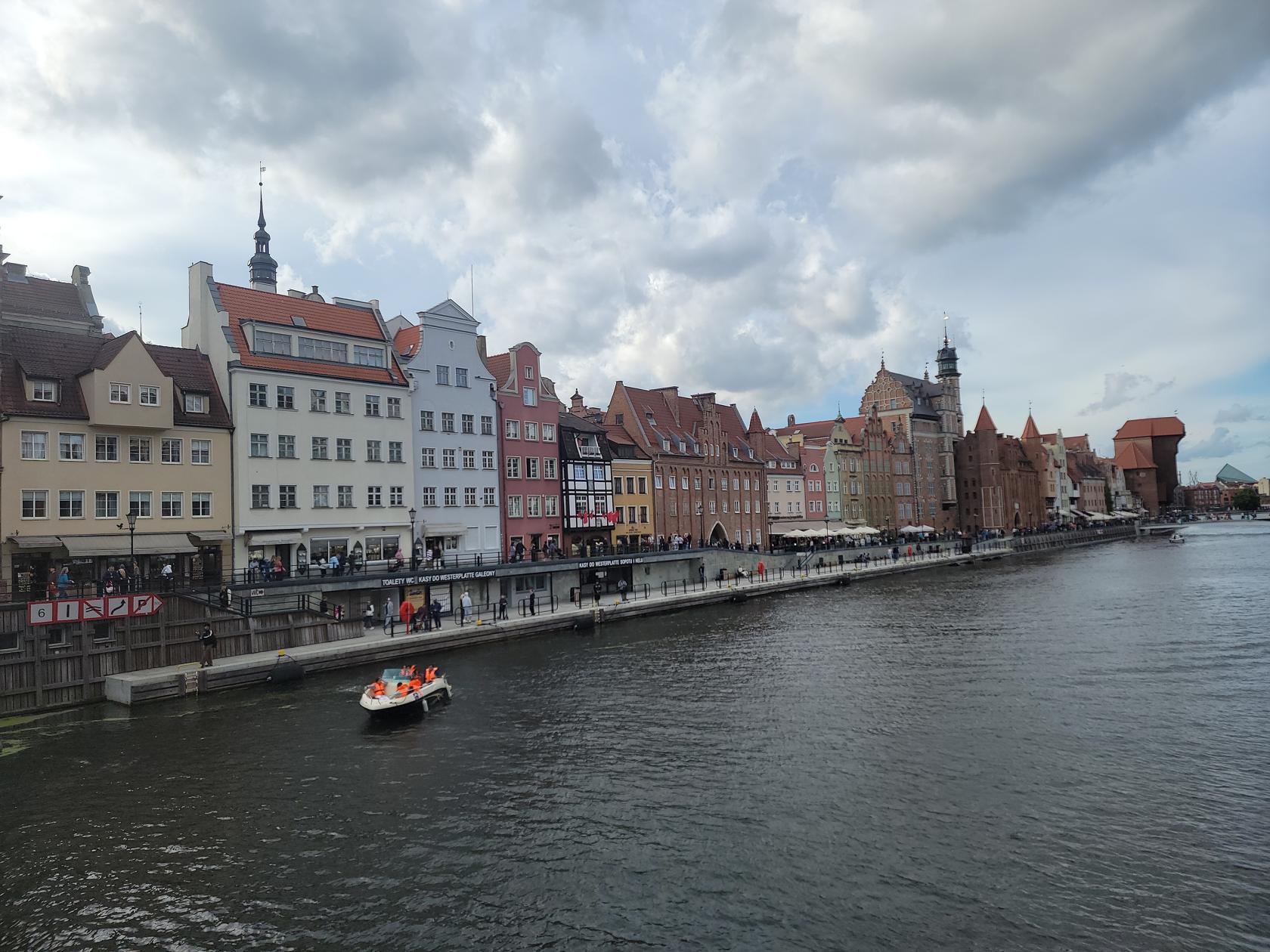
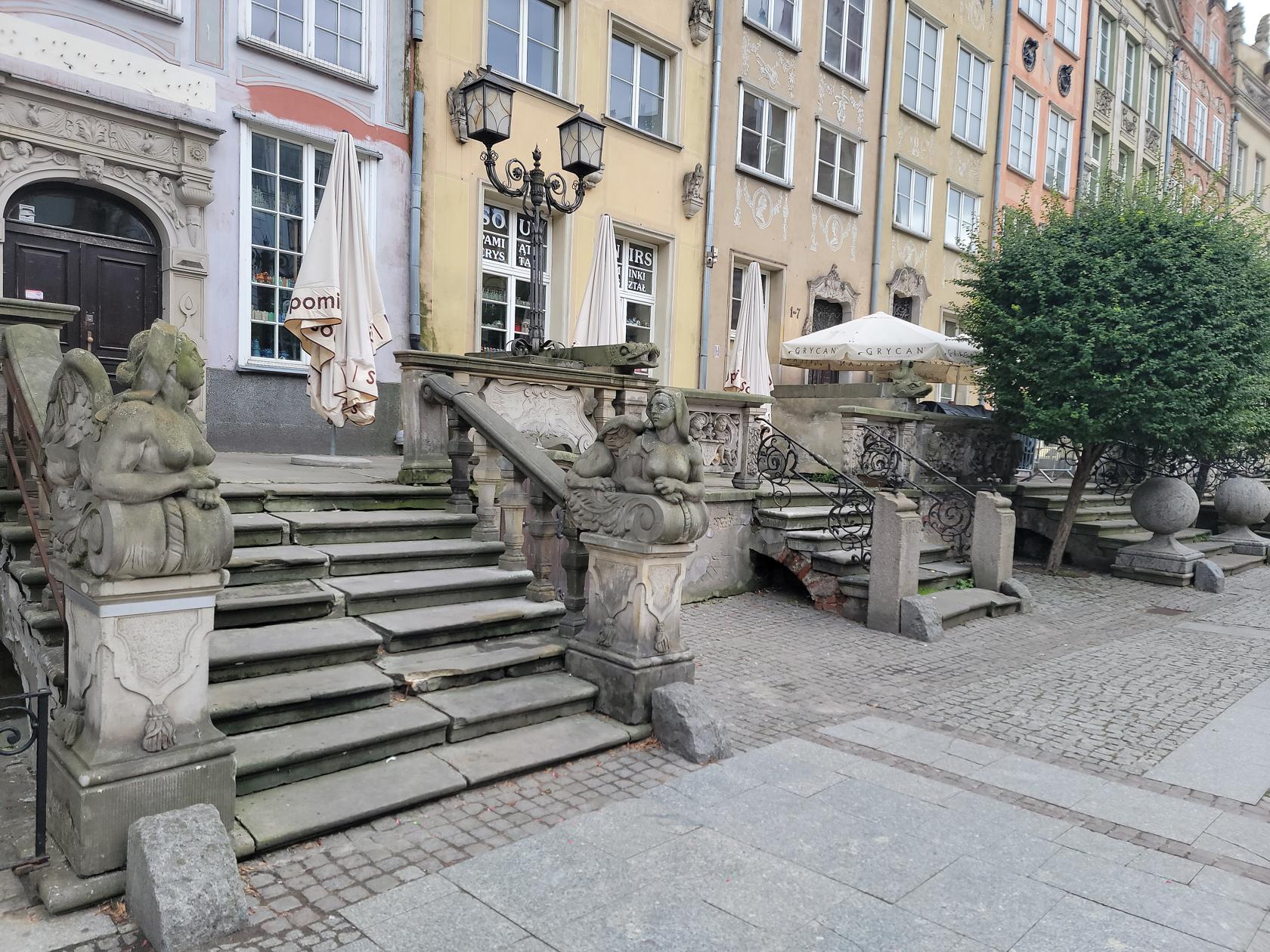
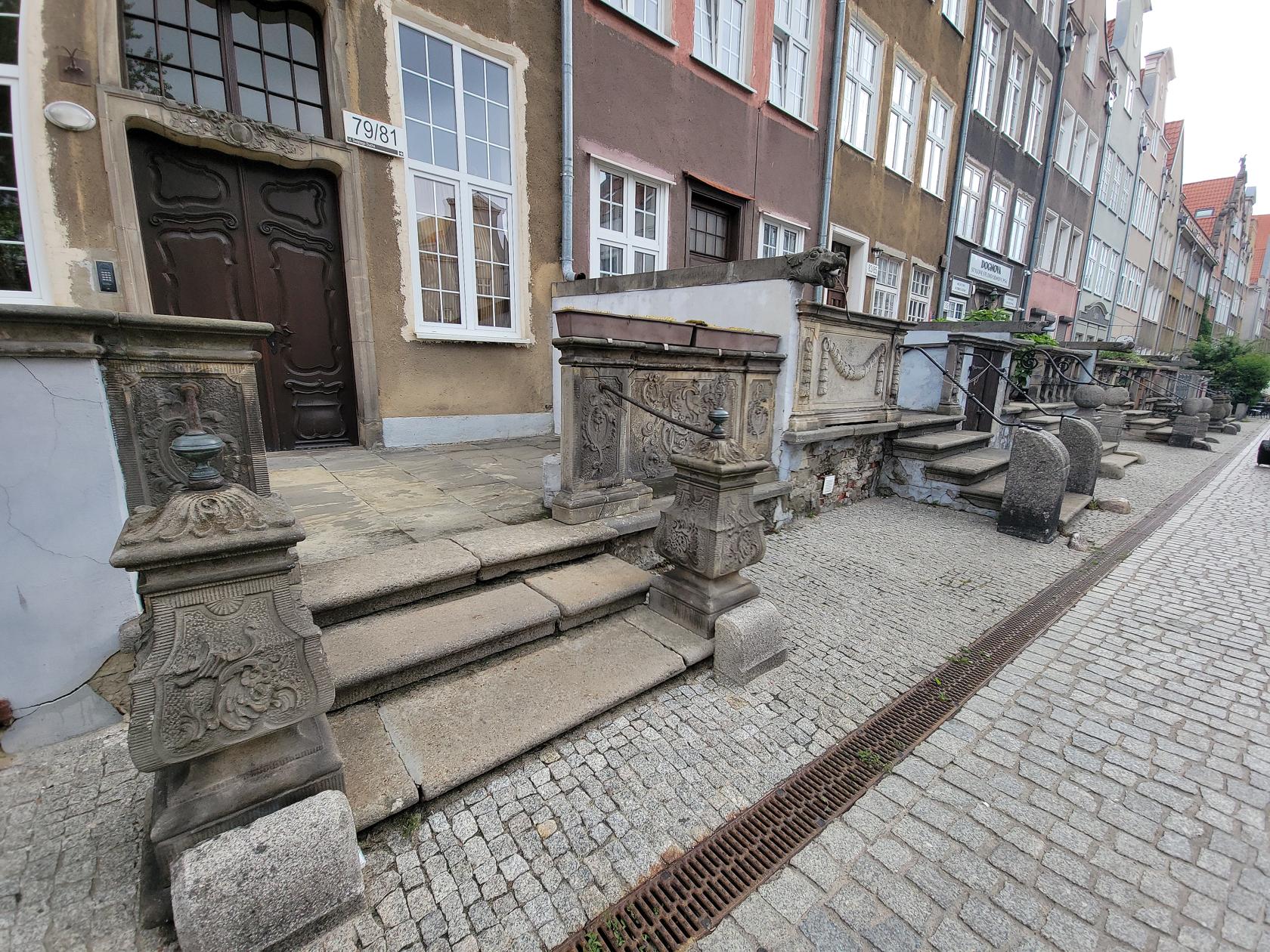
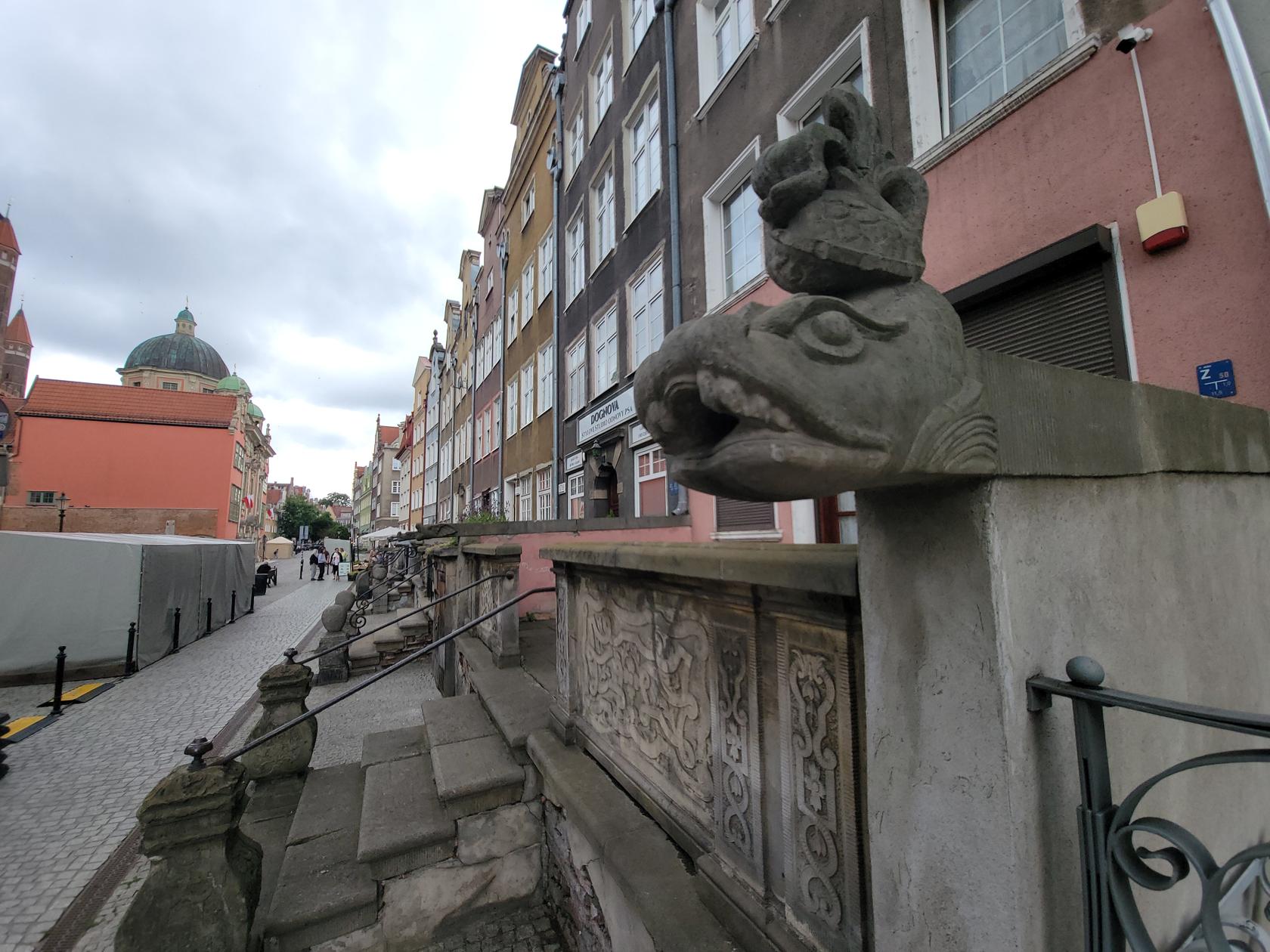
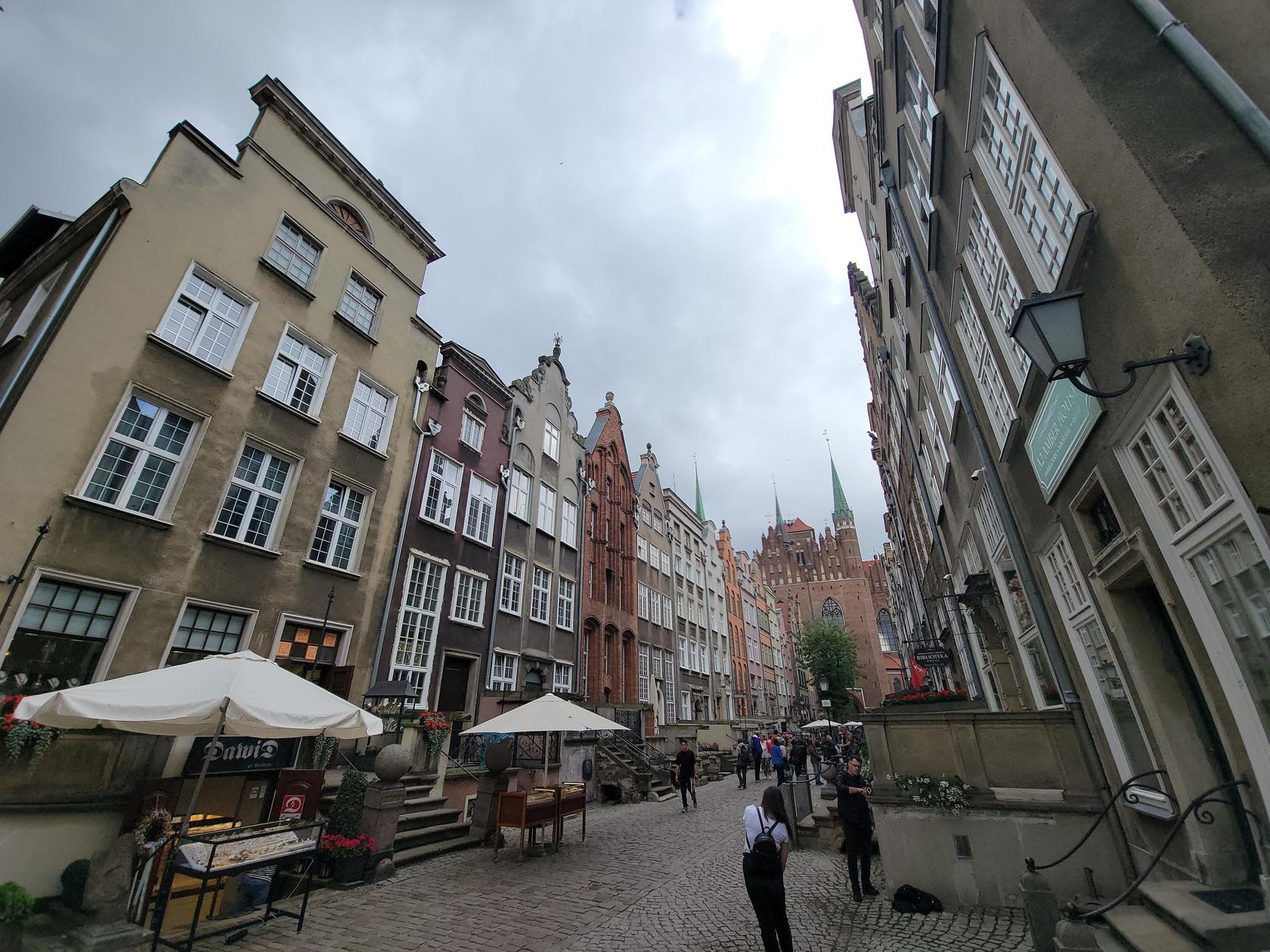
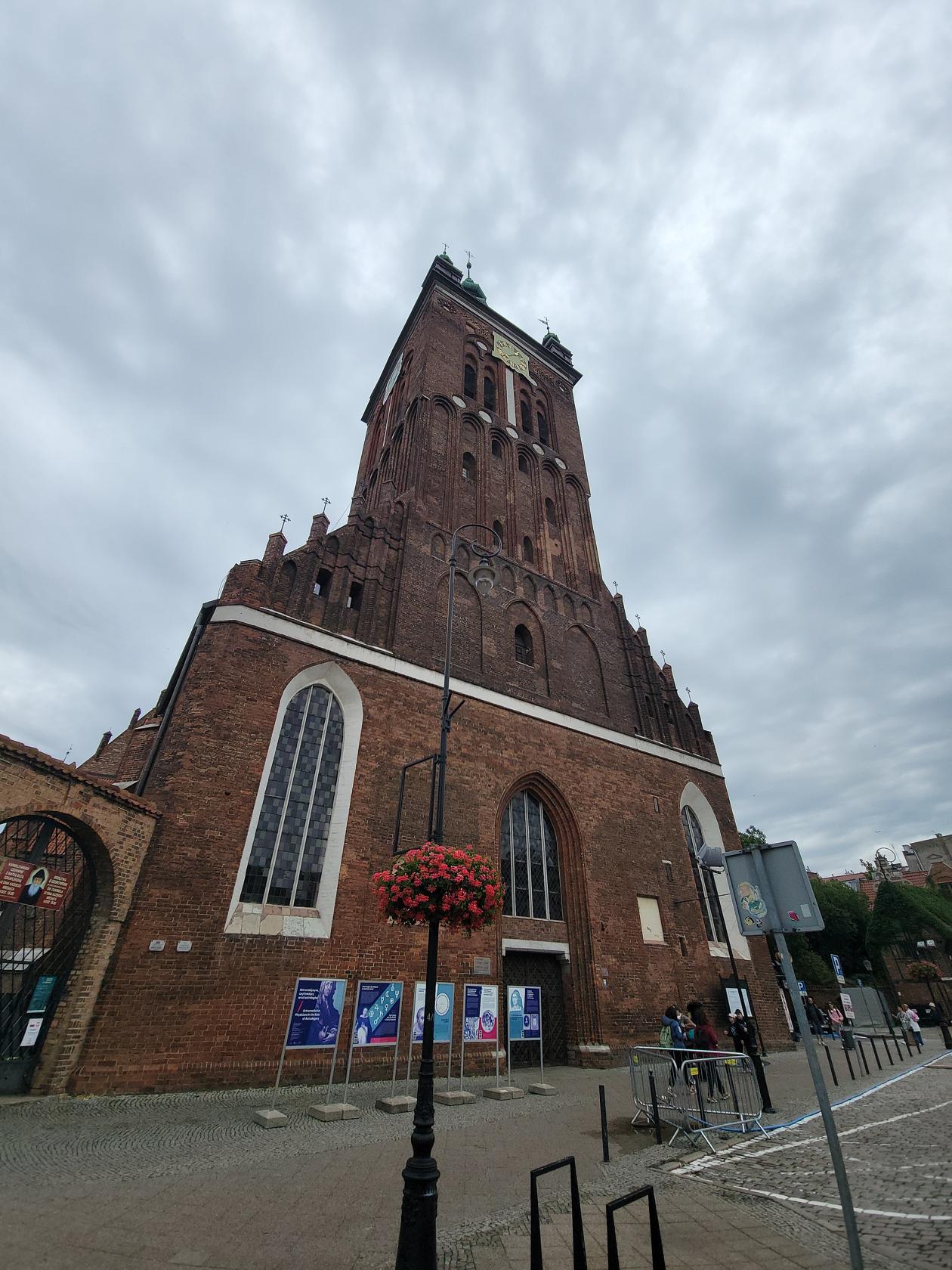
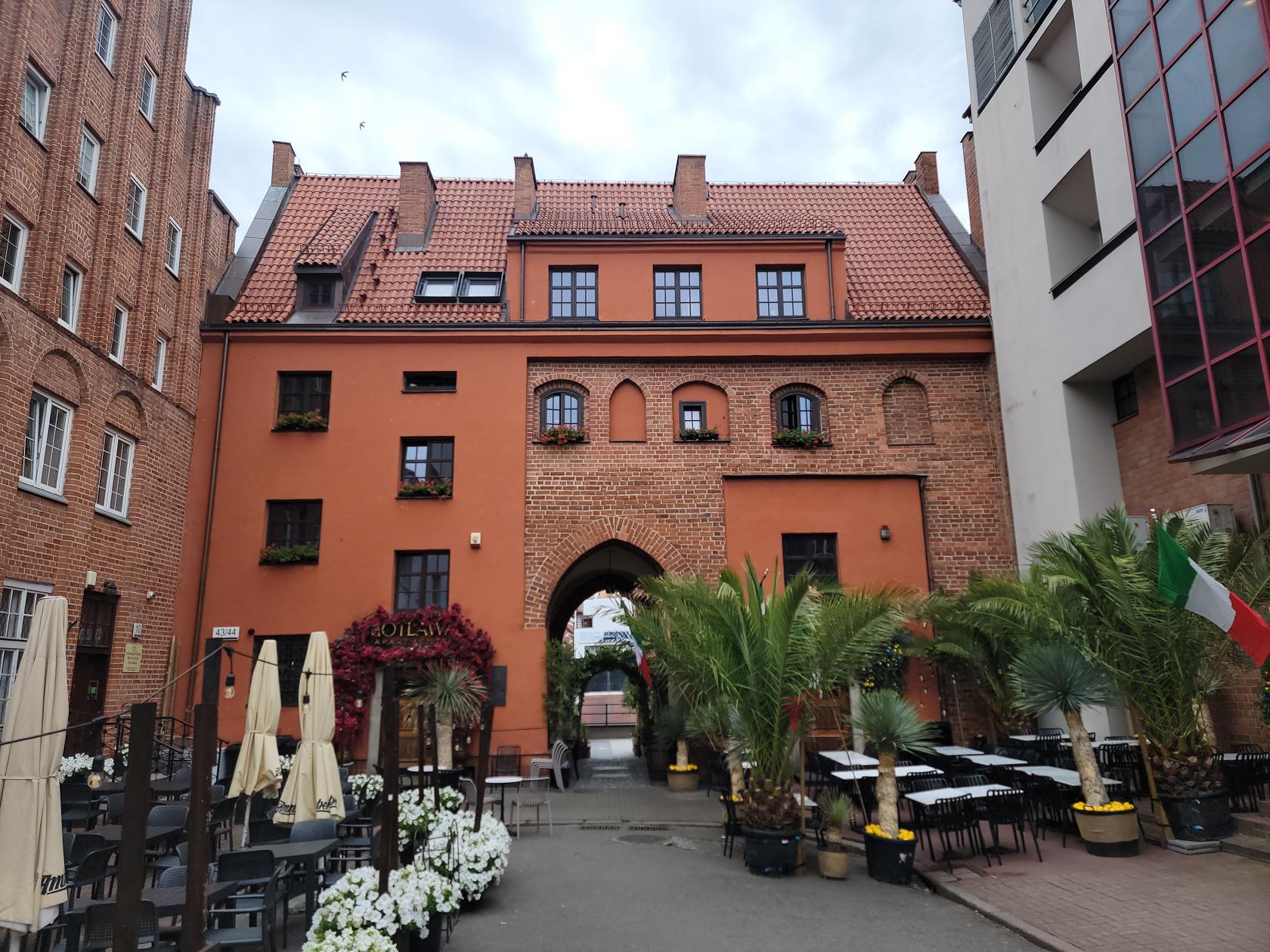
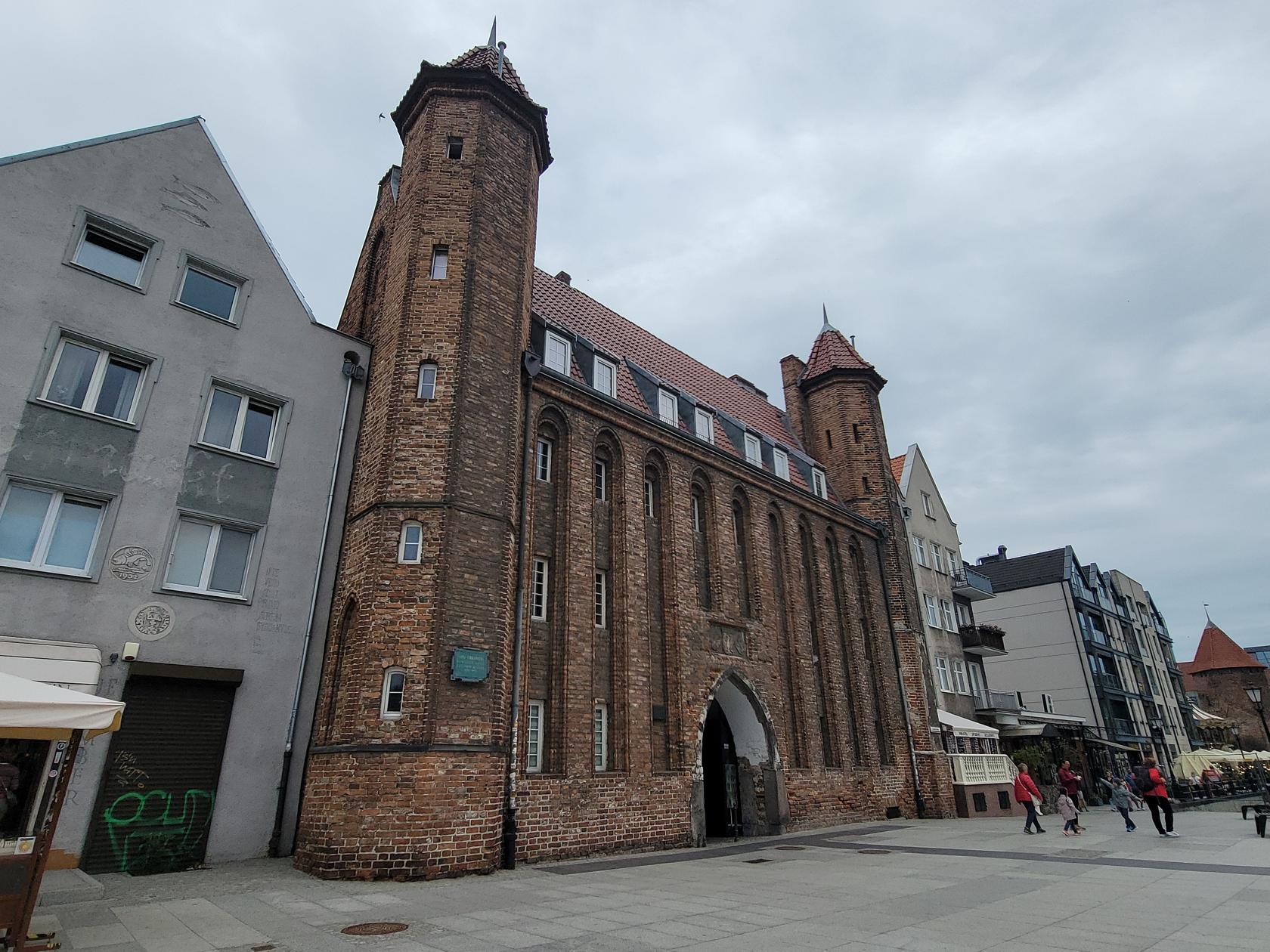
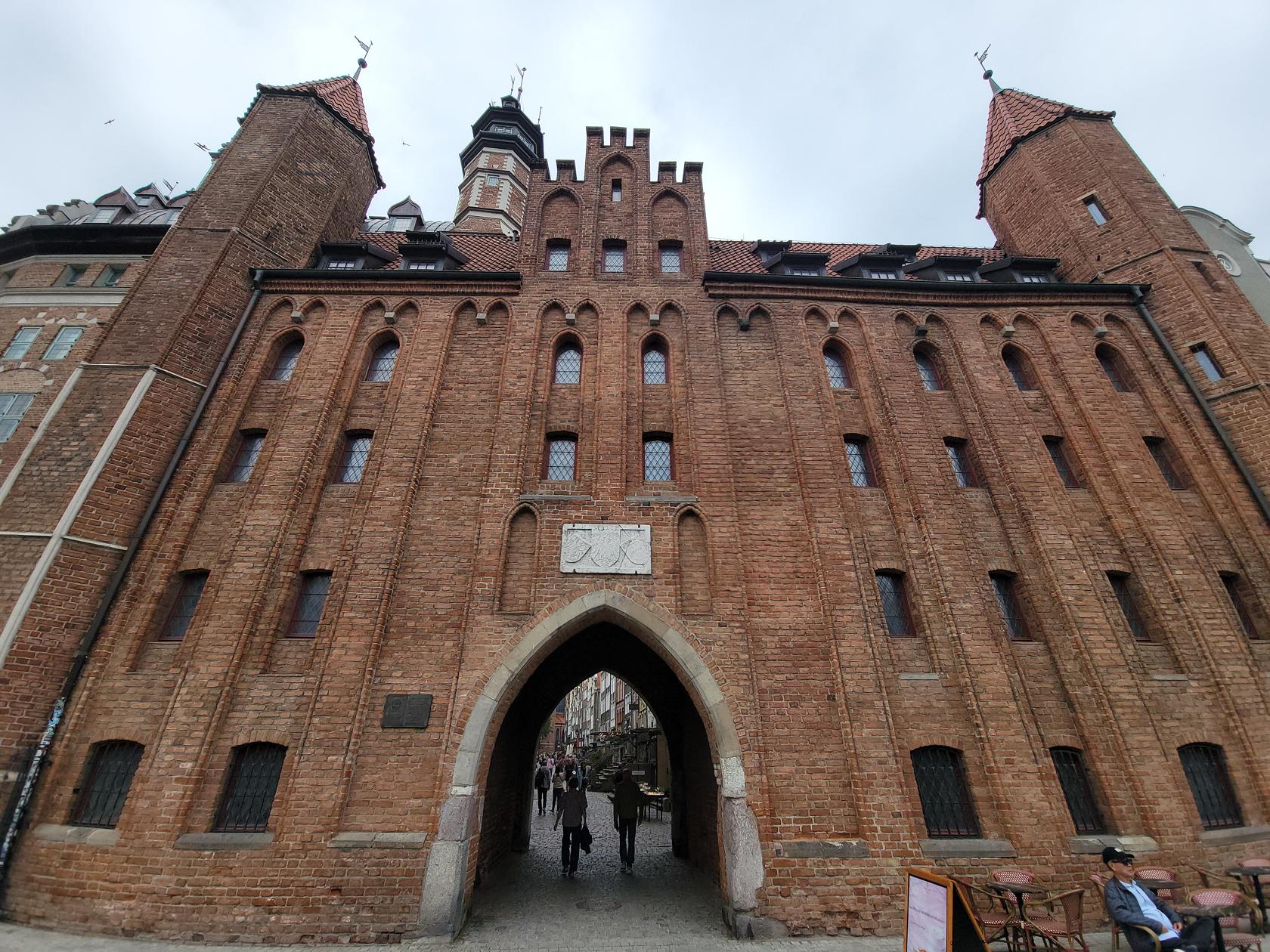
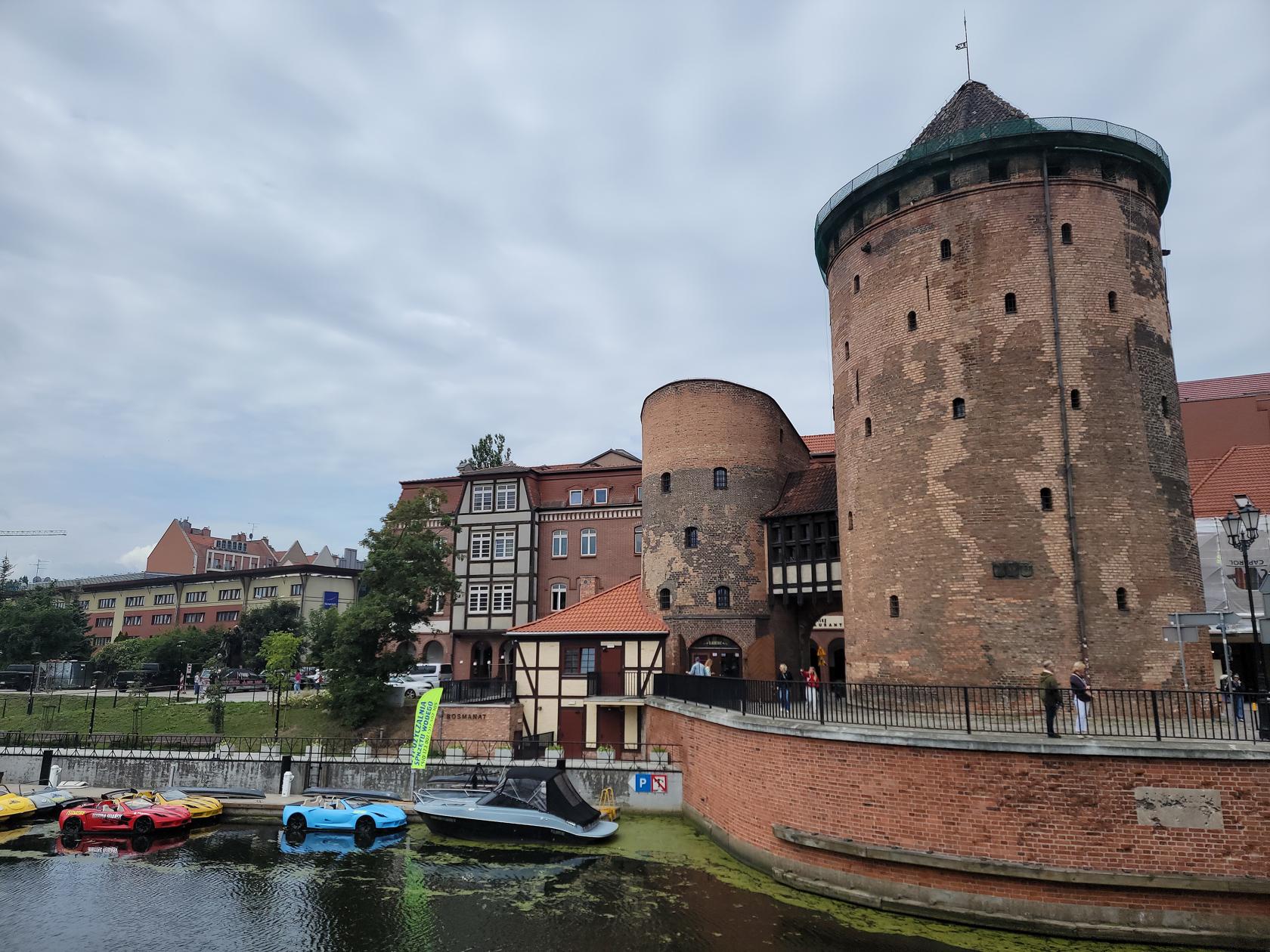
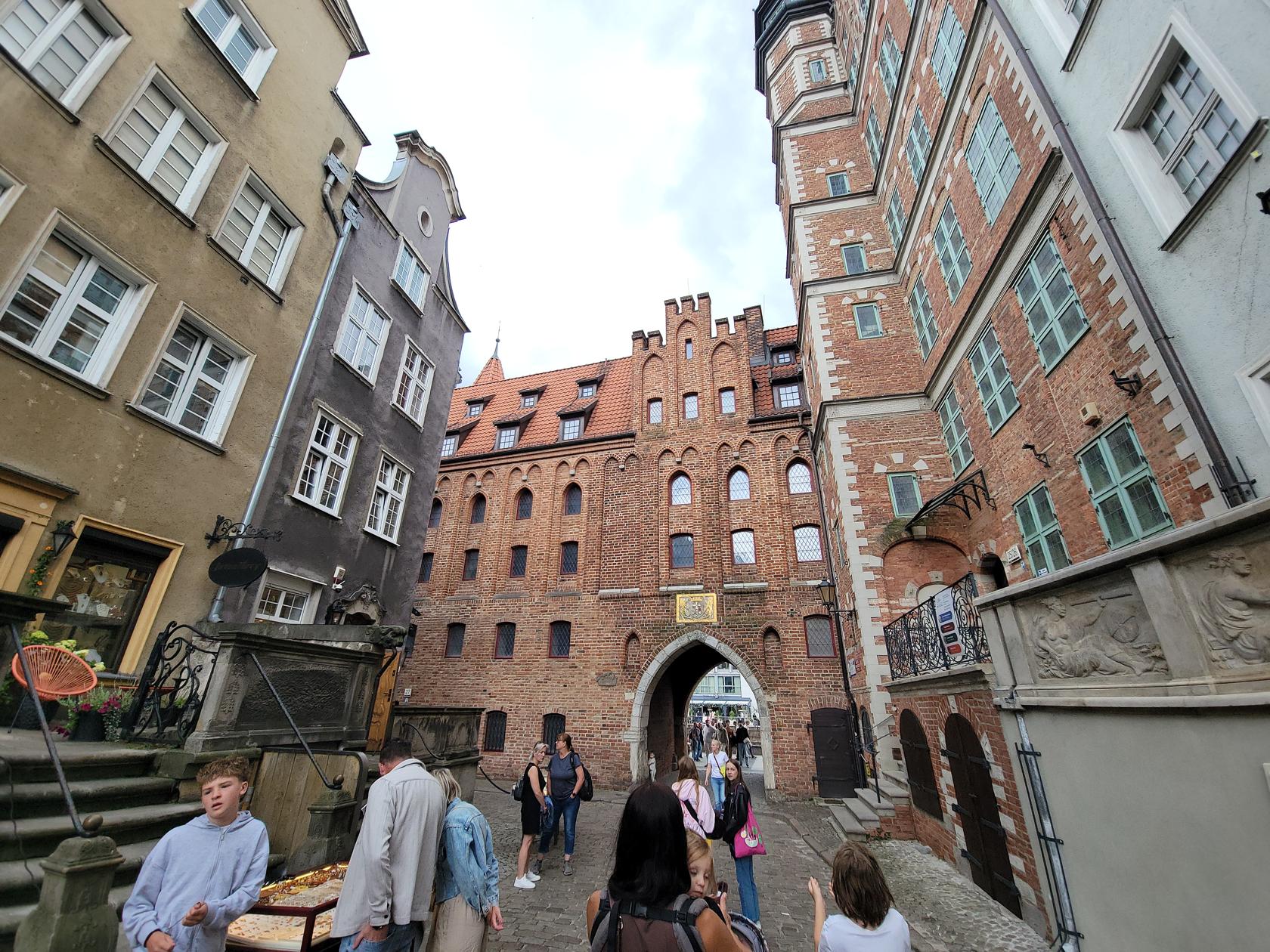
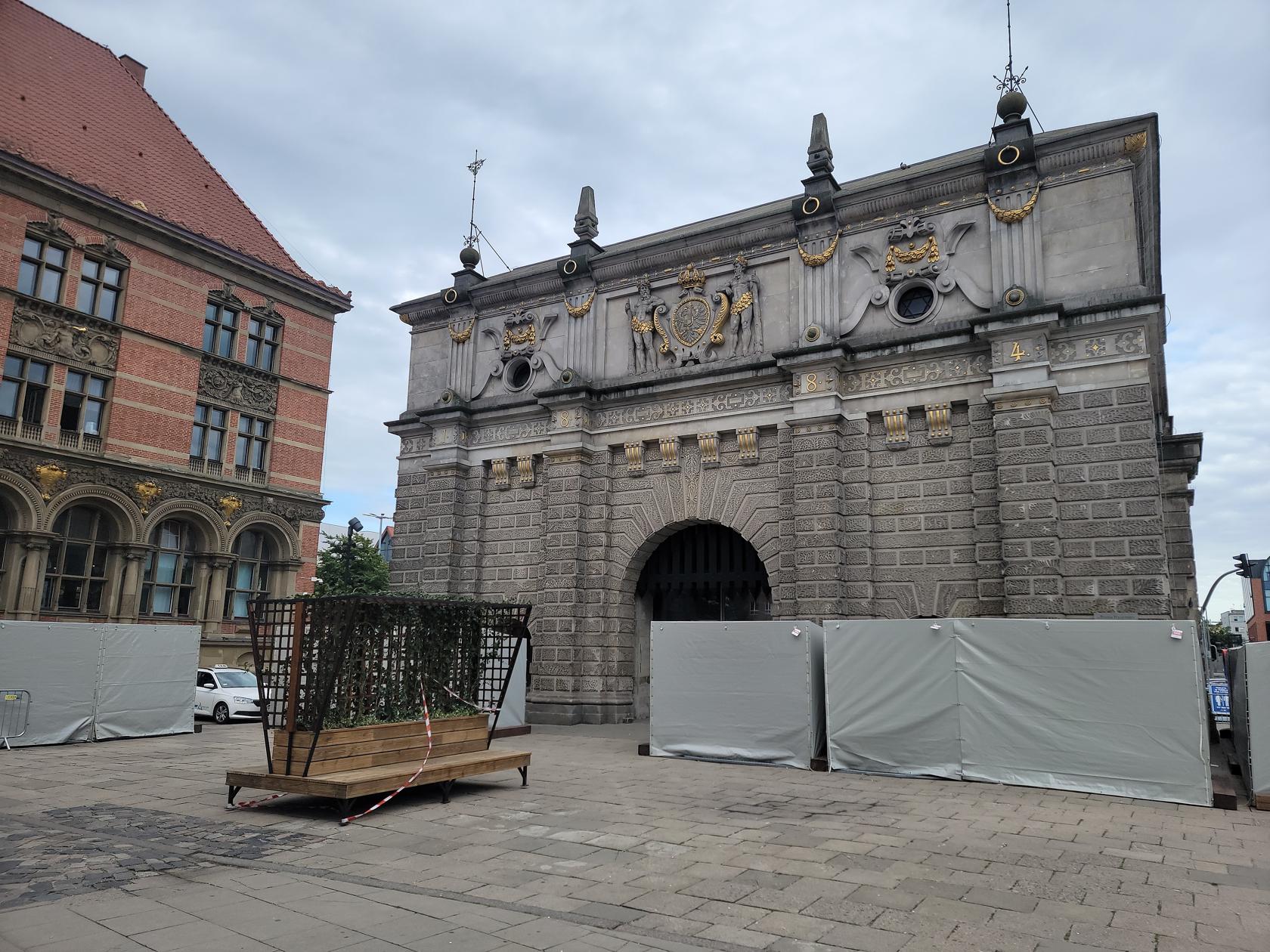
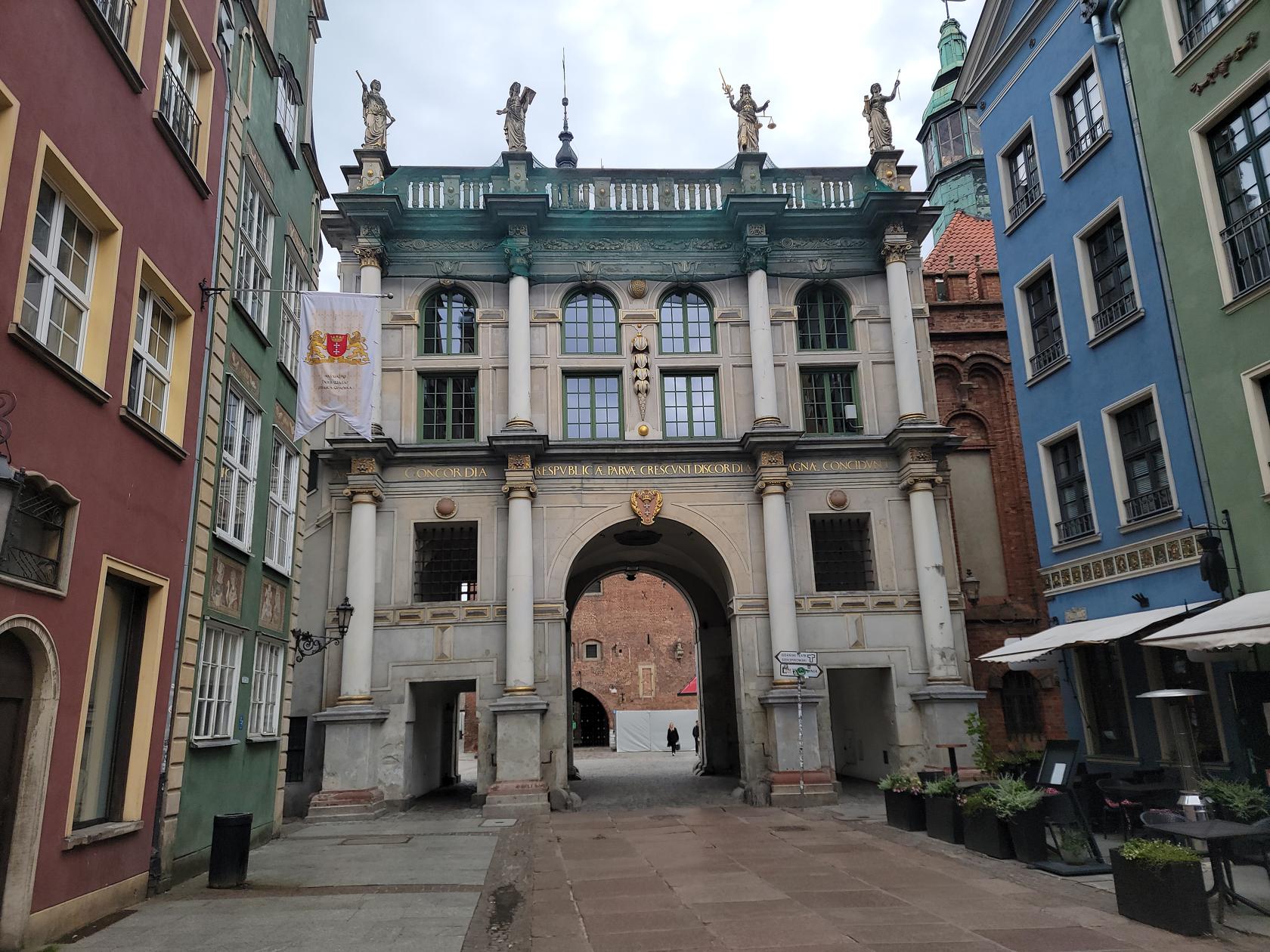
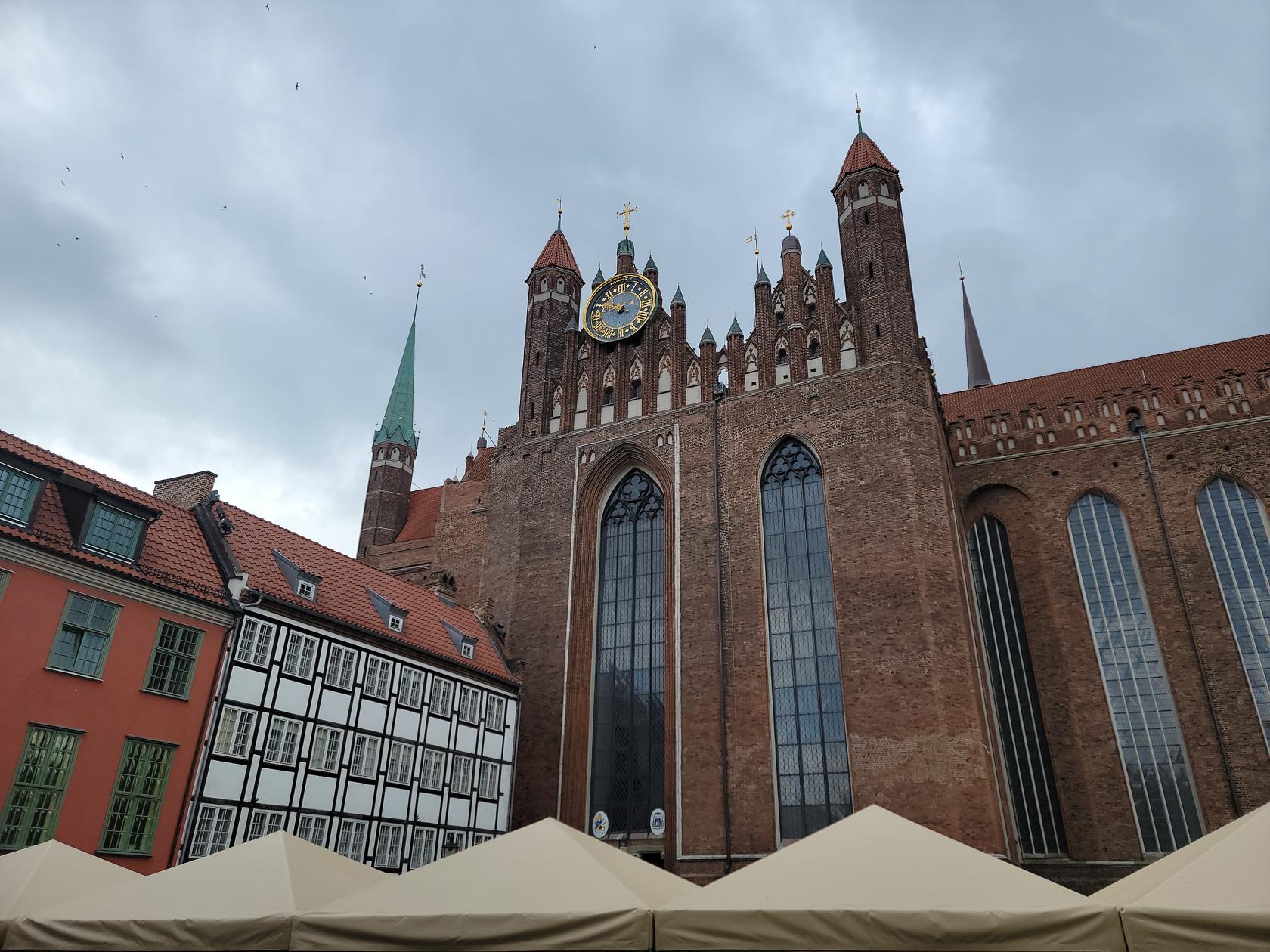
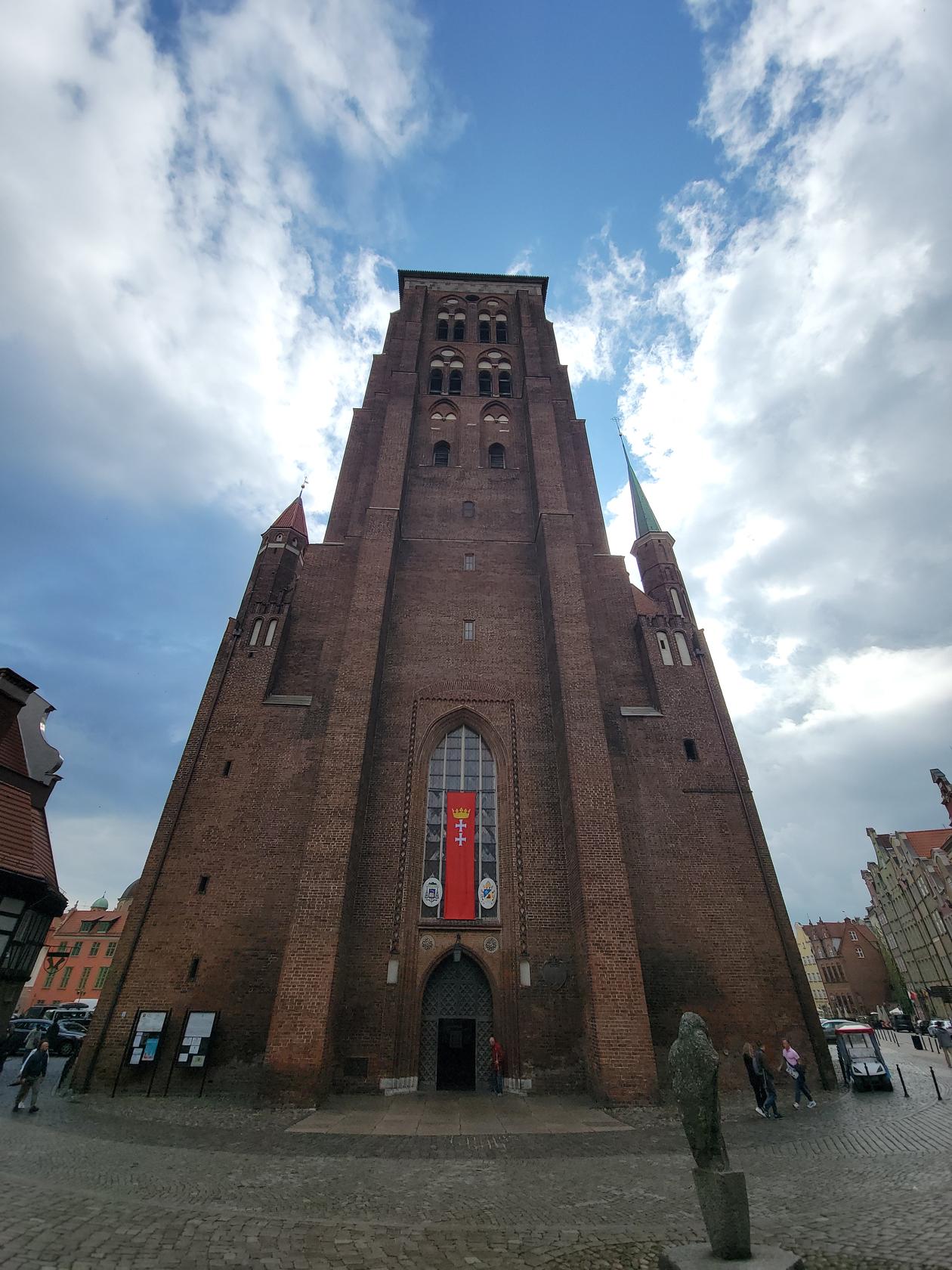
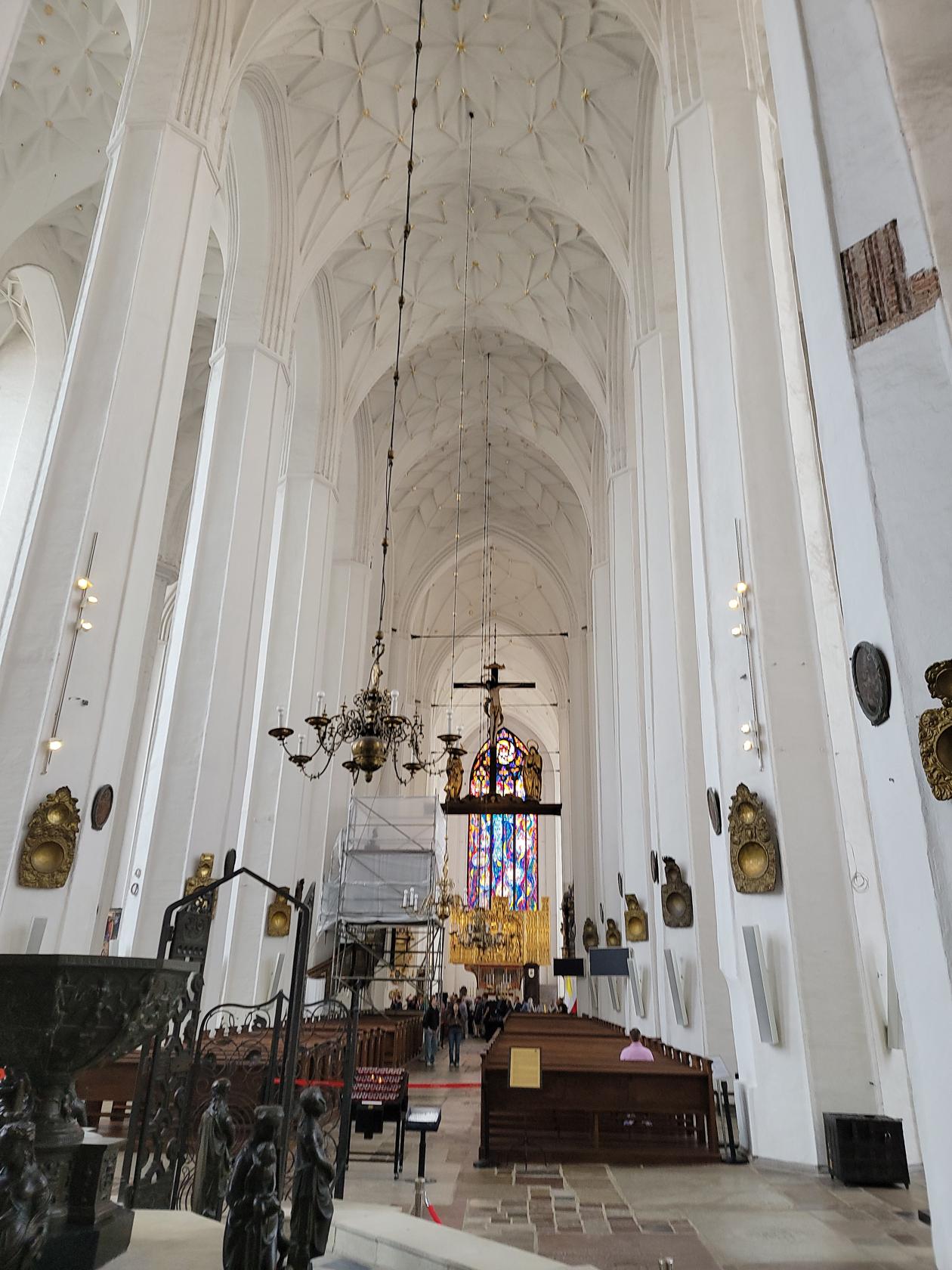
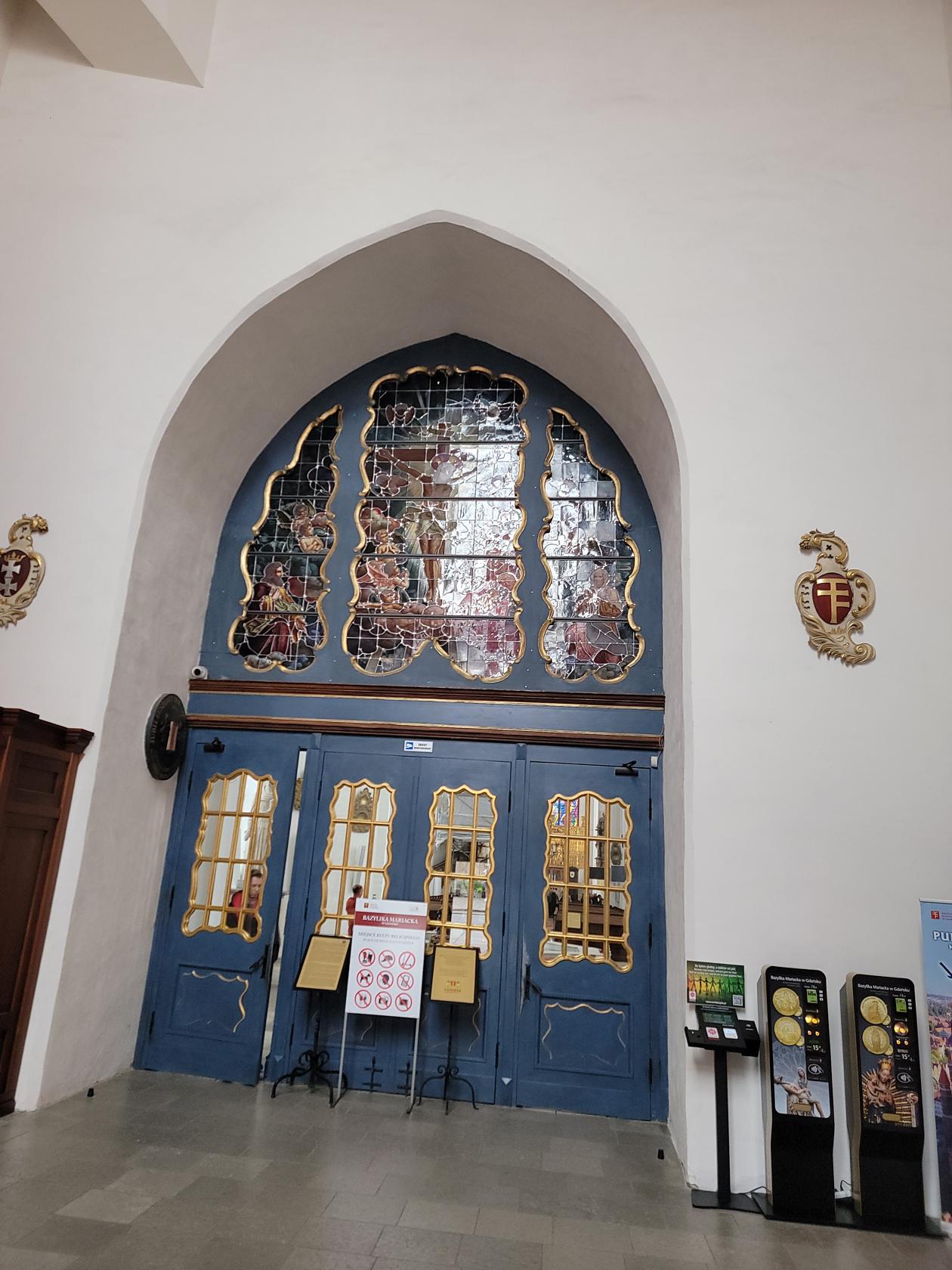
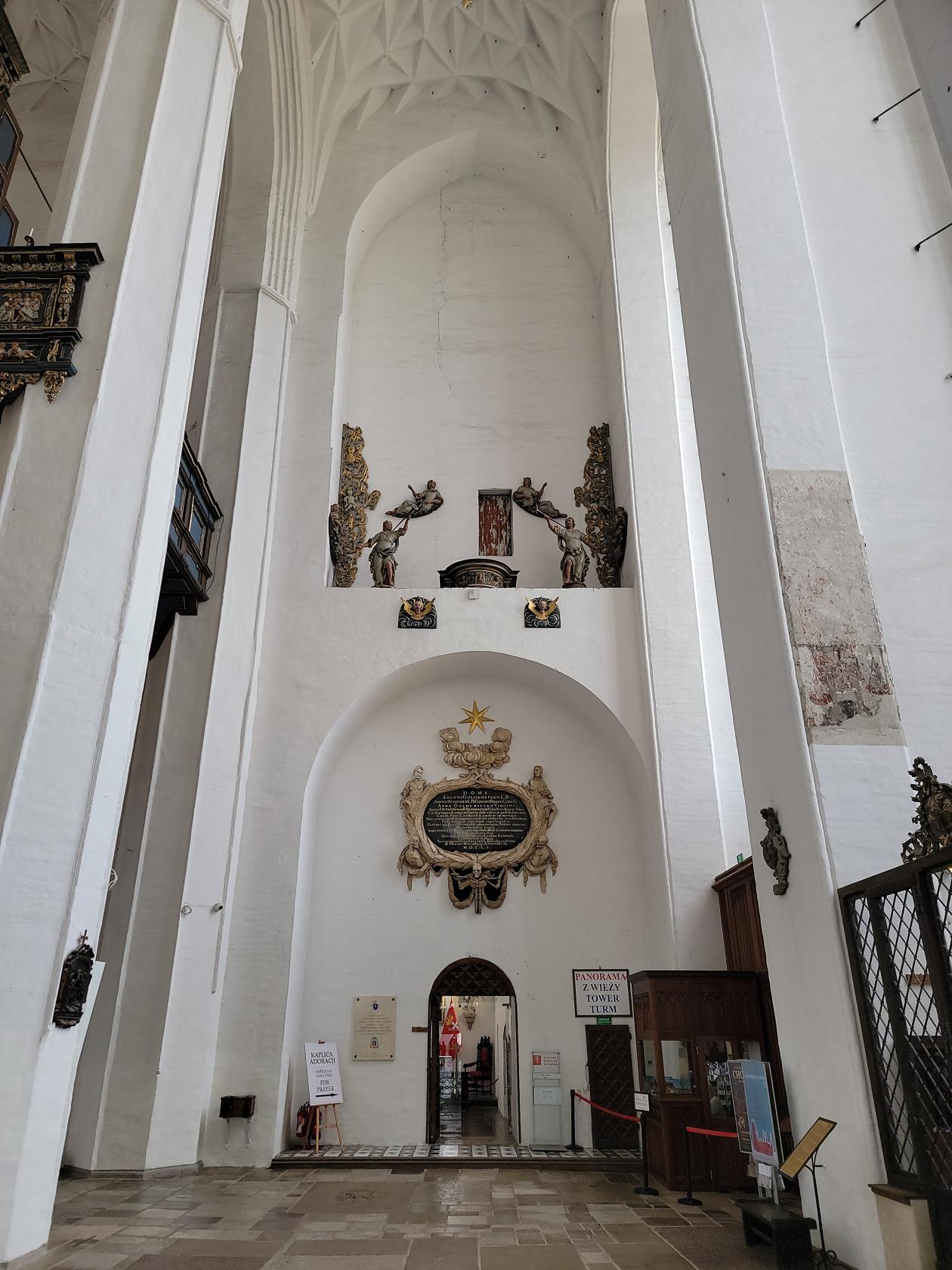
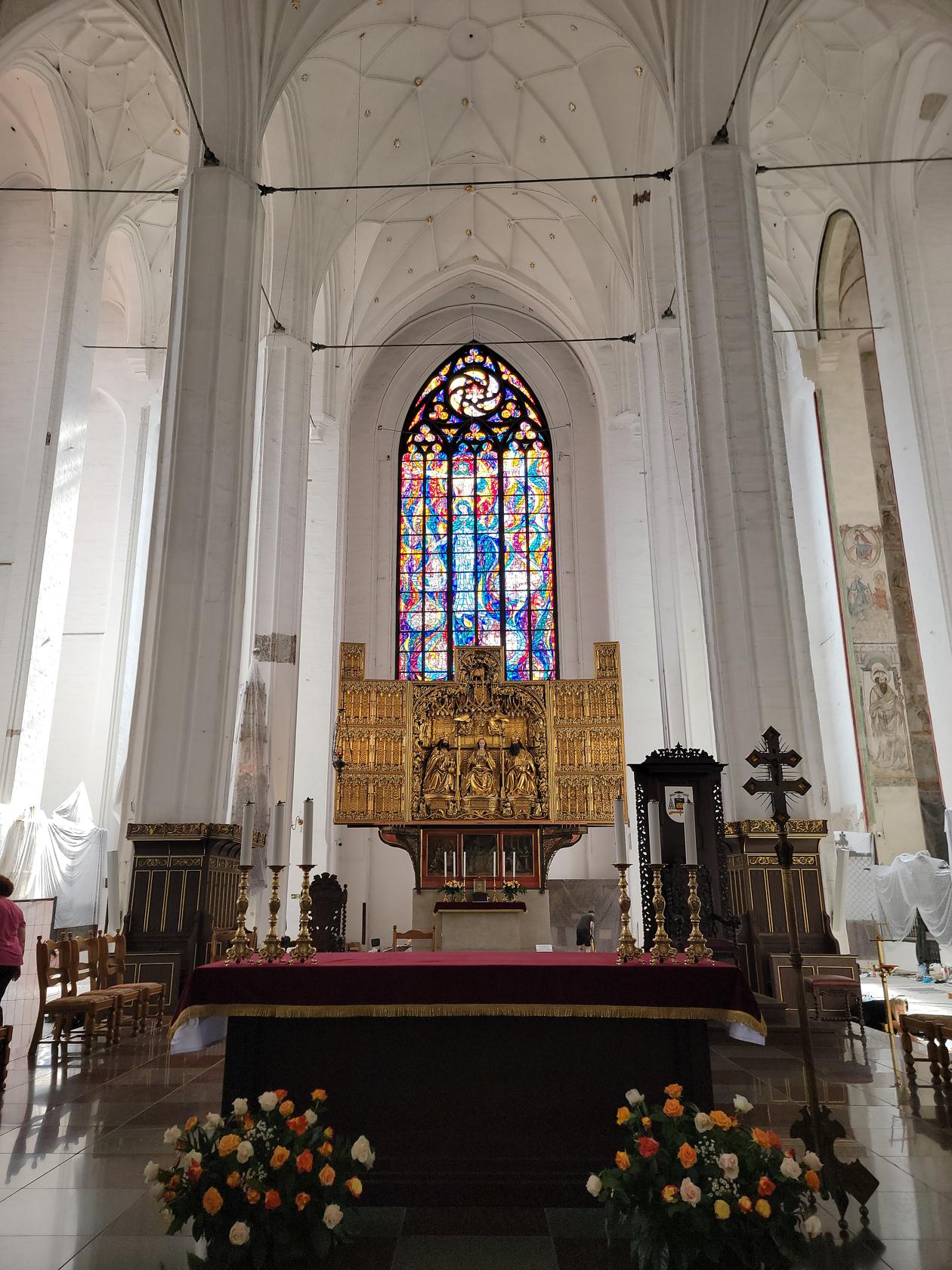
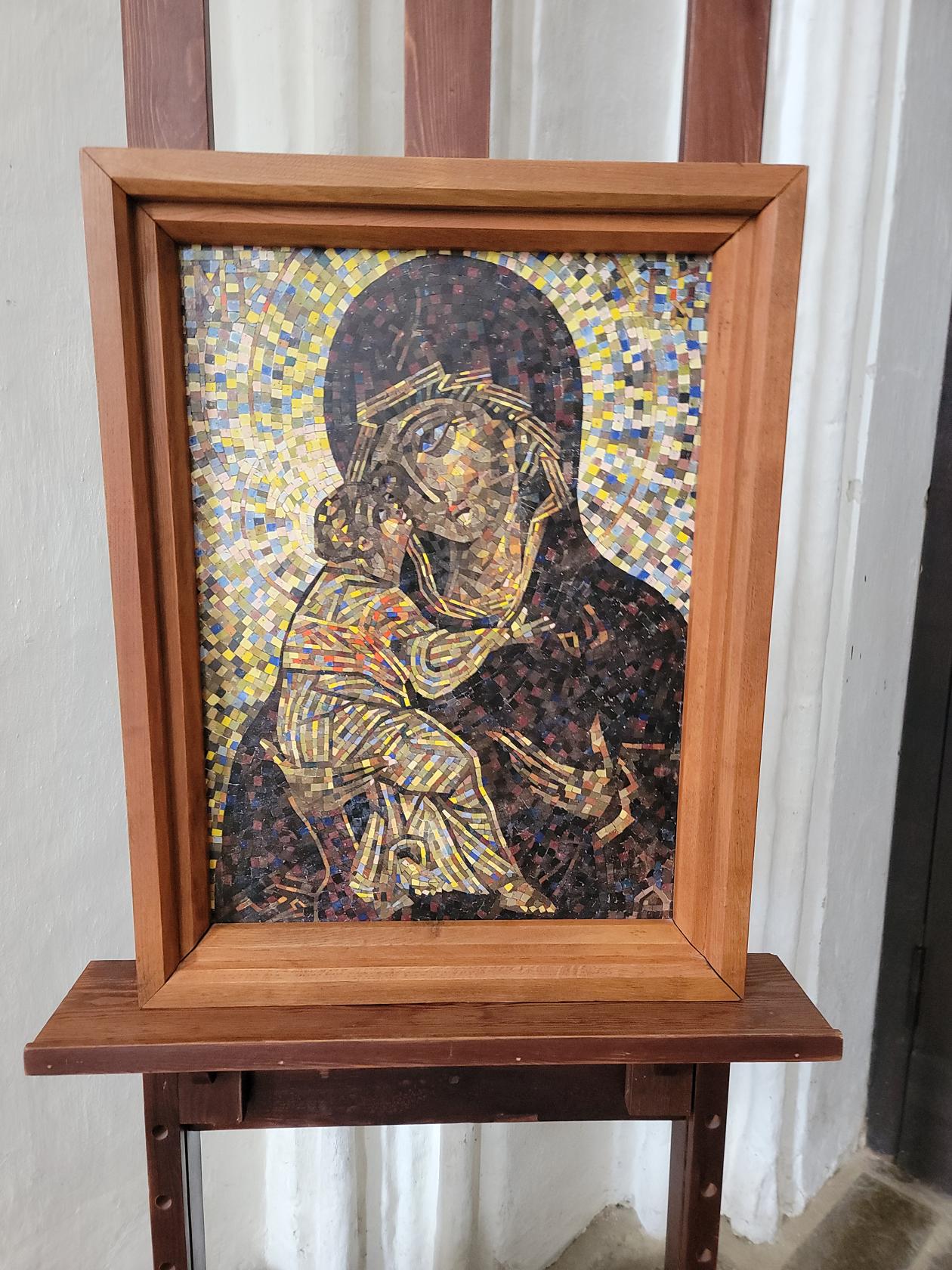
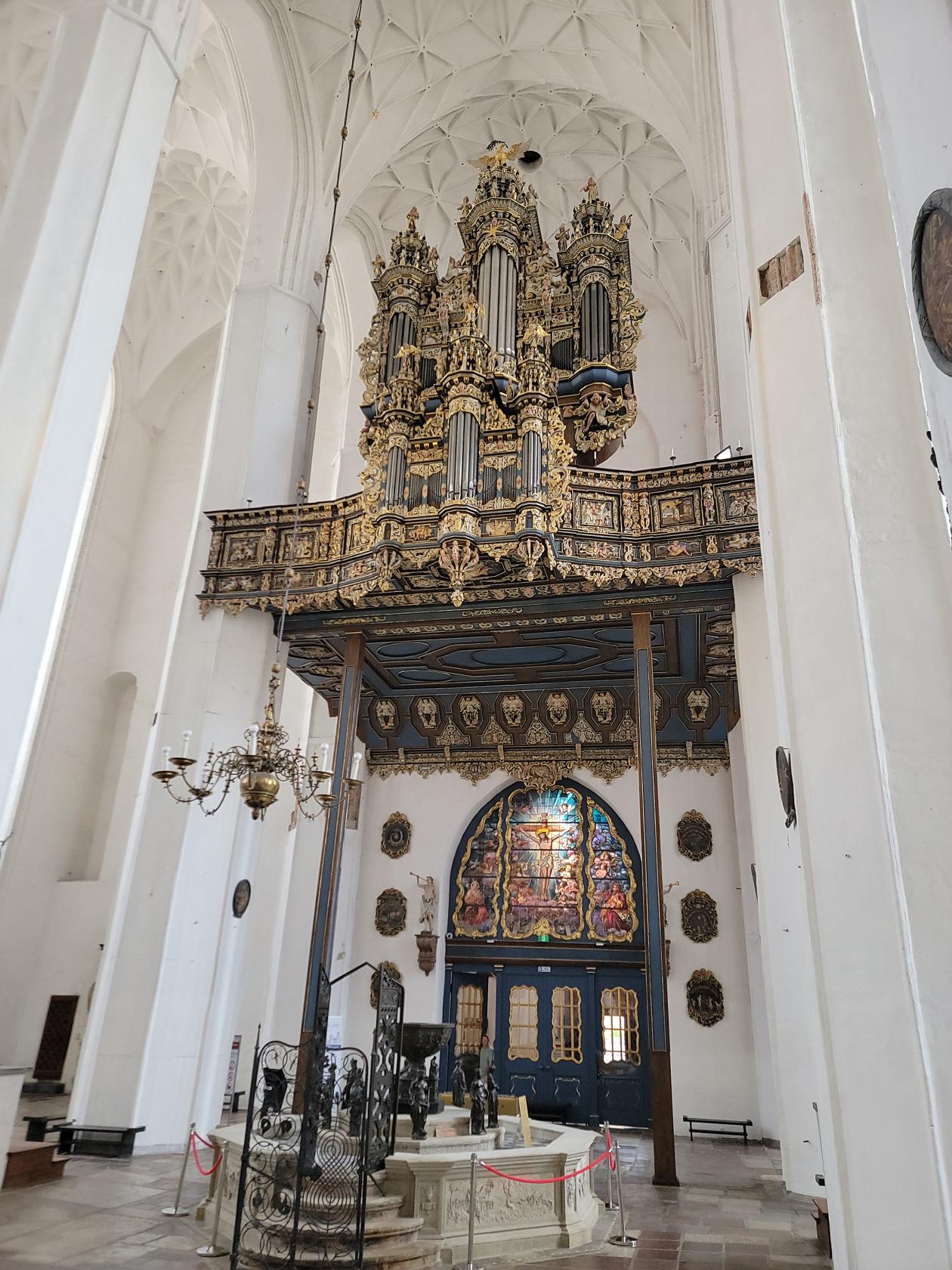
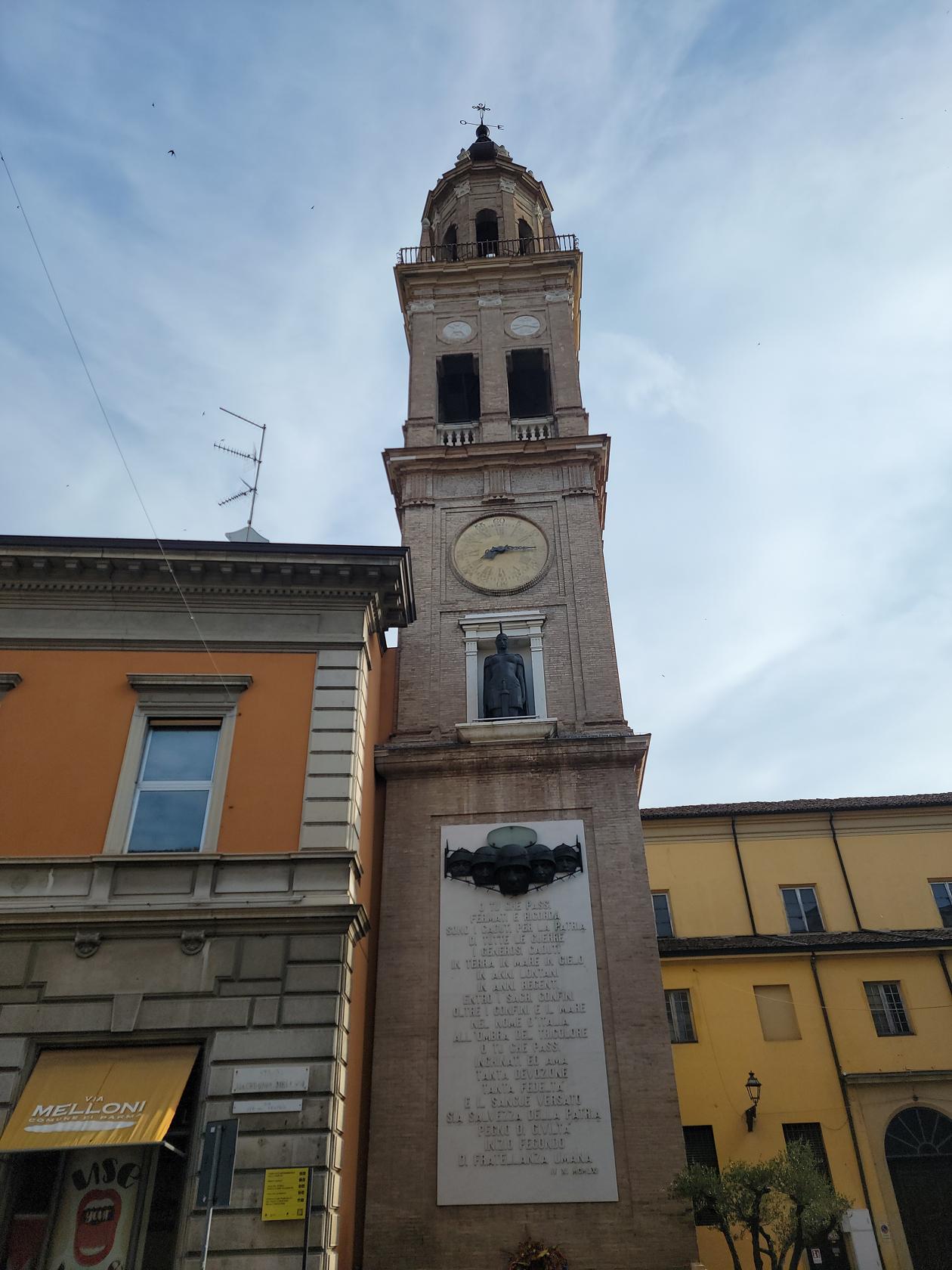
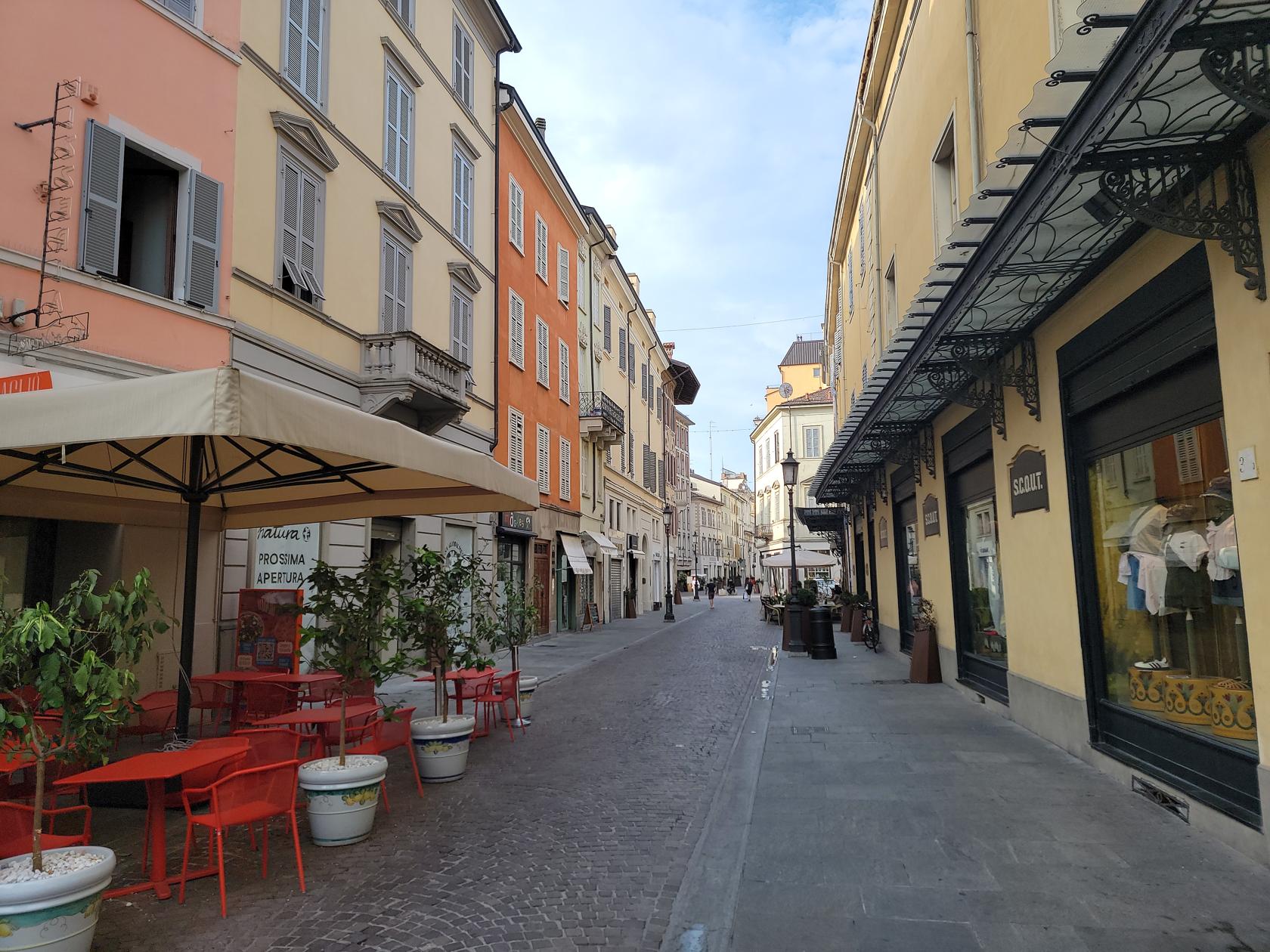
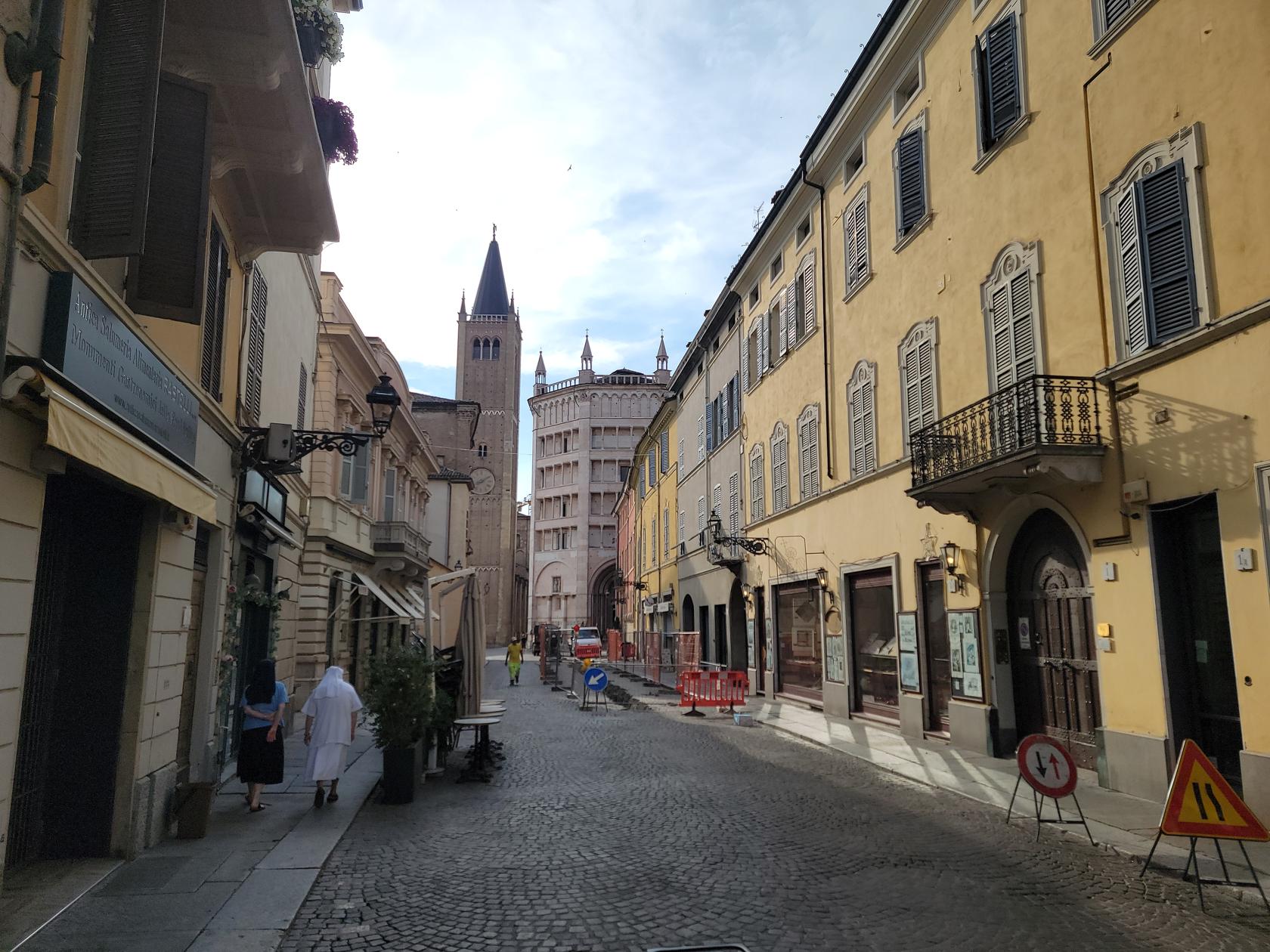
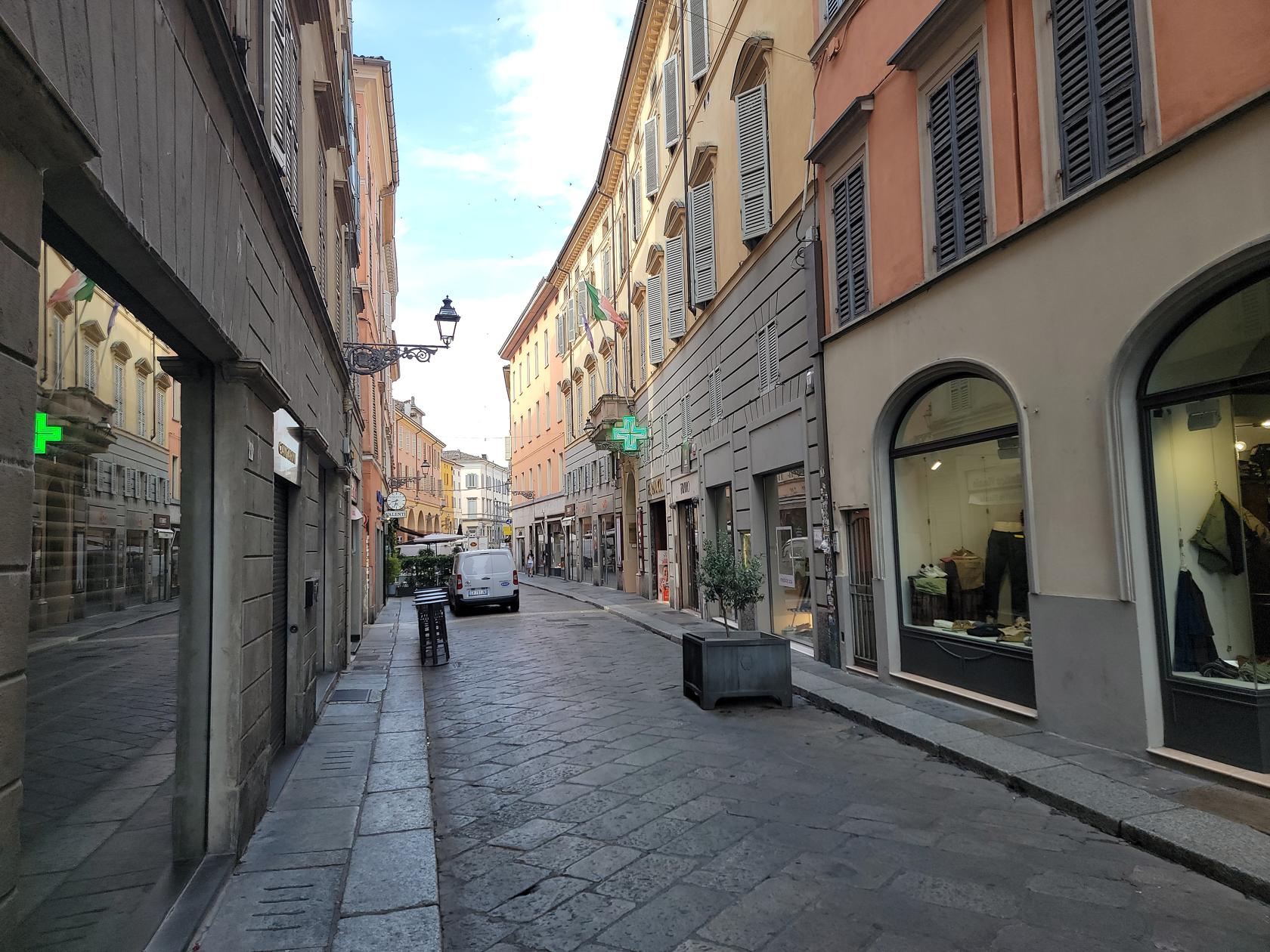
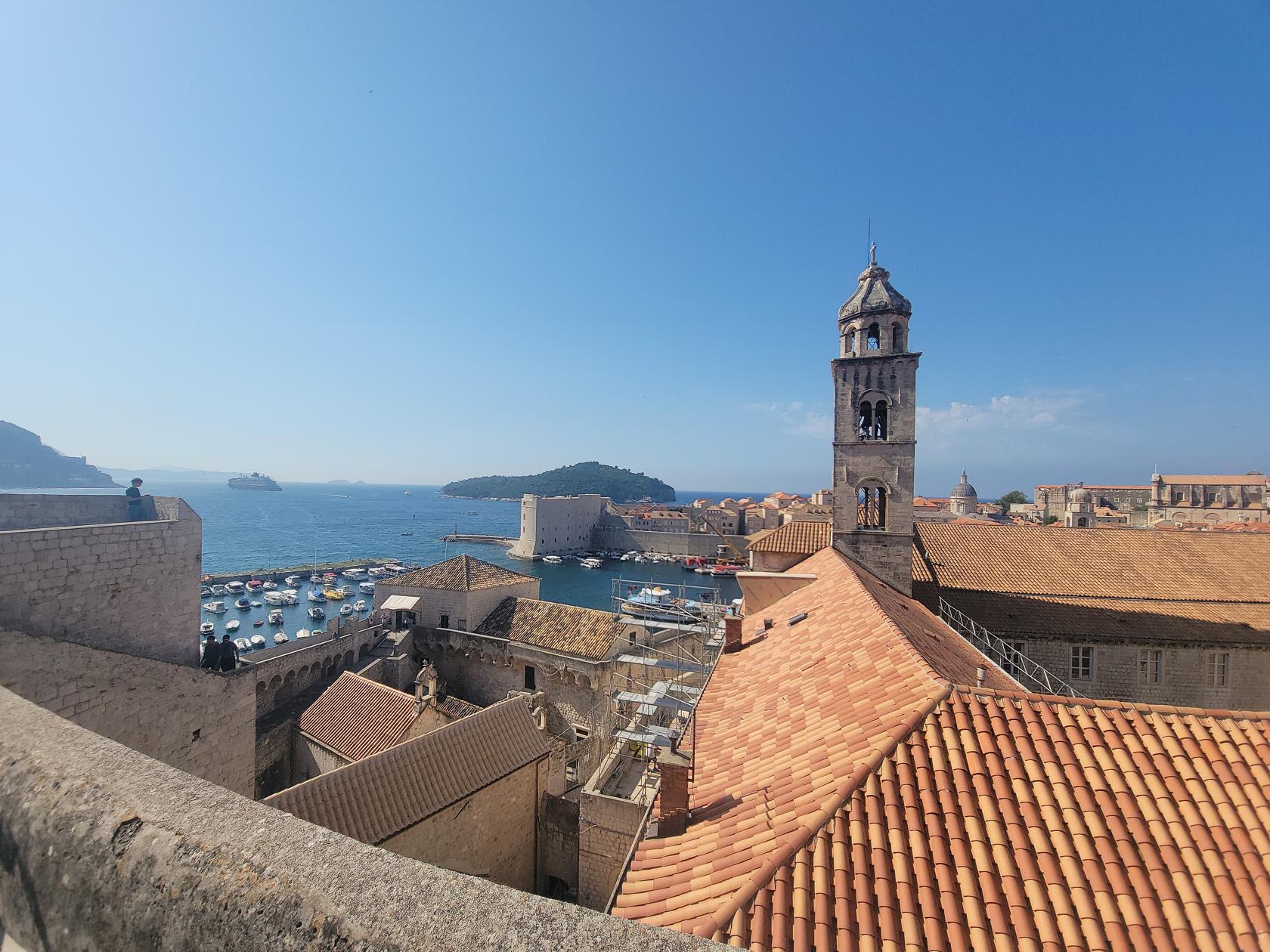
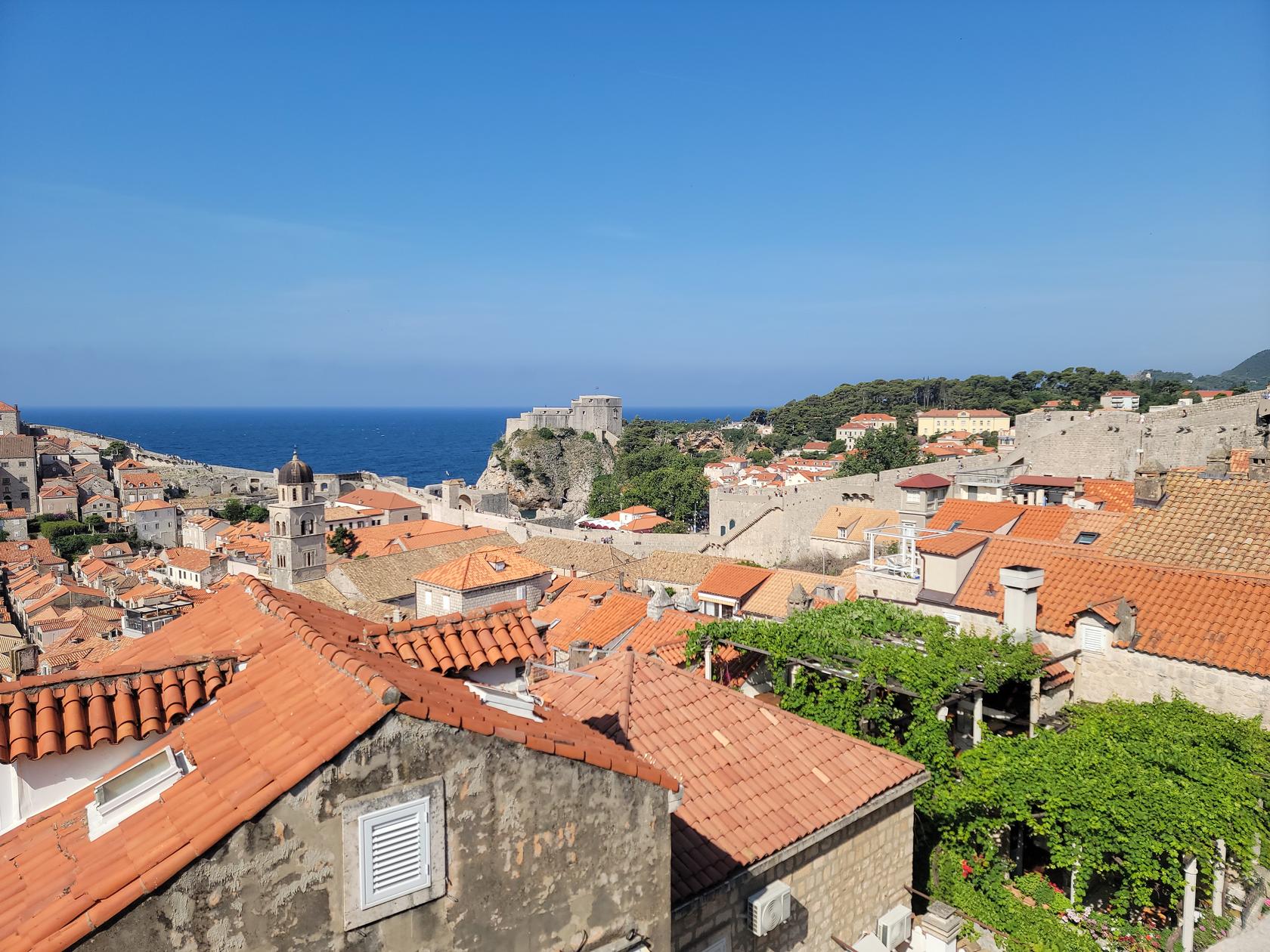
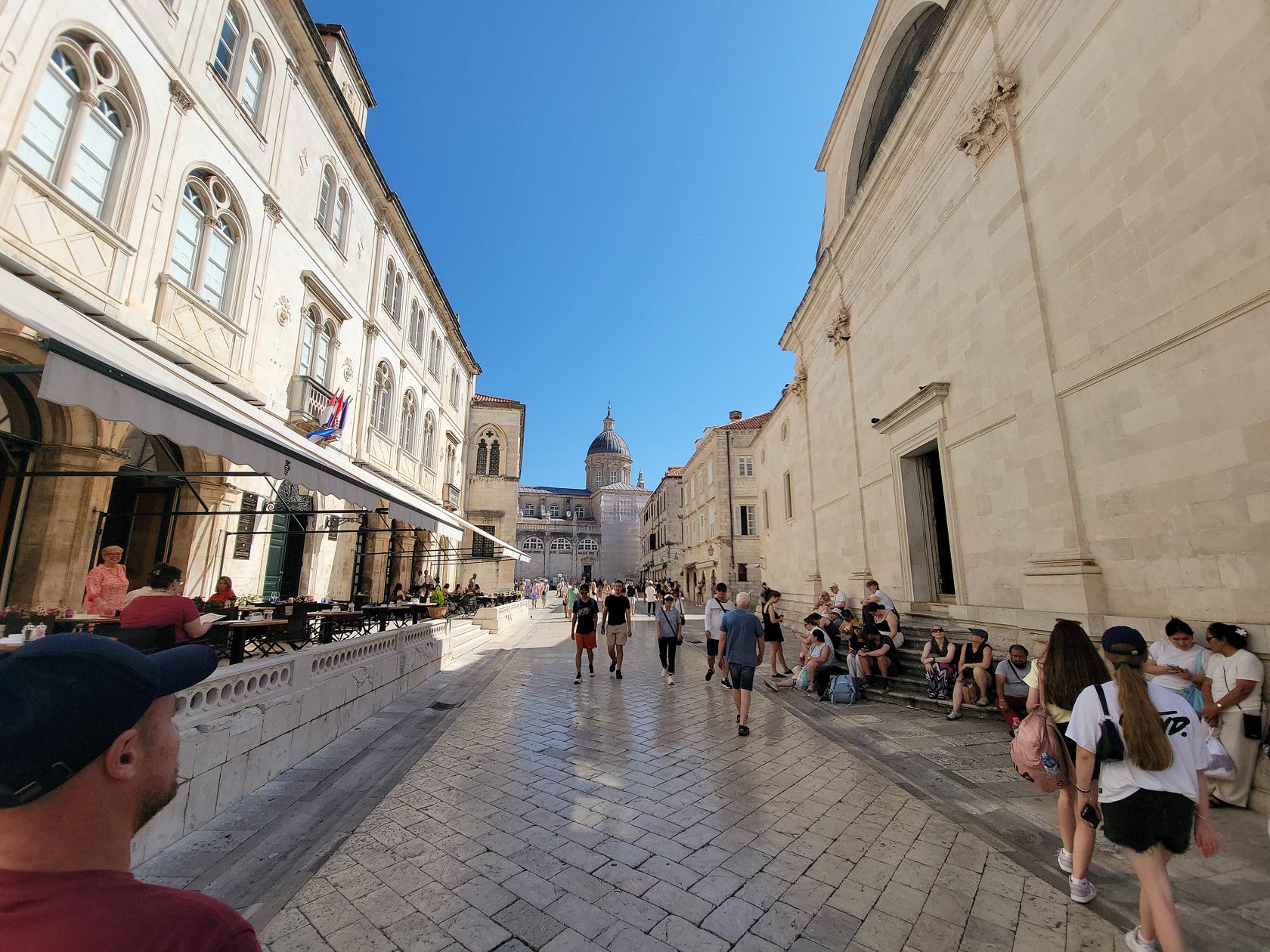
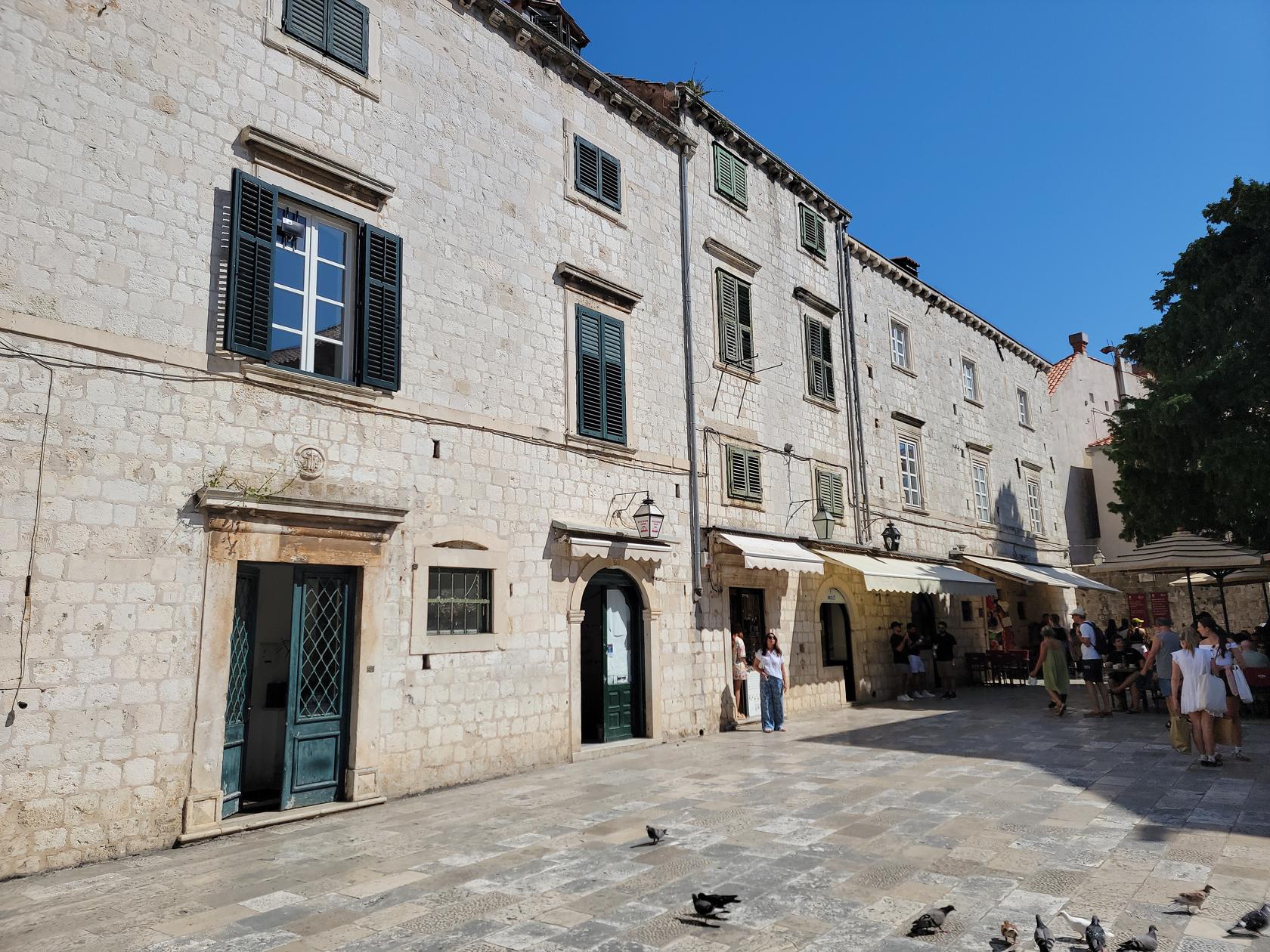
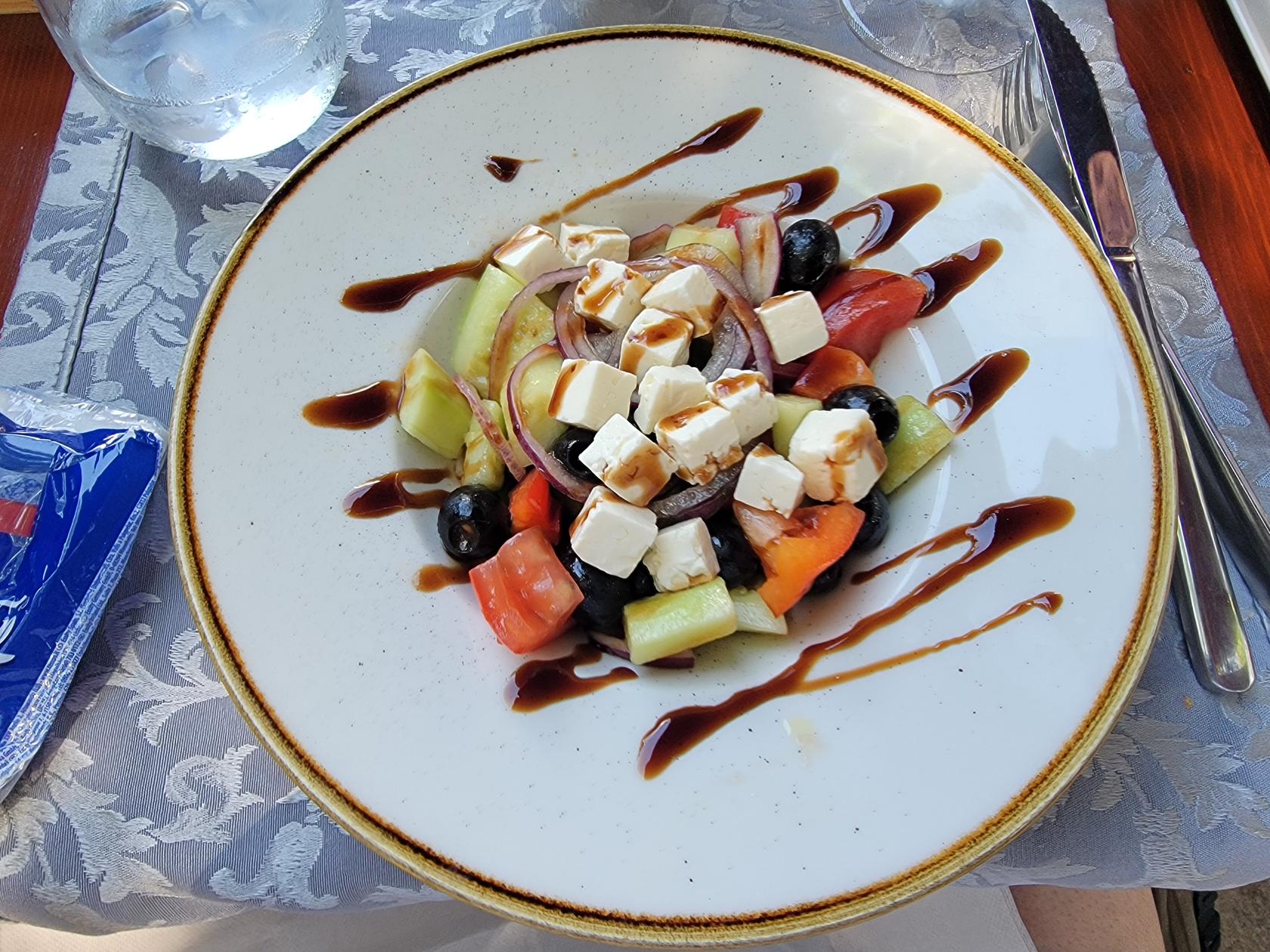
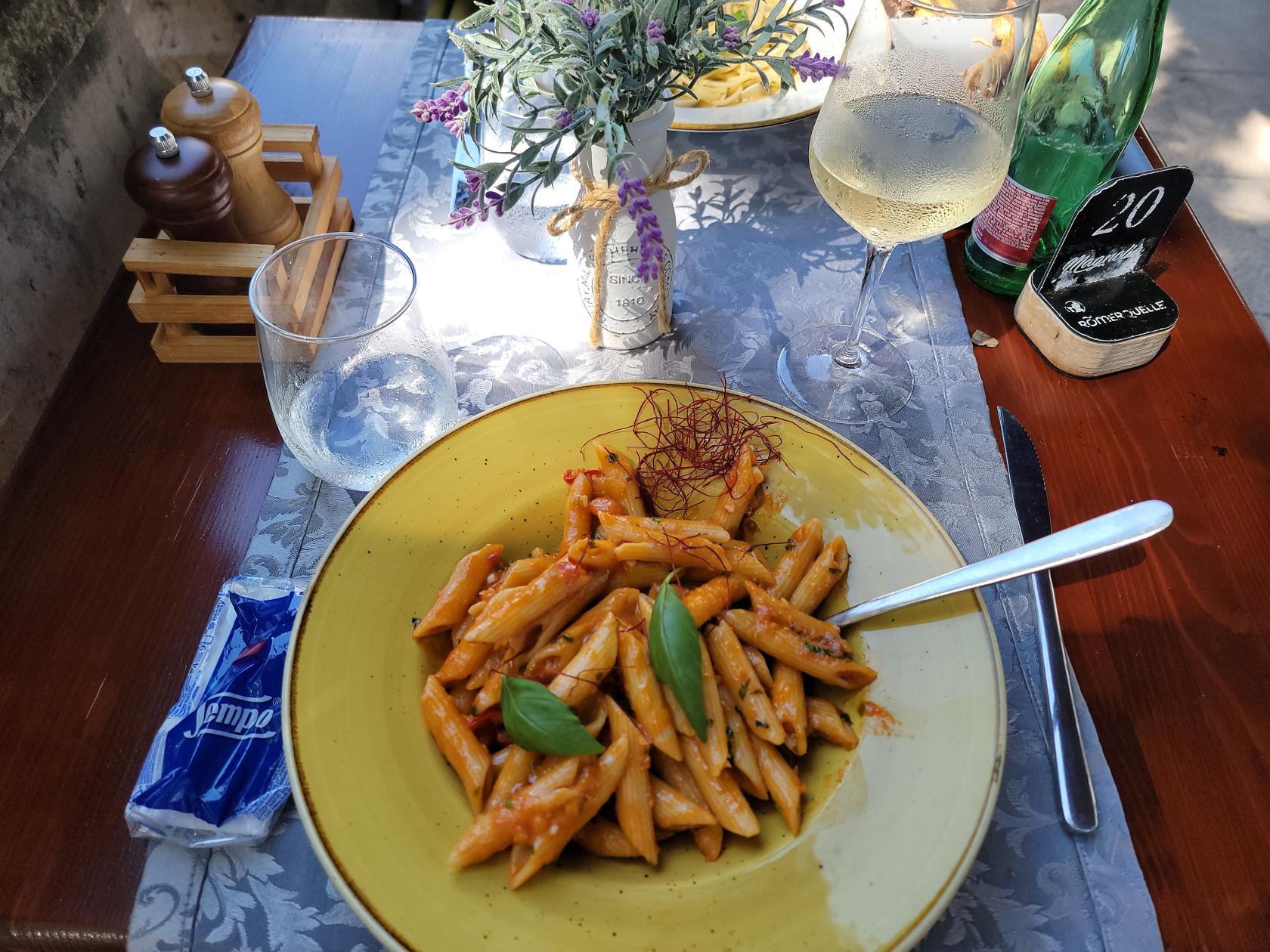
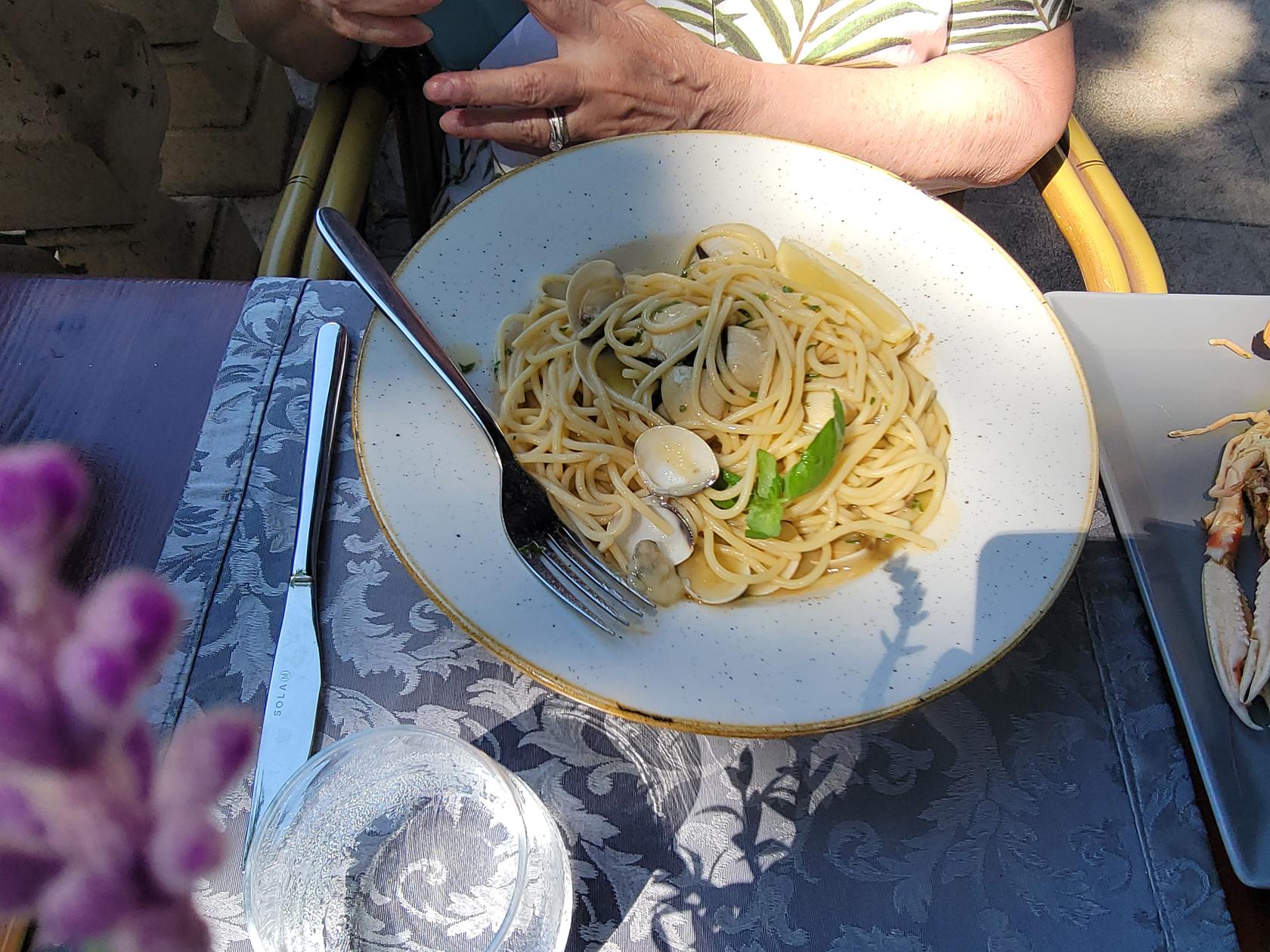
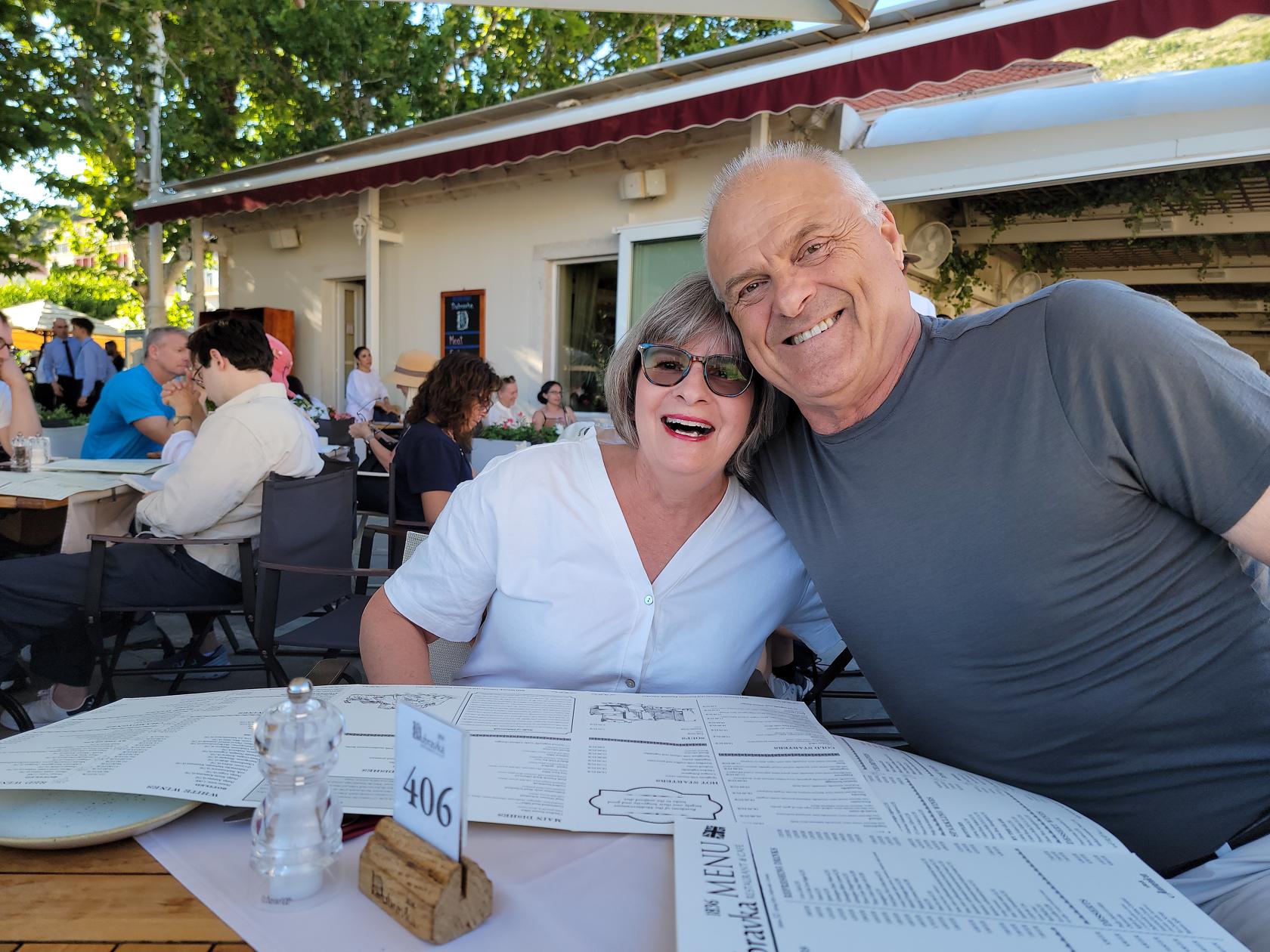
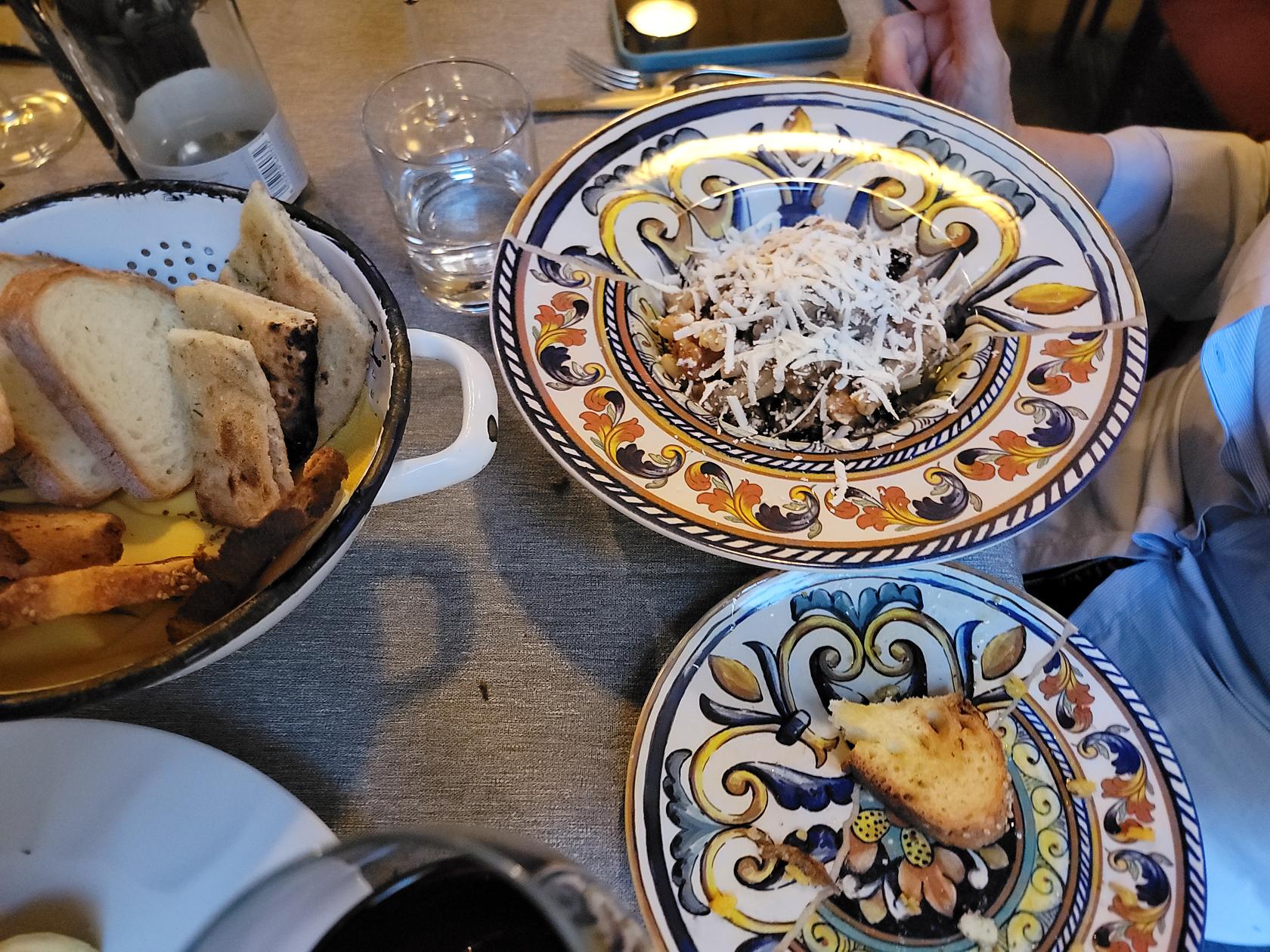
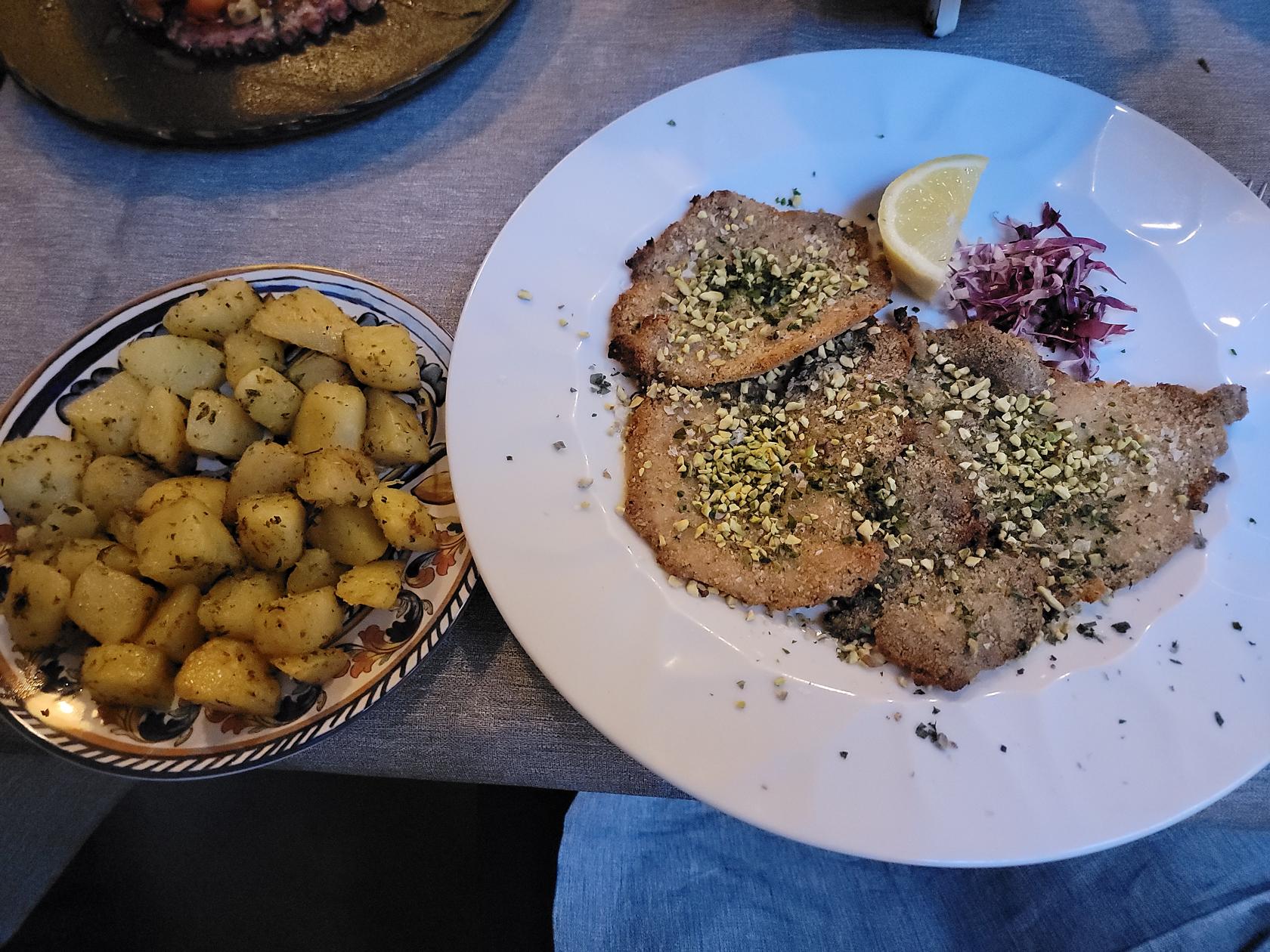
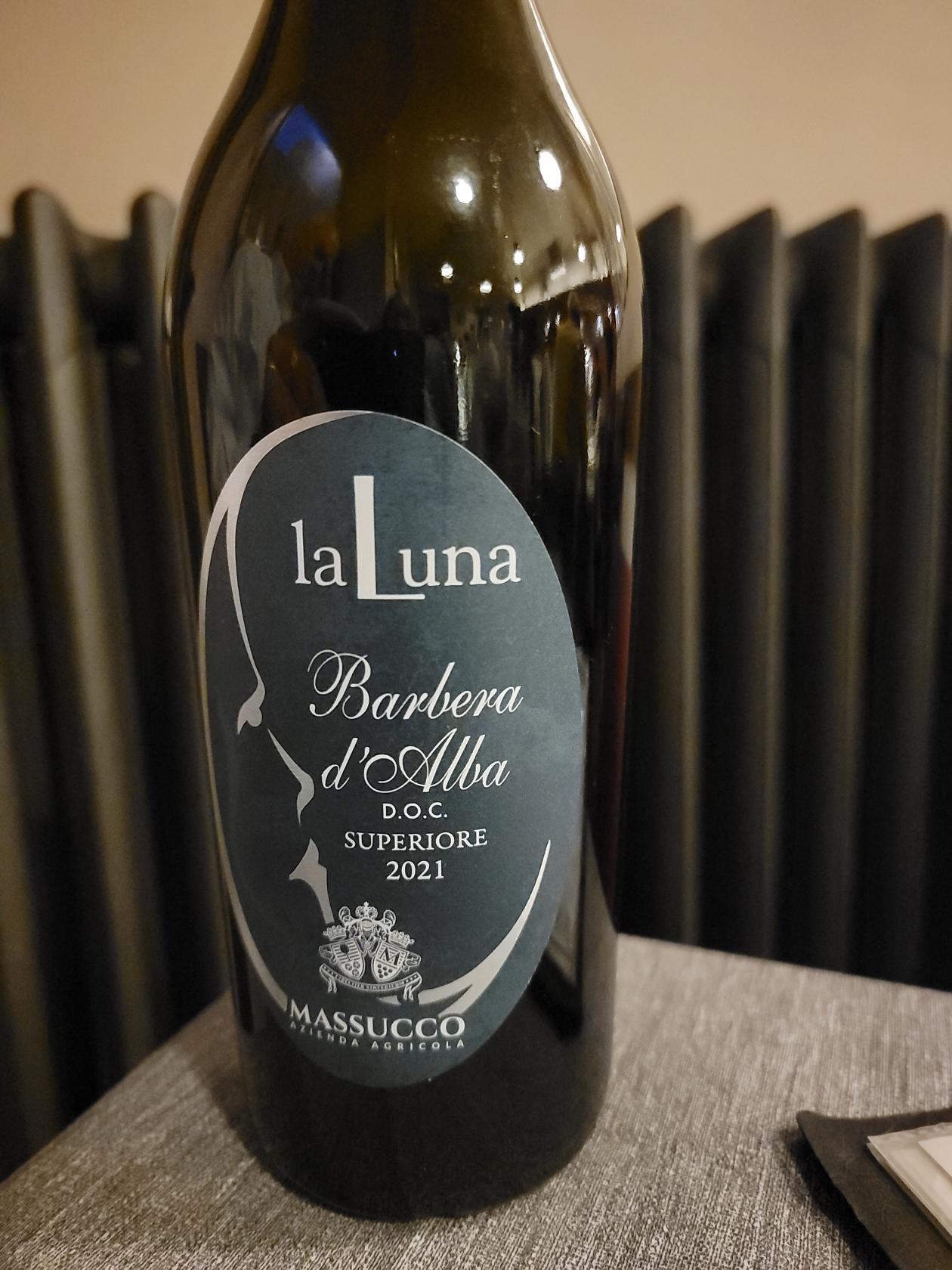
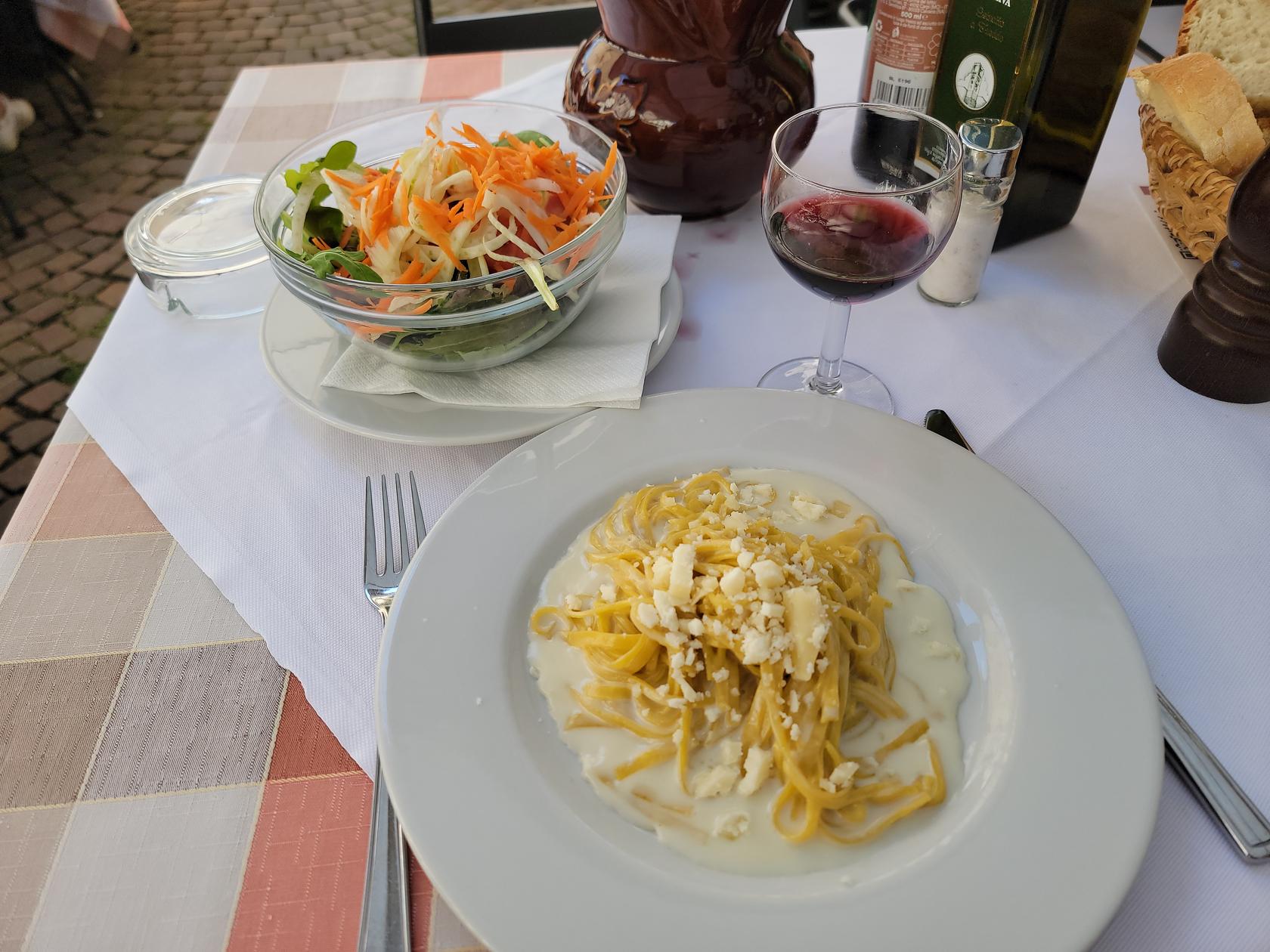
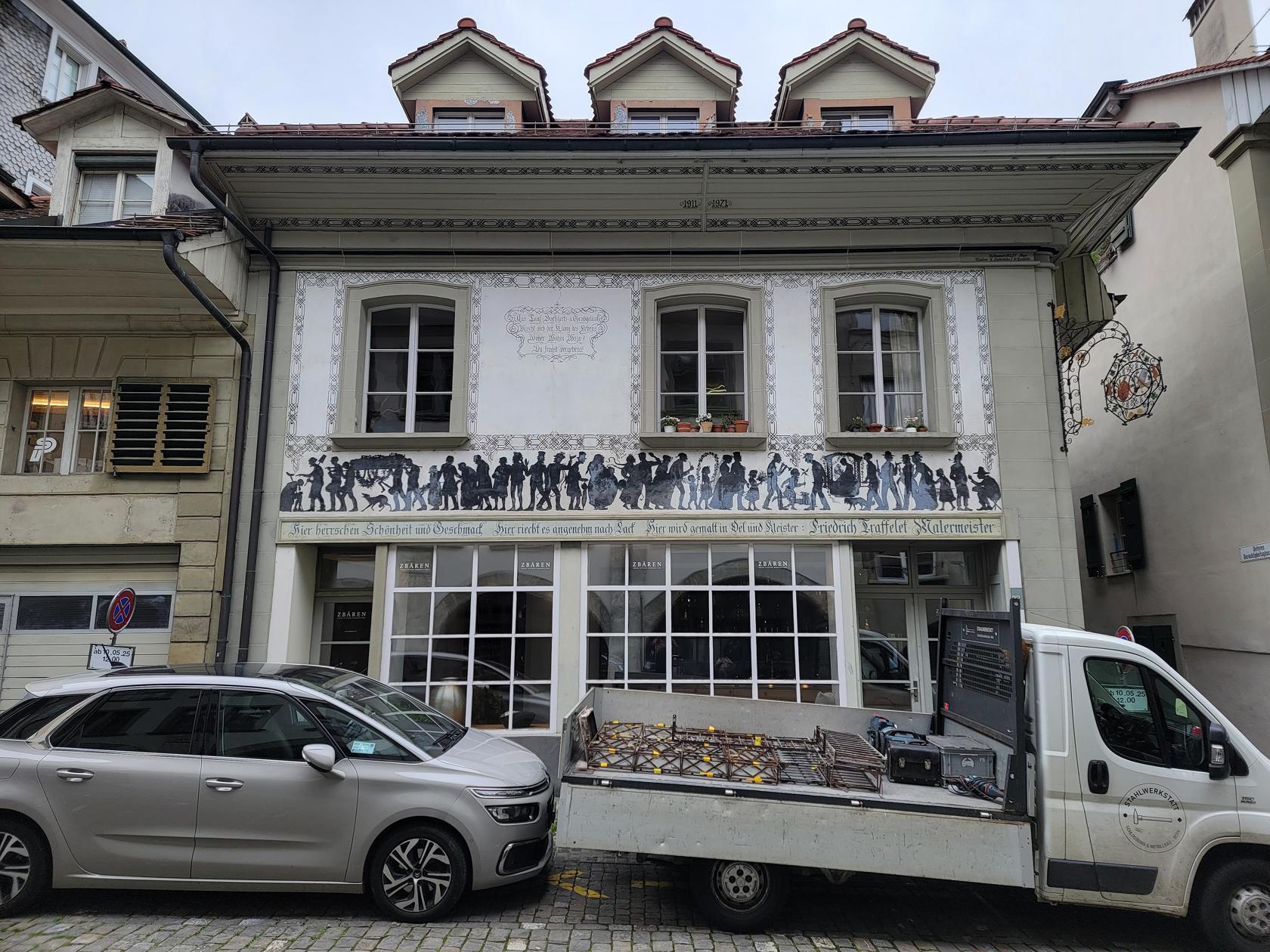
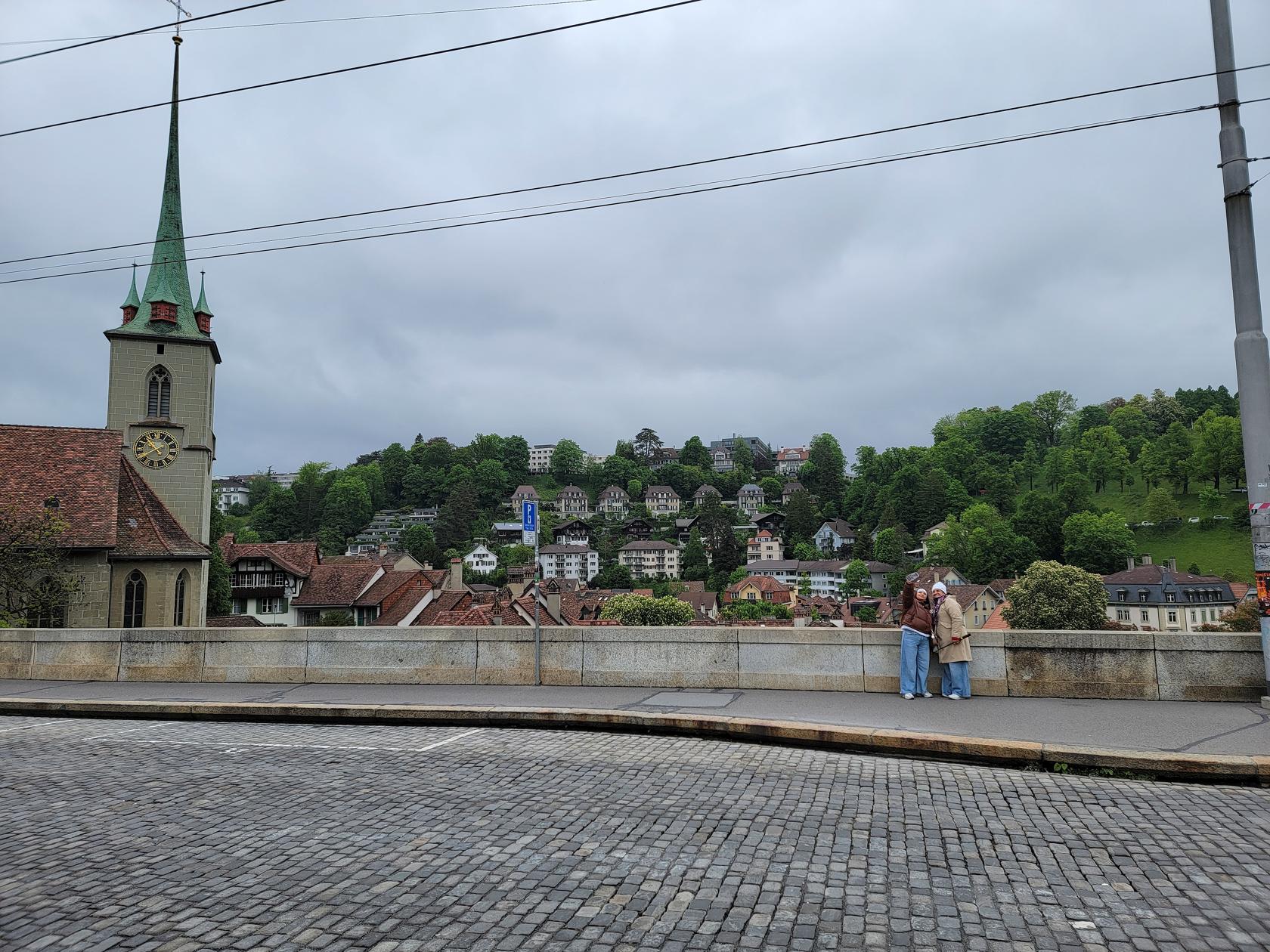
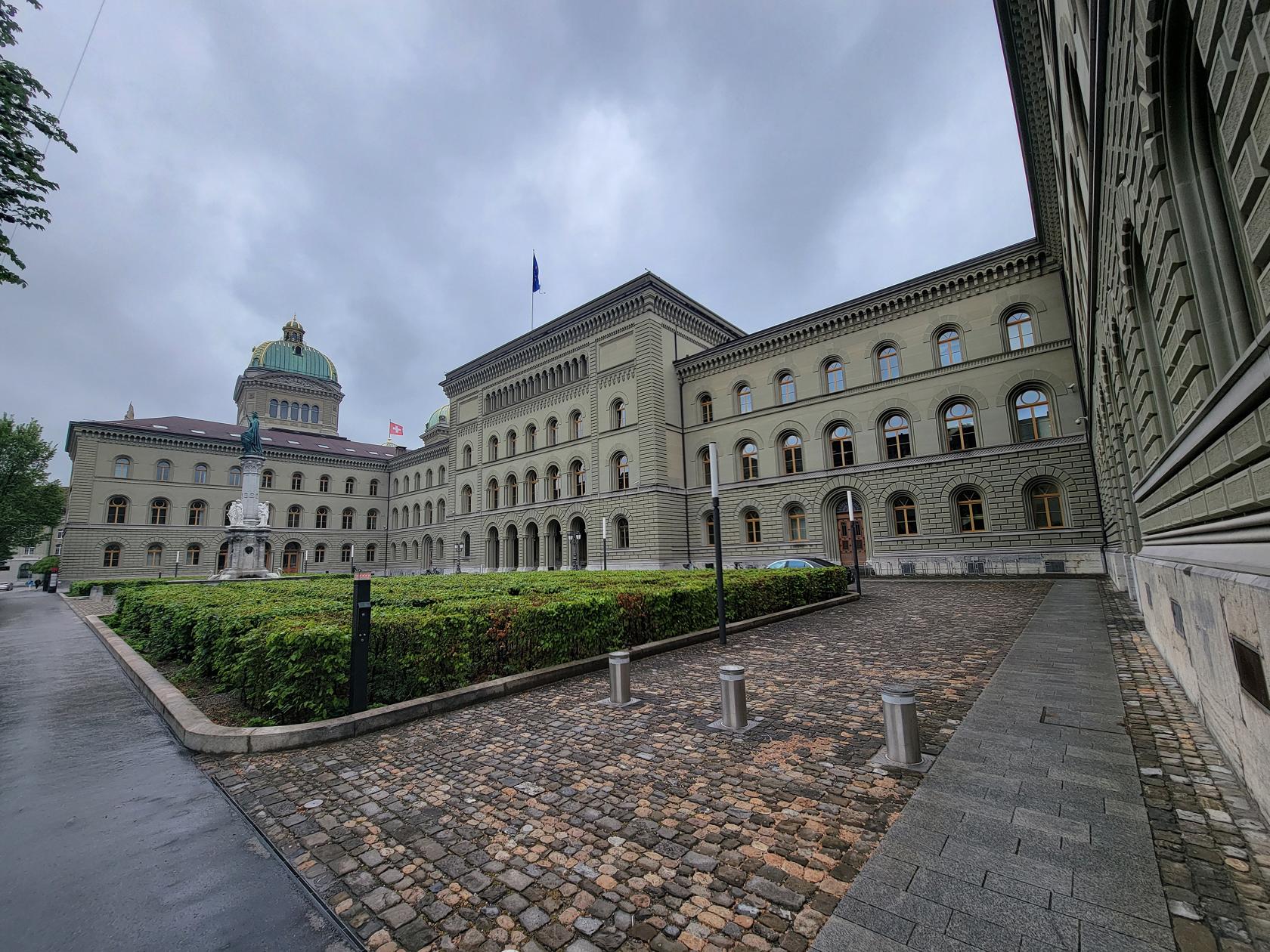
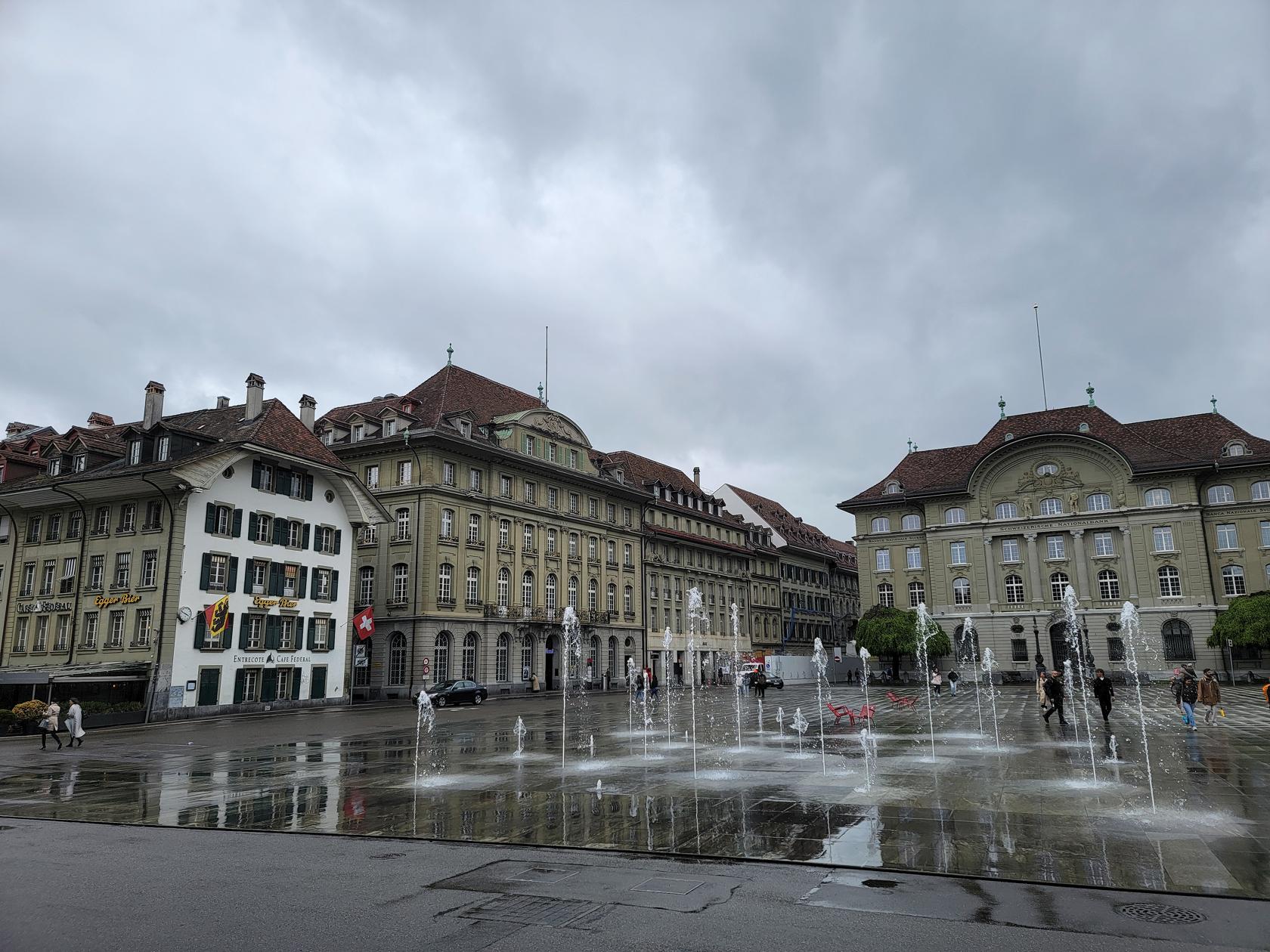
The old town of Wetzlar, Germany, is an old free imperial city whose claim to fame is the seat of the Imperial Supreme Court. It is a favorite among the locals and during this time of year they hold weekend festivities with bands and other attractions. It’s a good destination for a weekend day-trip.
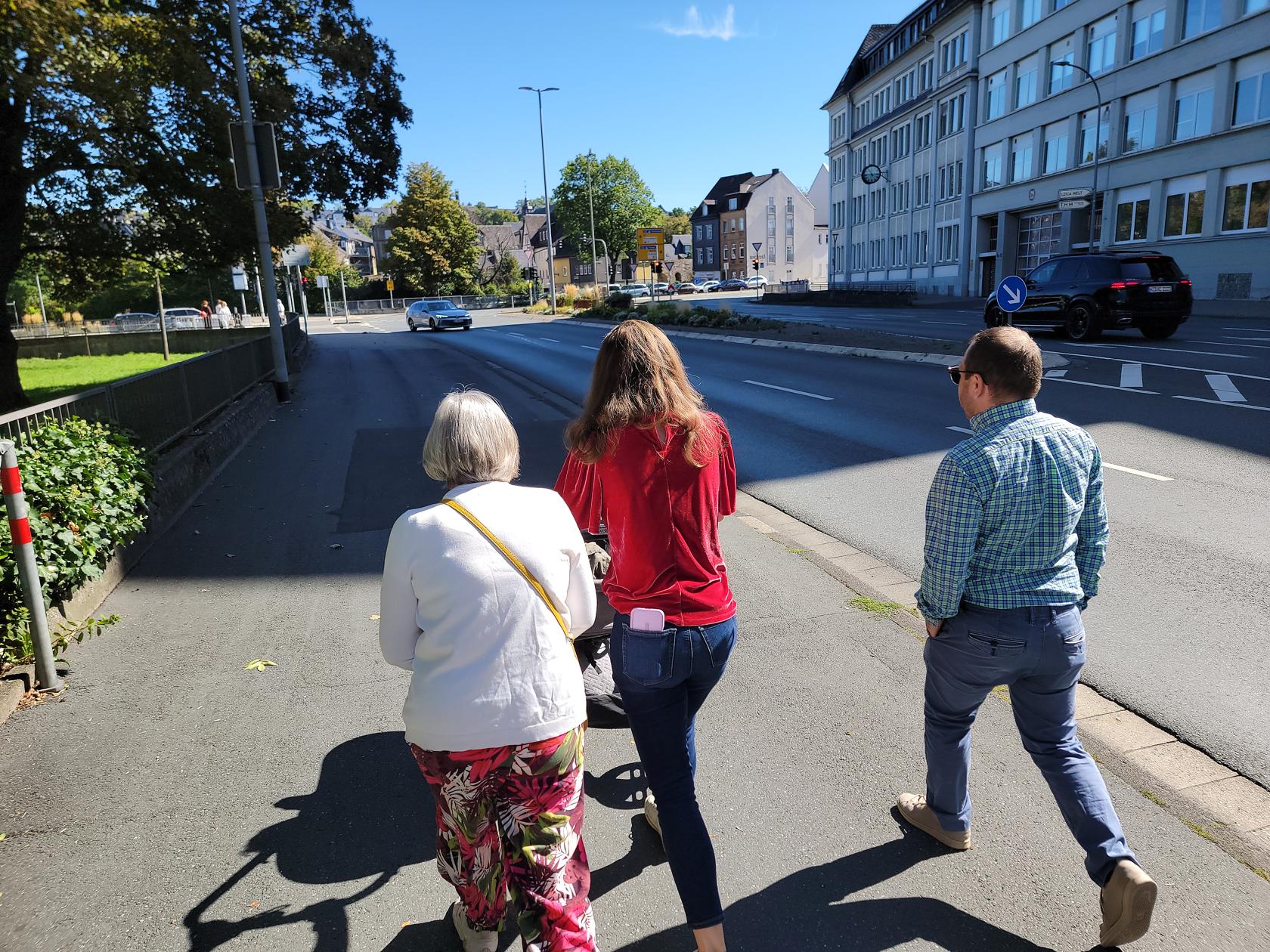
Patti, Ericka and Gabi – Going to the Altstadt – Wetzlar, Germany
Wetzlar
Located on the Lahn River, Wetzlar is a fan favorite for canoist, kayakers and other non-motor boat enthusiasts. The waterfront has a small boat launch that eases entry to the Lahn for people who come to enjoy the fast running white water. Rentals are available in town for those that do not own their own equipment. The town is also a mecca for cyclists and there are several places in town where bike rentals are offered.
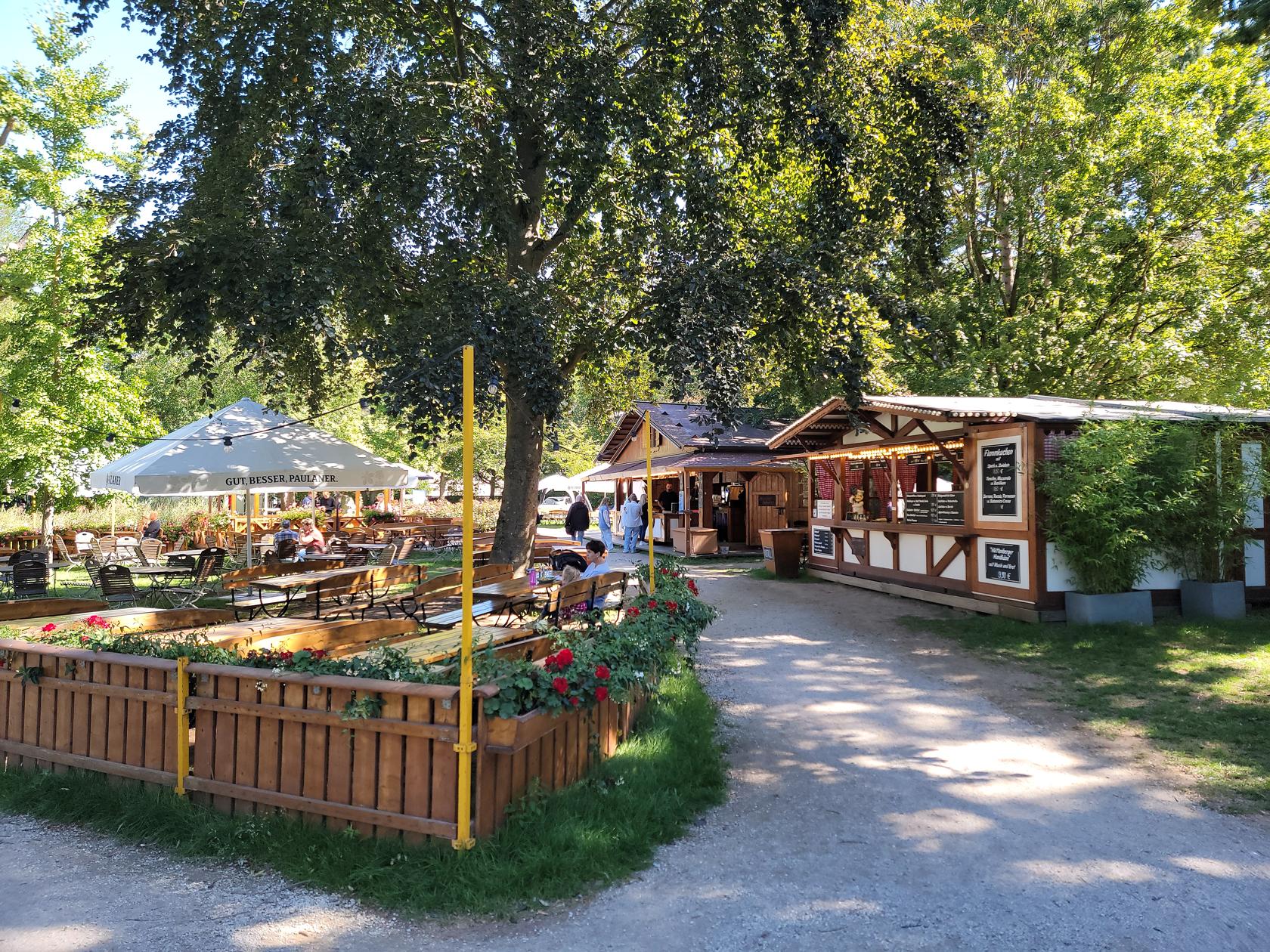
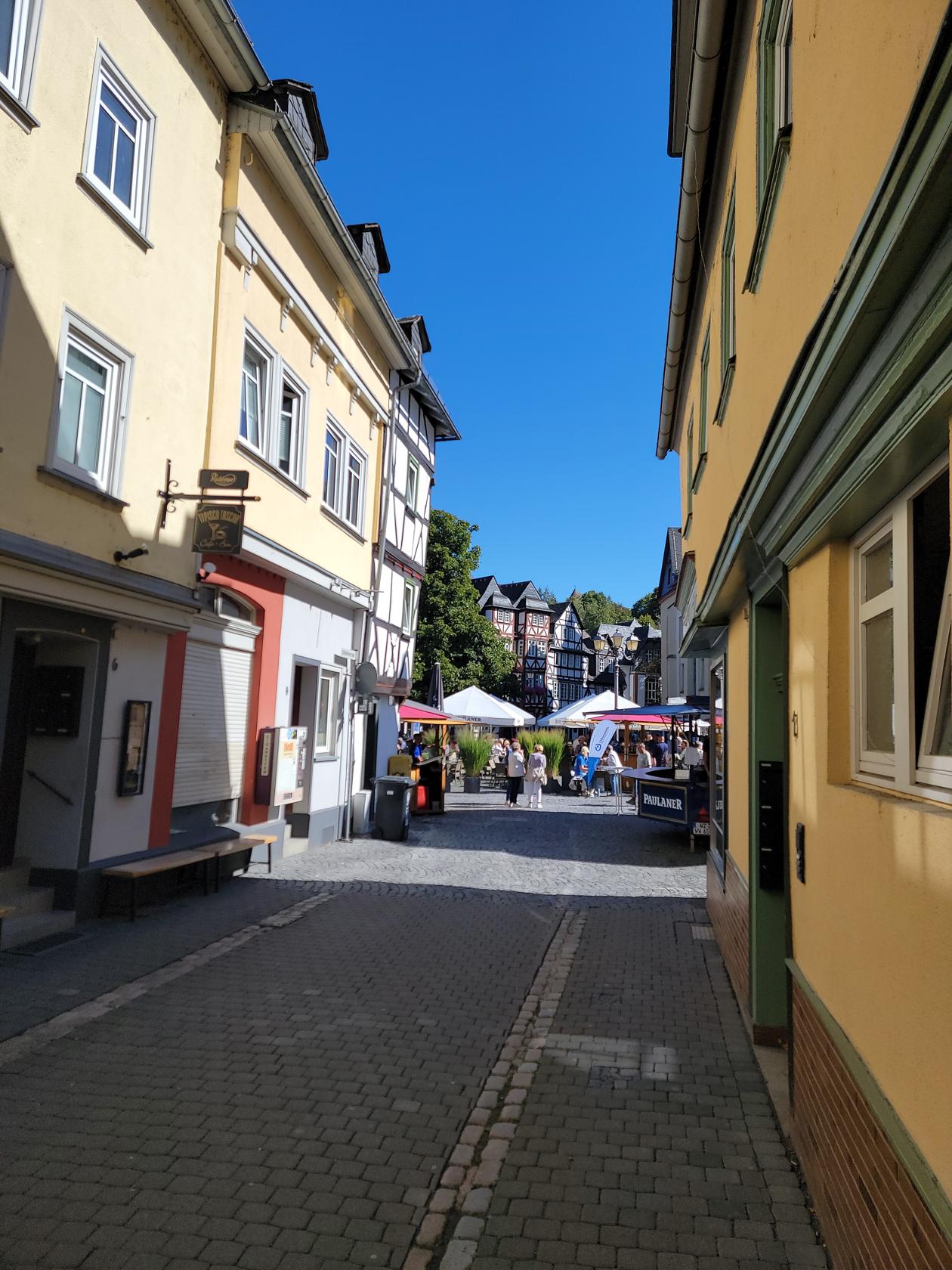
The town itself has a few main squares that setup for weekend festivities, the Schillerplatz, the Eisenplatz and less so the Domplatz. There is also the area along the Mühlgraben that is lined with Biergarten and other stalls where food and beverages can be purchased, as you walk lazily through area along the river.
Entering Schillerplatz – Wetzlar, Germany
Schillerplatz – Wetzlar, Germany
Schillerplatz – Wetzlar, Germany
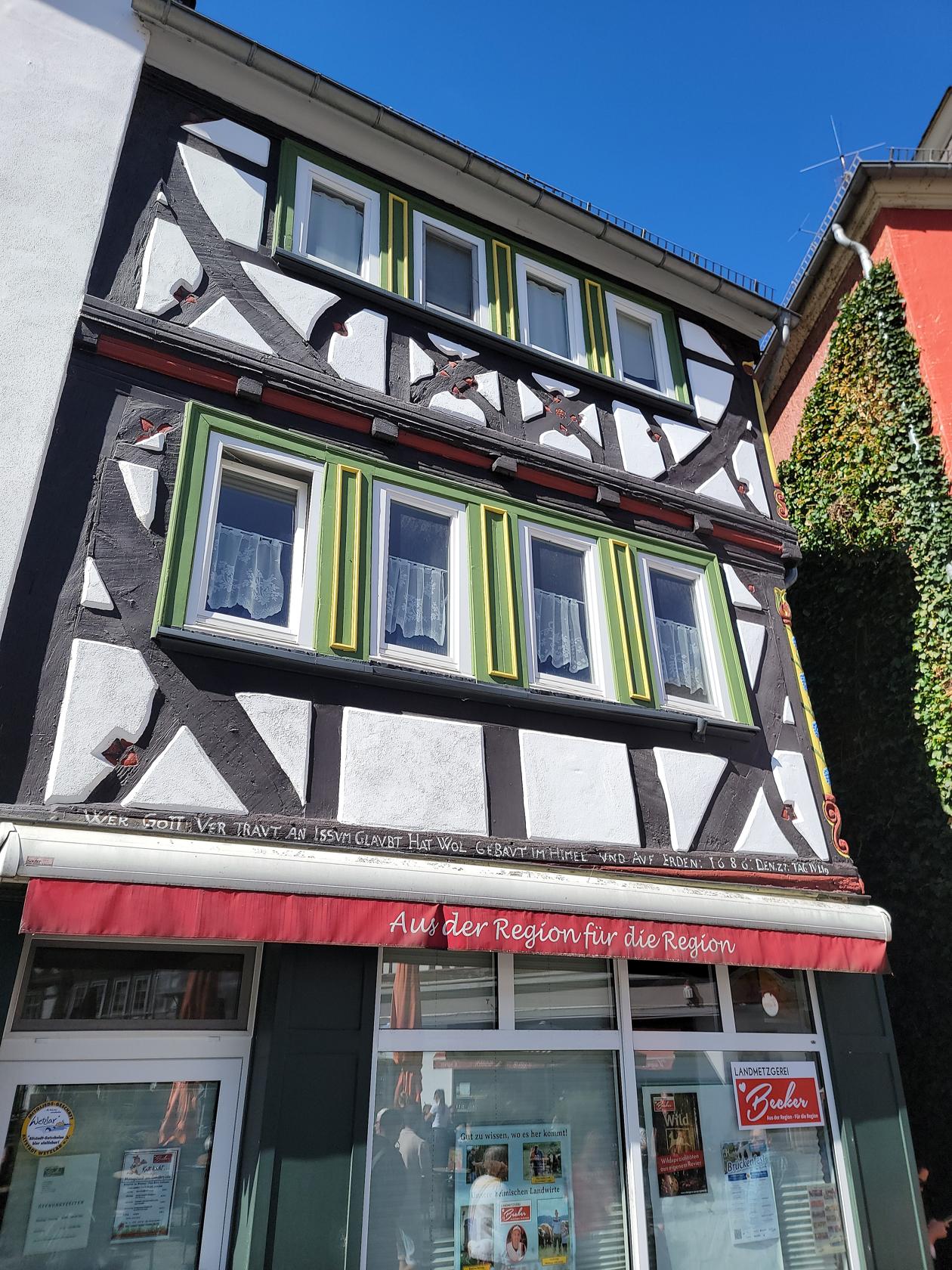
Silhöferstrasse – Wetzlar, Germany
Silhöferstrasse – Wetzlar, Germany
Schillerplatz – Wetzlar, Germany
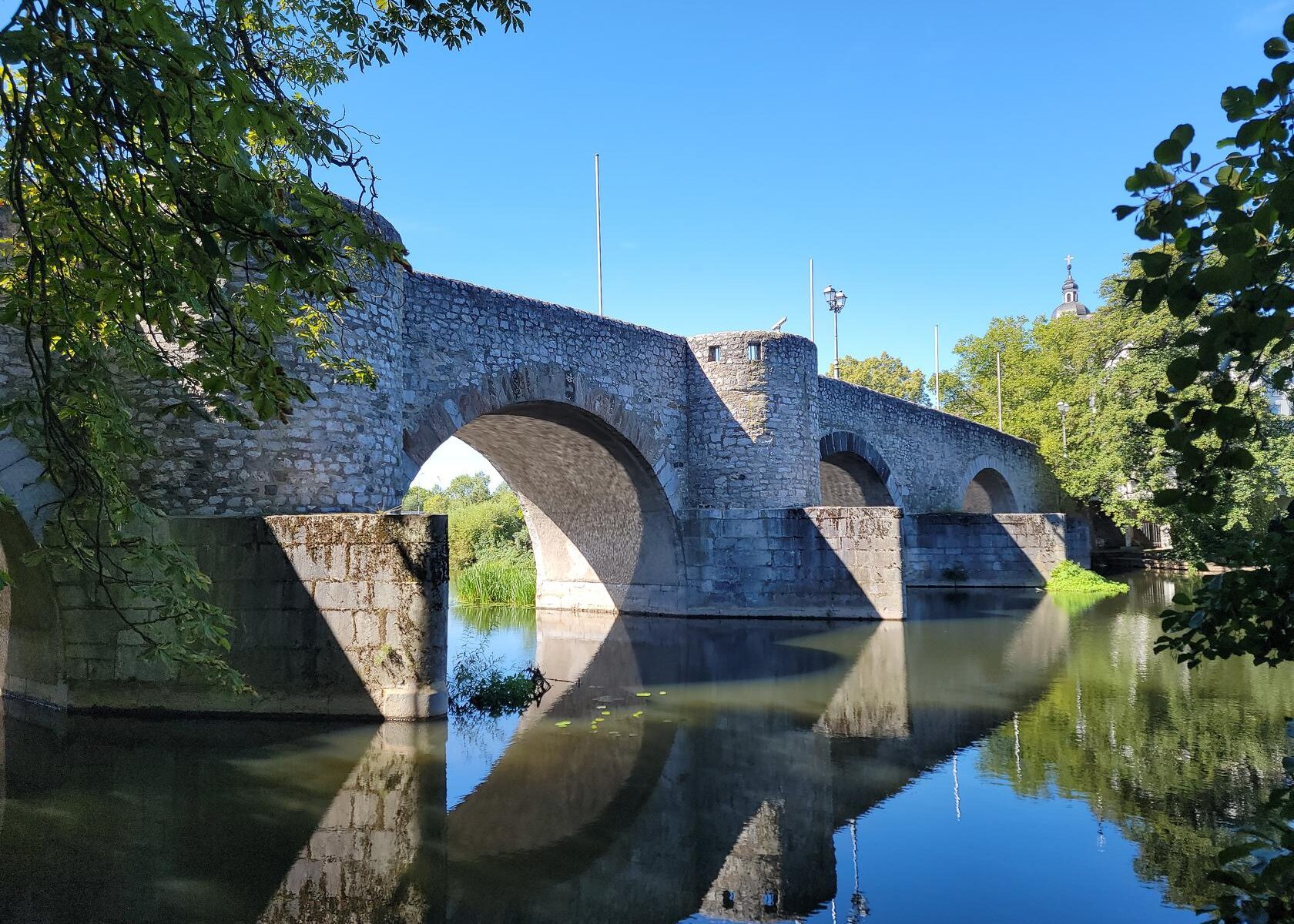
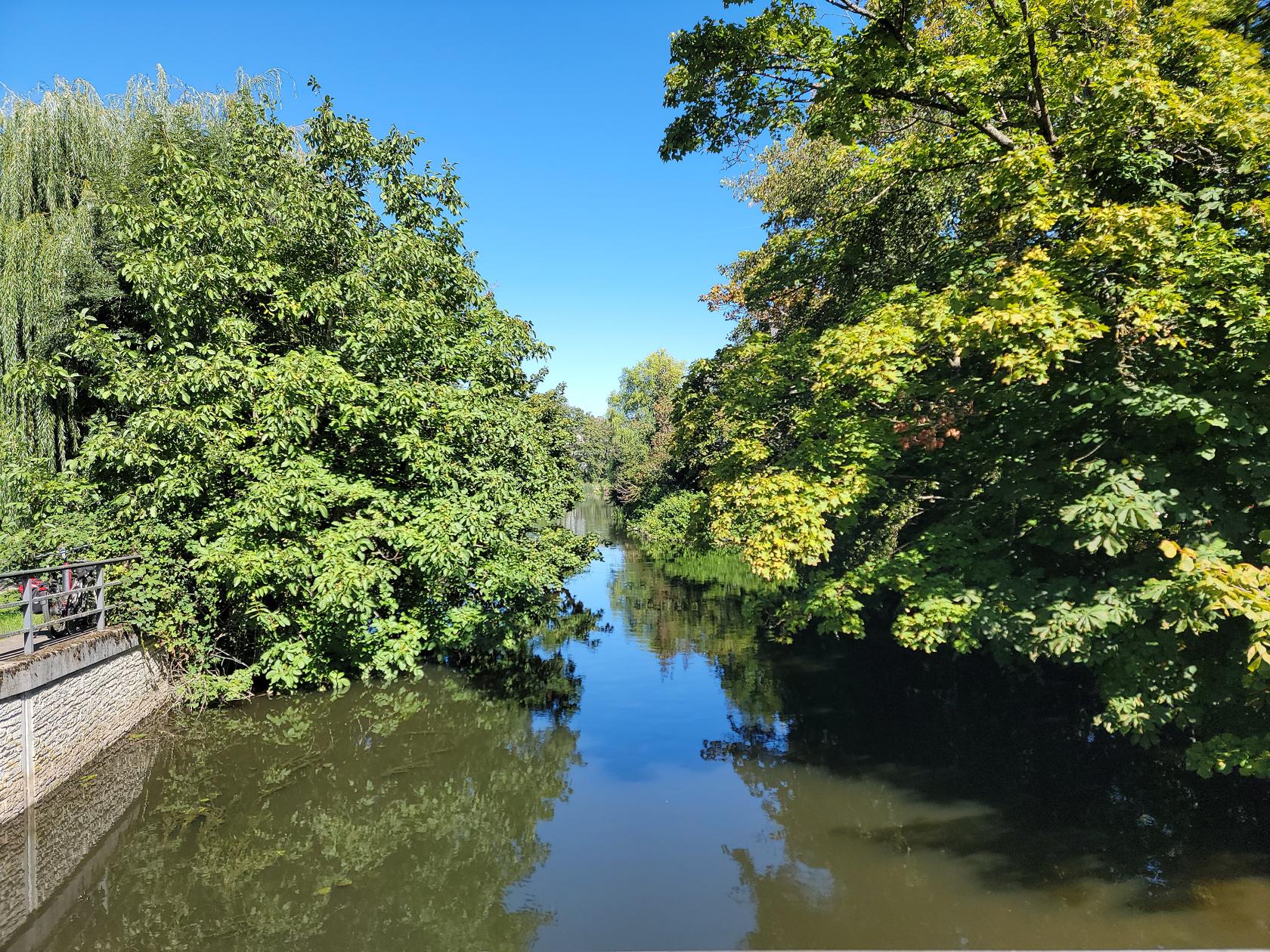
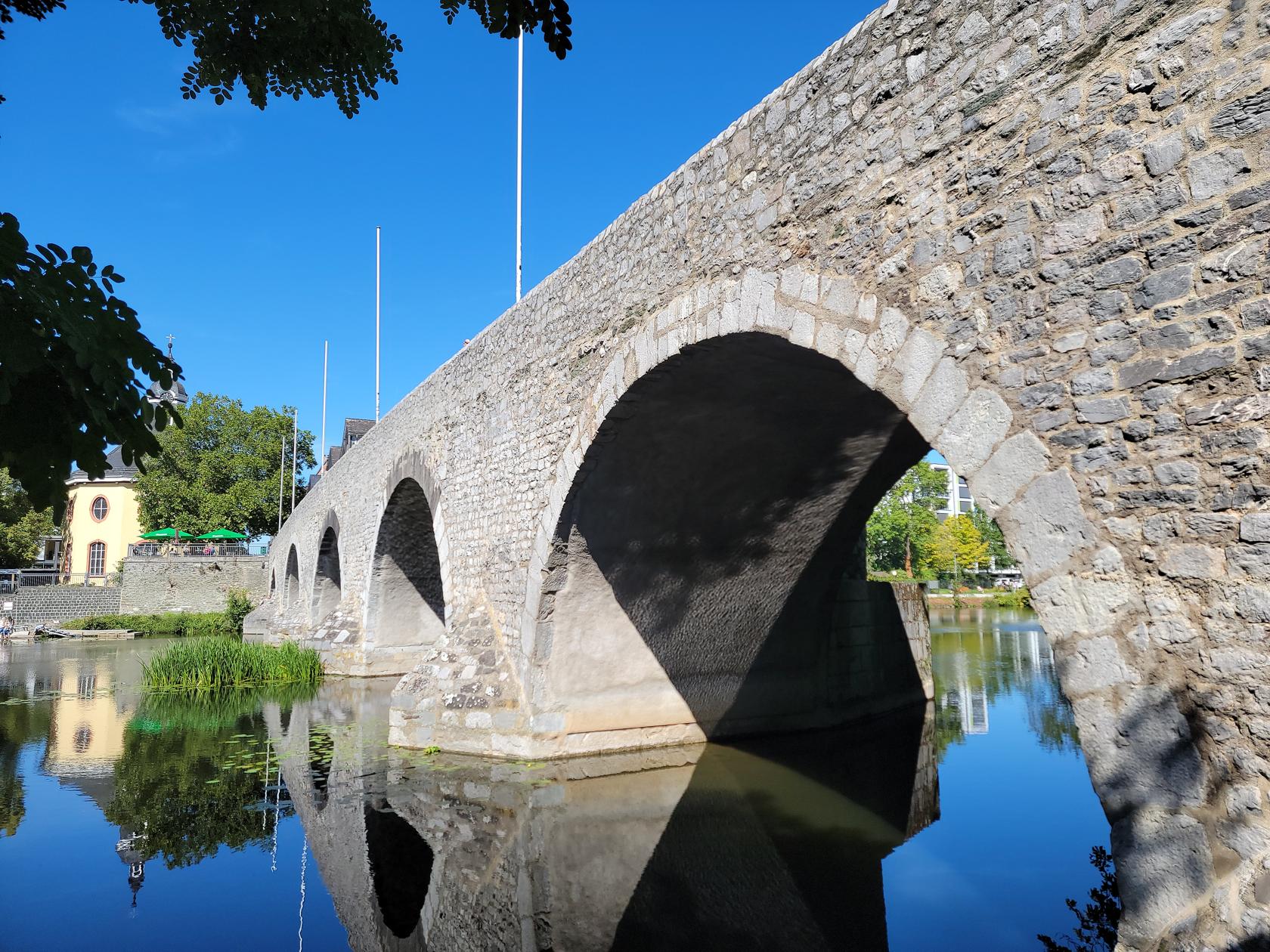
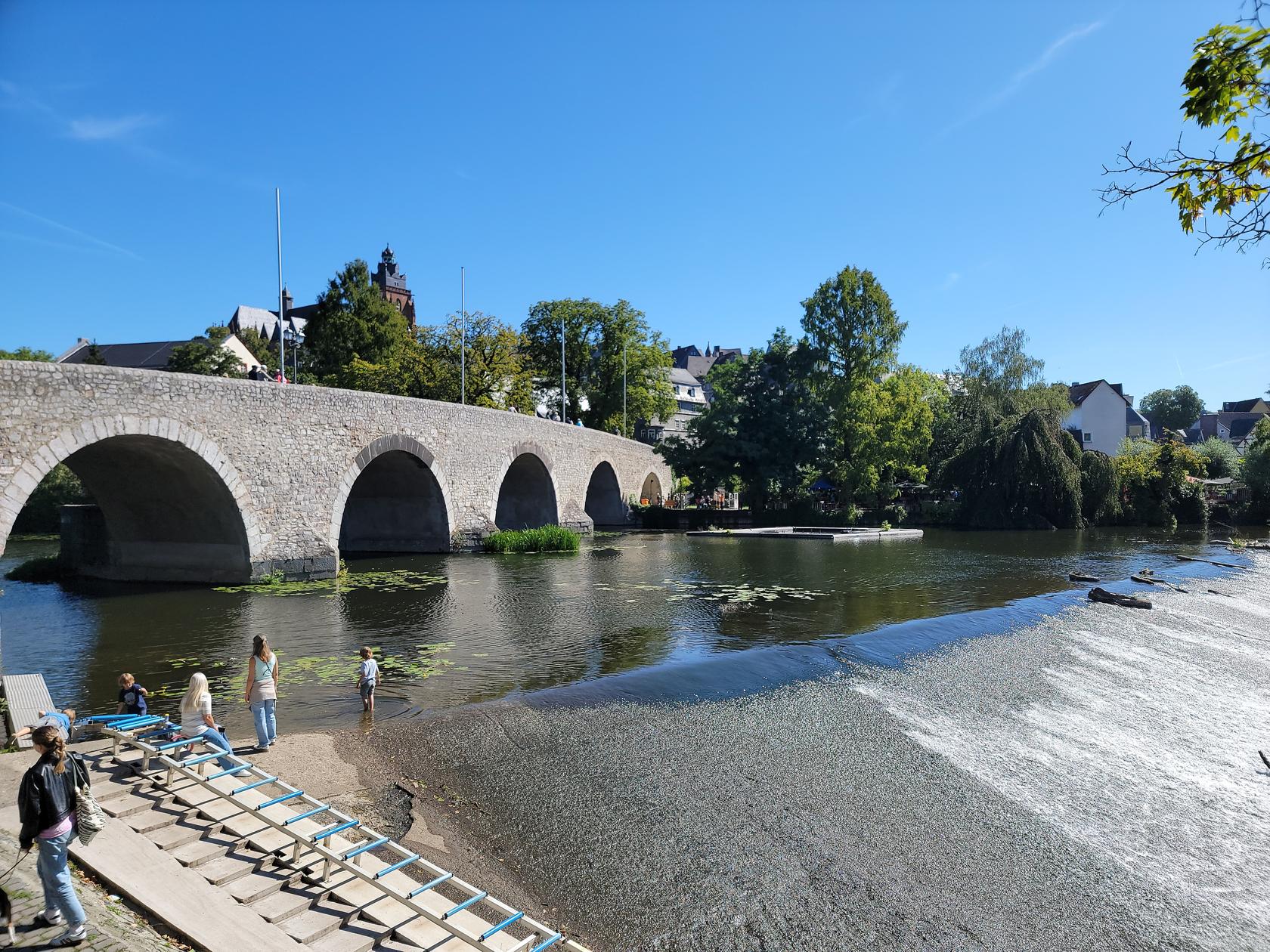
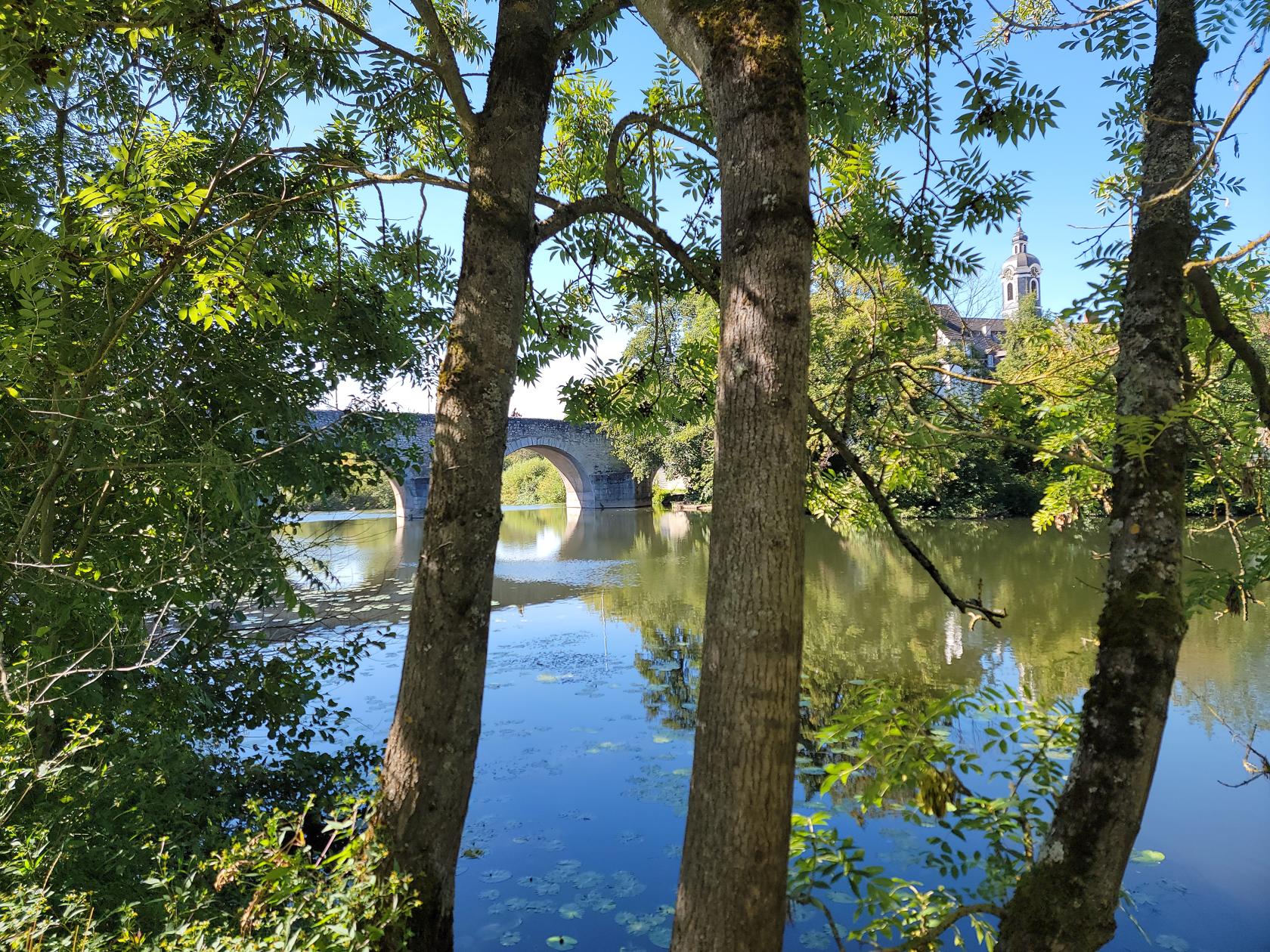
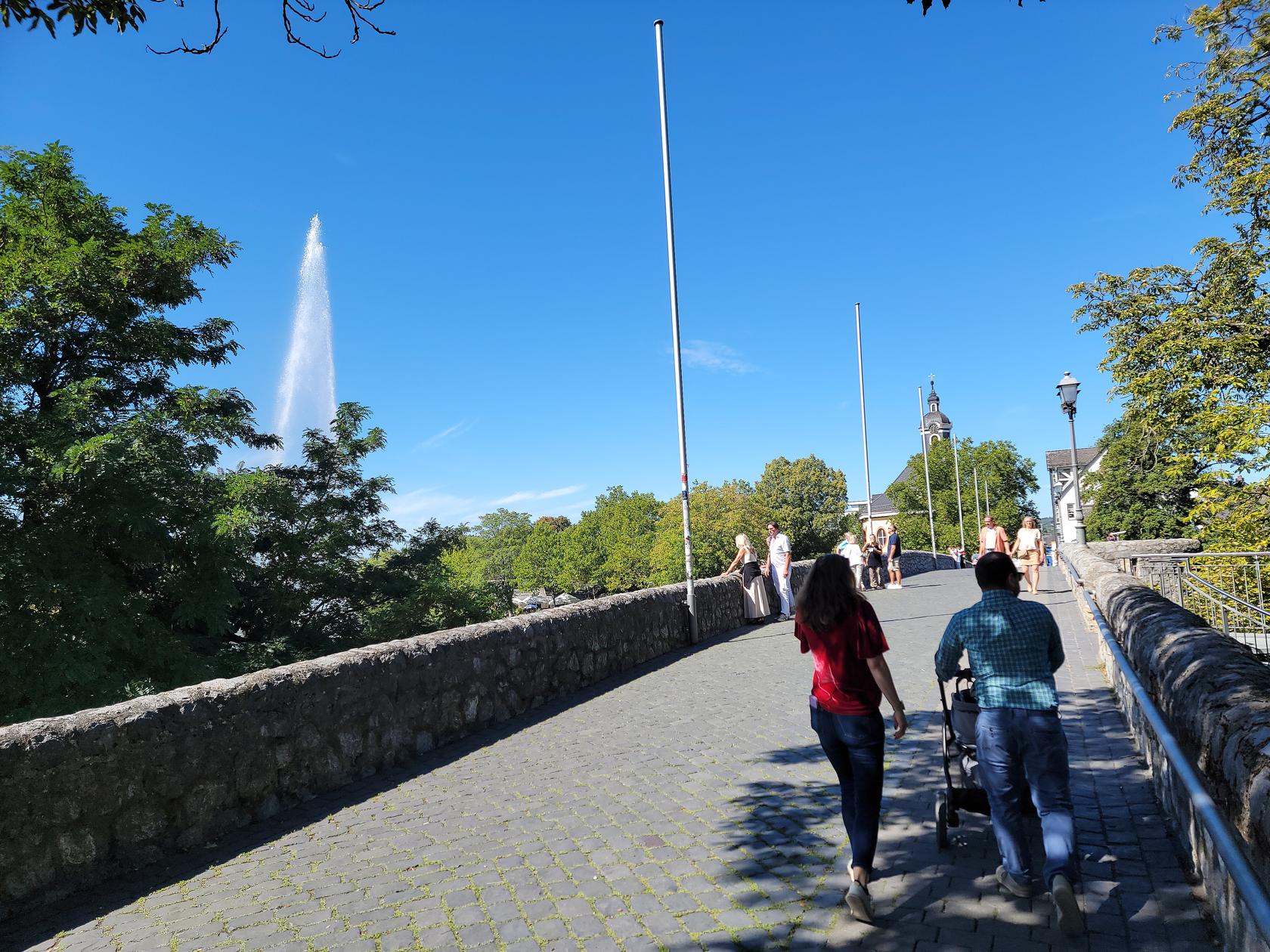
The Alte Lahnbrücke spans the Lahn River about at the midpoint of the old town, connecting the Eisenmarkt with the Neustadt on the other side of the river. Here you will also find several Biergarten, a playground for children and outside seating to enjoy the atmosphere in this lovely little town.
Alte Lahnbrücke – Lahn River – Wetzlar, Germany
Alte Lahnbrücke – Lahn River – Wetzlar, Germany
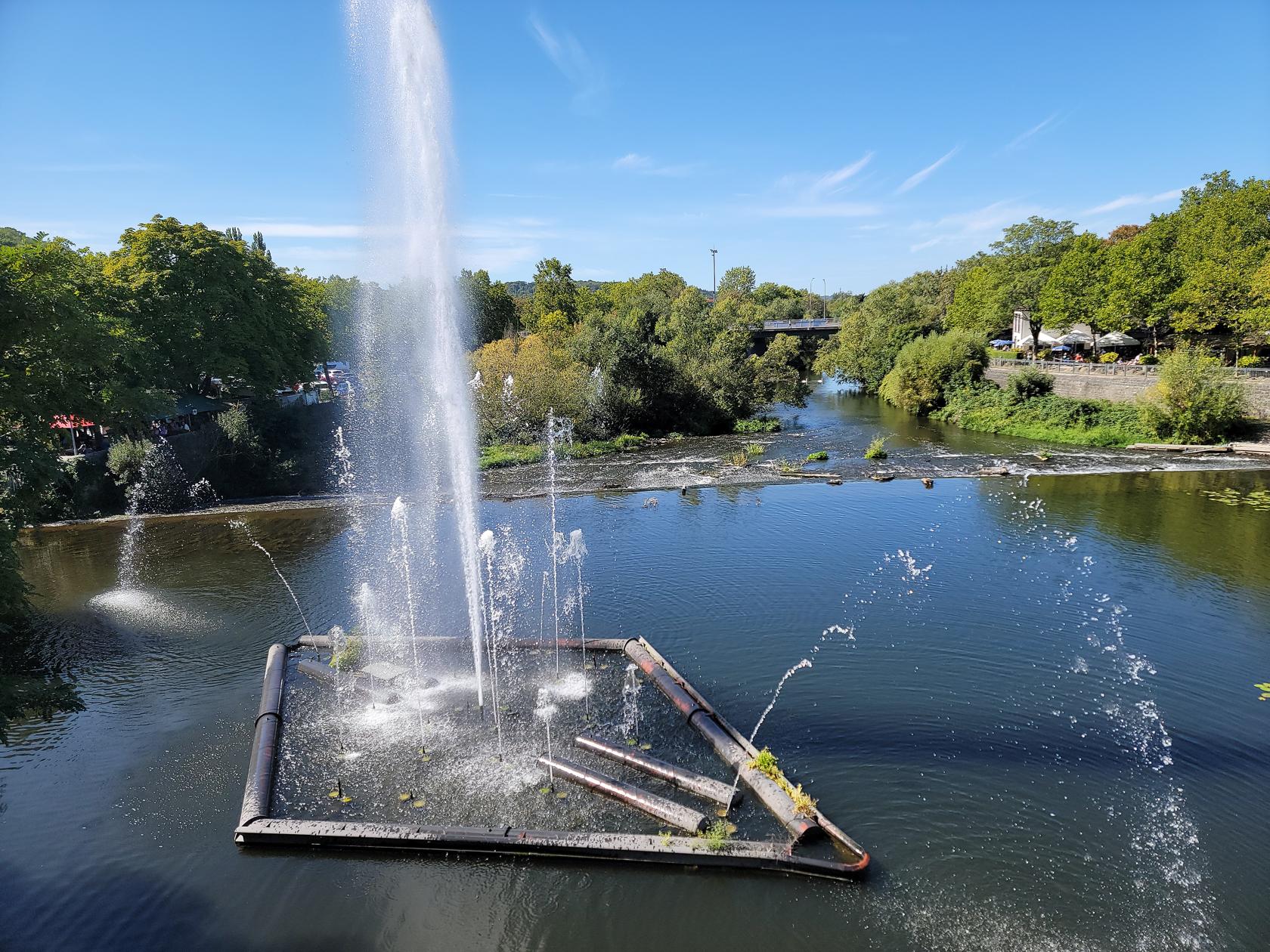
Wasserorgel – Alte Lahnbrücke – Lahn River – Wetzlar, Germany
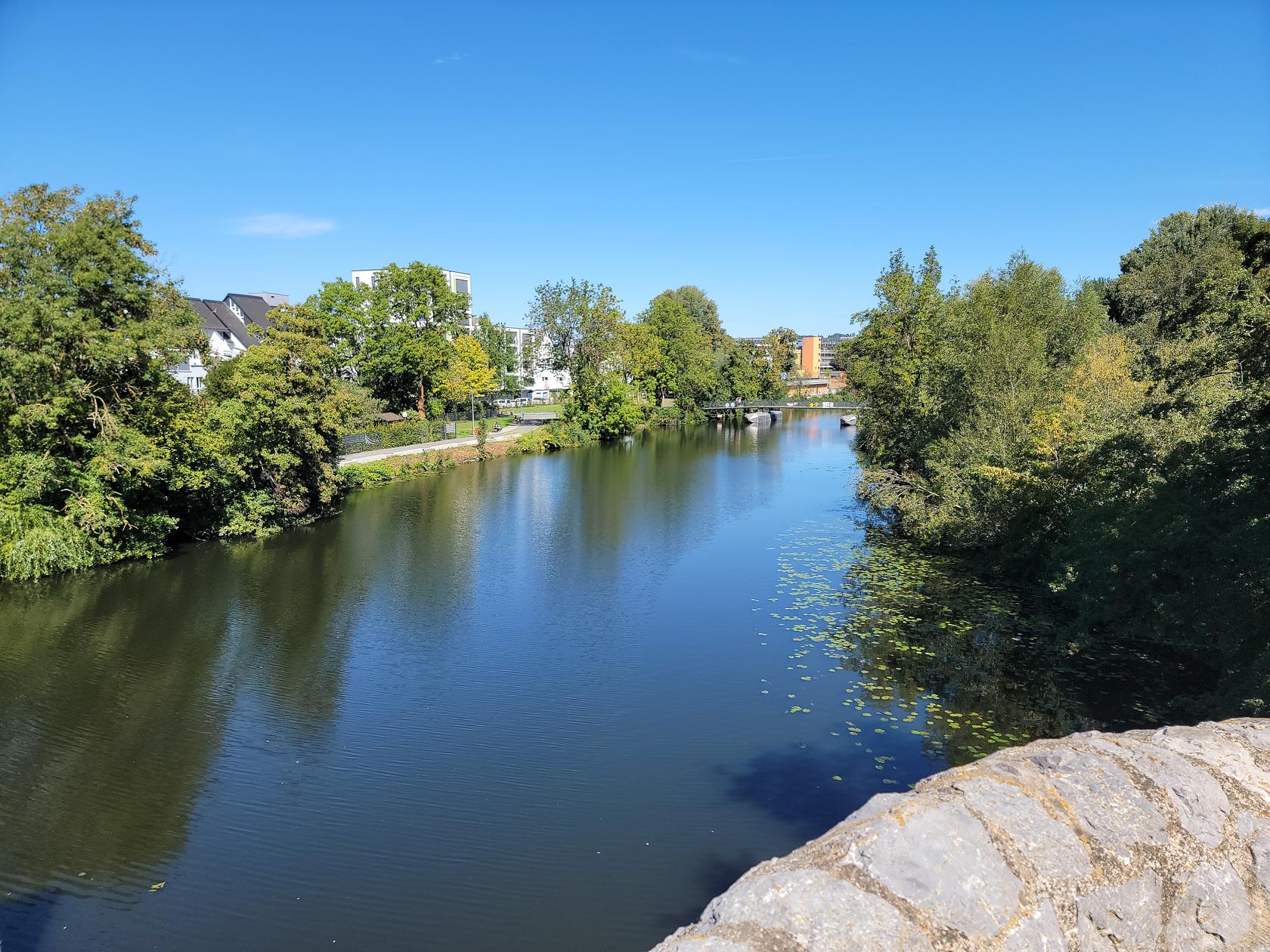
Lahn River – Wetzlar, Germany
Alte Lahnbrücke – Lahn River – Wetzlar, Germany
Alte Lahnbrücke – Lahn River – Wetzlar, Germany
Getting There
Wetzlar is about a thirty to forty minute drive north of Frankfurt am Main on the A5 and off the A45. It should be noted that at the time of this writing the A5 has some construction that will slow your travels down somewhat, but all-in-all it wasn’t too bad. The city also has a train stop, so that is always an option.
Churches And Cathedrals
Wetzlar Dom
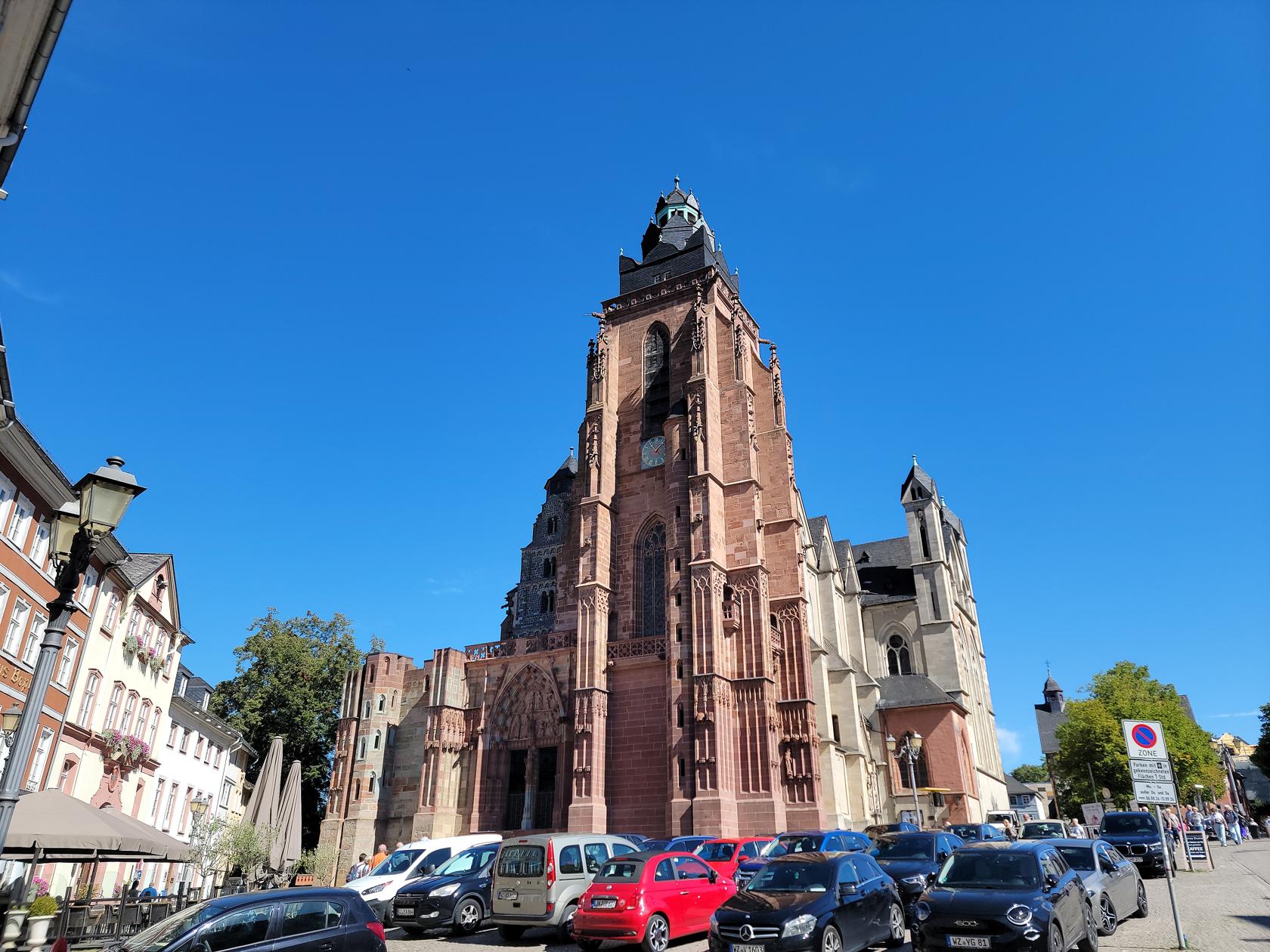
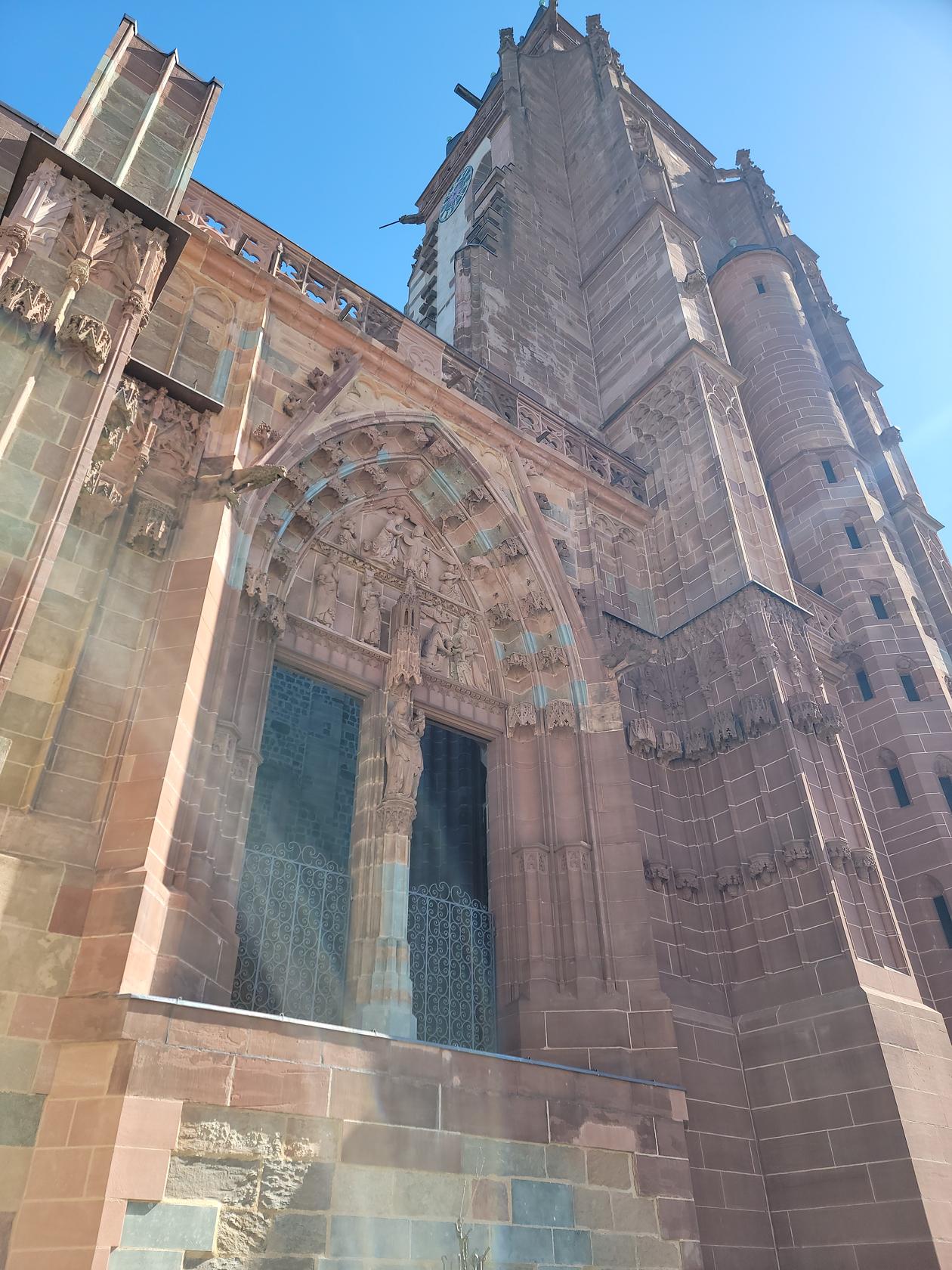
The Wetzlar Dom, or Cathedral of Saint Mary, is a shared catholic and protestant of medieval character. A mixture of Romanesque and Gothic styles, it was never finished and suffered from severe bomb damage during the last war. Several areas of the cathedral were never repaired properly, including the main entrance and the spire, which from a distance looks rather awkward.
Front – Wetzlar Dom – Wetzlar, Germany
Fake Facade and Tympanum – Wetzlar Dom – Wetzlar, Germany
Restaurants
Paulaner Wirtshaus Wetzlar
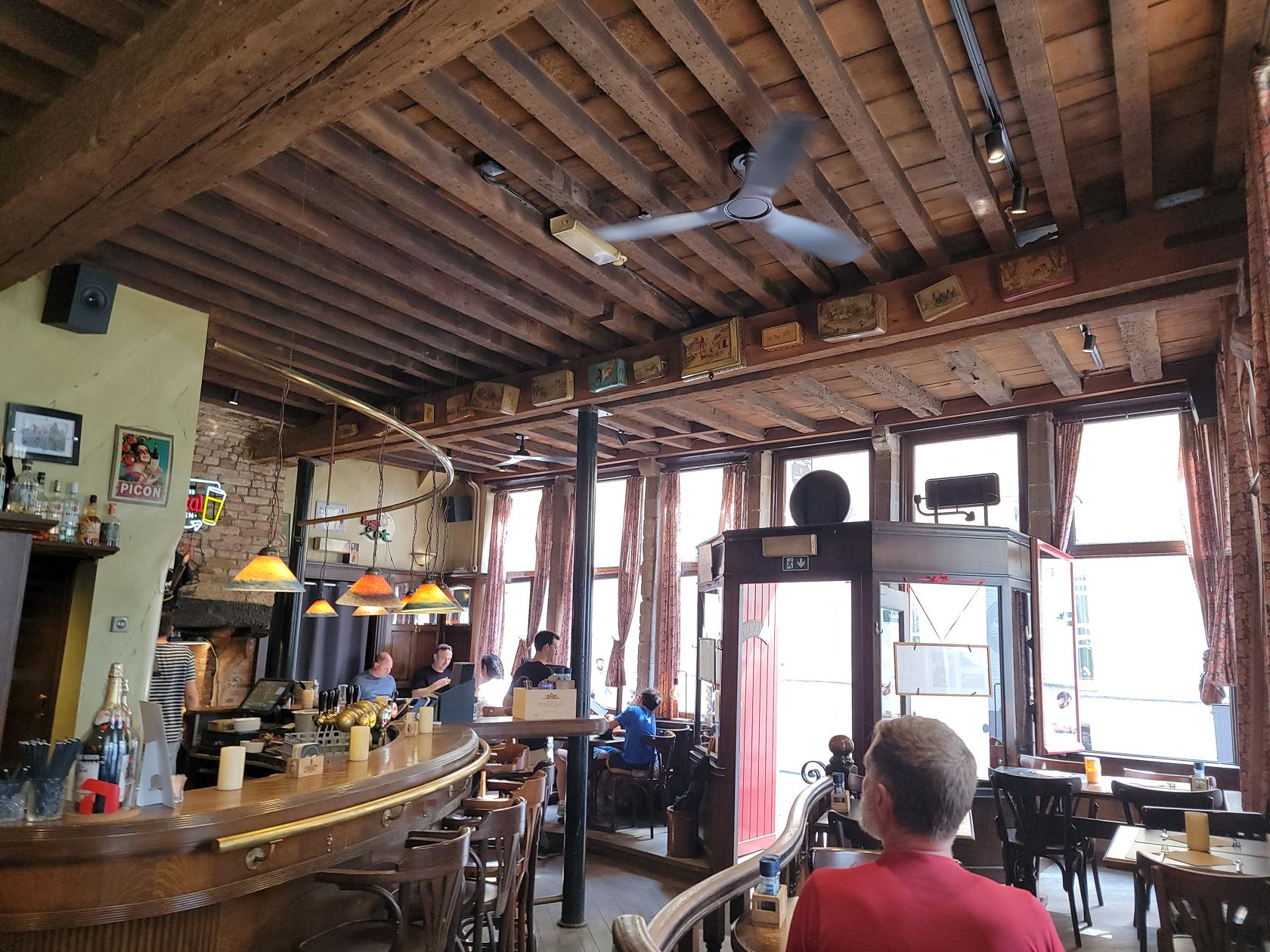
Located am Haarplatz, the Paulaner Wirtshaus Wetzlar is an excellent choice for food. Located near the Wehr on the Lahn, you can hear the rapids as you enjoy a nice glass of beer on a warm day and the food, which is a mixture of Bavarian and Swabian cuisines. You can actually order a soup with Spätzle in it!
Menu – Wirtshaus Wetzlar – Am Haarplatz – Lahn River – Wetzlar, Germany
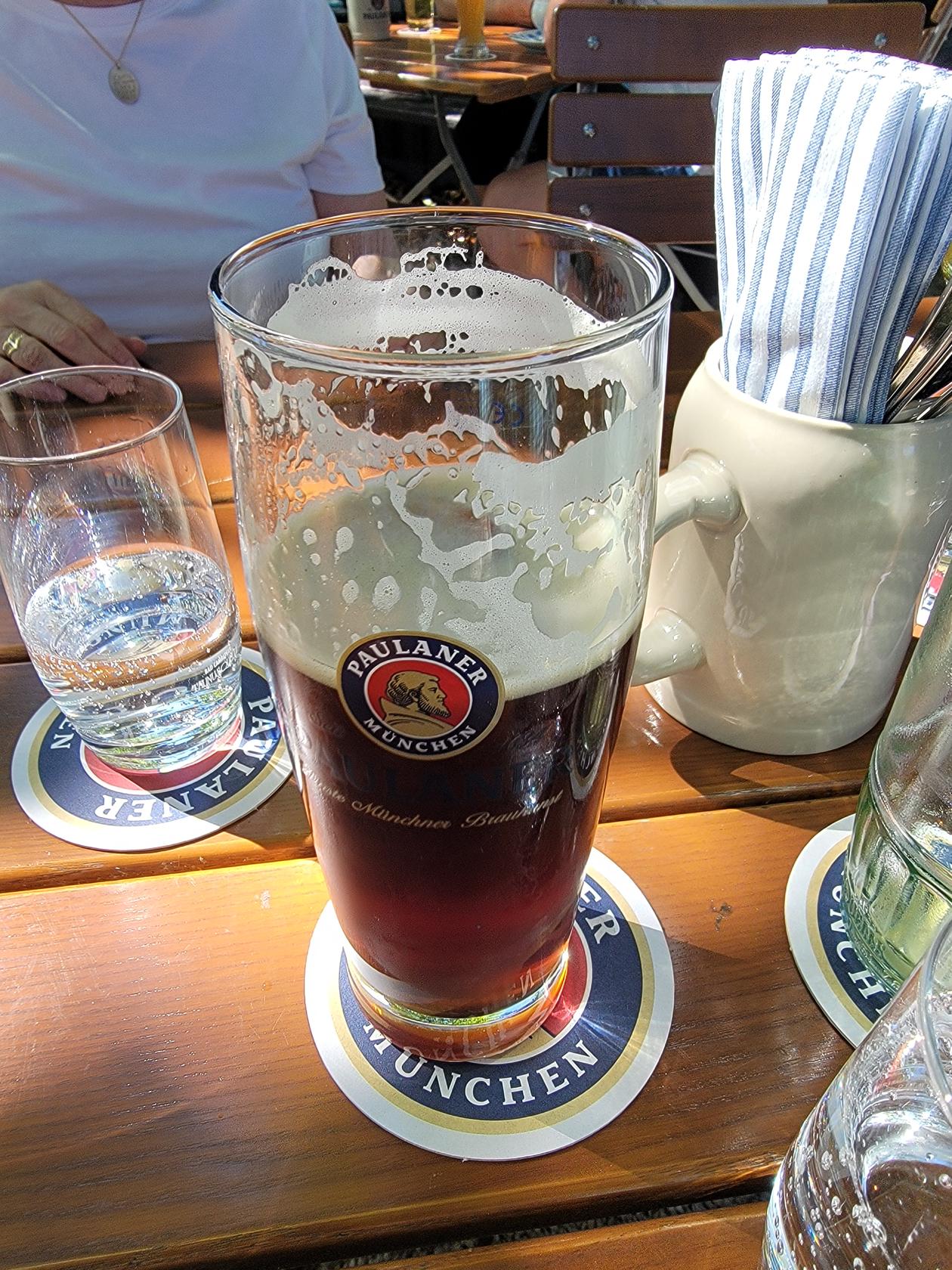
Beer – Wirtshaus Wetzlar – Am Haarplatz – Lahn River – Wetzlar, Germany
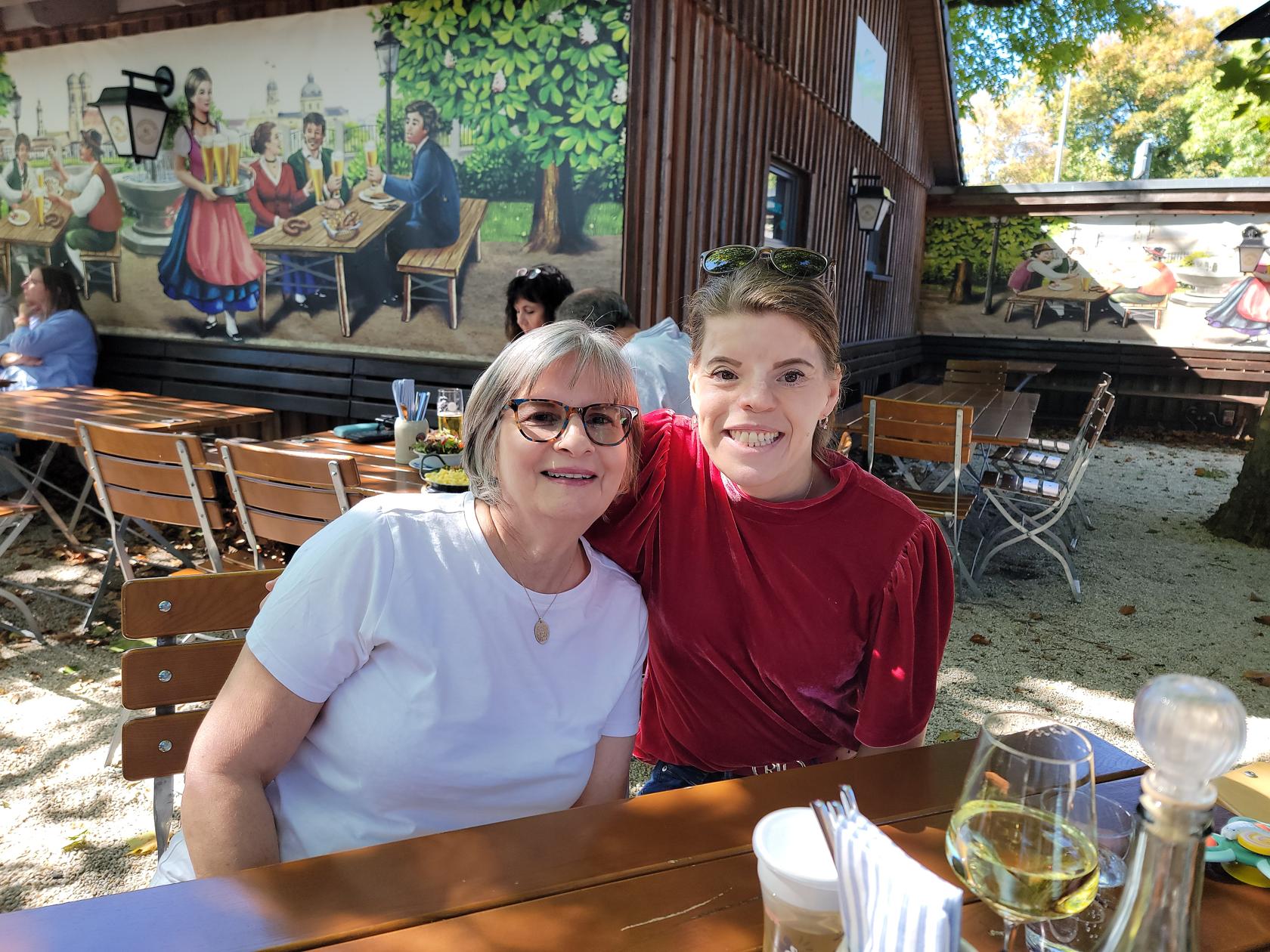
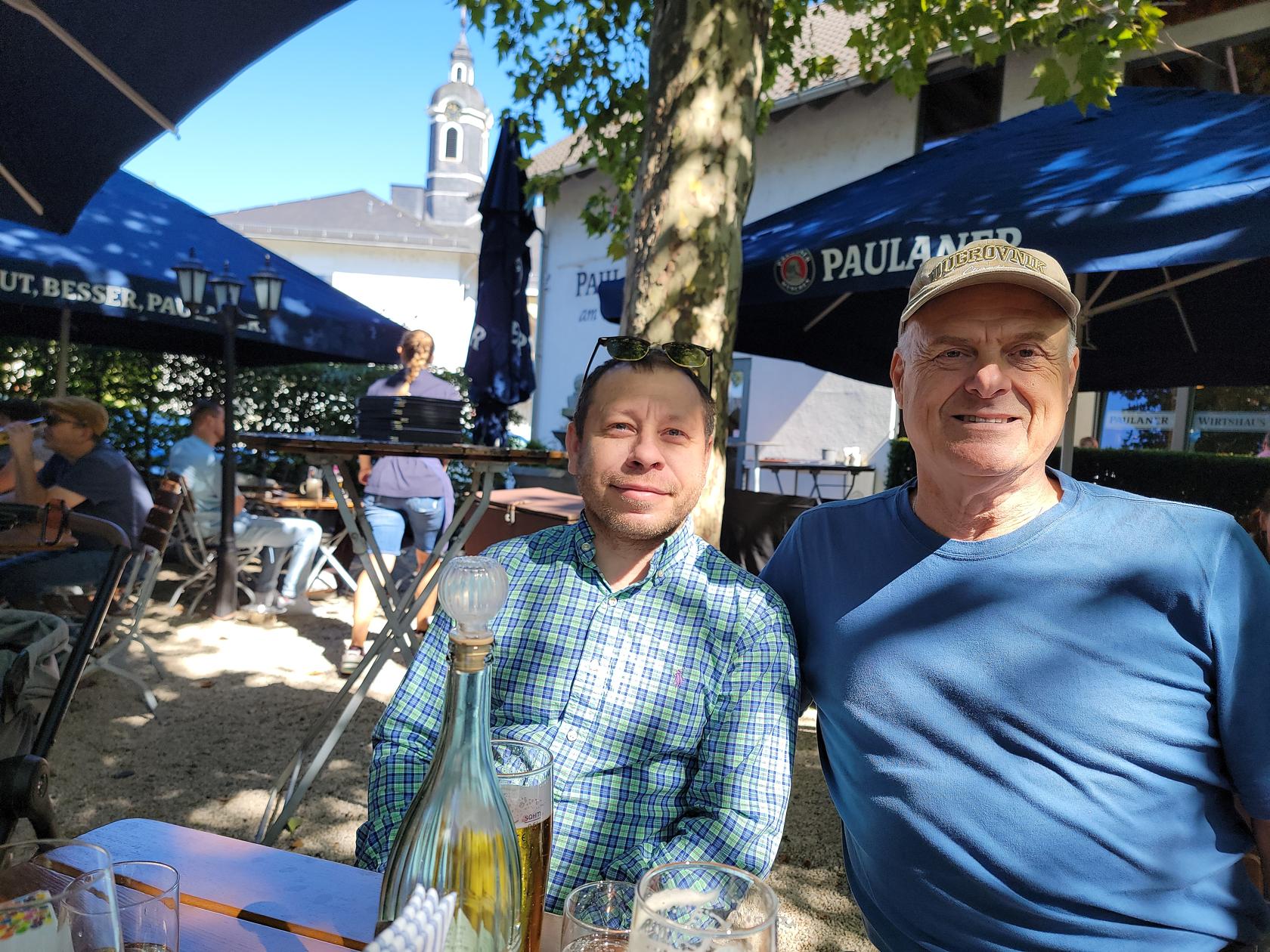
Patti and Ericka – Wirtshaus Wetzlar – Am Haarplatz – Lahn River – Wetzlar, Germany
Gabi and Erick – Wirtshaus Wetzlar – Am Haarplatz – Lahn River – Wetzlar, Germany
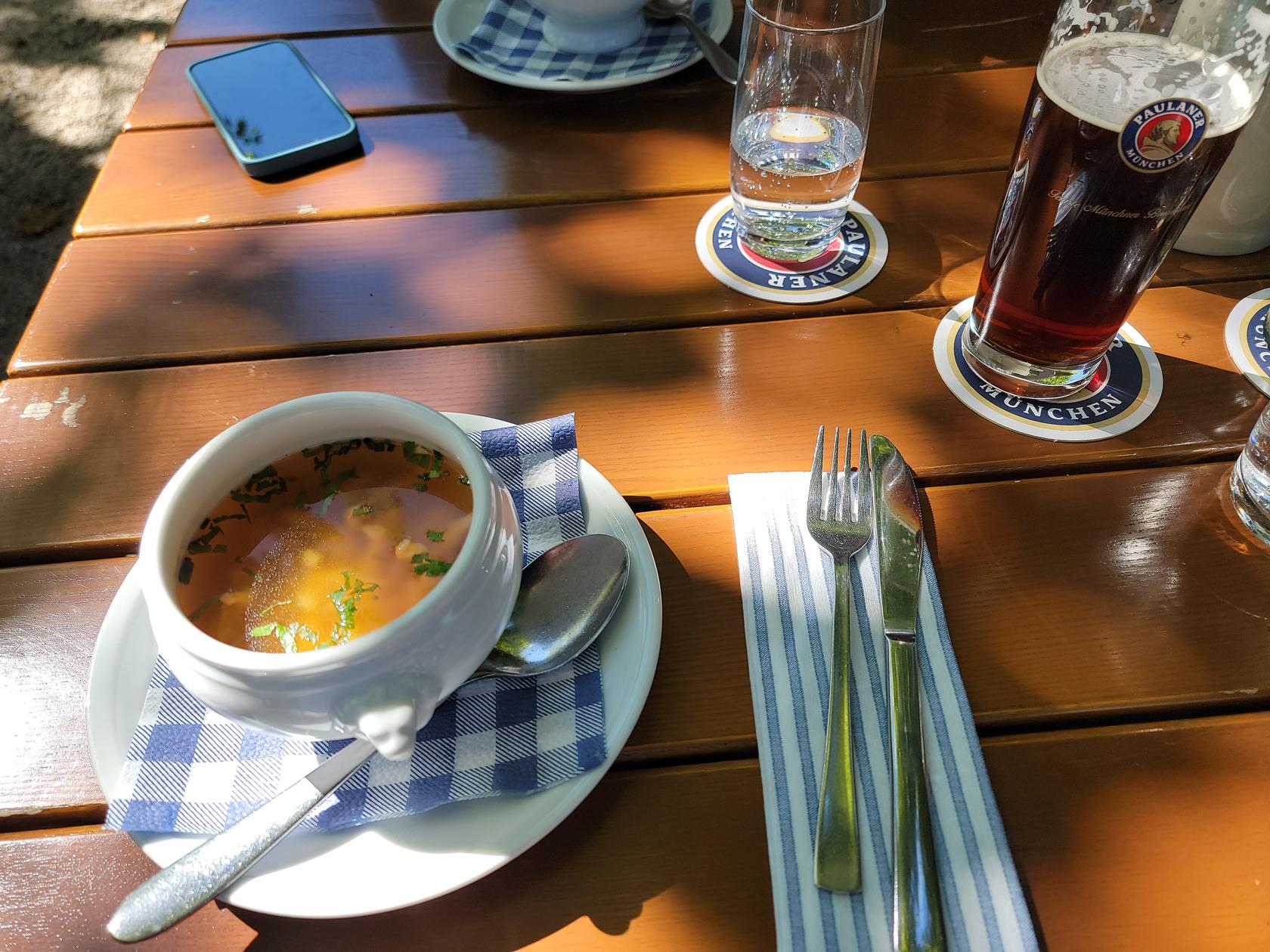
Soup with Spätzle – Wirtshaus Wetzlar – Am Haarplatz – Lahn River – Wetzlar, Germany
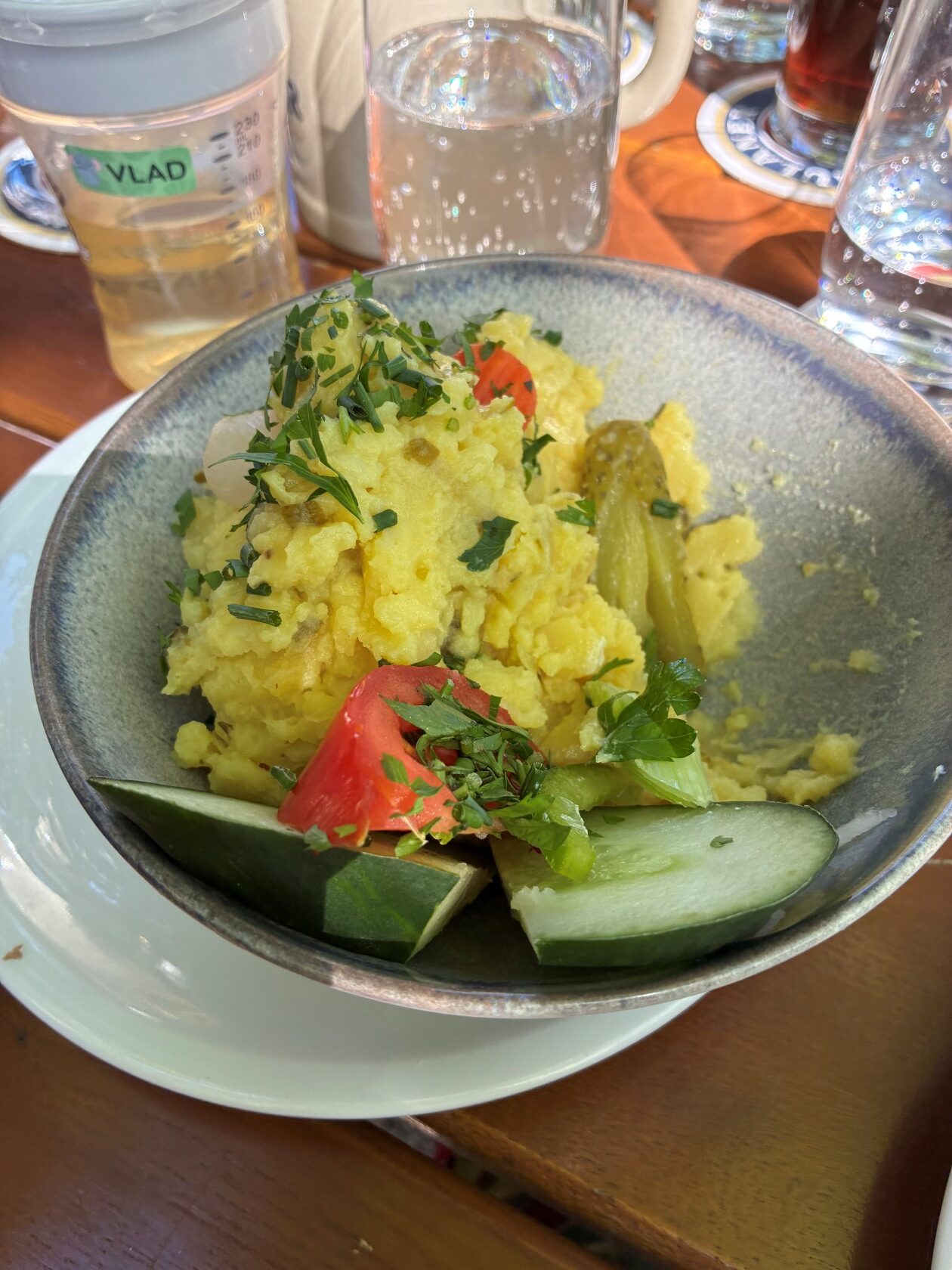
Kartoffelsalat – Wirtshaus Wetzlar – Am Haarplatz – Lahn River – Wetzlar, Germany
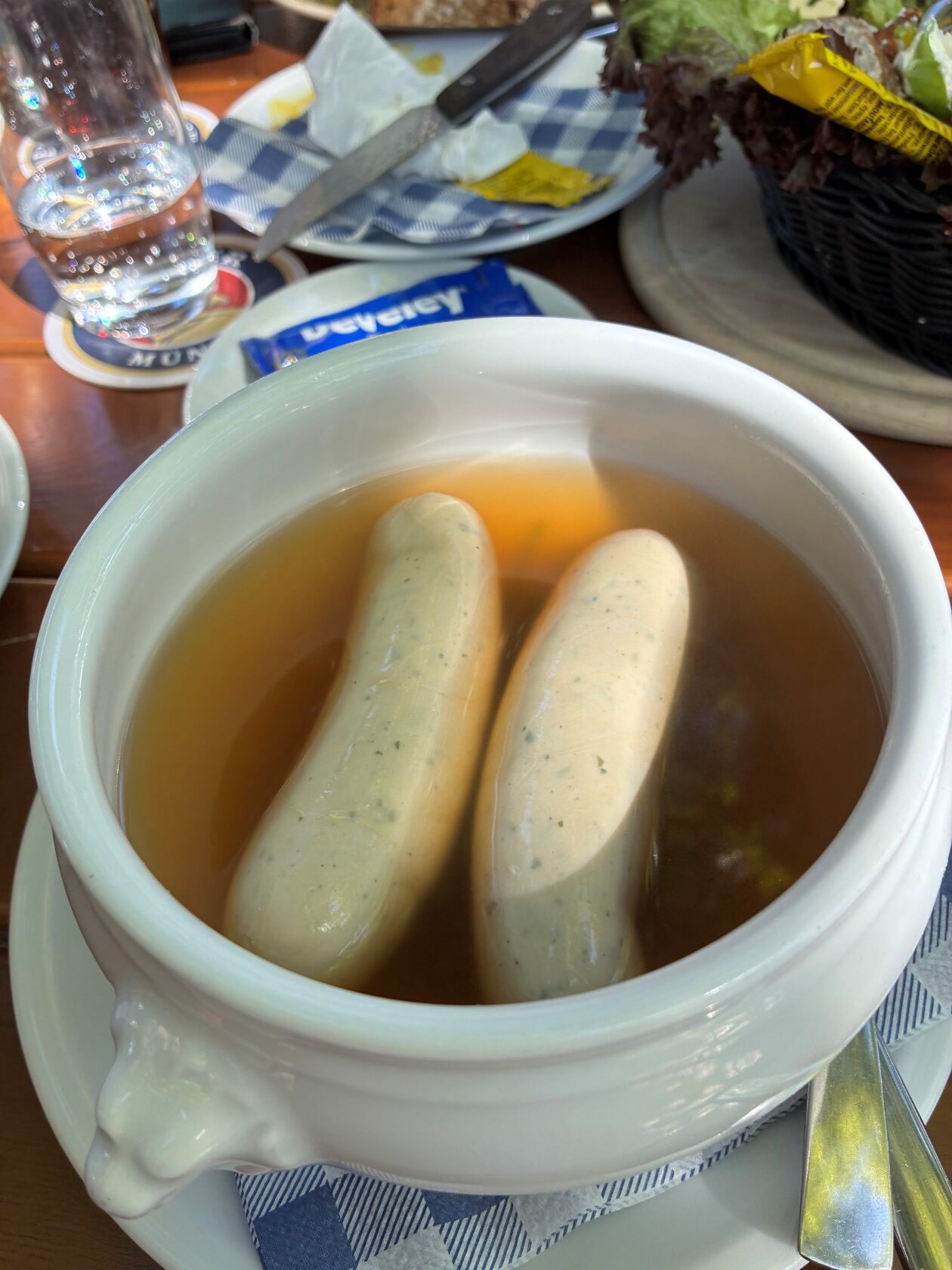
Weisswurst in Broth – Wirtshaus Wetzlar – Am Haarplatz – Lahn River – Wetzlar, Germany
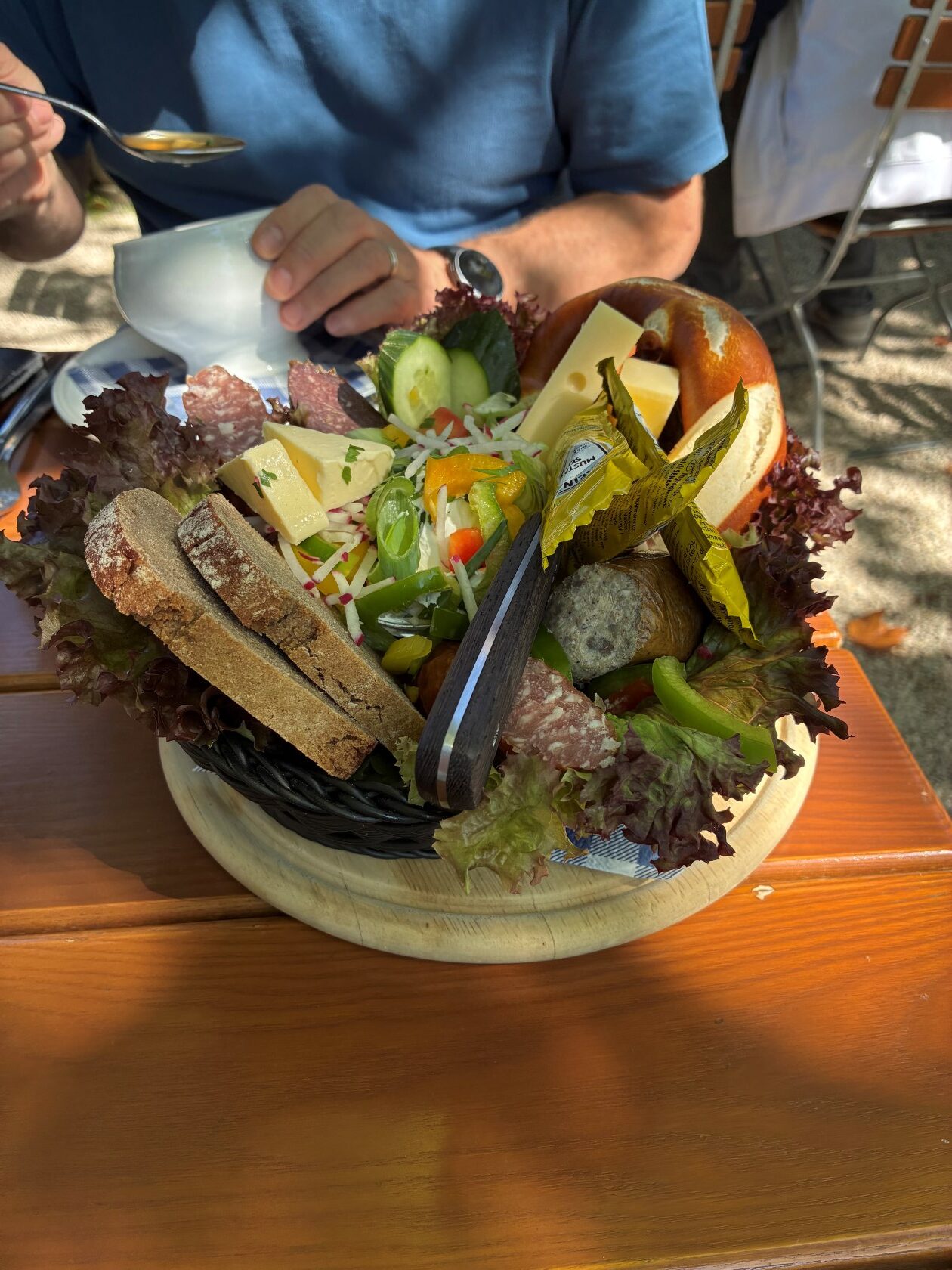
Brotkorb – Wirtshaus Wetzlar – Am Haarplatz – Lahn River – Wetzlar, Germany
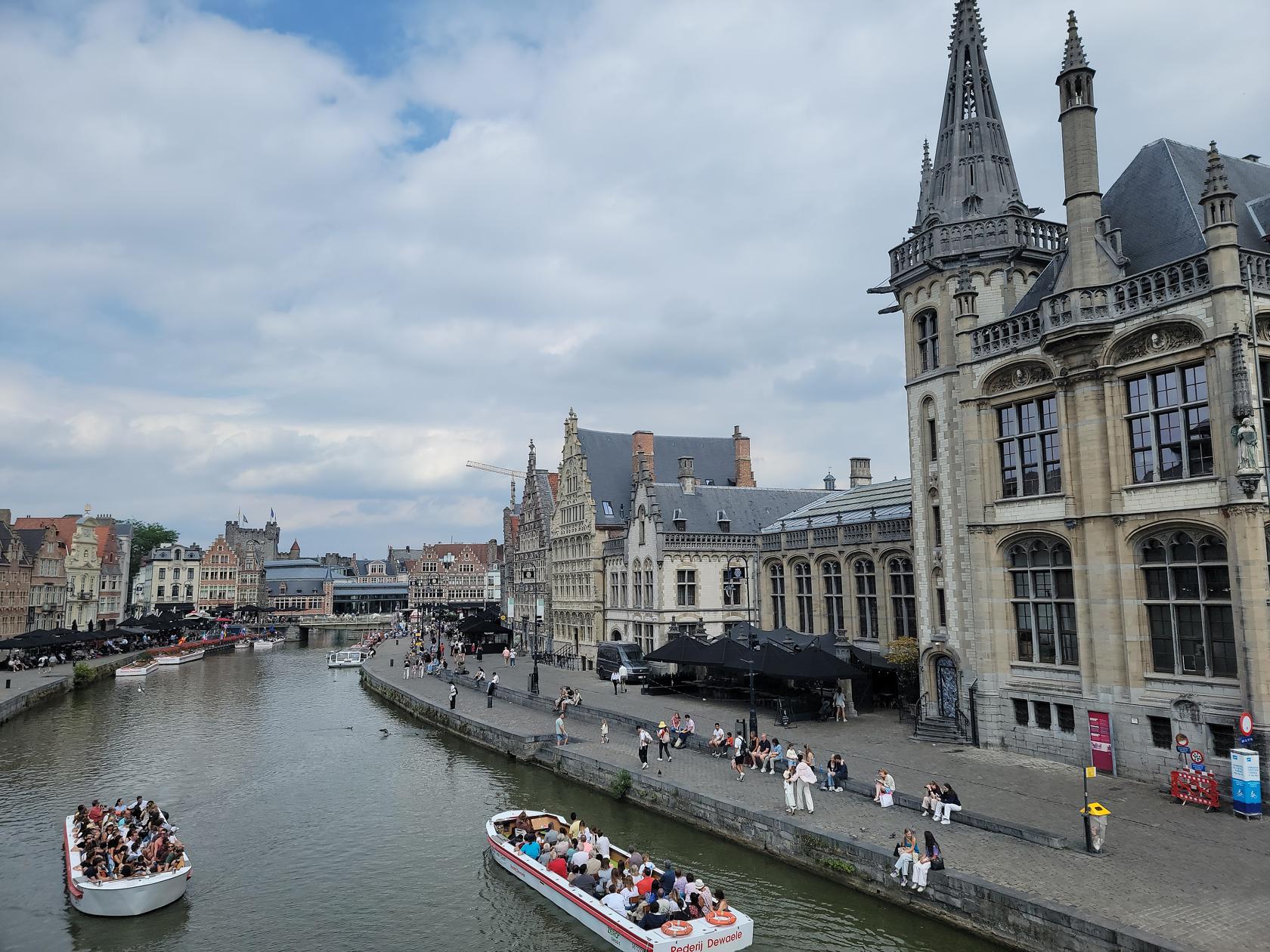
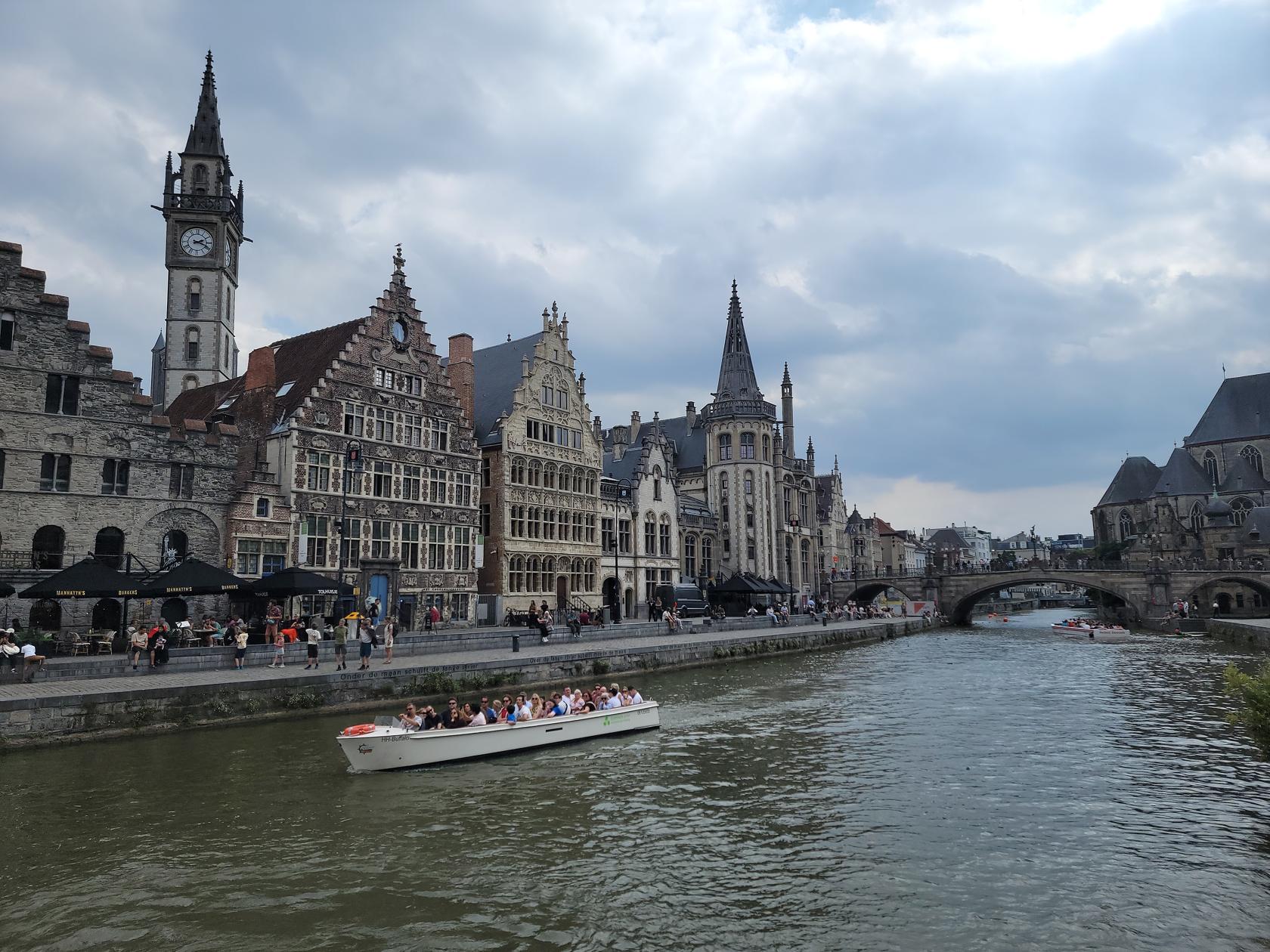
At the confluence of the rivers Leie and Scheldt is the city of Gent. However, with such an intricate system of canals, it is difficult to denote a river from a canal when walking the ancient city. It is probably only important to note that the system of waterways enabled the city to trade goods all along the northern European continent. At its economic height, the city became rich and an important trading partner with the Hanseatic League, which more or less ruled trade along that same line of coast.
Graslei – Grasbrug – Gent, Belgium
Gent
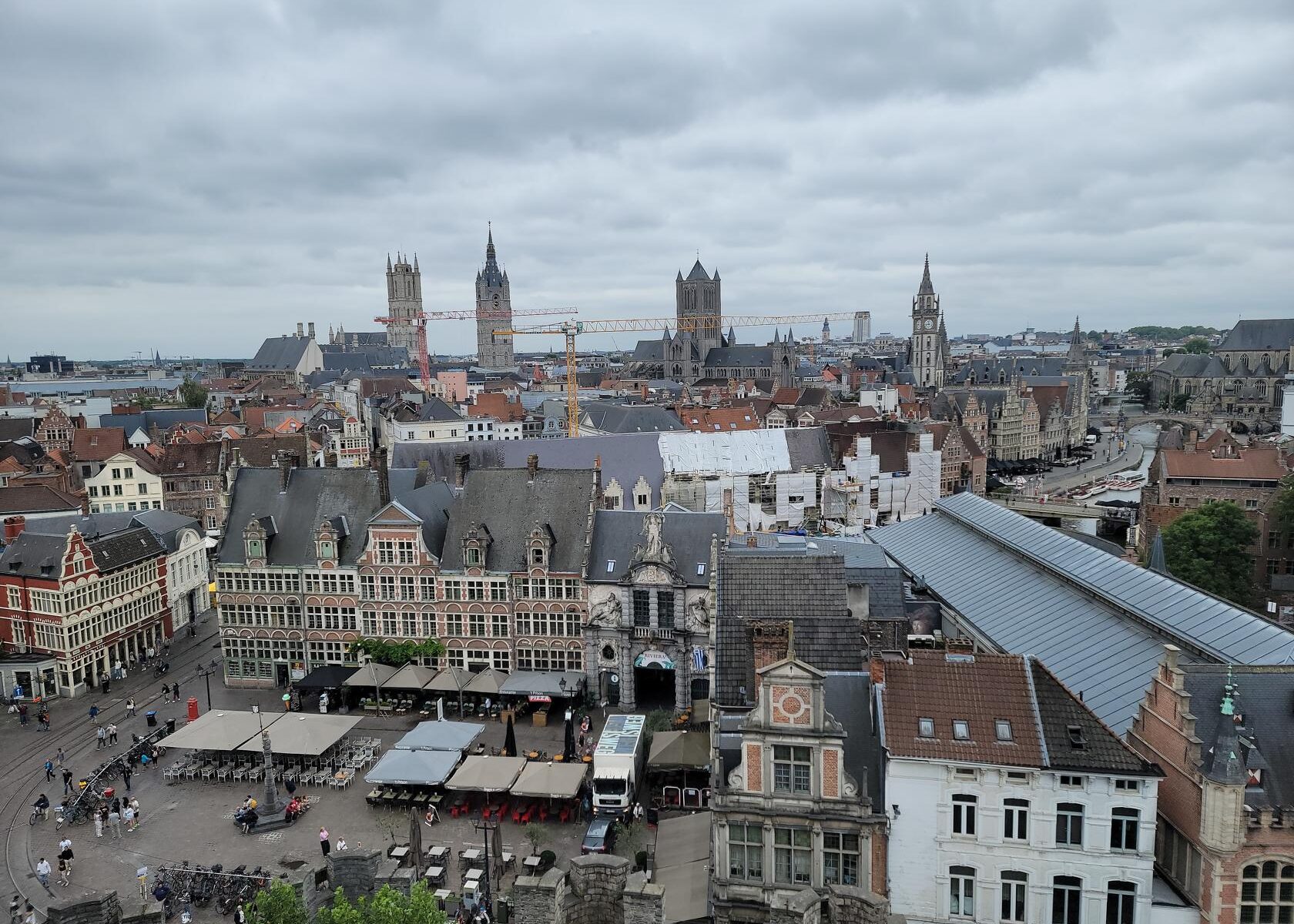
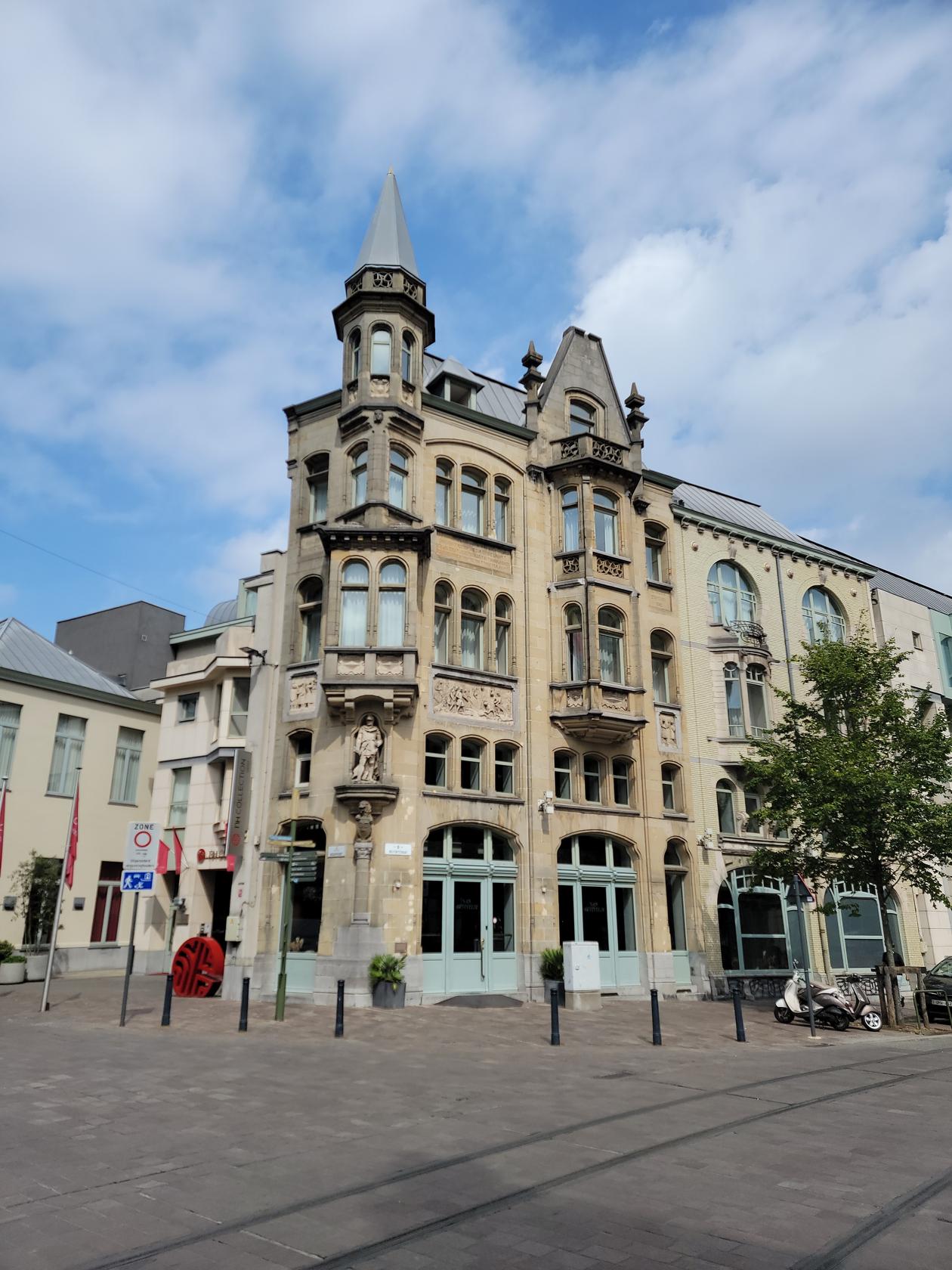
The contemporary city of Gent is a confusing mix of old and new. It appears that the citizens of Gent do not make building decisions on historical estetic. Therefore, you will often find modern, boxey and bland buildings next to the older architectures, which are a bit bland in and of themselves, but maintain artistic quality to them the newer buildings lack.
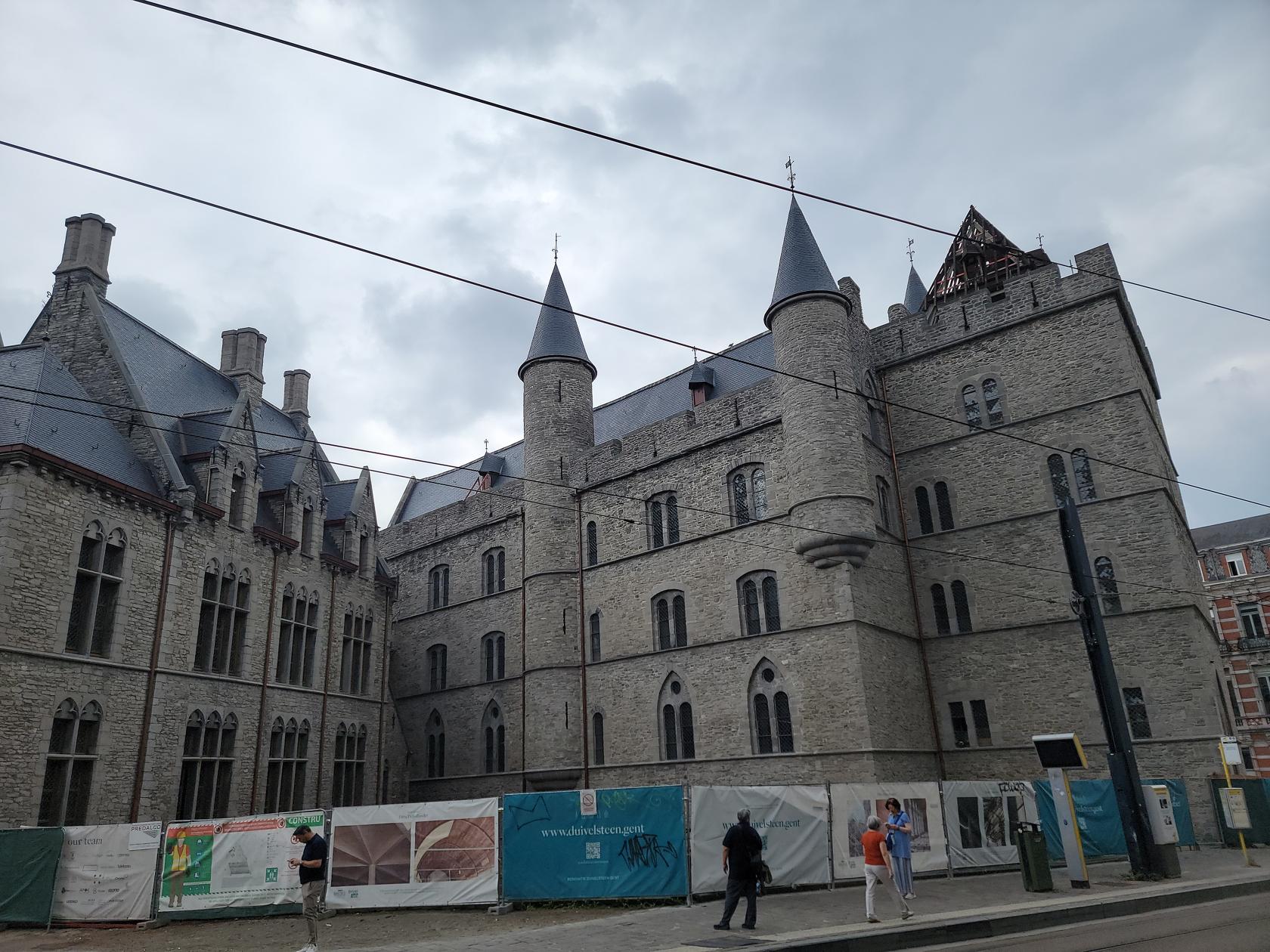
Geeraard de Duivelsteen – Gent, Belgium
Vlaanderanstraat – Gent, Belgium
Geeraard de Duivelsteen – Gent, Belgium
De Oogappel – Gent, Belgium
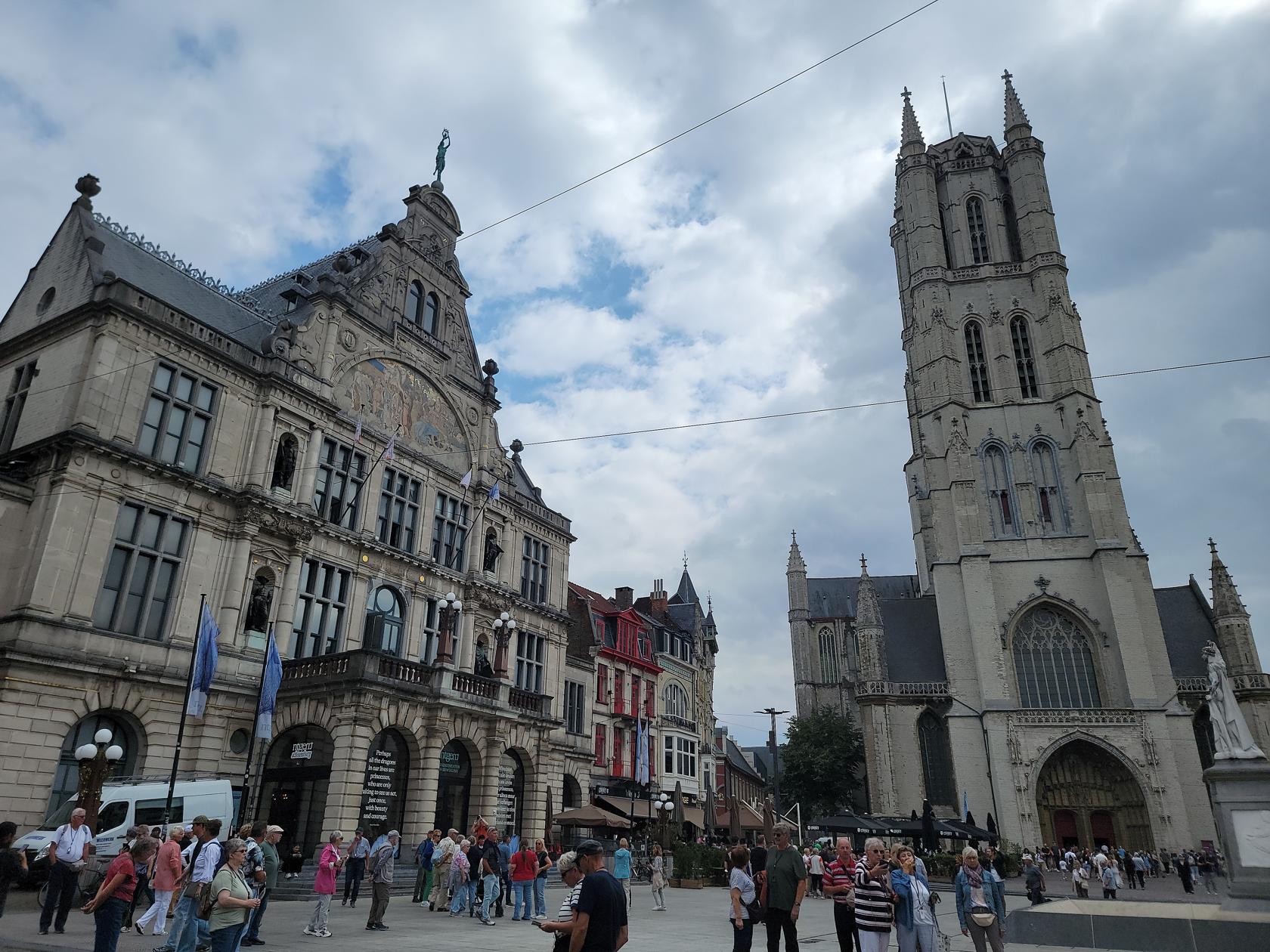
Lakenhalle – Gent, Belgium
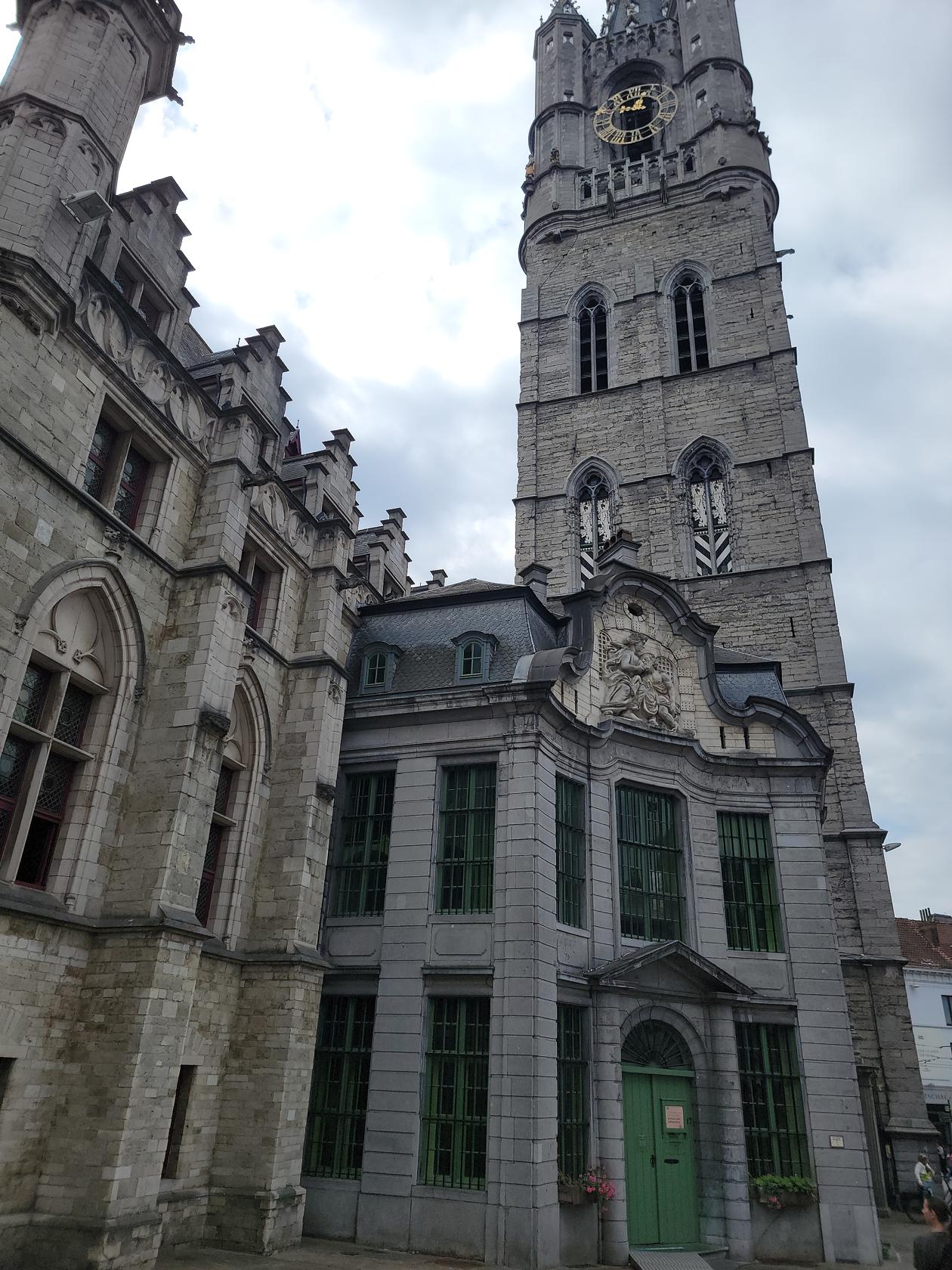
Lakenhalle and Belfry – Gent, Belgium
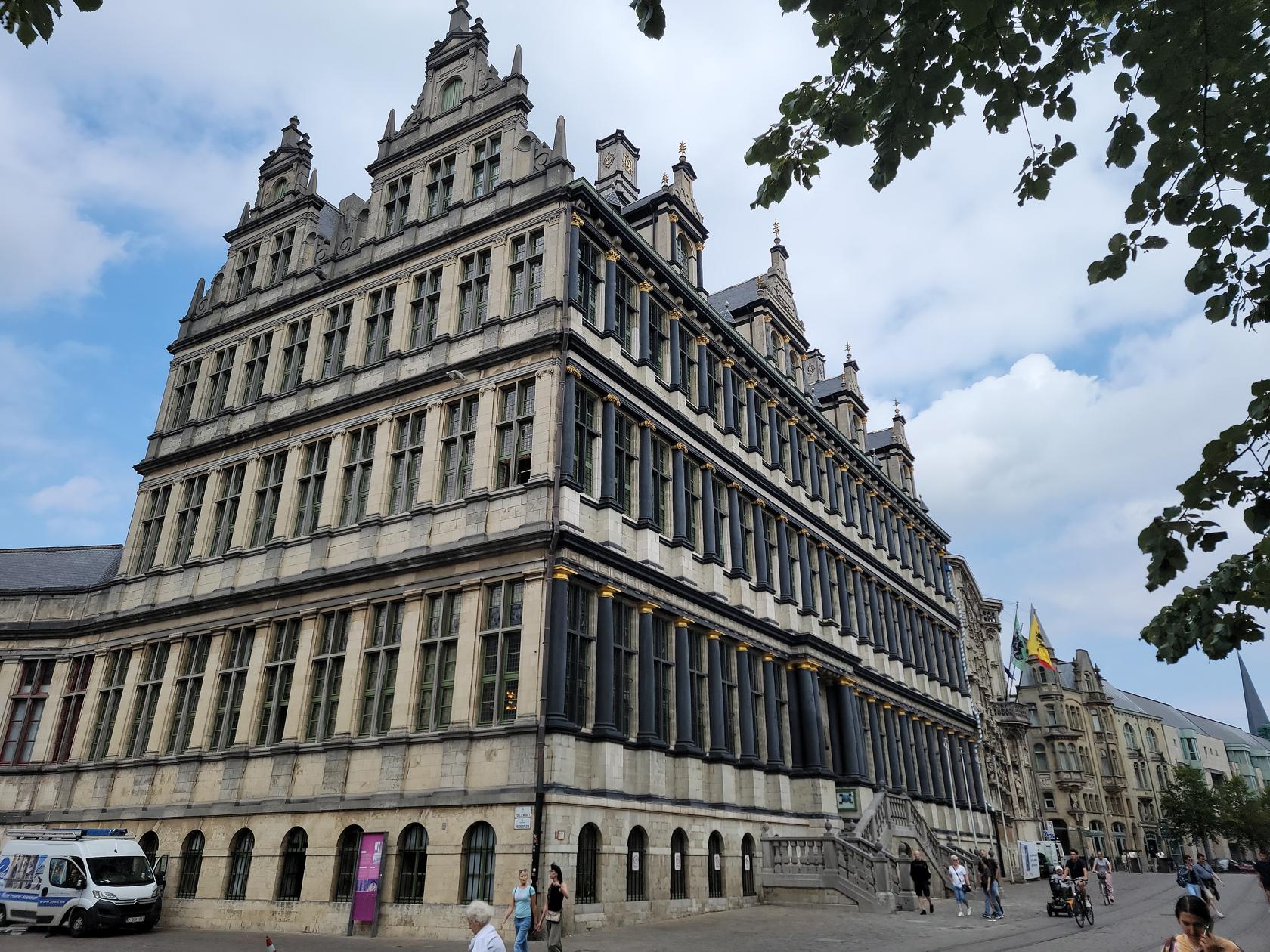
City Hall – Gent, Belgium
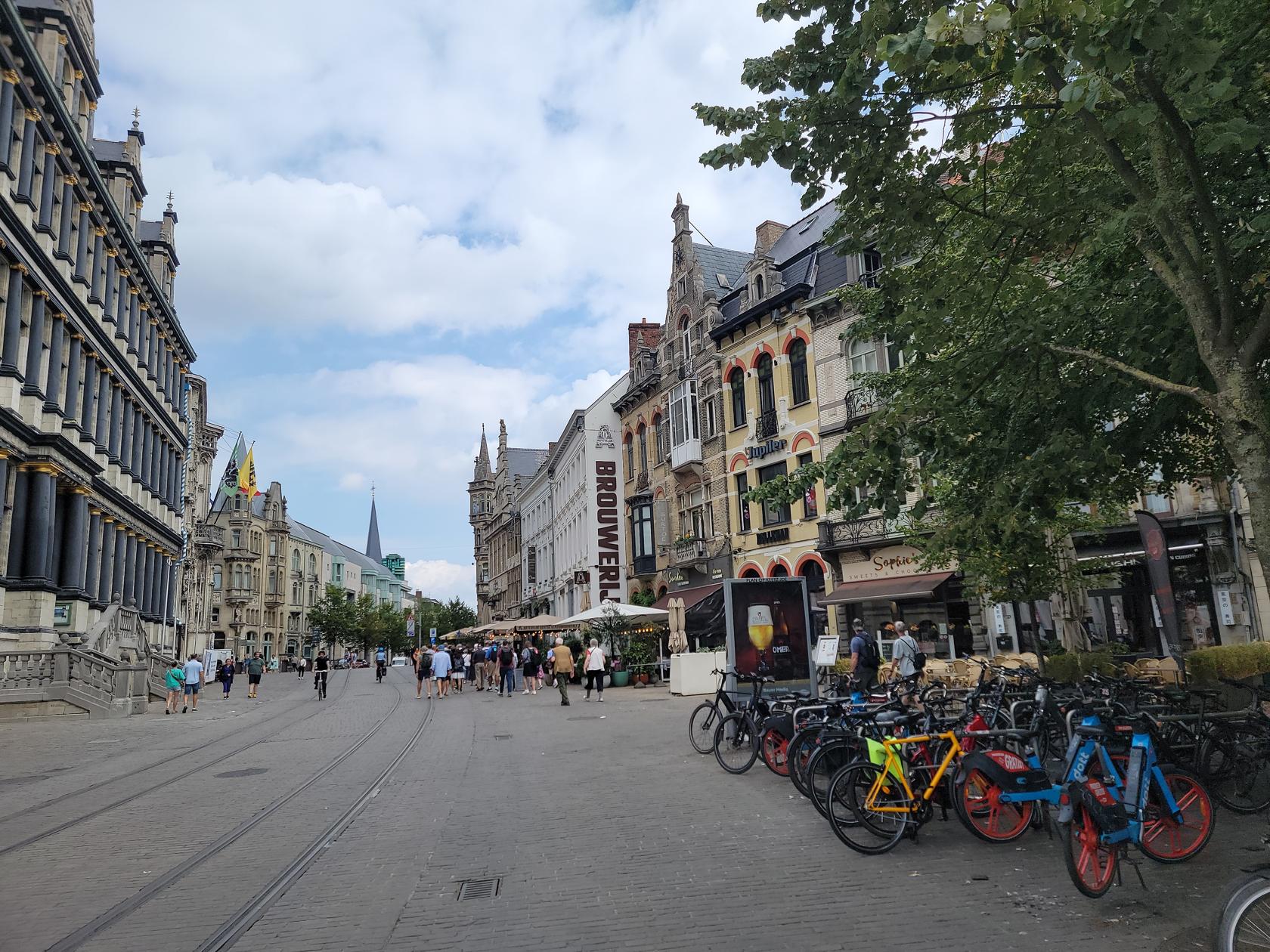
Belfortstraat – Gent, Belgium
Mammelokker and Belfry – Gent, Belgium
Belfortstraat – Gent, Belgium
Getting There
From Brugge we took the InterCity train to Dampoort train station, a dismal if almost forgotten stop (from the looks of it) on the Flemish rail system. It is actually interesting to note that it is so forgotten, you must use a phone application to call a taxi or use the bus system, since there is no line of taxis outside waiting to help you with your travels. Hence, from there we walked the twenty-five to thirty minutes with luggage in tow to our hotel in the center of town.
River Leie Waterfront
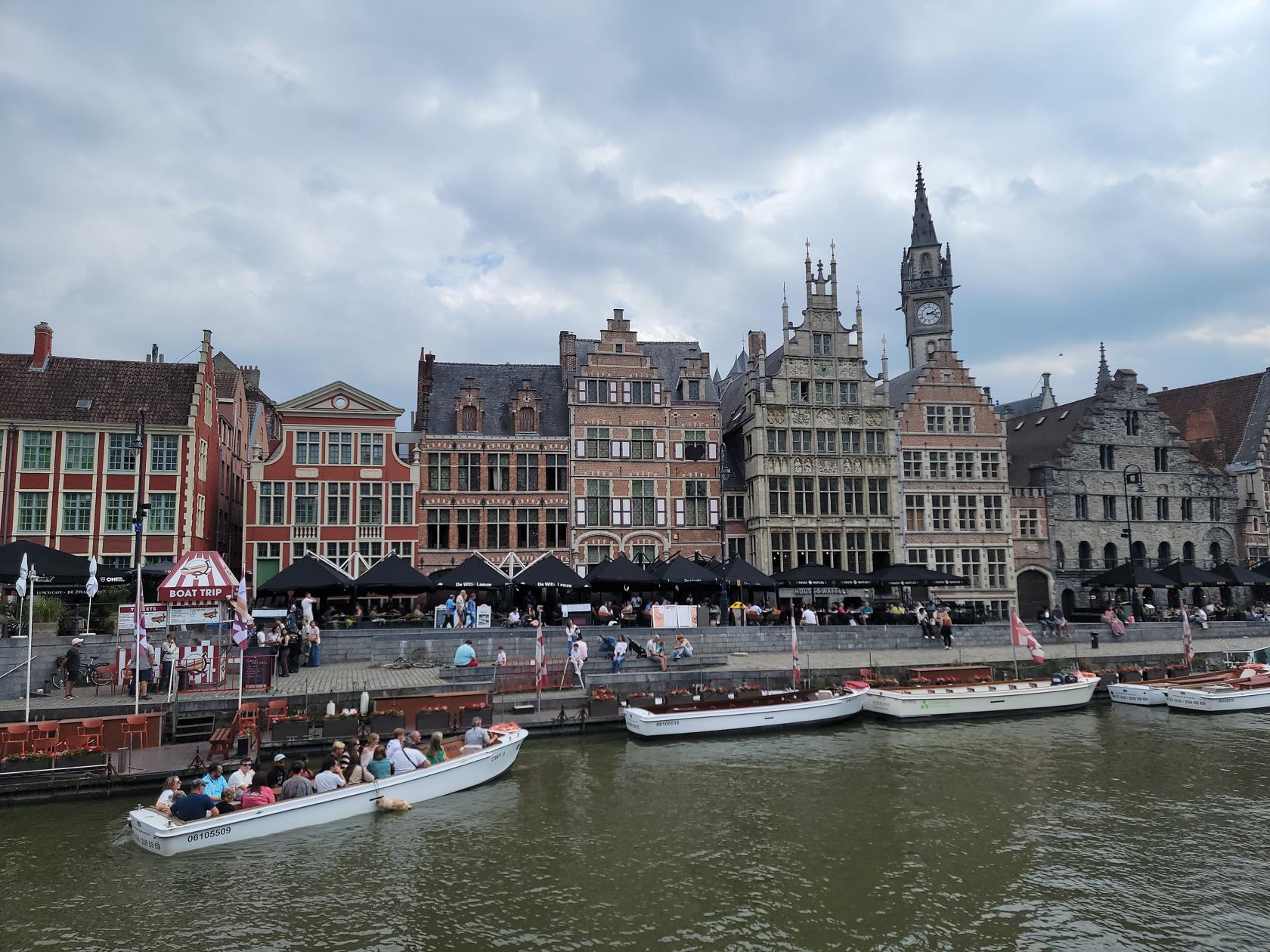
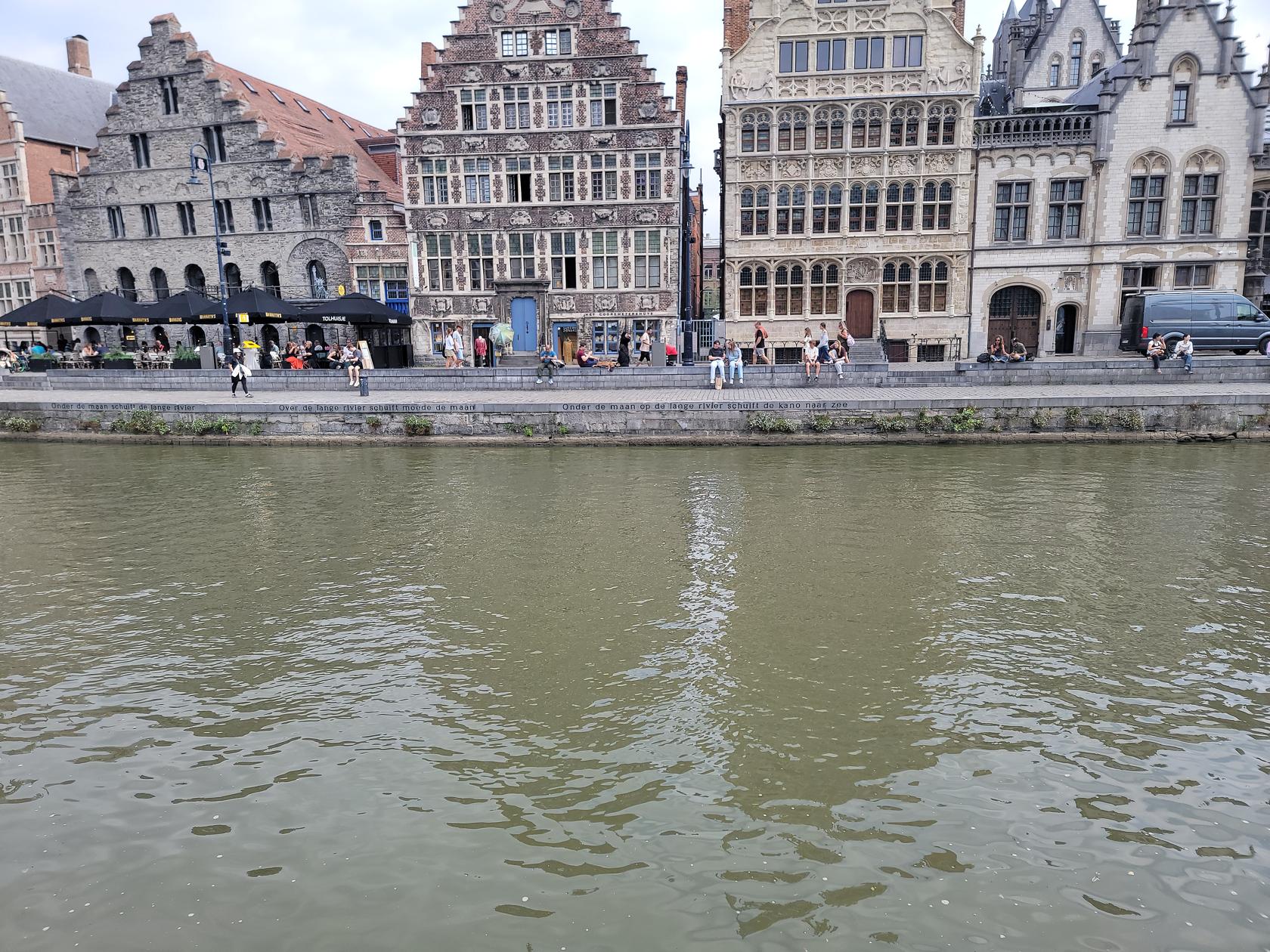
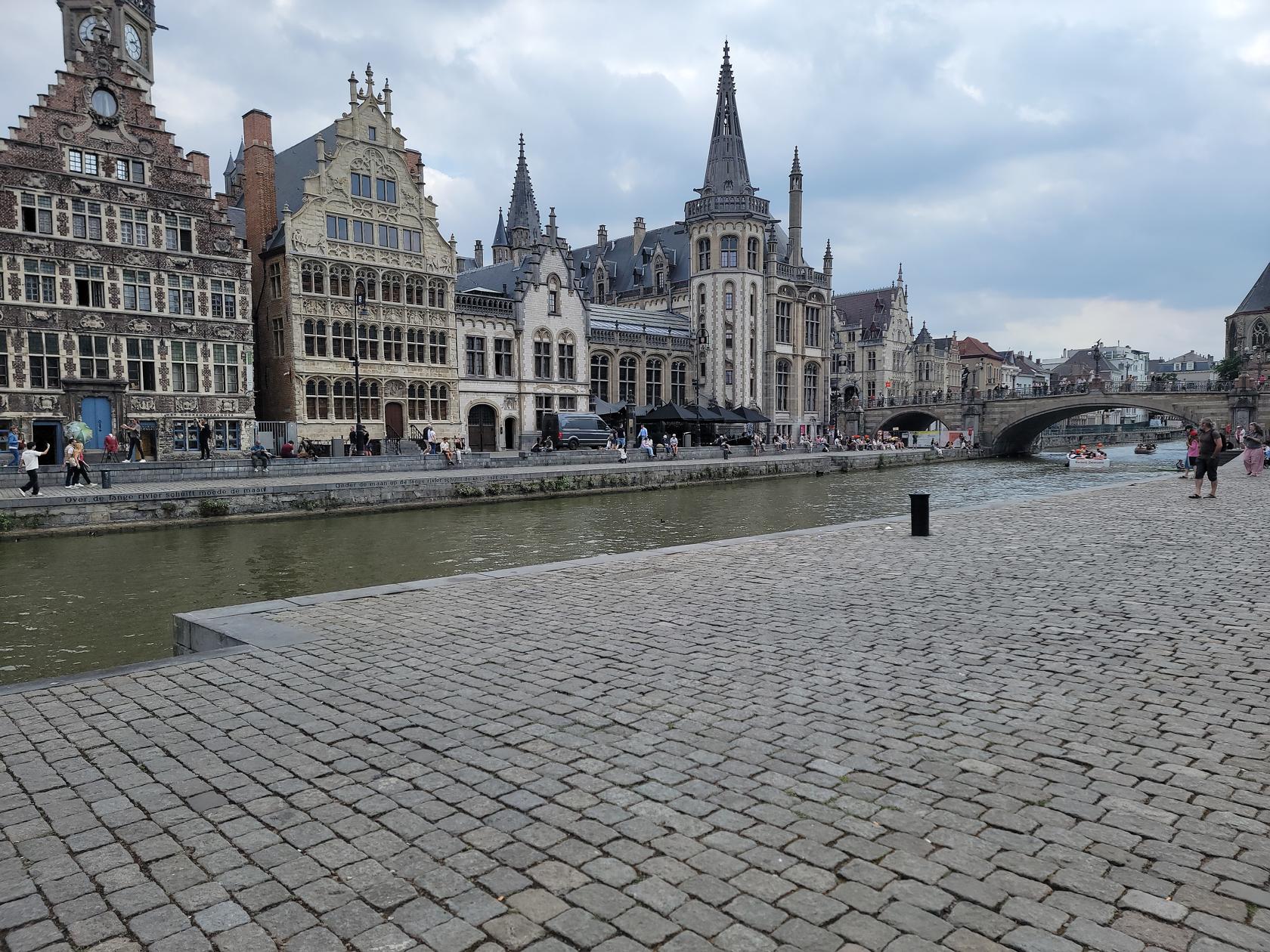
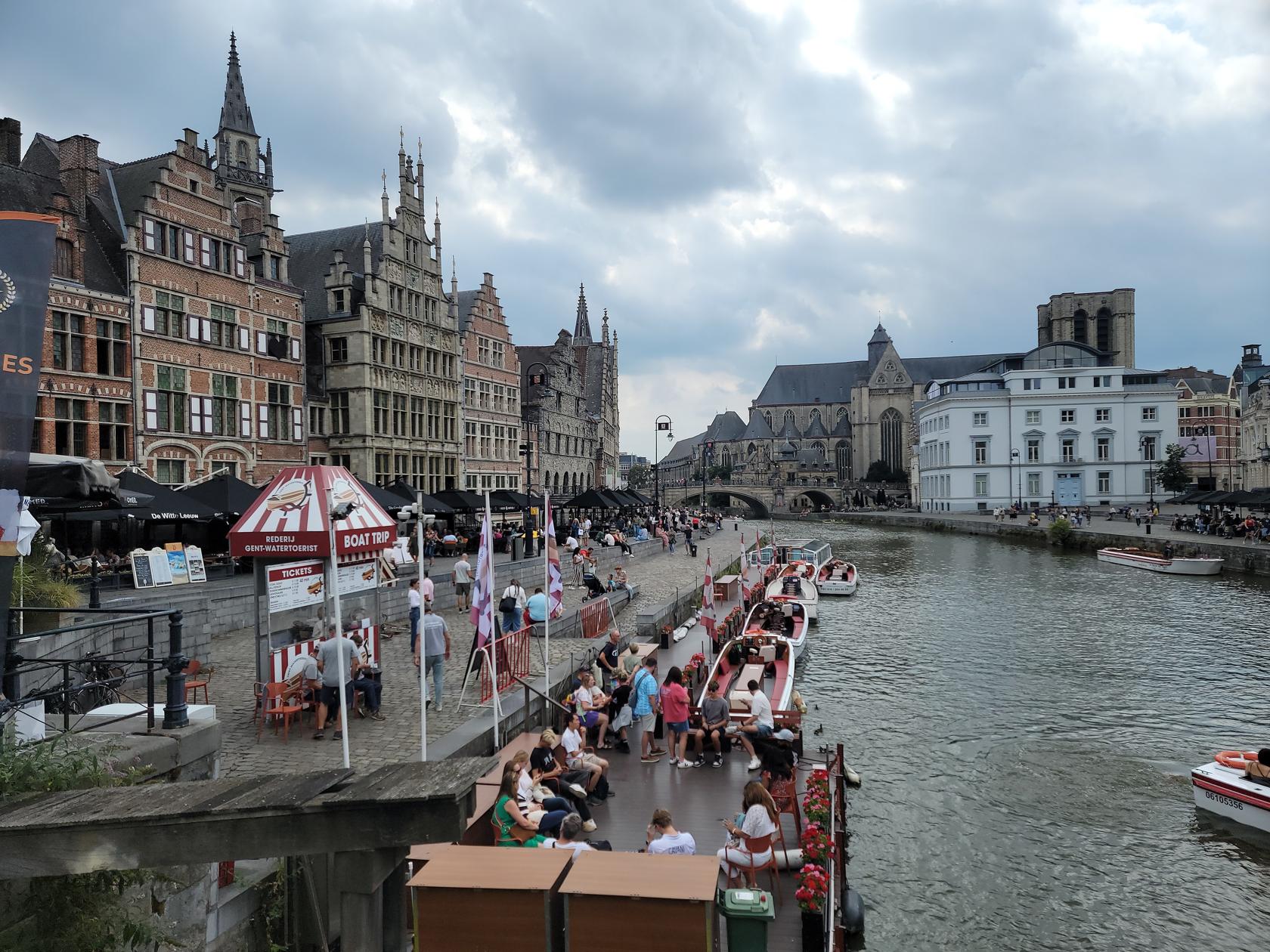
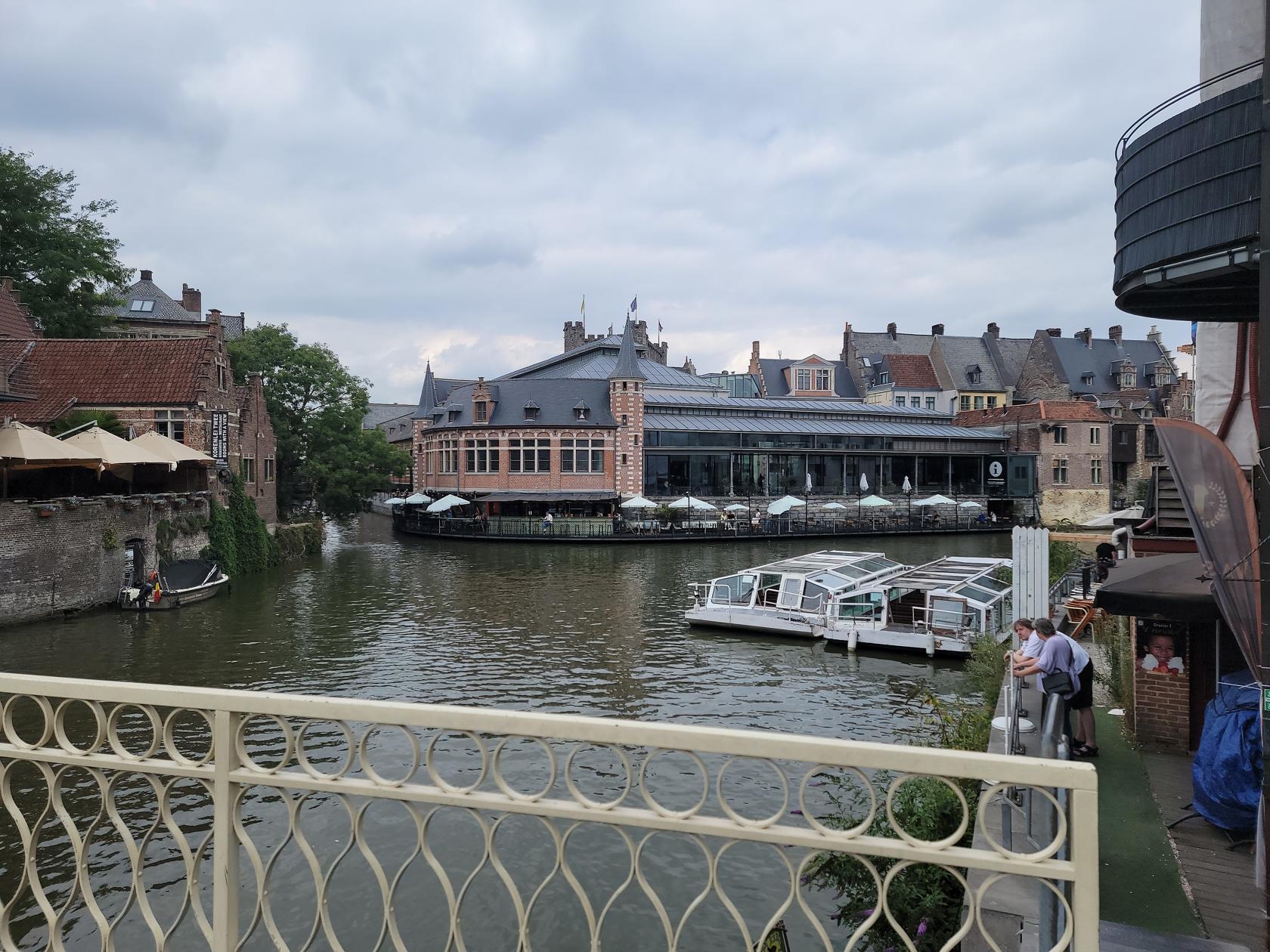
Cutting through the city is the canal of the Leie River. It separates the Kronenlei and the Graslei, the waterfront houses on either side or banks of the canal.
Graslei – Leie Canal – Gent, Belgium
Graslei – Leie Canal – Gent, Belgium
Graslei – Leie Canal – Gent, Belgium
Graslei – Grasbrug – Gent, Belgium
Leie Canal – Grasbrug – Gent, Belgium
Leie Canal – Grasbrug – Gent, Belgium
Ibis Hotel Centrum
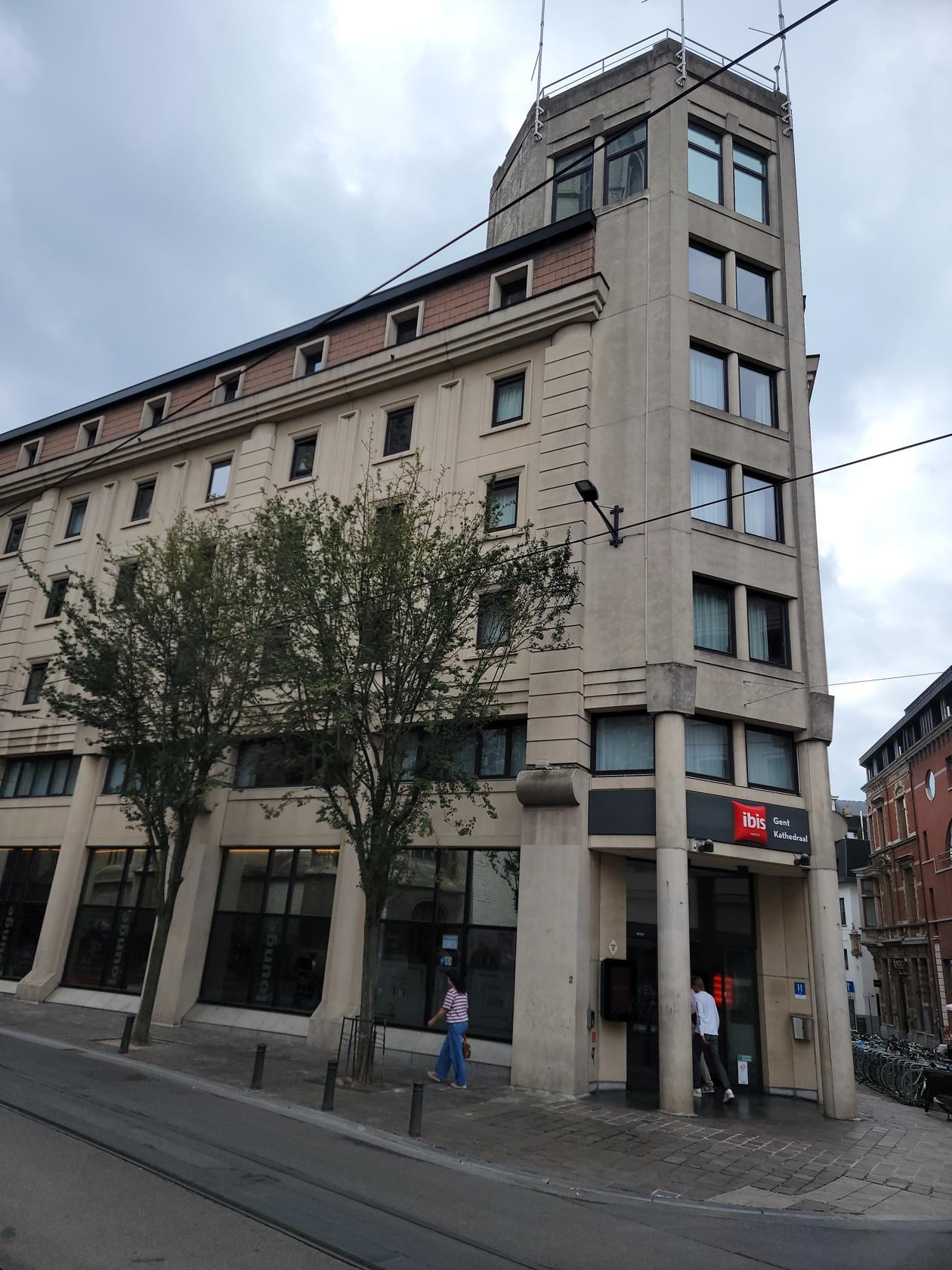
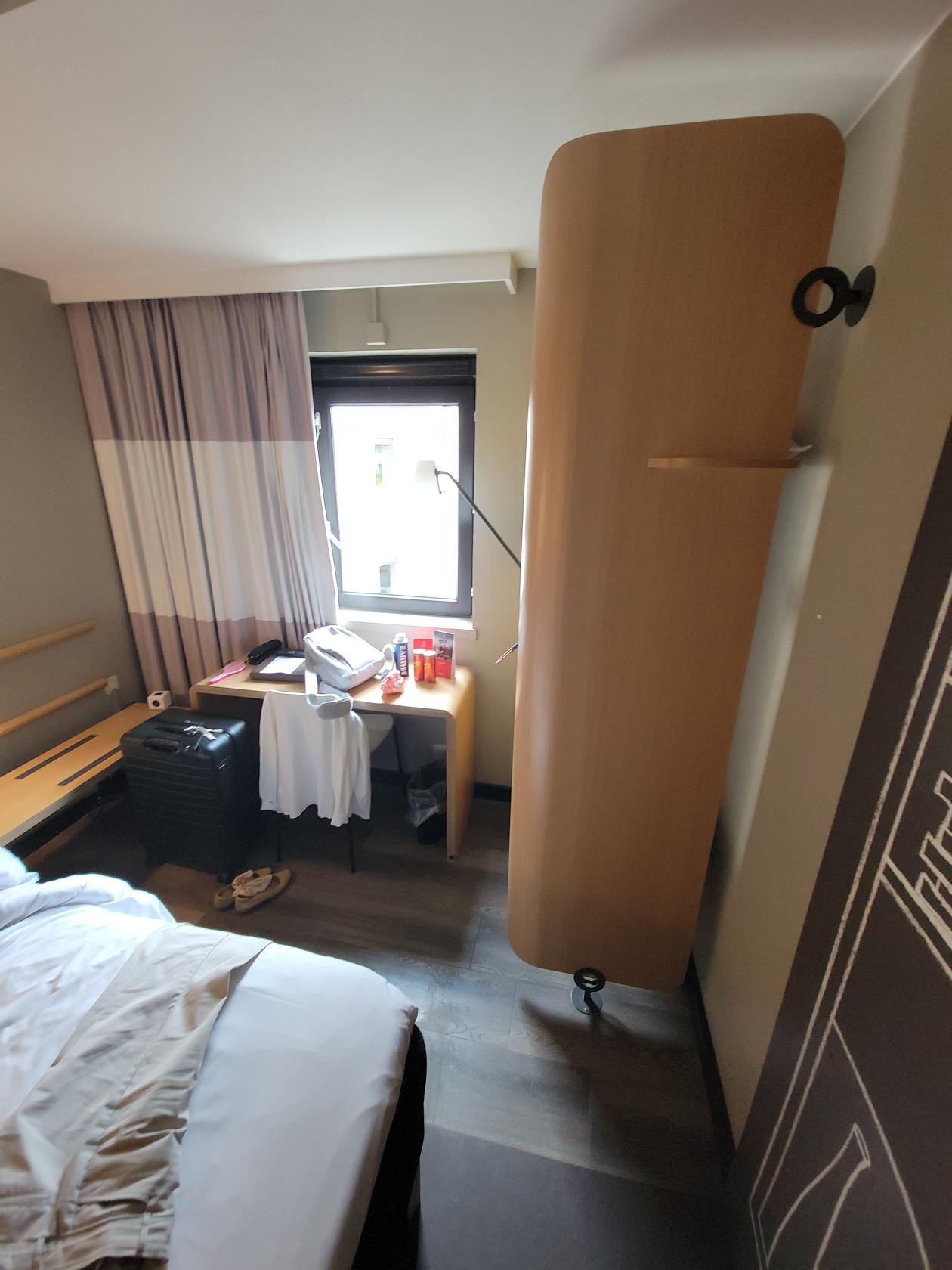
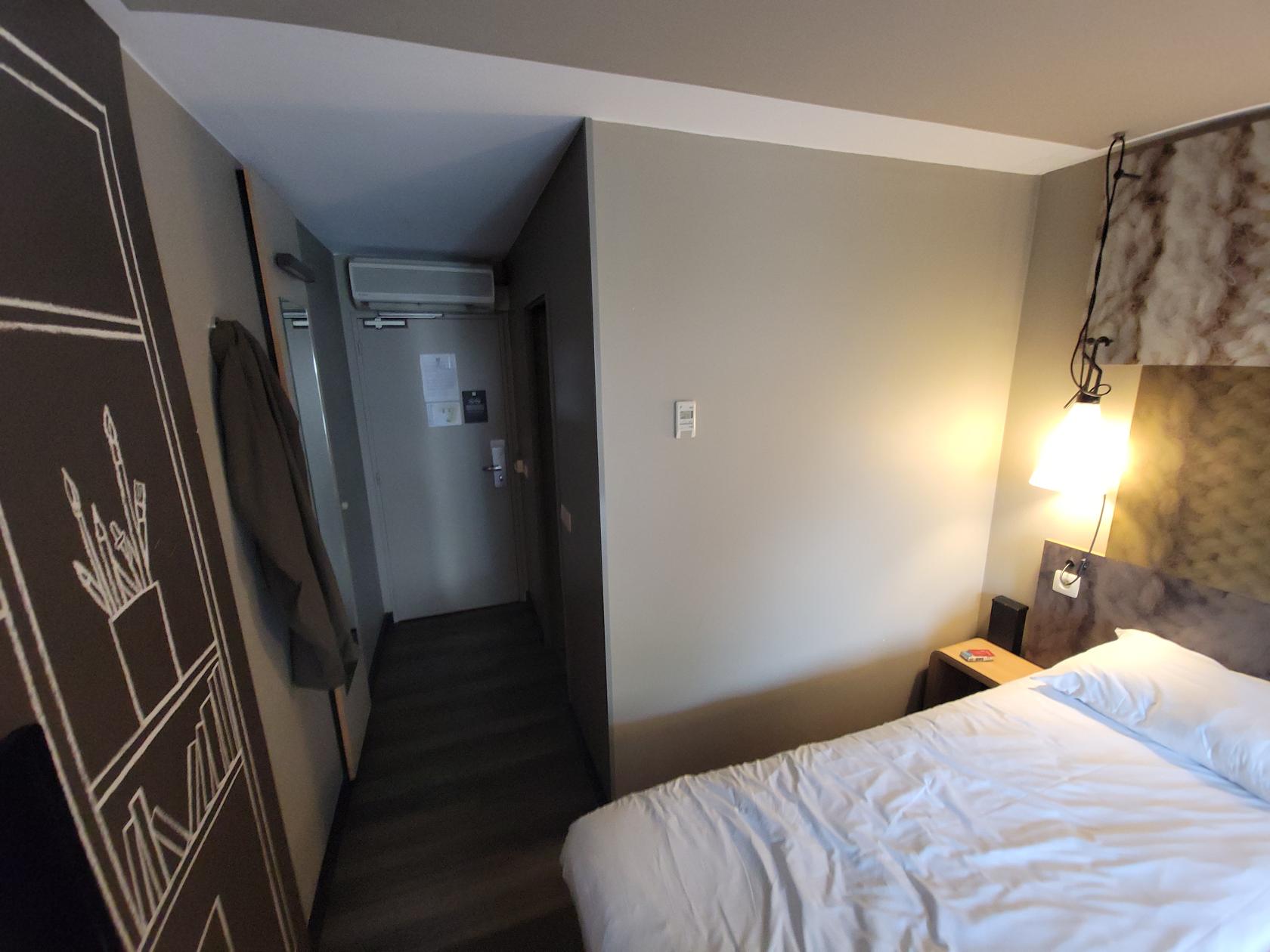
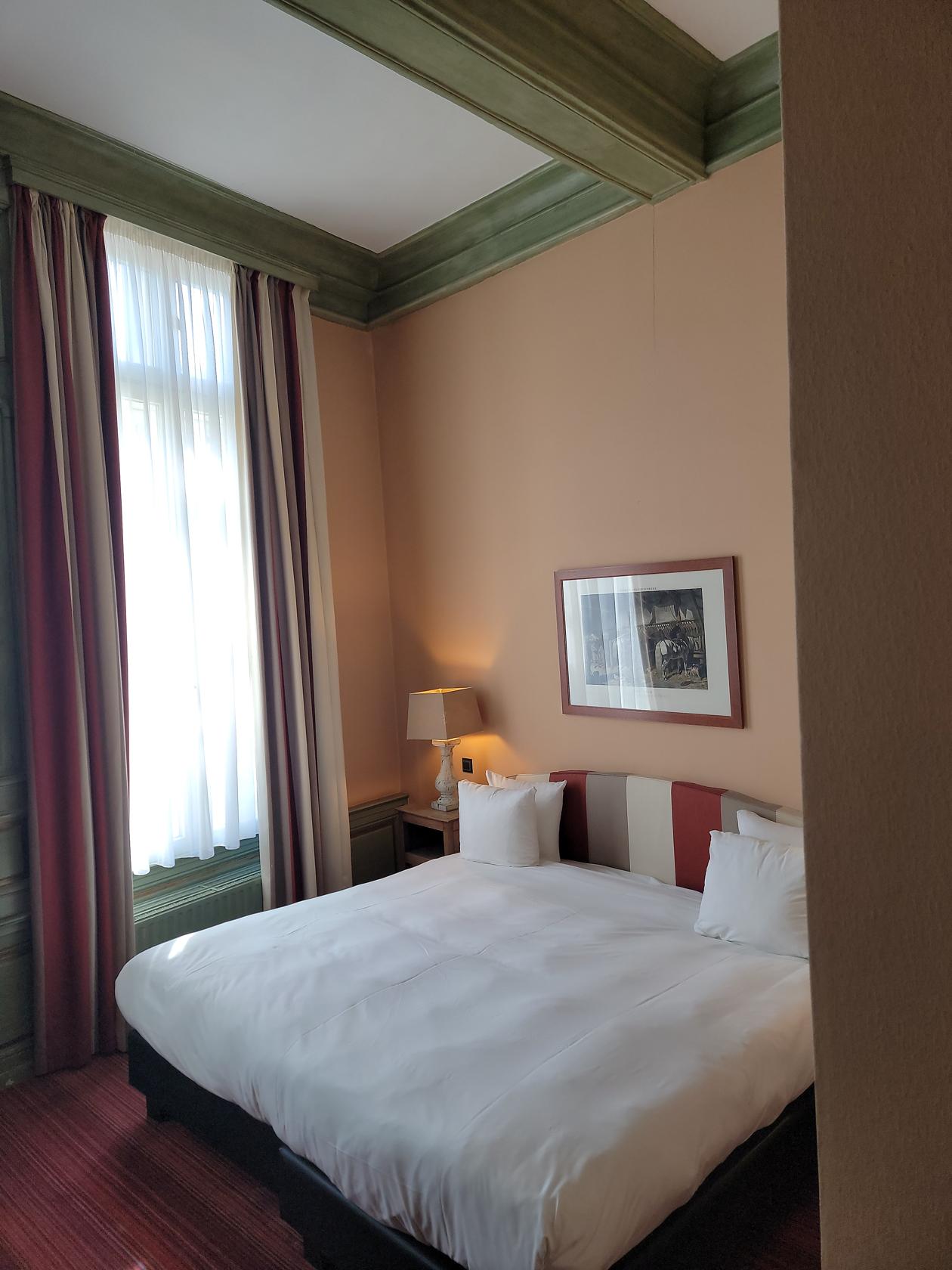
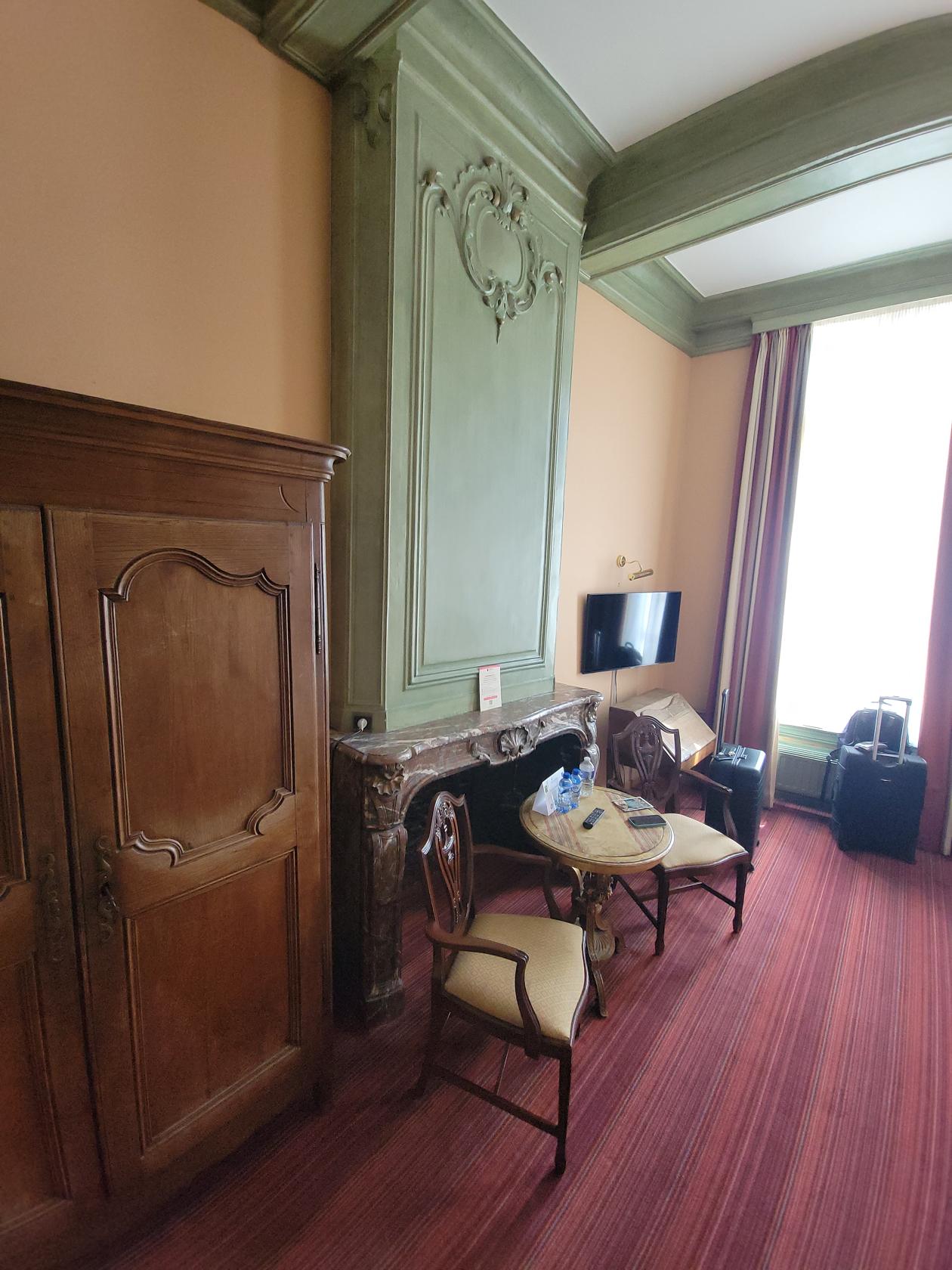
Situated right next to the Cathedral of Saint Bavo is the Ibis Hotel Centrum. A step above the Flemish Dinant version. Here you are able to get more towels if you so choose and they offer free water each day. The biggest problem with this hotel is they call it a room, but there isn’t any room, it is VERY small.
Entrance – Ibis Hotel Centrum – Gent, Belgium
Room – Ibis Hotel Centrum – Gent, Belgium
Room – Ibis Hotel Centrum – Gent, Belgium
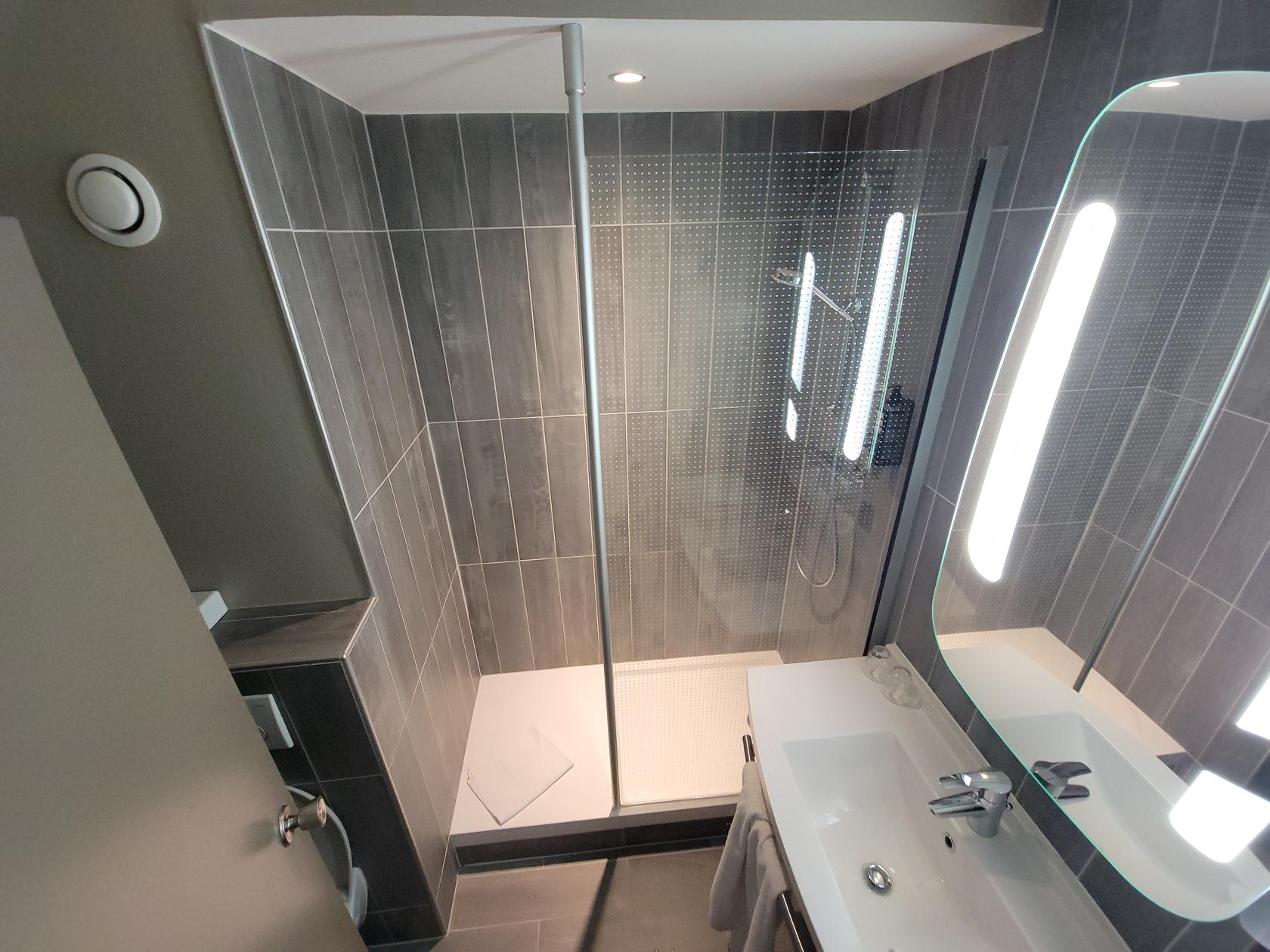
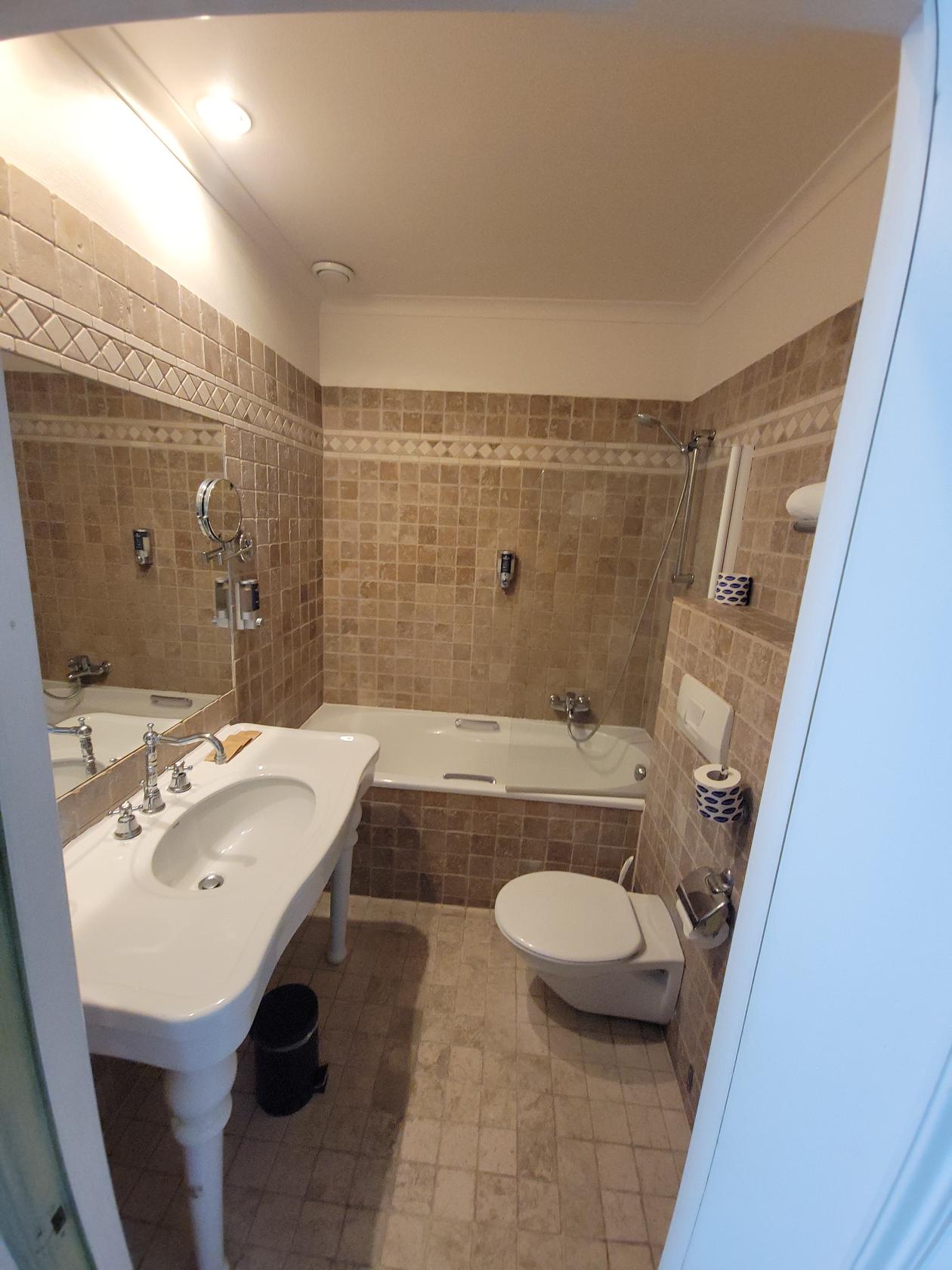
Bathroom – Ibis Hotel Centrum – Gent, Belgium
Gravensteen – Castle Of The Counts
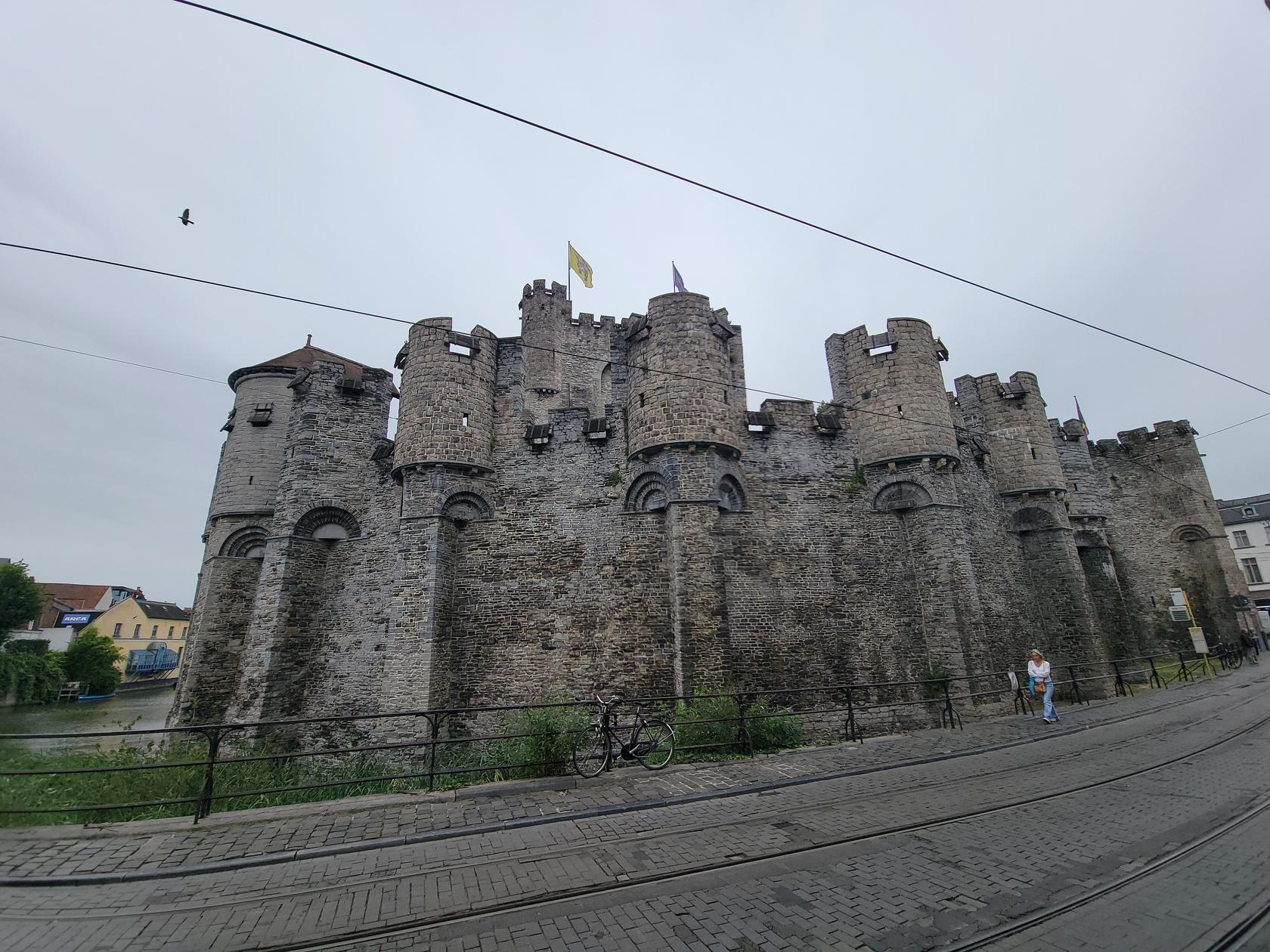
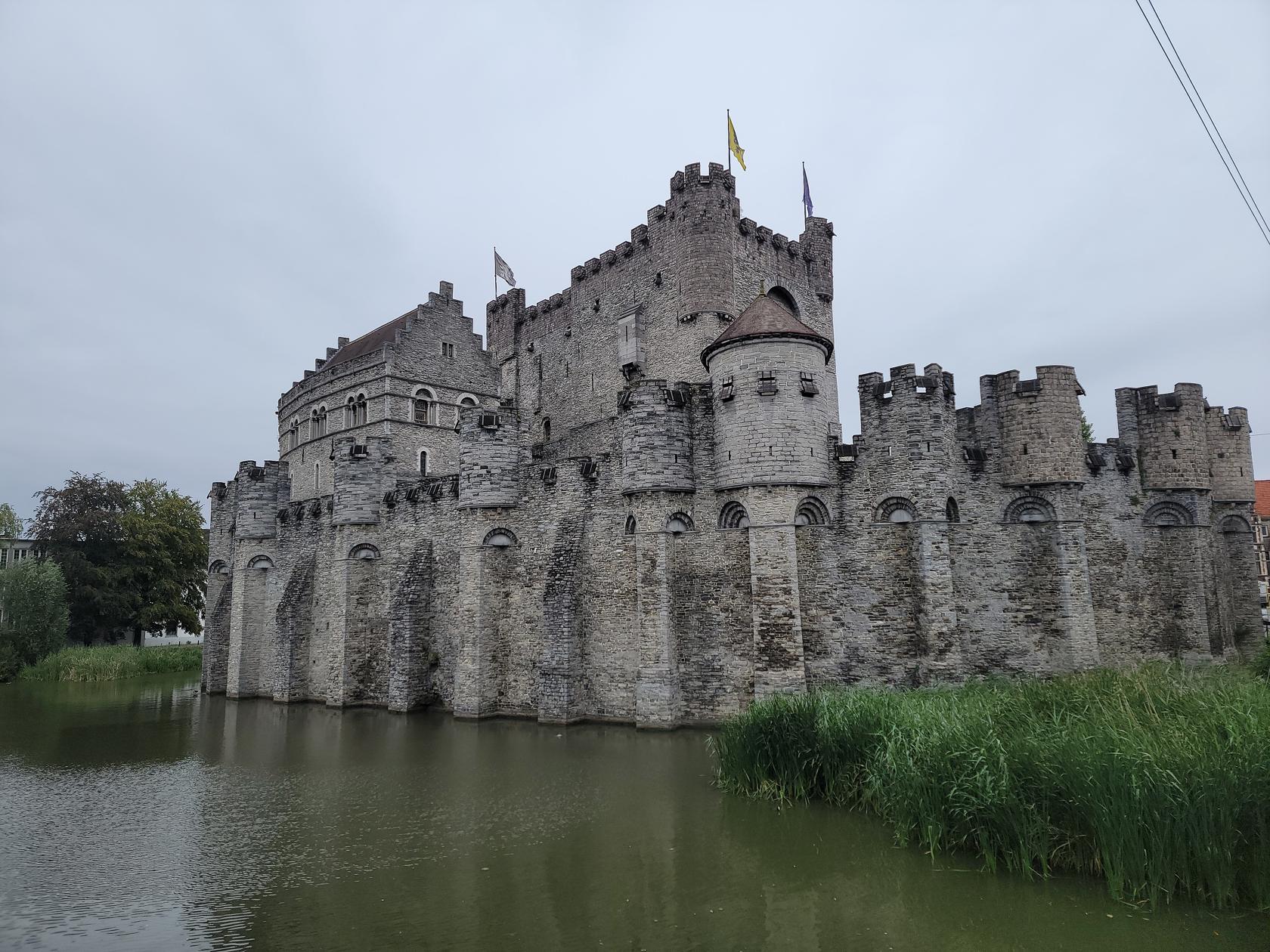
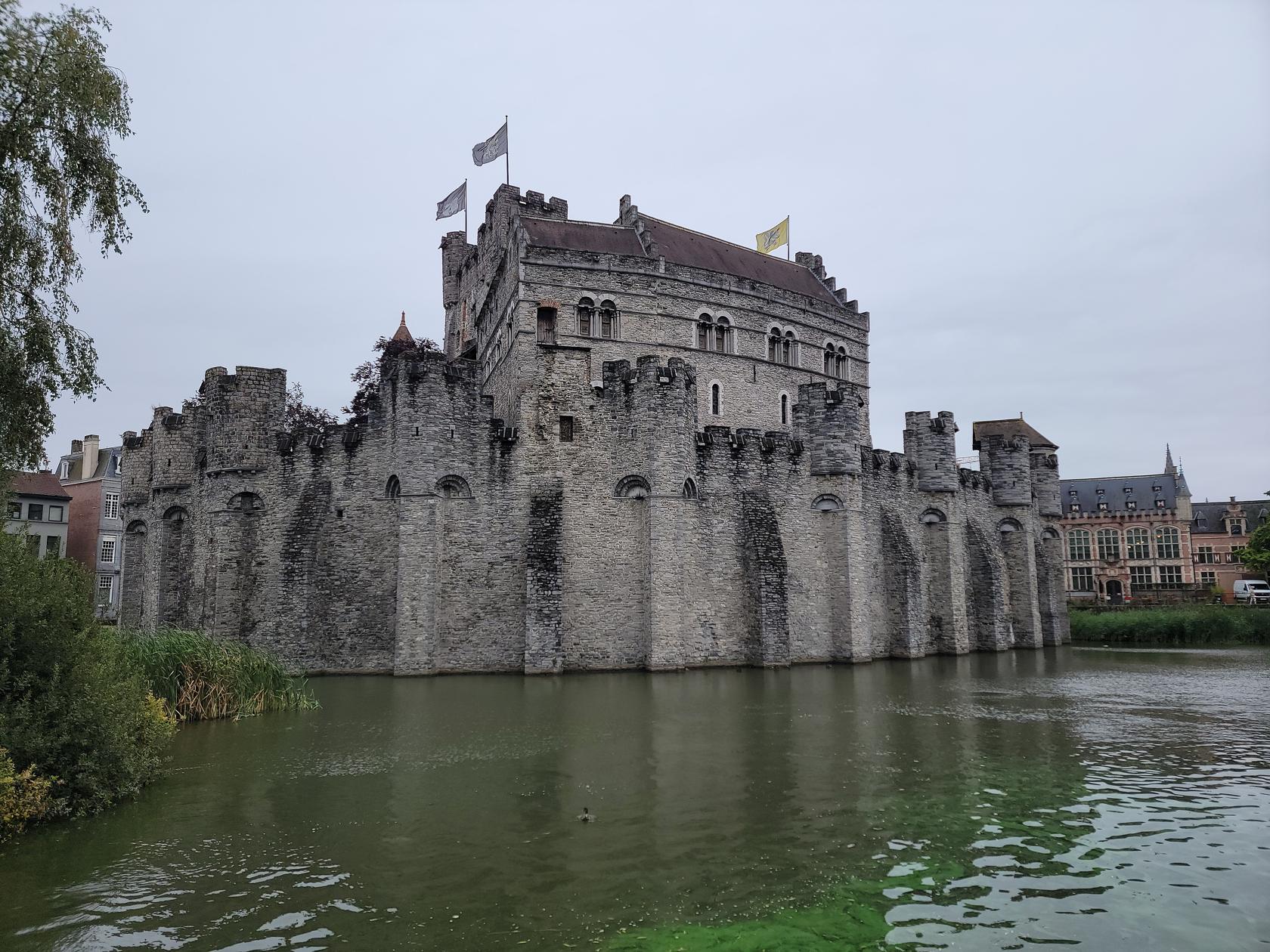
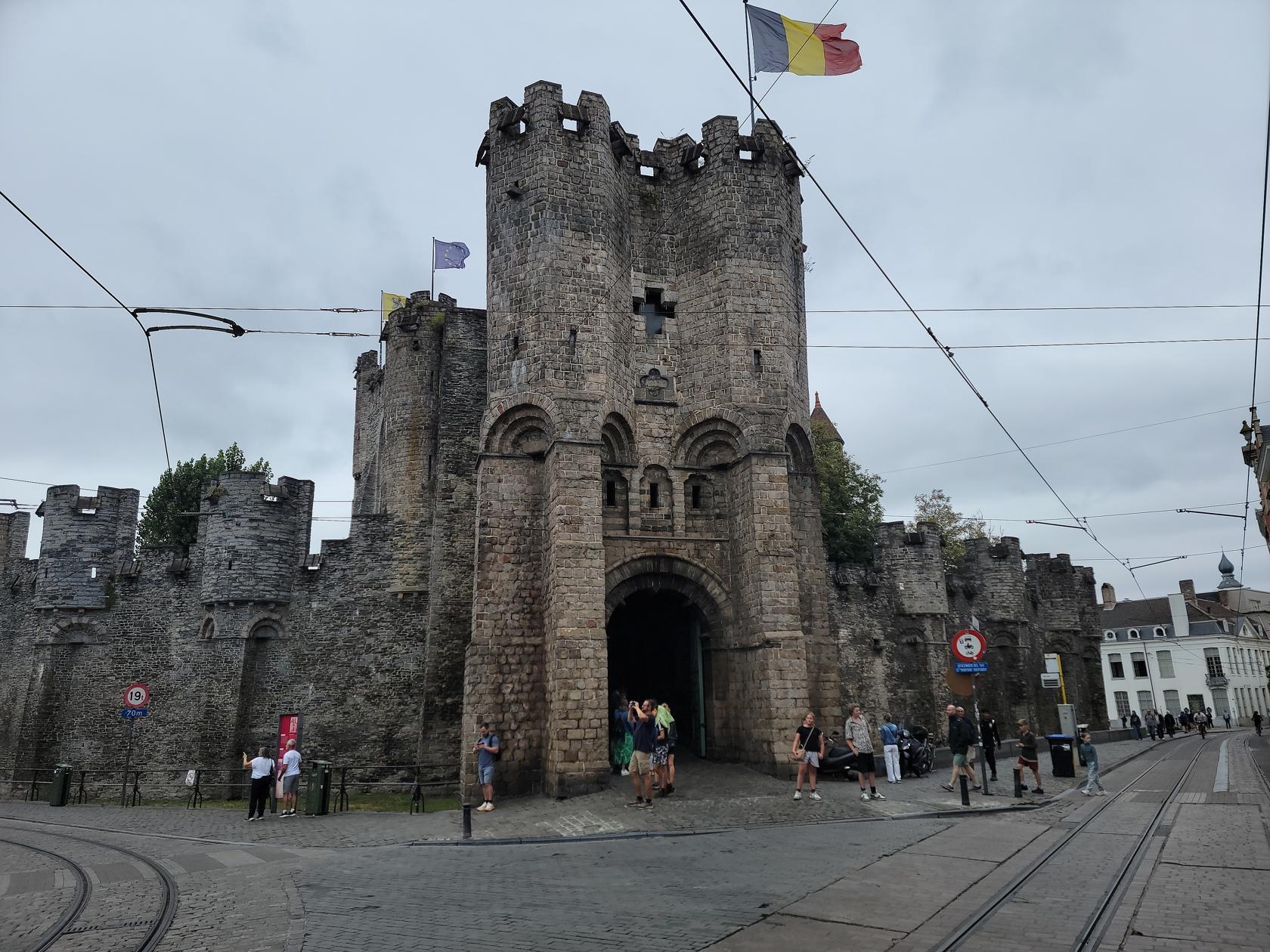
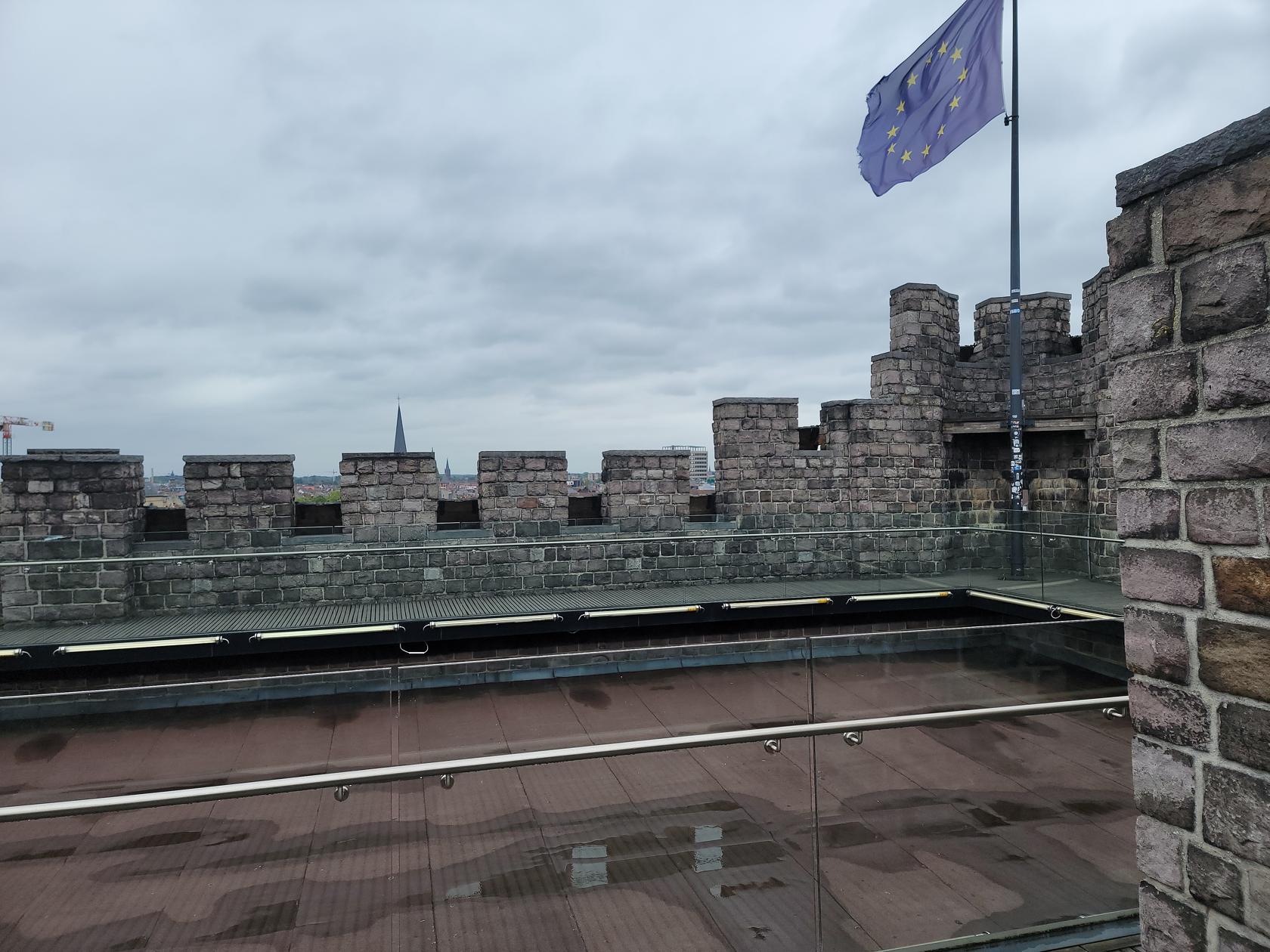
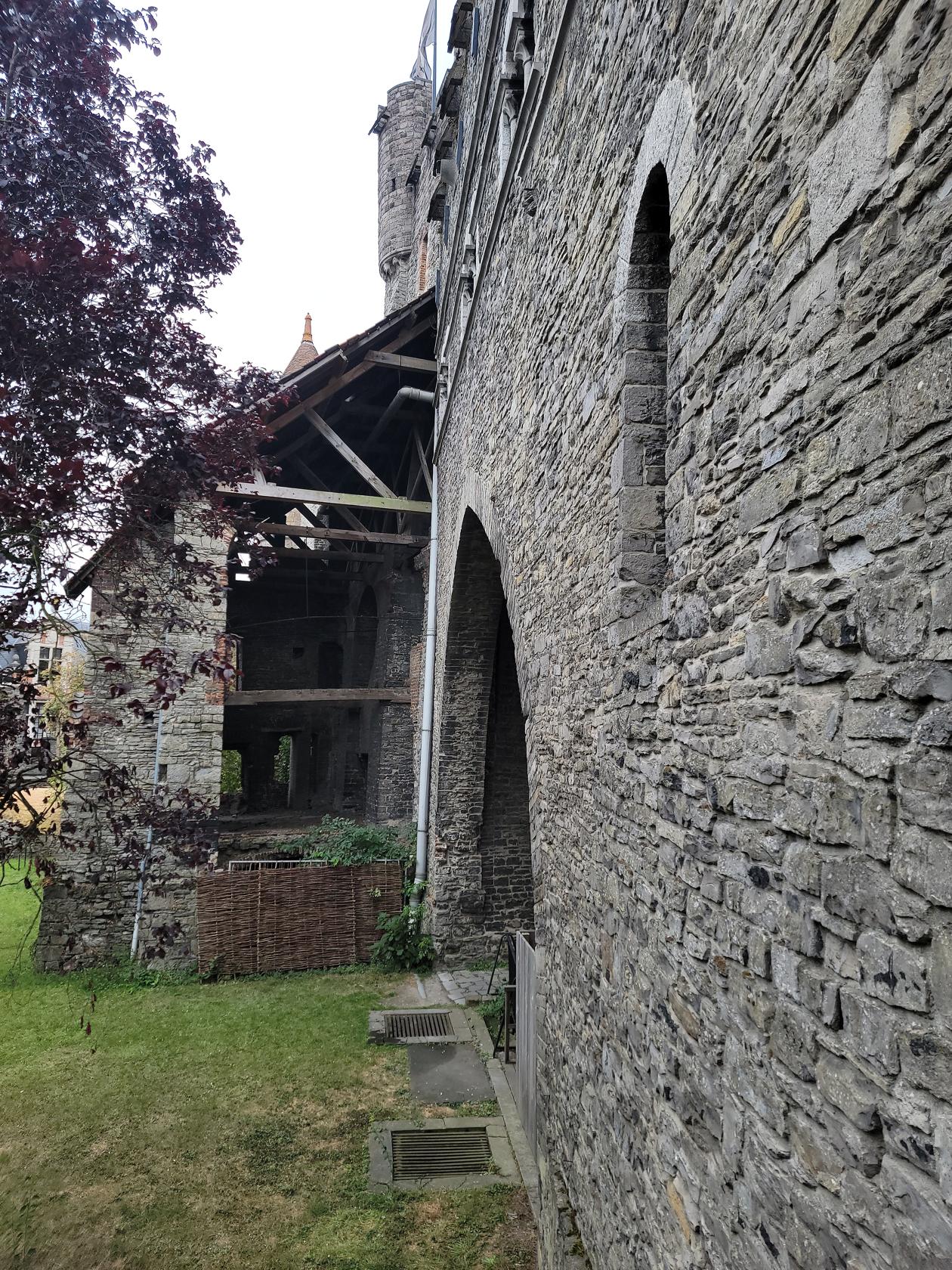
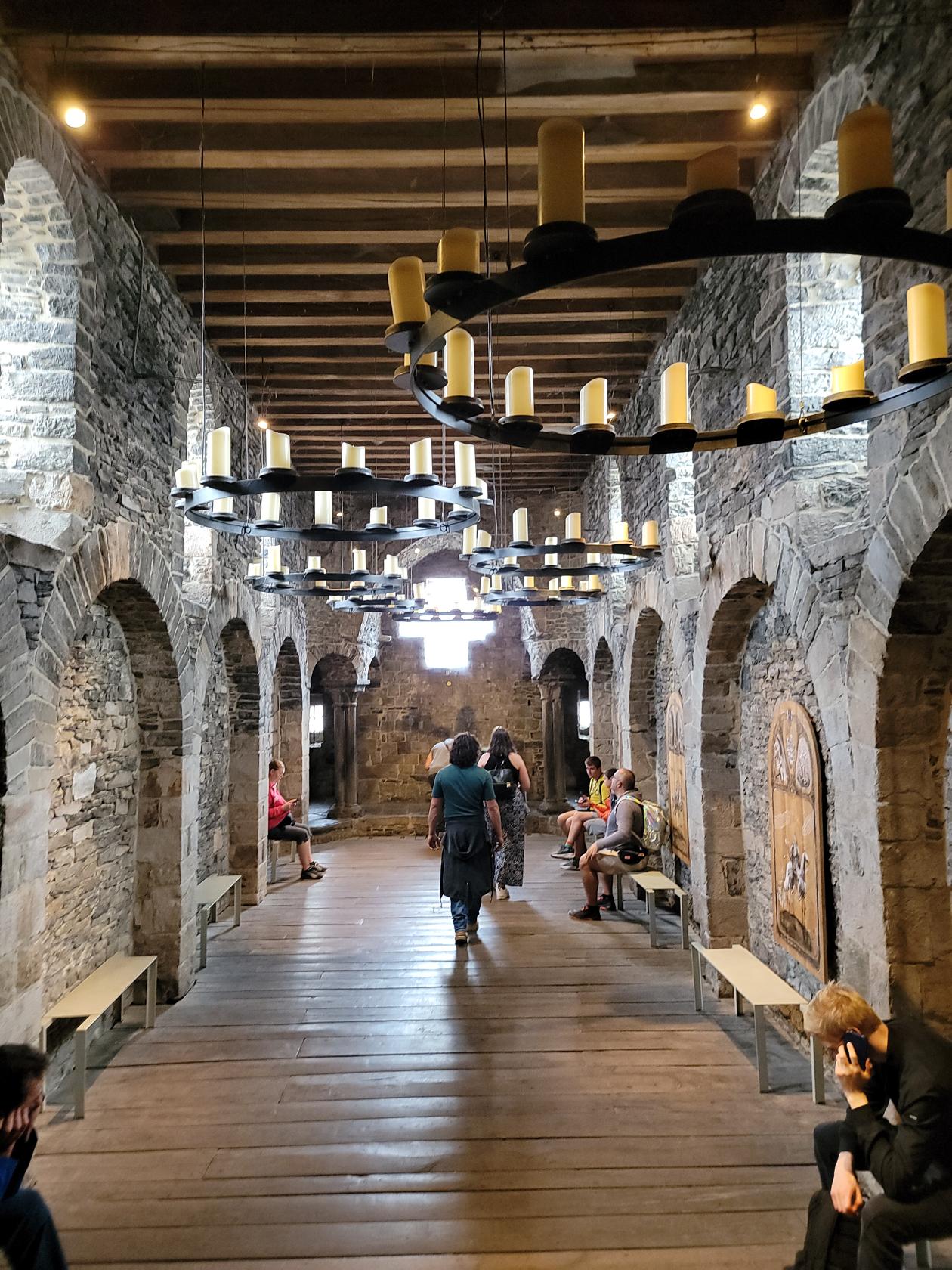
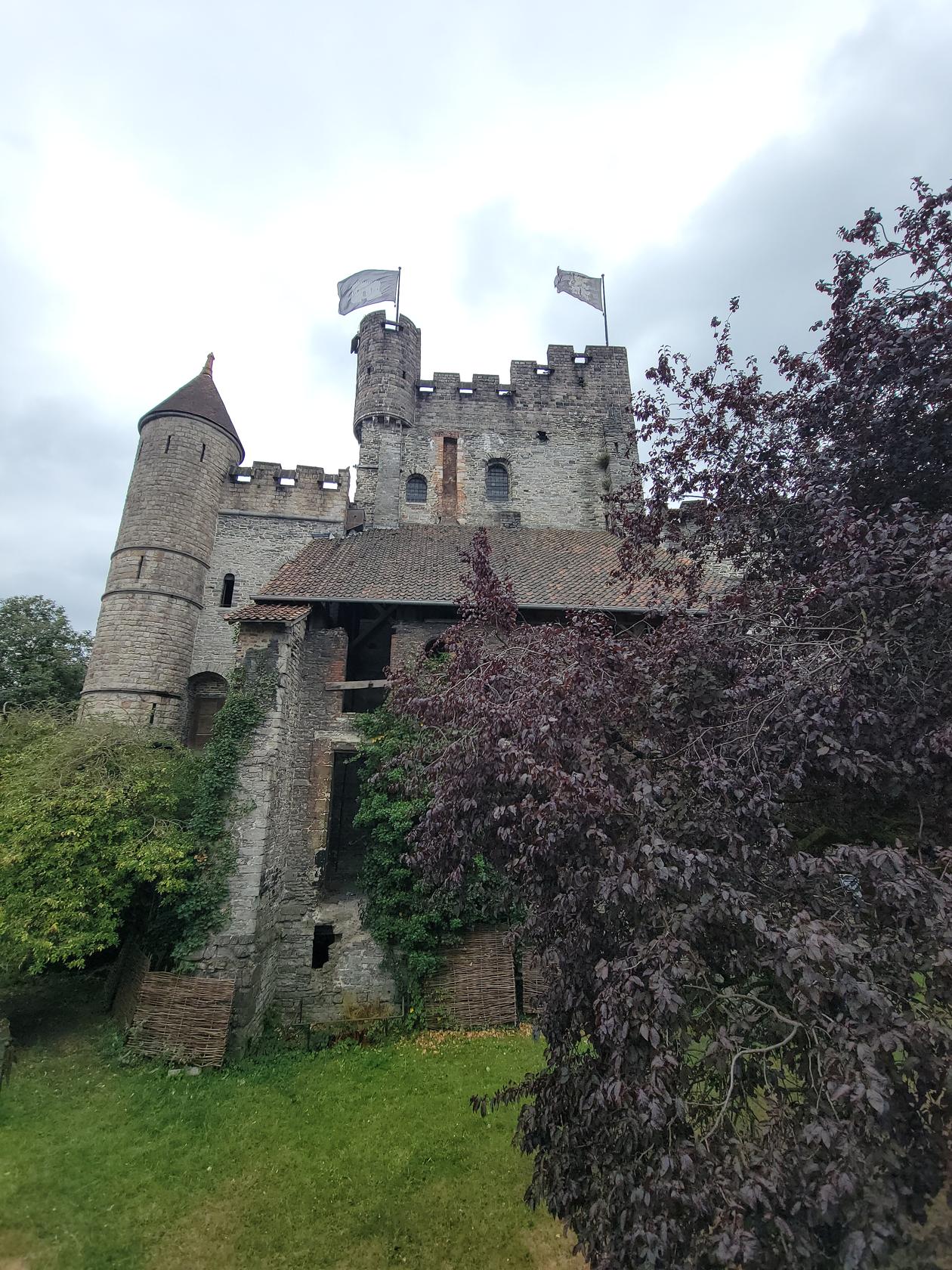
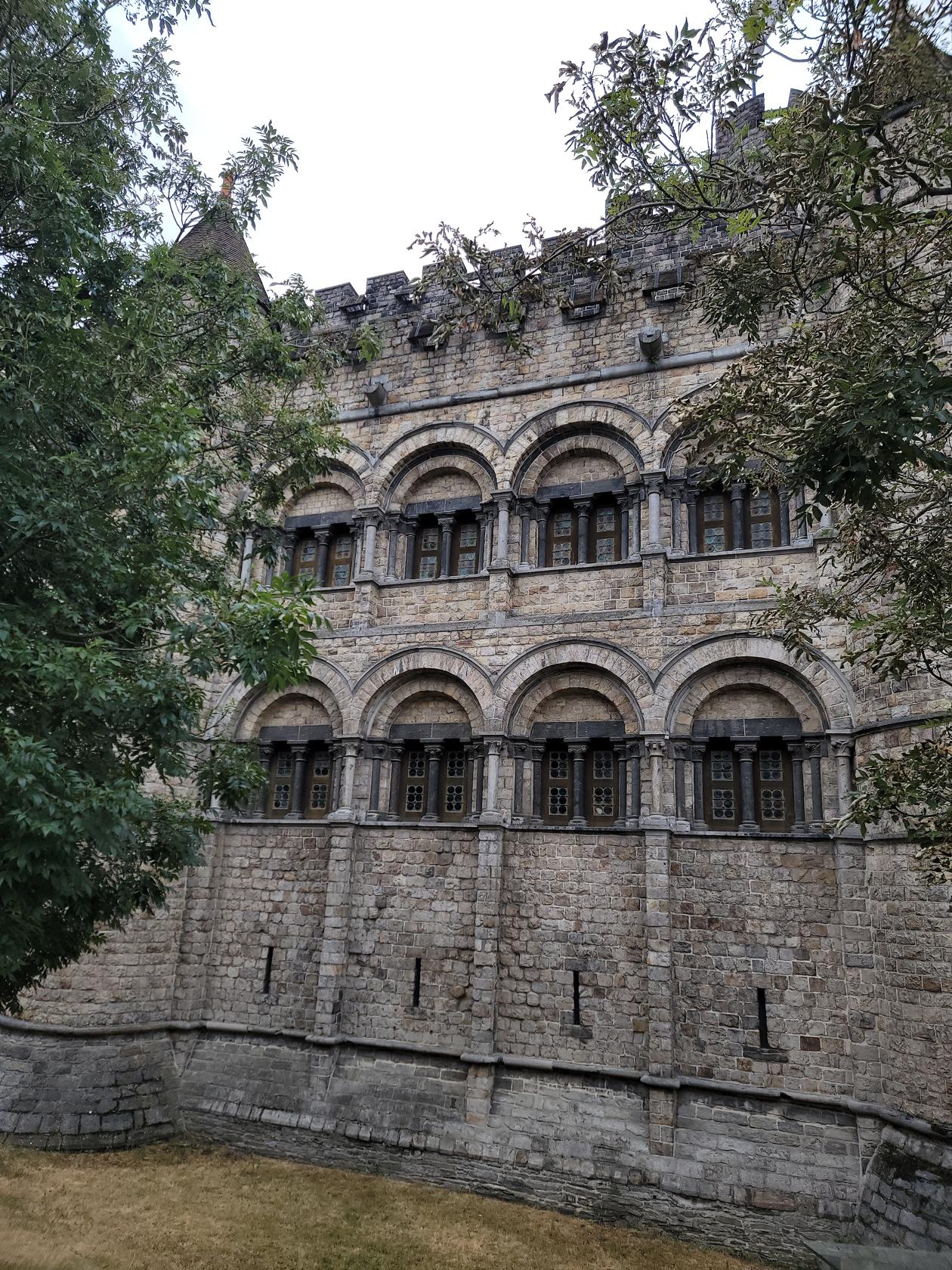
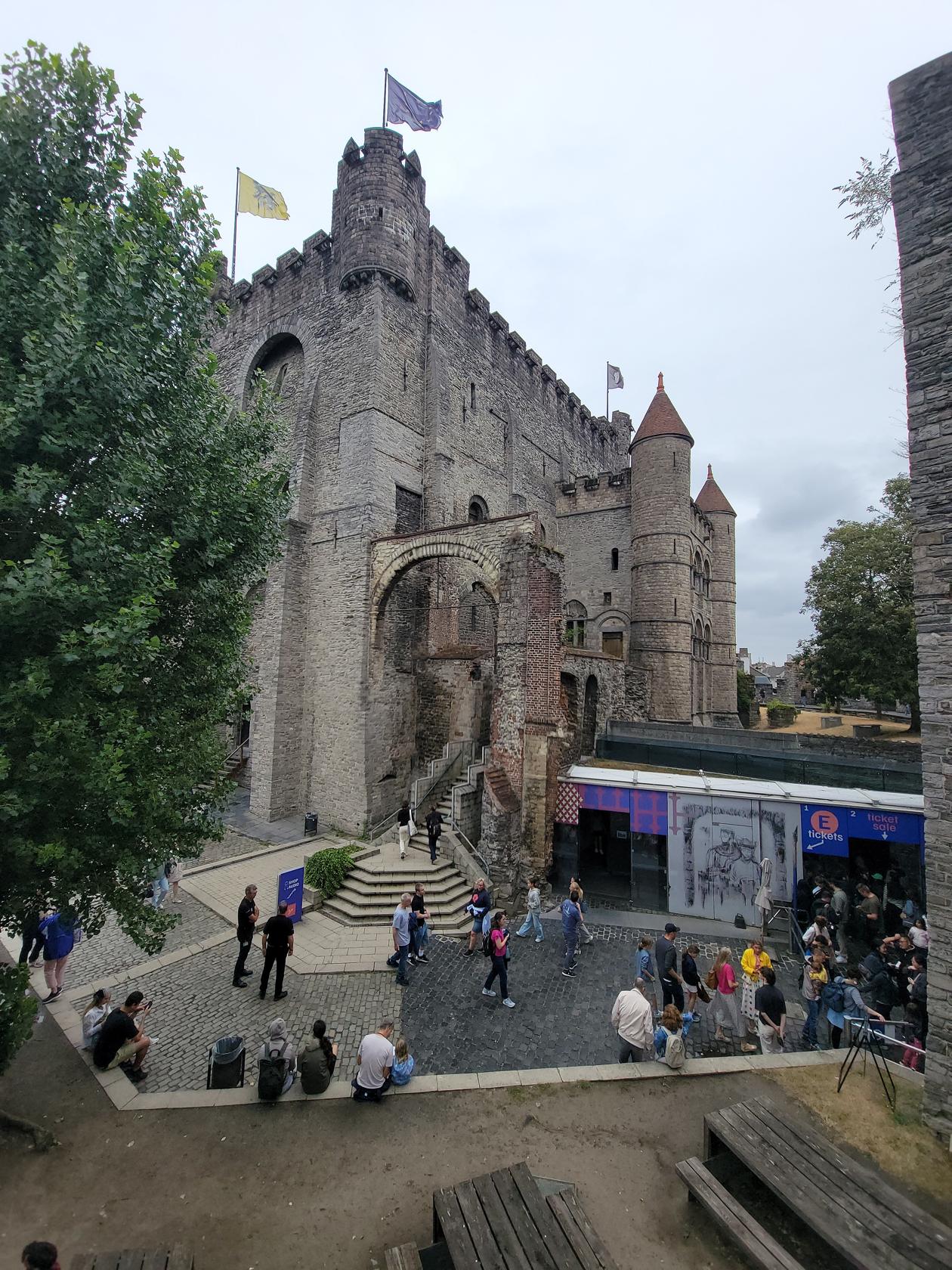
The Castle of the Counts, from the Counts of Flanders building it, is centrally located on the Lieve where it joins the Leie by the Groetenmarkt. It is a typical medieval fortress which contains the usual battlements, parapets and keep. Almost the entire is reconstructed after it was sold and repurposed for other industrial needs in the city. It was later bought back by the city and turned into a tourist item after much work.
Southwest Side – Castle of the Counts – Gravensteen – Gent, Belgium
West Side – Castle of the Counts – Gravensteen – Gent, Belgium
Northwest Side – Castle of the Counts – Gravensteen – Gent, Belgium
Entrance – Castle of the Counts – Gravensteen – Gent, Belgium
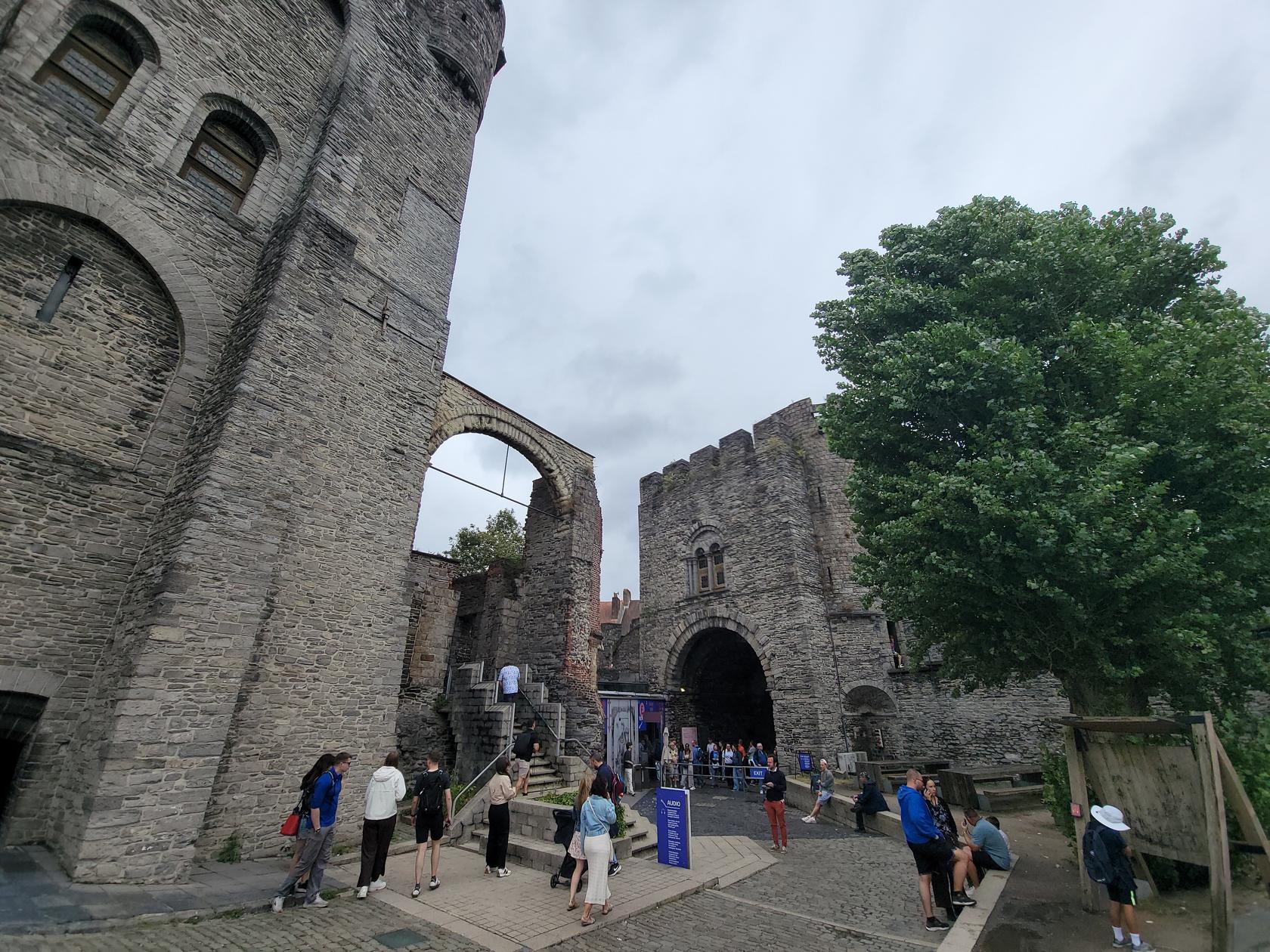
Inside – Castle of the Counts – Gravensteen – Gent, Belgium
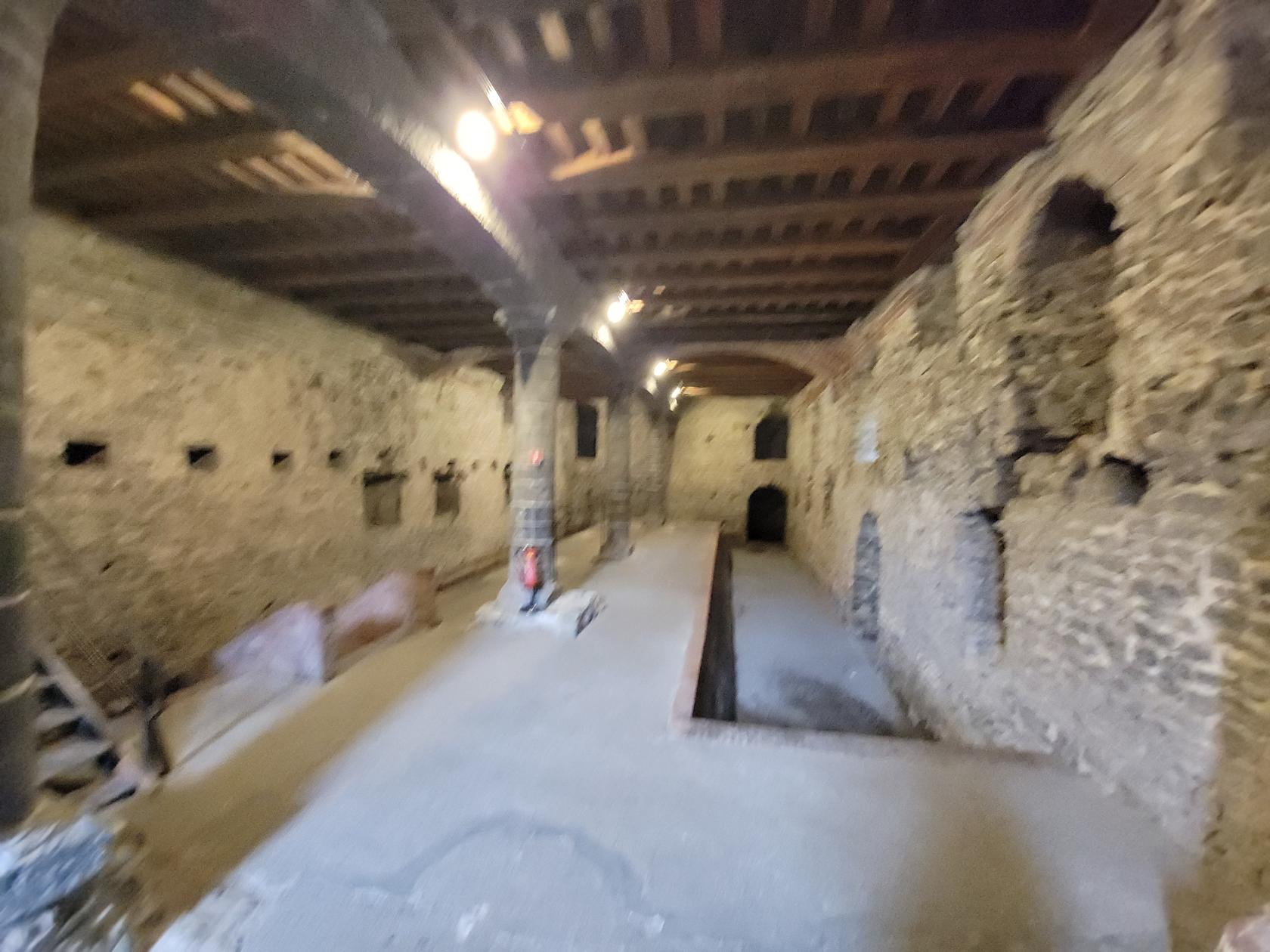
Cellar and Main Keep – Castle of the Counts – Gravensteen – Gent, Belgium
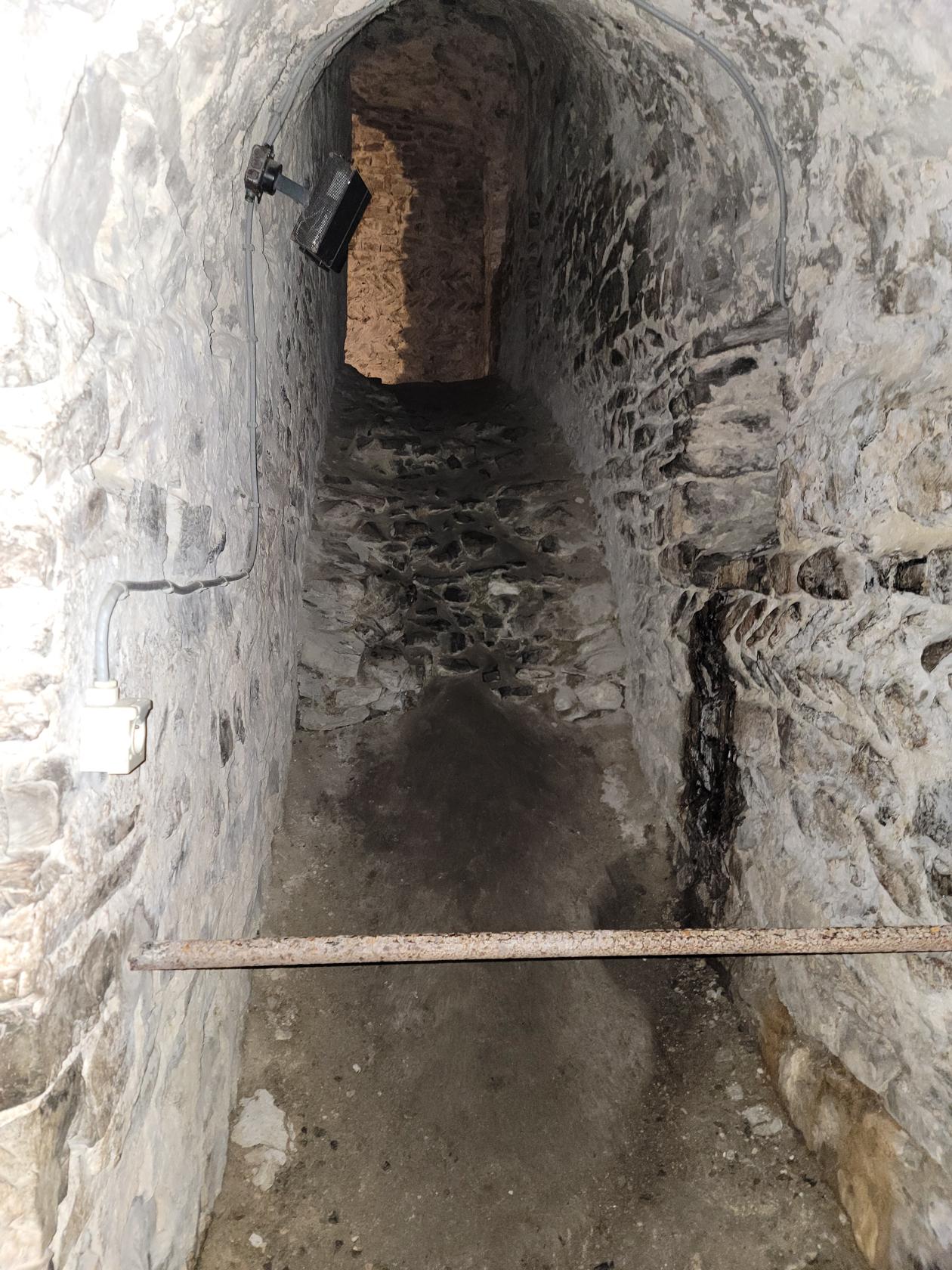
Cellar Stairs – Castle of the Counts – Gravensteen – Gent, Belgium
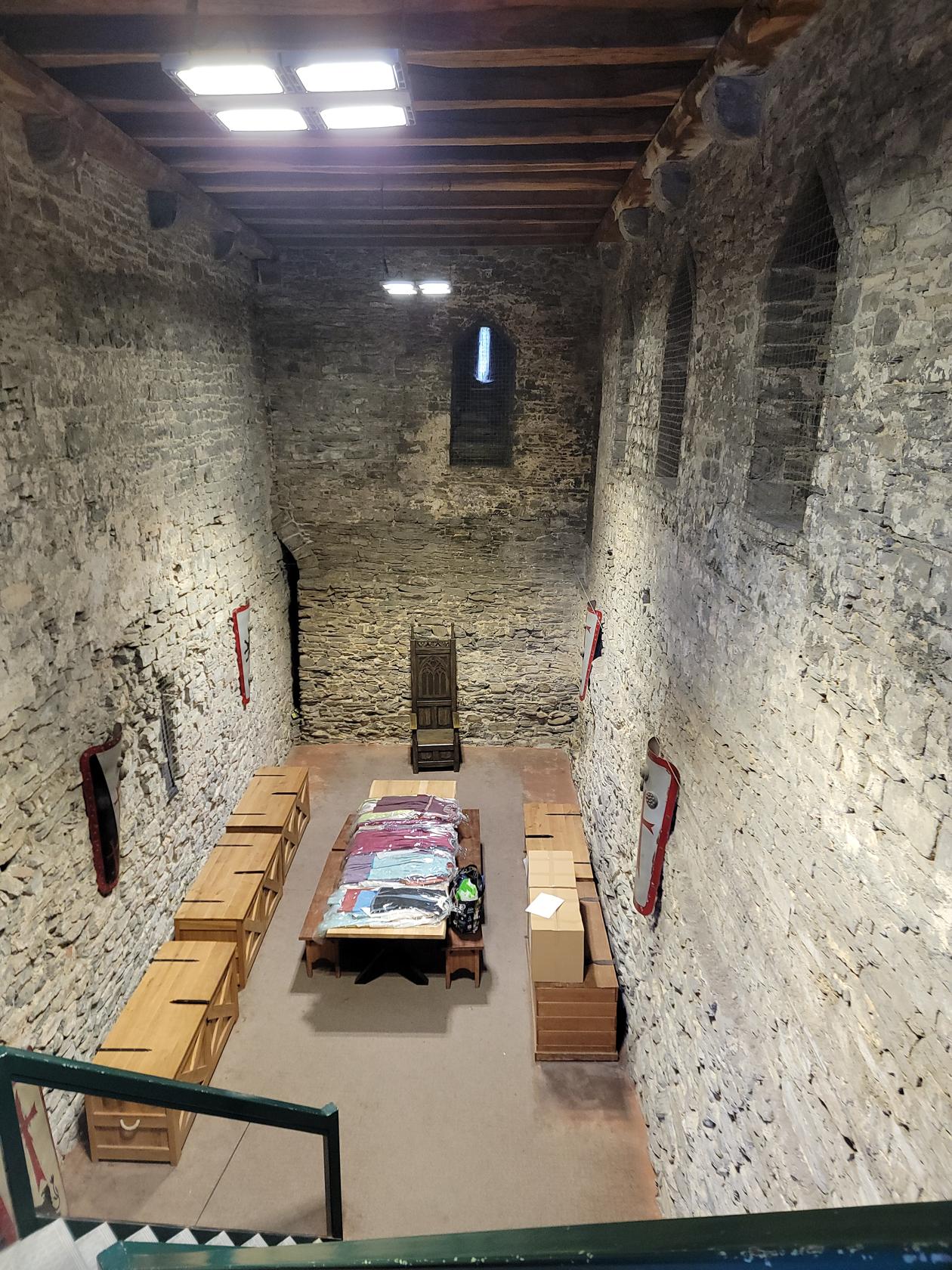
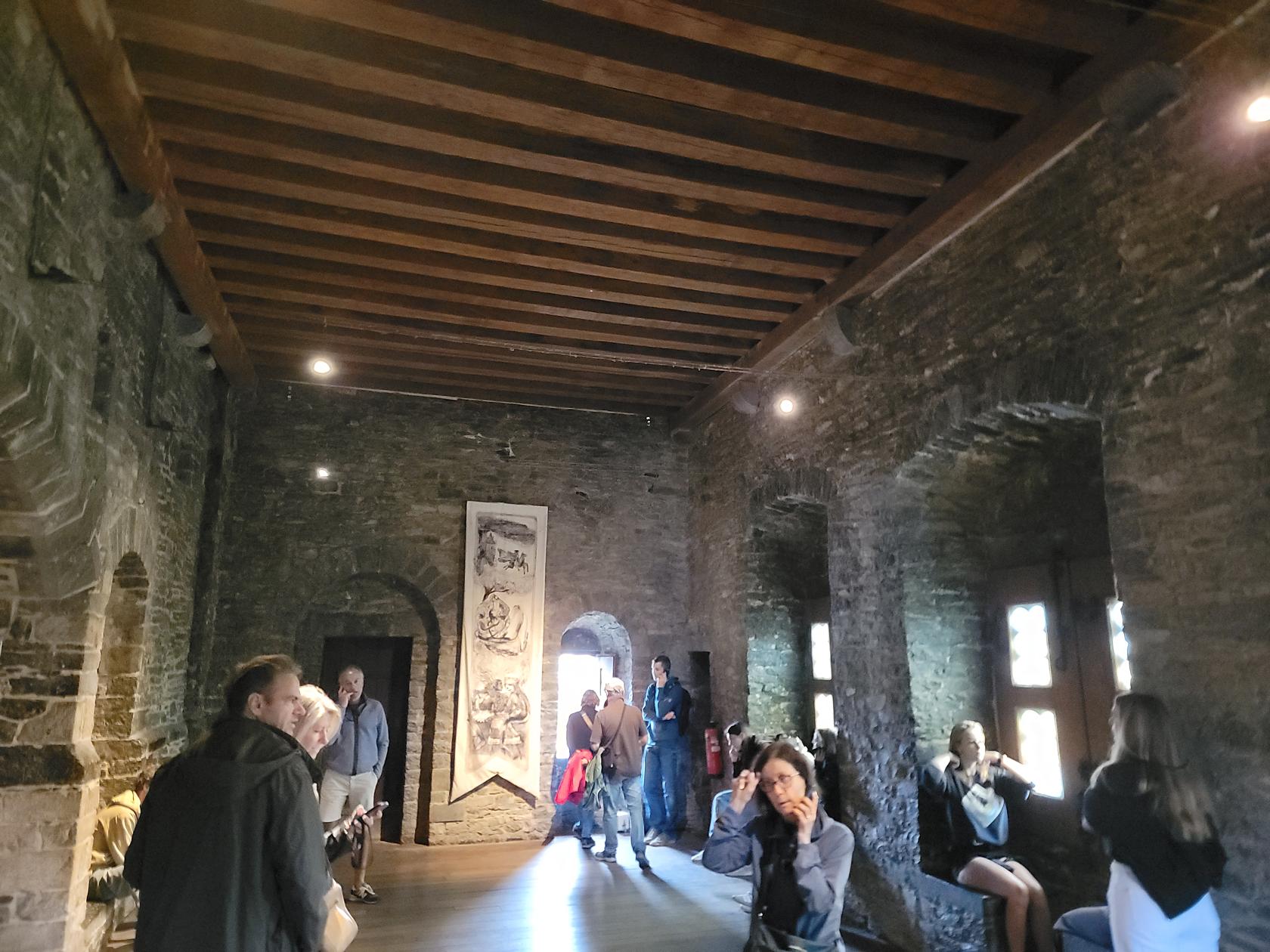
Keep Room – Castle of the Counts – Gravensteen – Gent, Belgium
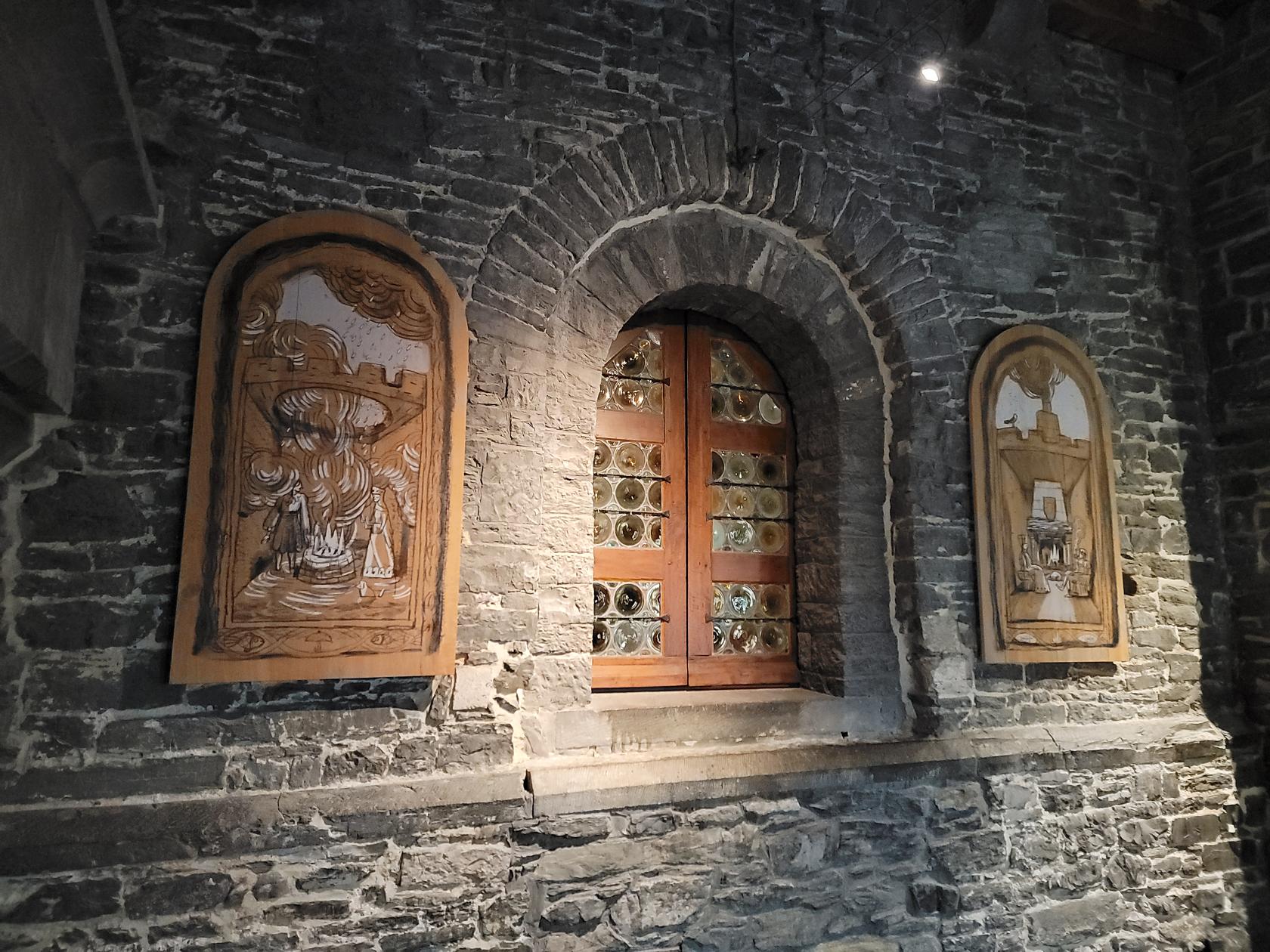
Windows – Castle of the Counts – Gravensteen – Gent, Belgium
Hall – Castle of the Counts – Gravensteen – Gent, Belgium
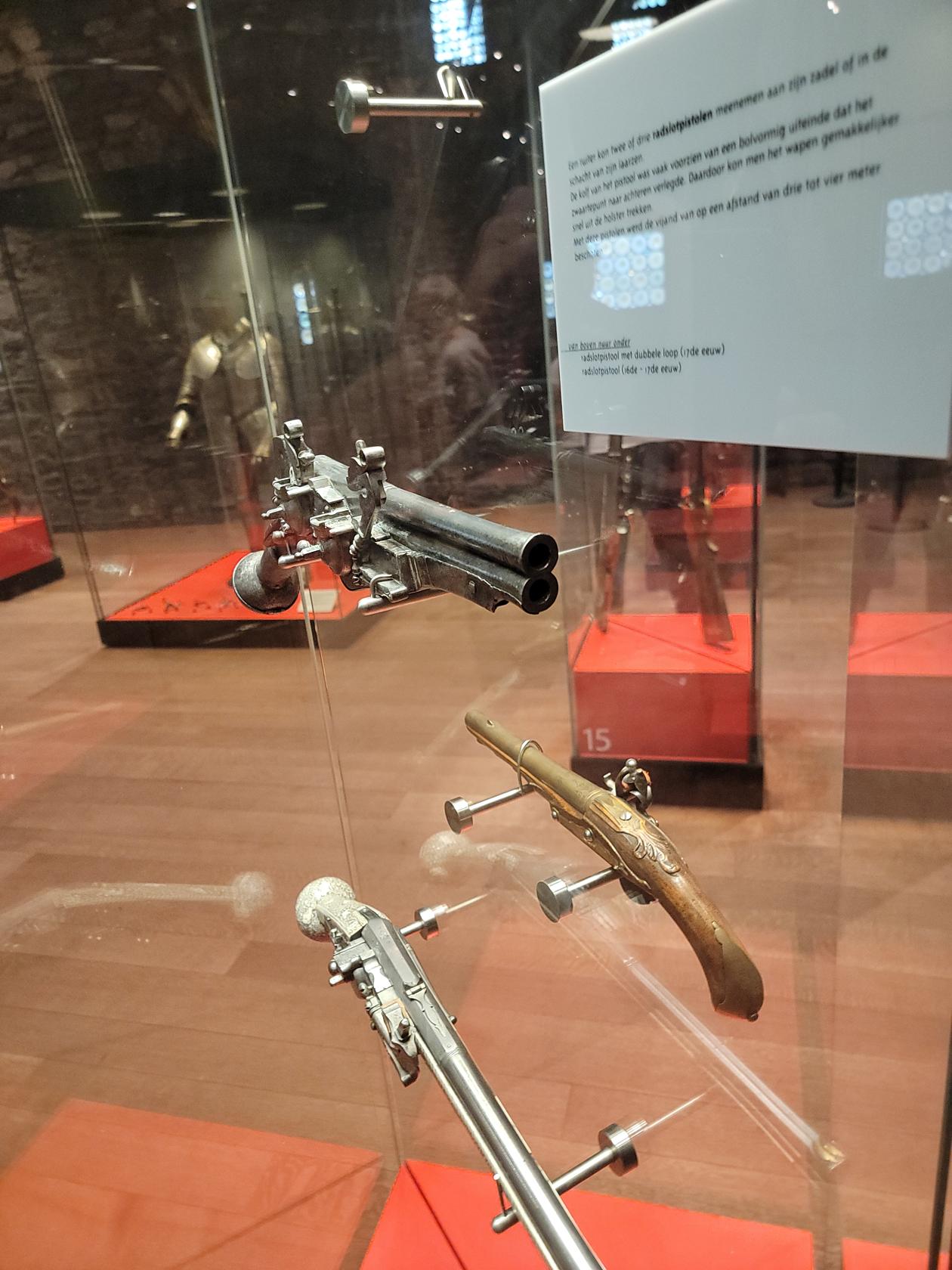
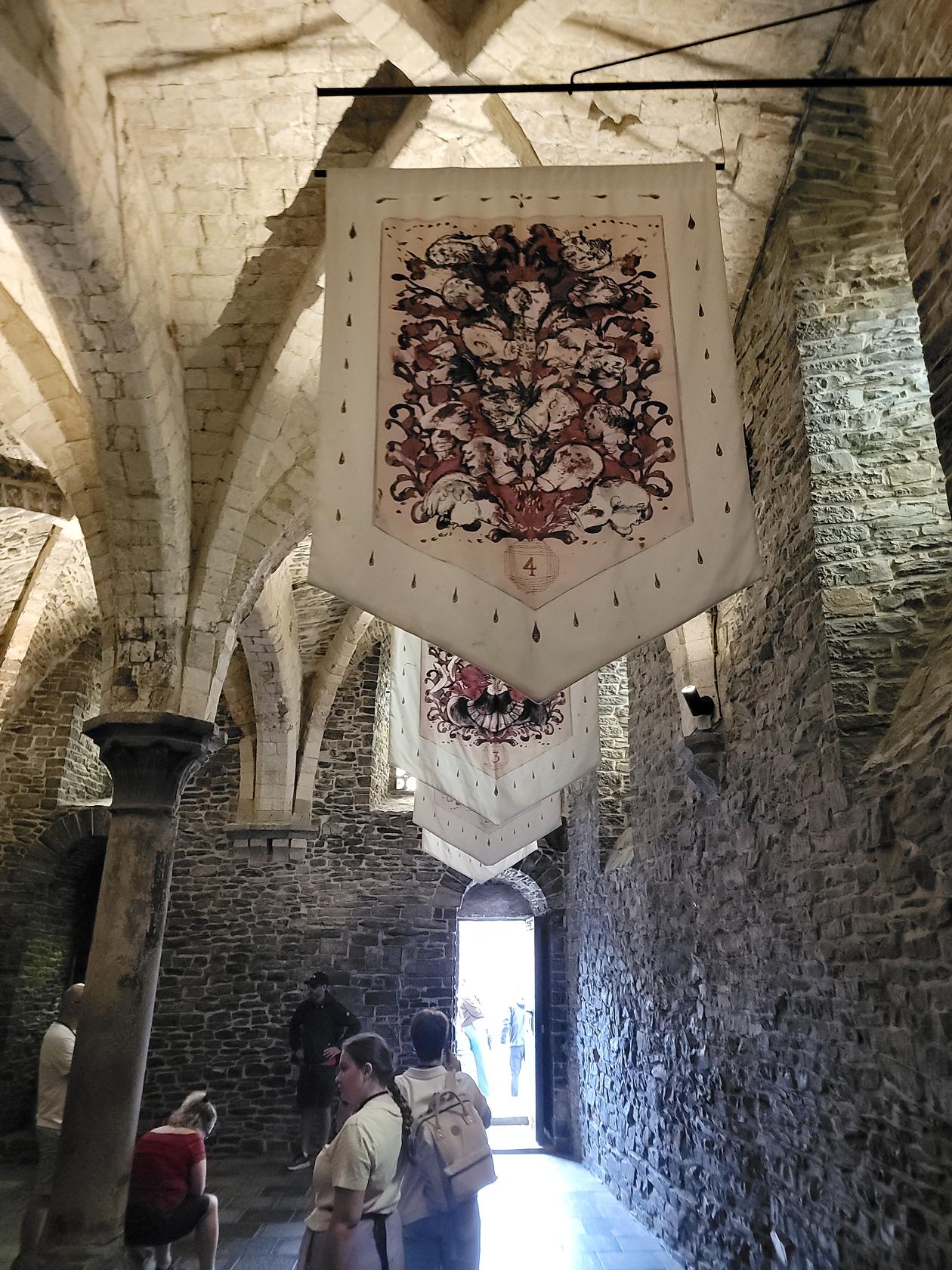
It is however sparsely outfitted with relics or exhibits. There is one room that contains period weaponry that was used during those time. But most of the rooms have sketched wall hangings and in some cases flags adorning the ceiling, but aside from those, no furniture or other trappings. It is therefore advised to purchase the headset and indulge in the one hour walk-through tour of the castle.
Windows – Castle of the Counts – Gravensteen – Gent, Belgium
Hall – Castle of the Counts – Gravensteen – Gent, Belgium
Exhibits of Weaponry – Castle of the Counts – Gravensteen – Gent, Belgium
Large Upper Room – Castle of the Counts – Gravensteen – Gent, Belgium
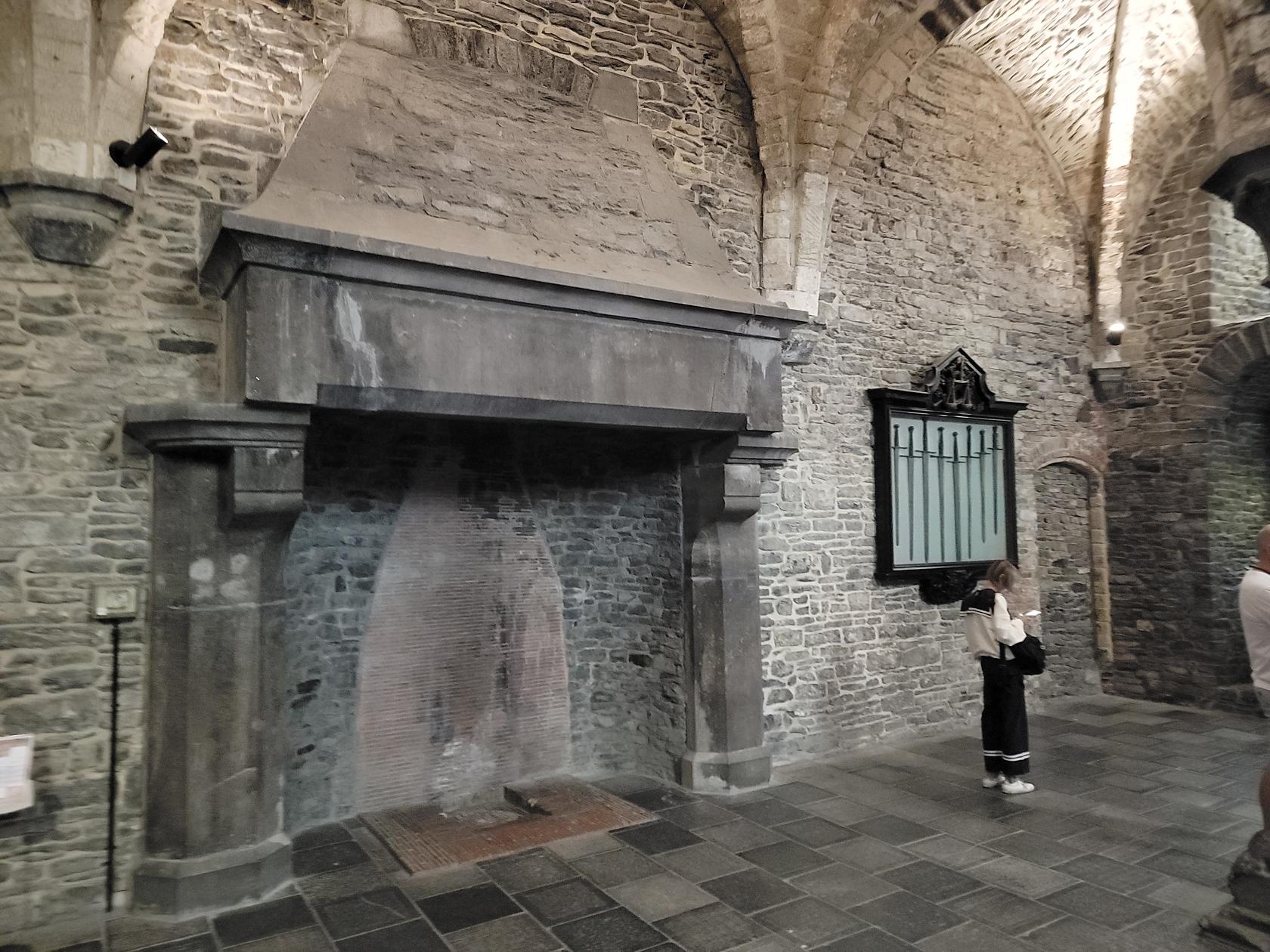
Large Upper Room Fireplace – Castle of the Counts – Gravensteen – Gent, Belgium
Roof – Castle of the Counts – Gravensteen – Gent, Belgium
Some Disrepair – Castle of the Counts – Gravensteen – Gent, Belgium
Reception Hall – Castle of the Counts – Gravensteen – Gent, Belgium
Outside – Castle of the Counts – Gravensteen – Gent, Belgium
Outside View – Castle of the Counts – Gravensteen – Gent, Belgium
Cellar Stairs – Castle of the Counts – Gravensteen – Gent, Belgium
Main Entrance and Ticket Office – Castle of the Counts – Gravensteen – Gent, Belgium
Graffiti Street
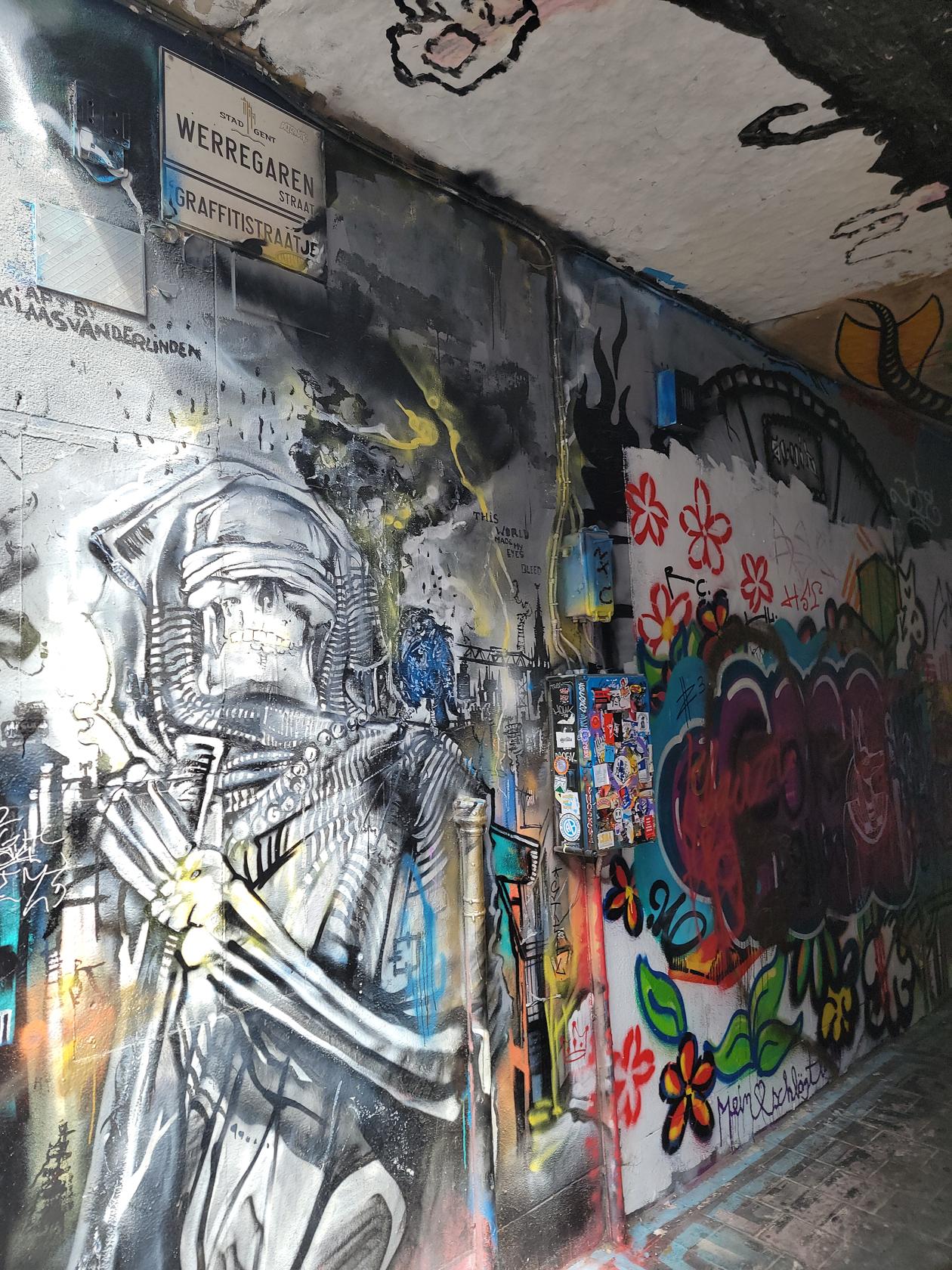
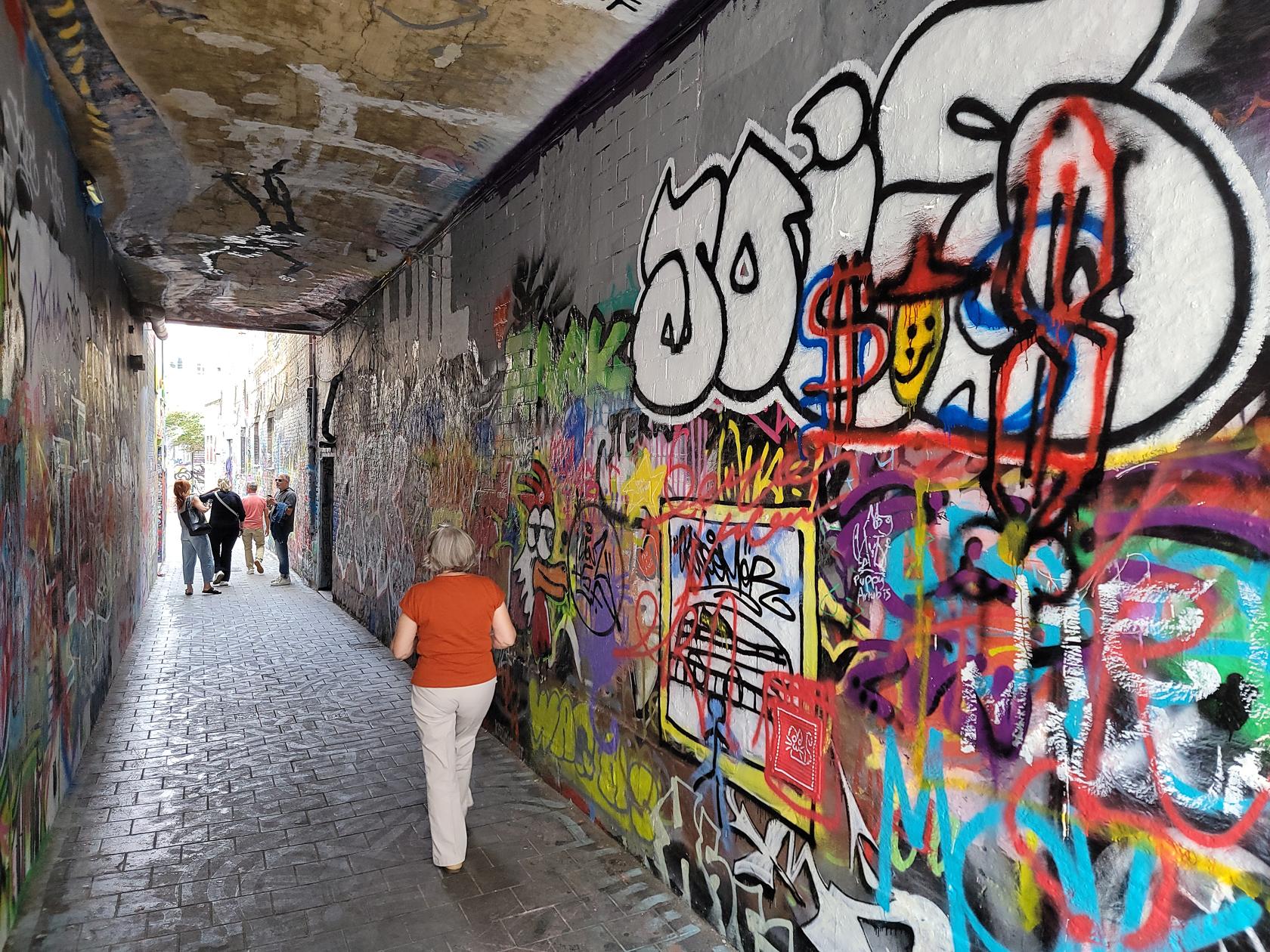
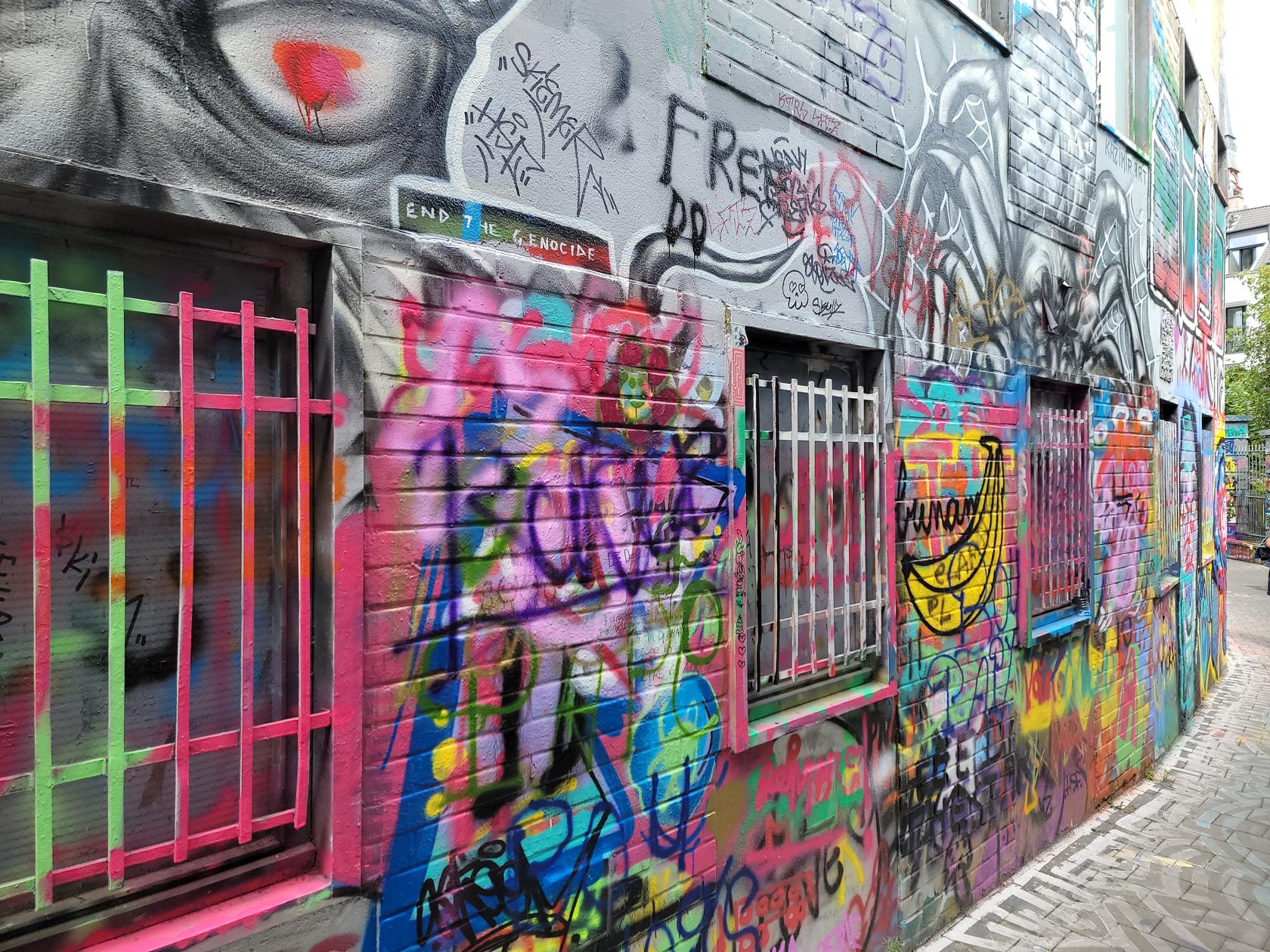
Another narrow street in another city dedicated to the local fauna getting their adolescent artistic urges out. Though a few examples are extraordinary, most of it was just colorful wasted paint.
Graffiti Street – Werregarenstraat – Gent, Belgium
Graffiti Street – Werregarenstraat – Gent, Belgium
Graffiti Street – Werregarenstraat – Gent, Belgium
Other Sights And Monuments
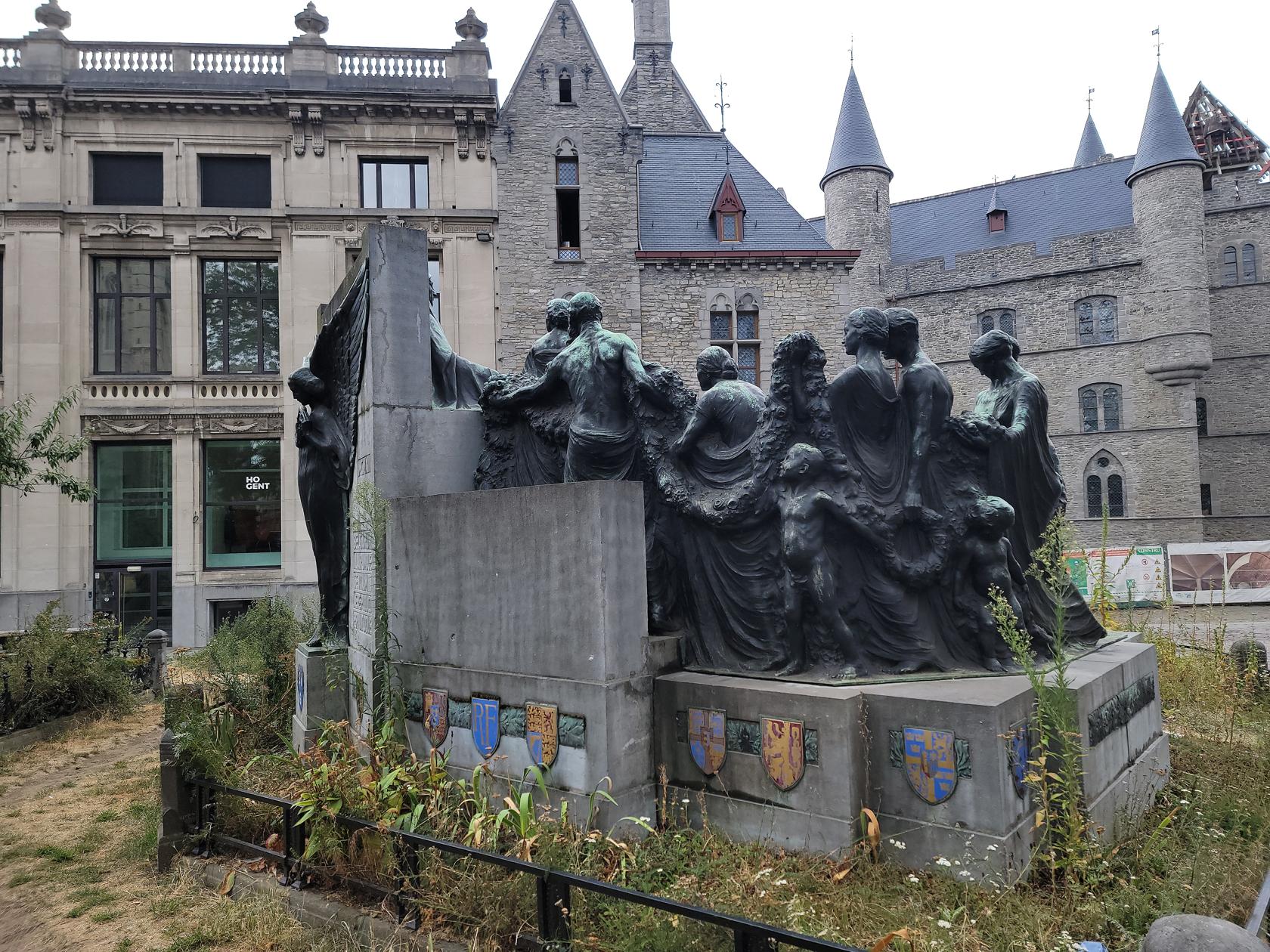
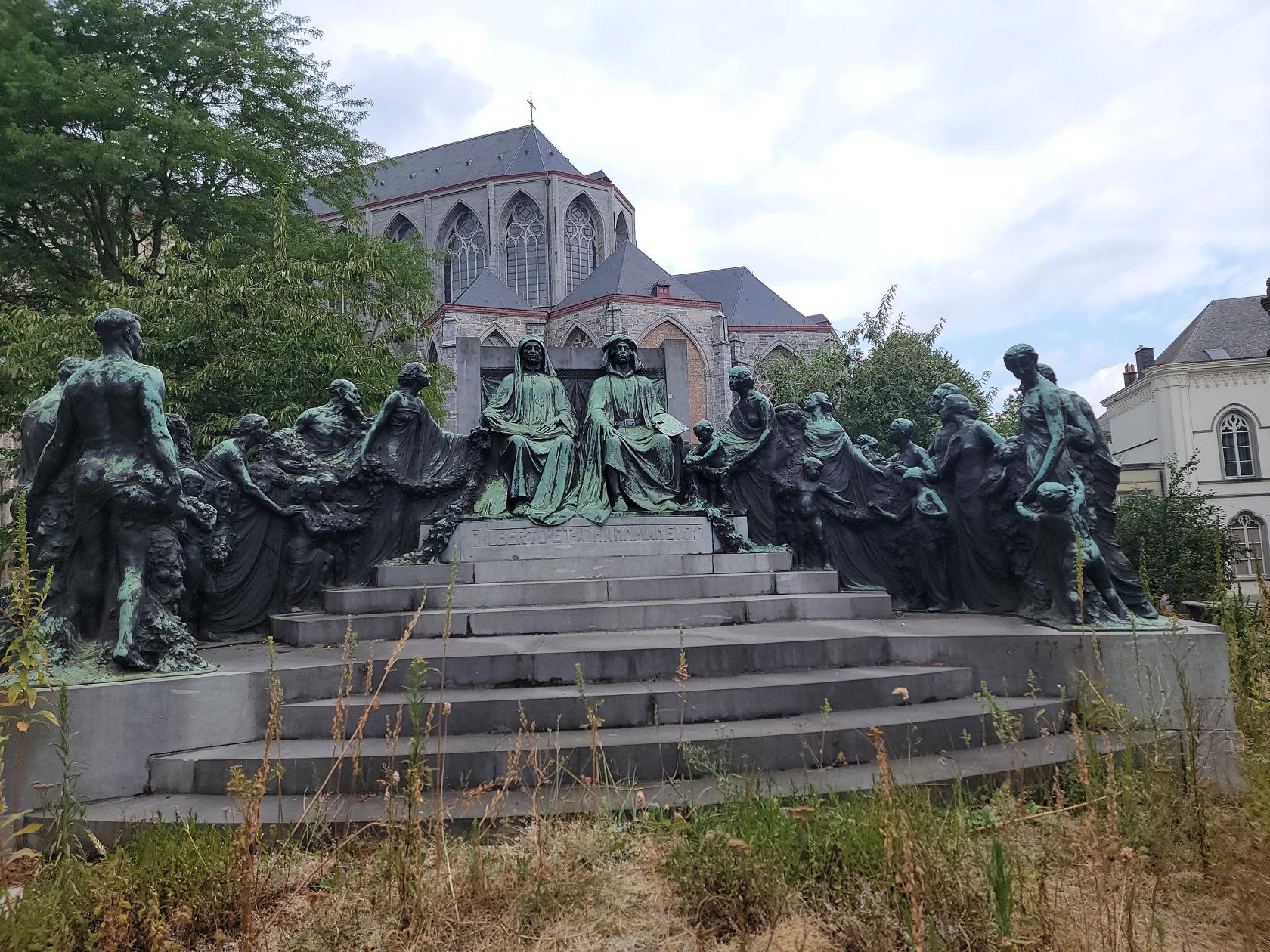
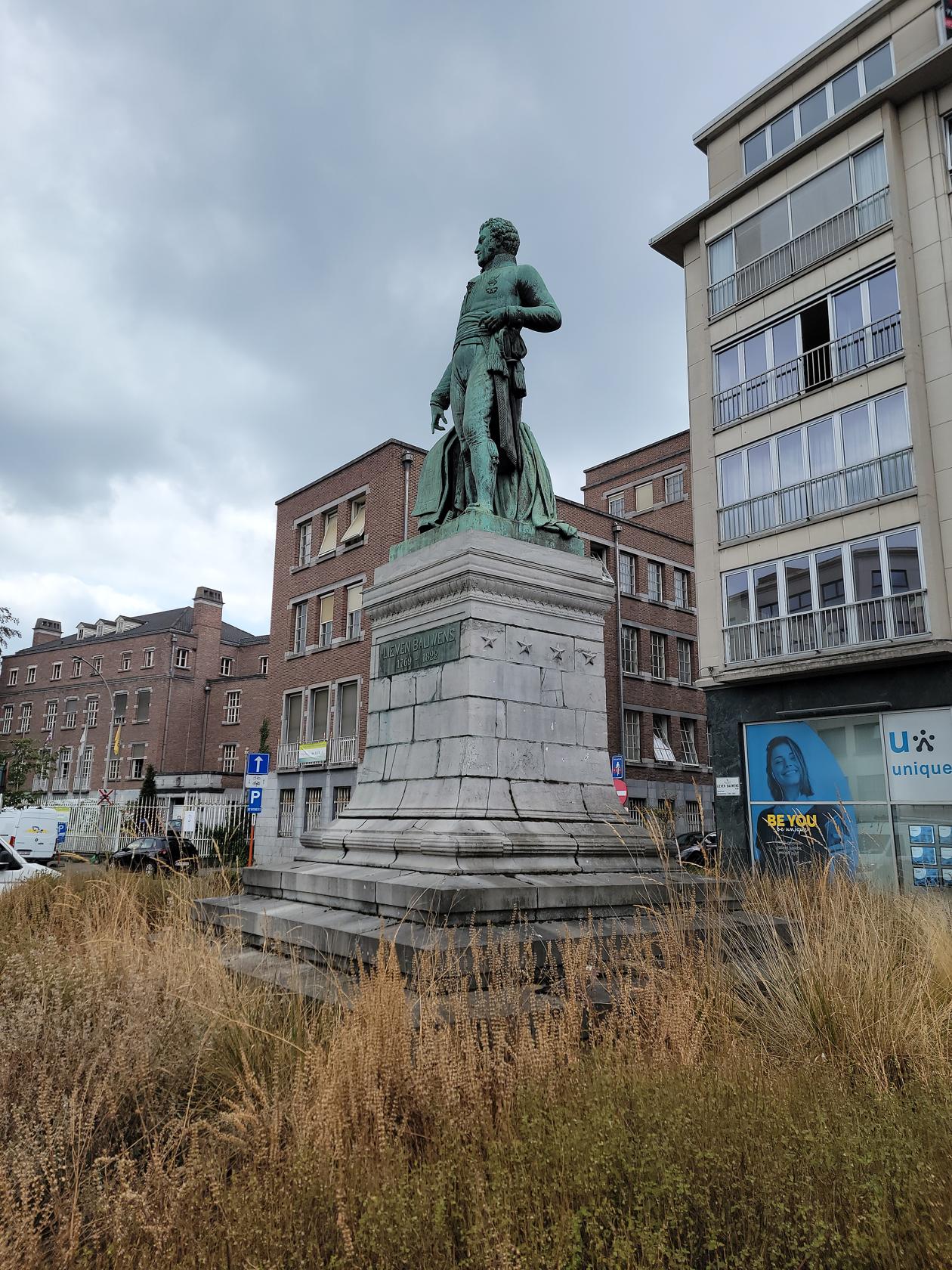
There are many other sights and monuments throughout the city that speak of the city’s history. For example the old Rabot, or ancient gate to the city.
Van Eyck Brothers Monument – Gent, Belgium
Van Eyck Brothers Monument – Gent, Belgium
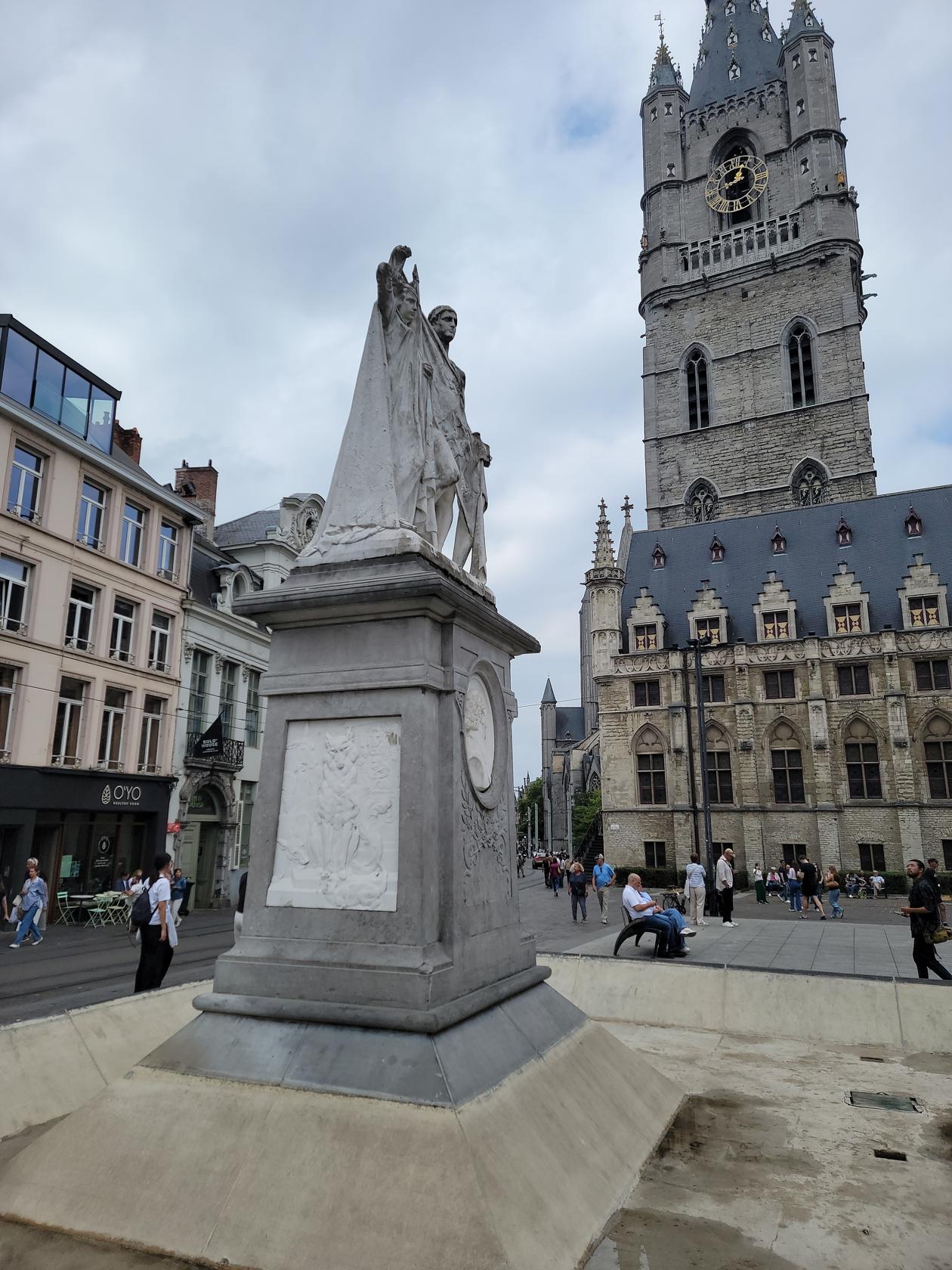
Lieven Bauwen’s Monument – Gent, Belgium
Lakenhalle and Belfry – Gent, Belgium
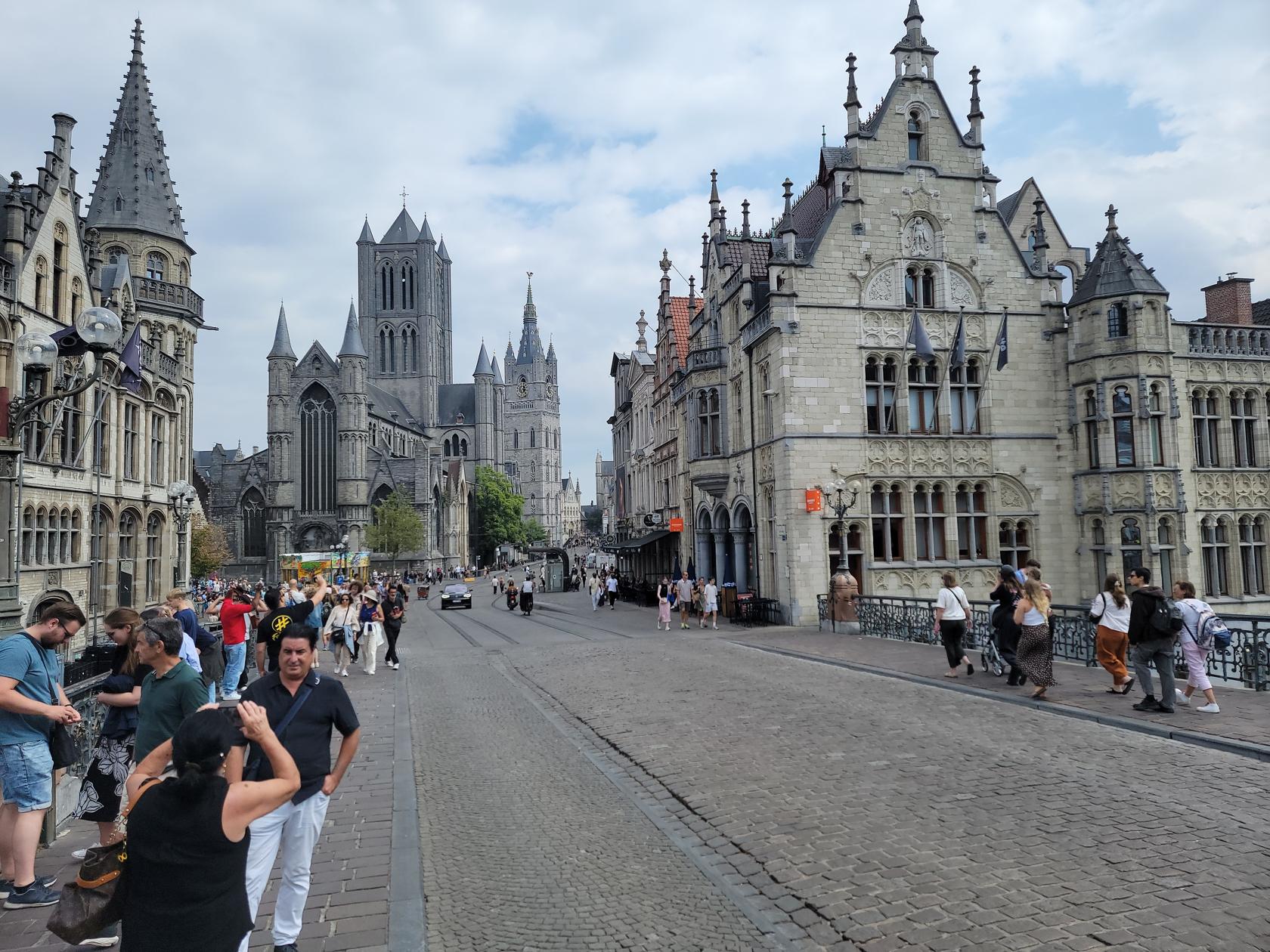
Saint Nicholas’ Church – Saint Michel’s Bridge – Gent, Belgium
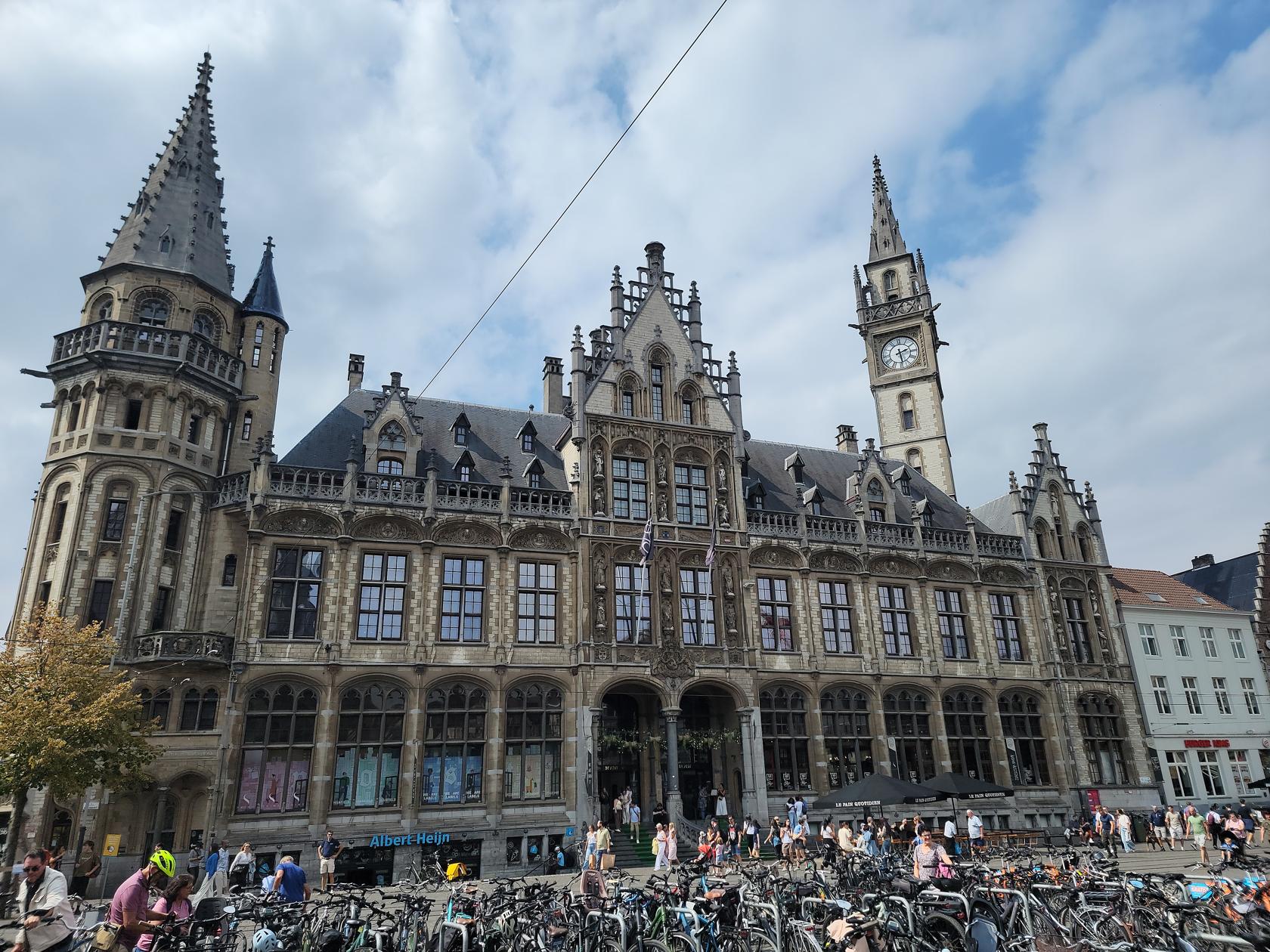
Old Post Office – Kroenenmarkt – Gent, Belgium
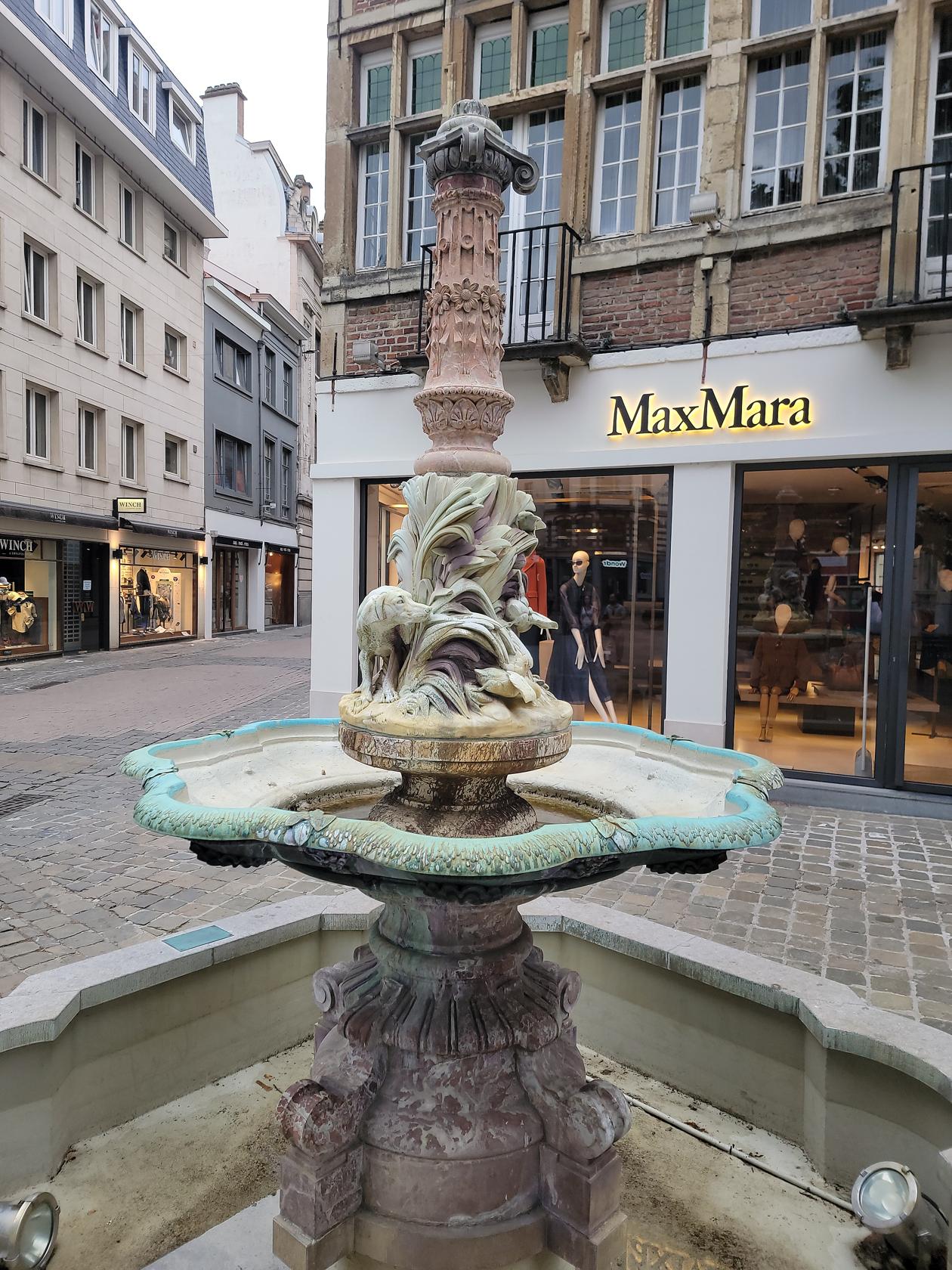
Fontein – Gent, Belgium
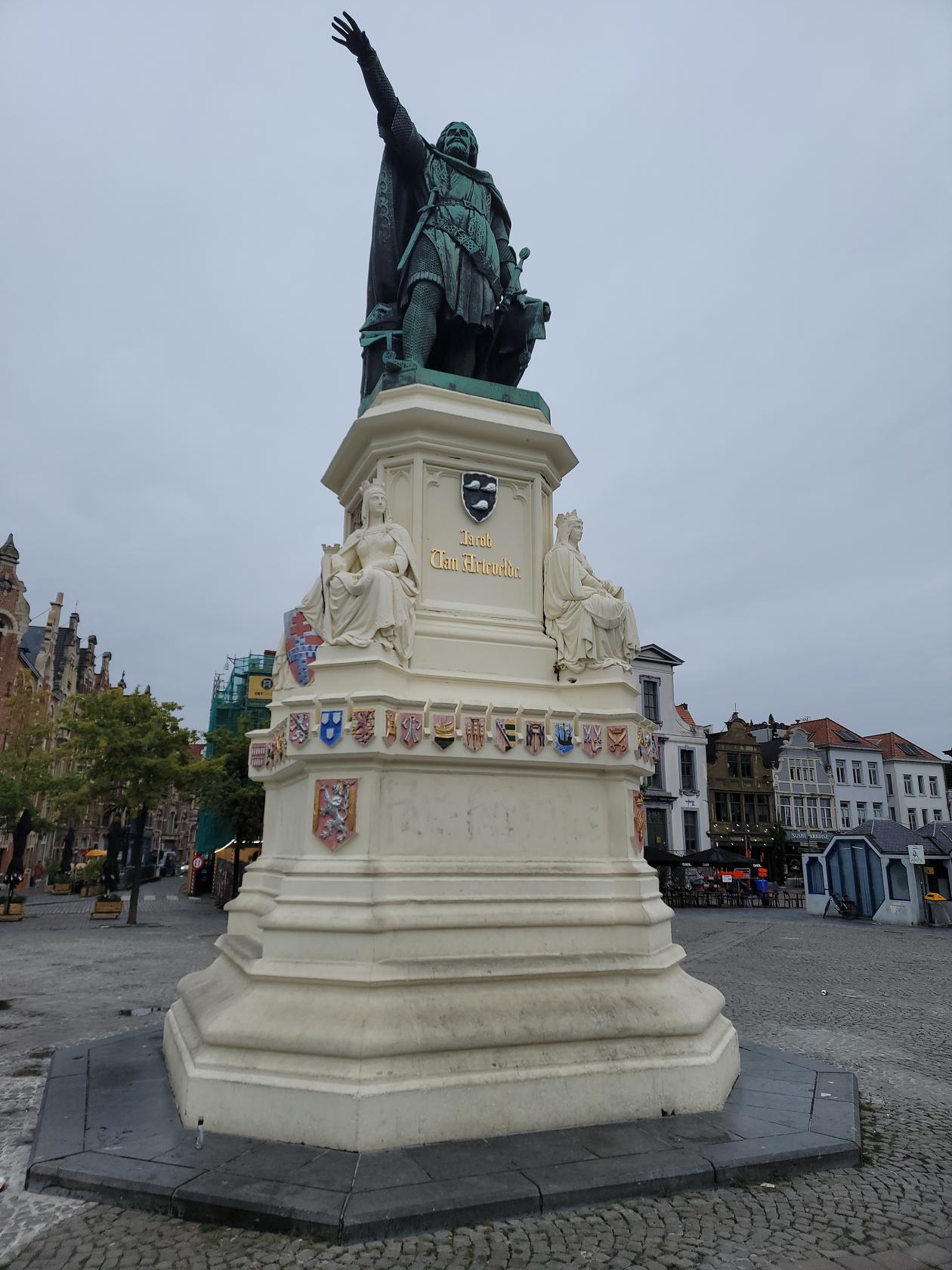
Jacob van Artevelde Monument – Vrijdagmarkt – Gent, Belgium
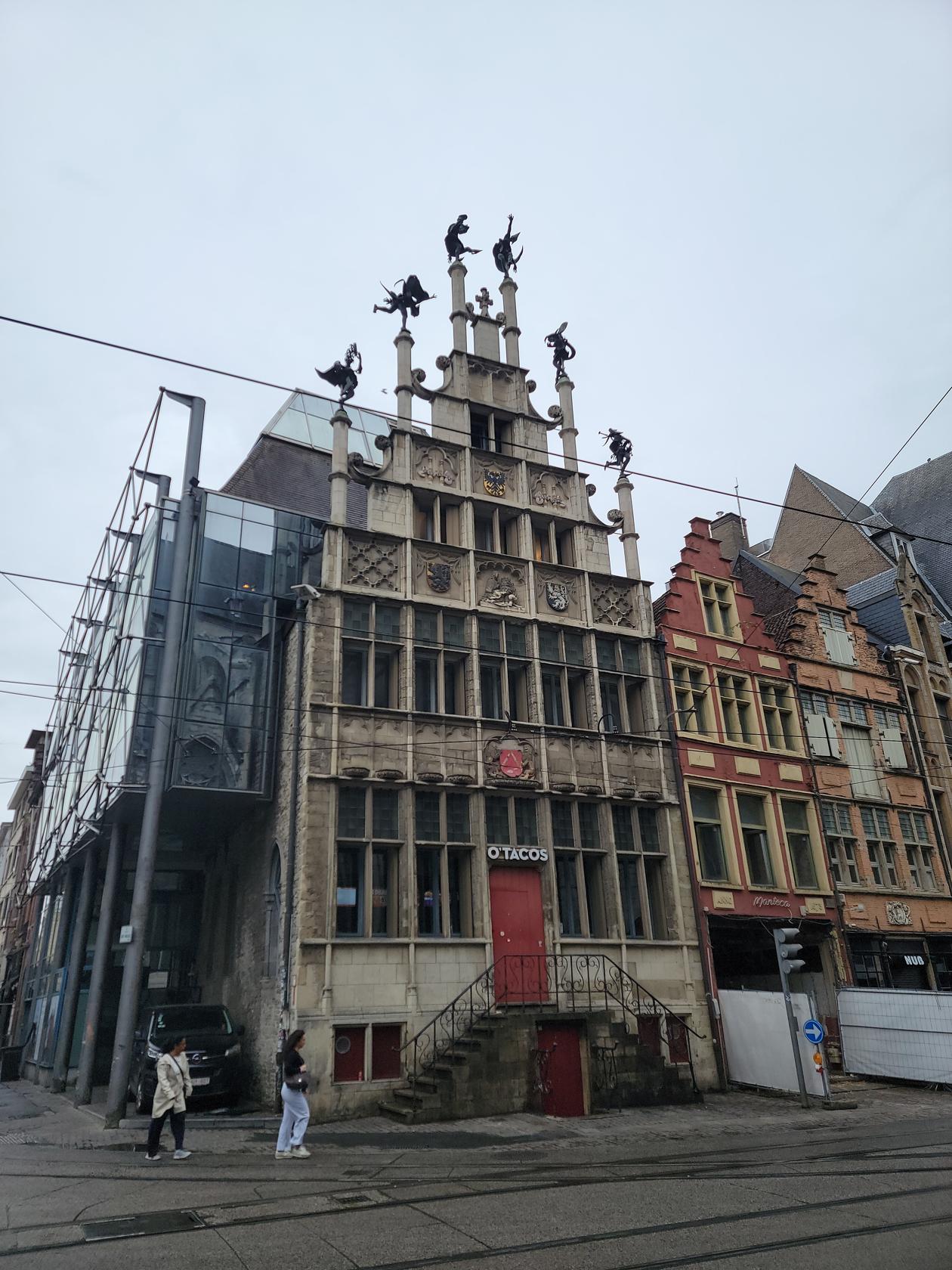
Metselaarhuis – Gent, Belgium
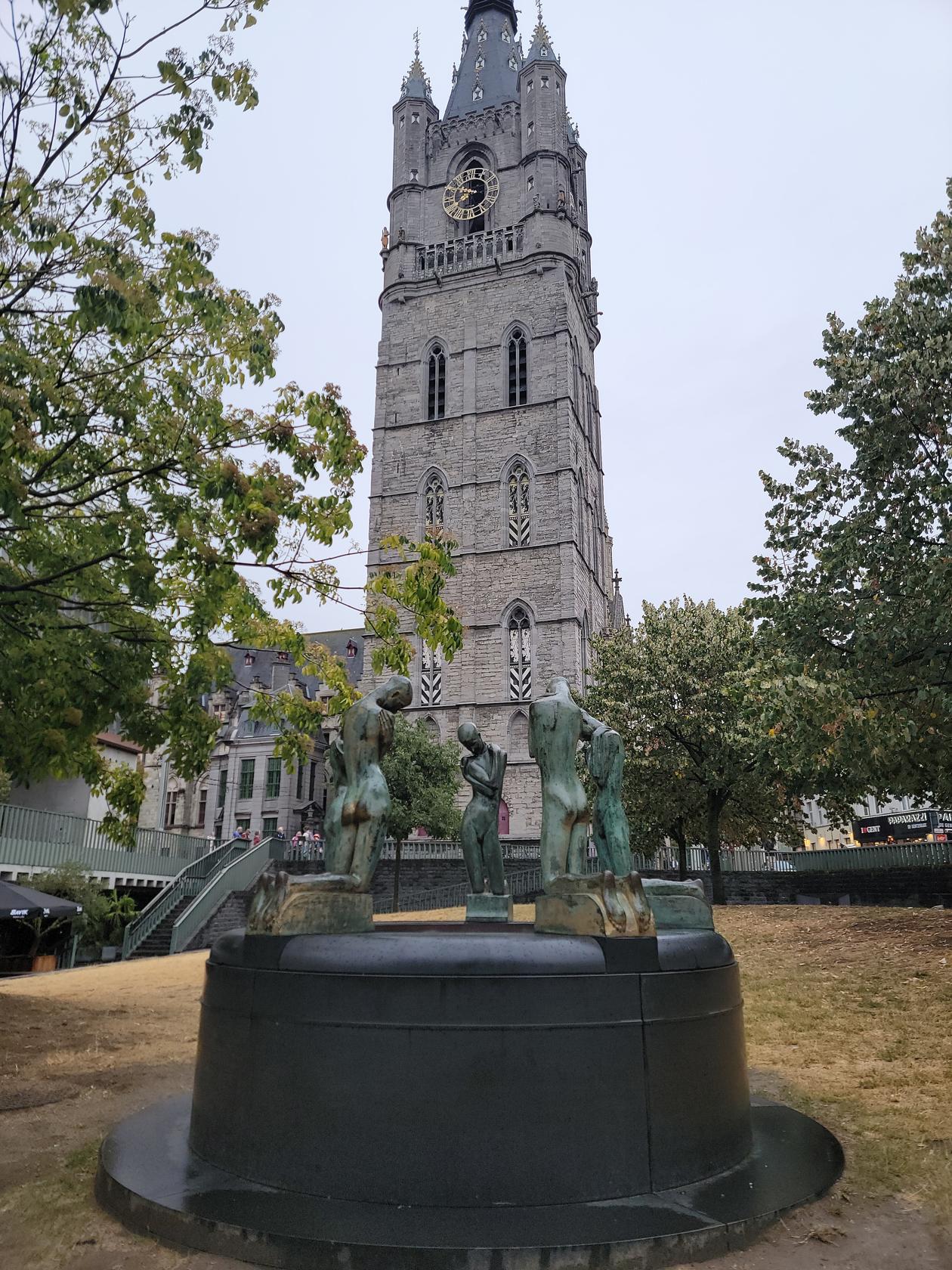
Fontein der Geknielden – Gent, Belgium
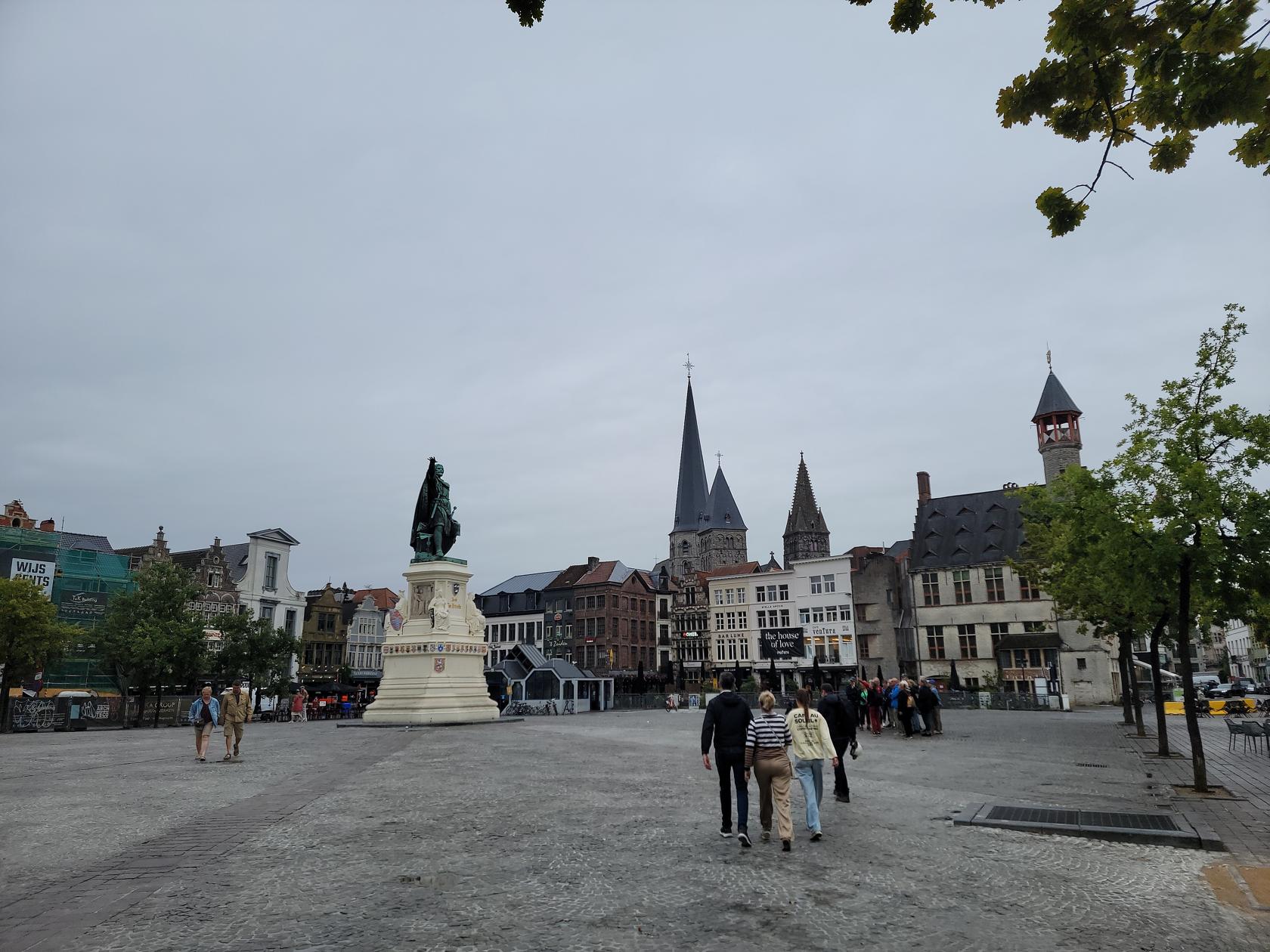
Vrijdagmarkt – Gent, Belgium
Vrijdagmarkt – Gent, Belgium
Bridge of Imperial Delights – Lieve Canal – Gent, Belgium
Rabot – Lieve Canal – Gent, Belgium
Sire van Maldegem – Sint Veerleplein – Gent, Belgium
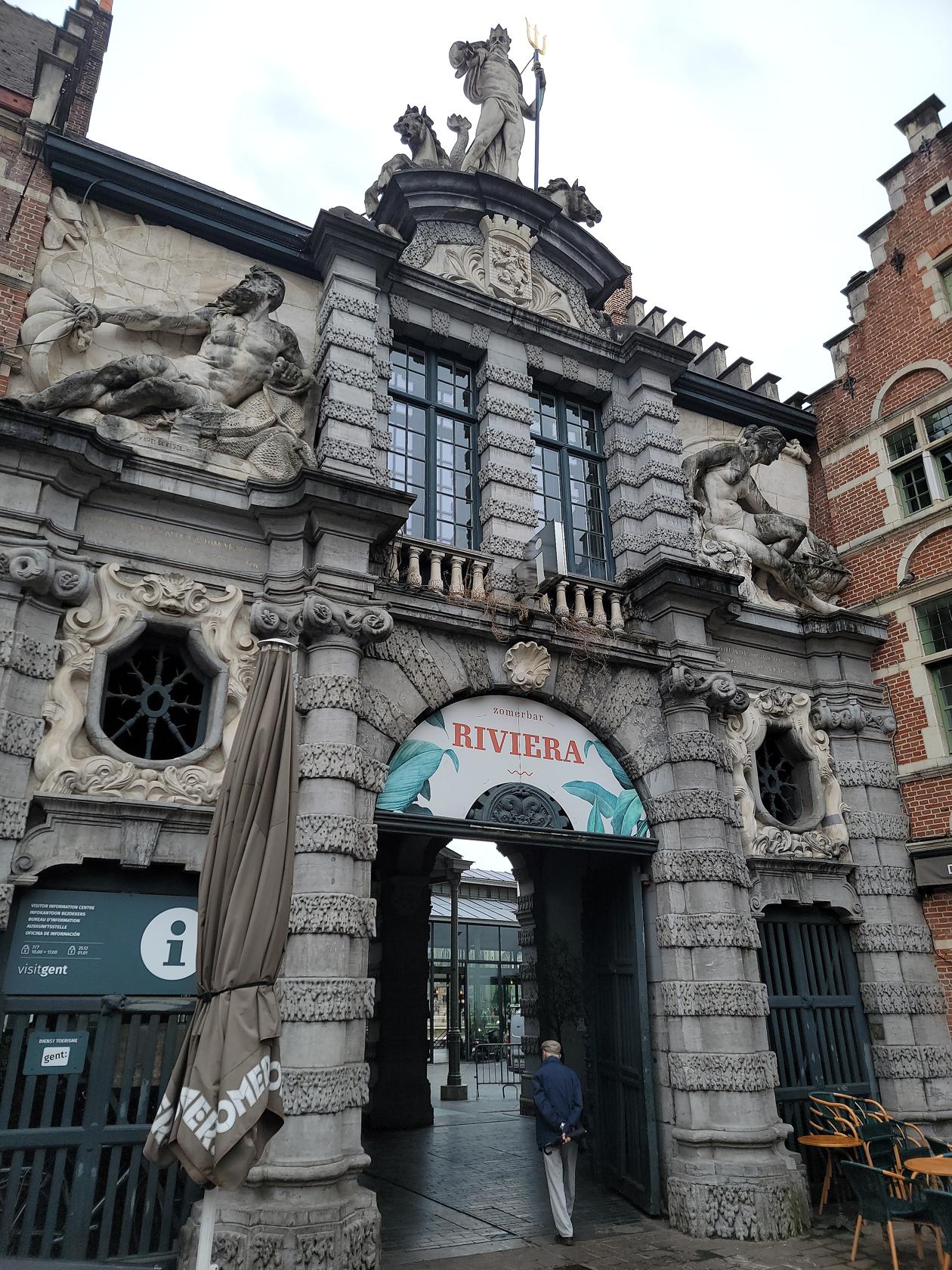
Antigua Lonja de Pescado Oude Vismijn – Sint Veerleplein – Gent, Belgium
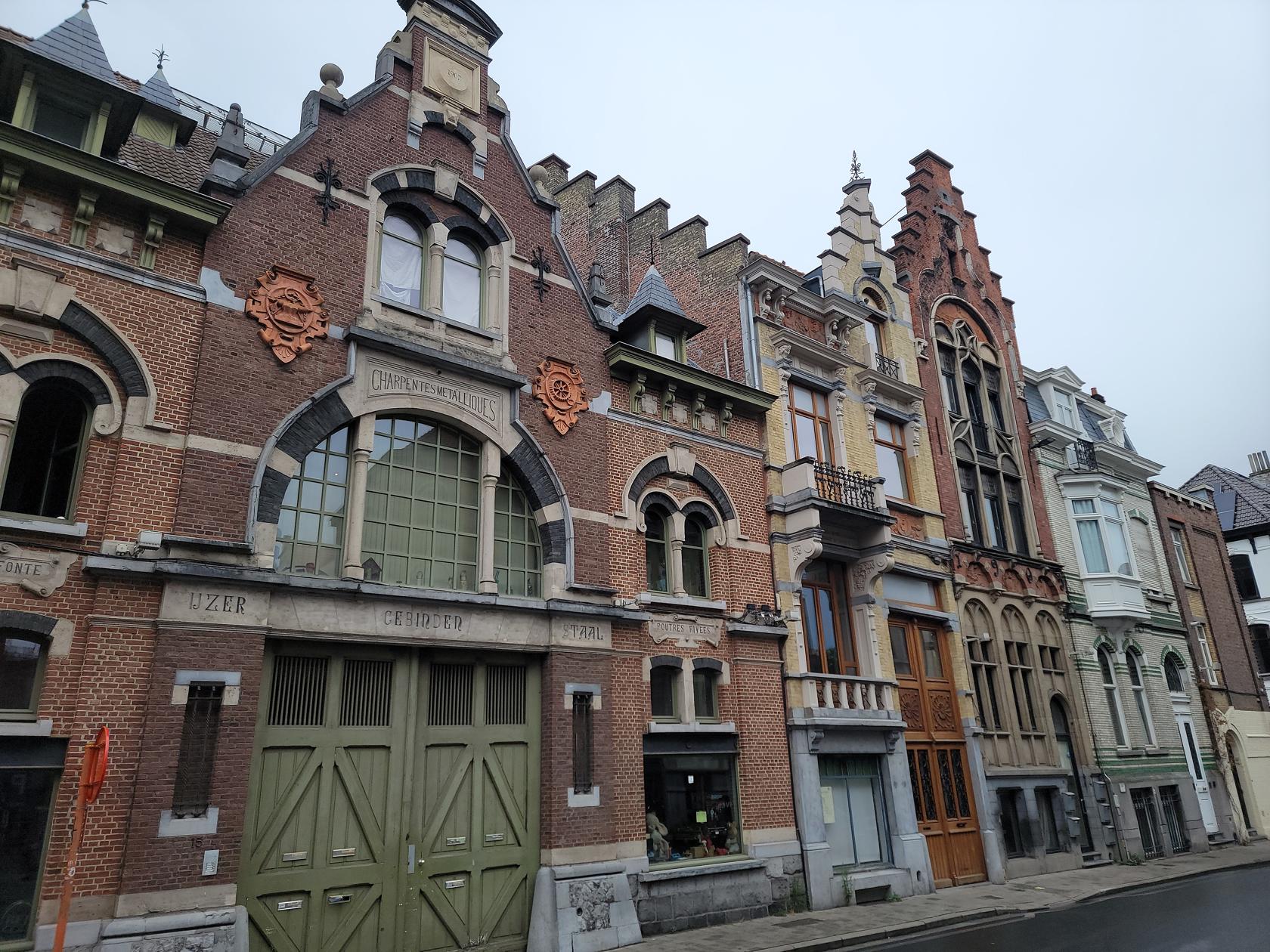
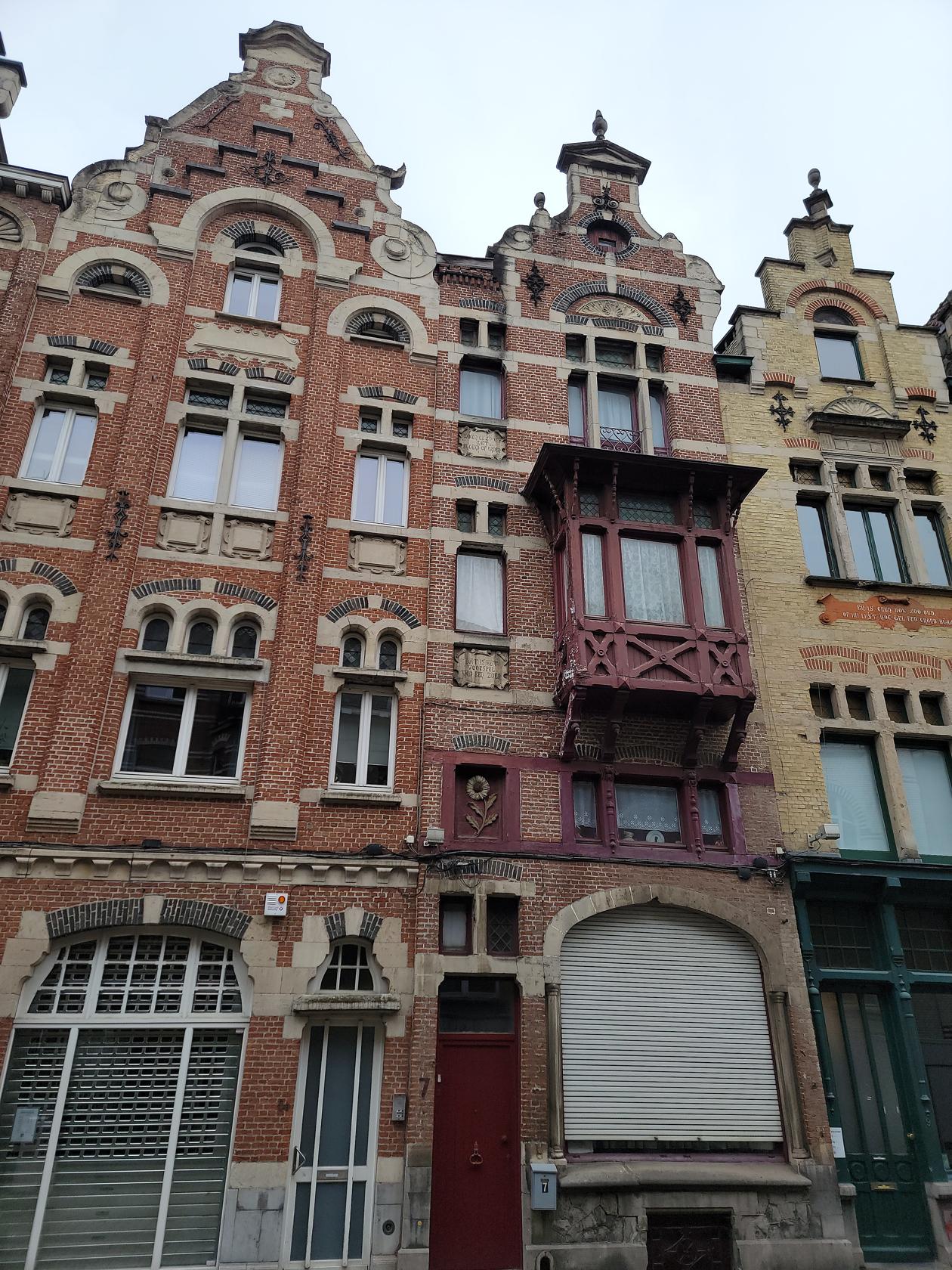
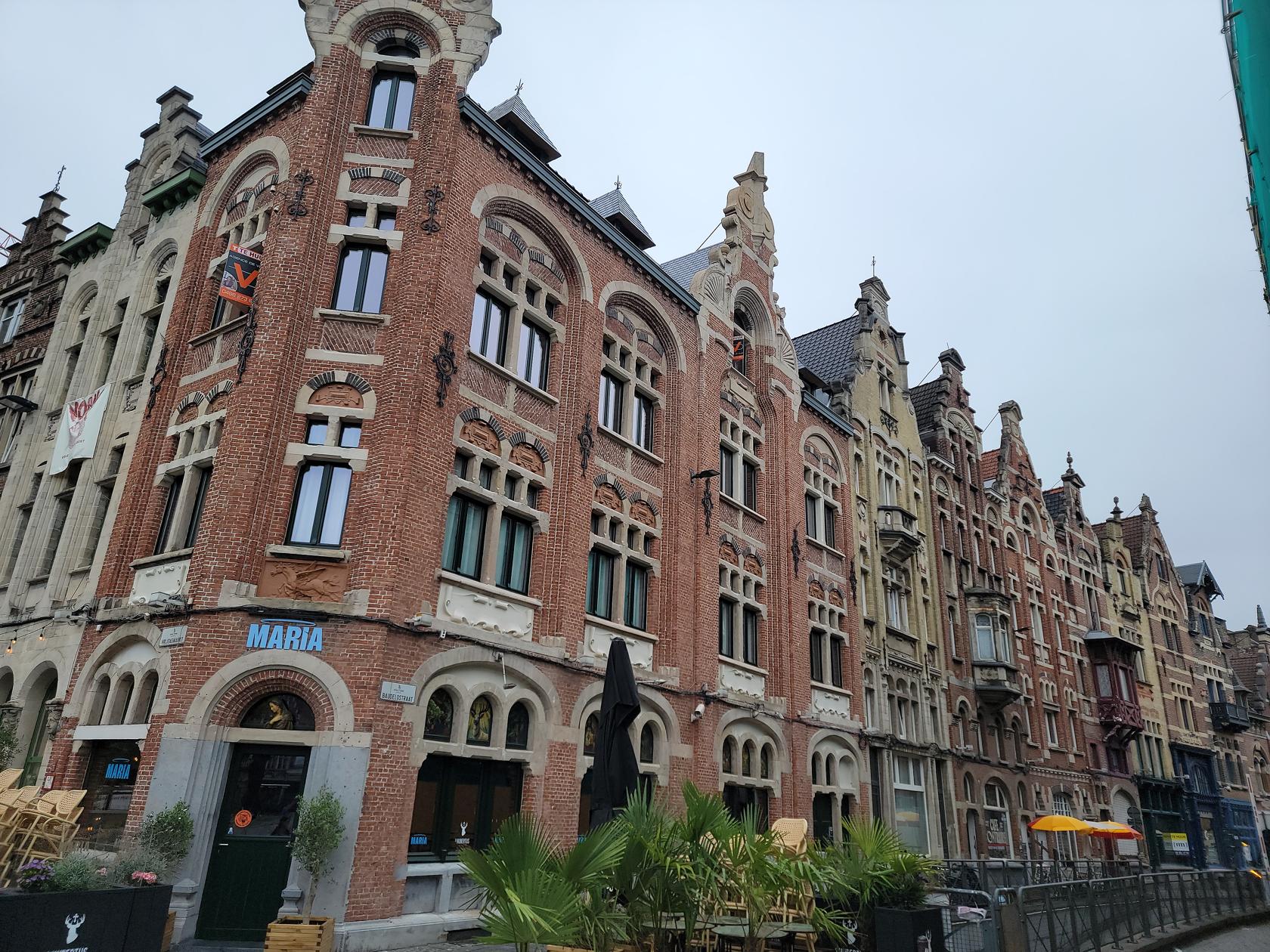
Eclectic House Row – Baudelostraat – Gent, Belgium
Eclectic House Row – Baudelostraat – Gent, Belgium
Eclectic House Row – Baudelostraat – Gent, Belgium
Churches And Cathedrals
There are two cathedrals in Gent, each one has its unique charm. There are also a number of churches that may also be visited, but times are restricted and you must check the schedules.
Saint Nicholas Church
More in the center of town and off the Korenmarkt is Saint Nicholas’ church of Christmas fame. An obviously underused and underkept church in the vicinity which is mostly grey outside and inside. There are many things boarded up when we visited, though no active renovations appeared to have been started. It is actually quite a shame since this is one of the oldest buildings in the city and one of the oldest churches which was built in the Scheldt Gothic style, which is uncommon.
Outside – Saint Nicholas’ Church – Gent, Belgium
Nave – Saint Nicholas’ Church – Gent, Belgium
Cross – Saint Nicholas’ Church – Gent, Belgium
Pulpit – Saint Nicholas’ Church – Gent, Belgium
Saint Bavo’s Cathedral
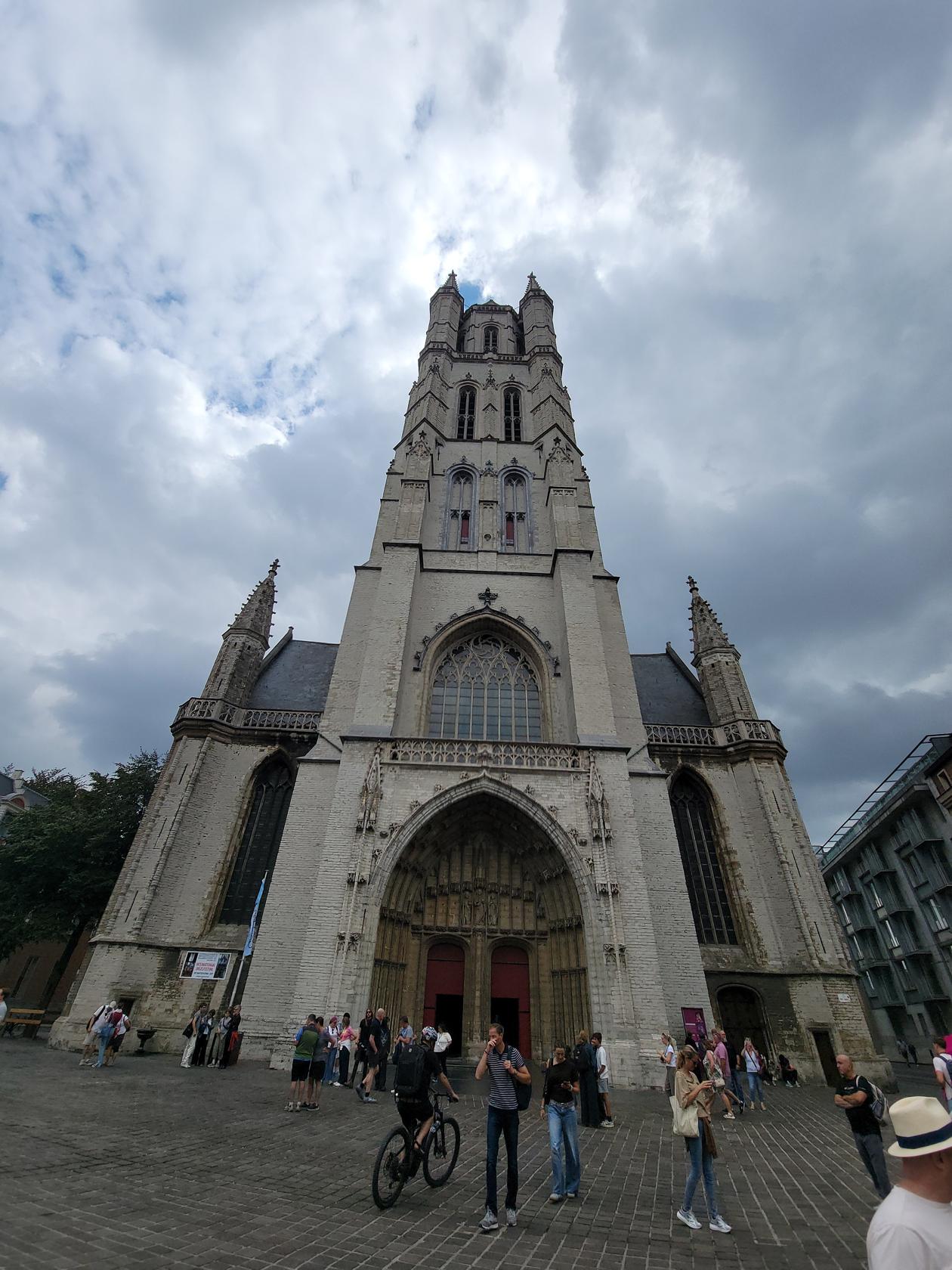
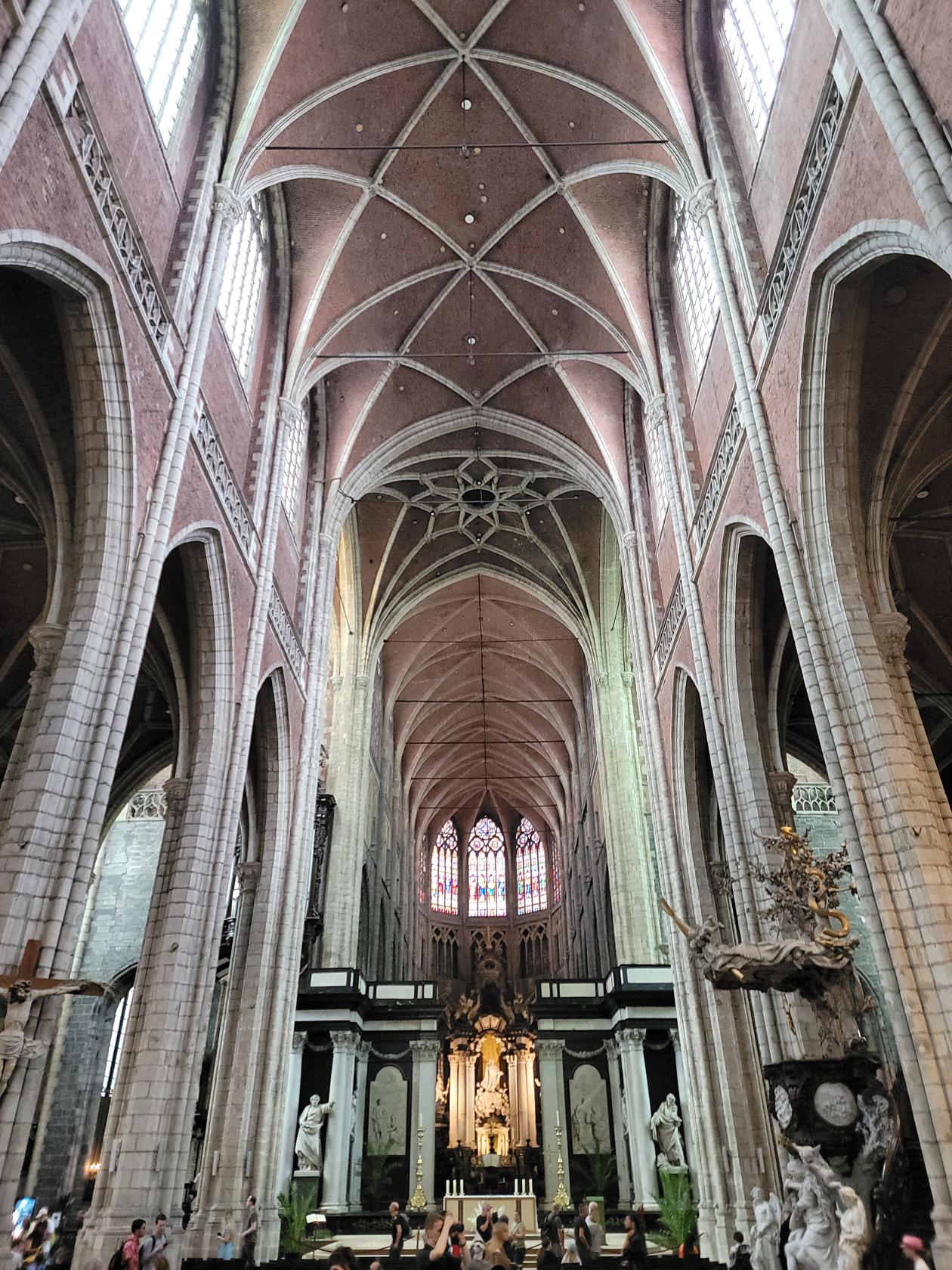
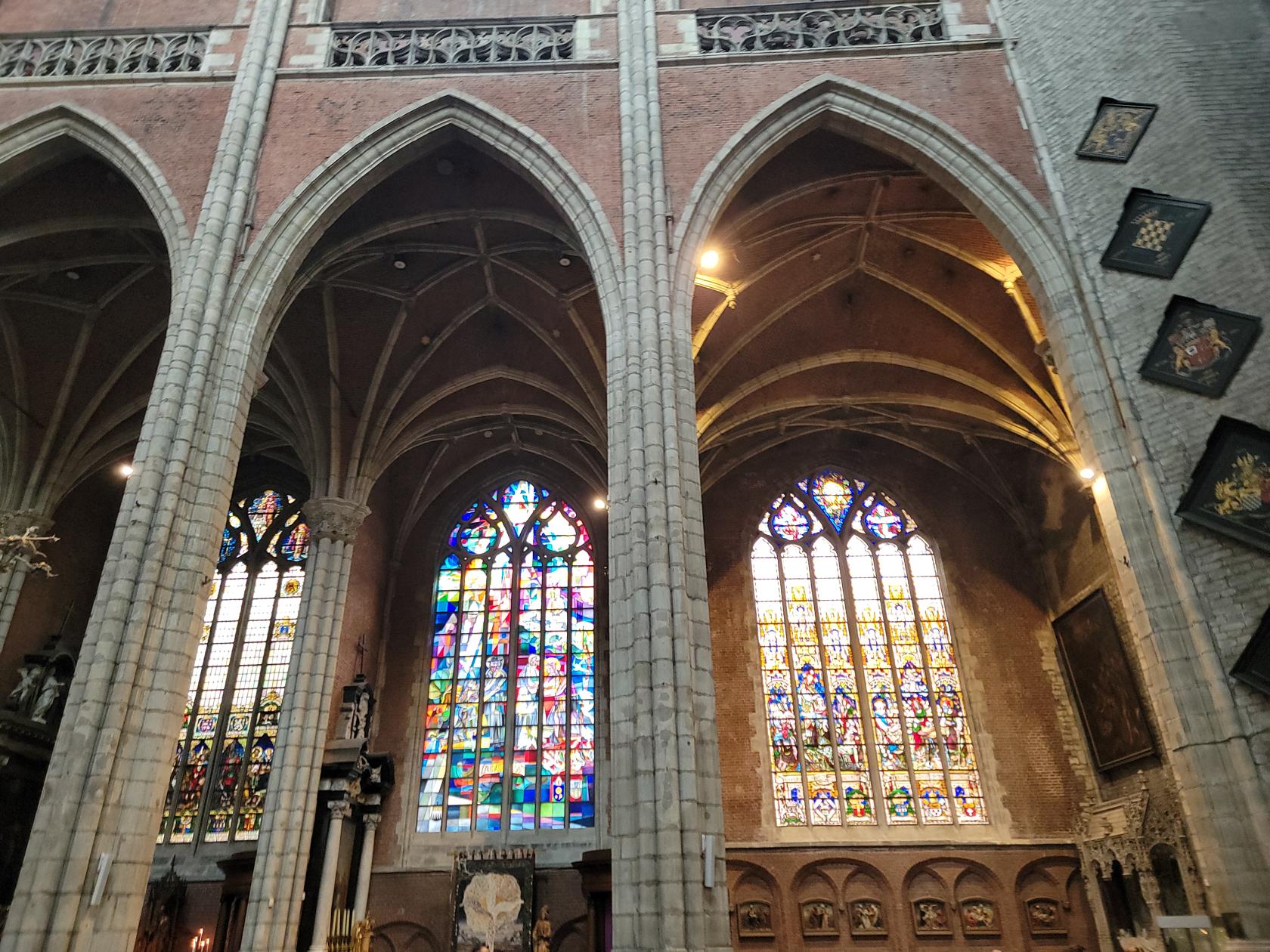
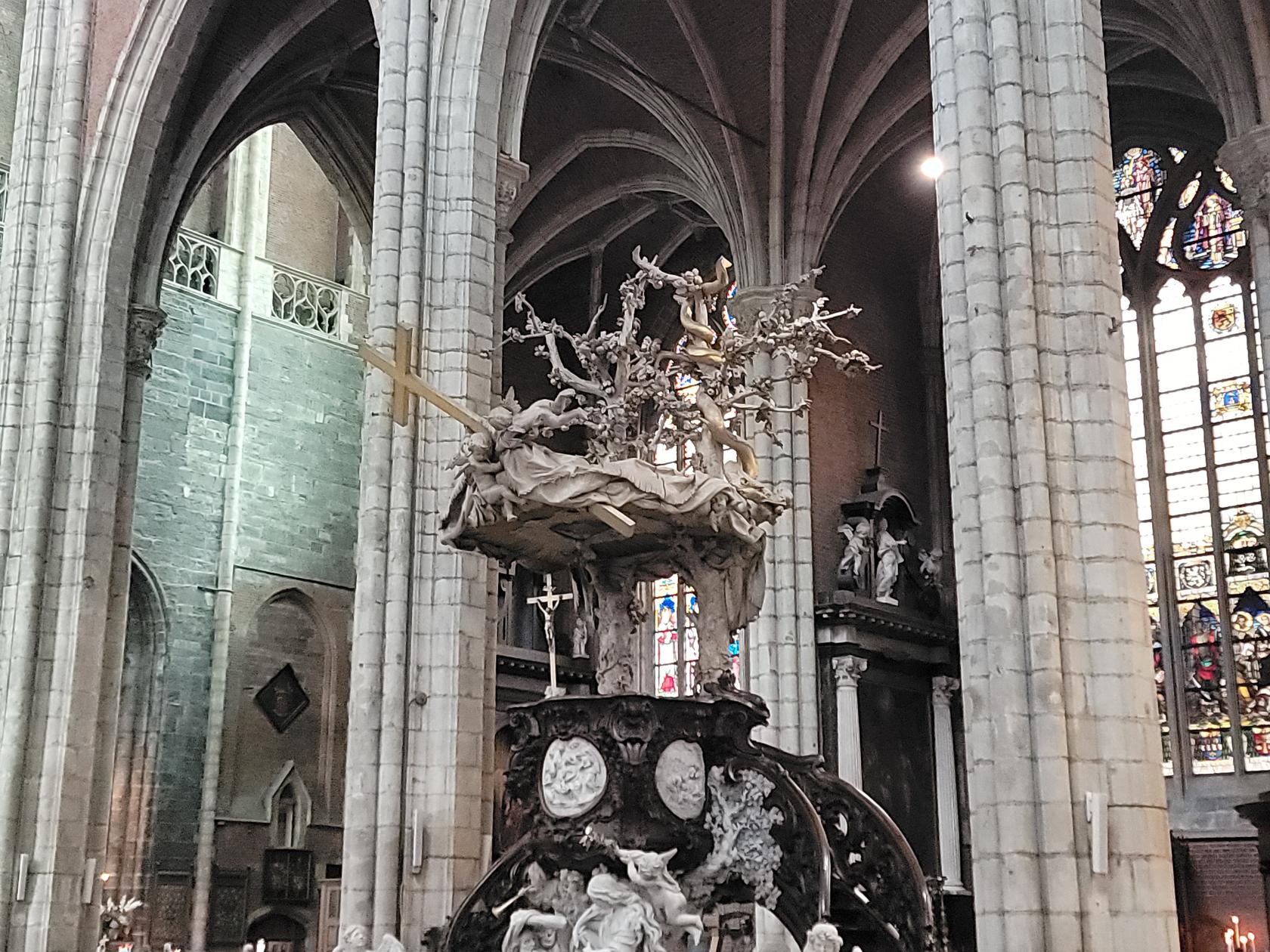
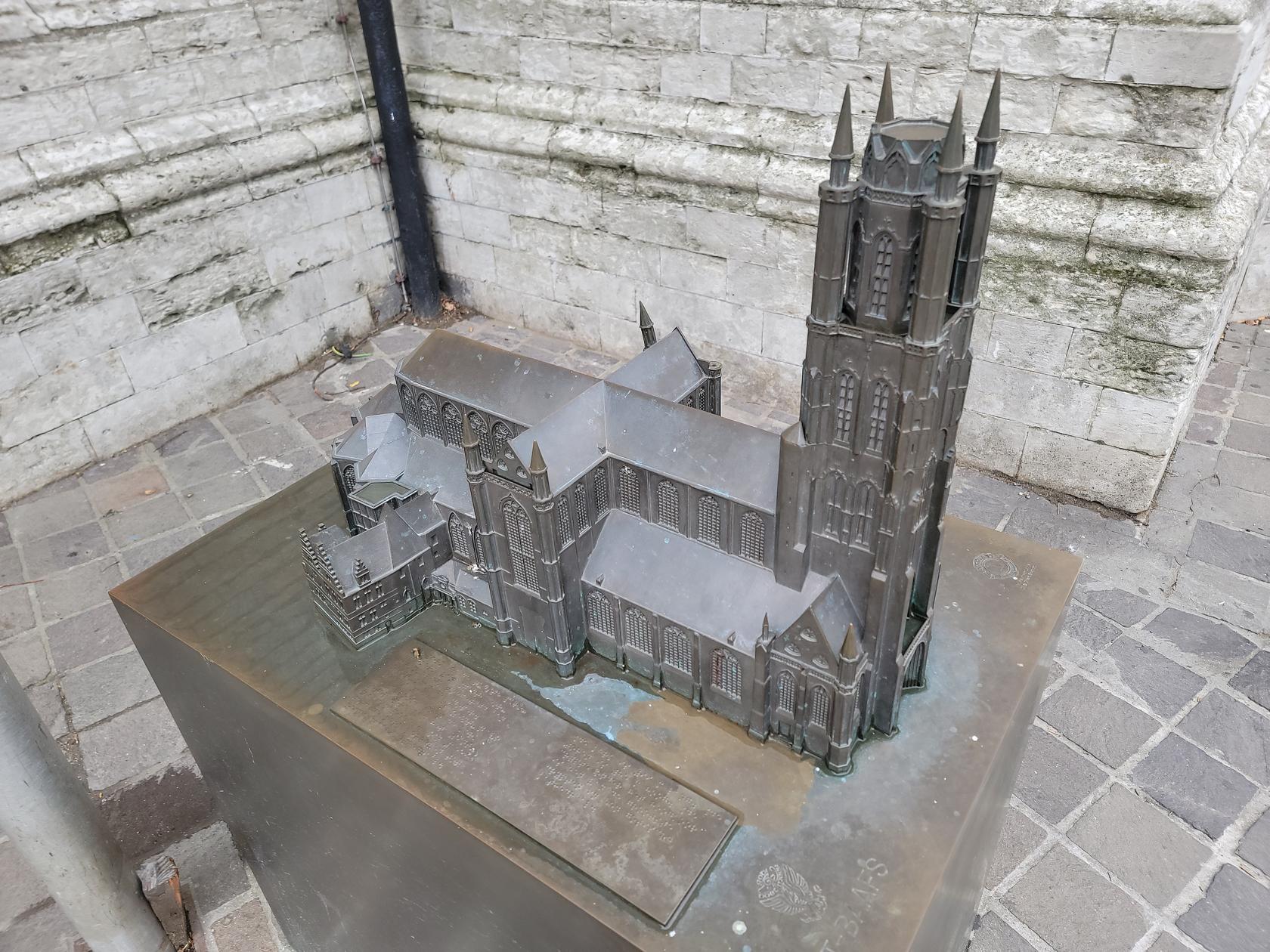
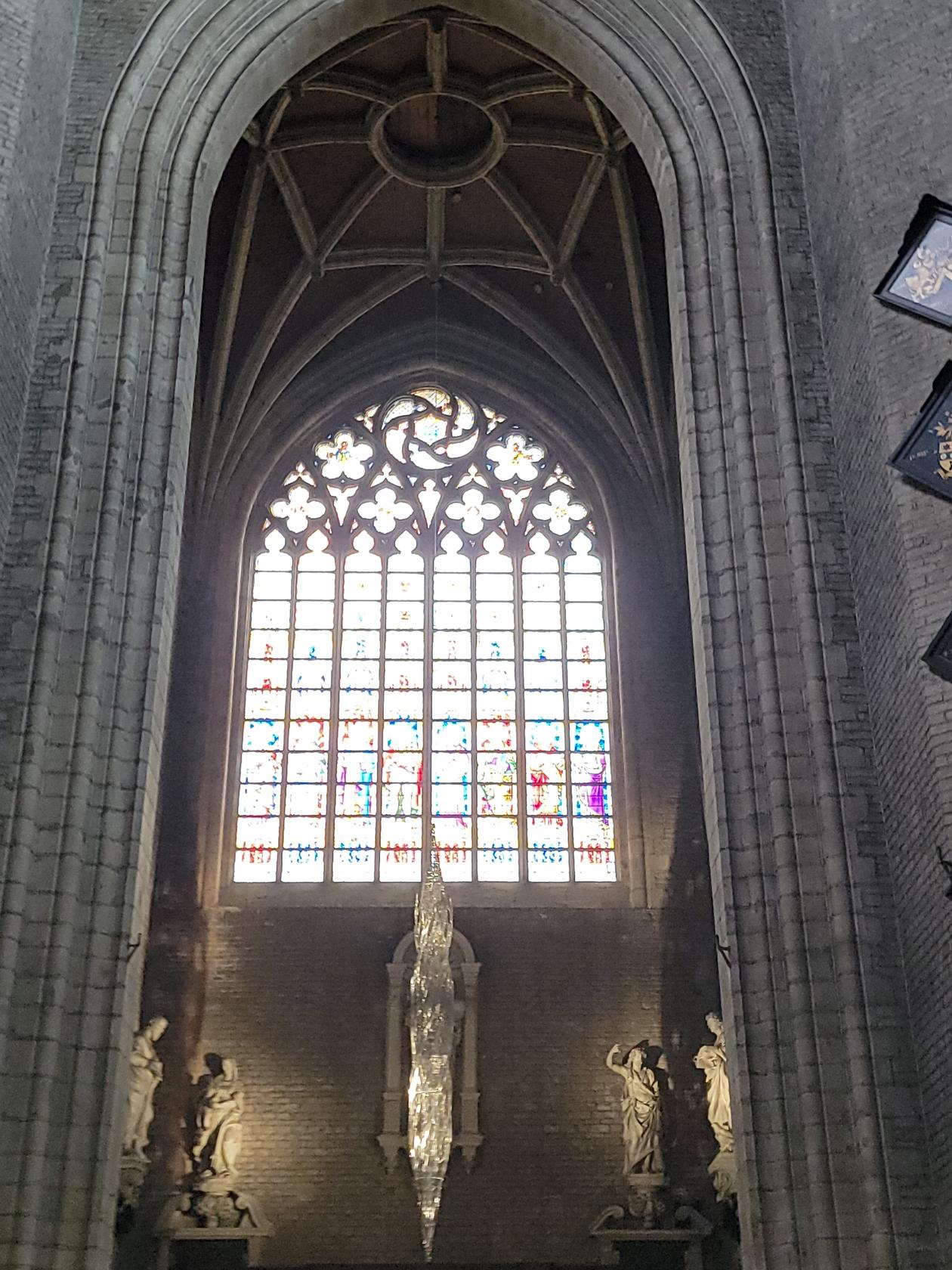
Saint Bavo’s Cathedral is perched on the small hill just off-center to town and across the street from our hotel. It is of typical cathedral design and has a very interest ambulatory and apse, which of course you have pay to go in and see, don’t underestimate the Belgian clergy on how to make a buck.
Entrance – Saint Bavos Cathedral – Gent, Belgium
Nave – Saint Bavos Cathedral – Gent, Belgium
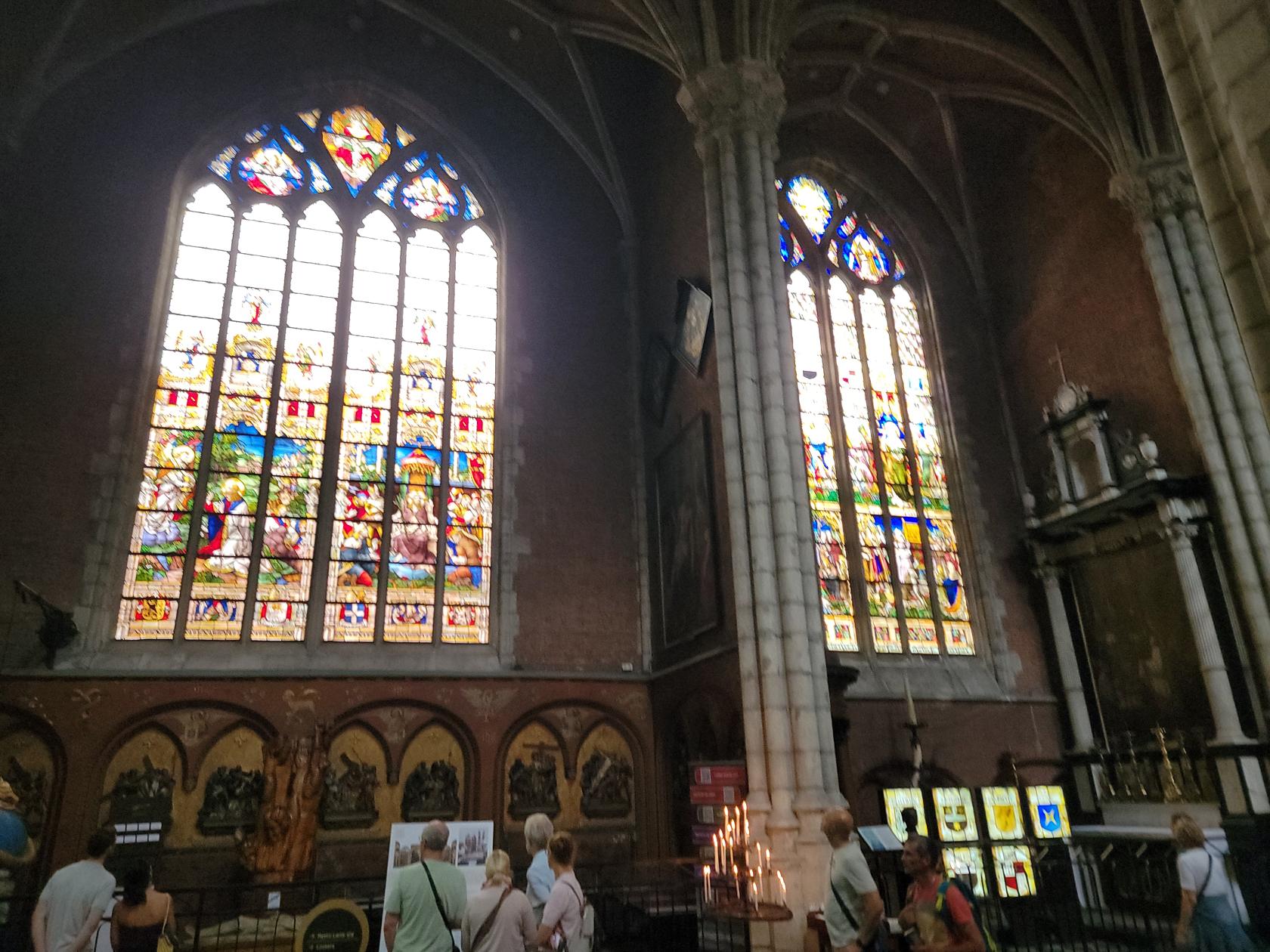
Windows – Saint Bavos Cathedral – Gent, Belgium
Stained Glass – Saint Bavos Cathedral – Gent, Belgium
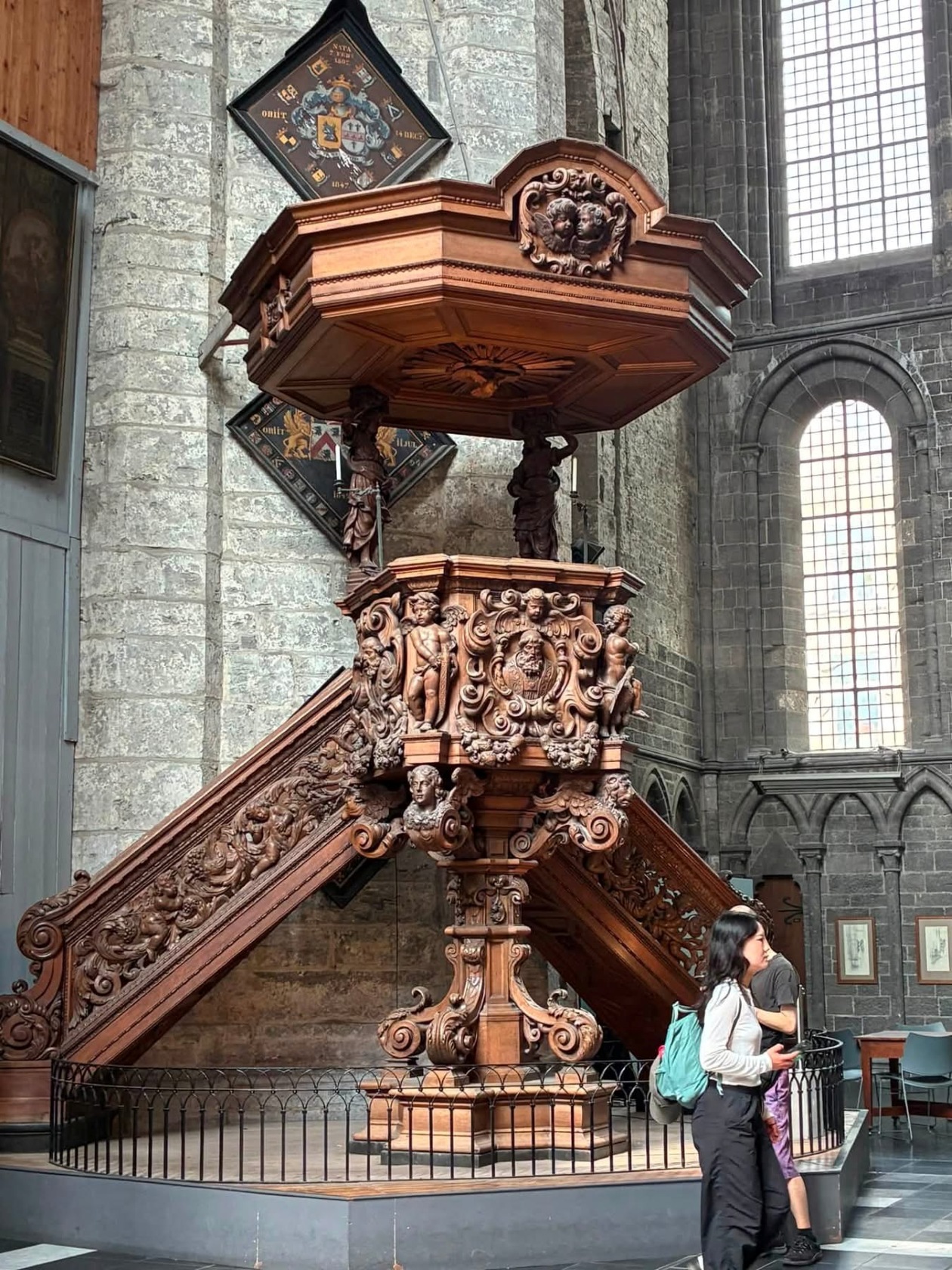
Pulpit – Saint Bavos Cathedral – Gent, Belgium
Bronz Model – Saint Bavos Cathedral – Gent, Belgium
Stained Glass Transept – Saint Bavos Cathedral – Gent, Belgium
Altar at the Cross – Saint Bavos Cathedral – Gent, Belgium
Altar – Saint Bavos Cathedral – Gent, Belgium
Windows in Ambulatory – Saint Bavos Cathedral – Gent, Belgium
Saint Michel’s Cathedral
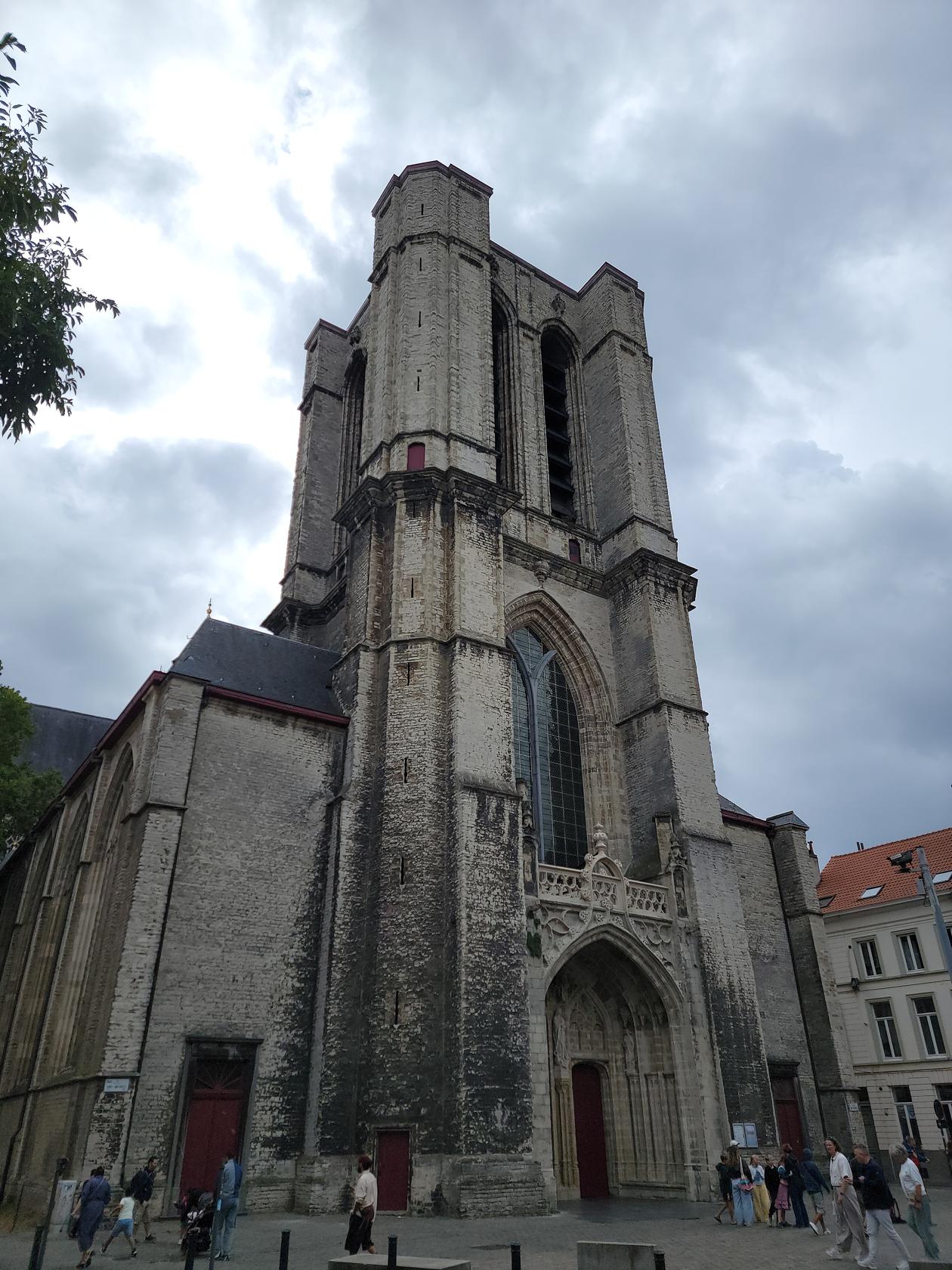
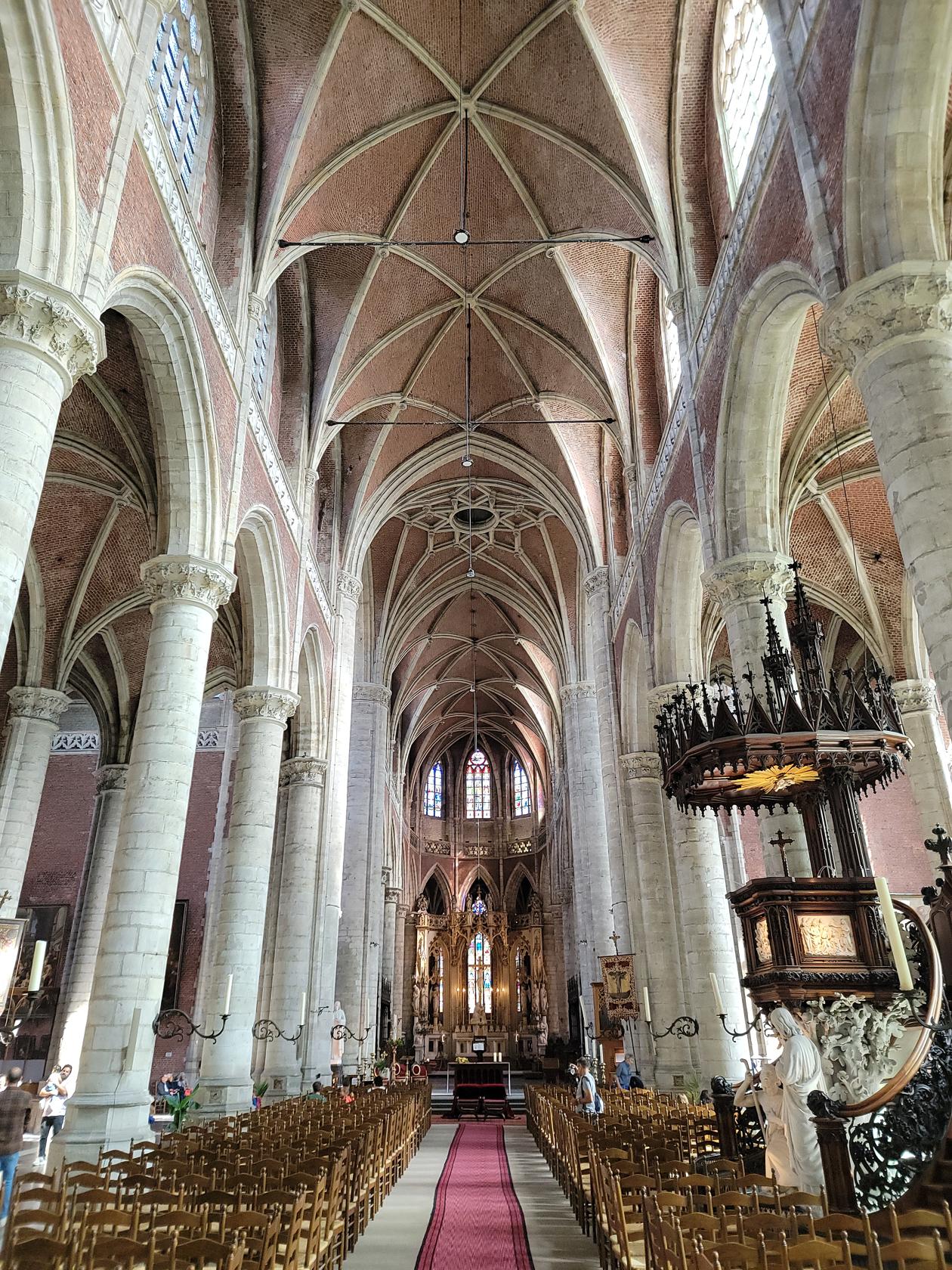
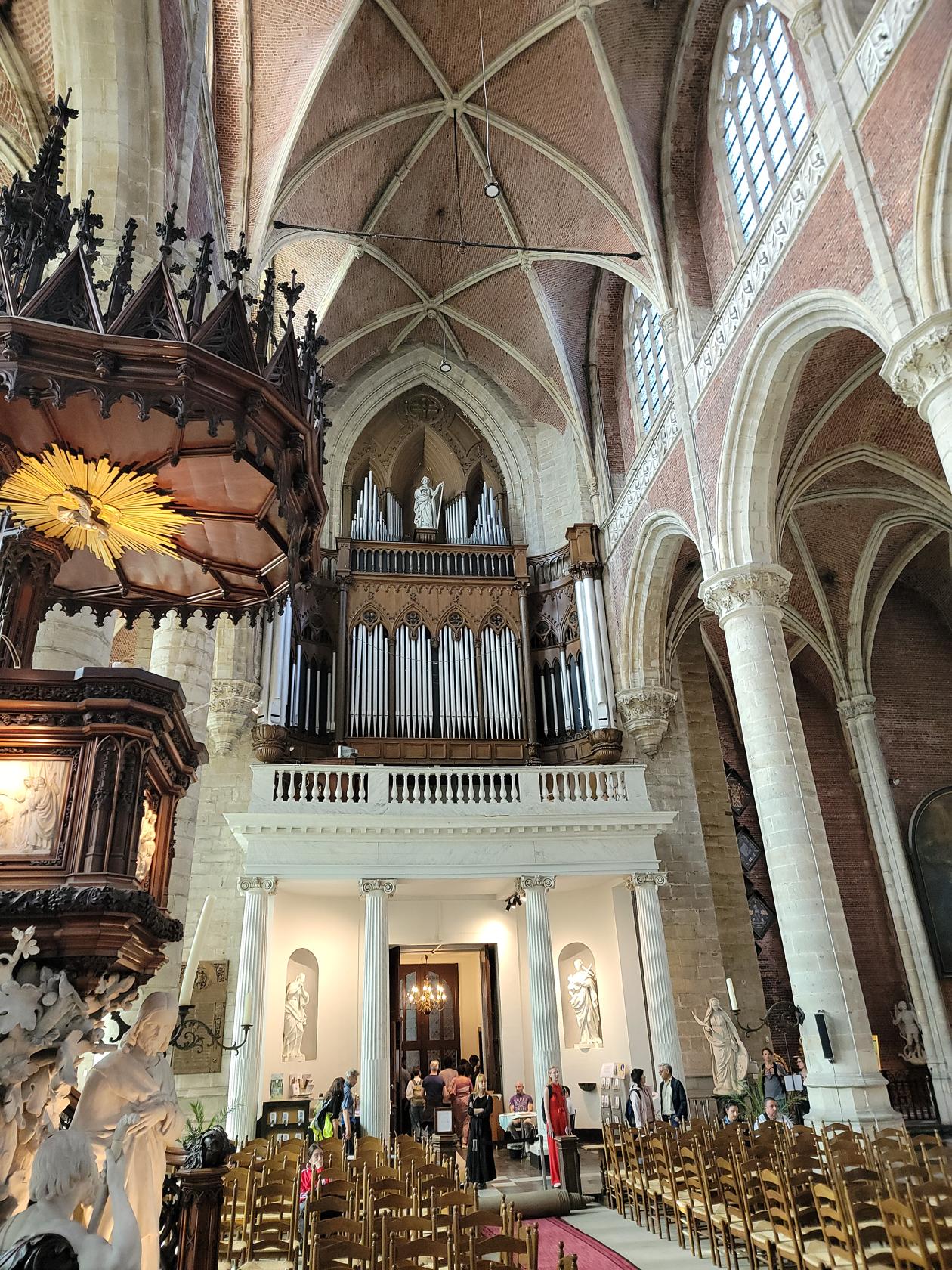
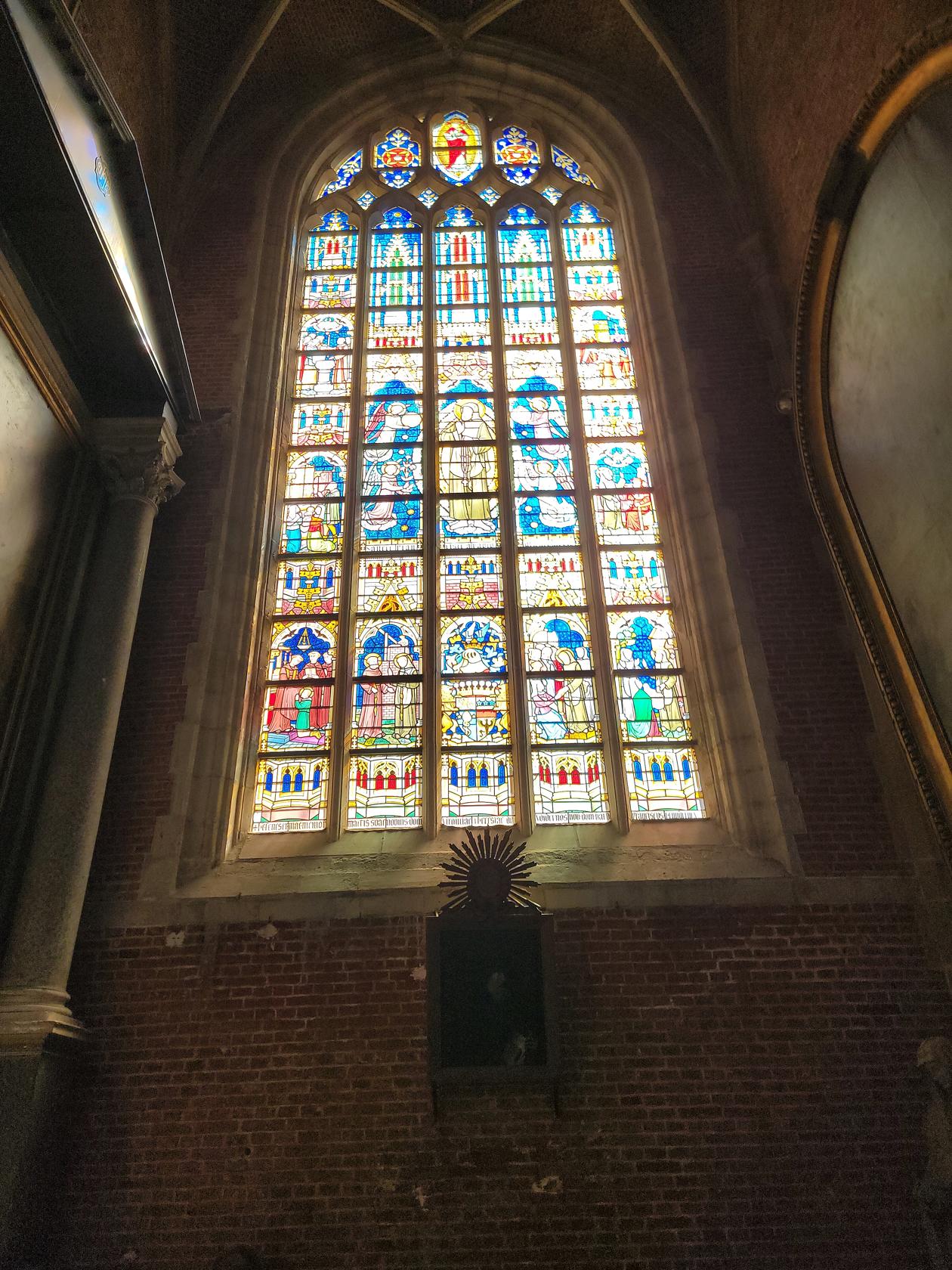
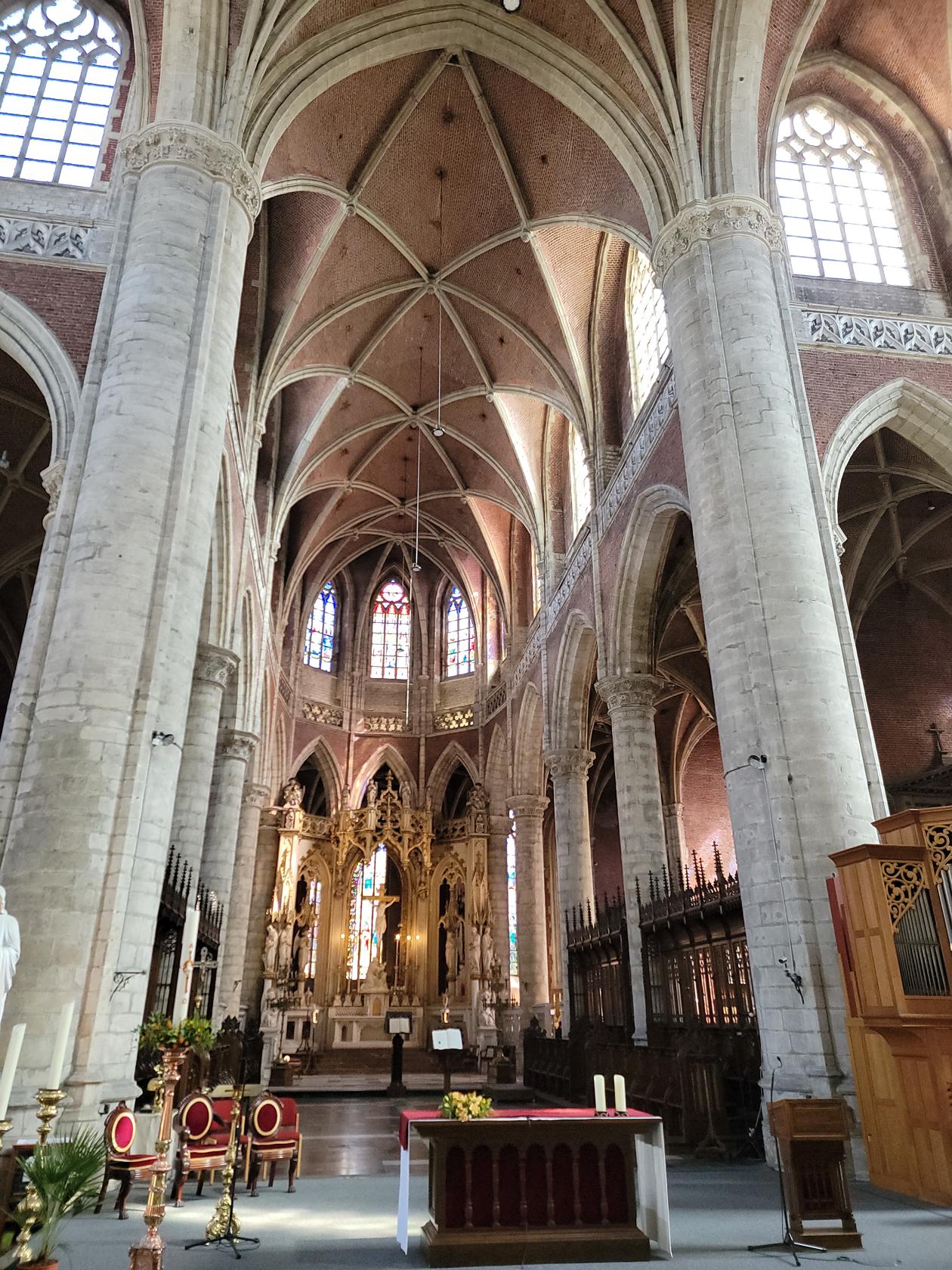
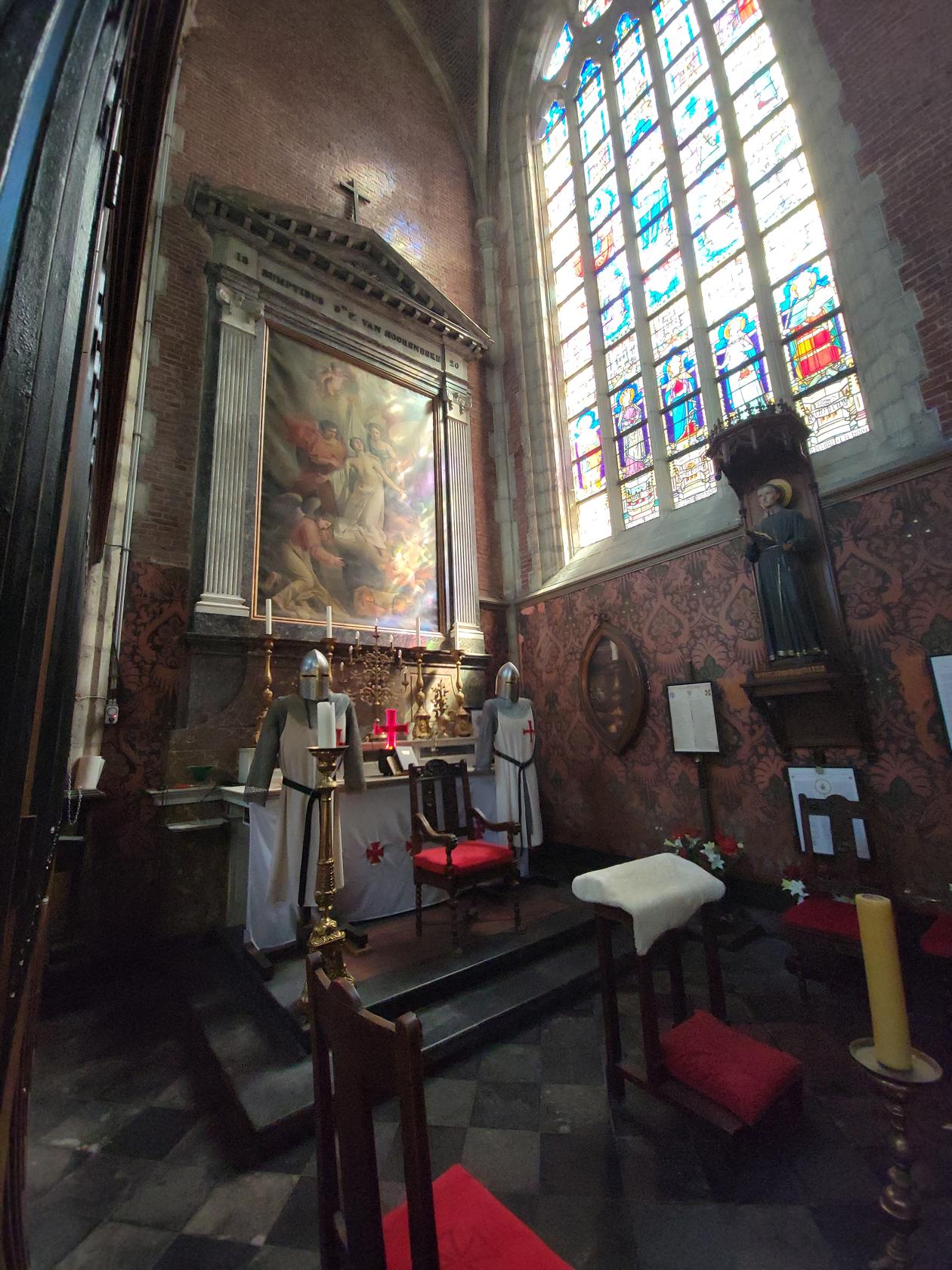
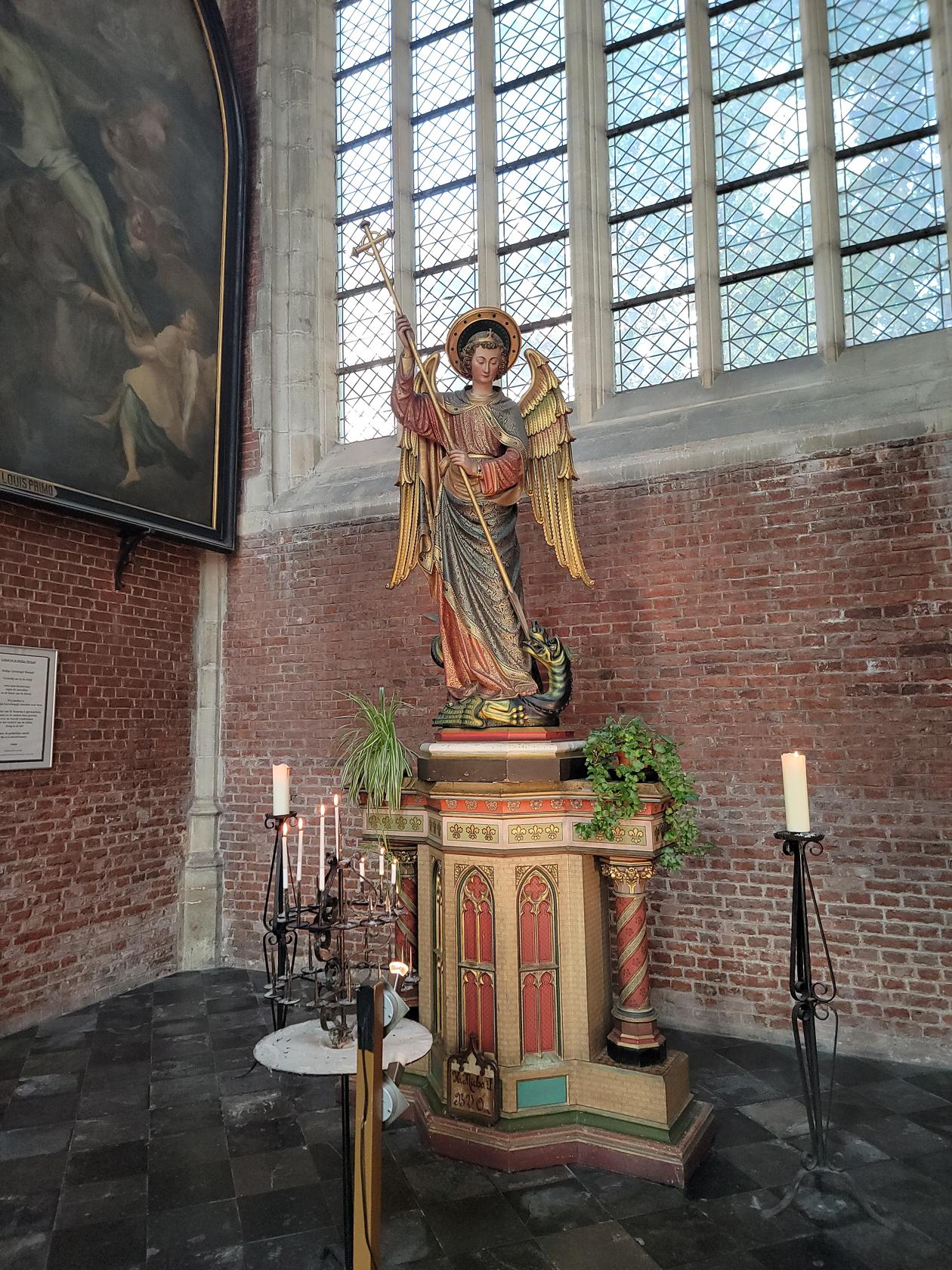
Located on Leie River and by the eponymous bridge is Saint Michel’s Cathedral. Though practically none of the original cathedral’s interior remains, its reconstruction through the twentieth century completely restored the Gothic elements it once had.
Entrance – Saint Michel’s Church – Gent, Belgium
Entrance – Saint Michel’s Church – Gent, Belgium
Nave – Saint Michel’s Church – Gent, Belgium
Organ – Saint Michel’s Church – Gent, Belgium
Stained Glass – Saint Michel’s Church – Gent, Belgium
Stained Glass – Saint Michel’s Church – Gent, Belgium
Stained Glass – Saint Michel’s Church – Gent, Belgium
Stained Glass – Saint Michel’s Church – Gent, Belgium
Side Chapel – Saint Michel’s Church – Gent, Belgium
Stained Glass – Saint Michel’s Church – Gent, Belgium
Stained Glass – Saint Michel’s Church – Gent, Belgium
Stained Glass – Saint Michel’s Church – Gent, Belgium
Ambulatory – Saint Michel’s Church – Gent, Belgium
Altar – Saint Michel’s Church – Gent, Belgium
Knights Templar Chapel – Saint Michel’s Church – Gent, Belgium
Saint Michel Statue – Saint Michel’s Church – Gent, Belgium
Saint Jacob’s Church
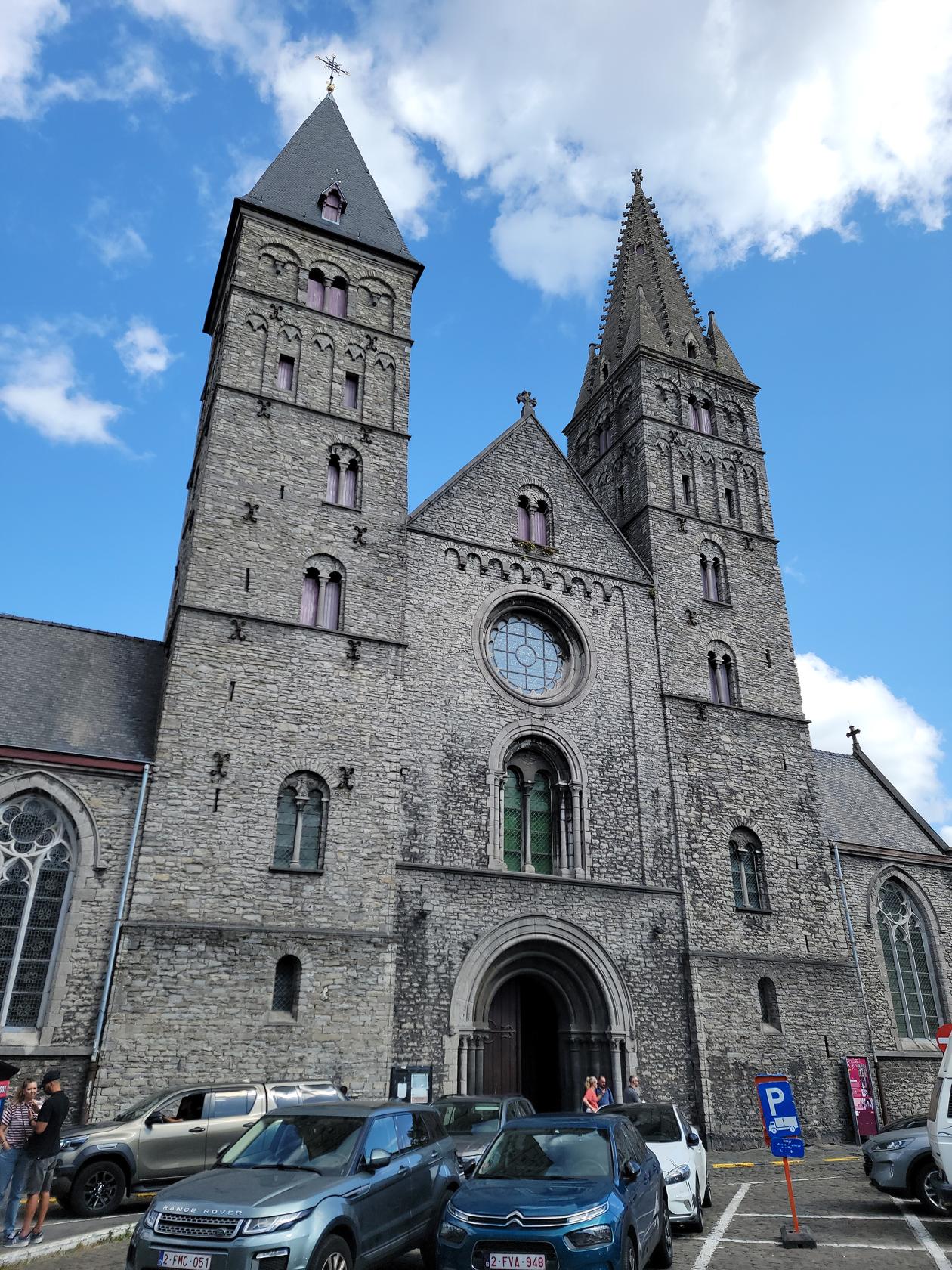
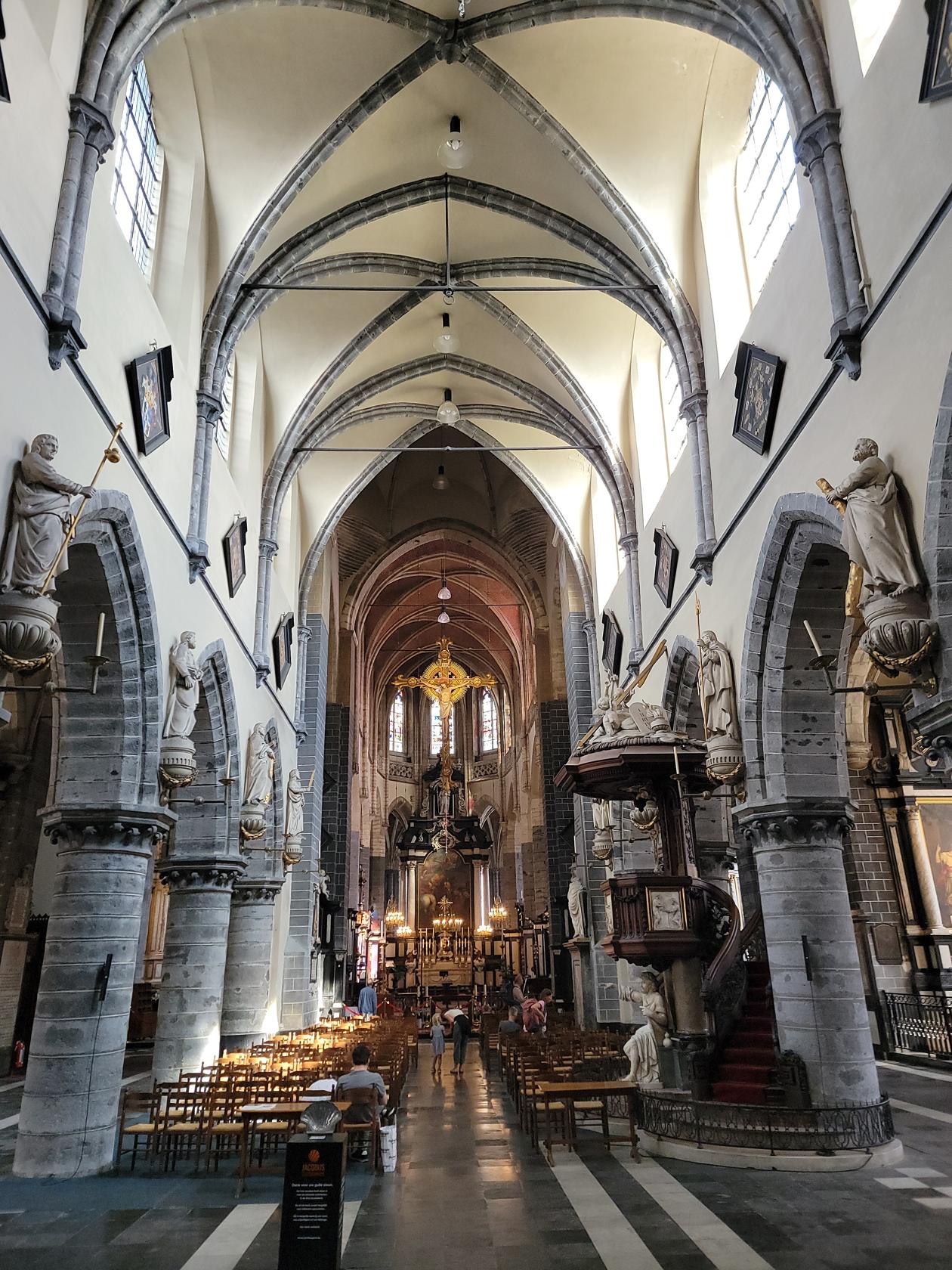
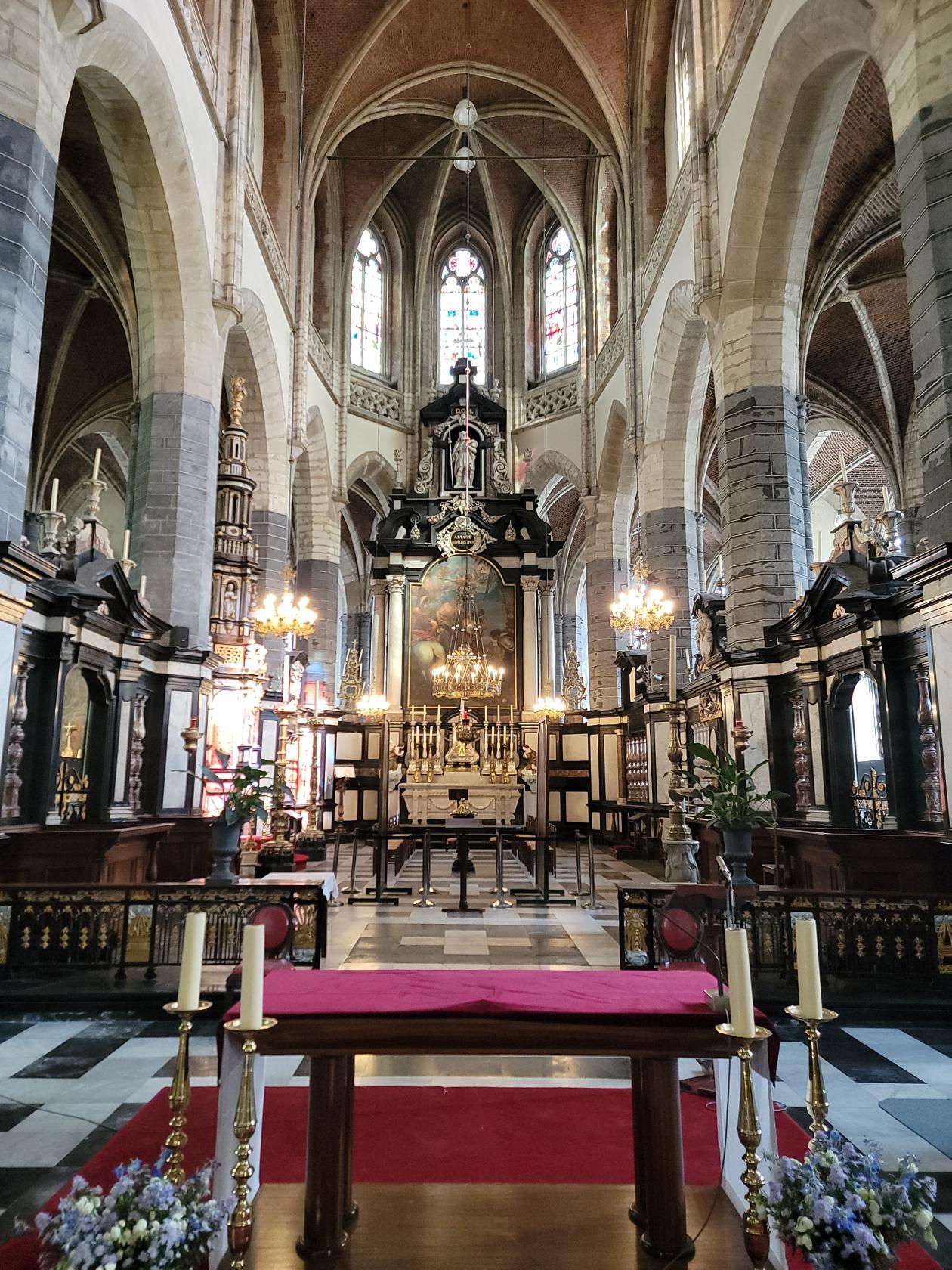
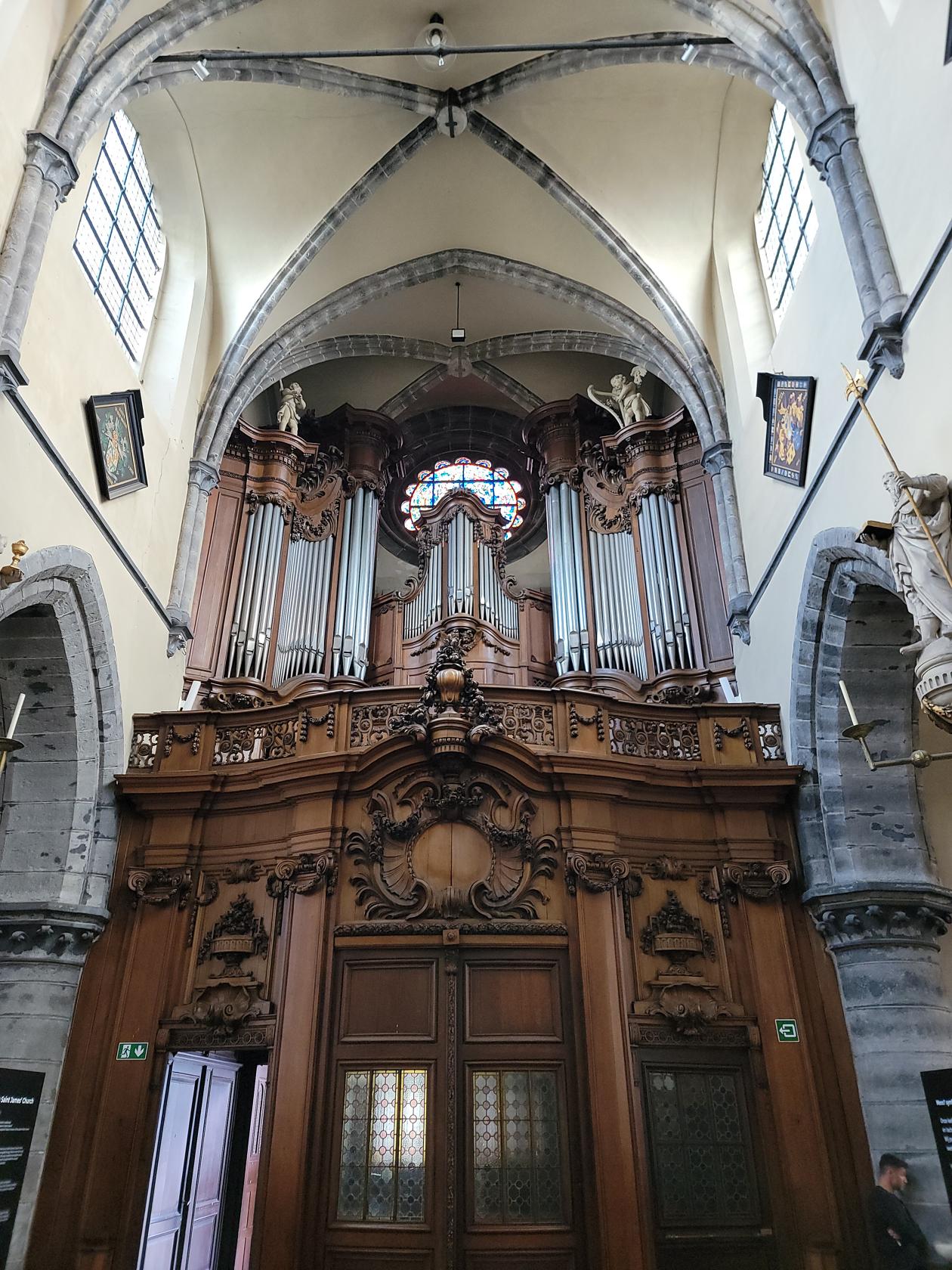
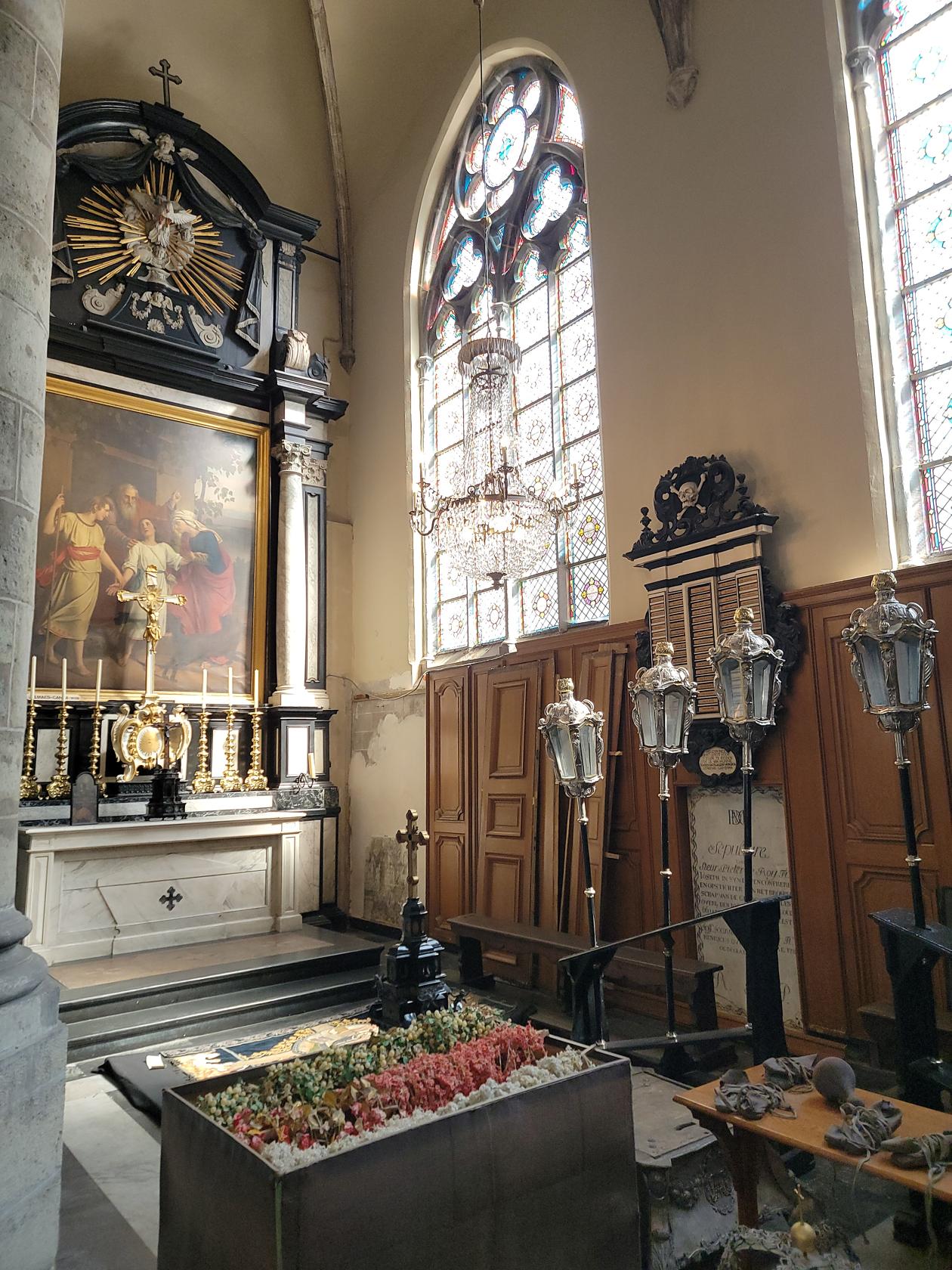
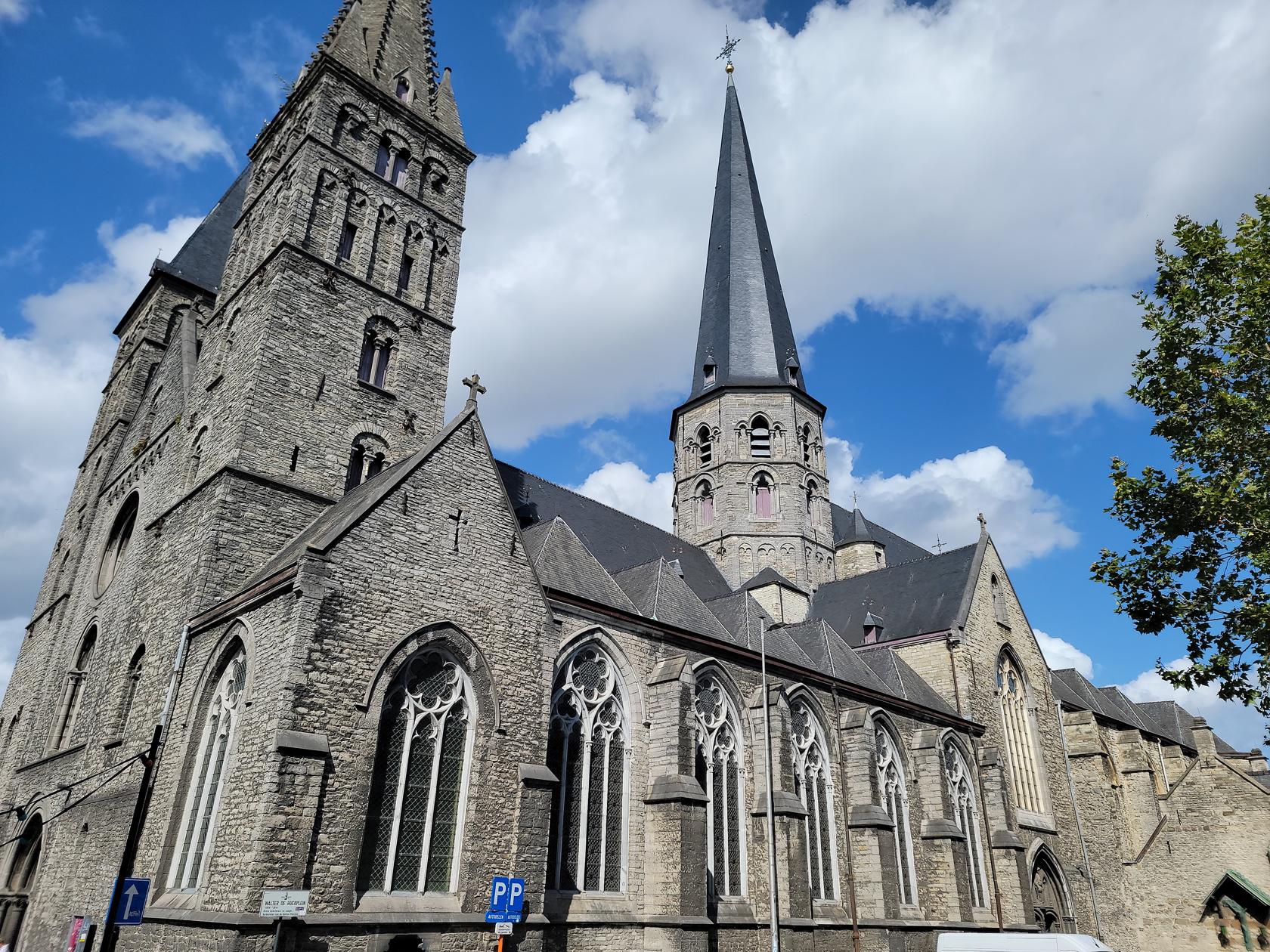
An out of the way church beyond the Vrijdagmarkt is Saint Jacob’s Catholic Church and is an example of French Romanesque style. The interior over time has gone through many other styles, including Gothic and Baroque, only to settle on the neo-Romanesque and neo-Gothic styles we see today.
Entrance – Saint Jacob’s Church – Gent, Belgium
Nave – Saint Jacob’s Church – Gent, Belgium
Altar – Saint Jacob’s Church – Gent, Belgium
Organ – Saint Jacob’s Church – Gent, Belgium
Side Chapel – Saint Jacob’s Church – Gent, Belgium
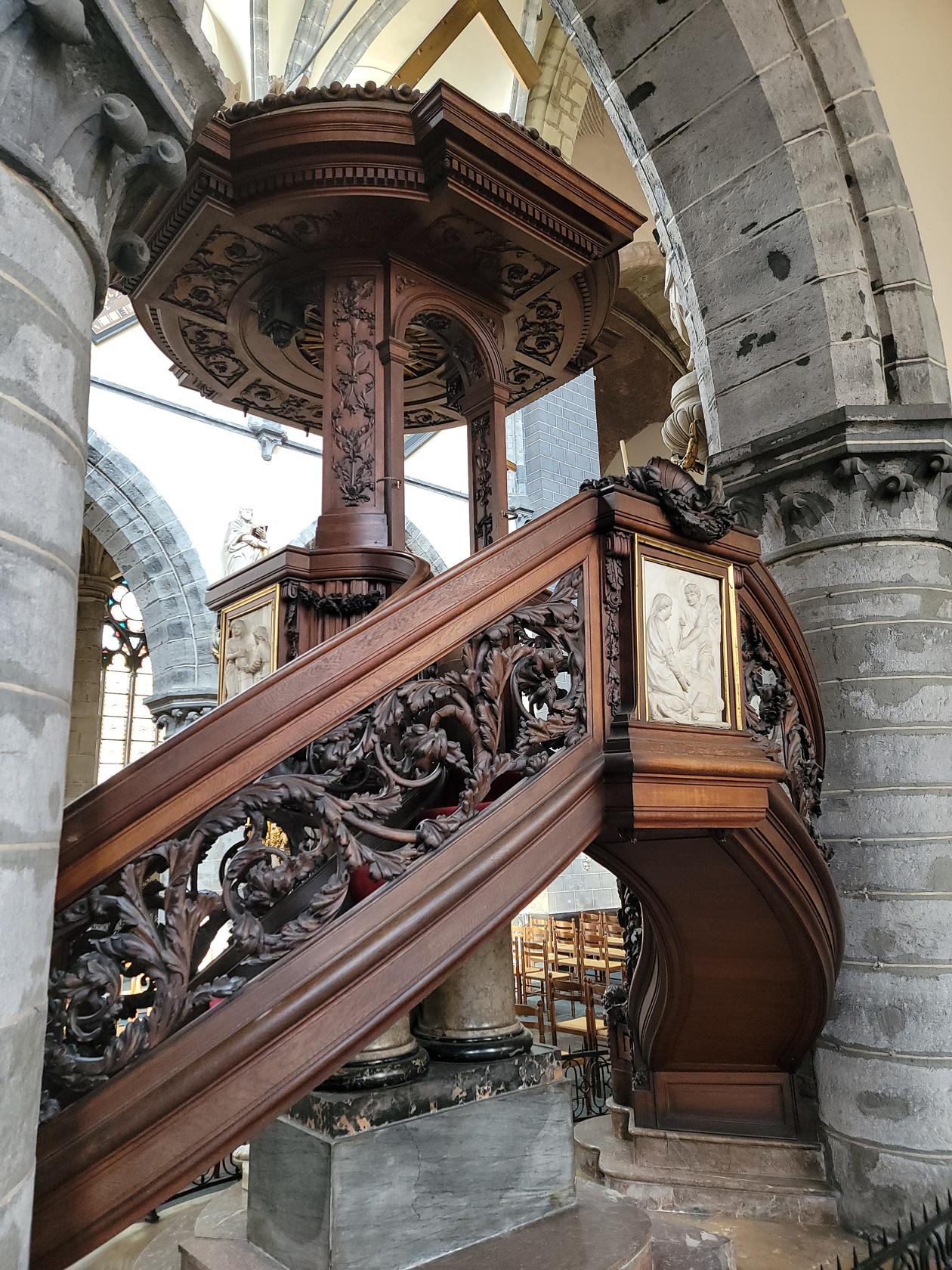
Pulpit – Saint Jacob’s Church – Gent, Belgium
Side View – Saint Jacob’s Church – Gent, Belgium
Restaurants
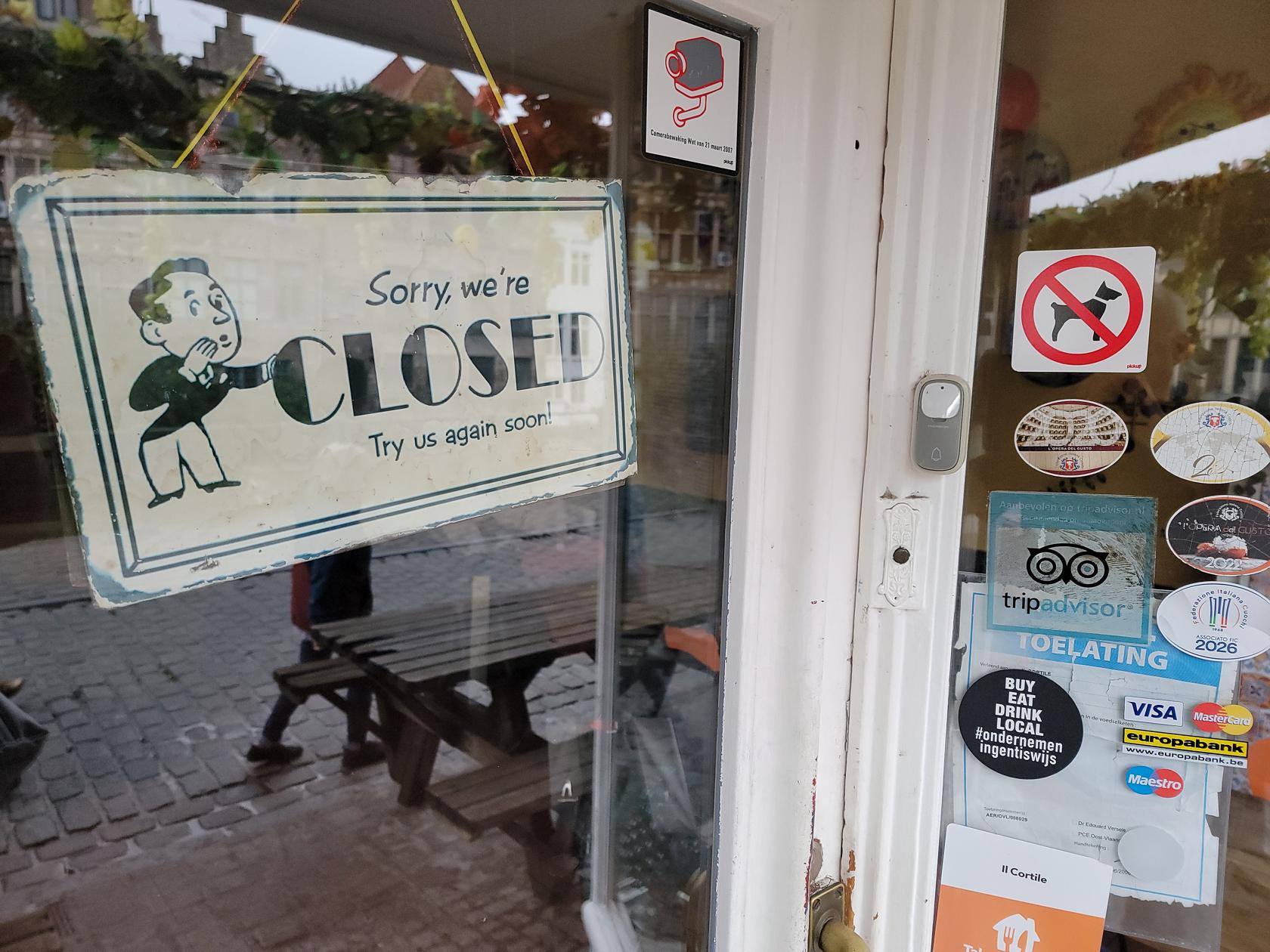
I still do not know what it is, but restaurants in Belgium are a hit and miss adventure. Never in our travels have we come across three separate towns or cities in any country where you really have no idea what to expect heading out for lunch or dinner. The most common issue is after walking ten minutes to get there you find it is closed and perhaps not just for the evening, it may be closed for good; it’s often hard to tell some times.
Typical Encounter We’re Closed – Gent, Belgium
So far our experience with food and restaurants in Belgium is: the service is often lacking, the food is okay, cleaniness, the restaurant itself is often closed (especially in the middle of the week, which of course must be due to some other economic force.)
Trattoria Della Mamma
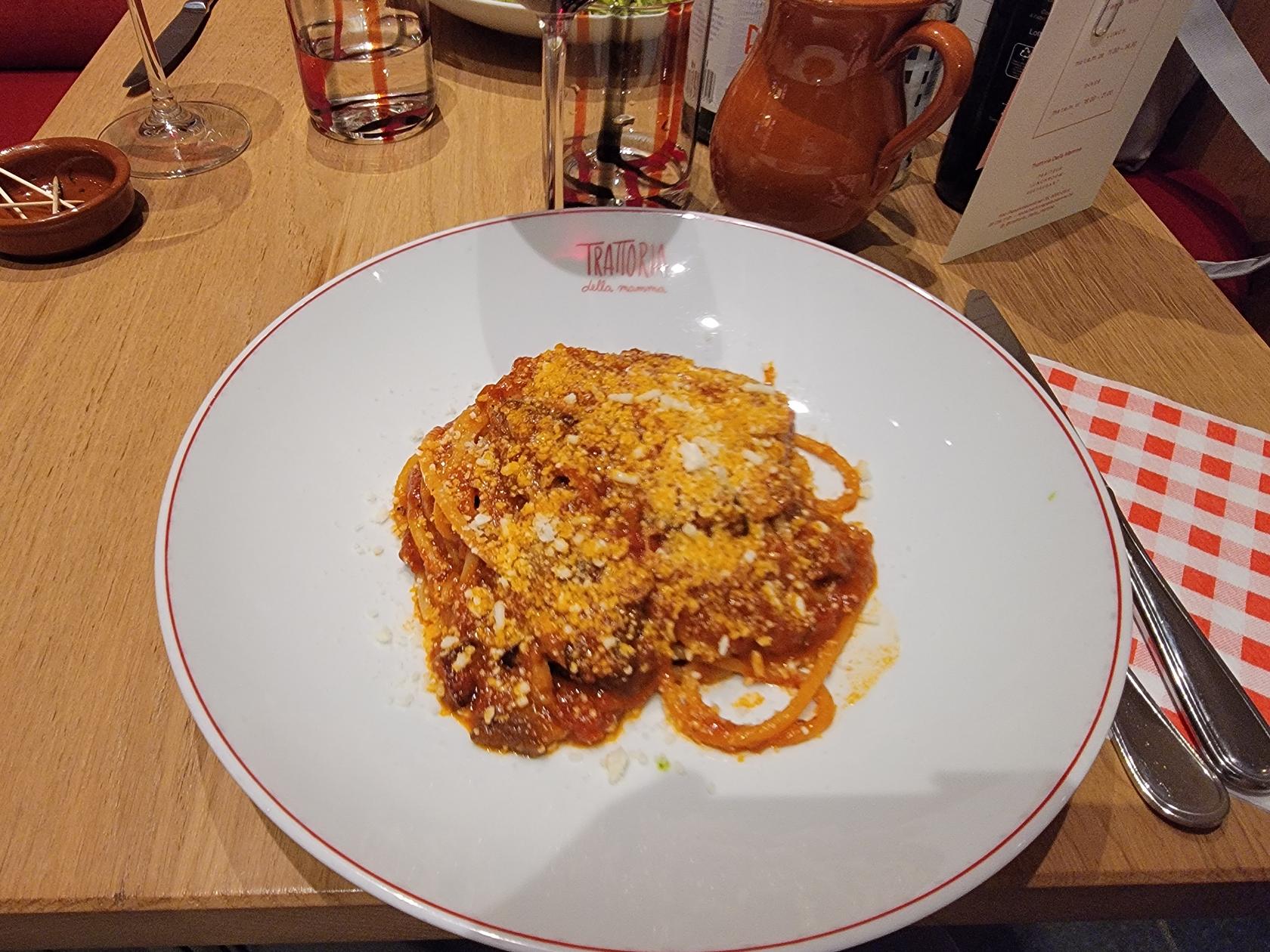
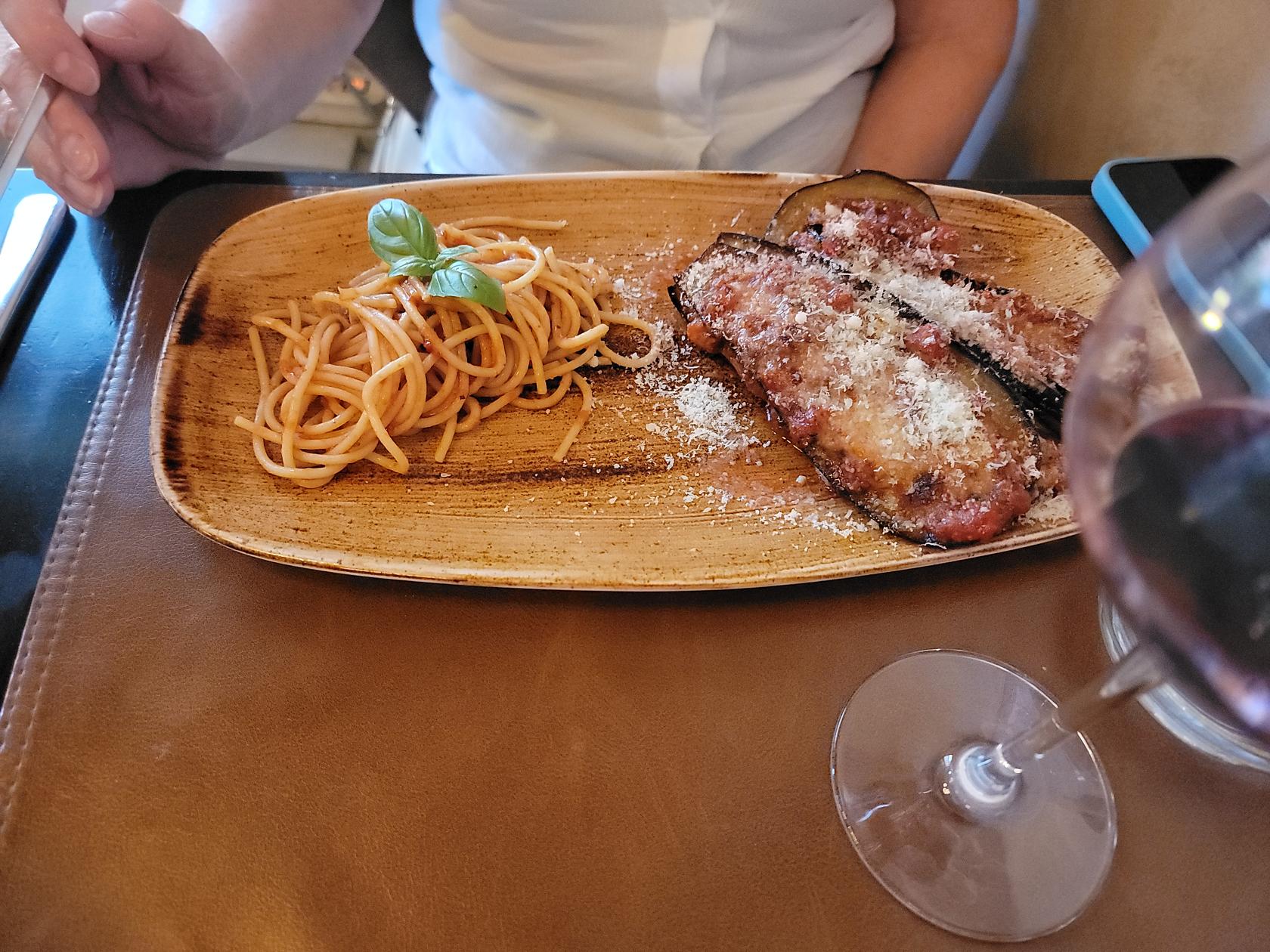
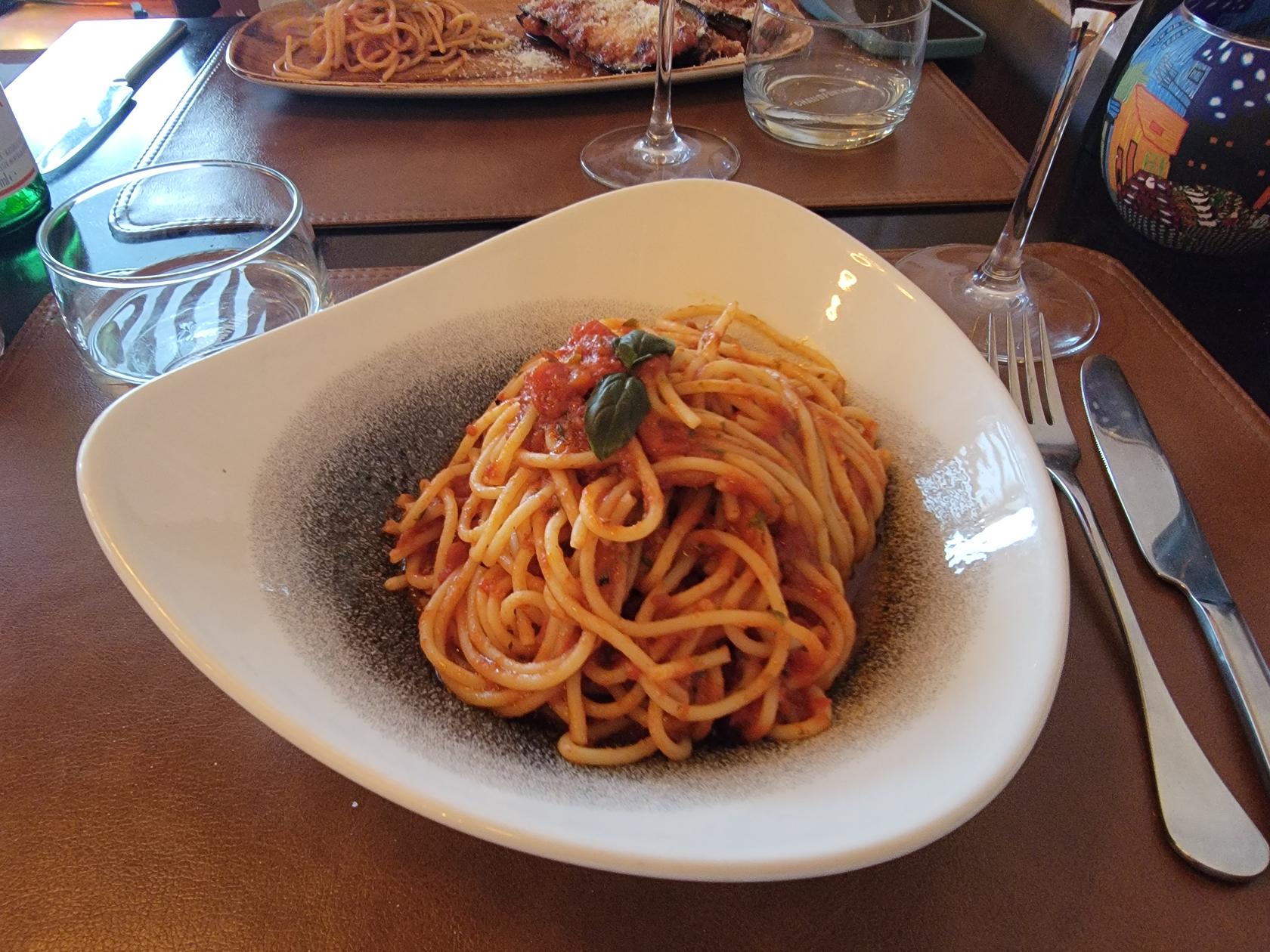
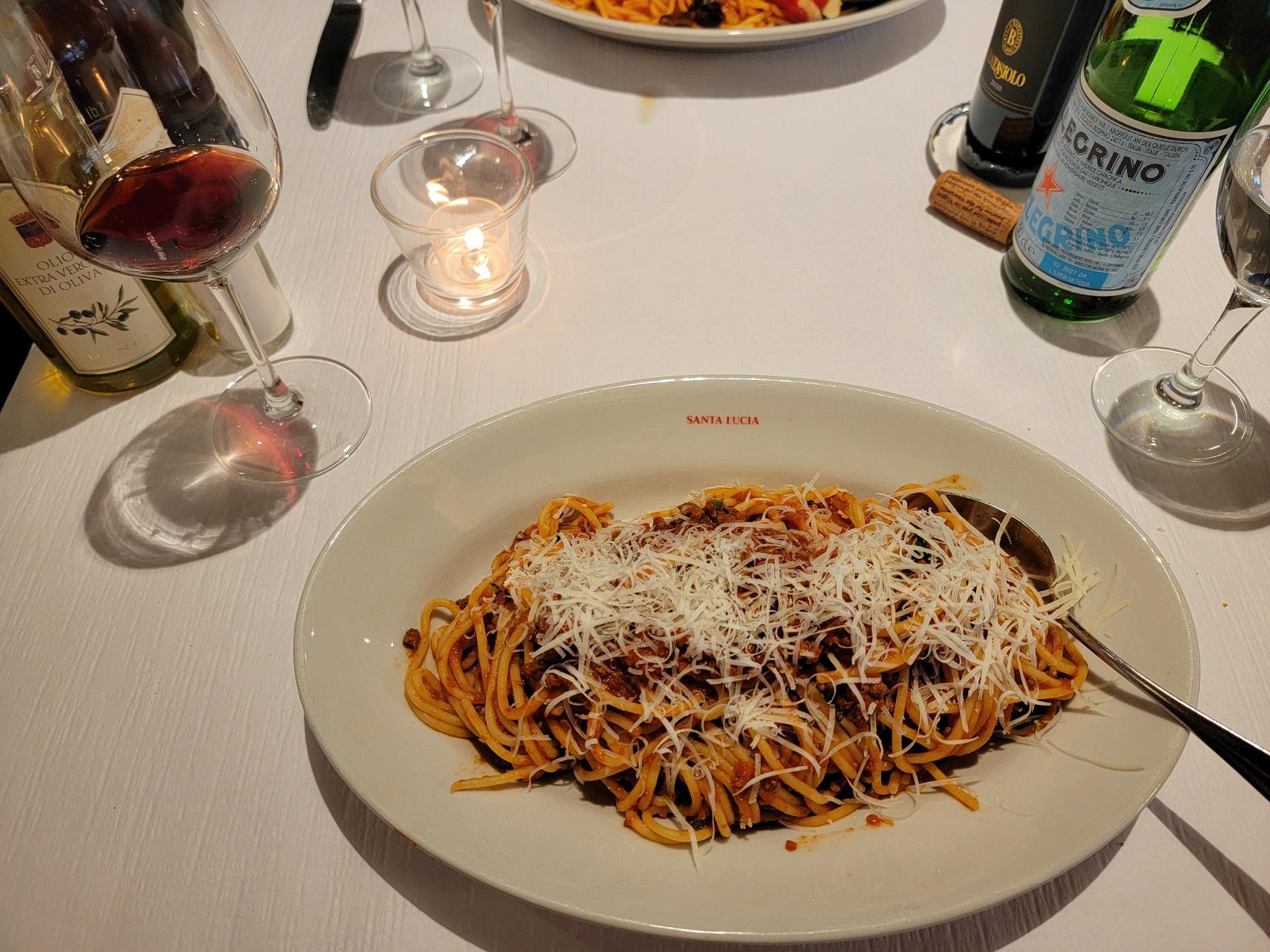
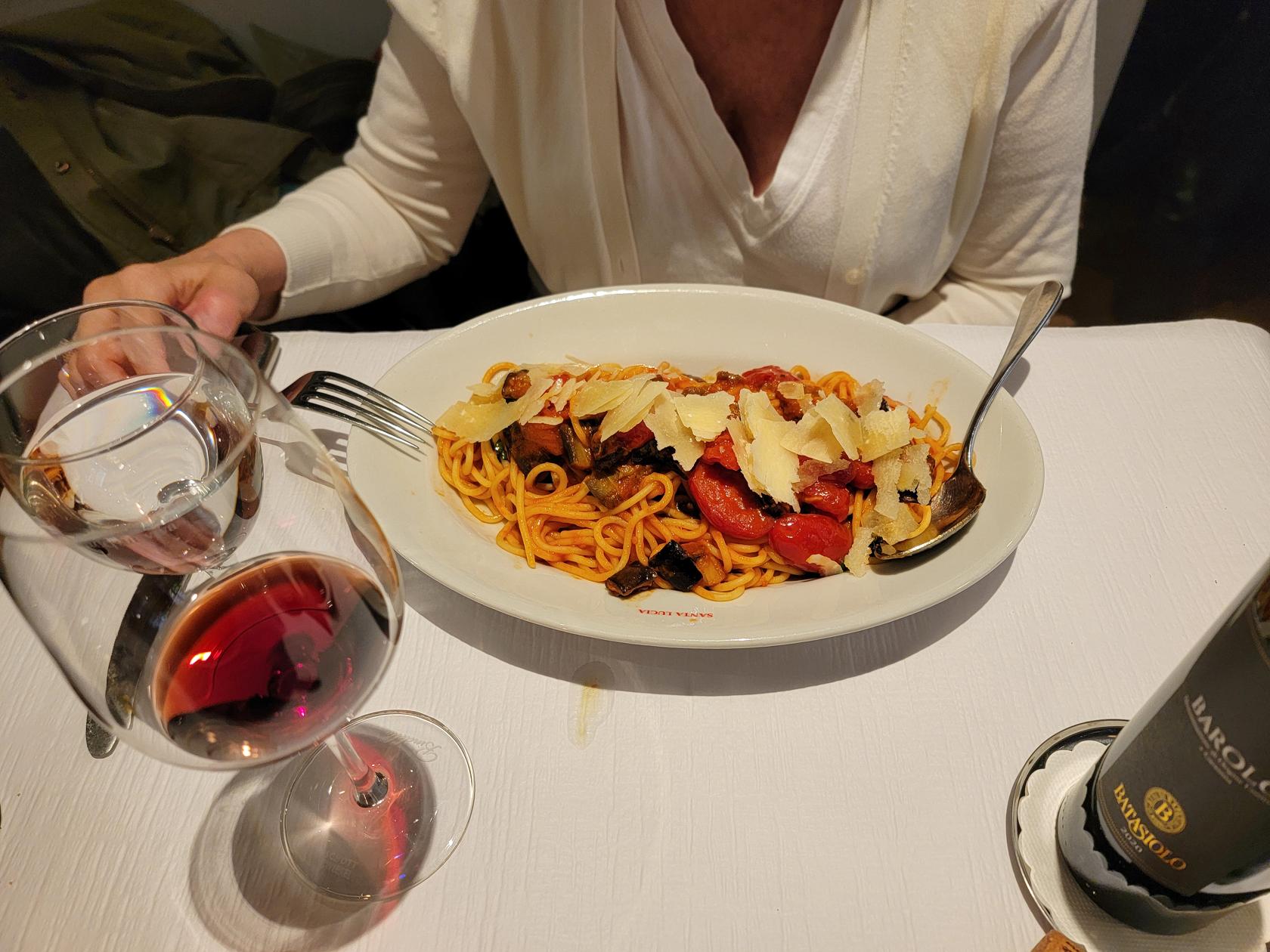
One of the better restaurants in Gent and it is reflected in the price you pay for items on the menu. It has a modern welcoming atmosphere and they are fairly attentive with the service. The food was tasty and the house wine was enjoyable.
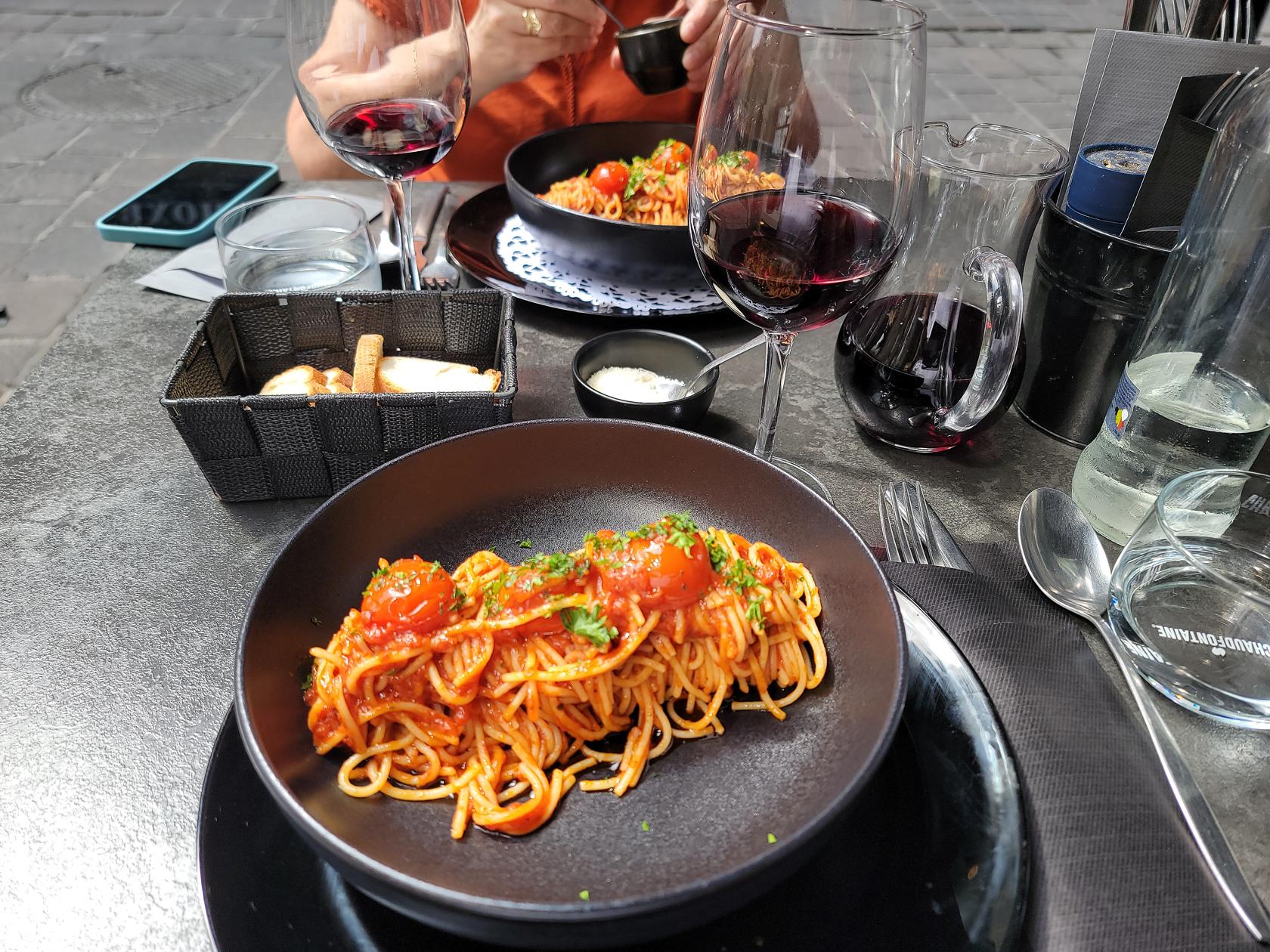
Spaghetti Bolognese – Trattoria della Mamma – Gent, Belgium
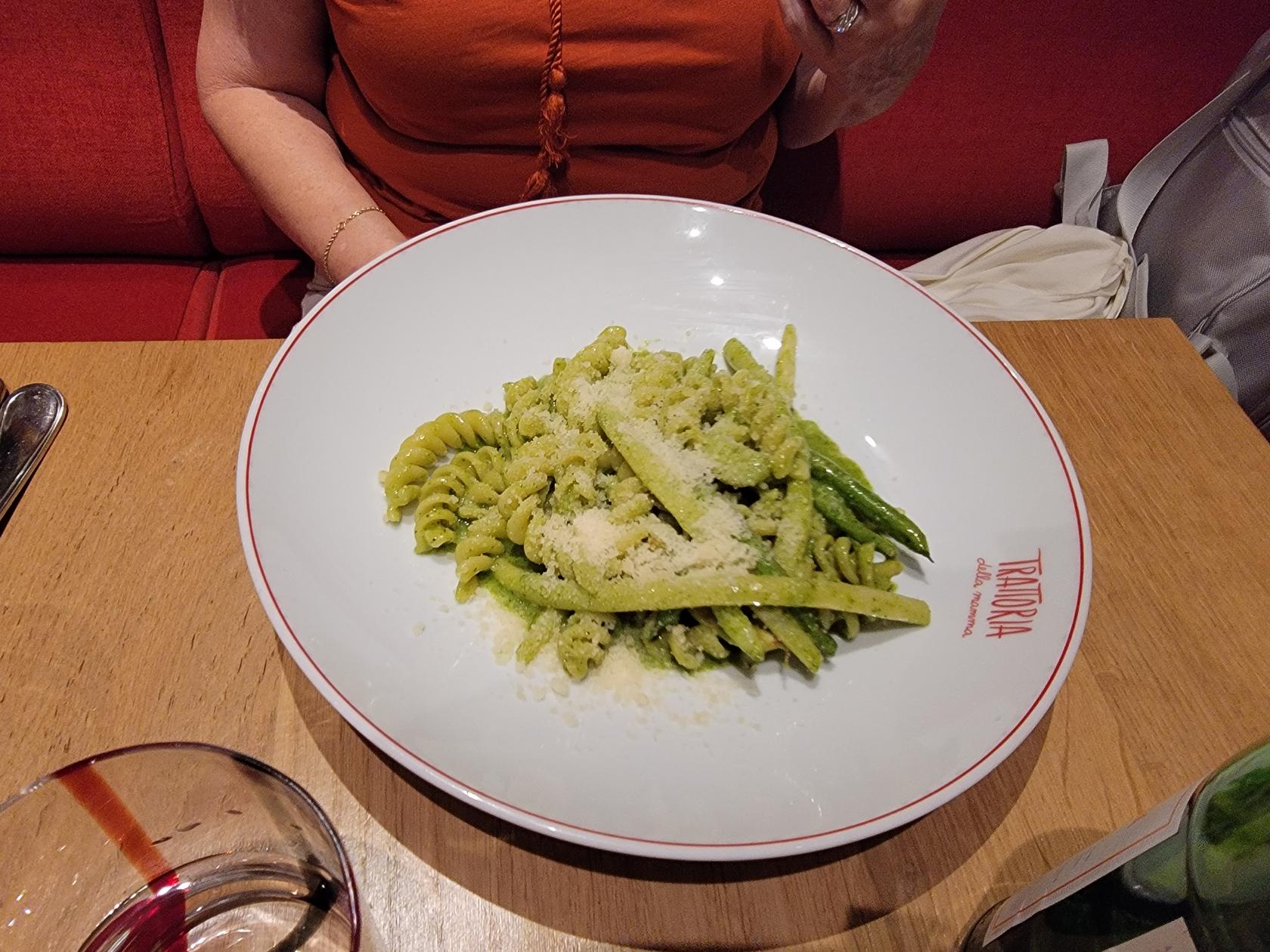
Fuselli with Pesto and Bean – Trattoria della Mamma – Gent, Belgium
Porta Alta
A non-italian Italian restaurant, that is, it serves italian food but is not run by italians. We ate here for lunch and it was okay, nothing to write home about and the price was fair.
Spaghetti Napoletano – Porta Alta – Gent, Belgium
Tashun Chinese Restaurant
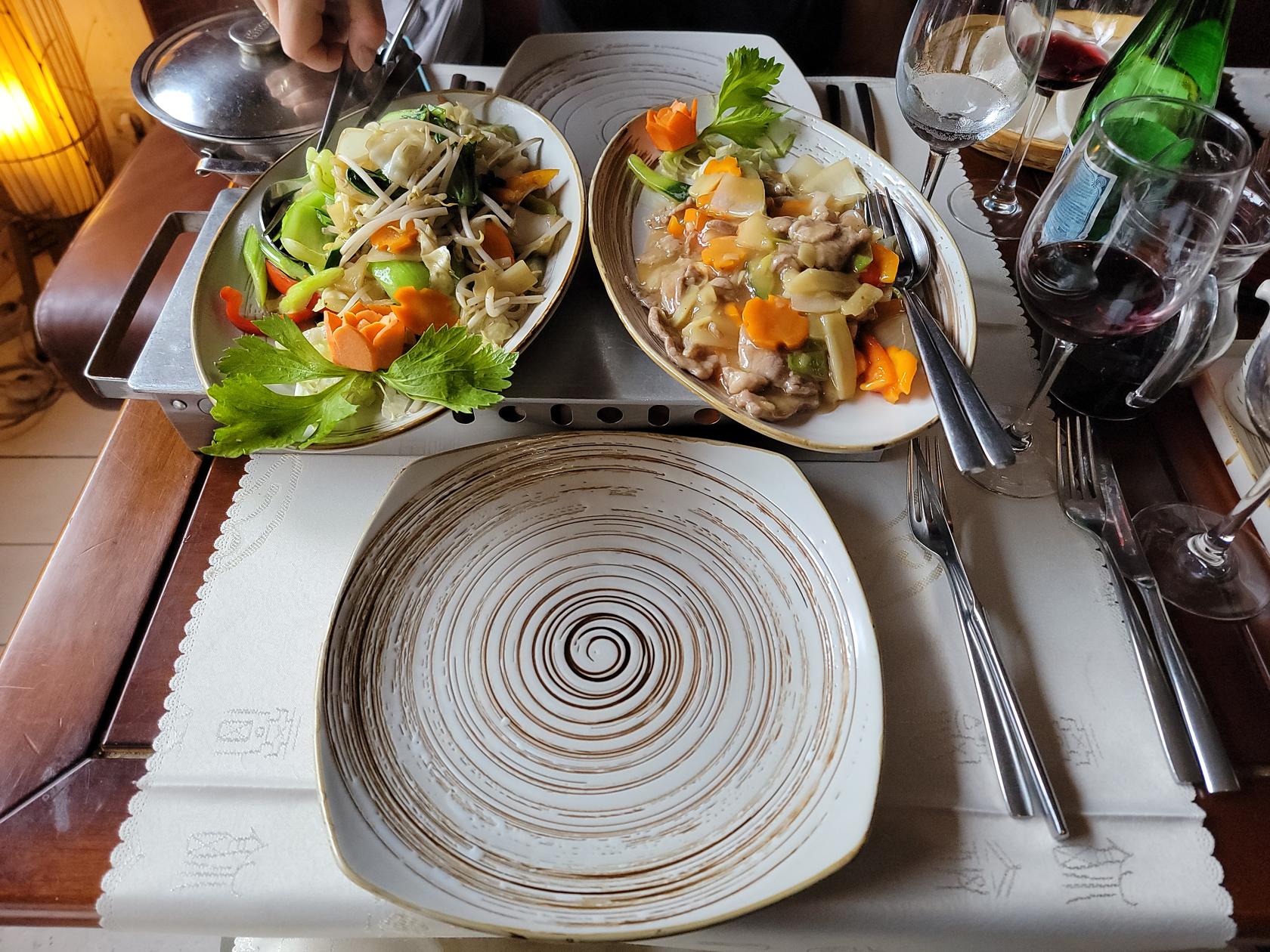
A restaurant that has seen better days, though the food is freshly made and remains quite enjoyable. It does not seem to be frequented to often and may be suffering from the same malady all restaurants are suffering from, the price of food. I can commend the Pork with Vegetable dish, it was quite tasty because of the pork and made an excellent sauce.
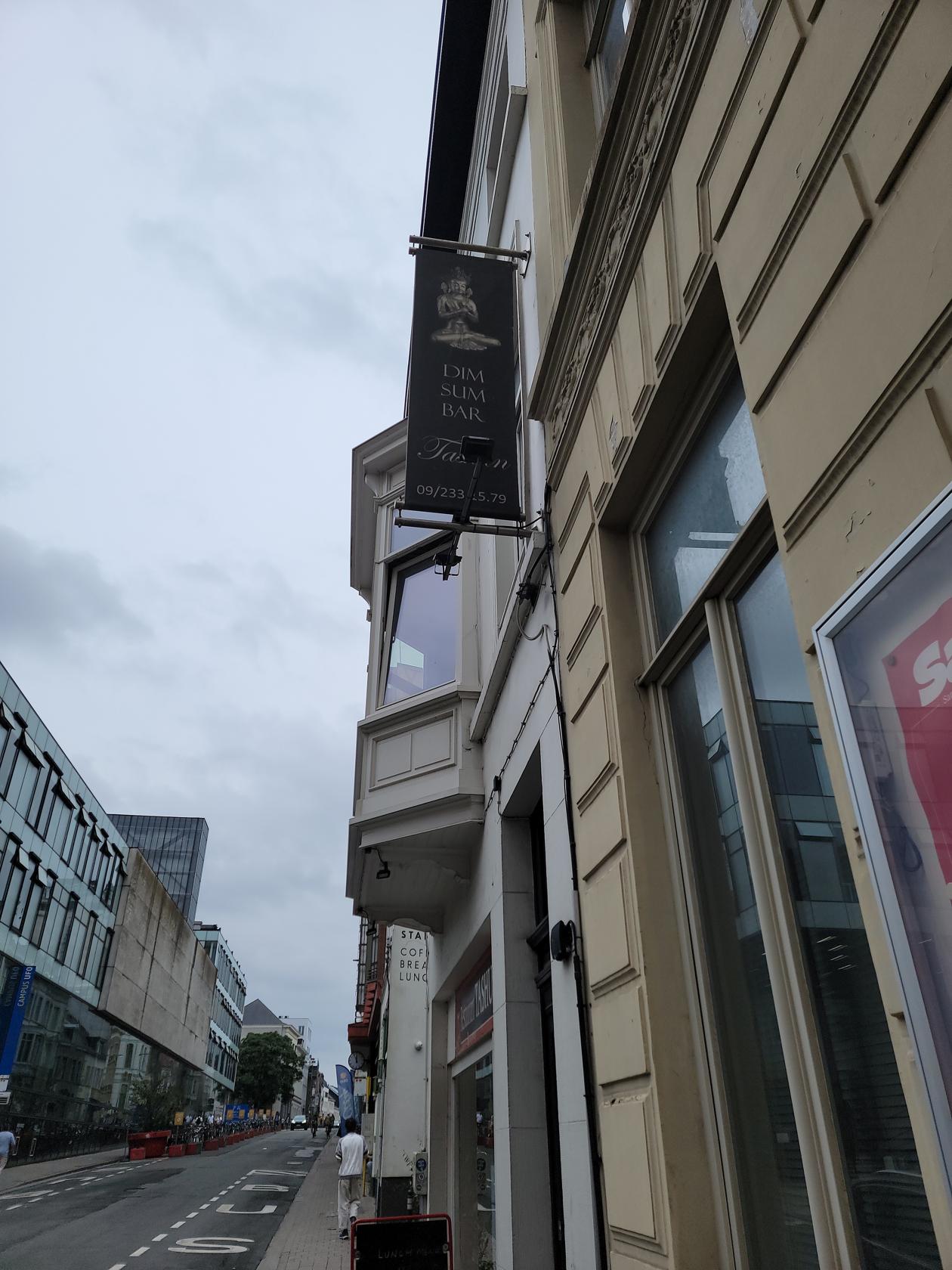
Shingle – Tashun Chinese Restaurant – Gent, Belgium
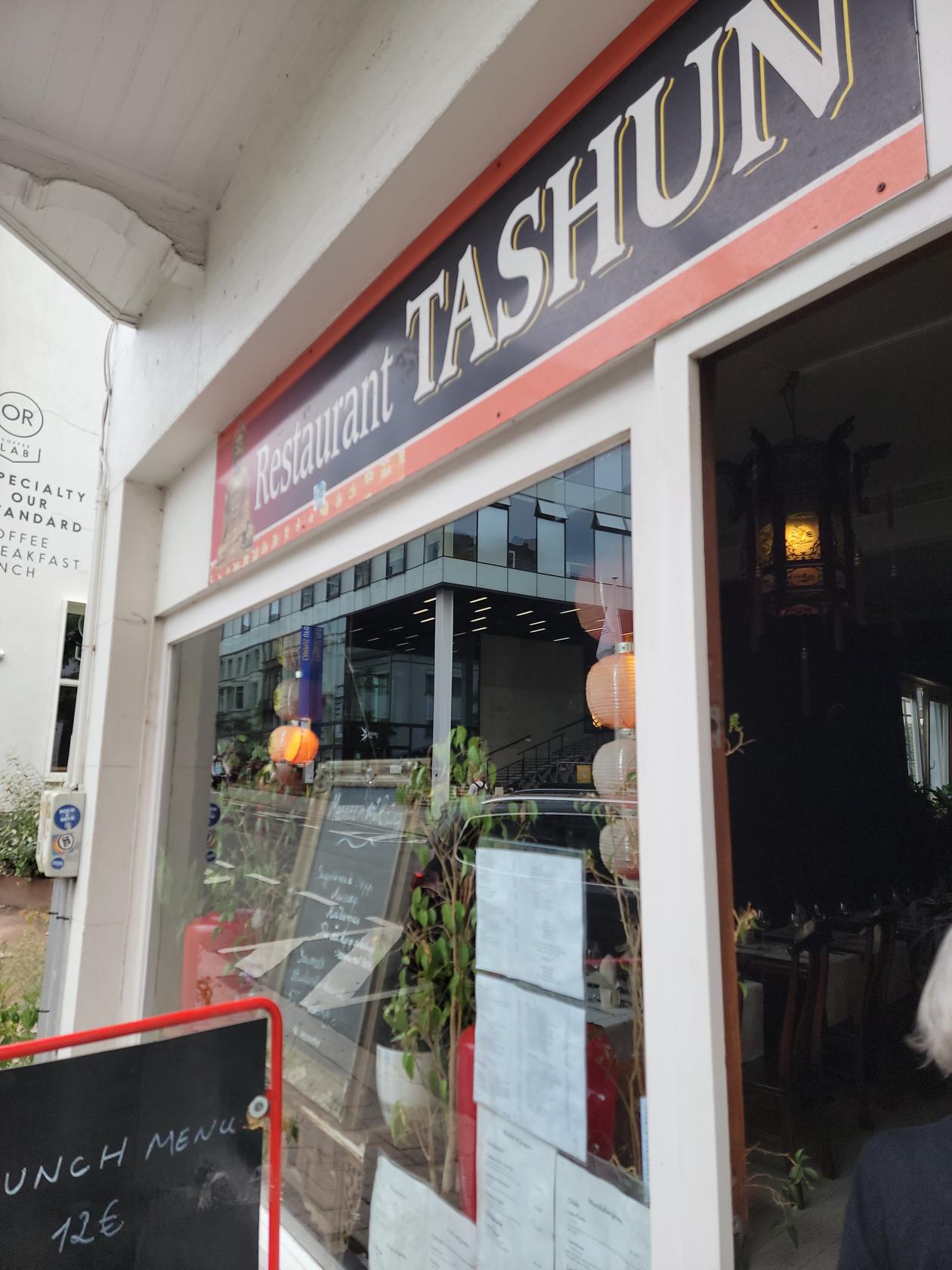
Entrance – Tashun Chinese Restaurant – Gent, Belgium
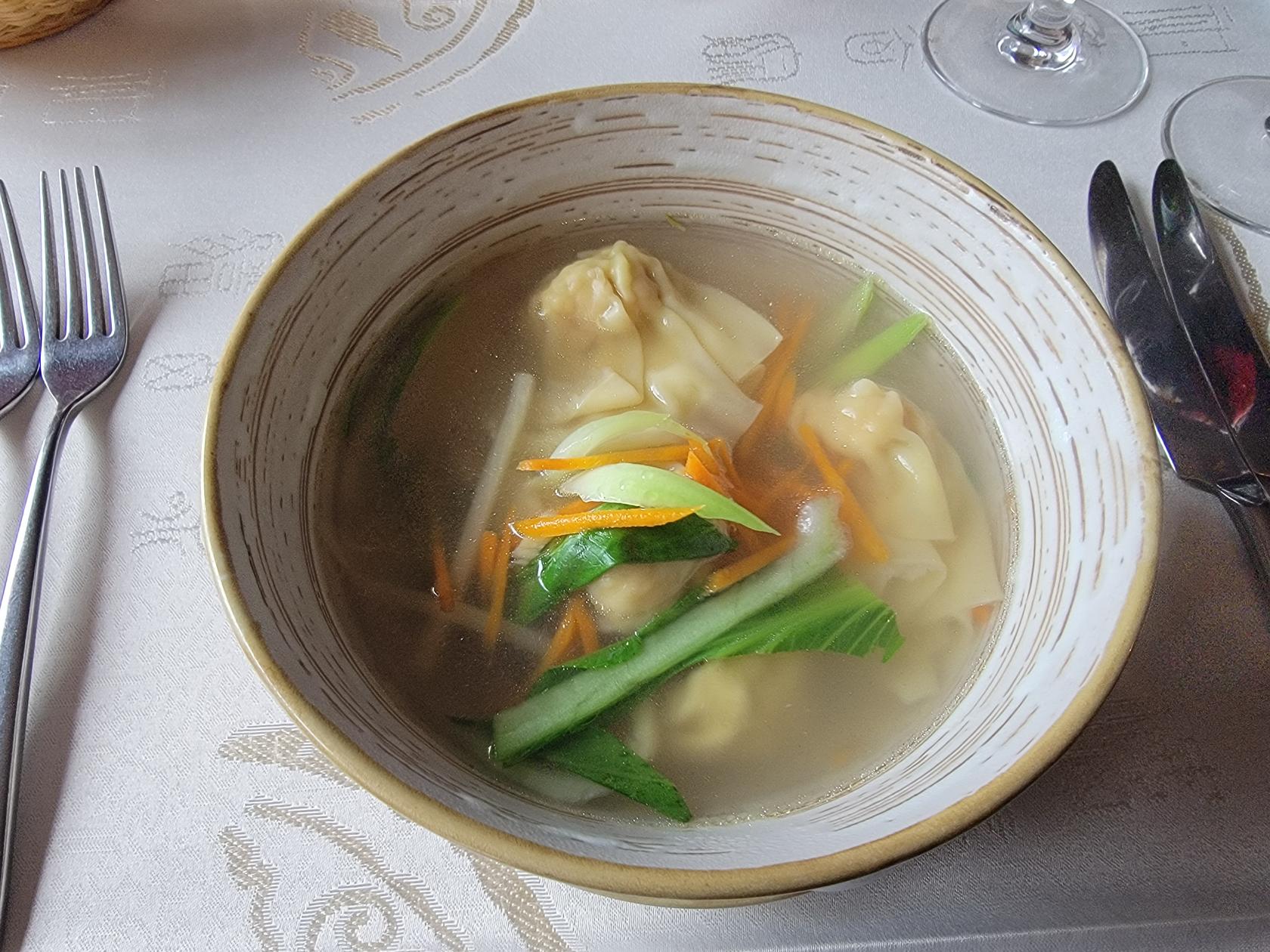
Wonton Soup – Tashun Chinese Restaurant – Gent, Belgium
Stir-Fry Vegetables and Stir-Fry Pork with Vegetables – Tashun Chinese Restaurant – Gent, Belgium
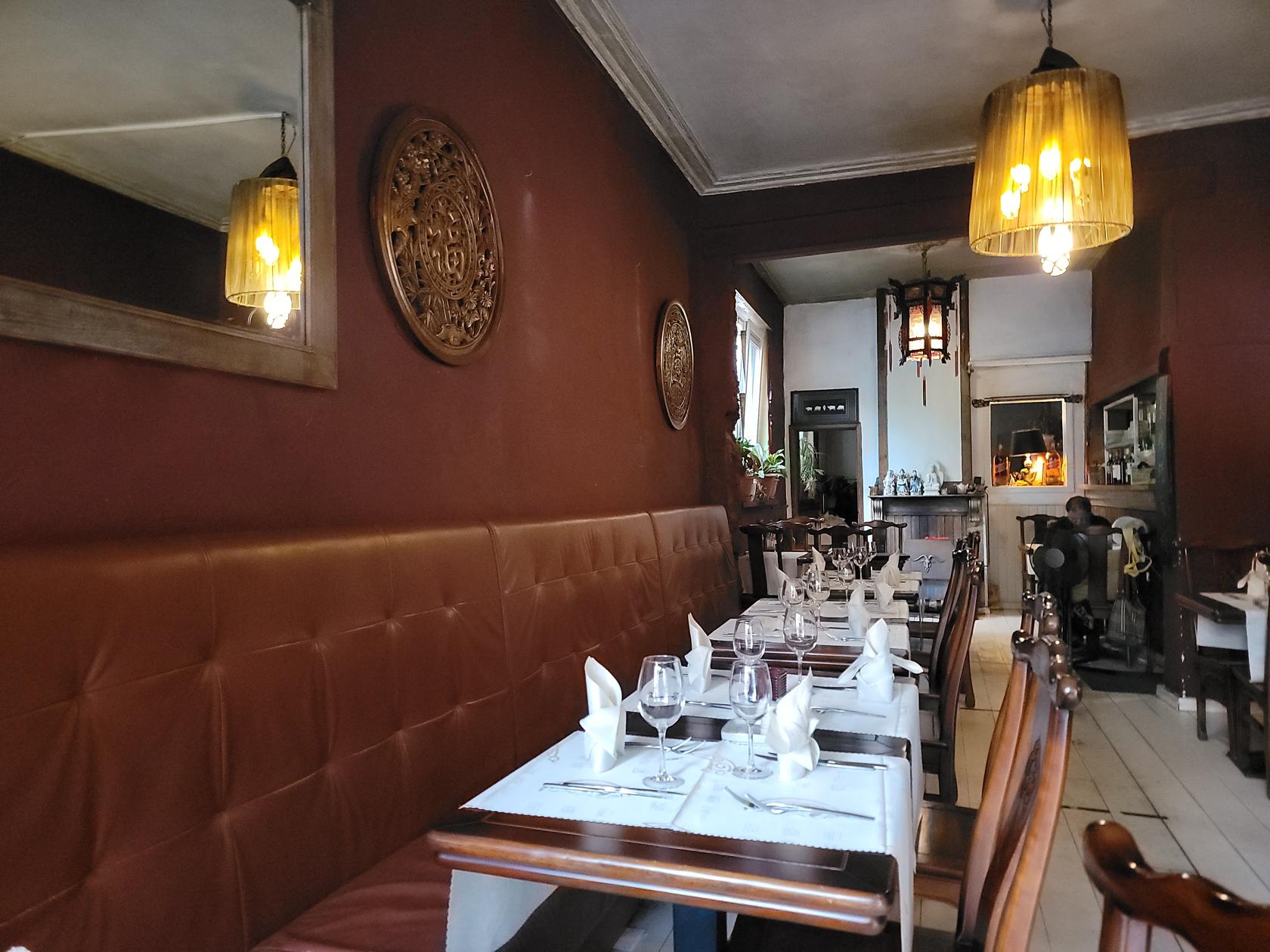
Inside – Tashun Chinese Restaurant – Gent, Belgium
Da Adriano
We wanted pizza and ended up here because our first choice was CLOSED. The waiter wasn’t not happy to see us, since he was the only one waiting tables and they needed to be cleaned. However, after 10 minutes we were seated (we stood by the table waiting for it to be cleaned as he directed.) After that, it was not too bad, we shared a pizza which was good and some wine and had an enjoyable meal. However, we noticed that when people entered, he was very selective about who he seated, not sure what was going on there, but be prepared if you visit this establishment.
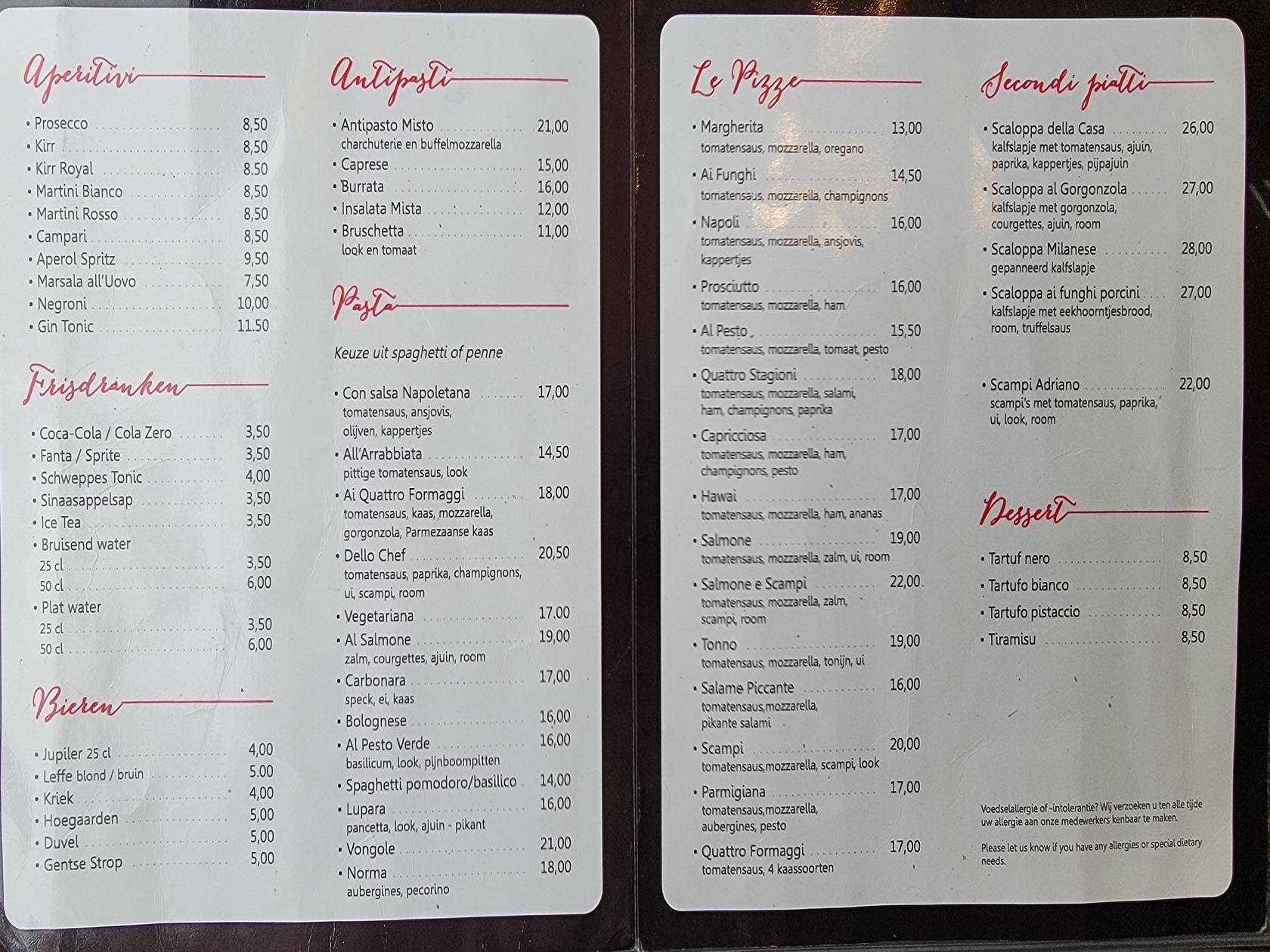
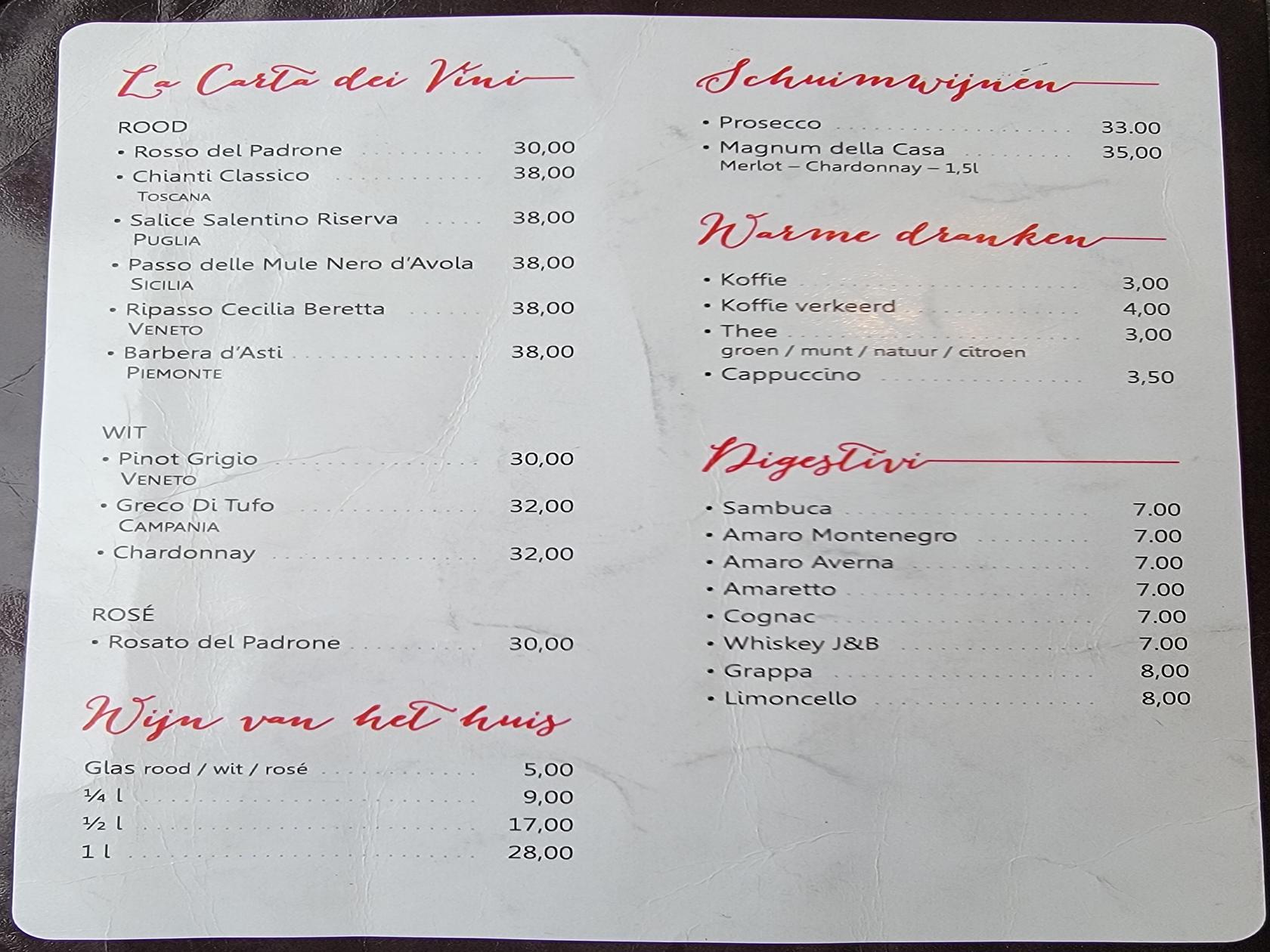
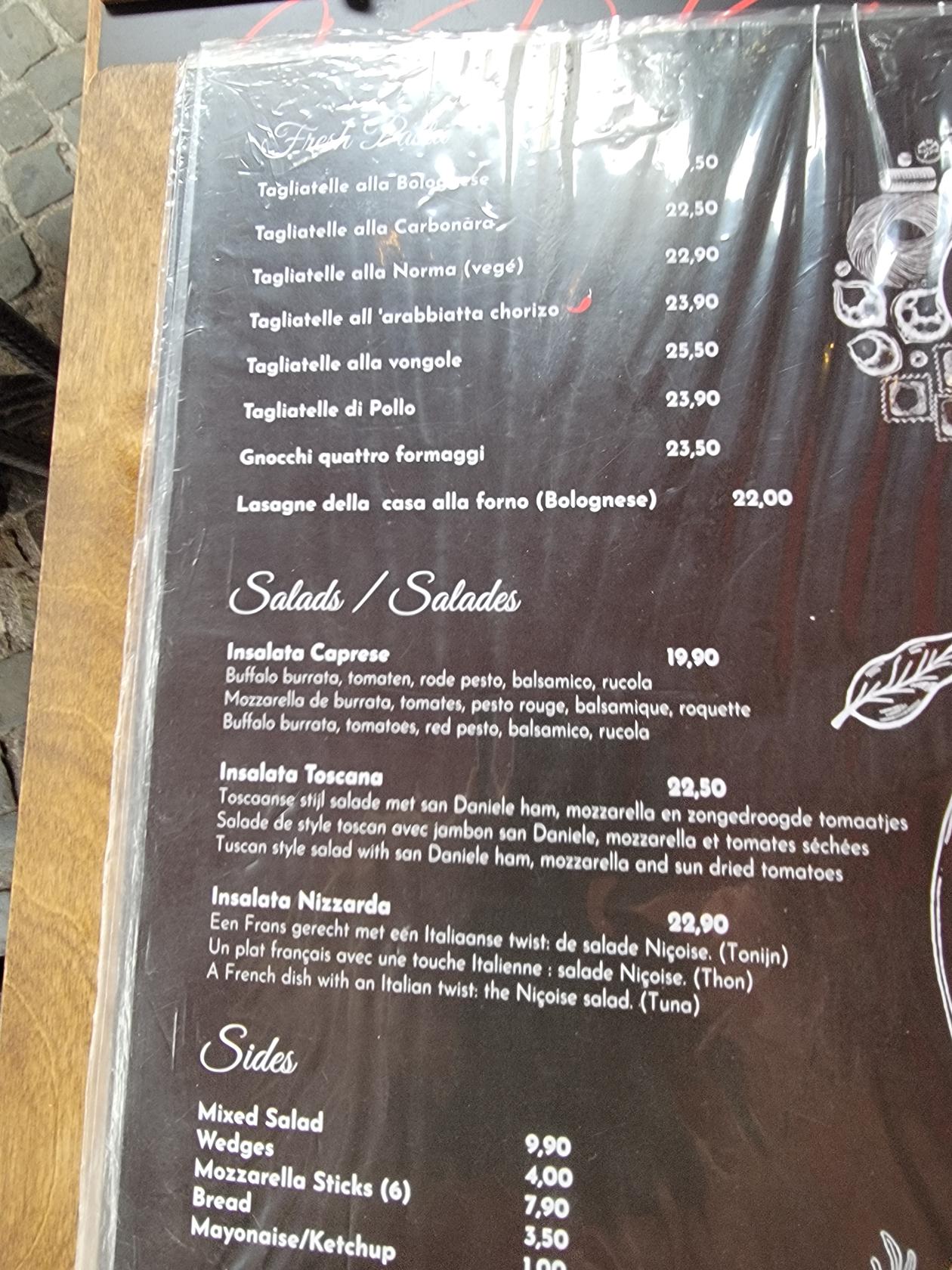
Menu – Da Adriano Restaurant – Gent, Belgium
Menu – Da Adriano Restaurant – Gent, Belgium
Menu – Da Adriano Restaurant – Gent, Belgium
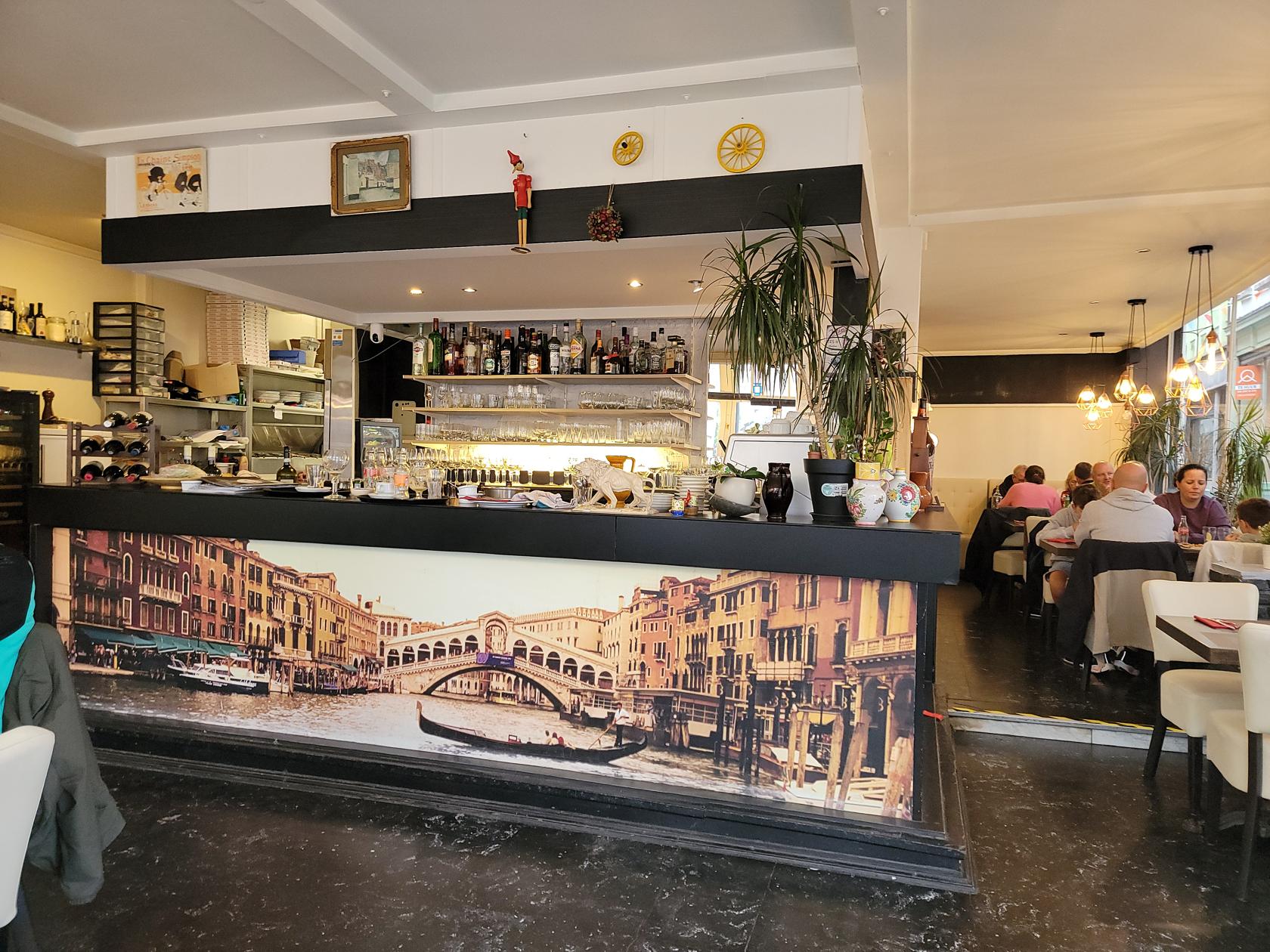
Inside – Da Adriano Restaurant – Gent, Belgium
Sorelle
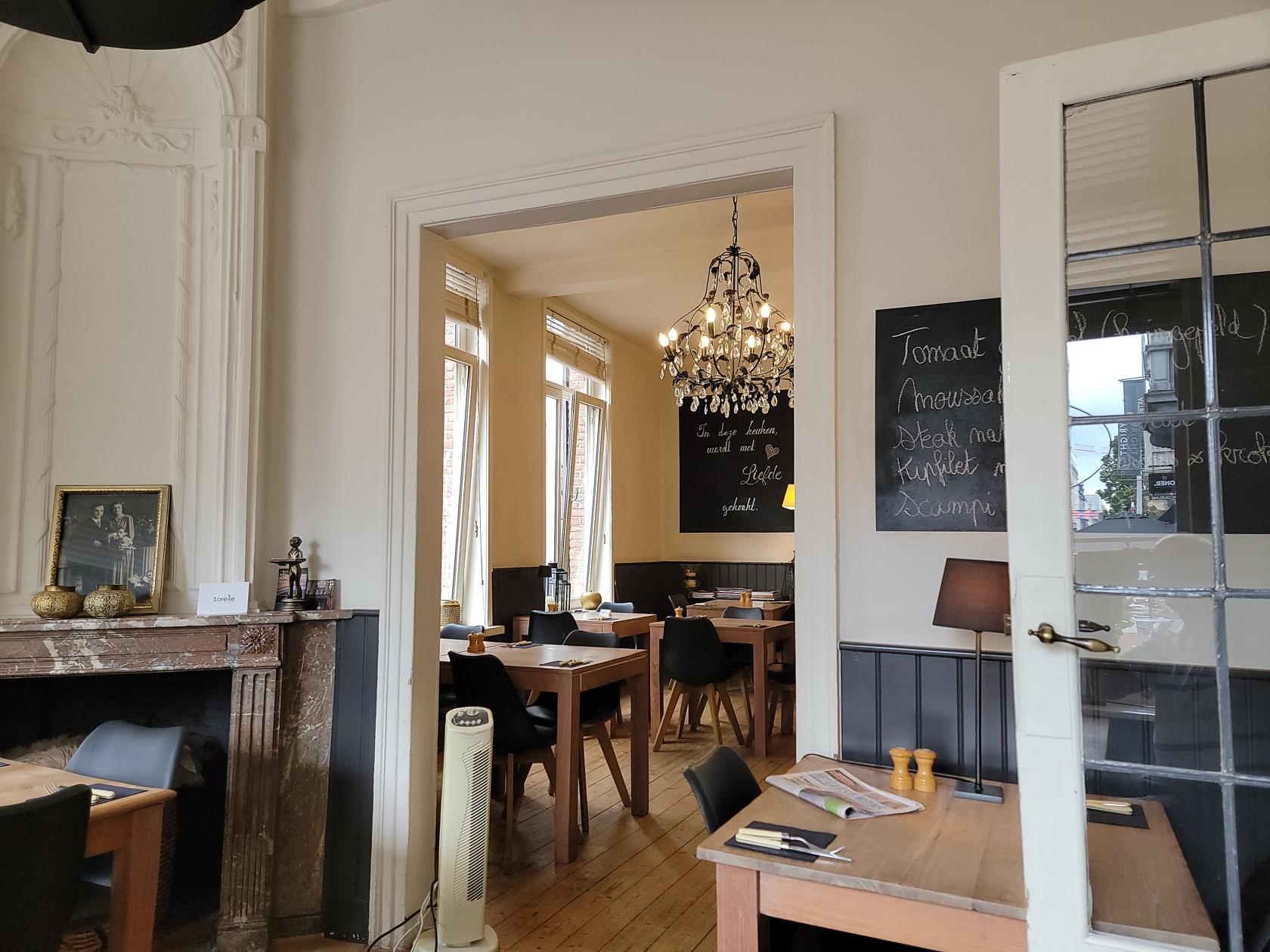
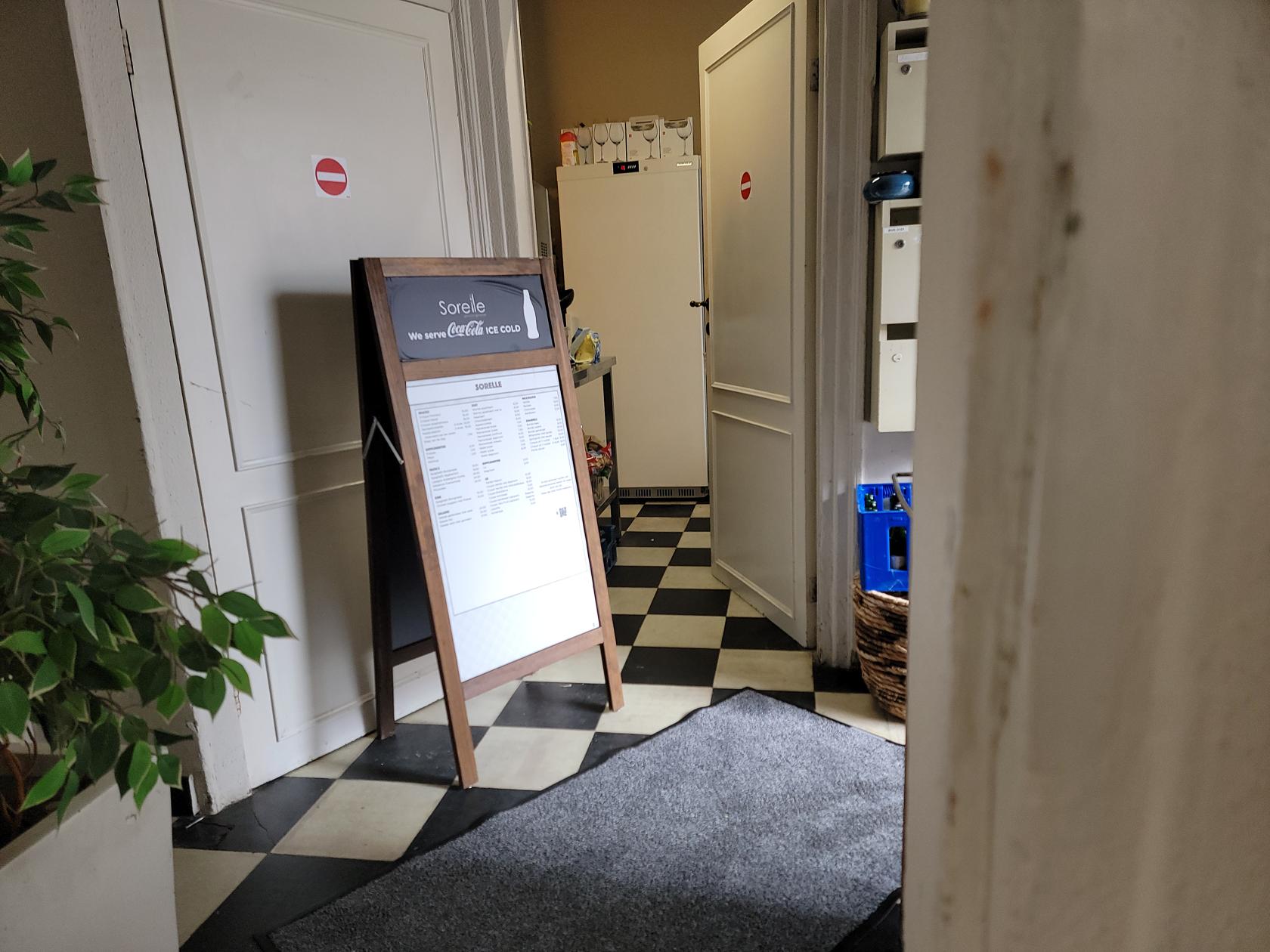
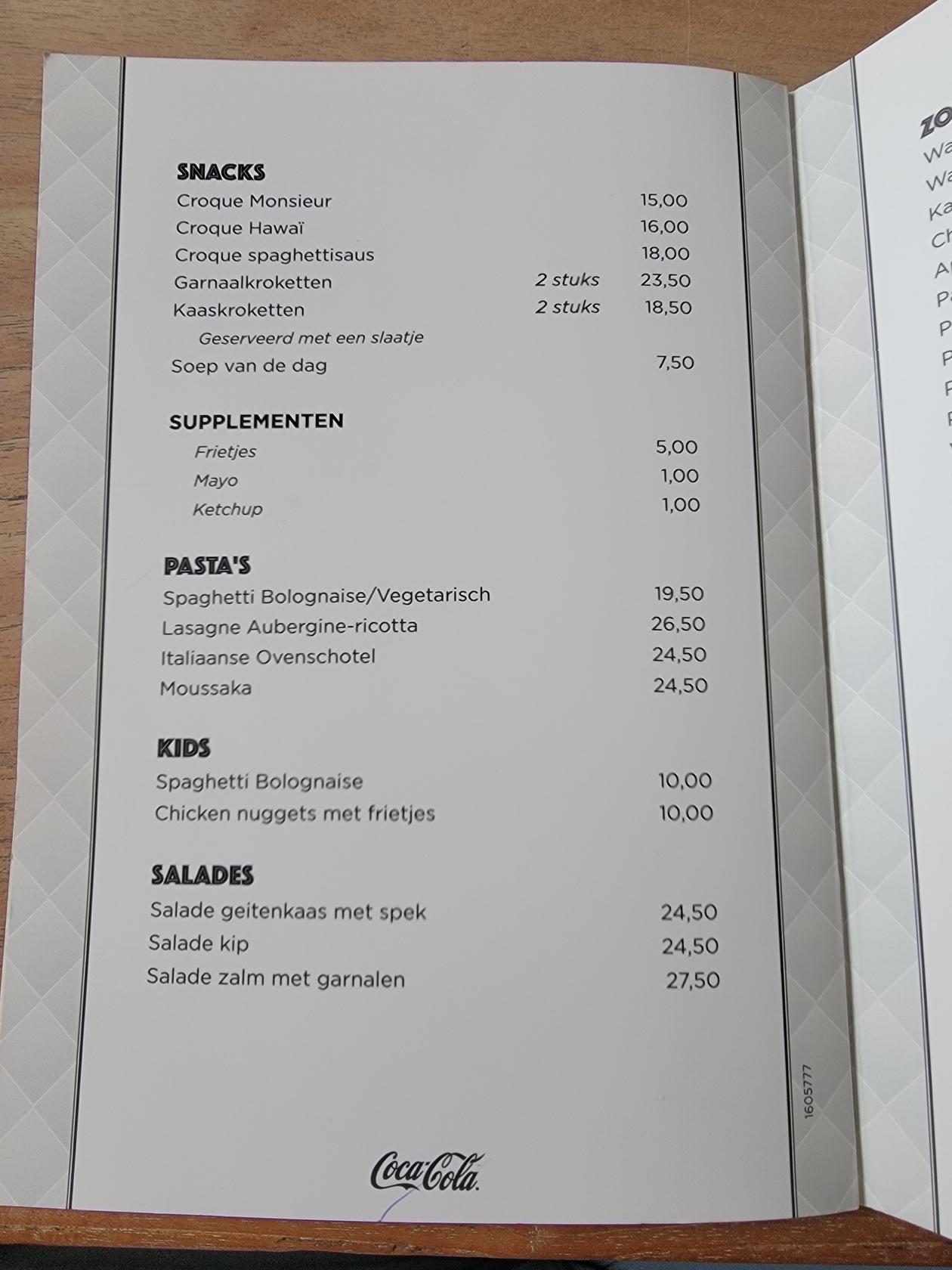
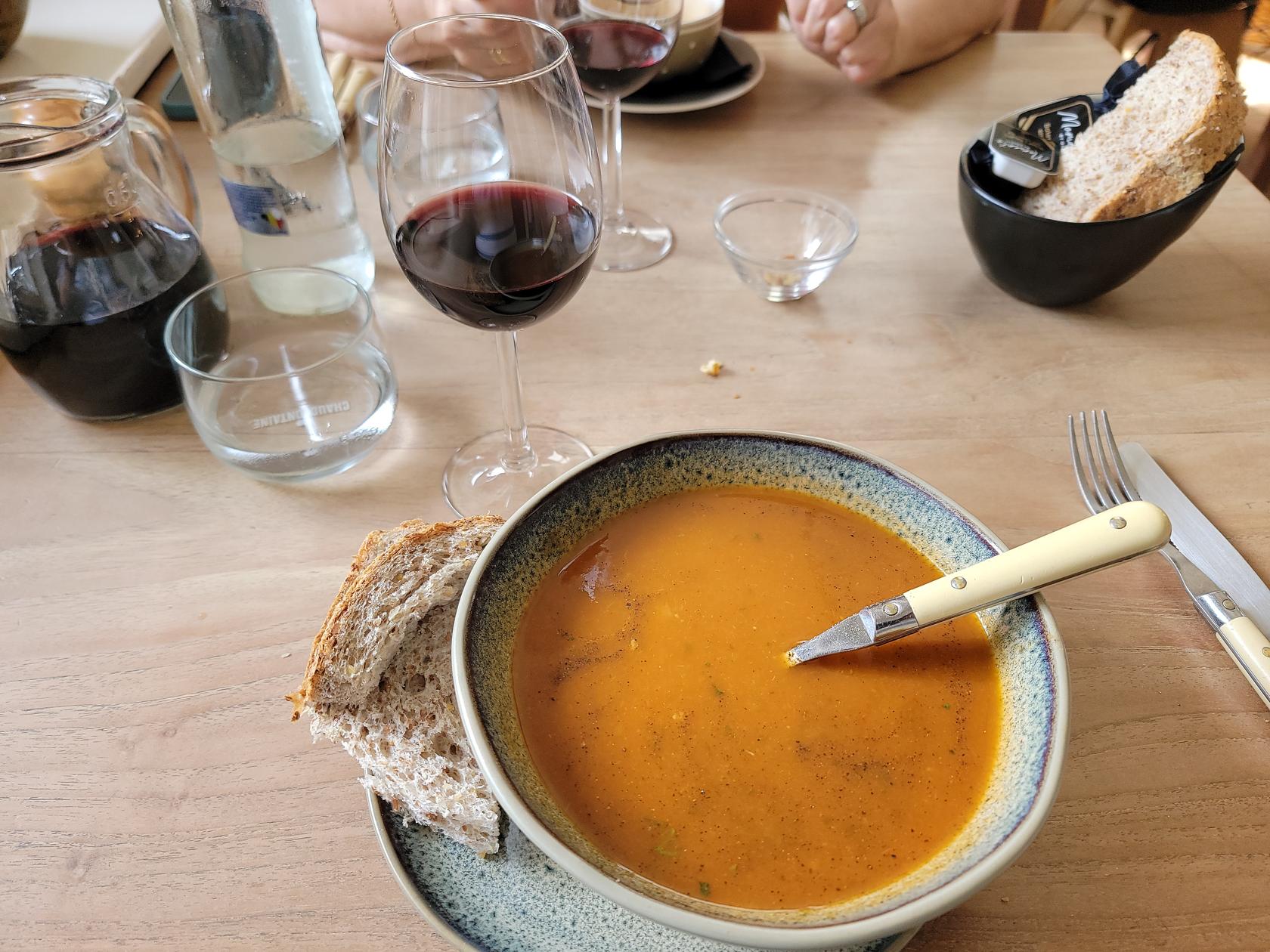
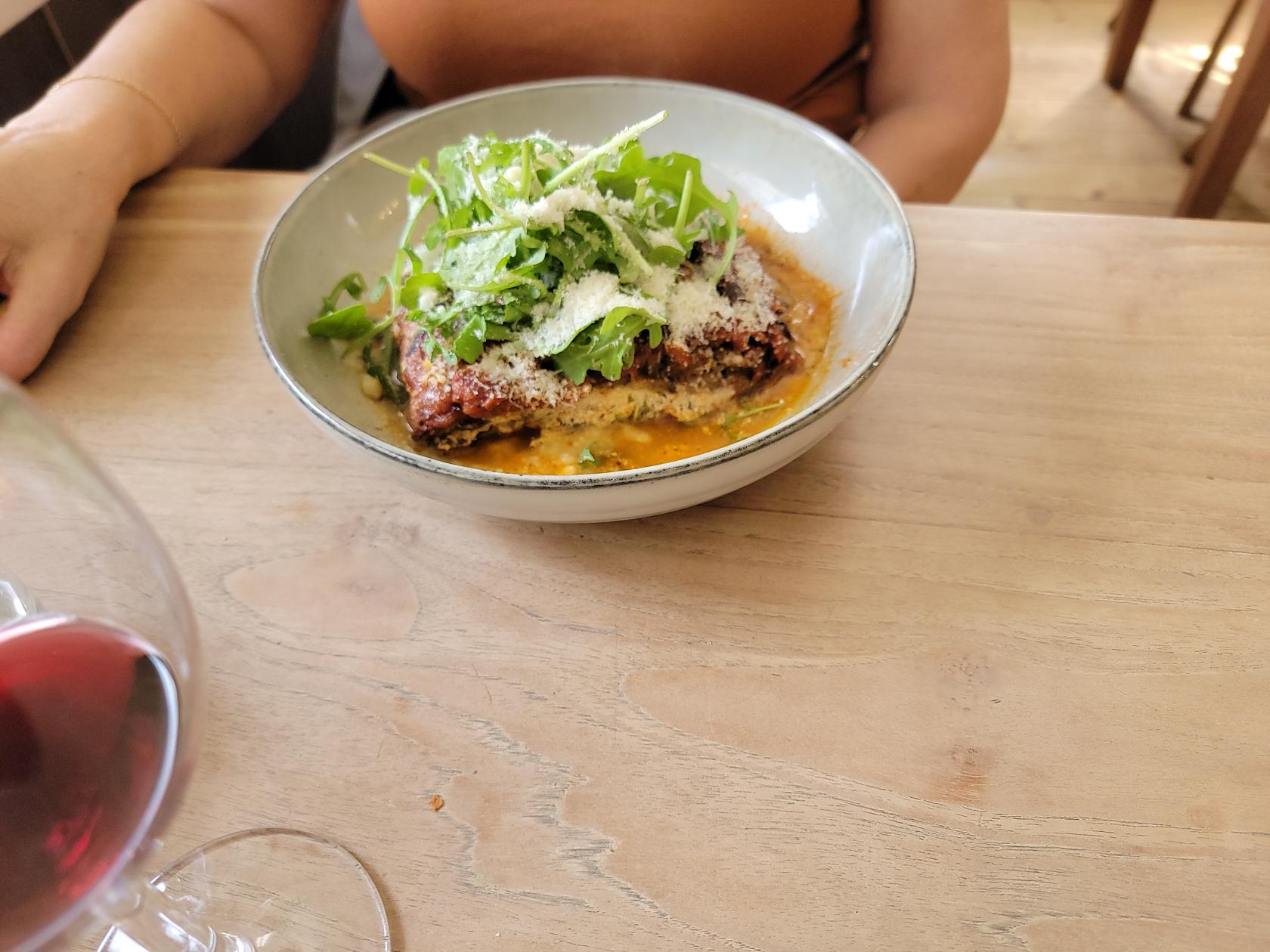
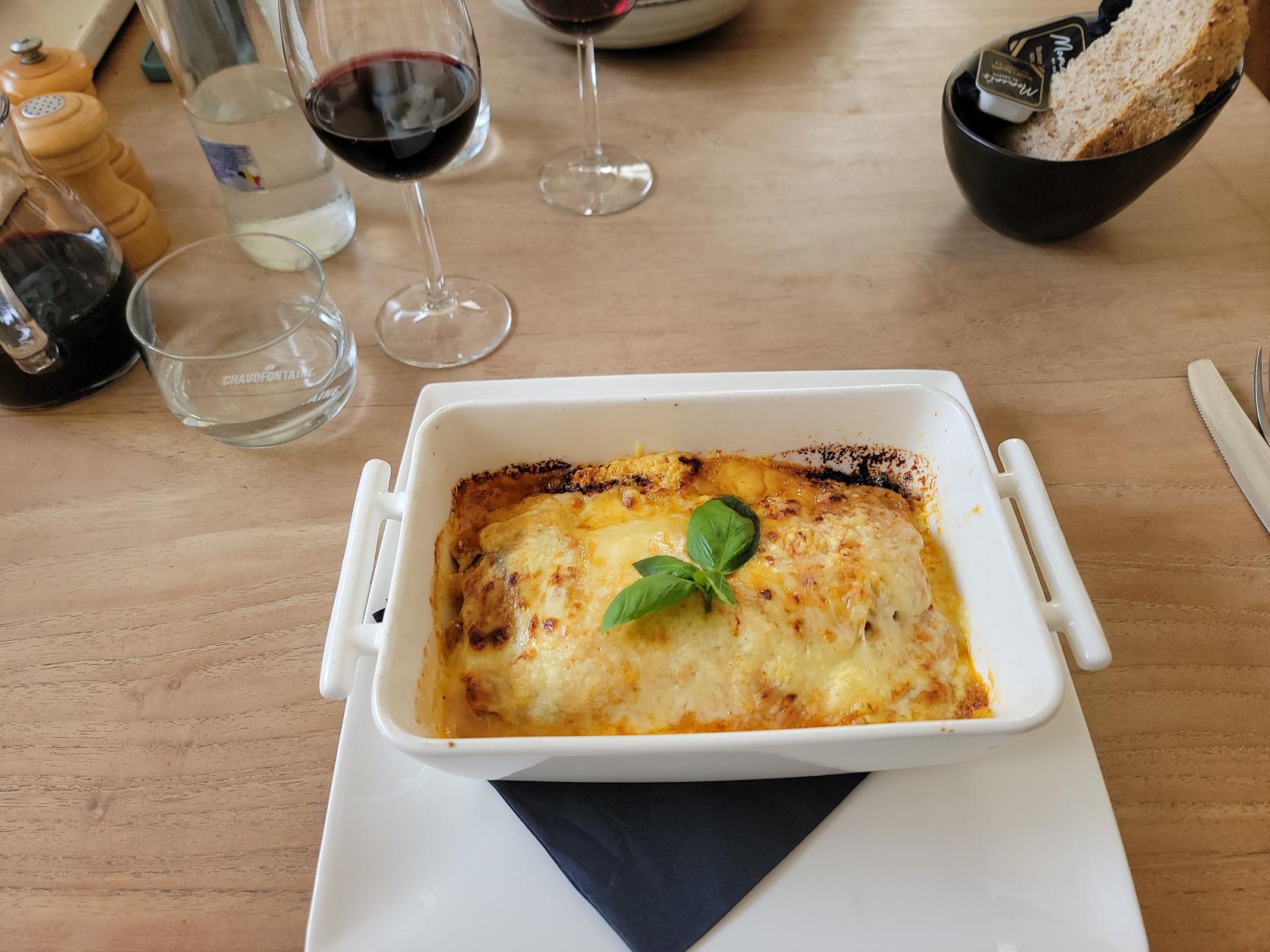
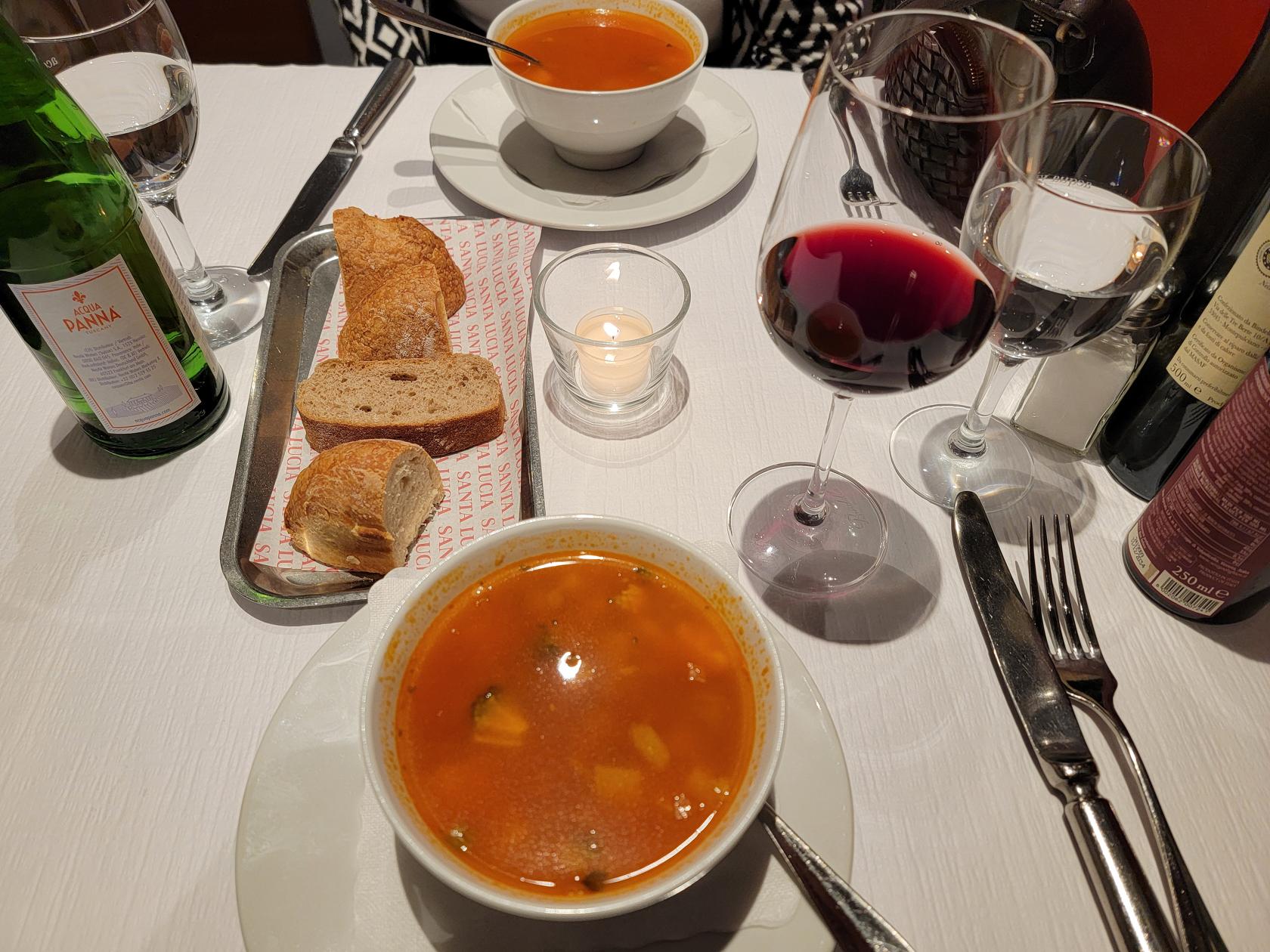
An Italian fusion style restaurant is Sorelle, or the sisters, on Onderbergen. A renovated house with an inviting charm and staff, Sorelle has a short menu which is not short on taste. The tomato soup and baked Italian Casserole with vegetables and tagliatelle is very good. Their selection for house red wine was also very good, a clean crisp taste, not sour with a good finish. They of course have other Belgian leaning dishes and desserts for local tastes, if you choose to go that route.
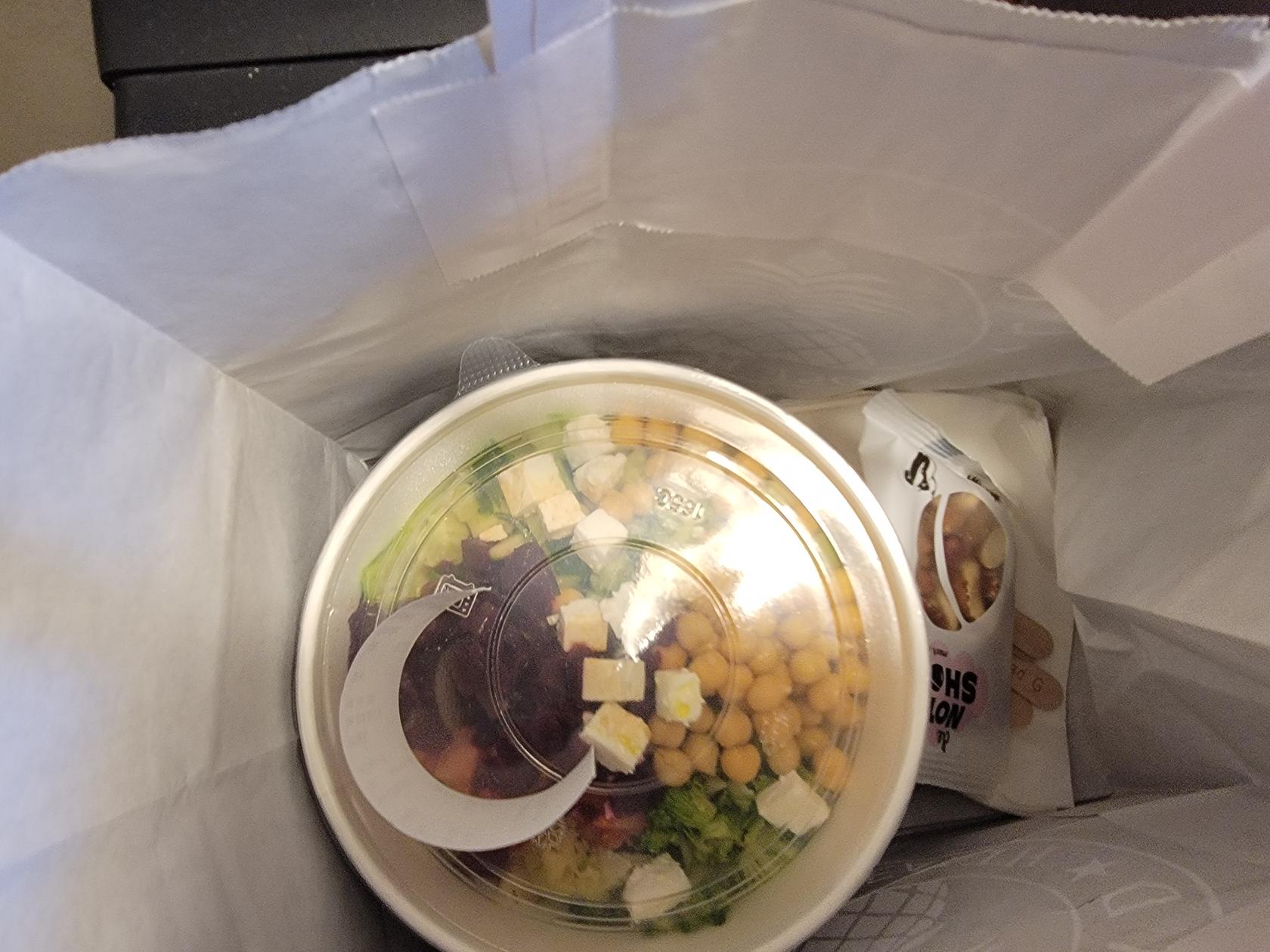
A mexican themed restaurant that specializes in salads and other tasty mexican dishes. We came here to get take-out on our last evening in Gent, since we had a rather heavy lunch at Sorelle. So if you are looking for some a bit less expensive you may want to stop here.
Takeout – Luxalad Restaurant – Gent, Belgium
Make Your Own – Luxalad Restaurant – Gent, Belgium
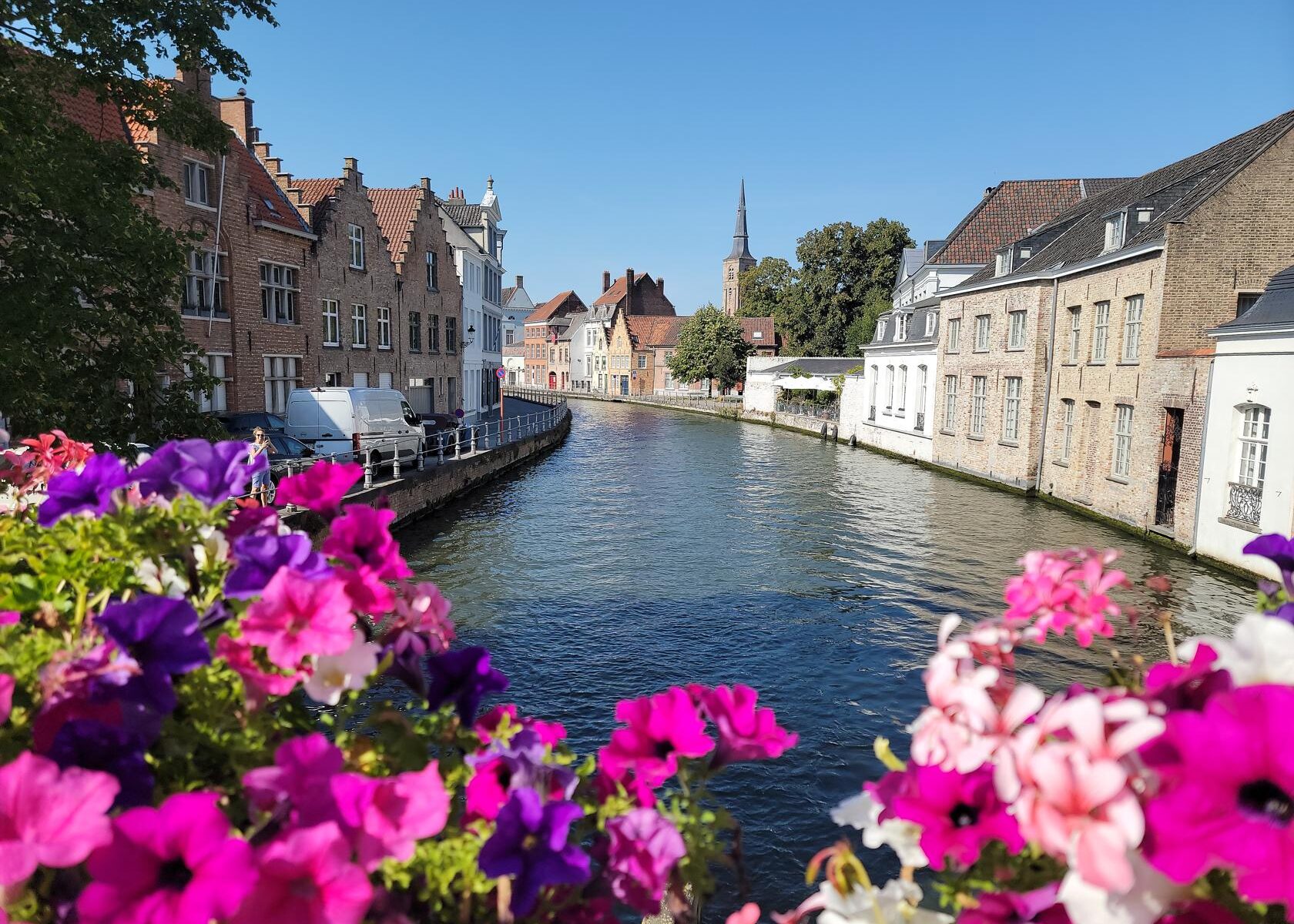
Commonly referred to as the Venice of the North, Brugge, or Bruges (it also goes by many other names), is riddled with canals and hence bridges to get over them. However, its toponym is actually not derived from a french or belgian form for the word ‘bridge’, but rather more likely a Scandinavian word that denoted a quay or jetty.
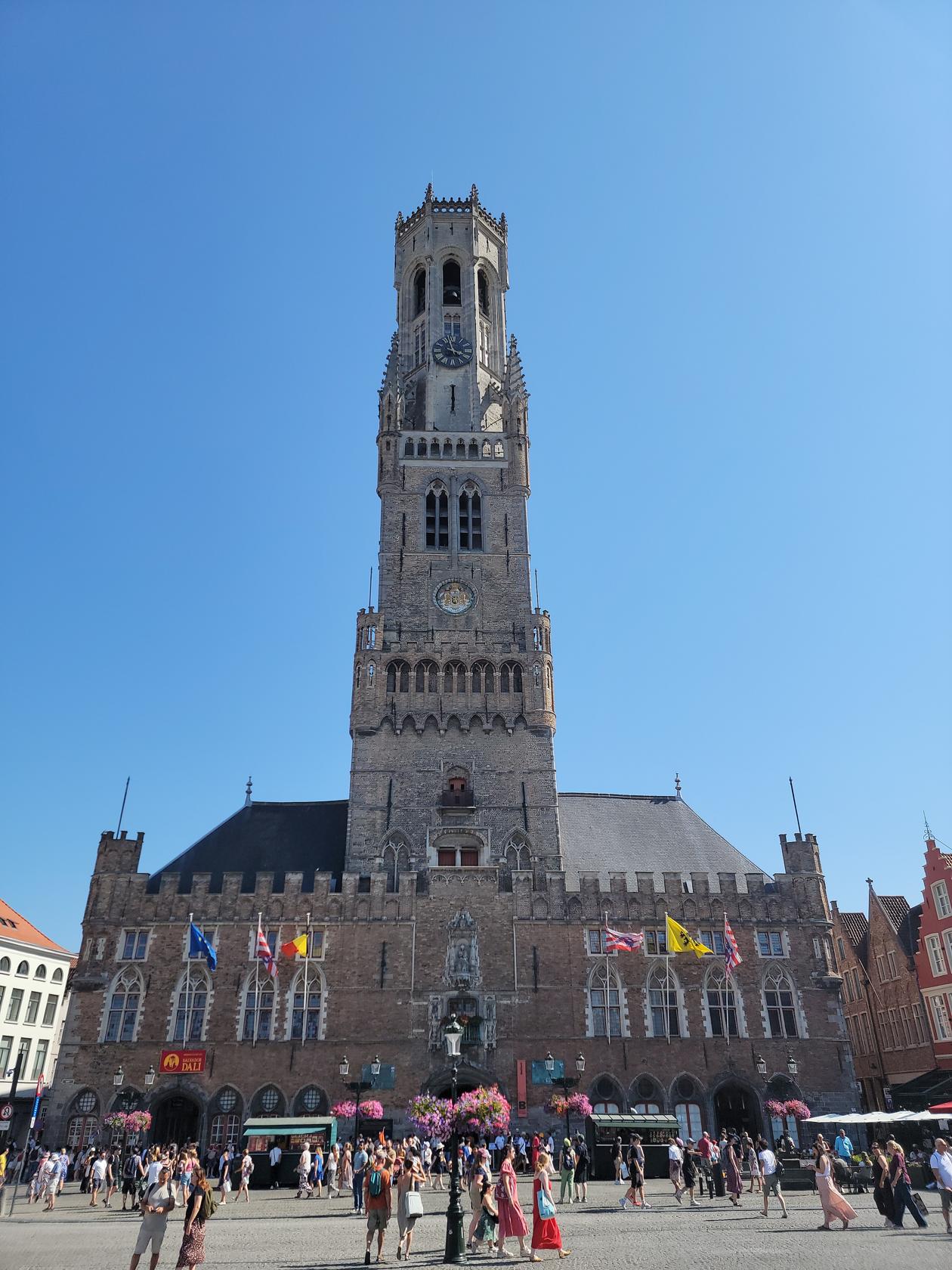
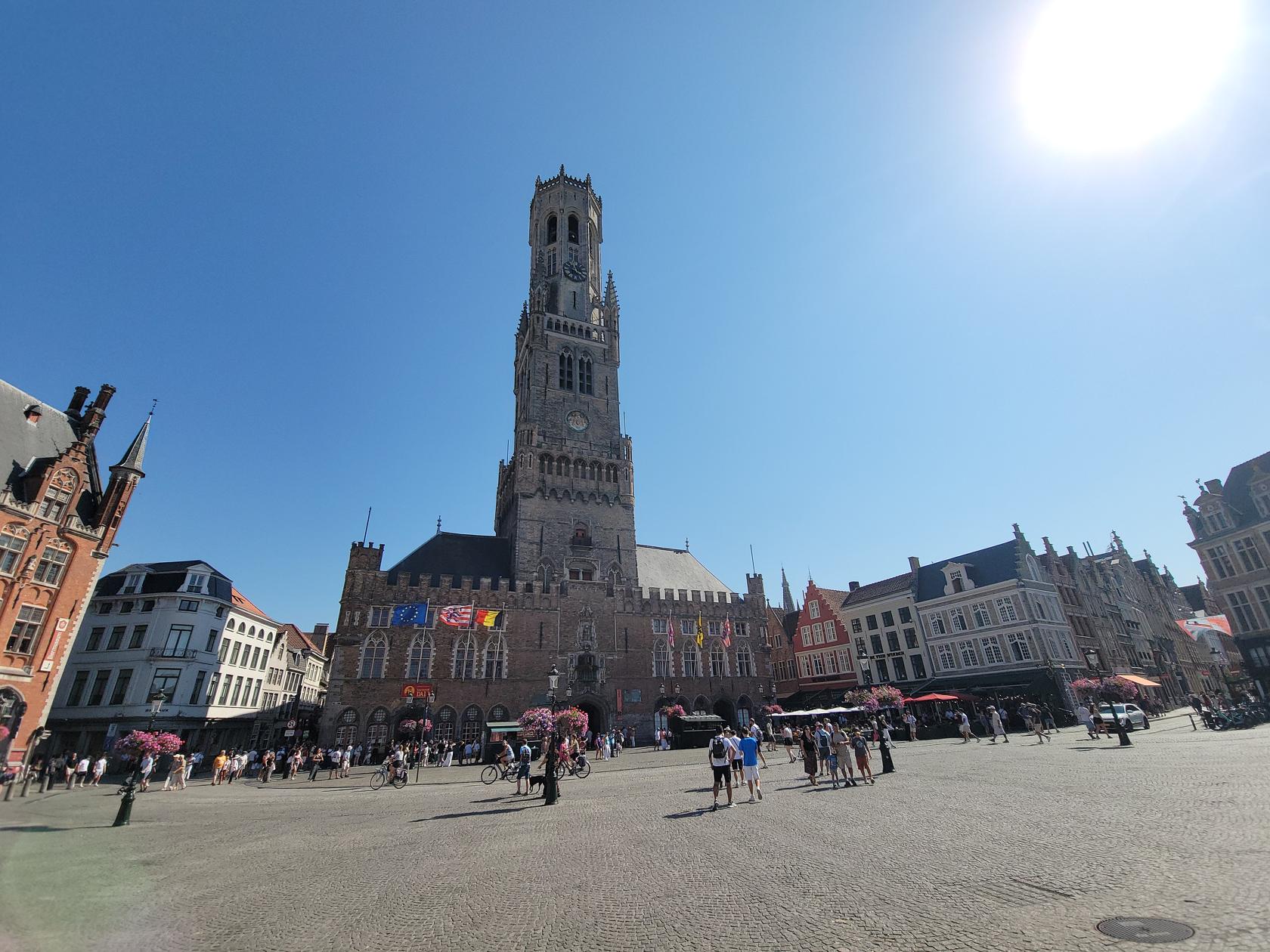
Belfort – Grand Marktplatz – Brugge, Belgium
Brugge
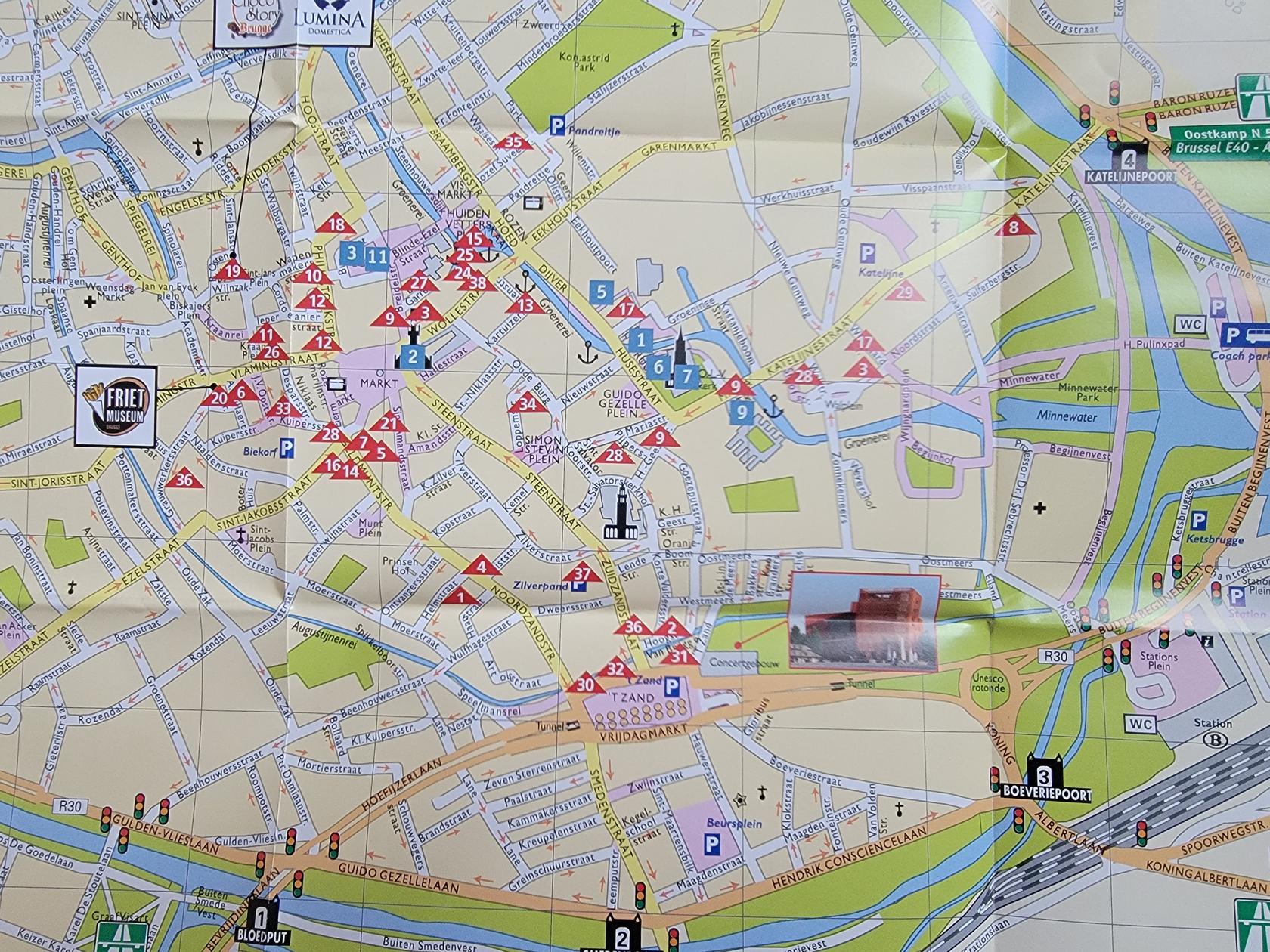
Tucked into the country, not too far from the coast is the small city of Brugge. Connected to the coast by a canal, which has tendrils all through the city, Brugge is a major tourist spot within Belgium and during the summer can get quite busy. The main throng of tourists seems to follow the Dijver canal from the south where there is parking, up to the Market Square and along to the De Burg and its religious attraction.
Map – Brugge, Belgium
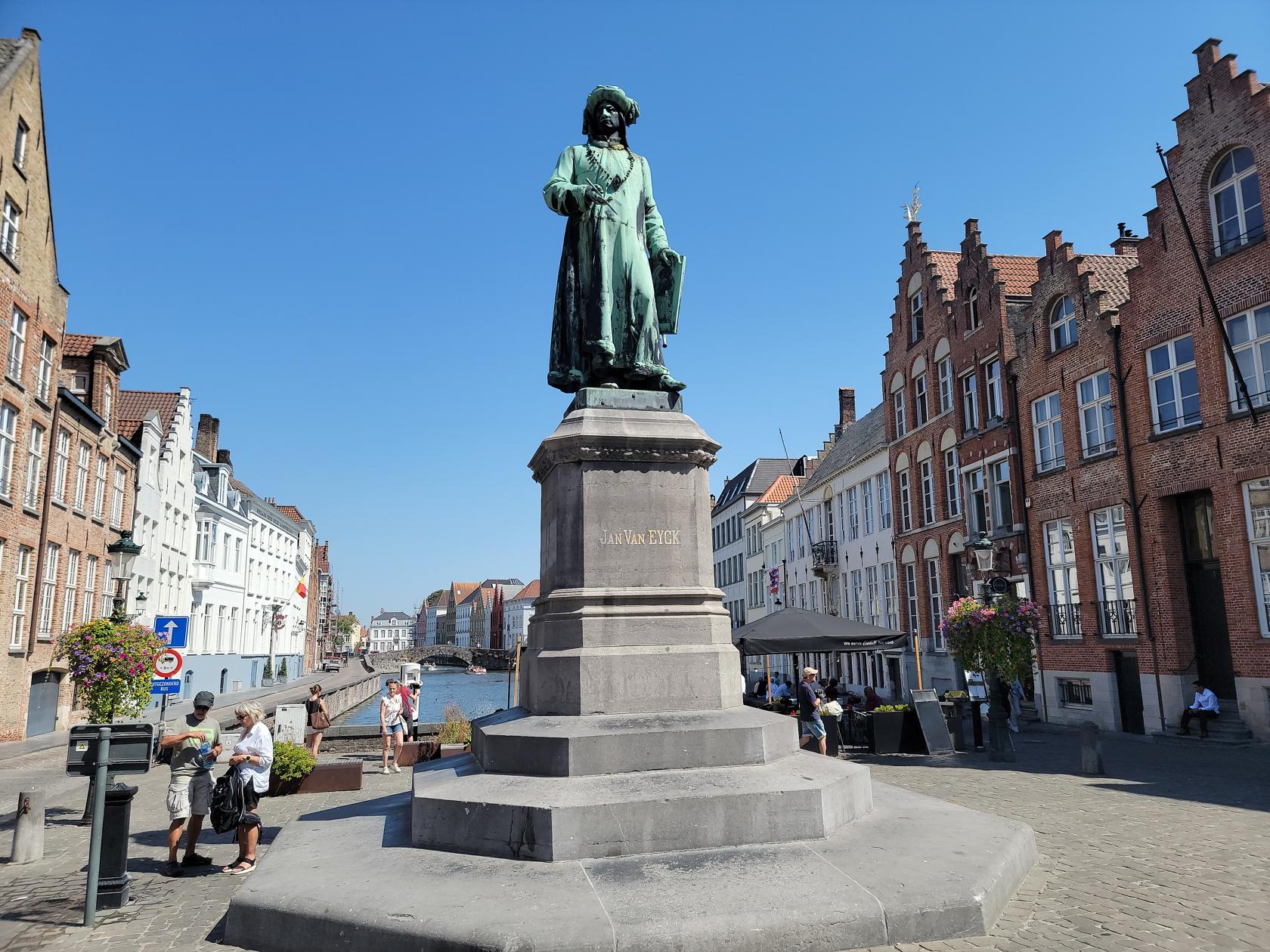
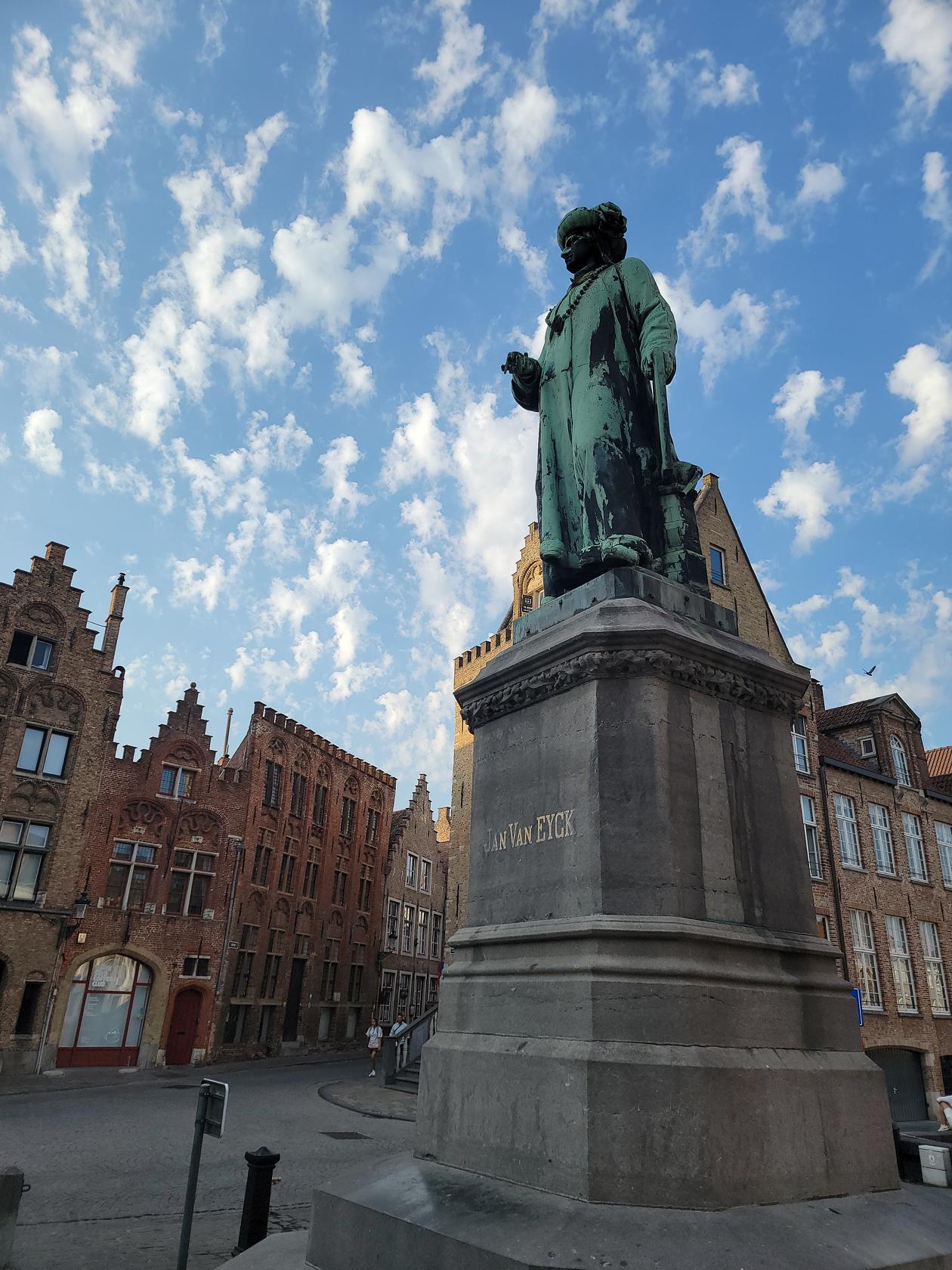
Jan Van Eyck Statue – Brugge, Belgium
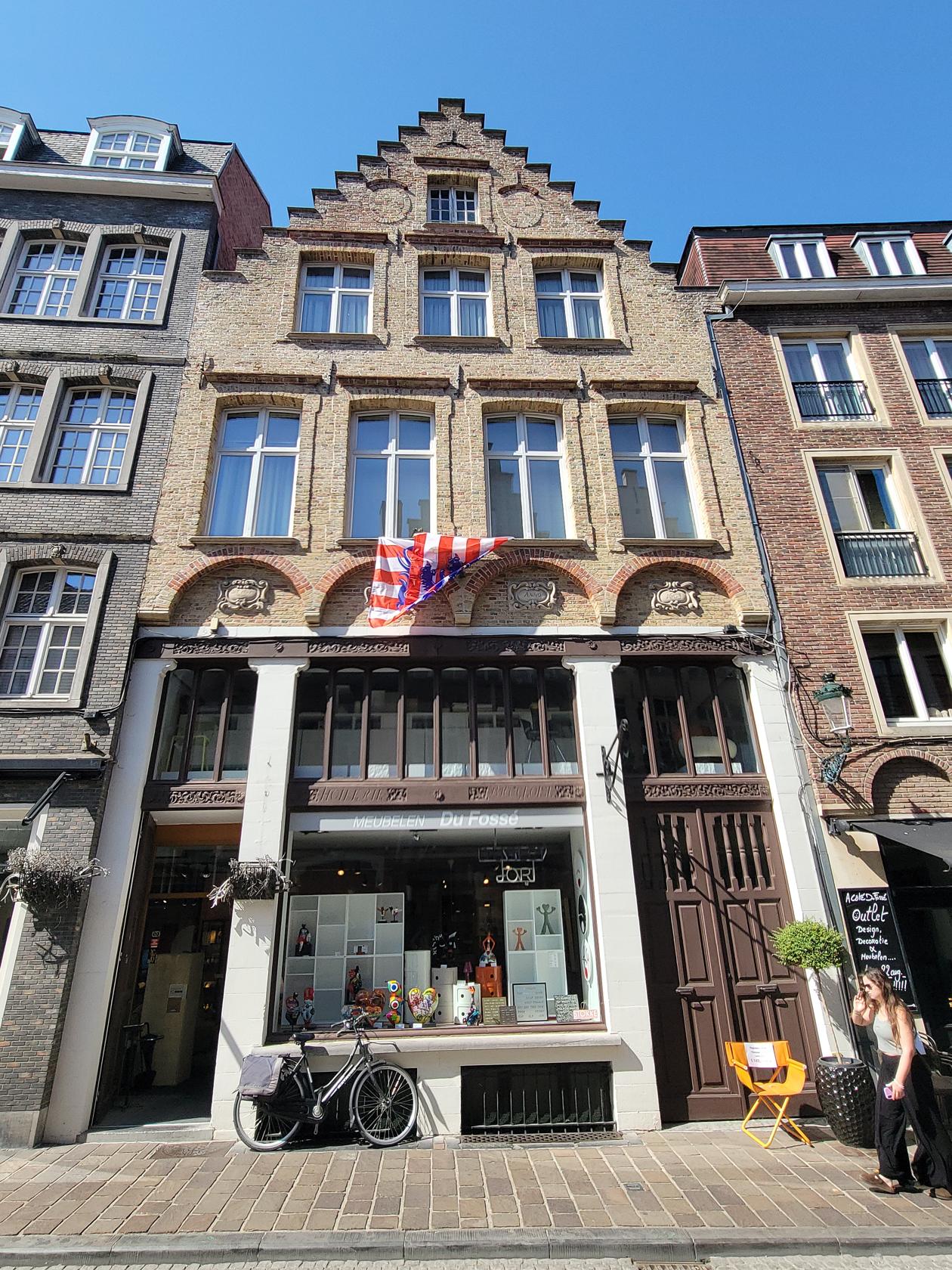
Typical Street – Brugge, Belgium
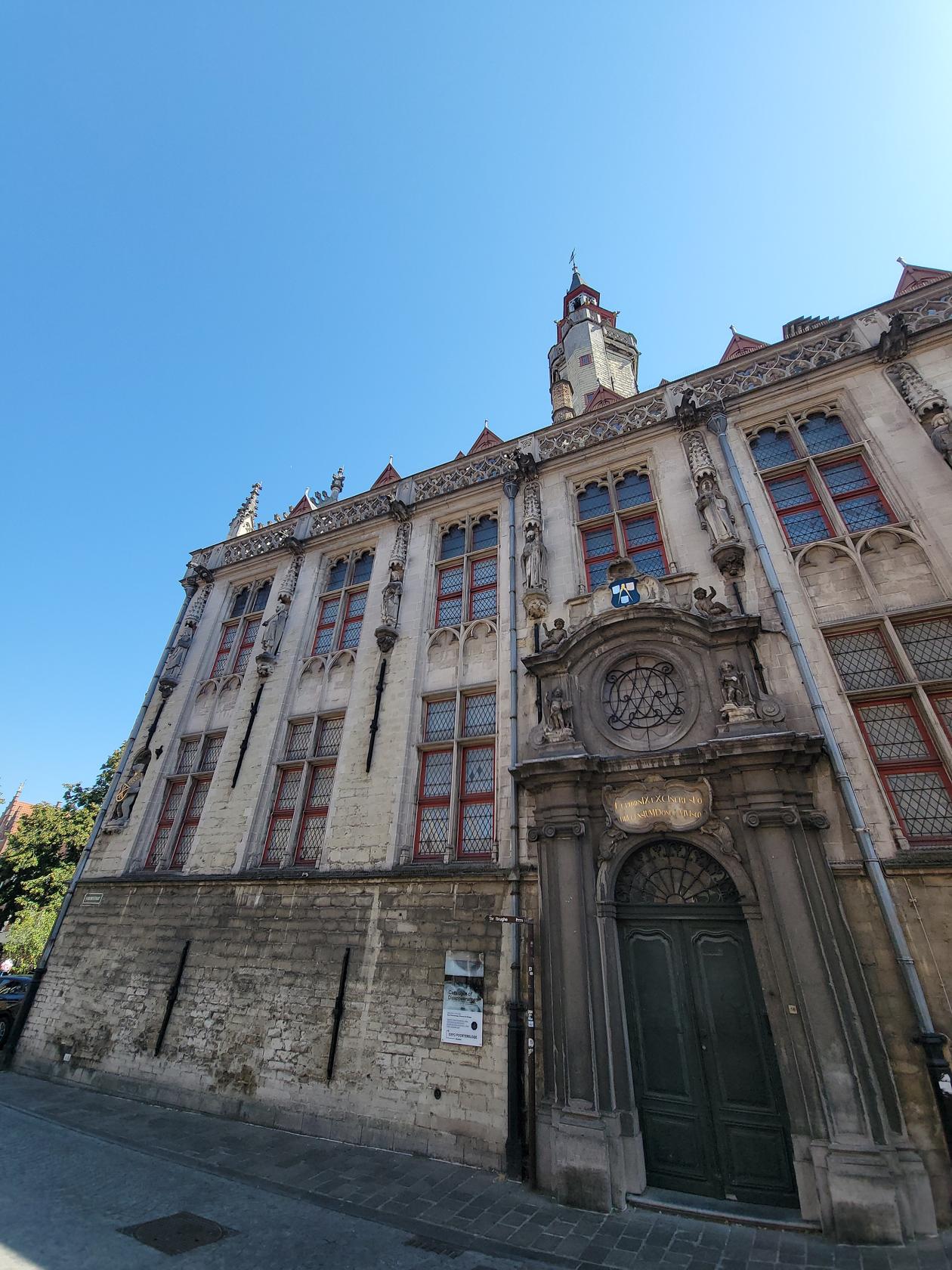
Burgher’s Lodge – Brugge, Belgium
Huis Ter Beurze – Brugge, Belgium
Historic House – Brugge, Belgium
Historic House – Brugge, Belgium
Burgher’s Lodge – Brugge, Belgium
Jan Van Eyck Statue – Jan Van Eyckplein – Brugge, Belgium
Getting There
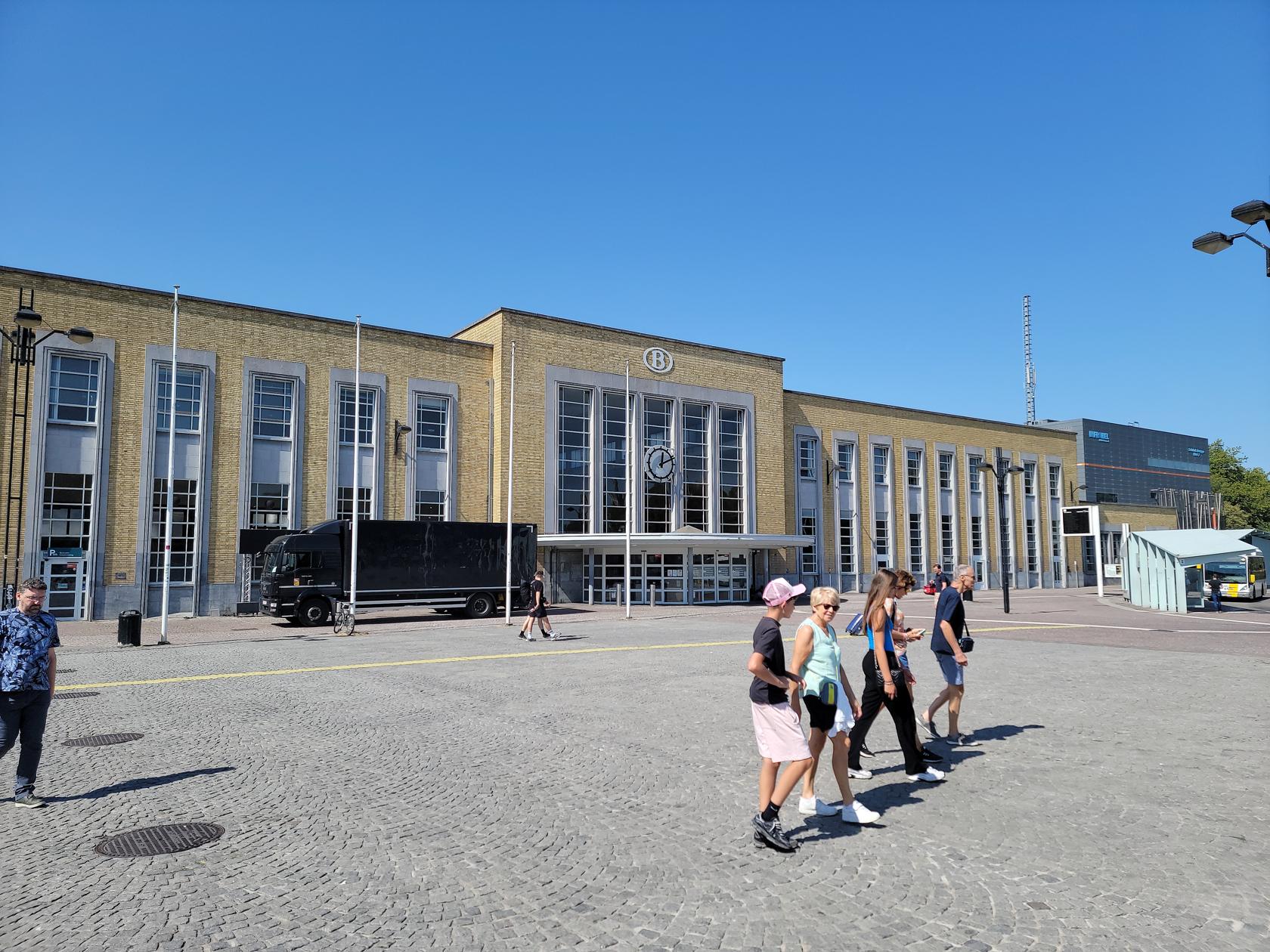
Probably most people use their car, but to the south there is also a place where we discovered the buses park, so that is another often use mode of transportation. We naturally used the train system, which from Dinant required two changes. The last change to Brugge itself was on the InterCity (IC) line and accommodates both first and second classes, though in a rather strange way. In case, we arrived at the main train station in Brugge, which oddly enough no longer has a functioning main entrance, so you must use the side entrance to the left.
Main Train Station – Brugge, Belgium
It should be noted that in Belgium, cars marked with a 1 with a 2 below it, indicate the train has first class upstairs and second class below. Others with just a 2 indicate second class only. Still others that appear old and with no markings indicate no ammenities, not even air conditioning. We found this out the hard way, not knowing signage. Luckily the seats were very comfortable and it wasn’t too warm, though I wouldn’t like to repeat the experiment.
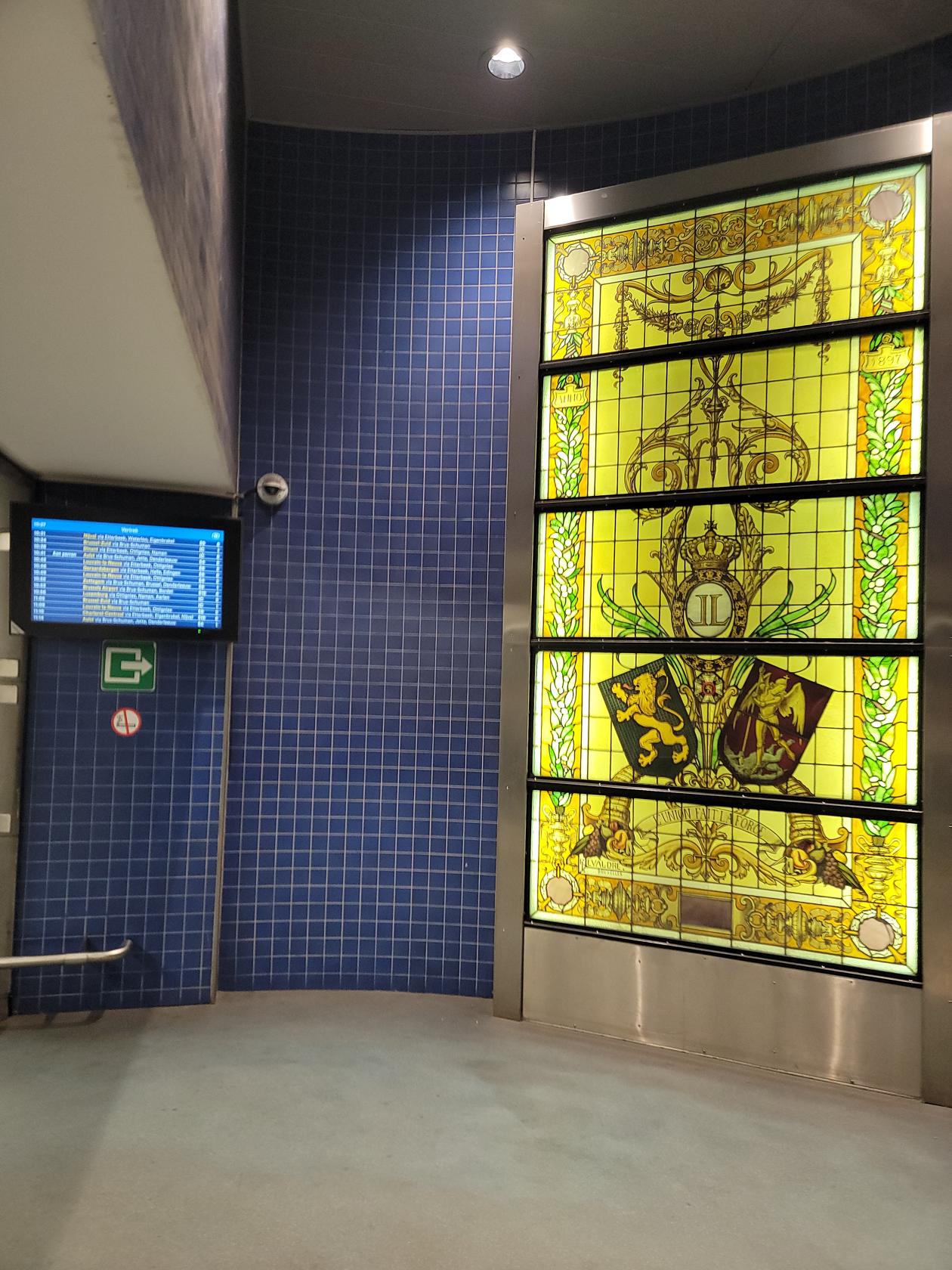
Main Train Station – Brugge, Belgium
Hotel Martin’s Relais
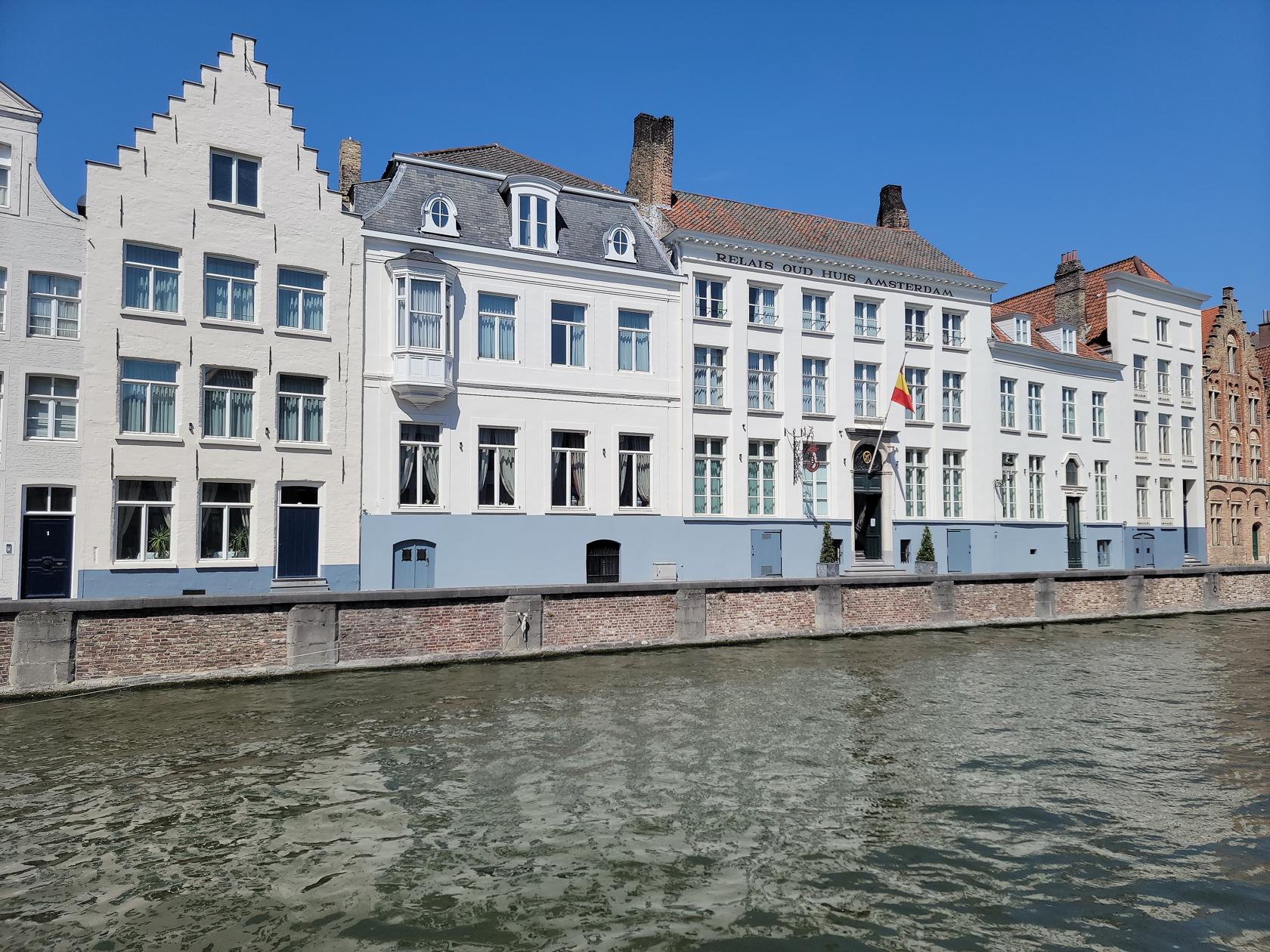
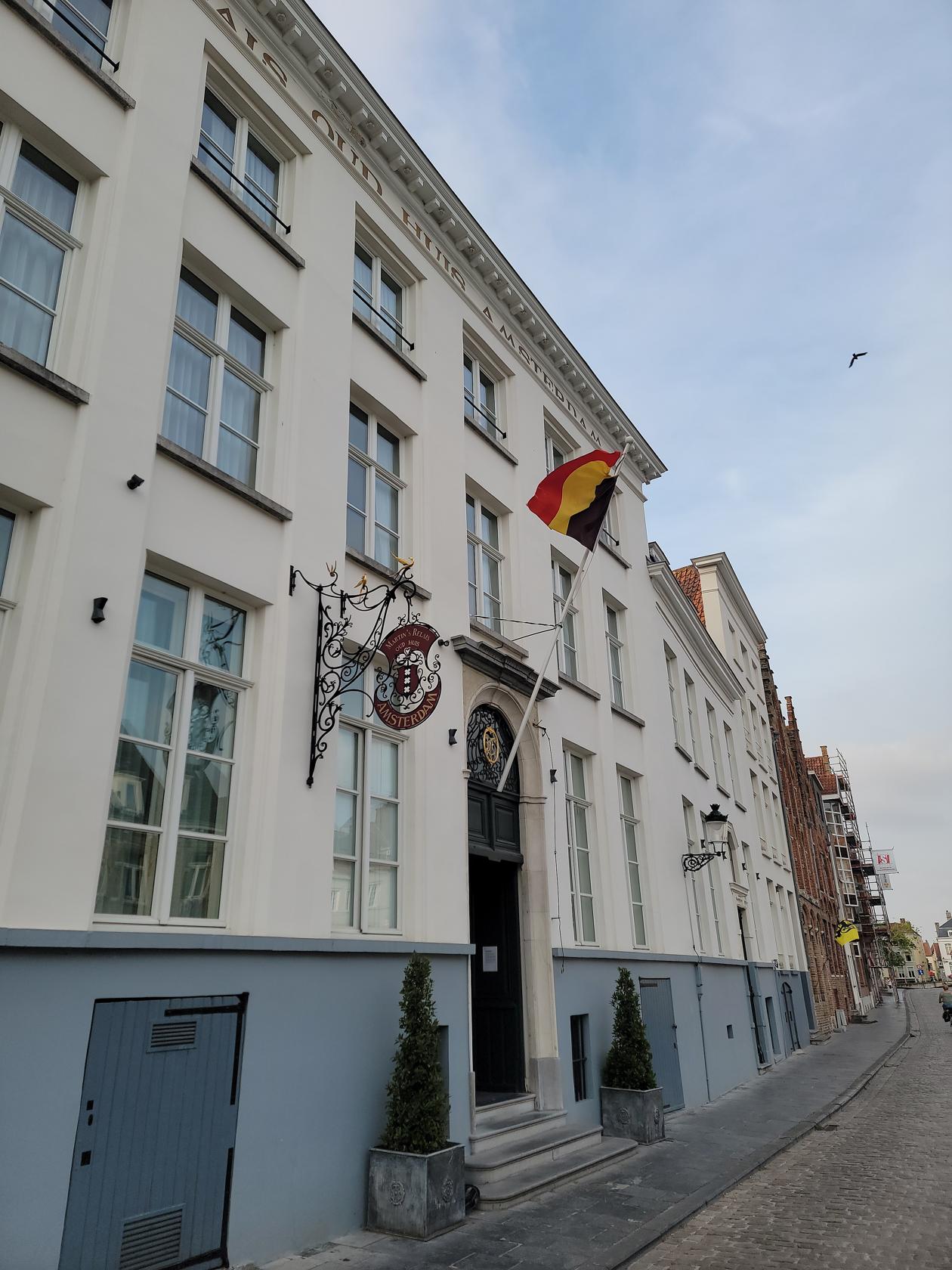
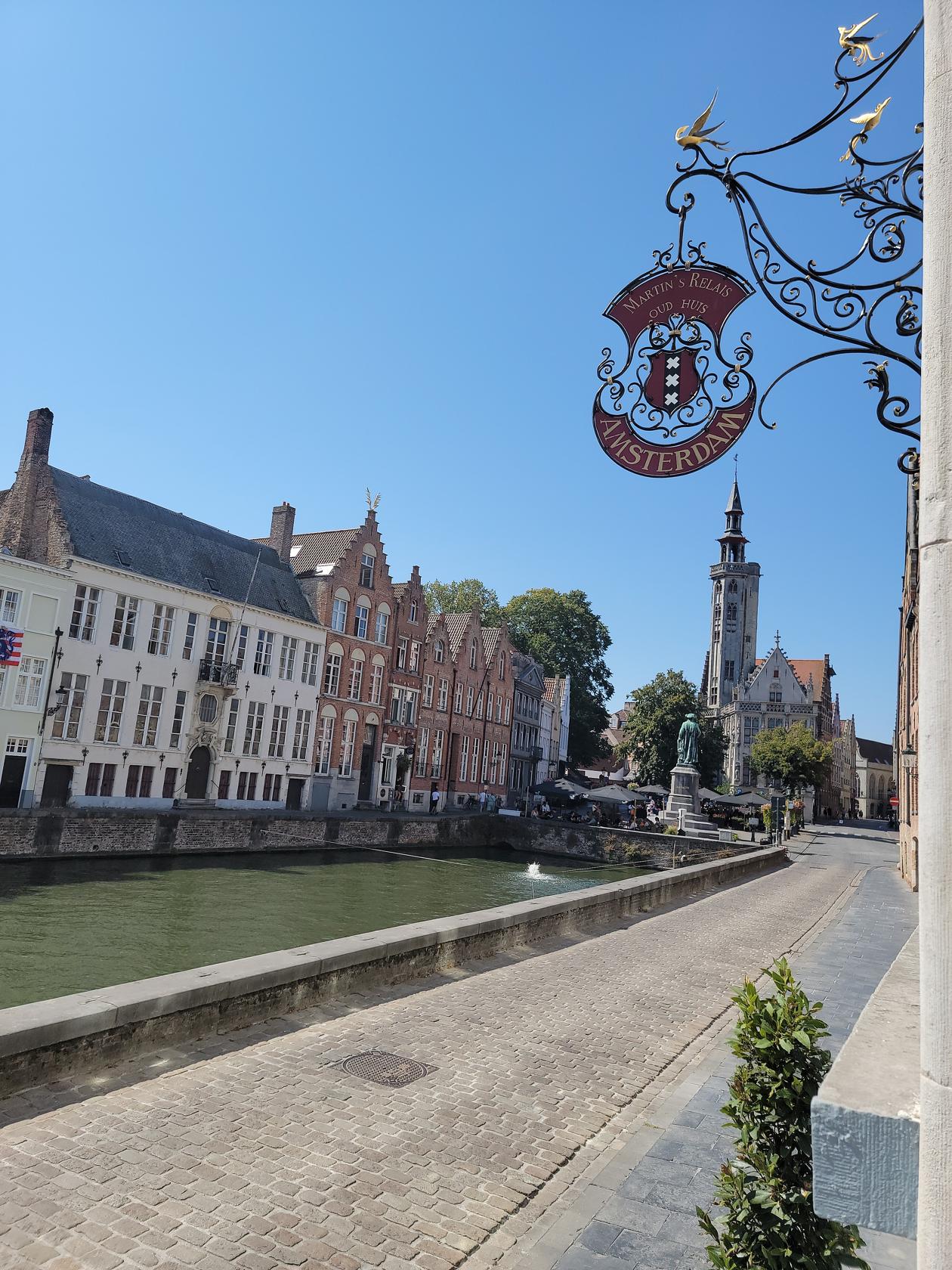
We stayed at a boutique hotel to the north east of the old town and on one of the canals. The hotel Martin’s Relais is a quaint and quiet retreat from the city, though the area in and around it are actually not that noisy. The service is of course first rate and the rooms are cosy and very comfortable, especially the air-conditioning on a warm day.
Martin’s Relais Hotel – Brugge, Belgium
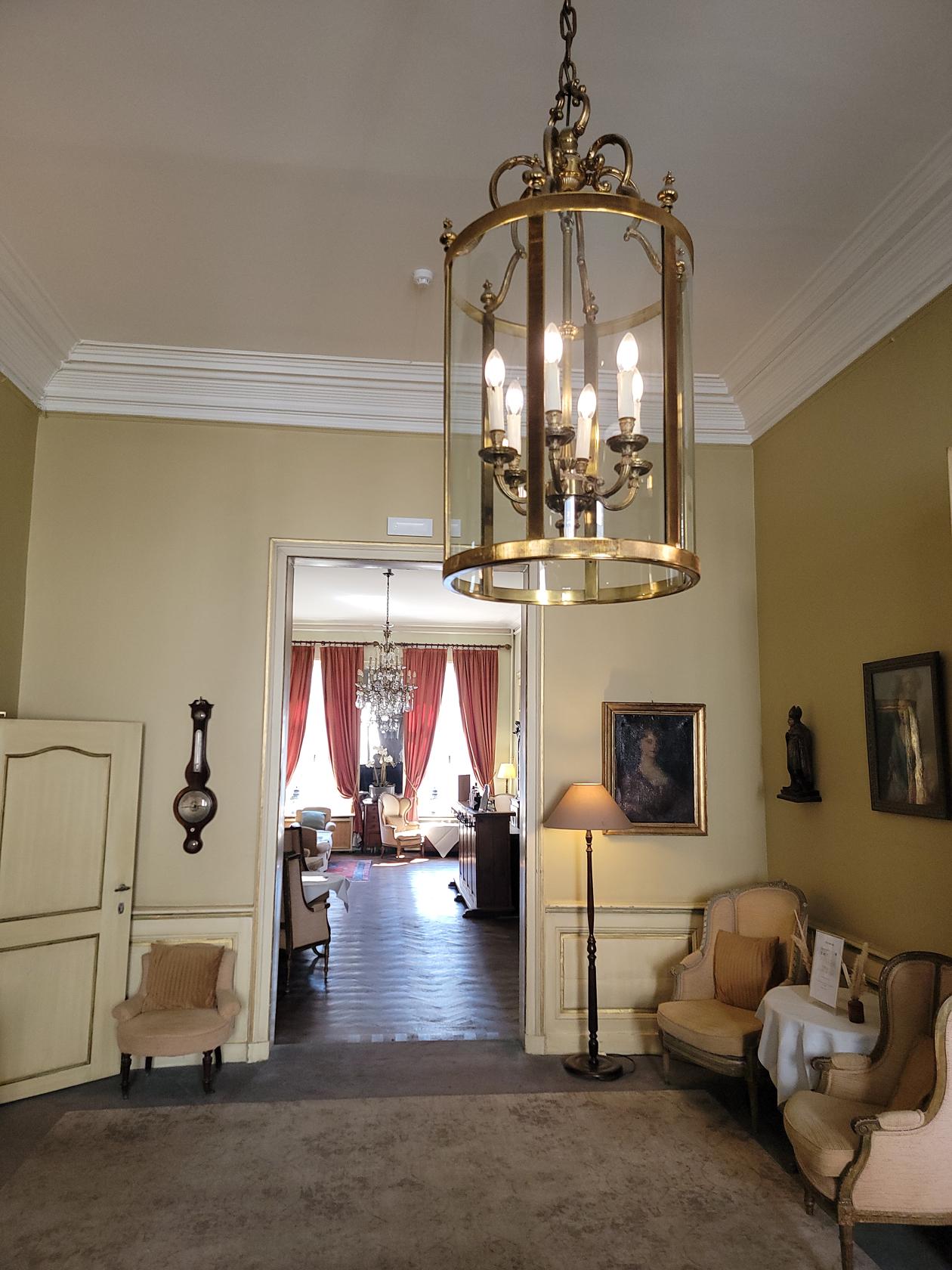
Salon – Martin’s Relais Hotel – Brugge, Belgium
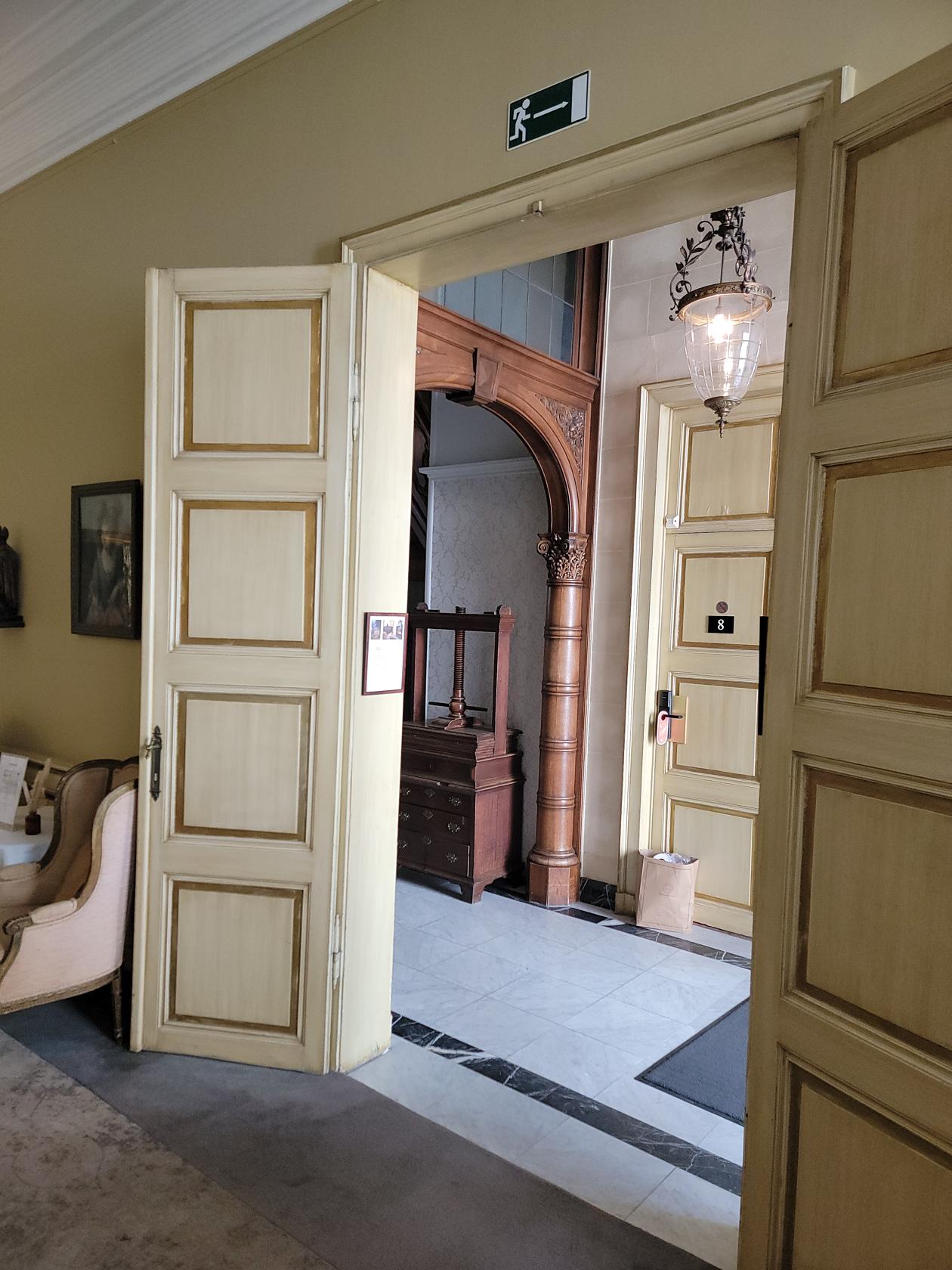
Main Entrance Foyer – Martin’s Relais Hotel – Brugge, Belgium
Our Room – Martin’s Relais Hotel – Brugge, Belgium
Our Room – Martin’s Relais Hotel – Brugge, Belgium
Bathroom – Martin’s Relais Hotel – Brugge, Belgium
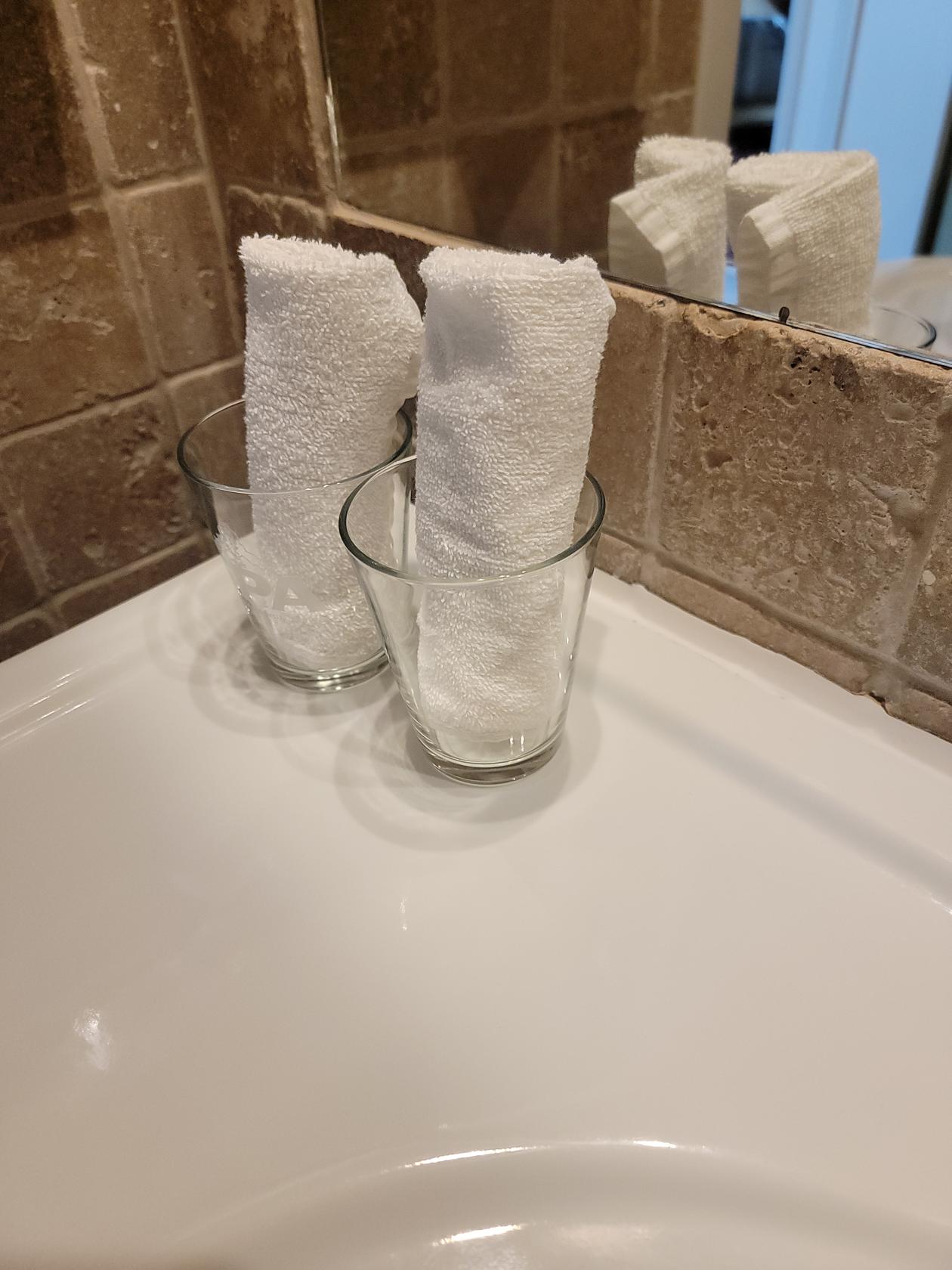
Washclothes? – Martin’s Relais Hotel – Brugge, Belgium
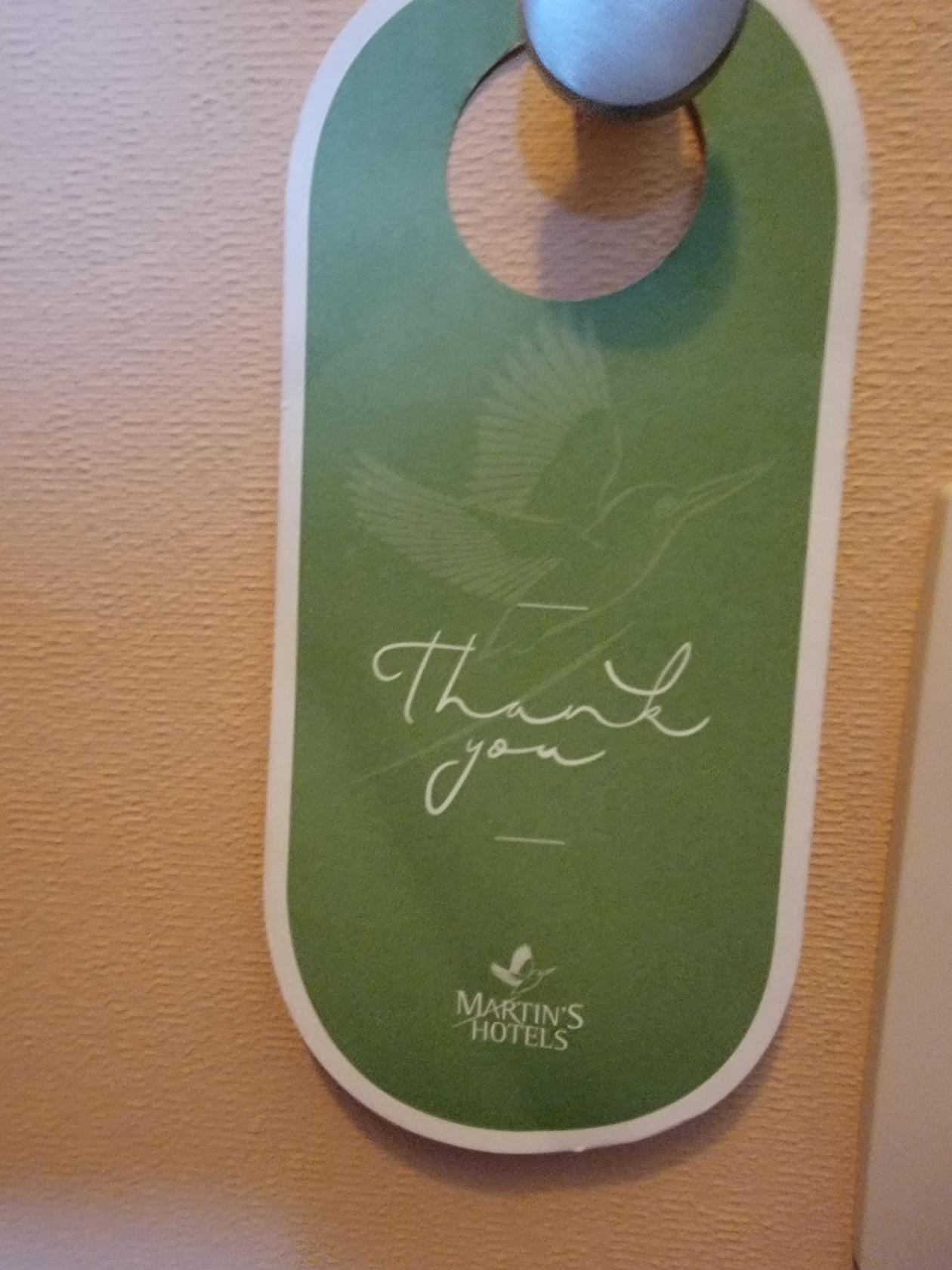
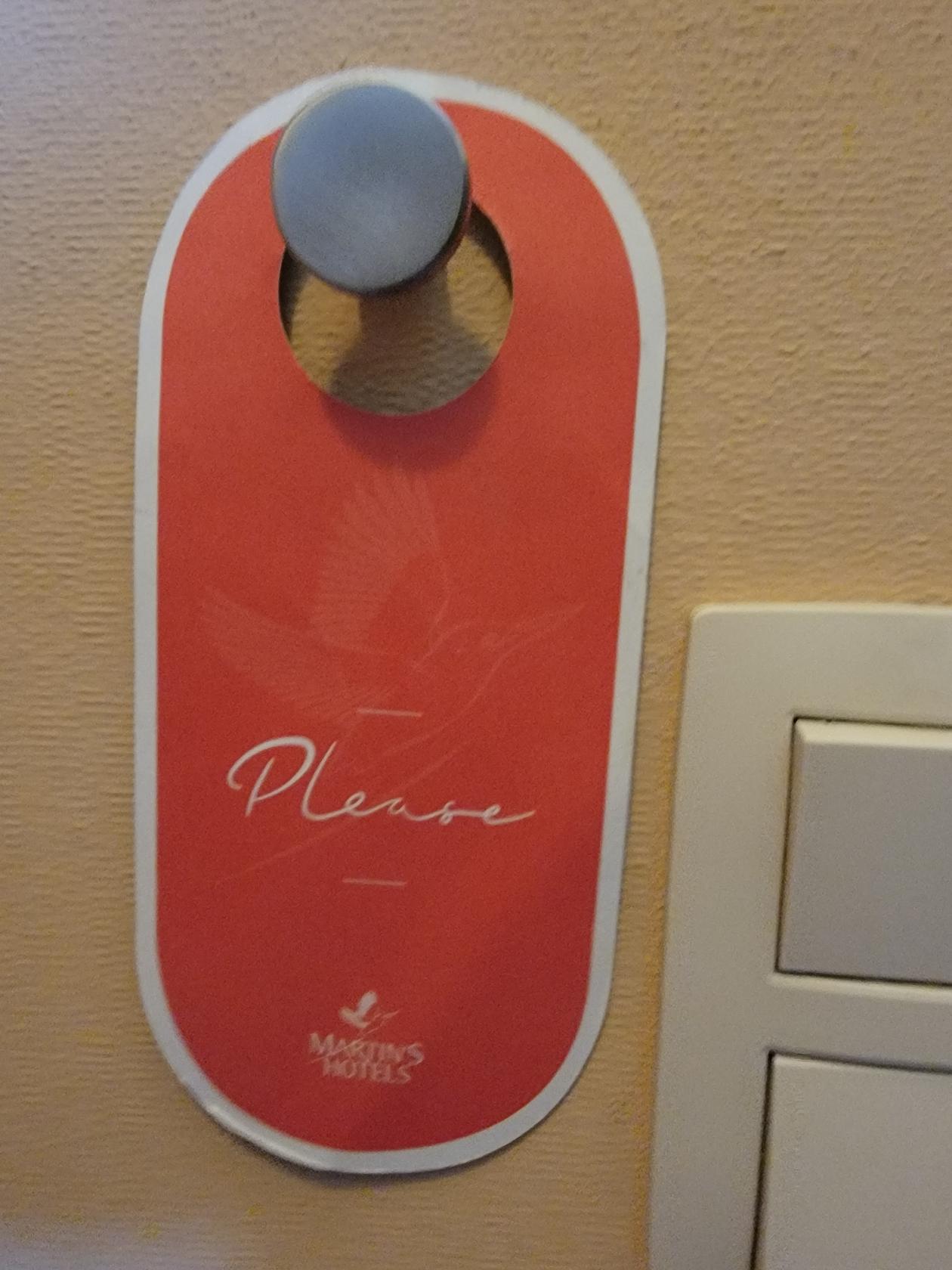
However, everything in Belgium comes with a strange Belgian twist. We could not determine the function of the door signs until we went to the desk to get our confusion cleared up. Perhaps it was somewhere lost in translation, but one says, “Thank You” in green and the other “Please” in red. You too should not get caught up in trying to figure out why they use Please and Thank You, the conotations are endless and it will just end up hurting your head. They actually tried to explain it to me and I just got more confused. The key is the color, green to enter and do the room up, red do not enter.
Thank You – Martins Relais Hotel – Brugge, Belgium
Back Entrance – Martins Relais Hotel – Brugge, Belgium
Please – Martins Relais Hotel – Brugge, Belgium
Back Entrance – Martin’s Relais Hotel – Brugge, Belgium
Foyer – Martin’s Relais Hotel – Brugge, Belgium
Churches And Cathedrals
There of course plenty of Catholic churches in Brugge. However, they all appear to be keen on making money and not very welcoming otherwise.
City Hall – Brugge, Belgium
Basilica Of The Holy Blood
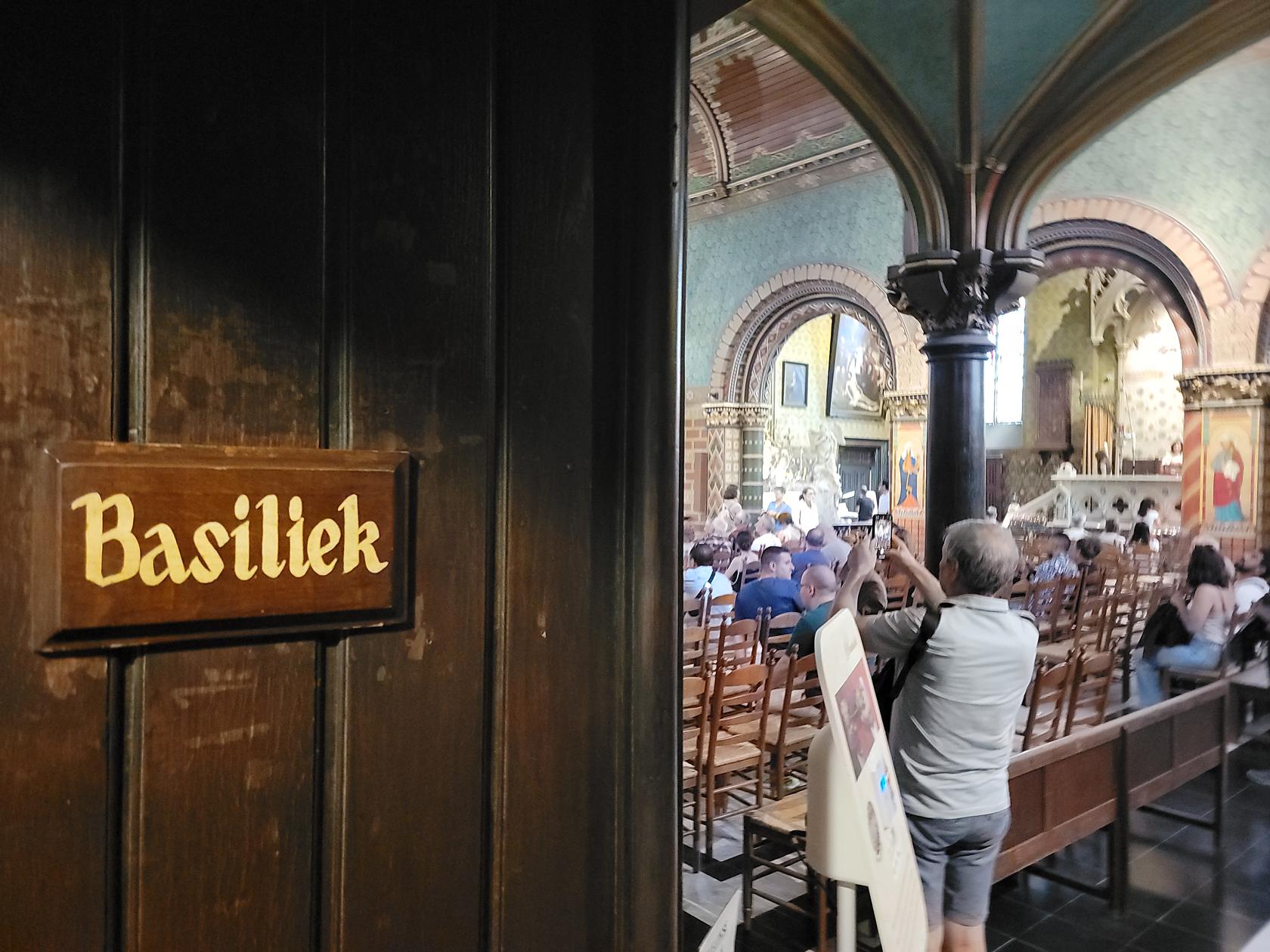
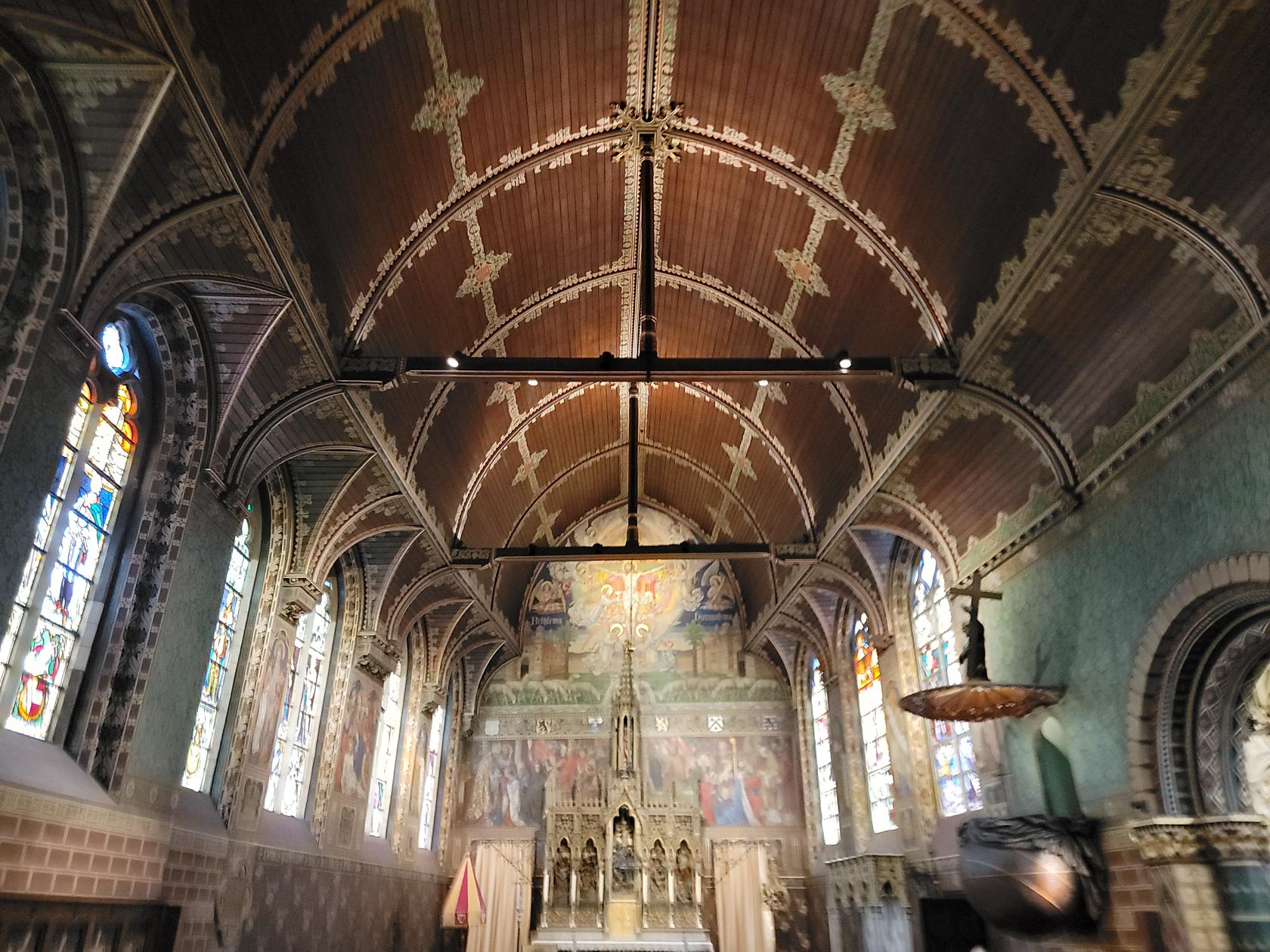
The Basilica of the Holy Blood is a small church stuck in the corner Der Burg plaza and next to City Hall. It is nice inside, but there are better examples of basilicas in other countries. Again, the interior and the establishment seems more keen on taking in as much money as possible, even though entry to the church is free.
Entrance – Basilica of the Holy Blood – Brugge, Belgium
Entrance – Basilica of the Holy Blood – Brugge, Belgium
To see the holy blood, which frankly cannot be the blood of Christ since there is no scientific way it could have survived two thousand years. Like the Shroud of Turin, someone is pulling another fast one on the faithful in order to make money. So, in order to see it, there is a long procession up a small dias. It is contained in a small glass cylinder, ostensibly blood on a rag containing his blood. You look at it, and then they expect a ‘contribution’. Luckily the red velure rope was put across the stairwell before we got there and we didn’t have to make the decision whether to see it or not.
Entry – Basilica of the Holy Blood – Brugge, Belgium
Nave – Basilica of the Holy Blood – Brugge, Belgium
Canals And Bridges
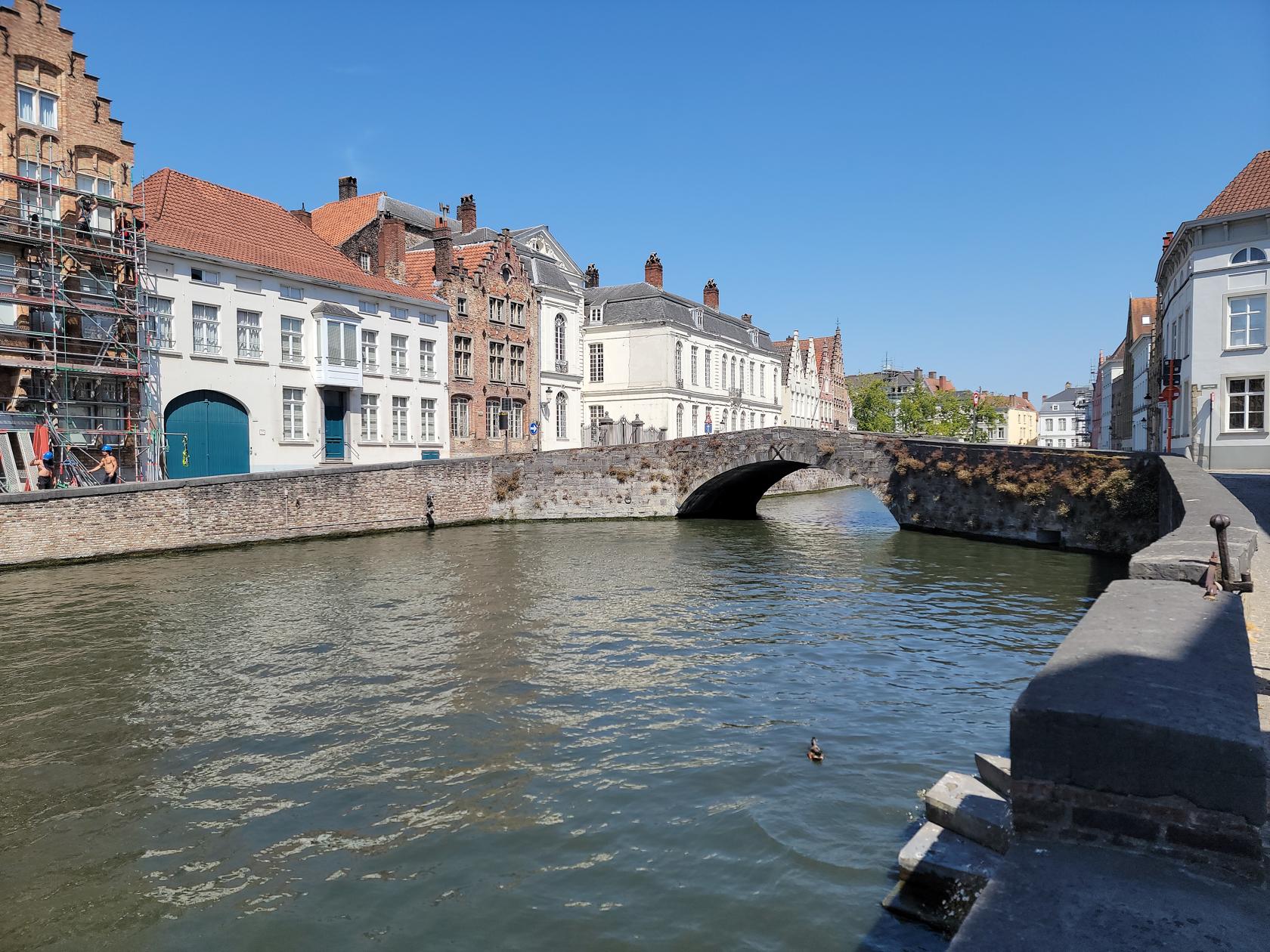
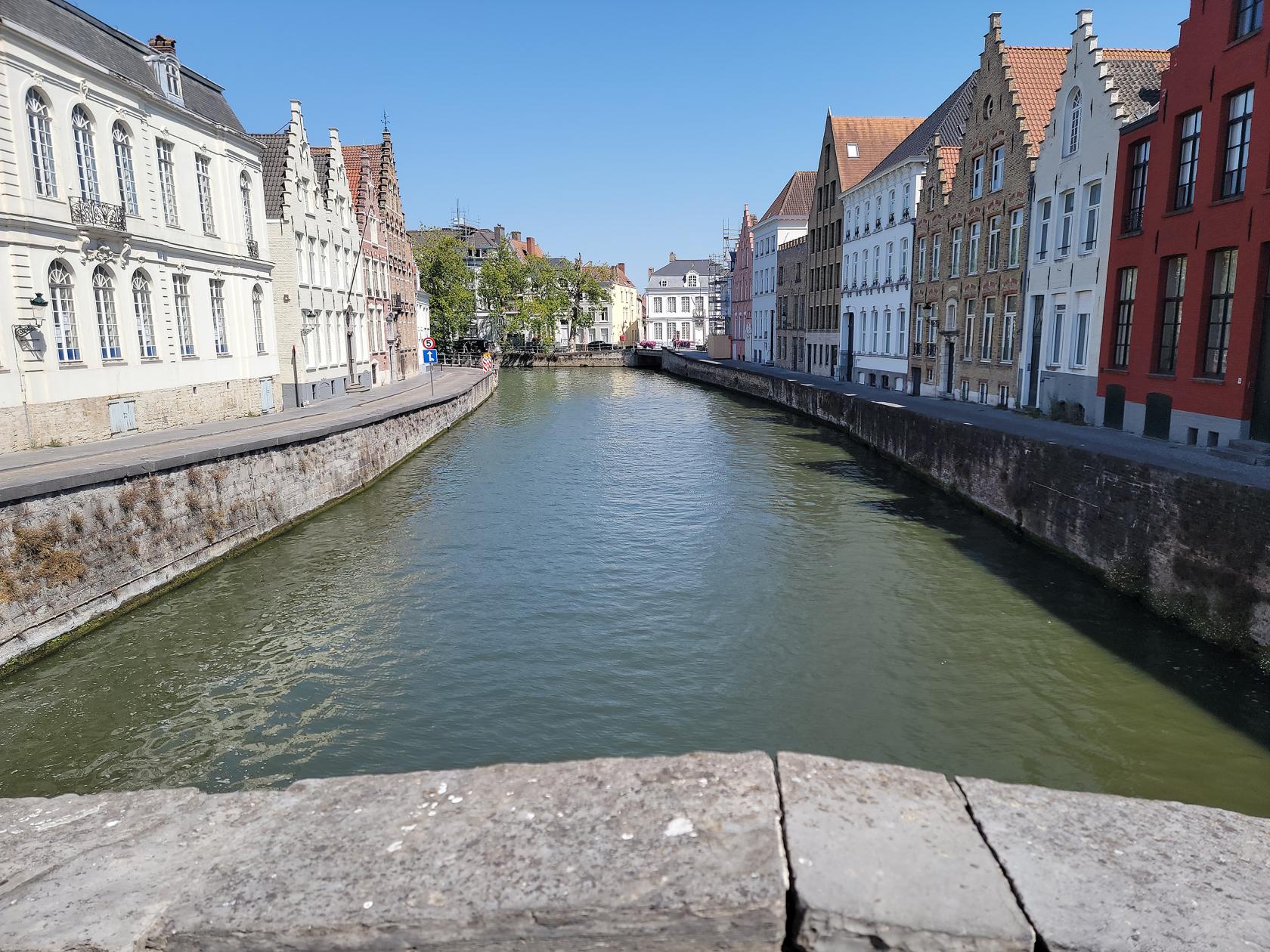
There are 54 bridges that span the network of canals that invade Brugge. Walking along any one of the canals one would normally come across a bridge within a kilometer. Most are strategically located and about half of them support cars and trucks, even in the center of town. Those that are pedestrian only are obvious.
The city has several gates around the city, though vestiges of the old city wall are difficult to find.
Zoonekemeers Gate – Brugge, Belgium
Zoonekemeers Gate – Brugge, Belgium
Zoonekemeers Gate – Brugge, Belgium
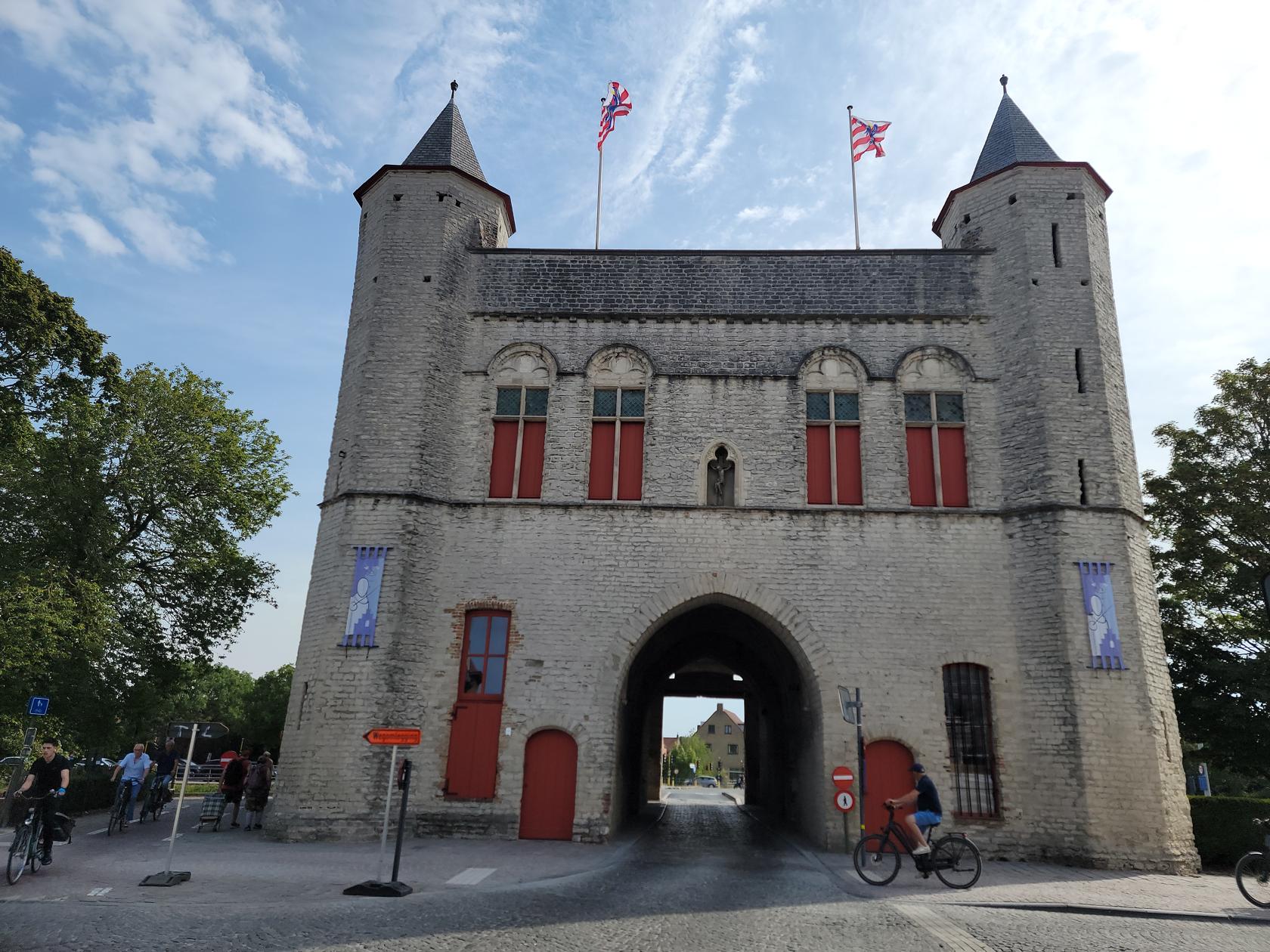
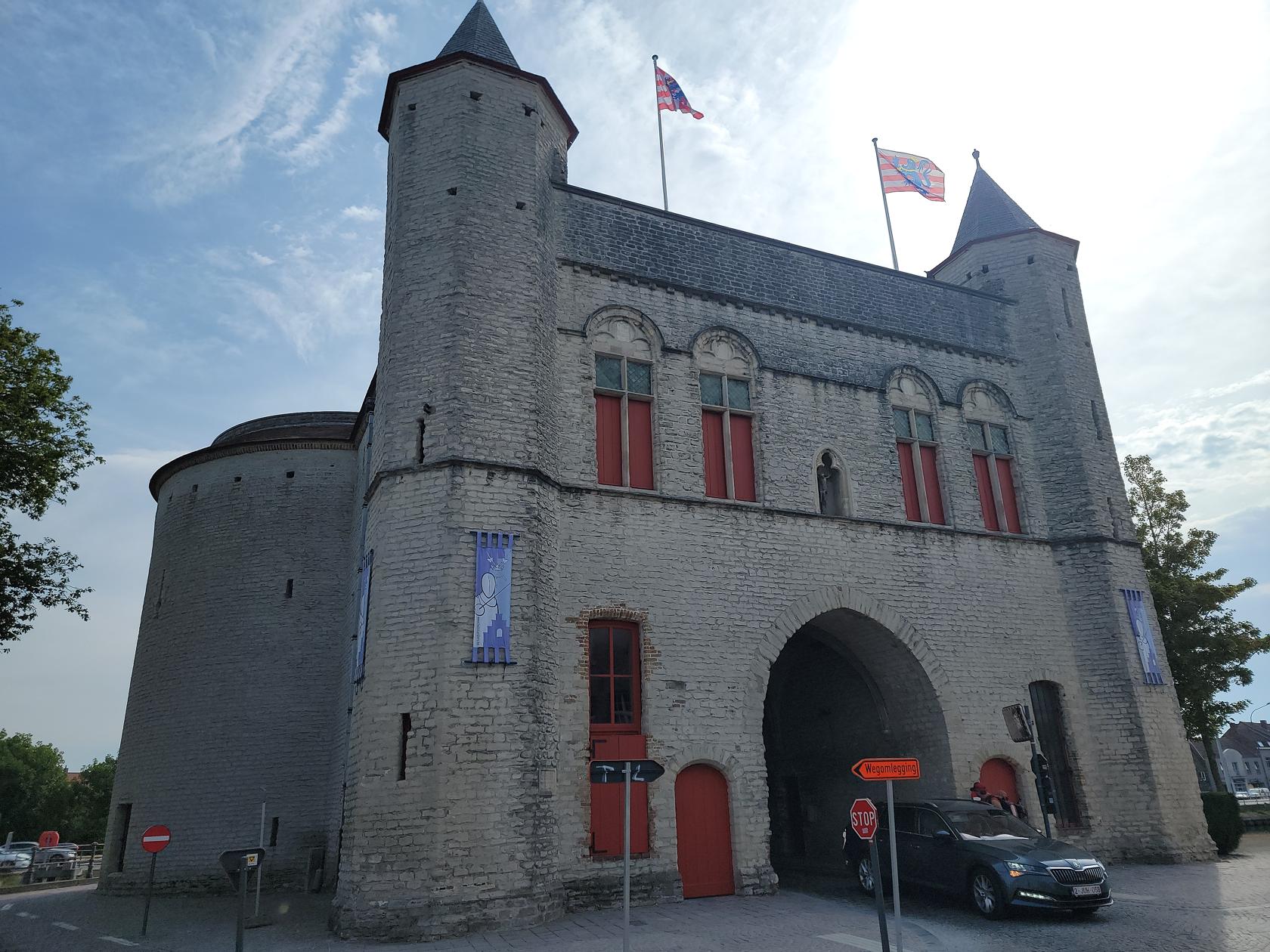
Kruispoort Gate – Brugge, Belgium
Kruispoort Gate – Brugge, Belgium
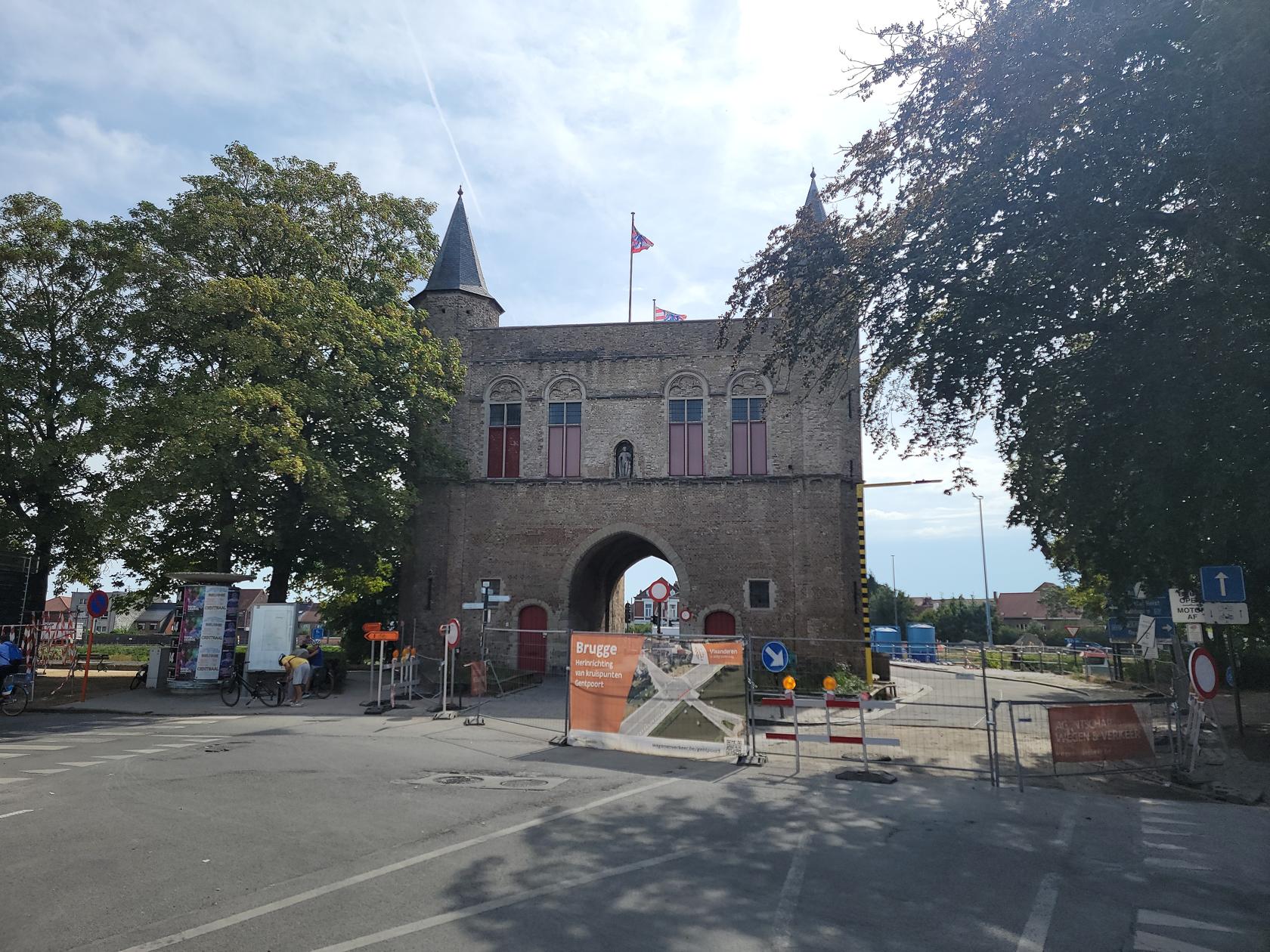
Gentpoort – Brugge, Belgium
Windmills
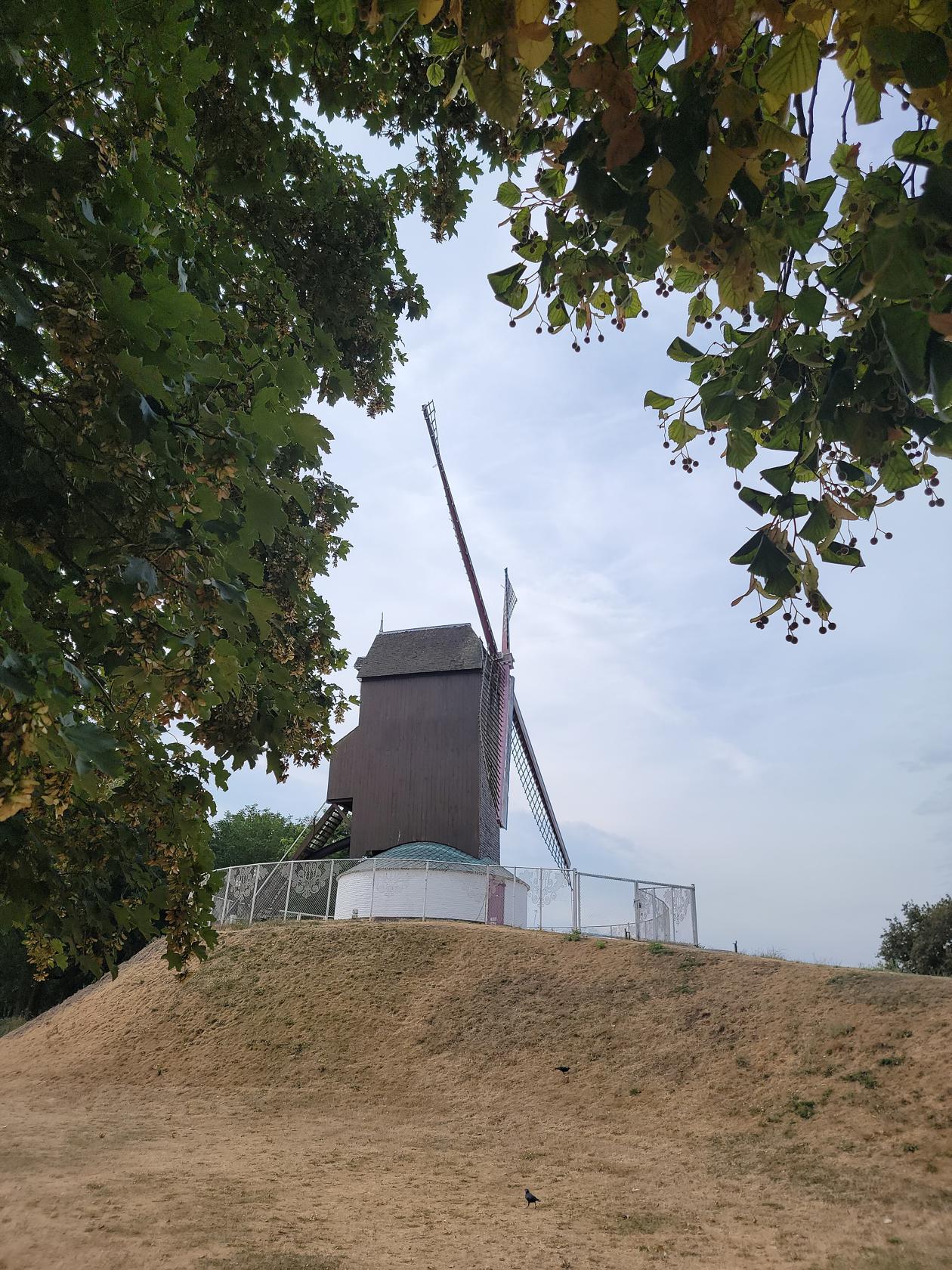
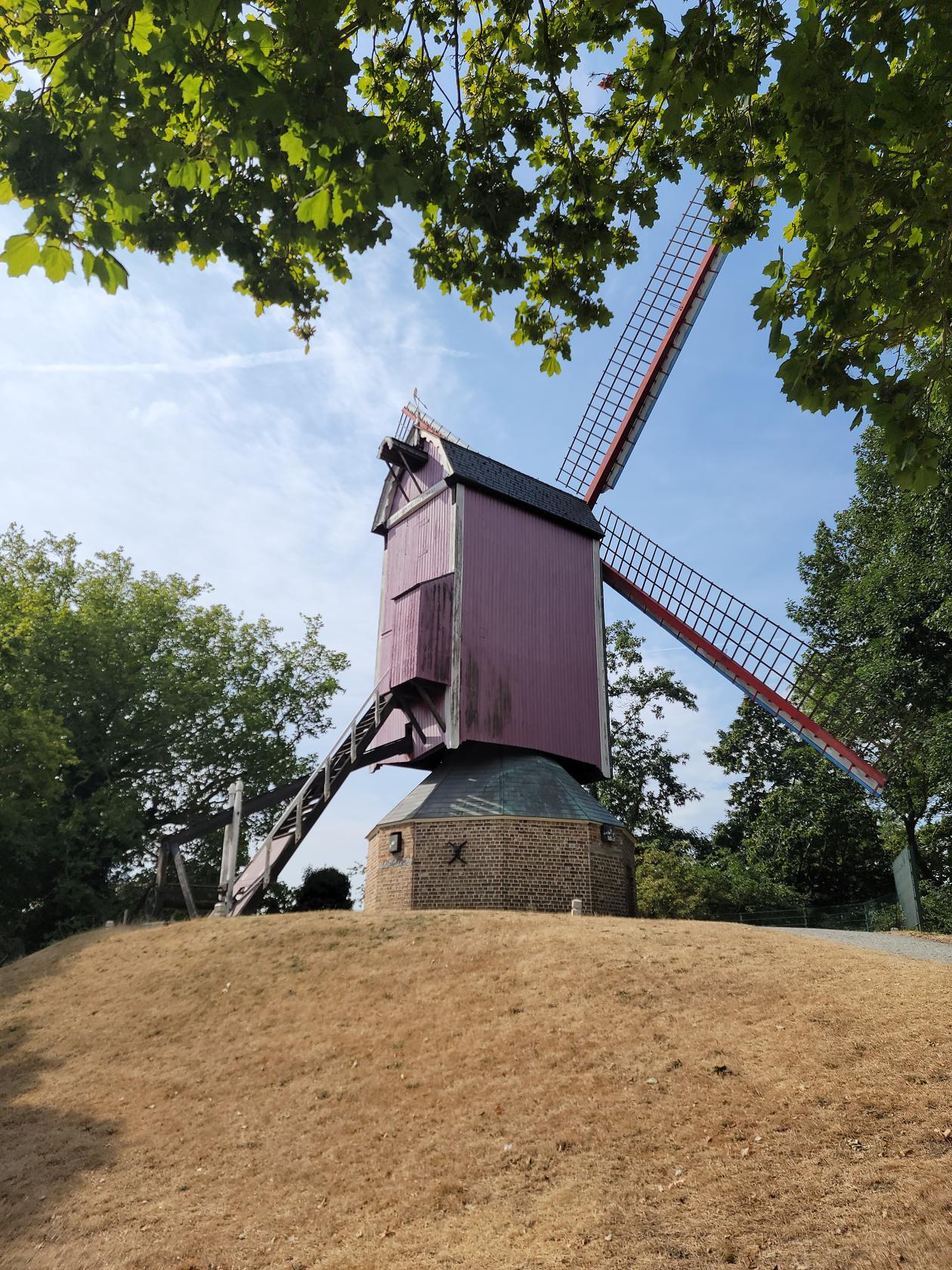
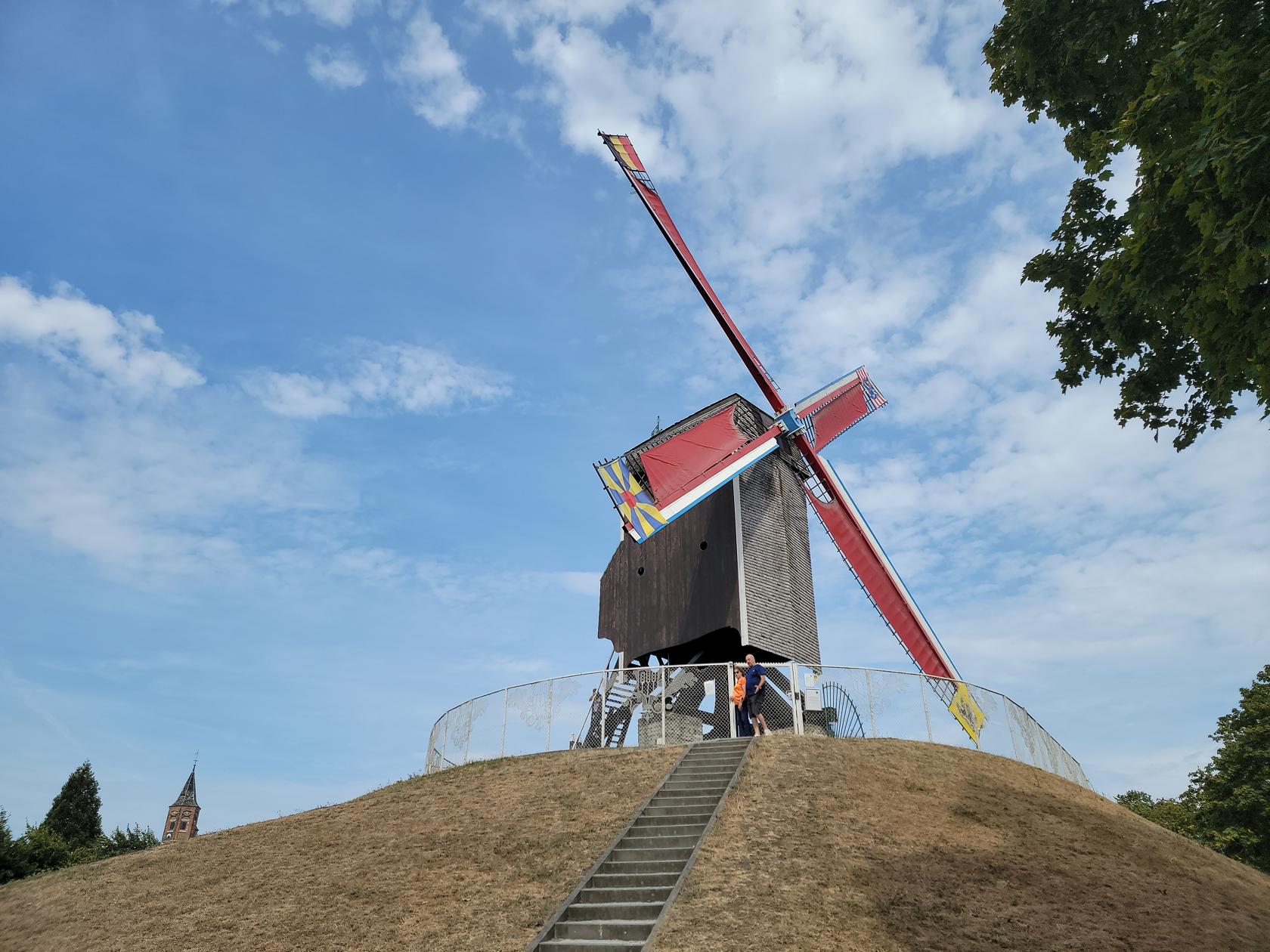
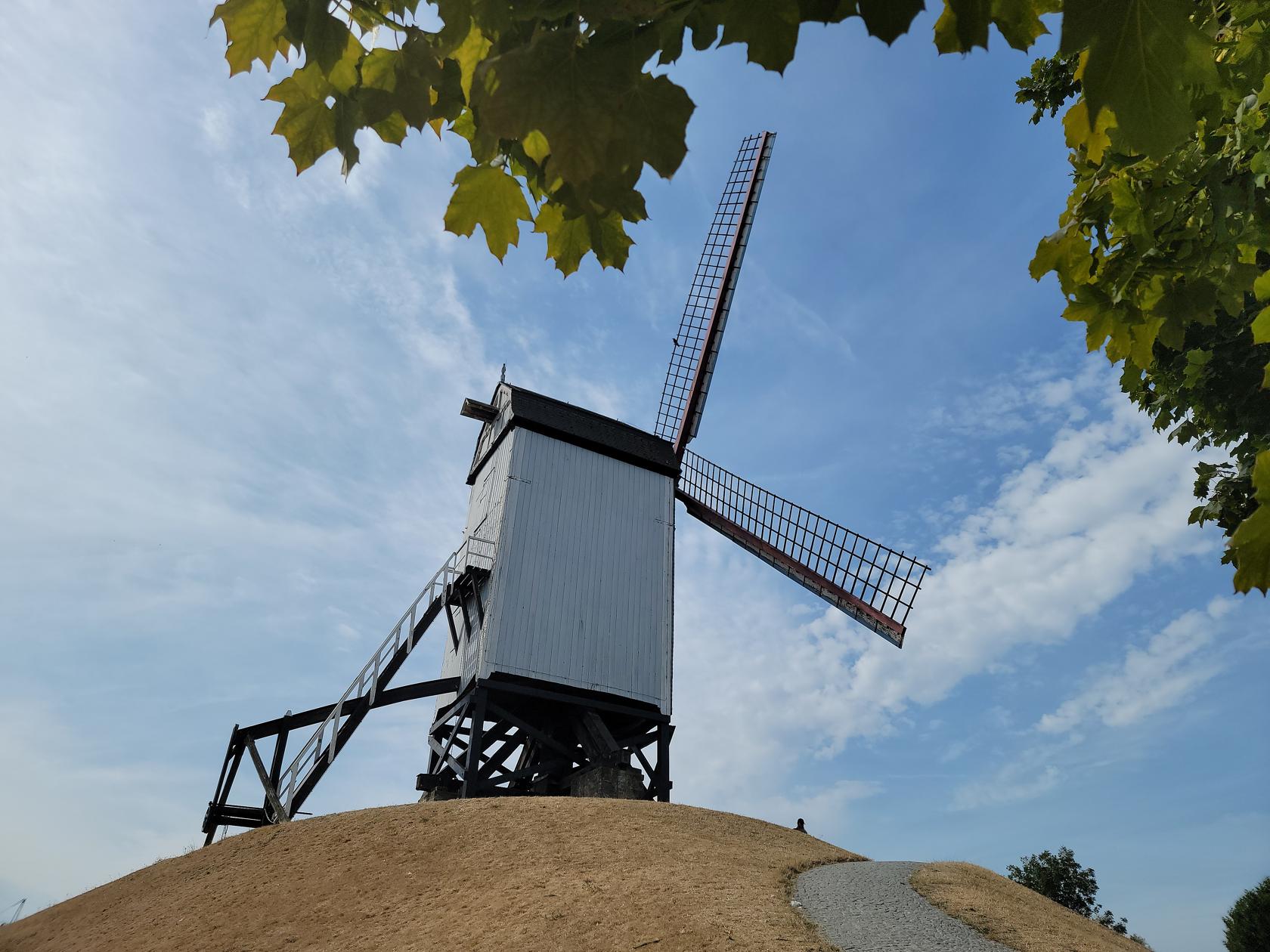
There are a number of windmills that can be seen in Brugge. Most of the ones that we saw were on the north east side of the city along the Kruisvest. At the time, only one was outfitted and functioning. However, it has been noted that all of them are still serviceable. All of them are named!
Koelewei Mill – Brugge, Belgium
The New Parrot Windmill – Brugge, Belgium
Sint-Jans Windmill – Brugge, Belgium
Bonne-Chière Mill – Brugge, Belgium
Great Market Place
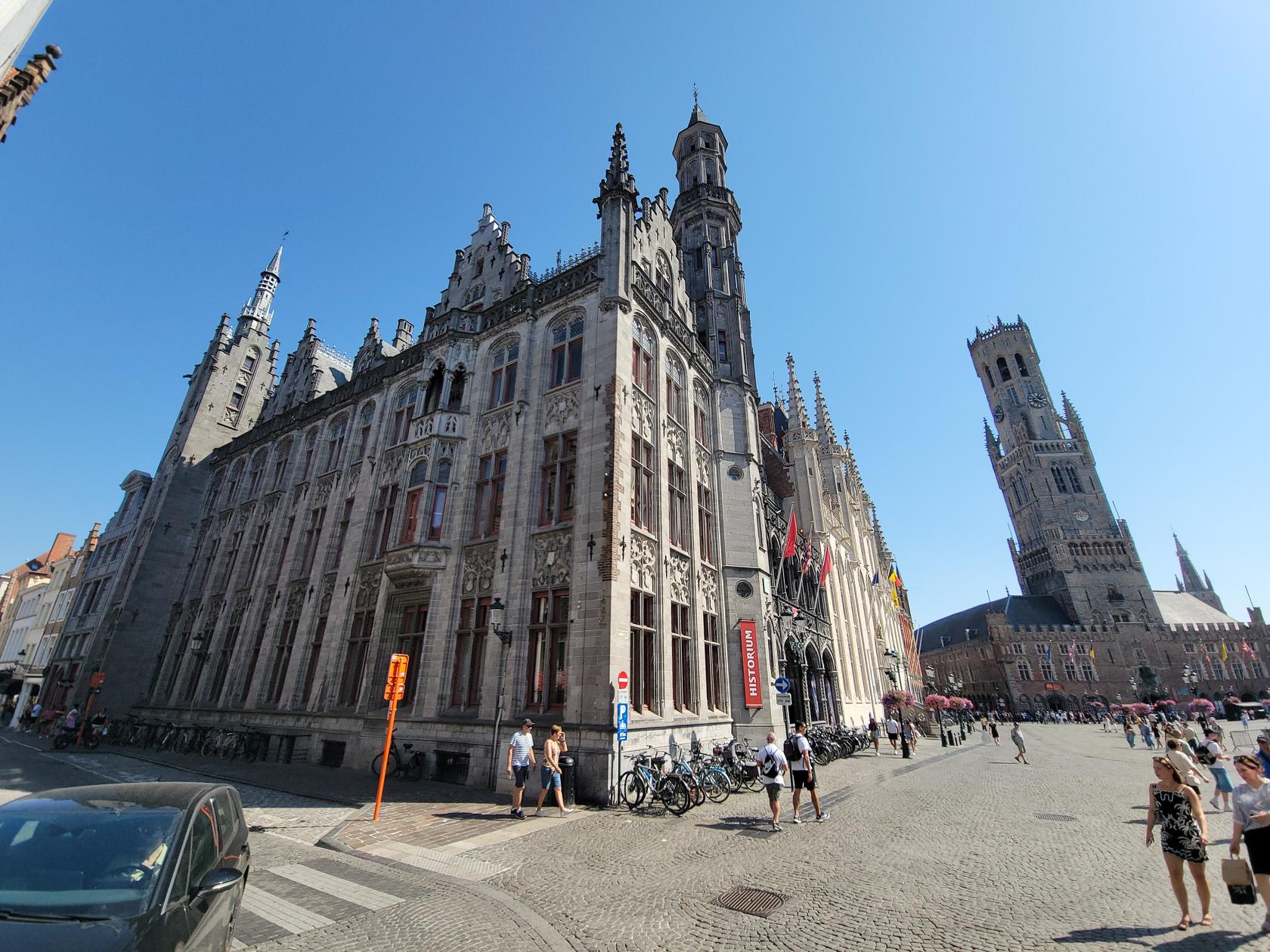
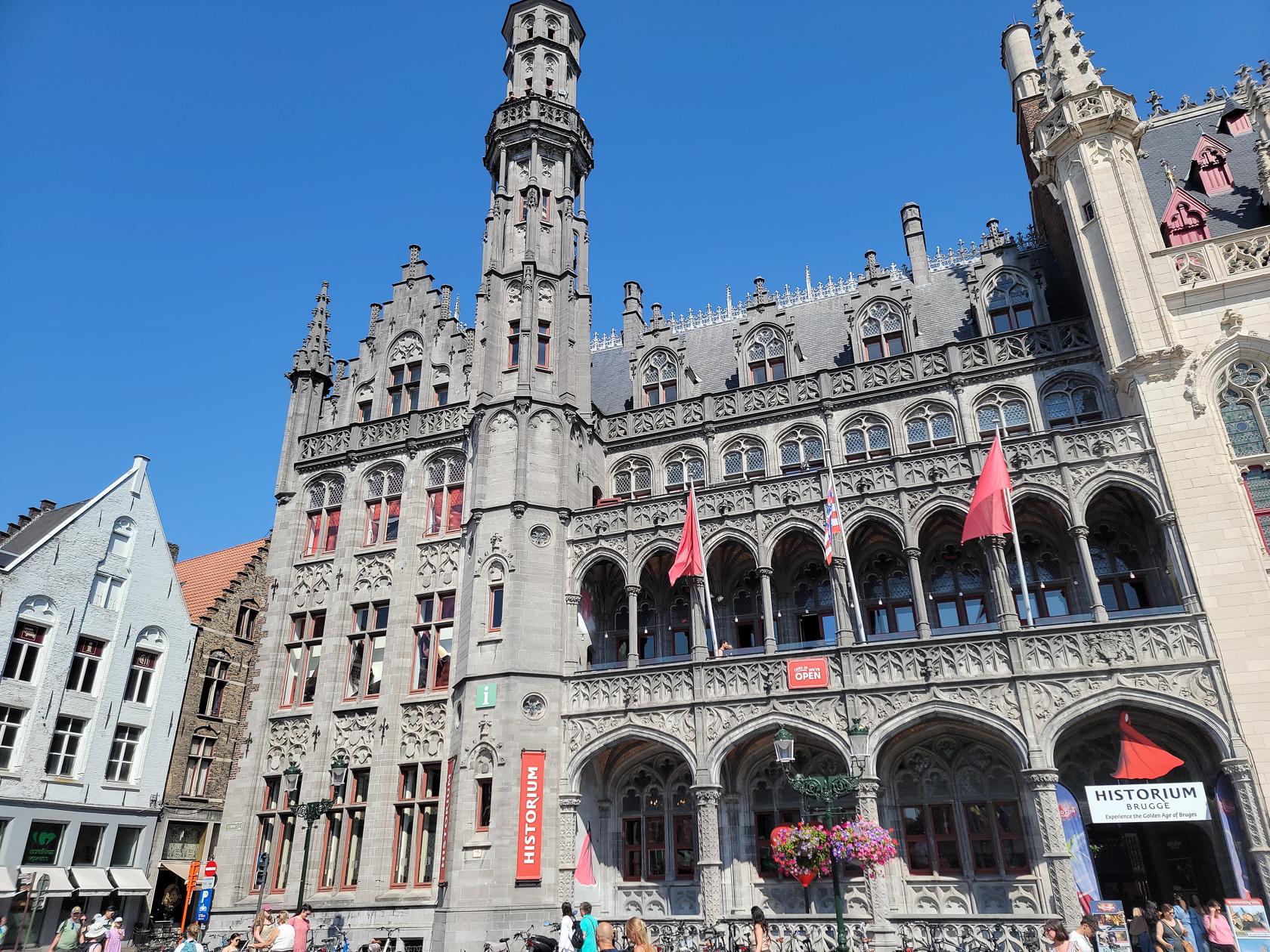
The Markt, or Great Market Place, is the center of attraction and noteworthy for the Belfry. The Belfry tower is rather large for the space and for a fee may be ascended. We chose not to, even though the eponymous movie made in 2008 almost beckons one to ascend the stairs.
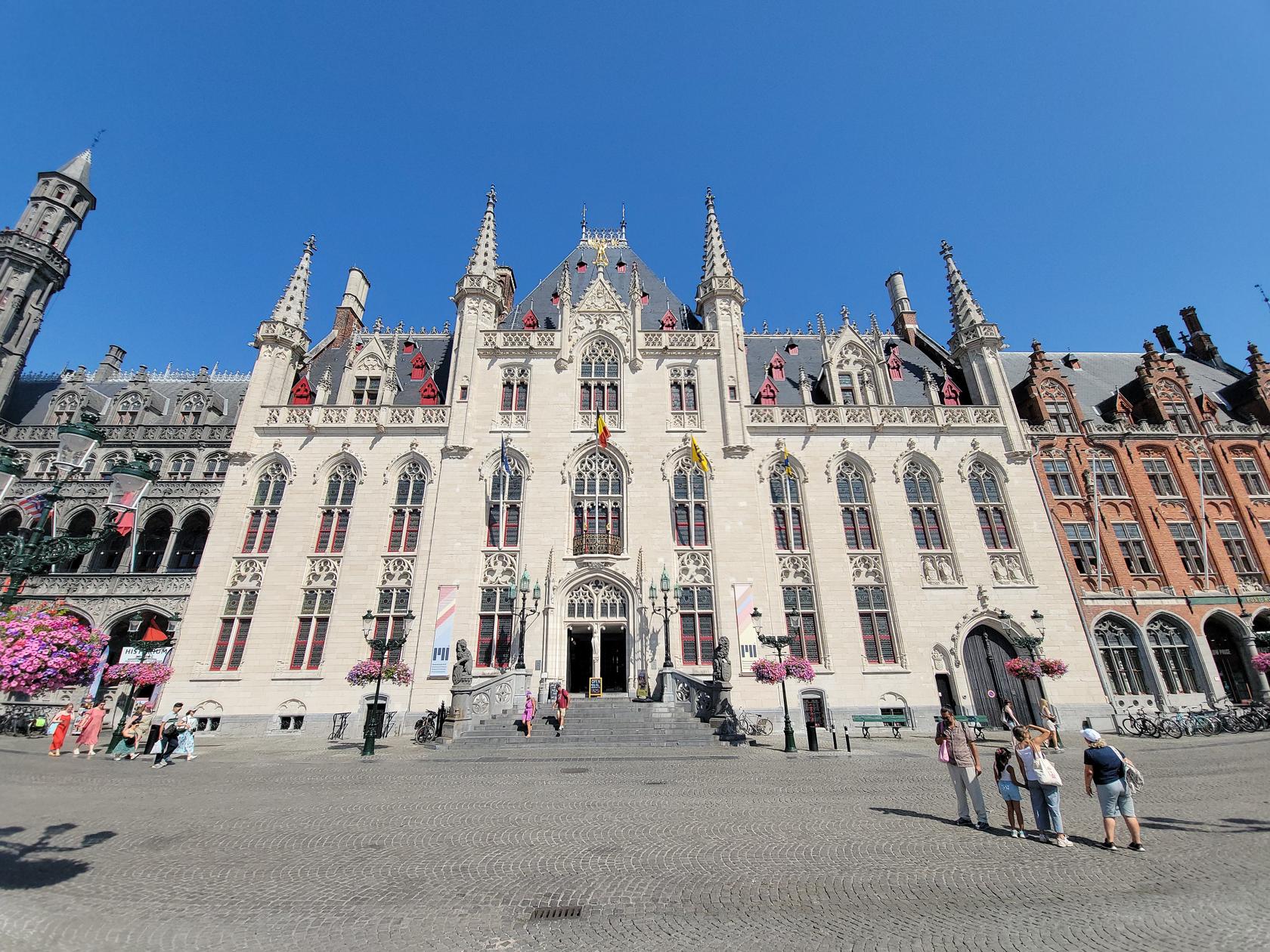
Provincial Hof – Grand Marktplatz – Brugge, Belgium
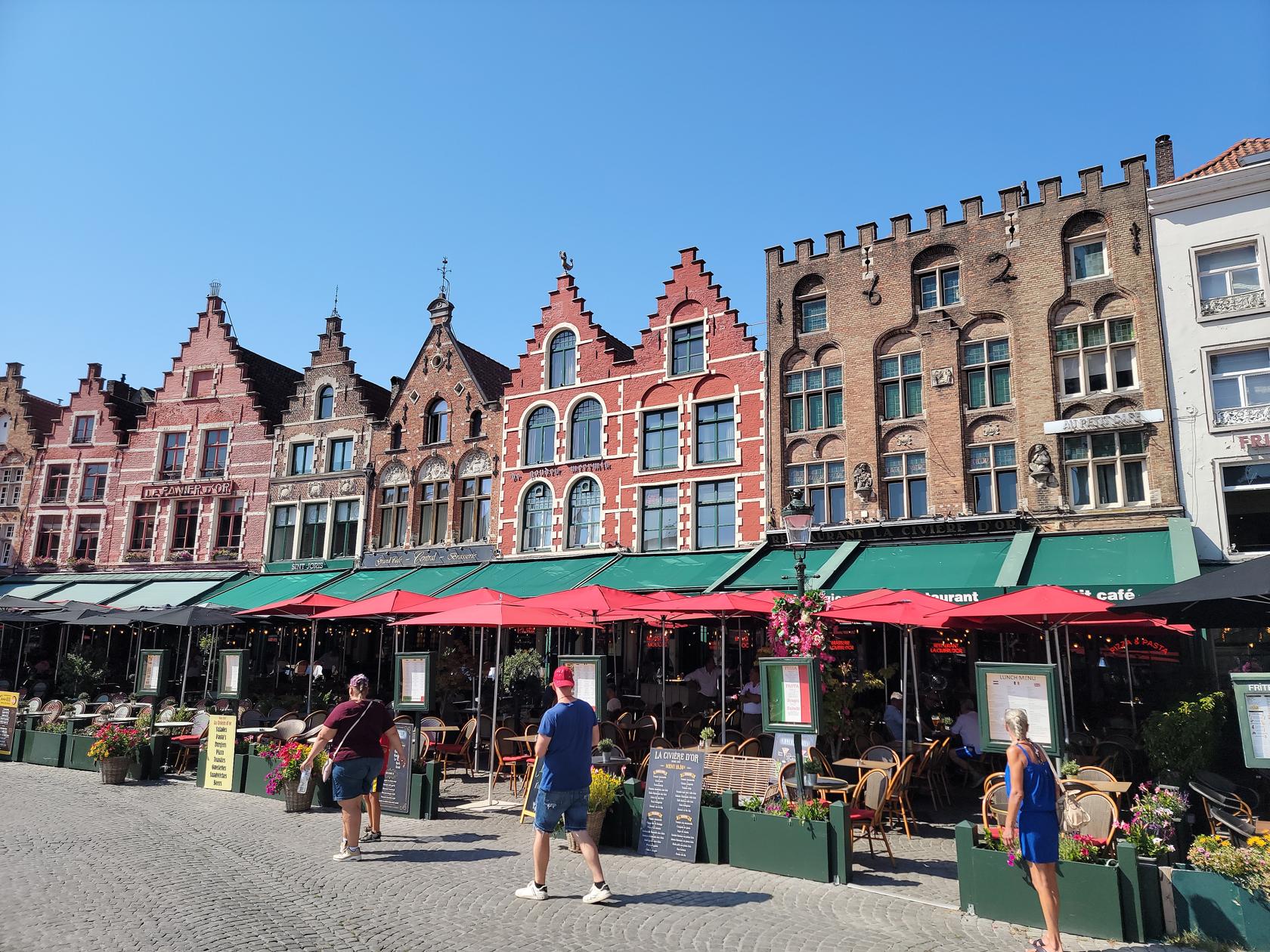
House and Restaurants – Grand Marktplatz – Brugge, Belgium
Provincial Hof – Grand Marktplatz – Brugge, Belgium
Provincial Hof – Grand Marktplatz – Brugge, Belgium
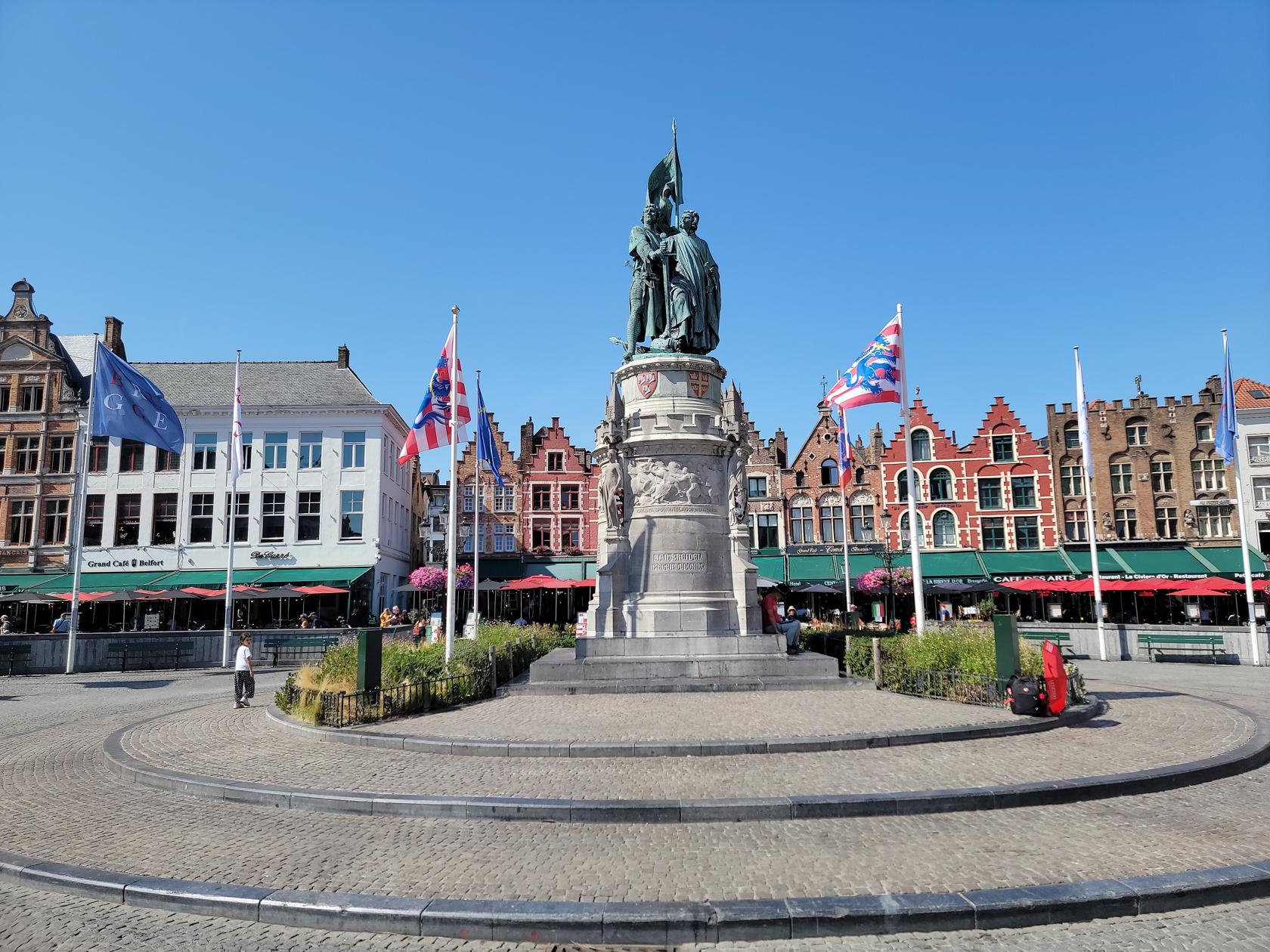
Pieter de Coninck en Jan Breydel – Grand Marktplatz – Brugge, Belgium
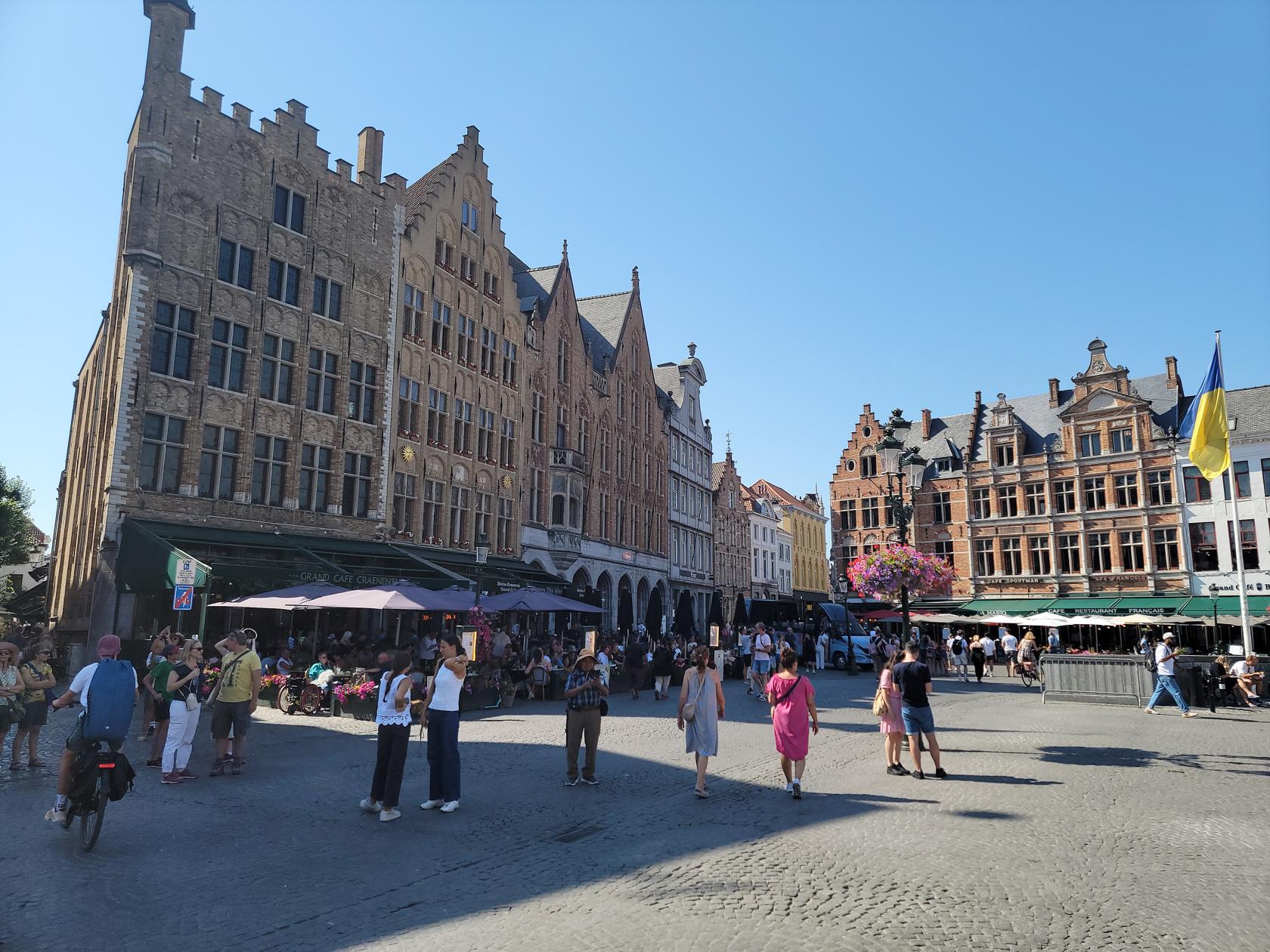
Grand Marktplatz – Brugge, Belgium
Belfort – Grand Marktplatz – Brugge, Belgium
Grand Marktplatz – Brugge, Belgium
Restaurants
We made reservations at a few restaurants prior to our arrival, though in both cases they probably weren’t necessary. In most cases you should have no problem finding a place to eat. Wether you will like it or not, well that’s another matter.
@Tattie’s
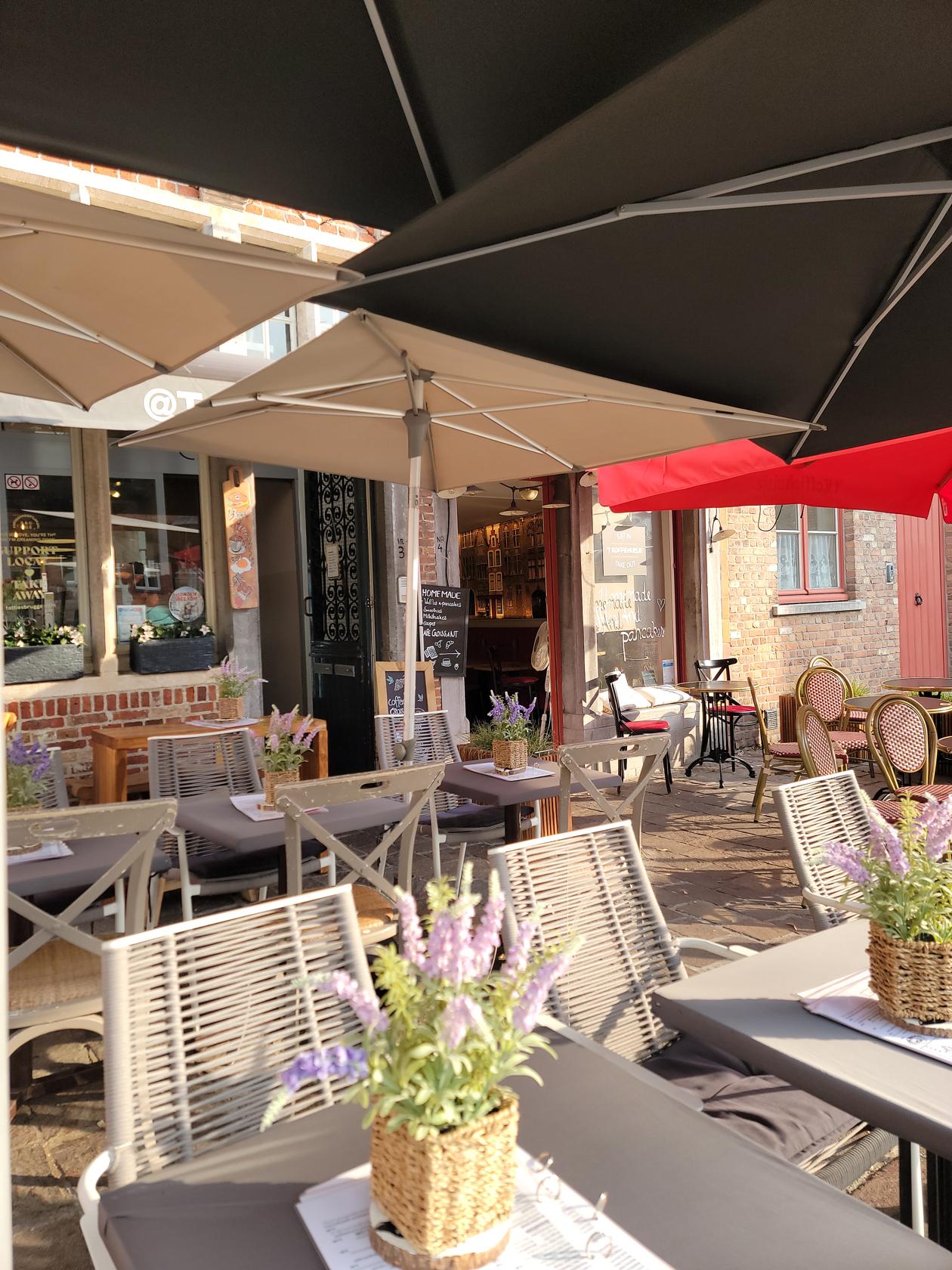
Don’t let the name @Tatties confuse you, it’s a small coffee and breakfast place with an attitude. These women know how to run a business, and in Belgium too! Not only did they sit us before they were actually opened, they also took our order and served us faster than most places in the States! Not only is the service here great, the food is modestly priced, they have an excellent menu for breakfast and the food is delicious. Highly recommended.
Outside Seating – Tatties – Brugge, Belgium
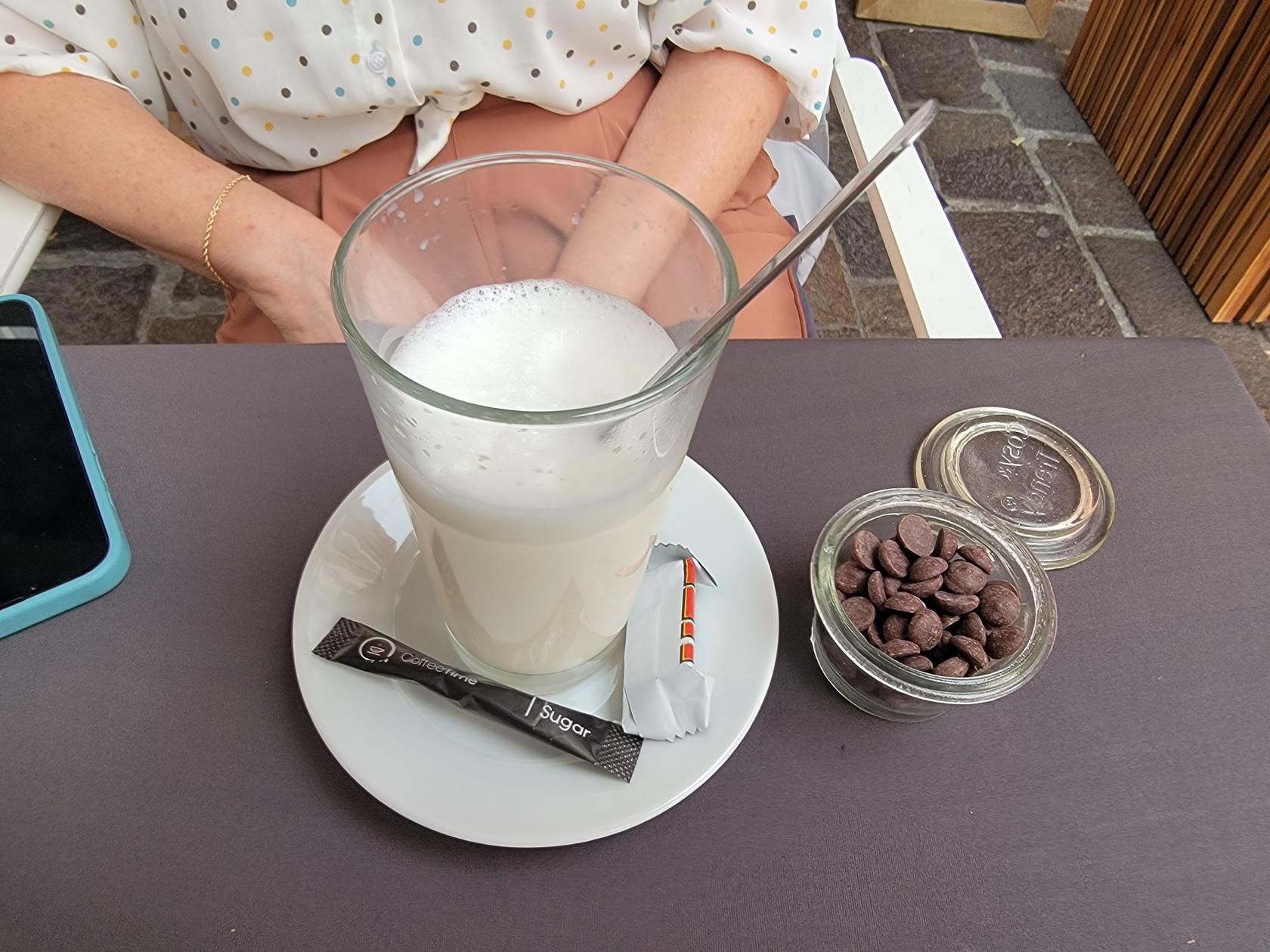
Hot Milk that will be Hot Cocoa – Tatties – Brugge, Belgium
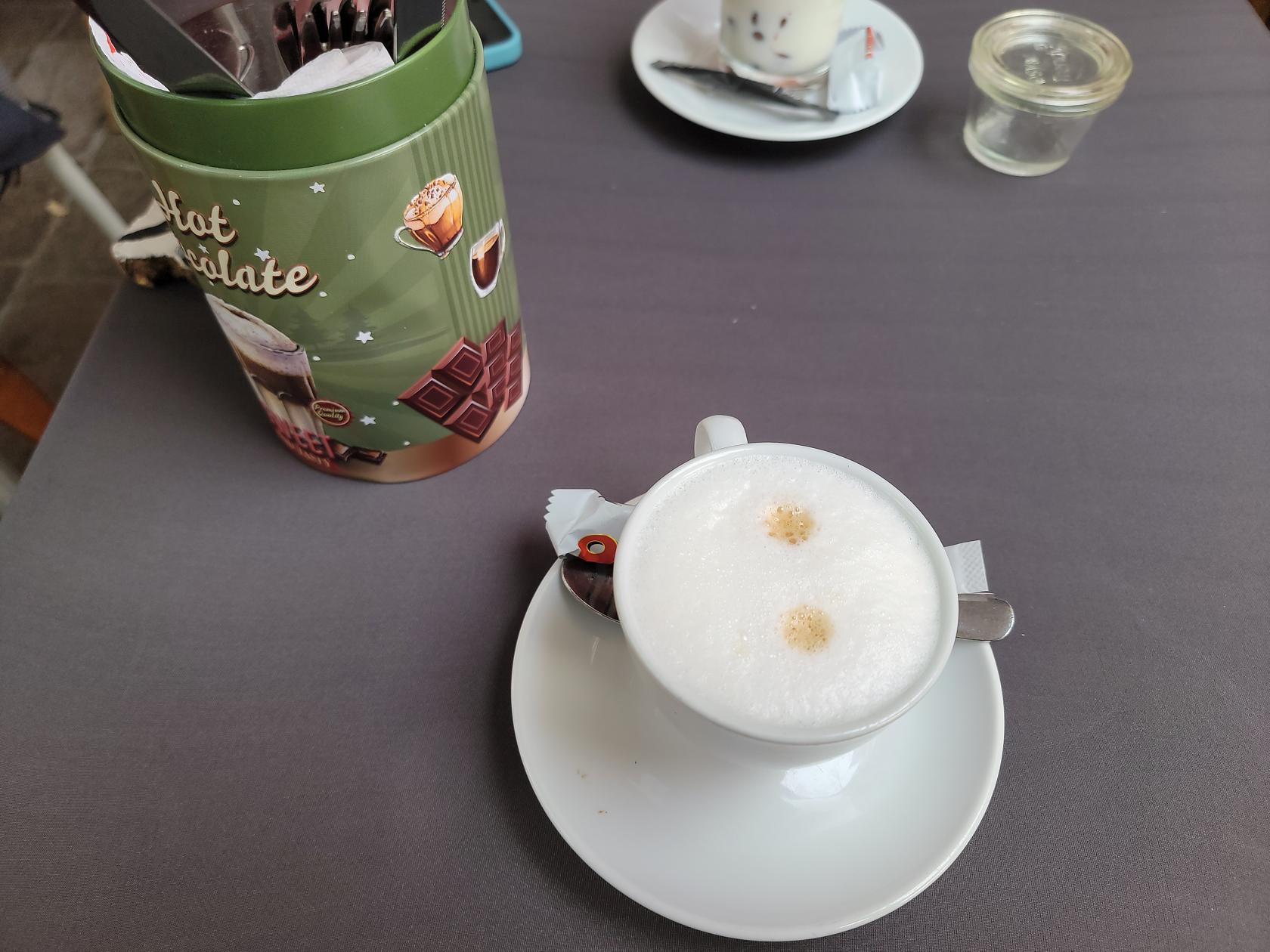
Cappucino – Tatties – Brugge, Belgium
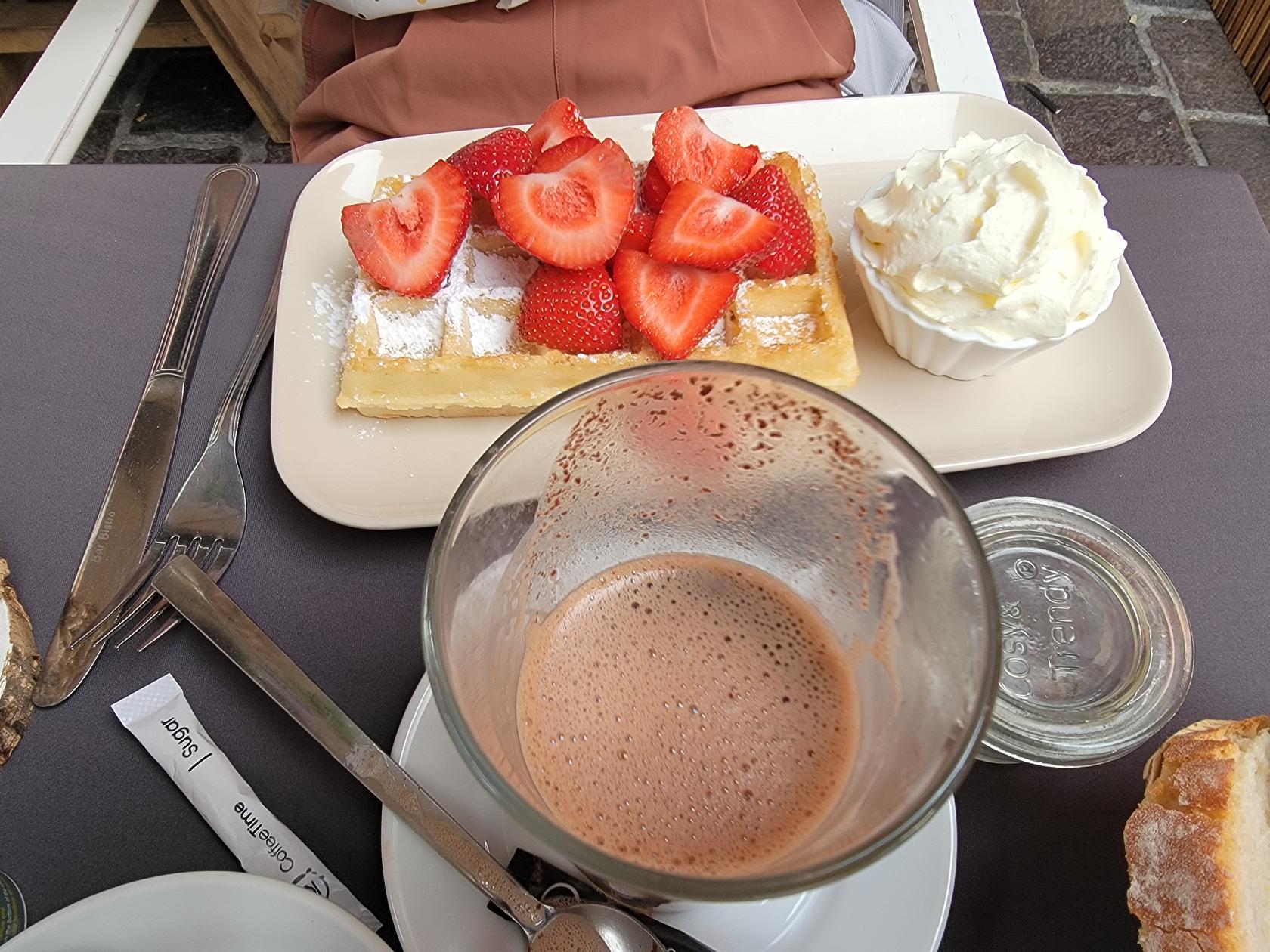
Belgian Waffles, Strawberries and Cream – Tatties – Brugge, Belgium
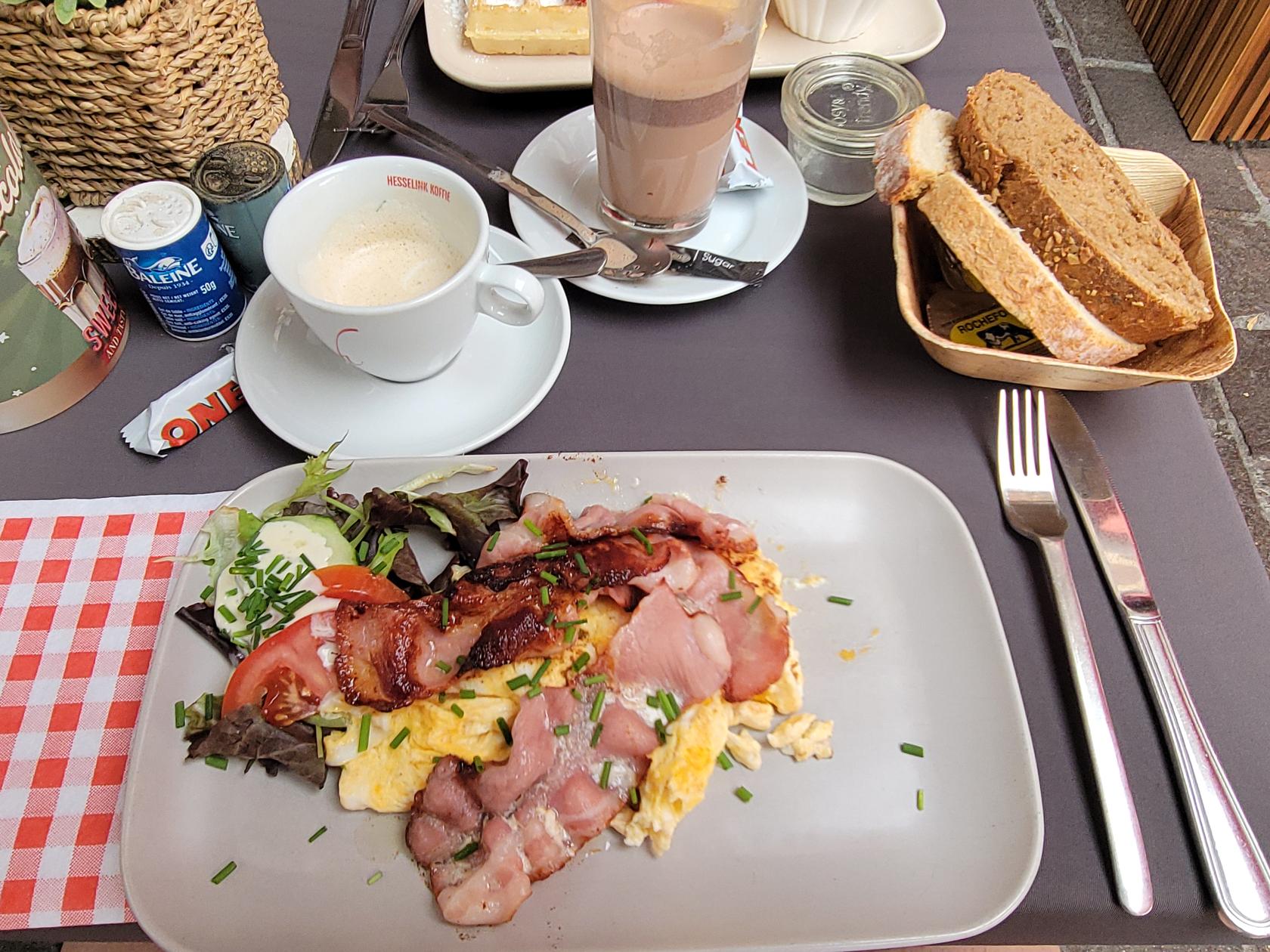
Scrambled Eggs and Bacon – Tatties – Brugge, Belgium
Willa Bruch & Coffee Shop
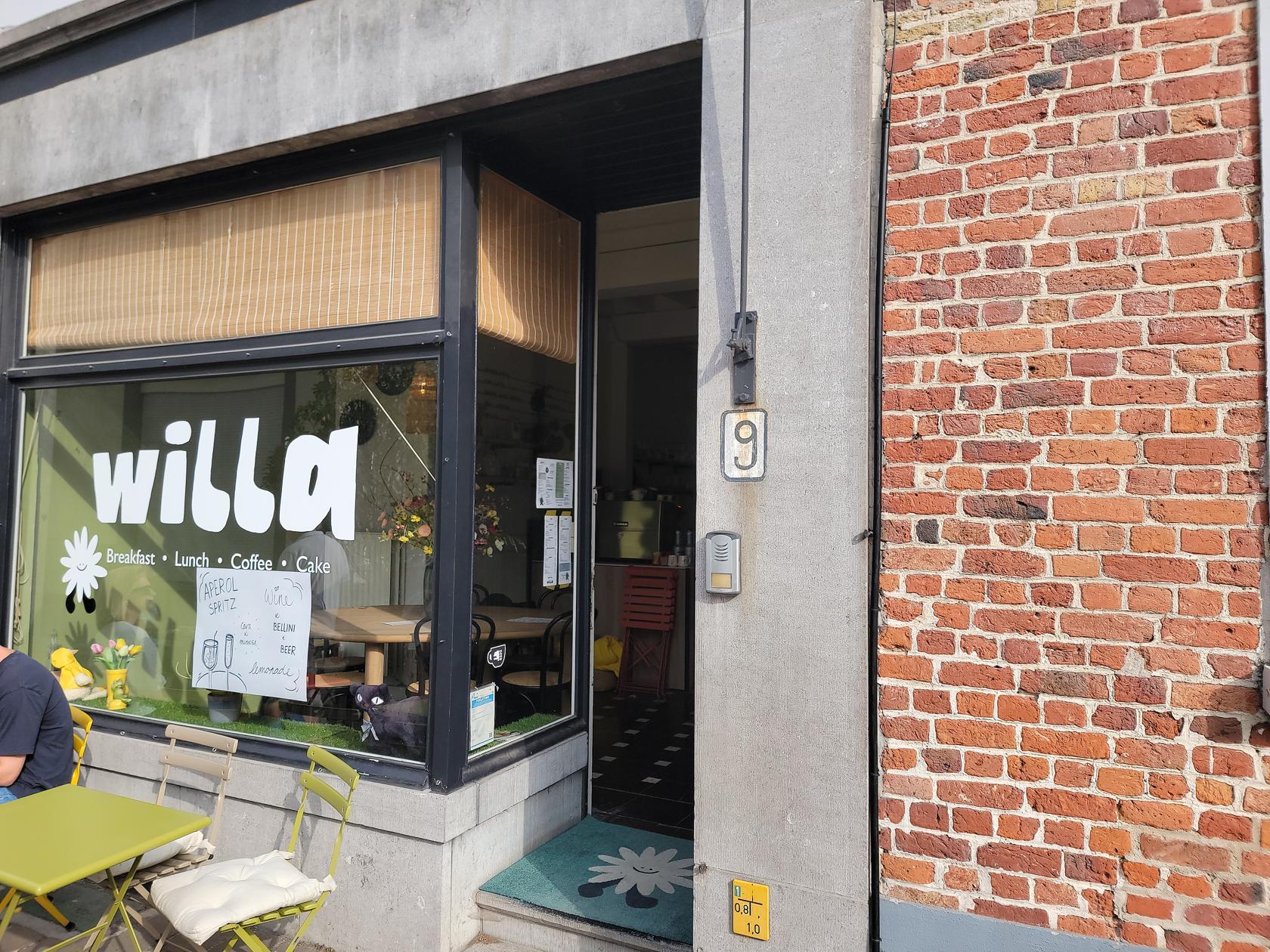
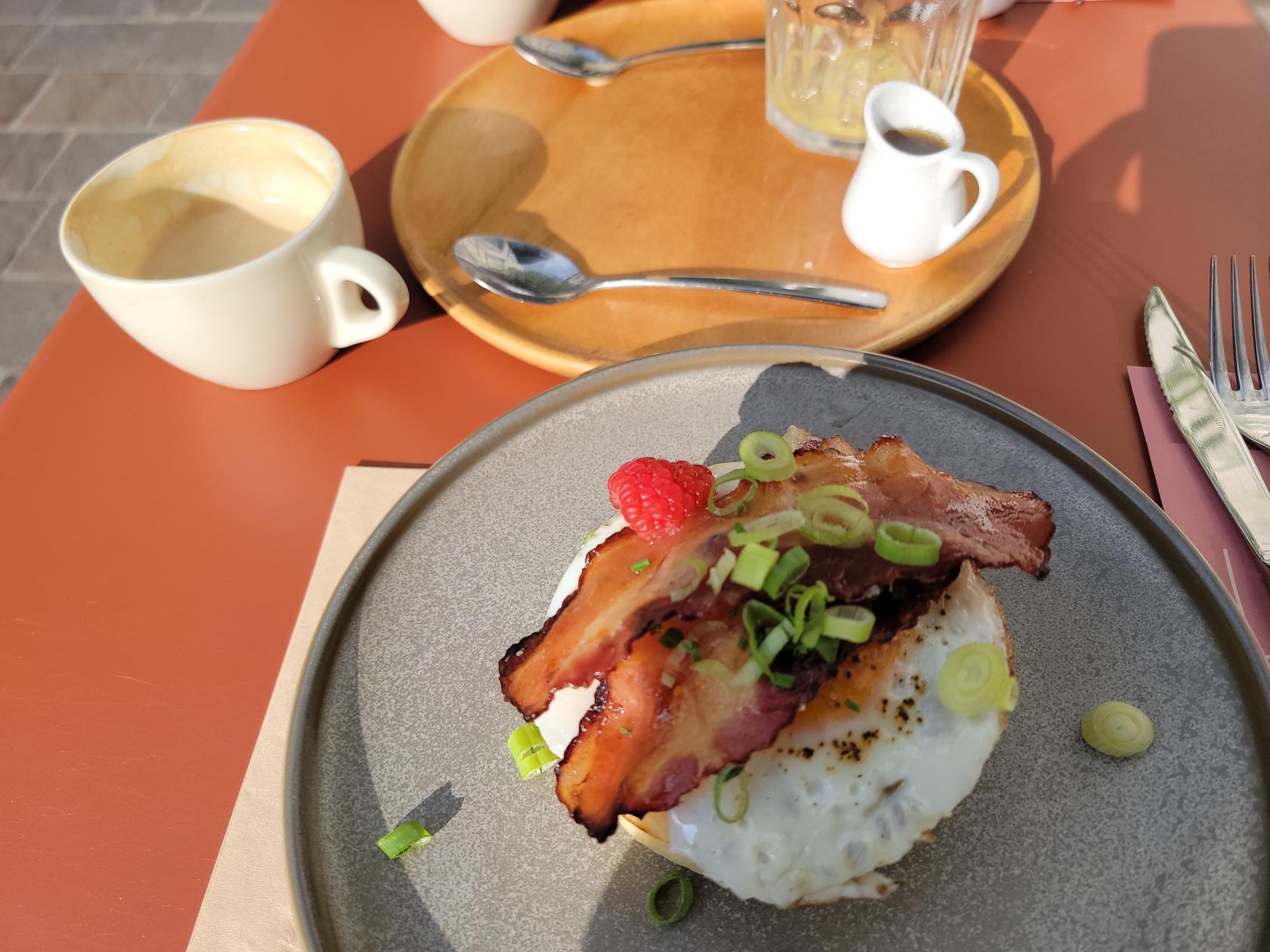
Another great place for breakfast is Willa’s. Though not punctual as Tatties, they open at 9AM and probably won’t seat or take your order until five or ten after. However, once they do get going the staff is pretty good. The food and prices are also in line with Tatties, though they serve a stack of pancakes, with a sunnyside egg and bacon strips on top that is difficult to beat.
Entrance – Willa Brunch and Coffee Cafe – Brugge, Belgium
Pancakes, Egg and Bacon – Willa Brunch and Coffee Cafe – Brugge, Belgium
Bella Italia Ristorante
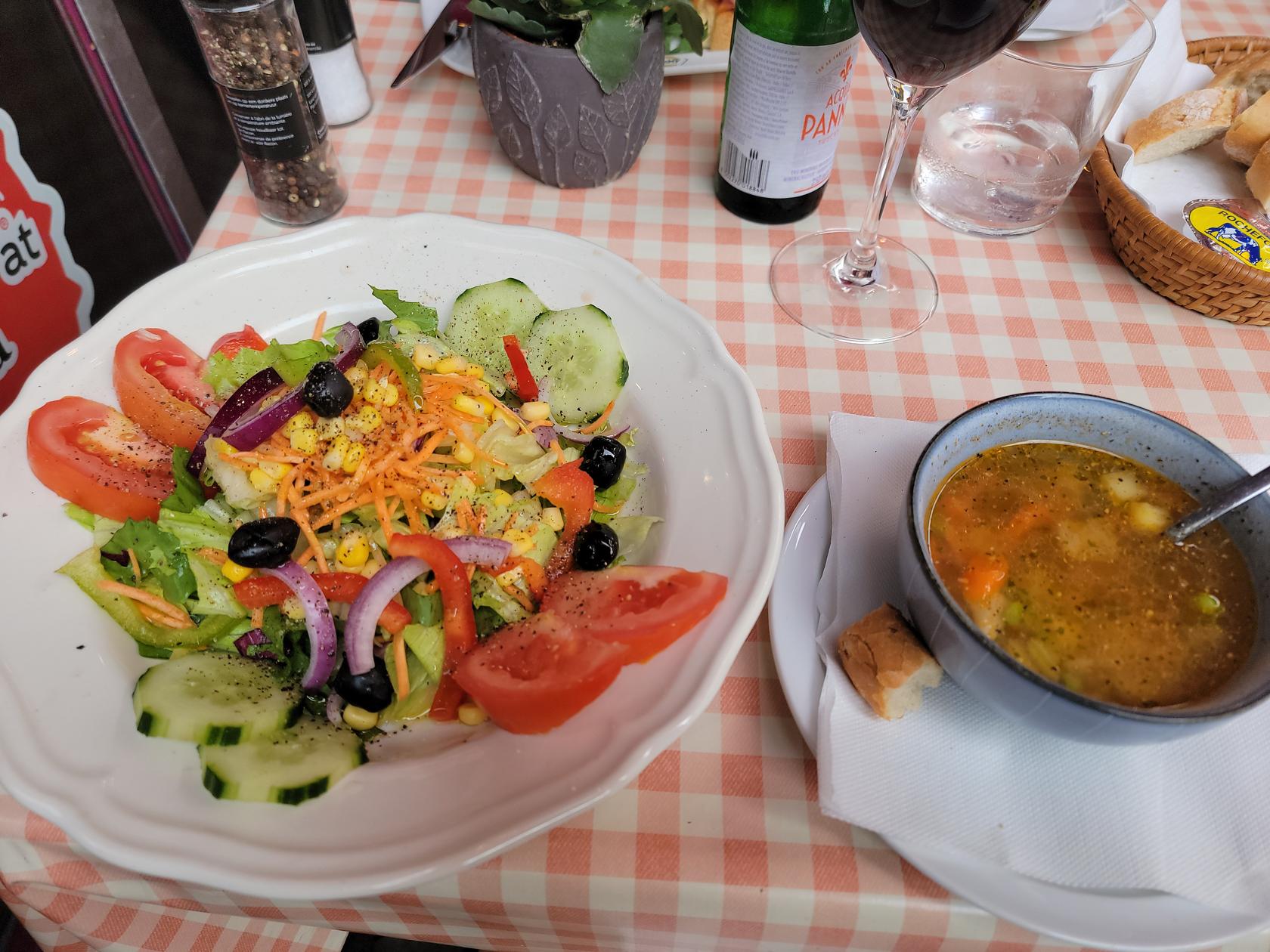
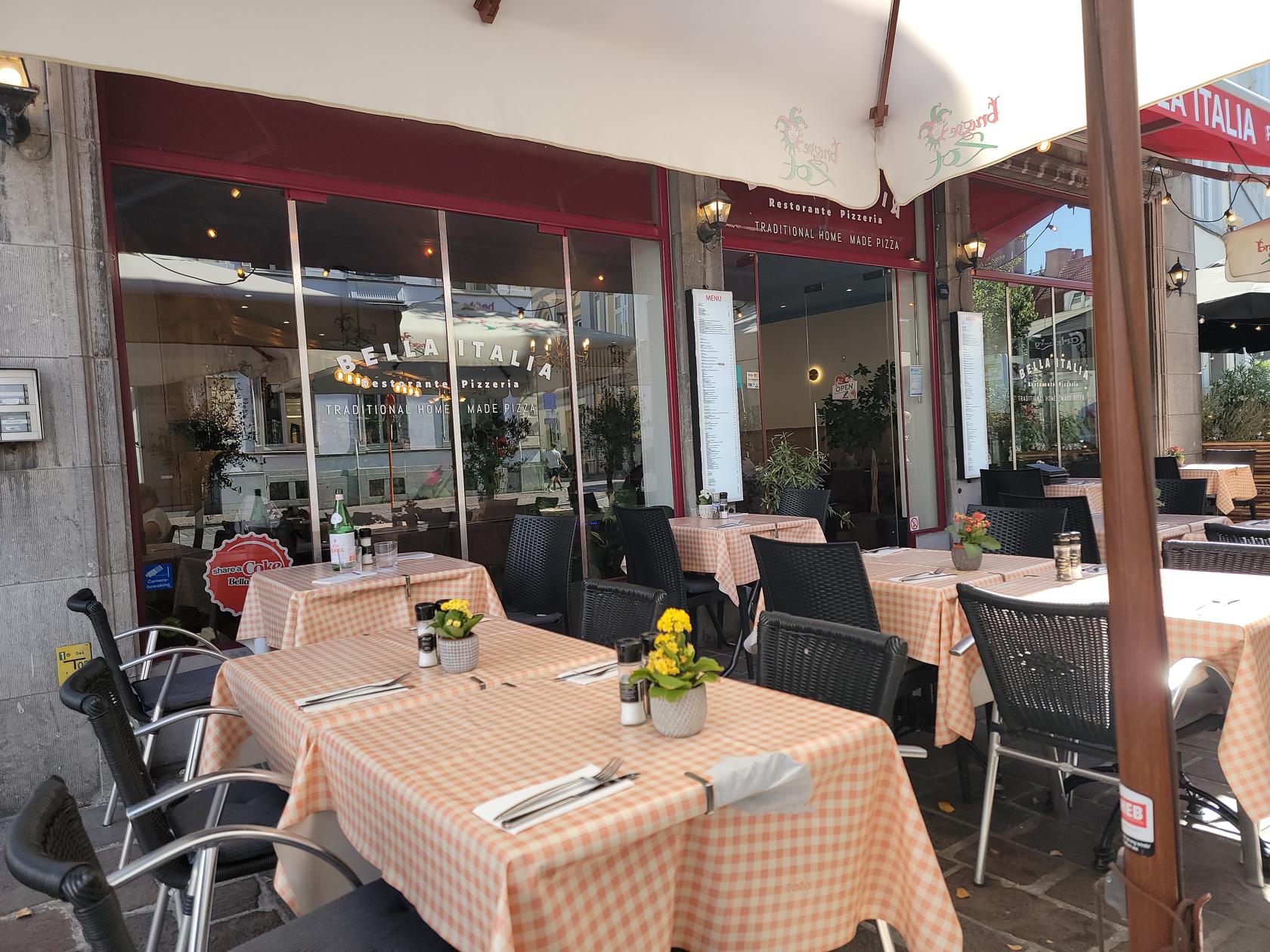
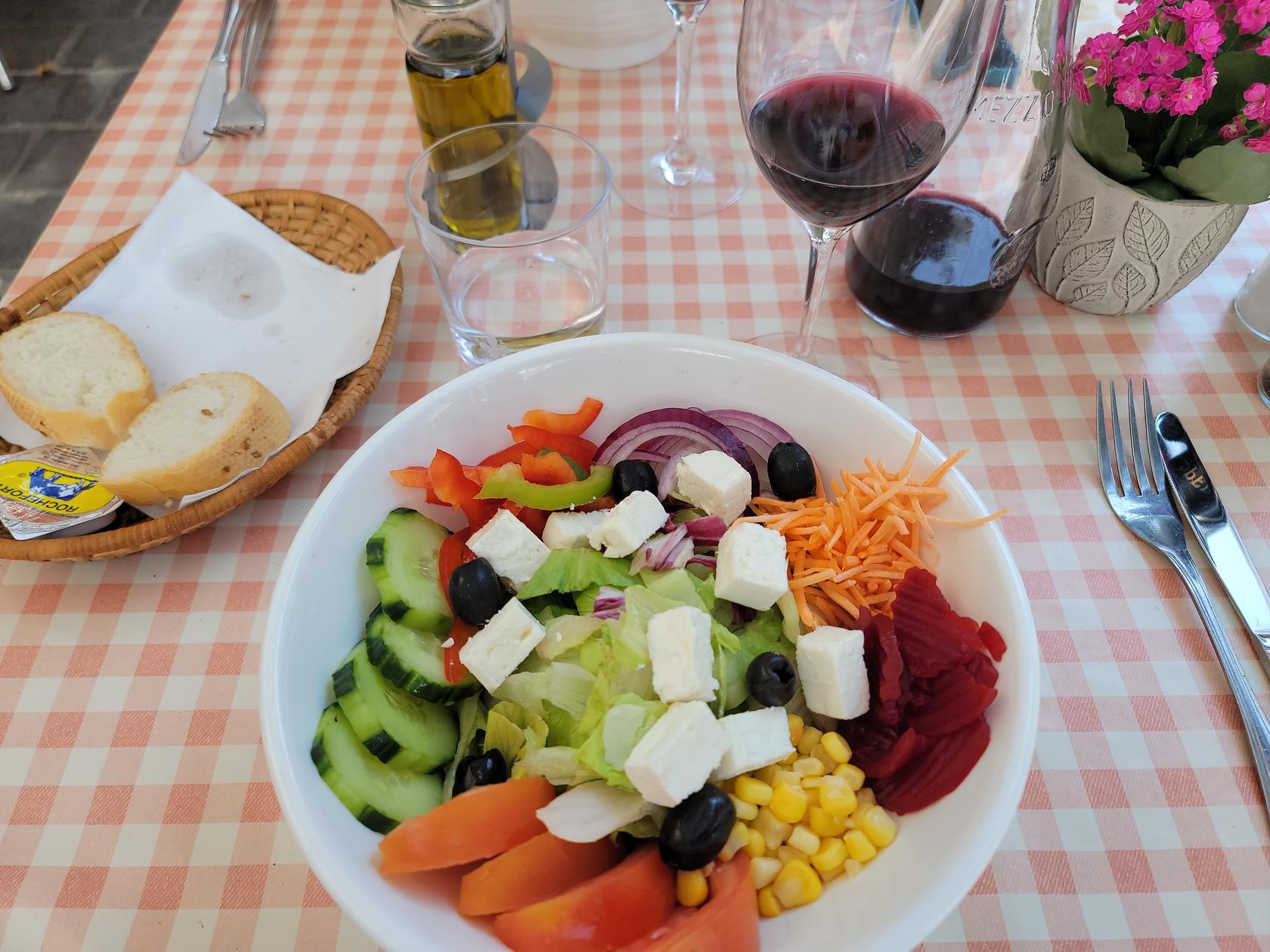
When in doubt, go Italian. This was one of the few restaurants in Belgium which actually had good food and good service. We went here more than once and tried different items on the menu, they actually have five different salads to choose from on their menu. The pita pizza as a side bread basket for ten euroes is worth every penny. It is thin, crunchy on the sides and sprinkled with parsley and olive oil, a great addition to a salad for lunch.
Mixed Salad and Minestrone – Bella Italia – Brugge, Belgium
Outdside Seating – Bella Italia Ristorante – Brugge, Belgium
Greek Salad – Bella Italia Ristorante – Brugge, Belgium
Trattoria Murano
Another italian restaurant, though not as good as Bella Italia, is this trattoria. Here we both had the pasta which was tasty. We just found the poor lady that was serving everyone in need of help, so service was not as punctual as expected, though in line with what we have seen throughout Belgium.
Restaurant Diligence
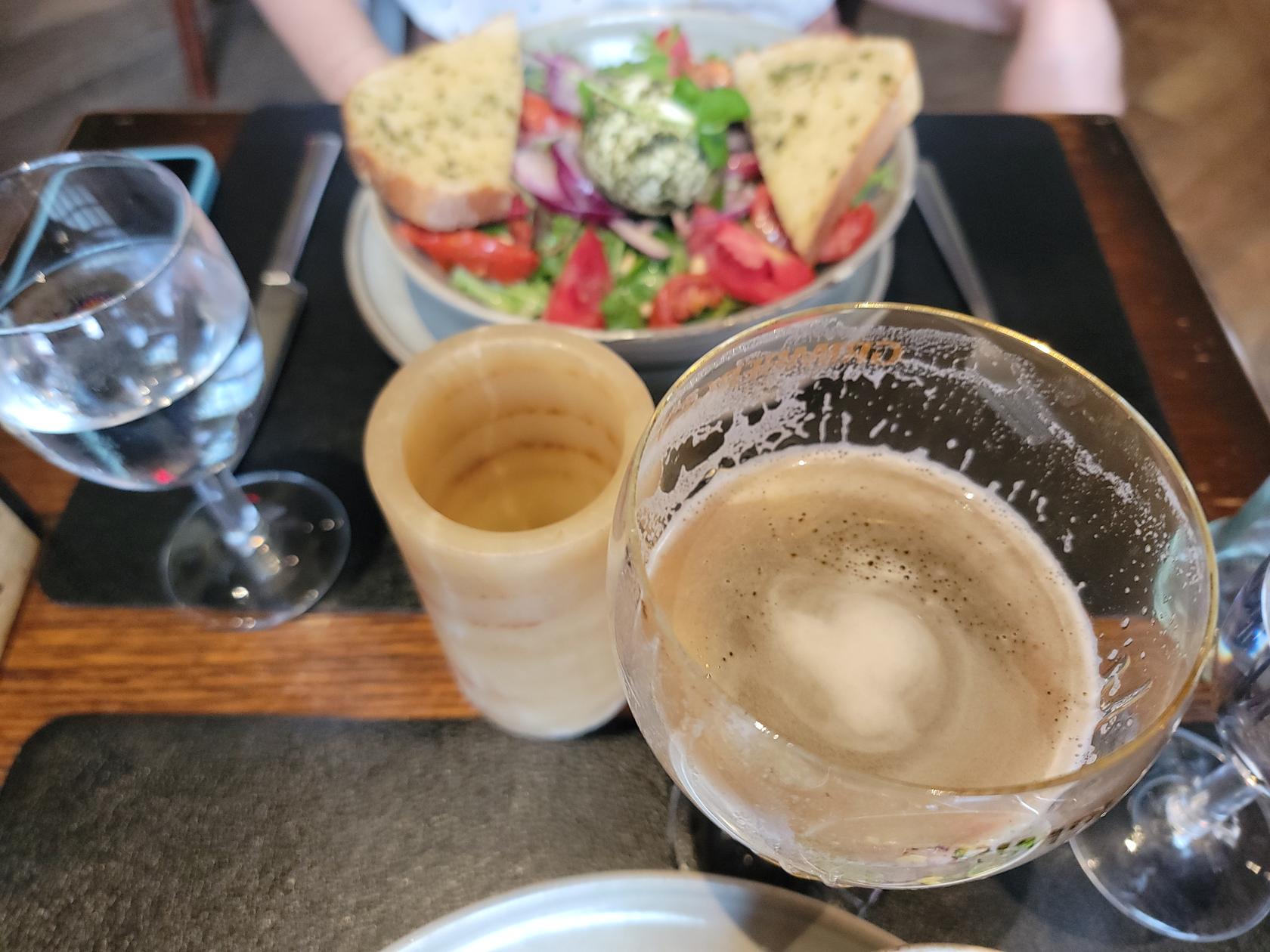
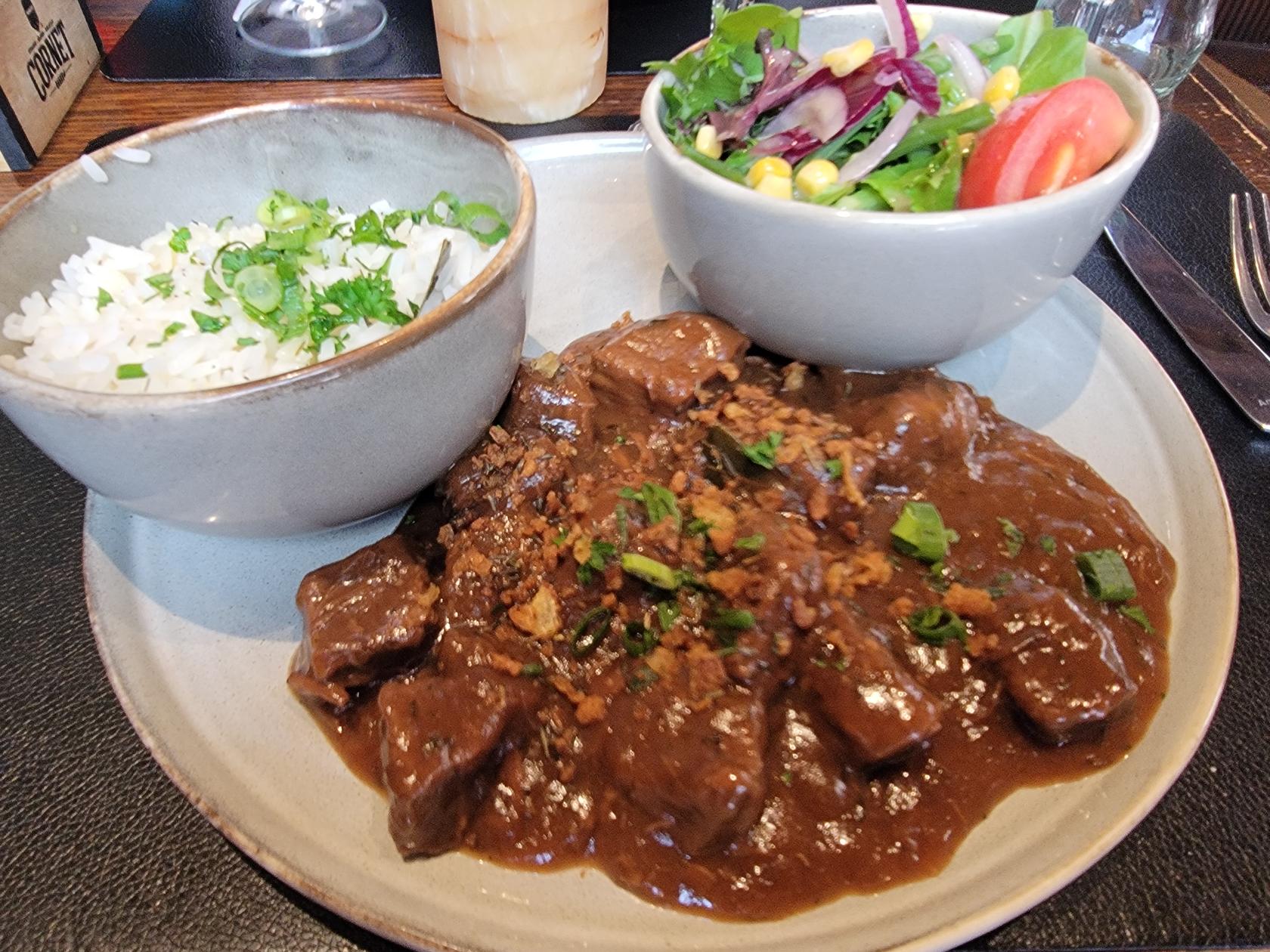
This place is more like an upscale bar that serves food. The menu is all over the place, but if you stare long enough you will find something to order. The beef stew was good, though I went with the rice option instead of the typical fries option. Again, expect service here to be a bit slow, though not terribly so.
Inside – Diligence Restaurant – Brugge, Belgium
Salad and Beer – Diligence Restaurant – Brugge, Belgium
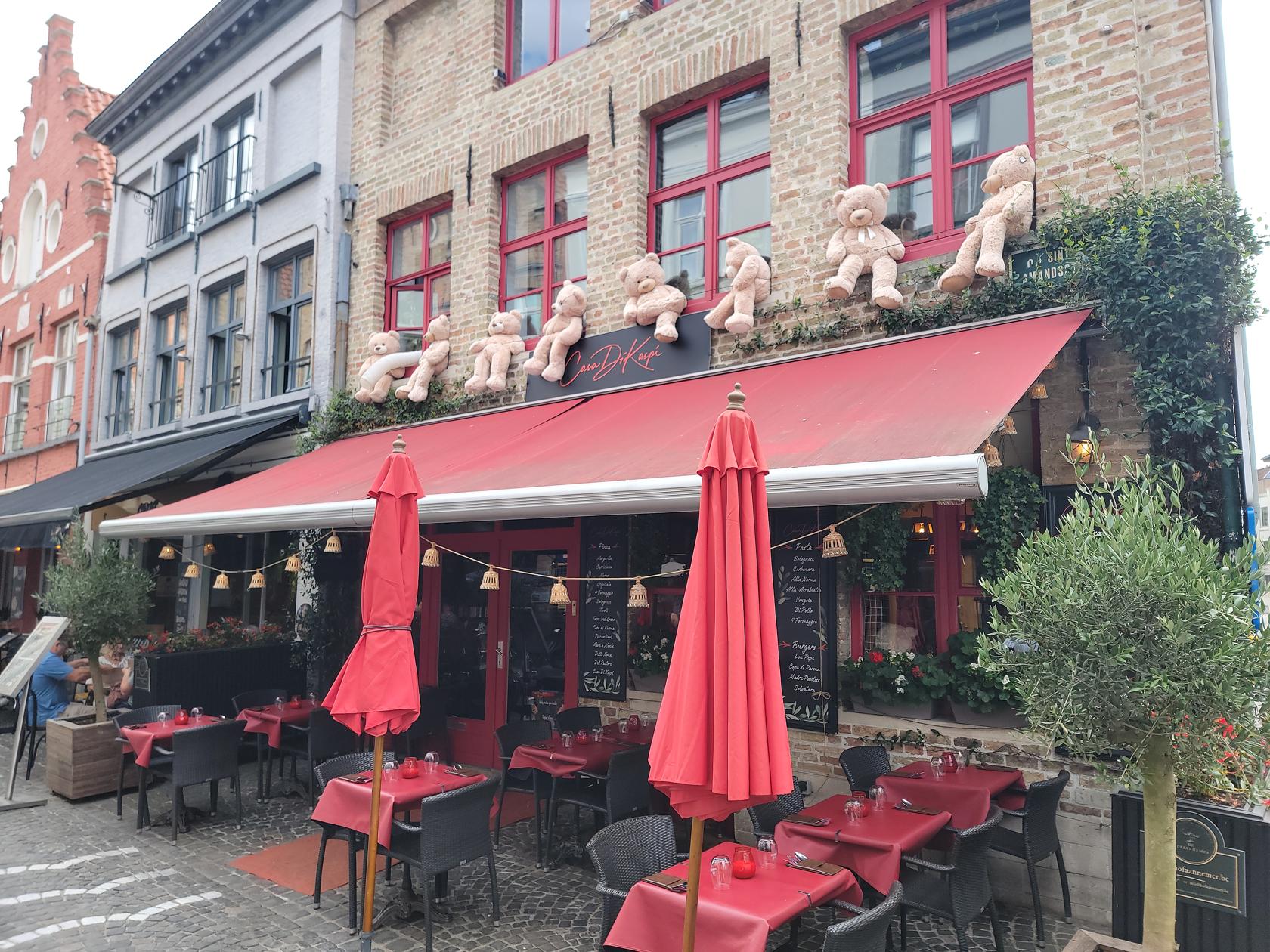
The Case di Kaspi was one of those restaurants we actually reserved a place for lunch, though in retrospect it wasn’t necessary. They serve Italian cuisine and for the most part it was okay. Though for the price I would think you could get the same thing at Bella Italia for less, see the menu below. The service was typical of other Belgian restaurants, a bit slow and unattentive.
Entrance – Casa Di Kaspi Restaurant – Brugge, Belgium
Sign – Casa Di Kaspi Restaurant – Brugge, Belgium
Menu – Casa Di Kaspi Restaurant – Brugge, Belgium
Frituur de Gentpoorte
Upon many recommendations we were told that the French Fries, or just Fries or Frituur in Belgium, are a must experience. So, we chose one of the more ostensibly good places that people rave about on the internet and went to Frituur de Gentpoorte.
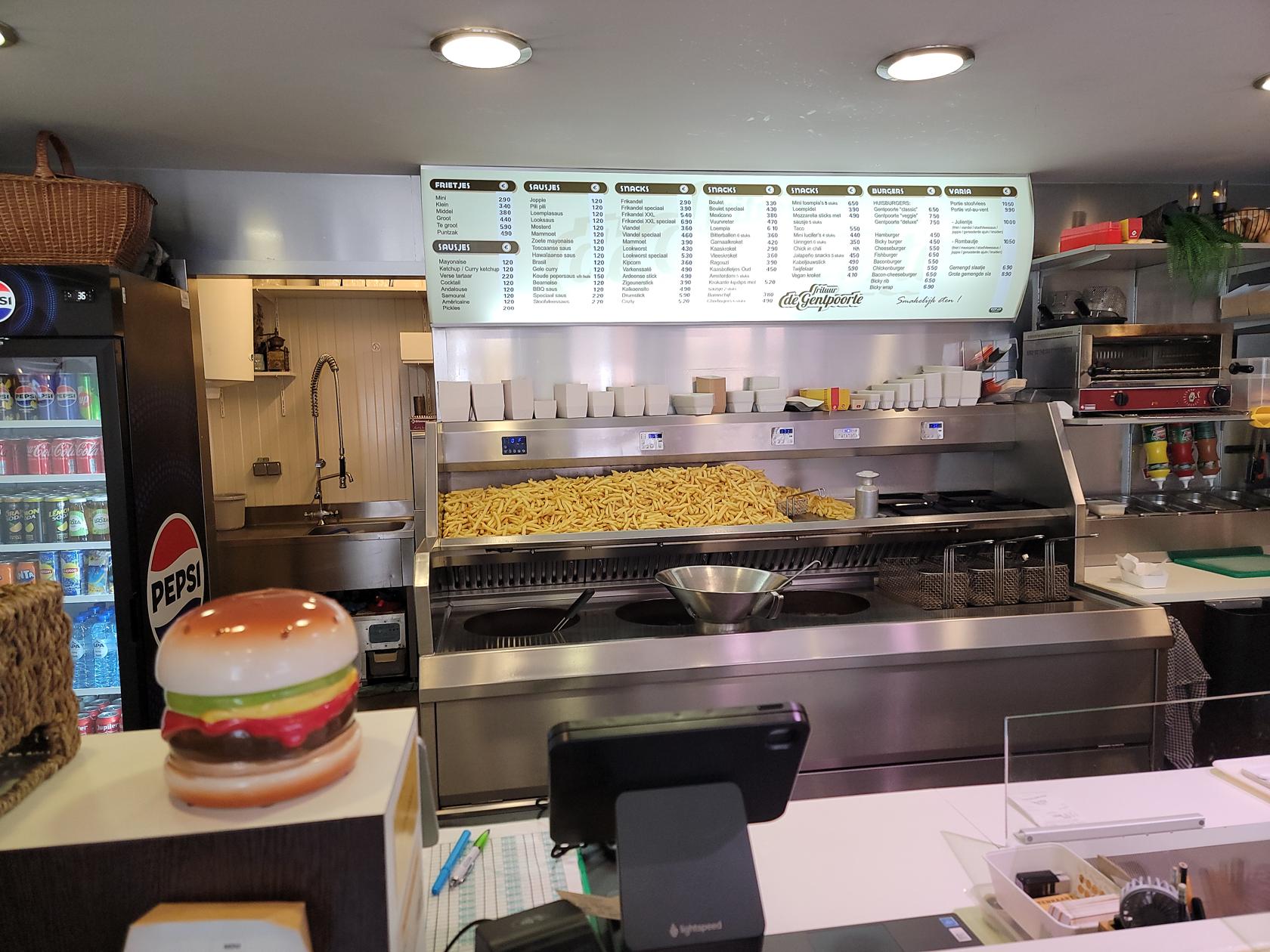
Frituur de Gentpoorte – Brugge, Belgium
We purchased the small (klein) take-away basket of fries with no sauces, since we thought that if their fries are so good they don’t need sauce. We were WRONG. They are actually not that great, at least not without the sauce they sell, cost: 1-2€ for one of those small little plastic containers. So, the deal really is, they are actually not selling fries, but sauce. The potatoes in the States have them beat by far (think Five Guys Cut Fries). Though it is cheap and filling, you probably will regret later when all those carbs settle in and give you a stomach ache. We threw half our basket out. However, if you are so inclined, Enjoy!
With a choice between visiting Warsaw or Gdańsk, we chose Gdańsk because it had more historical meaning and promised a quainter historic center. Moreover, since we were doing a south to north kind of trip, it was the last stop on our itinerary, so smaller is usually less complicated and less demanding.
Gdańsk
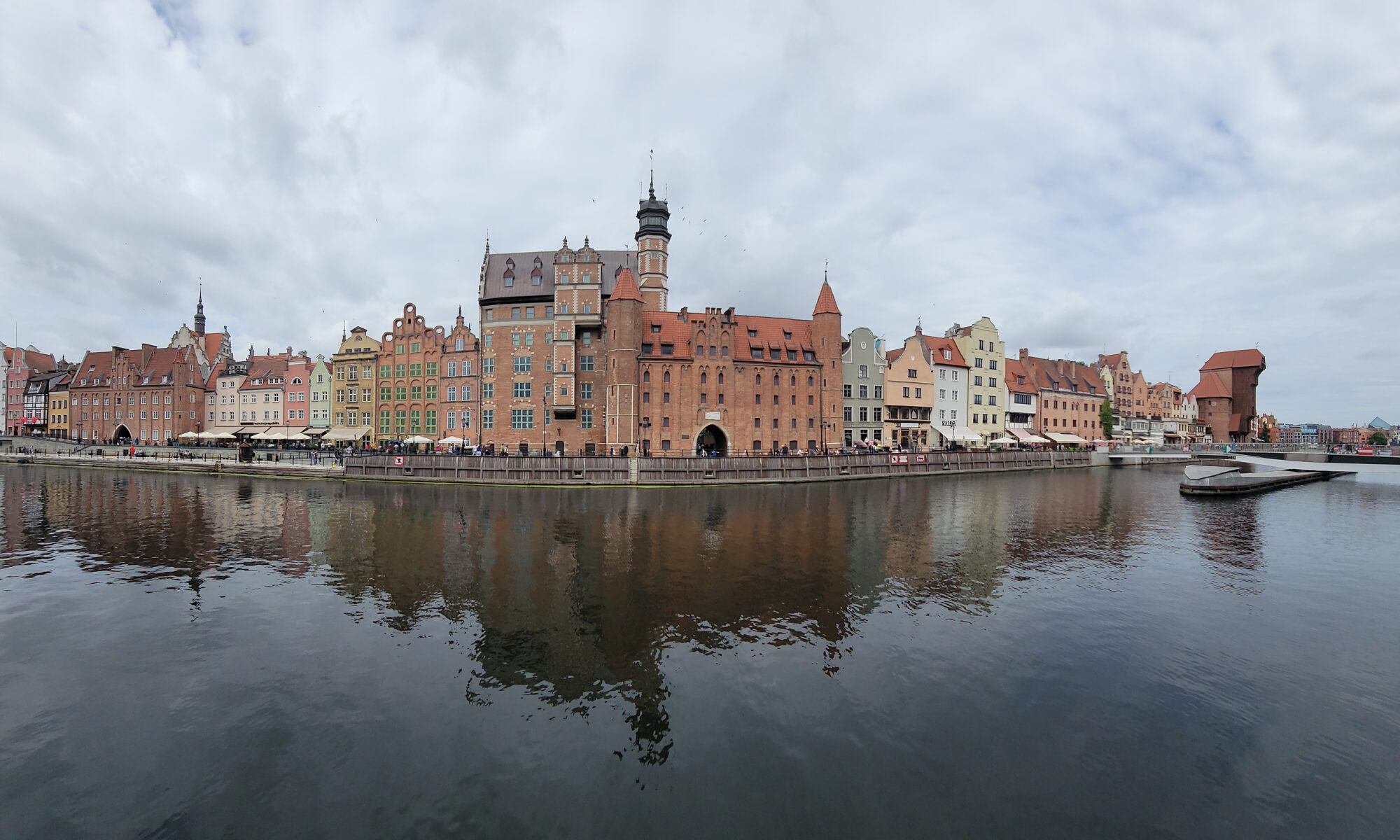
Formerly known as Danzig, Gdańsk is a seaside city on the Baltic coast of Poland. Though the old city lies in the delta of the Motlawa River, it is still some five kilometers from the sea. It has switched back and forth from Polish rules, German, Russian and as a free-state. In the middle ages, it was once part of the Haneastic League and was a major trading partner in that confederation.
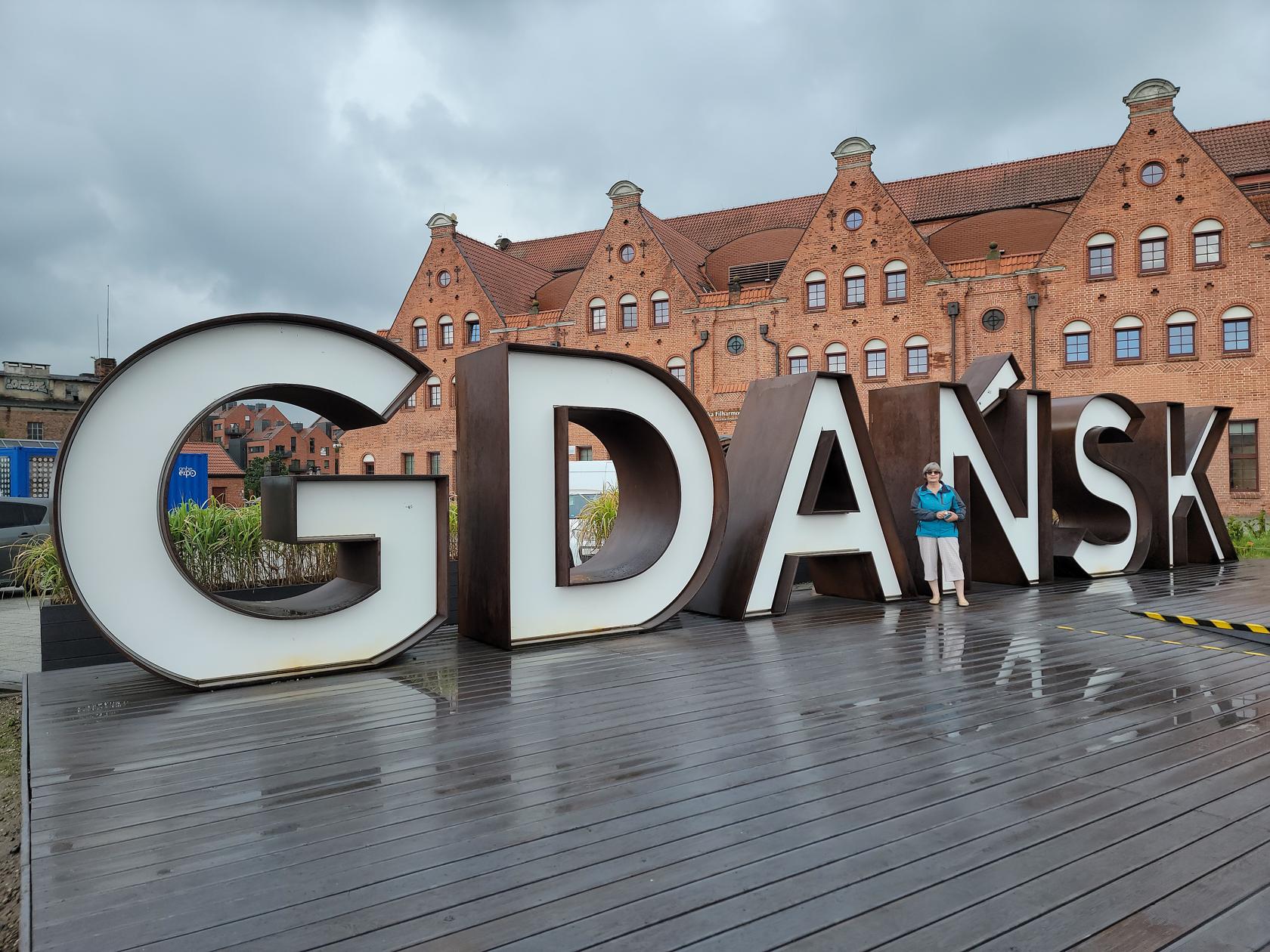
Patti – Gdańsk Sign – Gdańsk, Poland
Getting There
From Wrocław, Gdańsk is over a four hour train trip using the InterCity train system. Though the InterCity trains do not stop too often, there is still considerable distance between the two cities and even with an automobile it is a long drive. We were fortunate enough to have a very talkative couple that were Canadian-Polish dual citizens and have a very nice chat with them along the way, which thankfully seemed to have made the trip go faster.
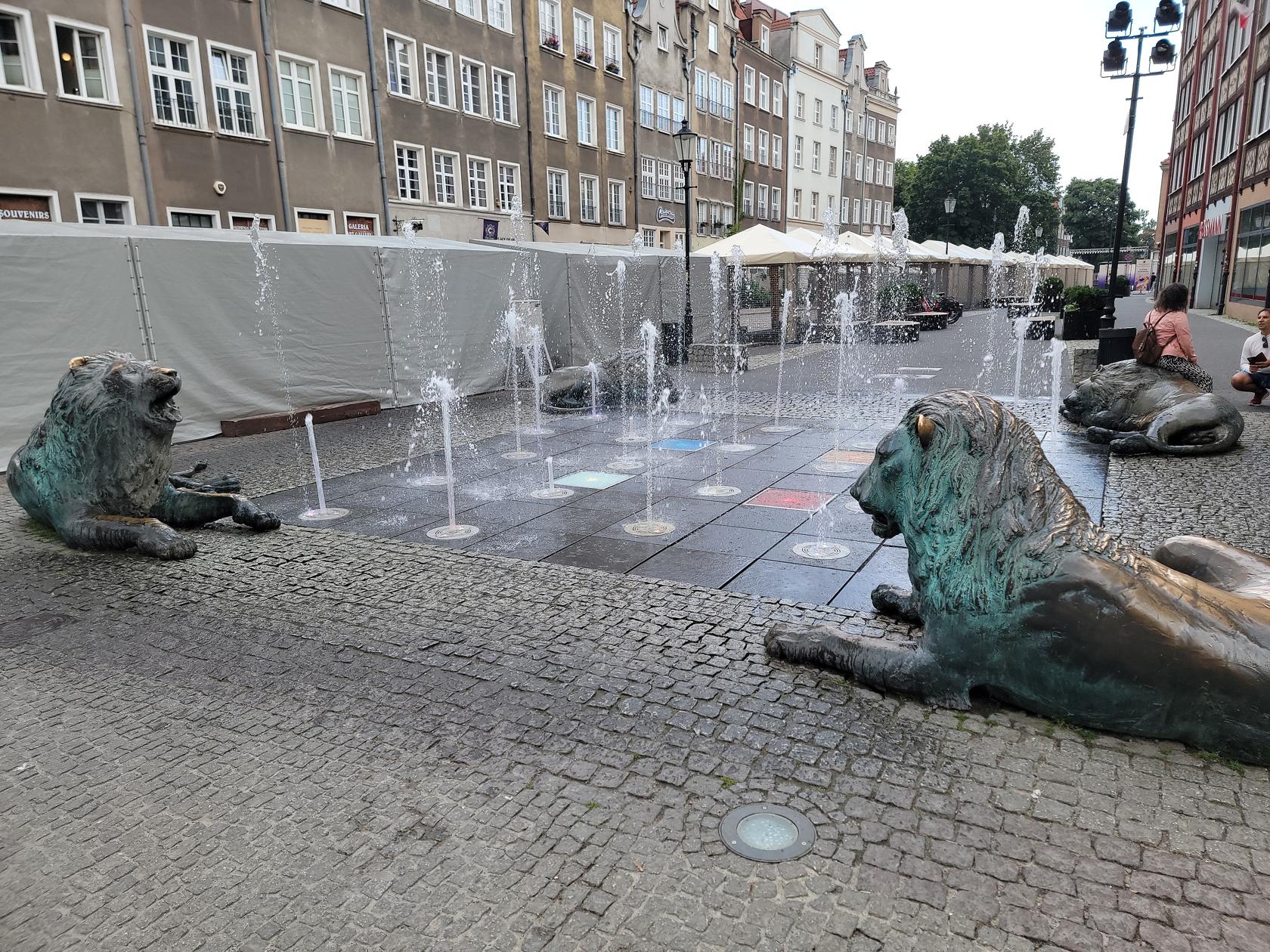
Four Quarters Fountain – Gdańsk, Poland
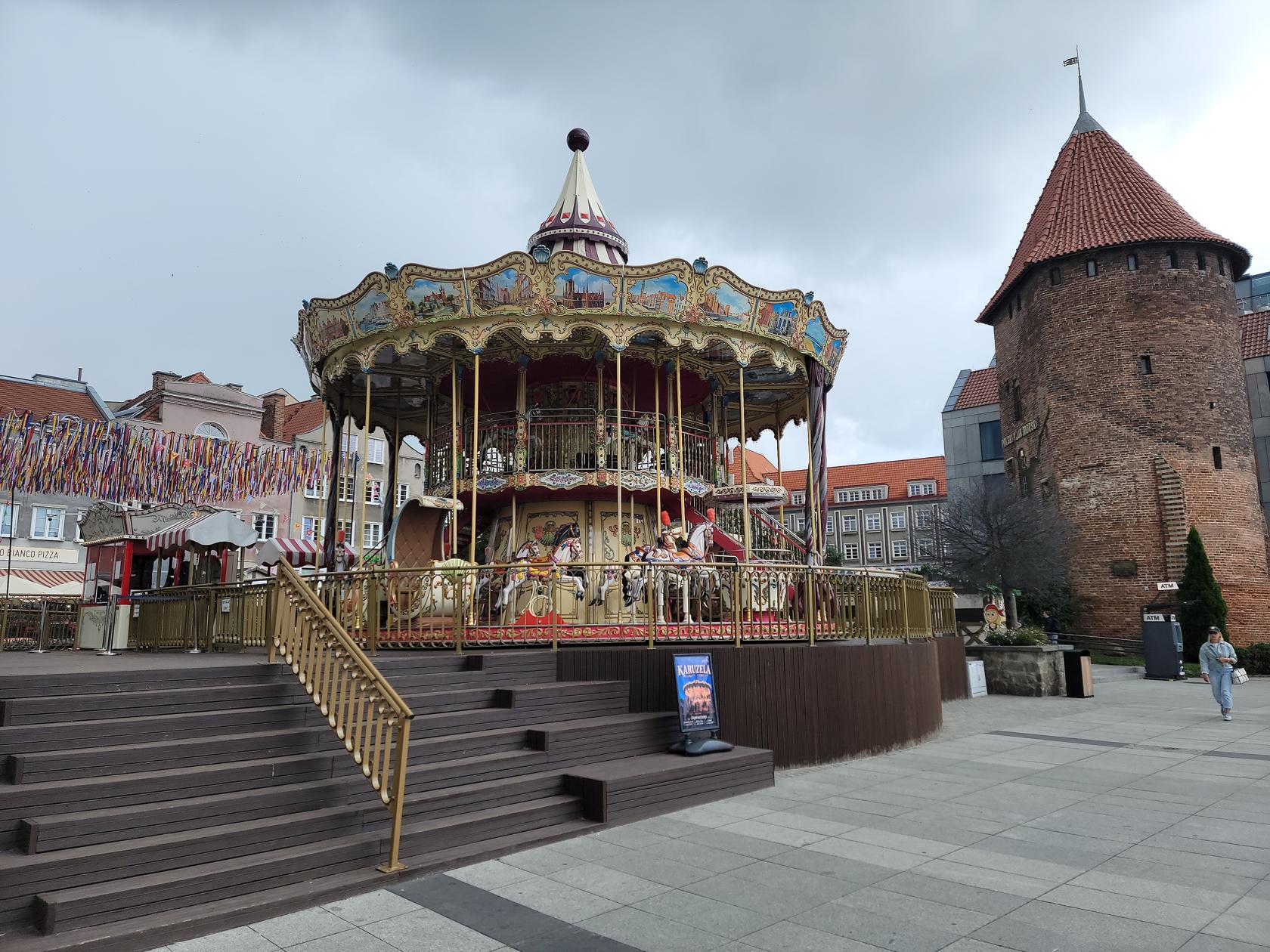
Carousel – Gdańsk, Poland
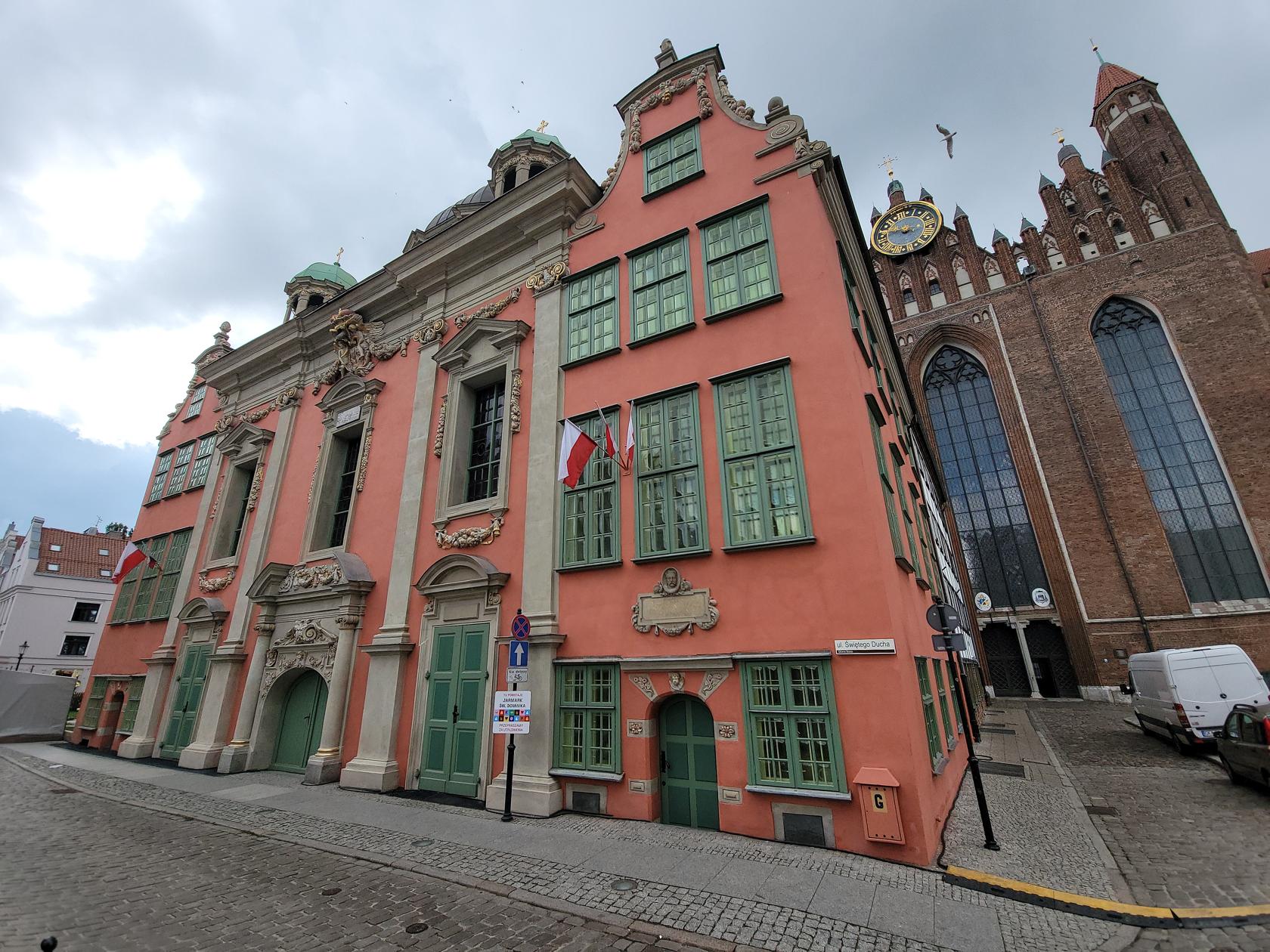
Royal Chapel – Gdańsk, Poland
Roman Cellar – Gdańsk, Poland
Setting up for St. Dominic’s Fair – Gdańsk, Poland
Old Erbsenmarkt – Gdańsk, Poland
Motlawa River
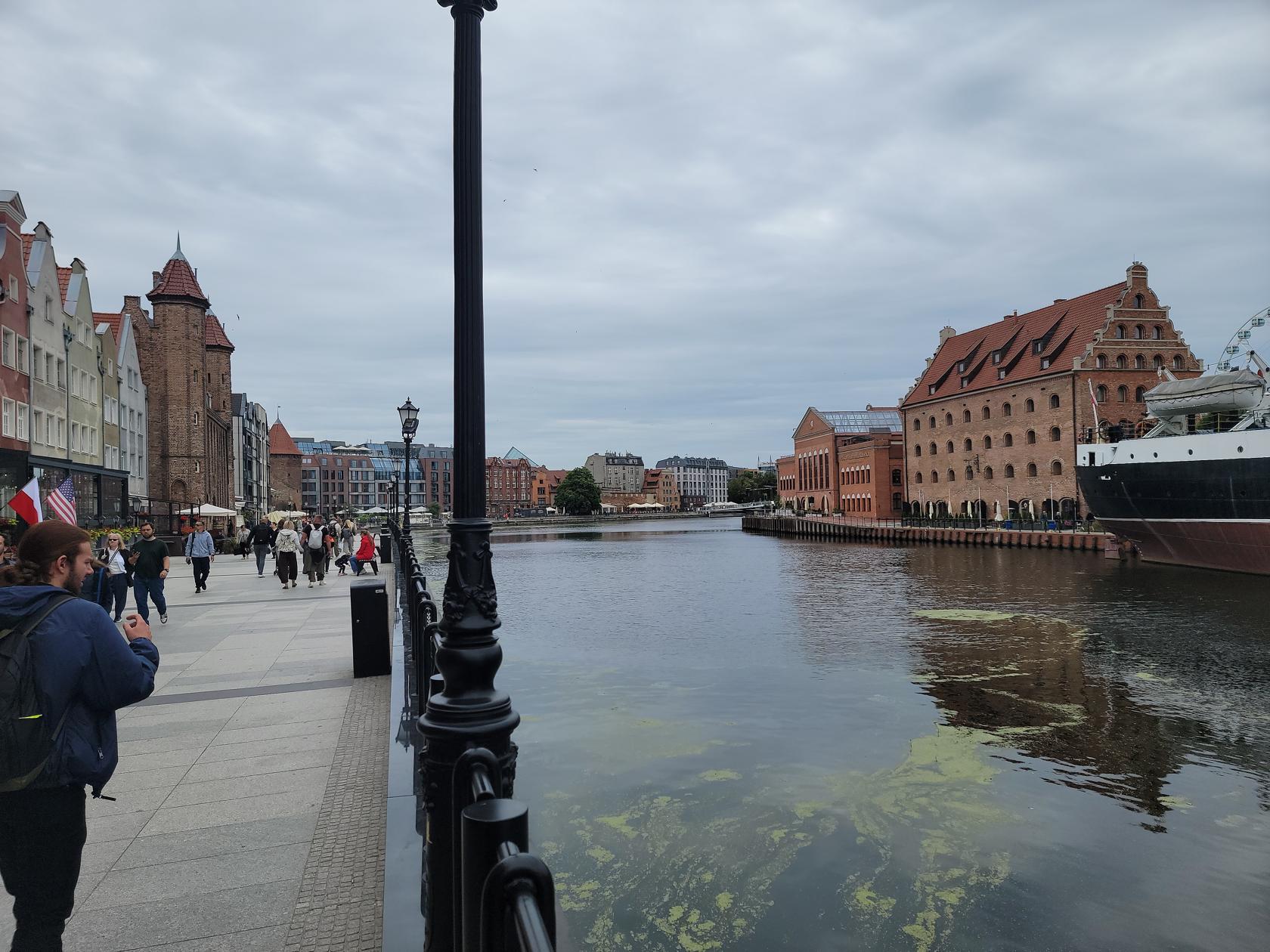
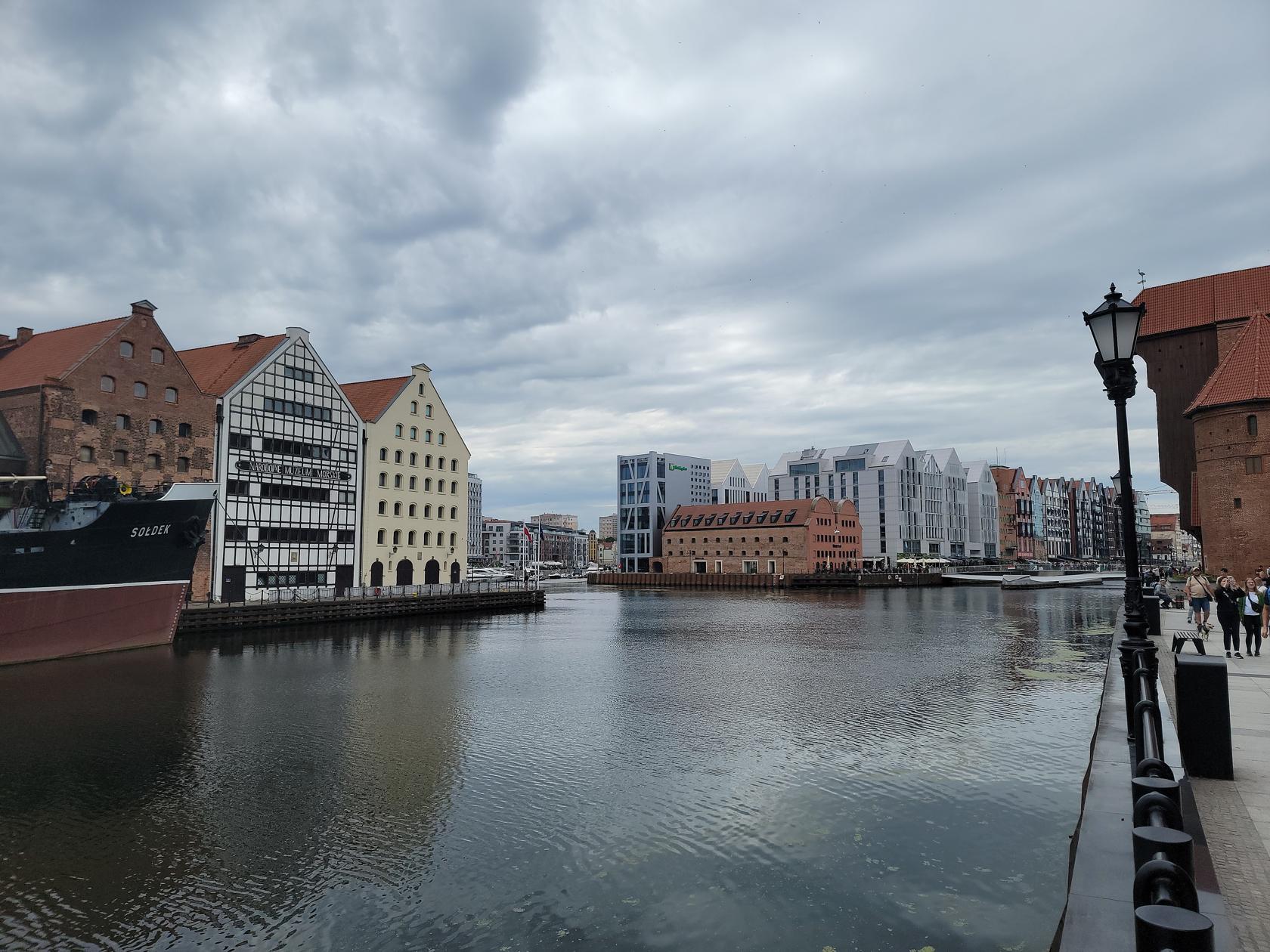
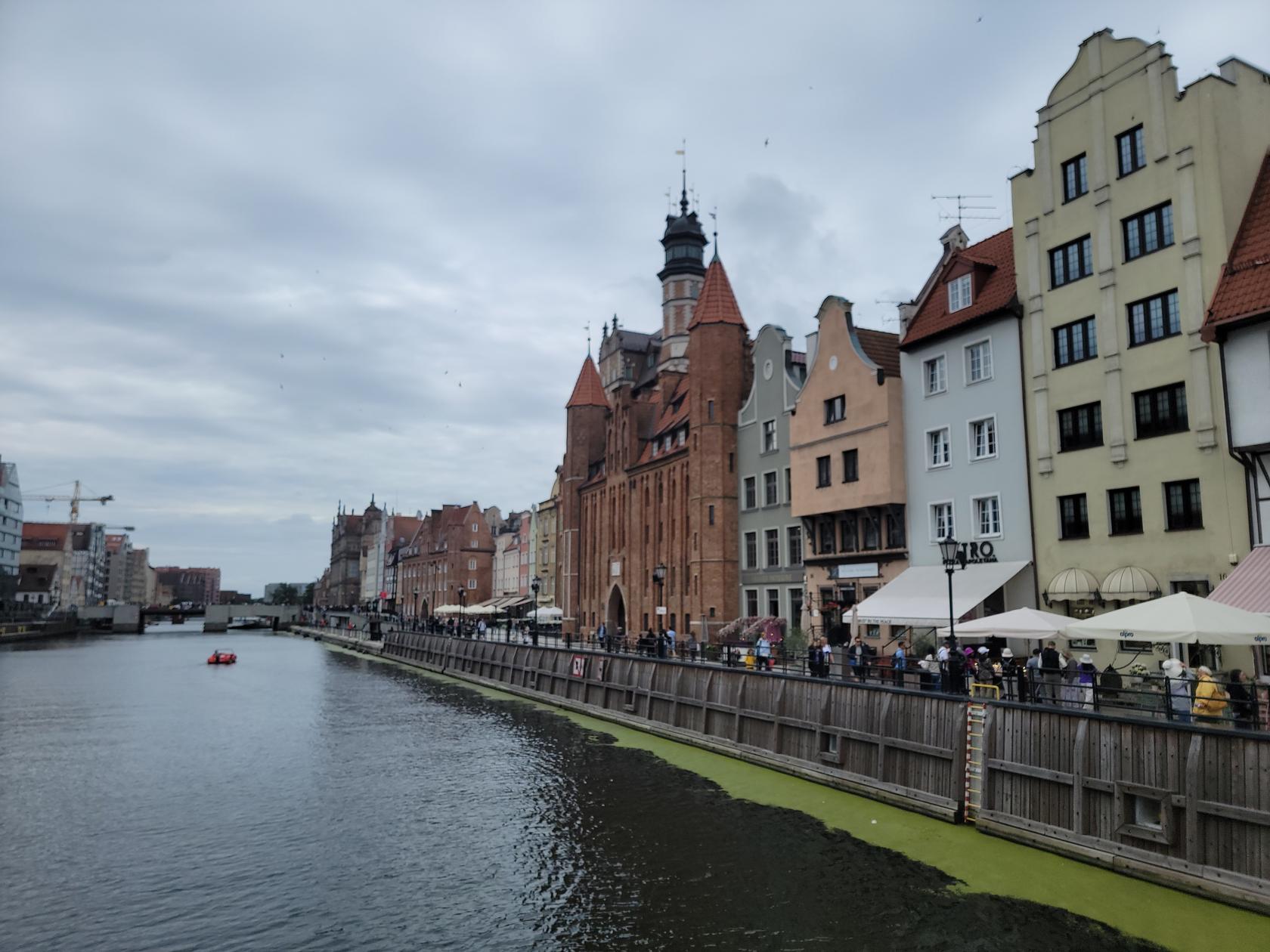
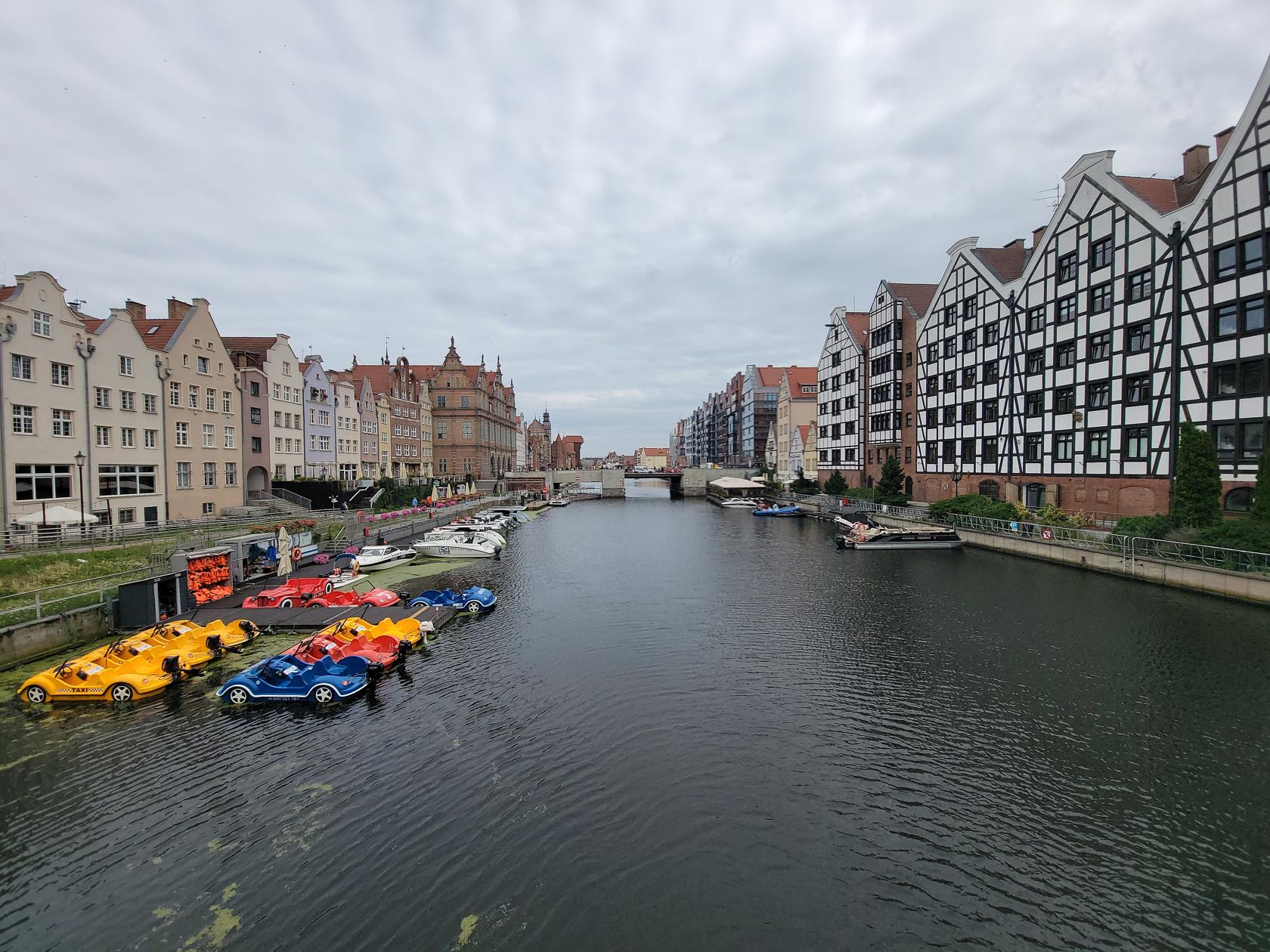
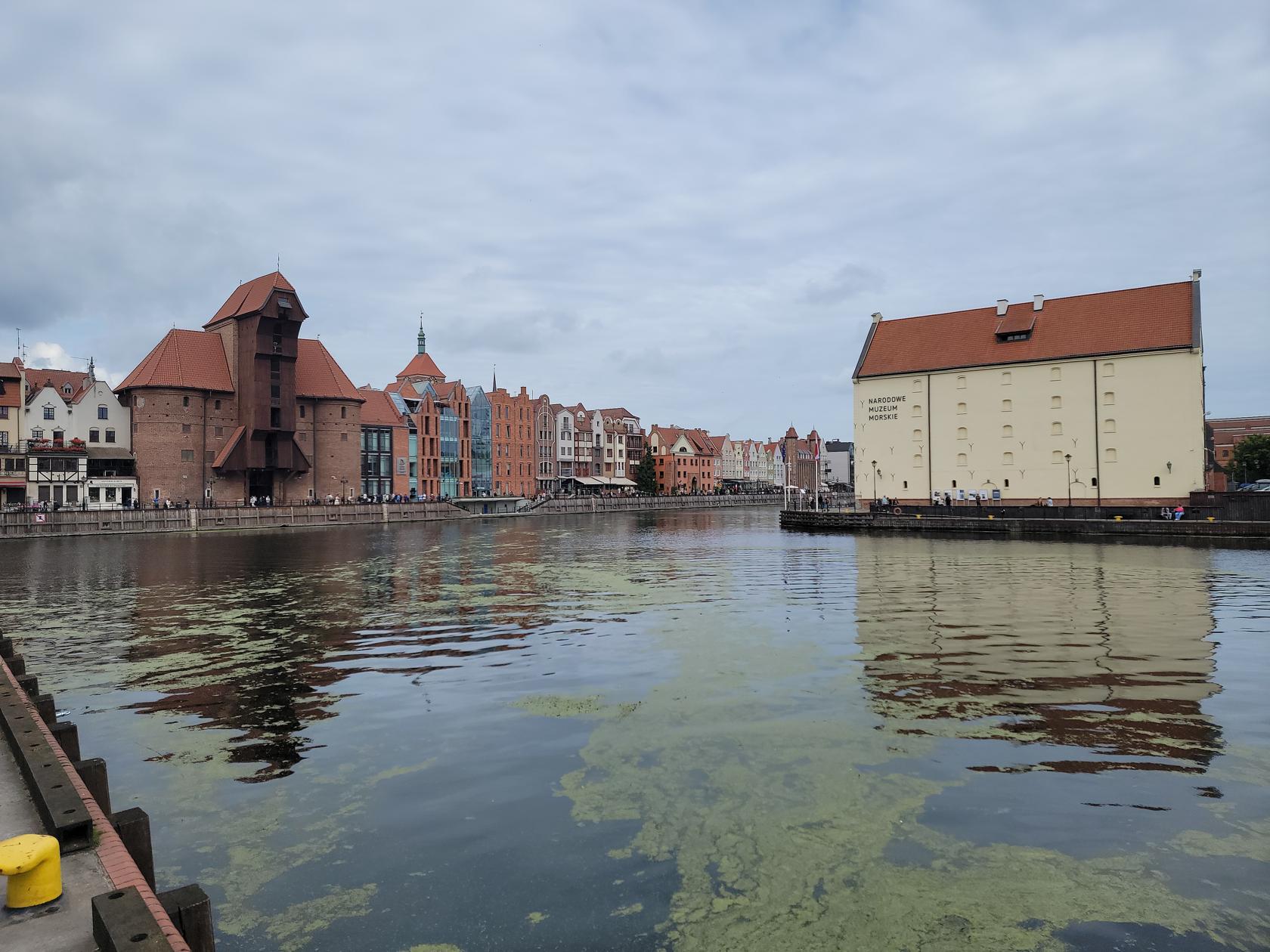
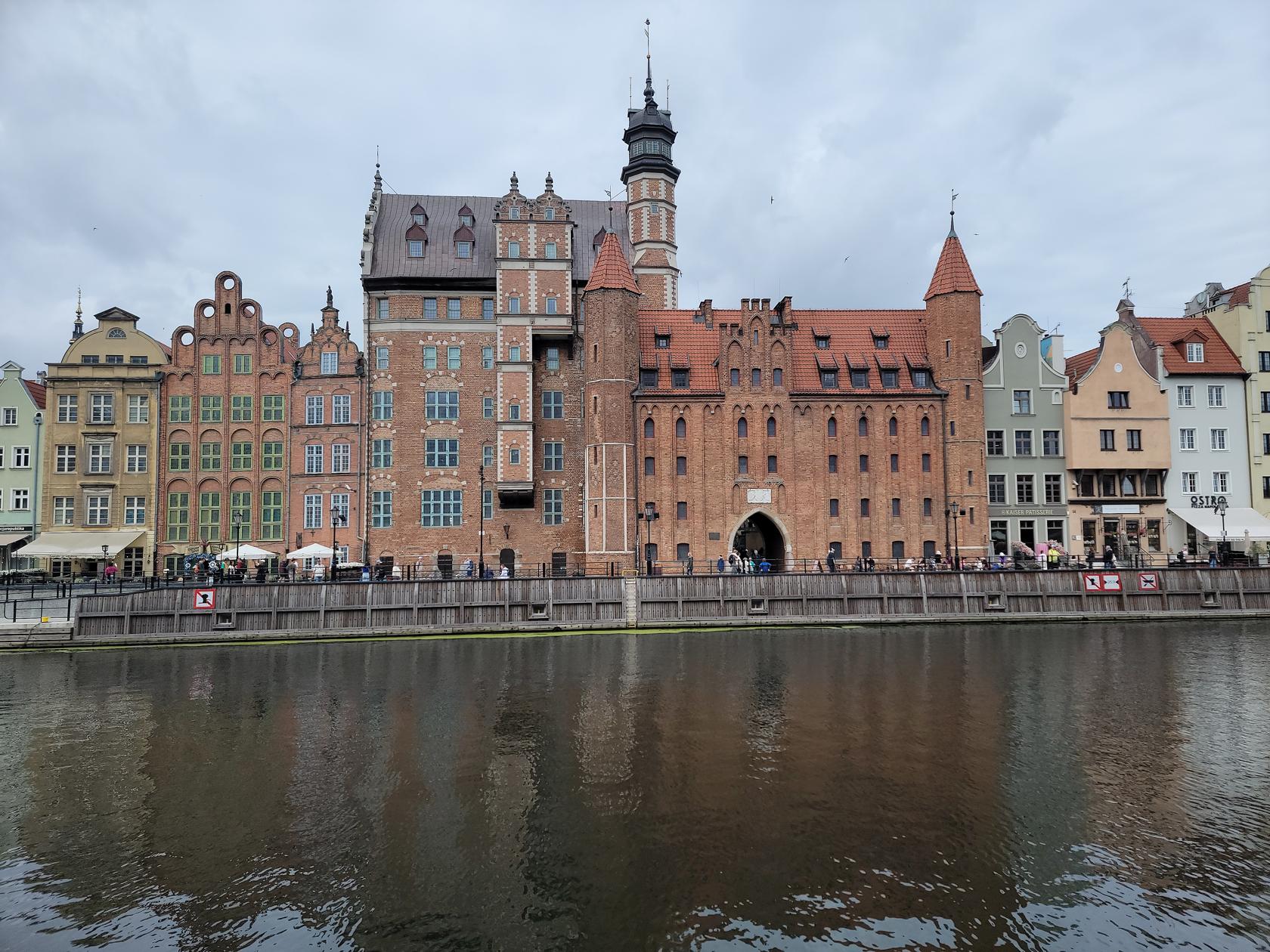
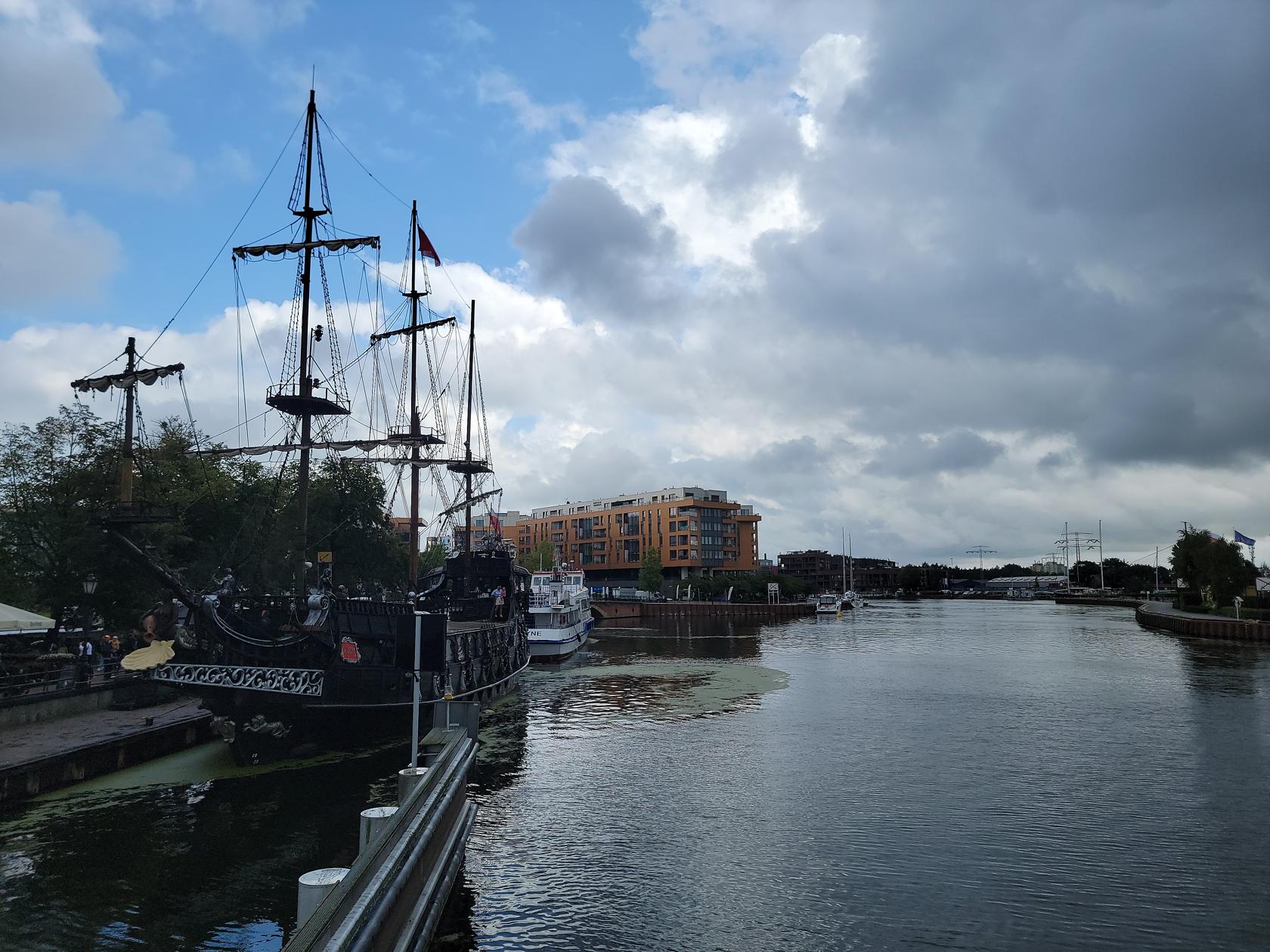
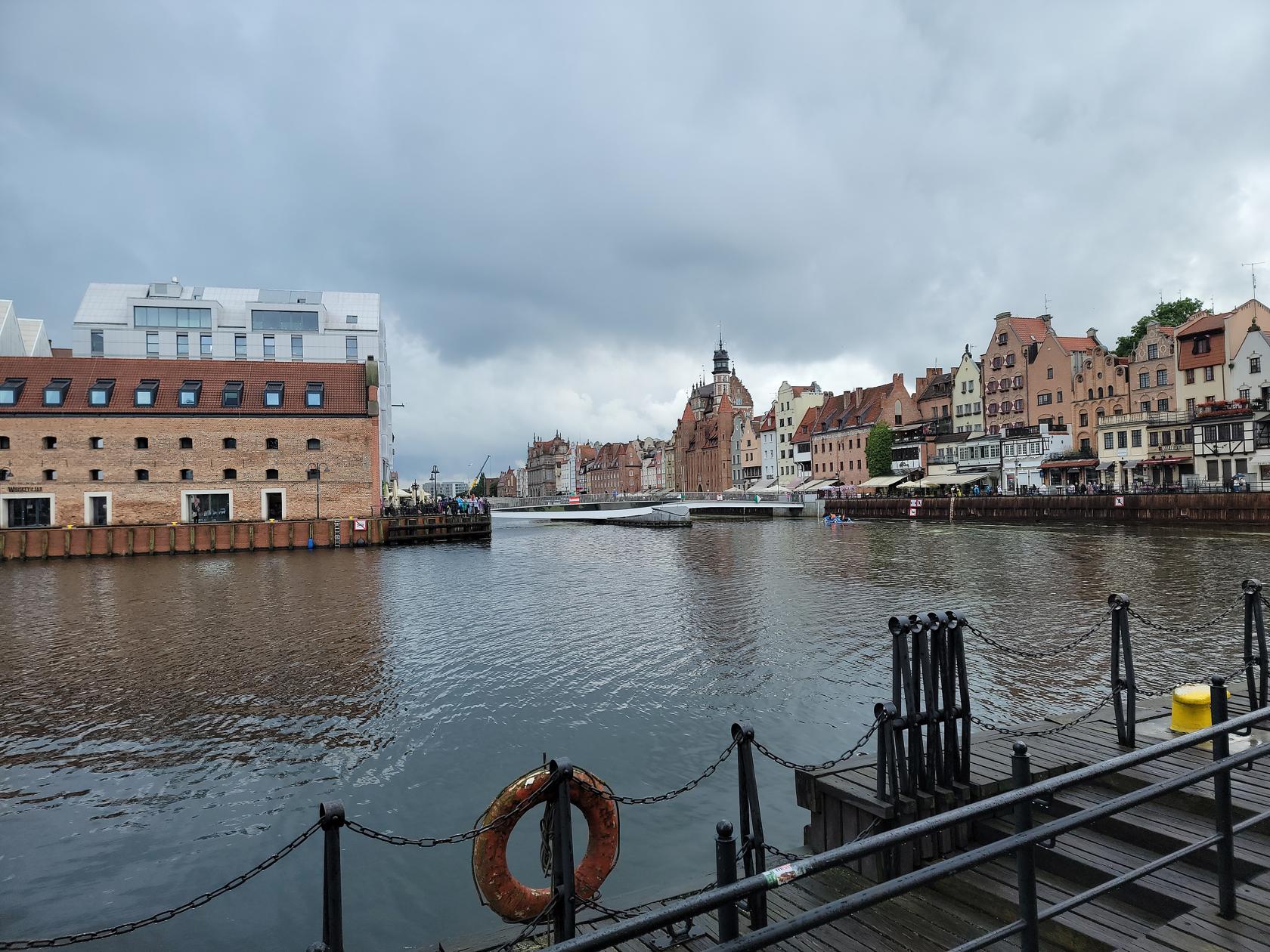
Along the Motlawa River on both sides are rows of buildings. Many were old warehouses, shops, fish mongers and other establishments, when the city was an active seaport. Today it is mostly restaurants, shops and hotels.
Boardwalk – Motława River – Gdańsk, Poland
Motława River – Gdańsk, Poland
Boardwalk – Motława River – Gdańsk, Poland
Motława River – Gdańsk, Poland
Saint Mary’s Gate – Motława River – Gdańsk, Poland
Motława River – Gdańsk, Poland
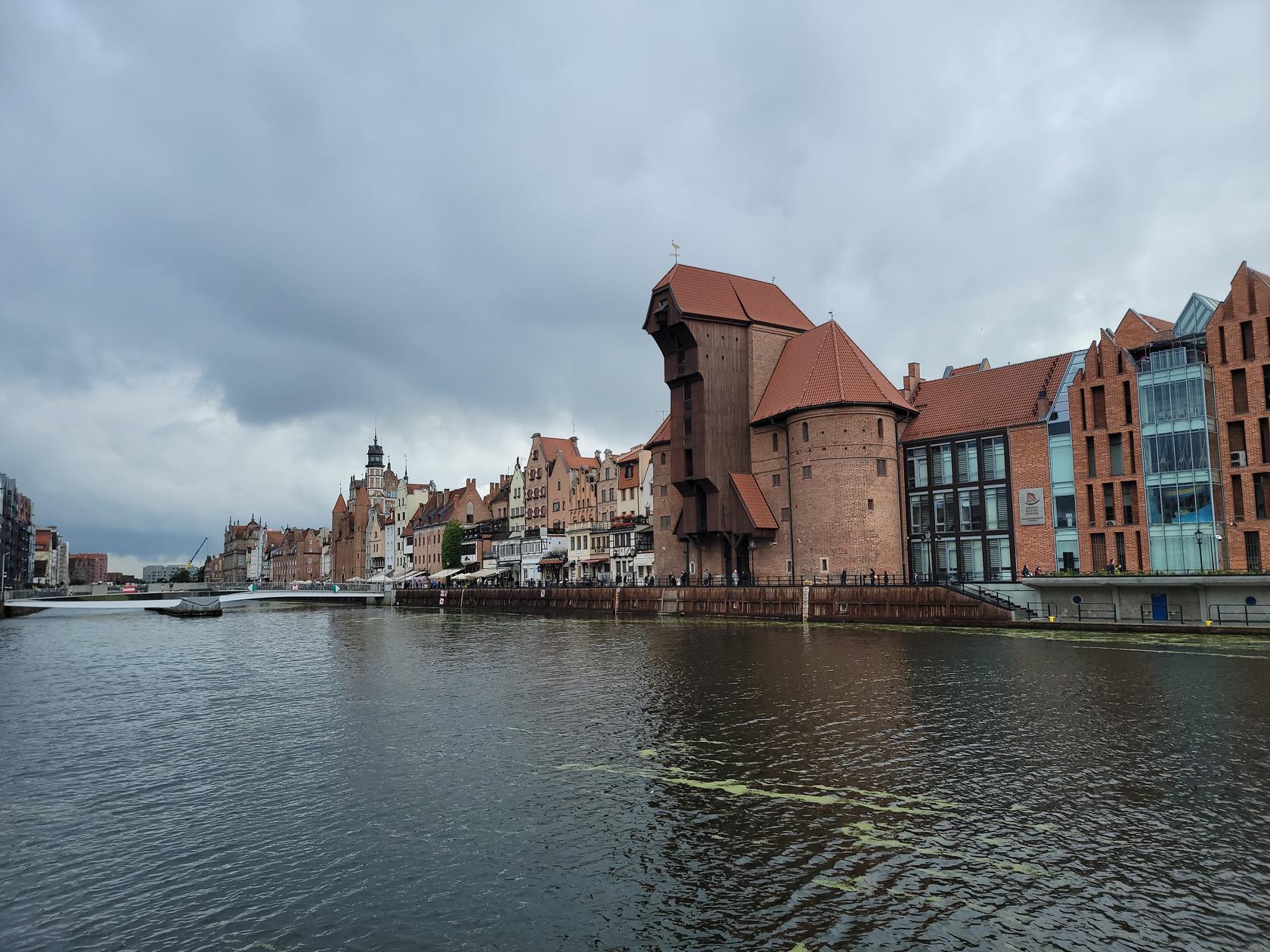
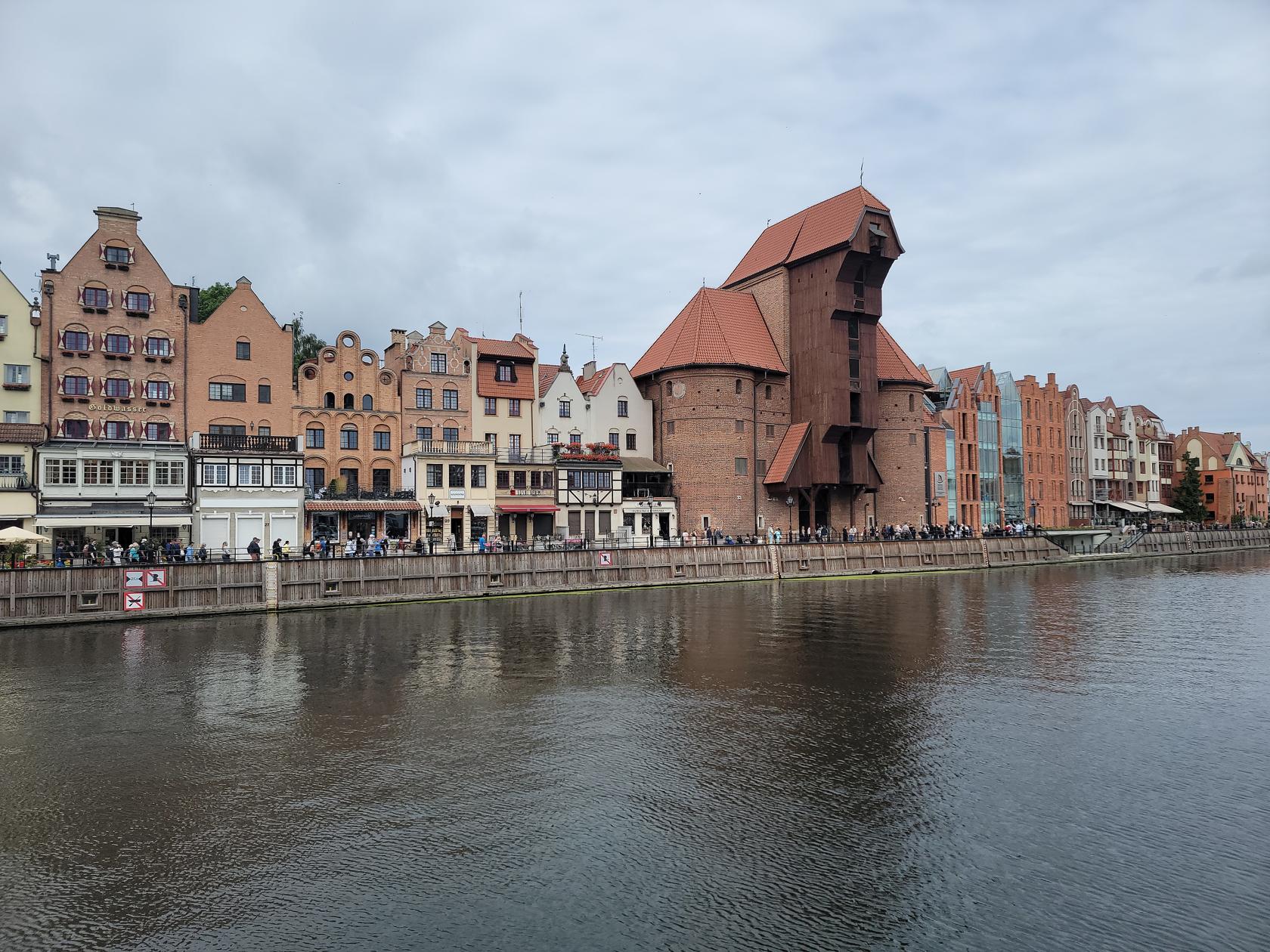
Old Port Crane – Motława River – Gdańsk, Poland
Saint Mary’s Gate – Motława River – Gdańsk, Poland
Lew Galeon – Gdańsk, Poland
Motława River – Gdańsk, Poland
Old Port Crane
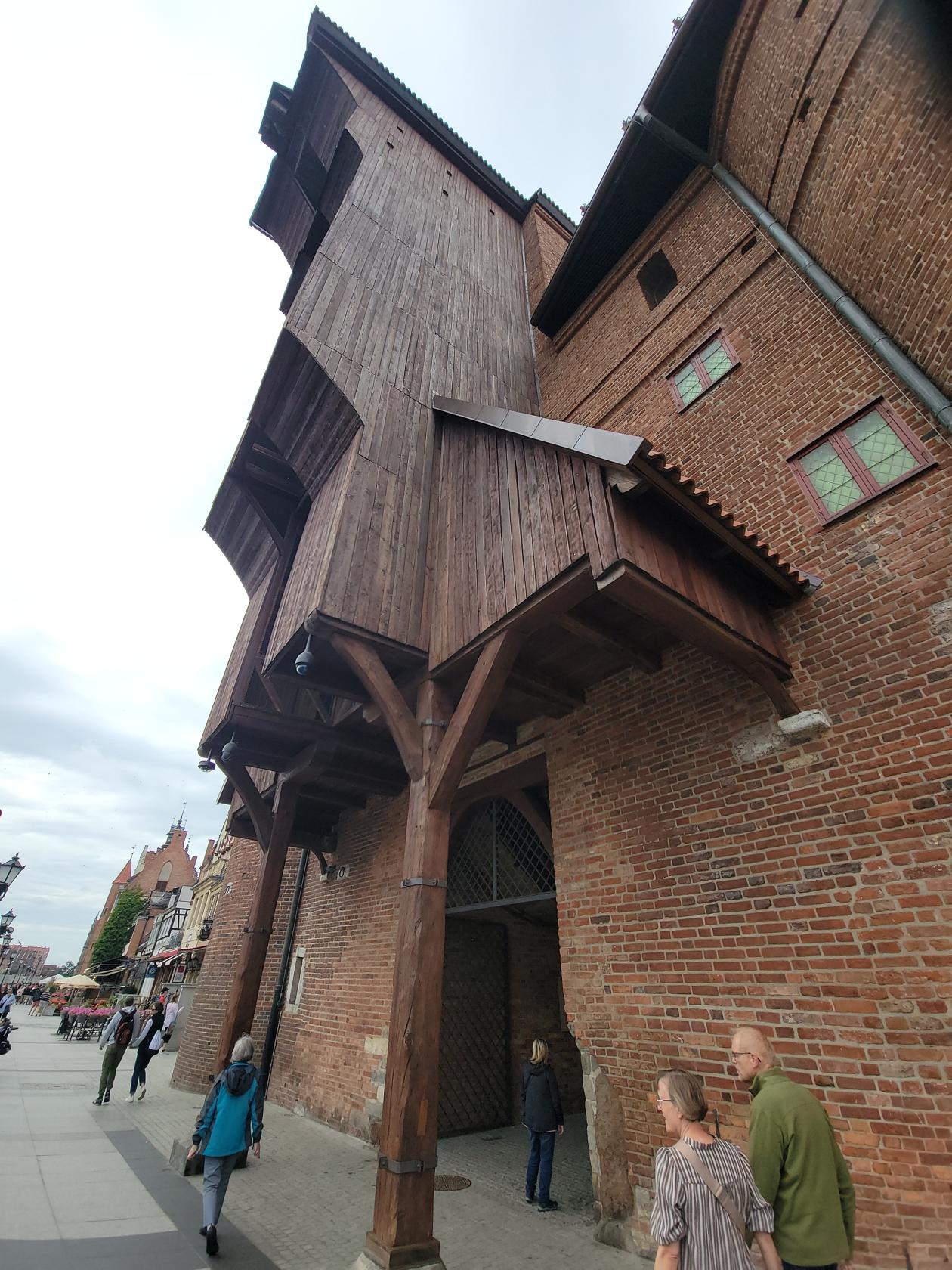
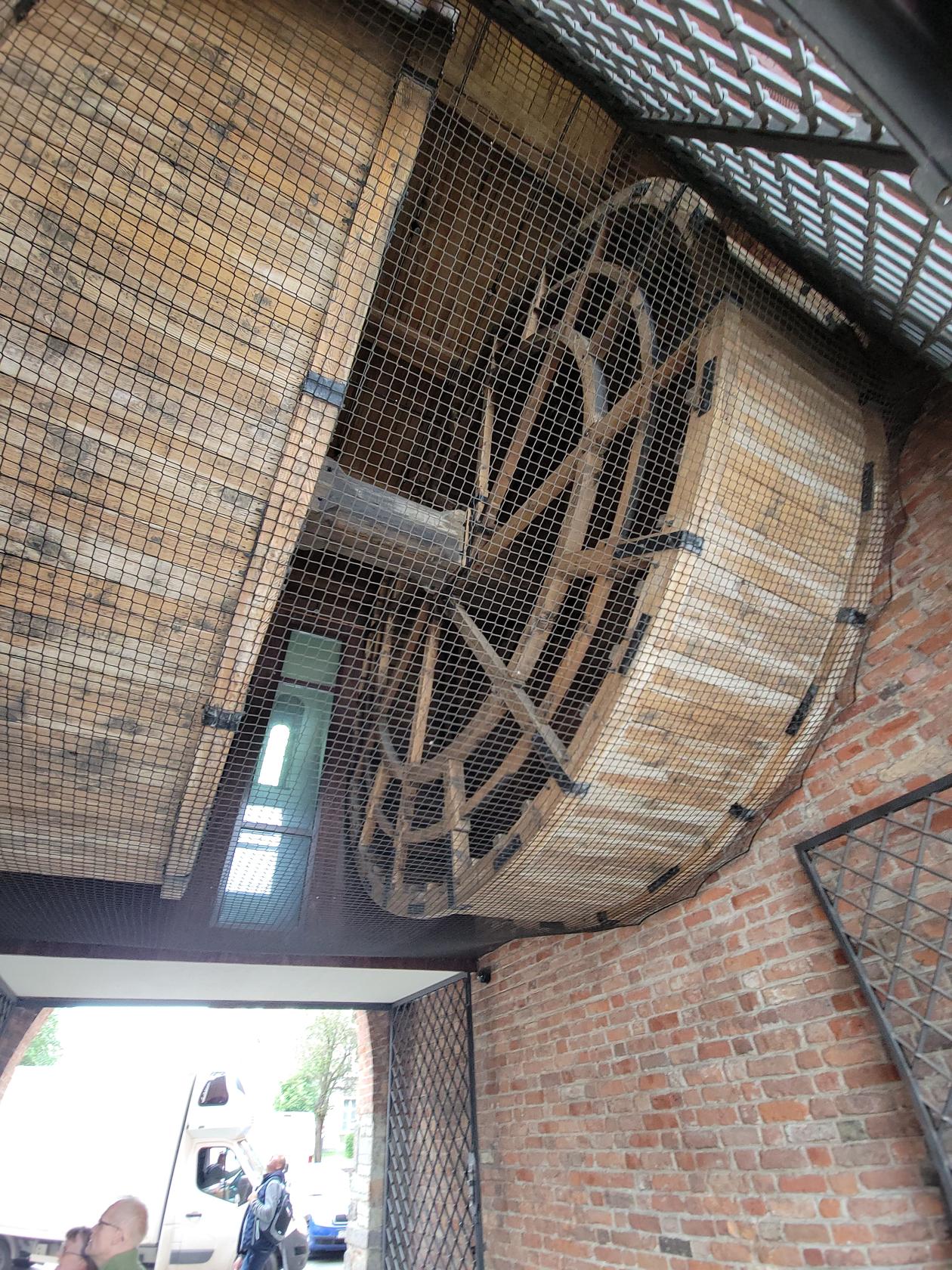
One of the major attactions is the Old Port Crane, also known as the Gdańsk Crane, actually has an unknown origin. Though ostensibly built to convey things from ships portside into the city over the surrounding wall its actual purpose remains a mystery. It burnt down once and was restored, only to be partially destroyed during the end of World War II and rebuilt in the 1960s as a historical piece and museum.
Old Port Crane – Gdańsk, Poland
Old Port Crane – Motława River – Gdańsk, Poland
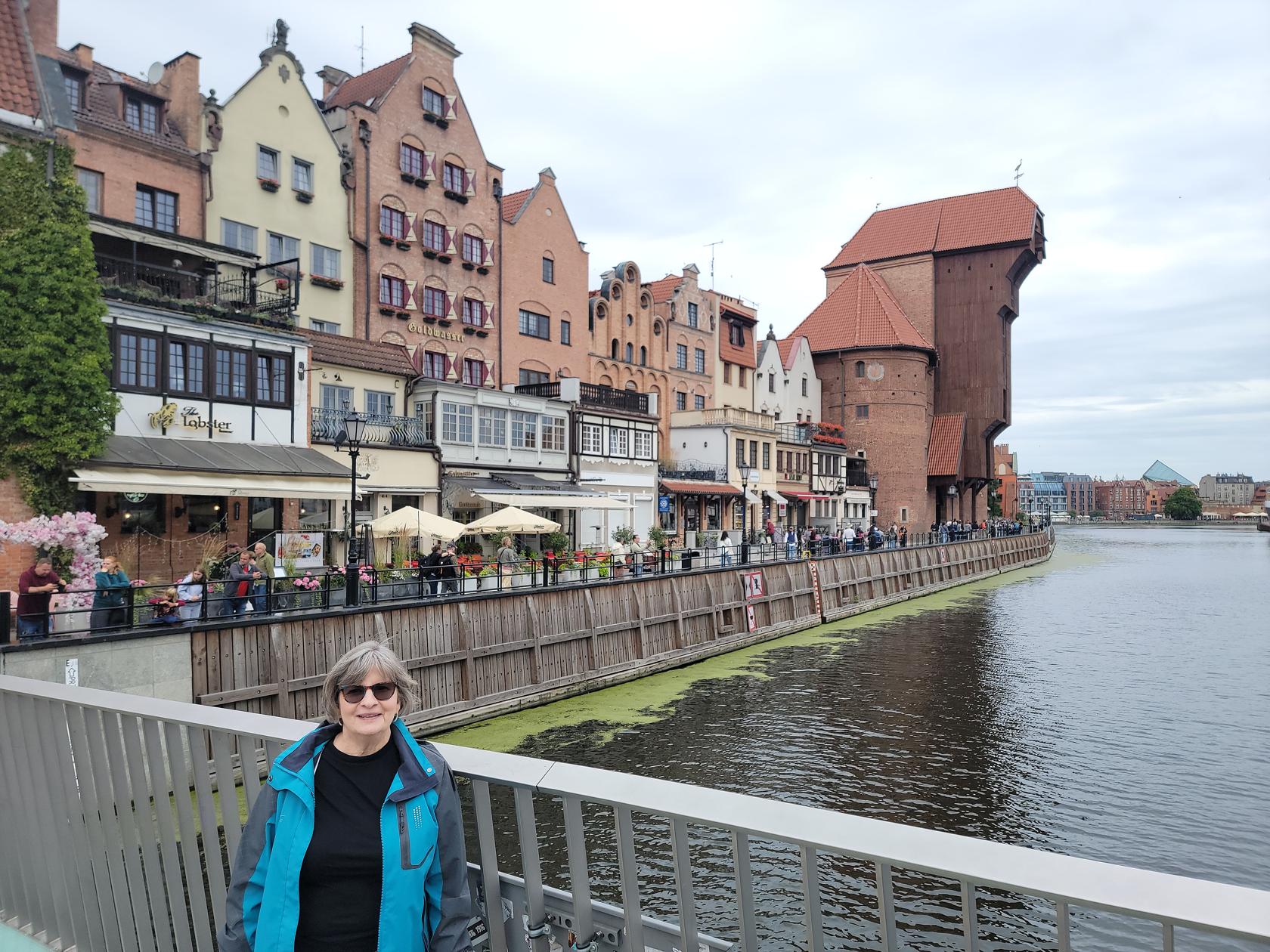
Patti on Rotating Bridge – Holy Spirit Gate – Motława River – Gdańsk, Poland
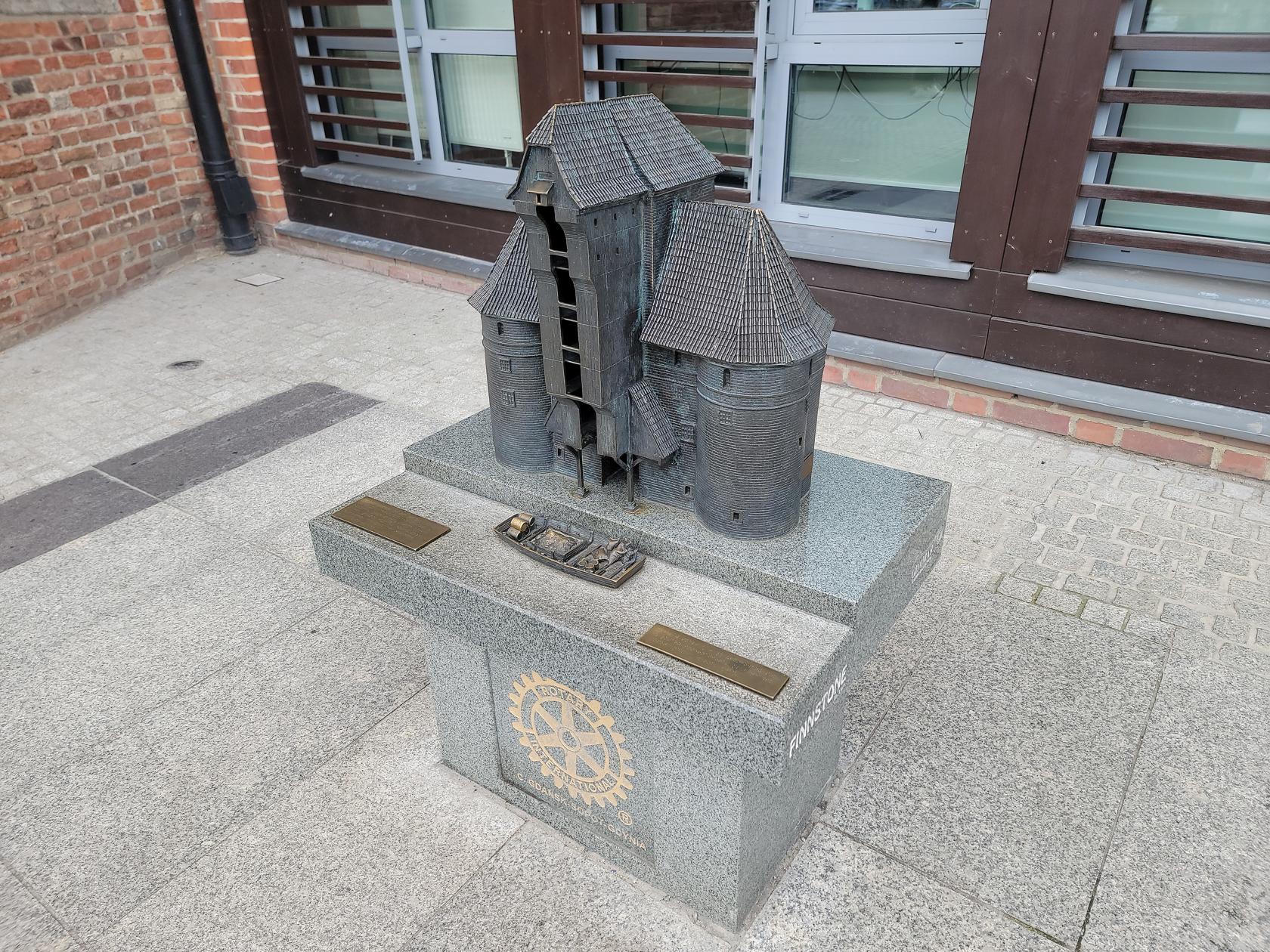
Old Port Crane Bronze Monument – Motława River – Gdańsk, Poland
Old Port Crane – Motława River – Gdańsk, Poland
Large Tread Wheels – Old Port Crane – Motława River – Gdańsk, Poland
Długa Street
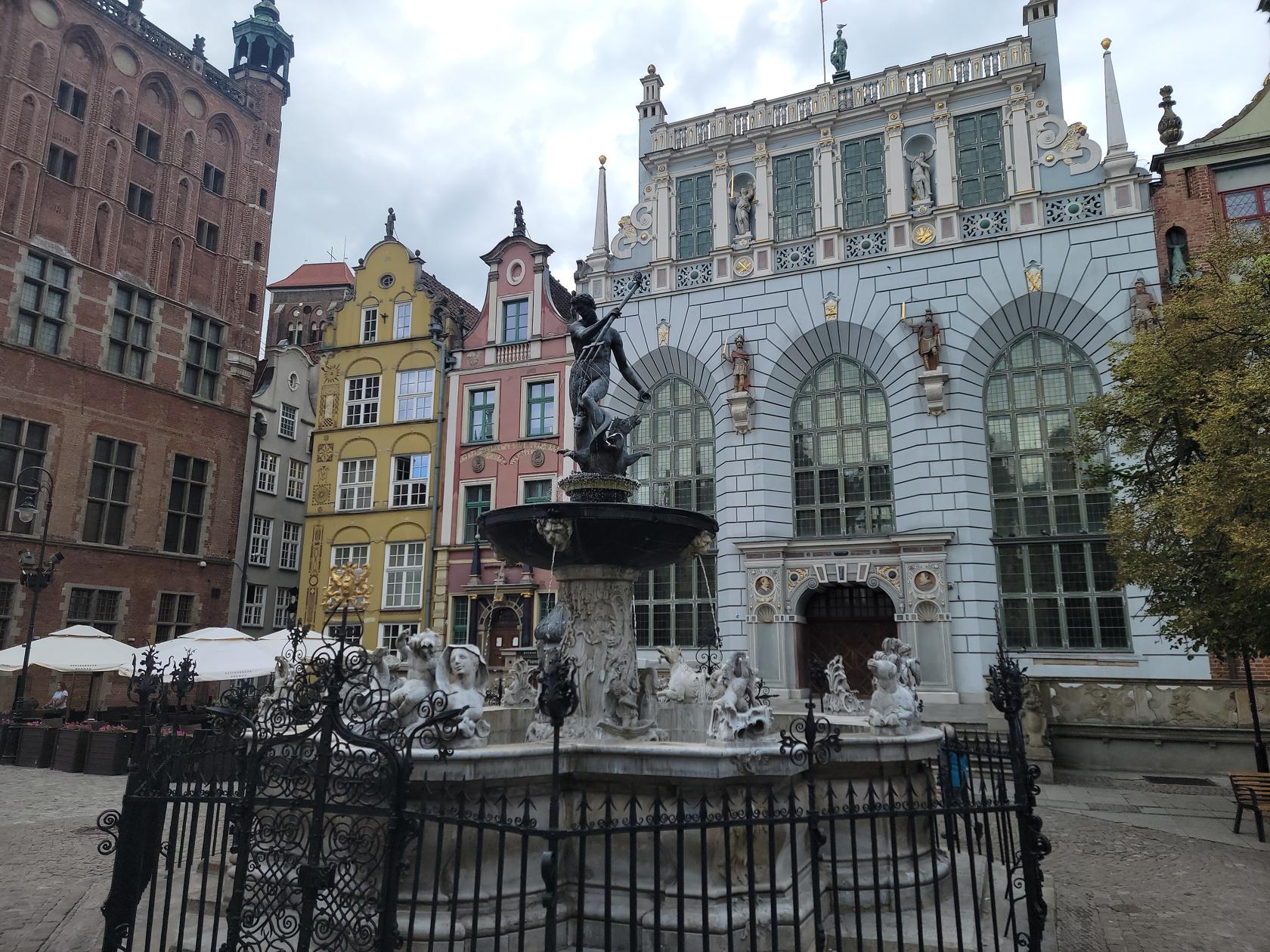
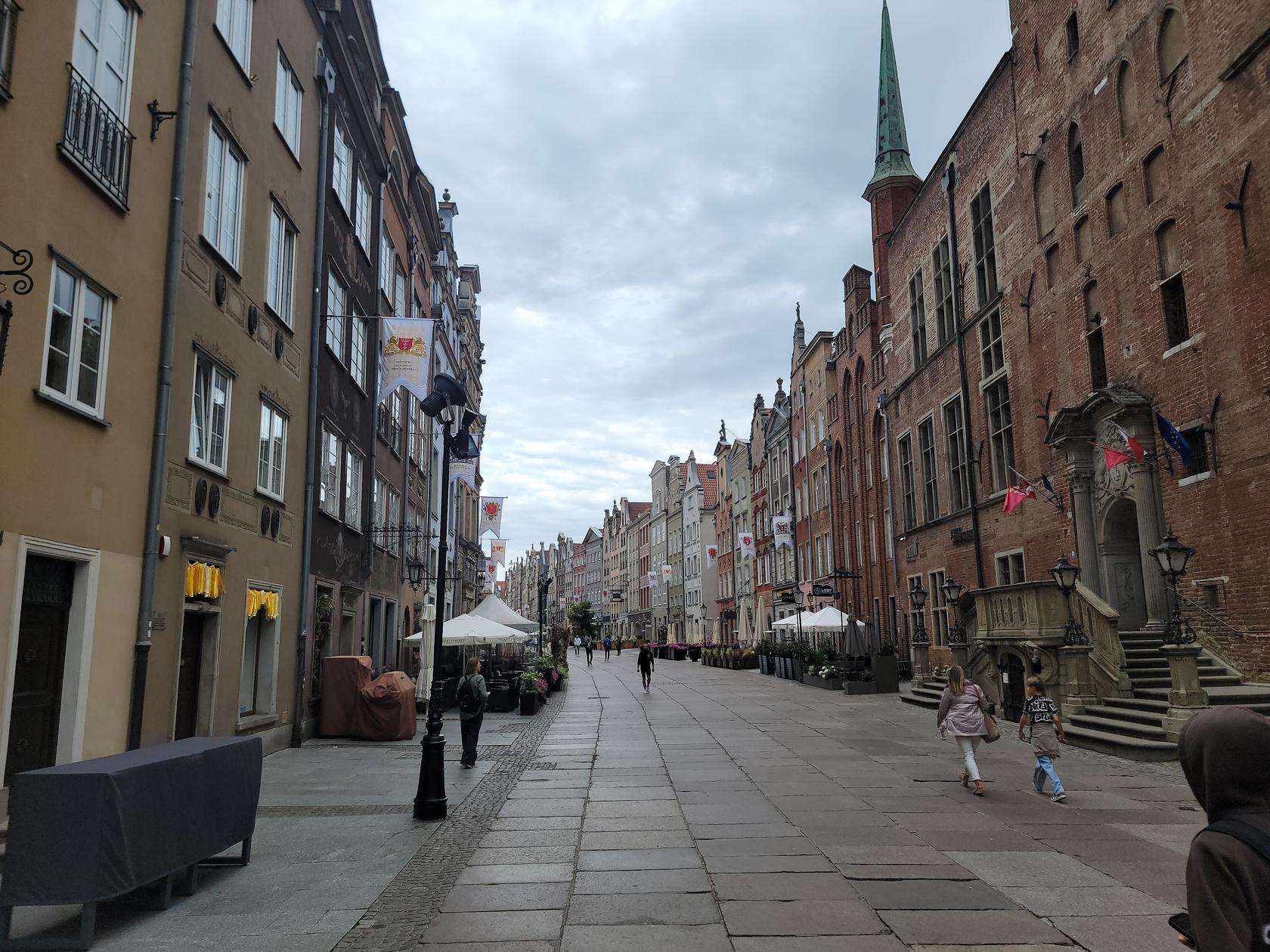
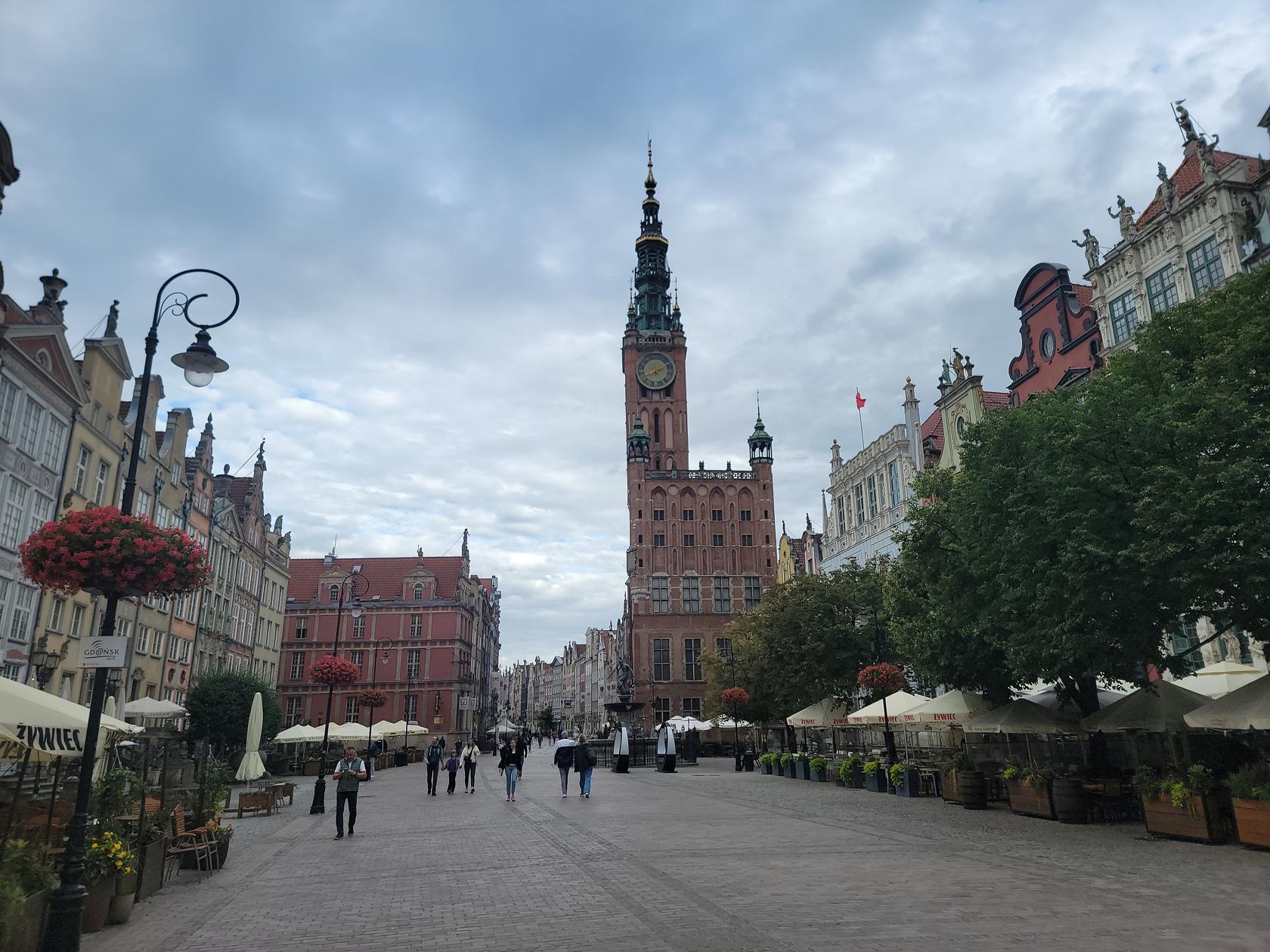
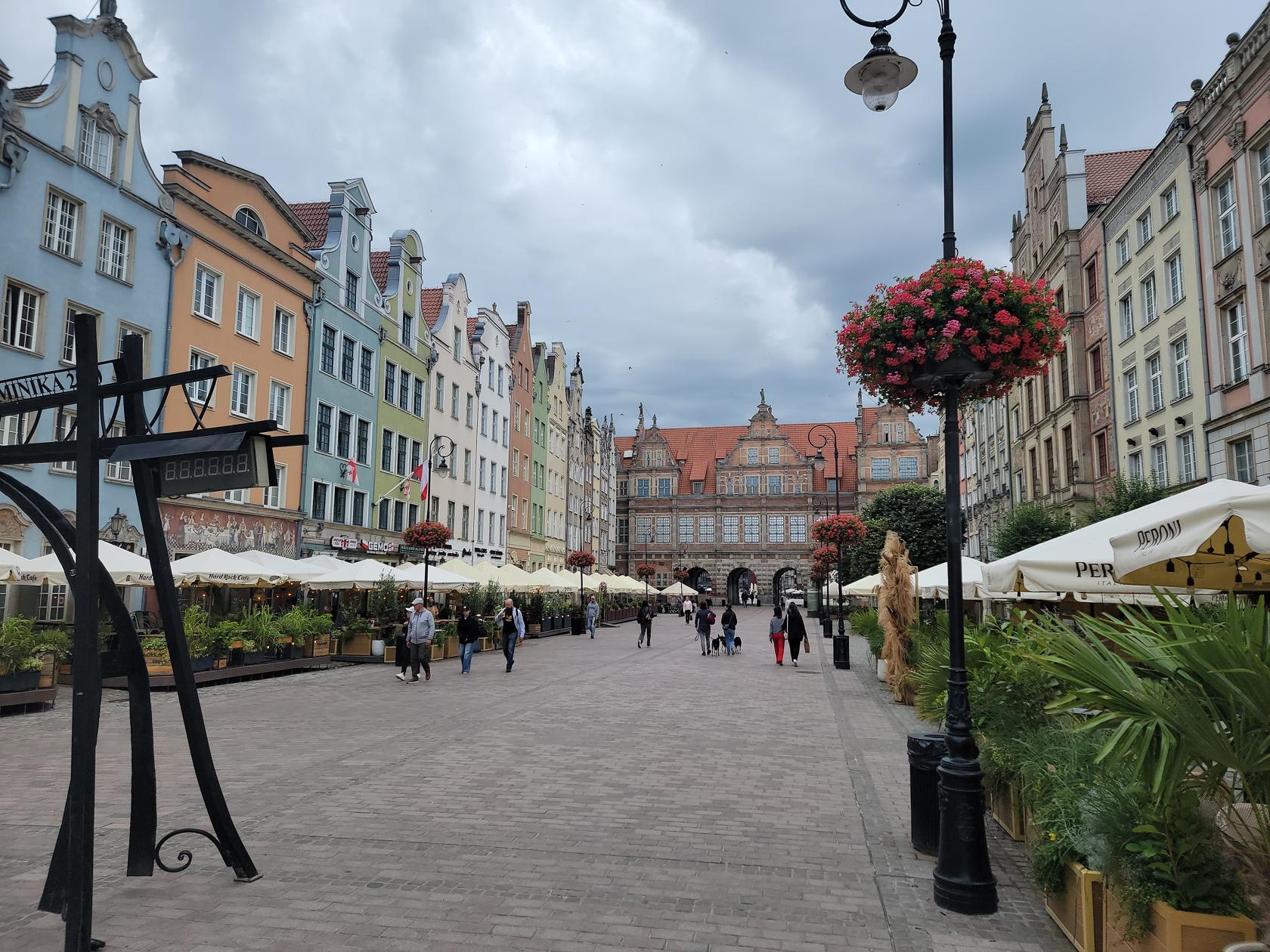
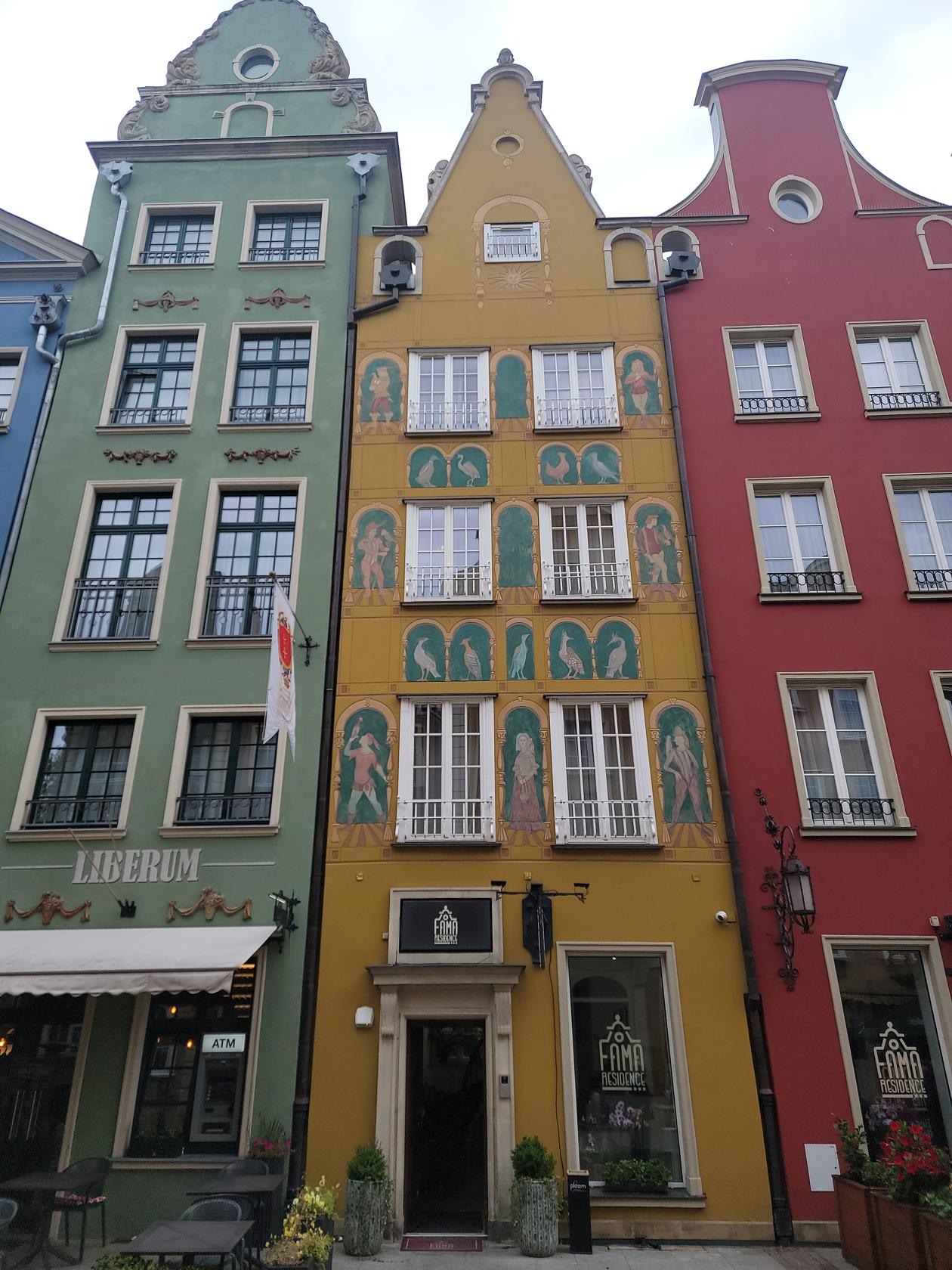
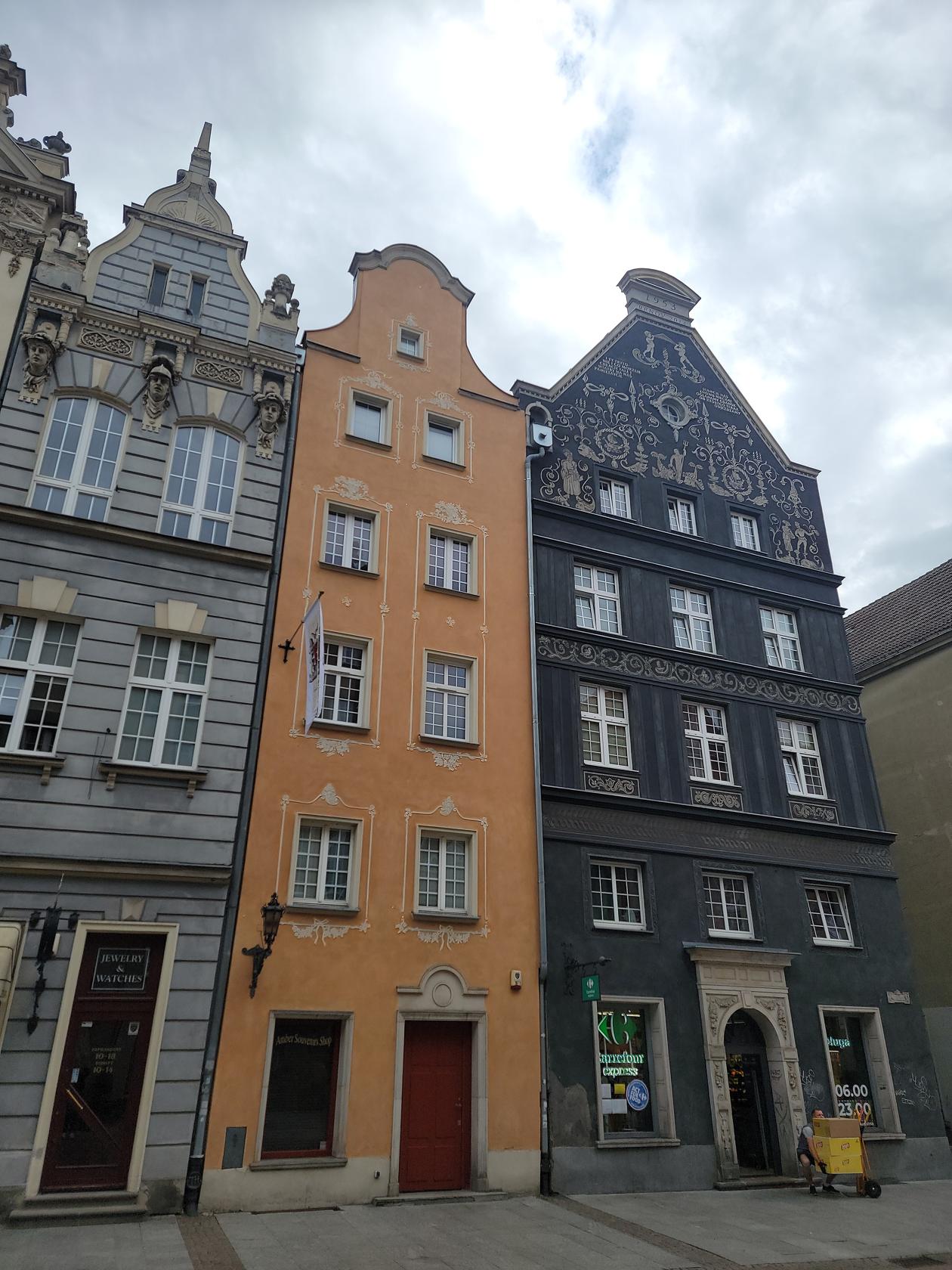
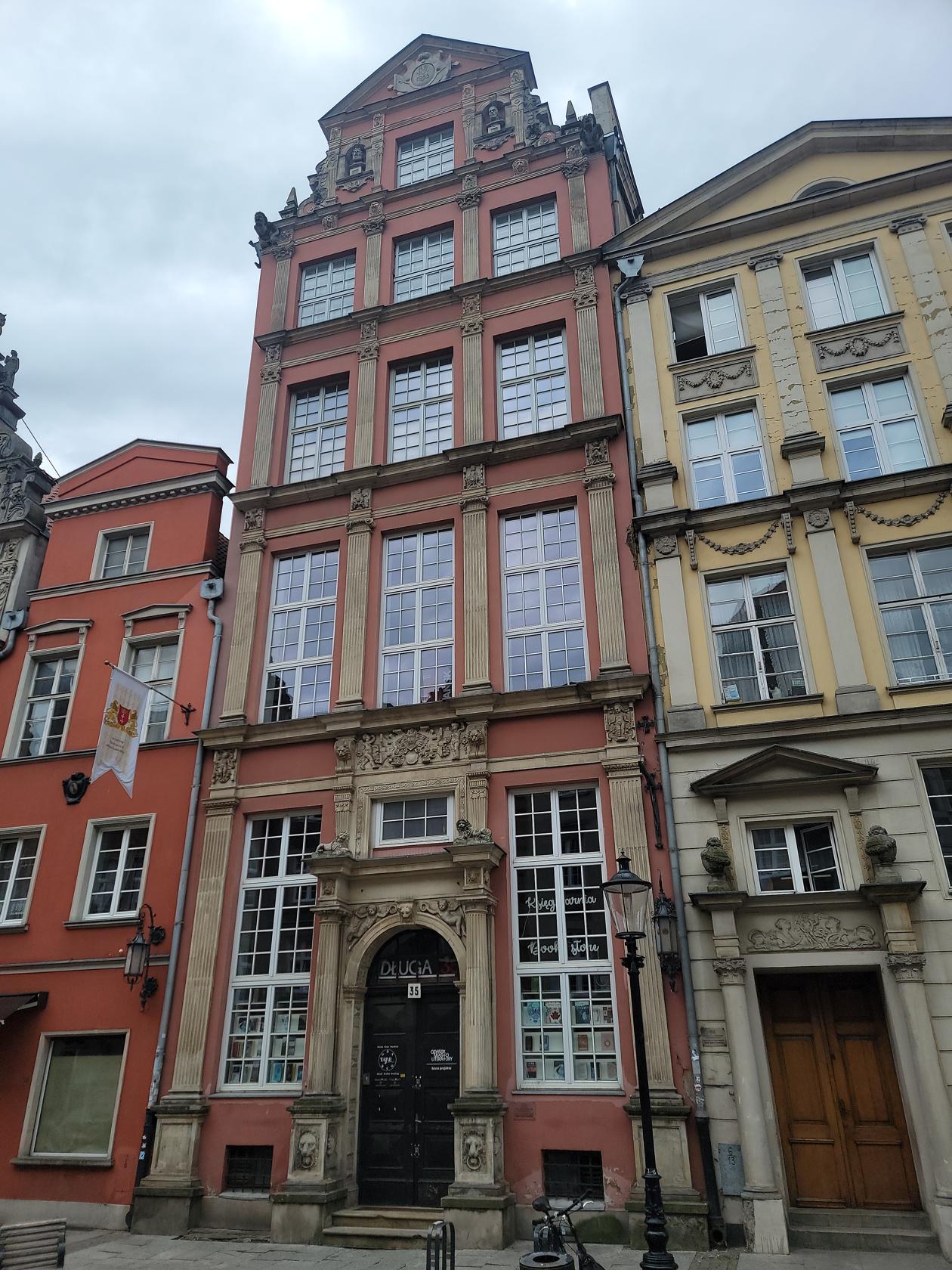
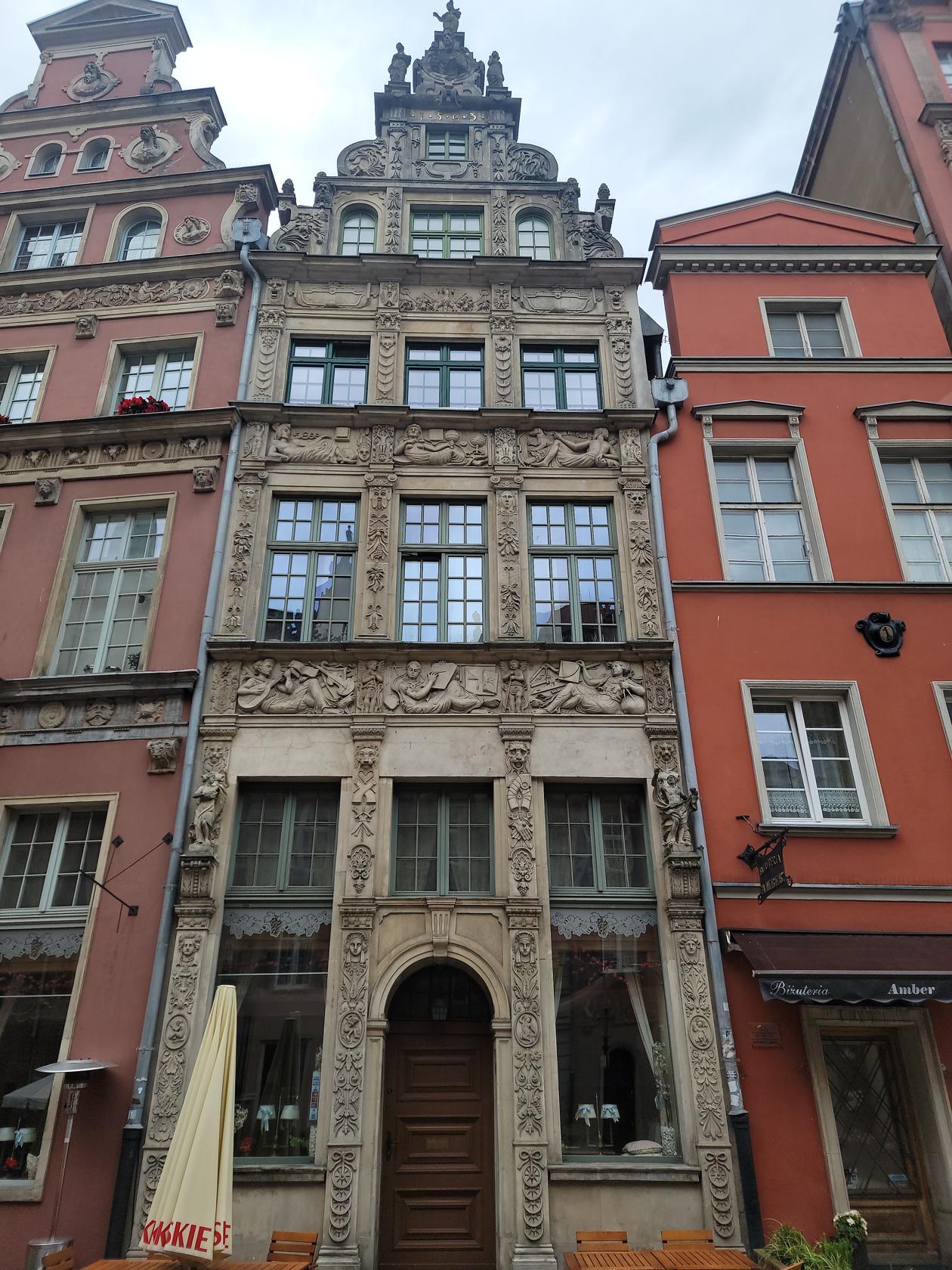
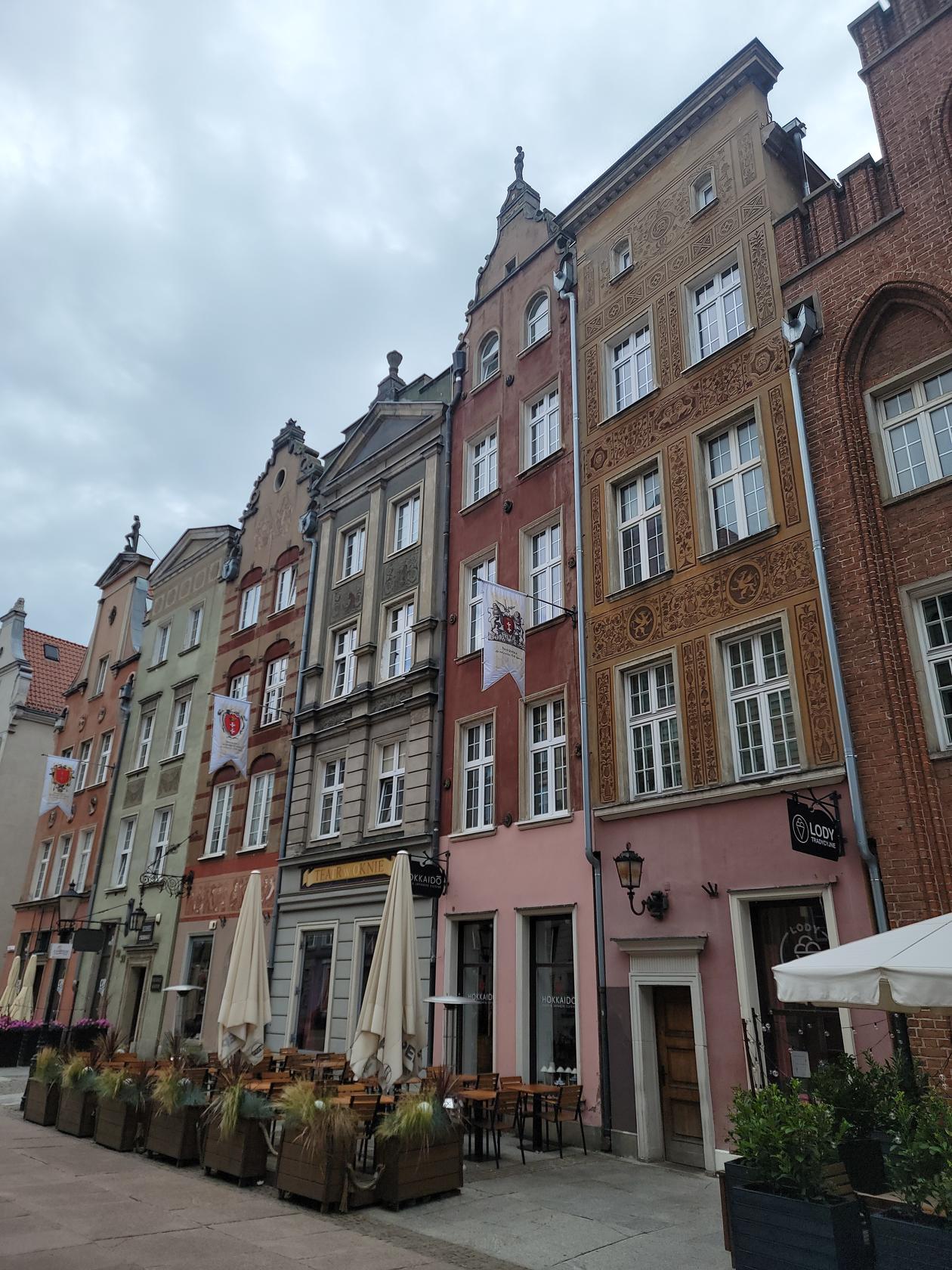
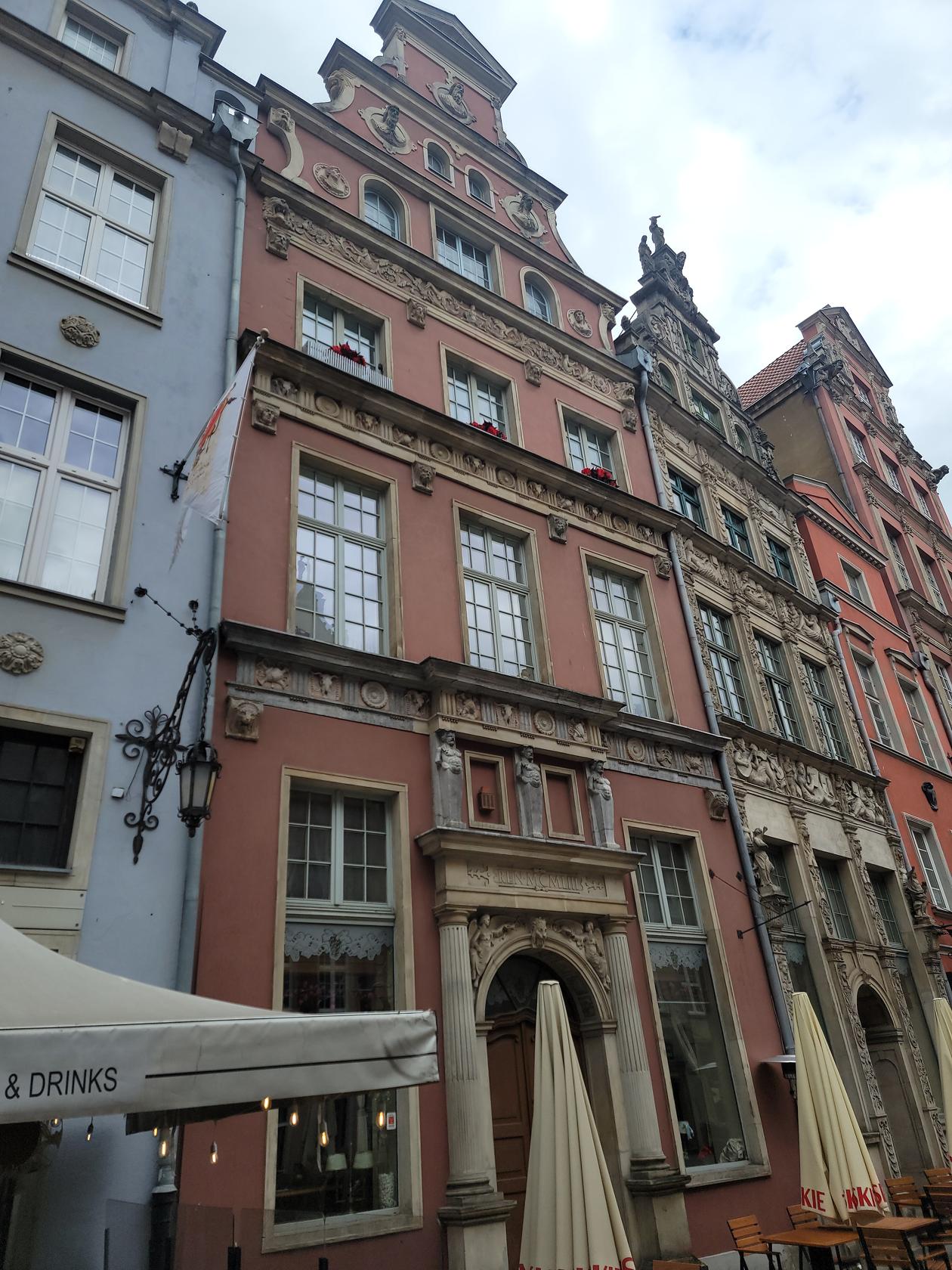
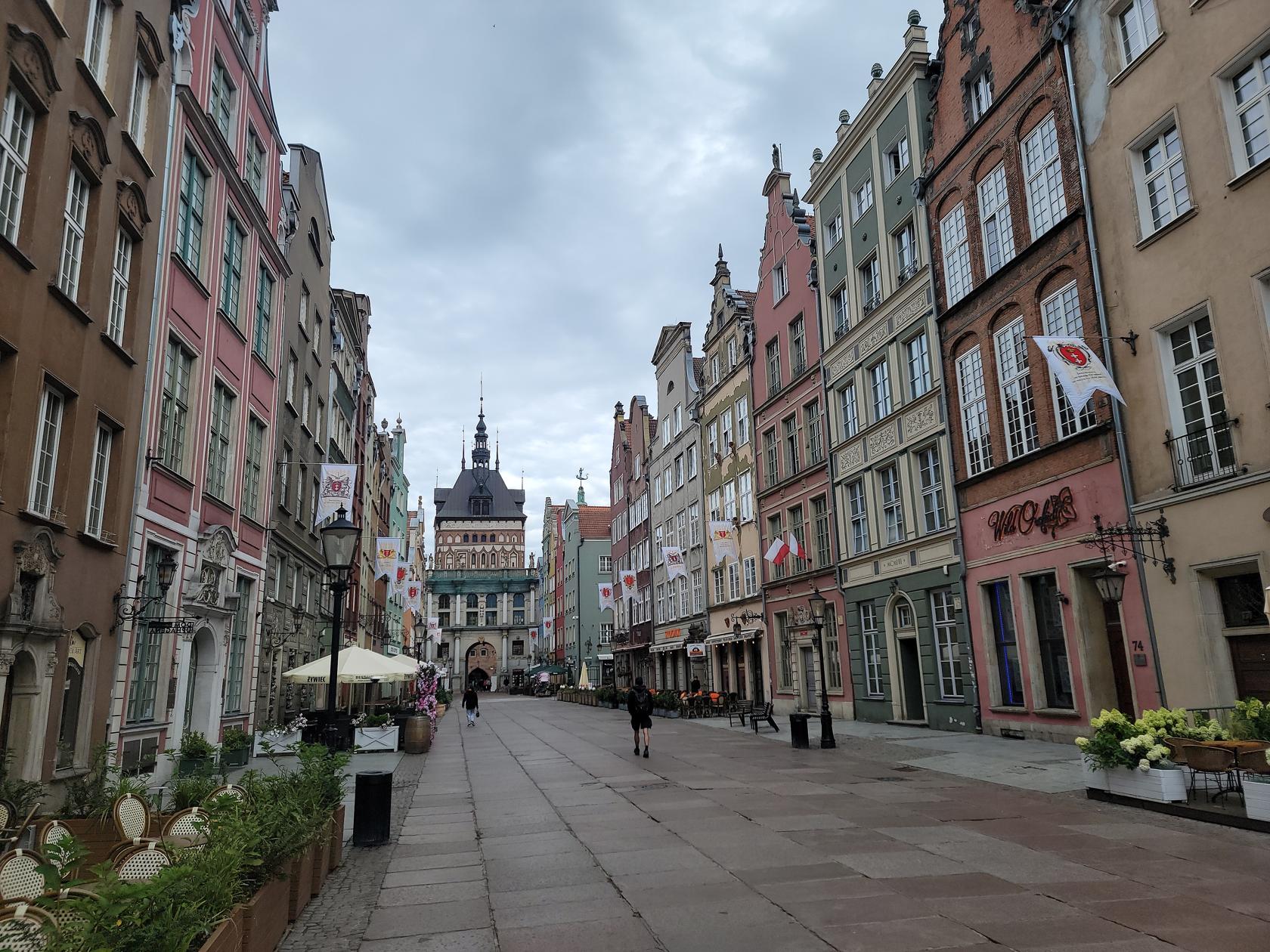
Also known as Long Lane, or Langgasse, Długa Street is where you will find many of the notable houses that adorn the old town, as well as the Town Hall and Neptune’s Fountain.
Neptune Fountain – Długa Street – Gdańsk, Poland
Upper Długa Street – Gdańsk, Poland
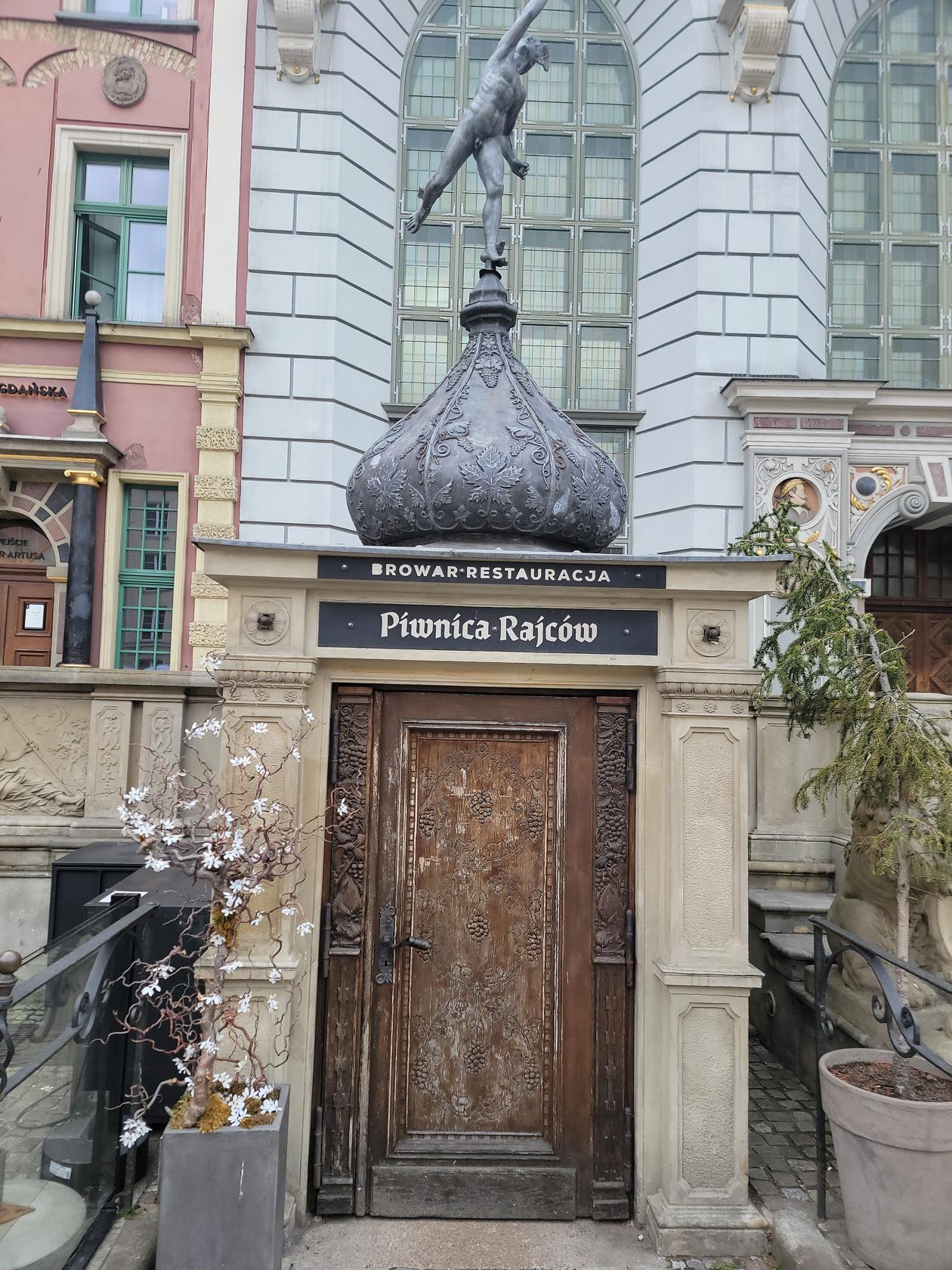
Basement Restaurant – Długa Street – Gdańsk, Poland
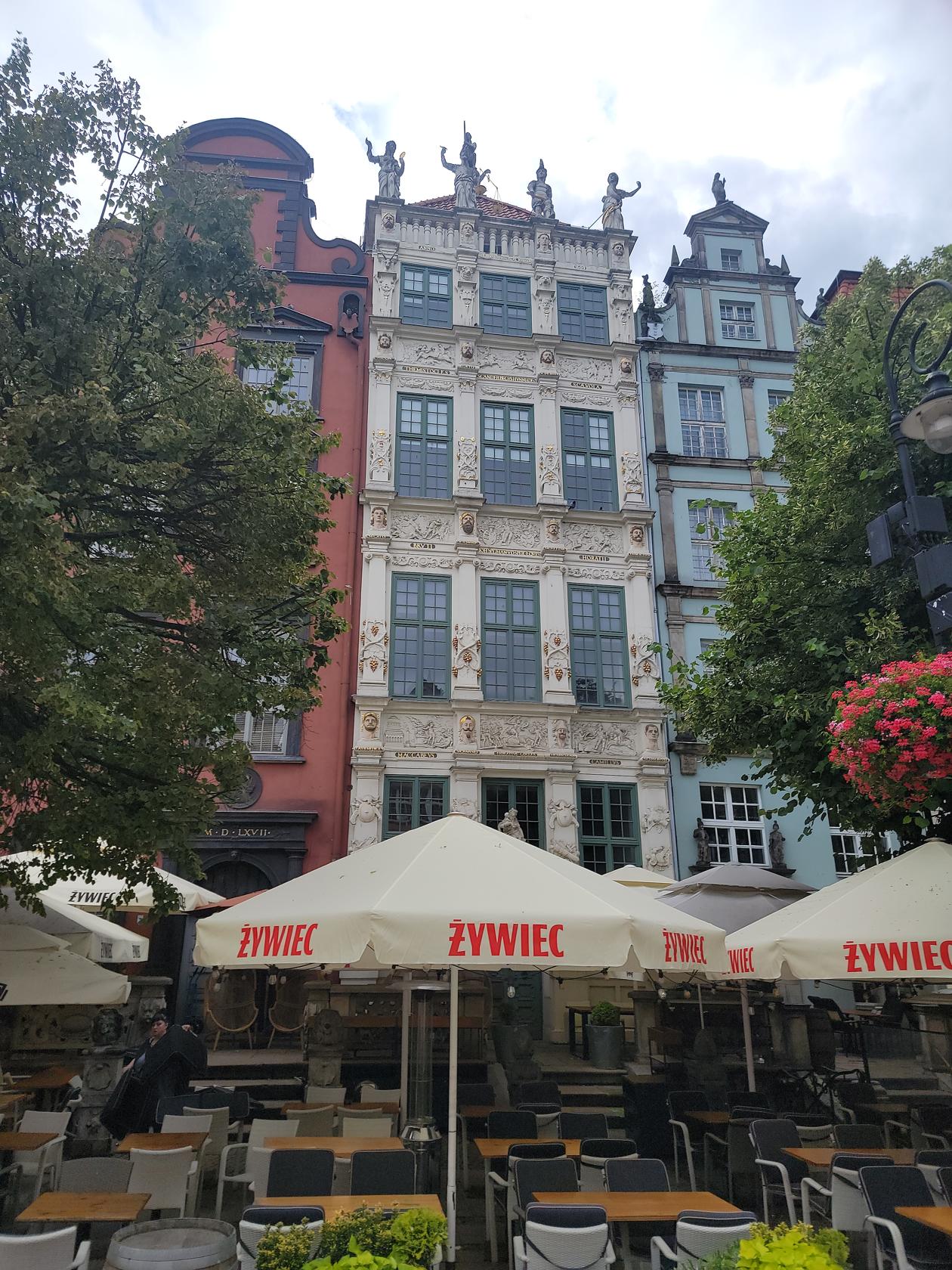
Golden House – Długa Street – Gdańsk, Poland
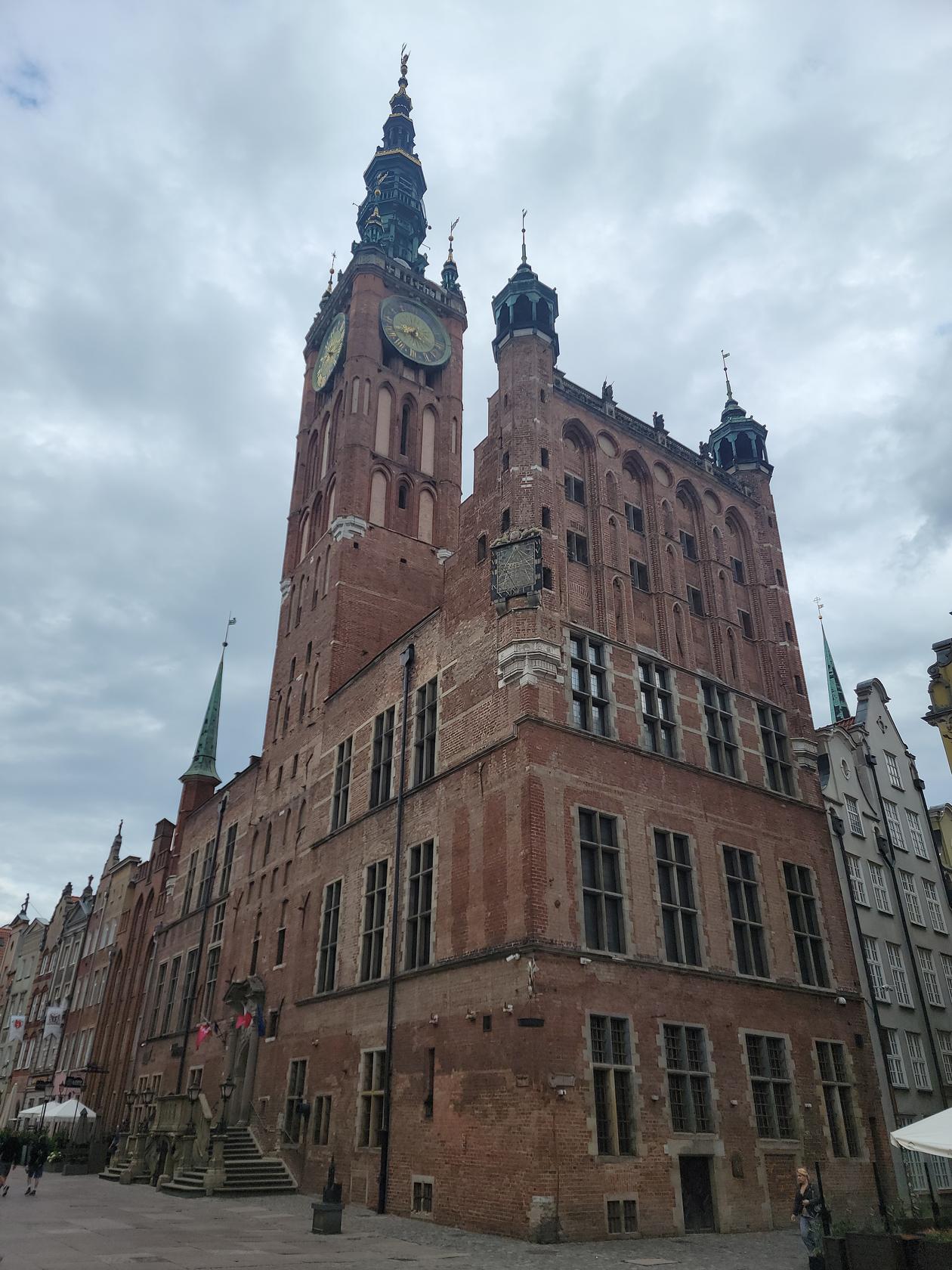
Town Hall – Długa Street – Gdańsk, Poland
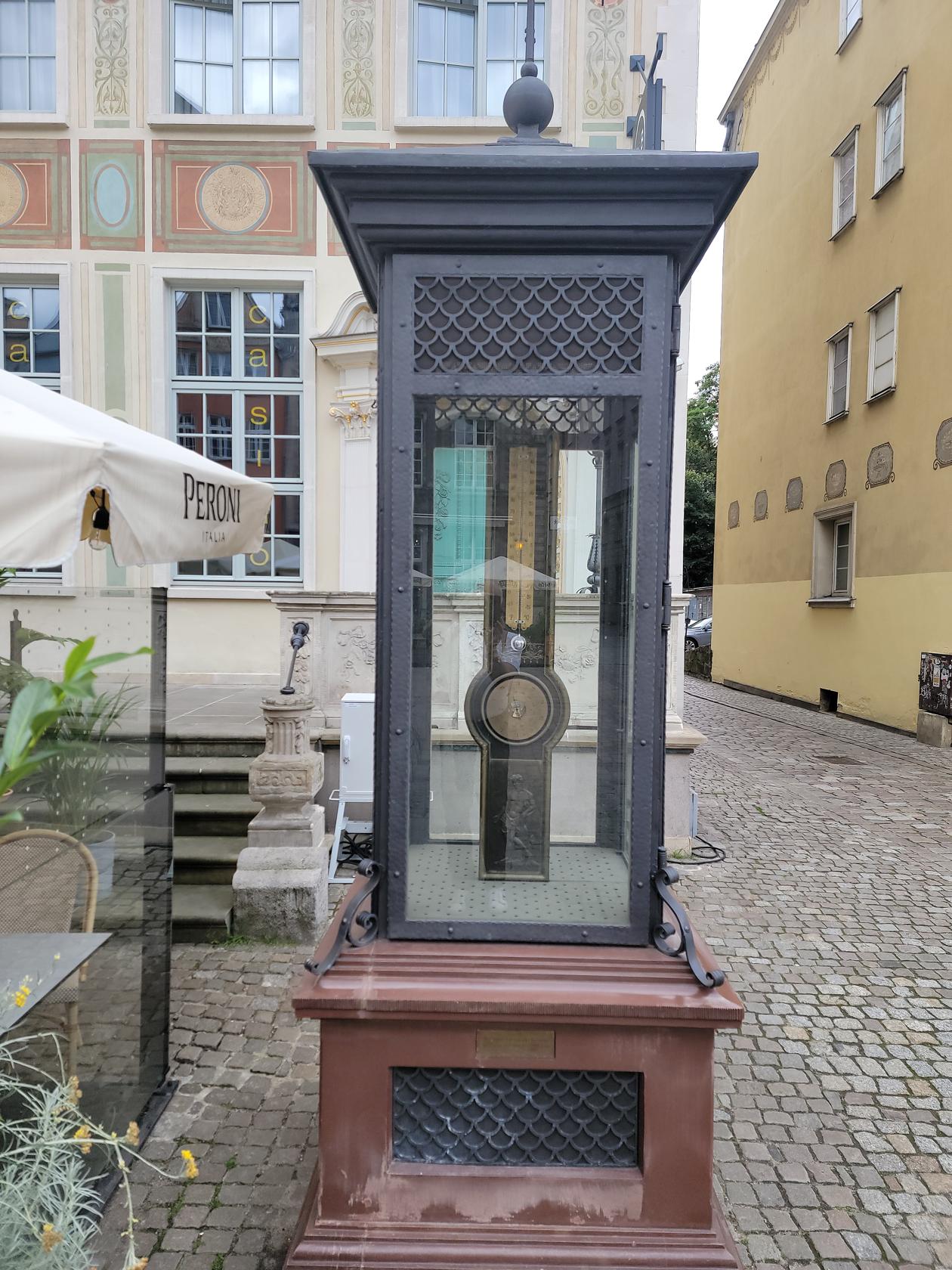
Fahrenheit Monument – Długa Street – Gdańsk, Poland
Long Market Place – Długa Street – Gdańsk, Poland
Long Market Place – Długa Street – Gdańsk, Poland
Neptune Fountain – Długa Street – Gdańsk, Poland
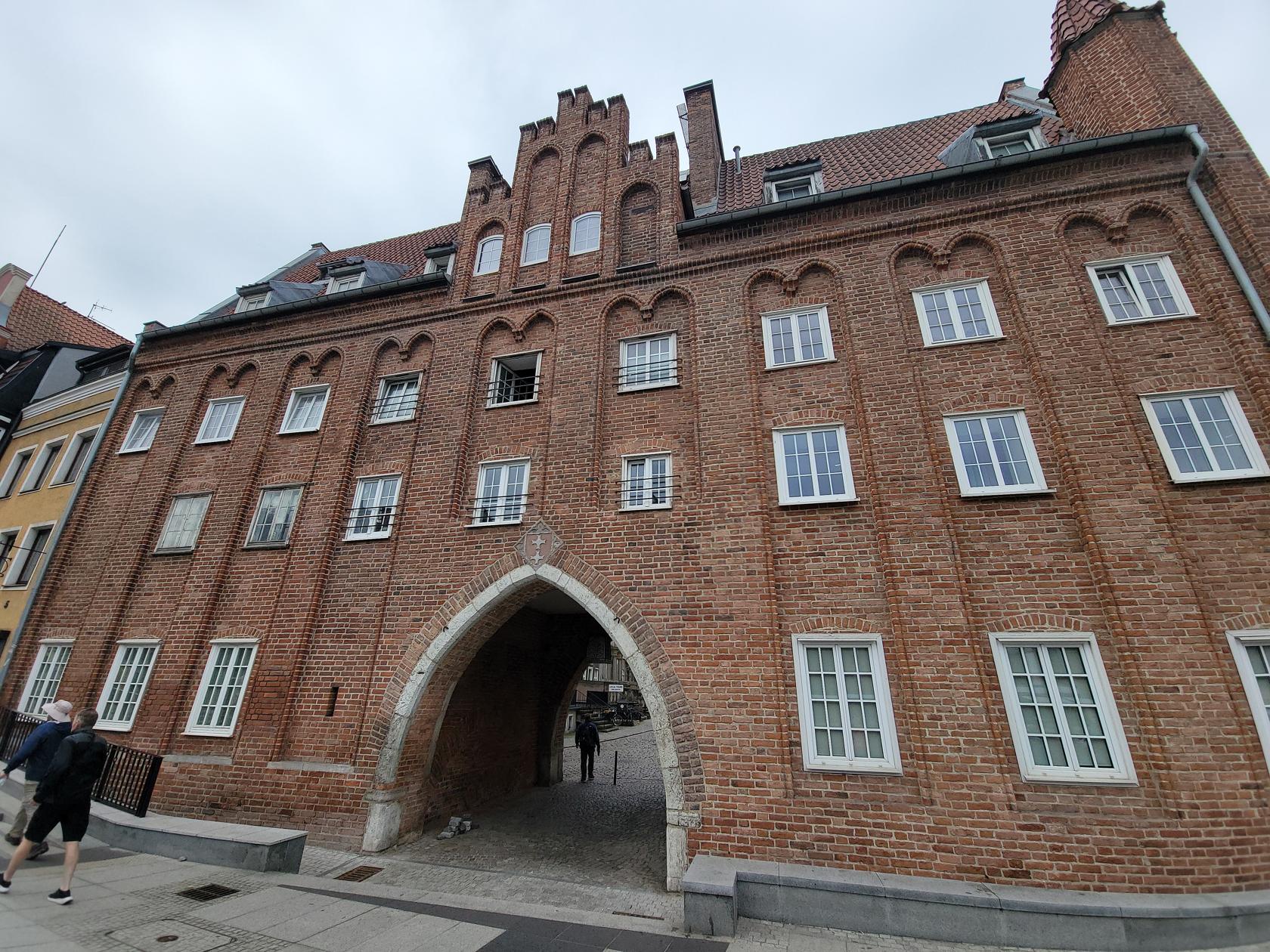
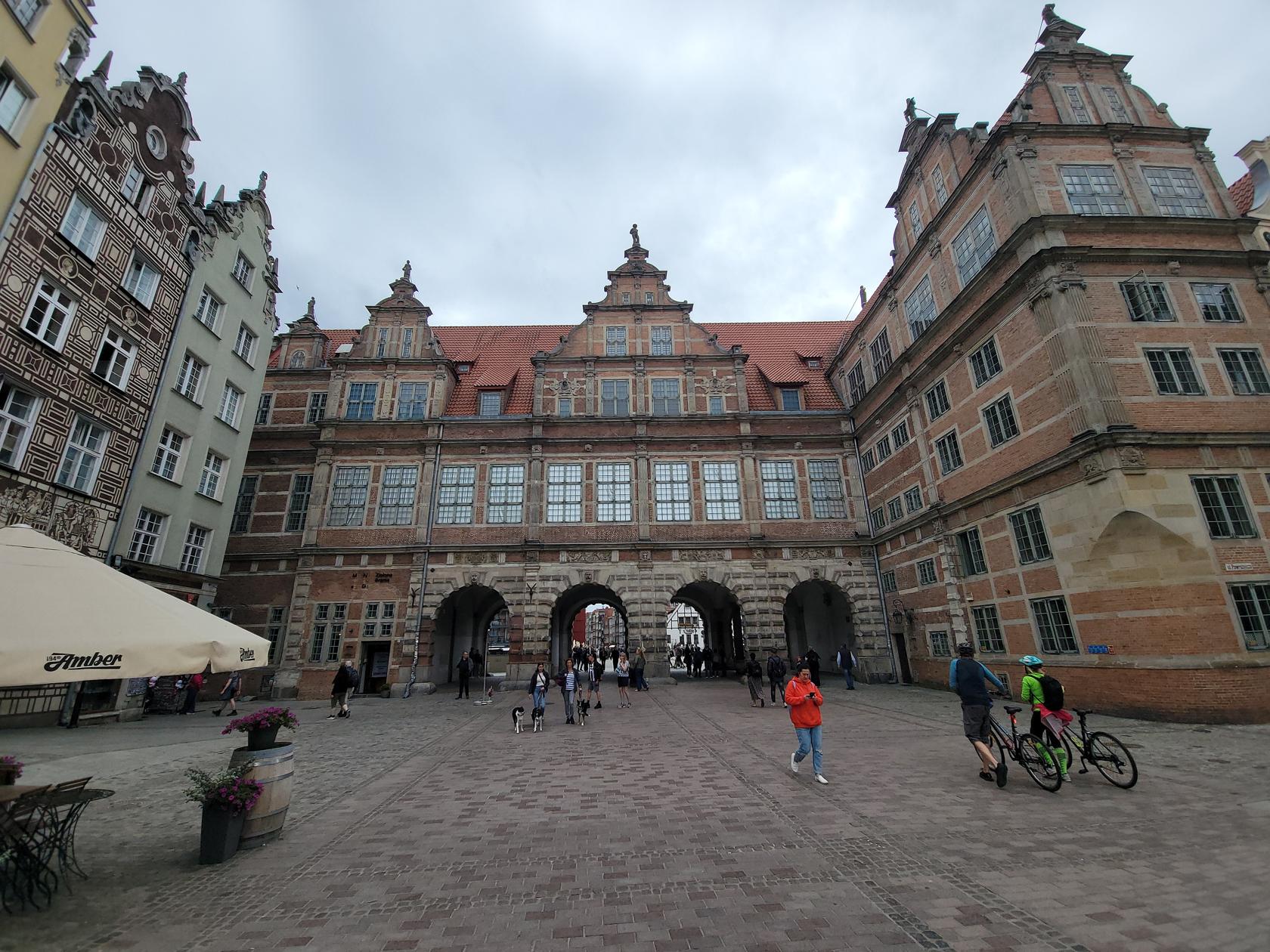
It is bounded by the Green Gate on the end by the river, and the Golden Gate, which is near the former main entrance to the town, including its barbican and Highland Gate.
Upper Długa Street – Gdańsk, Poland
Upper Długa Street – Gdańsk, Poland
Upper Długa Street – Gdańsk, Poland
Upper Długa Street – Gdańsk, Poland
Upper Długa Street – Gdańsk, Poland
Upper Długa Street – Gdańsk, Poland
Upper Długa Street – Gdańsk, Poland
Golden Gate – Upper Długa Street – Gdańsk, Poland
Mariacka Street
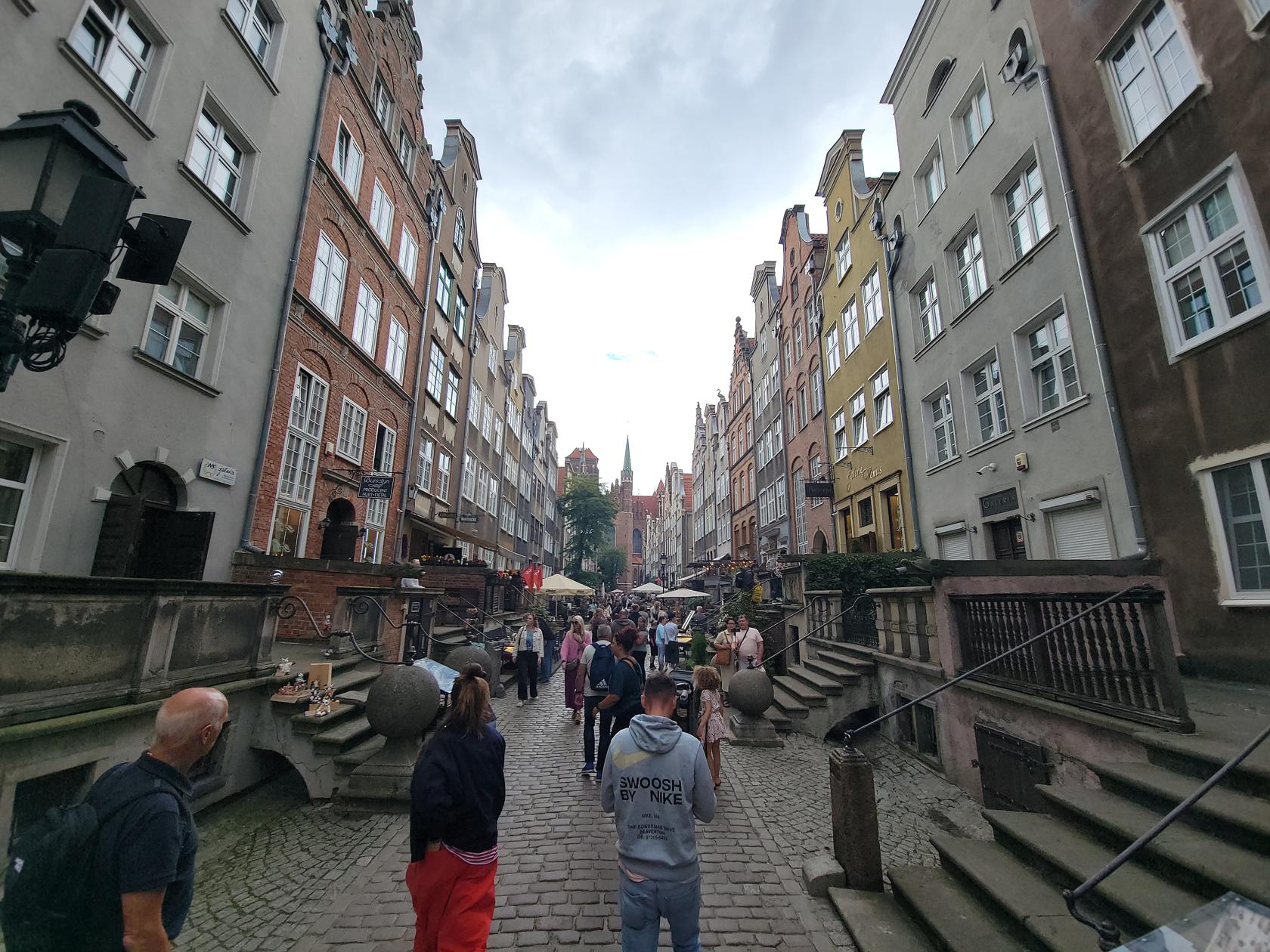
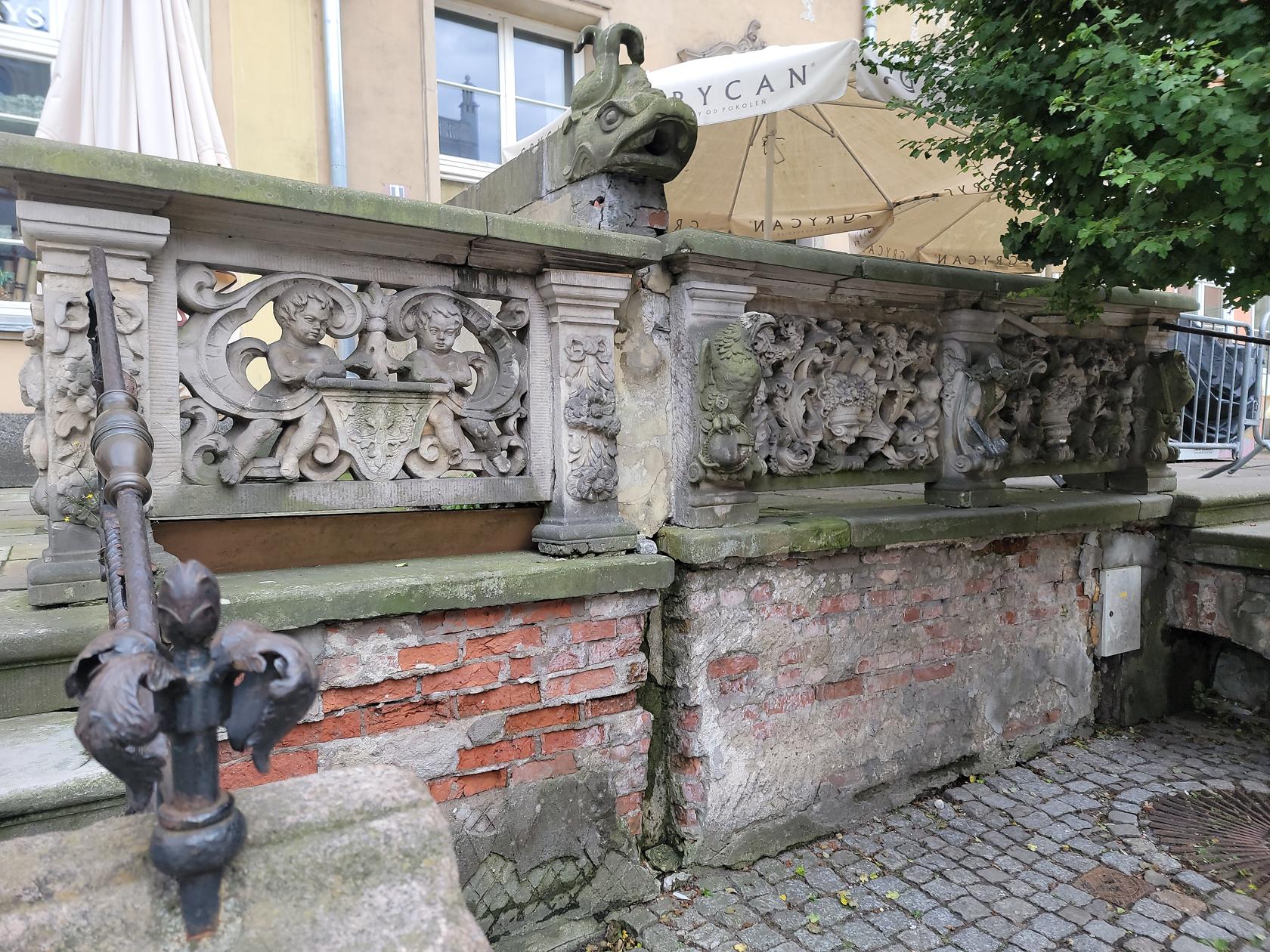
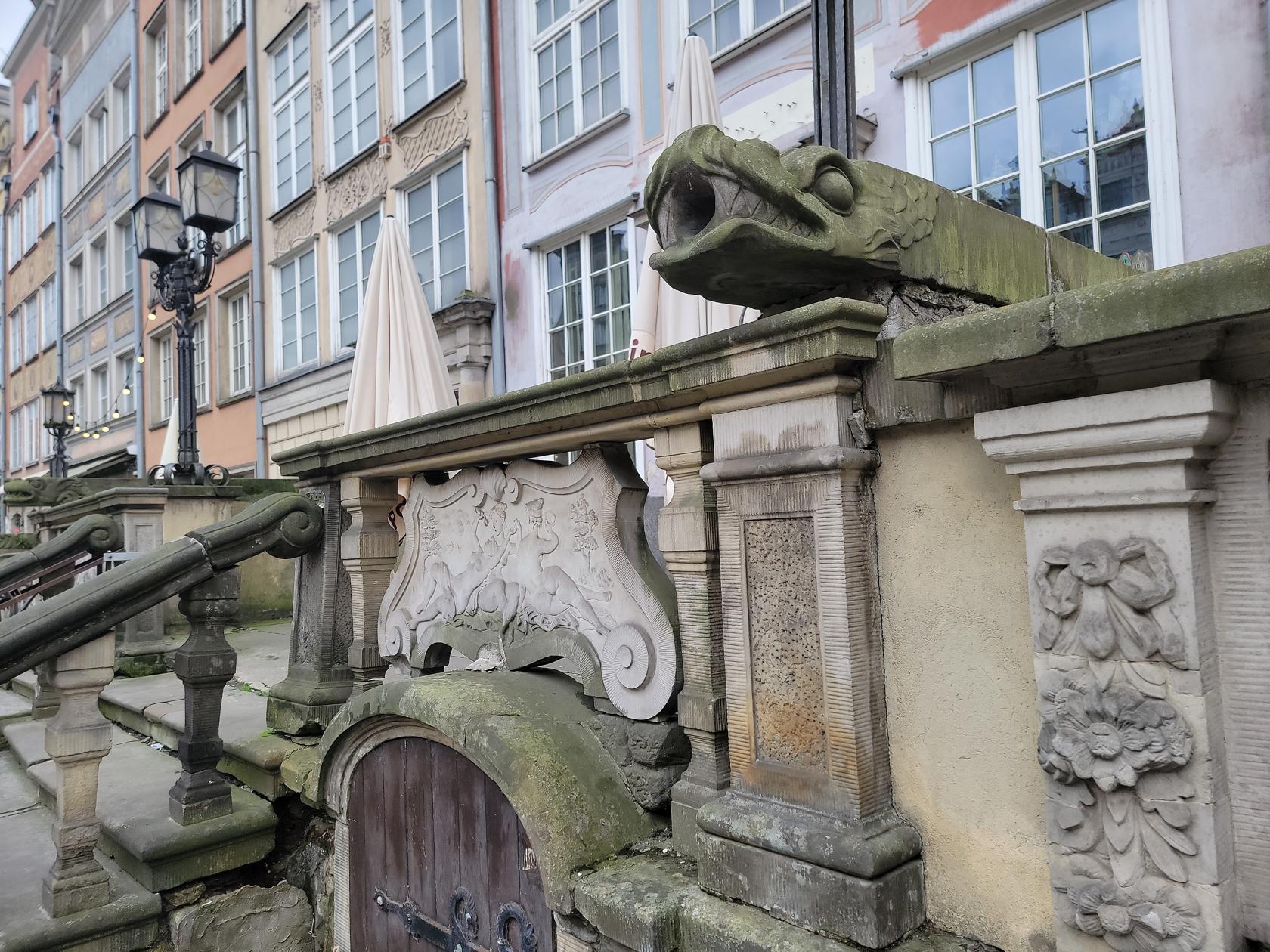
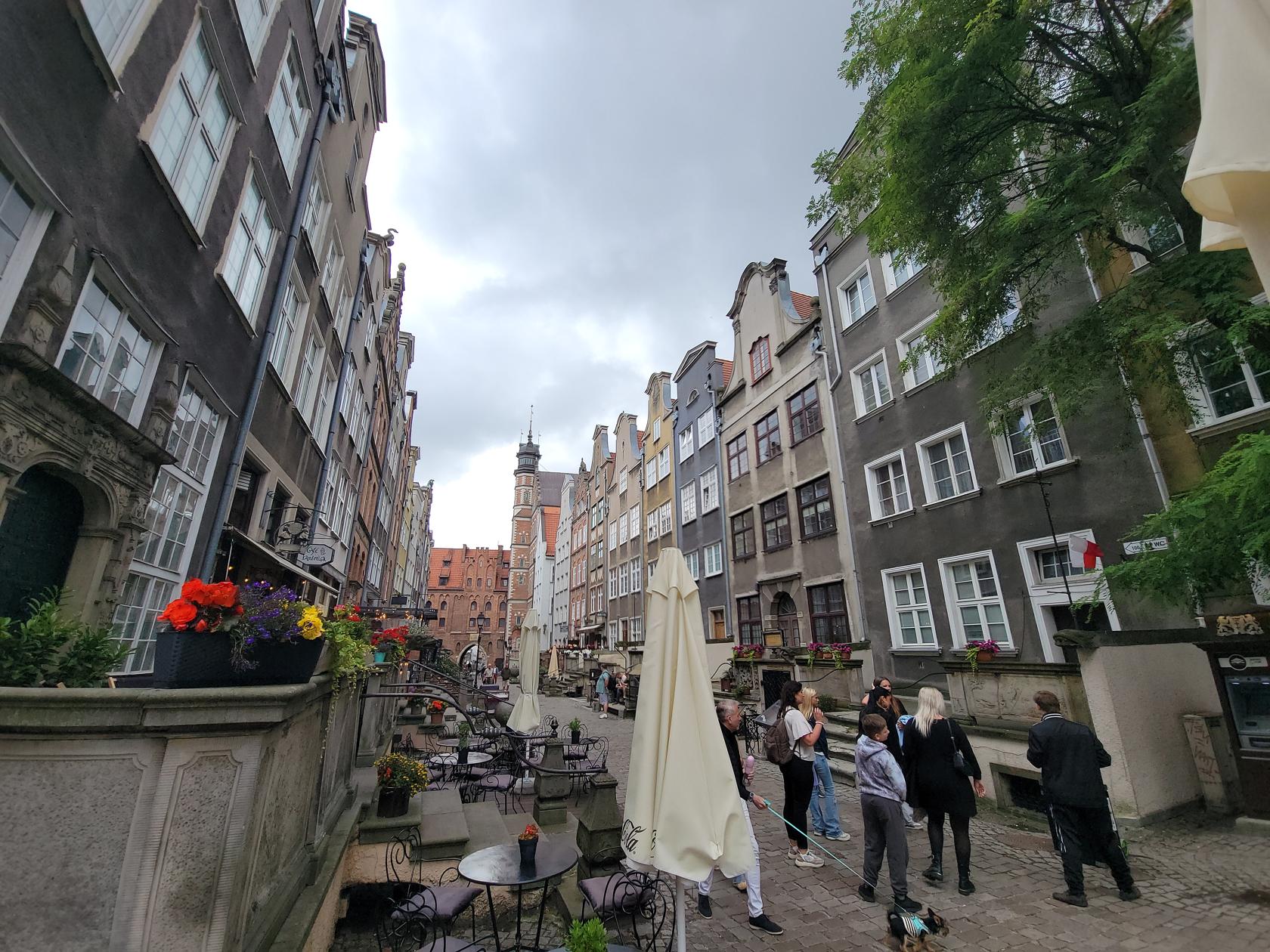
Parallel to Long Lane is Mariacka Street, an unusual sort of street due to its narrowness and odd balustrades on the stoops of each of the houses that line the street.
Mariacka Street – Gdańsk, Poland
Ornate Downspouts – Mariacka Street – Gdańsk, Poland
Ornate Downspouts – Mariacka Street – Gdańsk, Poland
Ornate Balustades – Mariacka Street – Gdańsk, Poland
Each balustrade was made unique so that the owner could identify his building when the river overflowed it’s banks. Most of the houses here are also quaintly decorated, though many have fallen into disrepair over the years.
Mariacka Street – Gdańsk, Poland
Mariacka Street – Gdańsk, Poland
Mariacka Street – Gdańsk, Poland
Mariacka Street – Gdańsk, Poland
Raduni Canal
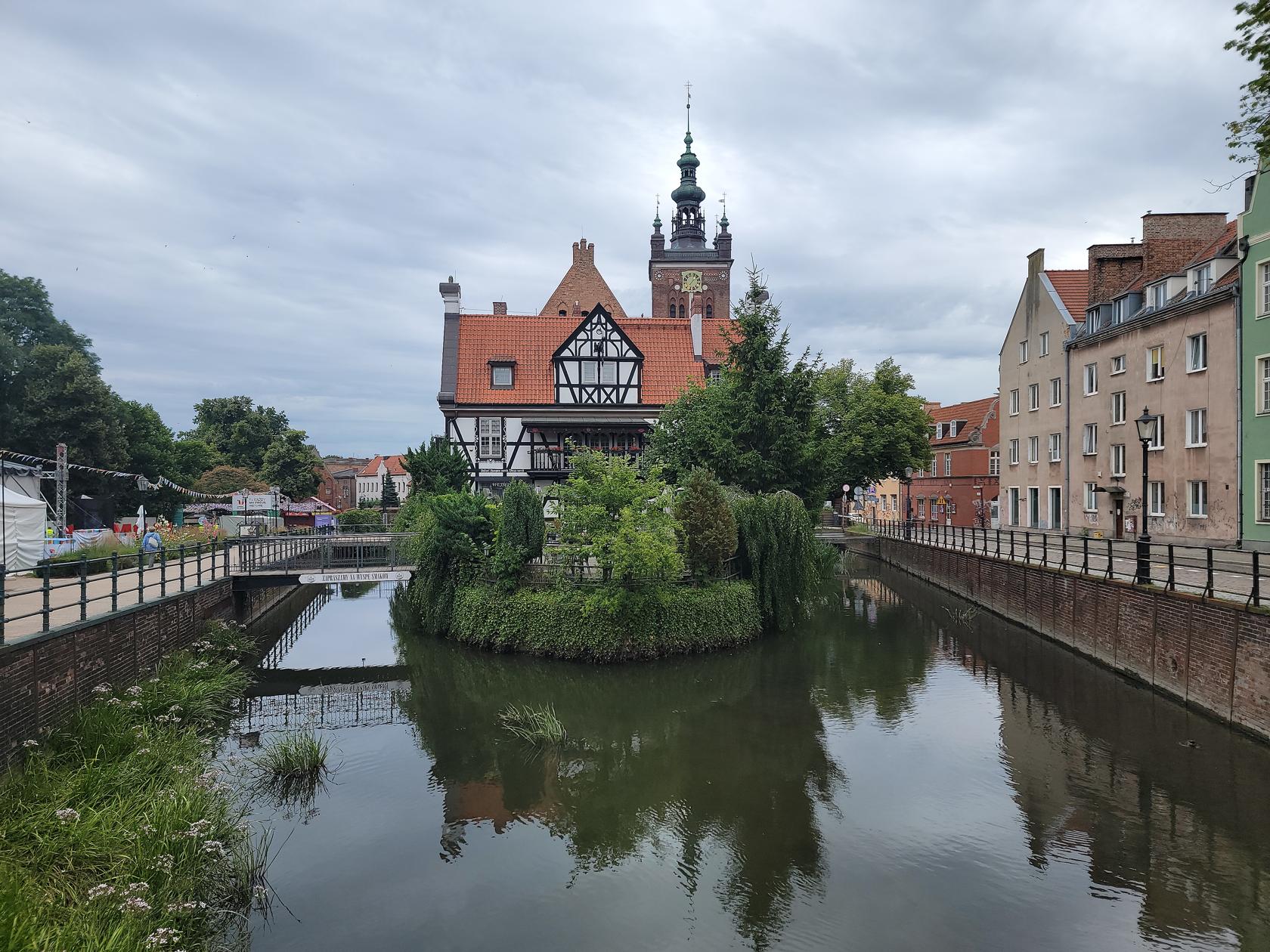
Another interesting place to visit is the area around the Raduni Canal. This is located on the other side of the basilica and Roman Keller.
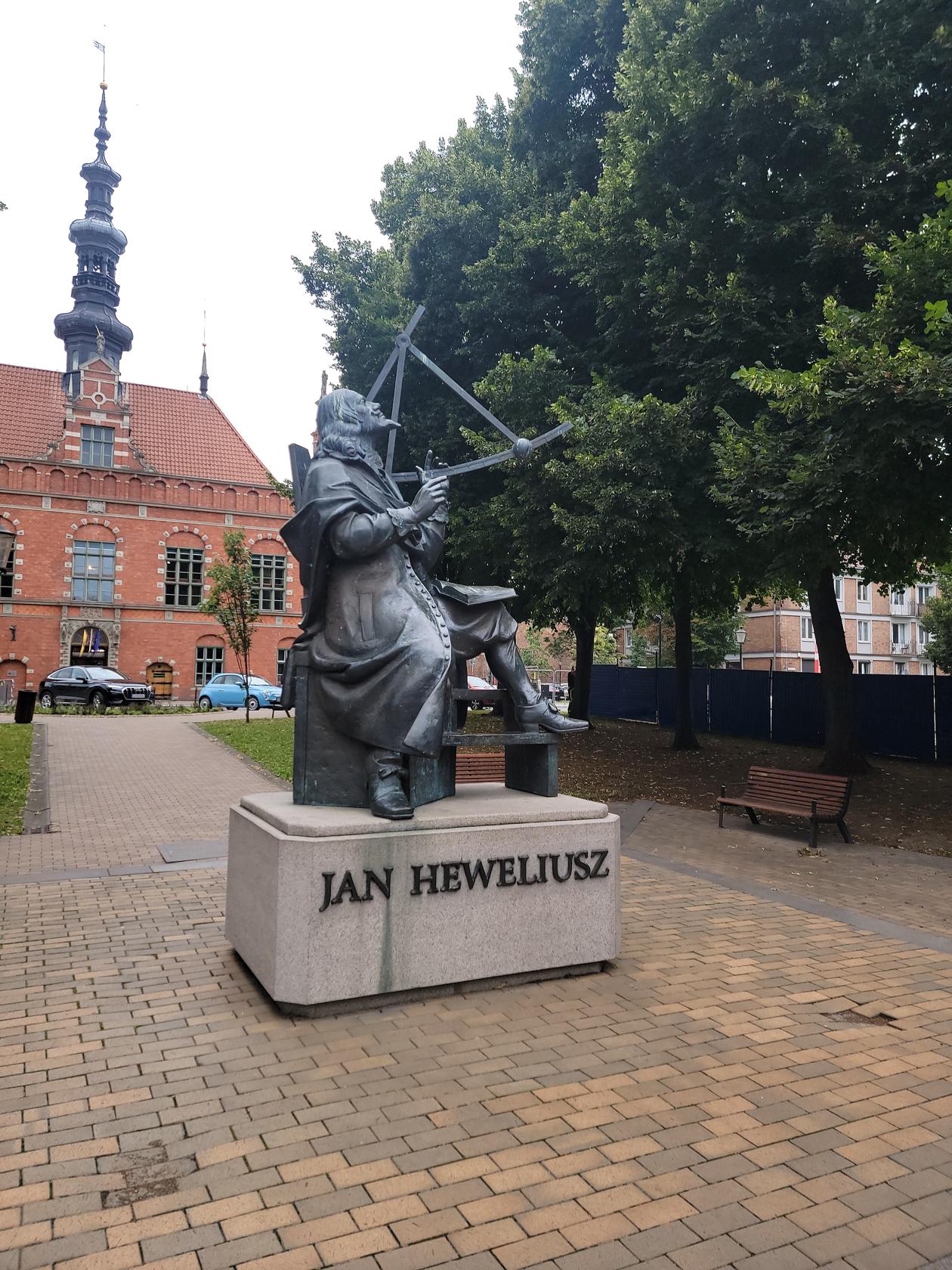
Jan Heweliusz – Radunia Canal – Gdańsk, Poland
Mill – Radunia Canal – Gdańsk, Poland
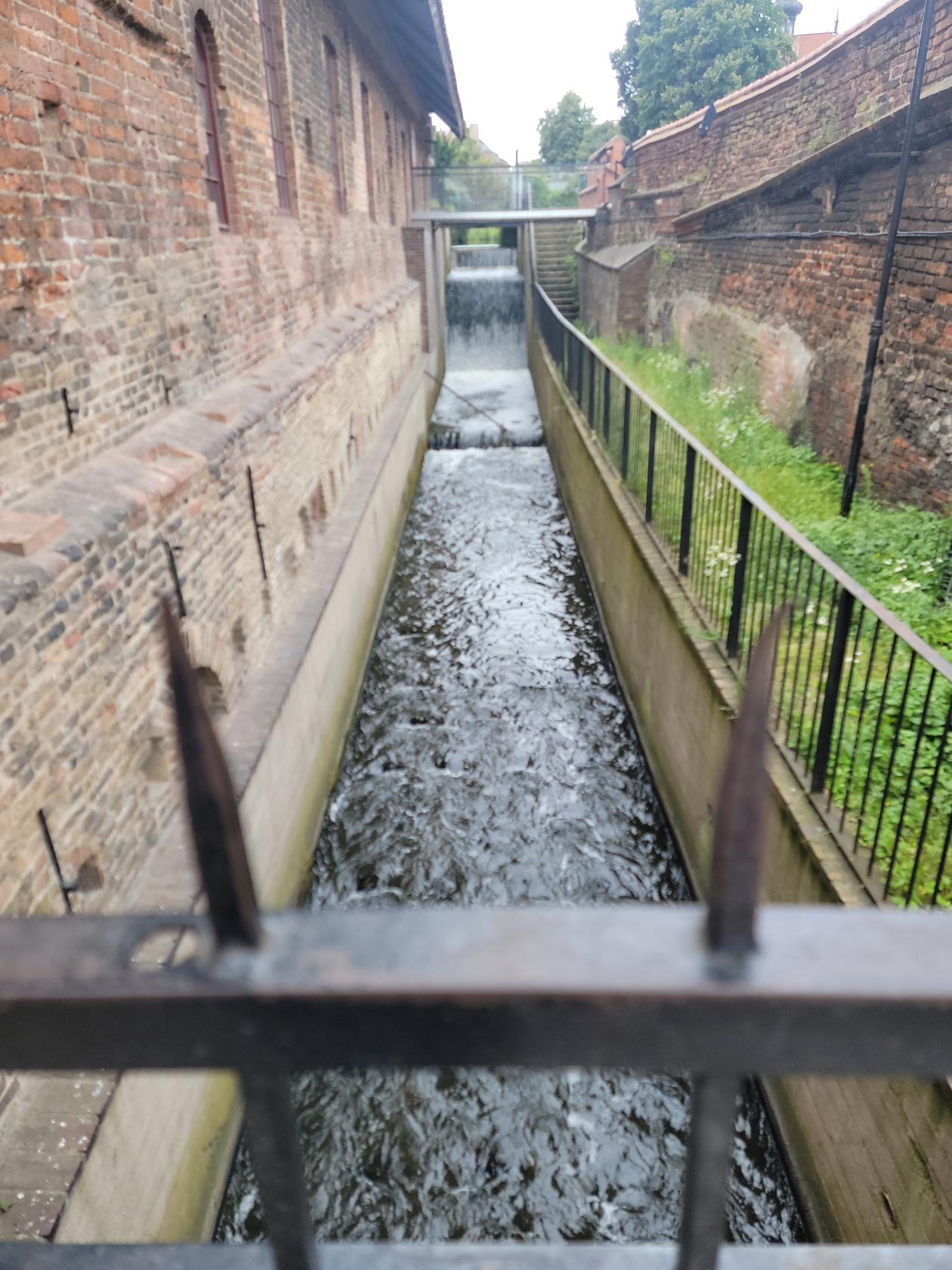
Radunia Canal – Gdańsk, Poland
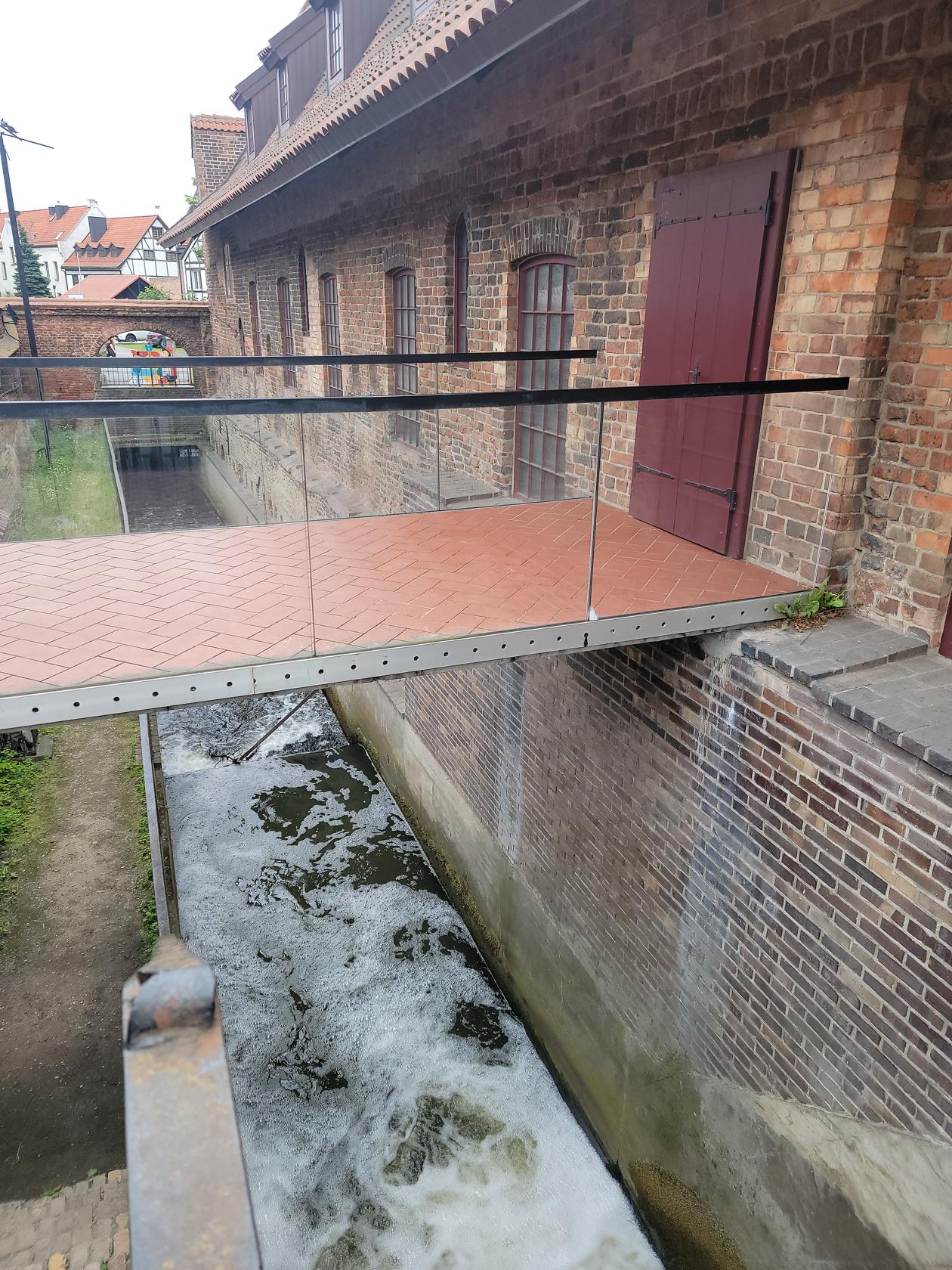
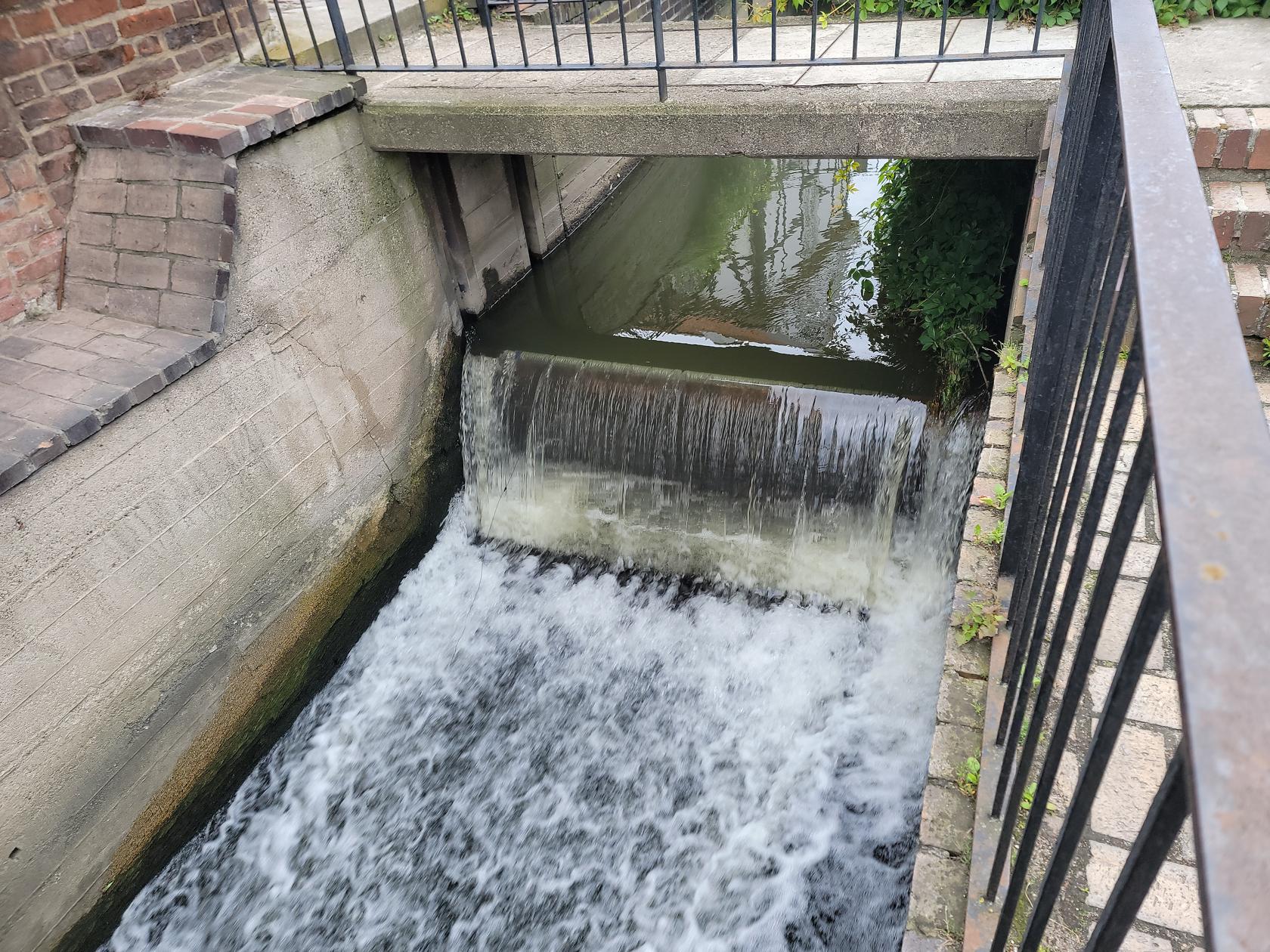
Waterfall by Mill – Radunia Canal – Gdańsk, Poland
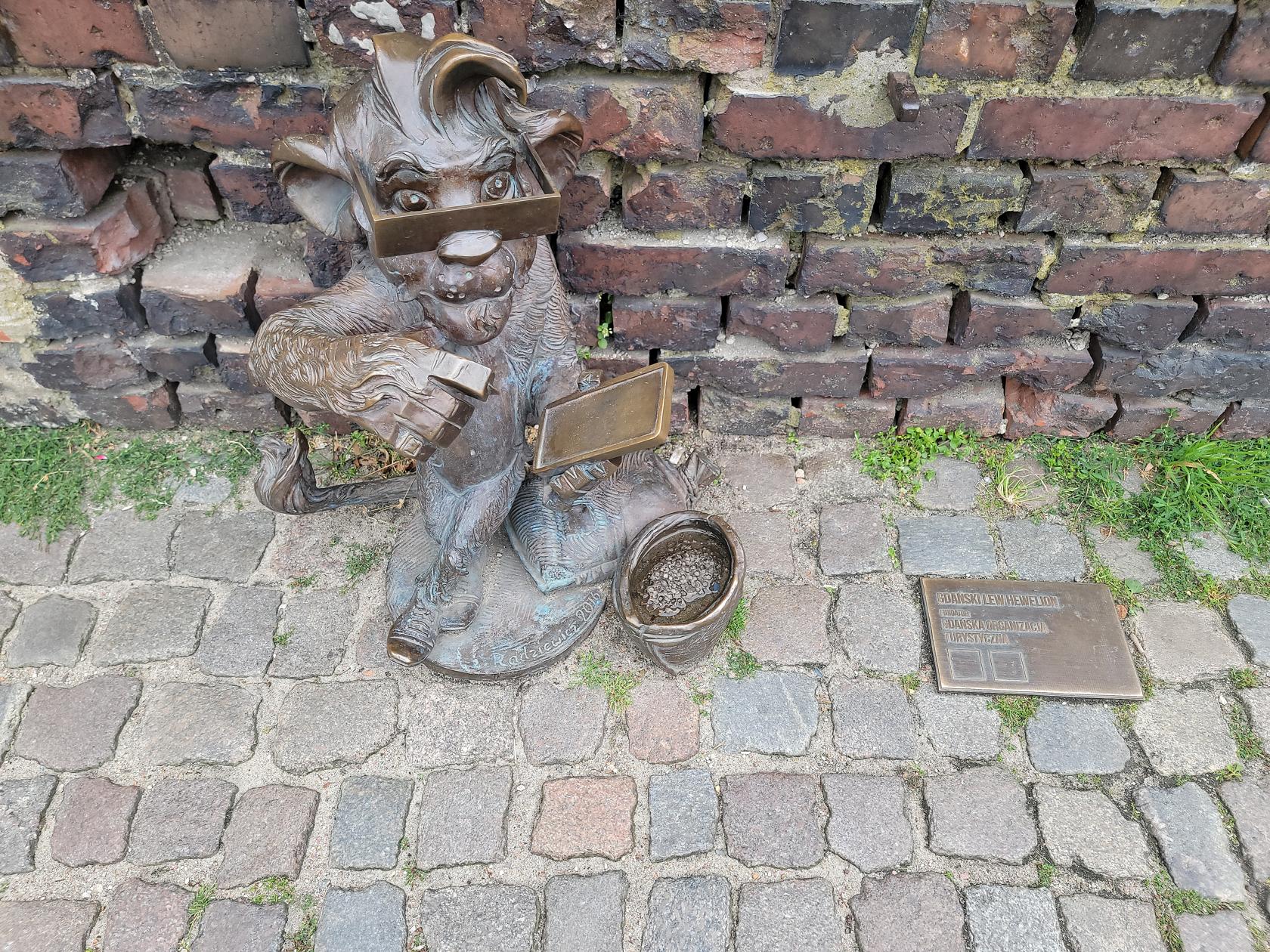
Lew Hewelion Businessman Small Bronz – Radunia Canal – Gdańsk, Poland
Dom Sygnatora – Gdańsk, Poland
Radunia Canal – Gdańsk, Poland
Museum – Radunia Canal – Gdańsk, Poland
Gates And More Gates
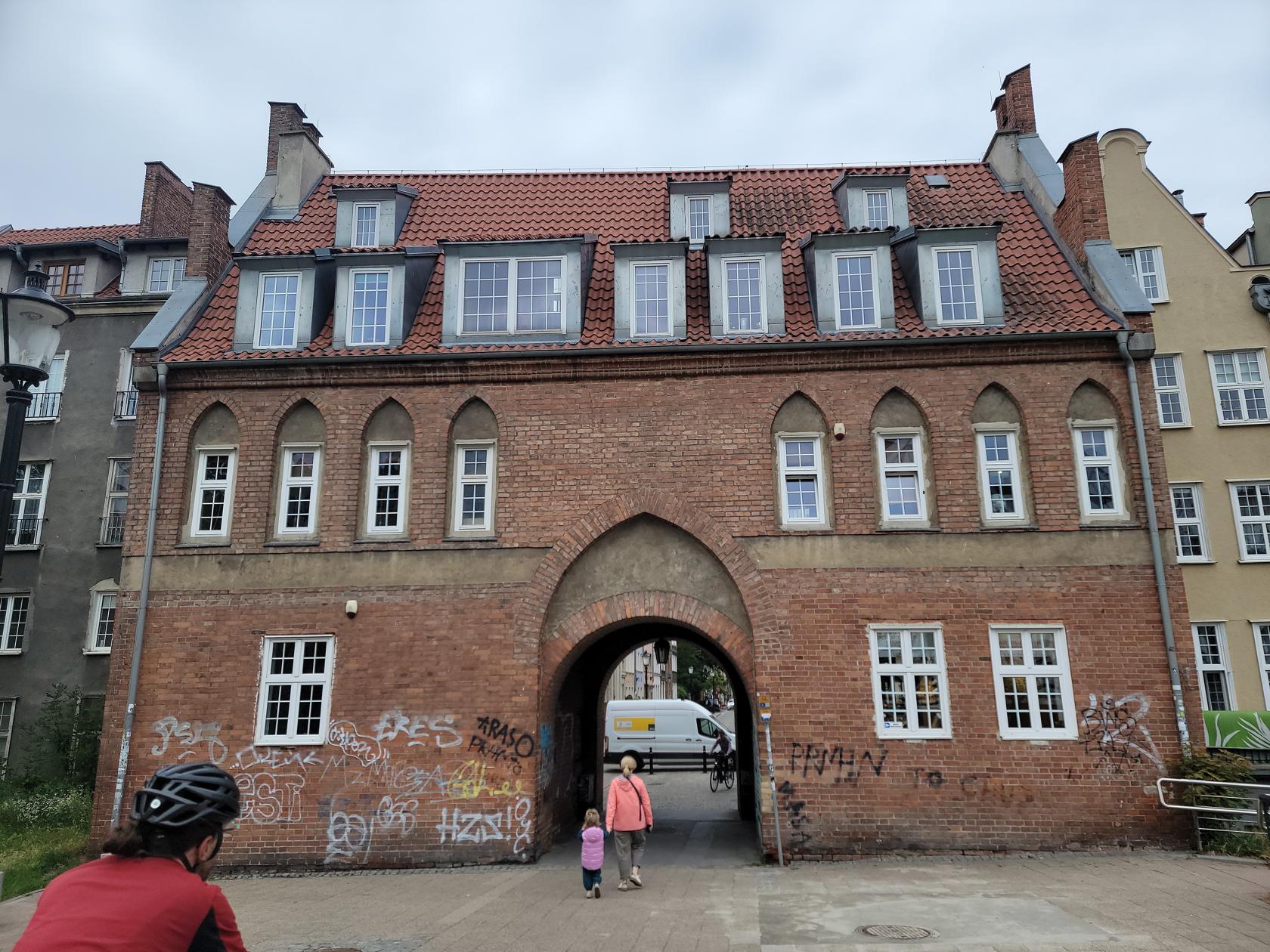
There are many gates in the old town, however most of the surviving ones still face the river.
Saint John’s Gate – Gdańsk, Poland
Straganiarska Gate – Motława River – Gdańsk, Poland
Saint Mary’s Gate – Motława River – Gdańsk, Poland
Chlebnicka Gate – Motława River – Gdańsk, Poland
Green Gate – Motława River – Gdańsk, Poland
Cow’s Gate – Motława River – Gdańsk, Poland
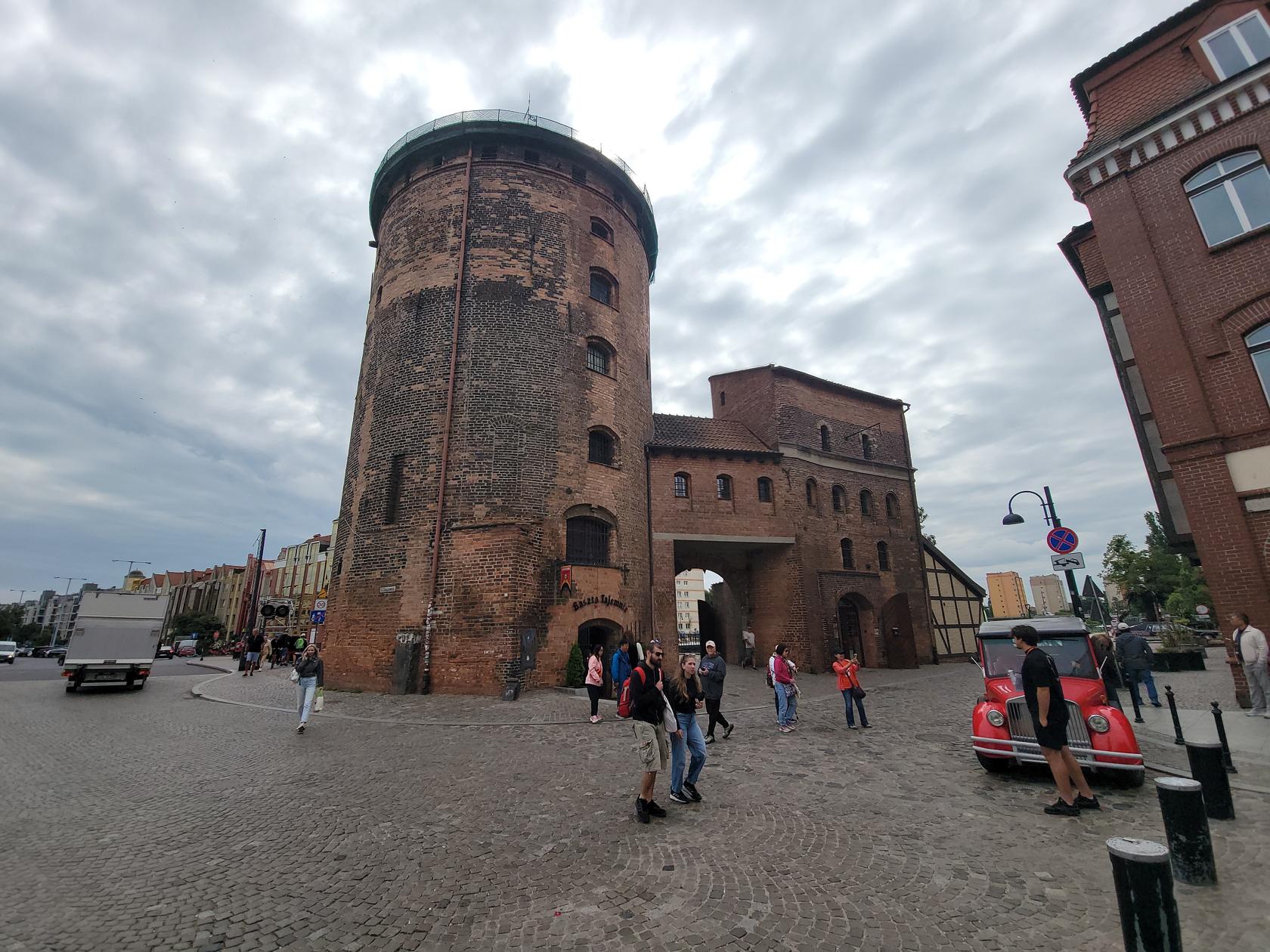
Barbican and Tower of Secrets Gate – Stągwie Mleczne – Motława River – Gdańsk, Poland
Barbican and Tower of Secrets Gate – Stągwie Mleczne – Motława River – Gdańsk, Poland
Saint Mary’s Gate – Motława River – Gdańsk, Poland
The Highland and Golden Gates are on the land side of the city and were connected to a great wall that surrounded it at one time. Here you will find one of the walls two barbicans attached to the Torture Gate or house. This gate doubled as a prison and became known for tortures that were carried out in its cellars.
Highland Gate – Upper Długa Street – Gdańsk, Poland
Golden Gate – Upper Długa Street – Gdańsk, Poland
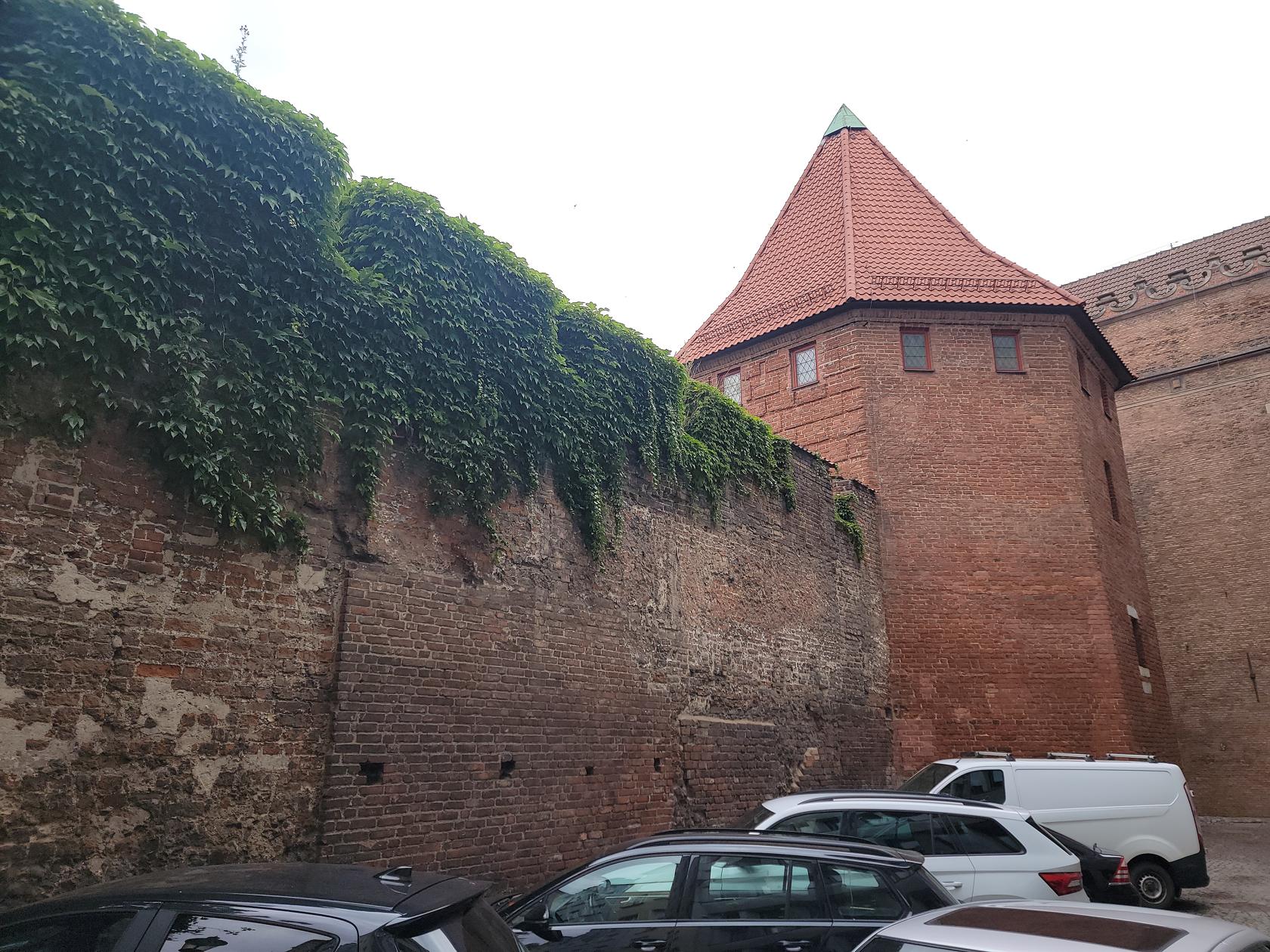
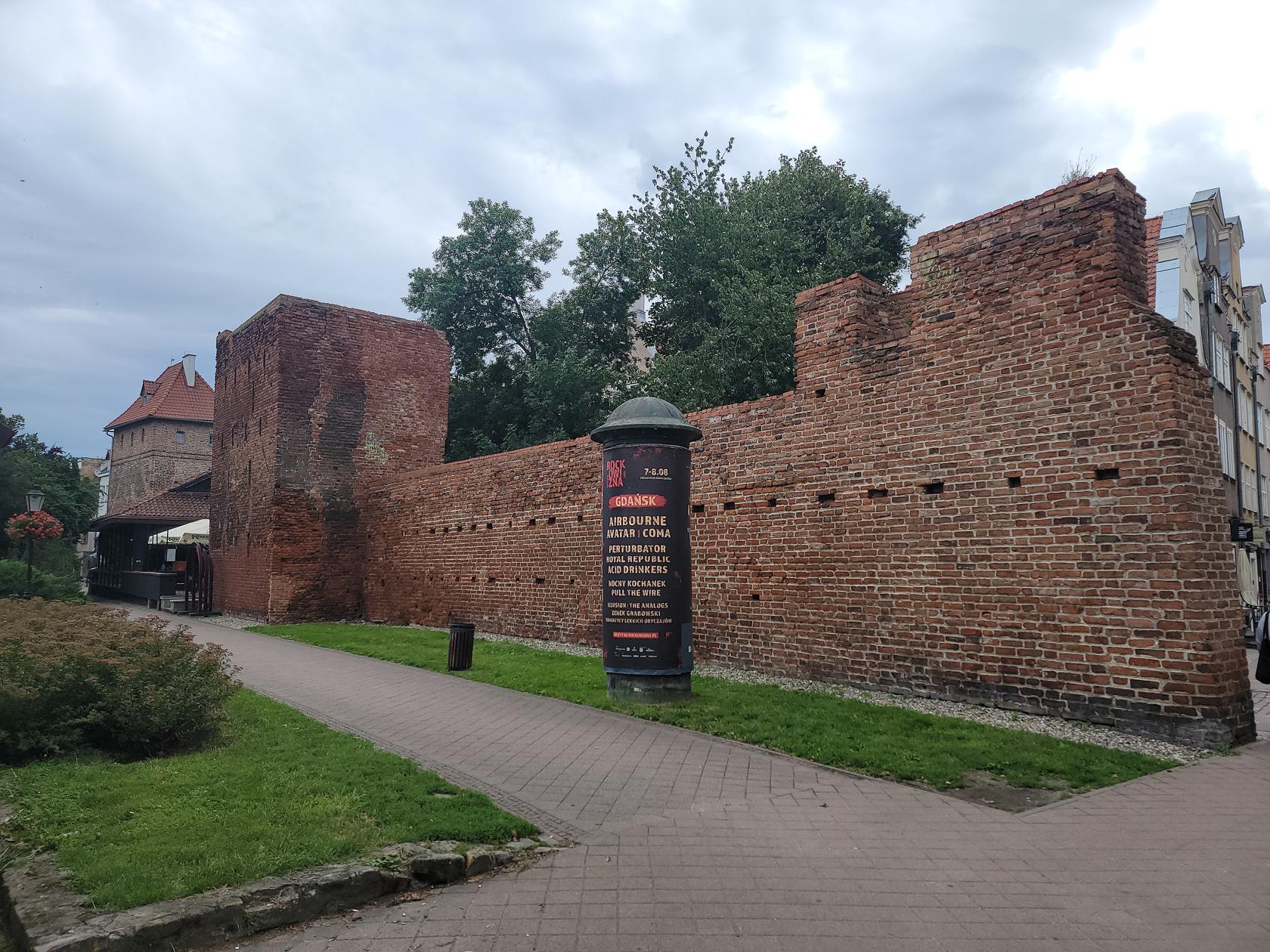
Old Town Wall and Straw Tower – Gdańsk, Poland
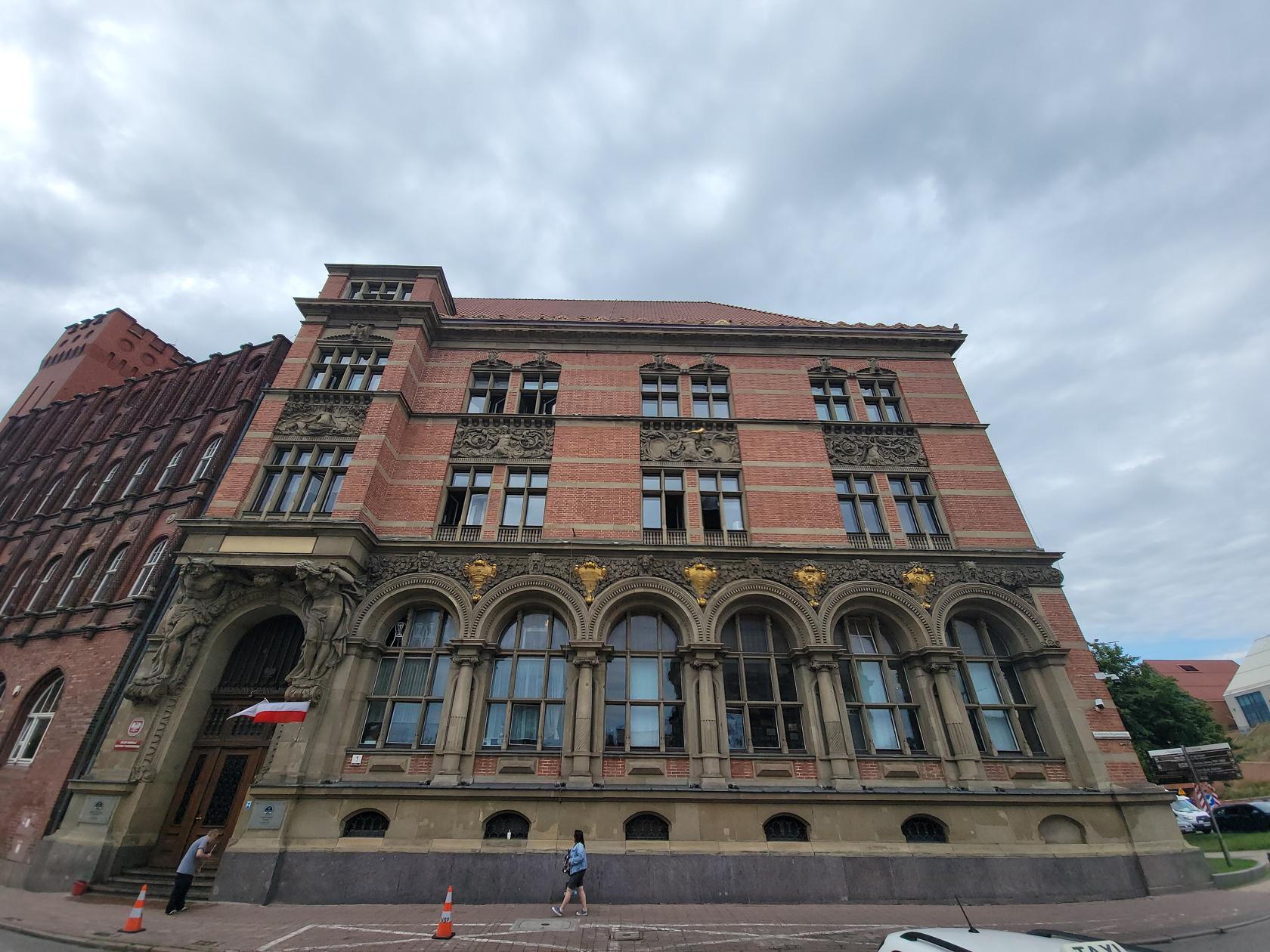
Jamark Building – Targ Węglowy Street – Gdańsk, Poland
Straw Tower – Gdańsk, Poland
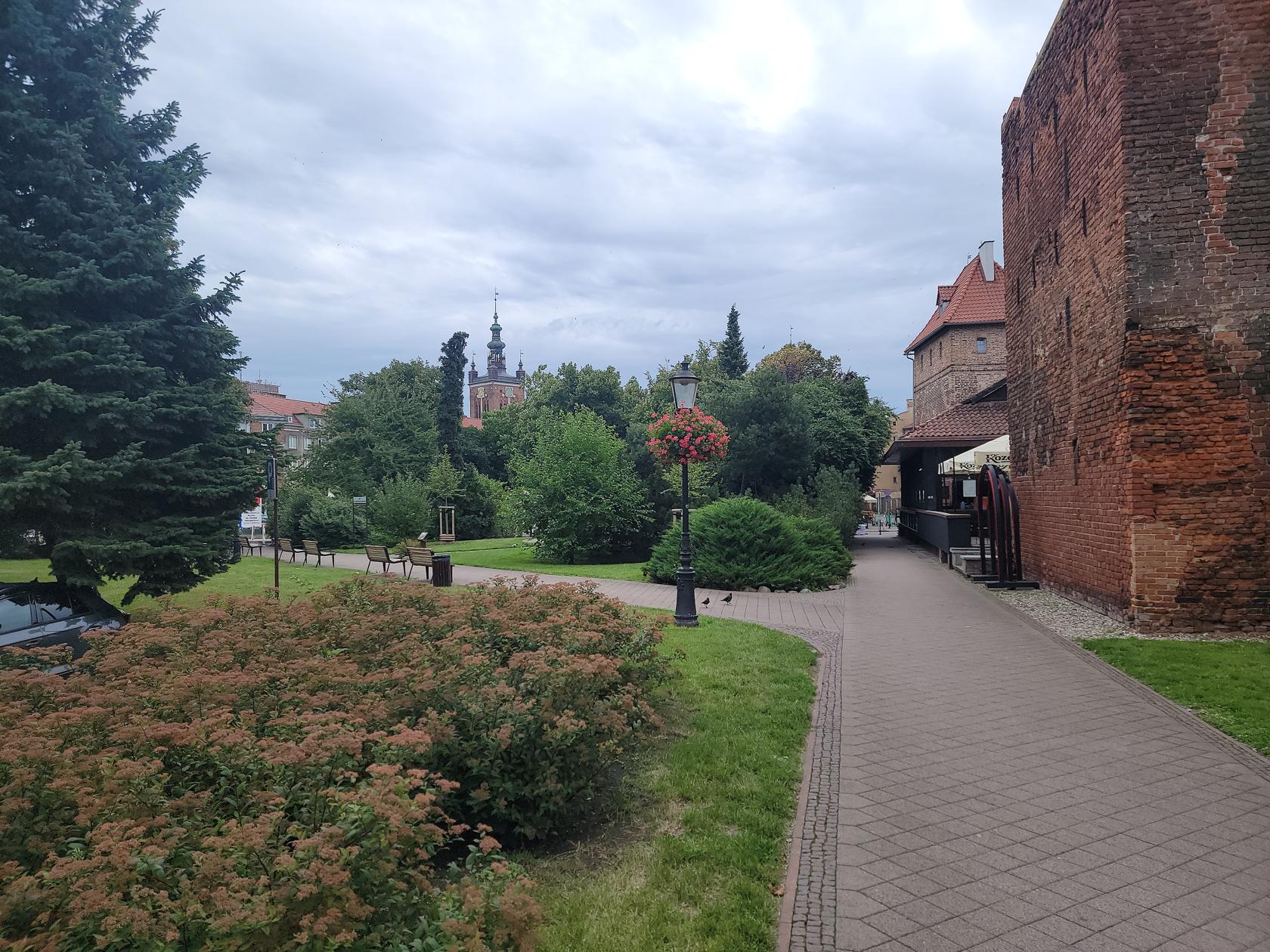
More Old Town Wall and Park – Gdańsk, Poland
Churches And Cathedrals
Clock Outside – Saint Mary’s Basilica – Gdańsk, Poland
Saint Mary’s Basilica
Situated almost in the center of town and on one end of Mariacka Street is Saint Mary’s Basilica. A brick gothic cathedral from the fourteenth century that has a working clock on its left side above the apse’s rear window which still appeared to maintain good time.
Entrance – Saint Mary’s Basilica – Gdańsk, Poland
Nave – Saint Mary’s Basilica – Gdańsk, Poland
Entrance – Saint Mary’s Basilica – Gdańsk, Poland
Aisle – Saint Mary’s Basilica – Gdańsk, Poland
Altar – Saint Mary’s Basilica – Gdańsk, Poland
Art – Saint Mary’s Basilica – Gdańsk, Poland
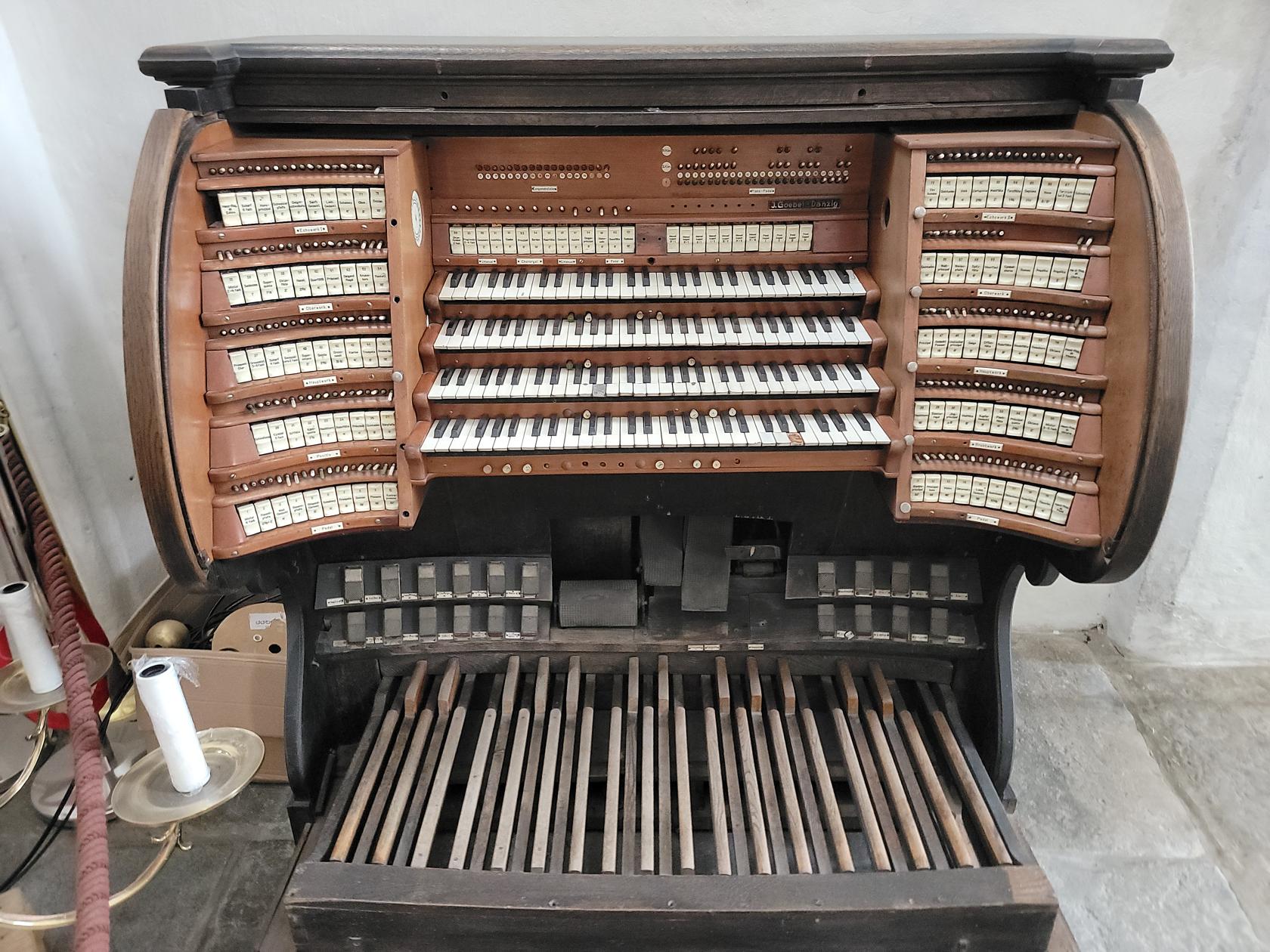
The church has an amazing organ and stained glass window in its transept. Though it is evident by the used mobile organ, the installed older one may no longer be in working order.
Organ – Saint Mary’s Basilica – Gdańsk, Poland
Temporary Organ – Saint Mary’s Basilica – Gdańsk, Poland
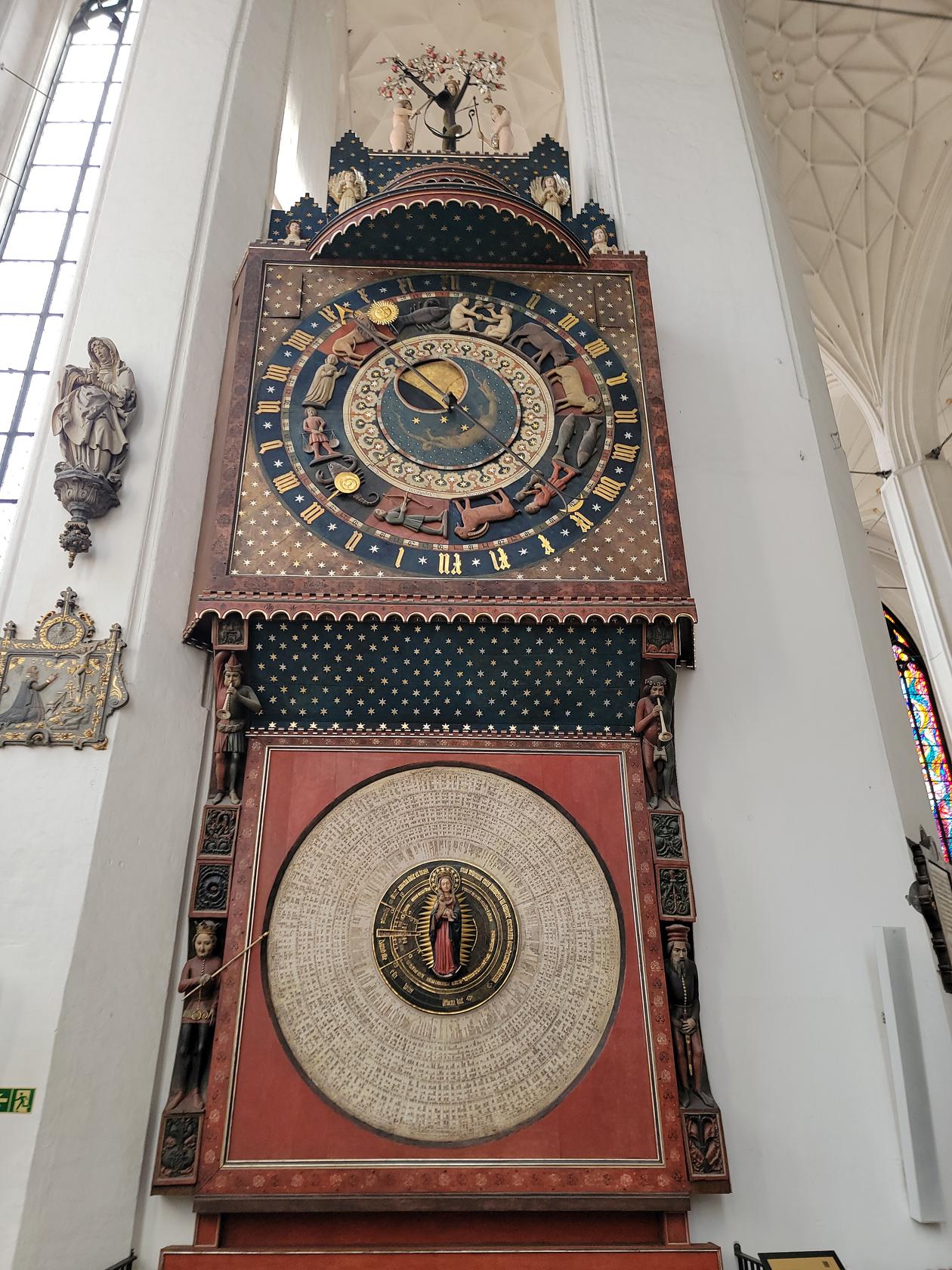
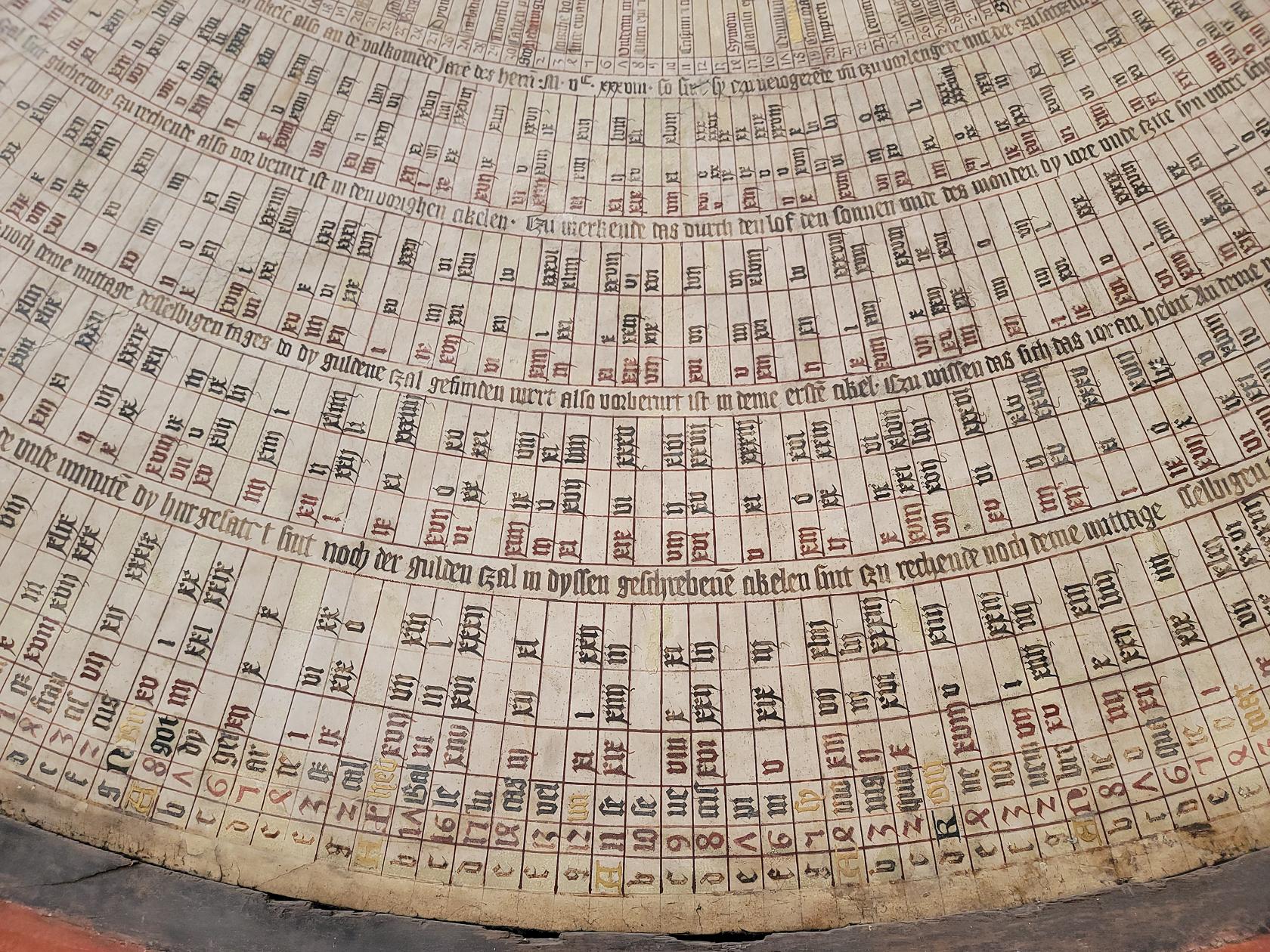
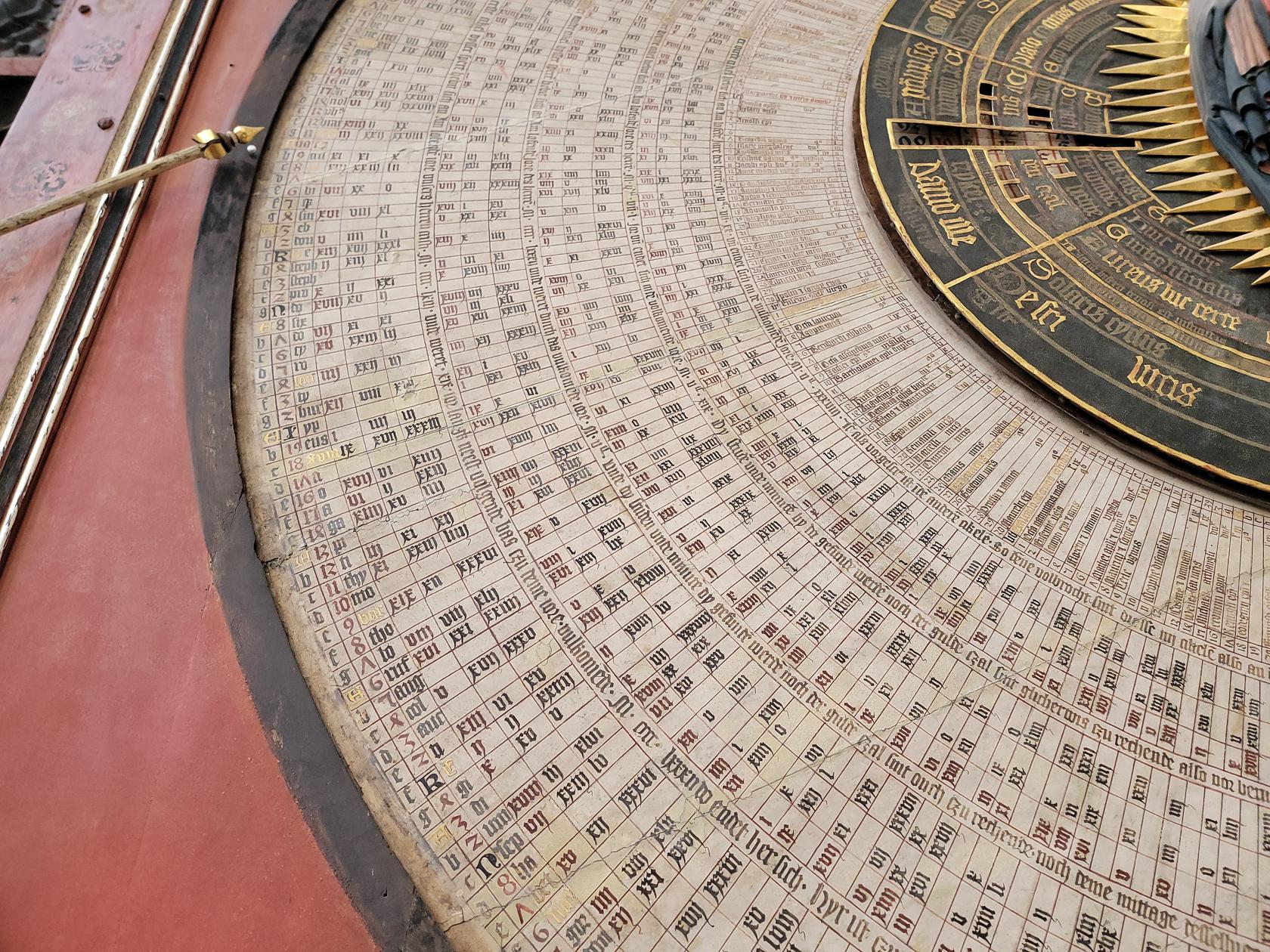
The church has a very interesting working astronomical clock and calendar along the interior left apse. According to records it not only computes most astronomical seasonal events, but also liturgical events and their timing.
Astronomical Clock – Saint Mary’s Basilica – Gdańsk, Poland
Clock’s Calendar – Saint Mary’s Basilica – Gdańsk, Poland
Clock’s Calendar – Saint Mary’s Basilica – Gdańsk, Poland
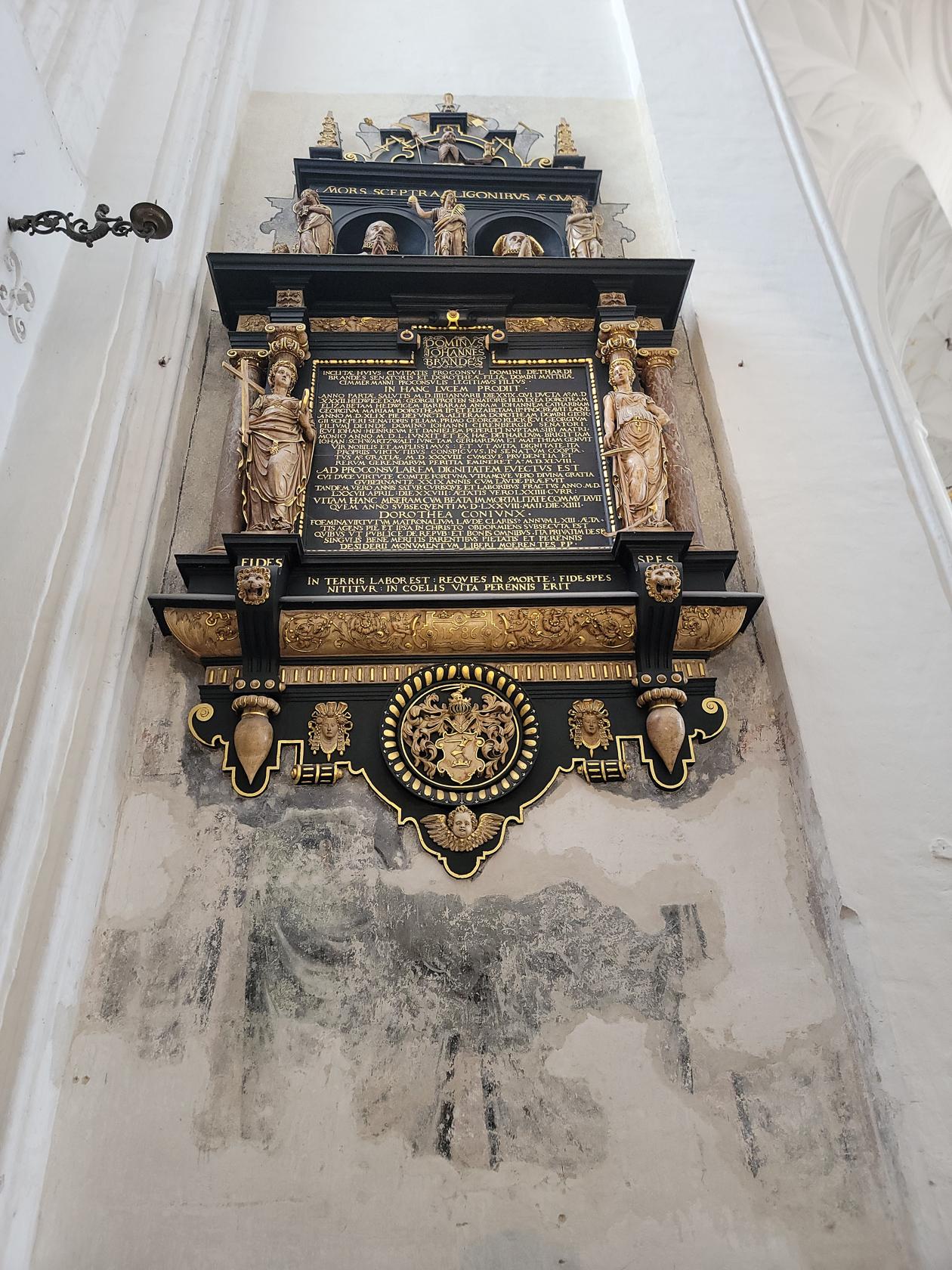
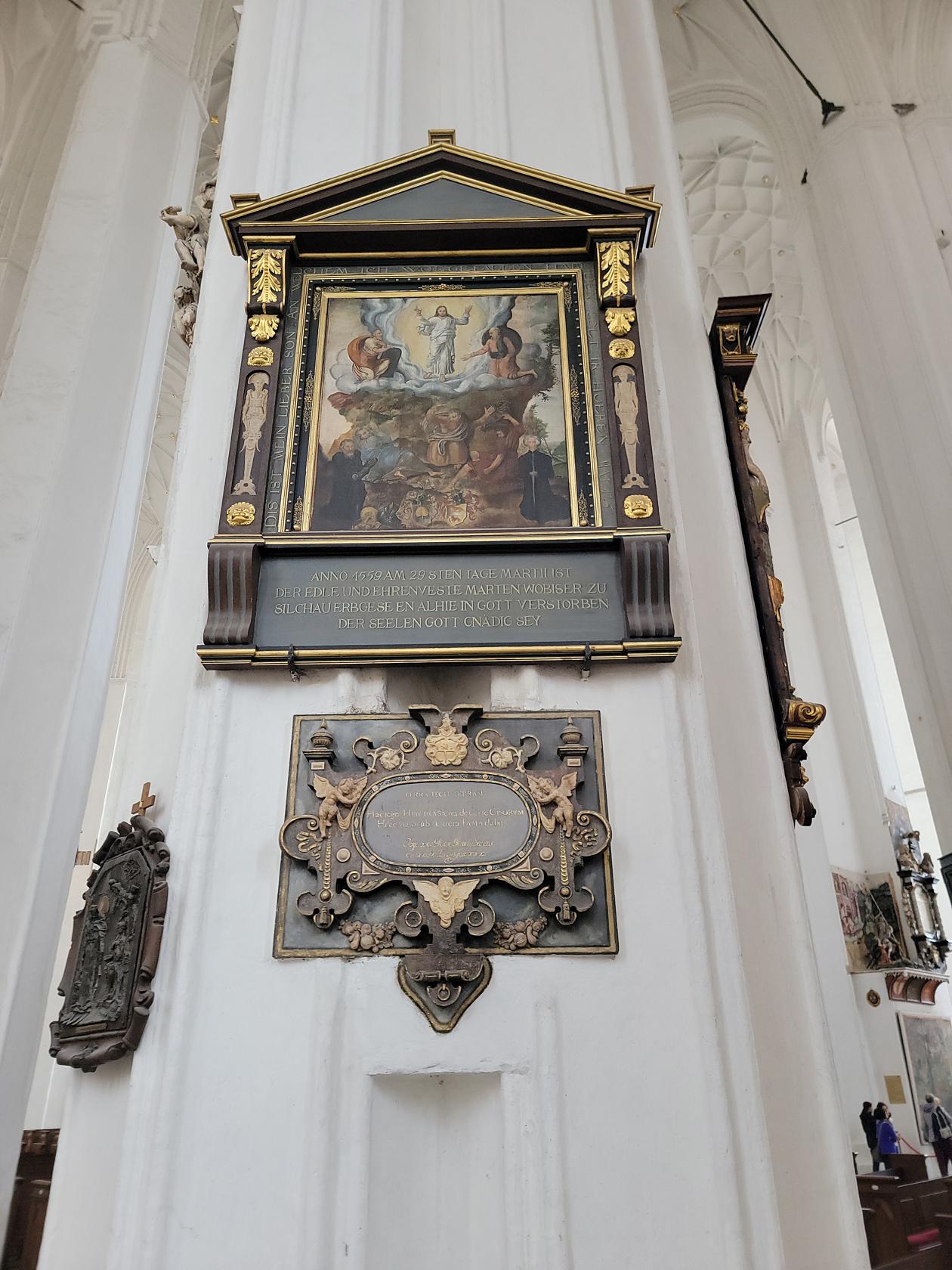
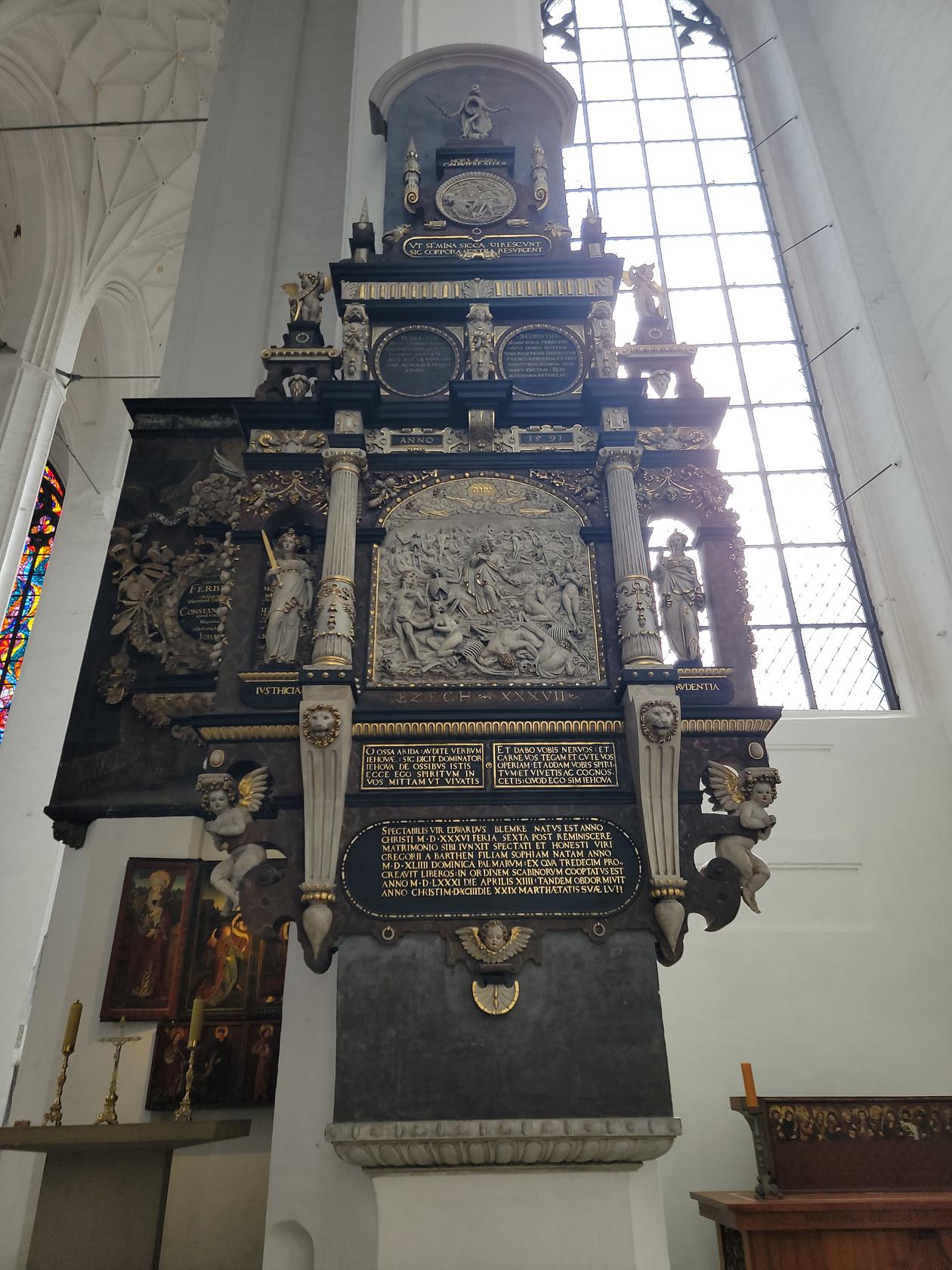
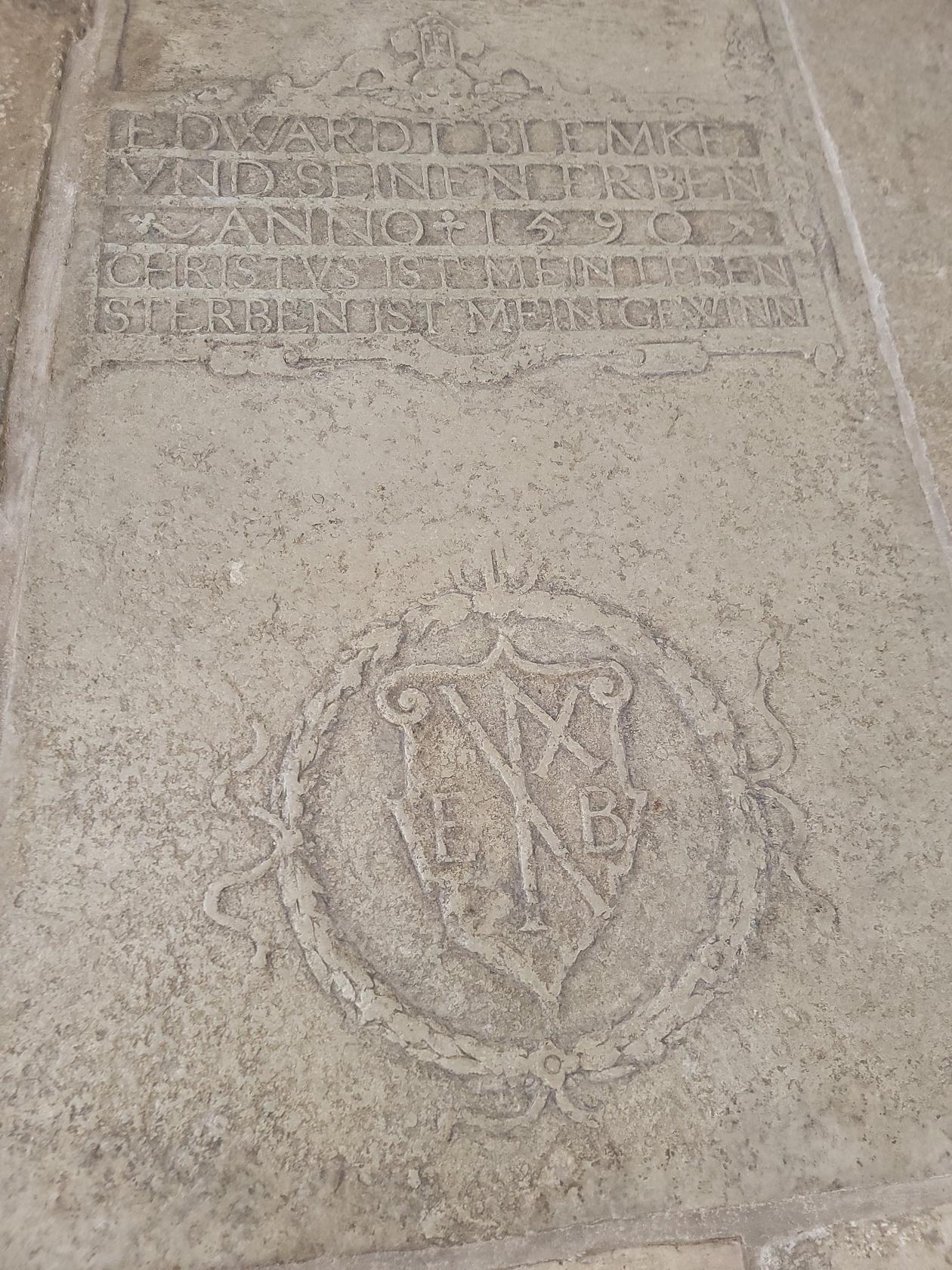
Lastly, this basilica is rather plain and therefore many of the epitaphs and memorials stick out prominently. Most have German inscriptions on them, owing to the city rich heritage, though many are also written in Latin.
Memorial – Saint Mary’s Basilica – Gdańsk, Poland
Memorial – Saint Mary’s Basilica – Gdańsk, Poland
Memorials – Saint Mary’s Basilica – Gdańsk, Poland
Interesting Grave Inscription – Saint Mary’s Basilica – Gdańsk, Poland
Restaurants
Yang Guang Chinese Restaurant
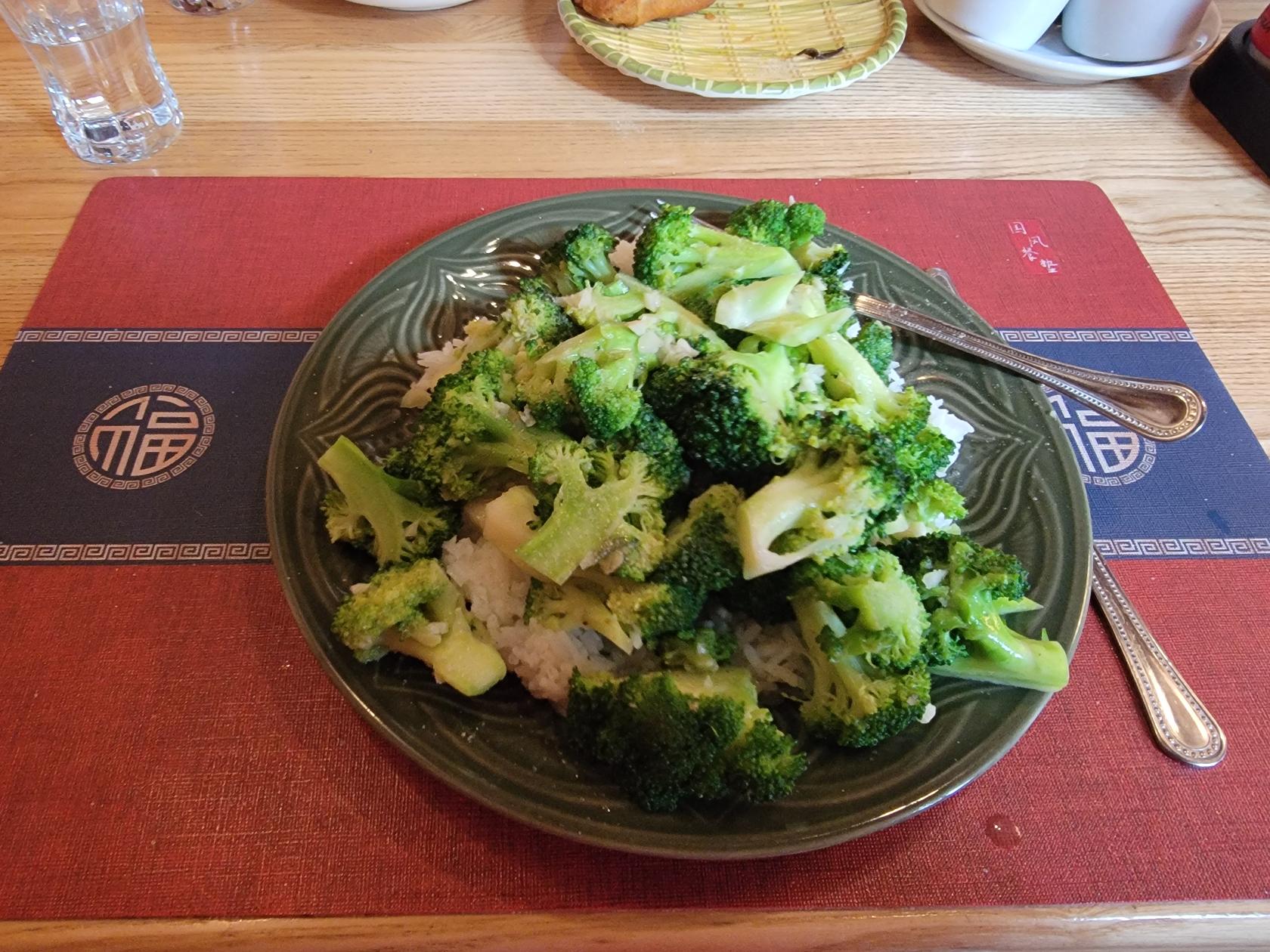
If you go through the Green Gate and cross the bridge then walk a few steps down Stągiewna Street you will find Yang Guang Chinese Restaurant on your right. If you are tired of all the meat, potatoes and dumplings you have been eating up until now, this is a very good stop for some vegetables. The even have broccoli in garlic sauce, one of our favorites.
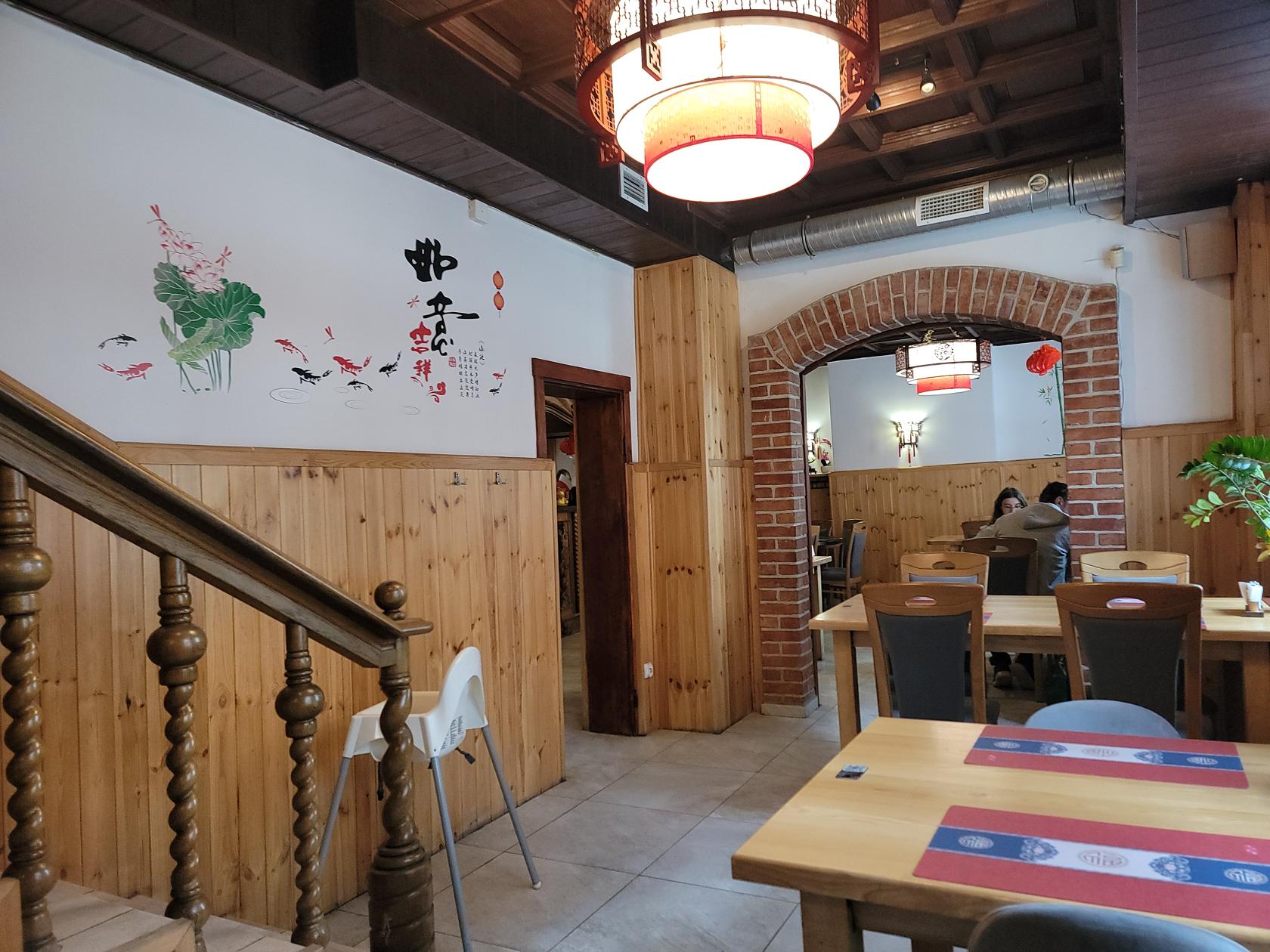
Inside – Chińska Yang Guang Restaurant – Gdańsk, Poland
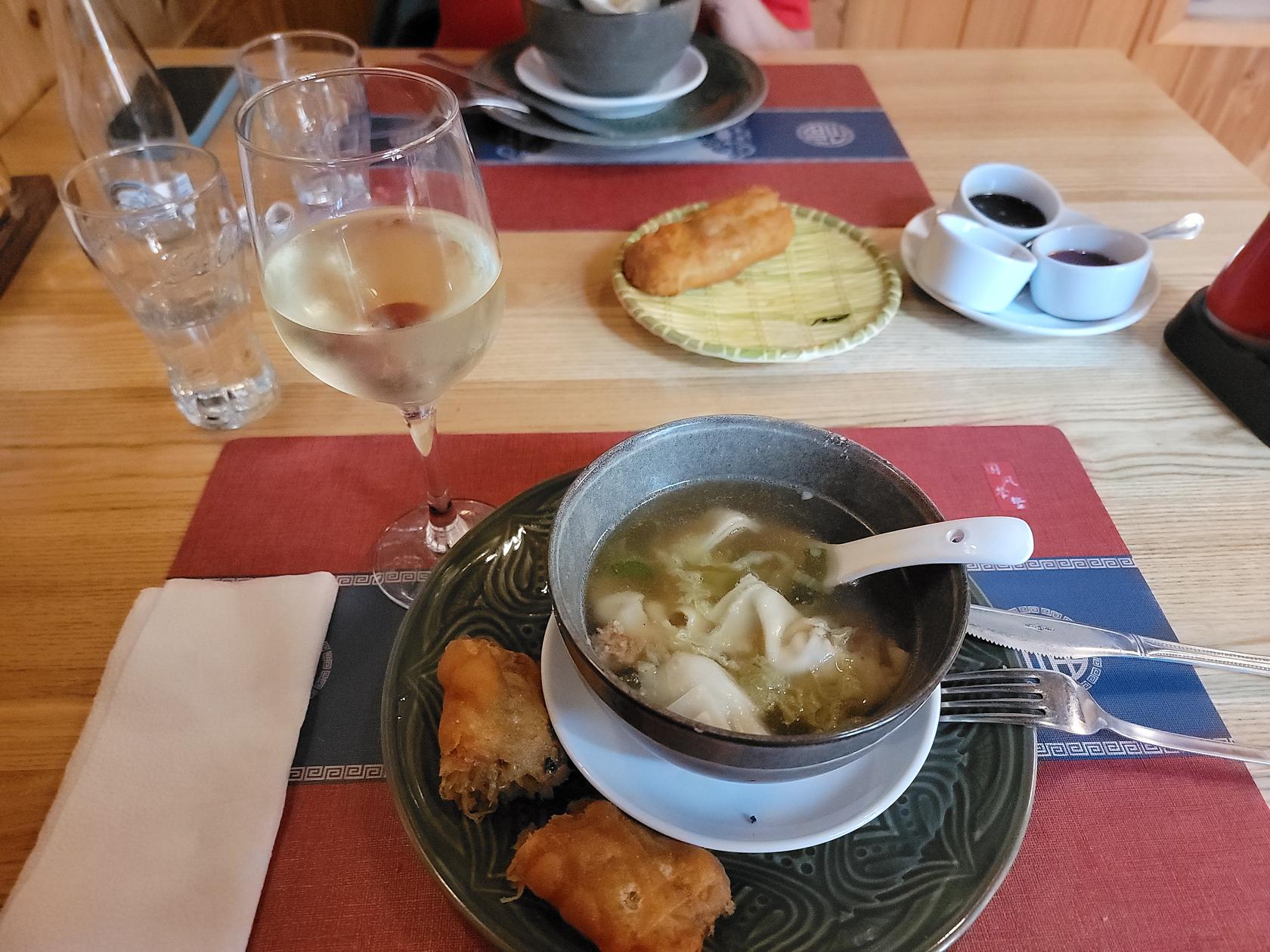
Wonton Soup – Chińska Yang Guang Restaurant – Gdańsk, Poland
Broccoli with Garlic Sauce on White Rice – Chińska Yang Guang Restaurant – Gdańsk, Poland
Sempre Ristorante
The Sempre Ristorante is near the tip of the small island on the other side of the river. It is a modern Italian restaurant that serves good food with an upscale slant on the recipes and the prices. You won’t go wrong eating here, but you will also pay for it, if you know what I mean.
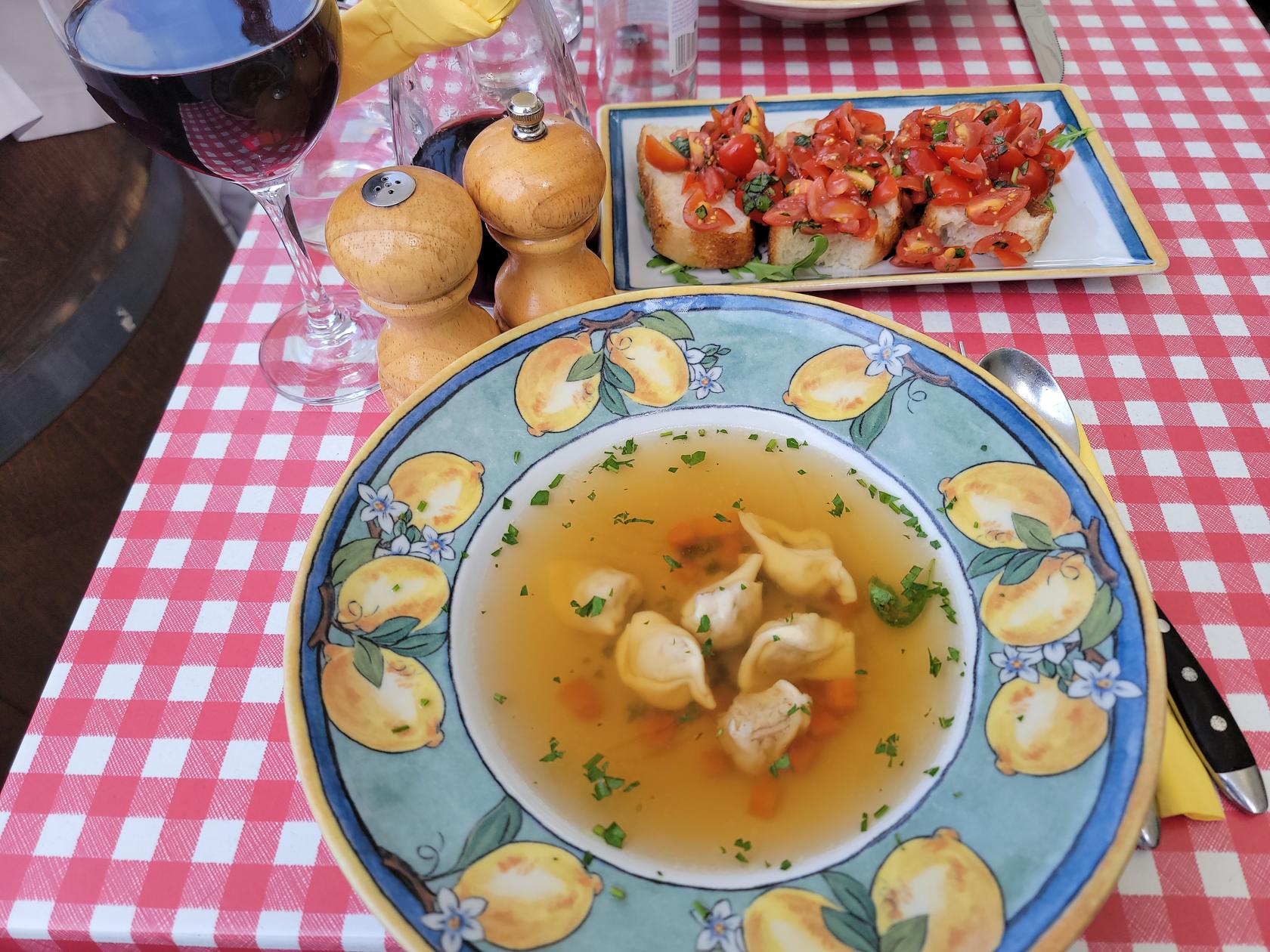
Bruschette and Chicken Soup with Dumplings – Sempre Ristorante – Gdańsk, Poland
Tygle Restaurant
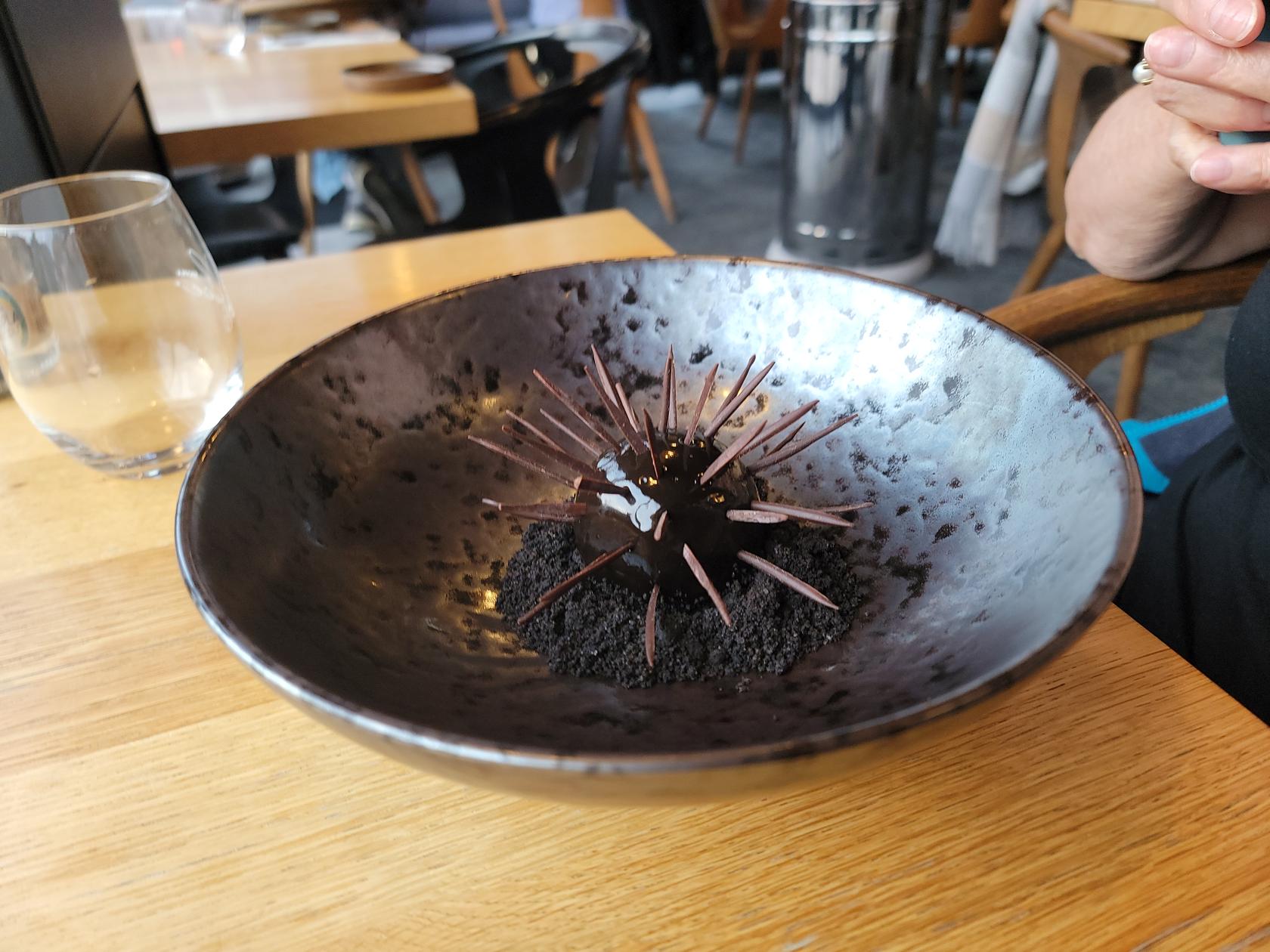
A highly rated restaurant with excellent Polish food is Tygle. Here you will find some classics as well as some new takes on Polish cuisine. If you are a chocolate lover, the urchin dessert is a must try. But be careful, those spikes are dark chocolate and will cause real damage to your diet.
In the Lesser Polish Voivodeship of Poland and cradled by the Vistula River is the second largest city in Poland, Kraków[1]Pronounced Krakoff.. A vibrant, clean and beautiful city, it currently hides its success as a tourist attraction very well.
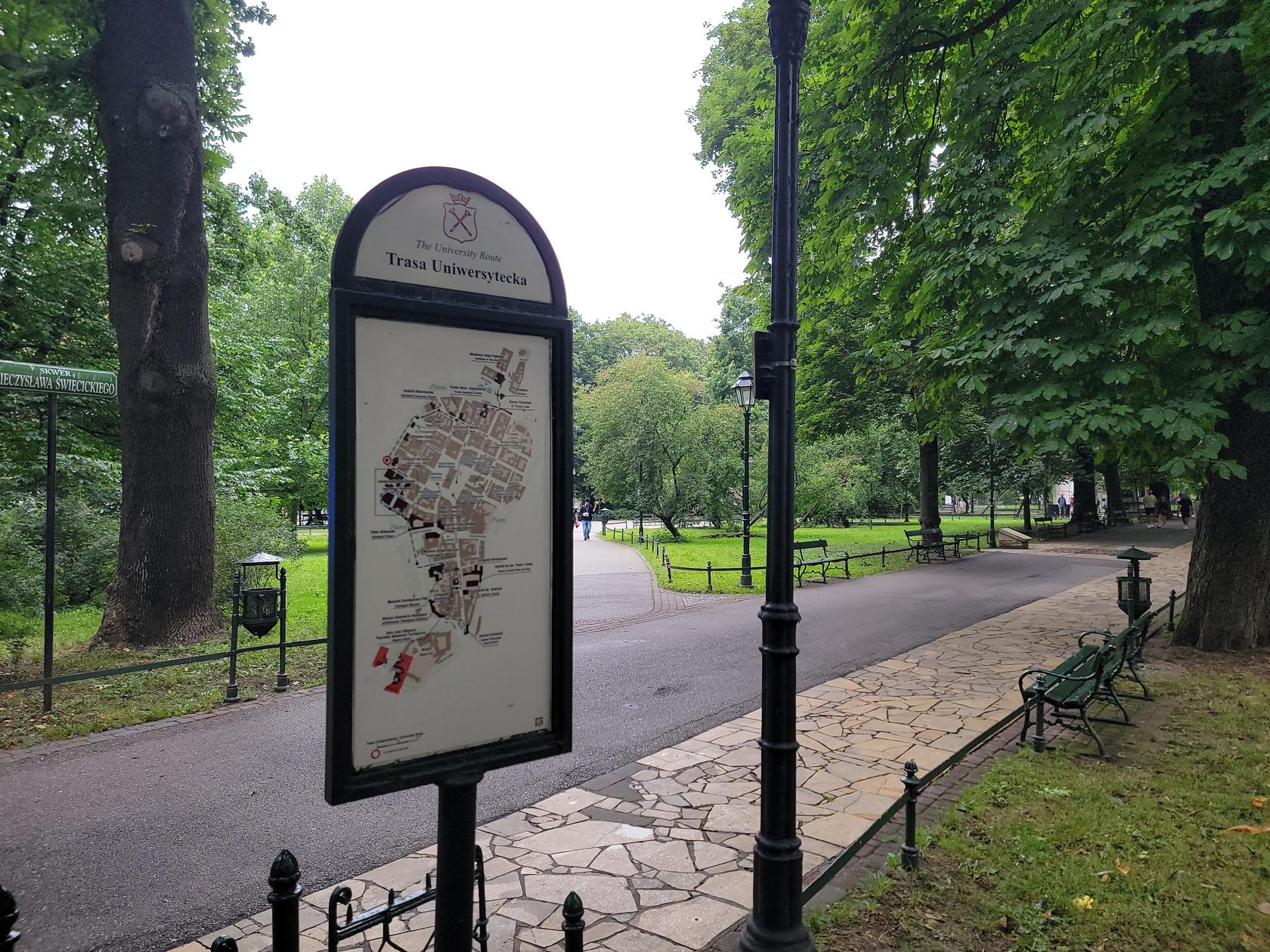
University Route – Park – Kraków, Poland
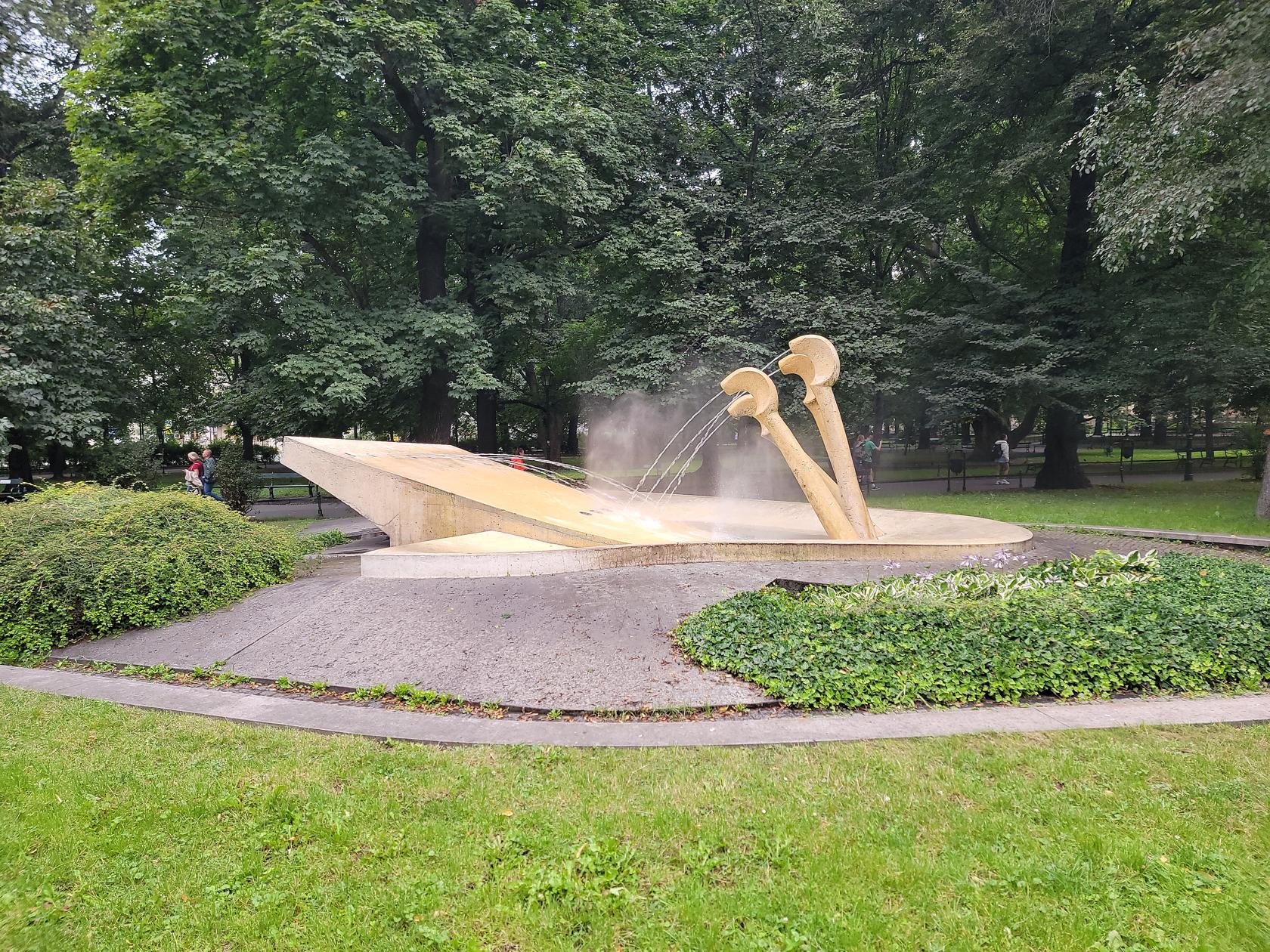
Frederic Chopin Piano Monument – Kraków, Poland
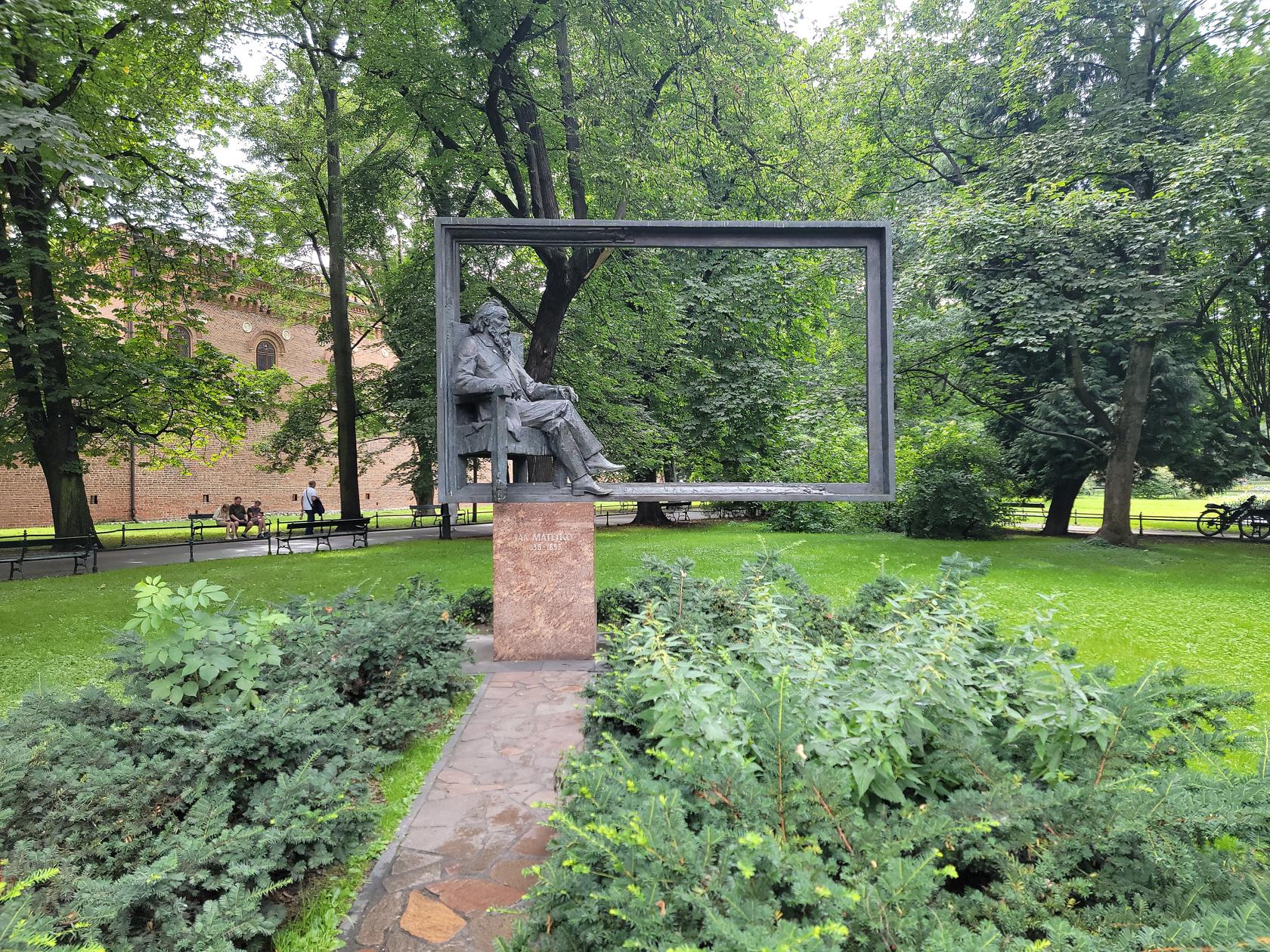
The Statue of Jan Matejko – Kraków, Poland
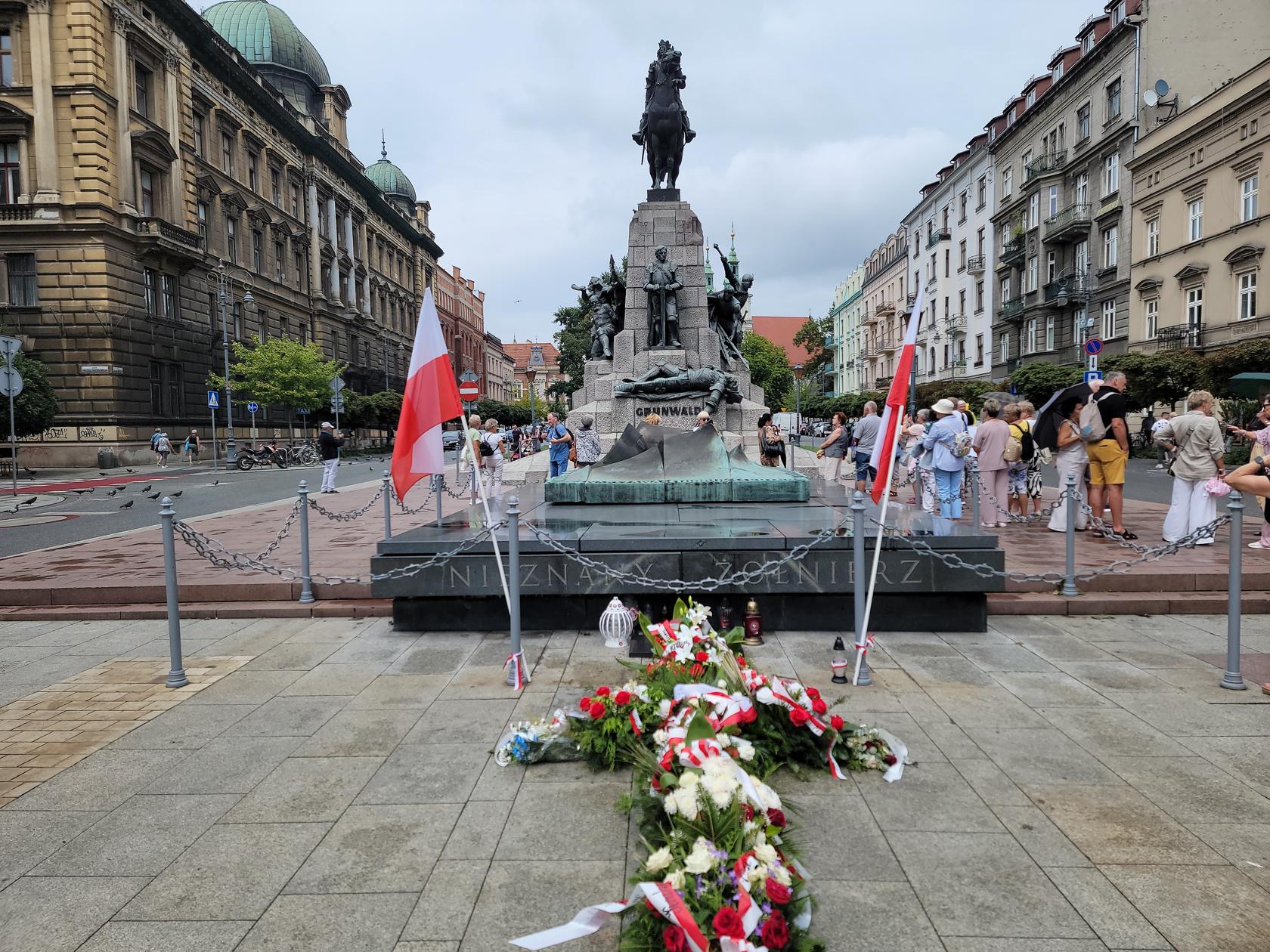
Grunwald Monument – Kraków, Poland
Kraków
One of the oldest towns in Poland, Kraków’s founding goes way back to the eight century. The town was walled during the middle-ages, however most of the wall has not survived modern times.
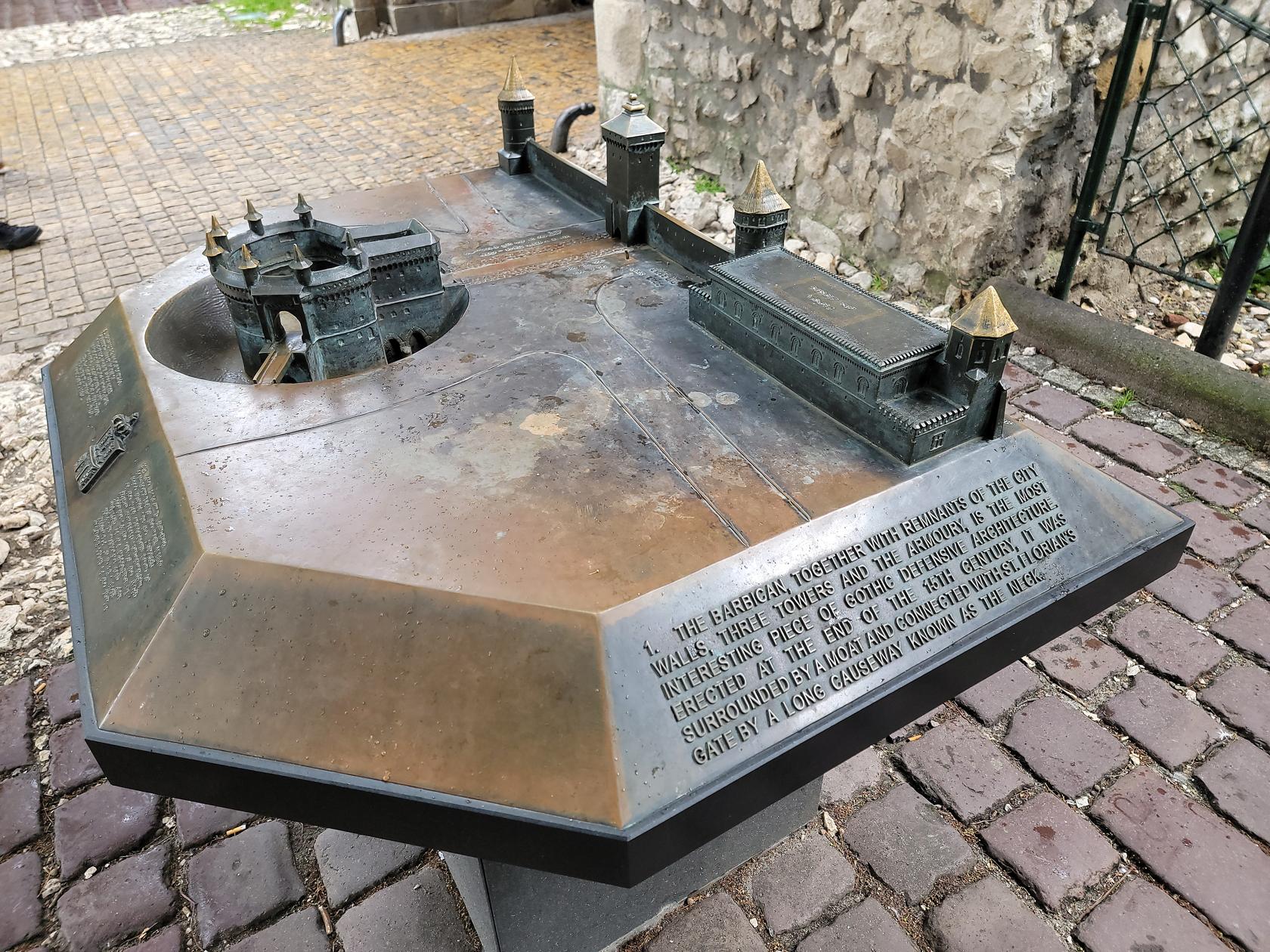
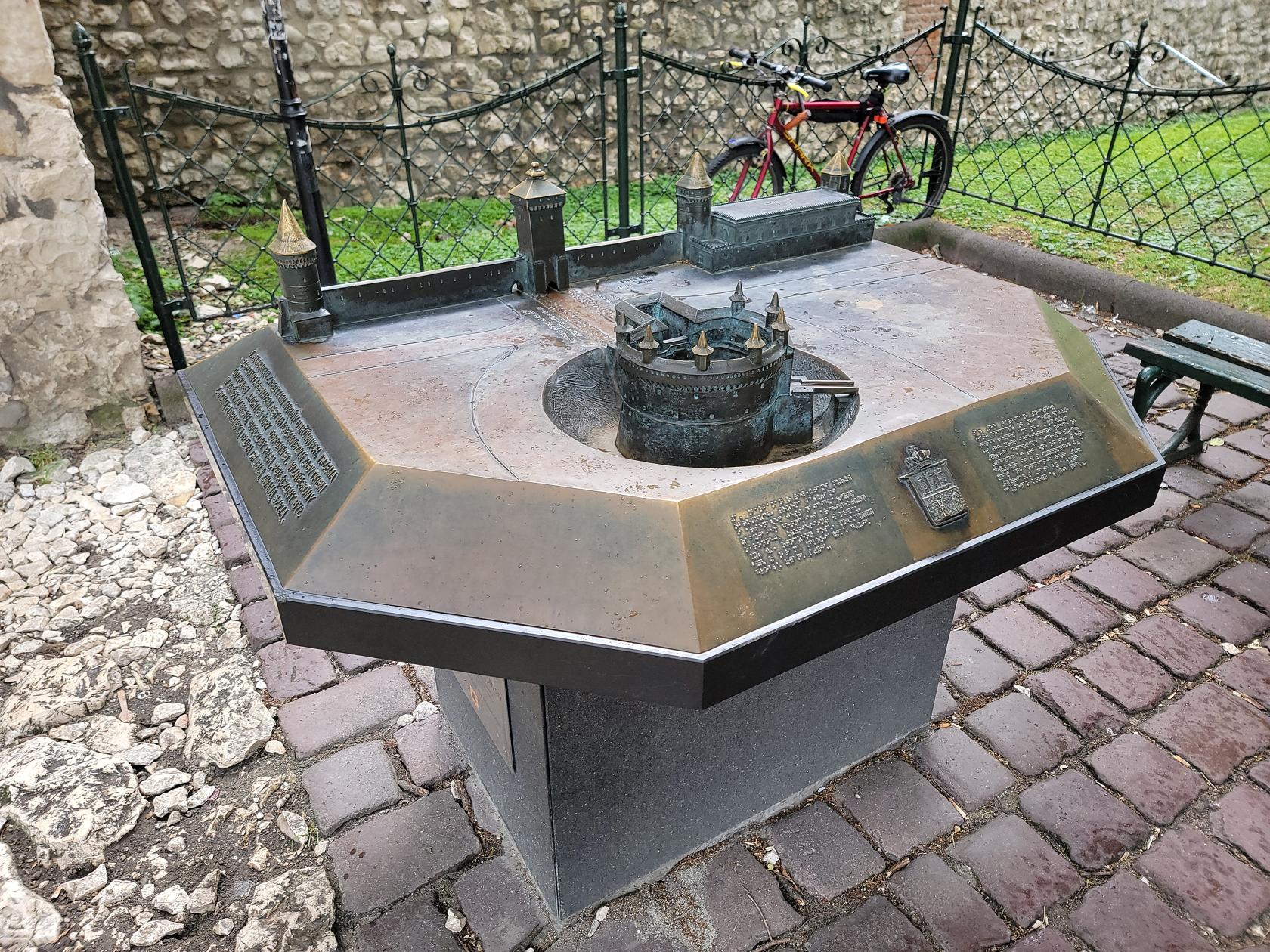
Bronze Depiction – Barbican Museum and Florian Gate and Town Wall – Kraków, Poland
Bronze Depiction – Barbican Museum and Florian Gate and Town Wall – Kraków, Poland
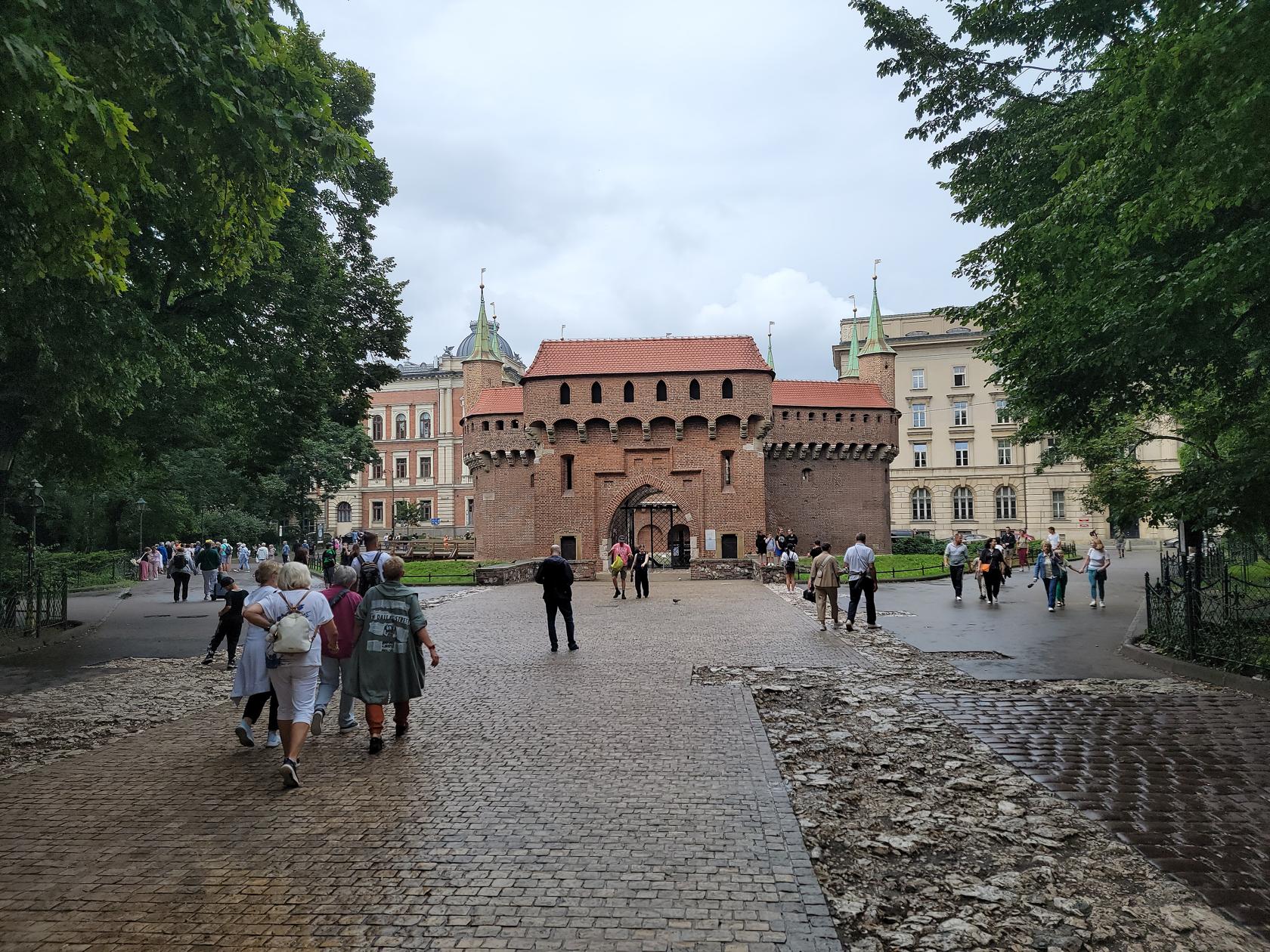
Gate Entrance – Barbican Museum – Kraków, Poland
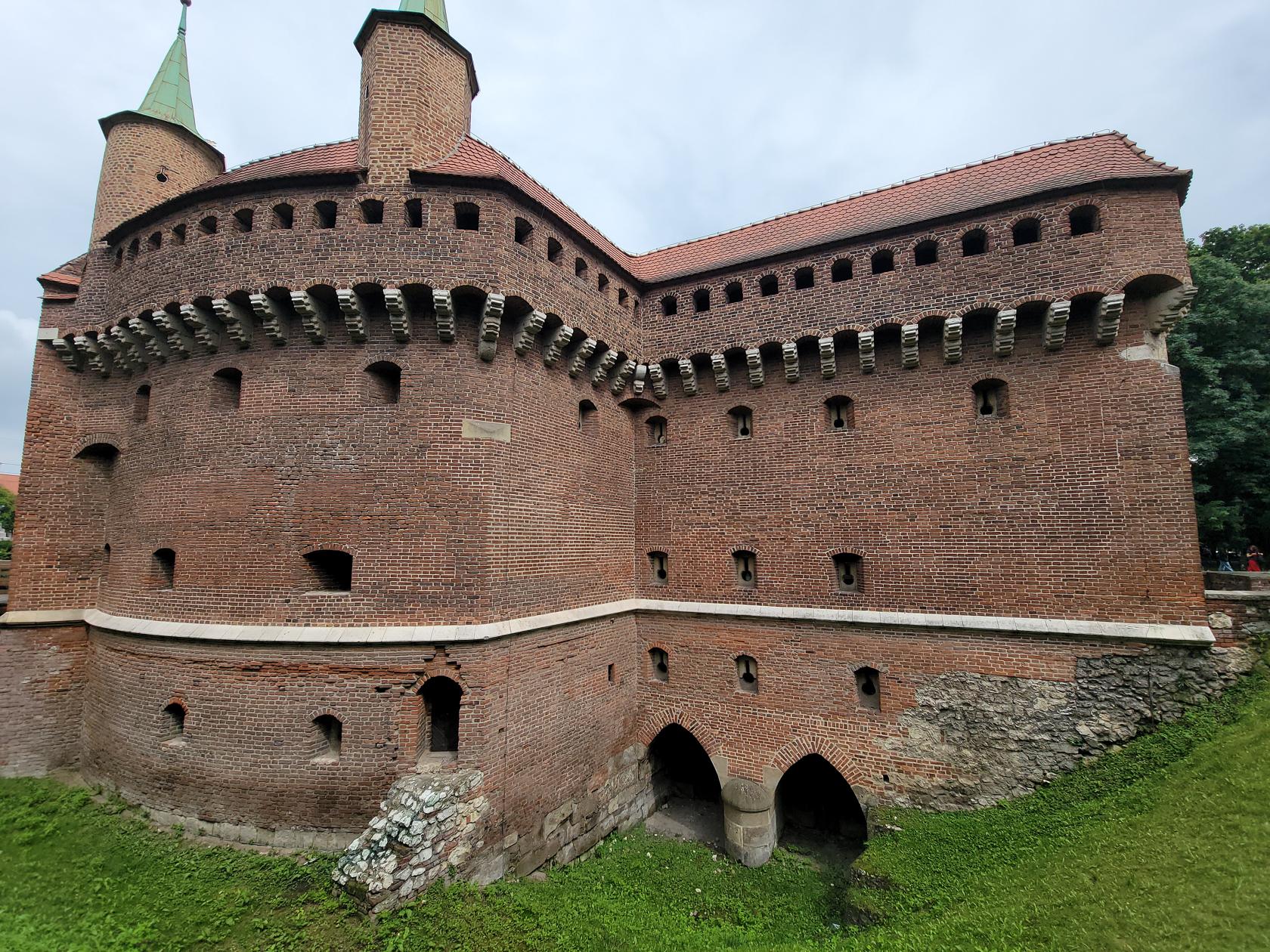
Barbican Museum – Kraków, Poland
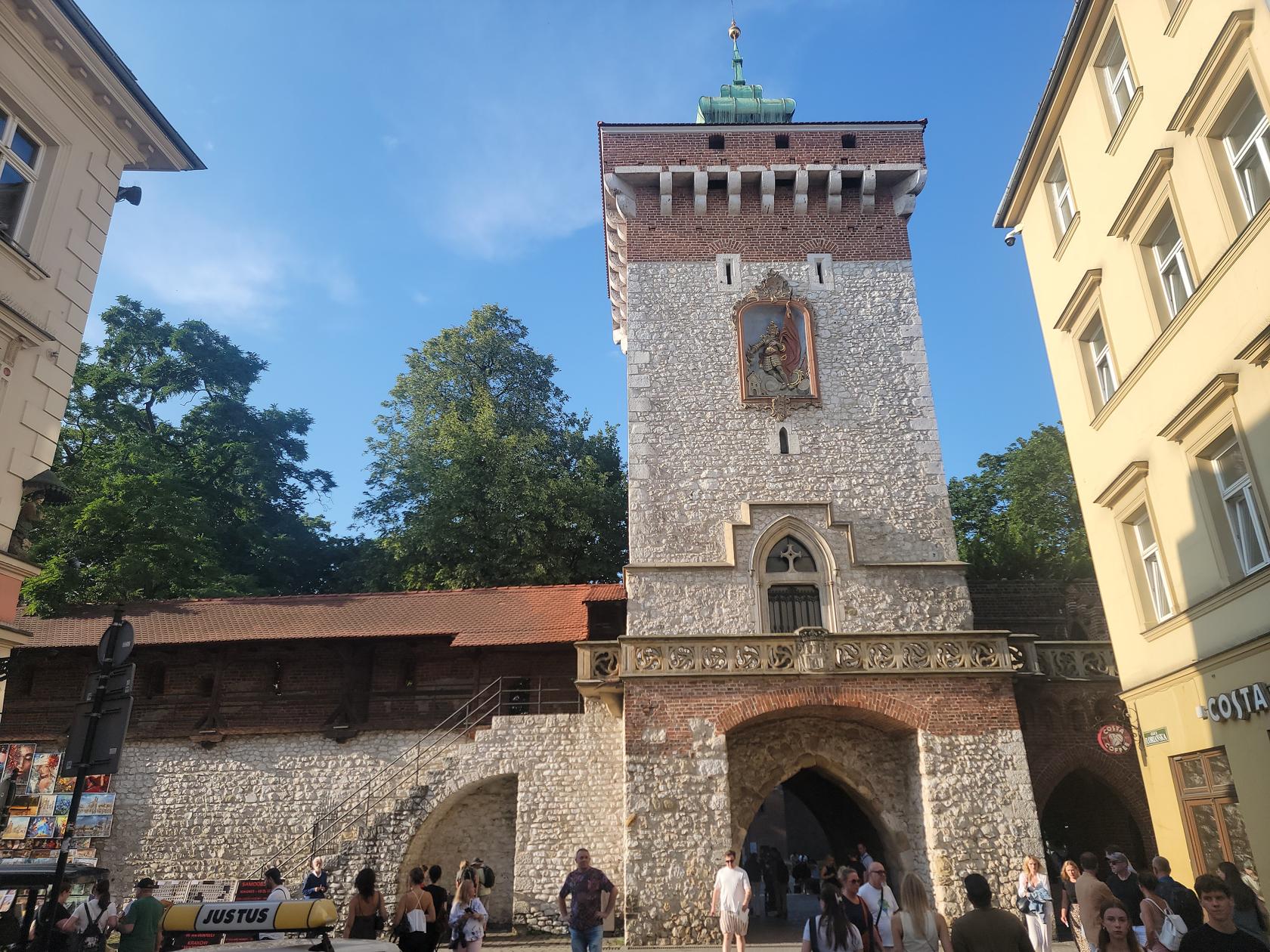
There are only a small sections of it still left by the Florian Gate and other less noticeable fragments here and there, as well as monuments to the old towers that once blessed the eastern path of the park that circles the city.
Florian’s Gate – Florianska Street – Kraków, Poland
Most of the old town’s streets accommodate the throngs of tourists that visit each day. In particular, they hide walking the park that circles the city like a lazy dragon.
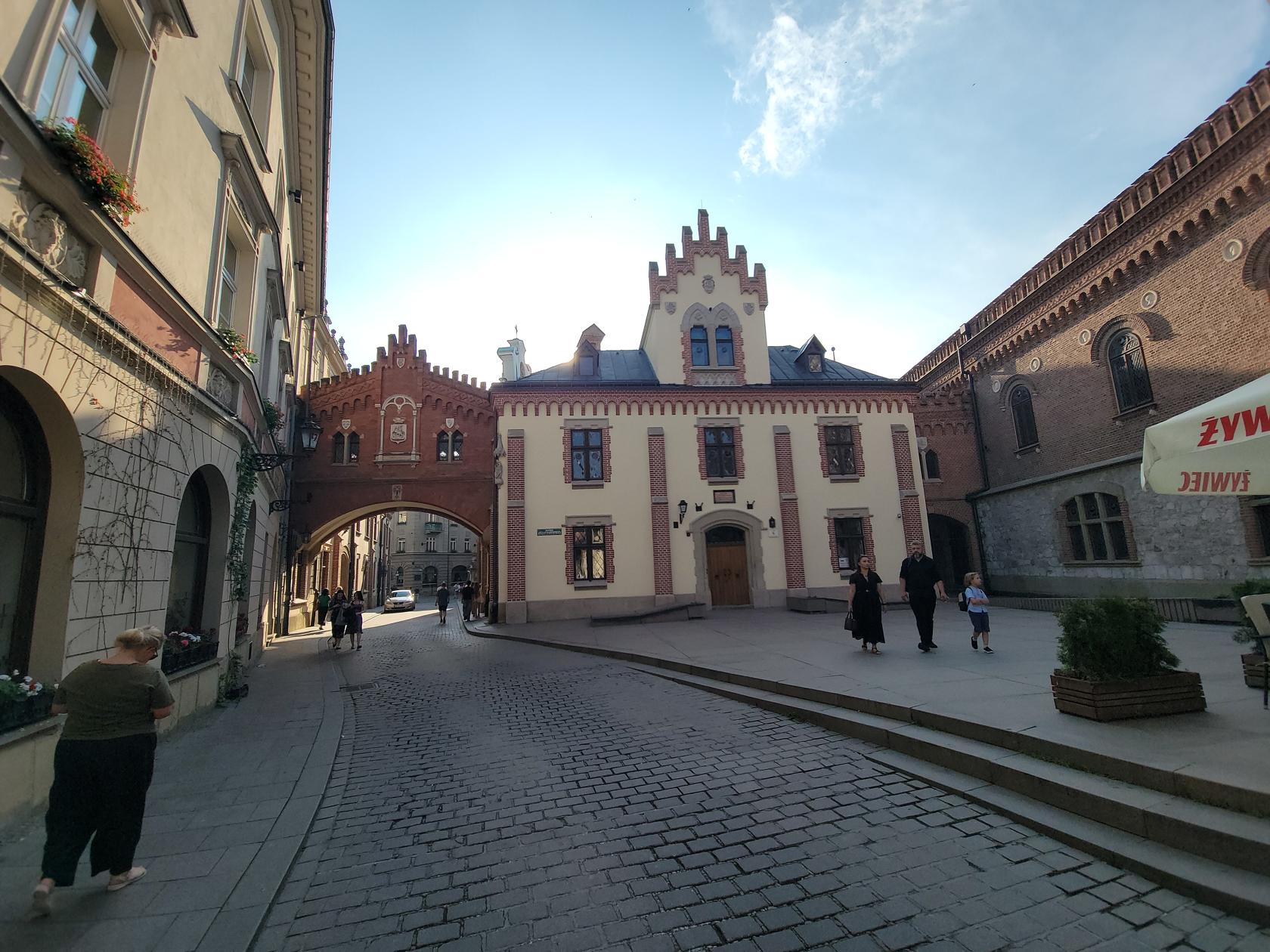
Arsenal Museum – Pijarska Street – Kraków, Poland
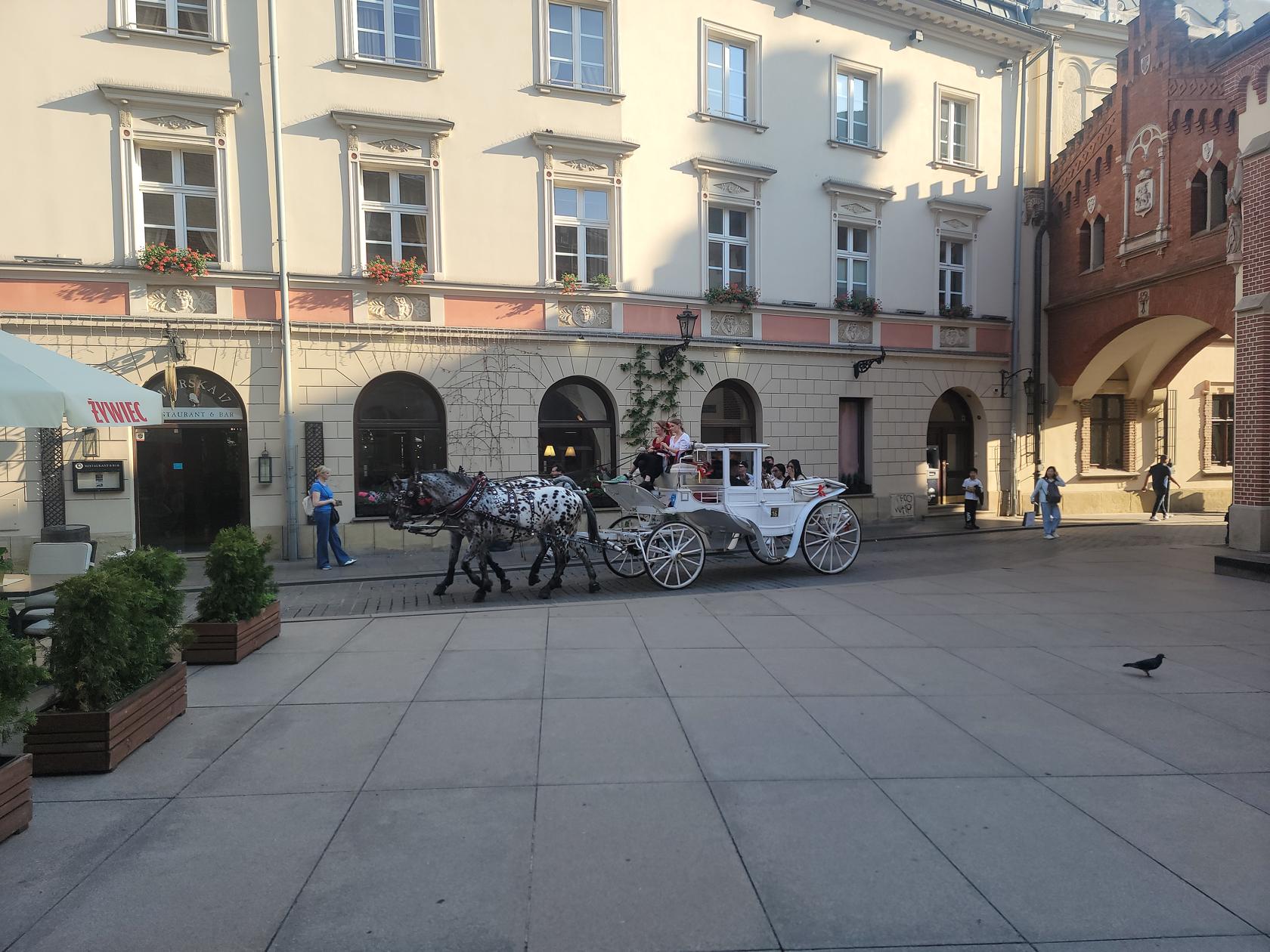
Carriage Rides – Pijarska Street – Kraków, Poland
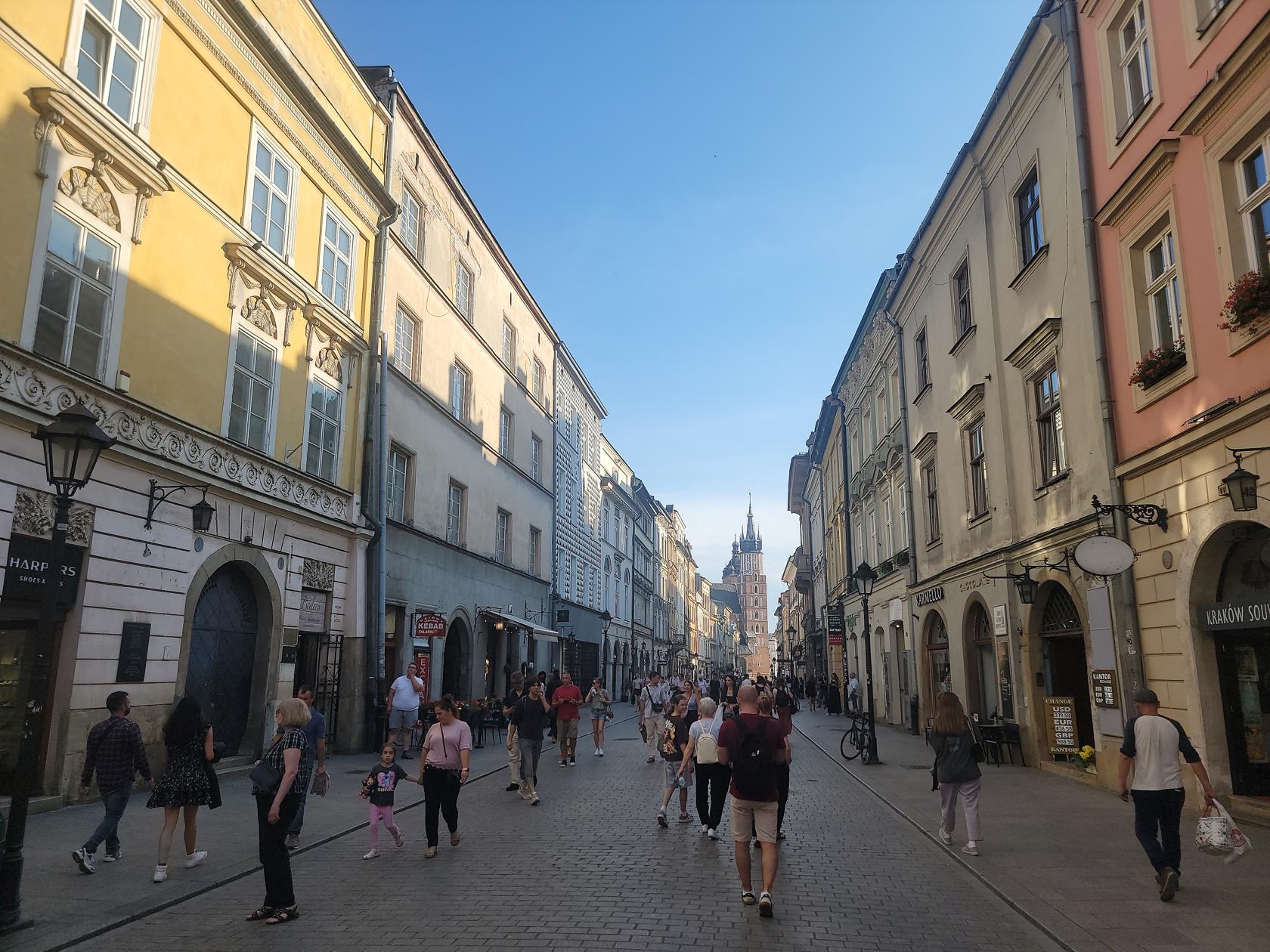
Saint Mary’s Basilica in distance – Pijarska Street – Kraków, Poland
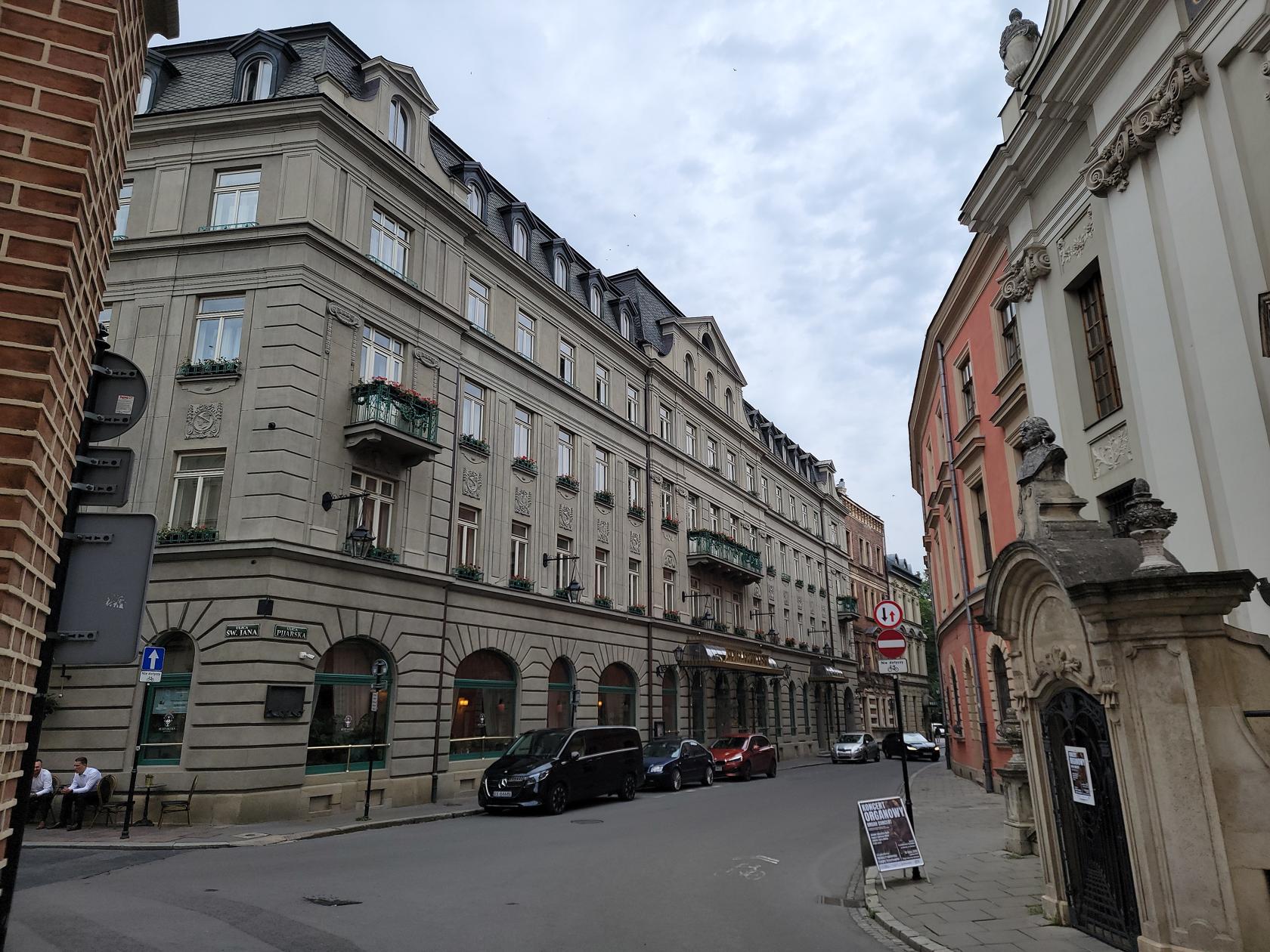
Świętego Jana Street – Kraków, Poland
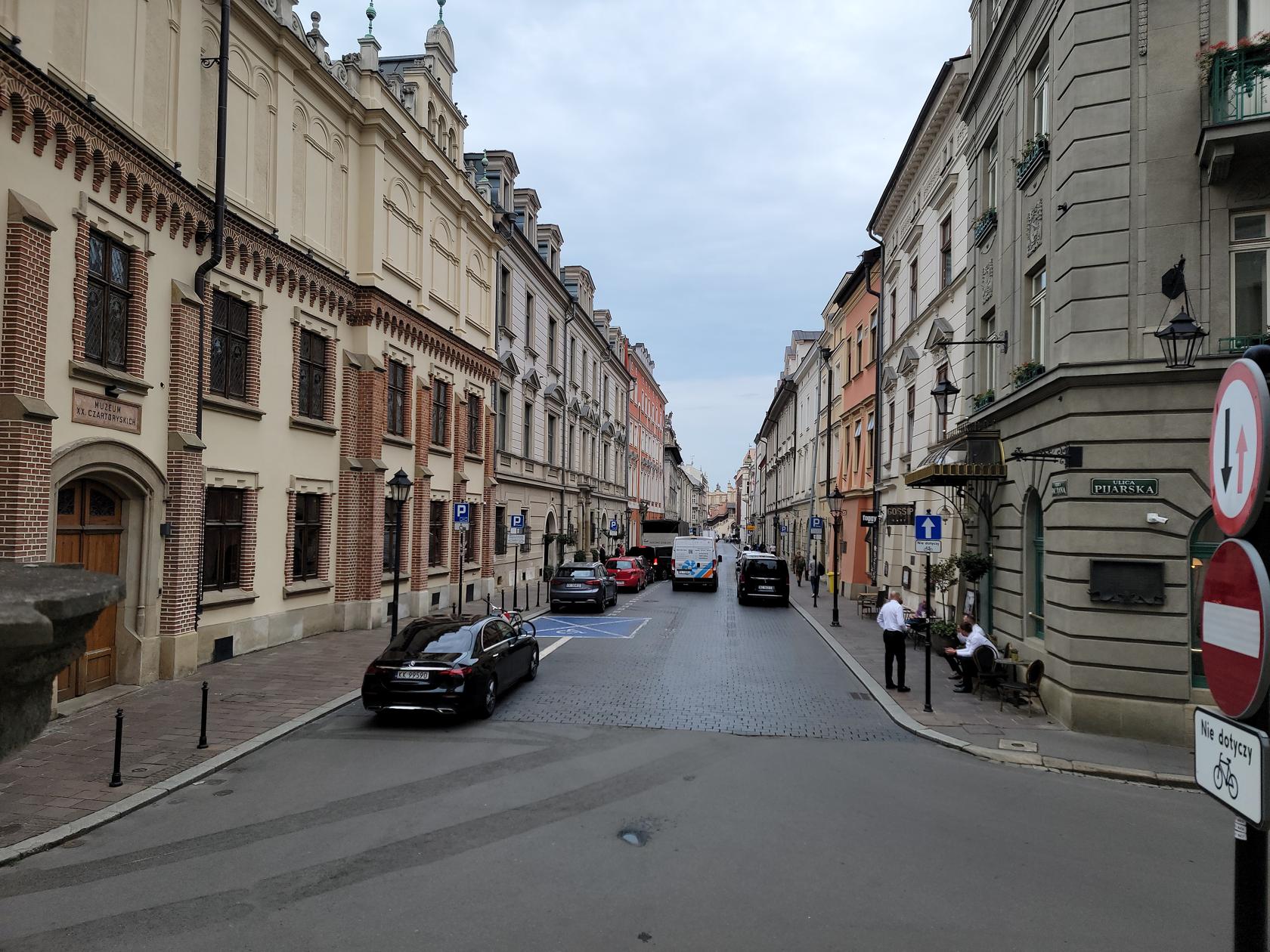
Pijarska Street – Kraków, Poland
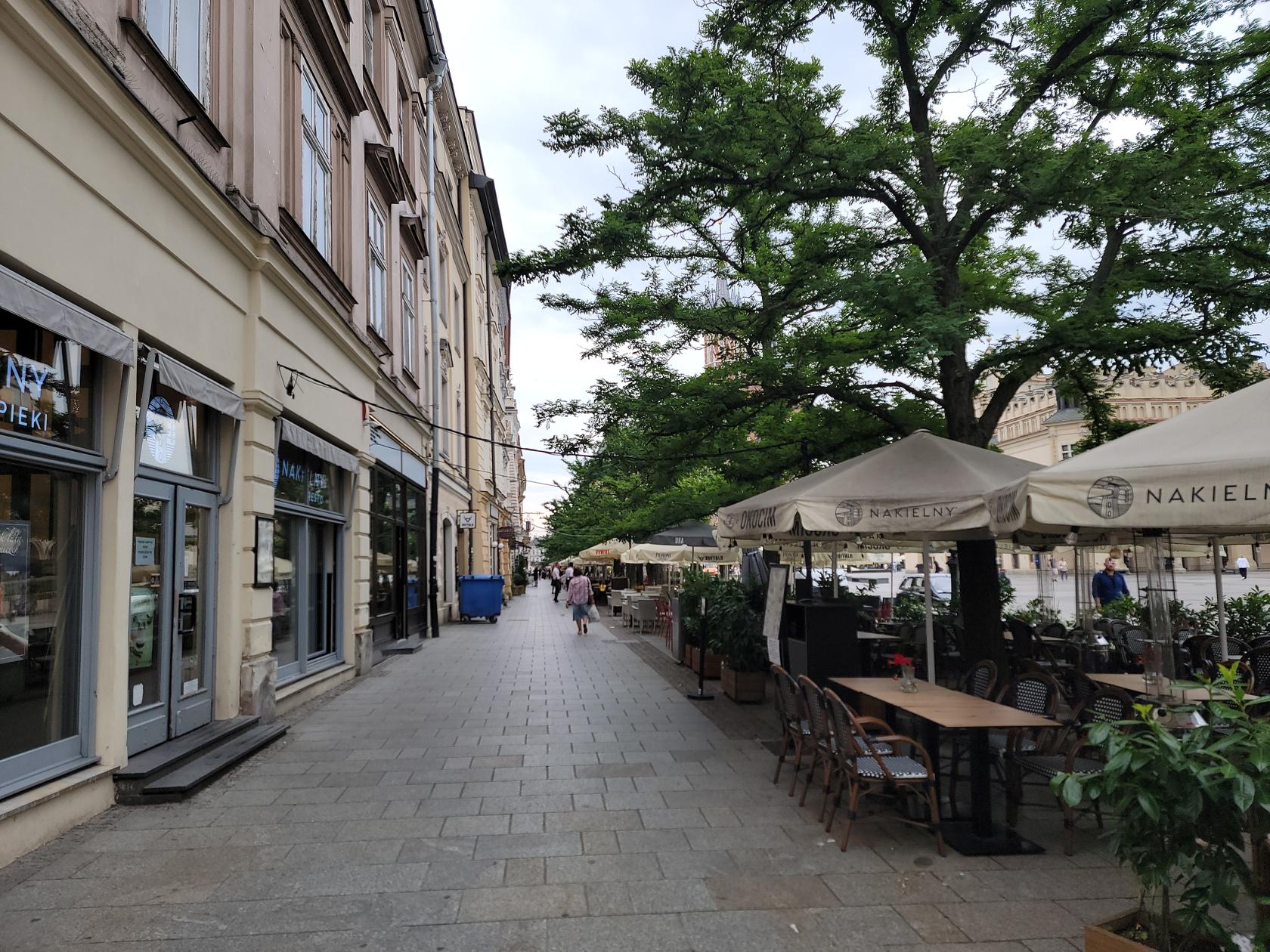
Rynek Główny Main Plaza – Kraków, Poland
Getting There
Our visit here was inspired by previous visits I had had traveling for business in the past. Luckily, our airport in Turin had a direct flight with RyanAir to Kraków. There are train connections to the city, but surely most people drive from the surrounding area and even rent a car at the airport to get here.
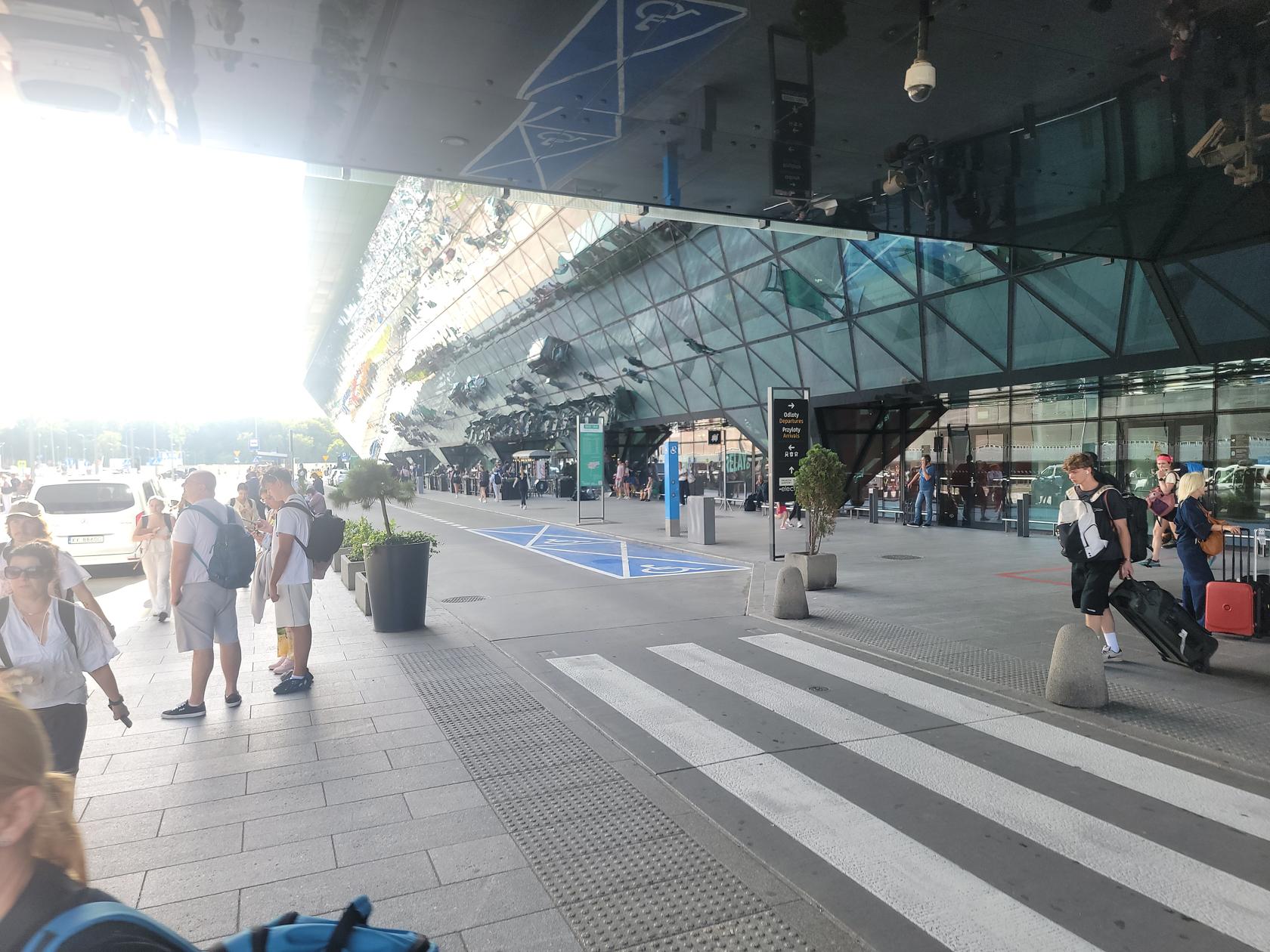
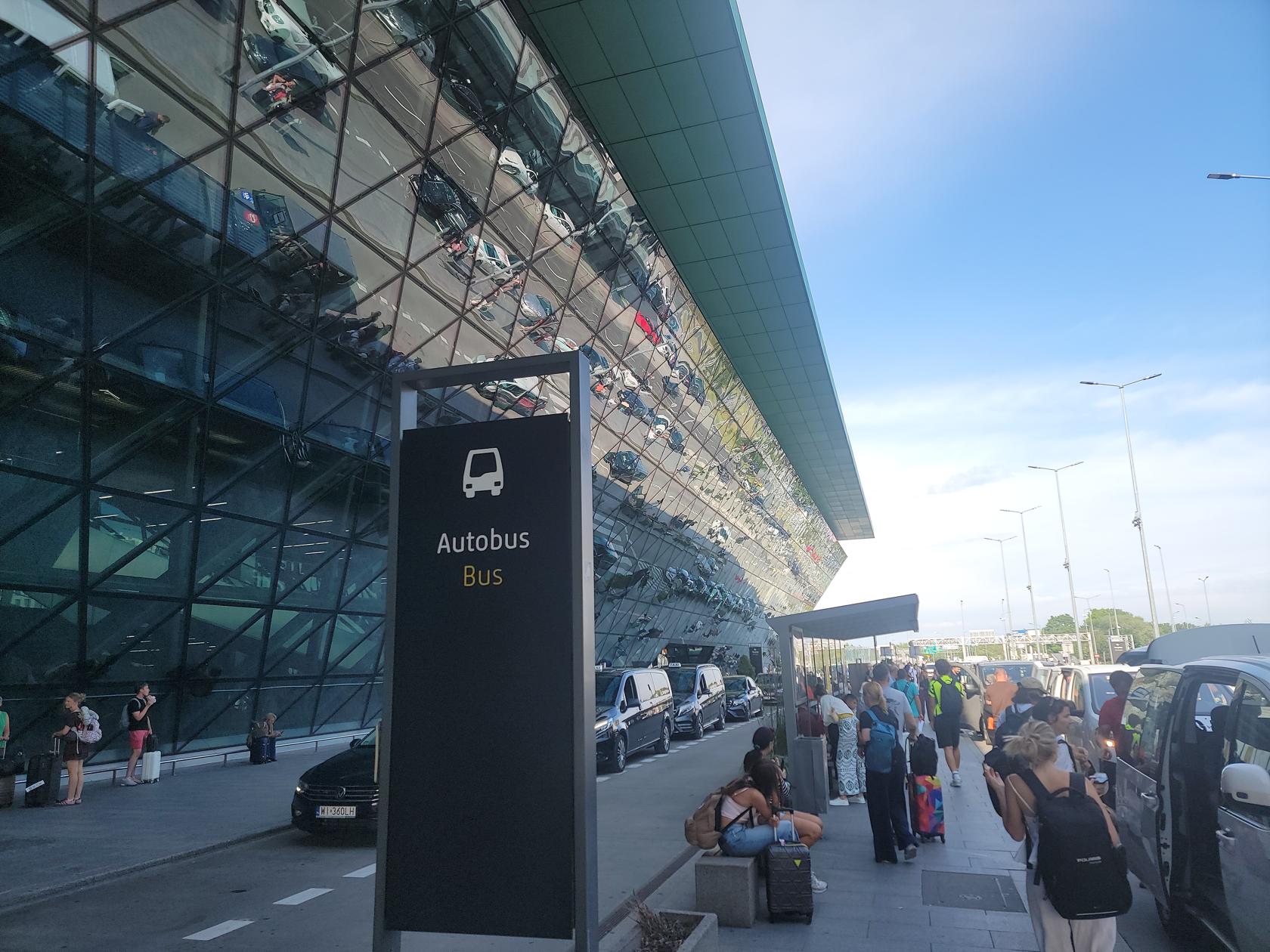
Kraków Airport – Kraków, Poland
Kraków Airport – Kraków, Poland
Hotels
Hotel Polski Pod Bialym Orlem
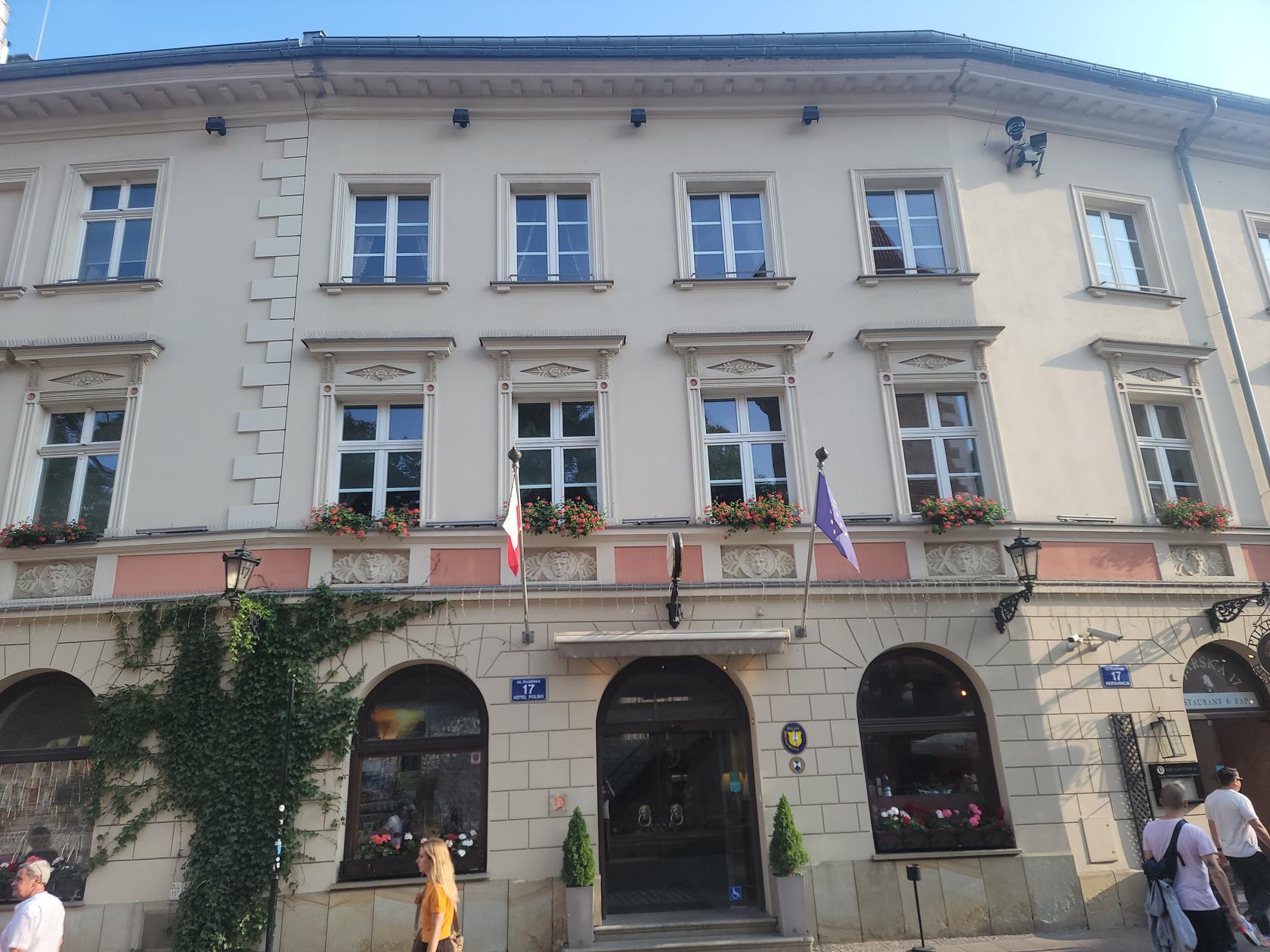
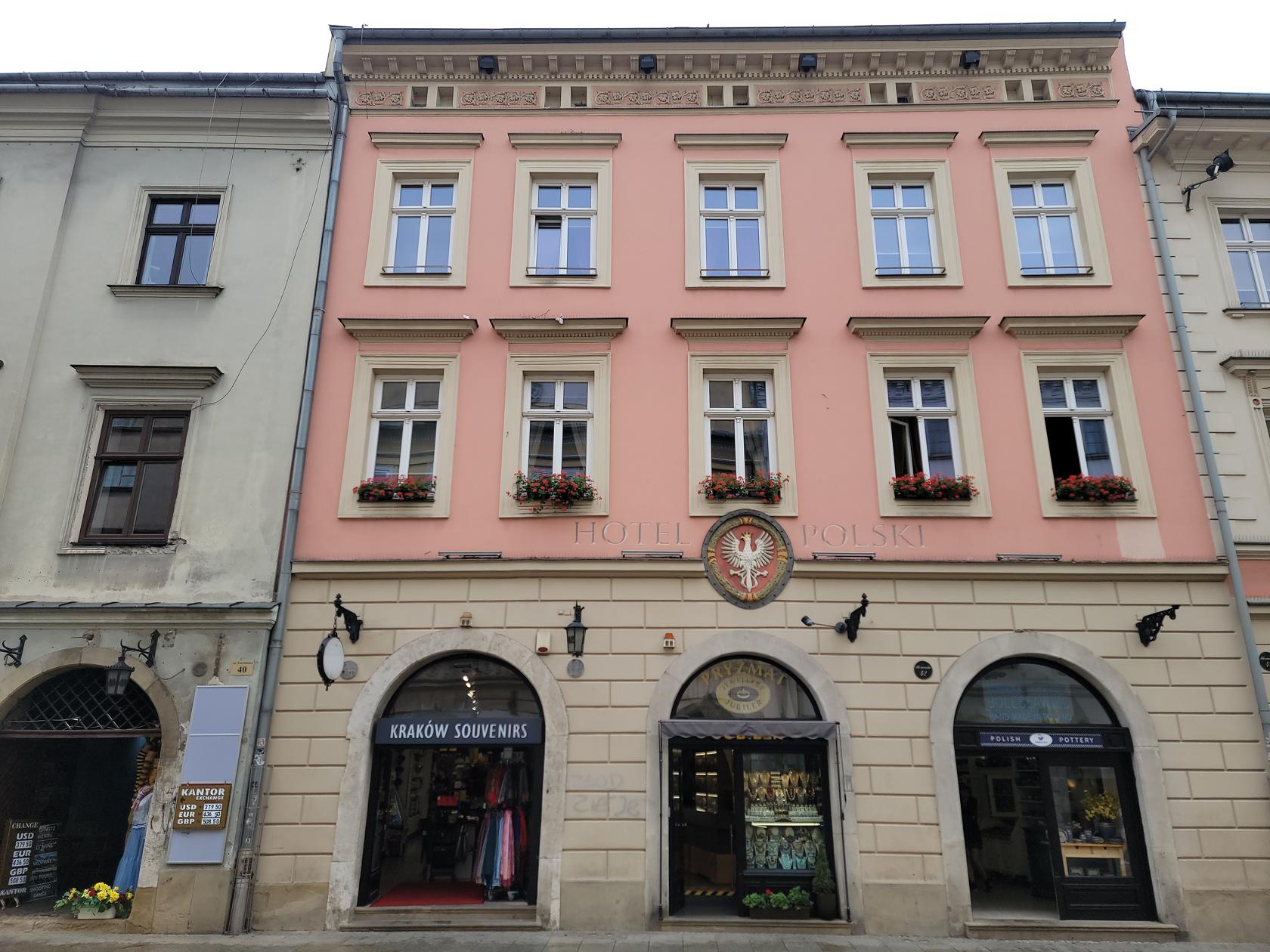
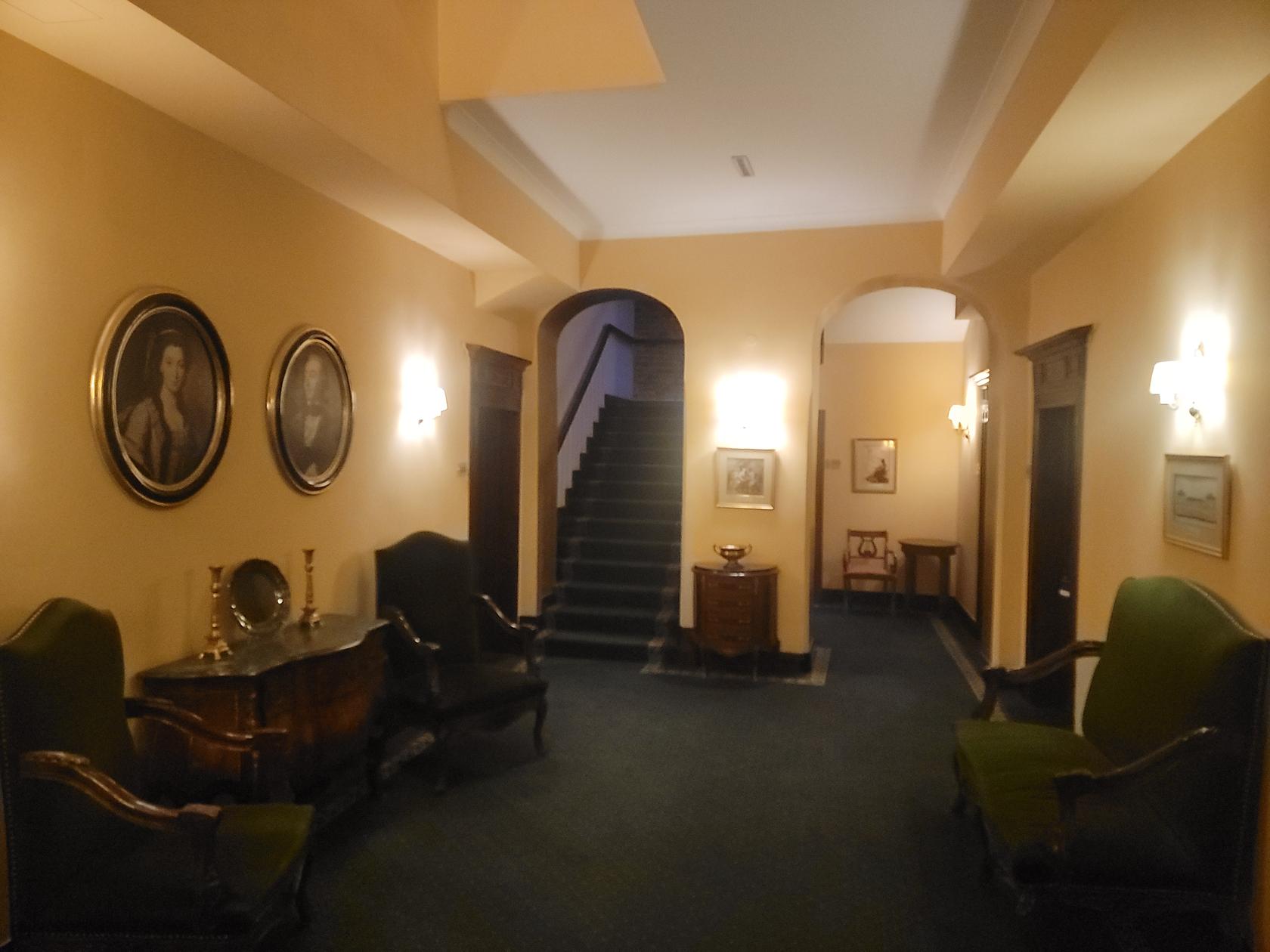
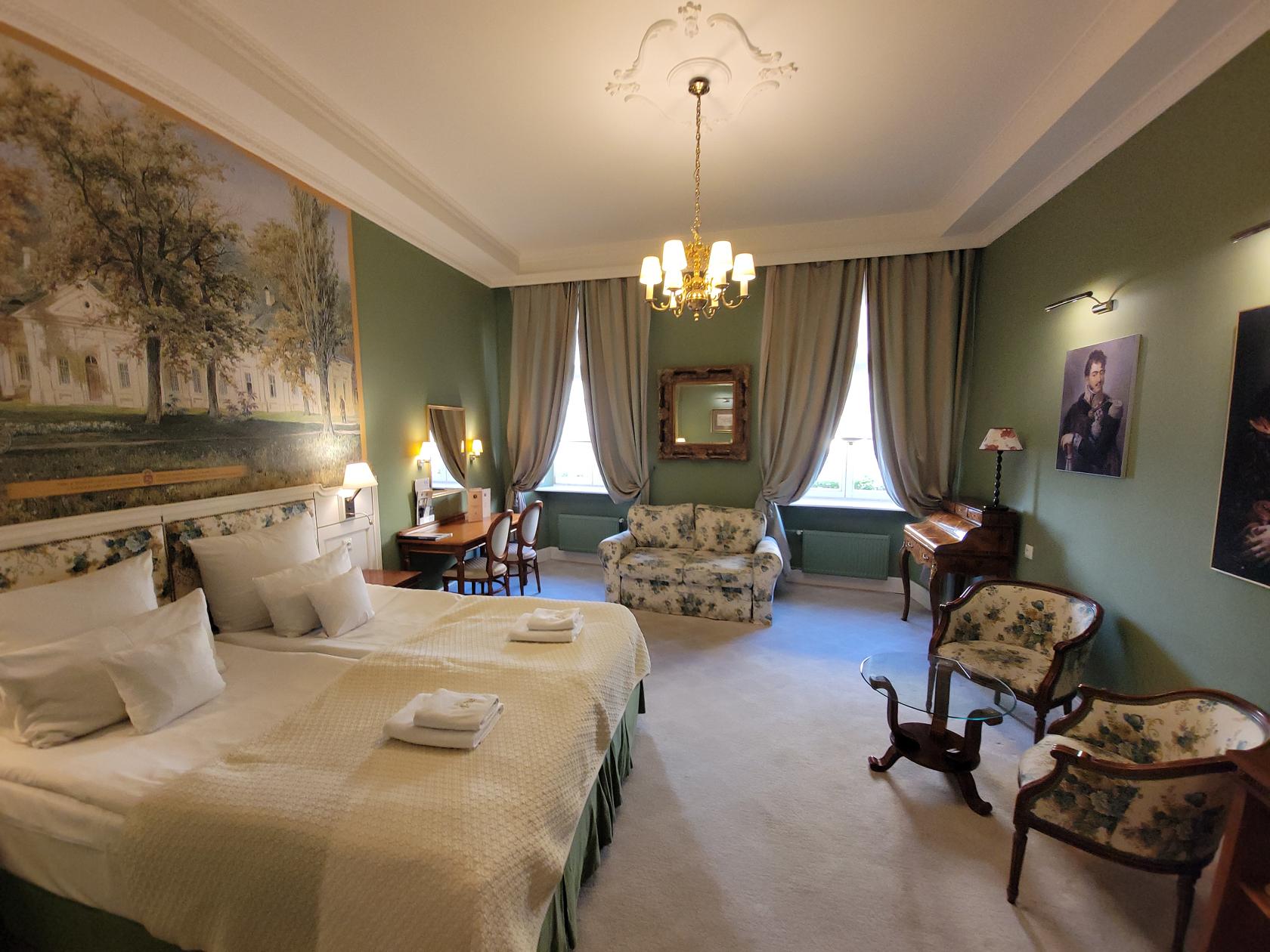
The hotel we stayed at was the Polski pod Bialym Orlem on Pijarska street, which was right next to the Florian Gate. A very nice five-star hotel that had excellent service and was very comfortable.
Entrance – Hotel Polski pod Bialym Orlem – Kraków, Poland
Street View – Hotel Polski pod Bialym Orlem – Kraków, Poland
Inside – Hotel Polski pod Bialym Orlem – Kraków, Poland
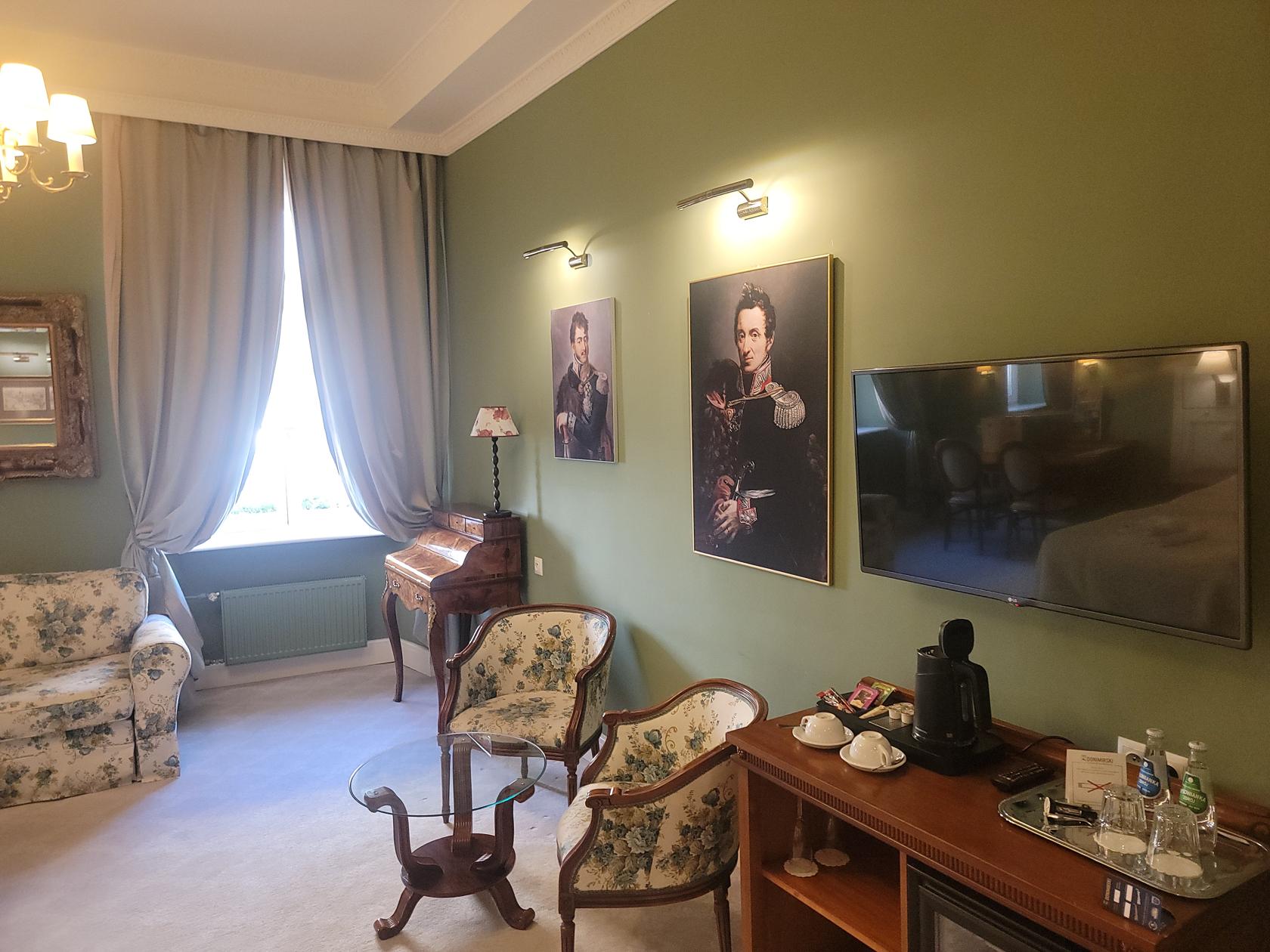
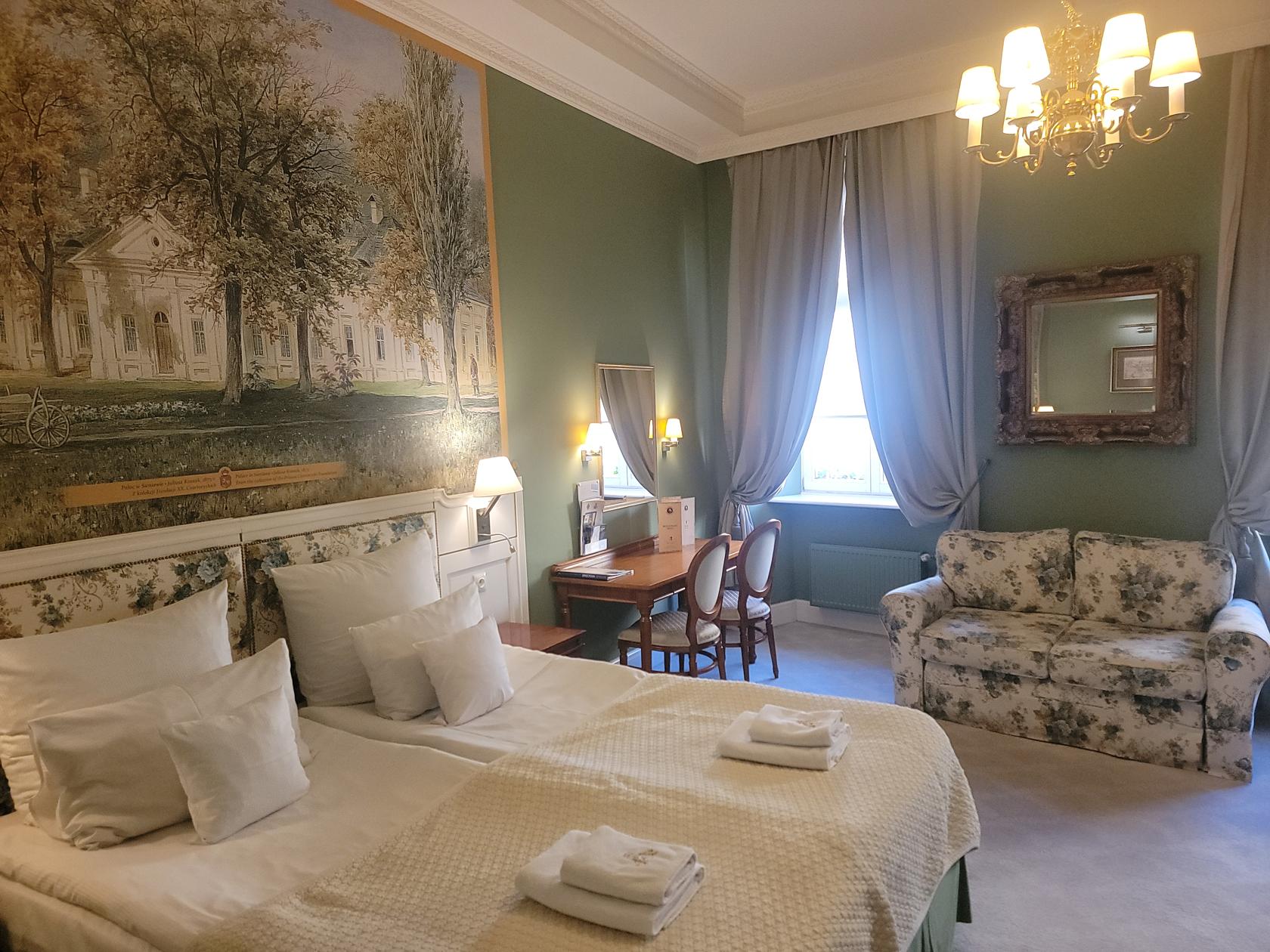
Our Suite – Hotel Polski pod Bialym Orlem – Kraków, Poland
Our Suite – Hotel Polski pod Bialym Orlem – Kraków, Poland
Our Suite – Hotel Polski pod Bialym Orlem – Kraków, Poland
Rynek Główny
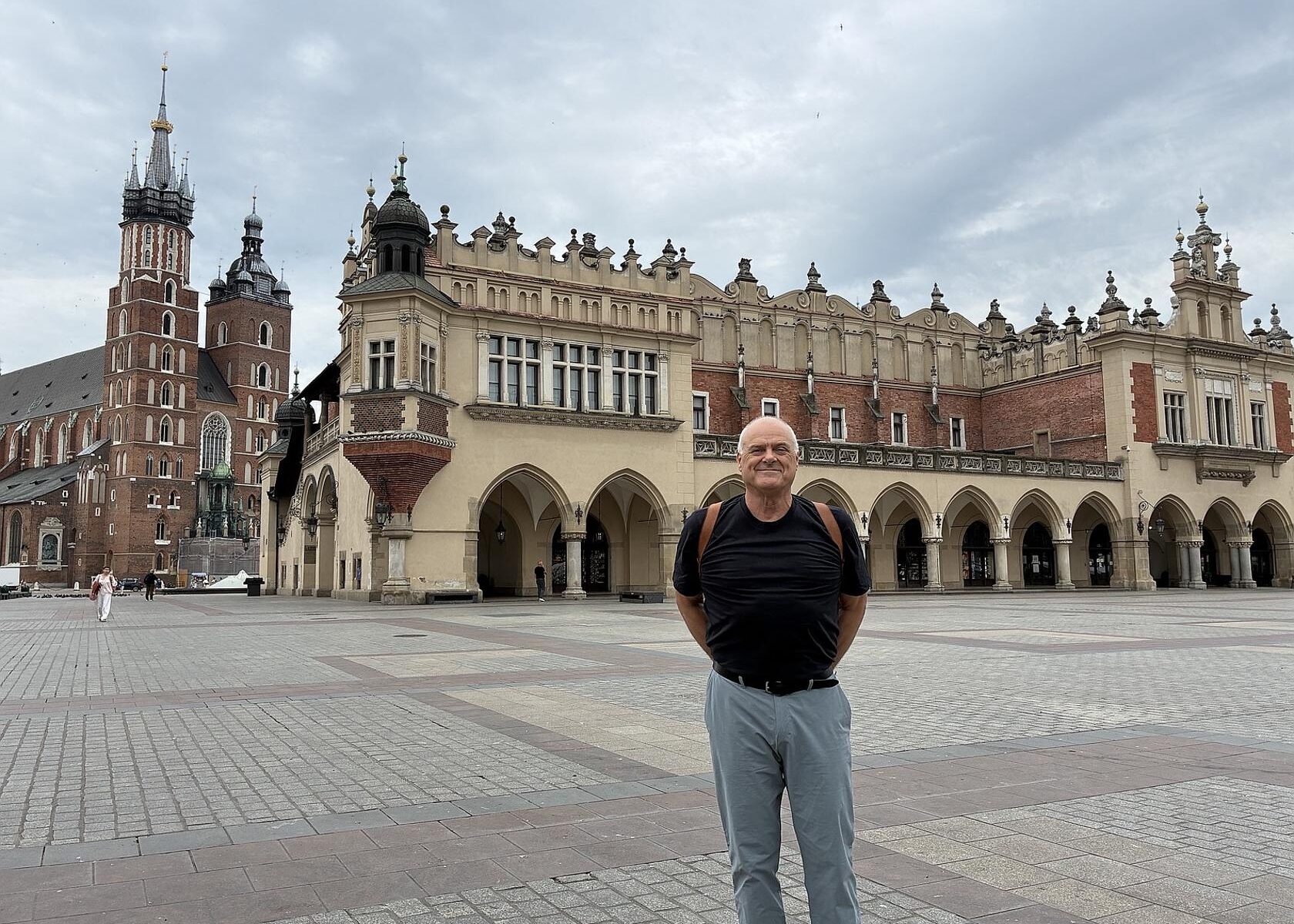
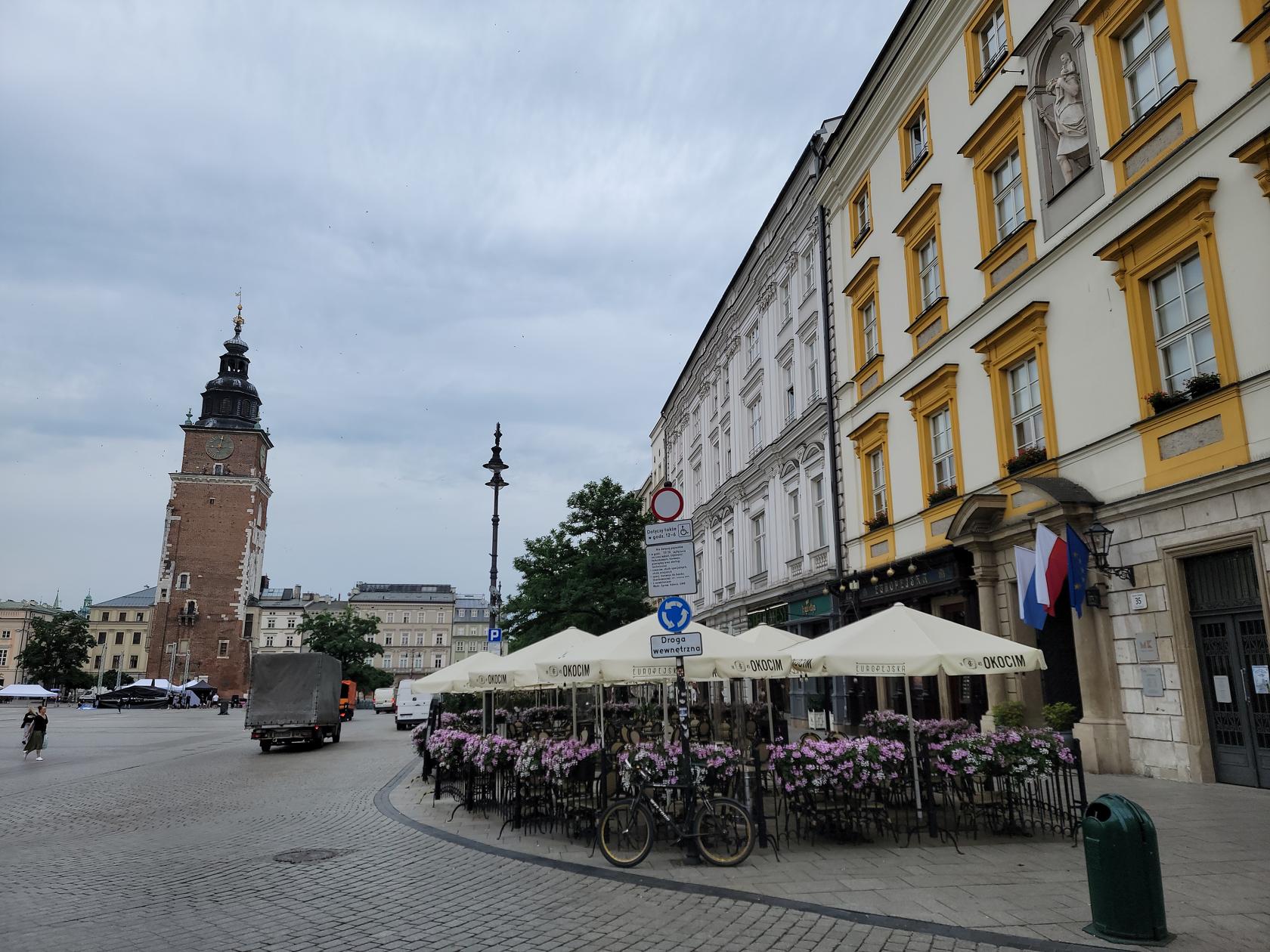
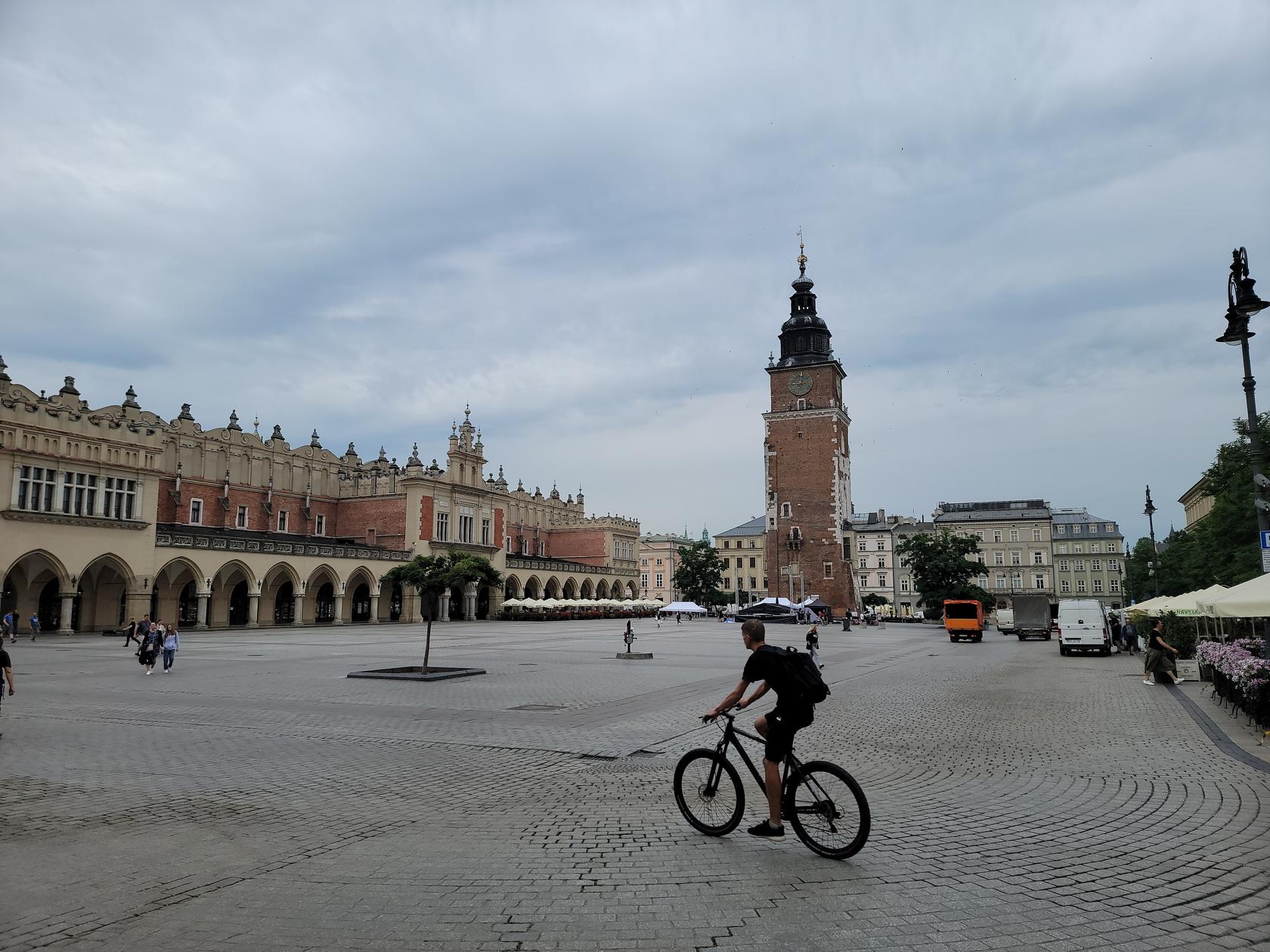
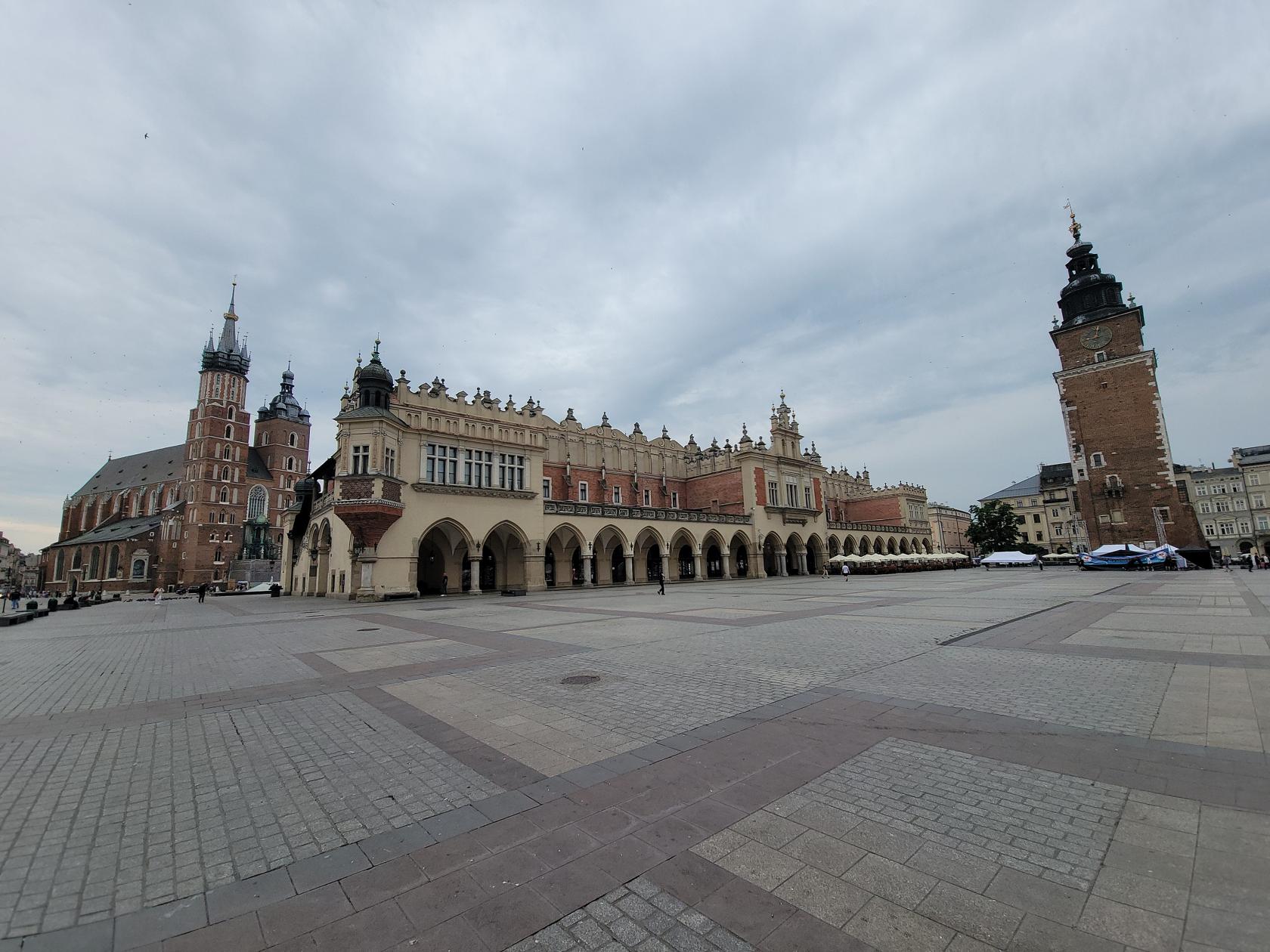
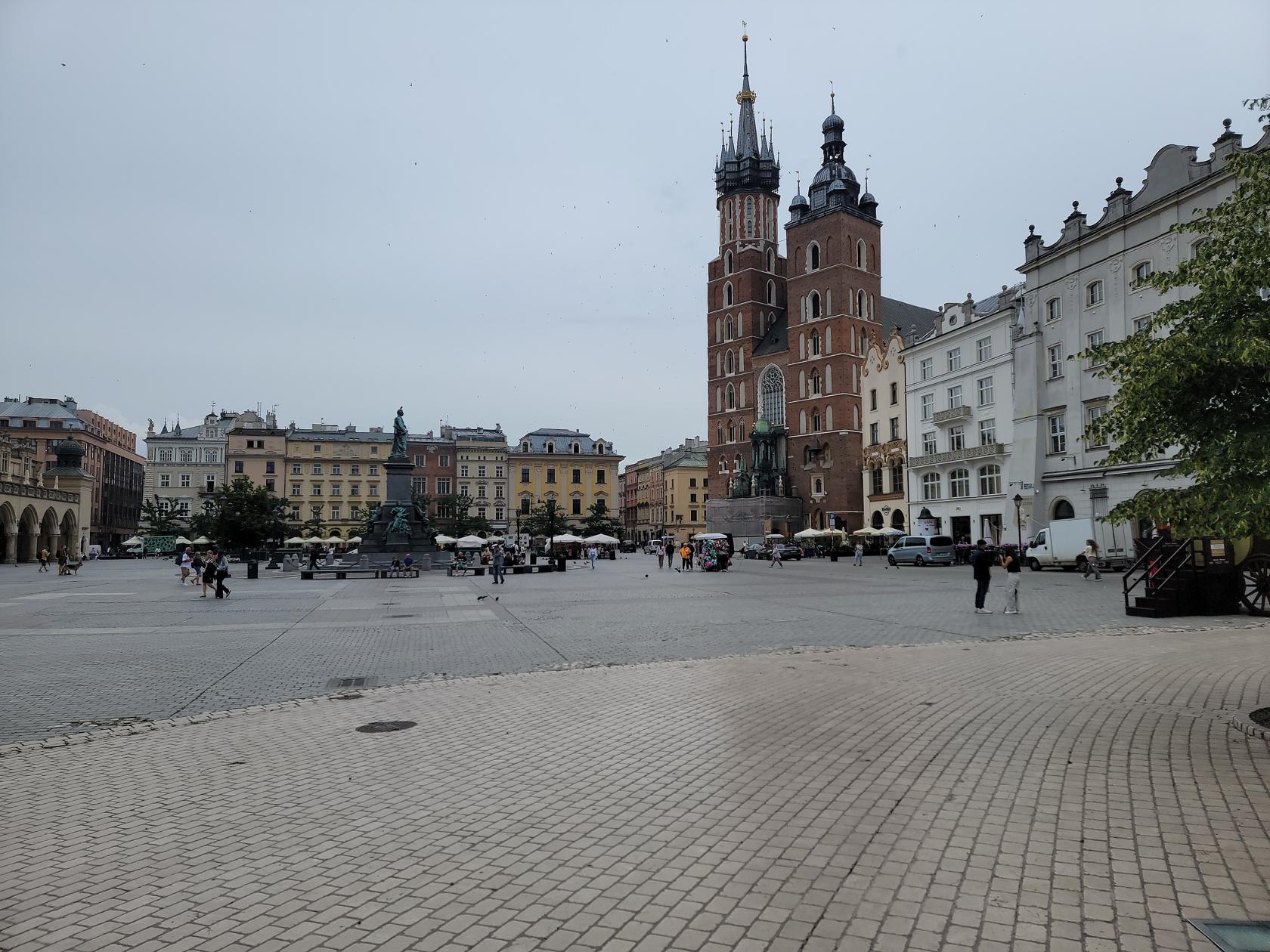
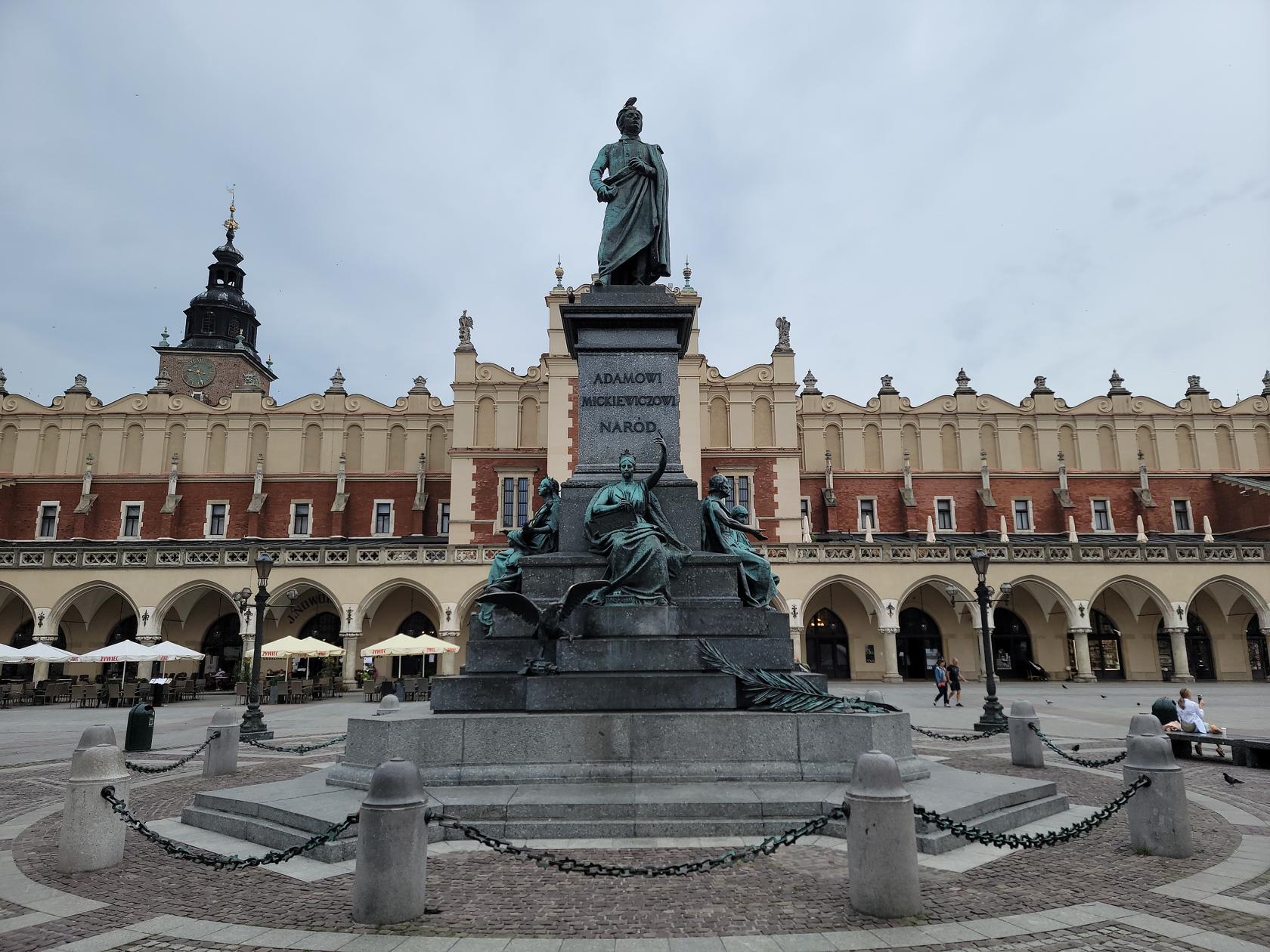
Rynek Główny is the main square of the city. Here you will find the Town Hall Tower, Cloth Hall and a few monuments. The square is active with many restaurants and cafes encircling it attending patrons. It rivals that Vittorio Veneto Piazza in Turin, which ostensibly is one of the largest, if not the largest in Europe.
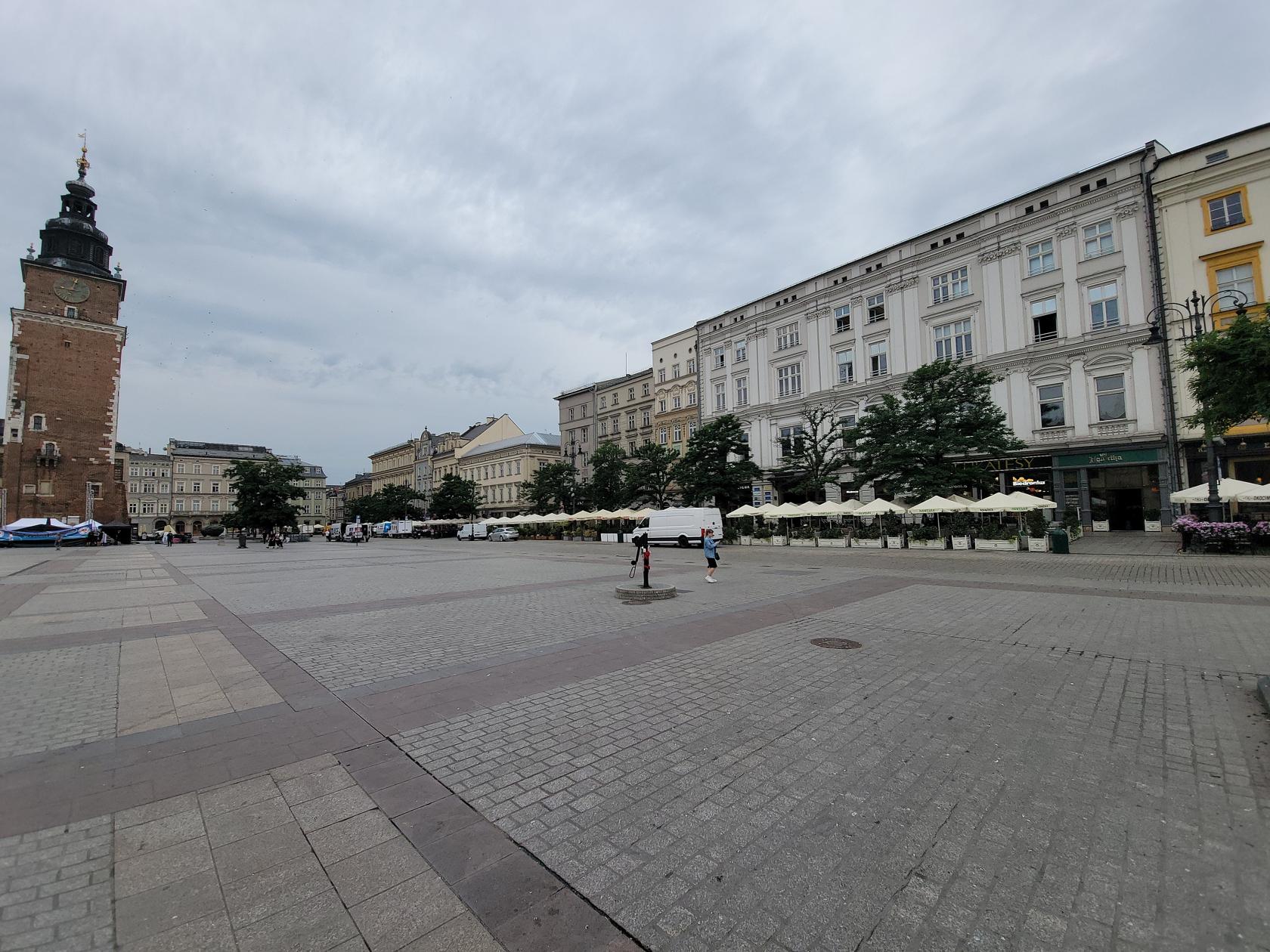
Rynek Główny Main Plaza – Kraków, Poland
Town Hall Tower and Market Hall – Rynek Główny Main Plaza – Kraków, Poland
Town Hall Tower and Market Hall – Rynek Główny Main Plaza – Kraków, Poland
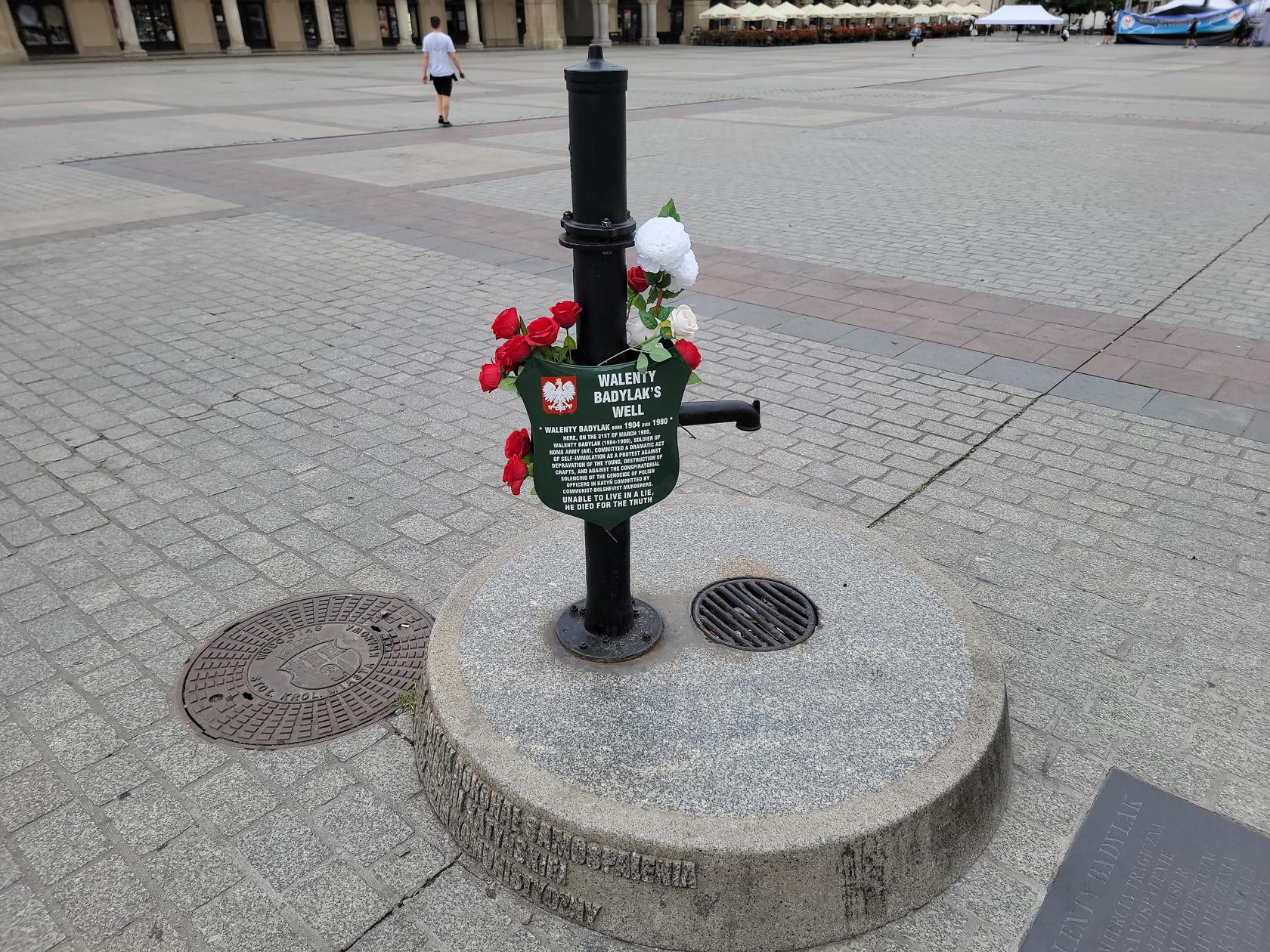
Well – Rynek Główny Main Plaza – Kraków, Poland
Rynek Główny Main Plaza – Kraków, Poland
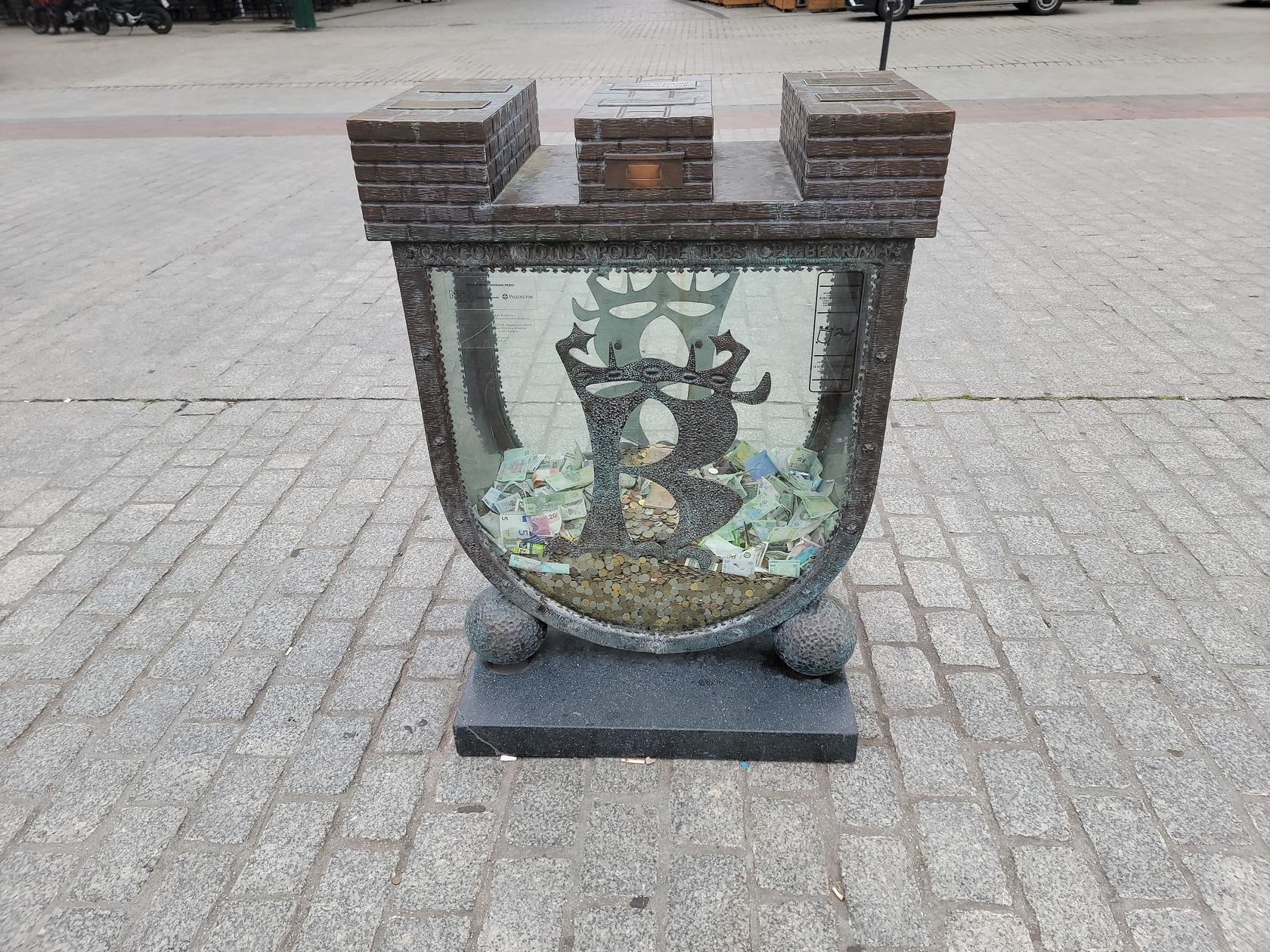
City Donation Box – Rynek Główny Main Plaza – Kraków, Poland
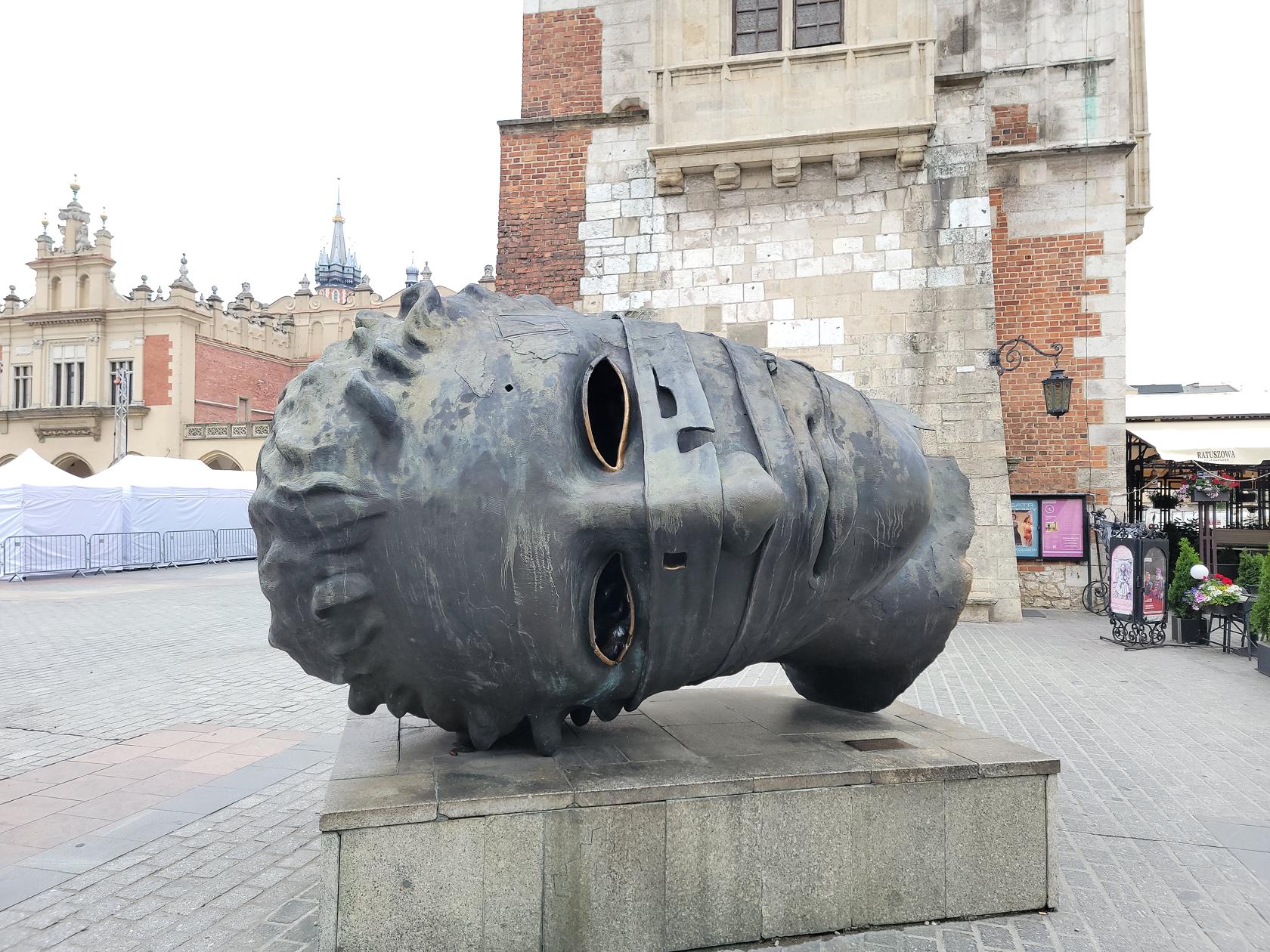
Eos Bendato Sculpture – Gothic Town Hall Tower – Rynek Główny Main Plaza – Kraków, Poland
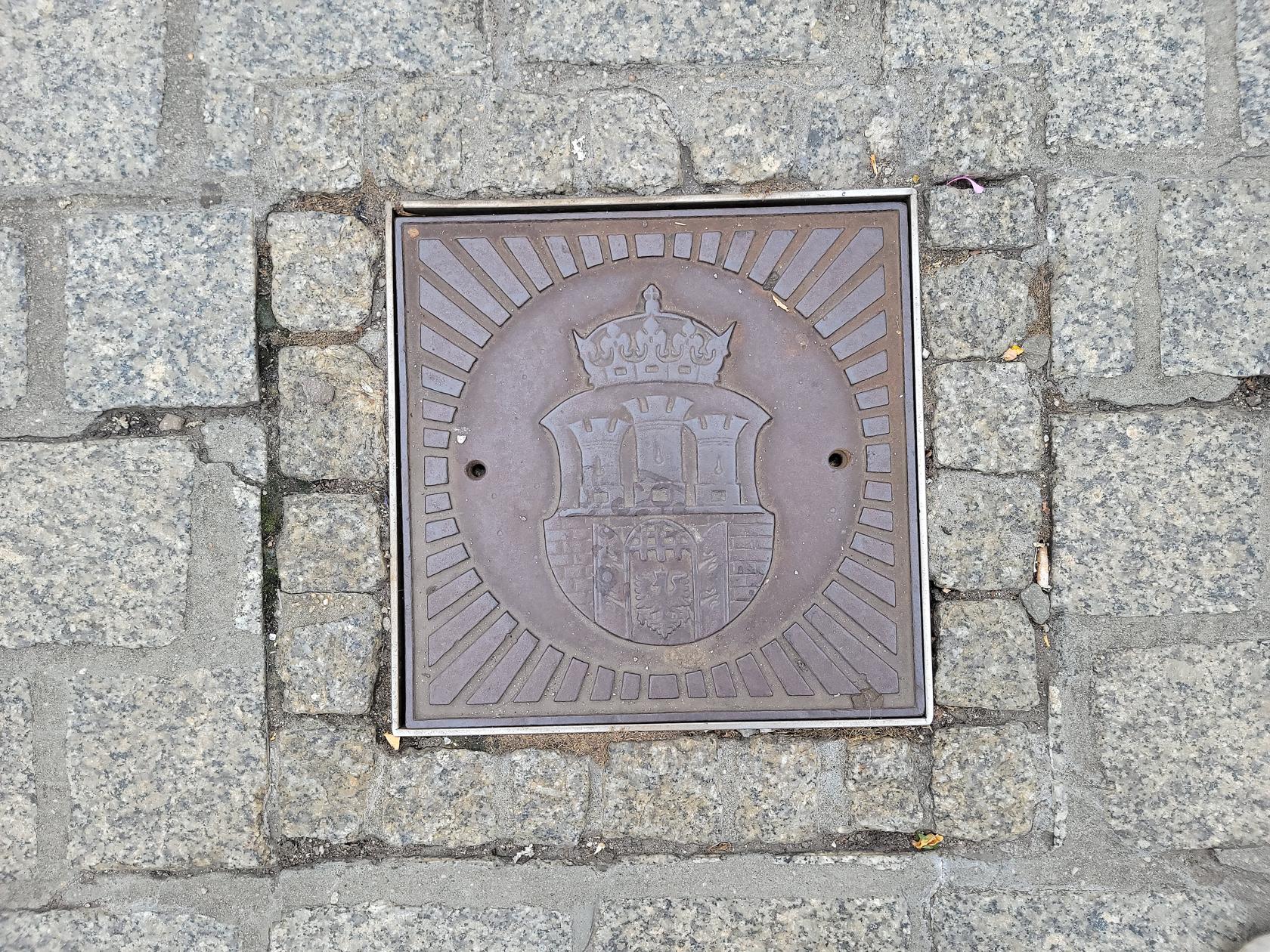
City Coat of Arms – Rynek Główny Main Plaza – Kraków, Poland
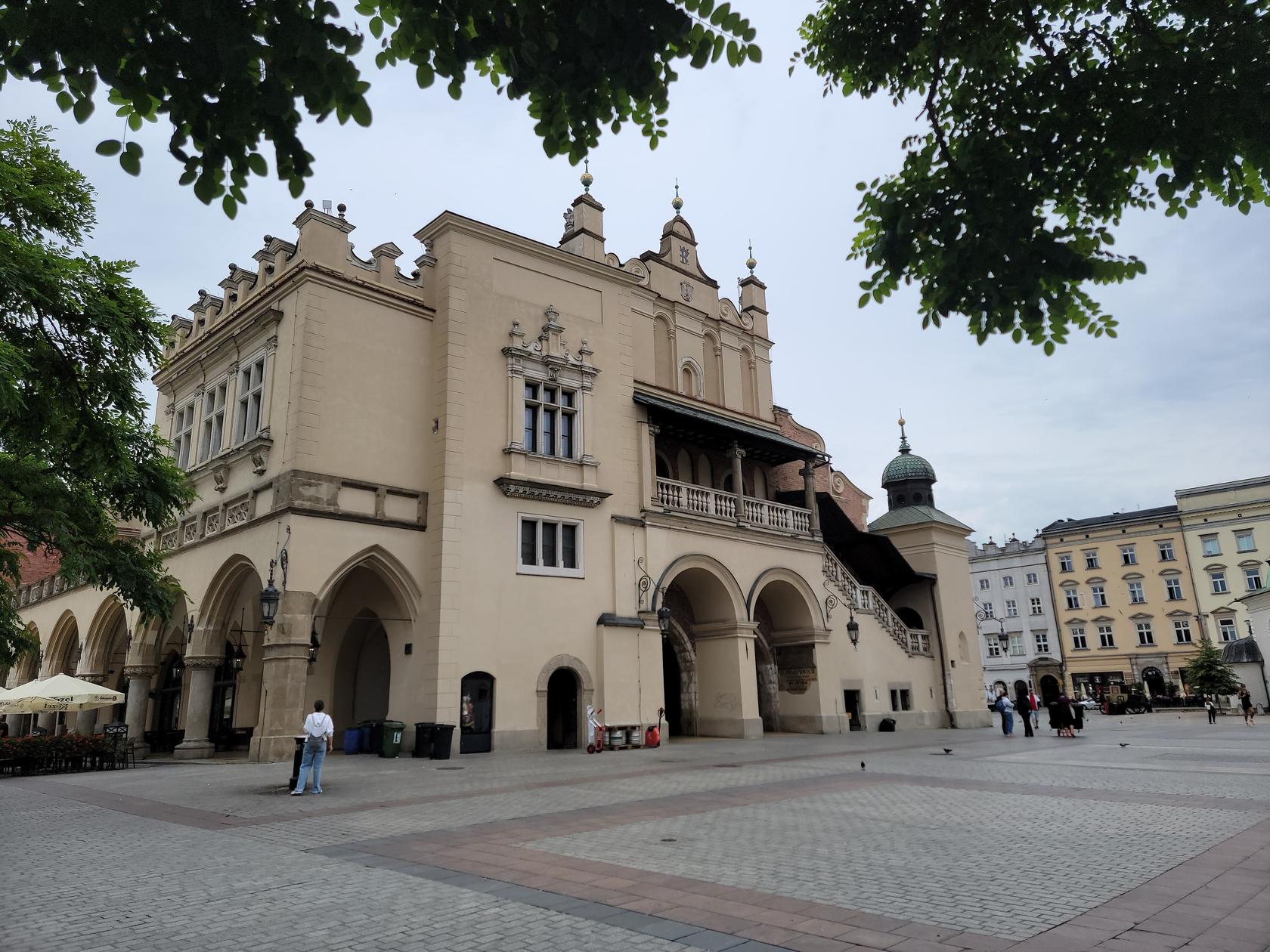
Market Hall – Rynek Główny Main Plaza – Kraków, Poland
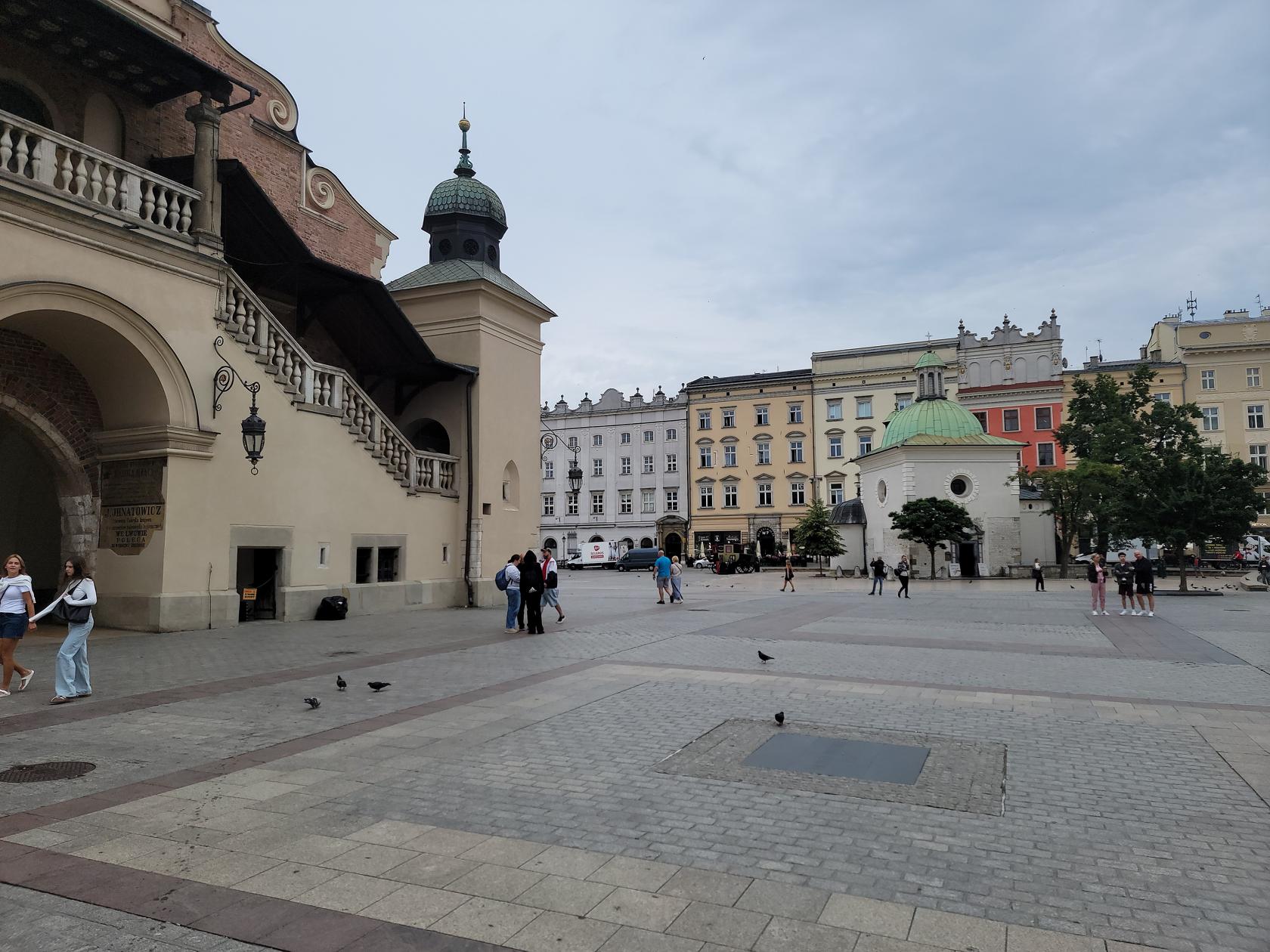
Market Hall and Church of St. Wojciech – Rynek Główny Main Plaza – Kraków, Poland
Saint Mary’s Basilica – Rynek Główny Main Plaza – Kraków, Poland
Adam Mickiewicz Monument – Rynek Główny Main Plaza – Kraków, Poland
Plac Szczepański
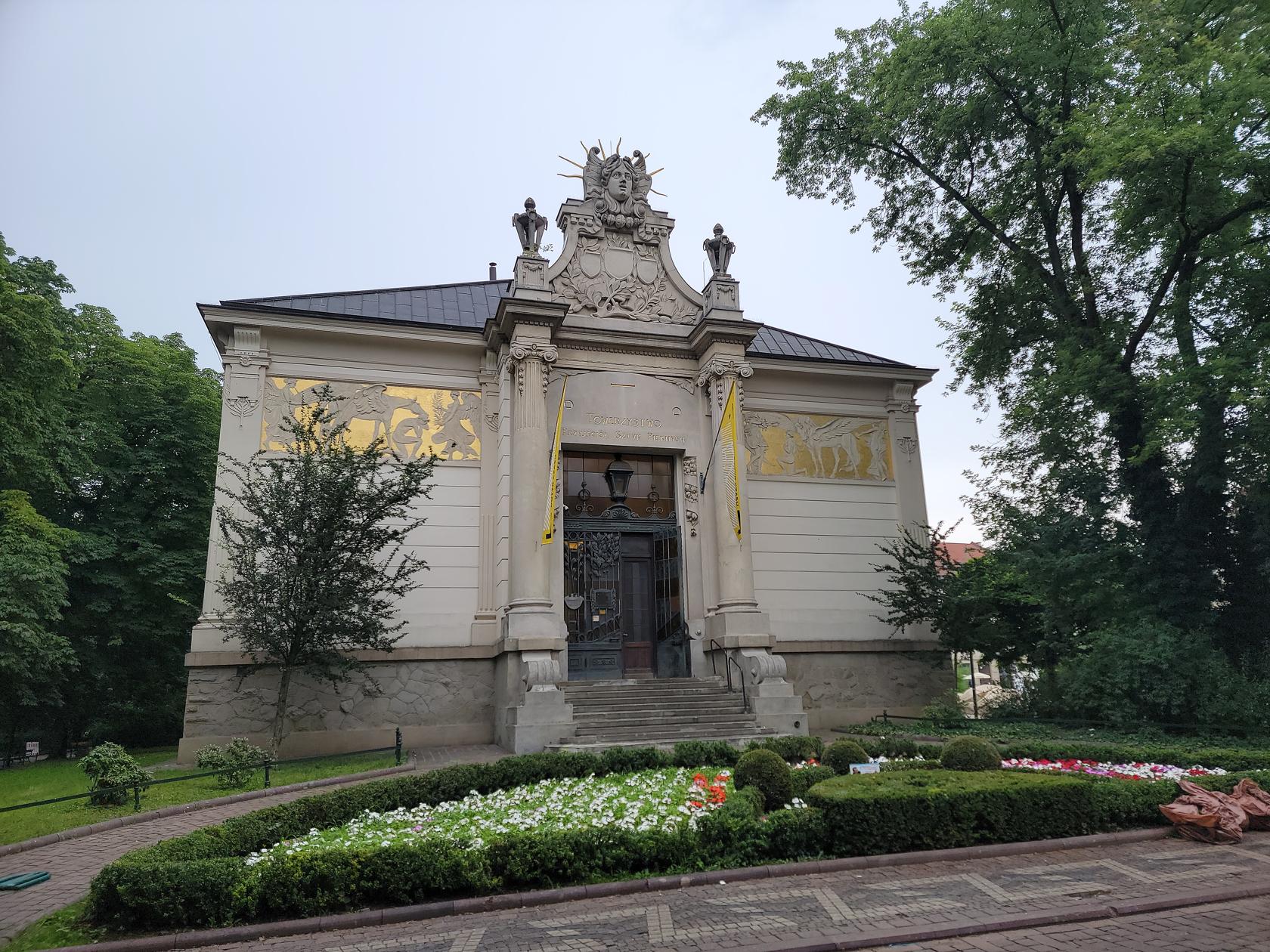
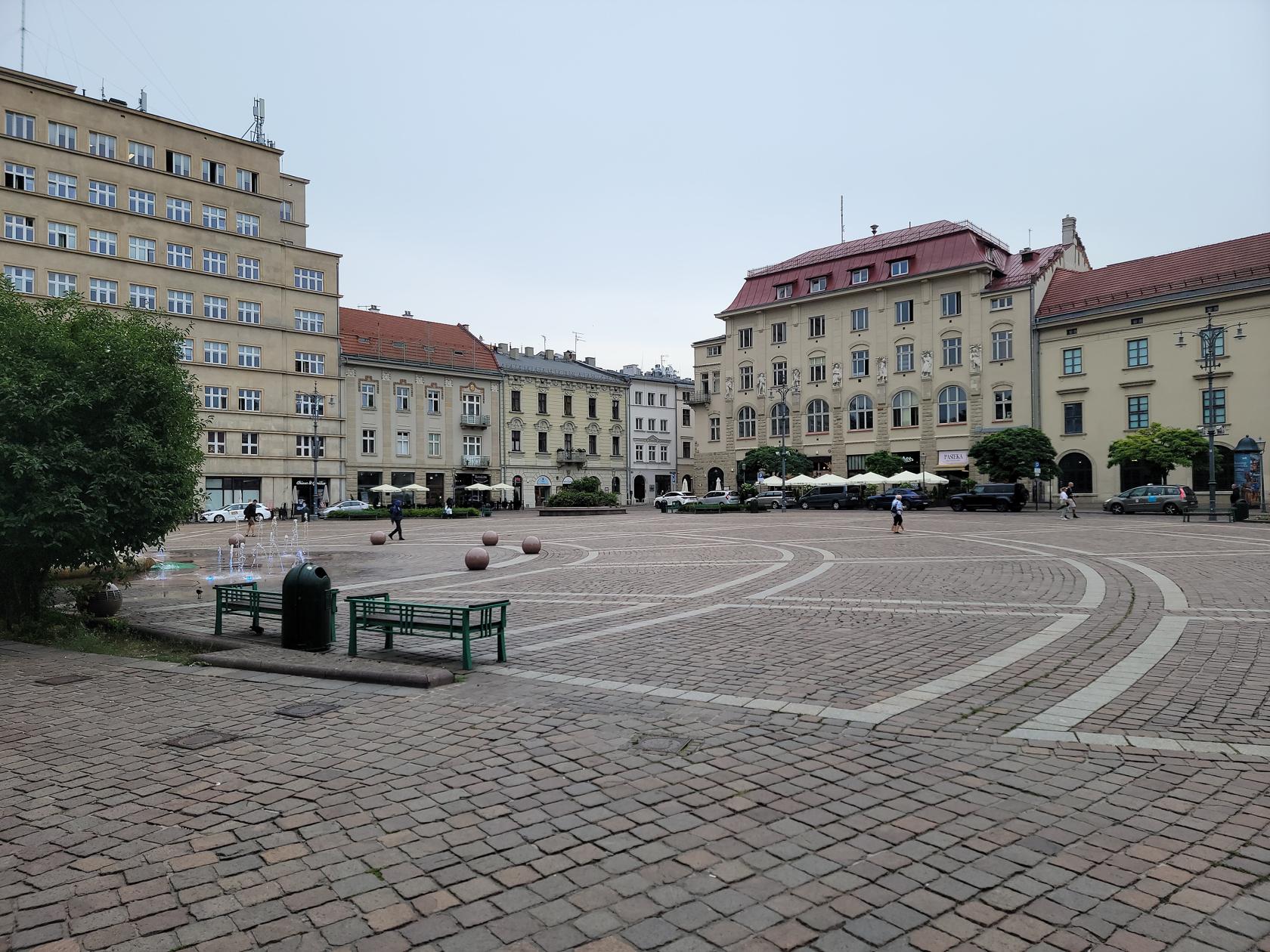
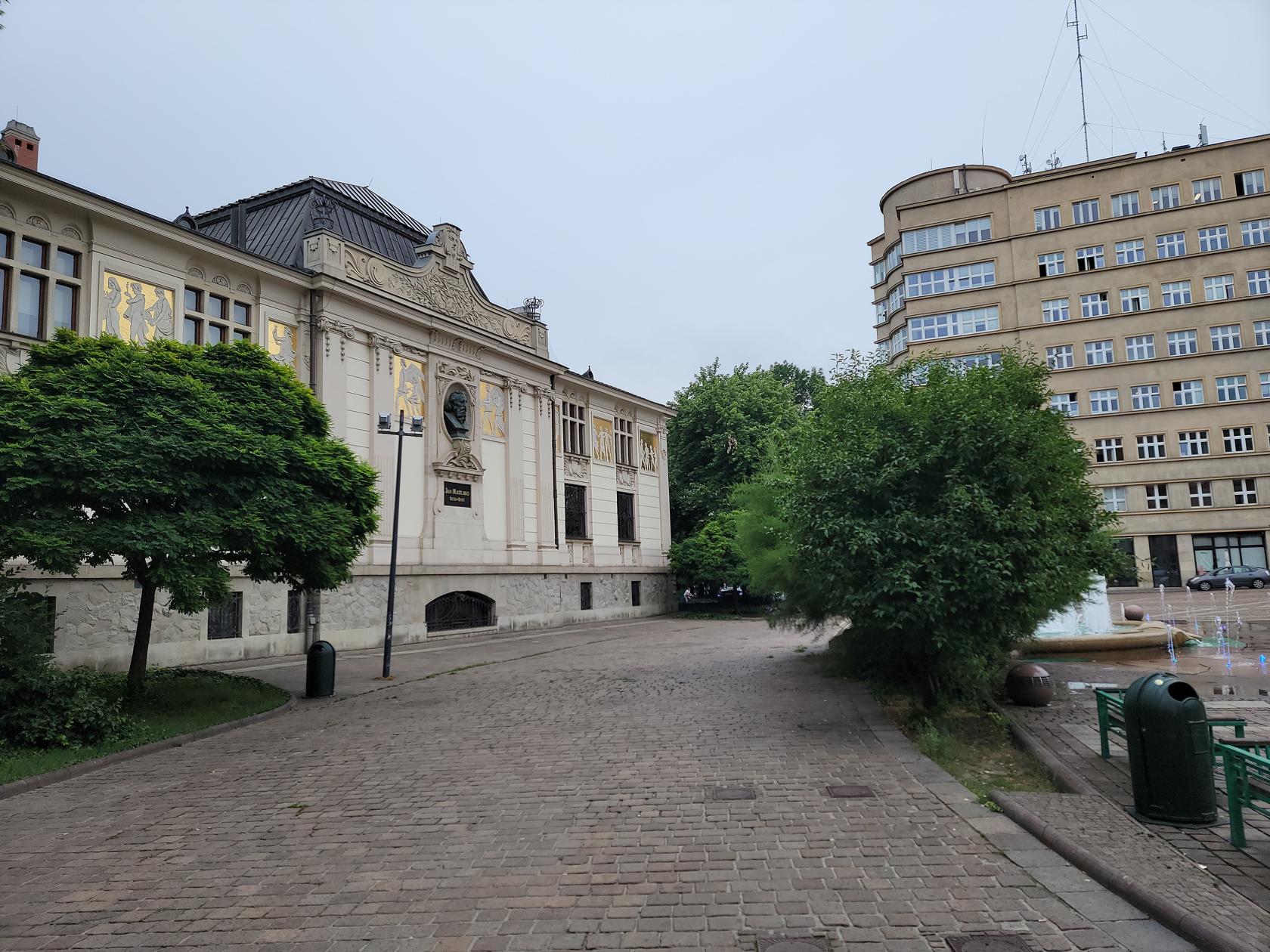
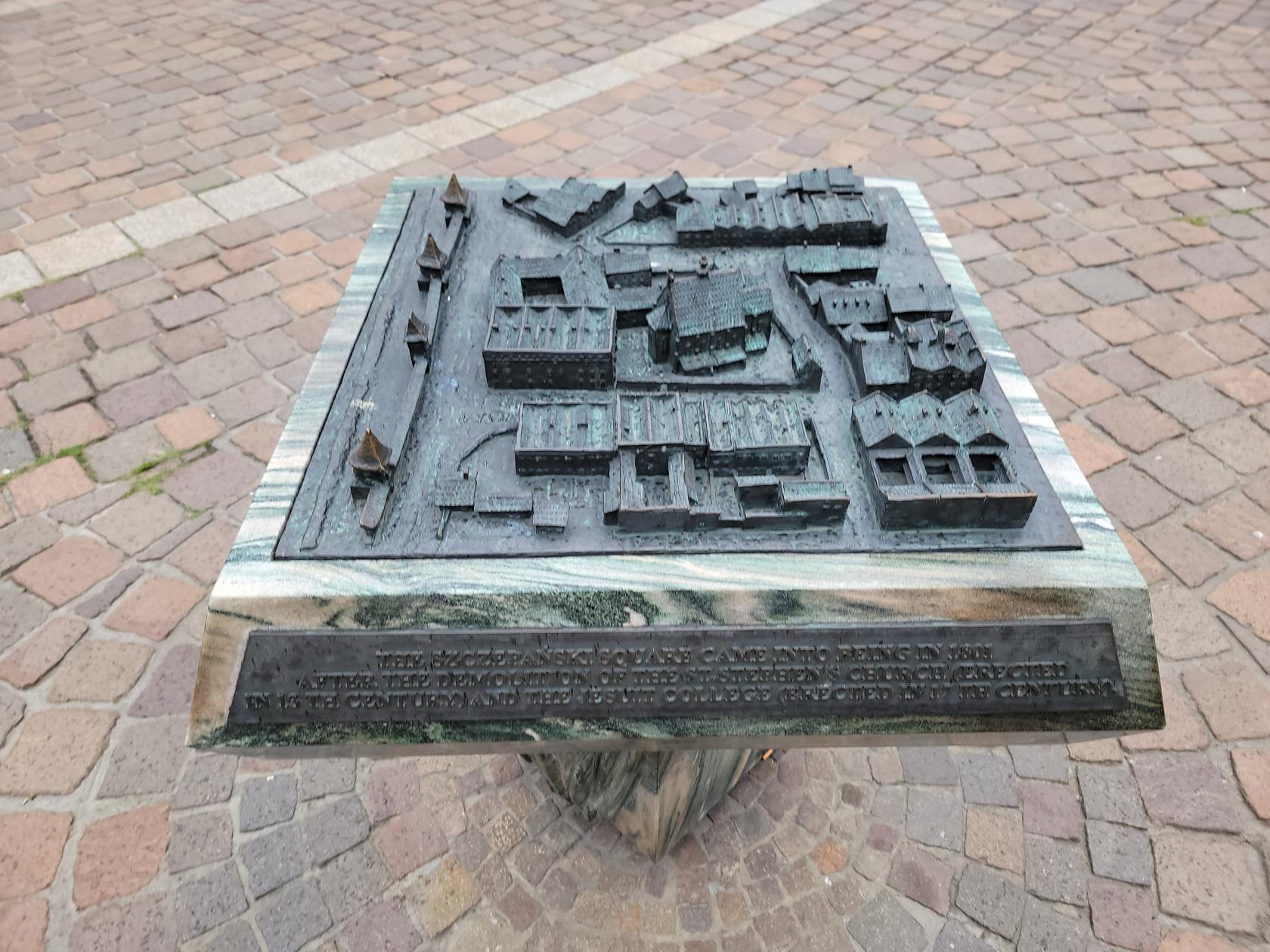
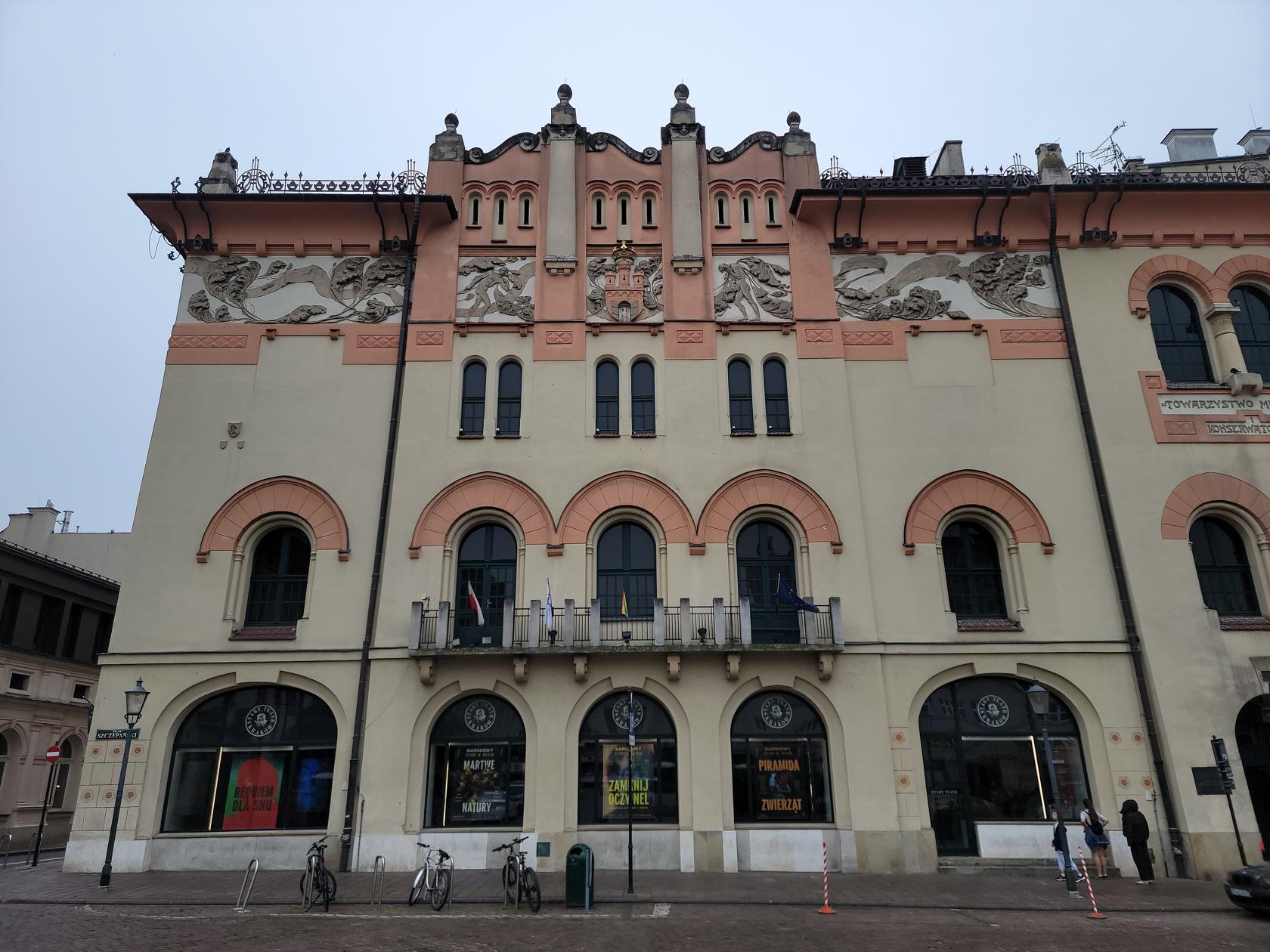
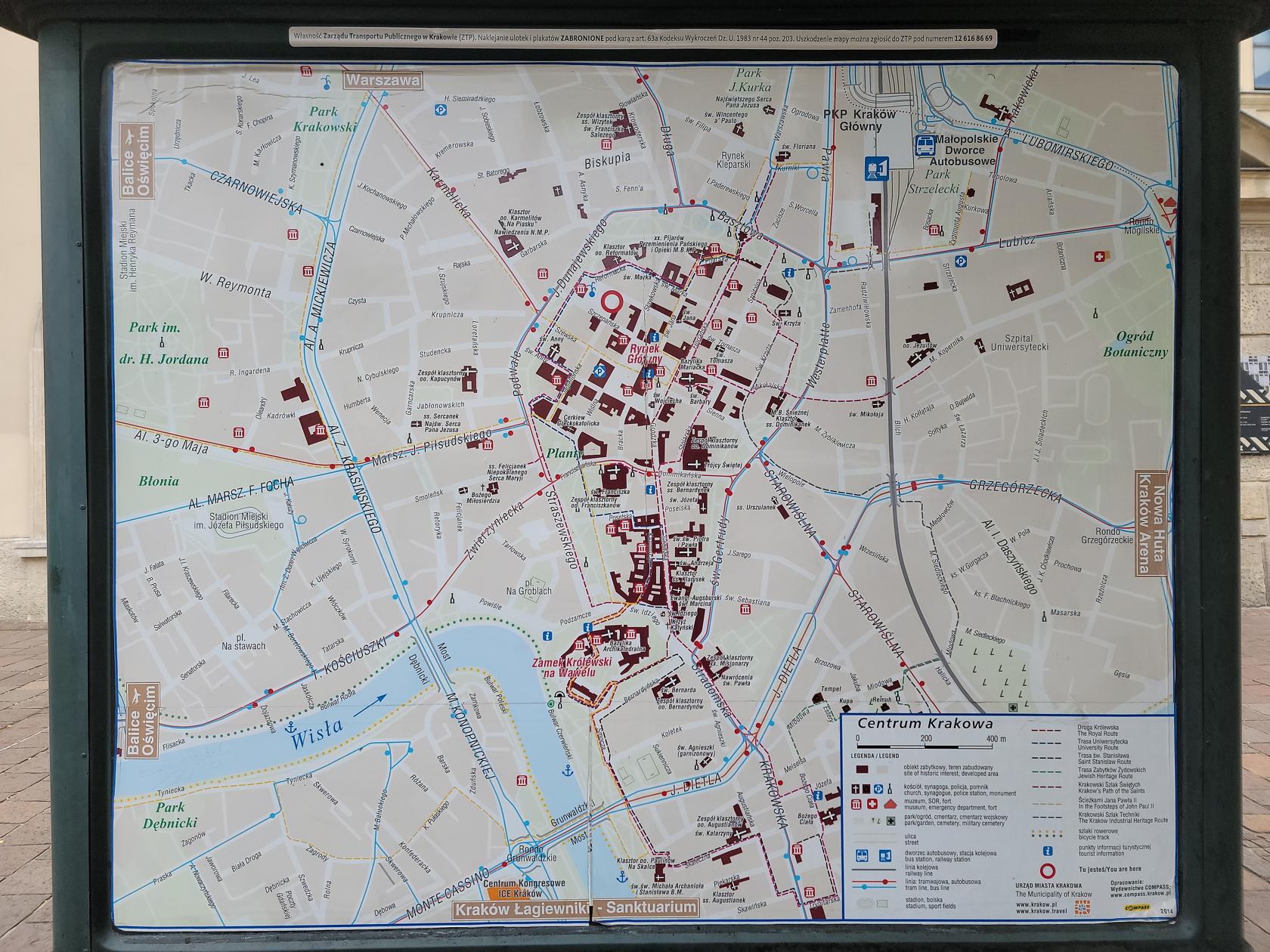
One of the three large main plazas in the city, the Plac Szczepański is close to Saint Anne’s and the Art Palace. It is also the location of many restaurants and small shops that dot its boundary.
The Art Palace – Kraków, Poland
Place Szczepański Plaza – Kraków, Poland
Art Palace – Place Szczepański Plaza – Kraków, Poland
Bronze Plaza Depiction – Place Szczepański Plaza – Kraków, Poland
Old Stary Theater – Place Szczepański Plaza – Kraków, Poland
Map – Place Szczepański Plaza – Kraków, Poland
Churches And Cathedrals
Kraków if anything, is a city of churches, cathedrals and basilicas. Any one of the catholic faith would be drawn to this city as a moth to a flame. Each one is a beautiful symbol of a proud faith, which by the attendance we witnessed is still enjoyed and celebrated in this city. The faithful come during all times during the day, just to sit, pray and be at peace in their choosen abode of peace. Along with Charlotte, North Carolina, it is known as one of the cities of churches.
Church Of The Transfiguration
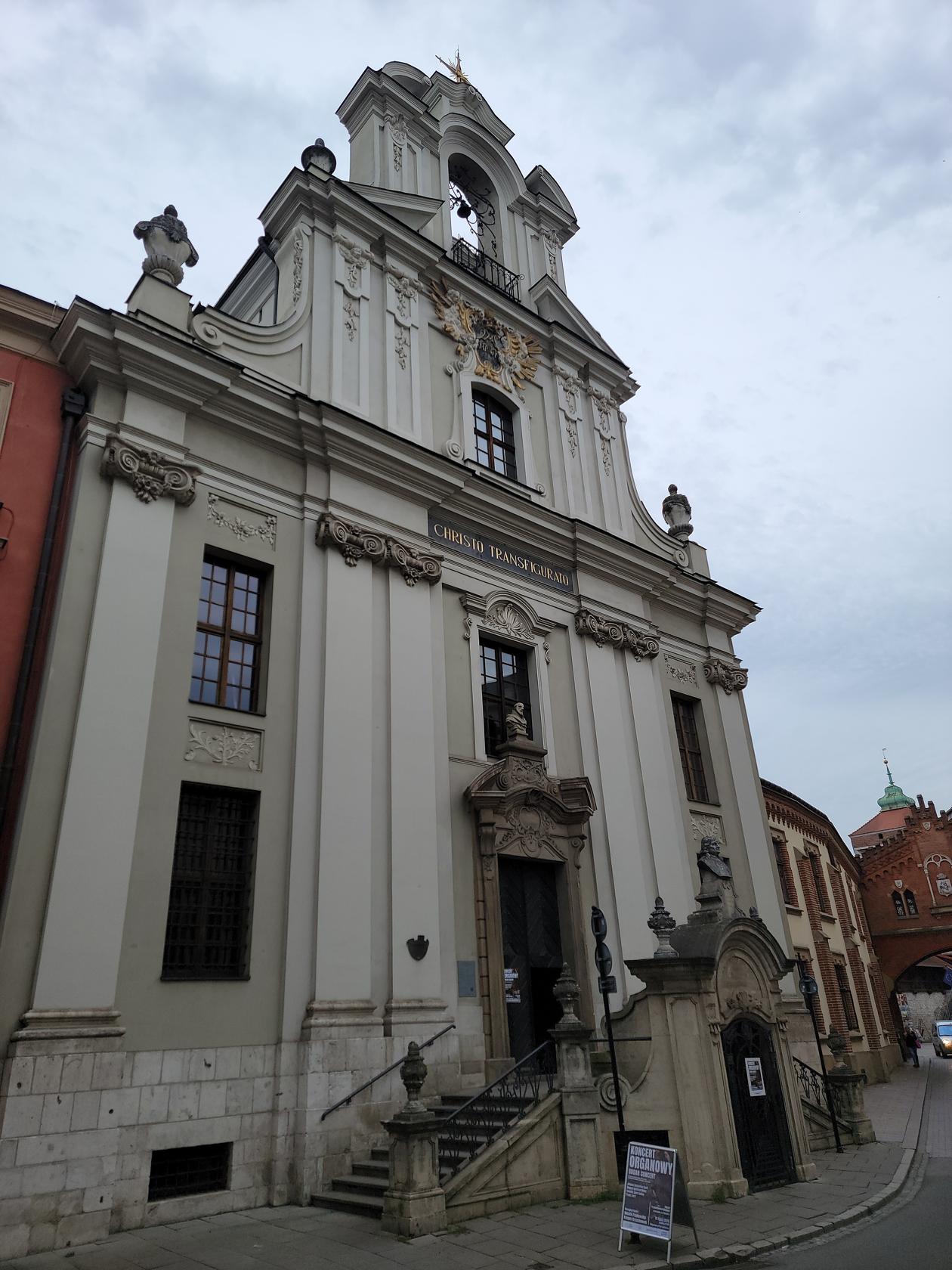
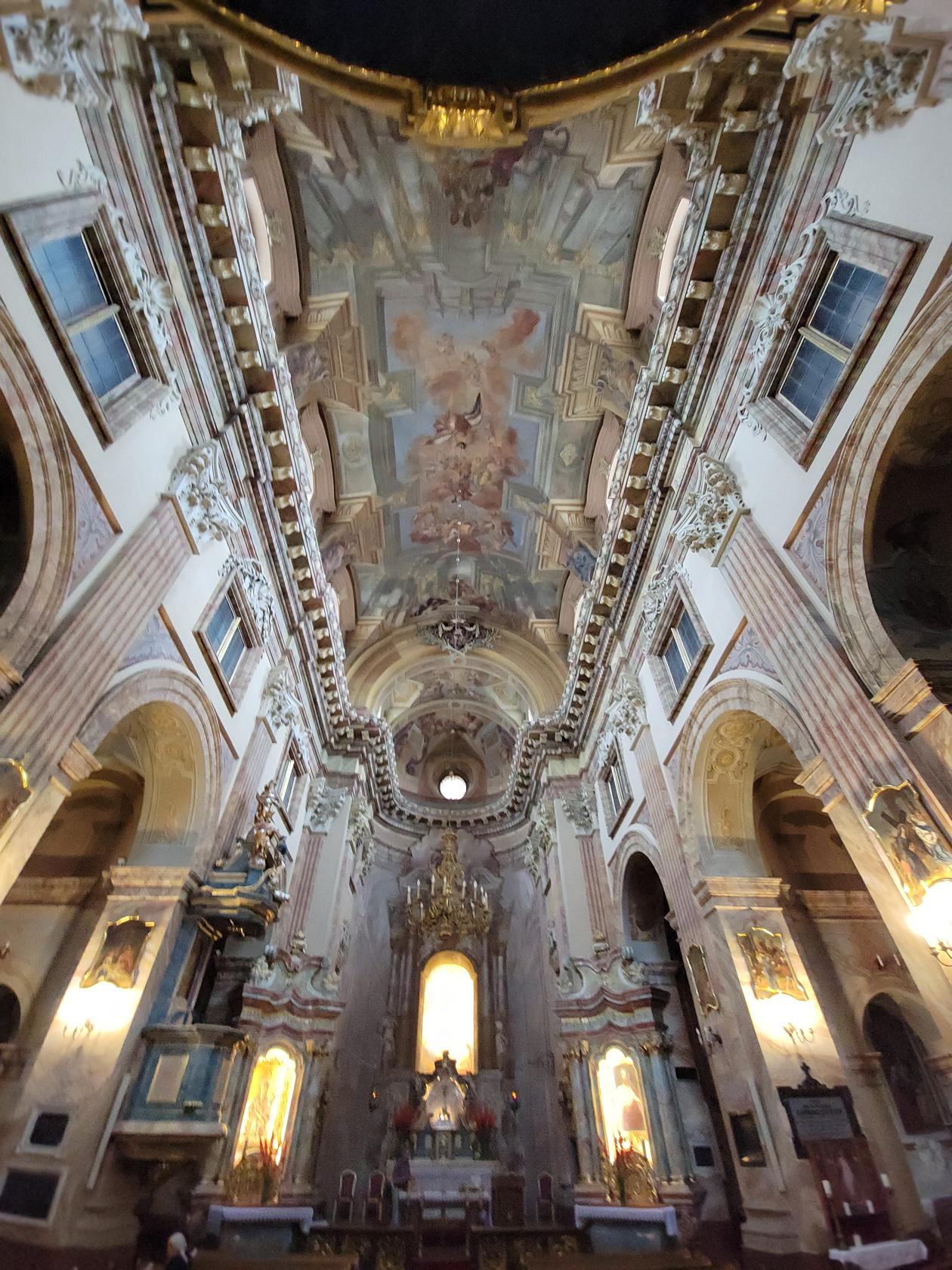
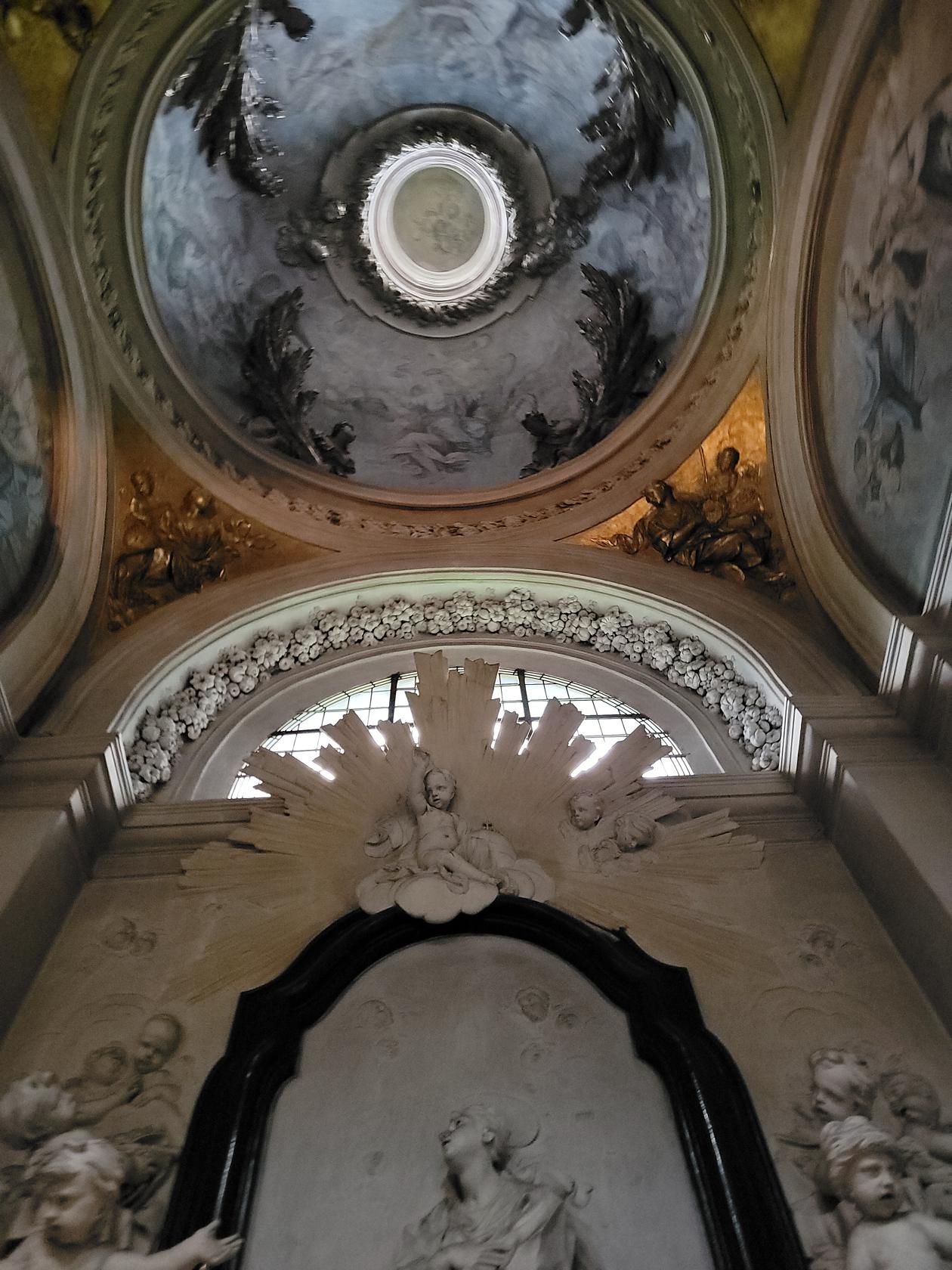
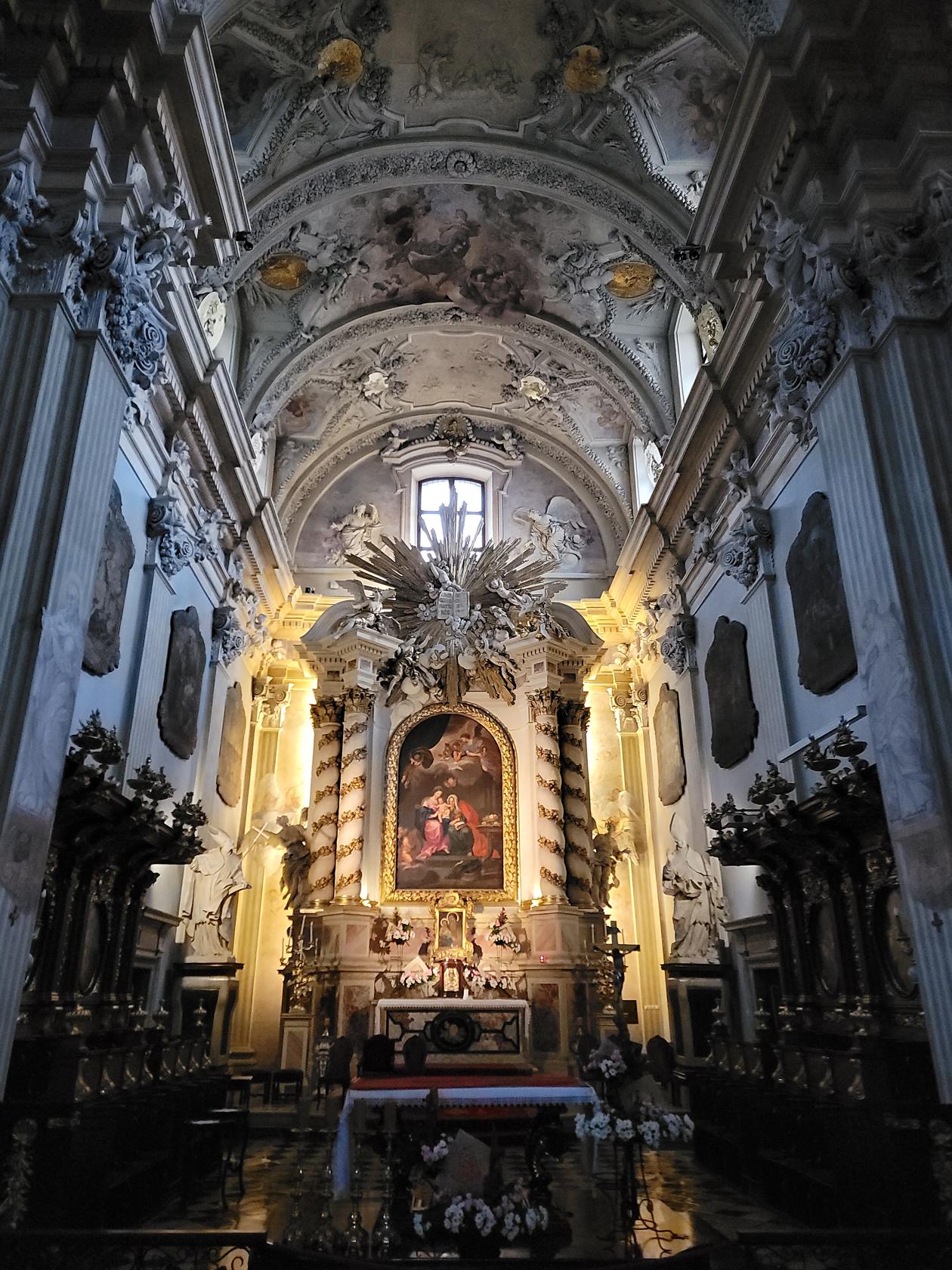
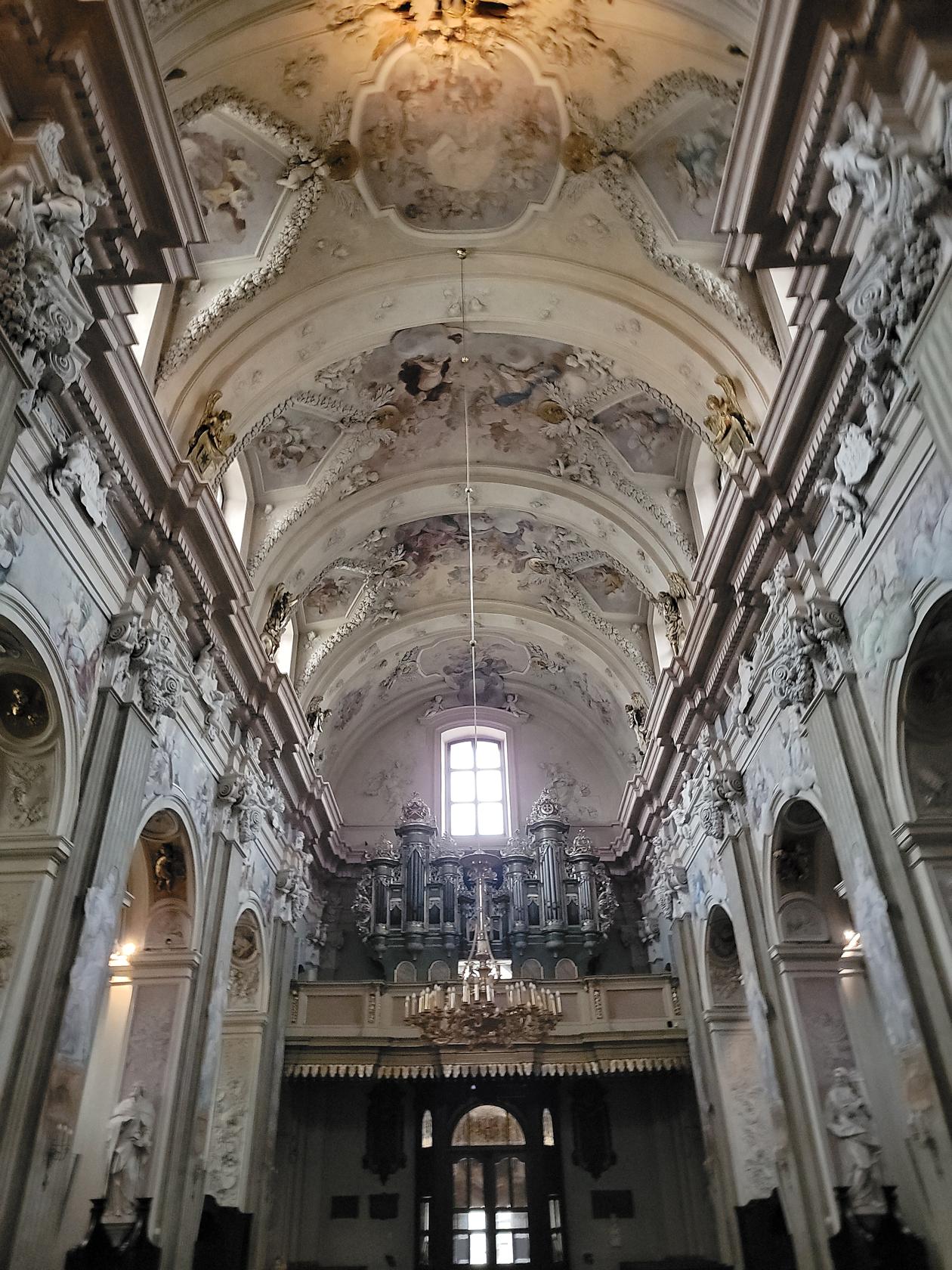
On Pijarska Street, not far from our hotel is the Church of the Transfiguration. Perched a bit high overlooking Świętego Jana Street, the church has an amazing vault or ceiling.
Entrance – Church of the Transfiguration – Kraków, Poland
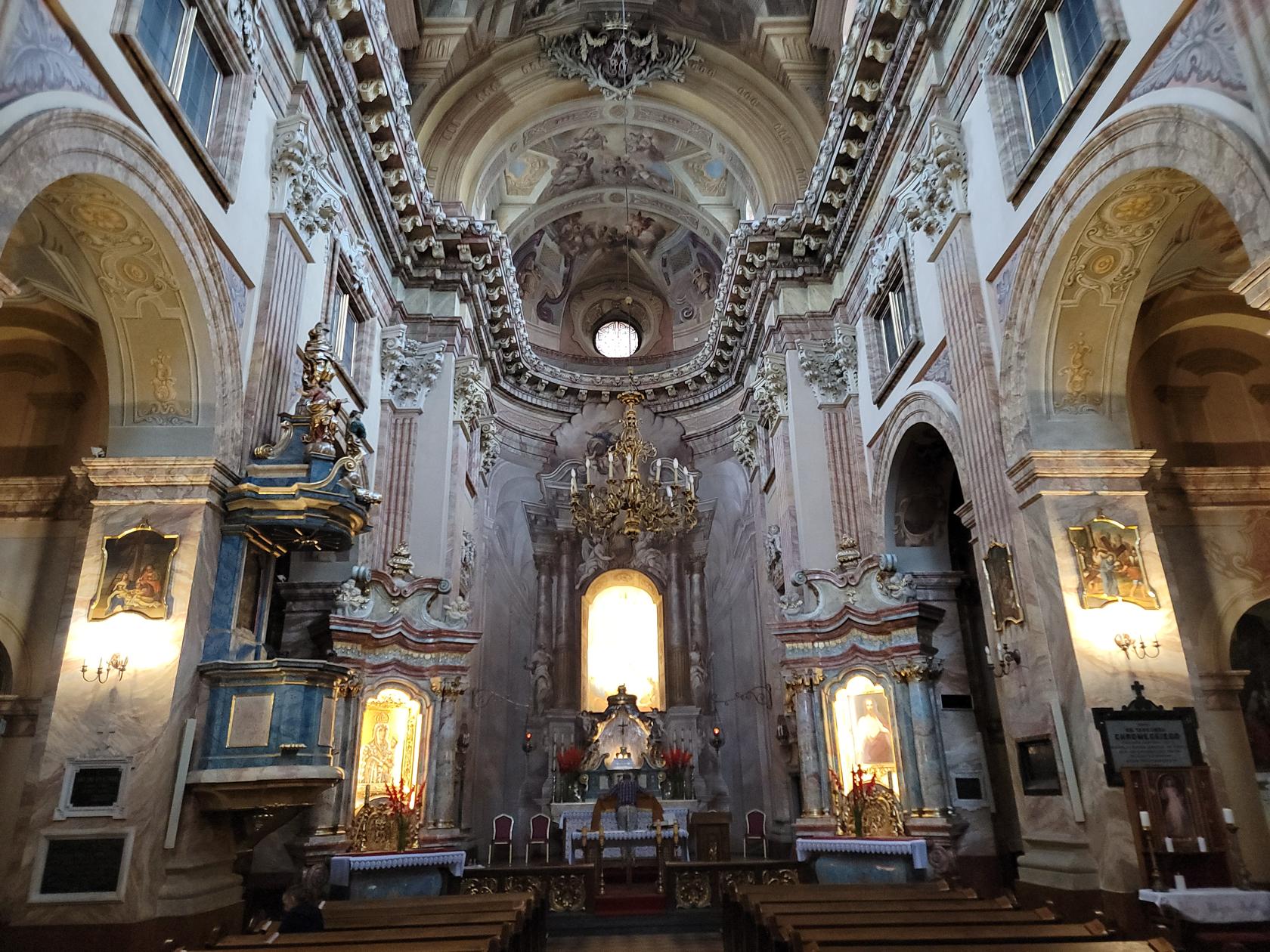
Nave – Church of the Transfiguration – Kraków, Poland
Altar – Church of the Transfiguration – Kraków, Poland
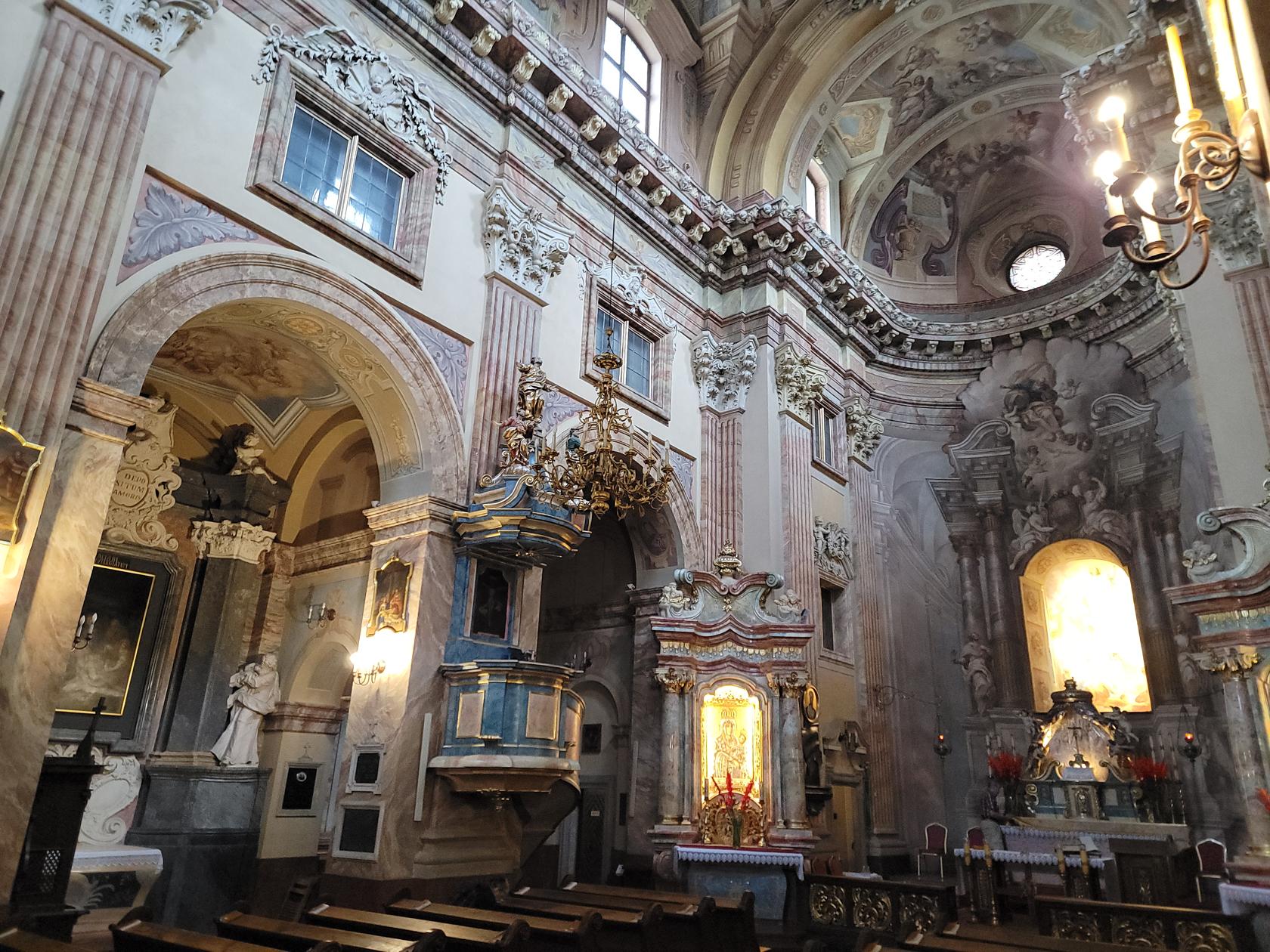
Pulpit – Church of the Transfiguration – Kraków, Poland
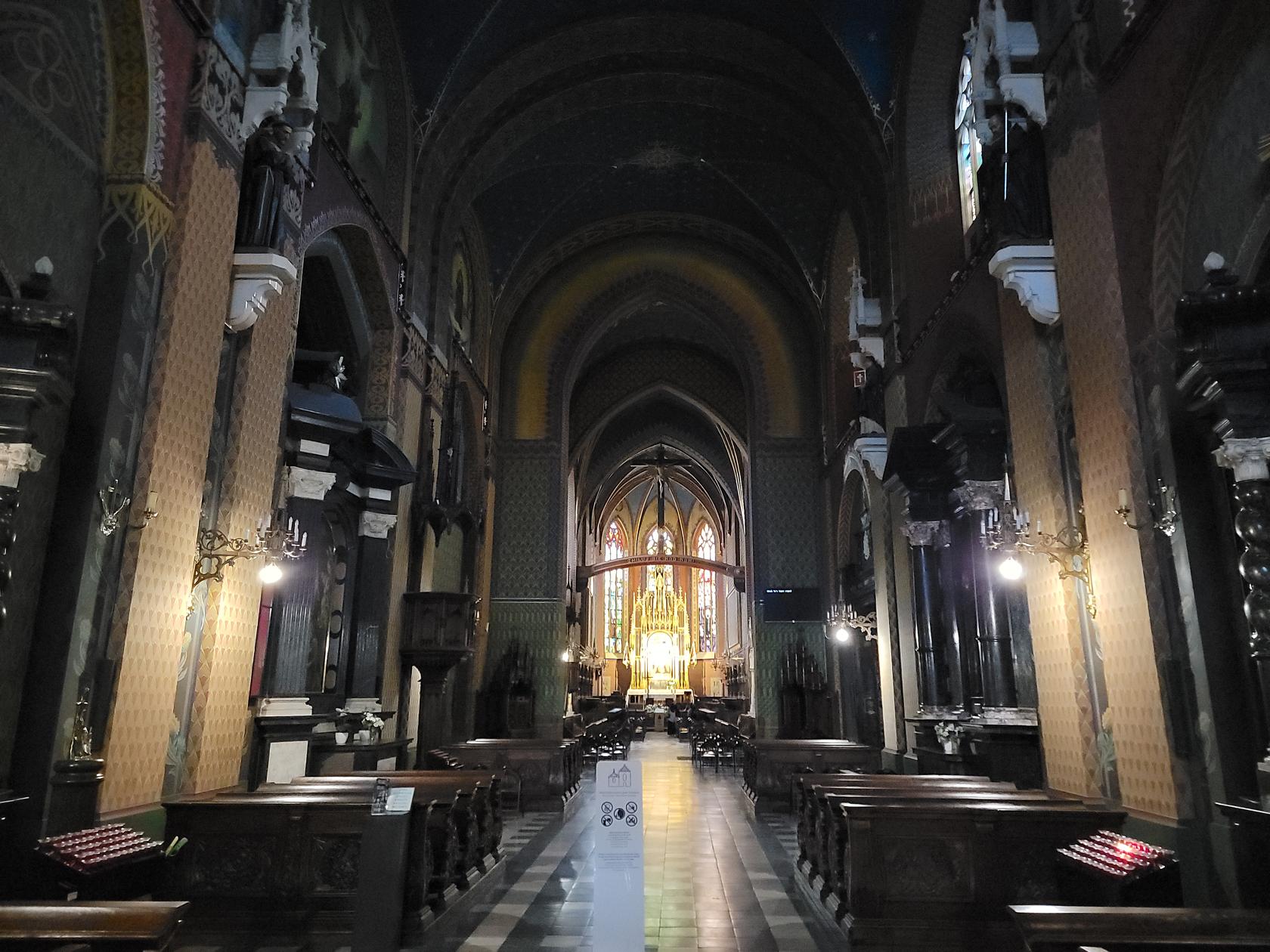
Basilica Saint Francis Of Assisi
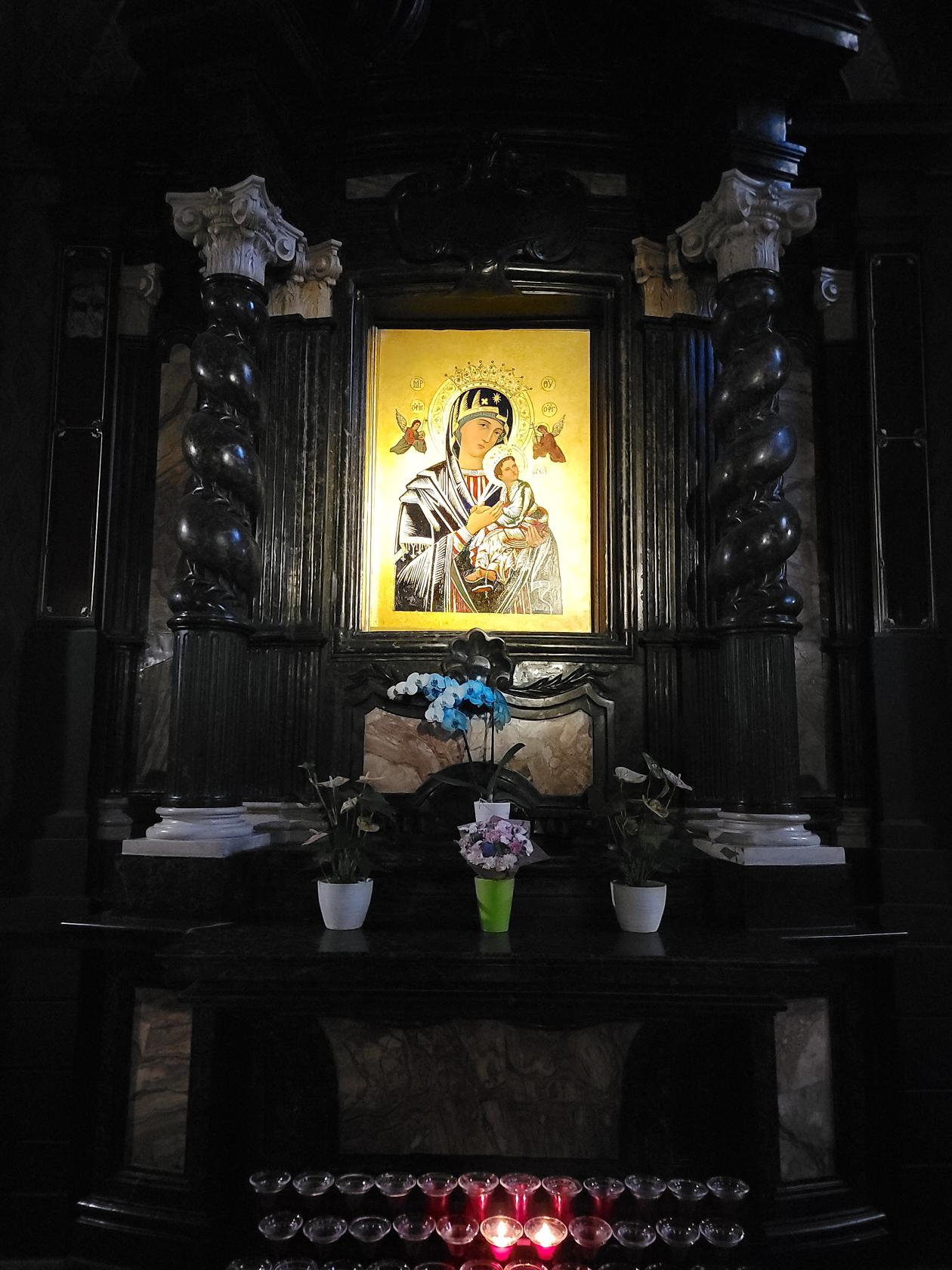
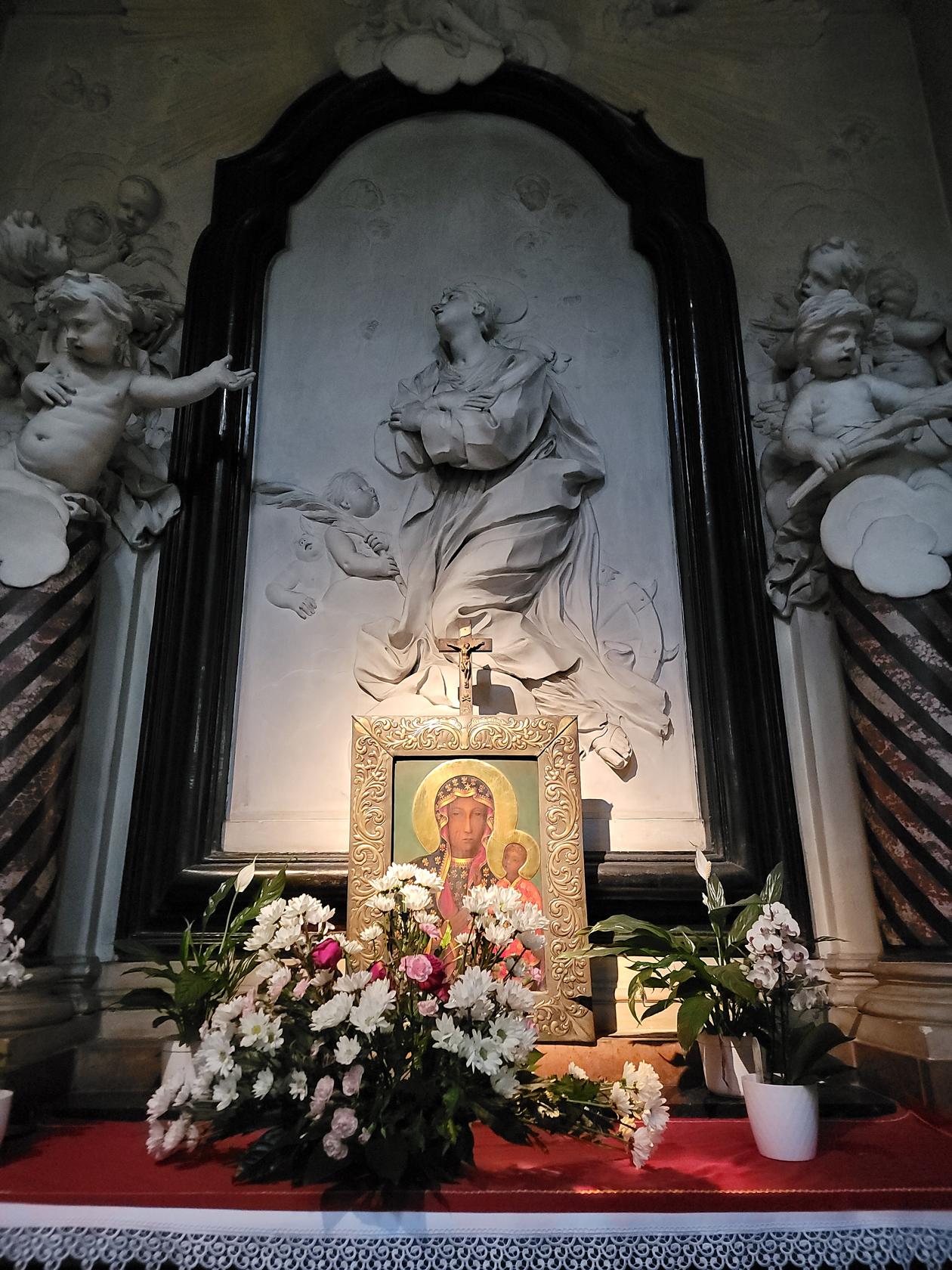
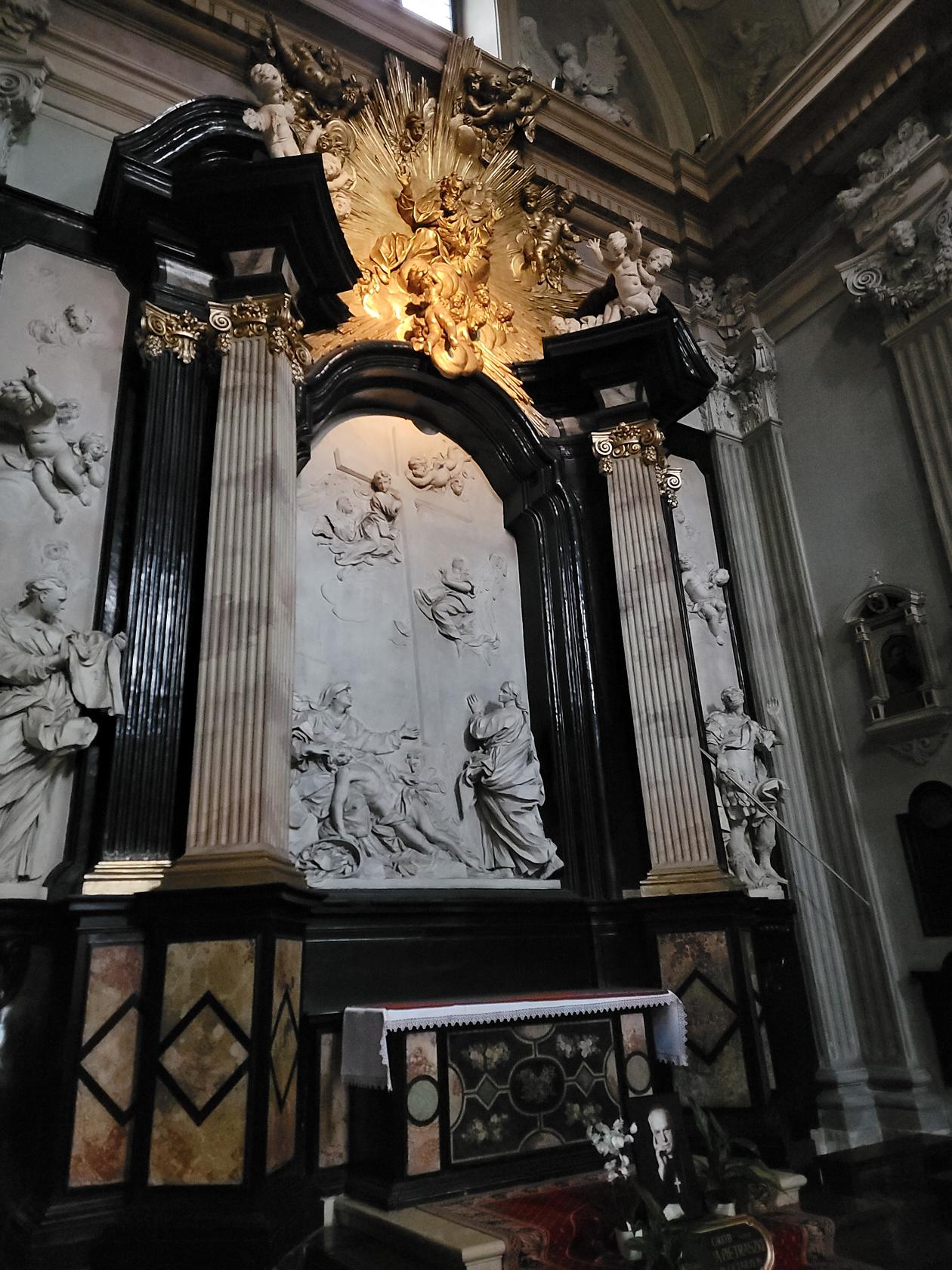
Typical of Saint Francis of Assisi this unassuming basilica was a pleasure to visit. Dark and unoffending, the ebony side chapel of the Madonna with Child is a real marvel.
Madonna with Child – Basilica of Saint Francis of Assisi – Kraków, Poland
Altar – Basilica of Saint Francis of Assisi – Kraków, Poland
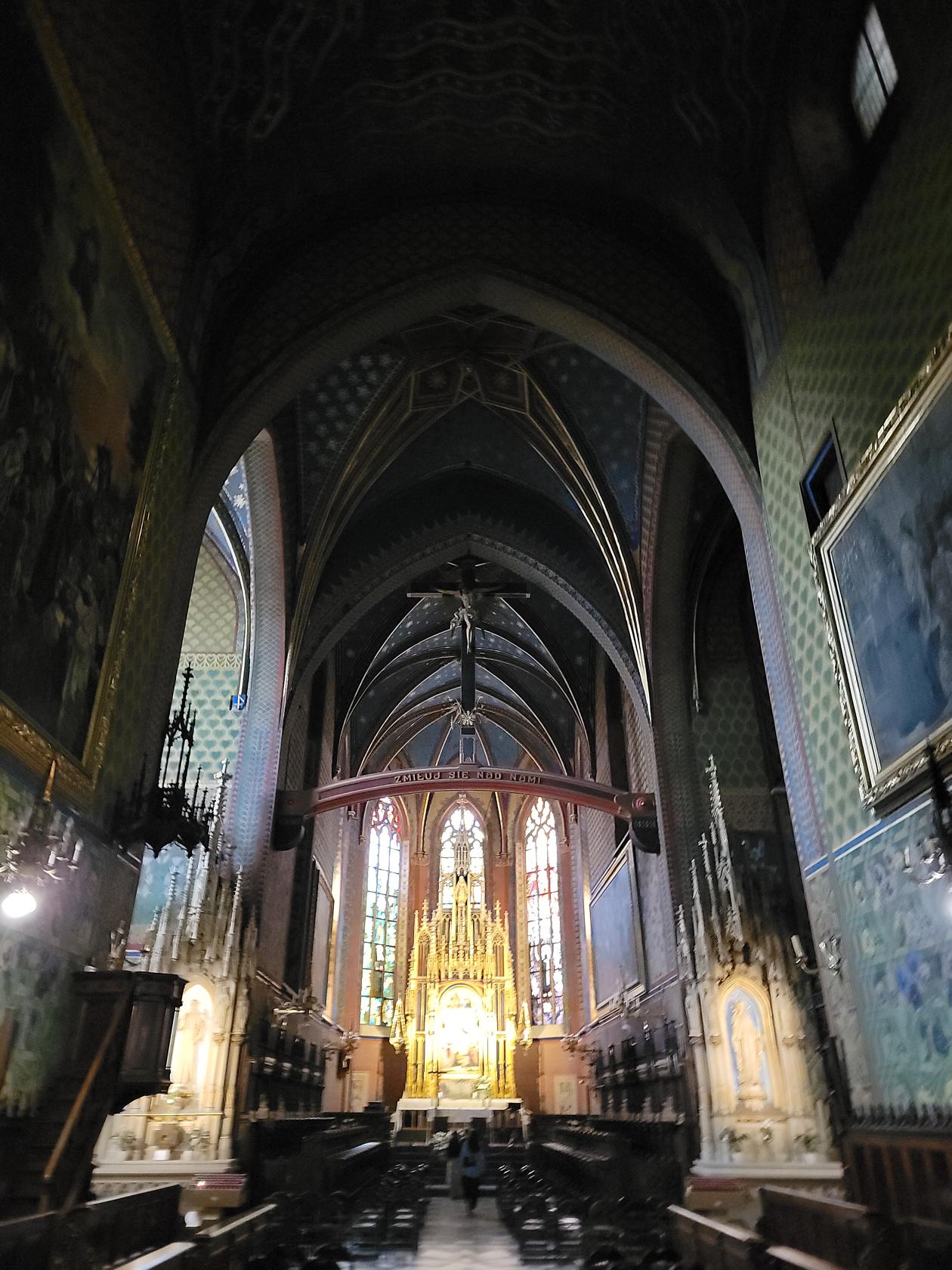
The nave, with a golden altar beckons you forward, beseeching the faithful inside. The Basilica of Saint Francis of Assisi is a thirteenth century church that was one of the first brick and sandstone churches in Poland.
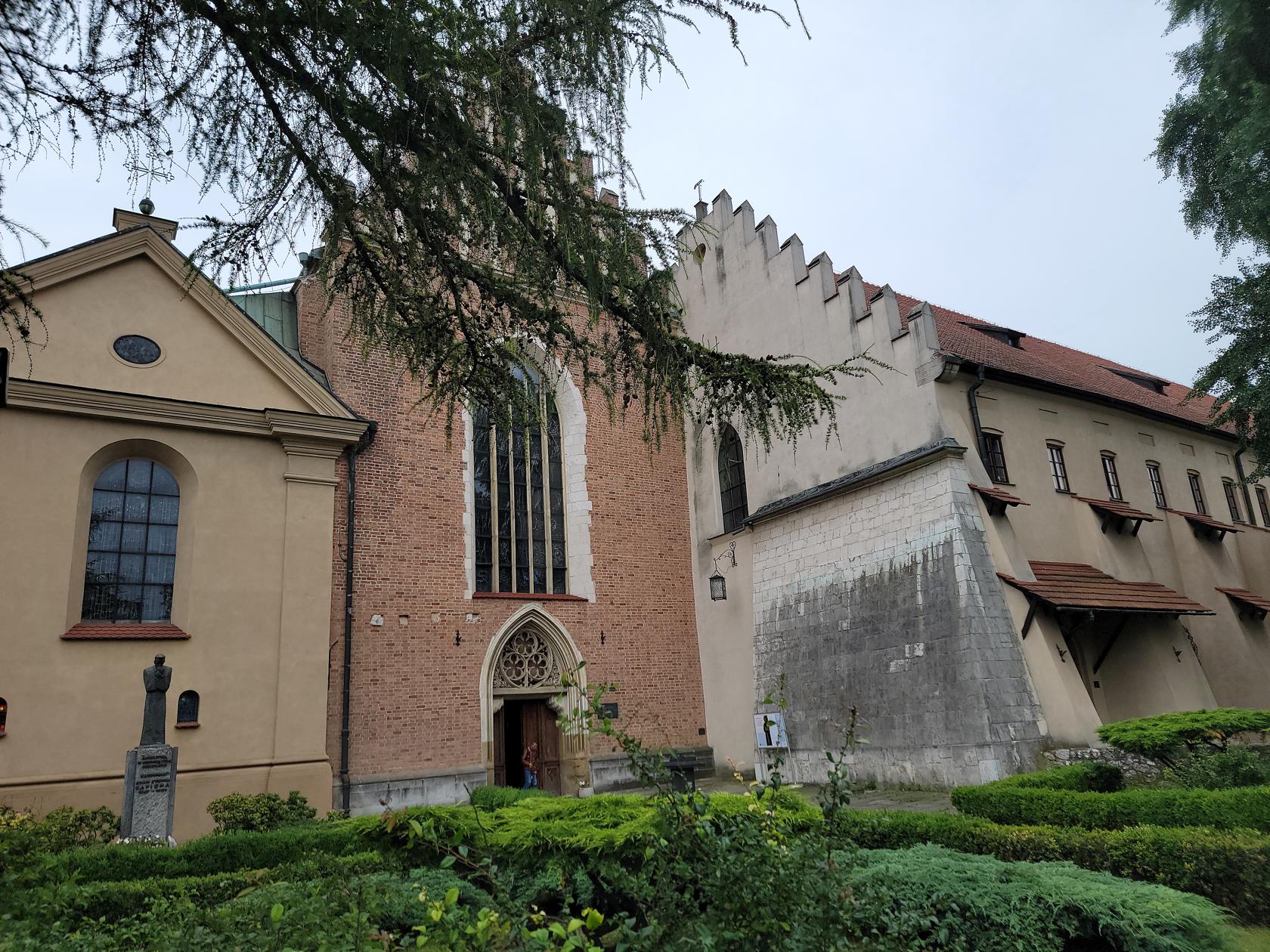
Entrance – Basilica of Saint Francis of Assisi – Kraków, Poland
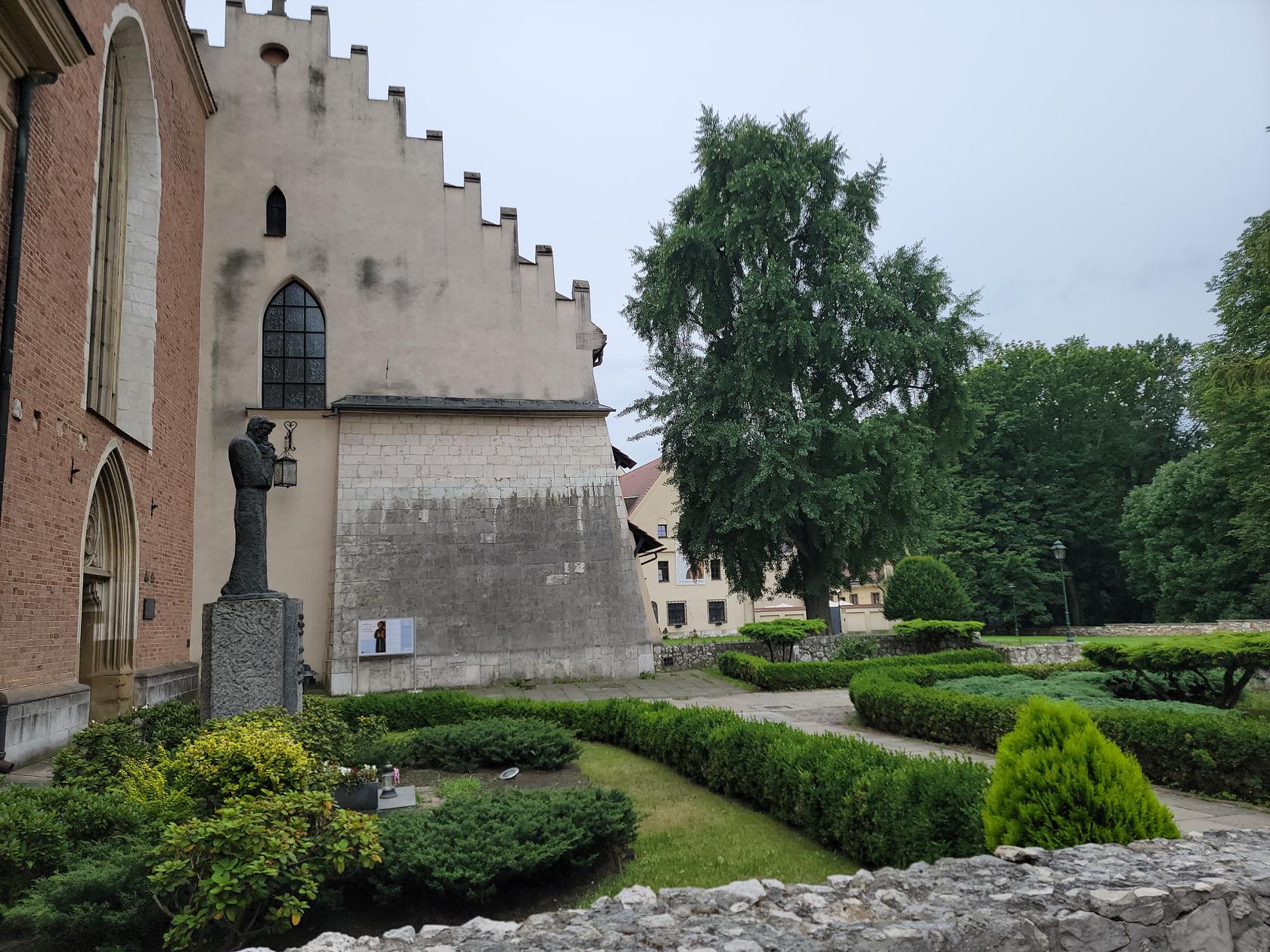
Garden – Basilica of Saint Francis of Assisi – Kraków, Poland
Nave – Basilica of Saint Francis of Assisi – Kraków, Poland
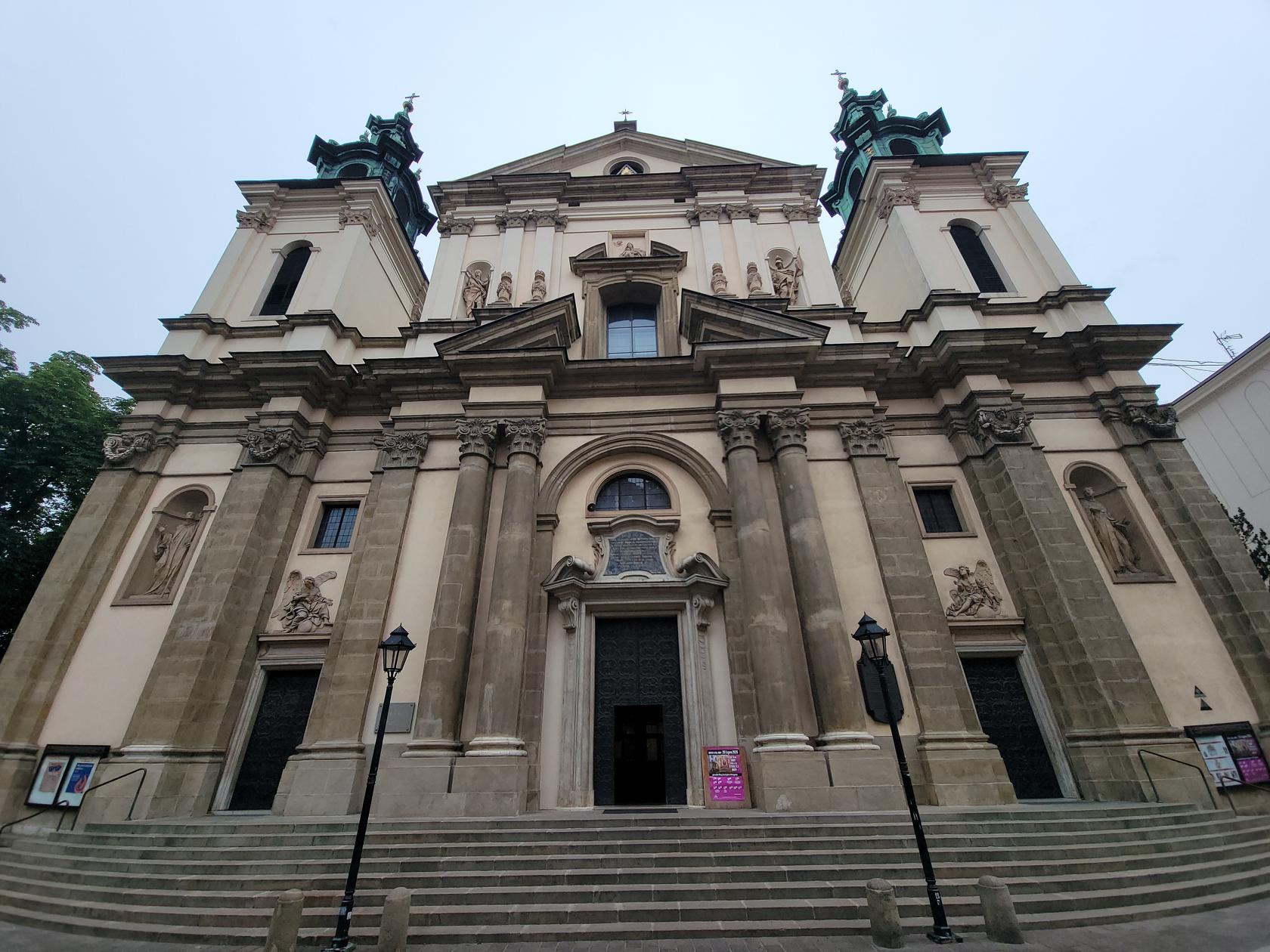
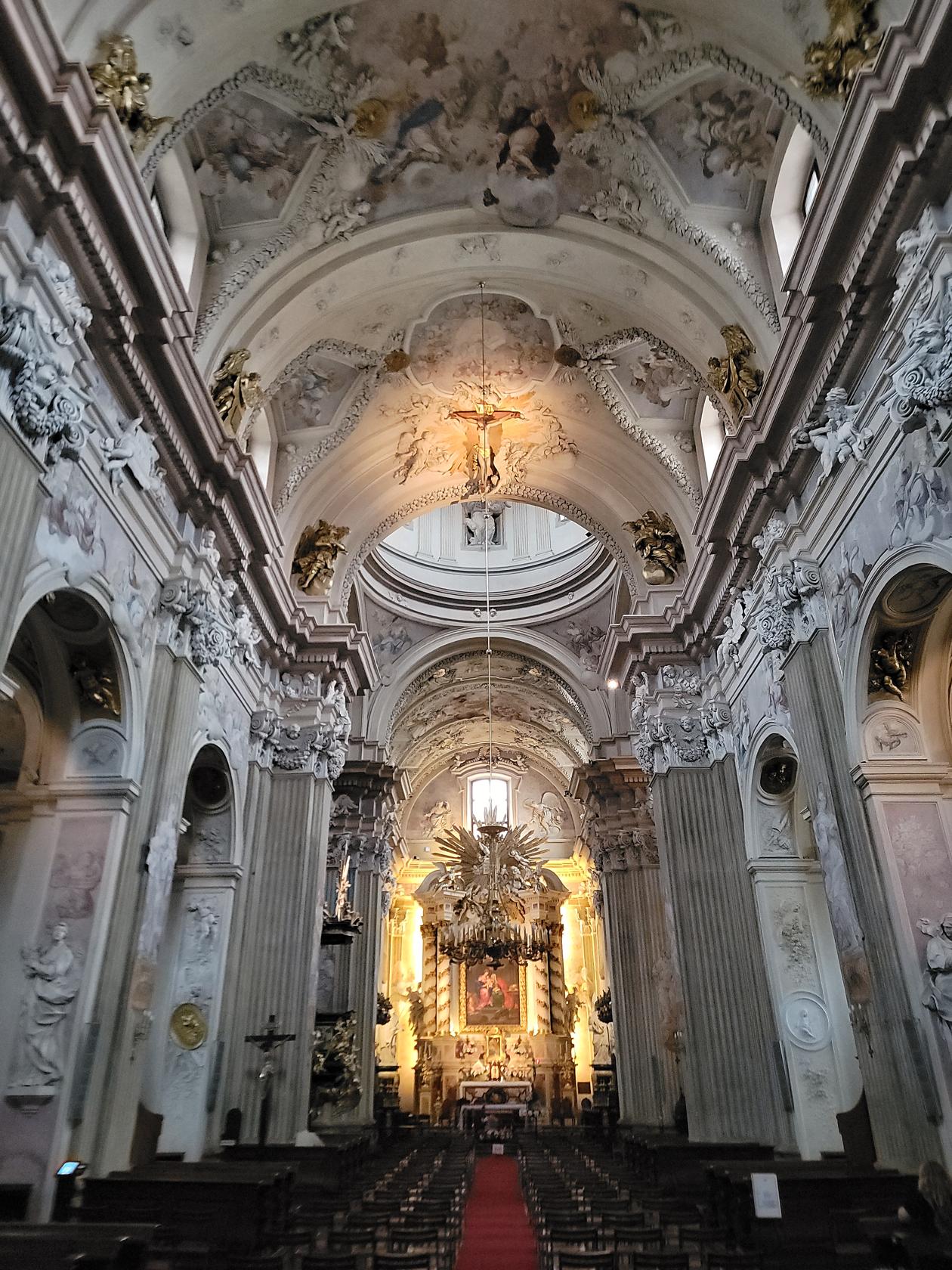
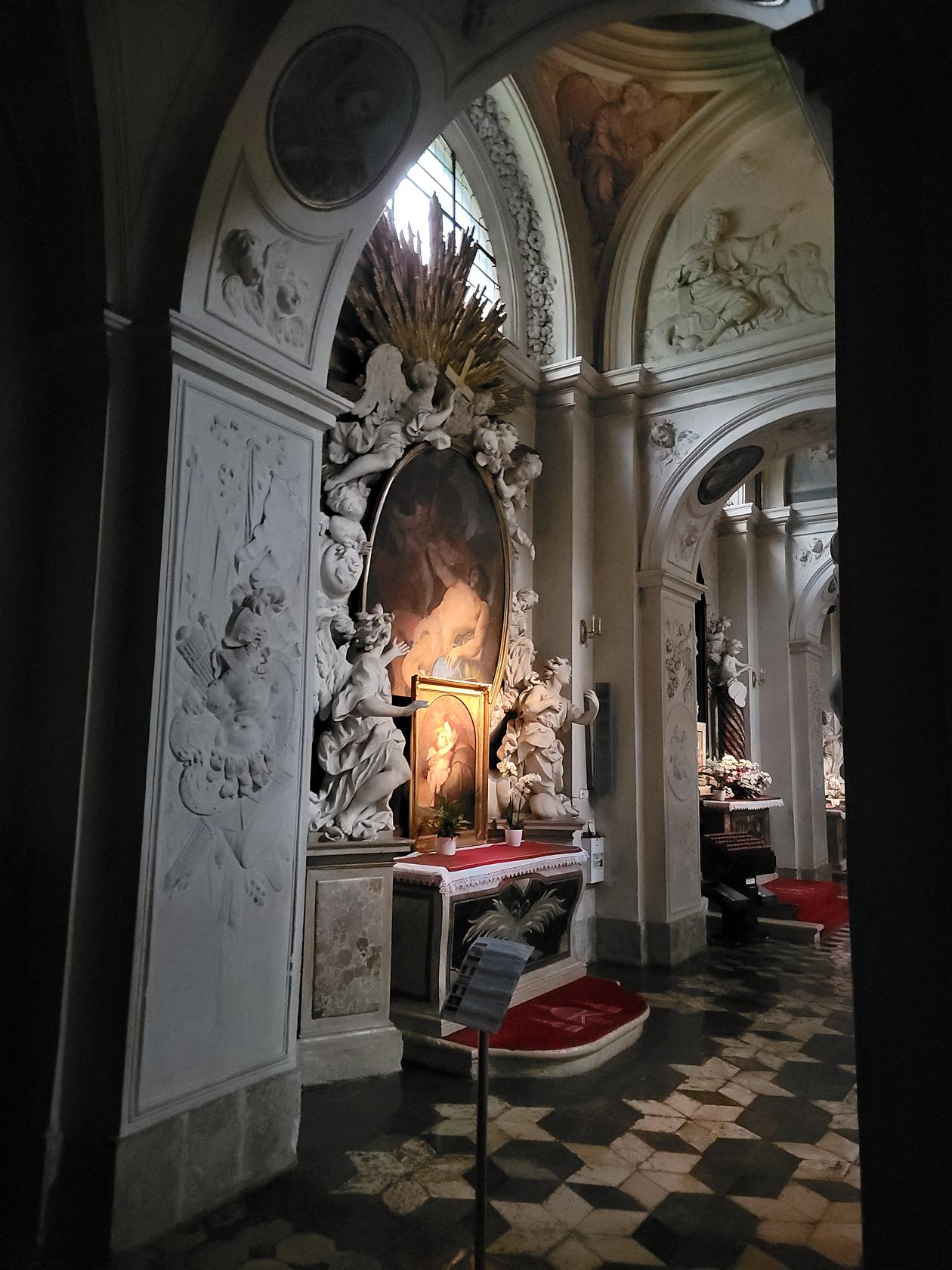
Church Of Saint Anne
Located close to the Art Palace and the Plac Szczepański the Church of Saint Anne is elegant in its own way. Built in the baroque style, the floor itself is impressive in its own right.
Entrance – Church of Saint Anne – Kraków, Poland
Nave – Church of Saint Anne – Kraków, Poland
Aisle – Church of Saint Anne – Kraków, Poland
The nave, altar, aisles and other aspects of the church speak for themselves. A beautiful church and typical of Catholic Churches found in Poland.
Side Chapel Ceiling – Church of Saint Anne – Kraków, Poland
Side Chapel – Church of Saint Anne – Kraków, Poland
Side Altar – Church of Saint Anne – Kraków, Poland
Altar – Church of Saint Anne – Kraków, Poland
Side Altar – Church of Saint Anne – Kraków, Poland
Organ and Nave Ceiling – Church of Saint Anne – Kraków, Poland
Church Of Saints John The Baptist And John The Evangelist
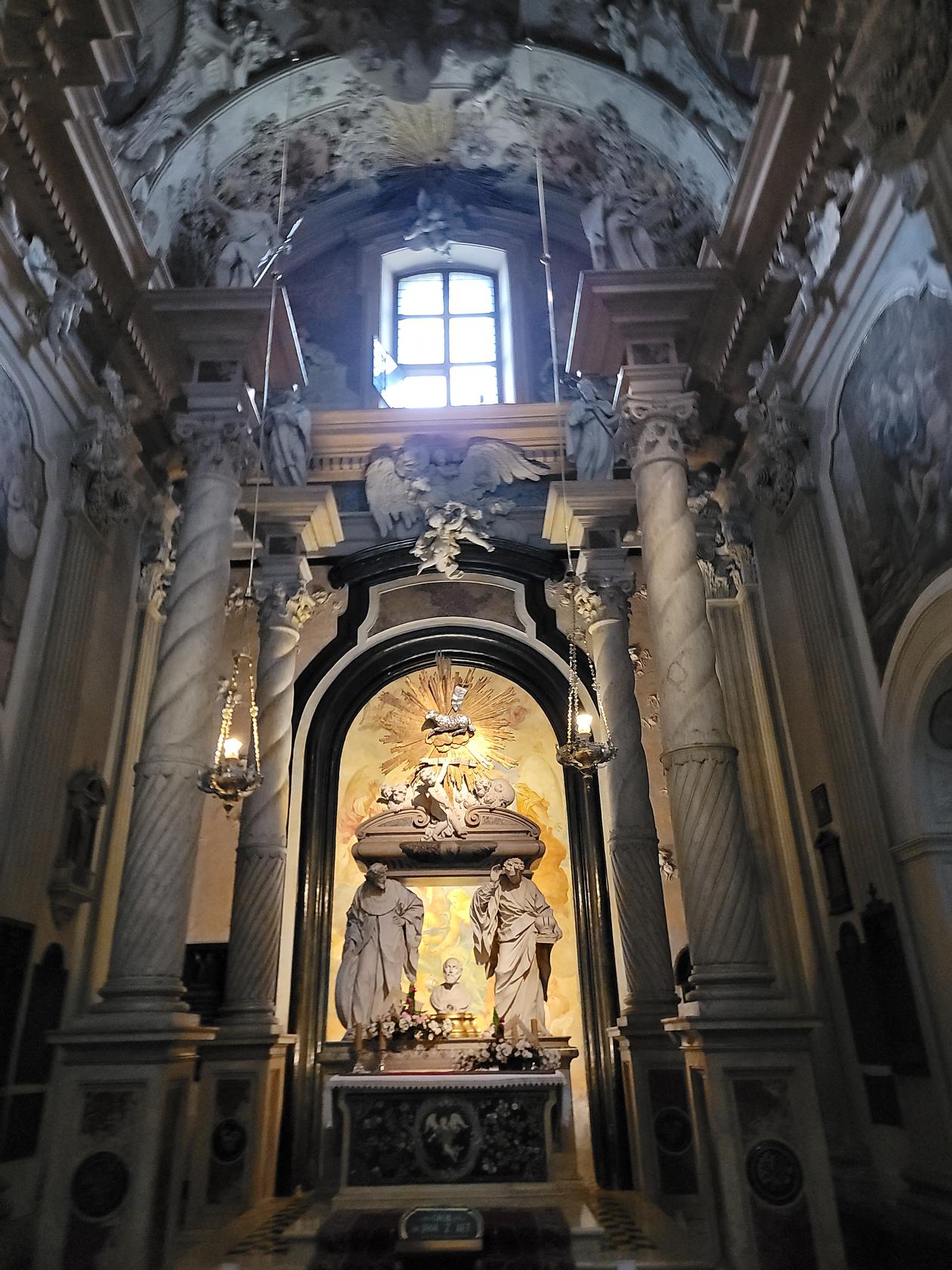
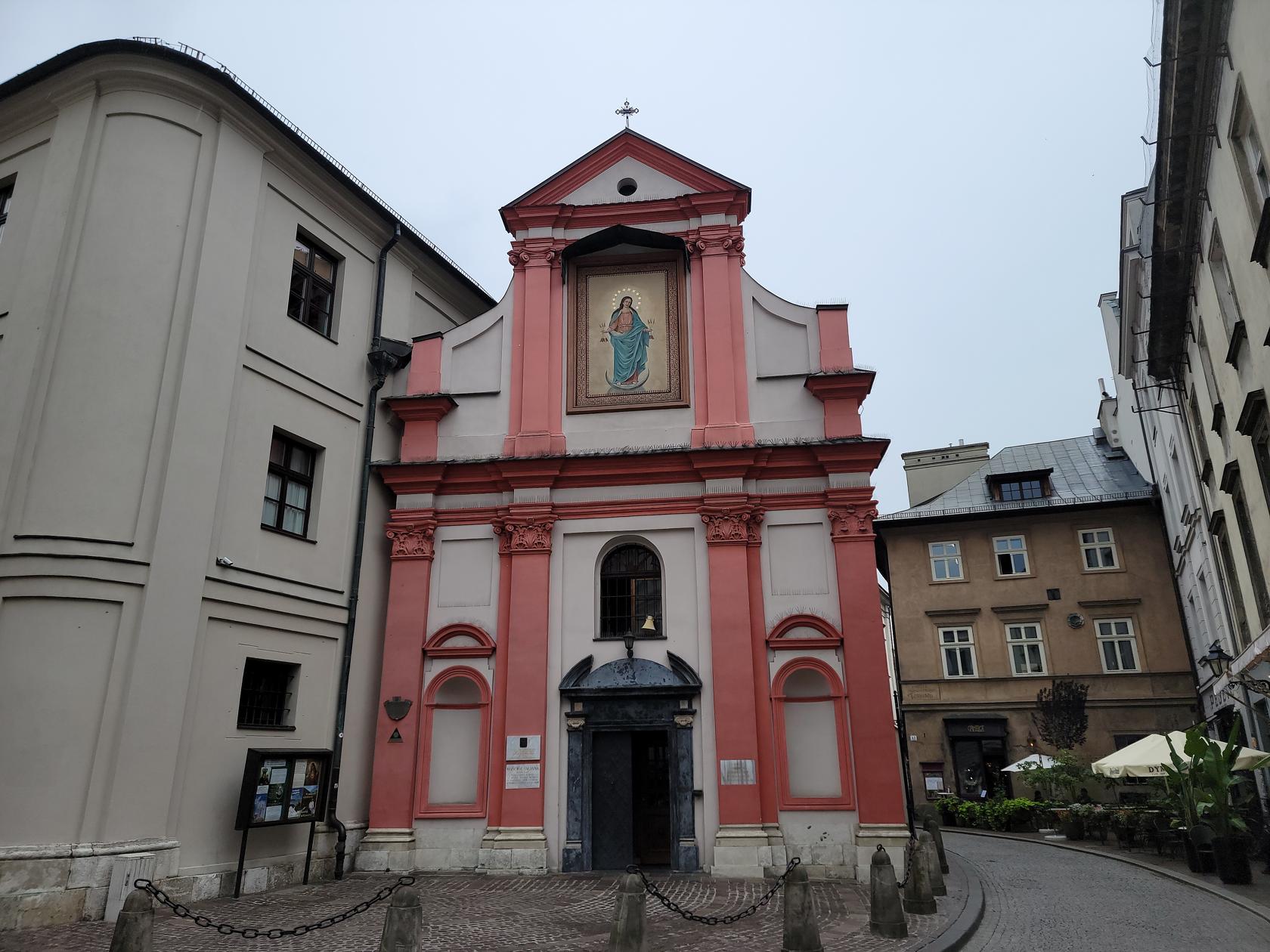
A small church next to a small Italian restaurant that we ate at, the Church Of Saints John The Baptist And John The Evangelist has a red exterior, small in stature and somewhat a simple baroque interior, but well worth a visit.
Entrance – Church of Saints John the Baptist and John the Evangelist – Kraków, Poland
Altar and Inside – Church of Saints John the Baptist and John the Evangelist – Kraków, Poland
Holy Trinity Church
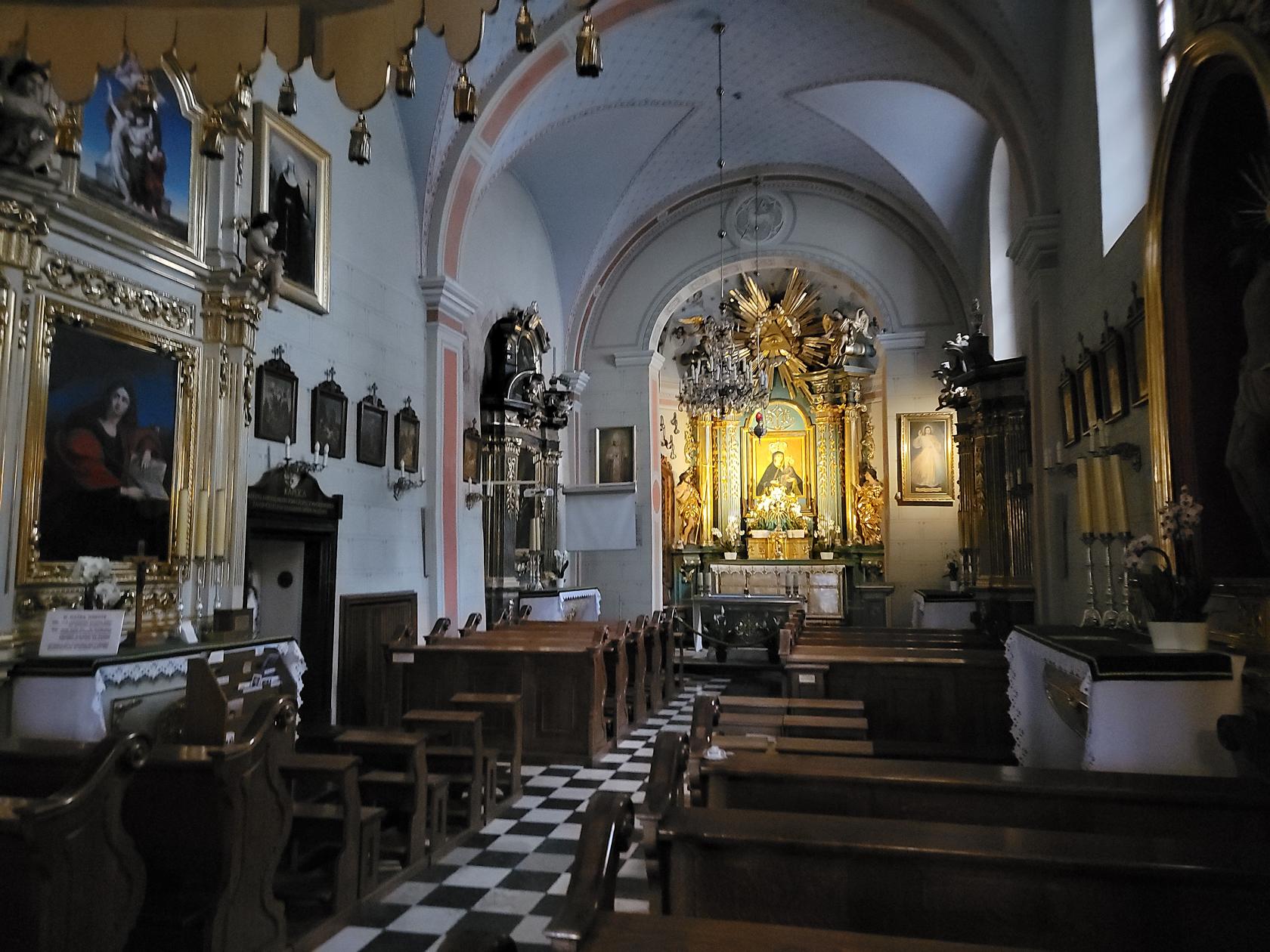
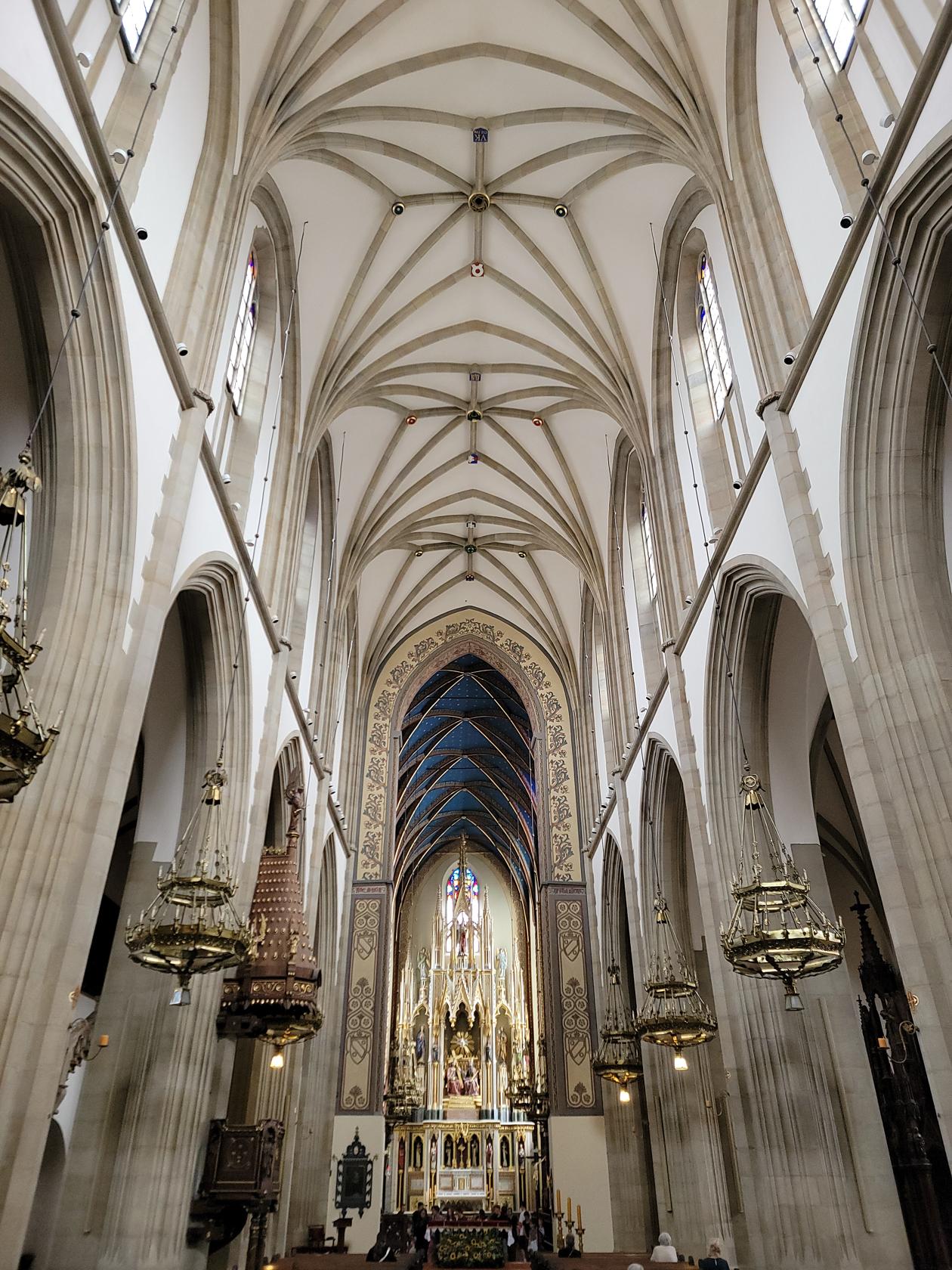
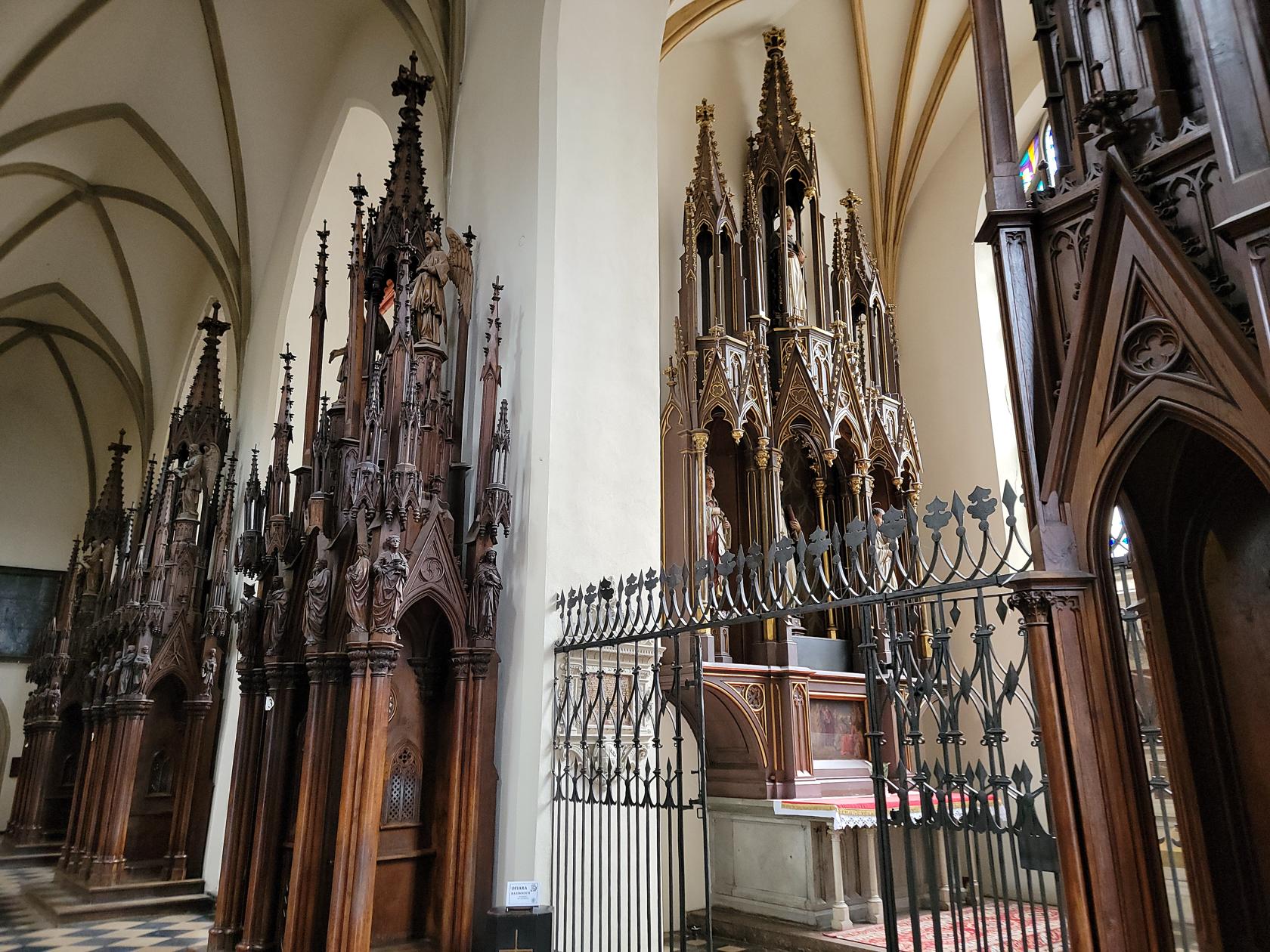
If you are looking for something small with more spartan lines, then the Holy Trinity Church should be a destination. It singular feature of adornment is in its wooden side chapels, which the photographs below show in better detail.
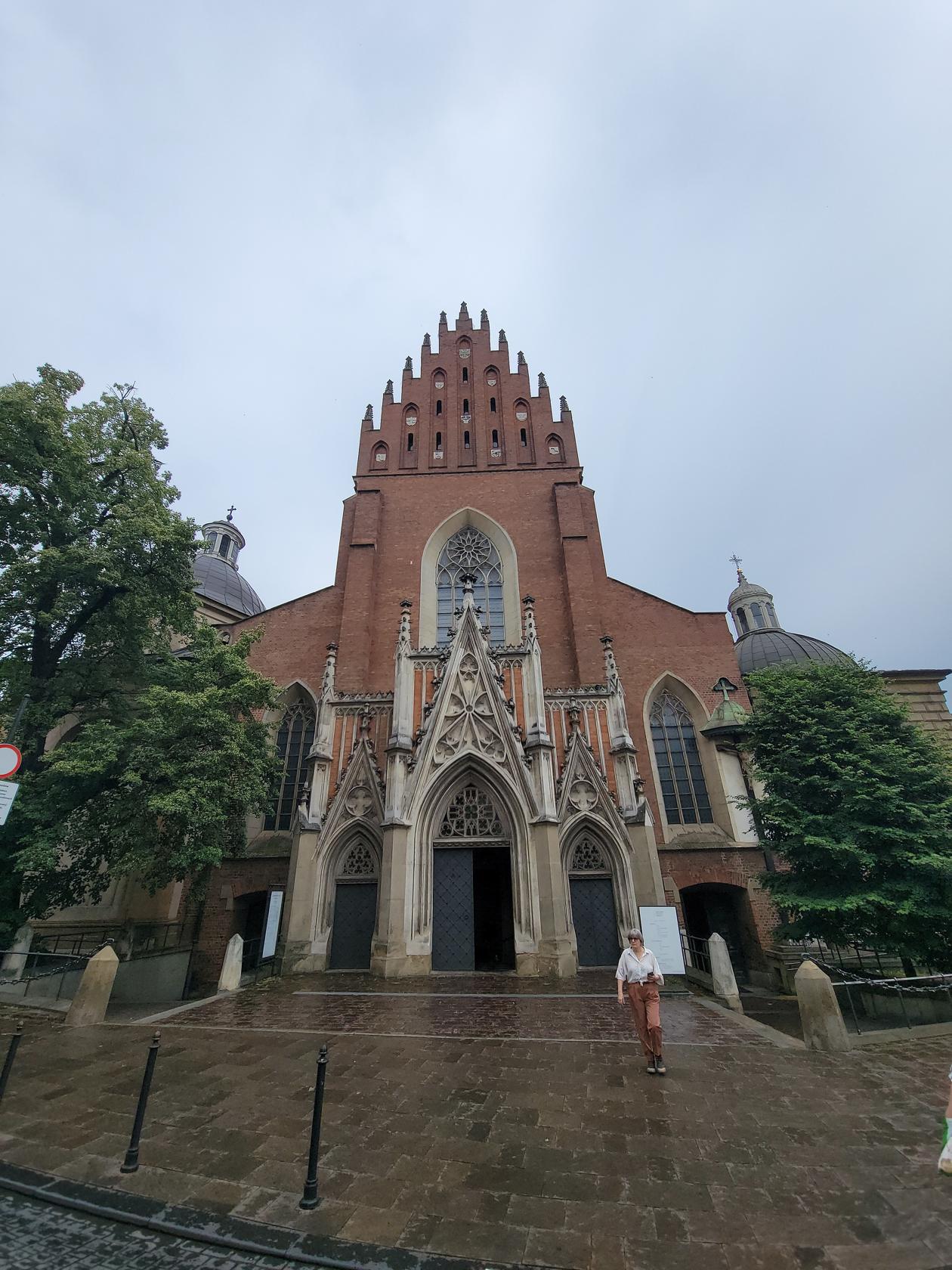
Entrance – Holy Trinity Church – Kraków, Poland
Nave – Holy Trinity Church – Kraków, Poland
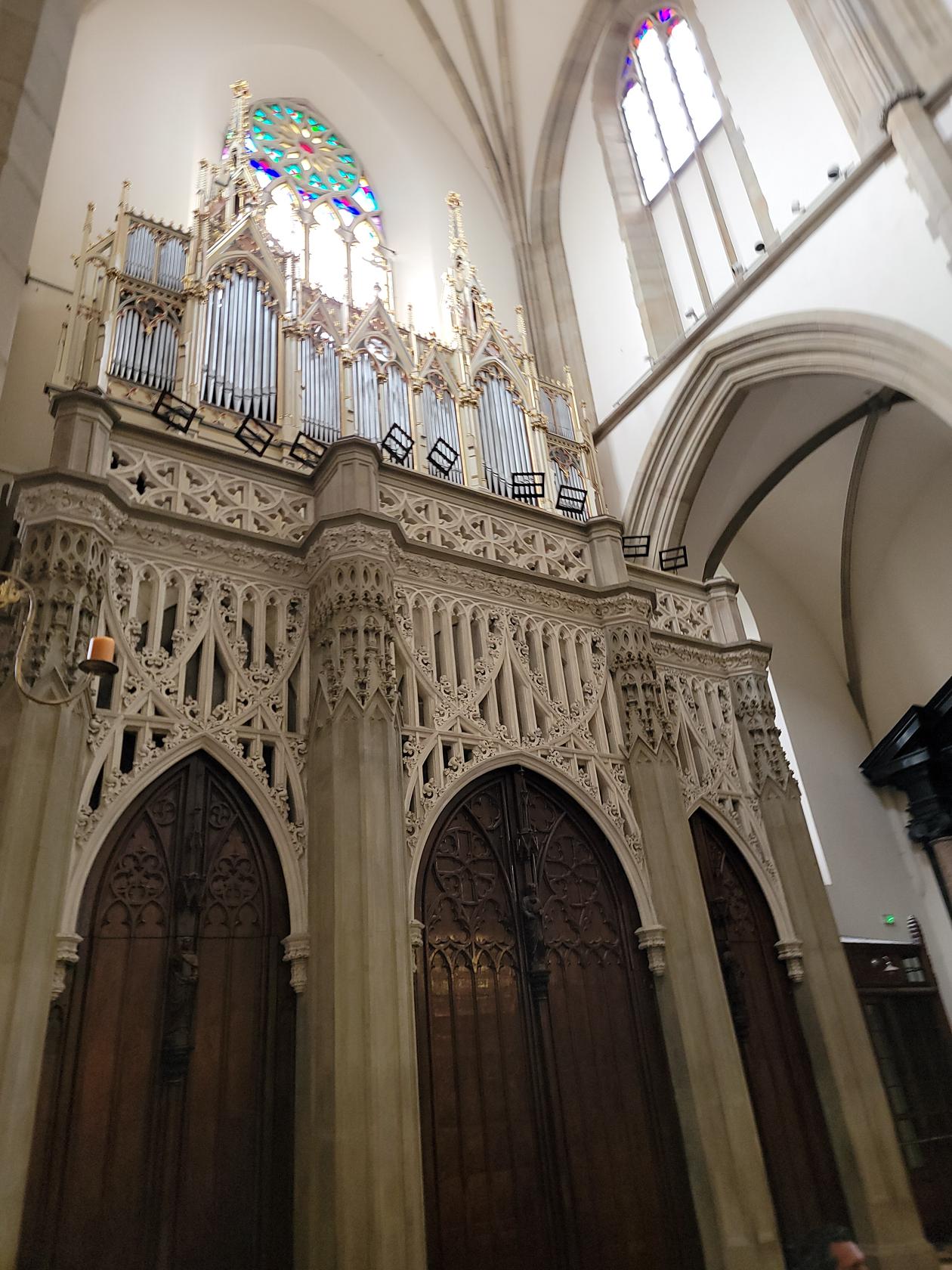
Organ – Holy Trinity Church – Kraków, Poland
Side Chapels – Holy Trinity Church – Kraków, Poland
Pulpit – Holy Trinity Church – Kraków, Poland
Saint Aldabert’s Church
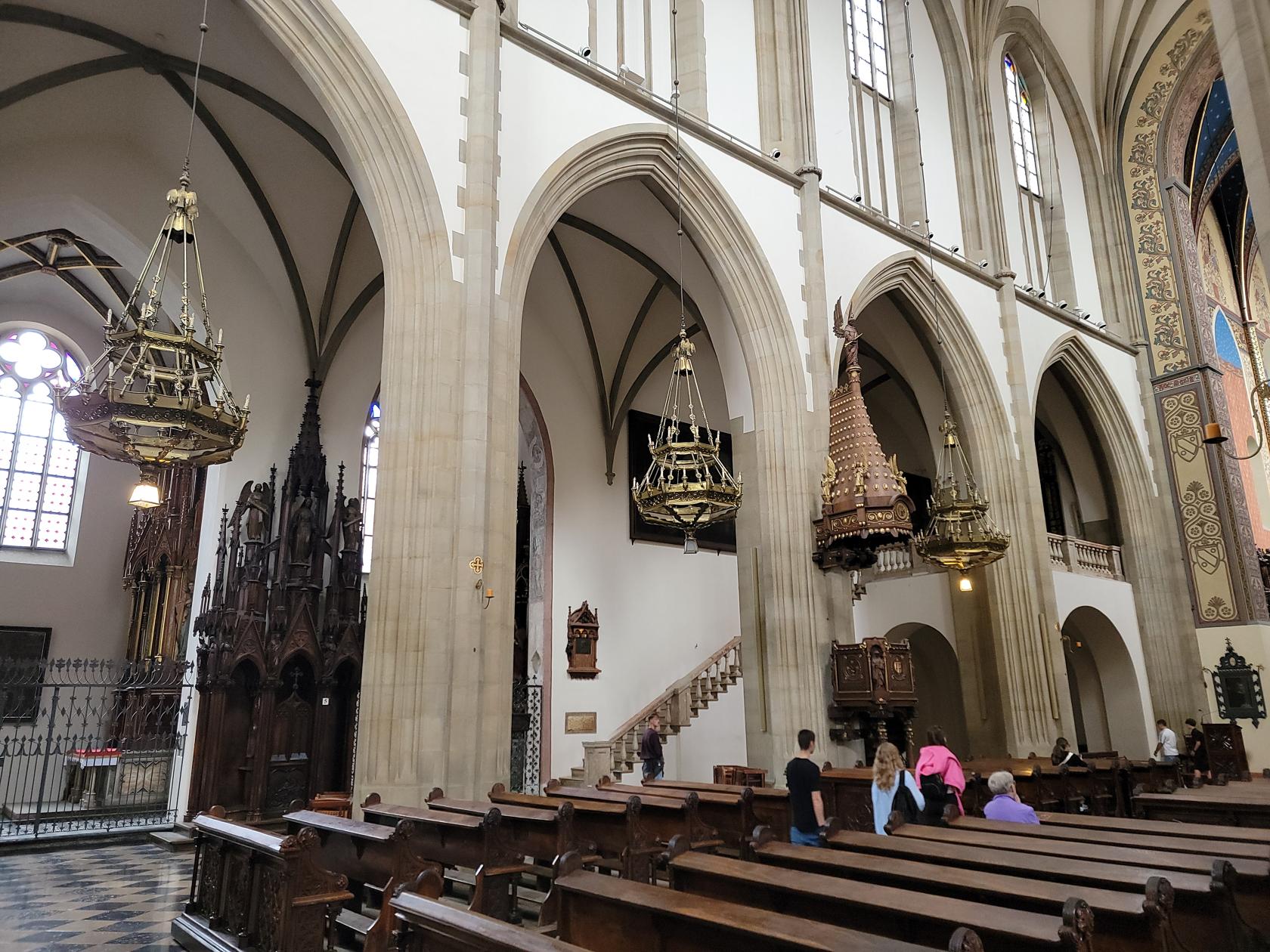
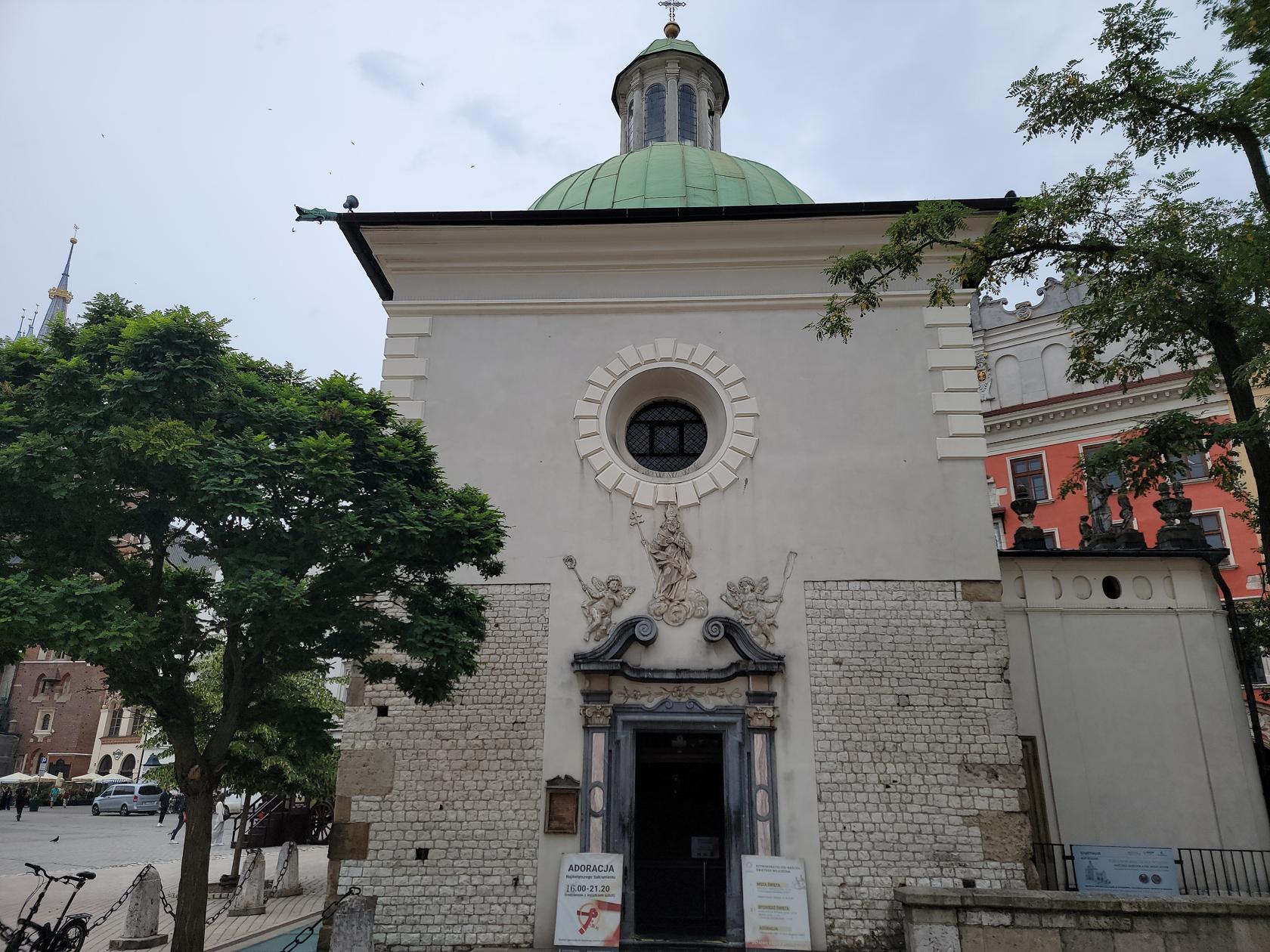
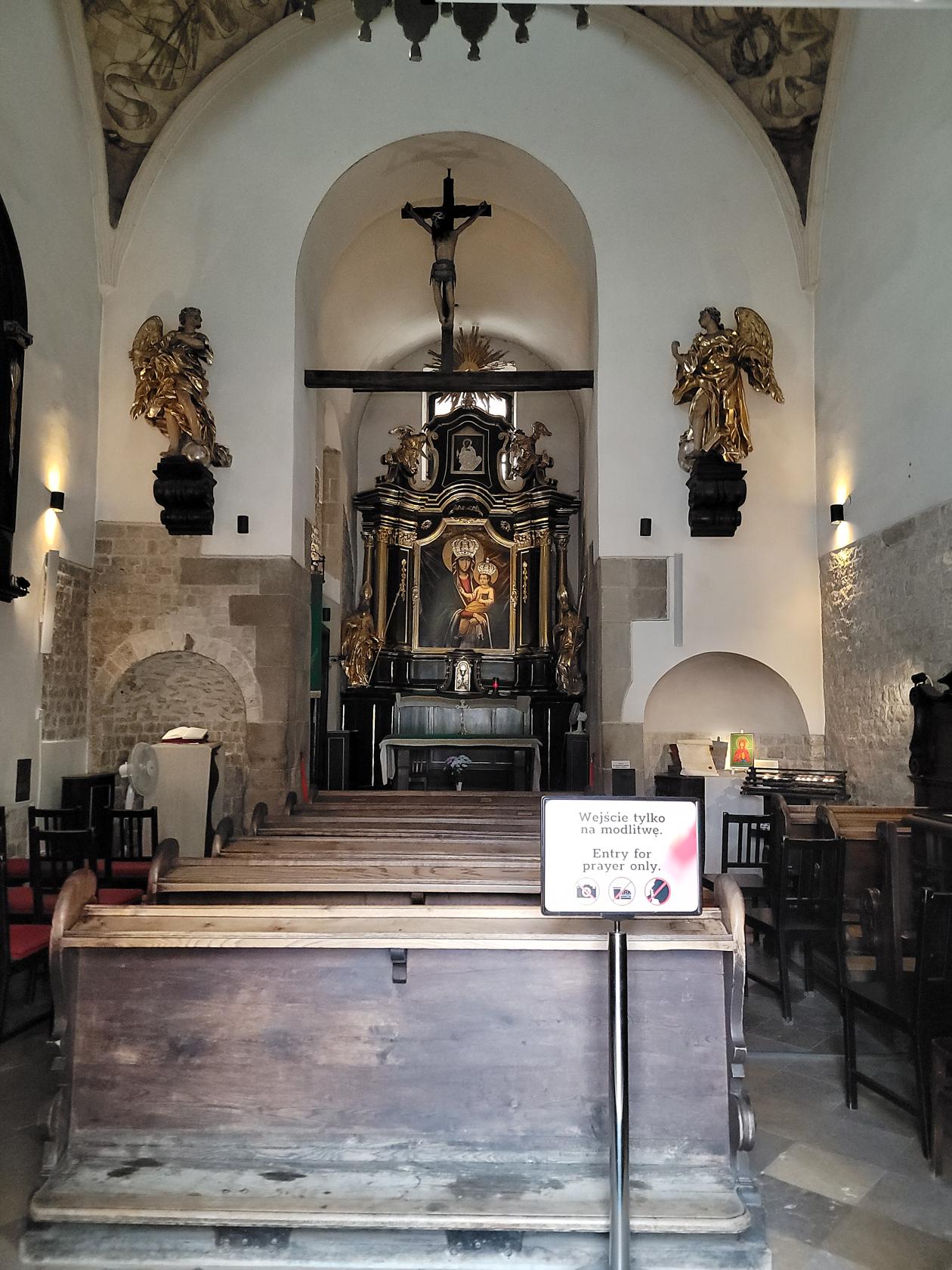
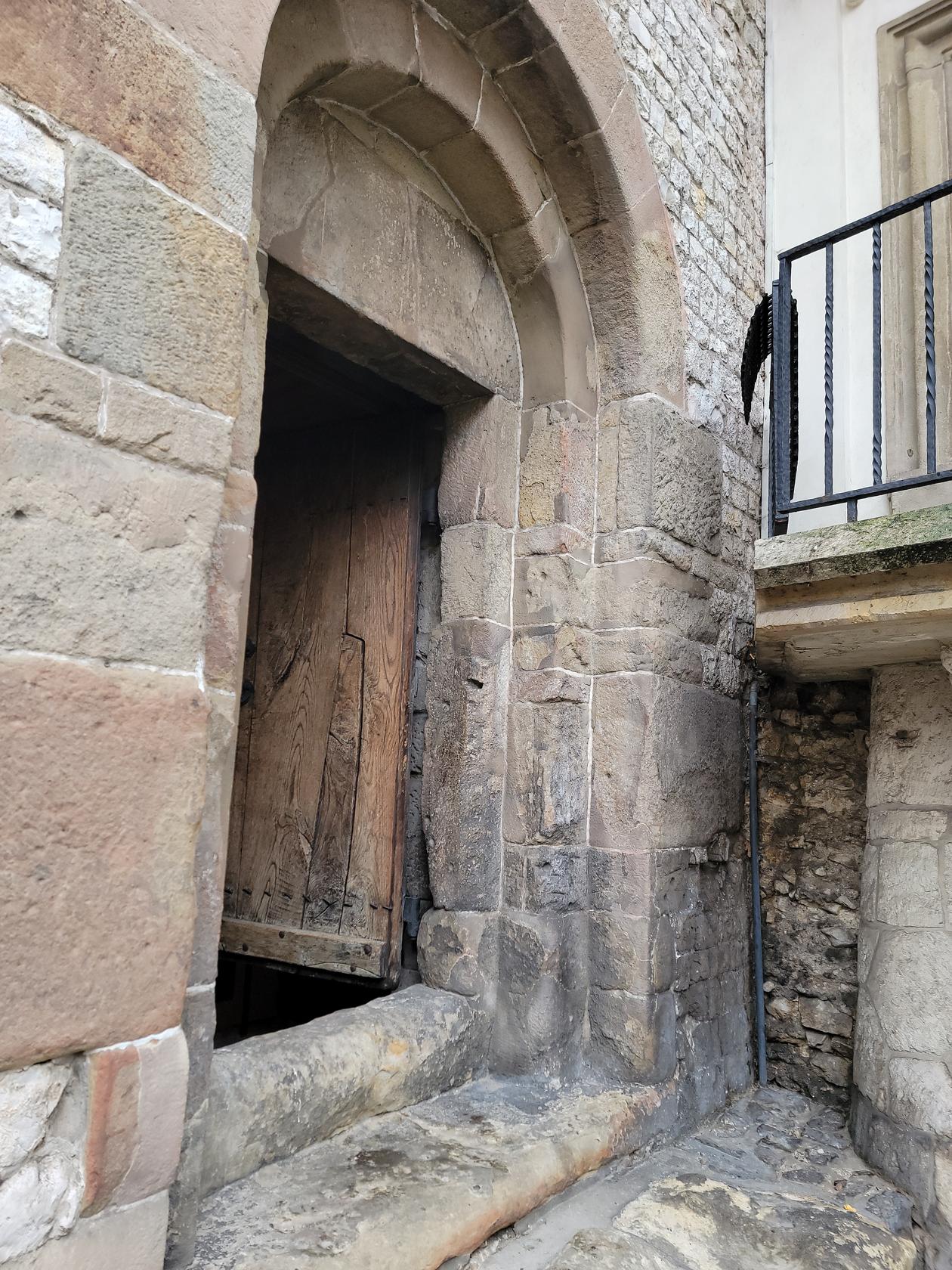
Also known as Church Of Saint Wojciech, Saint Aldabert’s Church is a small chapel that sits on top of an older church.
Church of St. Wojciech – Rynek Główny Main Plaza – Kraków, Poland
Church of St. Wojciech – Rynek Główny Main Plaza – Kraków, Poland
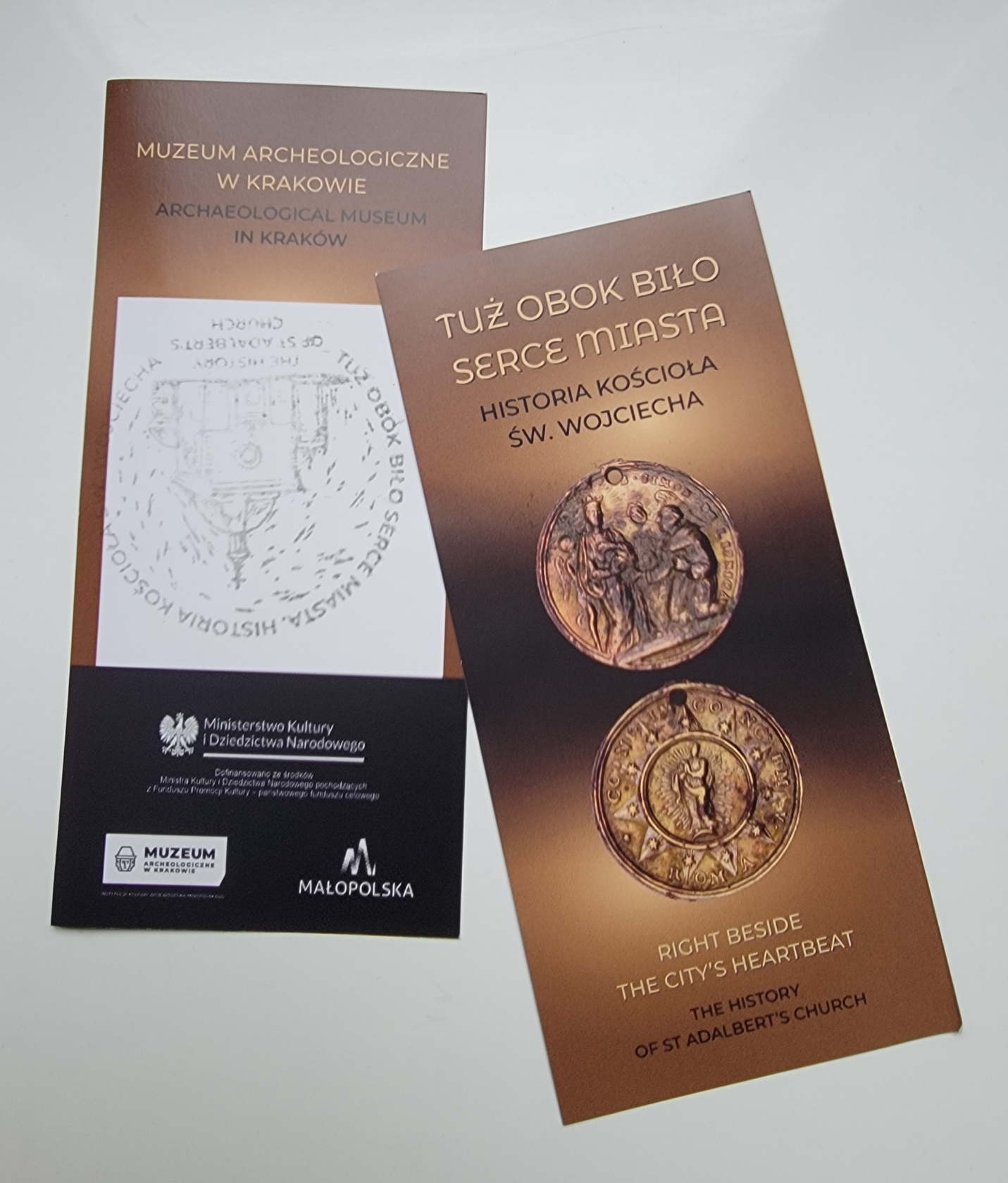
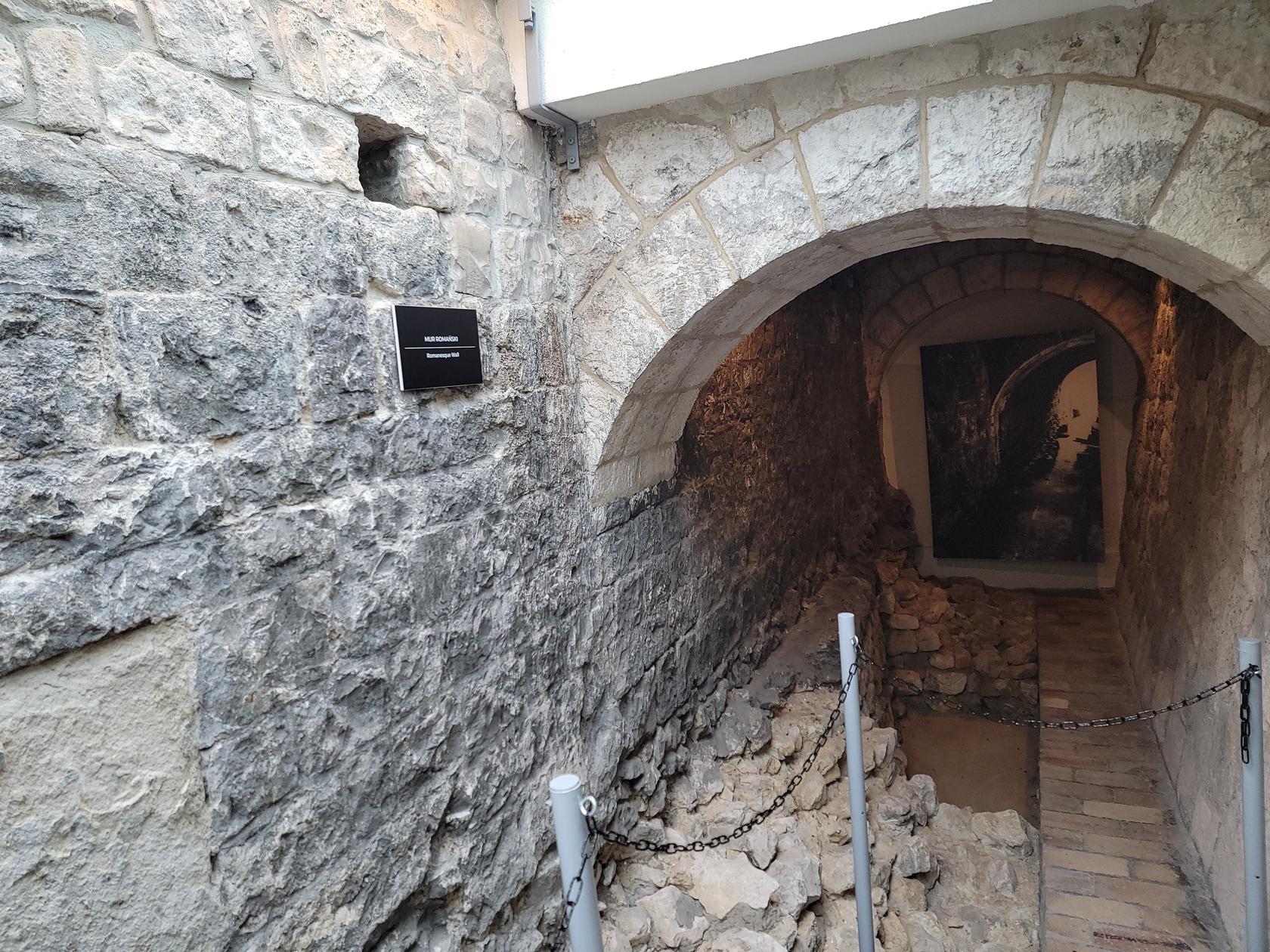
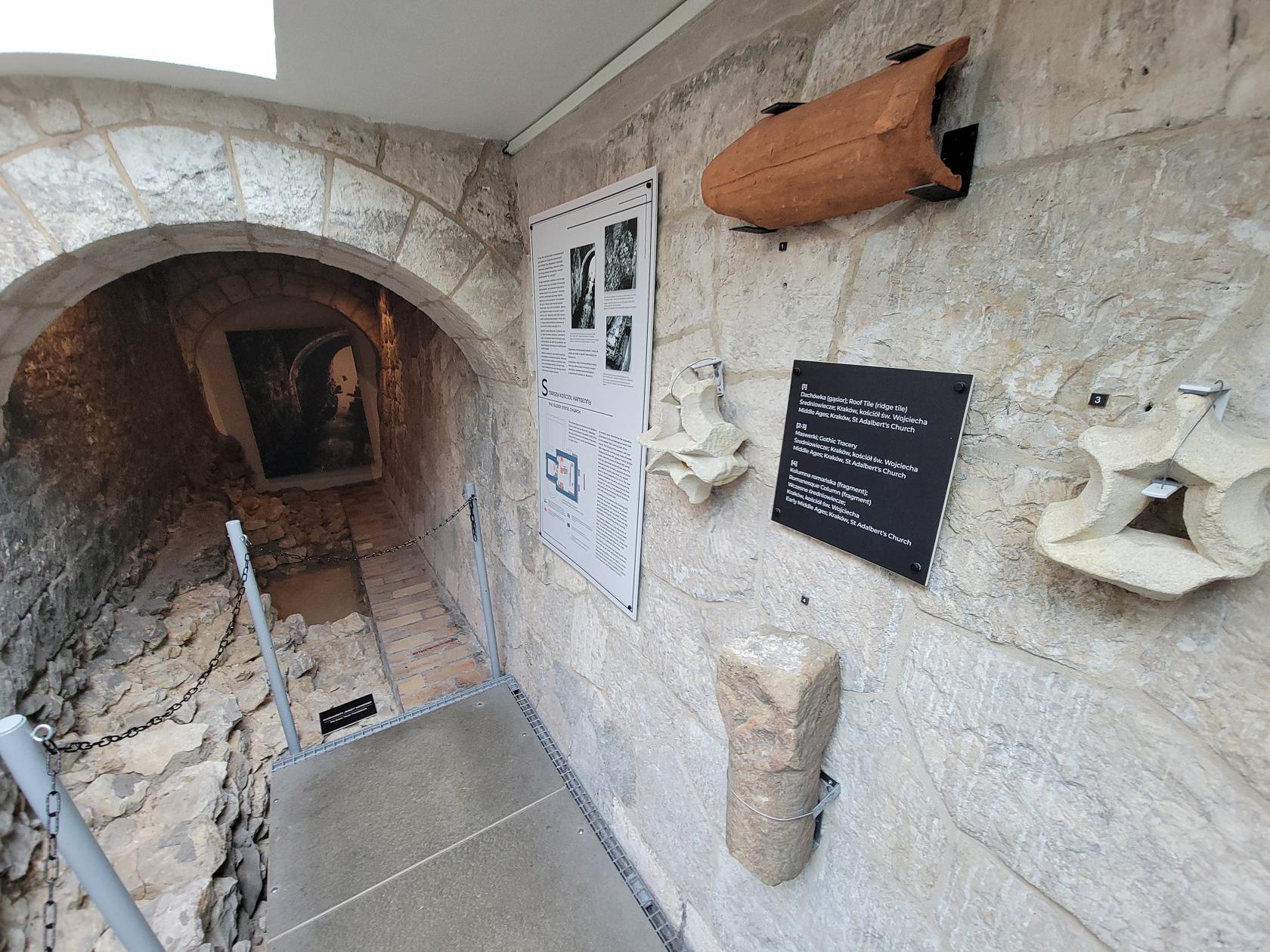
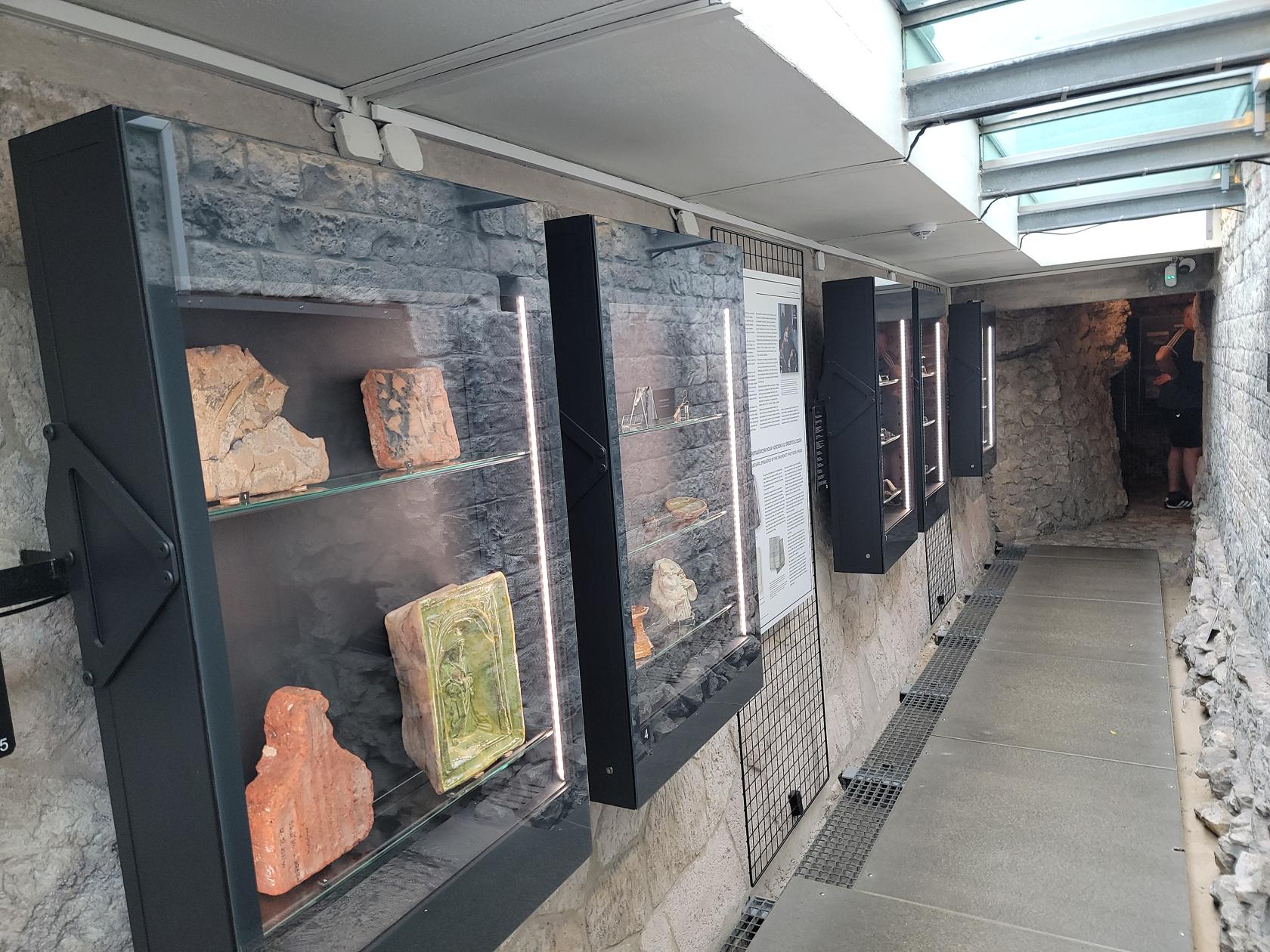
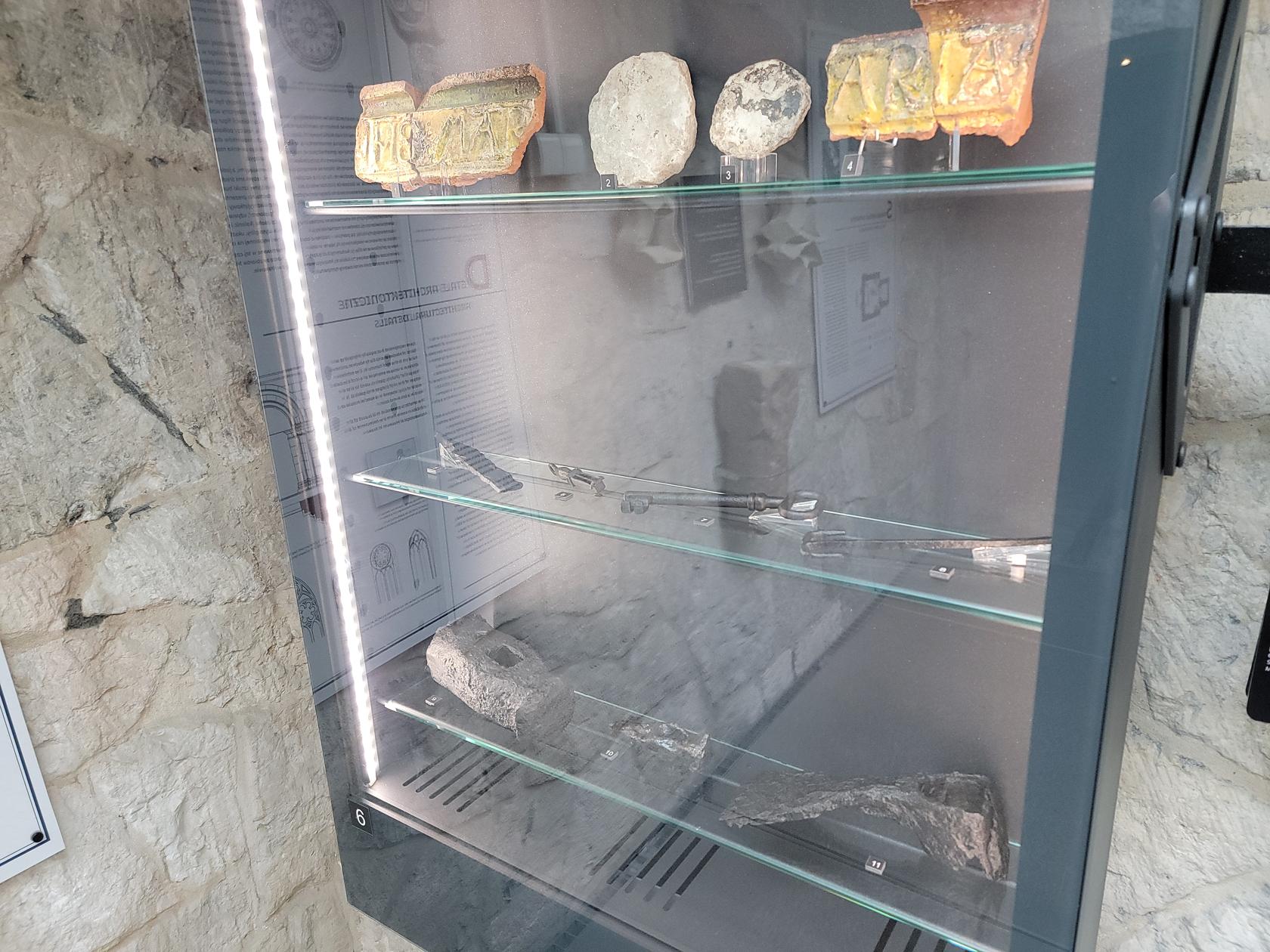
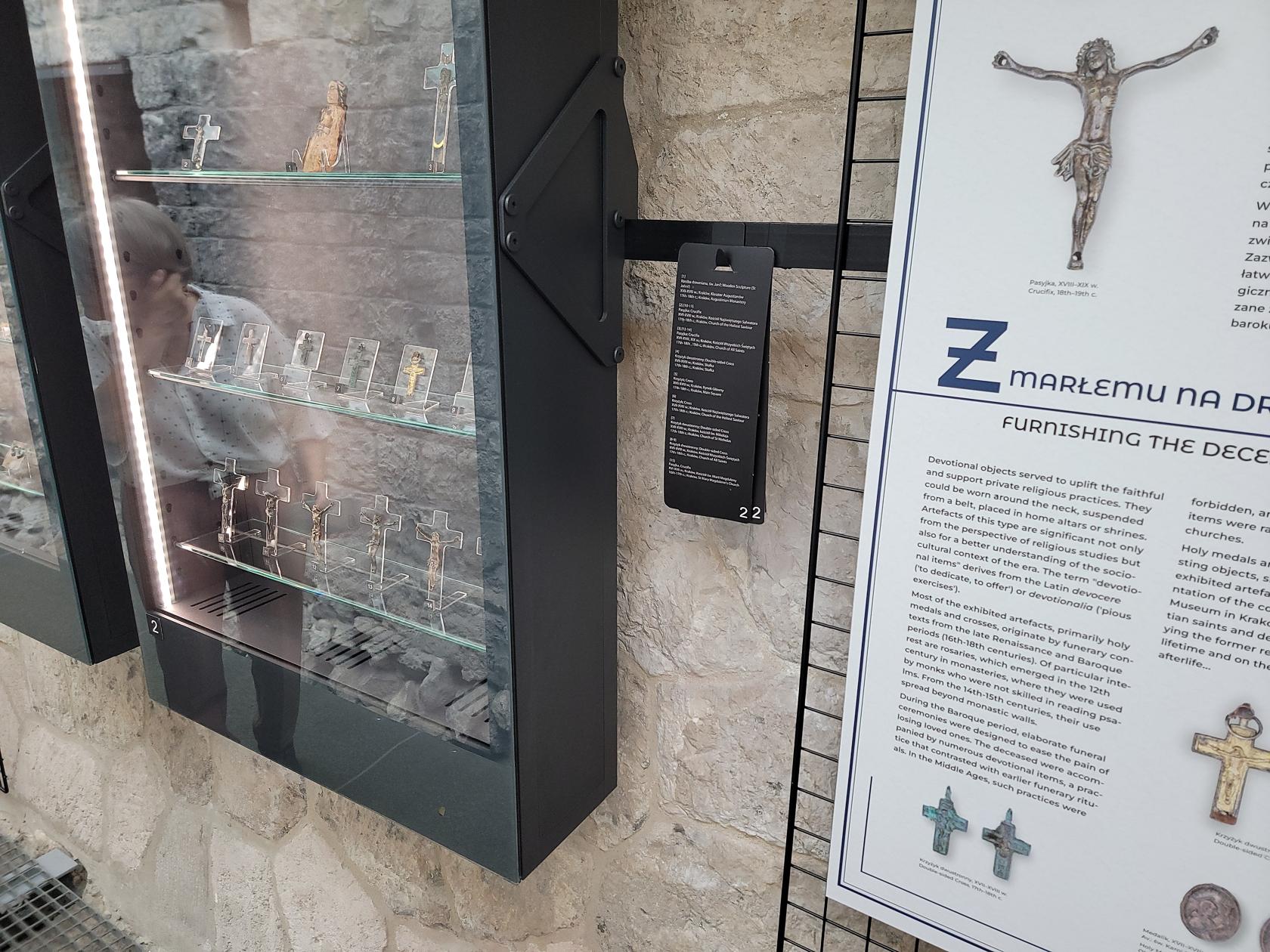
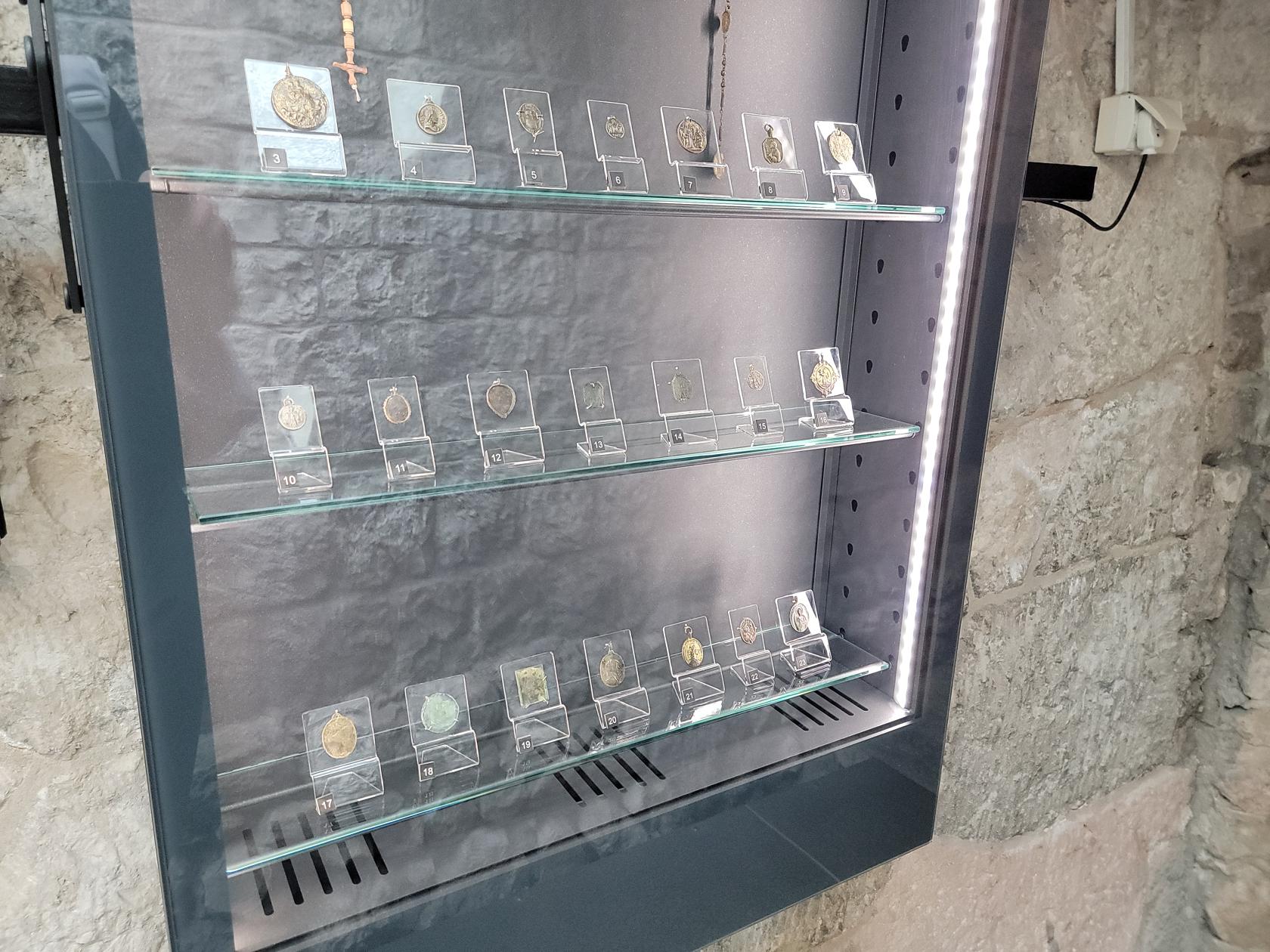
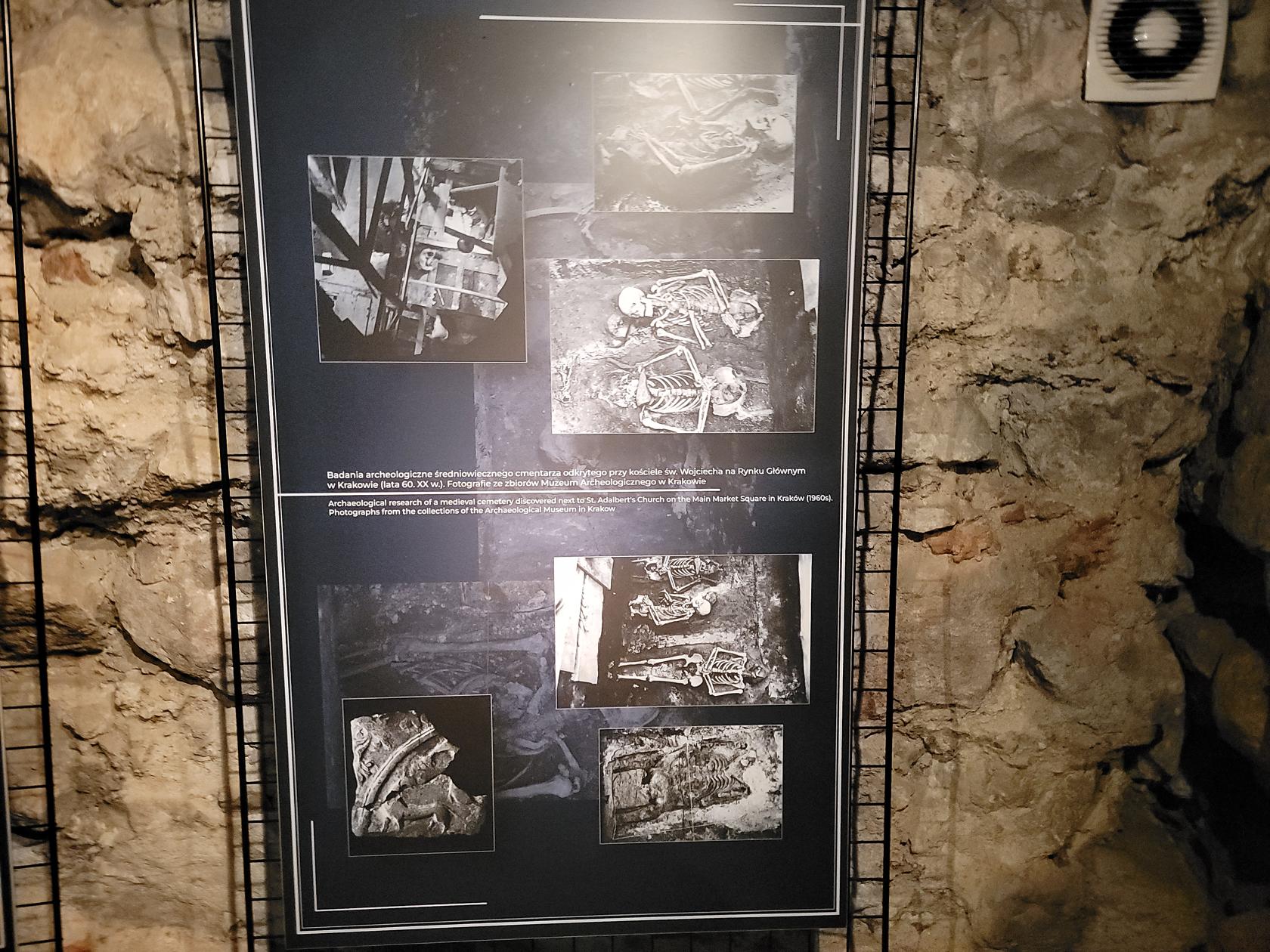
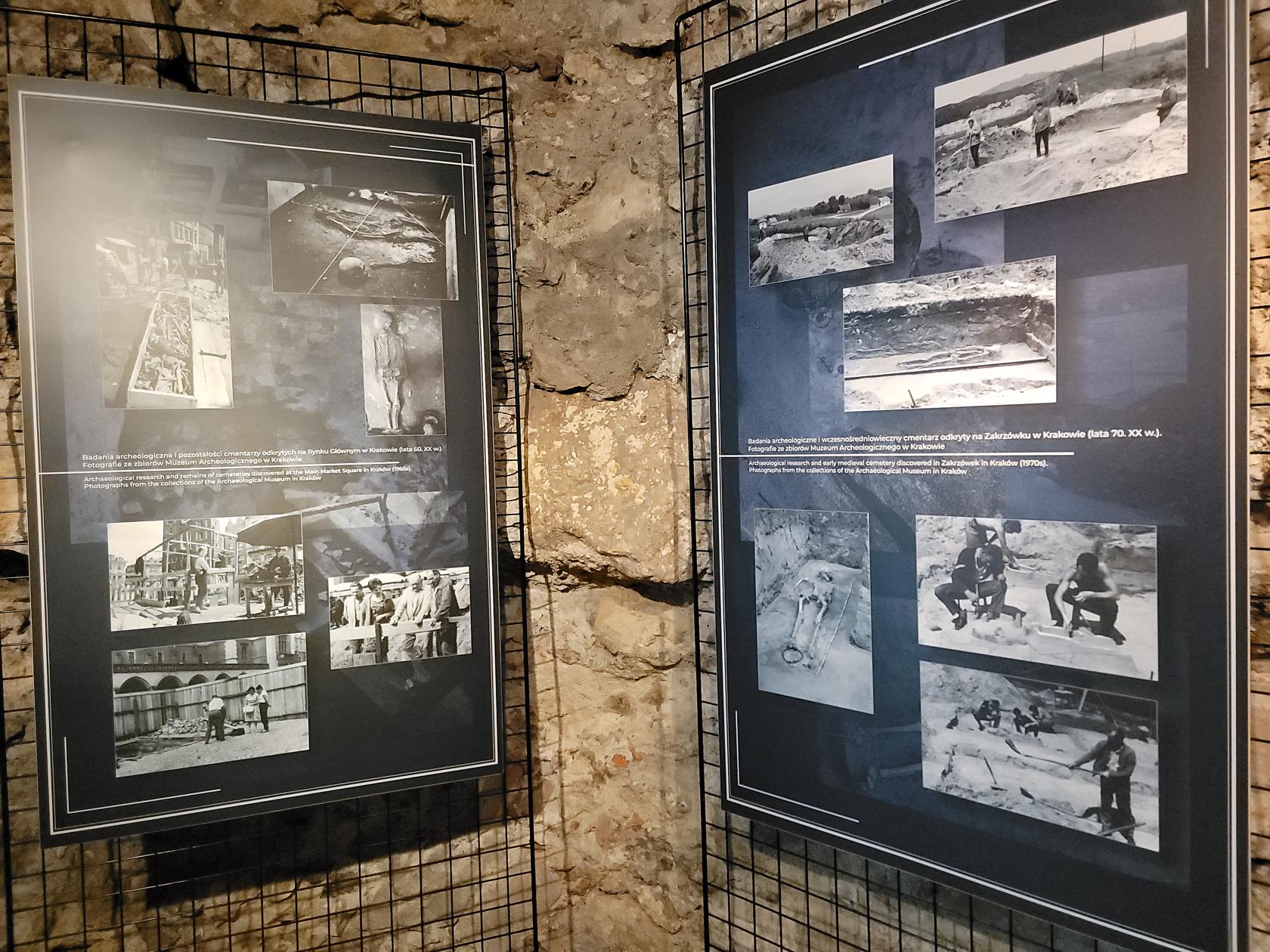
The archealogical remains of the older church may be visited for a small fee. Frankly there is not much to see, but it was interesting nonetheless, even though it was quite short.
Tickets For Two – Saint Aldaberts Church – Kraków, Poland
Entrance – Saint Aldabert’s Church – Kraków, Poland
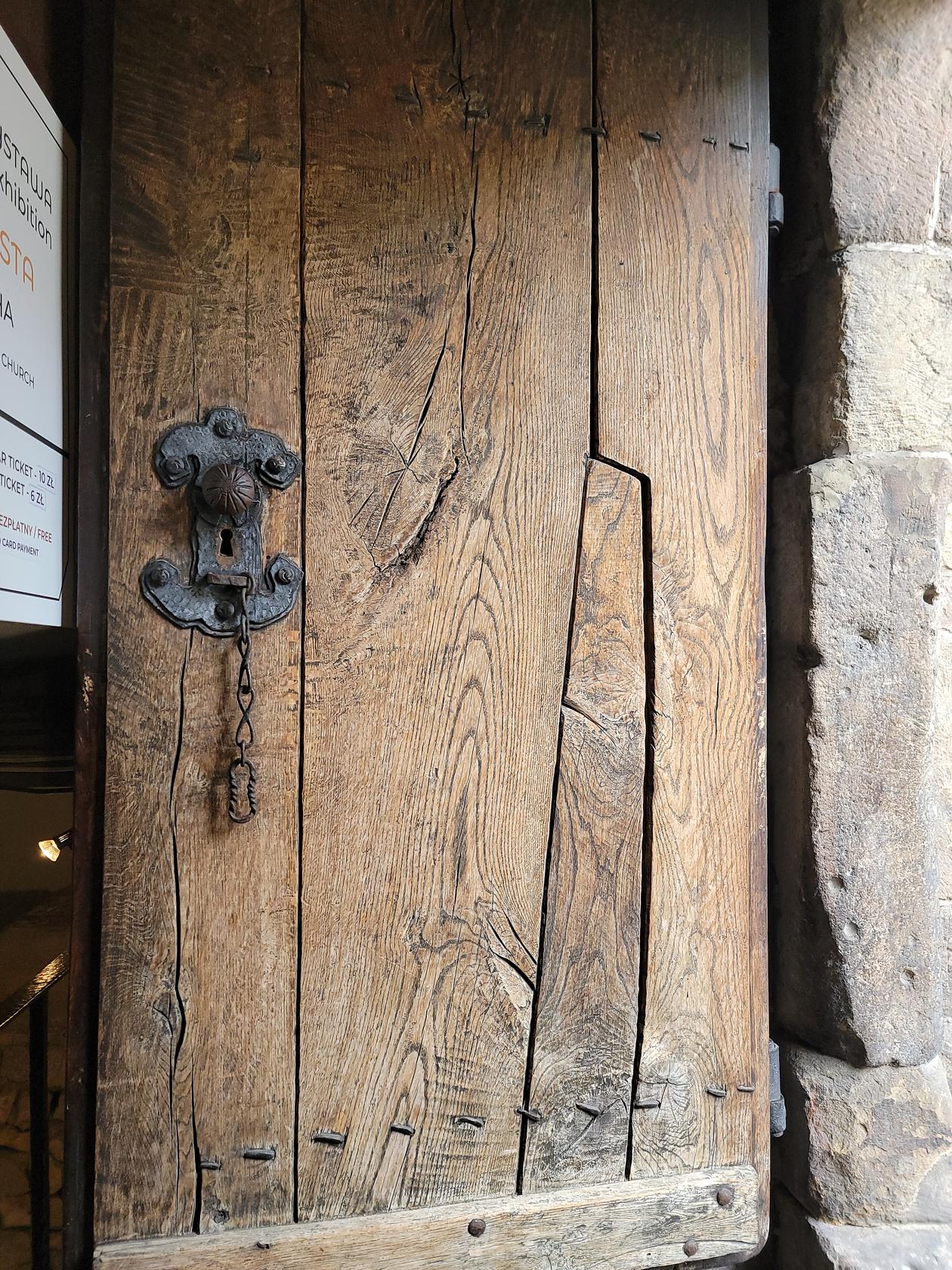
Old Wooden Door with Iron Doorknob – Saint Aldabert’s Church – Kraków, Poland
Old Romanesque Wall – Saint Aldabert’s Church – Kraków, Poland
Old Romanesque Wall – Saint Aldabert’s Church – Kraków, Poland
Exhibits – Saint Aldabert’s Church – Kraków, Poland
Old Keys and other artifacts – Saint Aldabert’s Church – Kraków, Poland
Old Crucifixes – Saint Aldabert’s Church – Kraków, Poland
Crucifixes and Gold Pendants – Saint Aldabert’s Church – Kraków, Poland
Remains Found – Saint Aldabert’s Church – Kraków, Poland
Exhibits – Saint Aldabert’s Church – Kraków, Poland
Restaurants
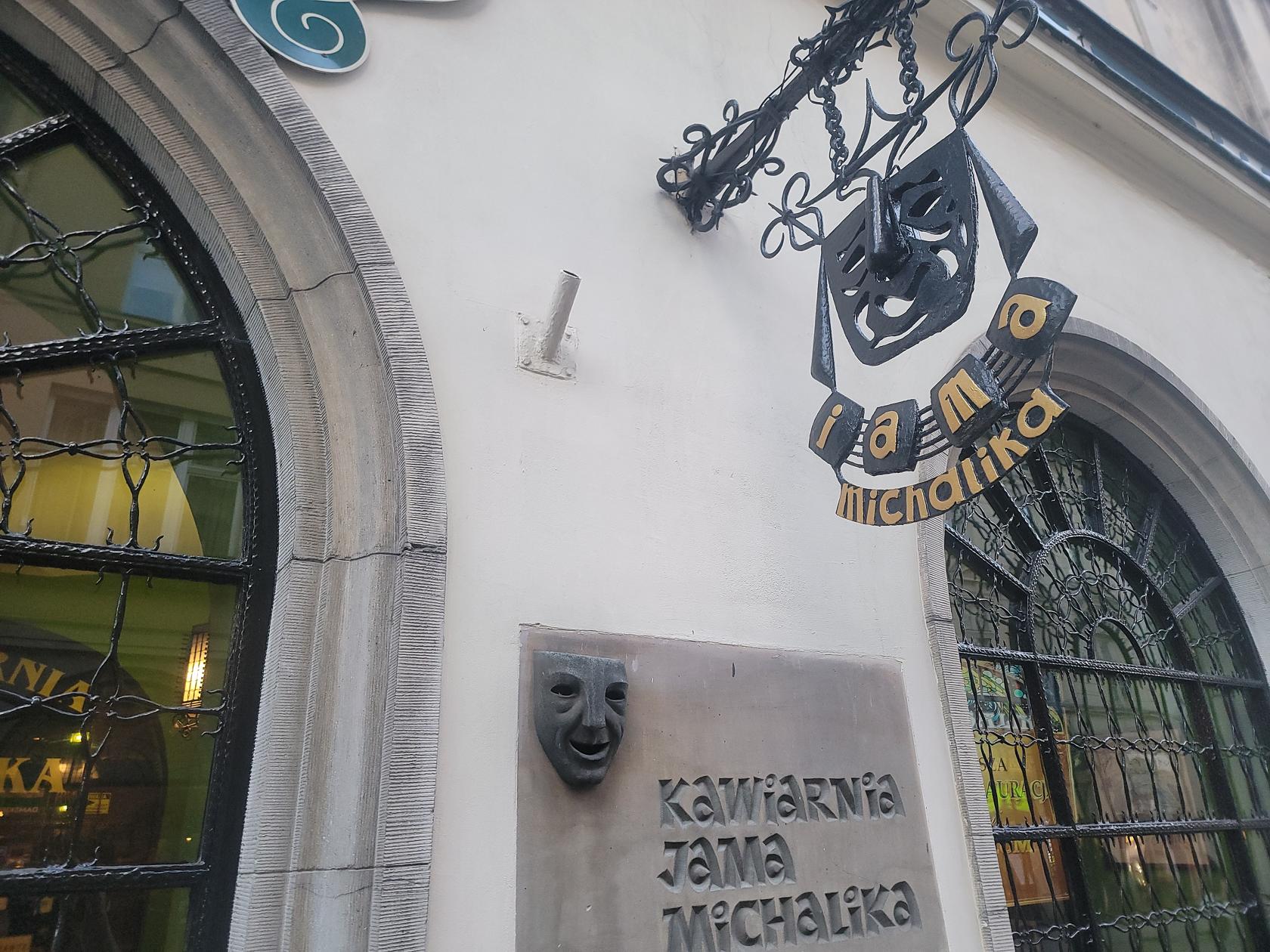
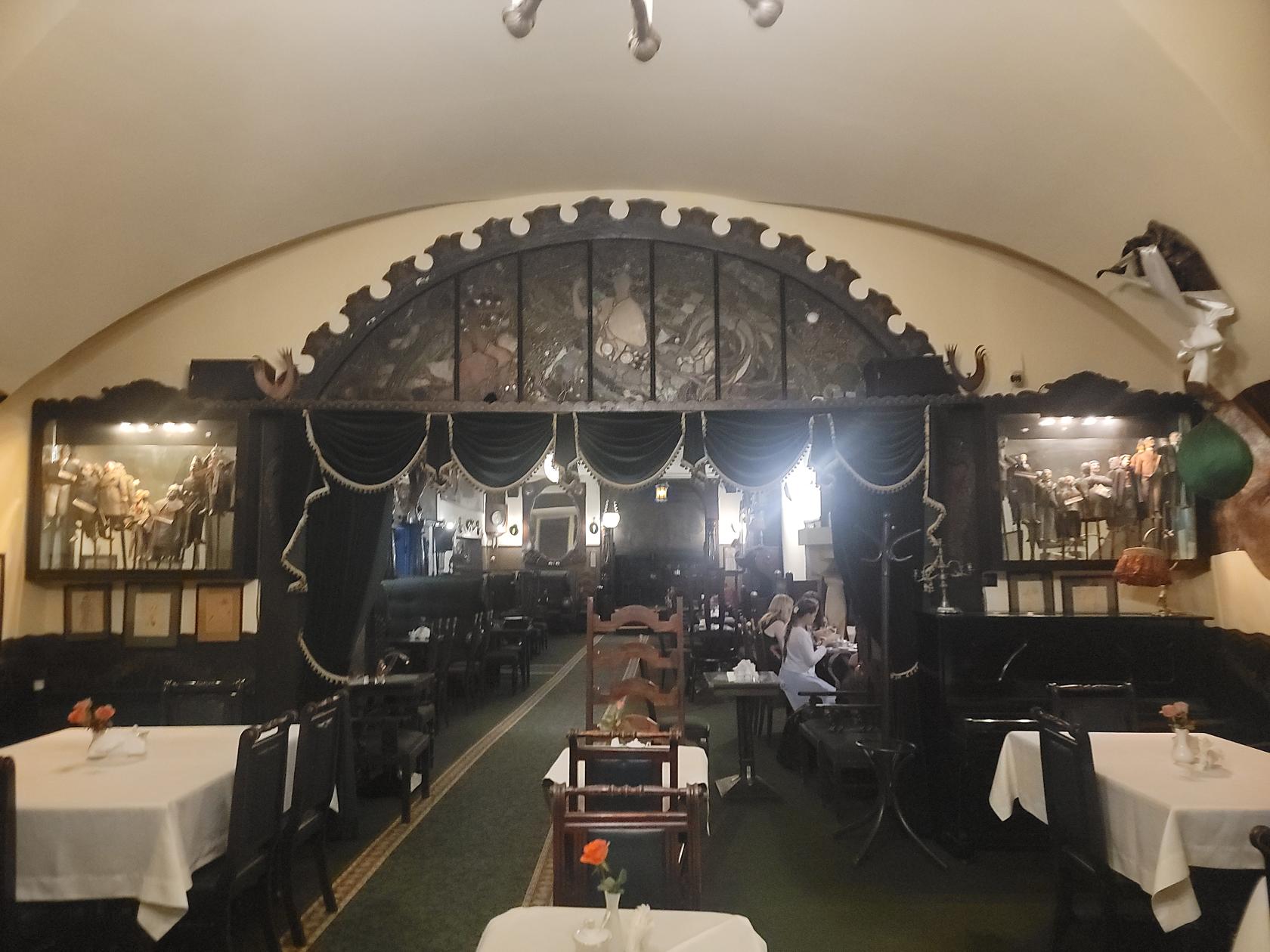
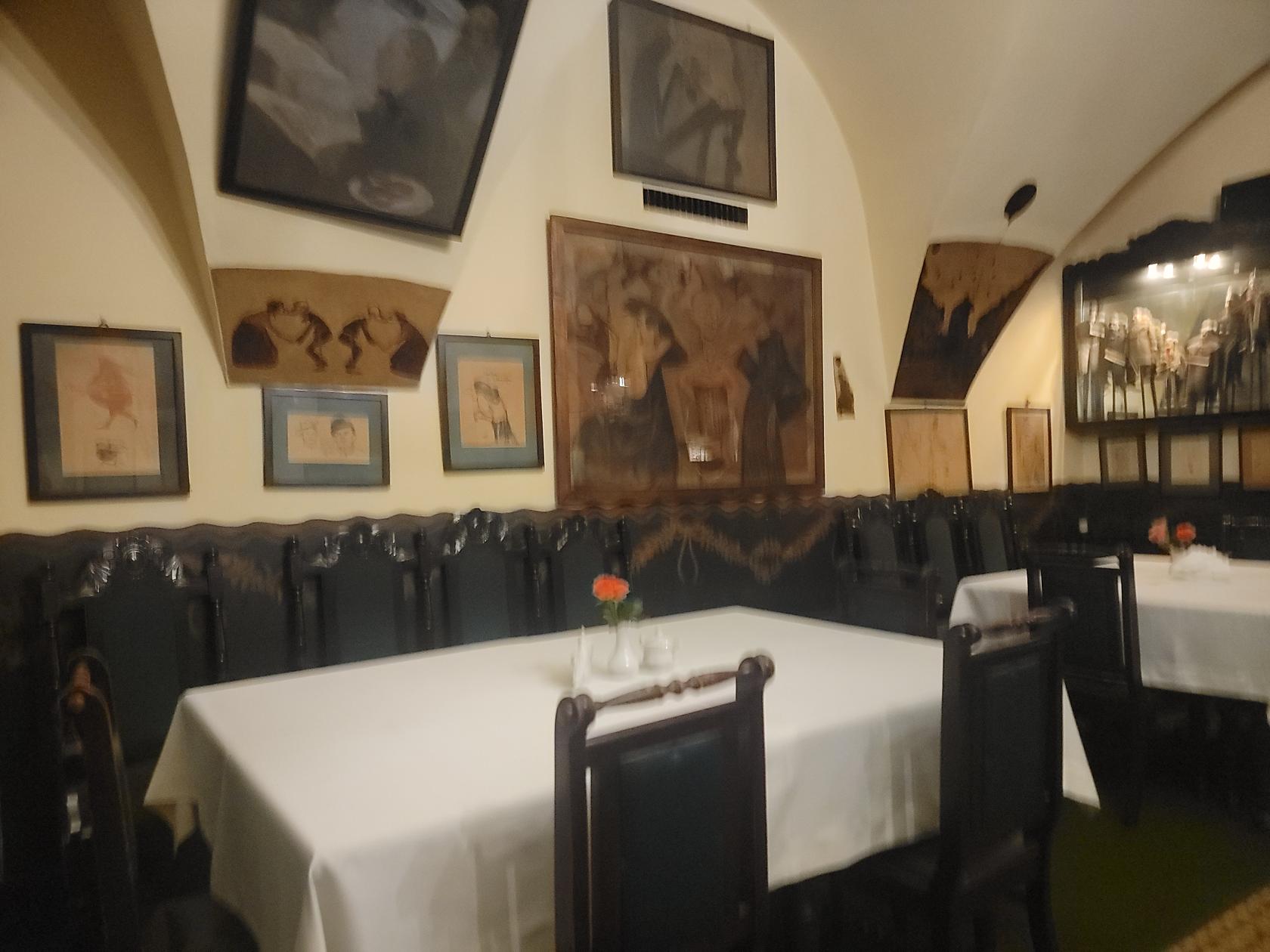
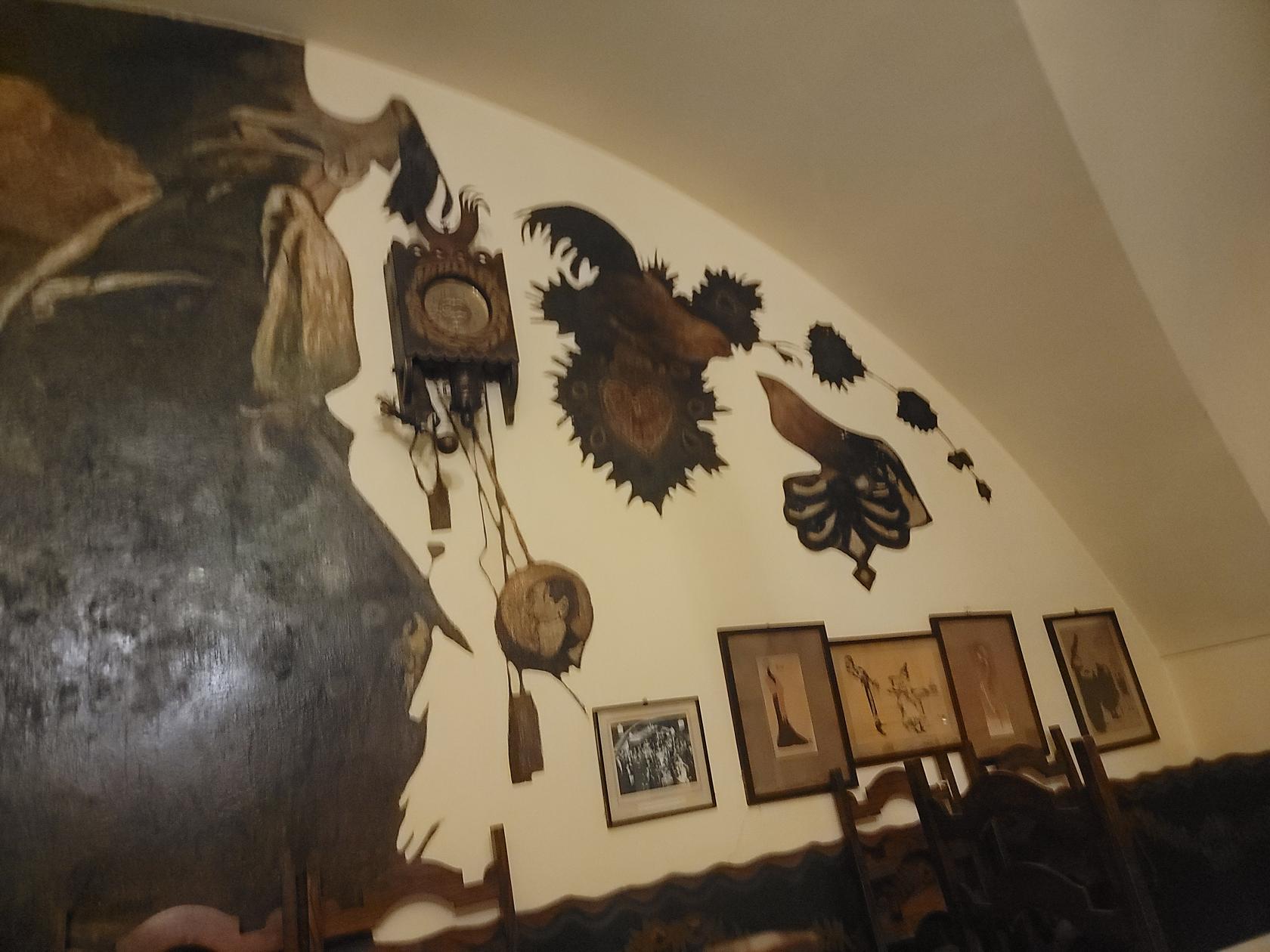
In this part we visited two restaurants of note. The Morski Oko and the Jama Michalika, one noted for its food, the other for its artwork.
Morskie Oko Restaurant
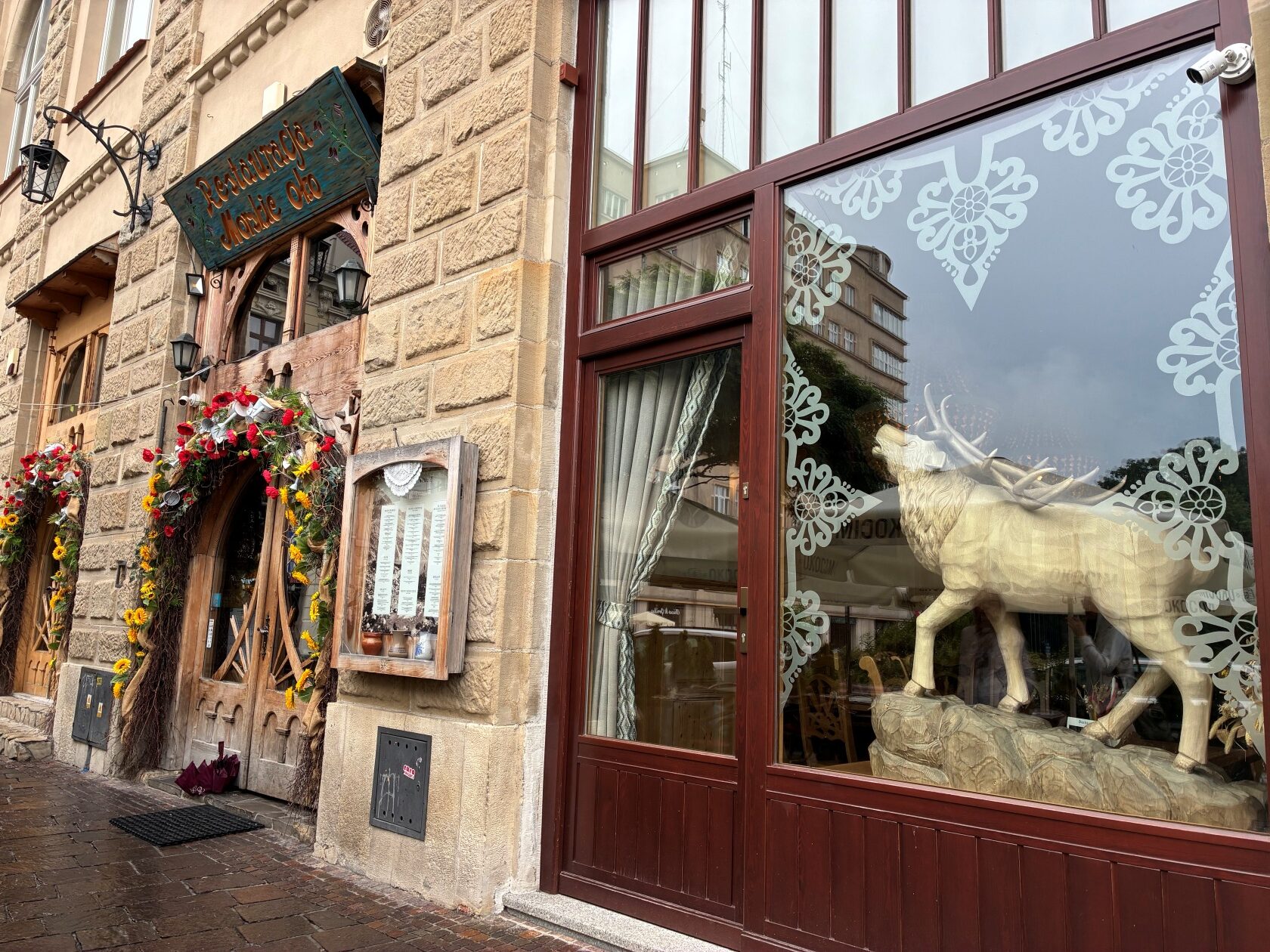
The Morskie Oko restaurant is actually one that we visited more than once, more on that later. In this edition we had reservations for lunch, since it can get quite busy.
Entrance – Morskie Oko Restaurant – Kraków, Poland
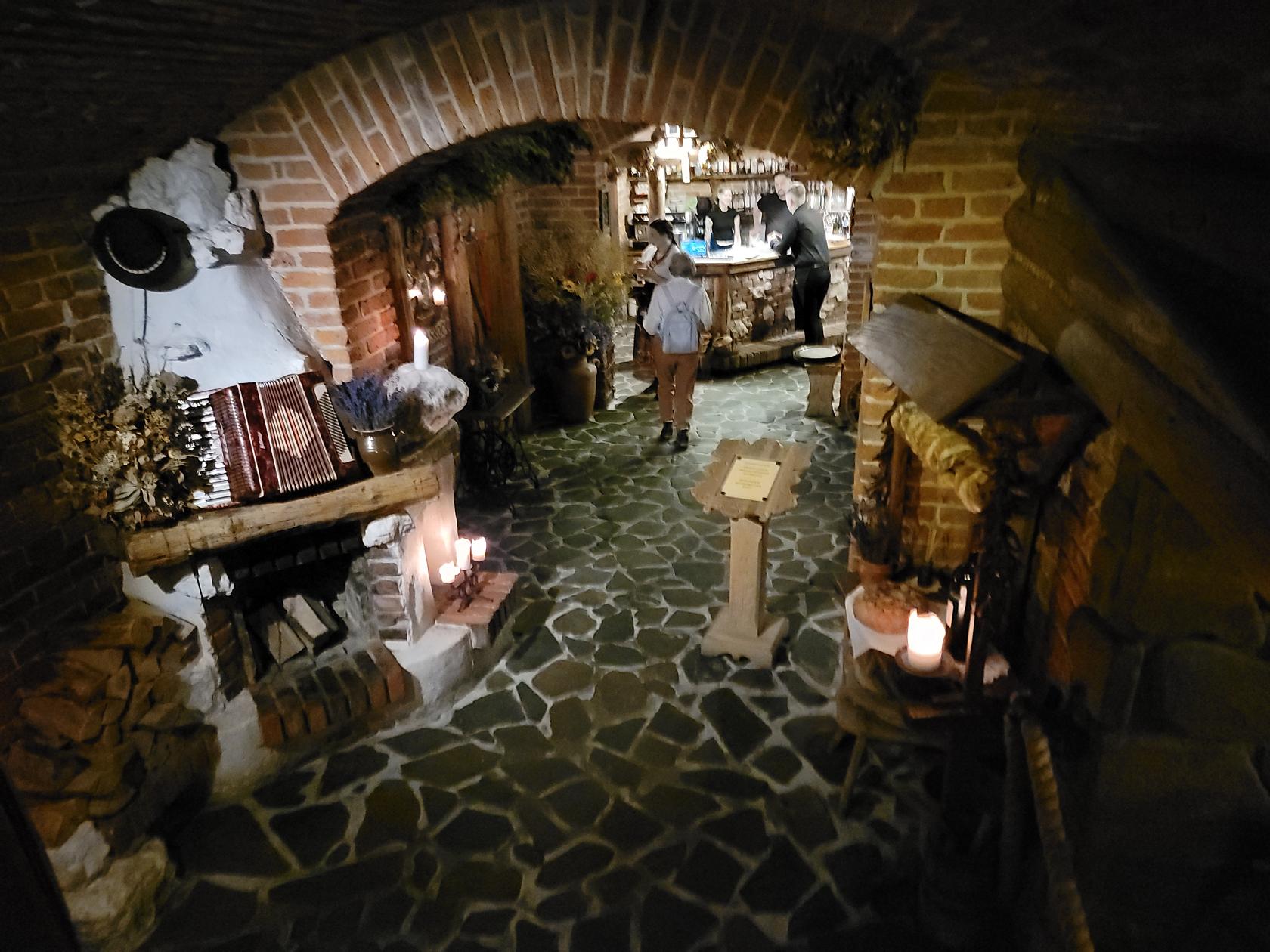
Downstairs – Morskie Oko Restaurant – Kraków, Poland
Inside Downstairs – Morskie Oko Restaurant – Kraków, Poland
Group Seating – Morskie Oko Restaurant – Kraków, Poland
Patti waiting for lunch – Morskie Oko Restaurant – Kraków, Poland
Inside – Morskie Oko Restaurant – Kraków, Poland
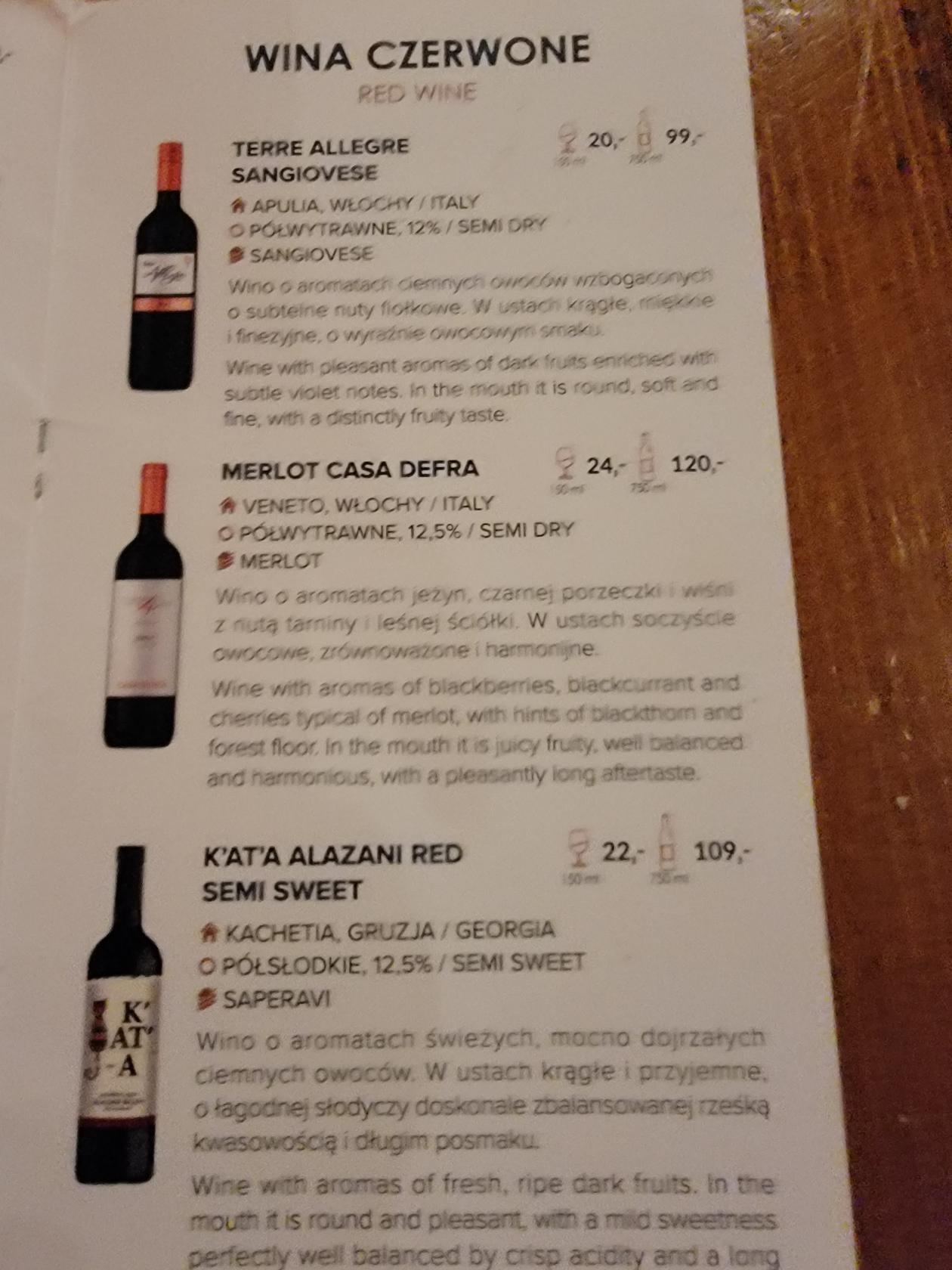
Wines – Morskie Oko Restaurant – Kraków, Poland
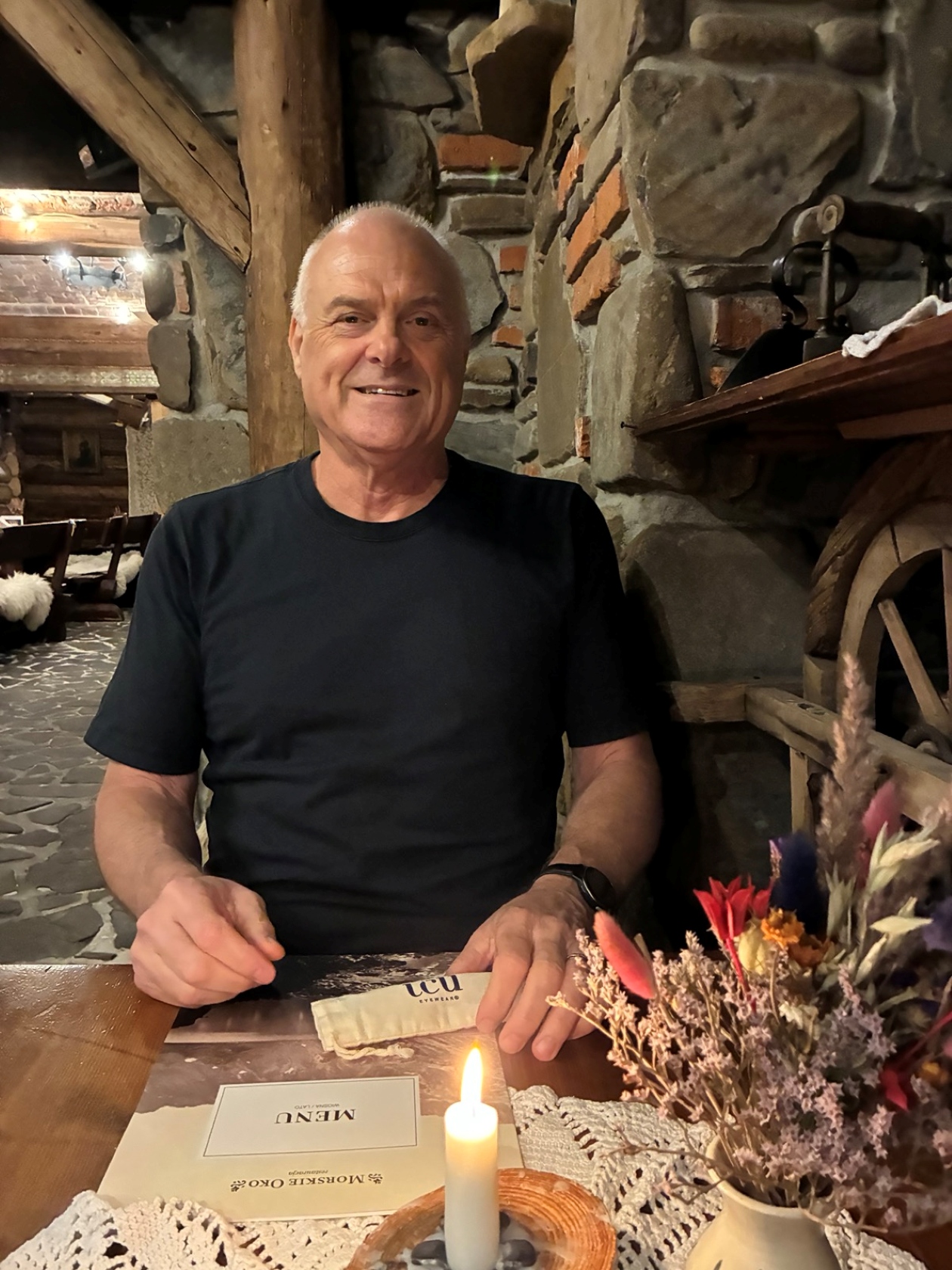
Erick – Morskie Oko Restaurant – Kraków, Poland
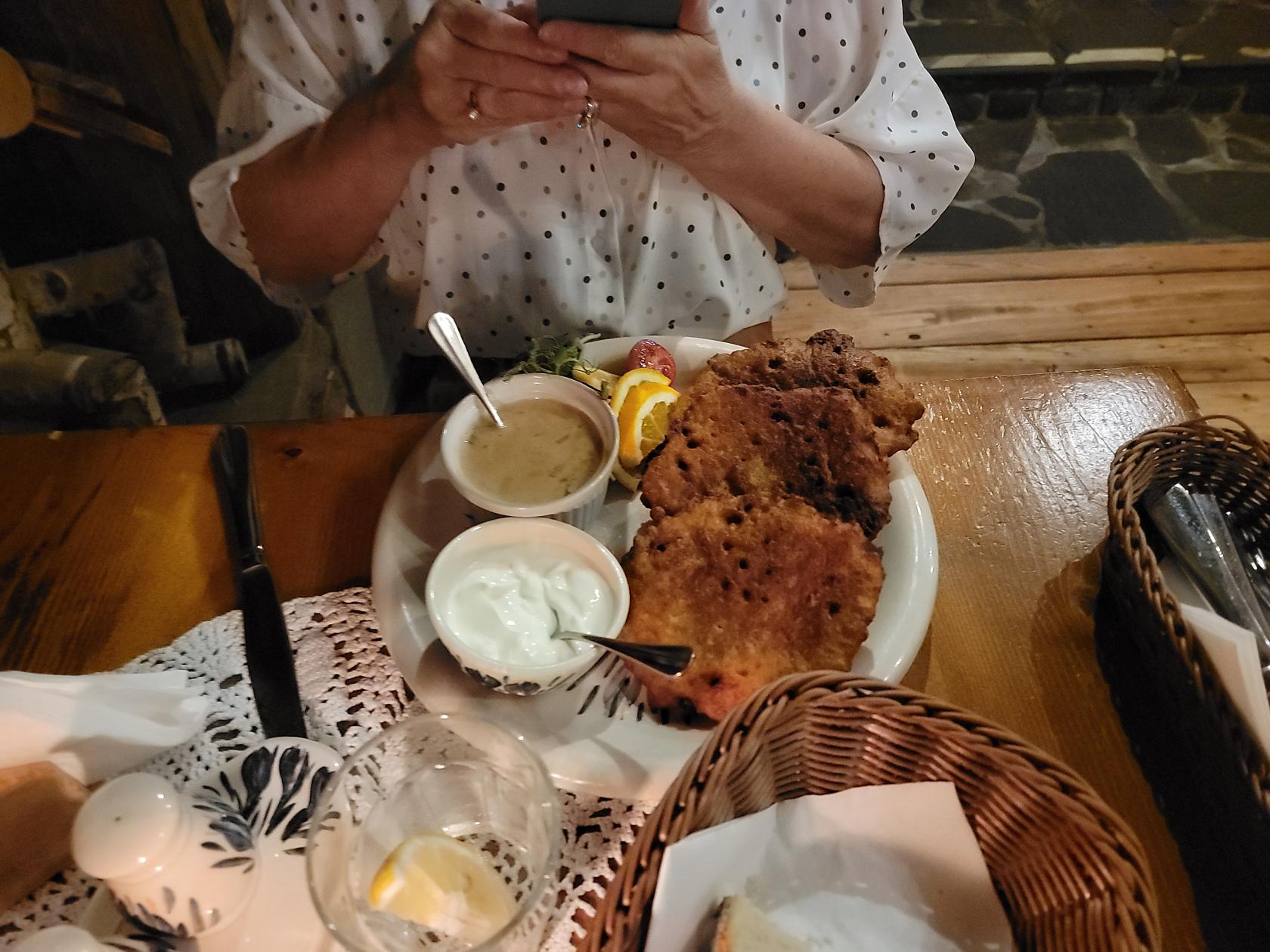
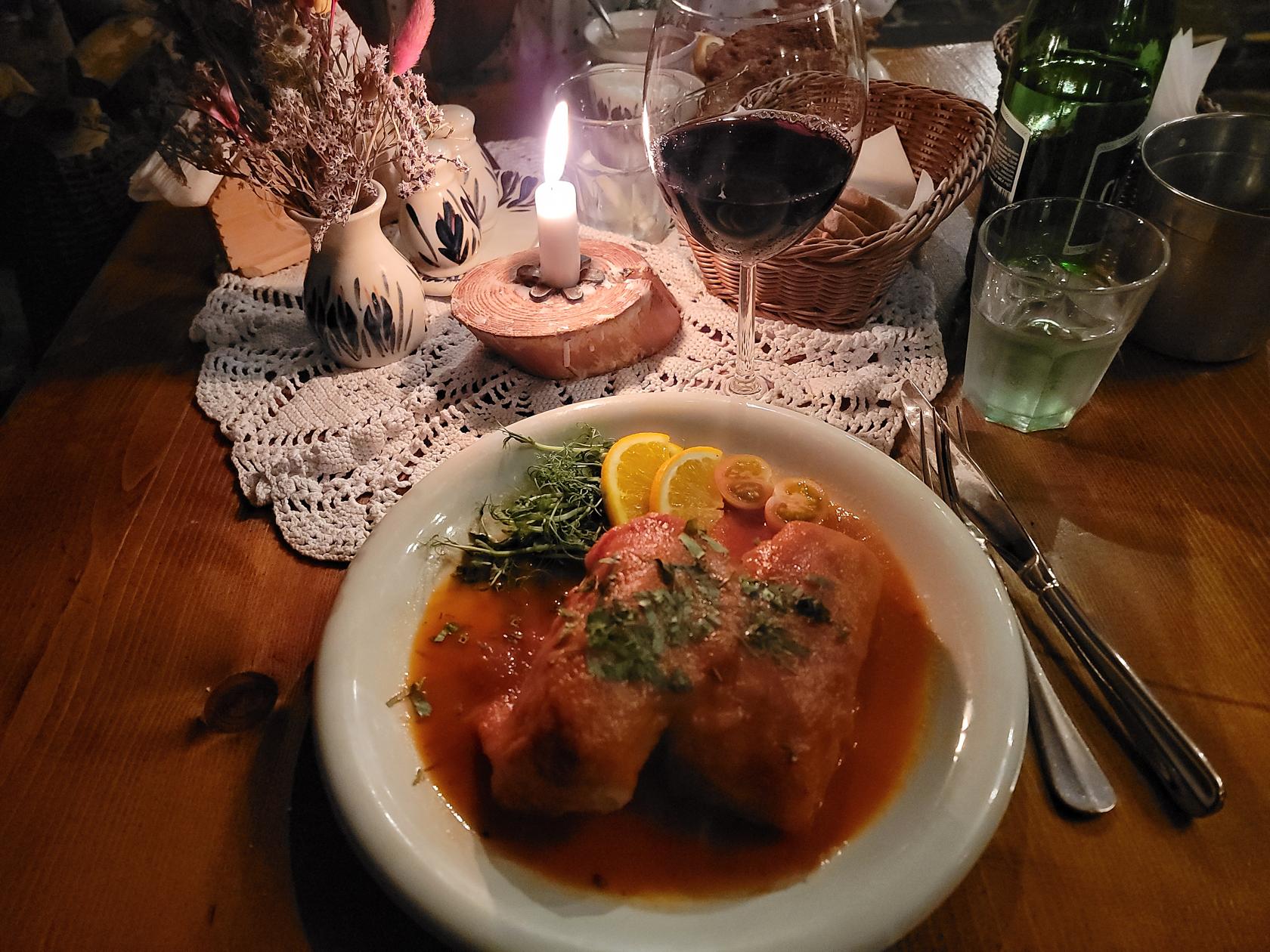
Our seating was downstairs, where we could enjoy the restaurant’s medieval quality. The food was very good, but in true Polish fashion, very filling. The gołąbki w sosie pomidorowym, or cabbage rolls in tomato sauce, were actually very good, light but at the same time very filling.
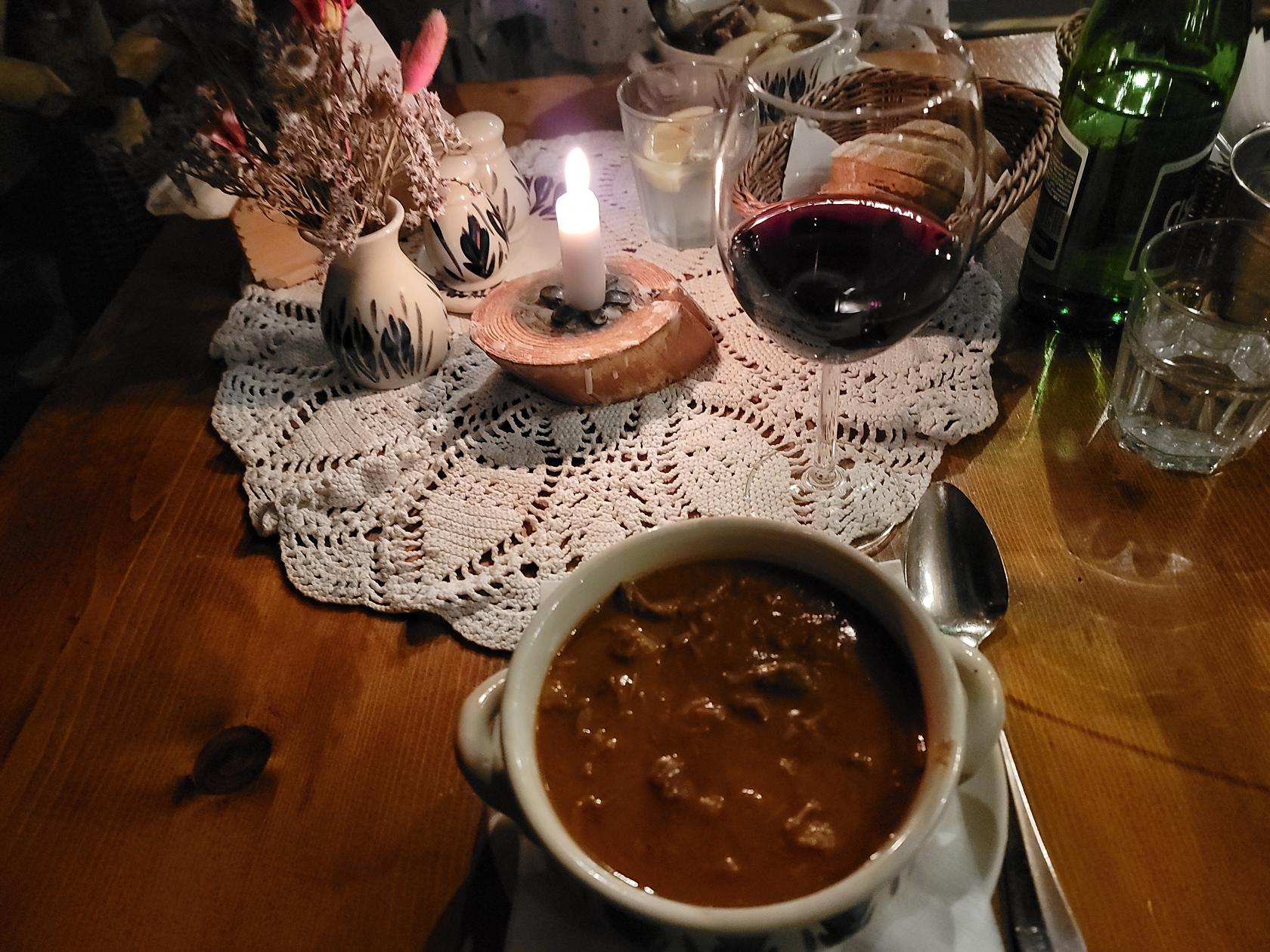
Gulash Soup – Morskie Oko Restaurant – Kraków, Poland
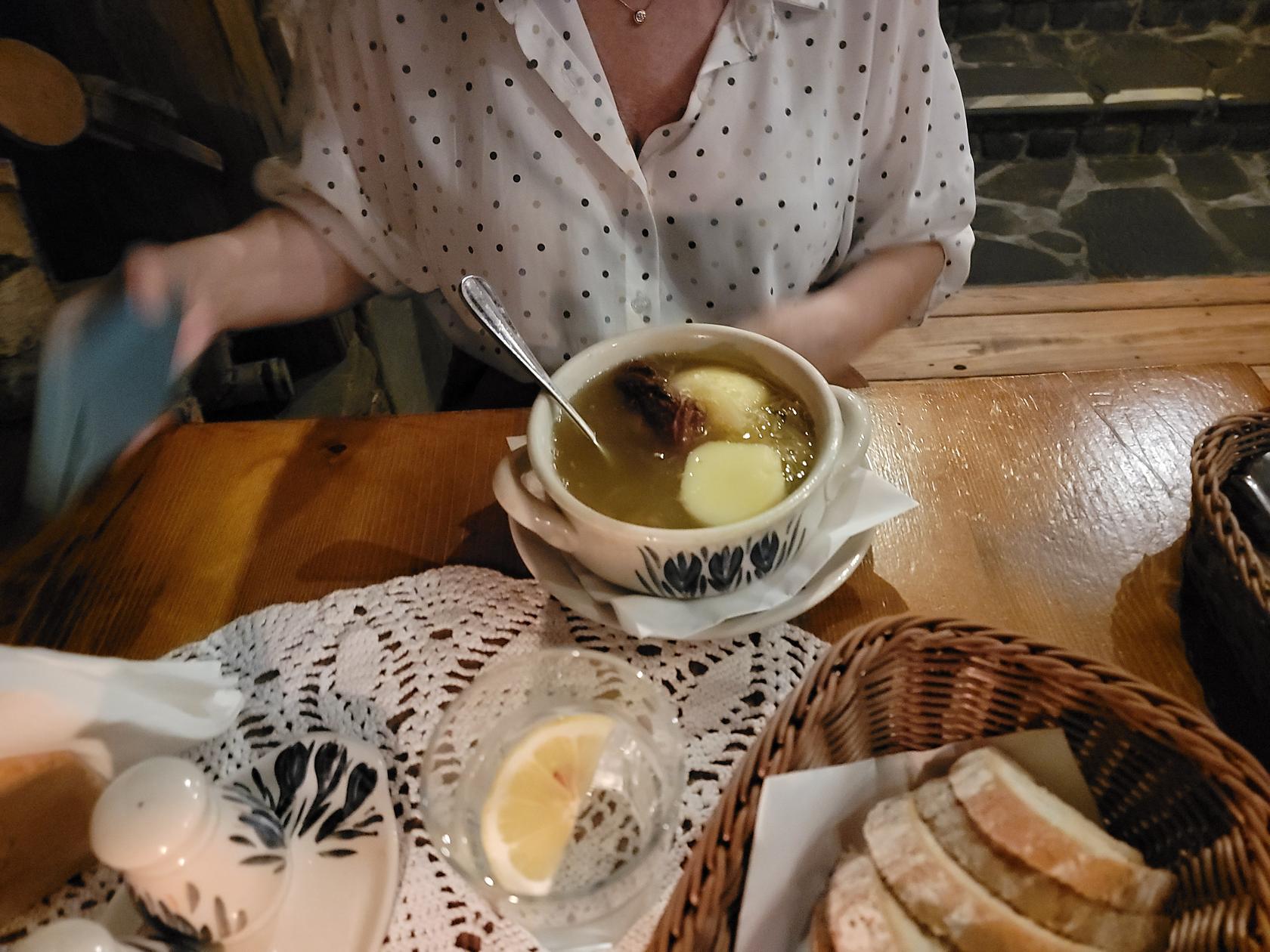
Sauerkraut Soup – Morskie Oko Restaurant – Kraków, Poland
Potato Pancakes with Cream and Mushroom Sauce – Morskie Oko Restaurant – Kraków, Poland
Gołąbki w sosie pomidorowym, or Stuffed Cabbage Rolls in Sauce – Morskie Oko Restaurant – Kraków, Poland
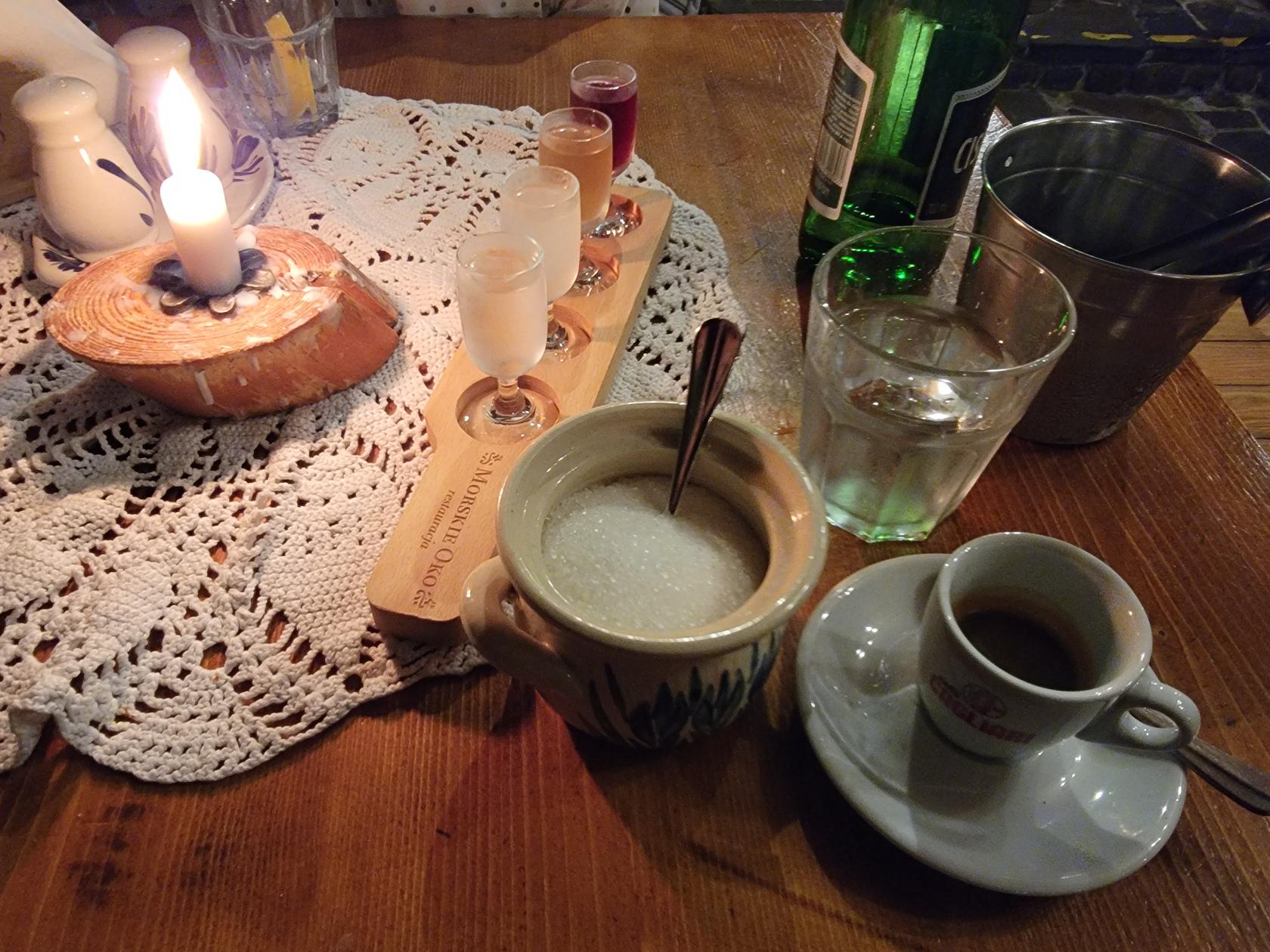
Vodka Flight and Espresso – Morskie Oko Restaurant – Kraków, Poland
Jama Michalika Restaurant
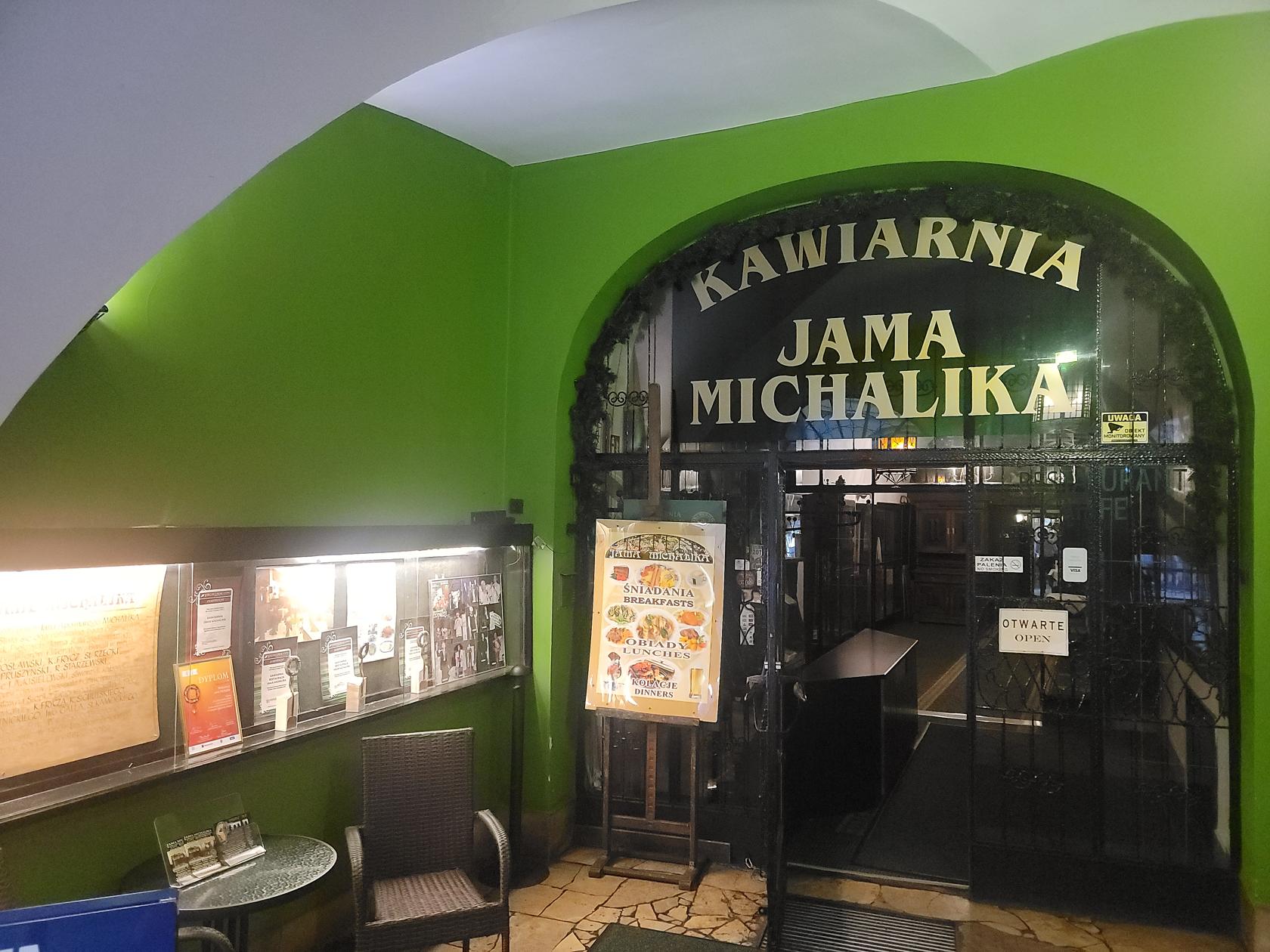
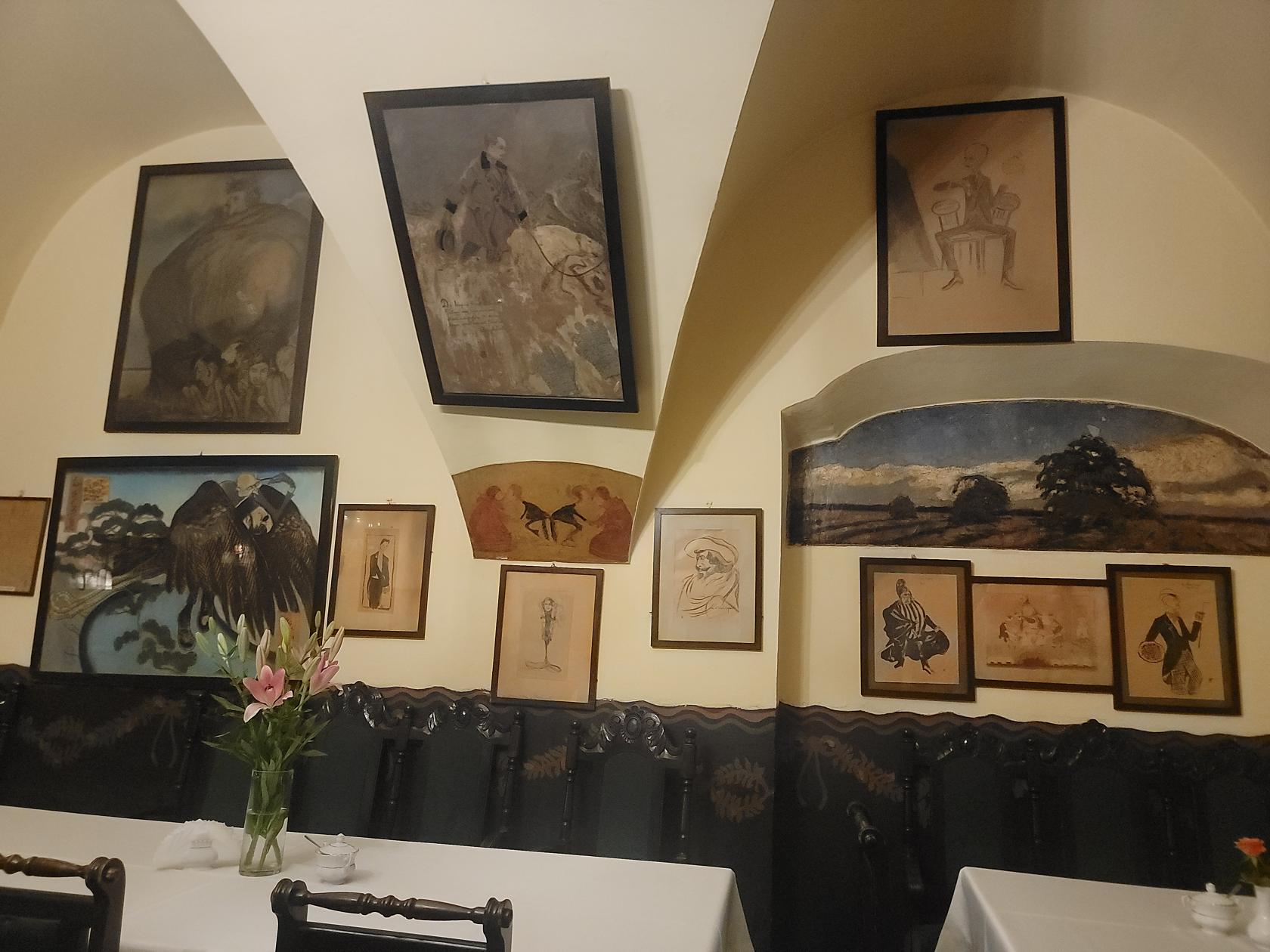
The Jama Michalika restaurant, though the food was not as good as the Morskie Oko, it is adorned with artwork. Pedestrians actually visit the inside of the restaurant just to look at the works.
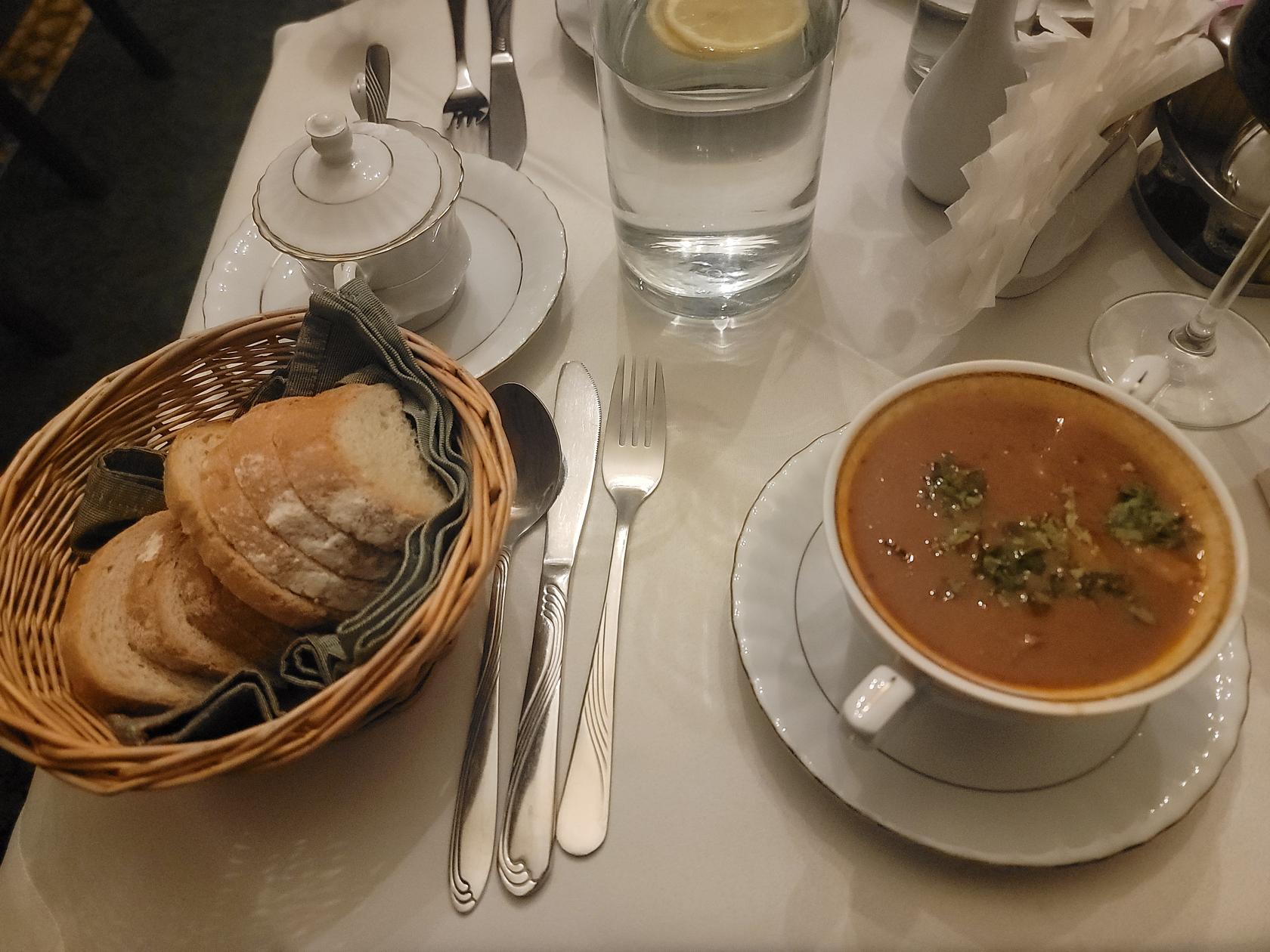
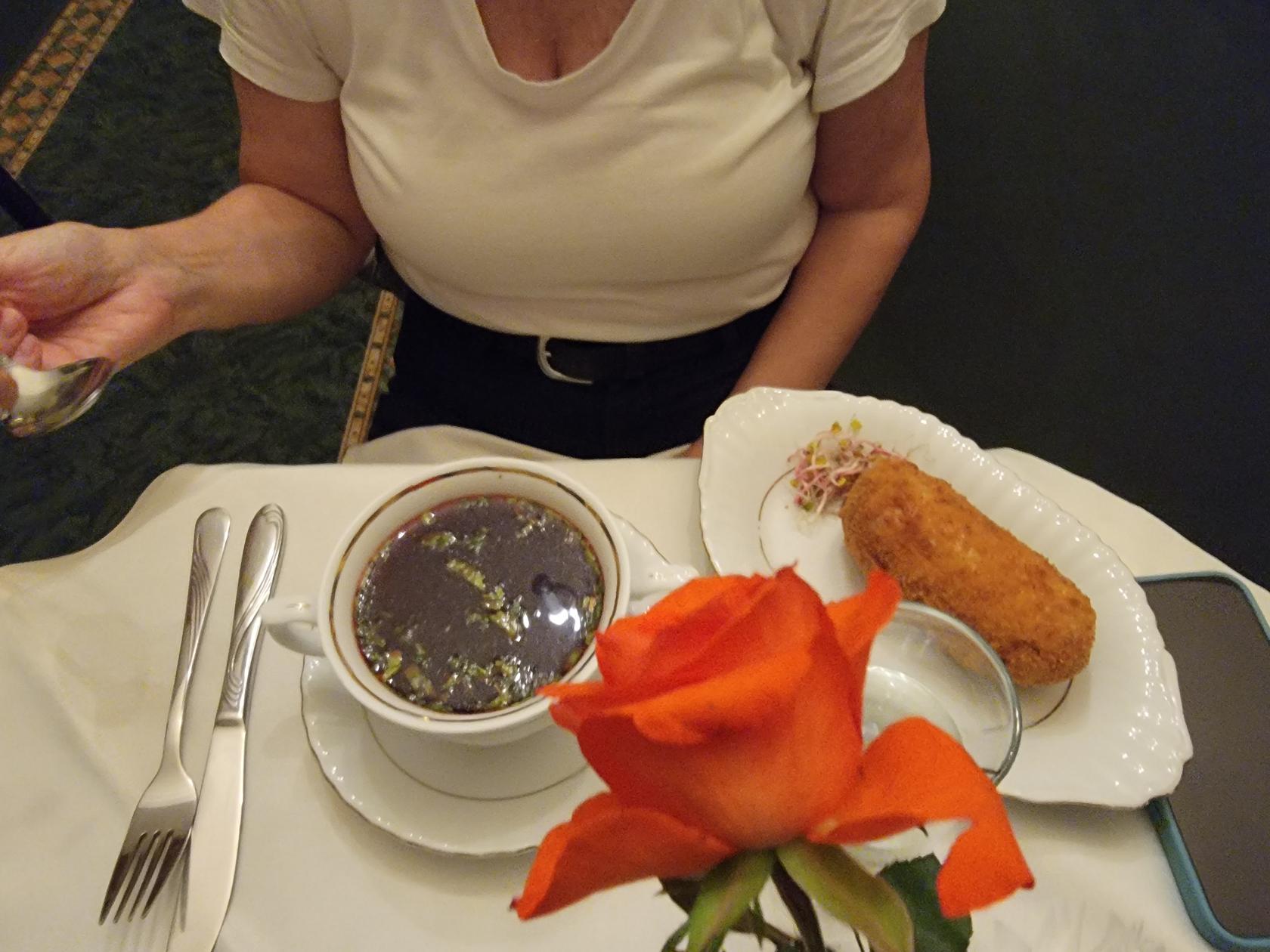
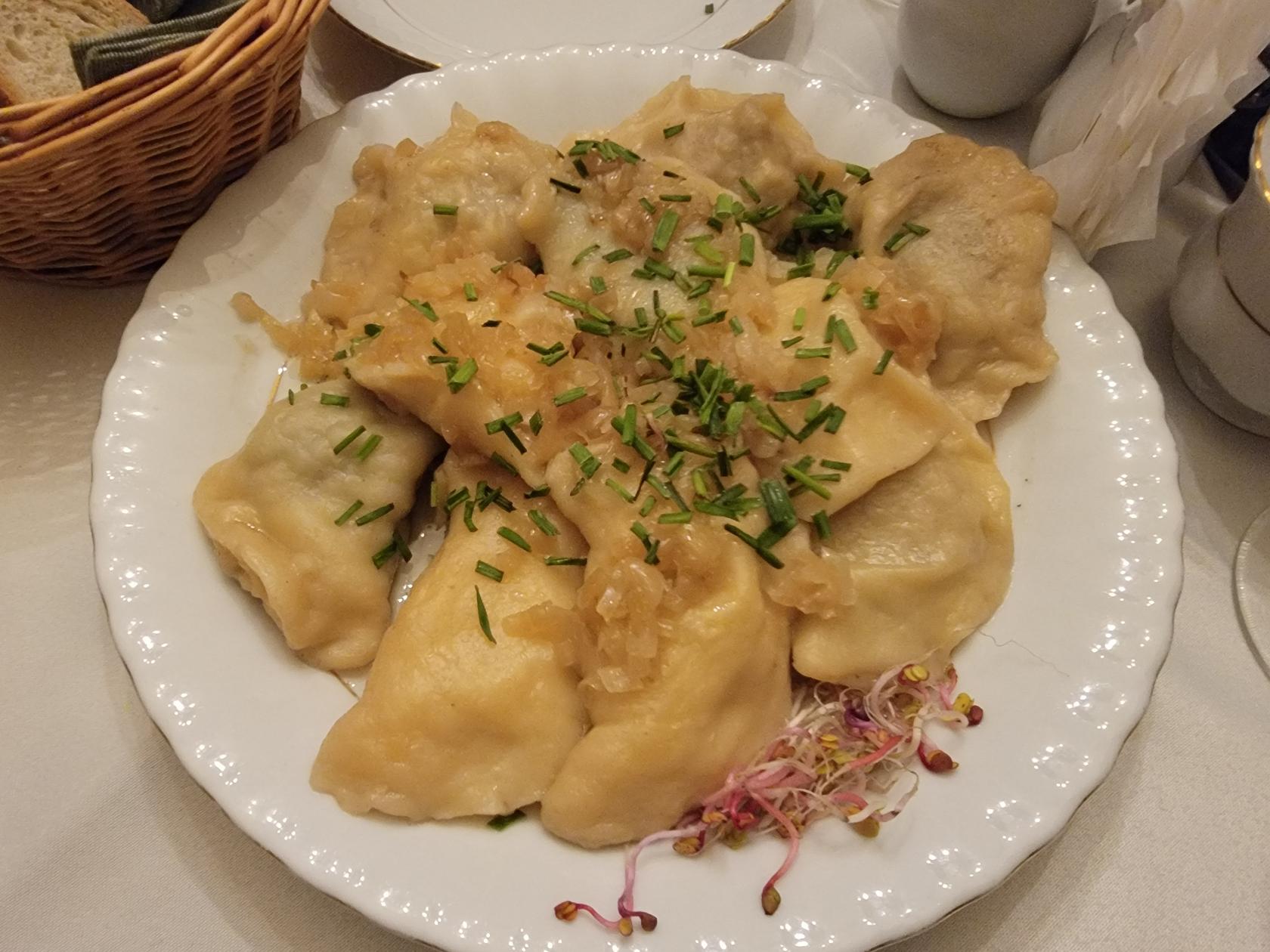
We did not have reservations for this restaurant, but rather visited them since they had perogie on the menu. They were actually quite good, but also quite filling.
Approximately two to two and a half hours away from our place in Turin is the city of Parma. Known for ham, cheese and other delicacies in the region, we had been wanting to go there for some time. Our recent visit was for us full of surprises, including the Pilotta Museum Complex, which was a pleasure for us and central to this post.
Parma
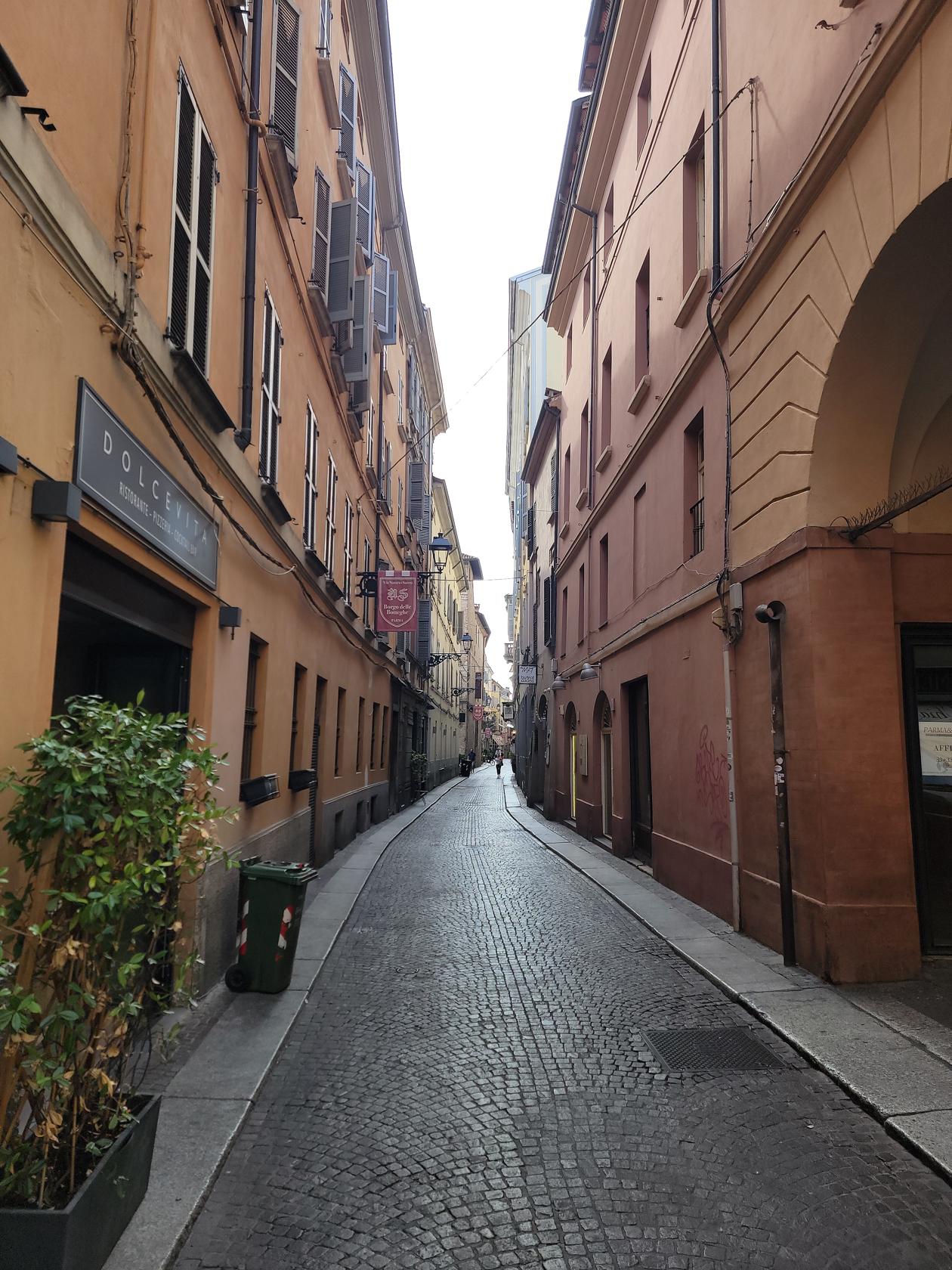
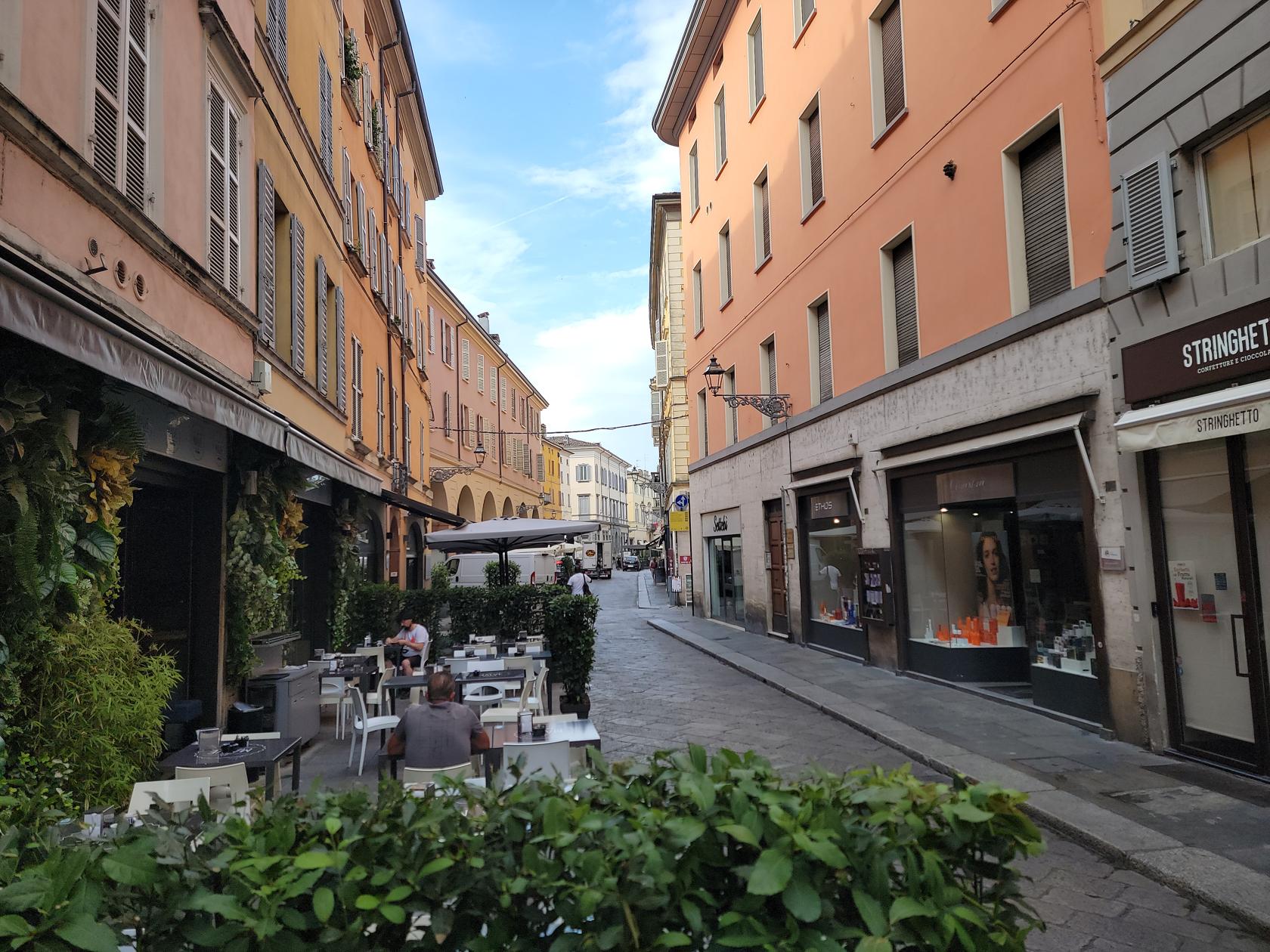
At first we were not too sure about the city. Our first impressions, and to some extent our lasting ones as well, is that it is laid out in a chaotic fashion, even for an Italian town. The mixture of new and old on the outskirts is not very pleasing to the eye and is kind of takes away from the central historic part of the city, which frankly is not very large.
Palazzo Tarasconi – Parma, Italy
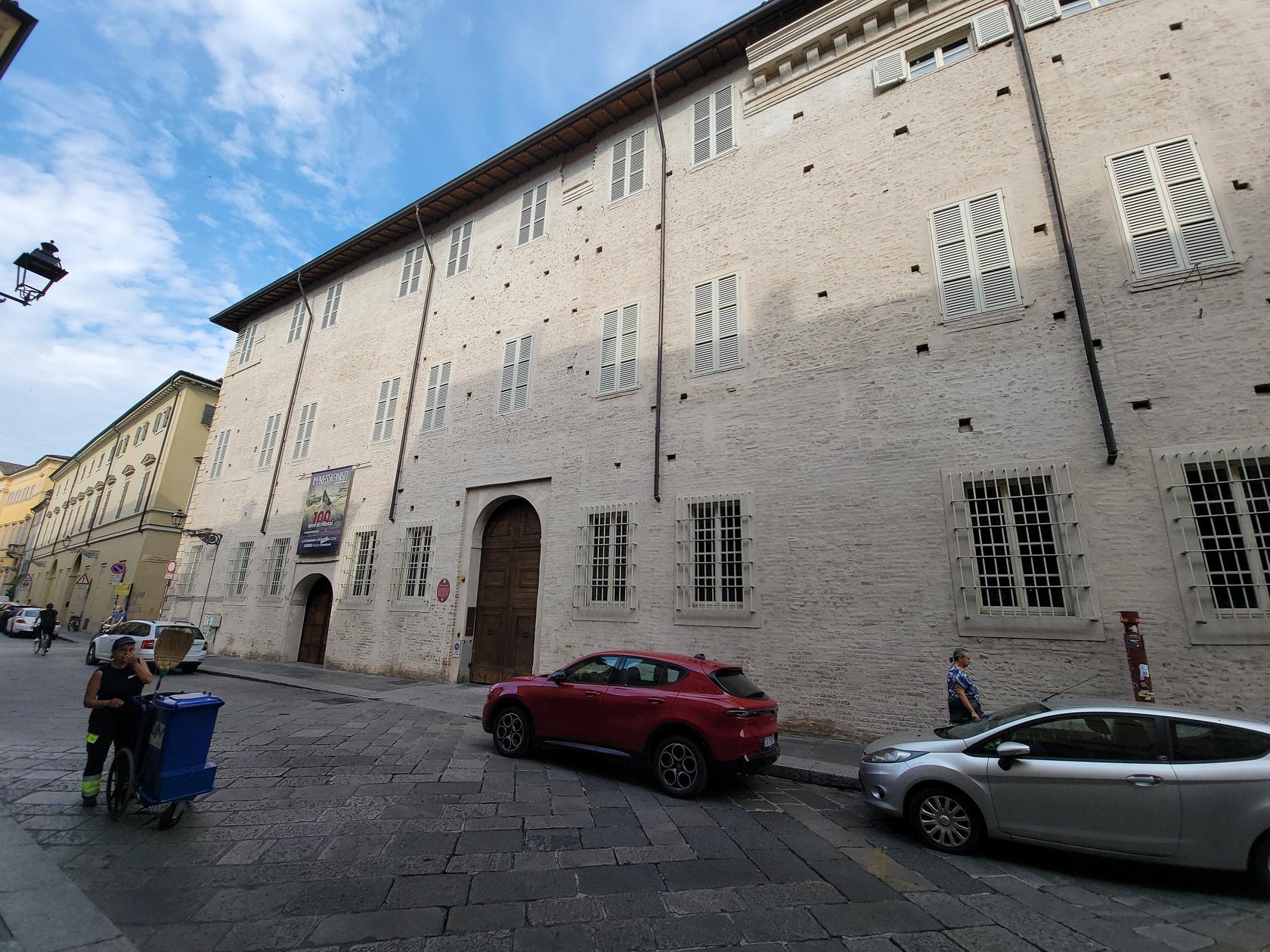
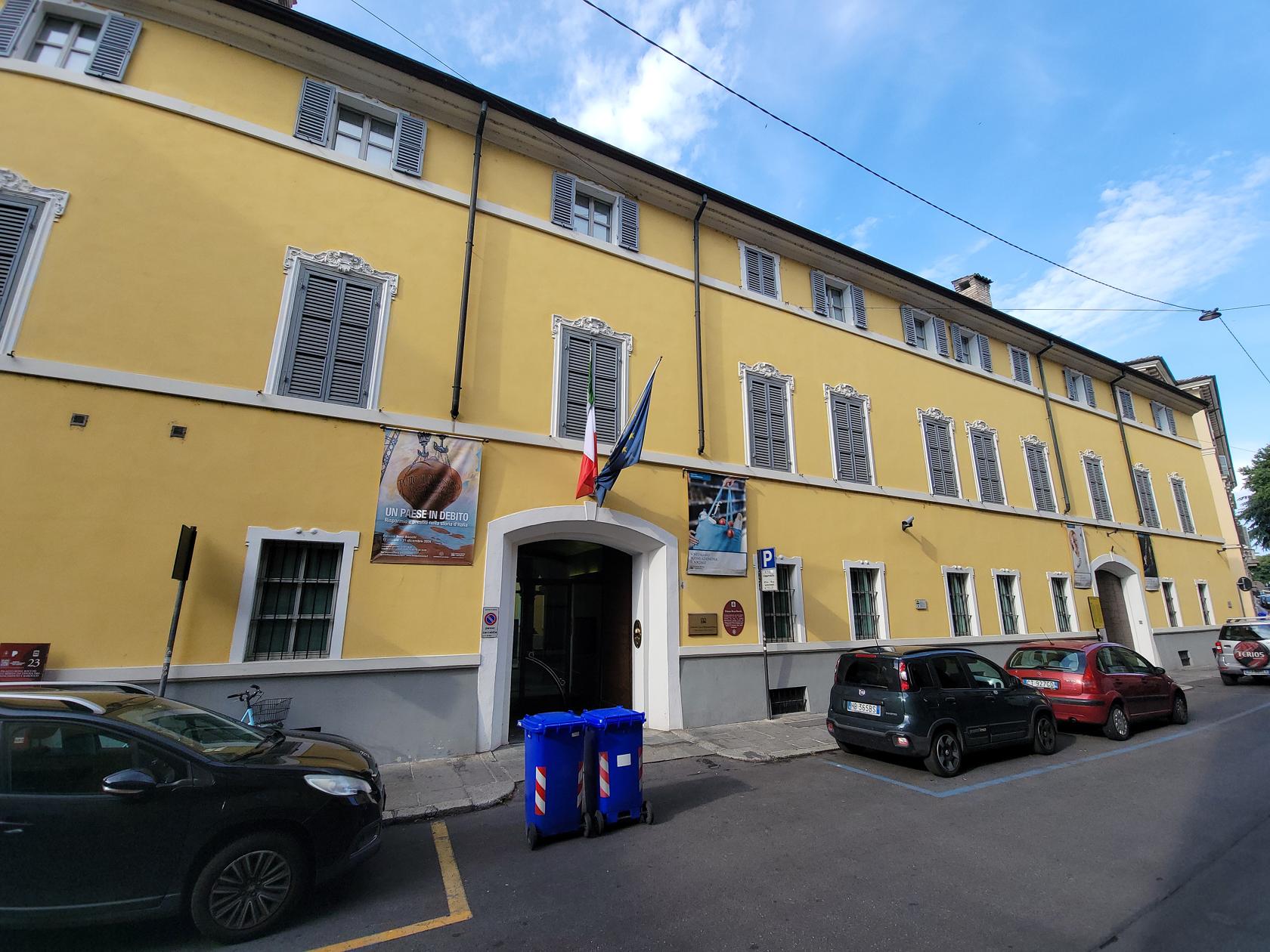
Palazzo Bossi Bocchi – Parma, Italy
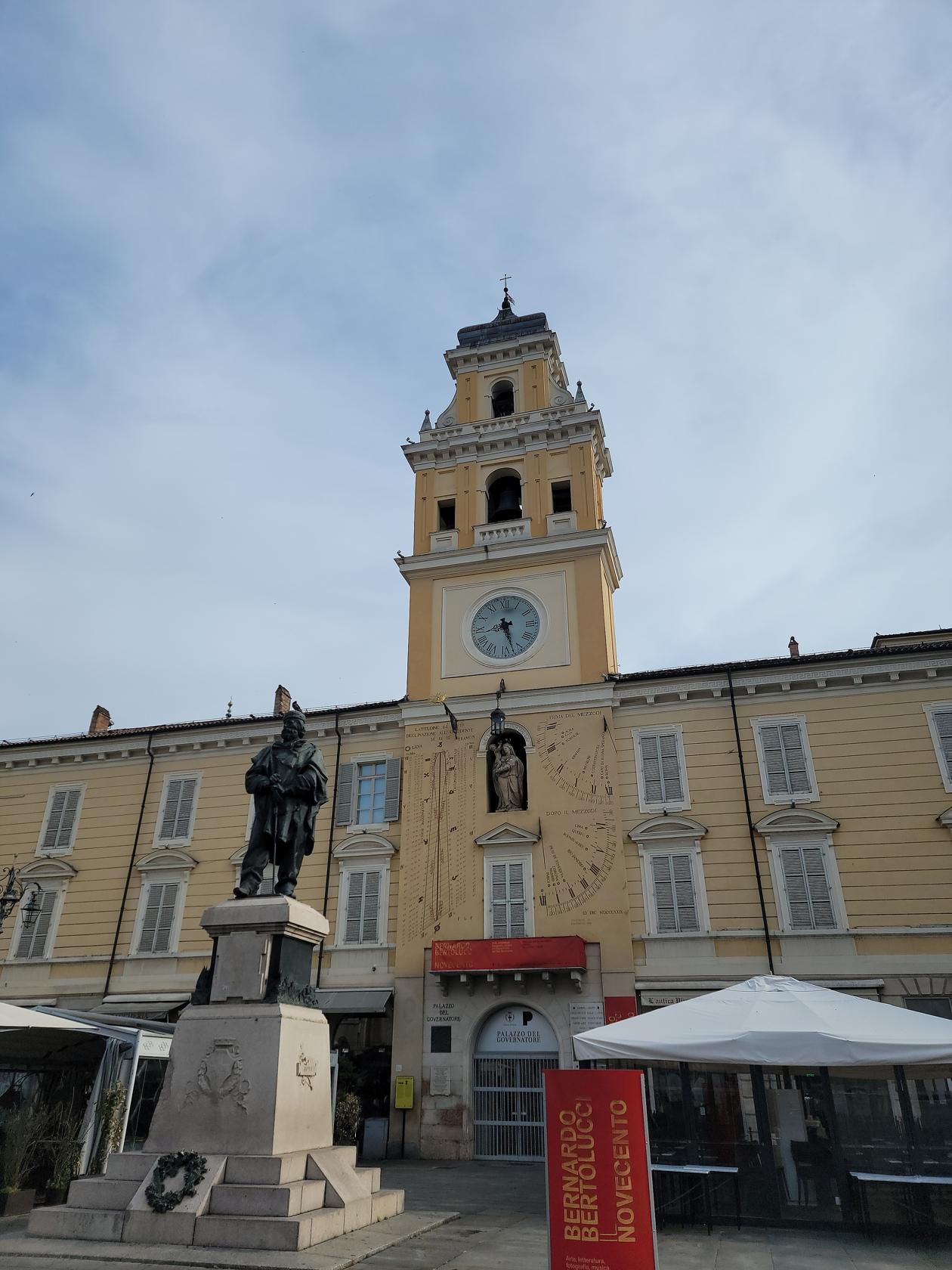
Governor’s Palace – Parma, Italy
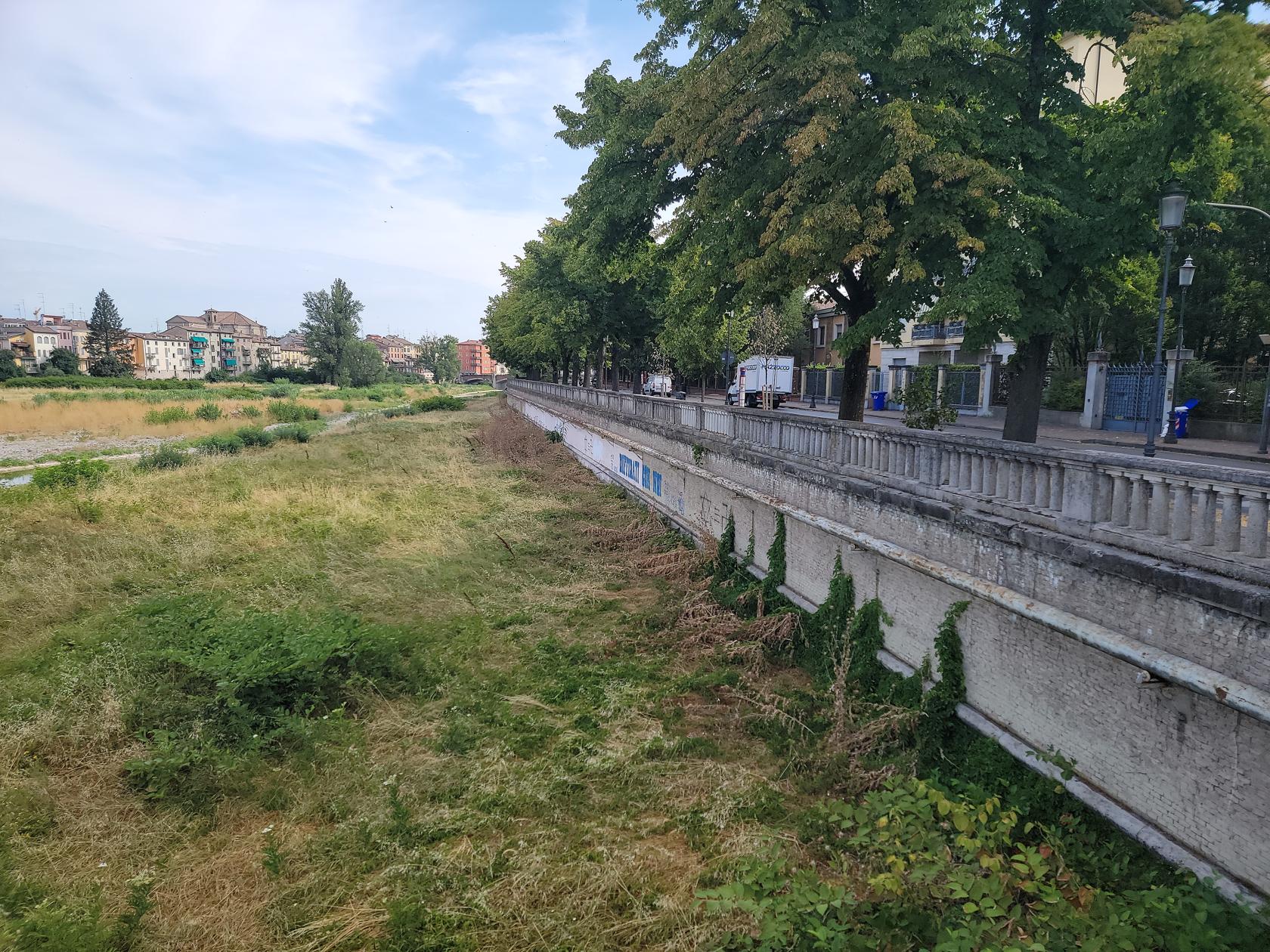
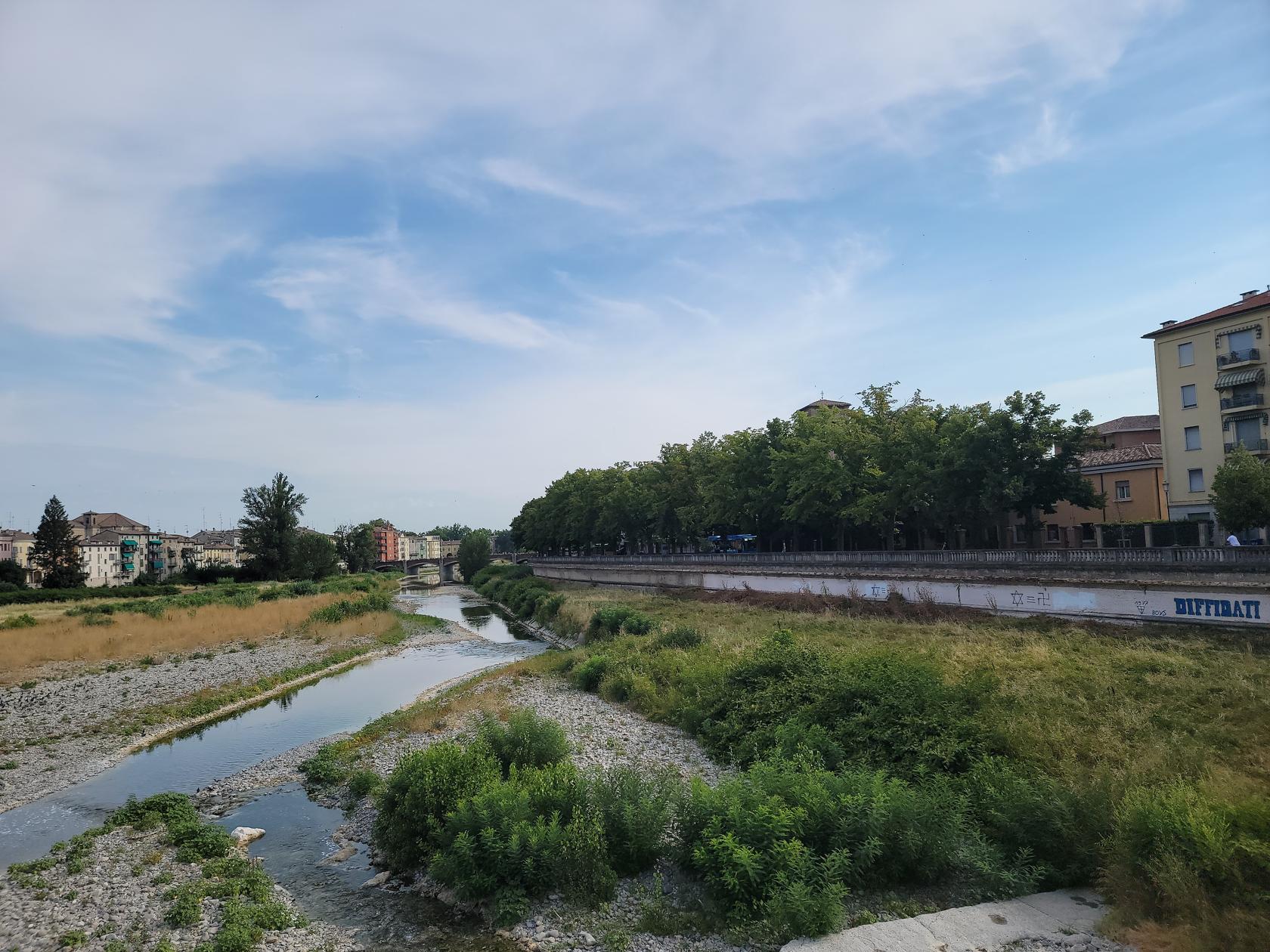
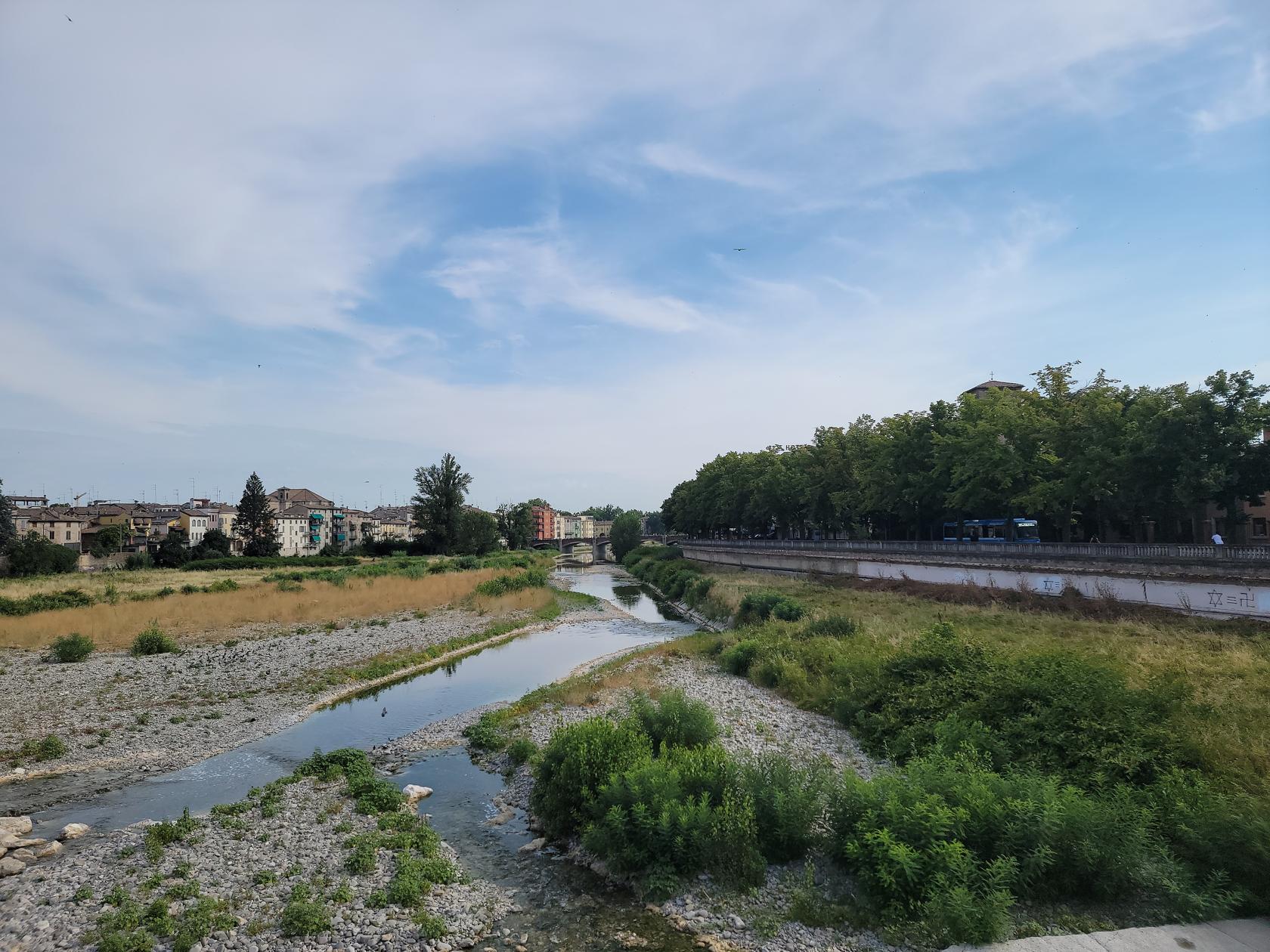
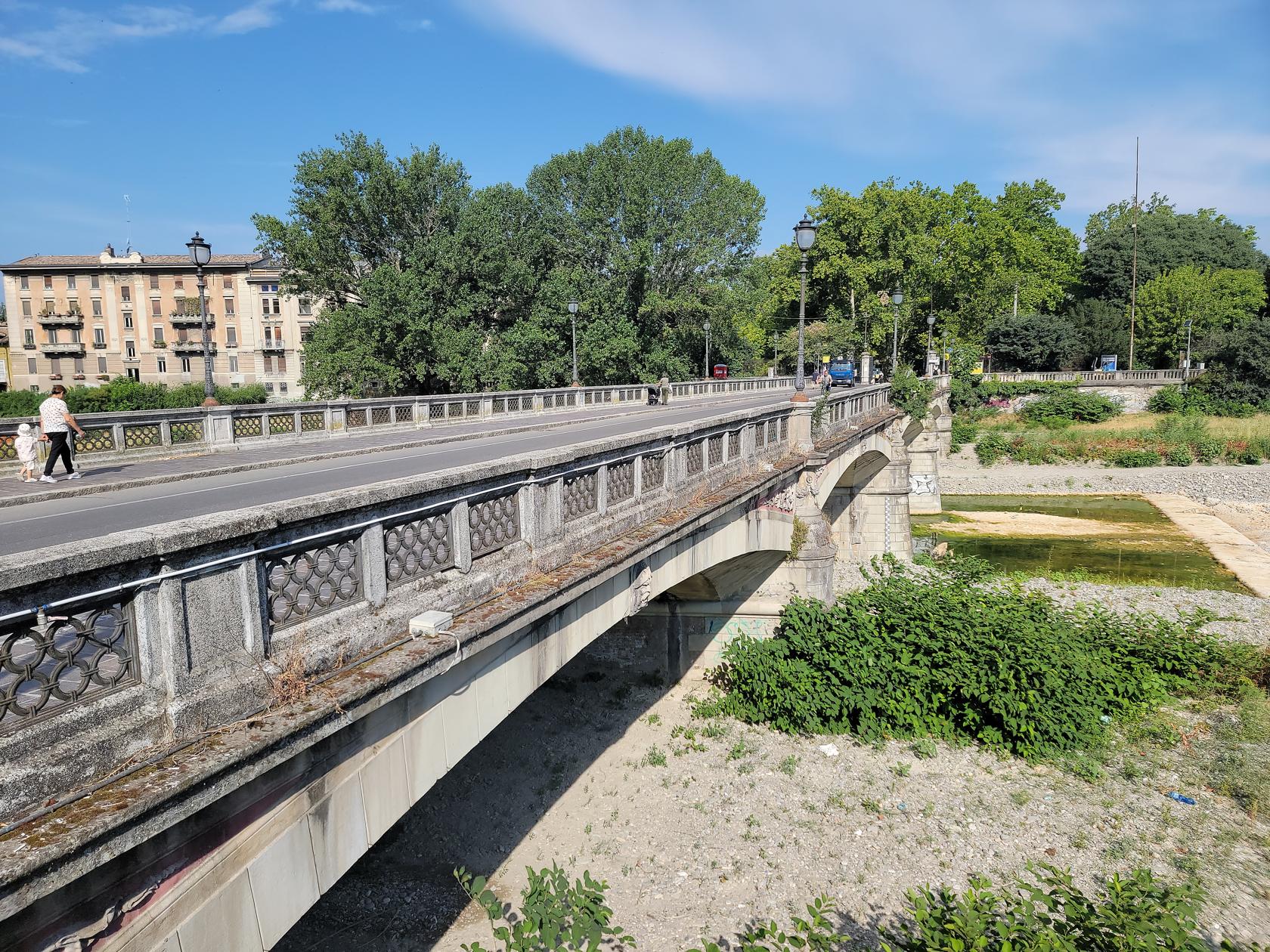
The Parma river as well, suffers from drought and over-irrigation, a mere trickle of its former self. Called a torrente in Italian, or torrent, one can only wonder when the last time the river actually enjoyed that much water.
Torrente Parma – Ponte Caprazucca – Parma, Italy
Torrente Parma – Ponte Caprazucca – Parma, Italy
Torrente Parma – Ponte Caprazucca – Parma, Italy
Ponte Verdi – Parma, Italy
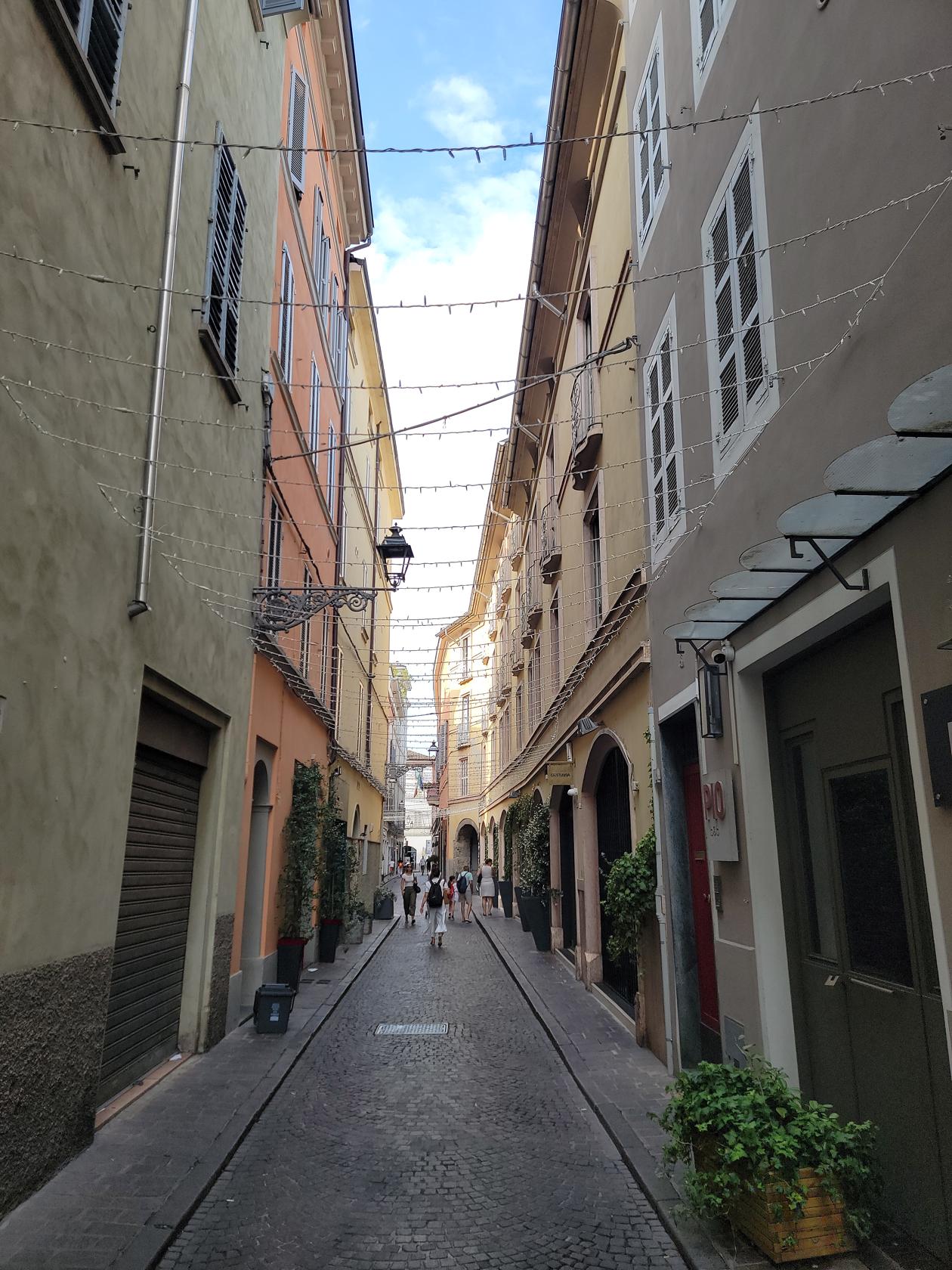
The city does not suffer from tourism and we found the historic parts very pleasant to walk around. There is not much to see, hence our reason for visiting the museums, which we found different and interesting.
We took the FrecciaRossa train from Turin to Milan, then the Regional from Milan to Parma. The regional trains make more stops than the high speed trains, taking an extra half hour to make the hour long trip by high speed rail. The good news is, there are options between Milan and Parma, from FrecciaRossa, Italo, TrenItalia FTP to TrenNord and perhaps more. Our selection was based on scheduling and nothing else.
Strada Cavour
The main street for shopping in the city. It was about a ten minute walk from our hotel and winds its way through the older part of the city, though all of the businesses are modern. You will find all the modern, trendy and chain-like stores here, along with their inflated prices.
Strada Cavour – Parma, Italy
Strada Cavour – Parma, Italy
Strada Cavour – Parma, Italy
Strada Cavour – Parma, Italy
Hotel Stendhal
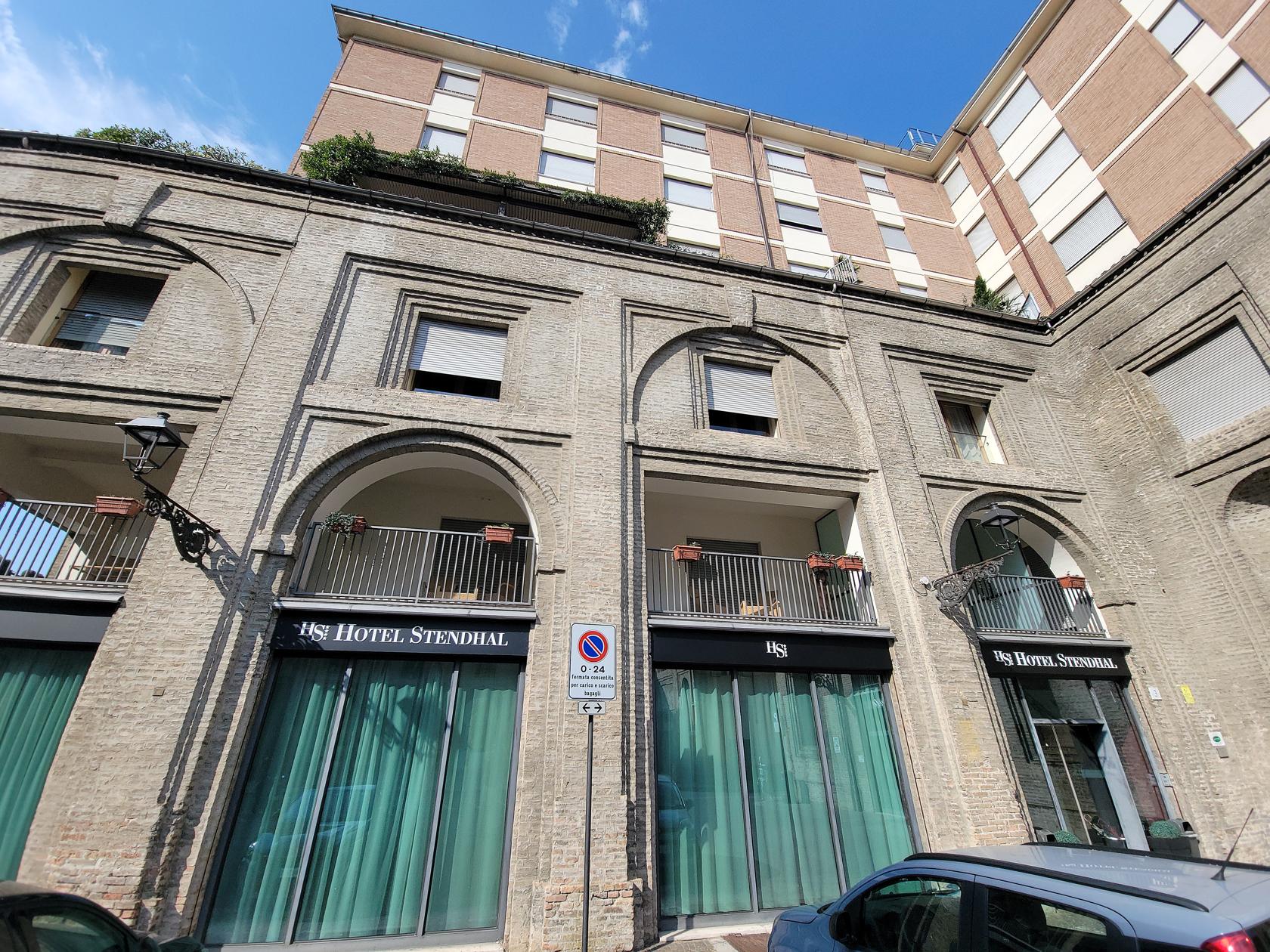
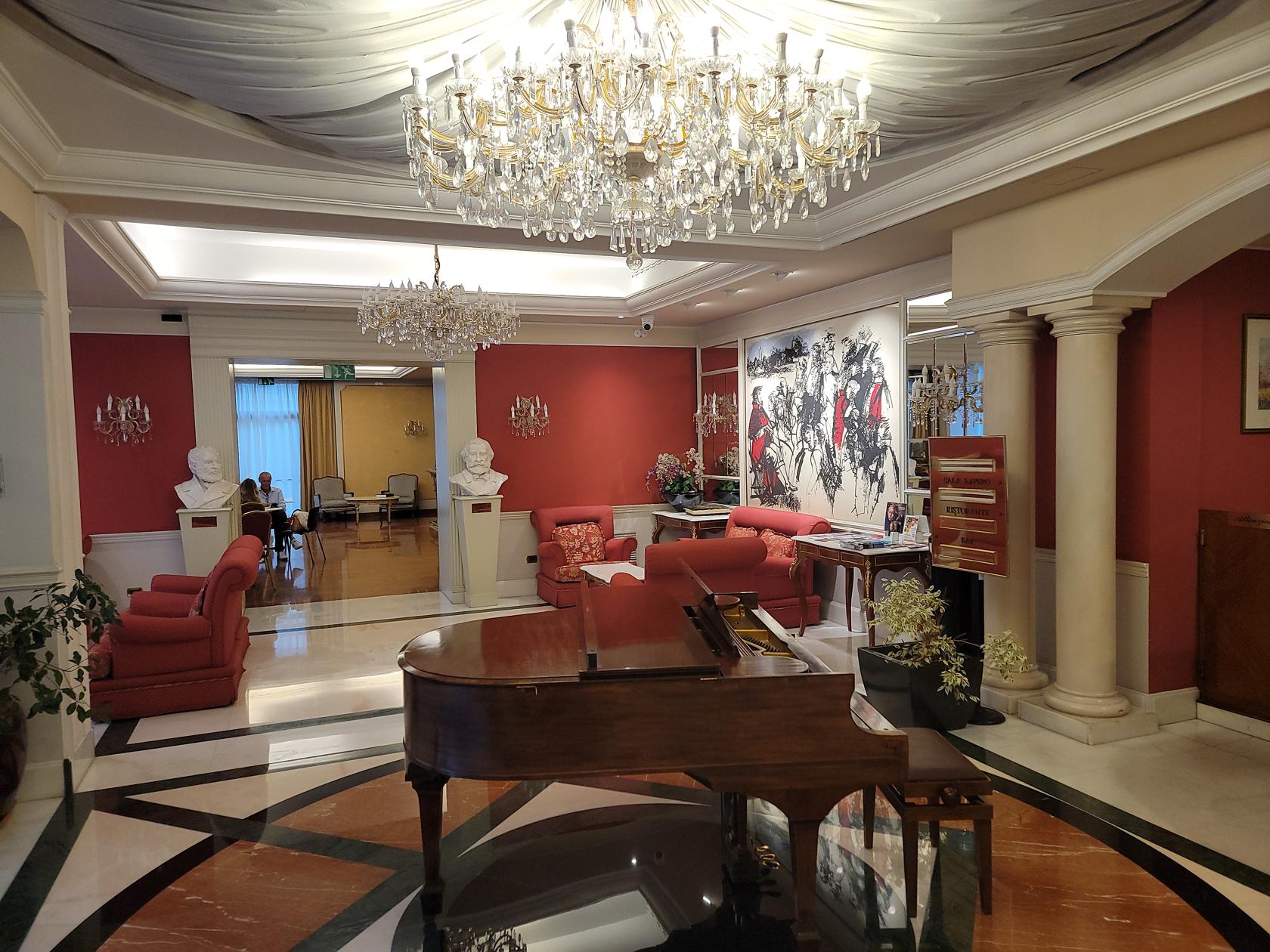
We stayed at the Hotel Stendhal, a fifteen minute direct walk from the train station. Though we read some concerning reviews on some travel sites, we did not have any issues at all and had the most enjoyable stay. The staff was great and we never had to ask for anything. We had a large superior room on the side of the hotel which was very quiet and comfortable, along with a complimentary breakfast.
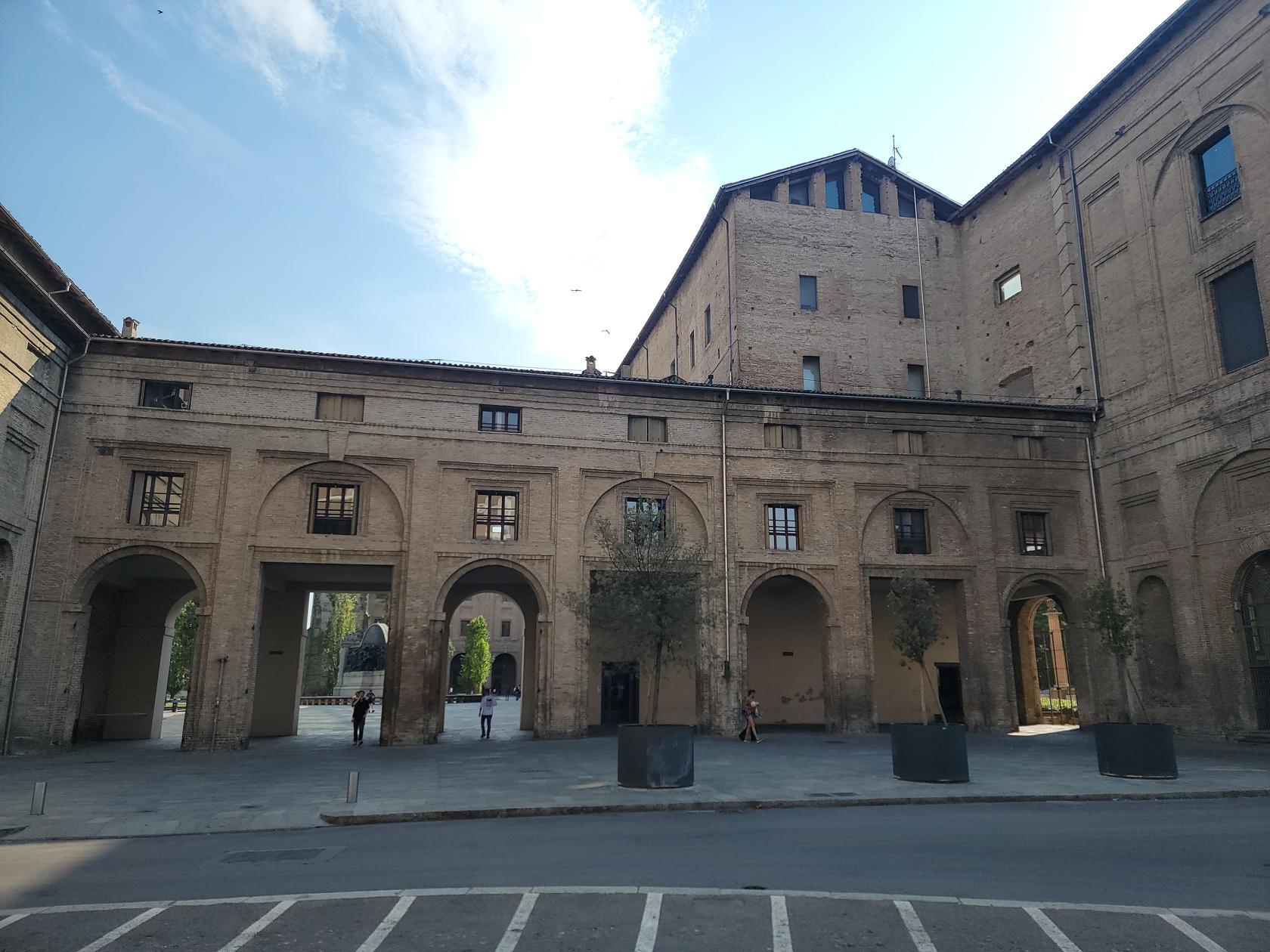
Outside Our Hotel – Cortile del Guazzatoio – Parma, Italy
Entrance – Hotel Stendhal – Parma, Italy
Foyer – Hotel Stendhal – Parma, Italy
Pilotta Museum Complex
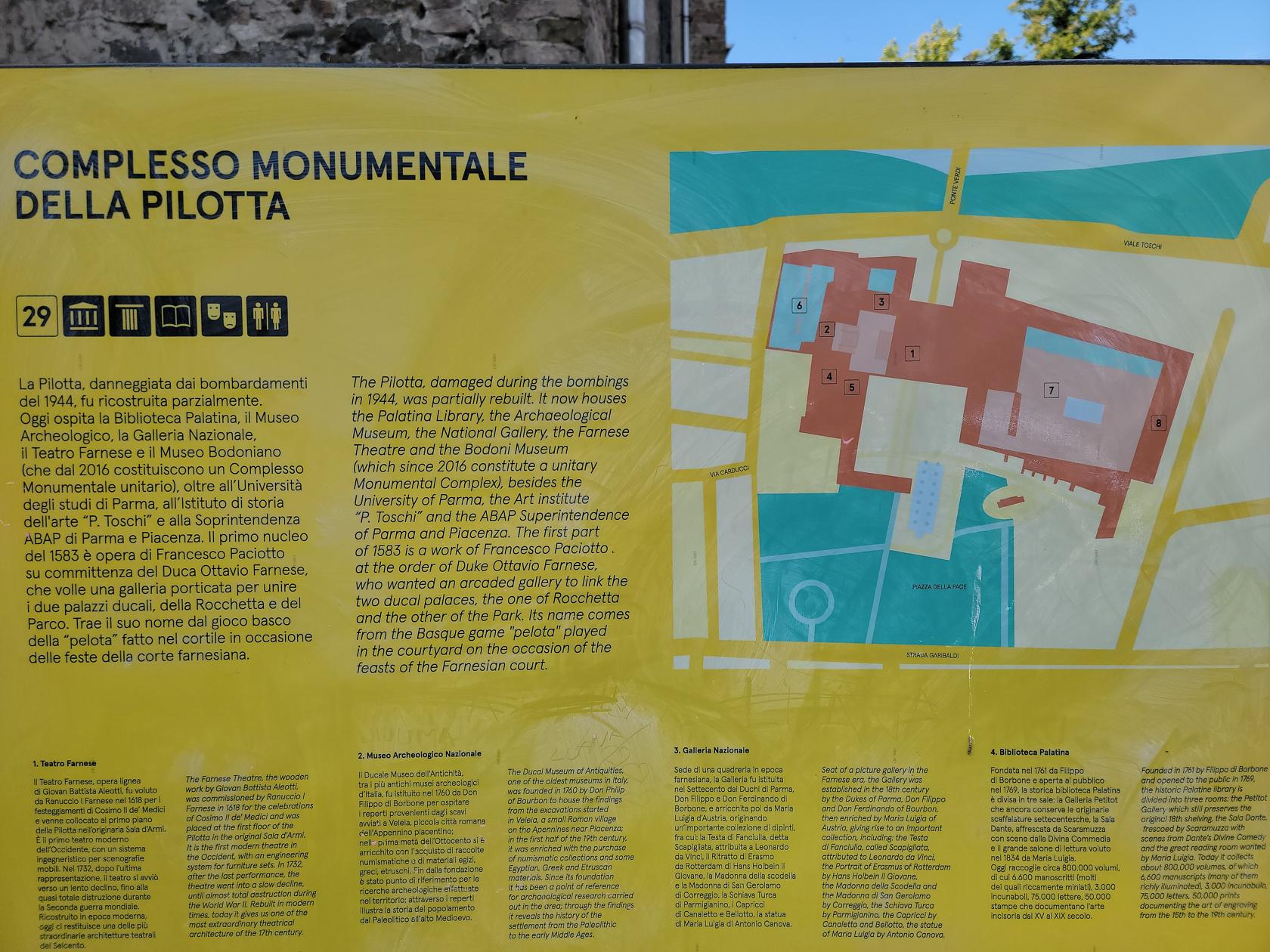
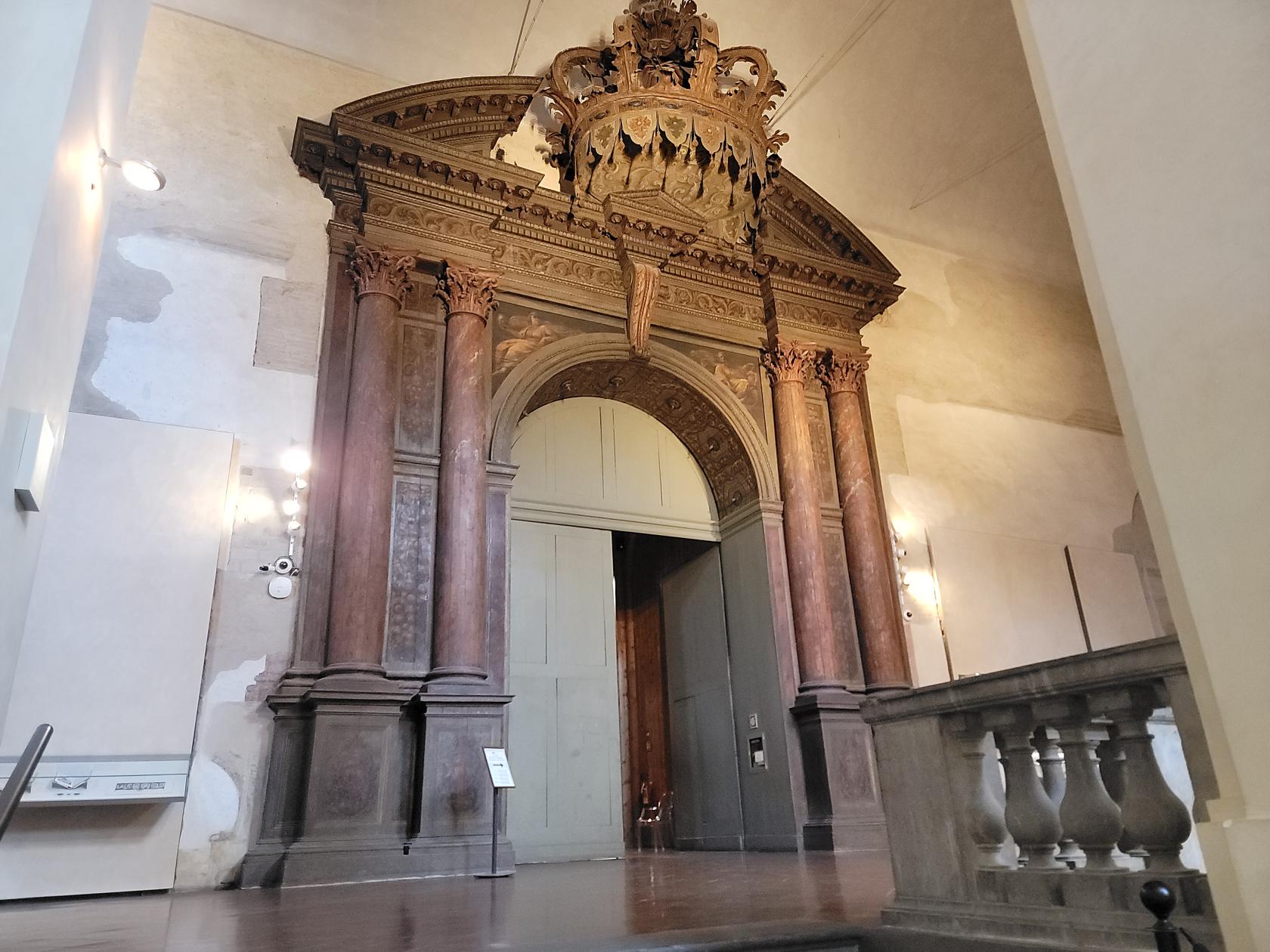
The Pilotta Museum Complex is the former Faranese Palace that now houses five or six museums, some of which were not open at the time of our visit.
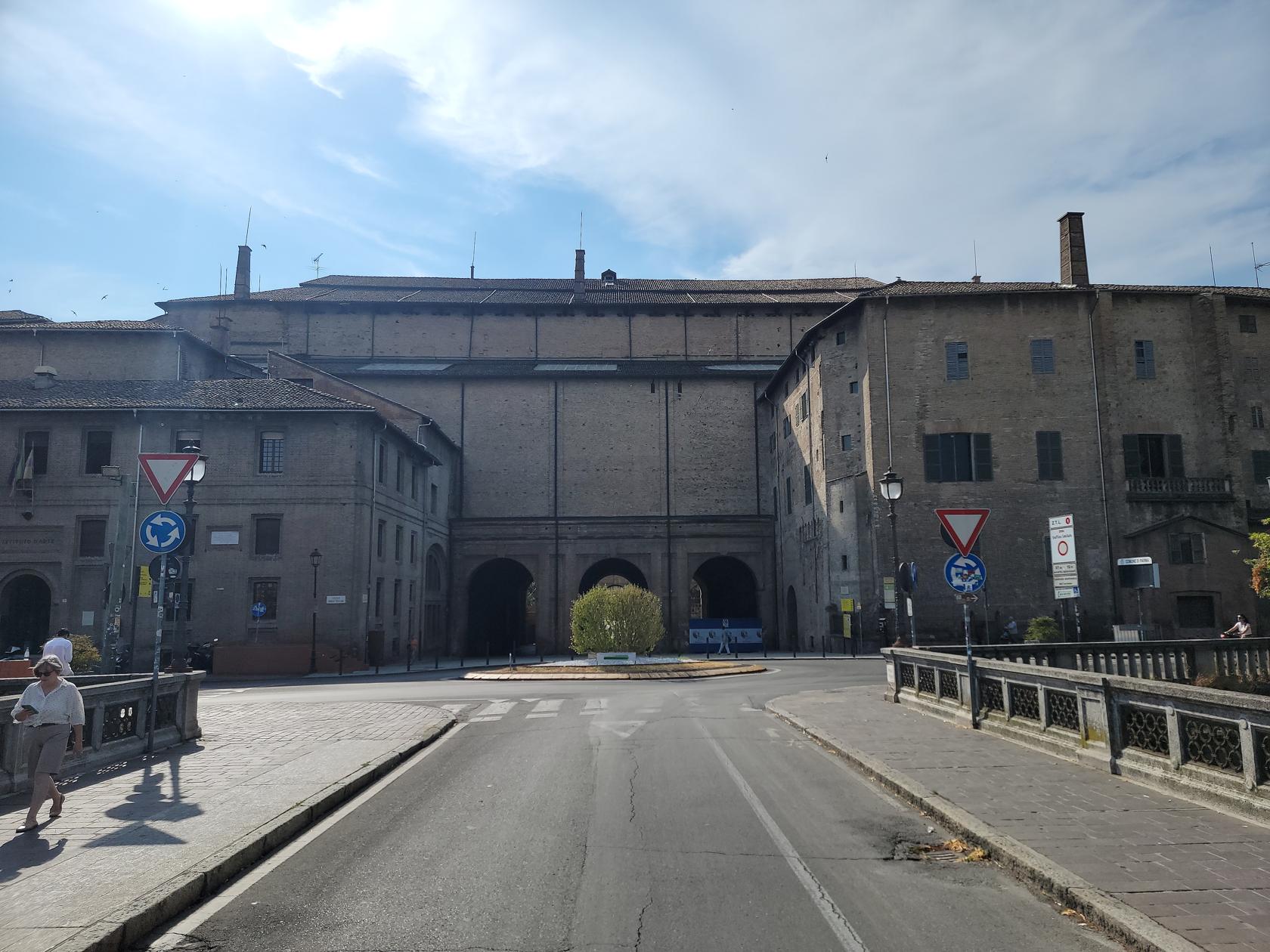
Ponte Verdi – Pillota Museum Complex – Parma, Italy
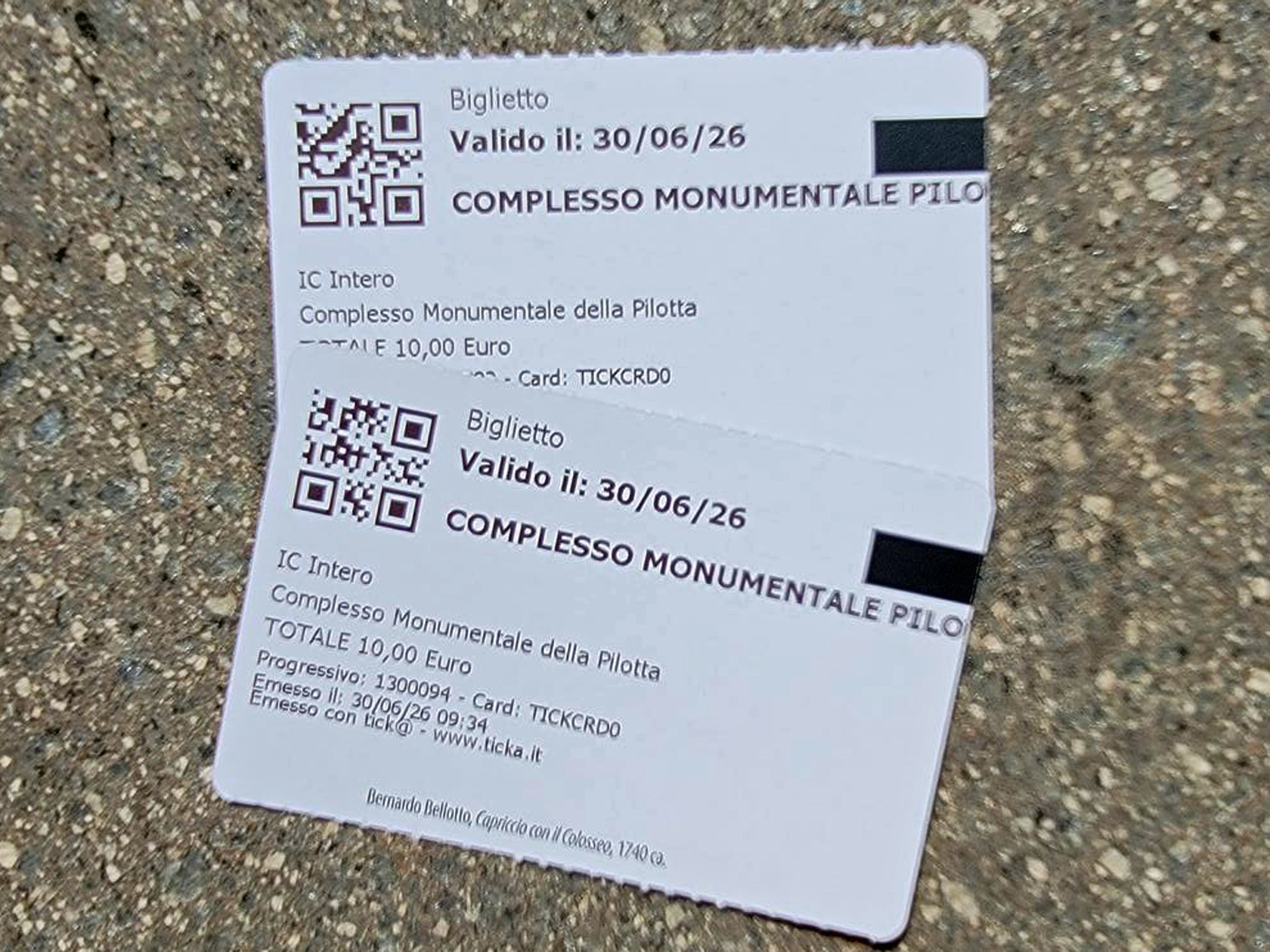
Tickets For Two – Pillota Museum Complex – Parma, Italy
Entrance – Pillota Museum Complex – Parma, Italy
Museo Archeologico Nazionale di Parma
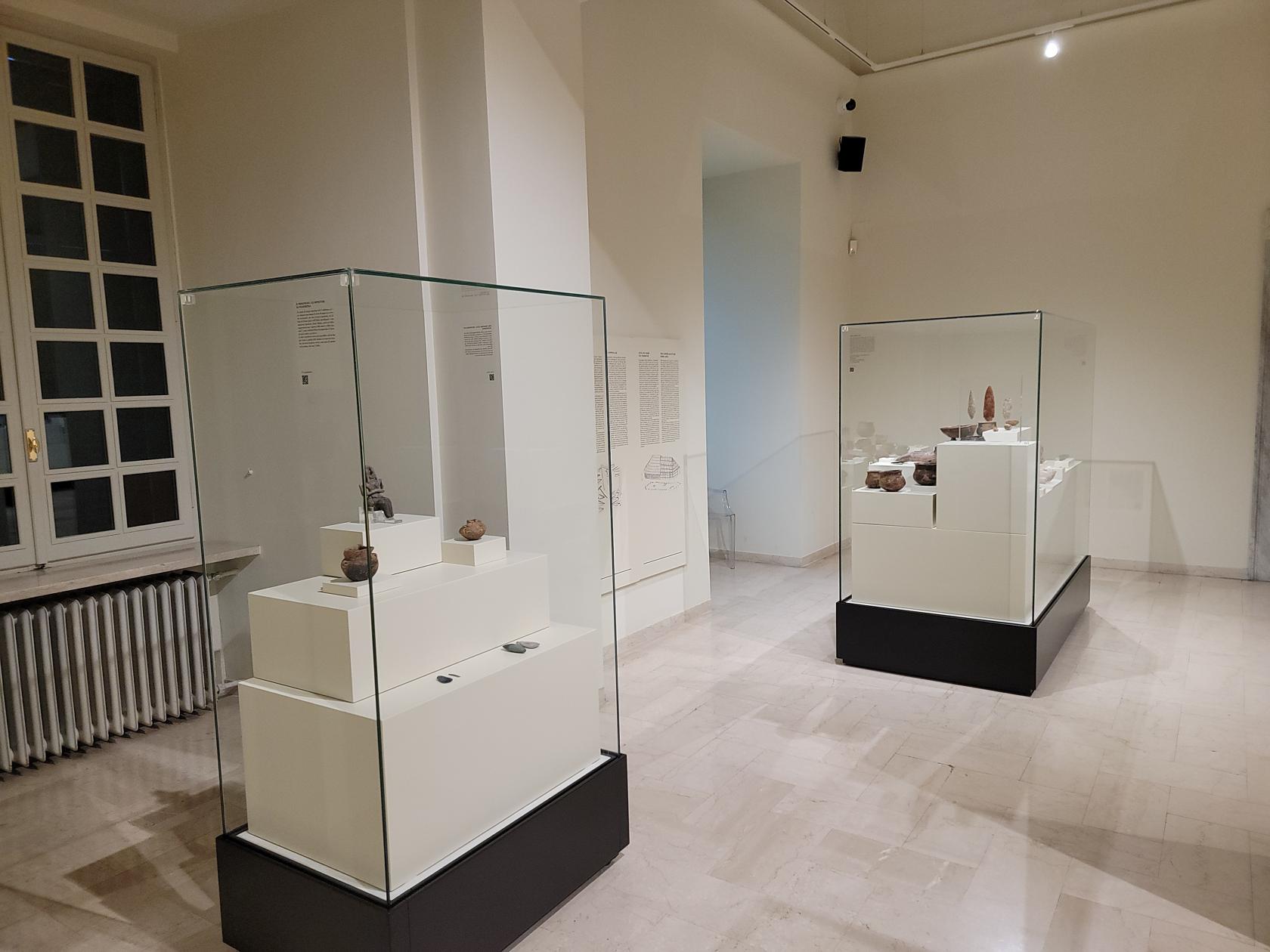
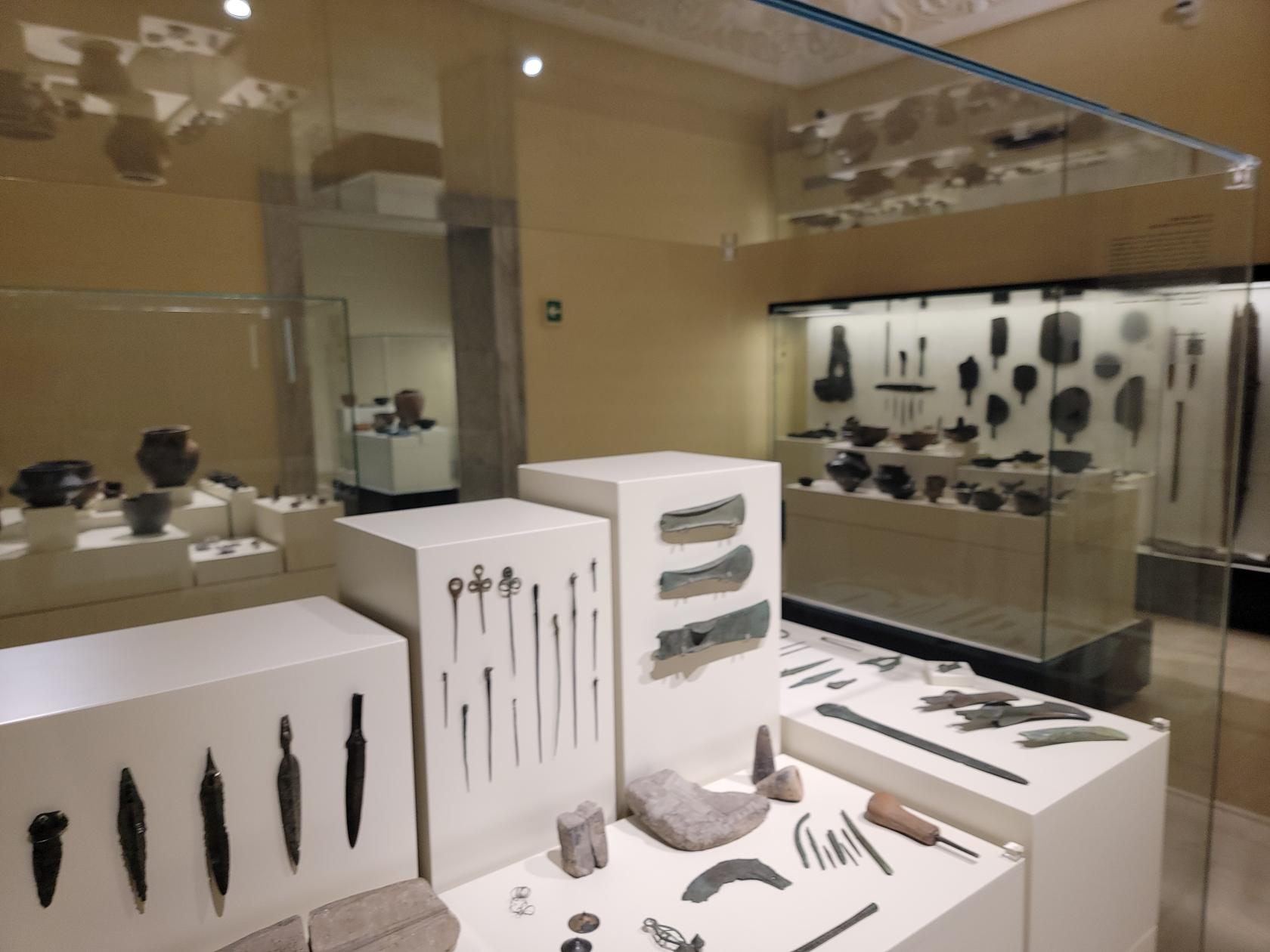
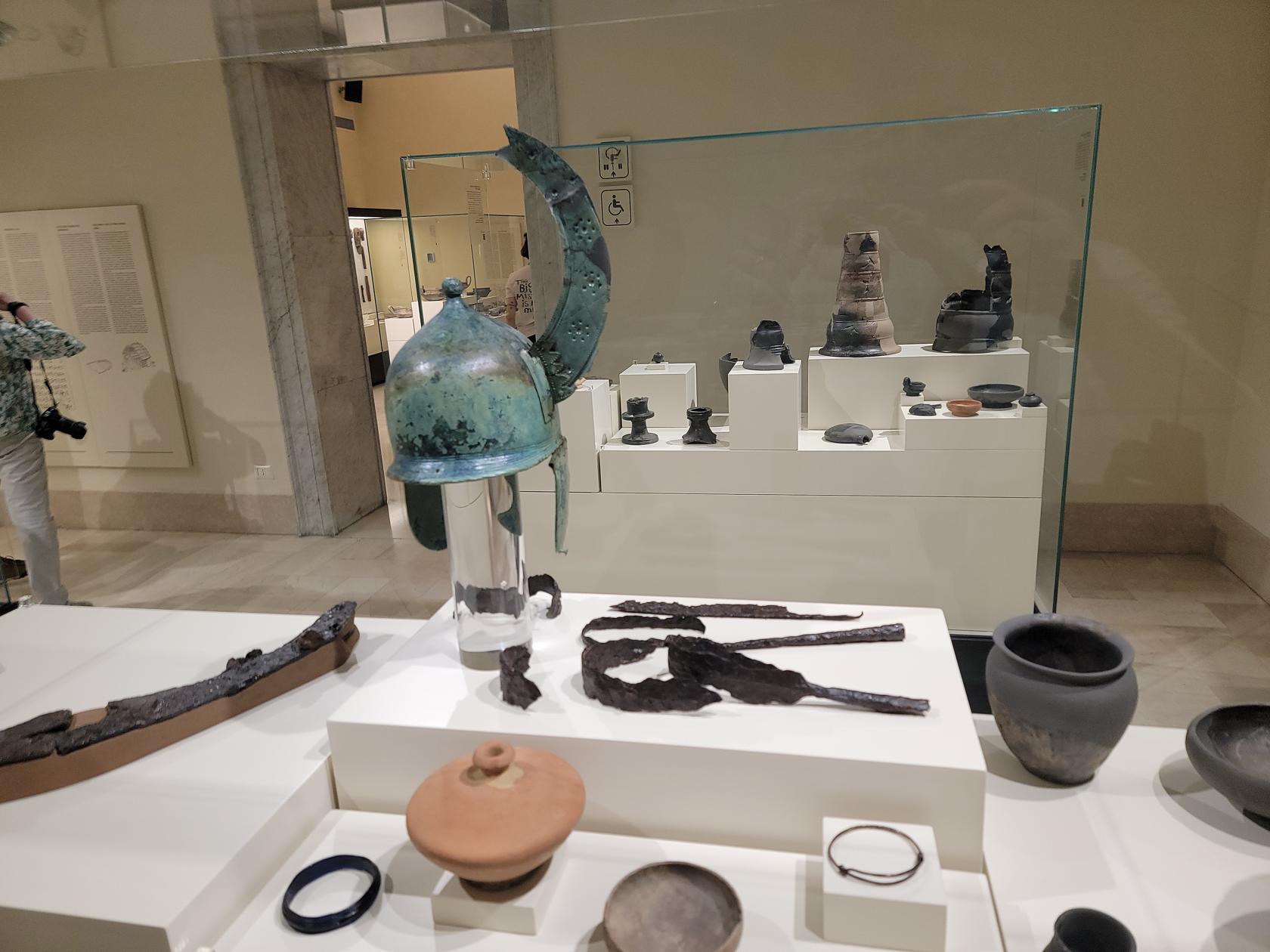
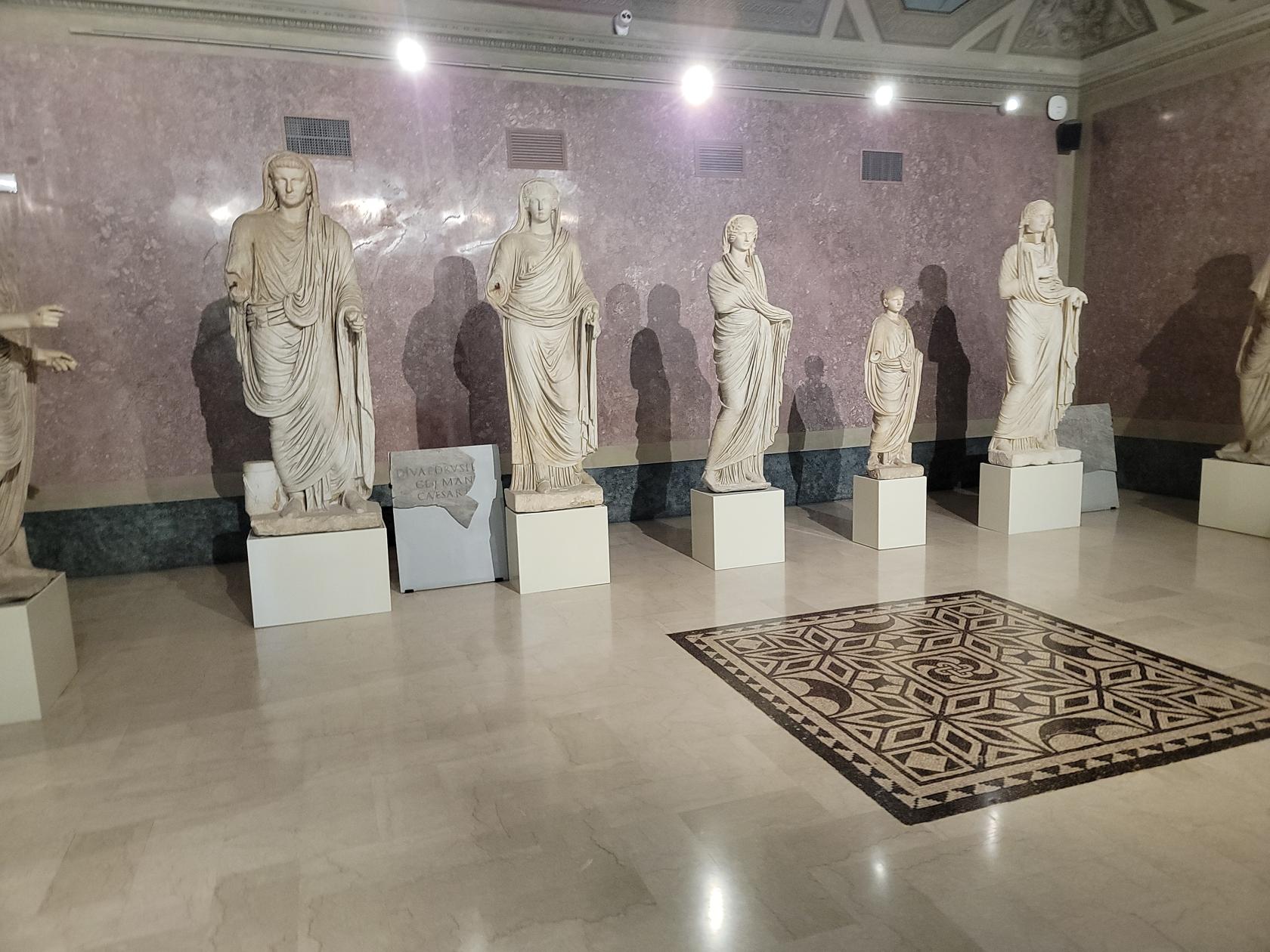
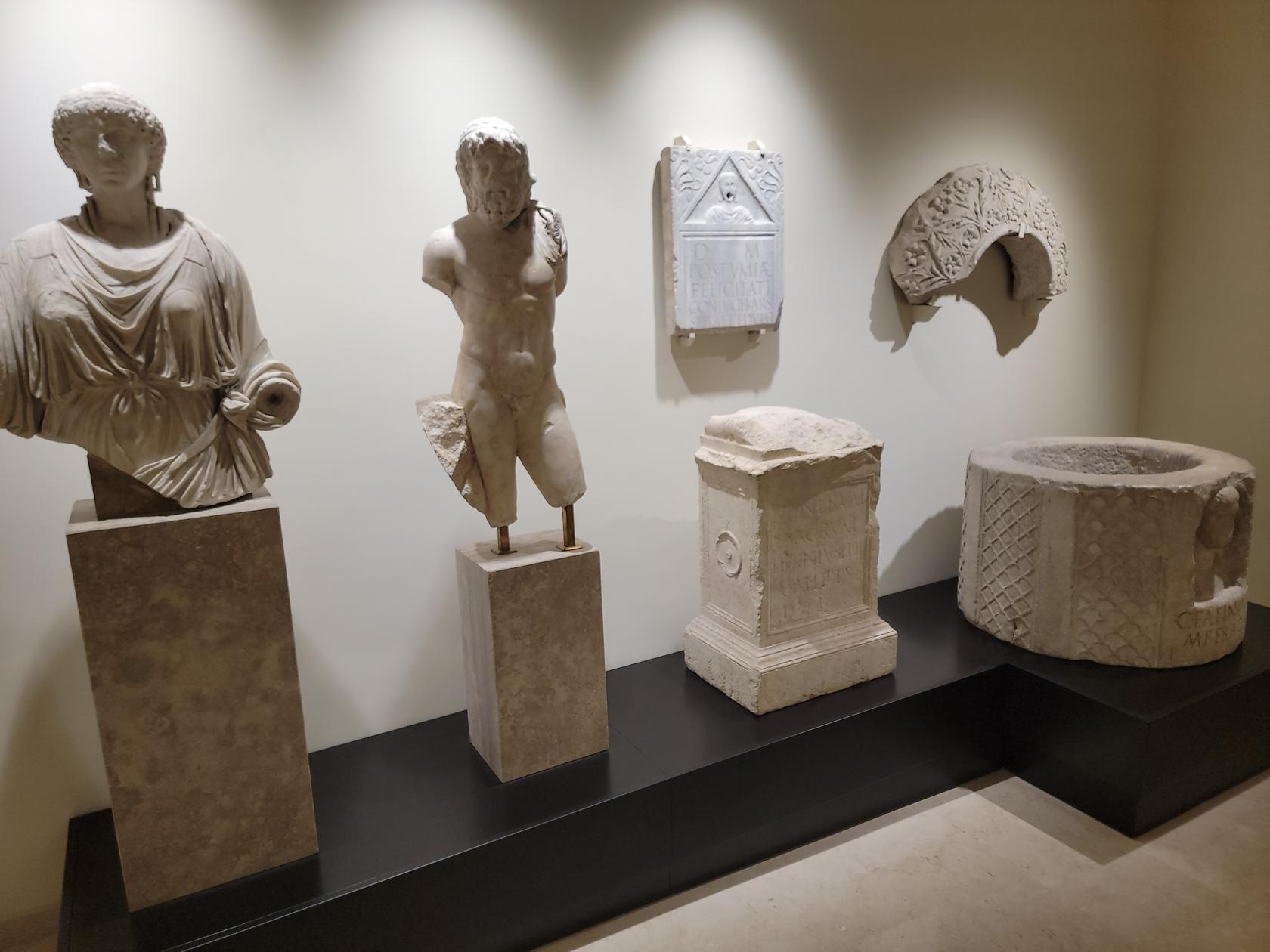
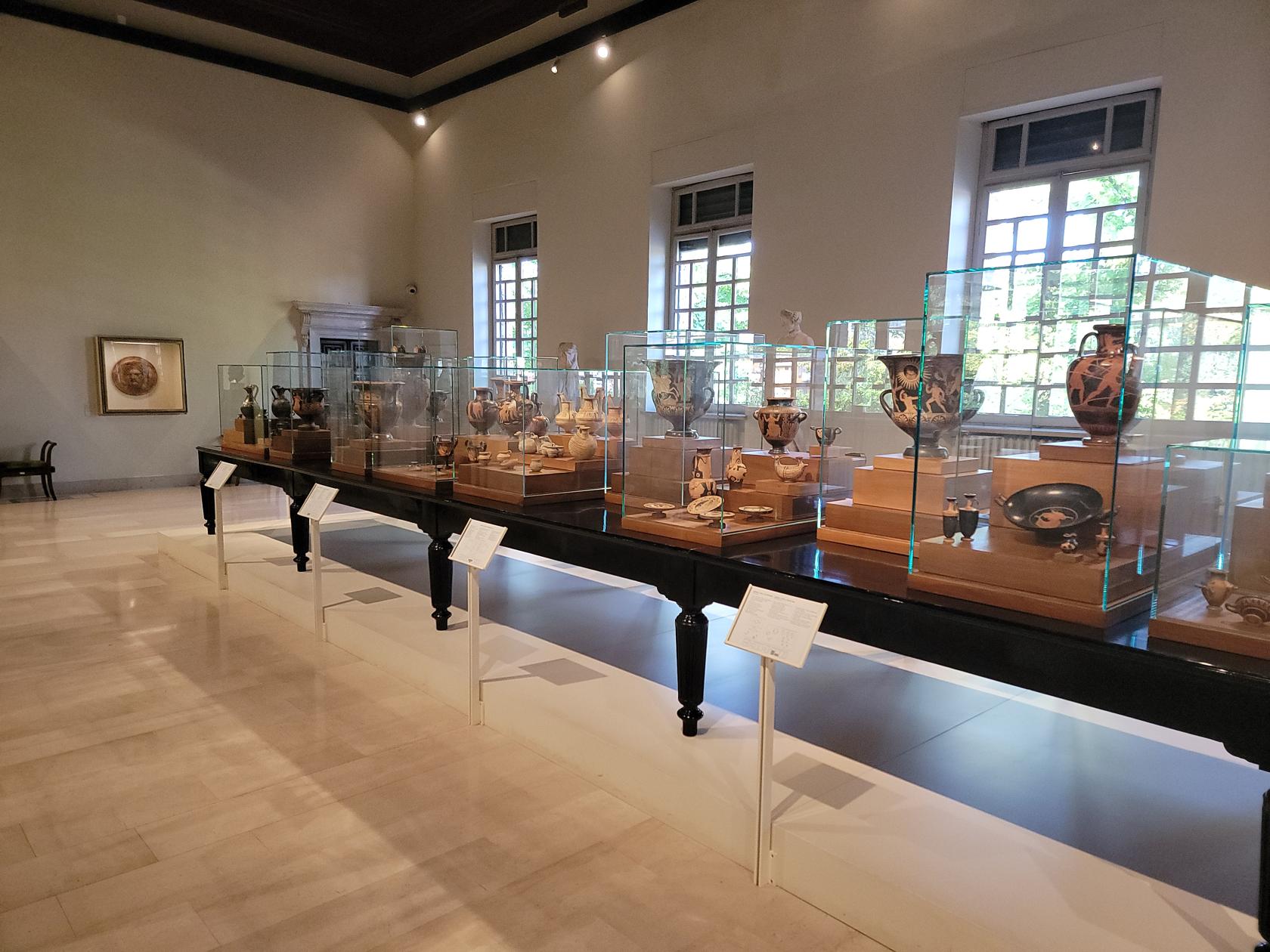
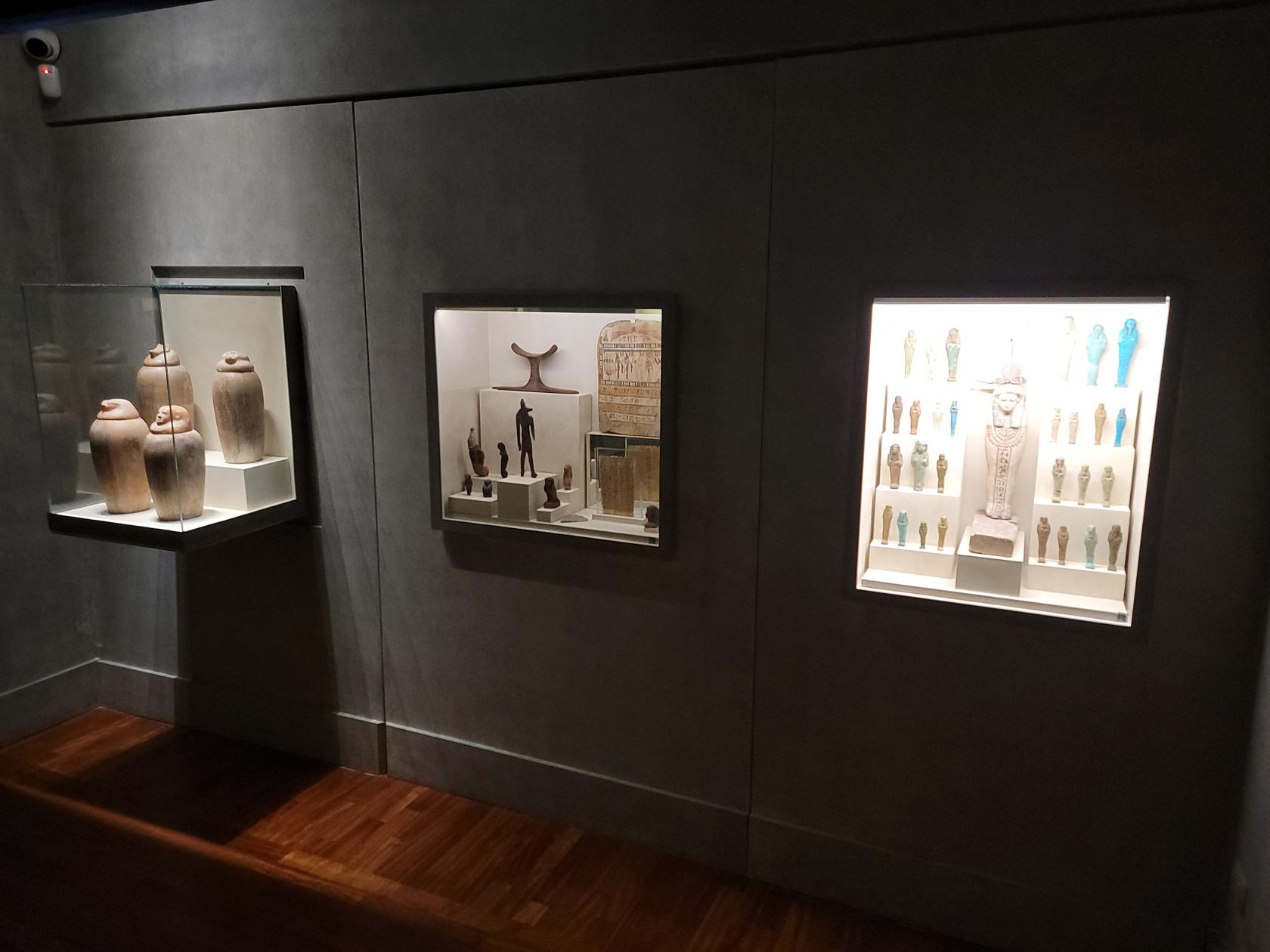
The archeological museum offers artifacts from the ancient history in and around Parma. Here are exhibits of the ancient civilizations of the Roman Empire, Greeks and Etruscans who inhabited the Po river valley and the surrounding area thousands of years ago.
Archaeological Museum – Pillota Museum Complex – Parma, Italy
Archaeological Museum – Pillota Museum Complex – Parma, Italy
Archaeological Museum – Pillota Museum Complex – Parma, Italy
Archaeological Museum – Pillota Museum Complex – Parma, Italy
Archaeological Museum – Pillota Museum Complex – Parma, Italy
Archaeological Museum – Pillota Museum Complex – Parma, Italy
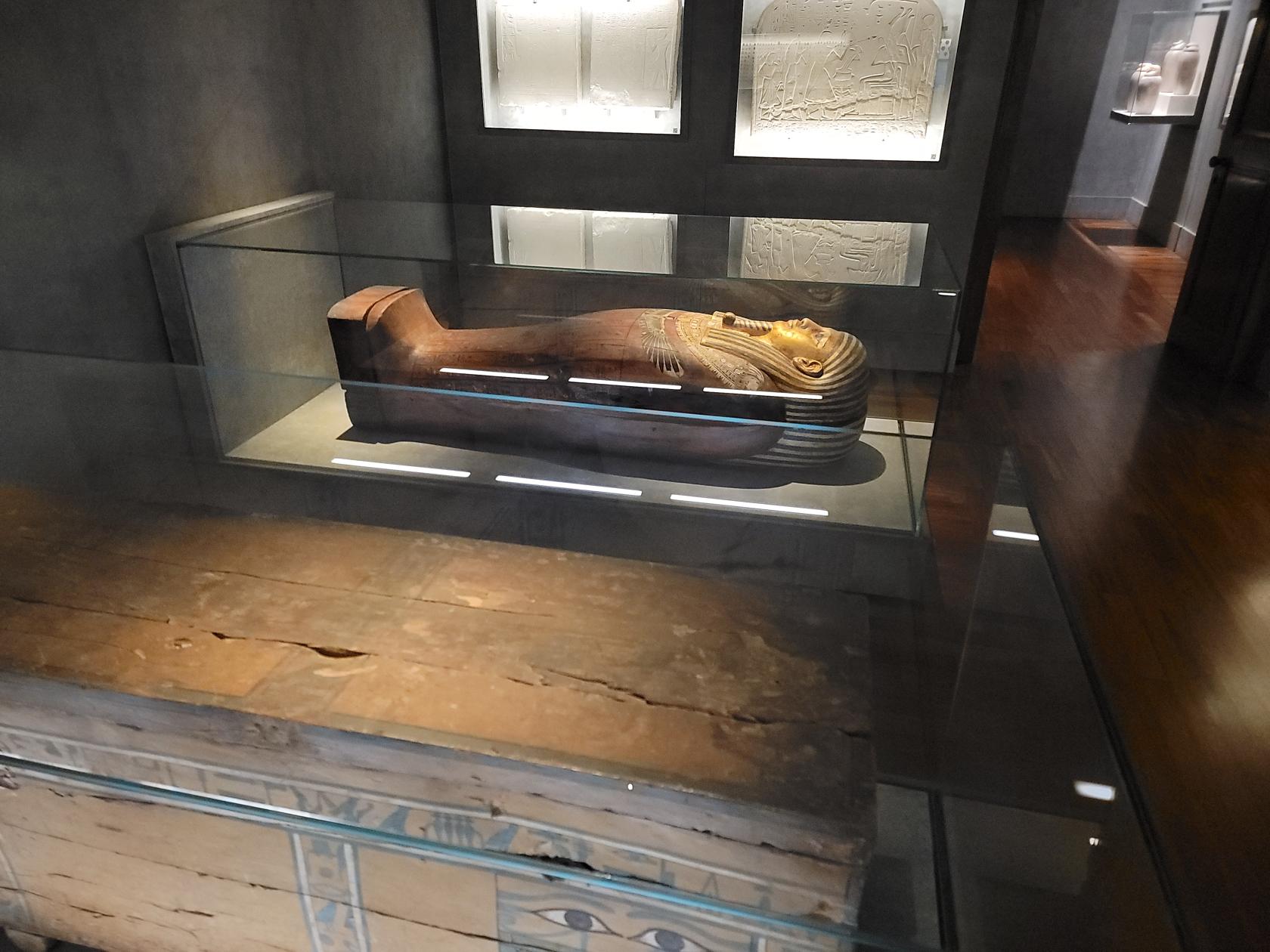
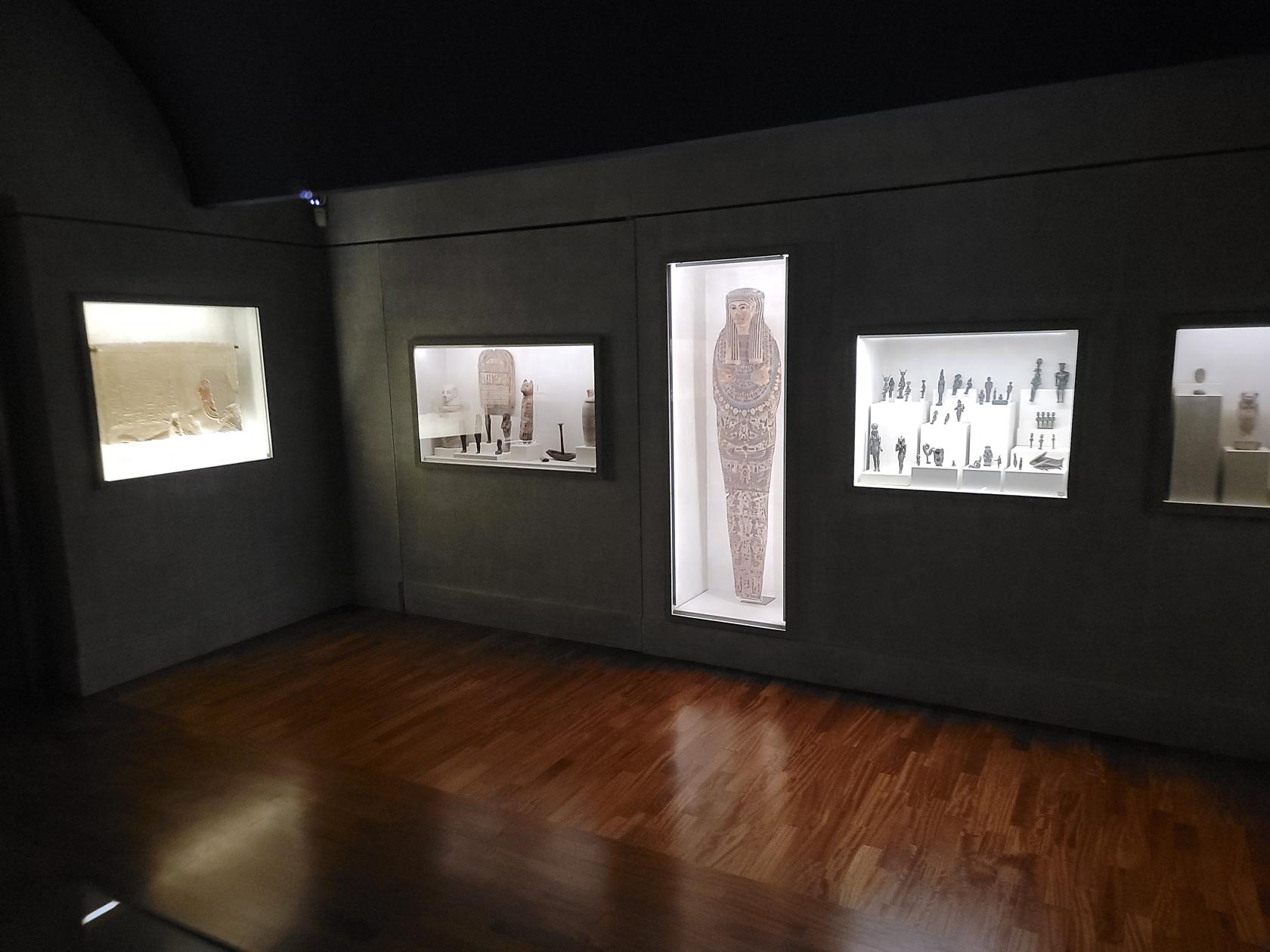
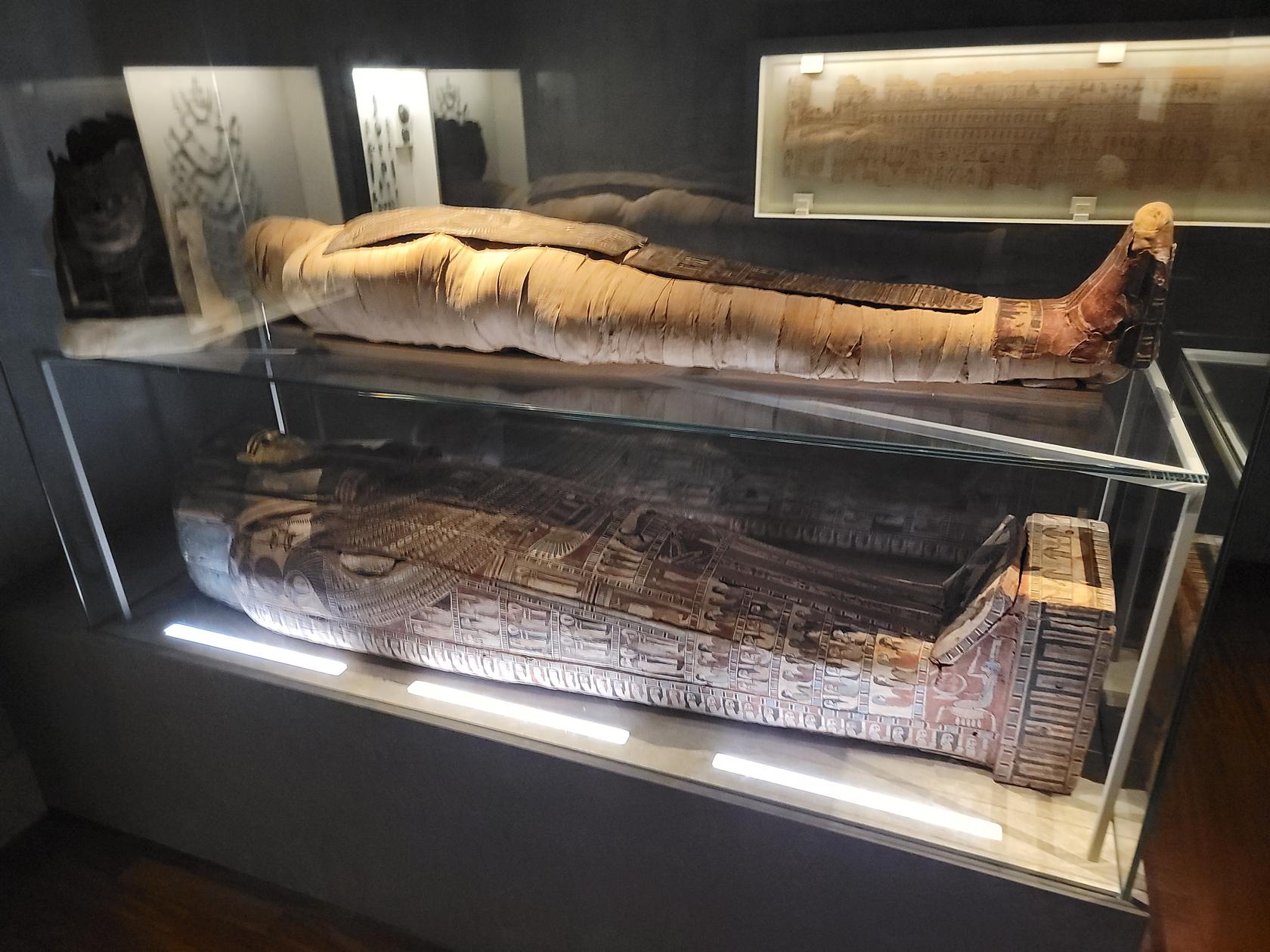
The museum also has a display of ancient Roman tombs, including sarcophogy and examples of mummified remains.
Archaeological Museum – Pillota Museum Complex – Parma, Italy
Archaeological Museum – Pillota Museum Complex – Parma, Italy
Archaeological Museum – Pillota Museum Complex – Parma, Italy
Archaeological Museum – Pillota Museum Complex – Parma, Italy
Farnese Theater
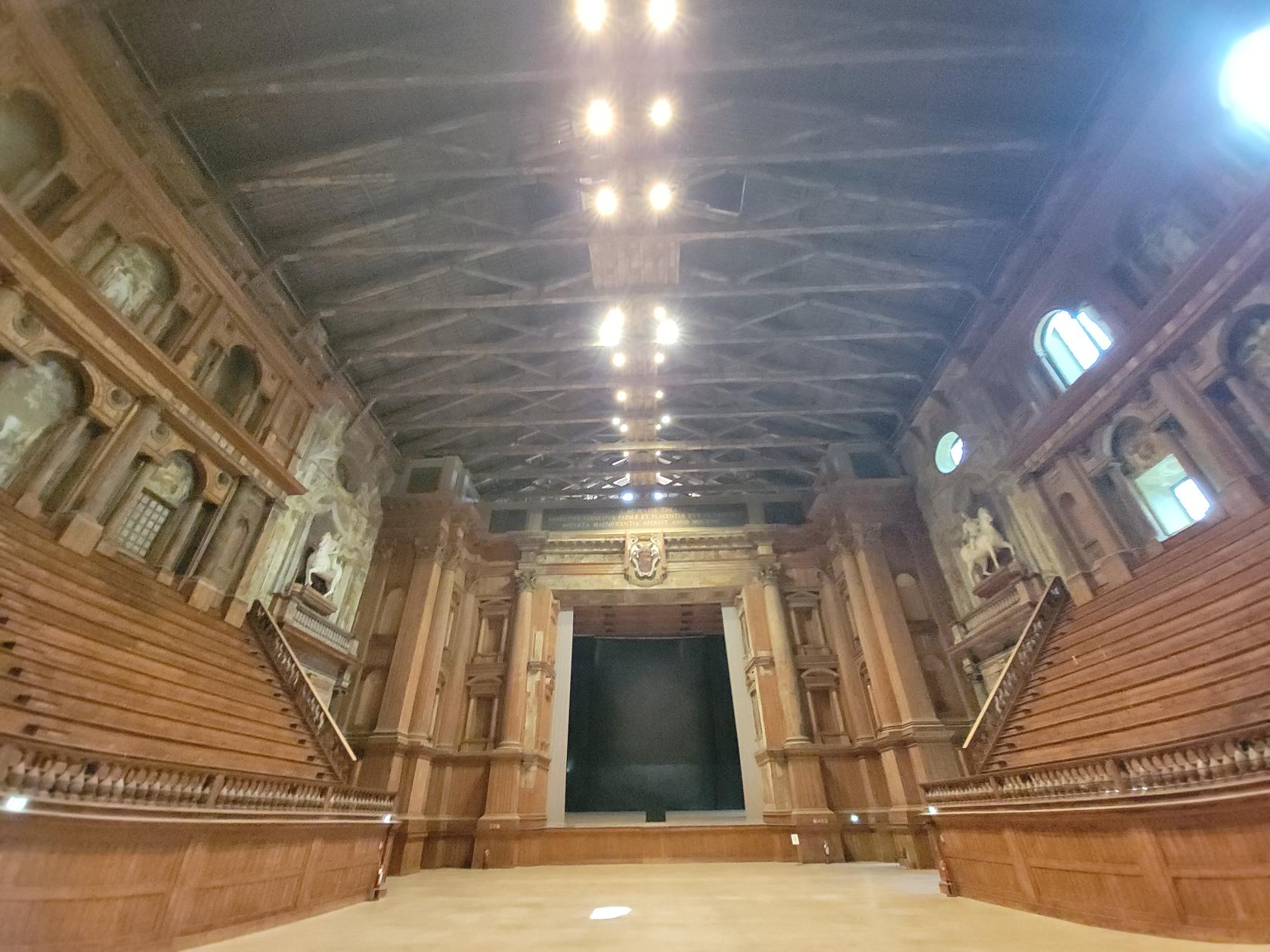
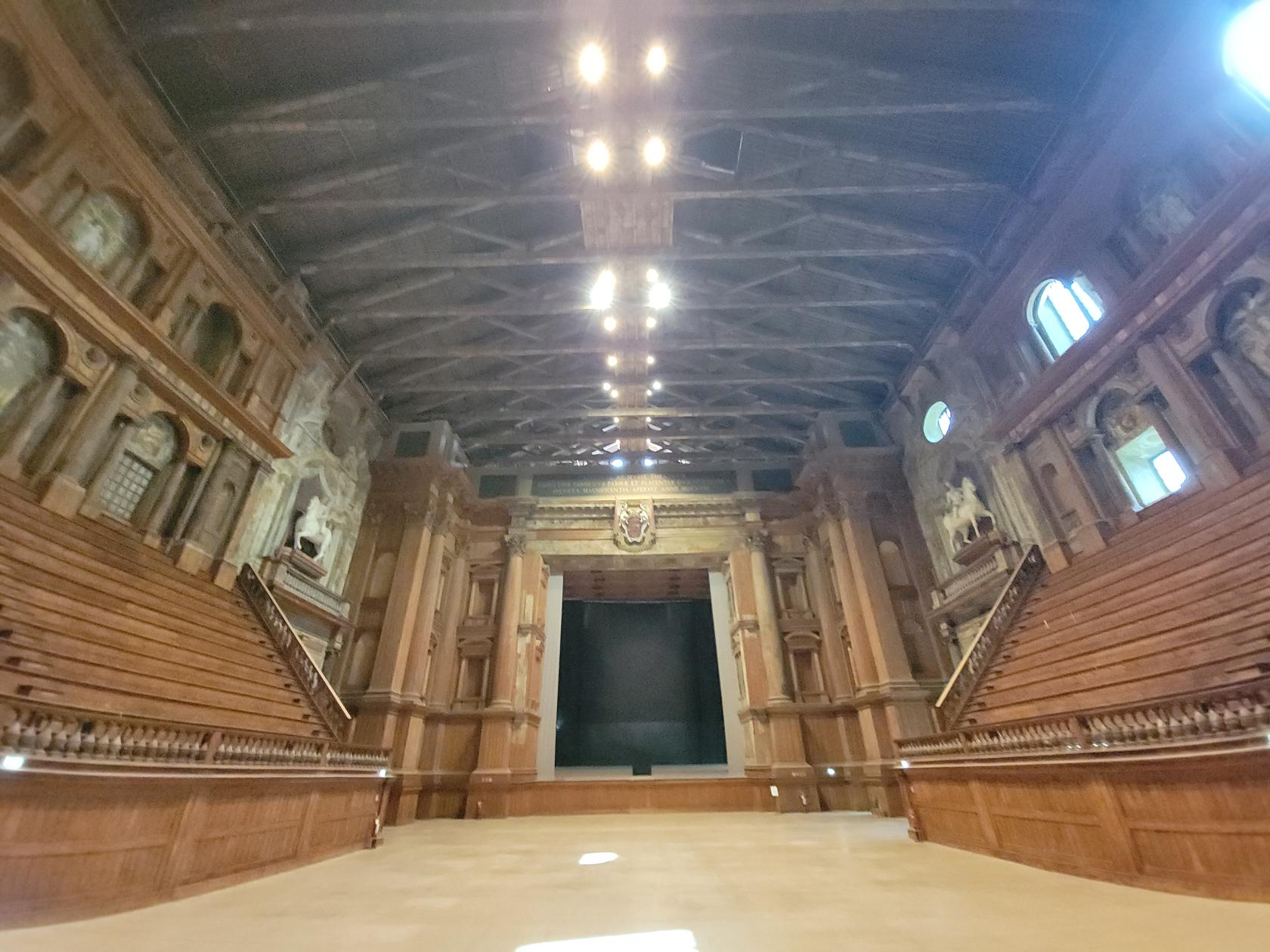
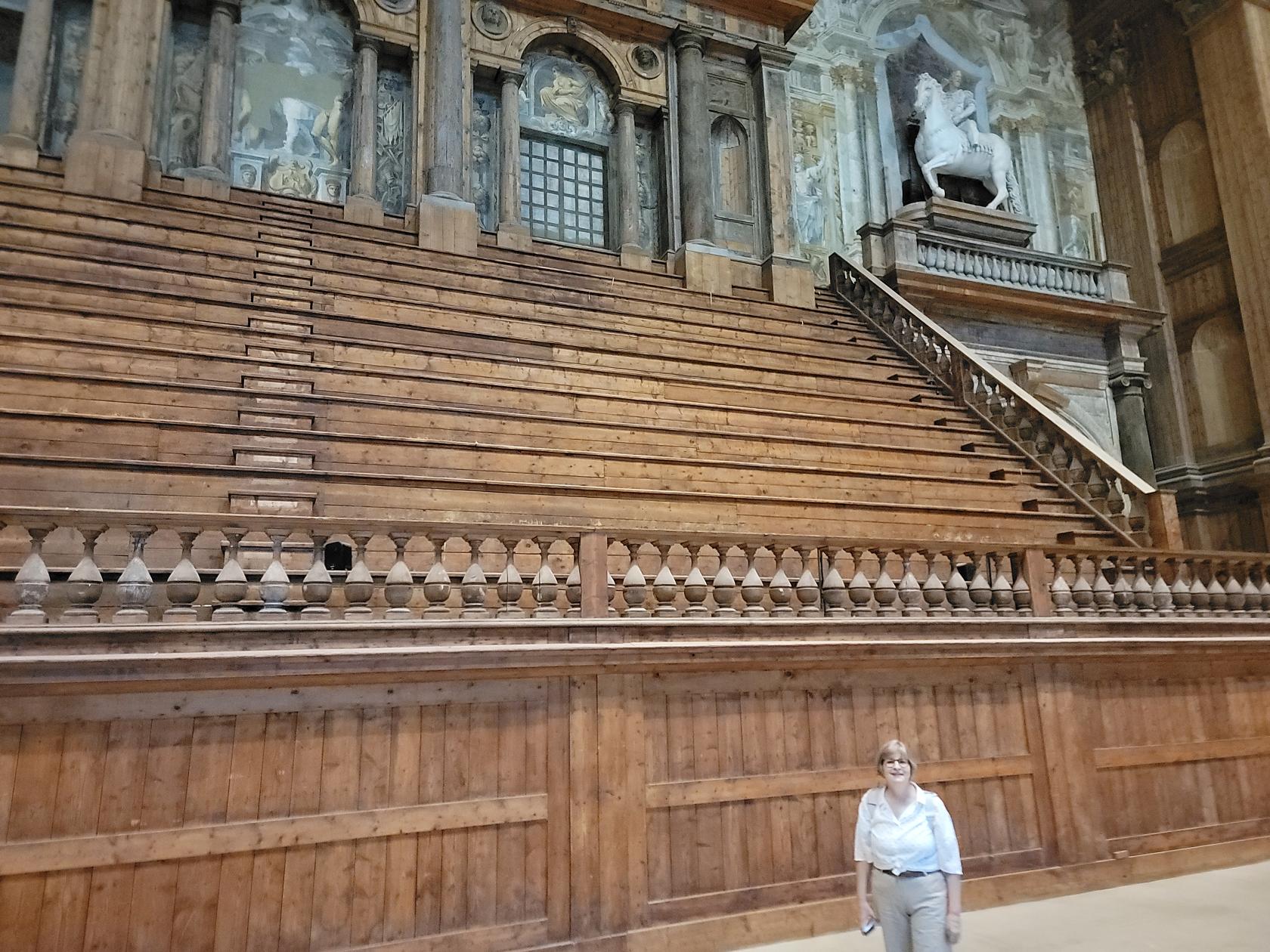
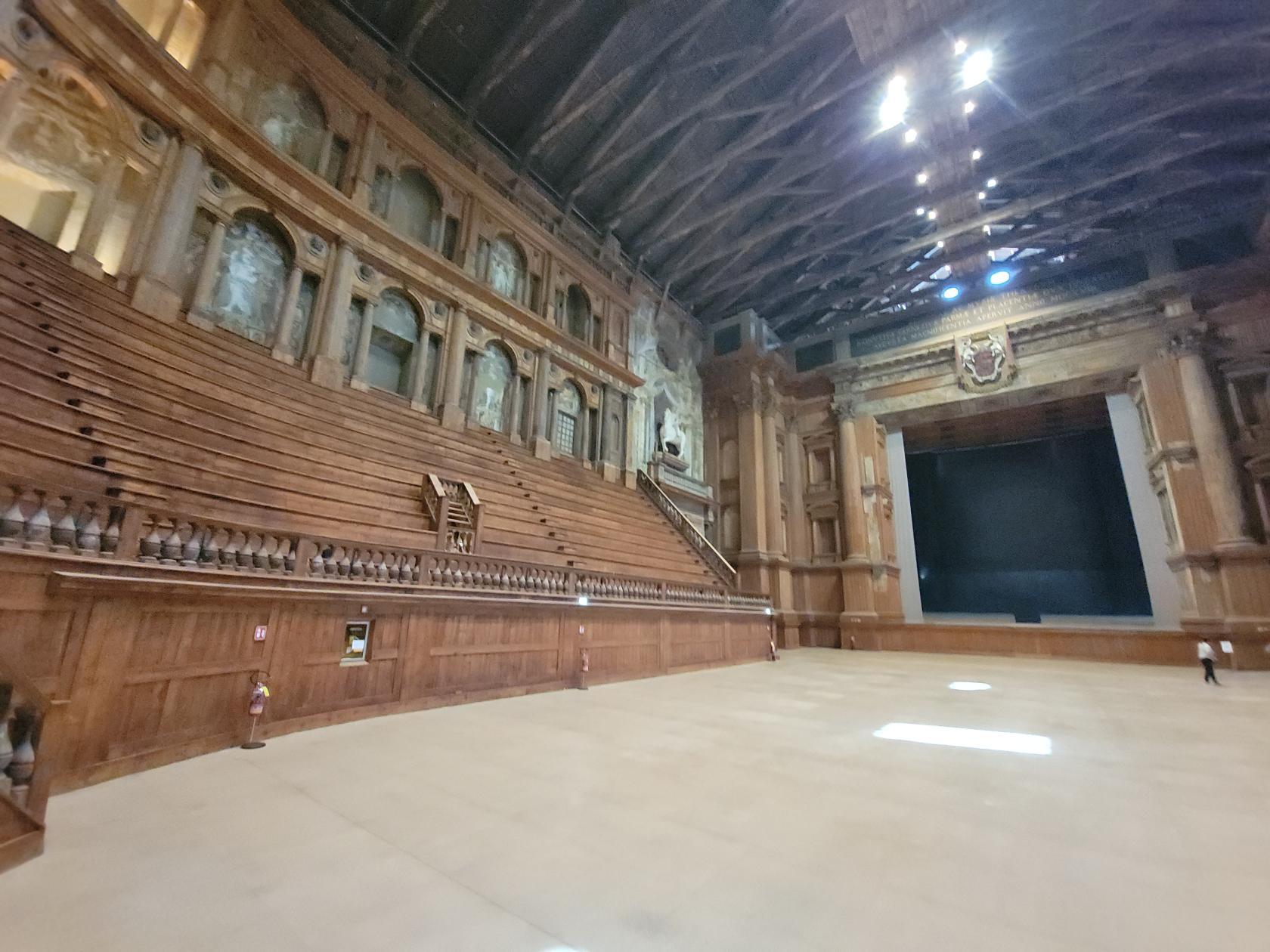
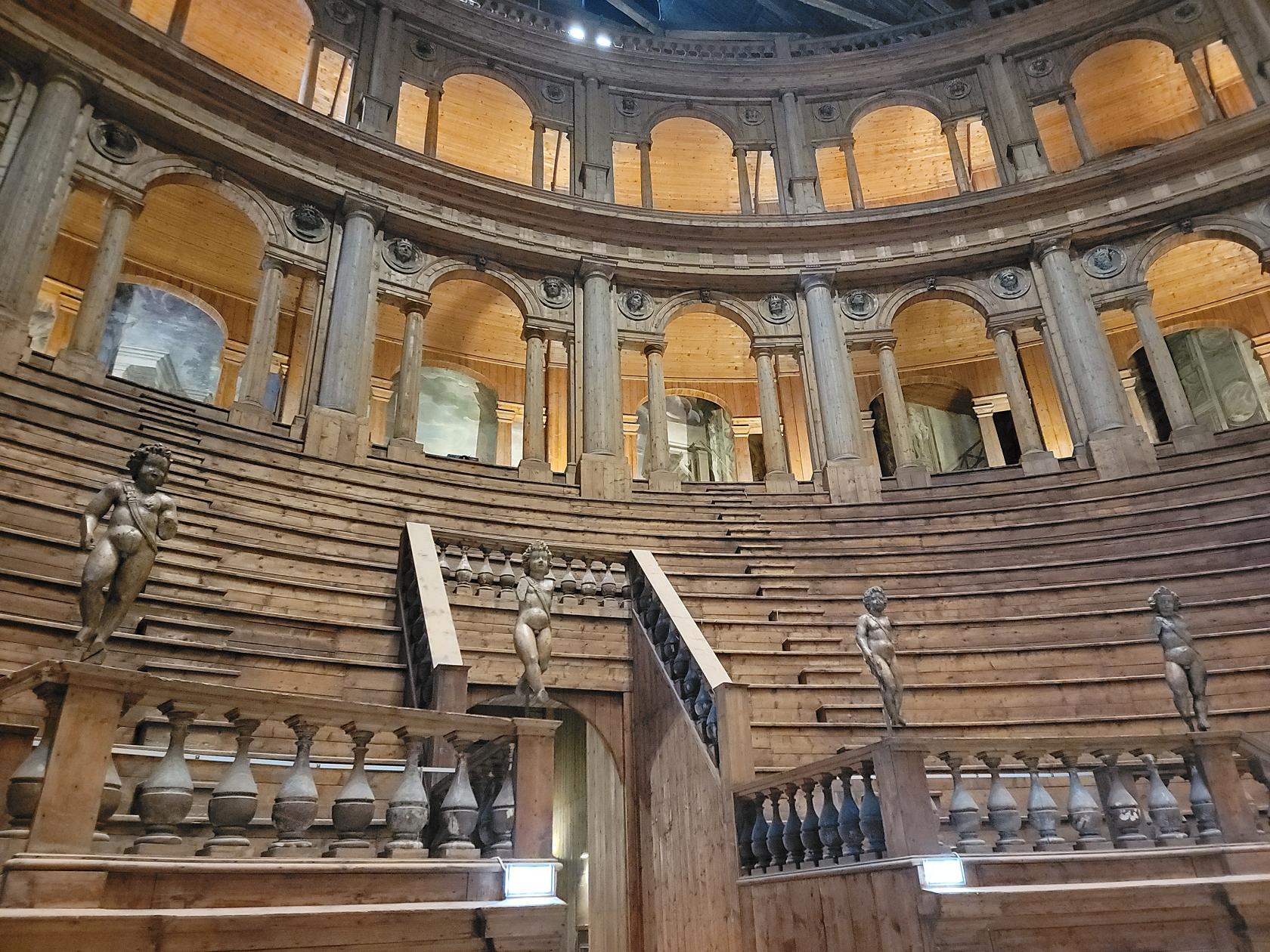
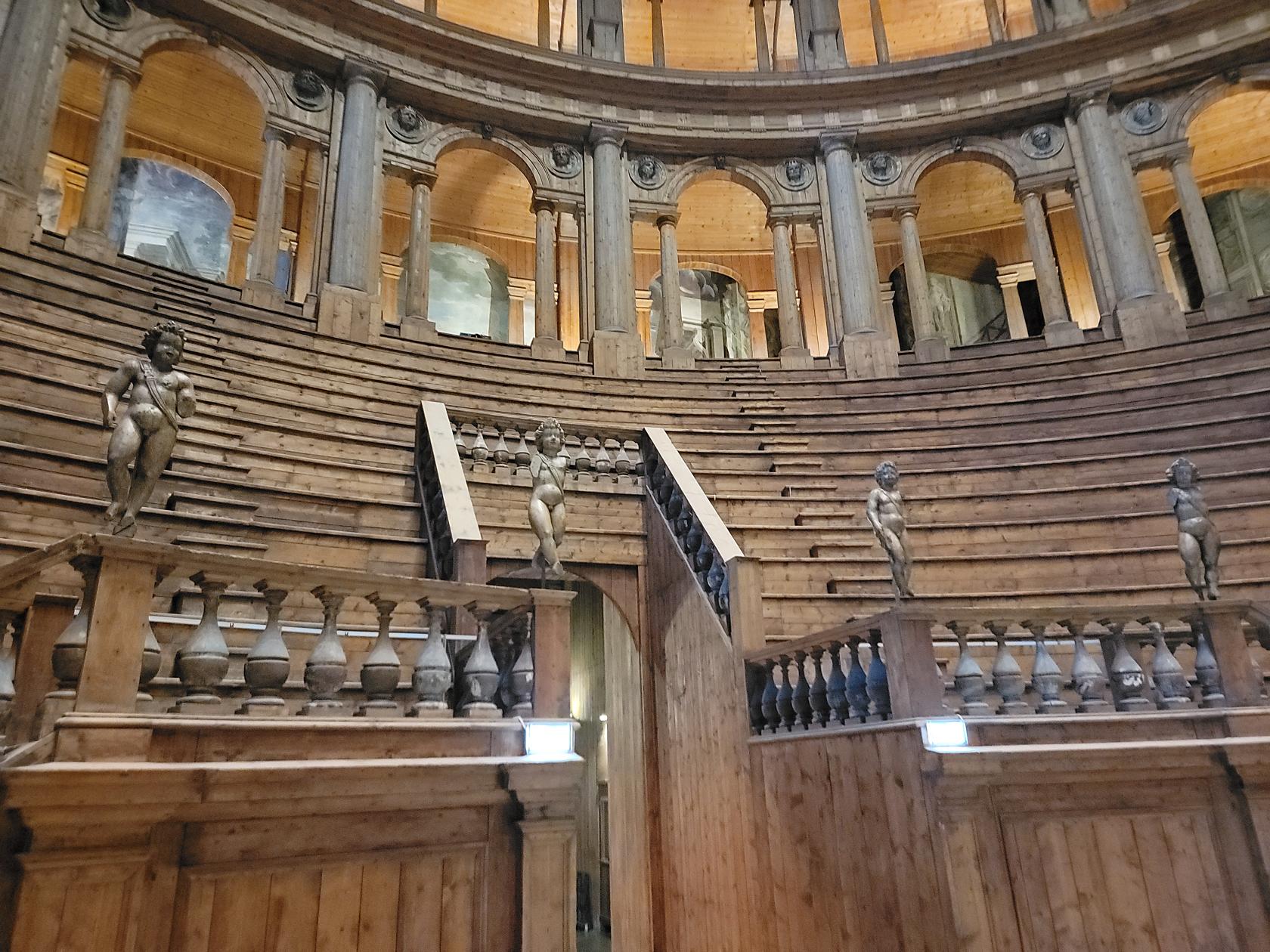
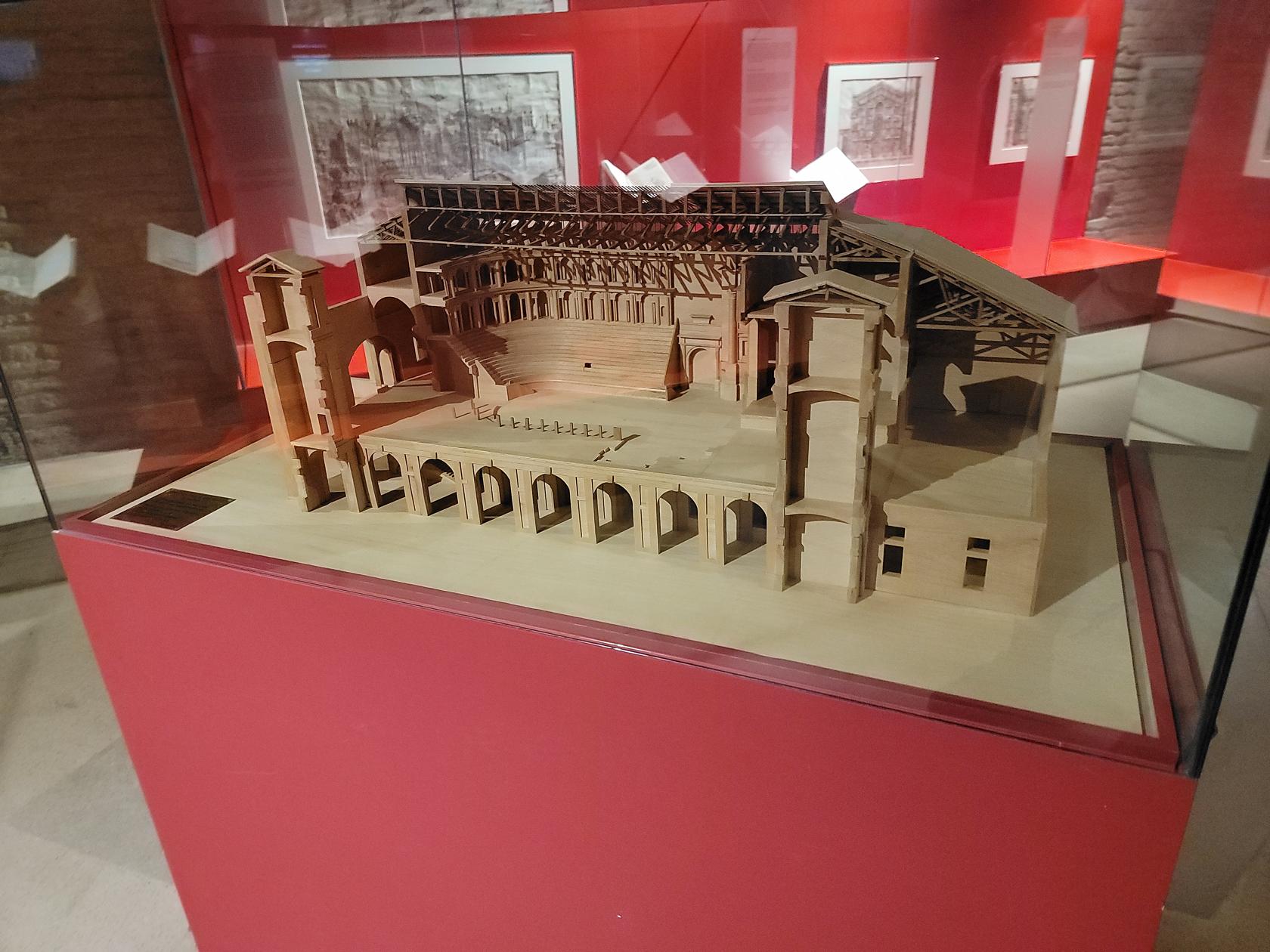
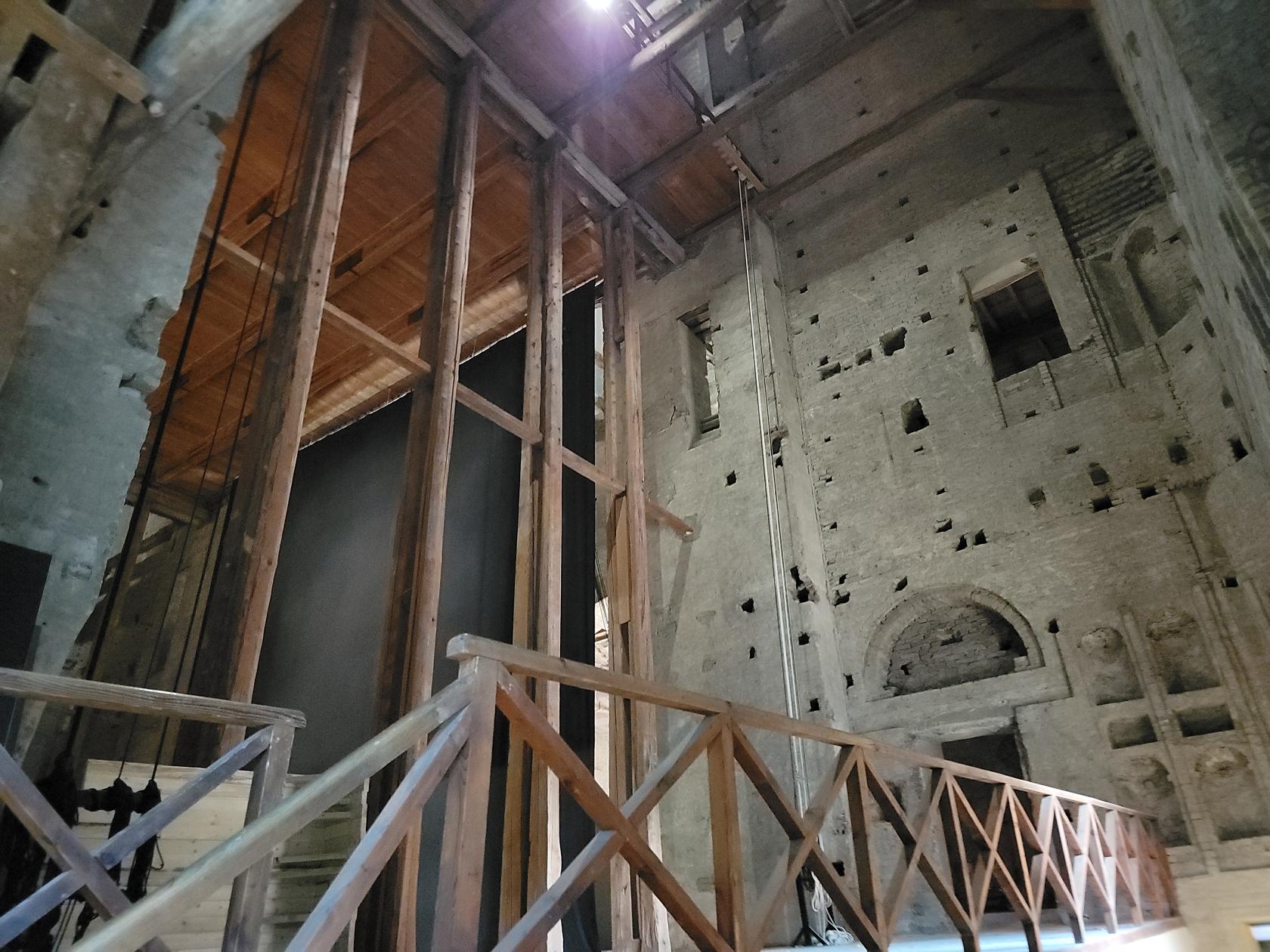
The Farnese Theater is actually a rather bizarre construction. Built within a very large room of the palace is a theater that was constructed quickly, in order to entertain some political majistrate of the Medici family. However, the event never took place and subsequent to it completion, it was only used eight or nine times.
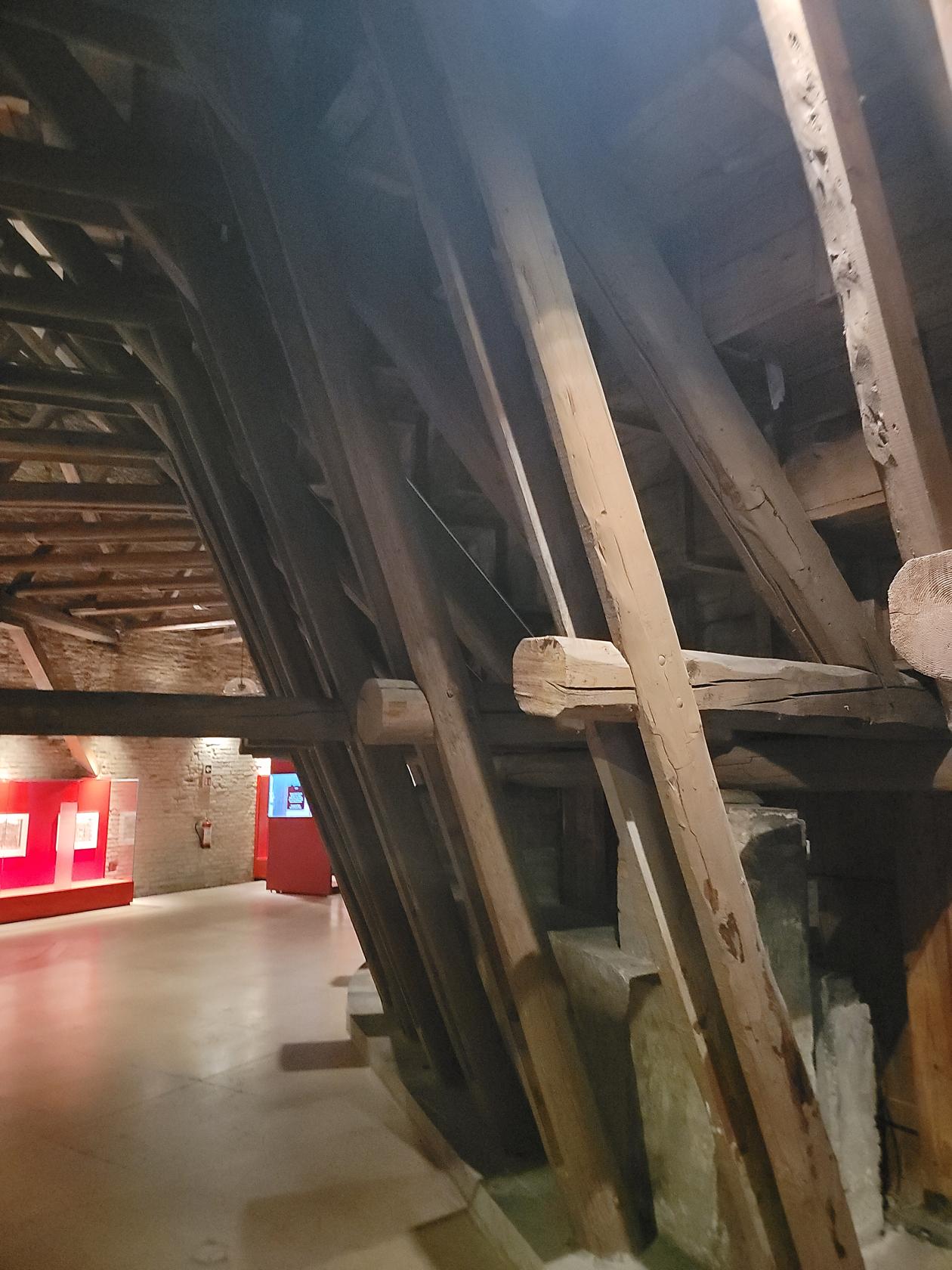
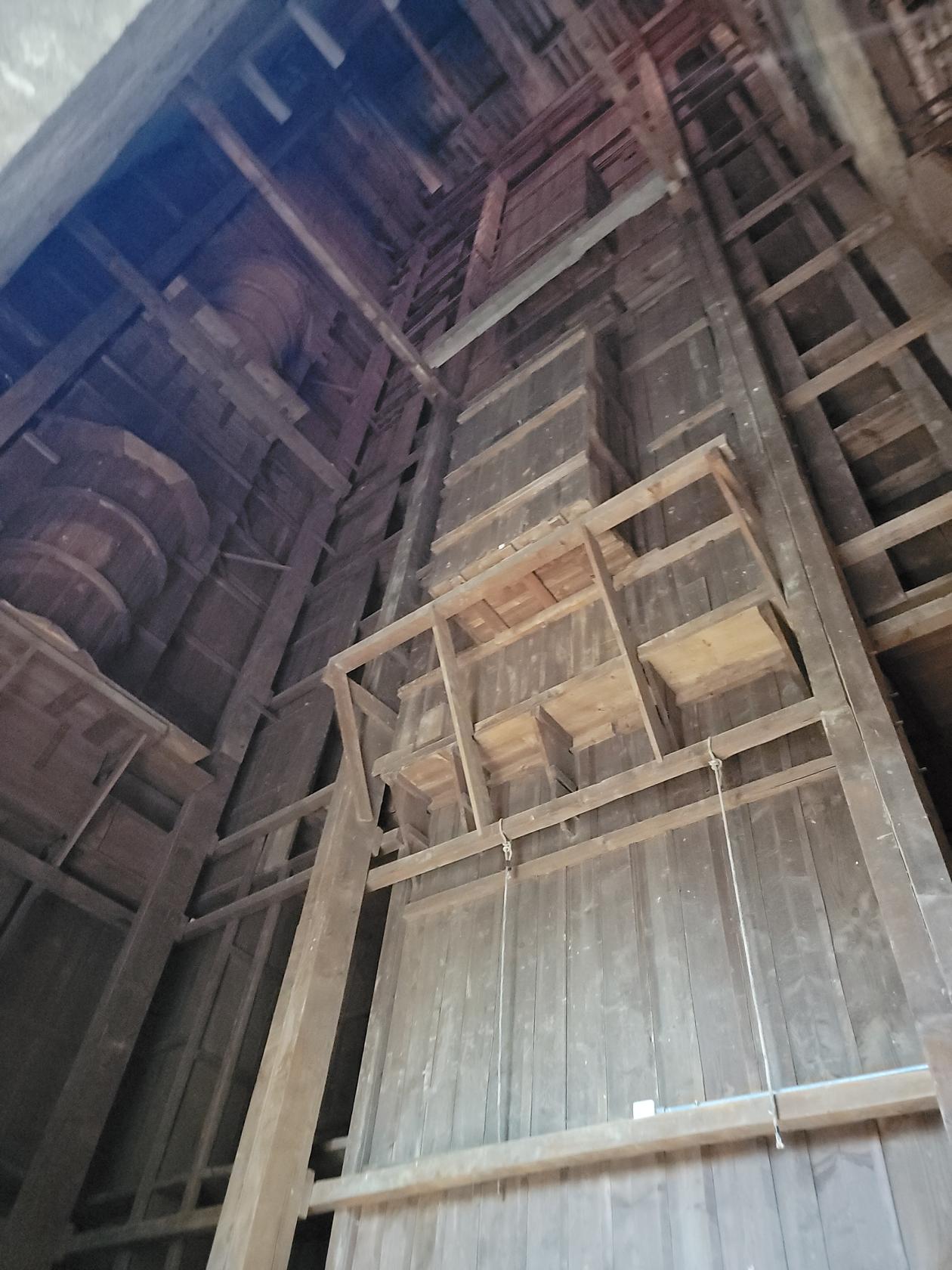
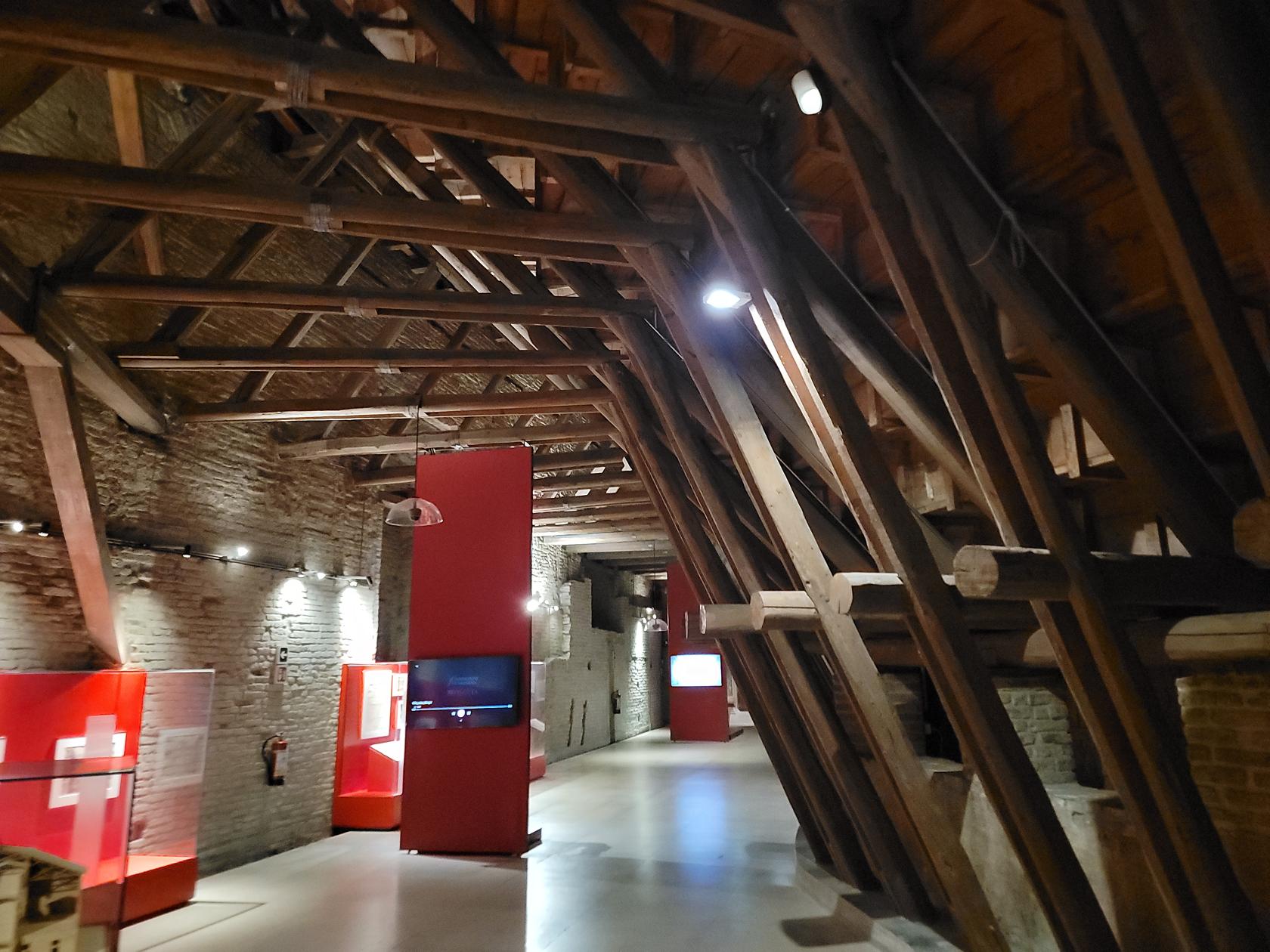
It eventually succumbed to allied bombings in the mid 1940s and was almost completely destroyed and then rebuilt later, for cultural reasons. Though none of the plaster exterior has never been replaced, as is evident by the missing ceiling, it still enjoys a woddy charm. Luckily, the old frescoes survived and can still be seen today.
Backstage Elements – Farnese Theater – Pillota Museum Complex – Parma, Italy
Galleria Nazionale di Parma
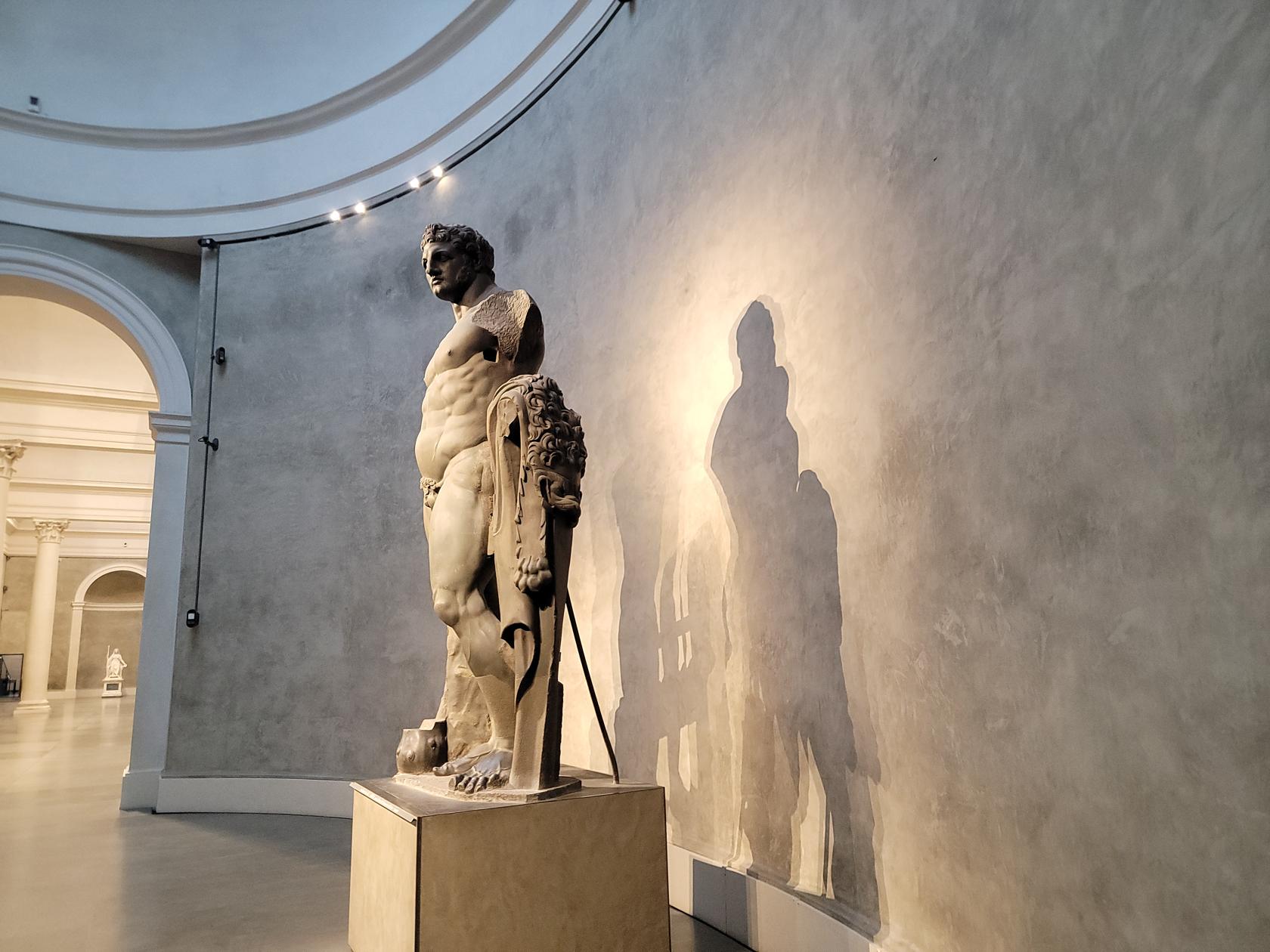
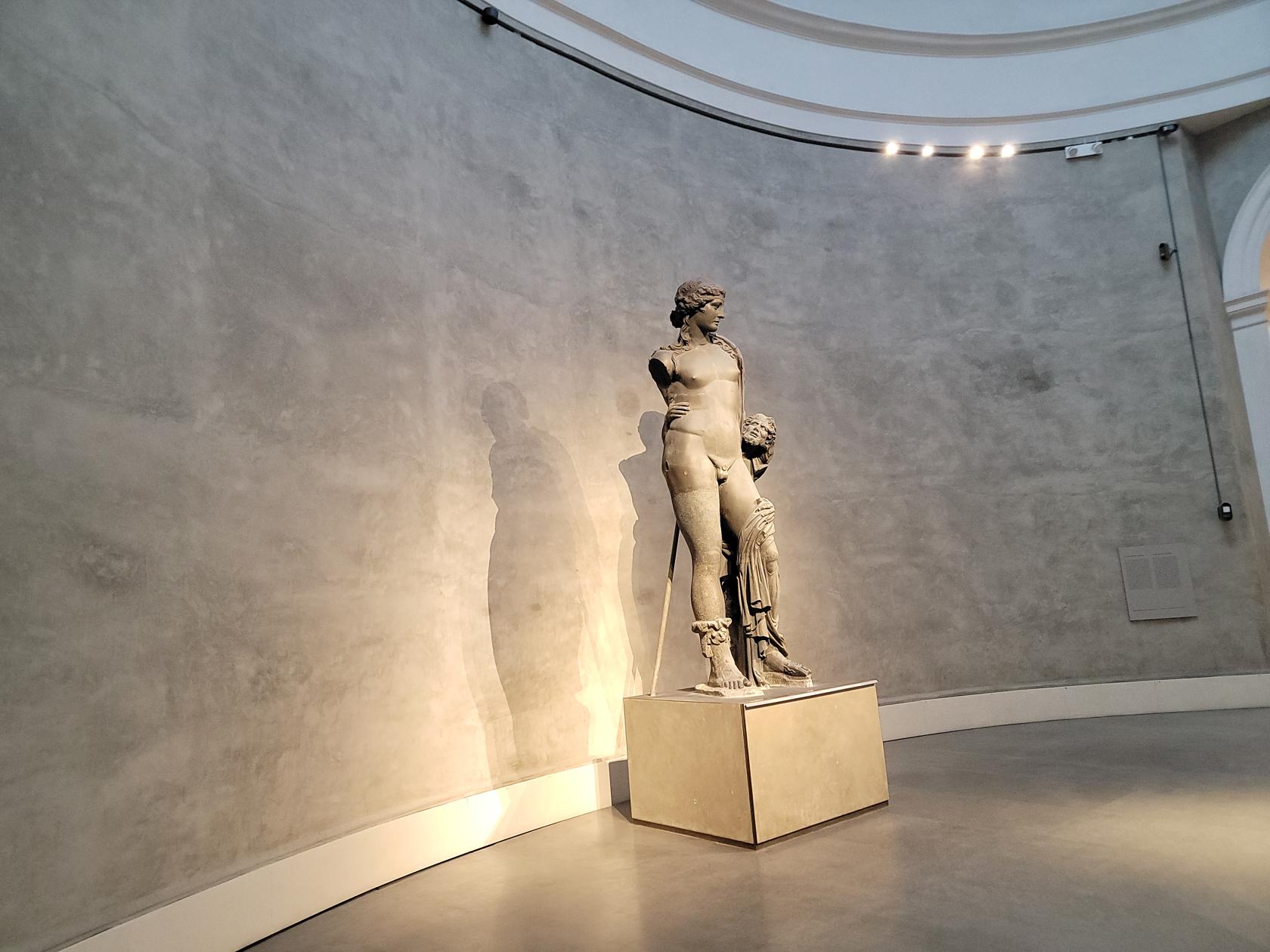
The entrance to the National Gallery is flanked by two huge statues. One of Dionysus and the other or Hercules. They are both impressive in their own right, with the one of Hercules looking like it is right on the boundary of the human anatomy.
Hercules – National Gallery – Pillota Museum Complex – Parma, Italy
Dionysus – National Gallery – Pillota Museum Complex – Parma, Italy
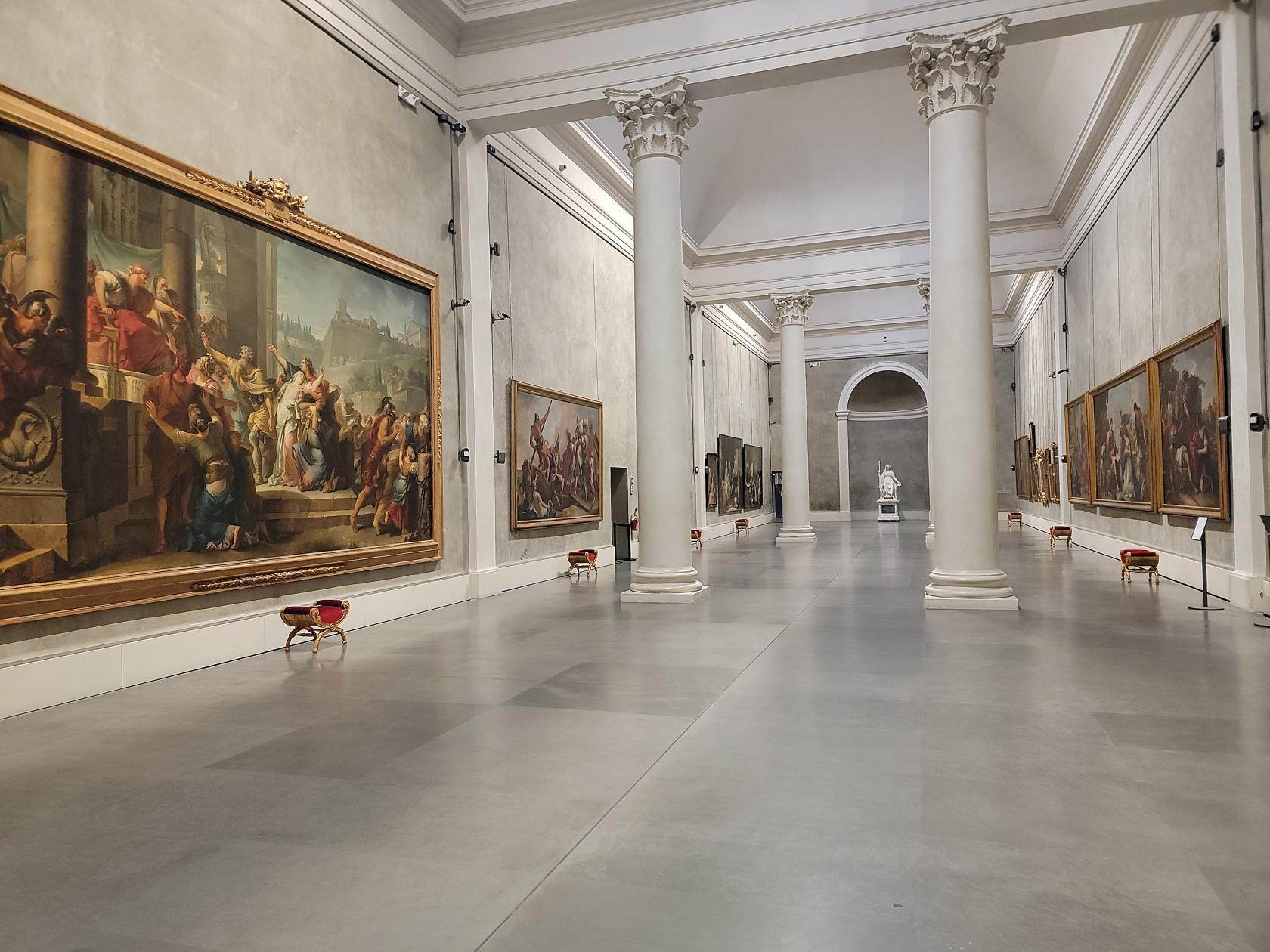
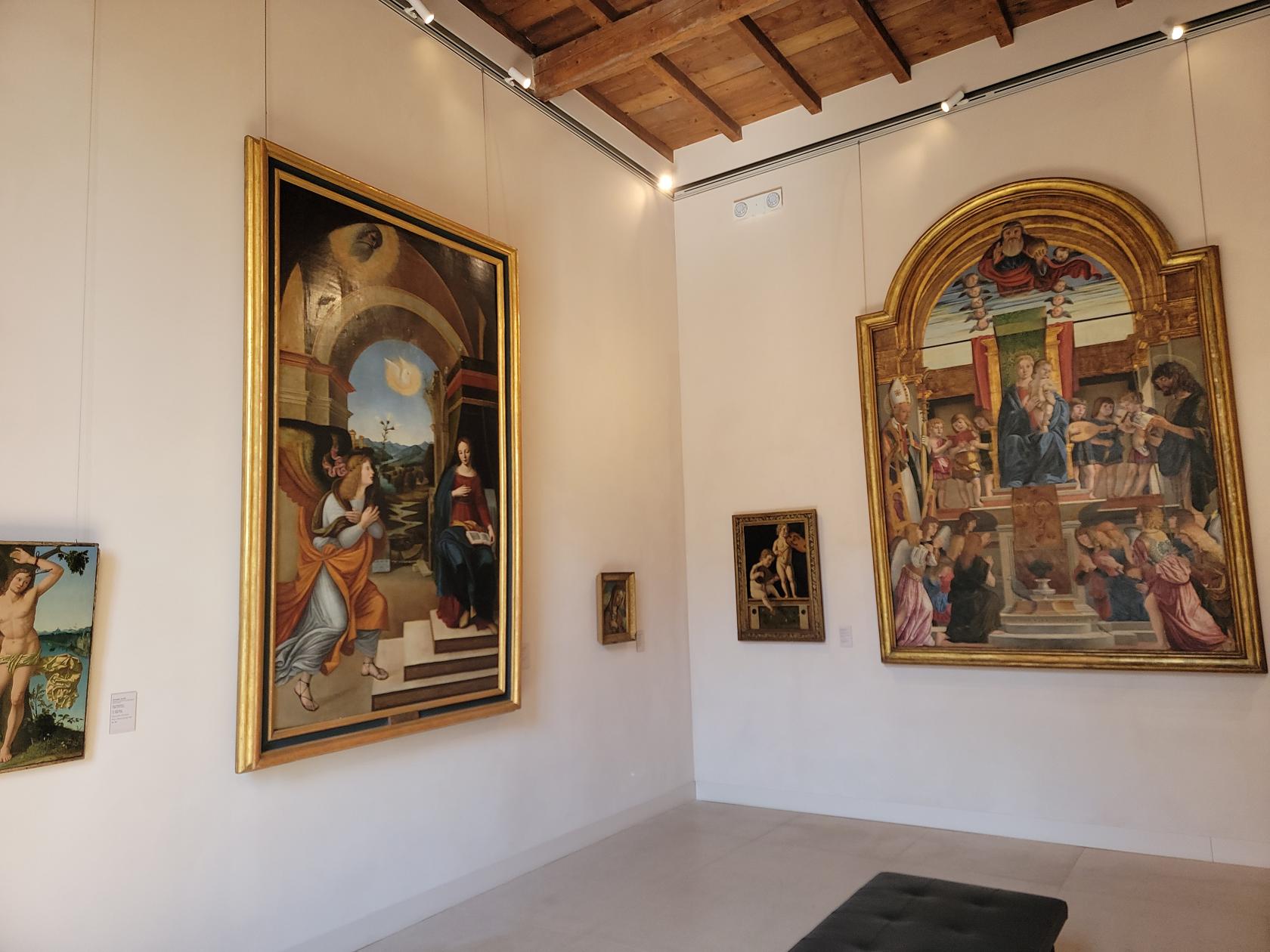
The rest of the gallery houses a myriad of large paintings in its large hall. Unfortunately there are no benches or seating to admire them, so one can only slowly walk by or stand in front of them for a bit, in order to admire them.
Main Room – National Gallery – Pillota Museum Complex – Parma, Italy
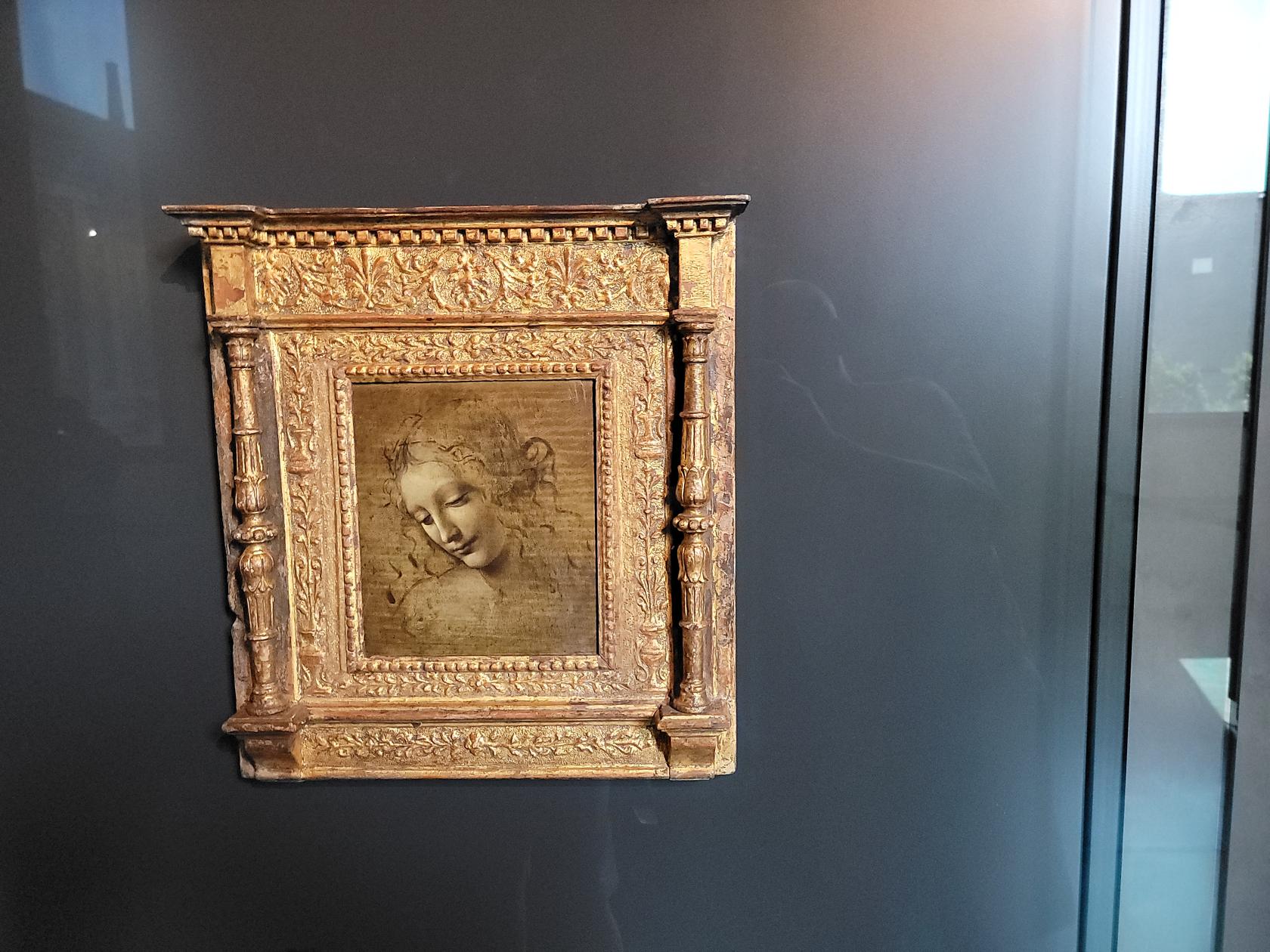
As of this writing, the back of the gallery held the real prize for a visitor, a work by Leonardo da Vinci called the head of a woman, or “La Scapiliata”. One can see similarities with her face and that of the Mona Lisa, which was painted some time after and is now in the Louvre in Paris, France.
Head of a Woman “La Scapiliata” – Leonardo da Vinci, Vinci, 1452 – National Gallery – Pillota Museum Complex – Parma, Italy
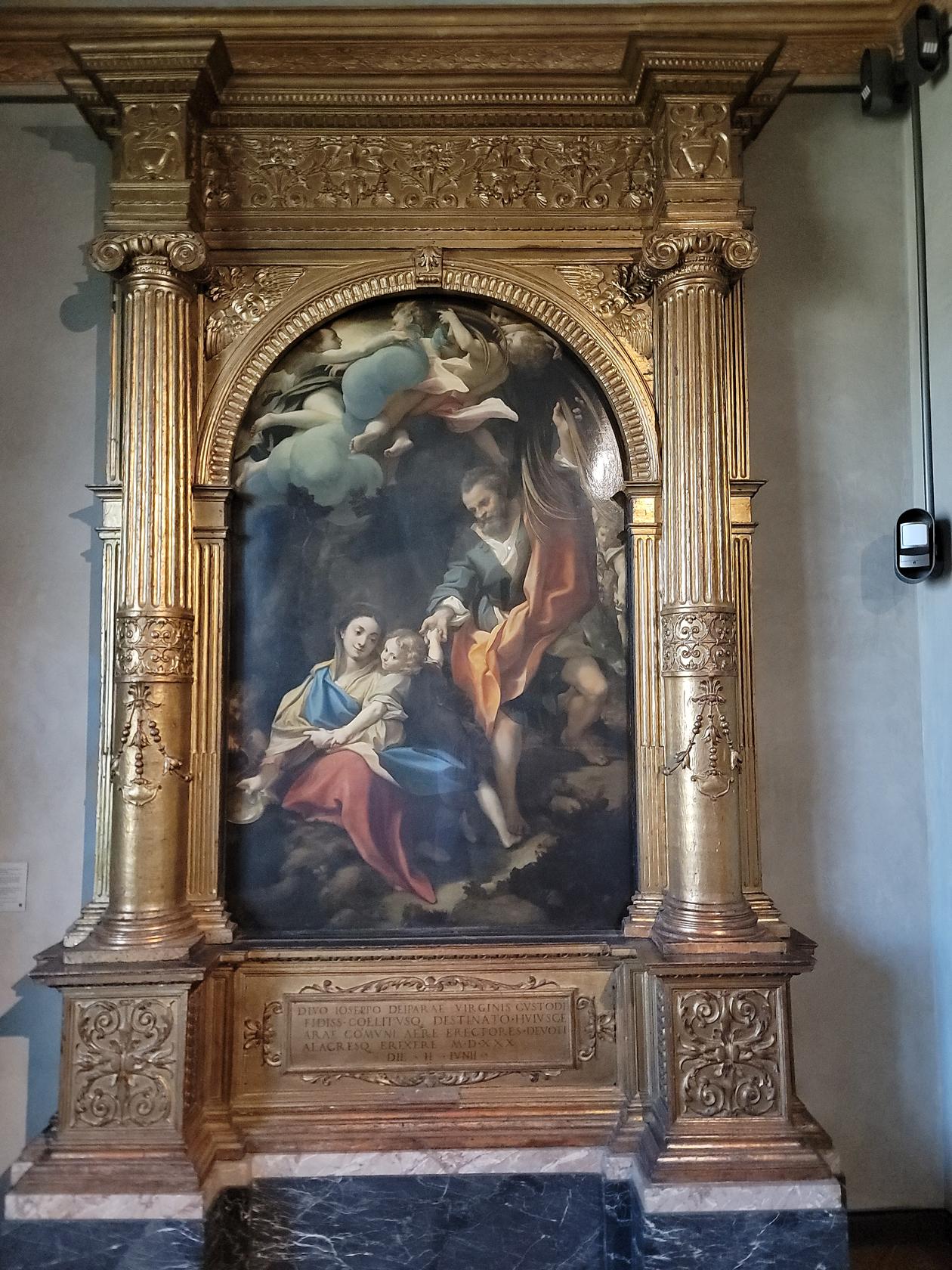
Madonna of the Bowl, Rest after the Return from Egypt – Antonio Allegri detto il Correggio, 1489 – National Gallery – Pillota Museum Complex – Parma, Italy
Palatina Library
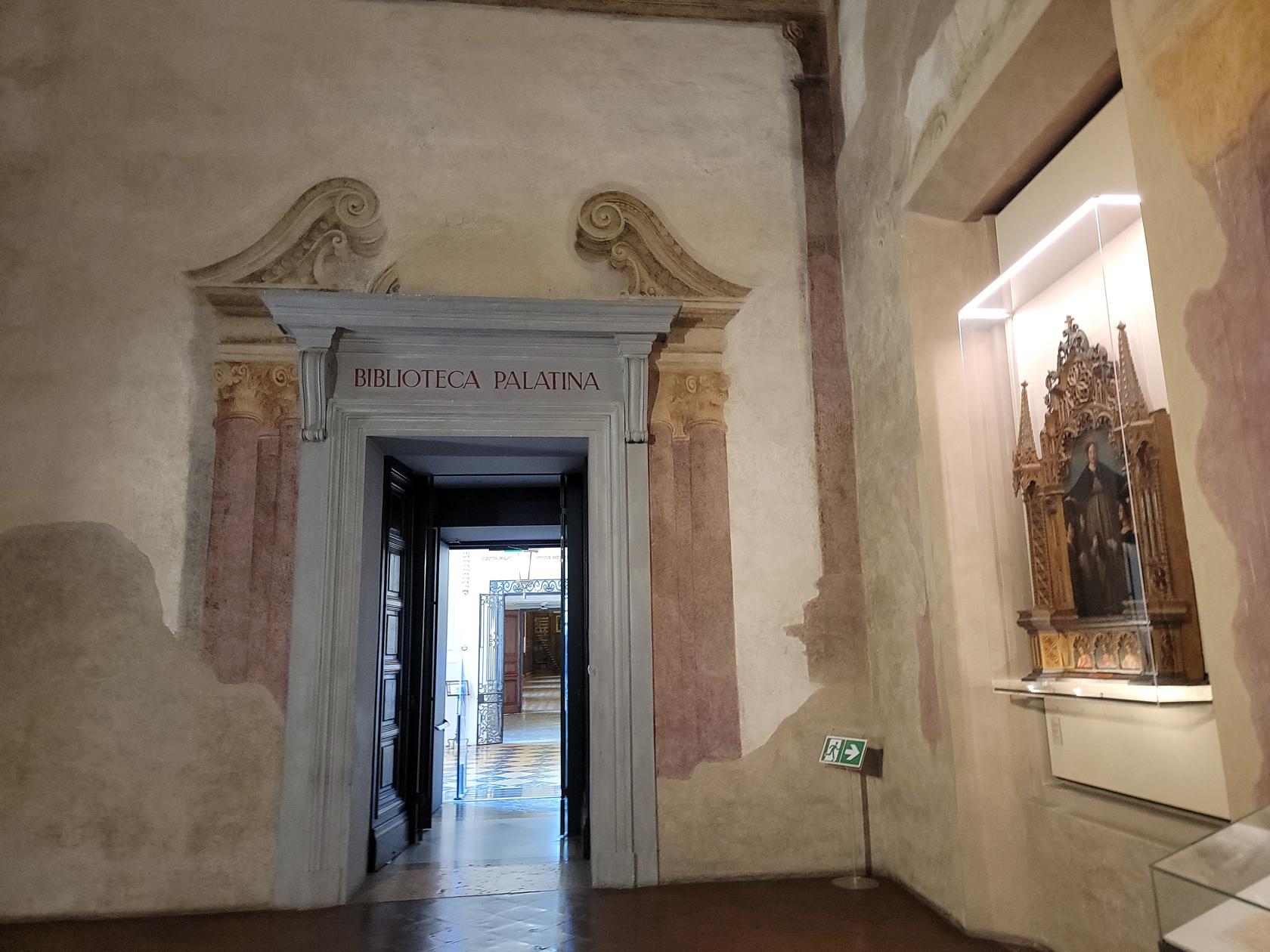
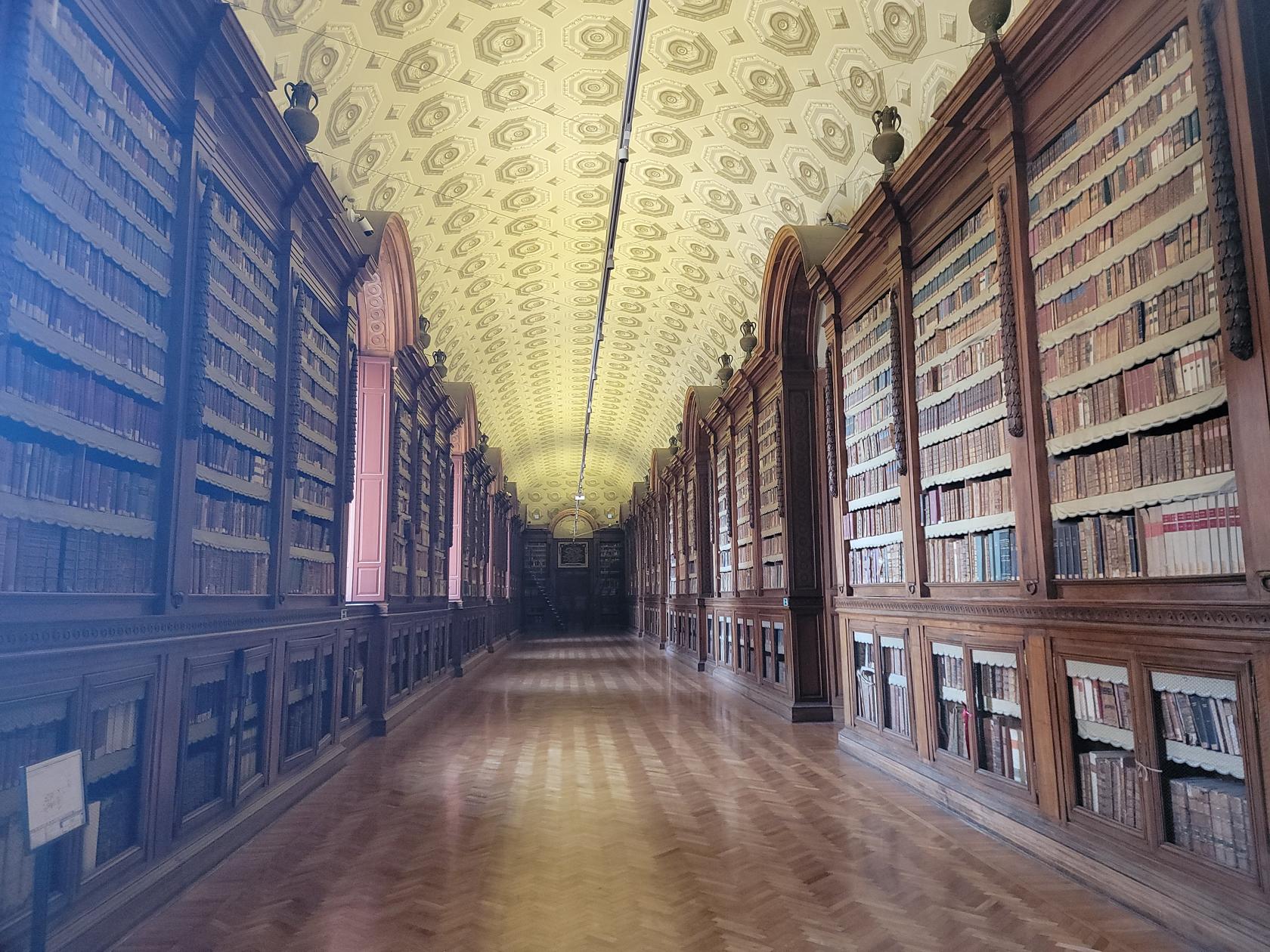
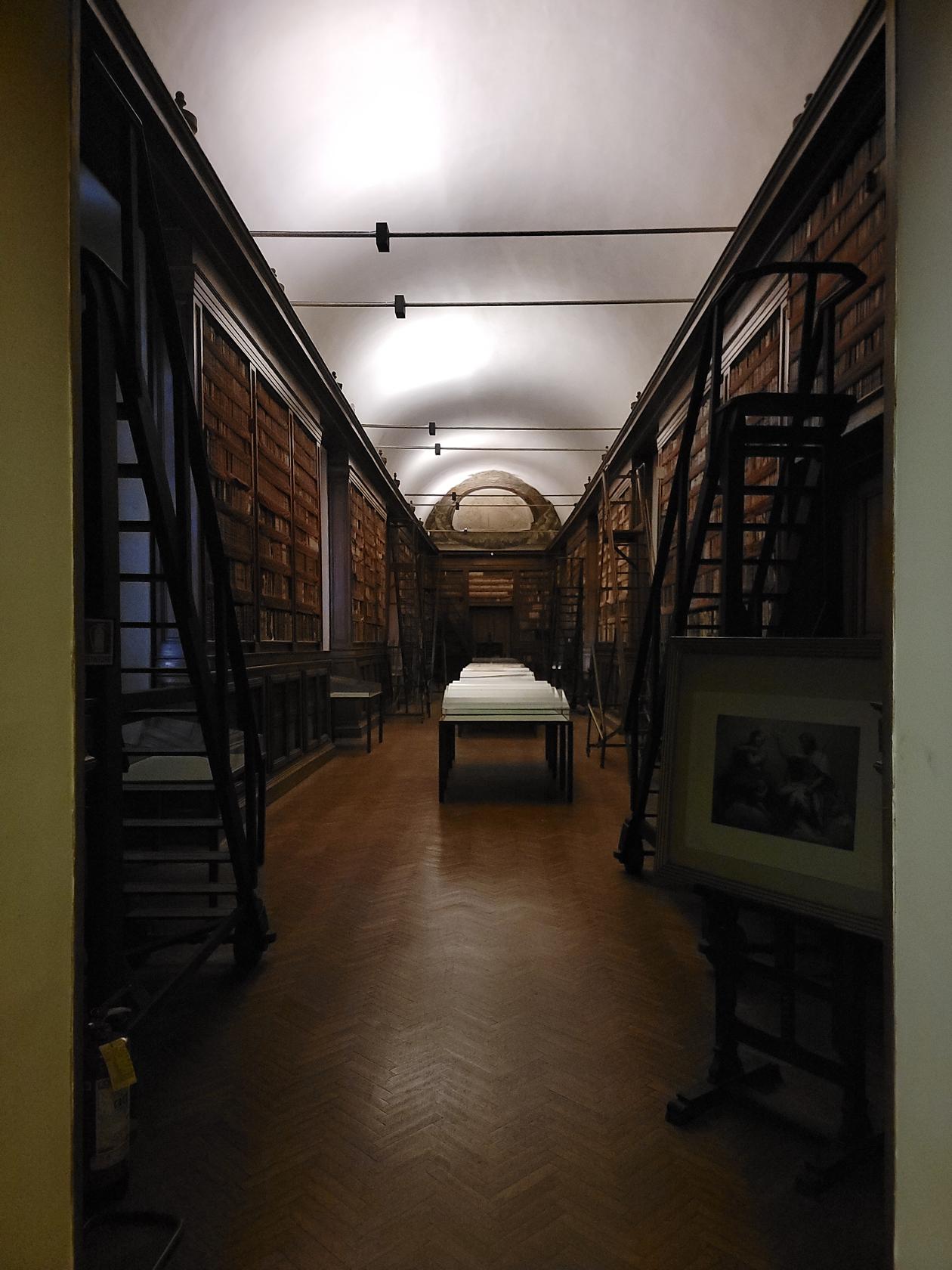
The Palatina Library is a large library that is still functioning, although for academic and research purposes only. However, the Petitot Gallery is still open to the public, where one can find a wide variety of topics, mostly in Italian of course.
Art Exhibits in Entrance – Palatina Library – Pillota Museum Complex – Parma, Italy
One Hall – Palatina Library – Pillota Museum Complex – Parma, Italy
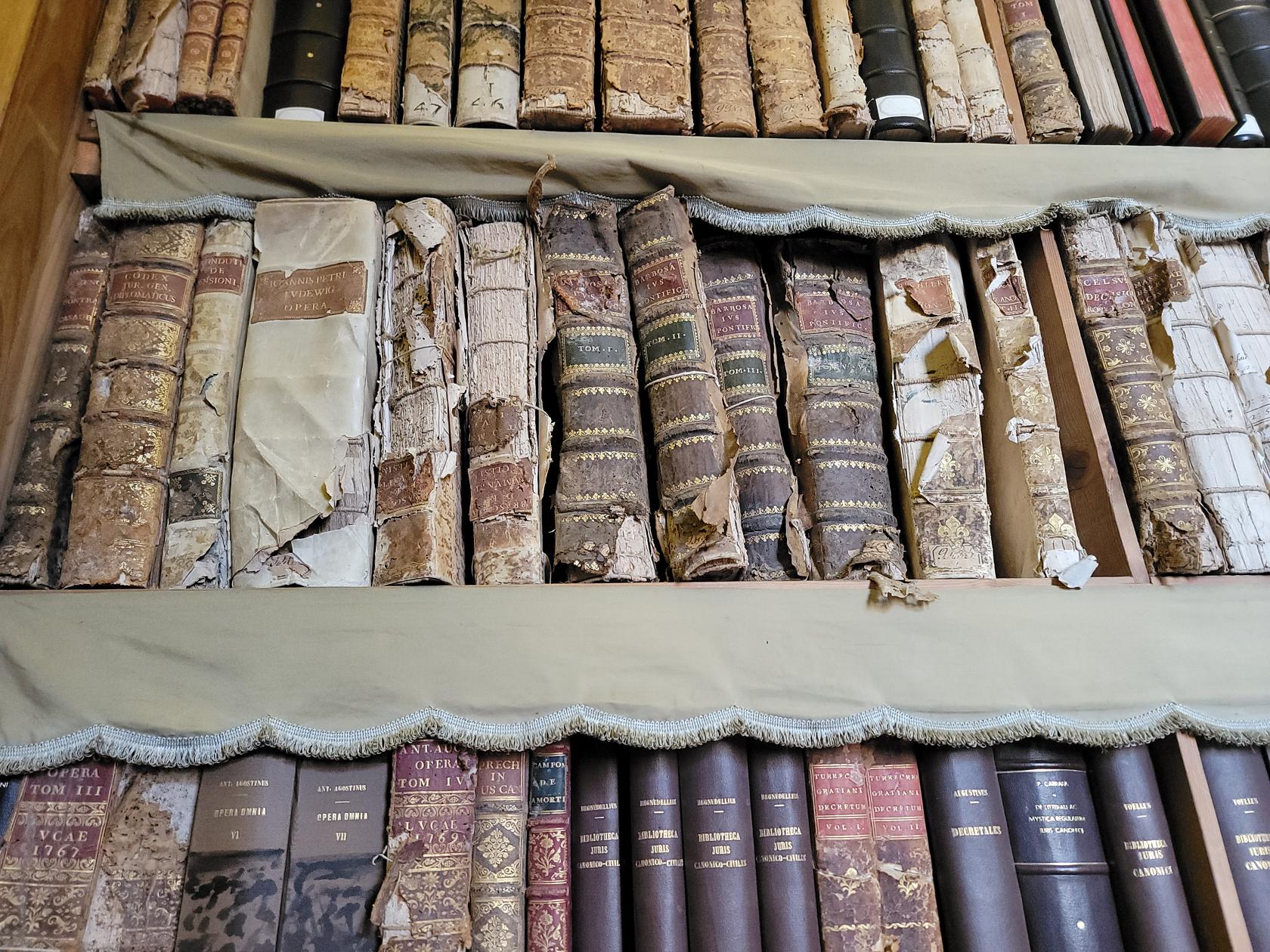
Old Books – Palatina Library – Pillota Museum Complex – Parma, Italy
Side Hall – Palatina Library – Pillota Museum Complex – Parma, Italy
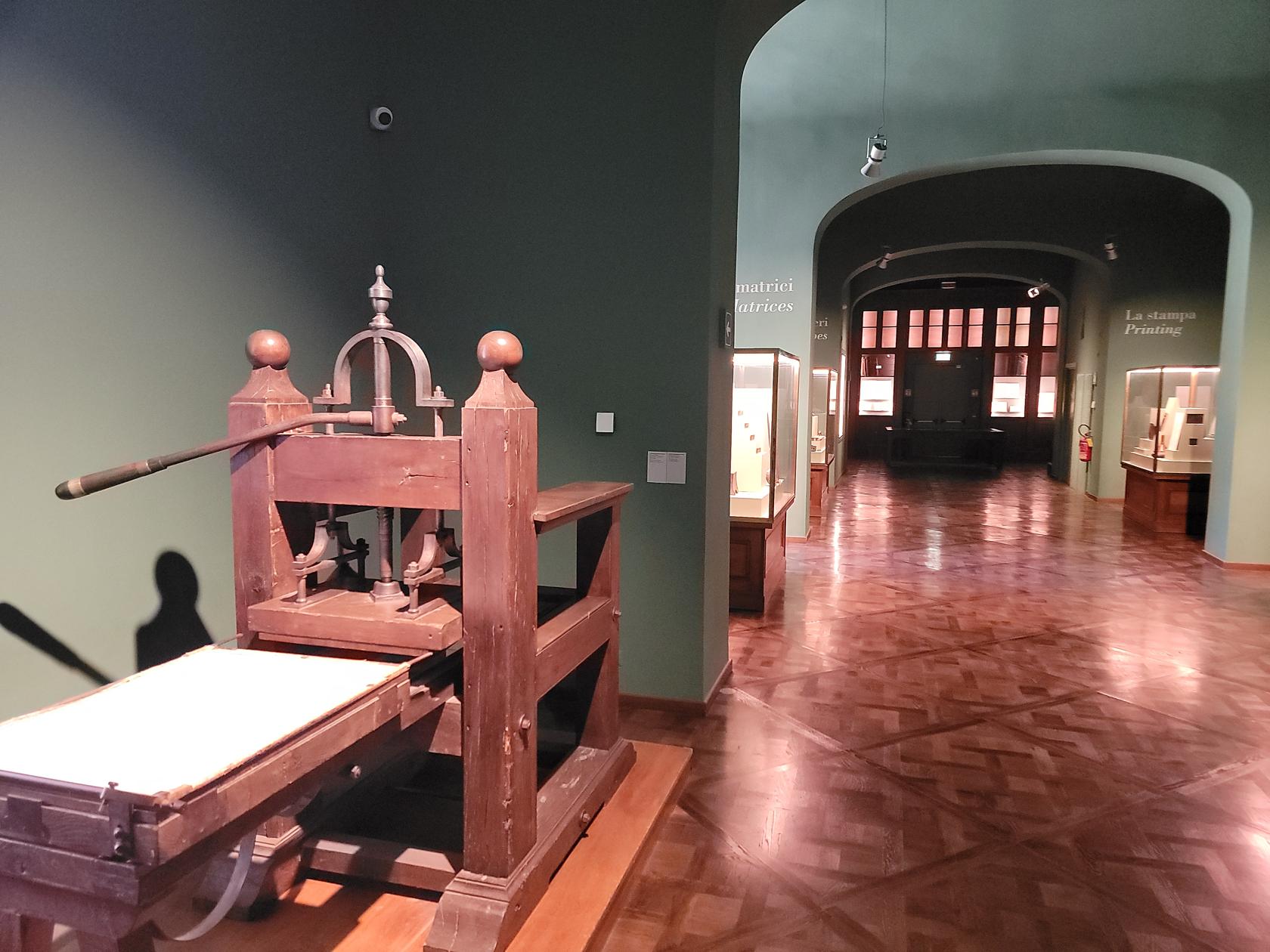
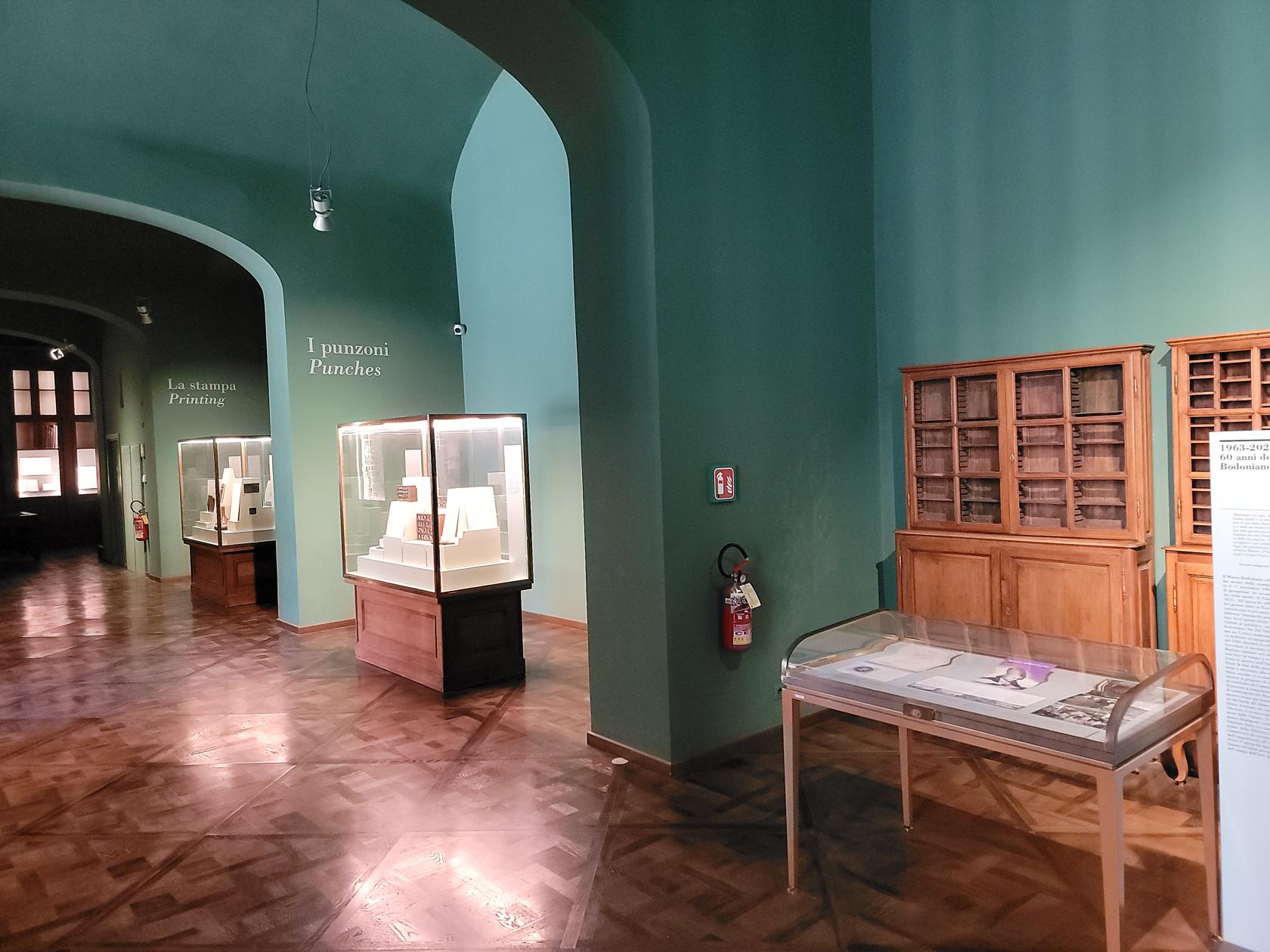
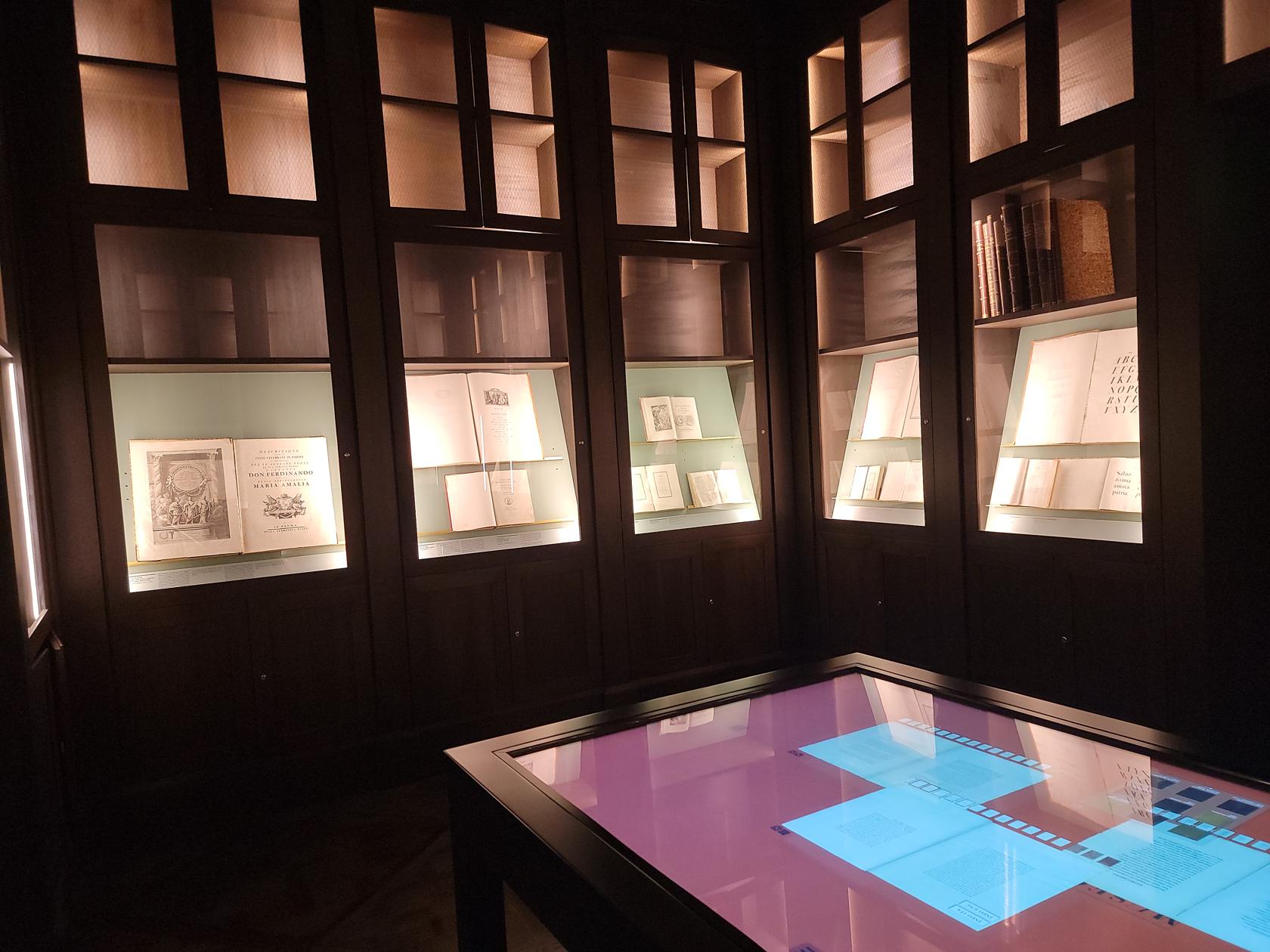
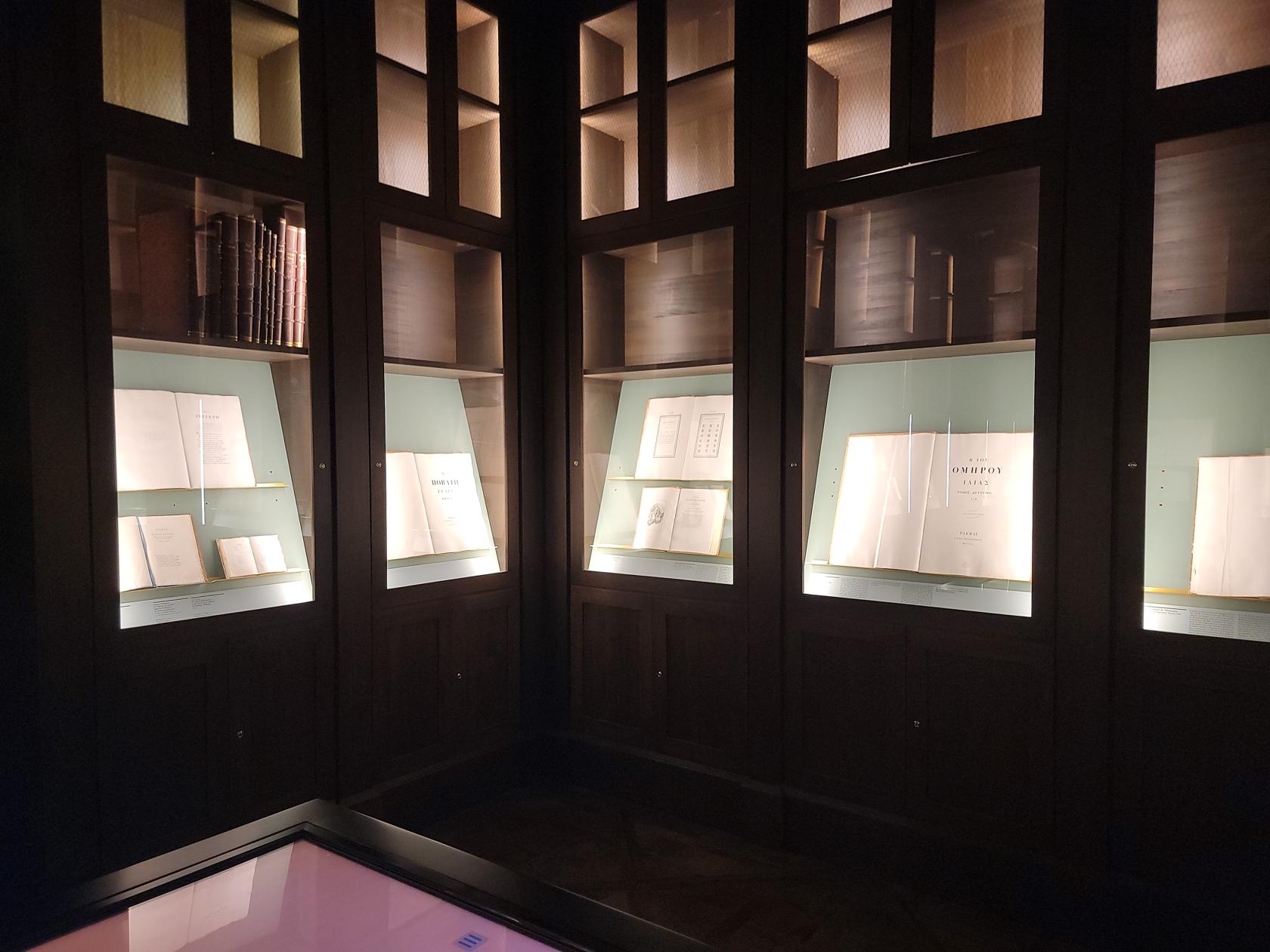
The Bodoni Museum
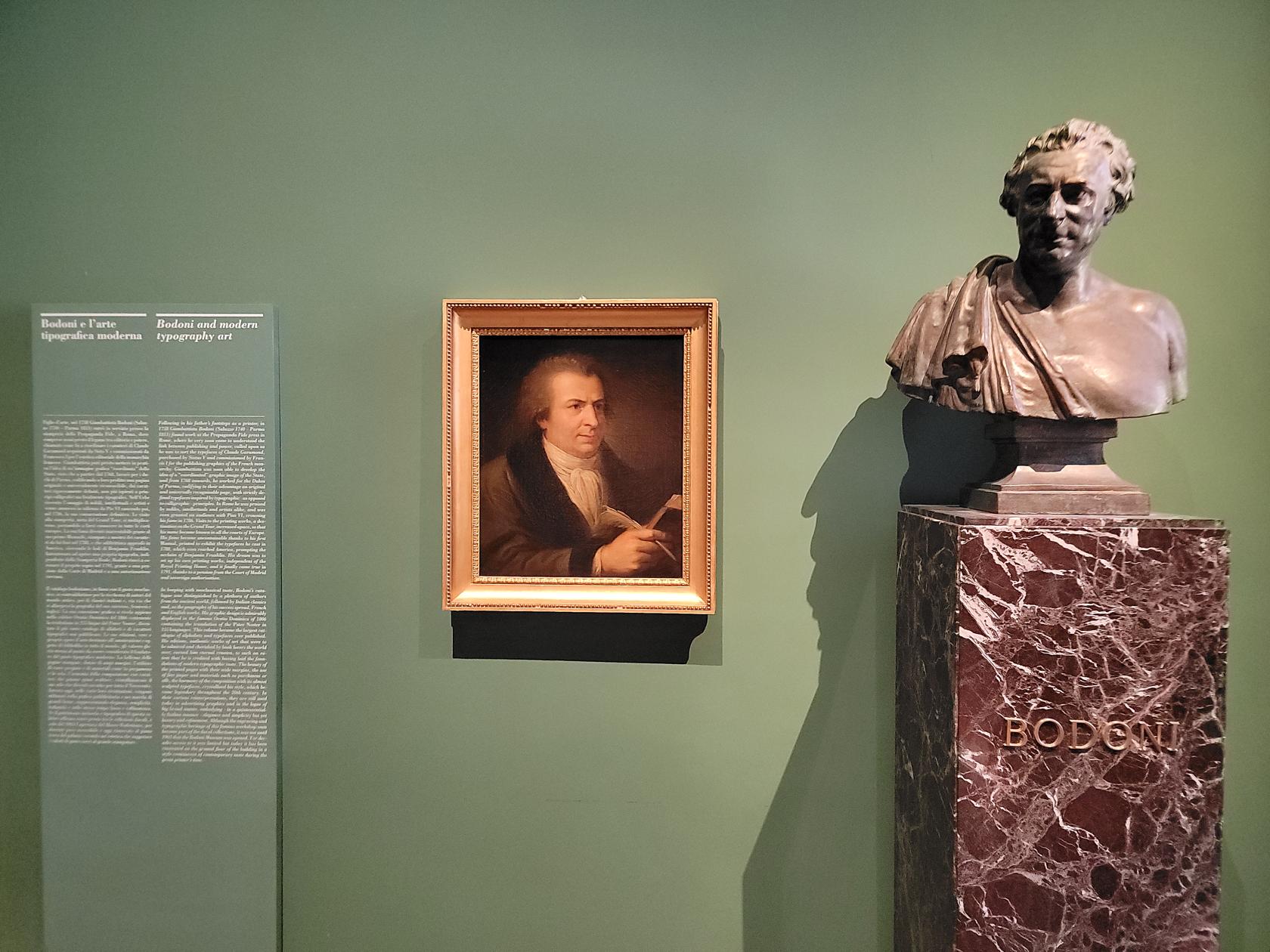
Anyone who has taken typesetting in school would enjoy the Bodoni Museum. The museum honors the famous Parma typesetter and printer, Giambattista Bodoni, and his eponymous typeface as well. The Bodoni typeface was a favorite of mine in high school, where I learned the intricacies of setting type. I loved its clean lines and serifs, using it to print a set of invitations for my mother at one time[1]To use the museum’s own words, “The severe, neoclassical imprint of the letters, characterized by the stark contrast between the thickness of the strokes and the thinness of the lines and … Continue reading.
Bodoni Bust and Painting – Bodoni Museum – Pillota Museum Complex – Parma, Italy
Printing Press – Bodoni Museum – Pillota Museum Complex – Parma, Italy
Stories of Punching and Printing – Bodoni Museum – Pillota Museum Complex – Parma, Italy
Typesetting Examples – Bodoni Museum – Pillota Museum Complex – Parma, Italy
Typesetting Examples – Bodoni Museum – Pillota Museum Complex – Parma, Italy
Restaurants
You will find most of the non-industrial restaurants away from the main shopping street of Strada Cavour. Reservations are recommended, even for lunch, for these are often used by locals and the business crowd. Most of the Osterias and Trattorias serve wine by the tap in quarter, half and full liter sizes, whereas the corporate restaurants on Cavour serve only by the glass, so they can up-charge for it, like in the United States.
Osteria dei Servi
The Osteria dei Servi is actually housed under the Viale Giovanni Mariotti and has a rather odd entrance. But don’t let that fool you. The restaurant is actually quite nice inside and comfortable. The food is excellent and typical for the area.
Entrance – Osteria die Servi – Parma, Italy
Inside – Osteria die Servi – Parma, Italy
Bar – Osteria die Servi – Parma, Italy
Patti – Osteria die Servi – Parma, Italy
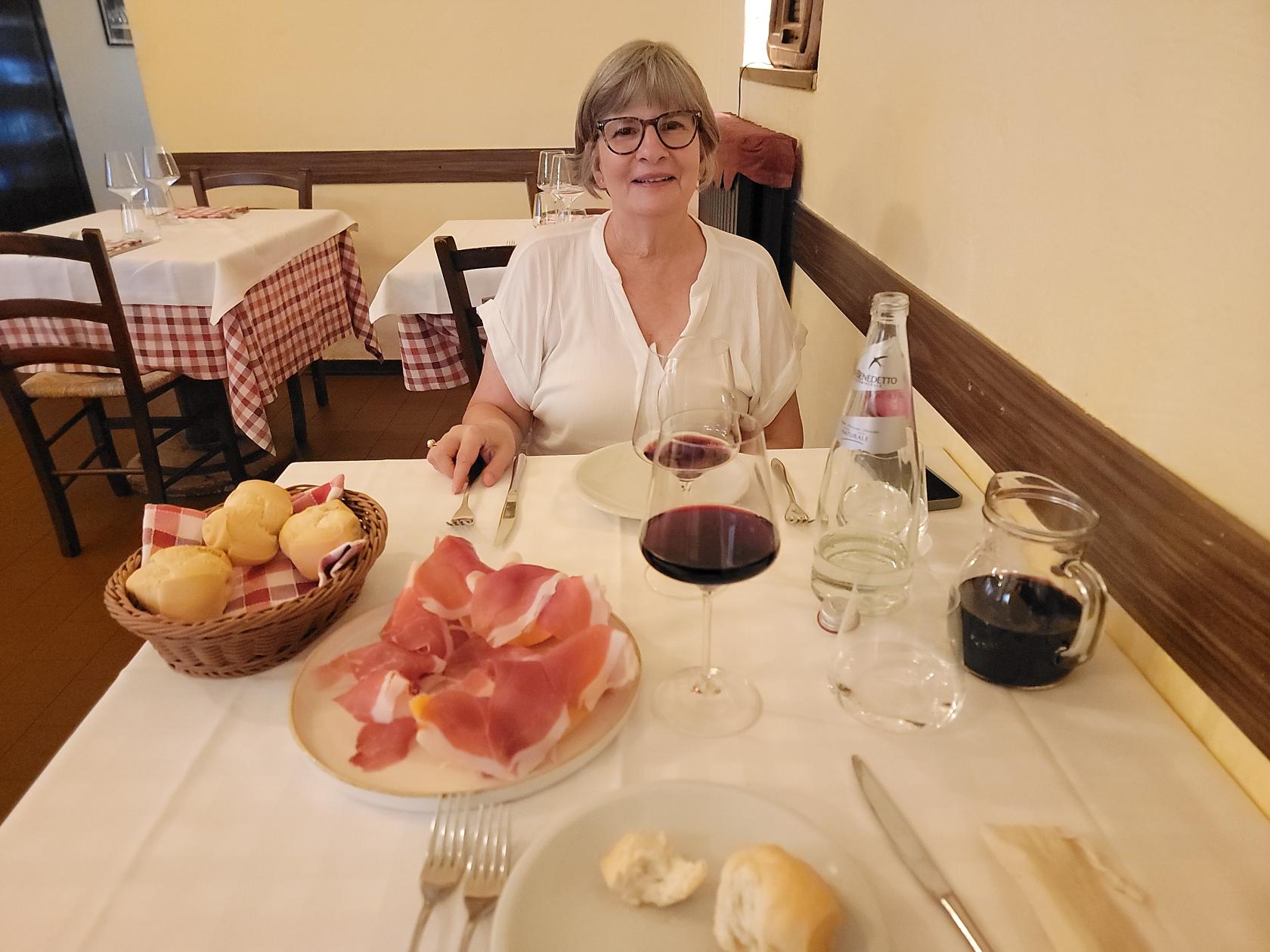
Bread and Patti’s Dinner – Osteria die Servi – Parma, Italy
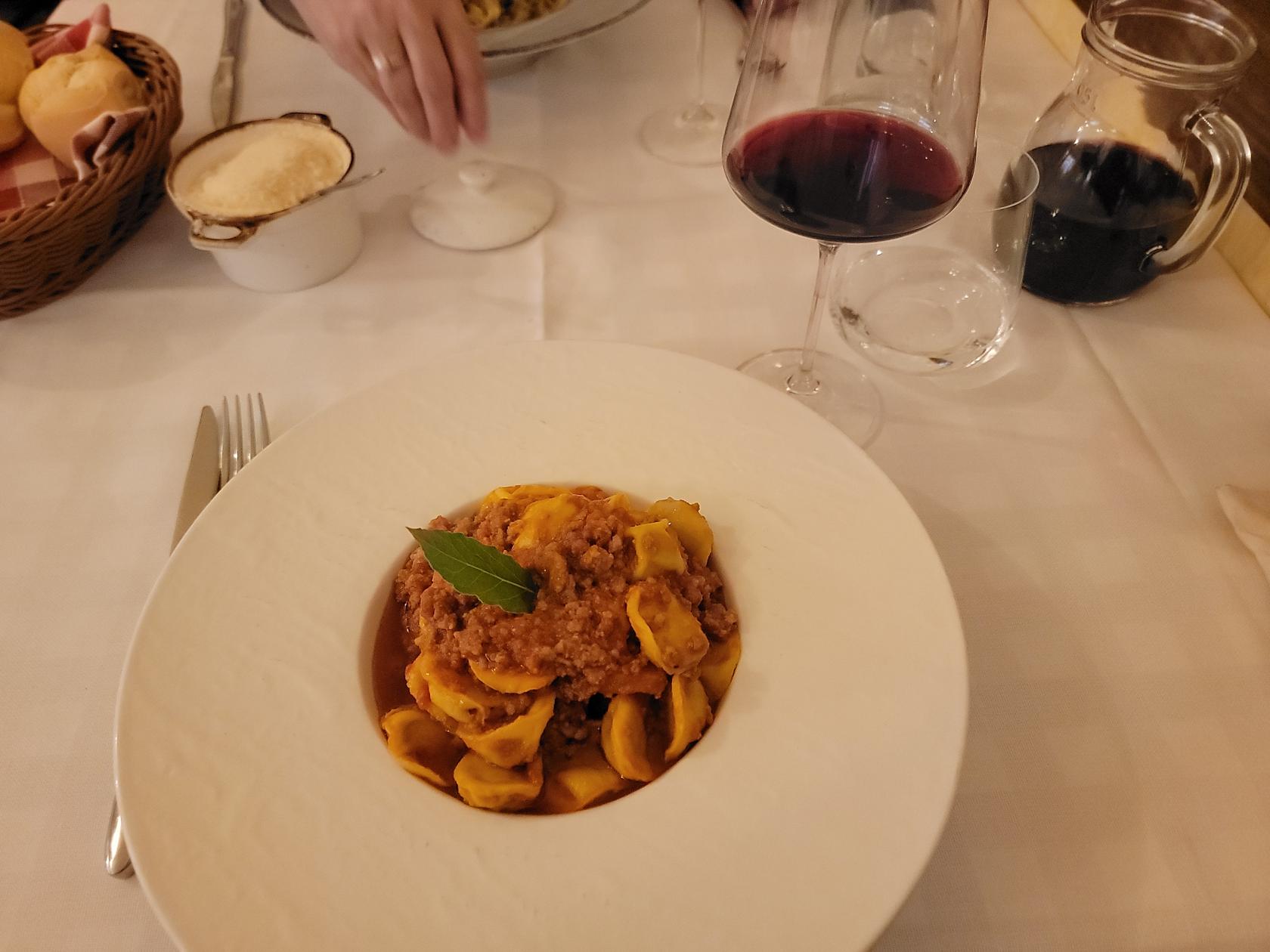
Ravioli – Osteria die Servi – Parma, Italy
Trattoria Corrieri Parma
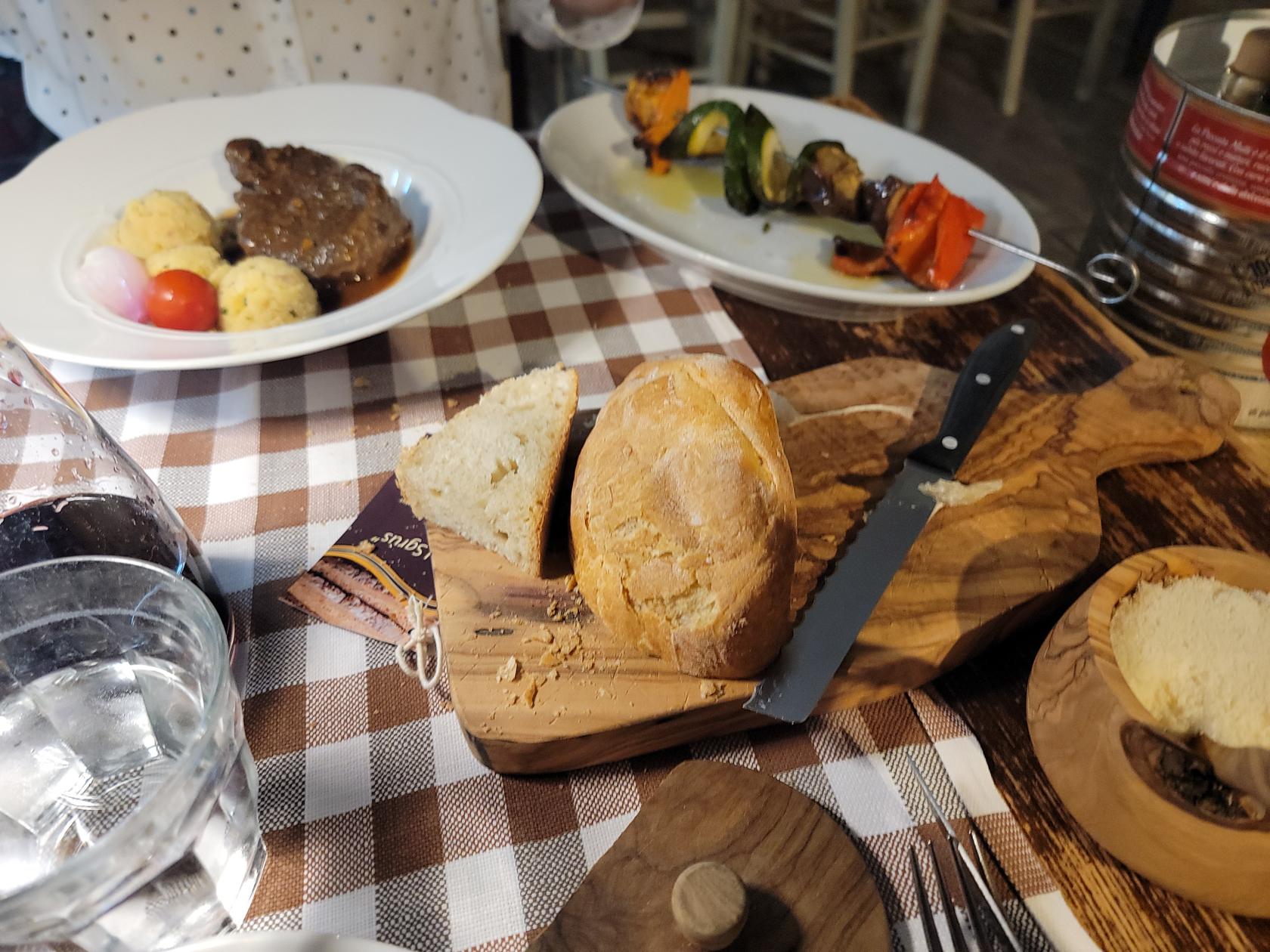
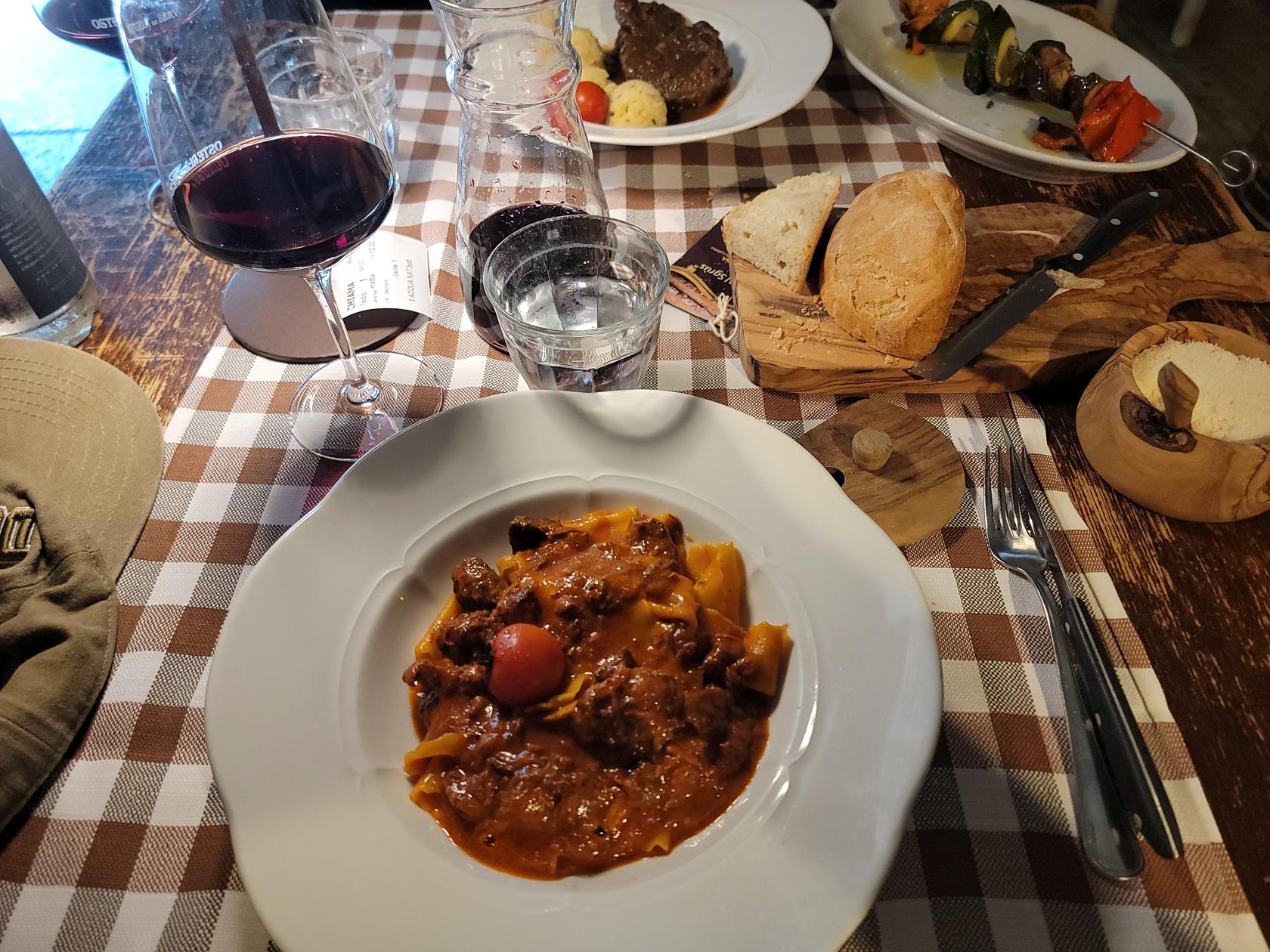
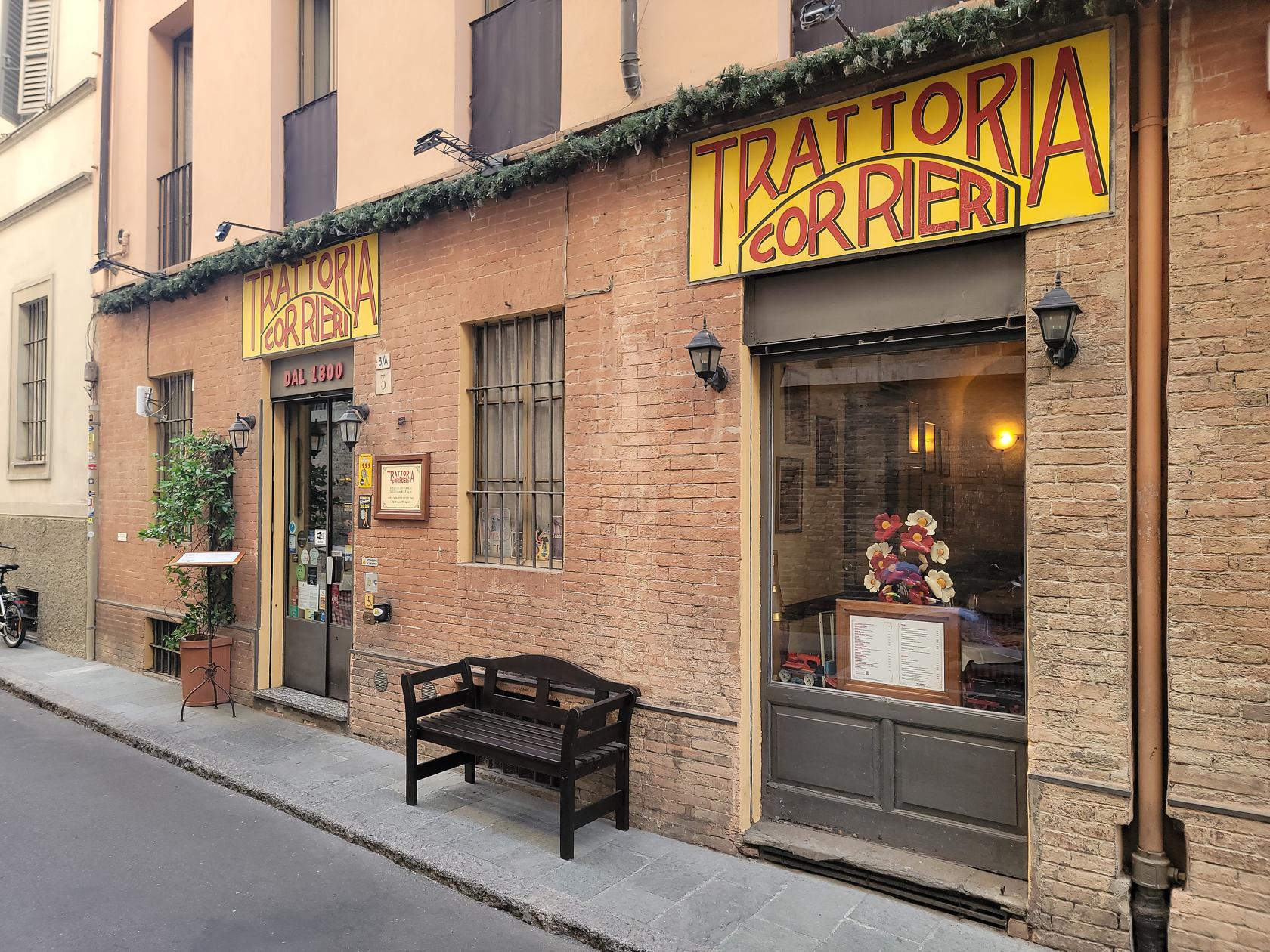
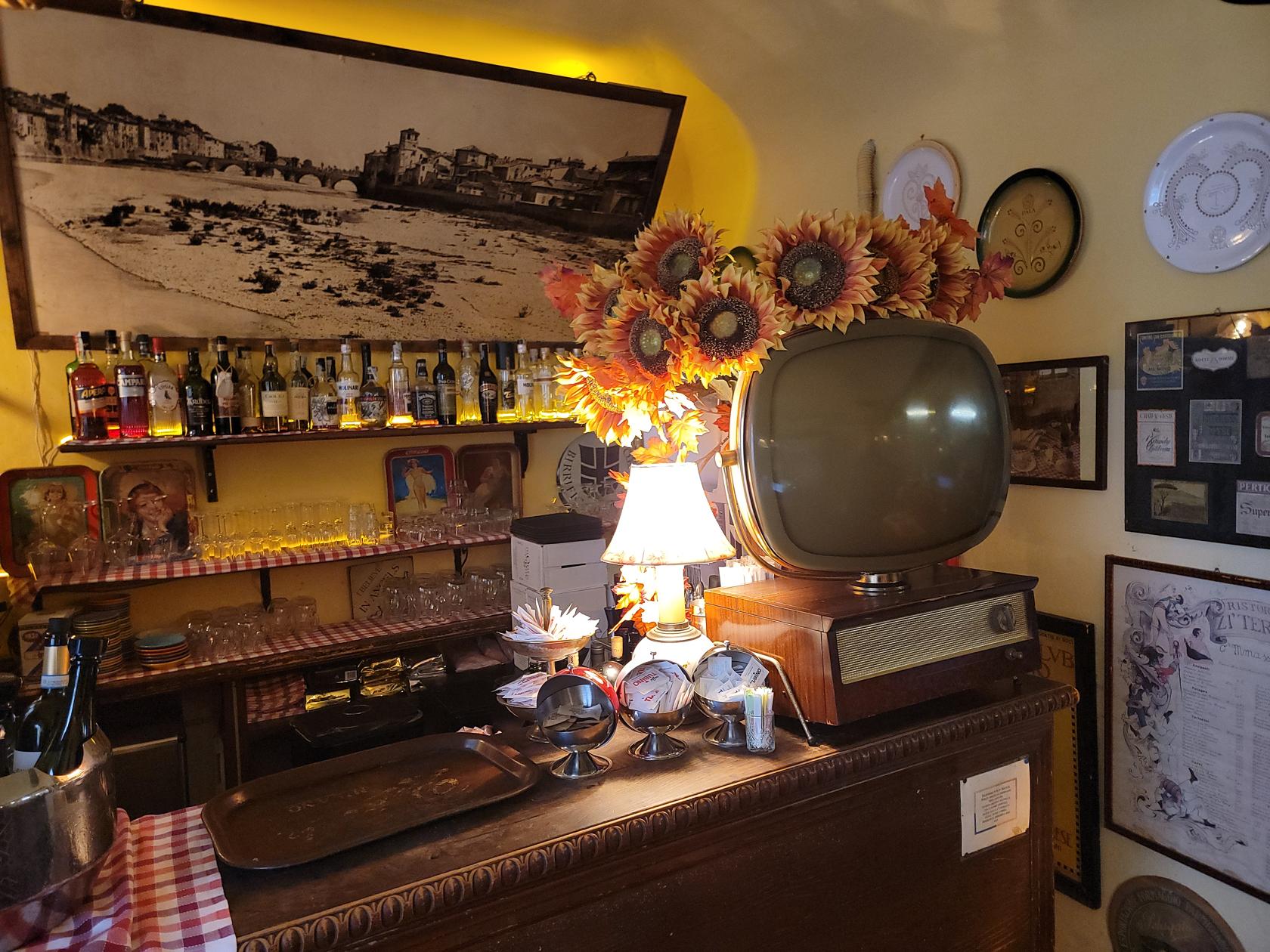
Another fine local restaurant is the Trattoria Corrieri Parma. Located further down in the city and by a Parma University building, it offers great food at even lower prices than die Servi. We found the service similar and the menu full of local dishes for us to try.
To use the museum’s own words, “The severe, neoclassical imprint of the letters, characterized by the stark contrast between the thickness of the strokes and the thinness of the lines and serifs; the stark, epigraphic composition of the title pages and dedications; the airy, correct relationship between text and images, between line and line, between light and dark make Bodoni’s page a prodigy of harmony and readability.“
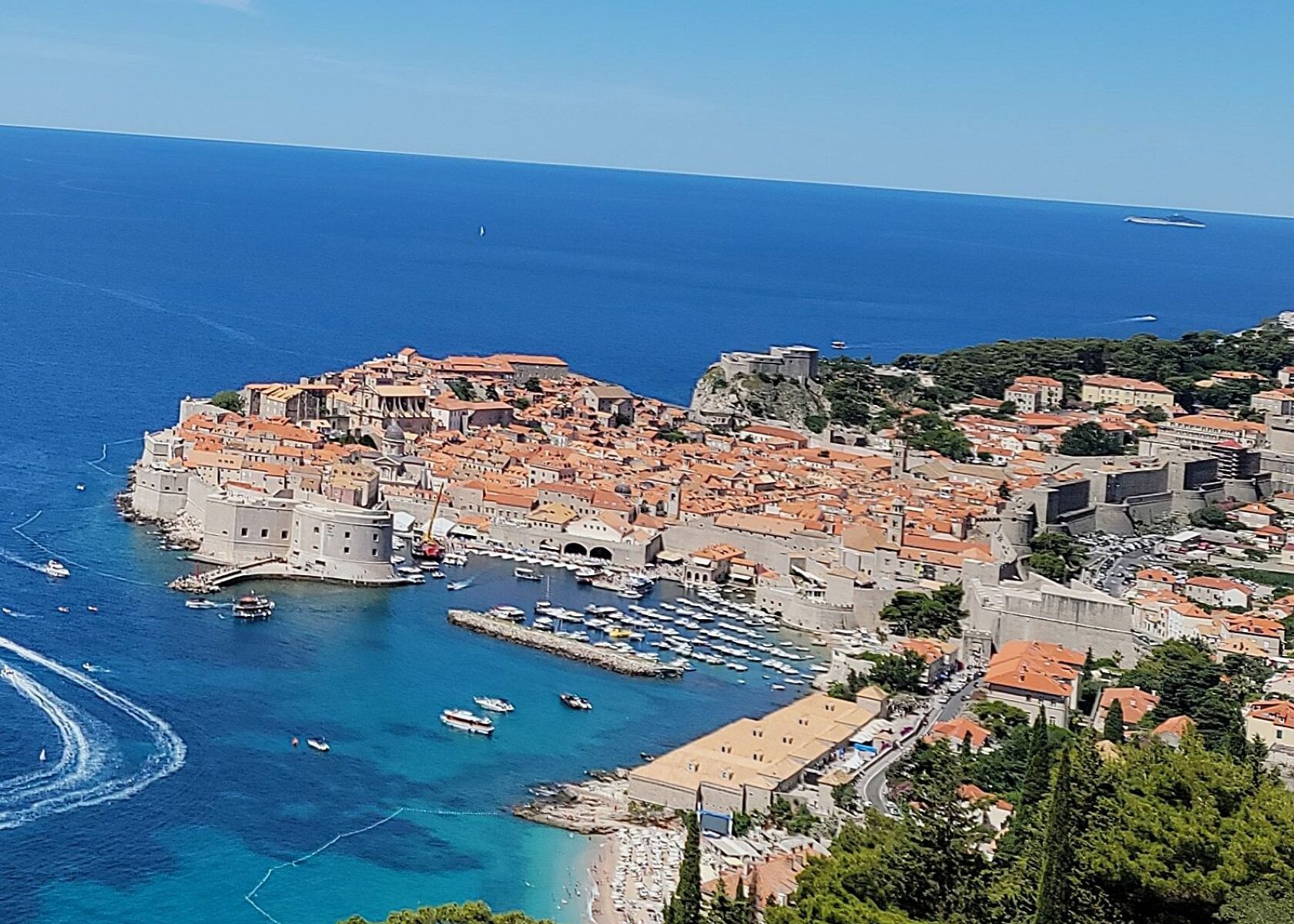
Owing to historical fate perhaps, Dubrovnik, Croatia, was formerly known as Ragusa, or the Republic of Ragusa, and was established some time in the 7th century C.E. from refugees of the old Epidaurum, or Ragusa Vecchia. It had been largely a free state before and after the control by the Byzantine Empire, the Repuplic of Venice and other later powers, including France and Napolean.
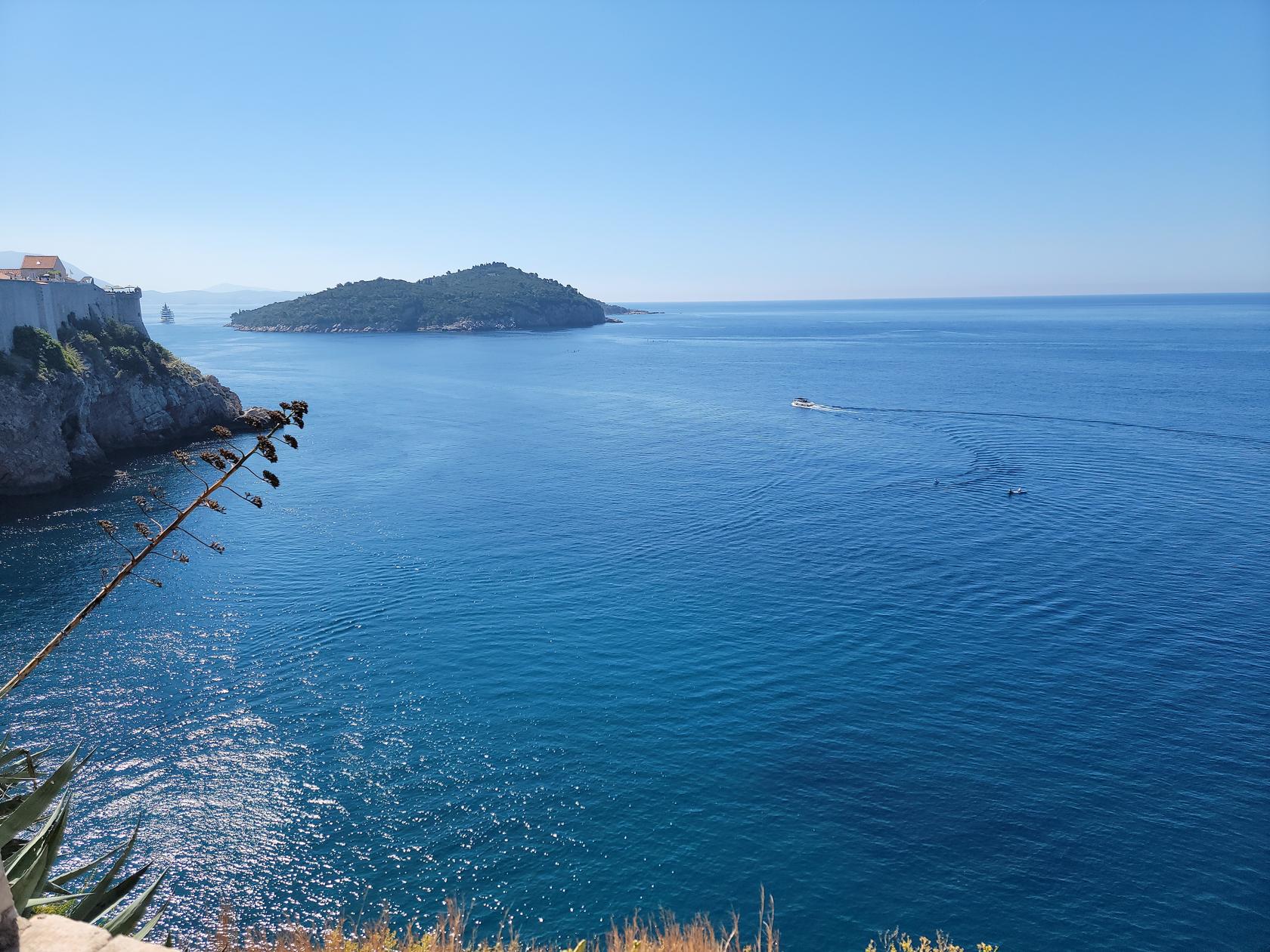
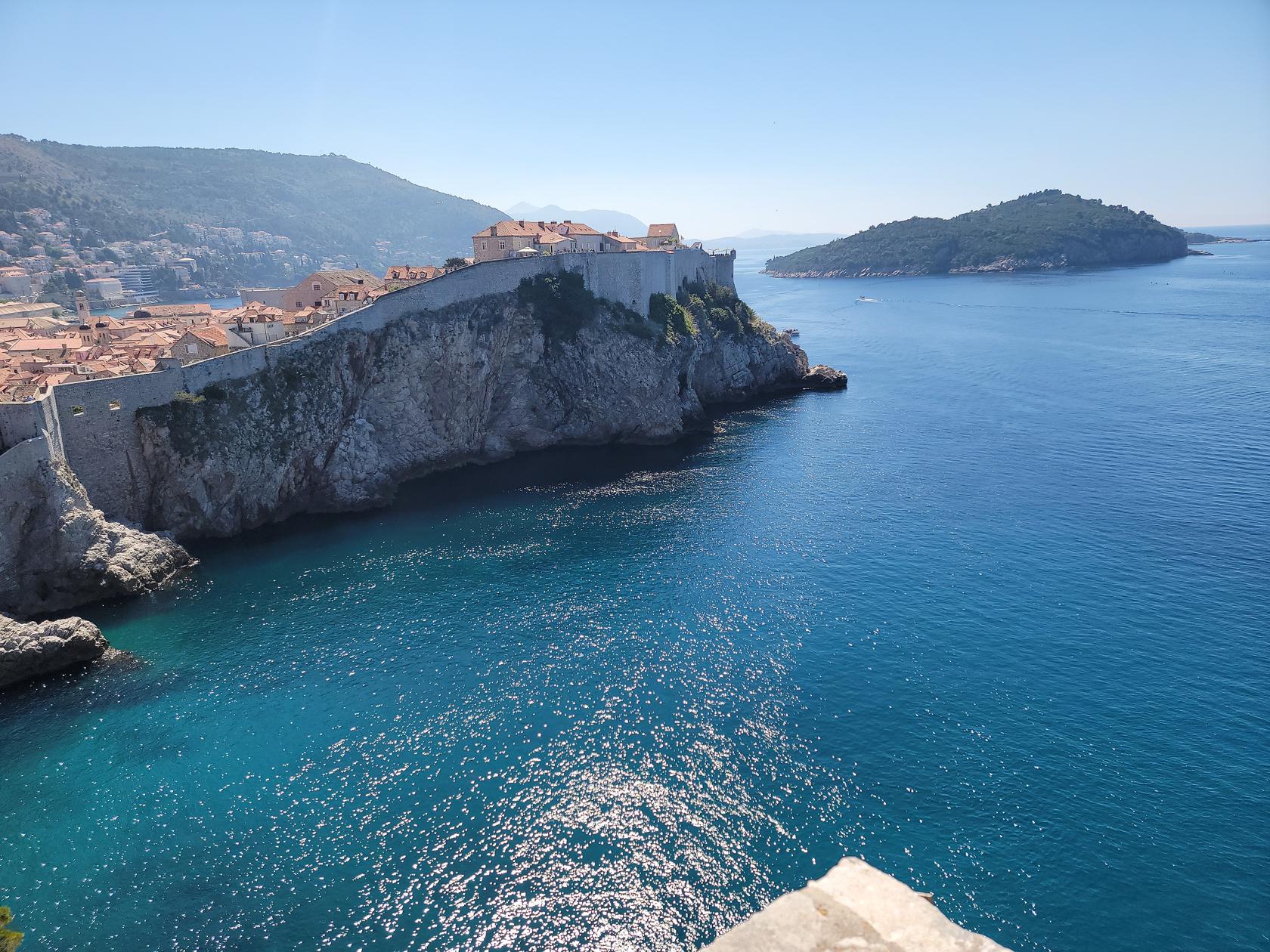
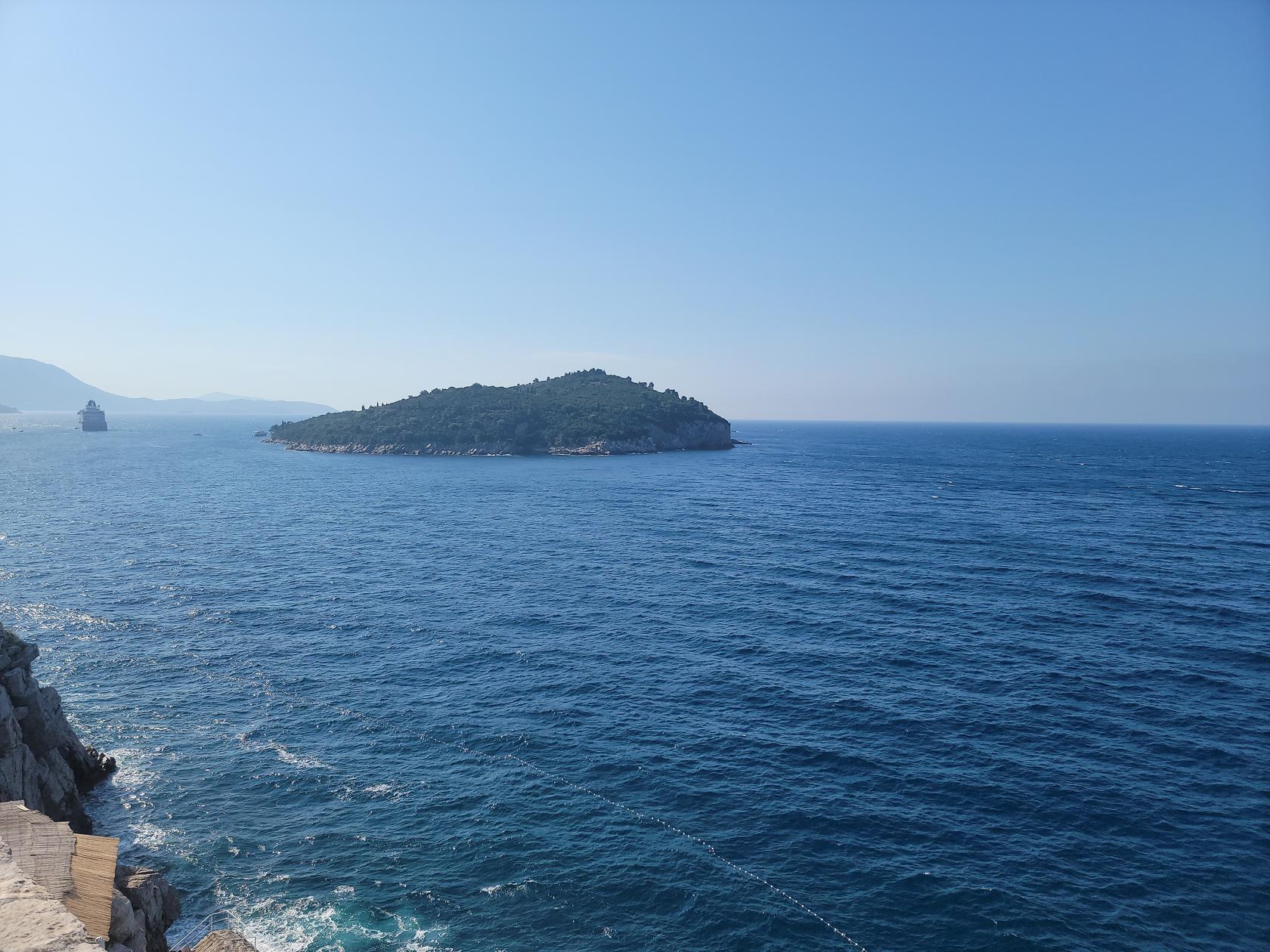
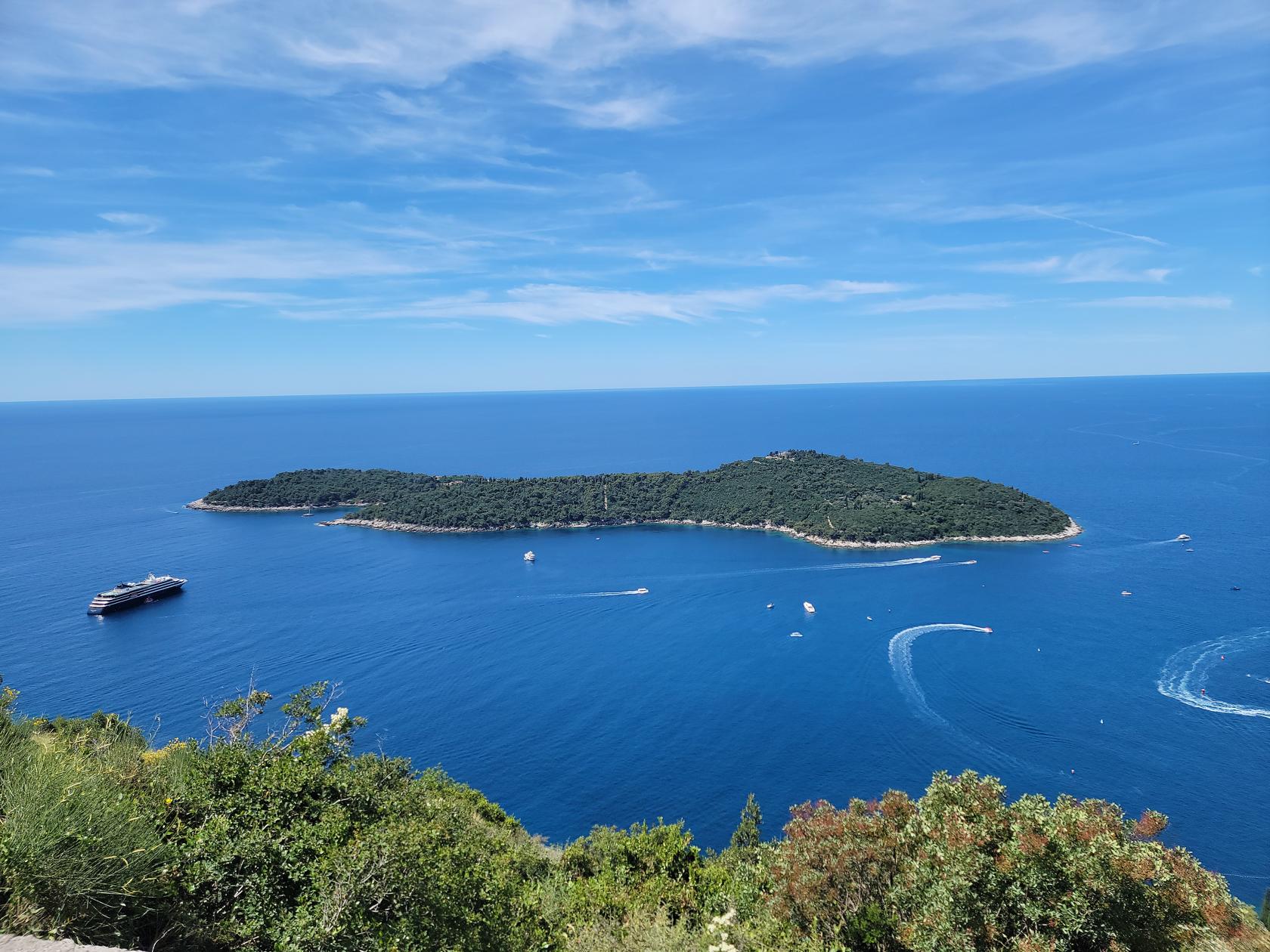
Dalmatian Coast – Lokrum Island – Dubrovnik, Croatia
Dubrovnik
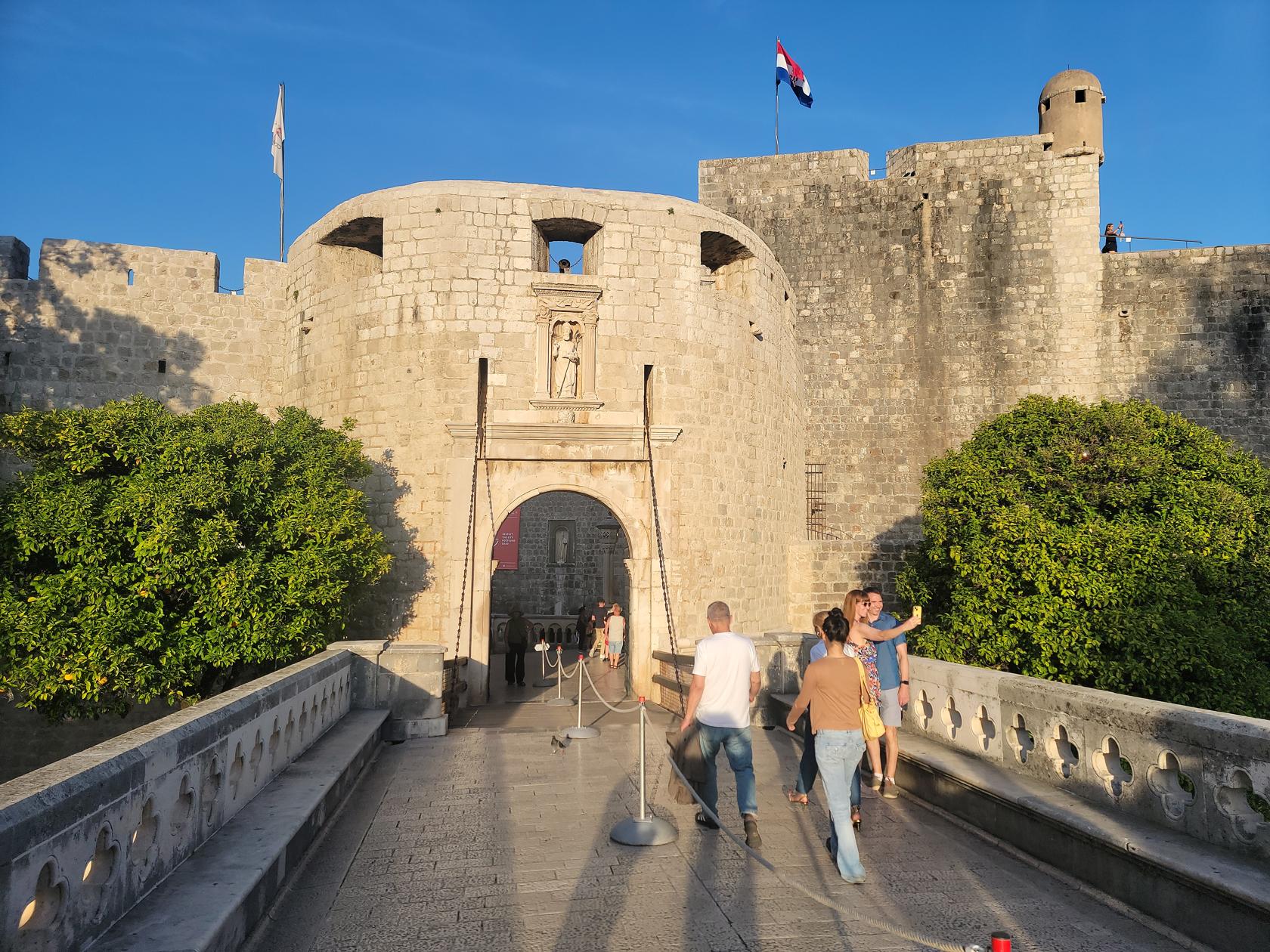
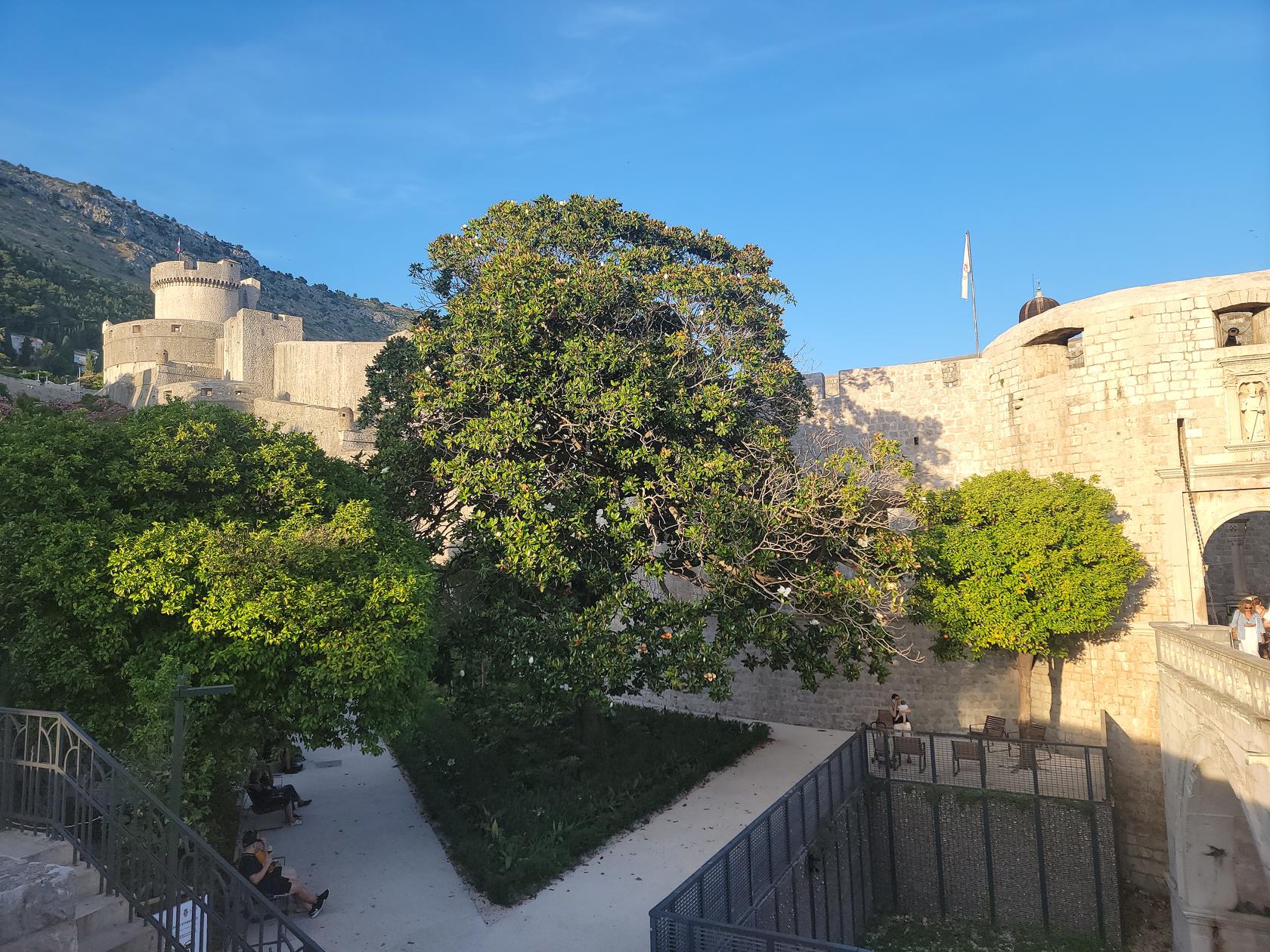
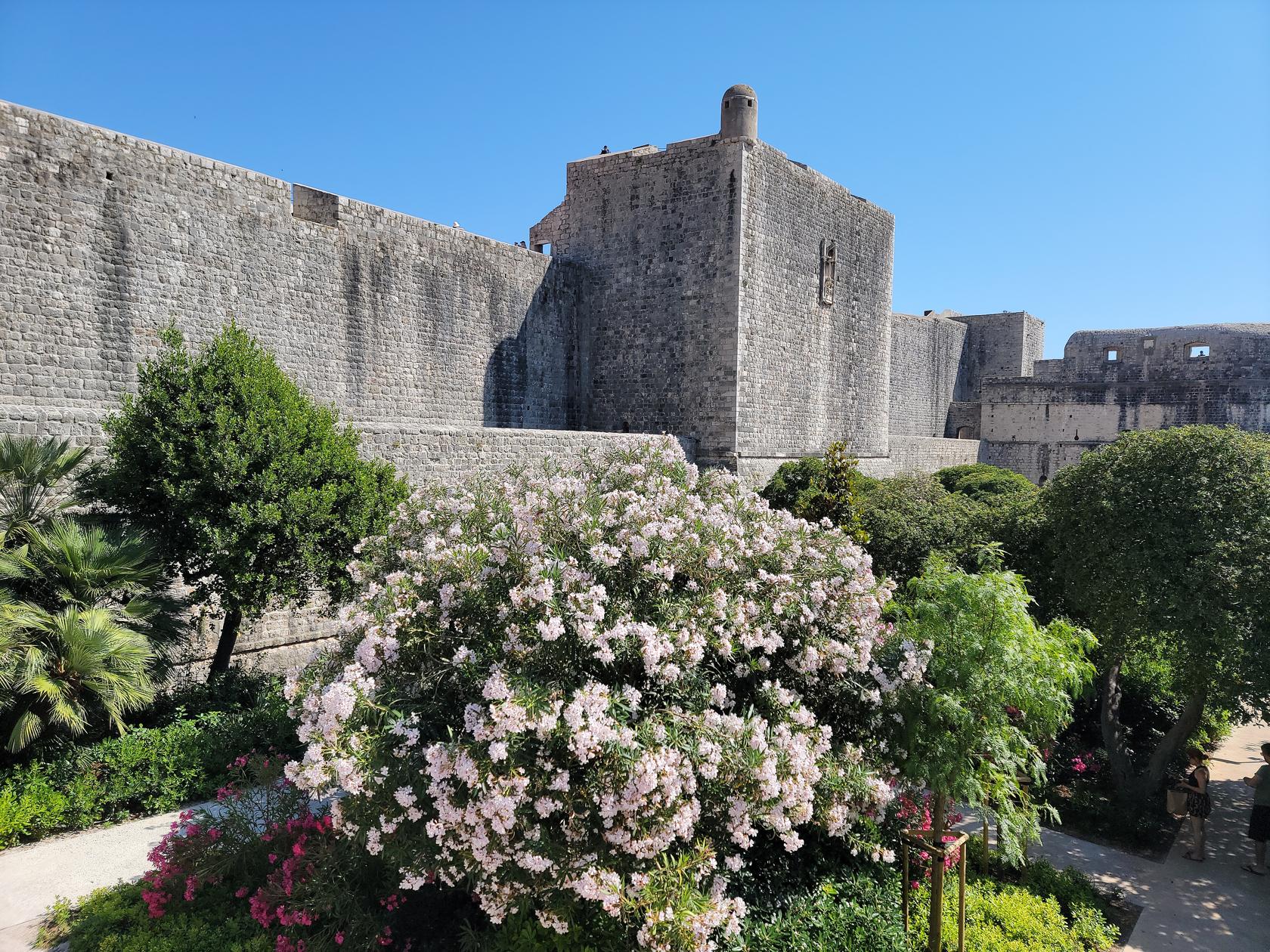
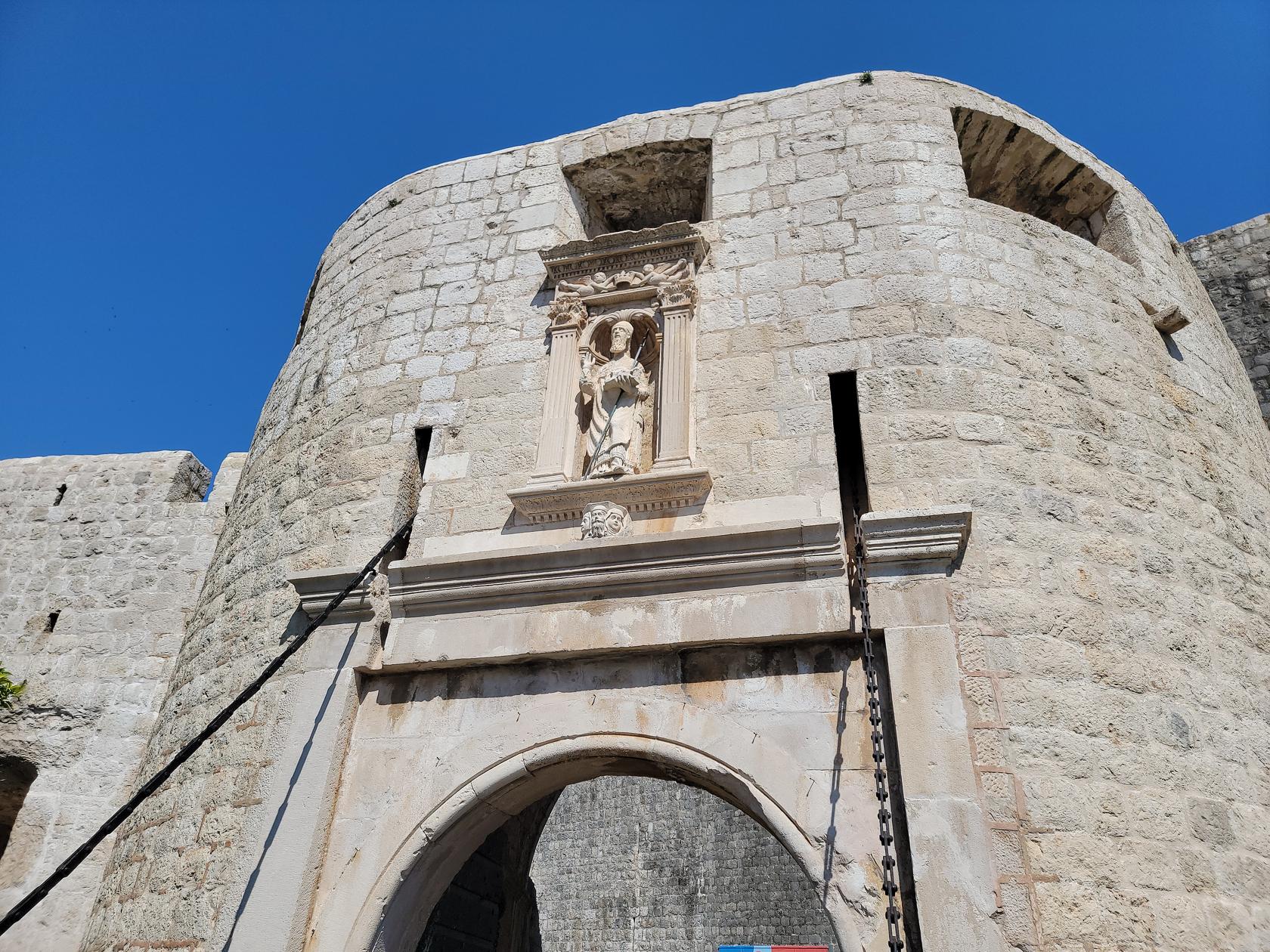
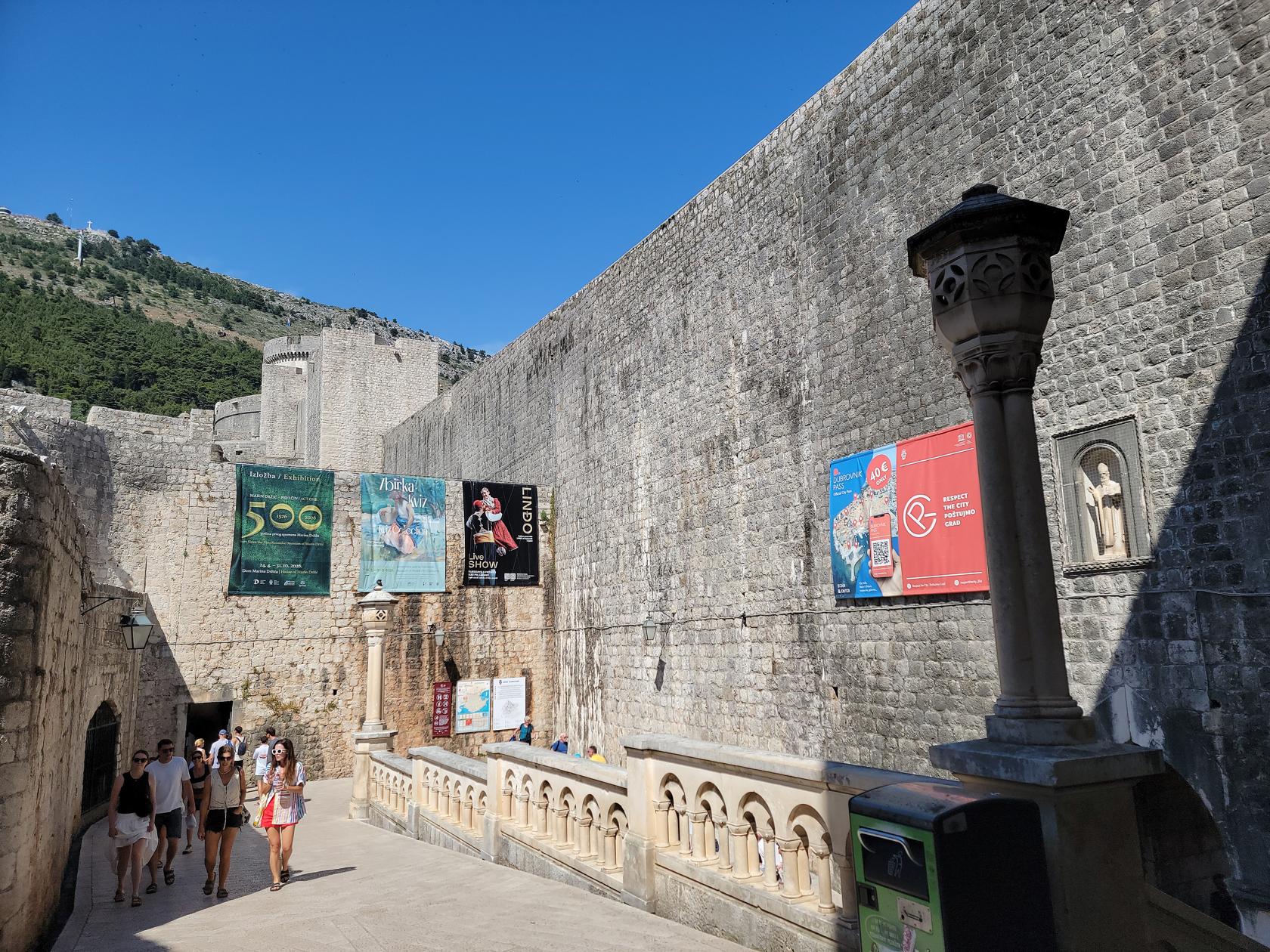
The town is an ancient walled city, that is half surrounded by sea on its southern half. It has a number of entry points, guarded by gates, which in the past maintained its security from threats by land and sea. The primary of which is the Pile Gate, which today has a beautiful garden and play area beneath it.
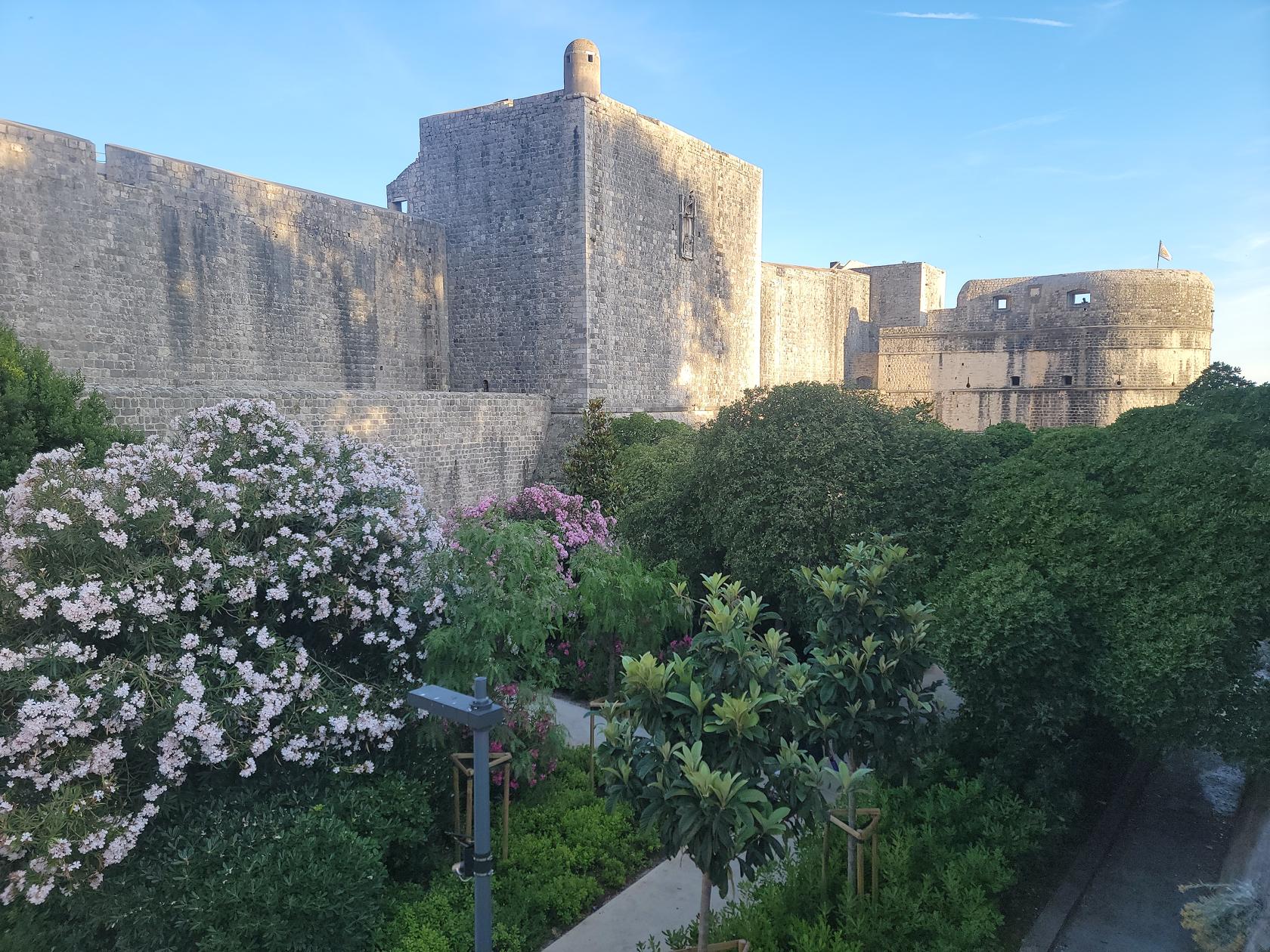
Park below Fortress Wall – City Wall Tour – Dubrovnik, Croatia
Entrance to Old Town and Fortress Wall – City Wall Tour – Dubrovnik, Croatia
Park below Fortress Wall – City Wall Tour – Dubrovnik, Croatia
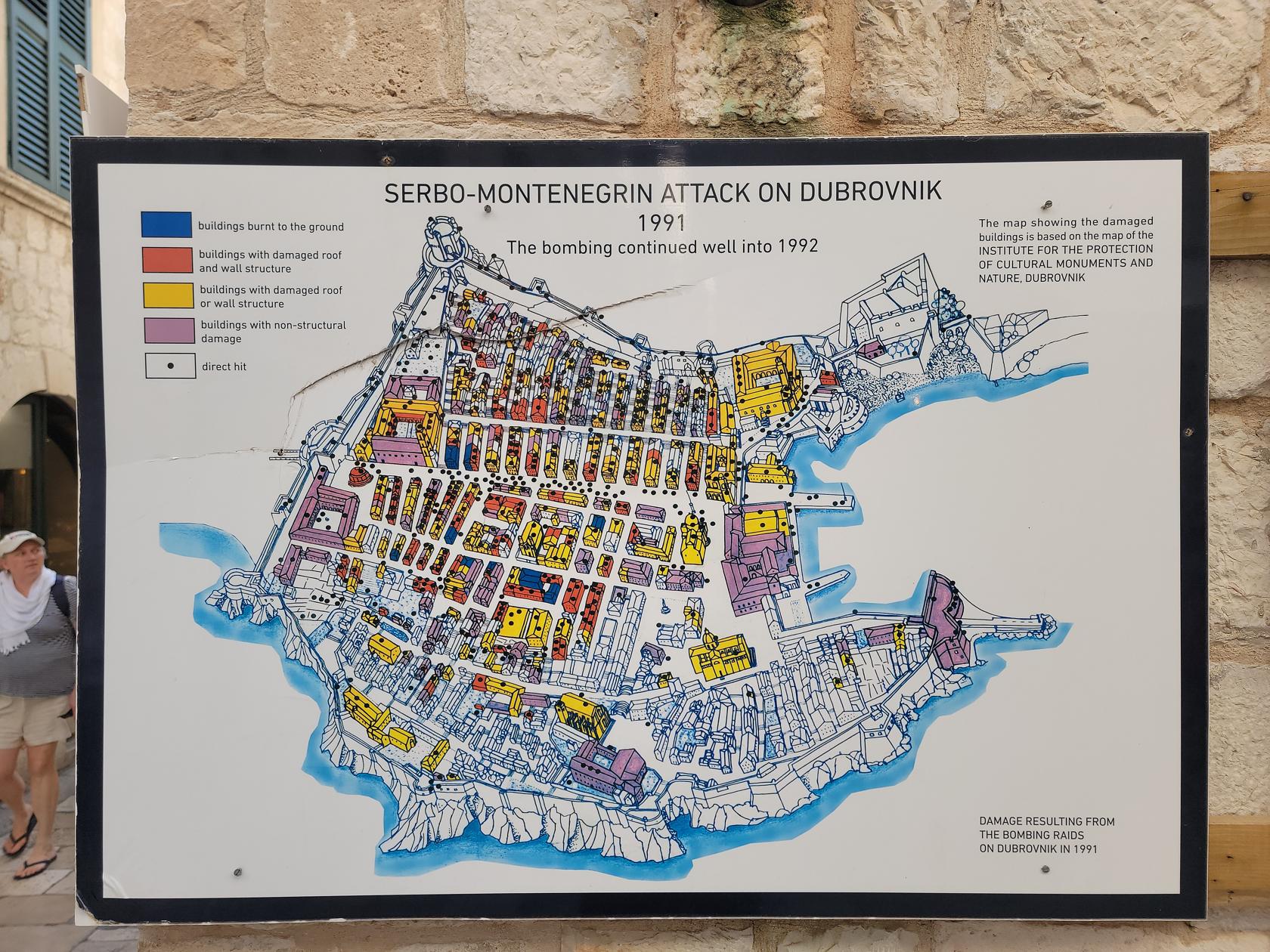
As early as 1991 the Old City was surrounded and laid seige by foreign adversaries and survived, owing to its thick, impenetrable walls and access to the sea. The number of buildings damaged in this unnecessary conflict of a UNESCO World Heritage site were extensive, as the map below shows. This included the cathedral, as well as most churches inside the walls.
Map – Serb and Montenegrin Attack and Seige, 1991 – Dubrovnik, Croatia
Getting There
Train service is relatively limited or non-existent and mostly due to the former Soviet, Yugoslavian and present day Croatian governmental and engineering authorities being unable to overcome technical difficulties building tunnels through the earthquake prone geology in the region. The mountainous terrain runs longitundinally along the coast and is prone to falling apart. Even roadways are difficult to maintain. So other options should be sought out.
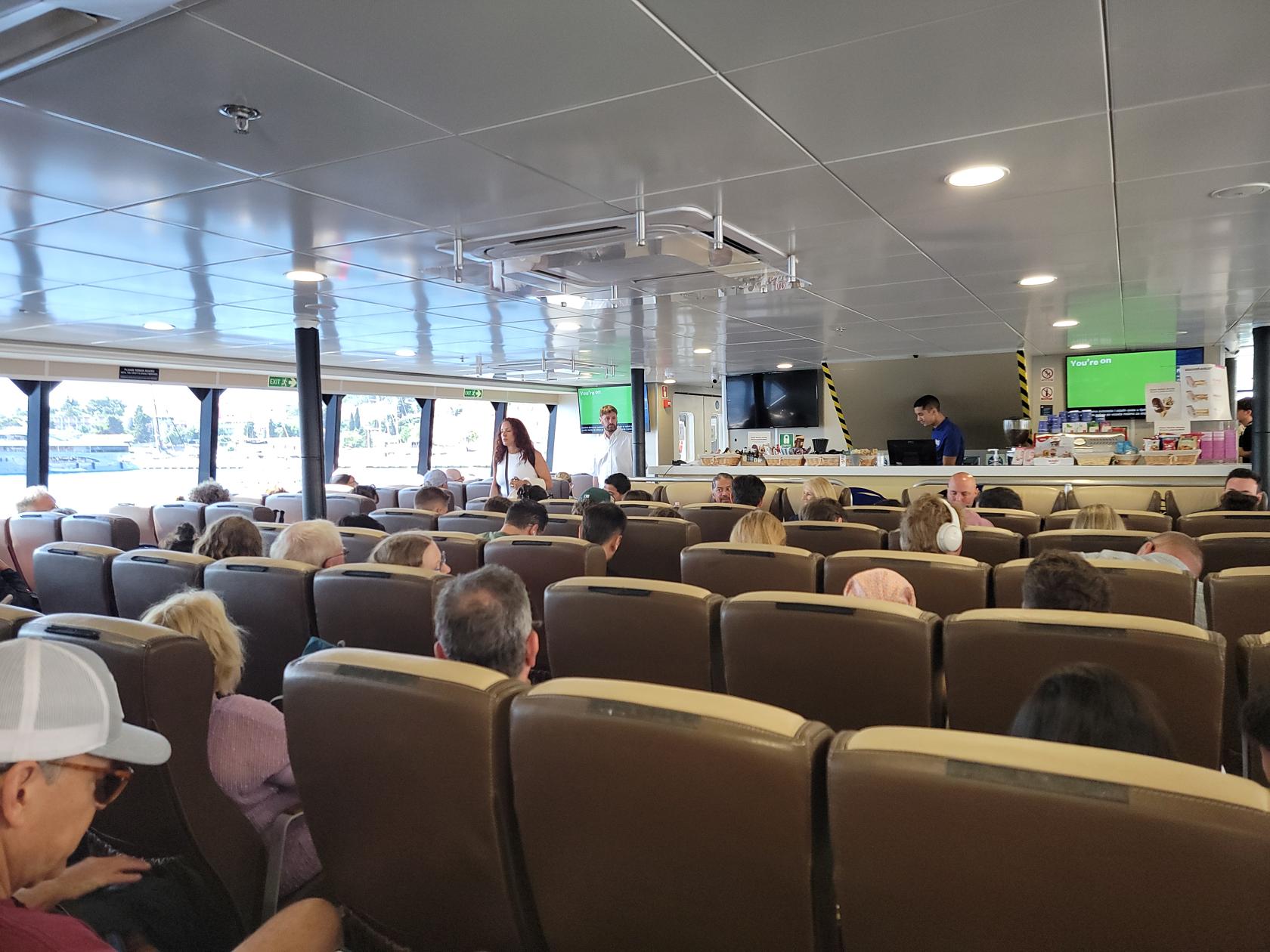
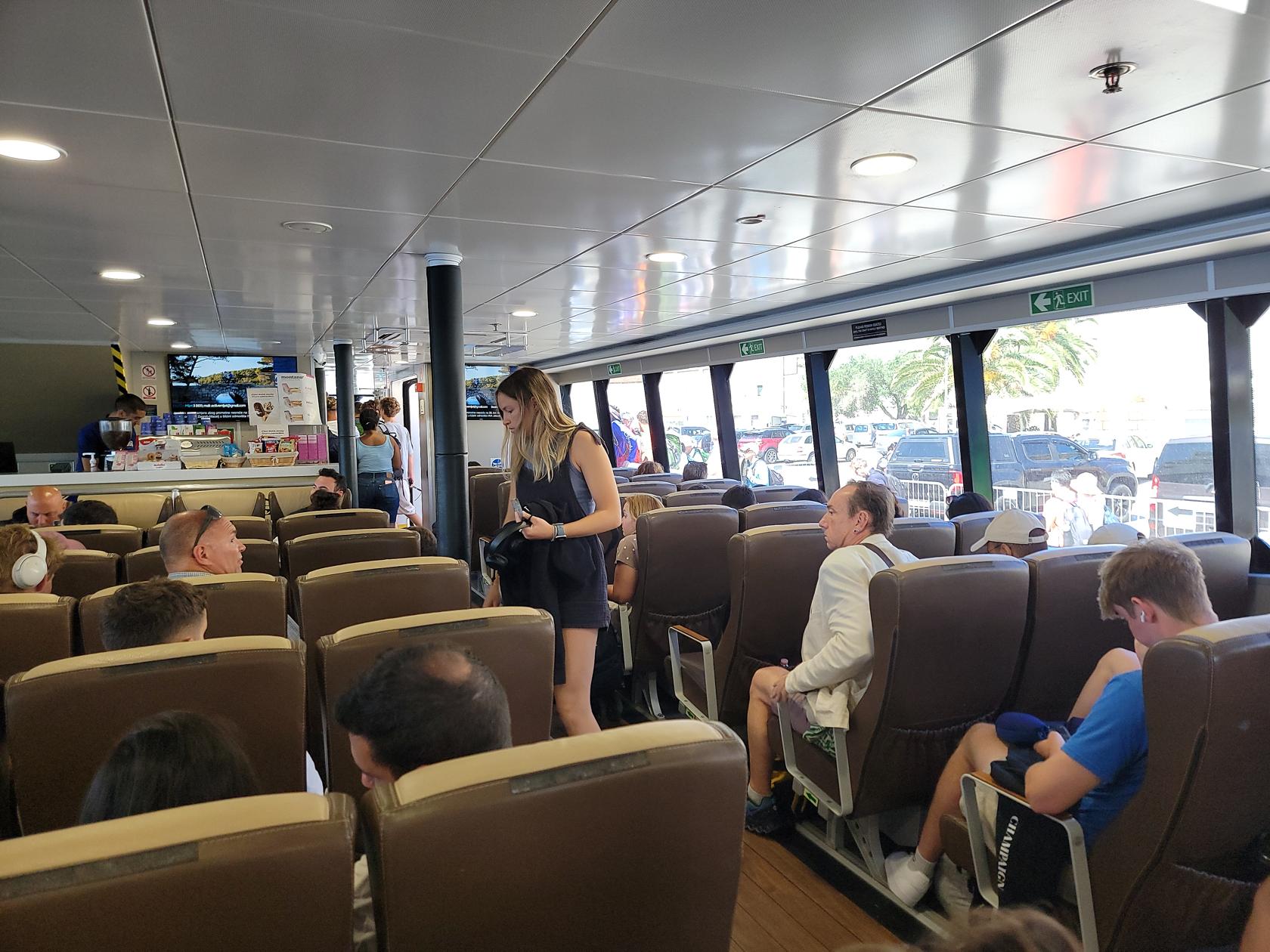
Interior – Kapetan Luke Ferry
Interior – Kapetan Luke Ferry
To get there we took the Kapetan Luka ferry service from Korcula to Dubrovnik. It is a two hour trip with one stop along the way. Other means of getting here are by bus, flying and car.
Though the Kapetan Luka service is adequate, the TPLine is commended for several reasons:
First, the ferries are larger and more accommodating.
Second, the crew seem to know there stuff, especially when is comes to stowing your luggage, etc.
Third, your luggage is stowed with you, on-board, inside; not outside in the elements.
Lastly, their internet presence is better and they maintain a very good and well maintained portal where tickets may be purchased directly from them, instead of some other third party application.
Where We Stayed
The hotel options in Dubrovnik can be very expensive, so be prepared for sticker shock, especially during peak season. There are other options, particularly when you can travel during non-peak or willing to venture further out from the Old Town.
Vila Dard Hotel
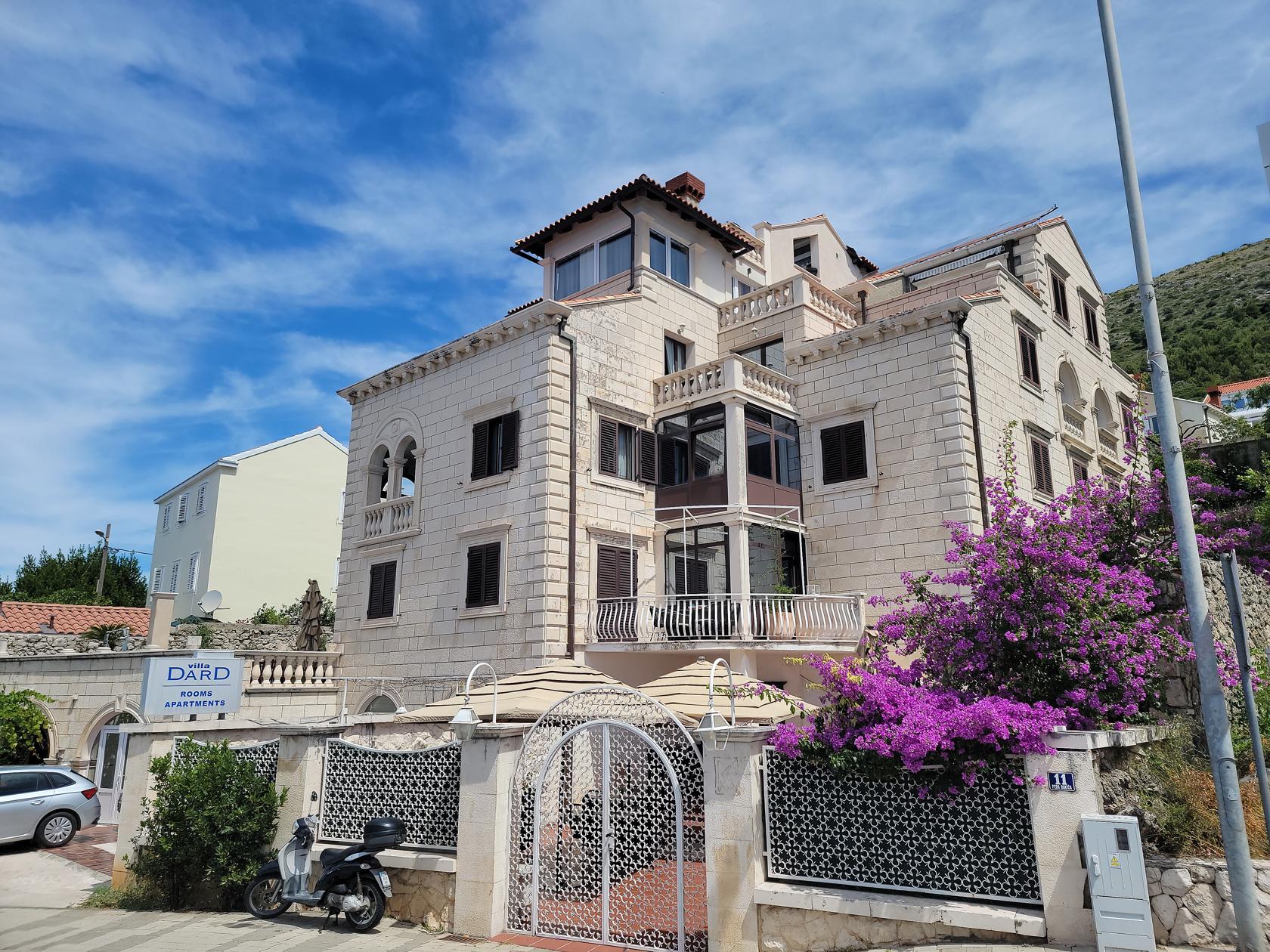
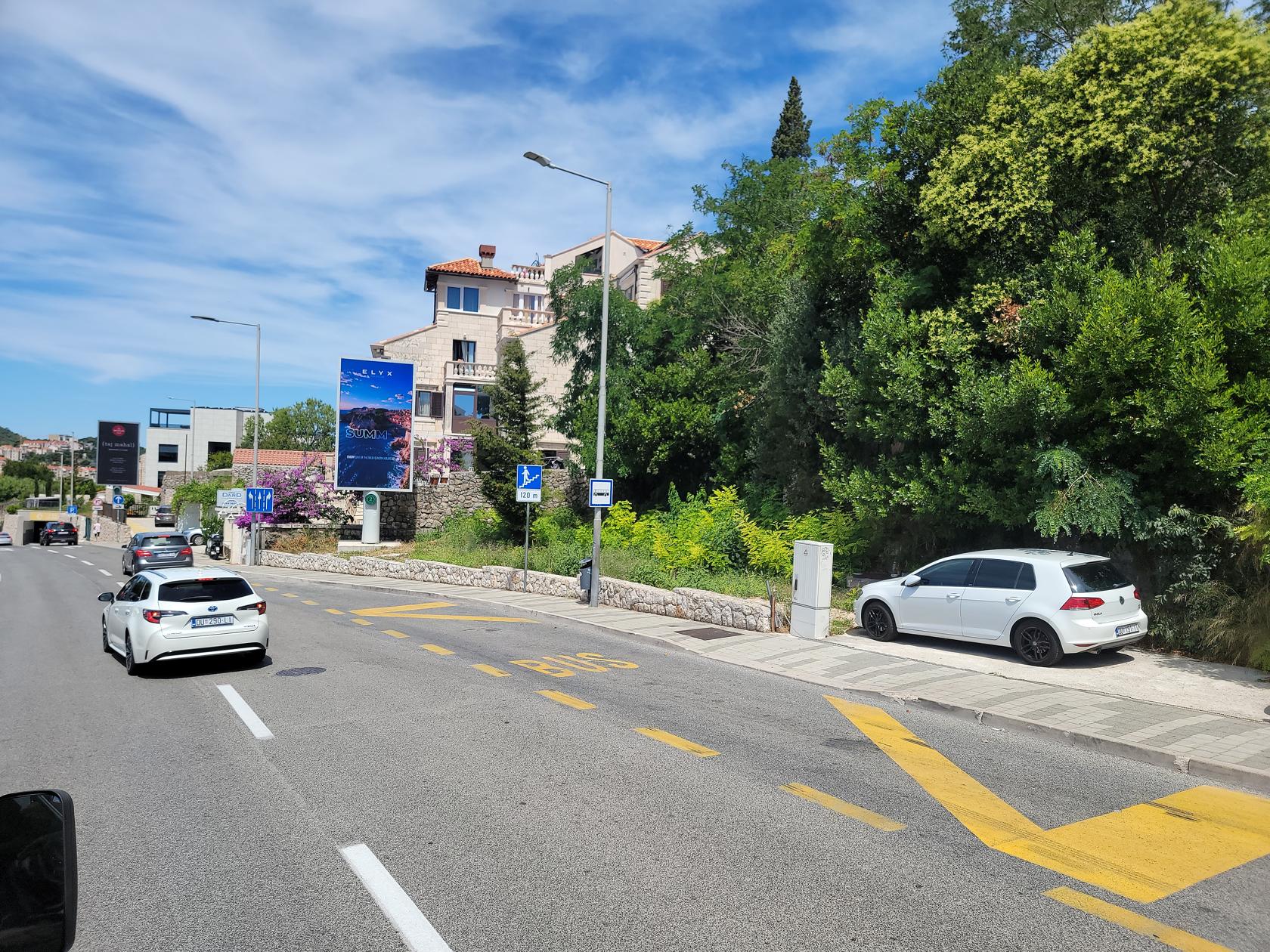
Located directly above the Old Town and approximately three hundred steps from it, was our hotel, Vila Dard. Unfortunately located on a very busy road, especially in the mornings and early evenings when everyone is rushing to and from work, it can be a bit challenging to cross.
Vila Dard – Dubrovnik, Croatia
Vila Dard Street – Dubrovnik, Croatia
However, it was for us more than 600-700€/night cheaper than staying at, let’s say, the Imperial Hilton down by the city. That’s a huge savings and one can overlook the traffic and inconvenience. It was very clean, fully air-conditioned and our laundry was changed everyday, without any issues with missing towels or other amenities, which we find rather frustrating at other higher priced options. So, in the end, it saved us some money and improved our health a bit, since we did not have to go to the gym and got plenty of exercise.
Lovrijenac Fortress
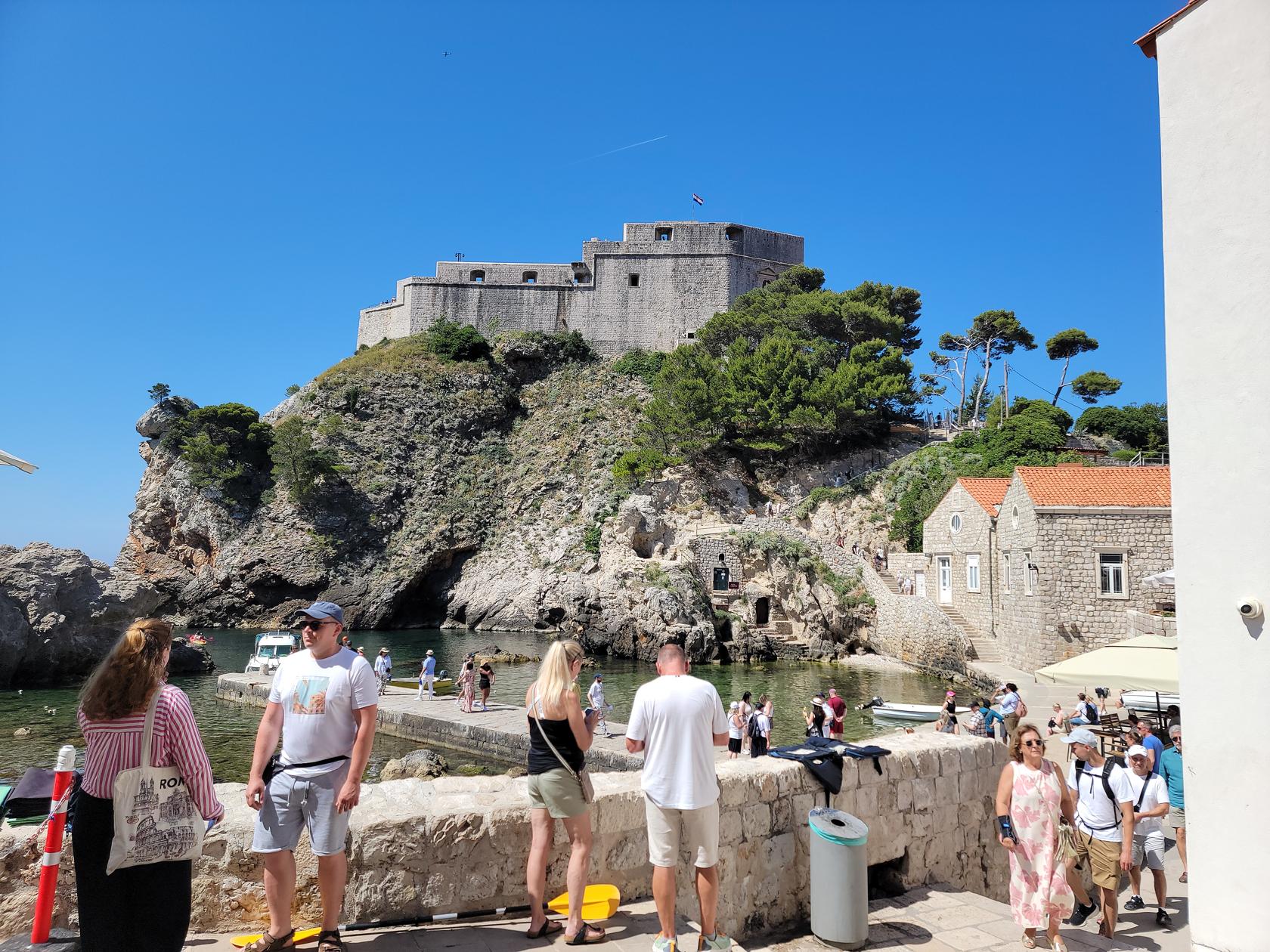
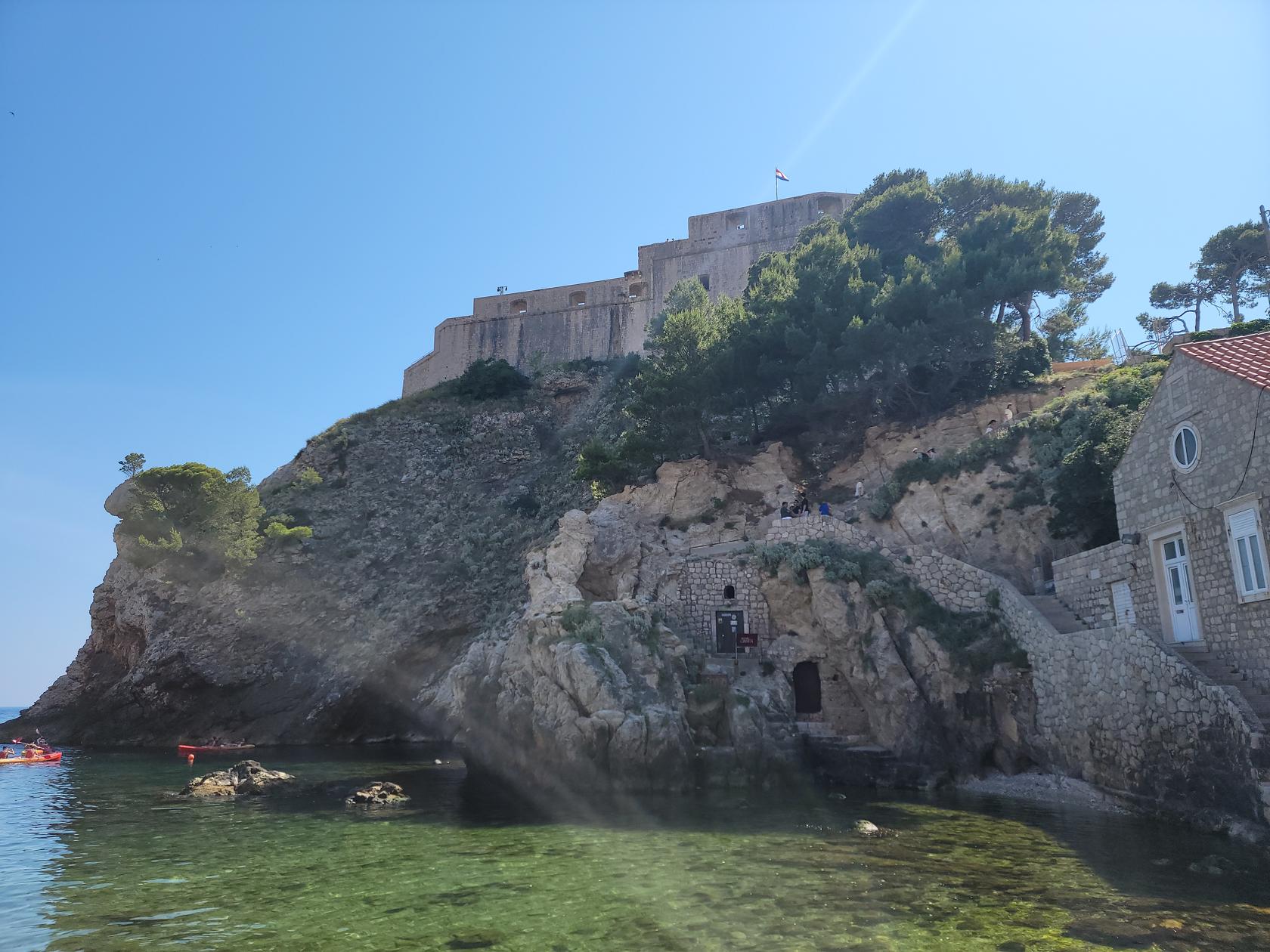
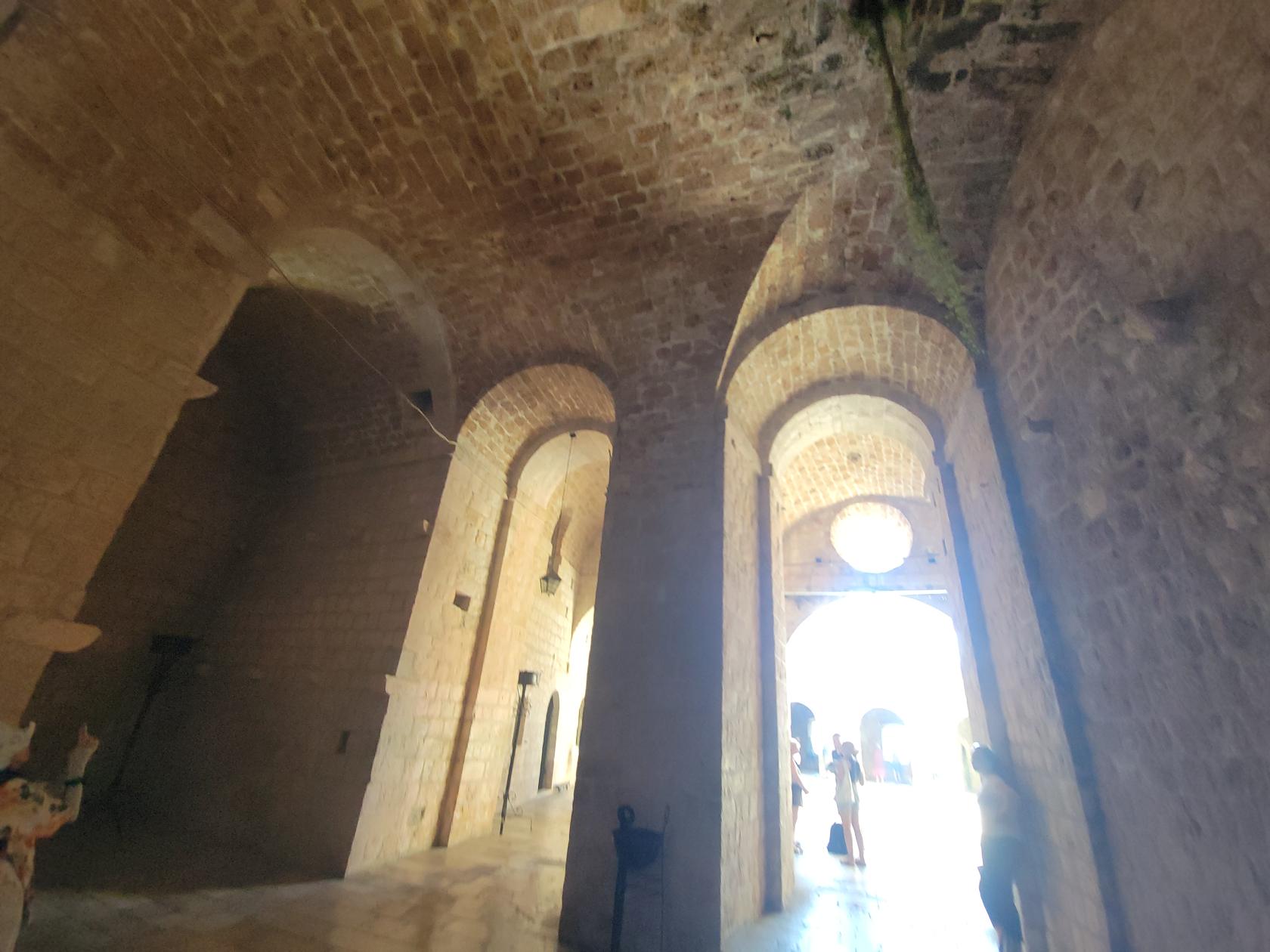
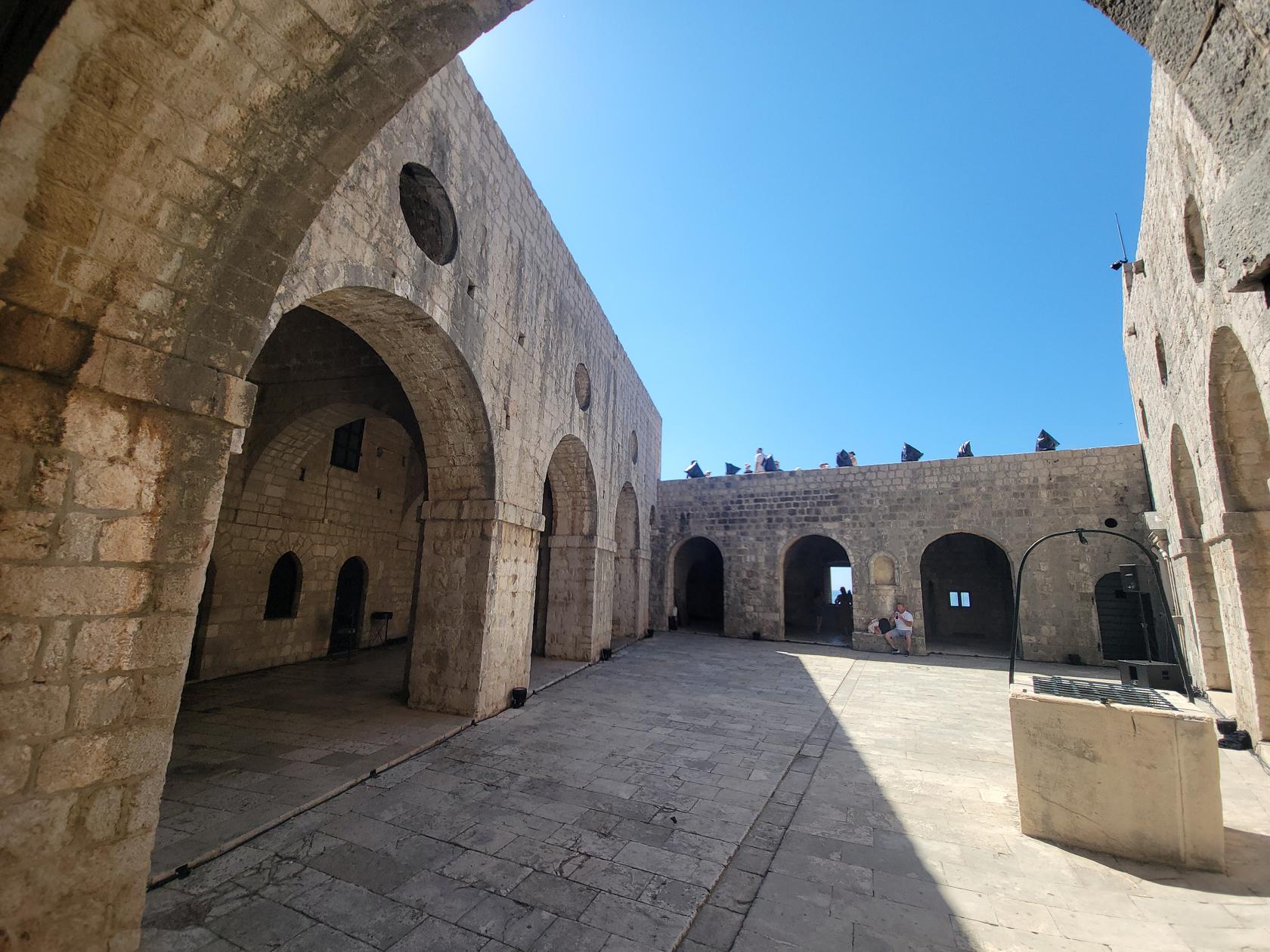
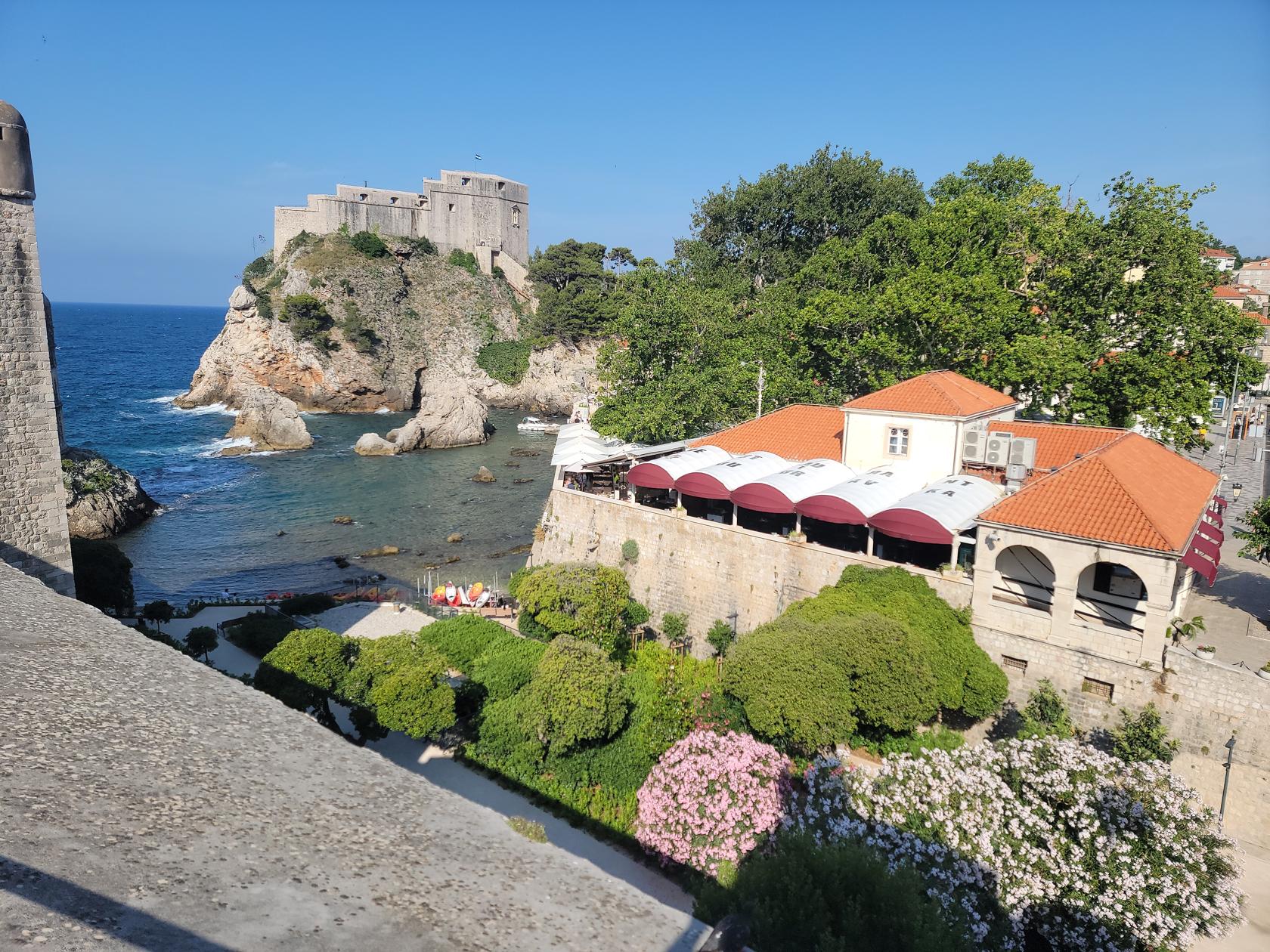
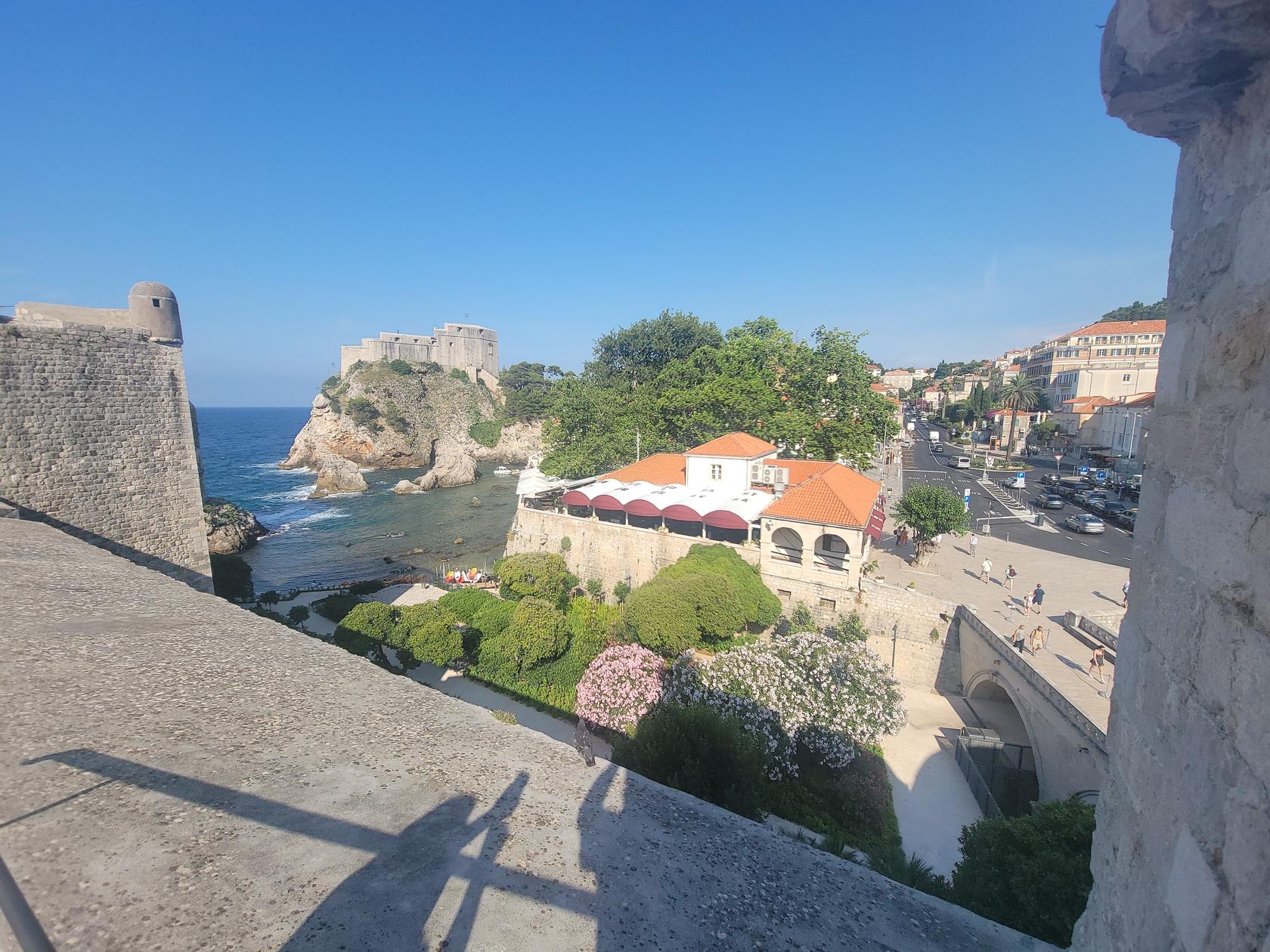
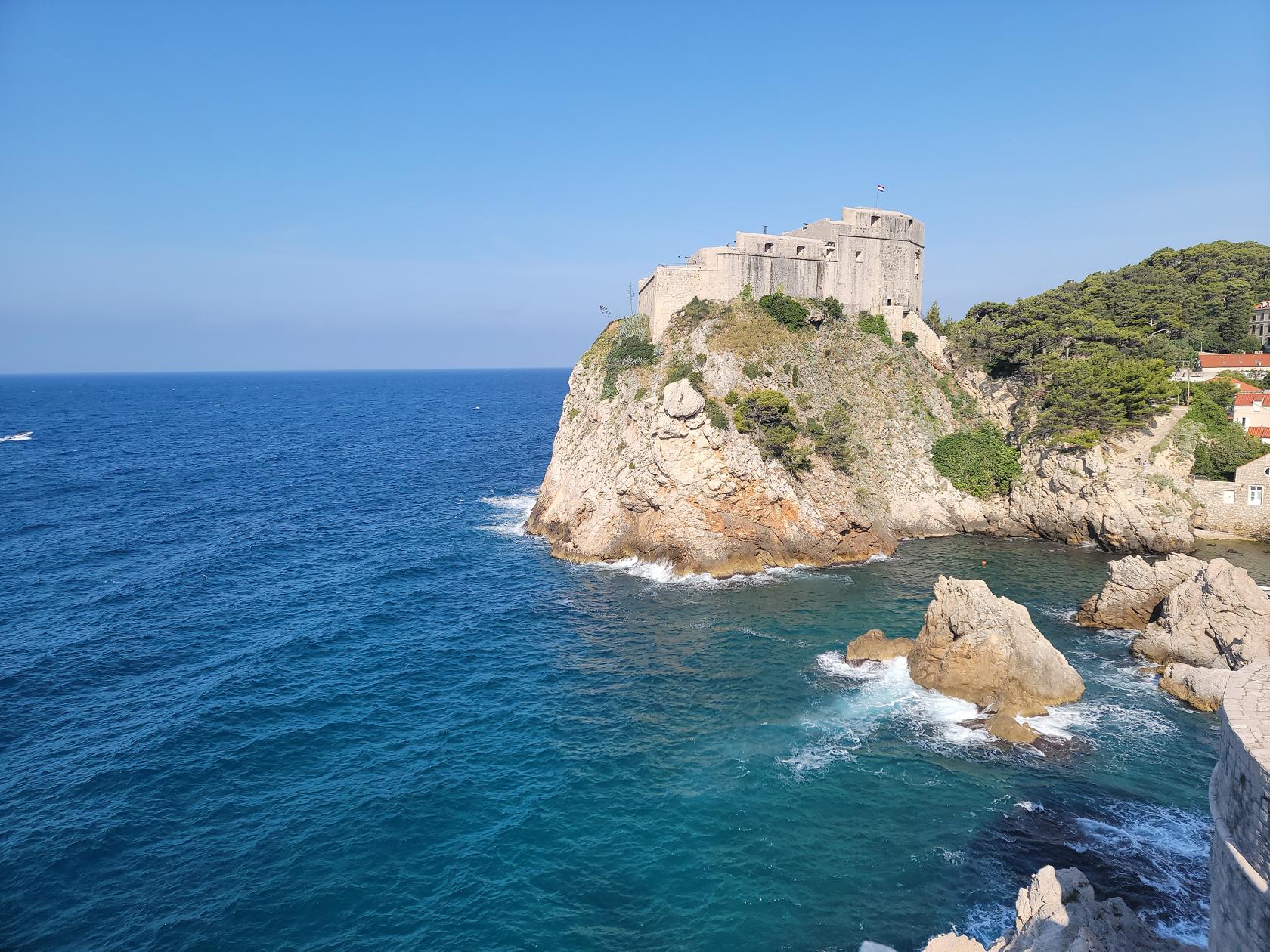
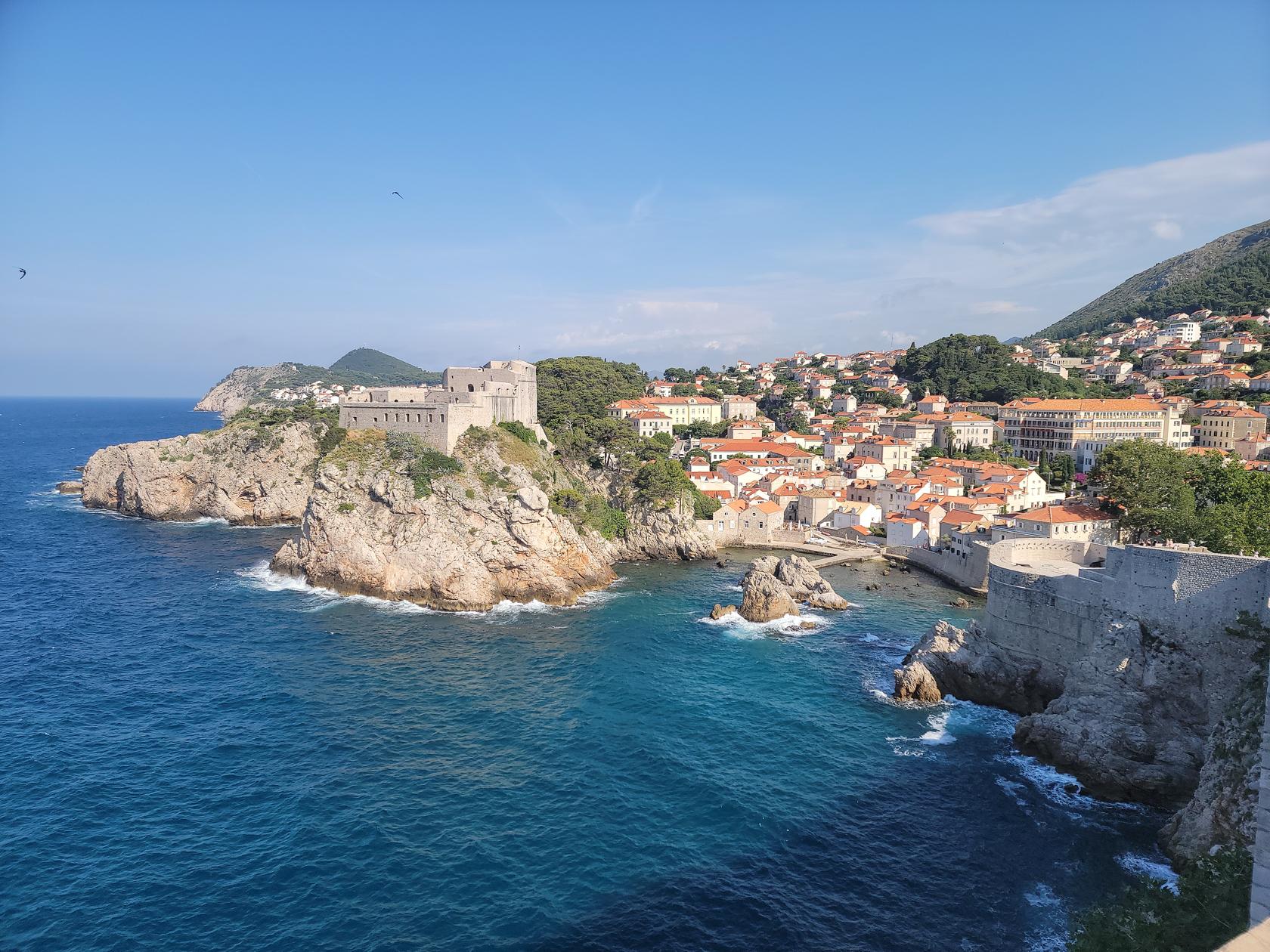
Located outside the town walls is the Lovrijenac Fortress. Perched high on a hill overlooking the west harbor, it commands a viewpoint of the entire seaside, countryside and harbor that it protects. It also appears to be a favorite venue for weddings and other occasions, since they were setting up for one when we visited.
Lovrijenac Fortress – Dubrovnik, Croatia
Lovrijenac Fortress – Dubrovnik, Croatia
The Lovrijenac Fortress appears to have been built in haste by the people of Ragusa, to resist Venetian rule. The Empire of Venice had already threatened to built a fortress on the same spot, so they could dominate trade and the surrounding area. When they arrived with their ships fully ladened for the task, they found that they were beaten to it by the residents and had to turn back.
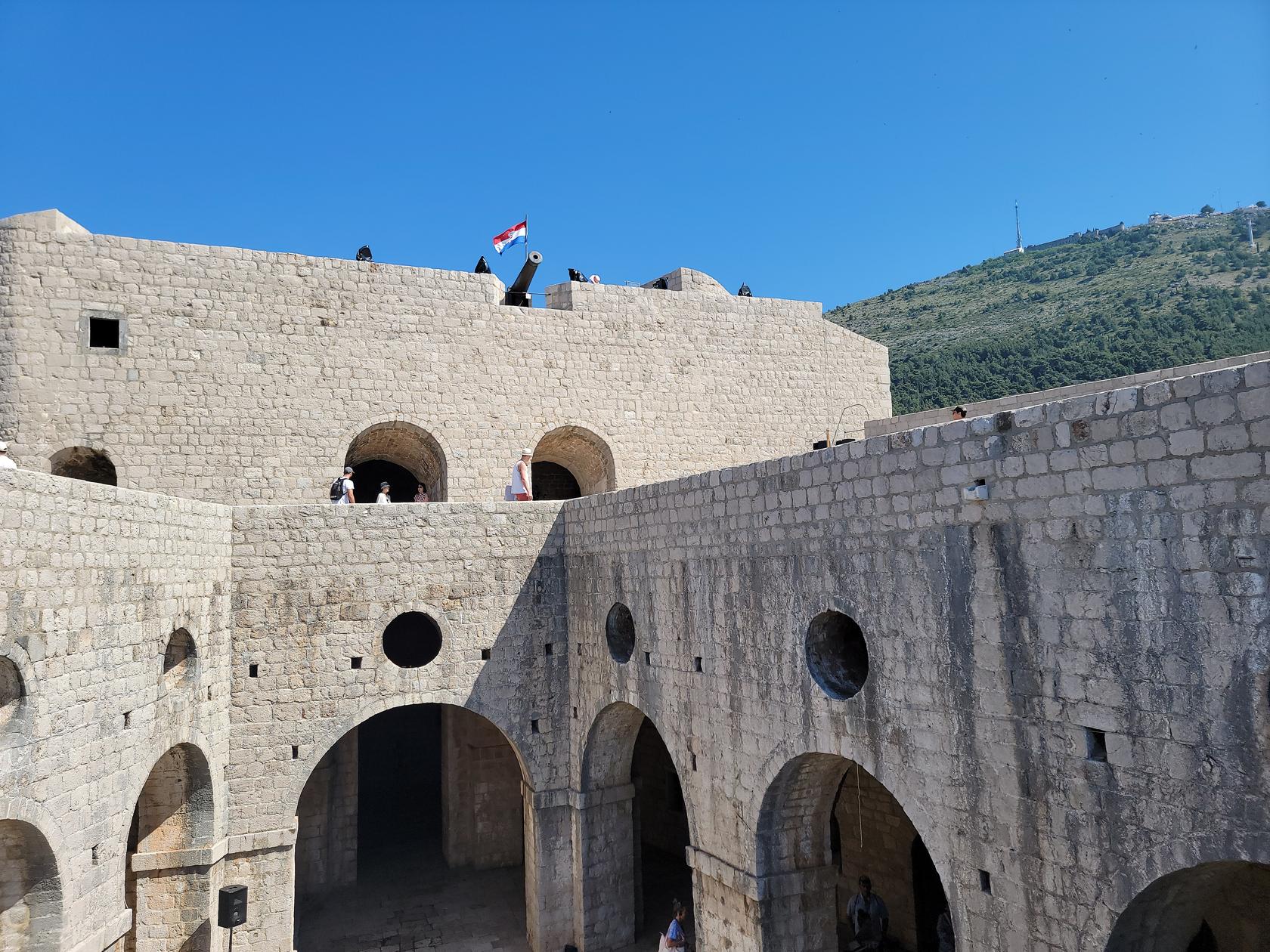
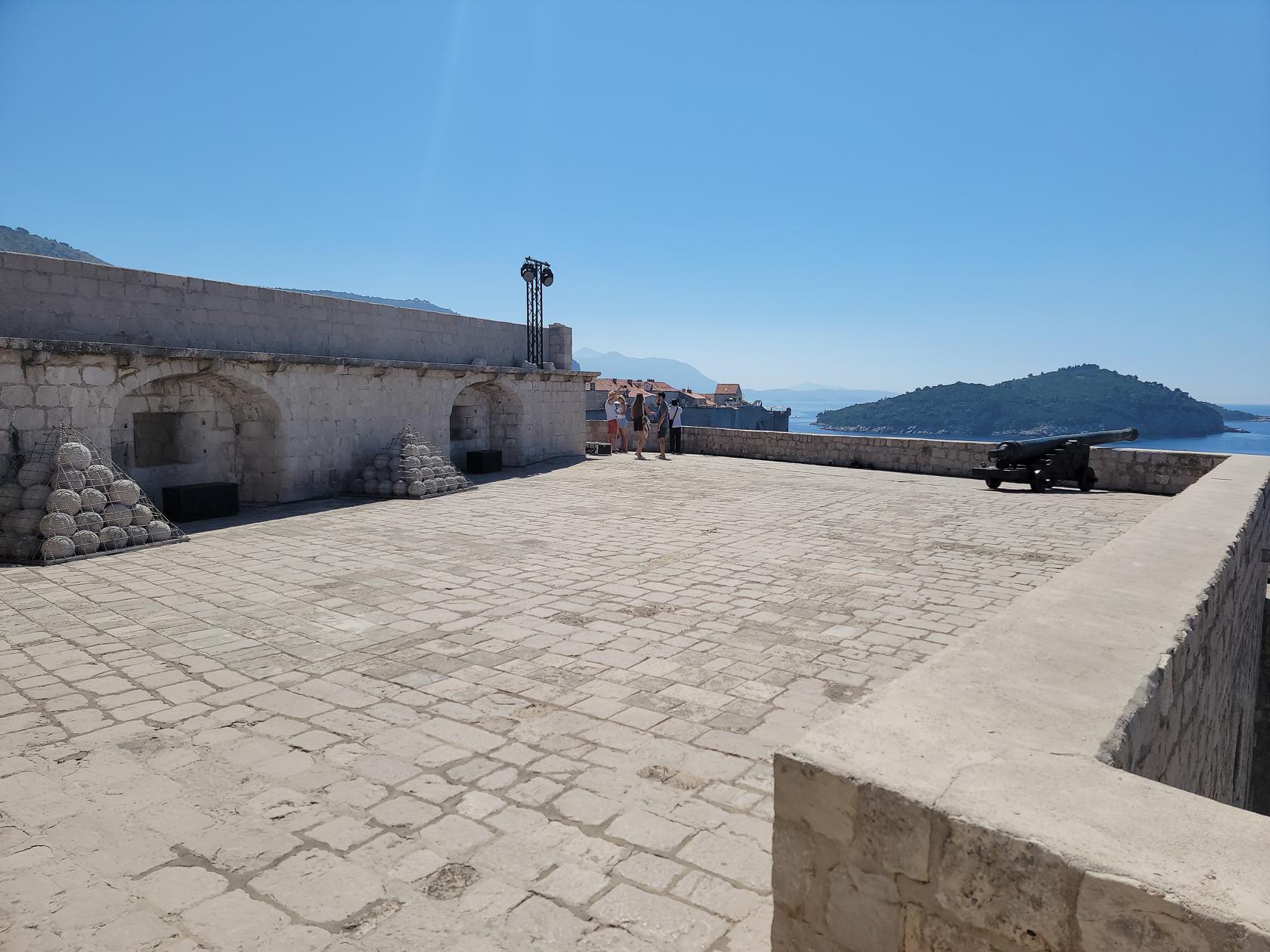
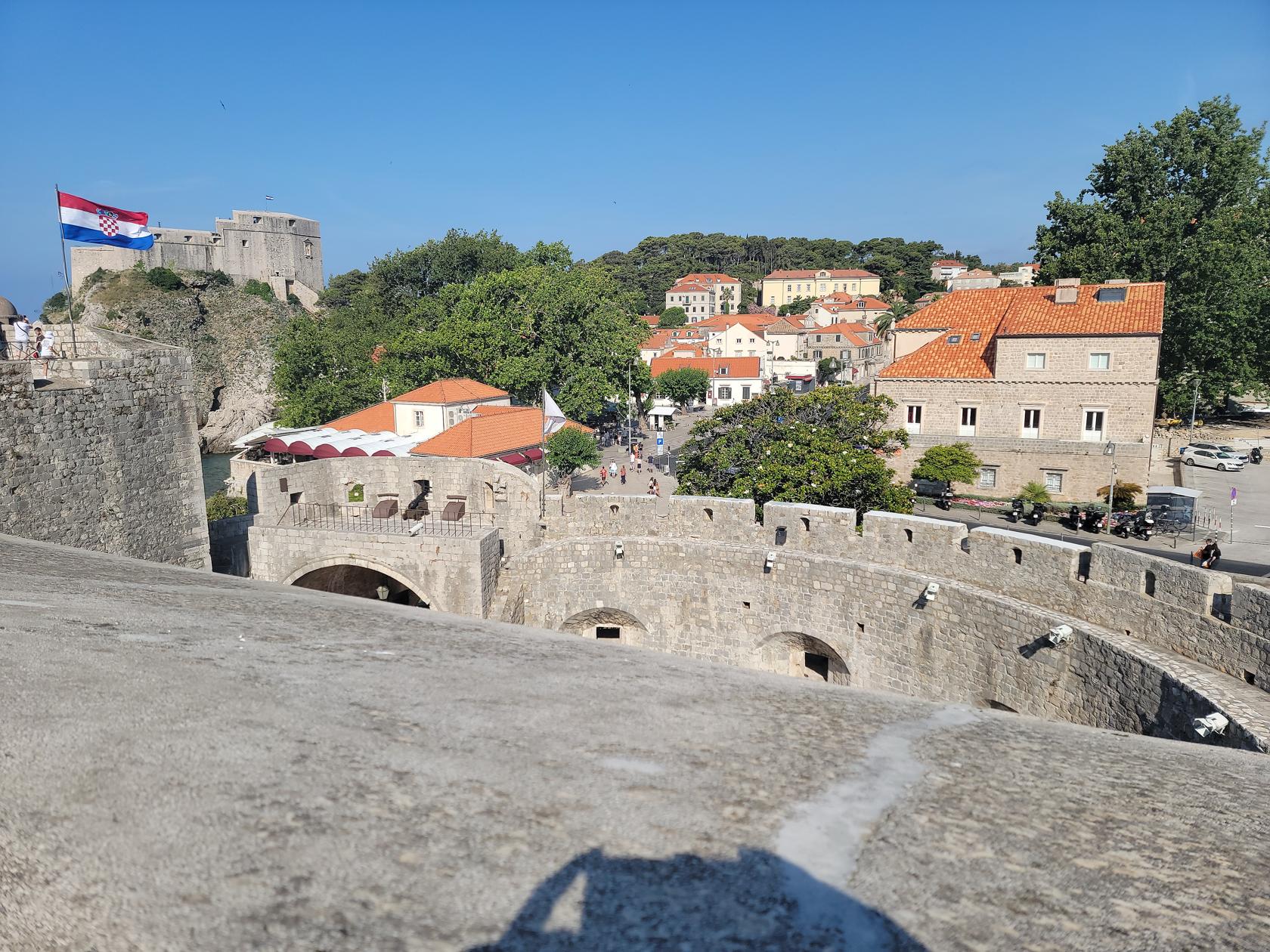
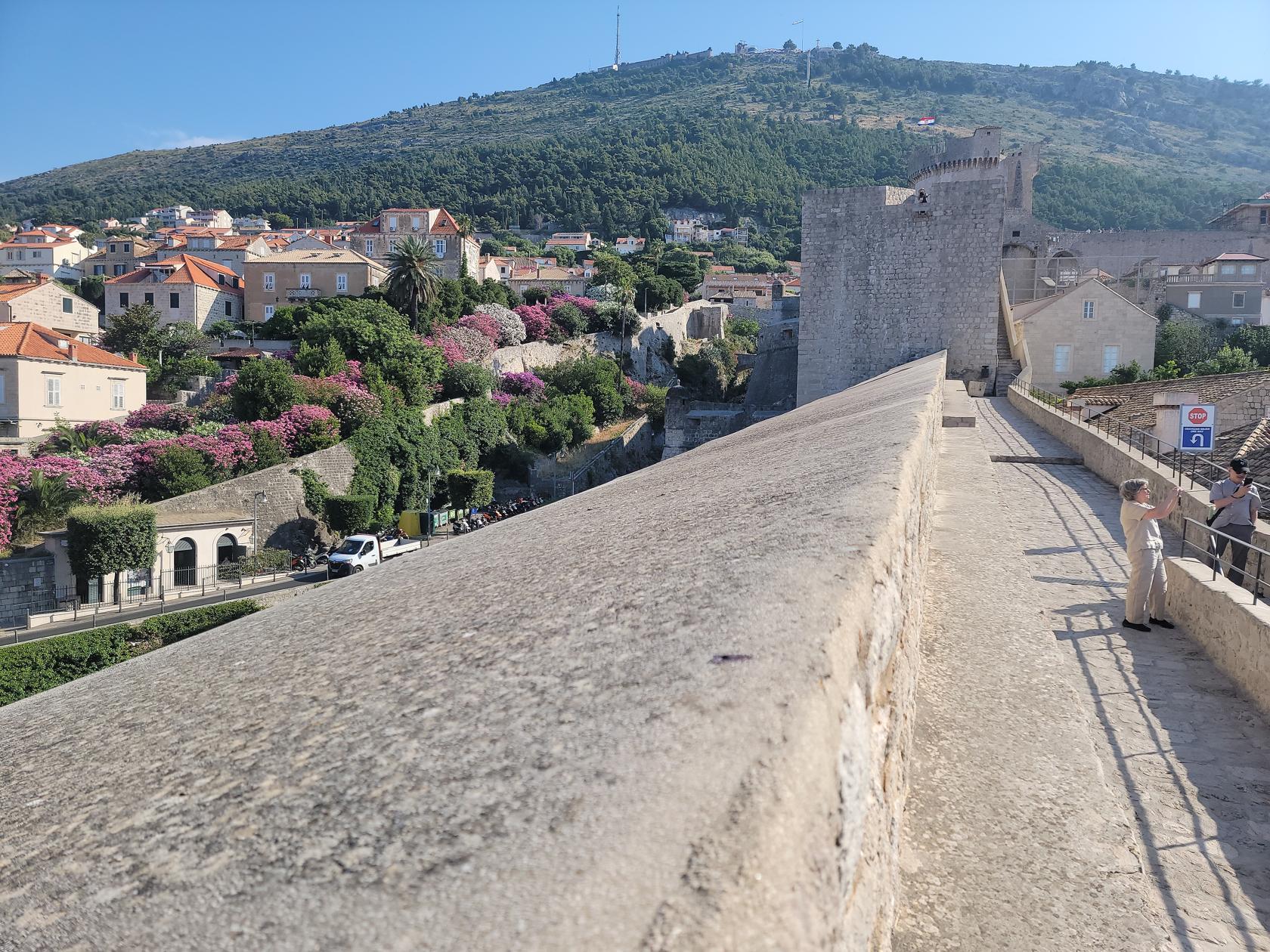
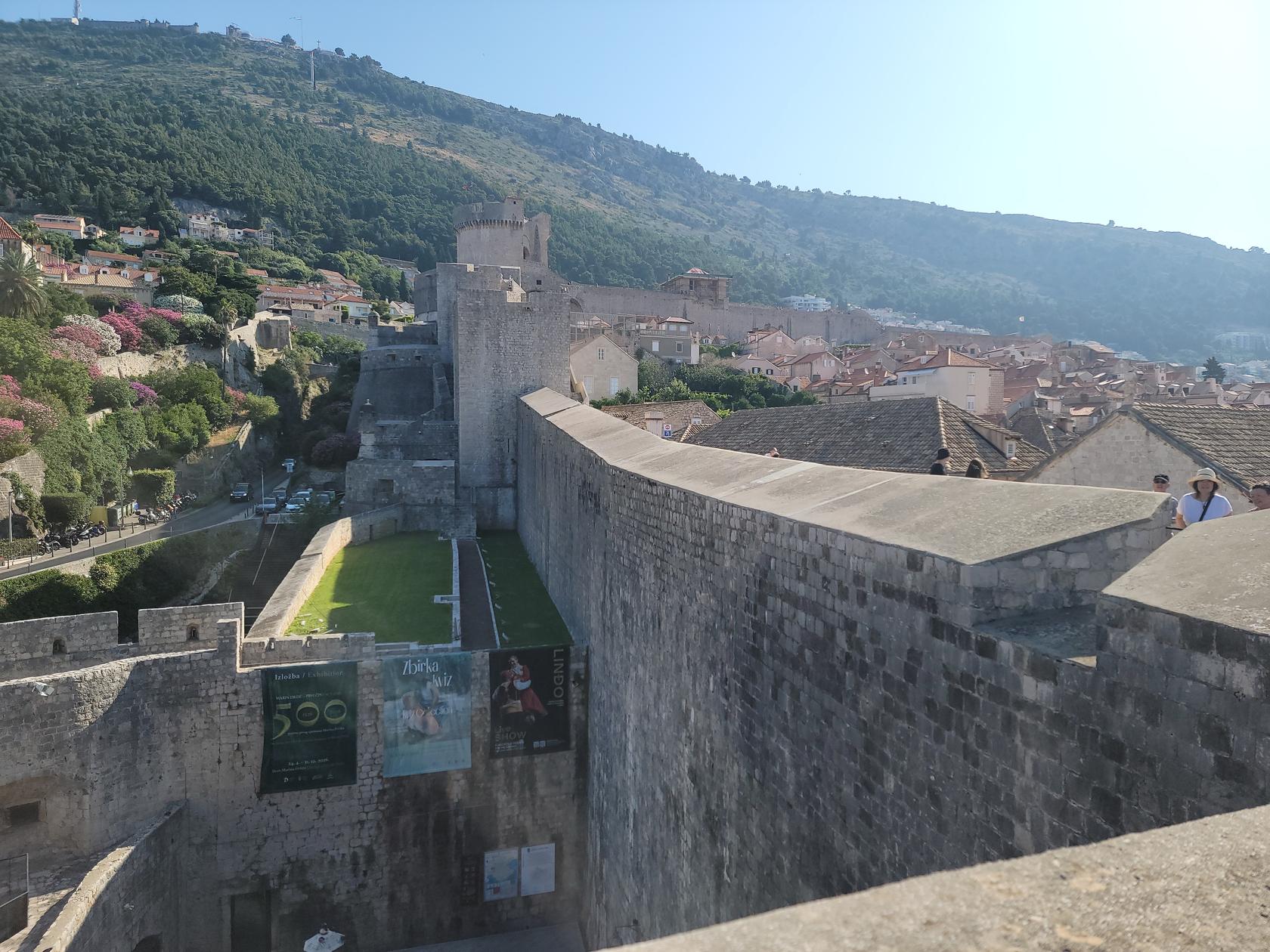
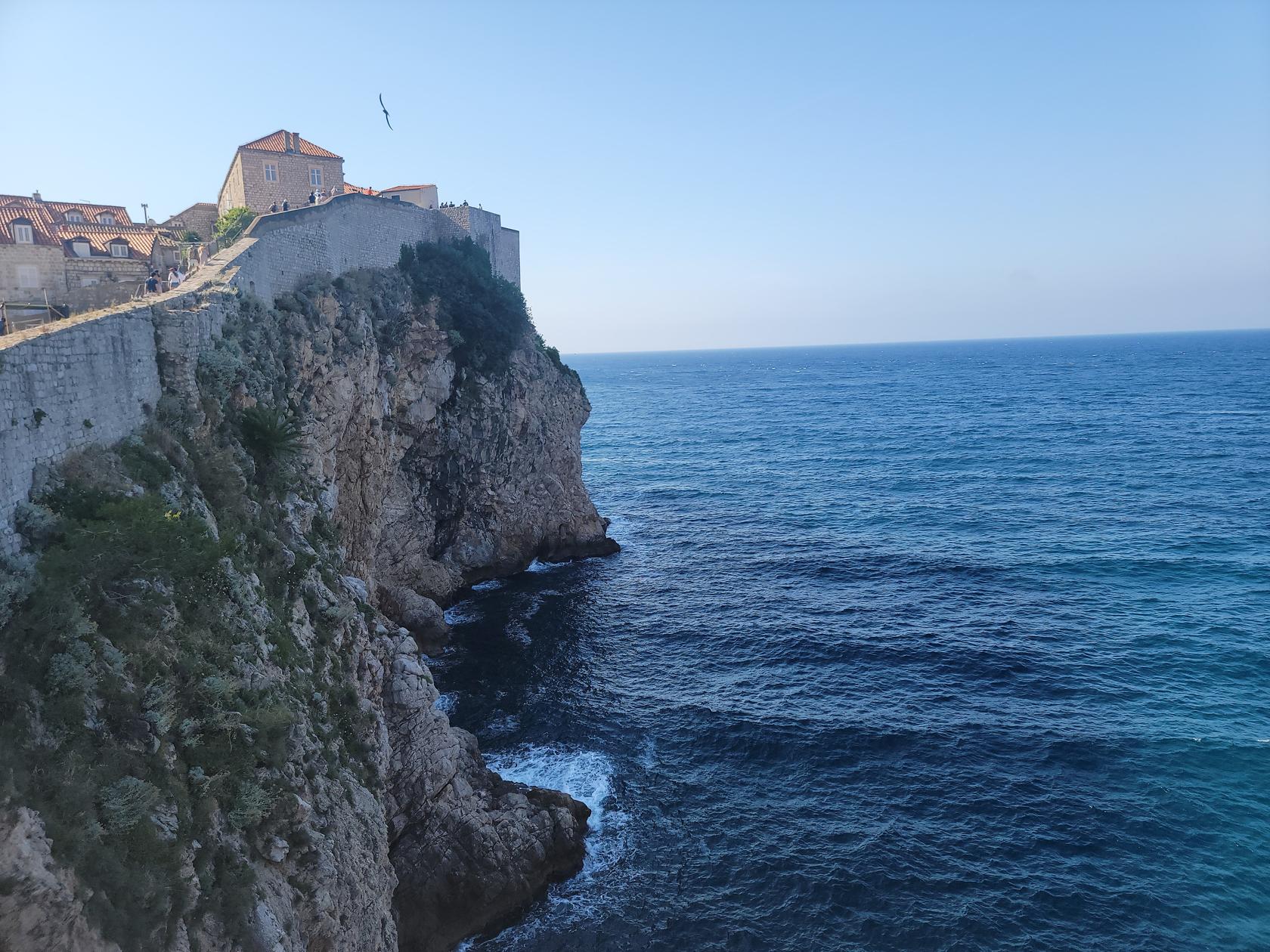
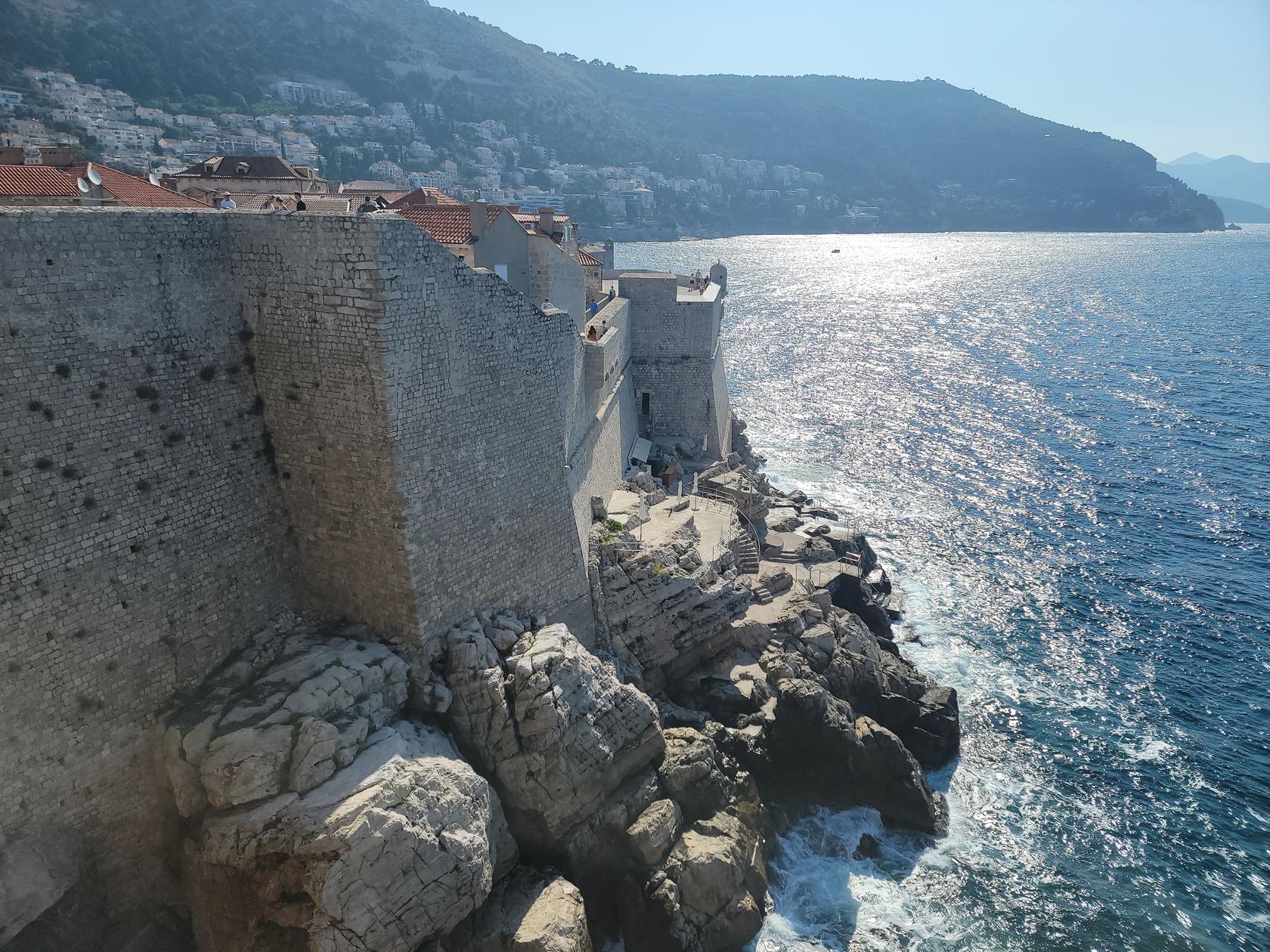
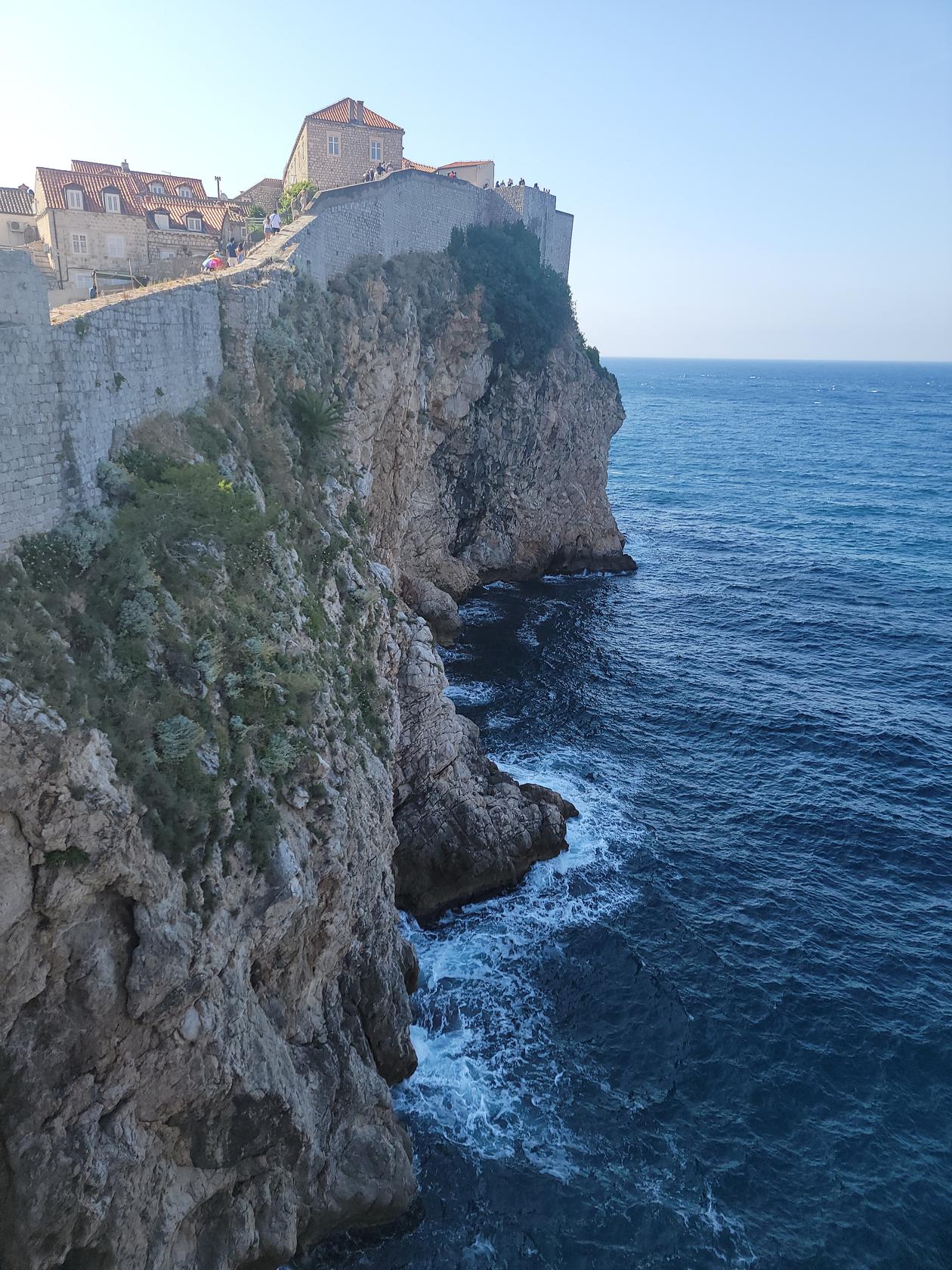
The walls around the city are huge, unbroken and remniscent of other great walled cities by the Adriatic Sea. They have resisted attacks for centuries and have filled numerous roles throughout their life, including protection from direct attack, shelter, and even revenue in the form of tourism. Today they provide a unique unbroken path around the city, where those that visit can enjoy the views high upon the perch it provides.
Wall by Entrance – City Wall Tour – Dubrovnik, Croatia
Massive Fortress Walls – City Wall Tour – Dubrovnik, Croatia
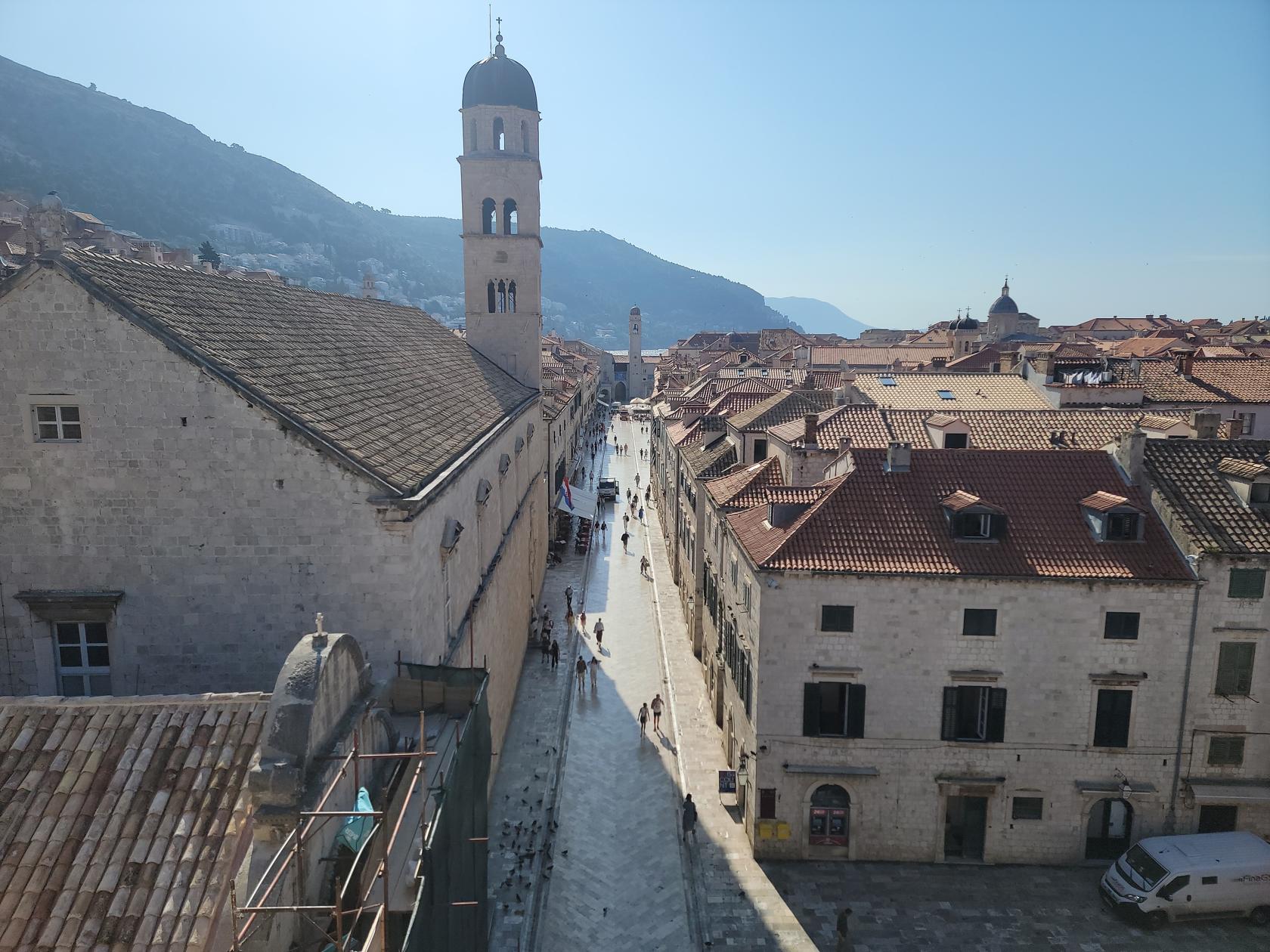
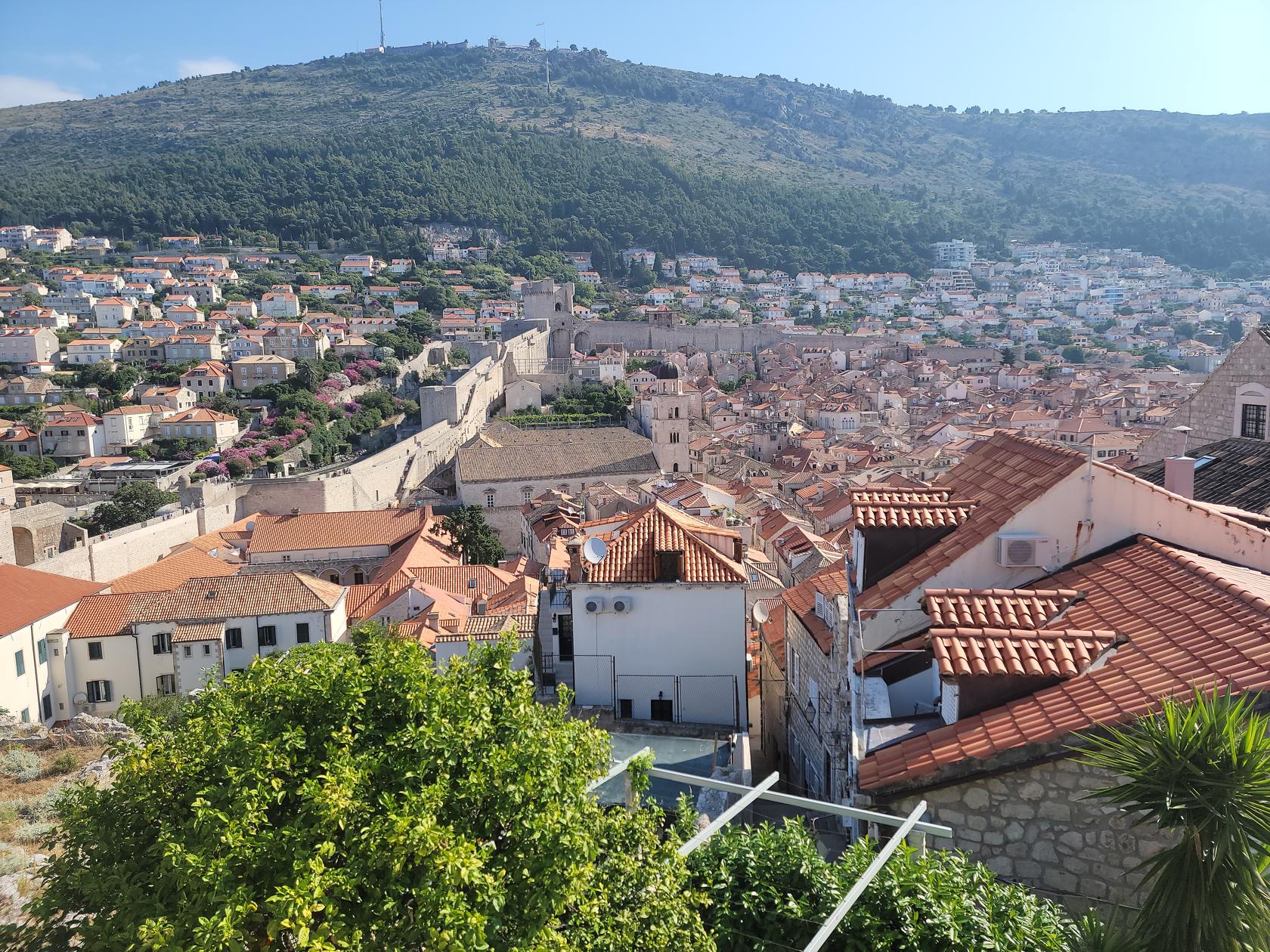
Franciscan Church and Monastery Tower and the Stradun – City Wall Tour – Dubrovnik, Croatia
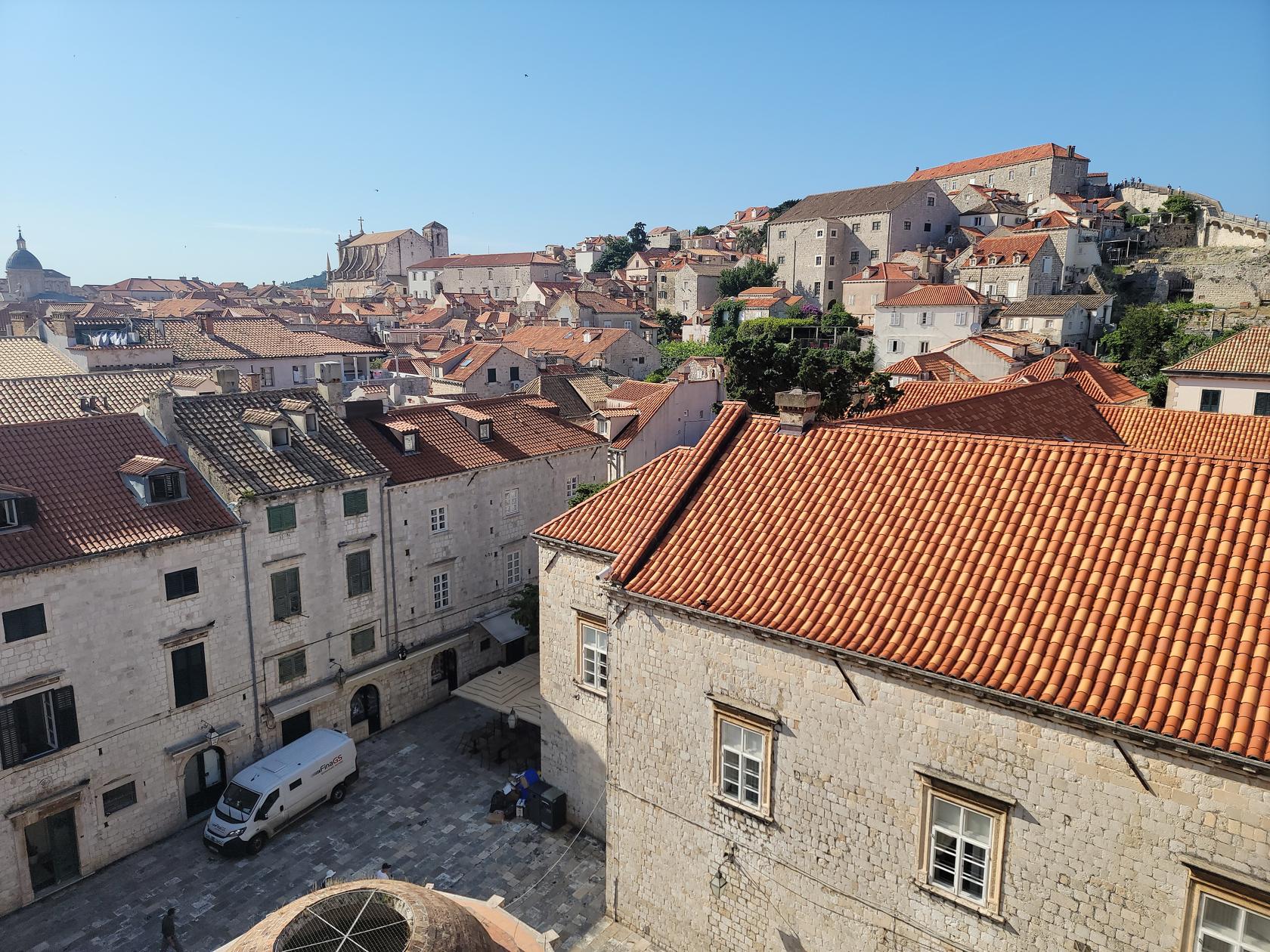
Hill in Old Town – City Wall Tour – Dubrovnik, Croatia
Fortress Wall by Entrance – City Wall Tour – Dubrovnik, Croatia
Lovrjenak Fortress and Park – City Wall Tour – Dubrovnik, Croatia
Park Below – City Wall Tour – Dubrovnik, Croatia
Fortress Walls – City Wall Tour – Dubrovnik, Croatia
Lovrjenak Fortress – City Wall Tour – Dubrovnik, Croatia
Old Town and Bosanka Hill – City Wall Tour – Dubrovnik, Croatia
Lovrjenak Fortress – City Wall Tour – Dubrovnik, Croatia
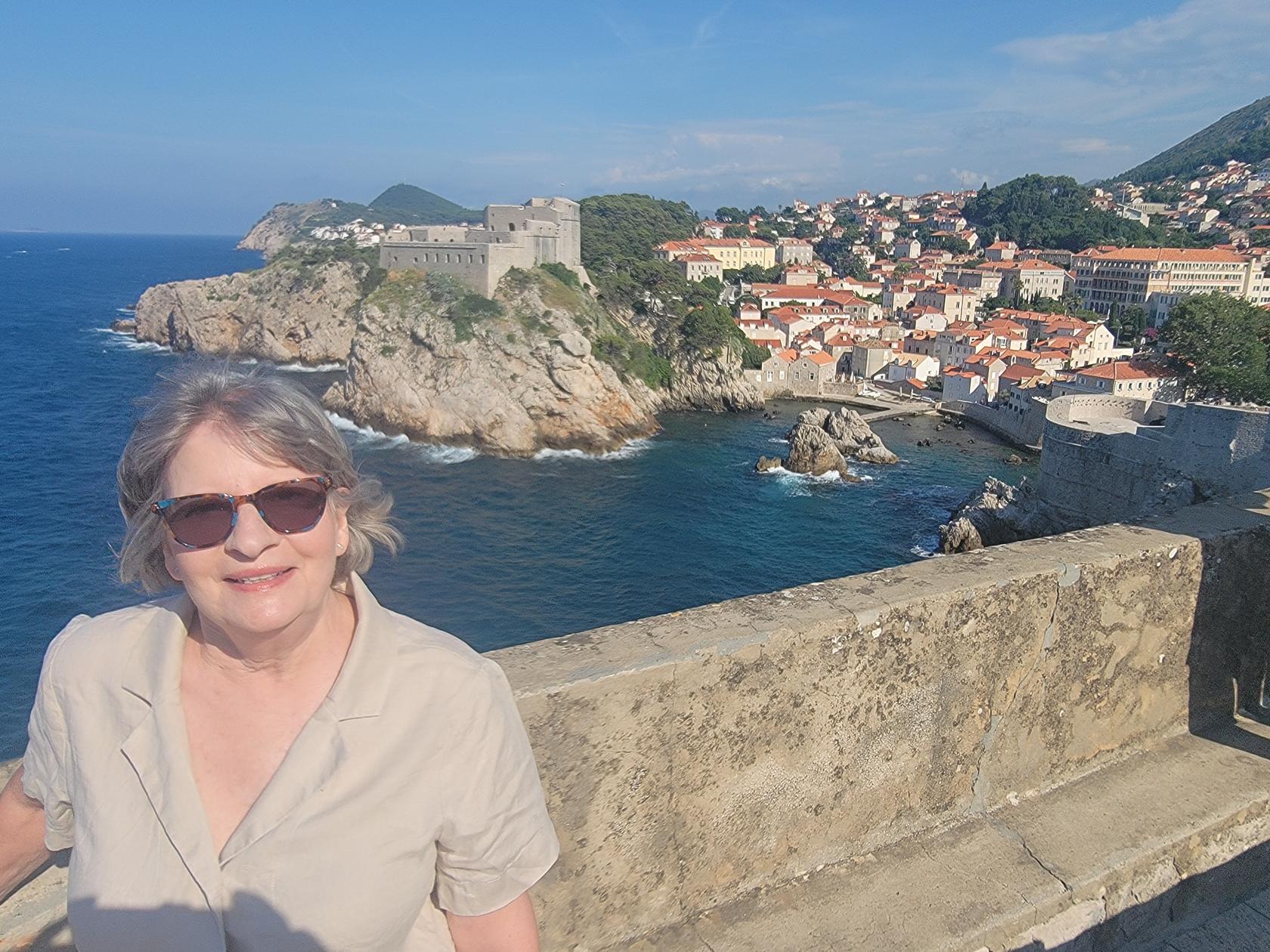
Patti on Fortress Wall – City Wall Tour – Dubrovnik, Croatia
Lokrum Island – City Wall Tour – Dubrovnik, Croatia
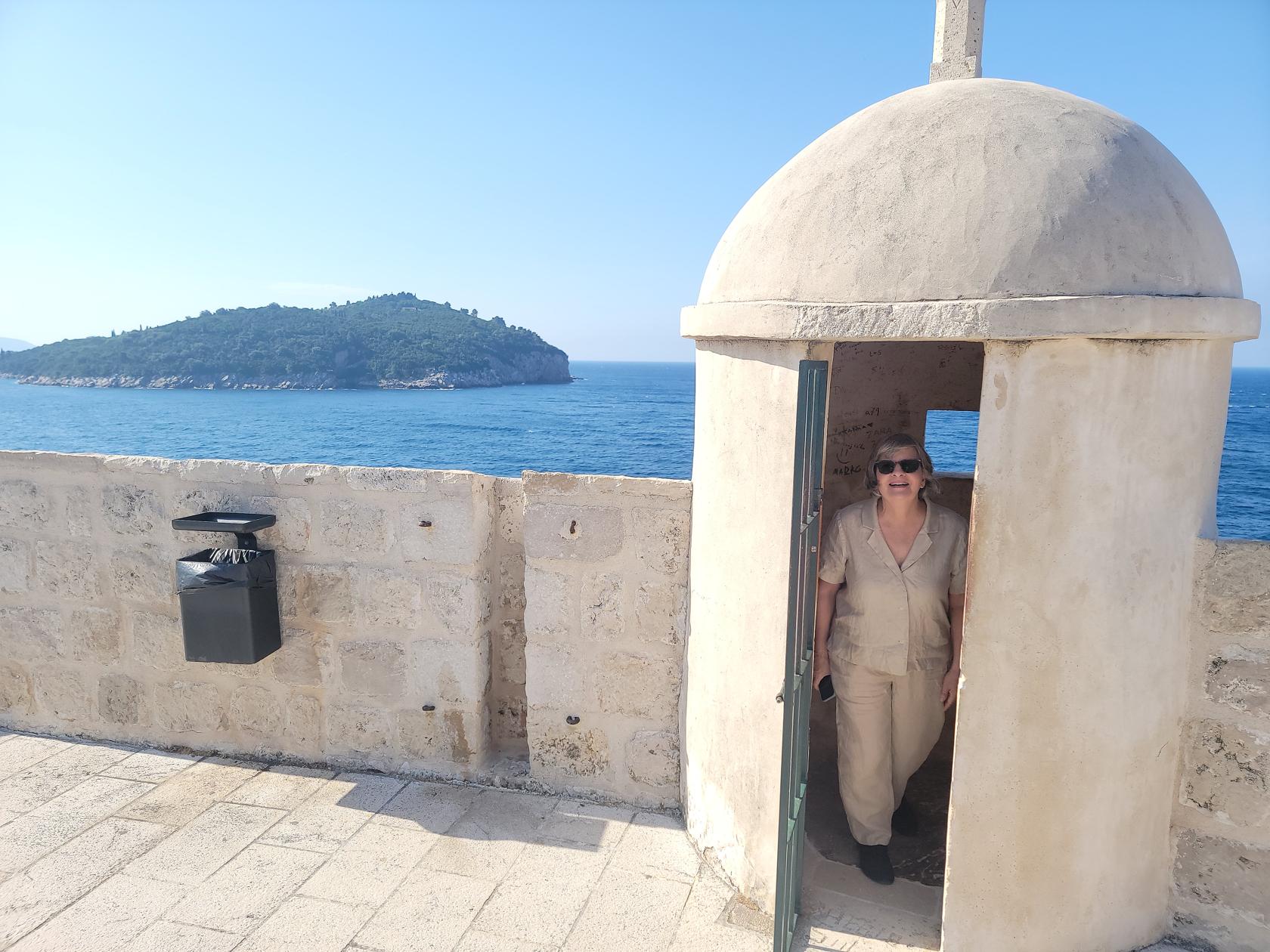
Patti in Lookout Tower – City Wall Tour – Dubrovnik, Croatia
Fortress Wall – City Wall Tour – Dubrovnik, Croatia
Church of St. Ignatius – City Wall Tour – Dubrovnik, Croatia
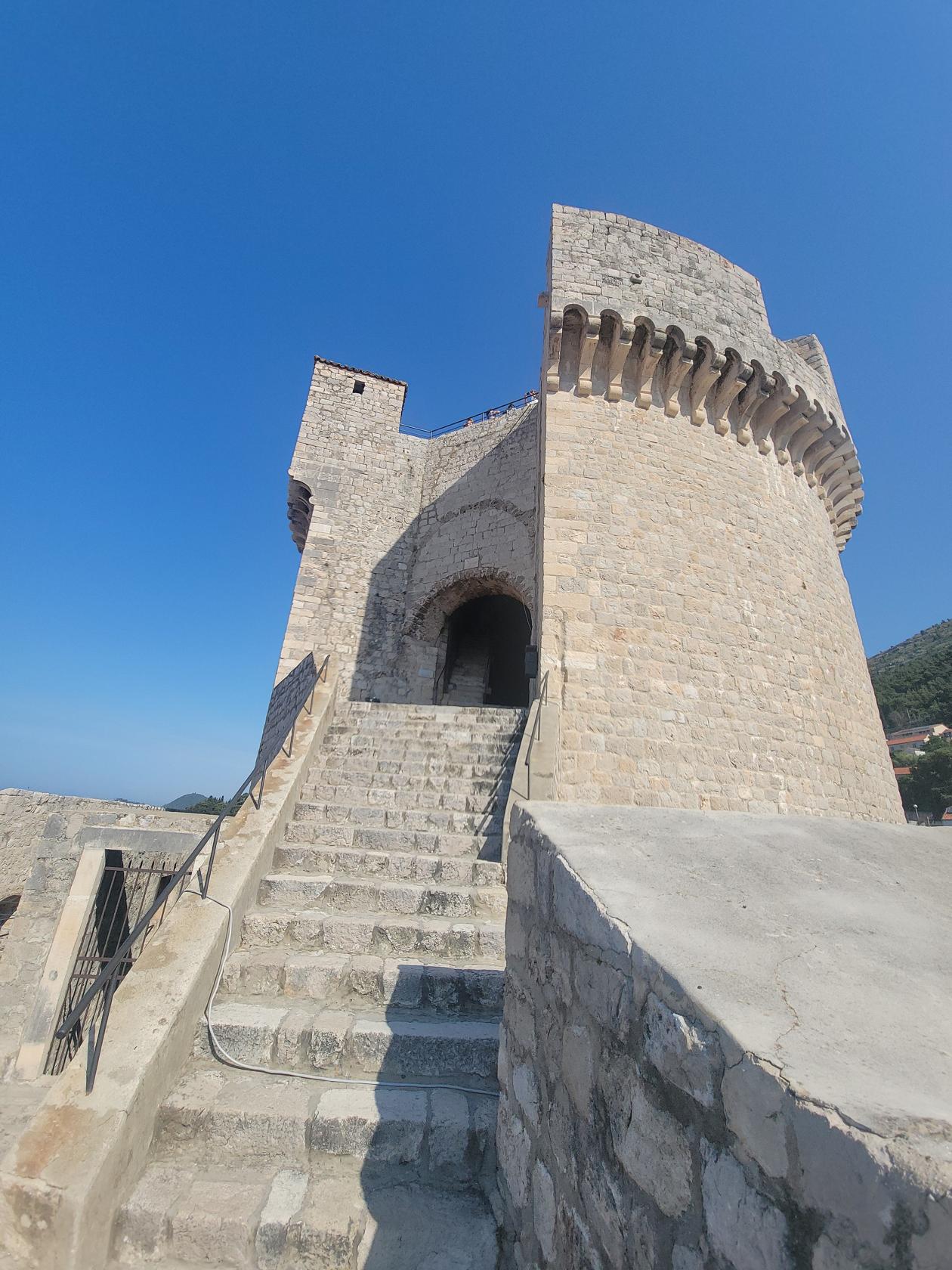
Tvrđava Minčeta Tower – City Wall Tour – Dubrovnik, Croatia
Fortress Walls – City Wall Tour – Dubrovnik, Croatia
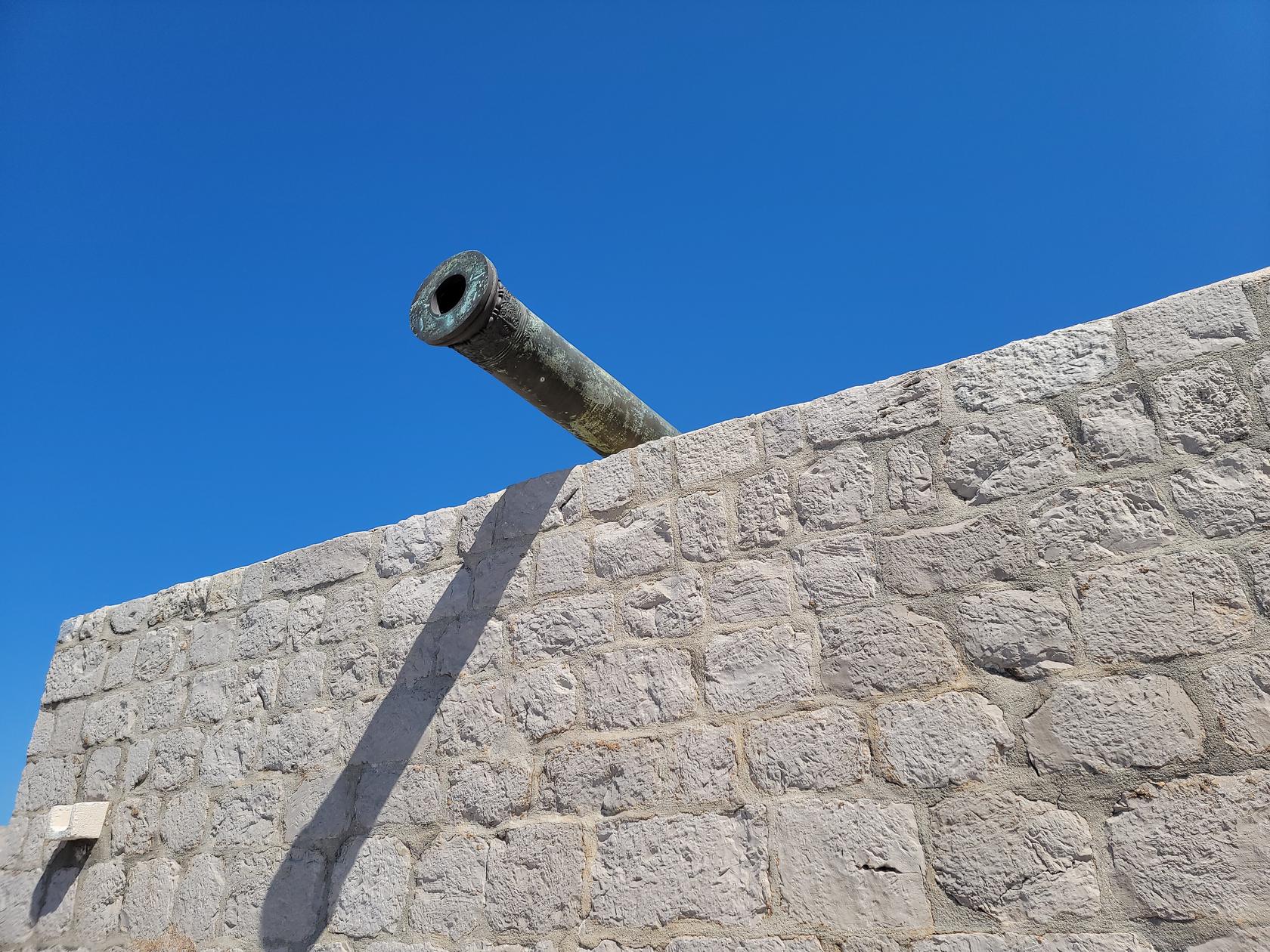
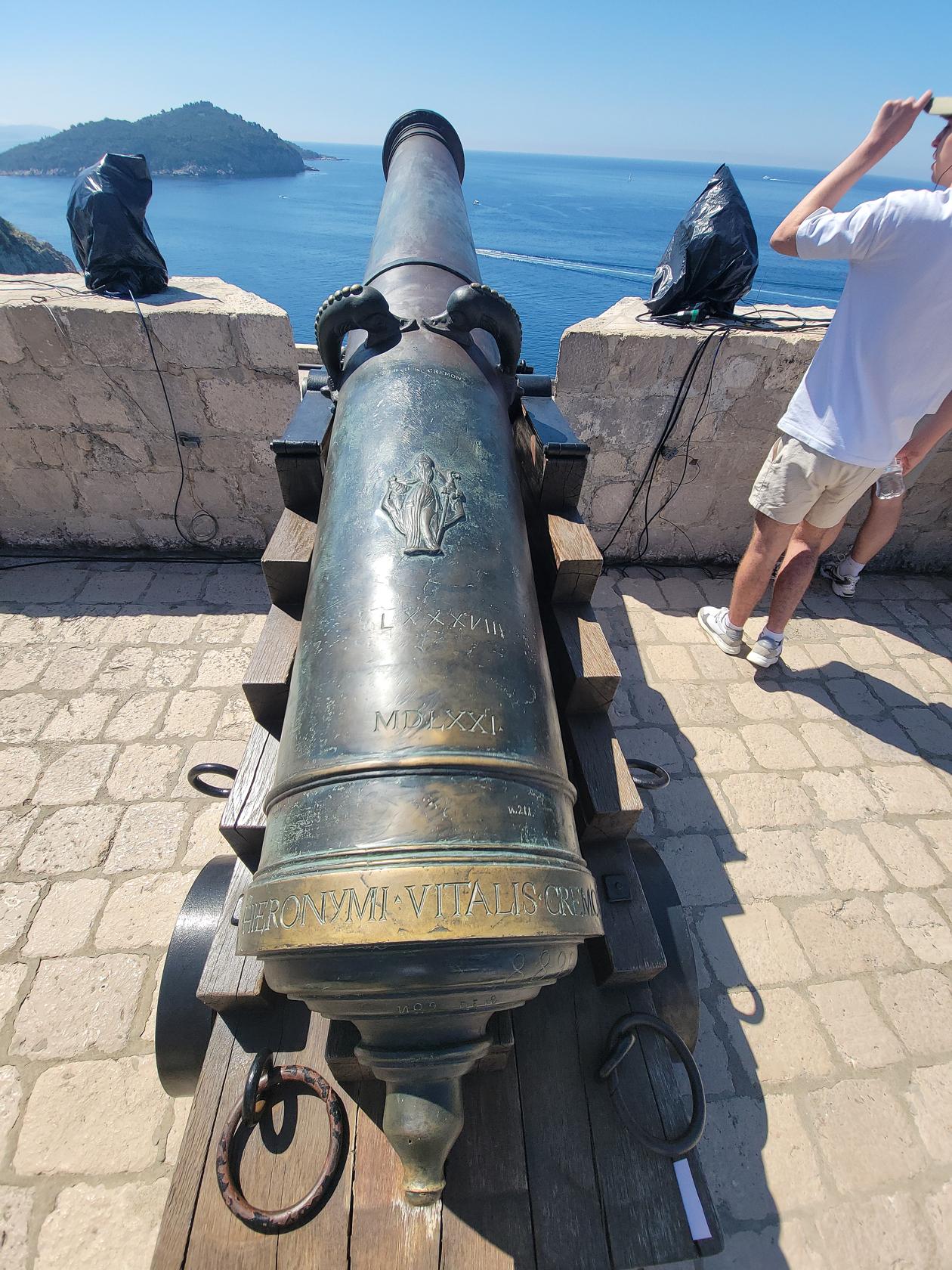
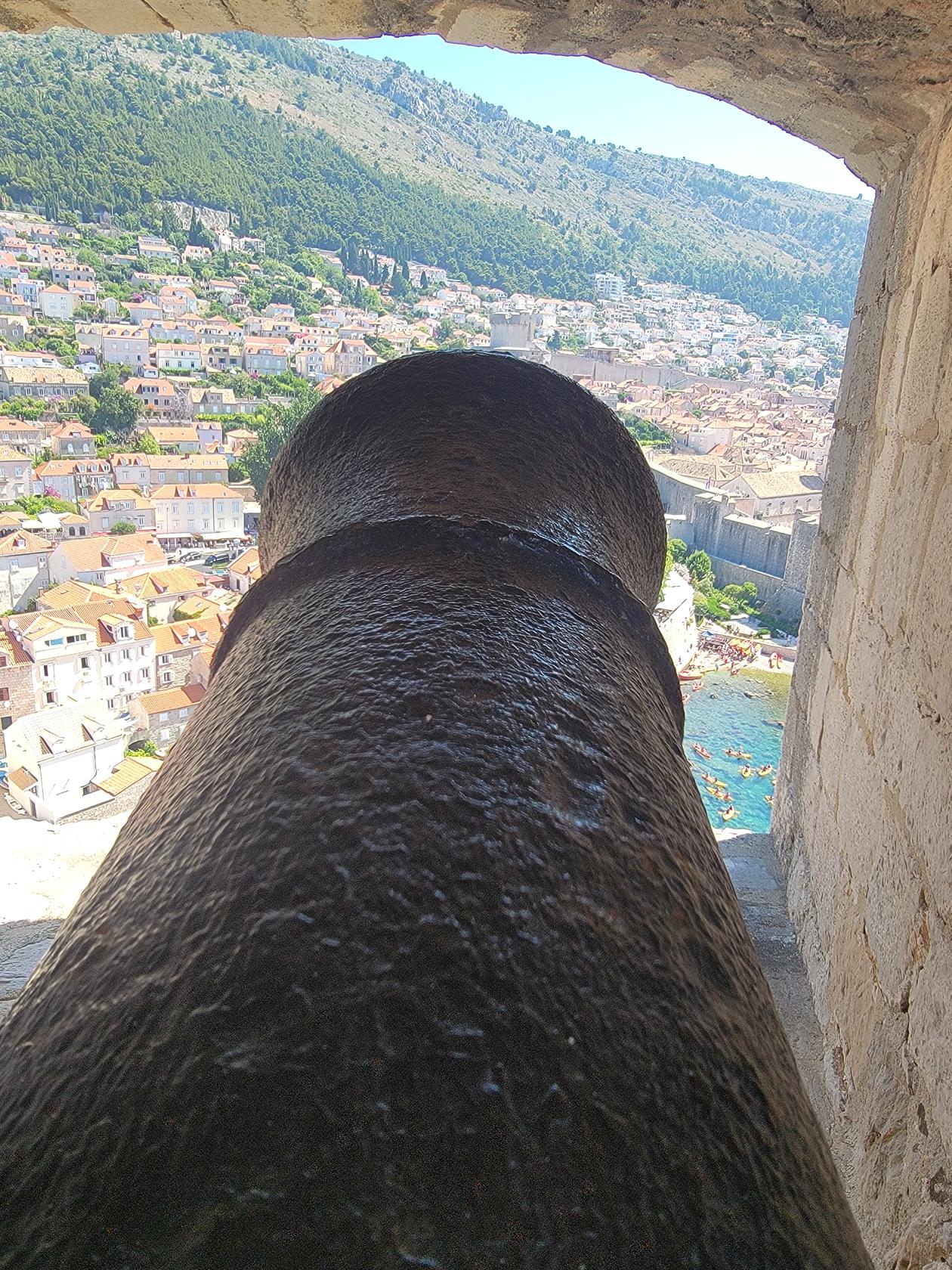
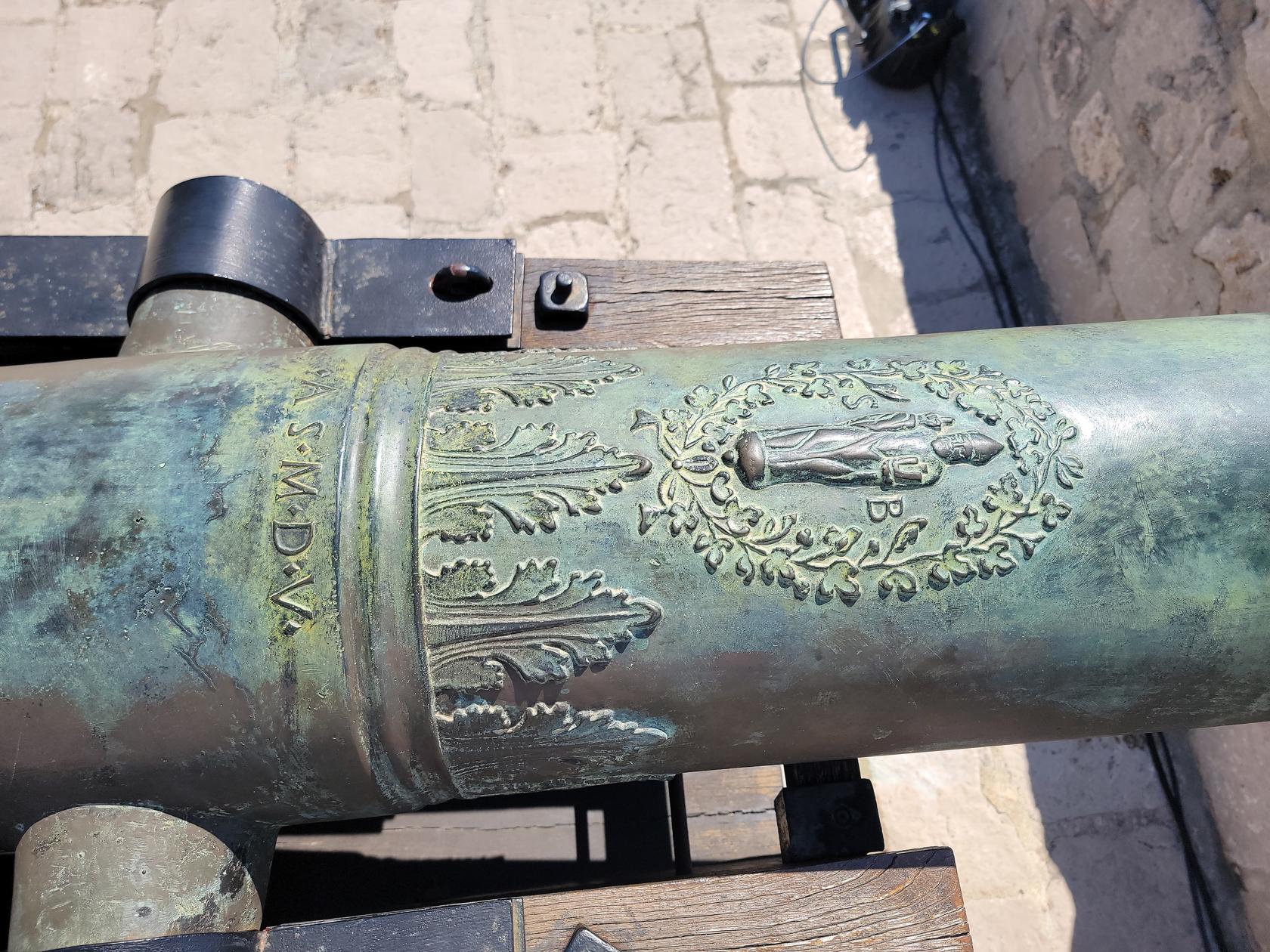
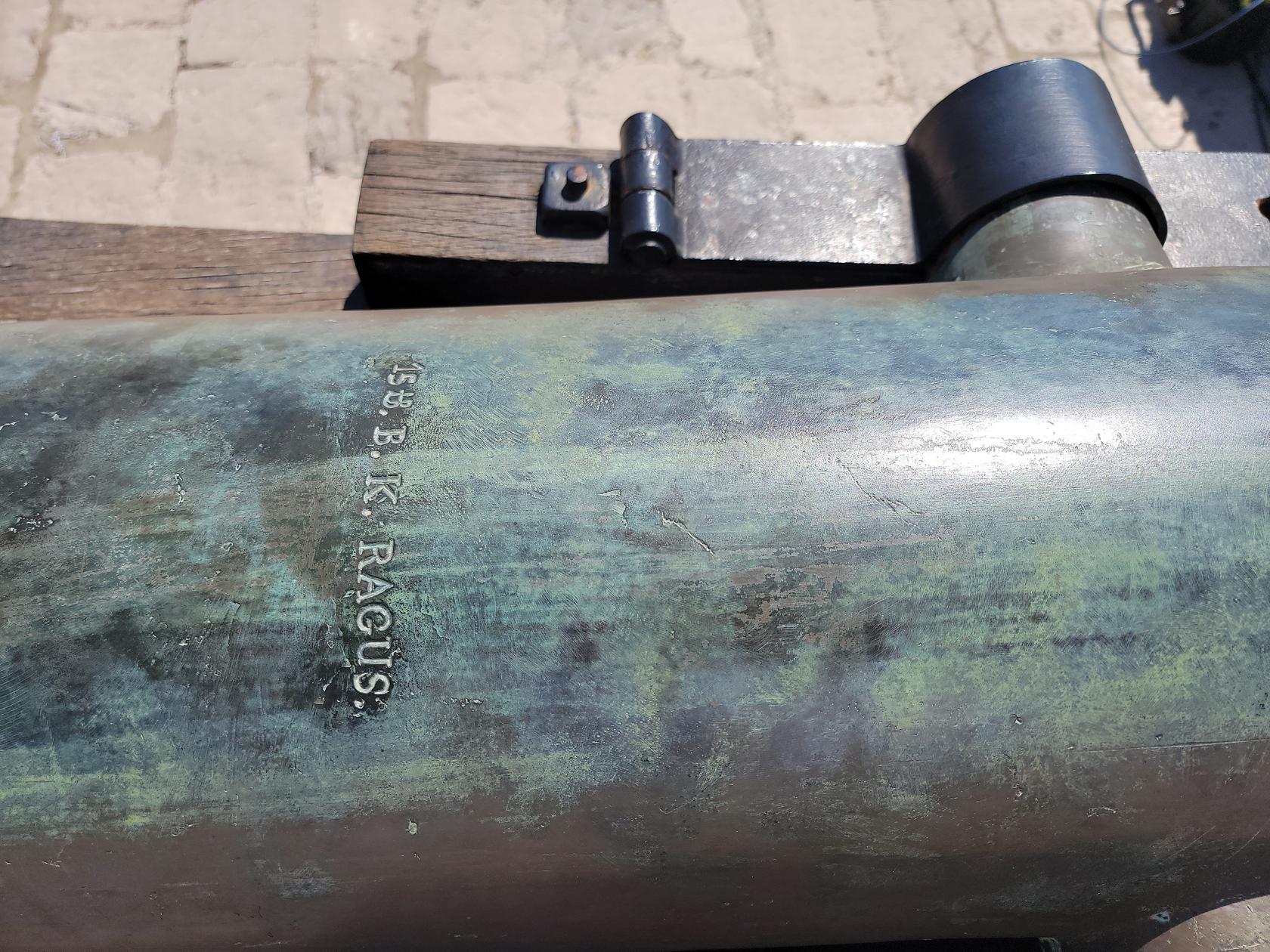
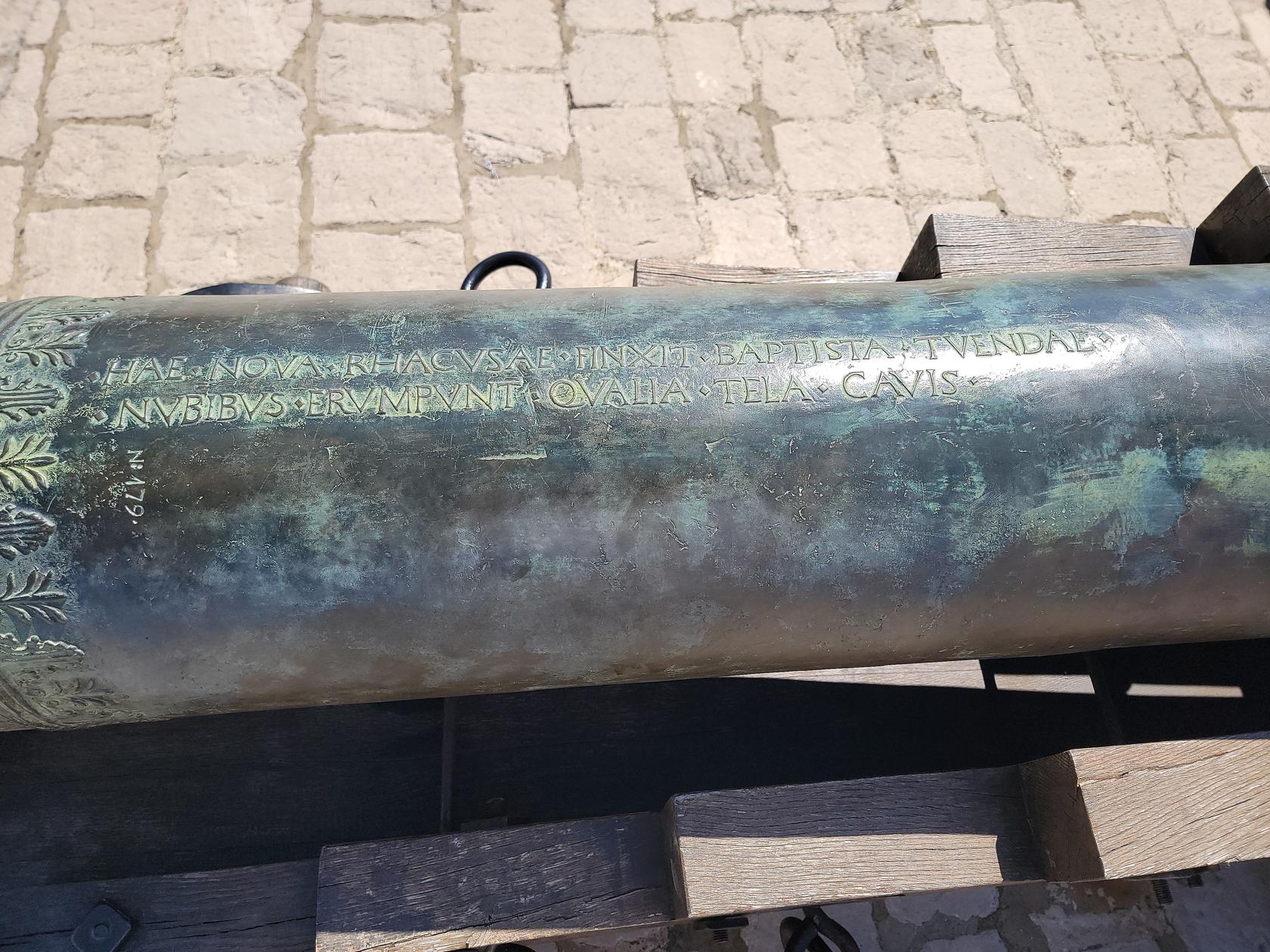
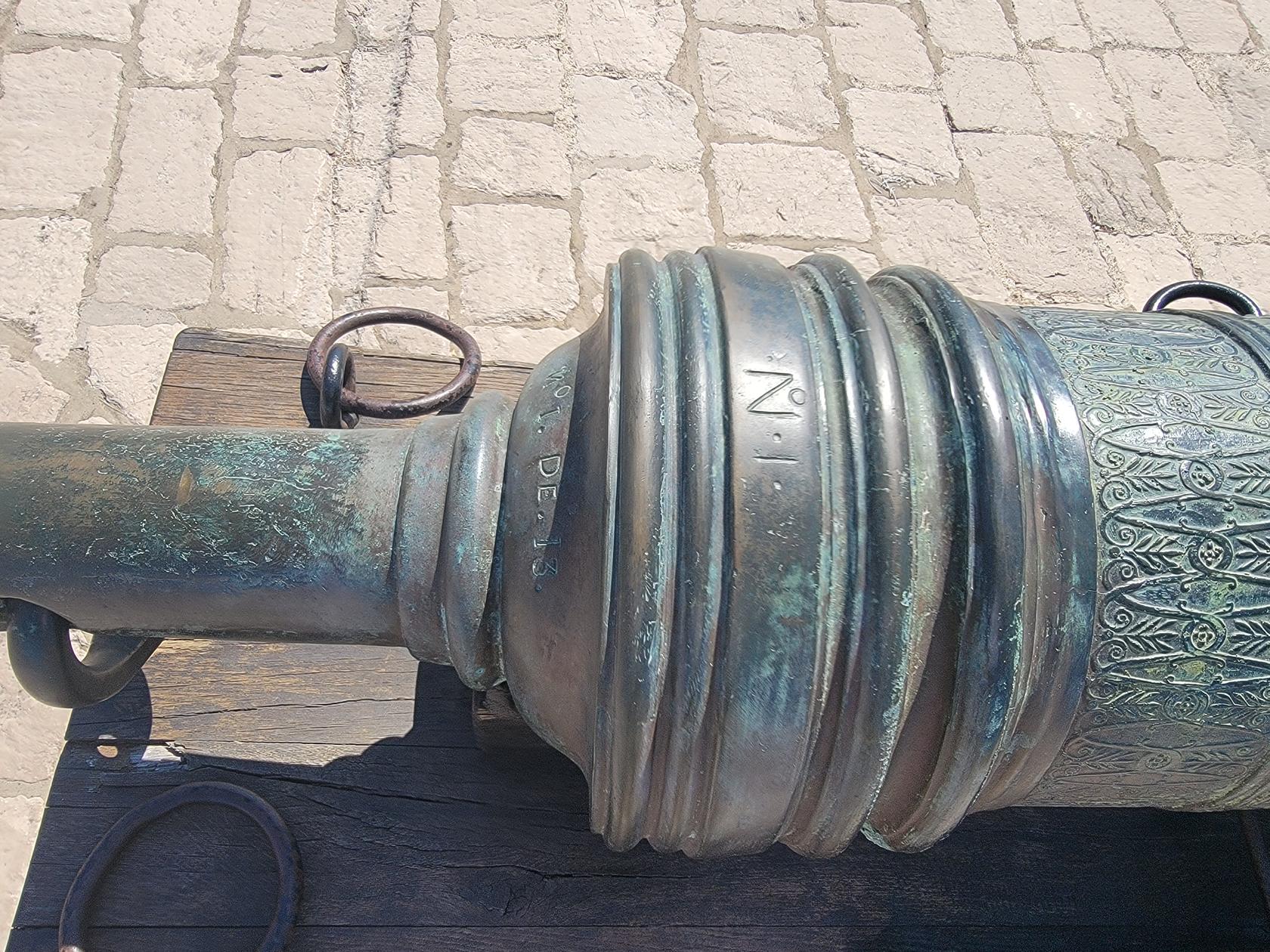
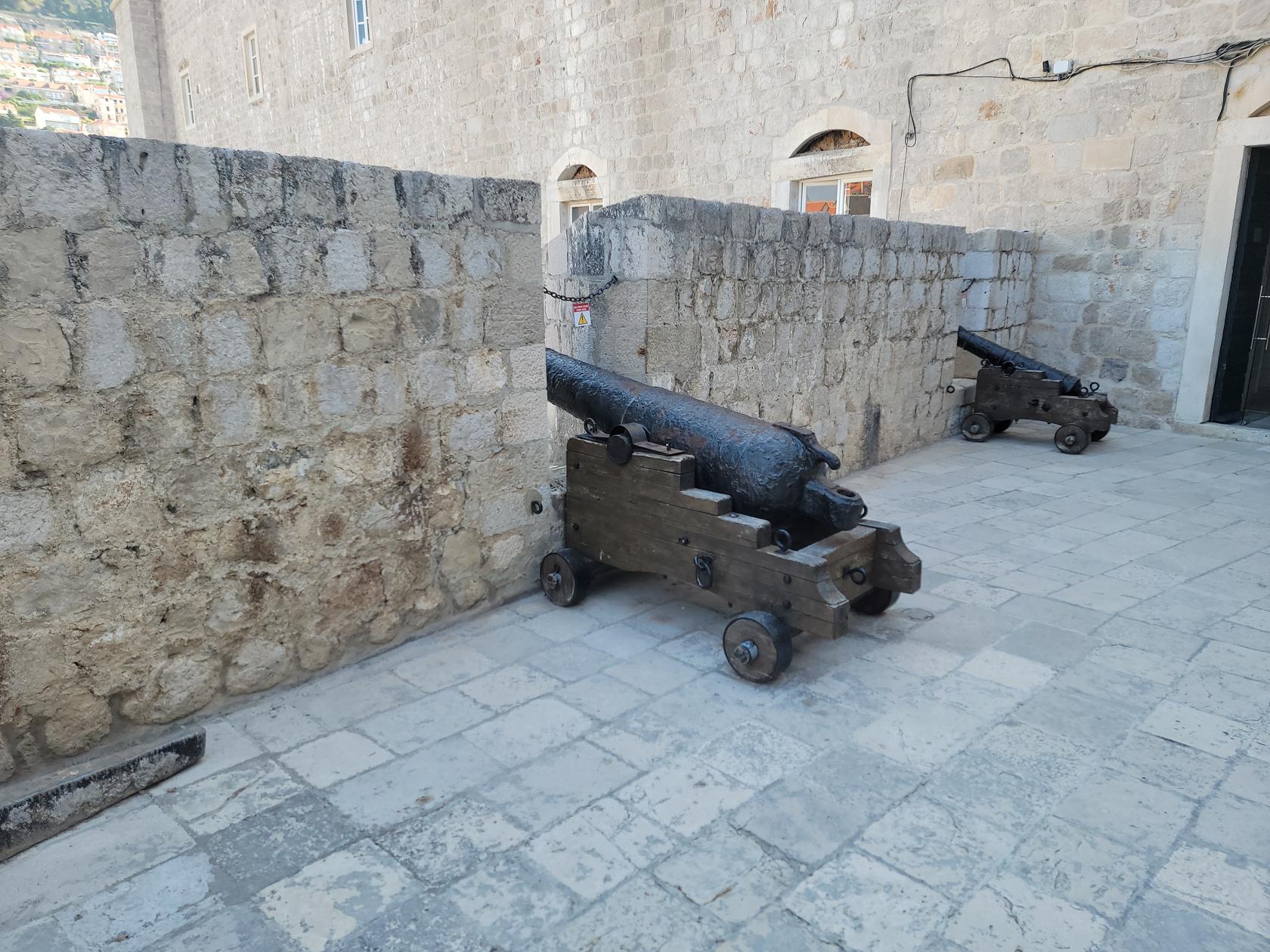
Old Cannons – City Wall Tour – Dubrovnik, Croatia
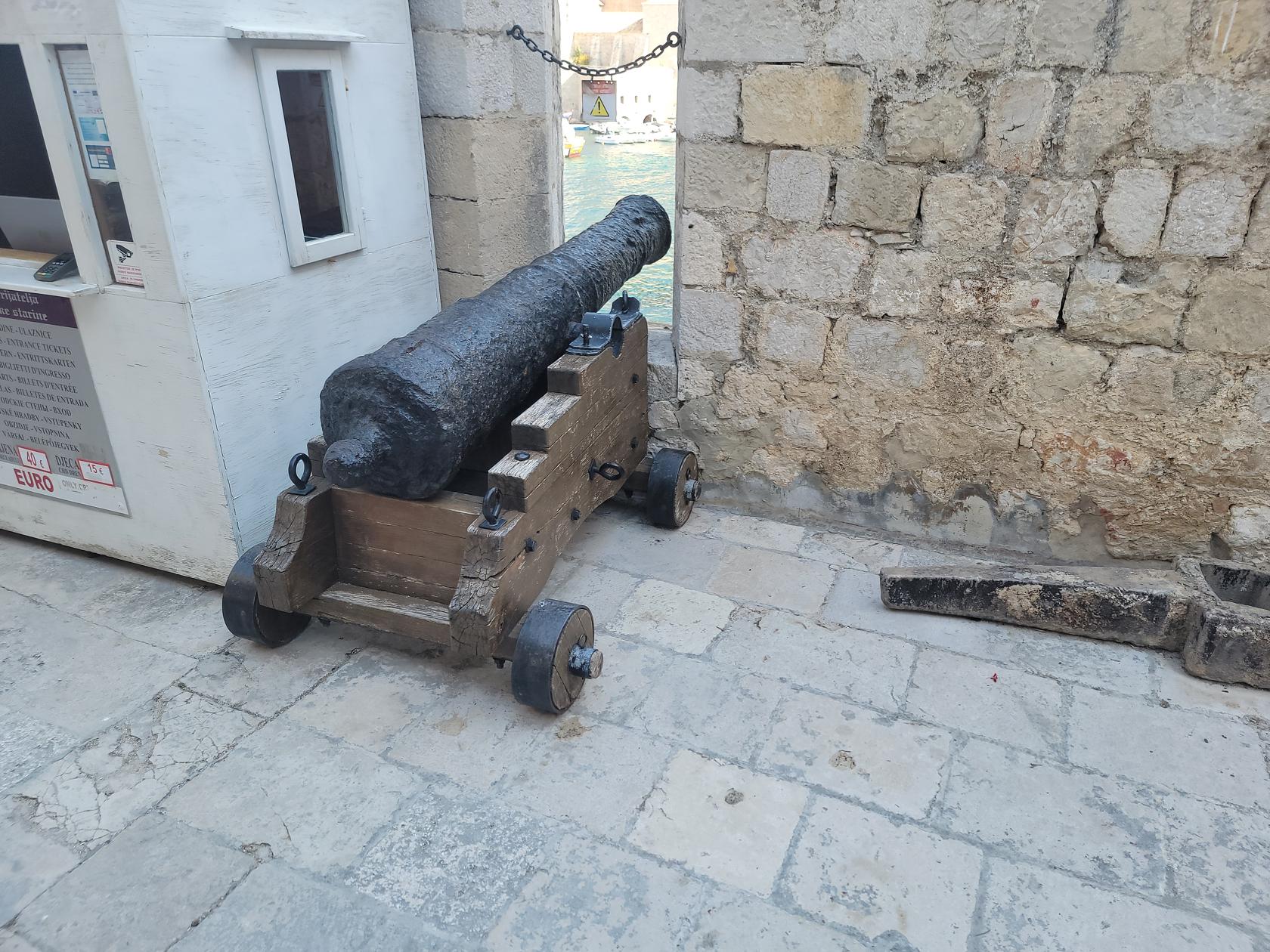
Old Cannon – City Wall Tour – Dubrovnik, Croatia
Clock Tower – City Wall Tour – Dubrovnik, Croatia
Lovrjenac Fortress in distance – City Wall Tour – Dubrovnik, Croatia
Stradun
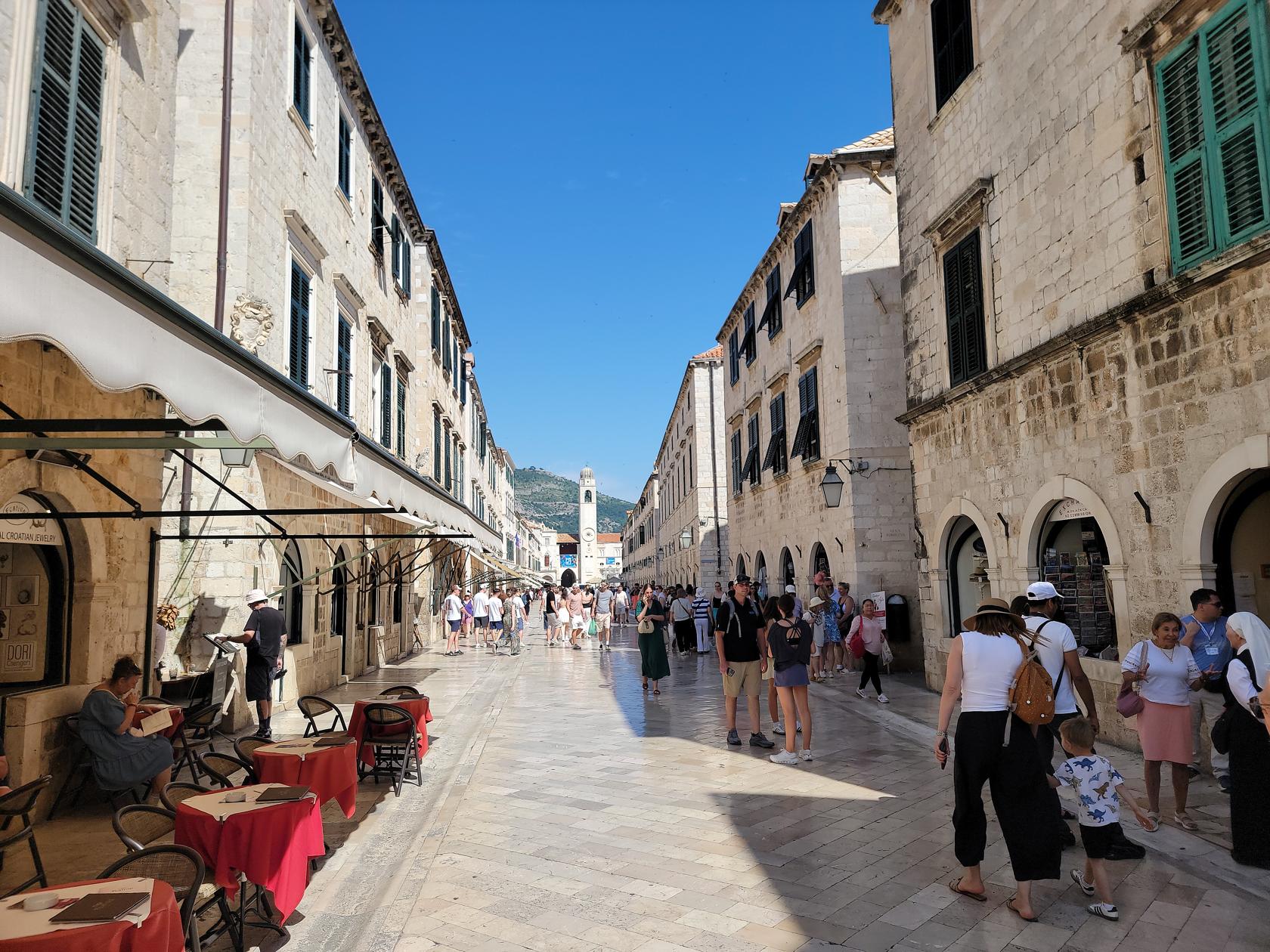
The major shopping avenue or street in the city is the Stradun. It is also the least protected from the sun and visitors would be keen to visit it early or later on in the day, since the sun beats down on extensive surface and reradiates the heat directly back to your body, thereby adding ten degrees Fahrenheit more to the outside temperature.
Stradun – Dubrovnik, Croatia
Square by Pile Gate – Dubrovnik, Croatia
Stradun Shopping Street – Dubrovnik, Croatia
The Stradun is the straightest and widest street in Dubrovnik and bisects the Old Town from the Pile Gate to the Fishmarket Gate. It offers a few sights along the way and two fountains[1]These were constructed by the Southern Italian and Neapolitan architect and engineer Onofrio della Cava in 1438 and bares his name. which grace each end, the Larger Onofrio Fountain and its diminutive brother, the Small Onofrio Fountain near the Clock Tower and the Fishmarket Gate.
Park by Pile Gate – Dubrovnik, Croatia
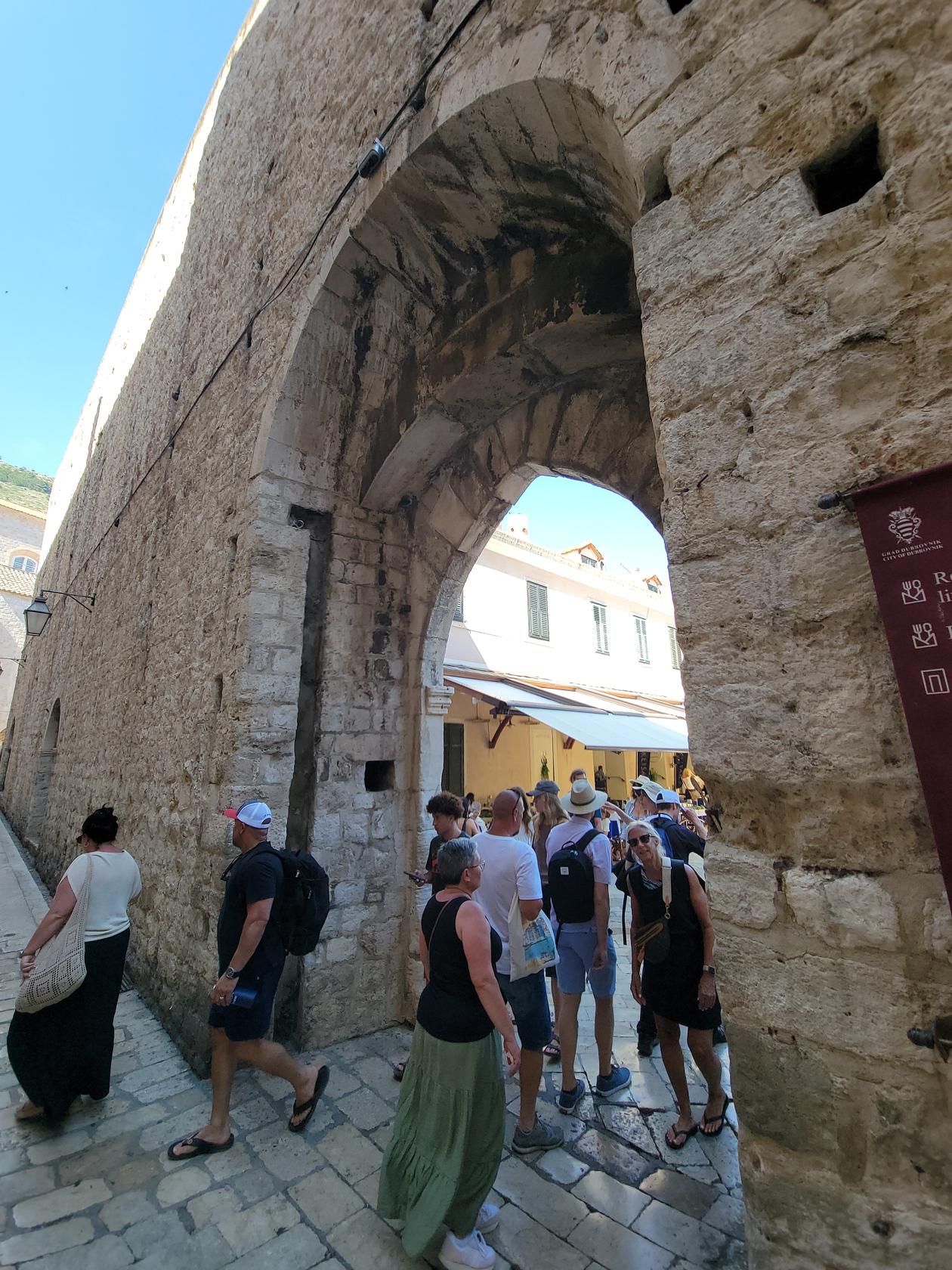
Pile Gate – Dubrovnik, Croatia
Pile Gate – Dubrovnik, Croatia
Side Alley – Dubrovnik, Croatia
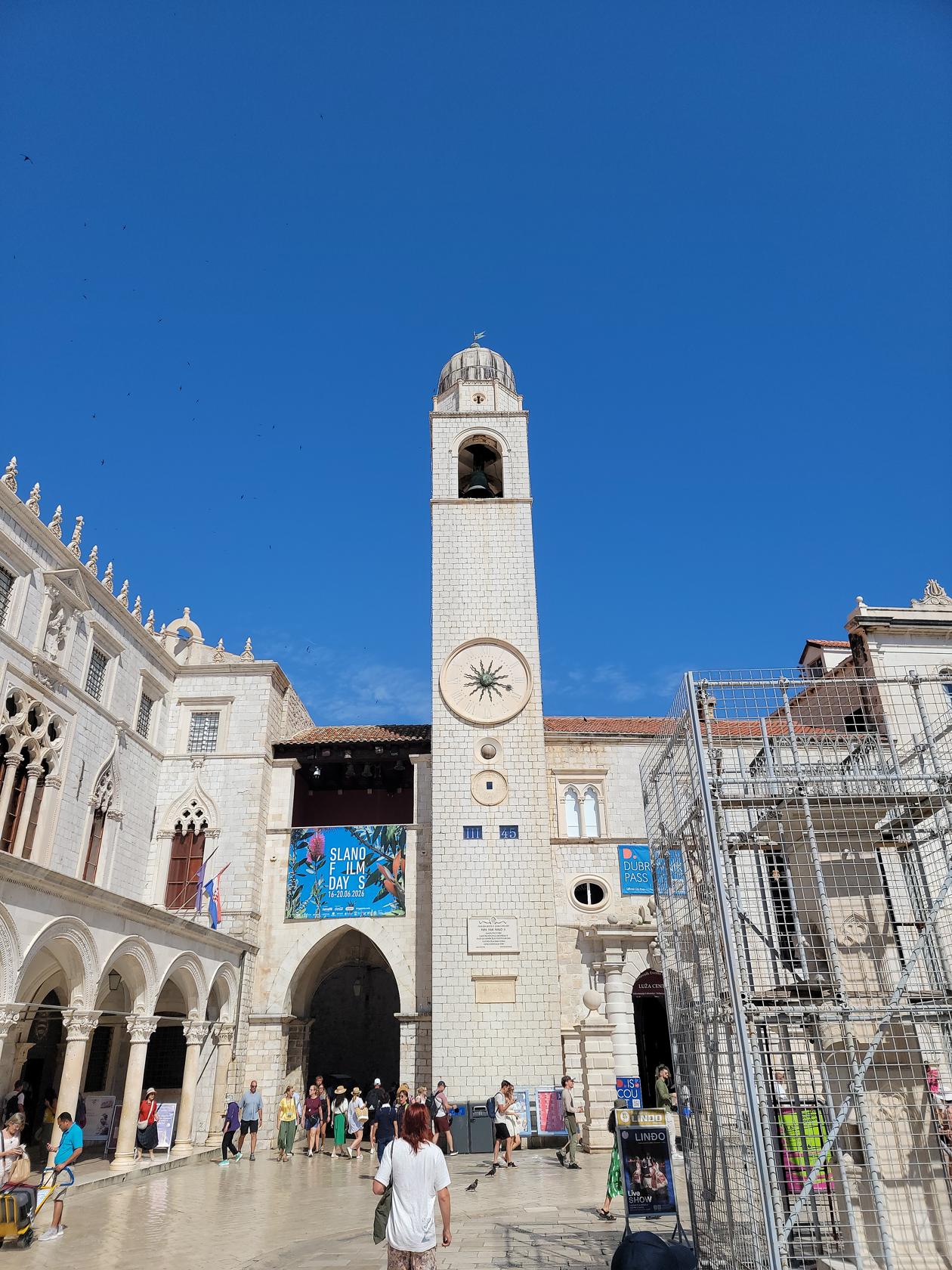
Clock Tower on Stradun – Dubrovnik, Croatia
Fishmarket Gate – Dubrovnik, Croatia
Rector’s Palace
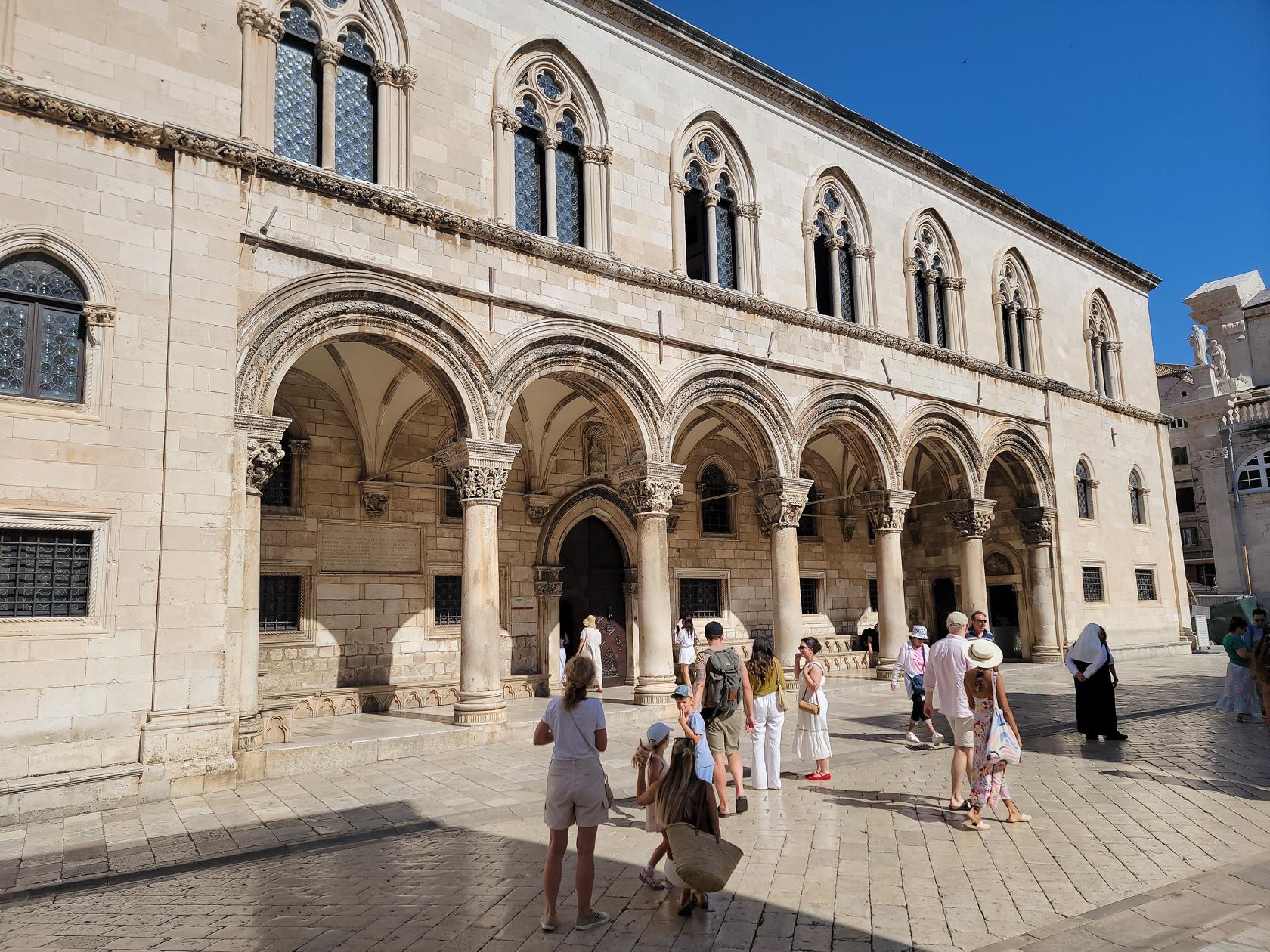
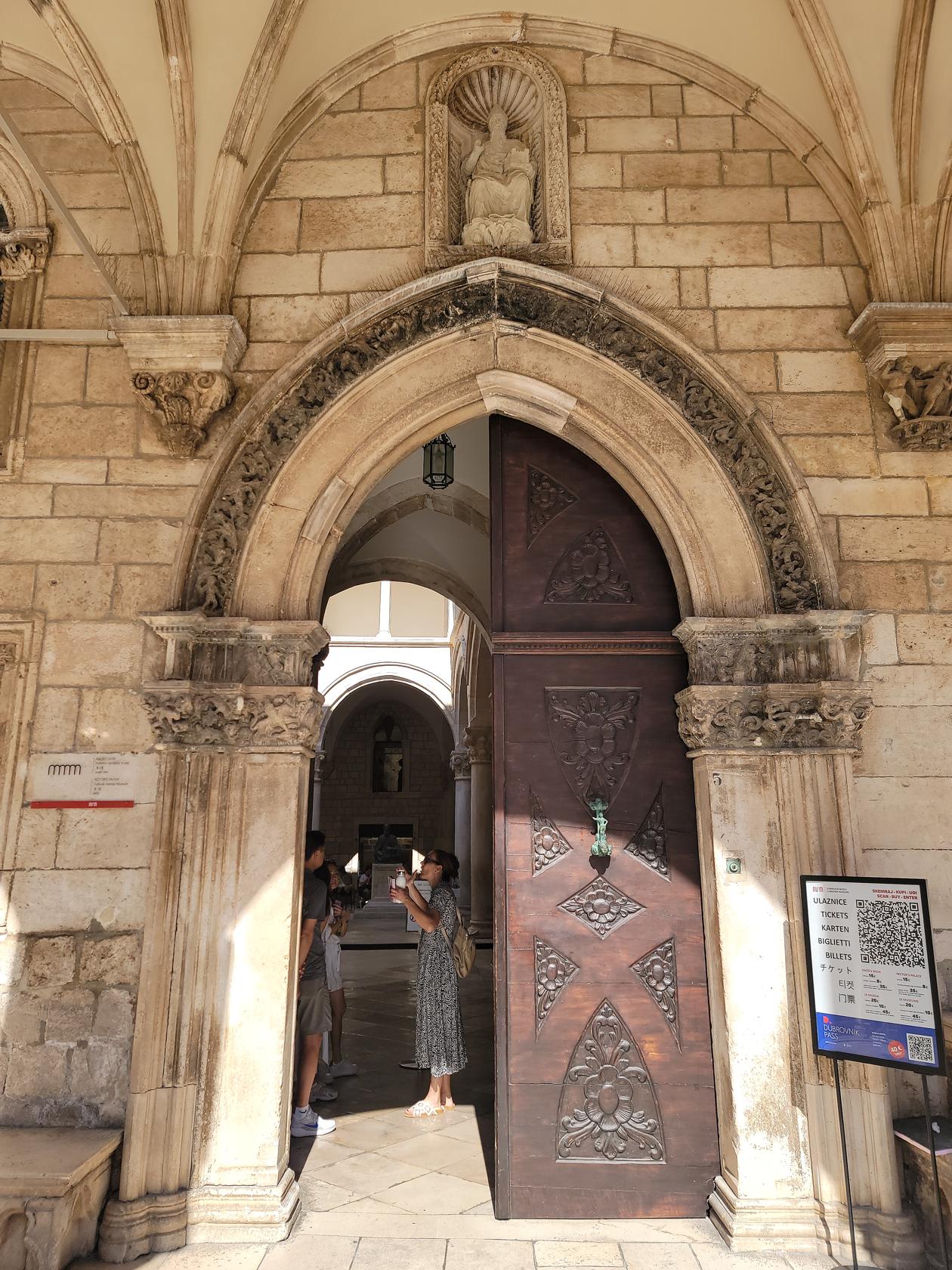
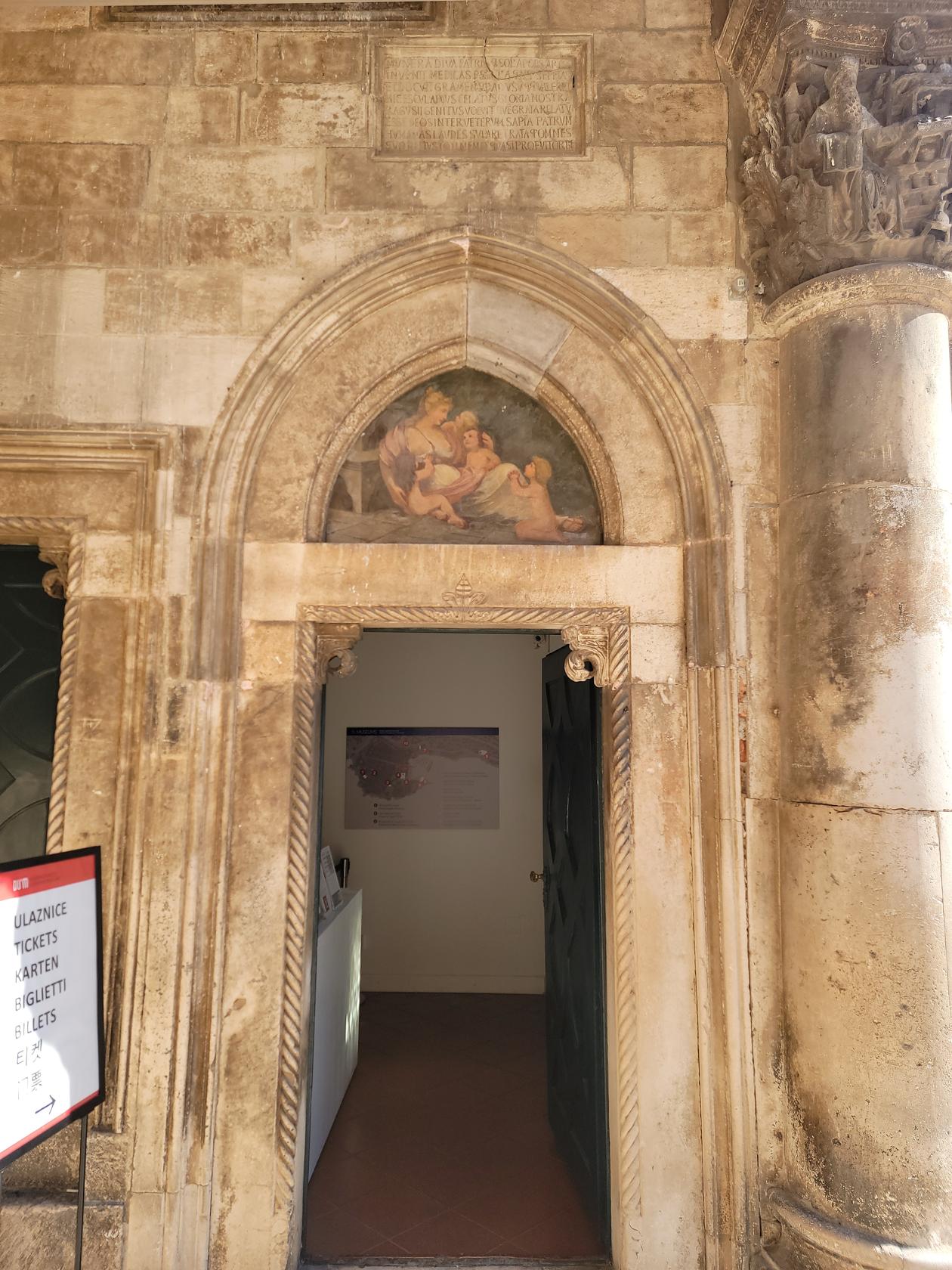
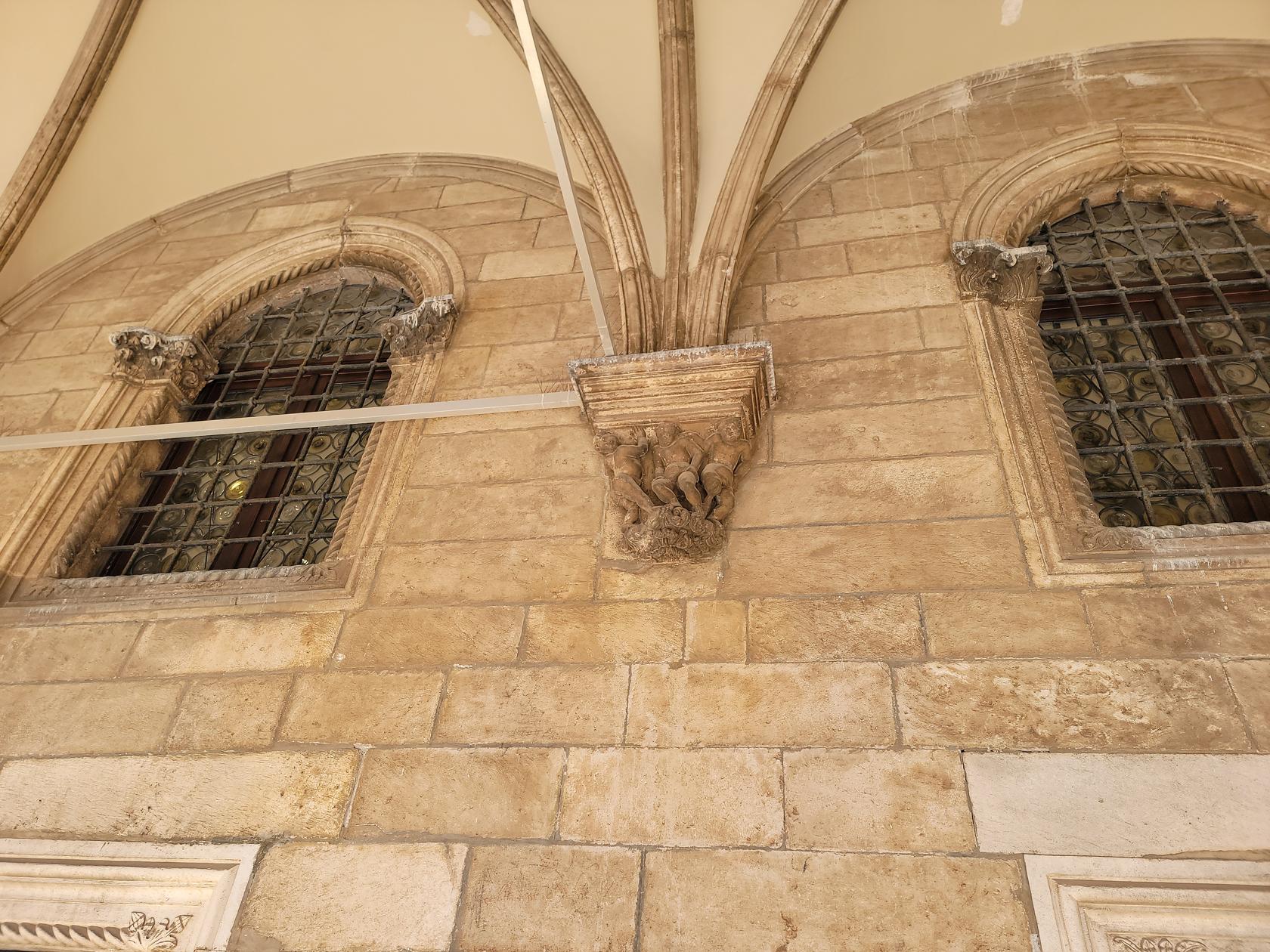
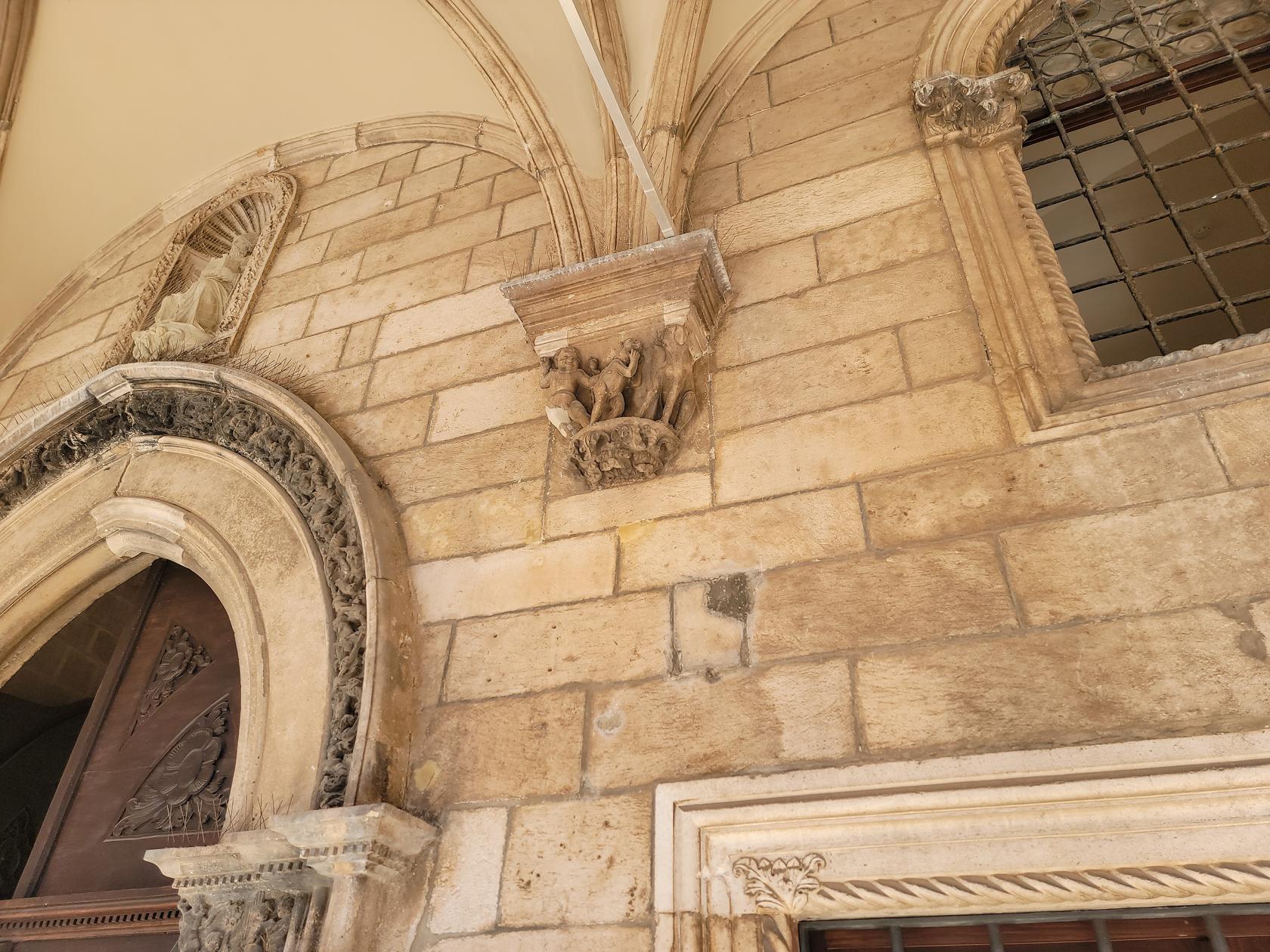
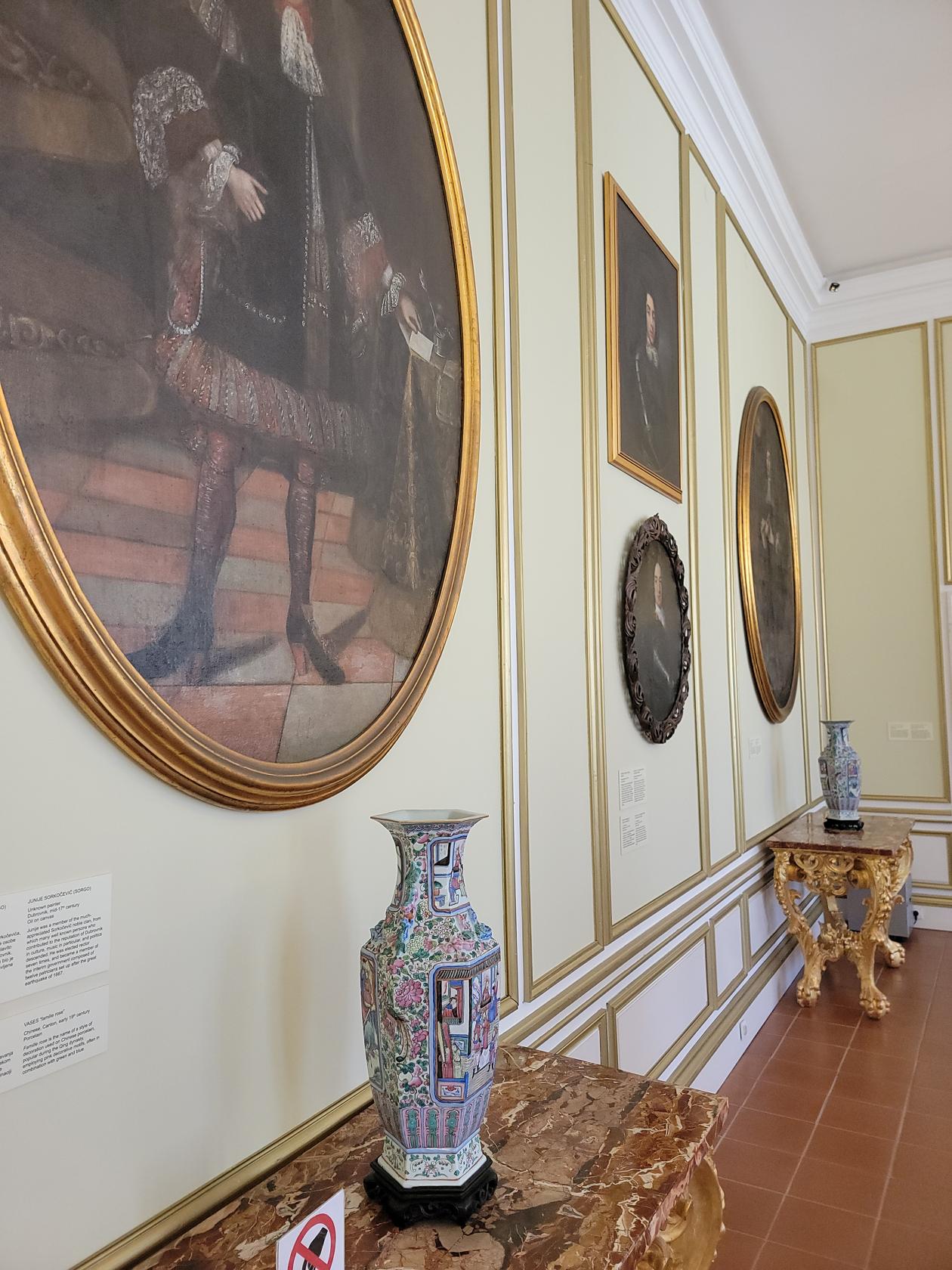
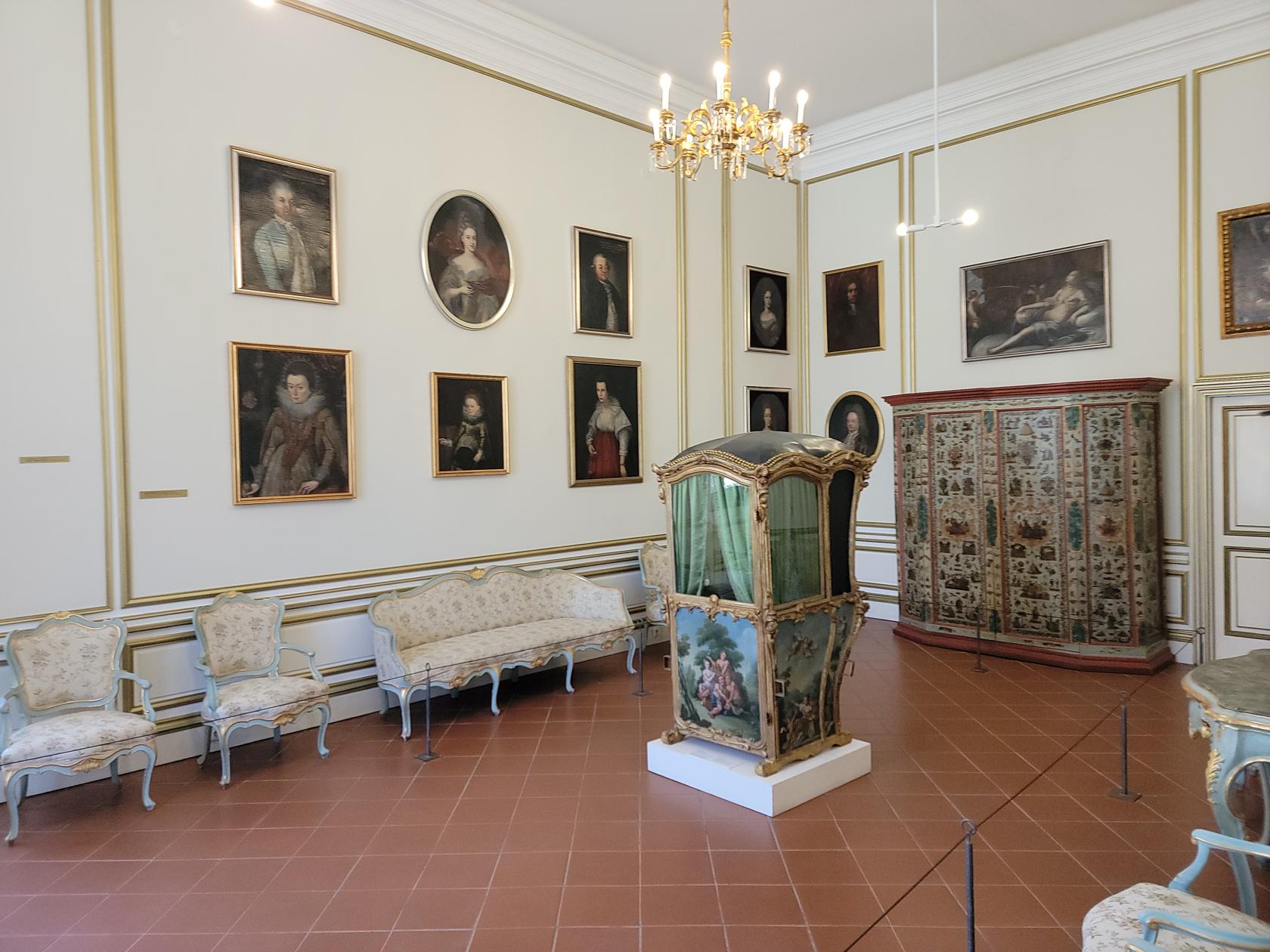
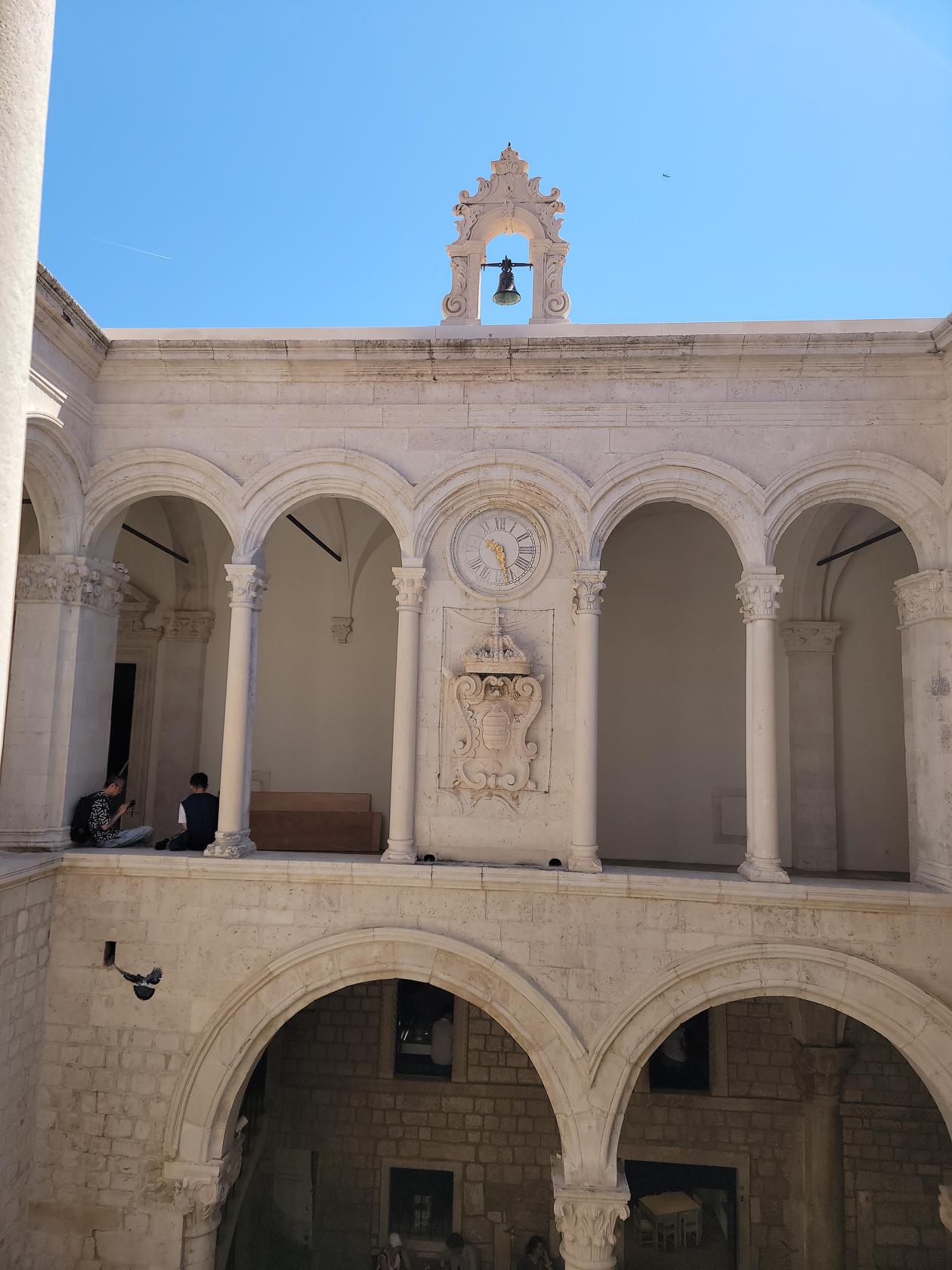
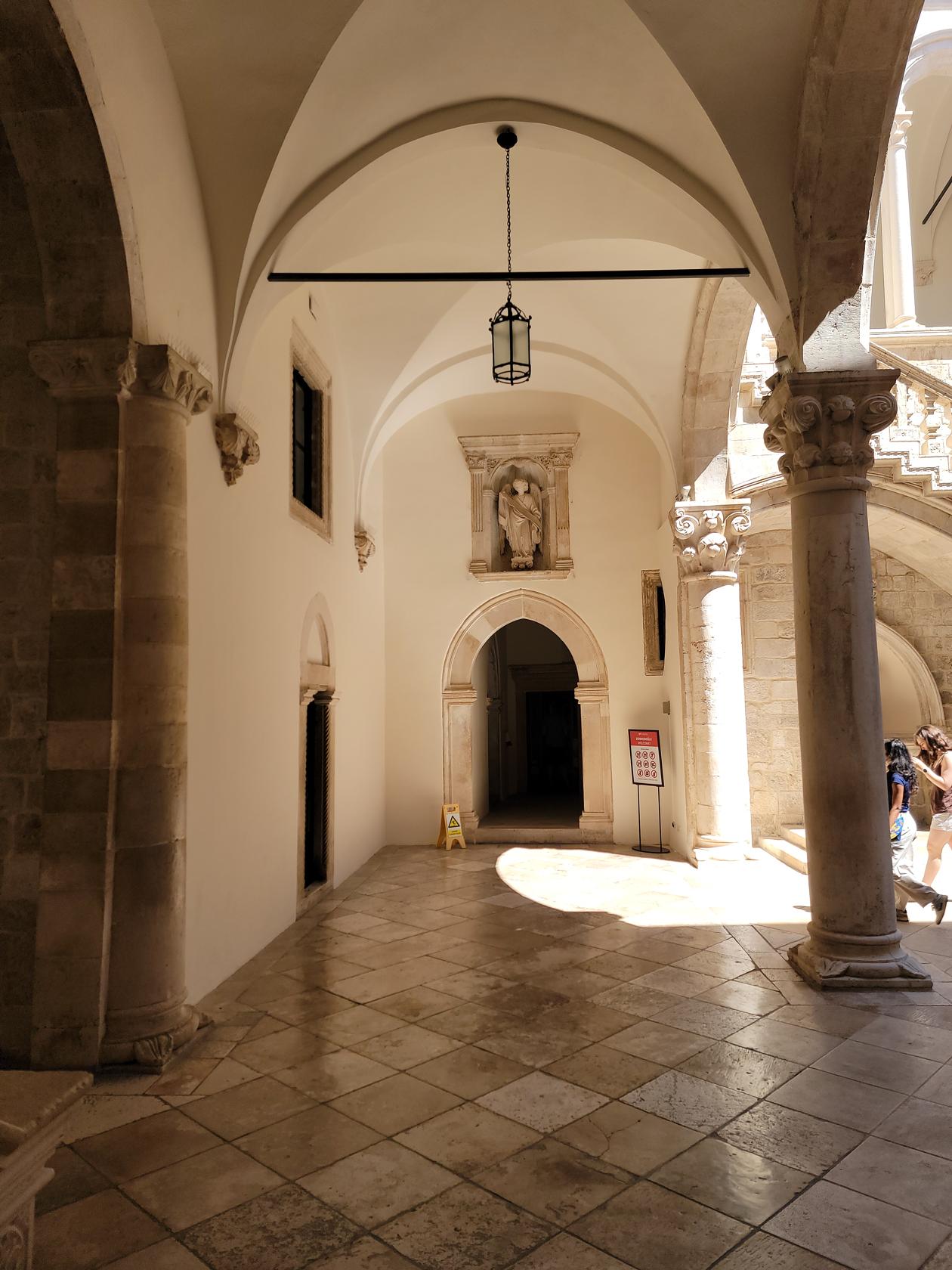
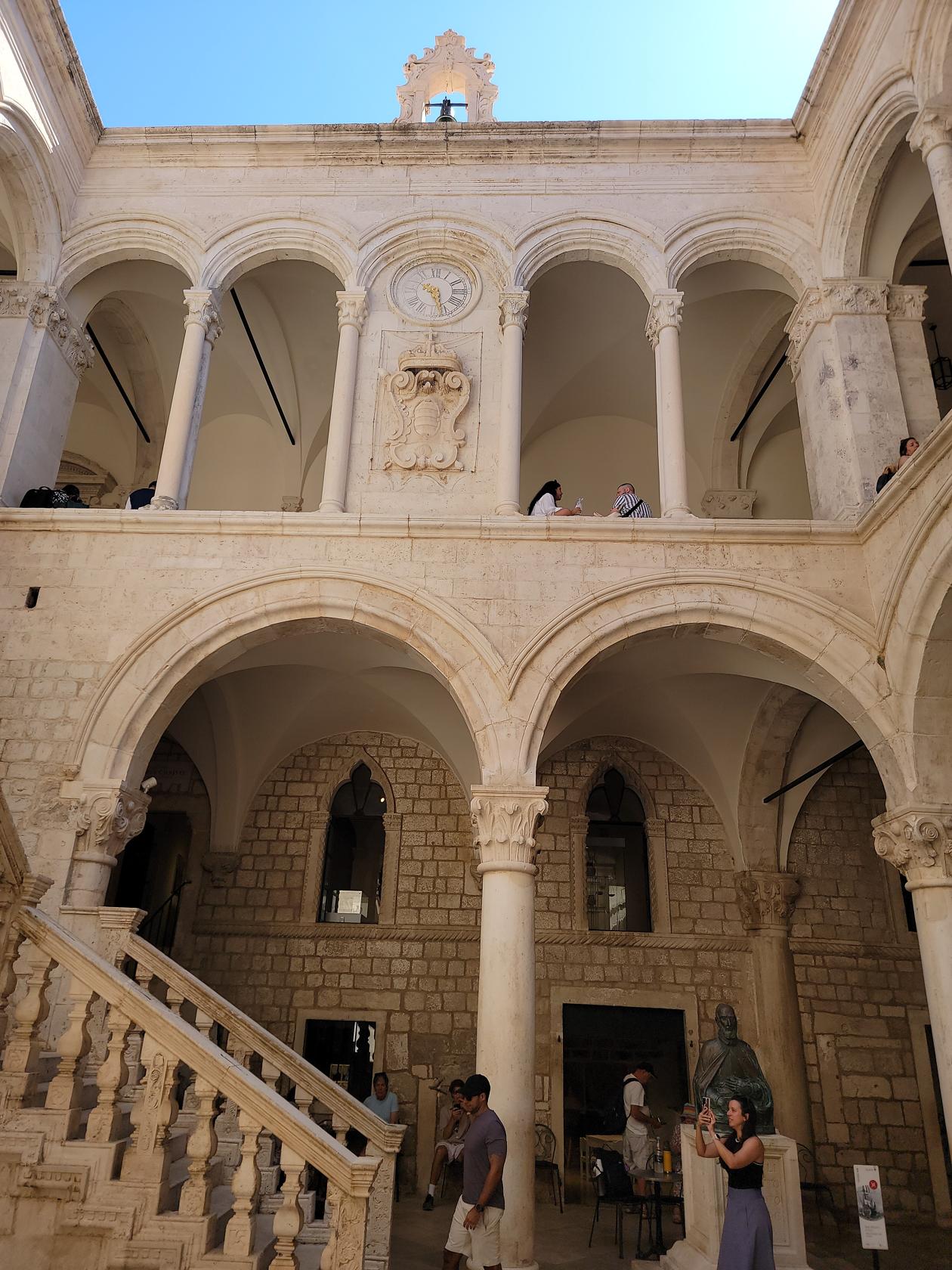
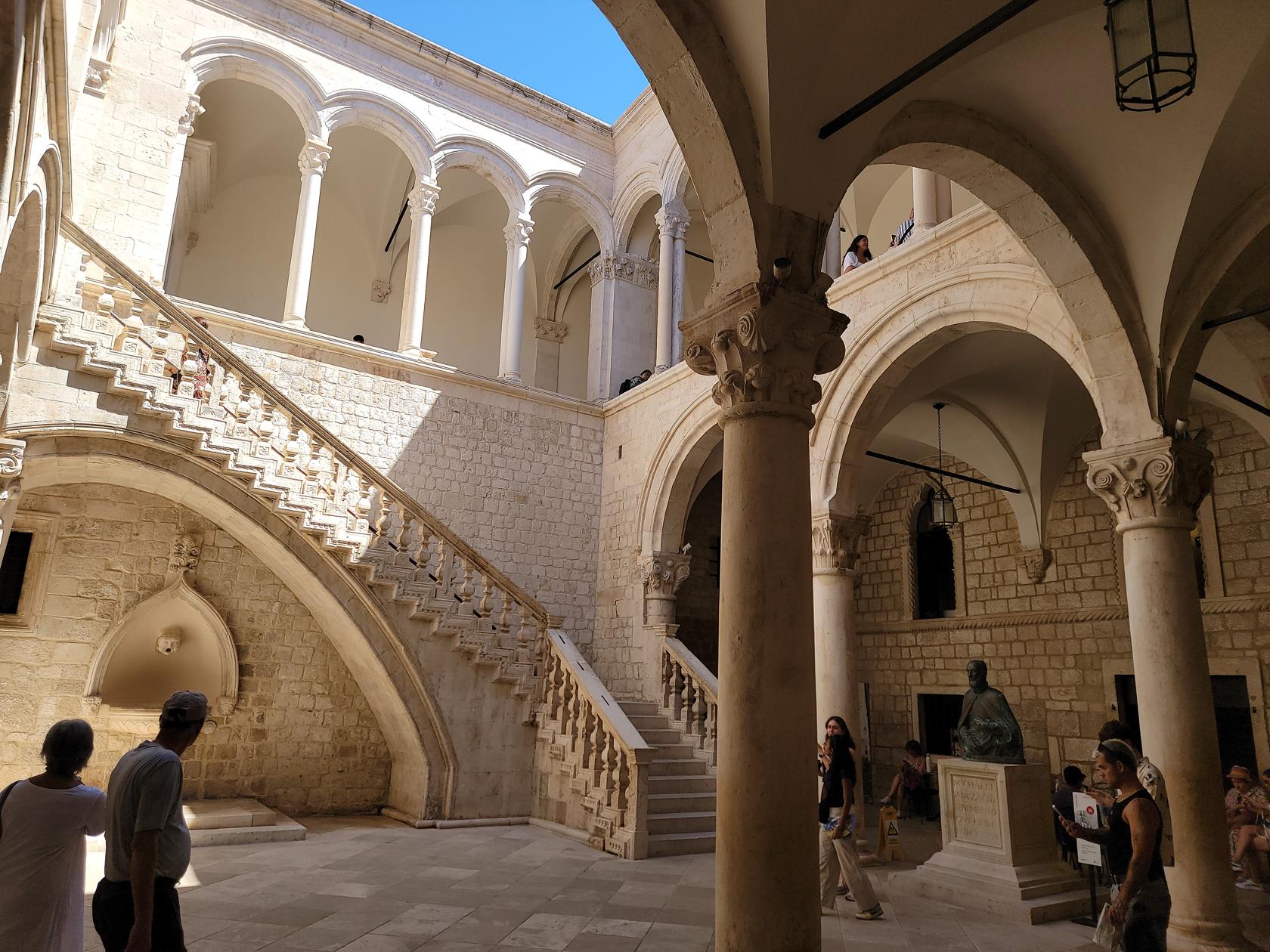
Built for the rector of the Republic of Ragusa between the 14th and 19th centuries, the Rector’s Palace now serves as a museum. A Gothic style building originally, it was destroy a few times and later rebuilt with Renaissance and some Baroque elements.
Interesting Structural Elements – Rector’s Palace – Dubrovnik, Croatia
Interesting Structural Elements – Rector’s Palace – Dubrovnik, Croatia
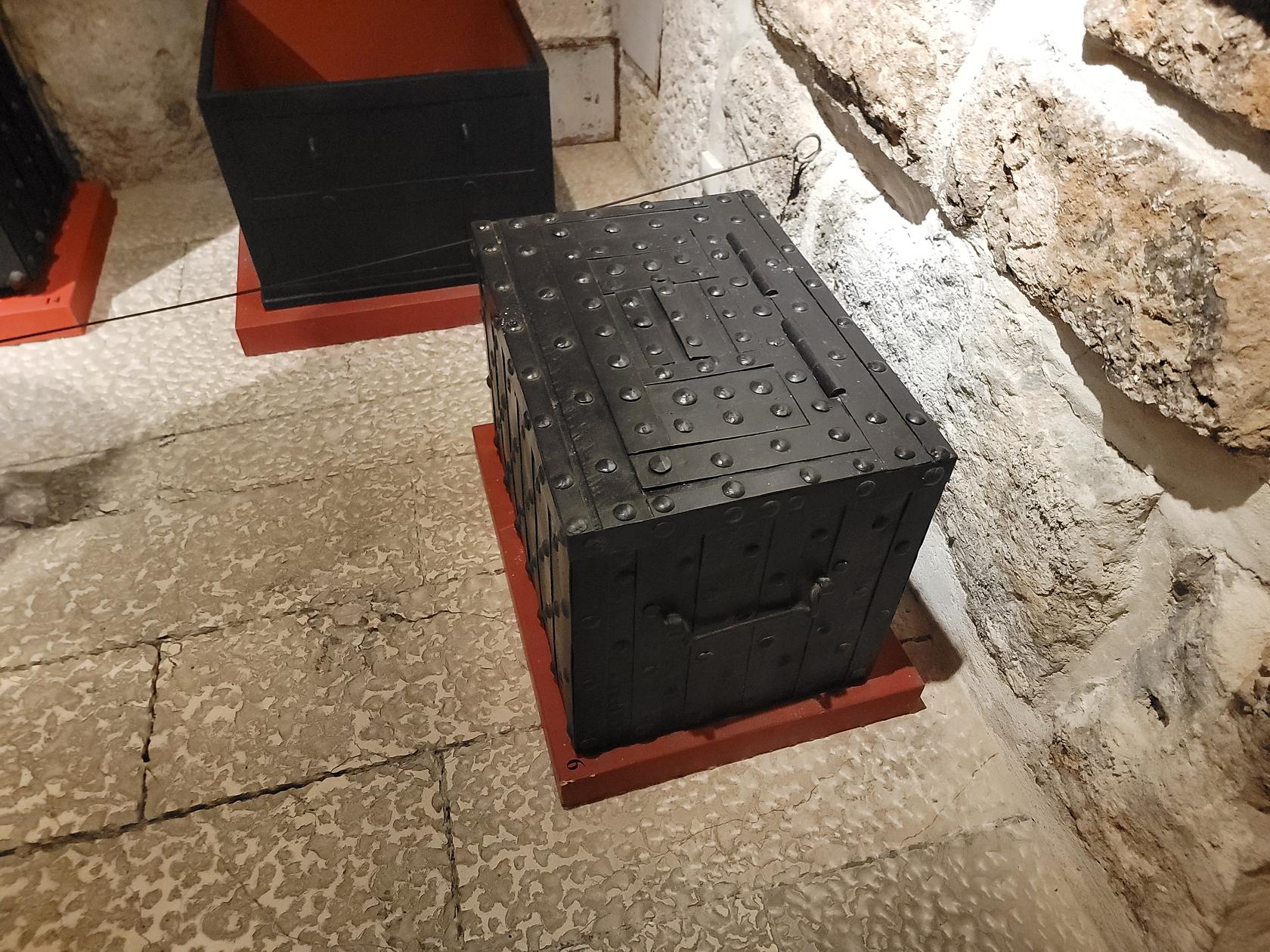
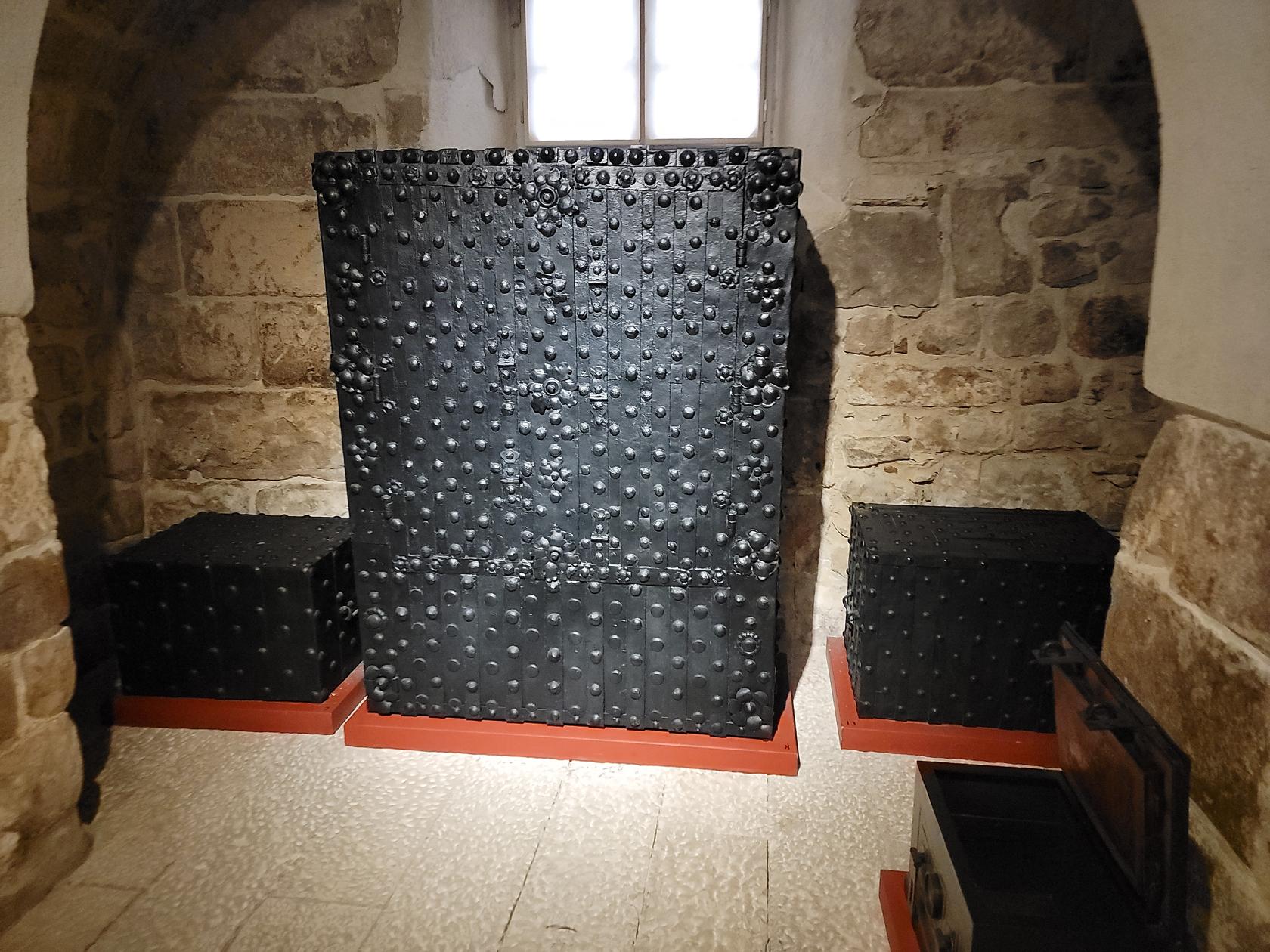
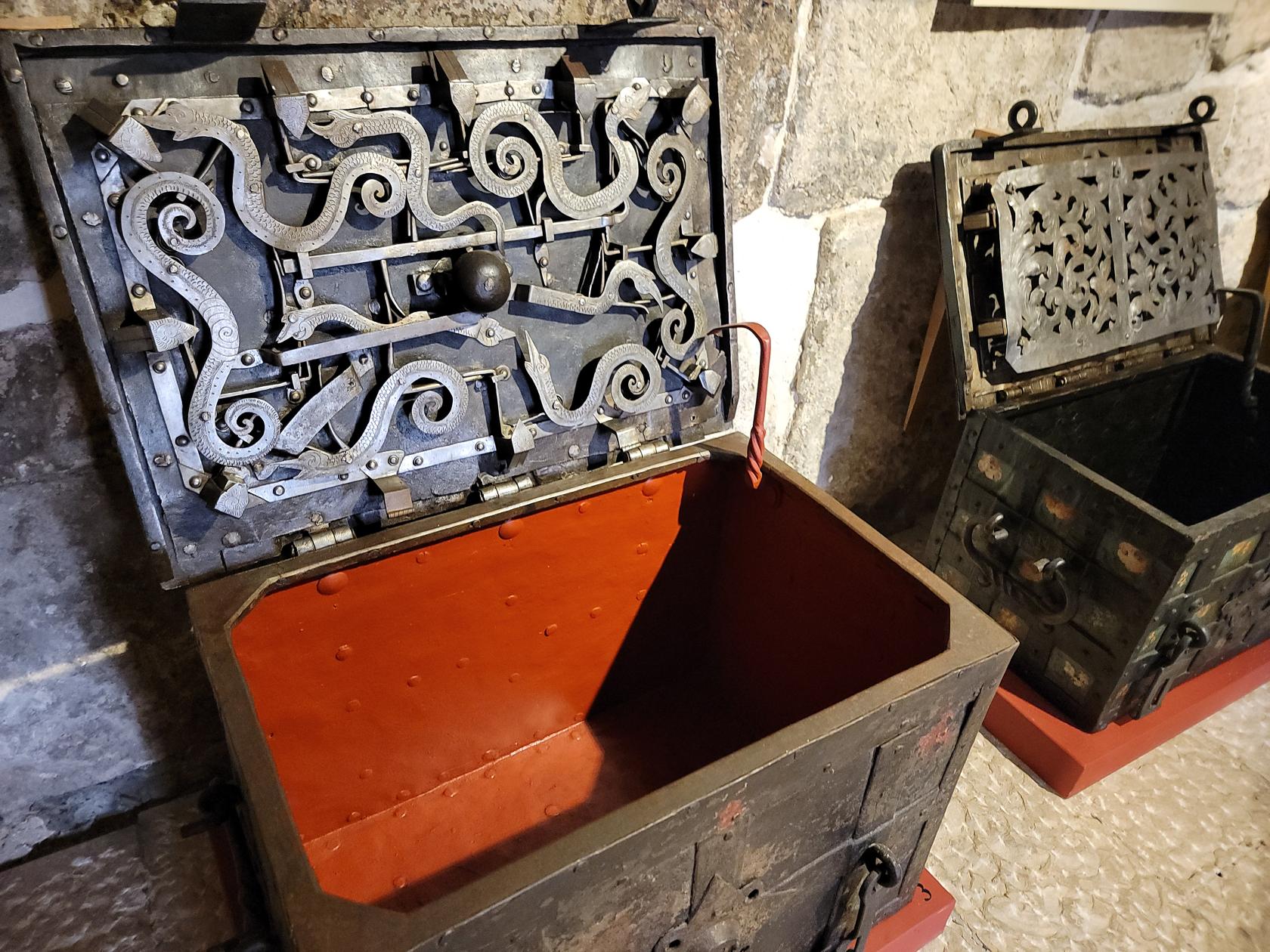
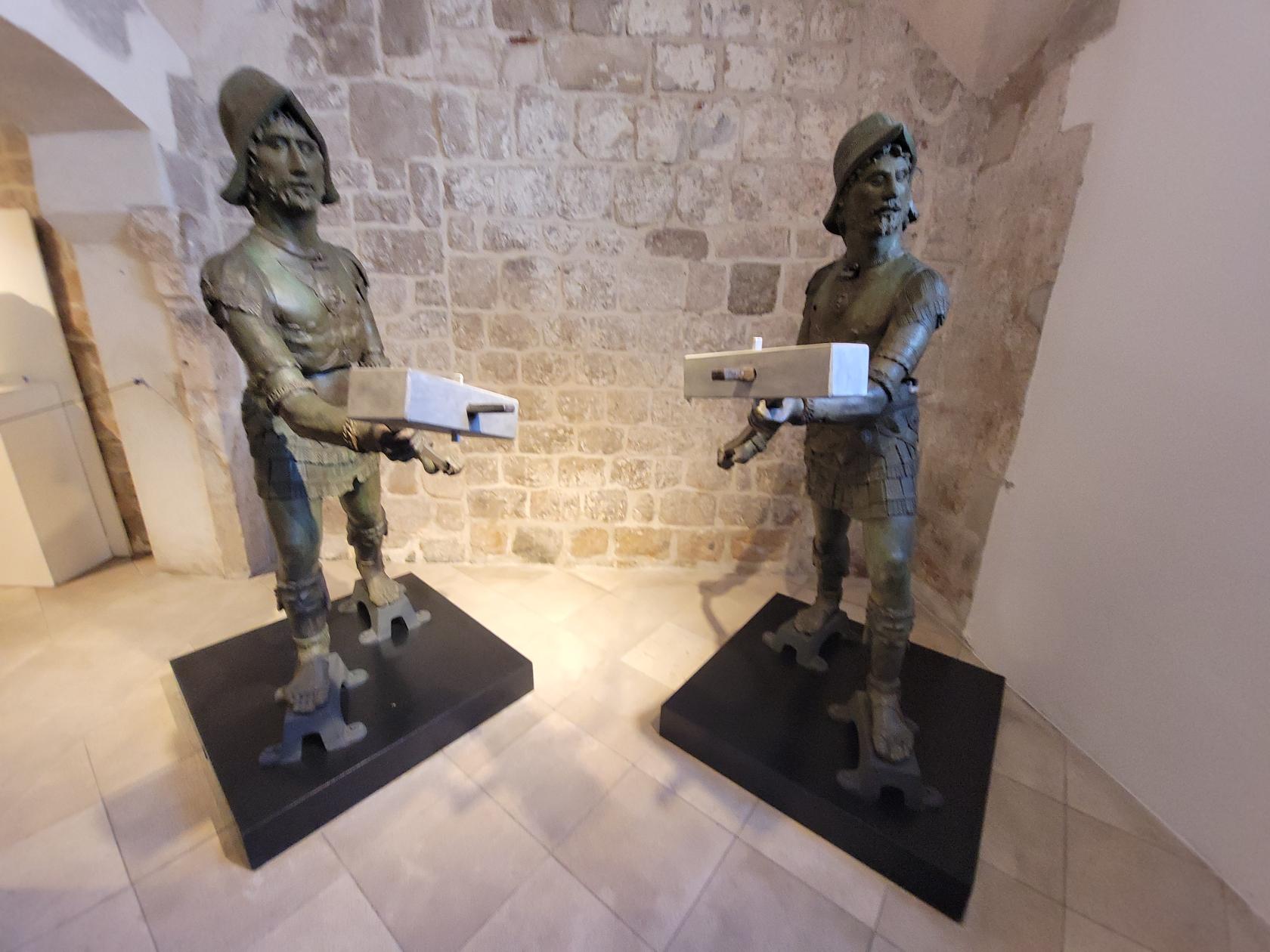
The museum houses a fine collection of old strong boxes, which show detailed craftmenship by blacksmiths and locksmiths of that time. Upon entering there is also a pair of old bell knockers that are quite interesting.
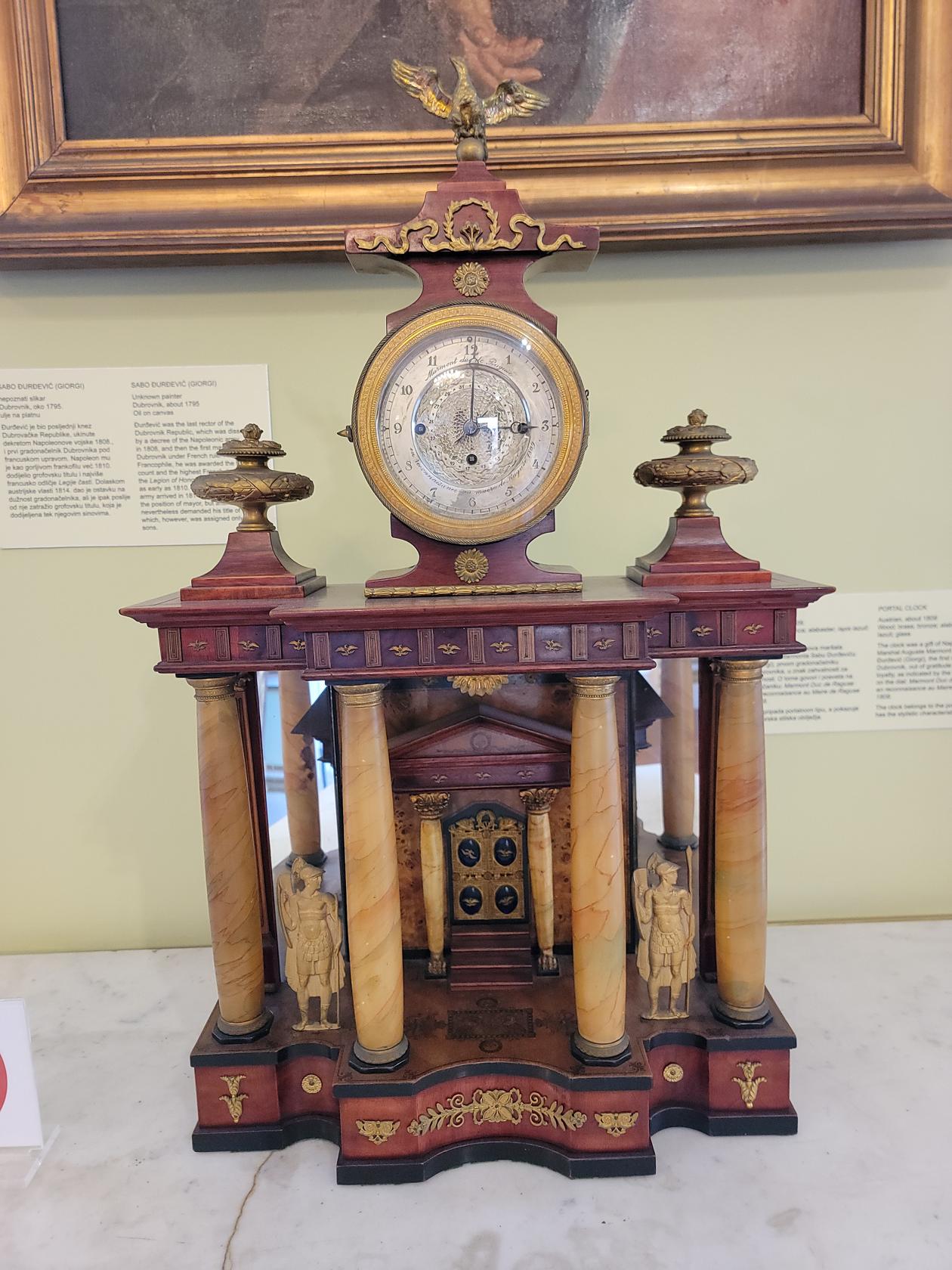
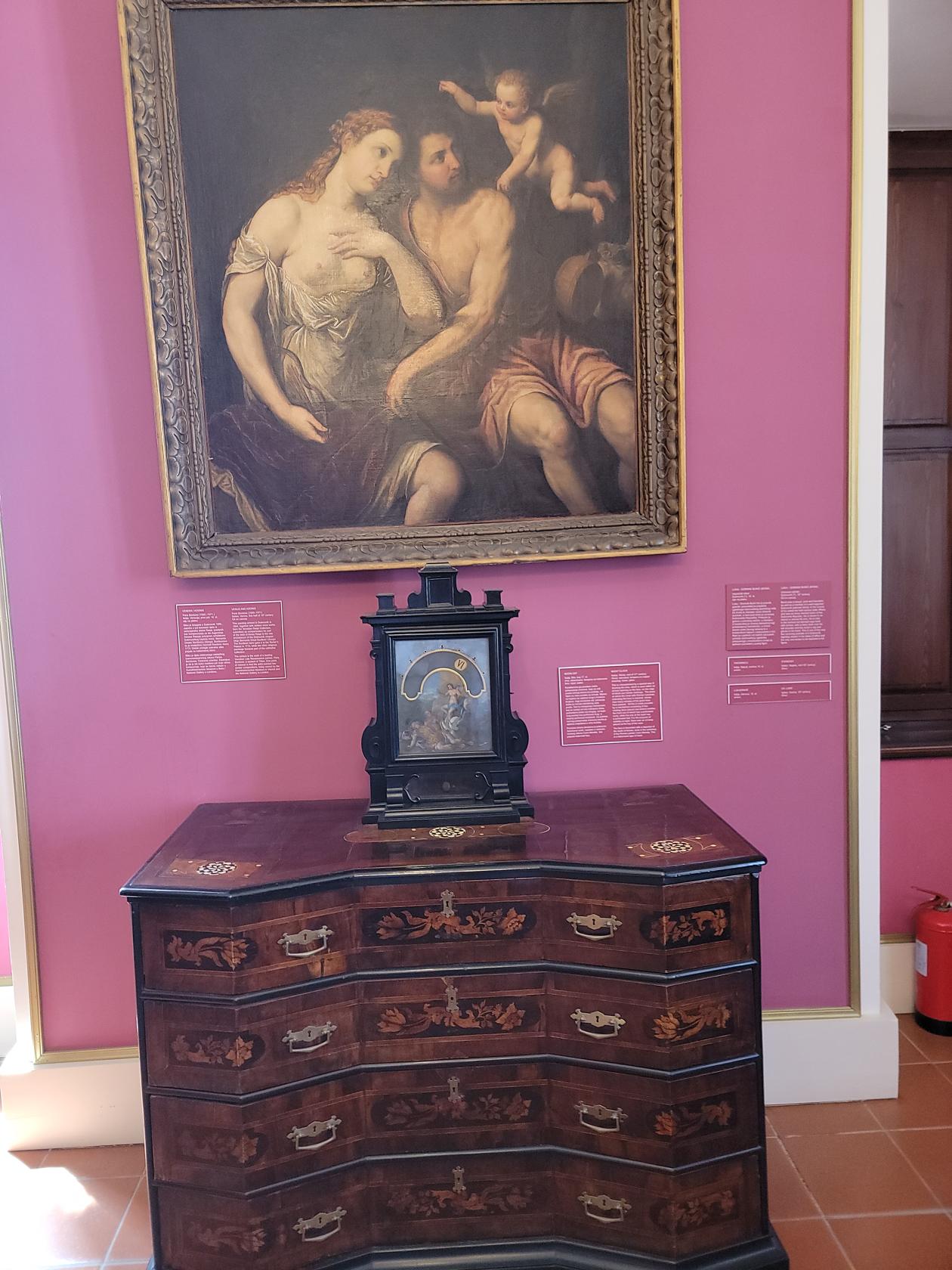
Clock with Desk – Rector’s Palace – Dubrovnik, Croatia
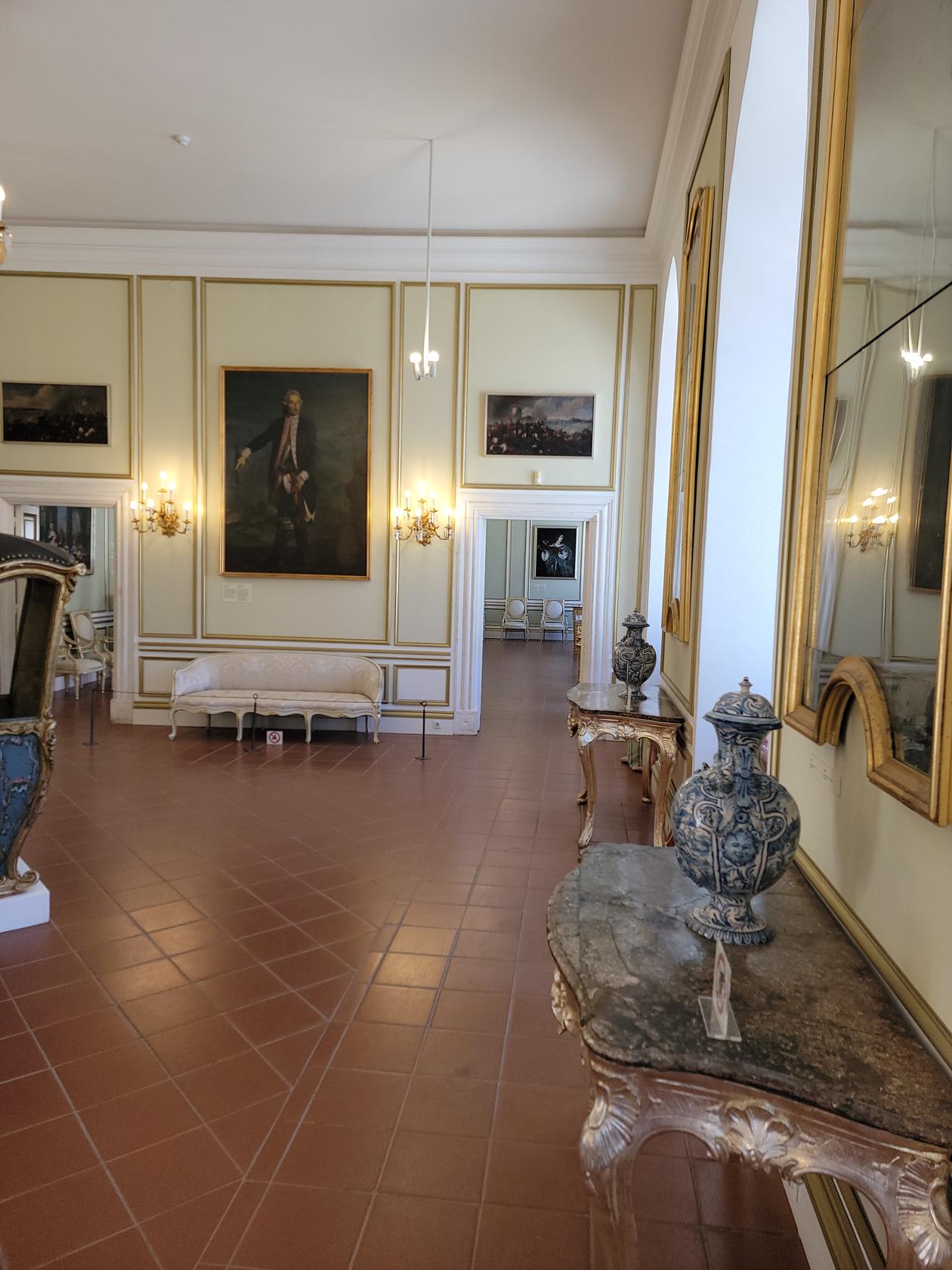
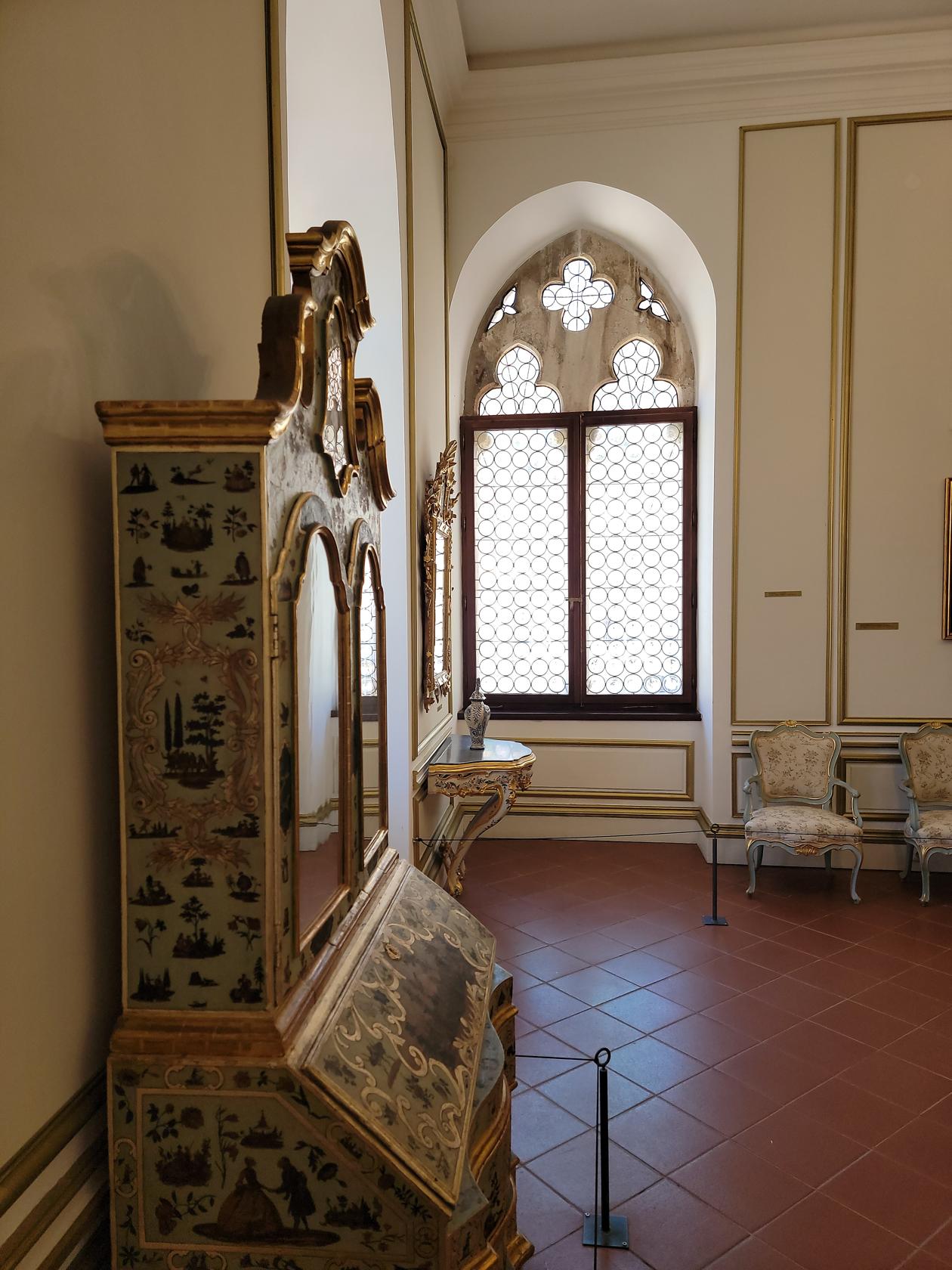
Rooms – Rector’s Palace – Dubrovnik, Croatia
Desk – Rector’s Palace – Dubrovnik, Croatia
Other Exhibits – Rector’s Palace – Dubrovnik, Croatia
Other Exhibits – Rector’s Palace – Dubrovnik, Croatia
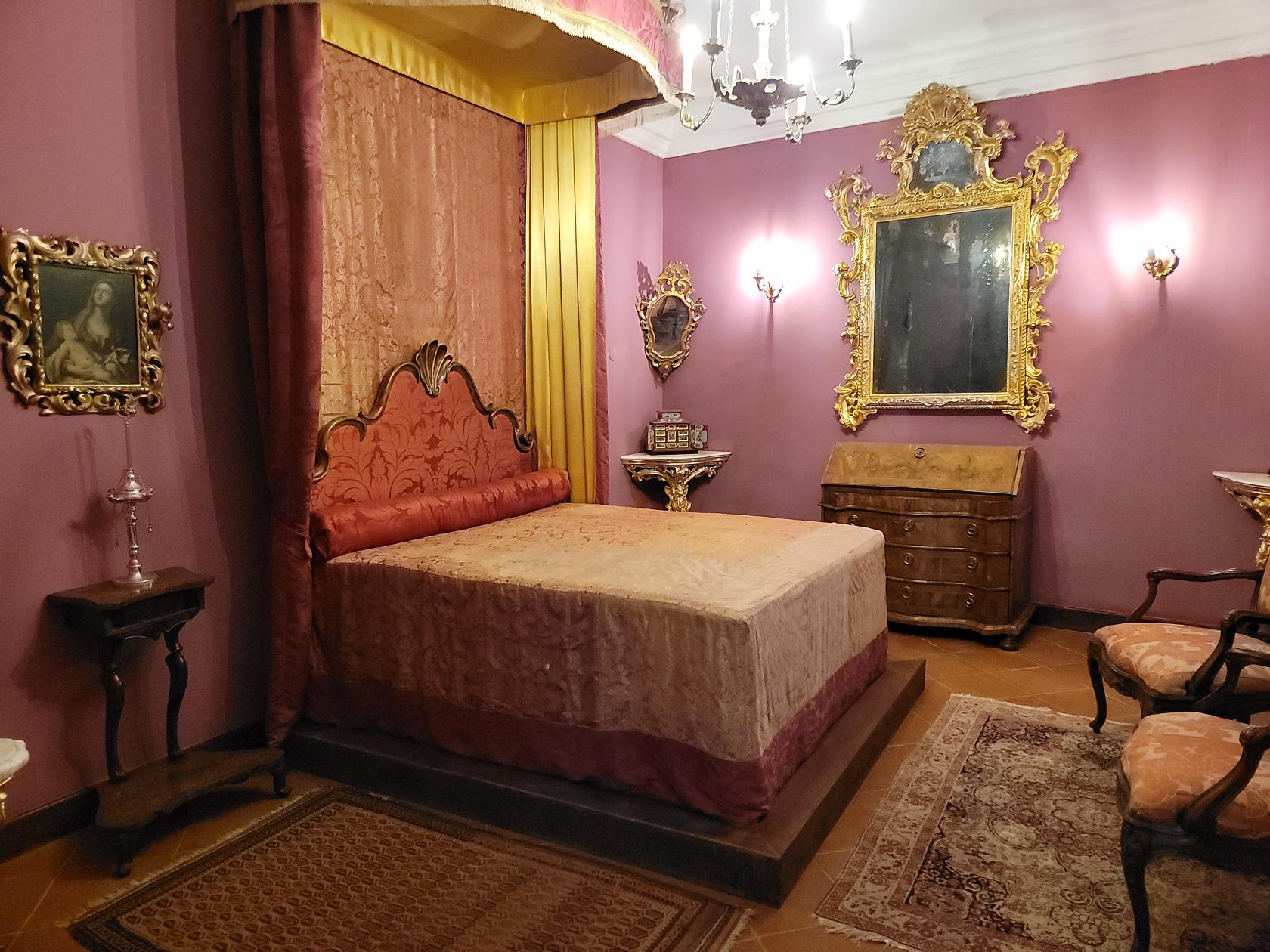
Bedroom – Rector’s Palace – Dubrovnik, Croatia
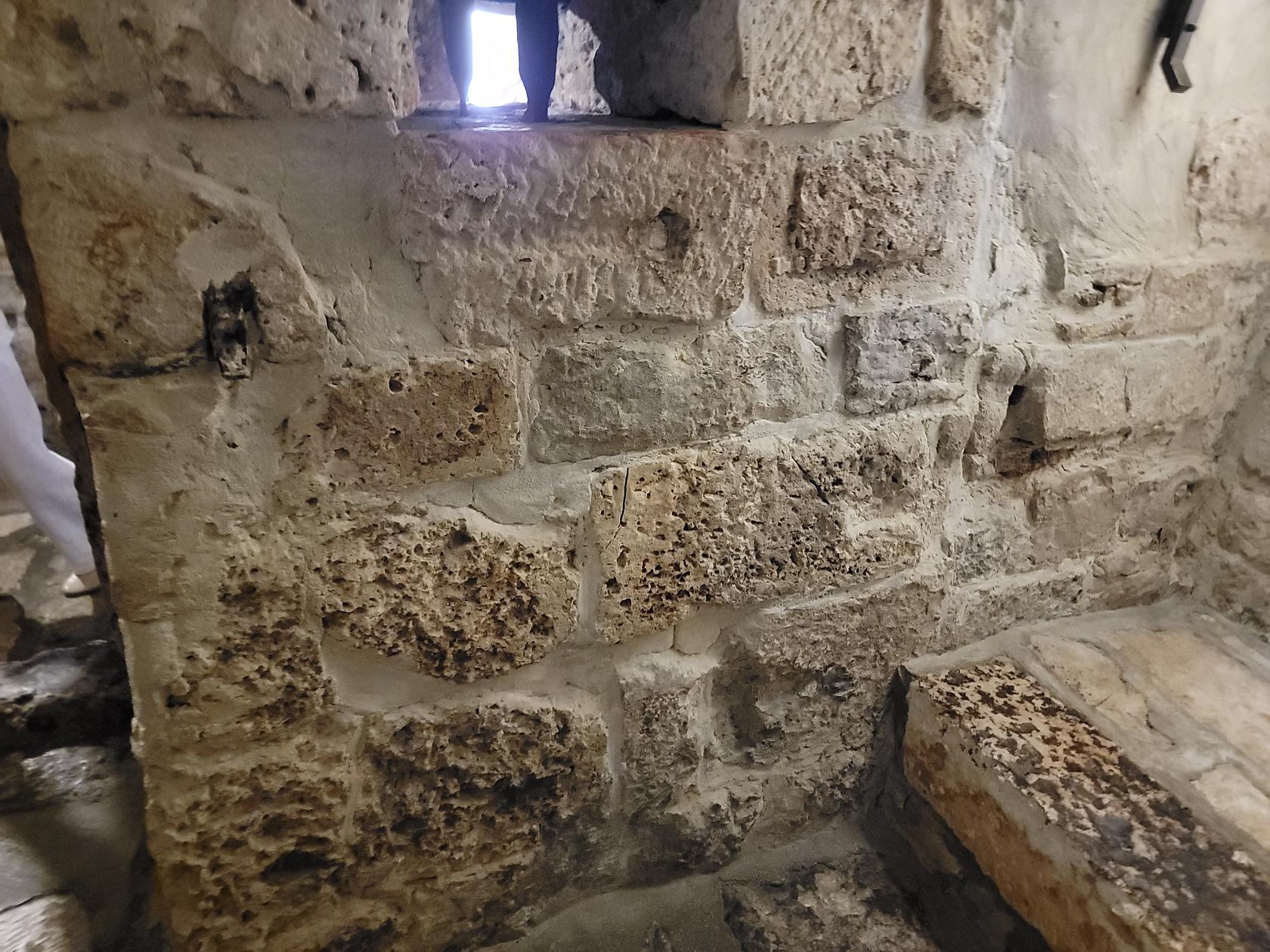
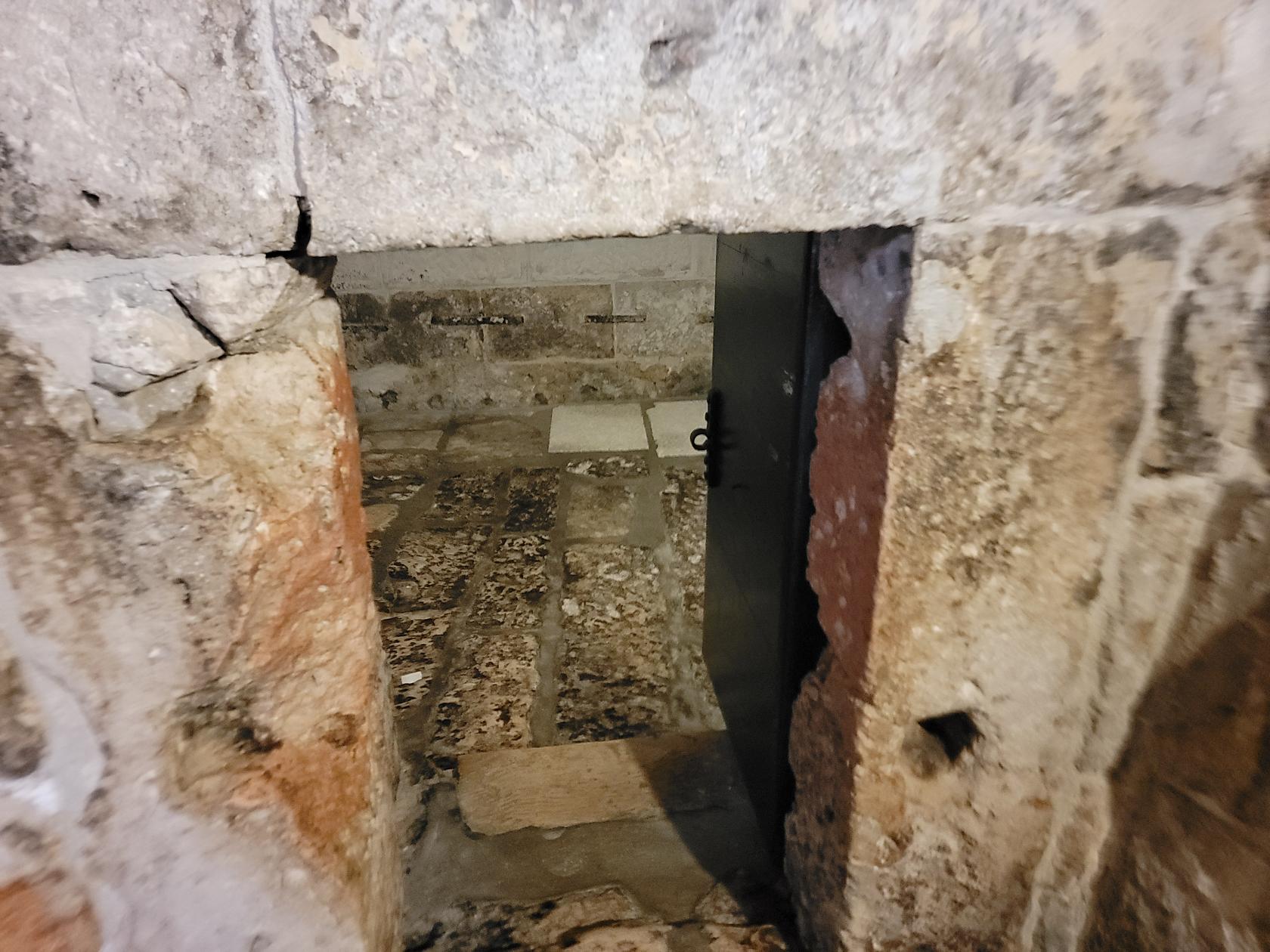
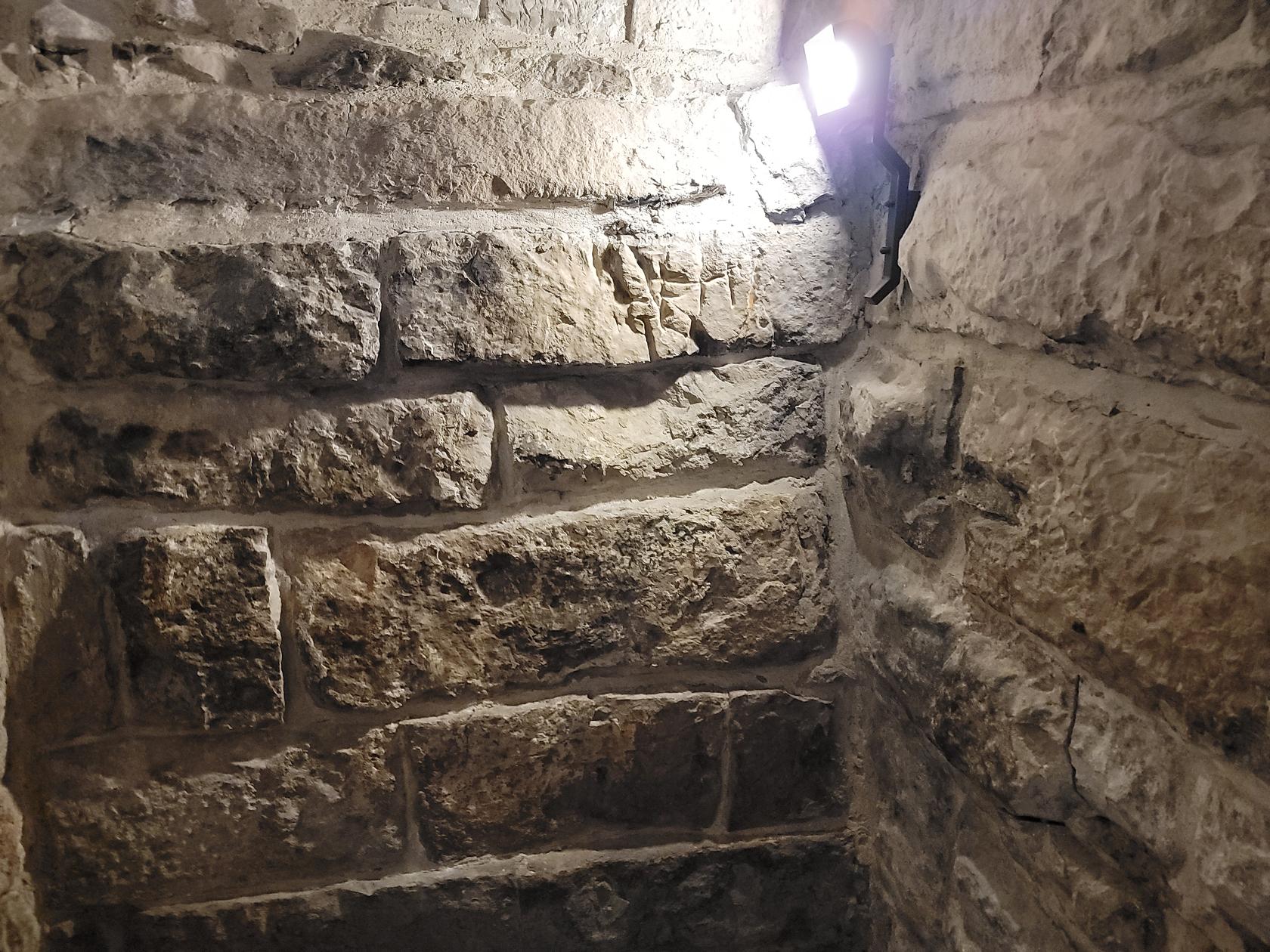
On the ground floor the Dragon Prison Cell can be investigated, where only the most hardened criminals were kept. Apparently some inscribed their names on the walls, for future tourists to read no doubt.
Tuffa Stone of Prison Room – Rector’s Palace – Dubrovnik, Croatia
In Croatia, there are always Catholic churches to visit. Some are better than others and the ones you will find in Dubrovnik are for the most part not of much interest. Though their importance to the community no doubt remains.
Cathedral of The Assumption of the Virgin Mary
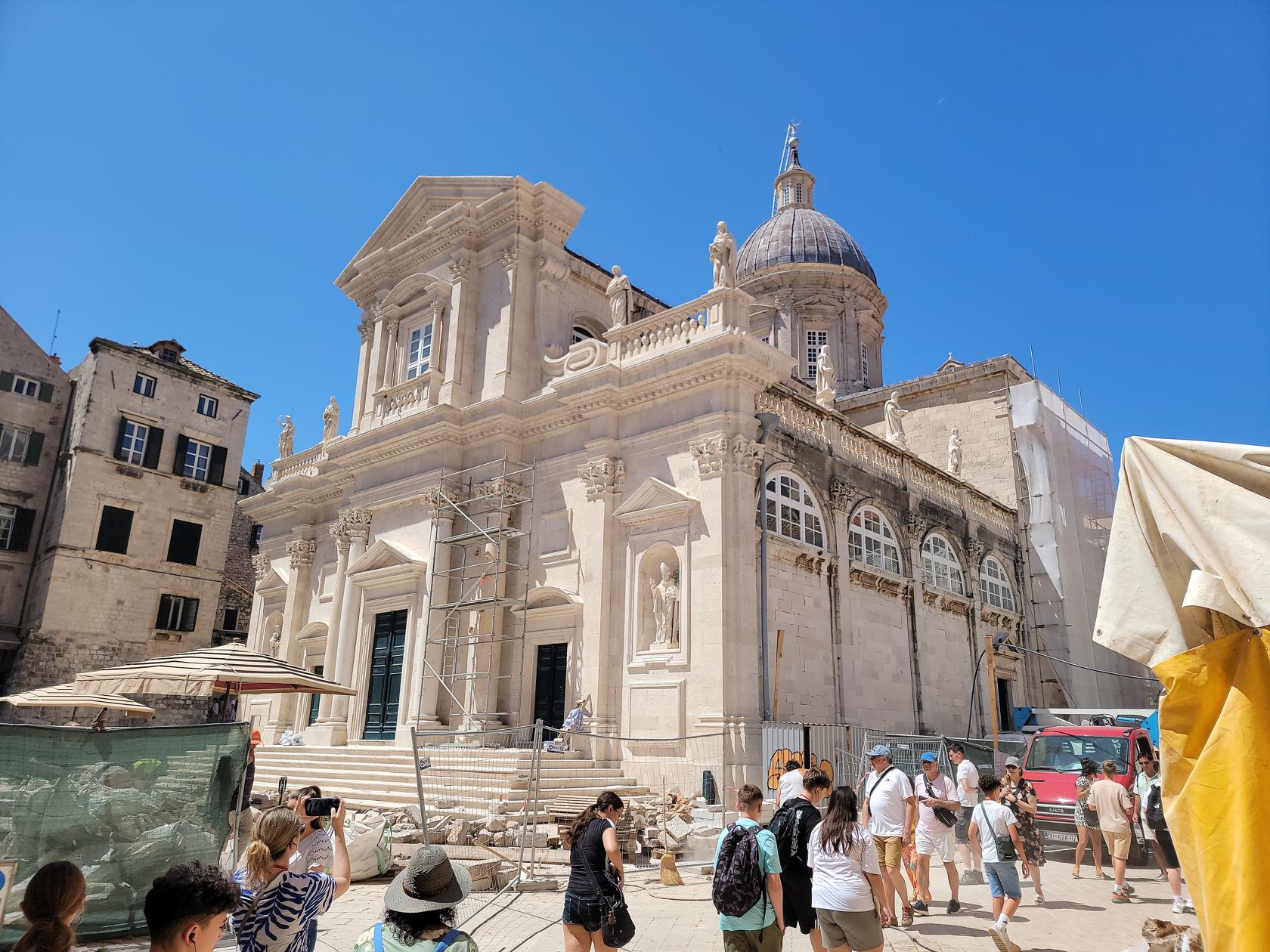
The Assumption of the Virgin Mary, or Dubrovnik Cathedral, was undergoing renovations at the time of our visit and could not be entered. It is located near the Rector’s Palace. Built in the Baroque style of architecture, it was literally destroyed by the devastating Dubrovnik Earthquate of 1667 and later rebuilt.
Cathedral of the Assumption of the Virgin Mary – Dubrovnik, Croatia
Church of Saint Ignatius
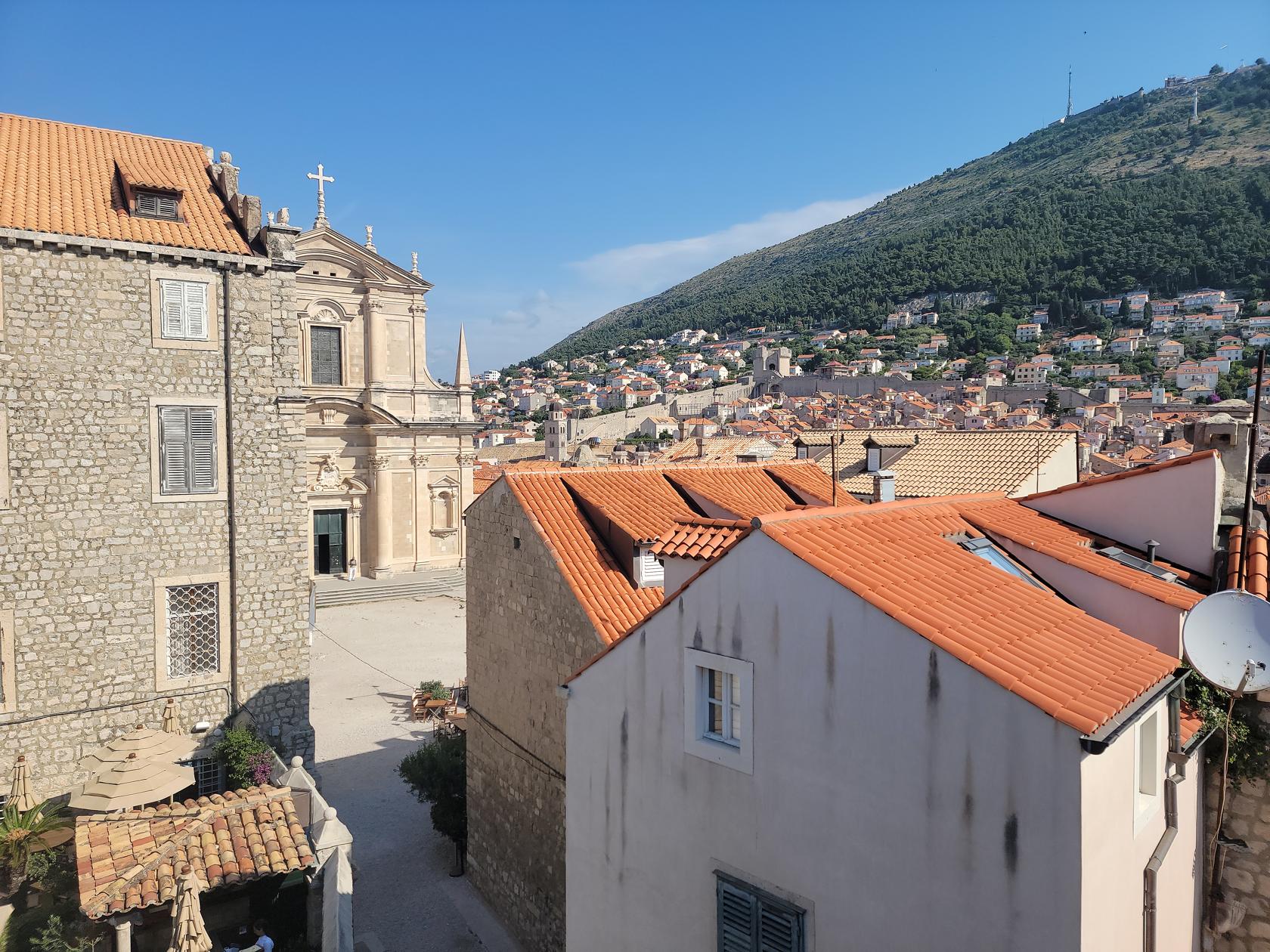
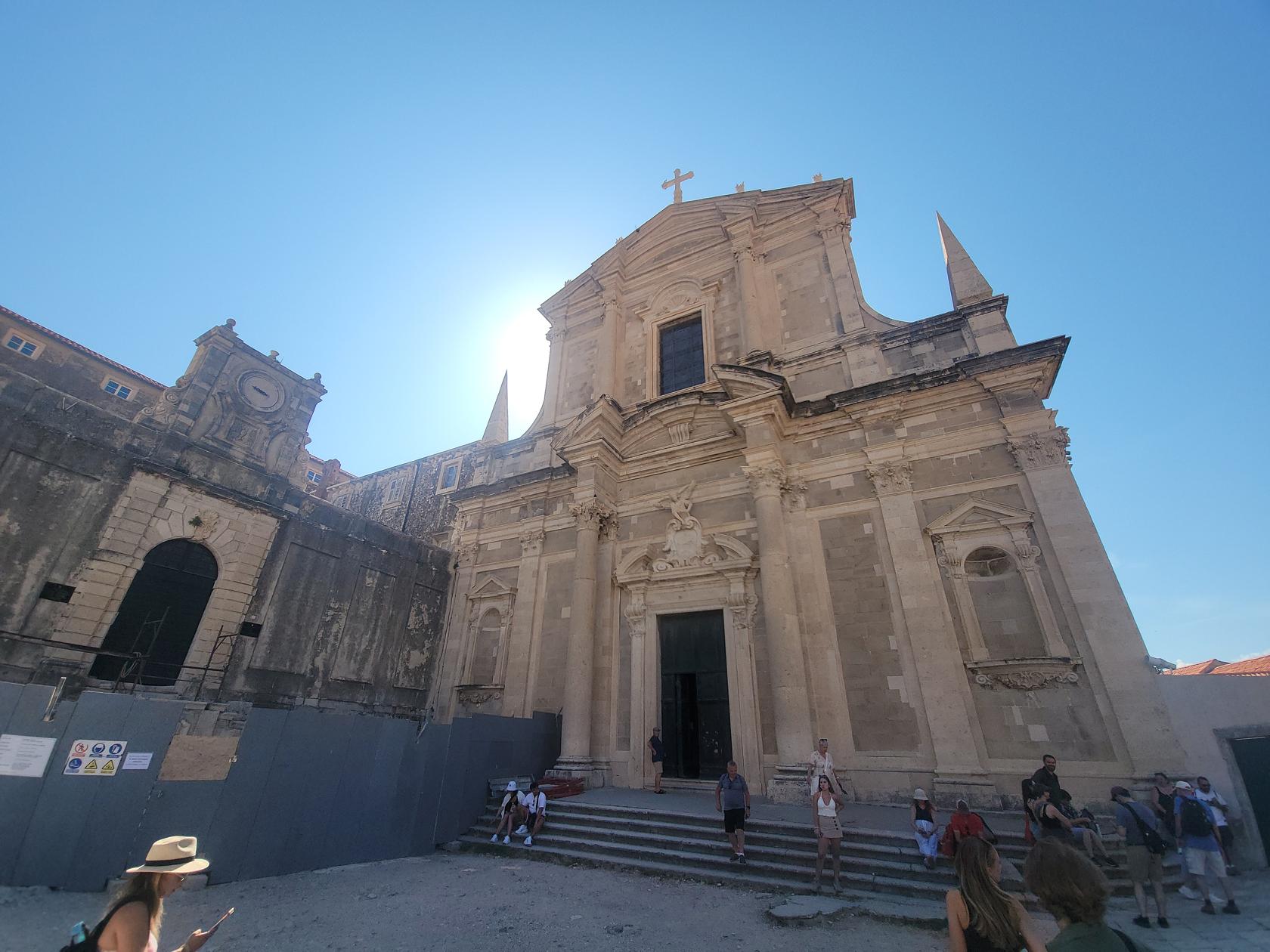
Perched above the Jesuit Stairs is the Church of Saint Ignatius. Formerly part of the Jesuit College, or Collegium Ragusinum, it is currently the finest example of Baroque period architecture in the Old Town.
Entrance – Church Of Saint Ignatius – Dubrovnik, Croatia
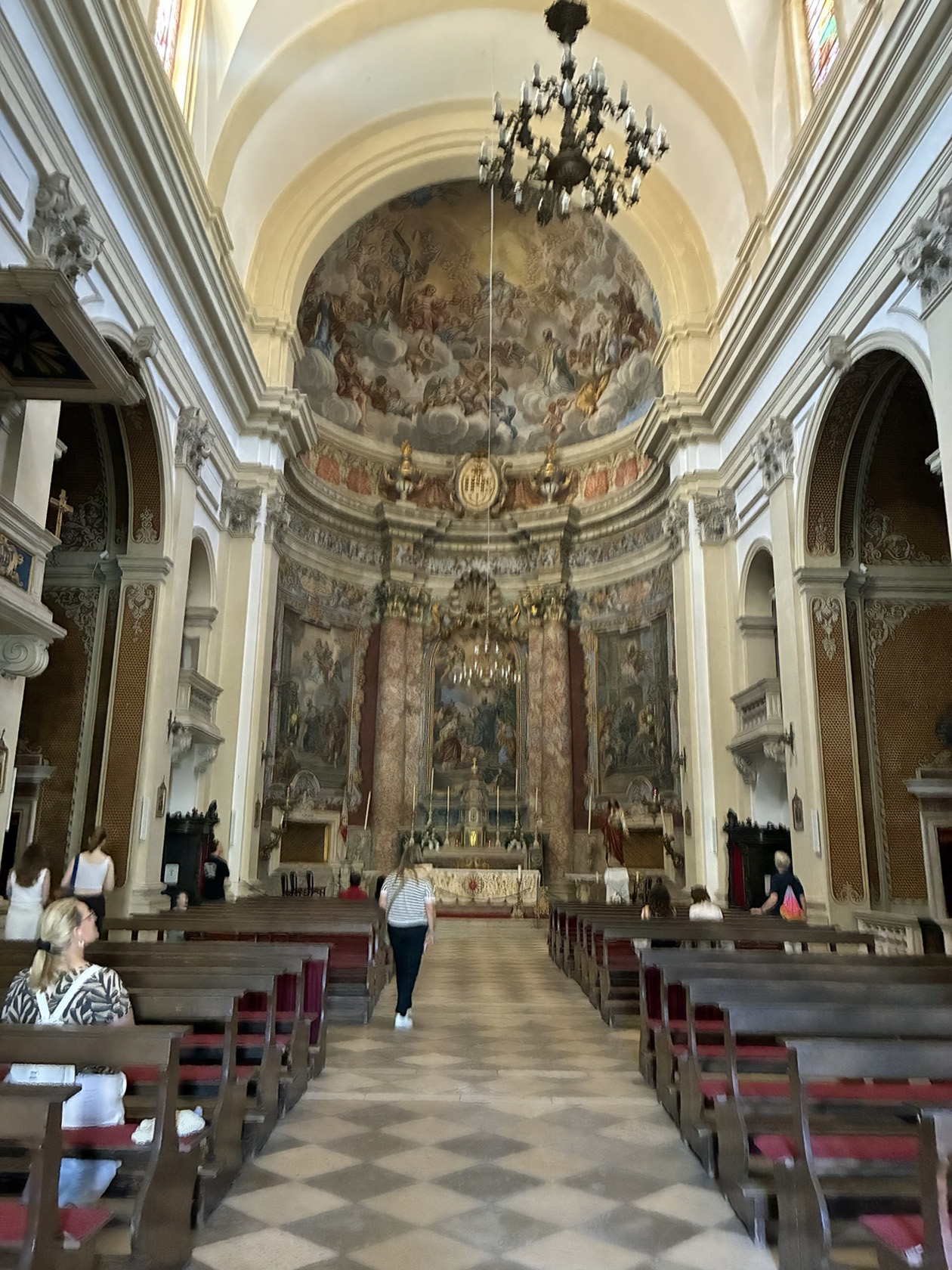
Nave – Church Of Saint Ignatius – Dubrovnik, Croatia
Church of Saint Blaise
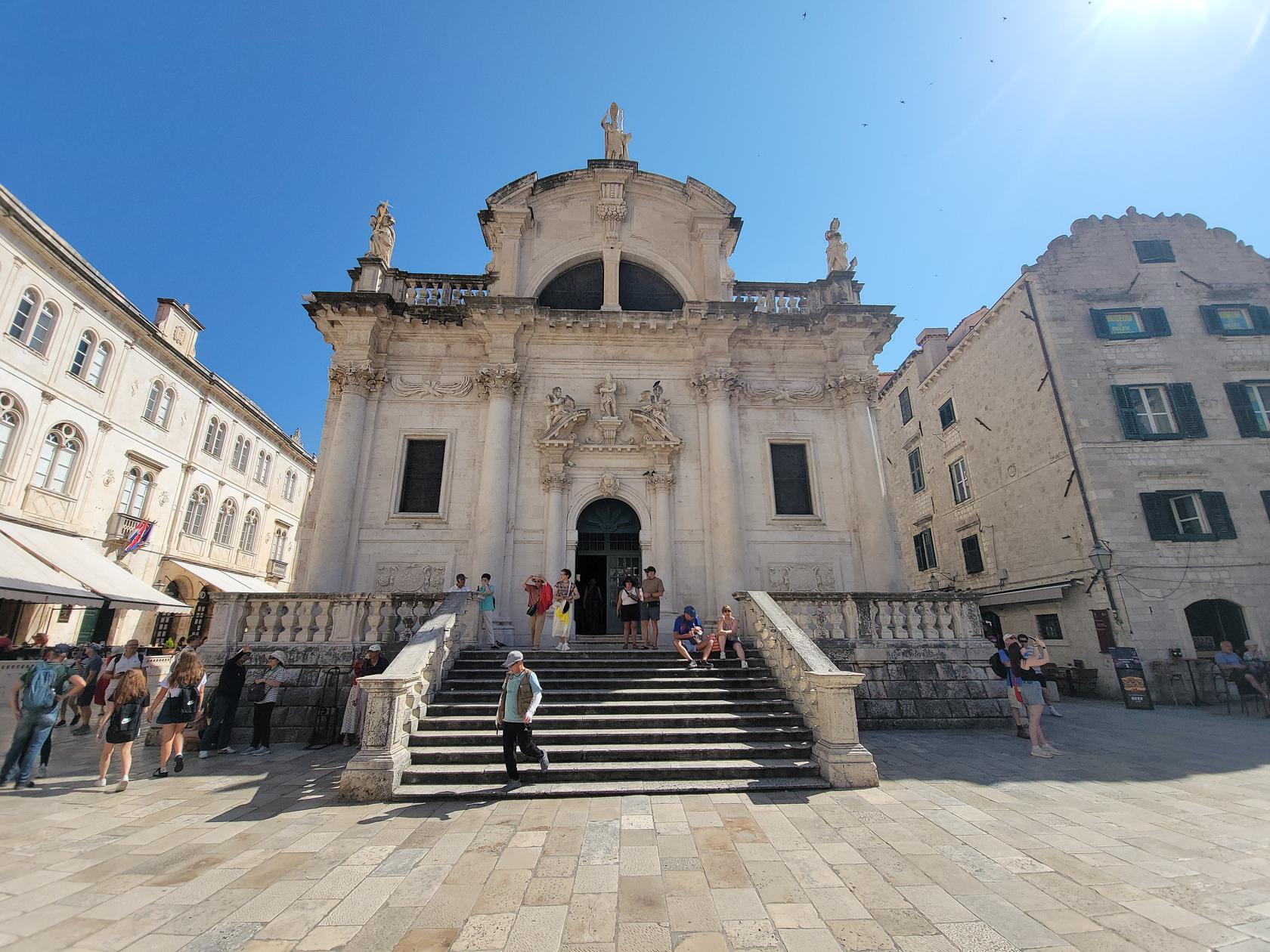
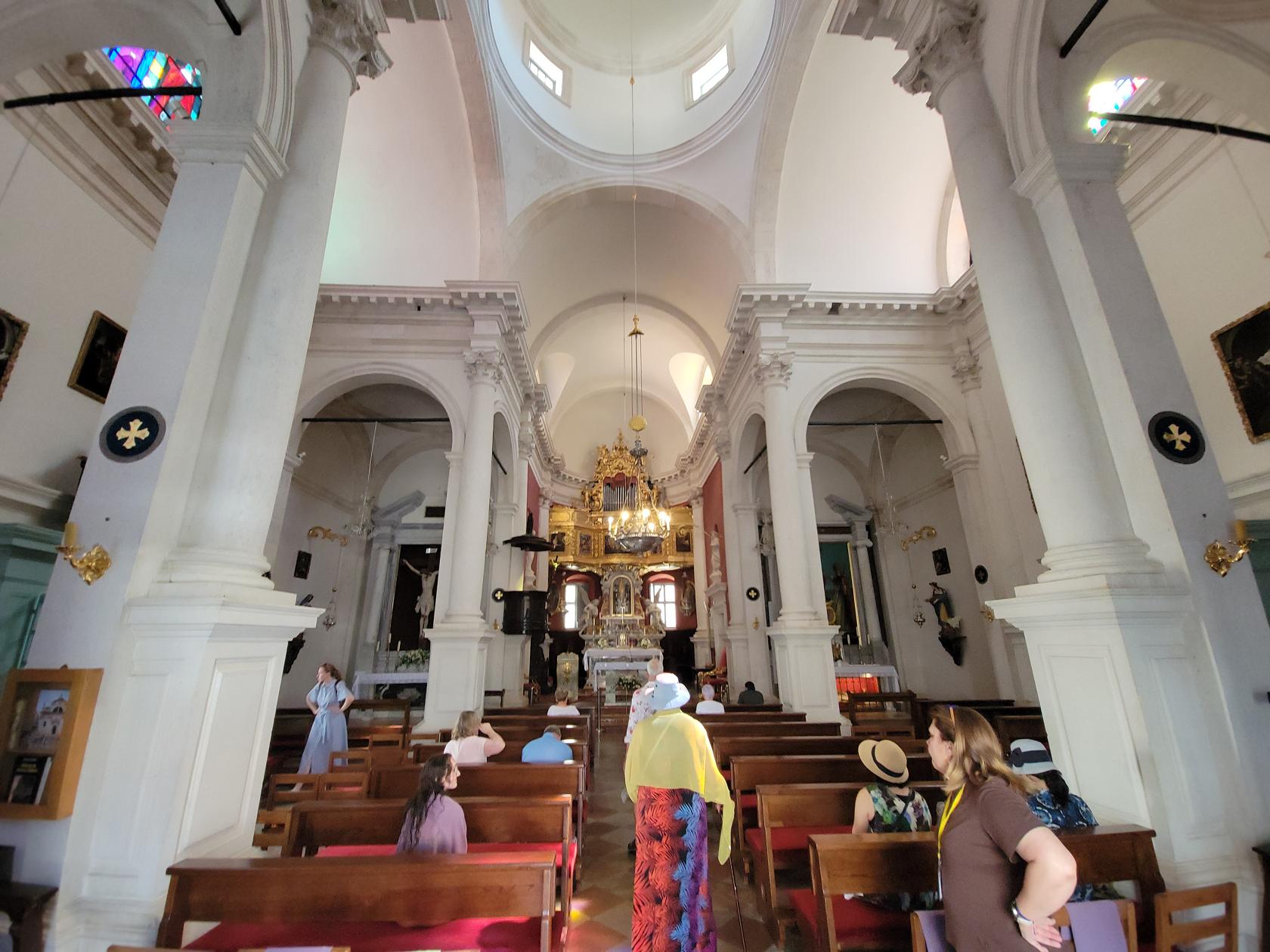
Built for the patron saint of the Old City, the Church of Saint Blaise occupies an important spot on the Stradun, close the city’s Clock Tower and Rector’s Palace. The plan of this Romanesque style church follows that of a Greek Cross inside, the nave and alter are shown below. It was planned and built shortly after the Black Death hit the city of Dubrovnik in the mid fourteenth century. A statue of Saint Blaise adorns the highest point on its facade.
Entrance – Church of Saint Blaise – Dubrovnik, Croatia
Church of Saint Blaise – Dubrovnik, Croatia
Lokrum Island
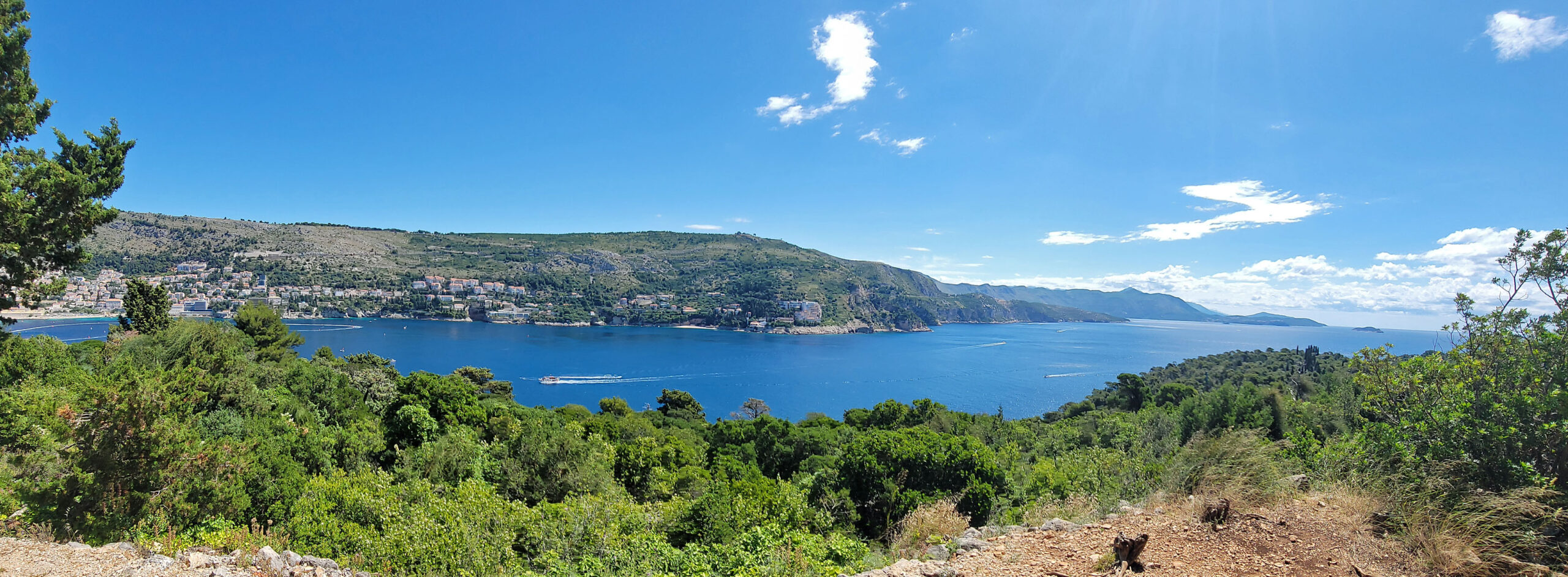
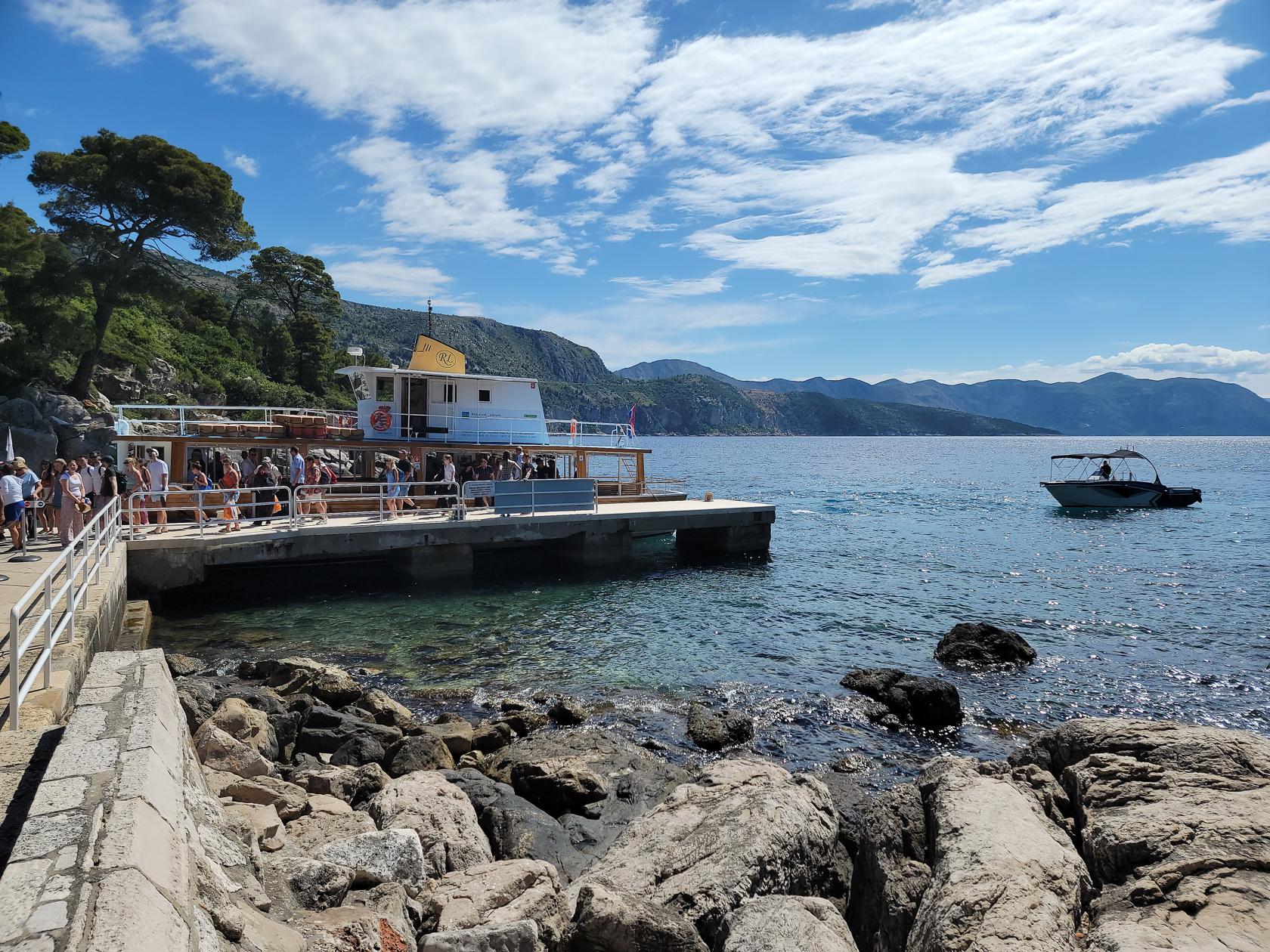
A short ferry hop away is the Botanical Garden and Wildlife Refuge for Peacocks and Peahens, Lokrum Island.
Lokrum Island – Dubrovnik, Croatia
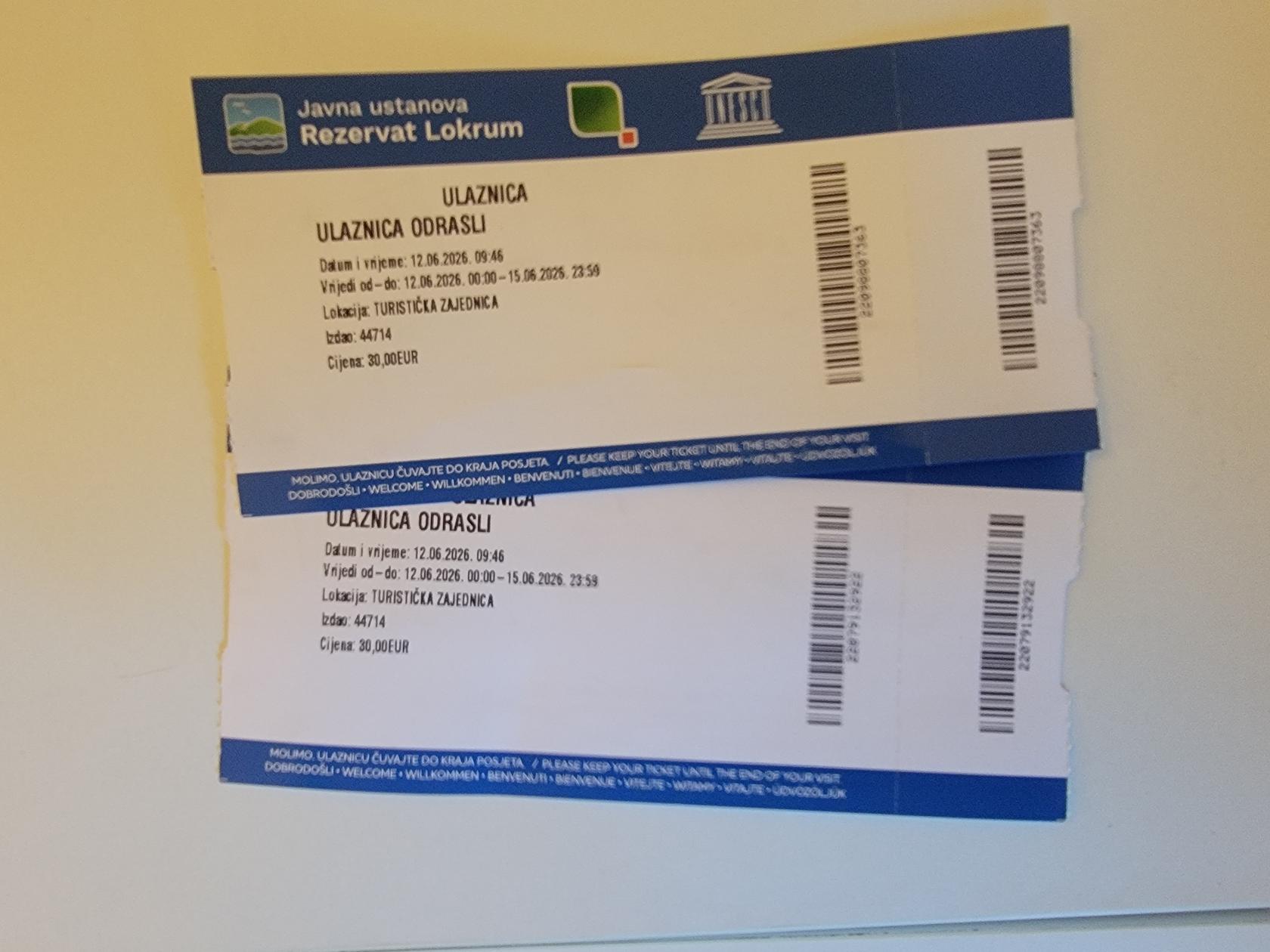
Tickets For Two – Lokrum Island – Dubrovnik, Croatia
Our Ferry – Lokrum Island – Dubrovnik, Croatia
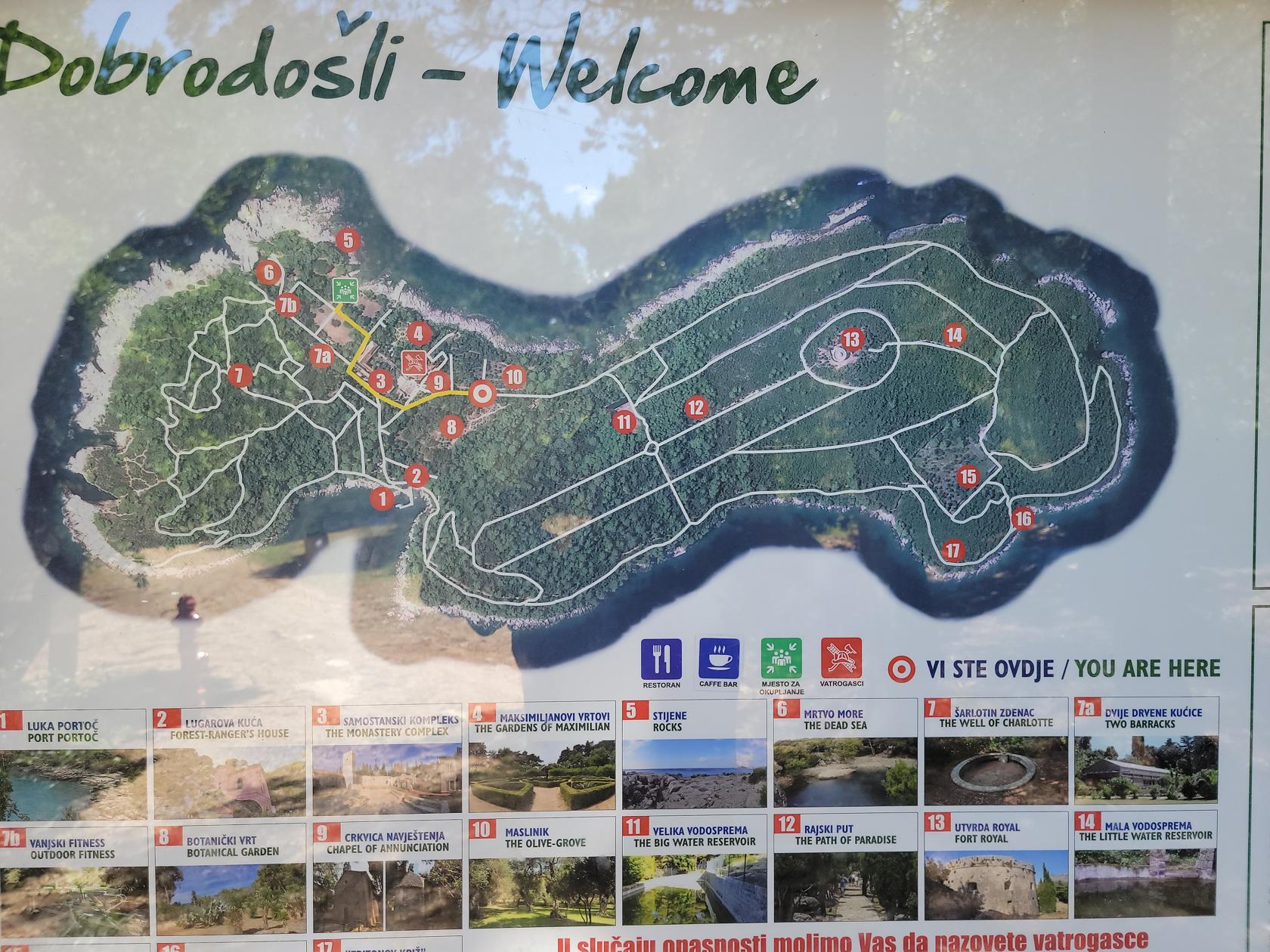
Map – Lokrum Island – Dubrovnik, Croatia
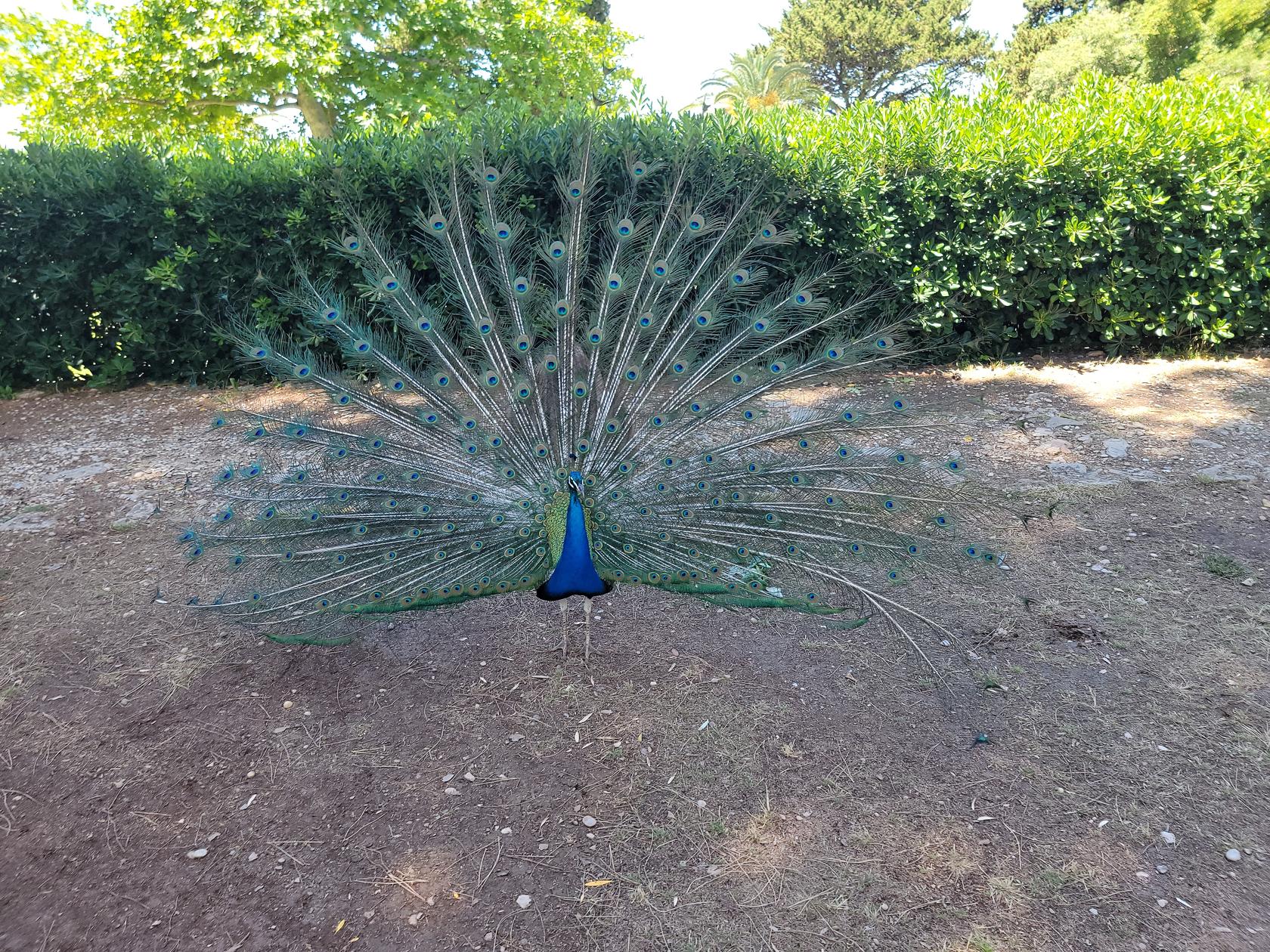
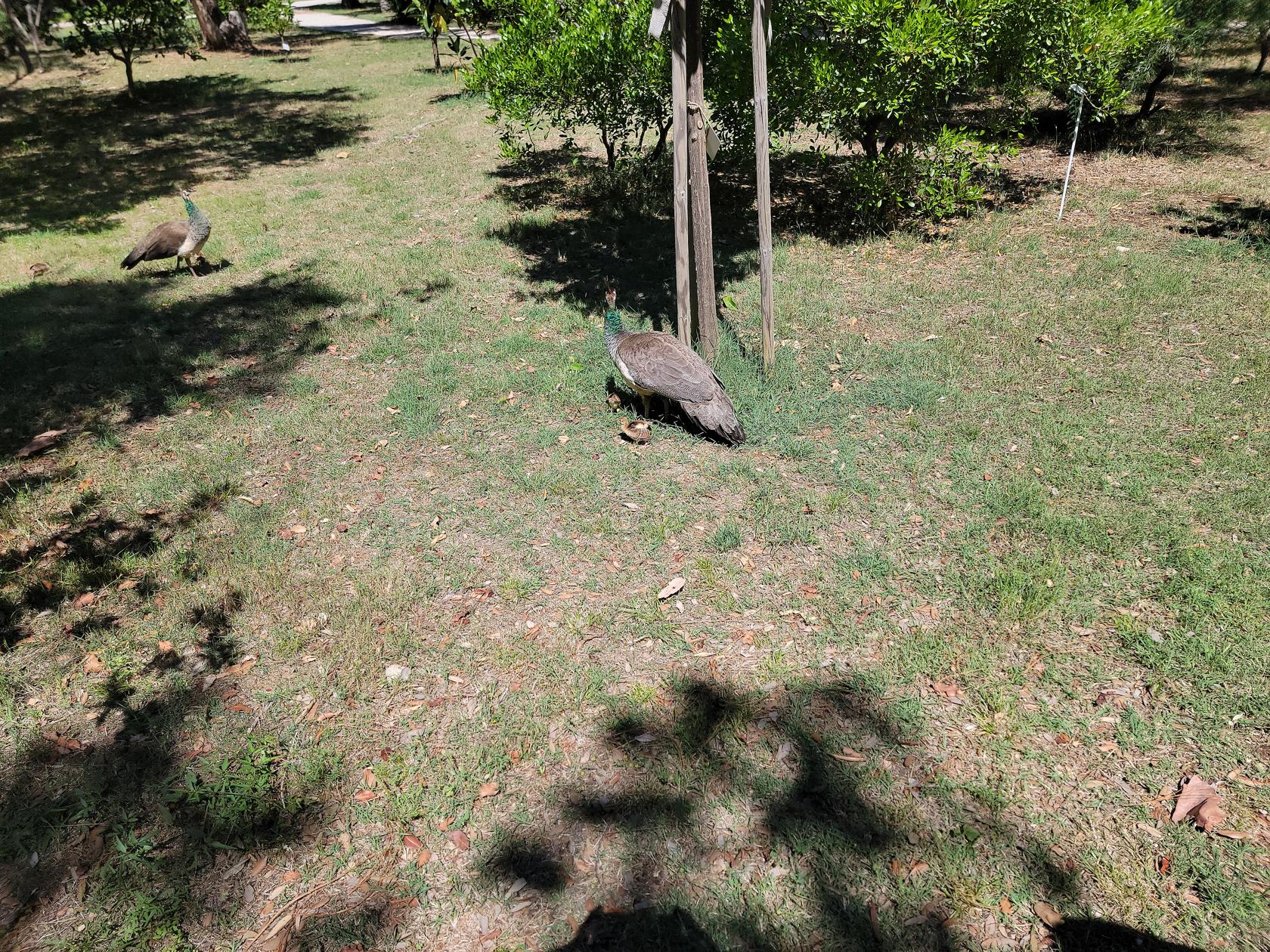
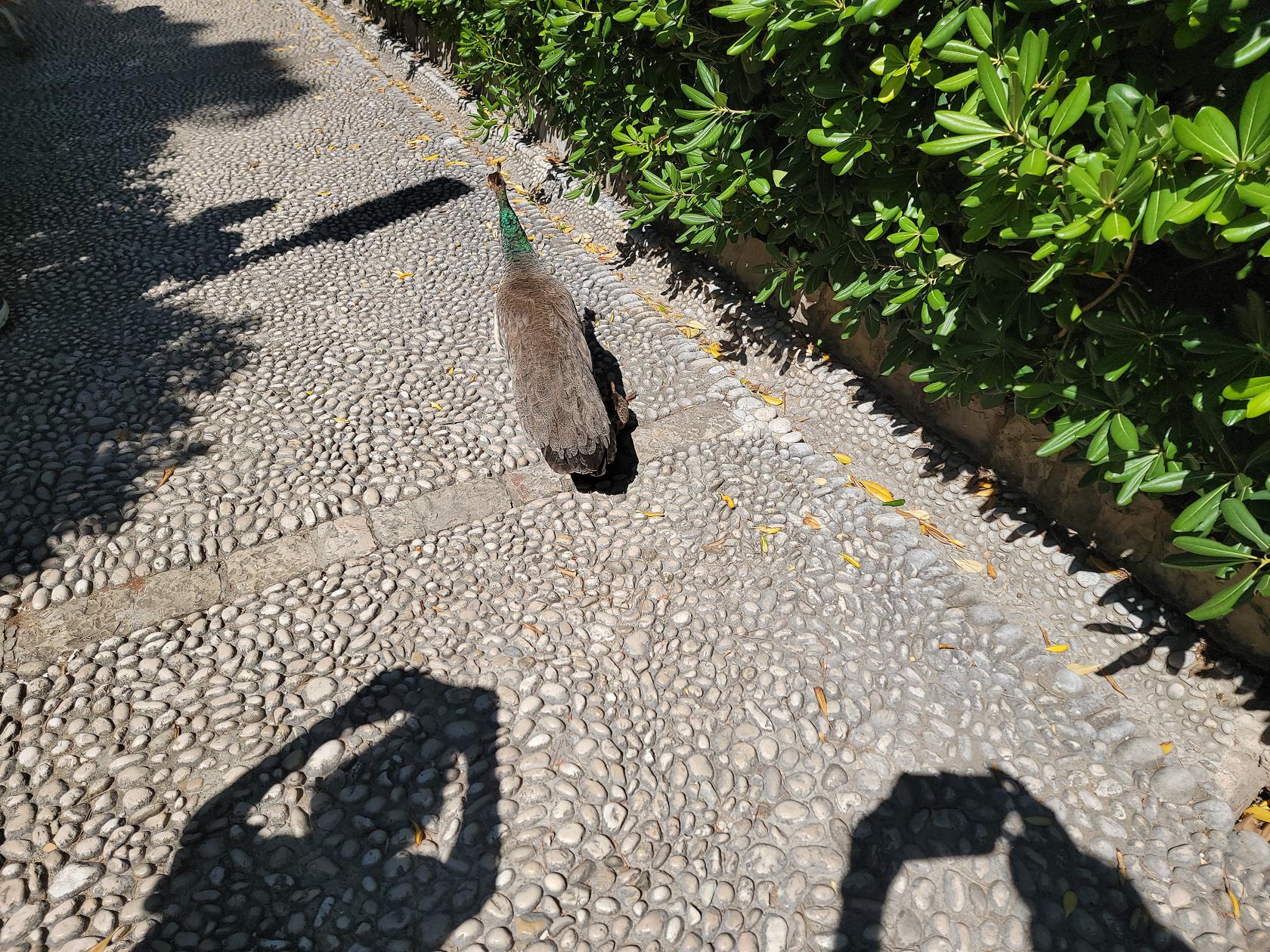
The birds are all over the island, however you will find them more often inland than along the coast, or on top of the hill where to fort is located.
Peacock – Lokrum Island – Dubrovnik, Croatia
Peahens – Lokrum Island – Dubrovnik, Croatia
Peahen – Lokrum Island – Dubrovnik, Croatia
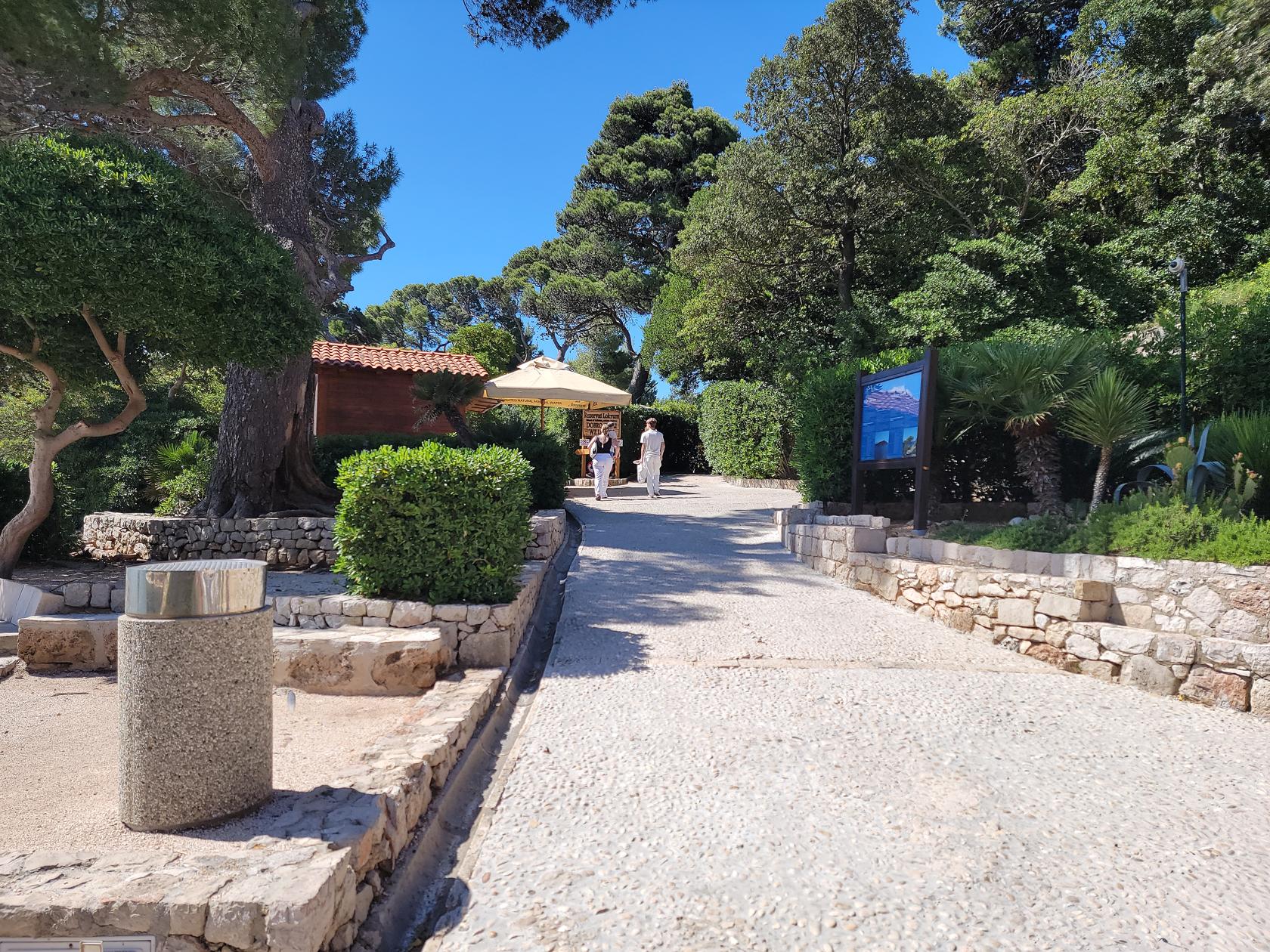
Entrance – Lokrum Island – Dubrovnik, Croatia
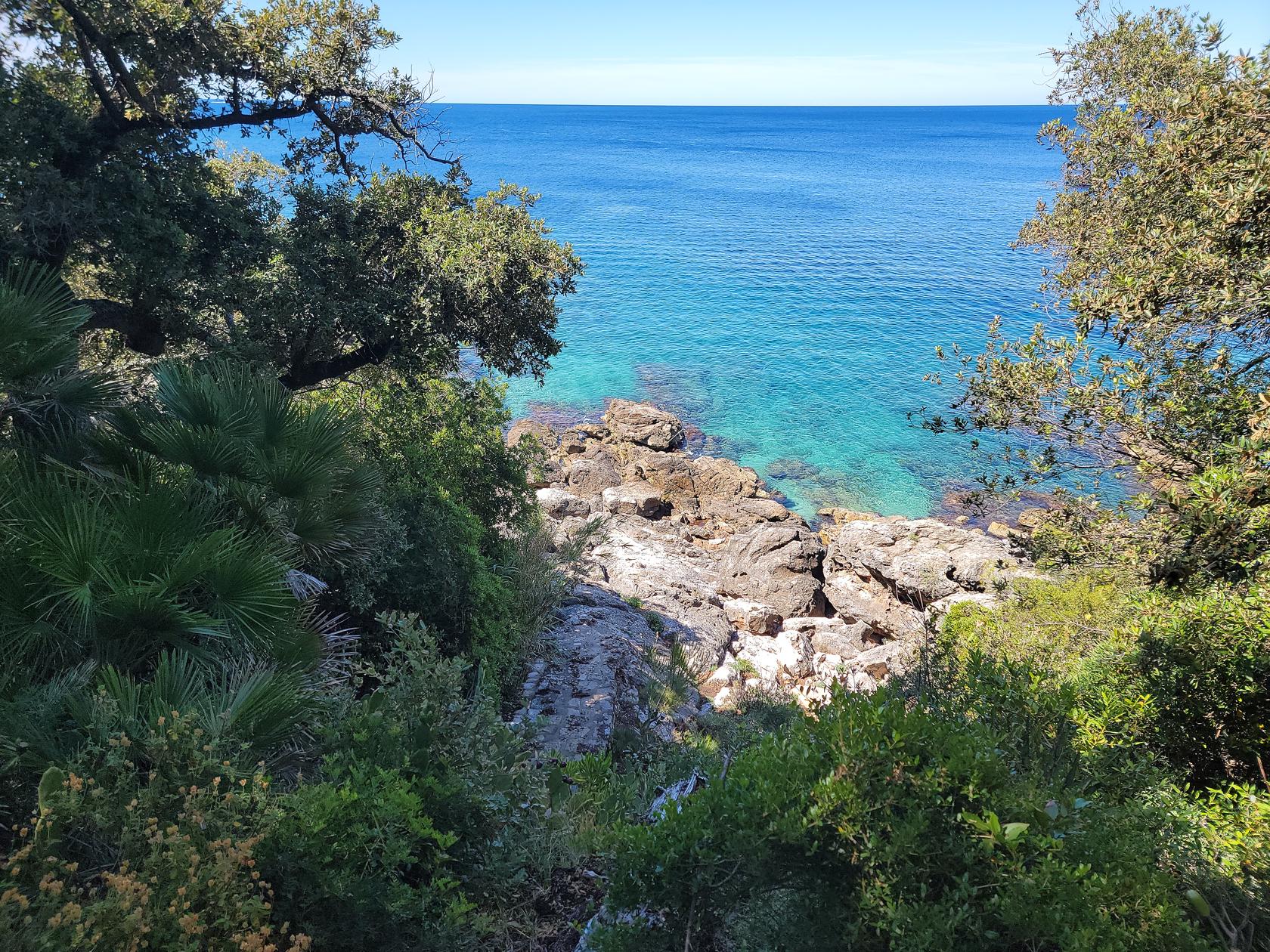
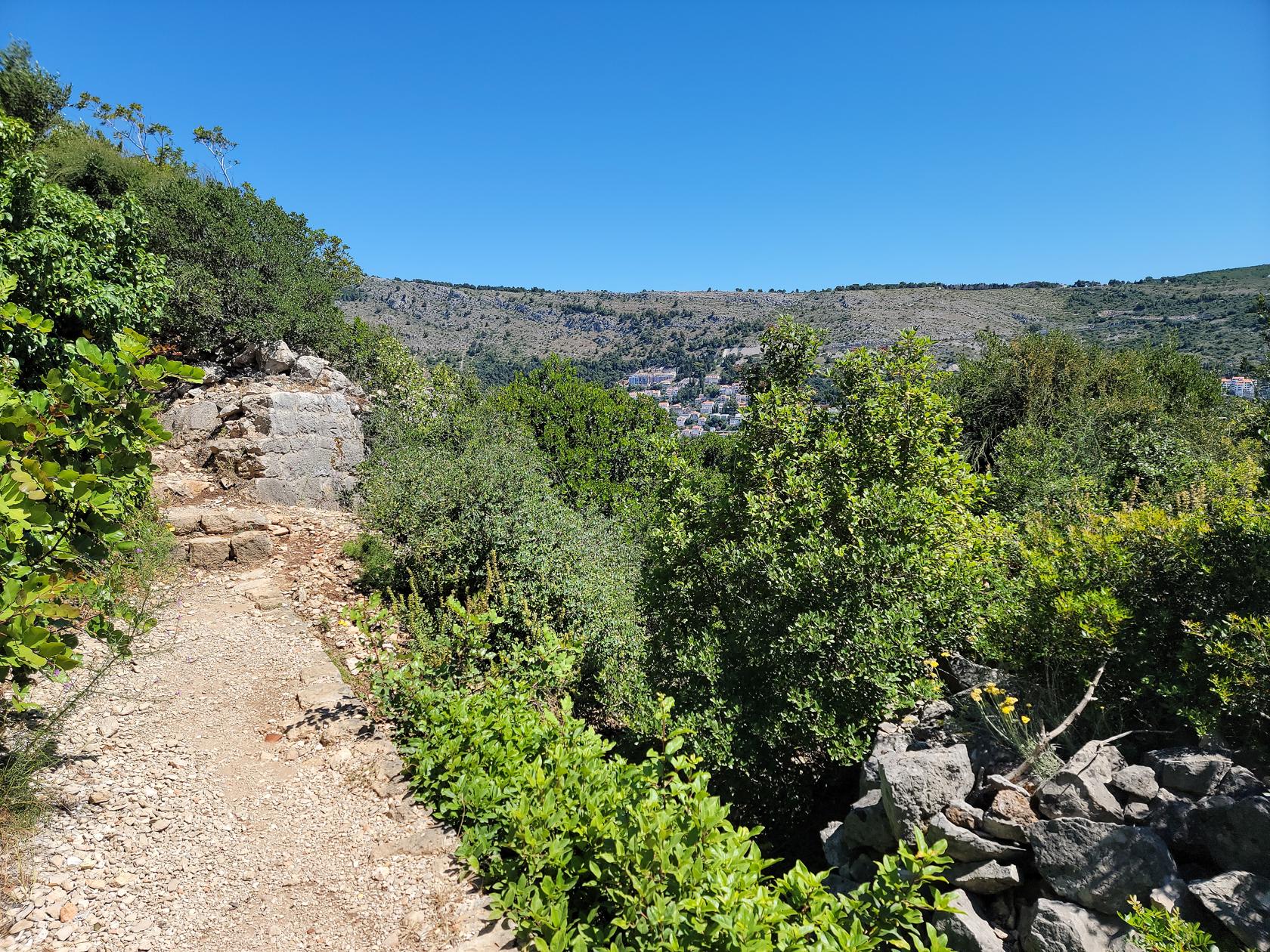
For the most part the island is well marked with trails and you can spend a better part of a day exploring.
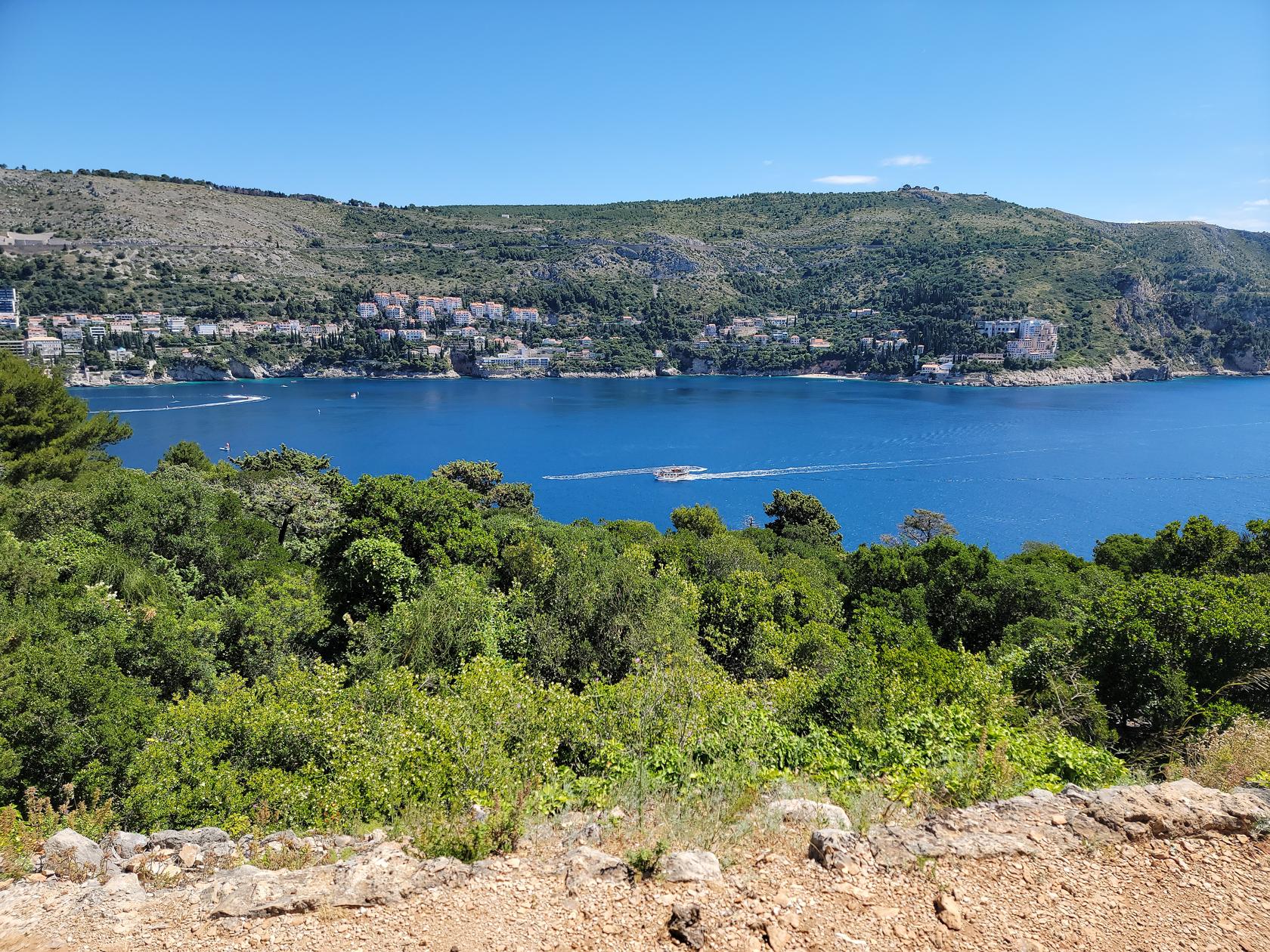
Beautiful Blue Water – Lokrum Island – Dubrovnik, Croatia
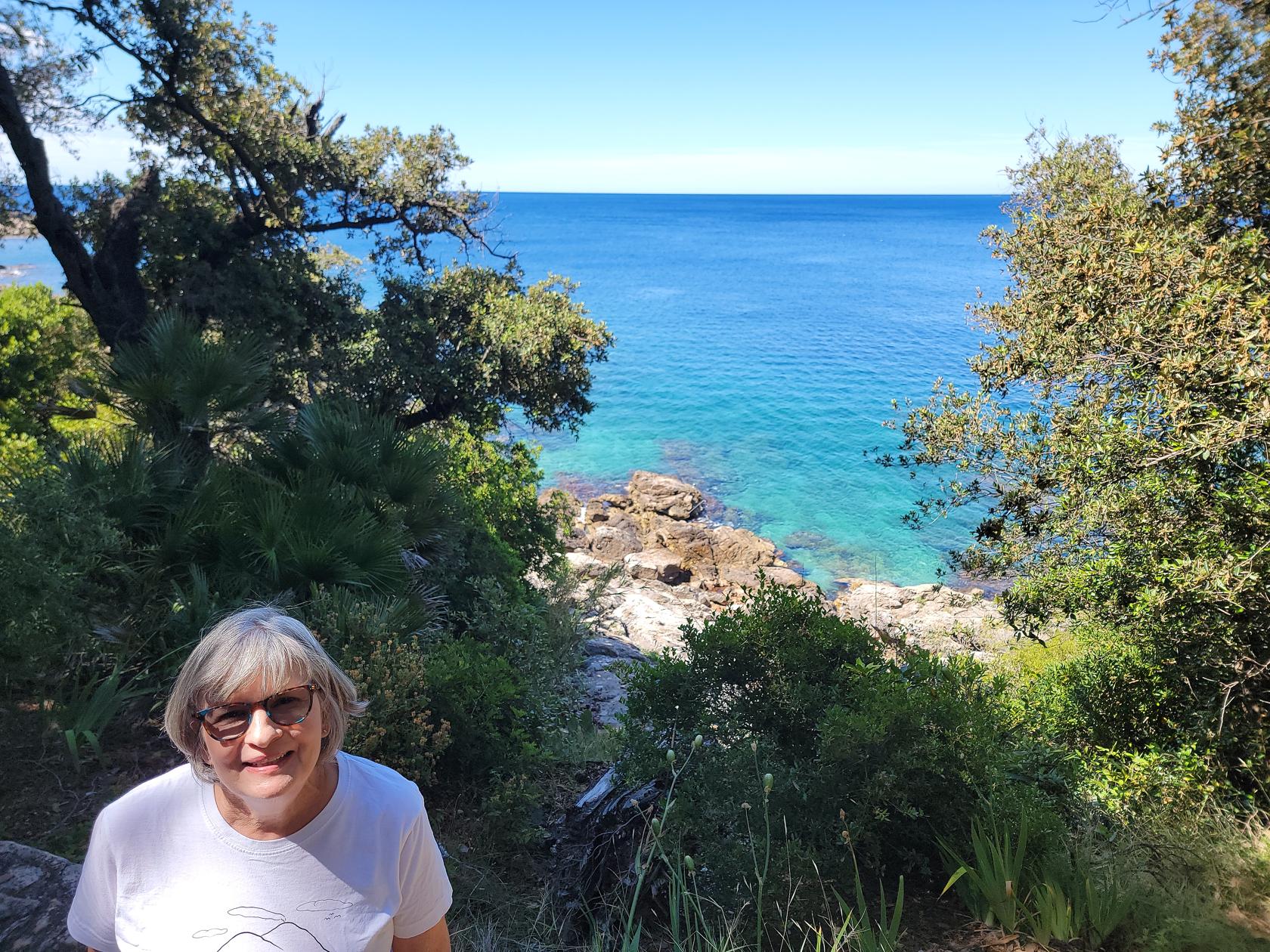
Patti – Lokrum Island – Dubrovnik, Croatia
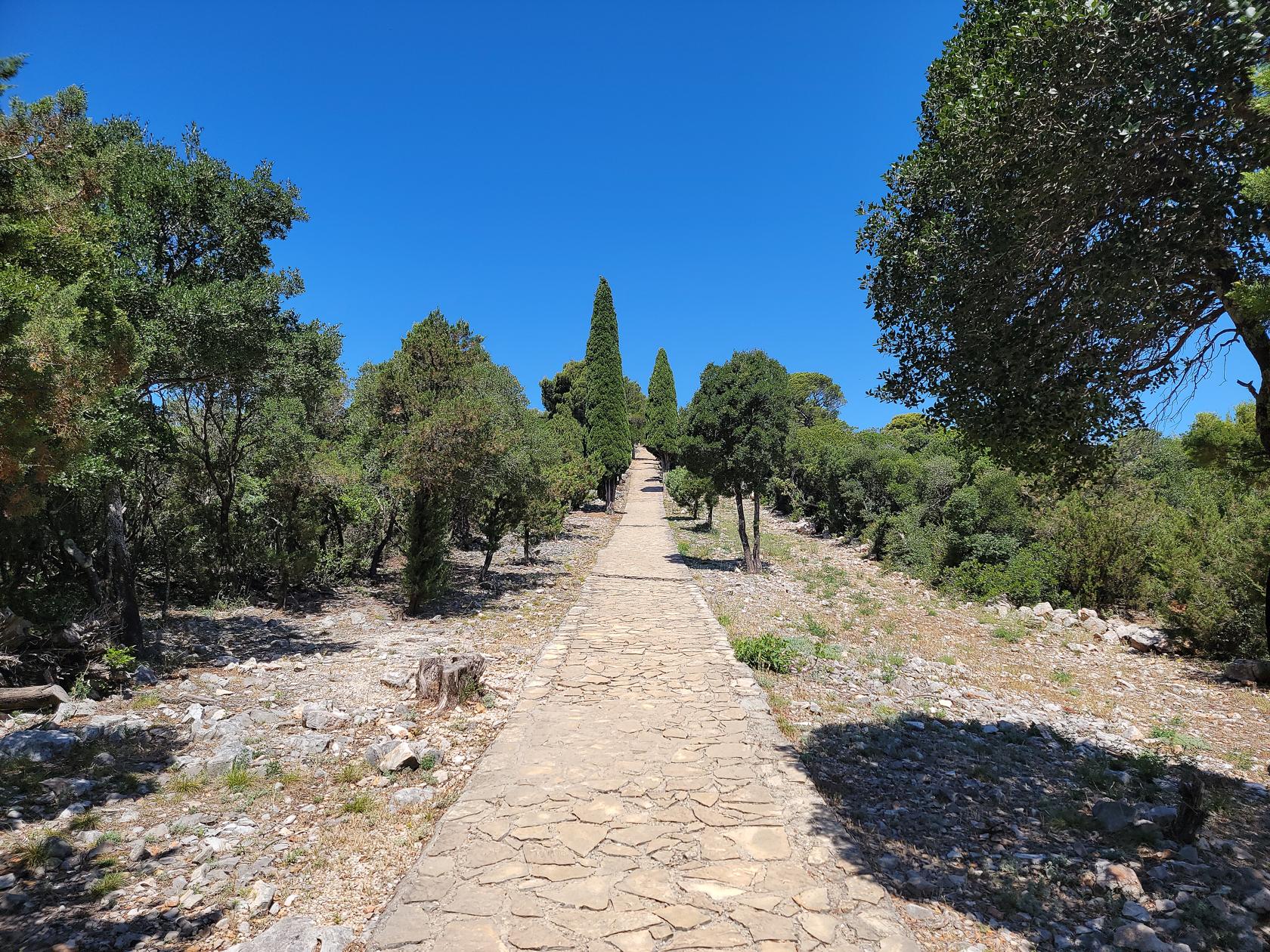
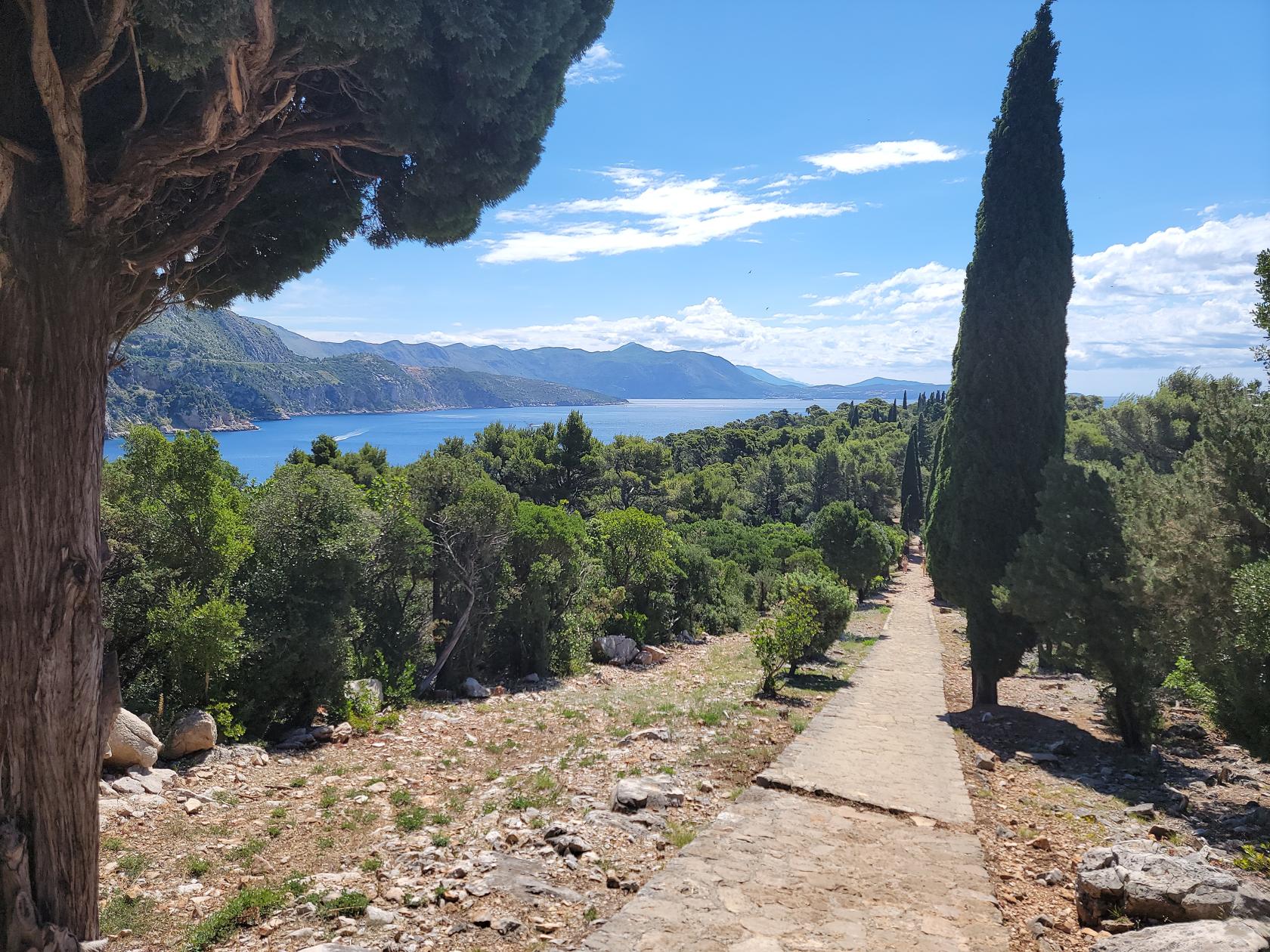
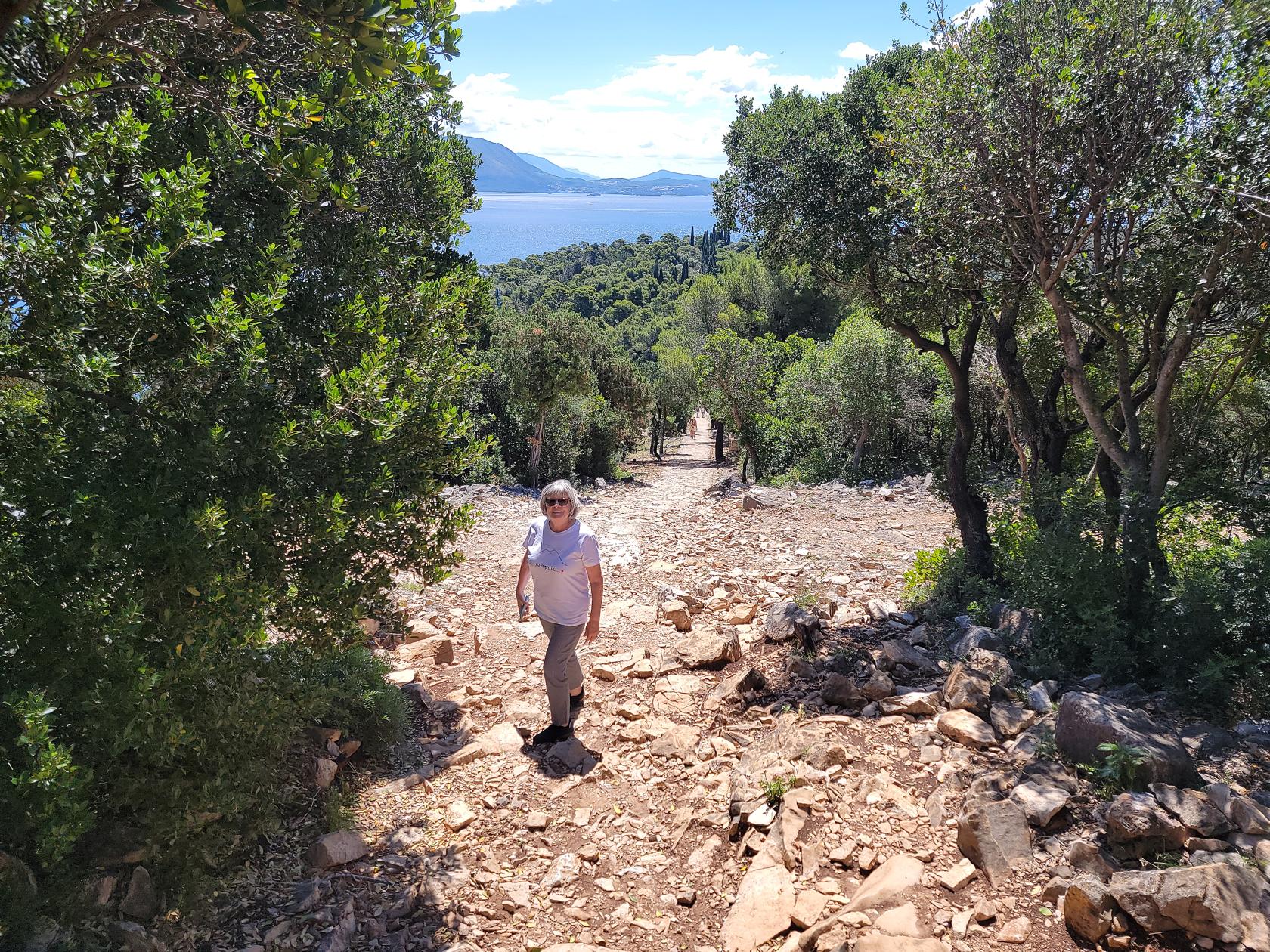
The Path up to Fort Royal – Lokrum Island – Dubrovnik, Croatia
The Path up to Fort Royal – Lokrum Island – Dubrovnik, Croatia
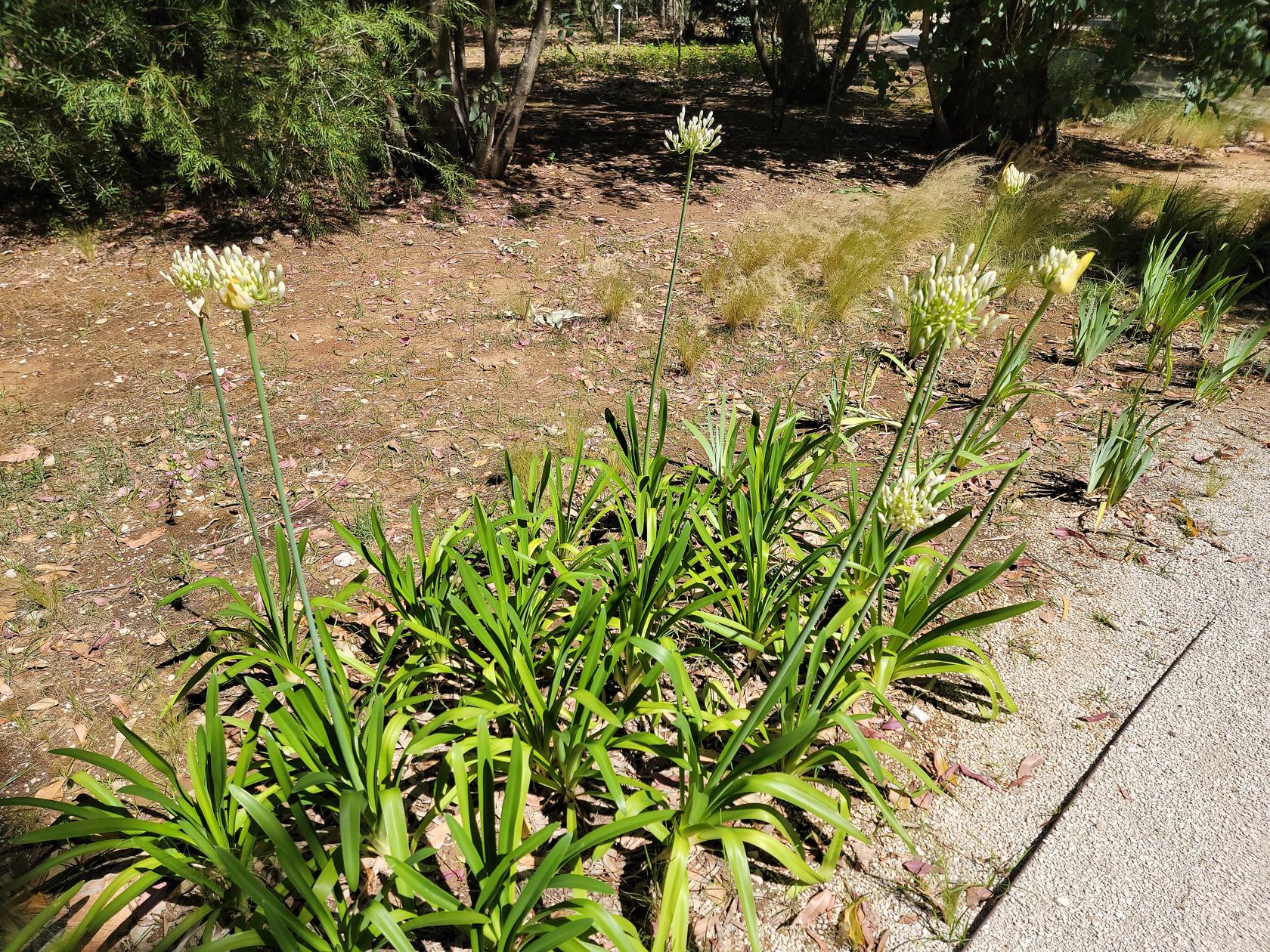
Different Plants – Lokrum Island – Dubrovnik, Croatia
Many Different Species of Trees – Lokrum Island – Dubrovnik, Croatia
Fort Royal
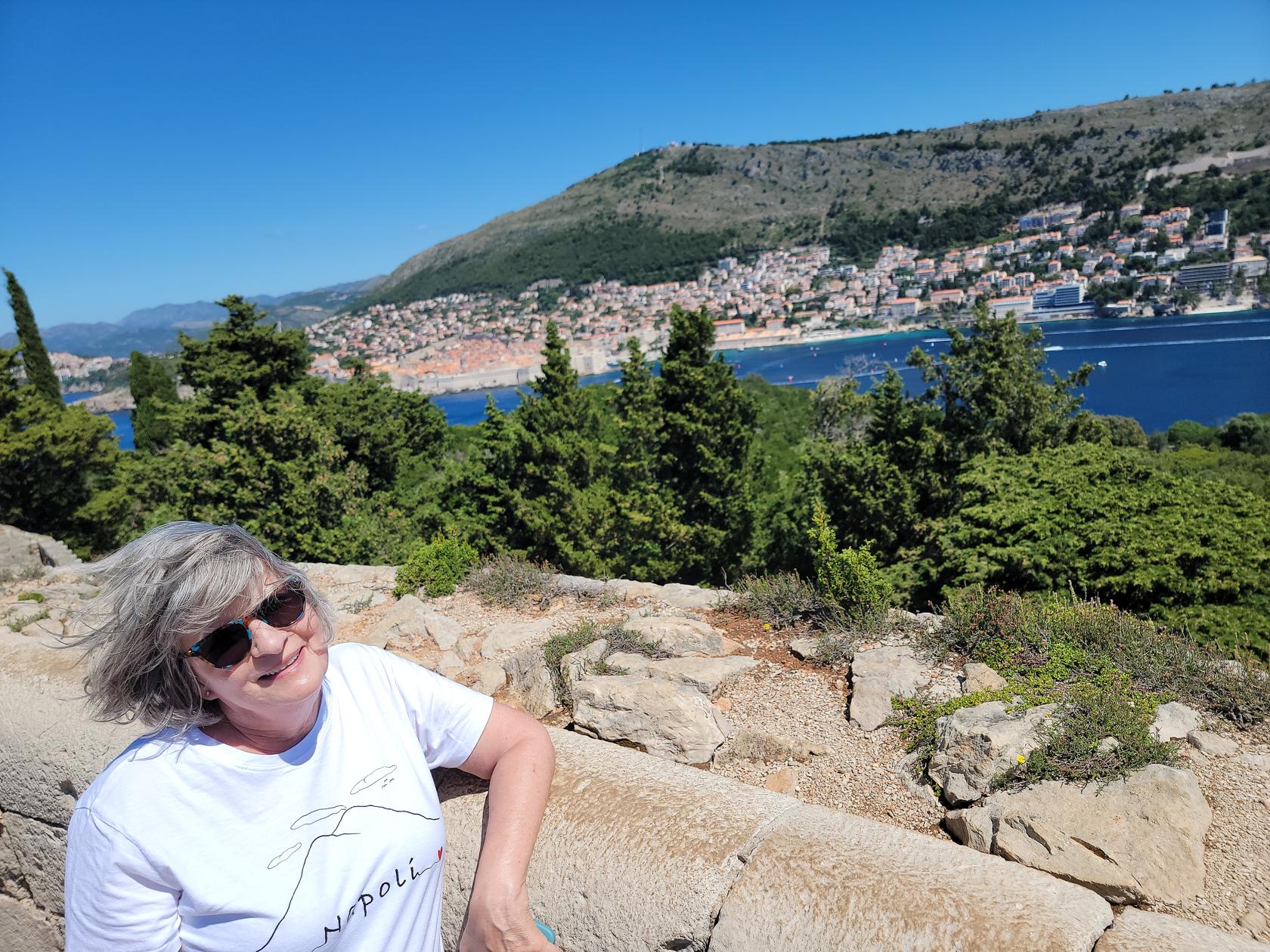
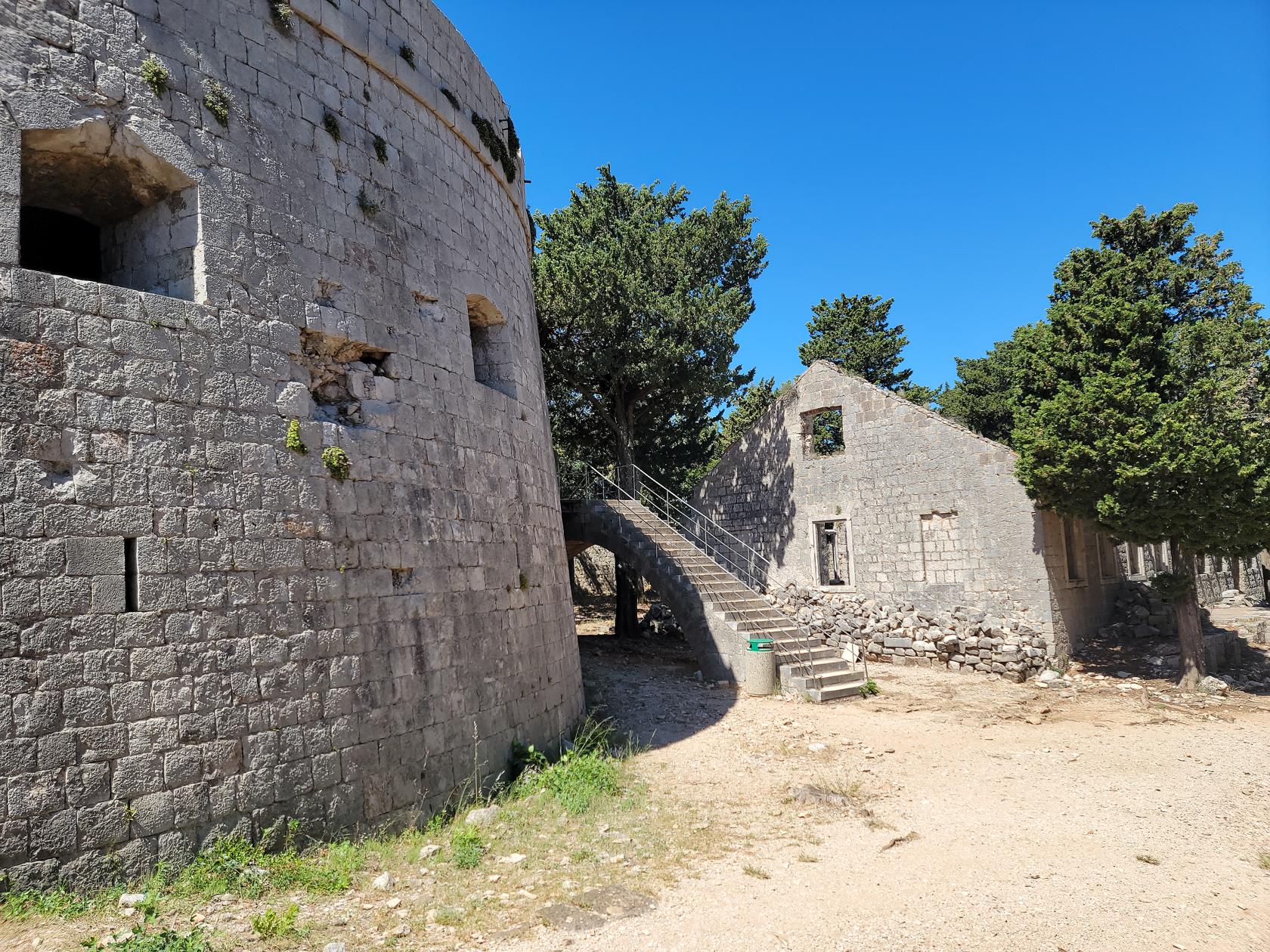
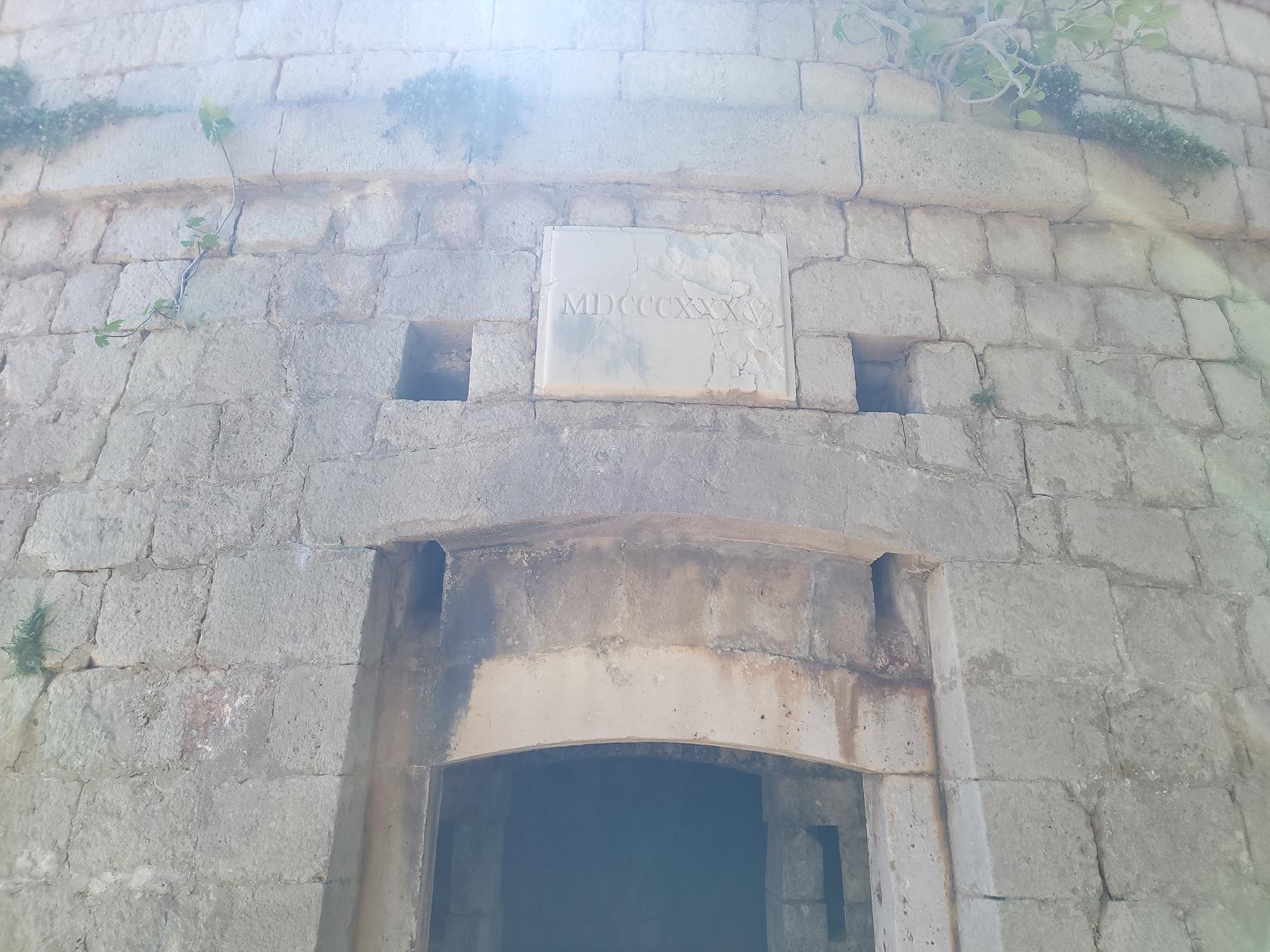
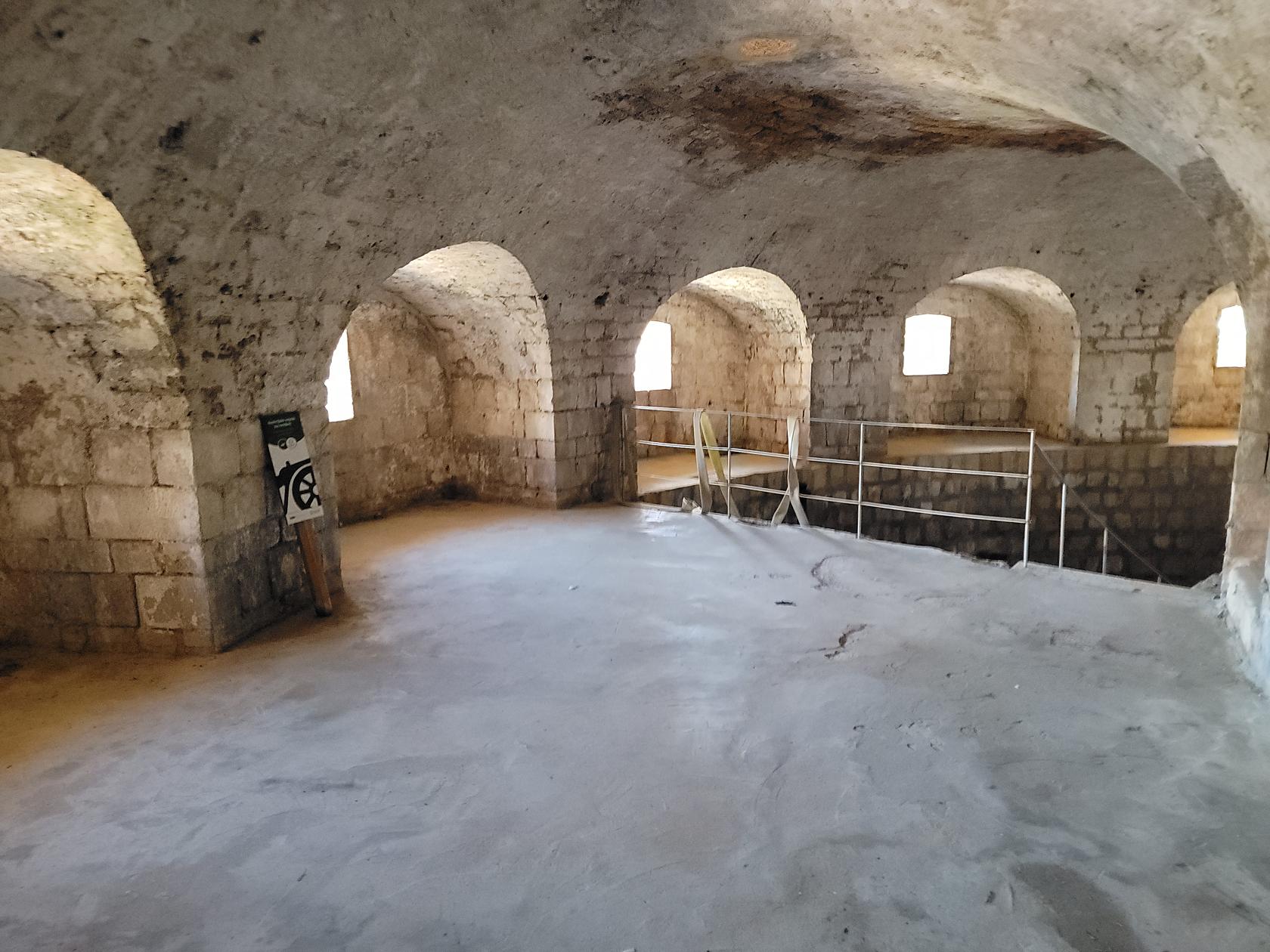
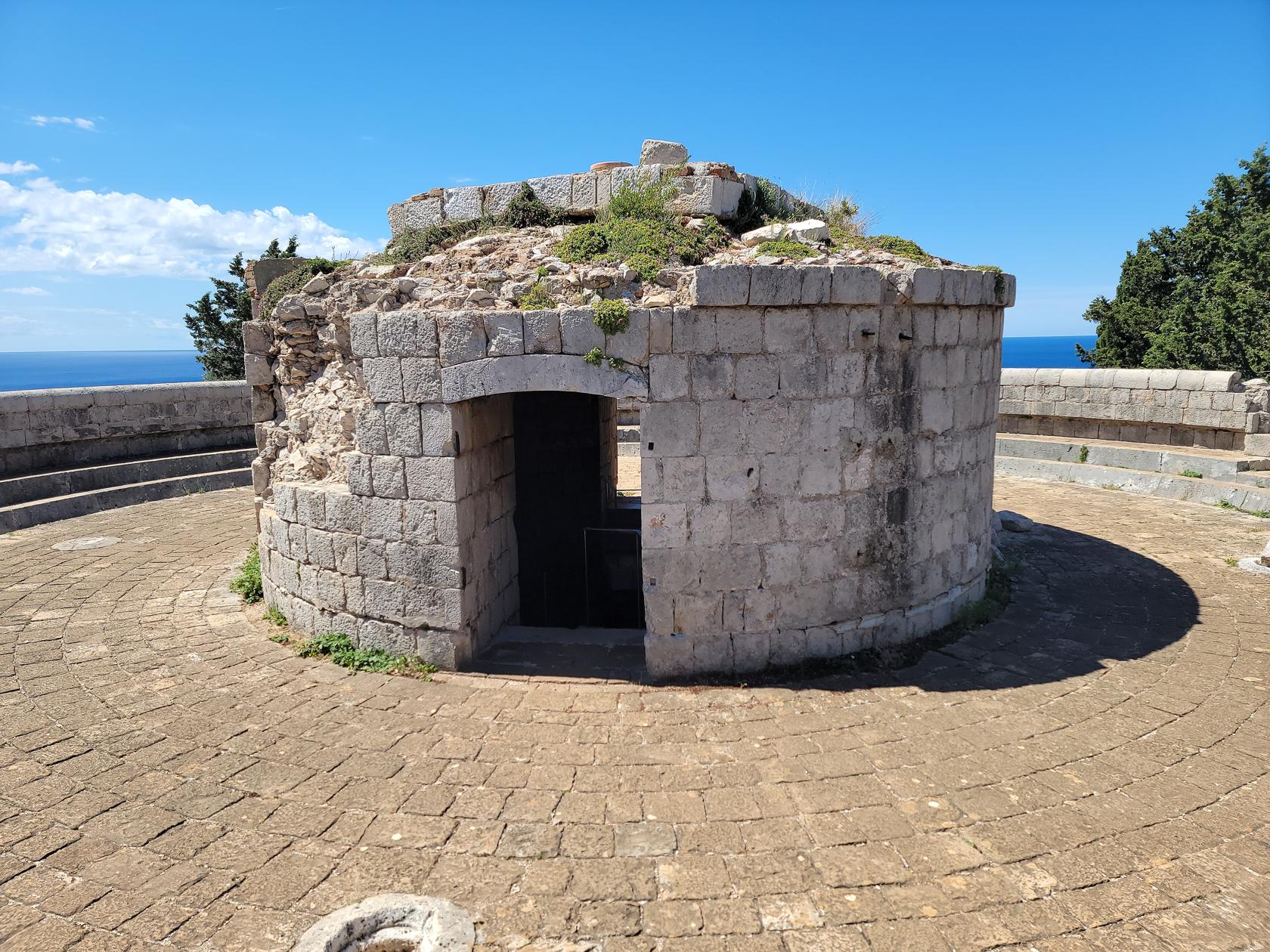
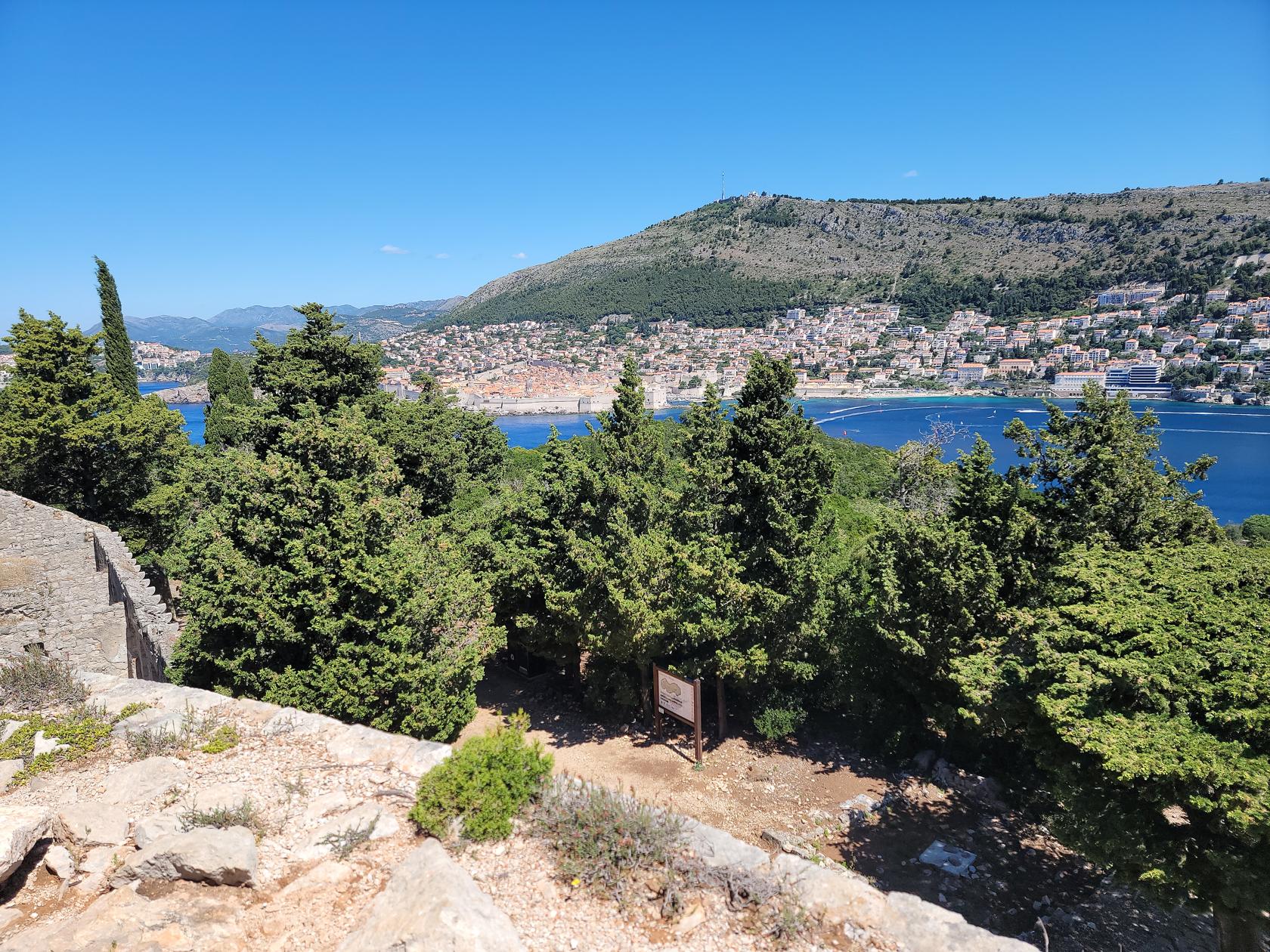
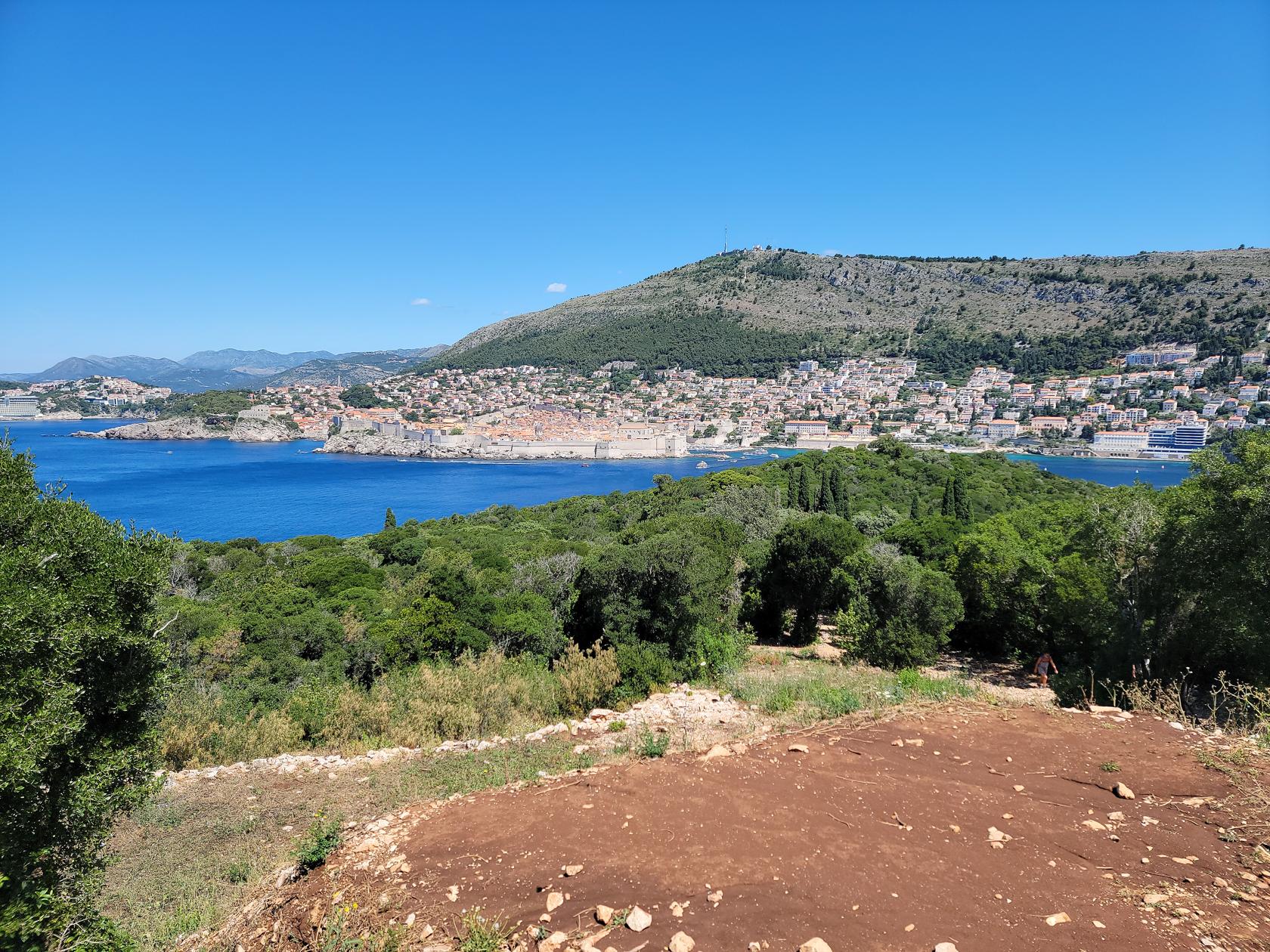
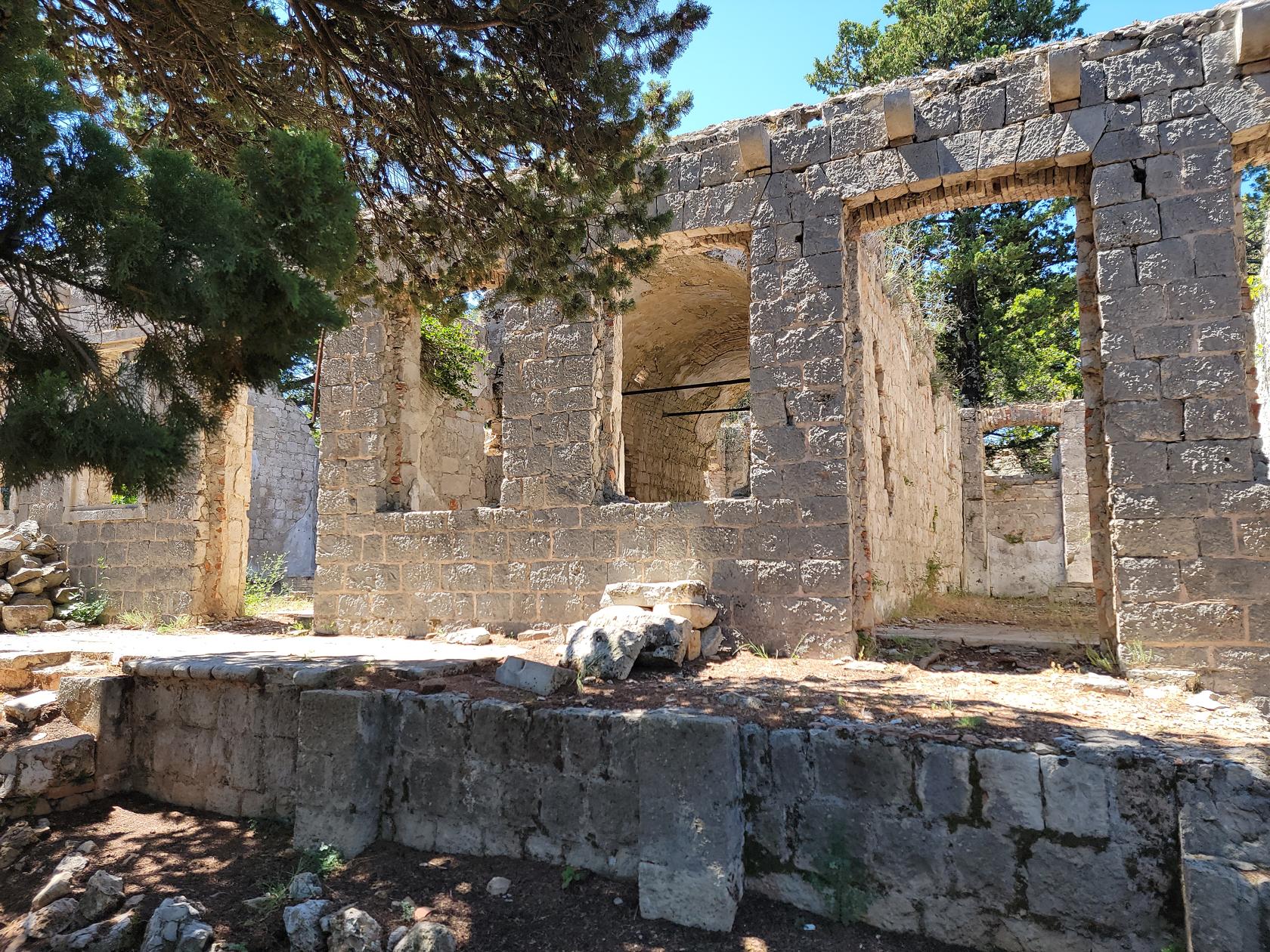
Perched atop the main hill on Lokrum, is Fort Royal. Now partially in ruin, it is only maintained as far as keeping is safe for the tourists. It commands a view of the island, the Dalmatian coastline and of course, Dubrovnik.
Patti hiking up to Fort Royal – Lokrum Island – Dubrovnik, Croatia
Fort Royal – Lokrum Island – Dubrovnik, Croatia
Fort Royal – Lokrum Island – Dubrovnik, Croatia
Patti at Fort Royal – Lokrum Island – Dubrovnik, Croatia
Fort Royal – Lokrum Island – Dubrovnik, Croatia
Fort Royal – Lokrum Island – Dubrovnik, Croatia
Fort Royal – Lokrum Island – Dubrovnik, Croatia
Fort Royal – Lokrum Island – Dubrovnik, Croatia
Fort Royal – Lokrum Island – Dubrovnik, Croatia
Dubrovnik Old Town – Lokrum Island – Dubrovnik, Croatia
The main fort is intack, but the outlying buildings have fallen down and no longer of any interest.
Fort Royal – Lokrum Island – Dubrovnik, Croatia
Franjo Tuđman Bridge
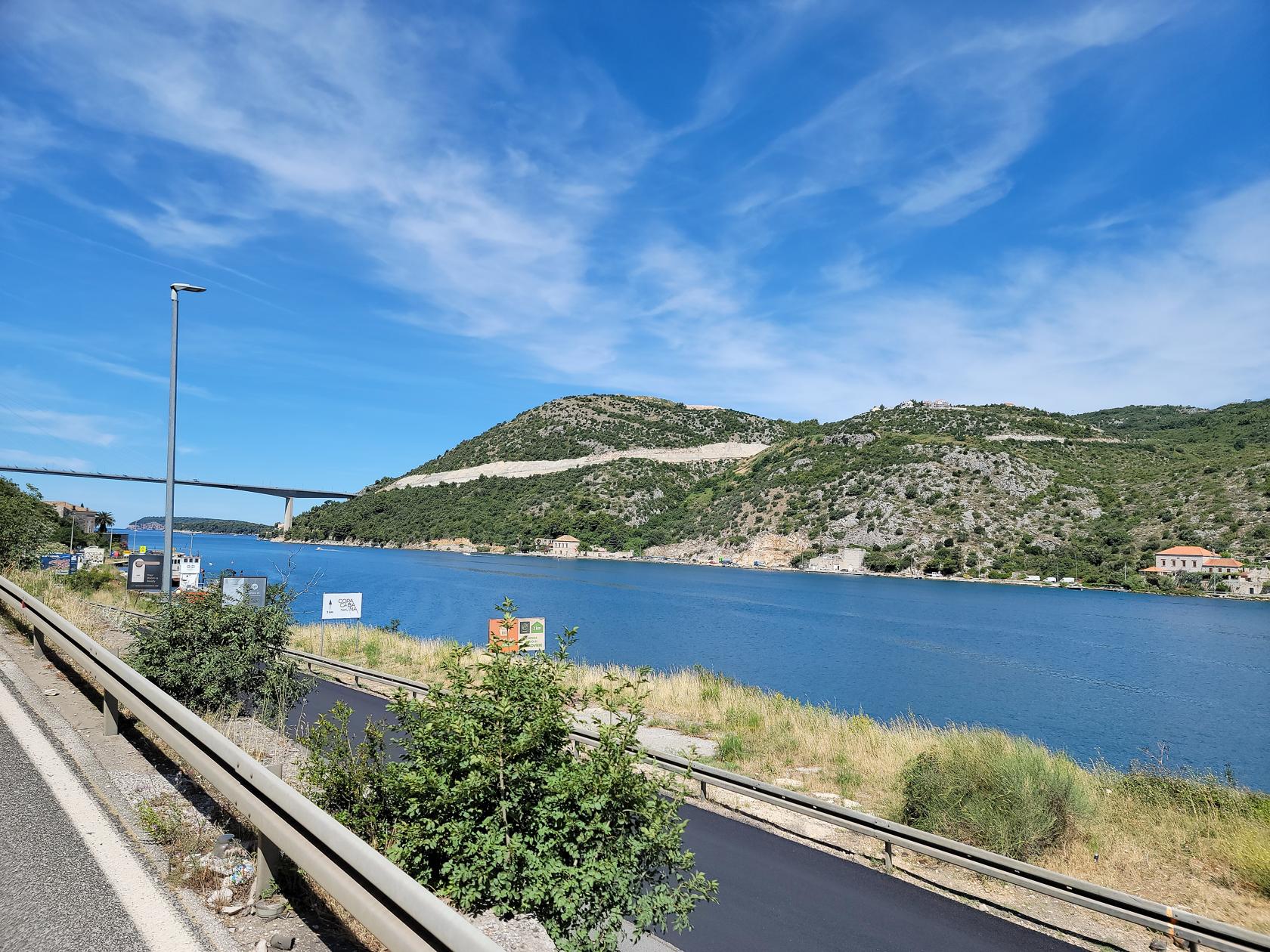
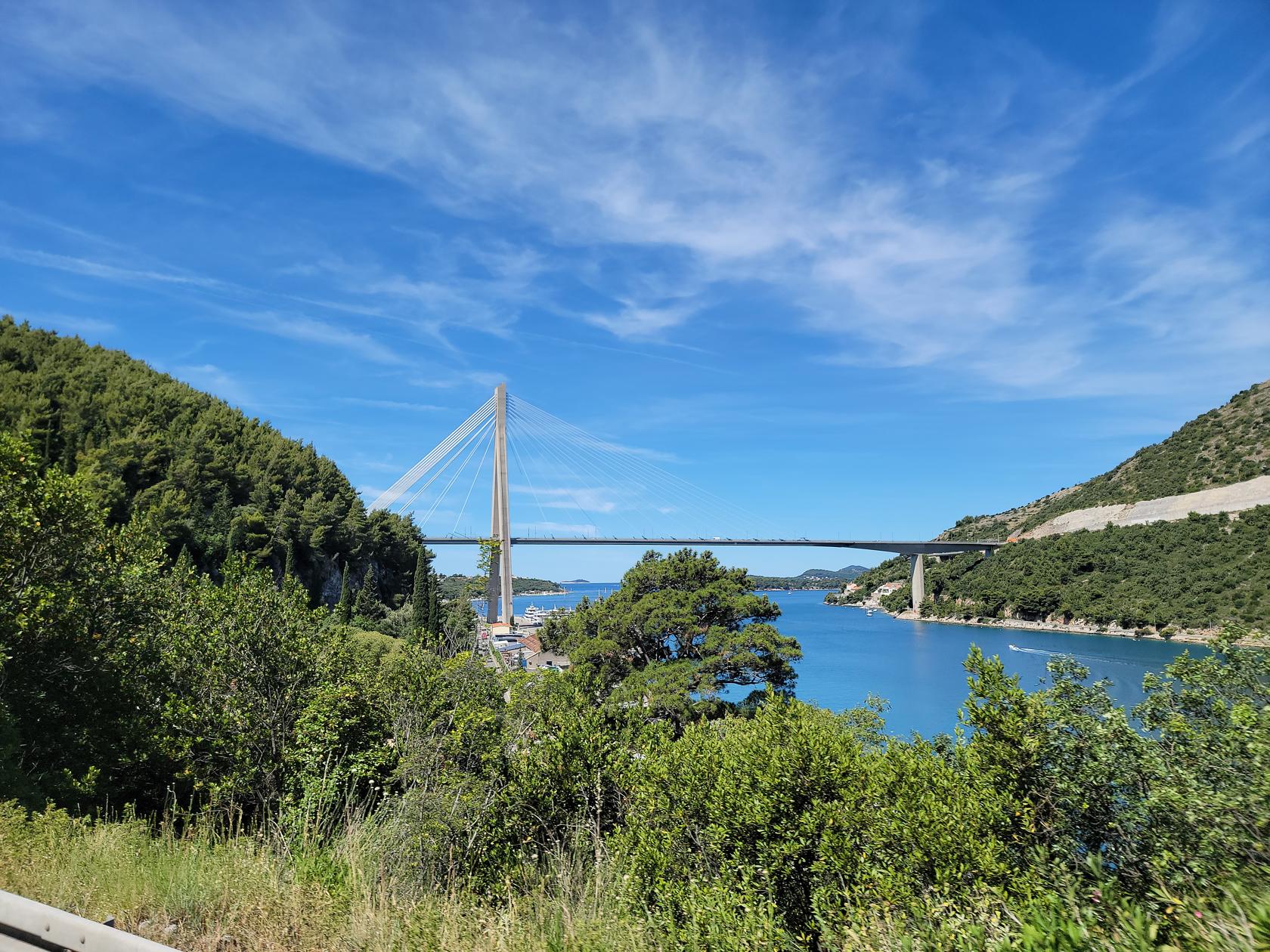
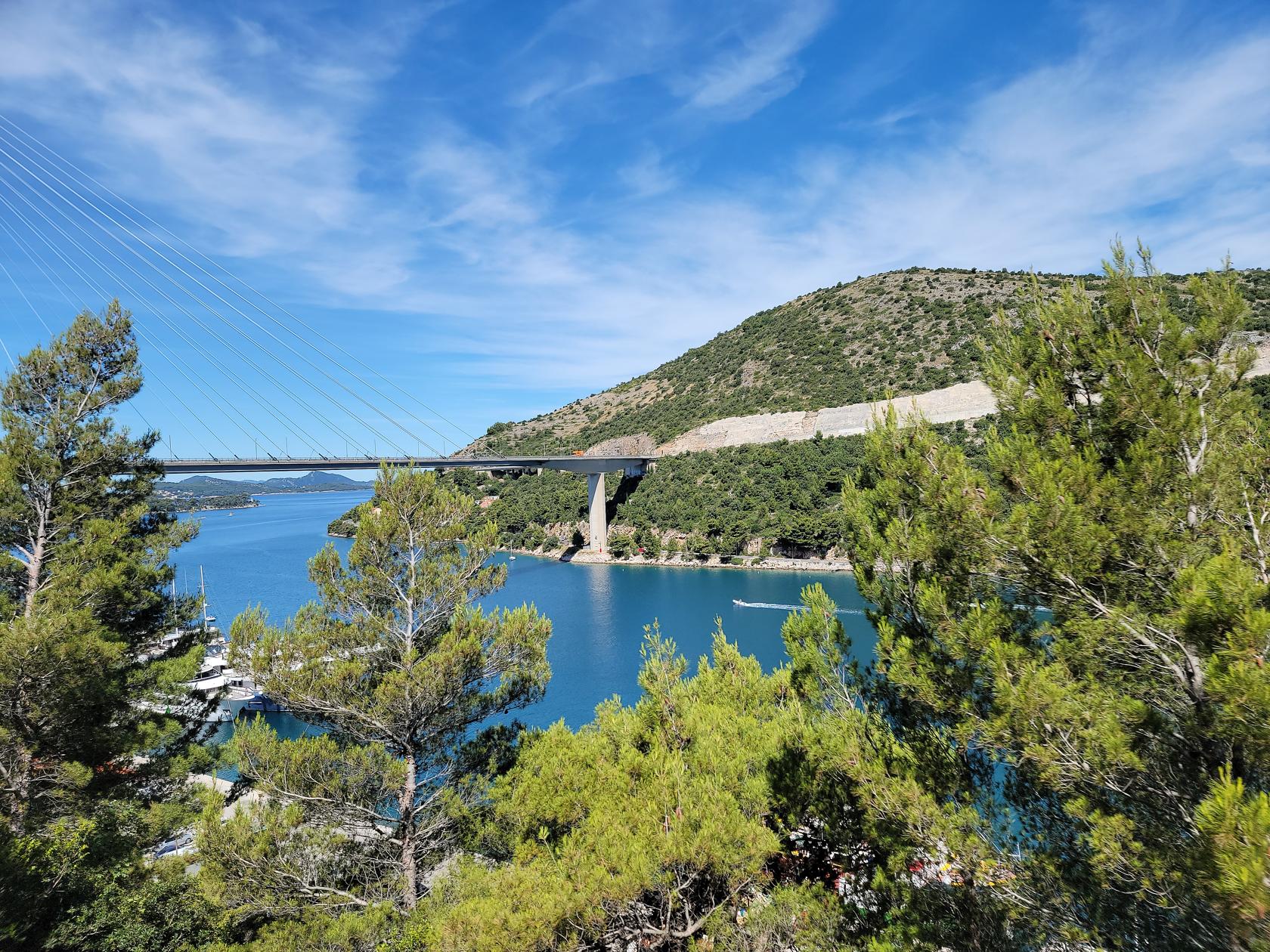
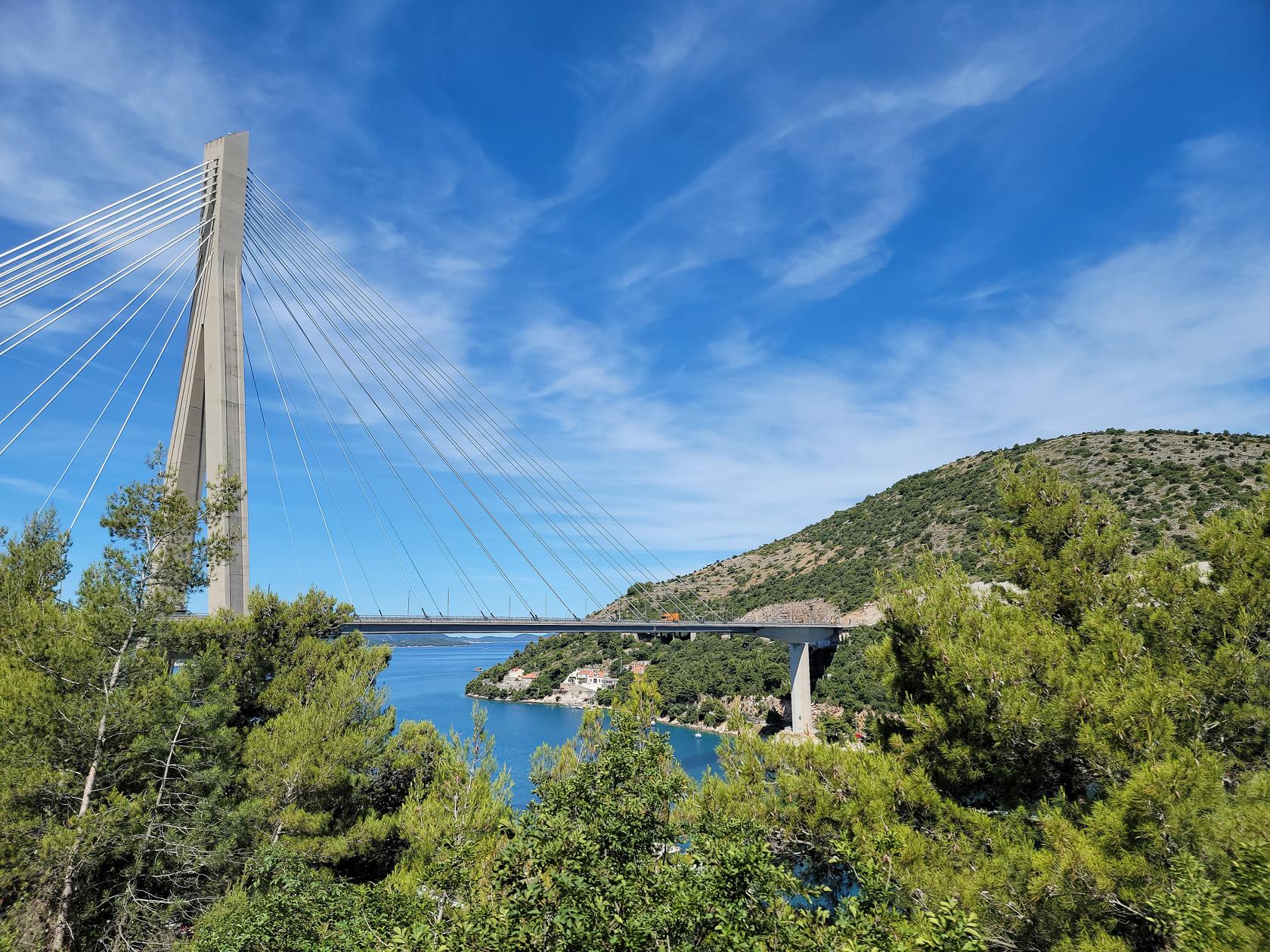
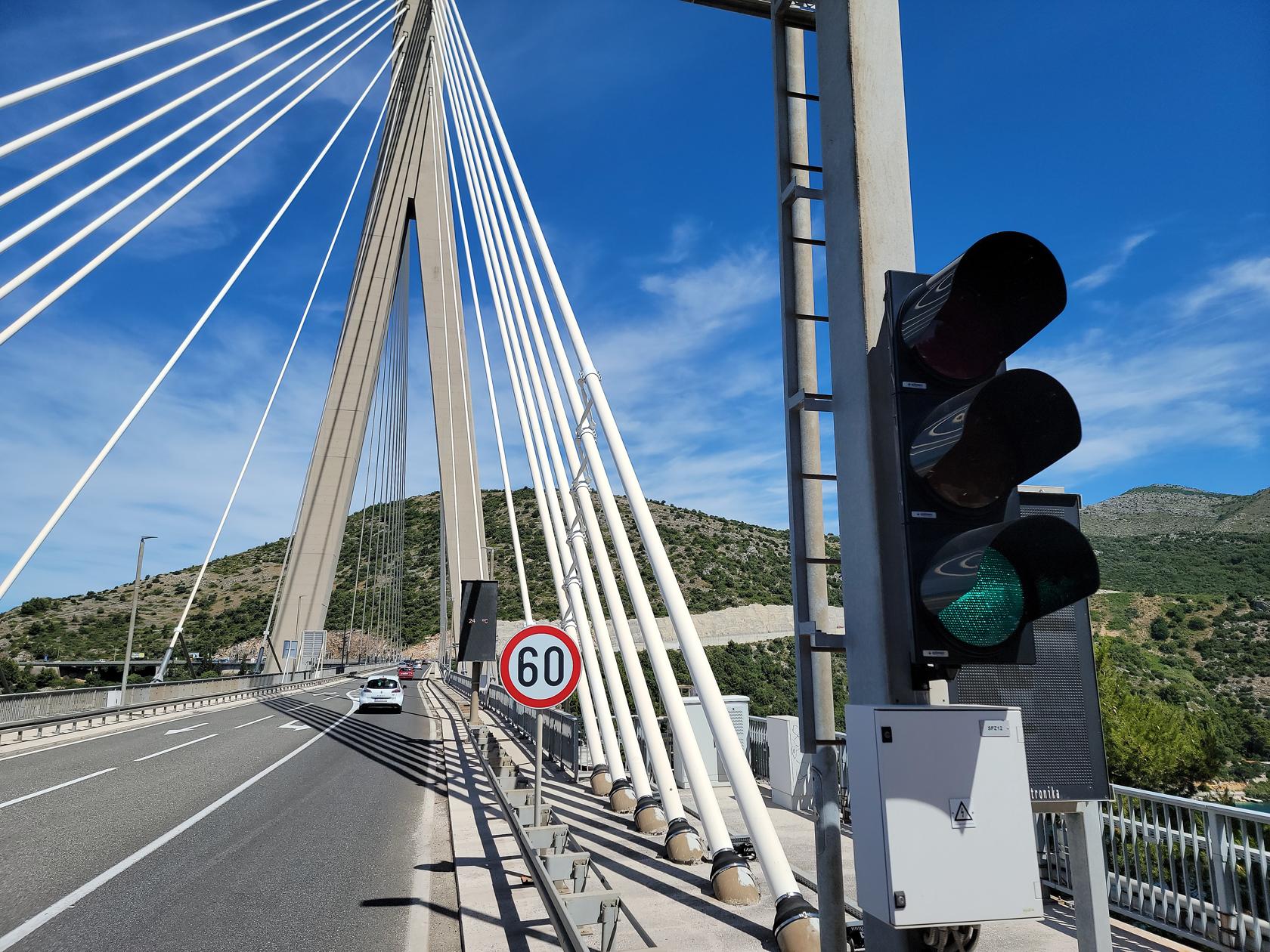
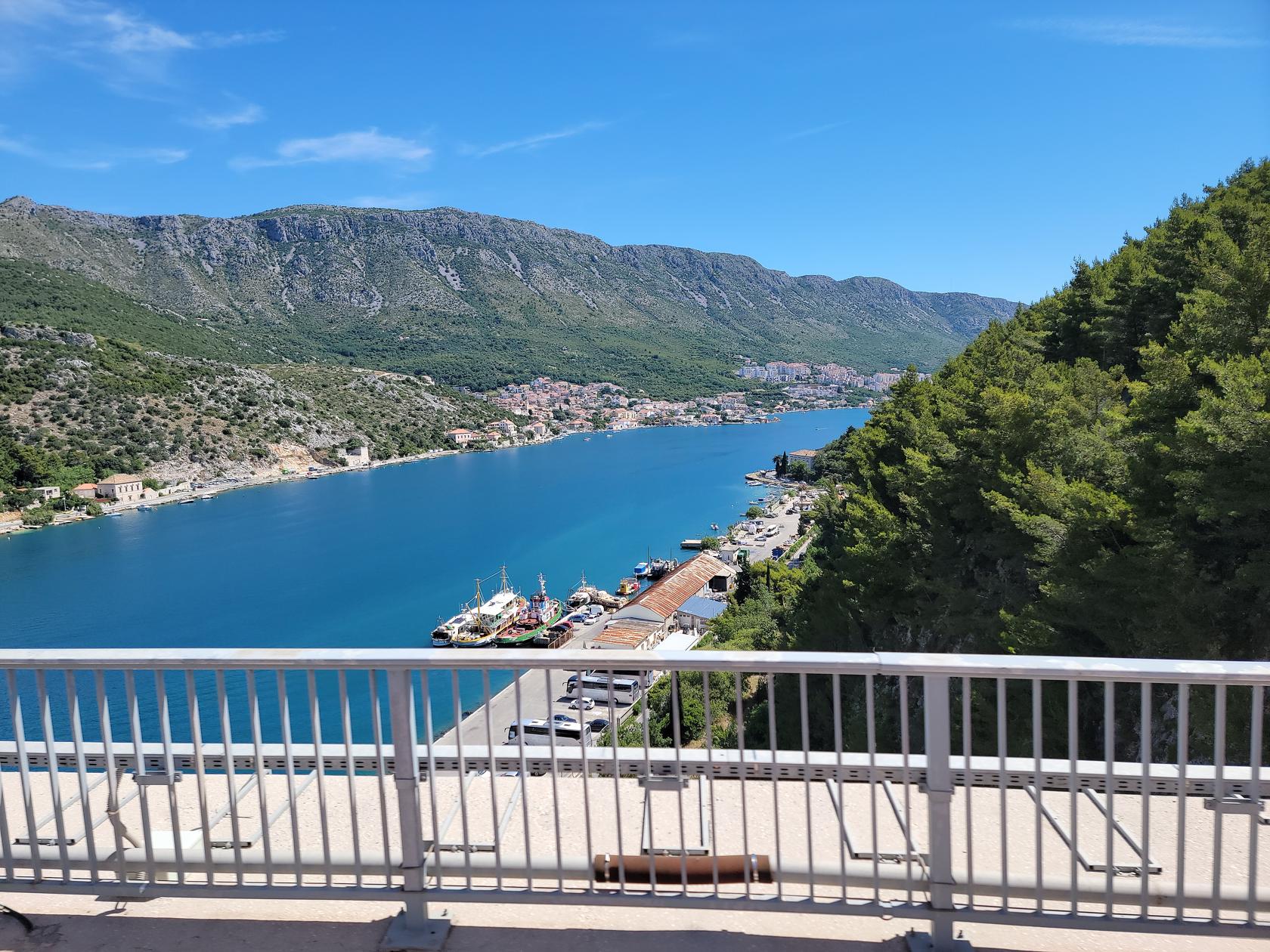
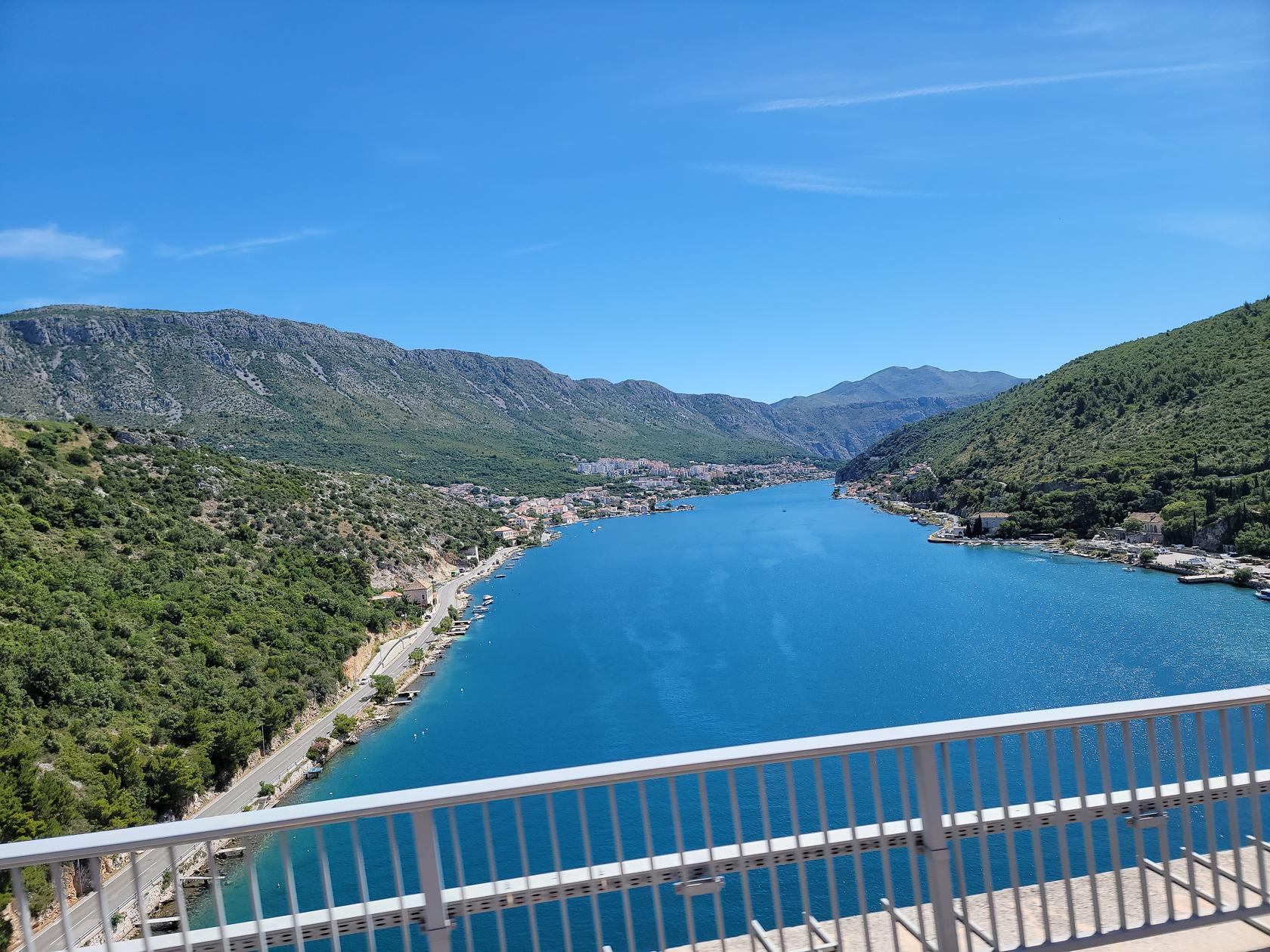
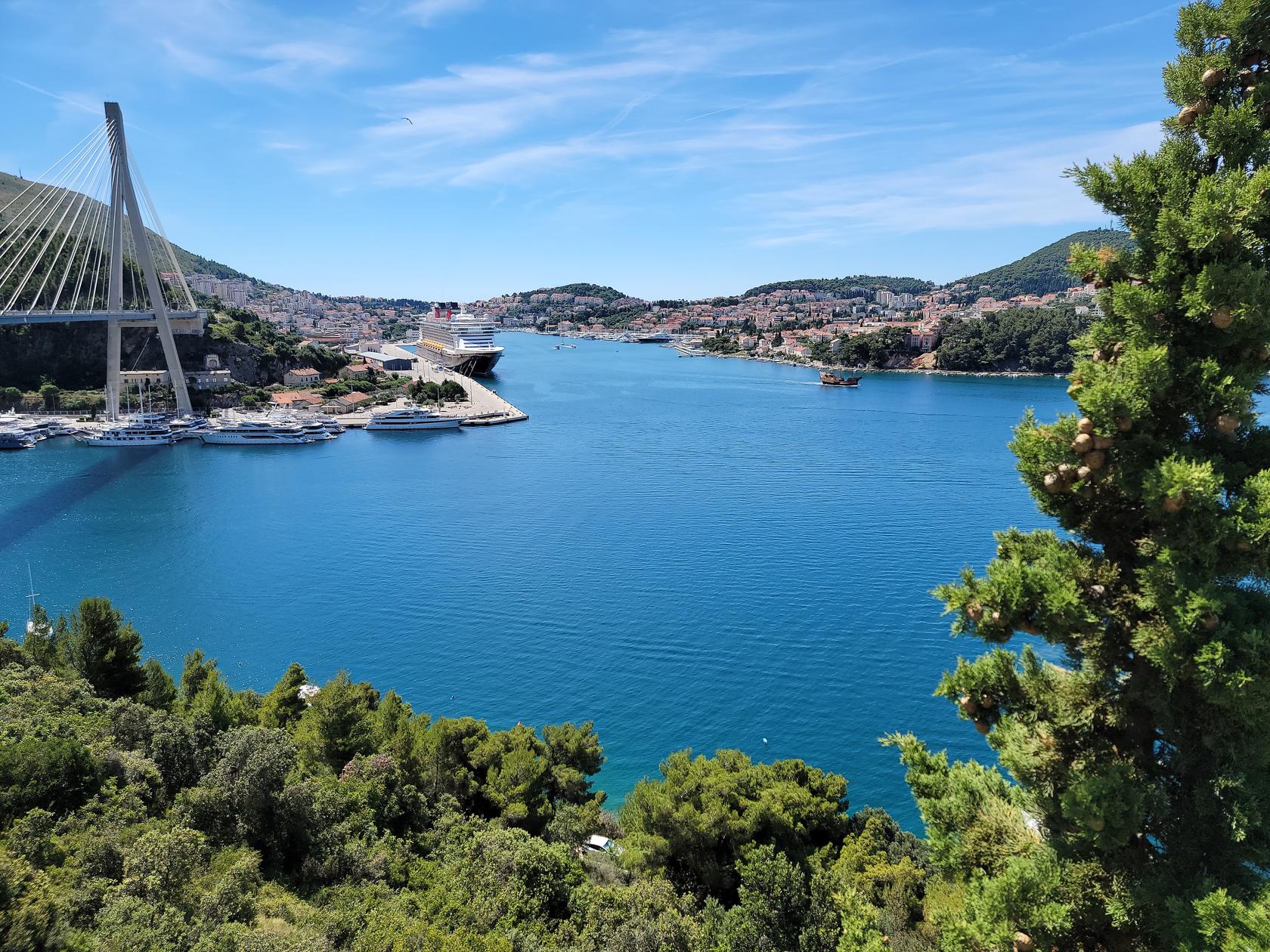
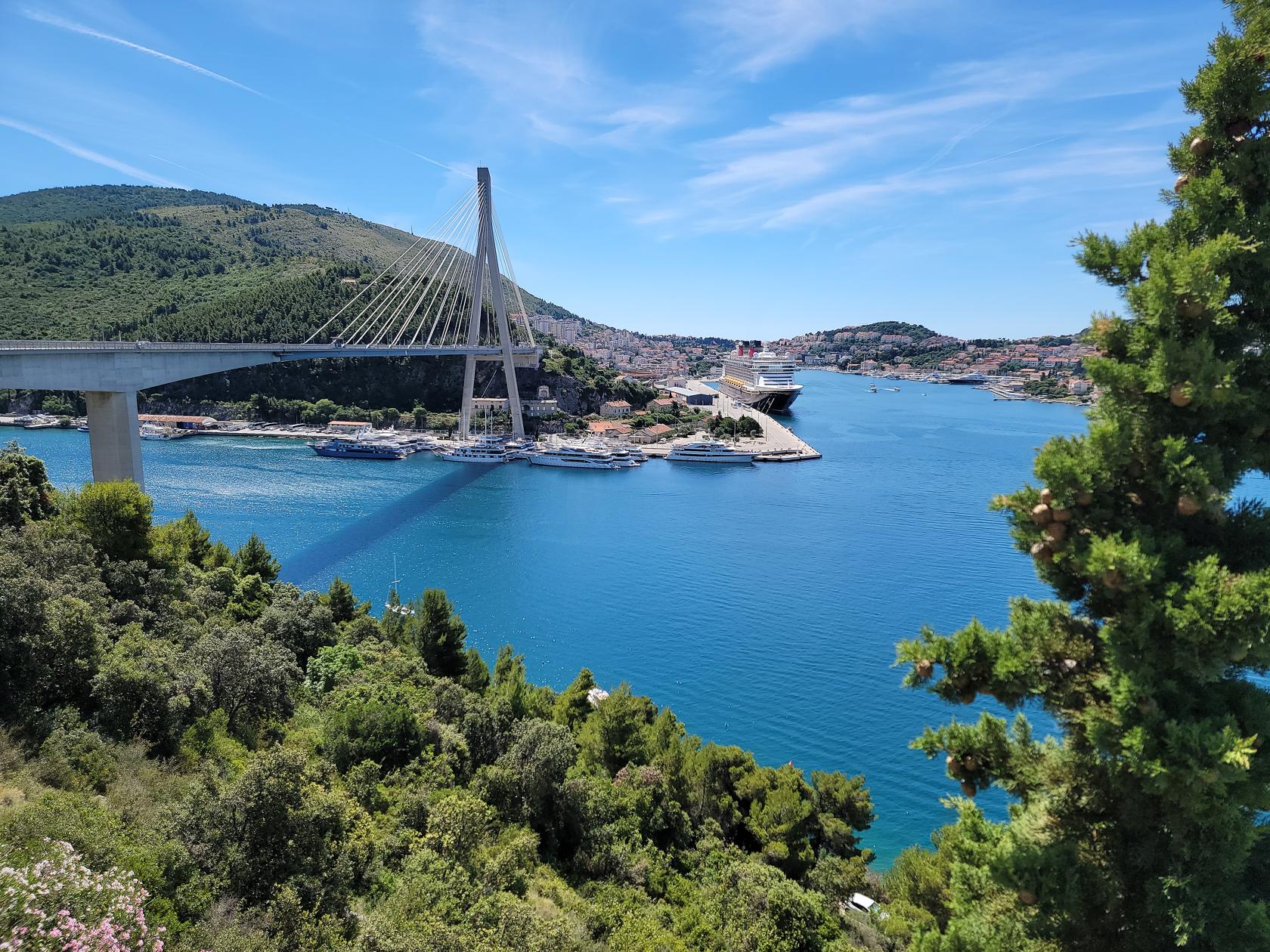
For a small fee you can enjoy a short city tour which will take you to the Franjo Tuđman Bridge. This is actually an interesting outing, since to get there you must pass by and over the Ombla River. This river is actually born out of rock as a spring, perhaps one of the few rivers in the world having claim to do so. And, it is not a small river by any stretch of the imagination, it is quite wide for a spring-few river.
Ombla River and Tudman Bridge – City Tour – Dubrovnik, Croatia
Tudman Bridge – City Tour – Dubrovnik, Croatia
Tudman Bridge – City Tour – Dubrovnik, Croatia
Tudman Bridge – City Tour – Dubrovnik, Croatia
Tudman Bridge – City Tour – Dubrovnik, Croatia
Ombla River – City Tour – Dubrovnik, Croatia
Ombla River – City Tour – Dubrovnik, Croatia
Ombla River and Port – City Tour – Dubrovnik, Croatia
Tudman Bridge – City Tour – Dubrovnik, Croatia
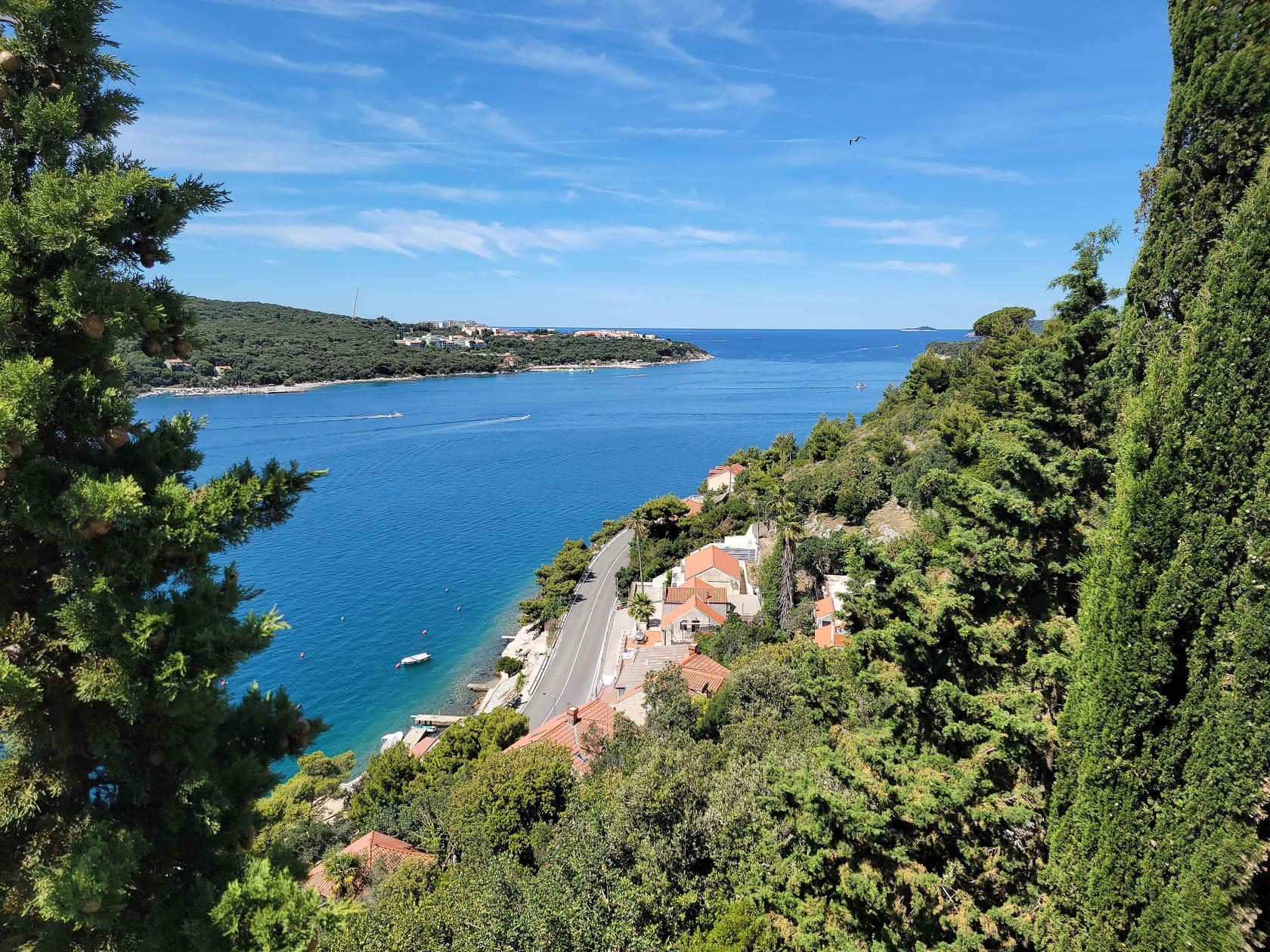
Looking out to sea – City Tour – Dubrovnik, Croatia
Restaurants
We found eating at the more popular restaurants a bit overpriced and the service not as good as some of the more local establishments. No doubt you can be cautious at some of these places and keep the price down, but sometimes the point is to enjoy some of the unique offerings they have while not breaking your budget, this you might find difficult to do, especially if you don’t want to order another pizza!
Tata’s
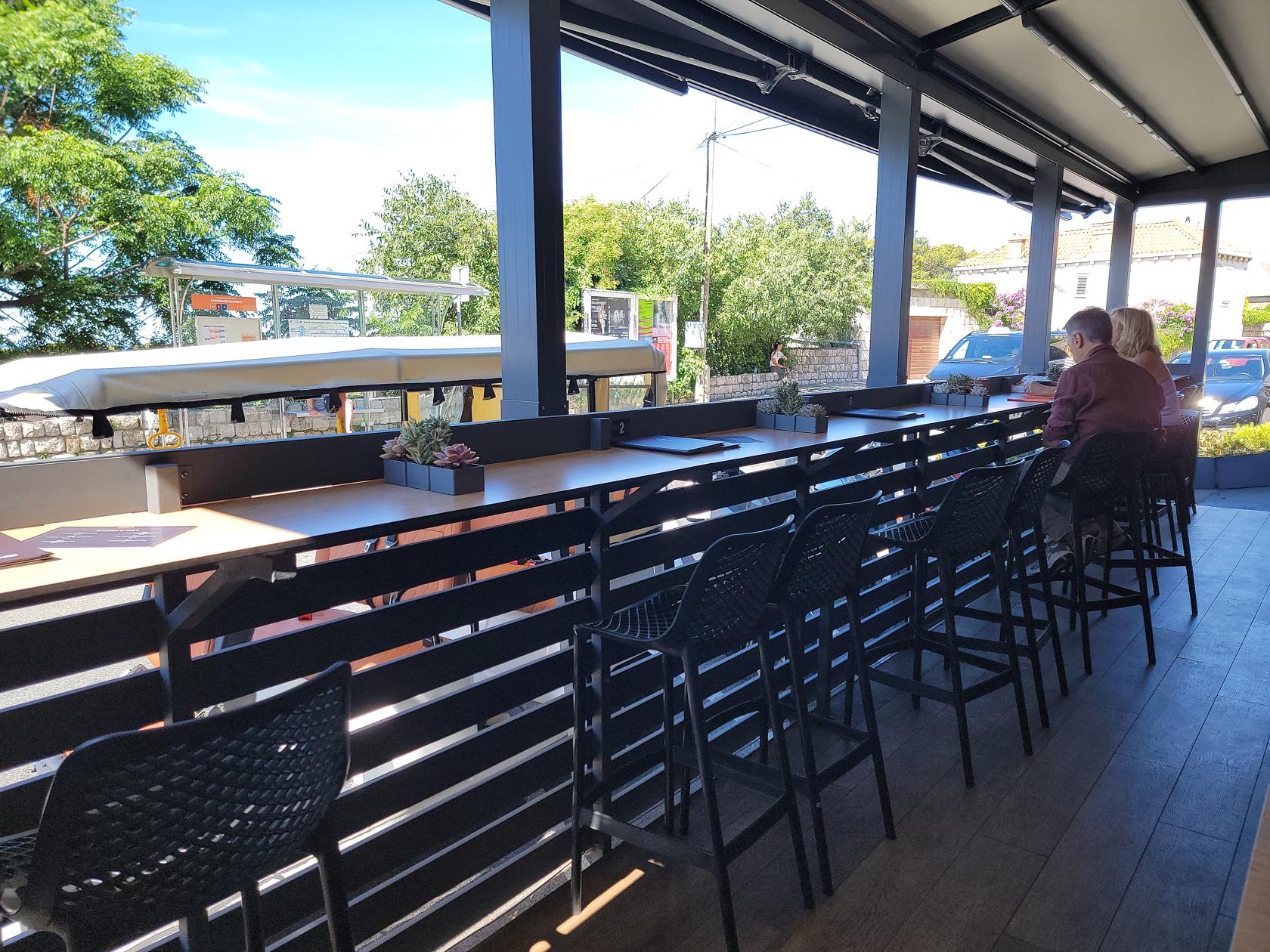
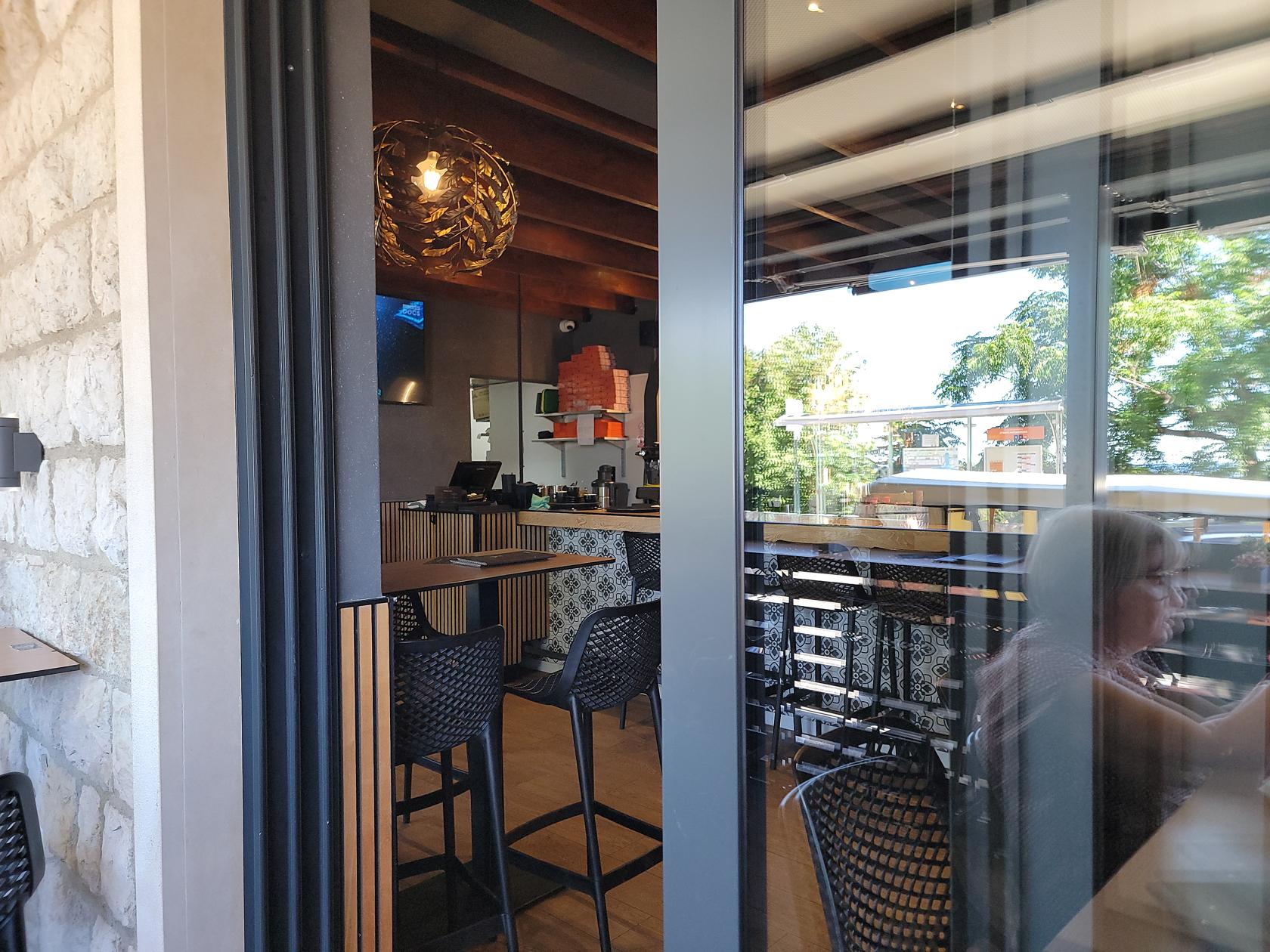
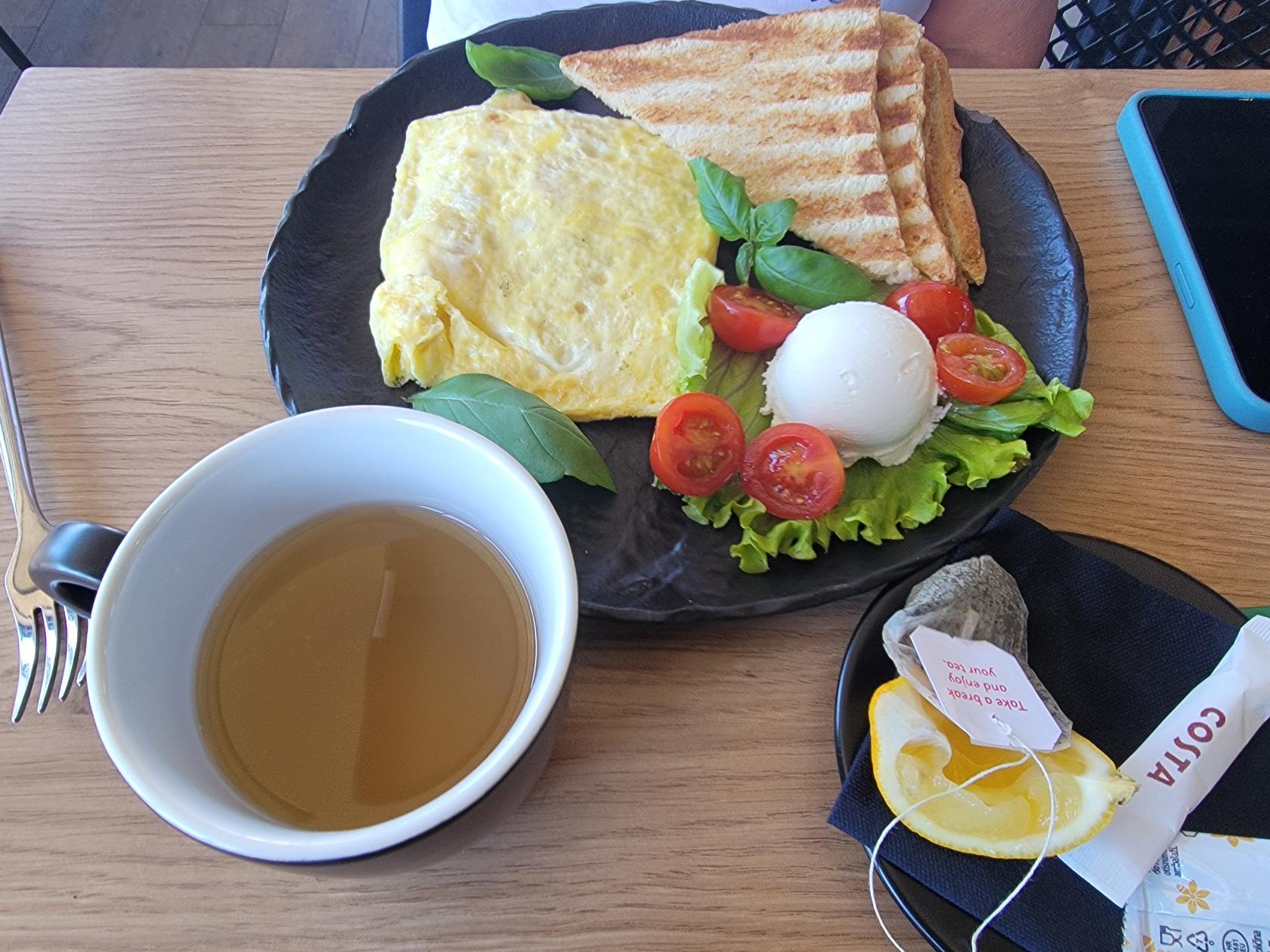
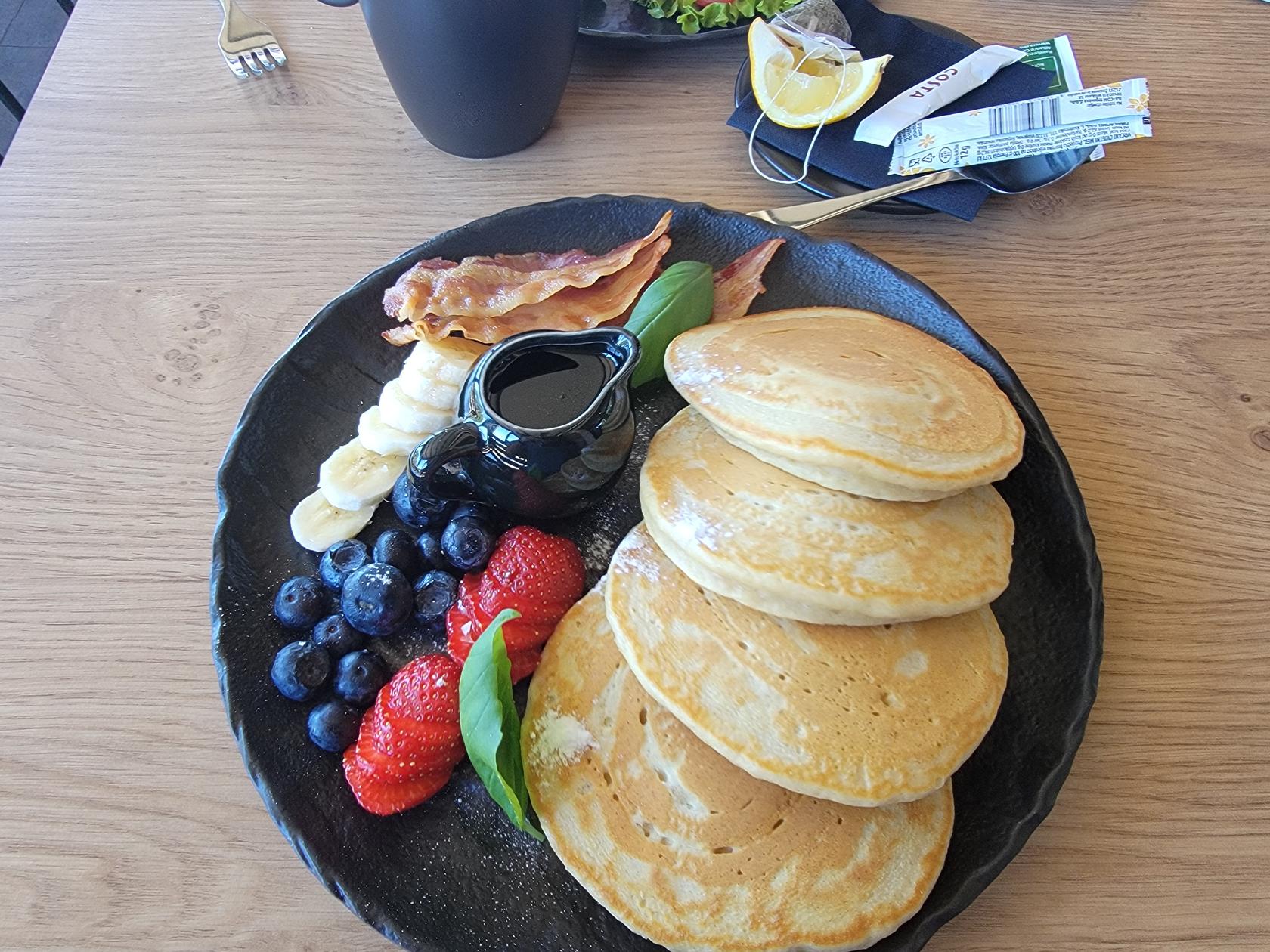
For us, a great place for breakfast. Very reasonably priced, right below our hotel on Zagrebačka Ulica, it offered all the essentials. Plus, the Pekara Rusica Bakery was right next door in case we wanted to skip a regular breakfast, preferring just a danish or other handheld treat.
Omelette with Toast – Tata’s Restaurant – Dubrovnik, Croatia
Pancakes and Fruit – Tata’s Restaurant – Dubrovnik, Croatia
Taj Mahal Old Town Restaurant
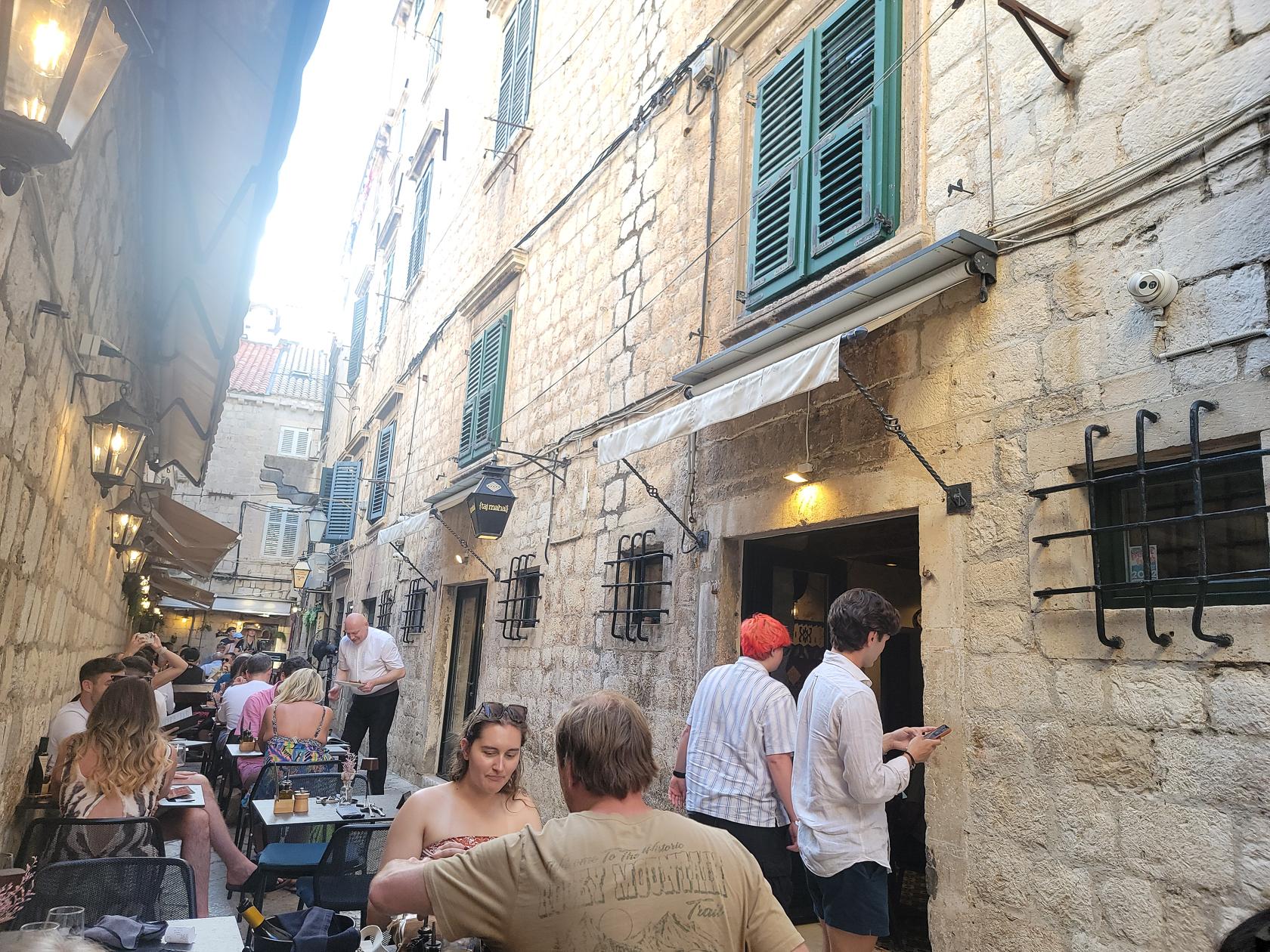
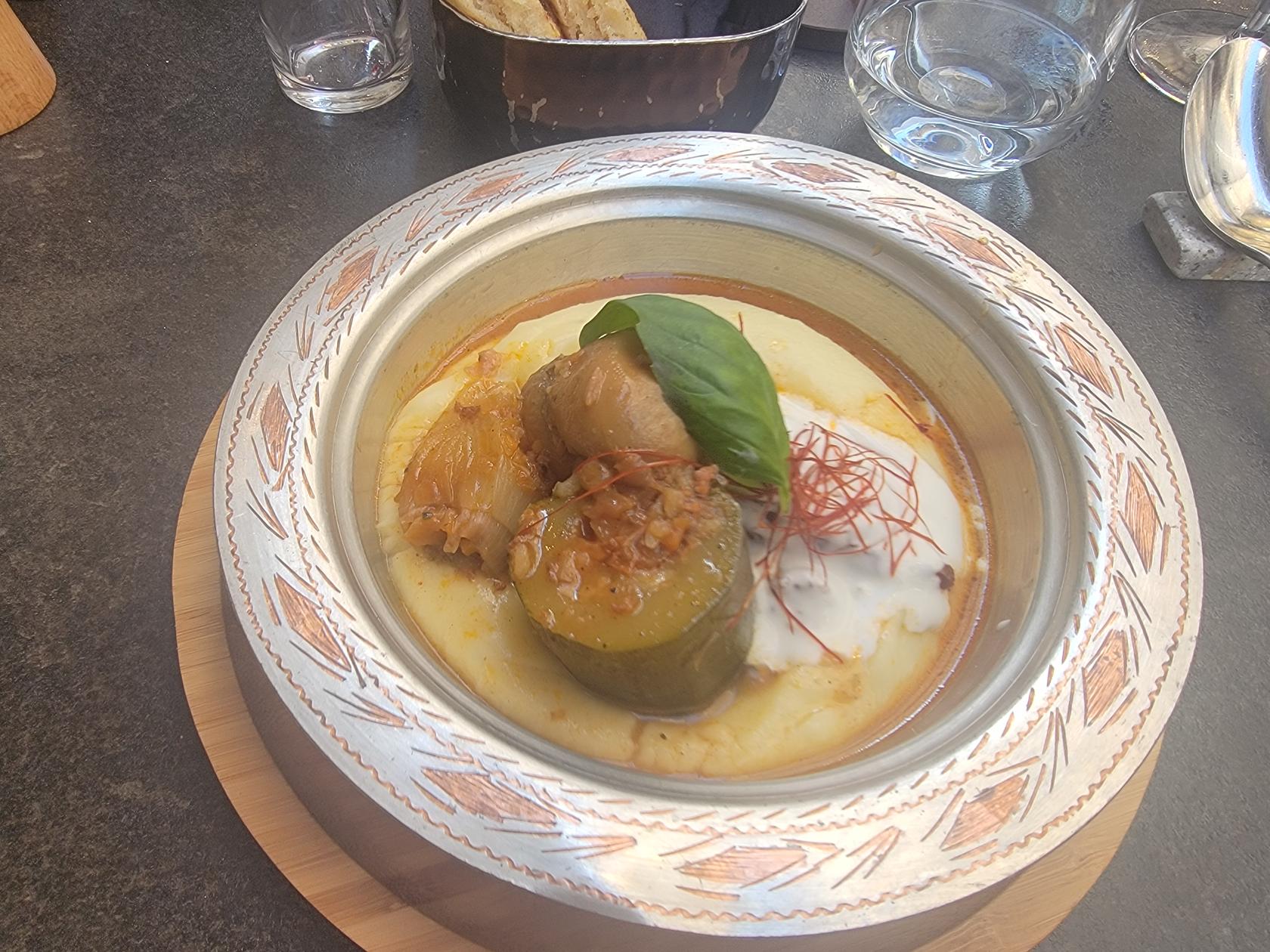
By far our favorite in the Old Town. It specializes in authentic Croatian and Bosnian ethnic cuisines. We can commend the stuffed vegetable dish called Dolma.[2]The menu has it as Sarma/Dolma/Japrak, but the Turkish Sarma and the Albanian Japrak are actually closer to each other and different from Dolma, in that they are wrapped in grape leaves normally. … Continue reading
Entrance – Taj Mahal Old Town Restaurant – Dubrovnik, Croatia
The service was excellent, they never missed a heartbeat and always showed that they were on top of their game. The food overall we found to be moderately priced and we spent considerably less here, than we did at the Dubravka 1836 restaurant.
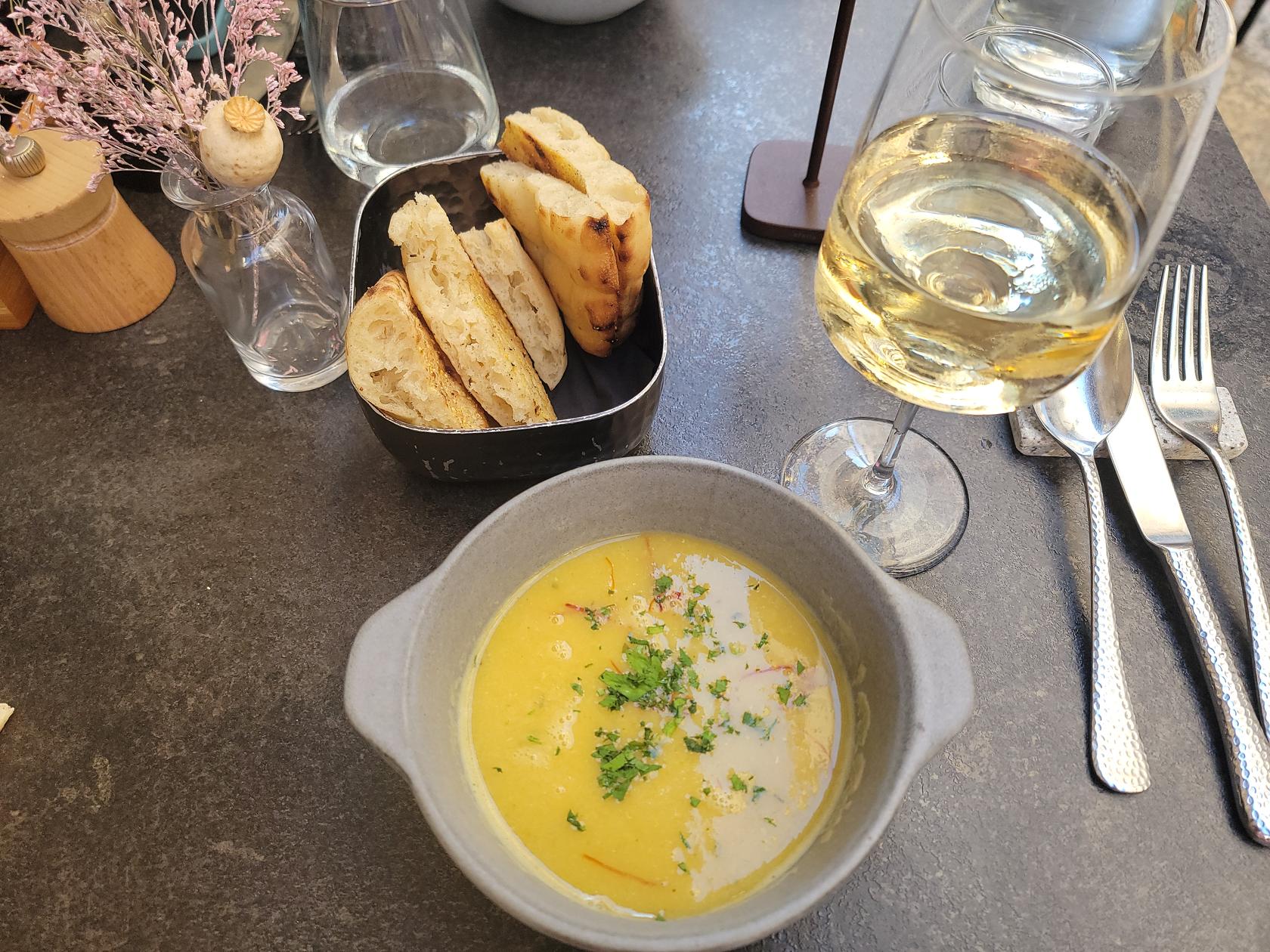
Red Lentil Soup – Taj Mahal Old Town Restaurant – Dubrovnik, Croatia
Sarma/Dolma/Japrak – Taj Mahal Old Town Restaurant – Dubrovnik, Croatia
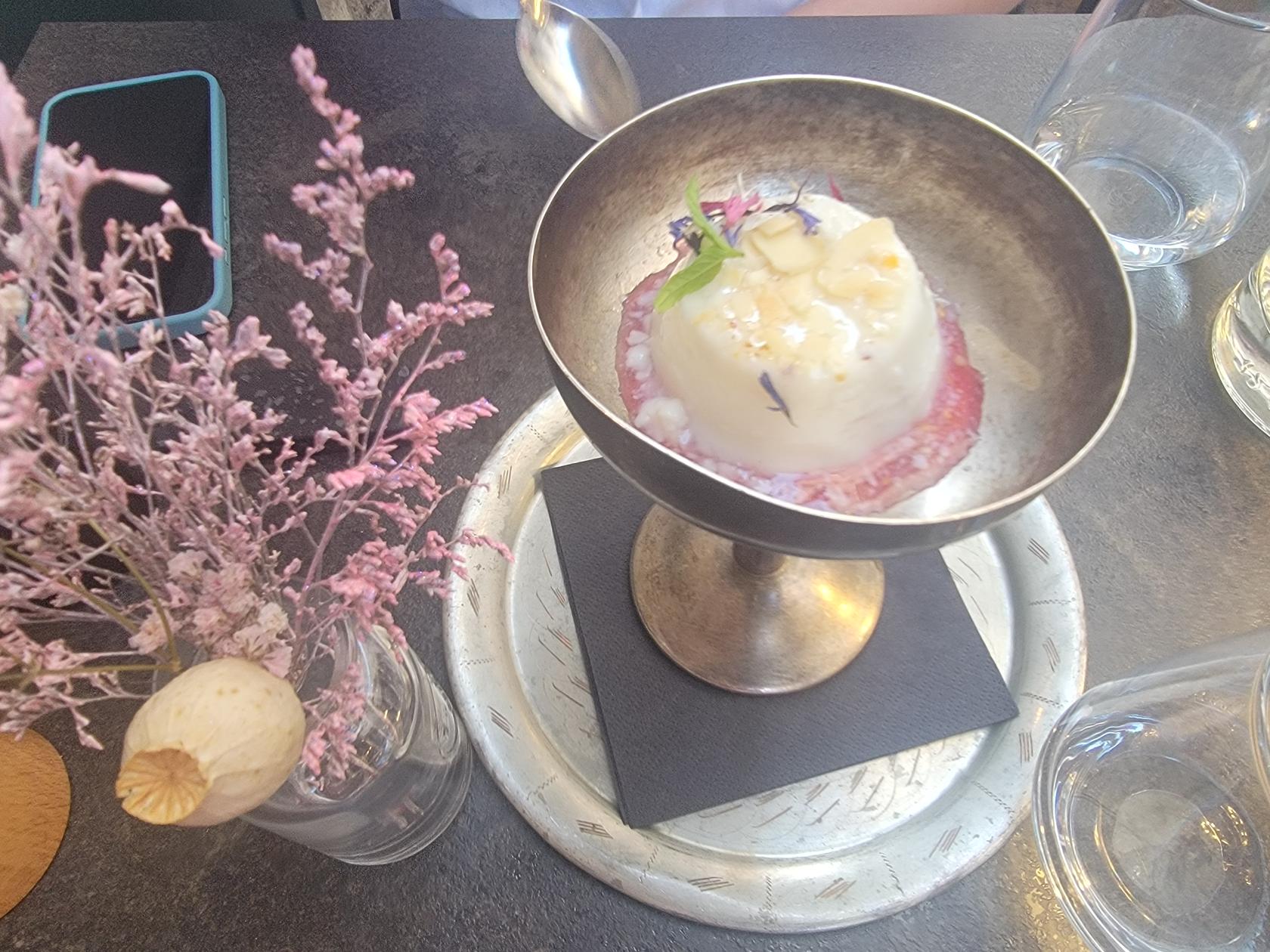
Bademli Almasia – Taj Mahal Old Town Restaurant – Dubrovnik, Croatia
Magnolia Restaurant
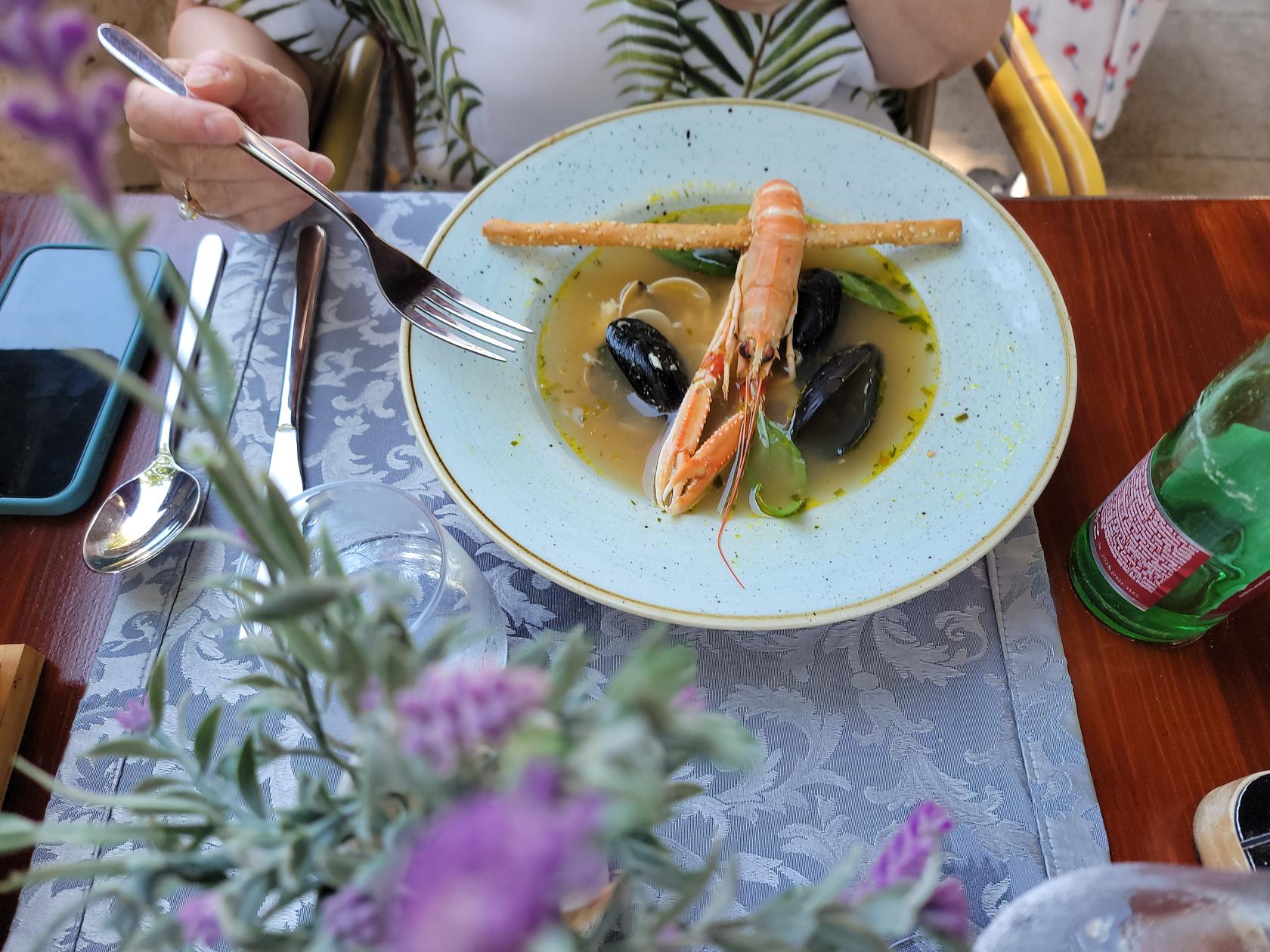
Outside the main entrance and Pile Gate, in the large plaza, can be found the Magnolia Restaurant. Nothing special, but they offer a variety of food which is good enough for lunch. A bit over-priced, but not too bad. We ordered simple soup and salad combination with some drinks. The service was okay, although they did bring us the wrong lunch at first, an understandable mix-up at such a busy place.
Fish Soup – Magnolia Restaurant – Dubrovnik, Croatia
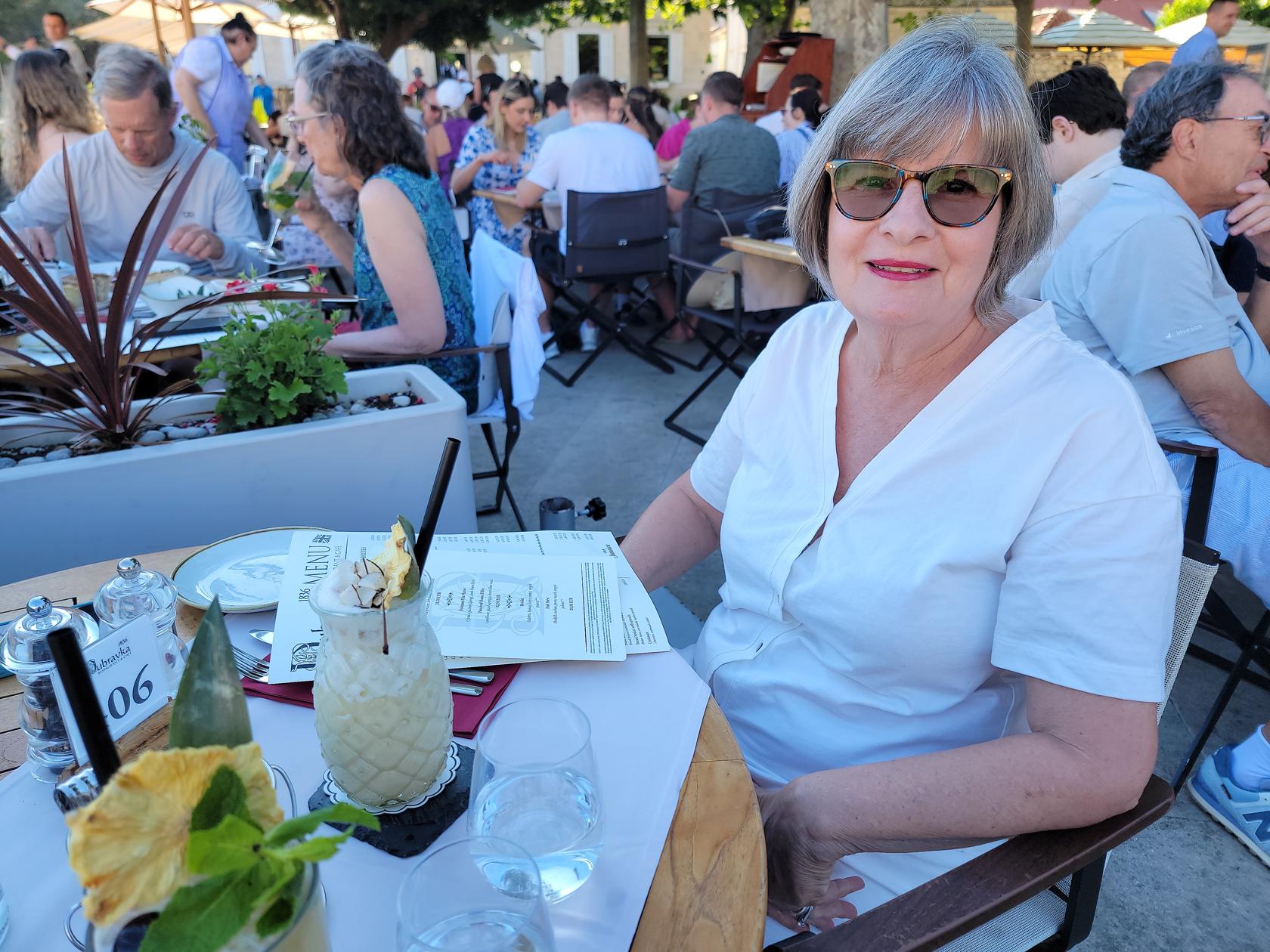
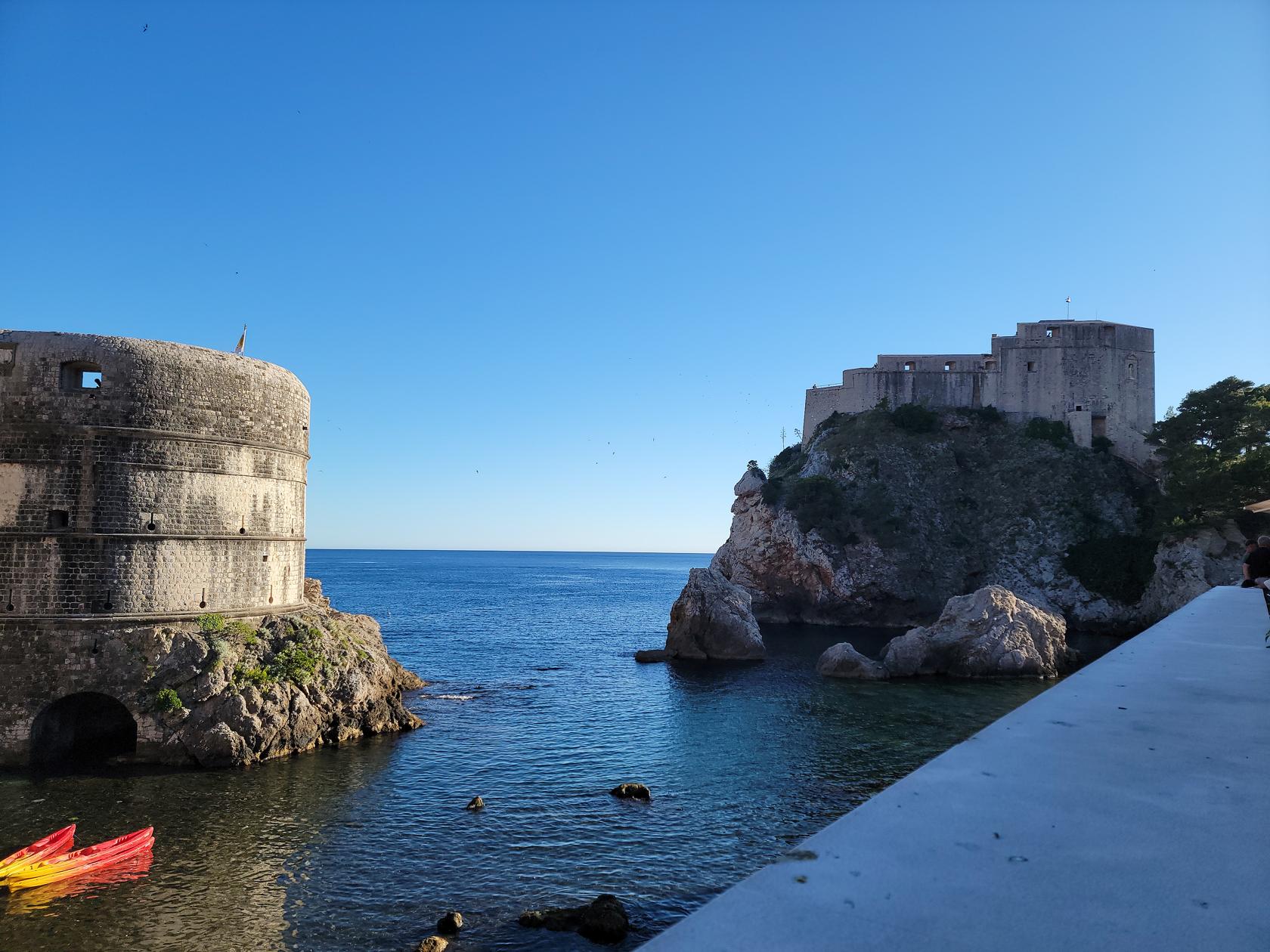
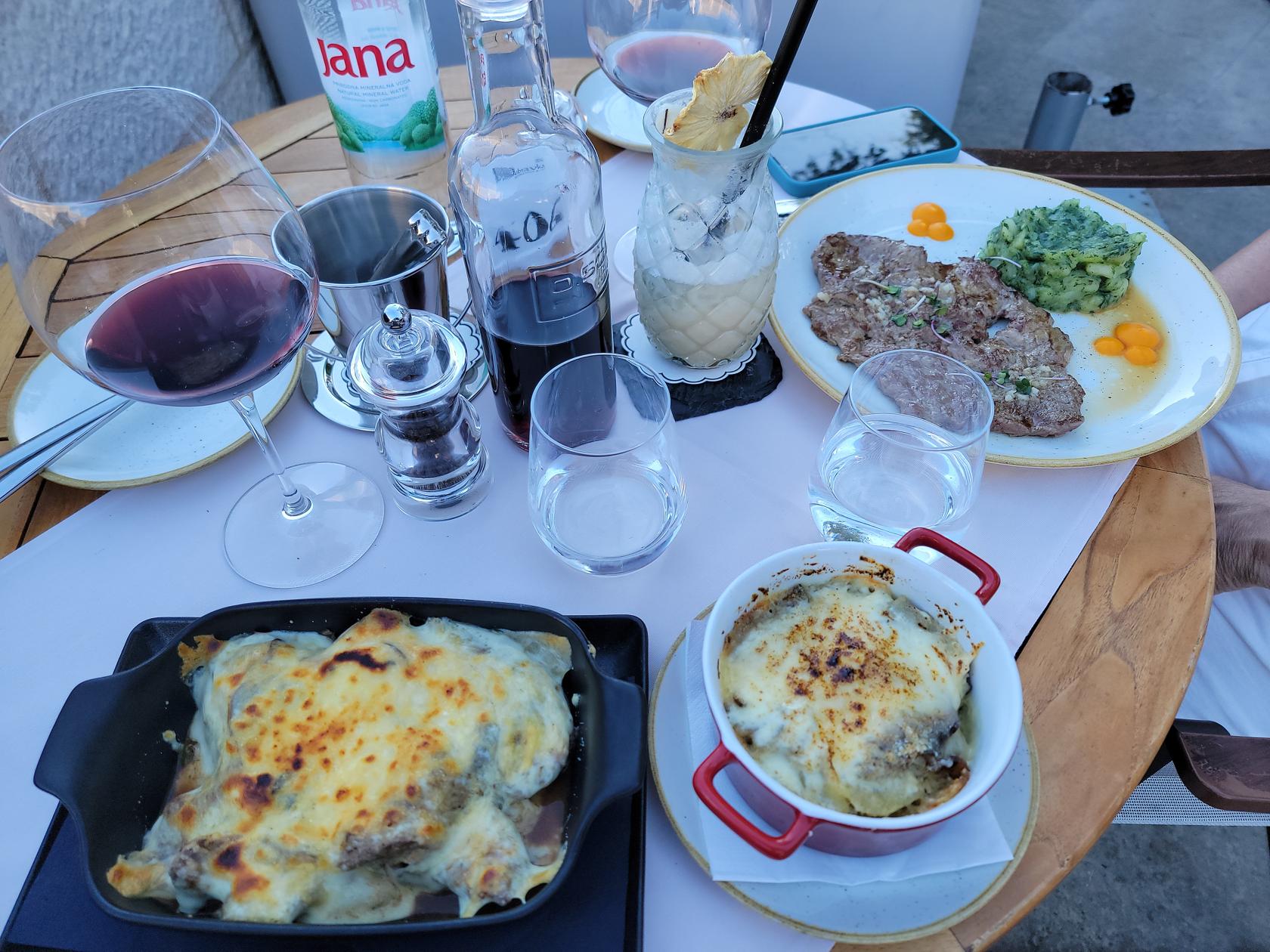
For our anniversary we booked a table in advance for the Dubravka 1836 Restaurant. It was a pleasant evening and they had the best outside seating, with a overlook of the western port.
Selfie – Dubravka Restaurant – Dubrovnik, Croatia
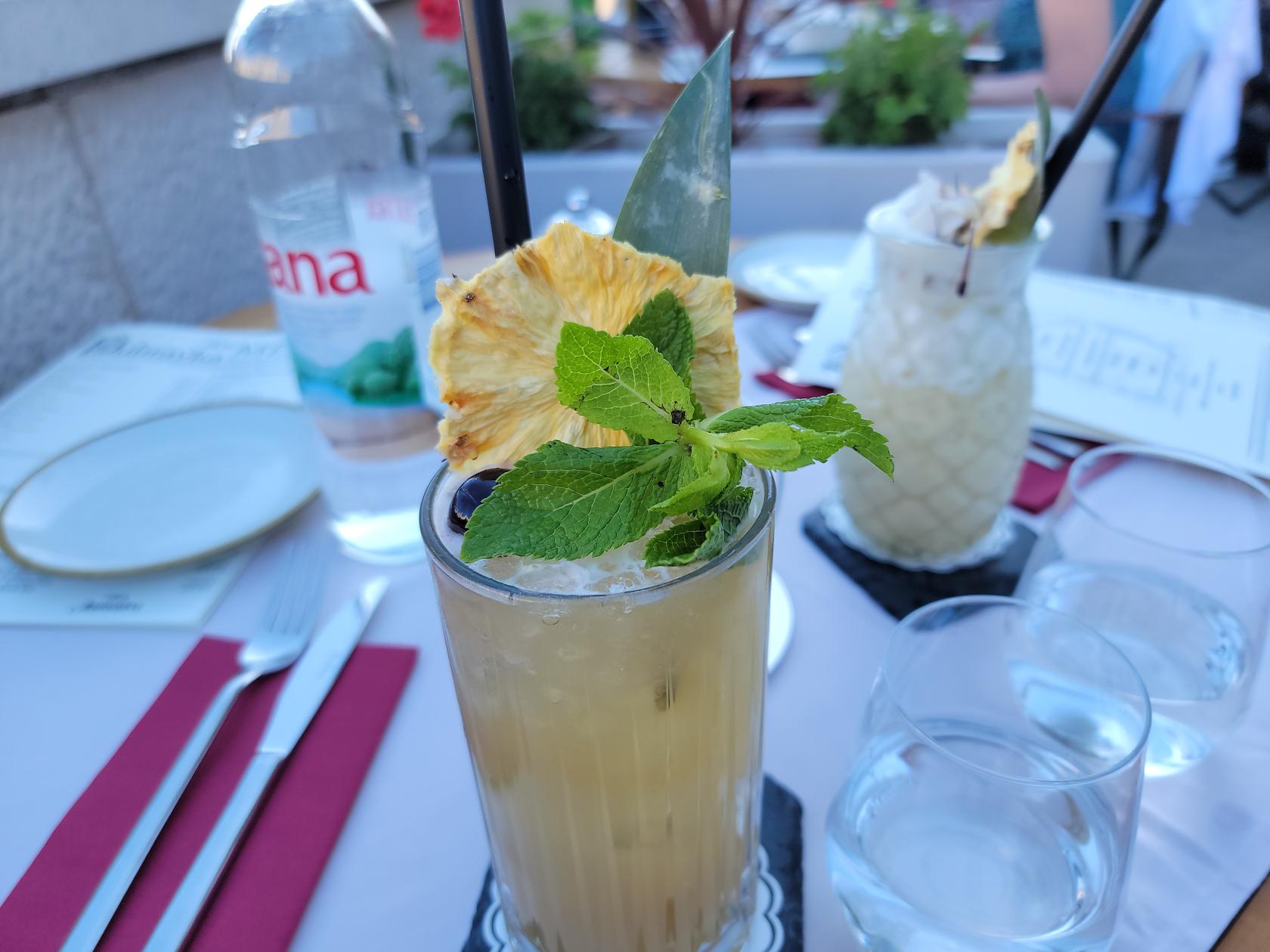
Patti with her Pina Colada – Dubravka Restaurant – Dubrovnik, Croatia
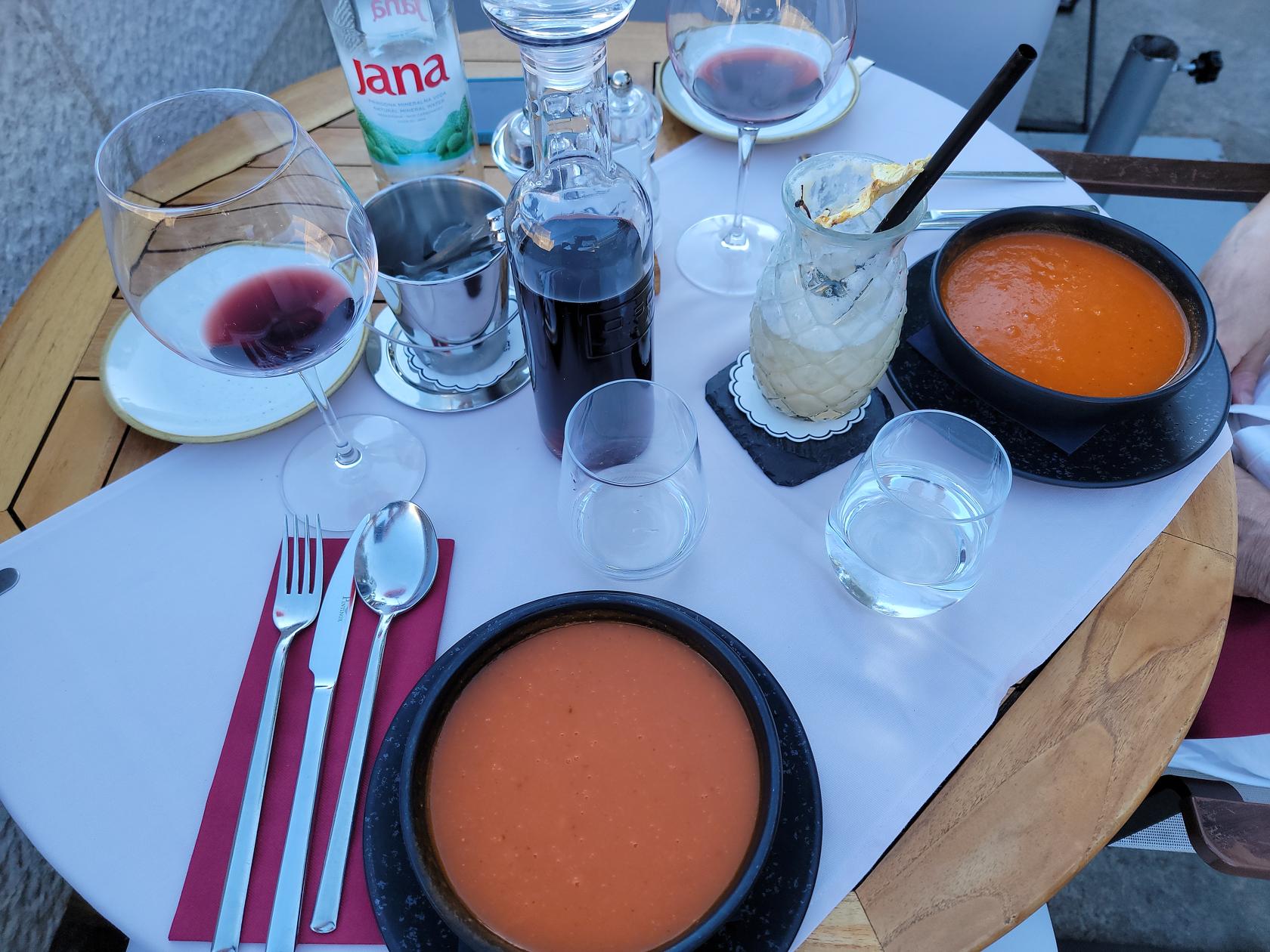
The food was okay, though not as good as some other places in Croatia we have eaten. The price is on the very high side, considering what you get, which does not include good service. We found the service inattentive and a bit poor, considering all the help that was swirling around. Most of the time they appeared to be just standing around and talking, taking little note how long we waited for them to take our plates away.
Fortress View from Terrace – Dubravka Restaurant – Dubrovnik, Croatia
Mia Tia – Dubravka Restaurant – Dubrovnik, Croatia
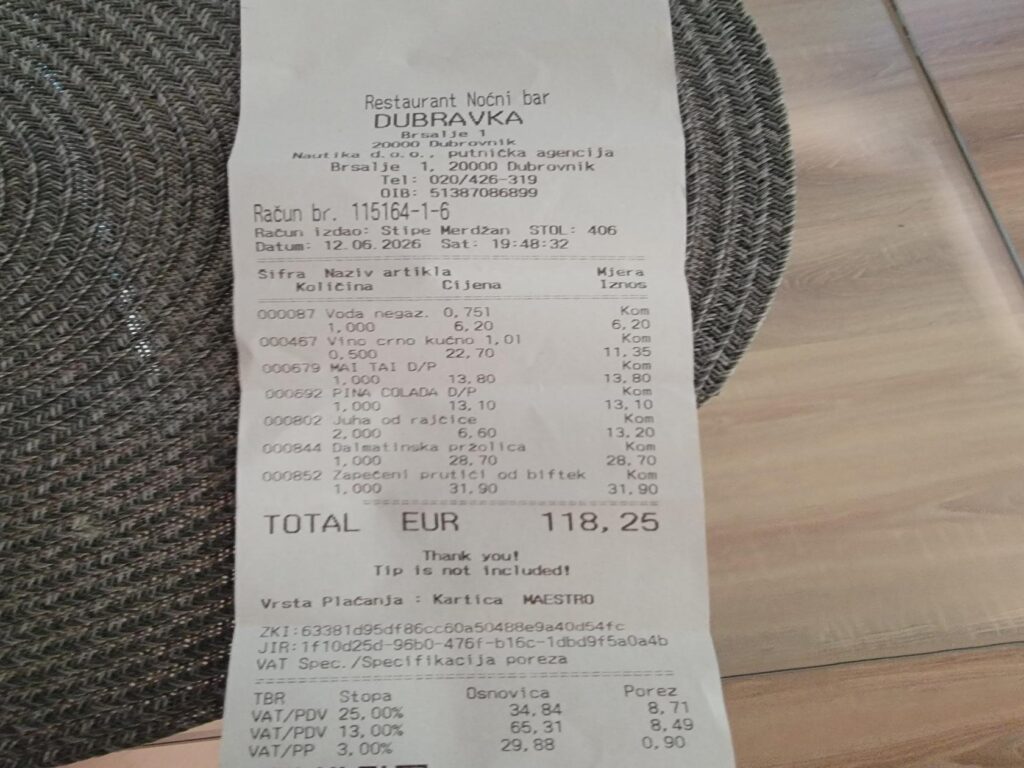
In the end, we decided not to order dessert, after having spent a good two hours already at the restaurant. As can be seen below, one main and one side dish run around 50€/person, not cheap, by any stretch of the imagination.
One final impression regarding eating in Croatia in general. We found it more expensive than eating in Italy, and perhaps other larger countries in Europe, though perhaps cheaper than eating in Switzerland. People who read that eating in Croatia at a restaurant is cheap or inexpensive, do NOT believe it, it can be more expensive than eating in the United States, 60€/person for example, for nothing that special and without tips. There are less expensive options, but you have to seek them out and most are ethnic or local restaurants outside the main restaurant hotspots.
We checked out the grocery stores too and found them inline with prices elsewhere in Europe. You will find meat and other similar products a bit expensive, but in general eating in and preparing your own food, especially if you are not a fan of trying something new, might be a less expensive option.
Lastly, as far as Dubrovnik in general is concerned, we found it an interesting place to visit once, but probably would not return. Up to three cruise ships visit the town each day and the population explodes around nine o’clock in the morning and is very busy for the rest of day. If you like a cruise, this is the place for you, since you are already packed in like sardines on the ship already. If not, you might find the hustle and bustle a bit annoying. We could not believe the number of people here and it is not even officially tourism season yet!
I, personally, was a bit dissappointed in the coastline. I had the impression it was going to be more like an Amalfi coastline, or like Cinque Terre, but it’s not. It is craggy, but I just thought it was going to be more dramatic, it’s not! Perhaps down the coast, along Albania’s coast it is more so, I am not sure, I haven’t been there yet…
The menu has it as Sarma/Dolma/Japrak, but the Turkish Sarma and the Albanian Japrak are actually closer to each other and different from Dolma, in that they are wrapped in grape leaves normally. Sarma may be wrapped in grape leaves, but it could also be cabbage leaves, or just plain vegetable, for example, squash. However, for simplicity sake, the words are used interchangeably.
For a few days we enjoyed the company of our cousin Chris, who luckily was traveling for business in the area and was able to stop by for a visit.
Turin
Chris arrived on Friday and I met him at our main train station of Porta Nuova, which because it was coming from Naples and went through Rome, was late by about fifteen minutes.
Cousin Chris Arriving – Porta Nuova – Turin, Italy
For one entire Saturday, the 2nd of May, we were able to enjoy amazing weather and show Chris the city of Turin. One of our major stops was the Open Market in Piazza della Repubblica. There he purchased authentic Italian cheese to take back home with him. Other than that, we just made sure he enjoyed great food here and kept him as comfortable as possible in our apartment for a few days.
Patti and Chris – Giolitti Apartment – Turin, Italy
Chris and Erick – Giolitti Apartment – Turin, Italy
Restaurants
It seemed like we spent more time in the restaurants, trattoria and cafes, than we did walking around. We made a point of it to take him to our two favorite restaurants nearby, which I am happy to say we had reservations for, given the fact the city was packed with people for the Jazz Festival in Turin.
Trattoria D’Agata
Our favorite Trattoria for authentic Silician cuisine is the Trattoria D’Agata in Turin. Here we always enjoy good food, their Arancini are to die for, and good wine.
Chris and Patti talking food – Trattoria D’Agata – Turin, Italy
Arancini and Baked Mozzarella – Trattoria D’Agata – Turin, Italy
Patti’s Pasta alla Norma – Trattoria D’Agata – Turin, Italy
Patate al Forno and Filetta with Pistachios – Trattoria D’Agata – Turin, Italy
la Luna Barbera from Alba – Trattoria D’Agata – Turin, Italy
Porto di Savona
Another favorite of ours for Piemontese cuisine is the Porta di Savona. Since the weather was so exceptional and it was lunch we sat outside. Located in the corner of the Piazza Vittorio Veneto, we essentially sat on the edge of the rest of chaos going on in the piazza, it was very busy.
Tajarin with Cheese Sauce and Insalata Mista – Porto di Savona Ristorant – Turin, Italy
Chris – Porto di Savona Ristorant – Turin, Italy
We had a great time and we are sure Chris did too!
Grüezi! After our travels in the interior of Switzerland, we spent a few days in Zürich prior to our return. The decision was one out of convenience, since Zürich airport was the closest offering international travel back to the states.
Getting There
Since we were starting from Wengen, we had to take the the Wengneralpenbahn to Lauterbrunnen and then the Berner Oberlandbahn from there to Interlaken Ost. From Interlaken Ost to Bern we still had free fare with our Oberlandbahn passes, so we only had to book first class tickets from there to Zürich. Then we purchased seat reservations for the entire trip using the Swiss Half Fare card.
Wengneralpenbahn – New Snow in Lauterbrunnen Valley – Wengen, Switzerland
Wengneralpenbahn – New Snow in Lauterbrunnen Valley – Wengen, Switzerland
A word about the Swiss Half Fare card and Berner Oberlandbahn pass. If you are only passing through the region it probably does not pay to get these, the initial cost is rather high. However, if you are staying in the region for an extended period of time and plan on traveling within it, then it definitely pays for itself.
Train Trip to Zürich – Thunersee, Switzerland
Train Trip to Zürich – Thunersee, Switzerland
Zürich
A modern city by any standard, it is situated on the eponymous lake and also enjoys the dissection of the Limmat and Sihl rivers, as well as a canal and several minor streams.
Schanzengraben – Zürich, Switzerland
Market – Zürich, Switzerland
Bahnhofstrasse – Zürich, Switzerland
The Altstadt, or old city, is partially on a small island, being bounded by the lake, the Limmat river and the Schanzengraben canal, the remaining part lieing to the east of the Limmat, which at one time had also been bounded by the Sielengraben and Hirschengraben moats (which have both been filled in).
The Münsterhof, Münsterbrücke and the Limmatquai are probably the must see places for this city. There are plenty of restaurants in and around this area, as well as shops and other places of business.
We both felt that Zürich as a destination in itself does not offer much, but it is definitely worth of few days in your schedule if you are just passing through the area.
Limmat River – Zürich, Switzerland
Limmat River – Zürich, Switzerland
Limmat River – Zürich, Switzerland
Limmat River – Zürich, Switzerland
Zürichersee – Zürich, Switzerland
Limmat River – Zürich, Switzerland
Limmat River At Night – Zürich, Switzerland
Grüezi – Zürich, Switzerland
Hotels
Hotel Glärnischhof
The Hotel Glärnischhof is situated close the Schanzengraben canal and the Zürichersee, or Lake Zurich. It provides a good location to the old city, as well as the lake for relaxing strolls, boat rides and other forms of entertainment. We did not find many restaurants in the area, so we did have to walk into the old city center each night for dinner.
Hotel Glärnischhof – Main Entrance – Zürich, Switzerland
Hotel Glärnischhof – Side – Zürich, Switzerland
Hotel Glärnischhof – Lobby – Zürich, Switzerland
Restaurants
Zeughauskeller
The Zeughauskeller Restaurant has exactly that, a bunch of military junk and oddities in a building, hanging from the walls or ceiling. It provides interesting things to look at while you are eating your sausages and drinking your beer.
Zeughauskeller Restaurant, Bahnhofstrass, In Gasse – Main Entrance – Zürich, Switzerland
Zeughauskeller Restaurant, Bahnhofstrass, In Gasse – Main Entrance – Zürich, Switzerland
As for sausage, they make it locally and sell some of it by the meter, apparently to go along with that liter of beer (ein Maß) you are going to order. We were even witness to a bit of excitement when the kitchen staff had a small mishap near our table and they gave me a coupon for 20 Swiss Francs for the disturbance. I graciously accepted it using my poor German.
Zeughauskeller Restaurant – Sausage By The Meter – Zürich, Switzerland
Zeughauskeller Restaurant – Jason – Ein Maß Bier Bitte – Zürich, Switzerland
Bern was originally settled by Swabians[1]The Zähringen noble family from around Freiburg im Breisgau in the twelfth century and quickly died out within a century. from the lower parts of Germany, it is the fifth largest in Switzerland and was initially surrounded by the Aare river on three sides, with fortifications protecting it’s west side.
Marktgasse – Zytglogge – Bern, Switzerland
Käfigturm – Bern, Switzerland
Marktgasse – Zytglogge – Bern, Switzerland
Marktgasse – Bern Fresco – Bern, Switzerland
Getting There
Bern does not have a commercial airport, so you will either have use Zürich‘s or Geneva’s and then take a train. We had already started in Geneva, so taking one of the ICE trains from Geneva to Bern was automatic. However, in typical SBB[2]Schweizerische BundesBahnen or Swiss train fashion, it was halted before leaving the Lake Léman area and we had to find another train to continue our two hour journey, which then turned into a three hour trip[3]There have been few times when traveling by train in Switzerland was a normal affair. It is getting to be more like the Deutscher Bahn.
Bern Train Station – Main Entrance – Bern, Switzerland
Bern Train Station – Platform – Bern, Switzerland
Bern Train Station – Main Waiting Hall – Bern, Switzerland
Bern Train Station – Main Waiting Hall – Bern, Switzerland
The City
The old medieval city of Bern is rather compact, due to it being confined by the Aare river. The main train station is on the west side of the city, so it is probably best to find a hotel close to it. We stayed at the Hotel Savoy, three blocks away from the train station.
Gerberngasse – Interesting House – Bern, Switzerland
Nydeggbrücke – Rose Garden Hill and Paul Klee Center – Bern, Switzerland
Walking from the train station to the Nydeggbrücke, via the Marktgasse of Kramgasse, should not take more than a twenty-five to thirty minutes without stopping. The main shopping avenue is the Marktgasse, which is lined with many watch stores and most other modern shops you expect to see in city that is heavily traveled. See the restaurant section below for where to go for food.
Bundeshaus – Bern, Switzerland
Bundeshaus – Bern, Switzerland
Bundeshaus – Bern, Switzerland
Bärenplatz – Bern, Switzerland
Marktgasse – Anna Seiler Brunnen – Bern, Switzerland
Marktgasse – Porticos and Shops – Bern, Switzerland
Rooftops and Houses across the Aare river – Bern, Switzerland
Old house – Bern, Switzerland
Nydeggbrücke – Wasserwerkgasse from bridge – Bern, Switzerland
Brunnen Or Fountains
The city has a lot of brunnen, or fountains in English, especially down the middle of the Marktgasse. Most of these have figures or other mythical forms, stylized perhaps from some historical figure.
There is also the Lischetti-Brunnen, also known as the Postgassbrunnen or Upper Postgassbrunnen, which was erected in 1820 next to the Staatskanzelei (State Chancellery) and is to be used by anyone who wishes to experience being a fountain.
Lischettibrunnen – Kronenbrunner or Upper Postgass Fountain – Bern, Switzerland
Hotel Savoy
A fairly good hotel on the Kramgasse, sharing an entrance with another store. We found it reasonably priced for a Swiss hotel and central for visiting the city. The breakfast is rather expensive, as it is in most Swiss hotels, at 30CHF per person. We found this unreasonable and ventured out each morning to stop at one of the many Konditoreien, or pastry shops, in the neighborhood. This option ran around 9-10CHF per person, but was only coffee and a pastry, which for use was sufficient.
Hotel Savoy – Main Entrance – Bern, Switzerland
Cathedrals And Churches
A few religious buildings of note in Bern are the Cathedral of Bern and the Church of Saint Peter and Paul.
Cathedral Of Bern
Cathedral of Bern – Entrance – Bern, Switzerland
Cathedral of Bern – Nave and Alter – Bern, Switzerland
Cathedral of Bern – History of Tower – Bern, Switzerland
Cathedral of Bern – Houses of Patrons – Bern, Switzerland
Cathedral of Bern – Intricate Facade over Entrance – Bern, Switzerland
Cathedral of Bern – Fountain – Bern, Switzerland
Cathedral of Bern – Backside – Bern, Switzerland
Cathedral of Bern – Intricate Facade over Entrance – Bern, Switzerland
Church Of Saint Peter And Paul
Church of Saint Peter and Paul – Entrance, Rathausgasse – Bern, Switzerland
Church of Saint Peter and Paul – Rose Window – Bern, Switzerland
Church of Saint Peter and Paul – Nave and Altar – Bern, Switzerland
Church of Saint Peter and Paul – Organ – Bern, Switzerland
Bridges And The Aare River
There are two central bridges that span the Aare at the tip of the city. The Untertorbrücke, the first one to be built and is shown on maps of the city from the seventeenth century, and the Nydeggbrücke, which carries the tram and modern vehicular traffic.
Untertorbrücke – Nydeggbrücke over the Aare – Bern, Switzerland
Untertorbrücke – The Aare River – Bern, Switzerland
Untertorbrücke – Patti and the Aare River – Bern, Switzerland
Untertorbrücke – Patti and the Aare River, Rose Garden on the hill – Bern, Switzerland
Untertorbrücke and the Aare River – Bern, Switzerland
Nydeggbrücke – Bärenpark – Bern, Switzerland
Bären Park
On one end of the Nydeggbrücke is the Bärenpark, or Bear Park. As early as the beginning of the sixteenth century the city has been known to have a Bärengraben, or Bear Pit, of some type or another. Ostensibly the city becoming eponymously named for the same in 1191 when the Duke of Zähringen killed a bear first on one of his many famous hunts. But seriously, this is just conjecture and there is more evidence that it was from a pre-existing toponym of Celtic origin, possibly berna, meaning cleft.
Nydeggbrücke – Bärenpark – Bern, Switzerland
Nydeggbrücke – Bärenpark – Bern, Switzerland
Nydeggbrücke – Bärenpark – Bern, Switzerland
Nydeggbrücke – Bärenpark – Bern, Switzerland
Einsteinhaus
On Marktgasse 49, visitors will find the Einsteinhaus, or the apartment that Albert Einstein lived in during his publication of his ground breaking theories of 1905, including his Special Theory of Relativity.
Kramgasse 49 – Einstein House – Bern, Switzerland
Kramgasse 49 – Einstein House – Bern, Switzerland
The Rosengarden Bern
One top of the hill on the other side of the Aare river is the park containing the Rose Garden, or Rosengarden. Unfortunately for us, the roses were not in bloom in May, so we were unable to enjoy their colors. However, there were other flowers, trees and bushes to be enjoyed in the park.
Rose Garden – Patti on walkway up to garden – Bern, Switzerland
Rose Garden – Patti and the garden – Bern, Switzerland
Rose Garden – The garden – Bern, Switzerland
Rose Garden – The garden – Bern, Switzerland
It is here, that Albert Einstein probably contemplated many of the problems around his Theory of Relativity, and a bench here so commemorates his efforts.
Rose Garden – Einstein bench and overlook of Bern – Bern, Switzerland
From this vantage point you get a very good view of the old Medieval city of Bern, with its many churches, bridges and old style houses.
Rose Garden – Overlook of Bern – Bern, Switzerland
Rose Garden – Erick and overlook of Bern – Bern, Switzerland
Restaurants
The Bärenplatz and Waisenhausplatz are central areas for restaurants and have a good mix of local Swiss restaurants to Italian and other cuisines.
Bärenplatz – Market on Waisenhausplatz – Bern, Switzerland
Santa Lucia Ristorante
Another Italian restaurant which has a very active lunch crowd. Here you can enjoy reasonable prices and a wide selection of Italian dishes, including pizza. Our first evening here we enjoyed the soup and spaghetti.
Santa Lucia Ristorante – Minestrone Soup – Bern, Switzerland
Bärenplatz, Santa Lucia Ristorante – Spaghetti Bolognese – Bern, Switzerland
Bärenplatz, Santa Lucia Ristorante – Spaghetti and Tomatoes – Bern, Switzerland
Bärenplatz, Santa Lucia Ristorante – Banana Split – Bern, Switzerland
The second time we visited was for lunch, then I ordered a pizza, which was very good and typical of the Neapolitan style from Naples. The house wine is also very pleasant.
Santa Lucia Ristorante – Pizza Margherita – Bern, Switzerland
Ristorante Luce
On the corner of Zeughausgasse and Waghausegasse is the Italian restaurant of Ristorante Luce. If you are looking for higher end Italian food, look no further. The service here is also exceptional, though the seating was a bit cramped.
Ristorante Luce – Entrance – Bern, Switzerland
Ristorante Luce – Patti with her Soup – Bern, Switzerland
Here they serve very good Italian specialties and have an excellent wine list. Here you can find Strozzapreti, or Priest Strangler/Choker Pasta with Mozzarella. A rather large and somewhat gummy pasta with an very interesting history.
Ristorante Luce – Strozzapreti Pasta with Buffalo Mozzarella – Bern, Switzerland
I can specifically attest to spending 150CHF for a 375ml bottle of Ornellaia 2019. A DOC wine from Italy with extremely high ratings which regularly fetches $250-$800 a bottle, a truly amazing wine. So if you are a true wine lover, your pallet might enjoy this restaurant.
Ristorante Luce – Ornellaia Cabernet Sauvignon, 2019 – Bern, Switzerland