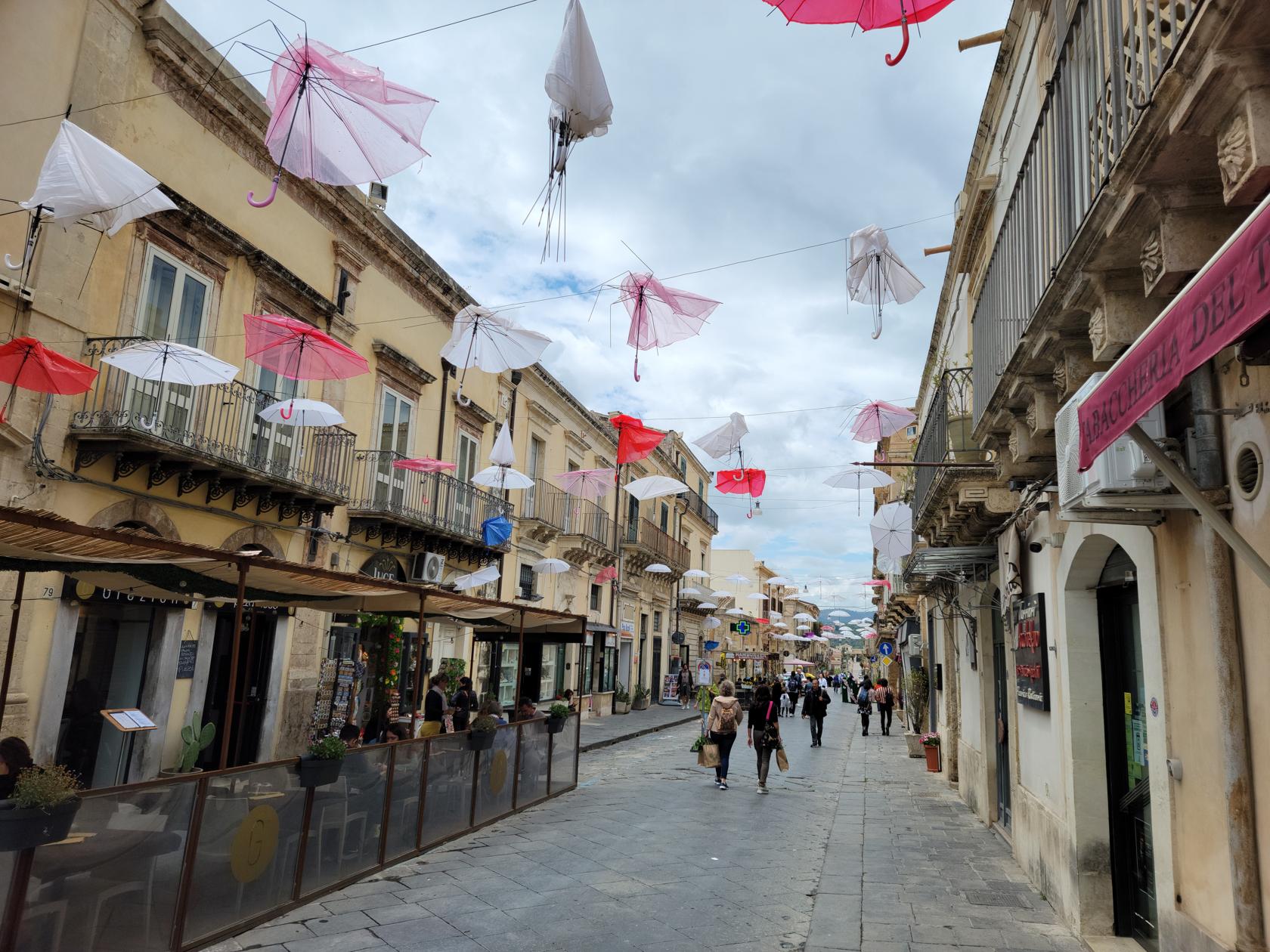
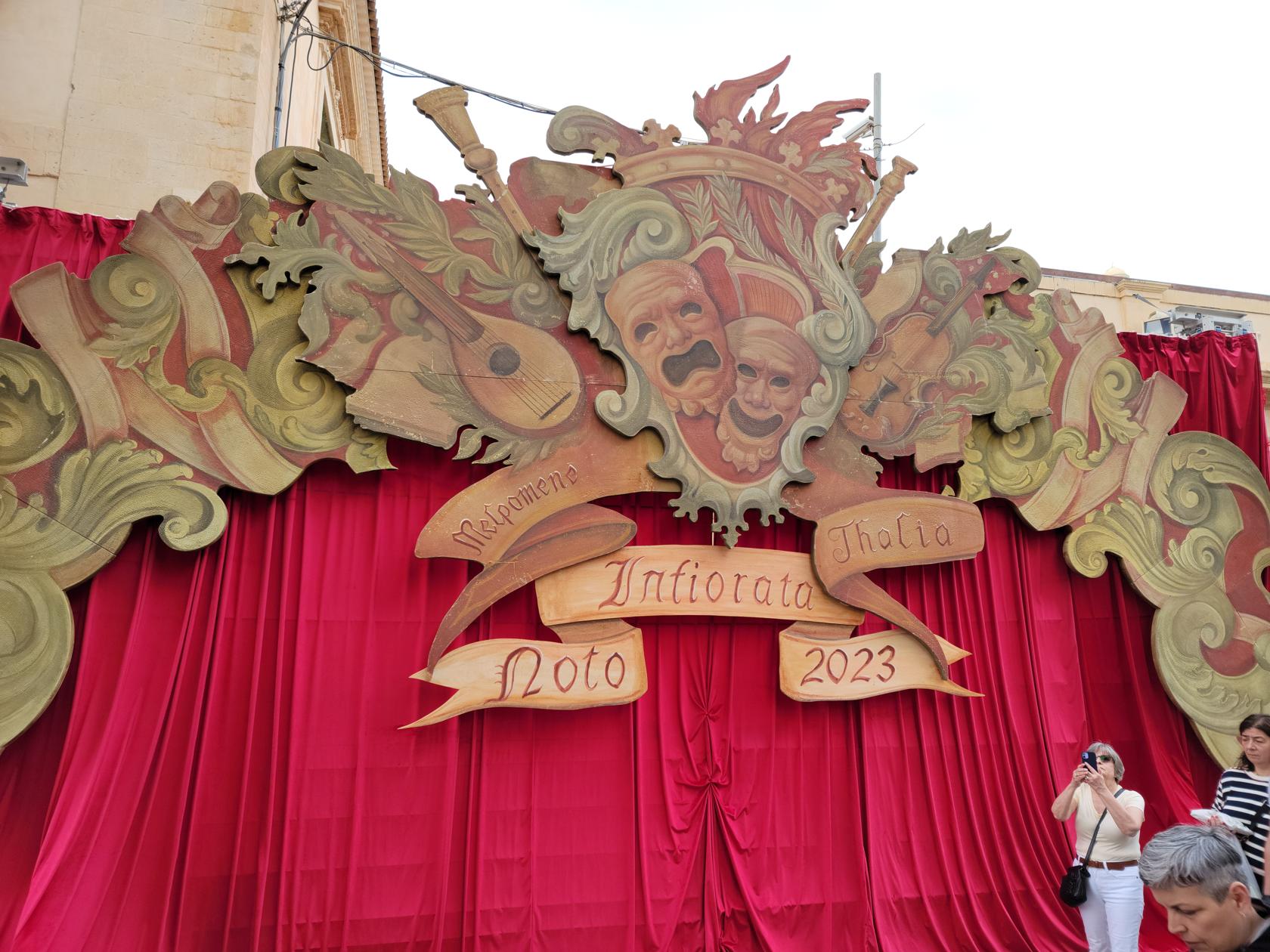
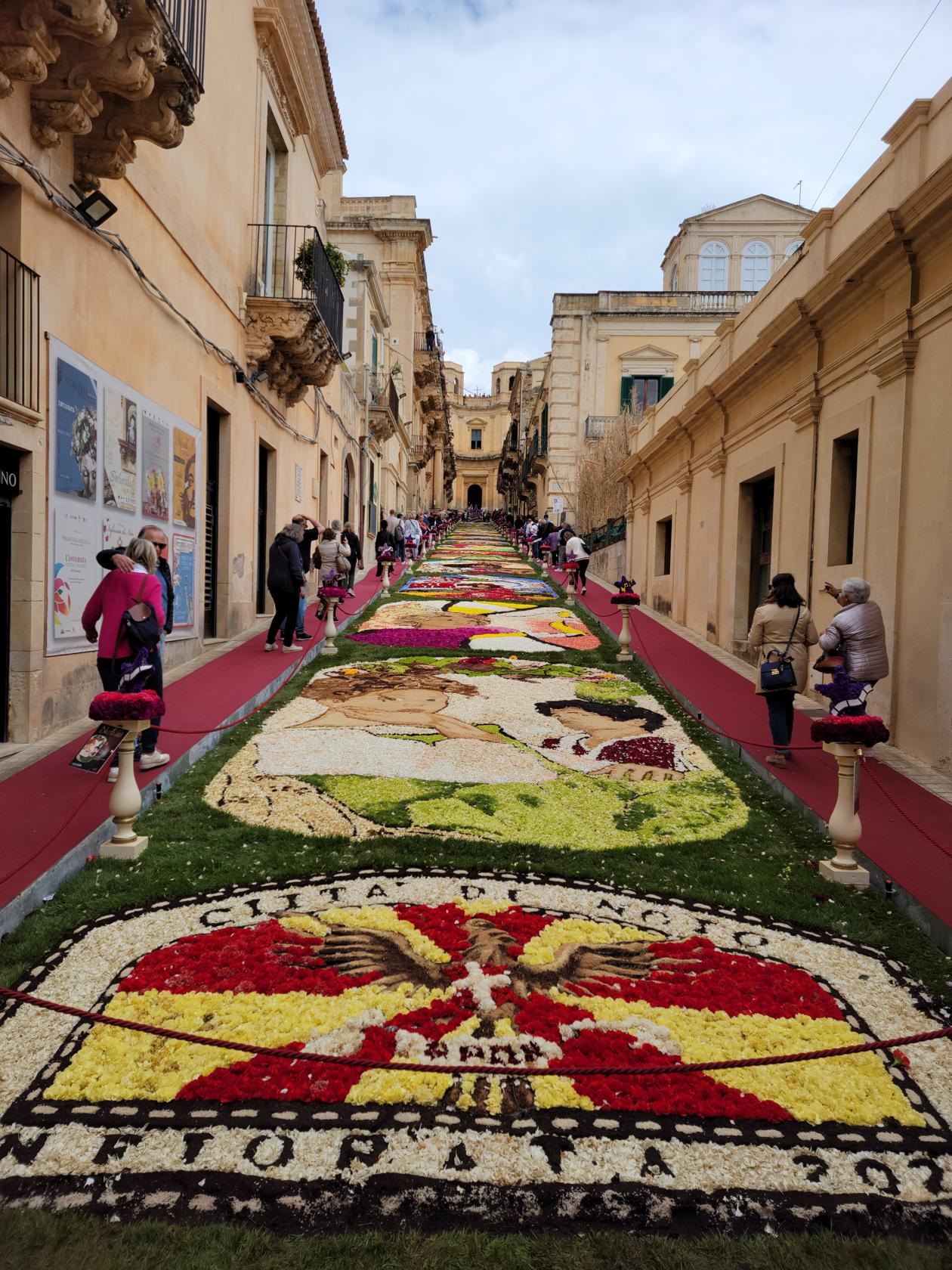
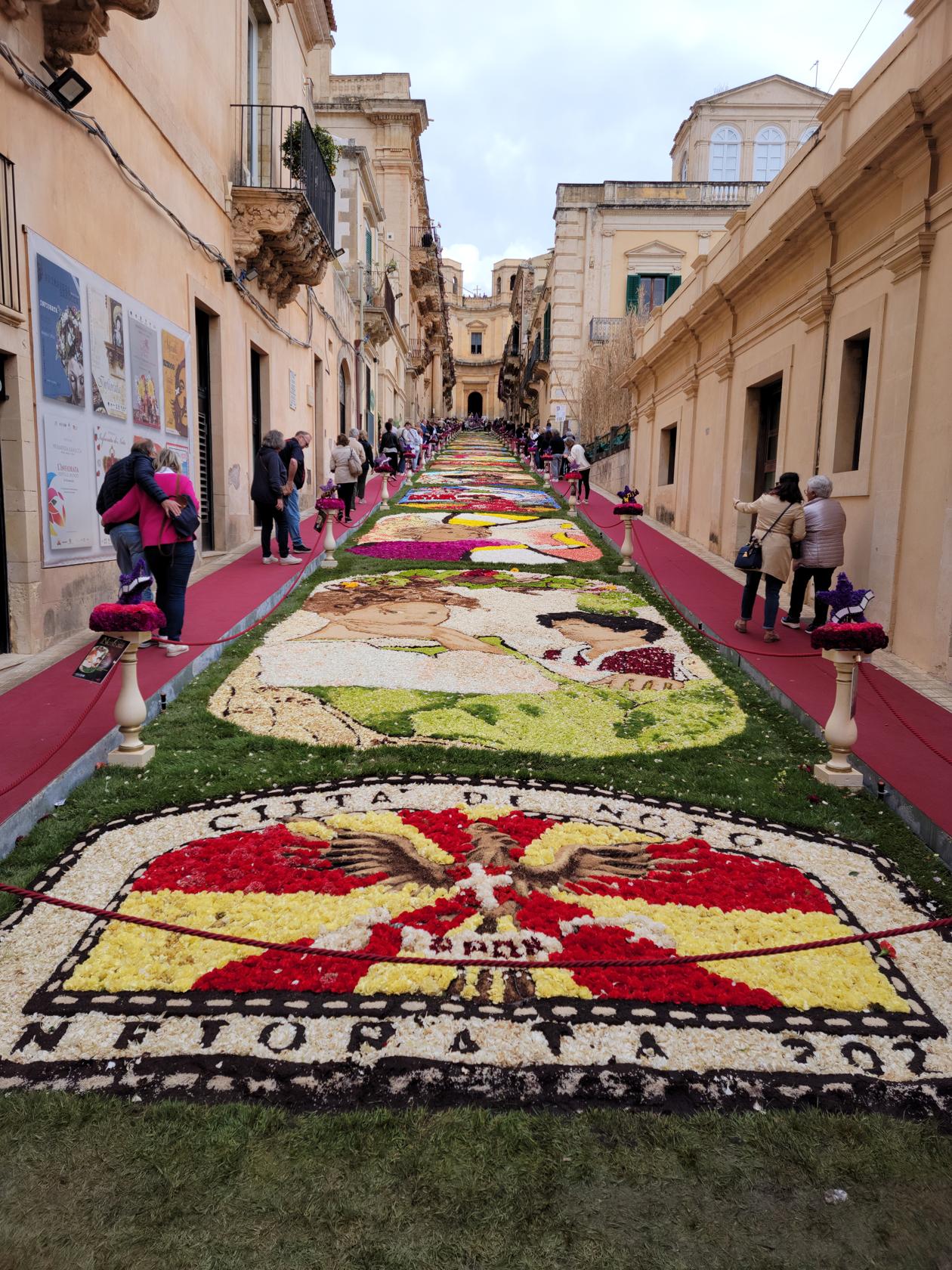
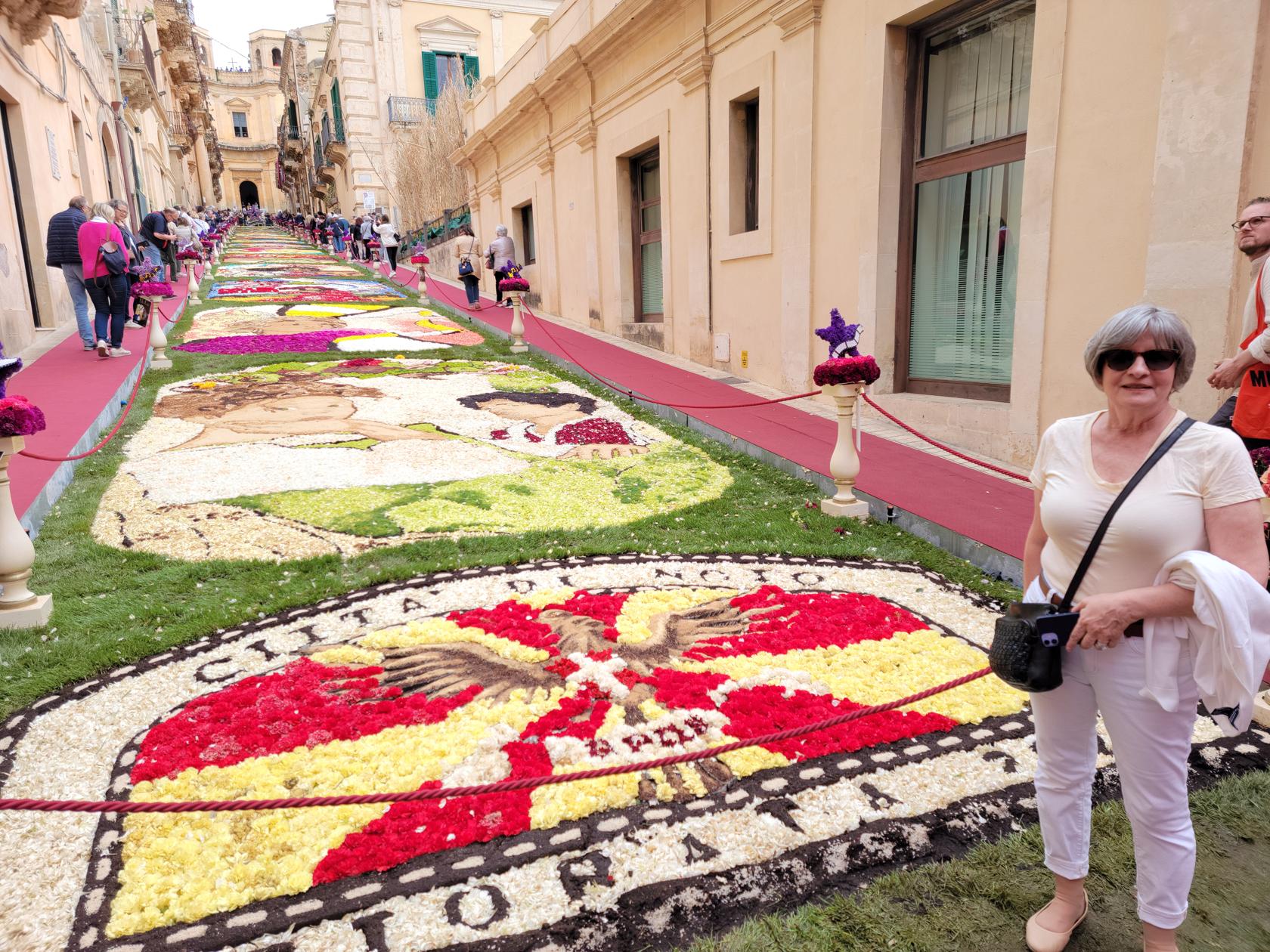
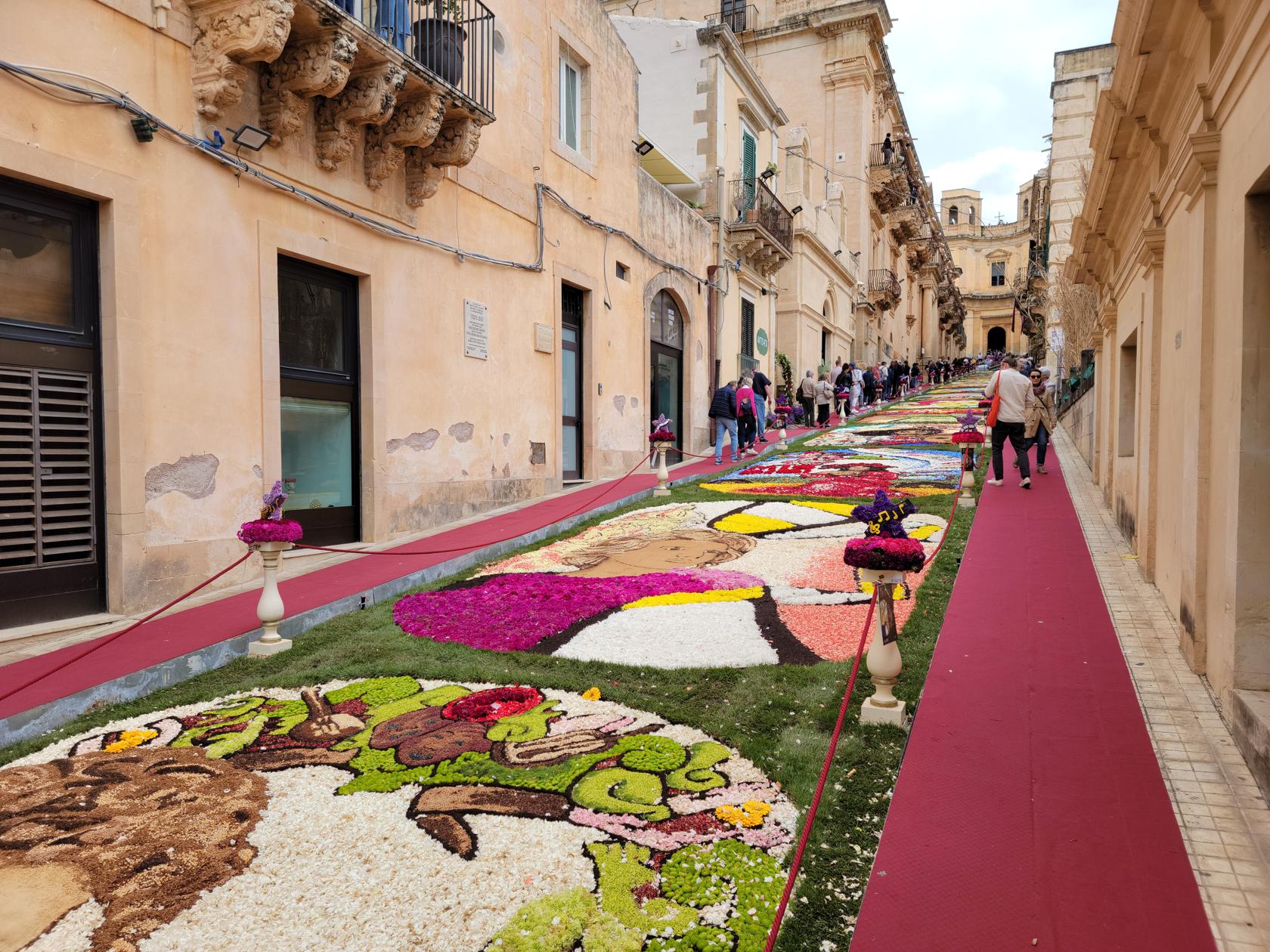
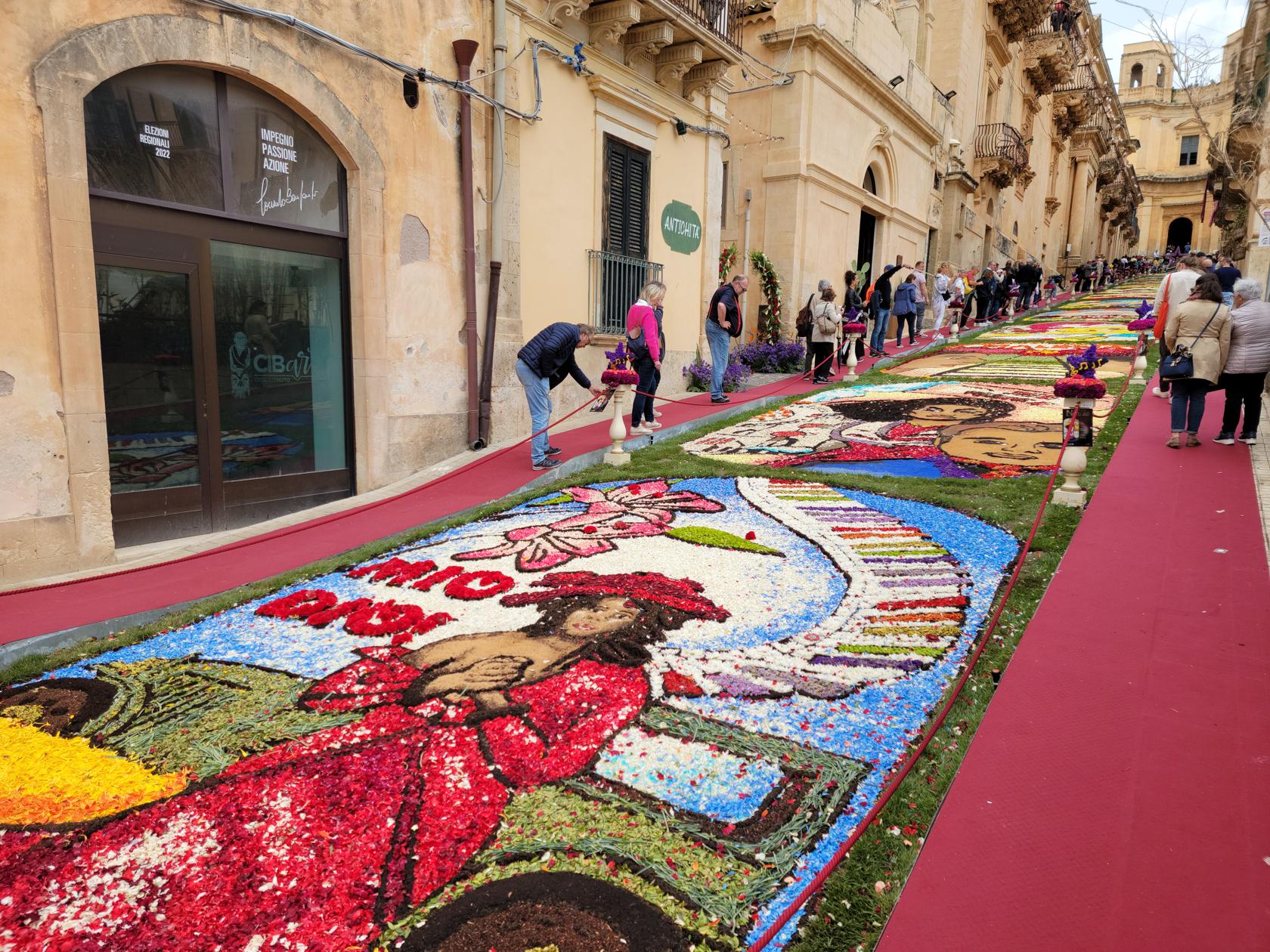
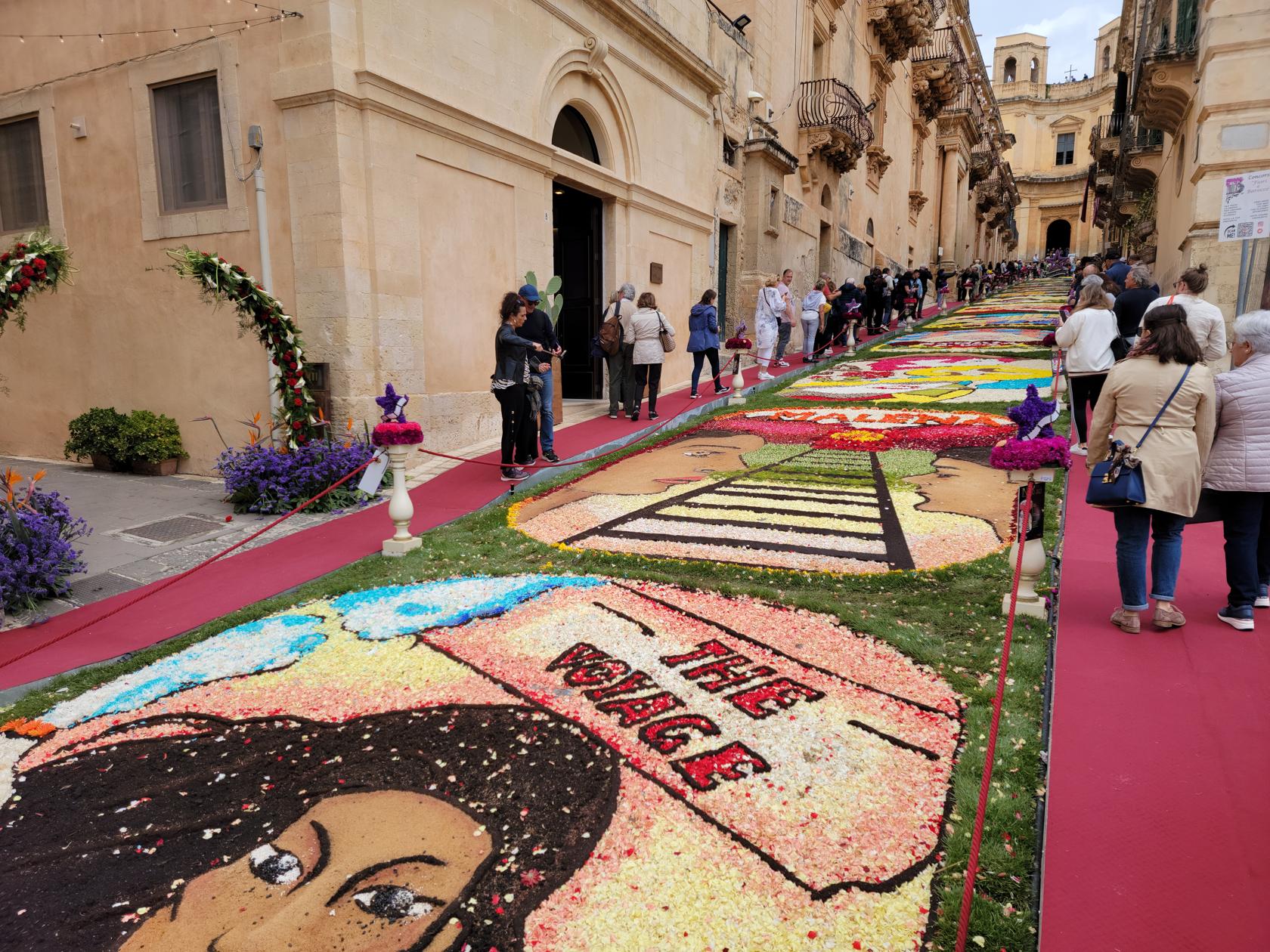
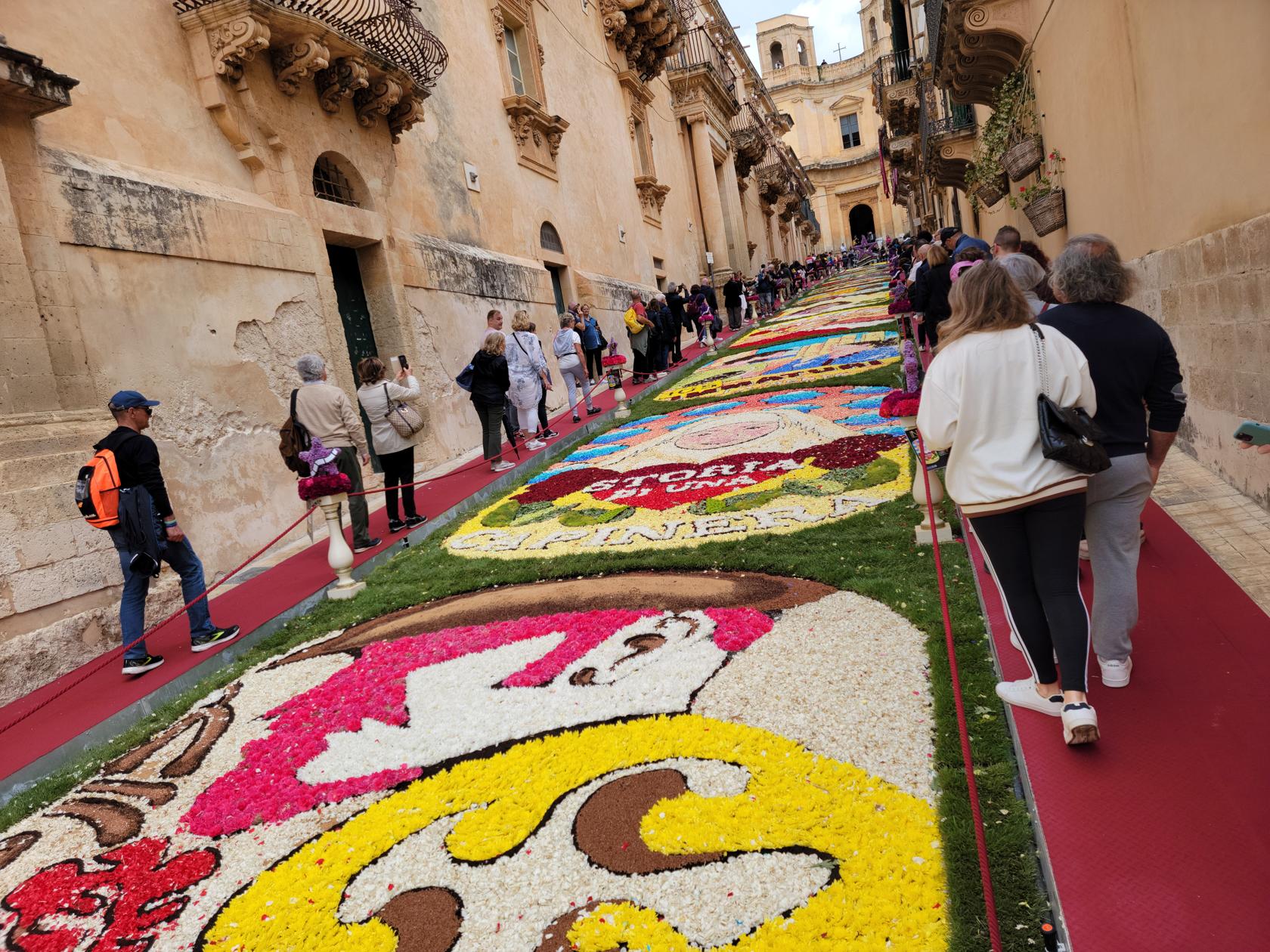
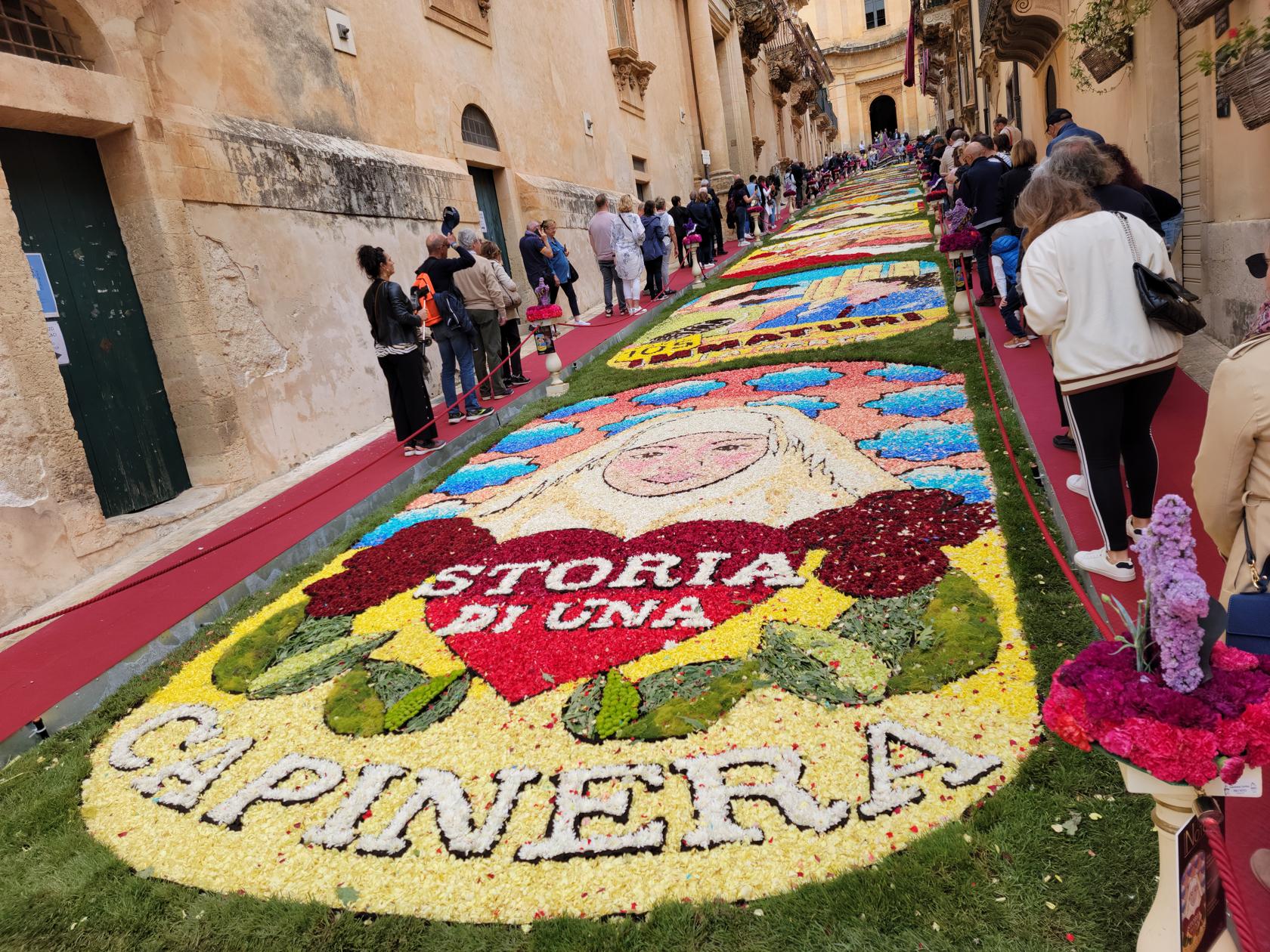
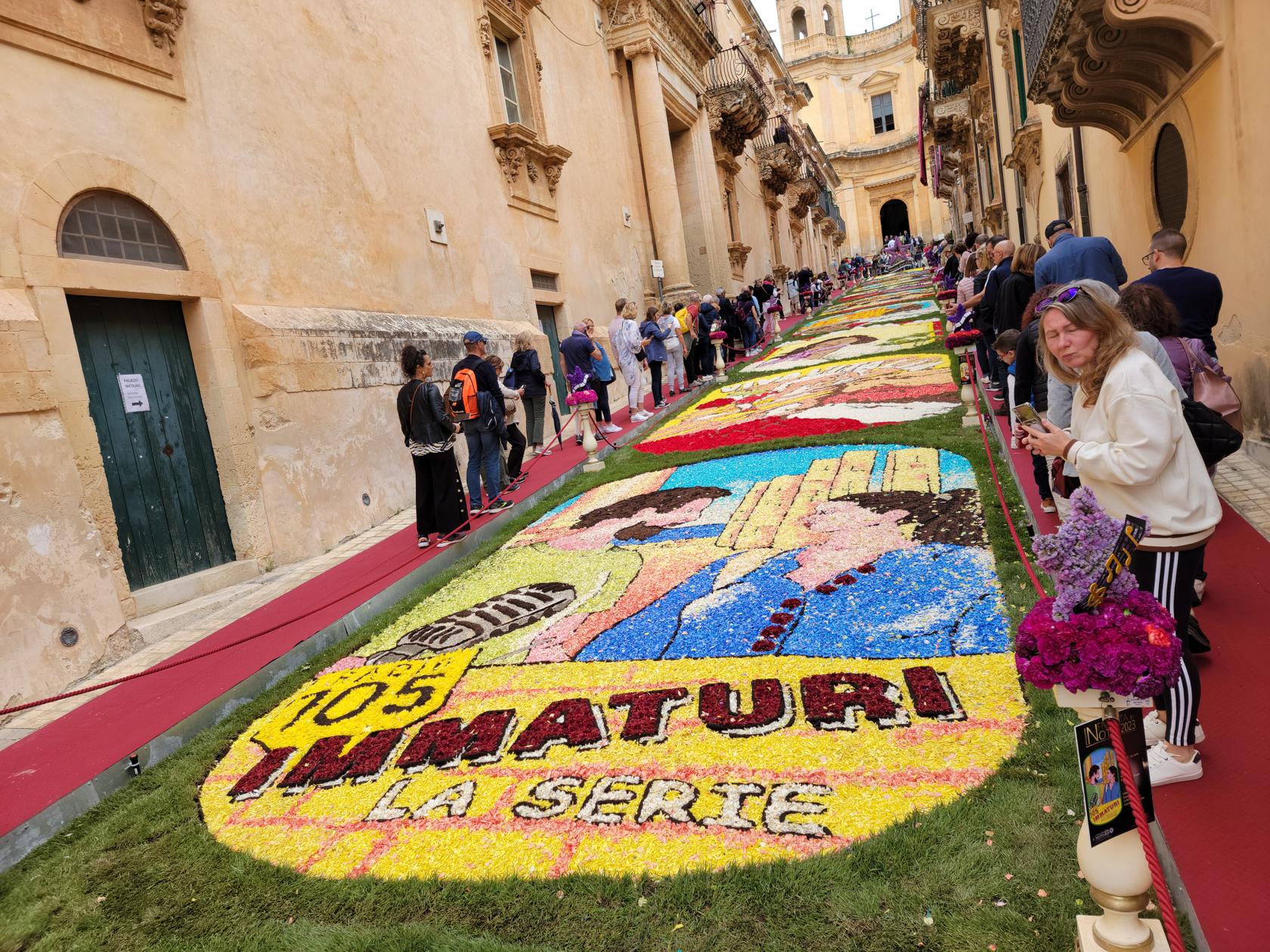
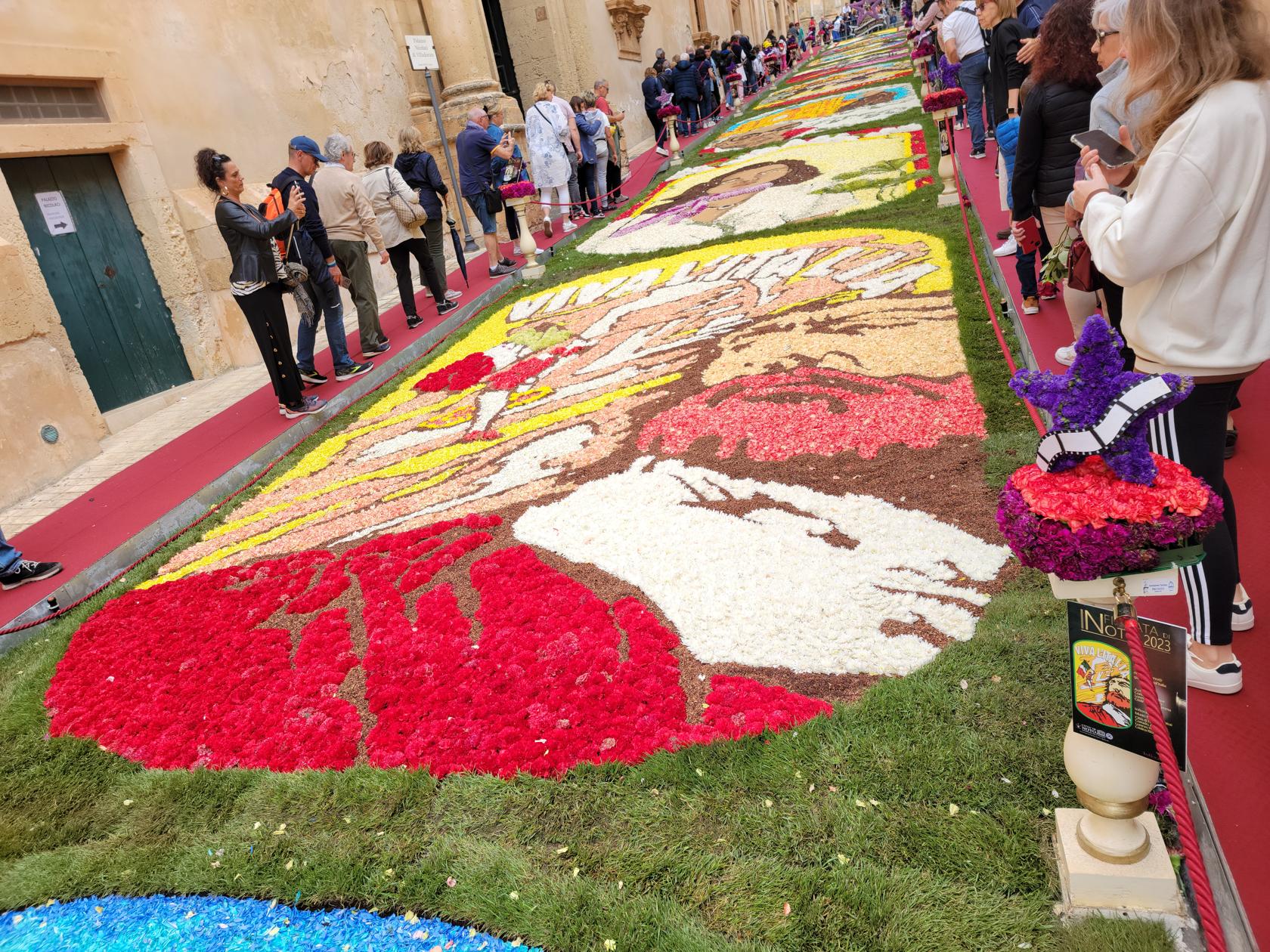
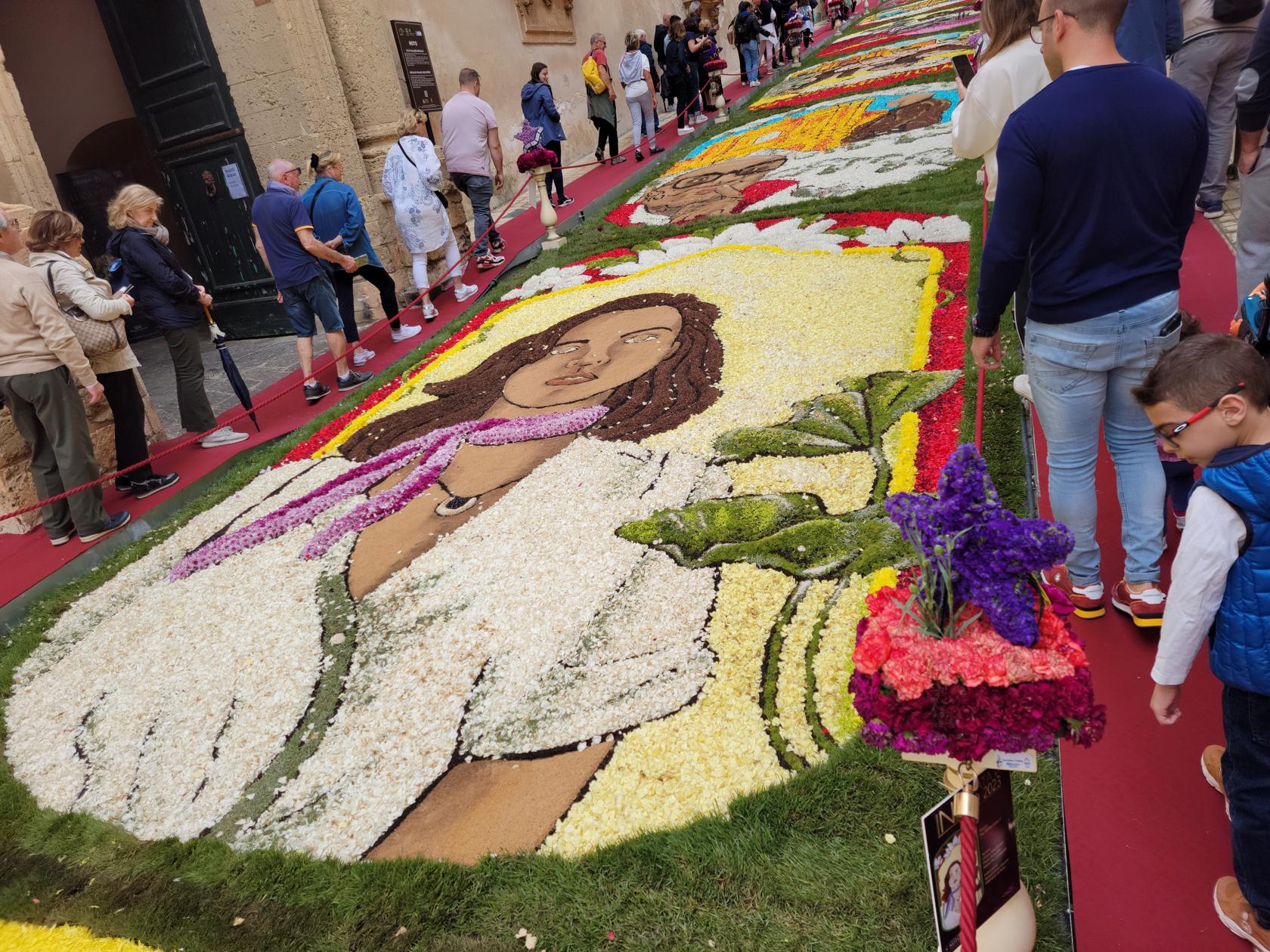
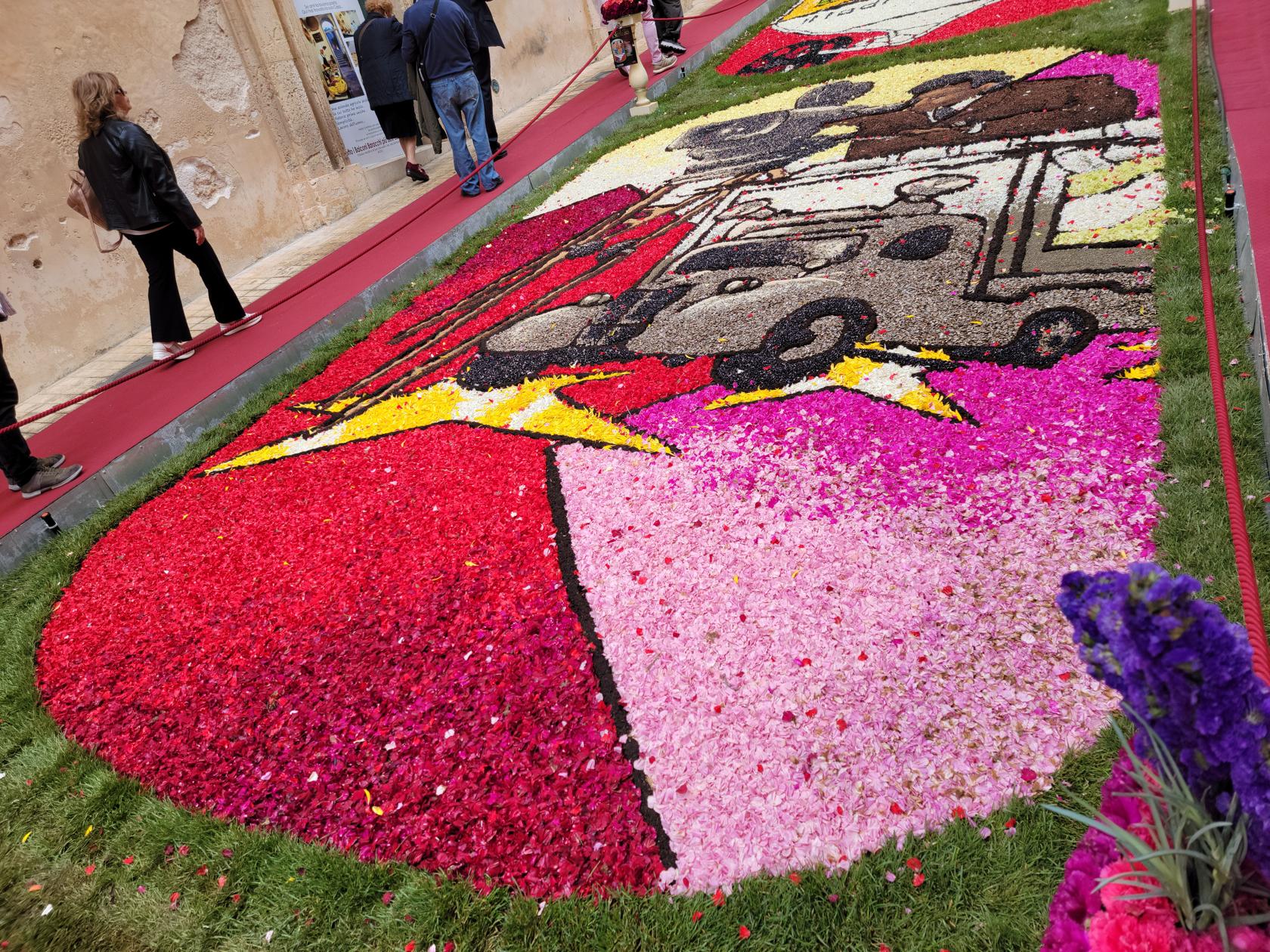
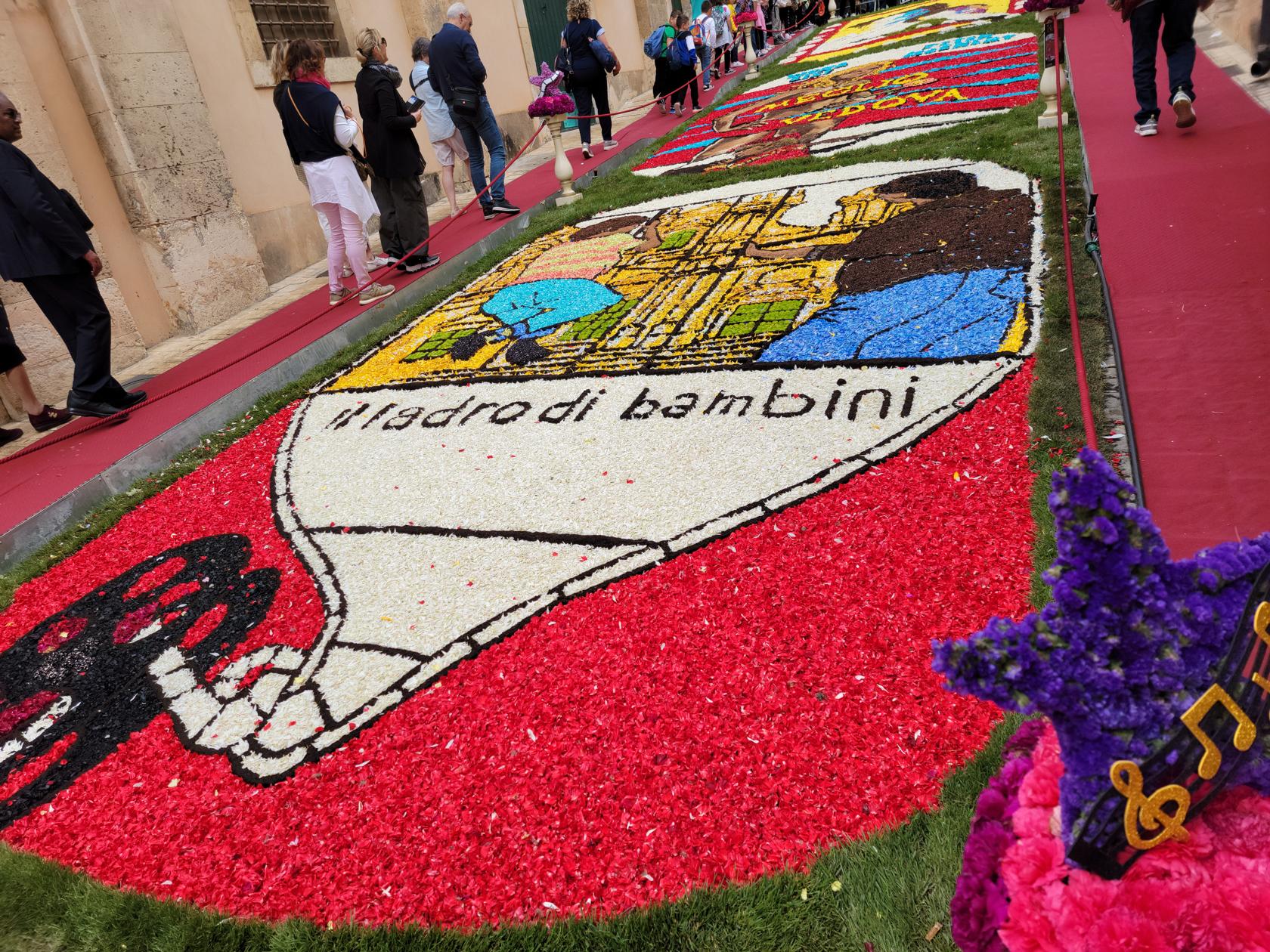
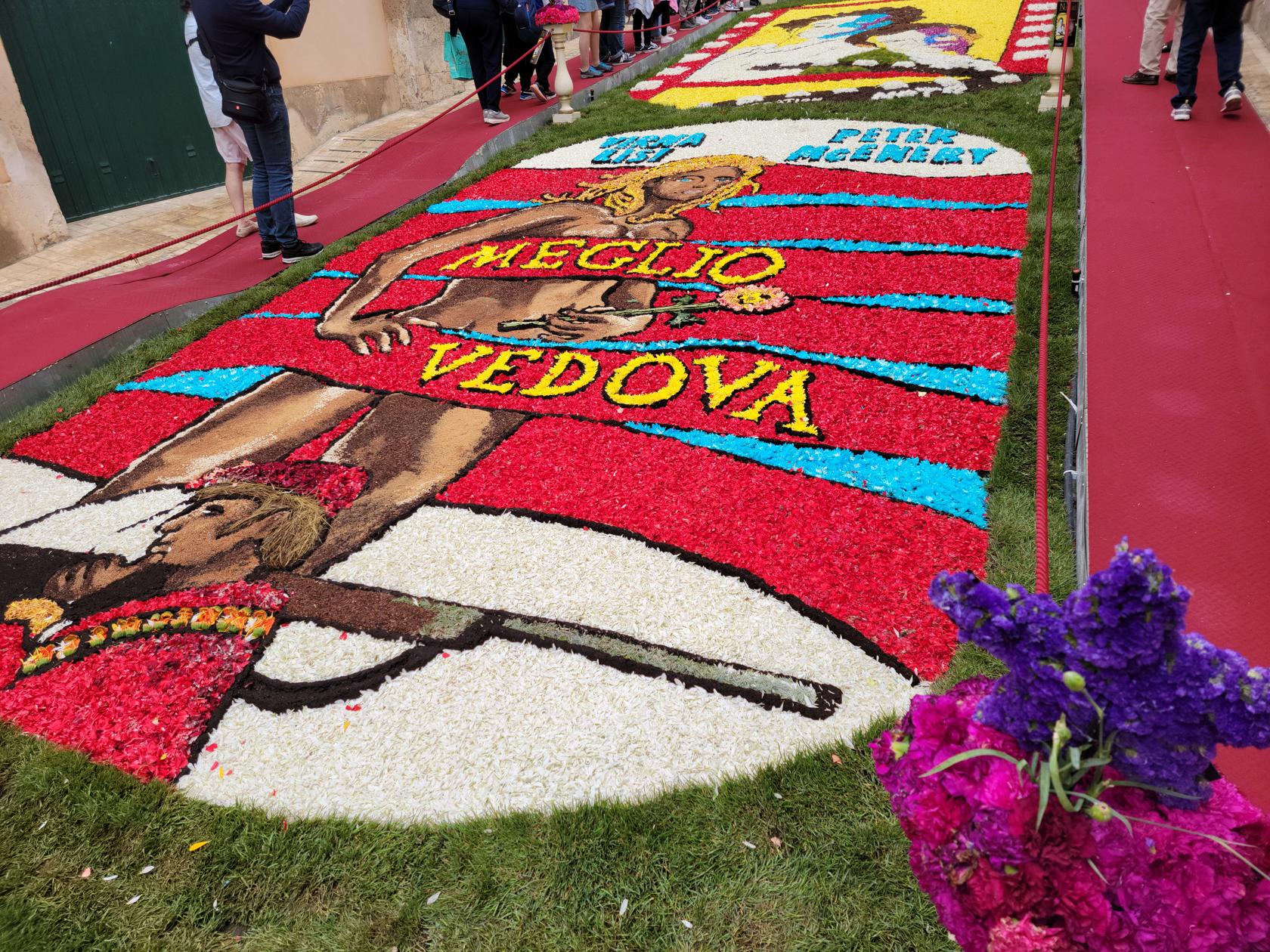
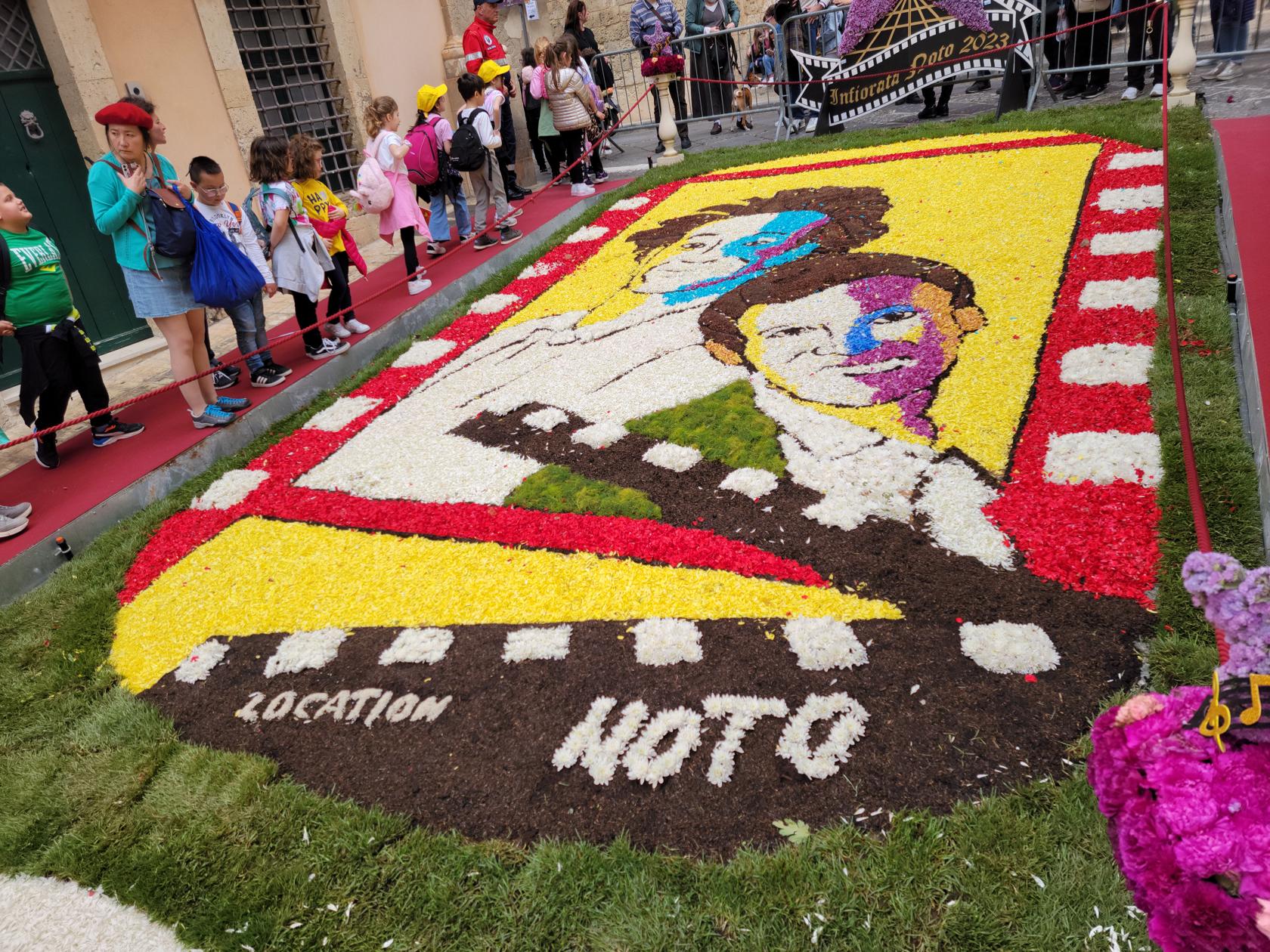
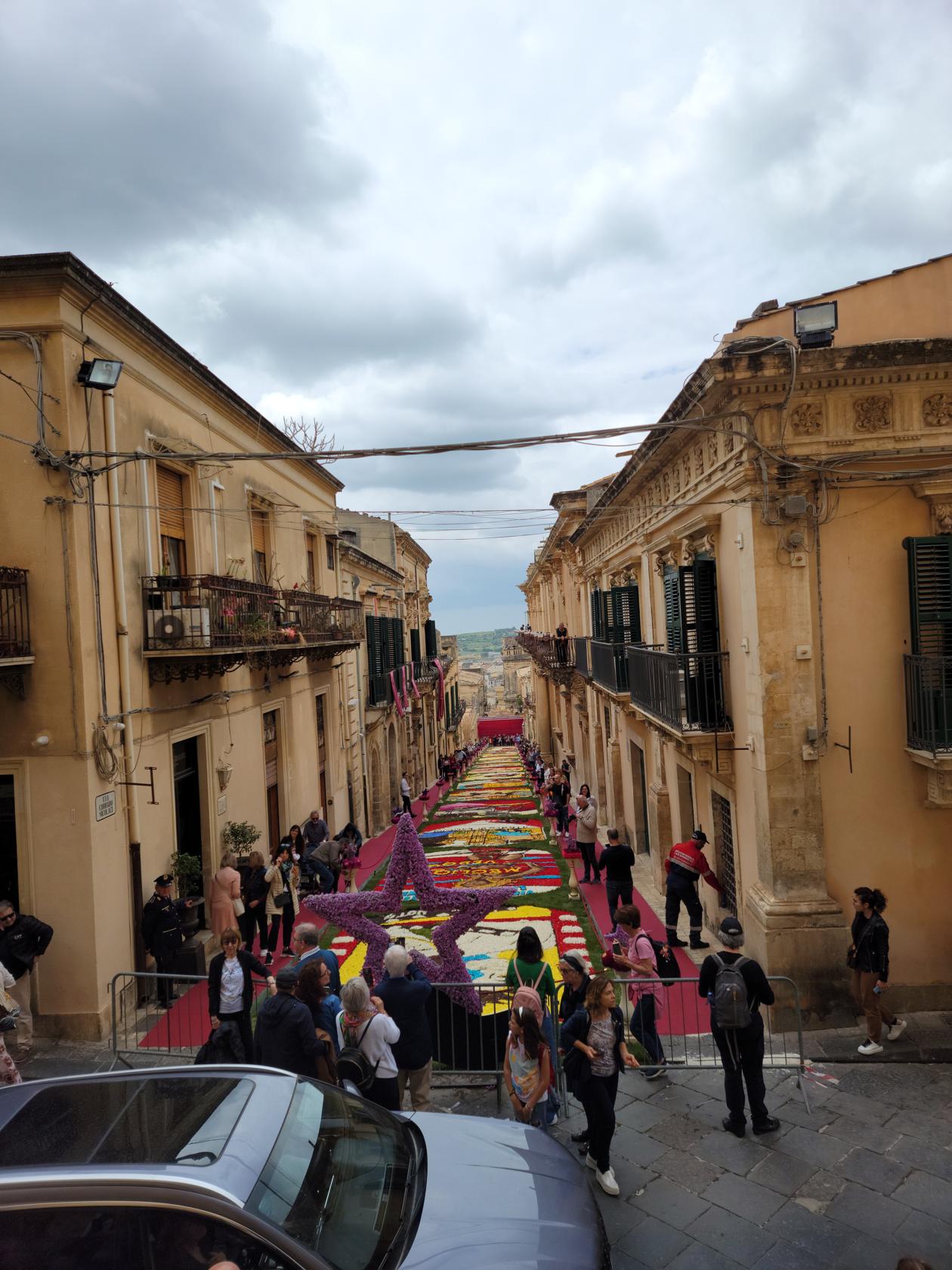
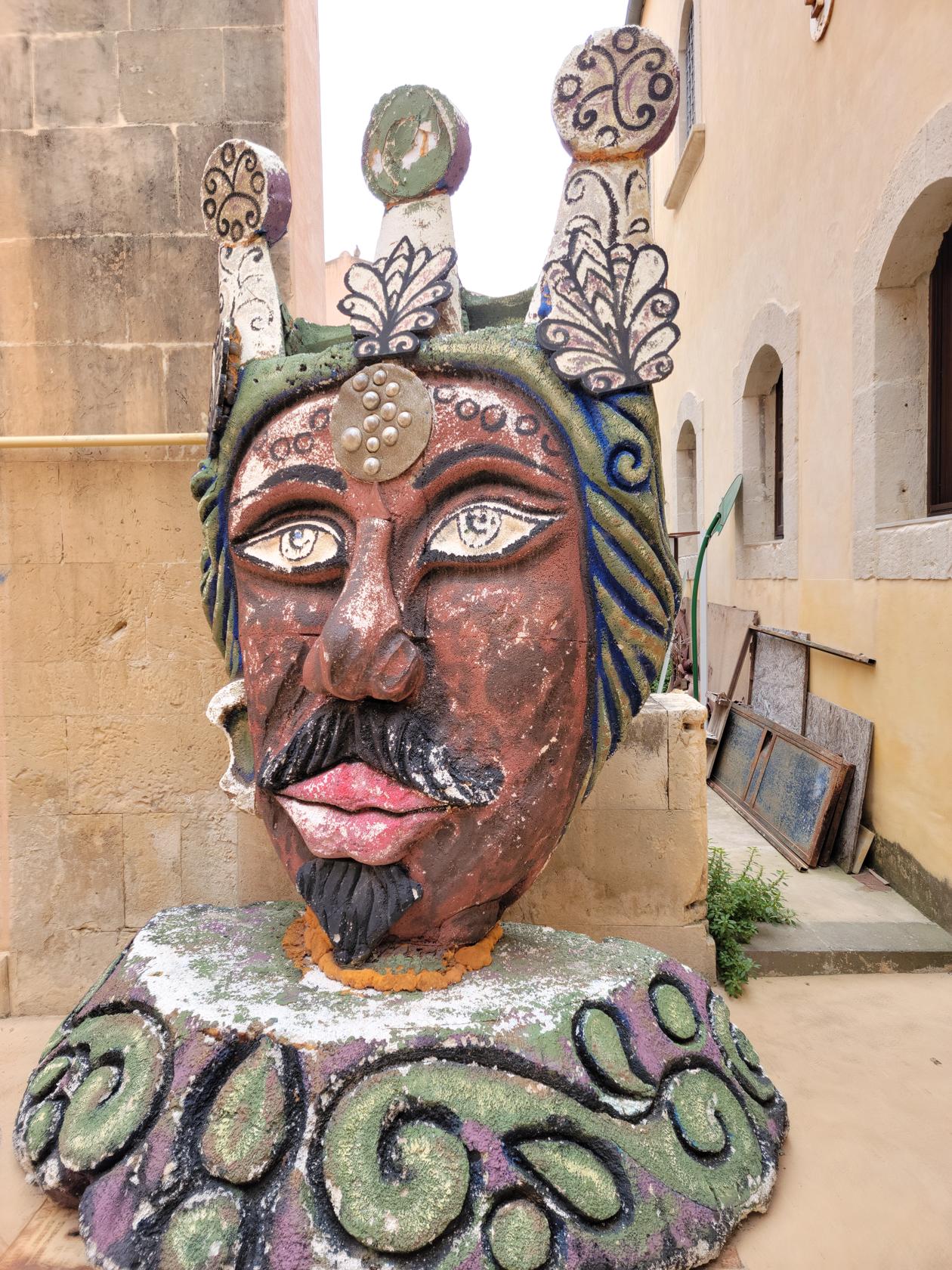
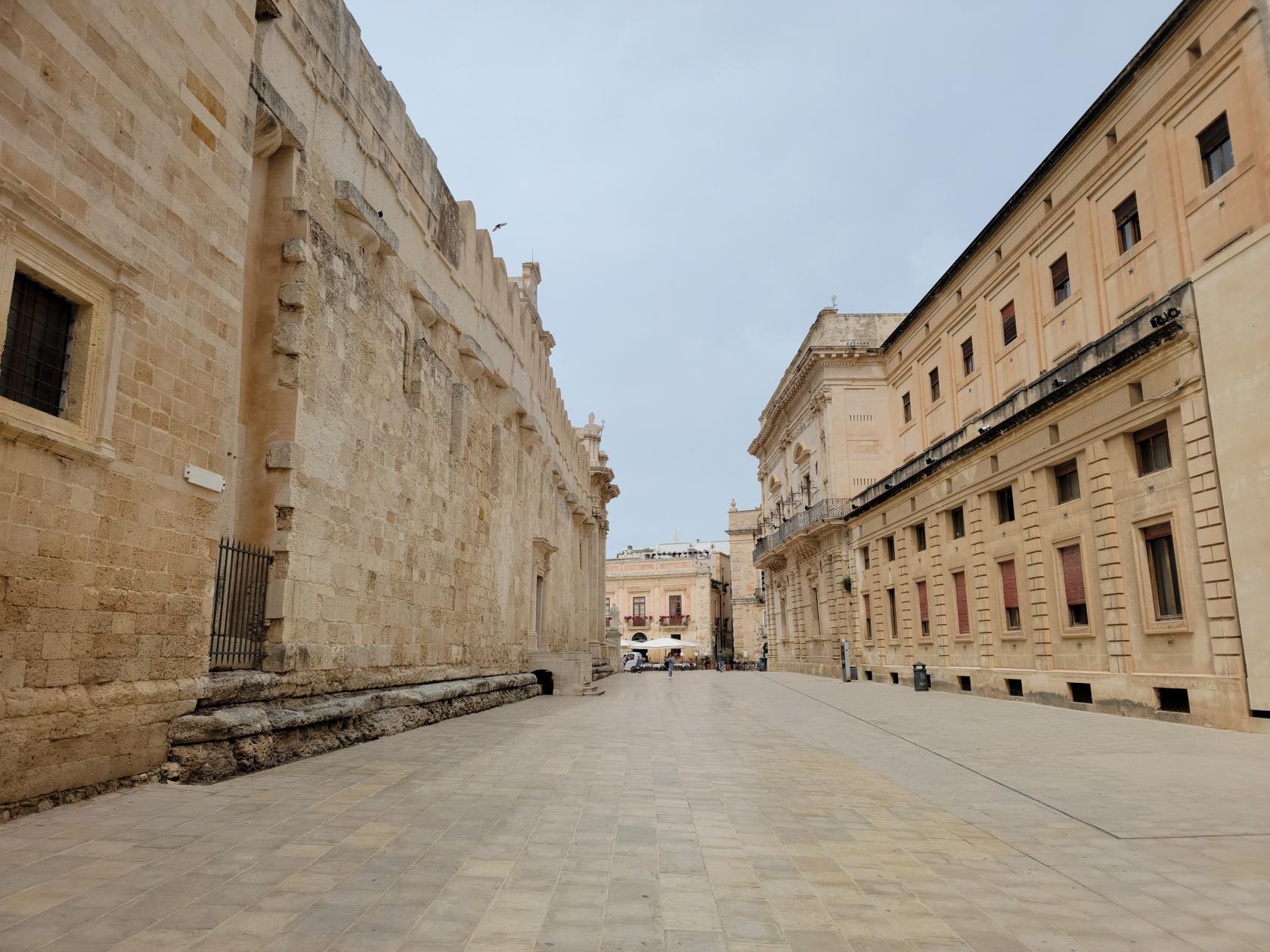
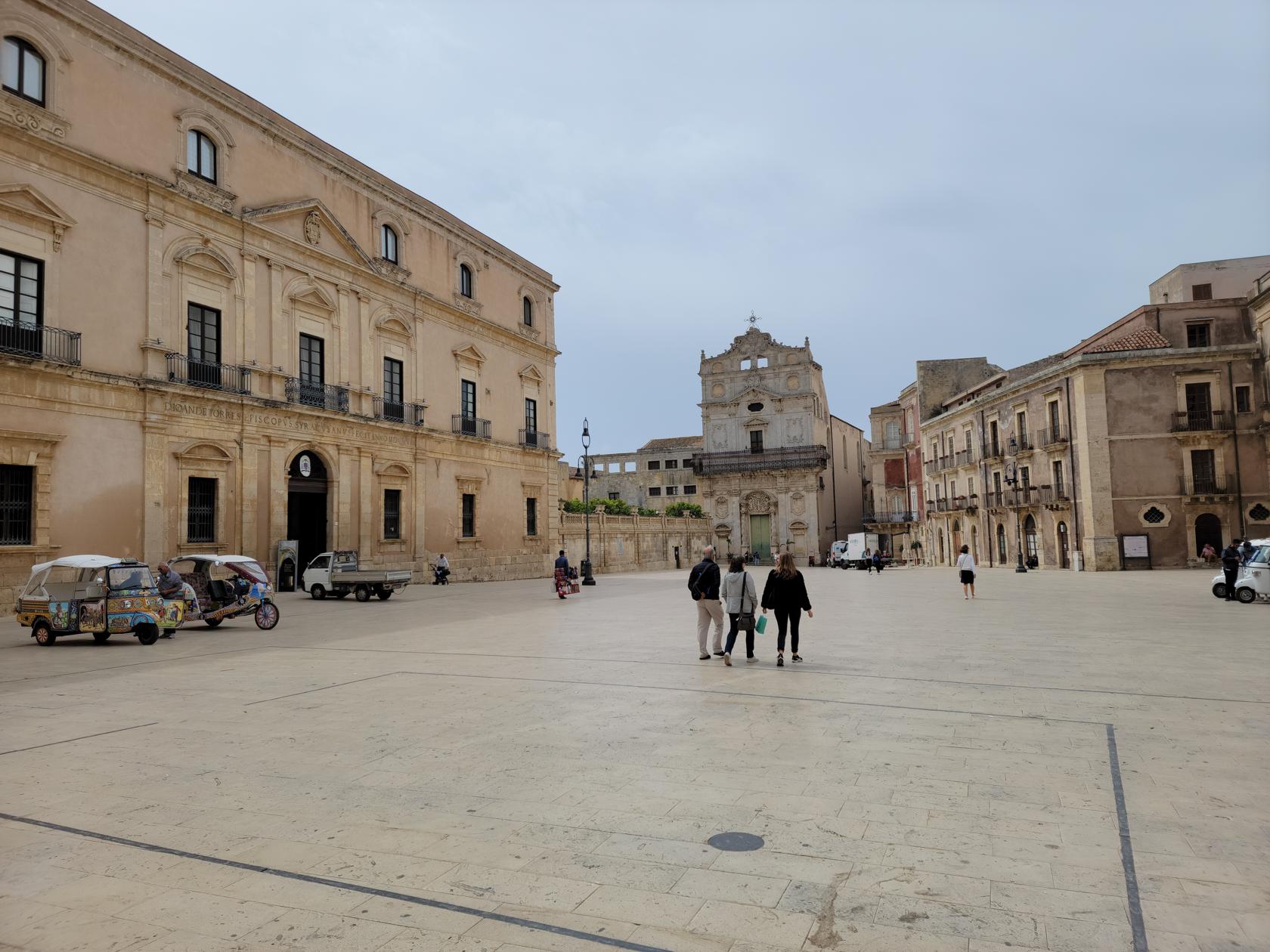
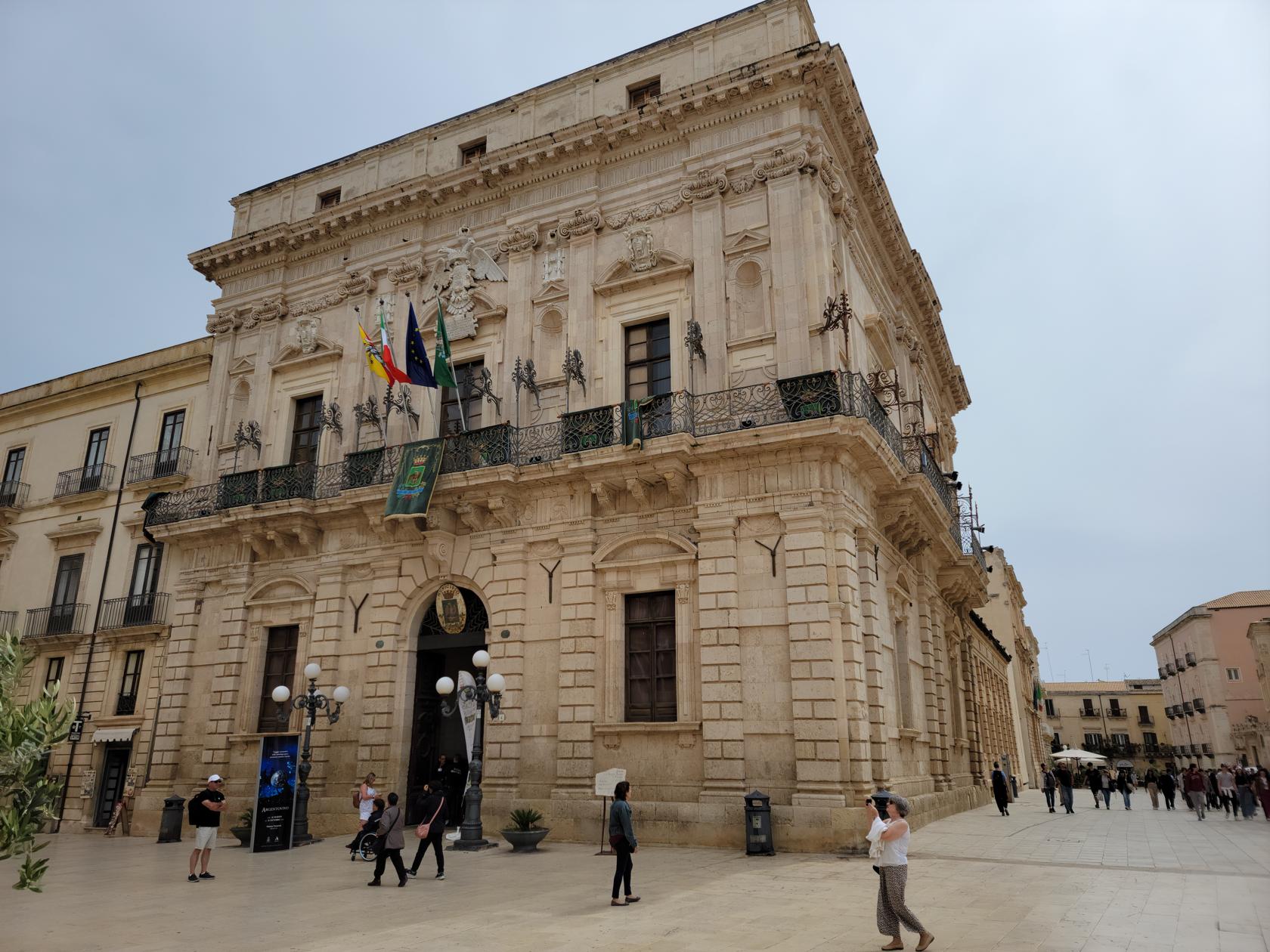
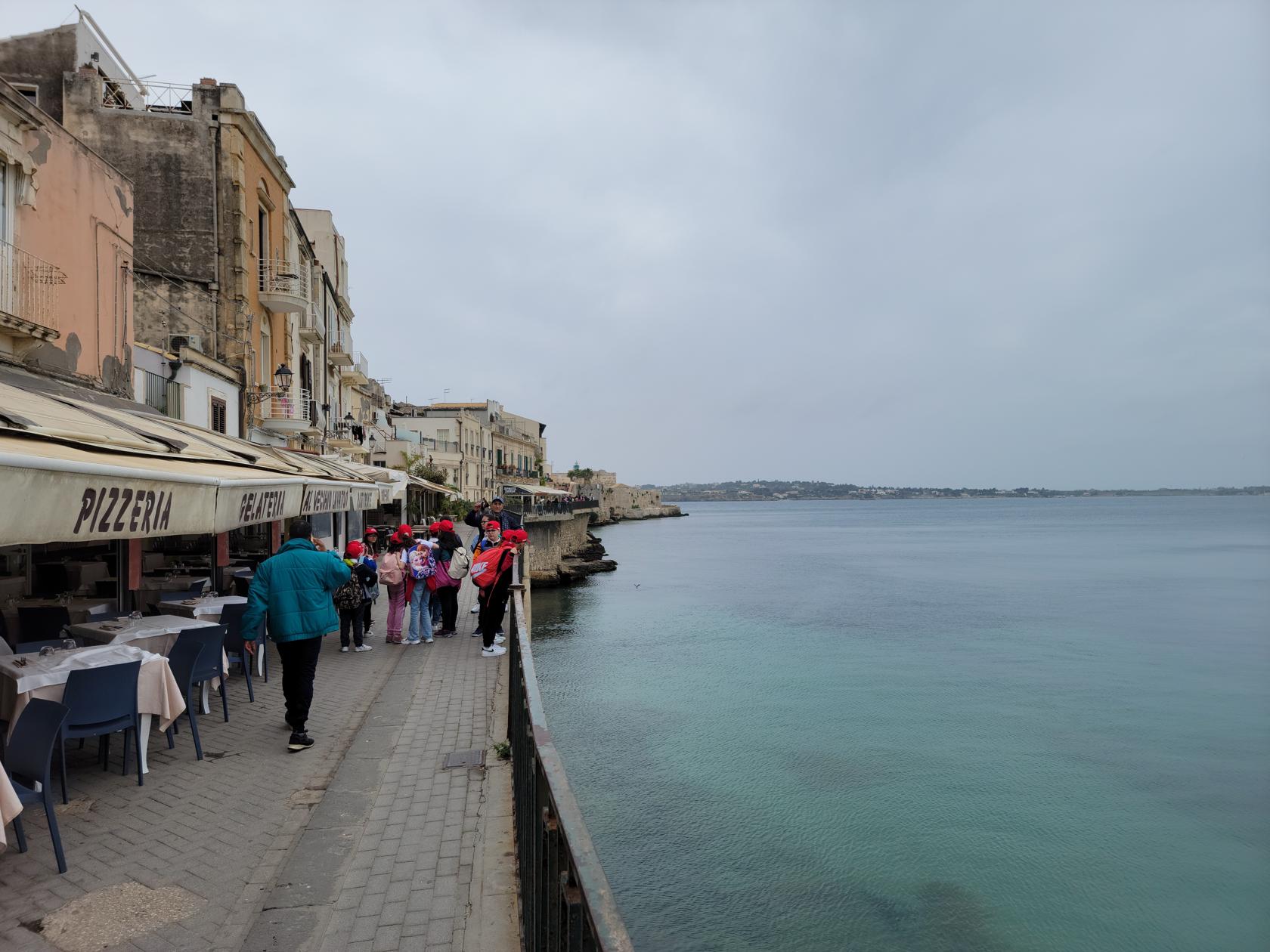
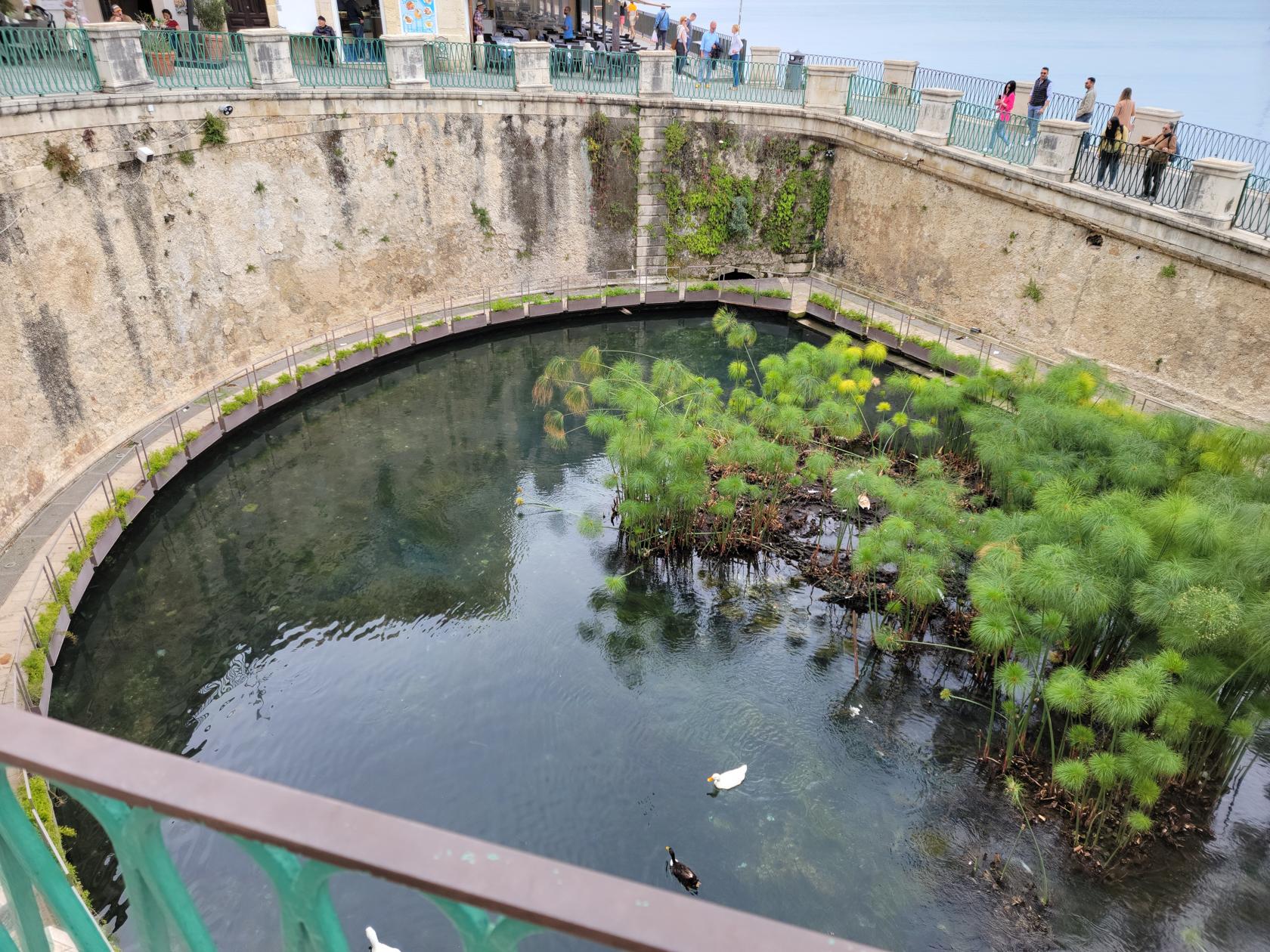
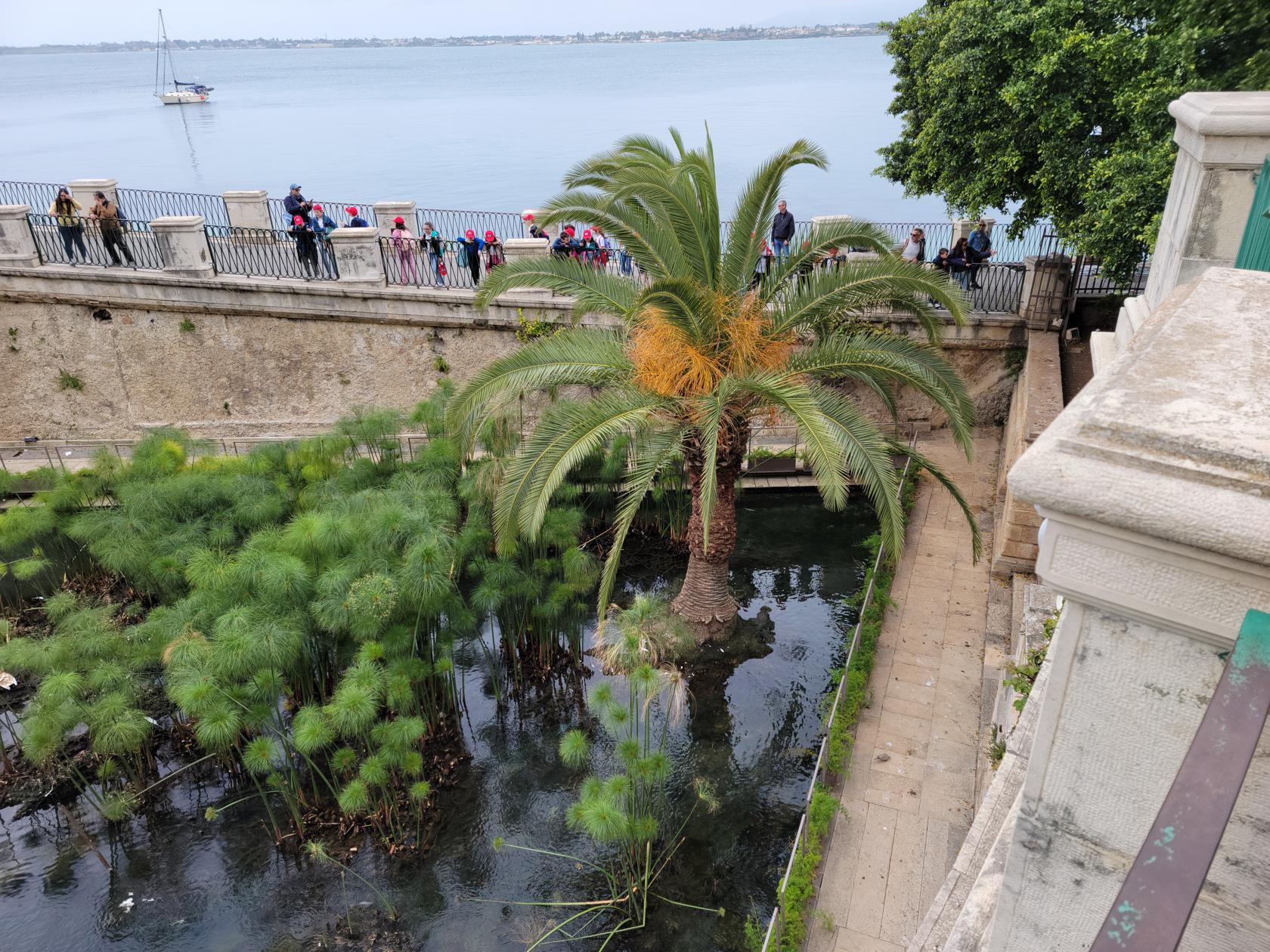
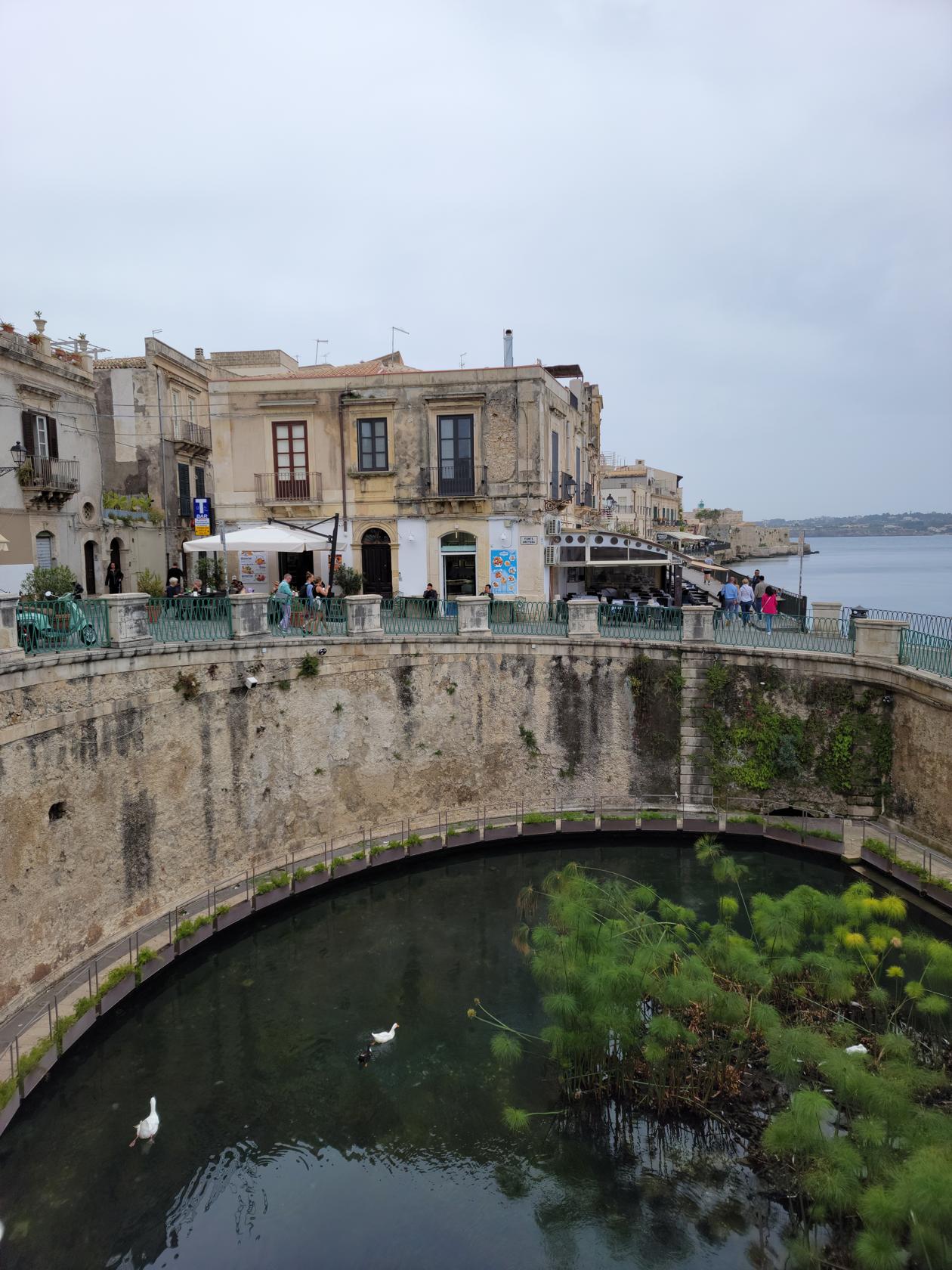
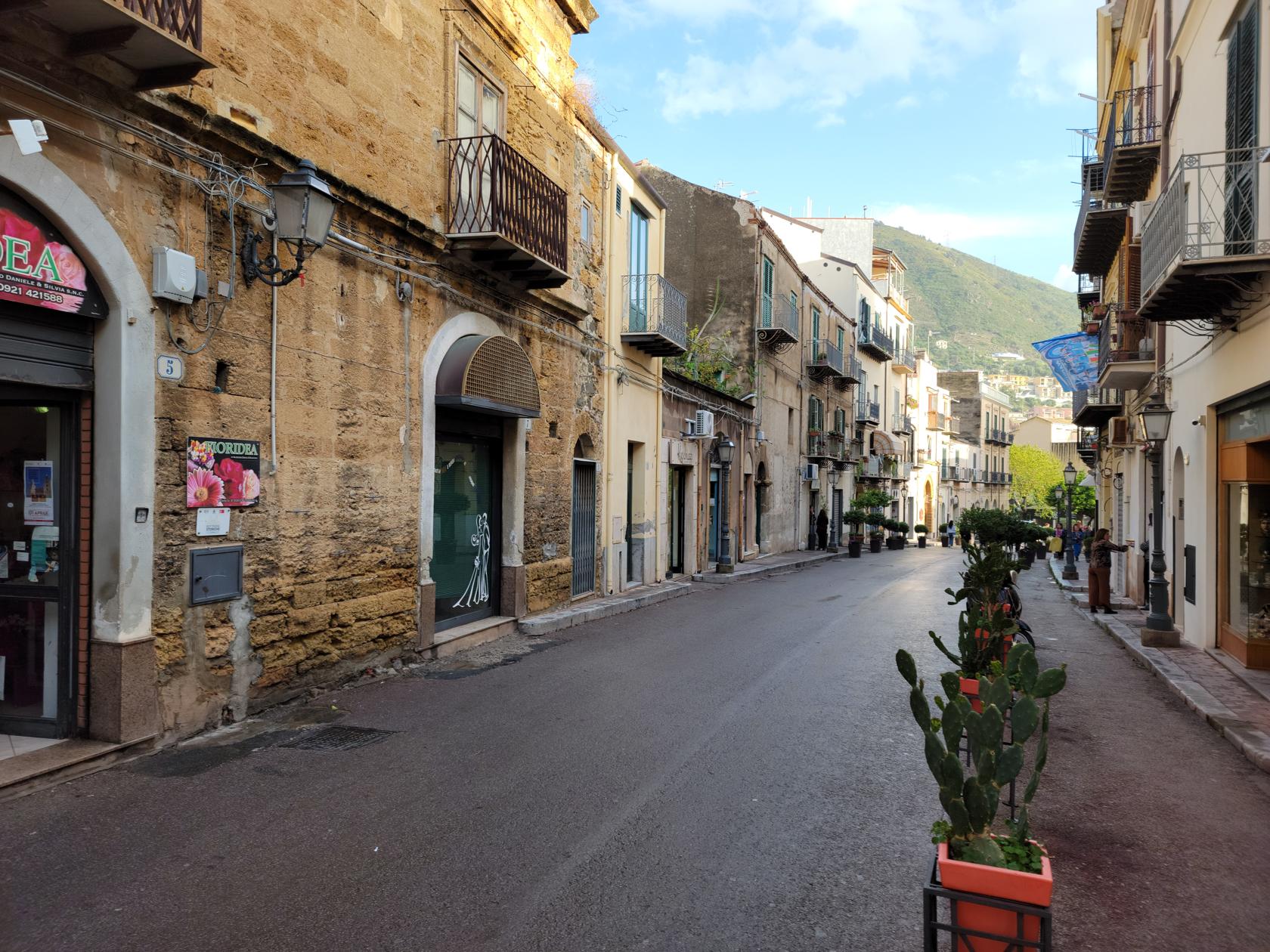
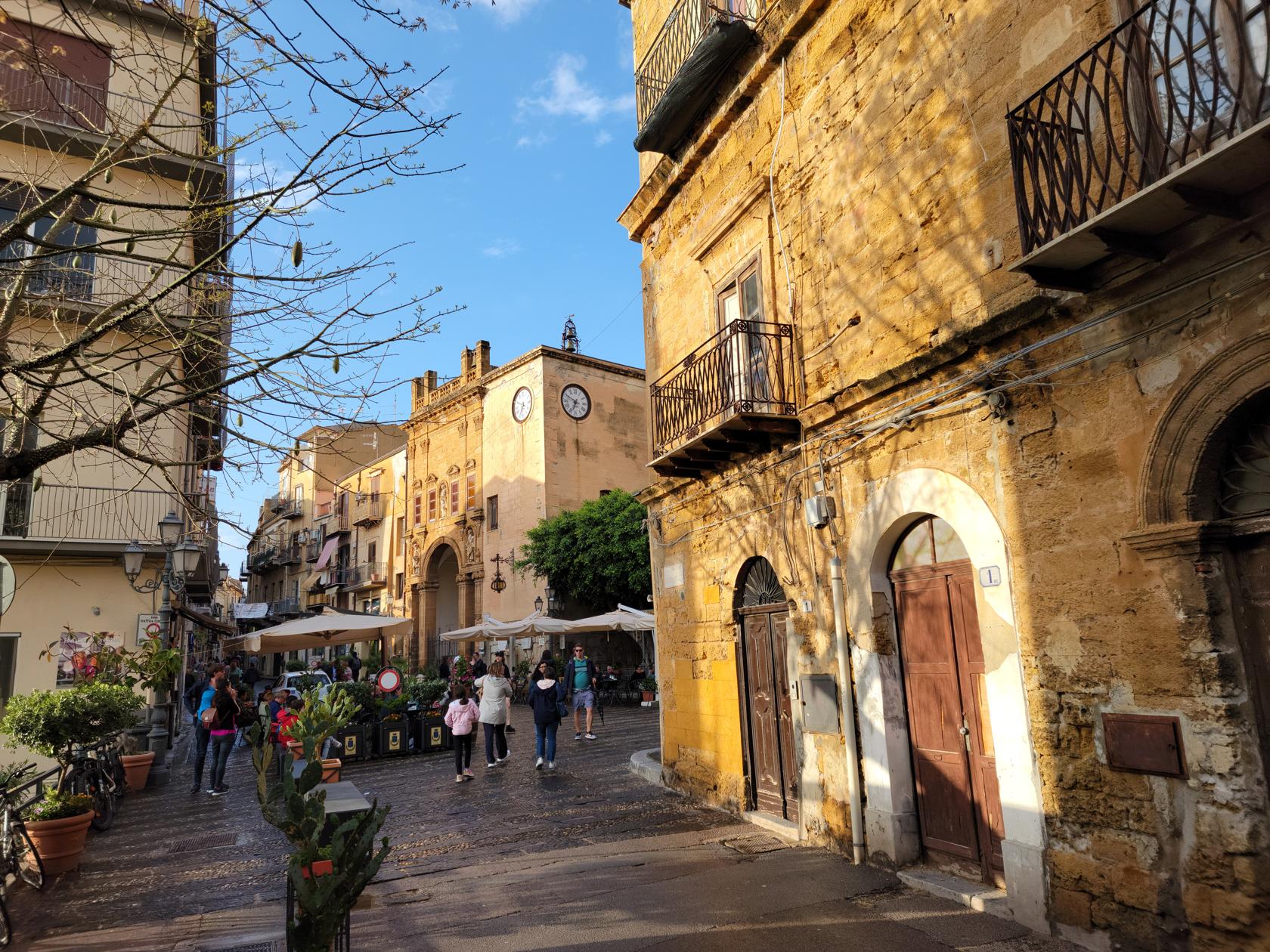
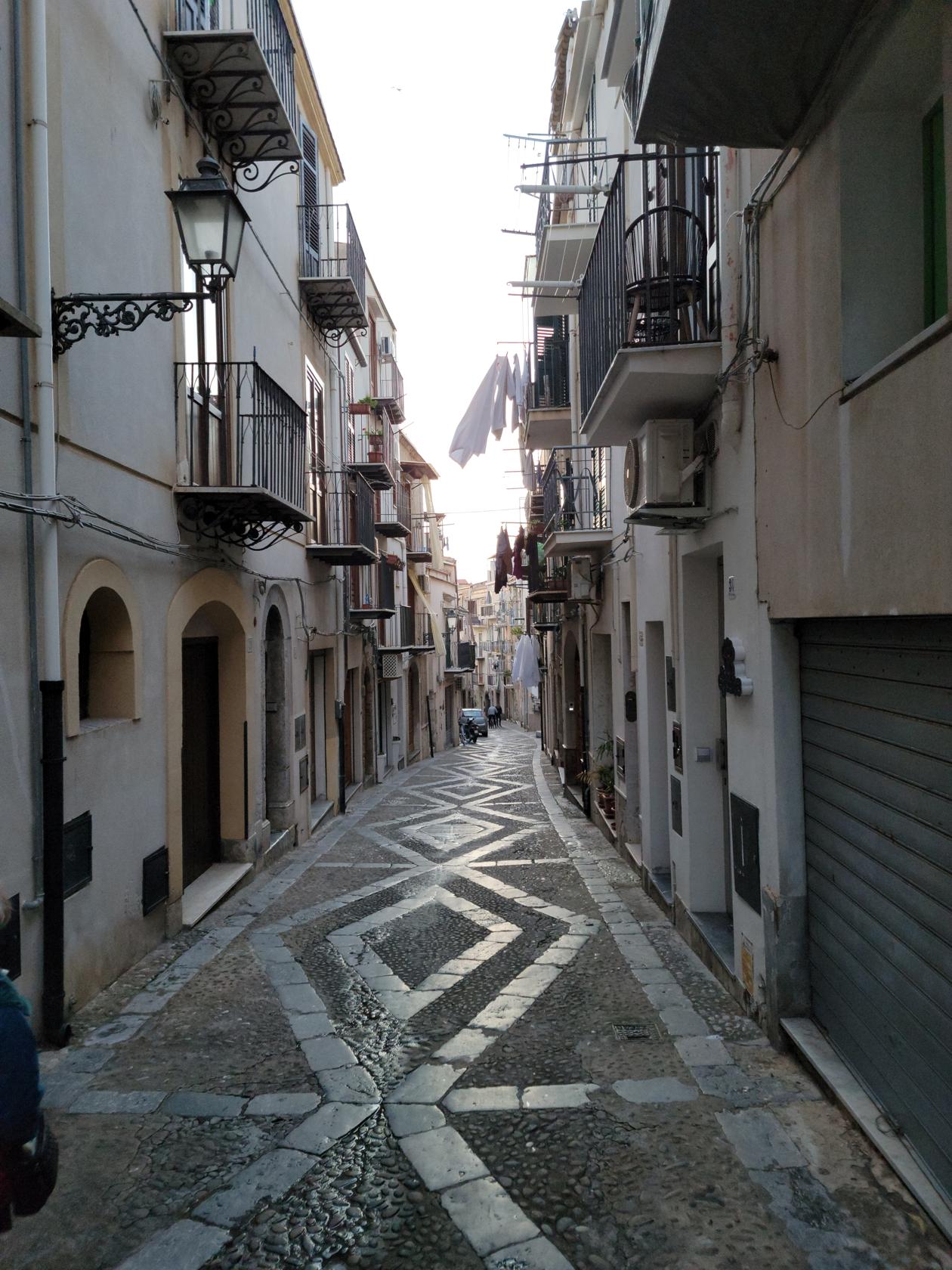
To my knowledge there is no analog in the United States to the custom and festival similar to the one practiced in Noto, Sicily. Each year the town and local people celebrate the Infiorata, or festival of flowers. It is one of three towns known to have such a festival, which includes the towns of Spello and Genzano.
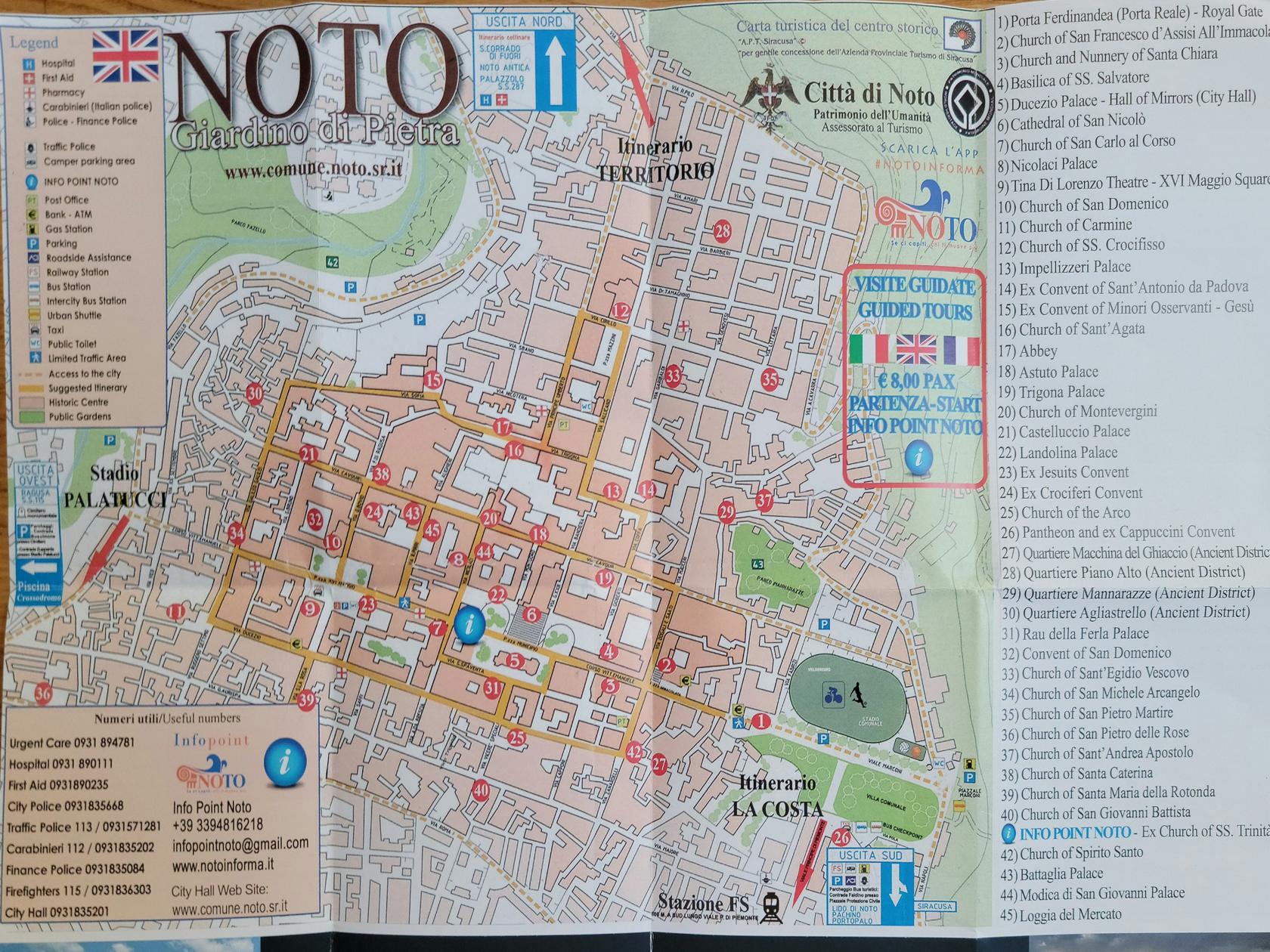
Noto the town – Map – Noto, Sicily
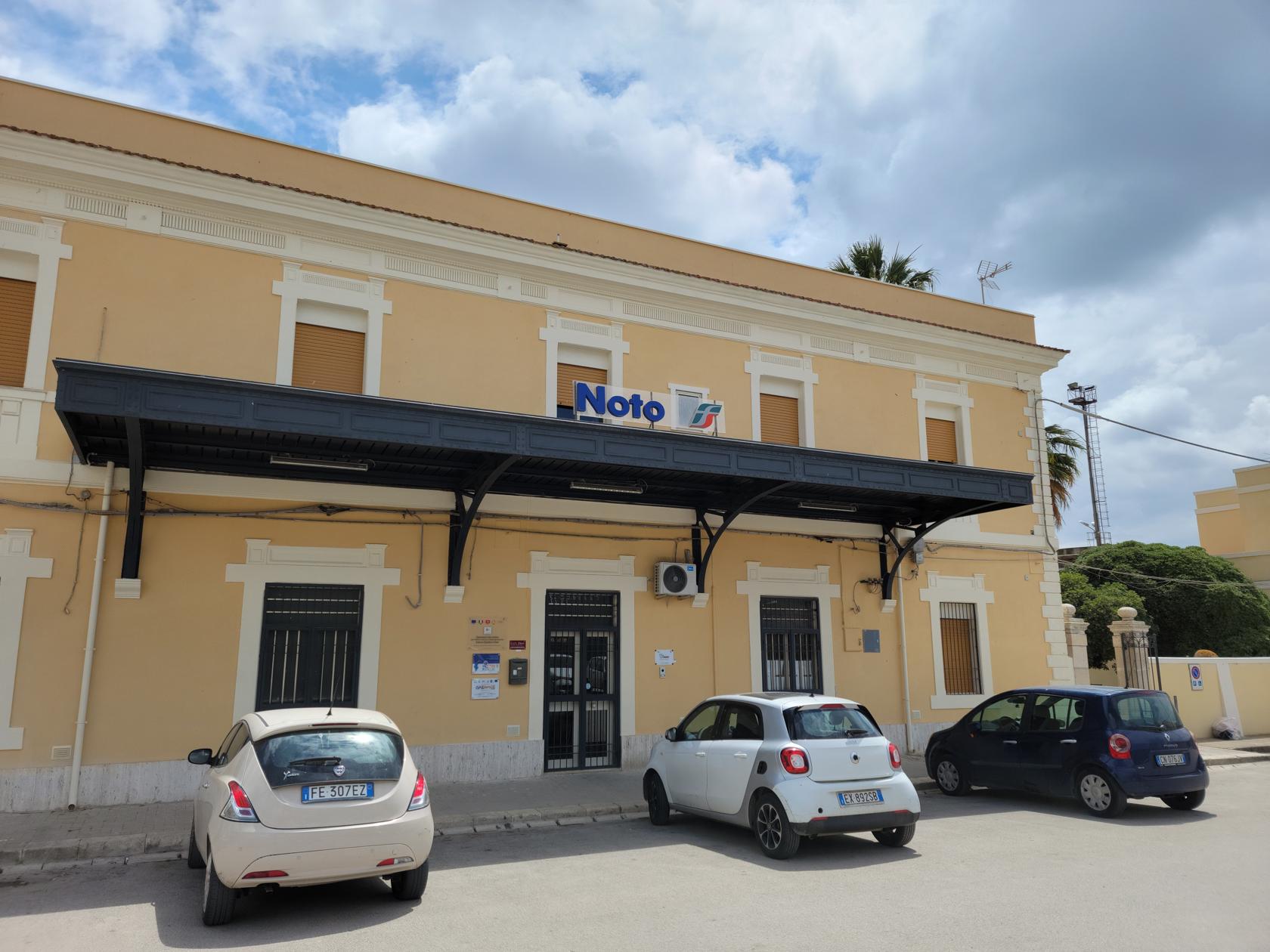
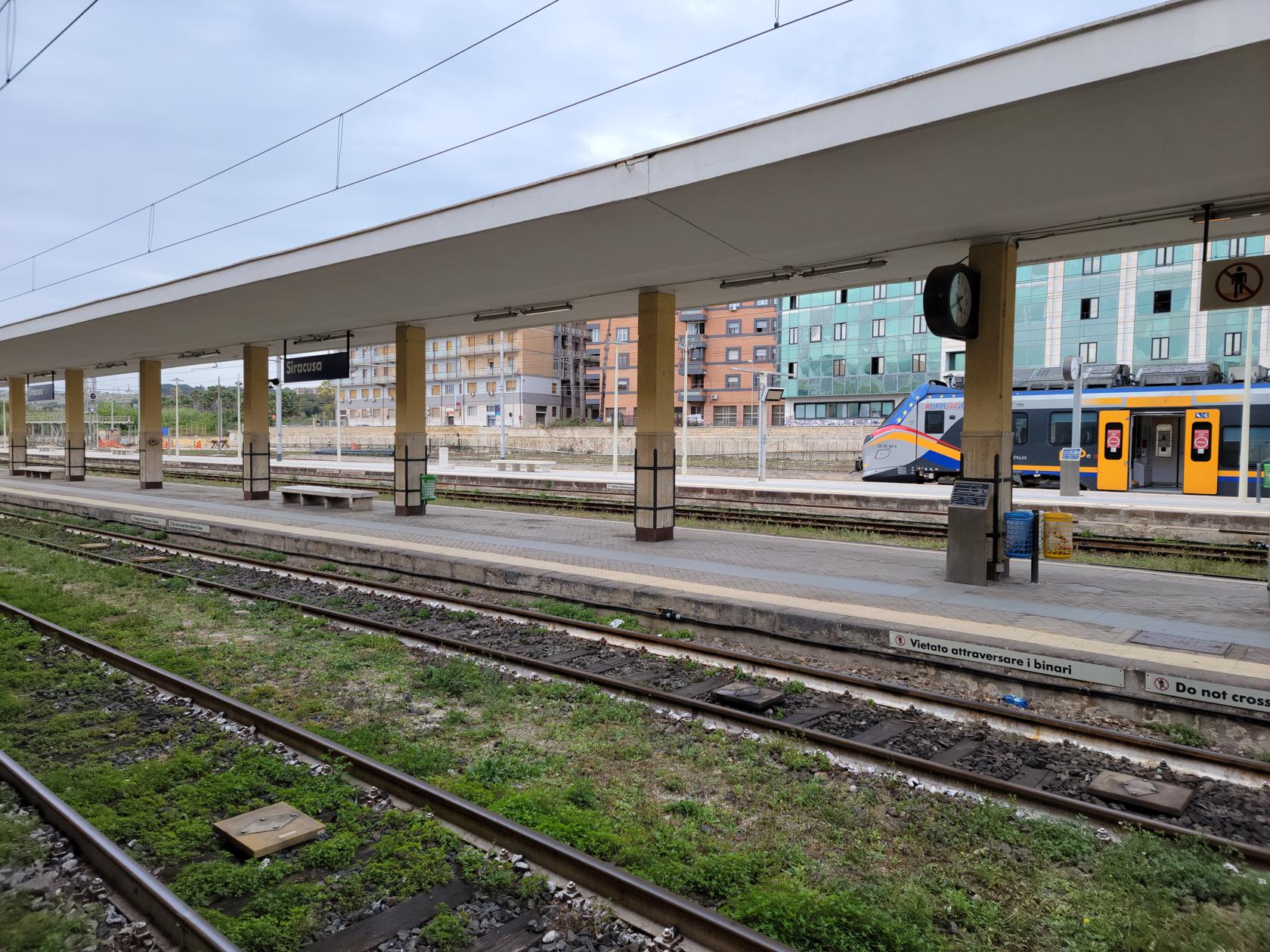
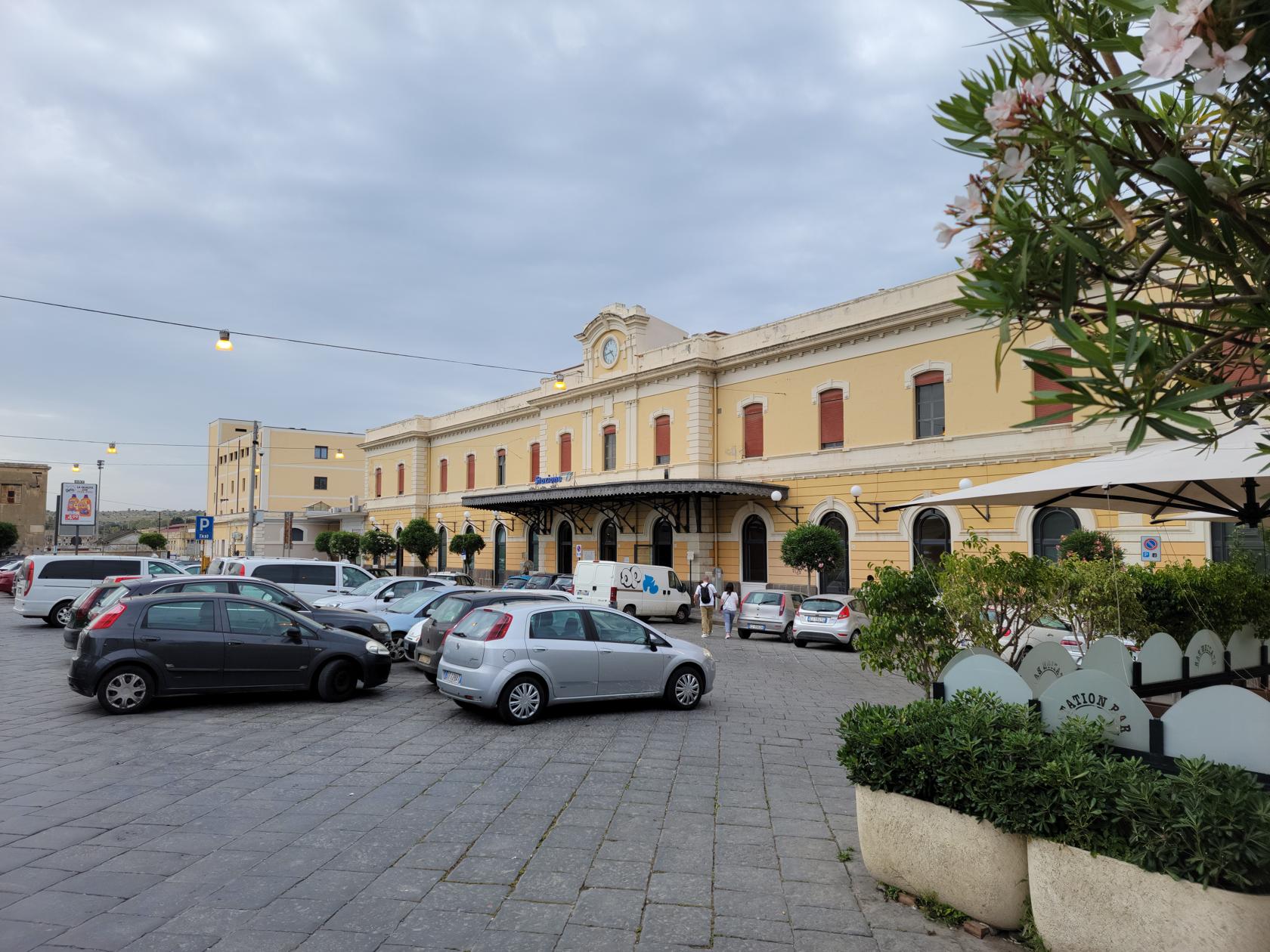
Noto train station – Noto, Sicily
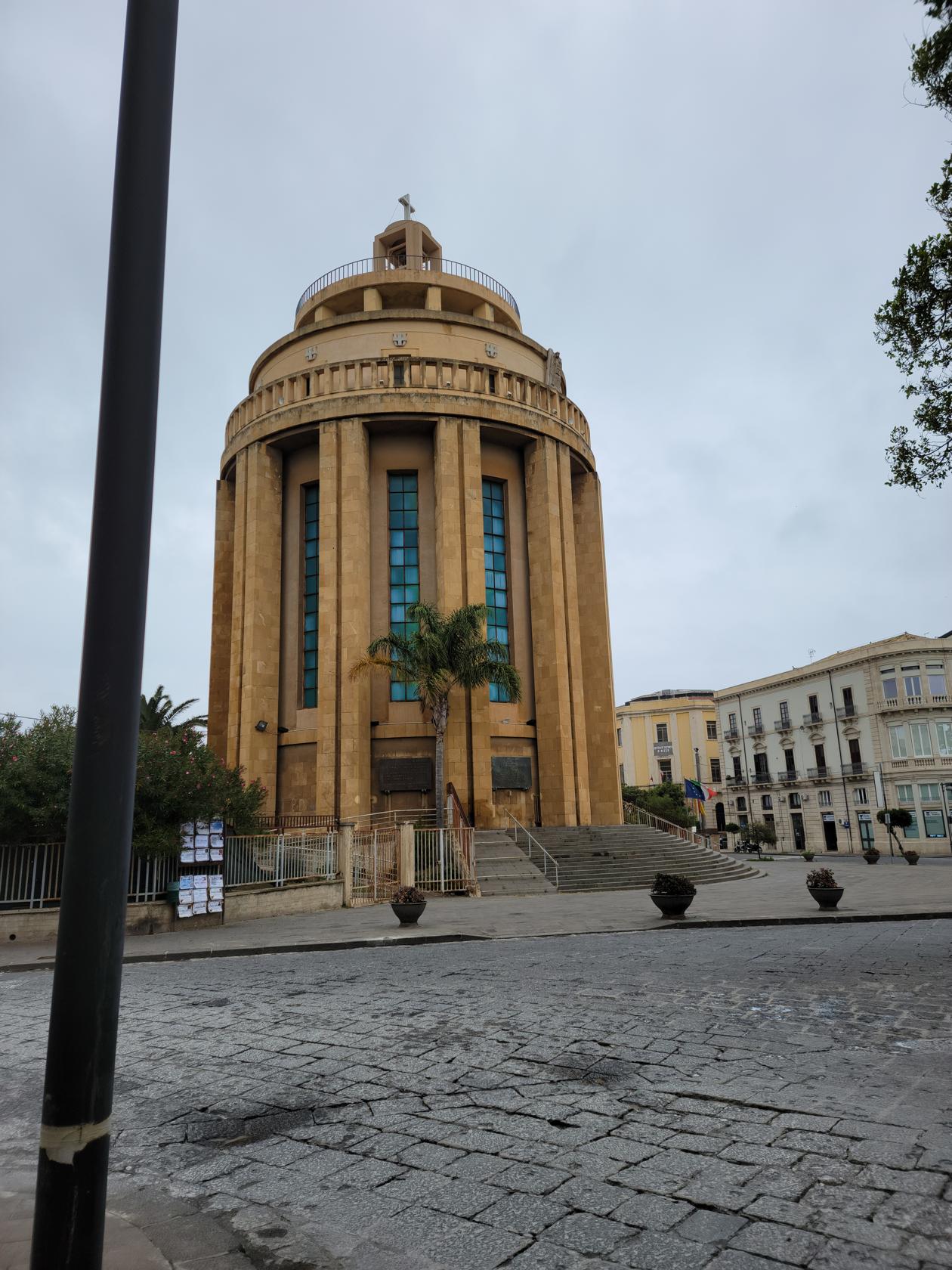
Noto
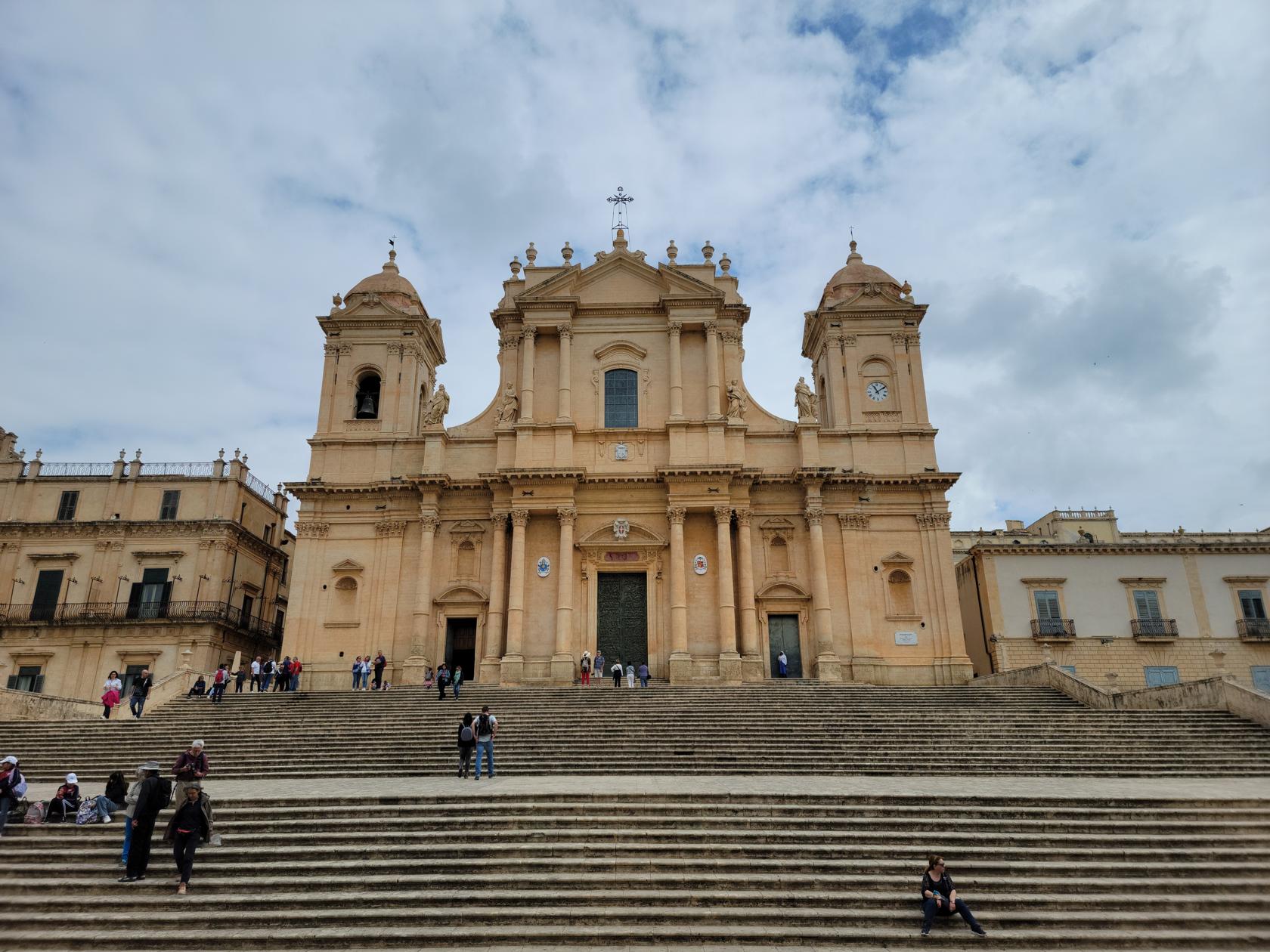
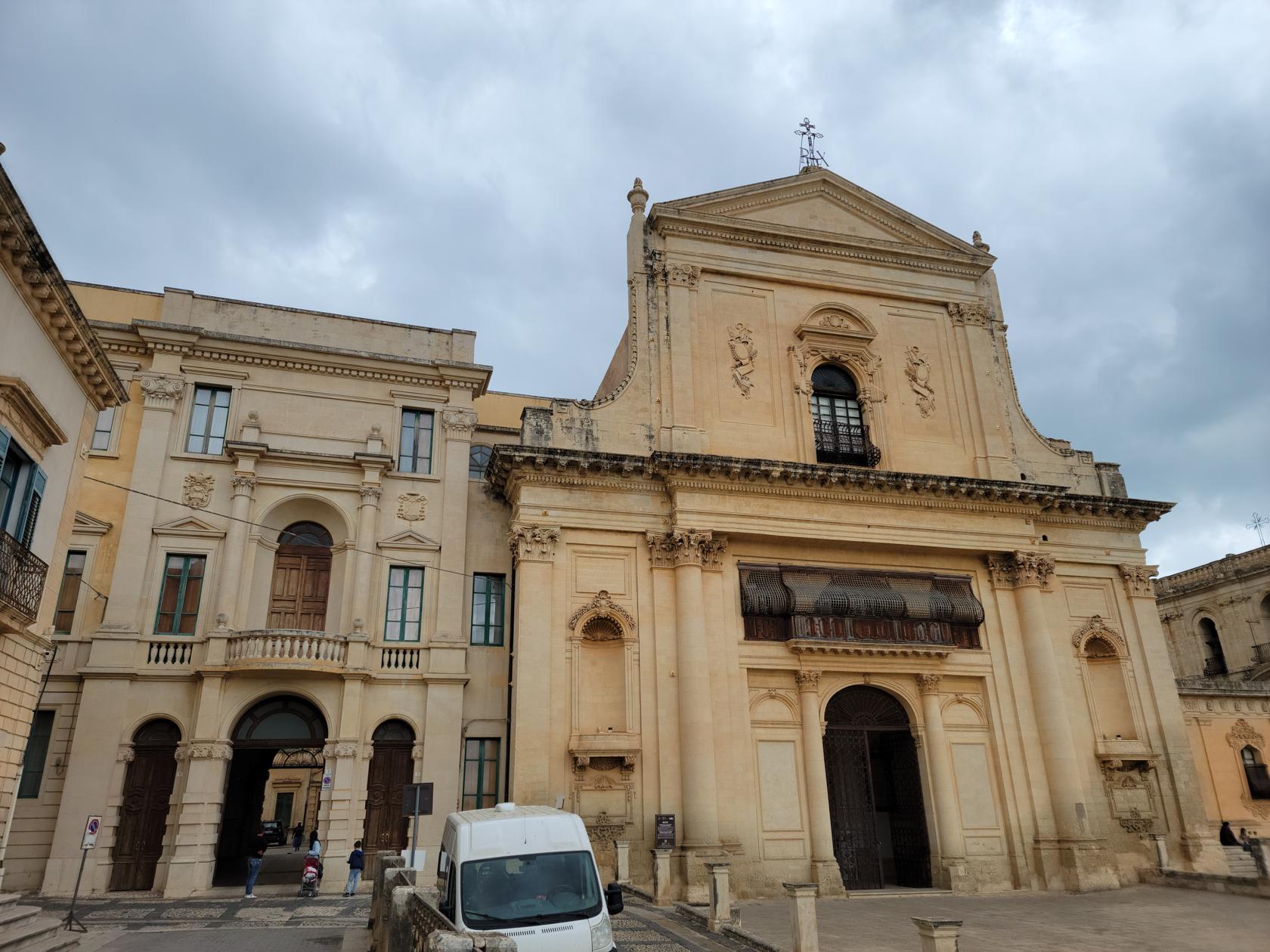
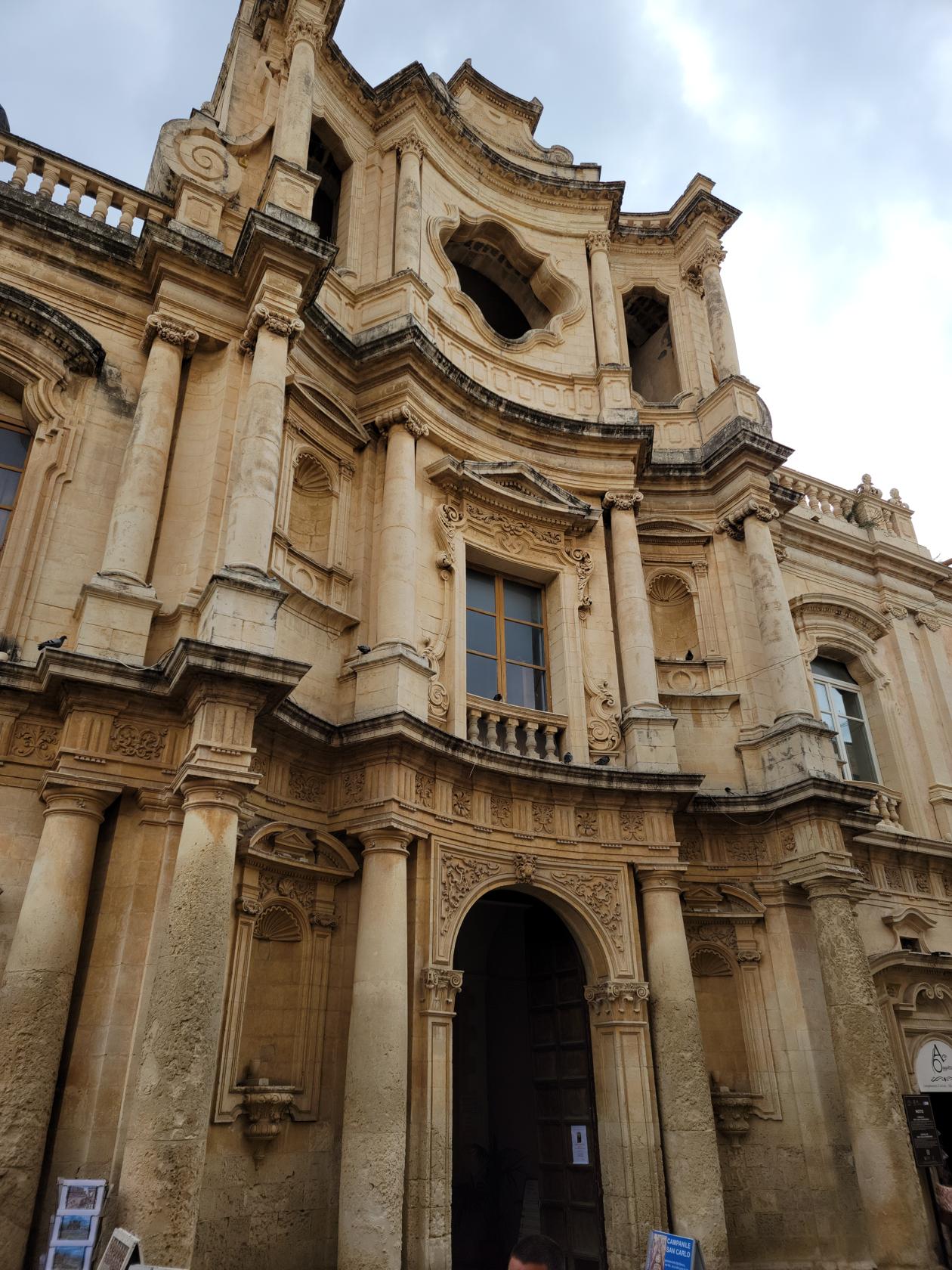
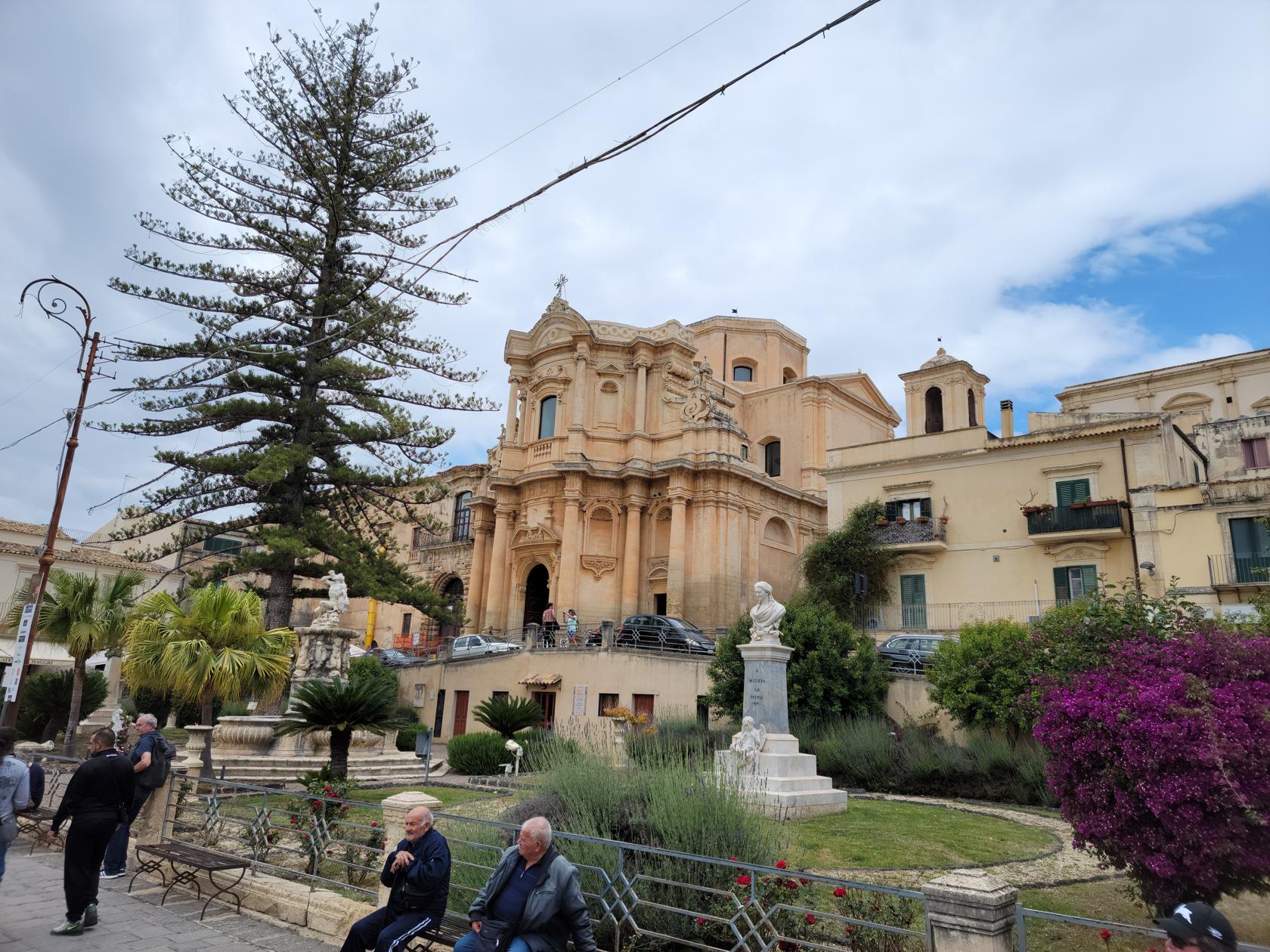
Noto is a world heritage UNESCO site and is well known for its cathedral and other archaeological wonders. Not only does the Noto Cathedral represent the epitome of Sicilian Baroque style, but it is the major landmark in the city. Over the years it suffered damage from repeated earthquakes and shoddy repairs, only to finally collapse in the 1990s after years of neglect. The church that stands before us today is almost a complete resurrection of the former cathedral, since only the facade and outside walls escaped destruction.
Cathedral of Noto – Noto, Sicily
It was totally destroyed in 1693 by an enormous earthquake and devastated it and the surrounding towns and villages. More than half of the residents perished in the violent event. It was later reconstructed at its current location in what is now considered the Sicilian Baroque style. Below is a slideshow with other sites that we saw while visiting, mostly churches of course.
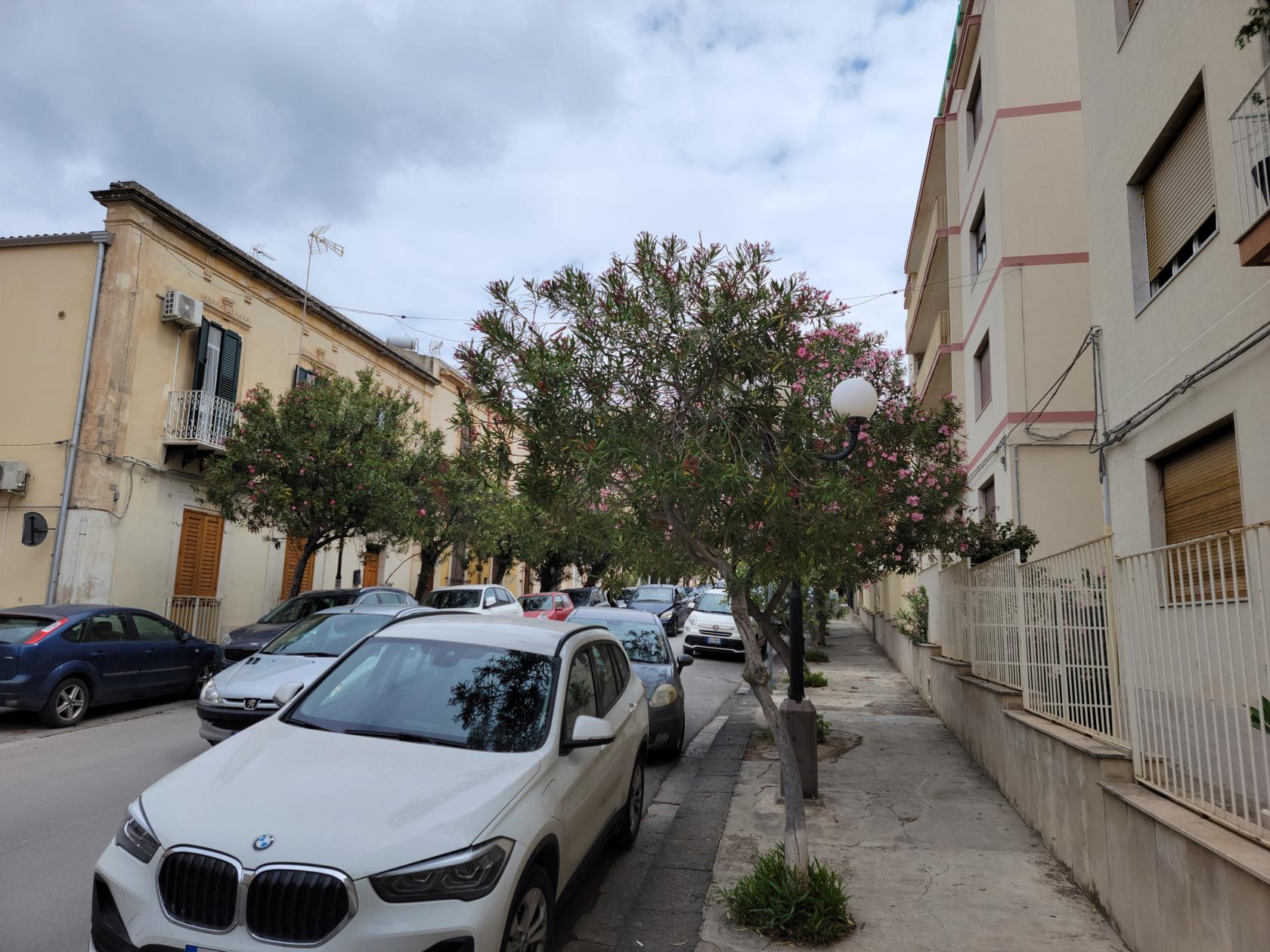
Street from the train station into town – Noto, Sicily
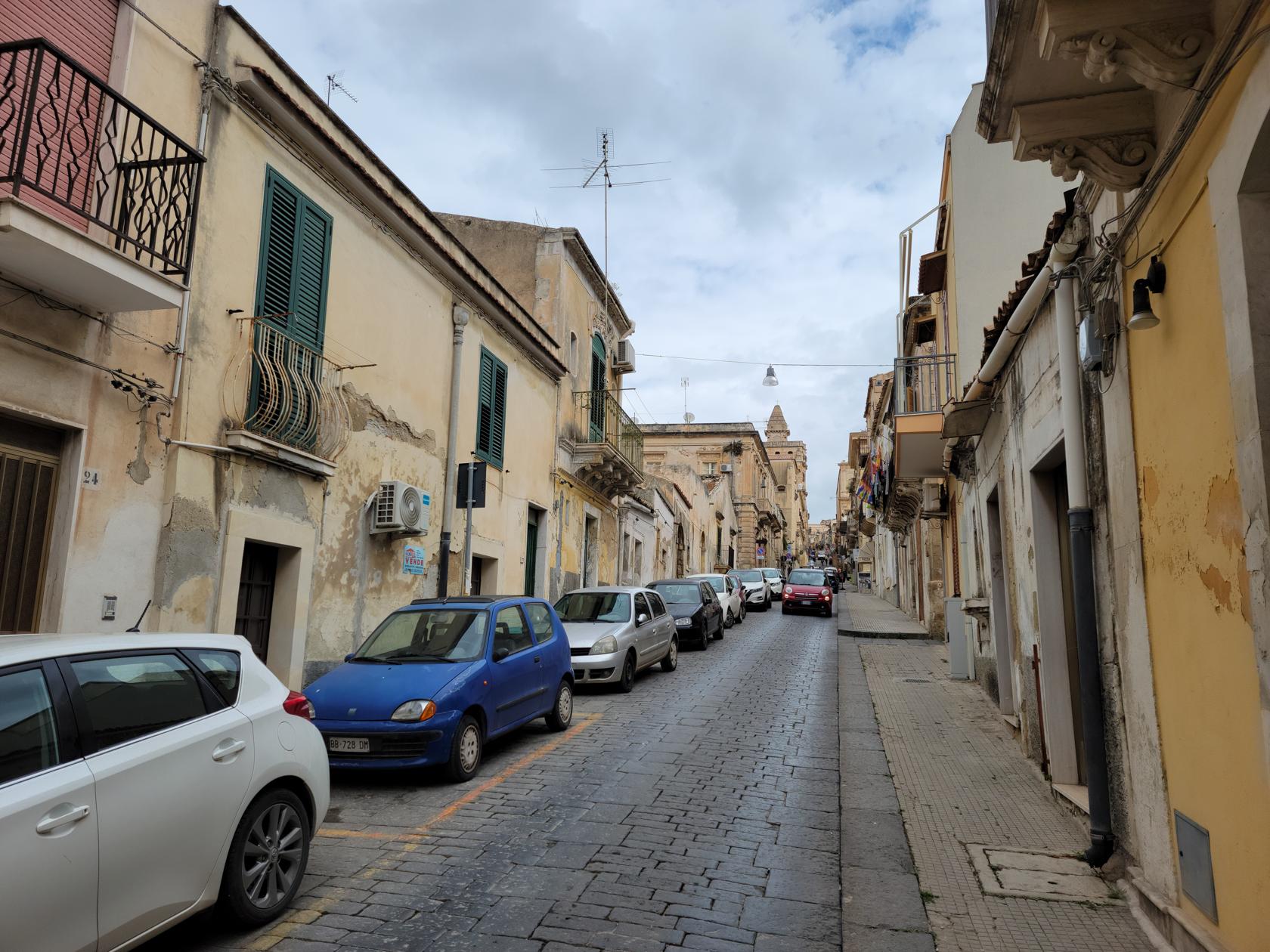
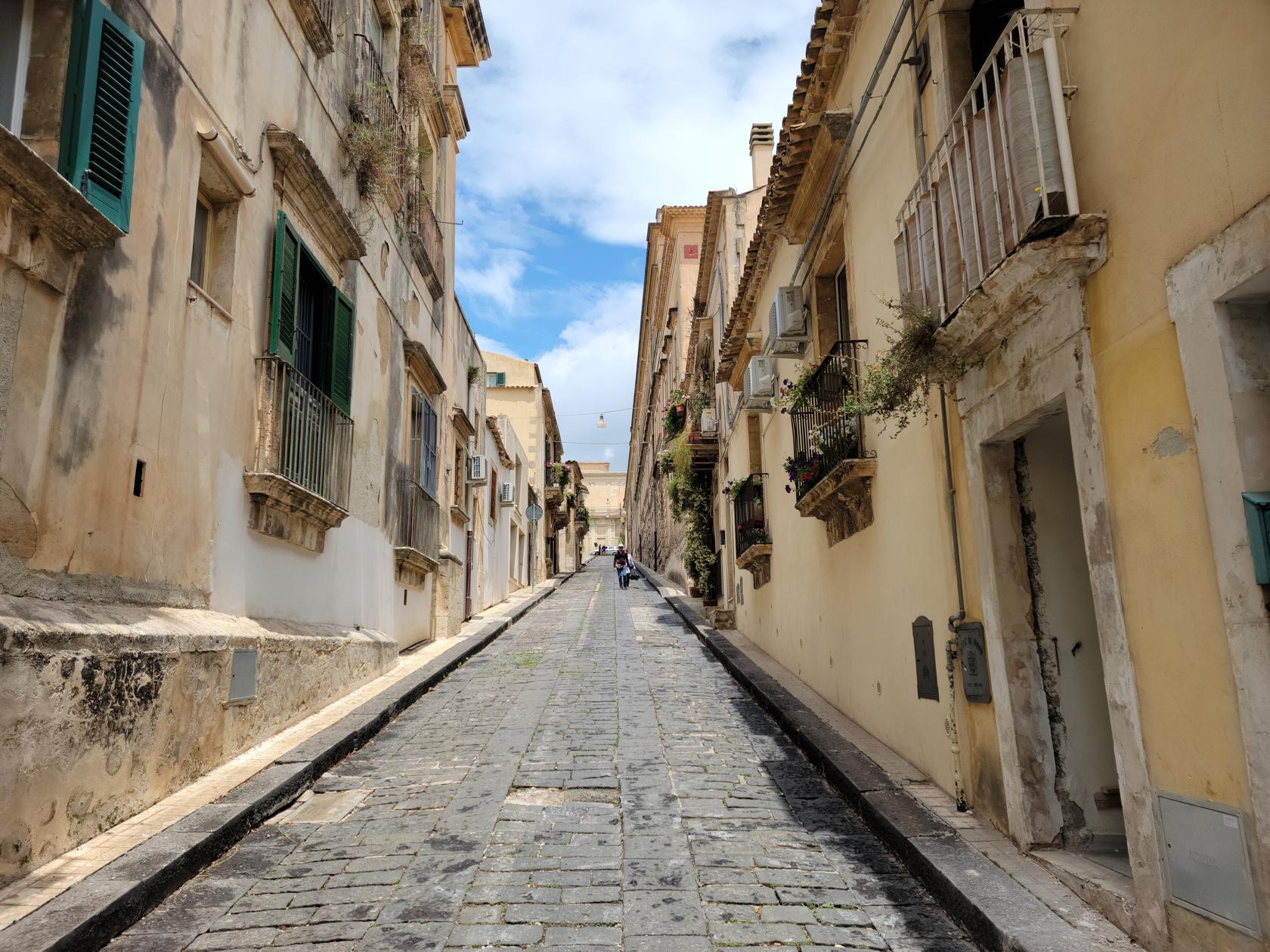
Street going up into town – Noto, Sicily
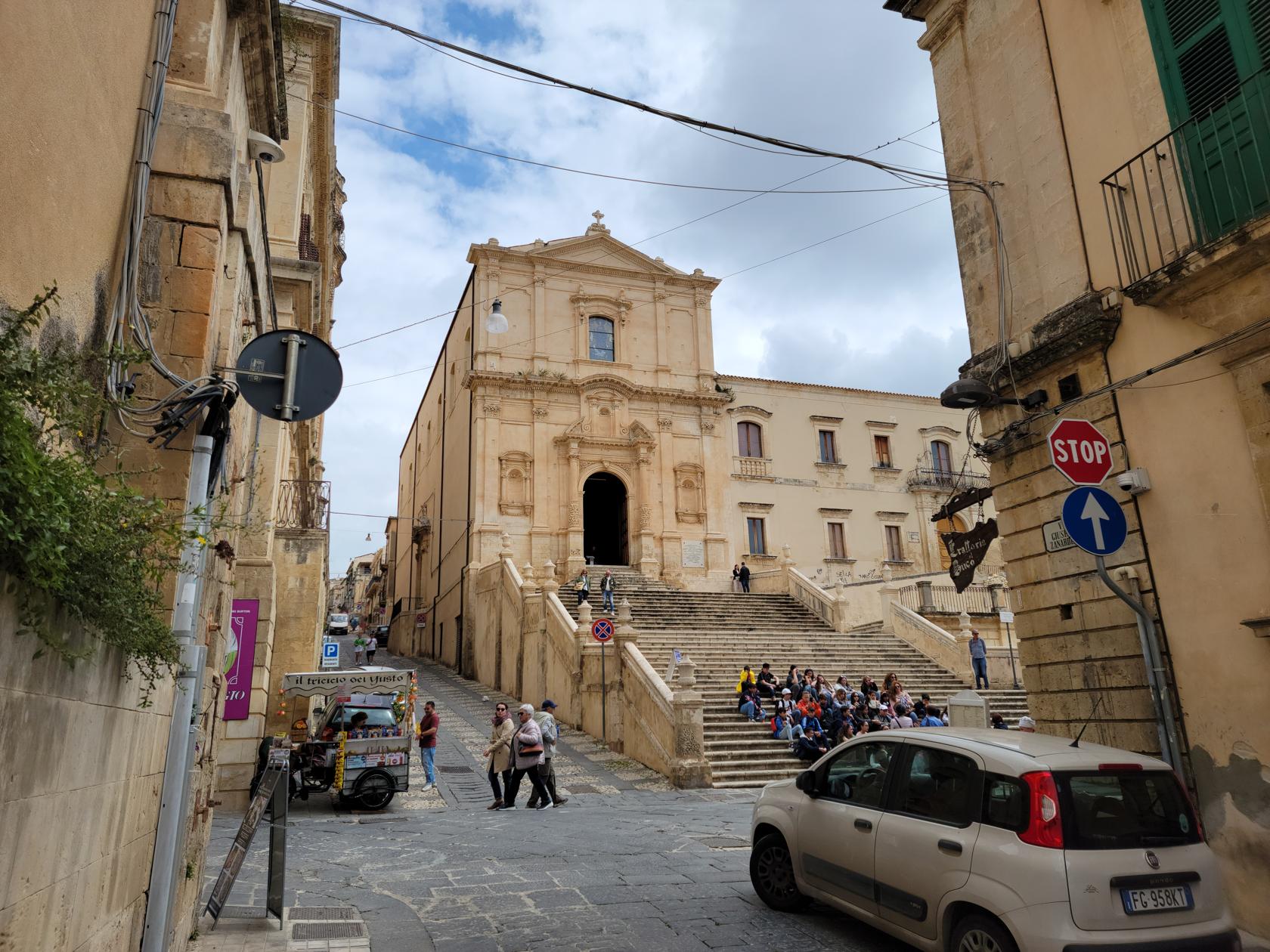
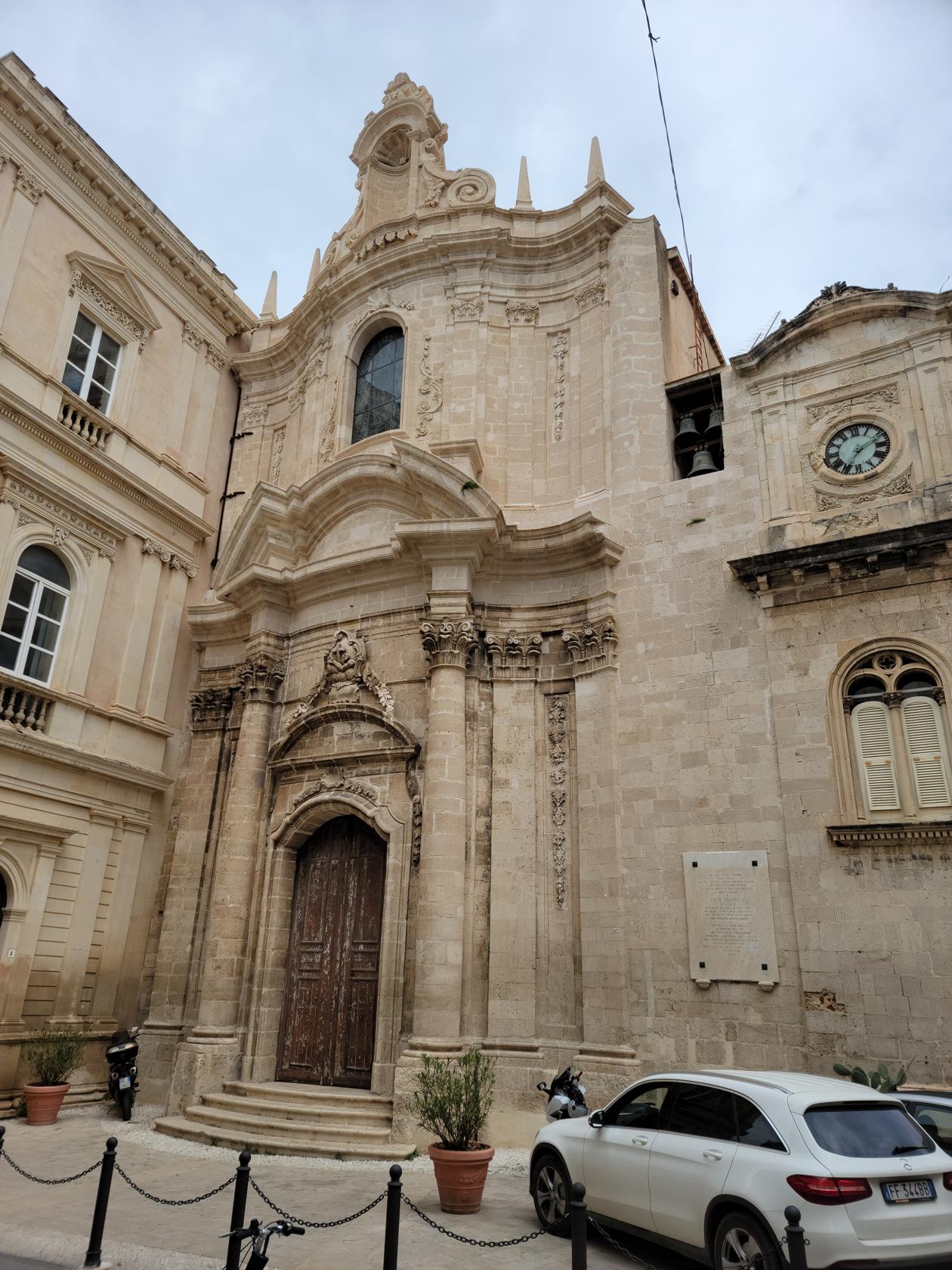
Church Saint Francis of Assisi – Noto, Sicily
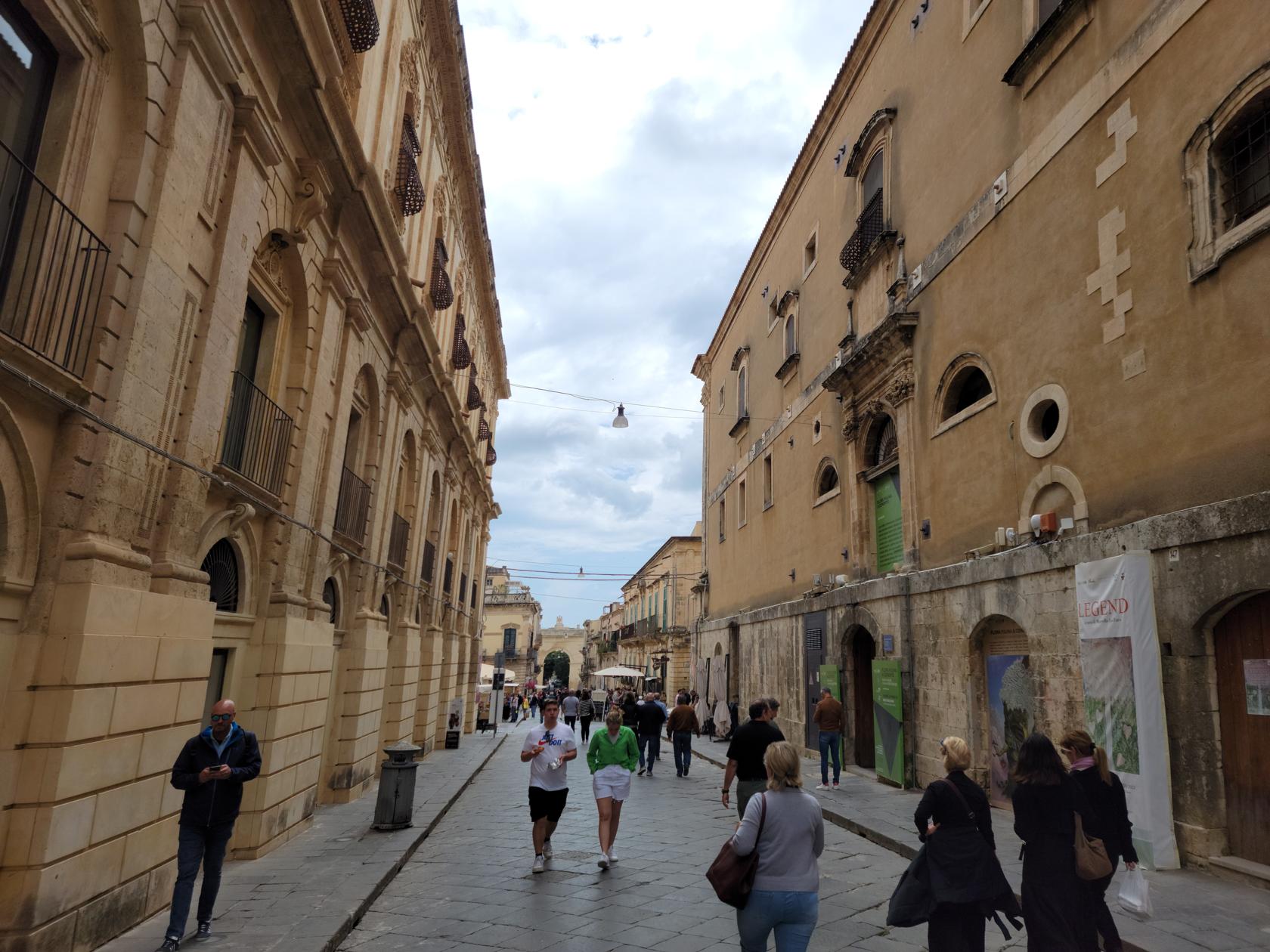
The street of Noto – Noto, Sicily
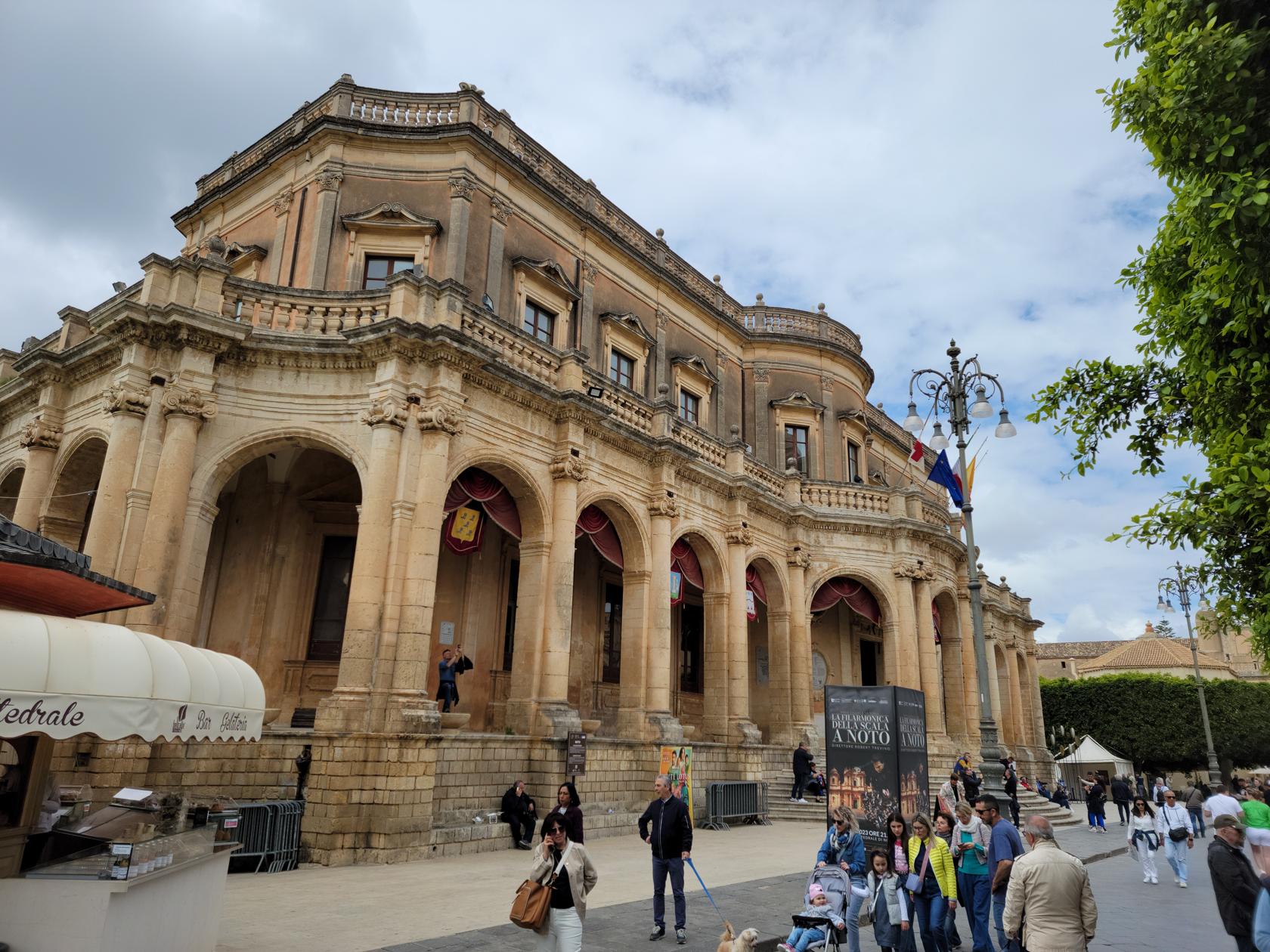
Palazzo Ducezio – Noto, Sicily
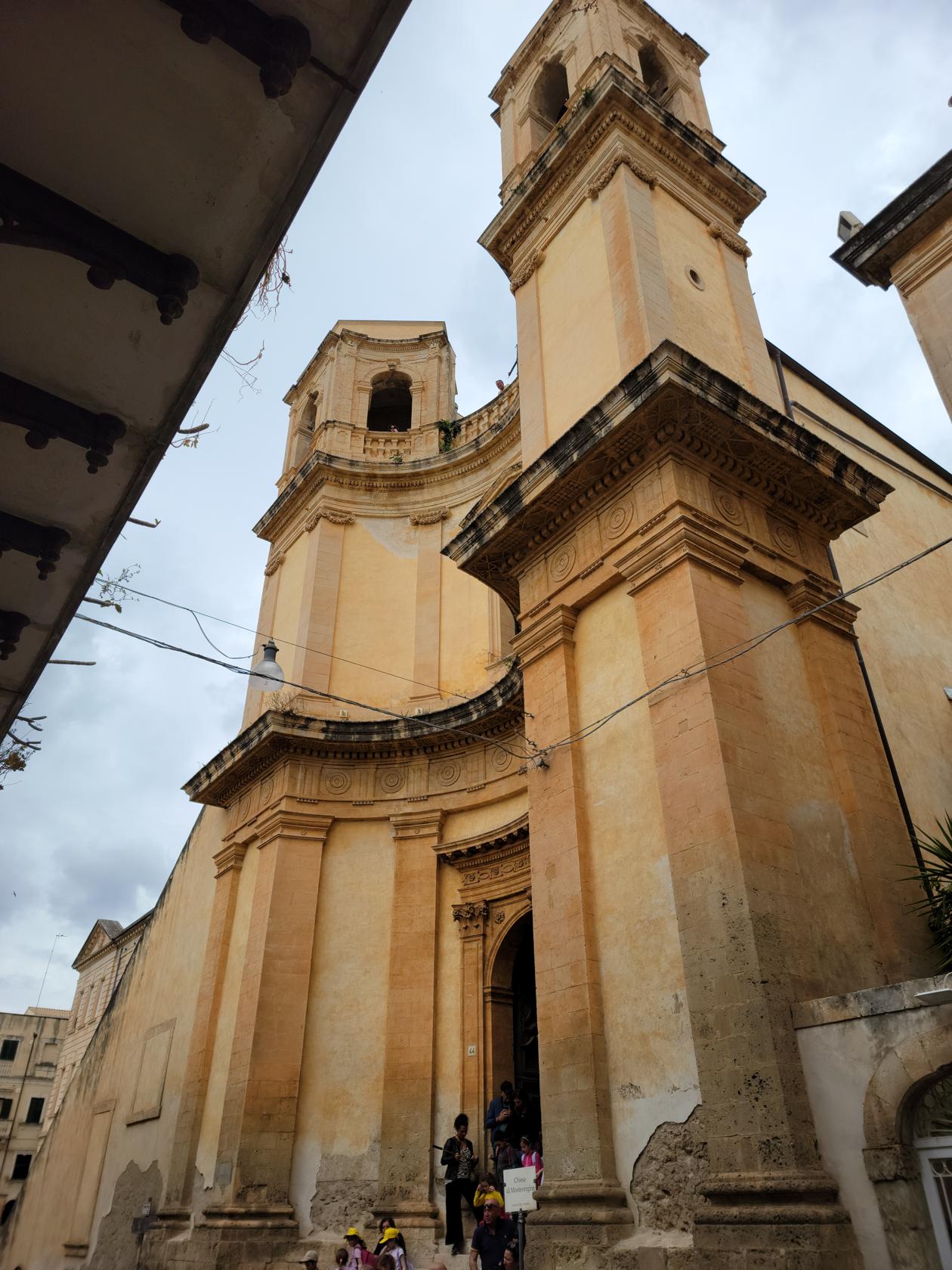
Church of Montevergine – Noto, Sicily
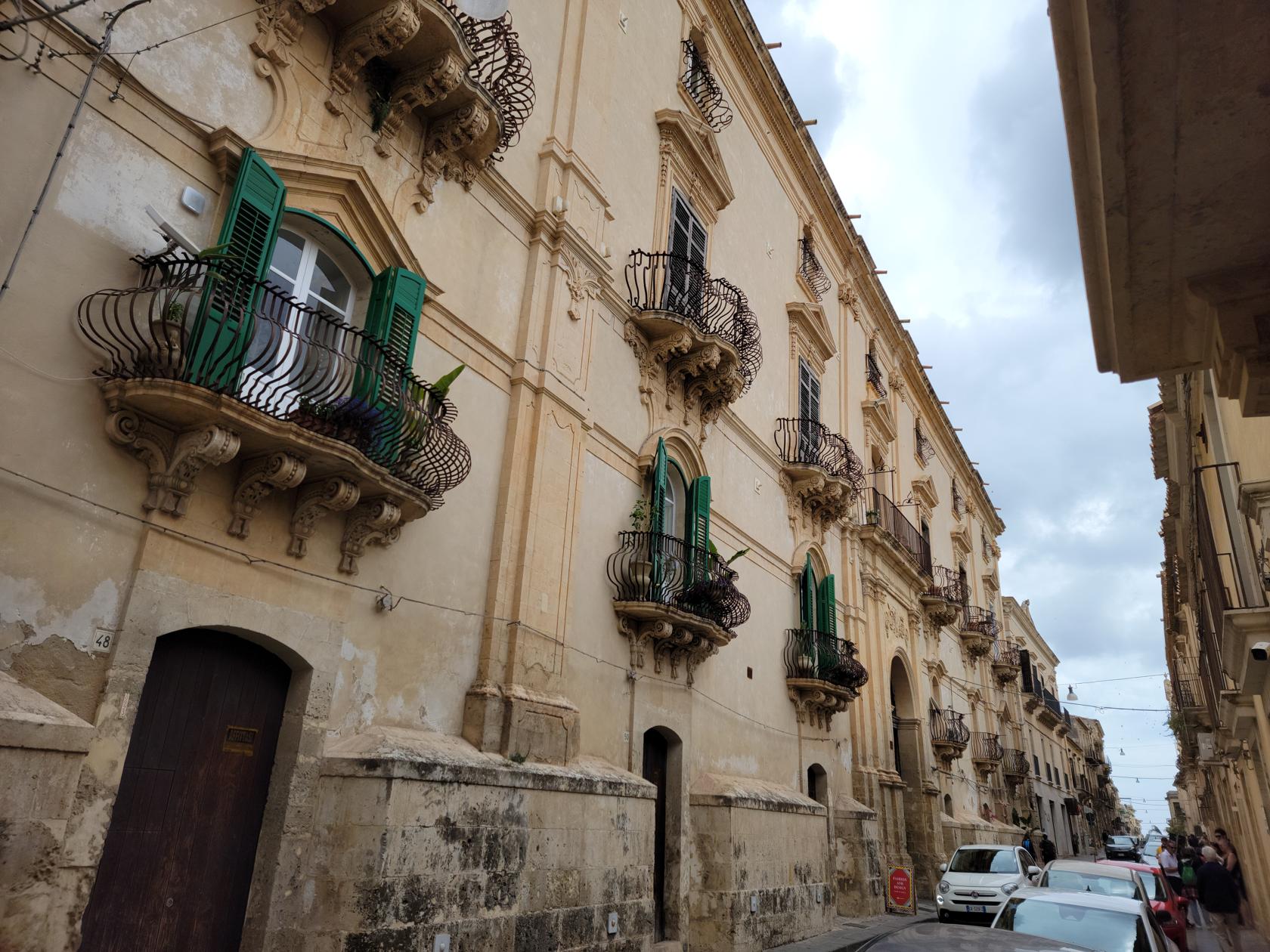
Ornate balconies – Noto, Sicily
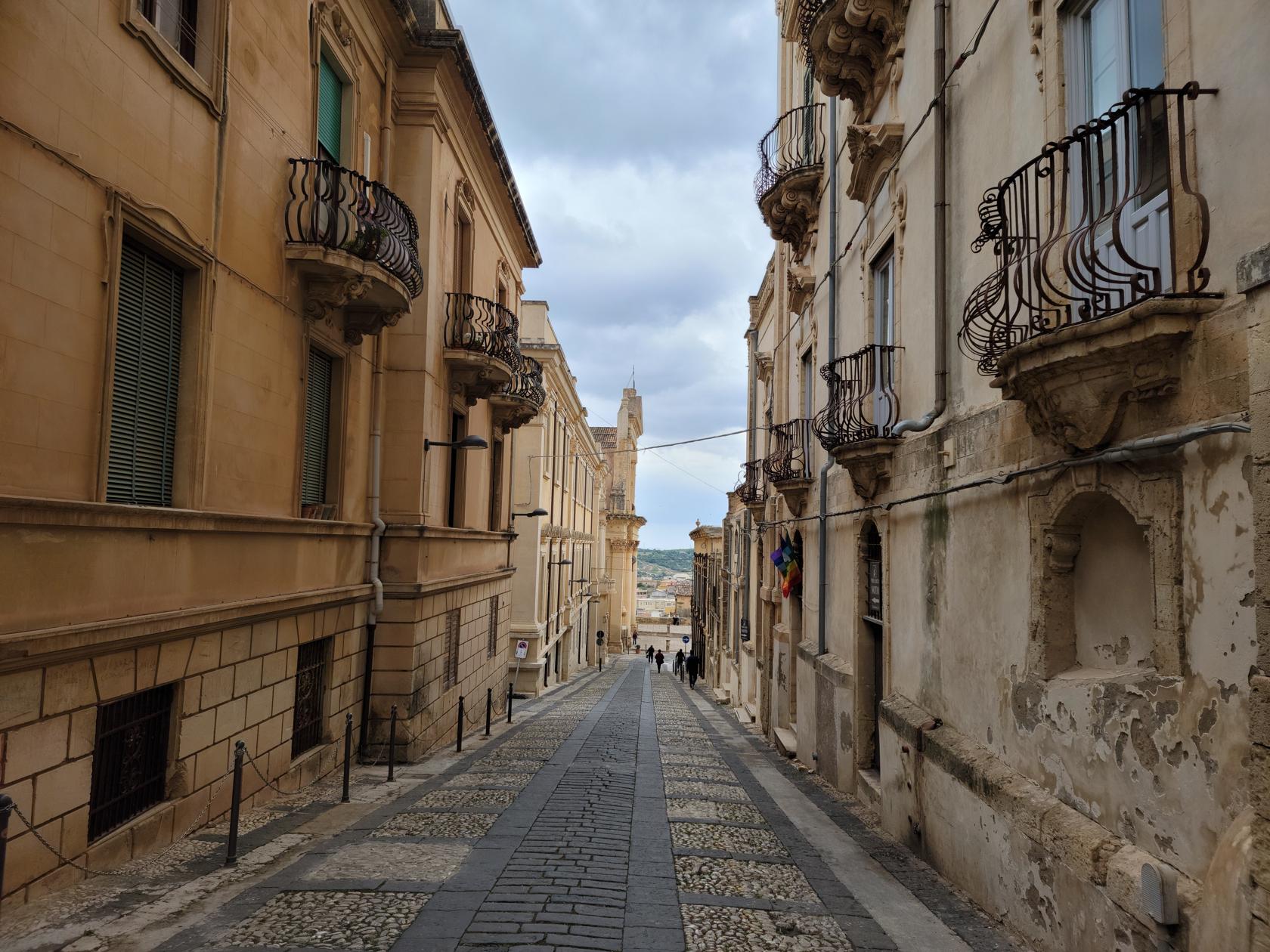
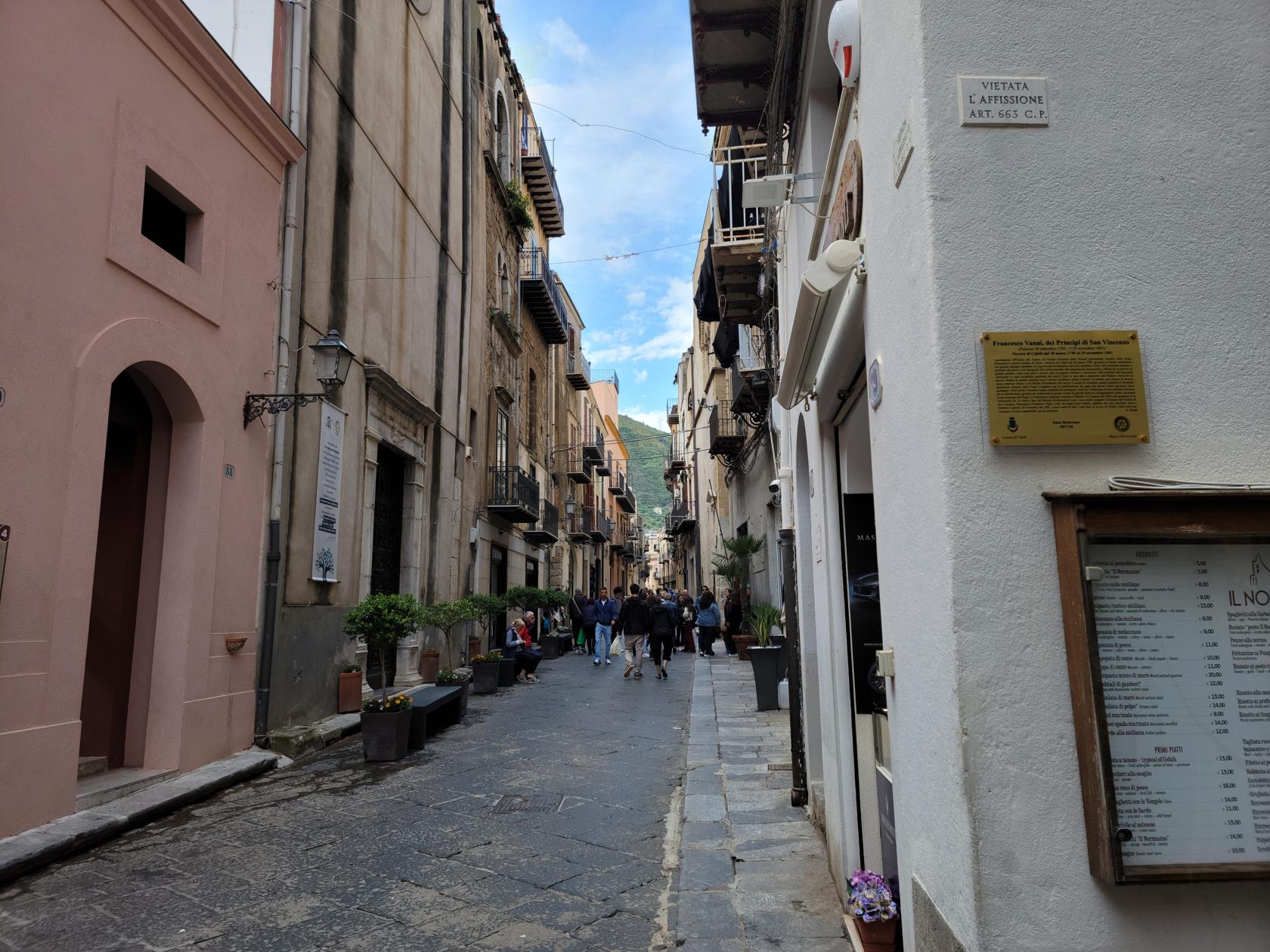
Typical stone streets – Noto, Sicily
Another church – Noto, Sicily
Church of Saint Salvatore – Noto, Sicily
Chuch of San Salvatore – Noto, Sicily
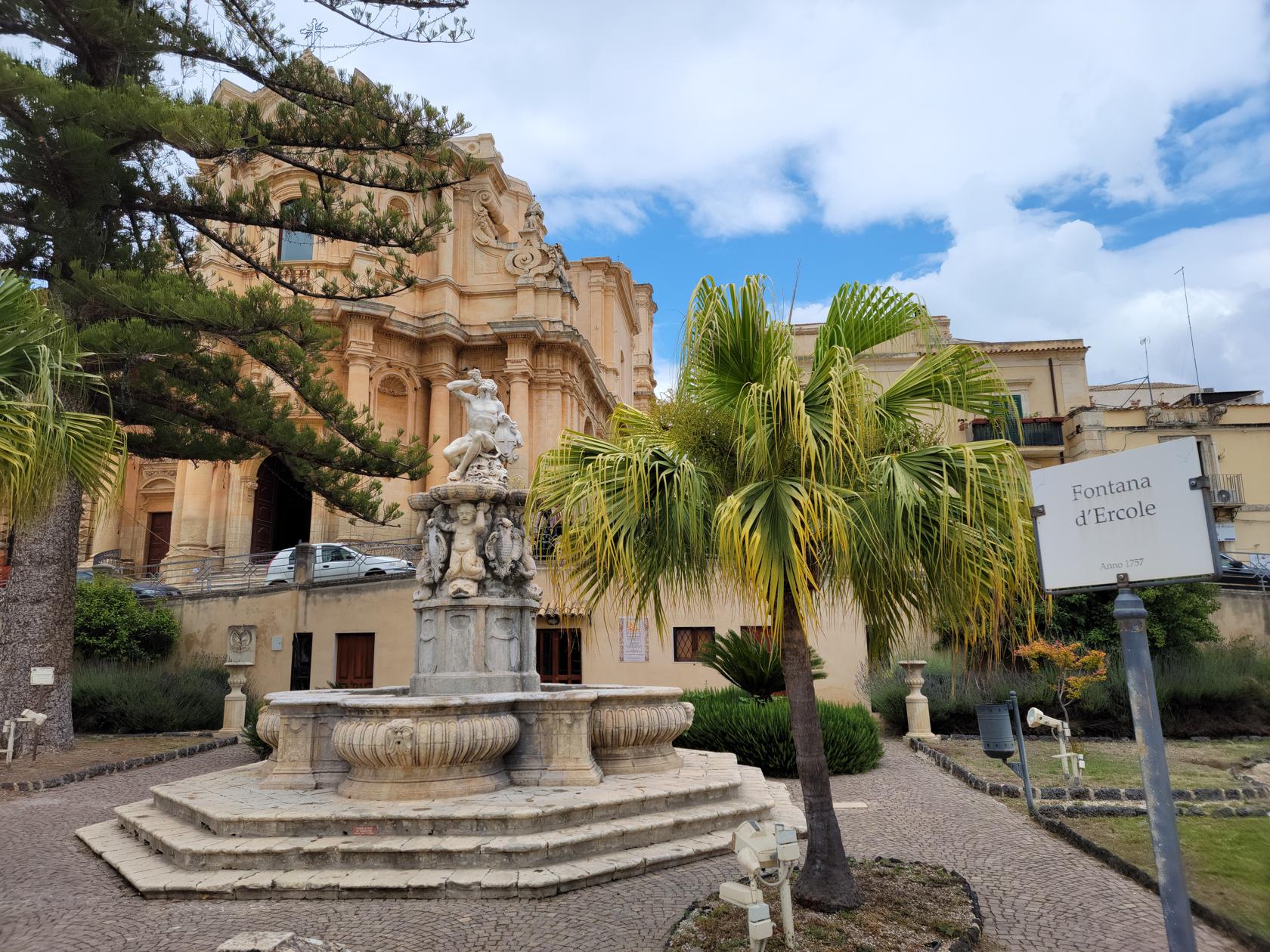
Fontana d’Ercole – Noto, Sicily
Corso VIttorio Emanuele – Noto, Sicily
A very steep street – Noto, Sicily
L’Infiorata di Noto
The entrance fee on-site is 3€/person, however we booked our’s through the website and were charge 3.50€/person, plus an additional .60€ for processing. So keep in mind, obtaining your ticket early may not always be the best or most cost effective.
L’Infiorata – Via Corrado Nicolaci – Noto, Sicily
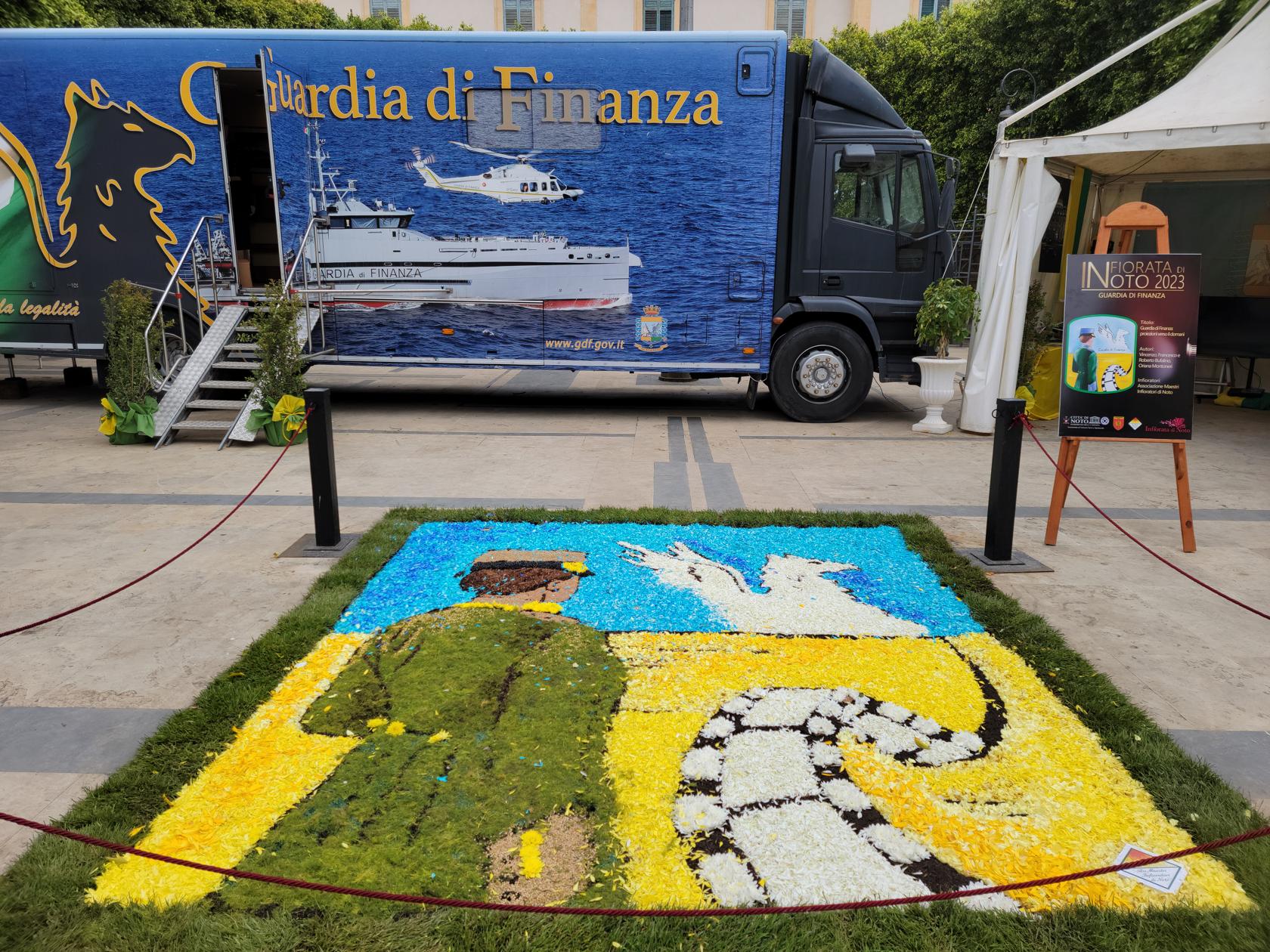
The route of the flower festival is in the center of town and includes the entire street of Via Corrado Nicolaci. This year’s theme was Italian cinema.
L’Infiorata – Finance Office – Noto, Sicily
L’Infiorata – Via Corrado Nicolaci – Noto, Sicily
L’Infiorata – Via Corrado Nicolaci – Noto, Sicily
Patti before the flowers – L’Infiorata – Via Corrado Nicolaci – Noto, Sicily
L’Infiorata – Via Corrado Nicolaci – Noto, Sicily
L’Infiorata – Via Corrado Nicolaci – Noto, Sicily
L’Infiorata – Via Corrado Nicolaci – Noto, Sicily
L’Infiorata – Via Corrado Nicolaci – Noto, Sicily
L’Infiorata – Via Corrado Nicolaci – Noto, Sicily
L’Infiorata – Via Corrado Nicolaci – Noto, Sicily
L’Infiorata – Via Corrado Nicolaci – Noto, Sicily
L’Infiorata – Via Corrado Nicolaci – Noto, Sicily
L’Infiorata – Via Corrado Nicolaci – Noto, Sicily
L’Infiorata – Via Corrado Nicolaci – Noto, Sicily
L’Infiorata – Via Corrado Nicolaci – Noto, Sicily
L’Infiorata – Via Corrado Nicolaci – Noto, Sicily
L’Infiorata – Via Corrado Nicolaci – Noto, Sicily
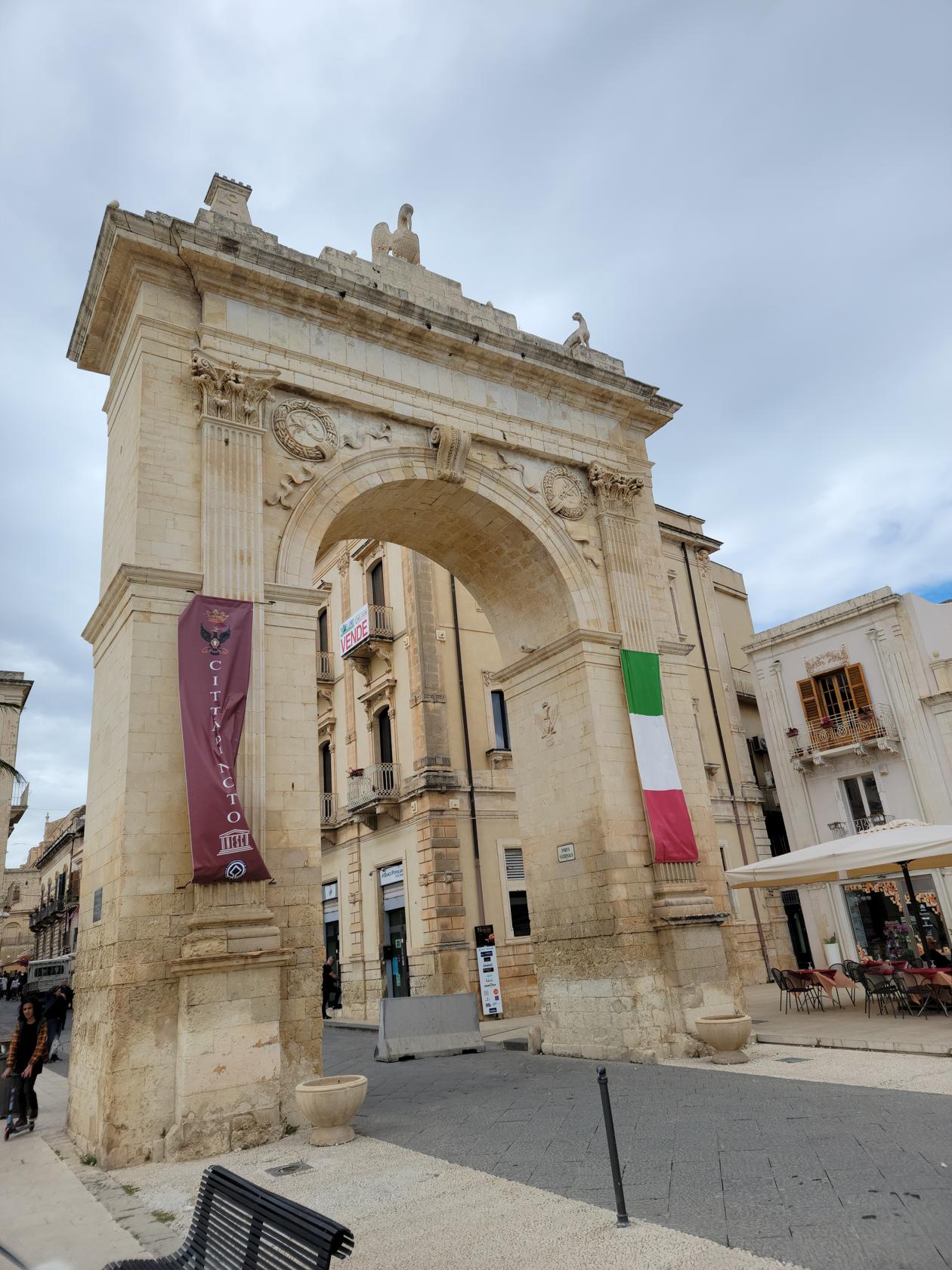
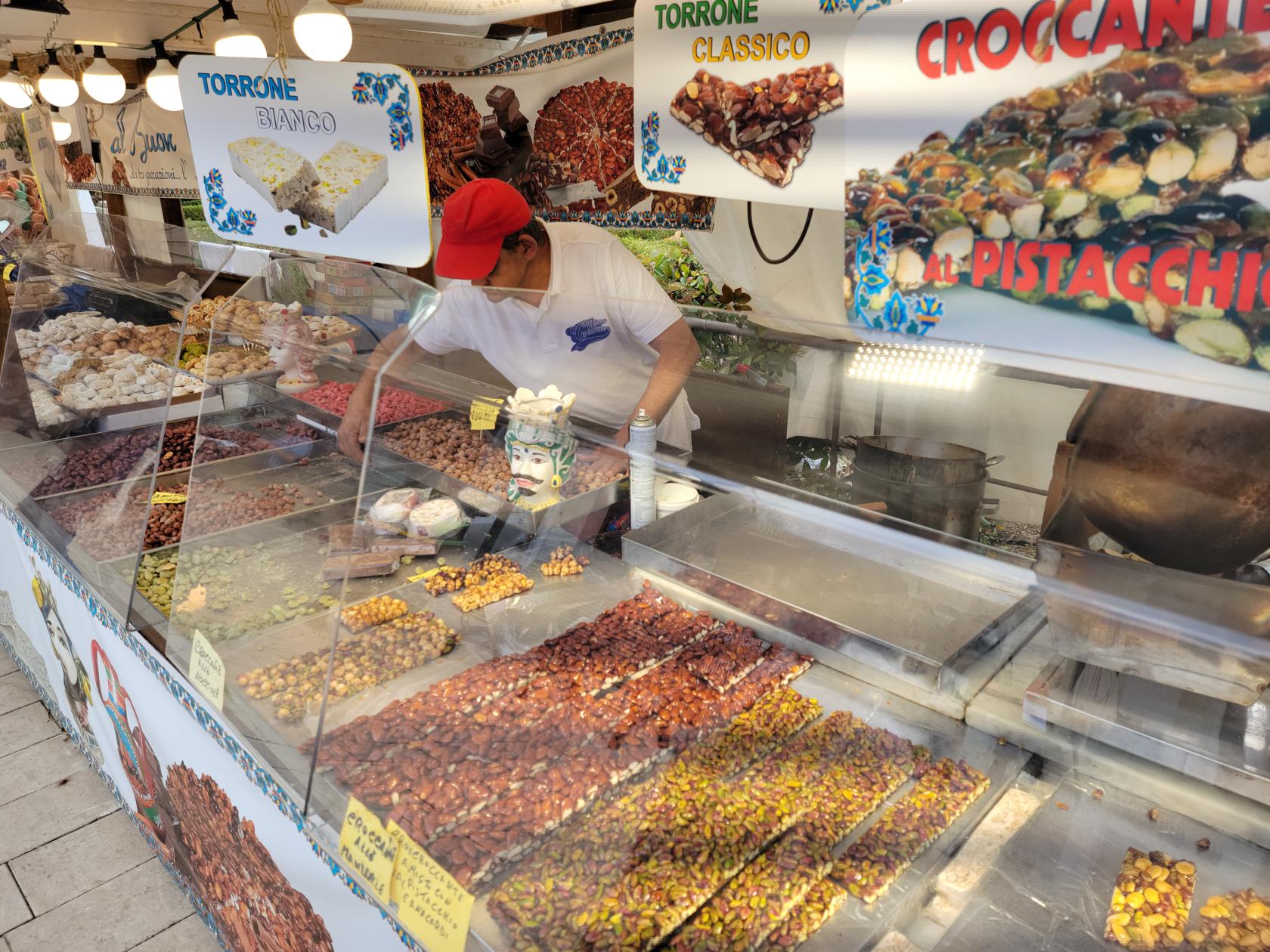
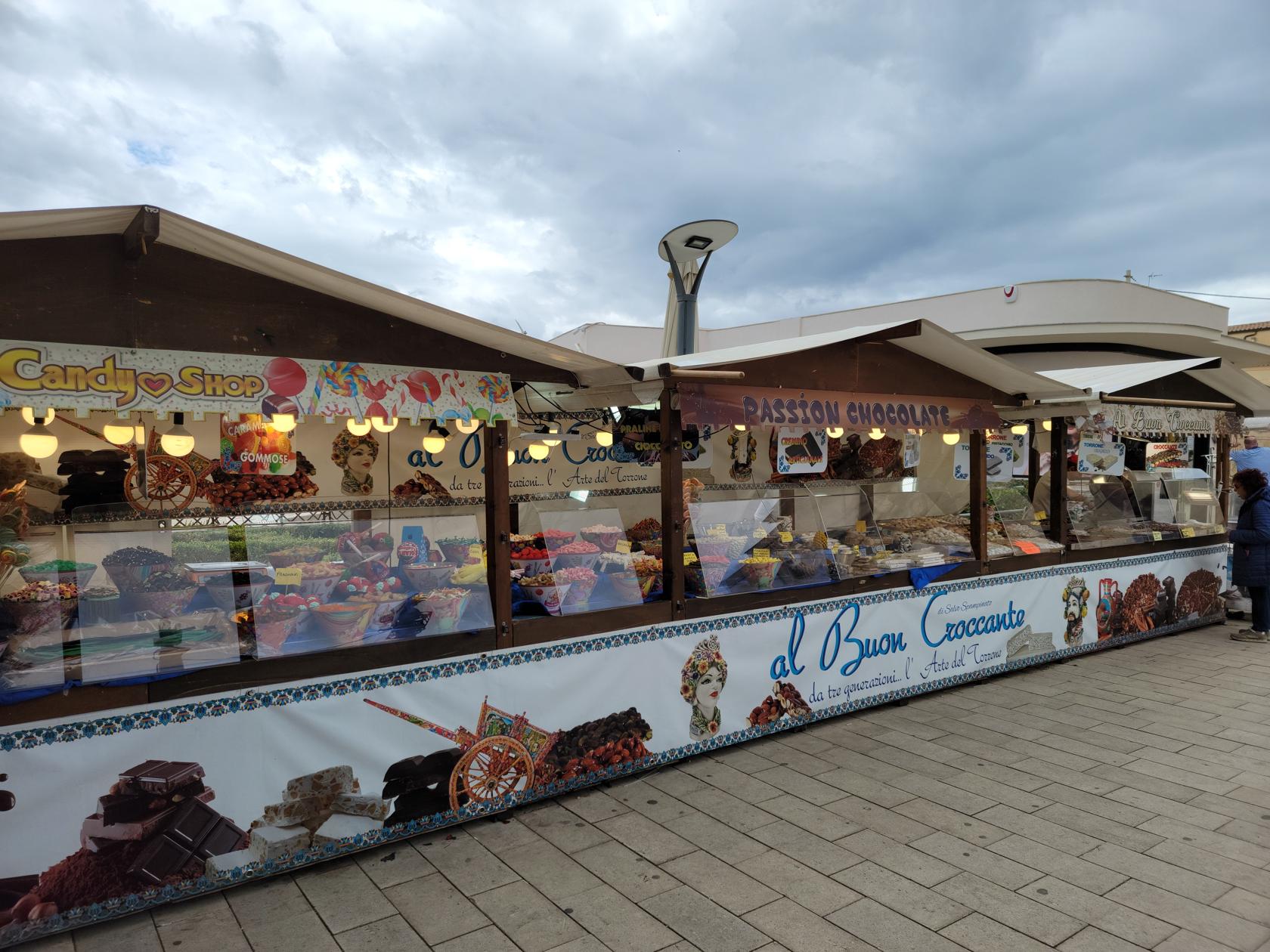
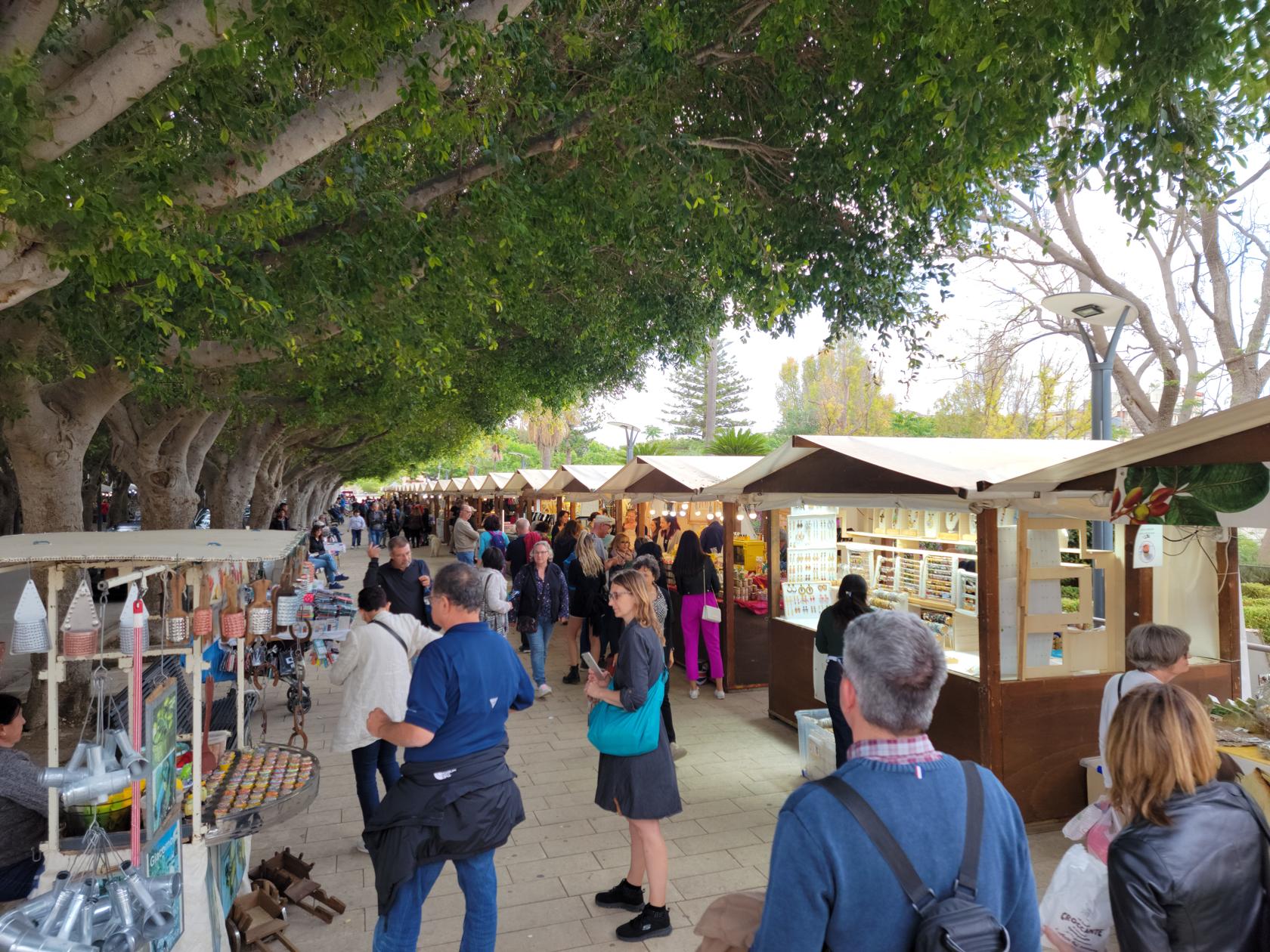
After taking in the flowers, the festival continues down by the Porta Reale Ferdinando and the park Villa Communale off of Corso Victoria Emanuele. Here you can buy all sorts of fair type items, from home-made nutbars, granola bars, specialized candies and other assorted items and drinks.
Porta Reale – Noto, Sicily
Everything pistachio – Noto, Sicily
Festival vendors – Noto, Sicily
Festival vendors – Noto, Sicily
Restaurants
We only ate lunch here, but the place we originally chose was closed on Tuesdays, so we had to adapt and chose another place, which was timely, because the weather was not cooperating again.
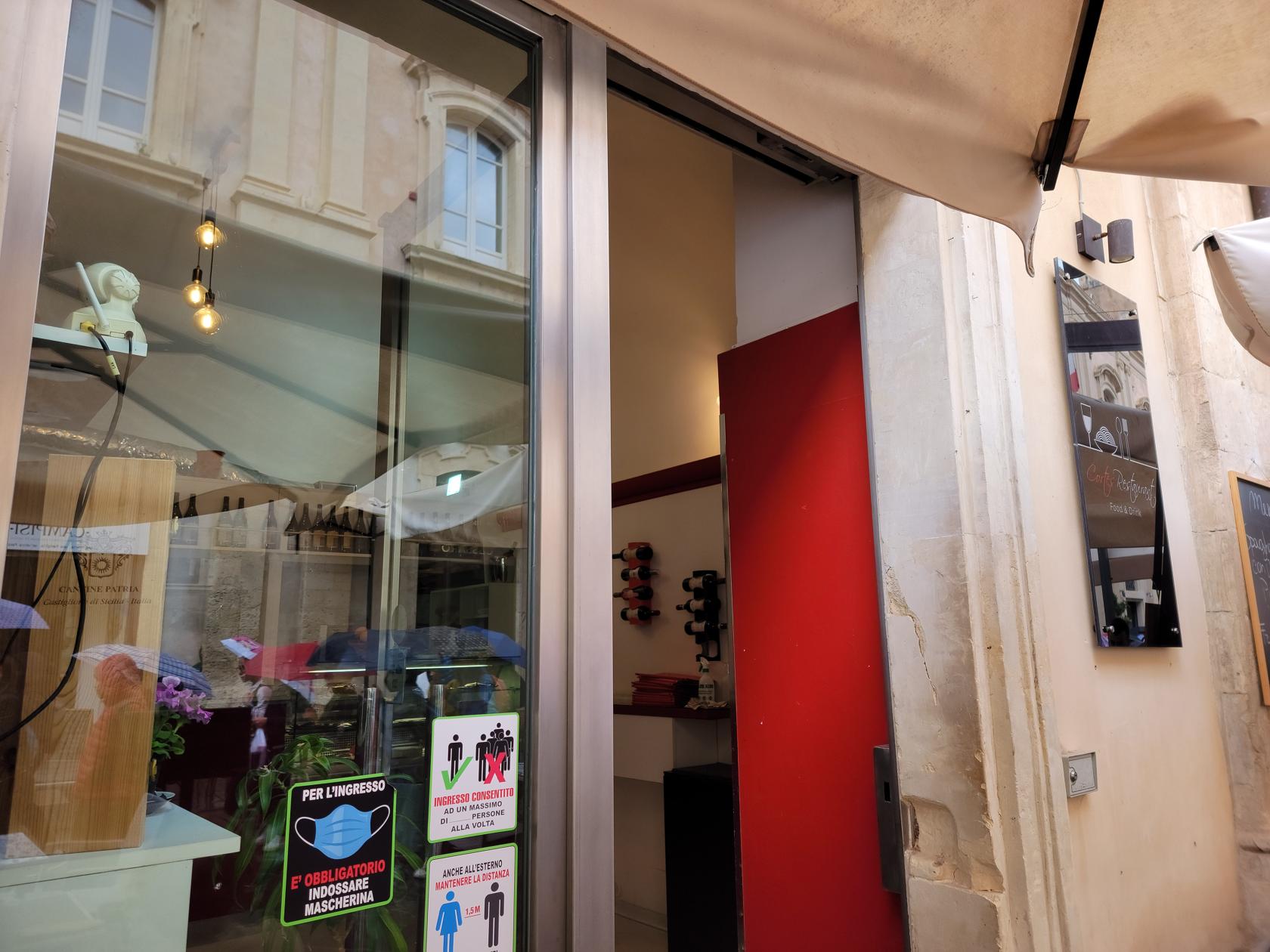
Cortes Restaurant
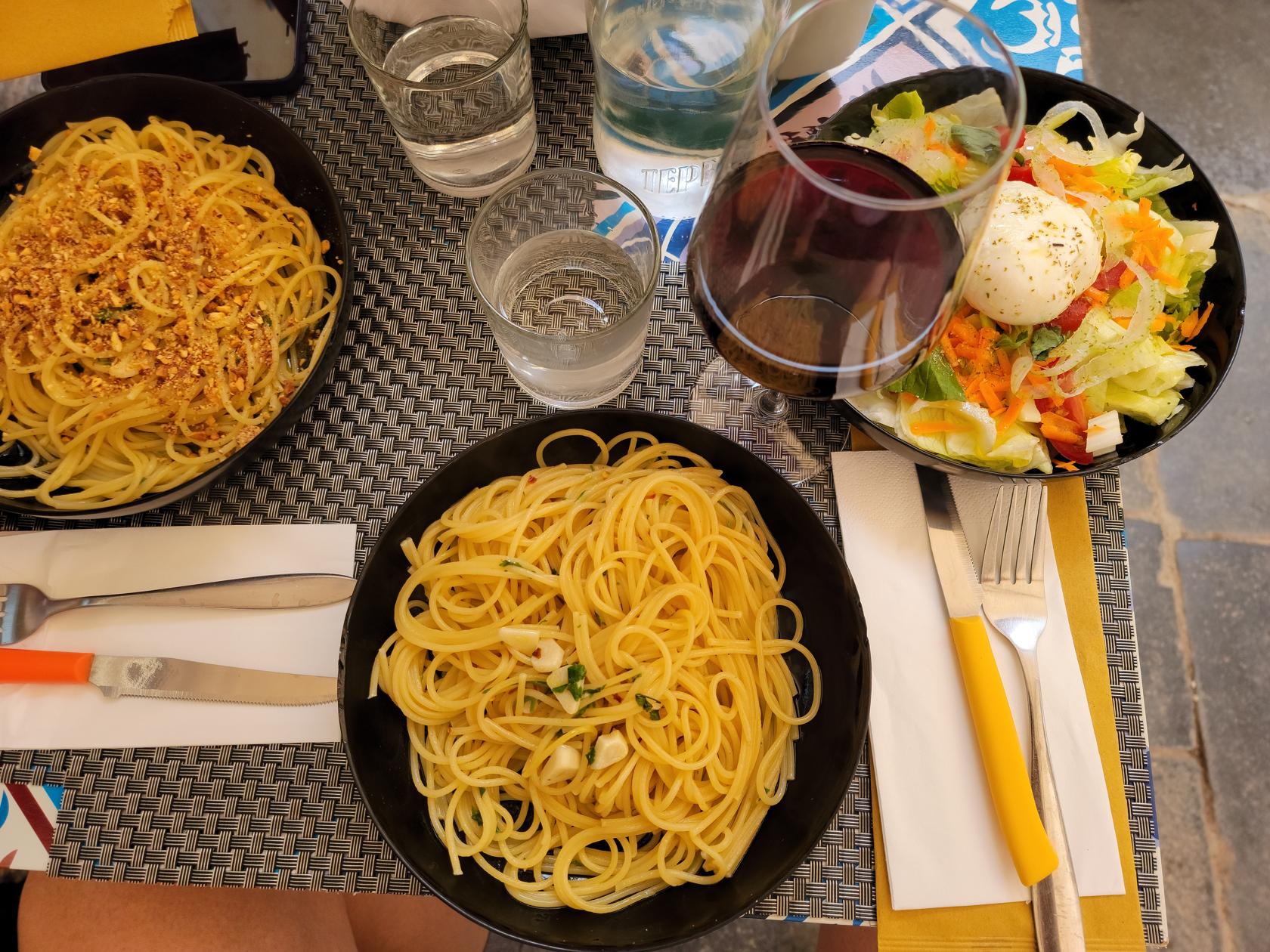
Situated on the main shopping thoroughfare in the middle of town is Cortes Ristorante. Here one may easily find a typical Italian dish to enjoy for lunch. I ordered an Insalate Mista and Spaghetti with garlic and oil, Patti ordered the Spaghetti with garlic and oil along with crushed pistachios. The food was very good and the prices were reasonable.
Cortes Ristorante – Noto, Sicily
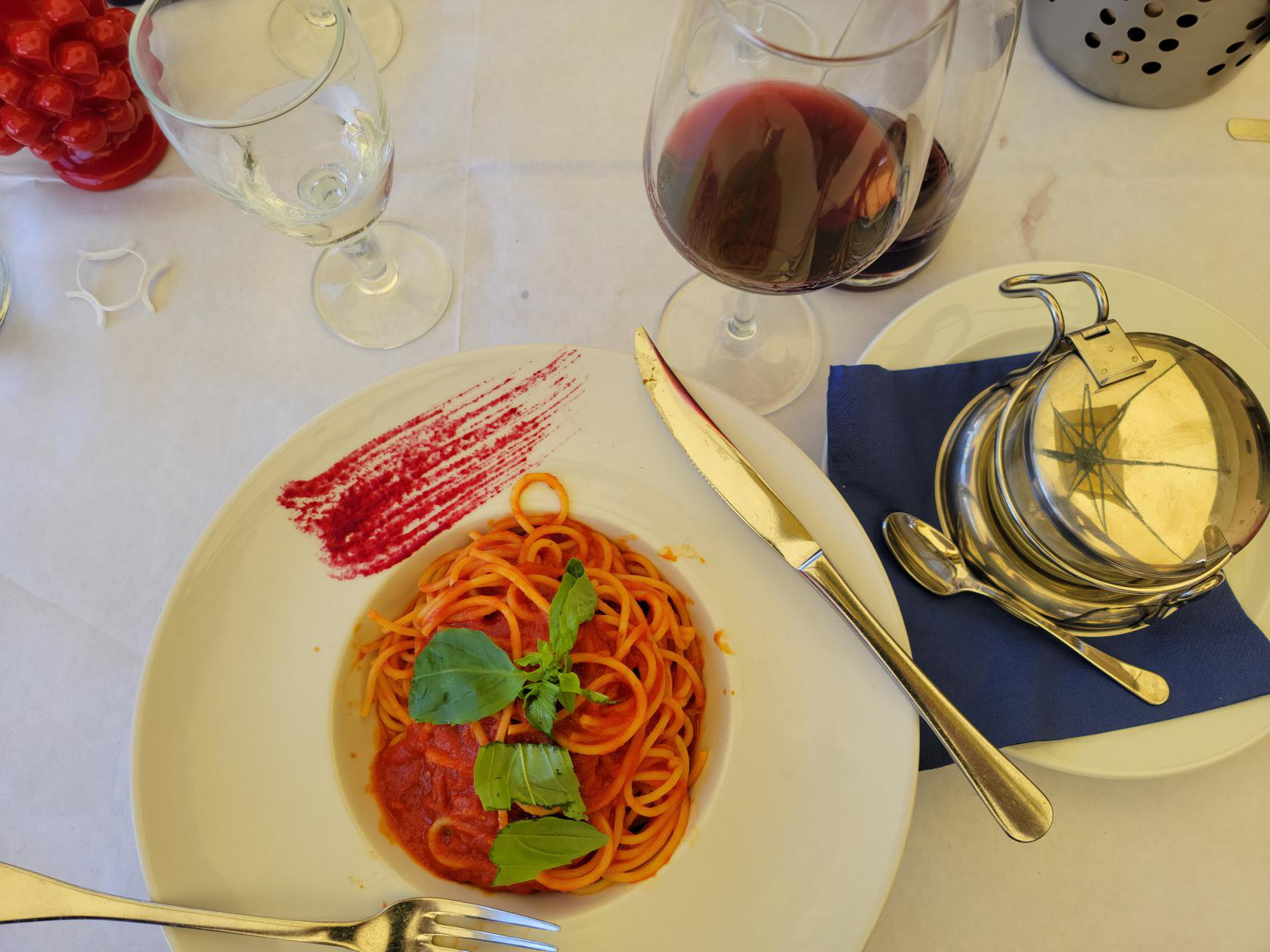
Spaghetti with garlic, oil, peppenchini and with and without pistachios. Red Wine and Insalata Mista – Cortes Ristorante – Noto, Sicily
Syracuse, or Siracusa as you will find it readily marked throughout the island, is one of the first places of historic significance within Italy. It was inhabited in ancient times and finally settled by the Greeks in the early eight century BCE.
Siracusa Centrale – Siracusa, Sicily
Siracusa Centrale – Siracusa, Sicily
The original settlement of the Greeks was on the small island of Ortigia, which still contains several historical and archaeological artifacts from the Greek and Roman periods. See the Ortigia section below for more on that part of the commune and city.
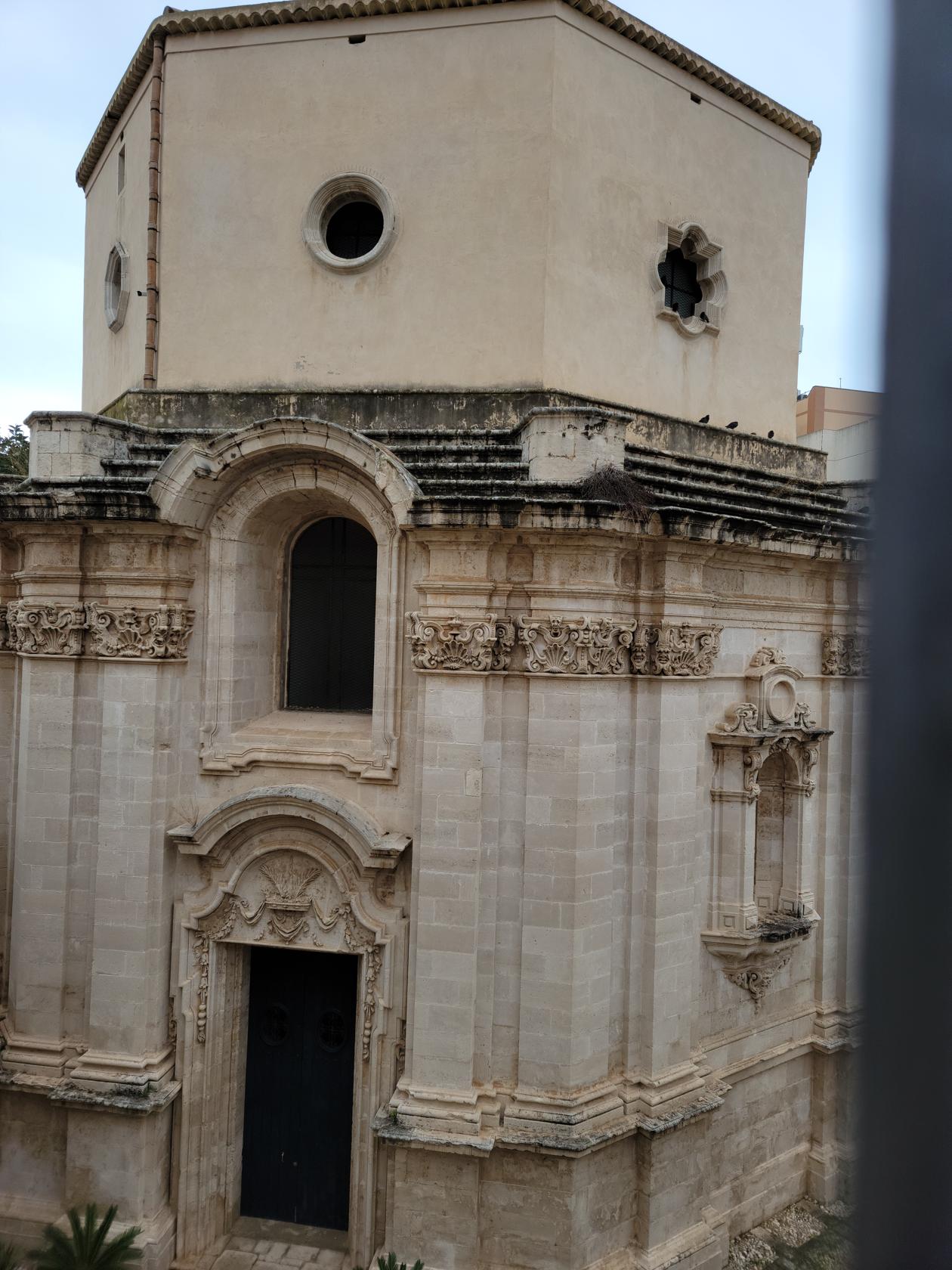
Church of San Tommaso at the Pantheon – Siracuse, Sicily
Santa Lucia Seplicur – Siracuse, Sicily
Santa Lucia Seplicur – Siracuse, Sicily
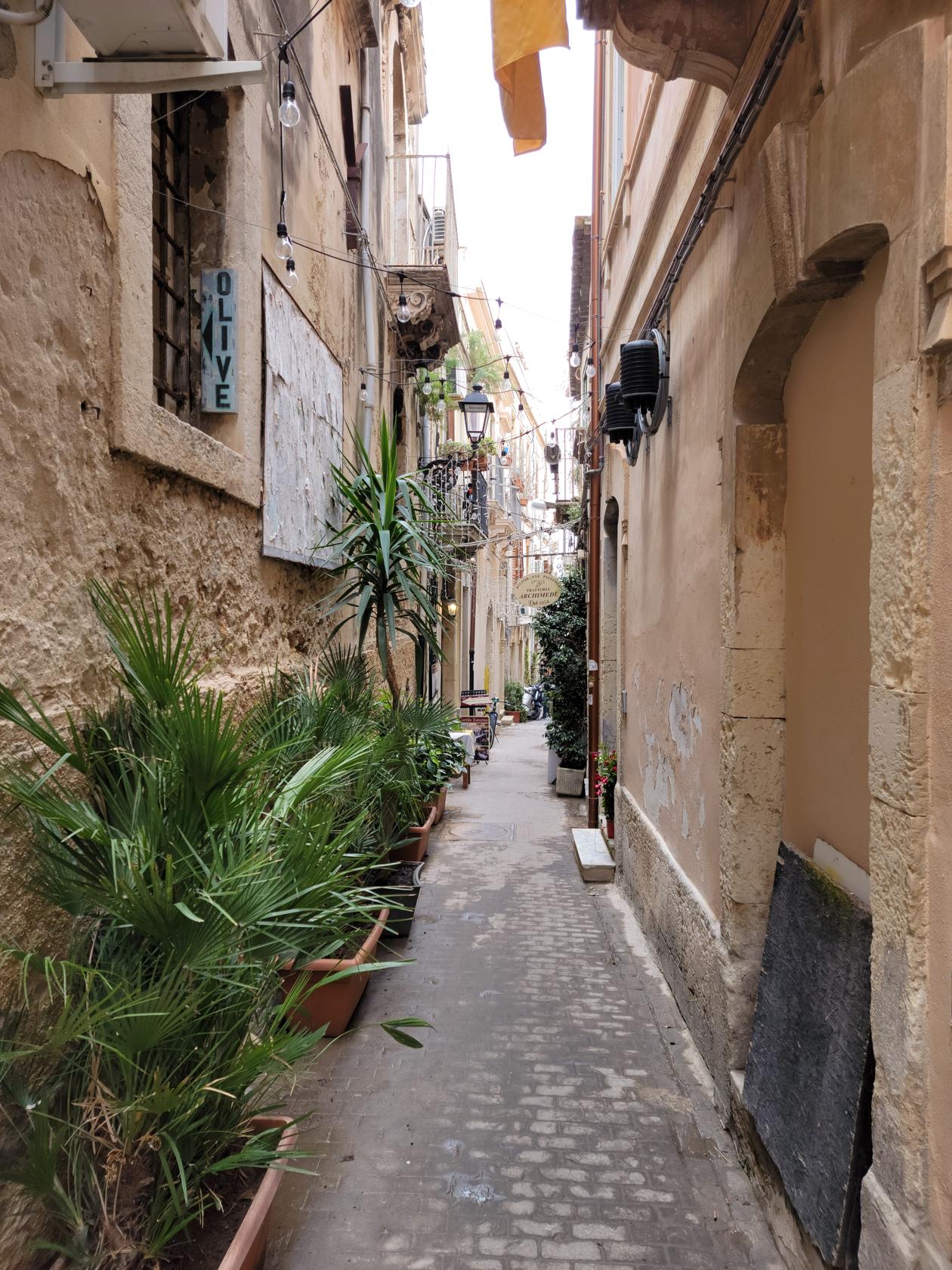
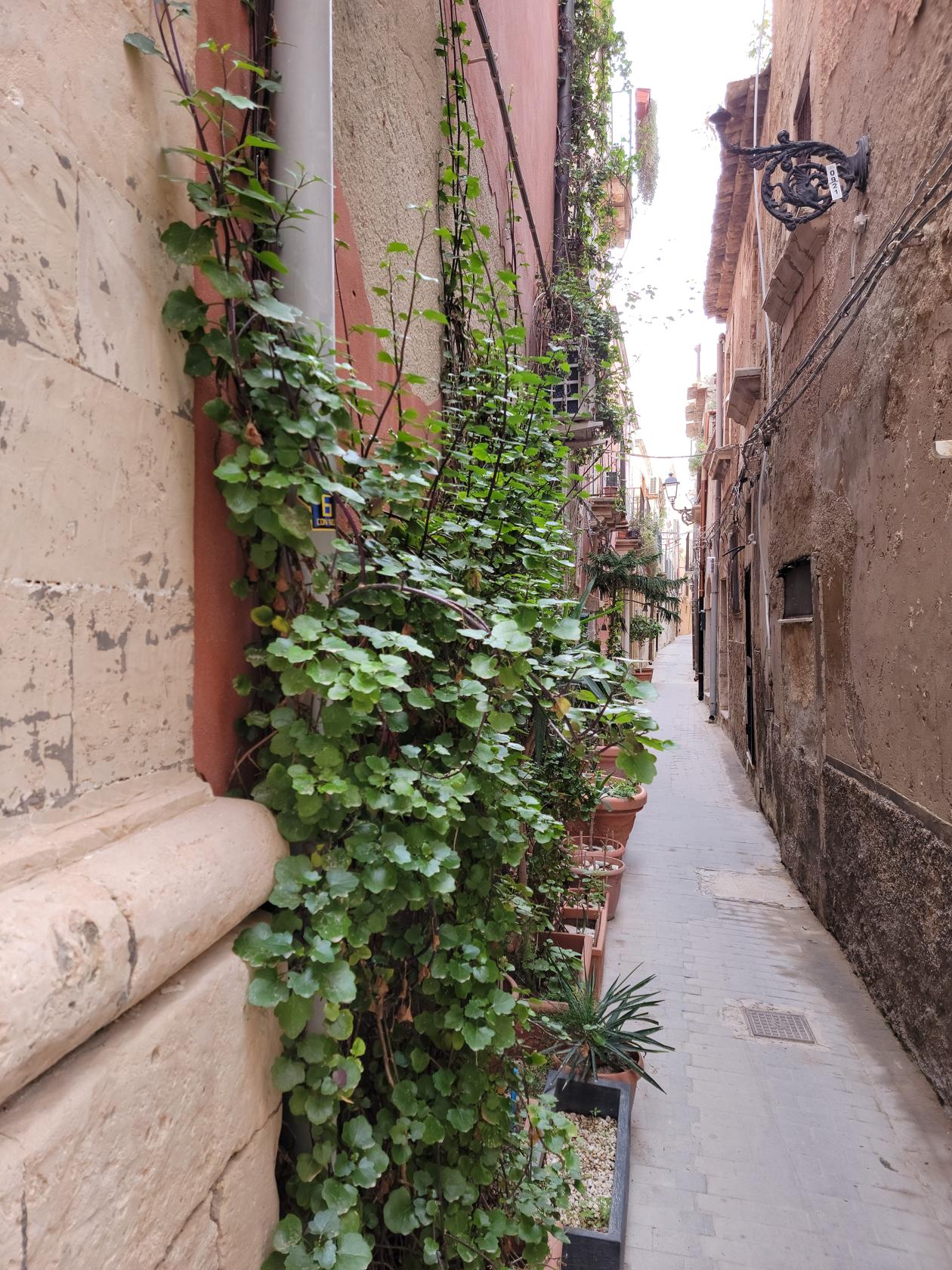
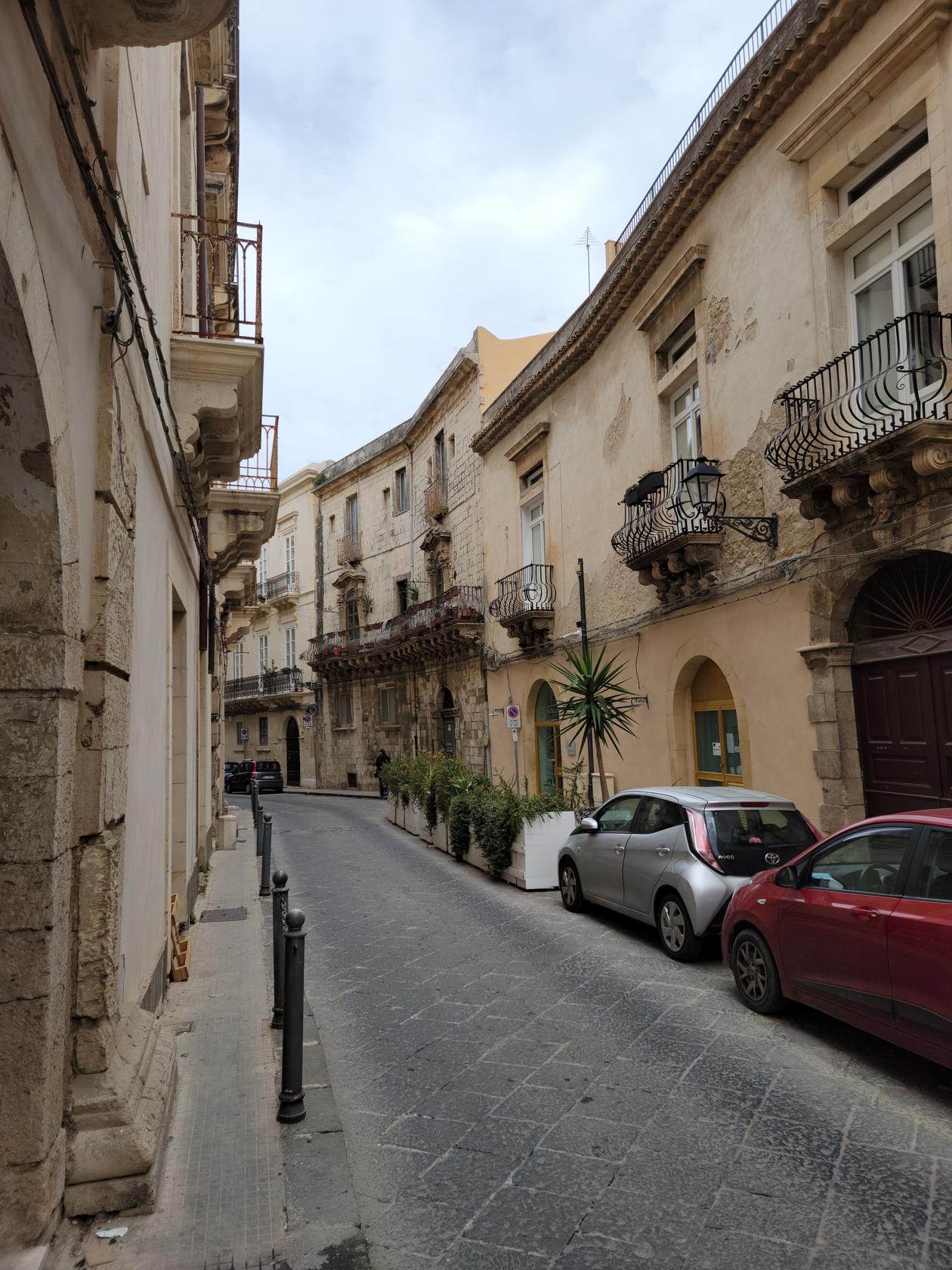
Alley – Ortigia – Siracusa, Sicily
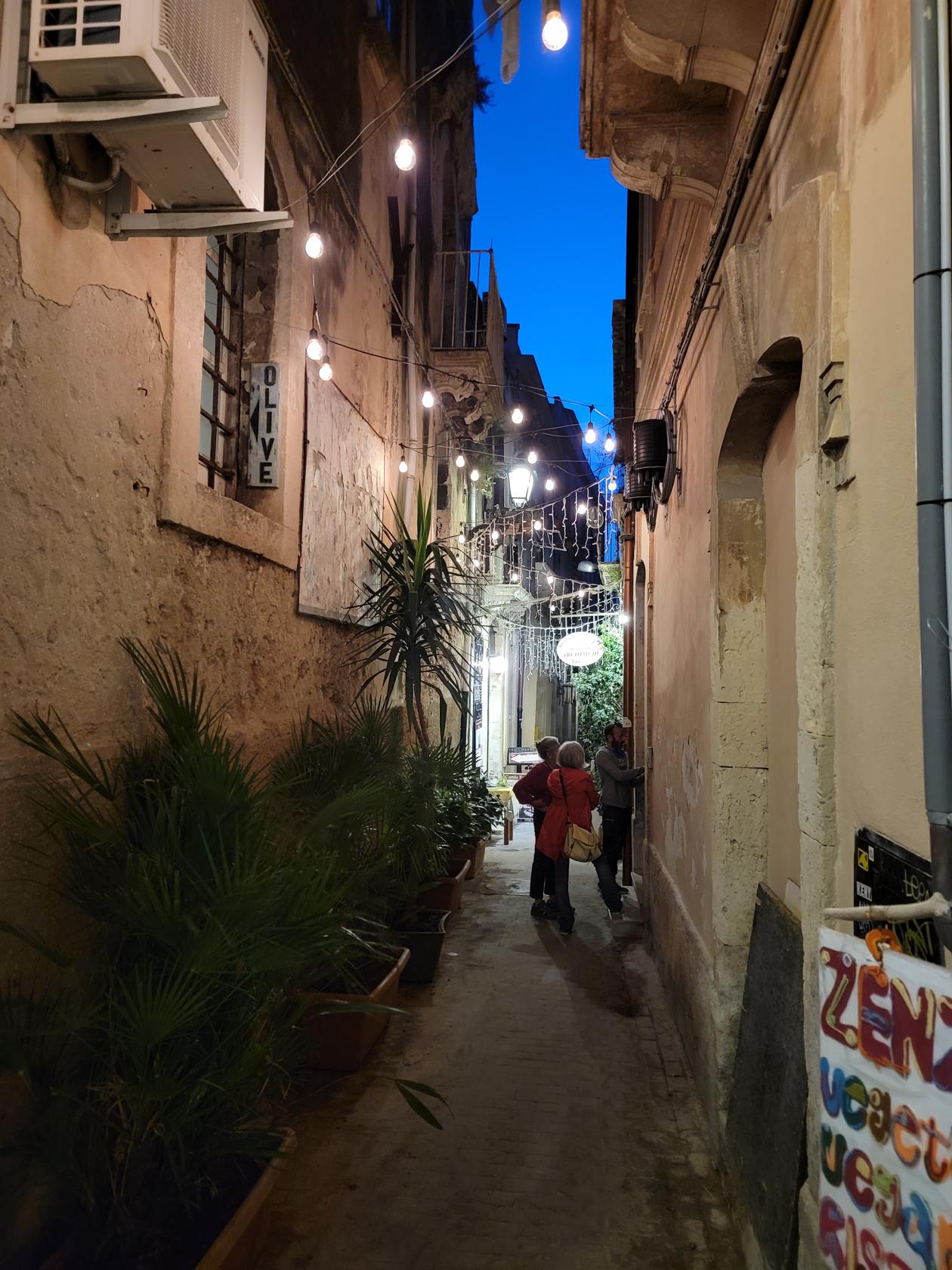
Via Dei Candelai – Ortigia – Siracusa, Sicily
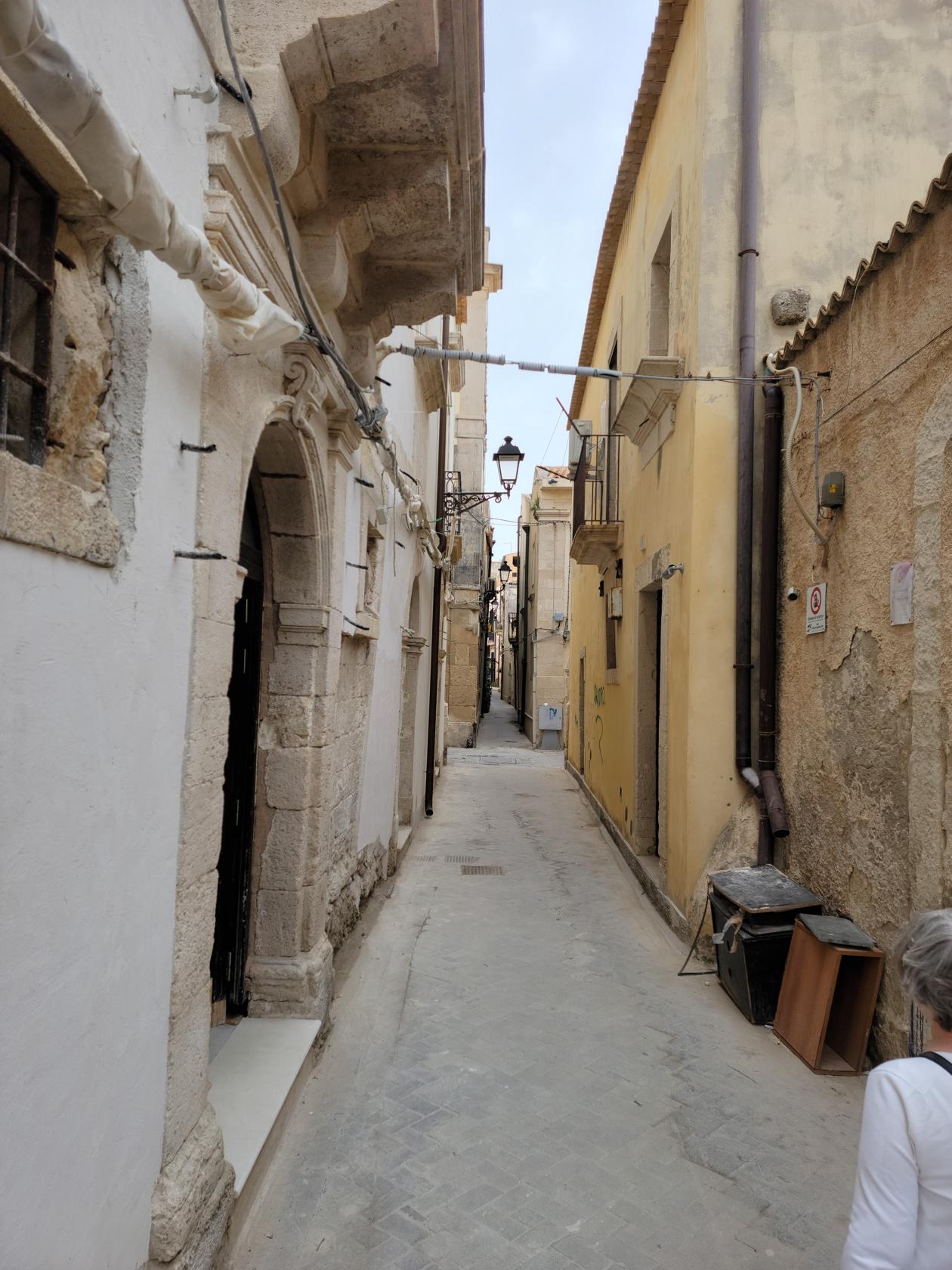
Narrow alley – Siracusa, Sicily
Side street – Siracusa, Sicily
Syracuse is divided into three main parts, Ortigia the island and original Greek settlement, Santa Lucia along the coast and the location of our hotel, and the Neapolis the location of the major Greek and Roman ruins .
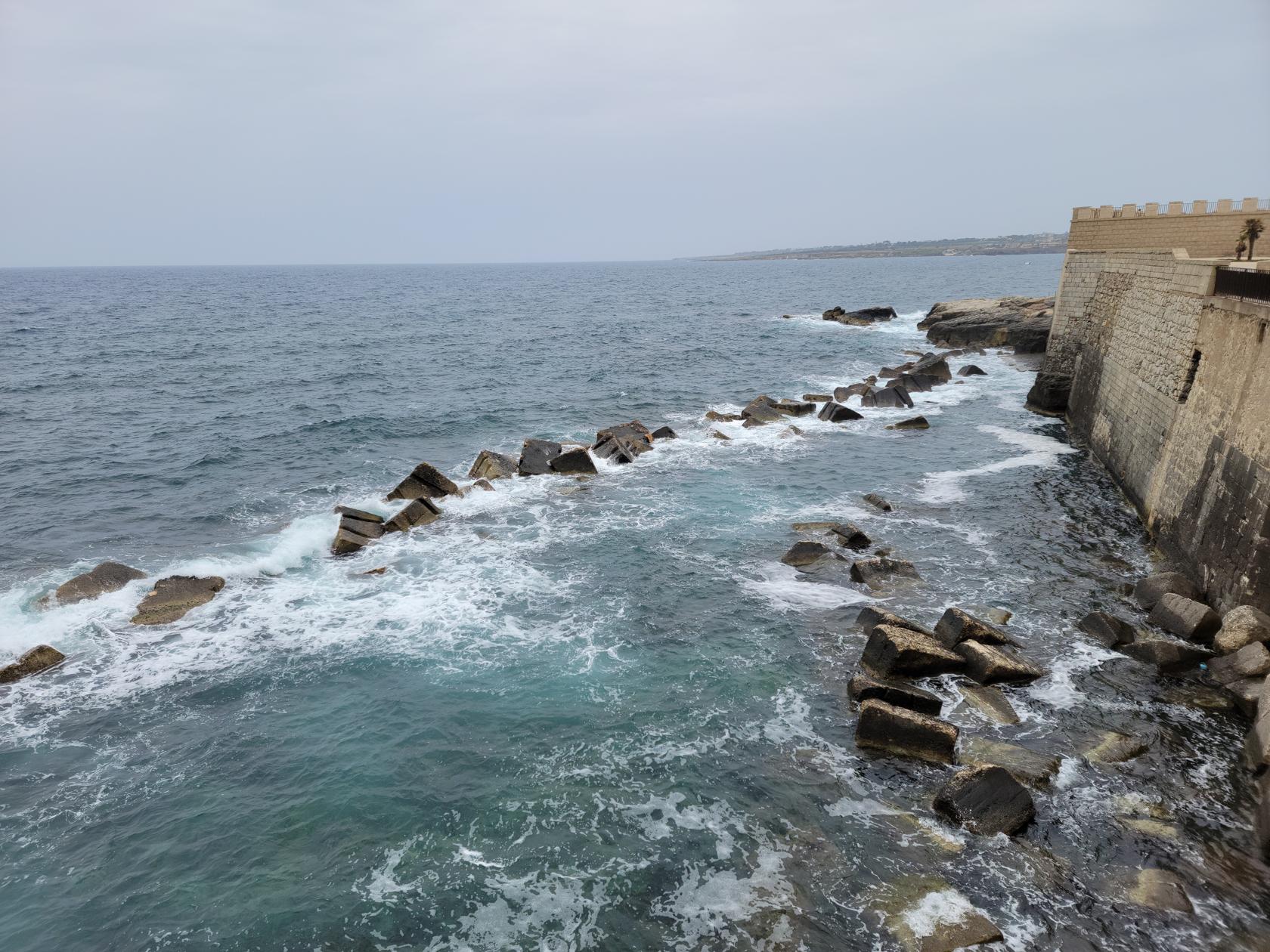
Ionian Sea – Siracusa, Sicily
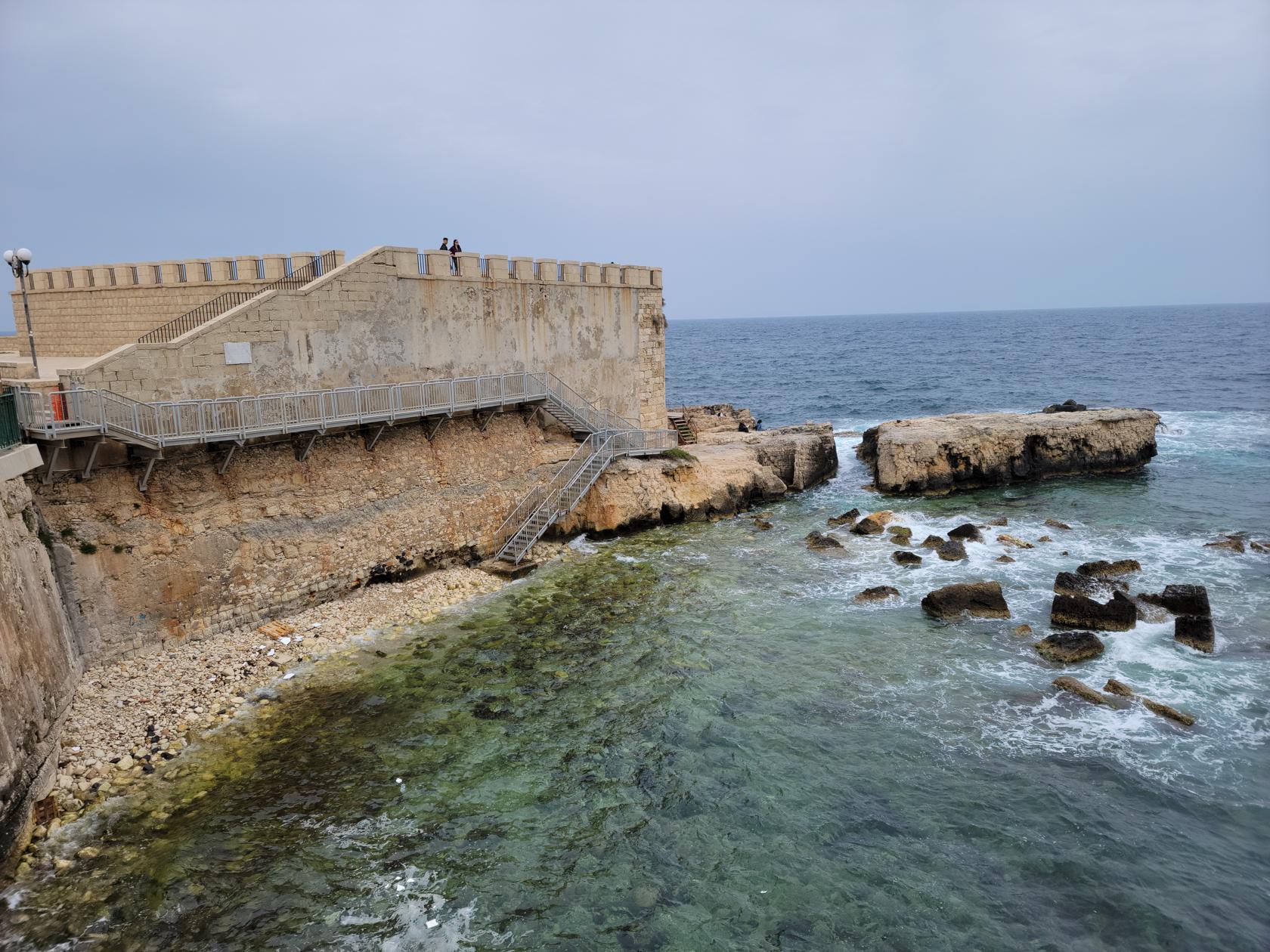
Fort Vigliena – Siracusa, Sicily
Fort Vigliena – Siracusa, Sicily
Fort Vigliena – Siracusa, Sicily
If you are at this point wondering what ash and puppets have to do with Sicily, and in particular Syracuse, read further. Otherwise, just rest assured it has everything to do with being on this quaint and wonderful island.
Note: Purchase the Museum and Park Combination Ticket at 18€. If you purchase them separately, it will cost you an extra 8€. The combination ticket will get you into both, with money left over for a light lunch.
Archaeological Museum
The Archaeological Museum is an impressive collection of ancient, Greek and Roman artifacts dating back to the seventh and eighth centuries.
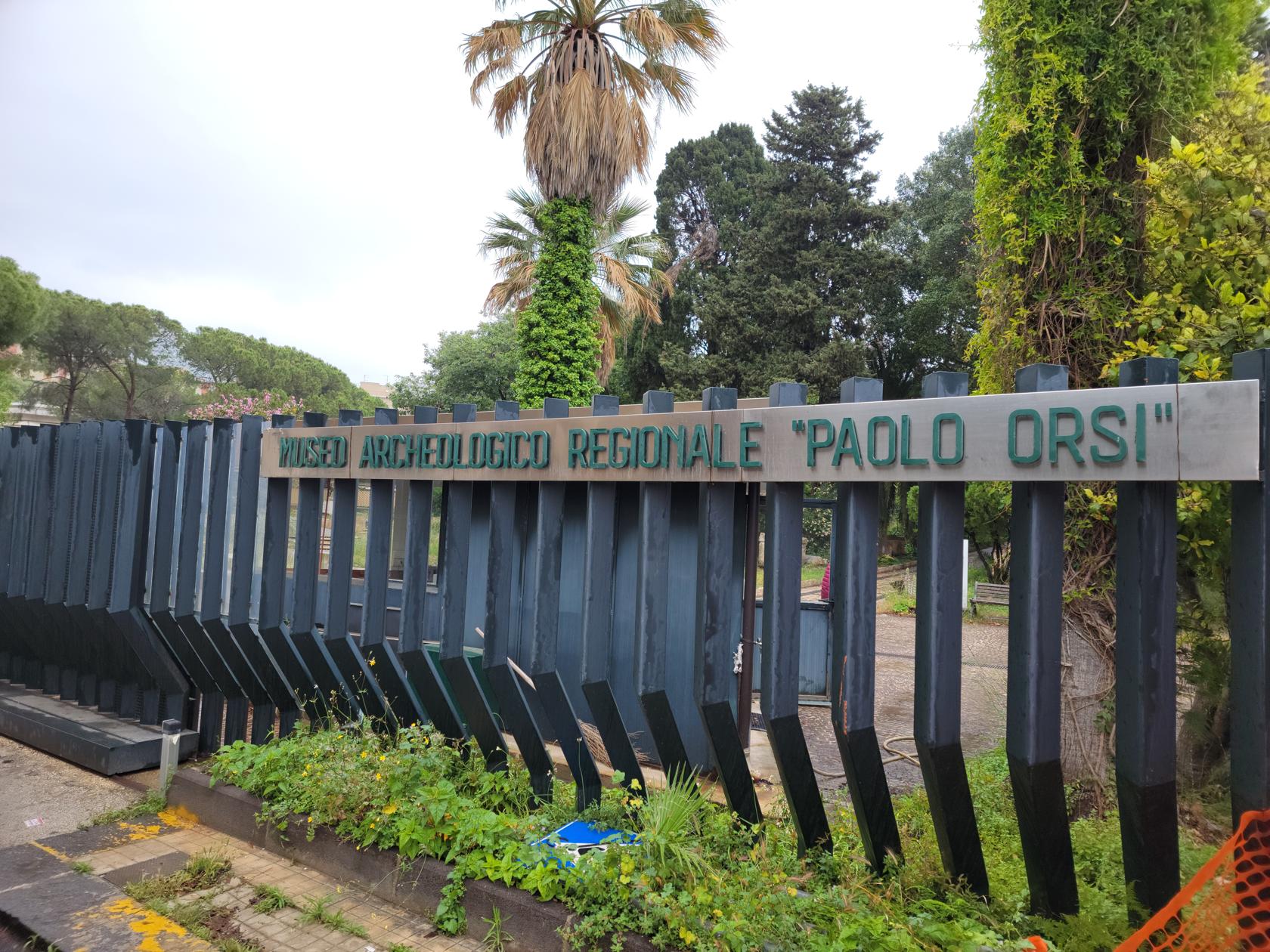
Entrance – Archaeological Museum Paolo Orsi – Siracuse, Sicily
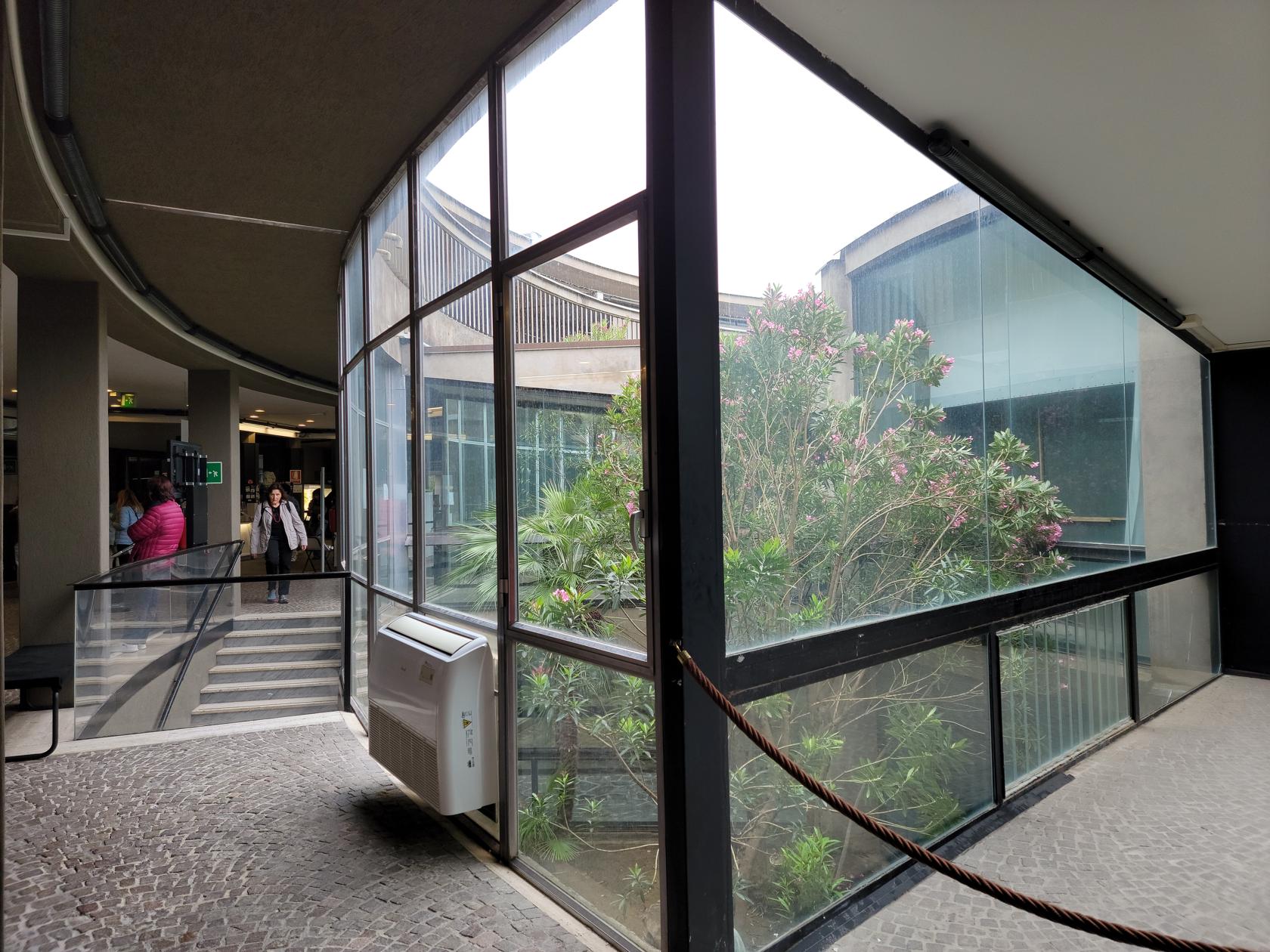
The museum’s interior – Archaeological Museum Paolo Orsi – Siracuse, Sicily
Entrance to one of its sections – Archaeological Museum Paolo Orsi – Siracuse, Sicily
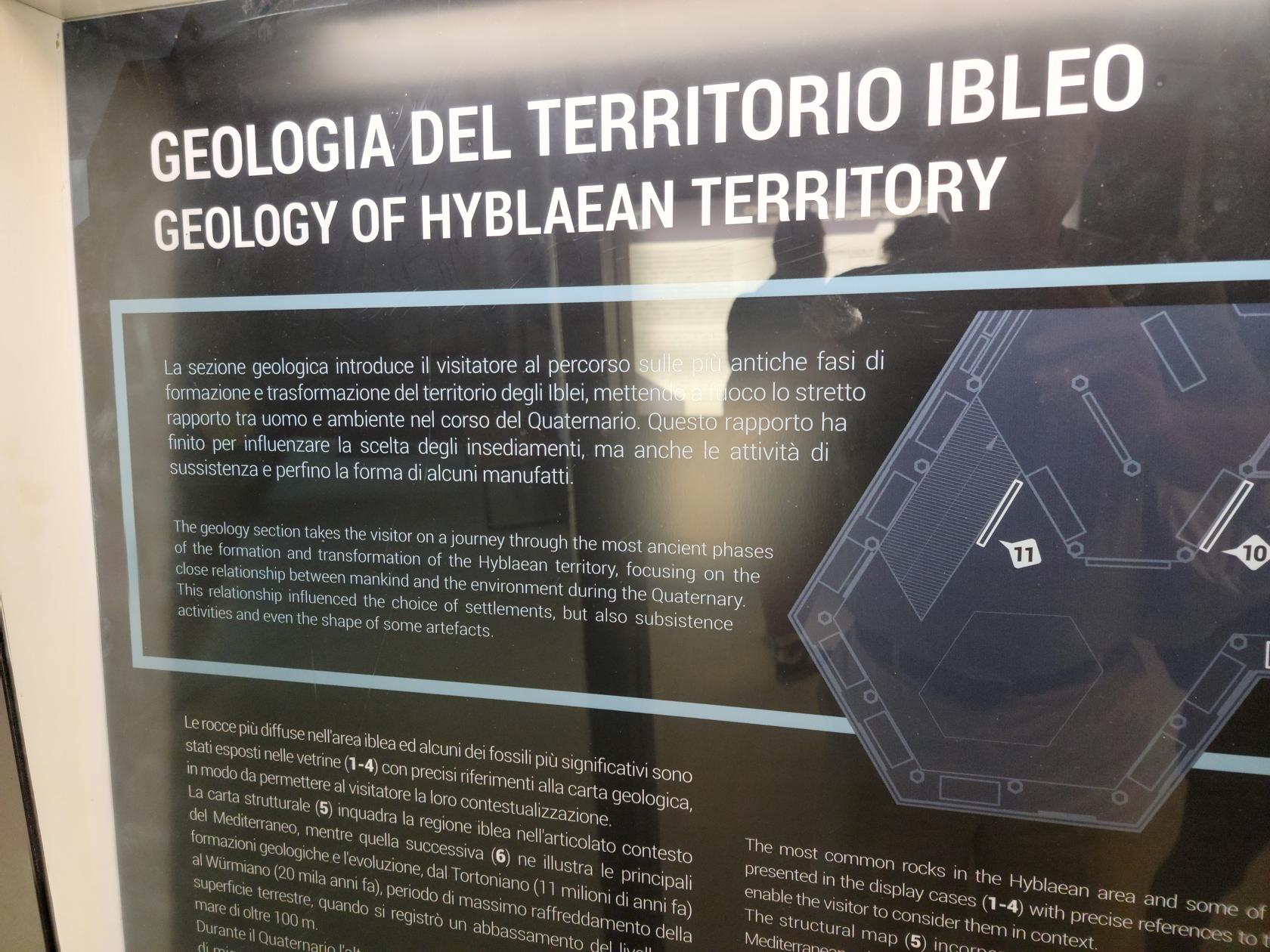
Geology – Archaeological Museum Paolo Orsi – Siracuse, Sicily
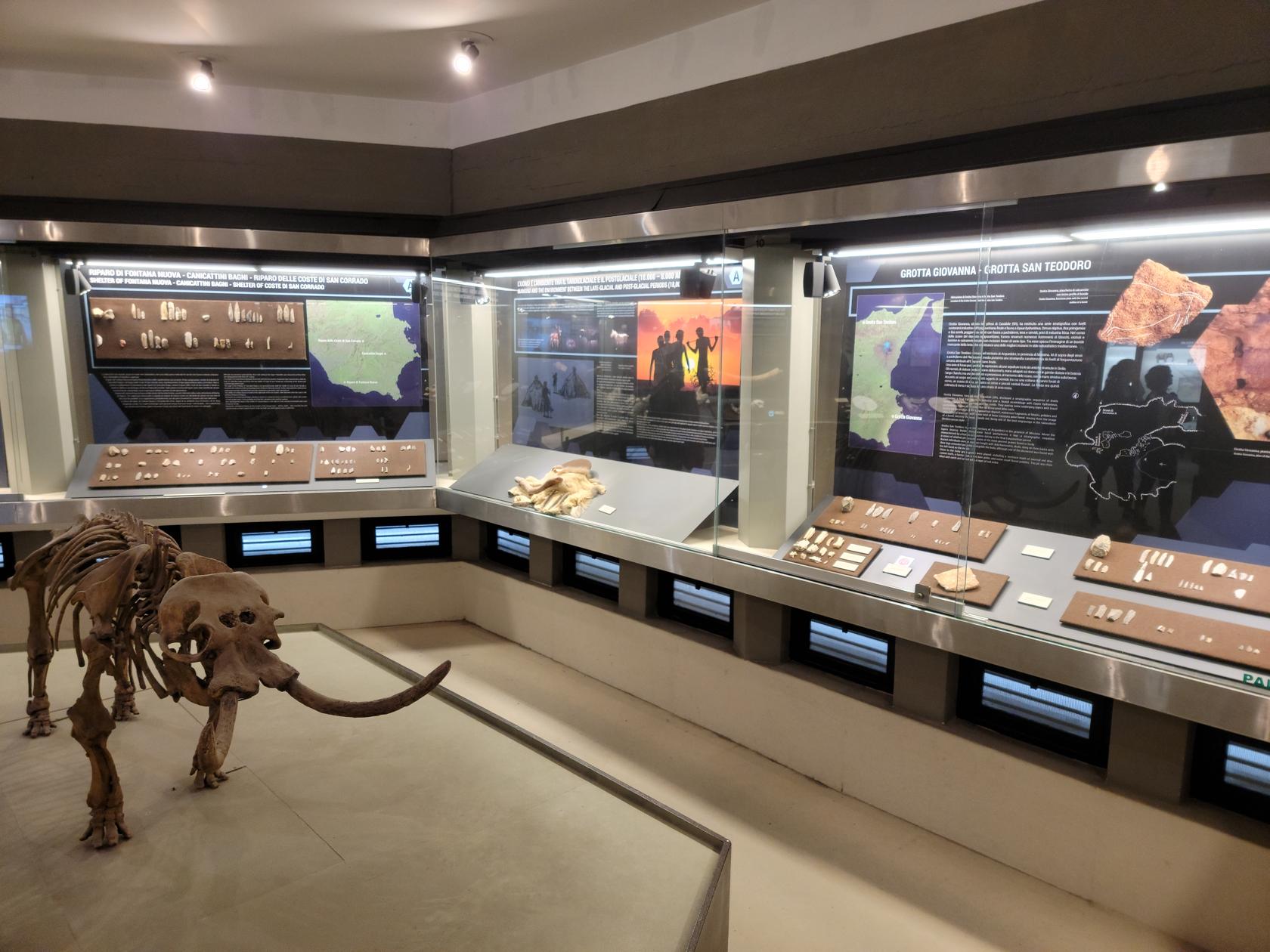
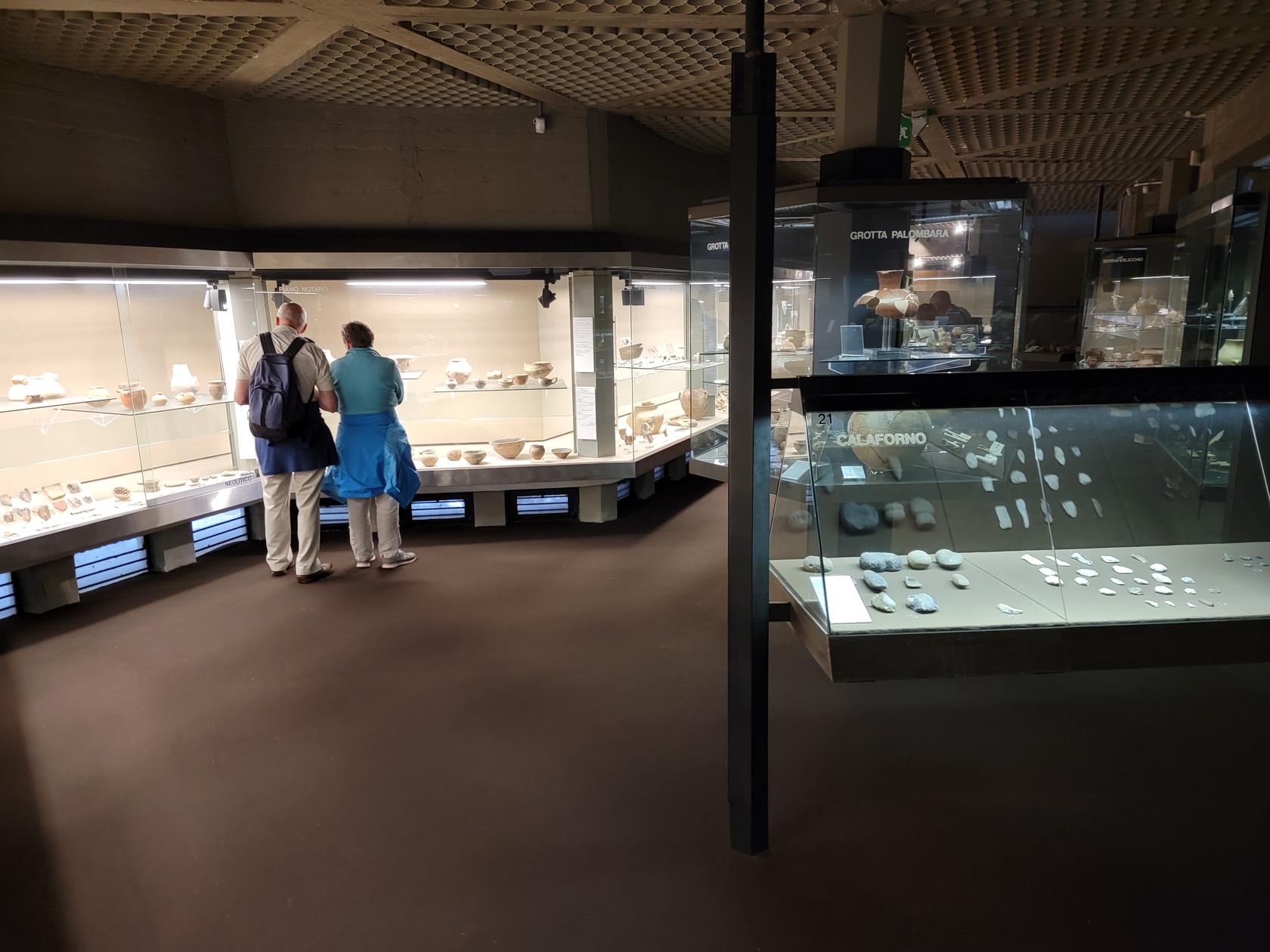
The museum handles each time period in a sequential fashion, starting with the ancient period of the pre-historic animals and tectonic changes to the area, all the way to the arrival of the Greeks and other colonial powers.
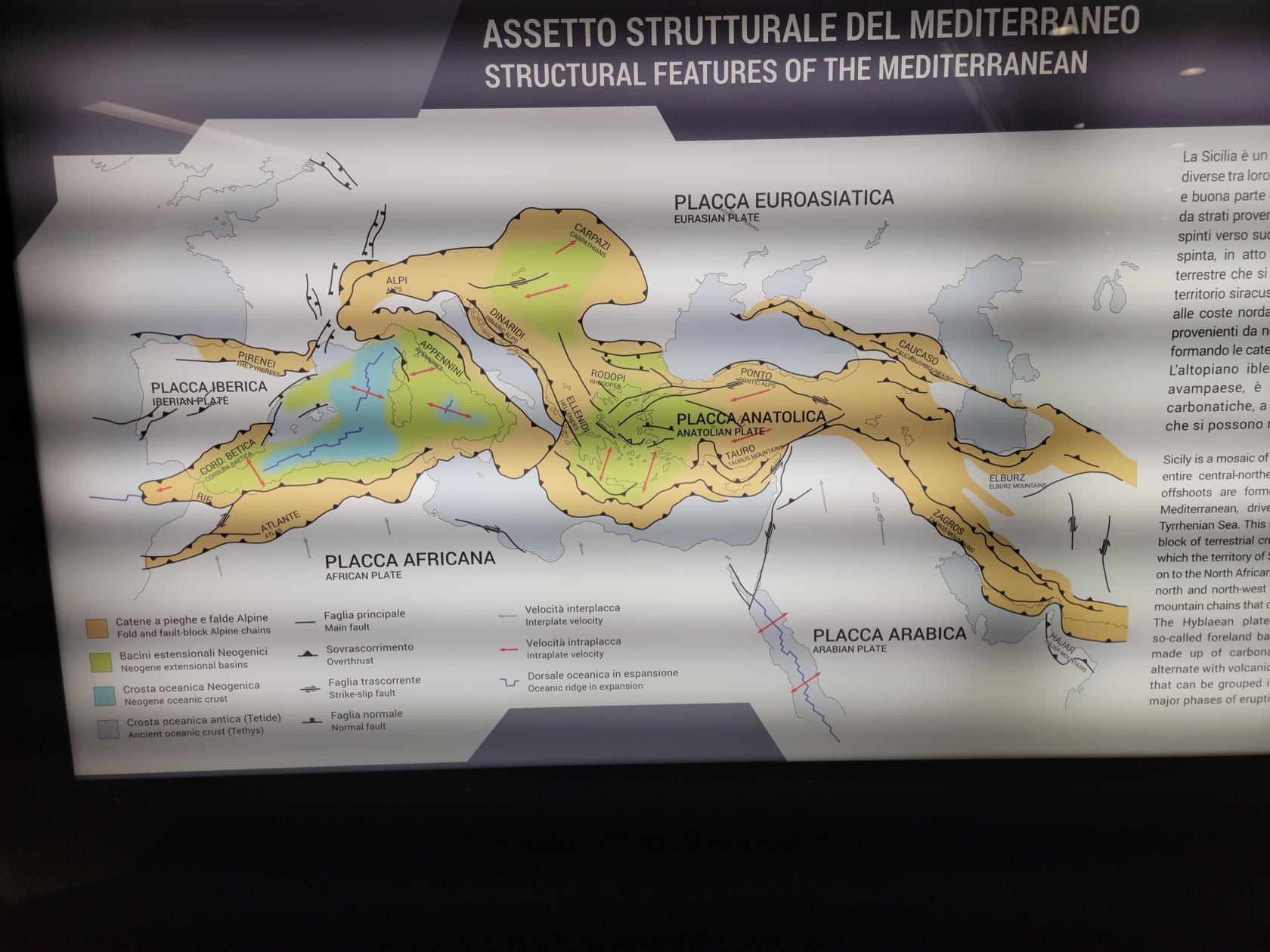
Tectonic plates of Italy – Archaeological Museum Paolo Orsi – Siracuse, Sicily
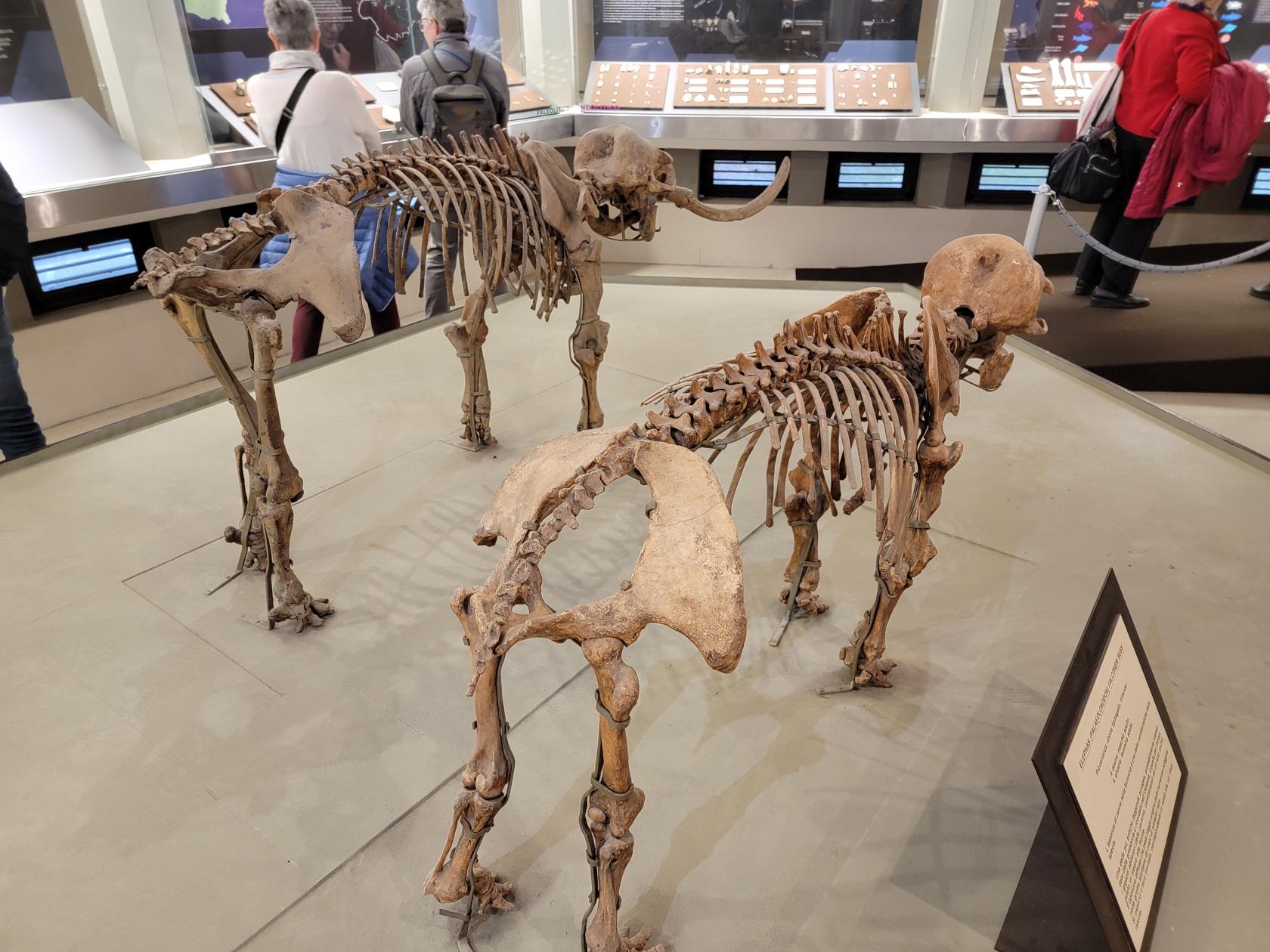
Pygmied elephant and hippopotamus – Archaeological Museum Paolo Orsi – Siracuse, Sicily
Fossils – Archaeological Museum Paolo Orsi – Siracuse, Sicily
Fossil section – Archaeological Museum Paolo Orsi – Siracuse, Sicily
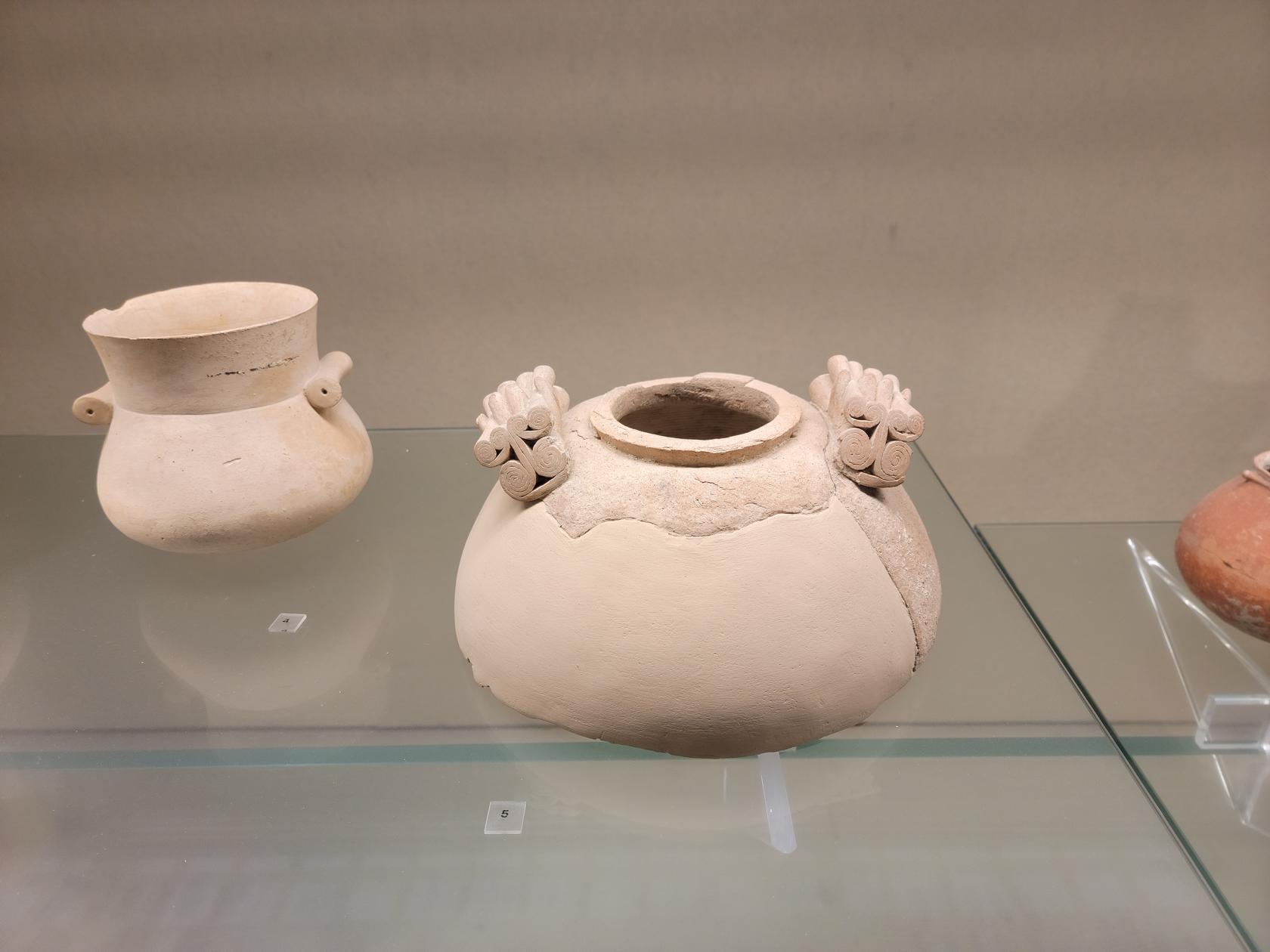
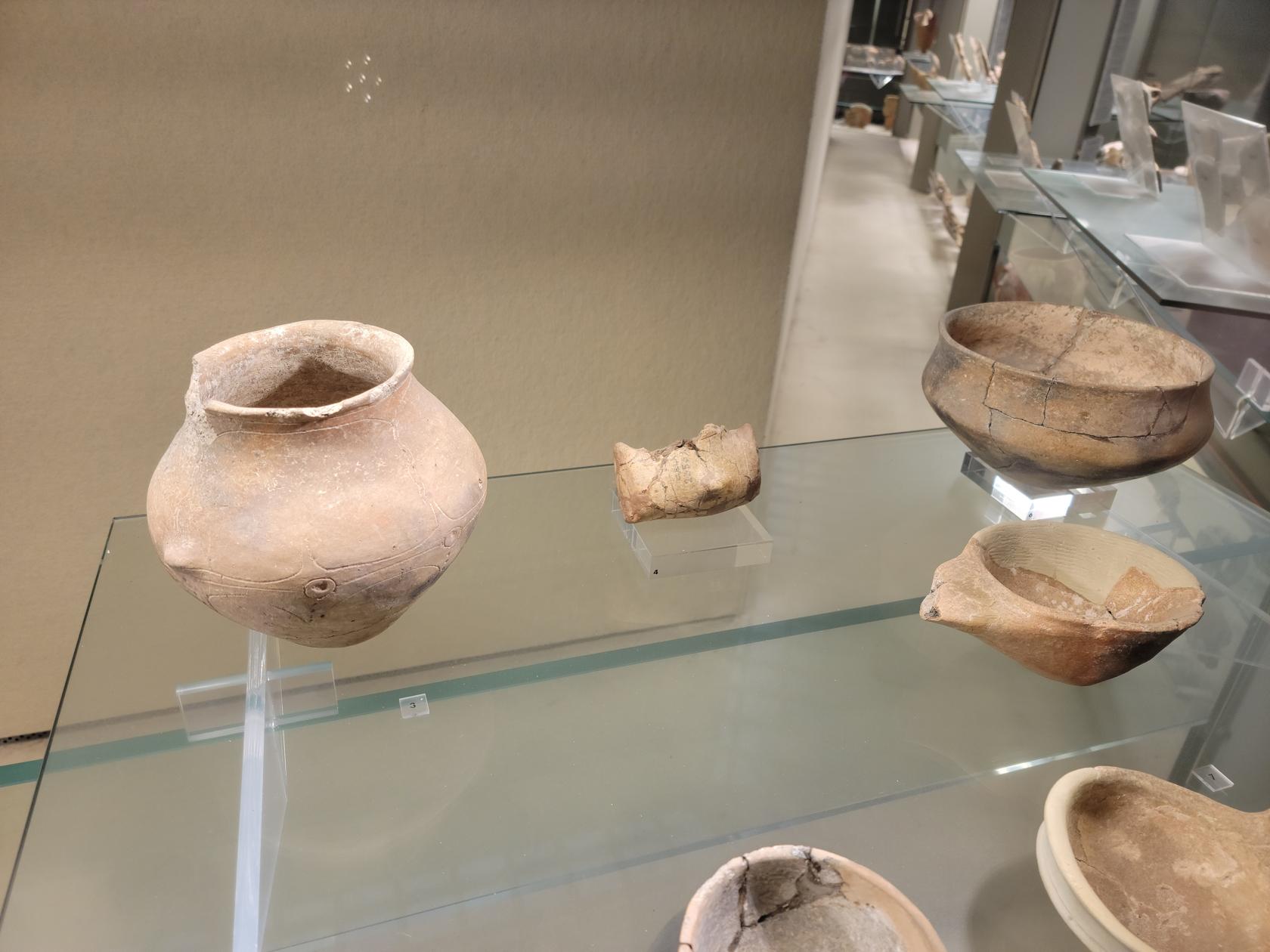
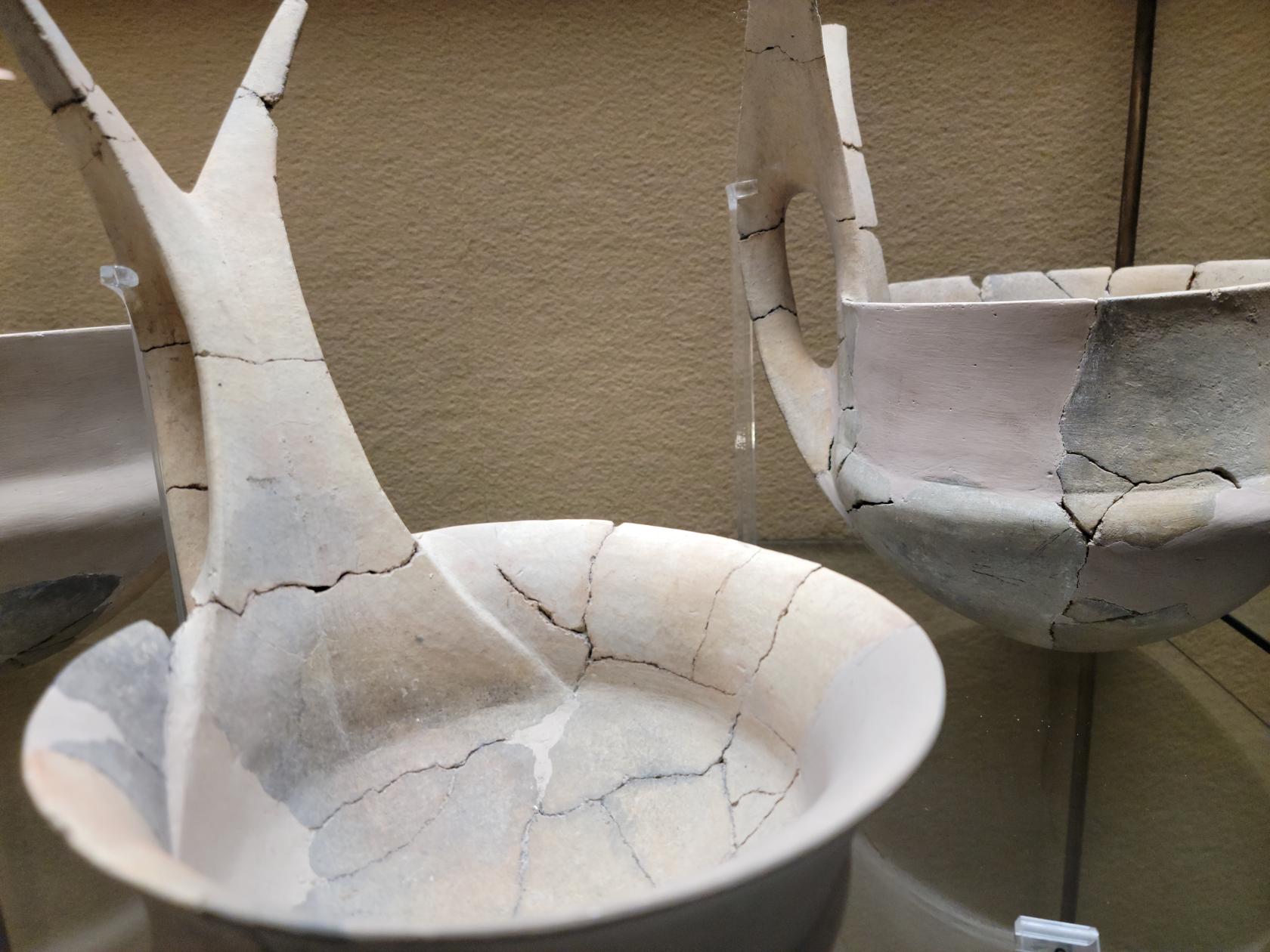
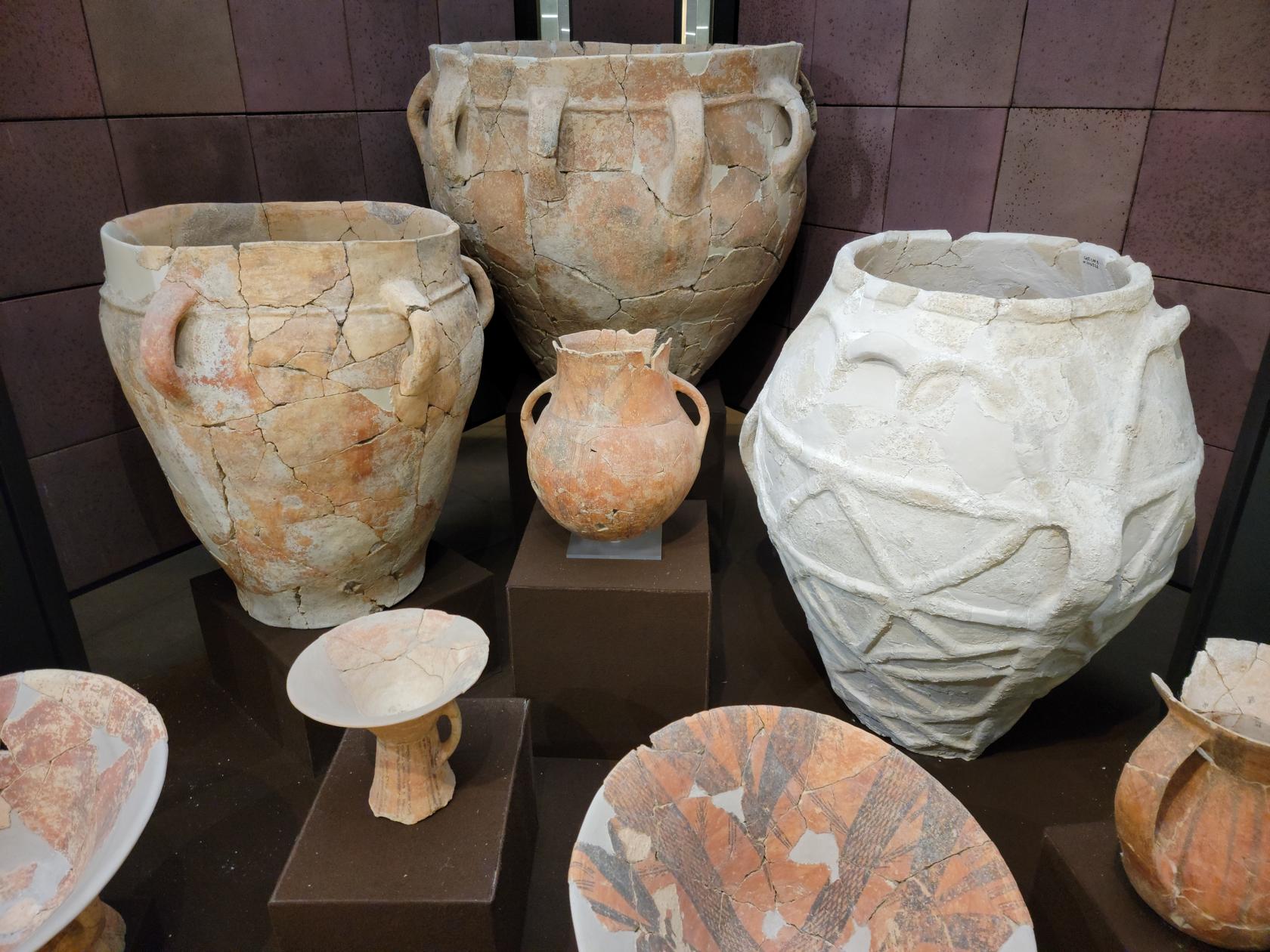
Prehistoric inhabitants jars – Archaeological Museum Paolo Orsi – Siracuse, Sicily
Old vases – Archaeological Museum Paolo Orsi – Siracuse, Sicily
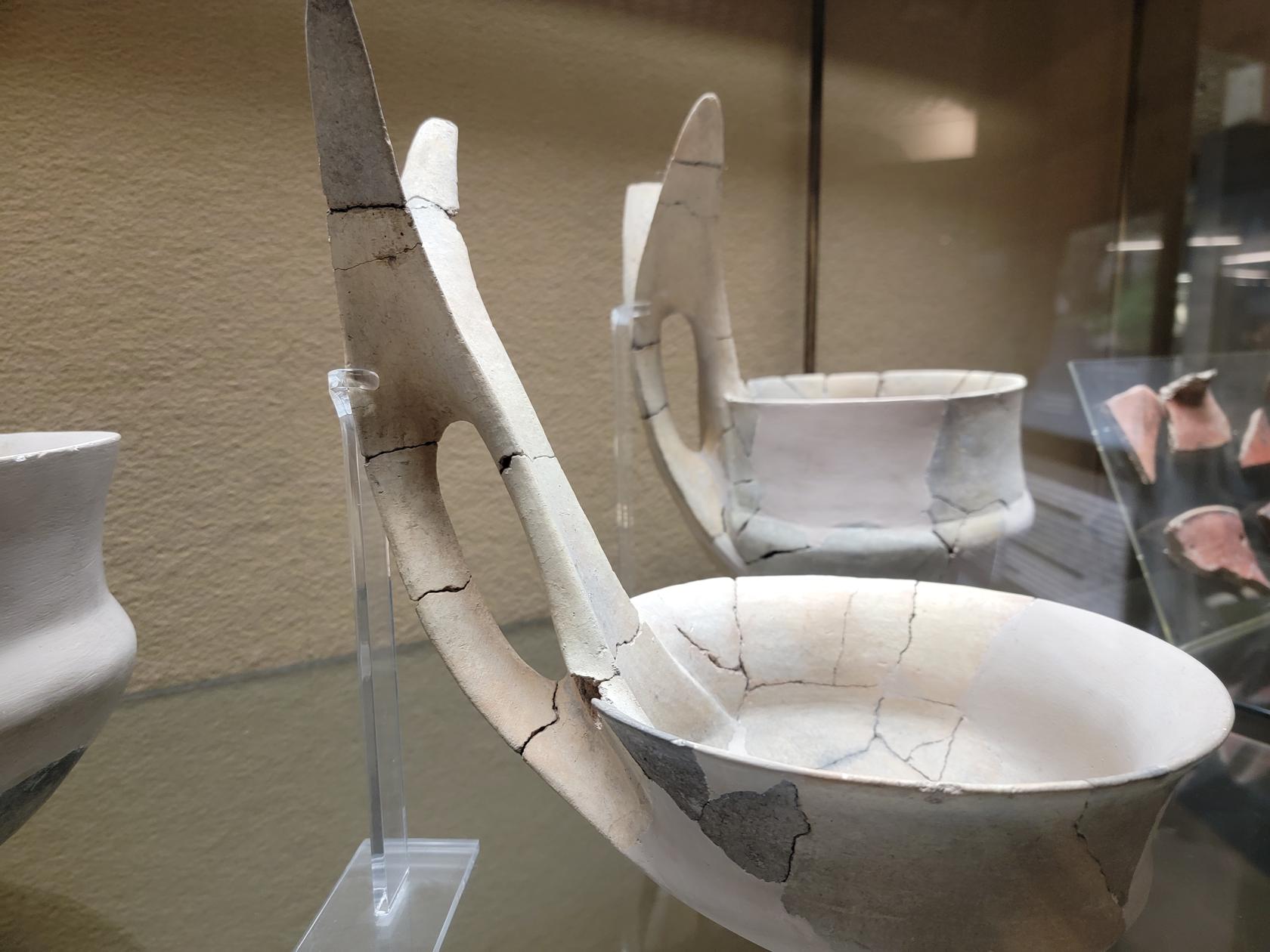
Dipping bowls – Archaeological Museum Paolo Orsi – Siracuse, Sicily
Dipping bowls with stemmed handles – Archaeological Museum Paolo Orsi – Siracuse, Sicily
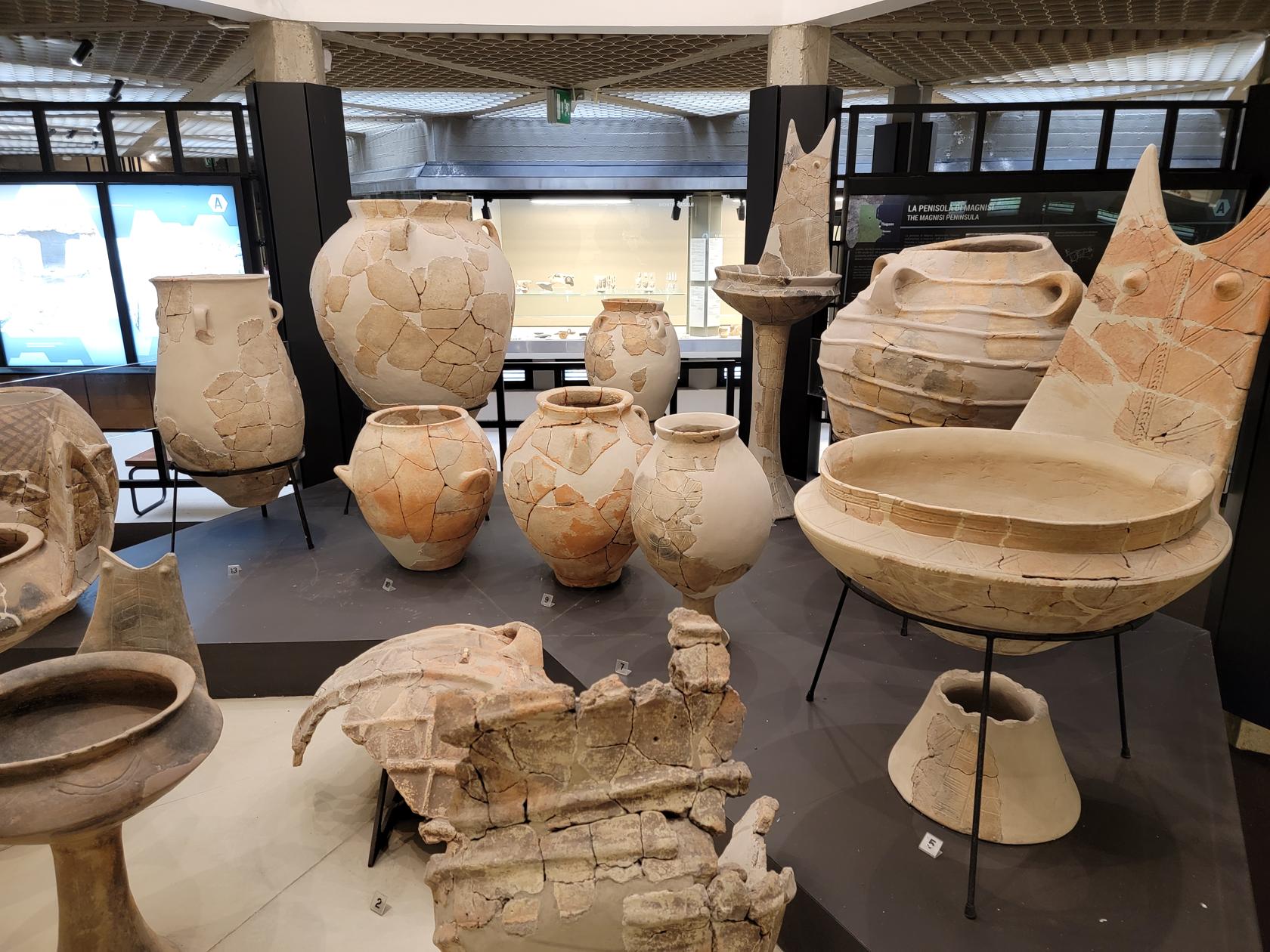
Intricate vases and vessels – Archaeological Museum Paolo Orsi – Siracuse, Sicily
Urns and other vessels – Archaeological Museum Paolo Orsi – Siracuse, Sicily
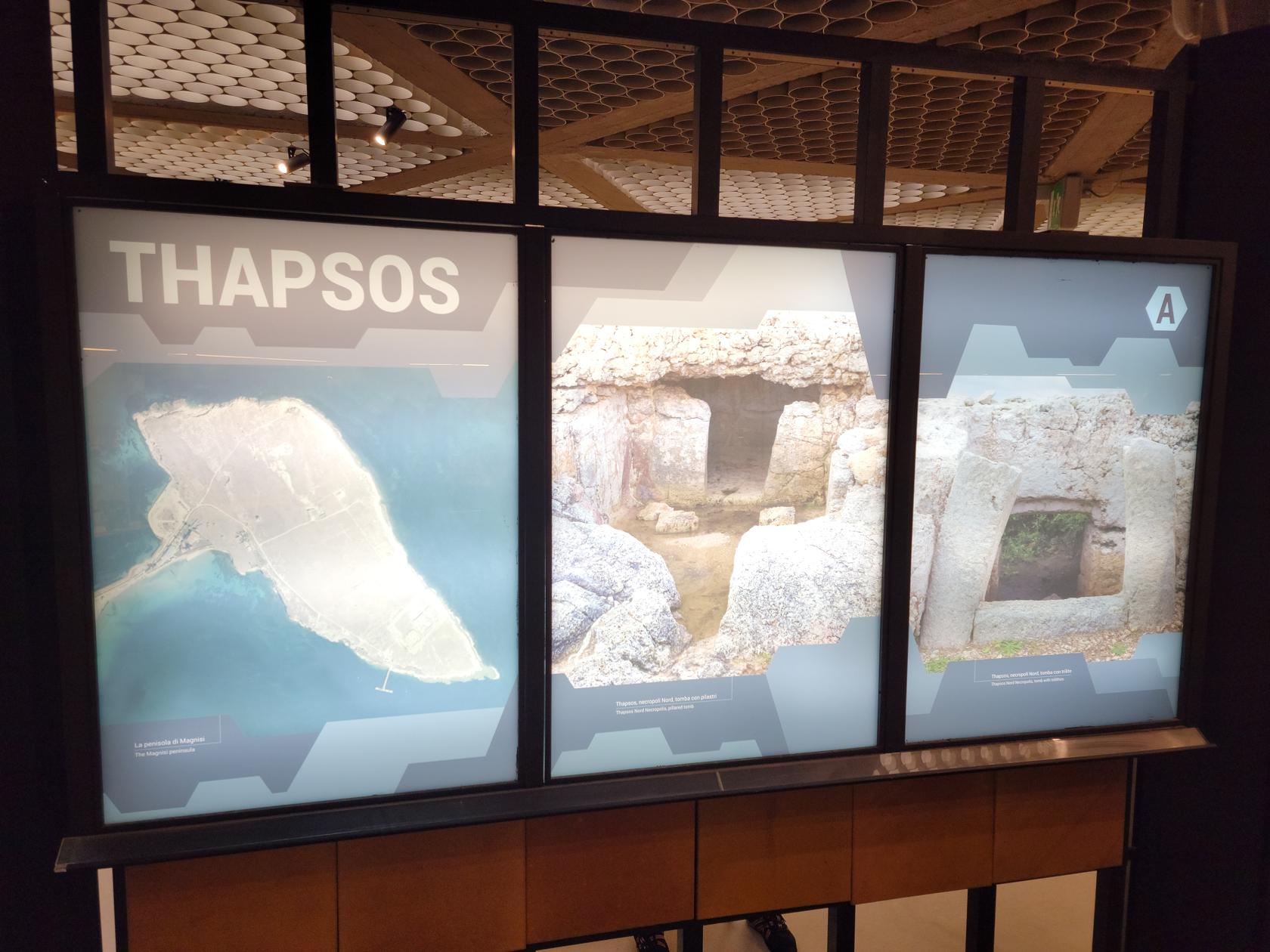
Thapsos collection – Archaeological Museum Paolo Orsi – Siracuse, Sicily
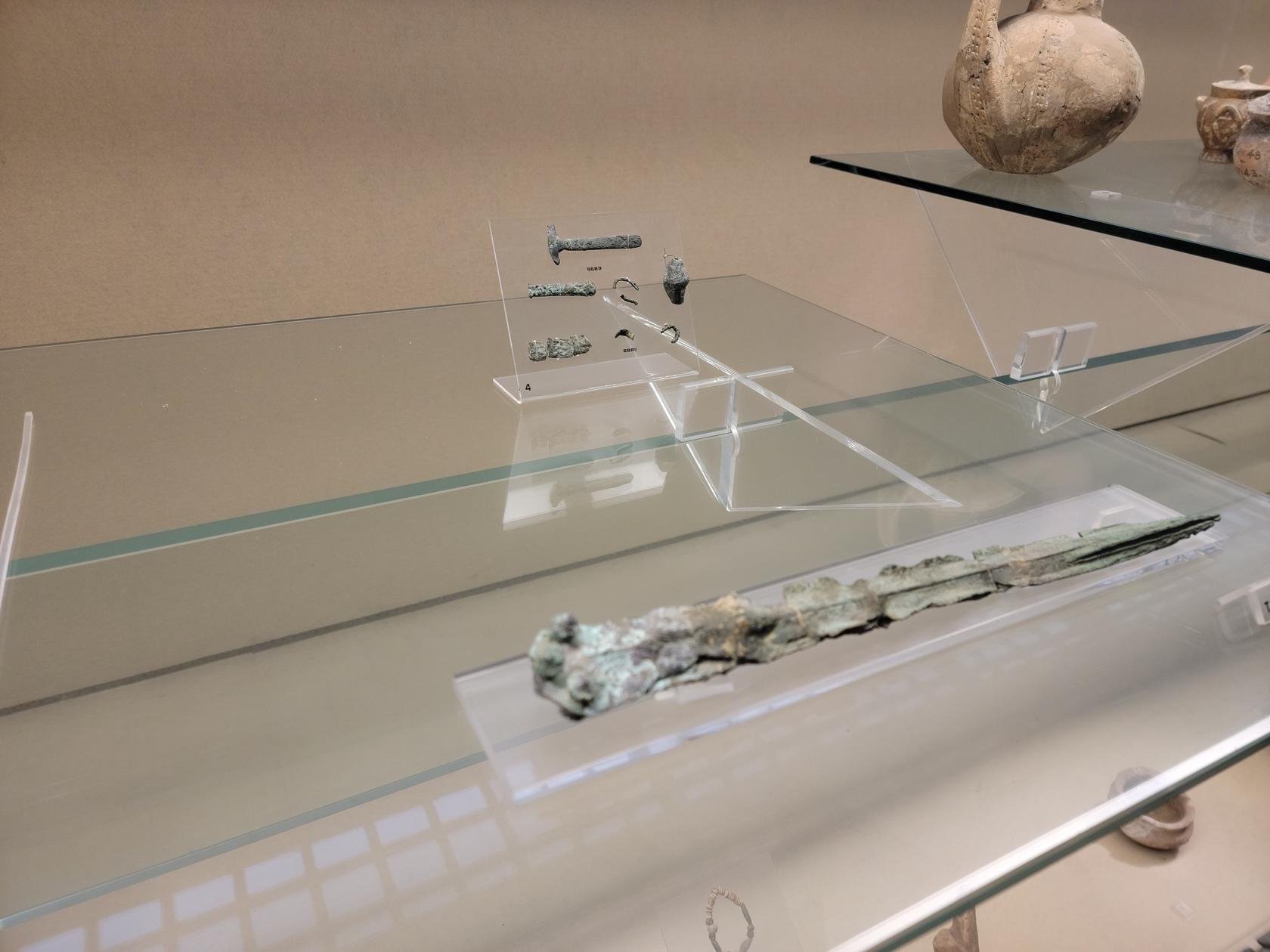
Bronze dagger – Archaeological Museum Paolo Orsi – Siracuse, Sicily
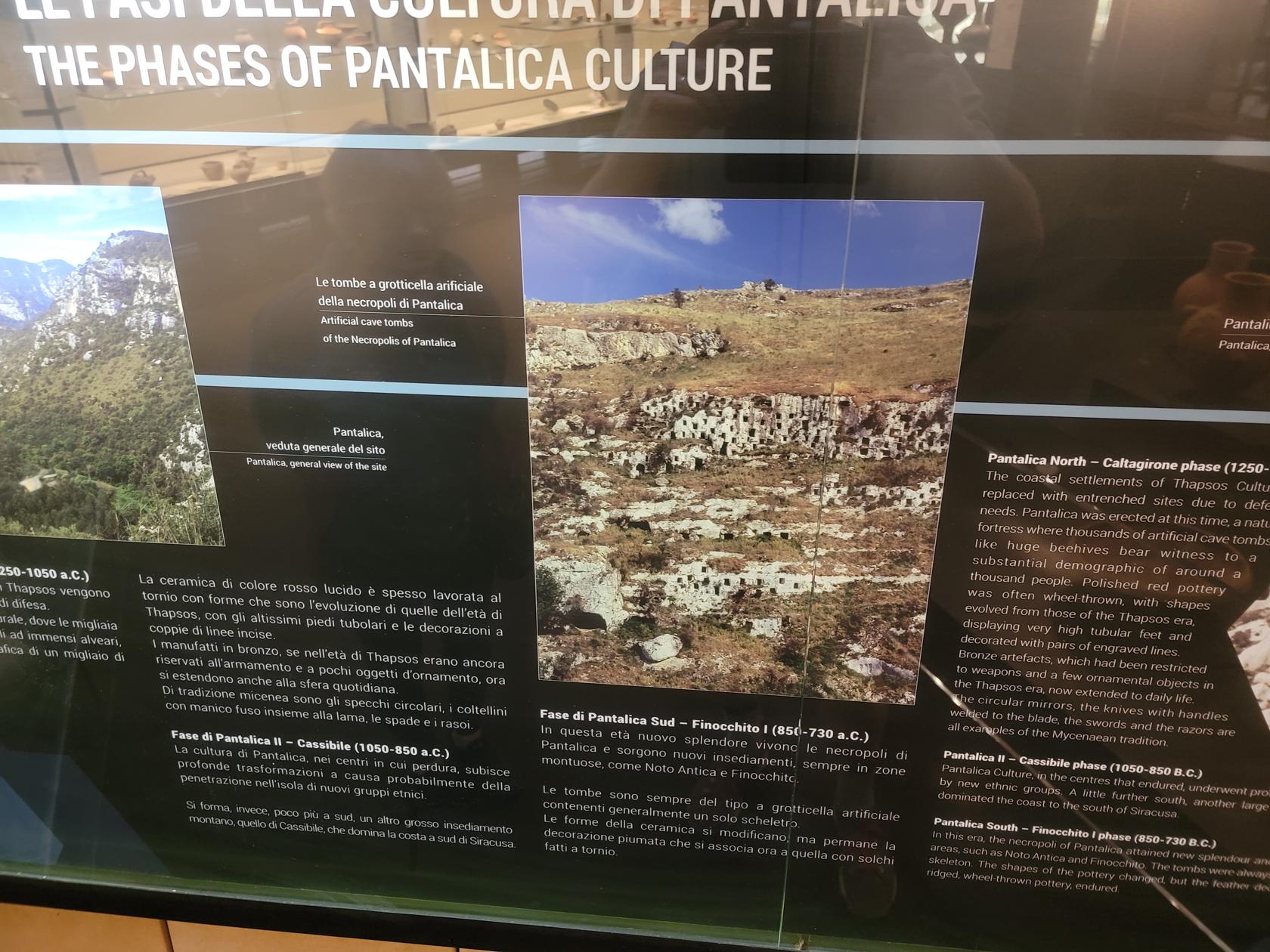
The burial sites of Pantalica – Archaeological Museum Paolo Orsi – Siracuse, Sicily
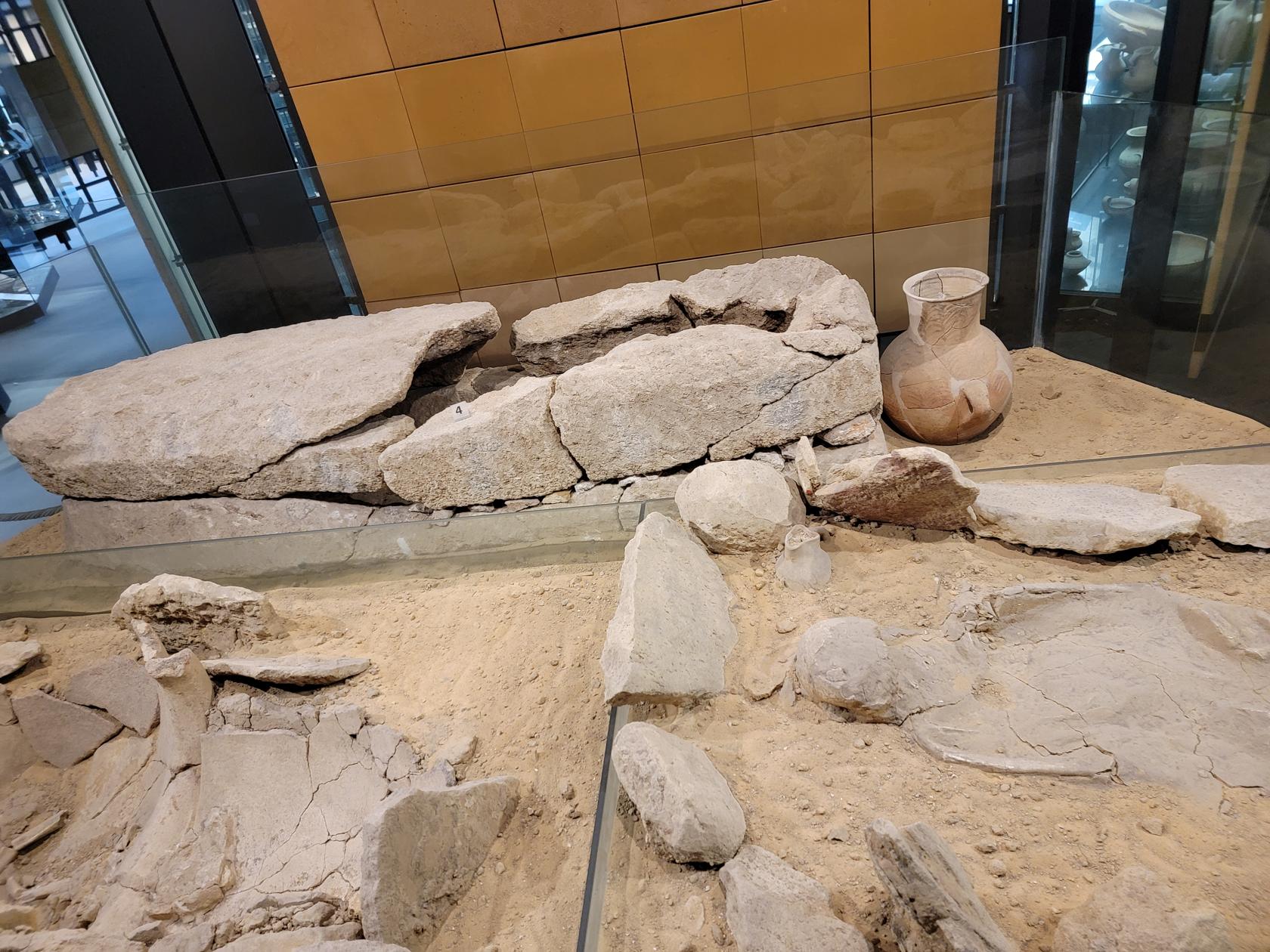
Exhibit of a typical burial – Archaeological Museum Paolo Orsi – Siracuse, Sicily
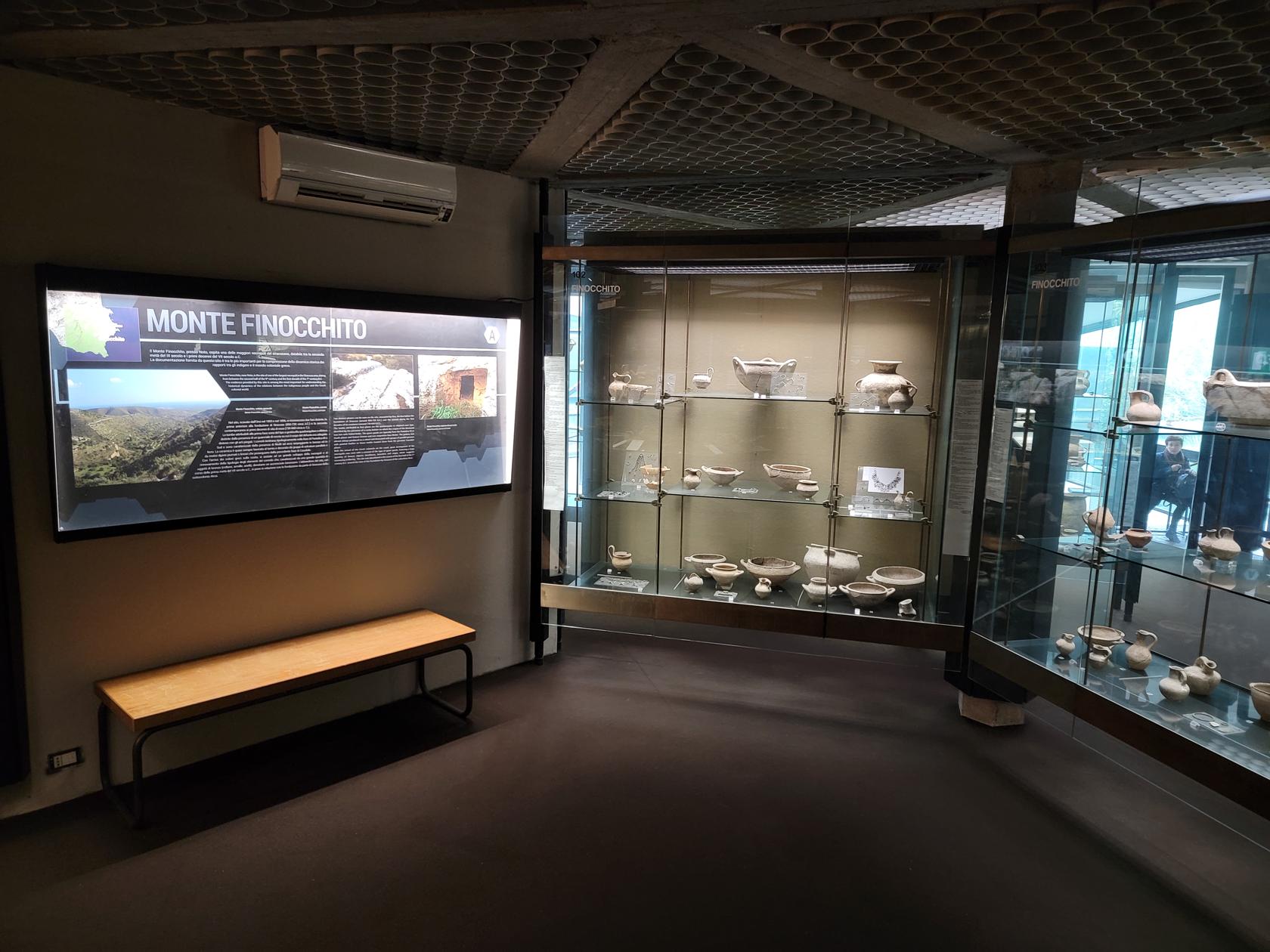
Monte Finocchio – Archaeological Museum Paolo Orsi – Siracuse, Sicily
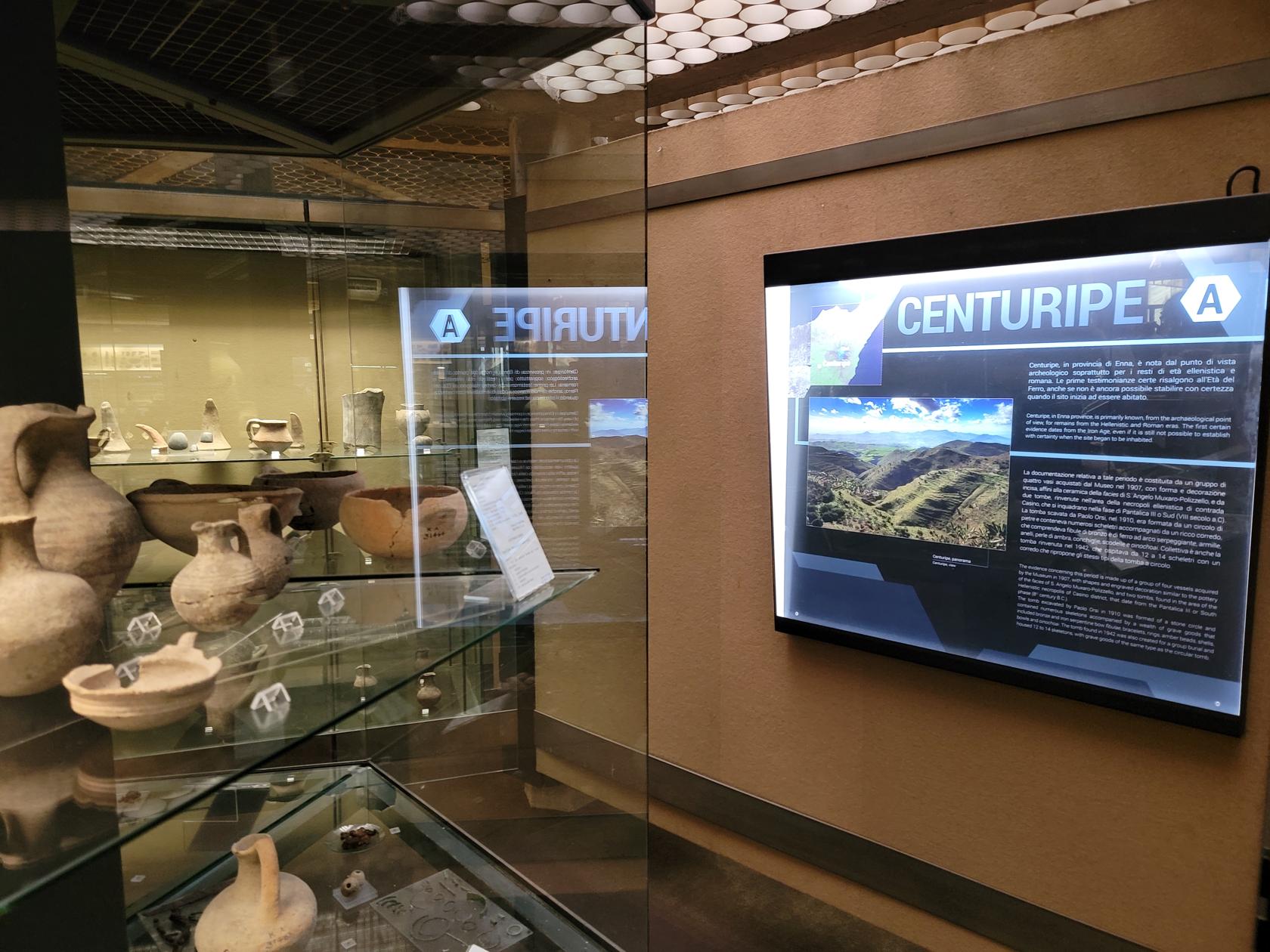
Centuripe exhibit – Archaeological Museum Paolo Orsi – Siracuse, Sicily
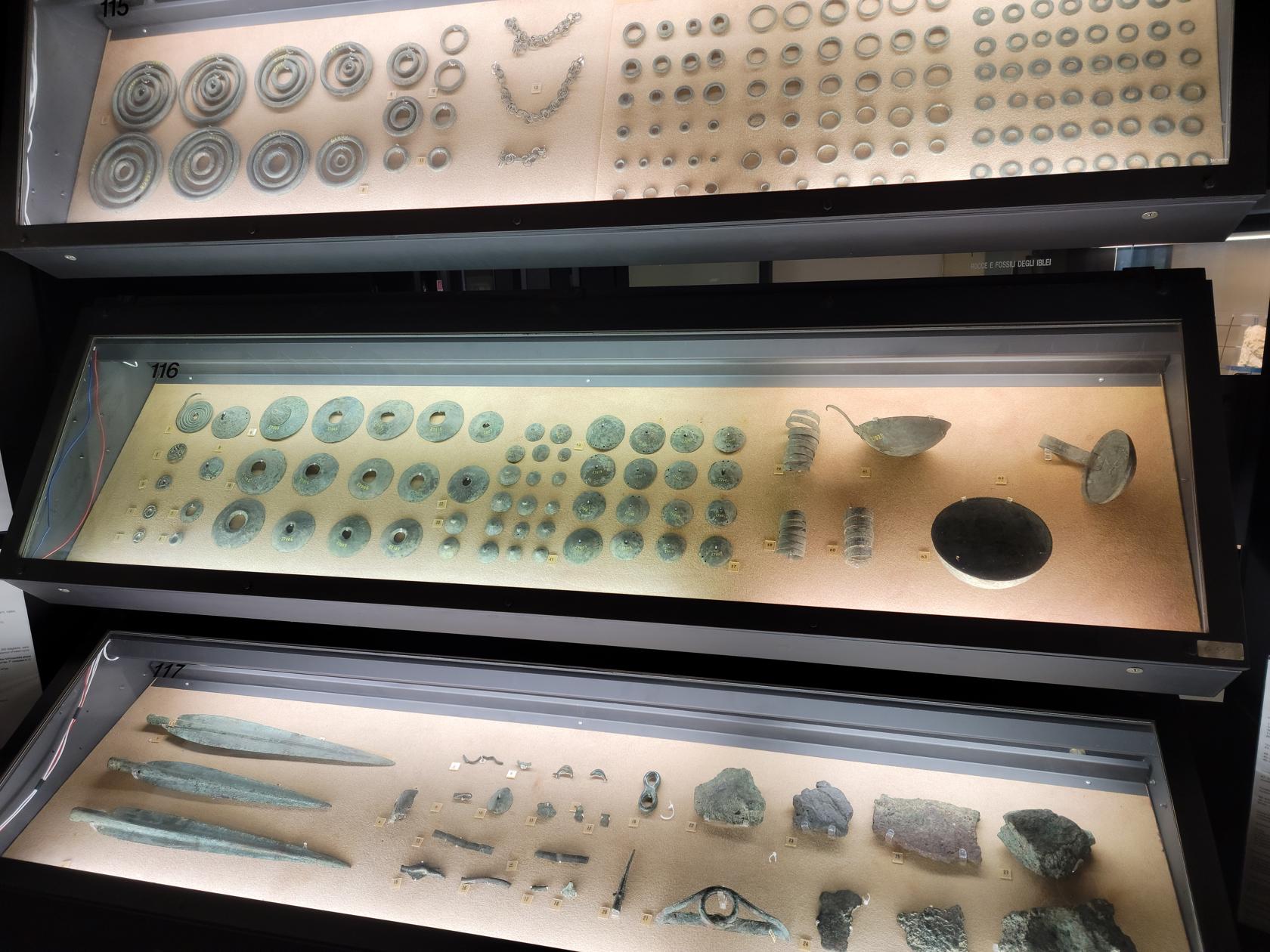
Bronze spear points, buttons and other artifacts – Archaeological Museum Paolo Orsi – Siracuse, Sicily
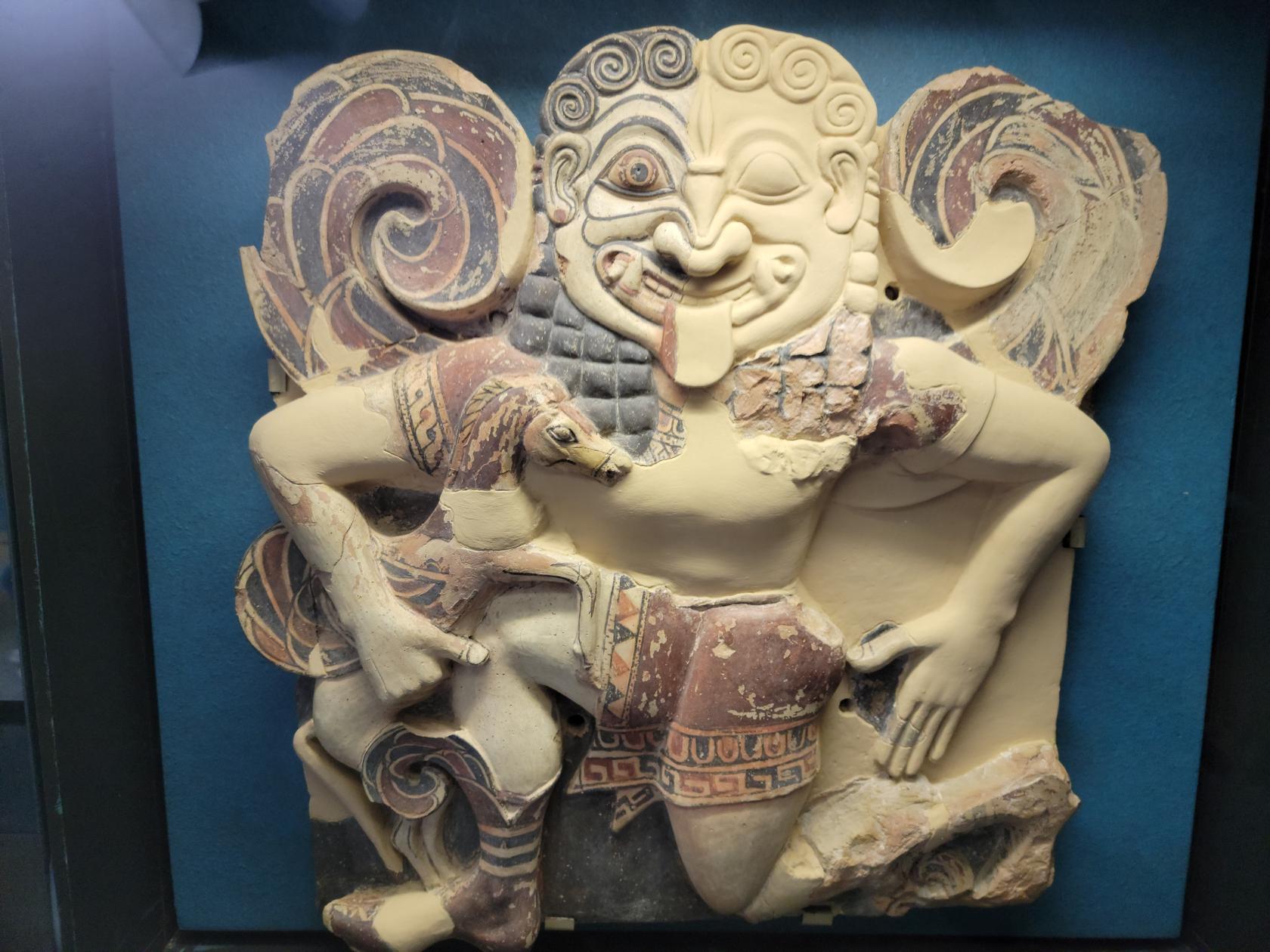
The Gorgone – Archaeological Museum Paolo Orsi – Siracuse, Sicily
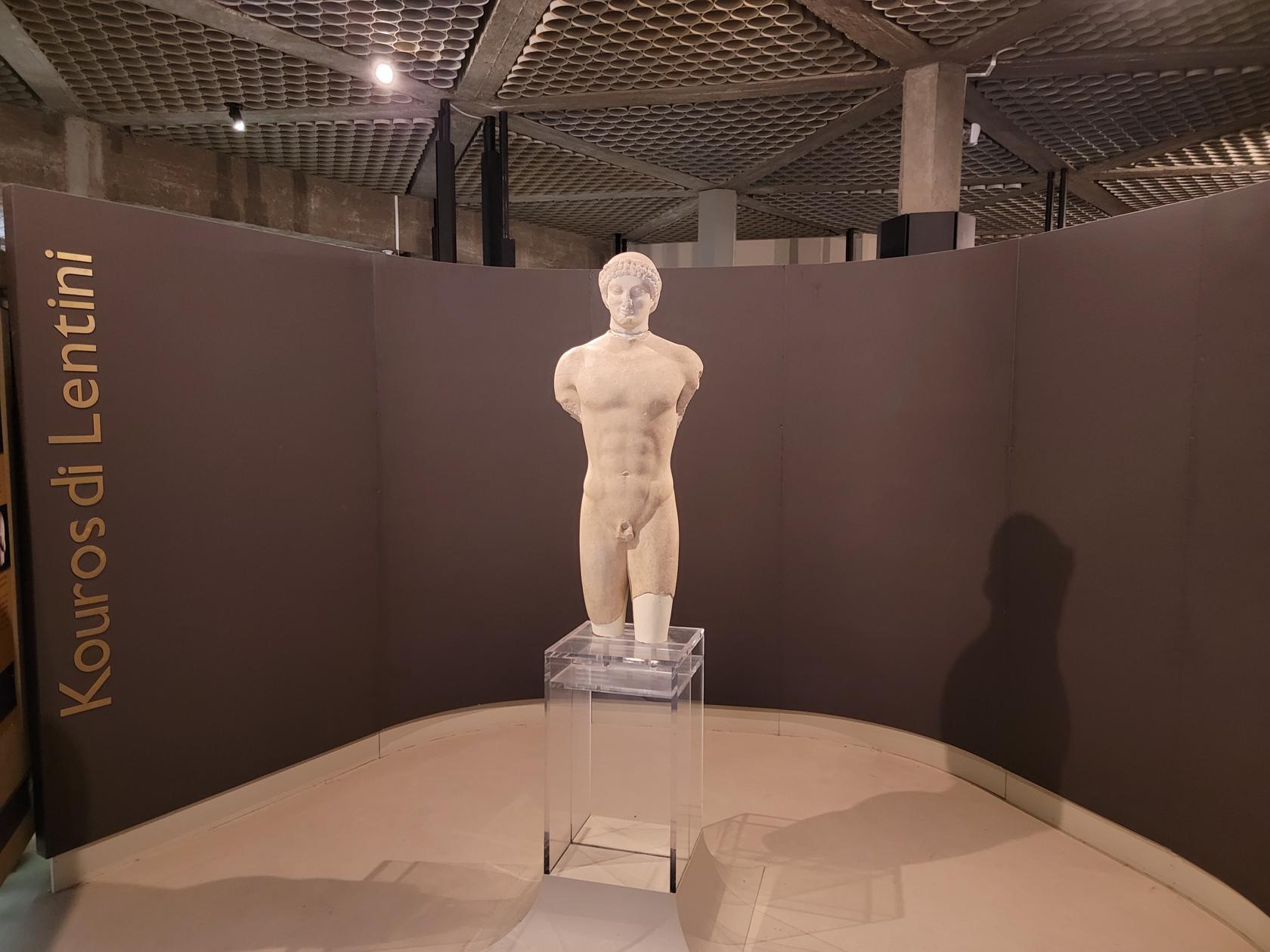
A Greek Kouros – Archaeological Museum Paolo Orsi – Siracuse, Sicily
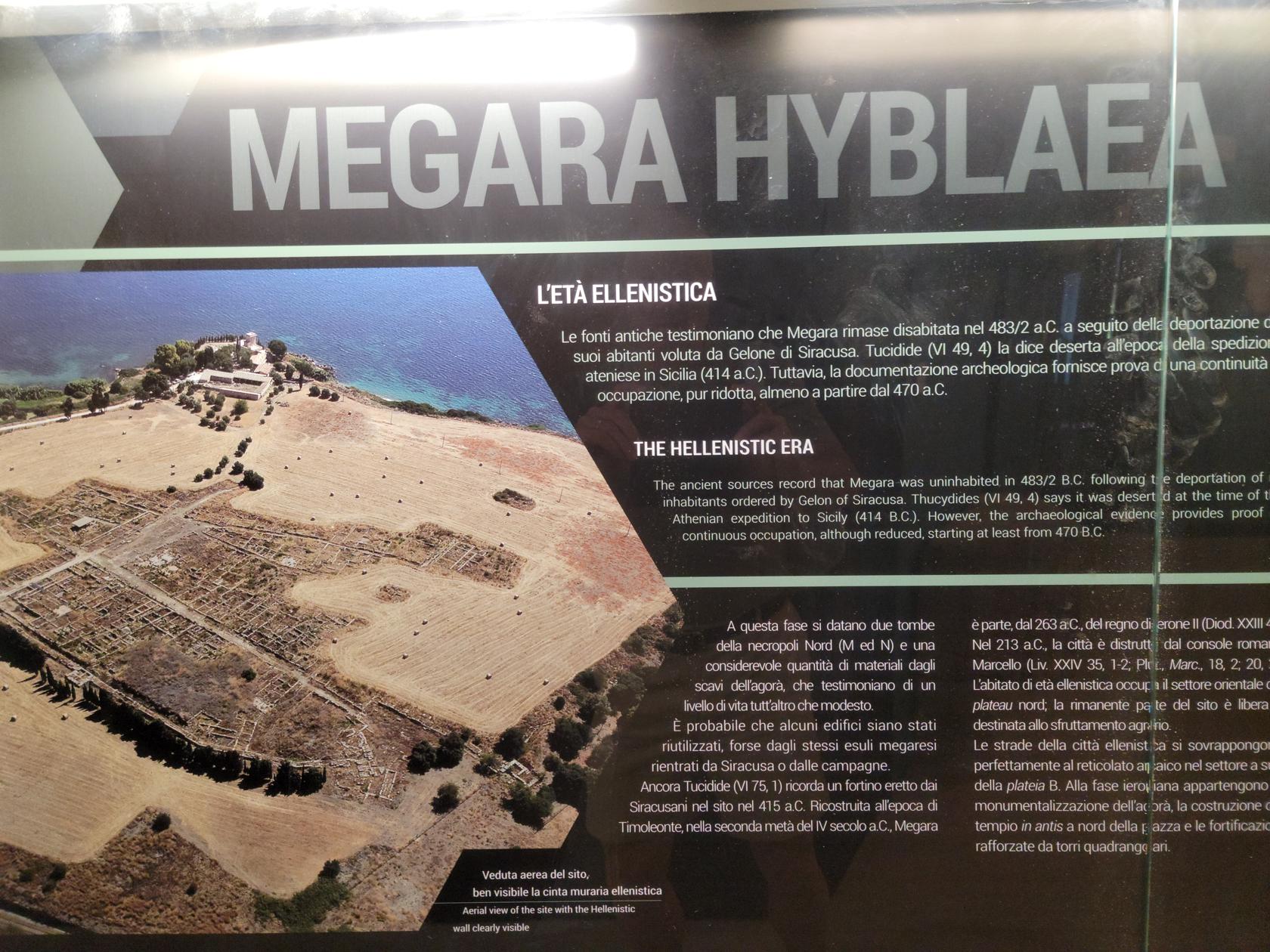
Megara Hyblaea exhibit – Archaeological Museum Paolo Orsi – Siracuse, Sicily
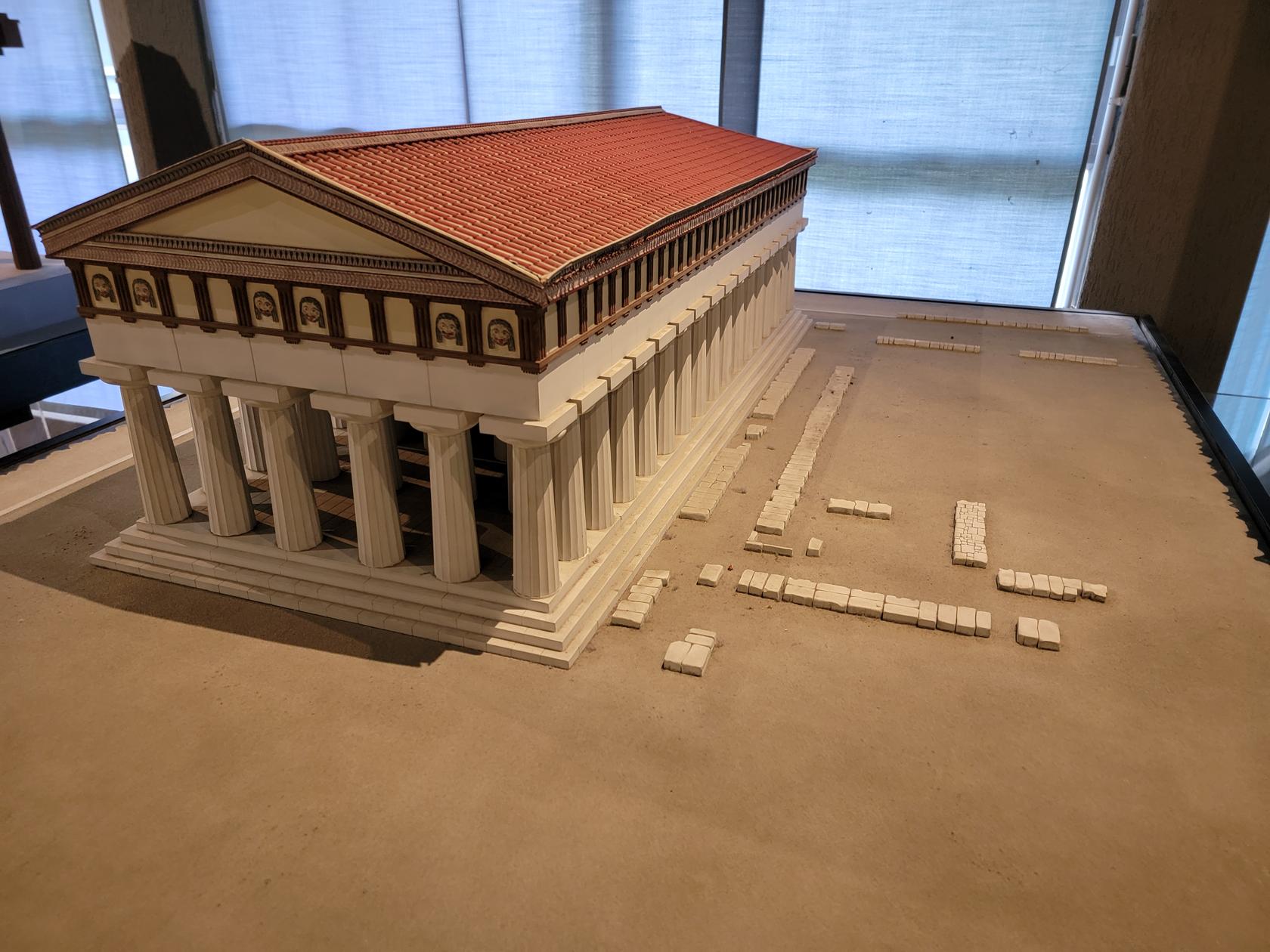
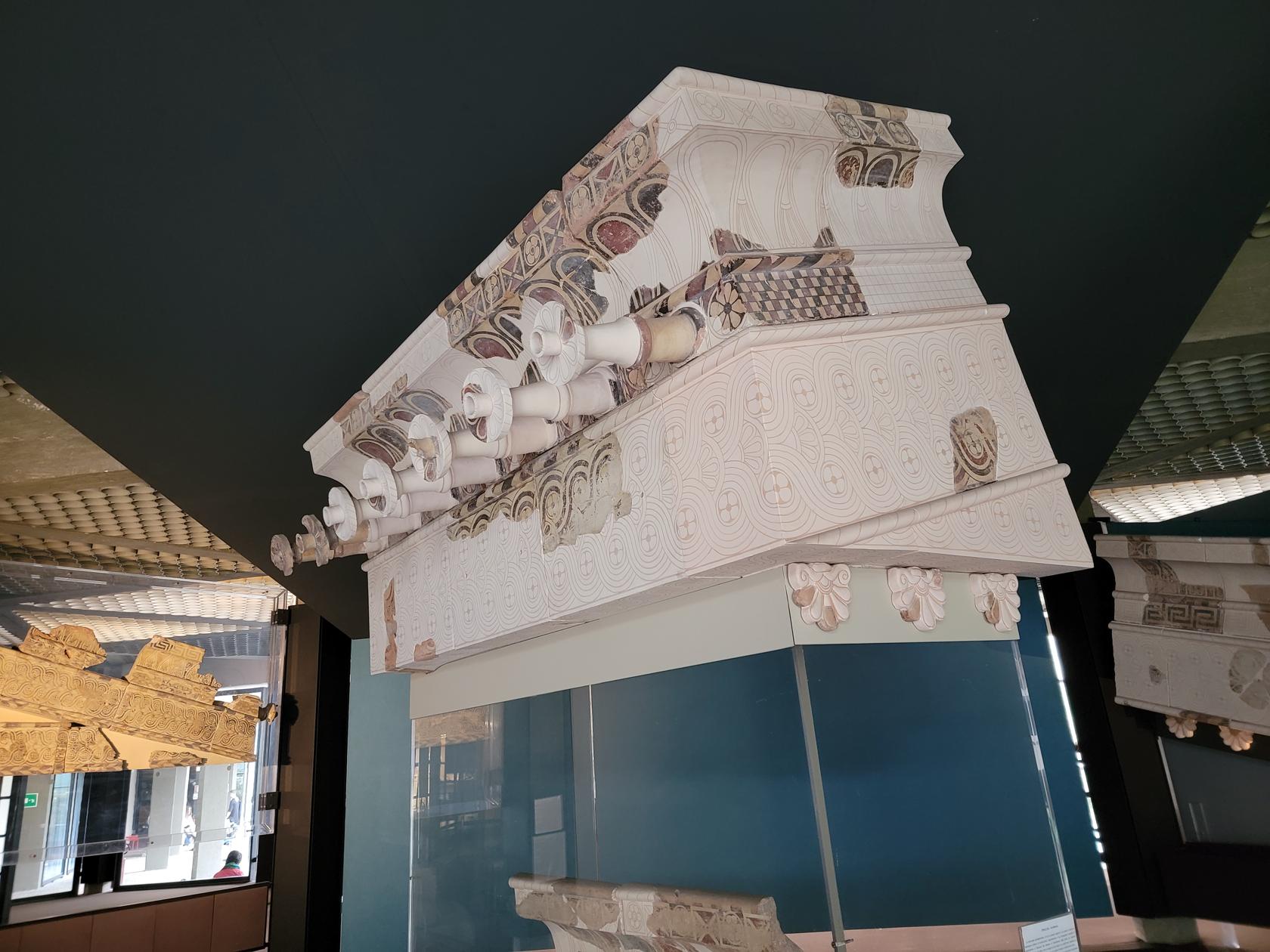
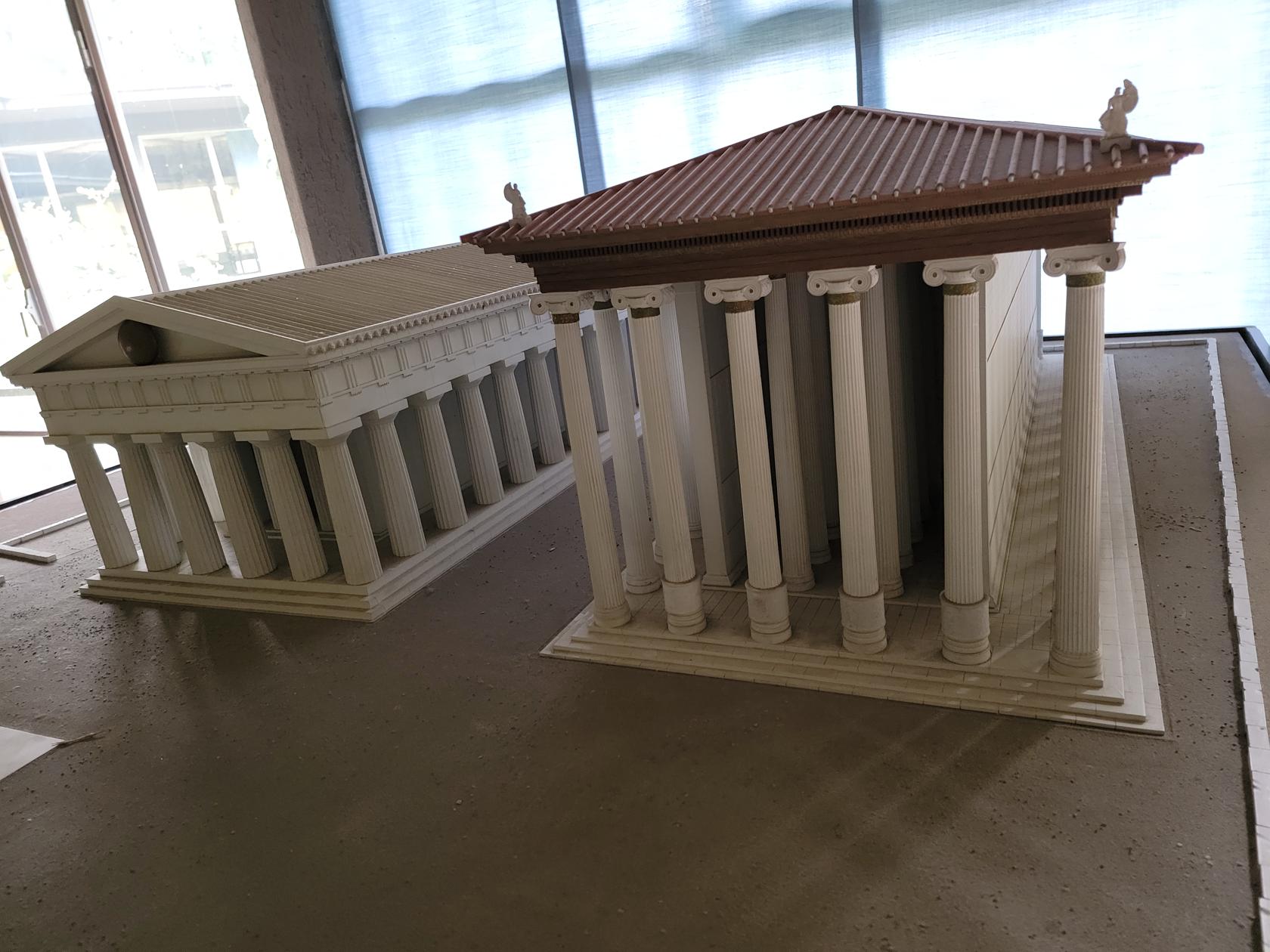
Dioramas of Greek architecture found throughout Sicily – Archaeological Museum Paolo Orsi – Siracuse, Sicily
Exhibit of unusual antiquated gutter system – Archaeological Museum Paolo Orsi – Siracuse, Sicily
Dioramas of ancient Greek Structures on Sicily – Archaeological Museum Paolo Orsi – Siracuse, Sicily
More than one area within the south-eastern coast of Sicily is addressed, as well as other major areas to the north and in the center. In all, the museum provides an excellent historical picture of the island of Sicily.
Archaeological Park
The Archaeological Park, also known as the Neapolis Archaelogical Park of Syracuse, is situated about two and a half kilometers from the island of Ortigia. However, a brisk walk can get you there in about twenty or so minutes.
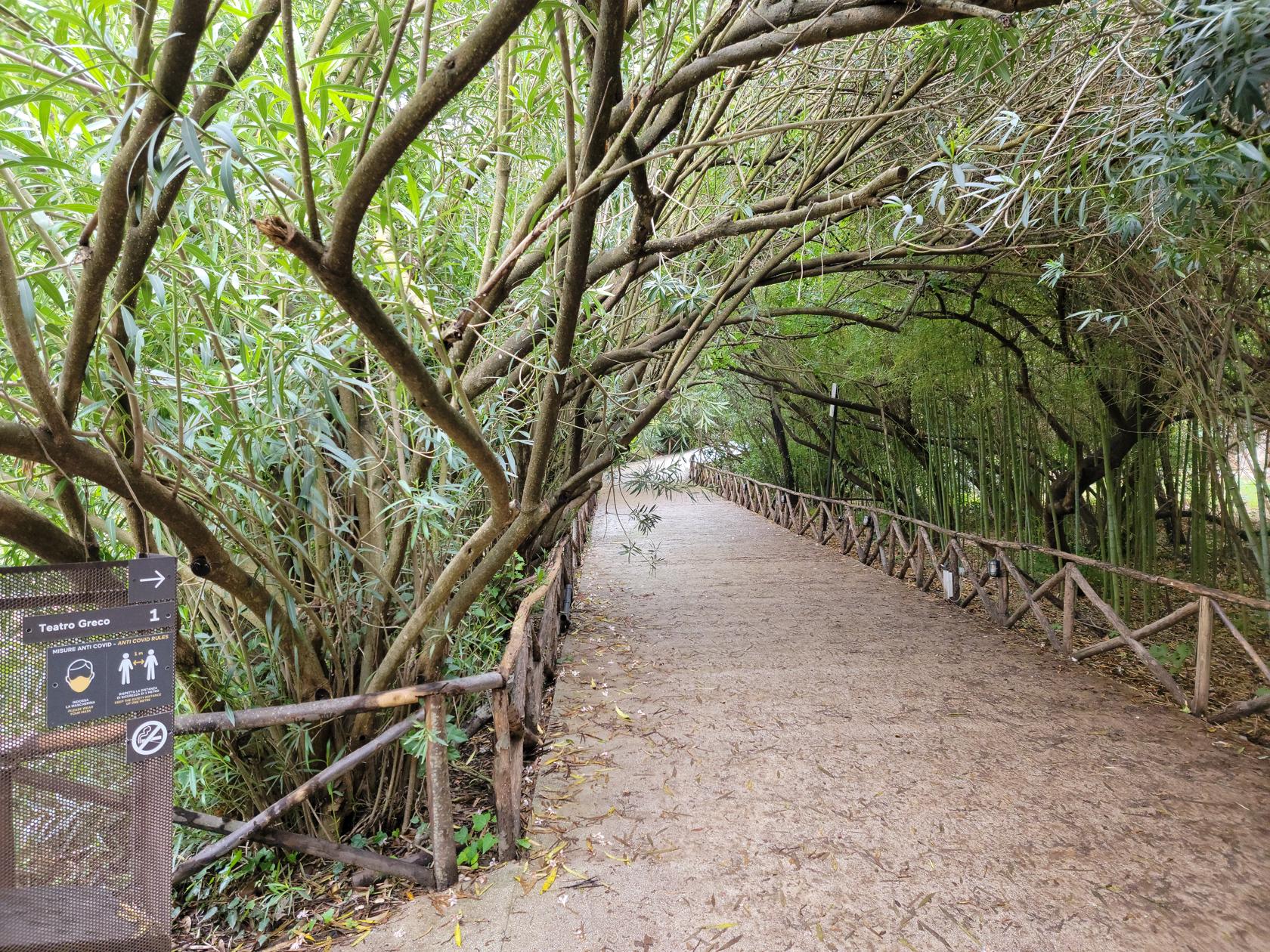
Entrance walkway – The Neapolis – Archaeological Park – Siracuse, Sicily
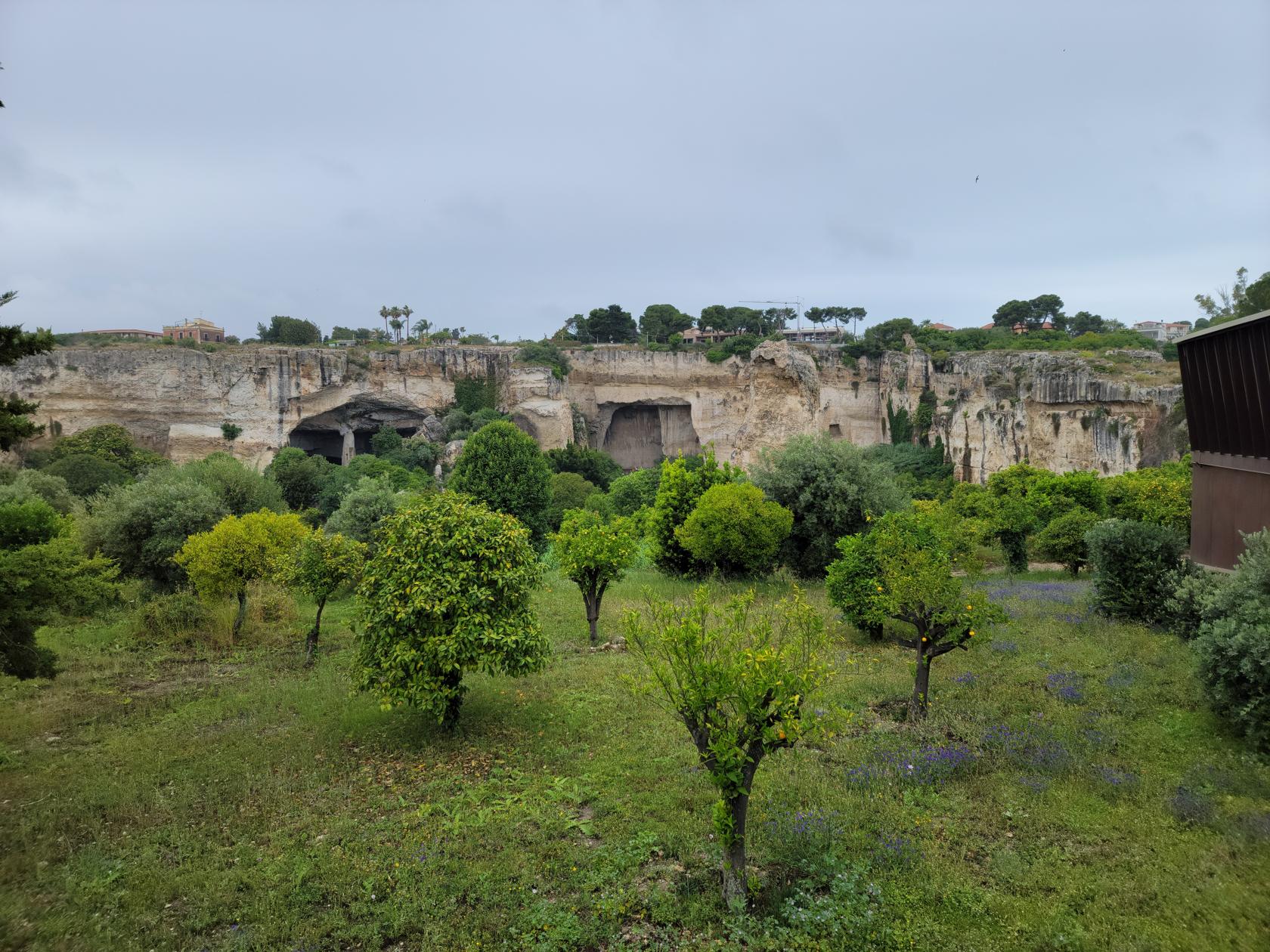
The Grotto caverns – The Neapolis – Archaeological Park – Siracuse, Sicily
Tickets may be purchased at the gate, now across the newly blue painted intersection.
The Neapolis – Archaeological Park – Siracuse, Sicily
If you follow the signs, like we did, you will be taken to group ticket sales, which will still sell you tickets, but its out of the way and you will have to walk through a path of vendors before actually finding the ticket booth.
Latomia or Grottos
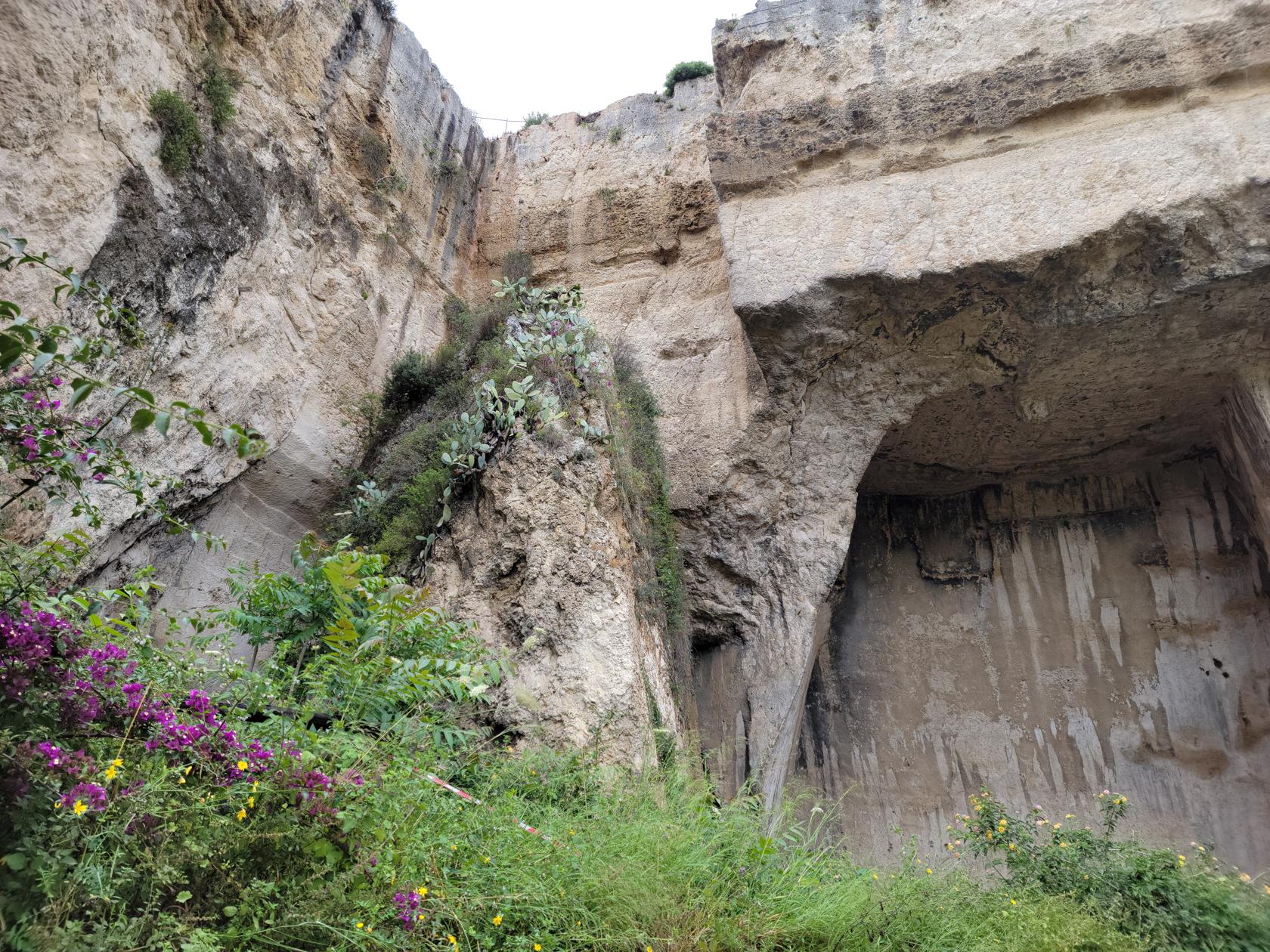
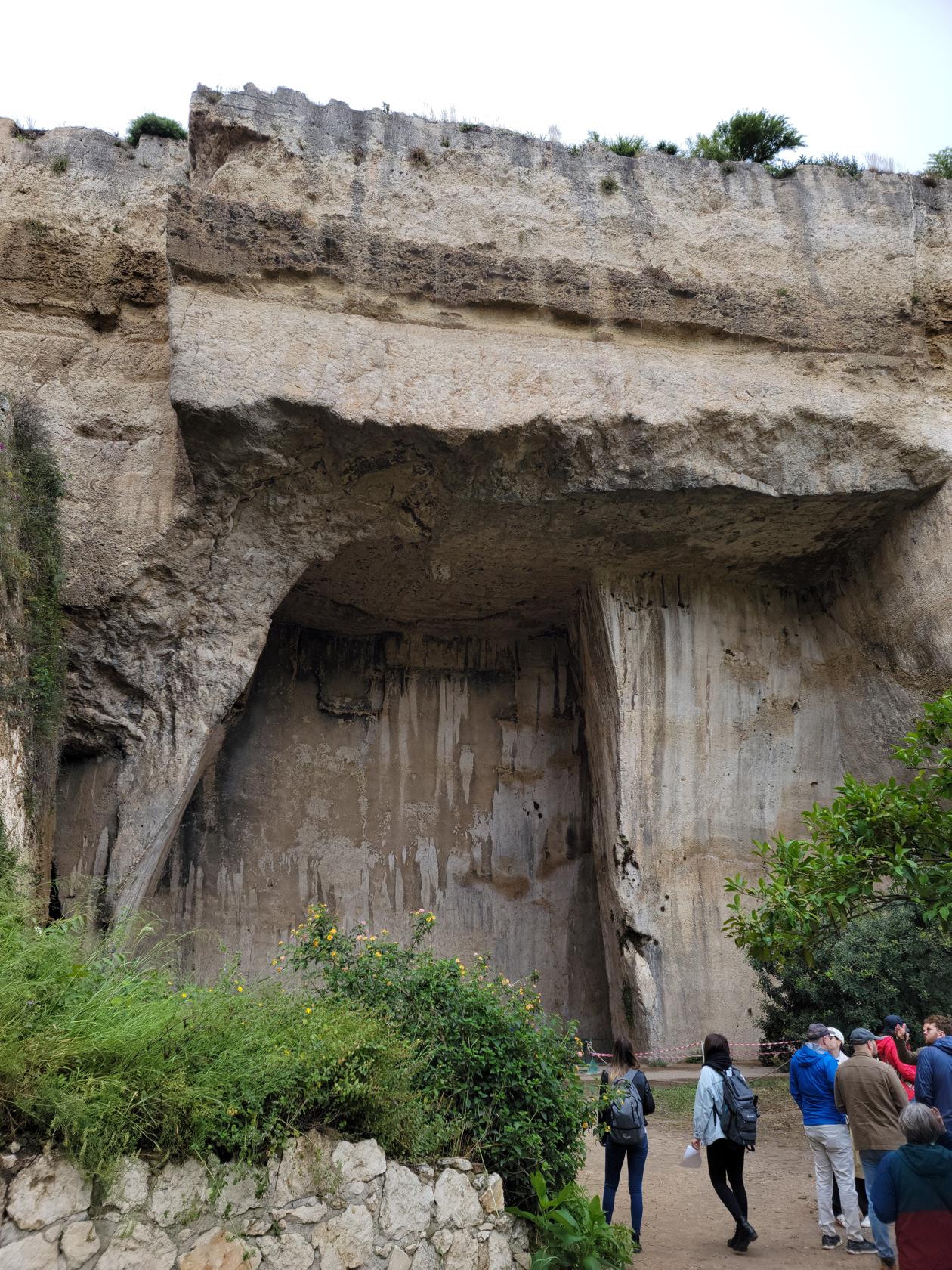
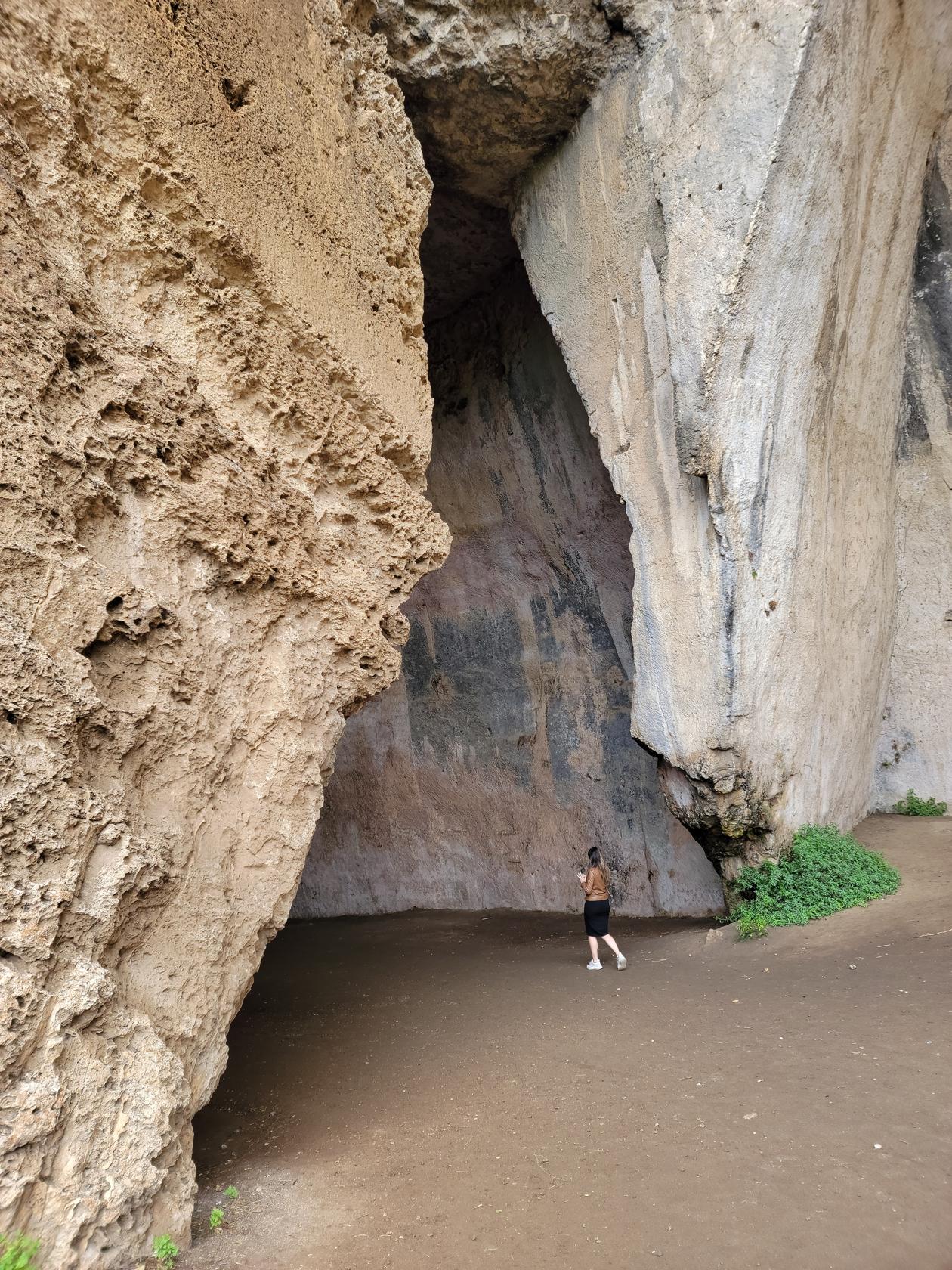
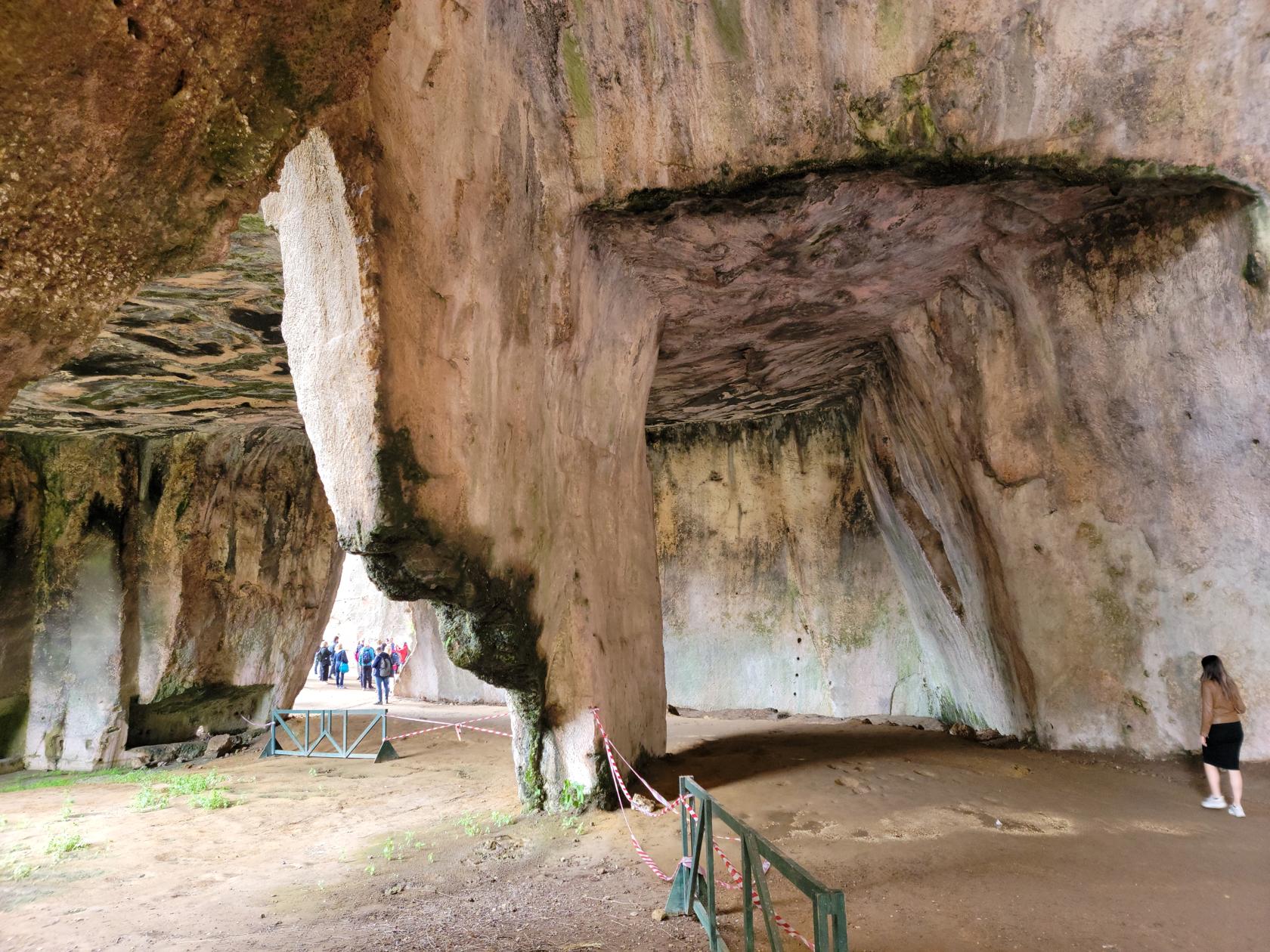
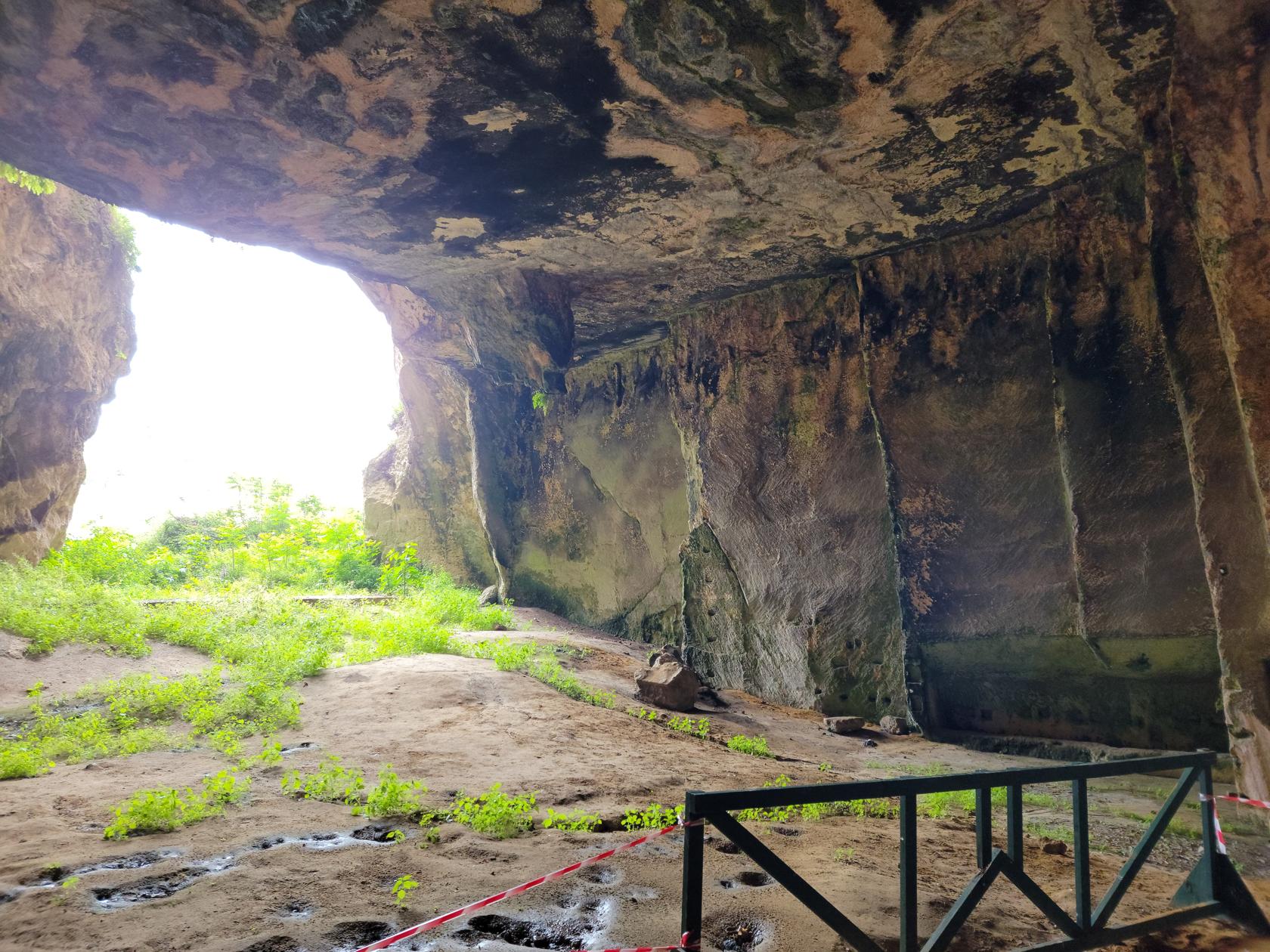
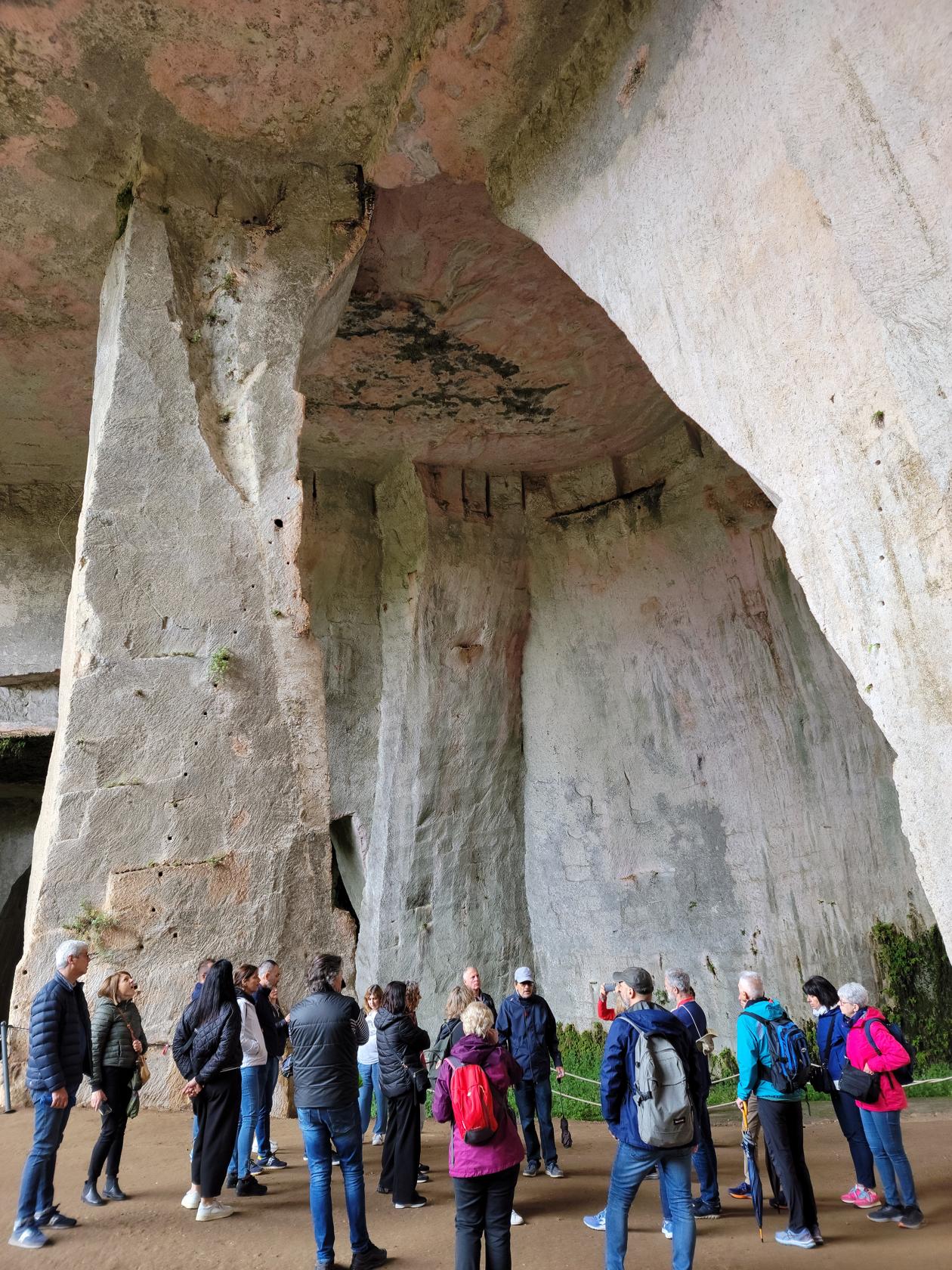
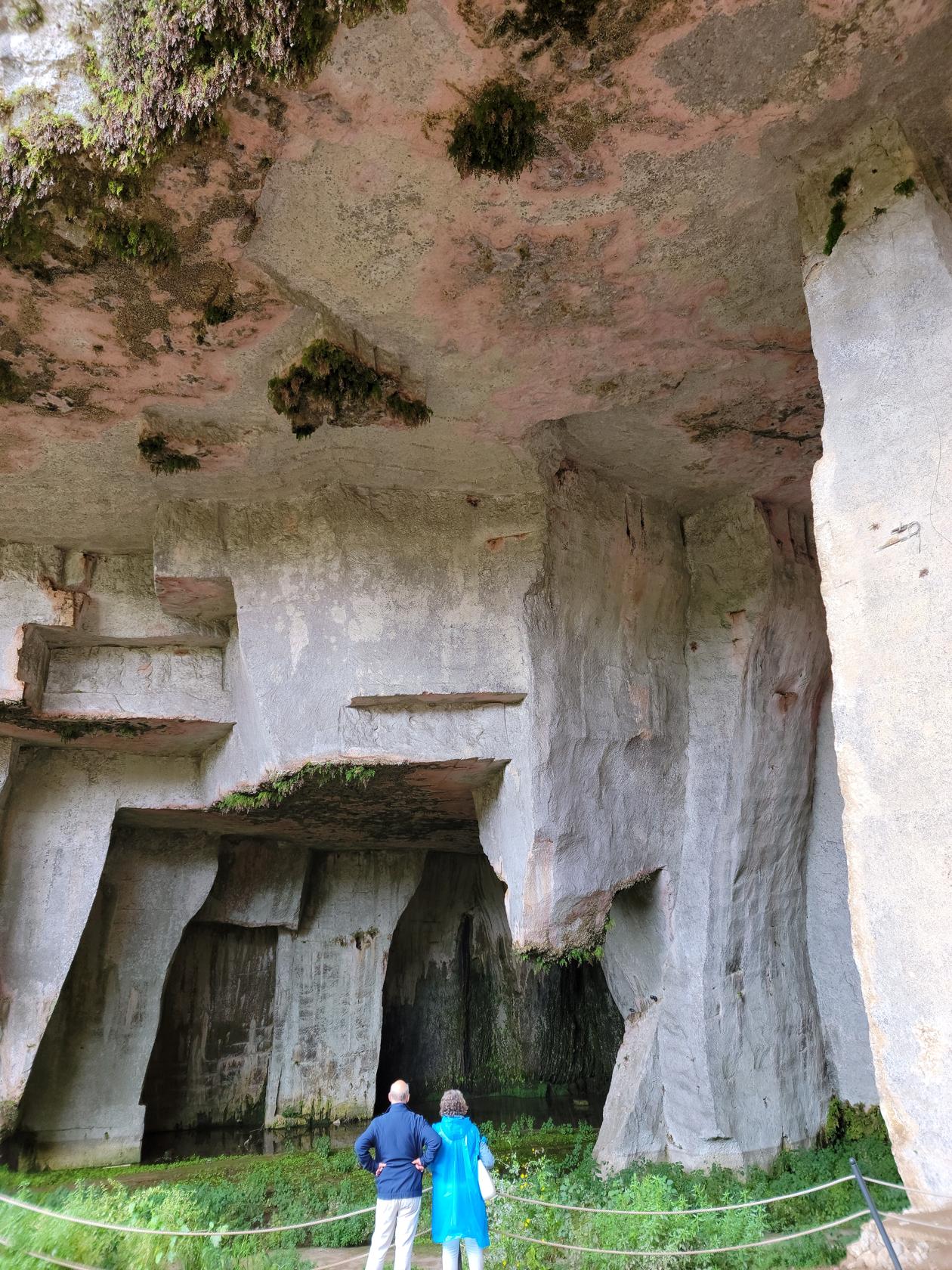
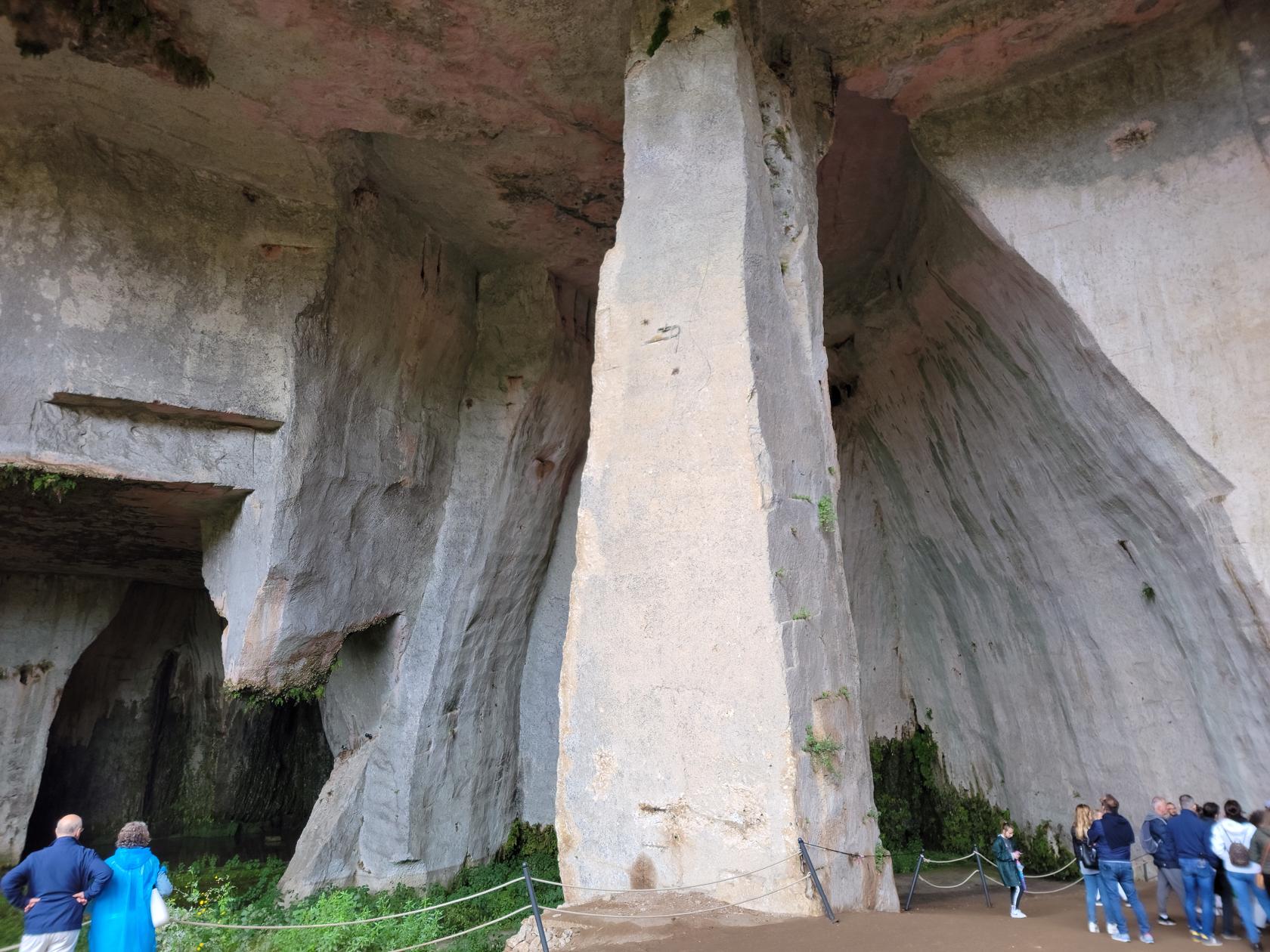
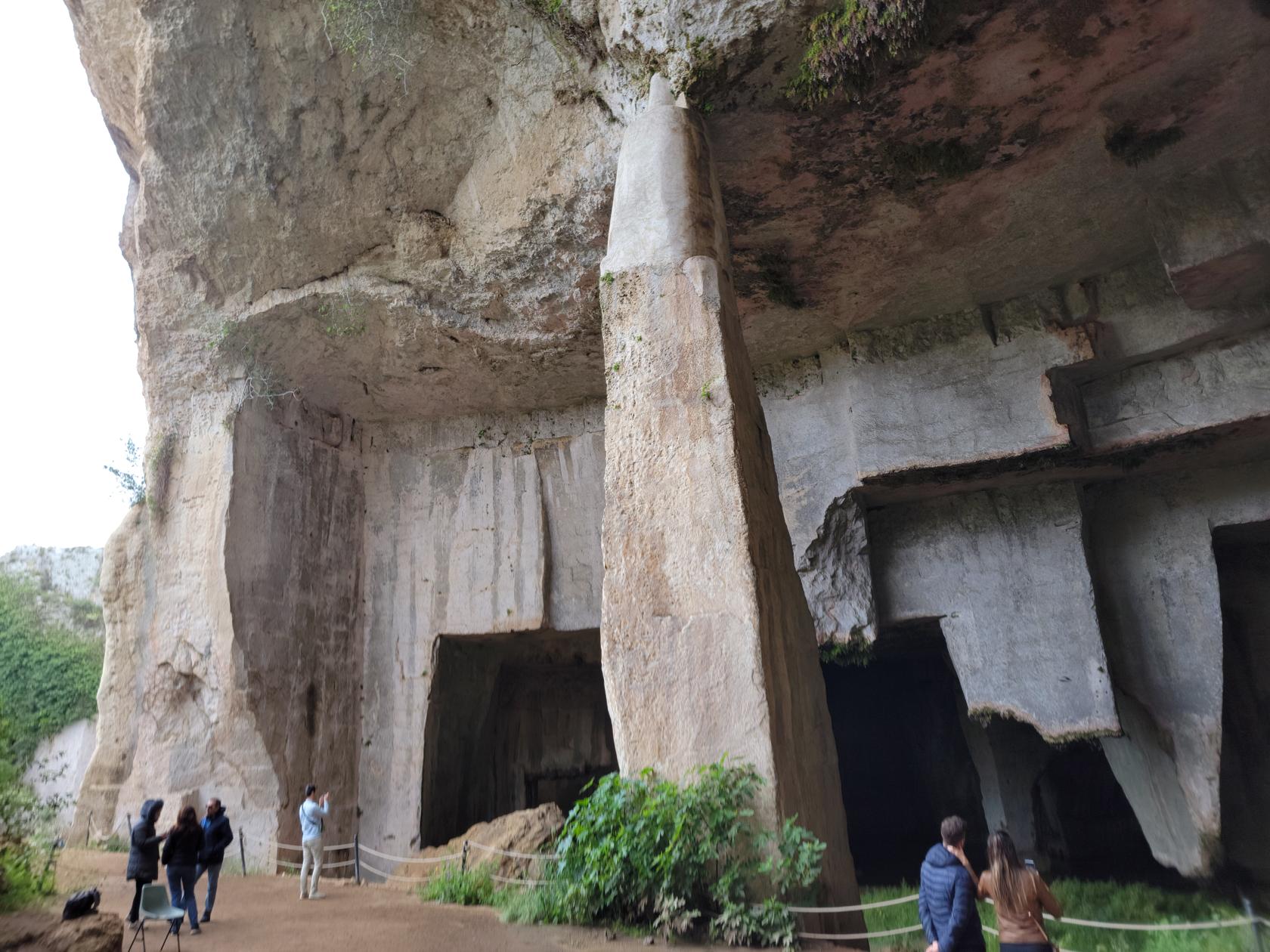
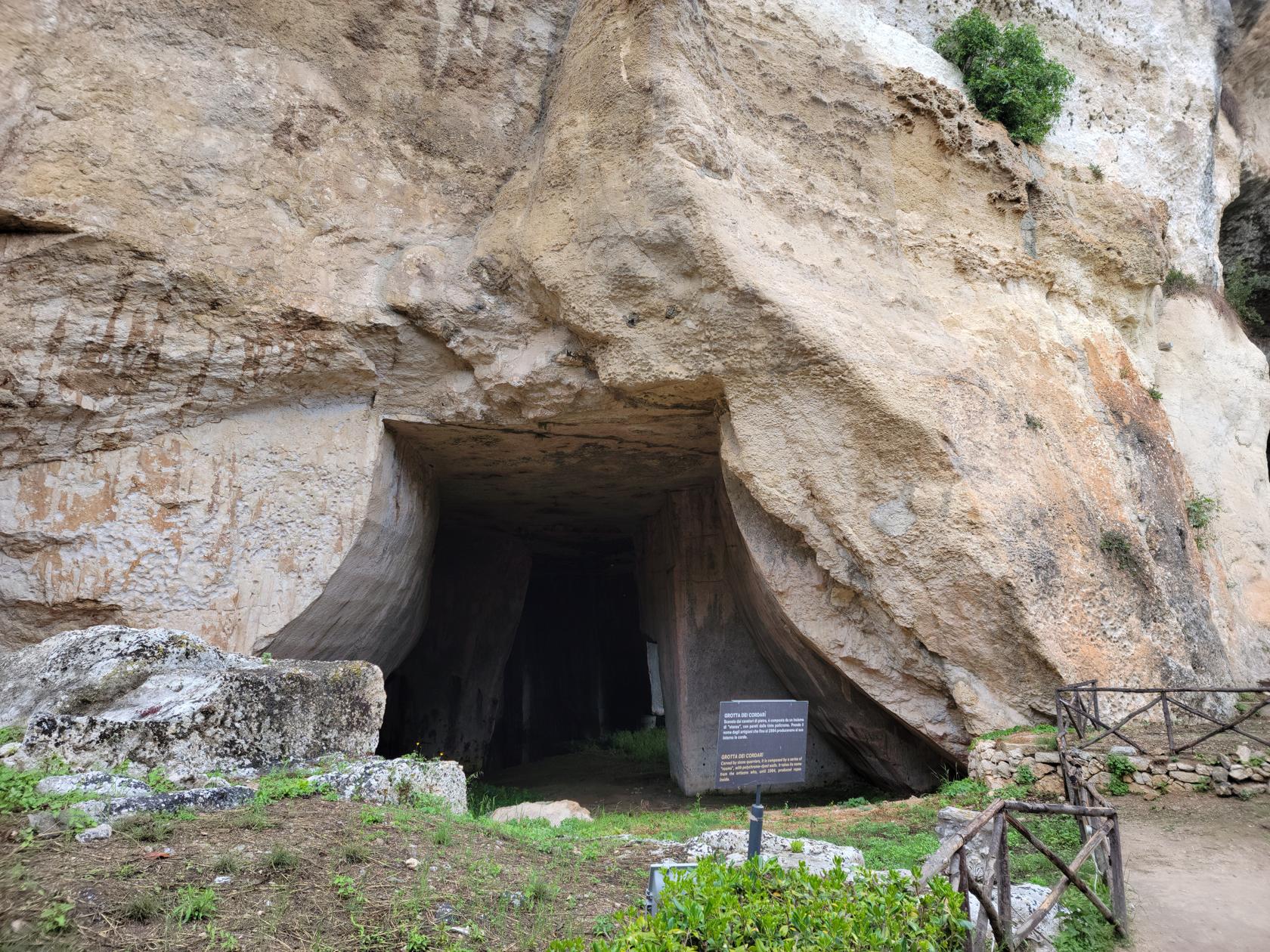
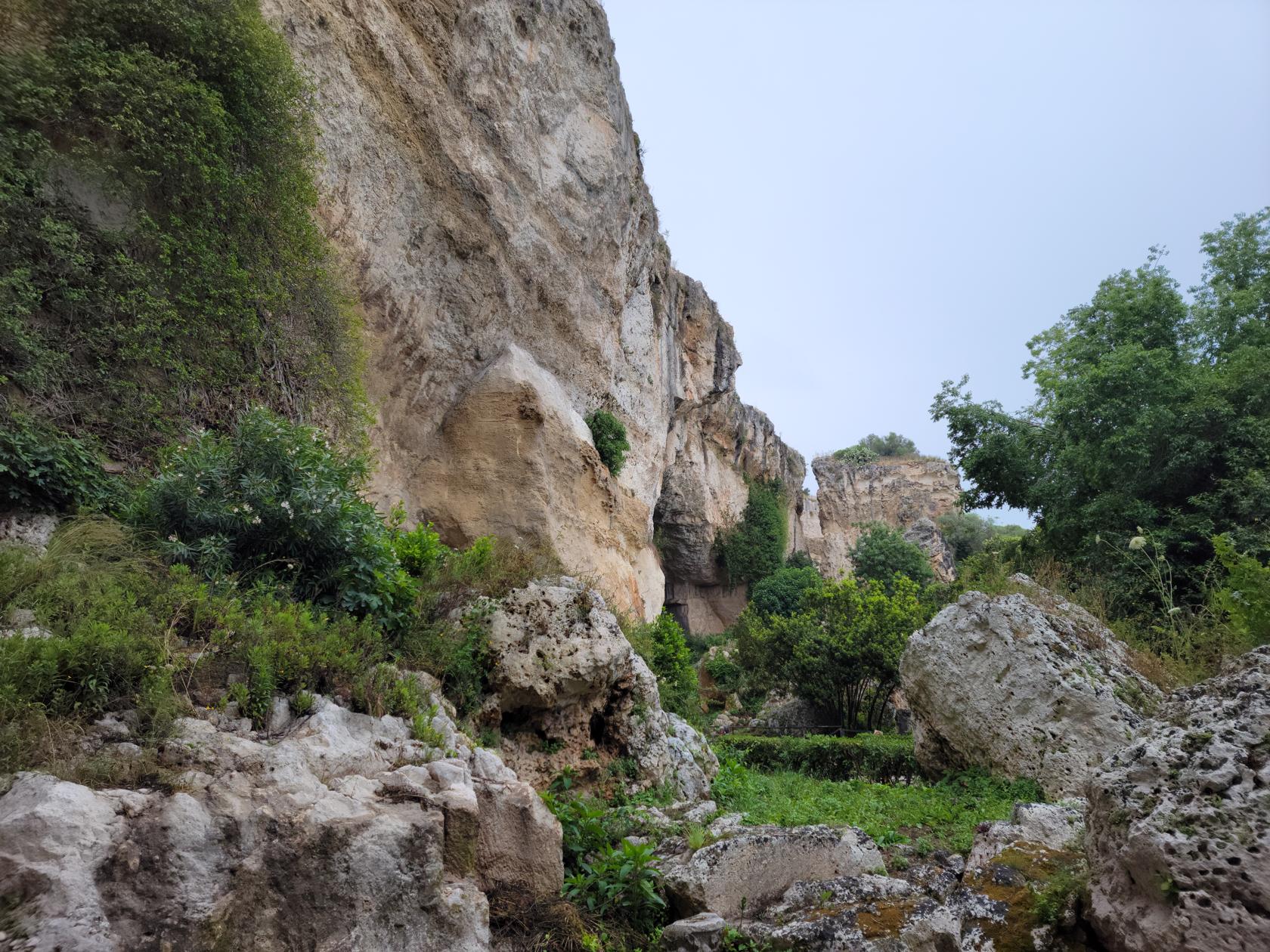
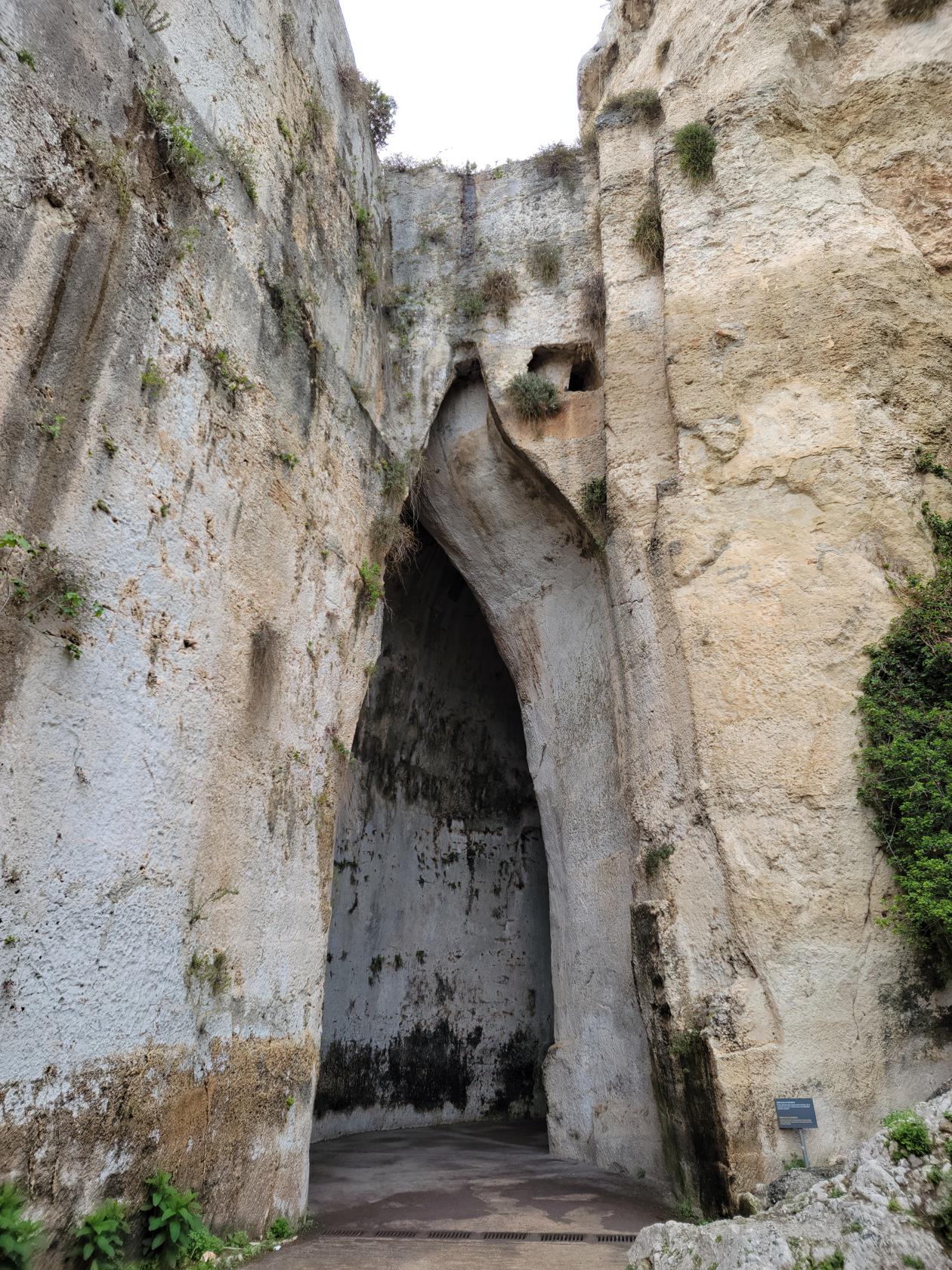
When you enter the Neapolis the first thing to visit is the Grotto, or the large quarry where they used to mine stone for building. This is a huge cutout in the surrounding rock face which is about fifty or so meters in height.
A walk to the Greek Theater – The Neapolis – Archaeological Park – Siracuse, Sicily
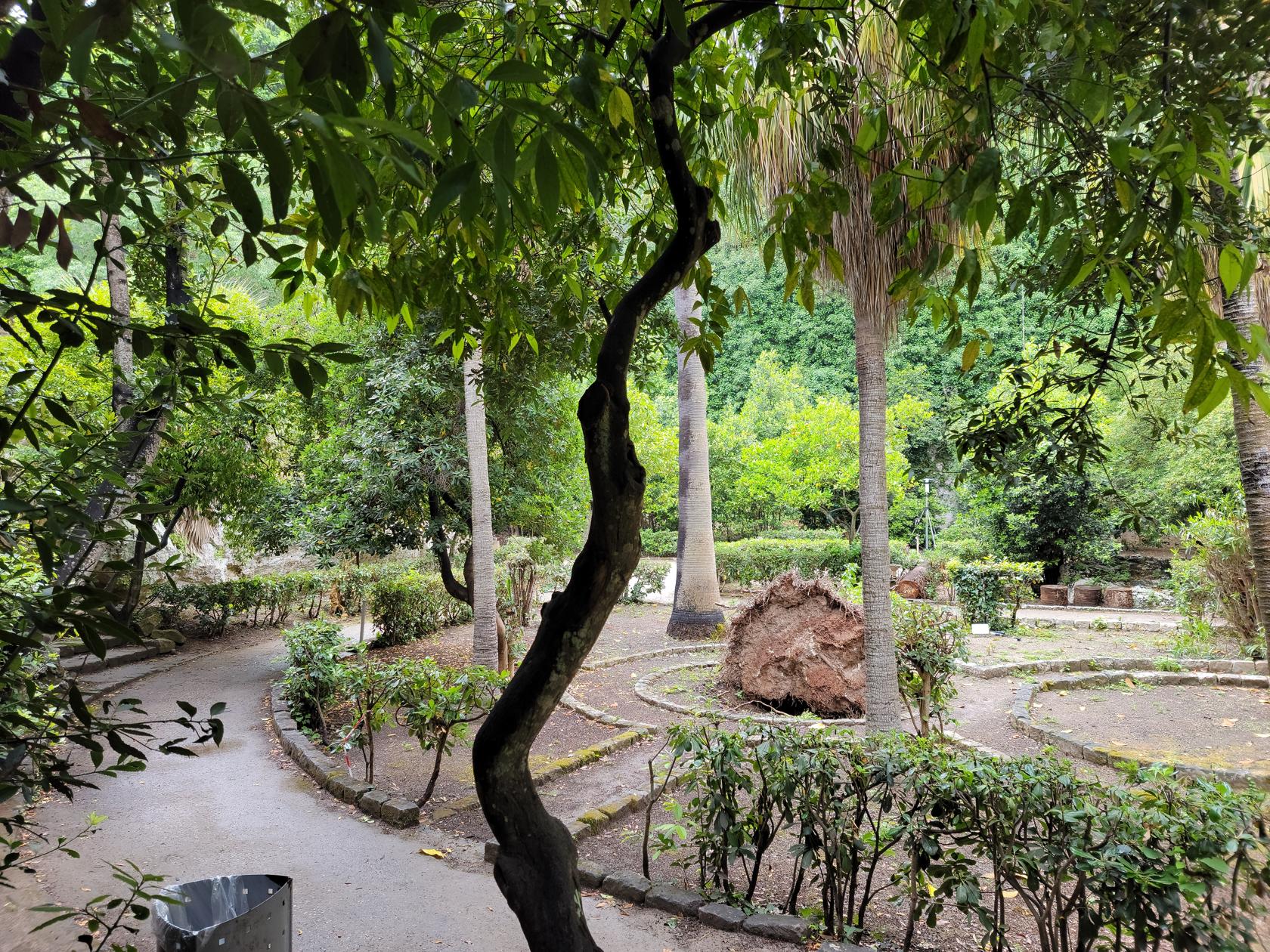
Small park area – The Neapolis – Archaeological Park – Siracuse, Sicily
Small park area – The Neapolis – Archaeological Park – Siracuse, Sicily
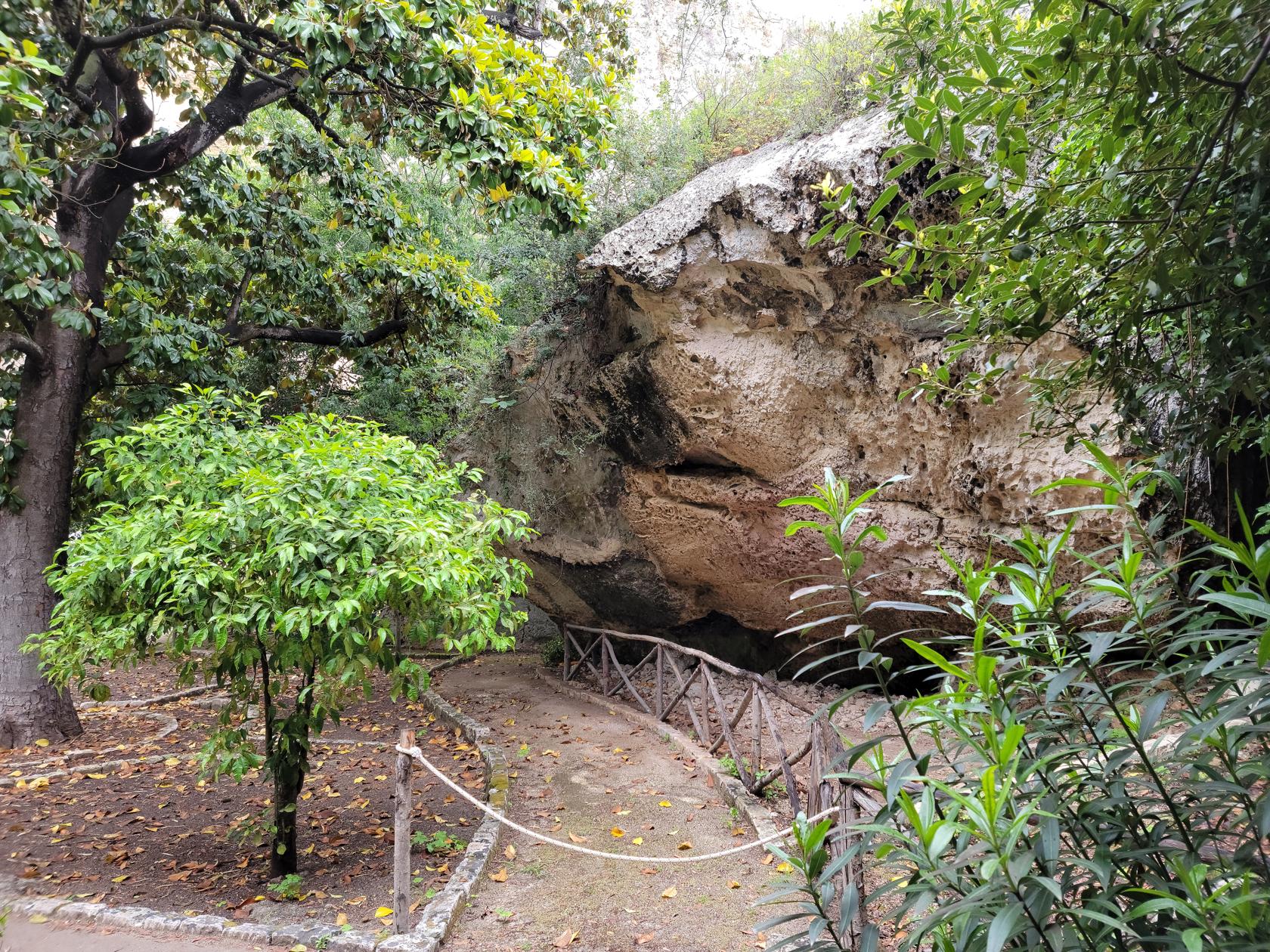
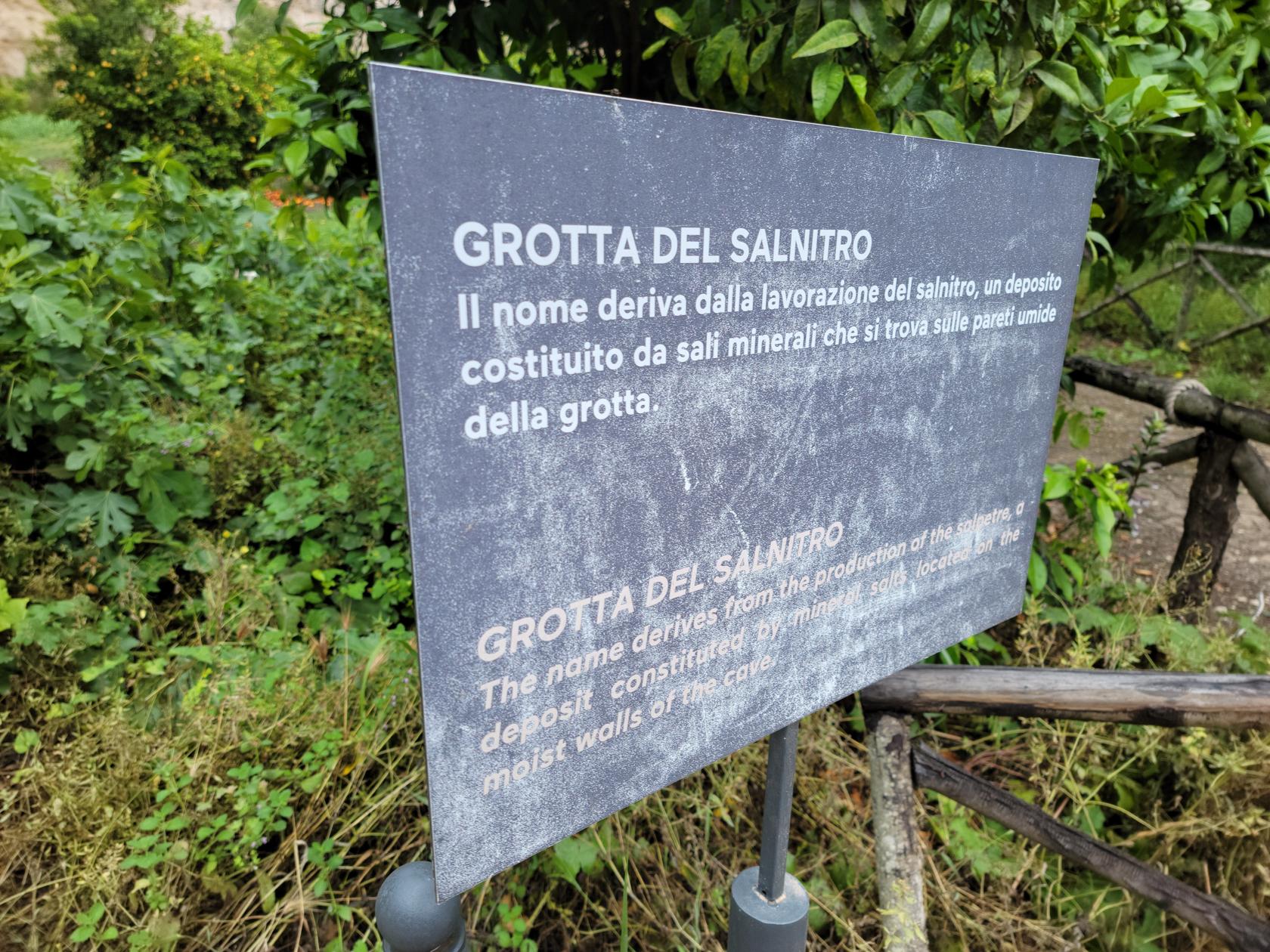
Grotto of Salnitro – The Neapolis – Archaeological Park – Siracuse, Sicily
Grotto of Salnitro – The Neapolis – Archaeological Park – Siracuse, Sicily
Grotto of Salnitro – The Neapolis – Archaeological Park – Siracuse, Sicily
Grotto of Salnitro – The Neapolis – Archaeological Park – Siracuse, Sicily
Grotto of Salnitro – The Neapolis – Archaeological Park – Siracuse, Sicily
Grotto of Salnitro – The Neapolis – Archaeological Park – Siracuse, Sicily
Grotto of Salnitro – The Neapolis – Archaeological Park – Siracuse, Sicily
Grotto of Salnitro – The Neapolis – Archaeological Park – Siracuse, Sicily
Grotto of Salnitro – The Neapolis – Archaeological Park – Siracuse, Sicily
Grotto of Salnitro – The Neapolis – Archaeological Park – Siracuse, Sicily
Grotto of Salnitro – The Neapolis – Archaeological Park – Siracuse, Sicily
It appears to have had several cave-ins in the past, which probably occurred as they were mining the stone. There is evidence of the former inhabitants leaving large columns behind in an attempt to prevent additional cave-ins from occurring. Whether they were successful or not, it is not known, there are no information signs or other historical information provided at the site.
Another section of the Grotto – The Neapolis – Archaeological Park – Siracuse, Sicily
The Grotto entrance – The Neapolis – Archaeological Park – Siracuse, Sicily
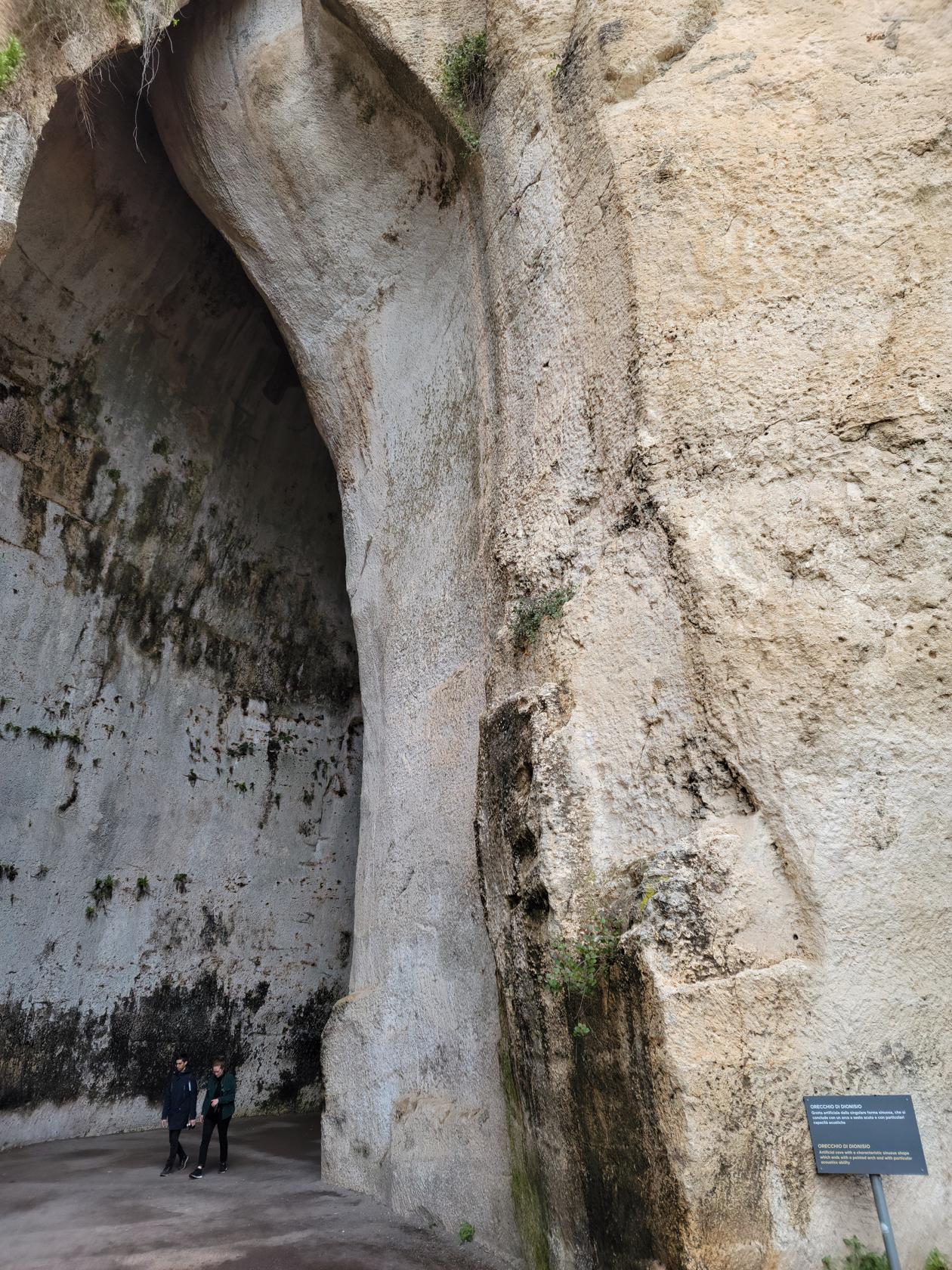
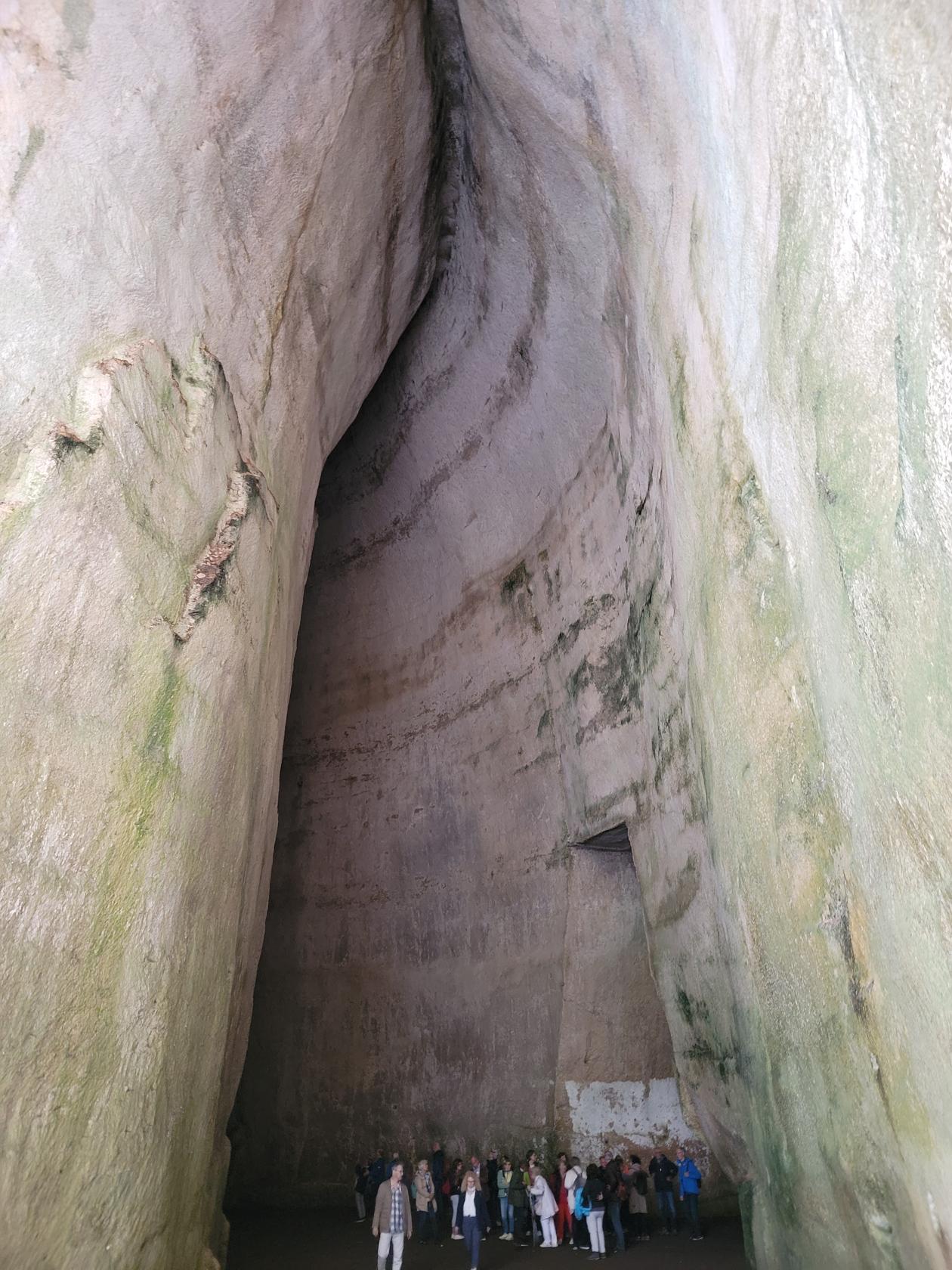
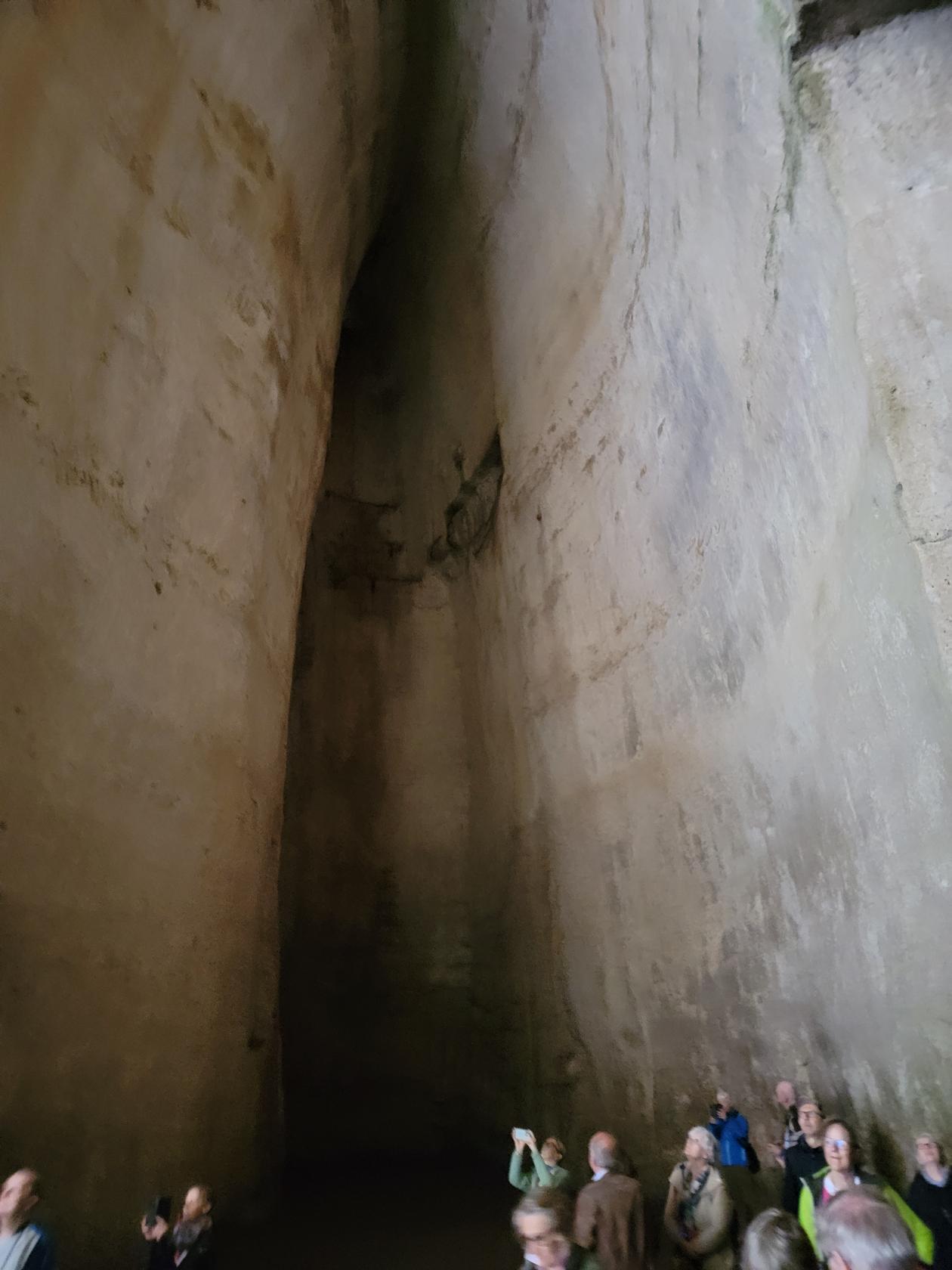
The Ear of Dionysus Grotto – The Neapolis – Archaeological Park – Siracuse, Sicily
The Ear of Dionysus Grotto – The Neapolis – Archaeological Park – Siracuse, Sicily
The Ear of Dionysus Grotto – The Neapolis – Archaeological Park – Siracuse, Sicily
The Ear of Dionysus Grotto – The Neapolis – Archaeological Park – Siracuse, Sicily
The Greek Theater
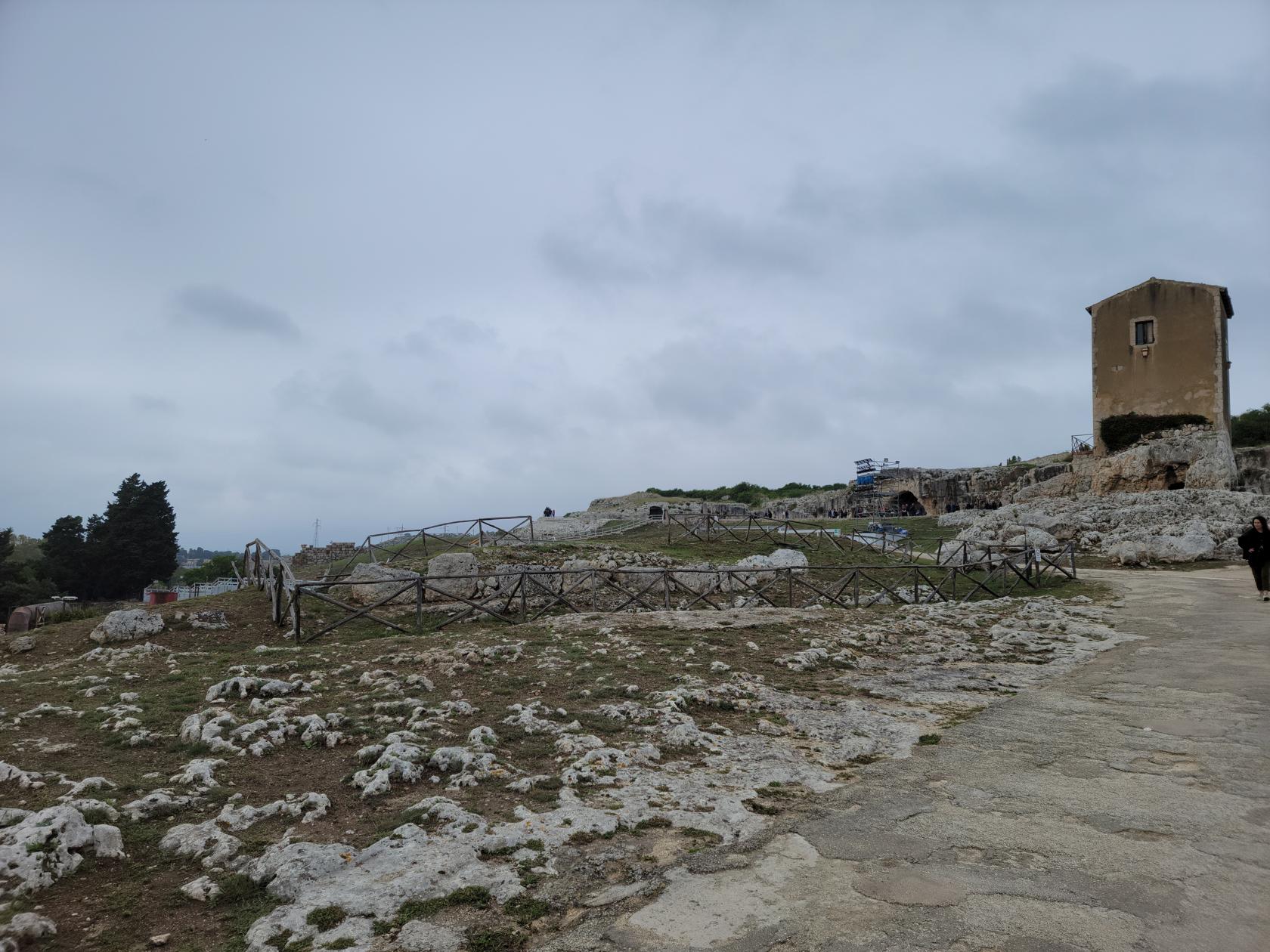
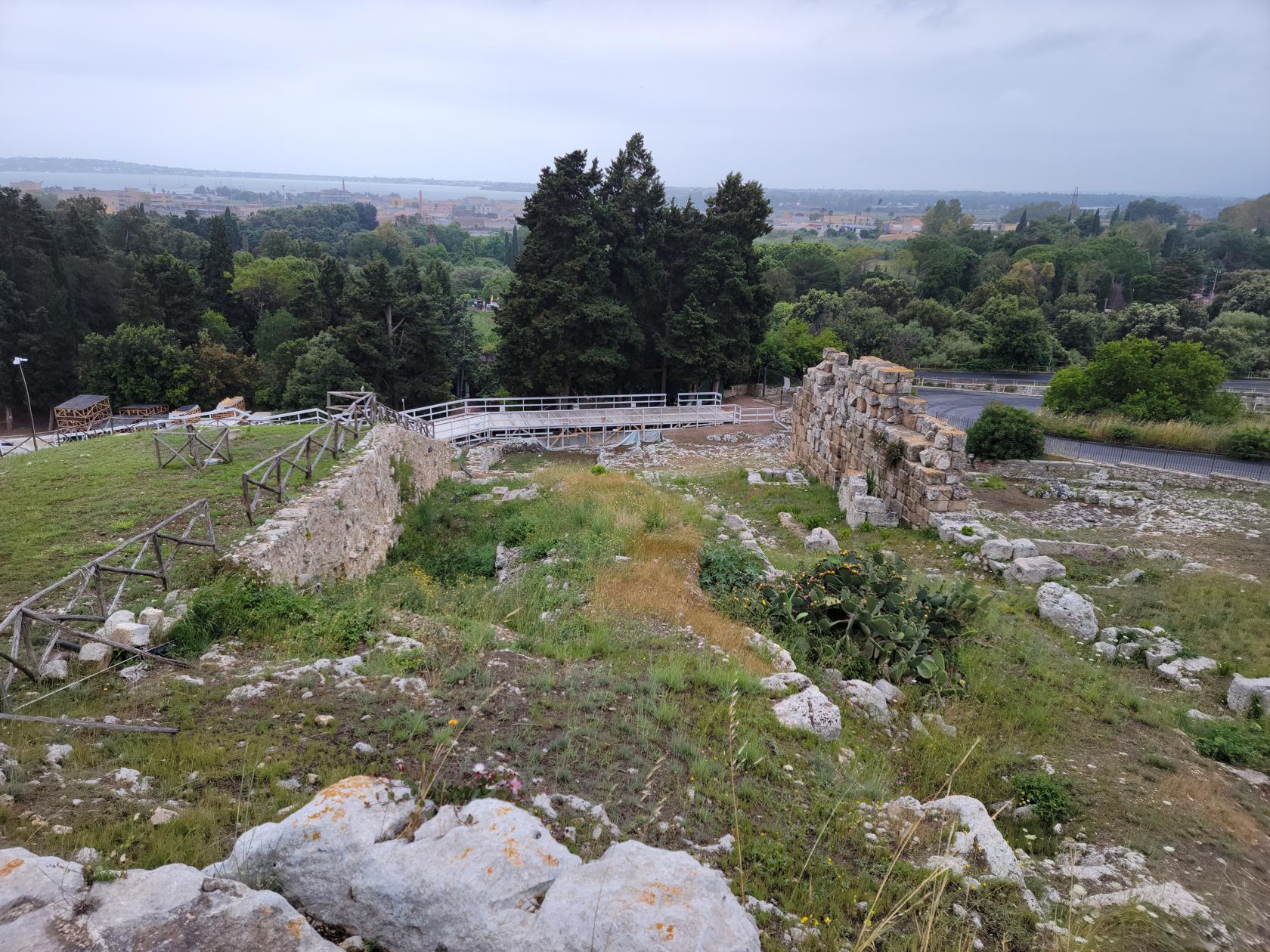
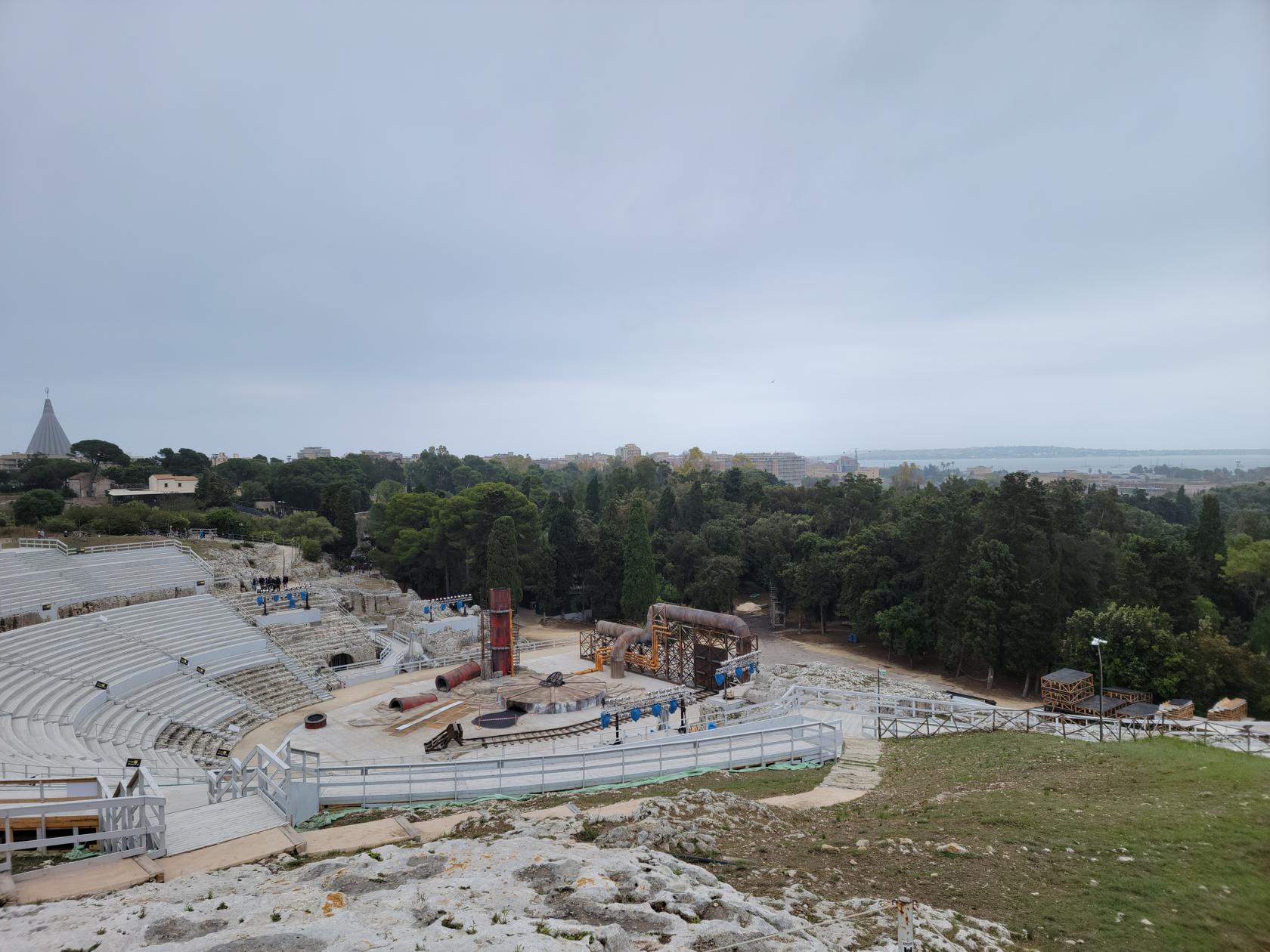
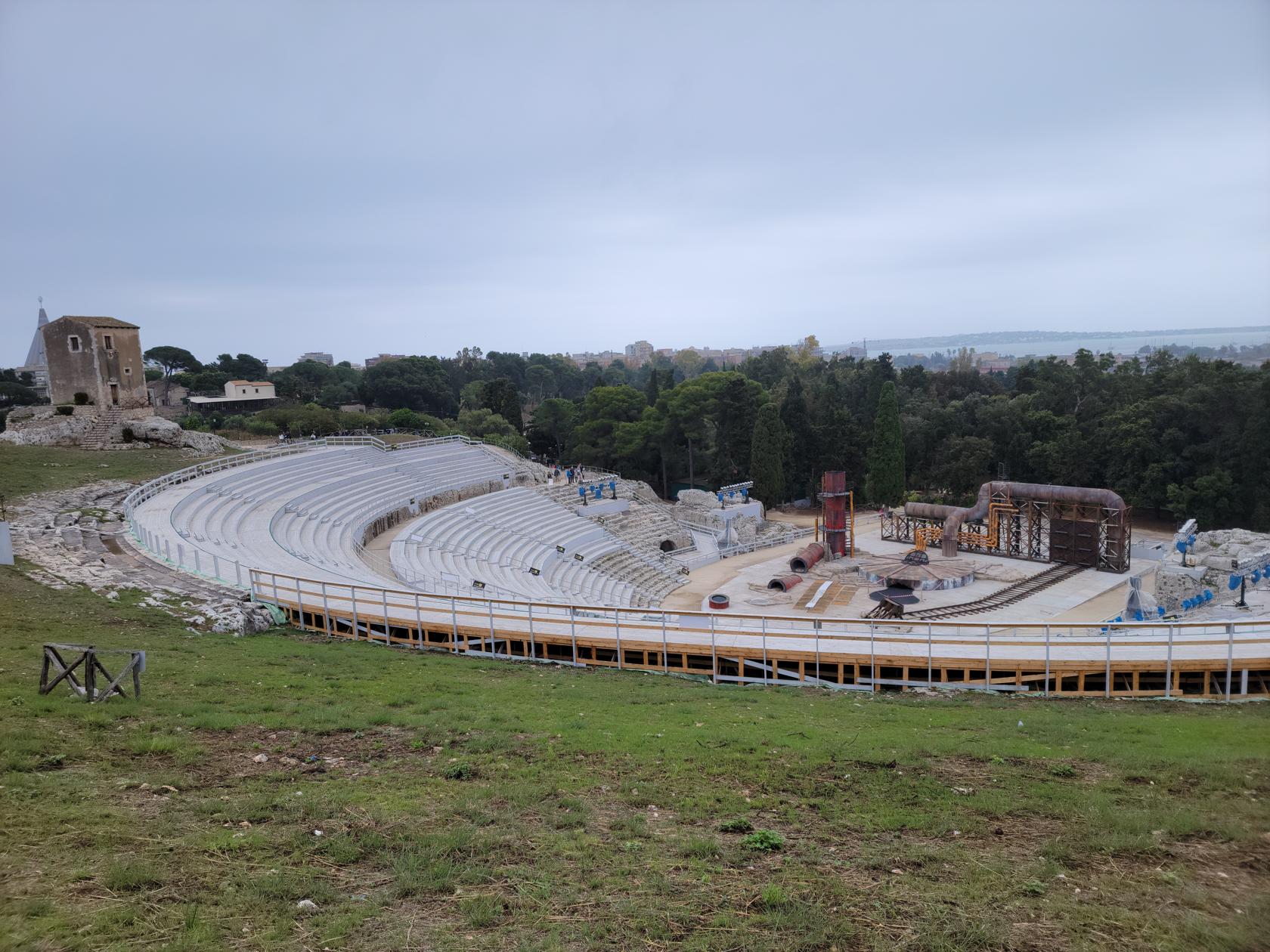
Built into the side of the hill, the Greek Theater was originally constructed in the fifth century BCE and later re-constructed several times, including by the Romans. Currently it has been further modified by the contemporary Syracusians for use as a theater again, building a scaffold like theater on top of the pre-existing Greek Theater, in order to have out-door performances and other events.
A walk to the Greek Theater – The Neapolis – Archaeological Park – Siracuse, Sicily
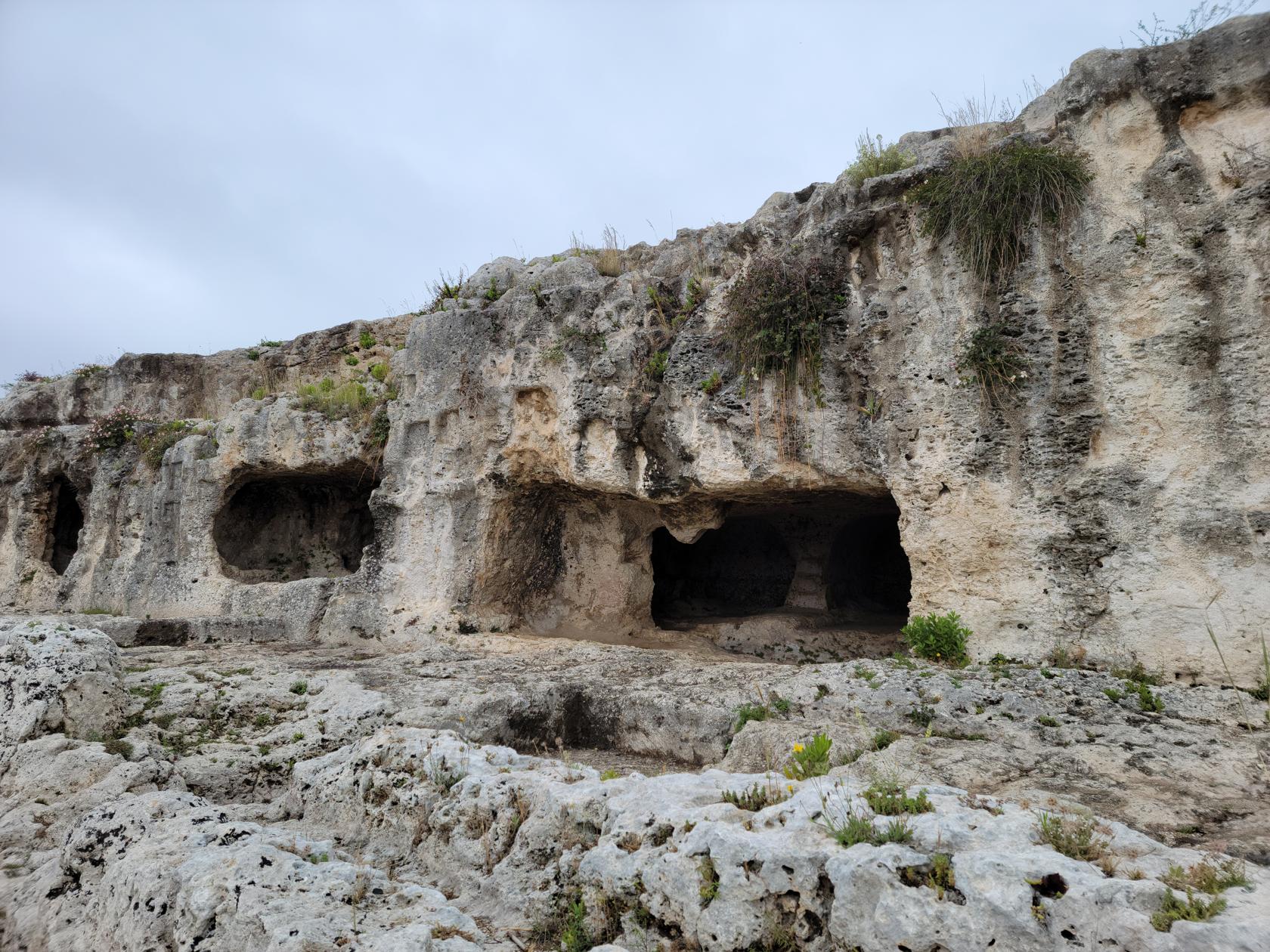
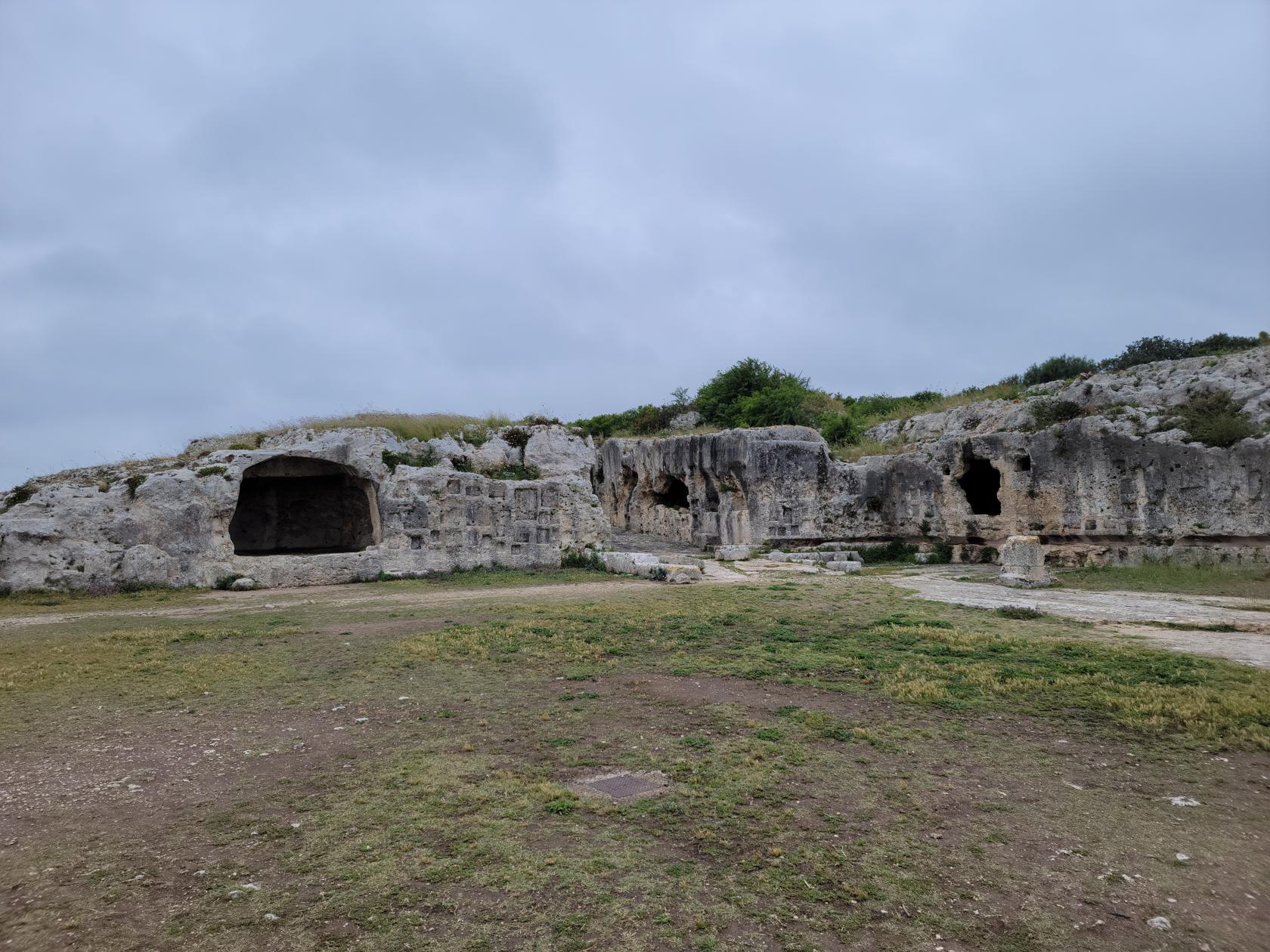
The necropolis near the Greek Theater – The Neapolis – Archaeological Park – Siracuse, Sicily
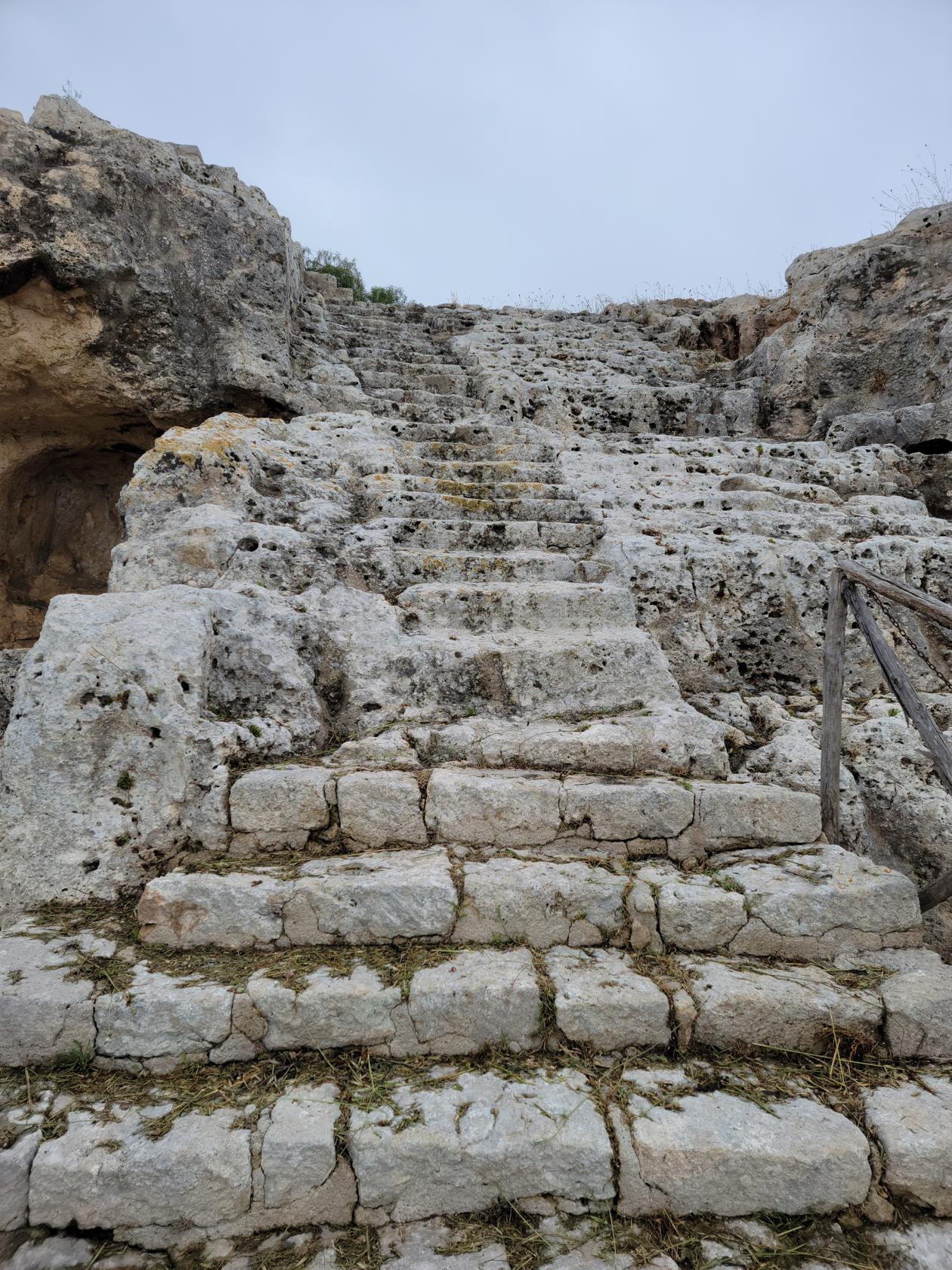
Ancient stone stairway of the Greek Theater – The Neapolis – Archaeological Park – Siracuse, Sicily
The Necropolis – The Neapolis – Archaeological Park – Siracuse, Sicily
Area around the Greek Theater – The Neapolis – Archaeological Park – Siracuse, Sicily
The renovated Greek Theater – The Neapolis – Archaeological Park – Siracuse, Sicily
The renovated Greek Theater – The Neapolis – Archaeological Park – Siracuse, Sicily
Behind the theater is a necropolis and grotto, both of which may be visited while visiting the structure.
The Roman Theater
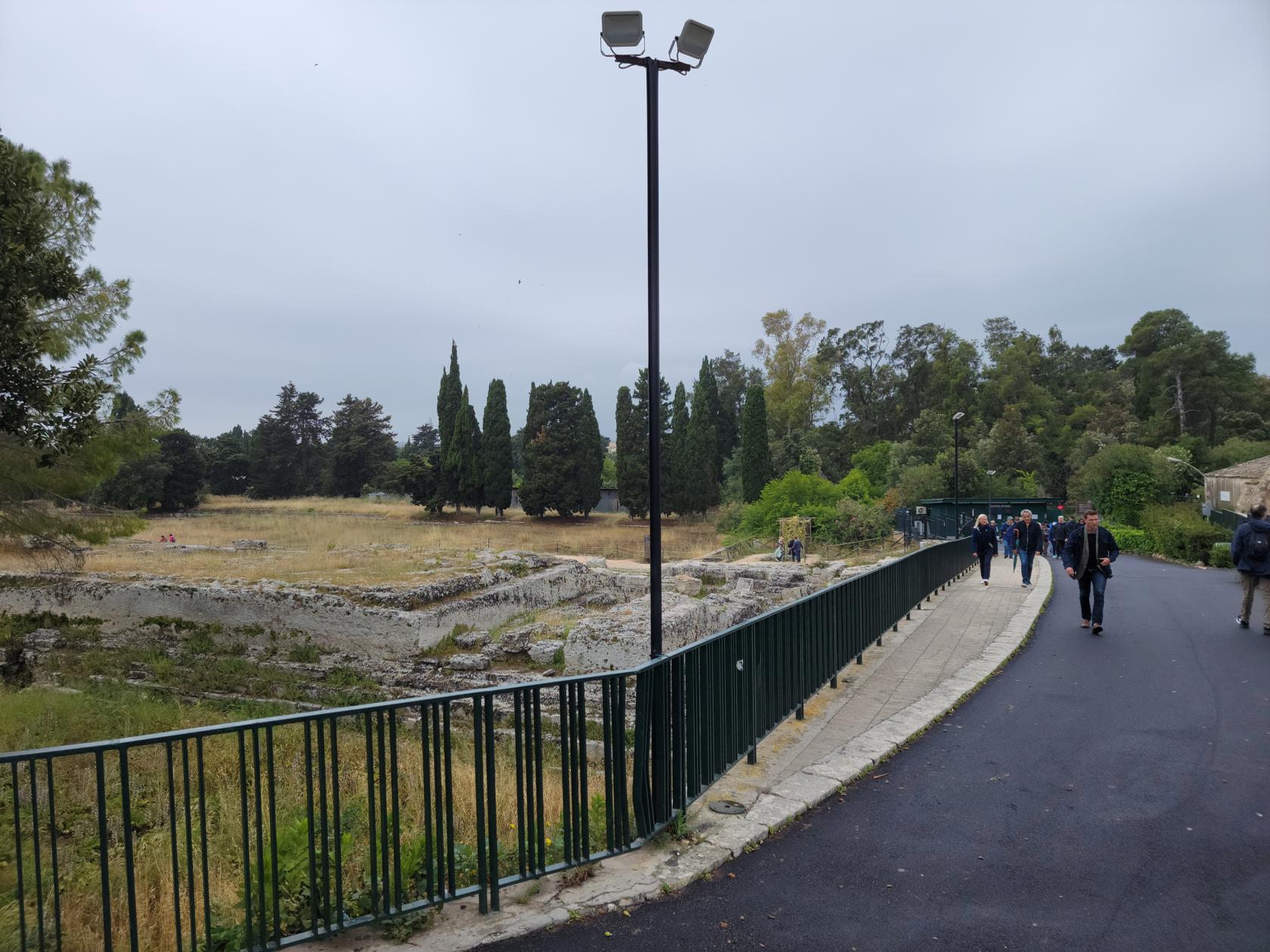
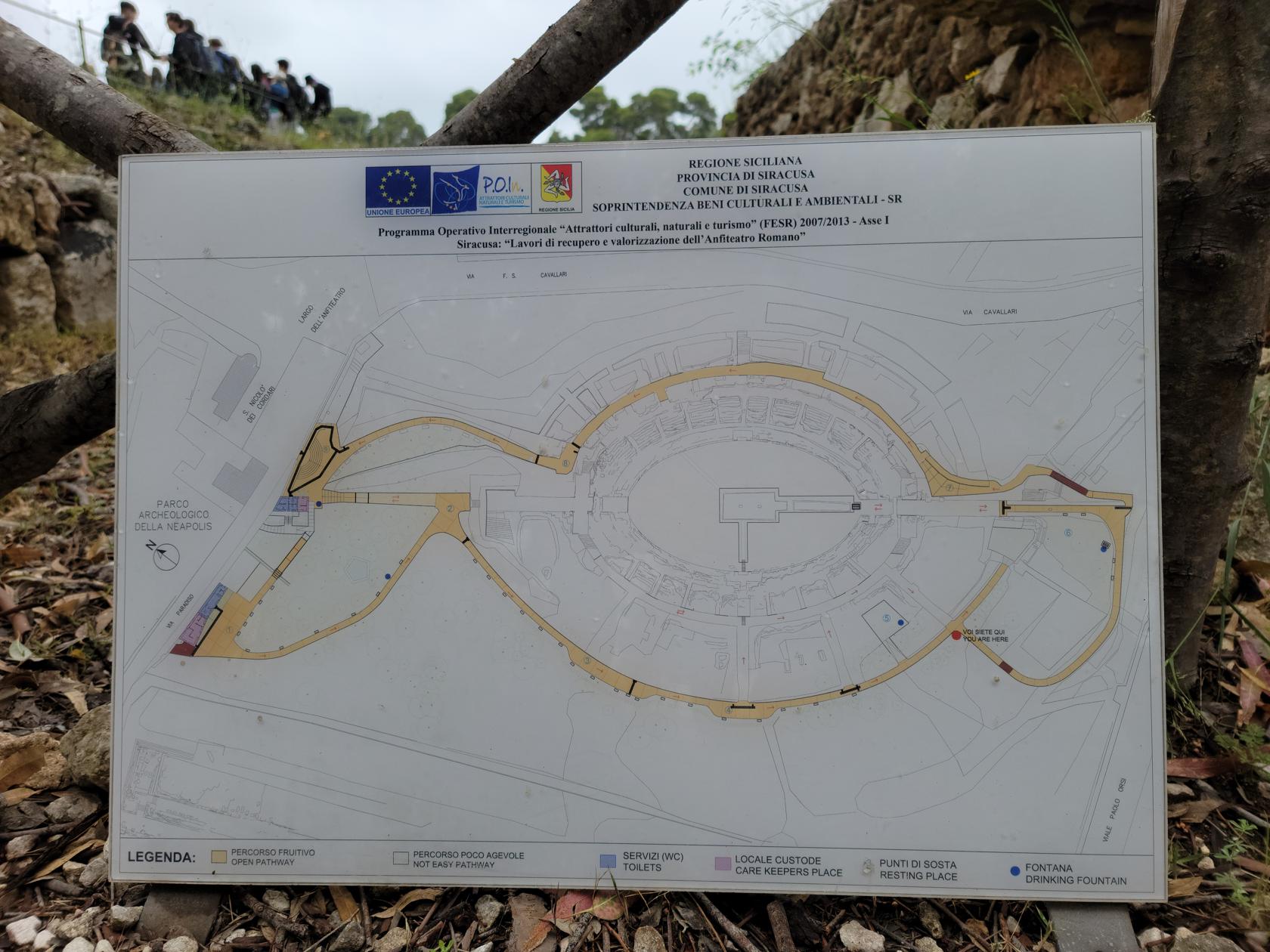
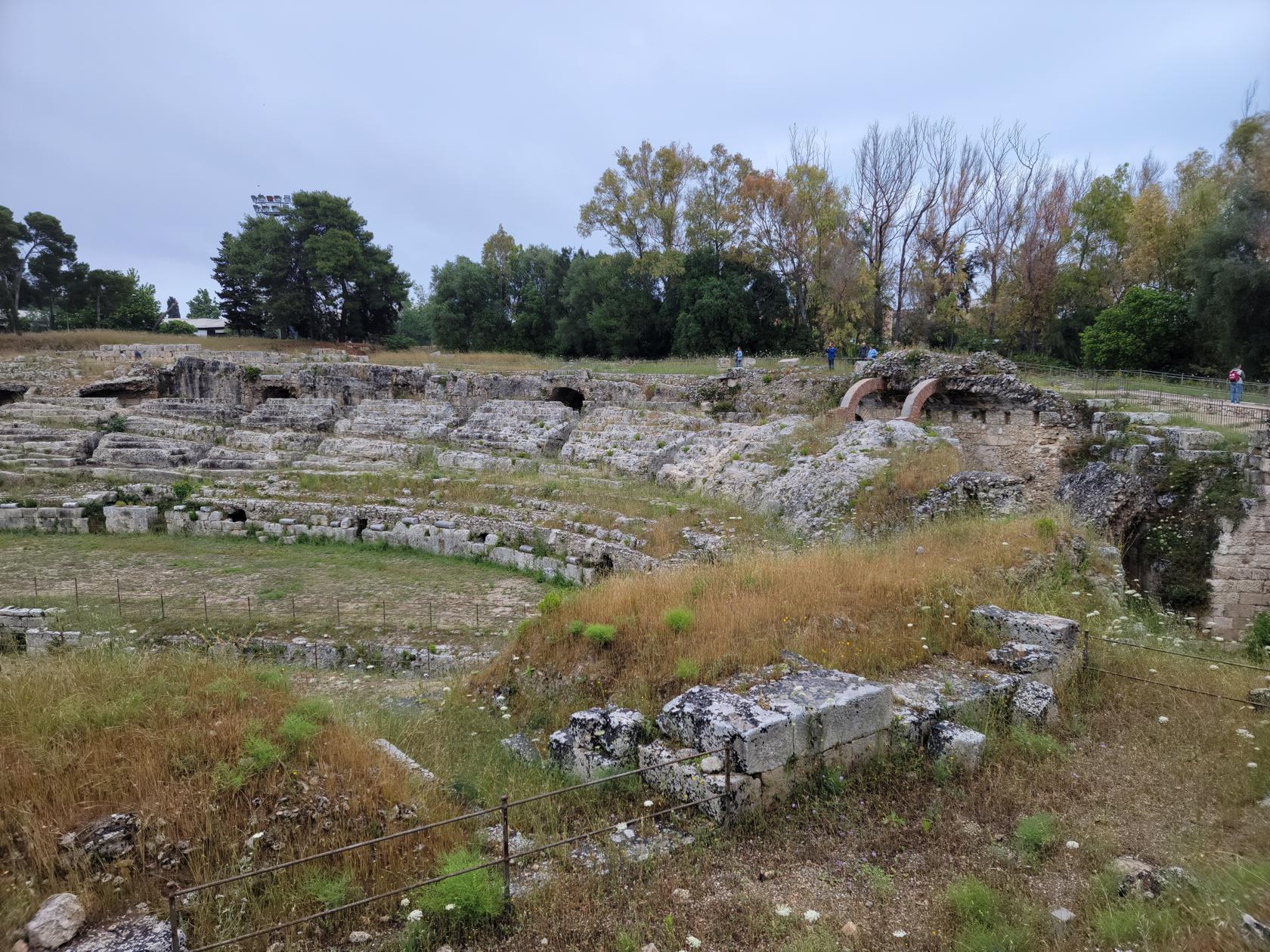
The Roman Theater is found on the way out of the park complex and extends to the exit for some way.
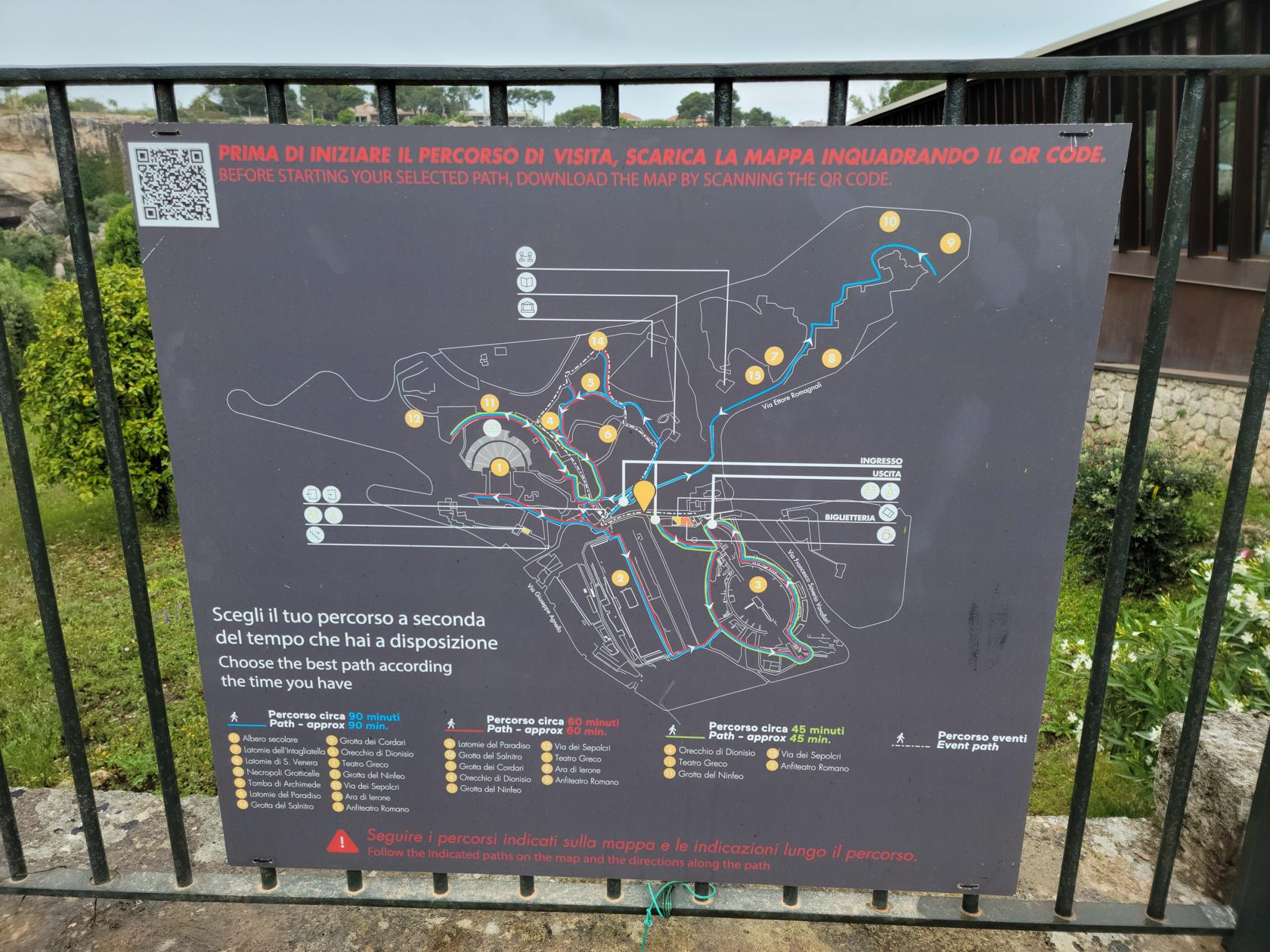
A map of the Roman Theater – The Neapolis – Archaeological Park – Siracuse, Sicily
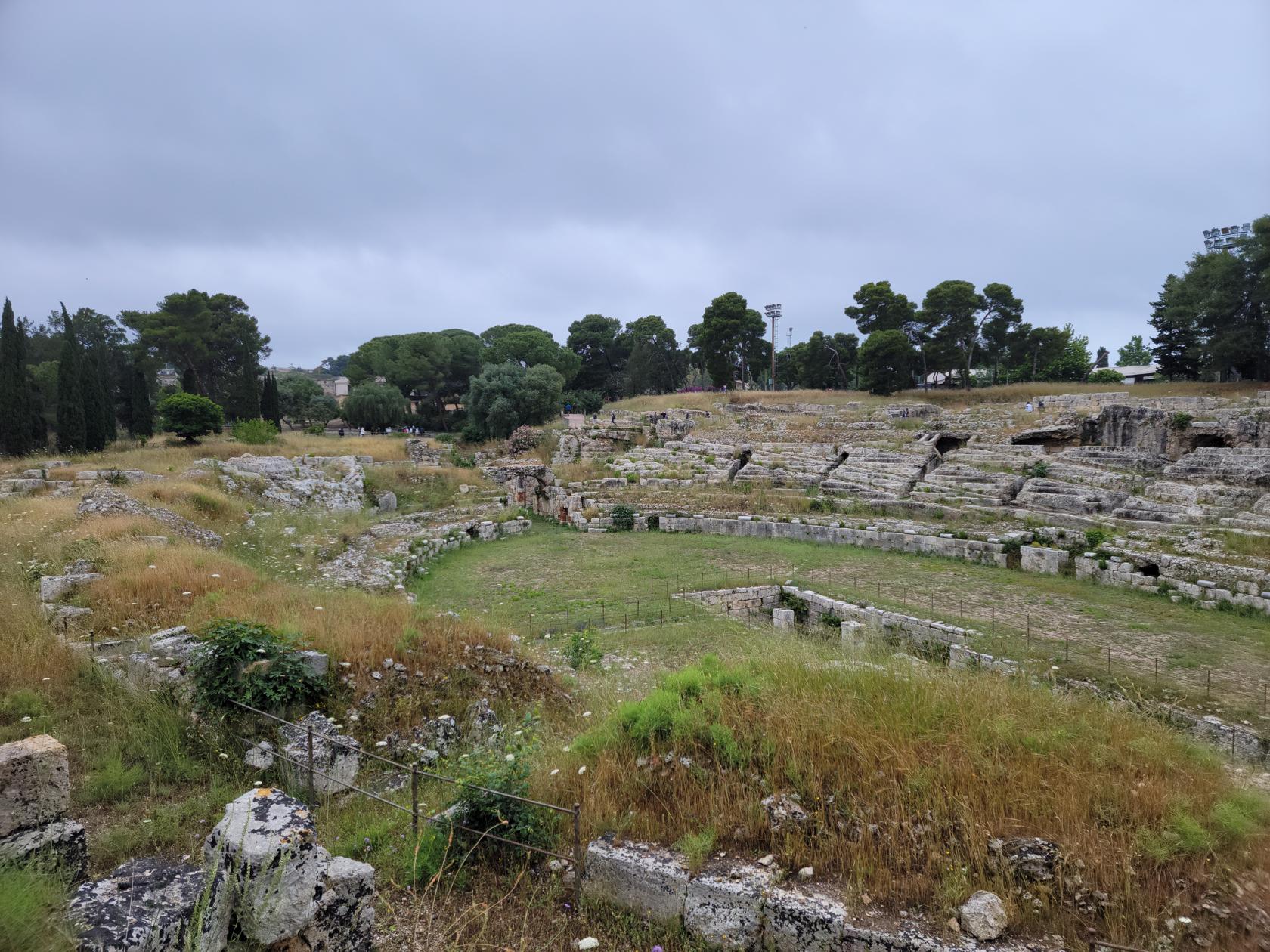
The Roman Theater – The Neapolis – Archaeological Park – Siracuse, Sicily
The Roman Theater – The Neapolis – Archaeological Park – Siracuse, Sicily
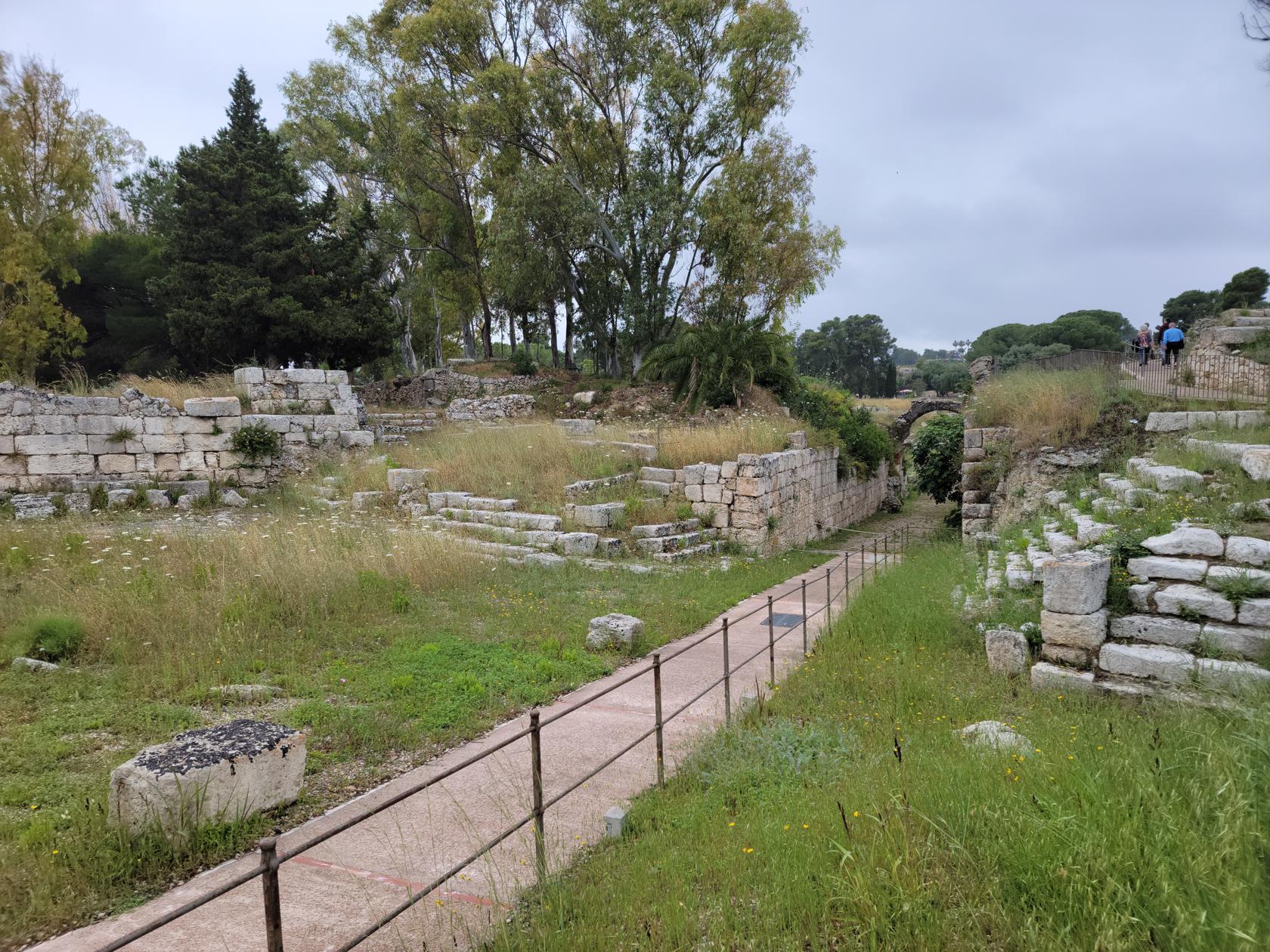
Entryway to the Roman Theater – The Neapolis – Archaeological Park – Siracuse, Sicily
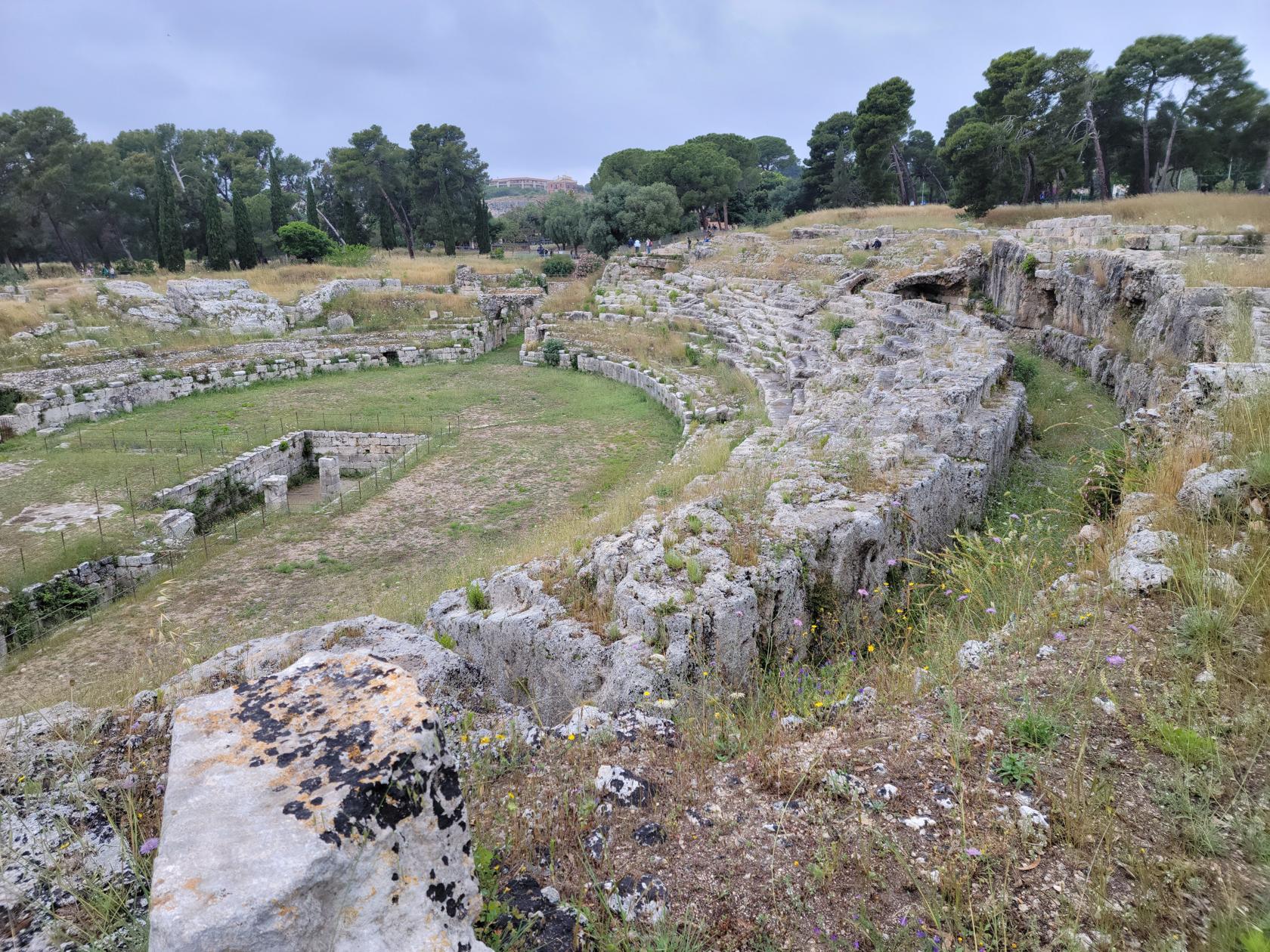
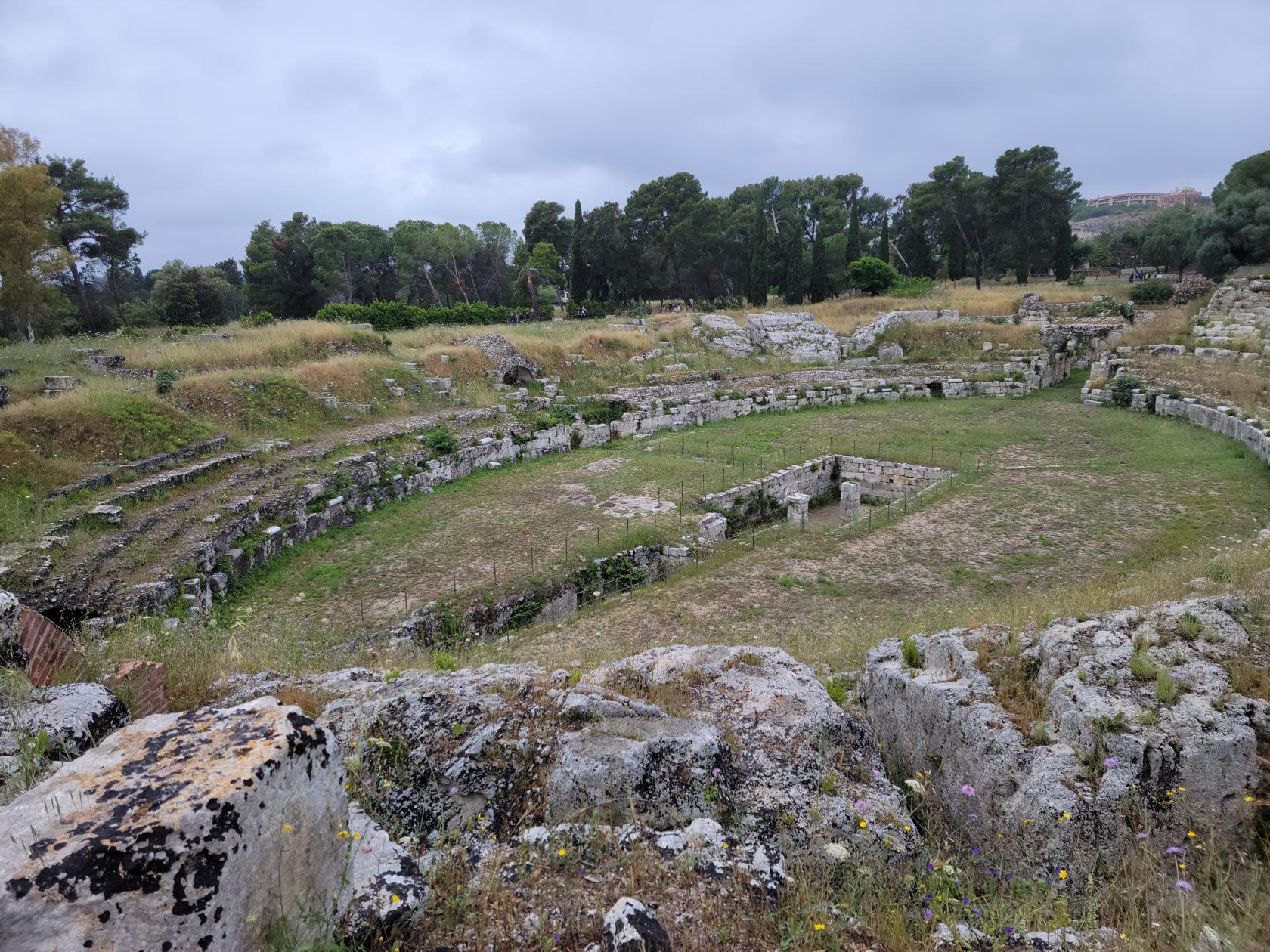
The Roman Theater – The Neapolis – Archaeological Park – Siracuse, Sicily
The Roman Theater – The Neapolis – Archaeological Park – Siracuse, Sicily
Island Of Ortigia
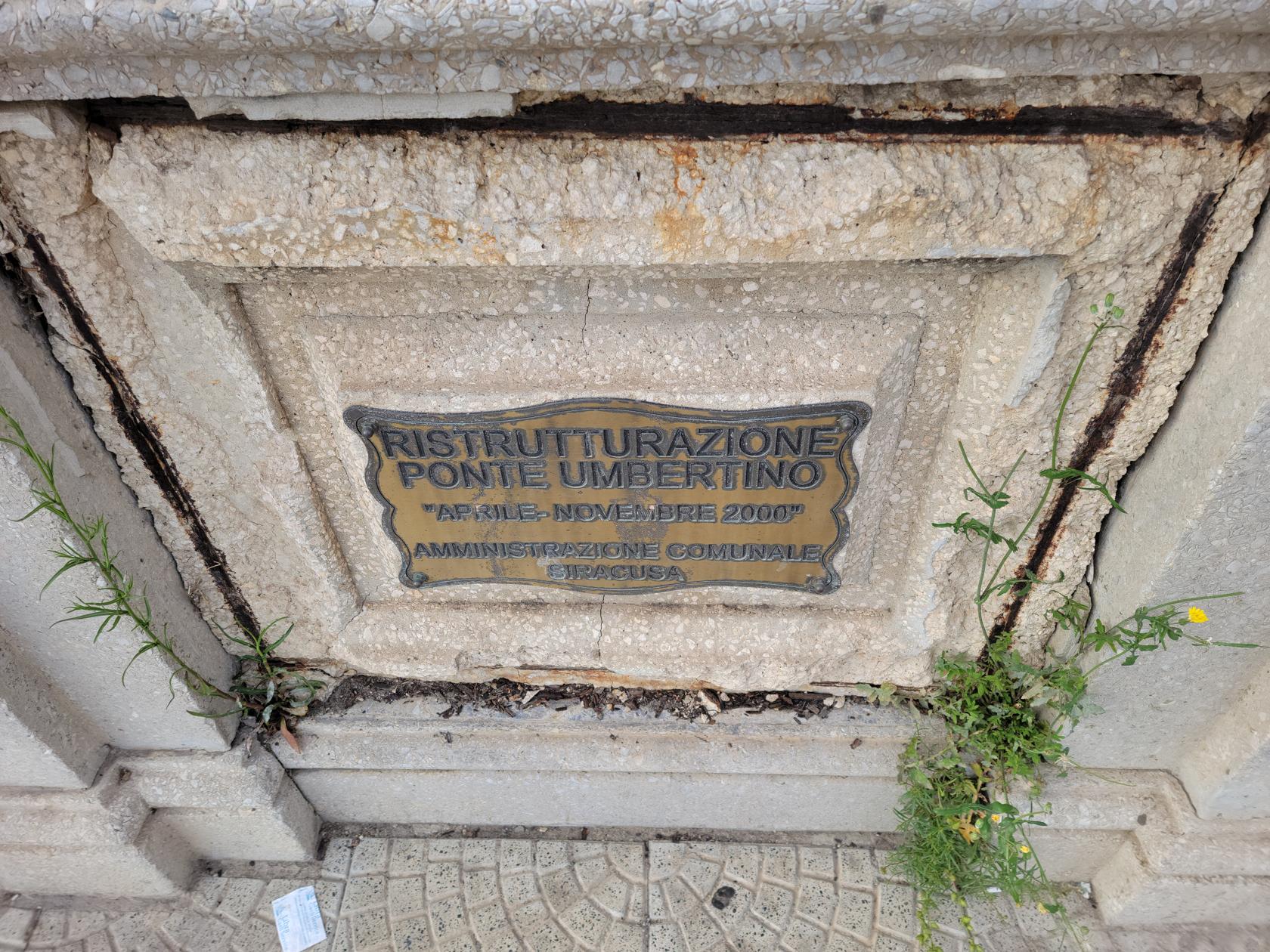
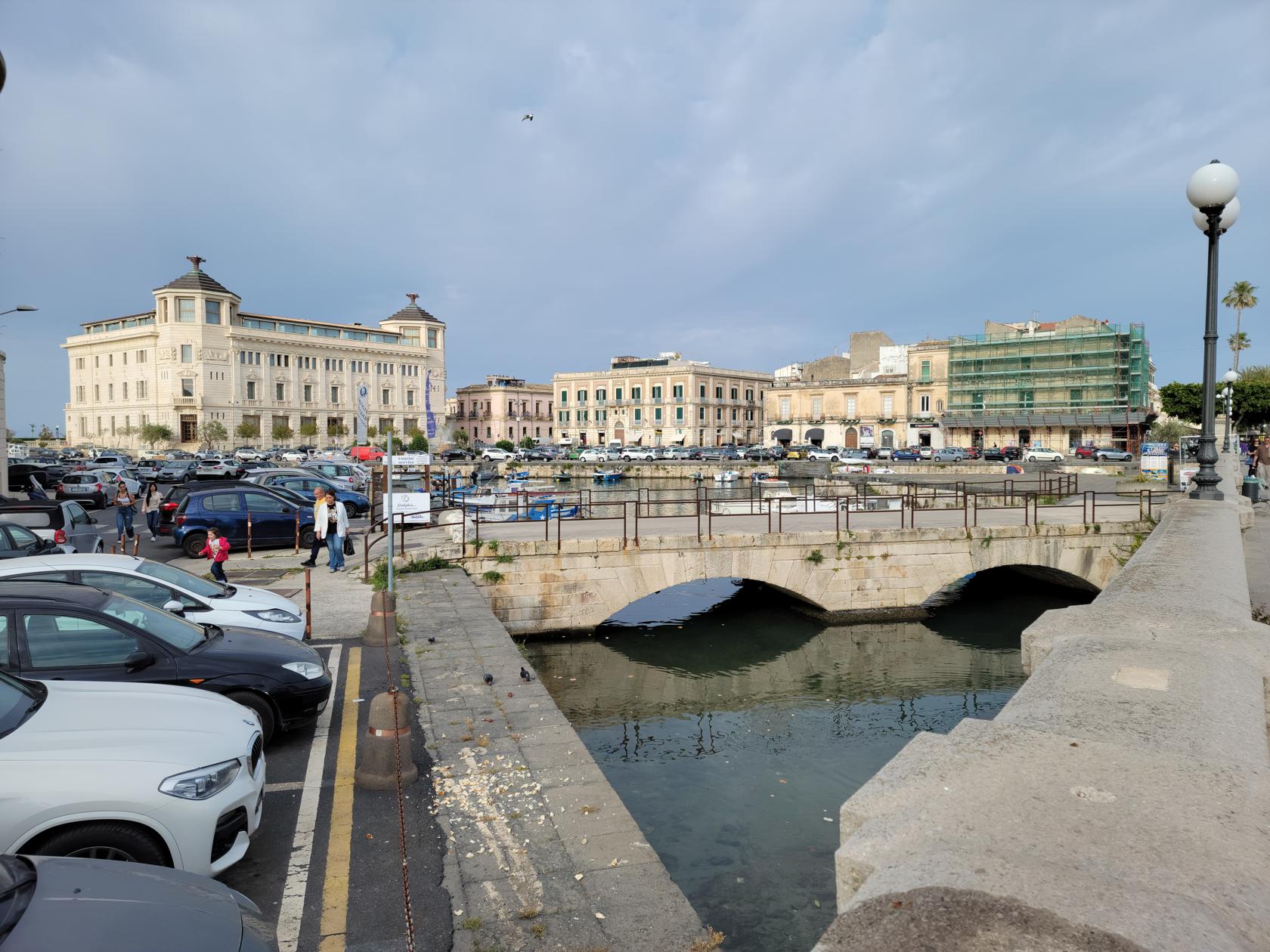
Ortigia, also known as Ortygia or Citta Vecchia (old city), is an island within the city of Syracuse. It is connected to the mainland and the rest of Syracuse by two bridges, the Umbertino Bridge and the Bridge of Santa Lucia.
Umbertino Bridge – Siracusa, Sicily
Umbertino Bridge – Siracusa, Sicily
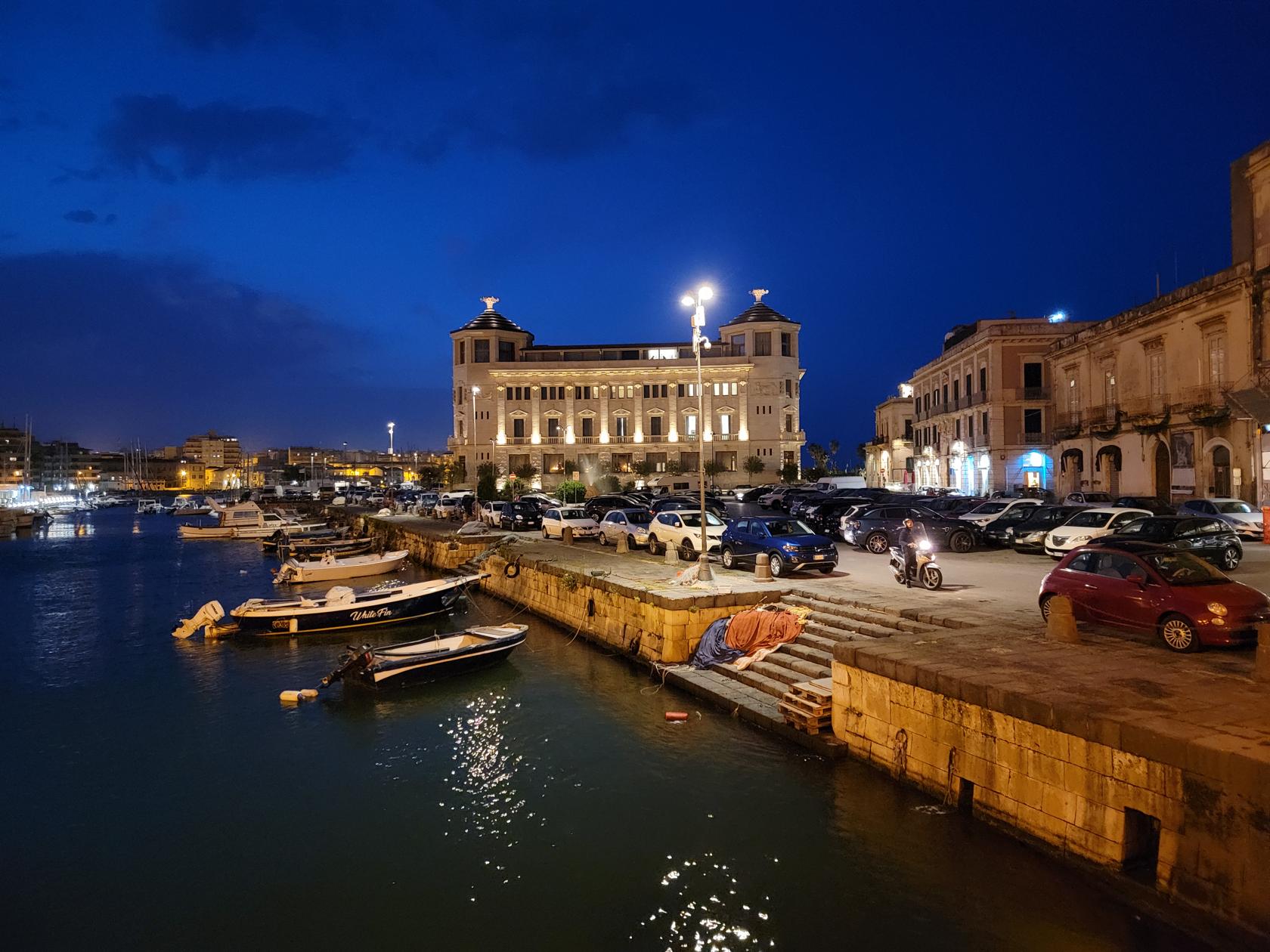
Ortea Palace Hotel at night – Siracusa, Sicily
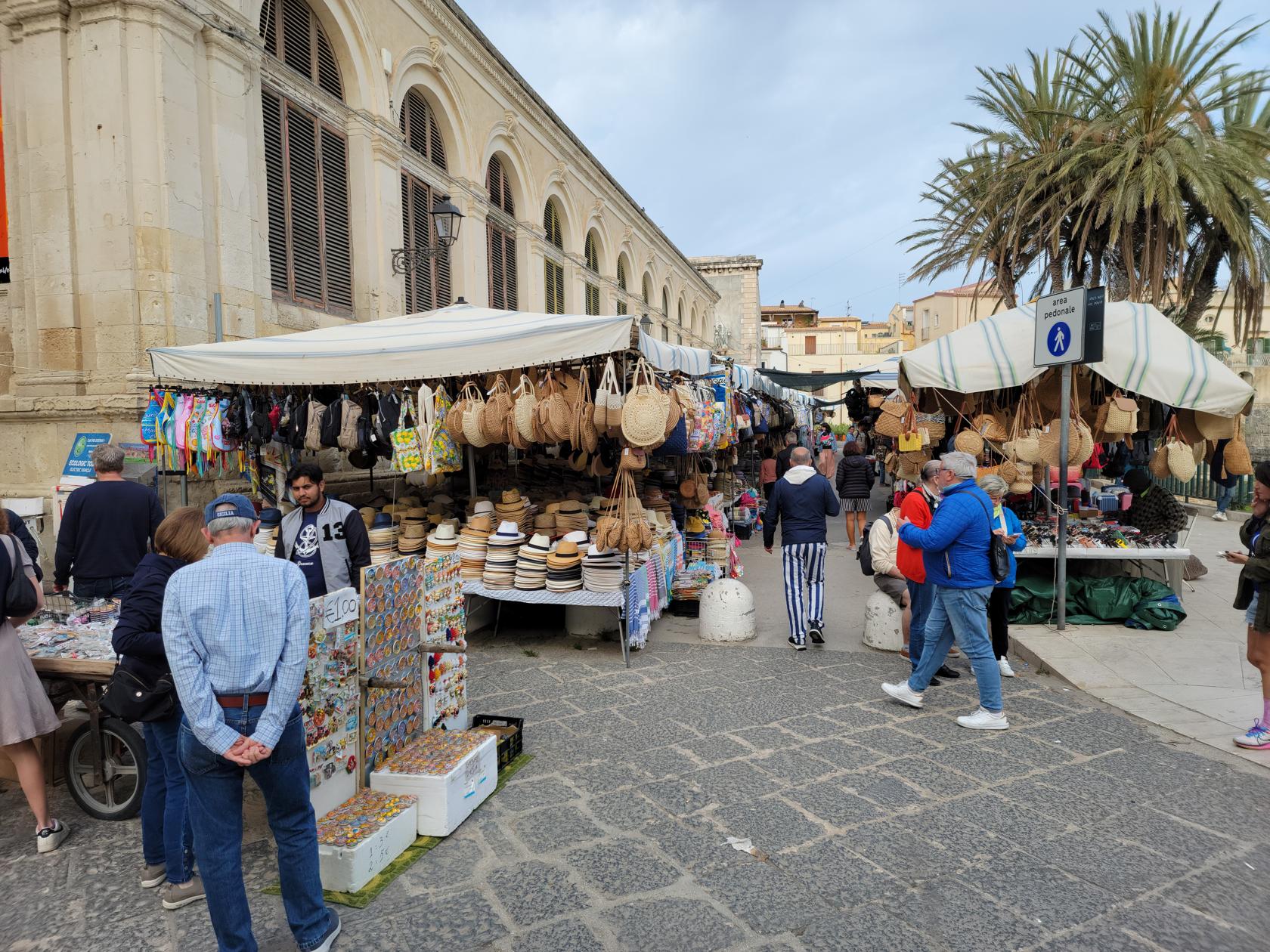
The old market place – Via Emmanuele de Benedictus – Siracusa, Sicily
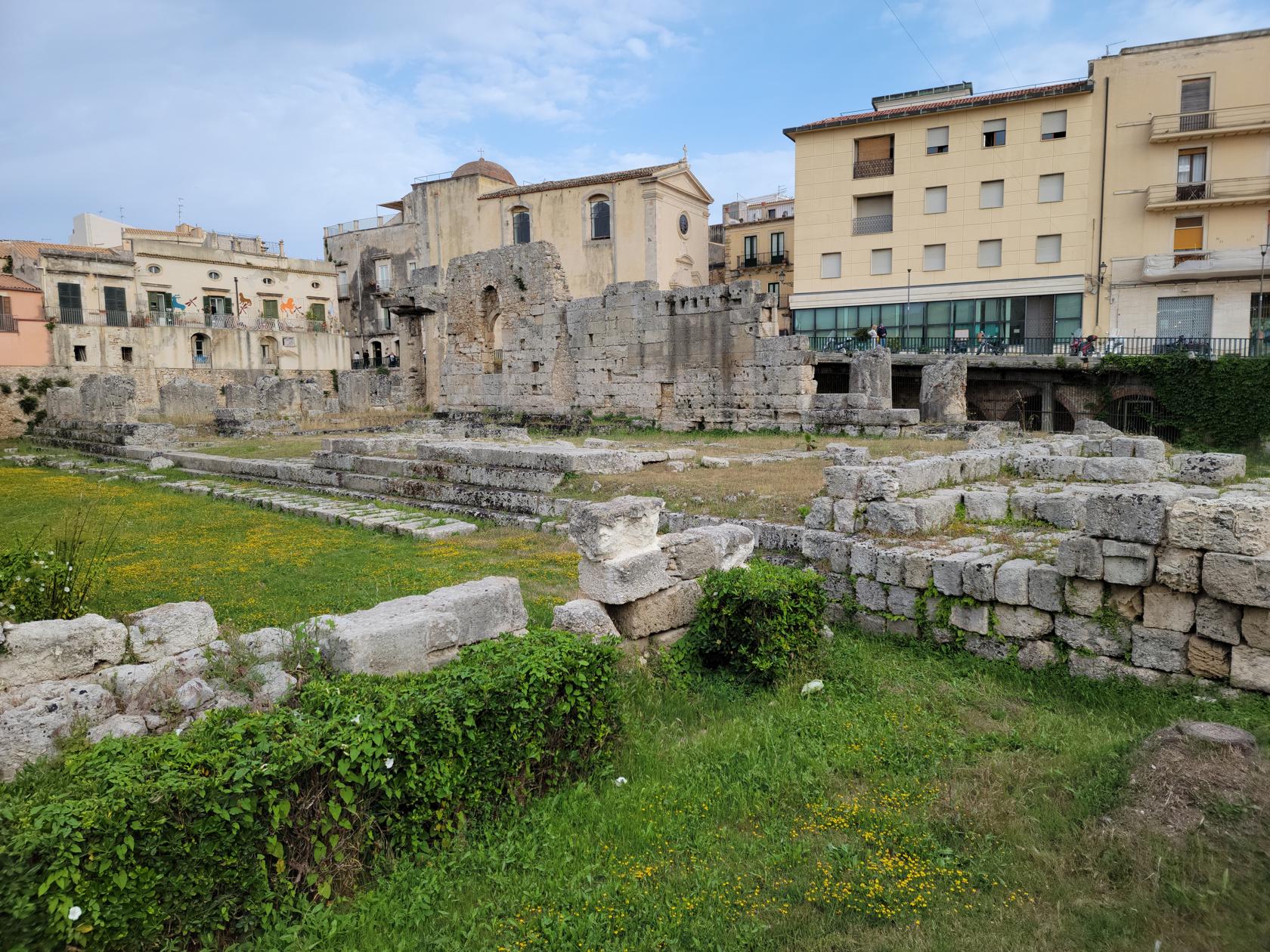
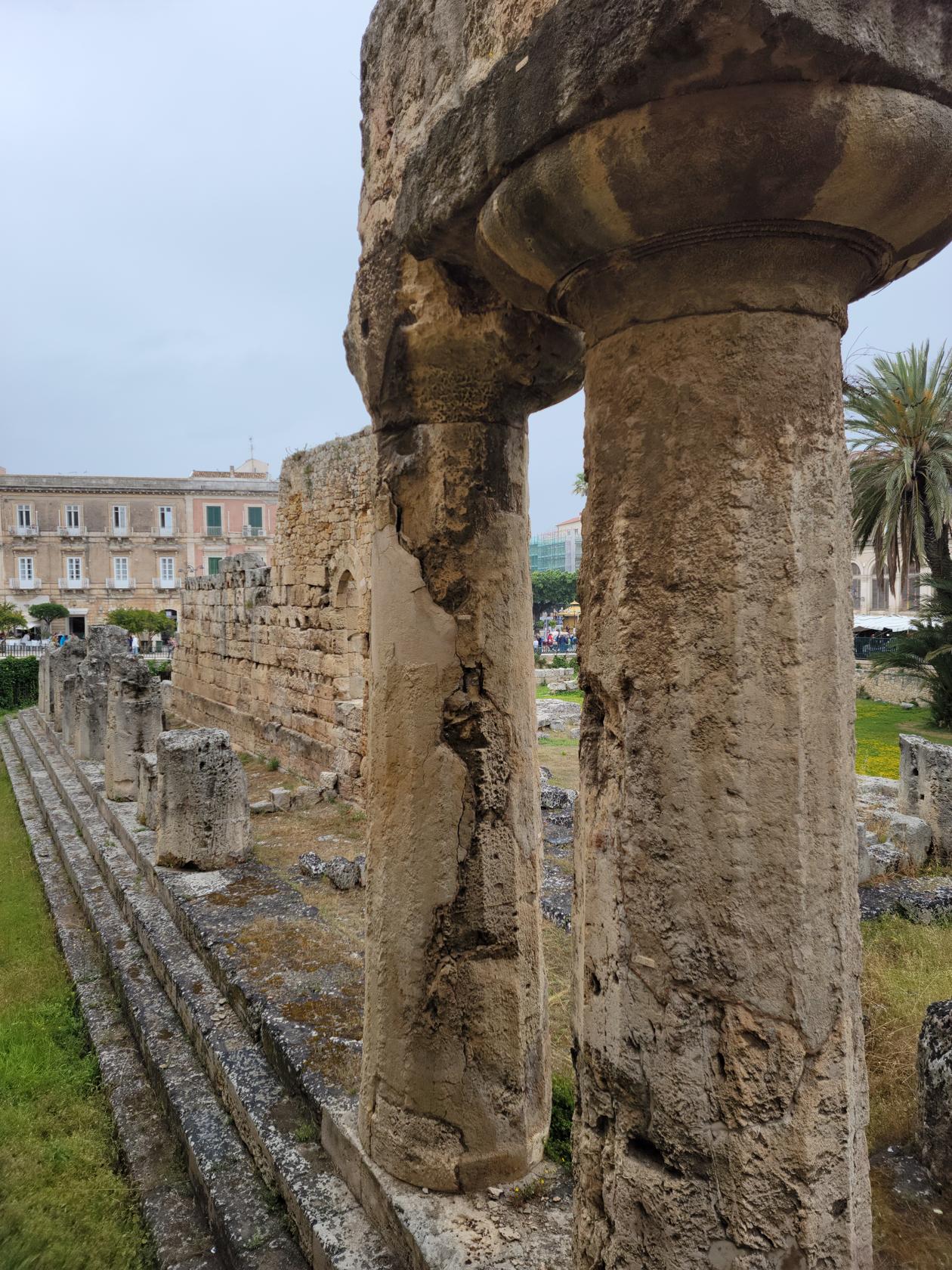
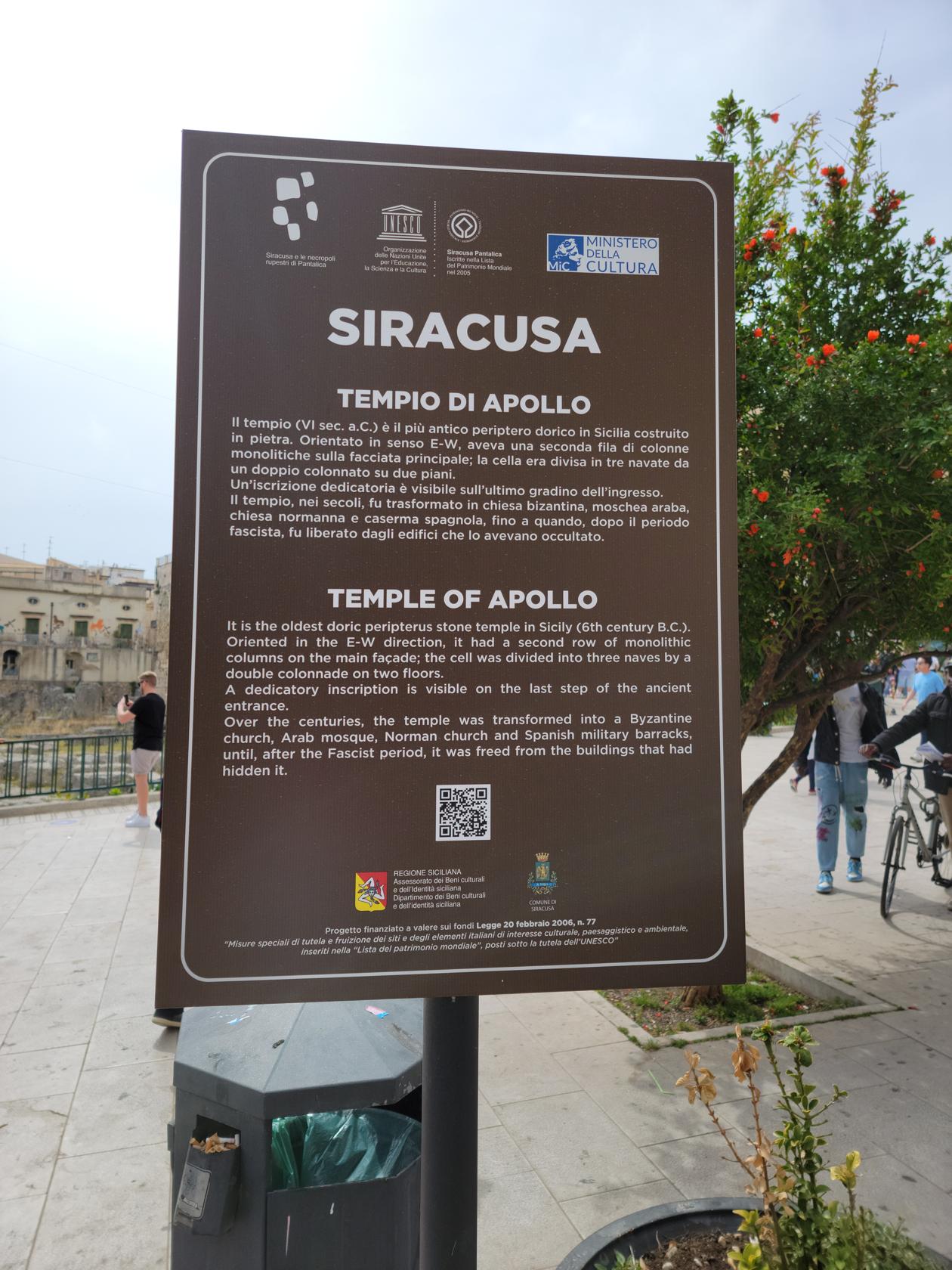
At the entrance of the ancient city is the Temple of Apollo. This is the first site anyone will see upon entering the city. Continuing around the temple visitors will automatically ascend the Corso Giacomo Matteotti, or the main street. This is the main shopping street, containing all contemporary brands and shops and will lead one to the Fountain of Diana.
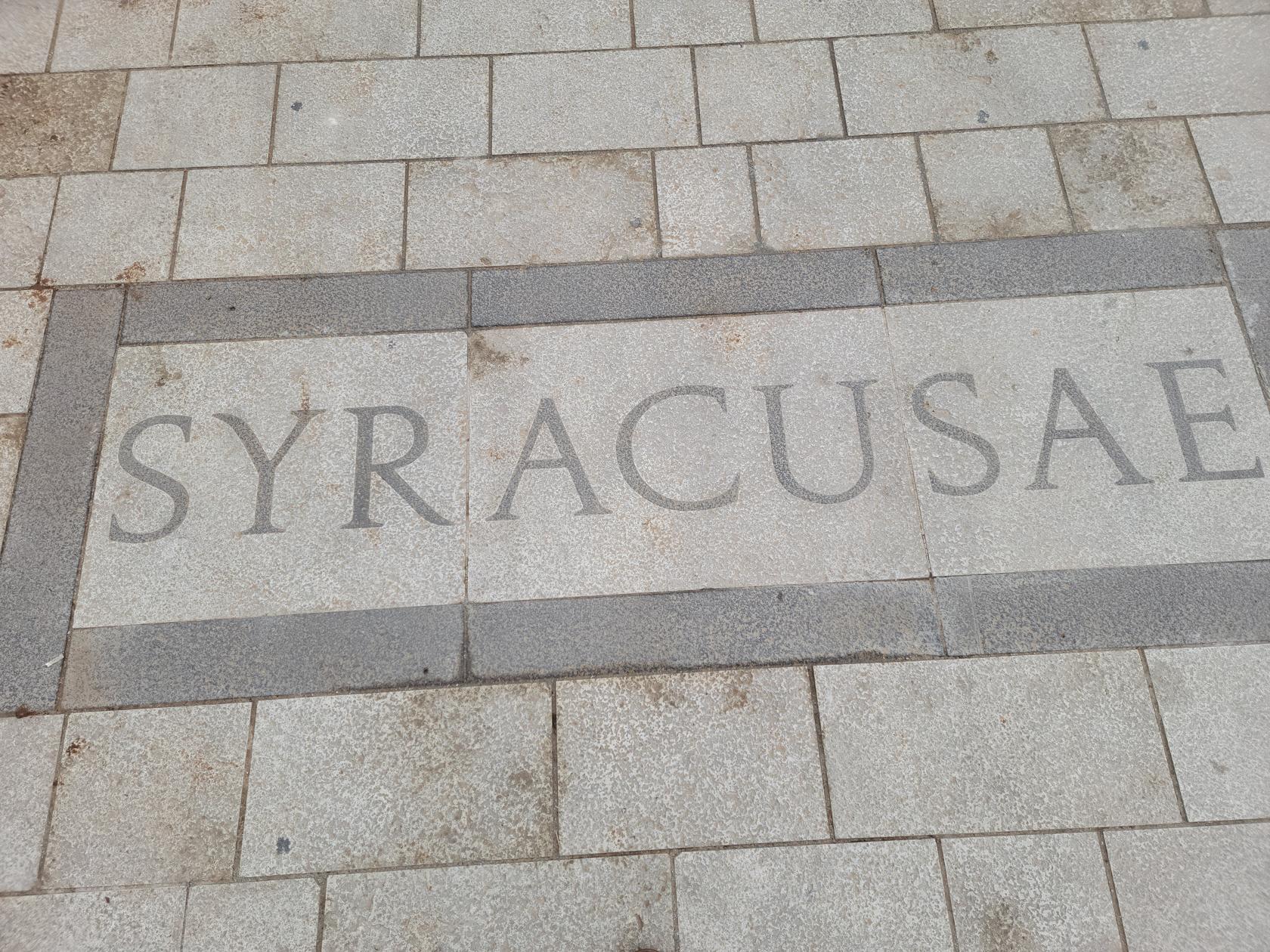
Syracusae boardwalk – Ortigia – Siracuse, Sicily
Temple of Apollo – Siracusa, Sicily
Statue of Archimedes – Umbertino Bridge – Siracuse, Sicily
Temple of Apollo – Ortigia – Siracuse, Sicily
From this traffic-circle; going to the left will take one to the Puppet museum and theater, and the eastern part of the island; going right will take one to the Piazza Duomo and the tourist shopping street, which will also take you to the Syracuse Cathedral.
Temple of Apollo – Siracusa, Sicily
Fountain of Diana – Siracusa, Sicily
Info Center – Siracusa, Sicily
Piazza Minerva – Siracusa, Sicily
Piazza Duomo – Siracusa, Sicily
Santa Lucia Church – Piazza Duomo – Siracusa, Sicily
Lungomare Alfeo – Siracusa, Sicily
Arethuse Spring – Siracusa, Sicily
Papyrus Grotto – Arethuse Spring – Siracusa, Sicily
Papyrus Grotto – Arethuse Spring – Siracusa, Sicily
Church – Siracusa, Sicily
Side street – Siracusa, Sicily
Puppet Museum
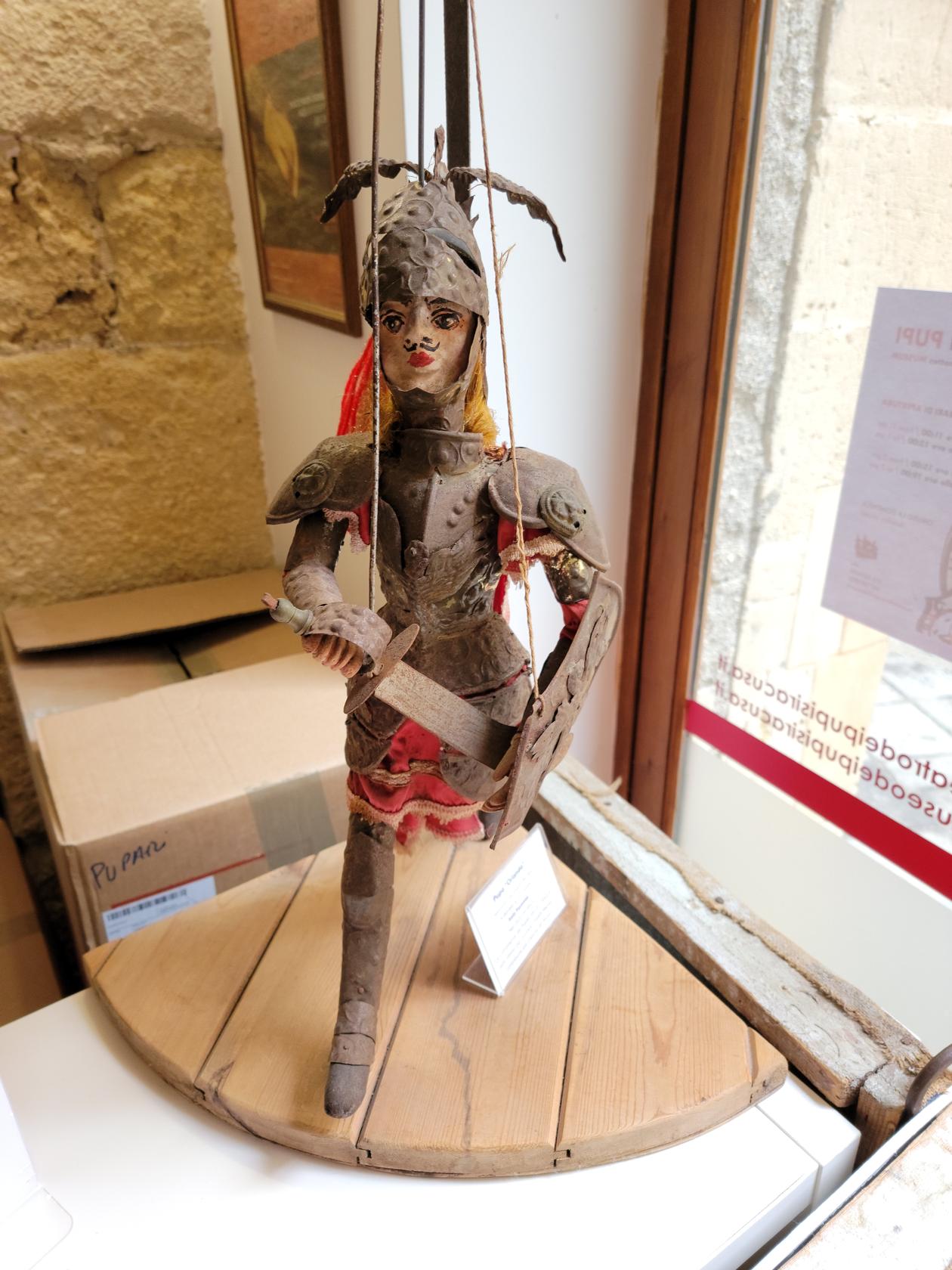
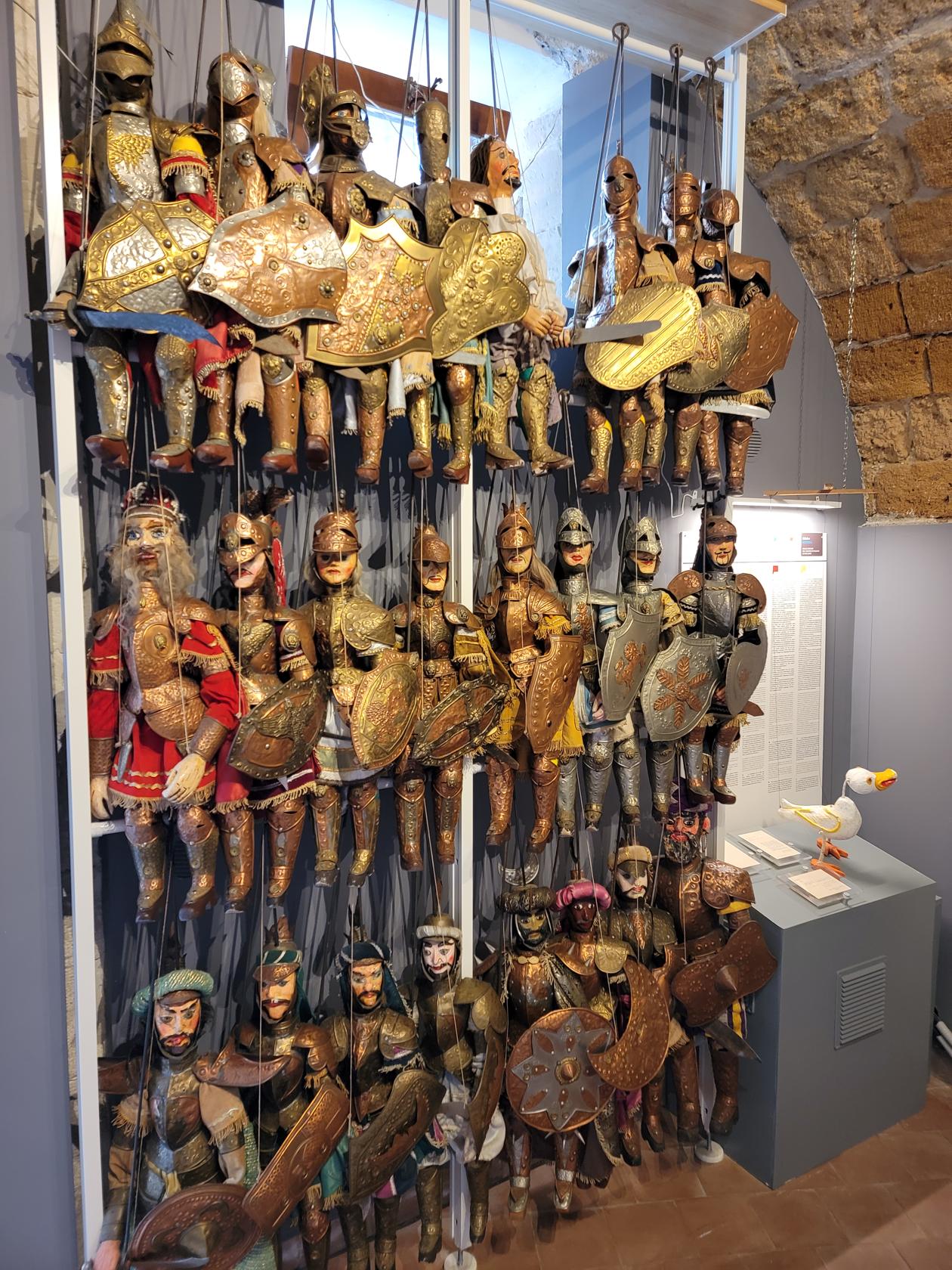
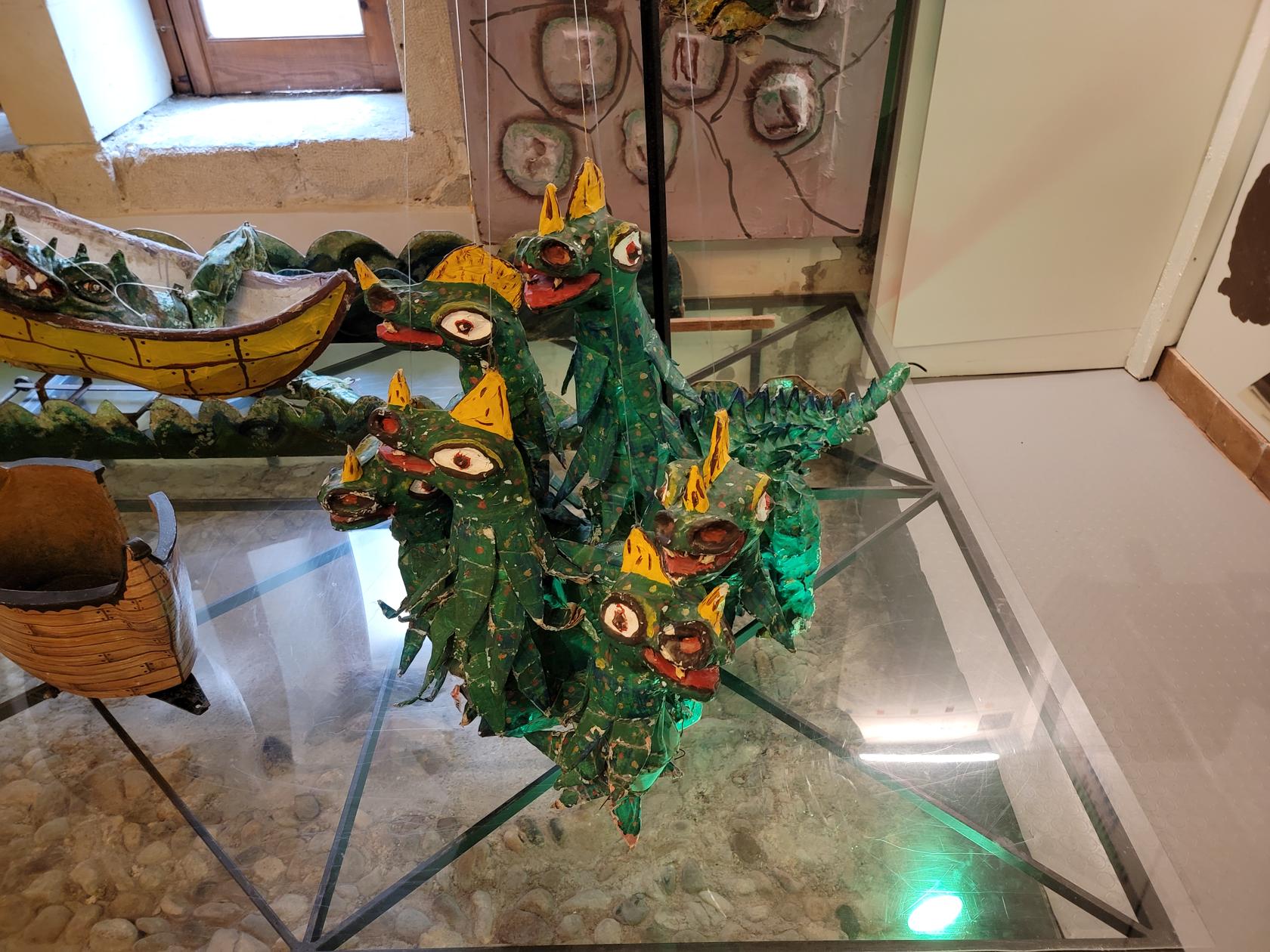
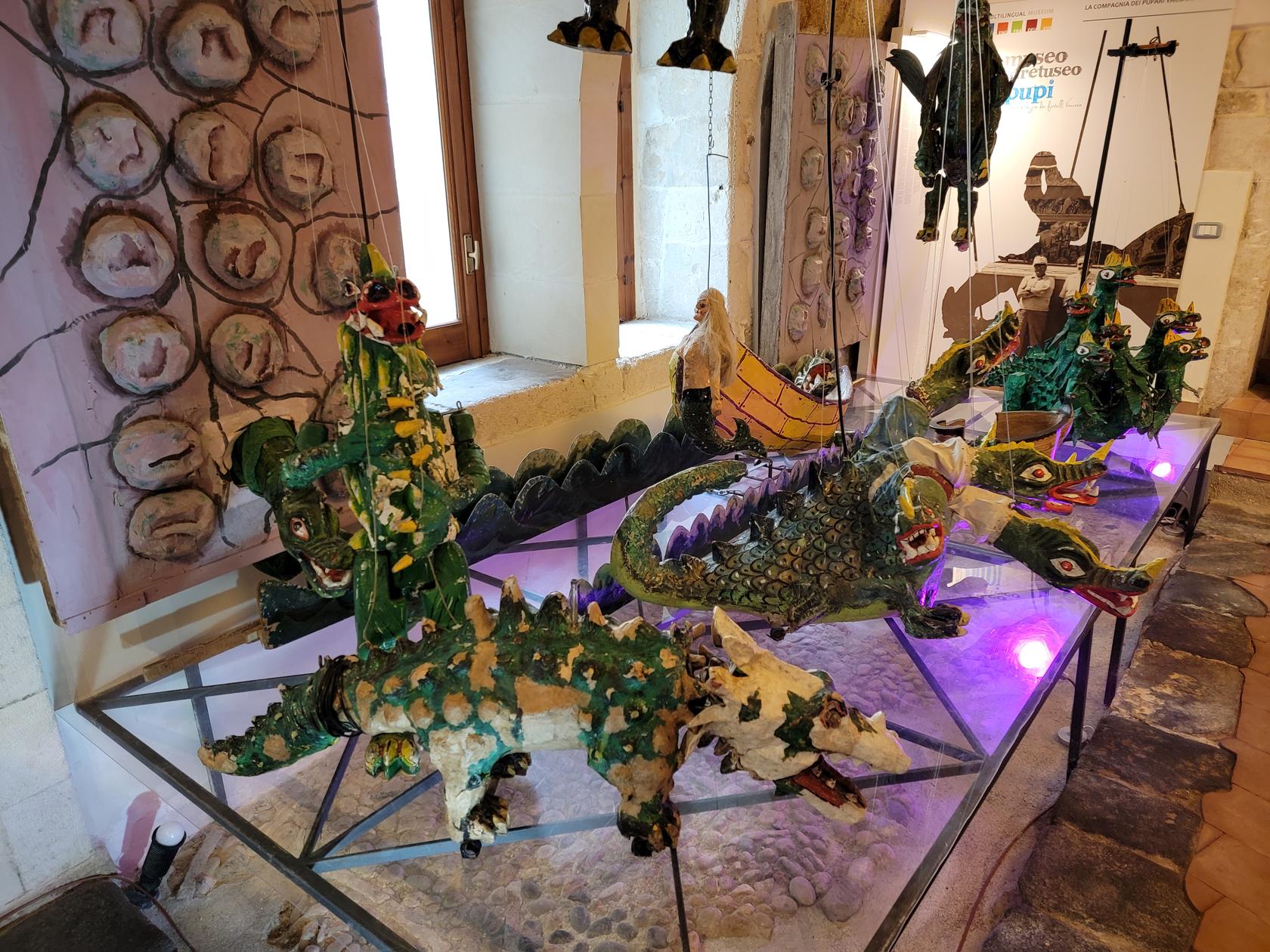
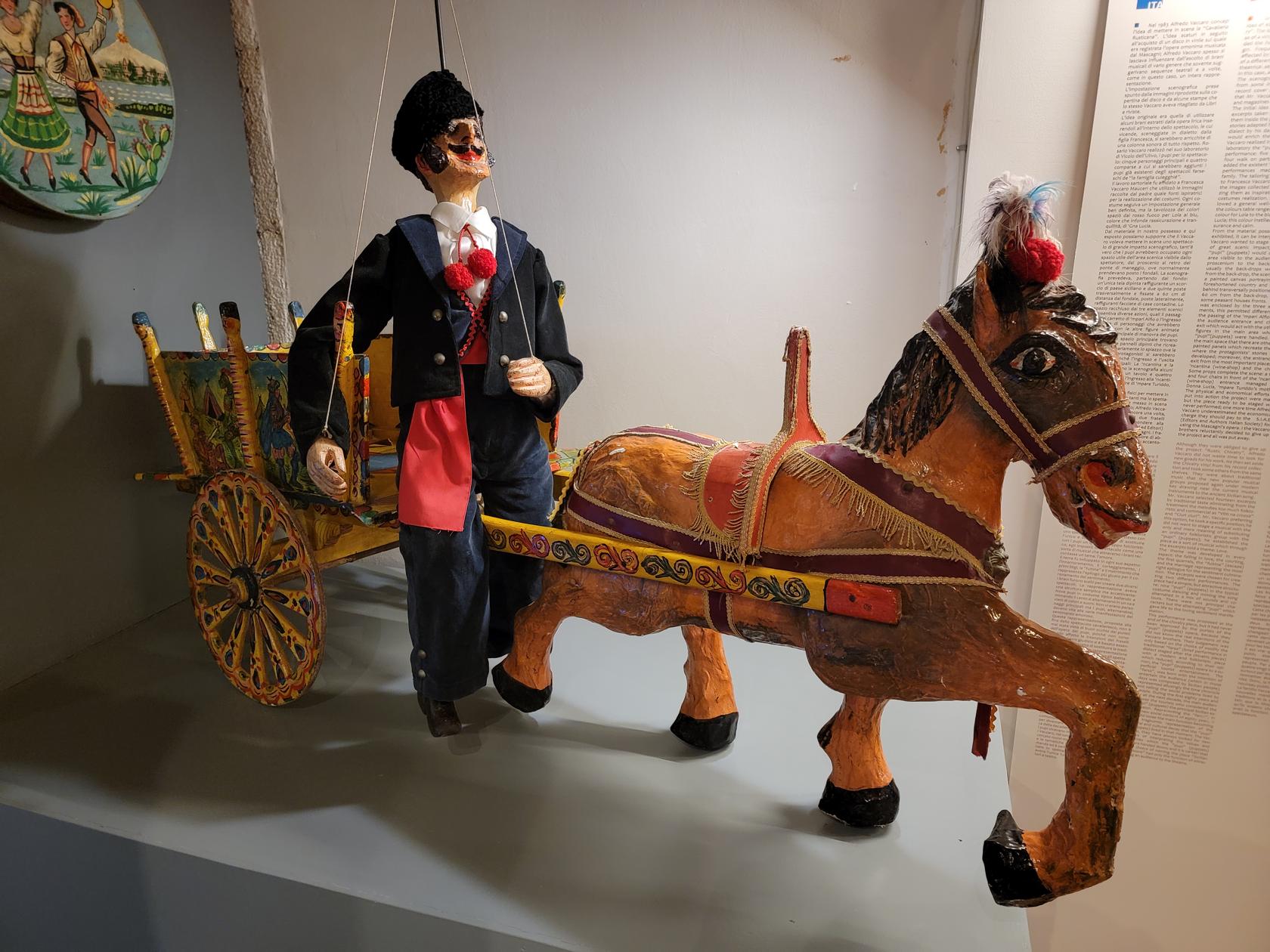
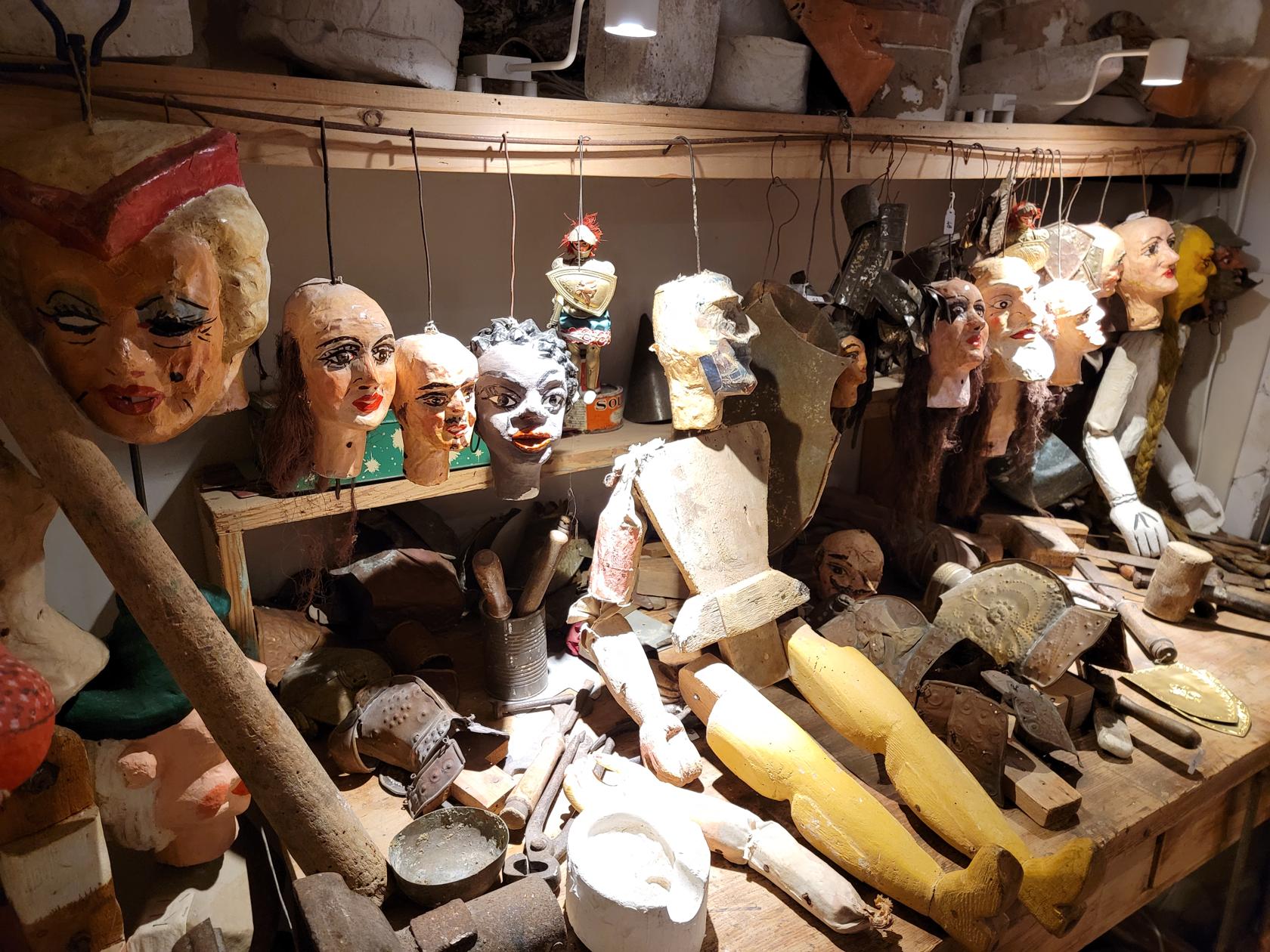
This is an interesting little museum covering the history of a specific heritage of puppet making on the island of Ortigia. Therefore, the puppets are specifically built around tales and folklore of the people of Sicily.
Puppet Museum – Ortigia – Siracuse, Sicily
The puppets range in size from small (approx. 20cm in height), all the way to life size. There are many examples of finished products and some of contemporary origin. One display also shows the progression of making a puppet, from the carving stage through final assembly. All very instructive.
Assortment of small puppets – Puppet Museum – Ortigia – Siracuse, Sicily
Assortment of knight puppets – Puppet Museum – Ortigia – Siracuse, Sicily
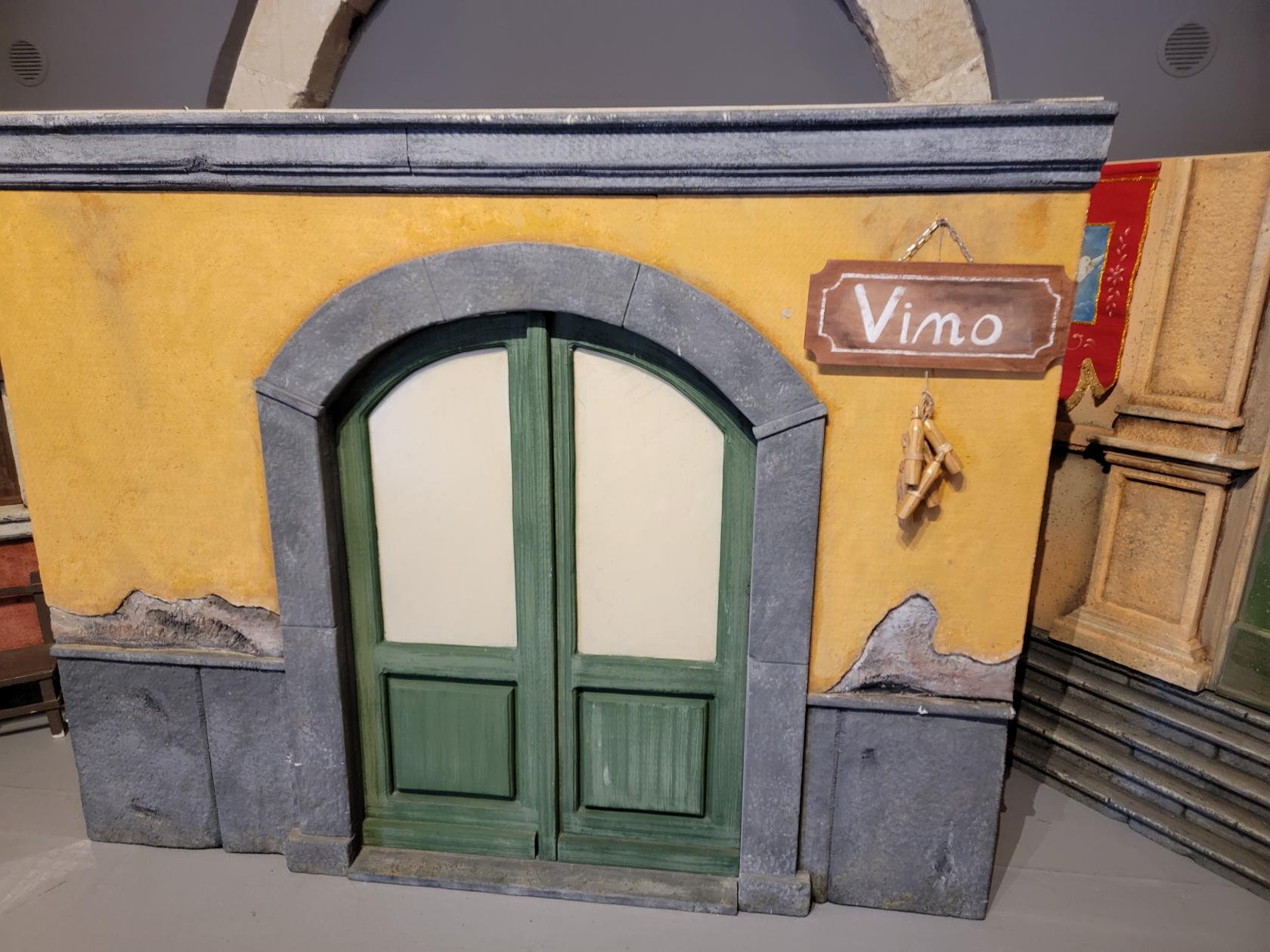
Small store front to scale – Puppet Museum – Ortigia – Siracuse, Sicily
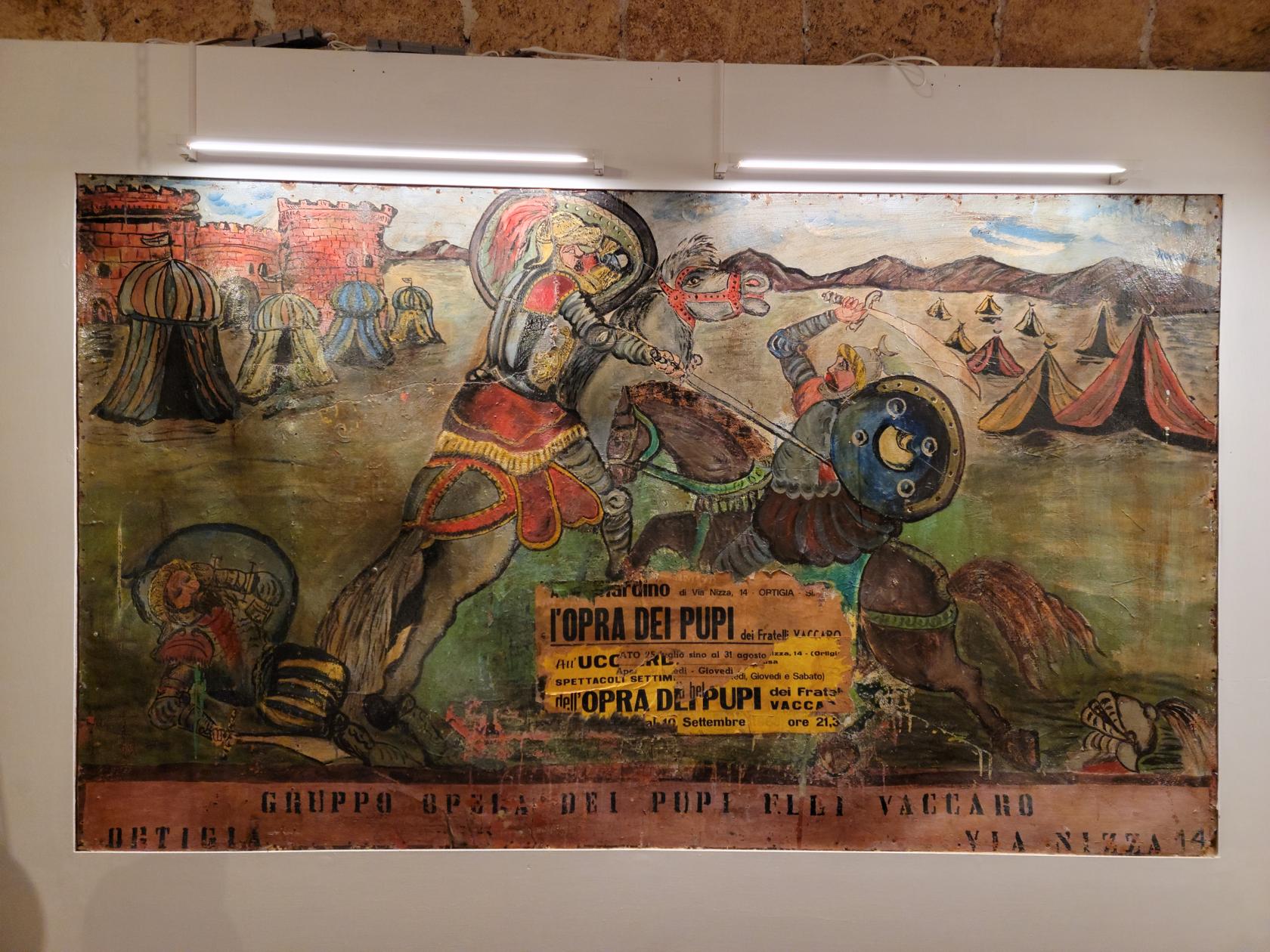
Old advertisement sign – Puppet Museum – Ortigia – Siracuse, Sicily
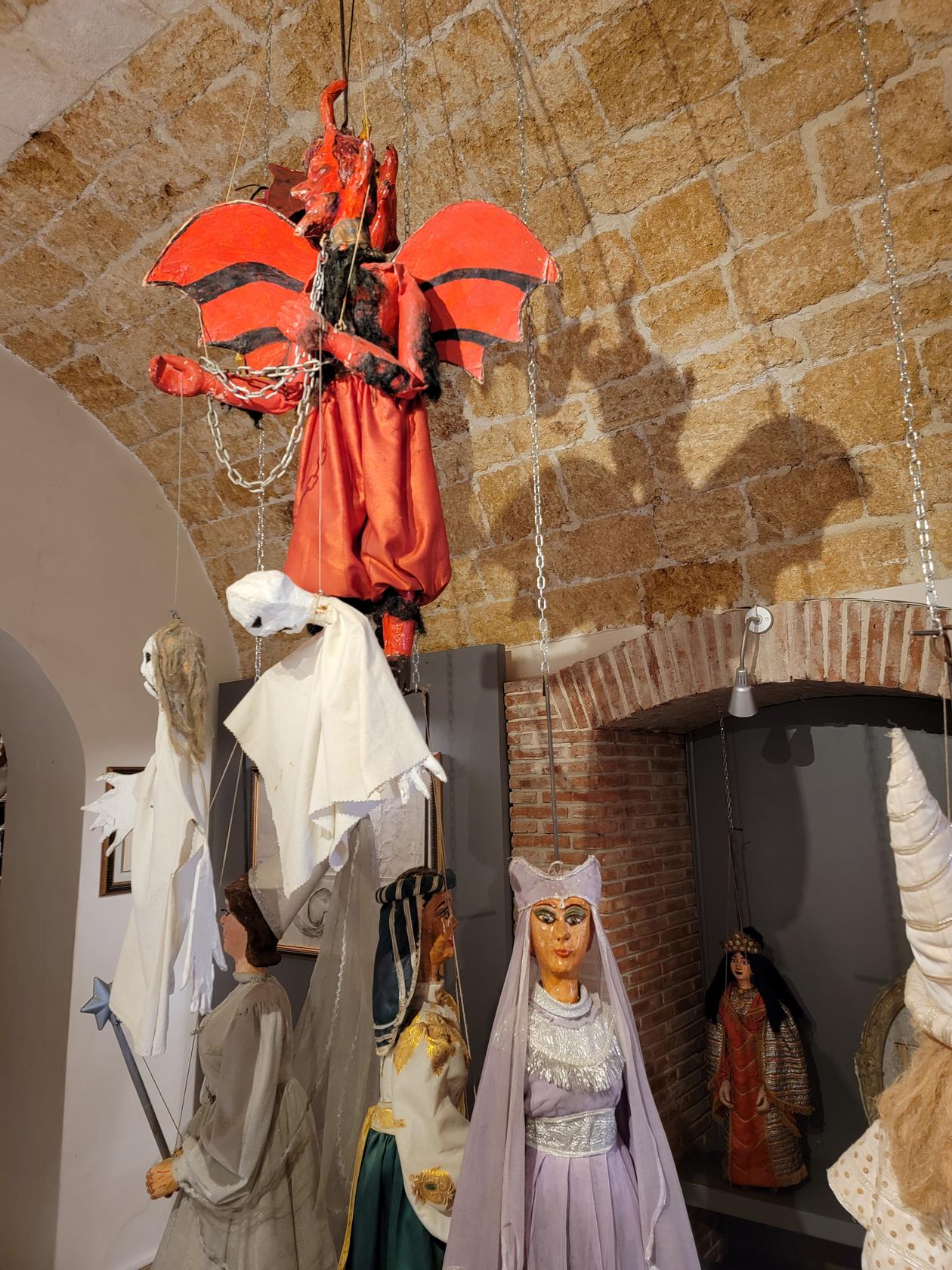
A favorite puppet antagonist – The devil – Puppet Museum – Ortigia – Siracuse, Sicily
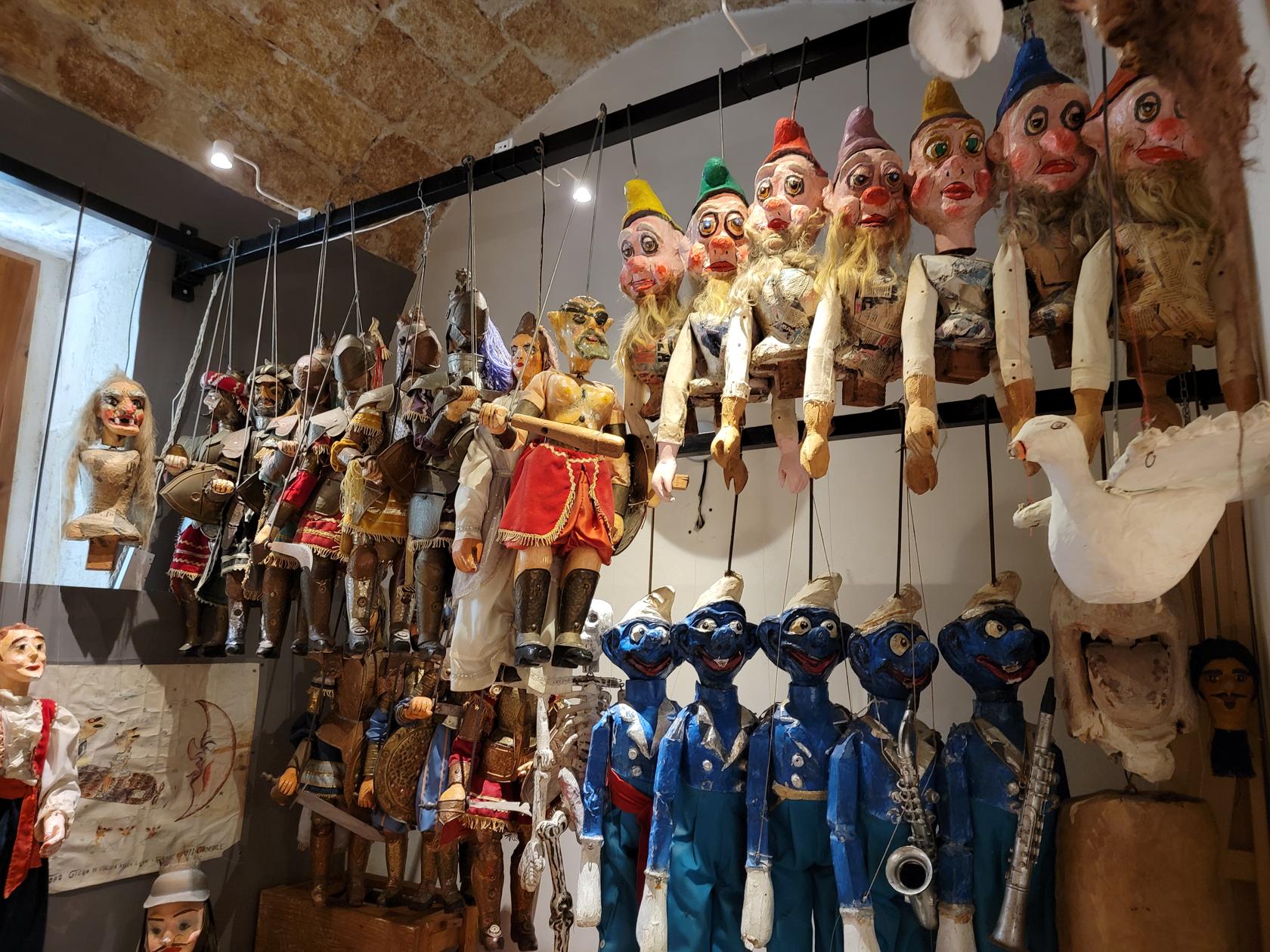
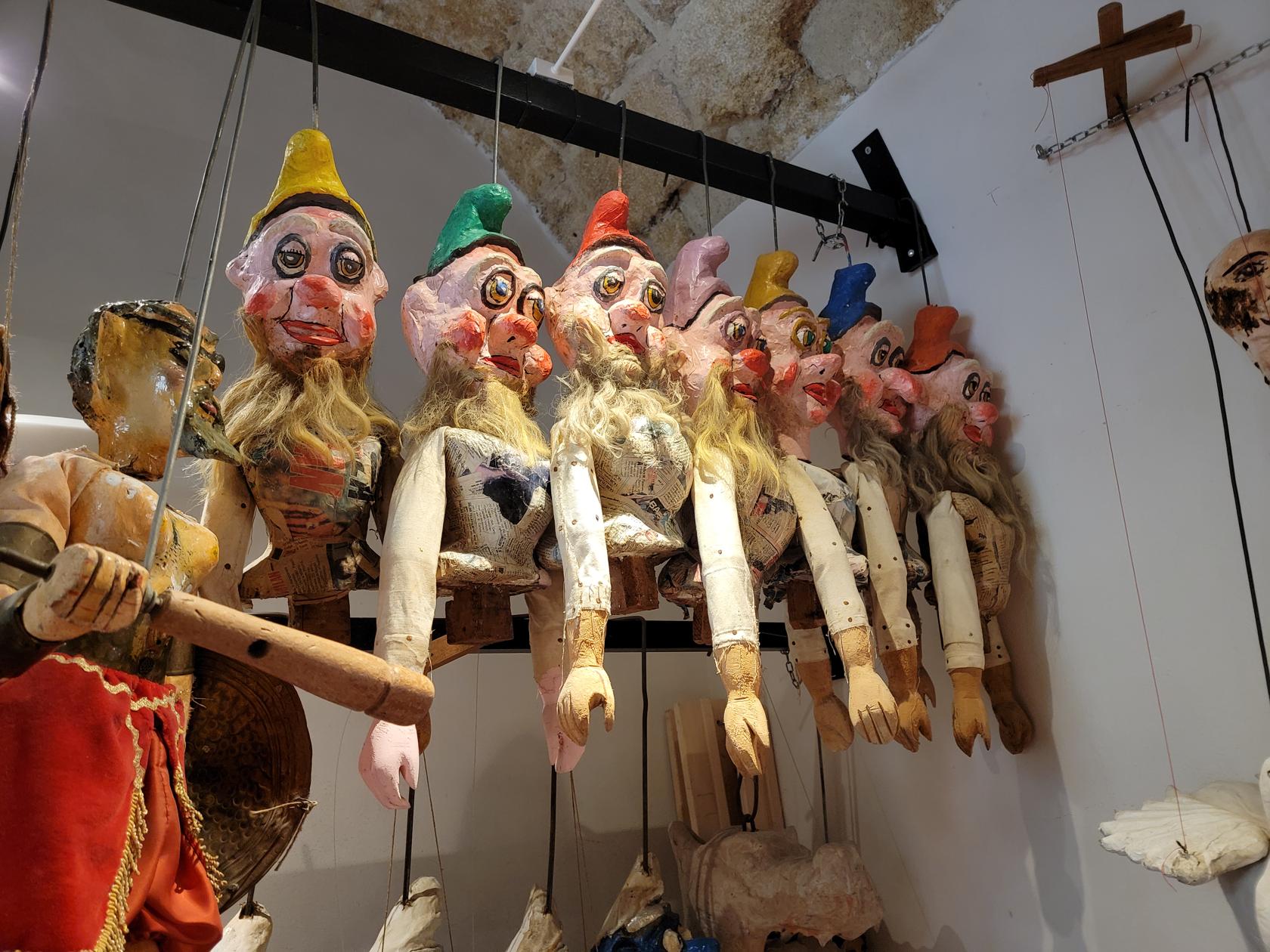
The dwarves, smurfs and others – Puppet Museum – Ortigia – Siracuse, Sicily
The six headed beast – Puppet Museum – Ortigia – Siracuse, Sicily
Dragons – Puppet Museum – Ortigia – Siracuse, Sicily
Horse drawn wagon and driver puppet – Puppet Museum – Ortigia – Siracuse, Sicily
Workshop puppets at different stages of finishing – Puppet Museum – Ortigia – Siracuse, Sicily
Puppet Theater
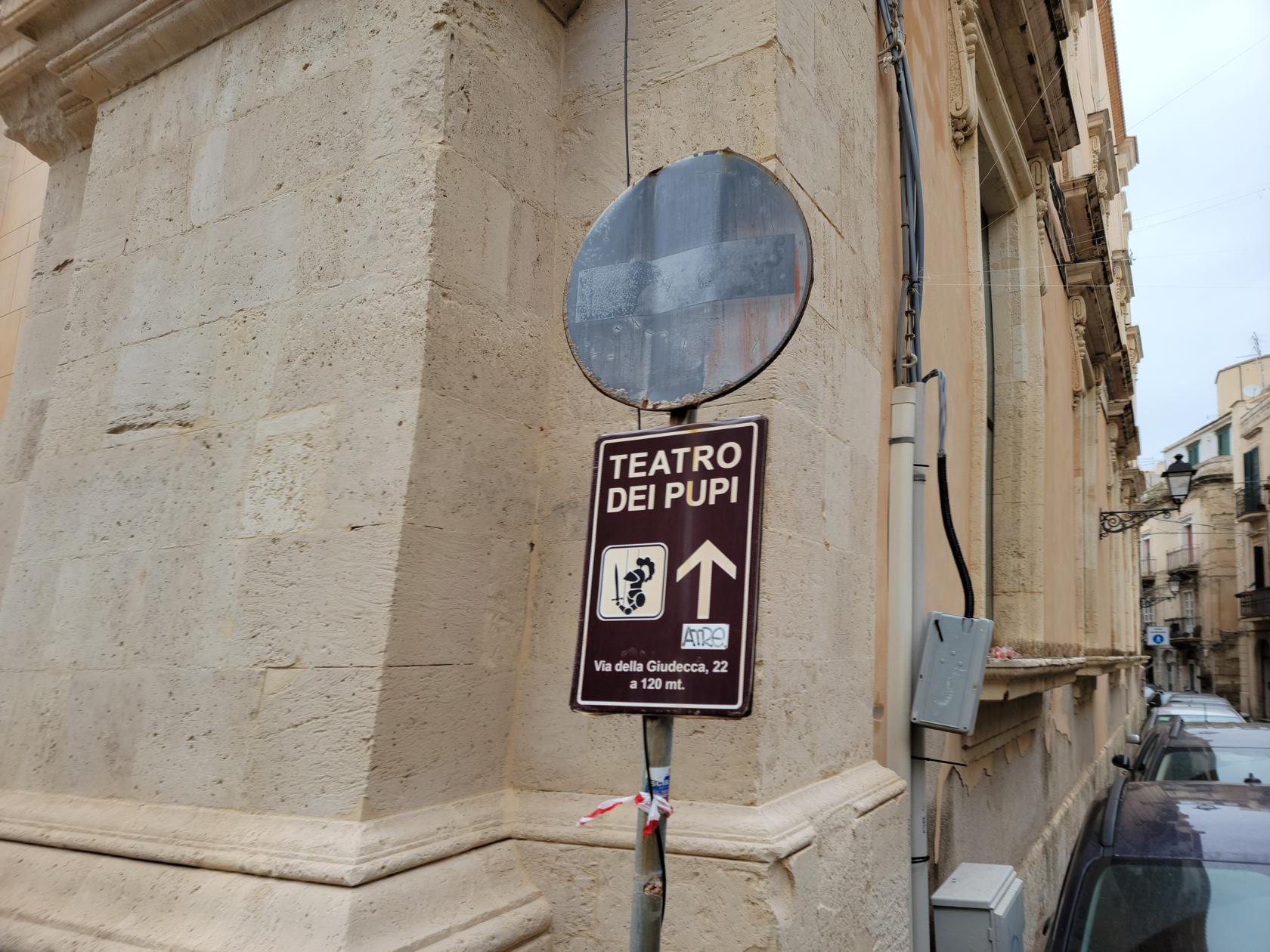
Street sign – The Puppet Theater – Ortigia – Siracuse, Sicily
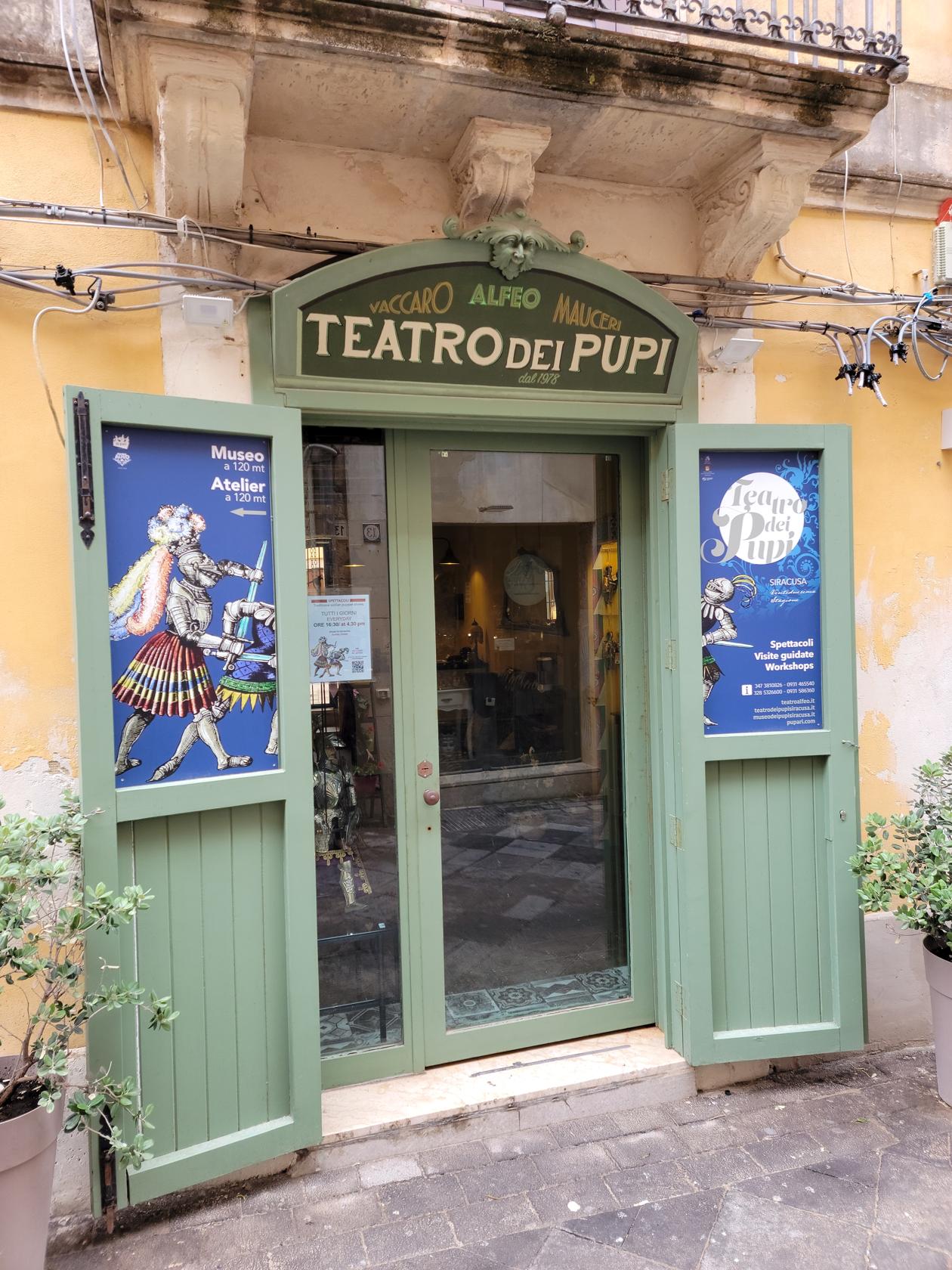
Entrance – The Puppet Theater – Ortigia – Siracuse, Sicily
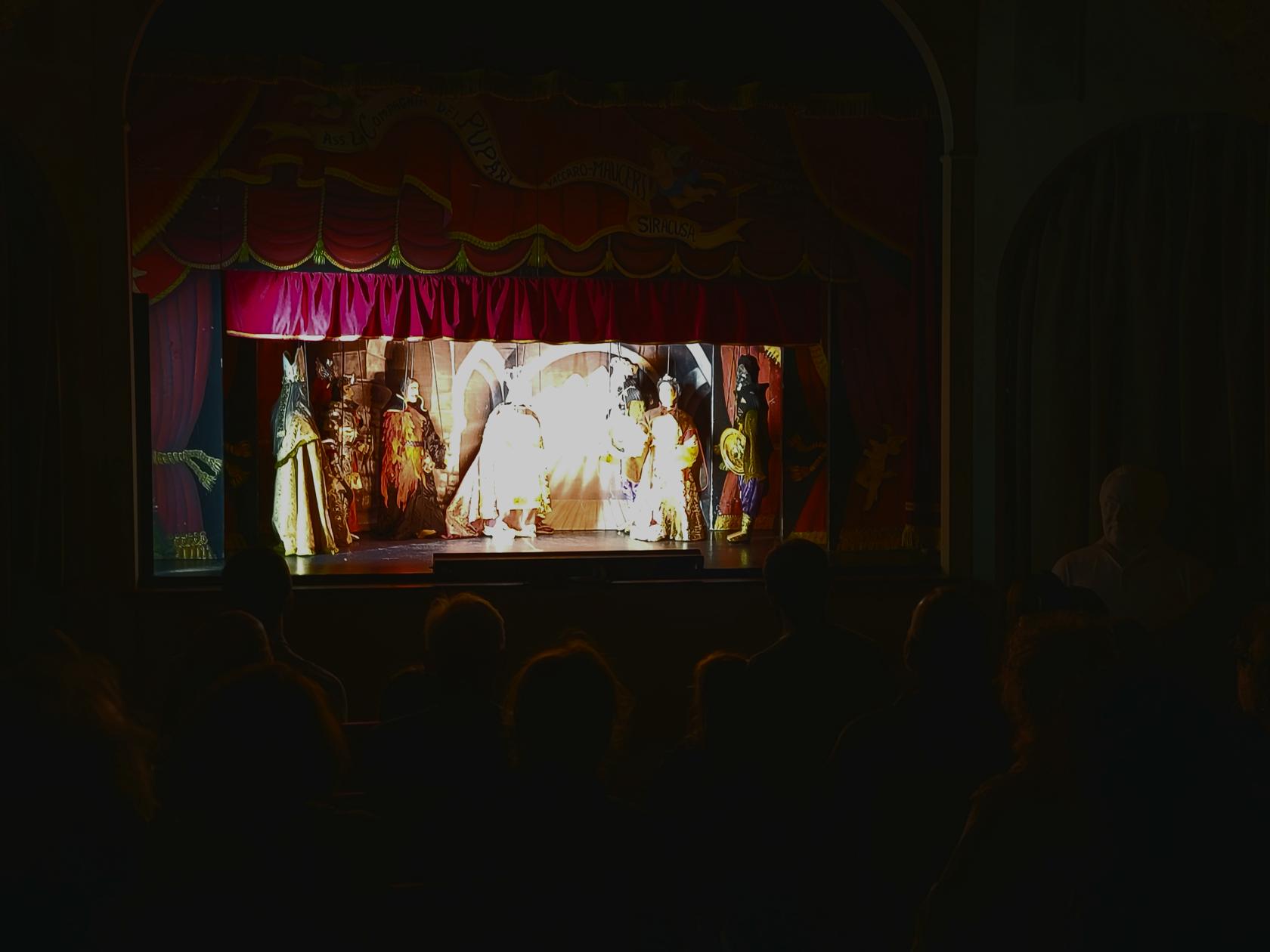
I was originally hesitant to go the Puppet Theater. But after attending a show, I am glad I had. Not only does the host explain the tale in great detail in English, before it is performed. But the actually acting and enactment of the tale was so compelling, I was captivated, even though I had no idea what was being said at many points during the performance.
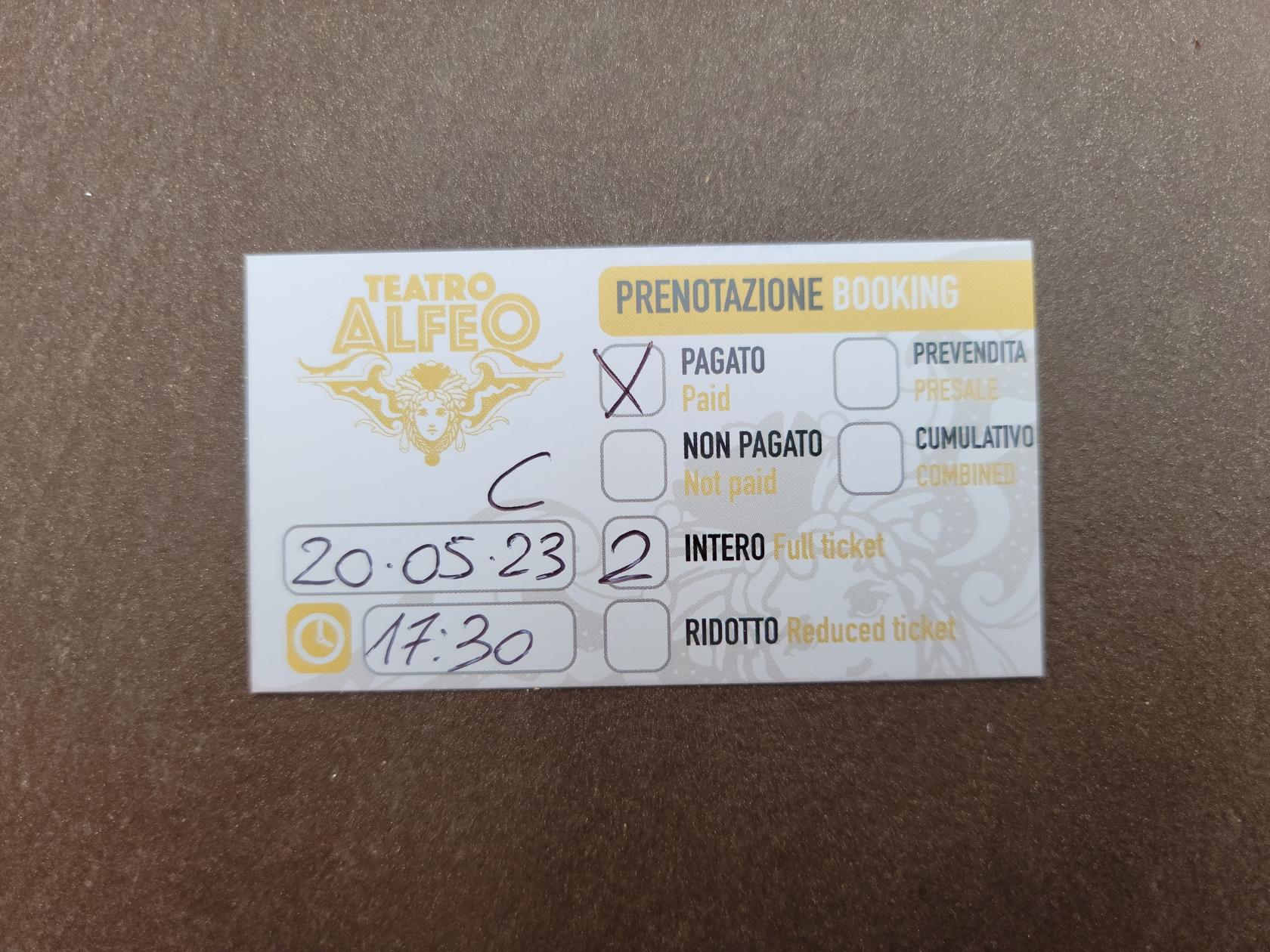
Tickets for Two – The Puppet Theater – Ortigia – Siracuse, Sicily
Tickets for Two – The Puppet Theater – Ortigia – Siracuse, Sicily
The theater space is very personal, with only enough room for about 50-60 people, and they will seat others if needed in the aisle (on the steps). Therefore, if you need to take any medically necessary precautions in cramped quarters, be prepared before you arrive.
The stage in action – The Puppet Theater – Ortigia – Siracuse, Sicily
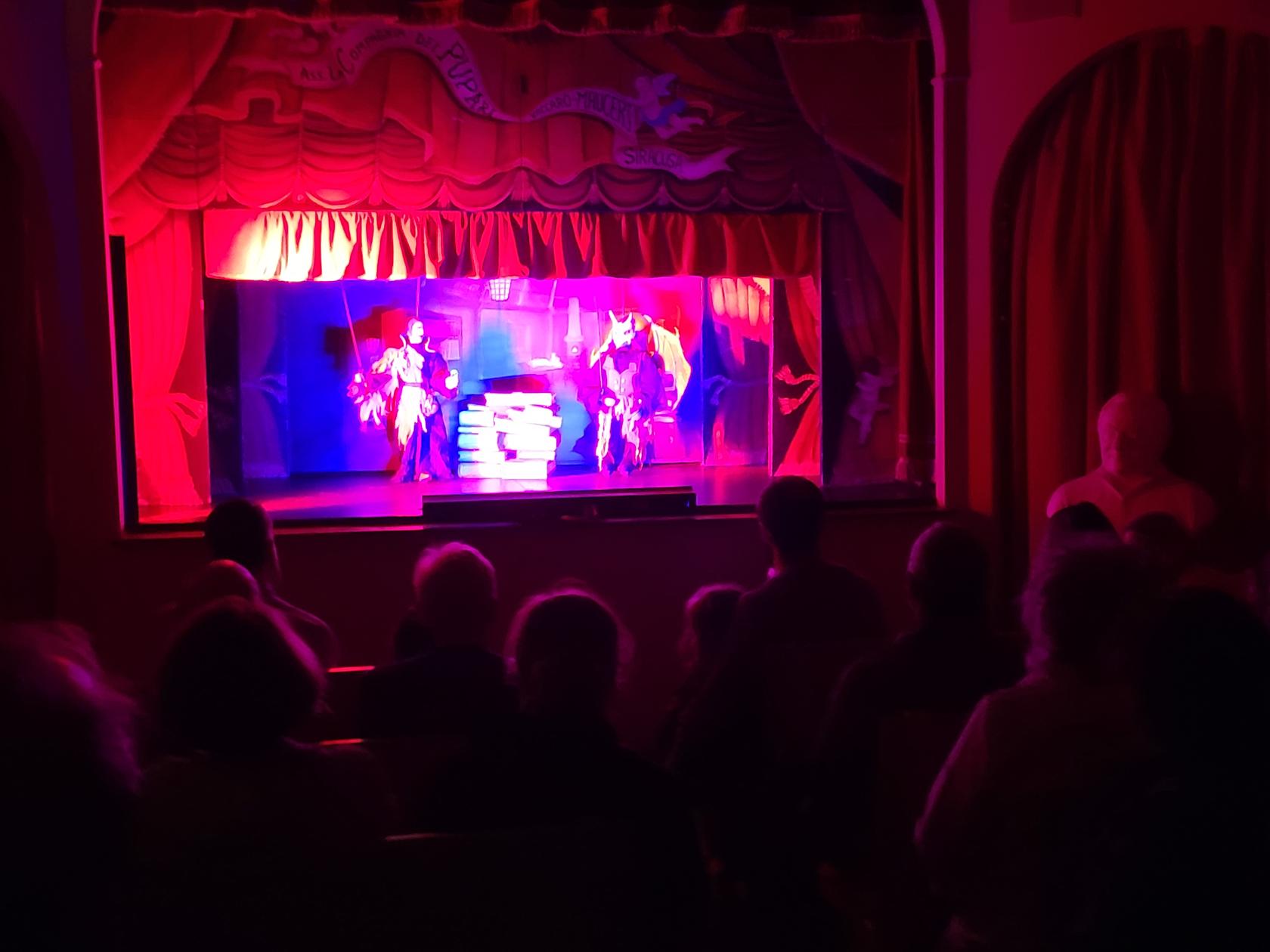
An ancient Sicilian tale – The Puppet Theater – Ortigia – Siracuse, Sicily
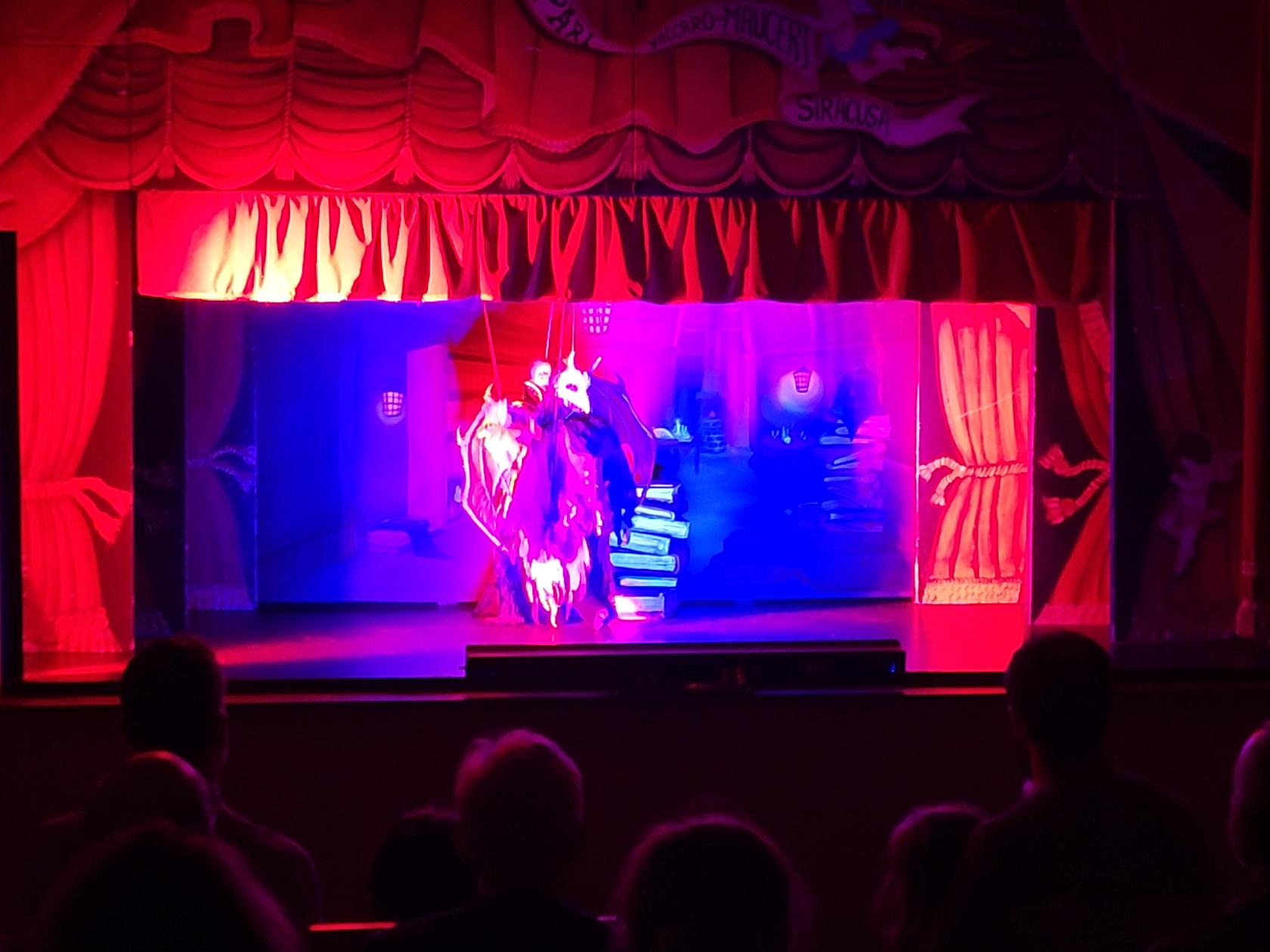
A demon is always close by – The Puppet Theater – Ortigia – Siracuse, Sicily
Maniace Castle
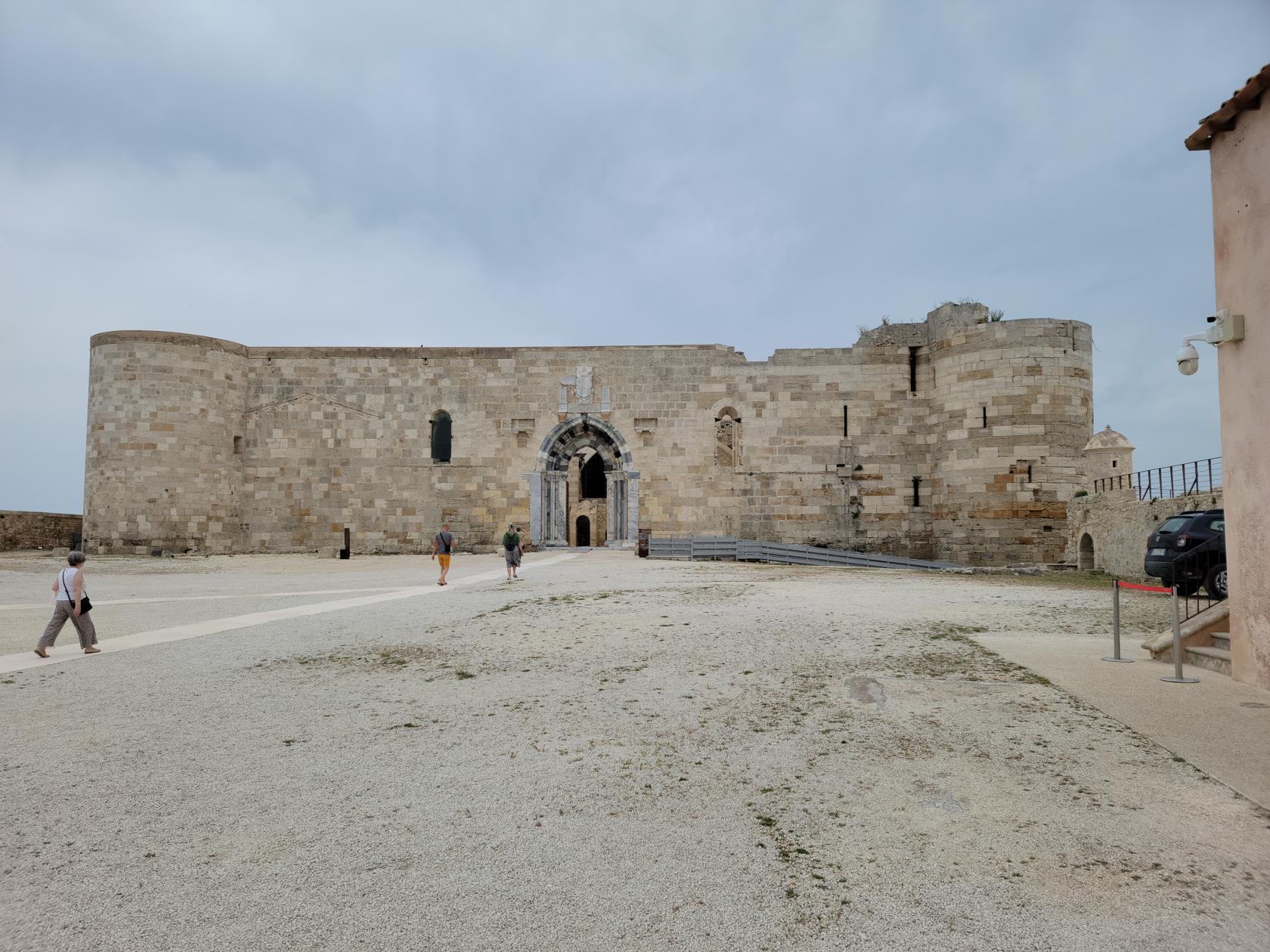
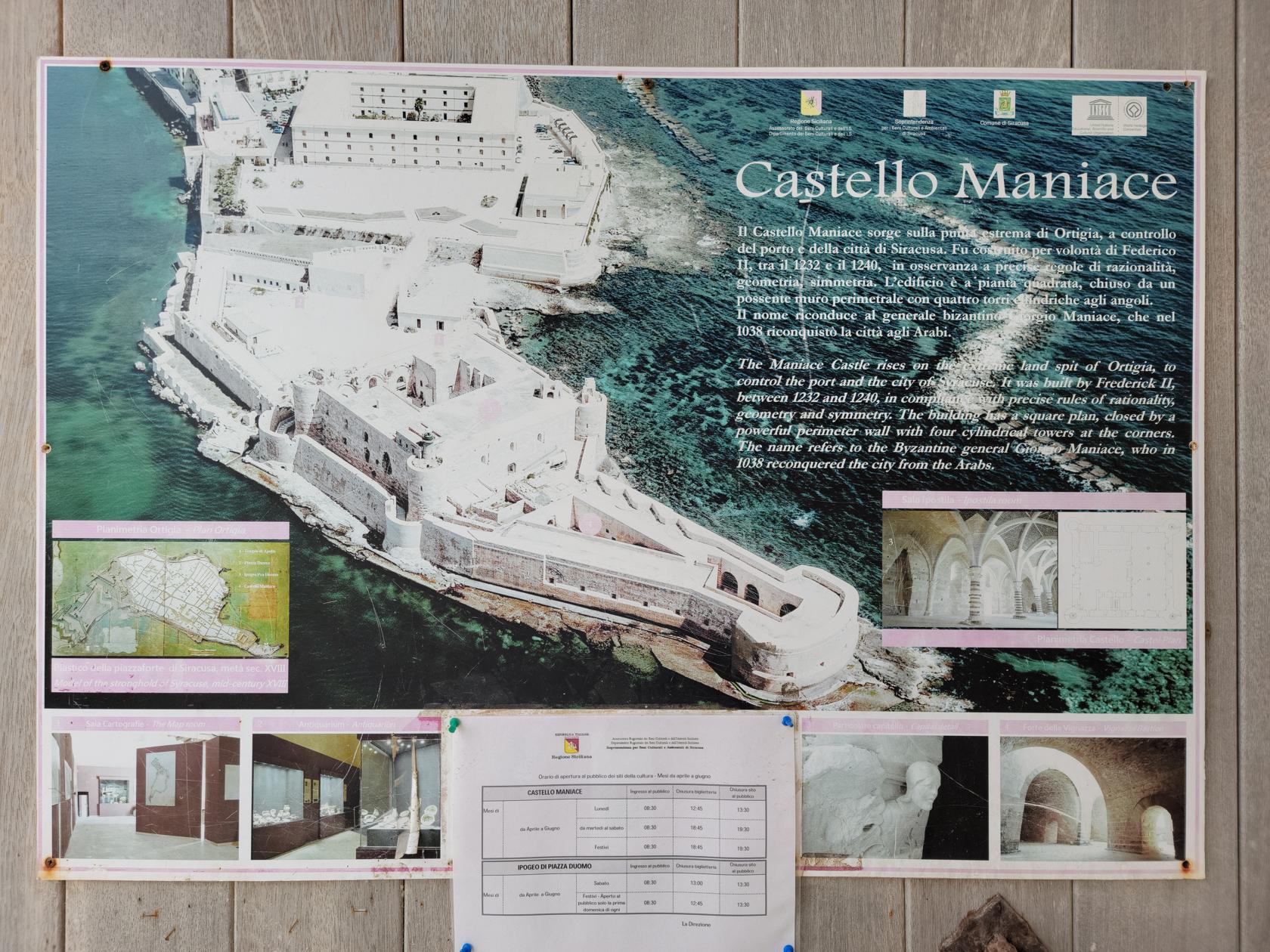
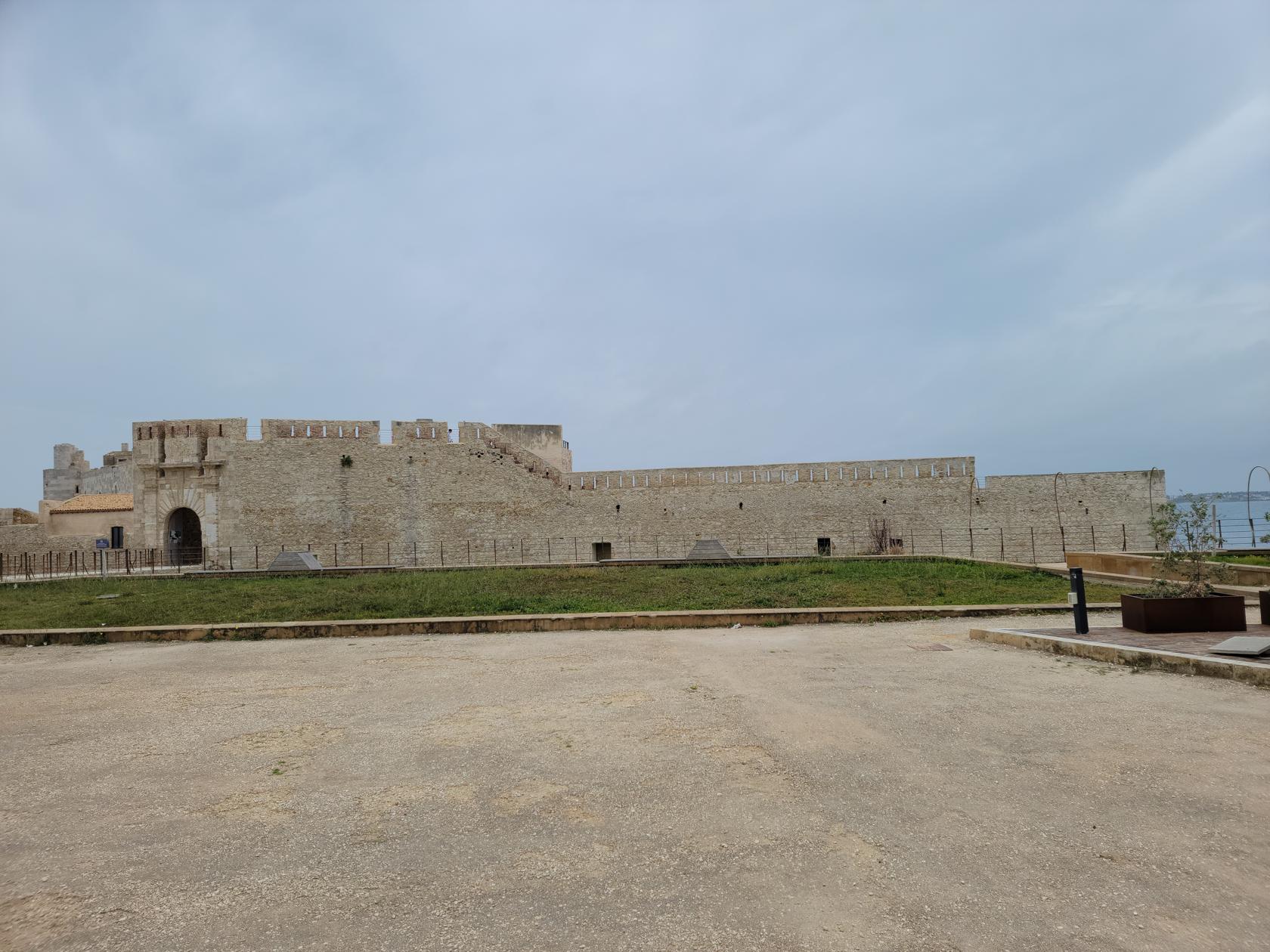
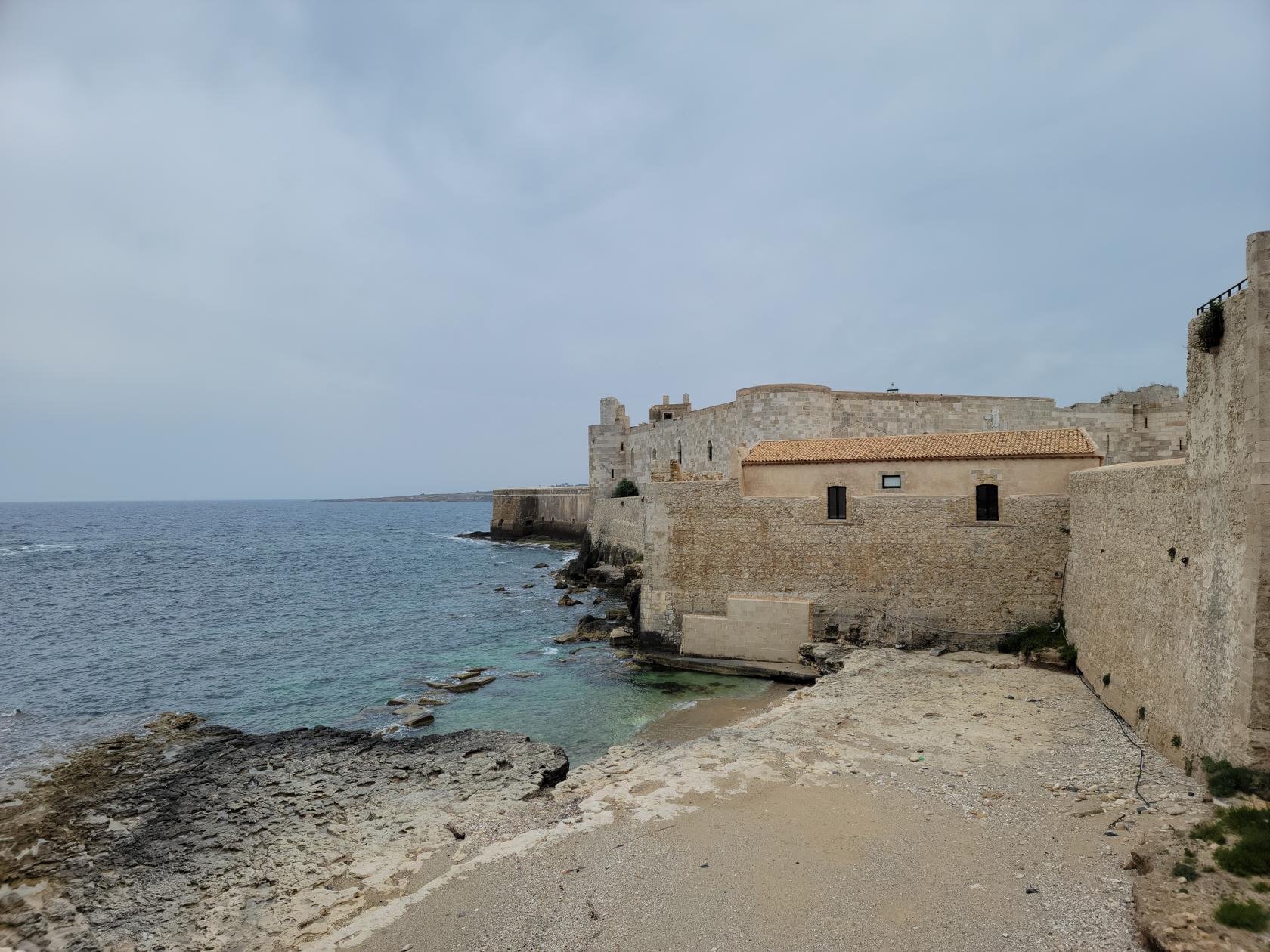
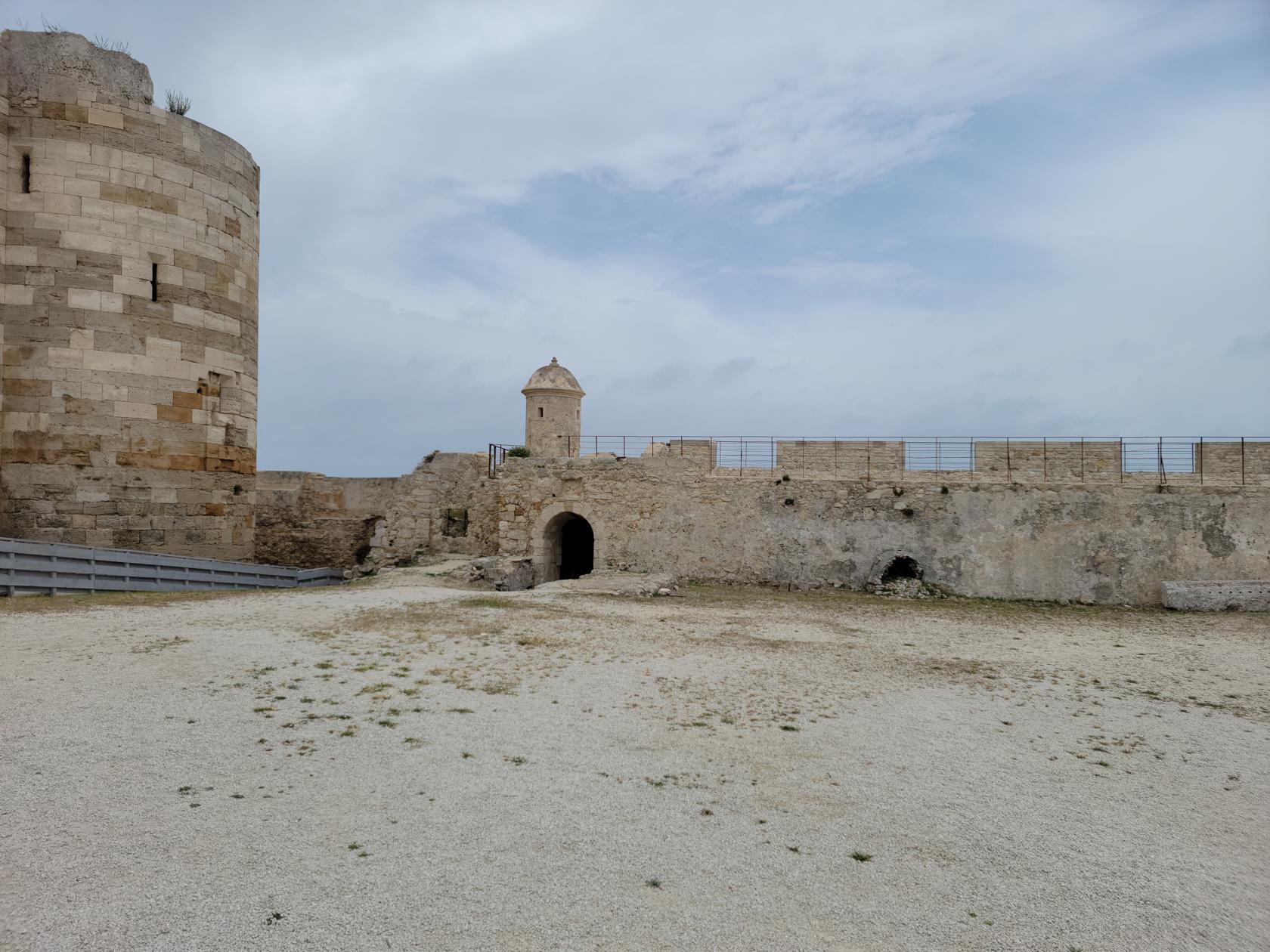
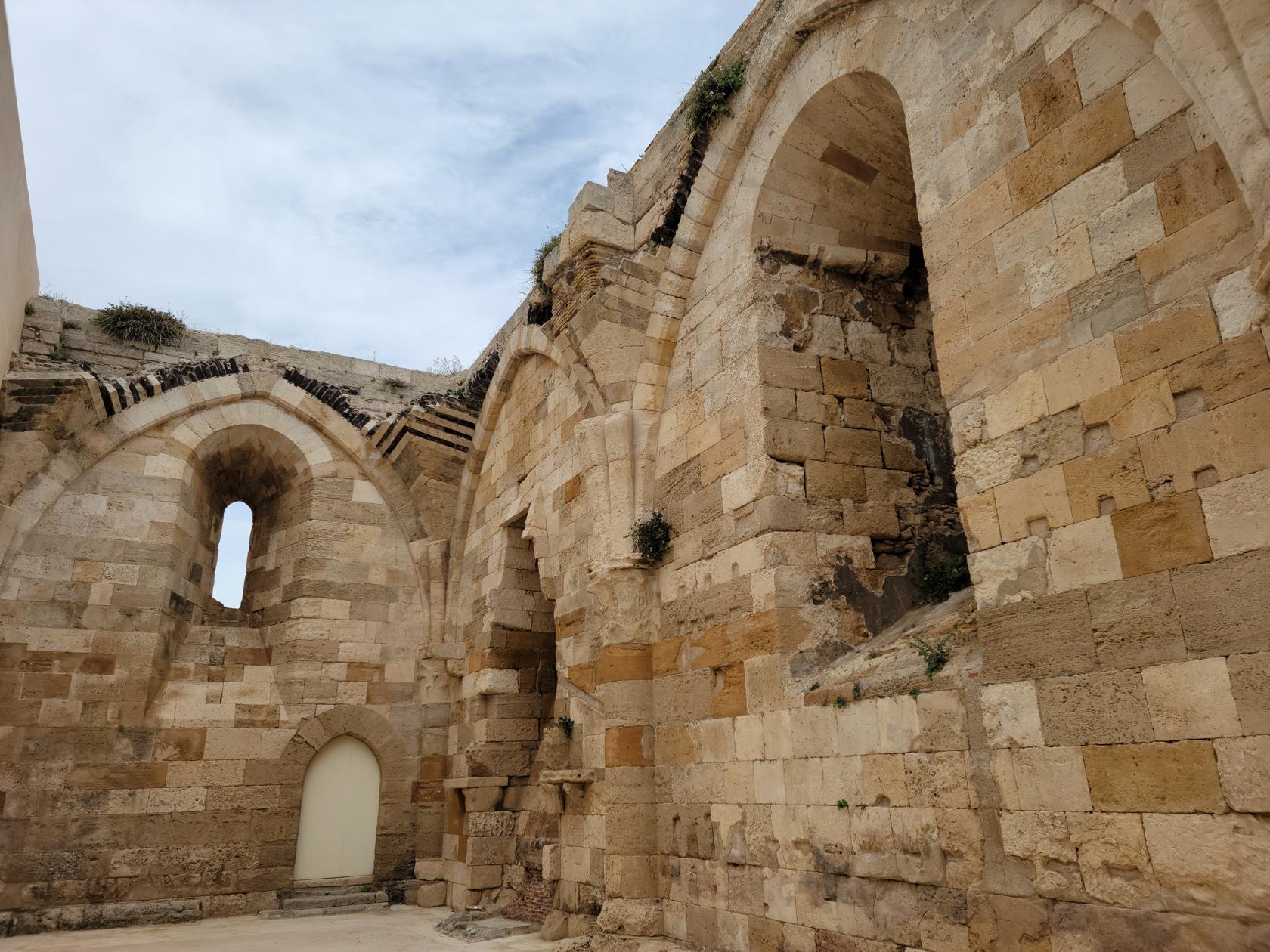
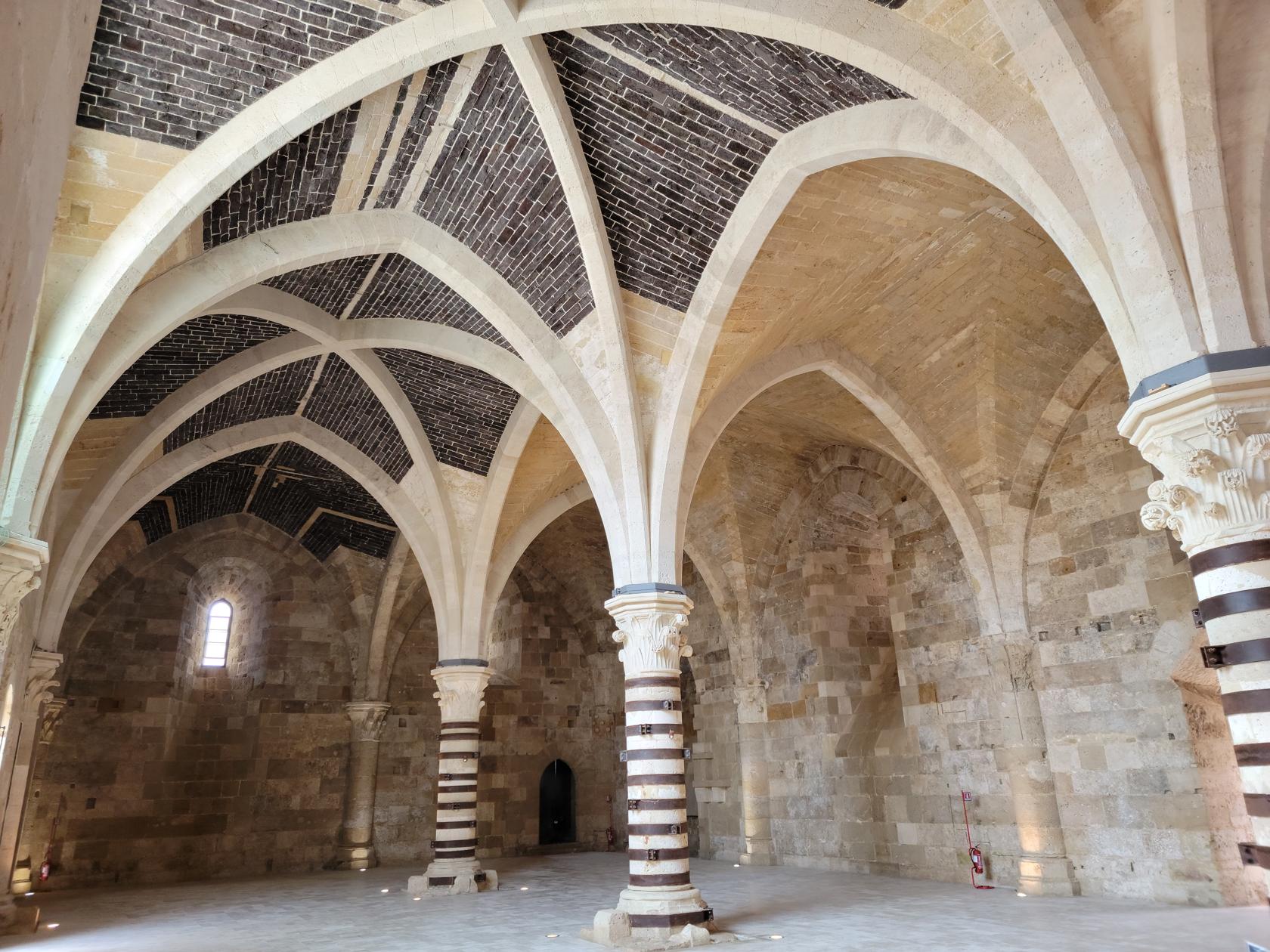
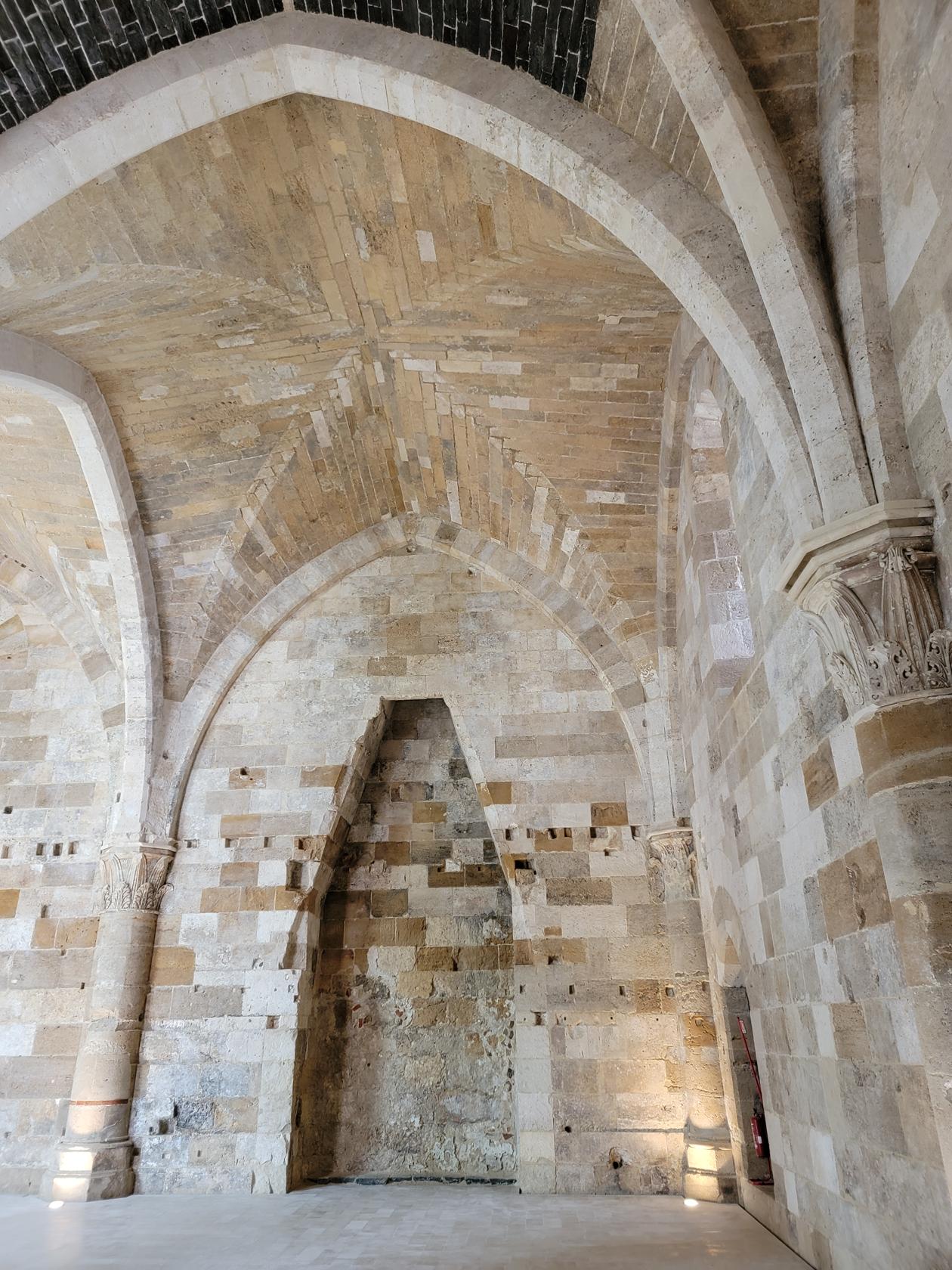
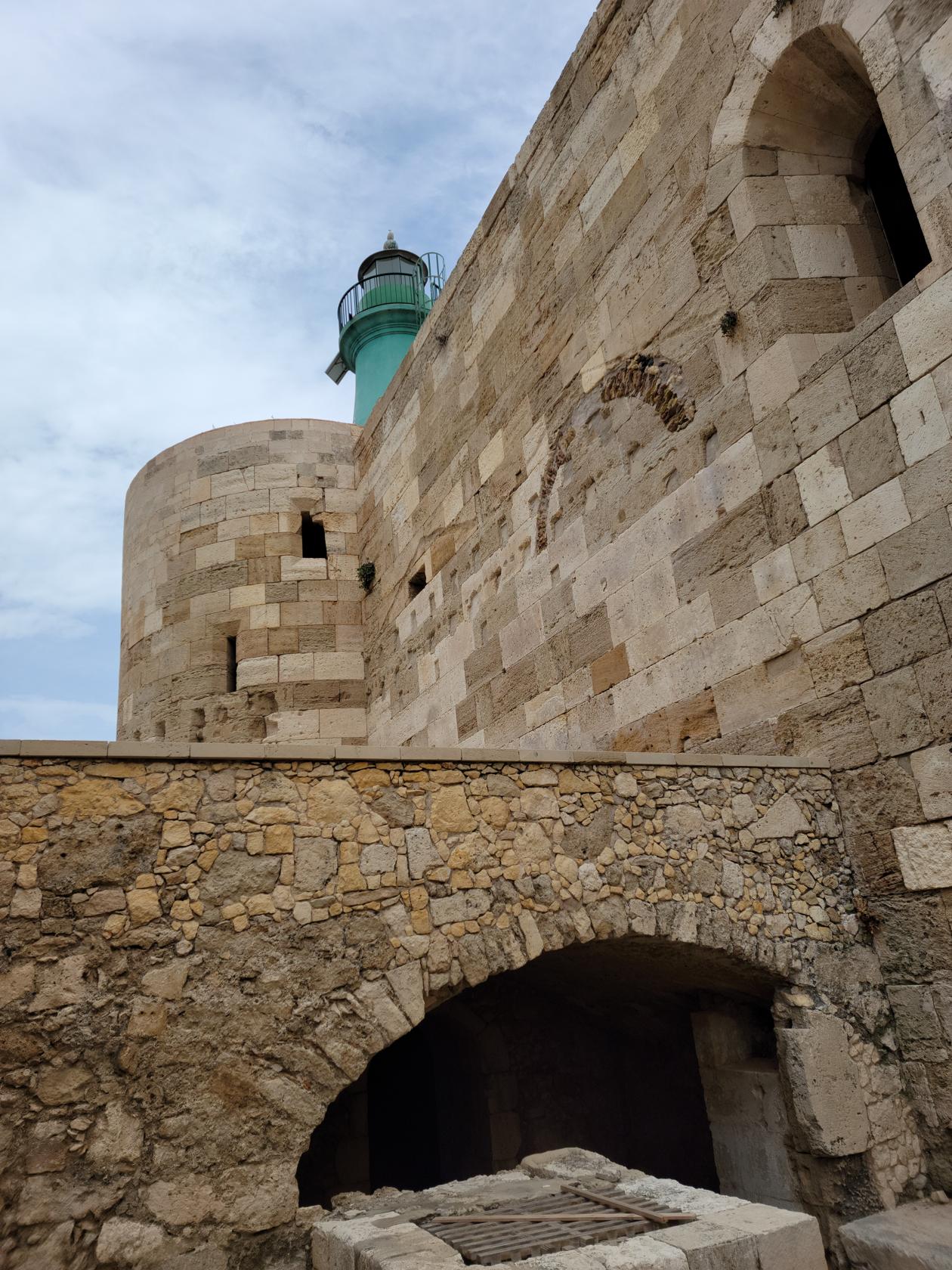
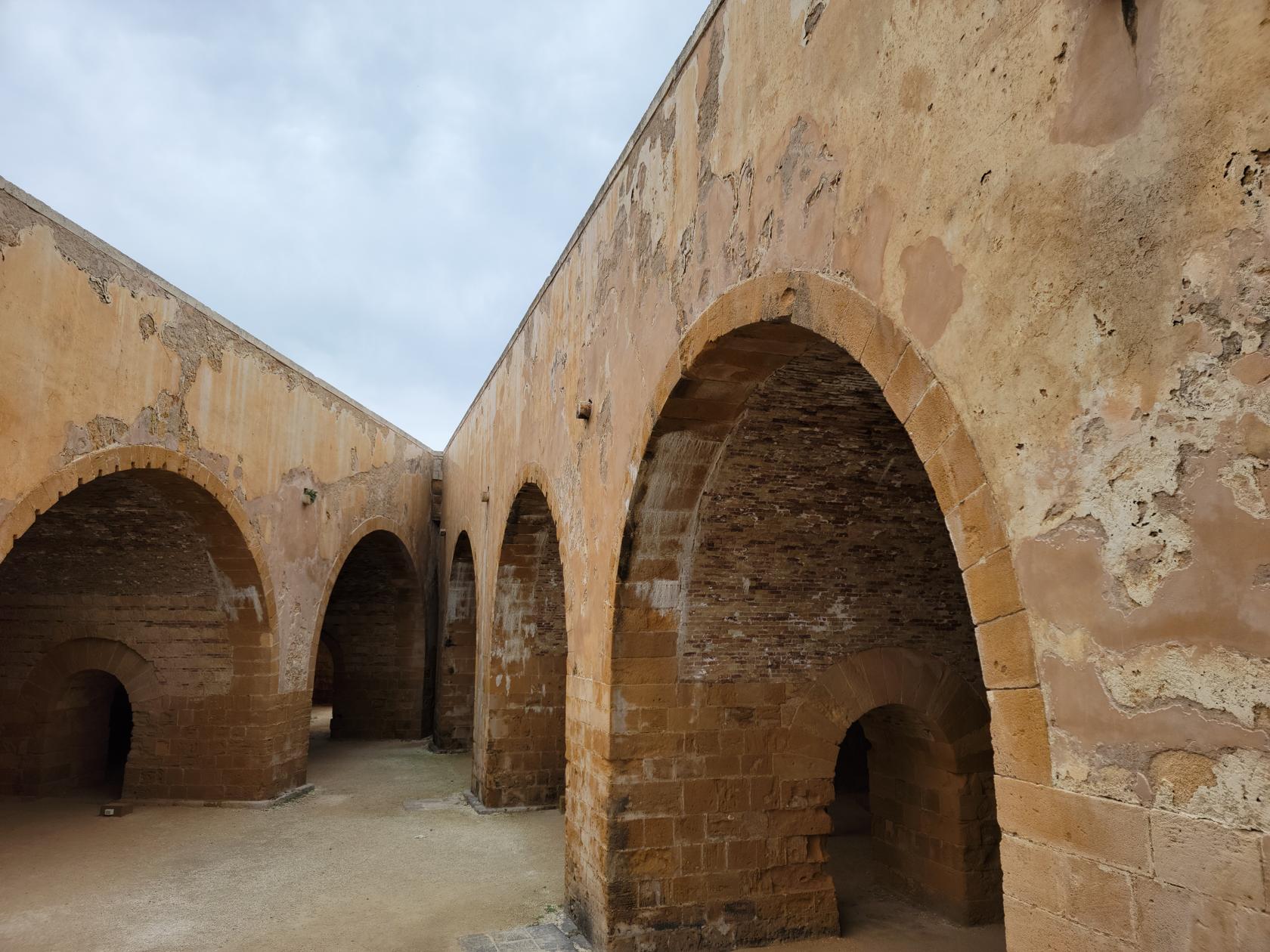
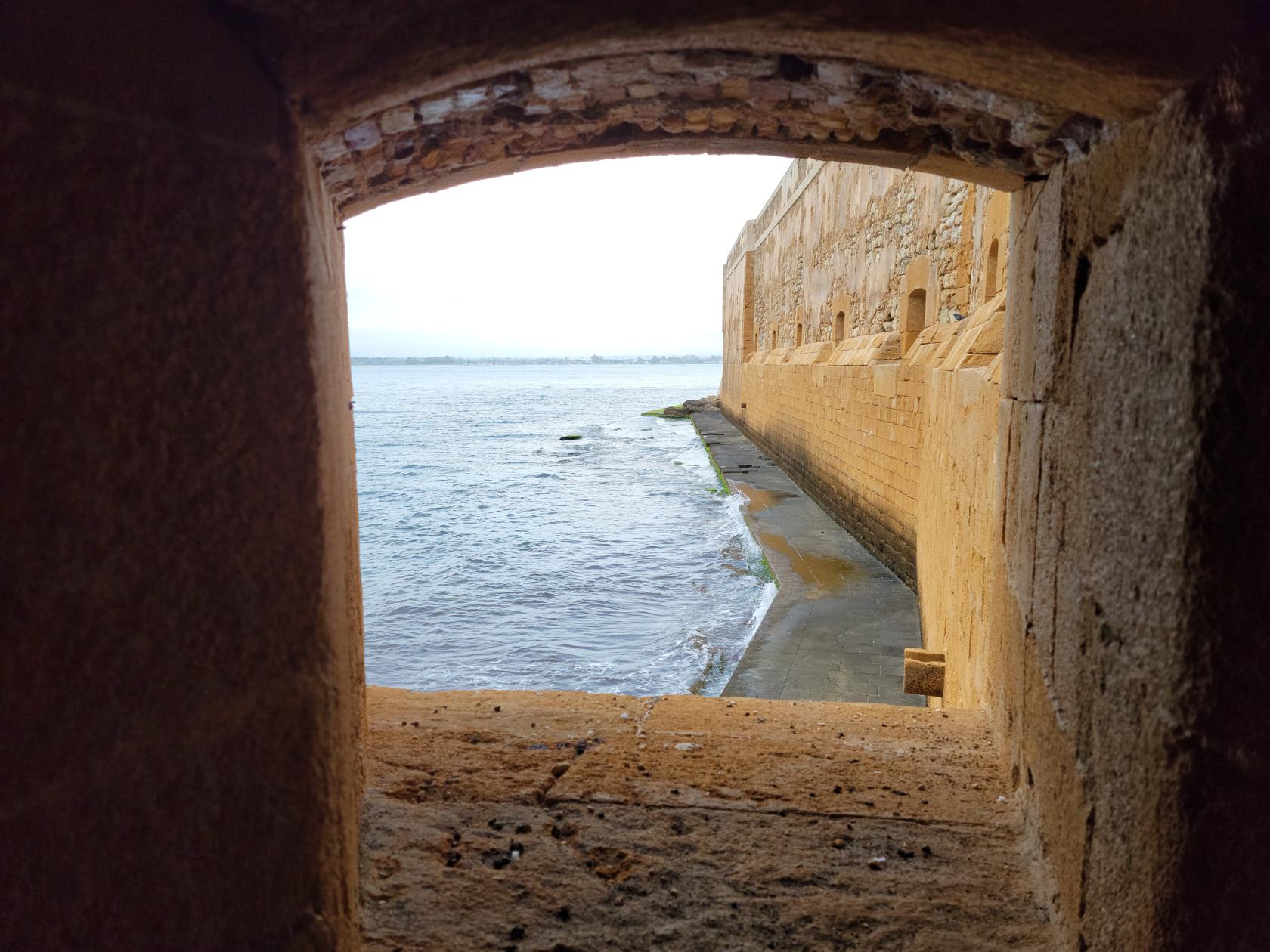
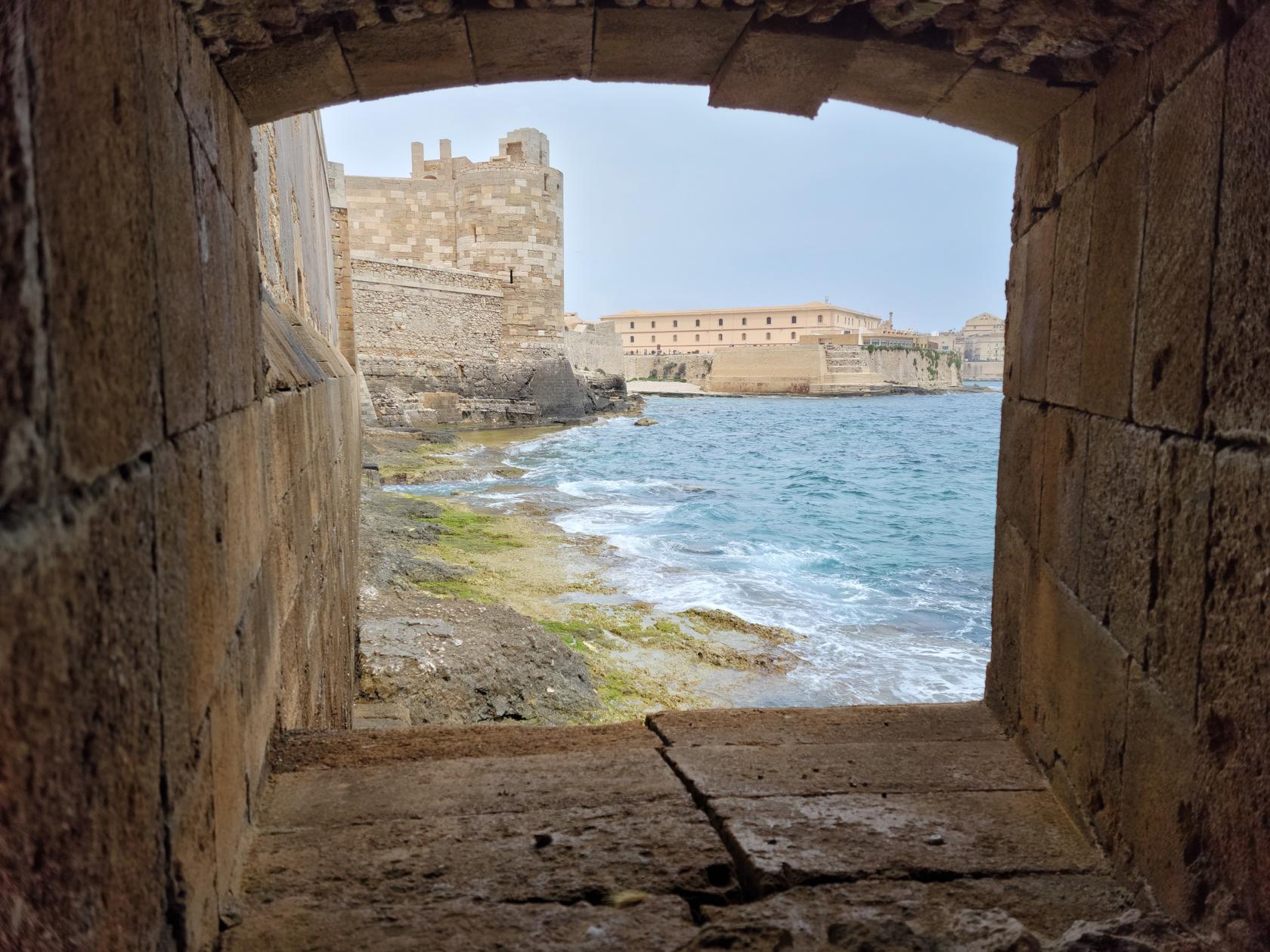
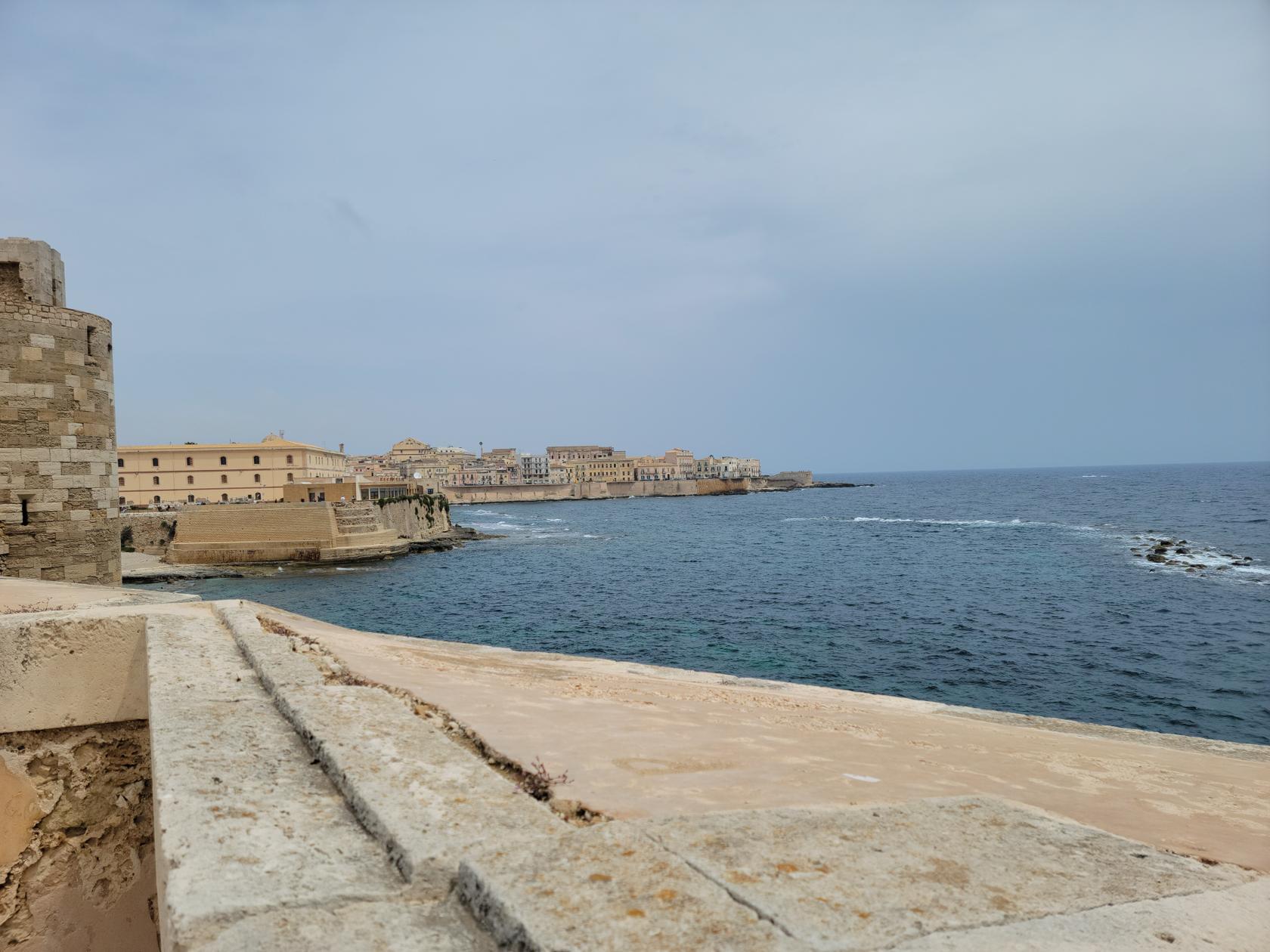
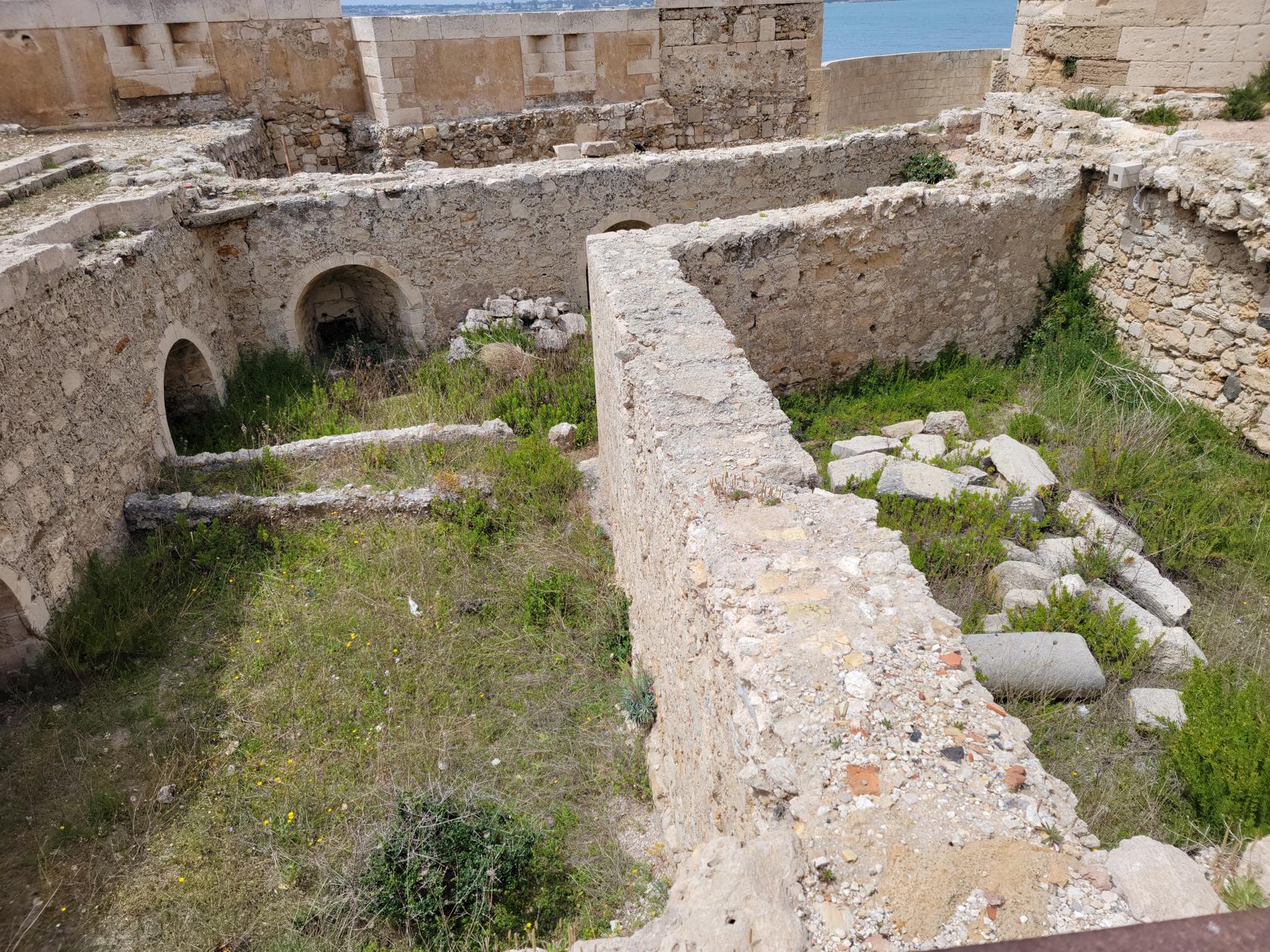
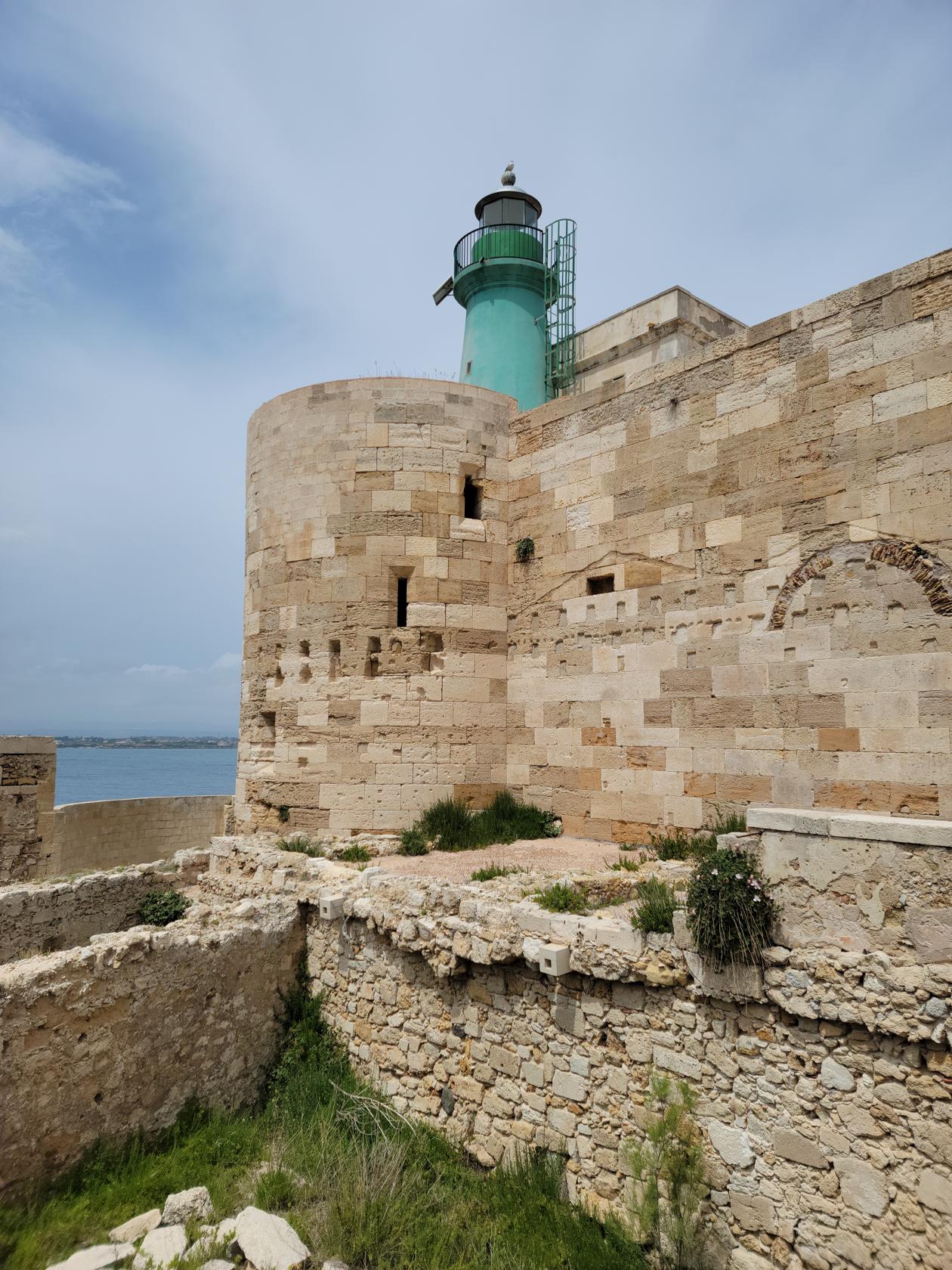
The Maniace Castle sits at the tip of Ortigia and commands an open view of the Ionian Sea. It is a rather simple structure in function and betrays itself to its many uses down through the ages by its many apparent modifications, including the installation of the lighthouse.
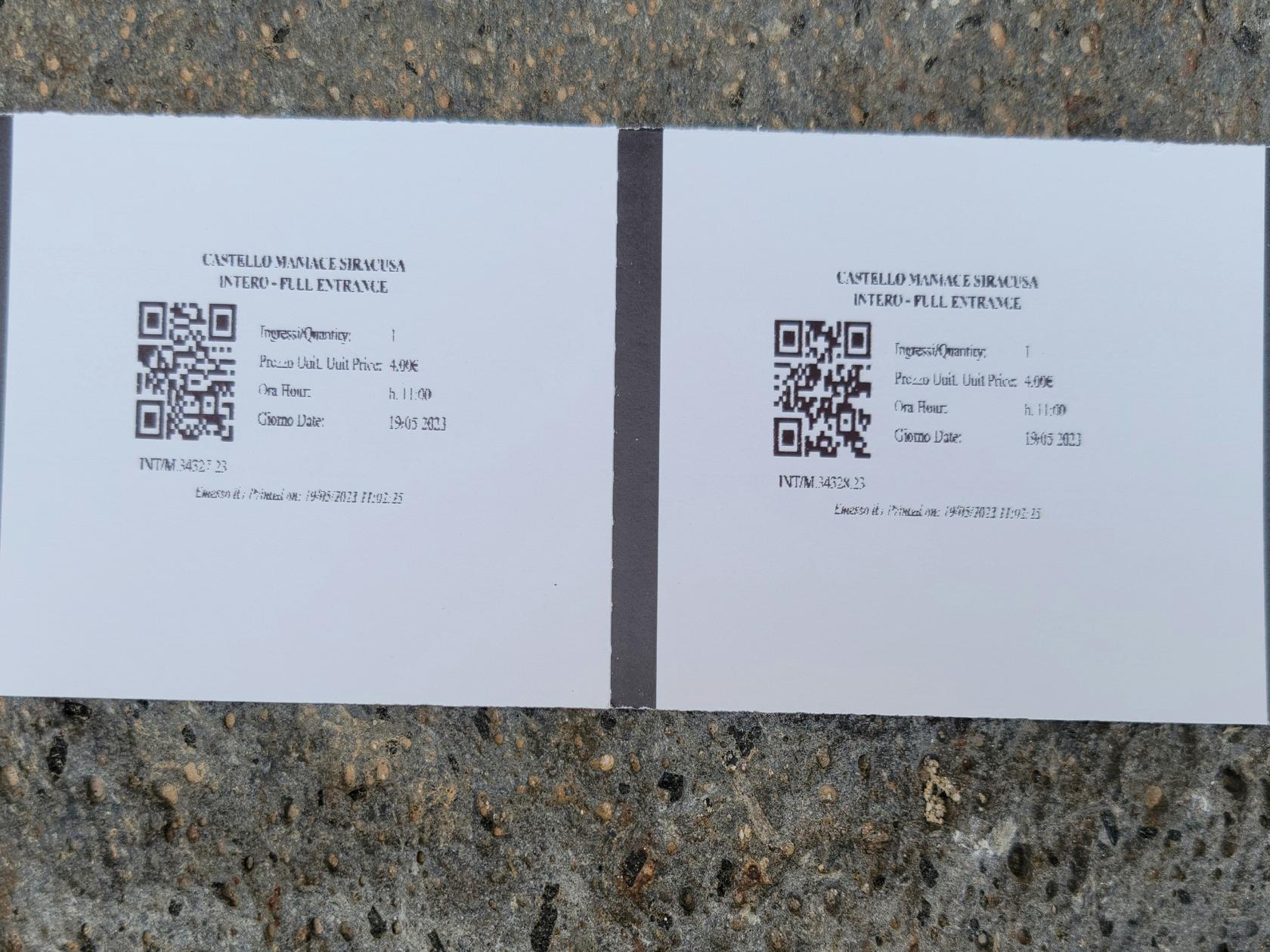
Tickets of Two – Castle Maniace – Siracusa, Sicily
Entrance – Castle Maniace – Siracusa, Sicily
It is however complete with a moat, or in this case, a large drained sunken area where you can wander and only guess what it used to be like back in the day.
Layout – Castle Maniace – Siracusa, Sicily
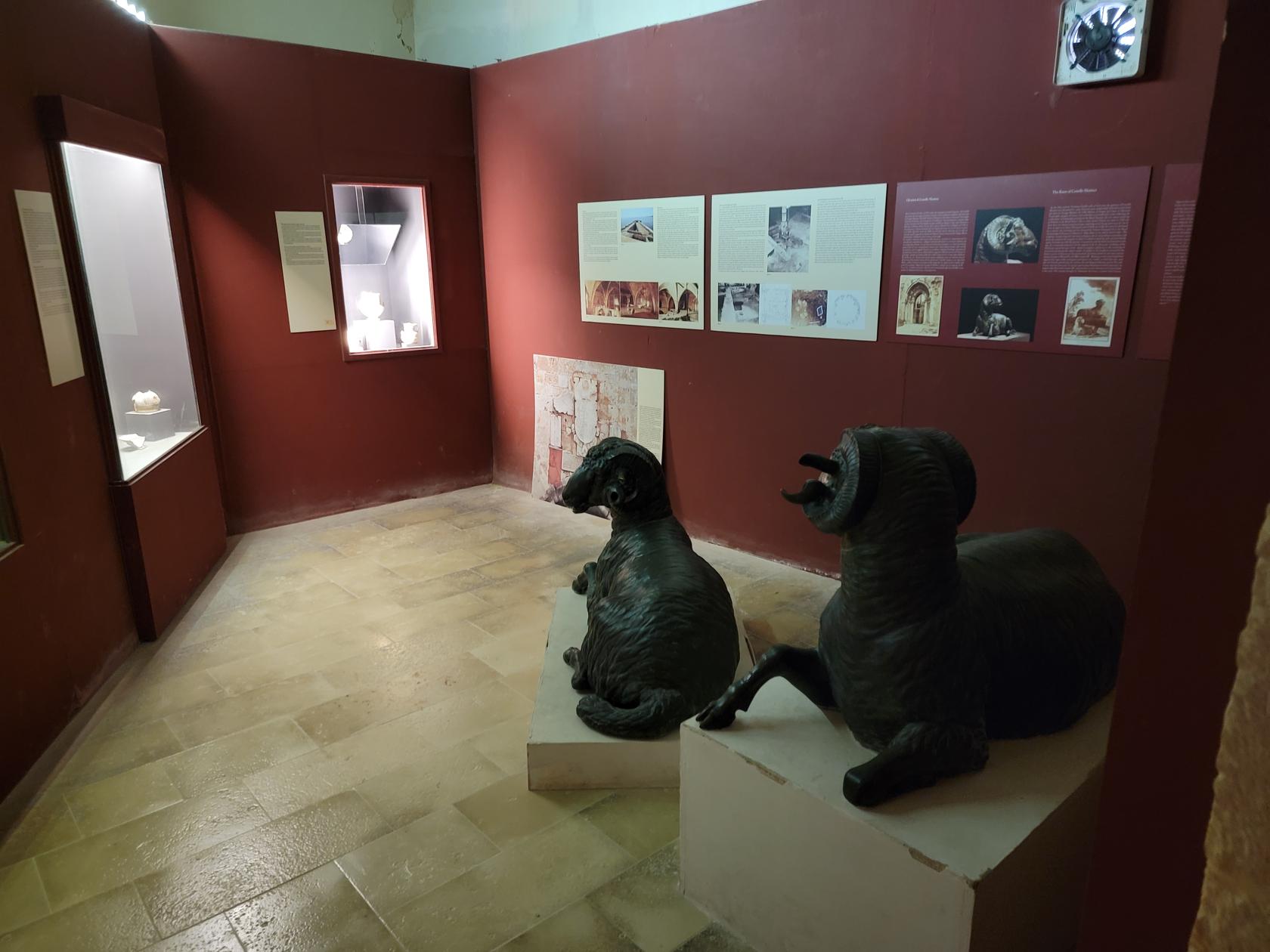
Museum – Castle Maniace – Siracusa, Sicily
From a distance – Castle Maniace – Siracusa, Sicily
The outside walls – Castle Maniace – Siracusa, Sicily
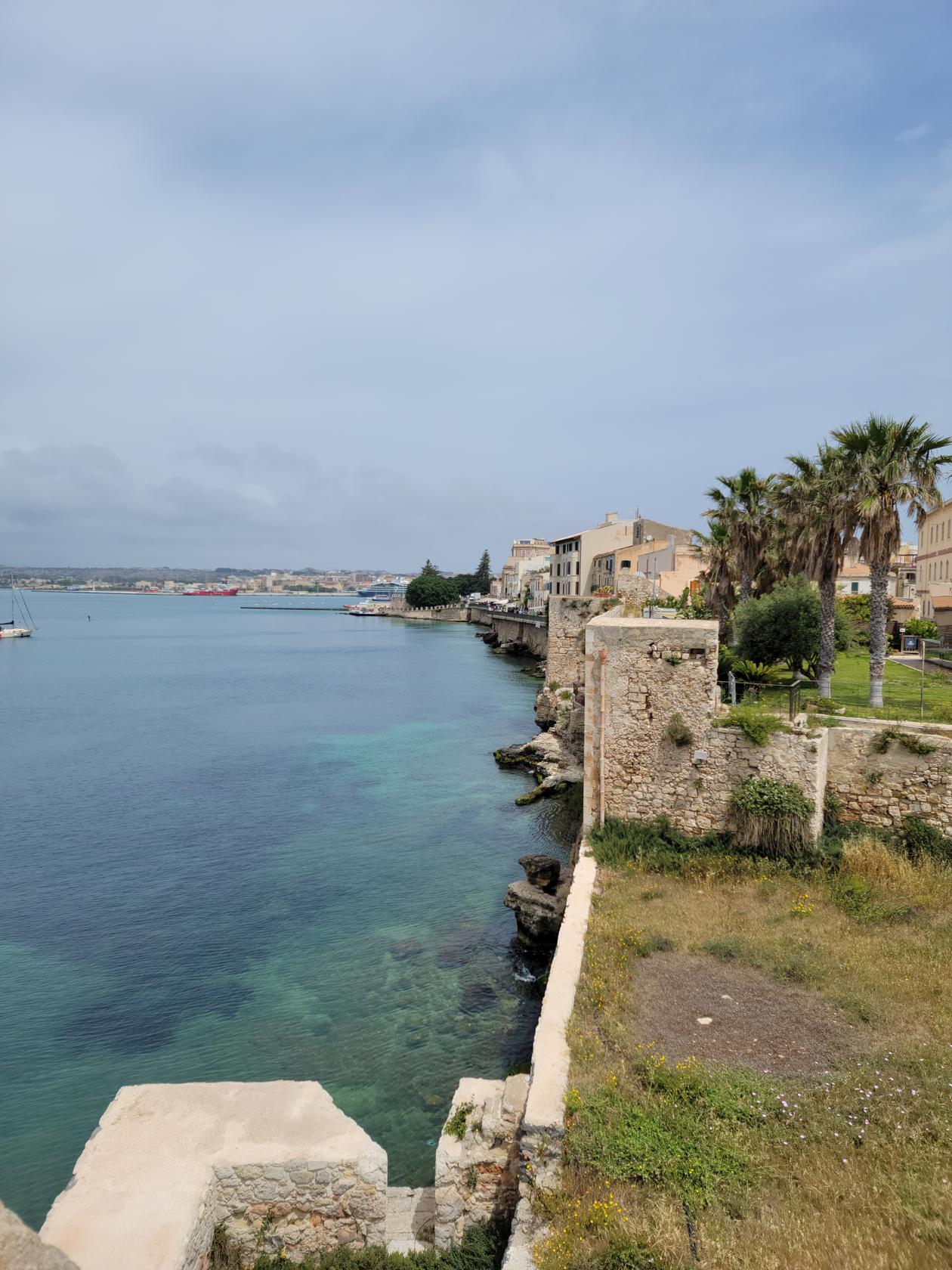
Bay of Ortigia – Castle Maniace – Siracusa, Sicily
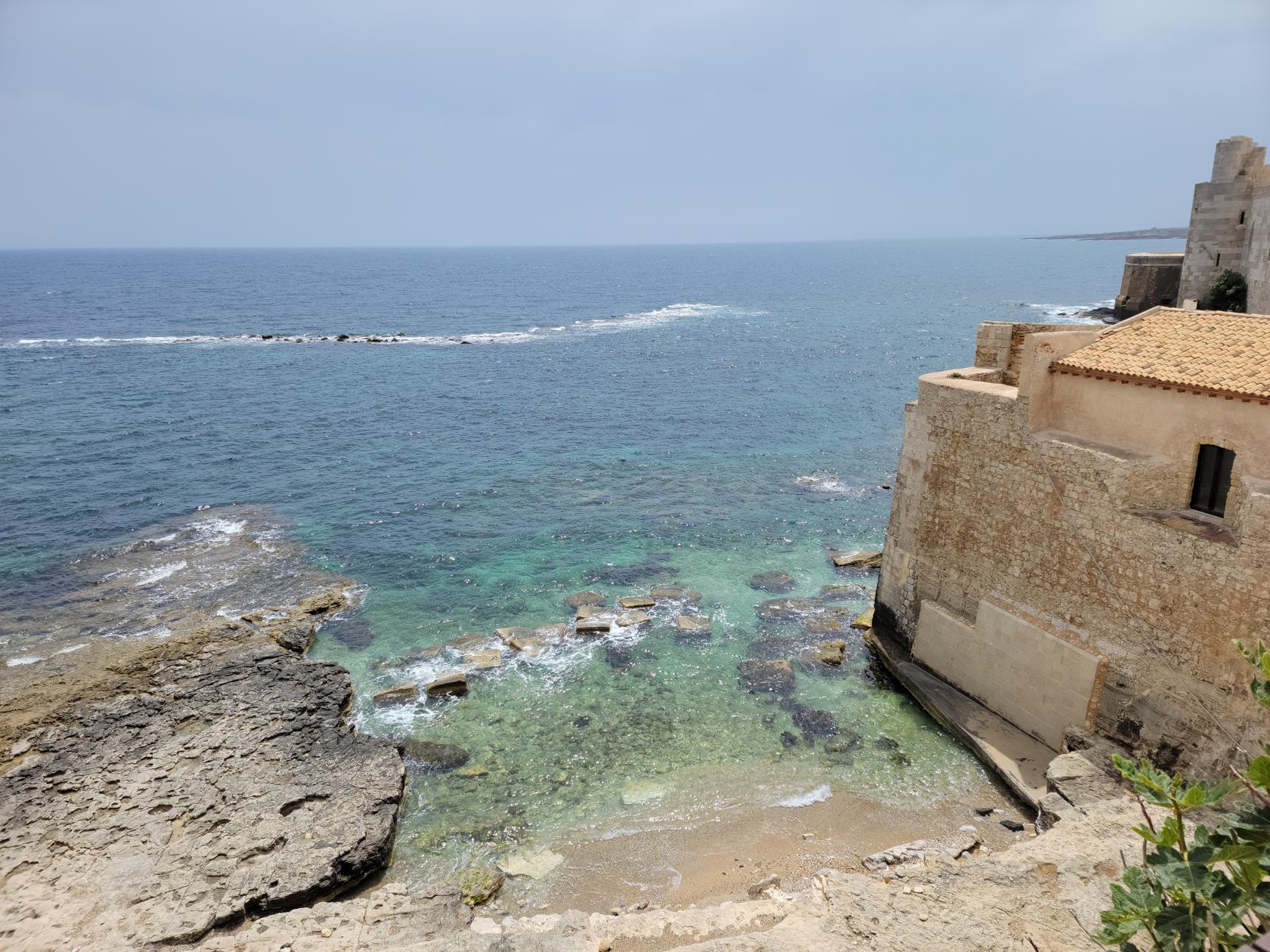
Ionian Sea – Castle Maniace – Siracusa, Sicily
Cathedral Of Syracuse
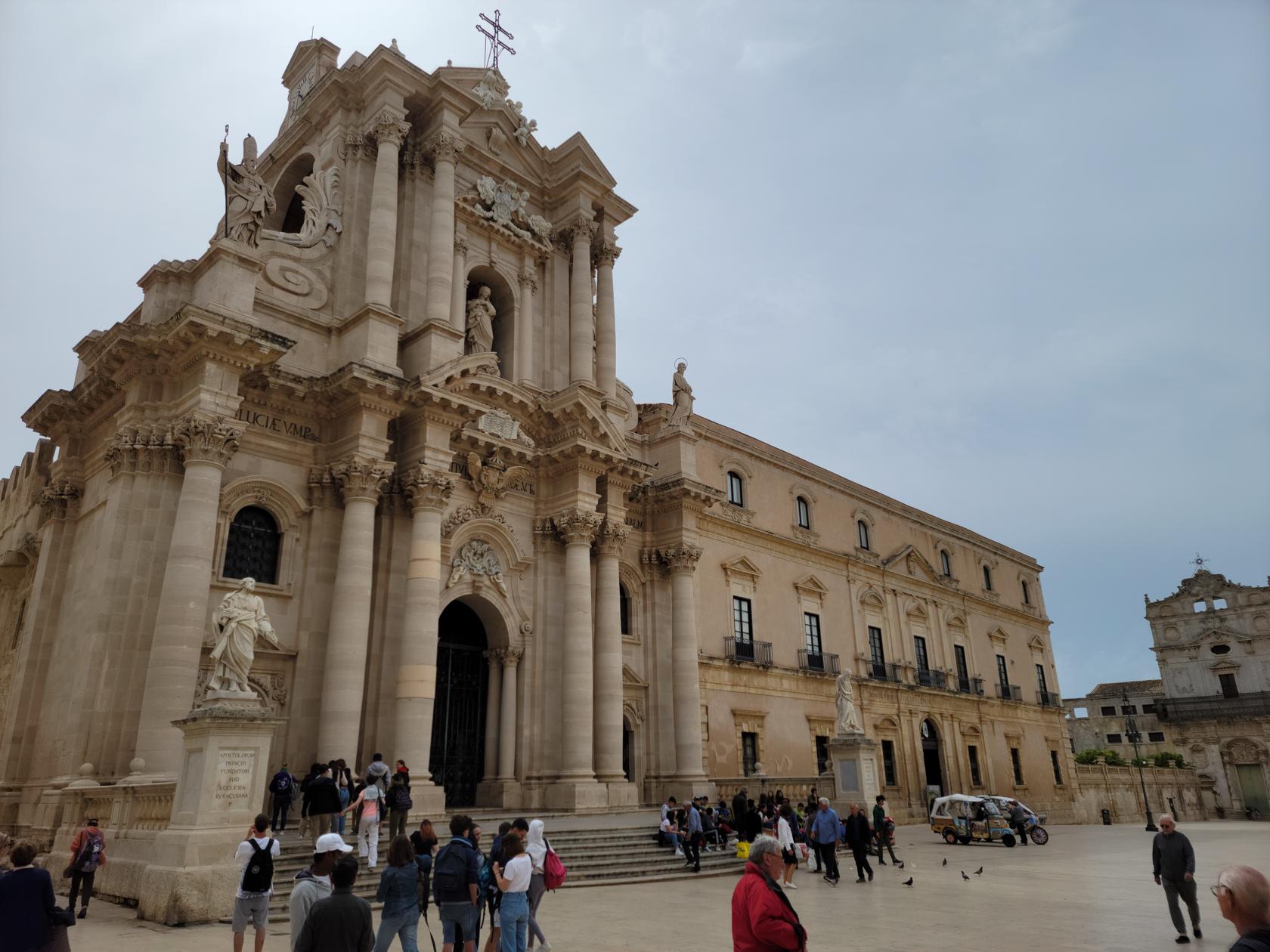
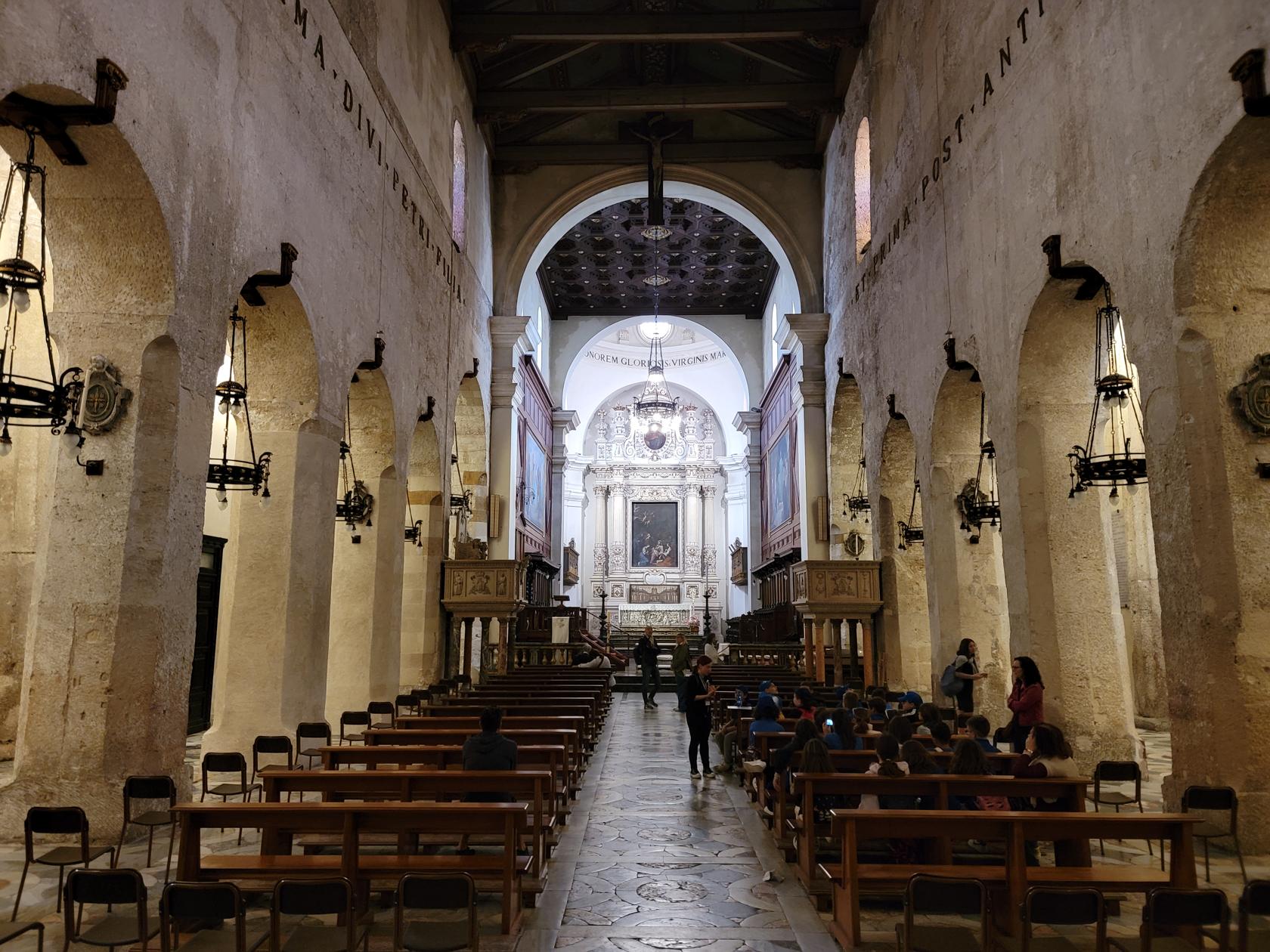
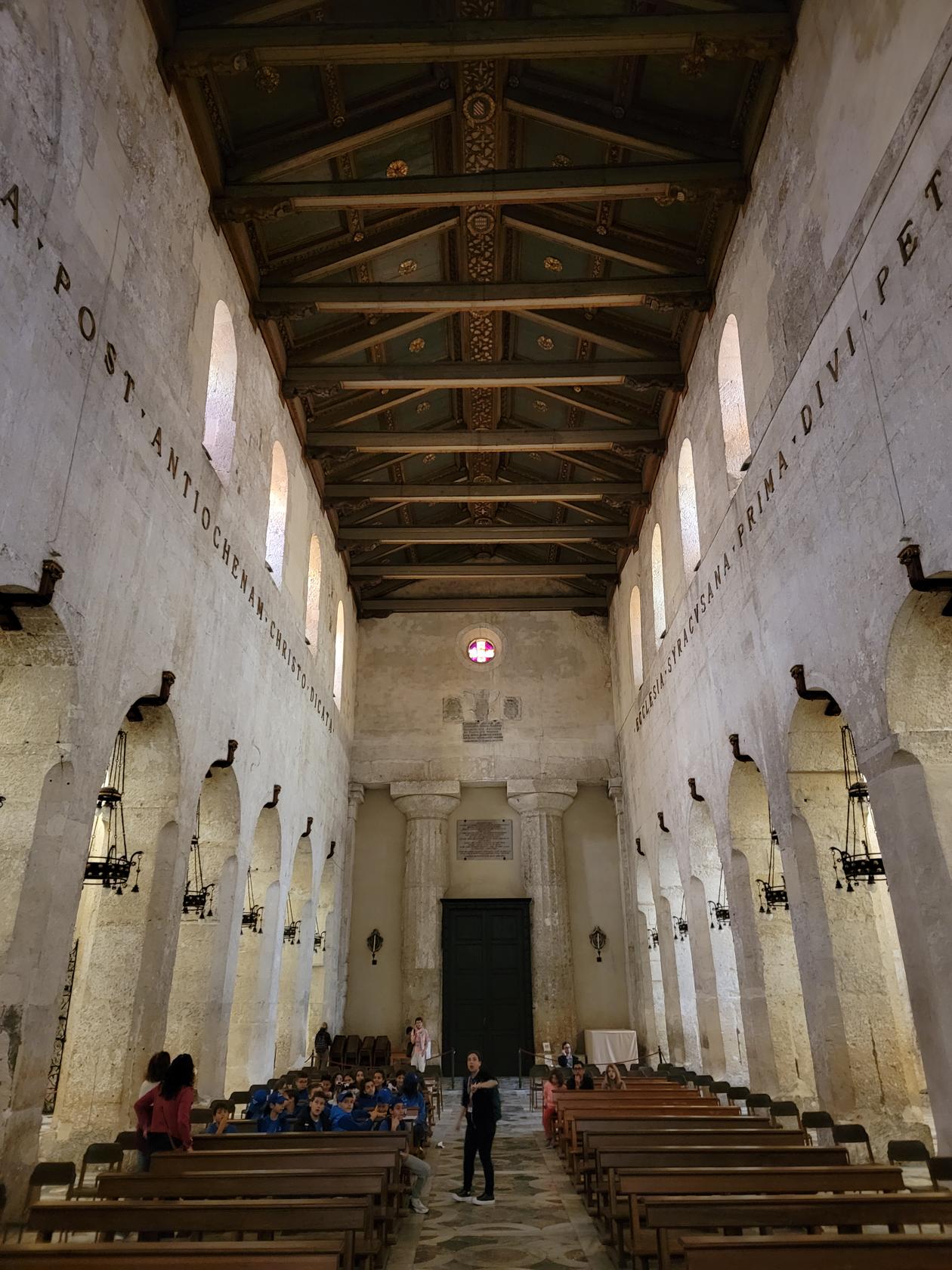
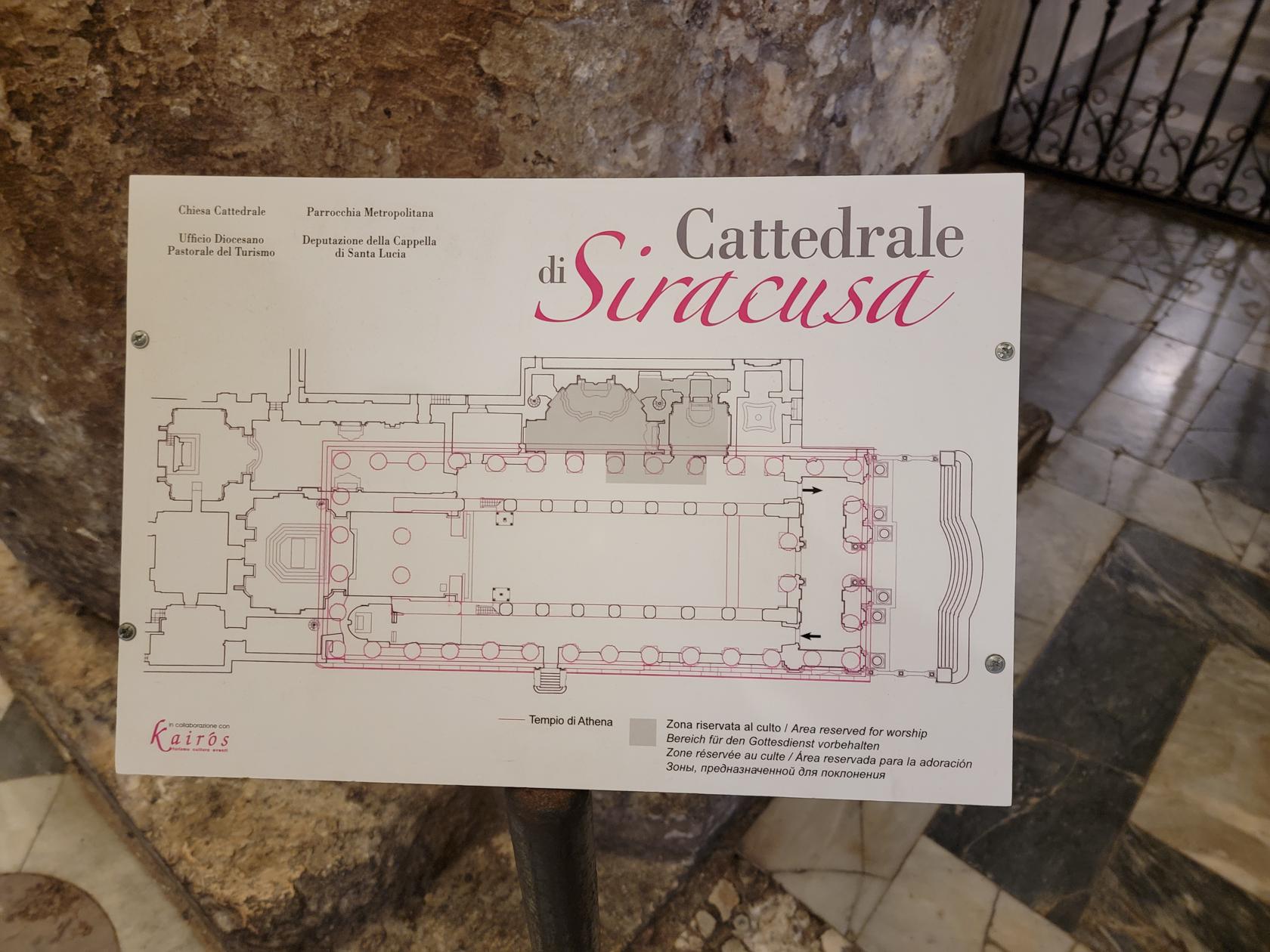
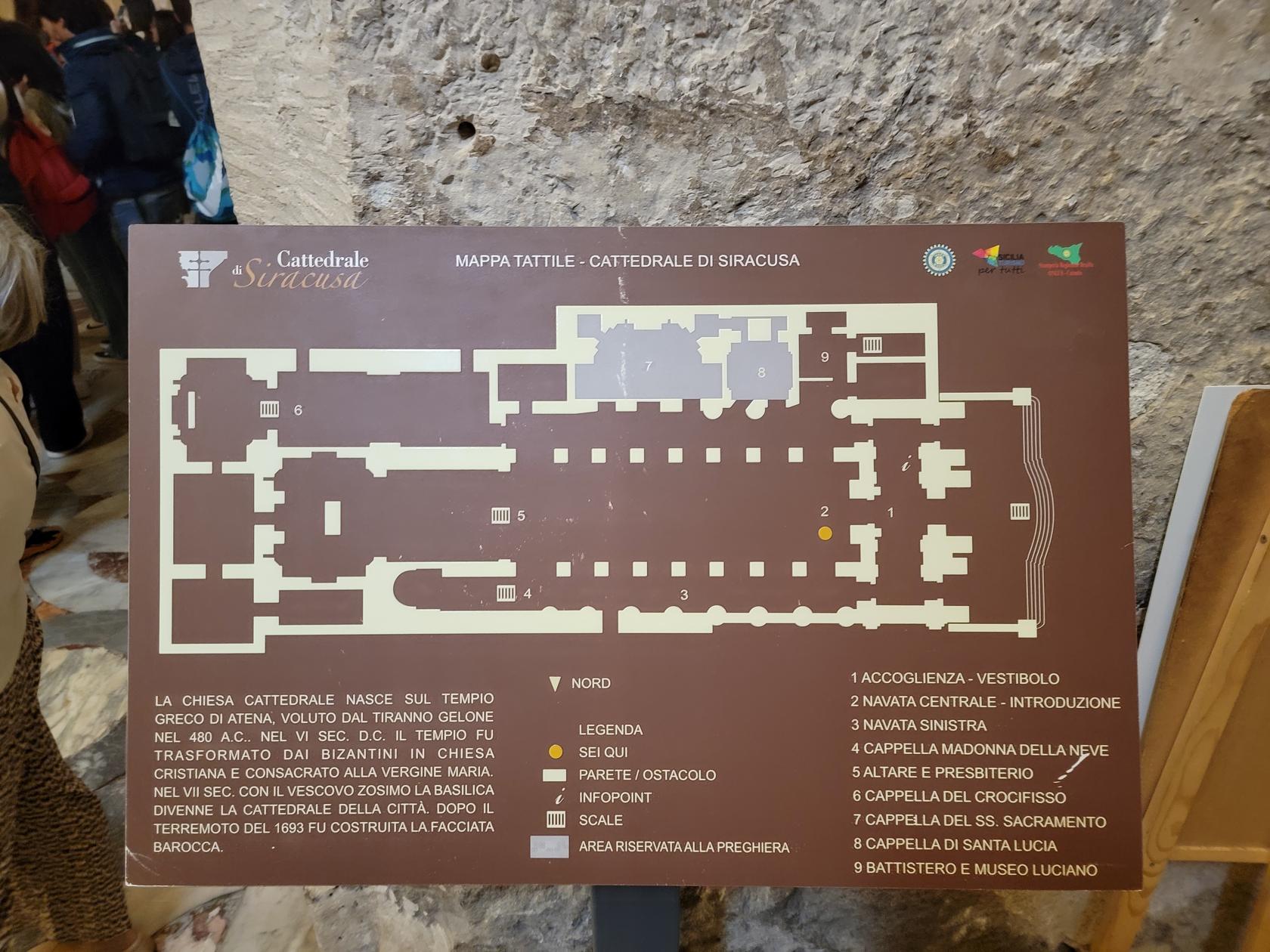
In the center of Ortigia sits the Cathedral of Syracuse, a large and fairly simple structure as cathedrals go, having no real apse, but only central and left naves.
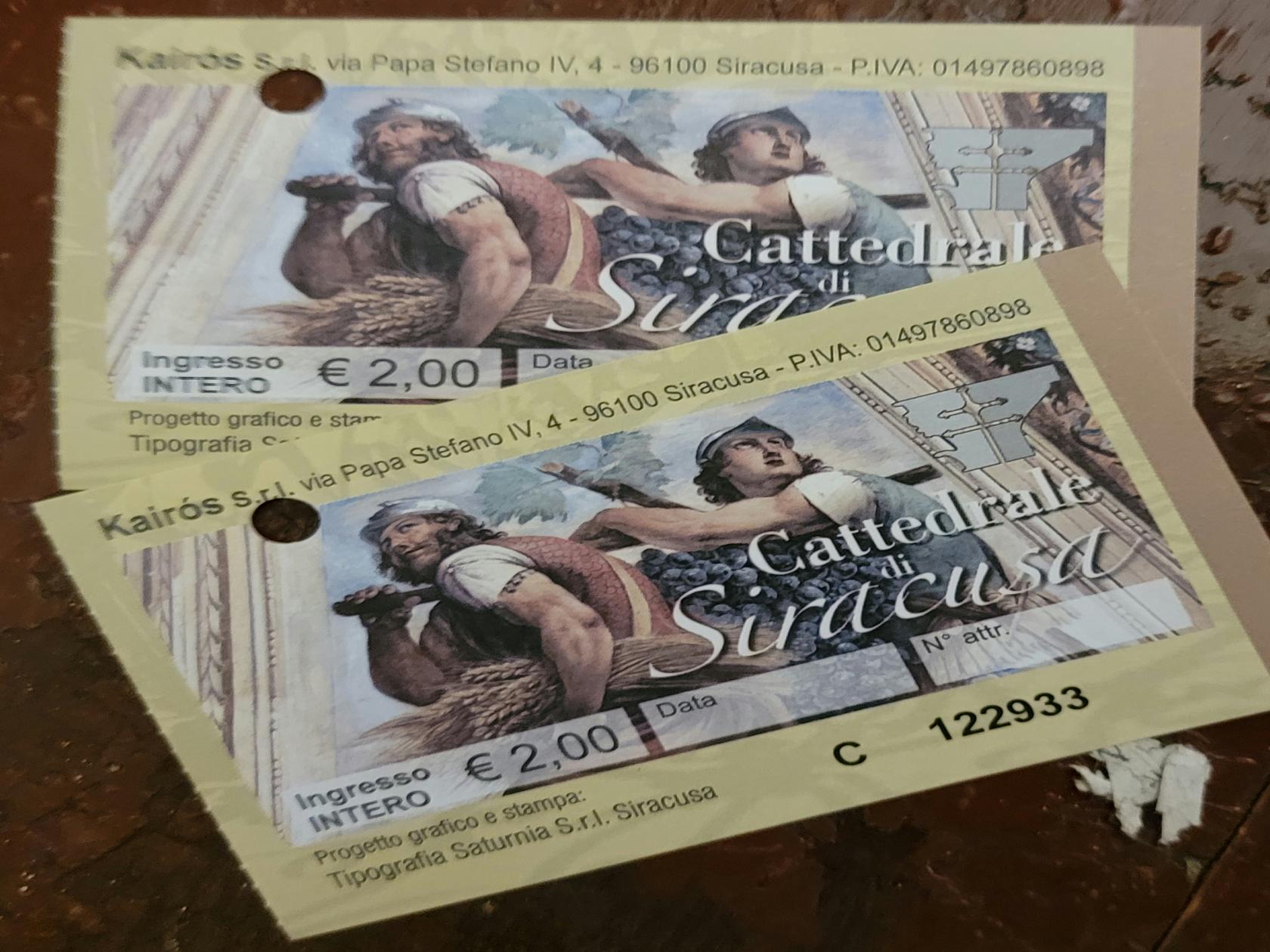
Tickets for Two – Cathedral of Syracuse – Piazza Duomo – Siracusa, Sicily
Cathedral of Syracuse – Piazza Duomo – Siracusa, Sicily
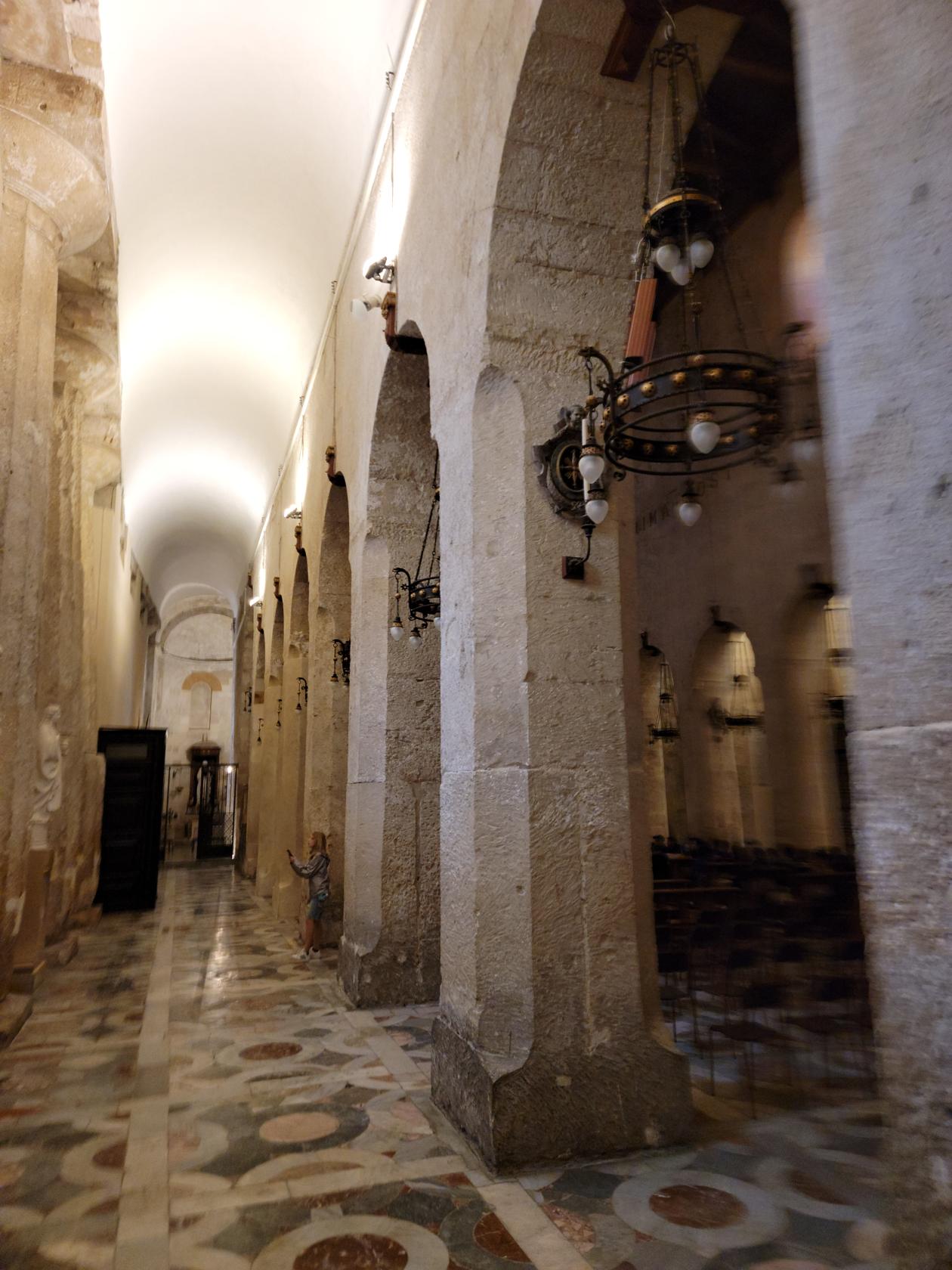
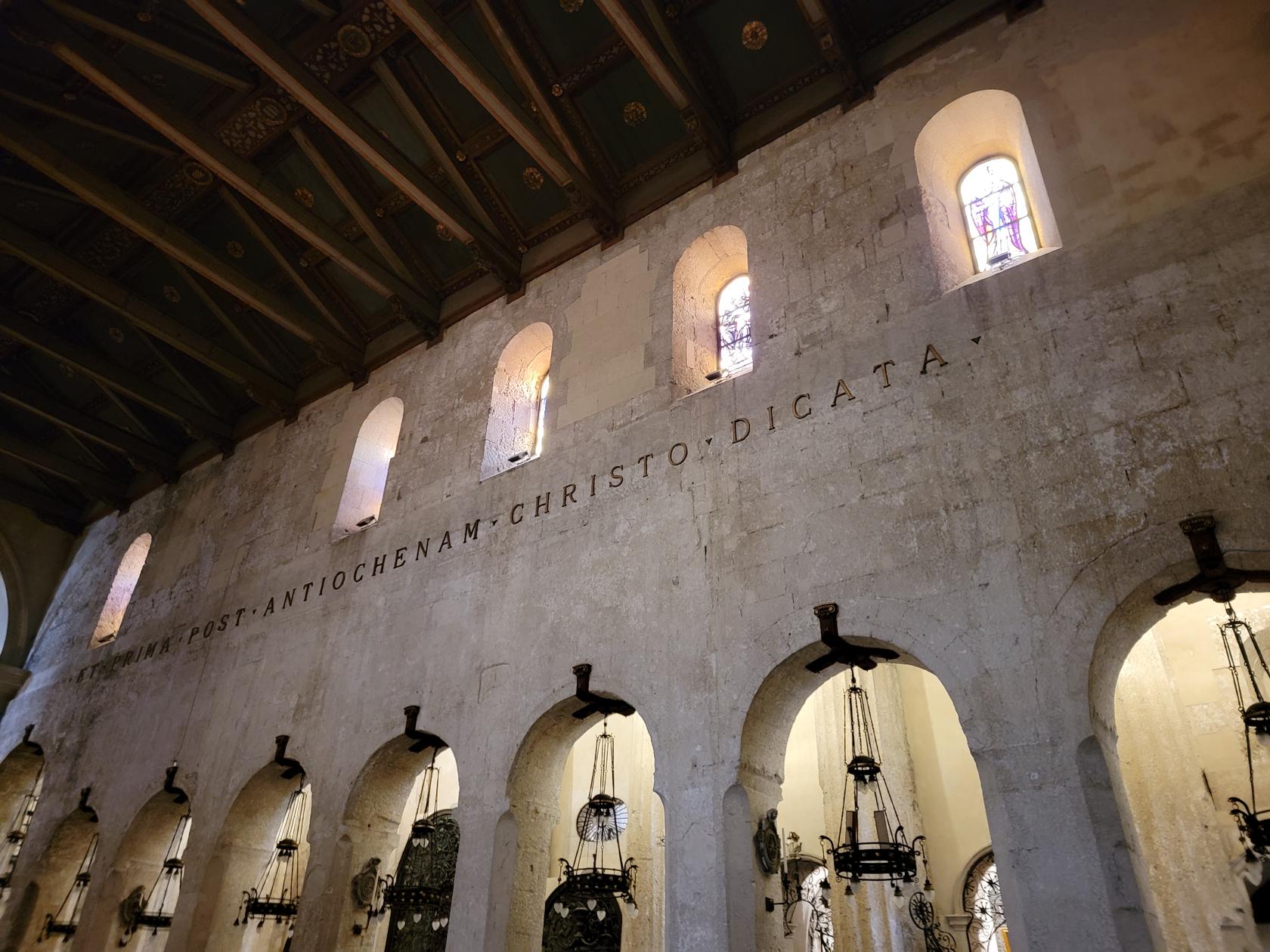
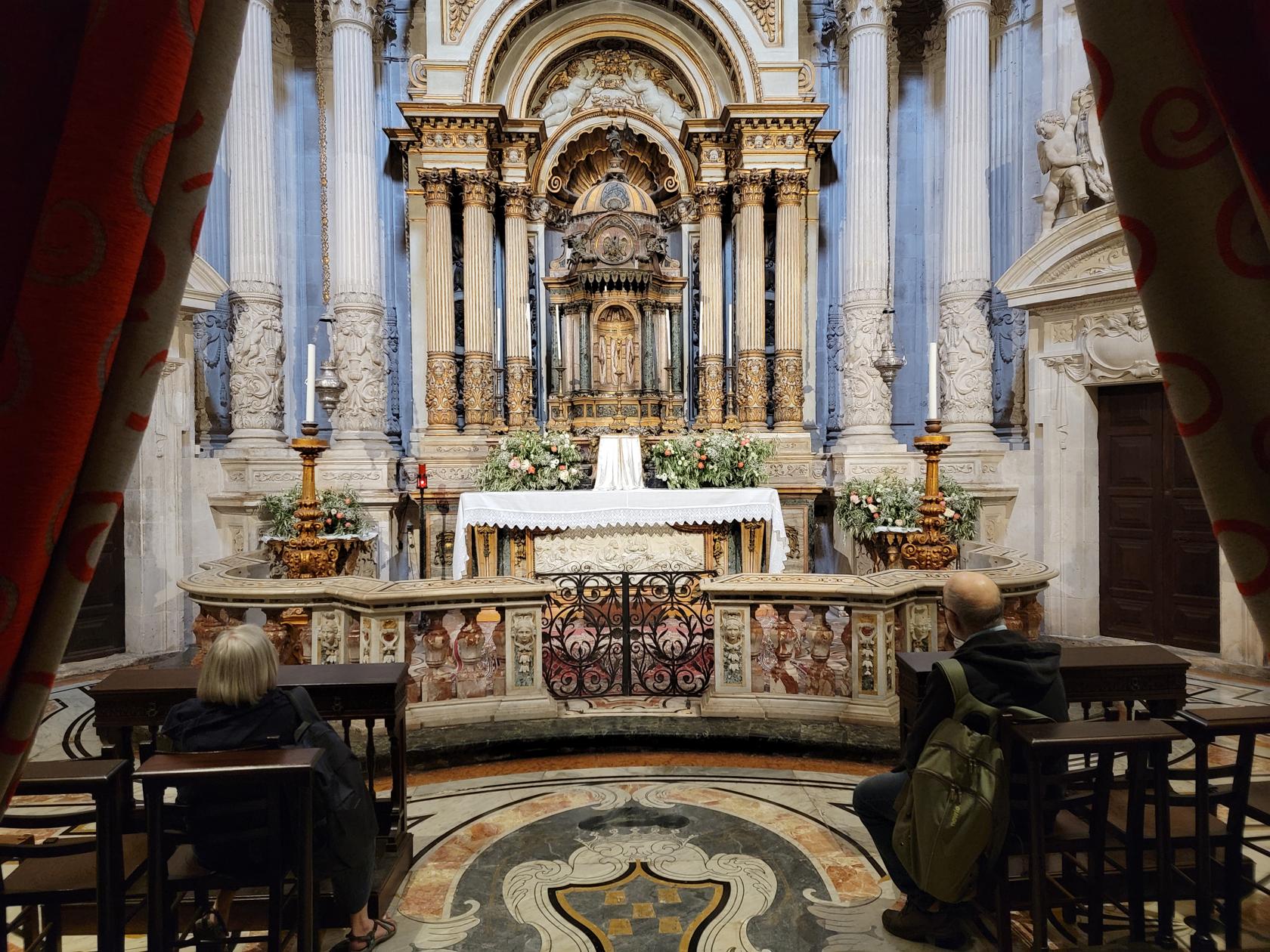
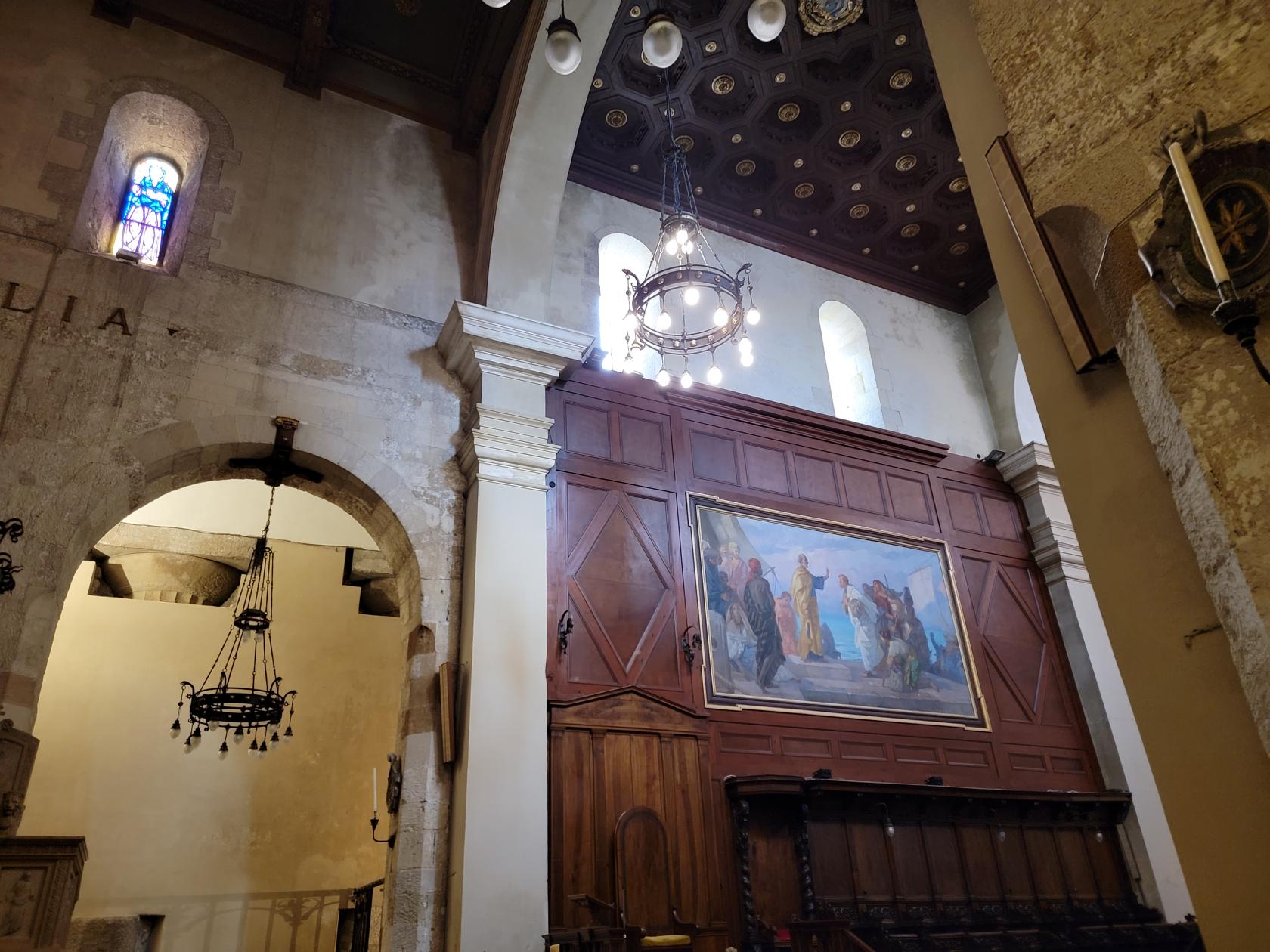
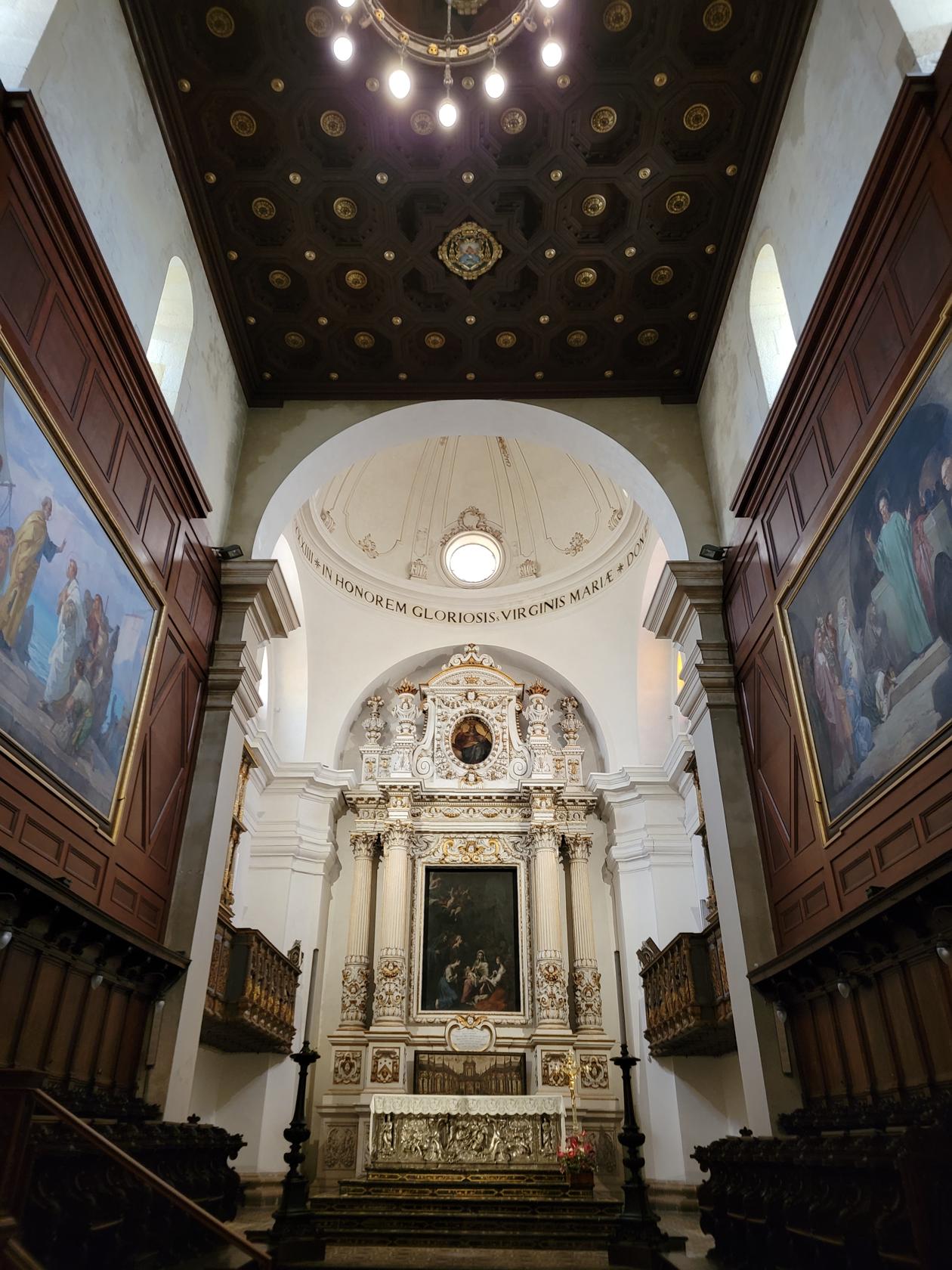
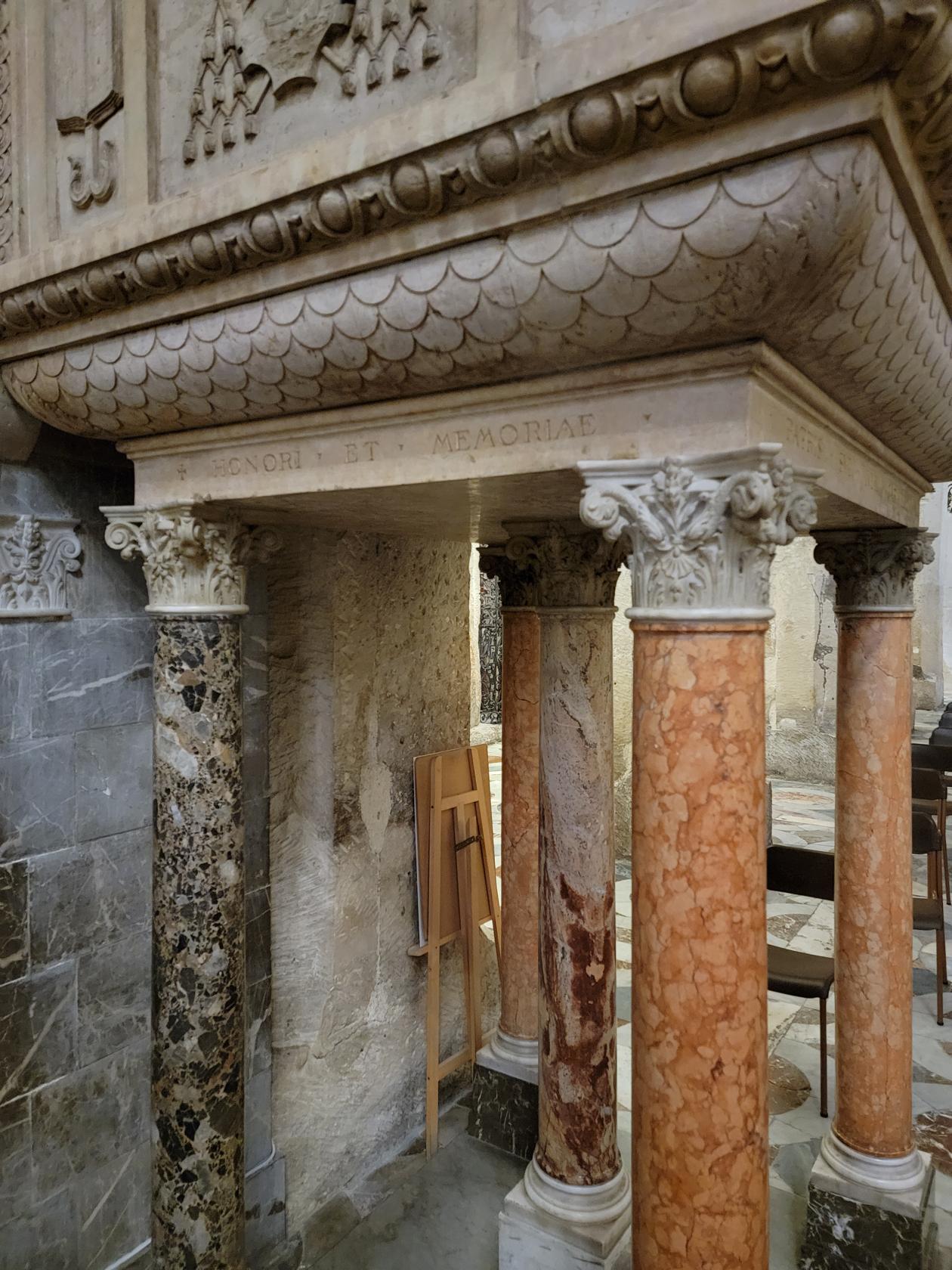
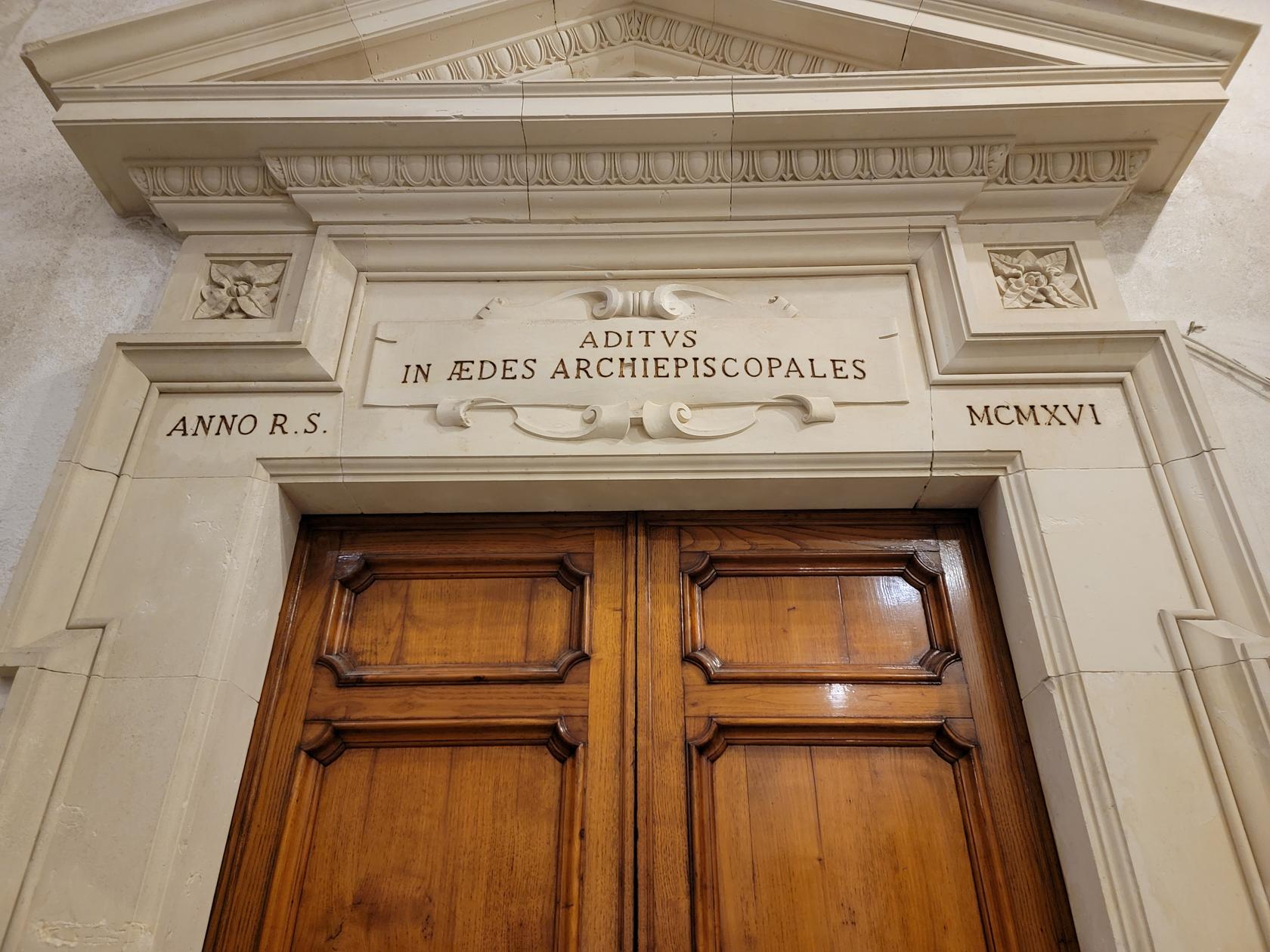
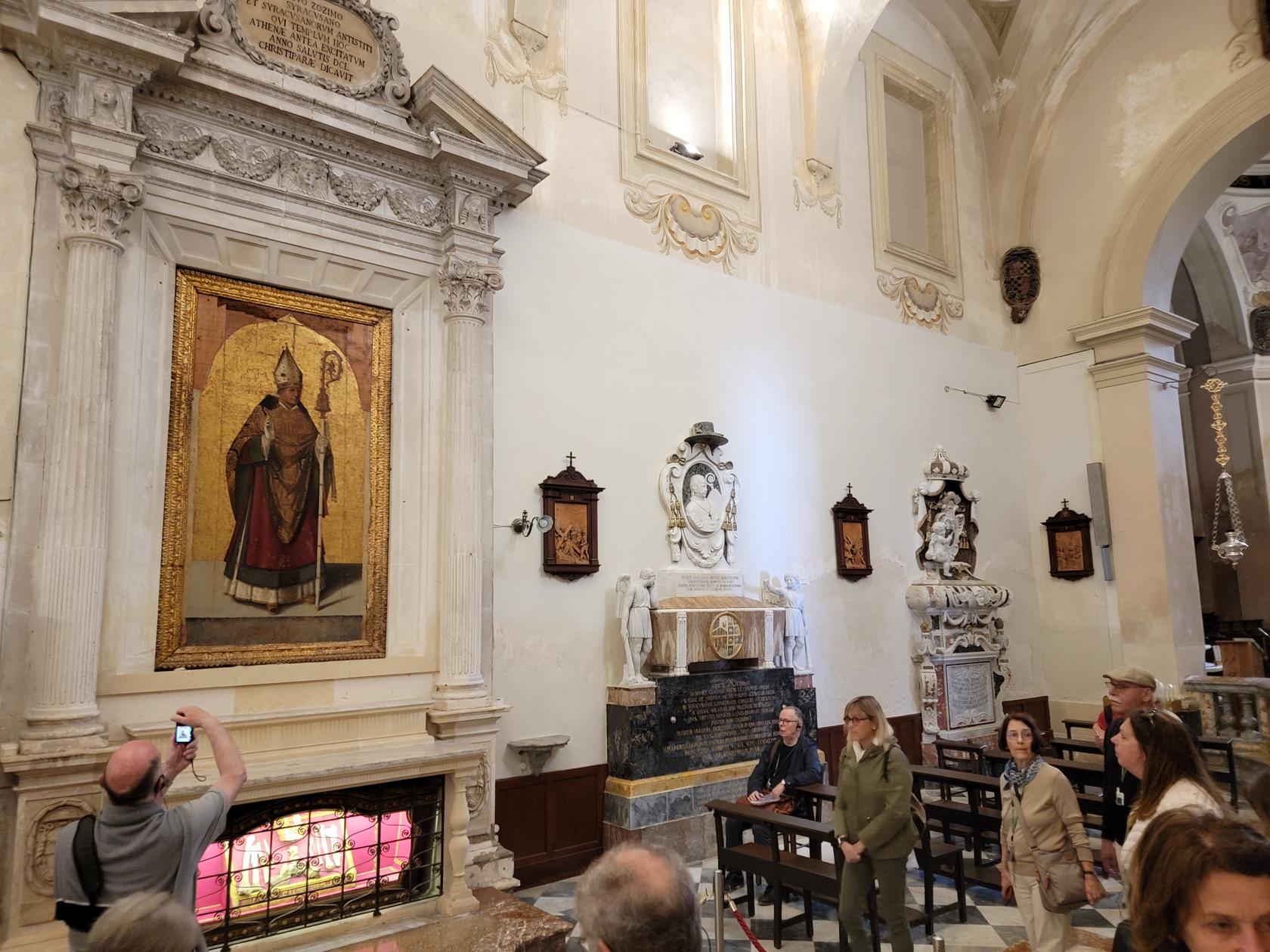
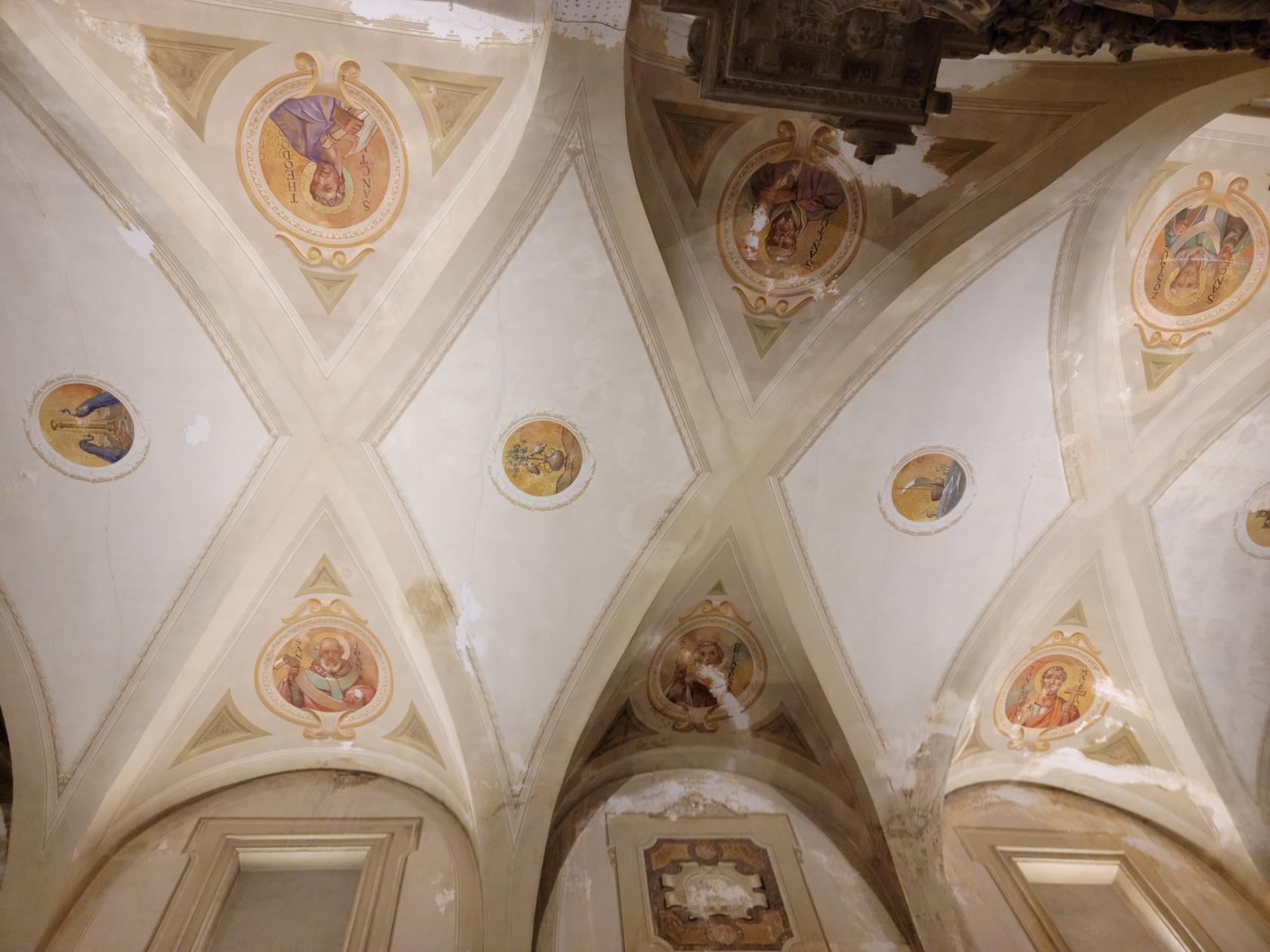
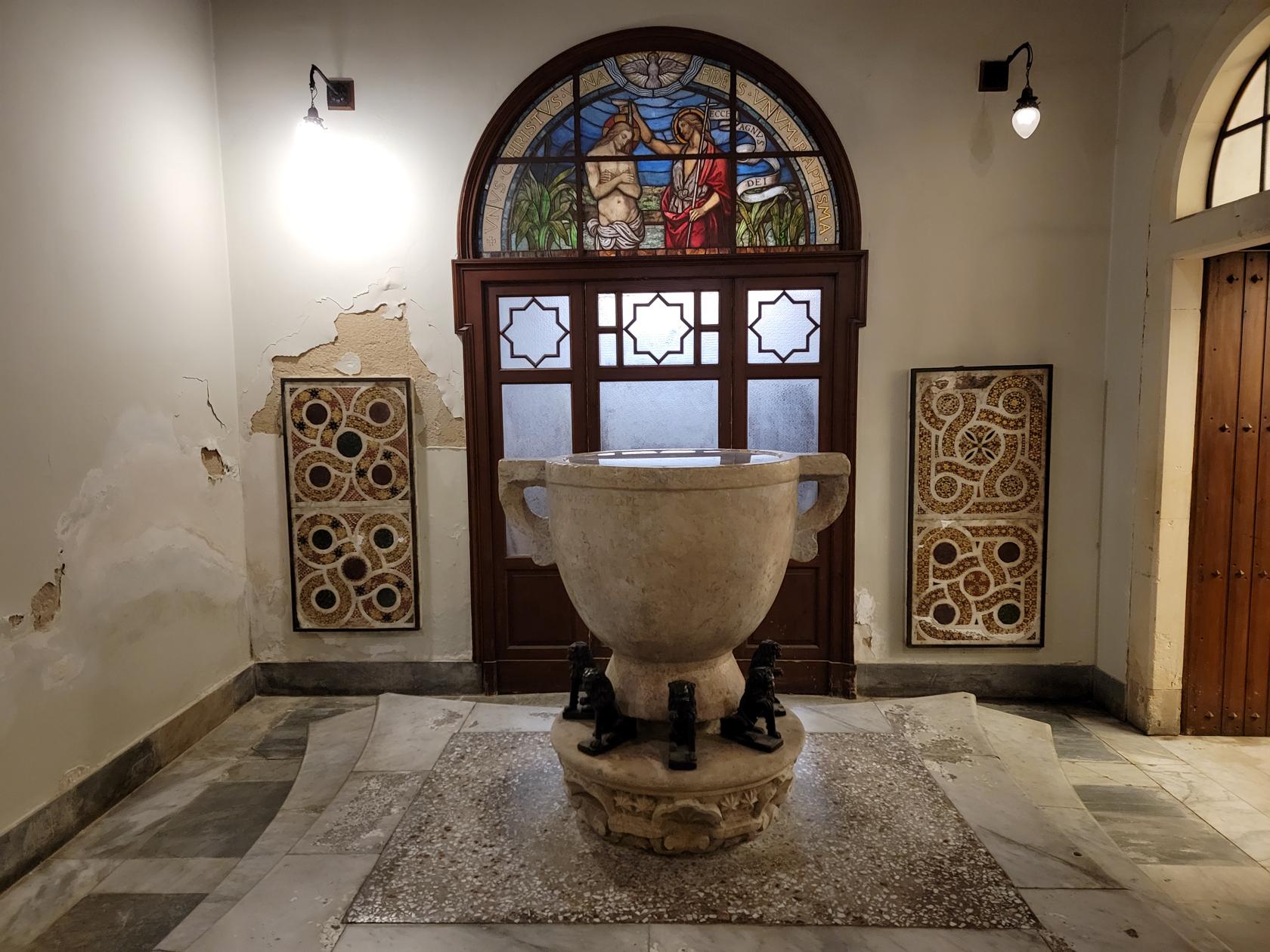
The inside however is impressive and elegant and worth a visit. The outside of the cathedral displays Doric columns of the original Temple of Athena, which stood on this site prior to the building of the edifice.
Cathedral of Syracuse – Piazza Duomo – Siracusa, Sicily
Cathedral of Syracuse – Piazza Duomo – Siracusa, Sicily
Cathedral of Syracuse – Piazza Duomo – Siracusa, Sicily
Cathedral of Syracuse – Piazza Duomo – Siracusa, Sicily
Cathedral of Syracuse – Piazza Duomo – Siracusa, Sicily
Cathedral of Syracuse – Piazza Duomo – Siracusa, Sicily
Cathedral of Syracuse – Piazza Duomo – Siracusa, Sicily
Cathedral of Syracuse – Piazza Duomo – Siracusa, Sicily
Cathedral of Syracuse – Piazza Duomo – Siracusa, Sicily
Cathedral of Syracuse – Piazza Duomo – Siracusa, Sicily
Cathedral of Syracuse – Piazza Duomo – Siracusa, Sicily
Cathedral of Syracuse – Piazza Duomo – Siracusa, Sicily
Cathedral of Syracuse – Piazza Duomo – Siracusa, Sicily
Cathedral of Syracuse – Piazza Duomo – Siracusa, Sicily
Our Hotel
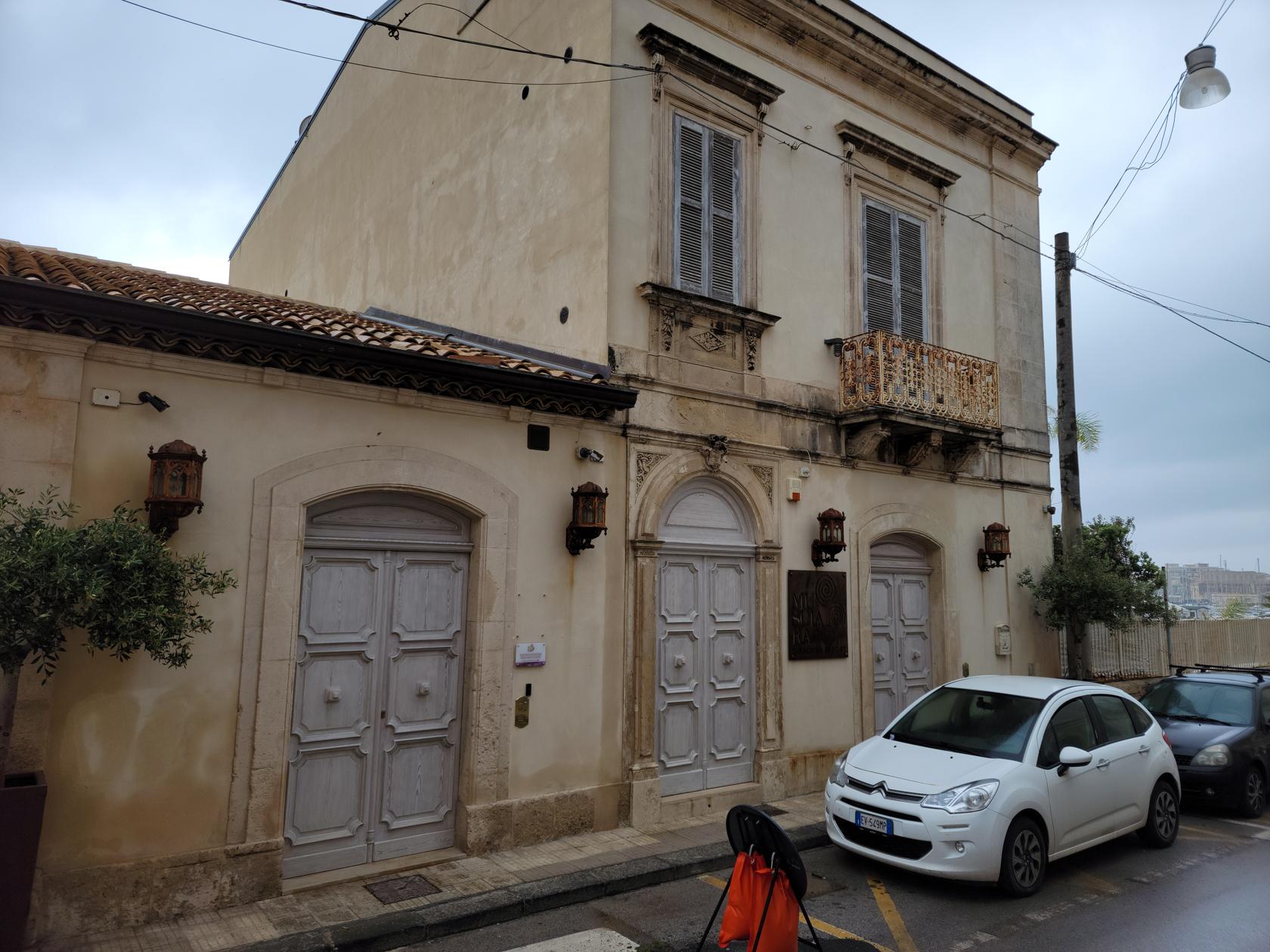
Hotel Musciara Resort
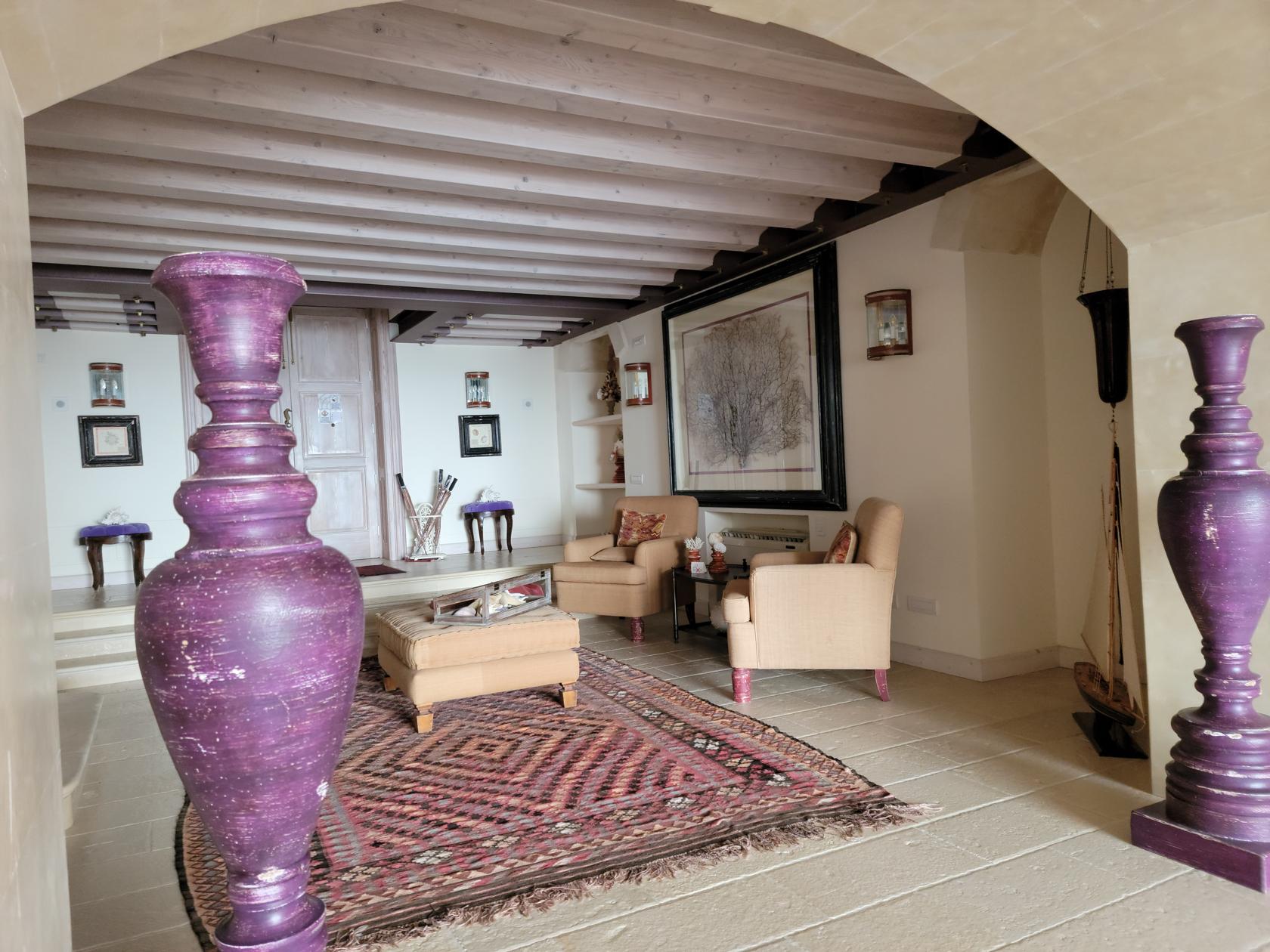
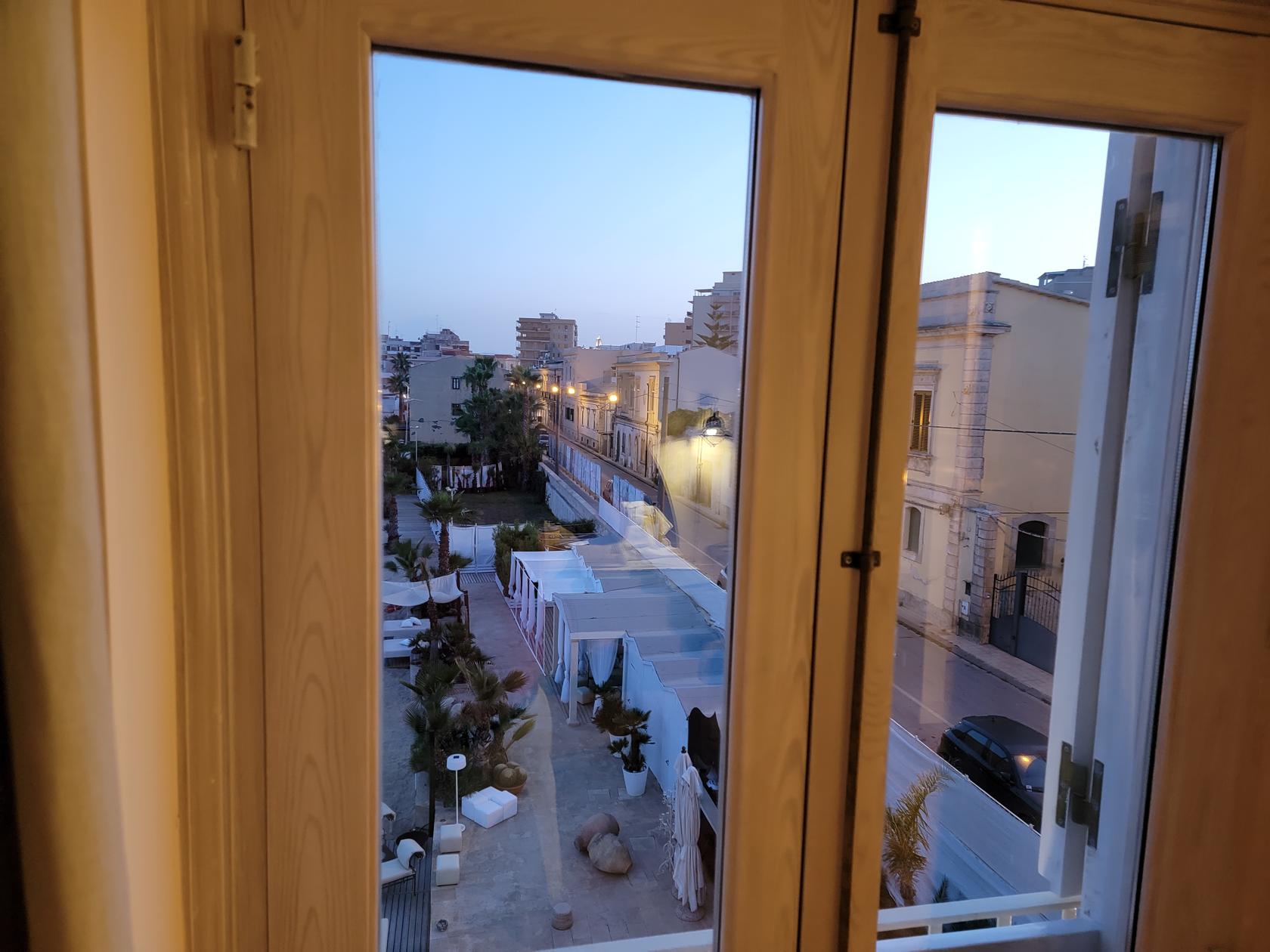
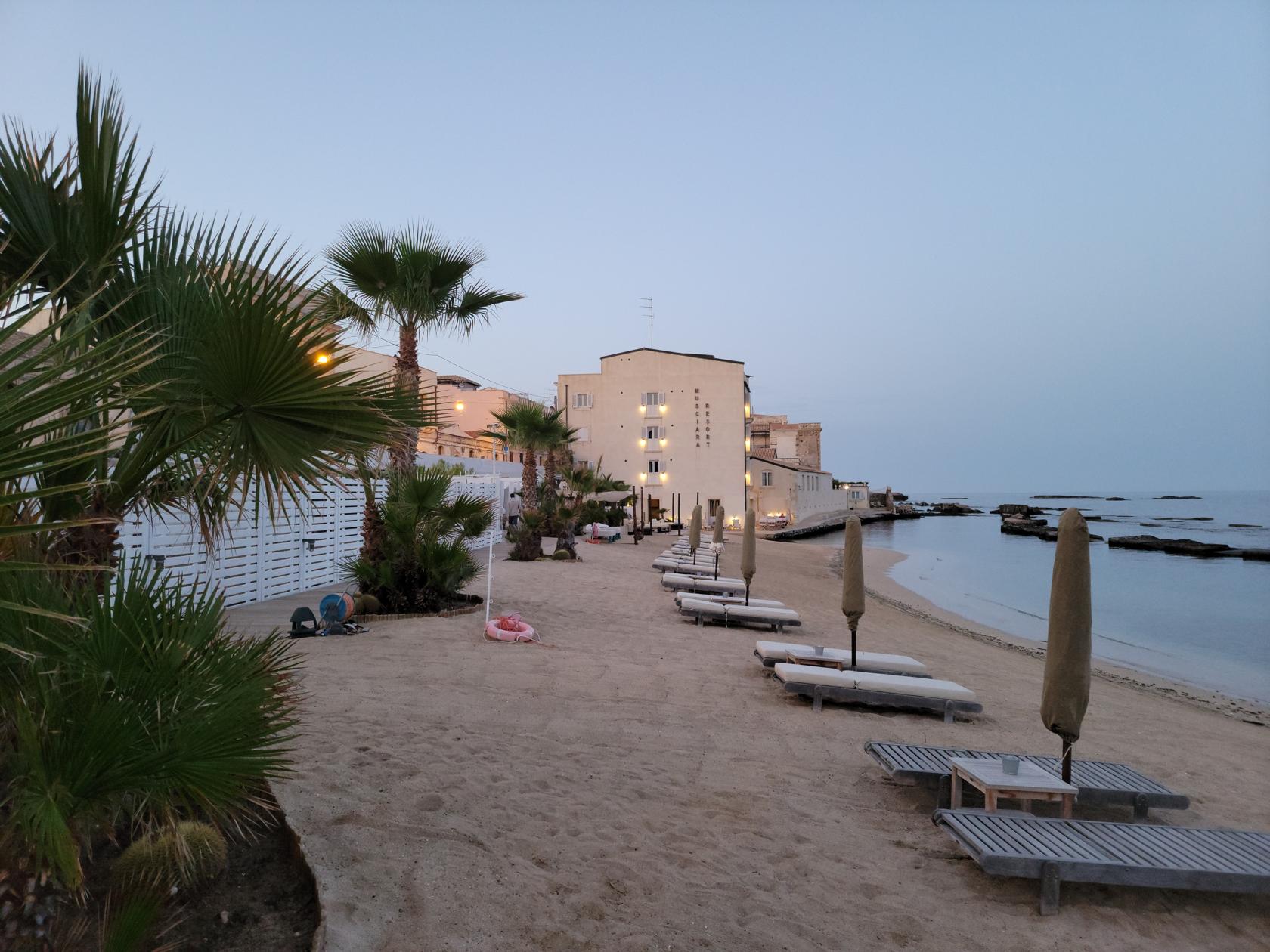
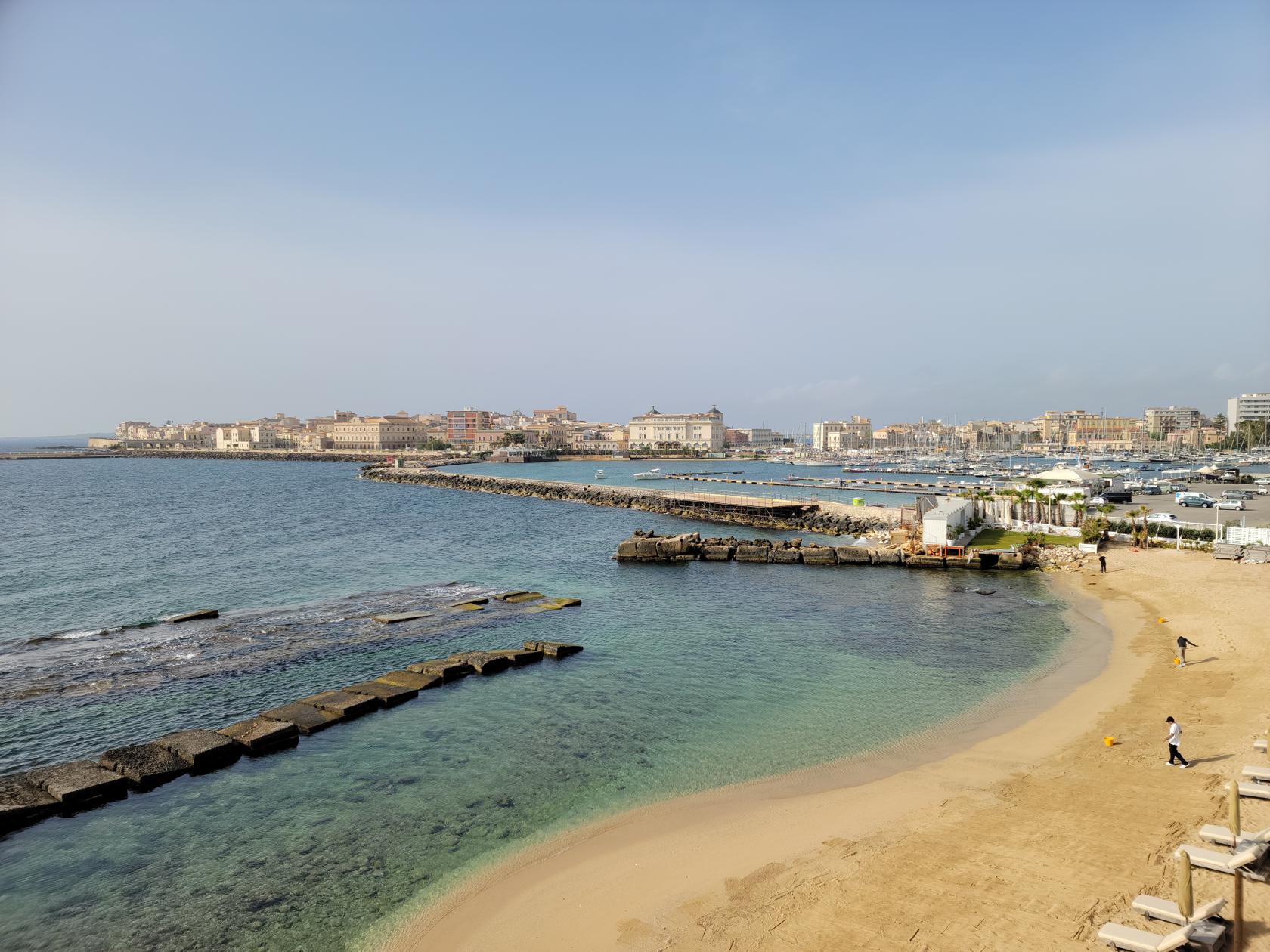
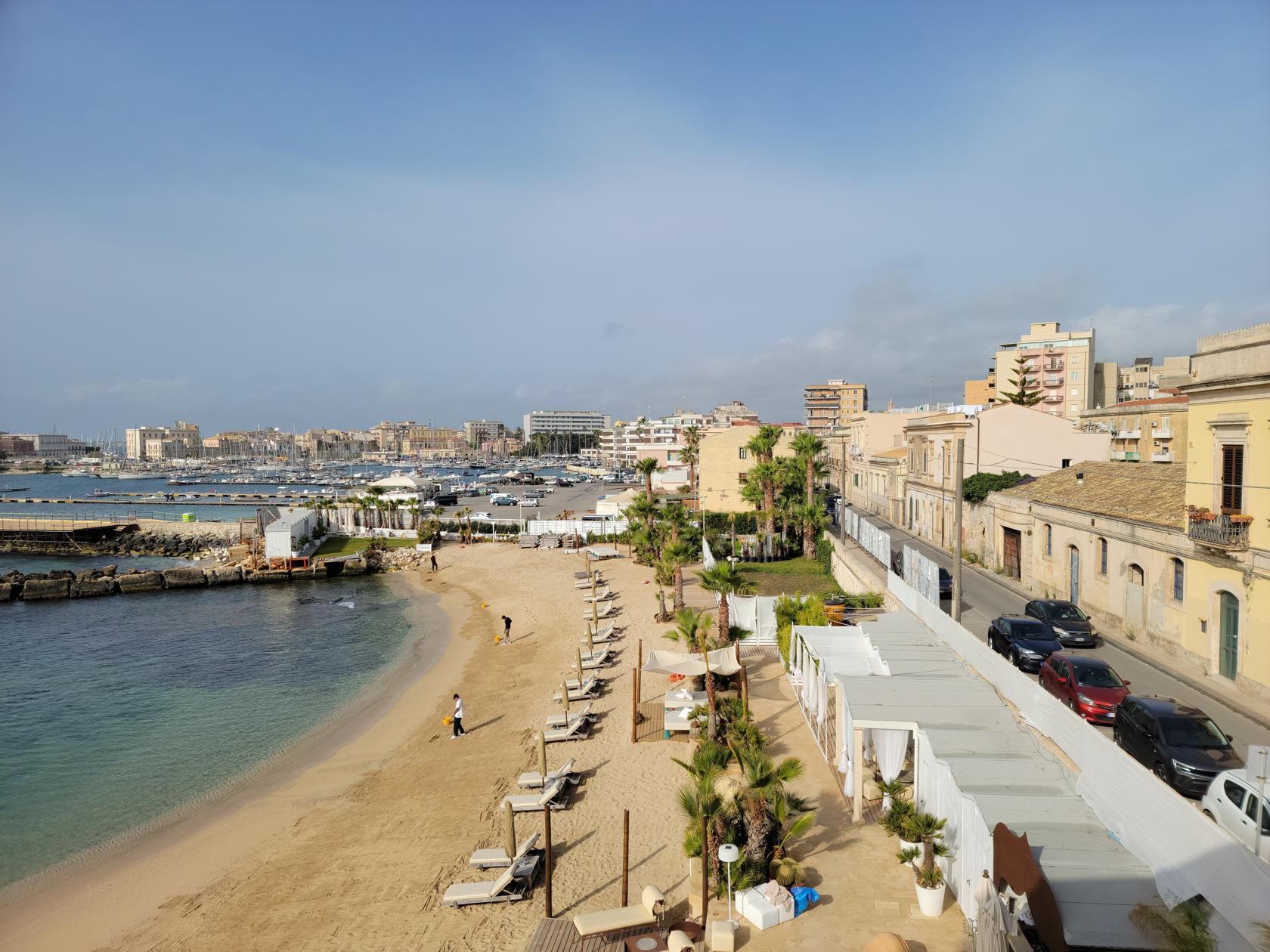
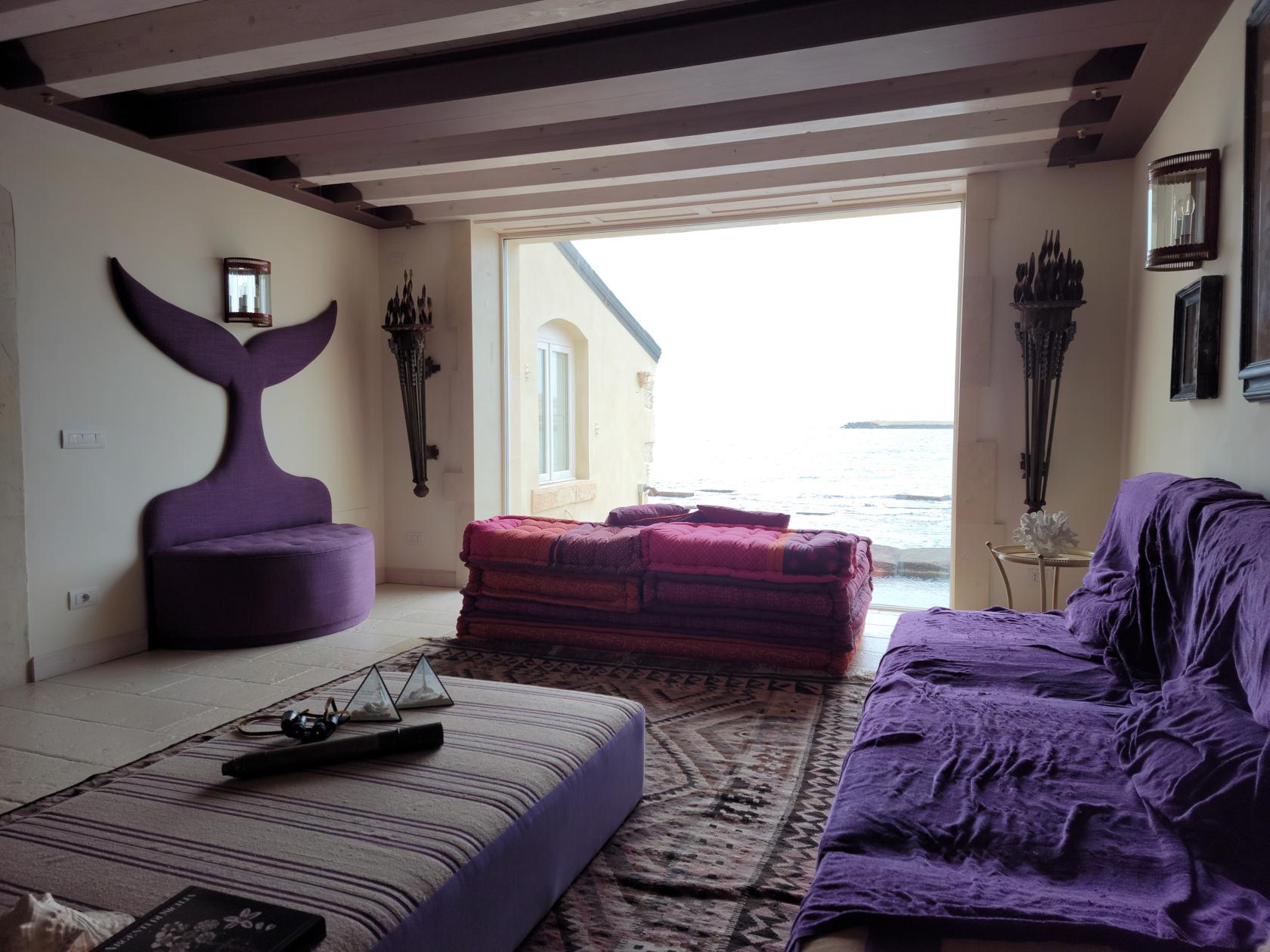
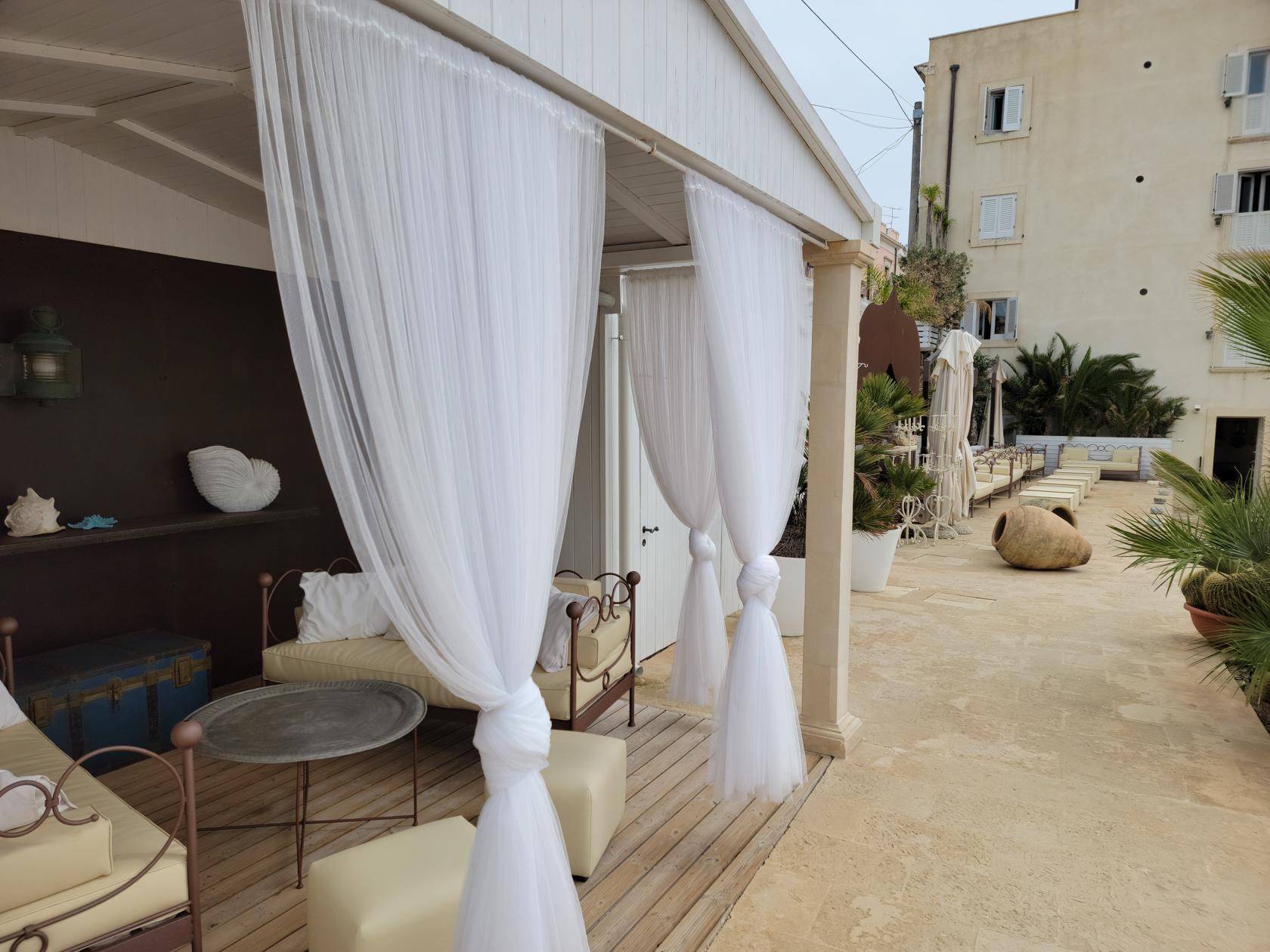
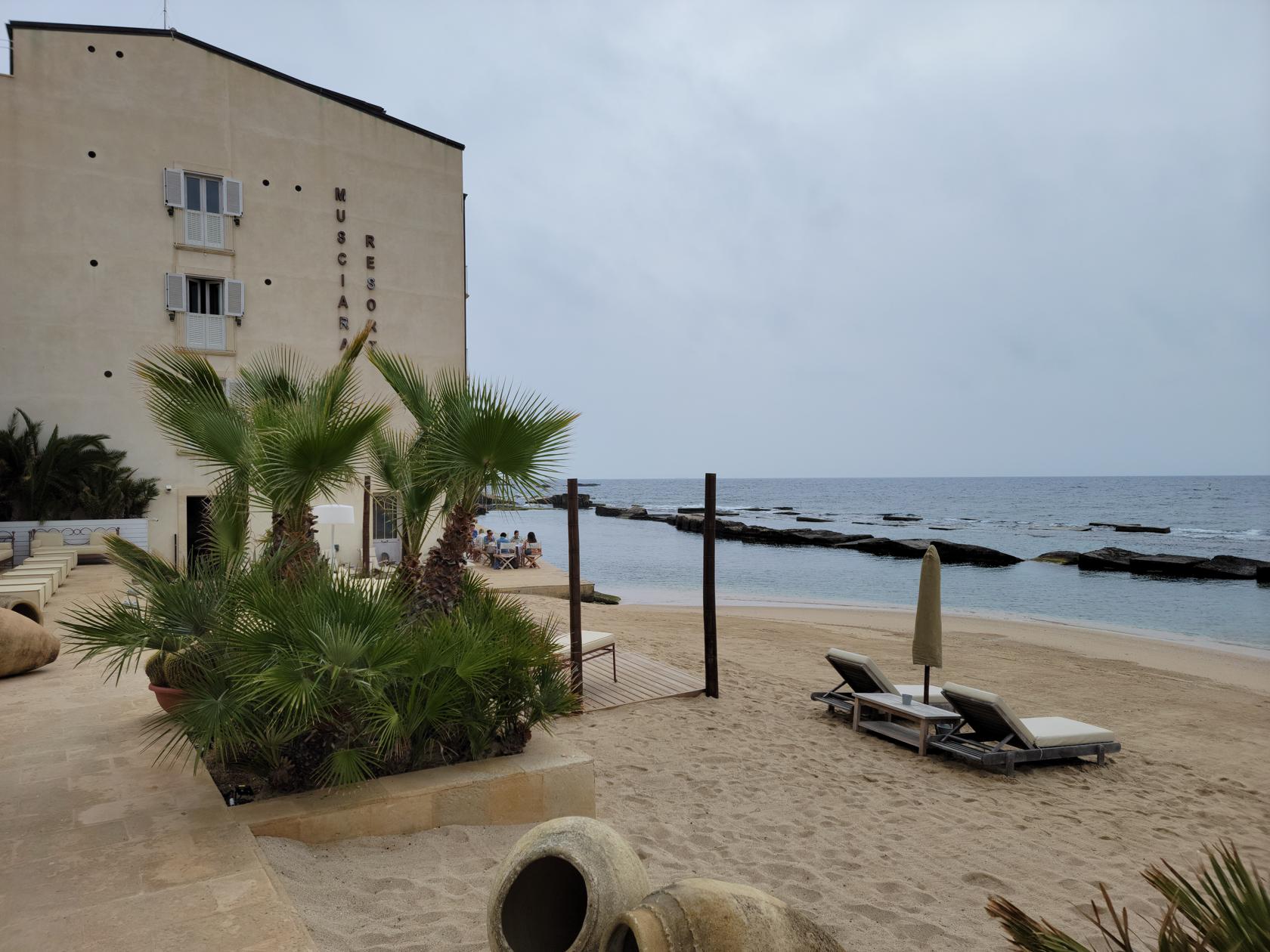
For the six nights we stayed in Syracuse, we stayed at the Musciara Resort. This boutique resort is located about a 15 minute walk from Ortigia Island and has its own beach. It is a three-star hotel, but it is expertly appointed and maintained. There are only about a dozen or so rooms, so book early if interested. It is a on the pricey side, so if you are able, use points.
Entrance – Hotel Musciara Resort – Siracuse, Sicily
Lobby – Musciara Resort – Siracusa, Sicily
Though we did not use the beach at them, since there was a severe upper level low causing rain for many days, we know a set of two lounge chairs and table will cost 110€/day for those wishing to enjoy the water or work on that tan.
The cuisine of Syracuse is of course based mainly on the sea, so people who love fish will definitely enjoy themselves. There are myriads of fish to choose from, as well as octopus, squid, cuttlefish and assorted shell fish.
Trattoria Archimede
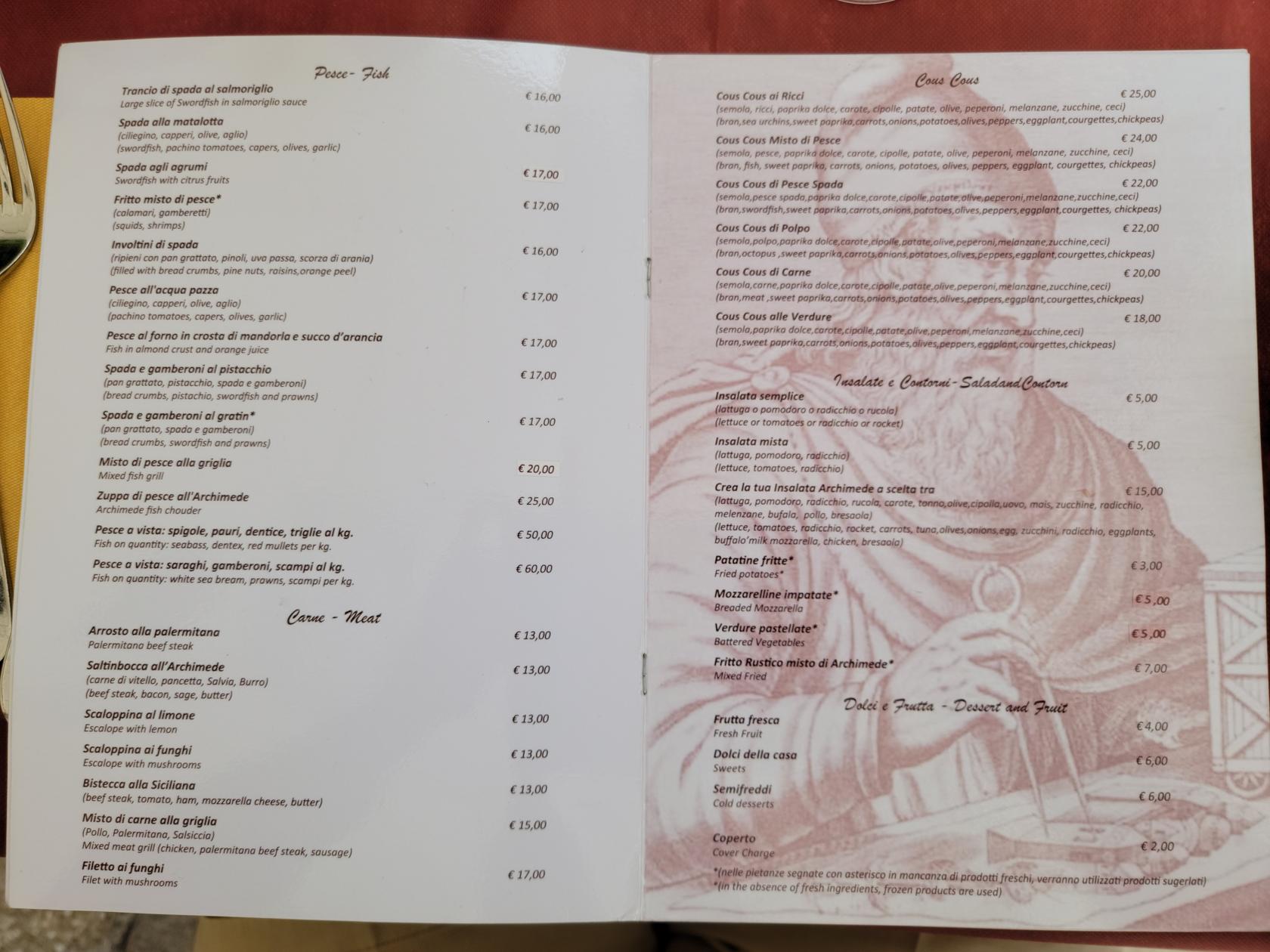
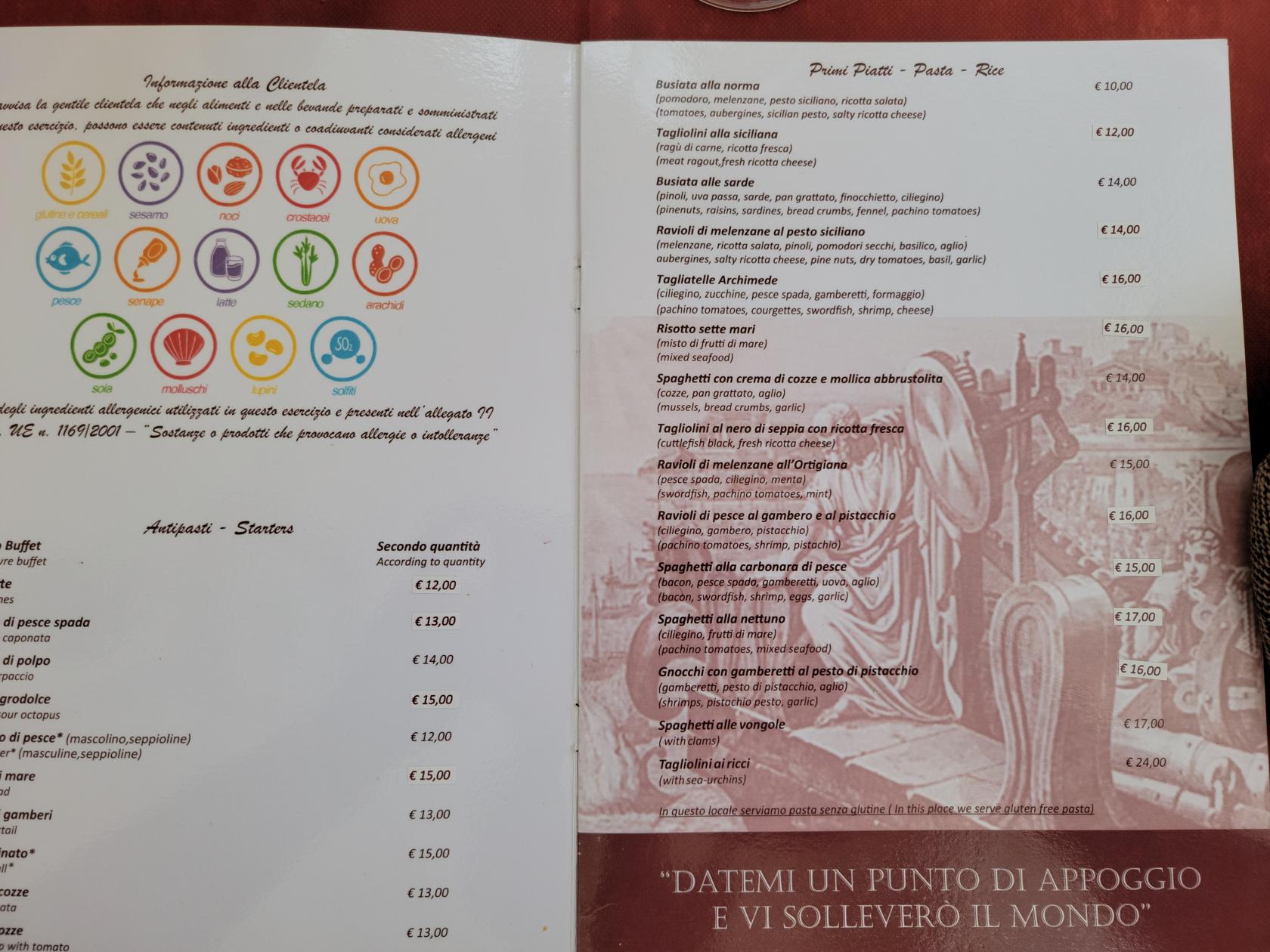
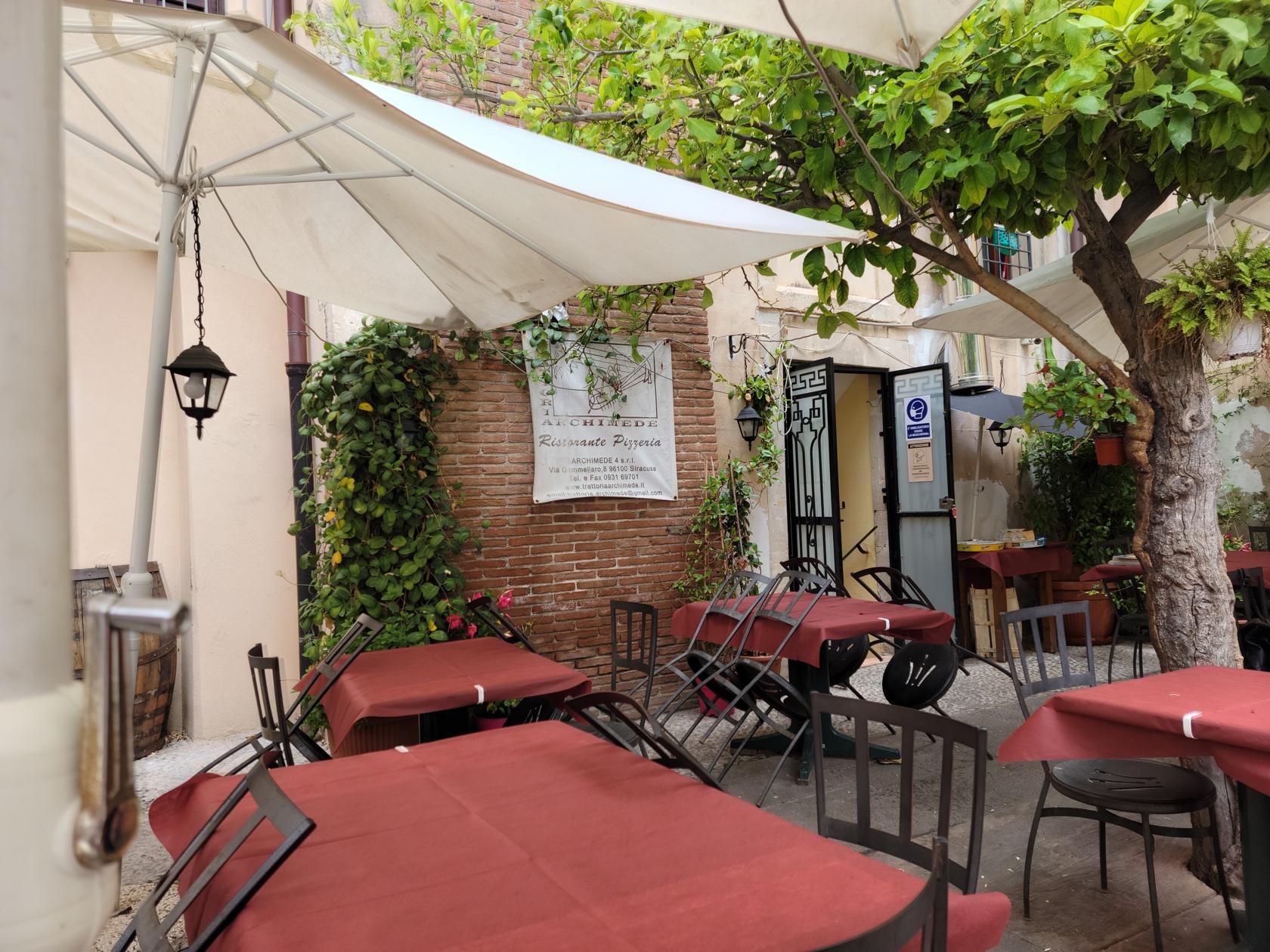
We ate lunch here and thoroughly enjoyed ourselves. They have a nice garden where one can enjoy an relaxes lunch away from the hustle and bustle of Piazza Duomo.
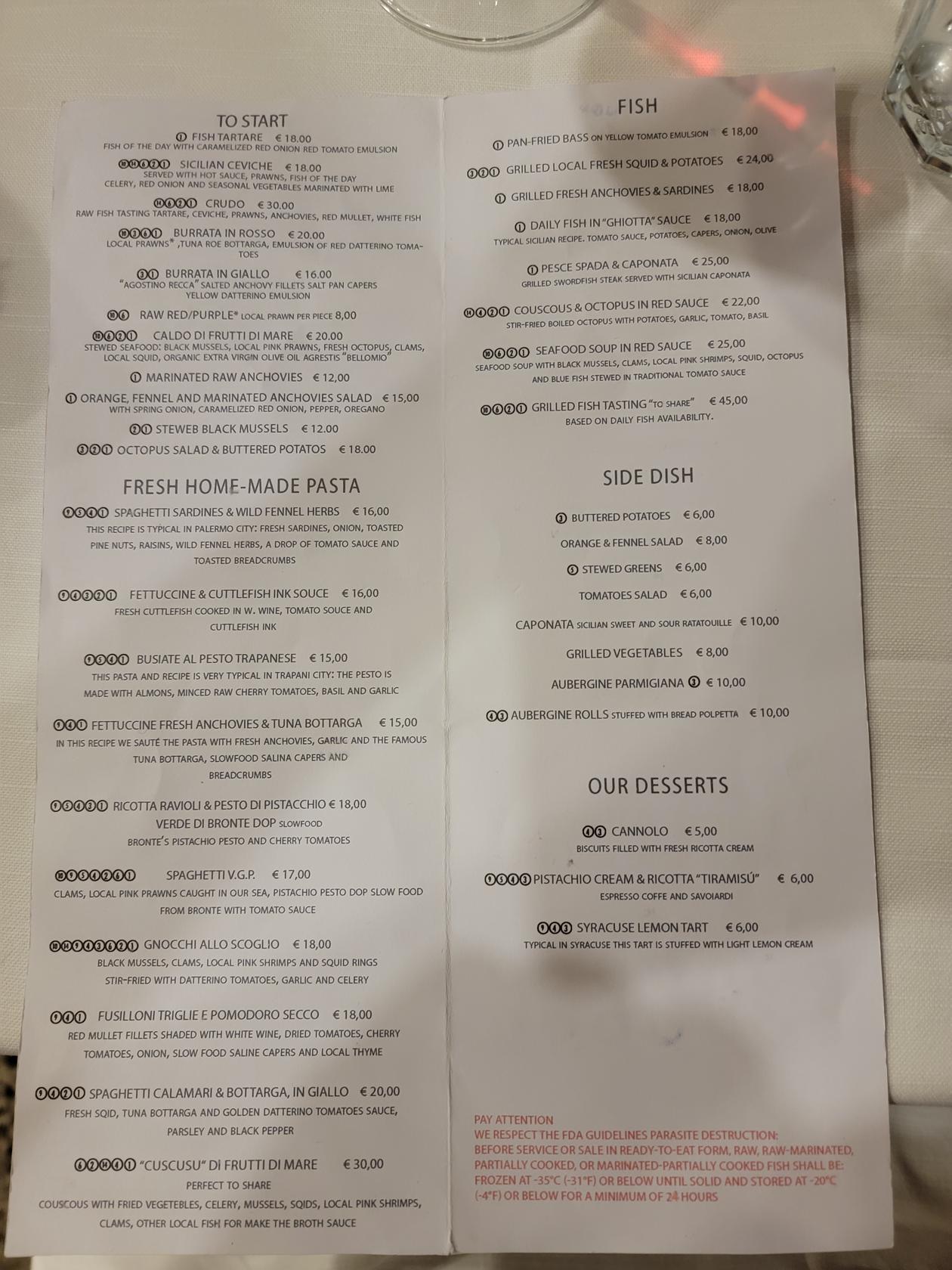
Menu – Trattoria Archimede – Siracusa, Sicily
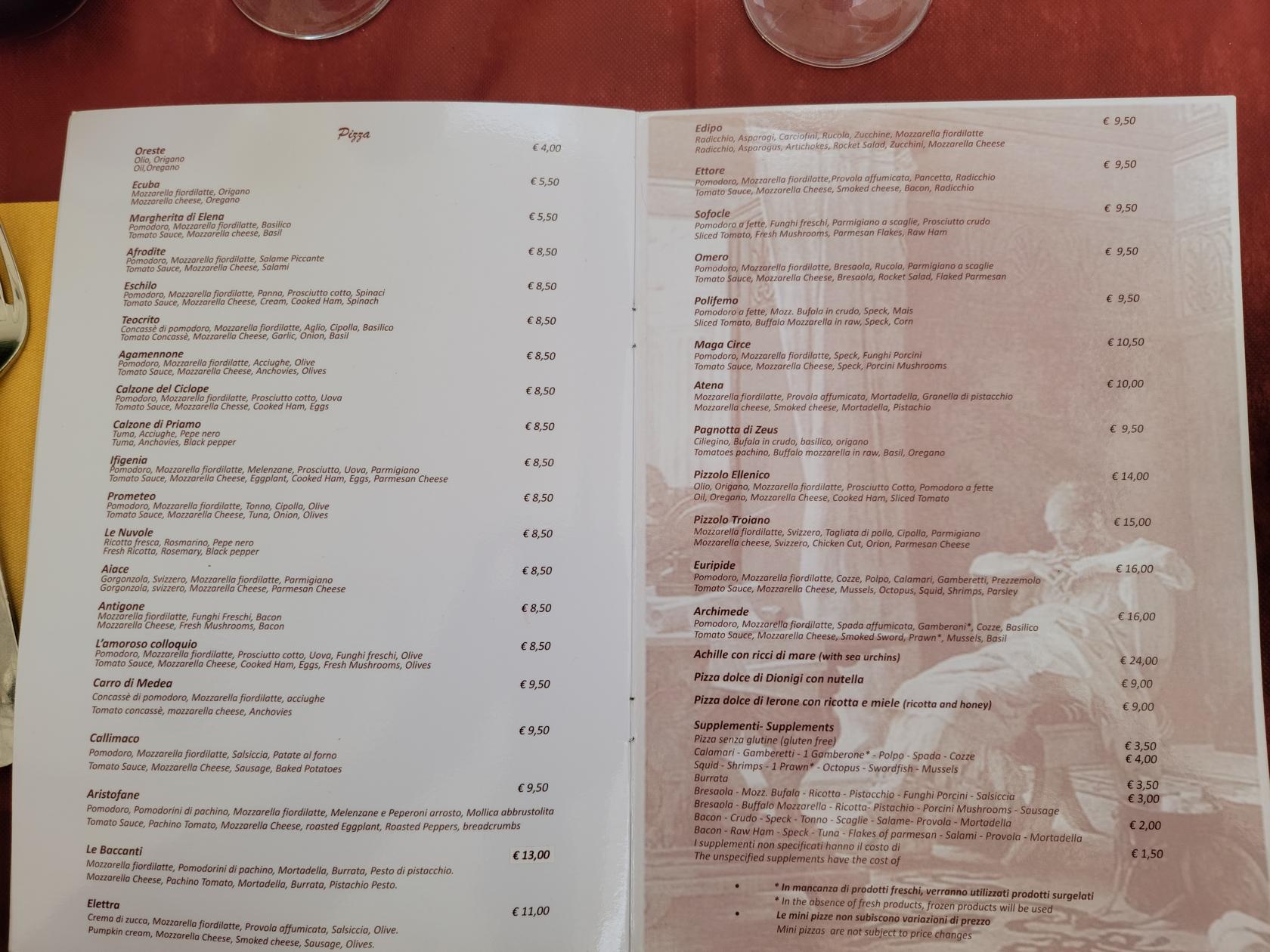
Menu – Trattoria Archimede – Siracusa, Sicily
Menu – Trattoria Archimede – Siracusa, Sicily
Menu – Trattoria Archimede – Siracusa, Sicily
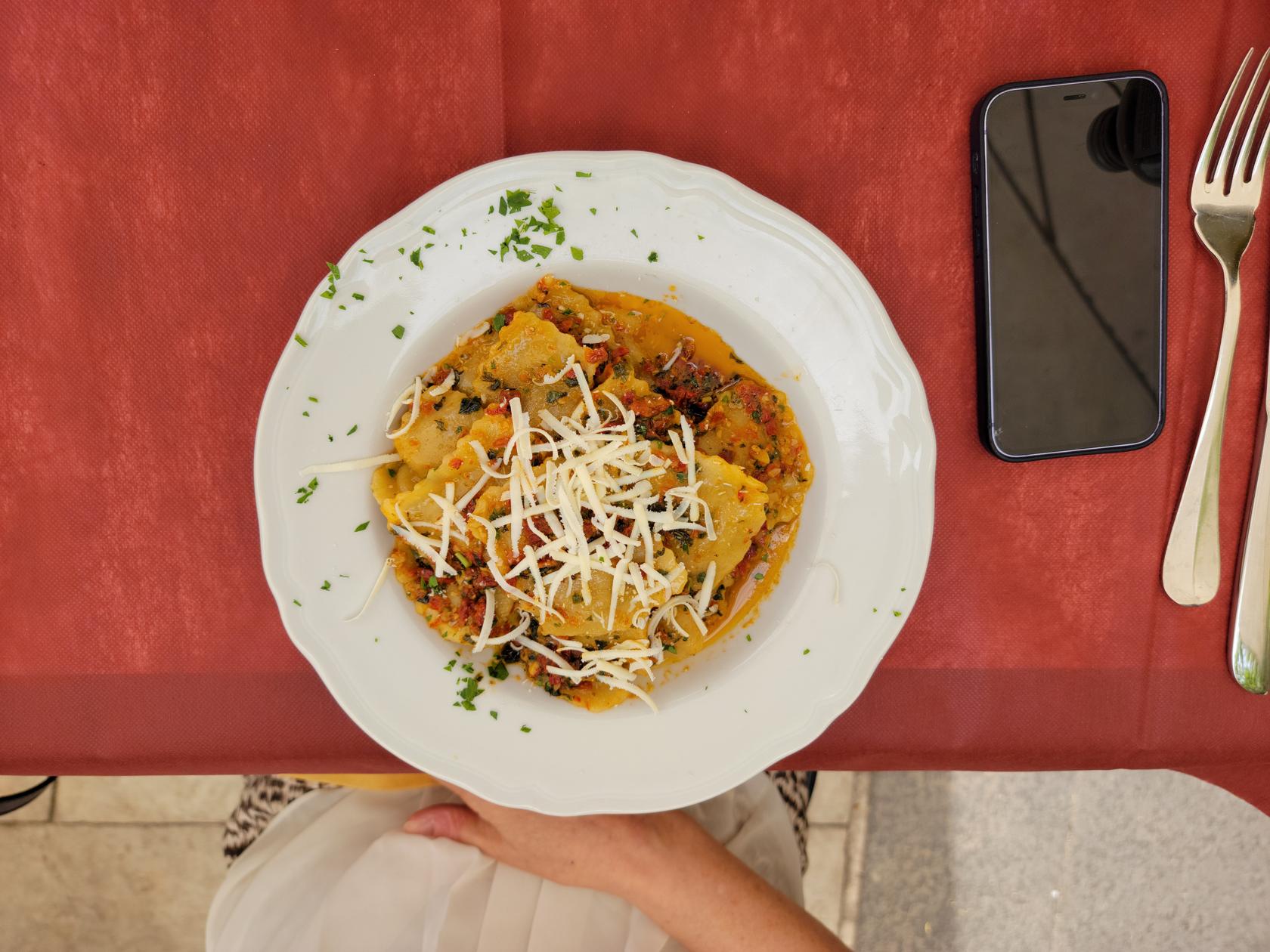
The food is typical and simple for Sicilian cuisine. We picked basic items, along with the house wine and had a very nice lunch. The staff were attentive and had a very good grasp of English, so communicating in my broken Italian, although appreciated, was not totally necessary, our waiter spoke and understood Italian, English, French and German.
Garden – Trattoria Archimede – Siracusa, Sicily
Ravioli – Trattoria Archimede – Siracusa, Sicily
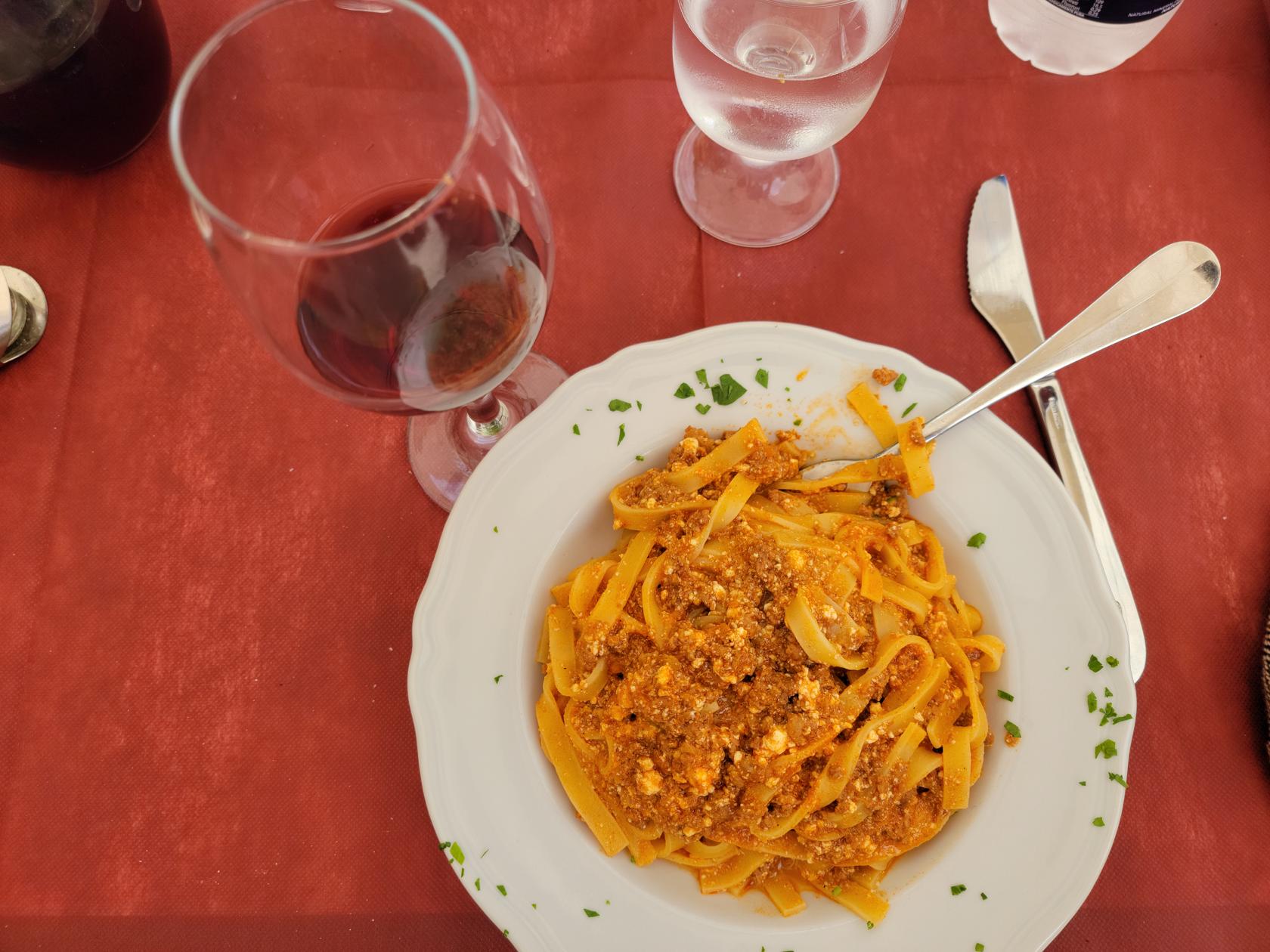
Taglierini e Ragu – Trattoria Archimede – Siracusa, Sicily
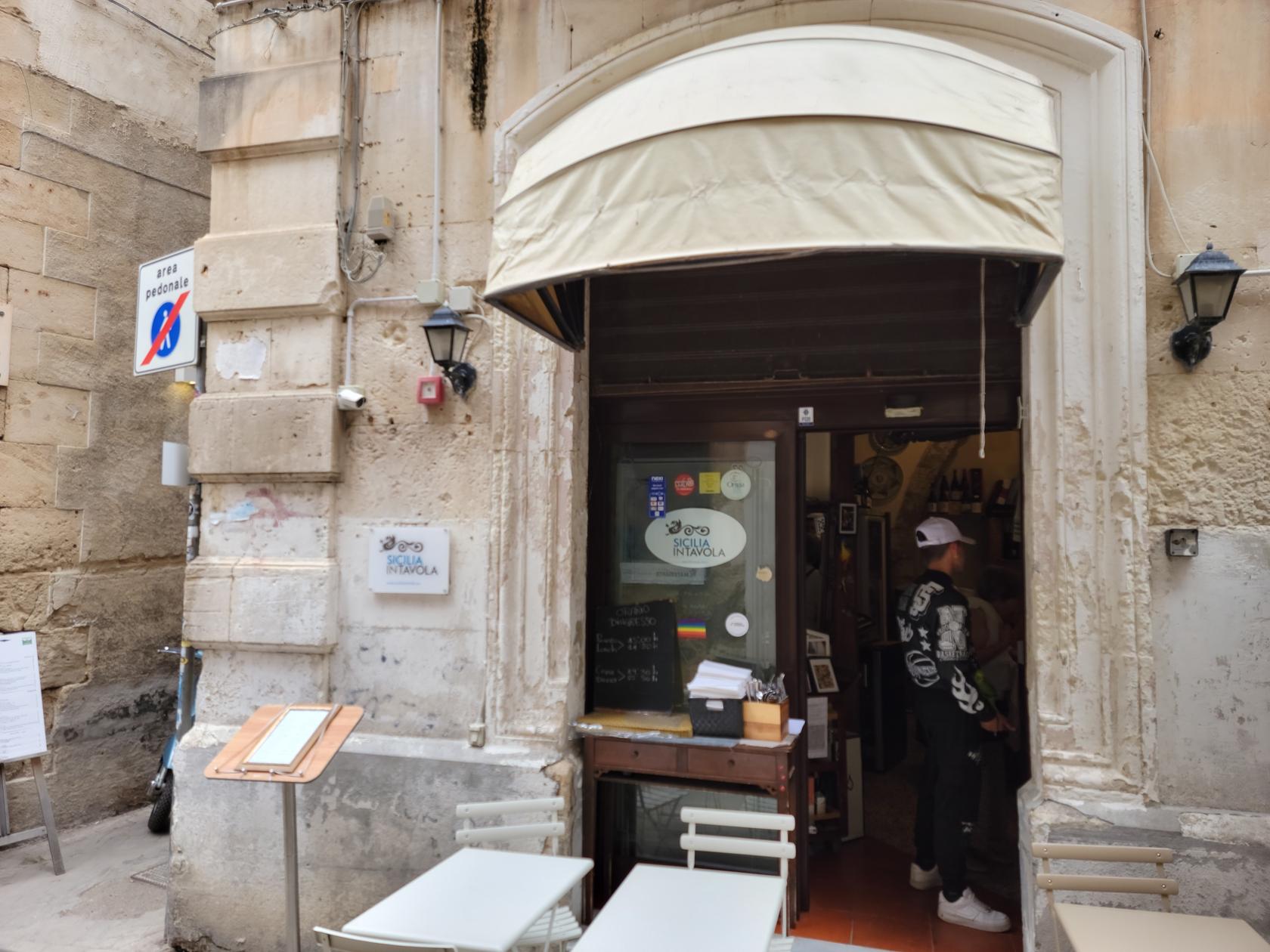
Ristorante Sicilia In Tavola
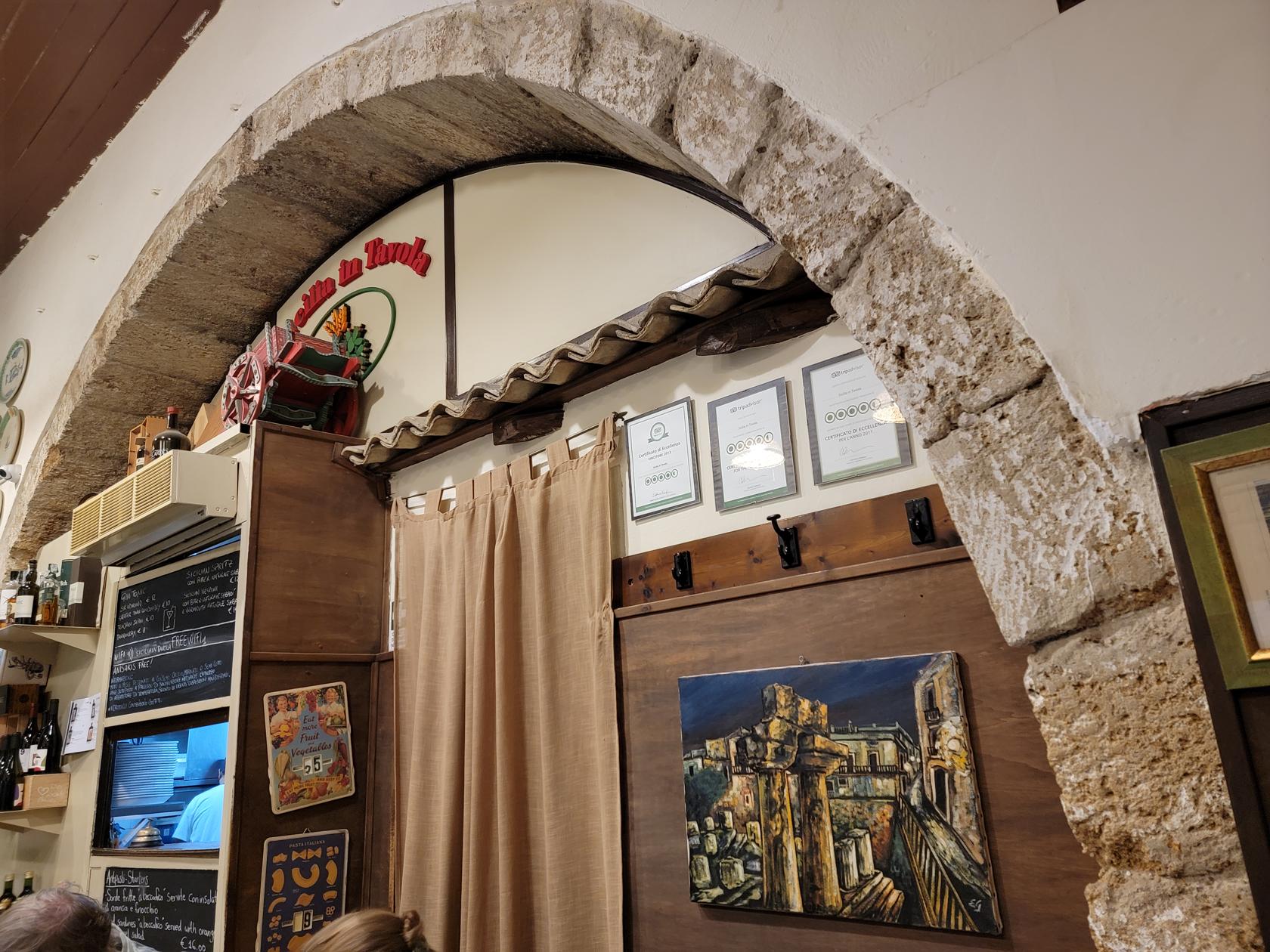
A gastronomic pleasure with an unpretentious interior is Ortigia’s In Tavola Ristorante.
Ristorante Sicilian In Tavola – Ortigia – Siracusa, Sicily
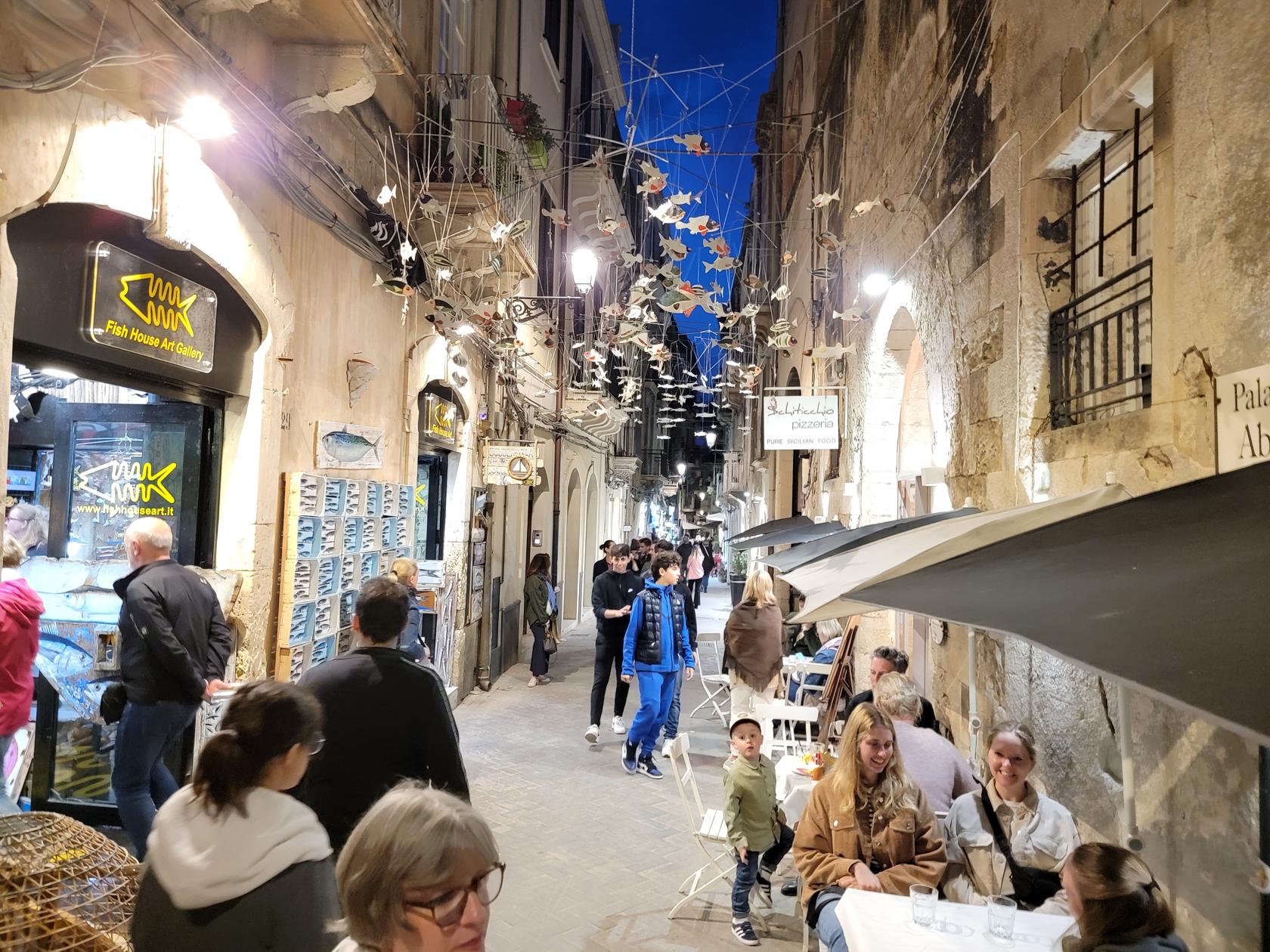
Via Cavour – Ortigia – Siracusa, Sicily
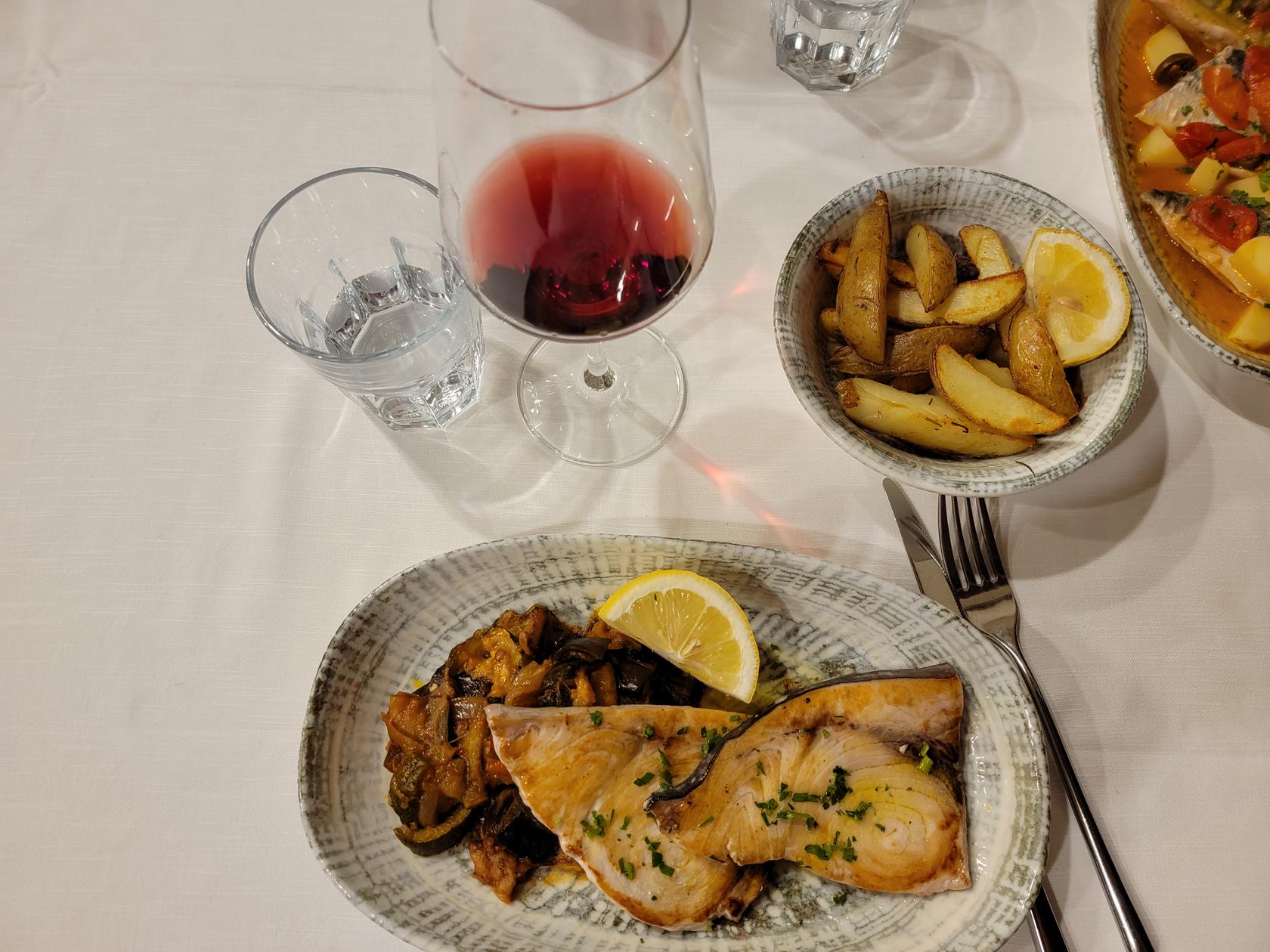
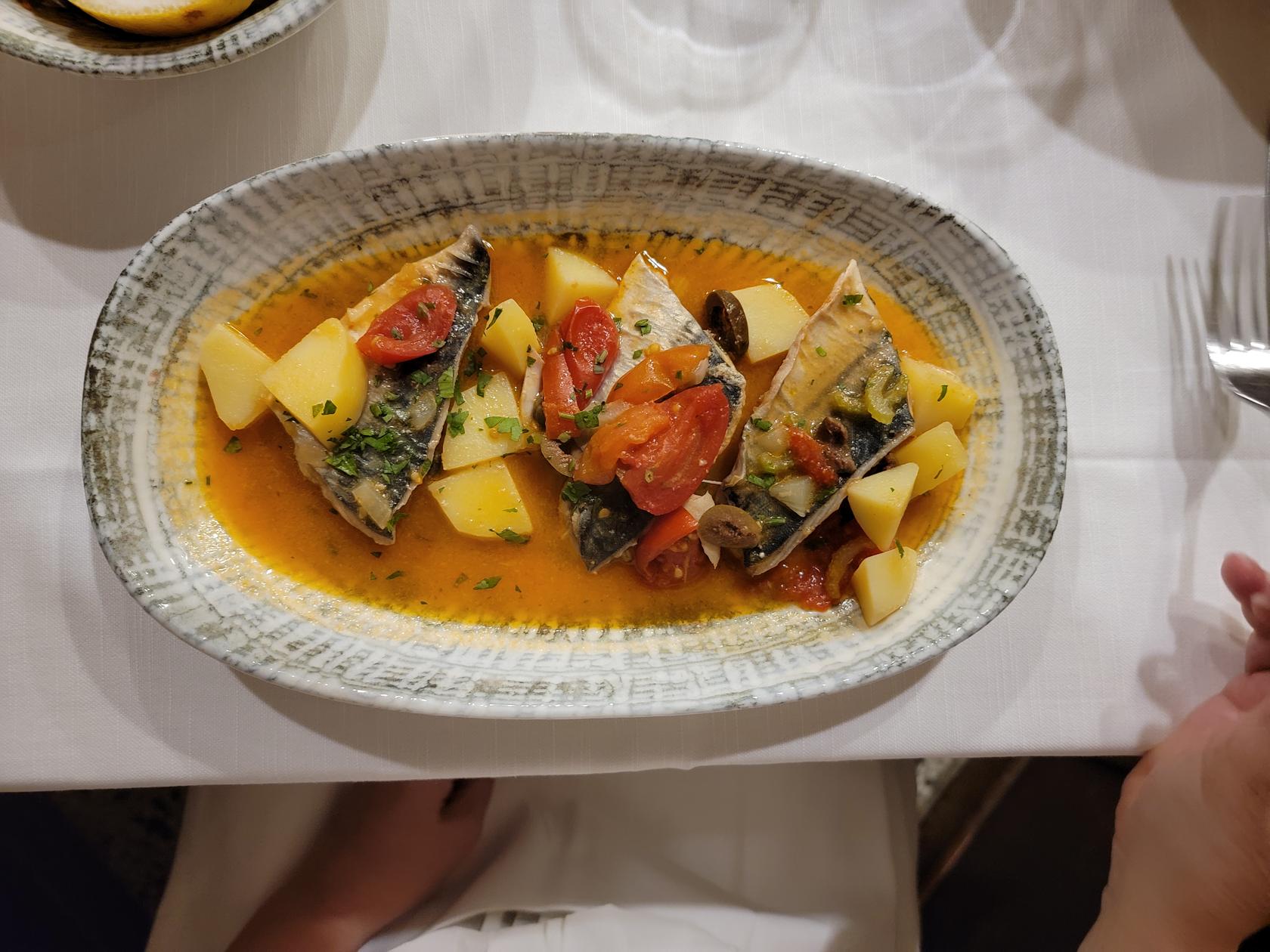
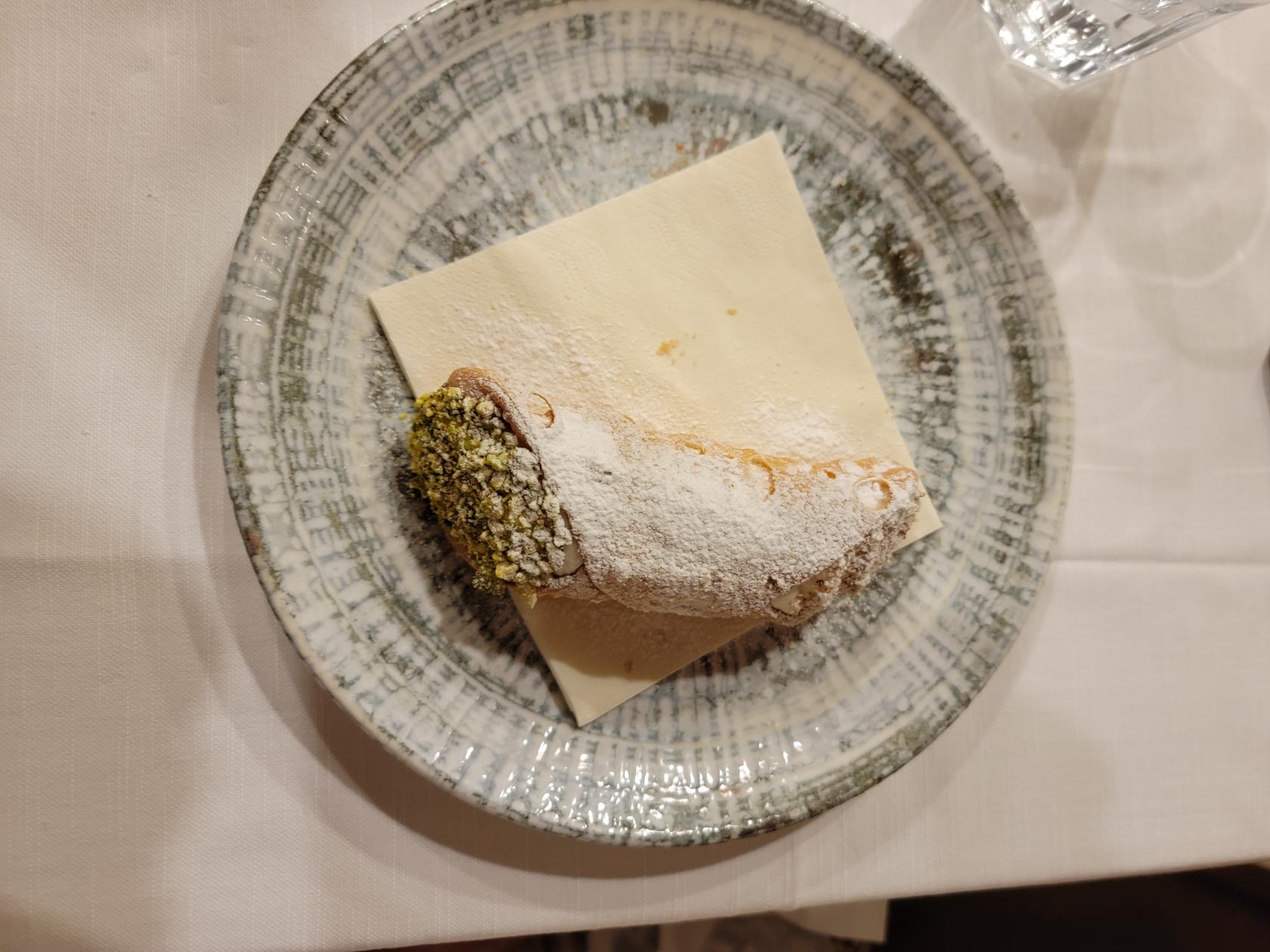
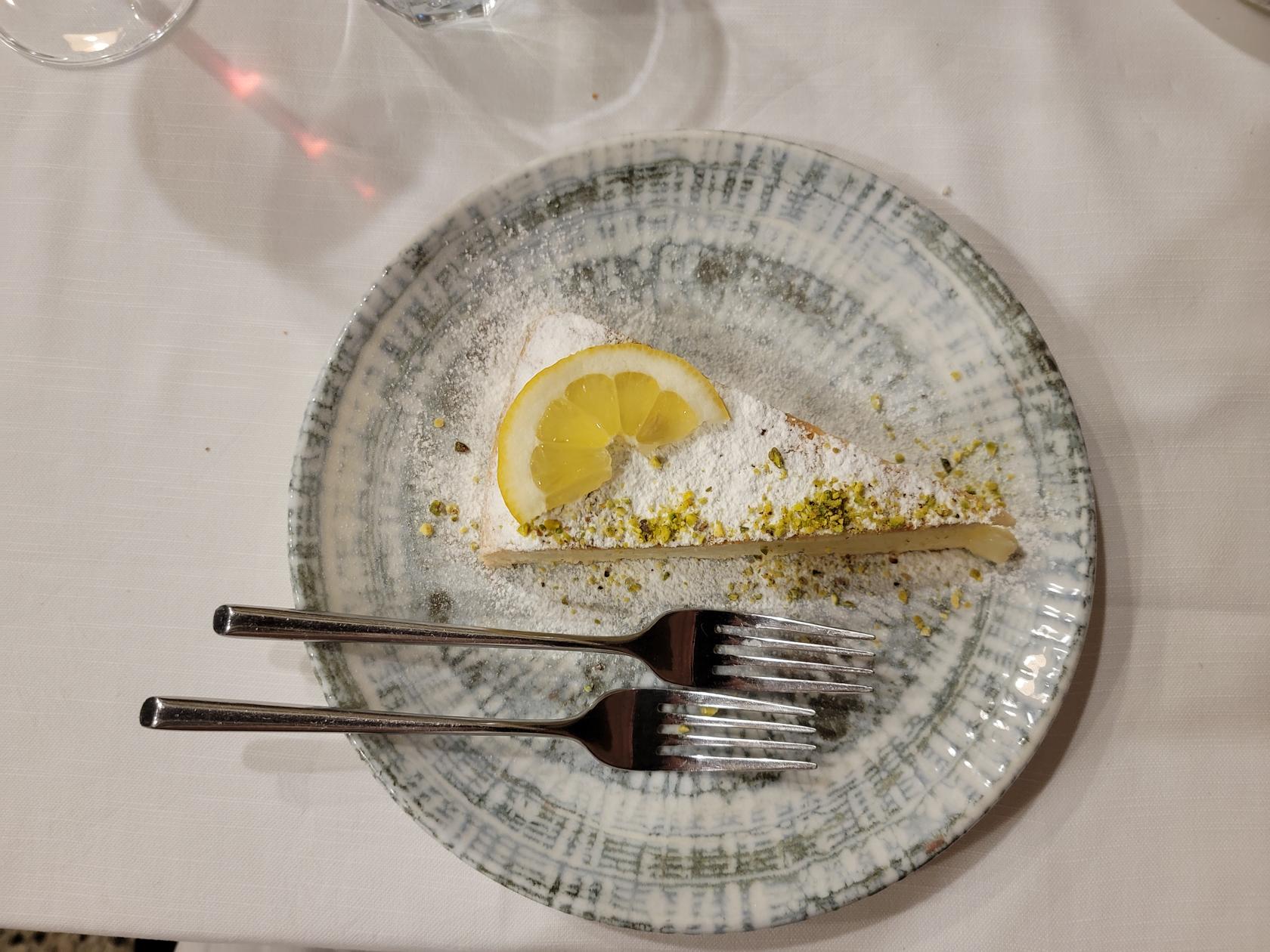
Here, as with many other place, they have home-made pasta and spaghetti. However, we ordered fish, swordfish for me and mackerel for Patti. For dessert we had lemon pie and a cannolo, along with an coffee and an aperitif, the a Sicilian Amaro, for 77€ for two people.
Ristorante Sicilian In Tavola – Ortigia – Siracusa, Sicily
Ristorante Sicilian In Tavola – Ortigia – Siracusa, Sicily
Ristorante Sicilian In Tavola – Ortigia – Siracusa, Sicily
Grilled Swordfish and Componata with roasted potatoes – Ristorante Sicilian In Tavola – Ortigia – Siracusa, Sicily
Mackerel with potatoes and tomatoes – Ristorante Sicilian In Tavola – Ortigia – Siracusa, Sicily
Cannolo with pistachio – Ristorante Sicilian In Tavola – Ortigia – Siracusa, Sicily
Lemon Pie – Ristorante Sicilian In Tavola – Ortigia – Siracusa, Sicily
Ristorante Cine
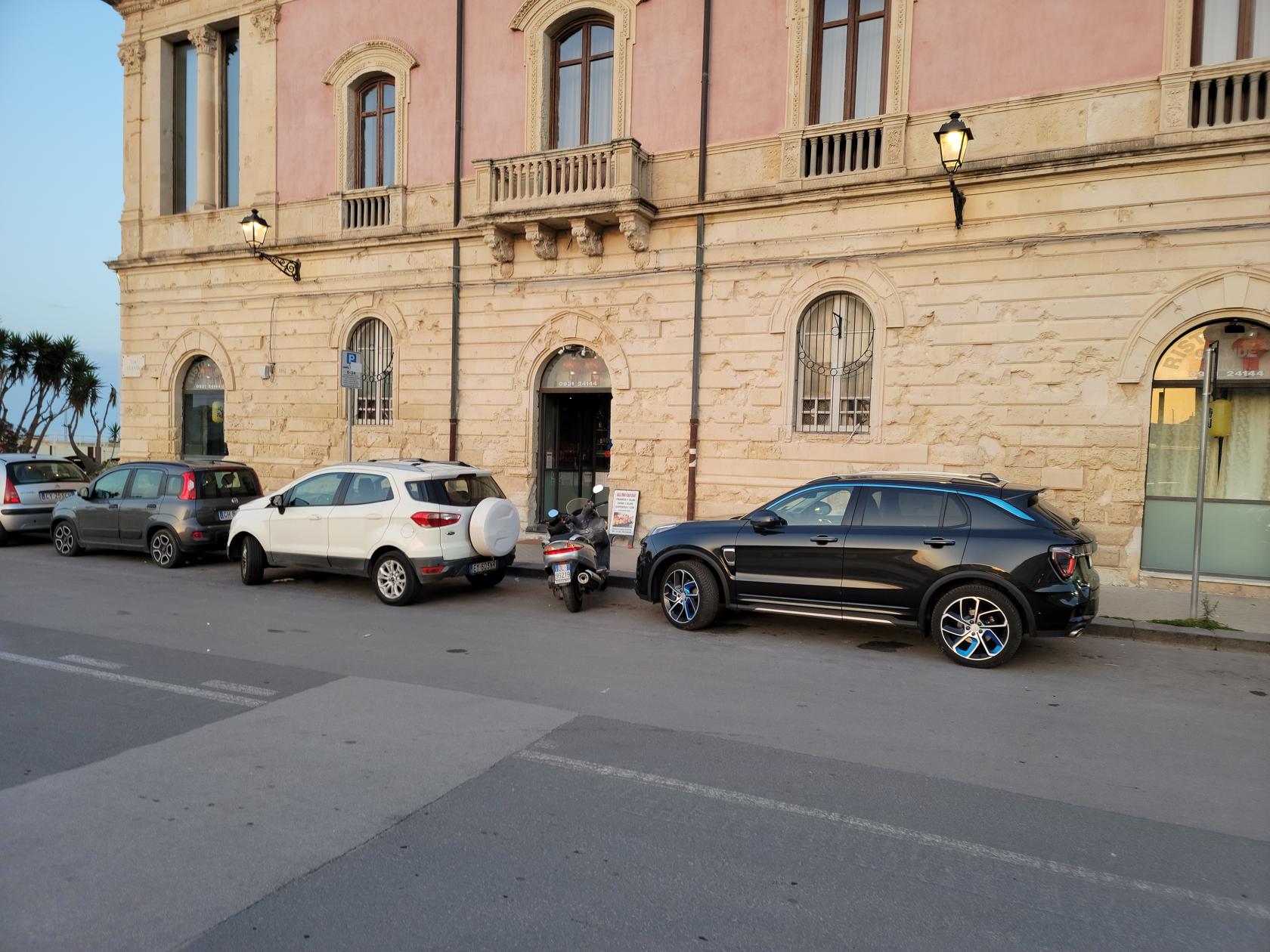
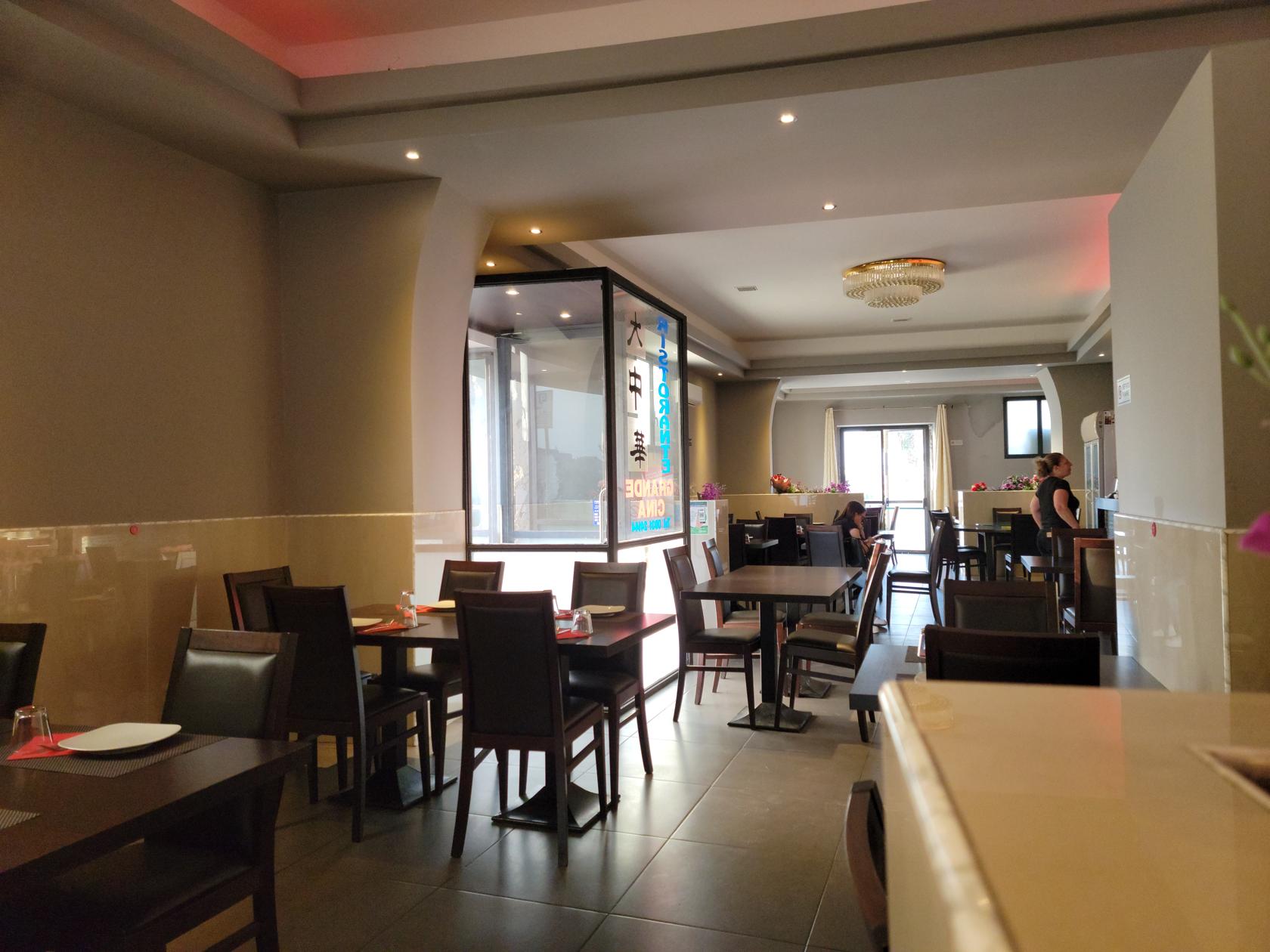
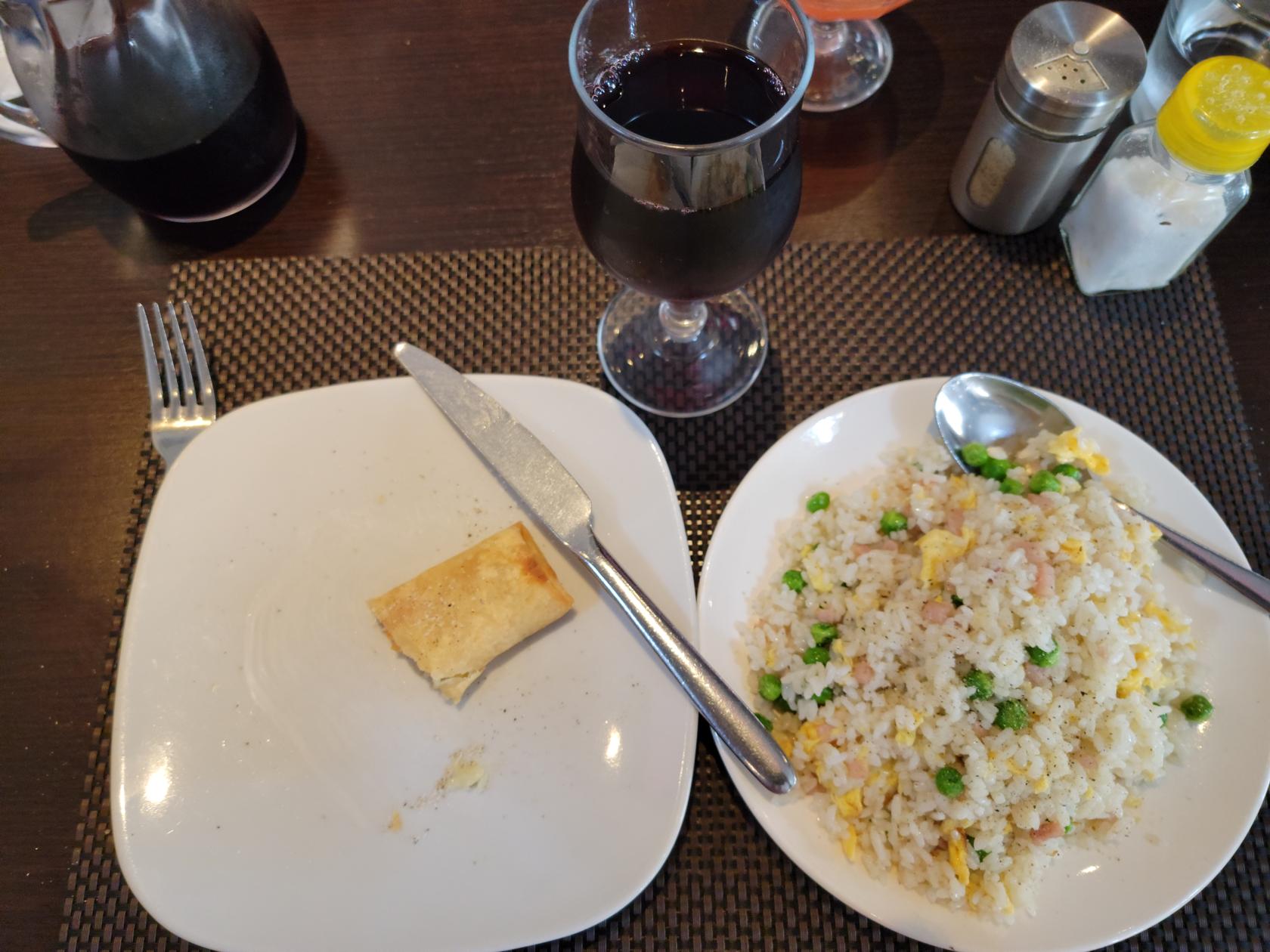
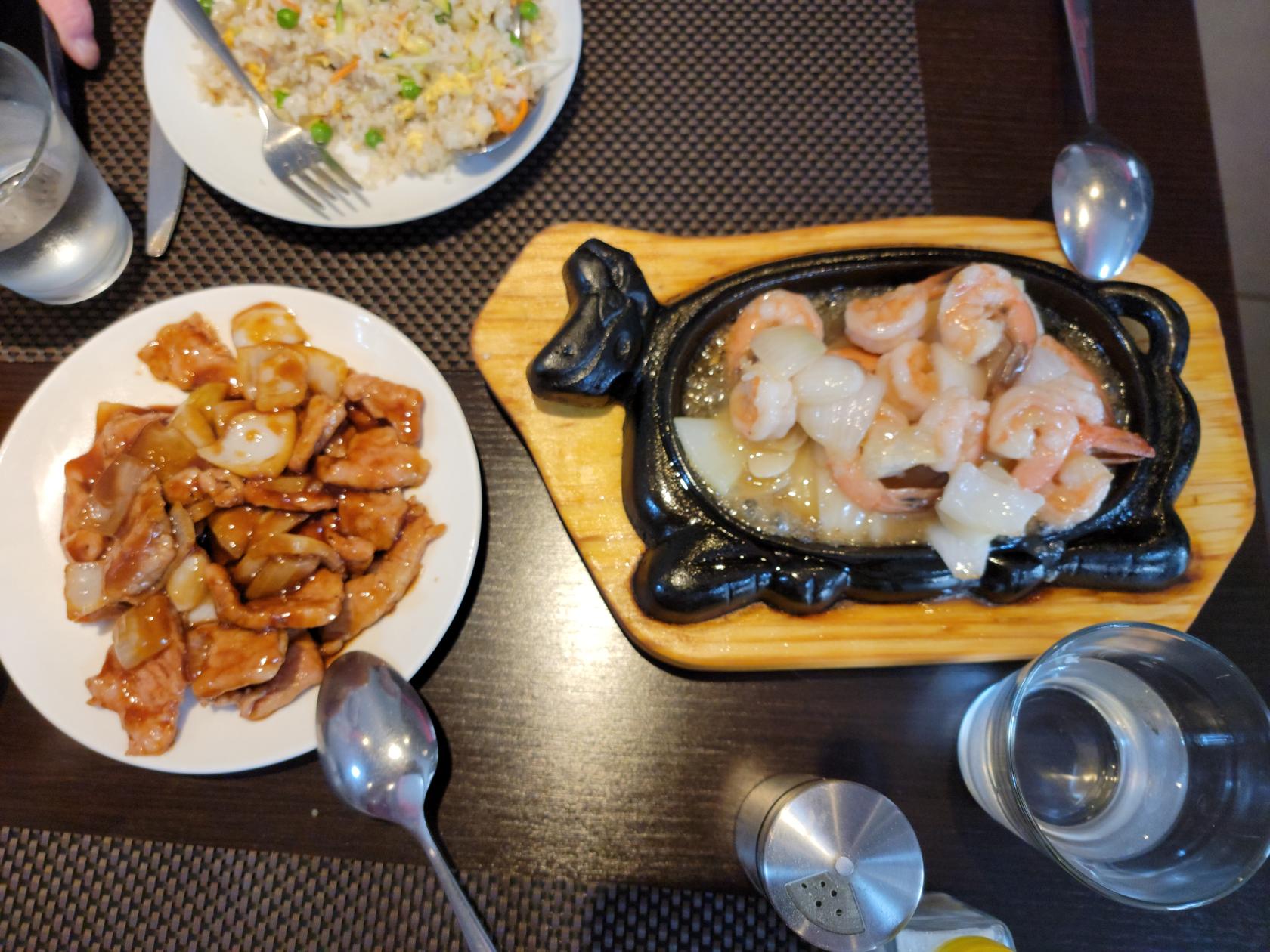
Having been eating Italian and SIcilian food for too long, we tried RIstorante Cine and really like it. Though the ingredients are different from what we are used to in Turin and the States (though not unusual), the owner was more than happy to alter any dishes to our tastes. We only ate lunch here and for two, we were able to order an appetizer, primi (vegetable rice) and secondi (chicken or pork or vegetables in white sauce), along with a half carafe of red wine, water, coffee and sambuca for under 30€! It is hard to beat that in a tourist area.
Ristorante Cine – Chinese restaurant – Siracusa, Sicily
Ristorante Cine – Chinese restaurant – Siracusa, Sicily
Involtino and Rice Cantonese – Ristorante Cine – Ortigia – Siracuse, Sicily
Pork and onions in brown sauce, Shrimp and onion in white sauce – Ristorante Cine – Ortigia – Siracuse, Sicily
La Tavernetta Da Piero Fuori Ortigia
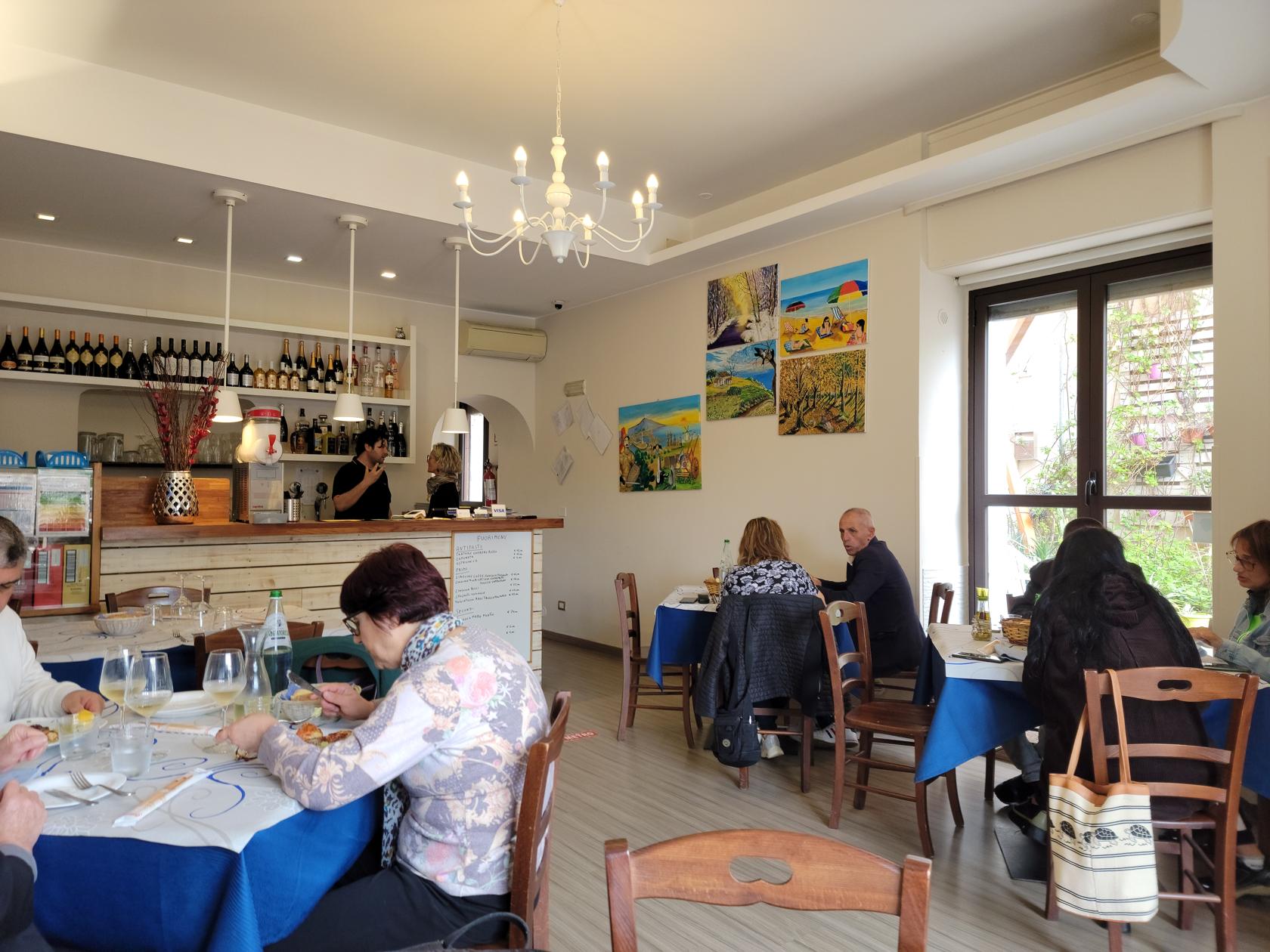
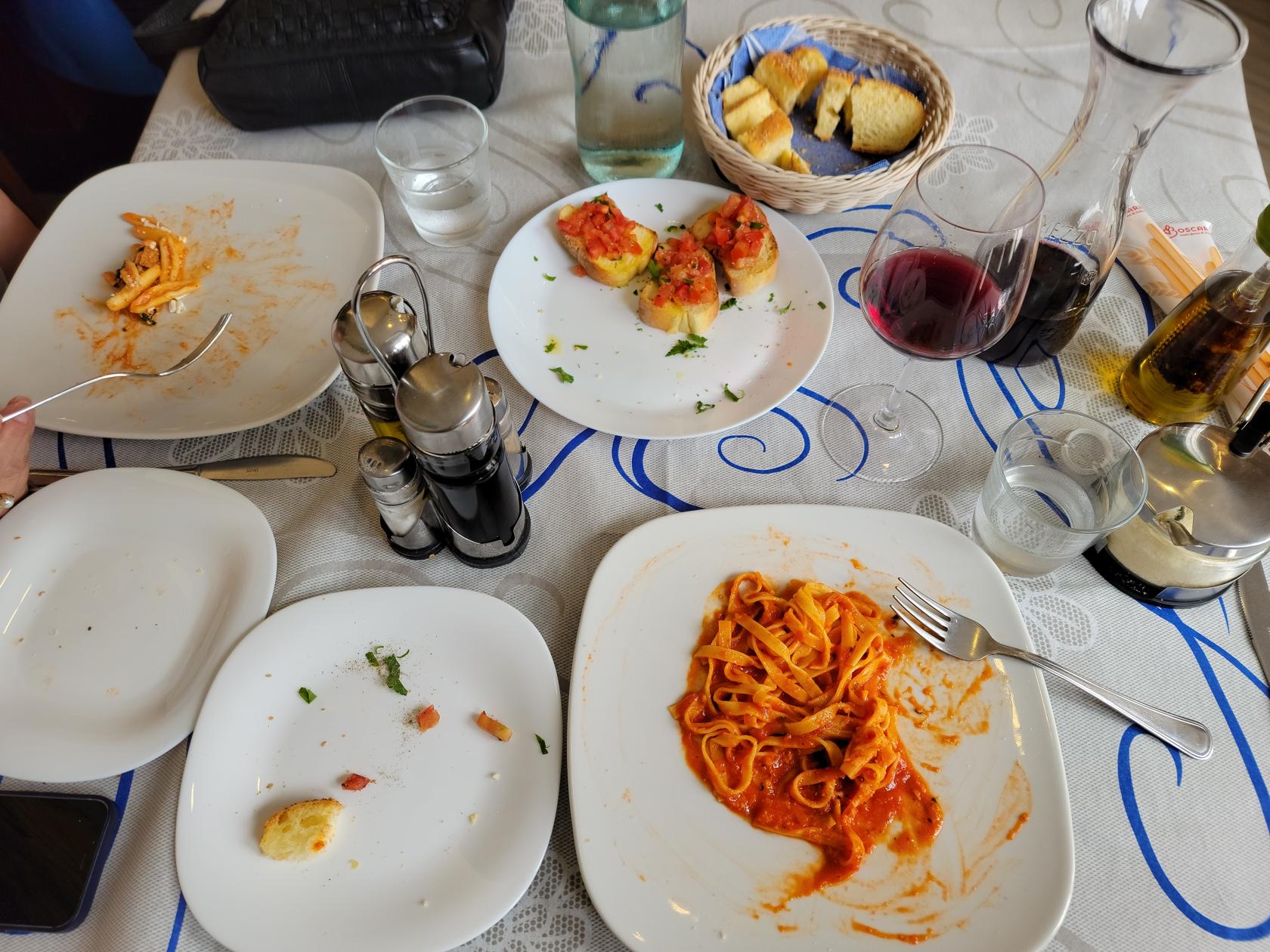
We ate lunch here on Sunday, the 21st of May, 2023, after visiting the Archaeological Park and when unbeknownst to us Mount Etna was erupting.
La Tavernetta Da Piero Fuori Ortigia Ristoranta – Ortigia – Siracuse, Sicily
Tagliatella alla pomodoro, bruschetta – La Tavernetta Da Piero Fuori Ortigia Ristoranta – Ortigia – Siracuse, Sicily
After we finished and began walking back to the hotel, we noticed dust getting in our eyes. At the time we had no idea why and surmised that the recent bad storm had brought in dust from Africa, which can occasionally happen. When we read the next day that the Catania Airport had closed due to ash if finally dawned on us that it had been the ash from the volcano all those miles away that was the cause.
Gelateria
If you are looking for gelati in Sicily, do not buy the brightly colored ones, usually they are made of inferior ingredients. Instead, look for the Artiginale label. Though you will pay more for a cone of cup of this, it will be far more worth your while in taste later.
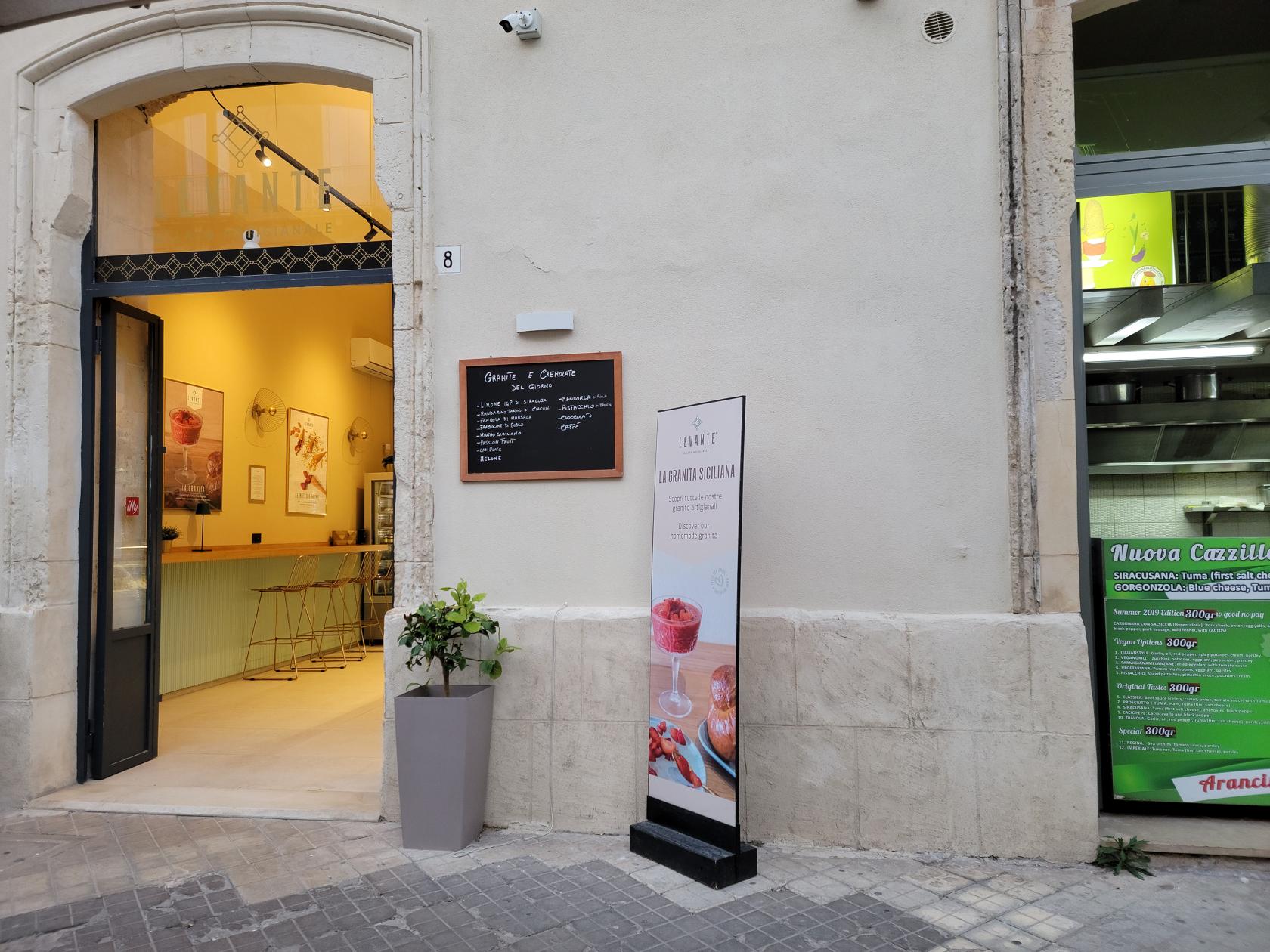
Levante Gelateria
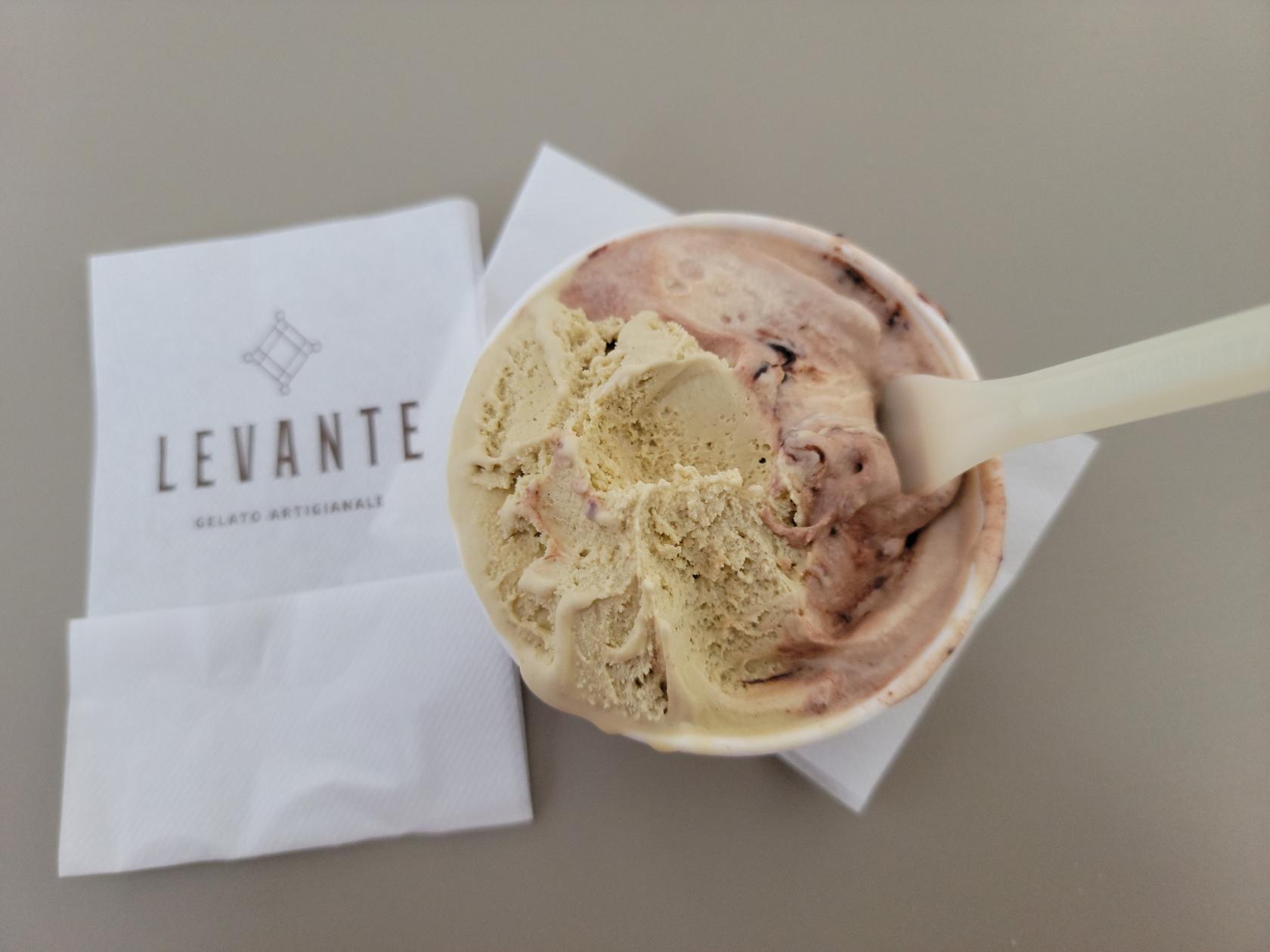
Another good Gelateria, providing excellent artisanal gelati. I was particularly fond of their Amerano and Pistachio flavors.
Levante Gelateria – Siracusa, Sicily
Levante Gelati Artiginale – Pistachio and Amorano – Siracusa, Sicily
Fior Di Latte Gelati
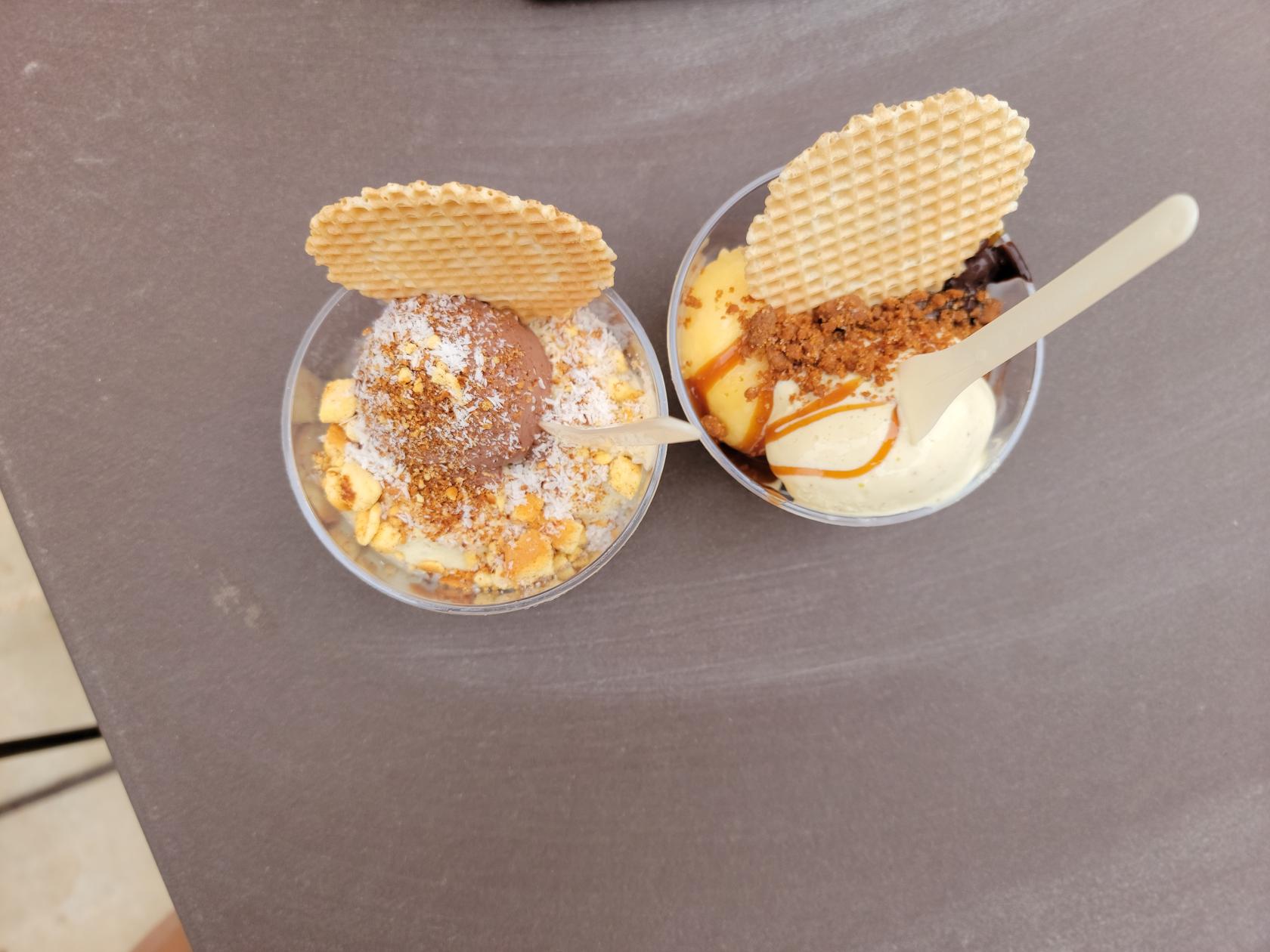
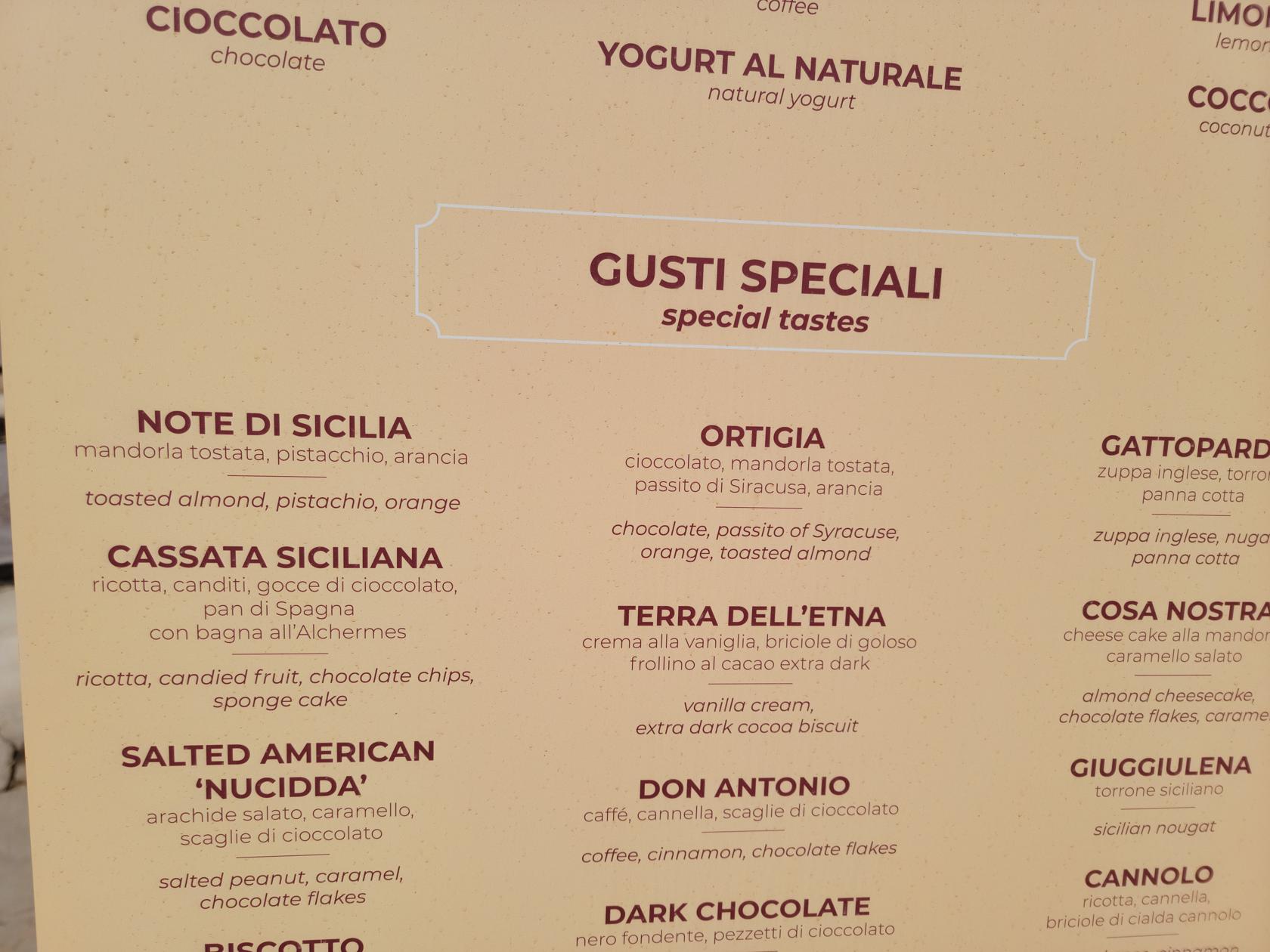
Finding very good gelati anywhere in Italy is not a difficult task, here is no exception. It has great artiginale (artisanal) flavors, I ordered the Ortigia and Note Di Sicilia, and Patti ordered the Note Di Sicilia, Mandarin Orange and Dark Chocolate with a hint of orange.
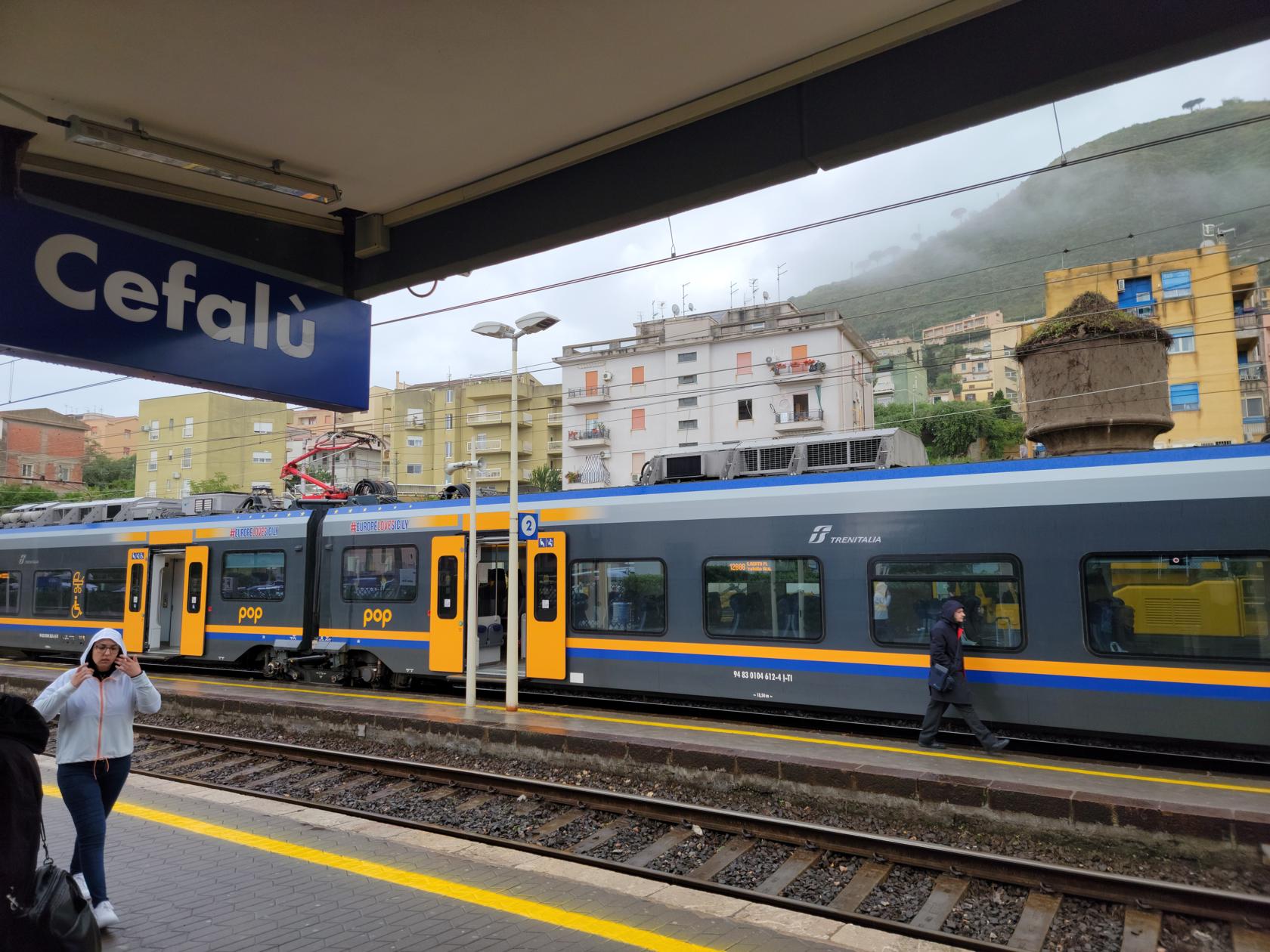
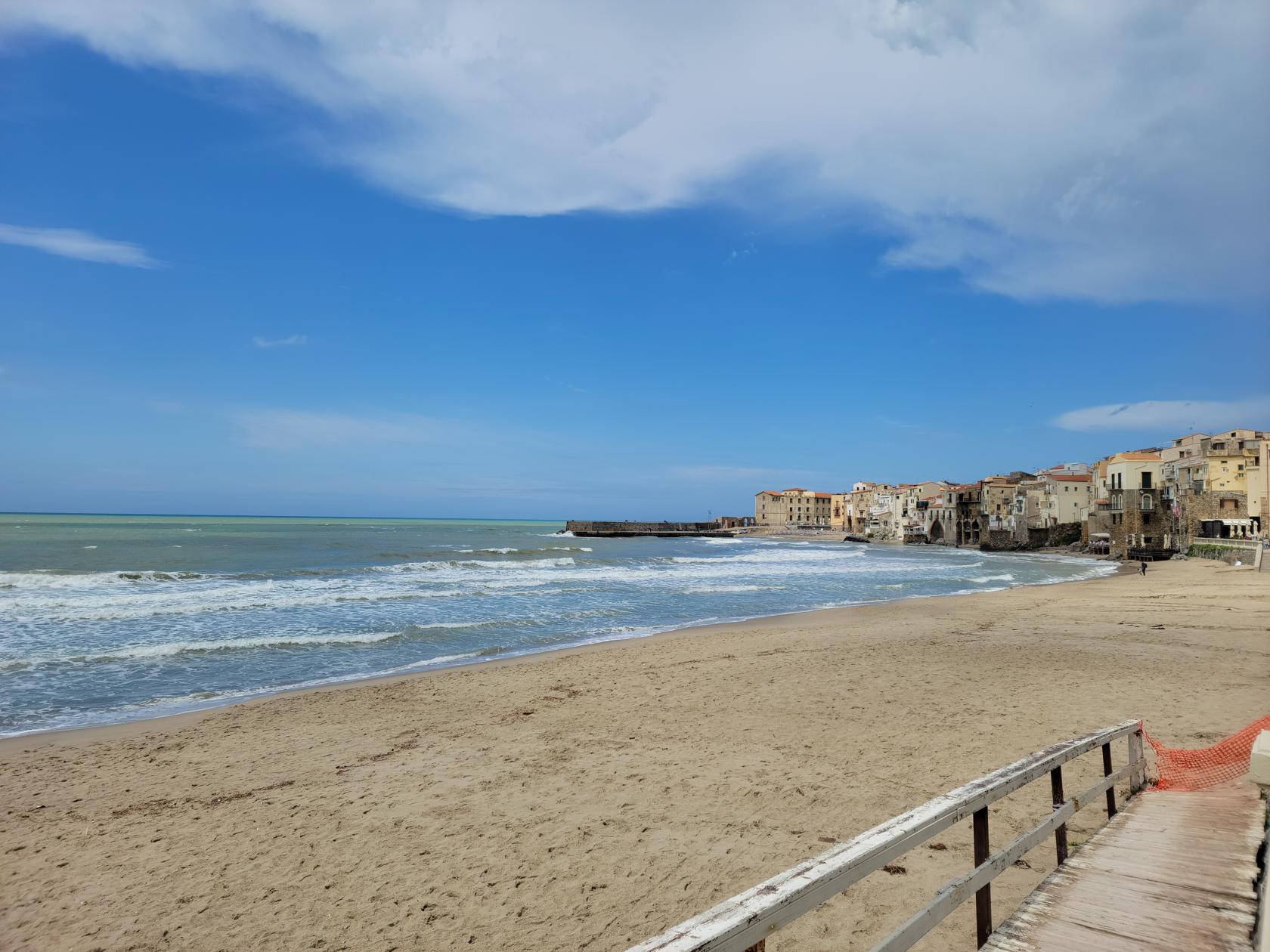
We have traveled a lot throughout Europe and especially Italy and occasionally you will get a rainy or snowy day. But nothing prepared us for our arrival in Cefalù, or as we write it in english, Cefalu; a small touristy town situated on the north side of the island of Sicily.
Train Station – Cefalu, Sicily
Cefalù
We arrived by Trenitalia’s Pop train from Palermo, which runs approximately every hour and costs around 6.50€/person. These are normally local tourism trains in the major areas and can be called Pop, Jazz, or almost anything. They provide reasonably priced and fast transportation to the coastal tourism spots. If you need to travel a longer distance, you will most likely have to use the normal Trenitalia or Intercity service.
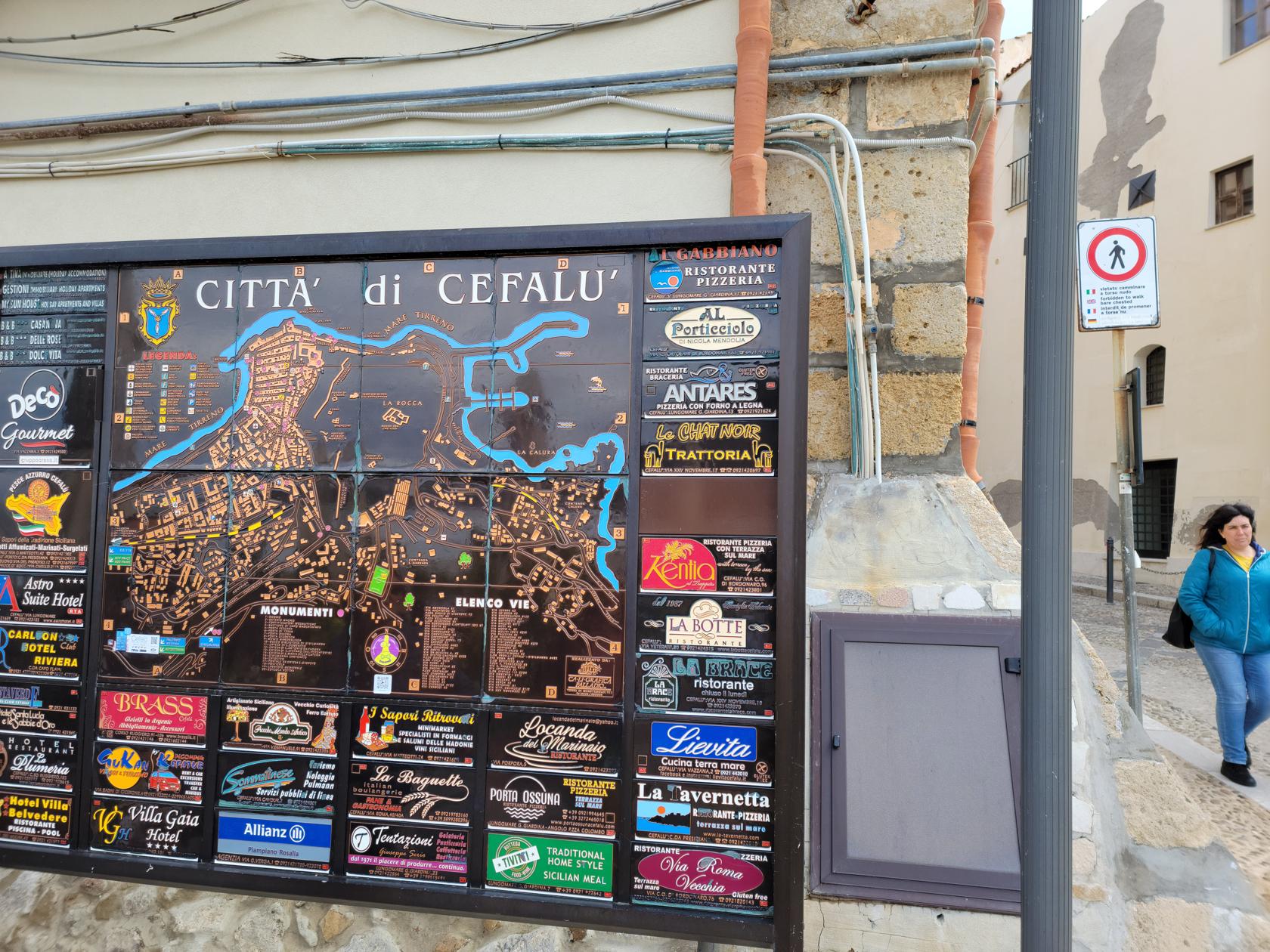
The City Map – Cefalu, Sicily
Similar to other touristy spots in the US and other parts of the world, Cefalu is definitely administered and managed for the traveler. Though quiet during these months, I can imagine it can get a bit noisy during the summer months with its extensive beach and boardwalk beckoning travelers on. With the addition of all the shops and artisans in town, you have the perfect recipe for the tourist trap. So, if you are only interested in the historic aspects of the town and area, it probably behooves you to travel earlier or later in the year, in order to avoid its busy potential. Otherwise, if you are a sun lover, this could be a very good destination for you.
The Town – Cefalu, Sicily
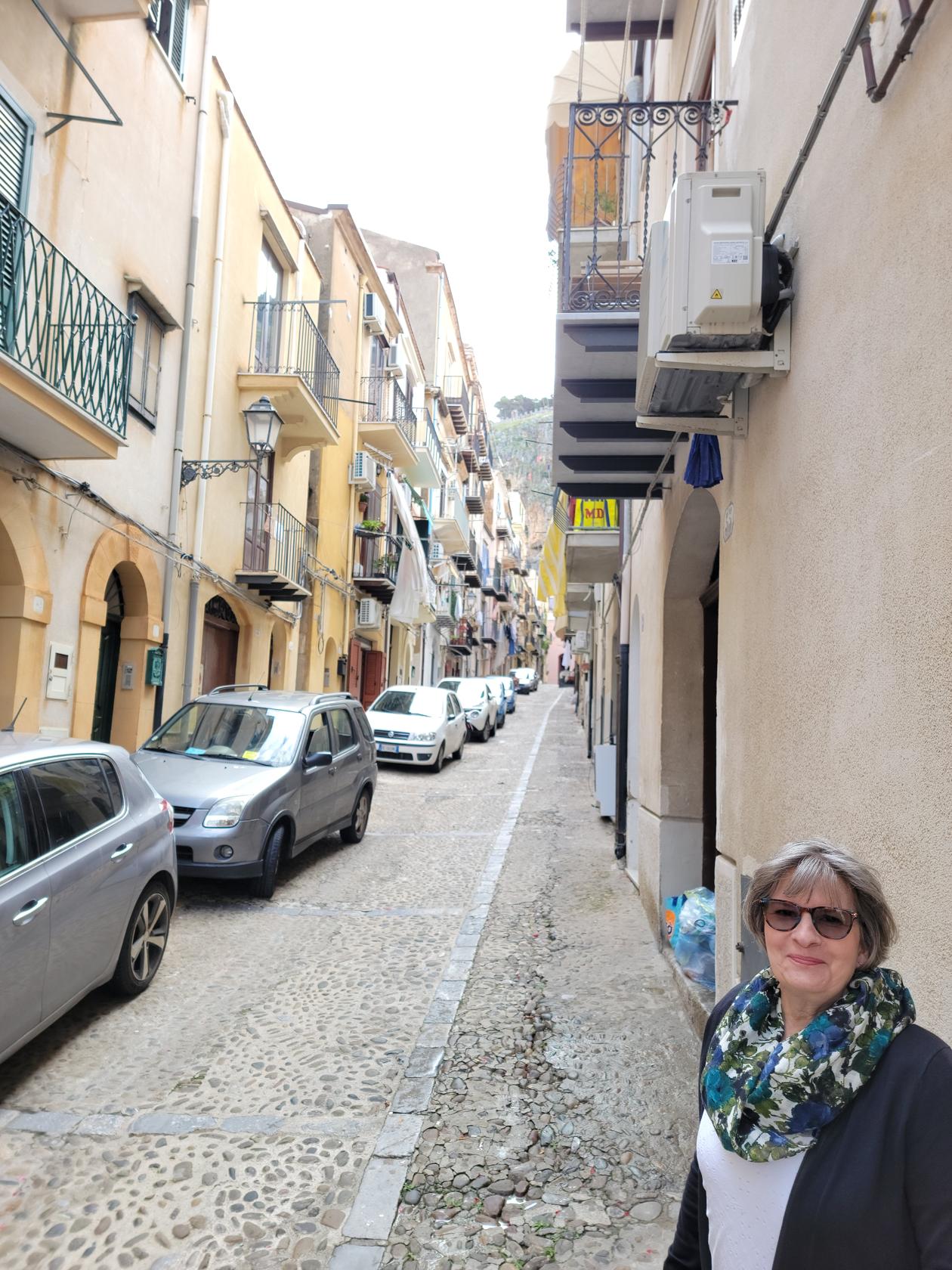
Patti walking the town – Cefalu, Sicily
Cefalu, Sicily
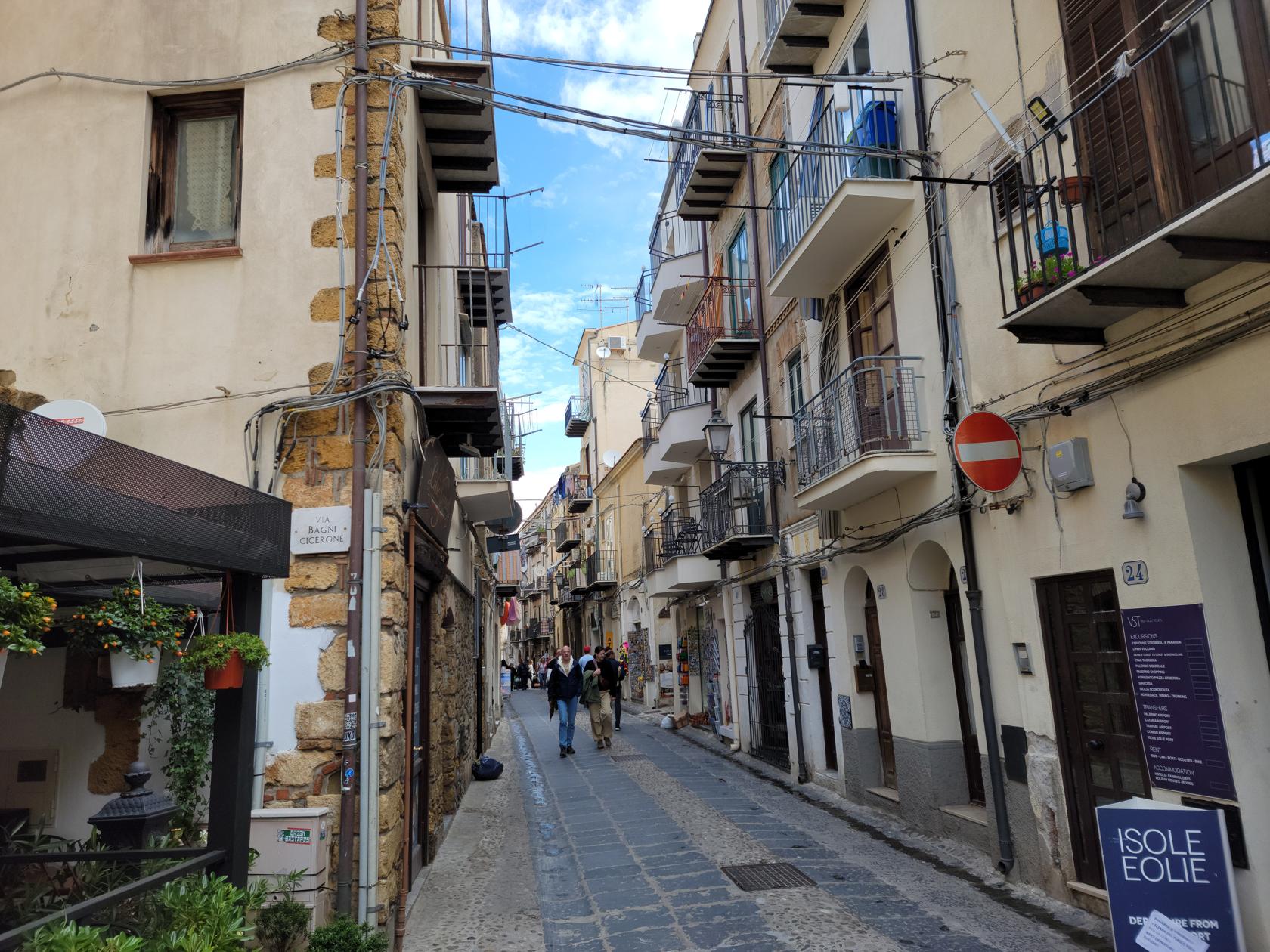
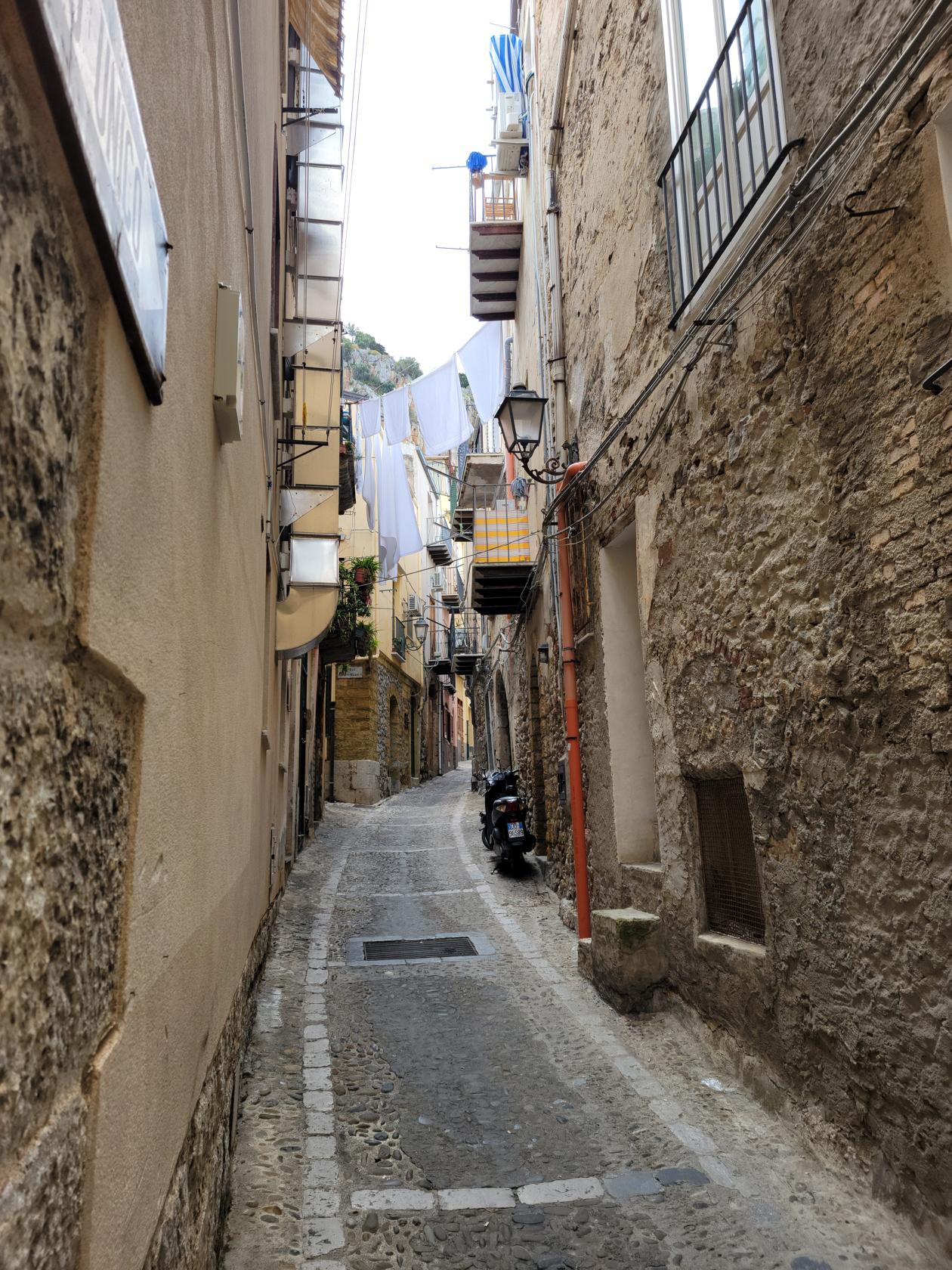
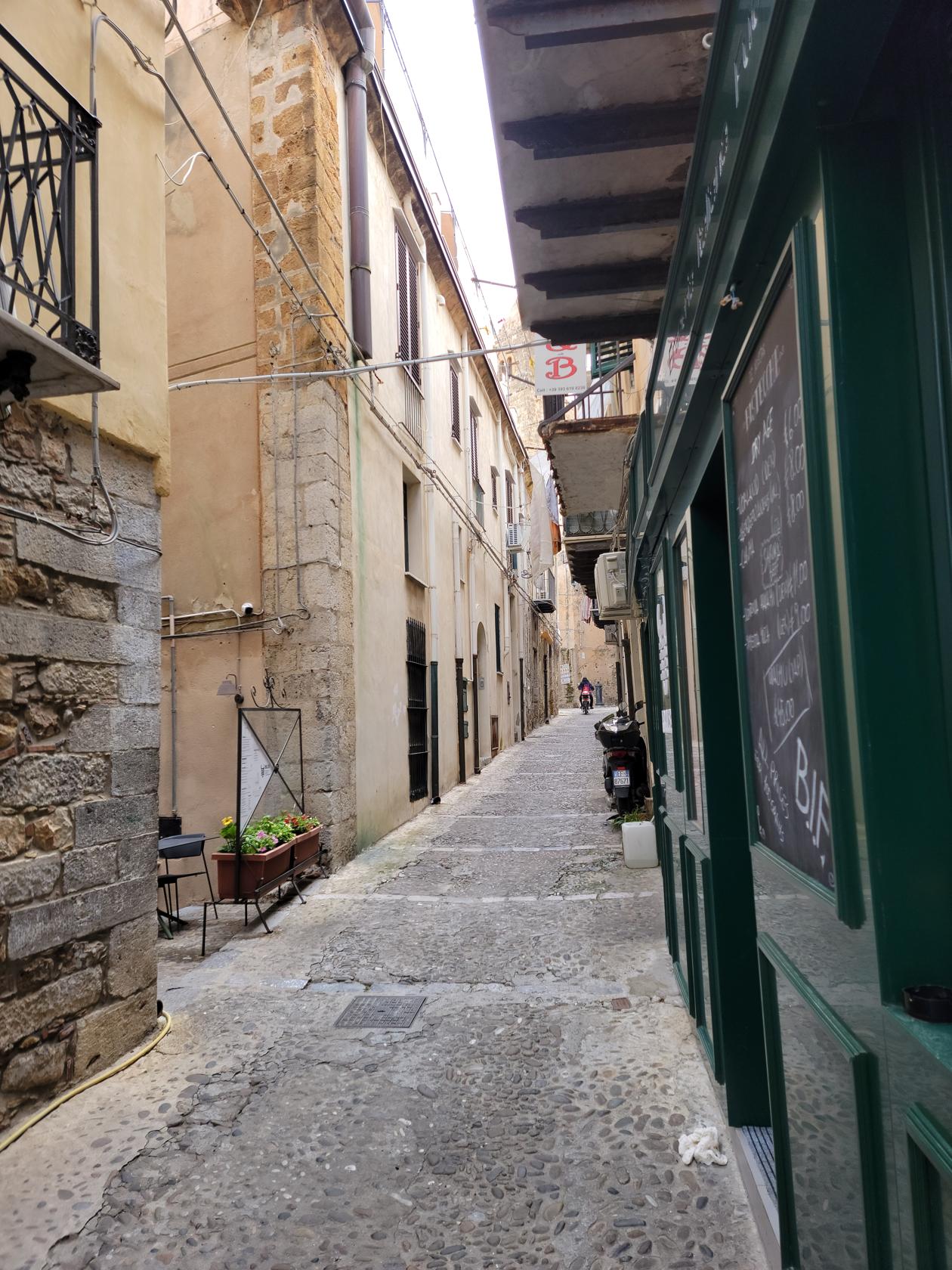
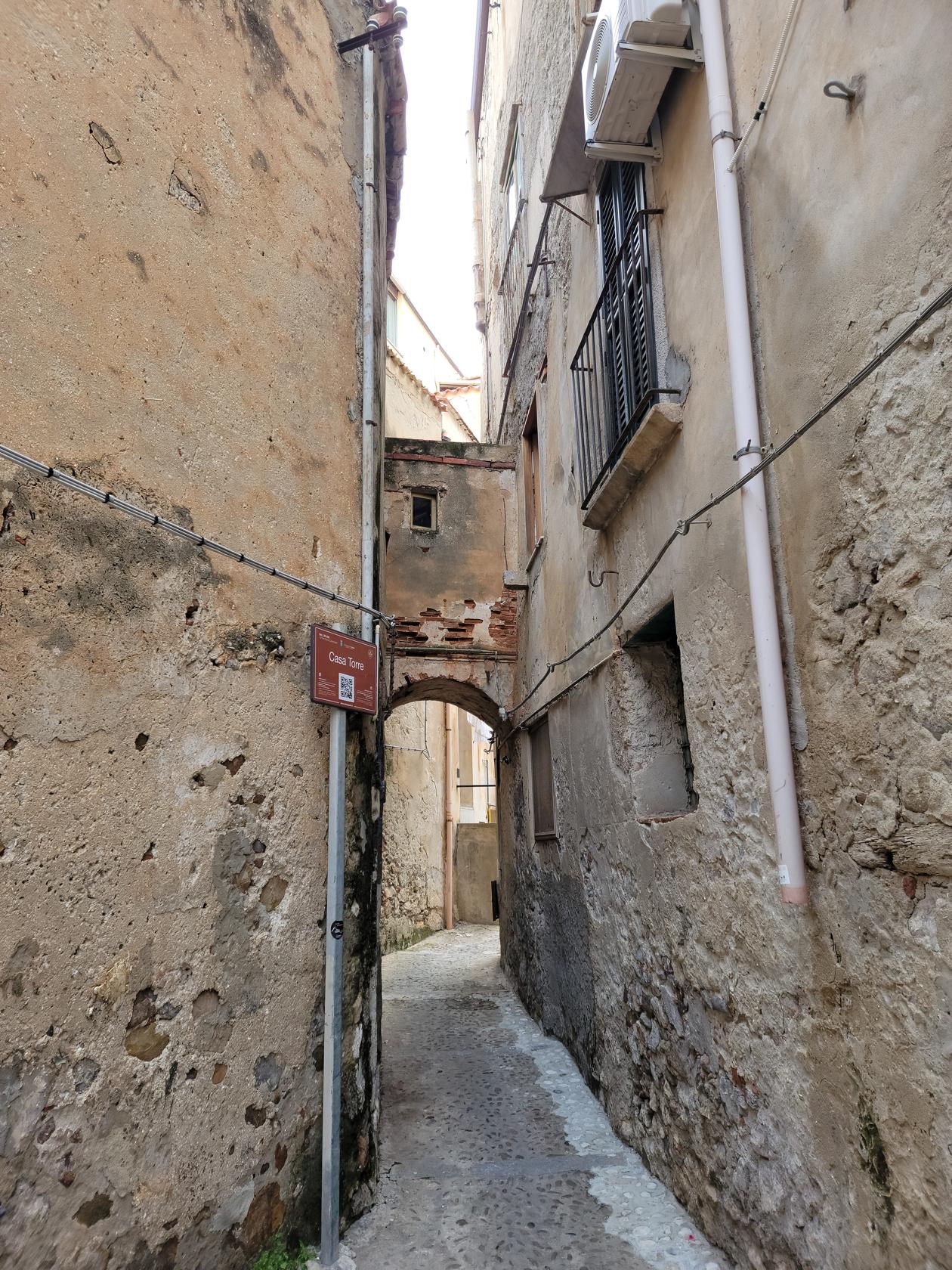
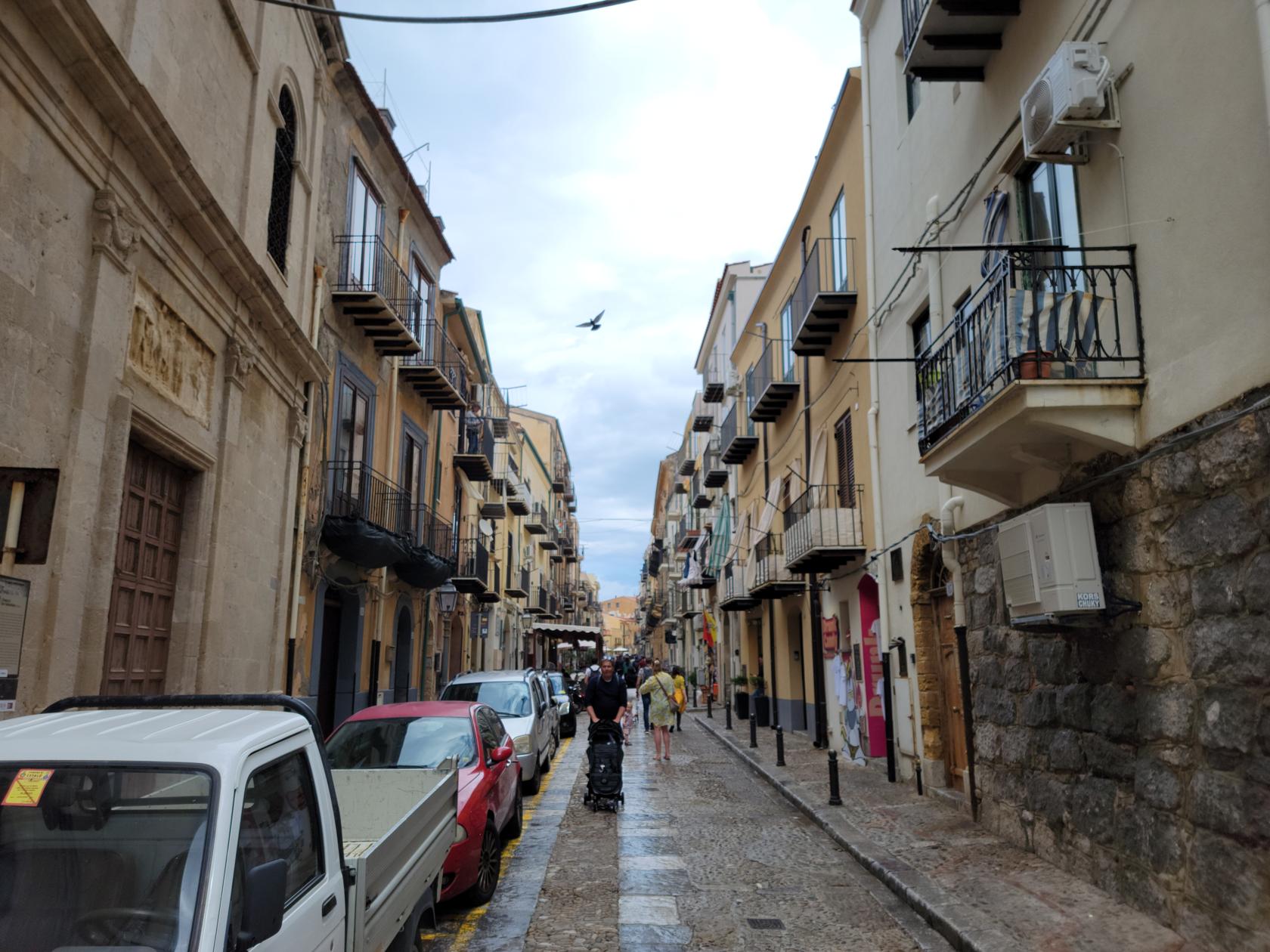
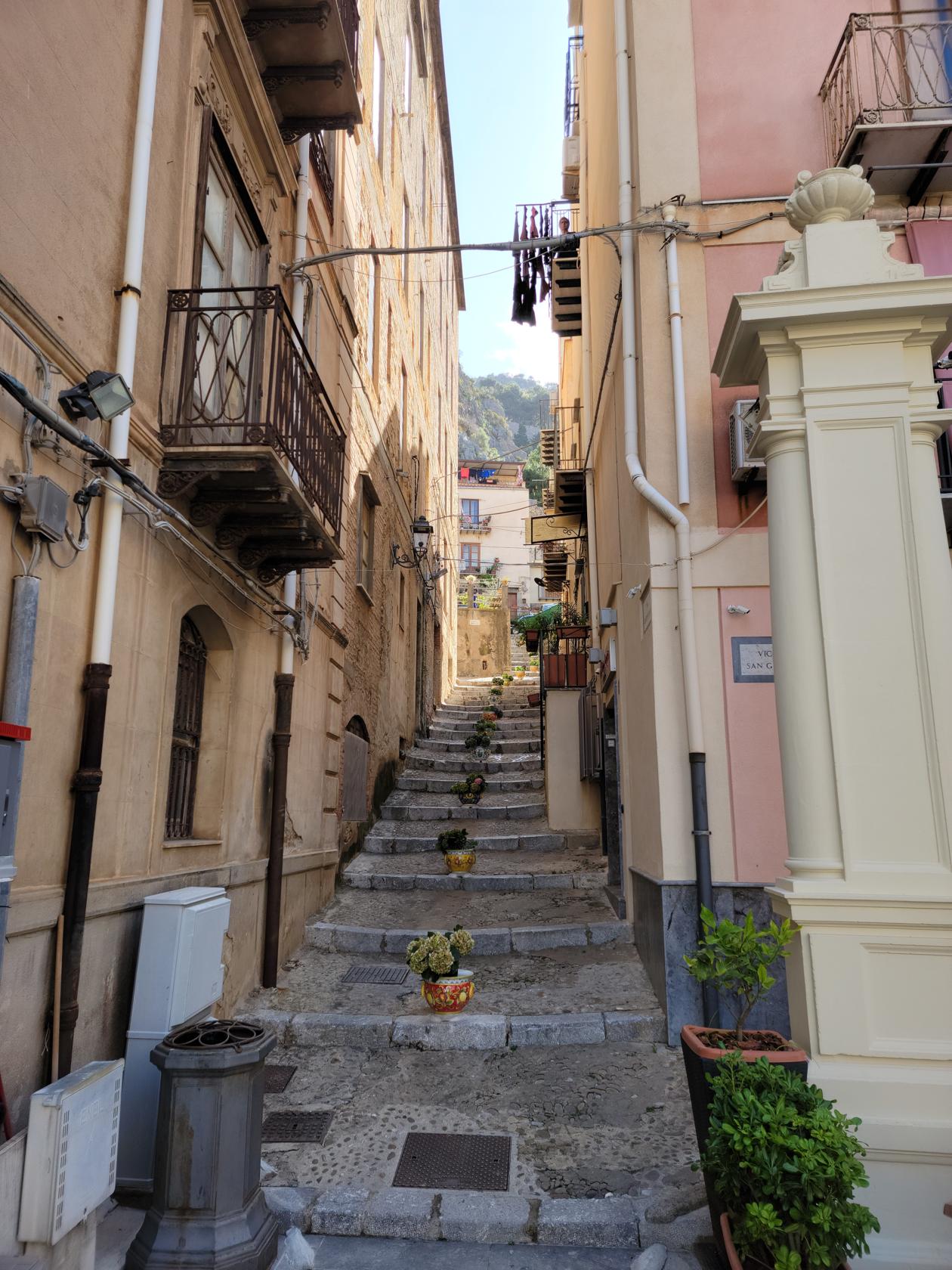
A Narrow Street – Cefalu, Sicily
Another quiet street – Cefalu, Sicily
Quaint side street – Cefalu, Sicily
Cefalu, Sicily
Typical Italian Back Street – Cefalu, Sicily
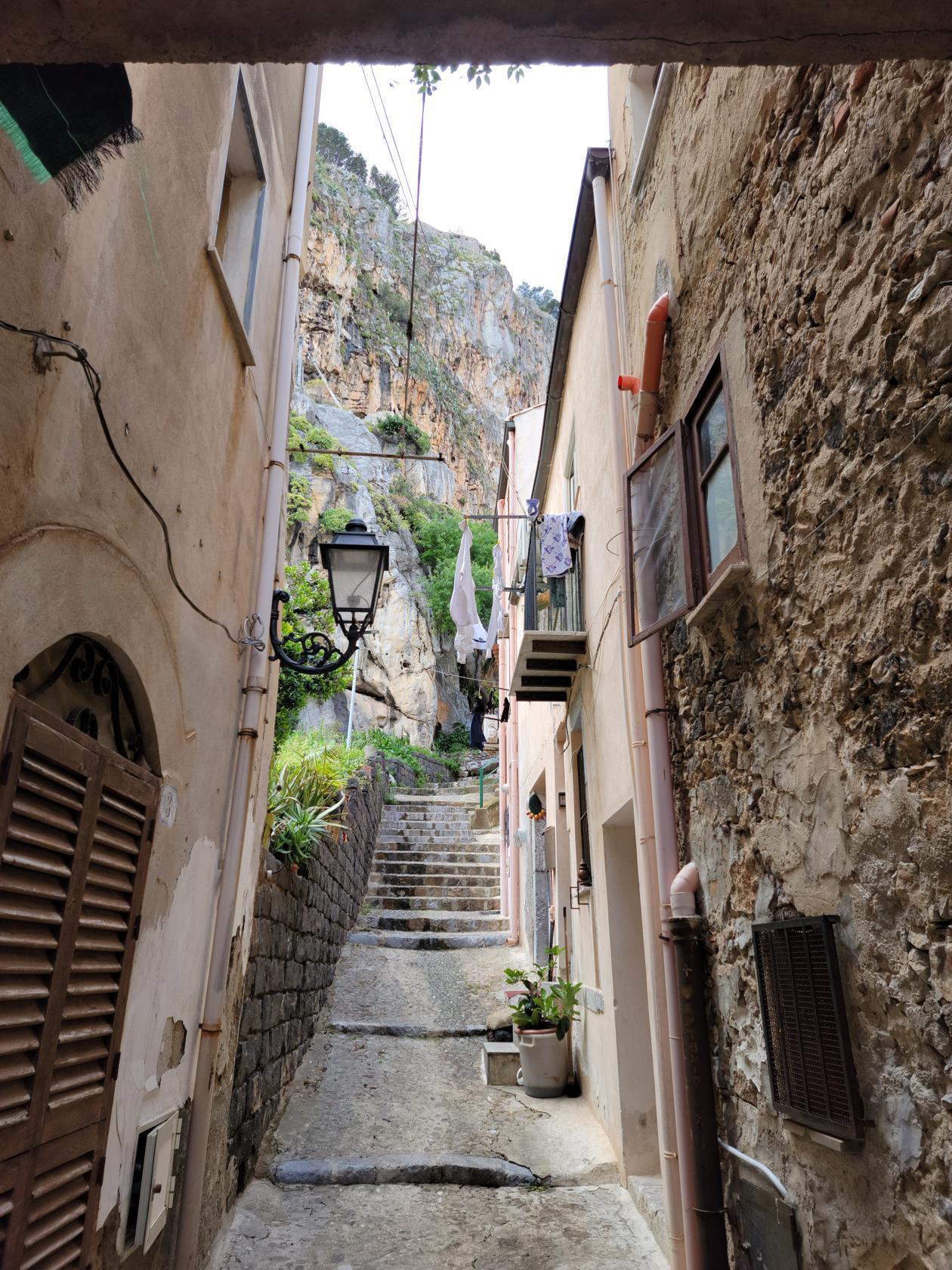
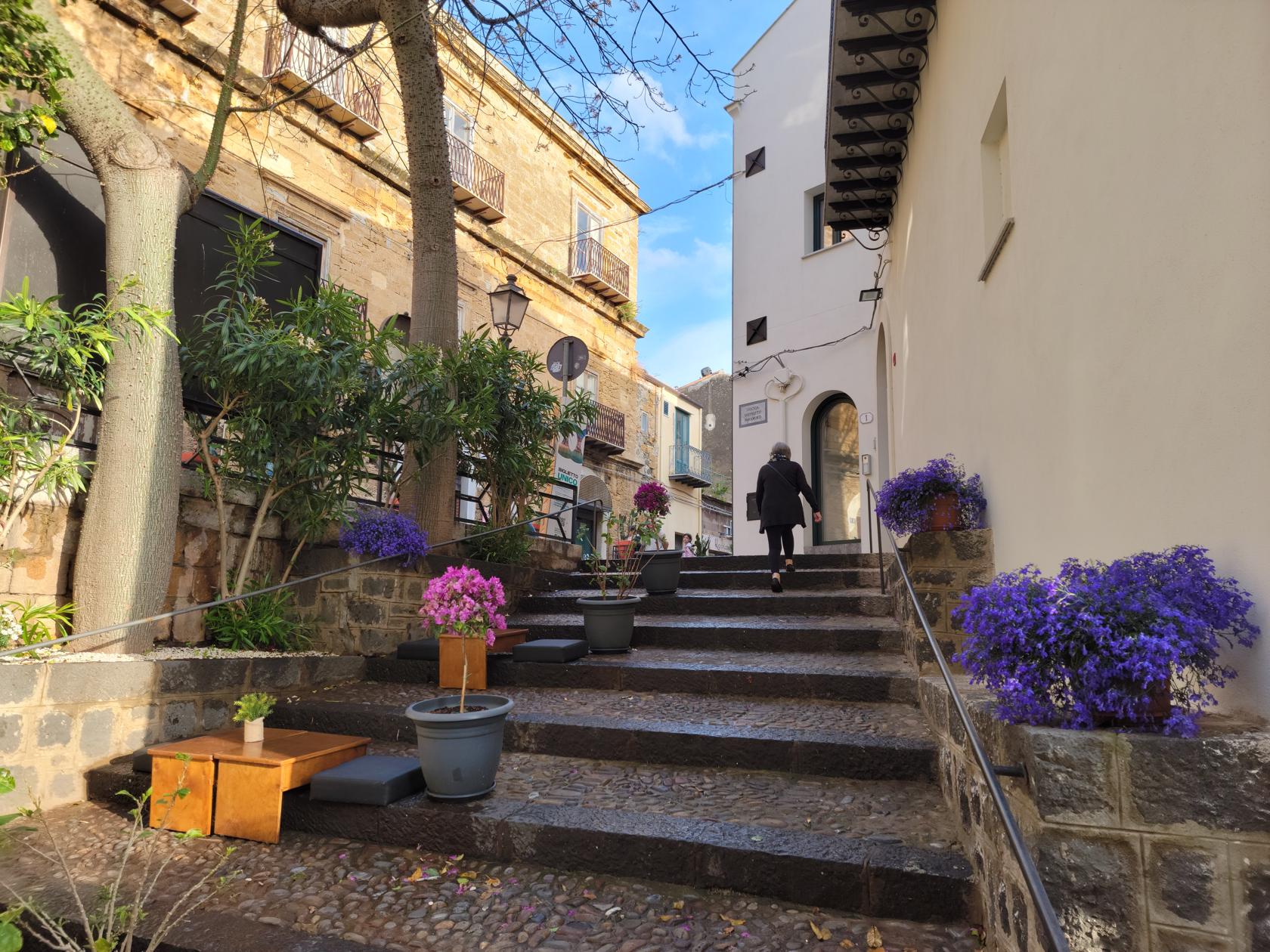
Stairs To Upper Part Of Town – Cefalu, Sicily
Towards The Grotta – Cefalu, Sicily
The Beach – Cefalu, Sicily
The Wet City Streets – Cefalu, Sicily
Another Side Street – Cefalu, Sicily
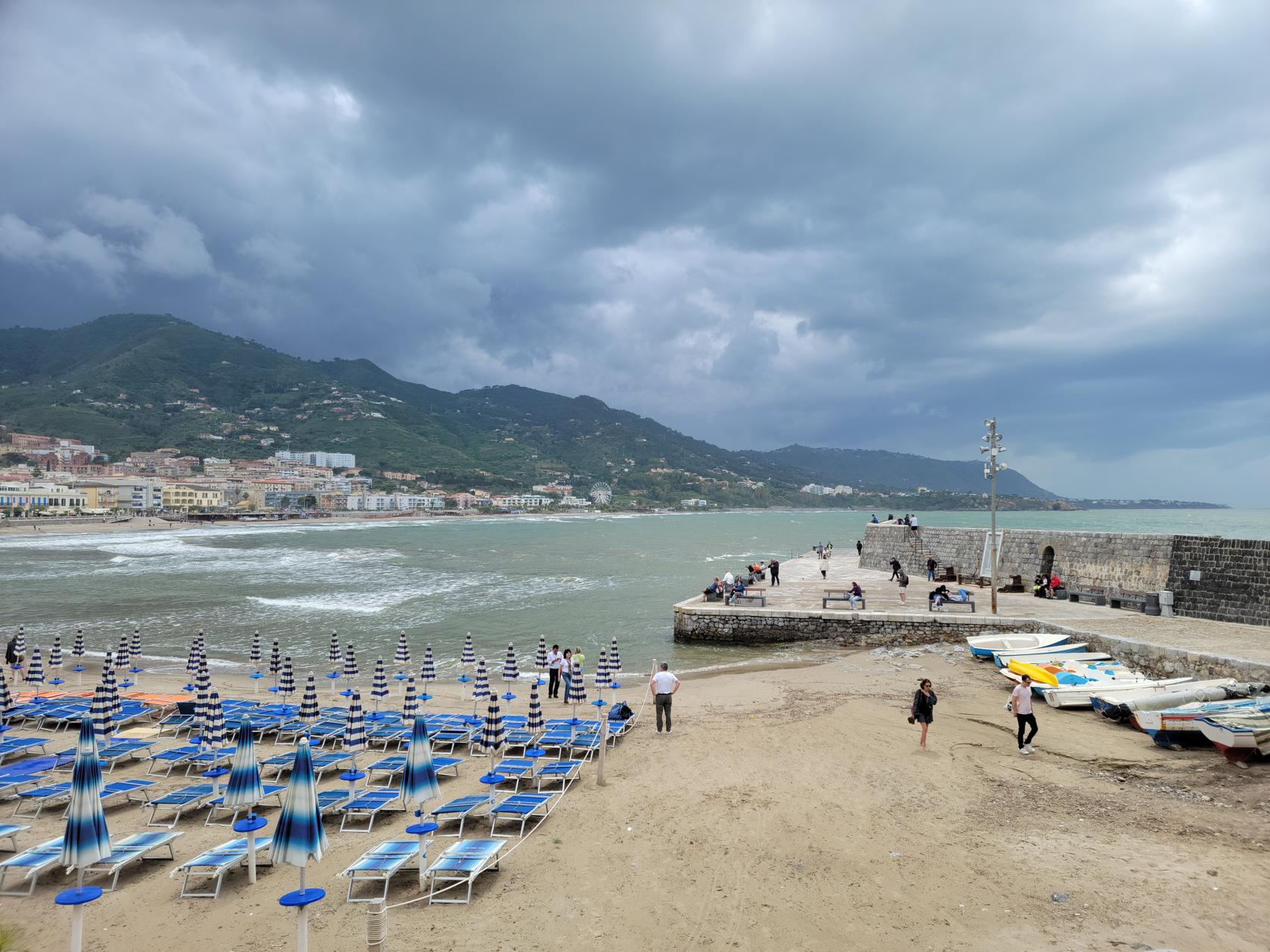
The Molo – Cefalu, Sicily
The Steps Up To Piazza Garibaldi – Cefalu, Sicily
Piazza Garibaldi – Cefalu, Sicily
Piazza Garibaldi – Another View – Cefalu, Sicily
The beautiful paved streets – Cefalu, Sicily
Sunset – Cefalu, Sicily
The begging of our climb – Hiking la Rocca – Cefalu, Sicily
Other than that, we happened to arrive when Sicily was getting one of its worst storm system in twenty years. Not only did it rain incessantly, the wind and the temperatures made for a quite challenging time. If there wasn’t water, water, everywhere, there was always the threat of rain, so you always had to pack an umbrella. We got wet so often, we started debating whether we should go out at all. We were glad we did, otherwise there would have been no way to see everything that we did in such a compressed time.
Monte de Pieta
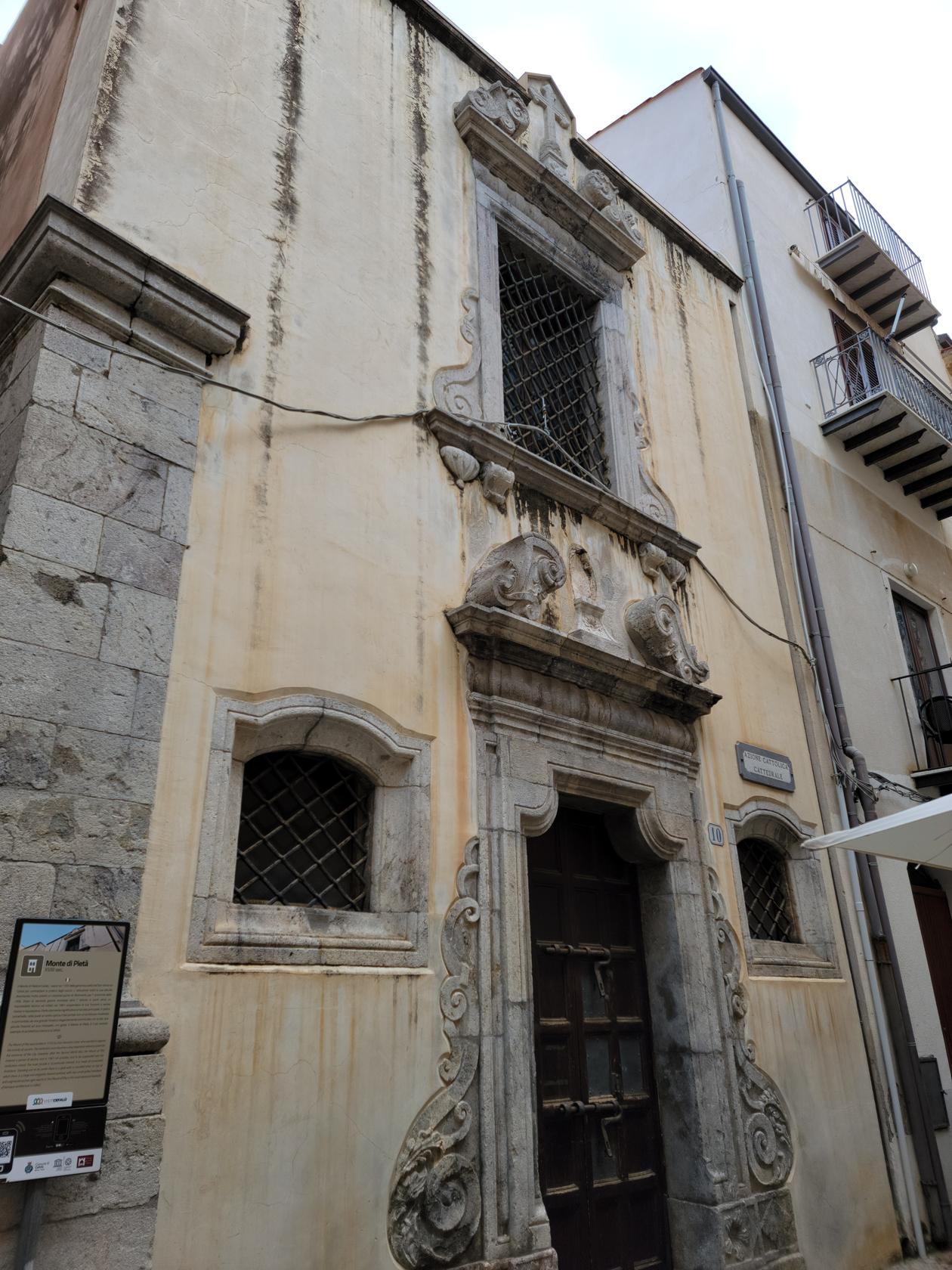
The Mount of Pity was first funded in the early 1700s by Don Vincenzo Costa. The institution became very important to the economy of the city, but after World War II fell into decline. It has elegantly framed windows and a molded lintel and is an example of the advanced baroque architecture in Cefalu.
Monte di Pieta – Cefalu, Sicily
Torre Orologio
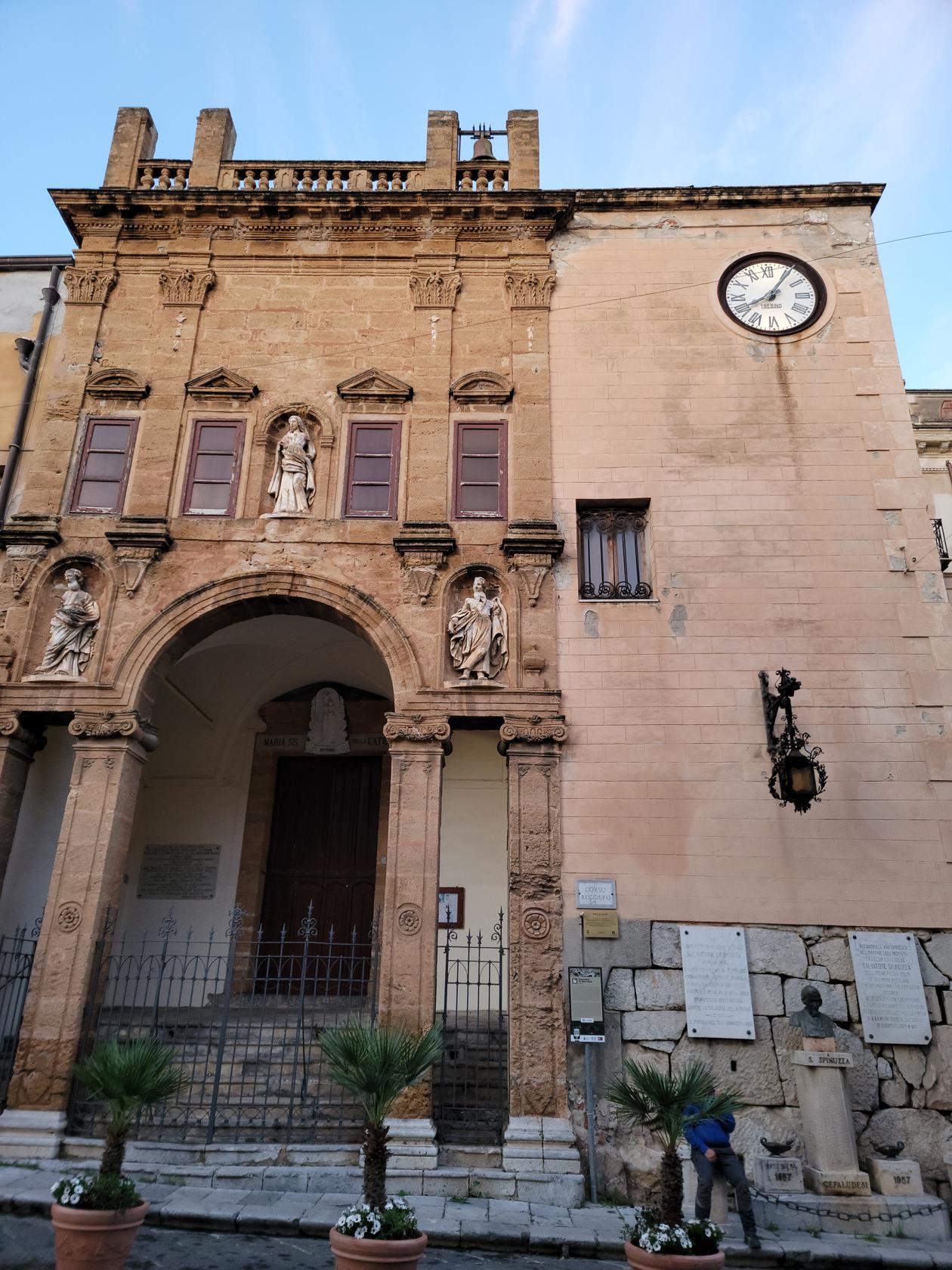
Not far from Il Duomo and in Piazza Garibaldi, almost next to Ristorante Porta Terra is the Torre Orologio, or the clock tower. Like most other cities, probably the go to place at one time to set your own timepiece to, but now, though it still functions, appears to be in dire need of some repairs. While we were eating at Porta Terra, we noticed the bells do not function perfectly, even though if you paid attention, it appeared to tell the correct time within a few minutes of the actual, even though the ringing was quite muted.
Torre Orologie – Cefalu, Sicily
Lavatoio Medievale Fiume Cefalin
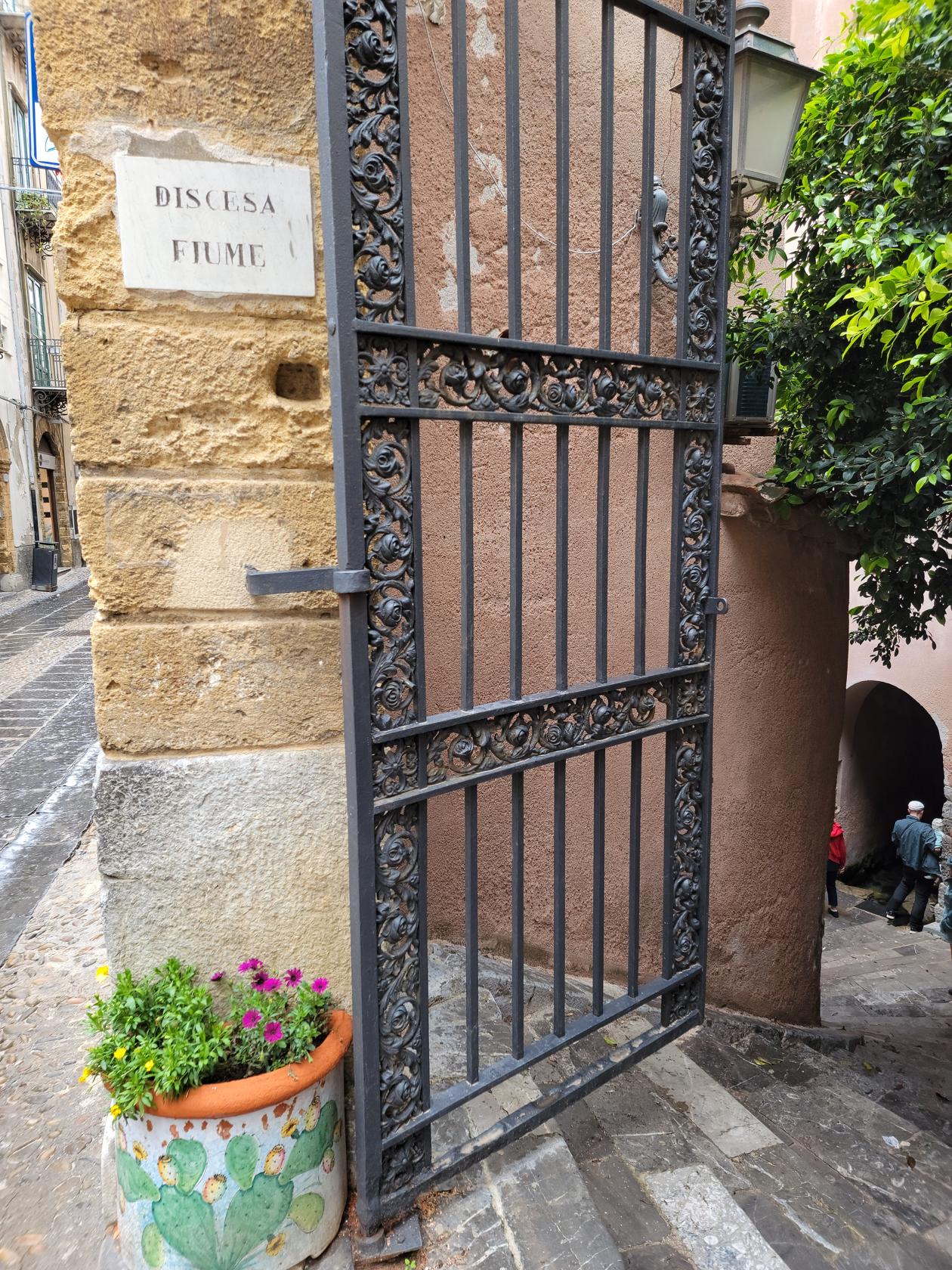
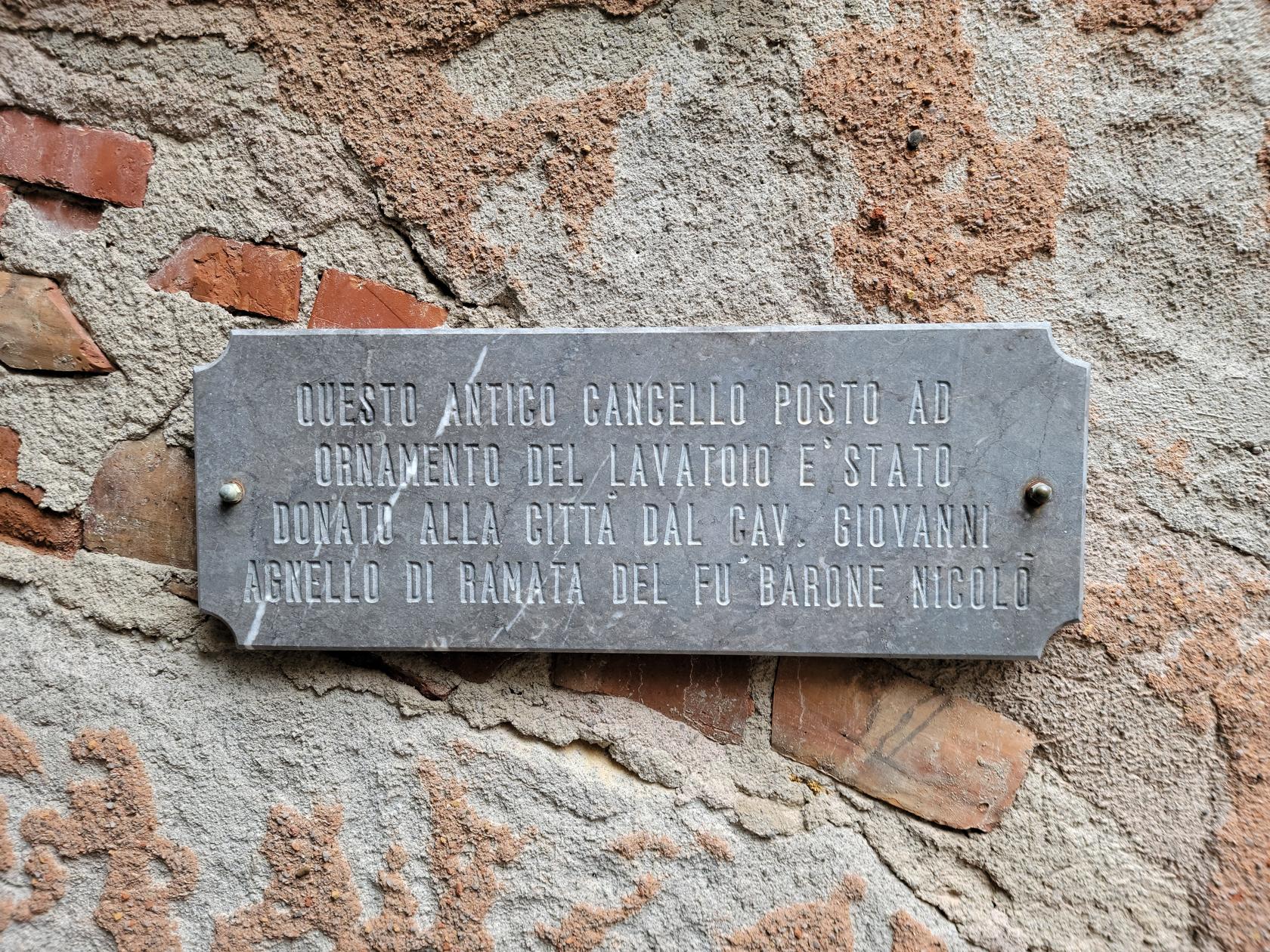
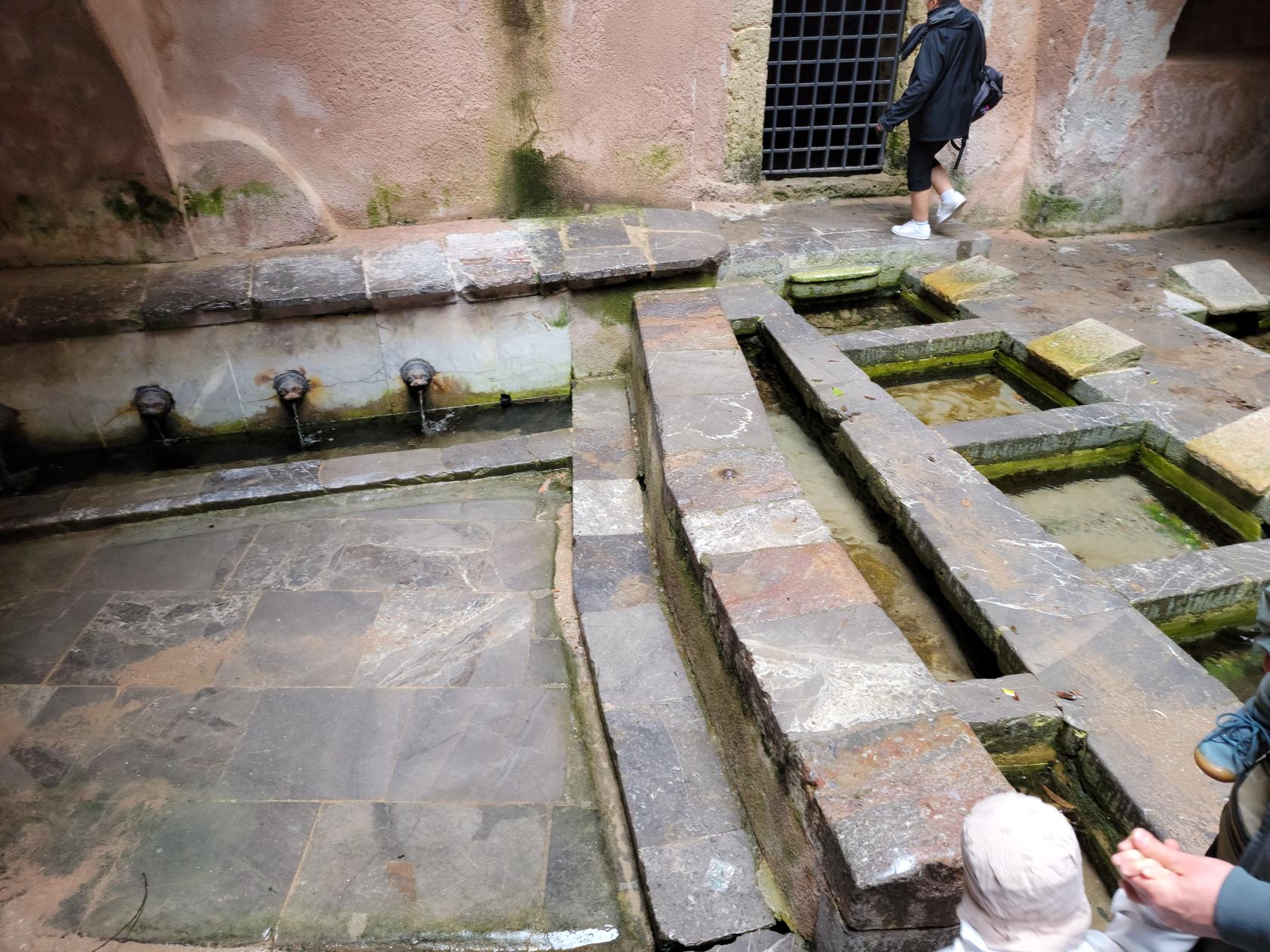
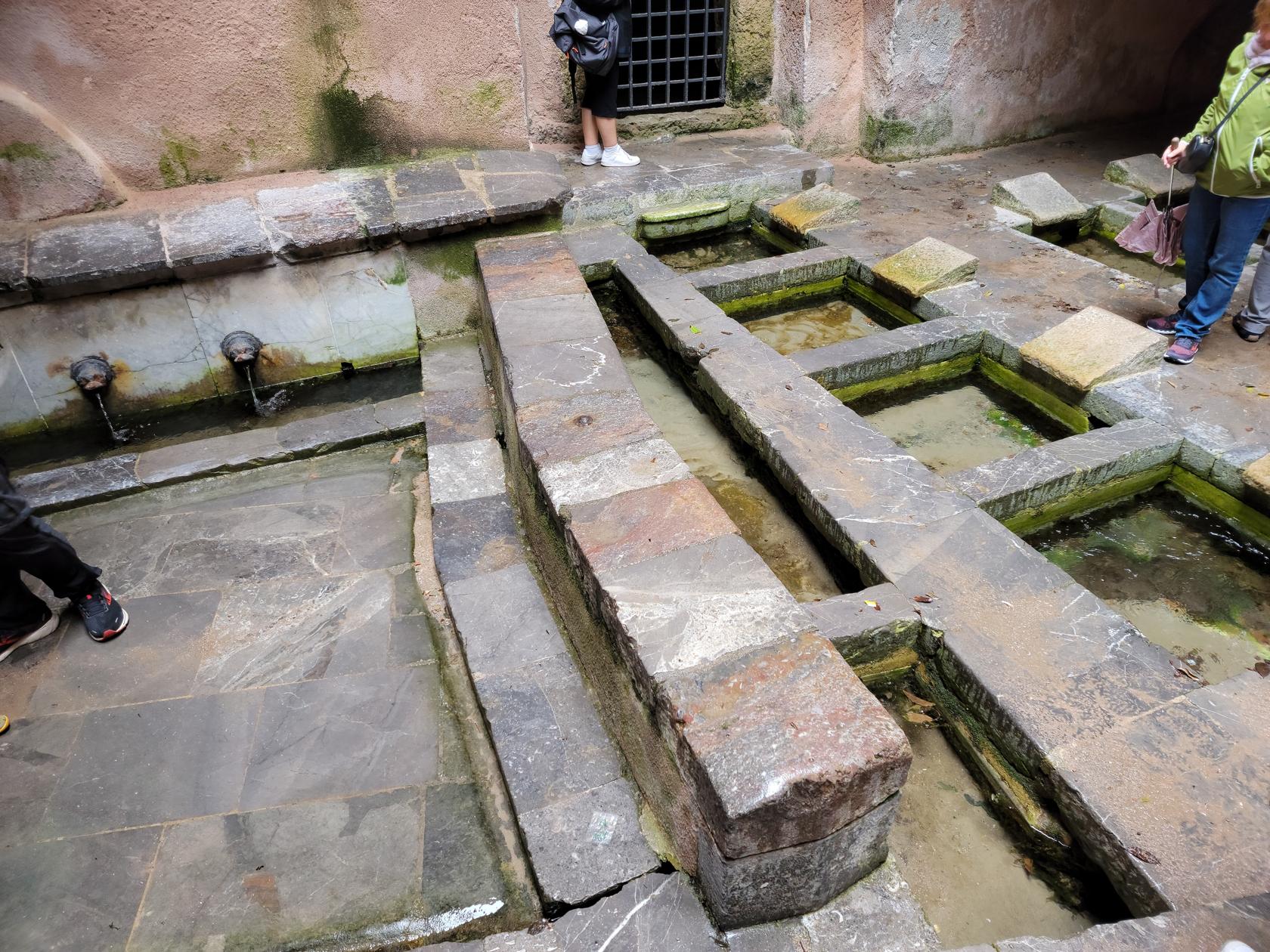
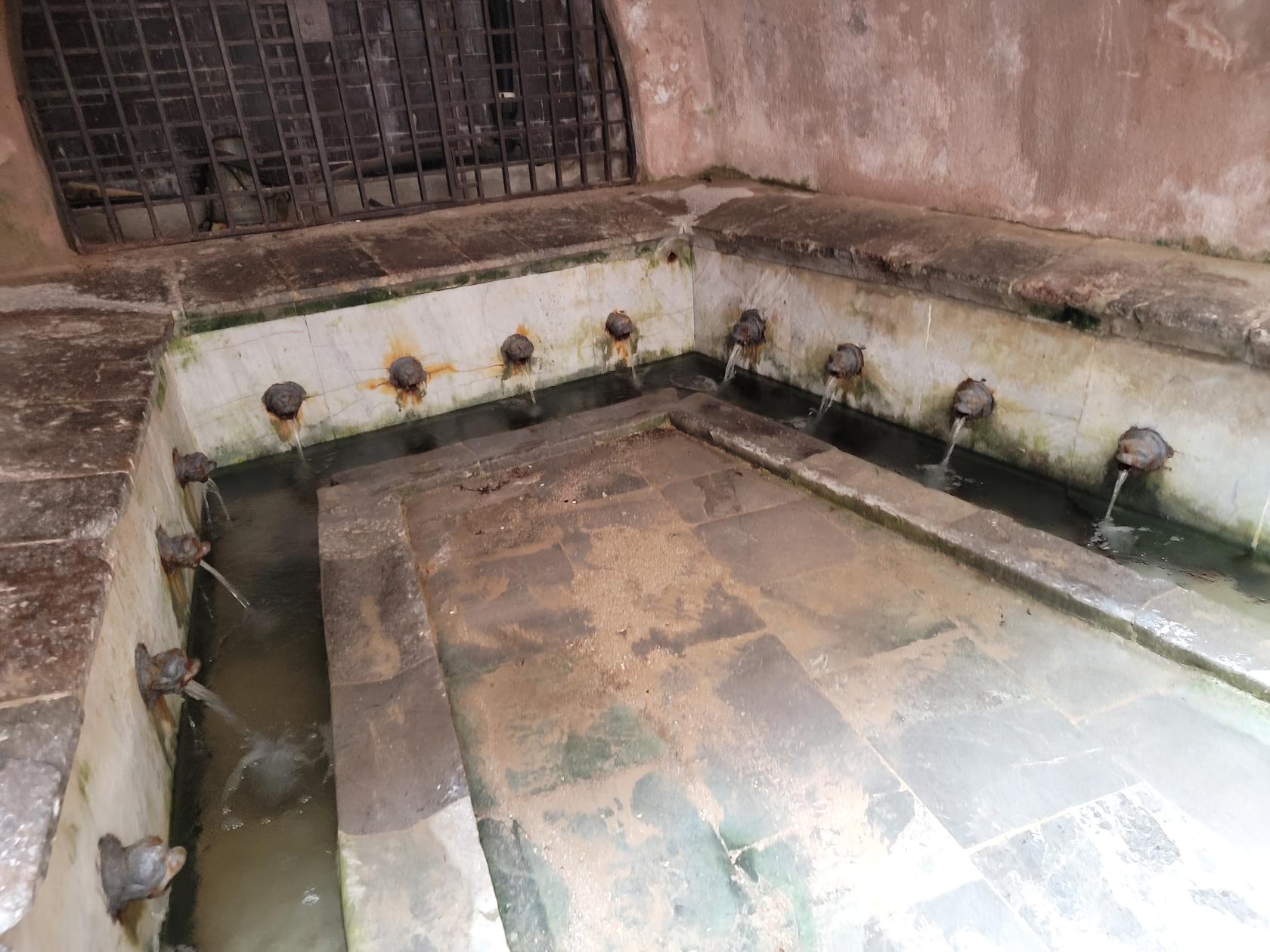
This little historic bit, easily missed by the unaware tourist ambling along the via Vittorio Emanuele, is an old laundry.
The Medieval Laundry – Lavatoio Medievale Fiume Cefalino – Cefalu, Sicily
The Medieval Laundry – Lavatoio Medievale Fiume Cefalino – Cefalu, Sicily
The Medieval Laundry – Lavatoio Medievale Fiume Cefalino – Cefalu, Sicily
The Medieval Laundry – Lavatoio Medievale Fiume Cefalino – Cefalu, Sicily
The Medieval Laundry – Lavatoio Medievale Fiume Cefalino – Cefalu, Sicily
Made out of stone and fountains, the town’s people in the old days used to come here to do their laundry. It is still in working order, though modern day appliances make its use today superfluous.
Il Duomo
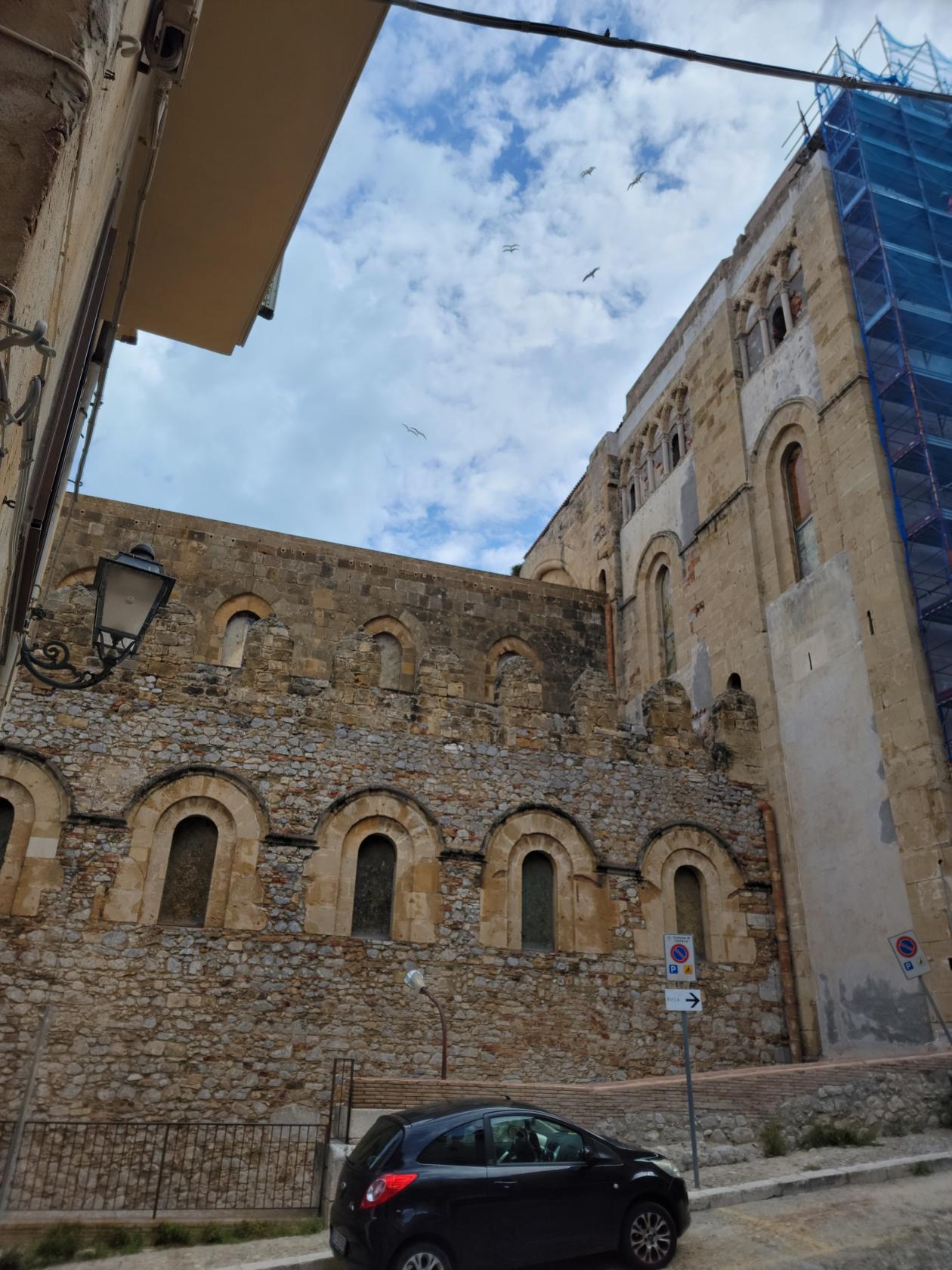
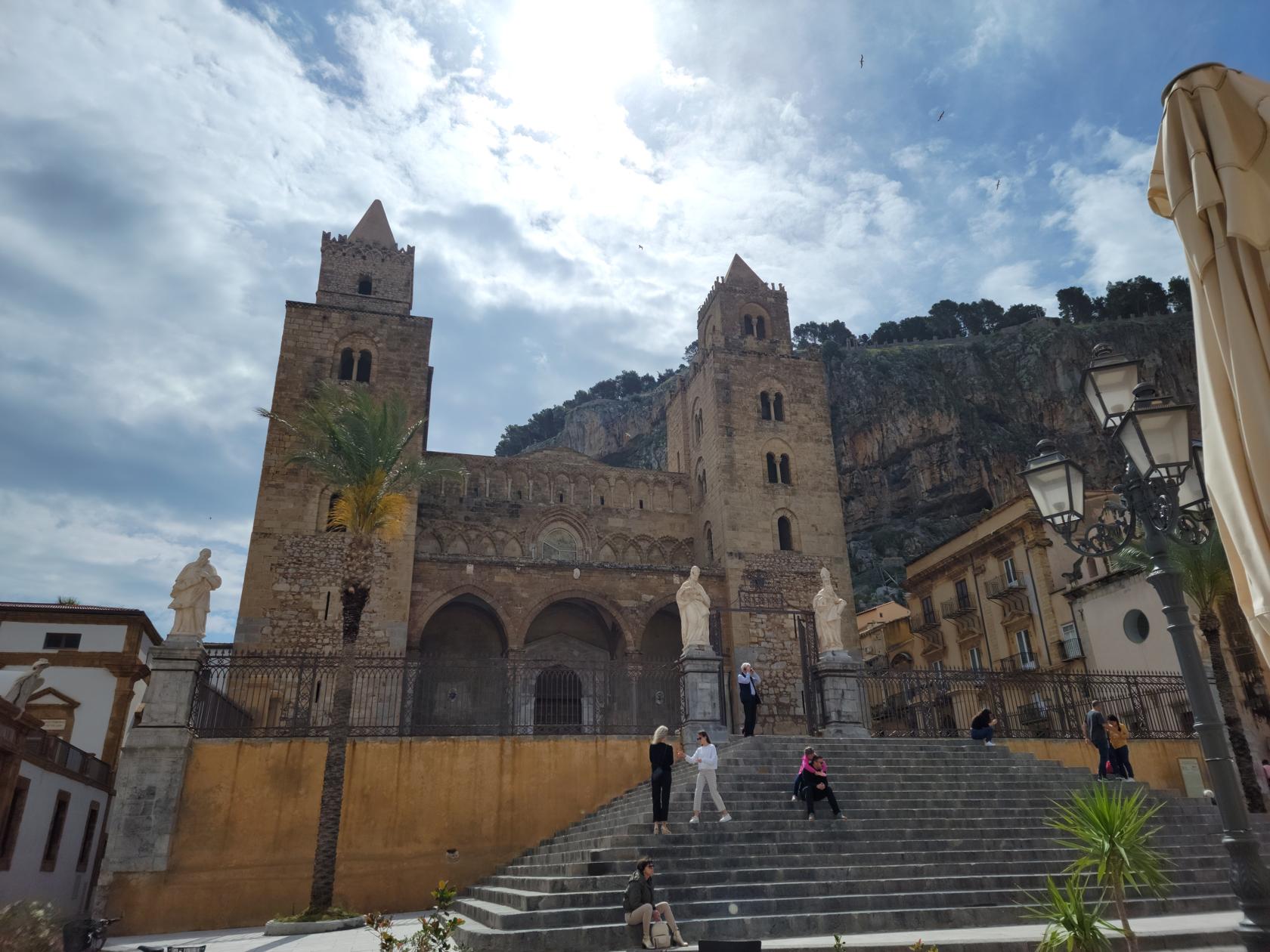
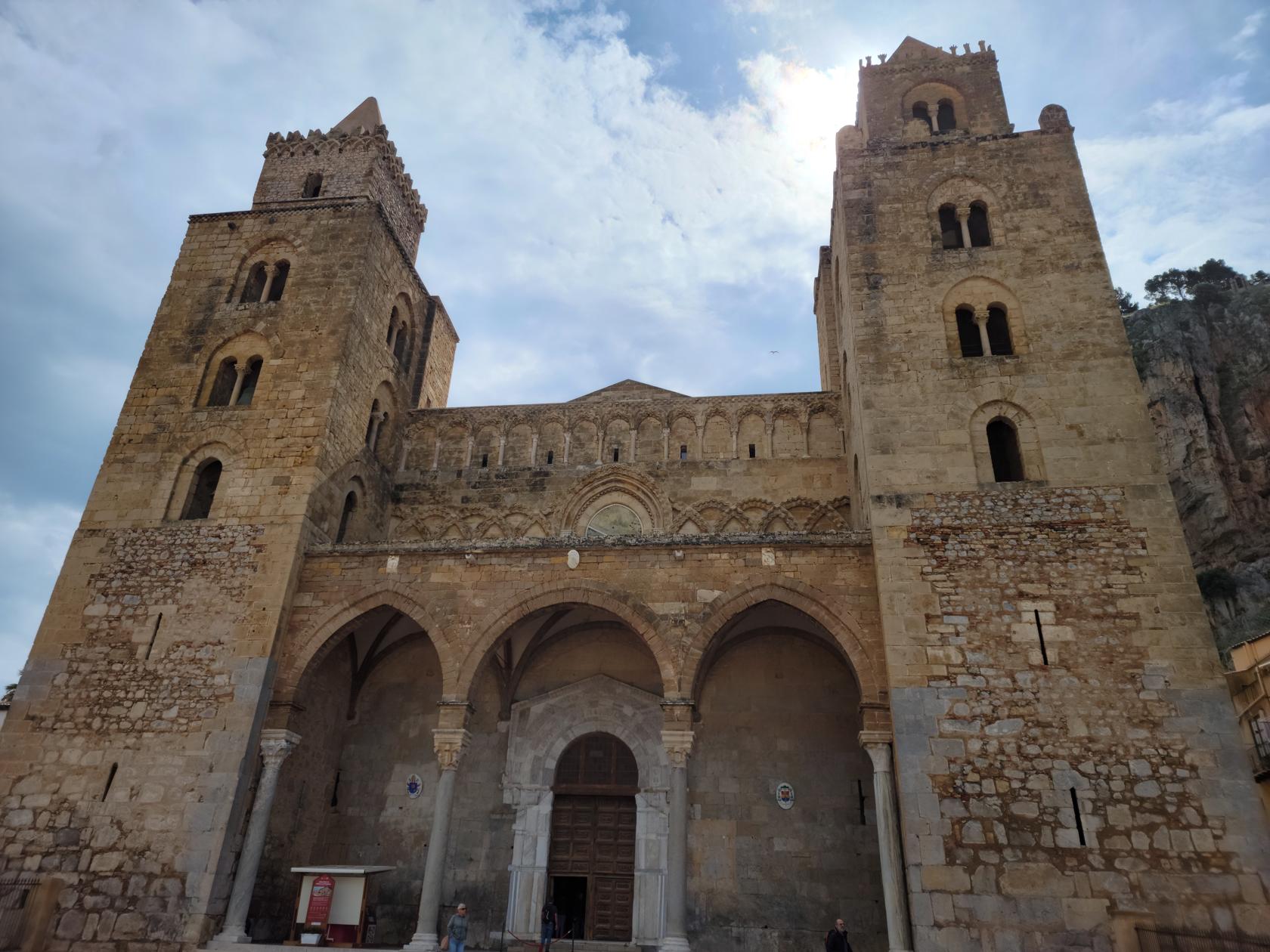
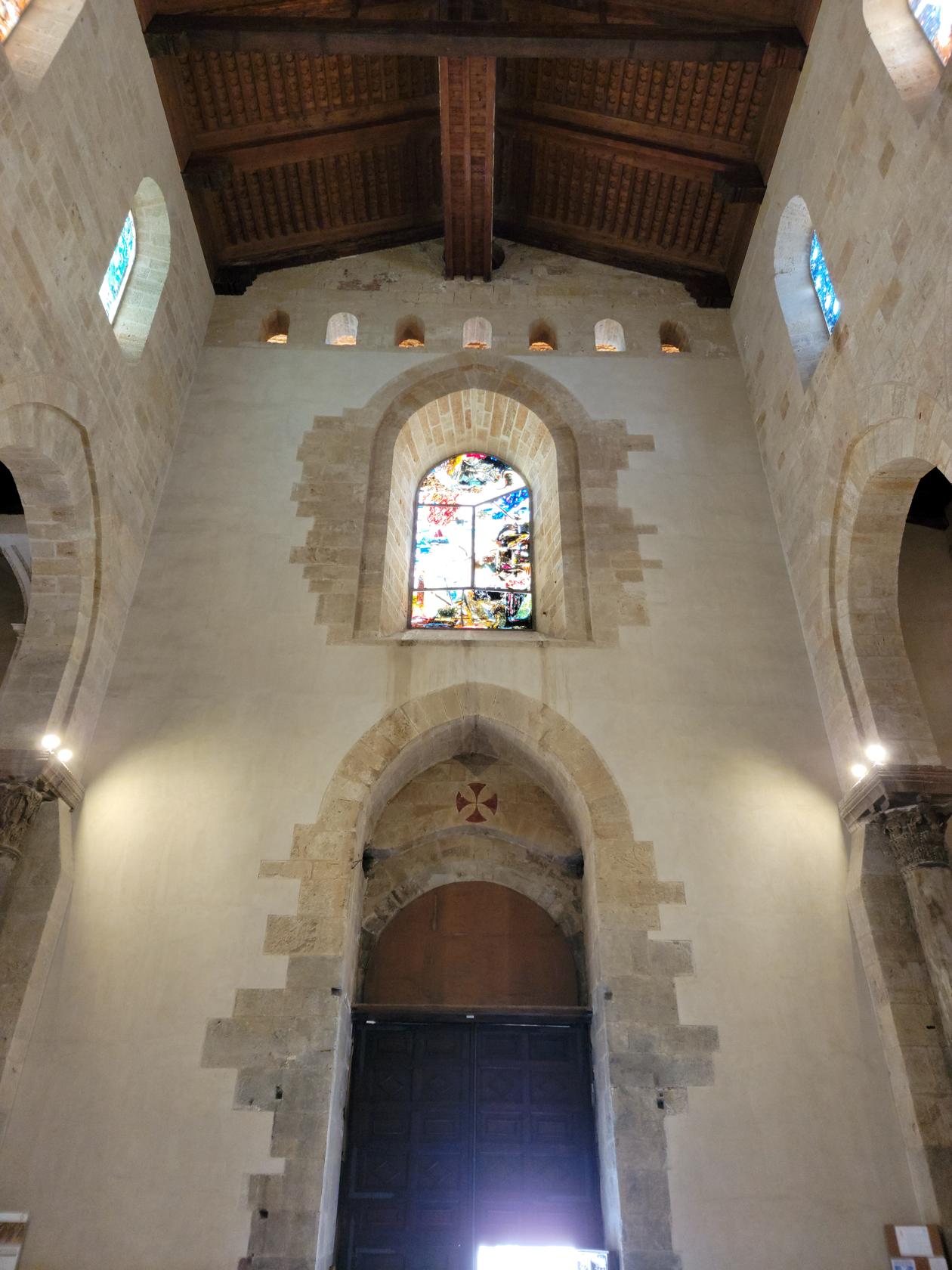
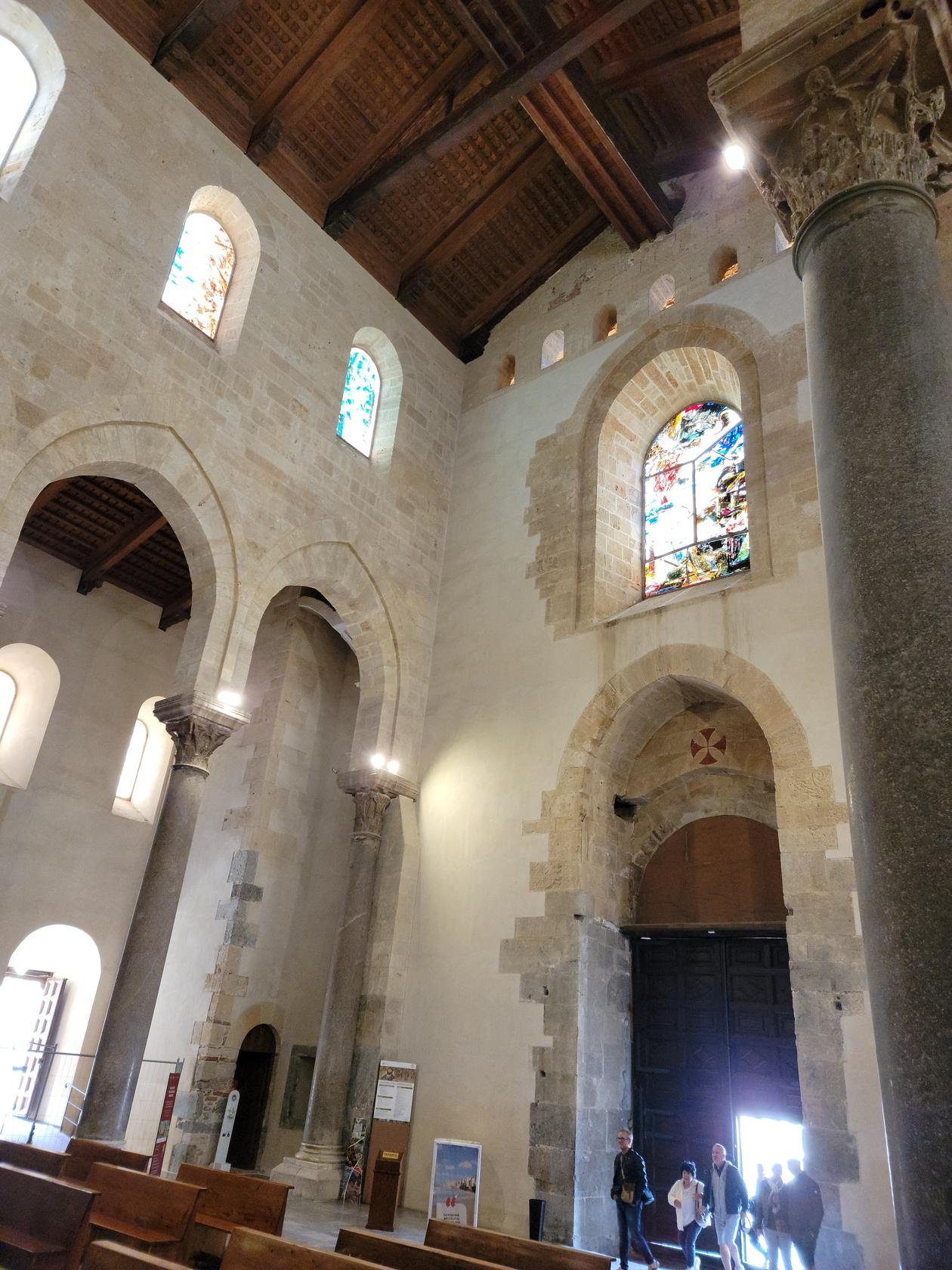
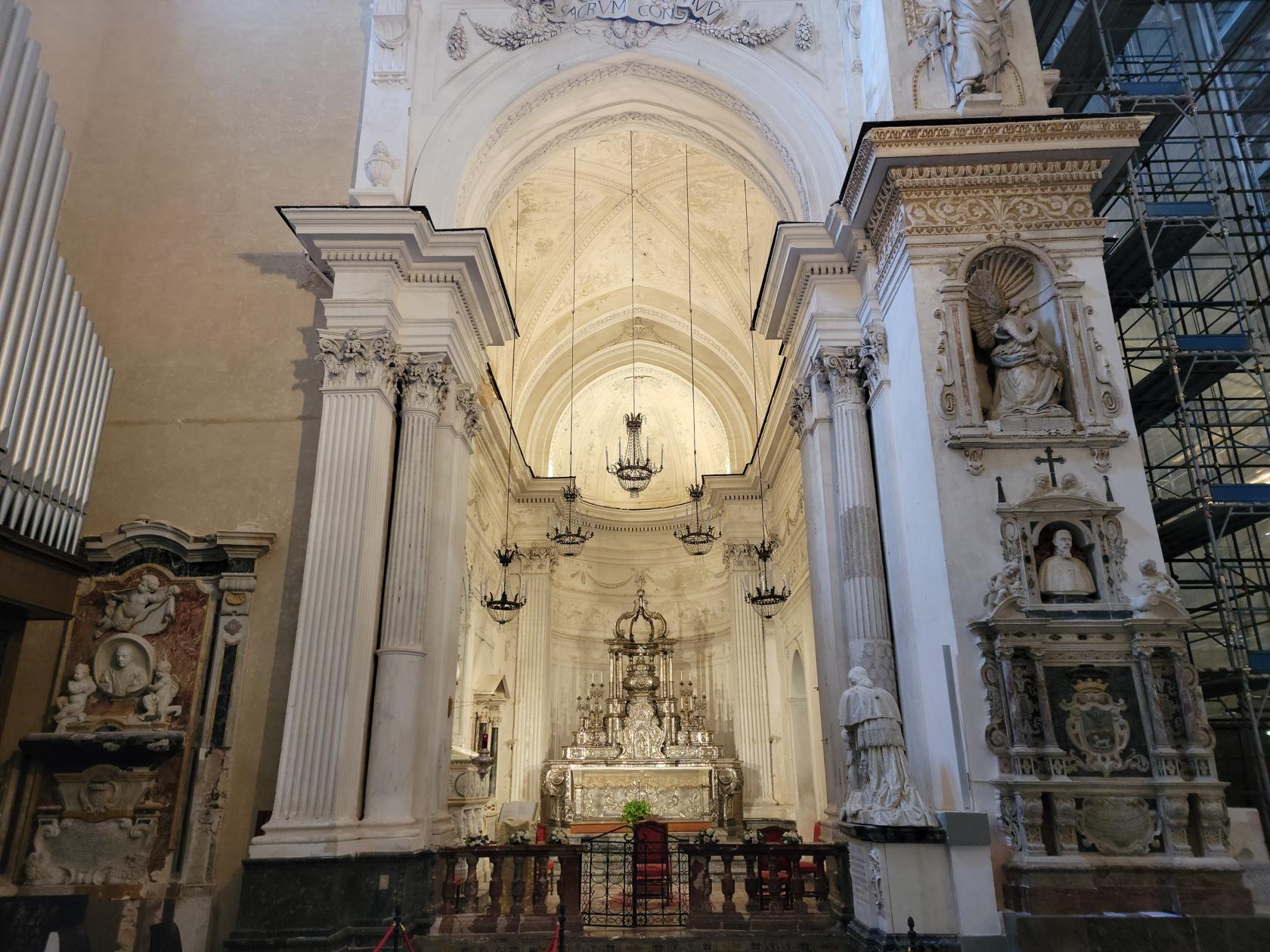
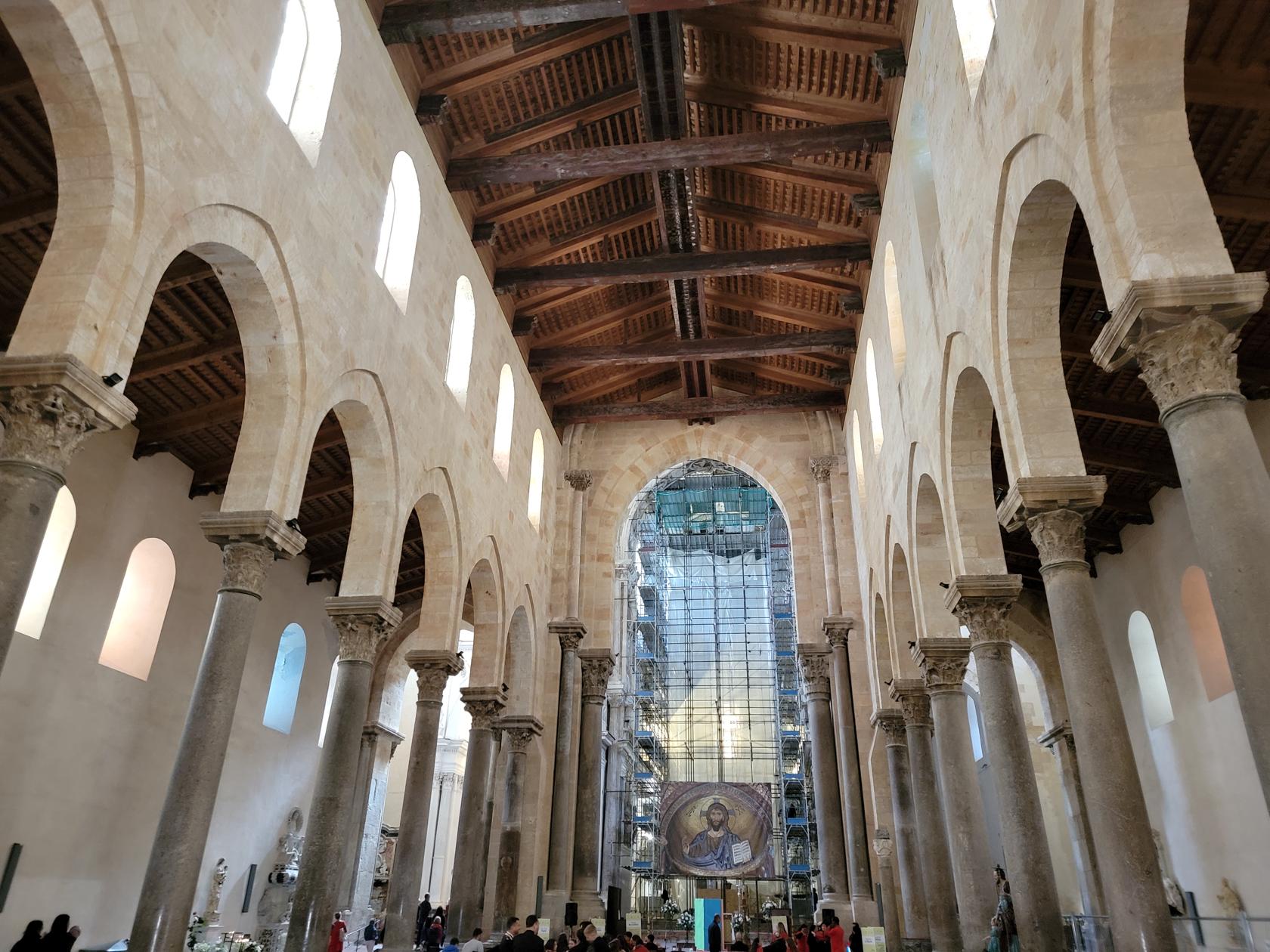
The Cathedral of Syracuse sits on high ground directly under the La Rocca, or The Rock. It has a large piazza and spacious interior and can be seen from some distance. While we were here, it was under renovation inside, so we were unable to see it in all its glory.
The Towers and Facade from a distance – Il Duomo – Cefalu, Sicily
The Courtyard – Il Duomo – Cefalu, Sicily
The Piazza Il Duomo – Il Duomo – Cefalu, Sicily
Main Entrance – Il Duomo – Cefalu, Sicily
Main Entrance Stained Glass – Il Duomo – Cefalu, Sicily
Main Entrance Stained Glass – Il Duomo – Cefalu, Sicily
A Chapel – Il Duomo – Cefalu, Sicily
The Cathedral Inside – Il Duomo – Cefalu, Sicily
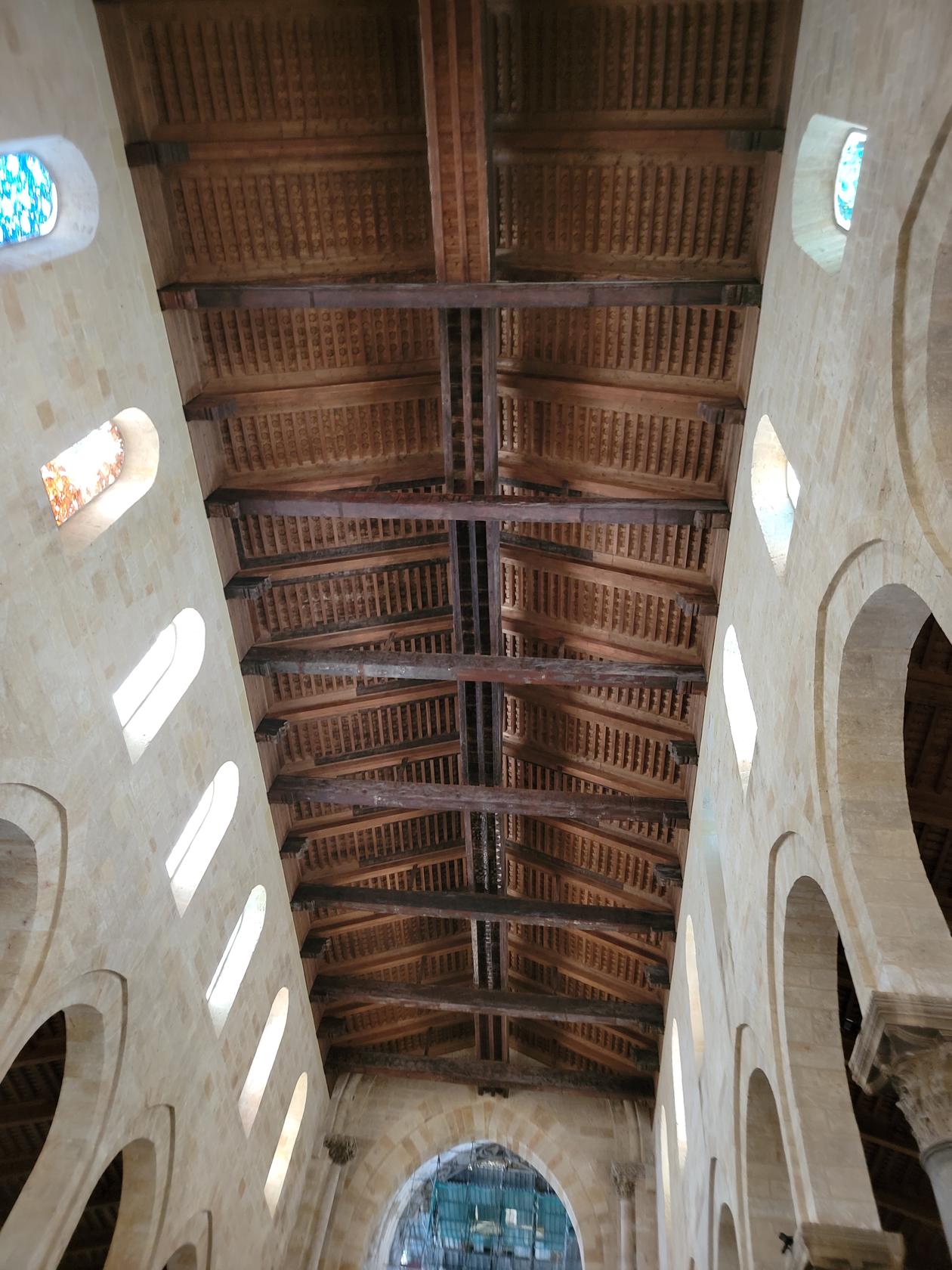
The Old Wooden Roof – Il Duomo – Cefalu, Sicily
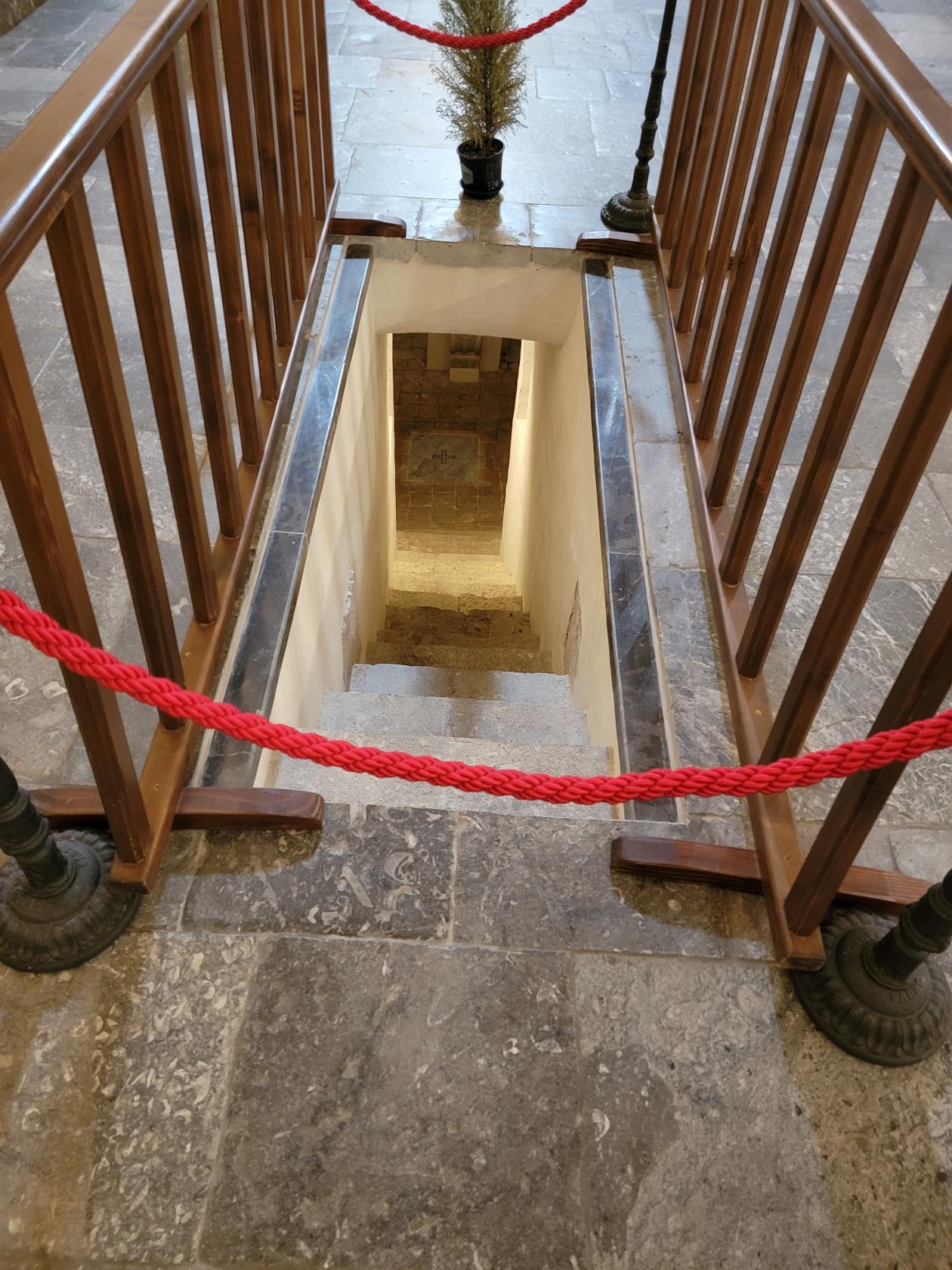
The Crypt Entrance – Il Duomo – Cefalu, Sicily
Castello di Cefalu
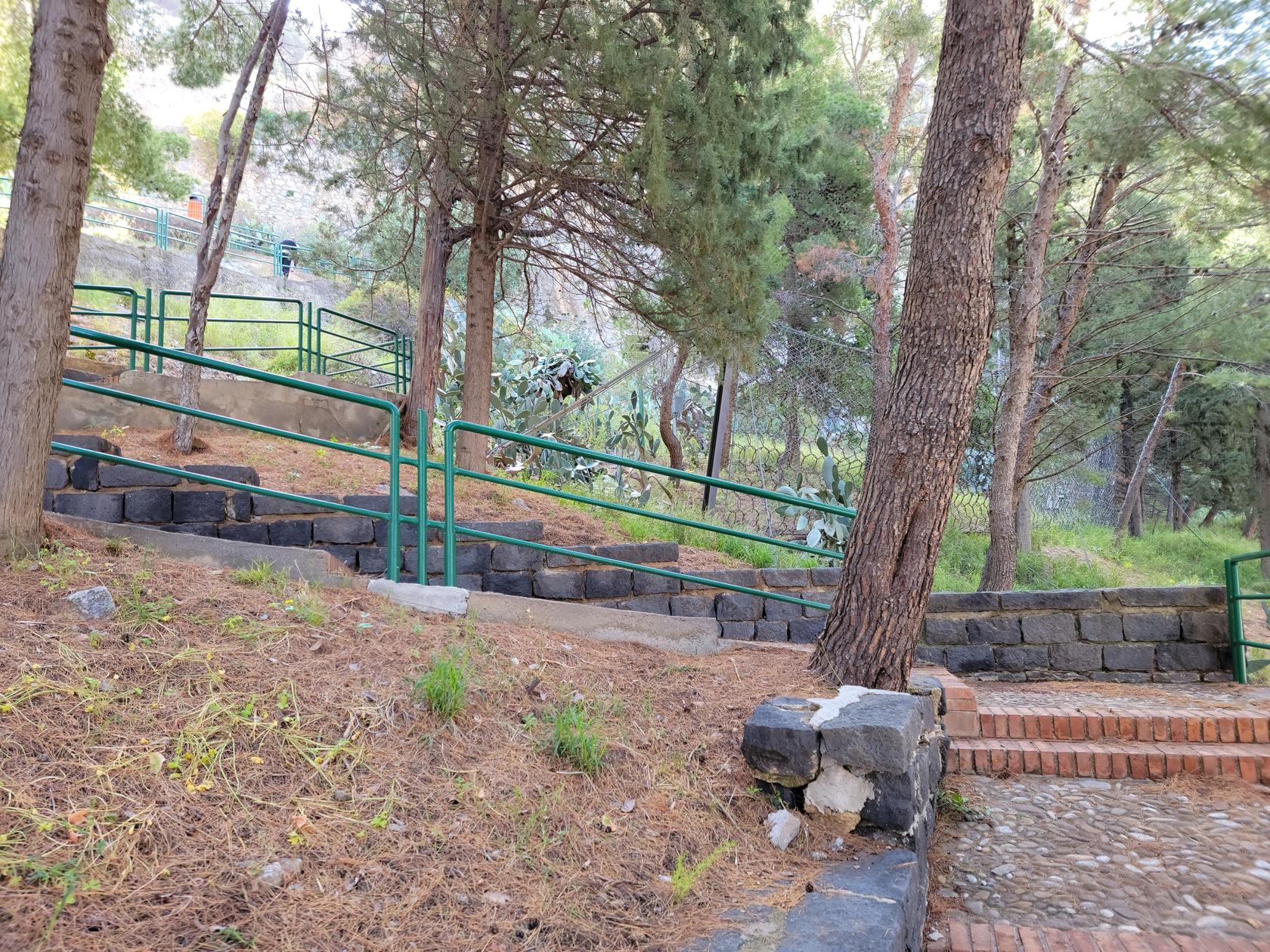
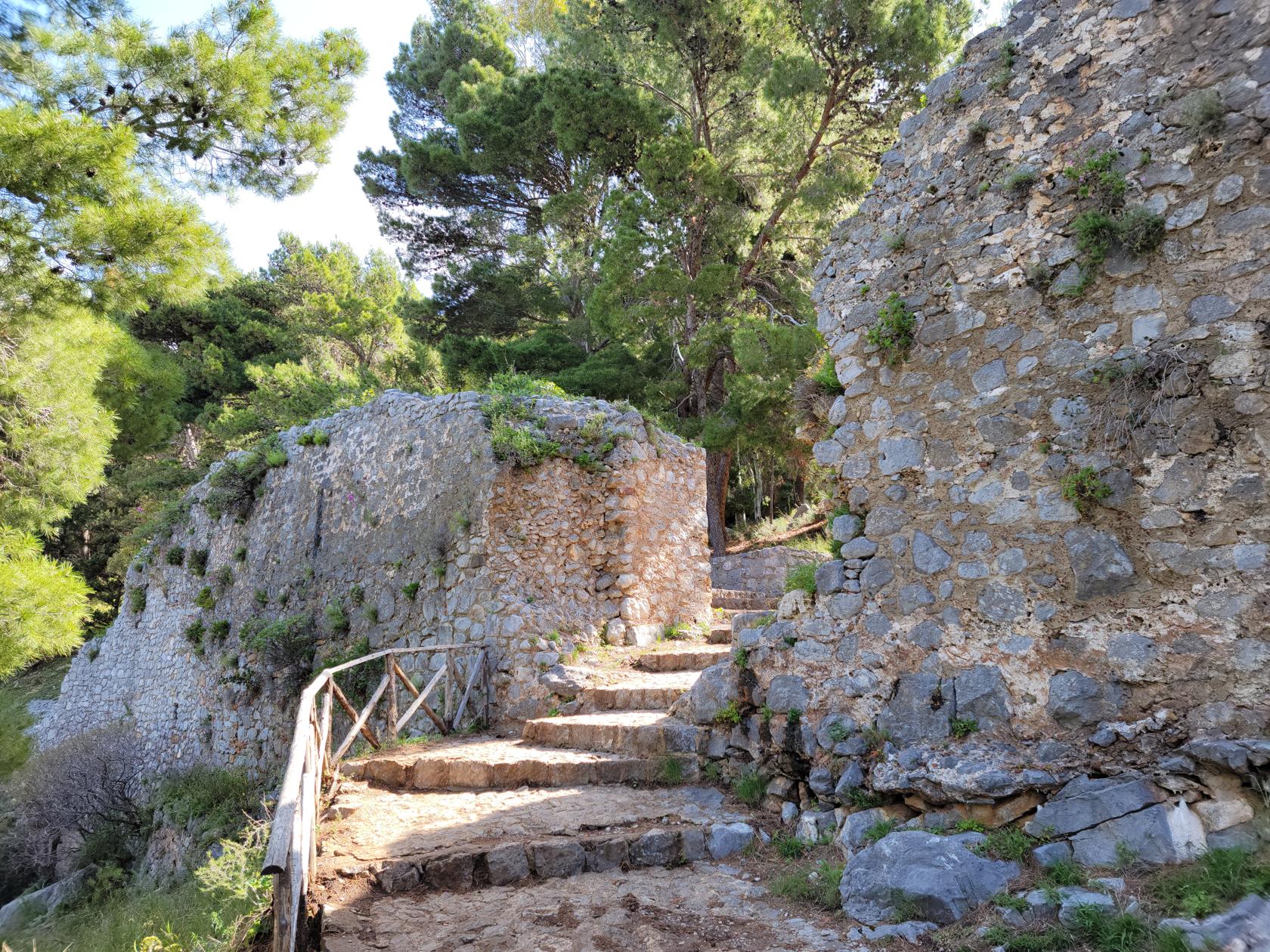
You enter the hike to the caste via the Rocca di Cefalu. It starts out with finely paved stairs and steps, that one would typically find in any Italian town with hills in it.
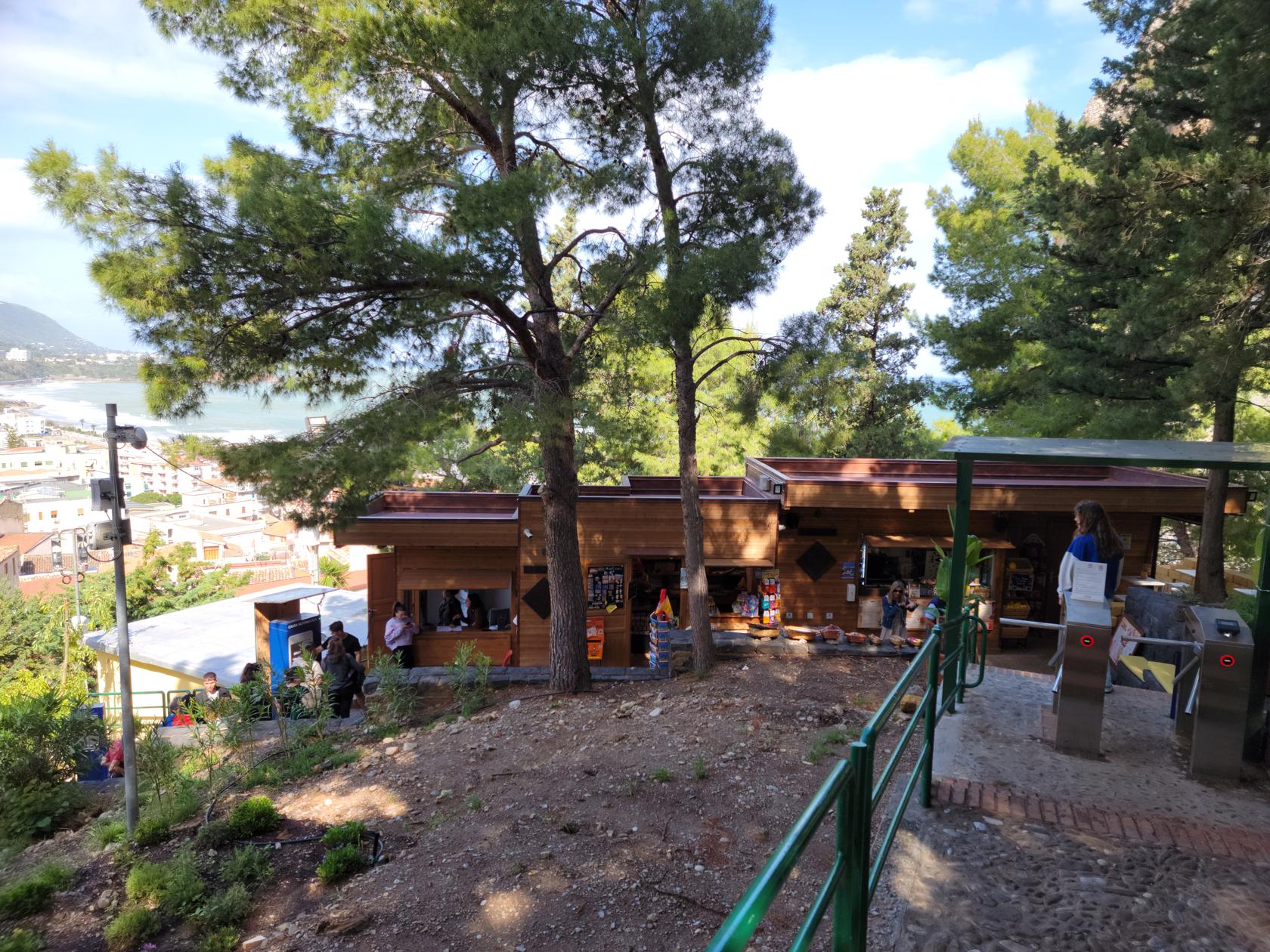
The Ticket booth and entrance – Hiking la Rocca – Cefalu, Sicily
Ascending – Hiking la Rocca – Cefalu, Sicily
The initial path – Hiking la Rocca – Cefalu, Sicily
The first cliff ledge – Hiking la Rocca – Cefalu, Sicily
More cliffs – Hiking la Rocca – Cefalu, Sicily
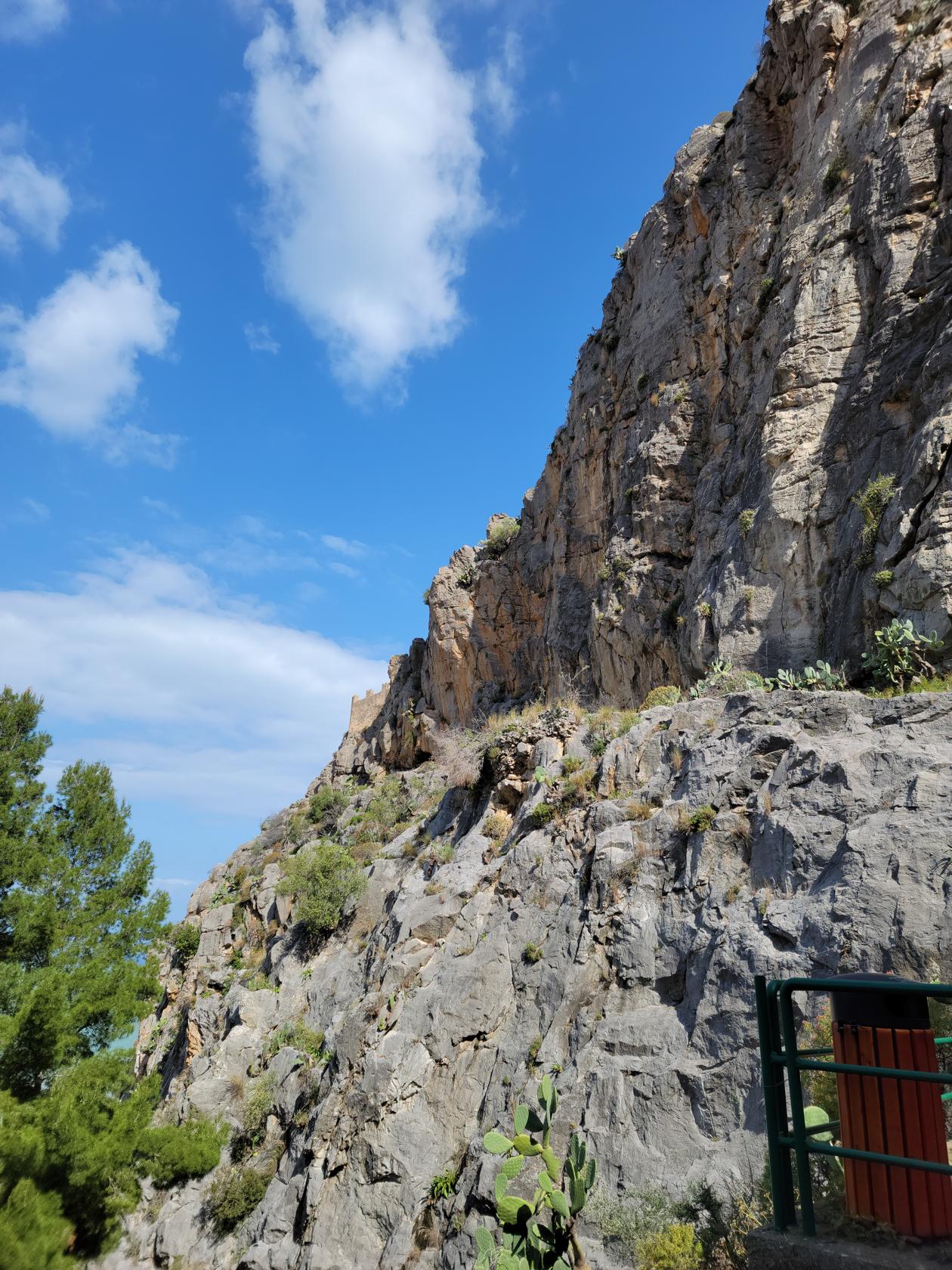
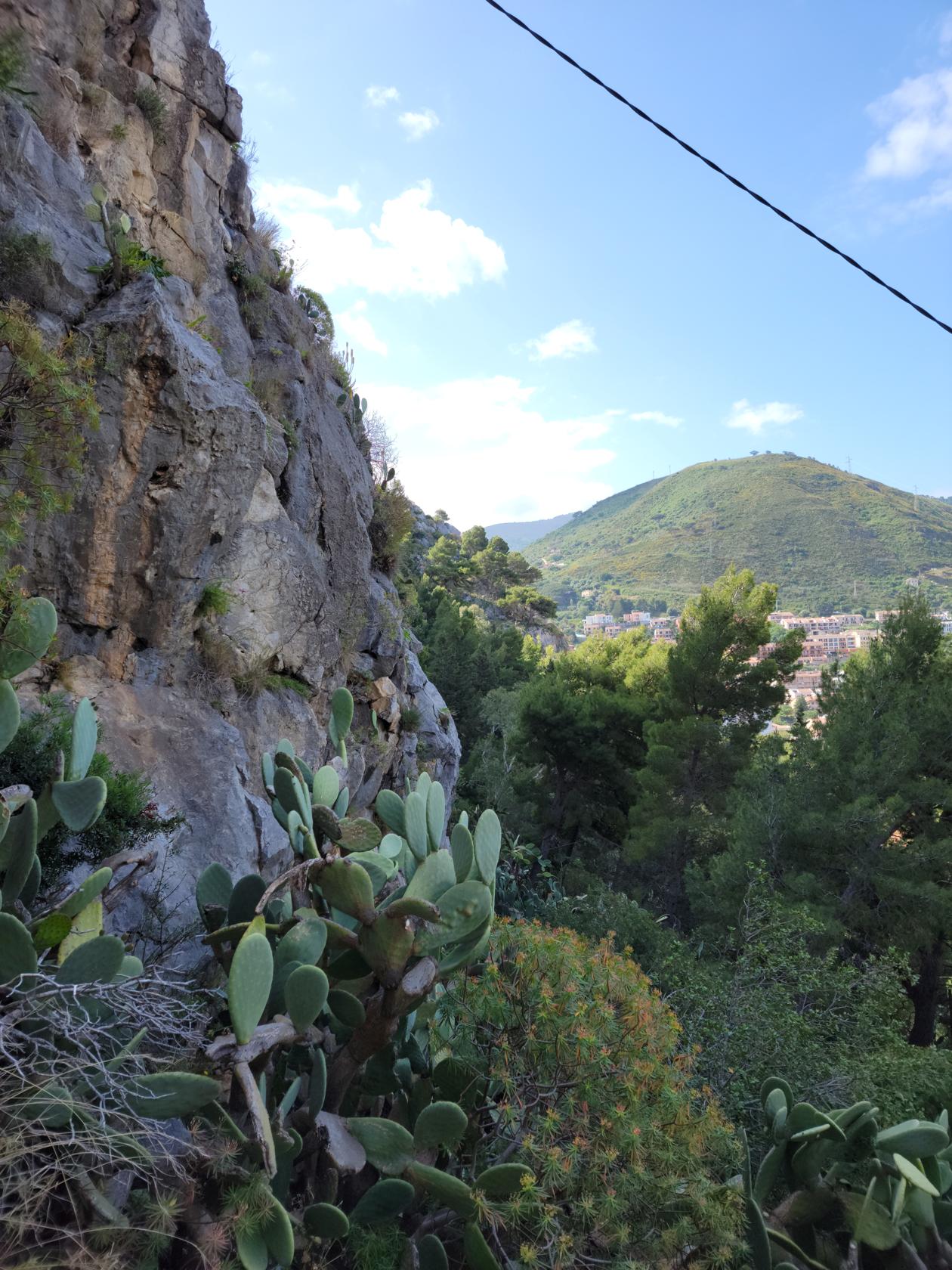
The steep cliff and cacti – Hiking la Rocca – Cefalu, Sicily
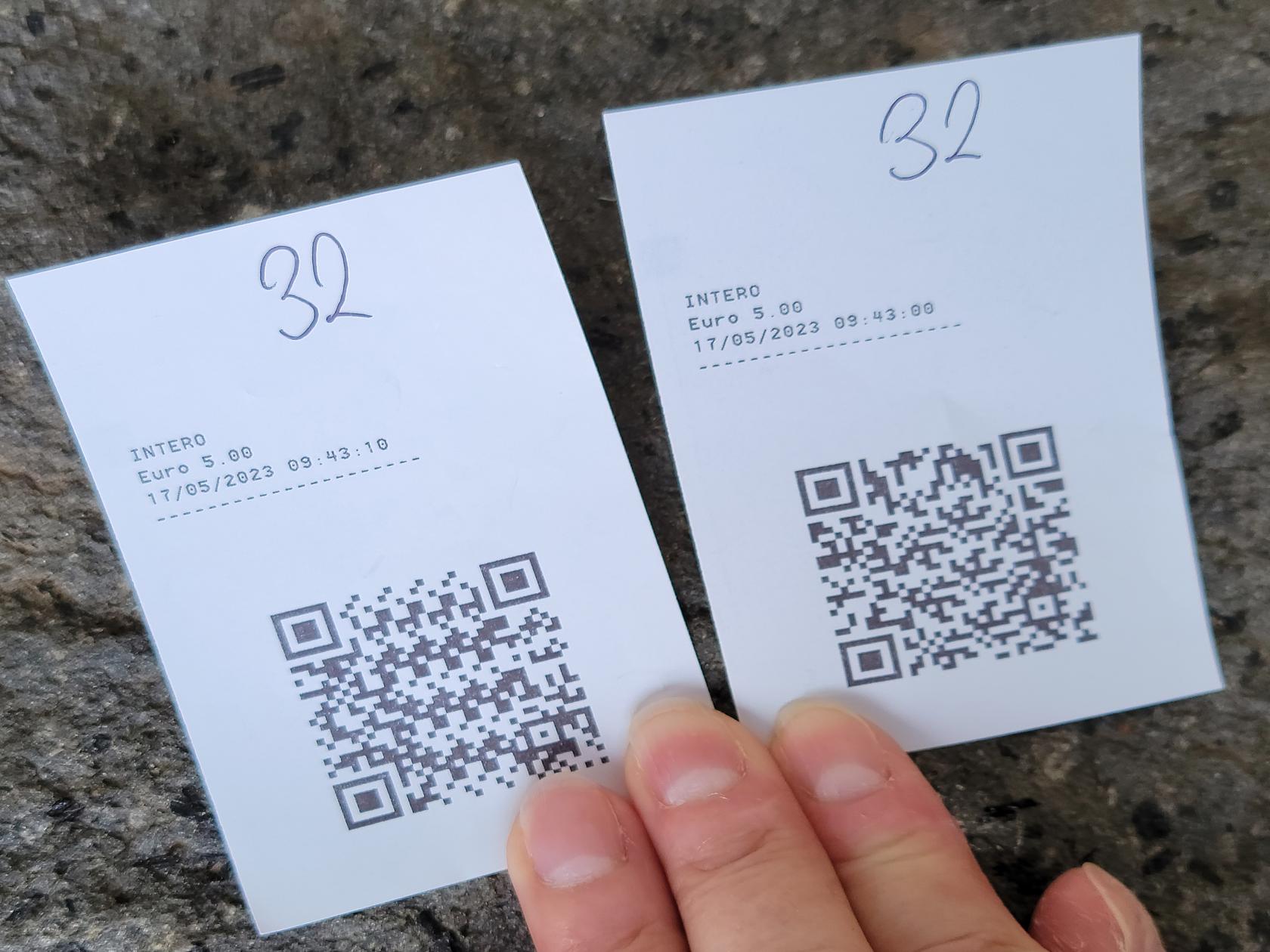
The entrance fee is 5€/person and the experience will definitely introduce one to the true meaning of Italian bureaucracy. Not only is there a self-service machine, but someone there that actually asks you what you want, takes your money, purchases the ticket for you, then hands it to someone else in the kiosk who is there to tabulate the number in a book. This number is again used when you leave, so do not throw your ticket out. Once your ticket is returned, another person is waiting to take it from you and helps you scan it in the automated turnstile. All in today’s times totally unnecessary. There is obviously either some abstruse Italian or municipal law that probably requires them to do so.
The steps through the second entrance – Hiking la Rocca – Cefalu, Sicily
Over the main cliff face – Hiking la Rocca – Cefalu, Sicily
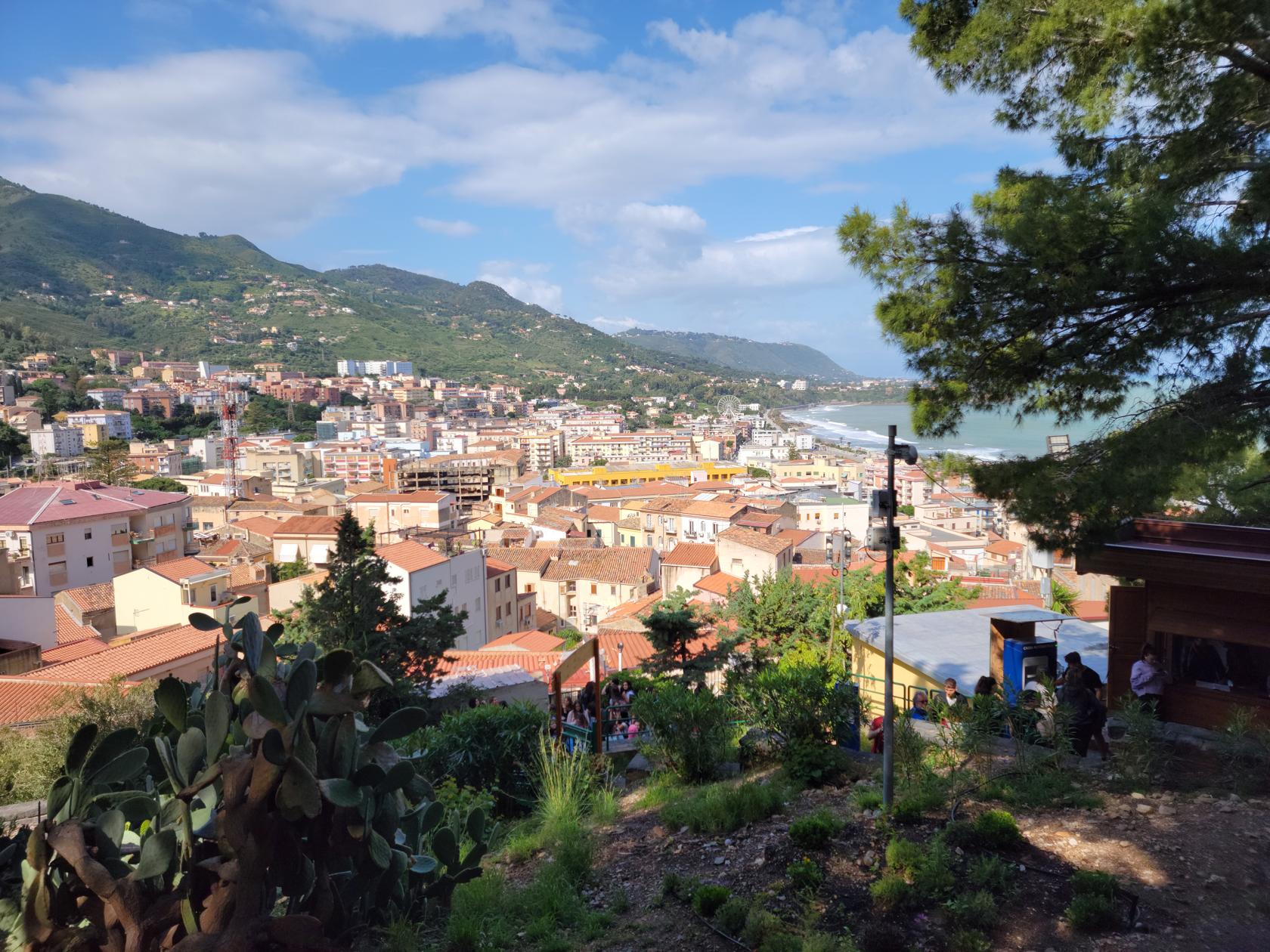
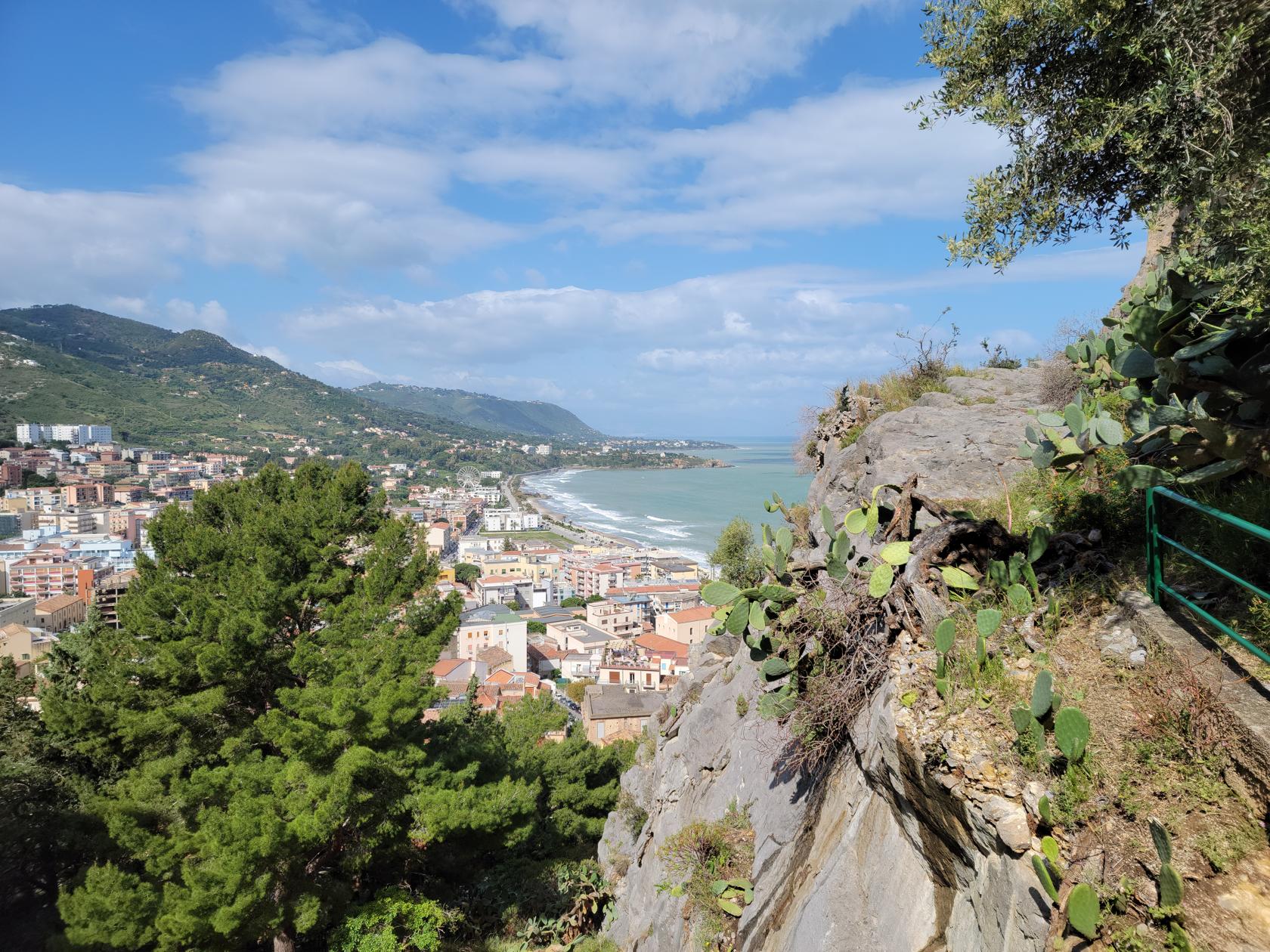
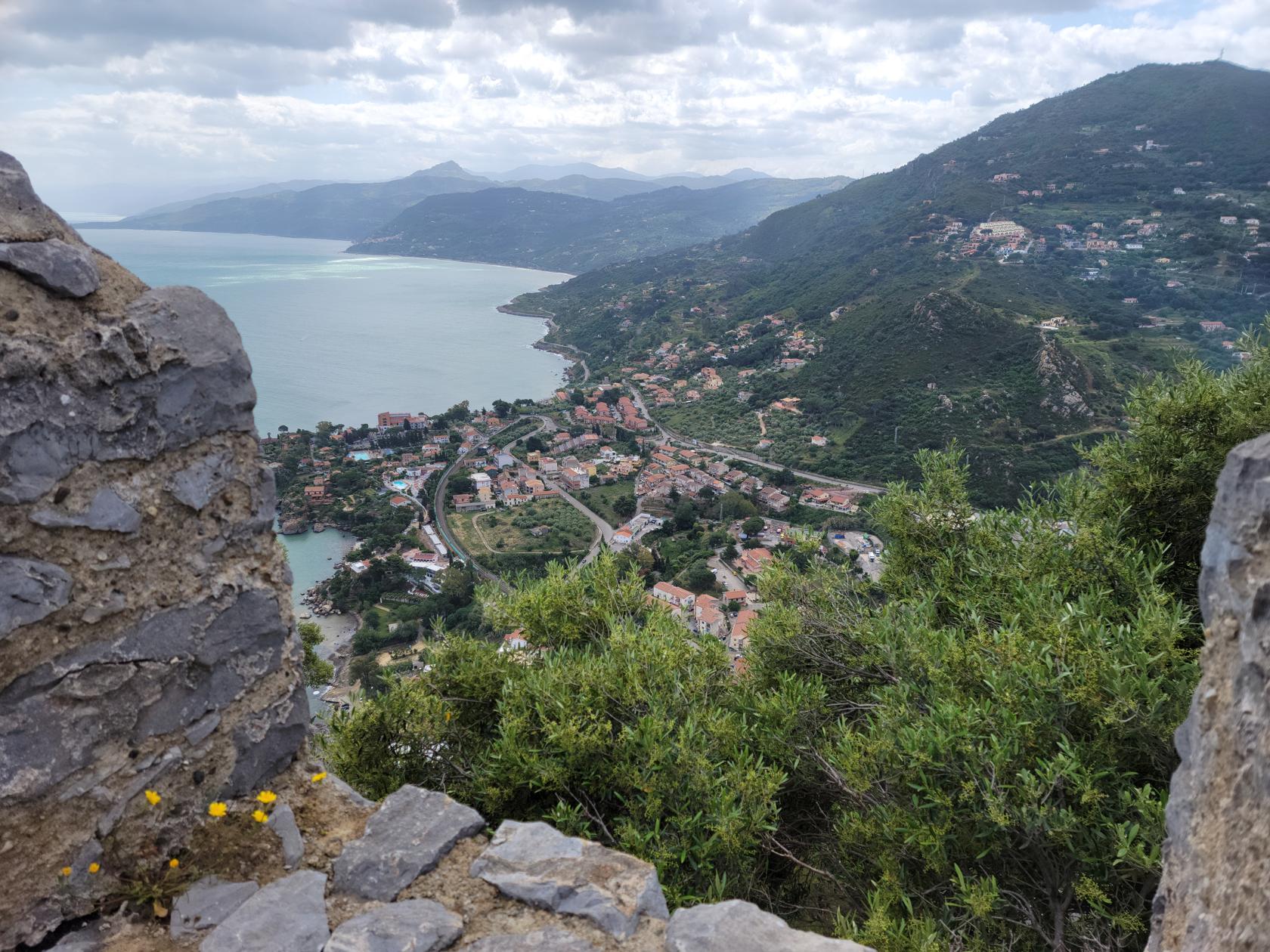
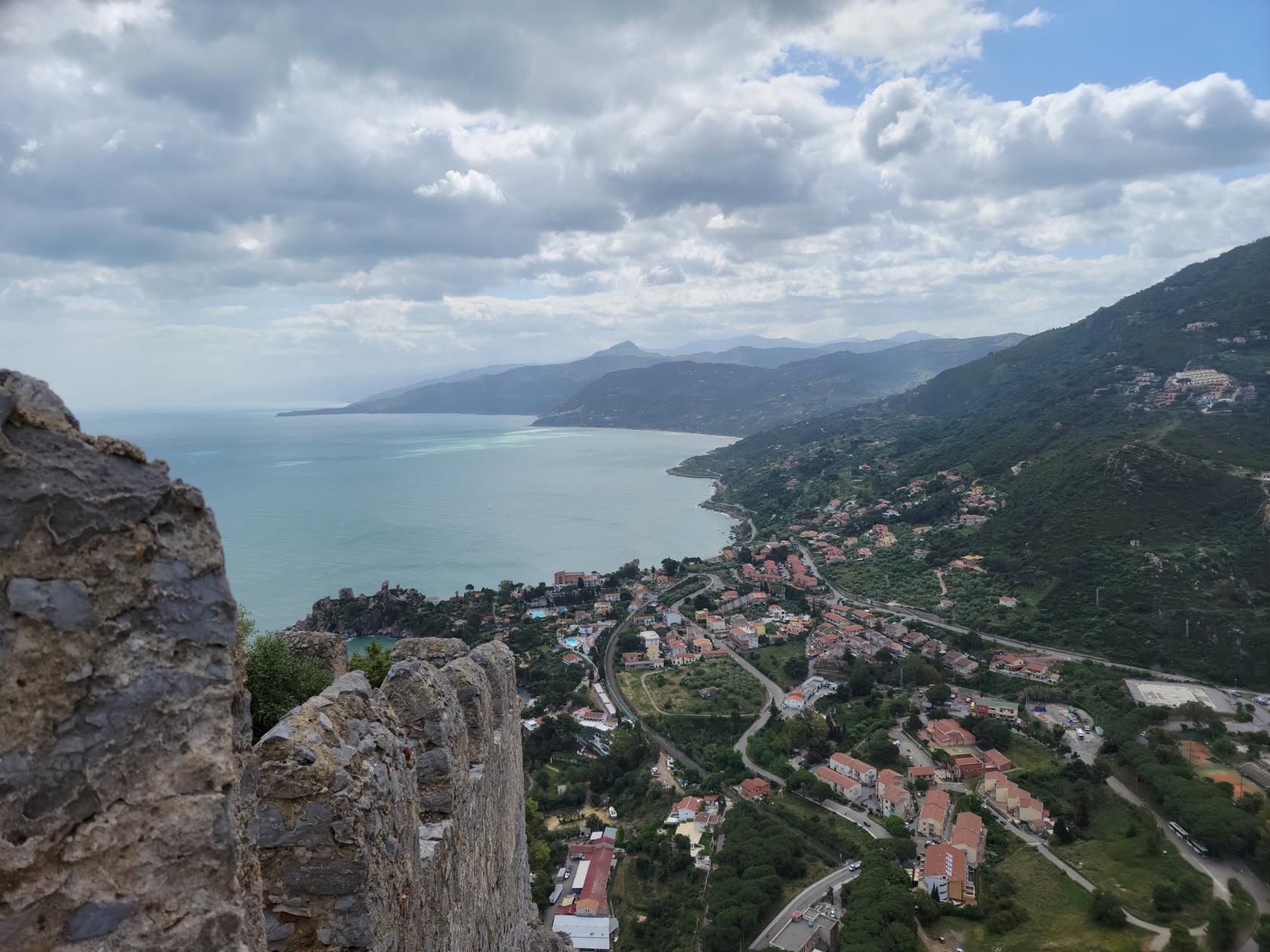
The town below – Hiking la Rocca – Cefalu, Sicily
Storm damage and mud mixed up by the waves – Hiking la Rocca – Cefalu, Sicily
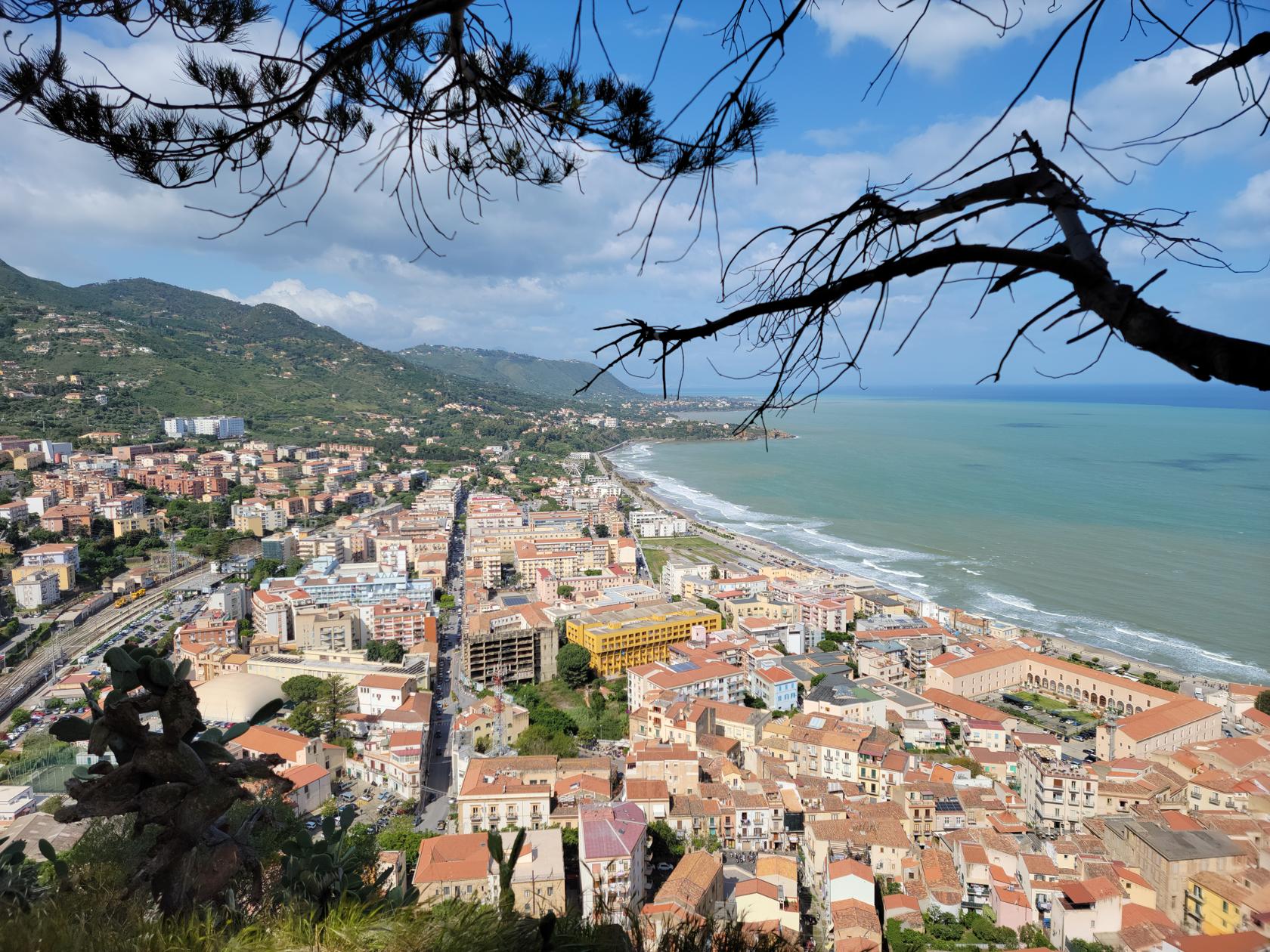
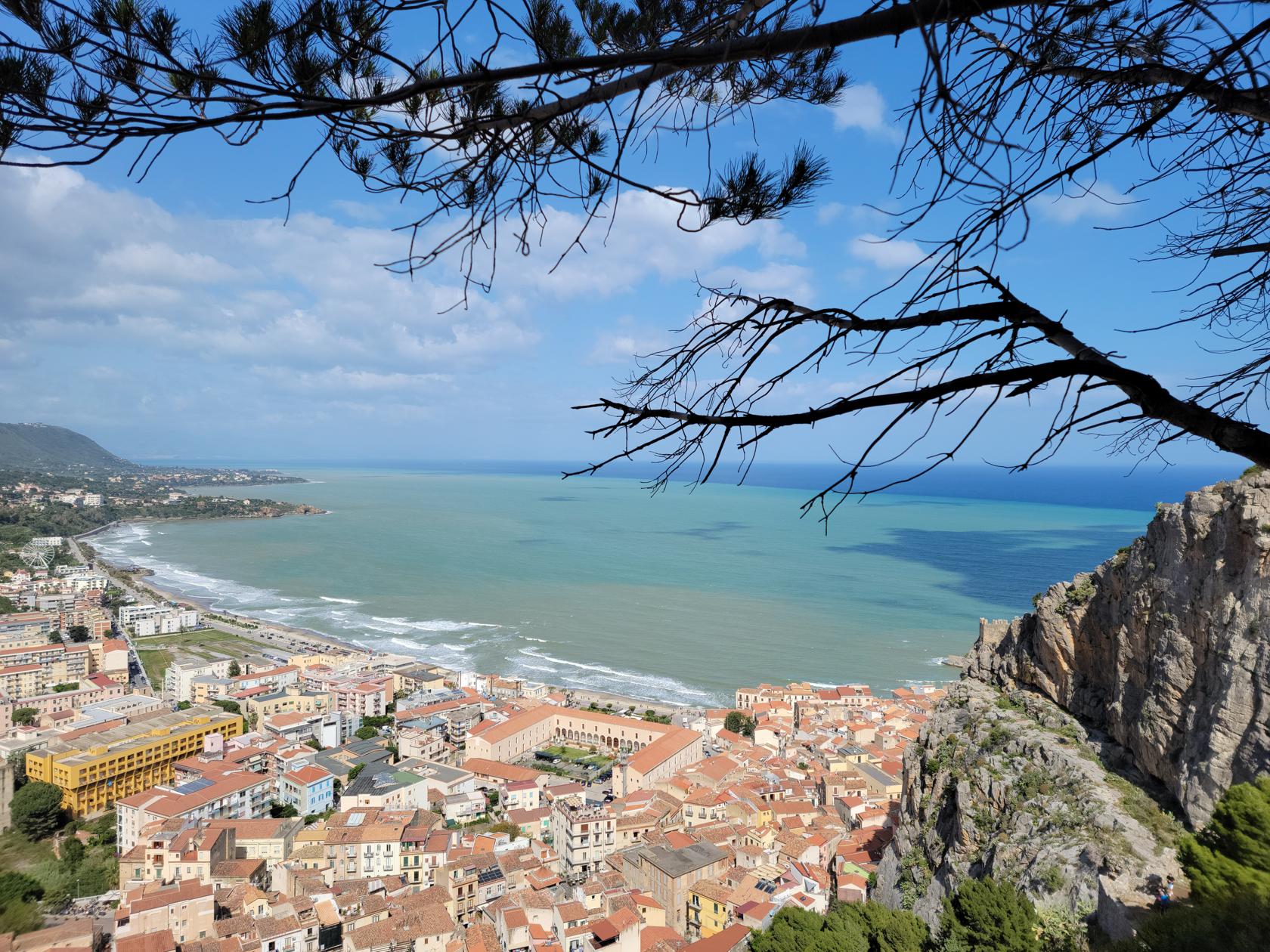
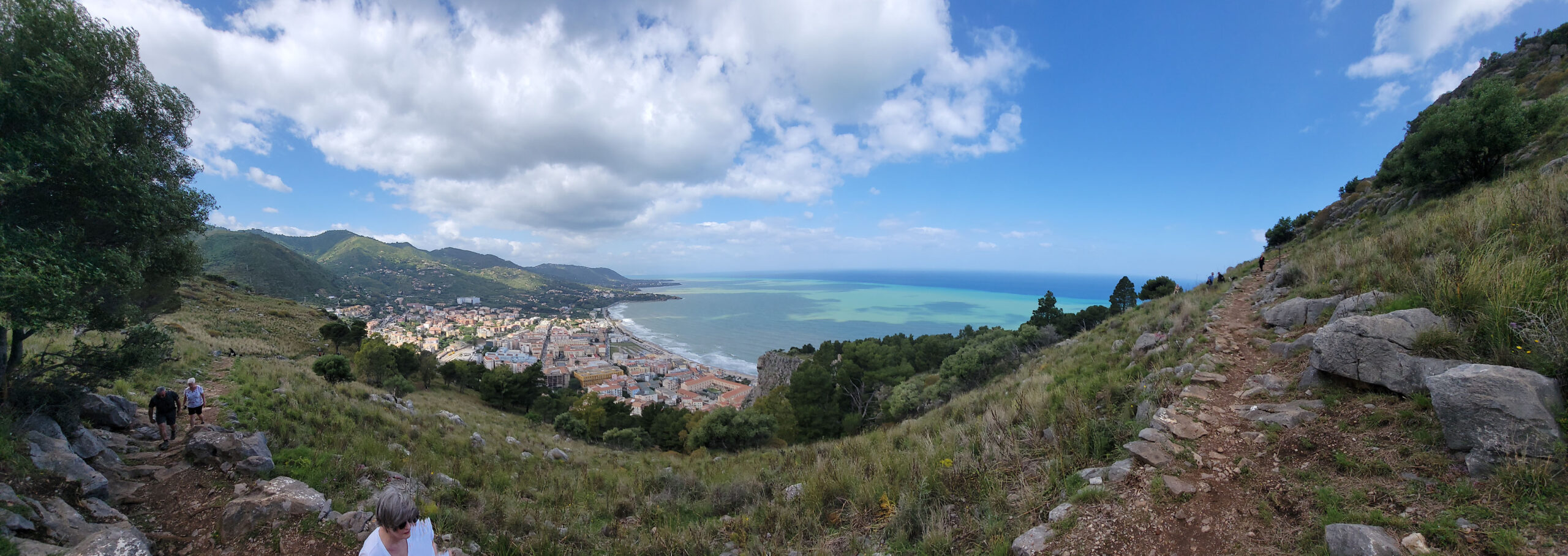
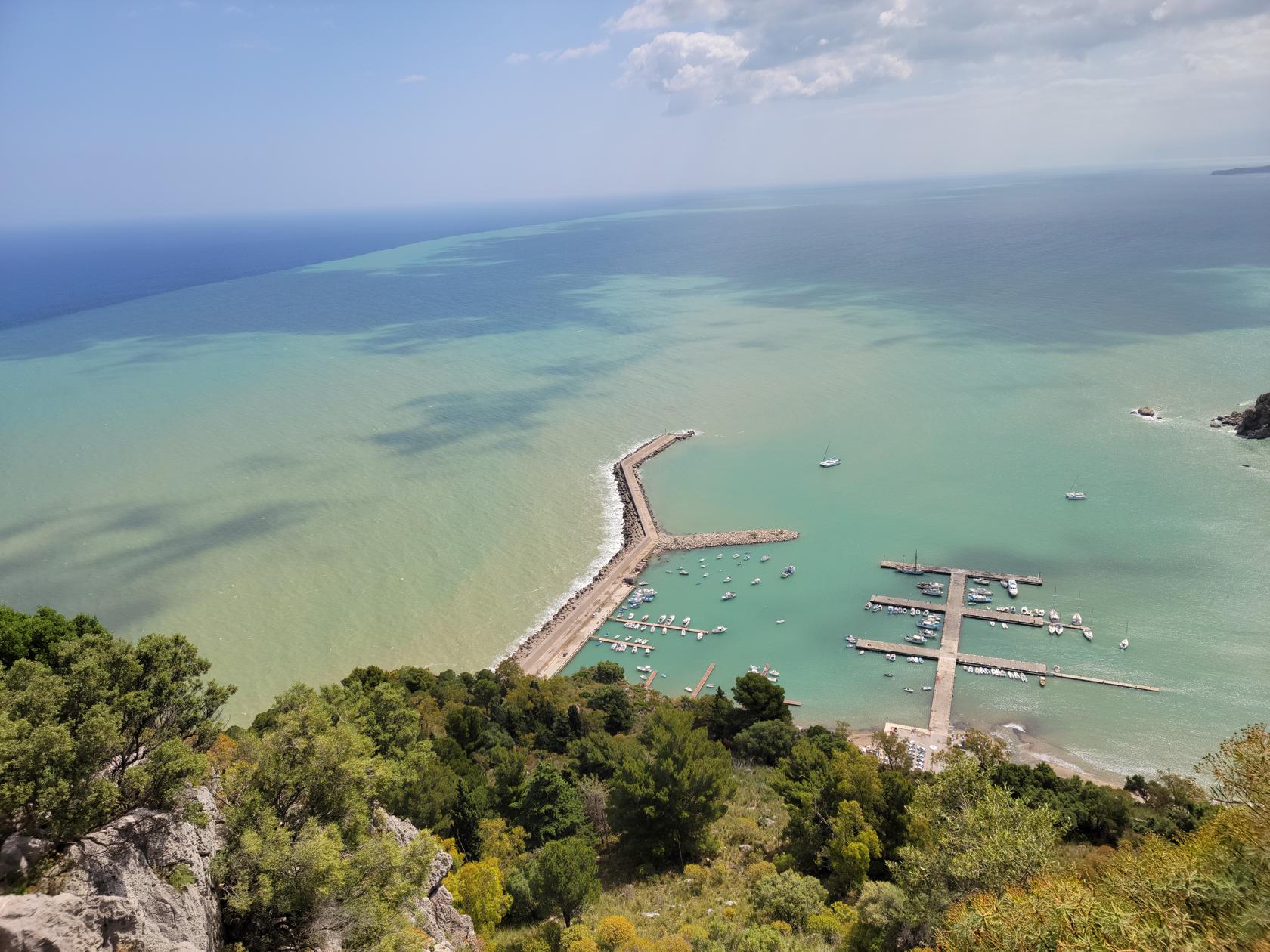
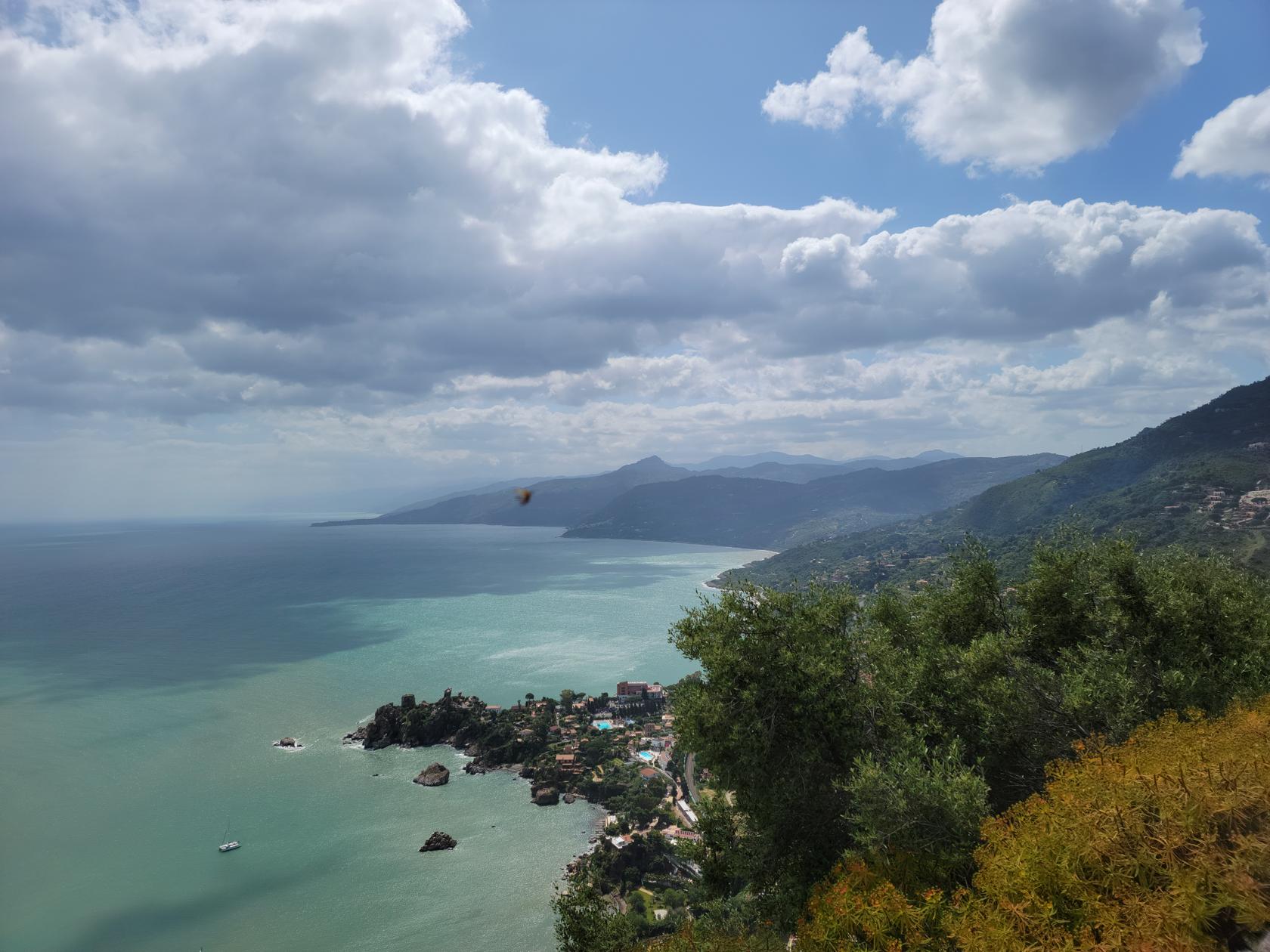
After the turnstile, the hike starts immediately to climb. There are hairpins all along the way up until you enter the first set of walls and gates, which were the first line of defense. This was a perfect point in which to take a few photographs and enjoy the view of Cefalu from above.
Tickets For Two – Hiking la Rocca – Cefalu, Sicily
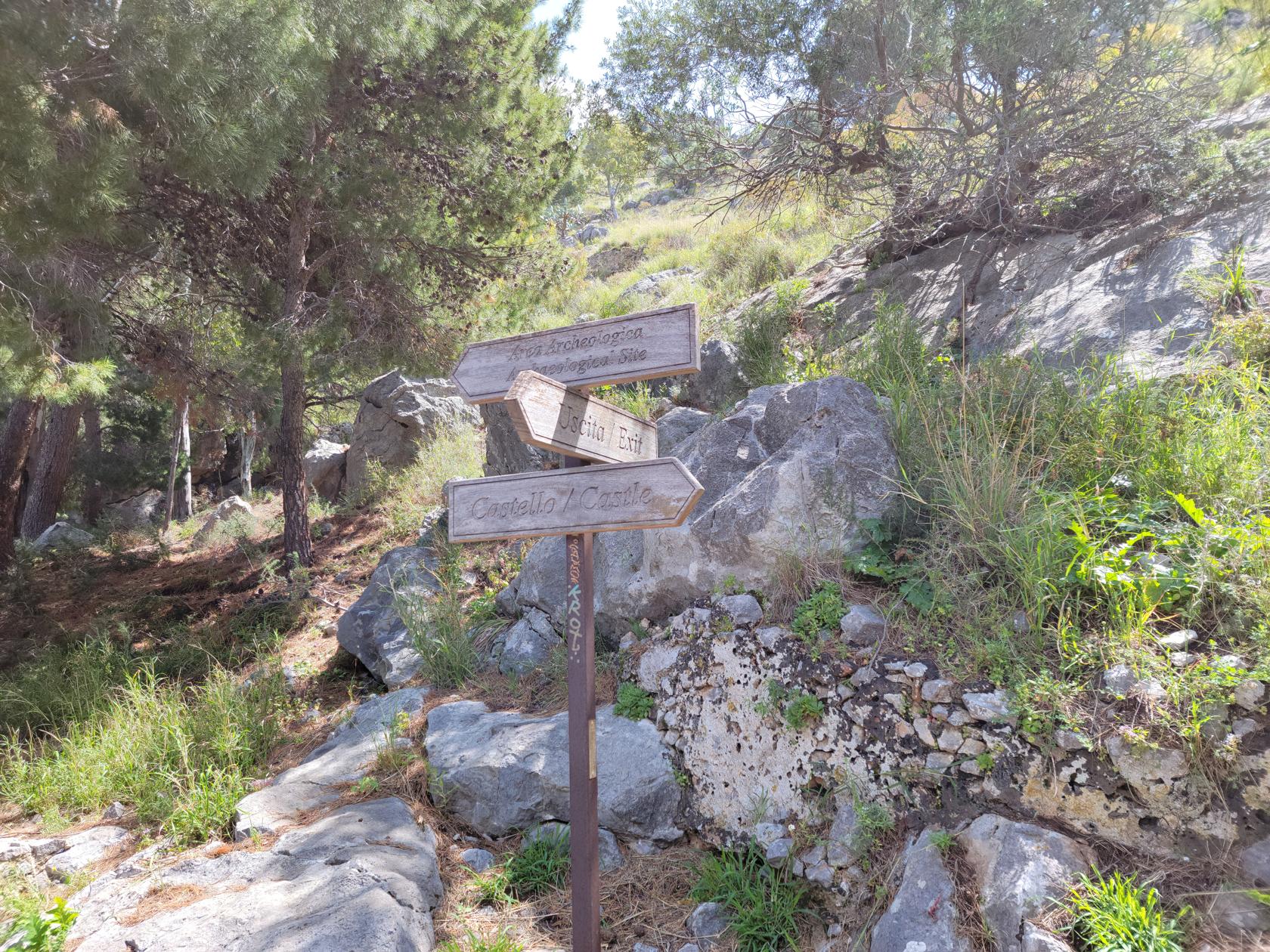
The trail signs – Hiking la Rocca – Cefalu, Sicily
The hike then brings you to a fork in the road with a sign, archeological ruins left, castle right, we chose the right route, figuring we wanted to see it first. It then continues and enters a steep area of tree and grass along sheer walls of stone, home to a large number of goats. If you pay attention, you can hear their calls and see them climbing the stone walls as if to mock you.
A panorama of the town and trail – Hiking la Rocca – Cefalu, Sicily
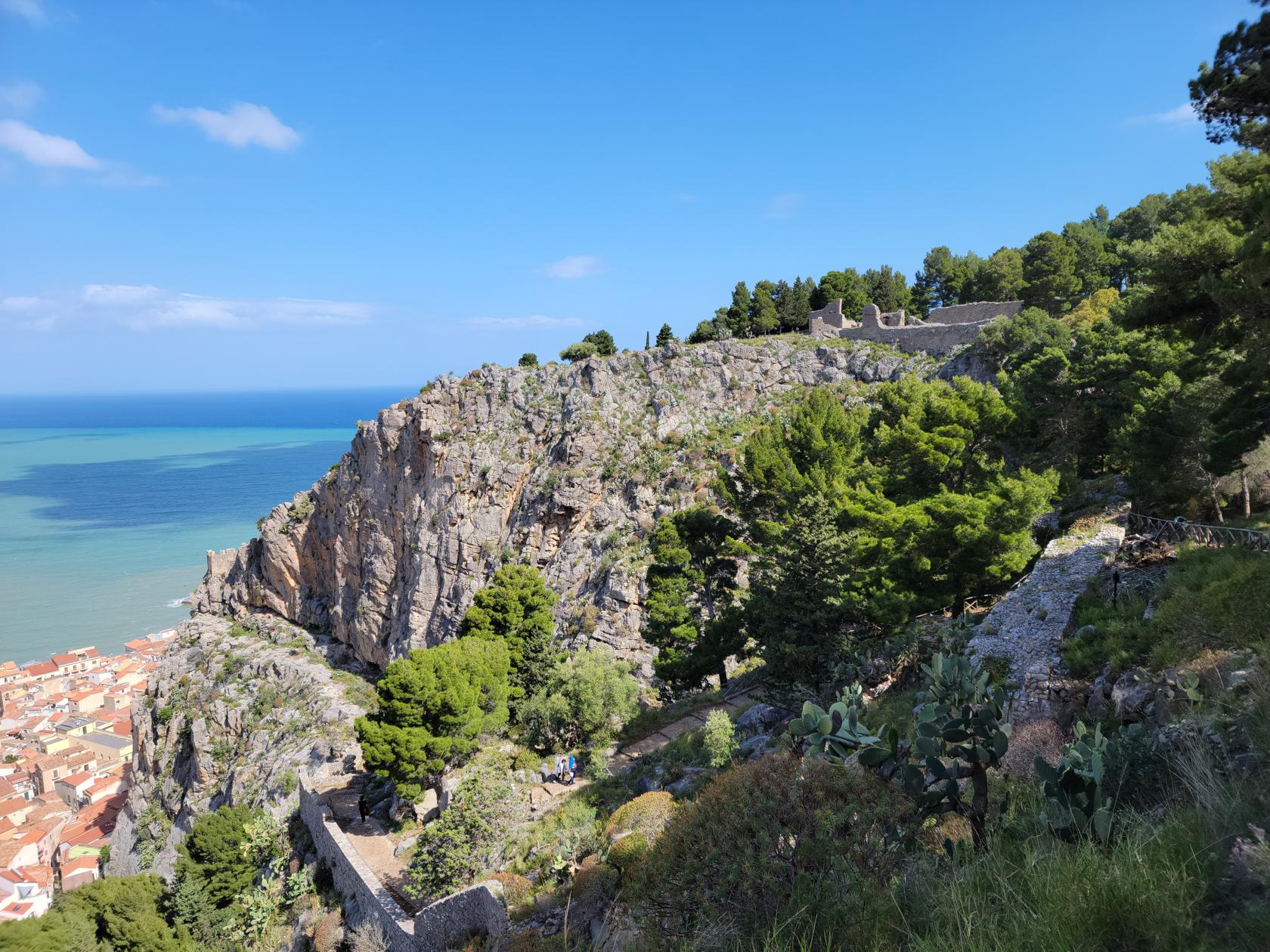
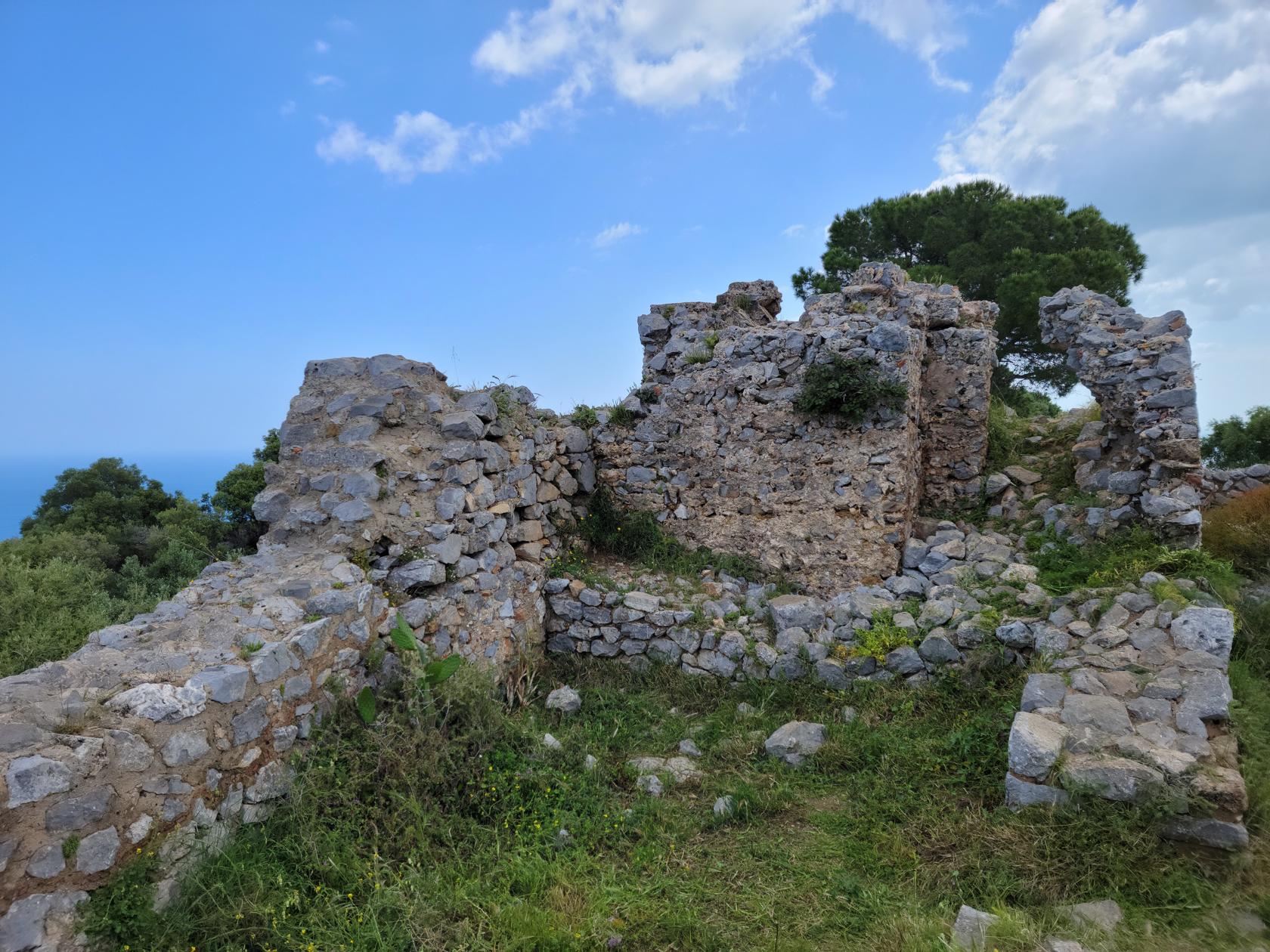
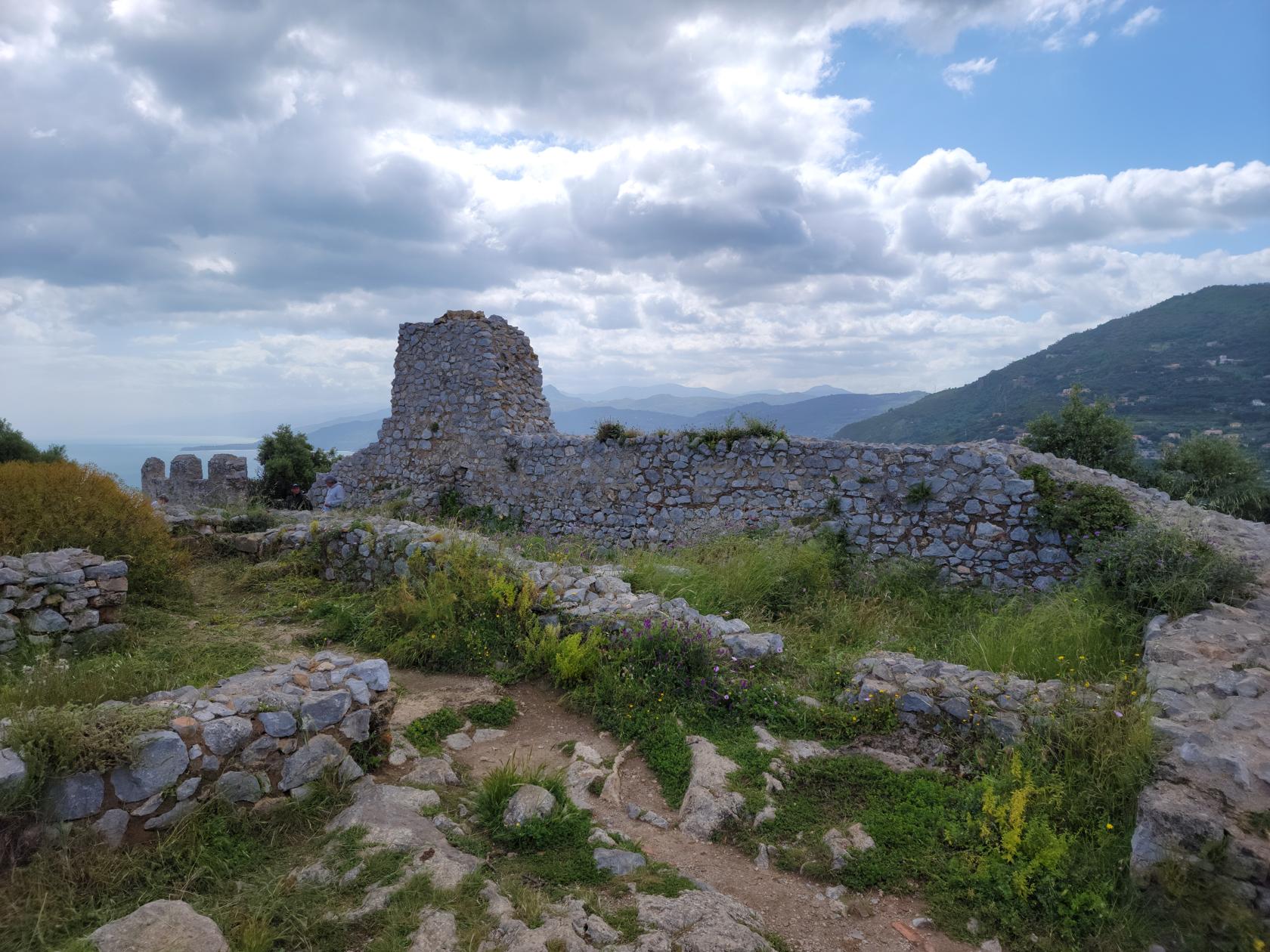
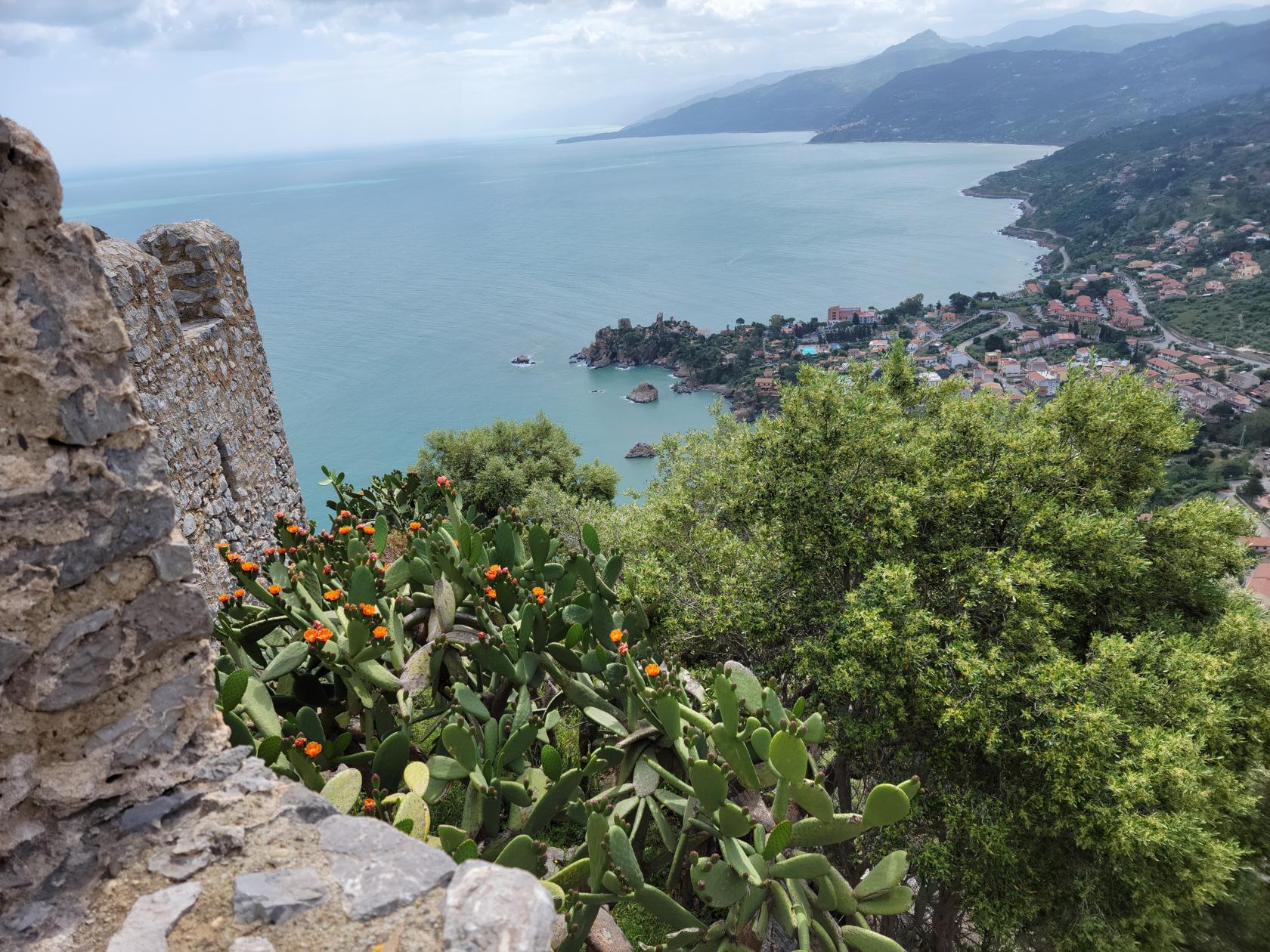
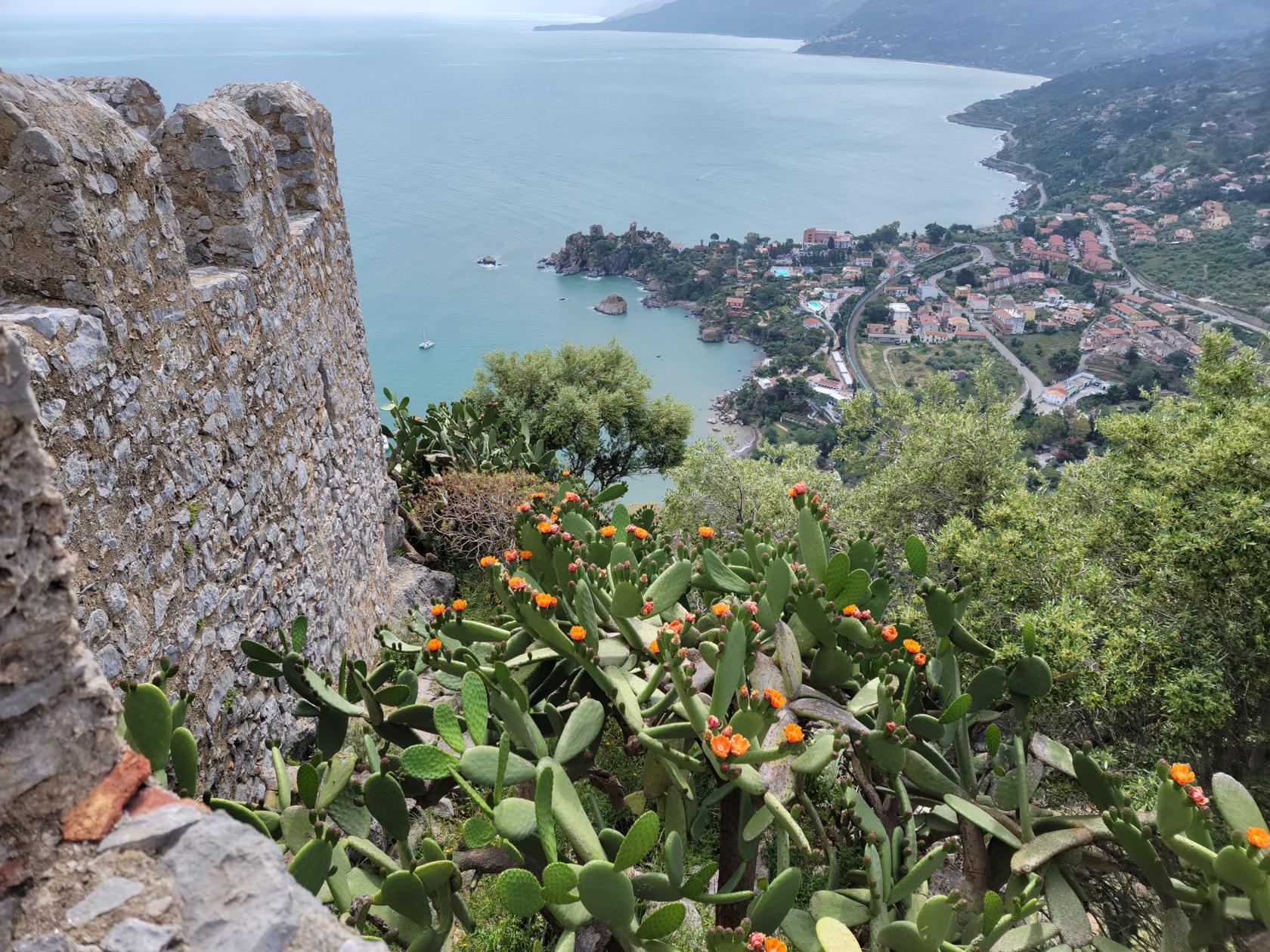
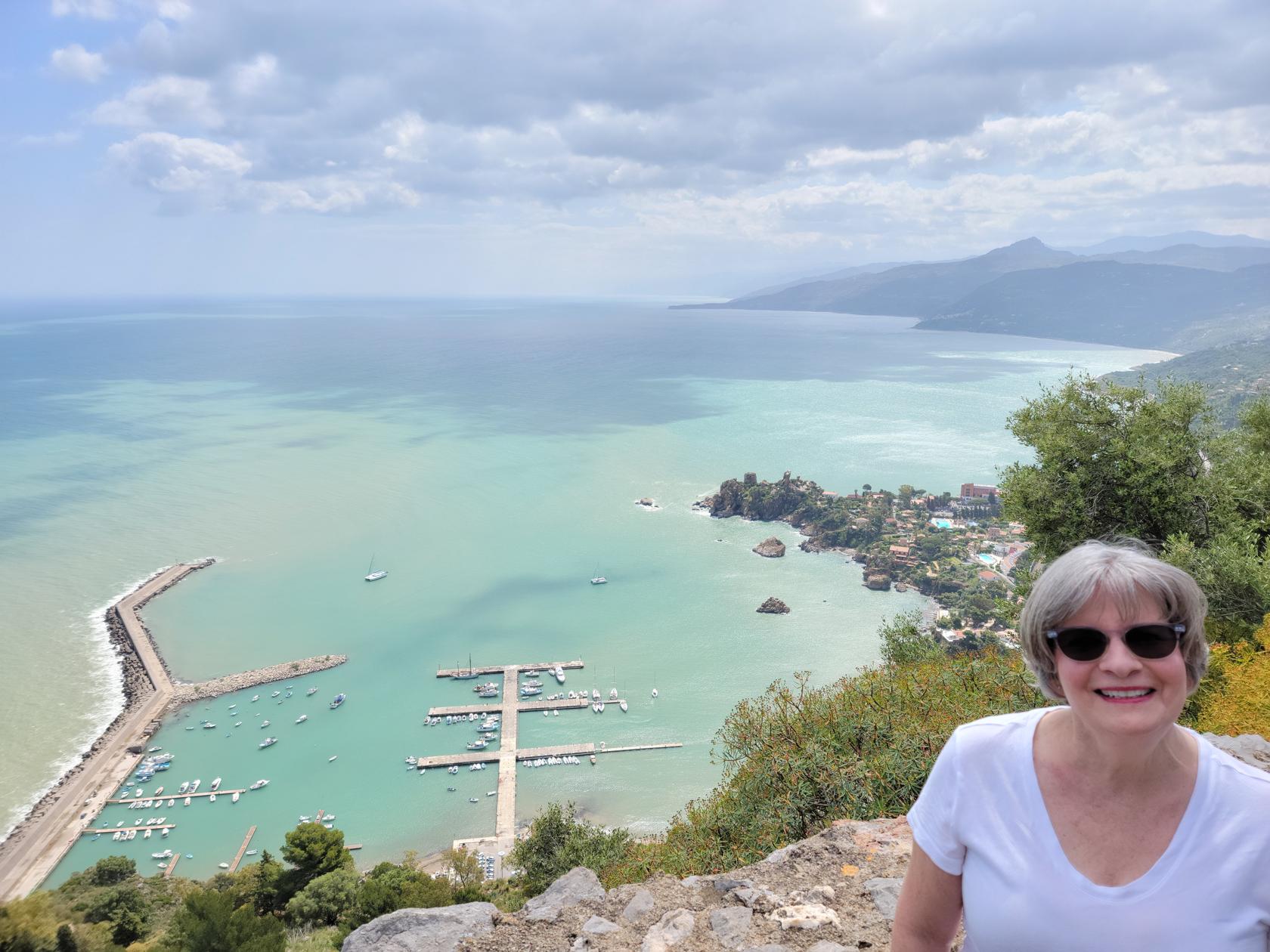
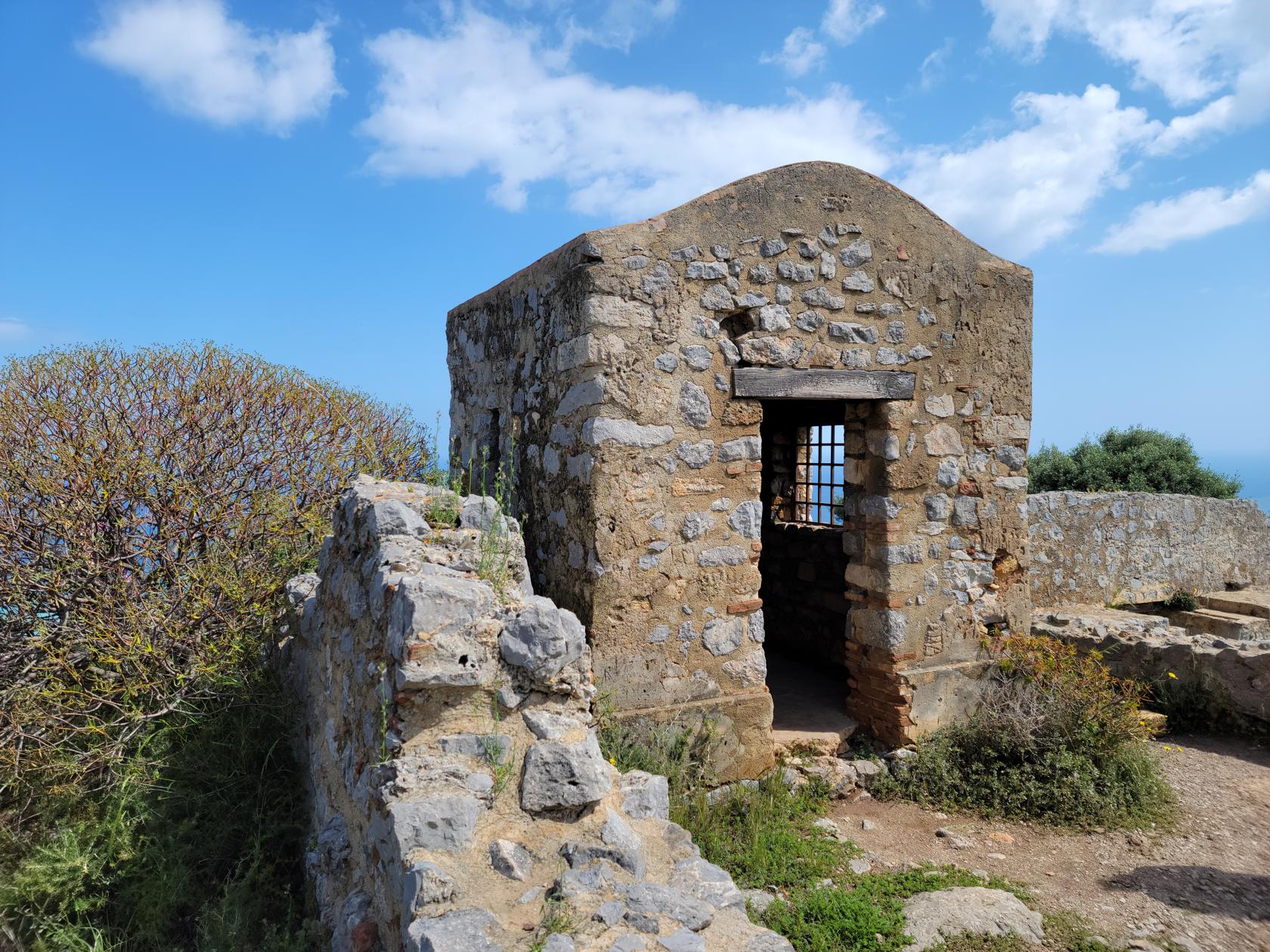
After what seems like another half an hour of switching back and forth along the trail you enter the area of the castle. Here are the remnants of the once grand Cefalu Castle, Perched high above the town, it had a commanding view of the countryside and in its time, must have been unassailable. From here one can take amazing photographs of the town below, the sea and the beautiful countryside below.
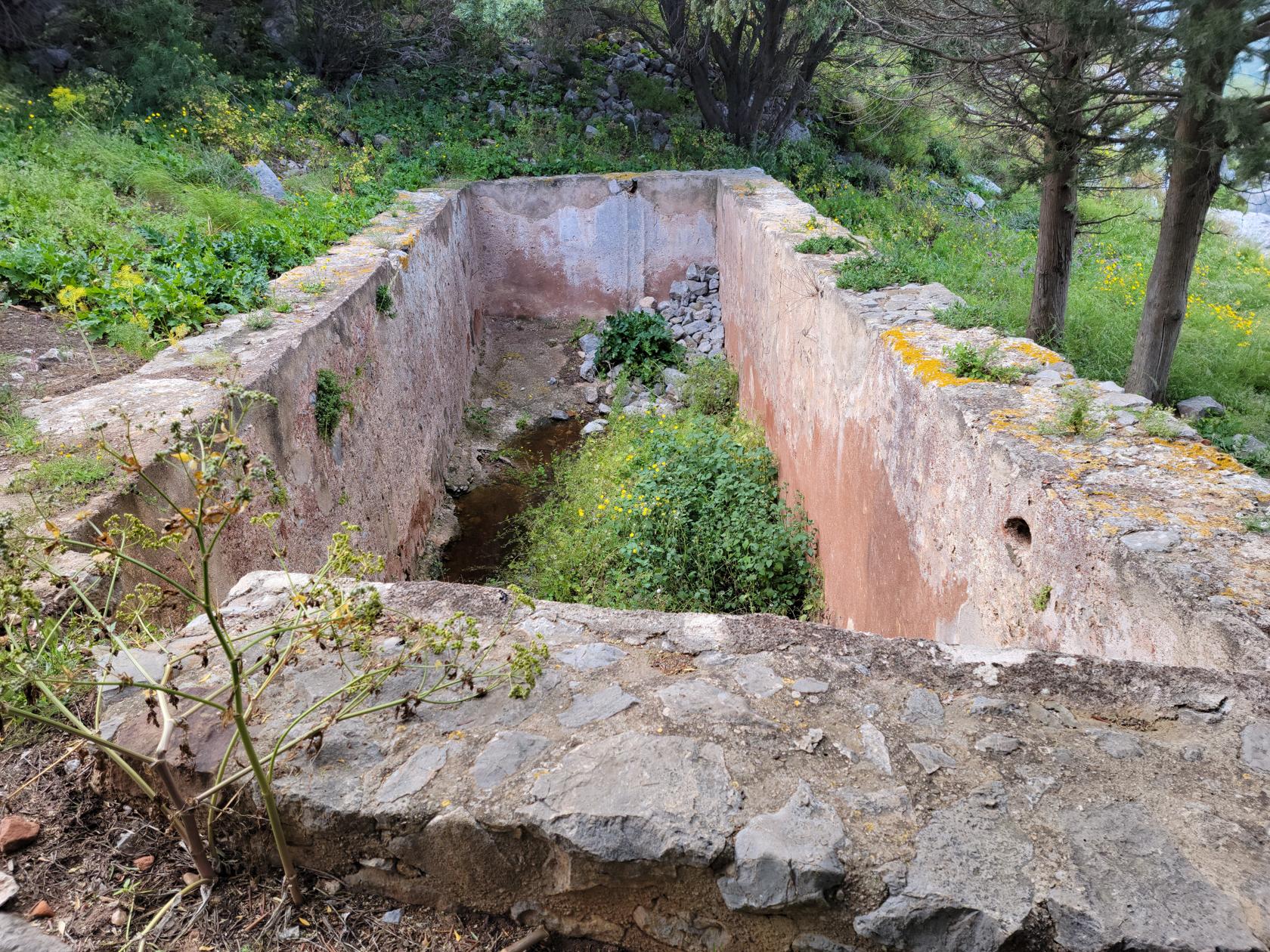
An old cistern – Hiking la Rocca – Cefalu, Sicily
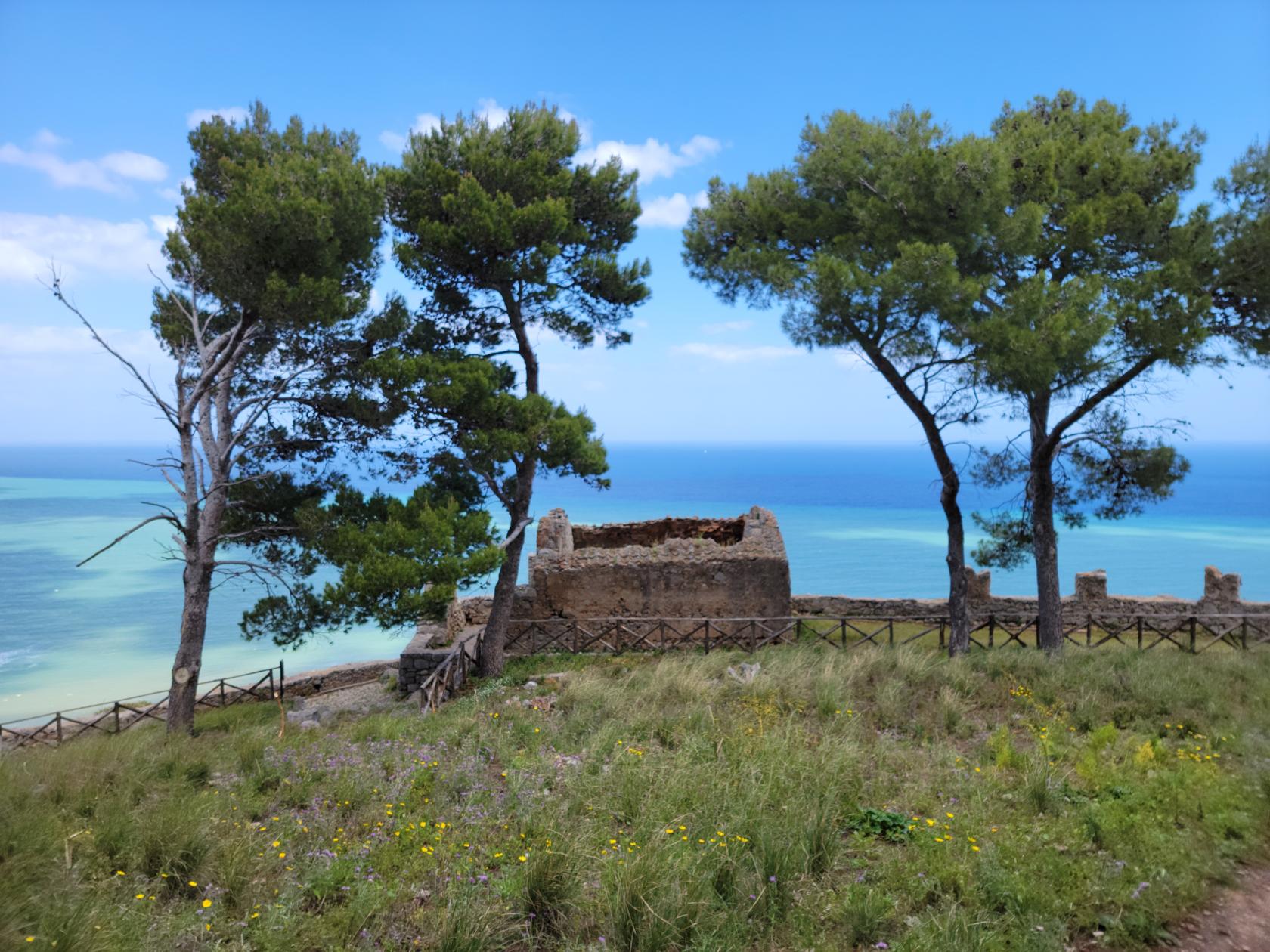
Old guard post buildings – Hiking la Rocca – Cefalu, Sicily
The fortress walls – Hiking la Rocca – Cefalu, Sicily
A view of La Kalura – Hiking la Rocca – Cefalu, Sicily
A view of La Kalura – Hiking la Rocca – Cefalu, Sicily
Torre Caldura – Hiking la Rocca – Cefalu, Sicily
Torre Caldura – Hiking la Rocca – Cefalu, Sicily
Another jetty – Hiking la Rocca – Cefalu, Sicily
Torre Caldura – Hiking la Rocca – Cefalu, Sicily
Patti – Hiking la Rocca – Cefalu, Sicily
Guard outpost – Hiking la Rocca – Cefalu, Sicily
Temple of Apollo – Hiking la Rocca – Cefalu, Sicily
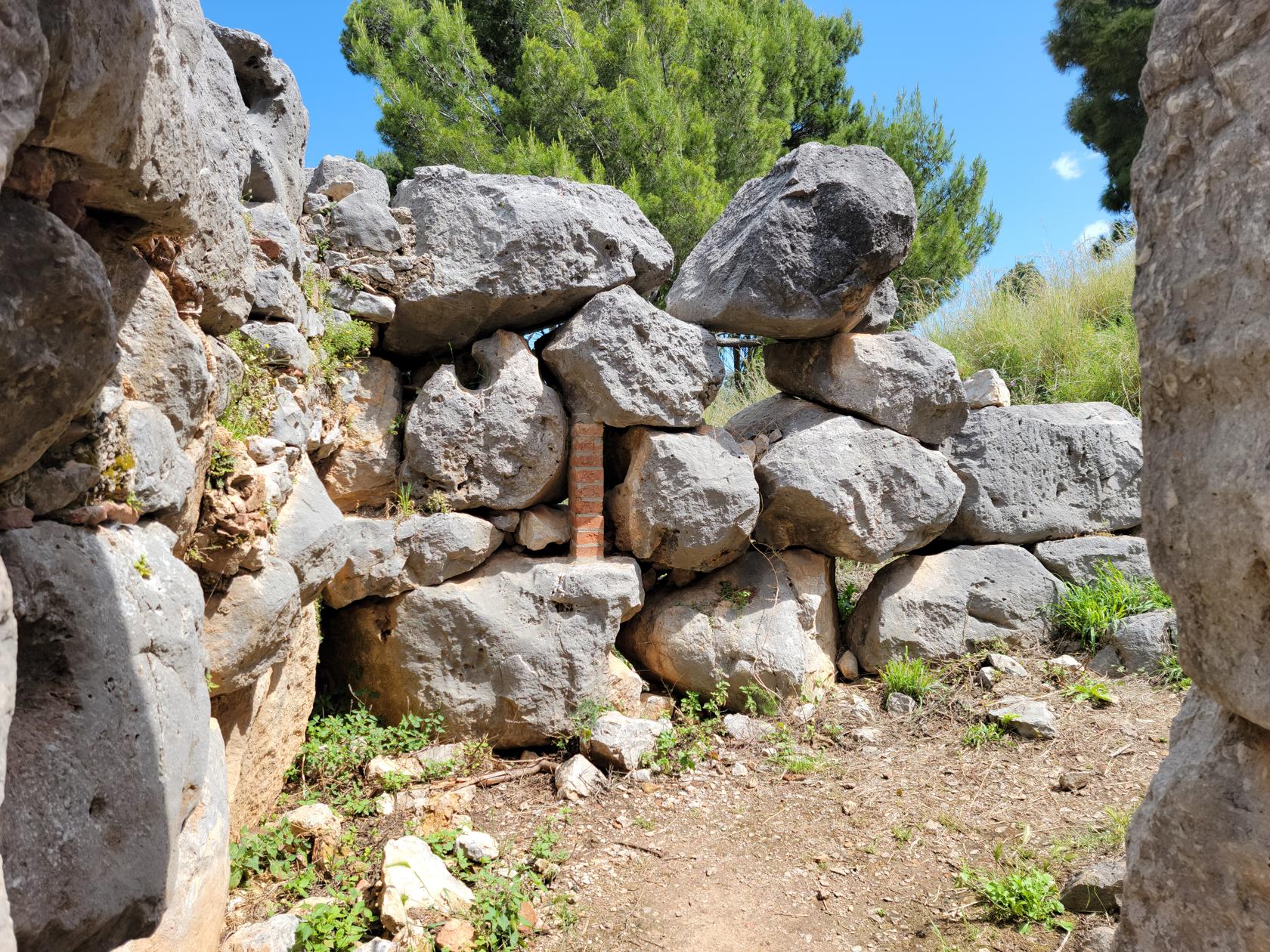
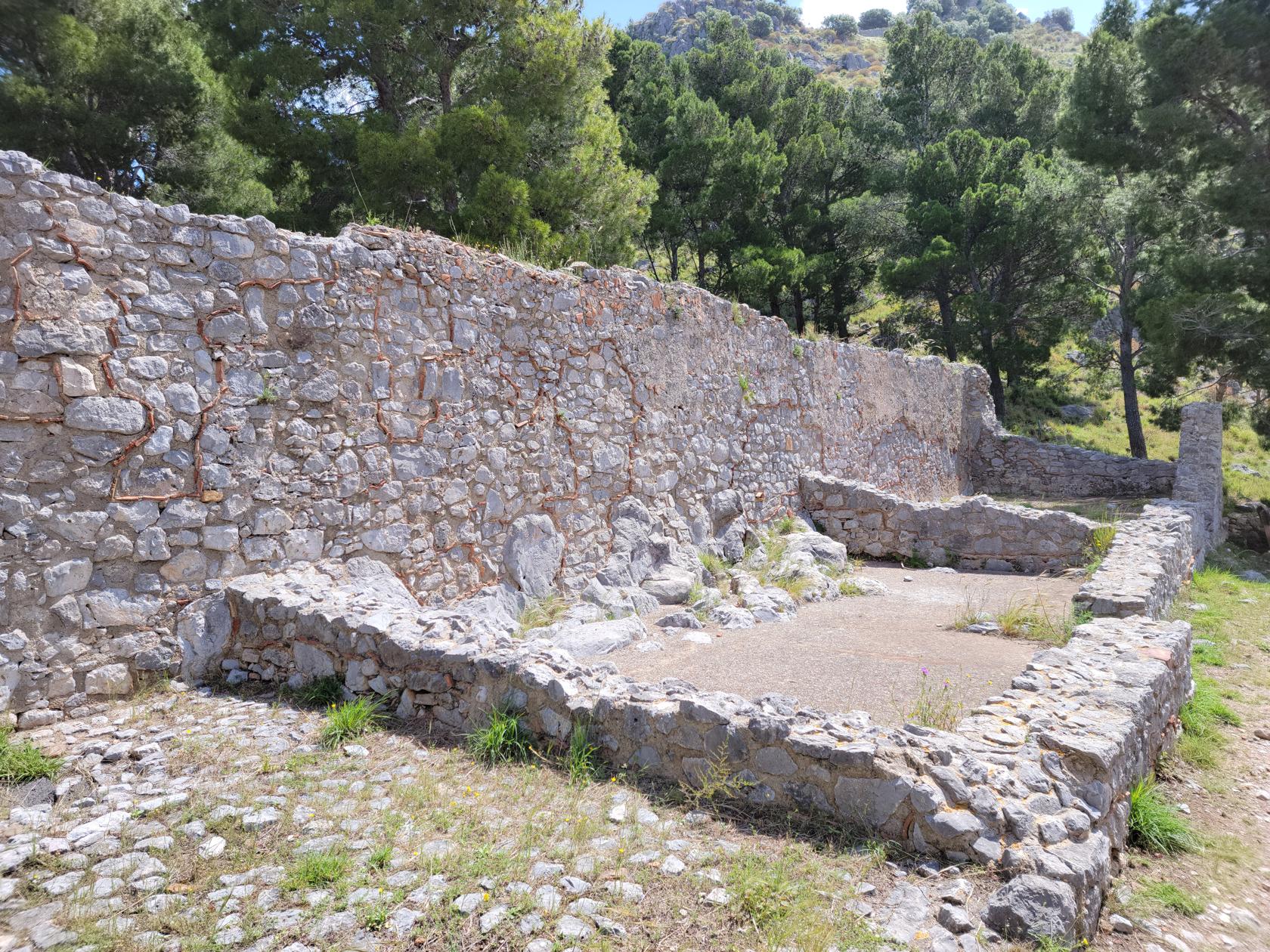
Archeological ruins – Hiking la Rocca – Cefalu, Sicily
More ruins – Hiking la Rocca – Cefalu, Sicily
Guard outpost – Hiking la Rocca – Cefalu, Sicily
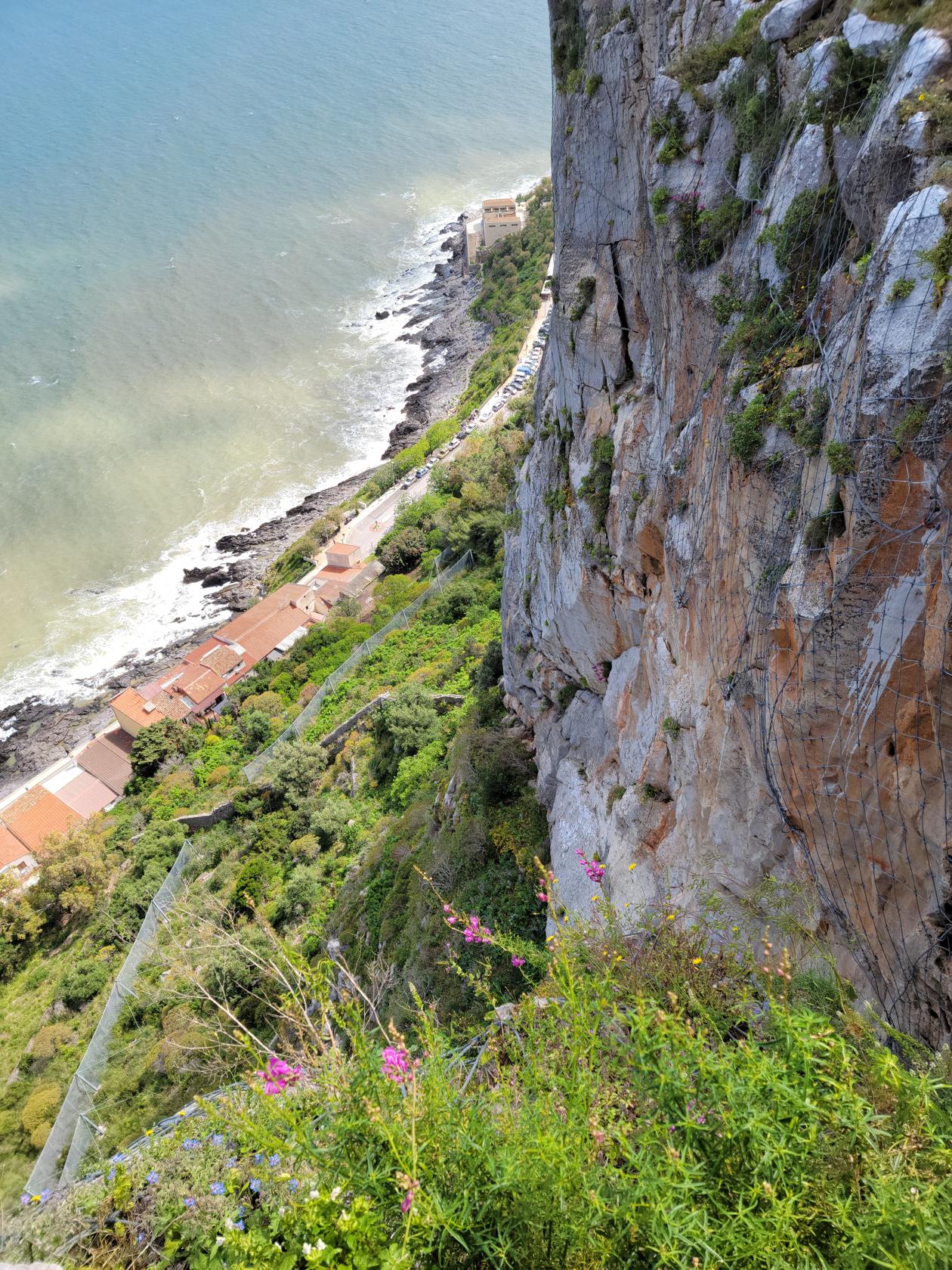
The sheer cliff face – Hiking la Rocca – Cefalu, Sicily
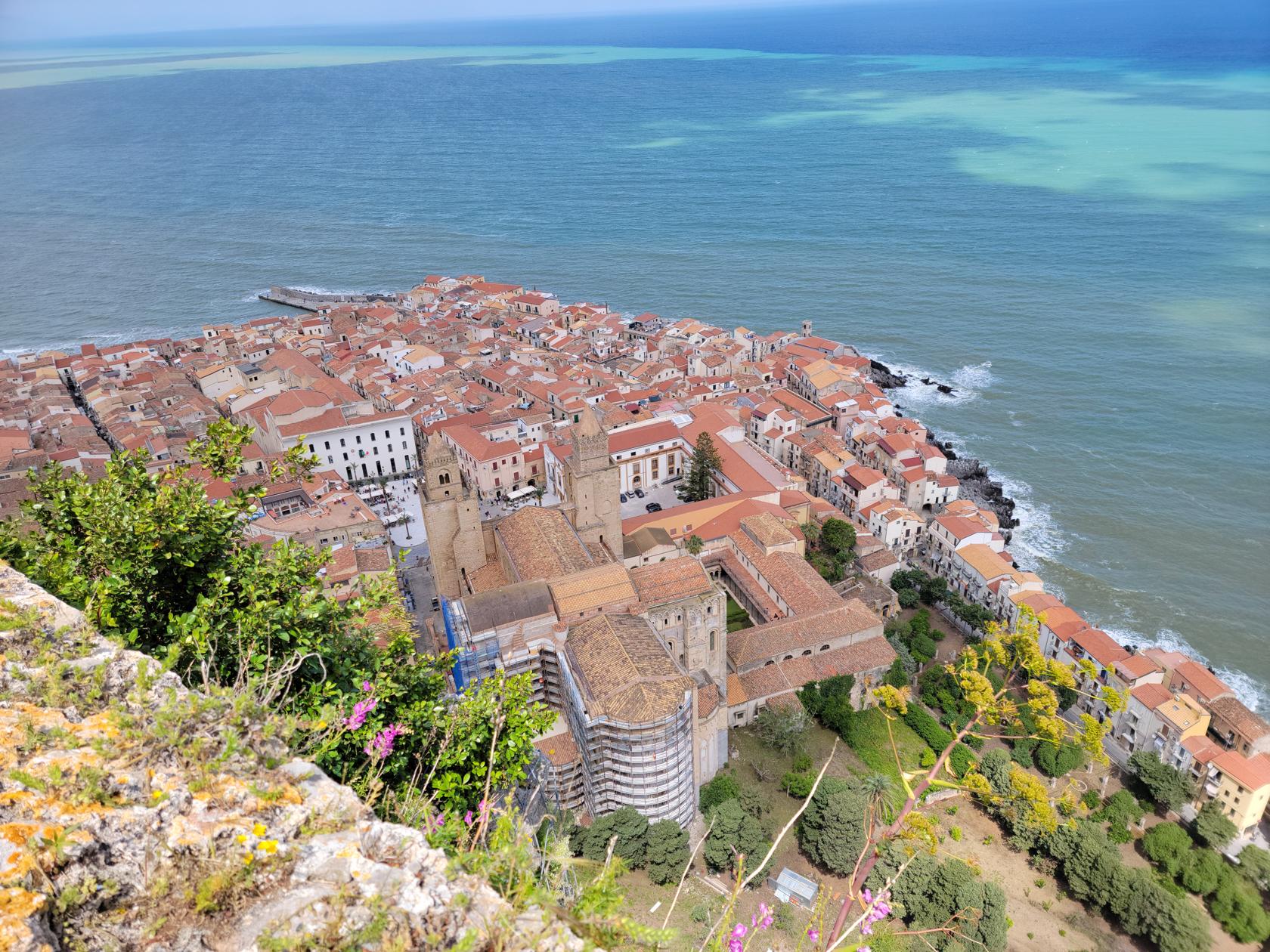
Il Duomo and Cefalu below – Hiking la Rocca – Cefalu, Sicily
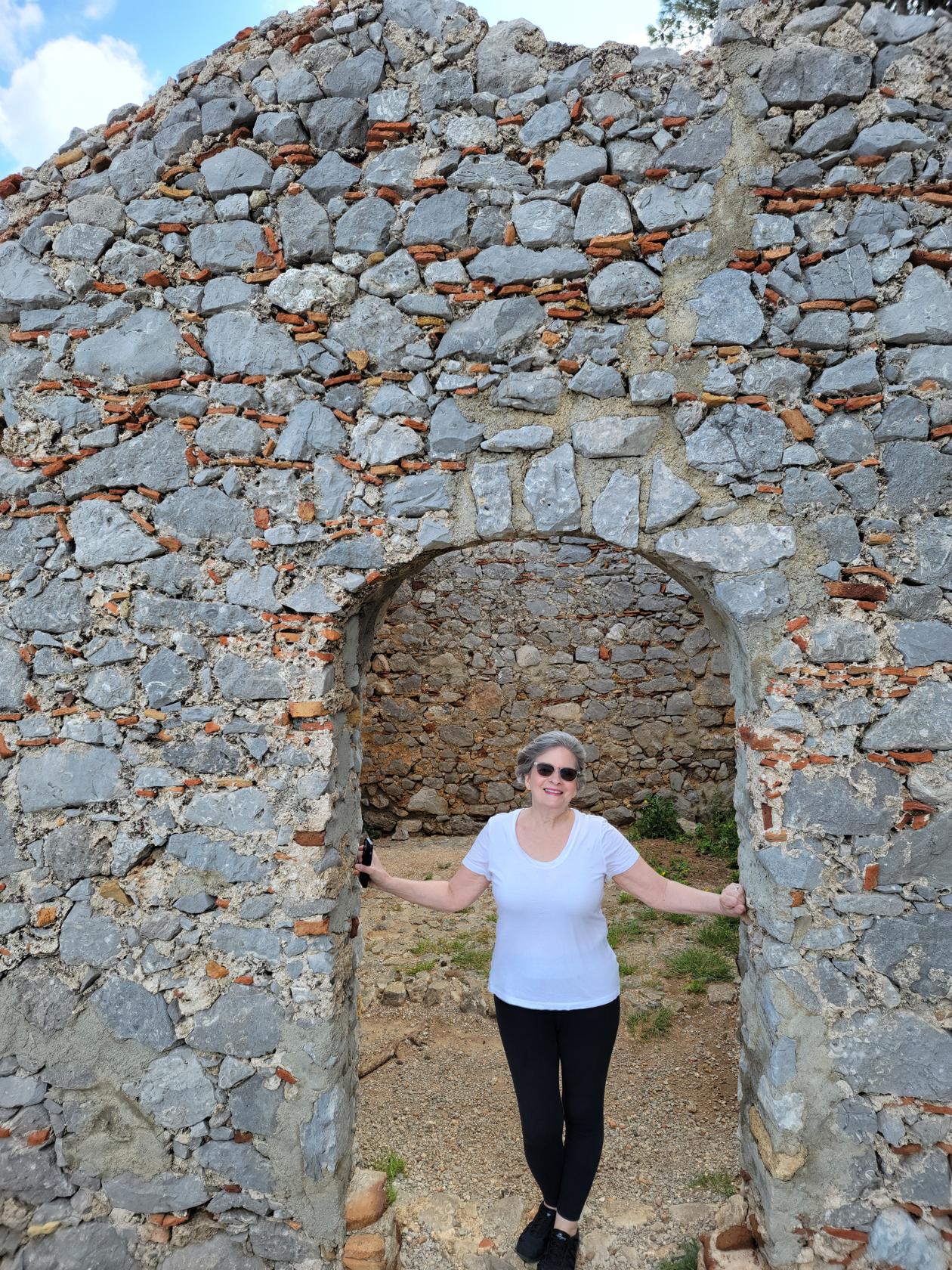
Patti in the ruins – Hiking la Rocca – Cefalu, Sicily
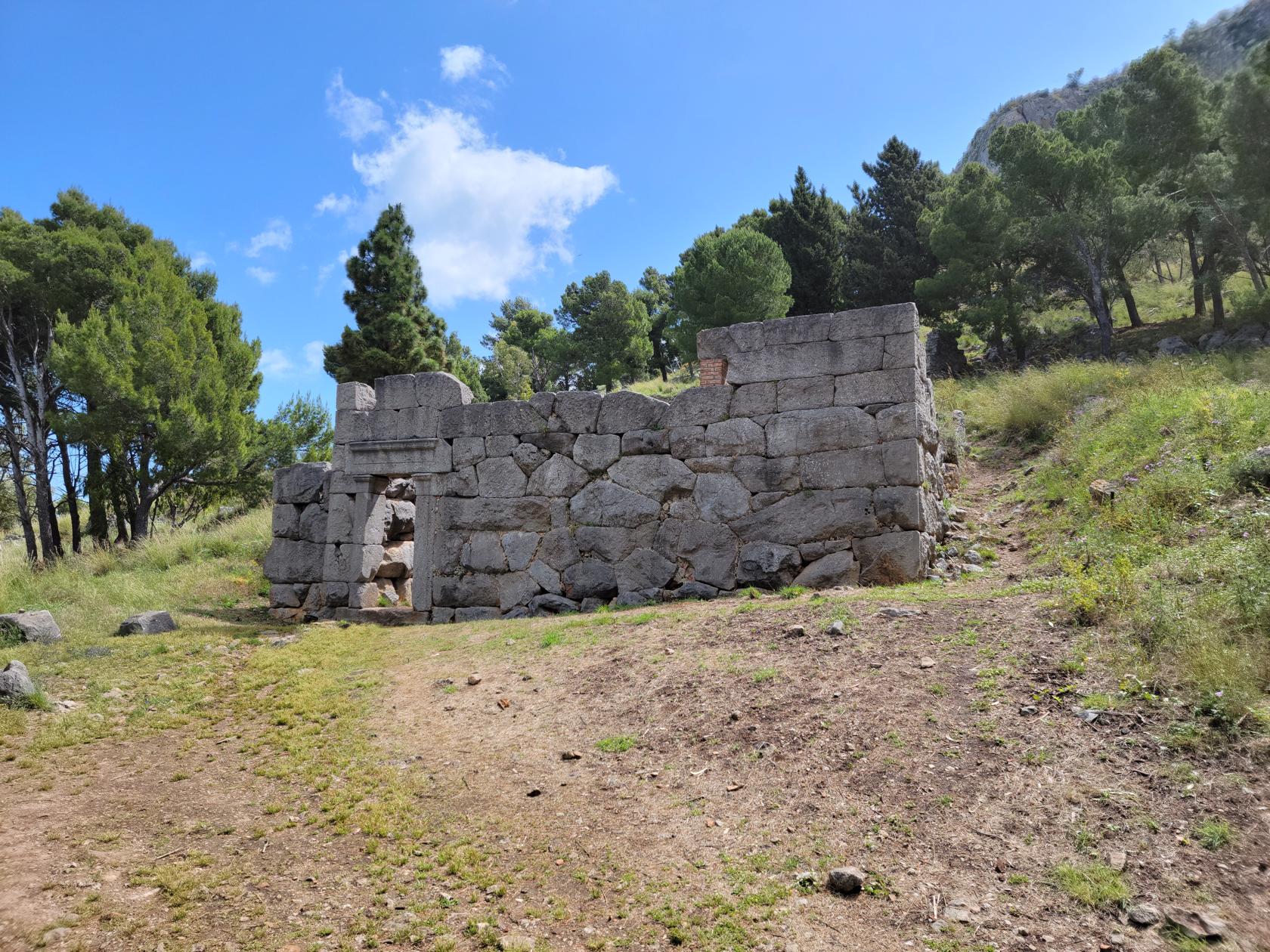
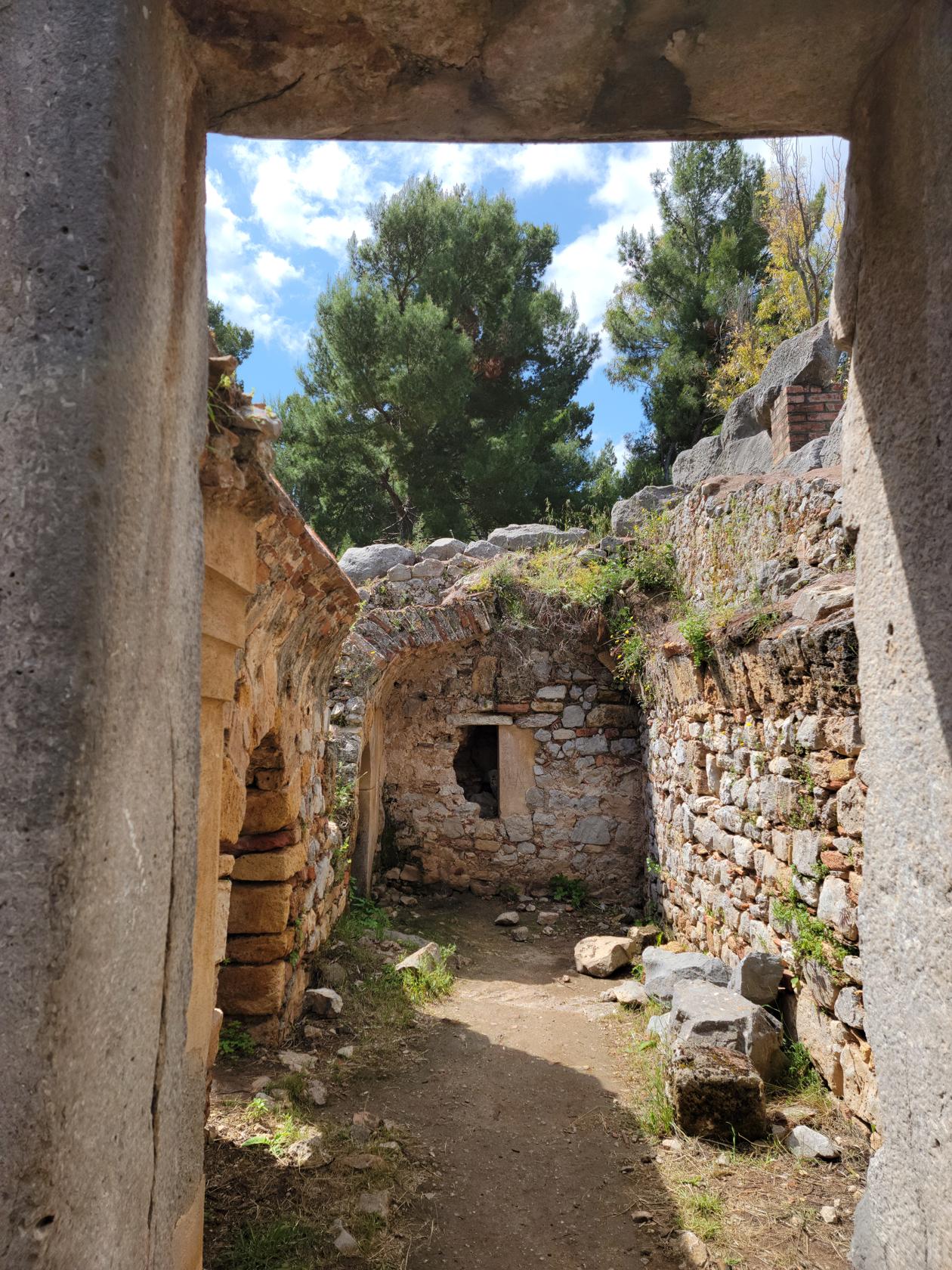
On the way down we bore right in the direction of the archeological site. The path was somewhat muddier and steeper then the other path we ascended upon. However, we descended quickly and enjoyed visiting the Temple of Demeter and an old cistern that is onsite. There is also a cafe here, were you can purchase something small to eat or drink. From here the descent is rapid and soon enough you will be handing the ticket back to the office so they can record your departure, or whatever useful information they derive from it.
Patti in the ruins – Hiking la Rocca – Cefalu, Sicily
The last ruins – Hiking la Rocca – Cefalu, Sicily
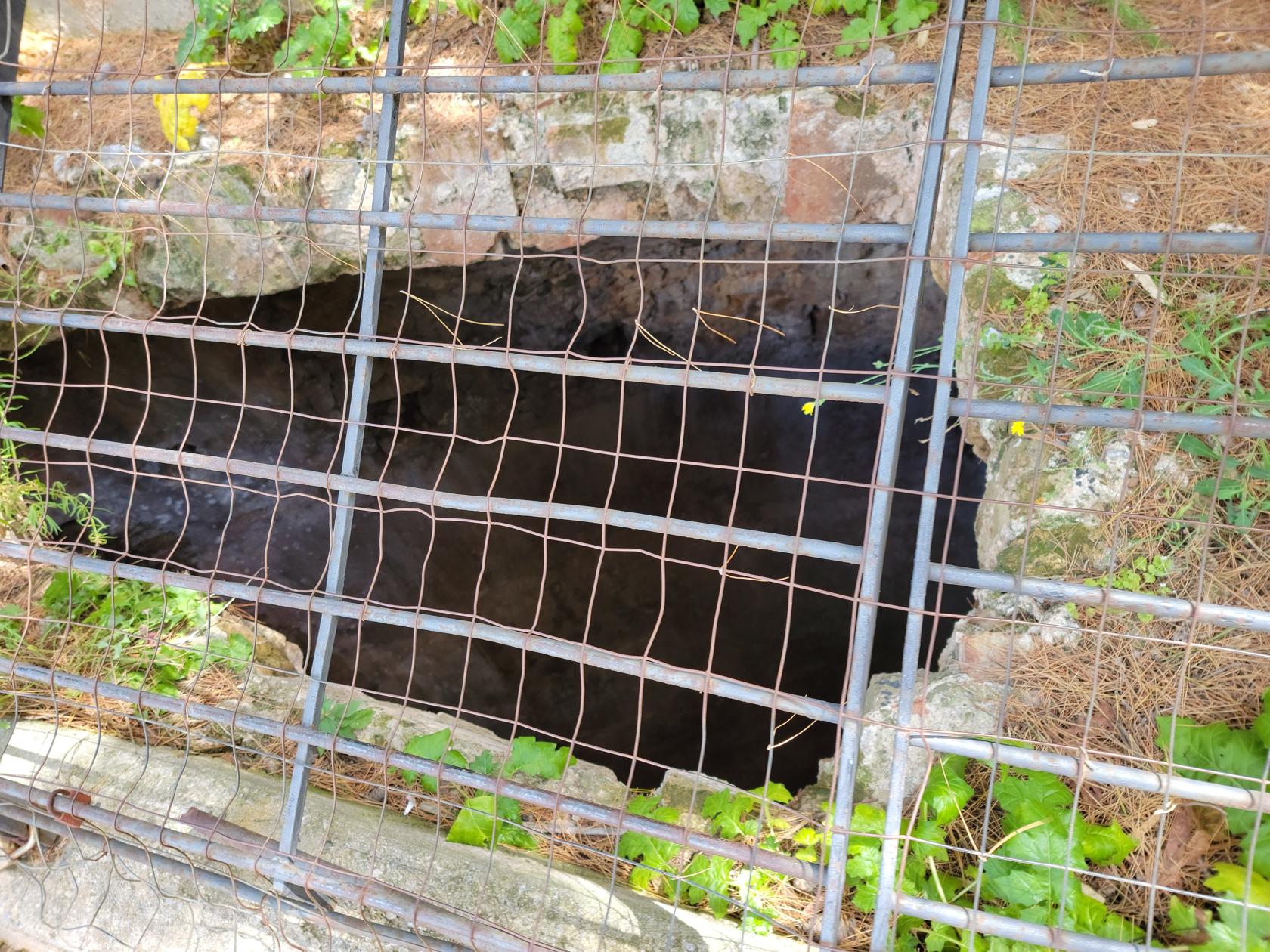
The giant cistern, 50 meters deep – Hiking la Rocca – Cefalu, Sicily
More ruins – Hiking la Rocca – Cefalu, Sicily
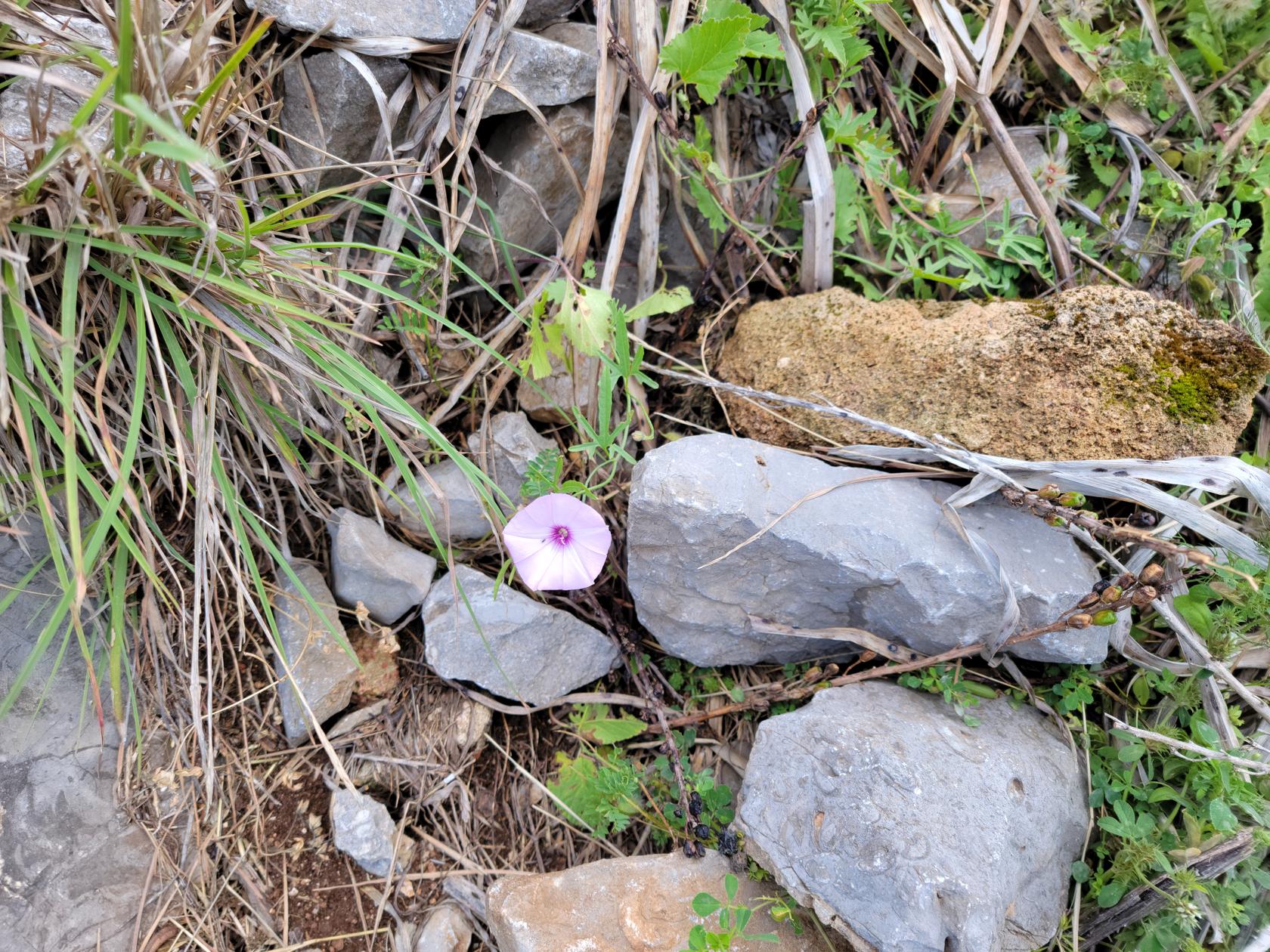
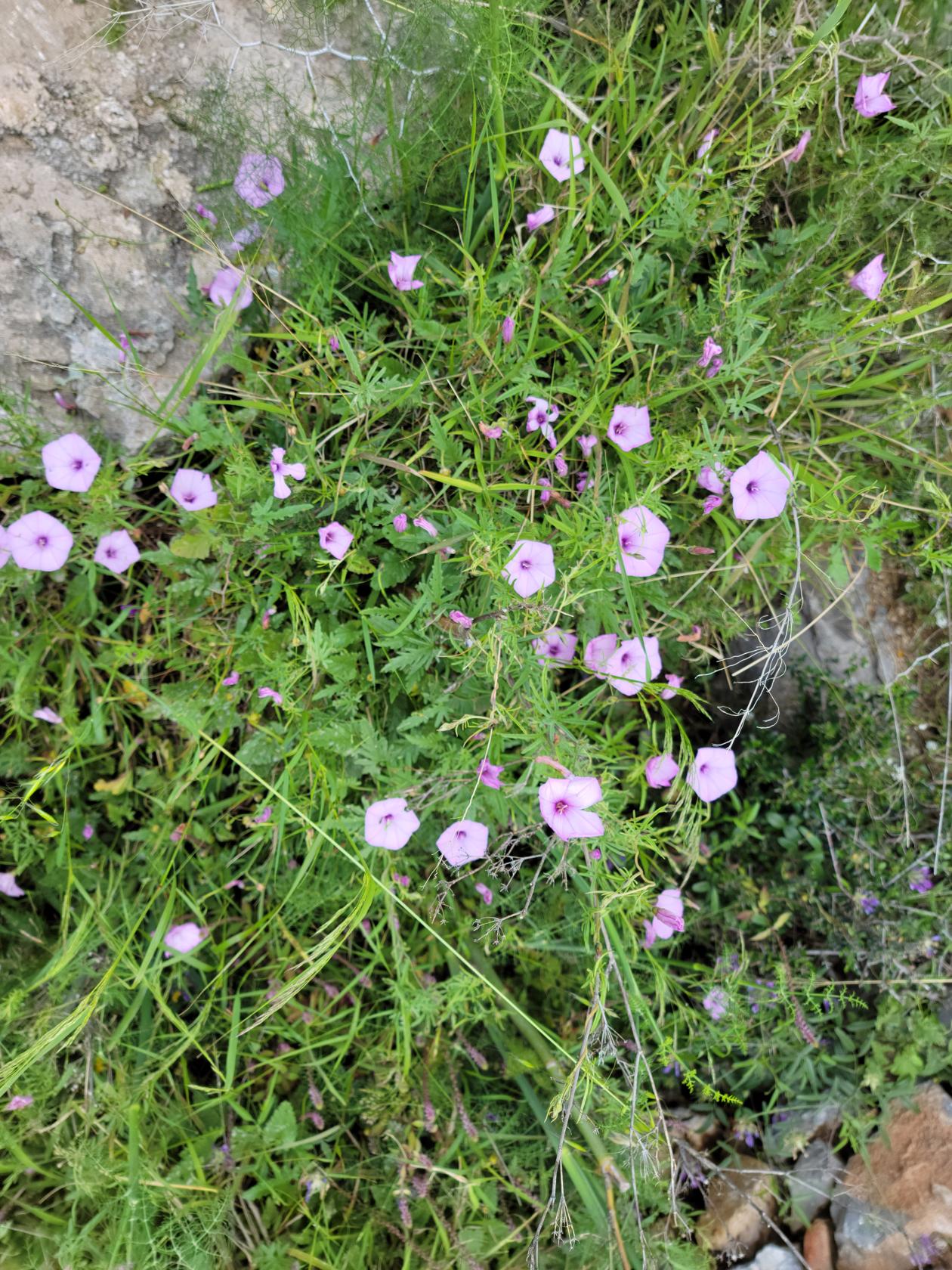
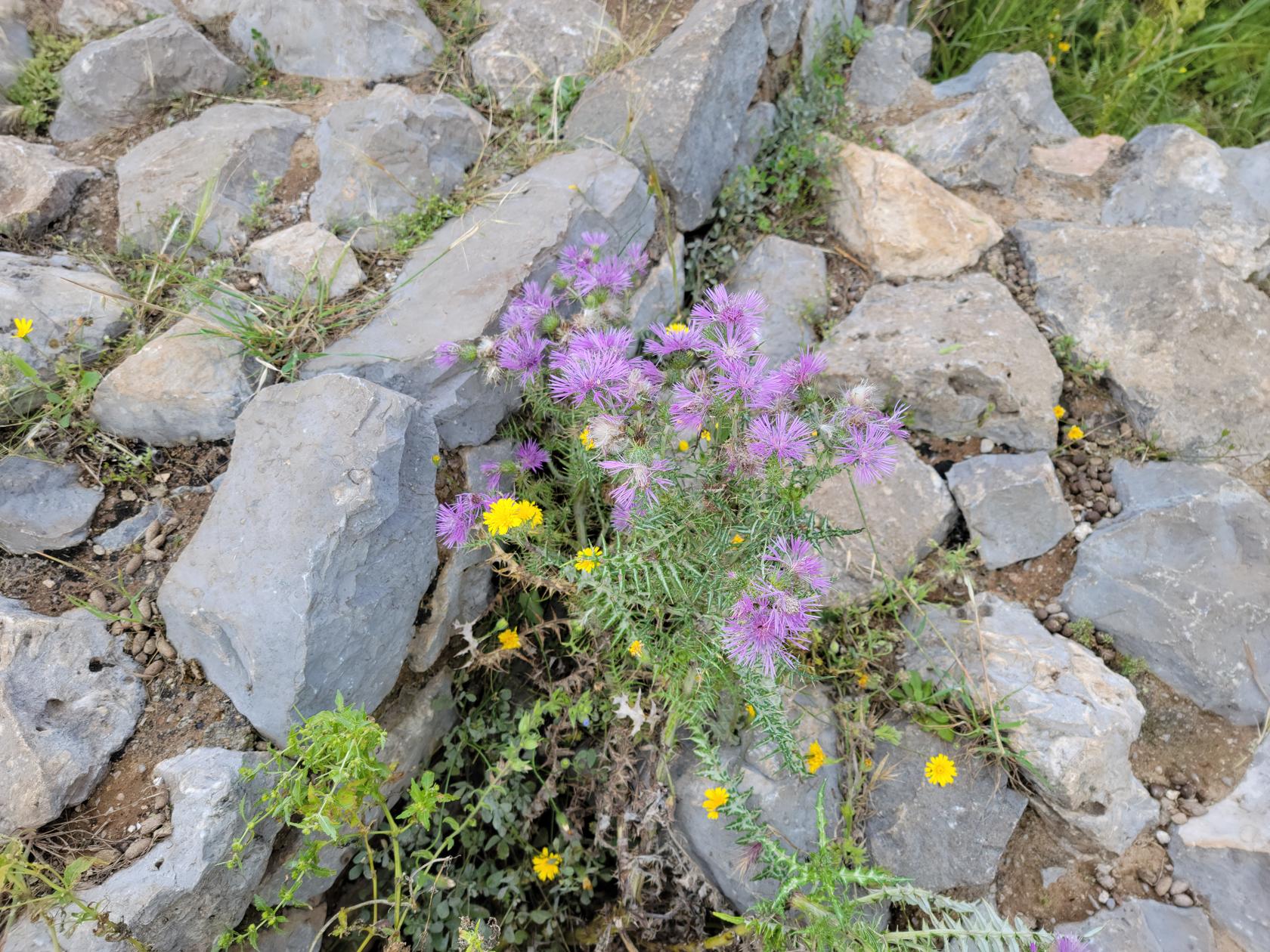
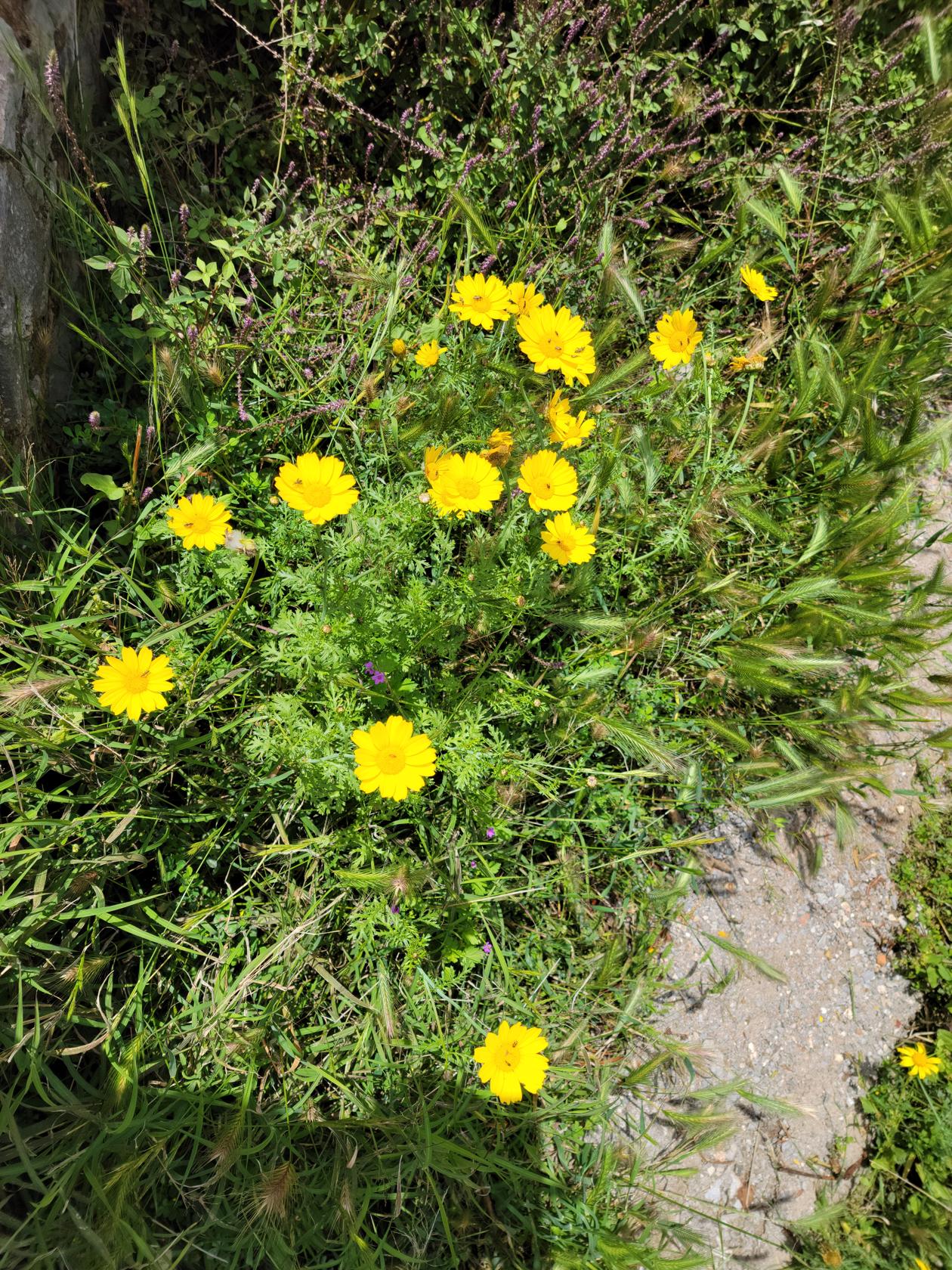
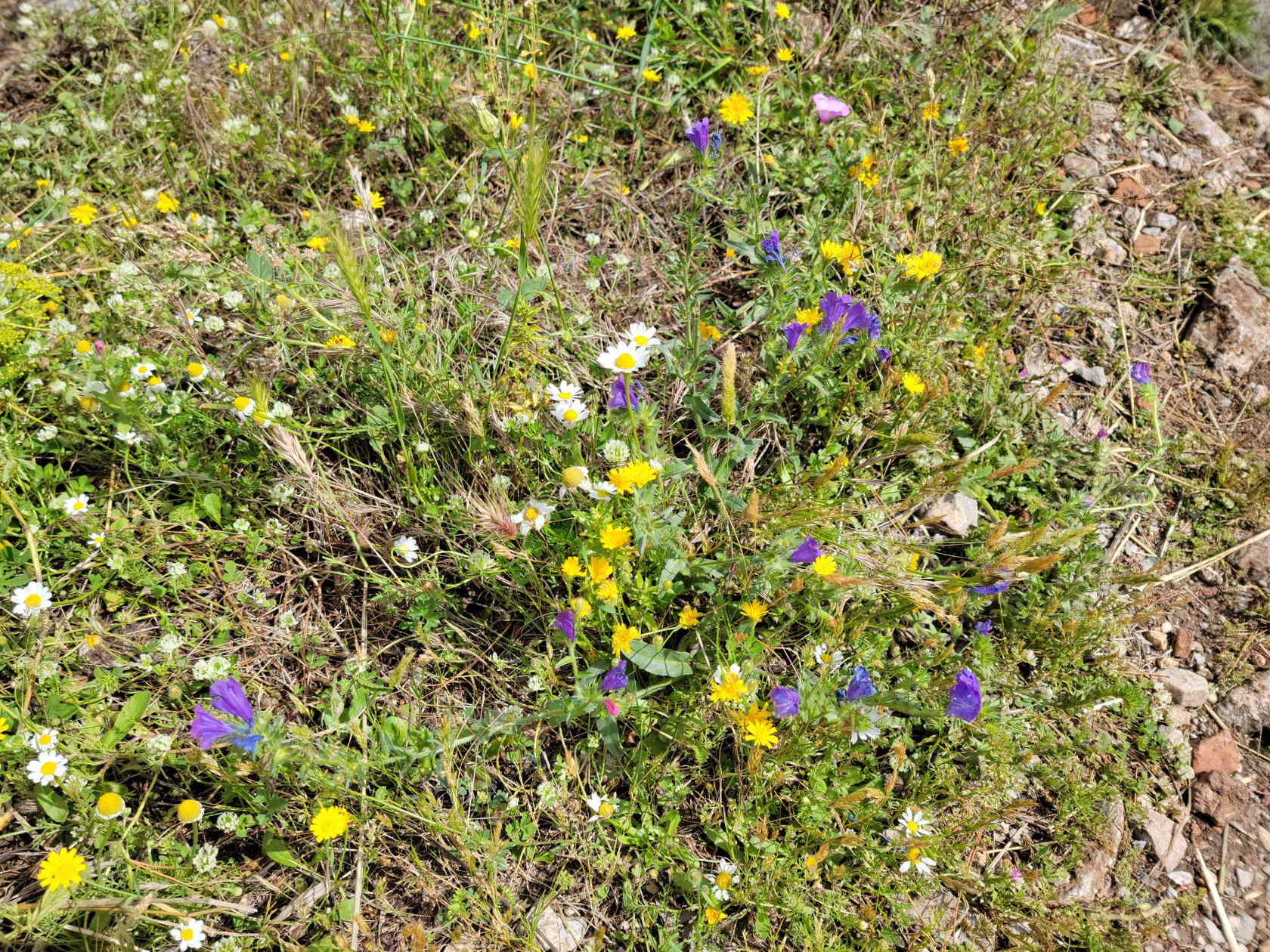
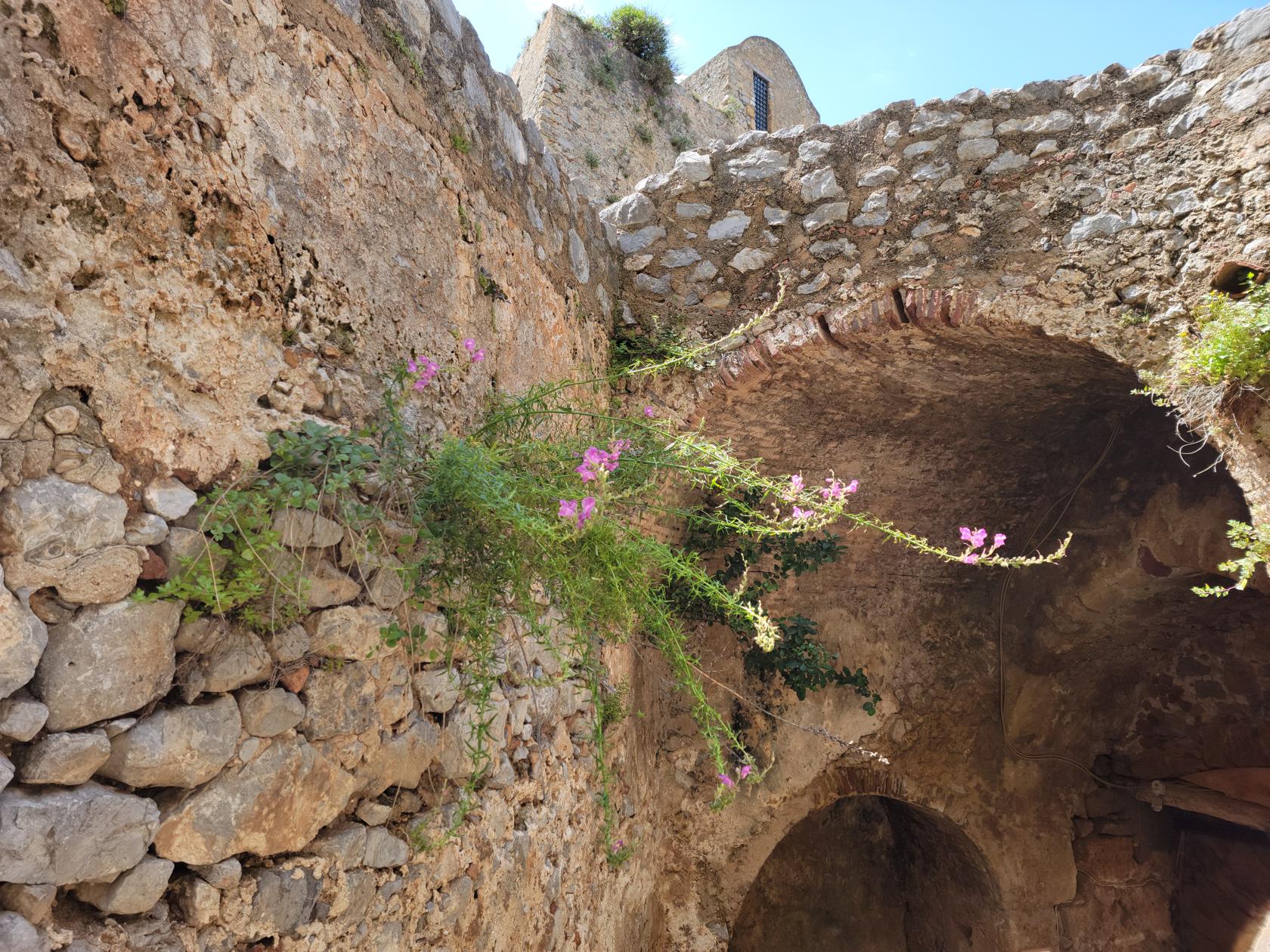
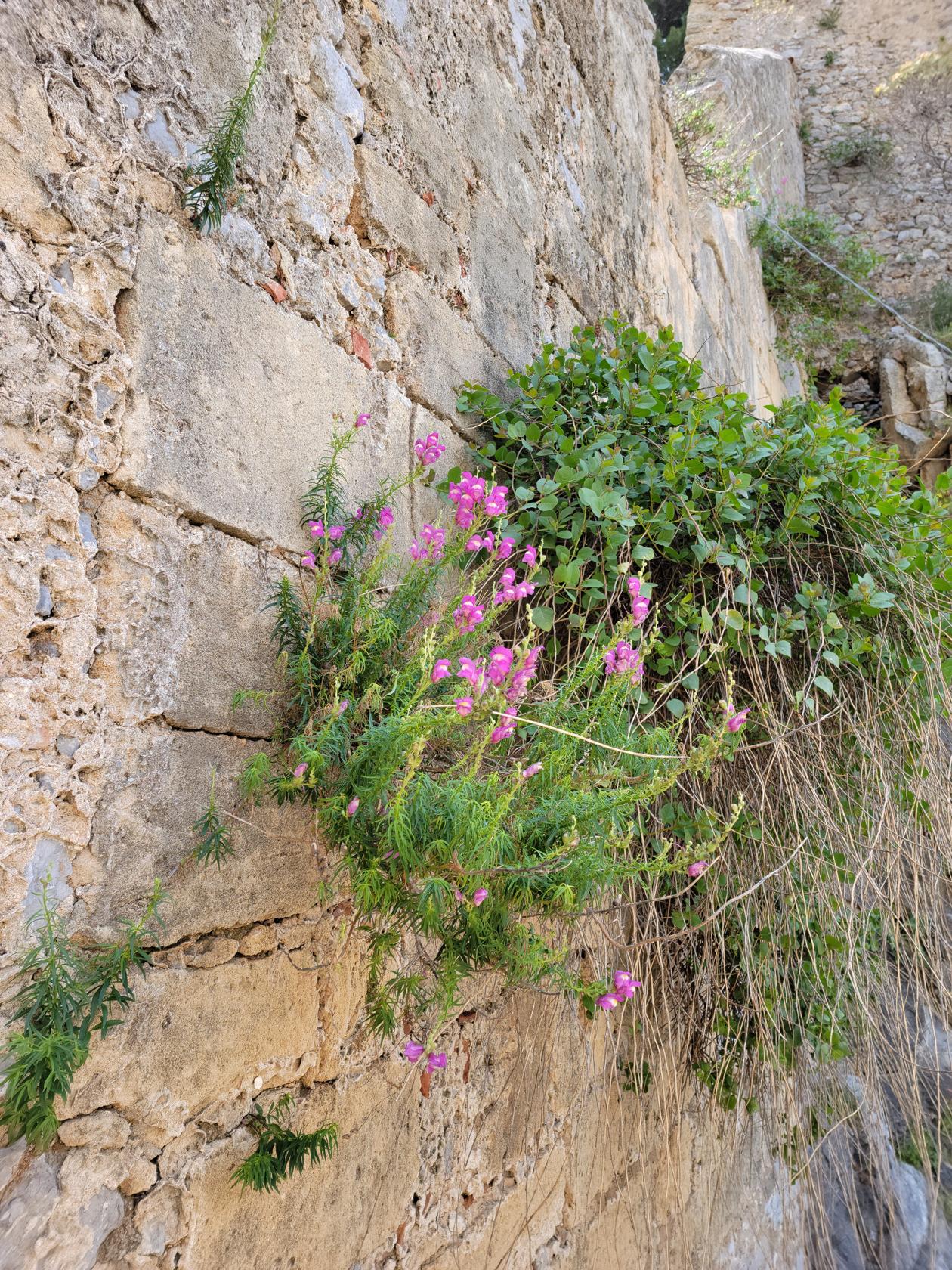
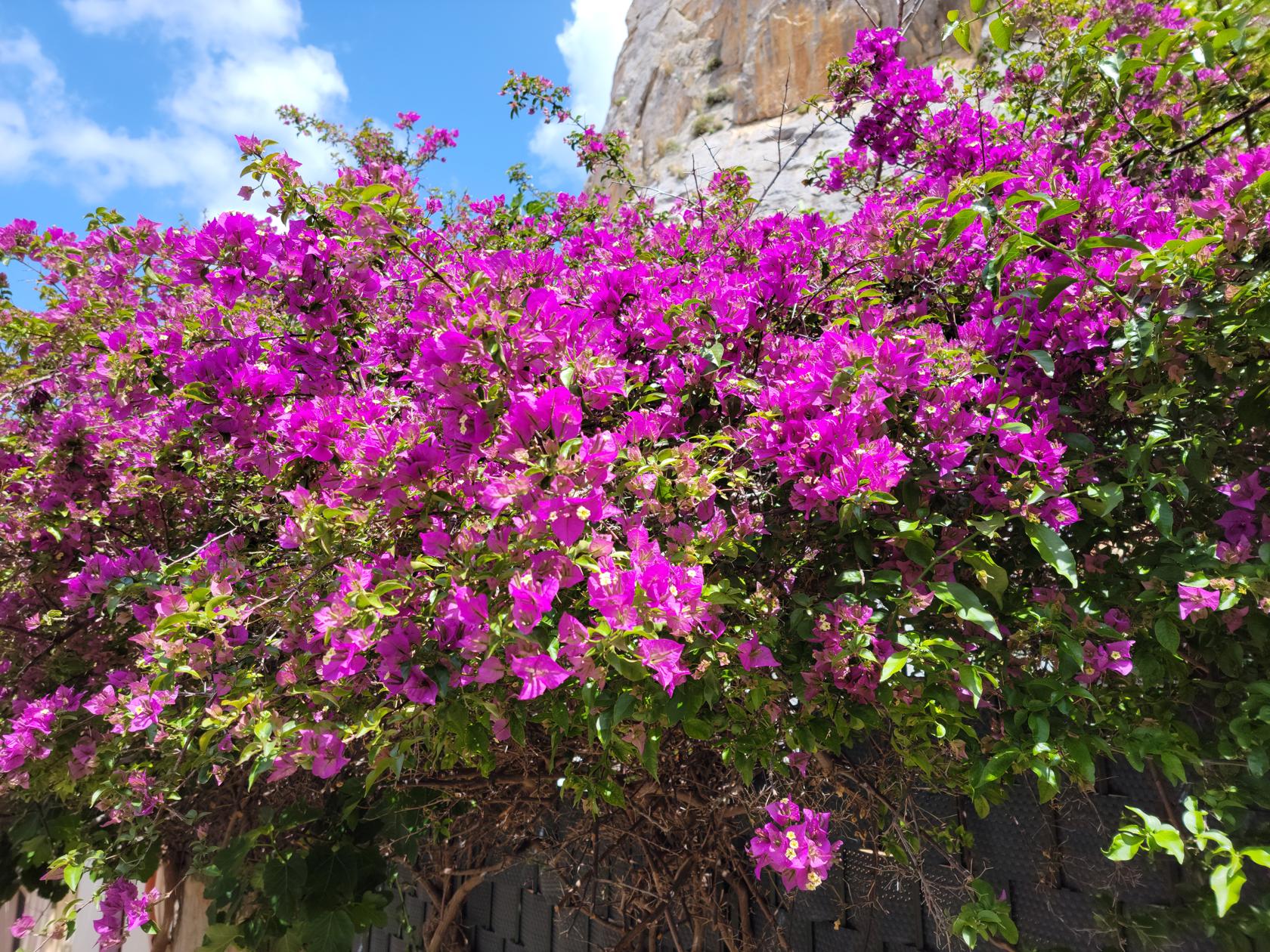
One of the many pleasures of the Italian countryside and its parks, are the flowers. Italy goes out of its way not to poison things, so there are numerous flowers and other blossoming things around, where bees and other pollinators can feed. Here is a short slideshow with some examples on this hike.
Wild flowers – Hiking la Rocca – Cefalu, Sicily
Wild flowers – Hiking la Rocca – Cefalu, Sicily
Wild flowers – Hiking la Rocca – Cefalu, Sicily
More wild flowers – Hiking la Rocca – Cefalu, Sicily
WIld flowers – Hiking la Rocca – Cefalu, Sicily
Wild flowers – Hiking la Rocca – Cefalu, Sicily
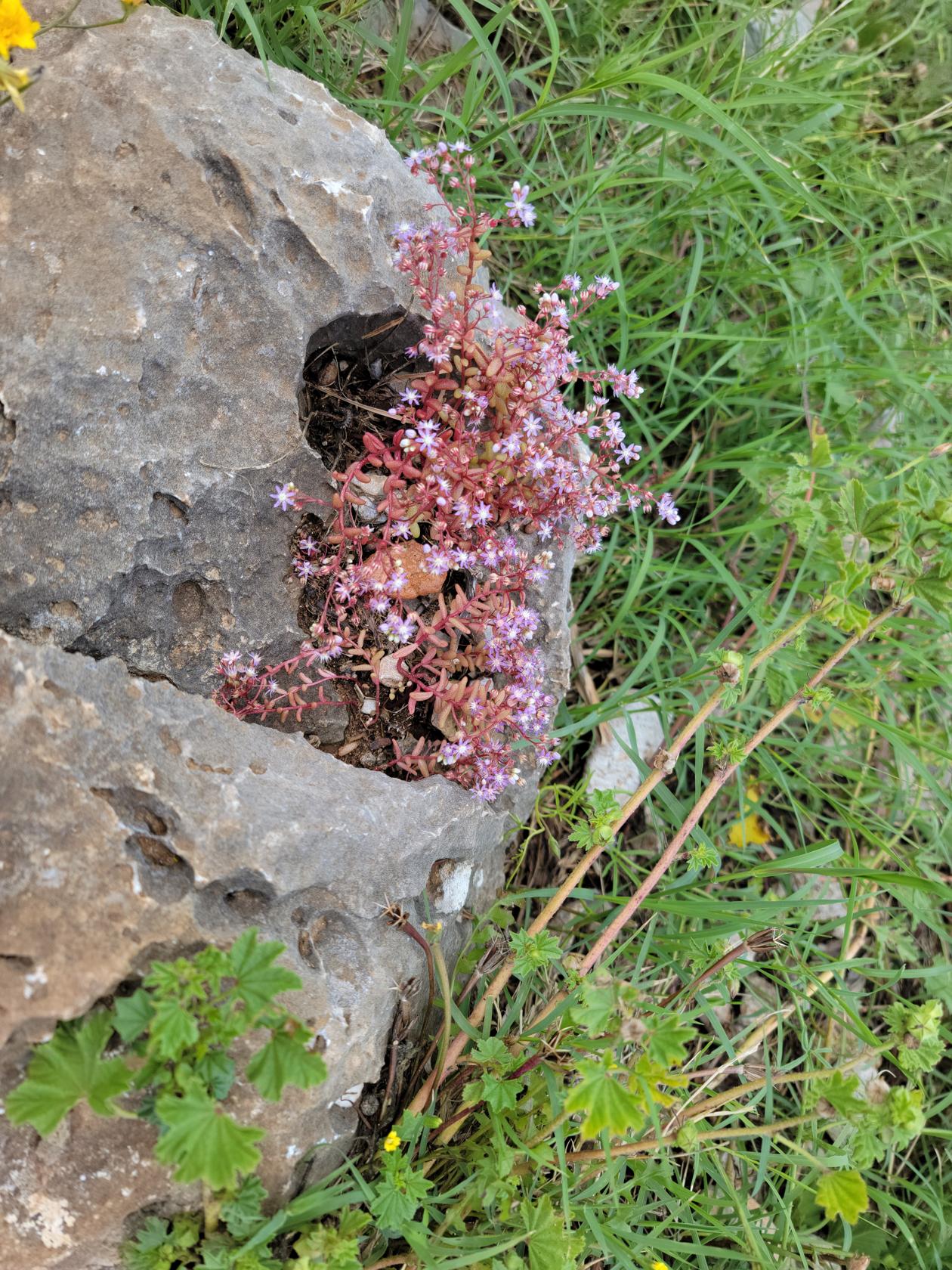
More flowers growing from the ruins – Hiking la Rocca – Cefalu, Sicily
More flowers – Hiking la Rocca – Cefalu, Sicily
Hotel Victoria Palace
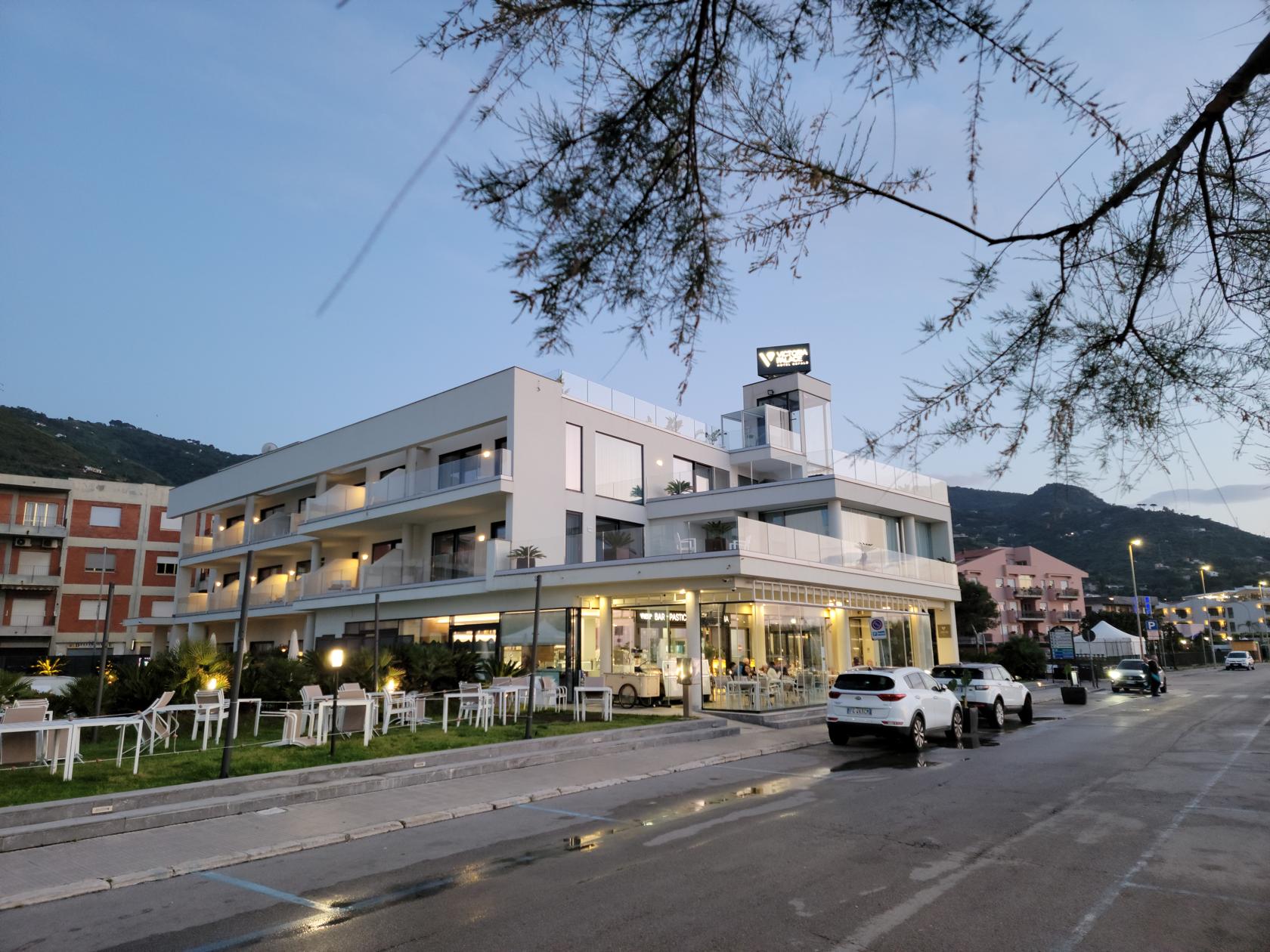
Our hotel was situated right across the street from the boardwalk and the sea. The views were very nice and we found it especially convenient, instead of being directly in town, where the streets are more confining and more difficult to move around in. The rooms here are fairly spacious and have most of the amenities that Americans are used, with the exception of an ironing board and a few other things. All and all, the staff is very friendly and welcoming and the downstairs cafe has excellent coffee and also a gelato bar, which we frequented more than once.
Hotel Victoria Palace – Cefalu, Sicily
Restaurants
The White Horse
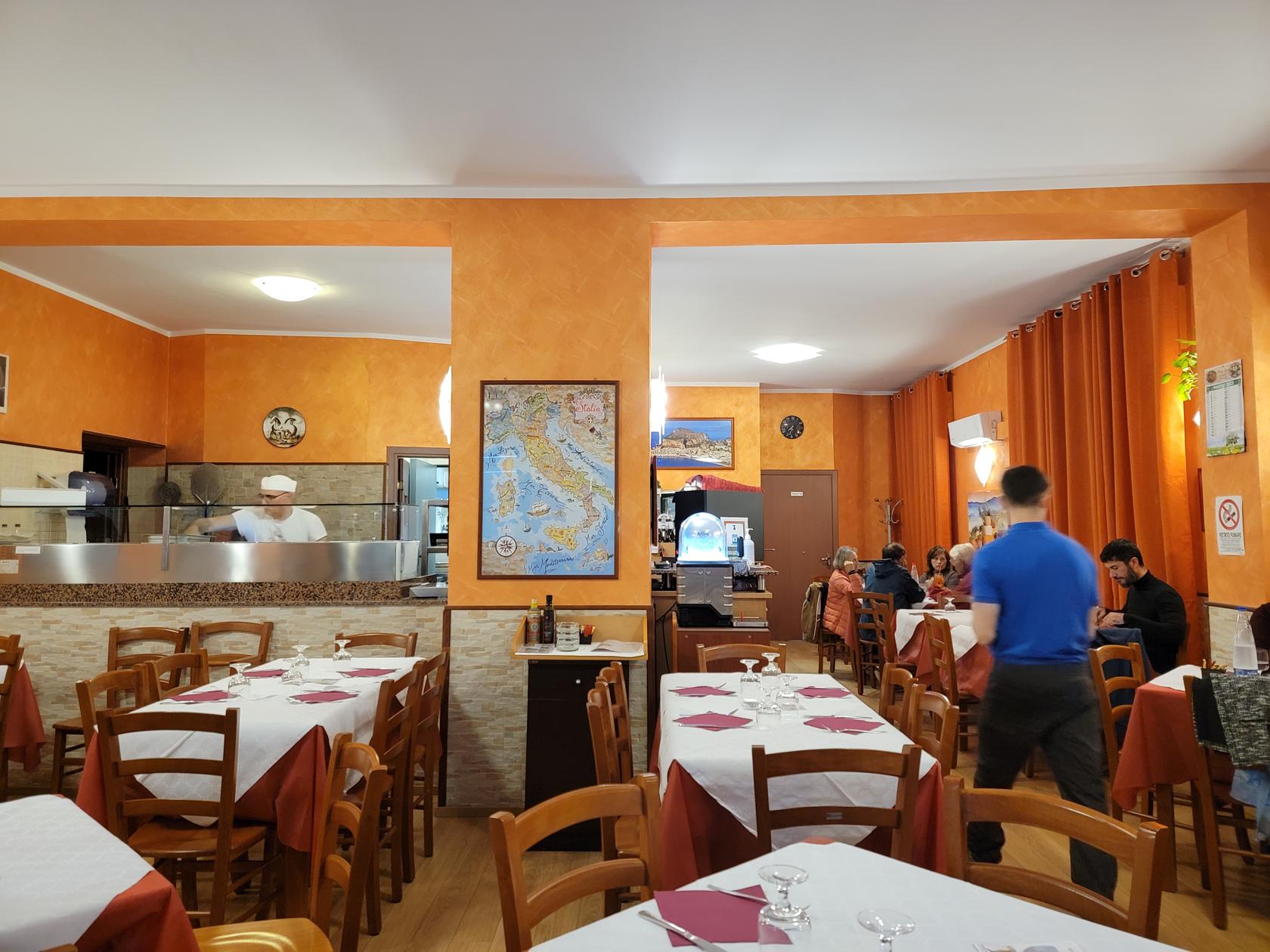
We ate dinner here the first night in Cefalu. We chose this restaurant due to the threat of rain and because it was right up the street and very close. Unfortunately at the time, we didn’t realize that being in the vicinity would help much staying dry.
The White Horse Restaurant – Cefalu, Sicily
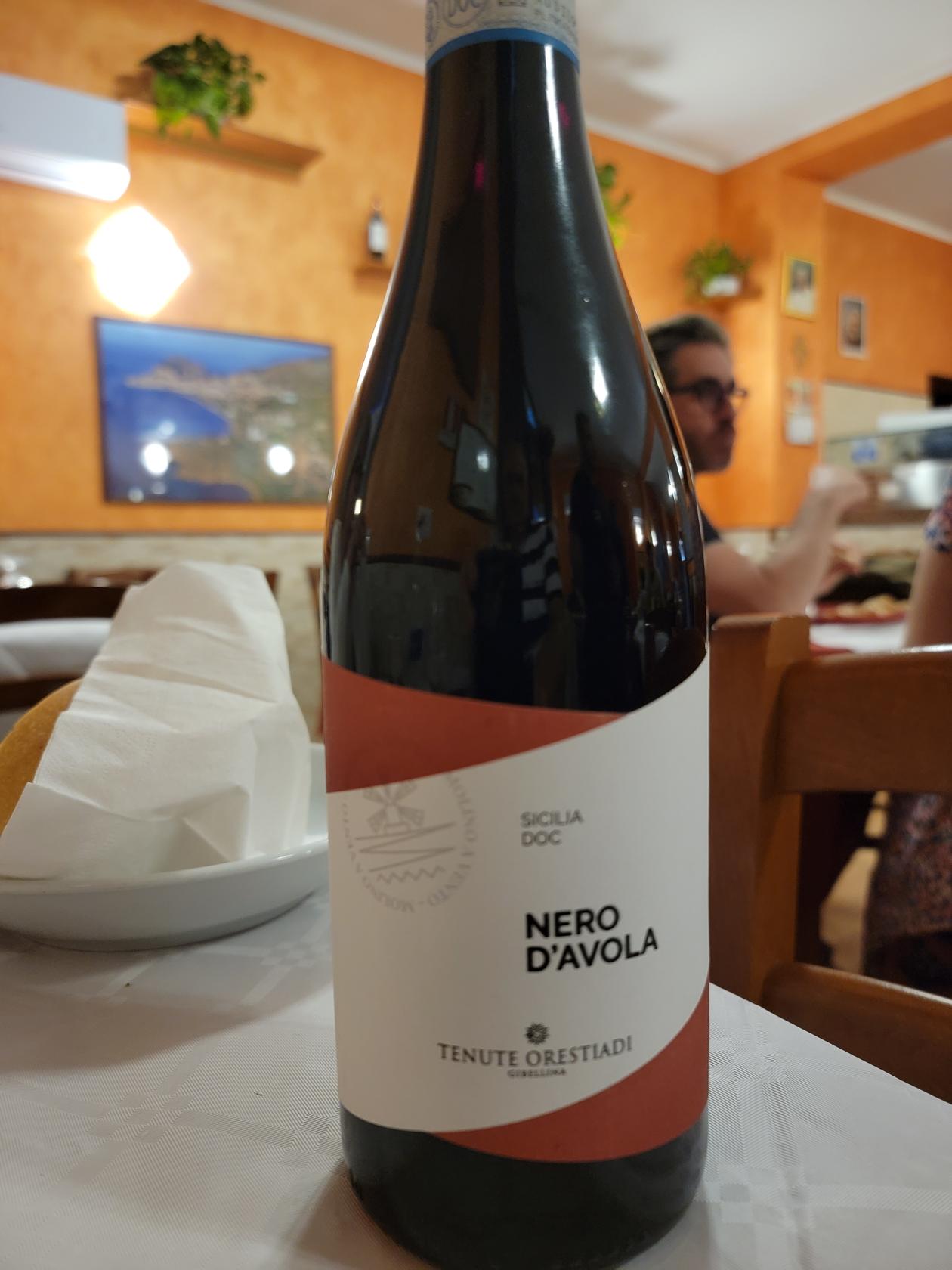
Nero D’Avola – A nice Sicilian wine – White Horse Restaurant – Cefalu, Sicily
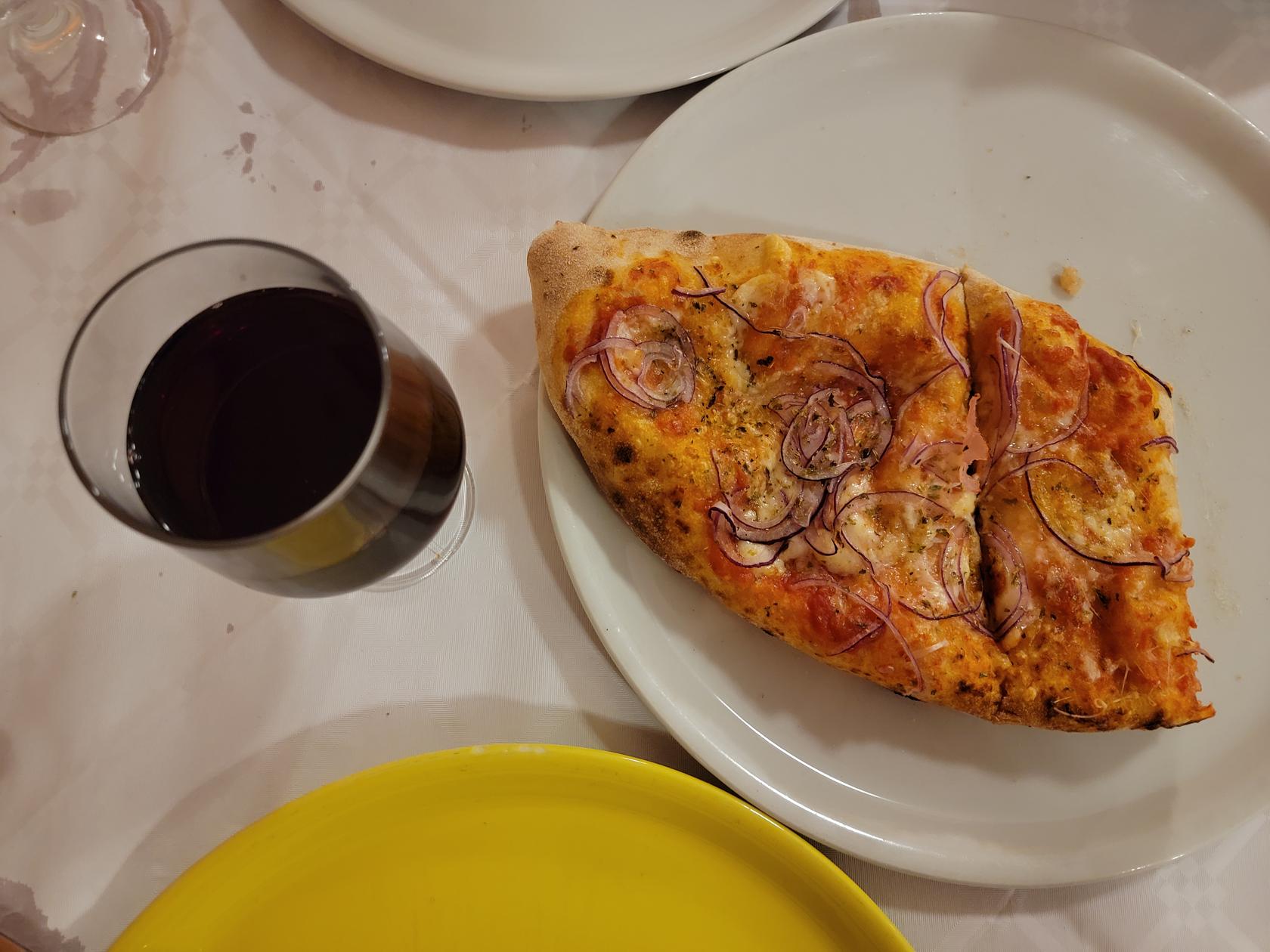
Sicilian Calzone with onion – White Horse Restaurant – Cefalu, Sicily
The food here is typical Italian pizzeria, very good and very reasonable prices. They have pizza, calzone, spaghetti and pasta dishes, and a wood fired brick oven to cook it all in.
Il Gabbiano
We actually ate here twice, once for lunch and once for dinner.
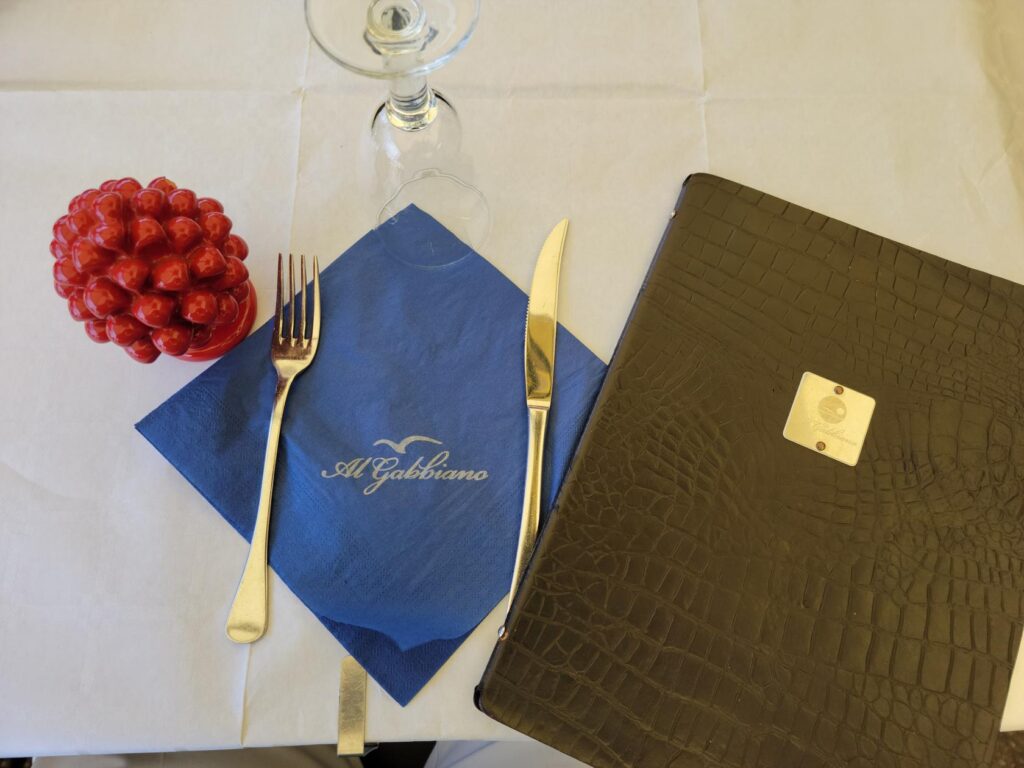
Ristorante – Al Gabbiano – Cefalu, Sicily
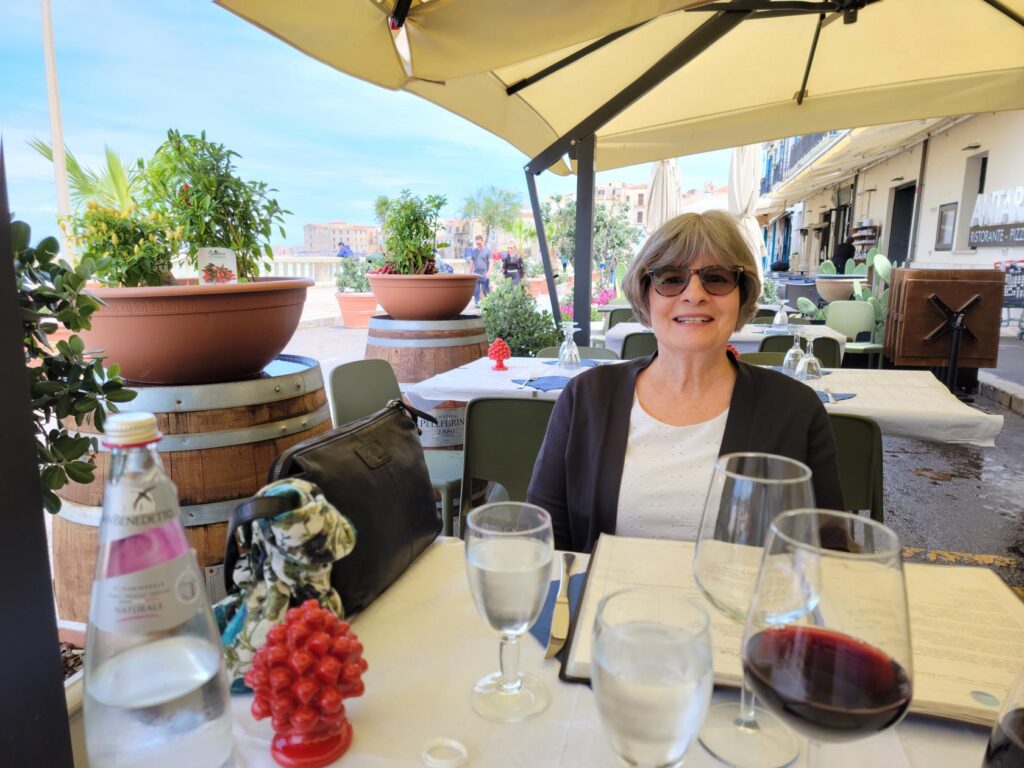
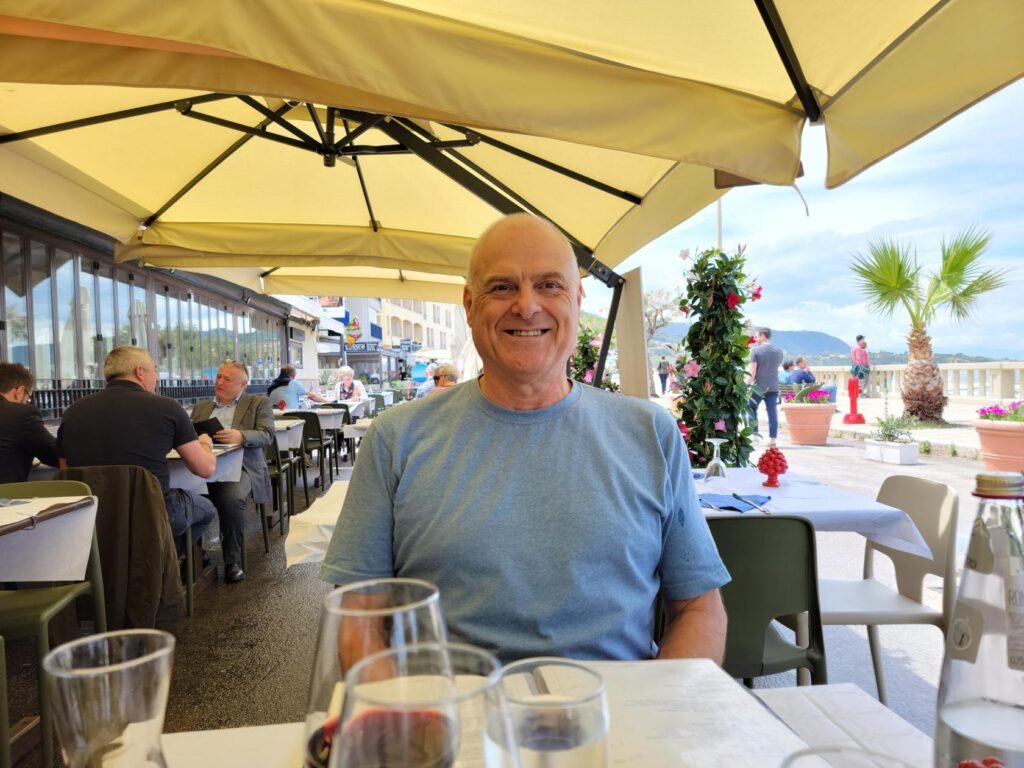
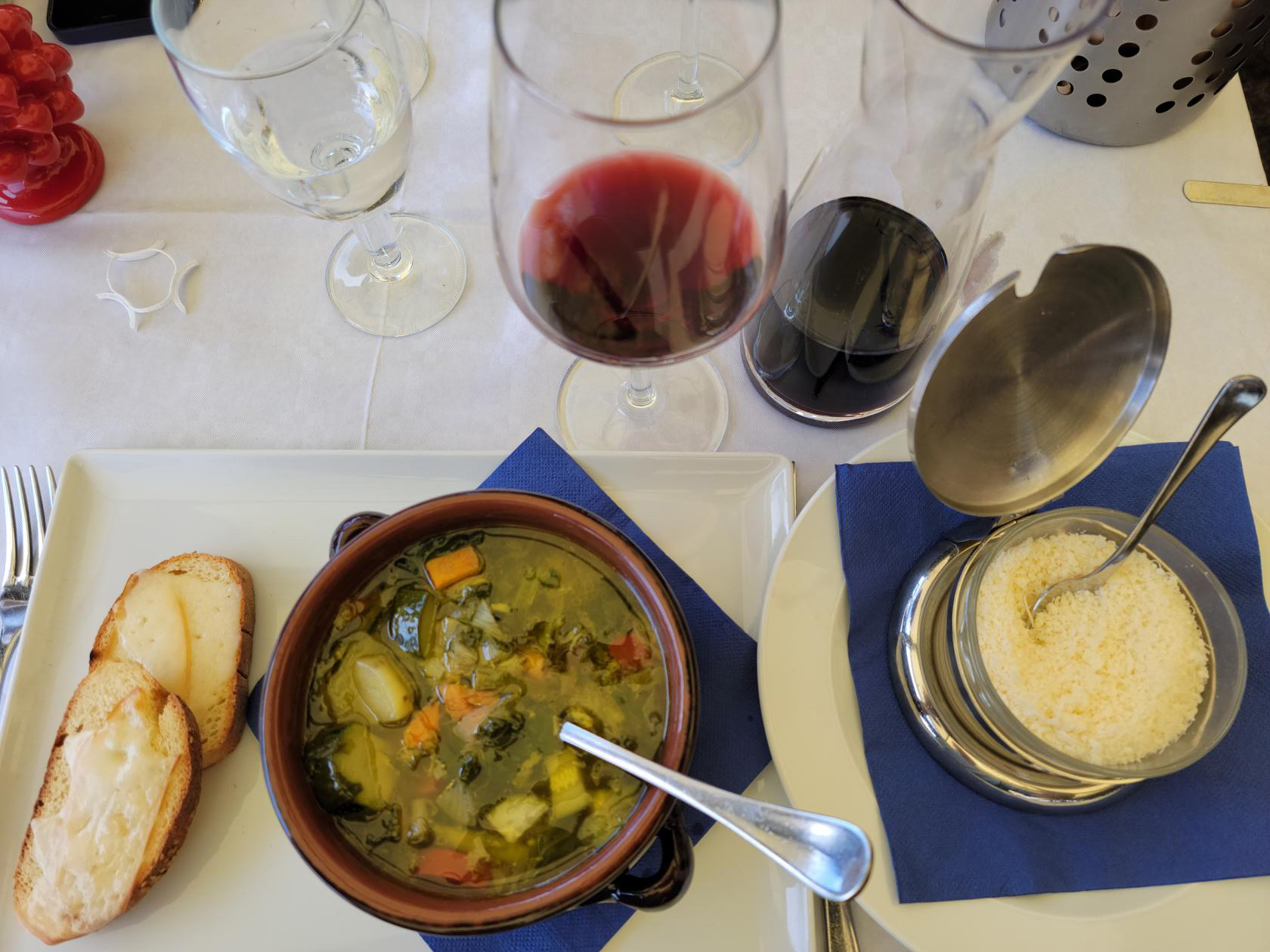
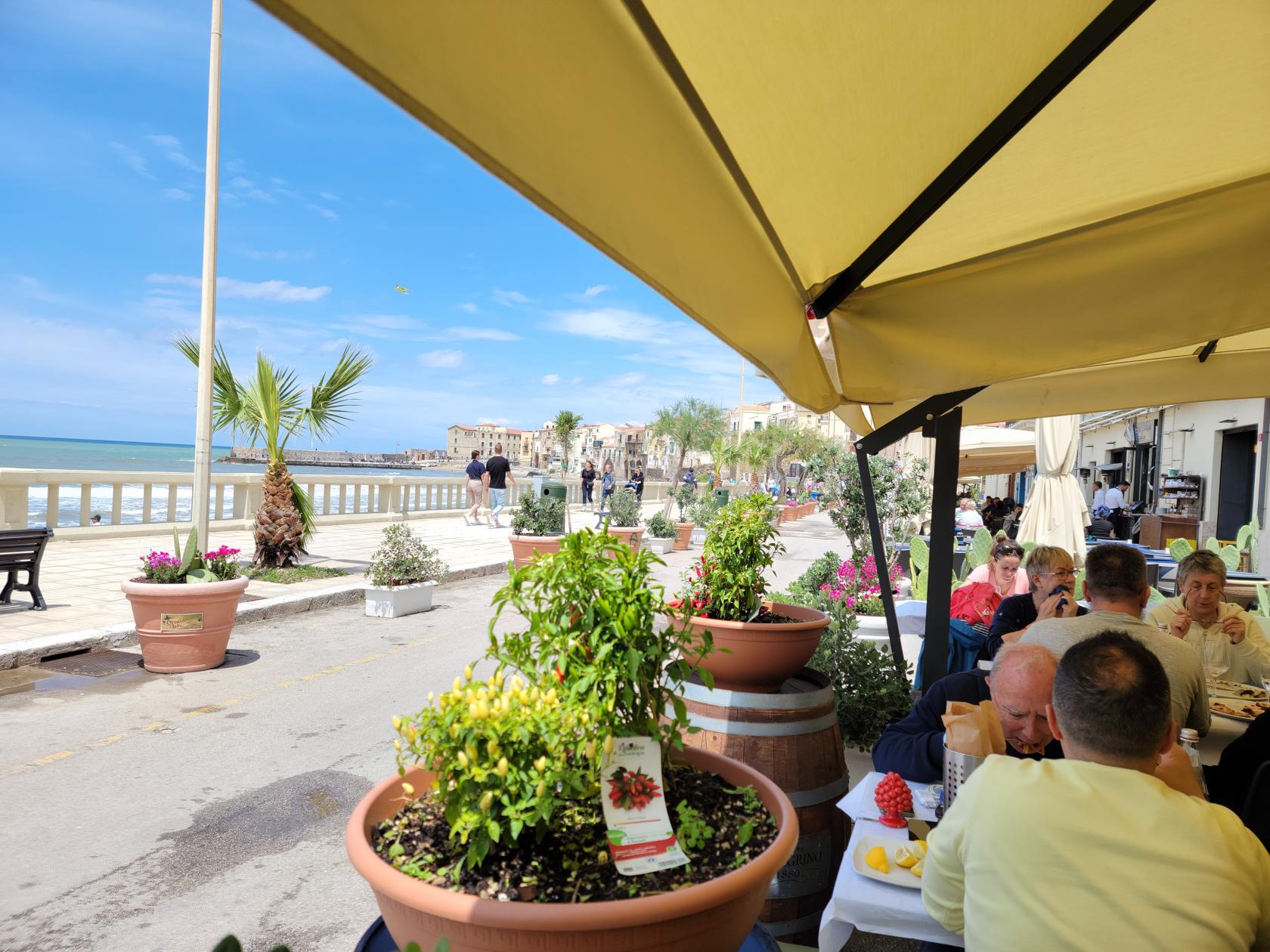
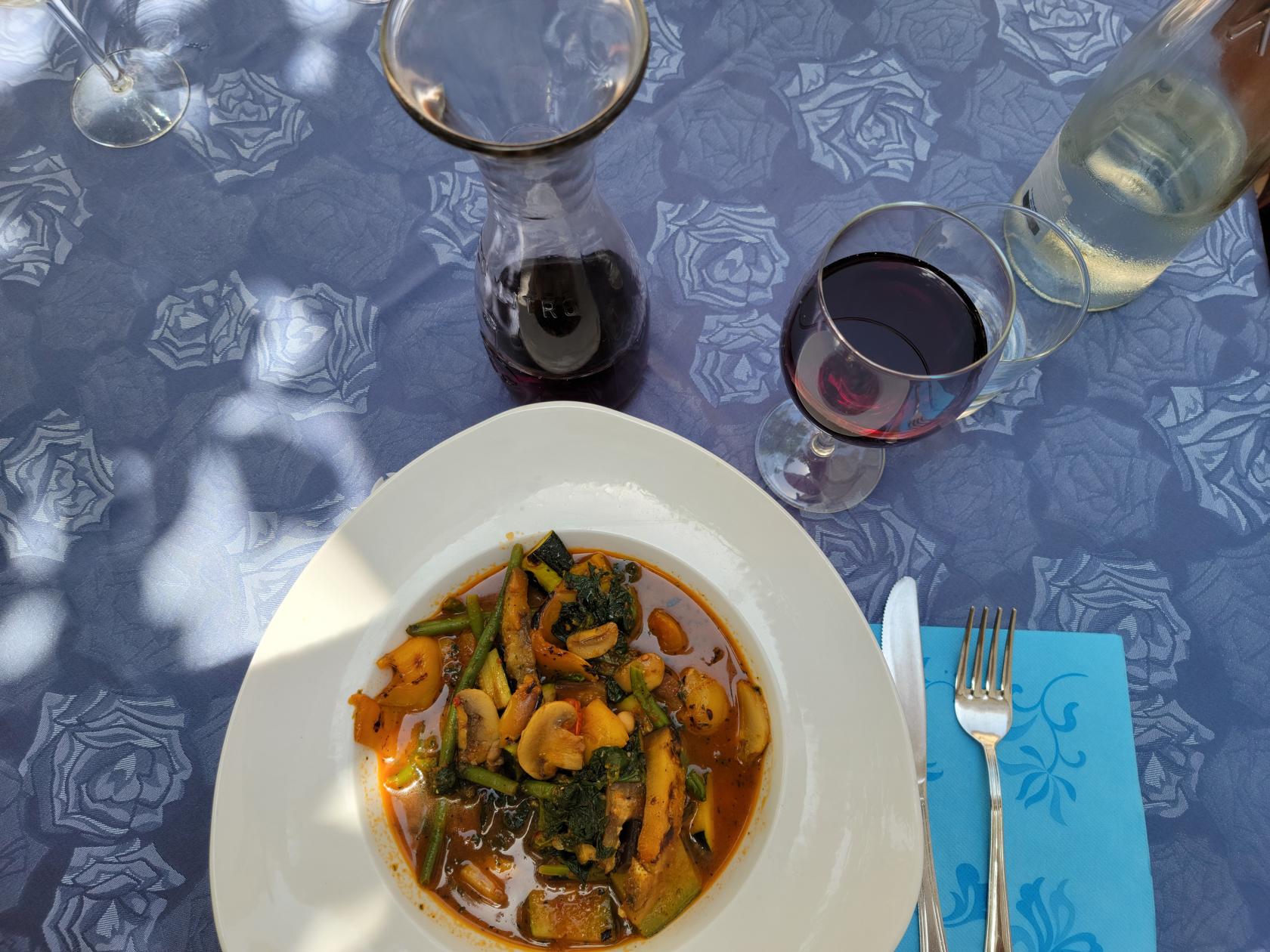
For lunch we ate outside, since the weather was trying to improve and it was rather nice out. I ordered the Zuppa di Verdure and the Spaghetti al Pomodoro and Patti had a mixed salad.
Patti Ready For Lunch – Ristorante – Al Gabbiano – Cefalu, Sicily
Erick Ready For Lunch – Ristorante – Al Gabbiano – Cefalu, Sicily
For dinner we ate inside, since the evenings in May can be rather cool, especially with the breeze from the sea blowing inland. I ordered the the mixed salad and the Spaghetti Bolognese, Patti order the Spaghetti al Pomodoro I had the day before. Both were delicious and with wine and water came to a reasonable 35€.
Zuppa di Verdura – Ristorante – Al Gabbiano – Cefalu, Sicily
Spaghetti al Pomodoro – Ristorante – Al Gabbiano – Cefalu, Sicily
Insalata Mista – Ristorante – Al Gabbiano – Cefalu, Sicily
A View Before The Rain – Ristorante – Al Gabbiano – Cefalu, Sicily
La Siciliana
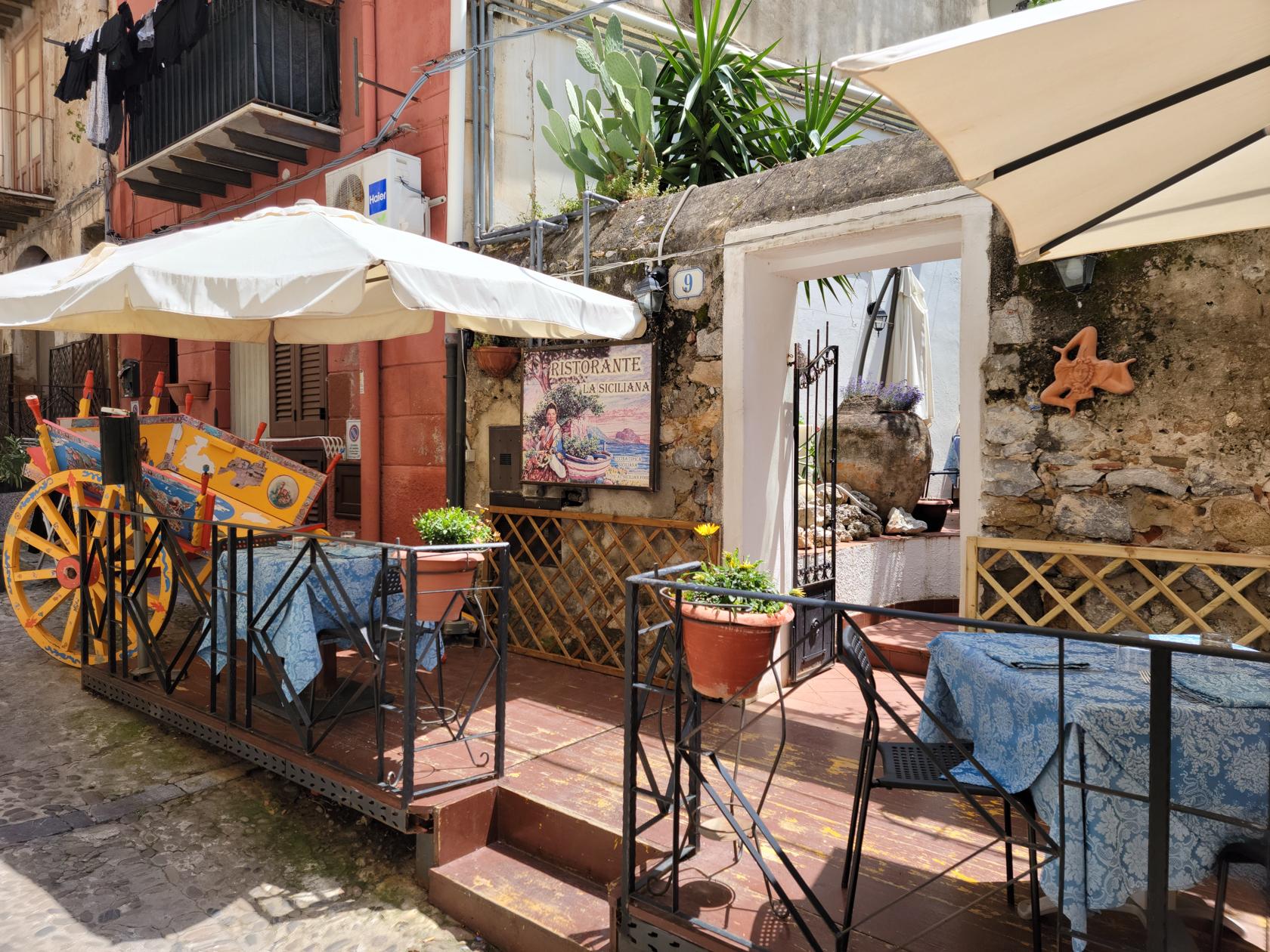
This is a delightful restaurant for lunch and is located within the town on via Gioeni. It has a full manu and will please seafood and land lovers alike.
The entrance – Ristorante La Siciliana – Cefalu, Sicily
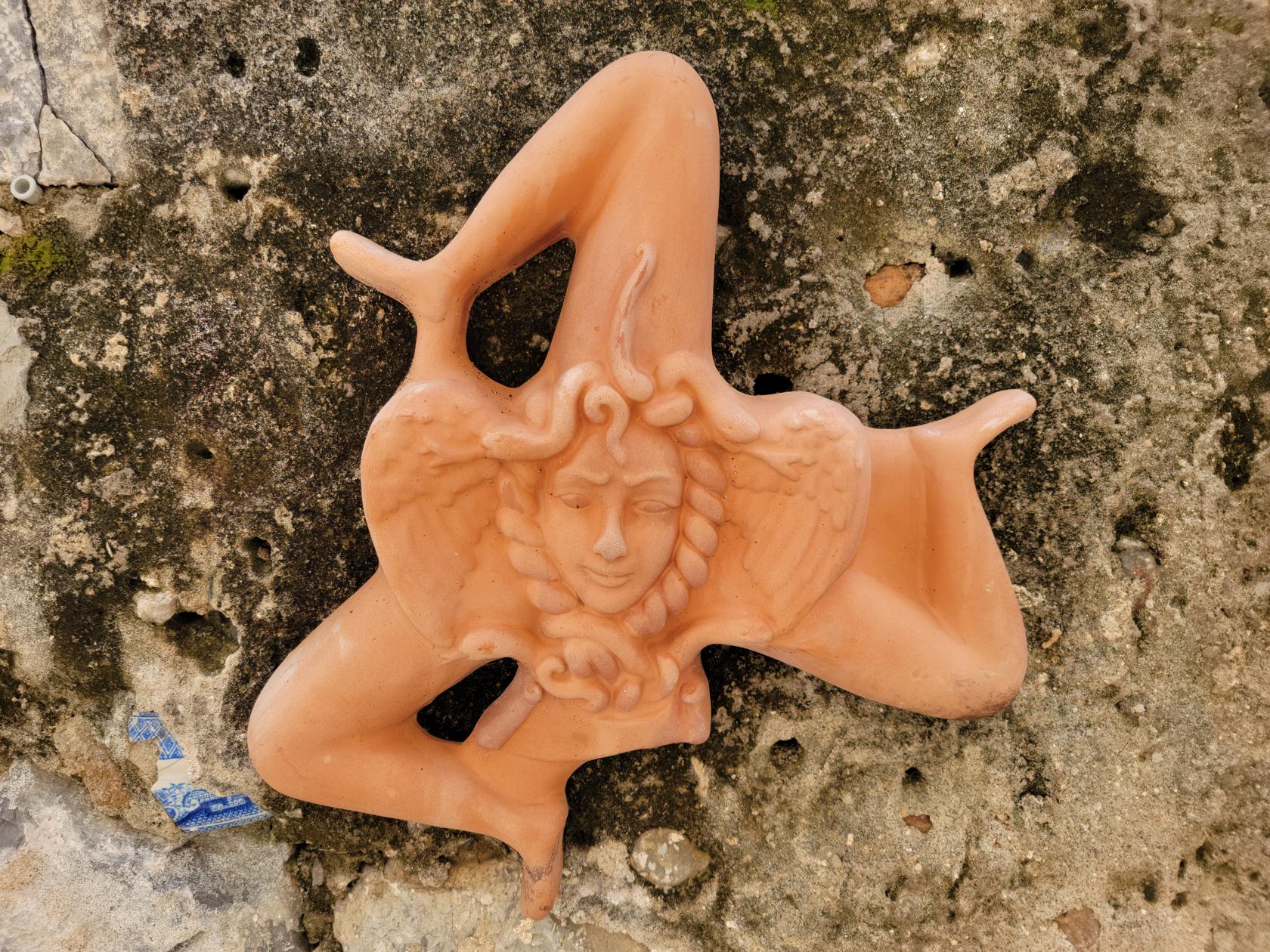
A Sicilian Medusan Symbol – Ristorante La Siciliana – Cefalu, Sicily
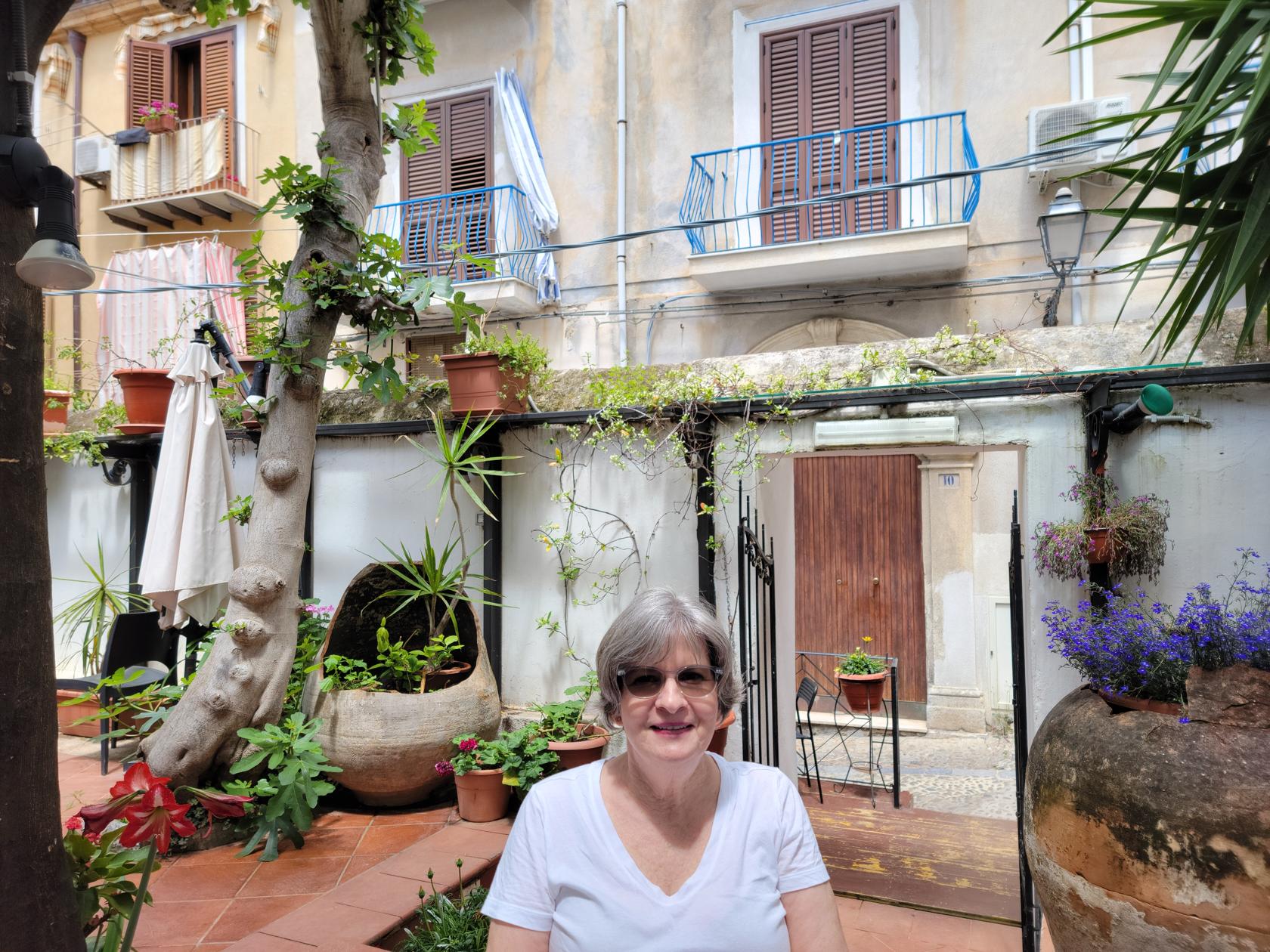
The restaurant’s courtyard – Ristorante La Siciliana – Cefalu, Sicily
Patti waiting for her food – Ristorante La Siciliana – Cefalu, Sicily
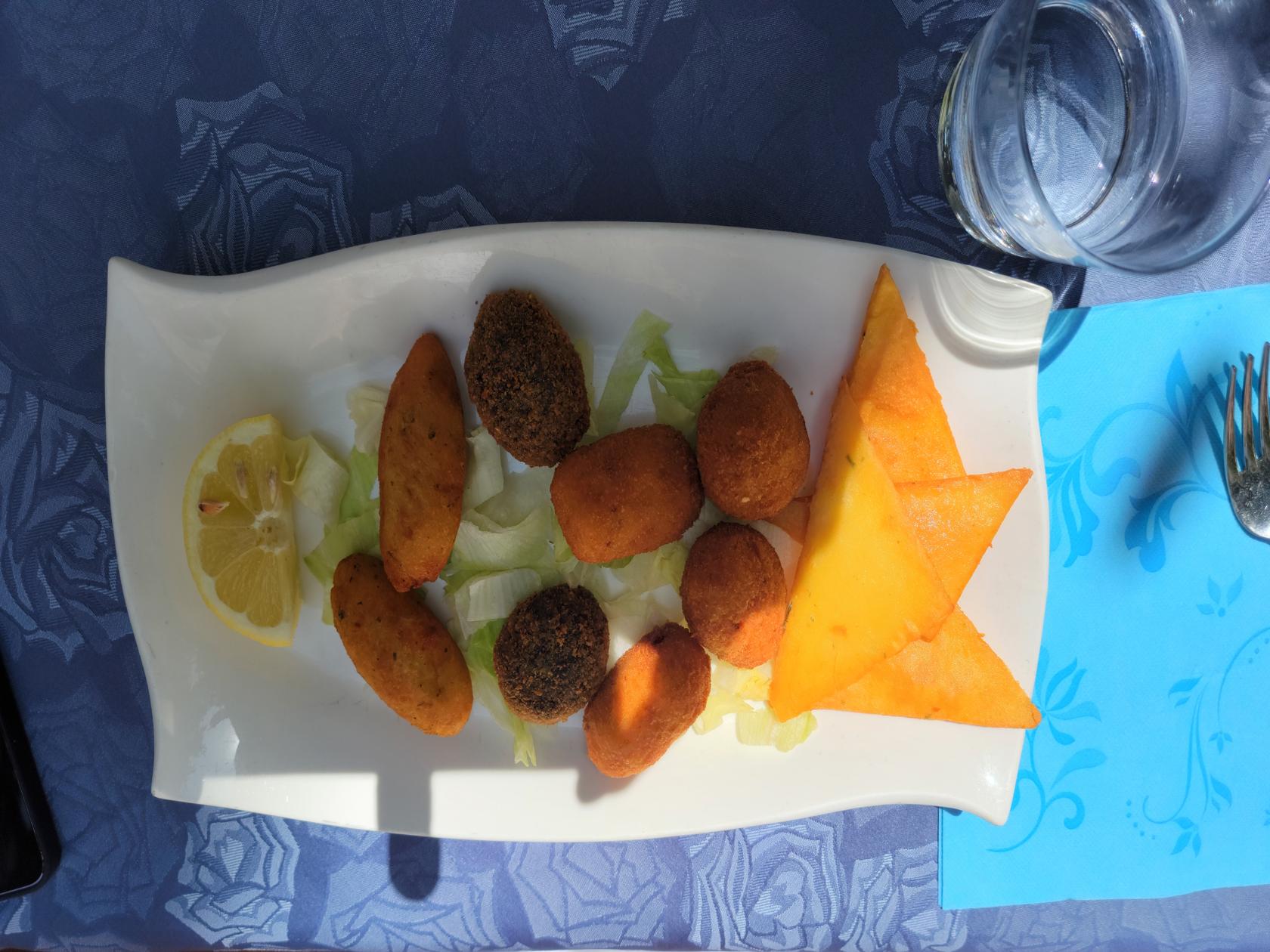
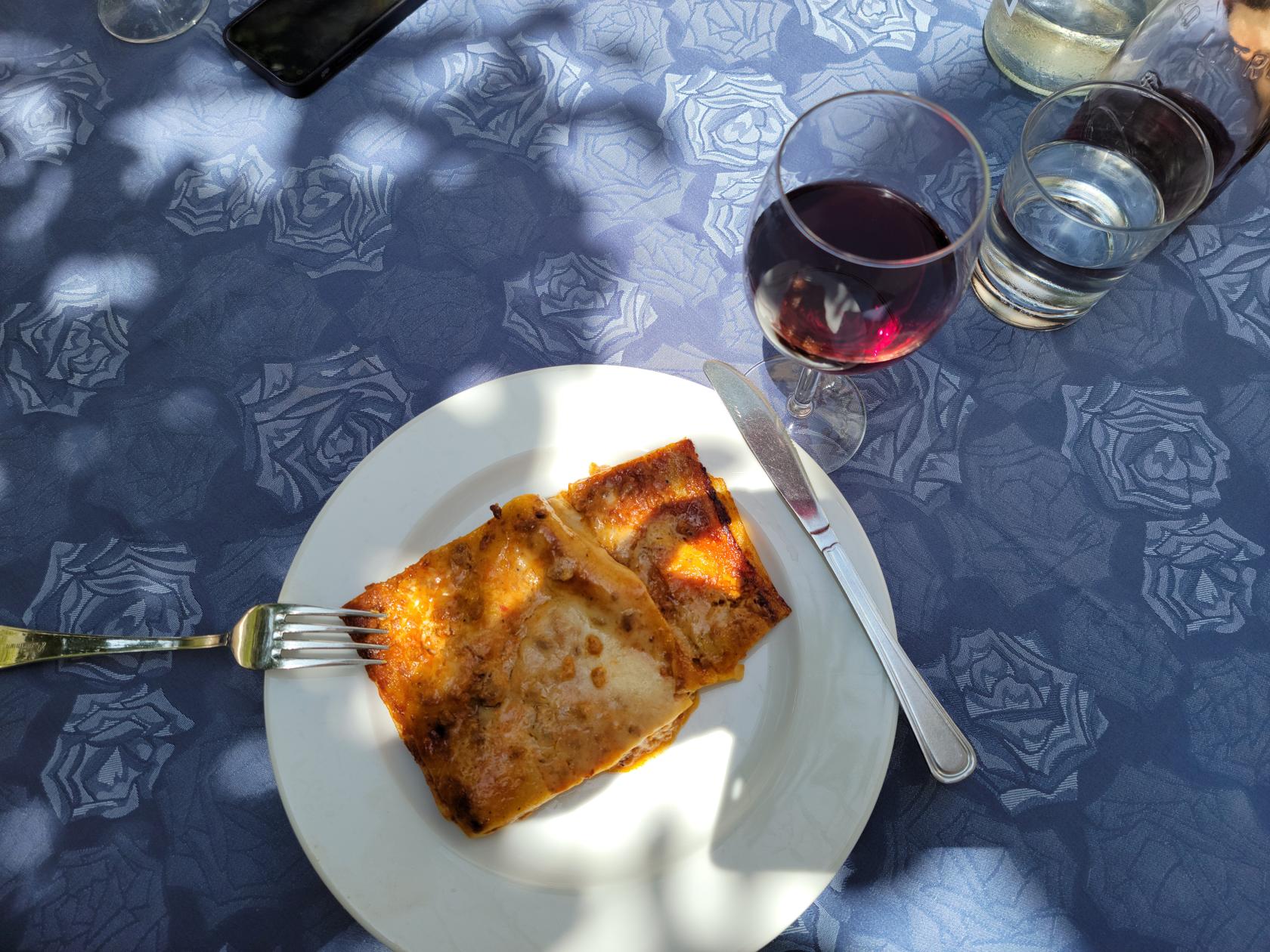
I had the Zuppa di Verdura con Legumi and the Lasagna, while Patti finally found here Aranchini on the menu and ordered a sampler plate of that. Both were delicious. With food, a hald liter of wine, water and coffee, it came to a reasonable 37€ for two.
Vino rosso della casa and aranchini – Ristorante La Siciliana – Cefalu, Sicily
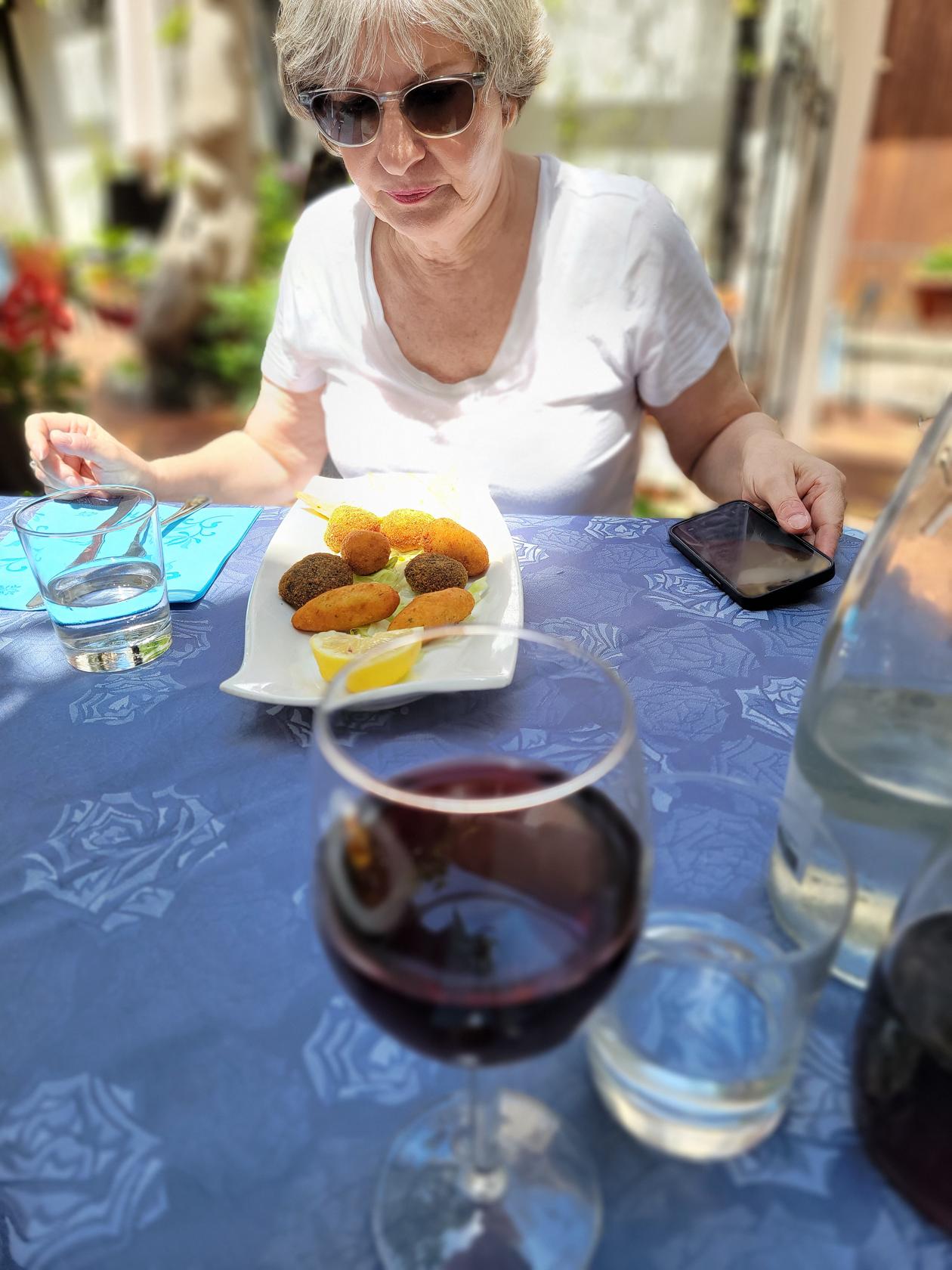
Aranchini – Deep fried cheese and rice, ham and rice, cuttlefish ink and rice – Ristorante La Siciliana – Cefalu, Sicily
Zuppa di Verdura – Ristorante La Siciliana – Cefalu, Sicily
Lasagna – Ristorante La Siciliana – Cefalu, Sicily
Patti – Ristorante La Siciliana – Cefalu, Sicily
Porta Terra
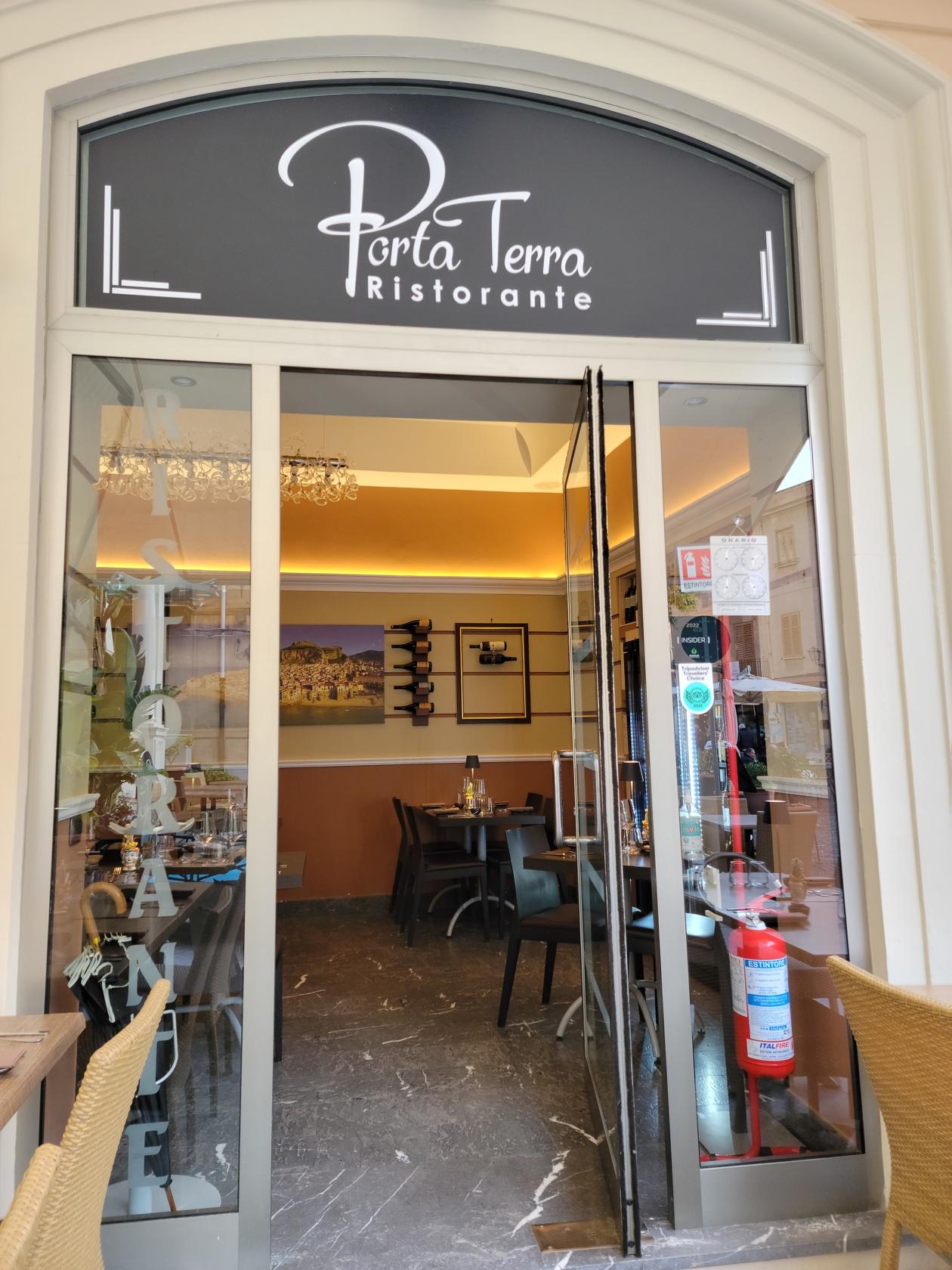
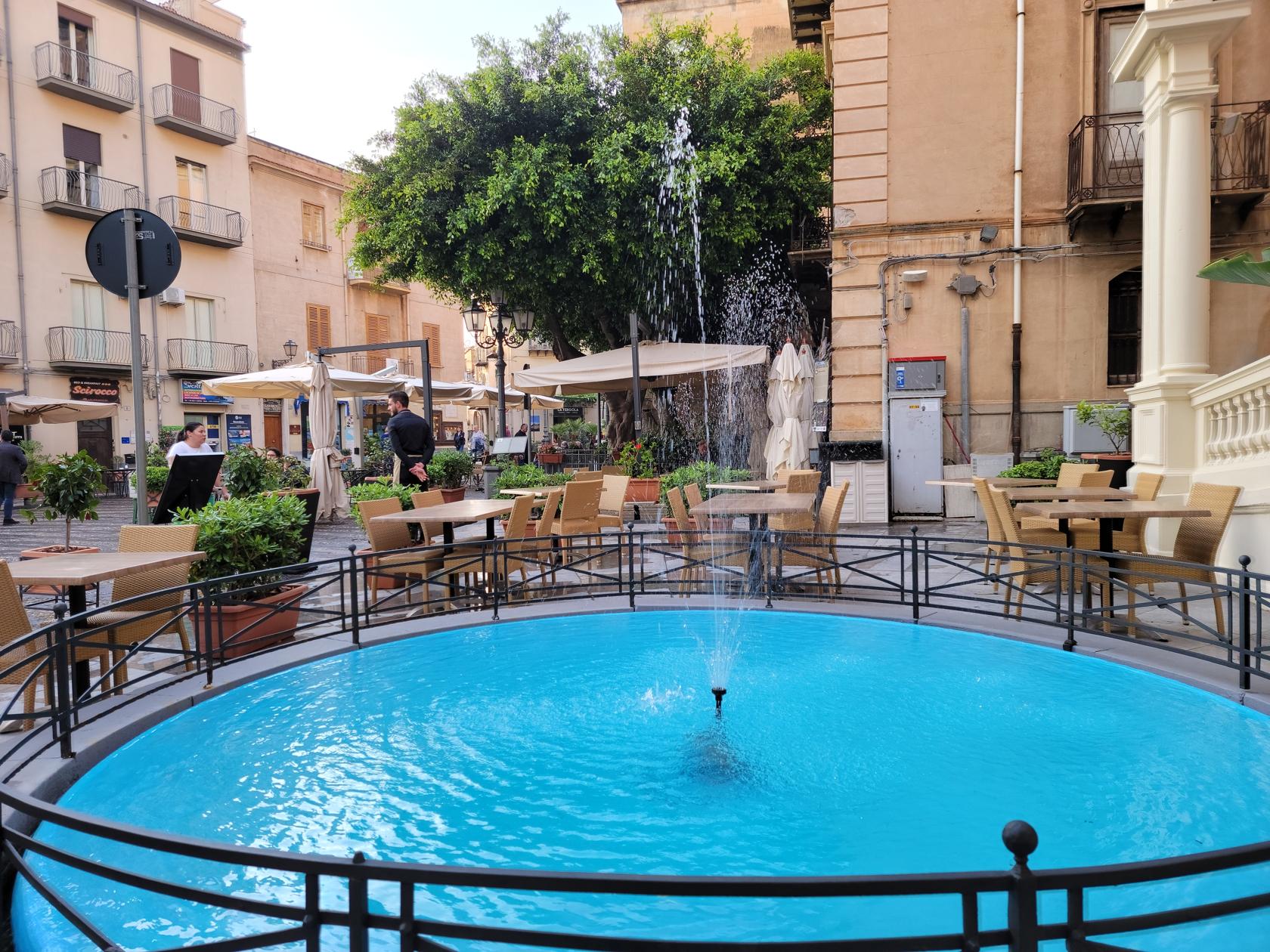
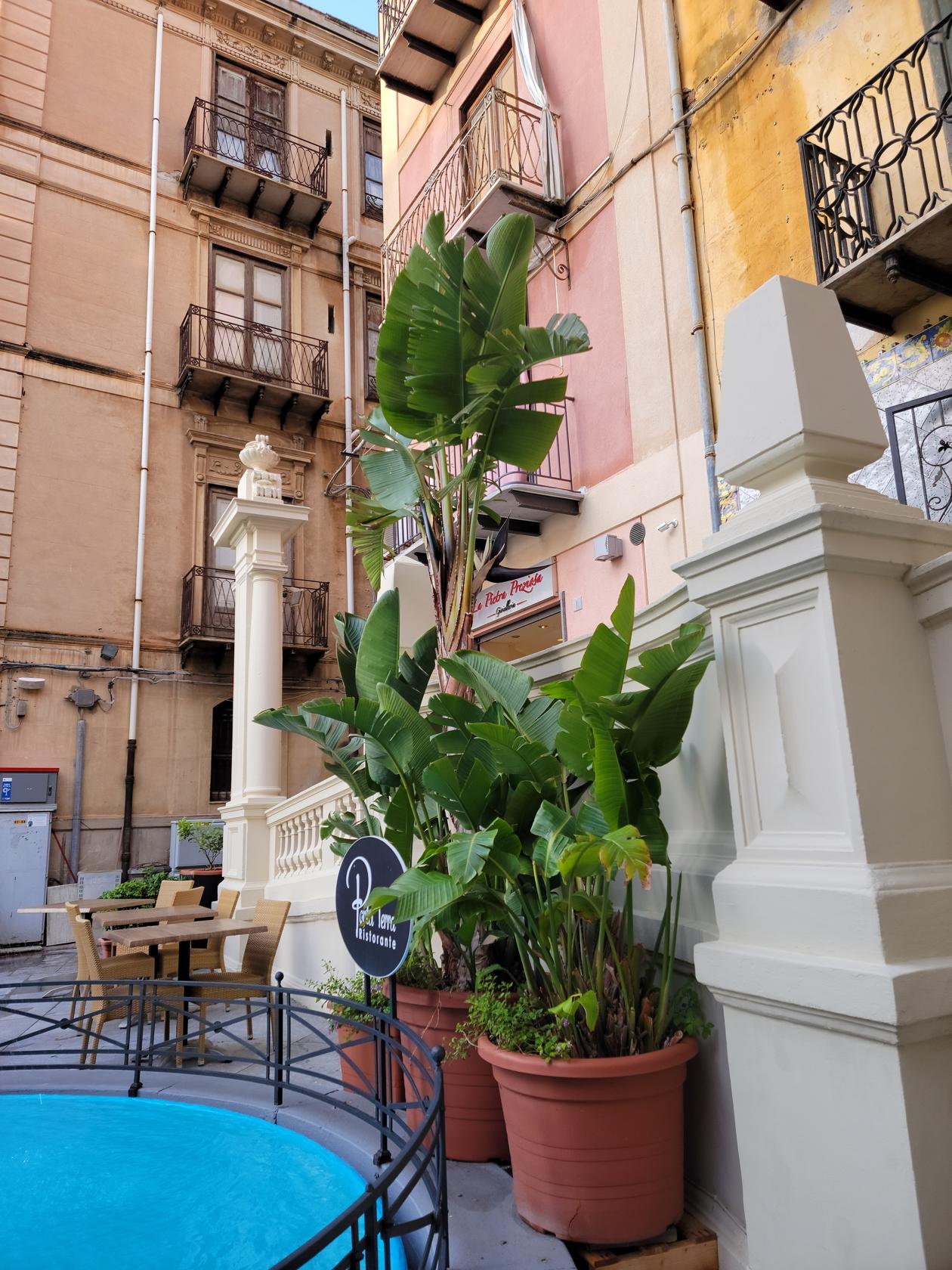
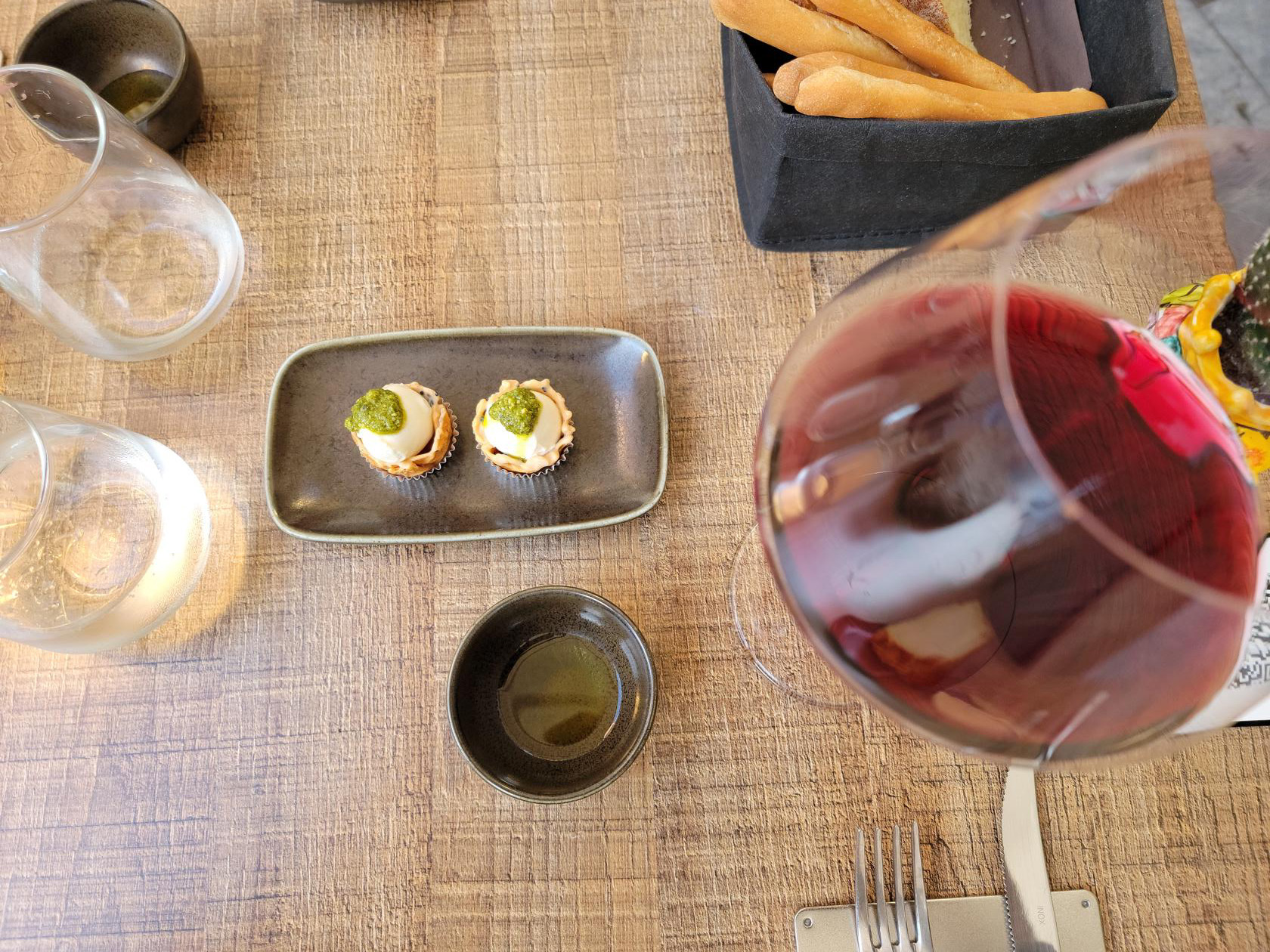
A fine restaurant located in the Piazza Garibaldi in the upper part of town. We booked our reservations using The Fork and got a free hors d’oeuvres of Cherry Tomato, Mozzarella and Pistachio Cream in a small baked bread cup.
Ristorante Porta Terra – Cefalu, Sicily
The Fountain – Ristorante Porta Terra – Cefalu, Sicily
Ristorante Porta Terra – Cefalu, Sicily
Our Special hors d’oeuvres from The Fork – Cherry Tomato, Mozzarella and Pistachio Cream – Ristorante Porta Terra – Cefalu, Sicily
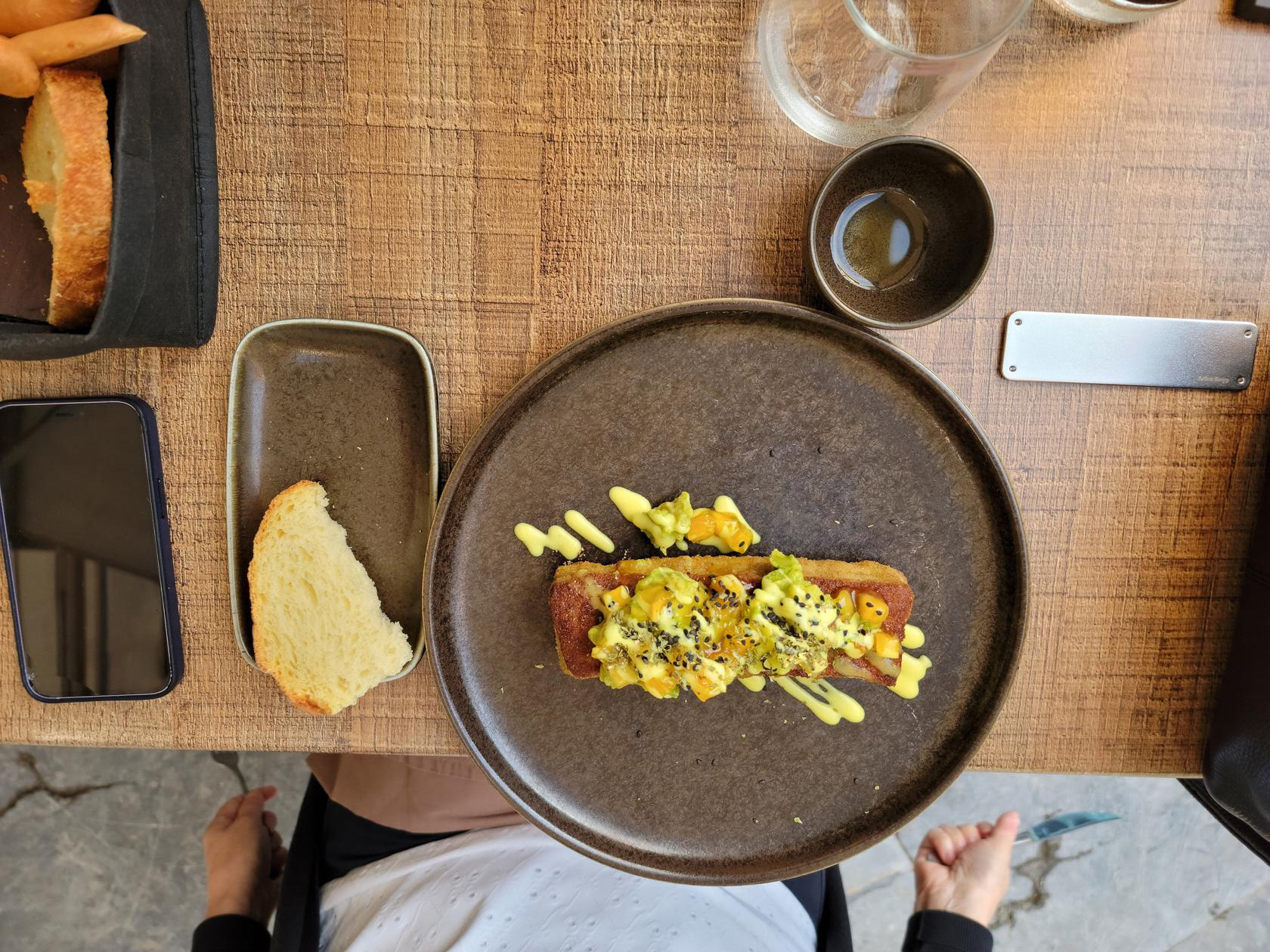
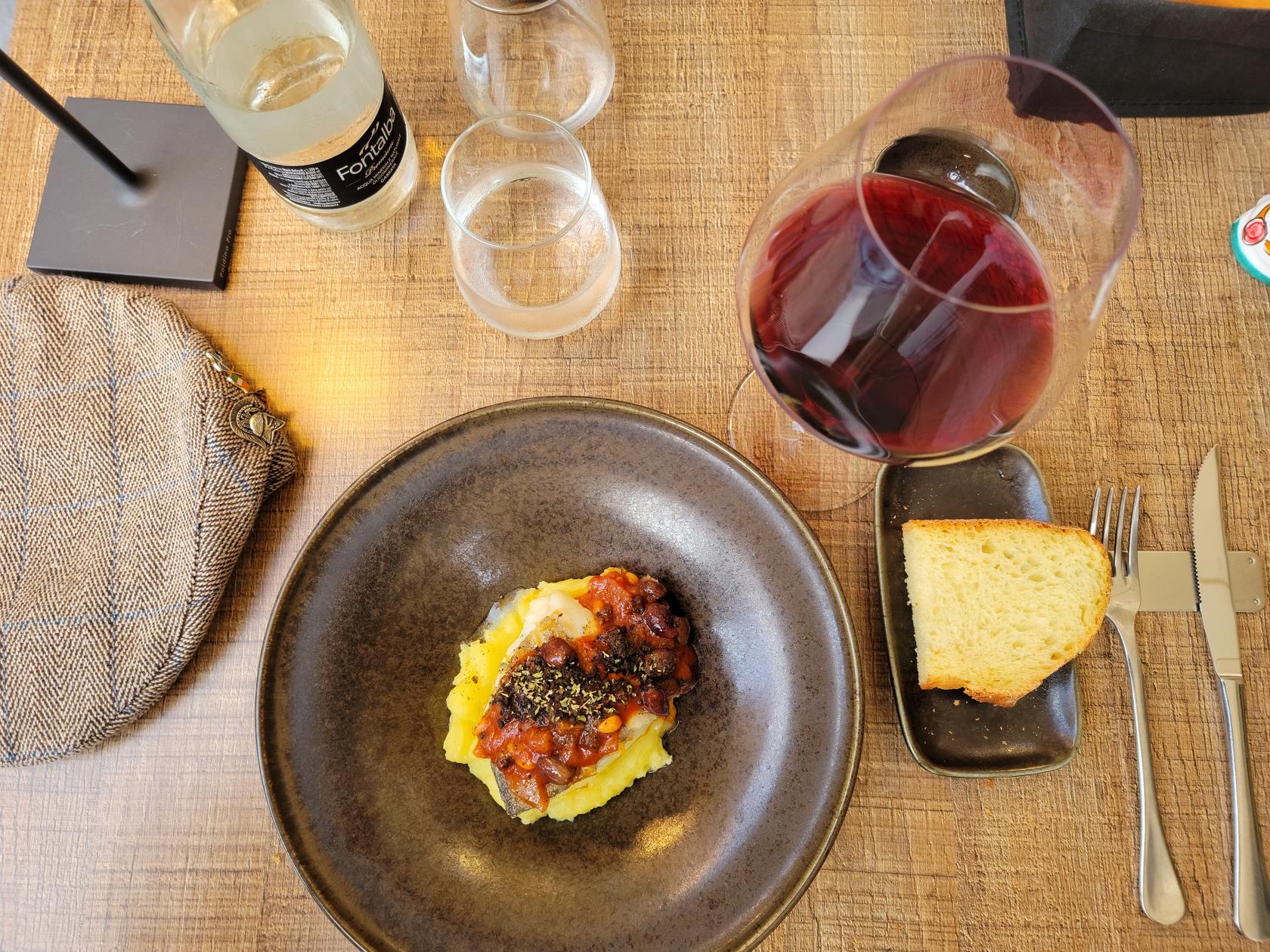
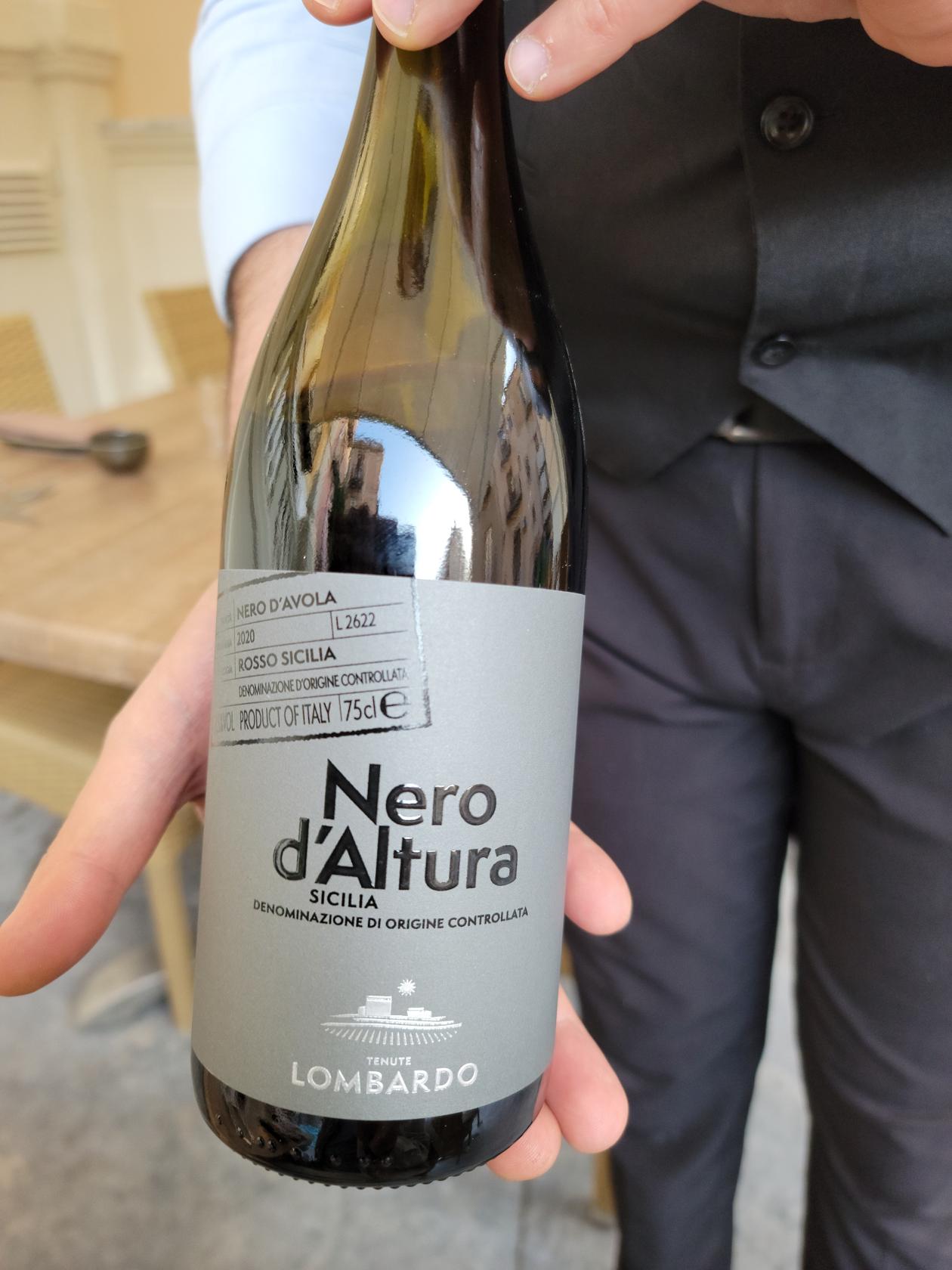
I ordered a glass of a fine red Sicilian wine called Nero d’Altura. Patti had the breaded tuna with Mango and avocado sauce, and I had the baked cod with a reduction of pinoli nuts, raisins and kalamata olives over mashed potatoes, both of which were delicious. The dinner was a bit on the high side at 71€ for both of us, but the food was worth every cent.
Breaded Tuna with Mango and Avocado sauce – Ristorante Porta Terra – Cefalu, Sicily
Baked cod with a reduction of pinoli nuts, raisins and kalamata olives over mashed potatoes – Ristorante Porta Terra – Cefalu, Sicily
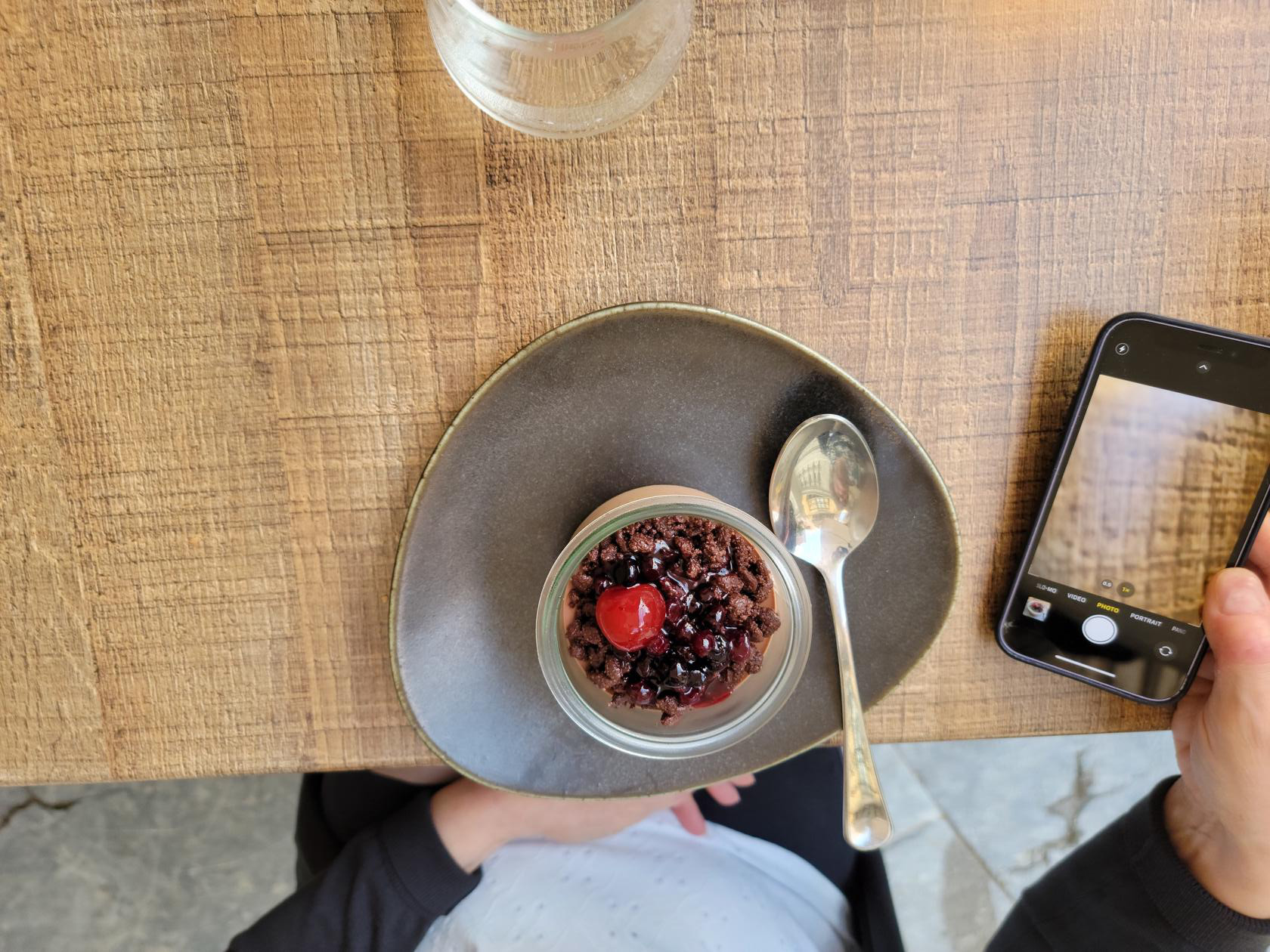
Chocolate cream with red berries and crunchies on top – Ristorante Porta Terra – Cefalu, Sicily
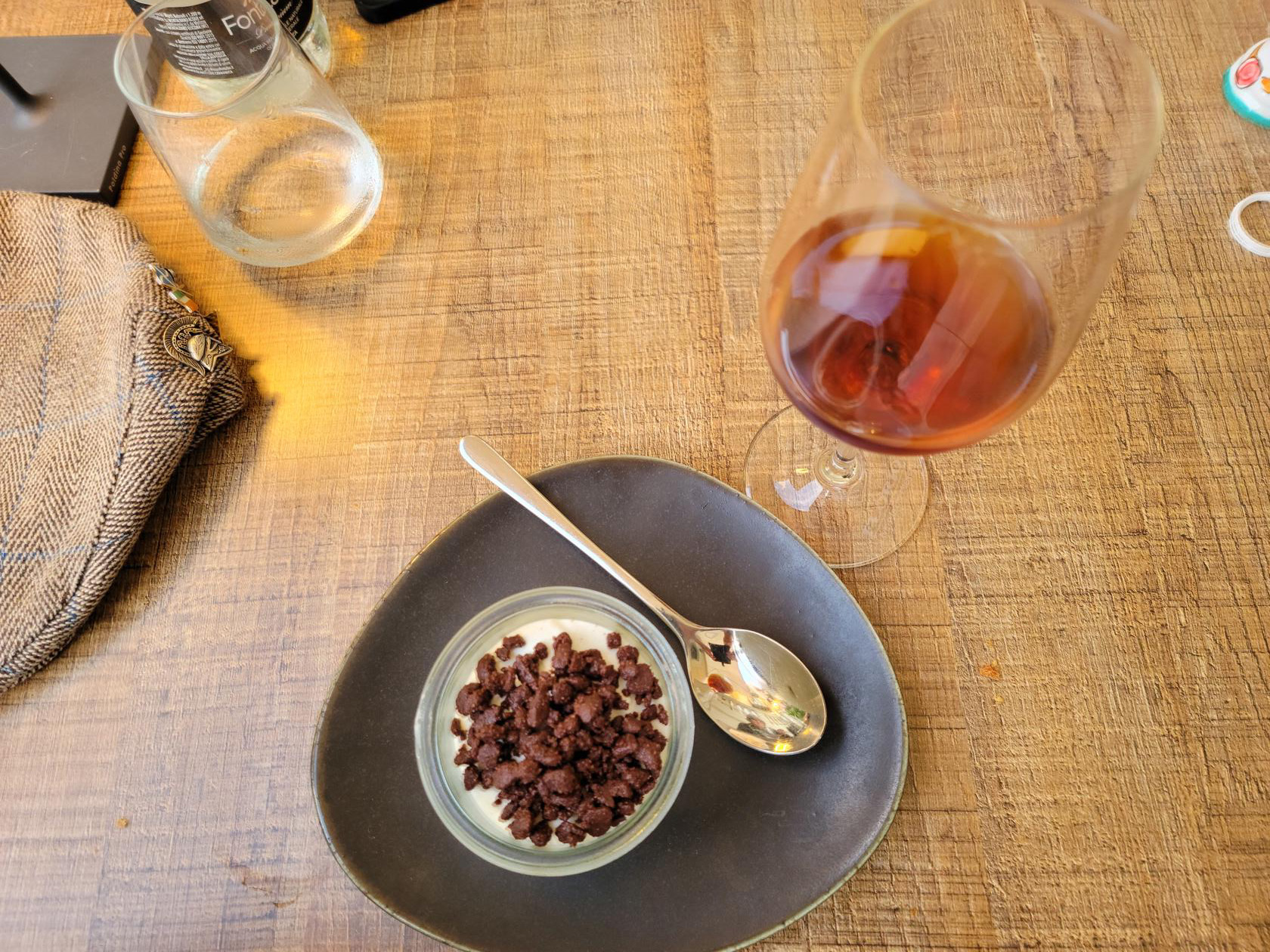
Tiramisu with chocolate crunchies and Marsala wine – Ristorante Porta Terra – Cefalu, Sicily
A Fine Red Sicilian Wine – Nero d’Altura – Ristorante Porta Terra – Cefalu, Sicily
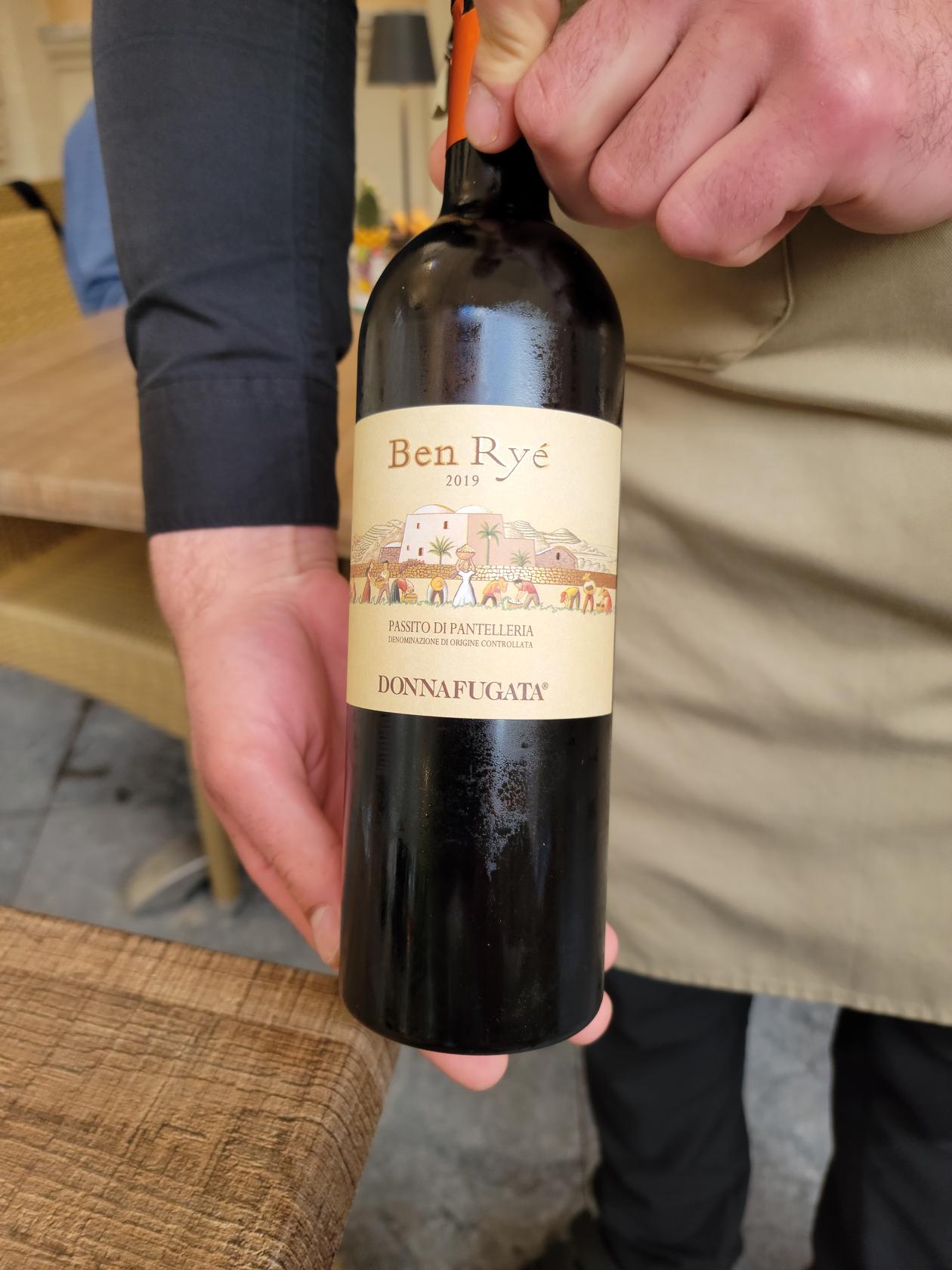
A fine sweet Marsala wine – Ben Rye – Ristorante Porta Terra – Cefalu, Sicily
Situated on the north coast of the autonomous region of Sicily is Palermo, both the capital of the province and of the region itself. It is an ancient city which has been ruled over its long history by many different powers. It was once a nexus for essential trade routes in the Mediterranean Sea.
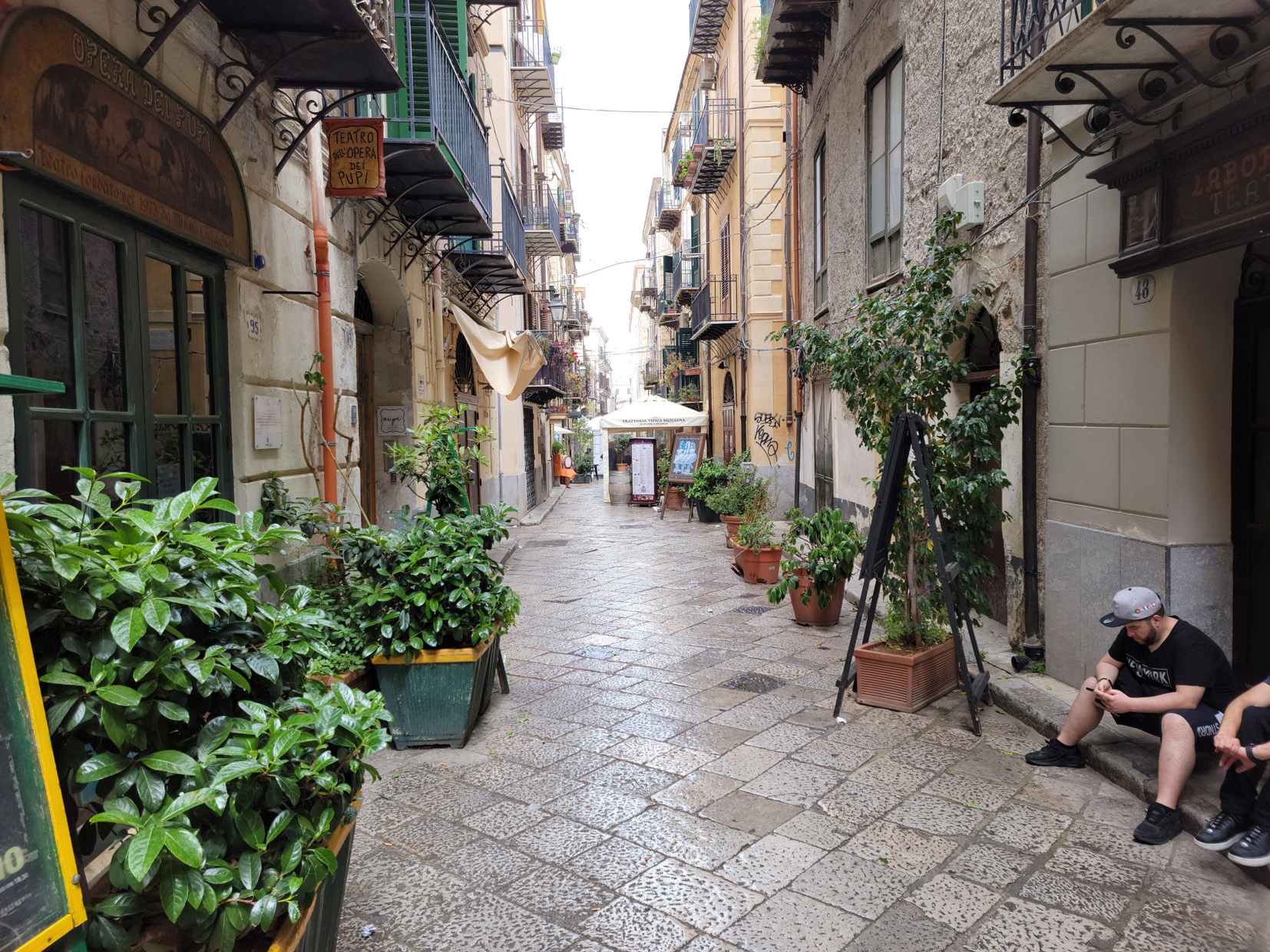
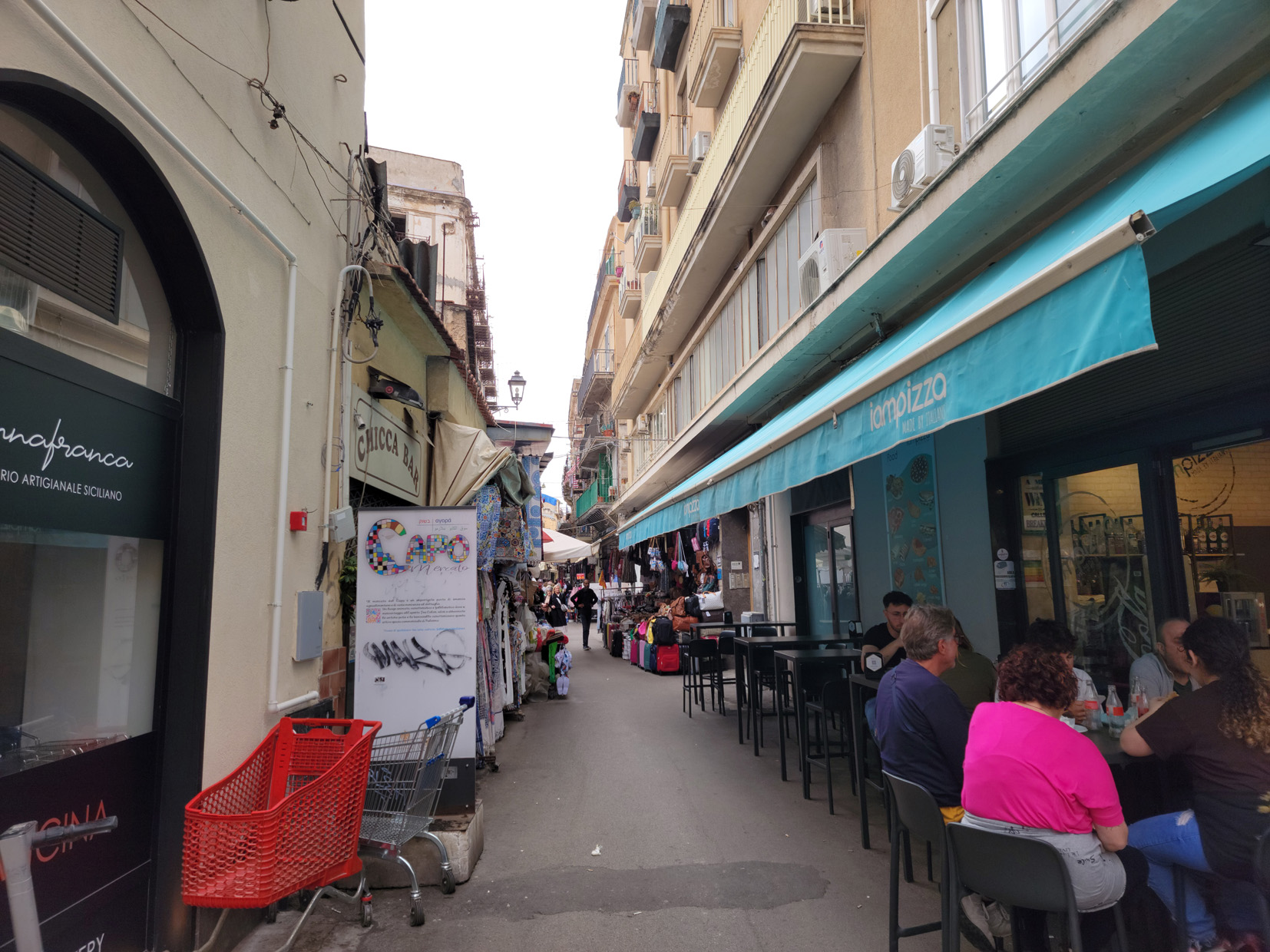
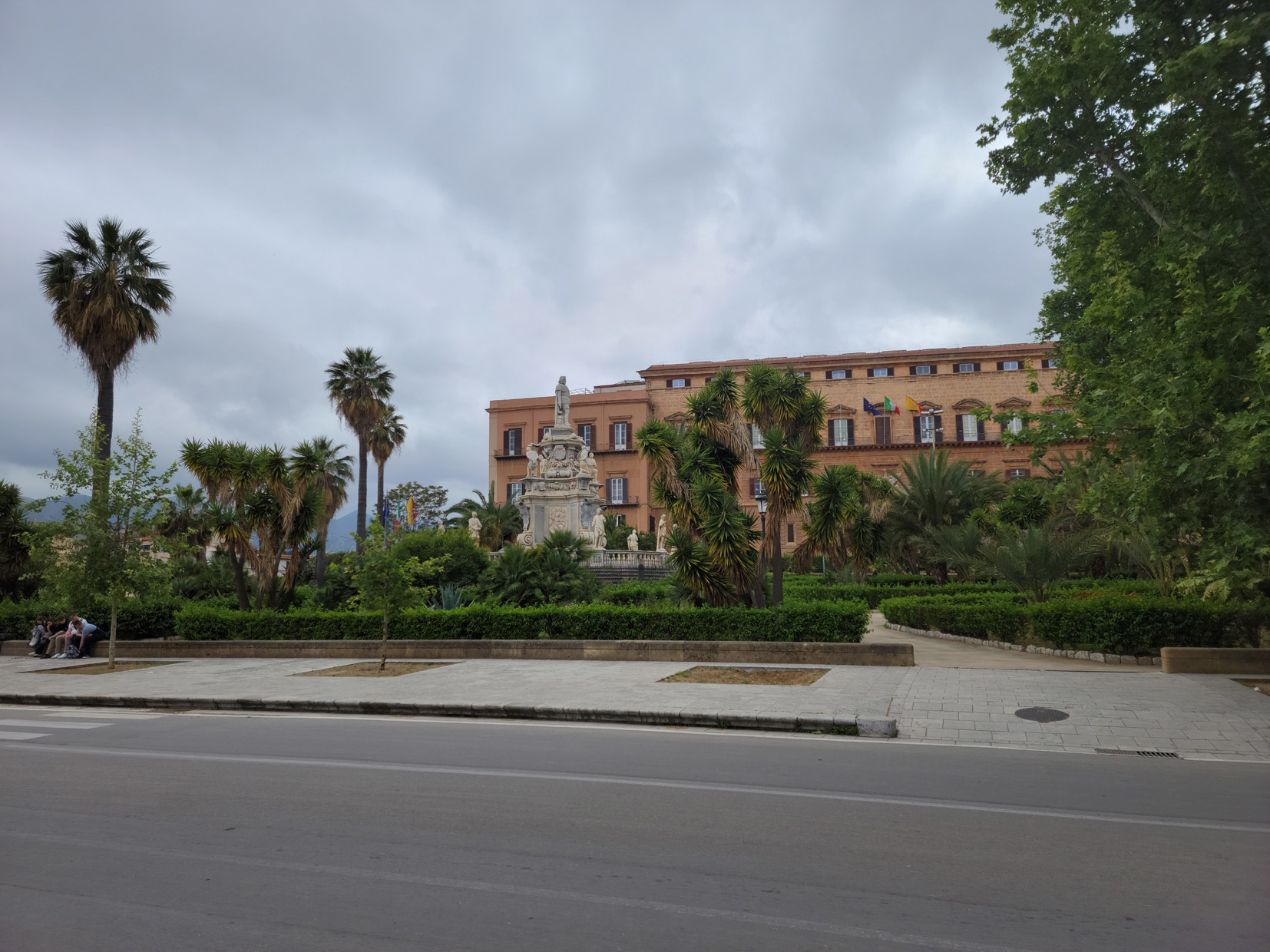
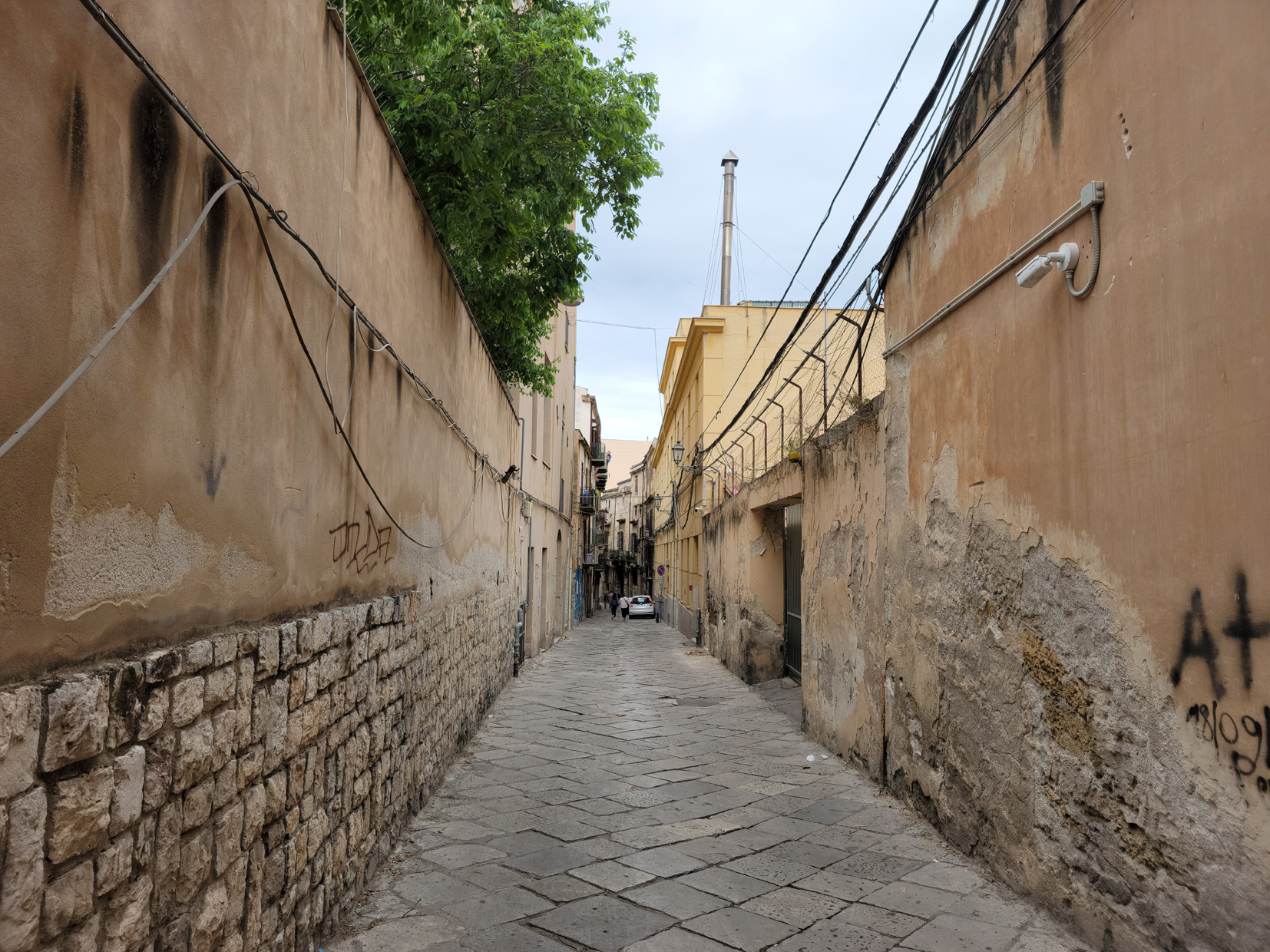
Via Bara All’Olivella – Palermo, Sicily
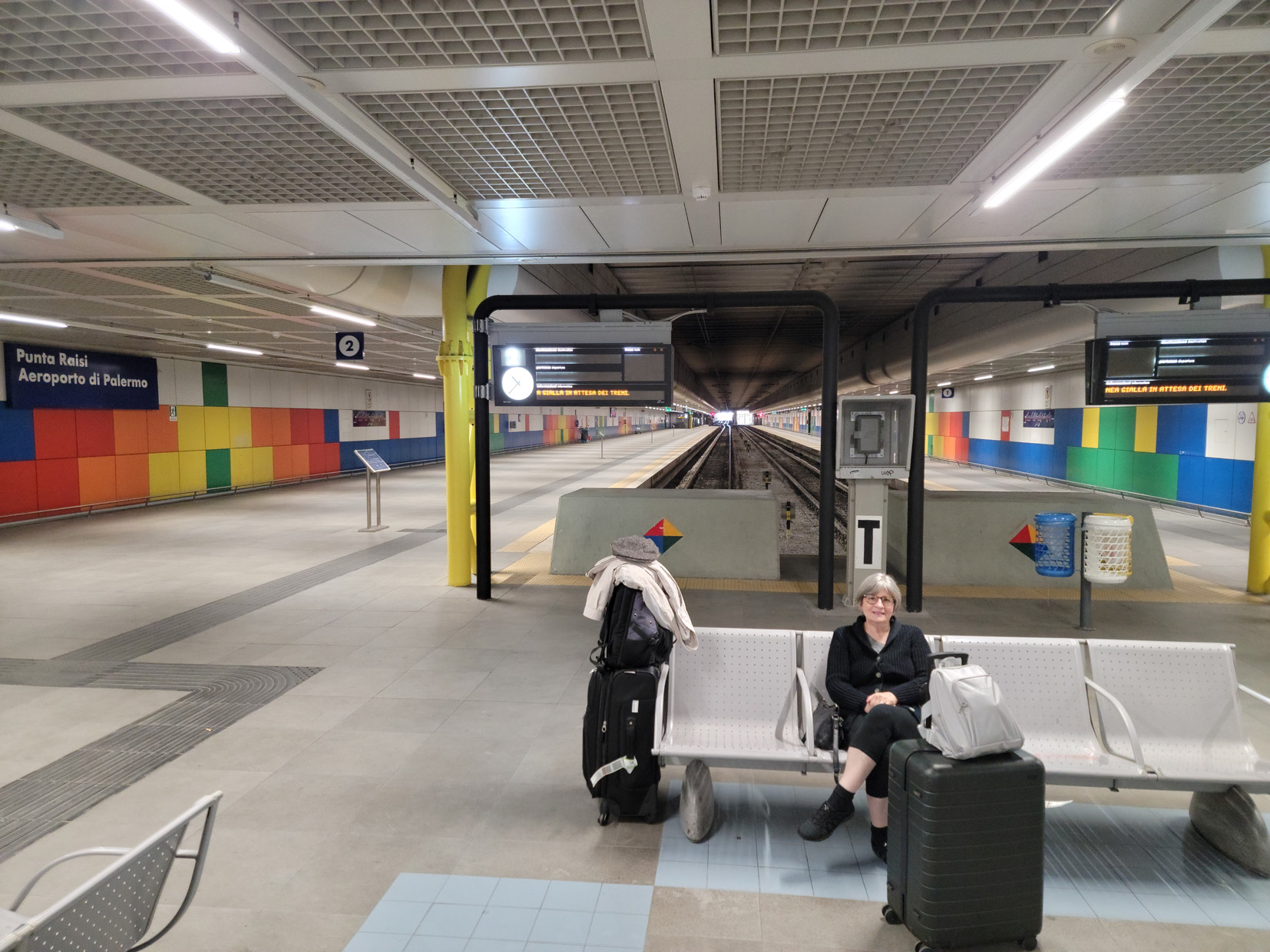
We arrived at the Palermo Airport, which is actually not in Palermo, but in Punta Raisi. There are many options one can take in order to get to Palermo, ranging from the train at 6.50€/person, all the way up to private shuttle service starting at 50€/person. Being from a family of railroad workers, I prefer to take a train when possible. Not only is a far cheaper, but in Italy they almost always run on time.
Patti – Punta Raisi Station – Palermo Airport – Sicily, Italy
One last thing, unfortunately our Tickets For Two were electronic, so it does not make sense to show, nor take a photograph of them. Let us just say, we had two tickets on a Ryanair flight from Turin to Palermo at a very reasonable rate.
A Working City
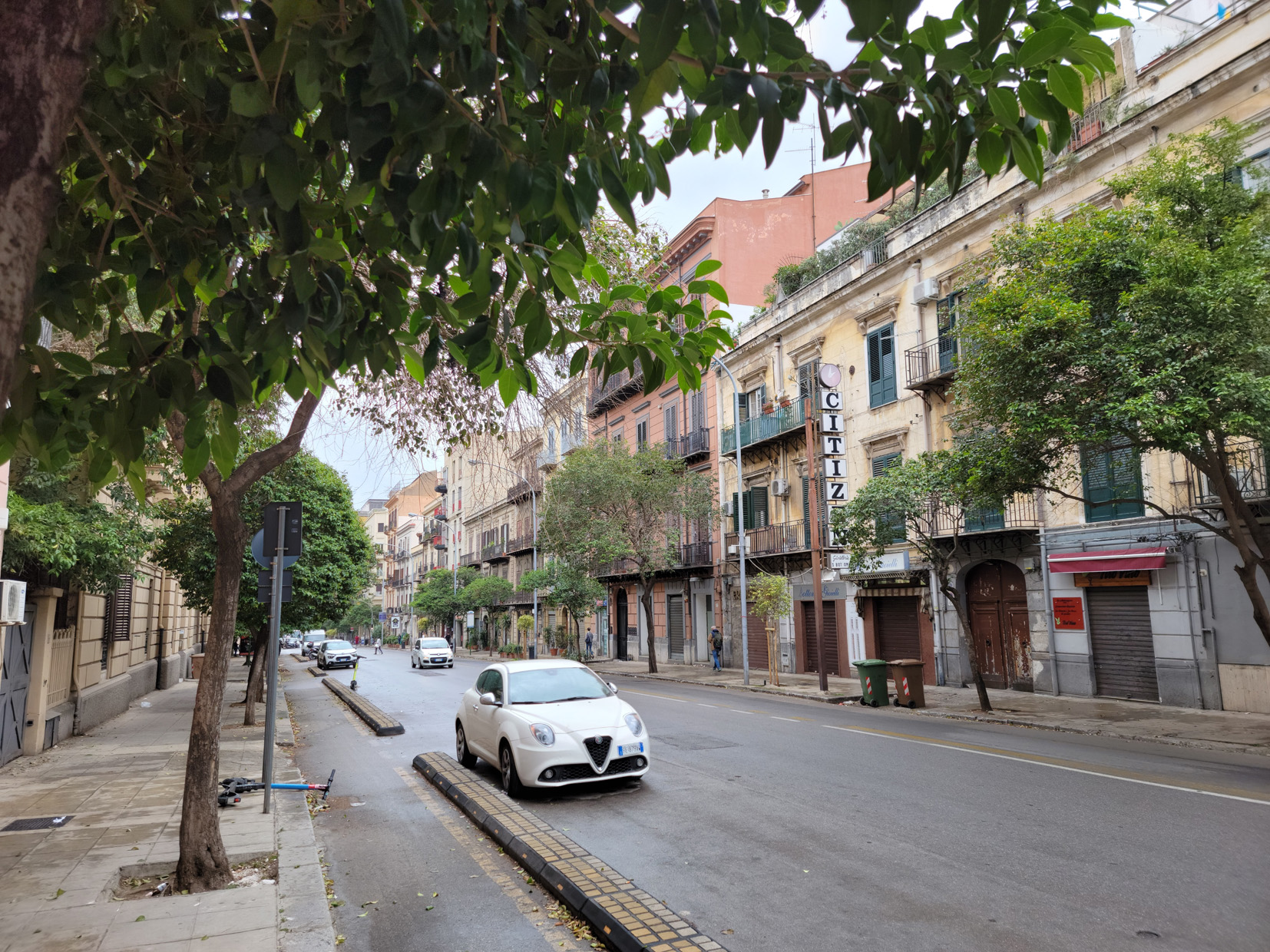
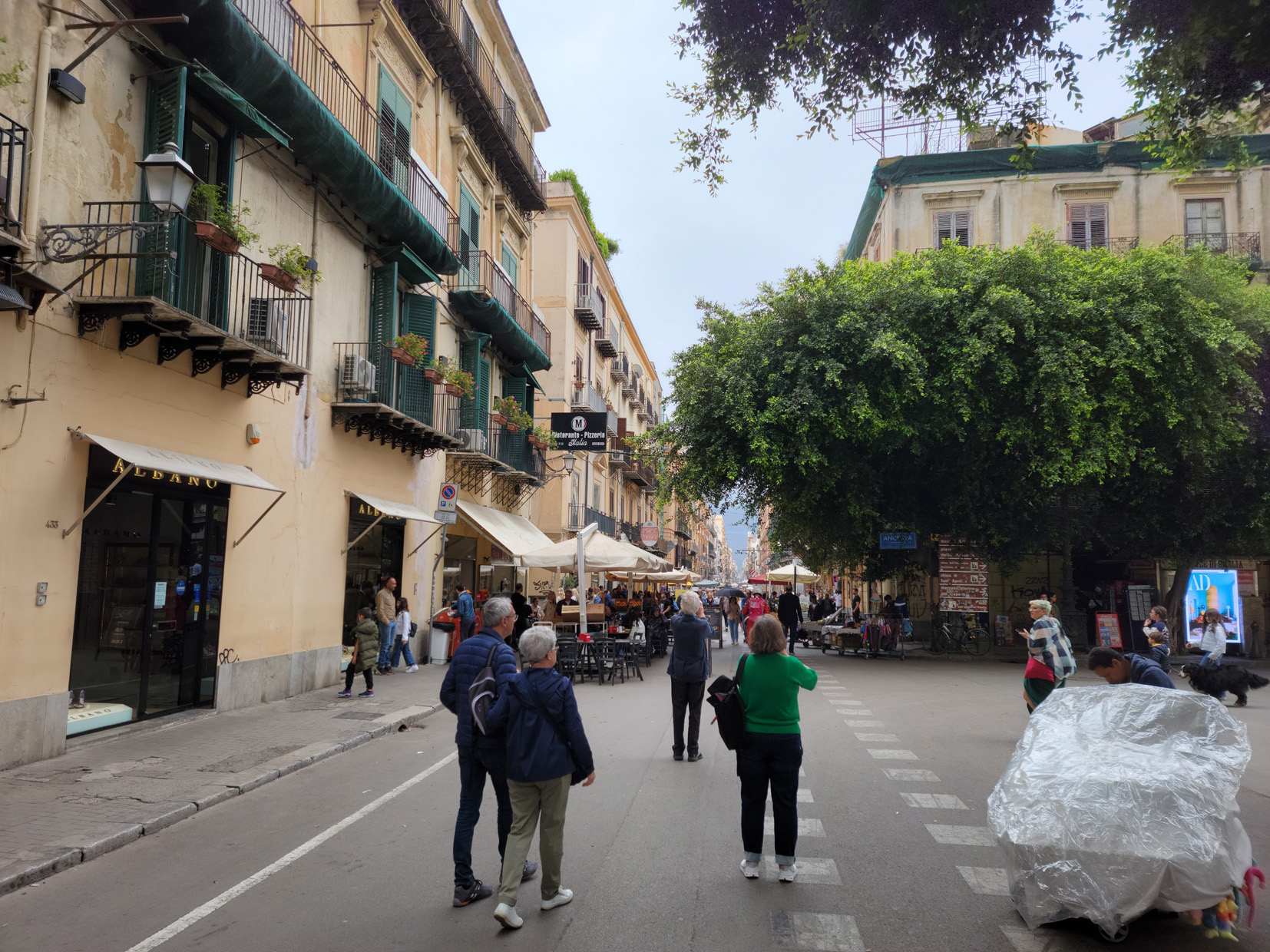
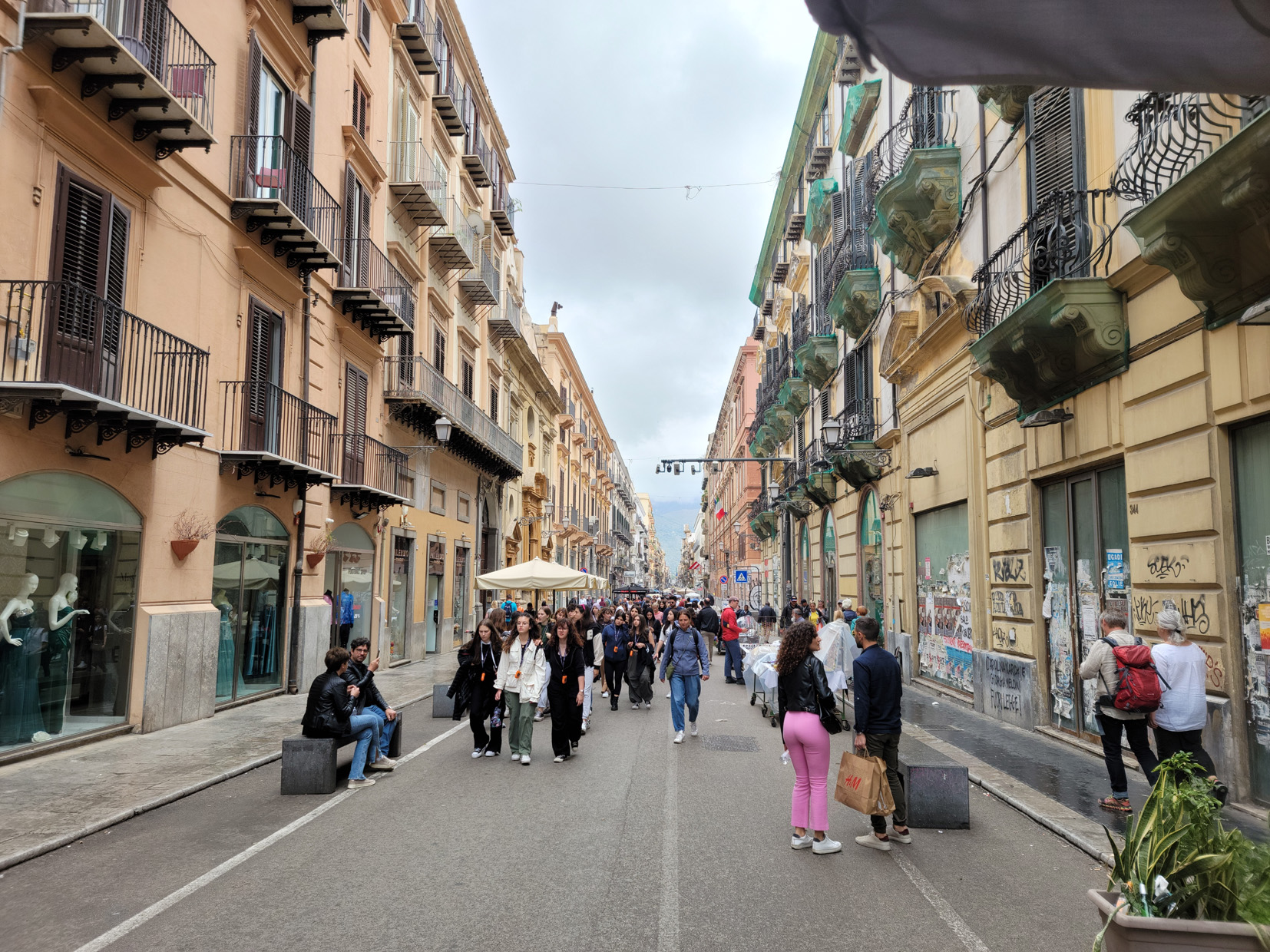
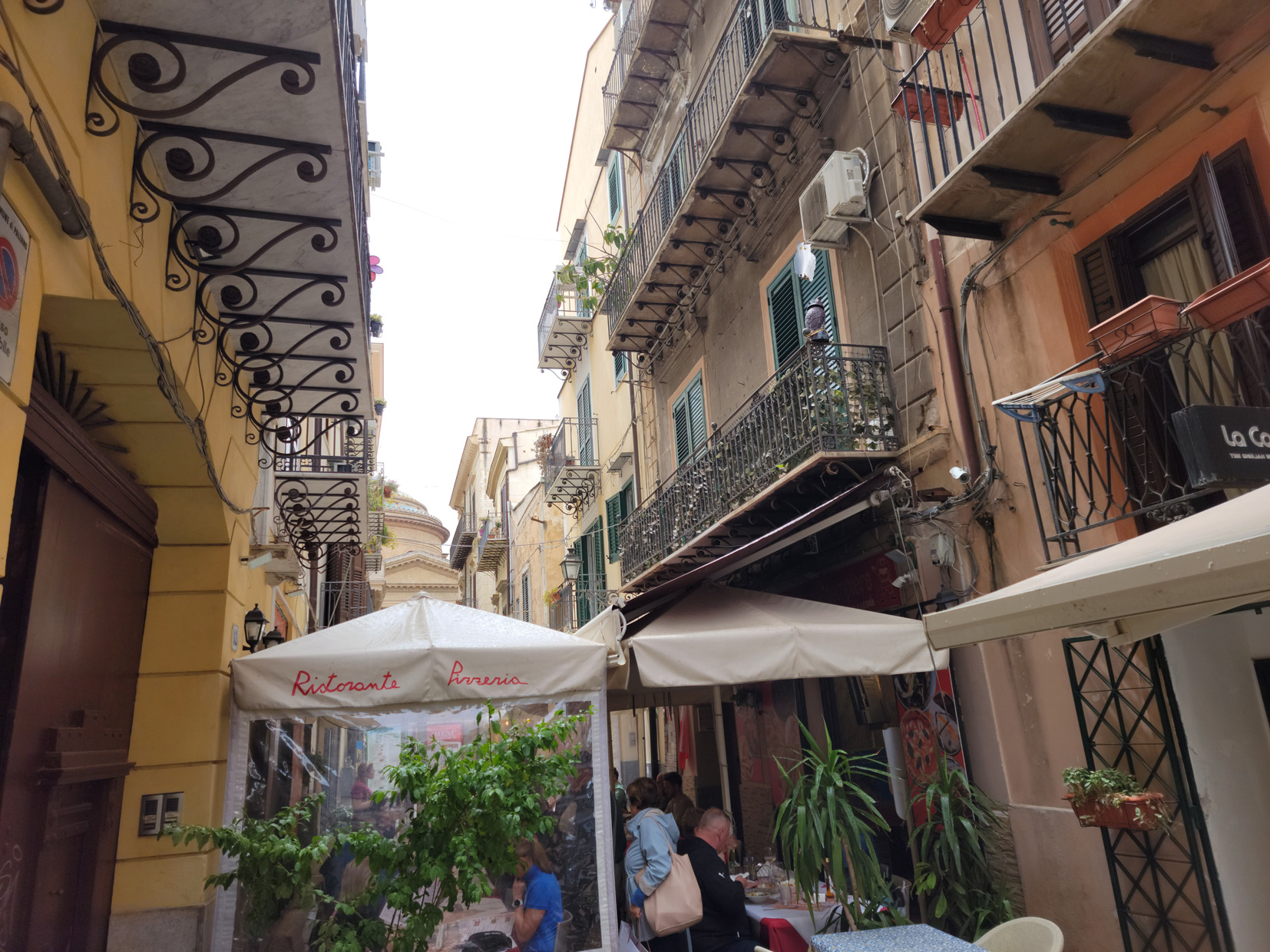
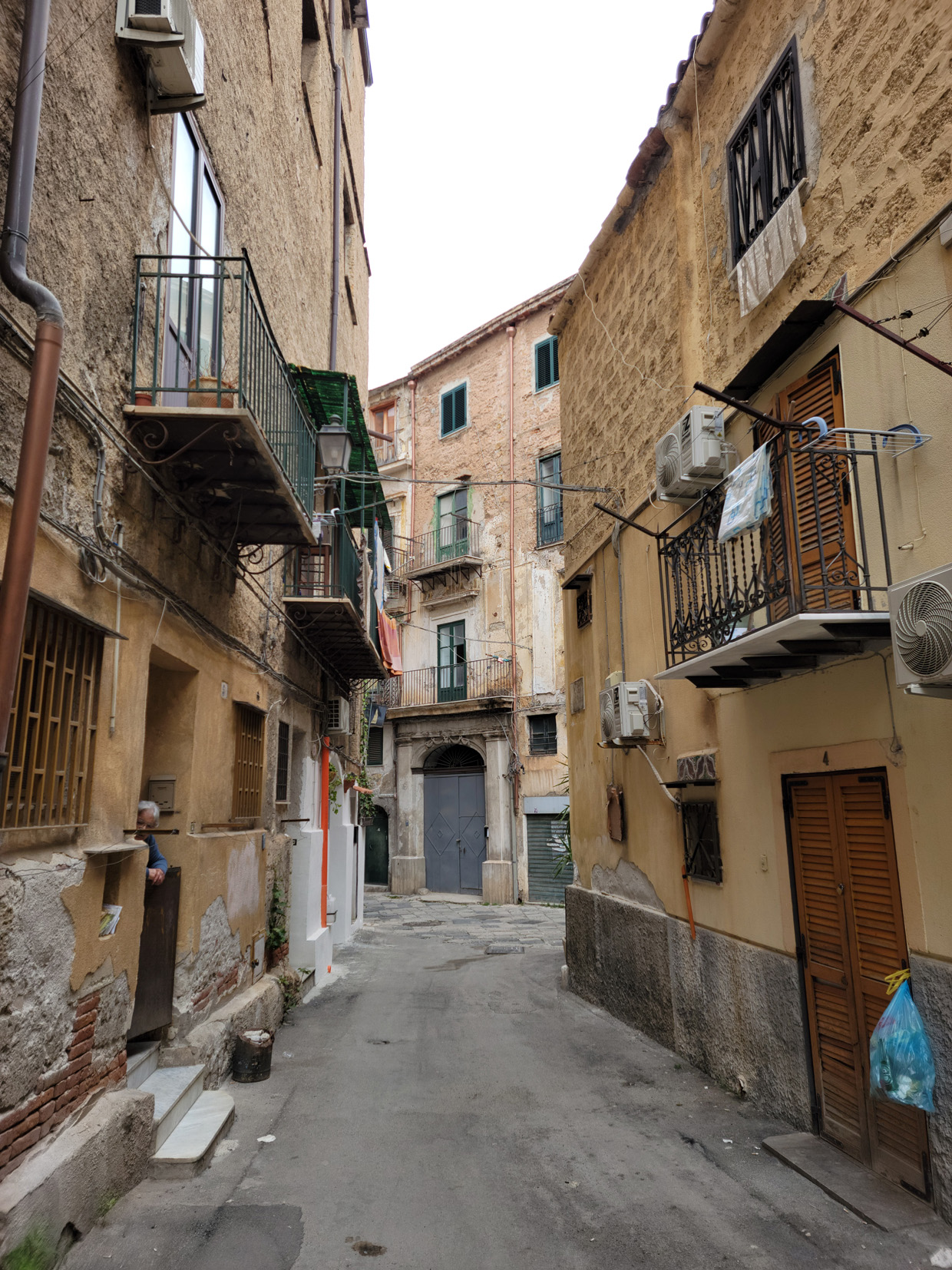
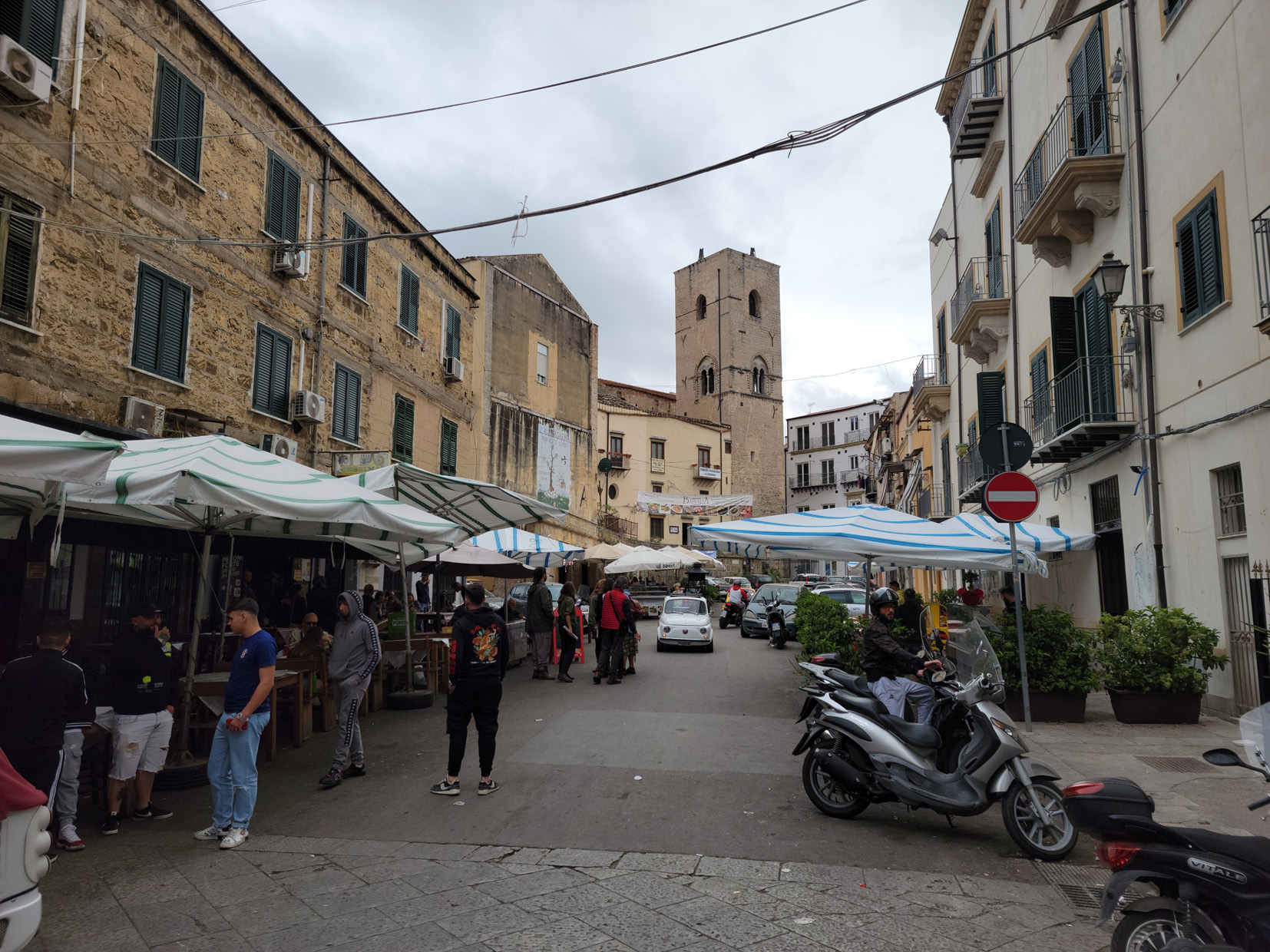
In our contemporary time, I would say the city of Palermo is struggling between its ancient roots, as with many other parts of Italy, and its desire to be modern. This is reflected in many ways as you walk through its narrow alleyways and marbled streets. Some of which are well worn with centuries of wear.
The Streets of Palermo – Sicily, Italy
Via Maqueda outside our hotel – Piazza Massimo – Palermo, Sicily
Via Maqueda – Piazza Massimo – Palermo, Sicily
The Streets of Palermo – Palermo, Sicily
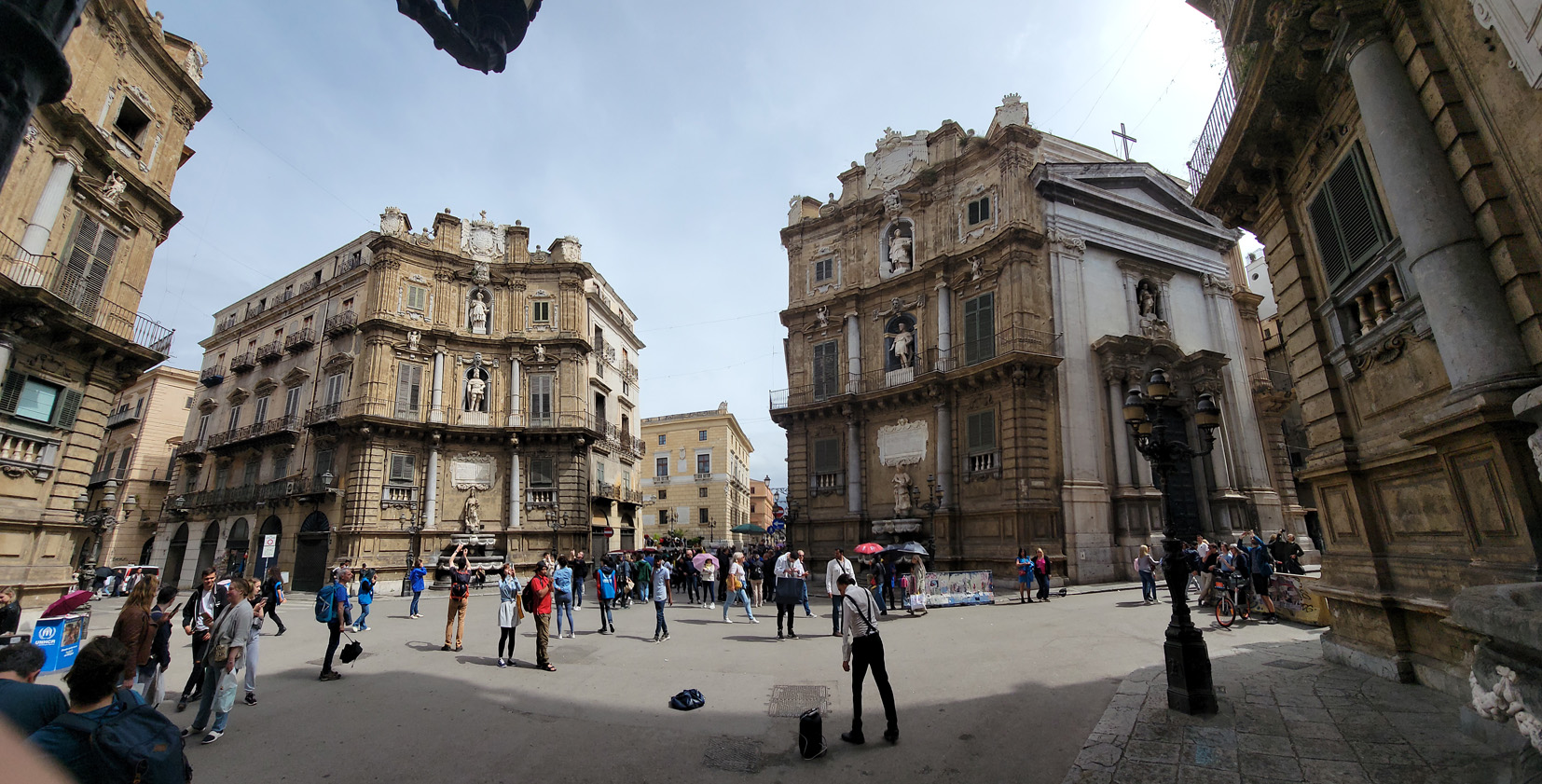
Quattro Canti via Marqueda – Palermo, Sicily
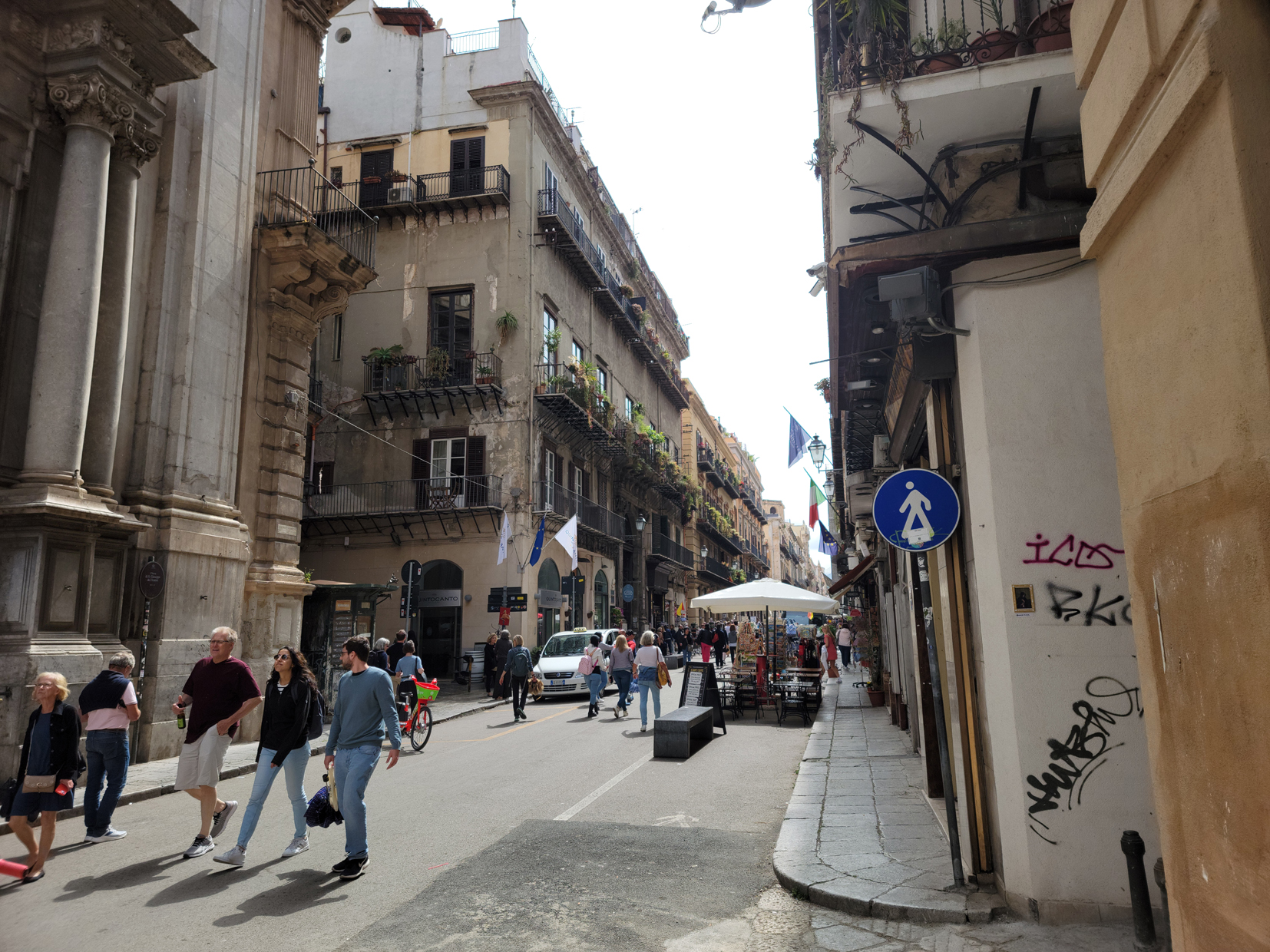
Via Vittorio Emanuelle – Palermo, Sicily
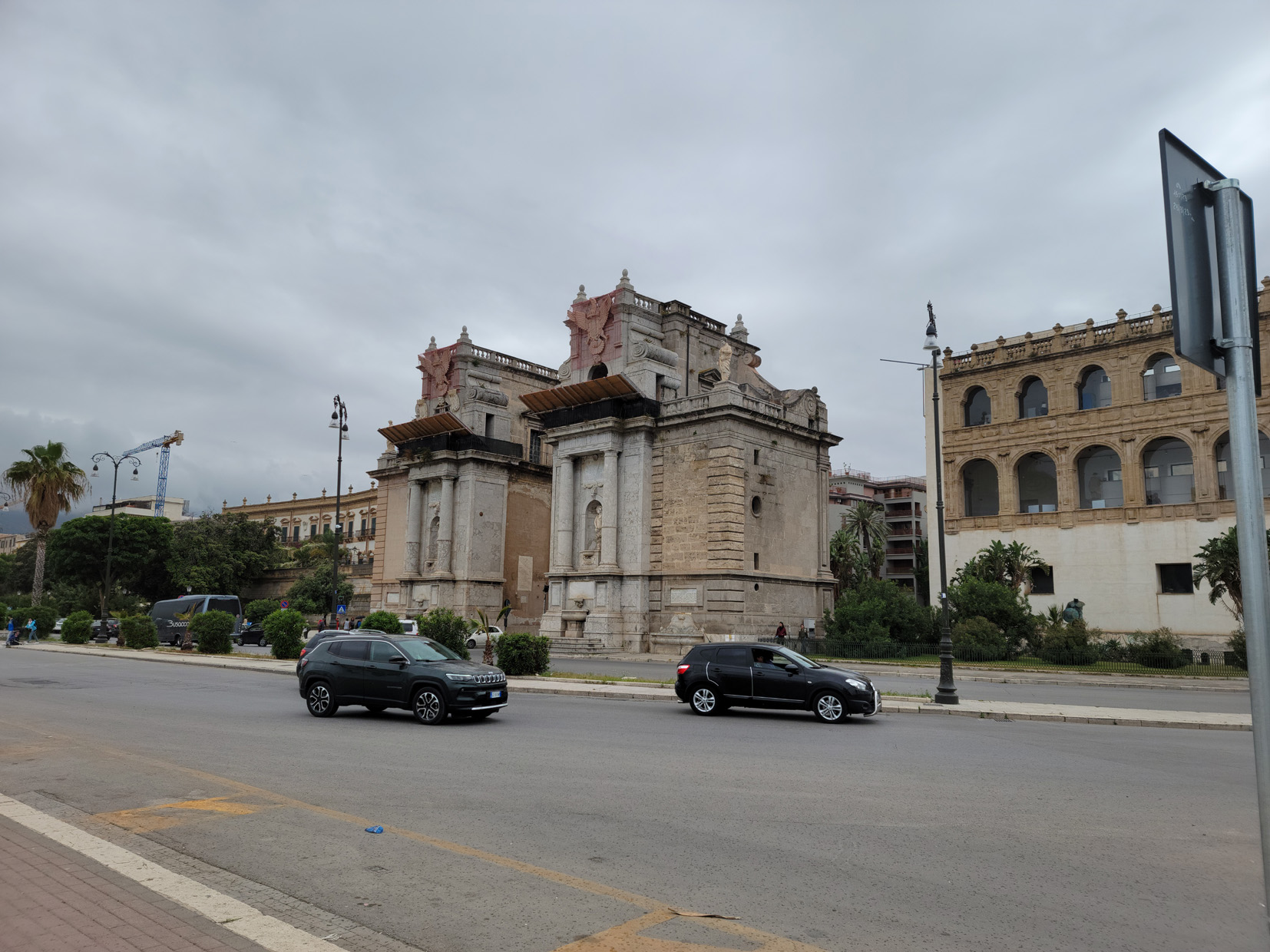
Porta Felice – Palermo, Sicily
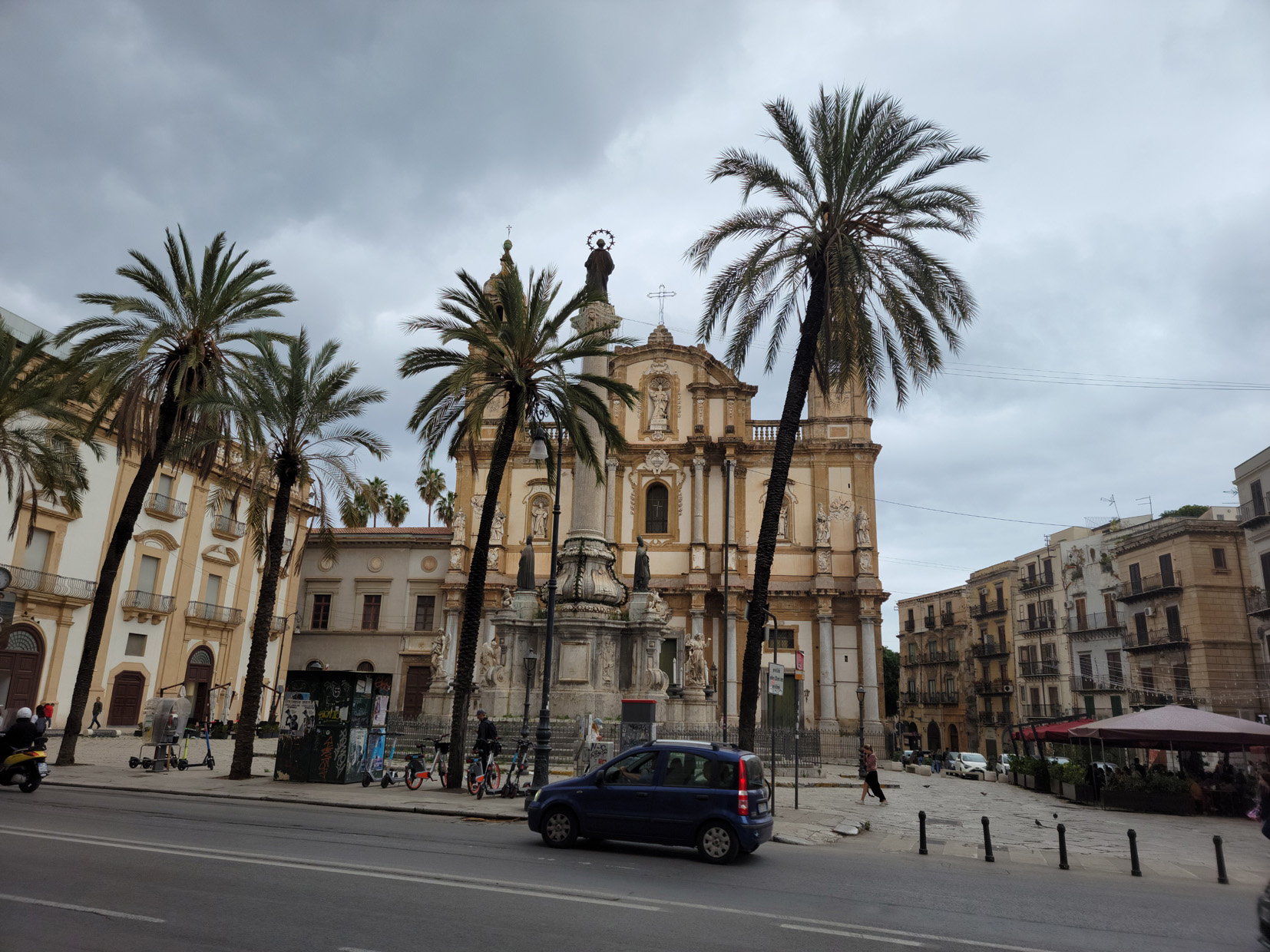
Colonna dell’Immacolata – Church of Saint Domenico – Palermo, Sicily
Churches of Palermo
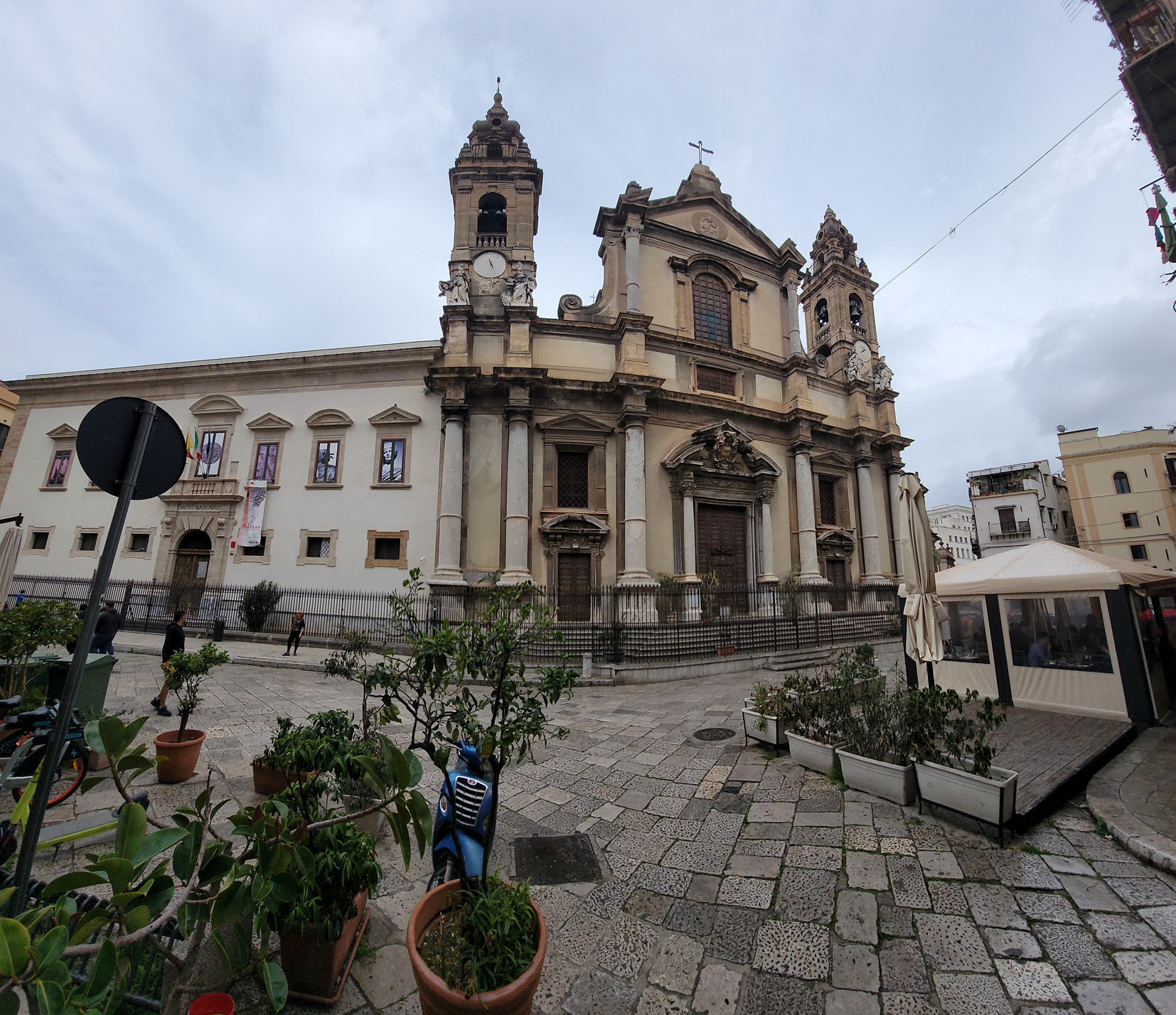
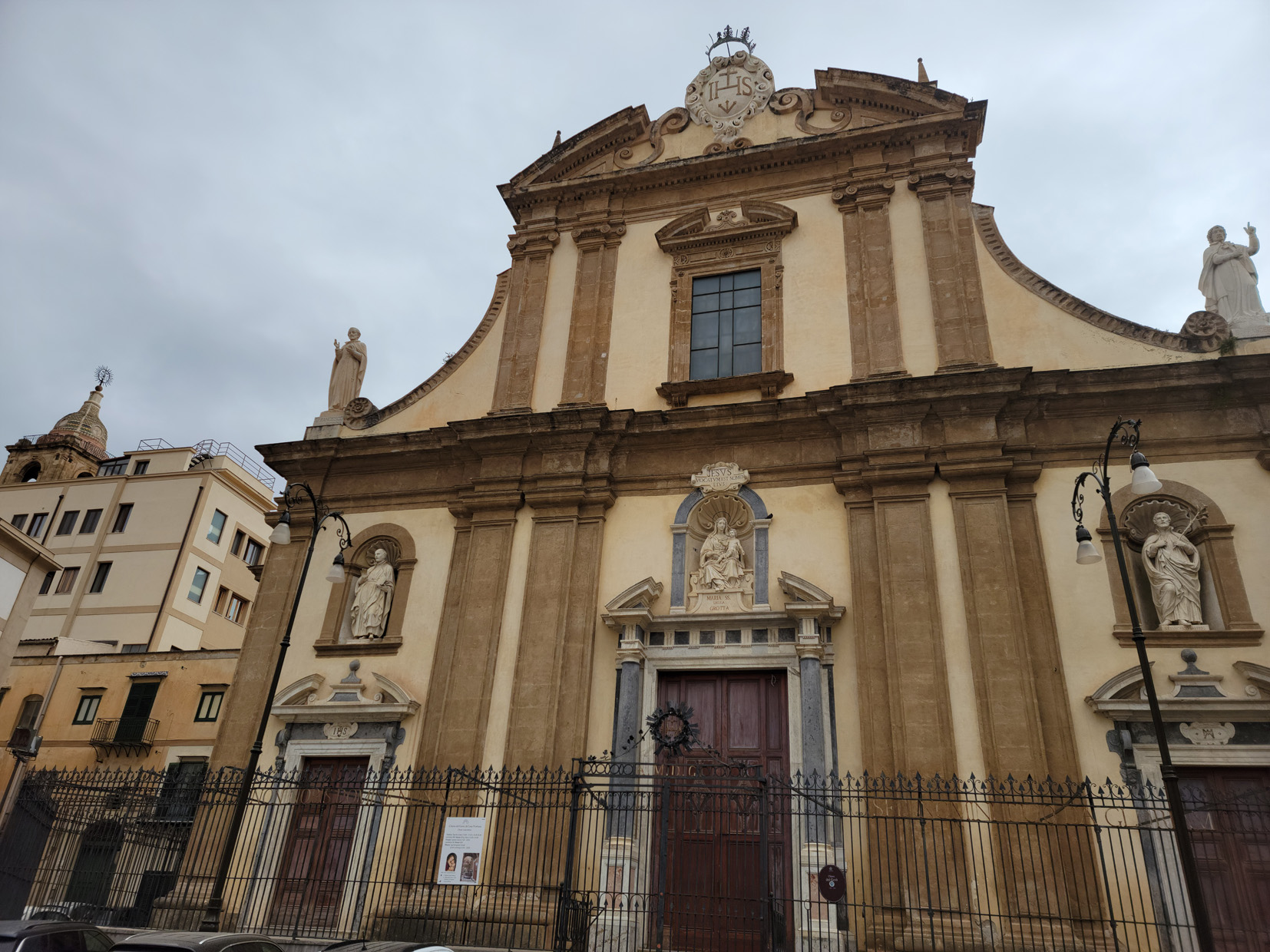
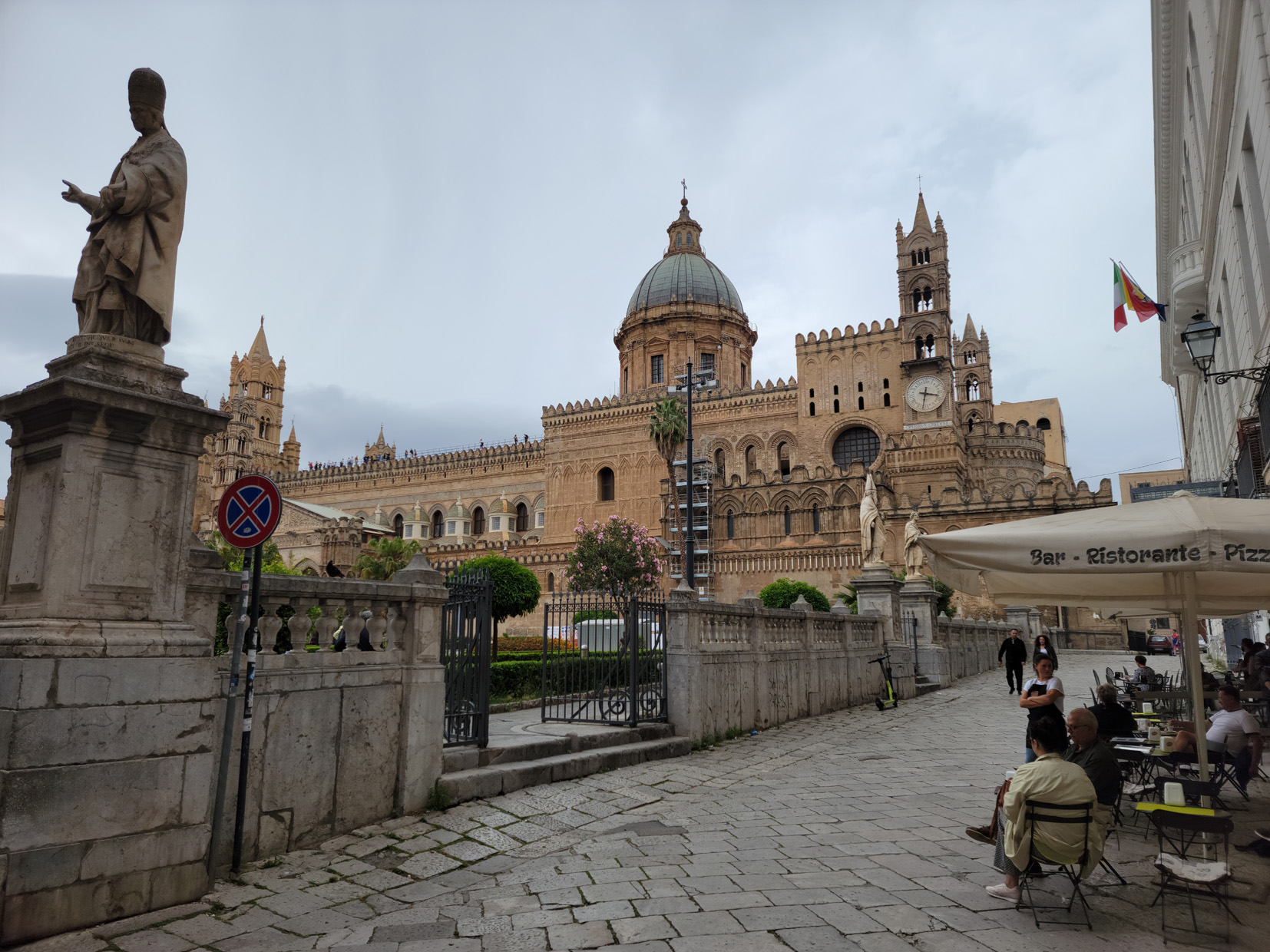
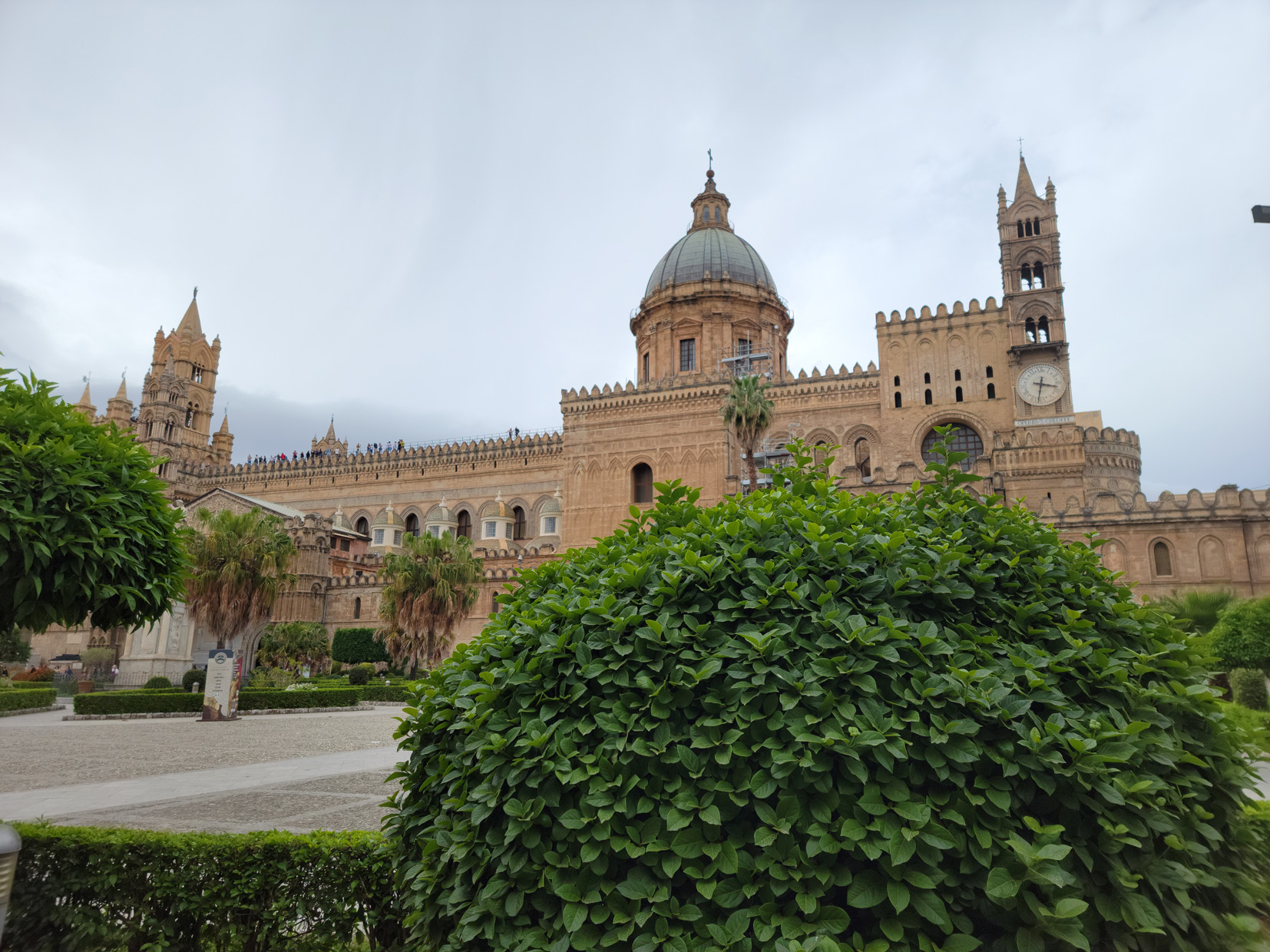
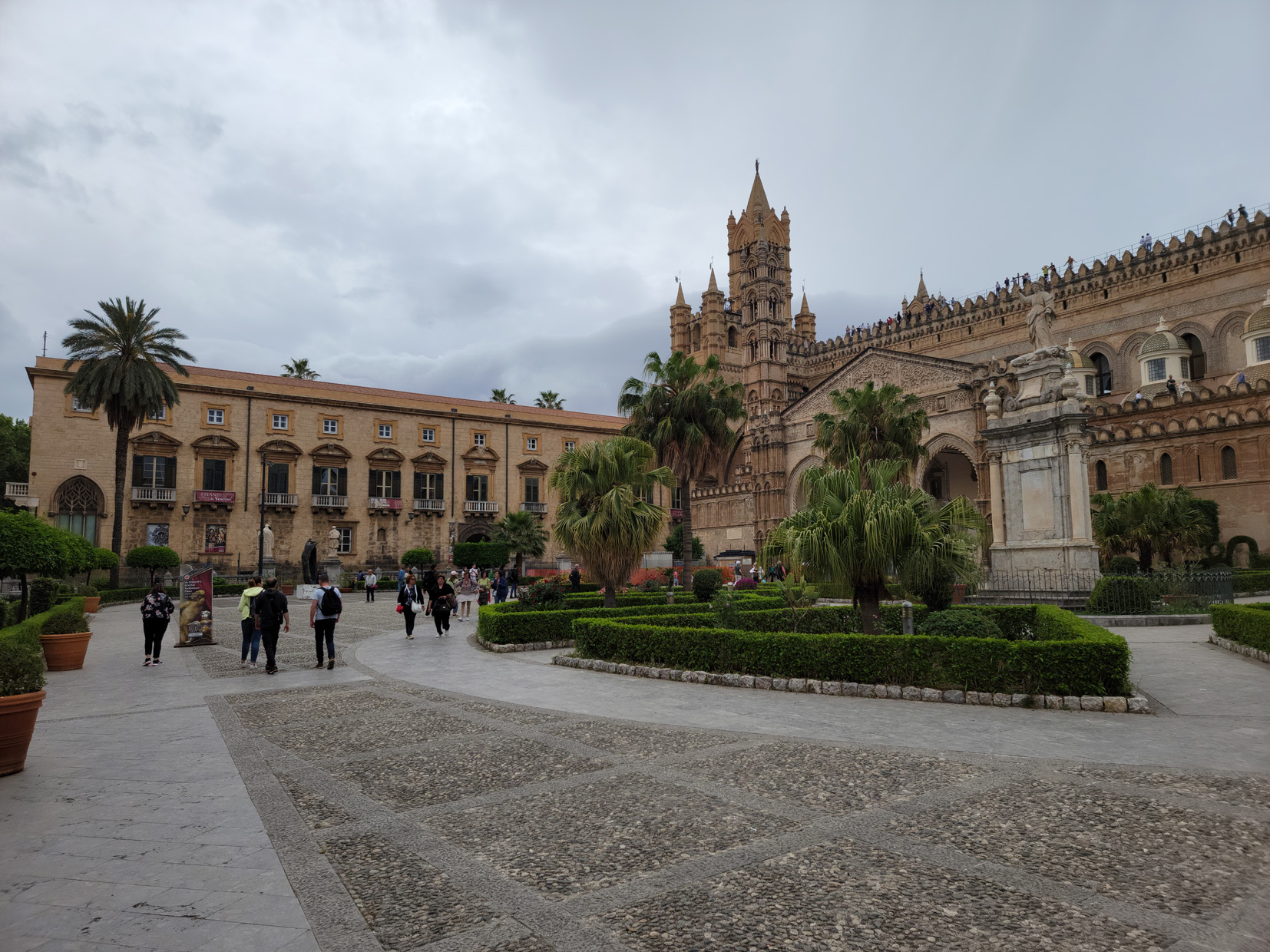
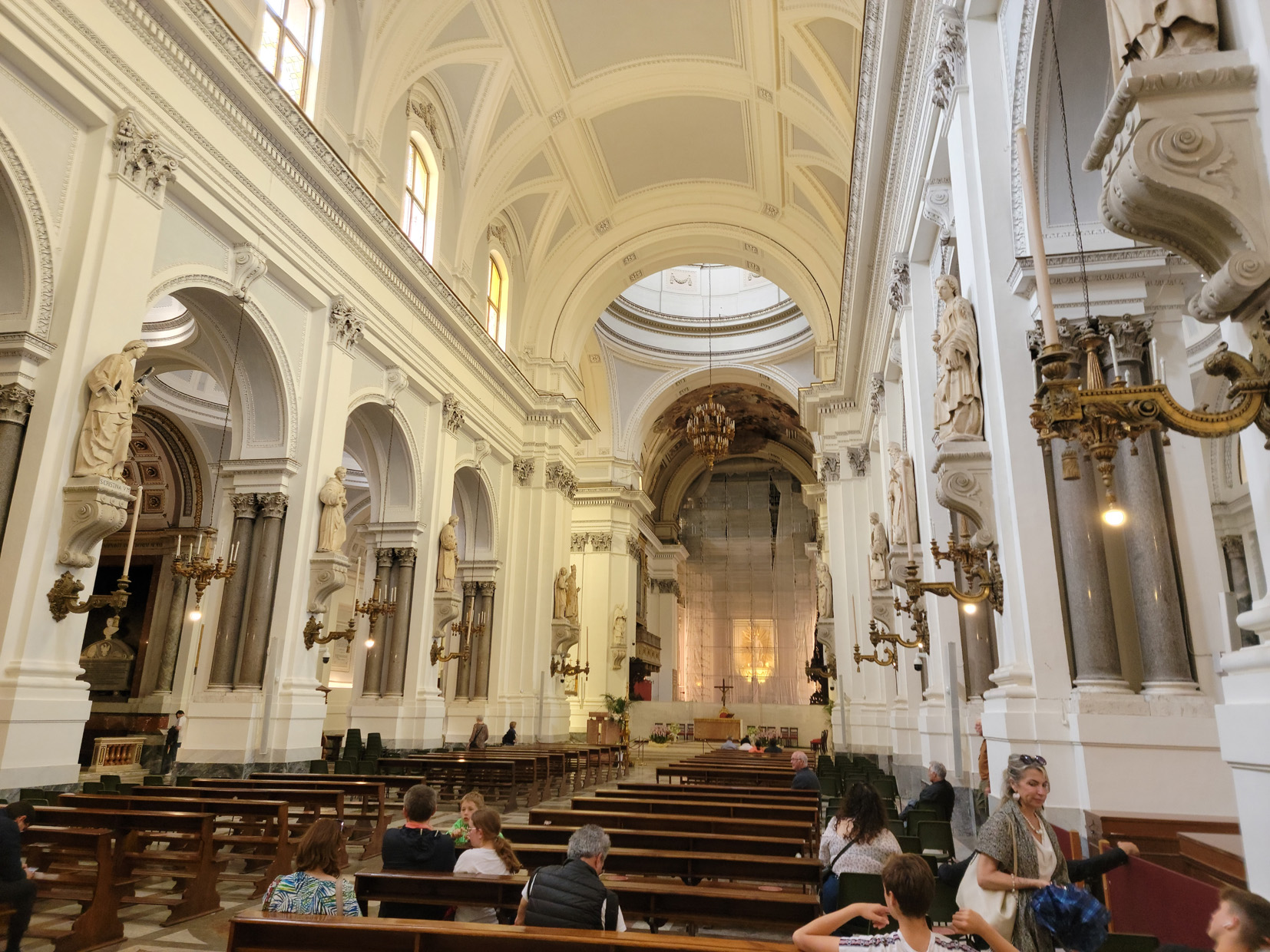
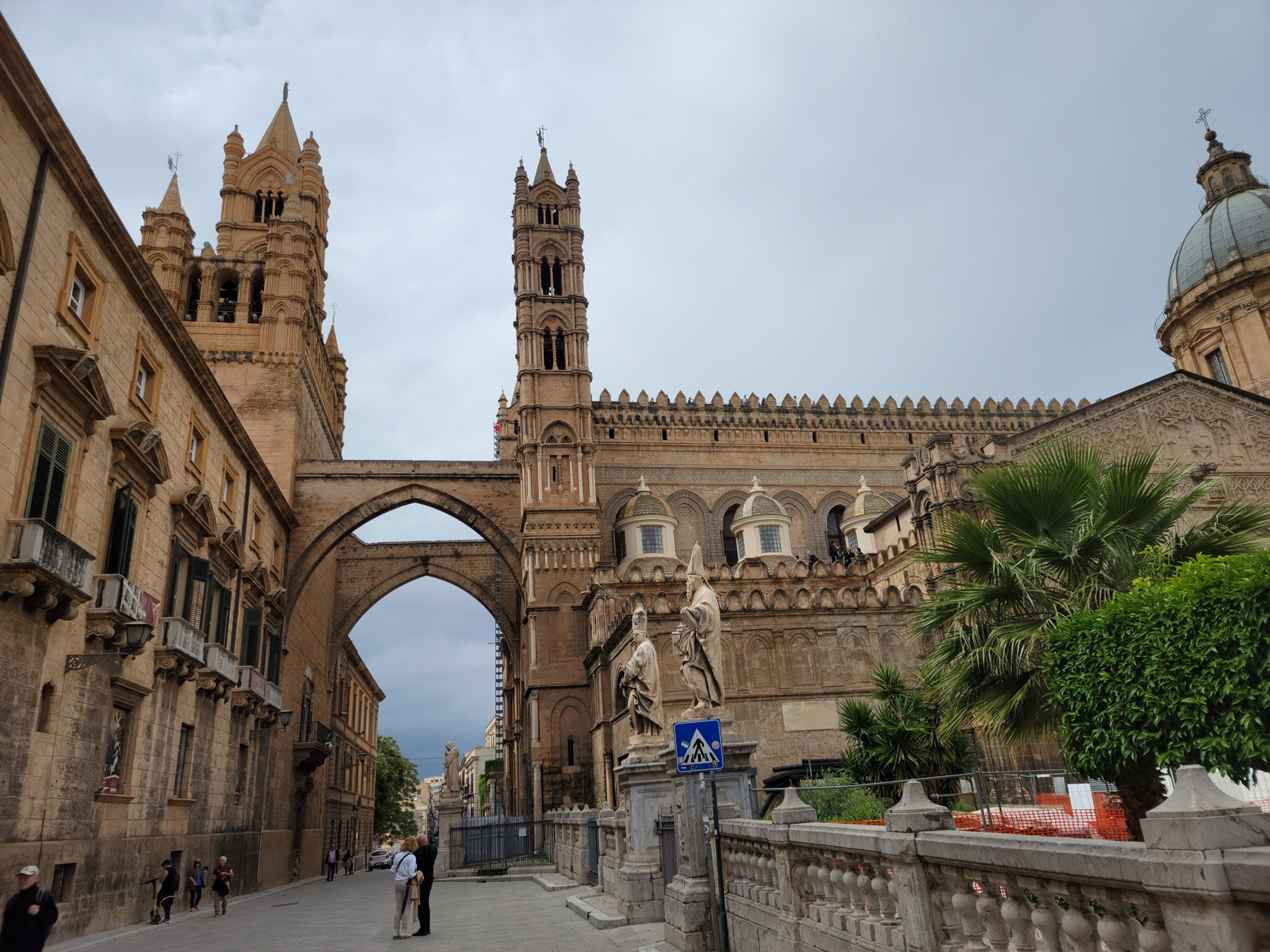
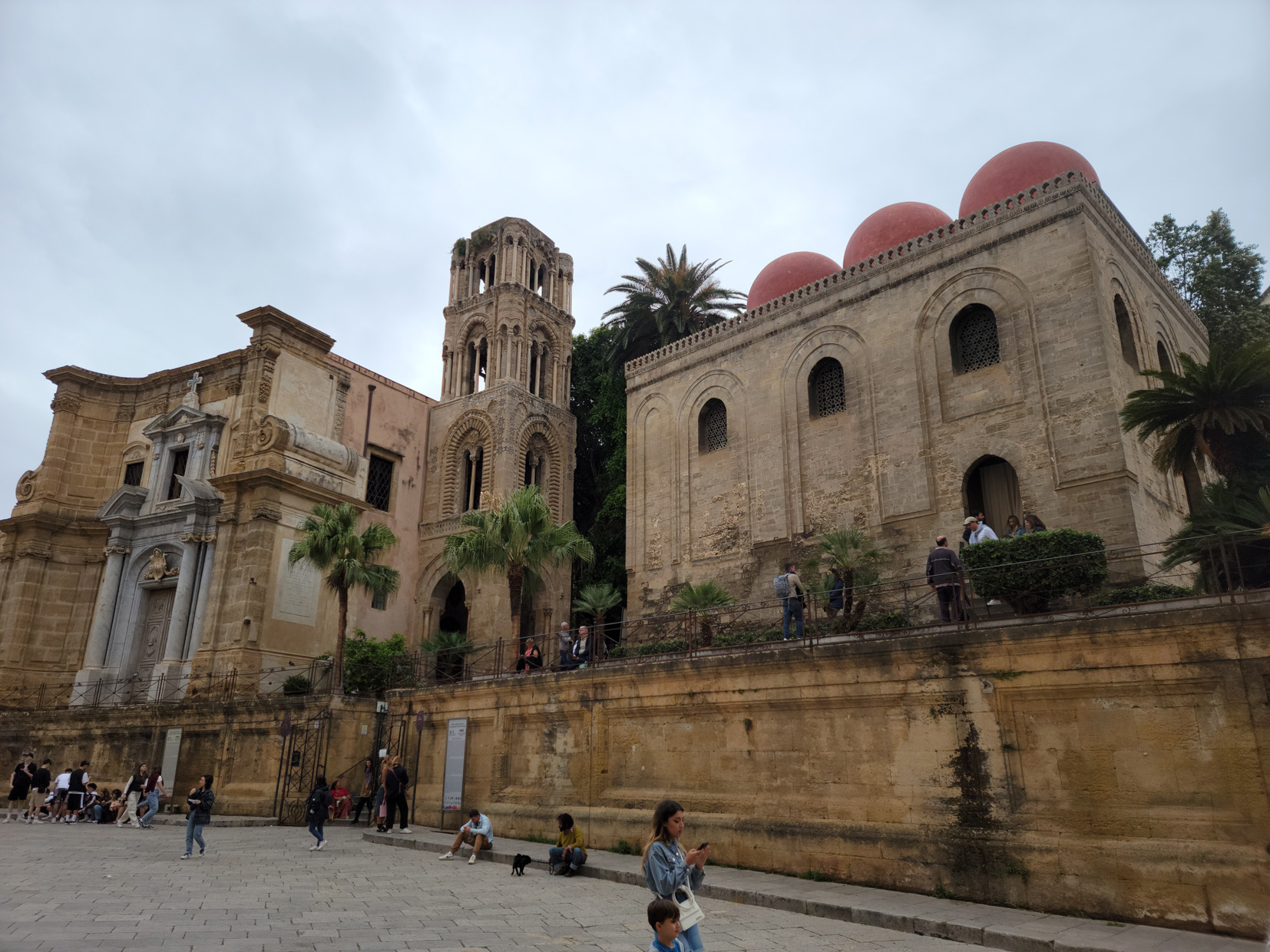
Palermo sports amazing architecture and a church around almost every corner. The Gesu Church and the Palermo Cathedral, may be of particular interest.
Gesu Church – Palermo, Sicily
Palermo Cathedral – Palermo, Sicily
Palermo Cathedral – Palermo, Sicily
Palermo Cathedral – Palermo, Sicily
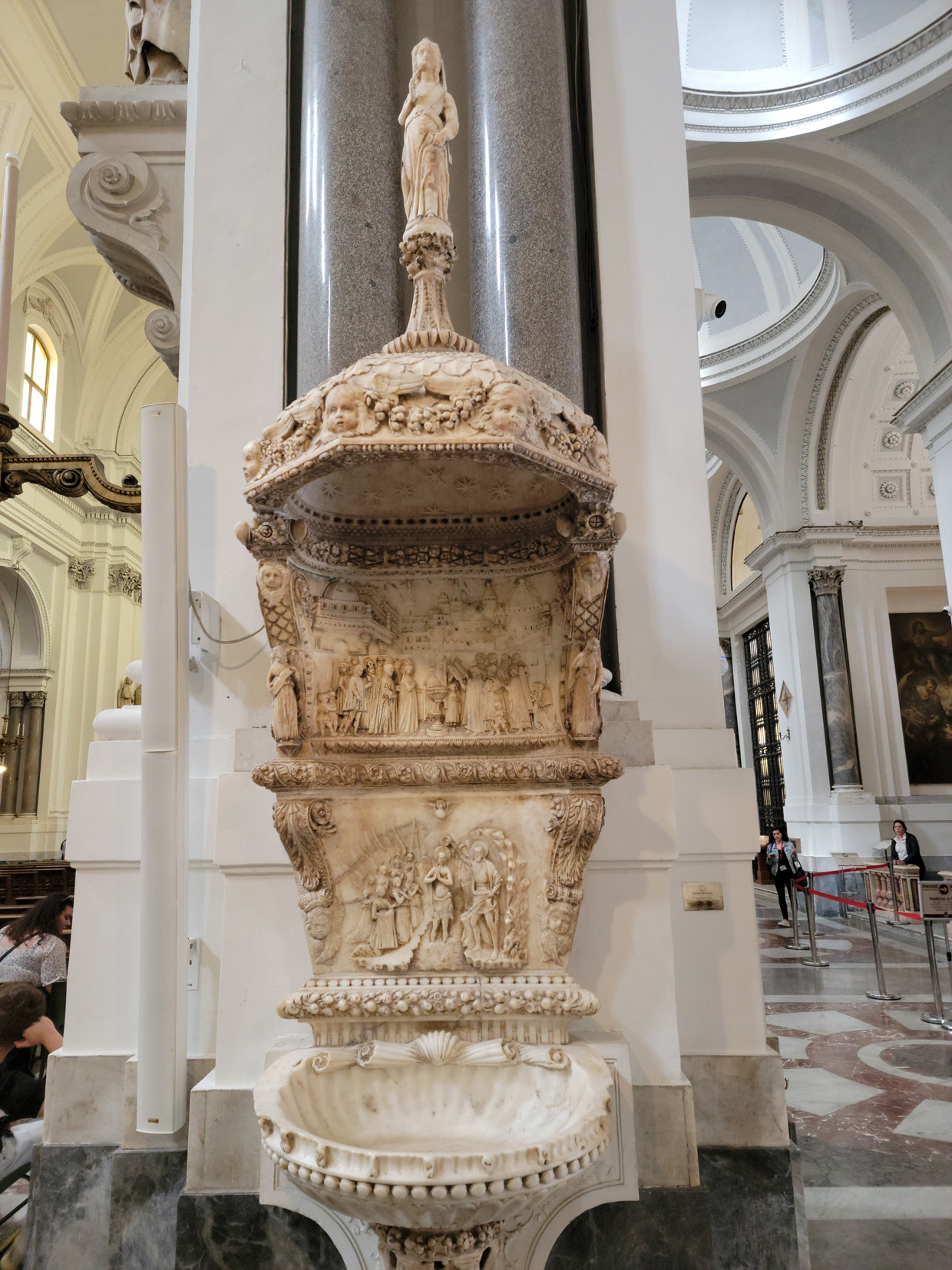
Baptism Font – Palermo Cathedral – Palermo, Sicily
VIa Matteo Bonello – Palermo Cathedral – Palermo, Sicily
The Massimo Theater
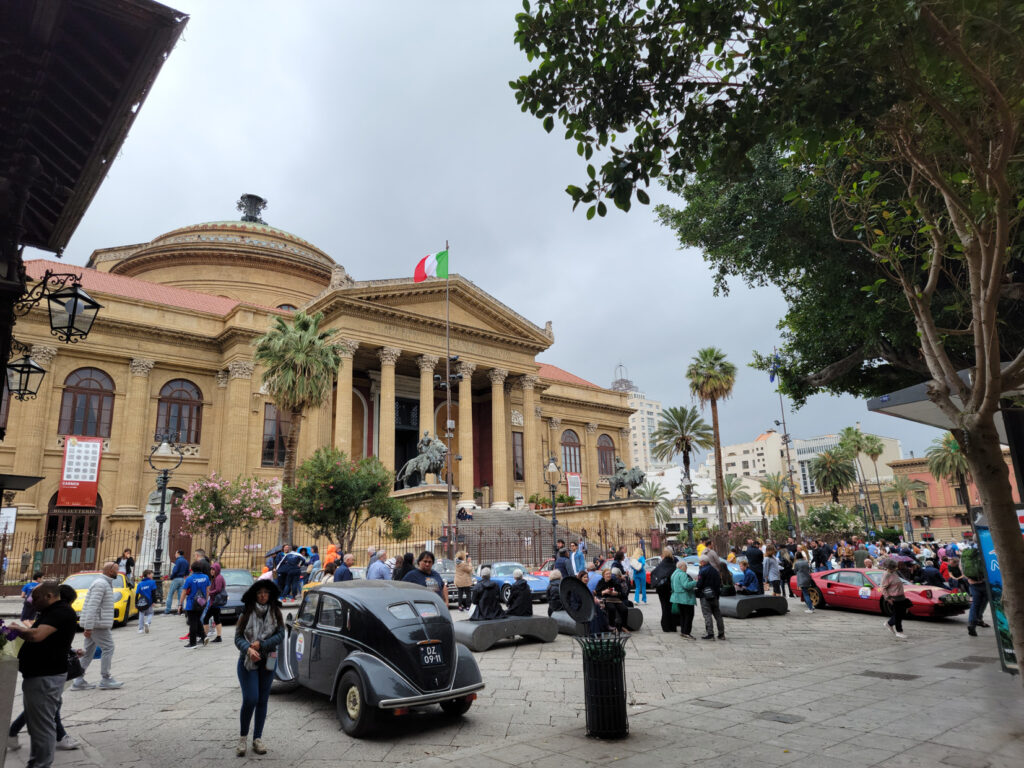
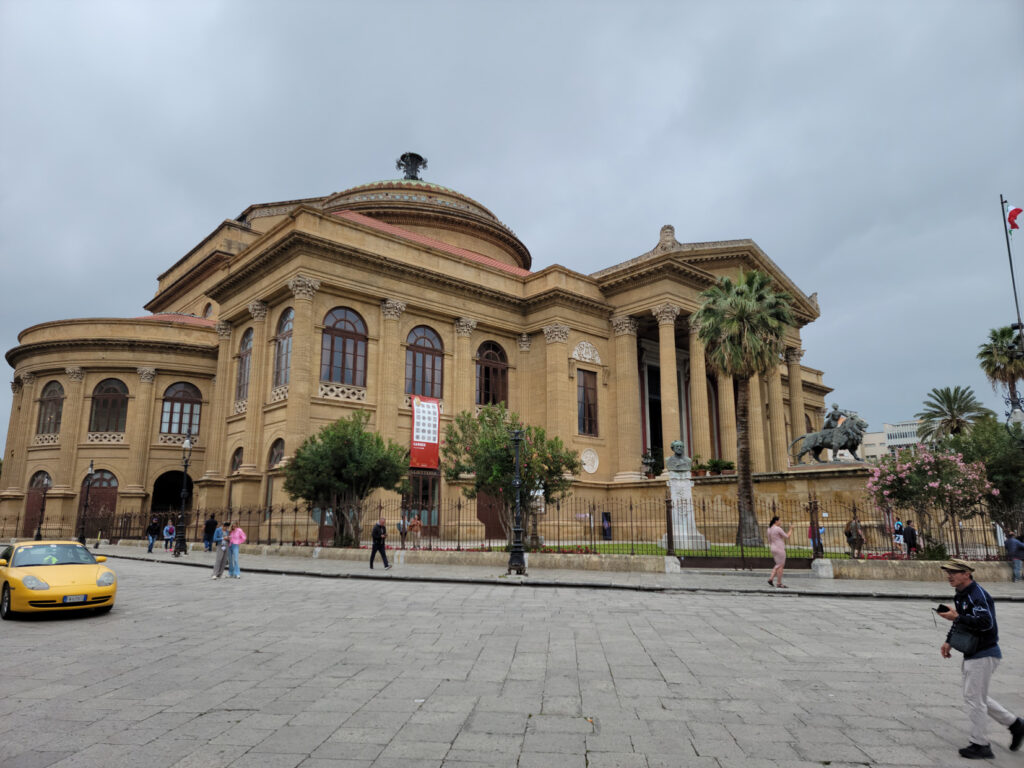
On the other cultural side of things, there is the Massimo Theater. An impressive building that is named after the piazza in which it resides.
Another view of Massimo Theater – Piazza Massimo – Palermo, Sicily
Other Parts of the City
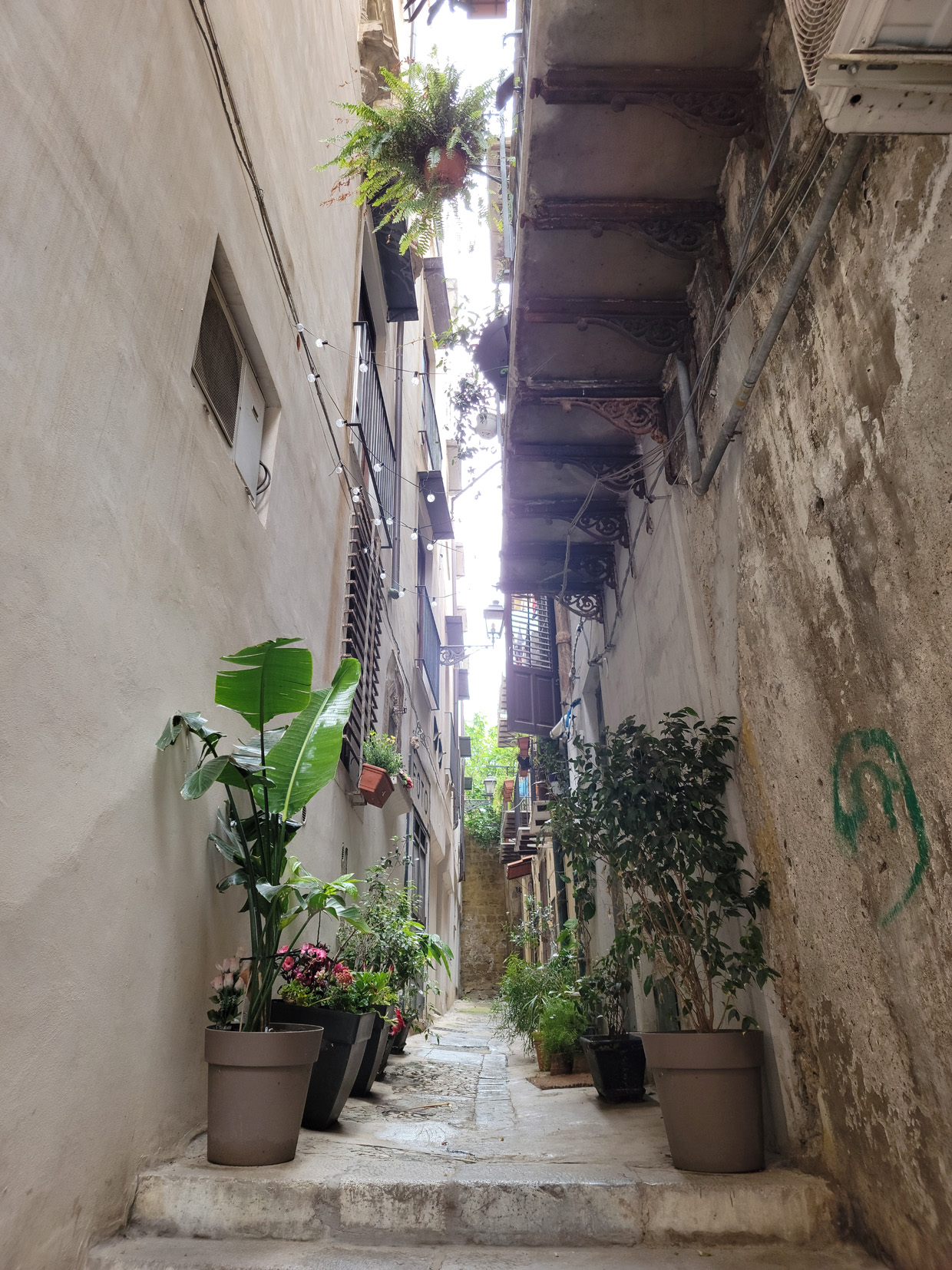
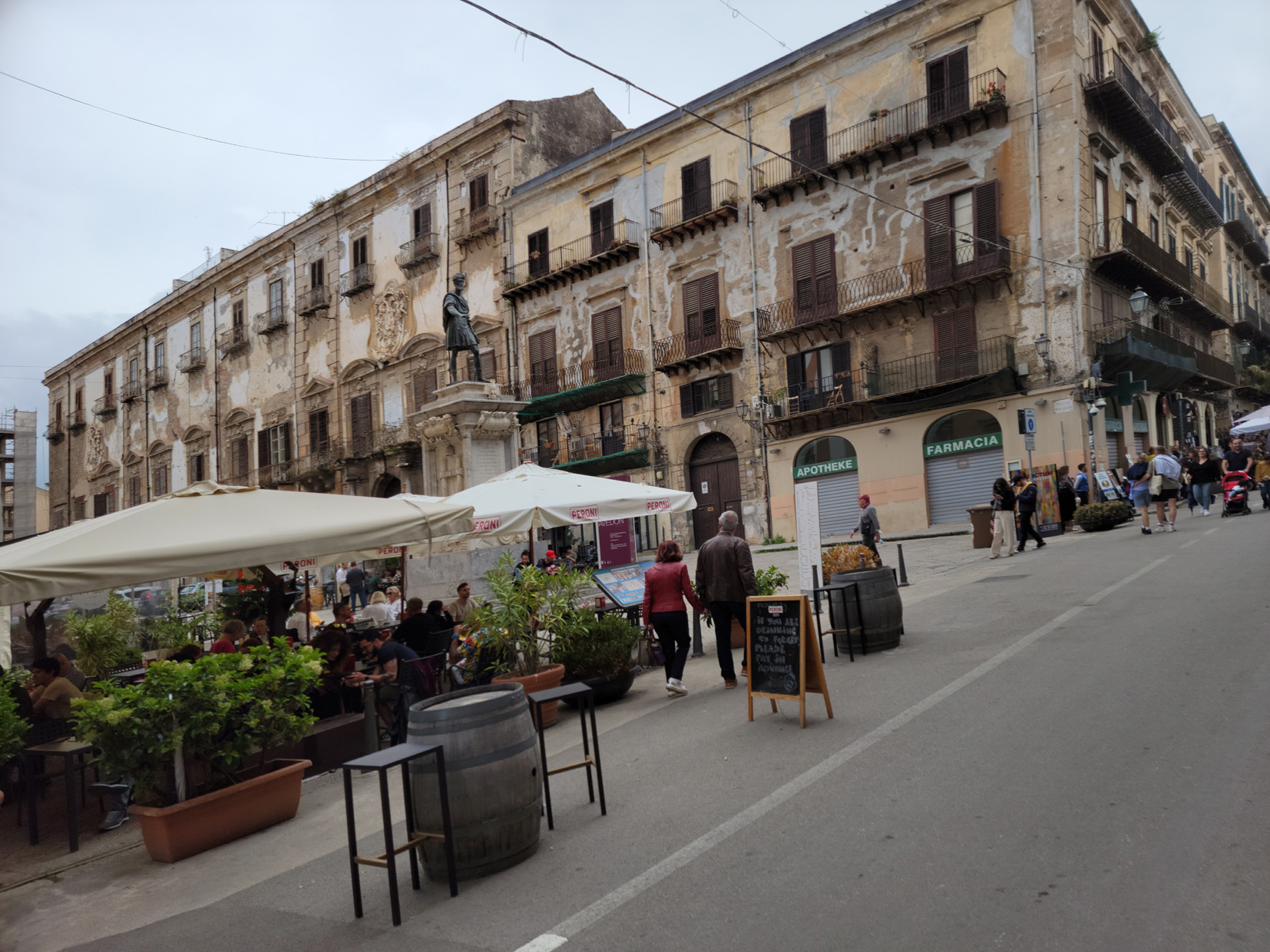
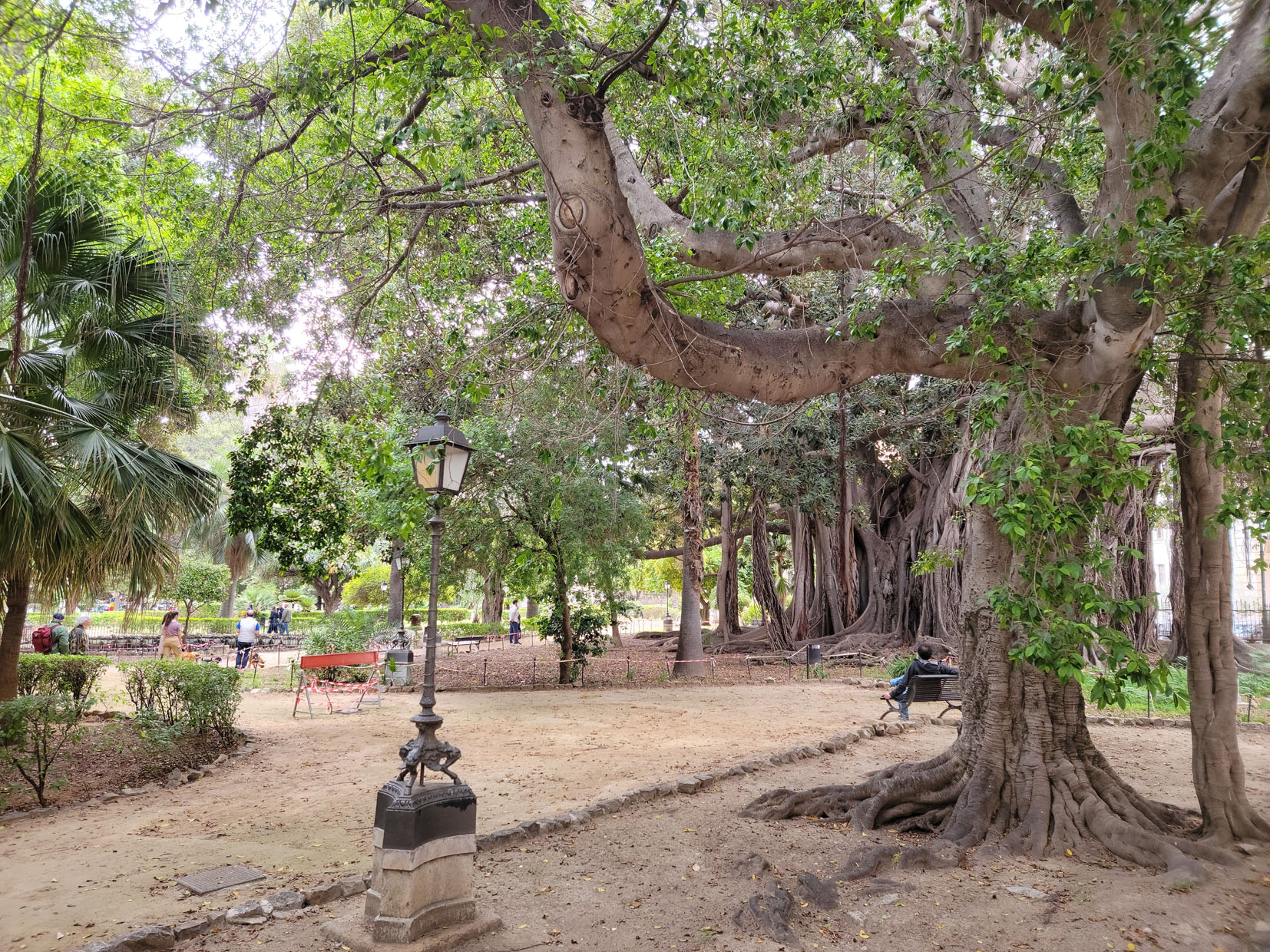
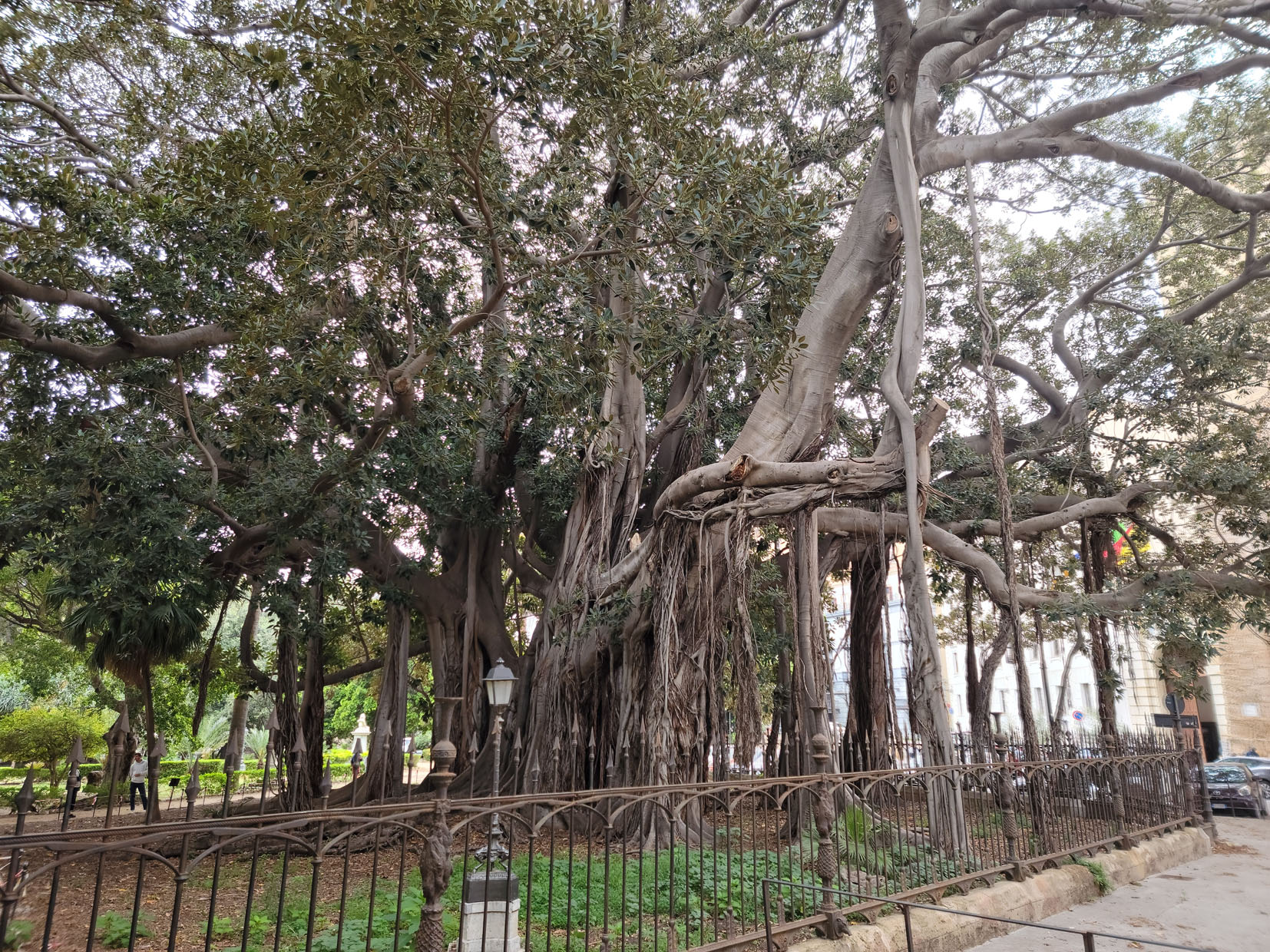
A few other interesting sites include the Porta Nuovo and several parks, one of which has a magnificent example of an Australian Banyan tree. However, there are many site to enjoy while strolling the city streets, sometimes it pays just to get lost, even if your favorite map is uncooperative.
Via Bara All’Olivella – Palermo, Sicily
Side Street – Palermo, Sicily
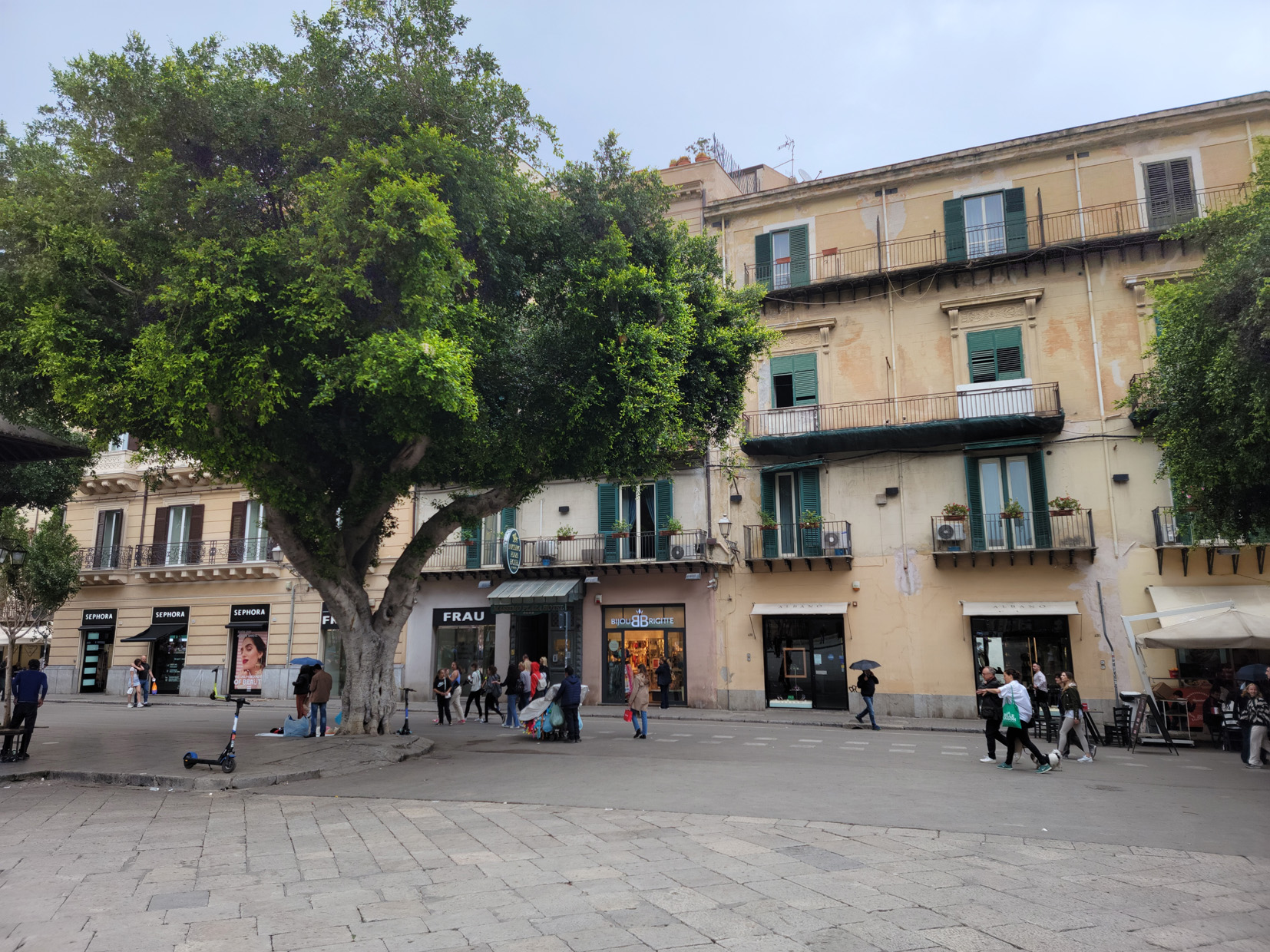
Piazza – Palermo, Sicily
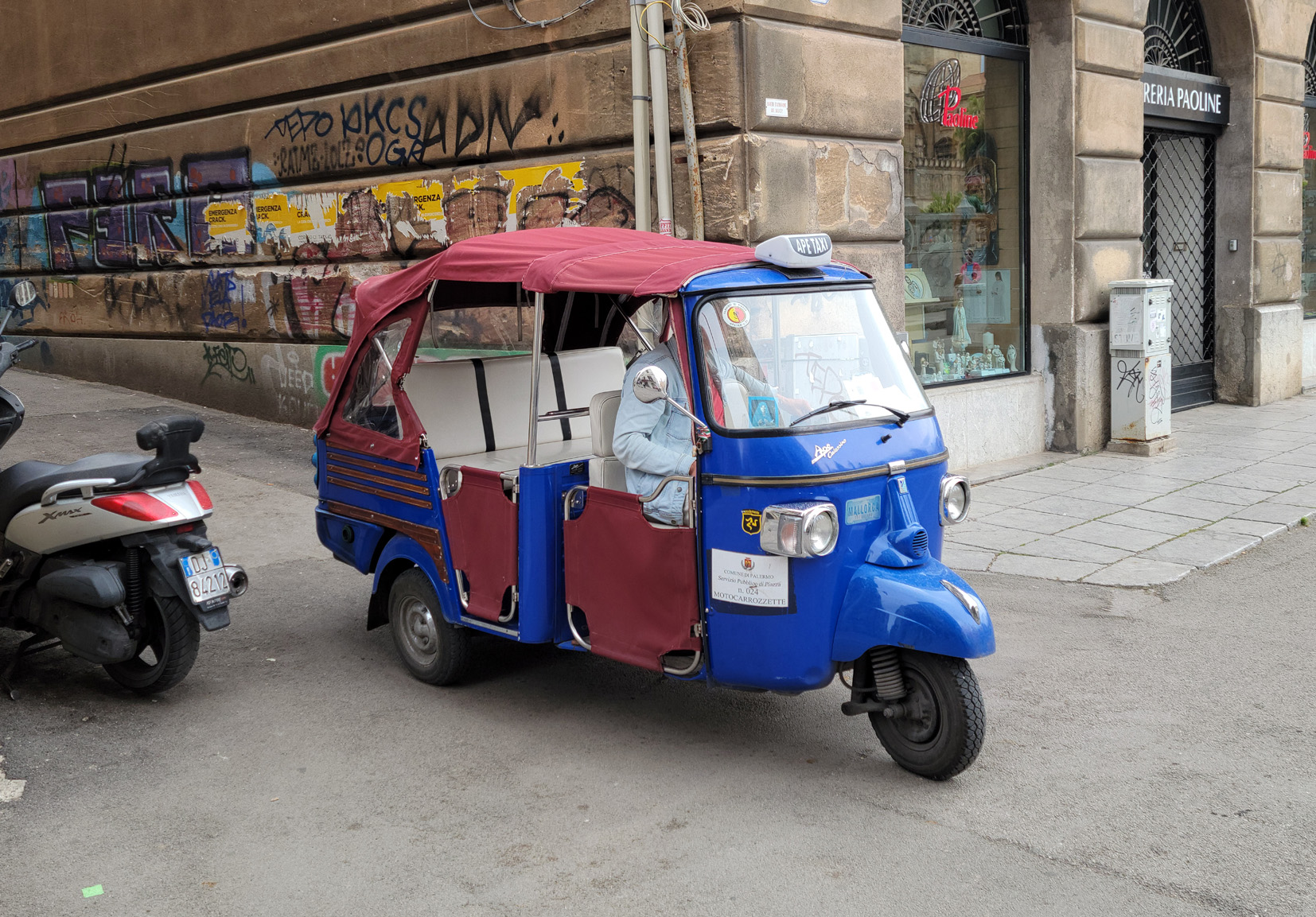
How To Get Around – The Appi Taxi – Palermo, Sicily
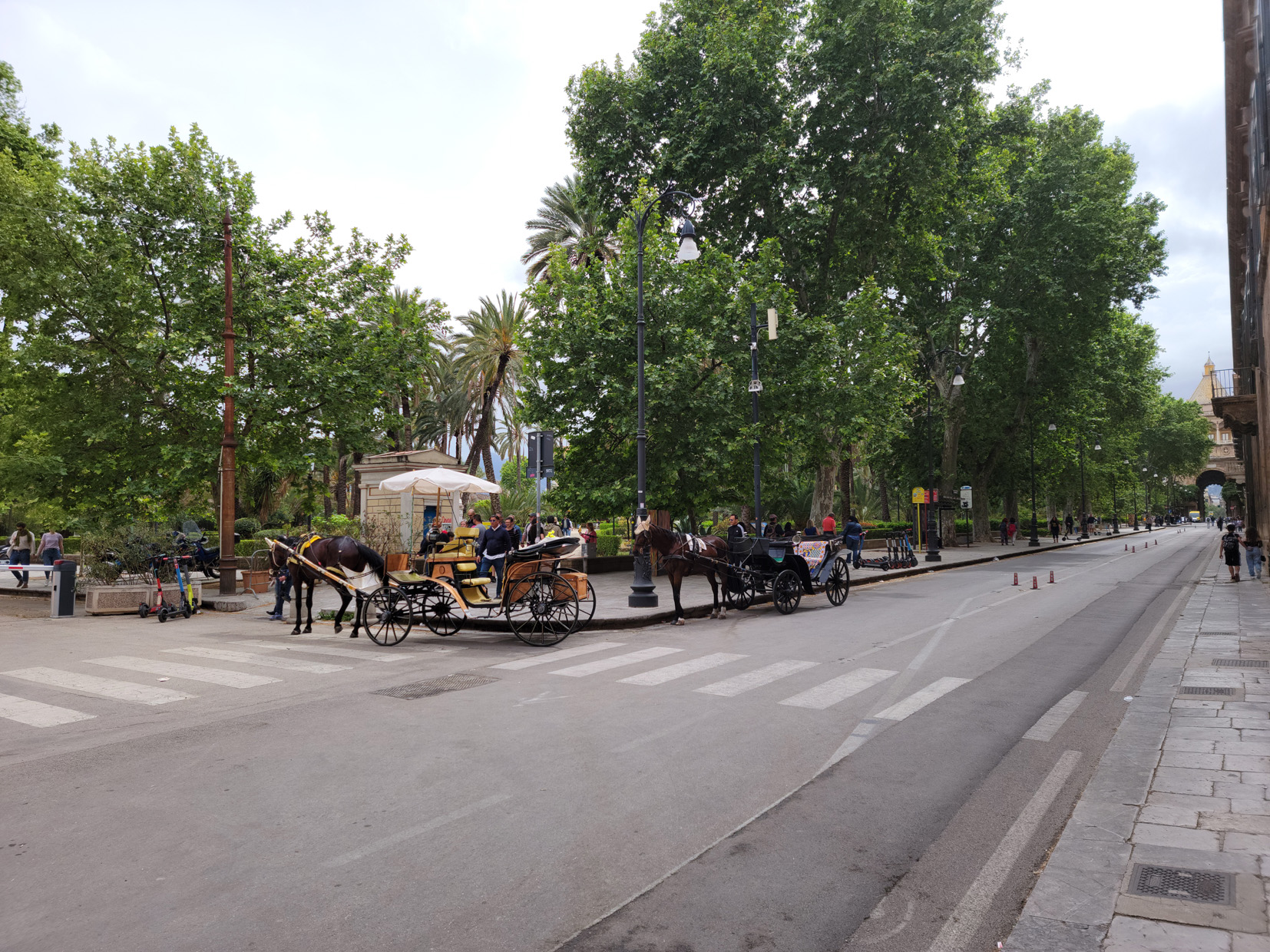
Horses – Via Bonnano – Palermo, Sicily
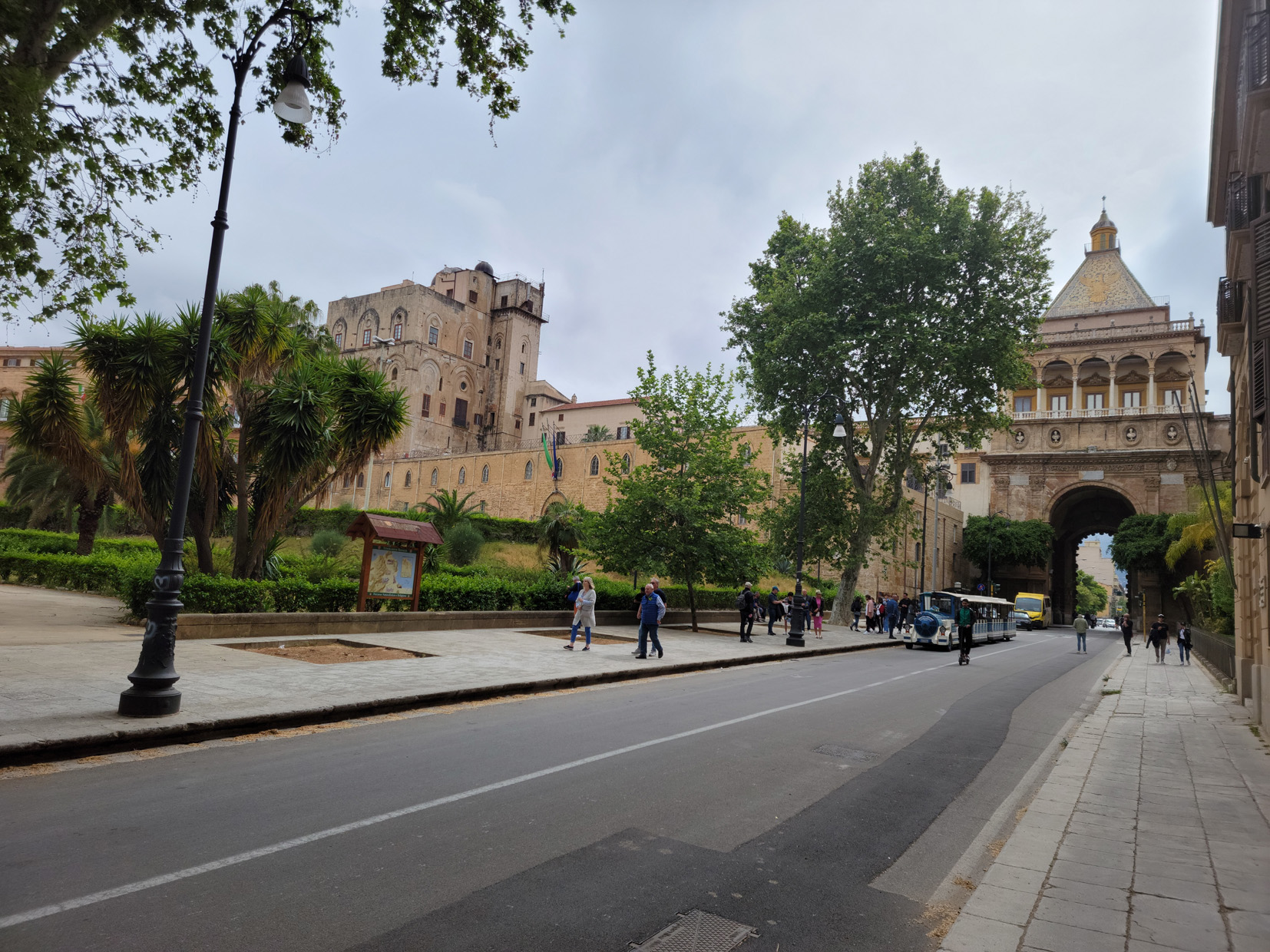
Porta Nuovo – Palermo, Sicily
Marmoreo Theater – Palermo, Sicily
Side Street – Palermo, Sicily
Side Street – Palermo, Sicily
Market on via Ballero – Palermo, Sicily
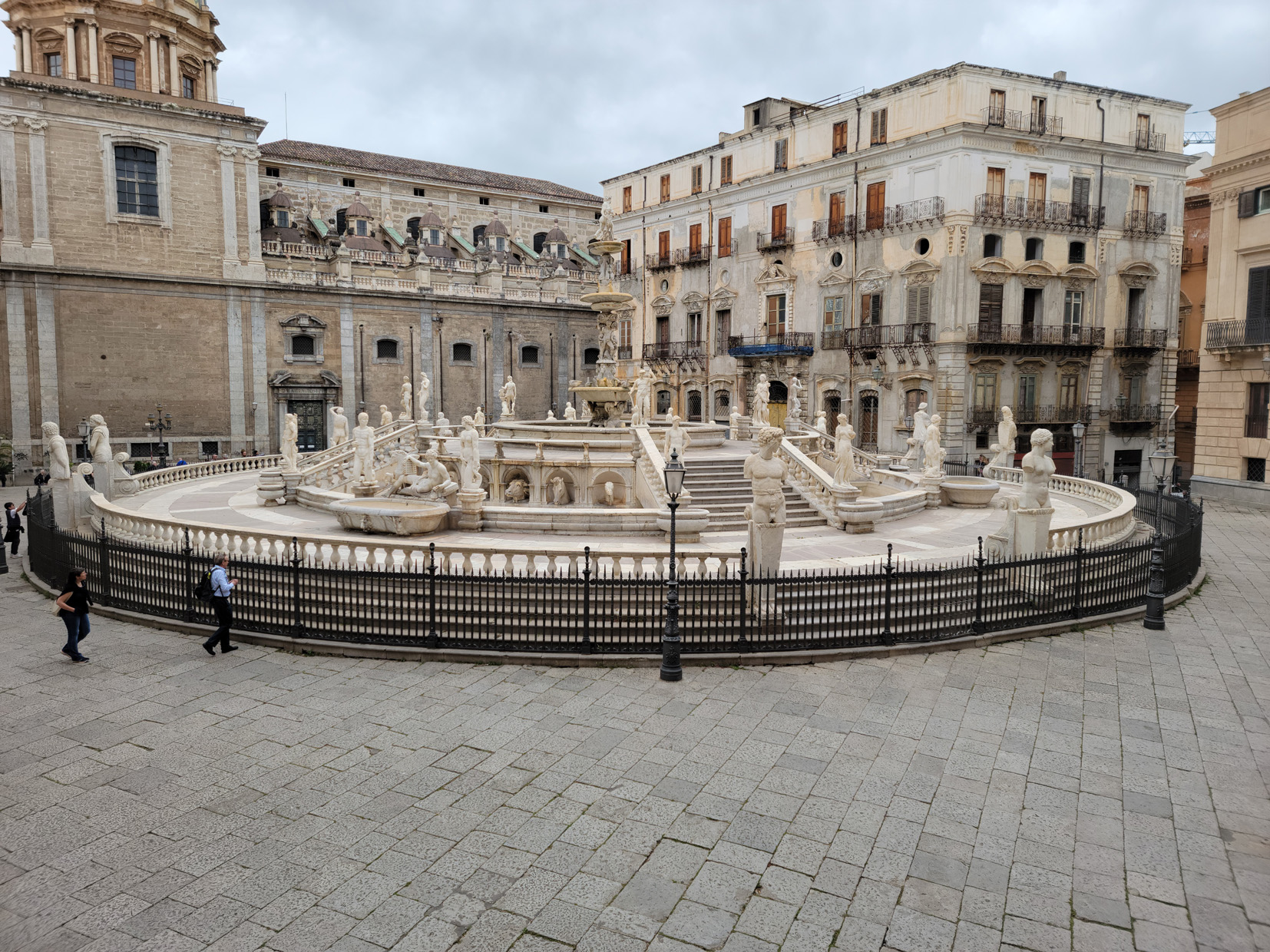
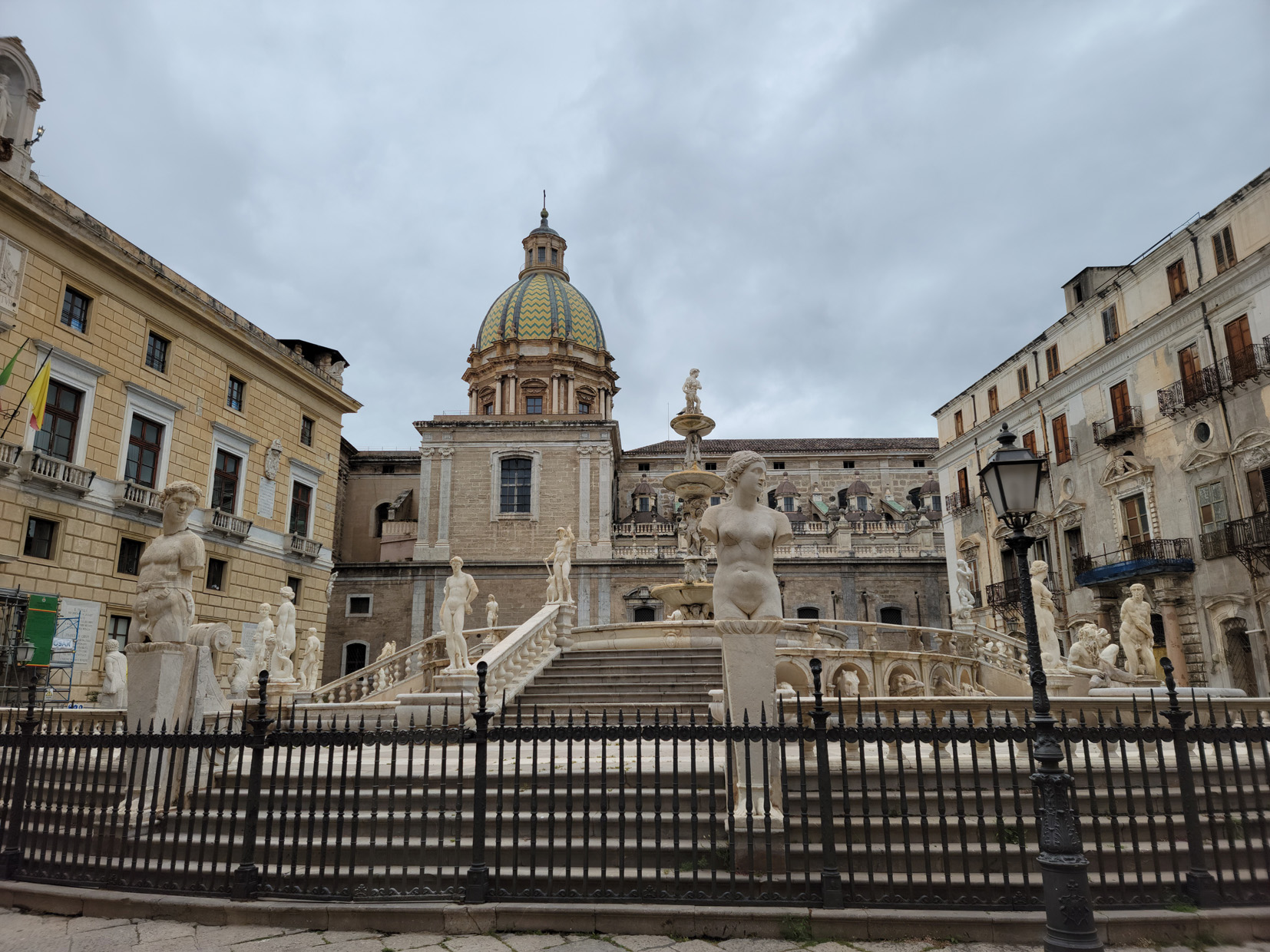
Piazza Pretoria and Fountain – Palermo, Sicily
San Caltaldo Church – Palermo, Sicily
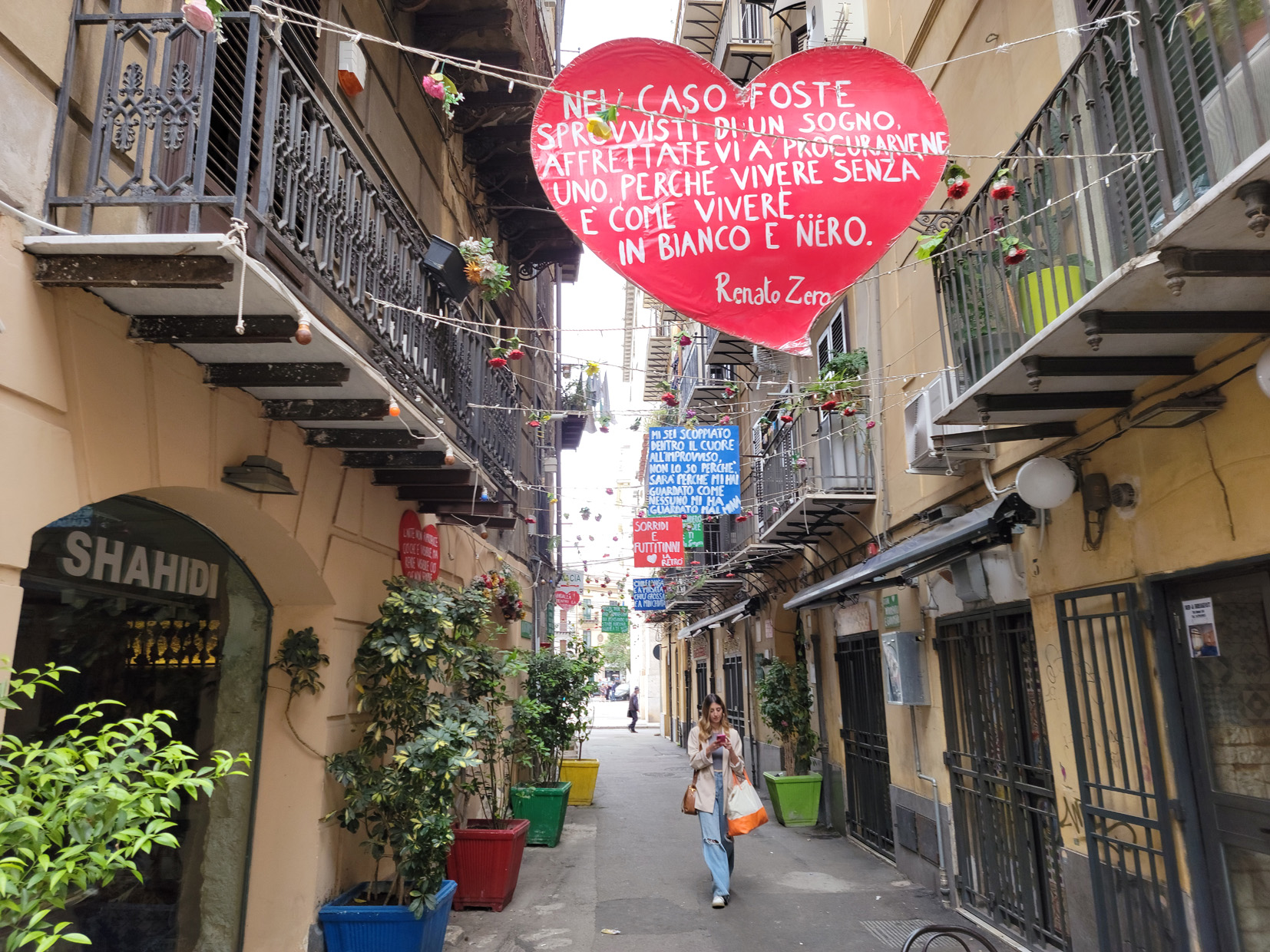
Street with Crazy Signs – Palermo, Sicily
Garibaldi Park – Palermo, Sicily
Old Australian Banyan Tree – Ficus Macrophylla – Garibaldi Park – Palermo, Sicily
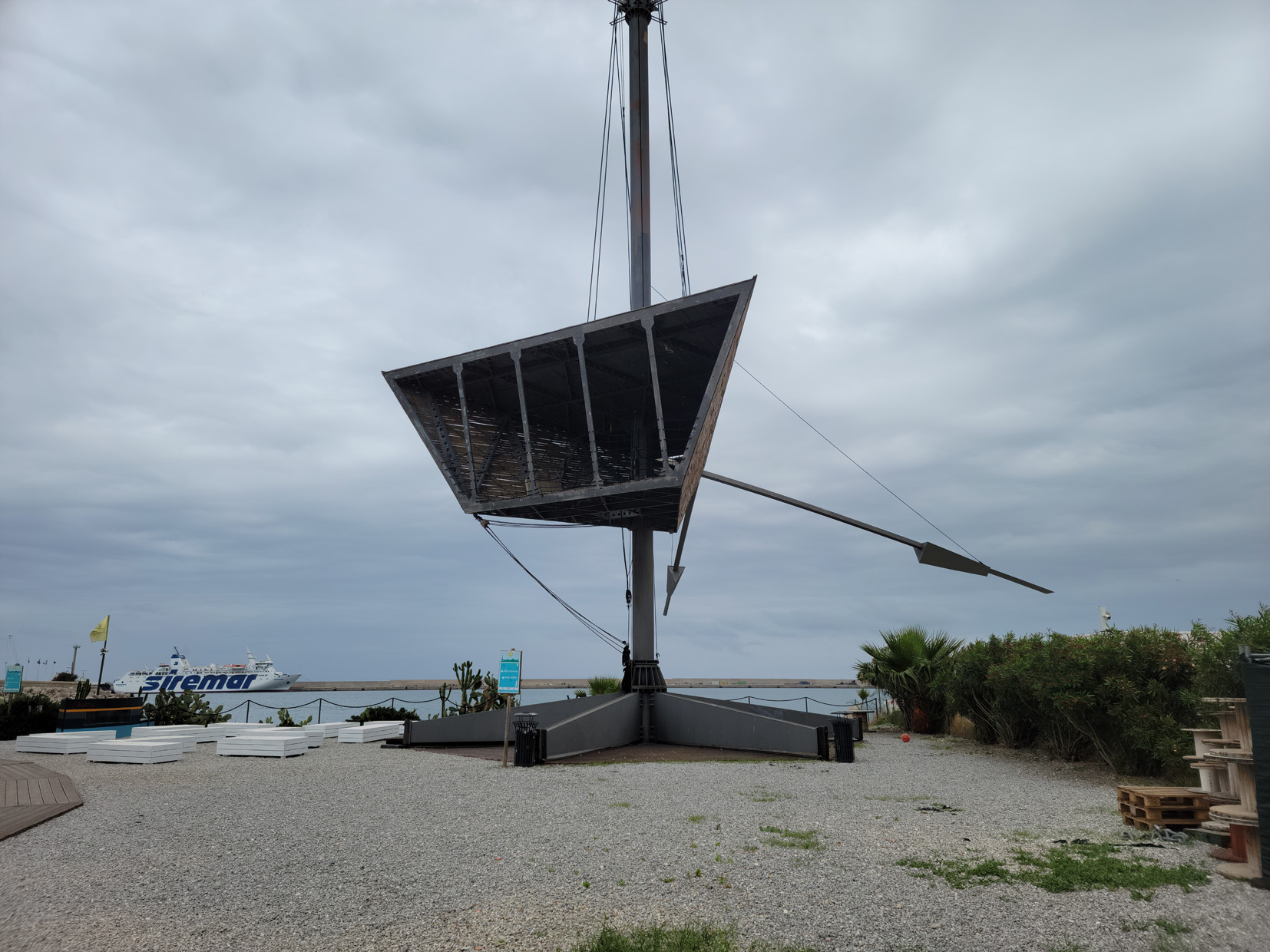
Odd Structure – Nauto – Palermo, Sicily
Hotel Massimo Plaza
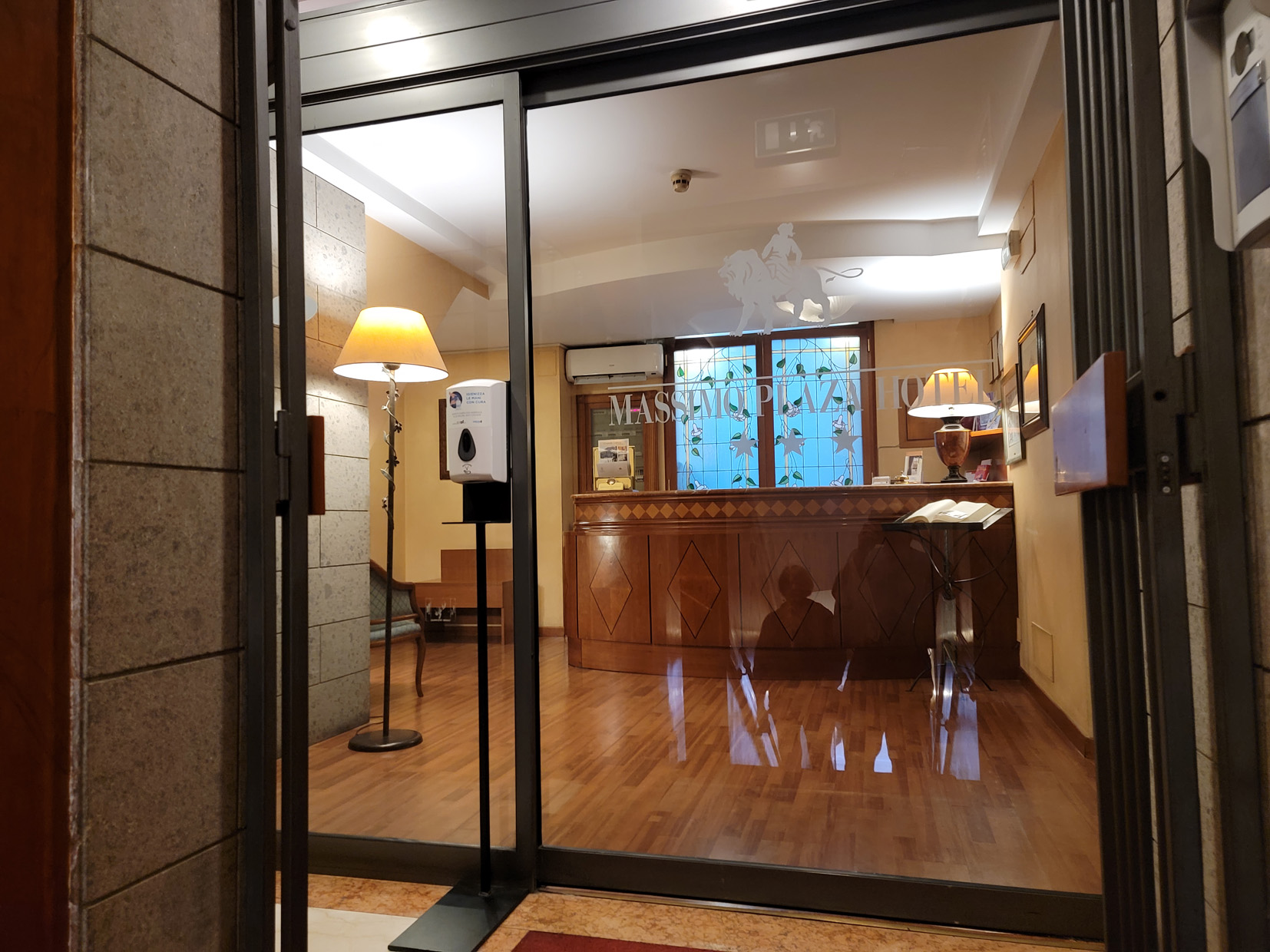
Situated in the Piazza Massimo, almost at the start of the pedestrian zone on via Maqueda, was our unassuming hotel, Hotel Massimo Plaza. The staff was very helpful and our breakfast was served in our room, which we often find very helpful, especially when the weather is not cooperating, like it wasn’t on this trip.
Our Hotel – Massimo Plaza Hotel – Piazza Massimo – Palermo, Sicily
Restaurants
In our short stay in Palermo, we found the following restaurants noteworthy. The cuisine of Palermo is typical for a southern Italian port city, most restaurants having plenty of fish and seafood on the menu. However, there are plenty of pizza places and small cafes as well, where one can purchase smaller items for takeout or to eat as they walk.
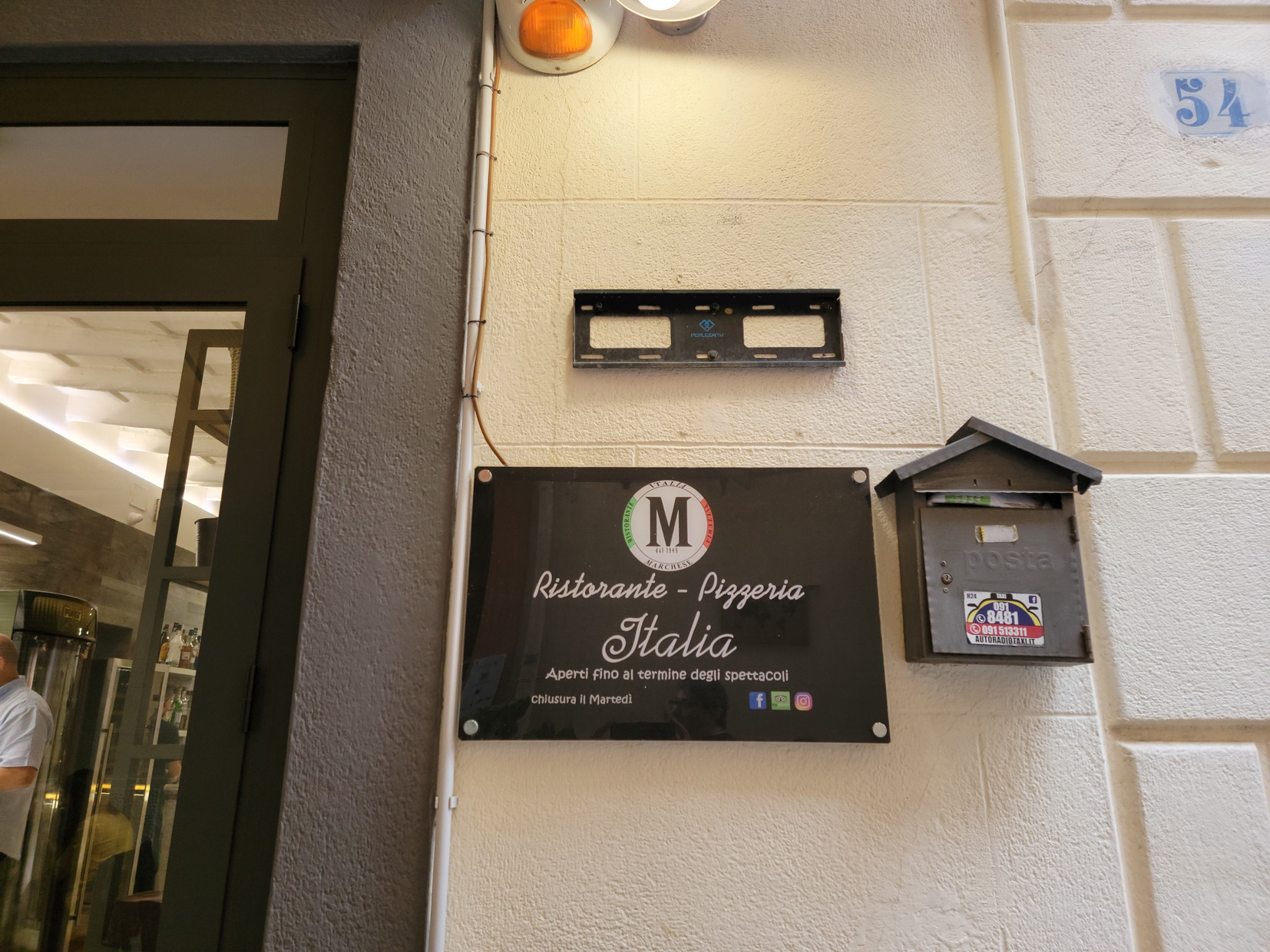
Ristorante Pizzeria Italia
This restaurant was just around the corner of our hotel and offers authentic and excellent southern Italian pizza. You may see the term pizze in your travels, but do not be deterred, that is just the plural form in Italian for more than one pizza, it’s the same thing.
Ristorante Pizzeria Italia – via Orologio – Palermo, Sicily
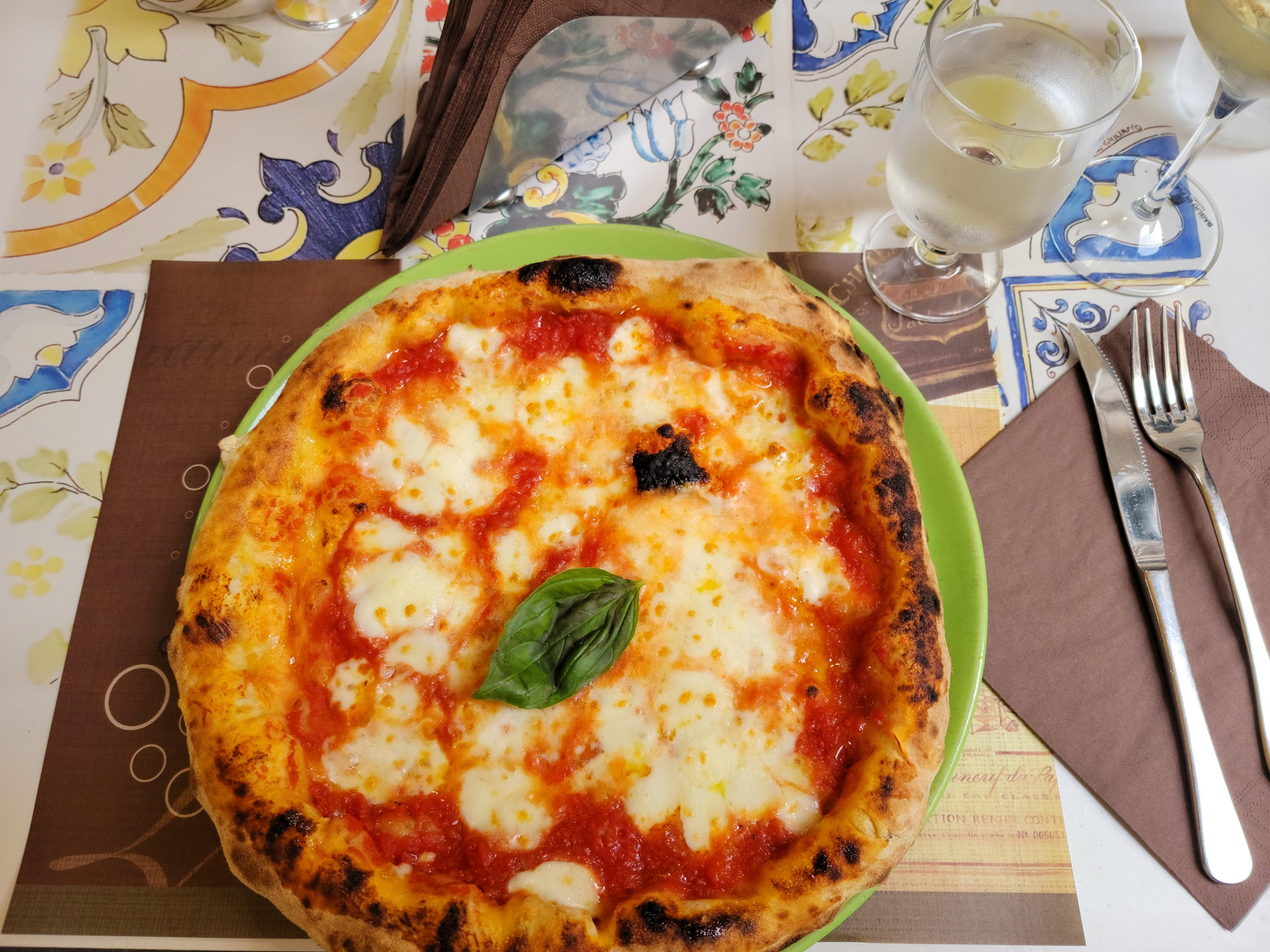
We ordered a caprese and a pizza each, I had a glass of wine and we ordered a bottle of water and the bill came to 25€ with 4€ coperto.
Margherita Pizza – Ristorante Pizzeria Italia – via Orologio – Palermo, Sicily
On To Cefalu
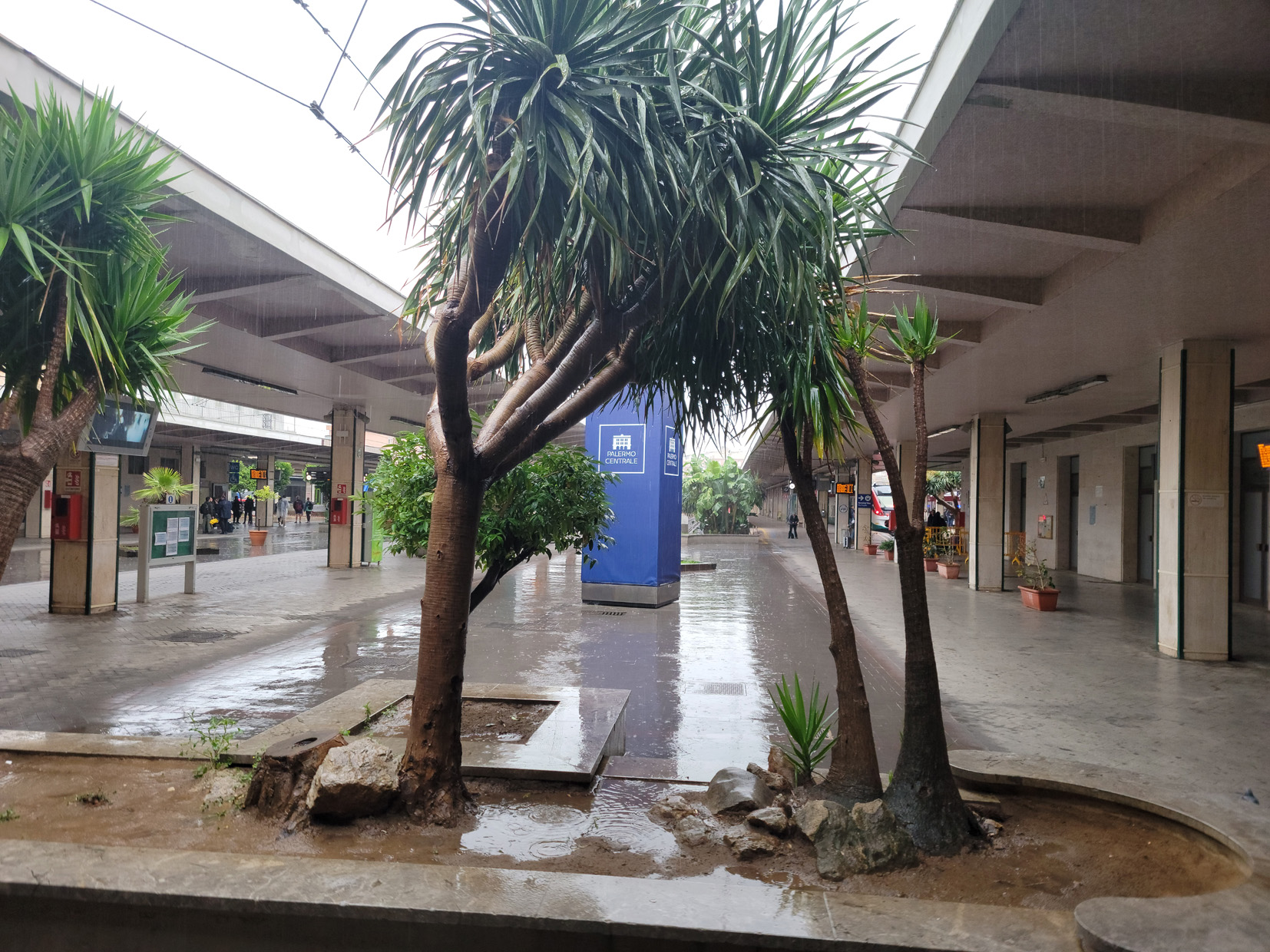
After our short stay here, it was on to the real start of our trip, Cefalu. Although there is plenty more to see and do in Palermo, our trip itinerary did not allow us any more time here. So using our senior discount cards, we purchased two more Trenitalia tickets and we were on our way.
Palermo Central Station – Palermo, Sicily
In the event we do return, we plan to stay here longer and perhaps see more of the western portion of the island as well. Aside from the rain, we still had a pretty good time here and enjoyed the city of Palermo for its sites, cuisine and true grit.
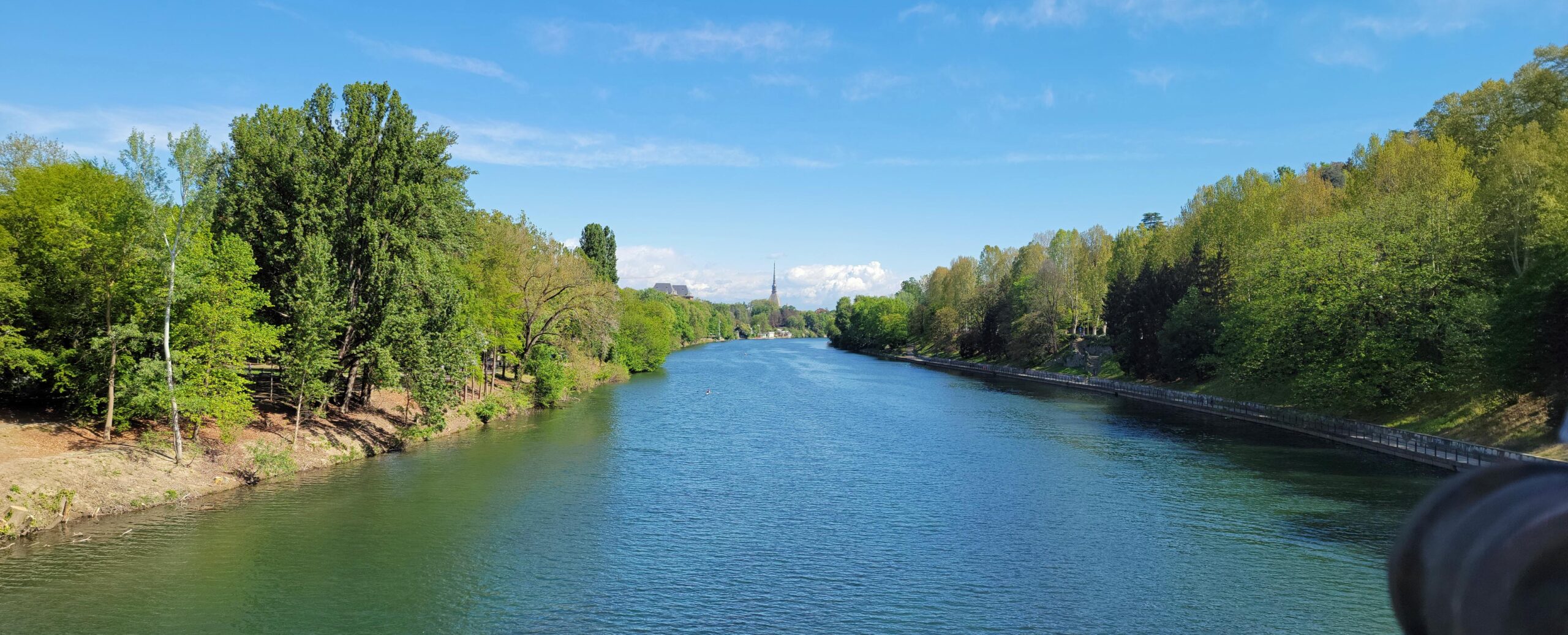
Perhaps one of the best times to visit Turin is in the spring. The wind is still blowing from the north, the rivers are full, the trees are in bloom and the swallows and swifts are returning from their long winter stay in Africa. We live close to the river and found you do not need insecticide here, just a healthy population of these birds and you will rarely be bitten.
Springtime – River Po – Turin, Italy
A great time to walk the city and visit its many restaurants and cafes as well as the river Po and Valentino Park. On weekends and holidays there is always activity on the river.
Restaurants
For my readers, some secrets that will help you beat the tourist lines in Turin at the other places and make your stomach very happy.
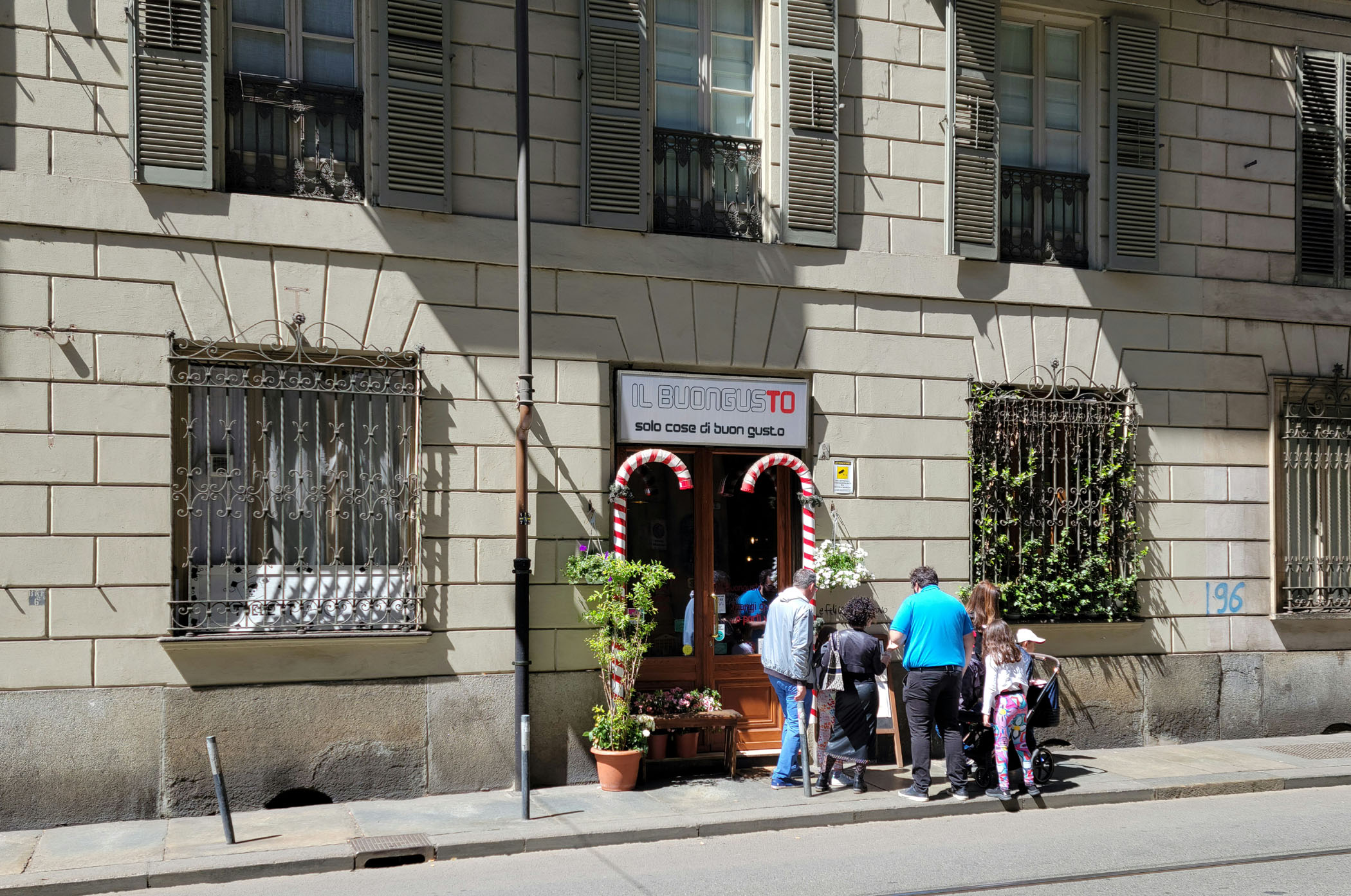
Il Buongusto
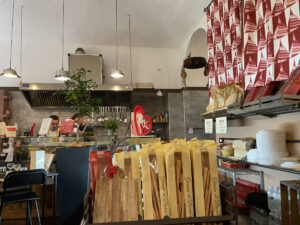
One of our new favorites and right around the corner from our apartment at via Alfonso Bonafous is the local secret, Il Buongusto. Definitely not for tourists, in fact I would encourage only those seeking a Piedmontese experience to drop in. Everything is fresh and made in the kitchen, which is actually open to the restaurant.
IL Buongusto – Turin, Italy
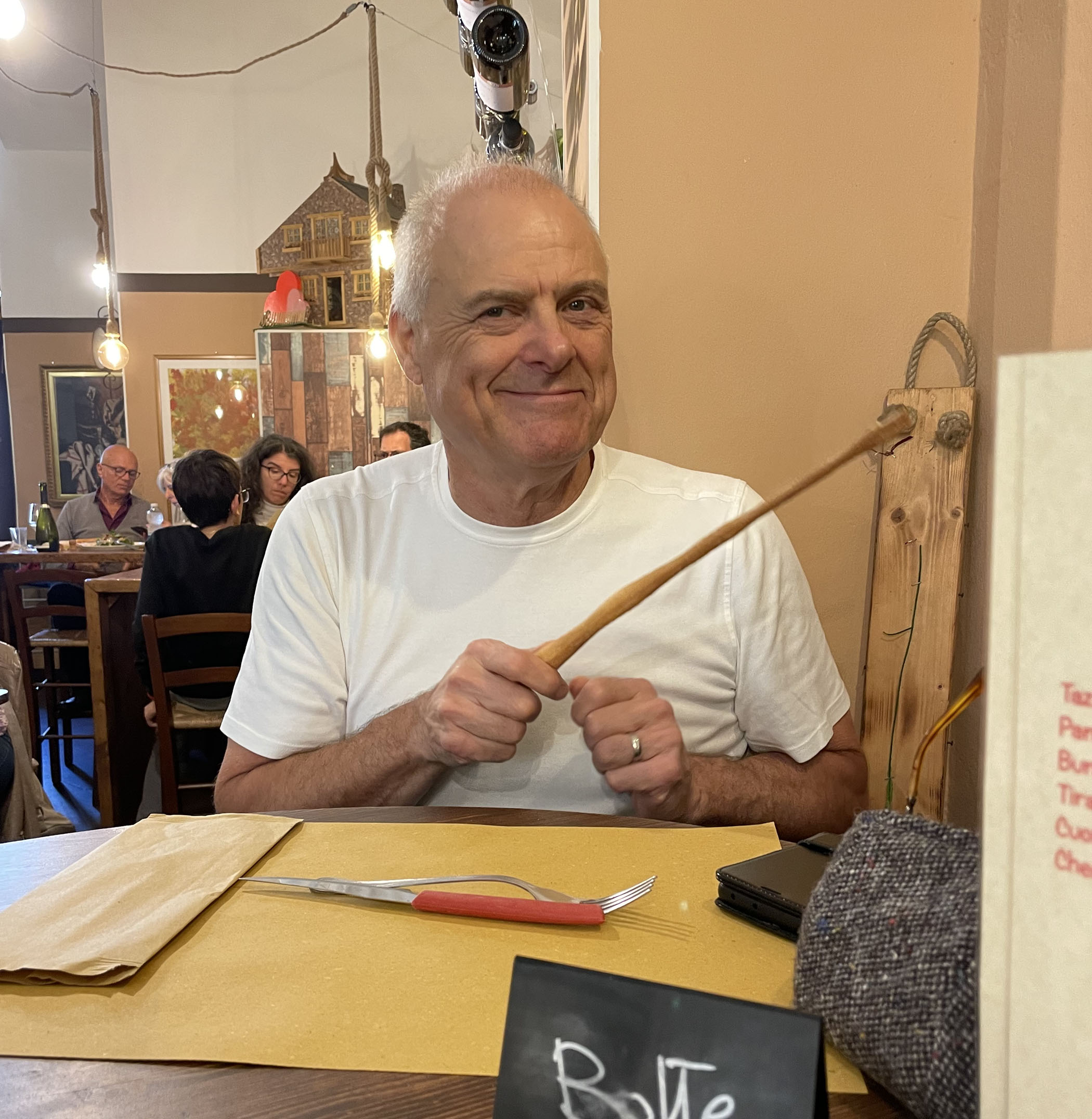
Be patient, gastronomy takes time and preparation. If you want to be in and out, select something like a salad and water, or frankly go to a fast food place on via Po. Good food takes time and this little restaurant gets very busy. When all else fails, use your Grissini fishing rod to reel in your waitress or waiter for more drinks.
Erick with Fishing Pole Grissini Torinesi – IL Buongusto – Turin, Italy
The food is very good, the prices are reasonable and the wine list satisfactory, so you can always select a reasonably good wine to keep you busy while waiting. The local house selection includes Dolcetto, Nebbiolo, or Barolo by the glass, which suffice nicely.
Inside – IL Buongusto – Turin, Italy
Kitchen – IL Buongusto – Turin, Italy
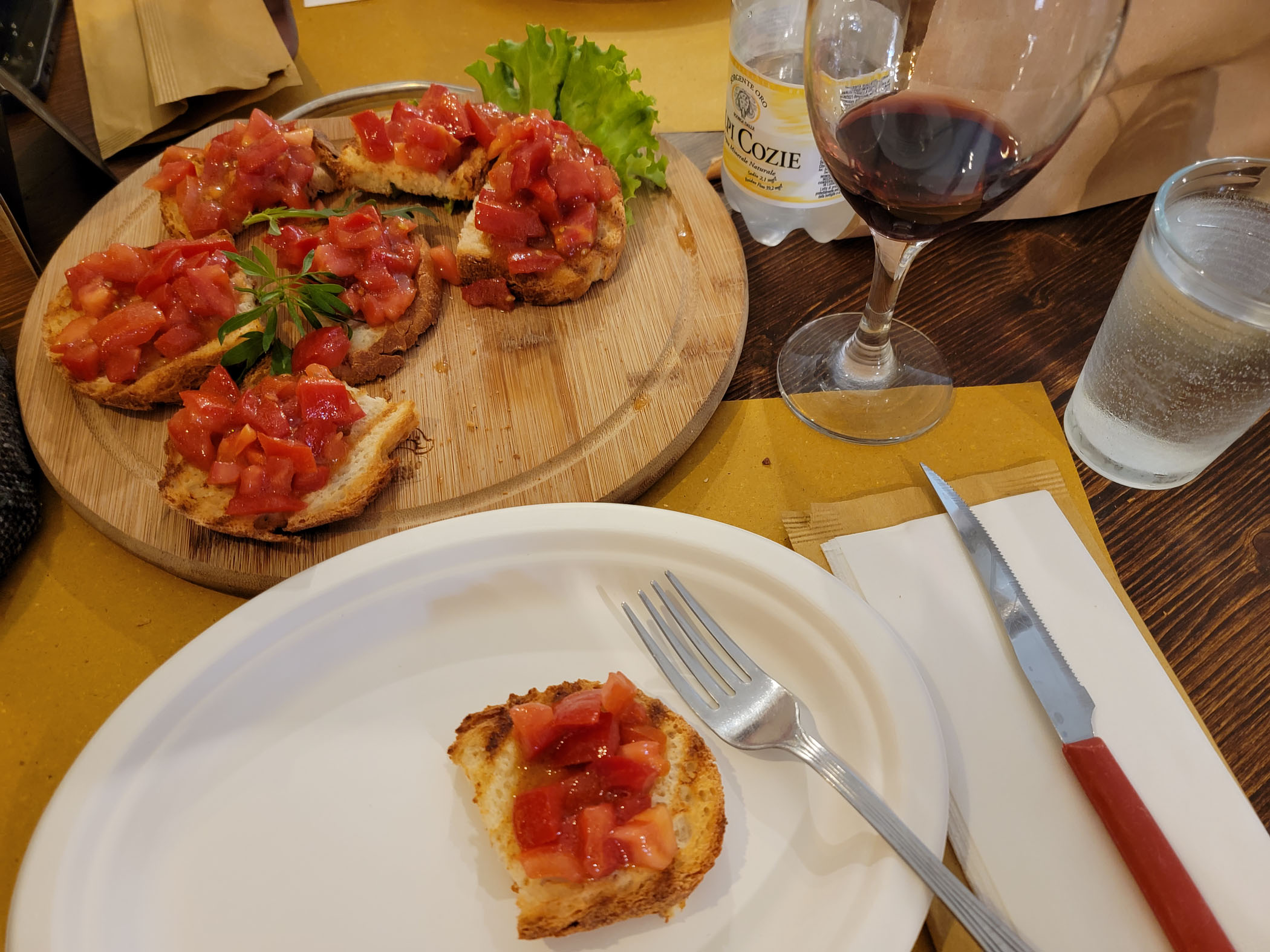
Speaking of which, if you really love tomatoes, order the Bruschetta. For the price you get about seven large pieces of bread covered with garlic infused tomatoes and basil, with an olive oil drizzle. Yum.
Bruschetta – IL Buongusto – Turin, Italy
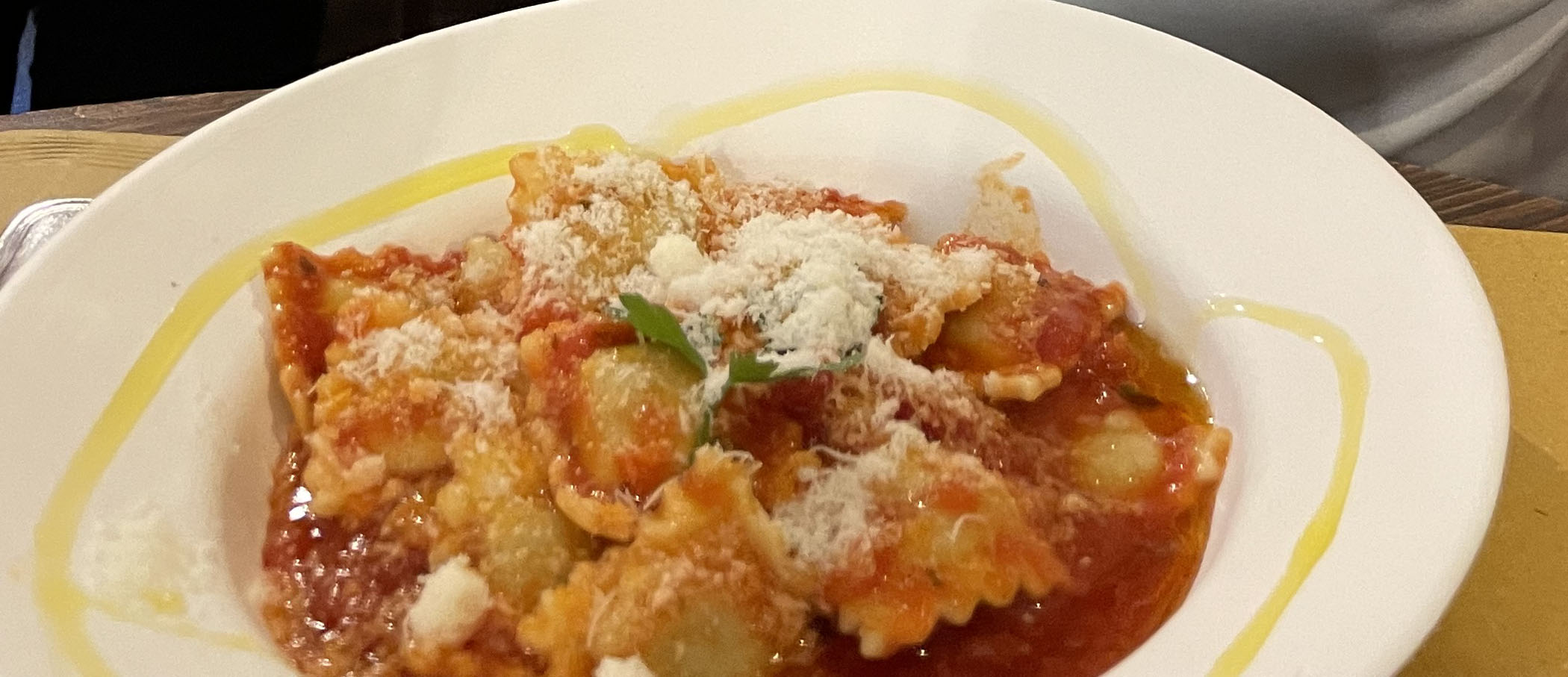
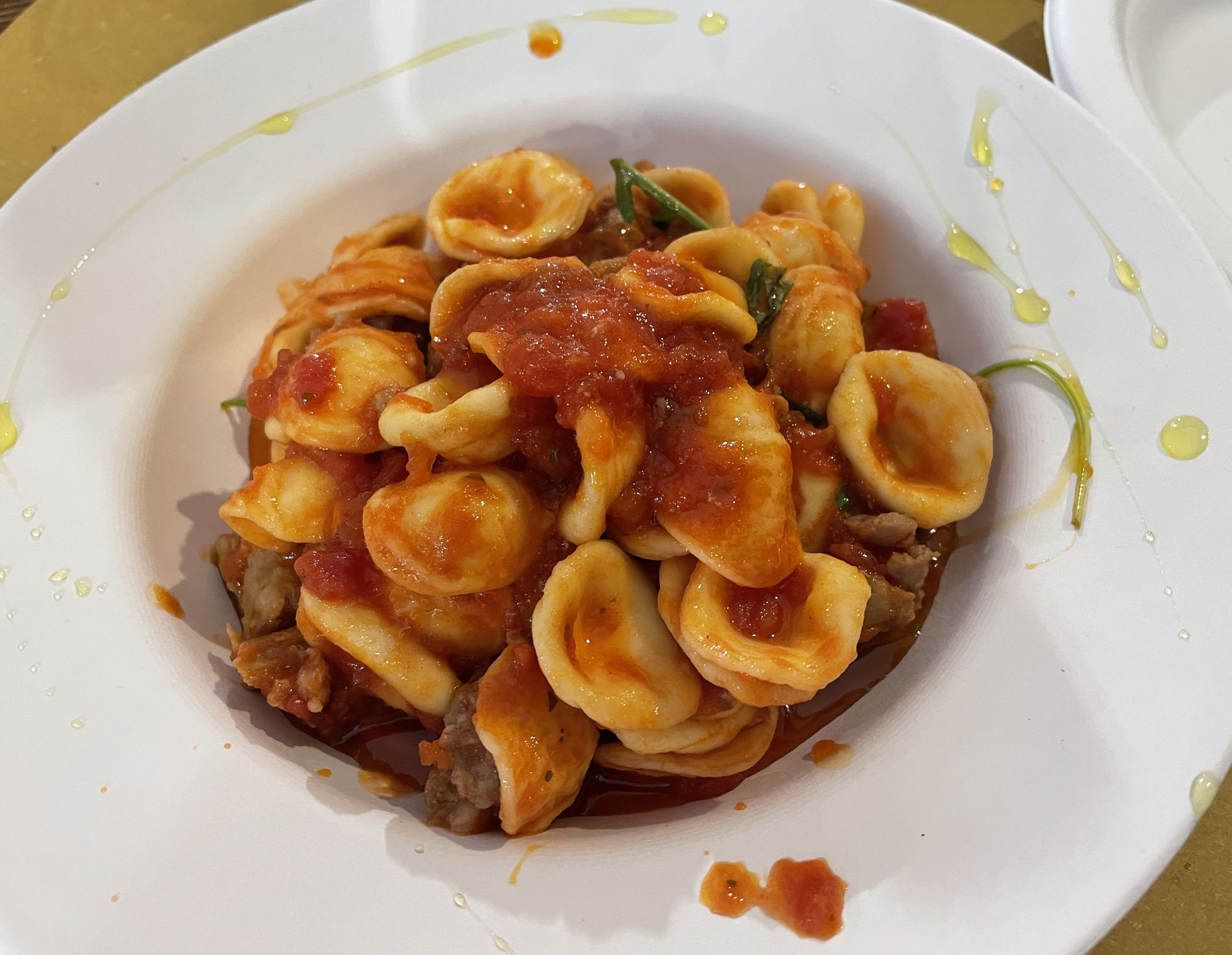
Our food was cooked perfectly, the spaghetti sauce here is uncomplicated and delicious, the cook preferring the amazing Italian tomatoes to tell their own story. I love Italian pasta, um.
Agnolotti with Parmigiano – IL Buongusto – Turin, Italy
Orecchiette with Sausage – IL Buongusto – Turin, Italy
Lunch for (2) two: 30+ to 40+€
La Prosciutteria
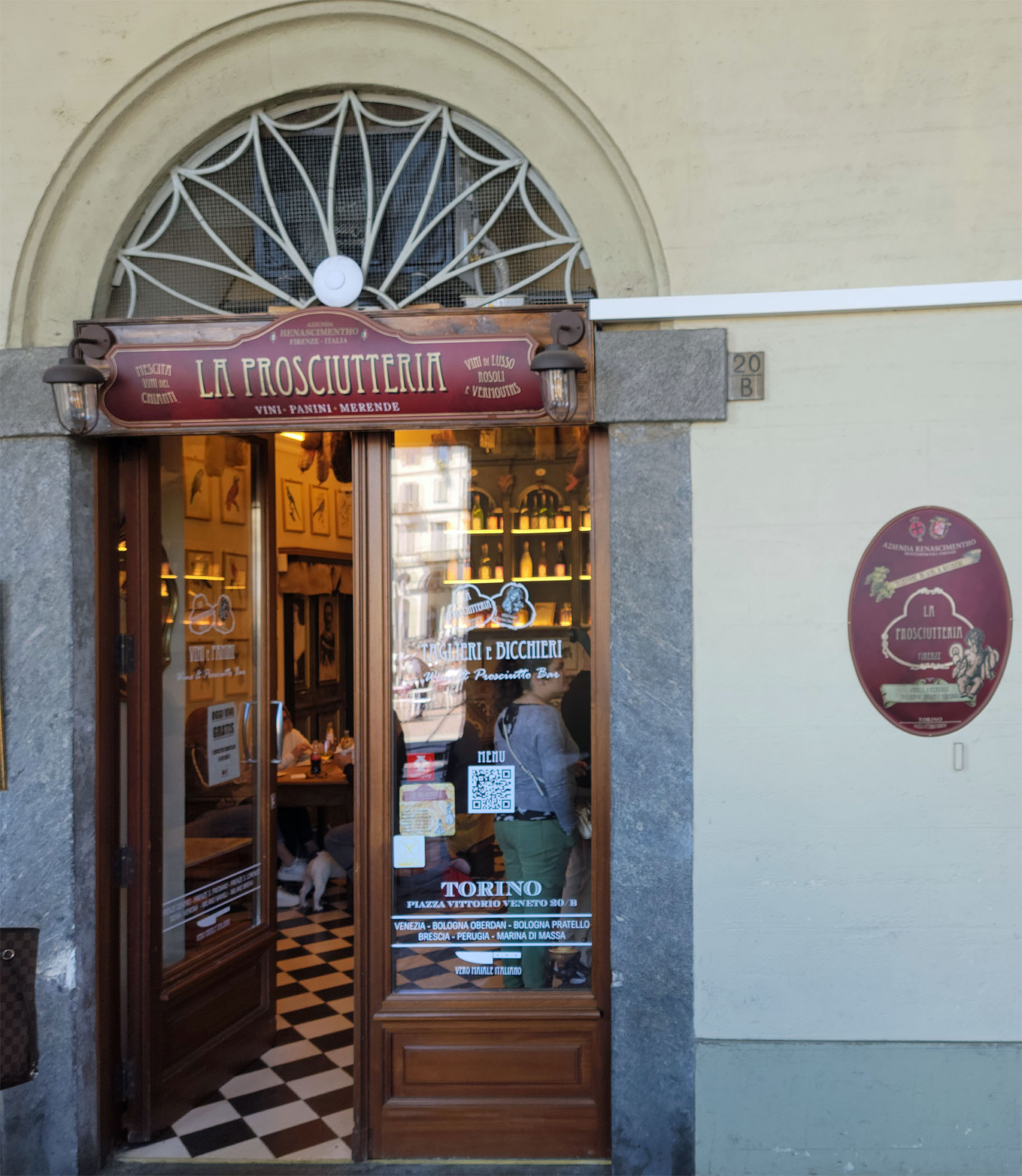
On a lark and after a long walk through the Valentino Park and along the other side of the river, we tried La Prosciutteria on Piazza Vittorio Veneto and via Alfonso Bonafous.
Entrance – La Prosciutteria – Turin, Italy
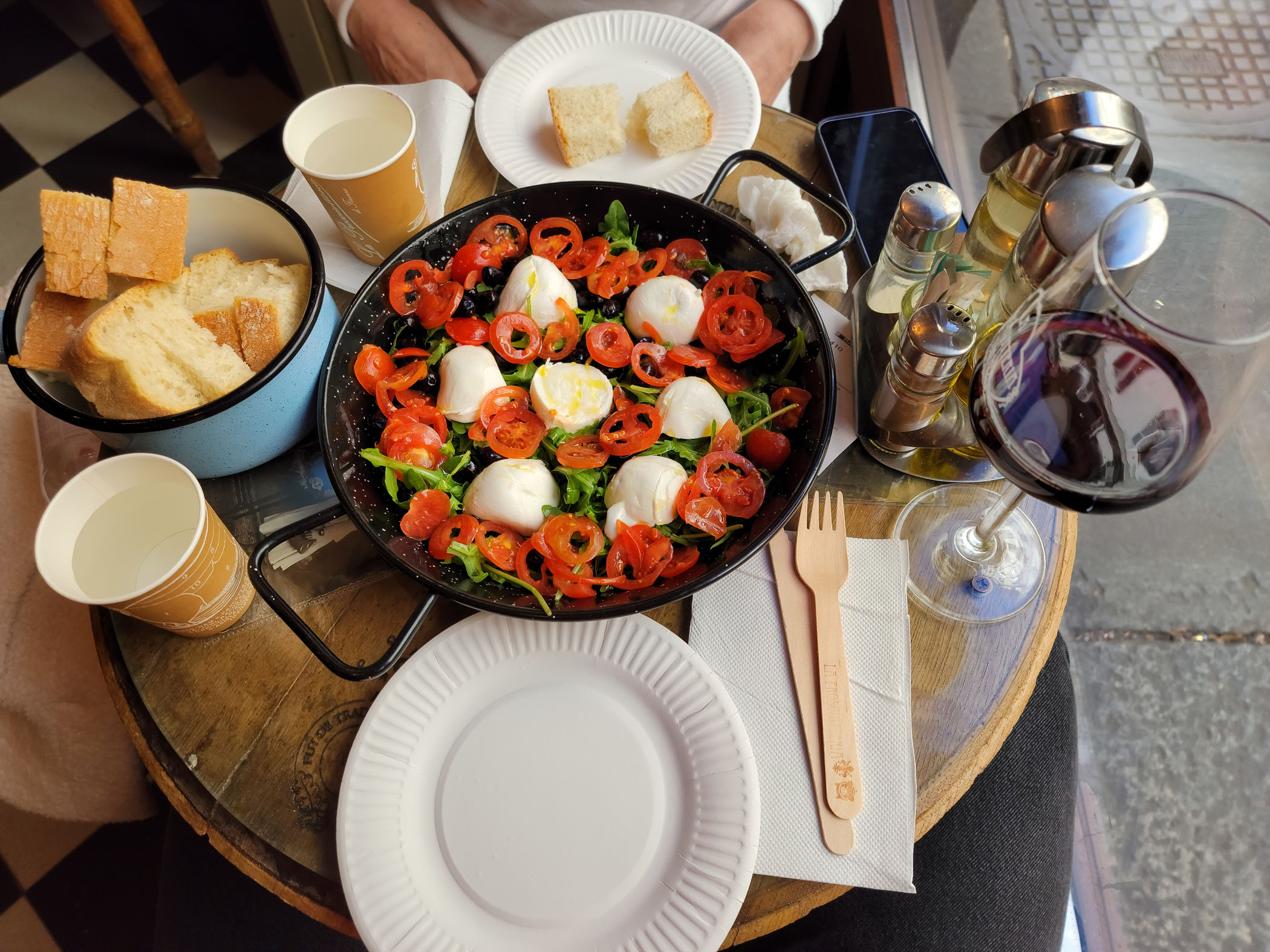
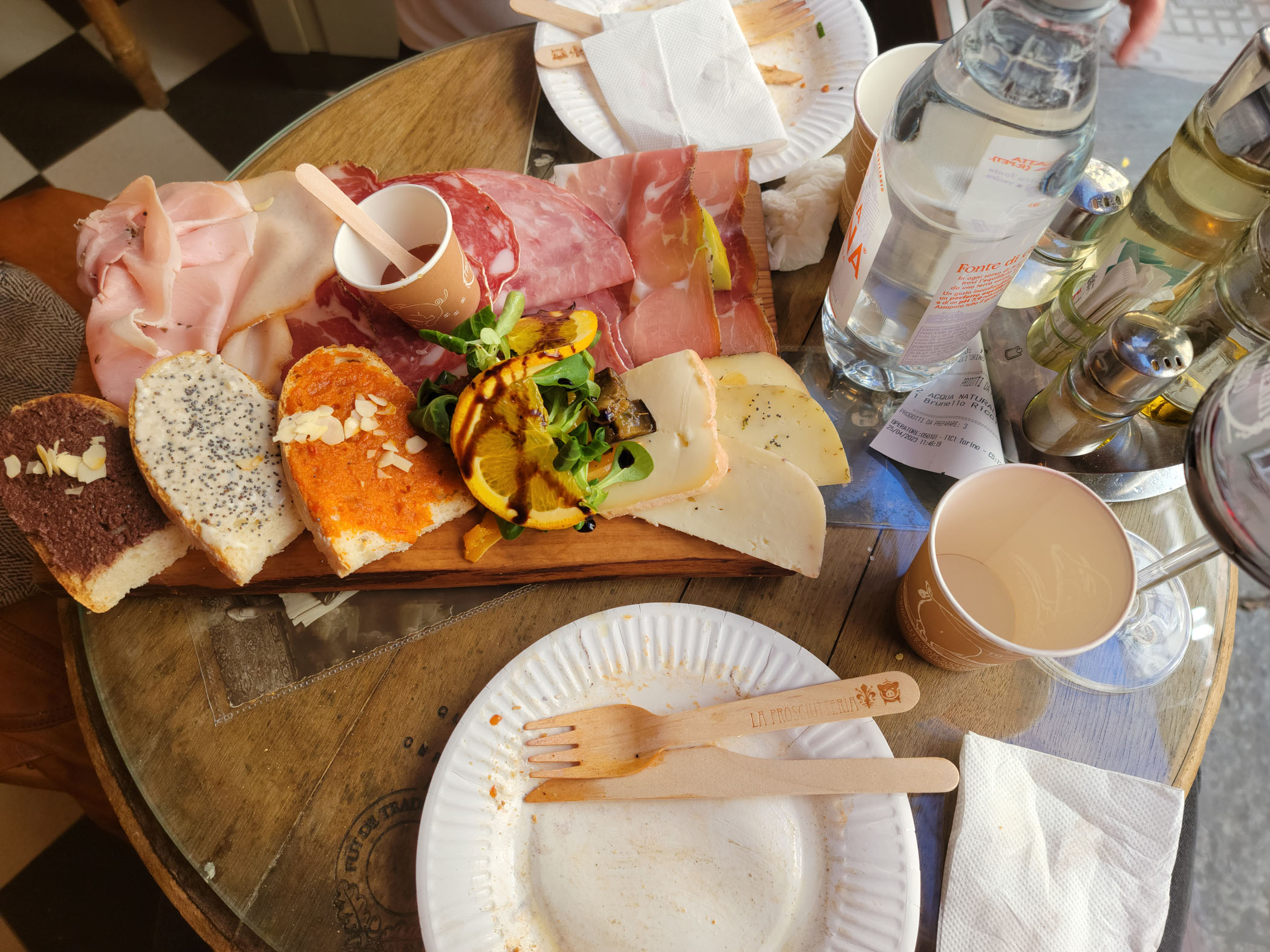
We ordered water, wine, a bruschetta and a charcuterie board. The bruschetta was good, the little olives they used were very tasty.
Bread, Bruschetta and Brunello – La Prosciutteria – Turin, Italy
Charcuterie Board – La Prosciutteria – Turin, Italy
Though I am not a meat eater by nature, the charcuterie here is quite good, especially the Tuscan cheese selections. I would suggest trying the cheeses first au natural, many are exceptional and have delicate flavors. Smearing the honey they provide I found masked their flavors, since none were blue cheeses and were not very strong. The honey by itself was delicious and would be great with a Roquefort, a Blue or similar cheese, but not much with the ones we were given.
Charcuterie Board – La Prosciutteria – Turin, Italy
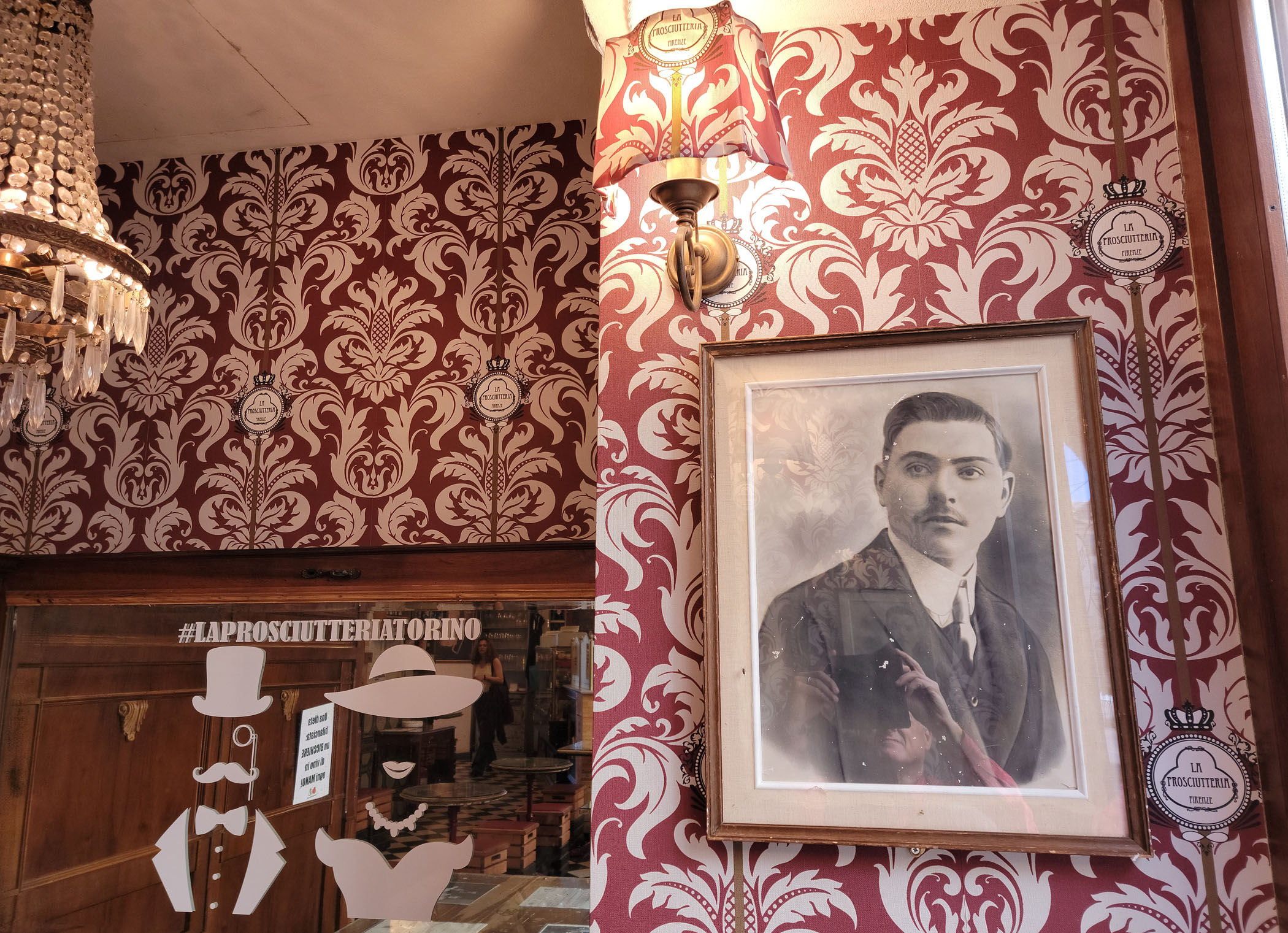
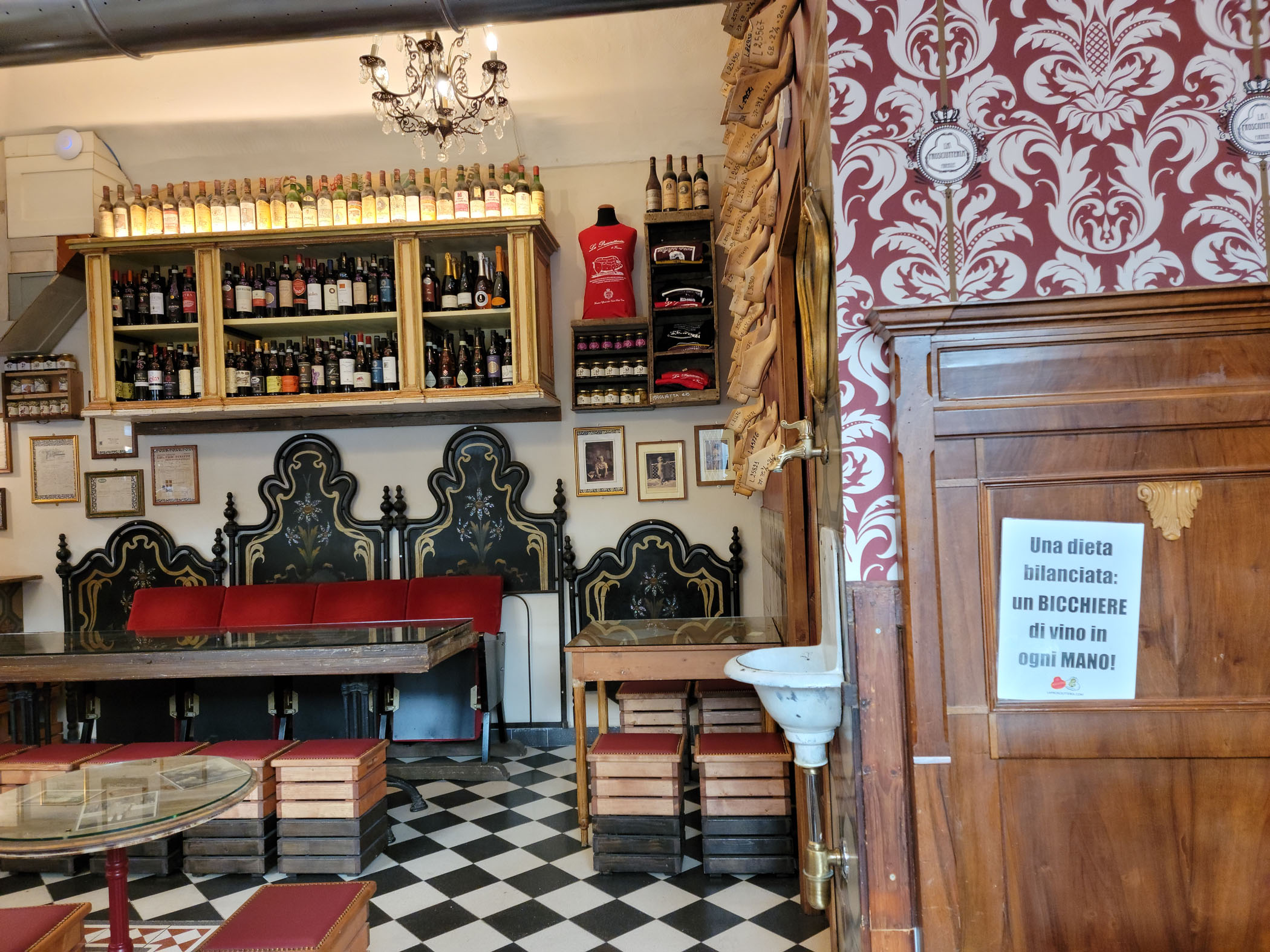
Back Wall – La Prosciutteria – Turin, Italy
Esoteric Inside – La Prosciutteria – Turin, Italy
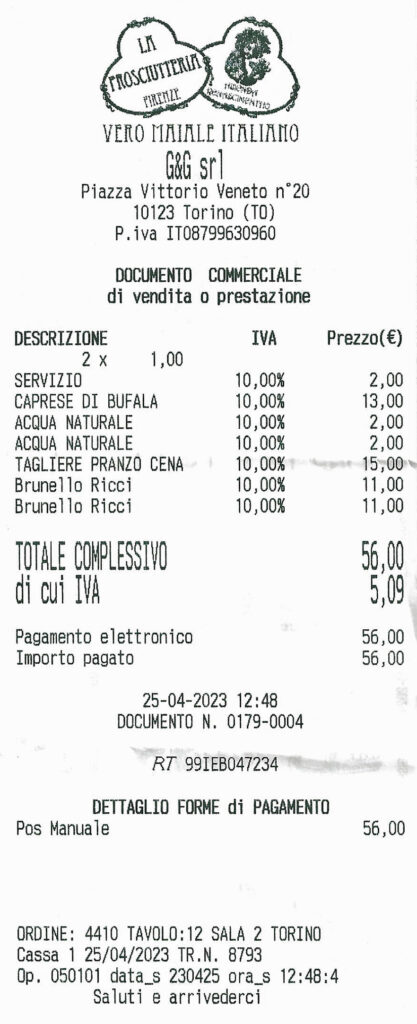
In the end our bill was a bit on the high side, but not bad for a place on the Piazza Vittoria Veneto. Below is an example of what you can expect for two people. The two glasses of wine being the most expensive, similar to what you would find in the States now (it was never like this before, some prices are crazy, though I would say most glasses of local wines are frequently around 4-5€).
Il Konto (Our Bill) – La Prosciutteria – Turin – April 2023
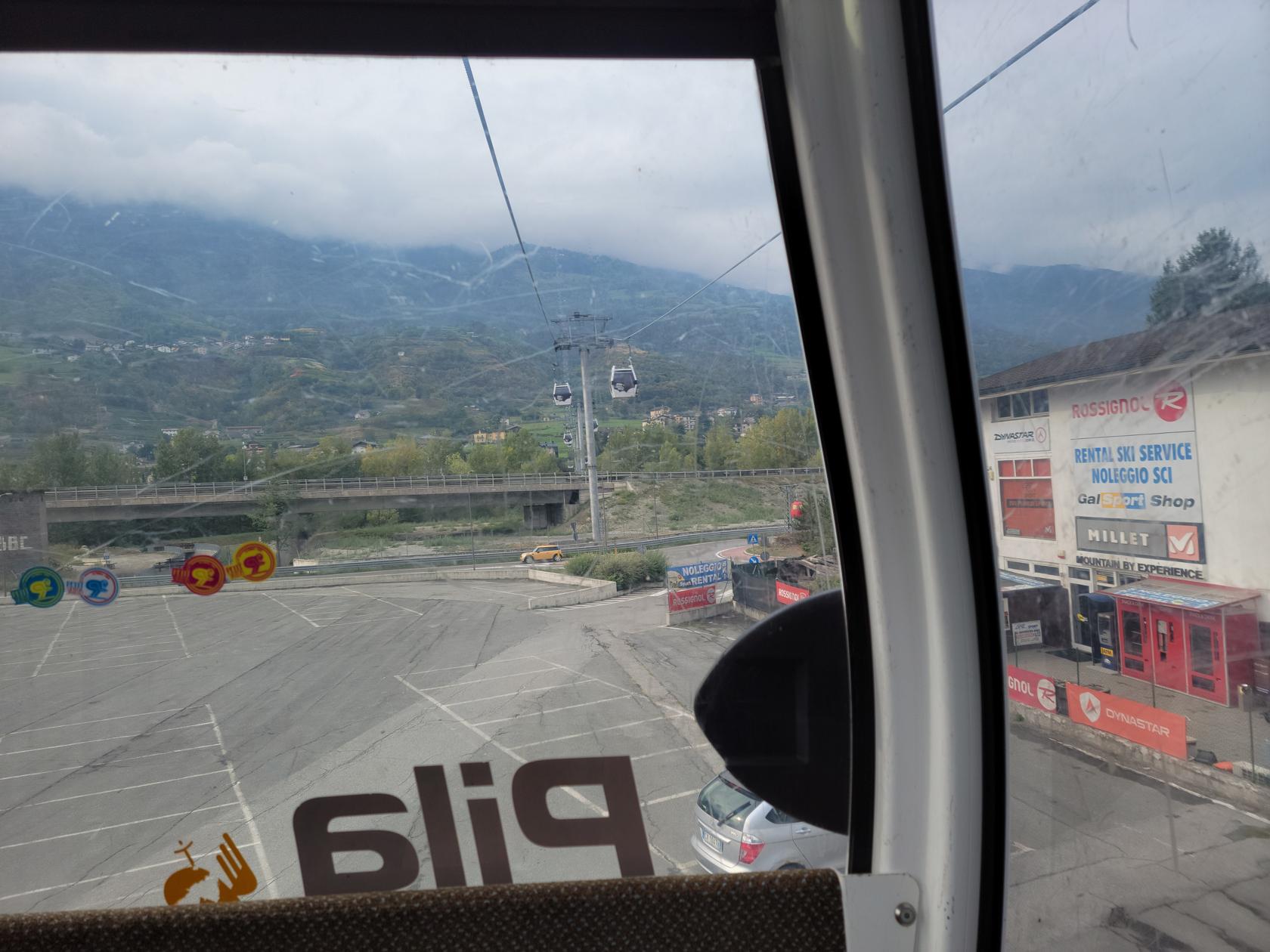
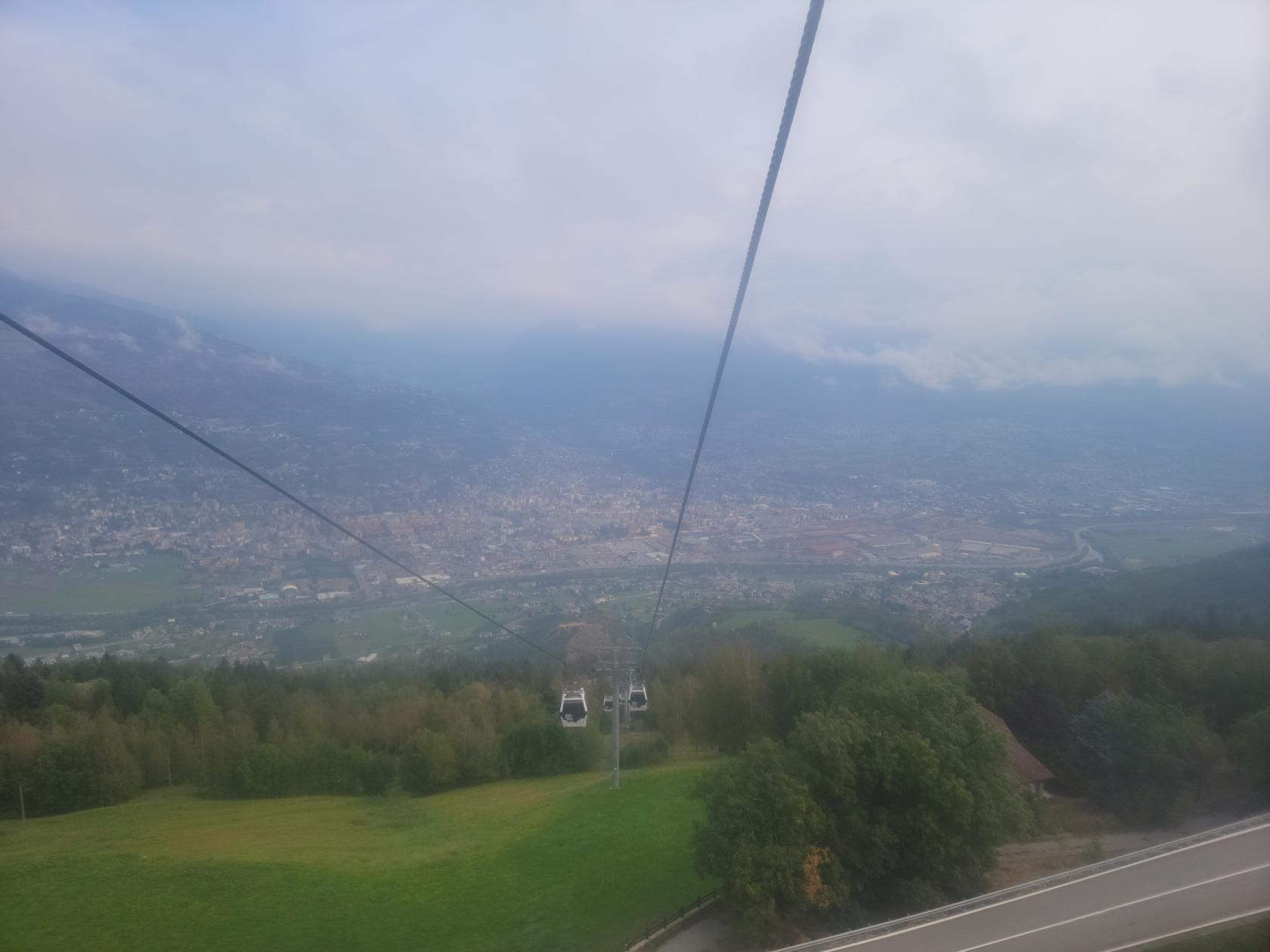
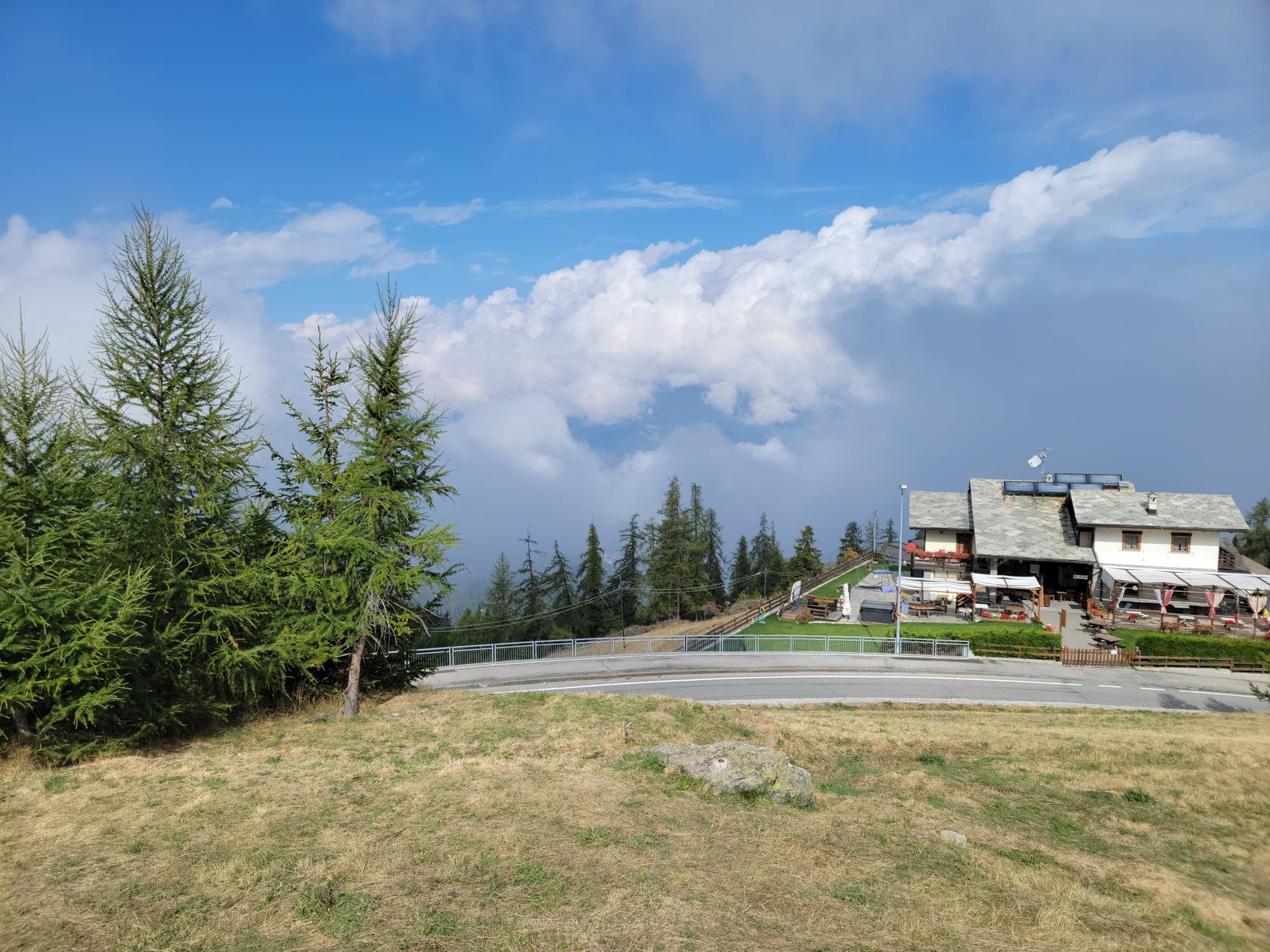
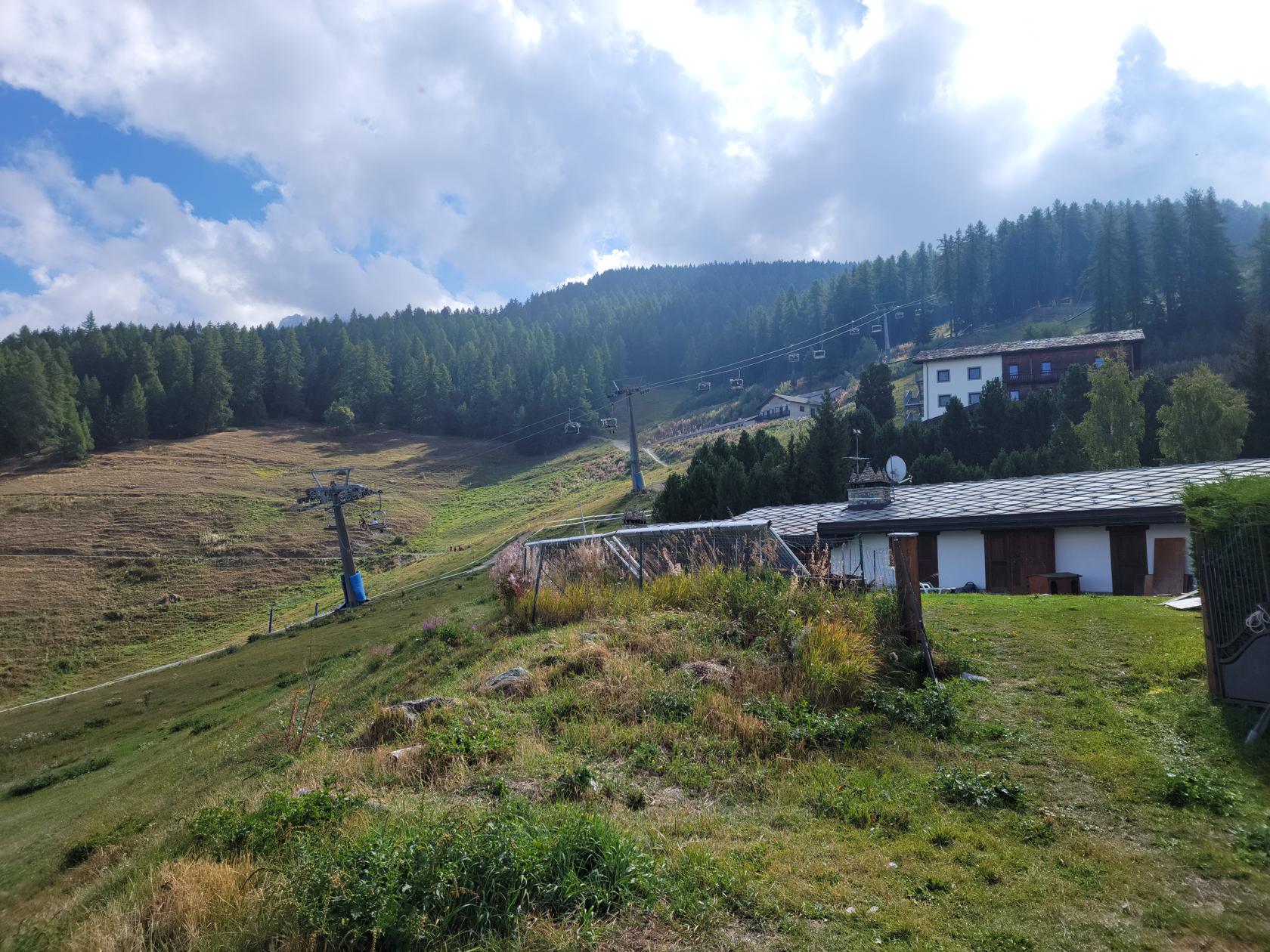
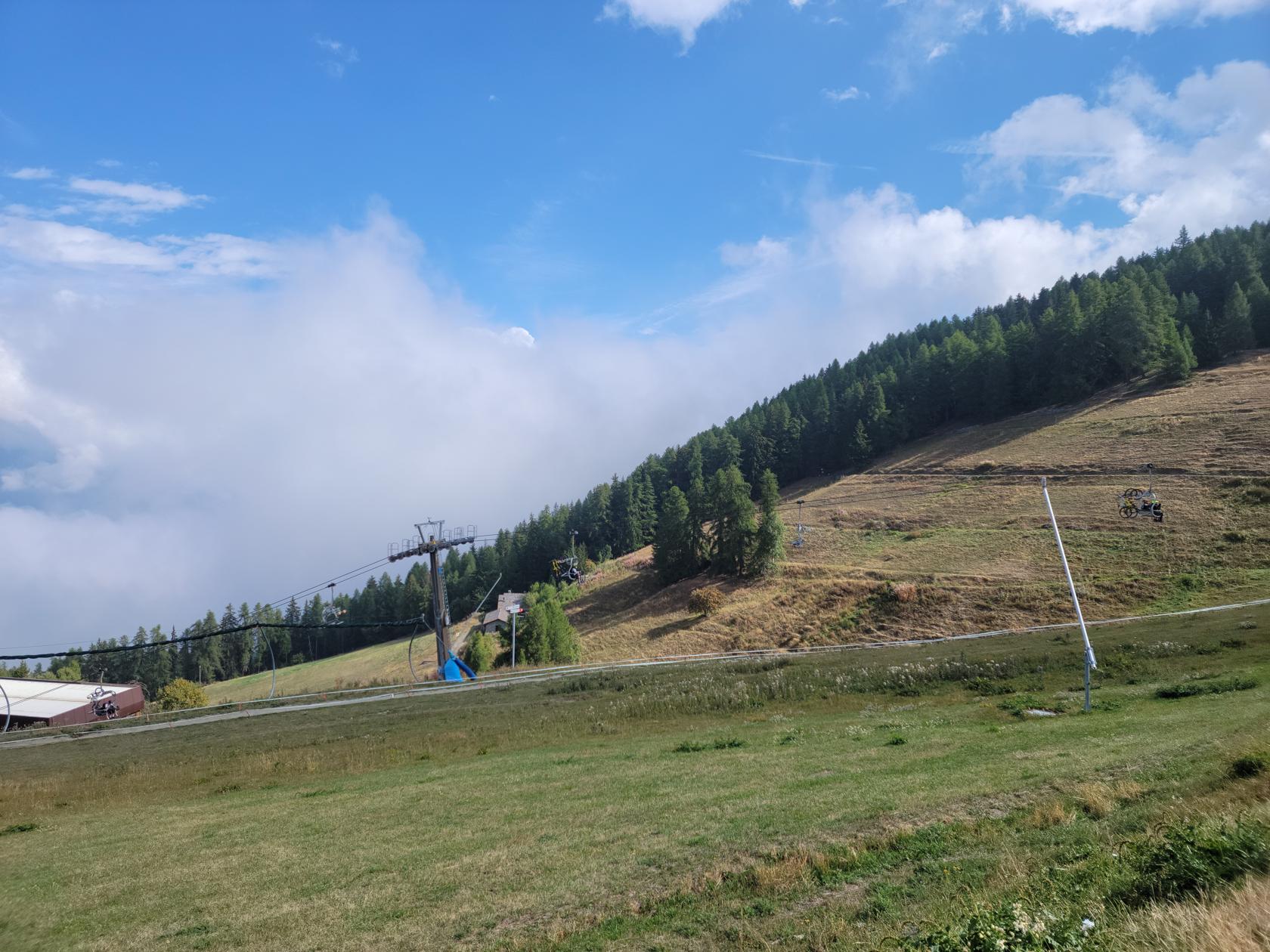
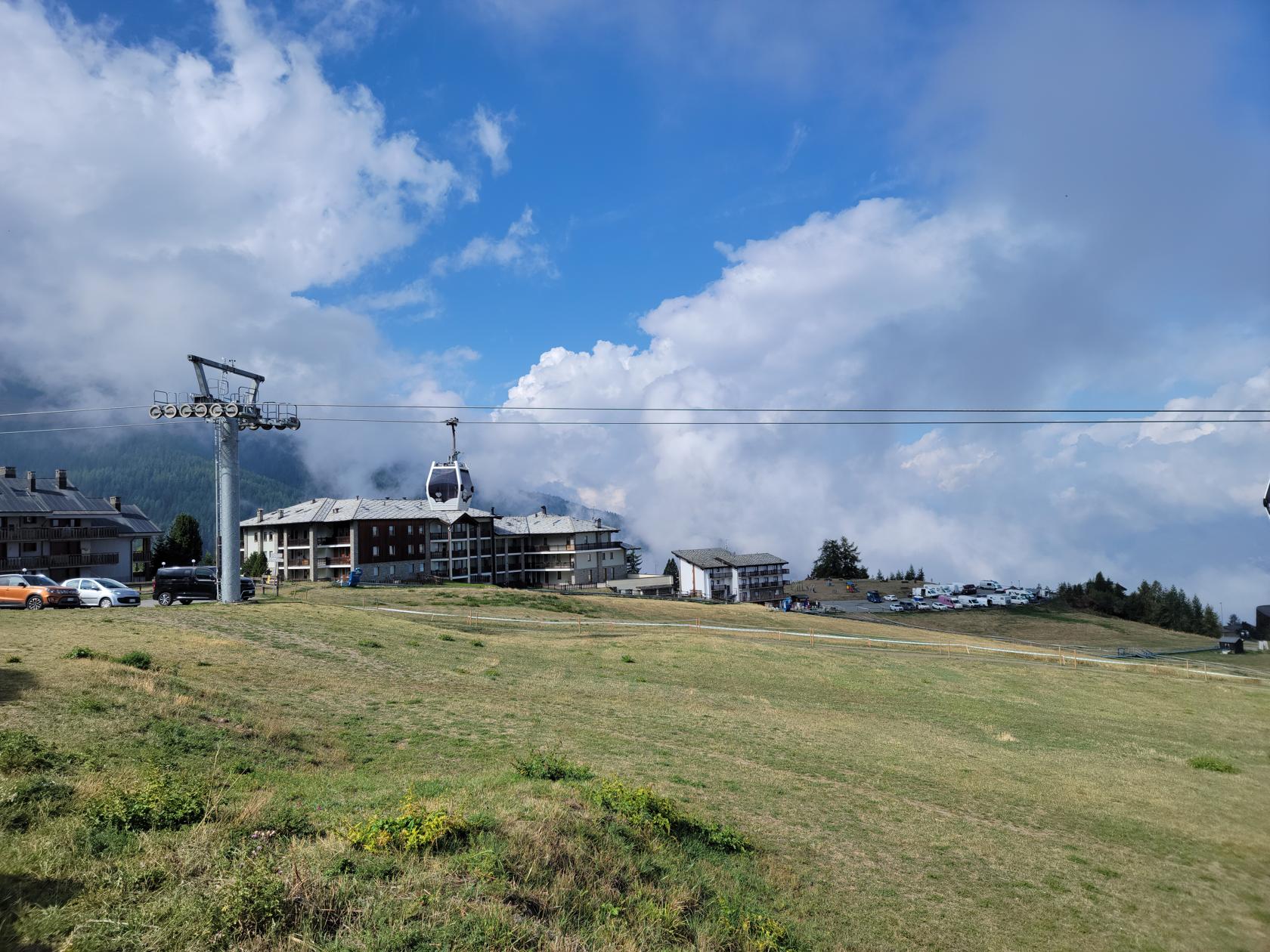
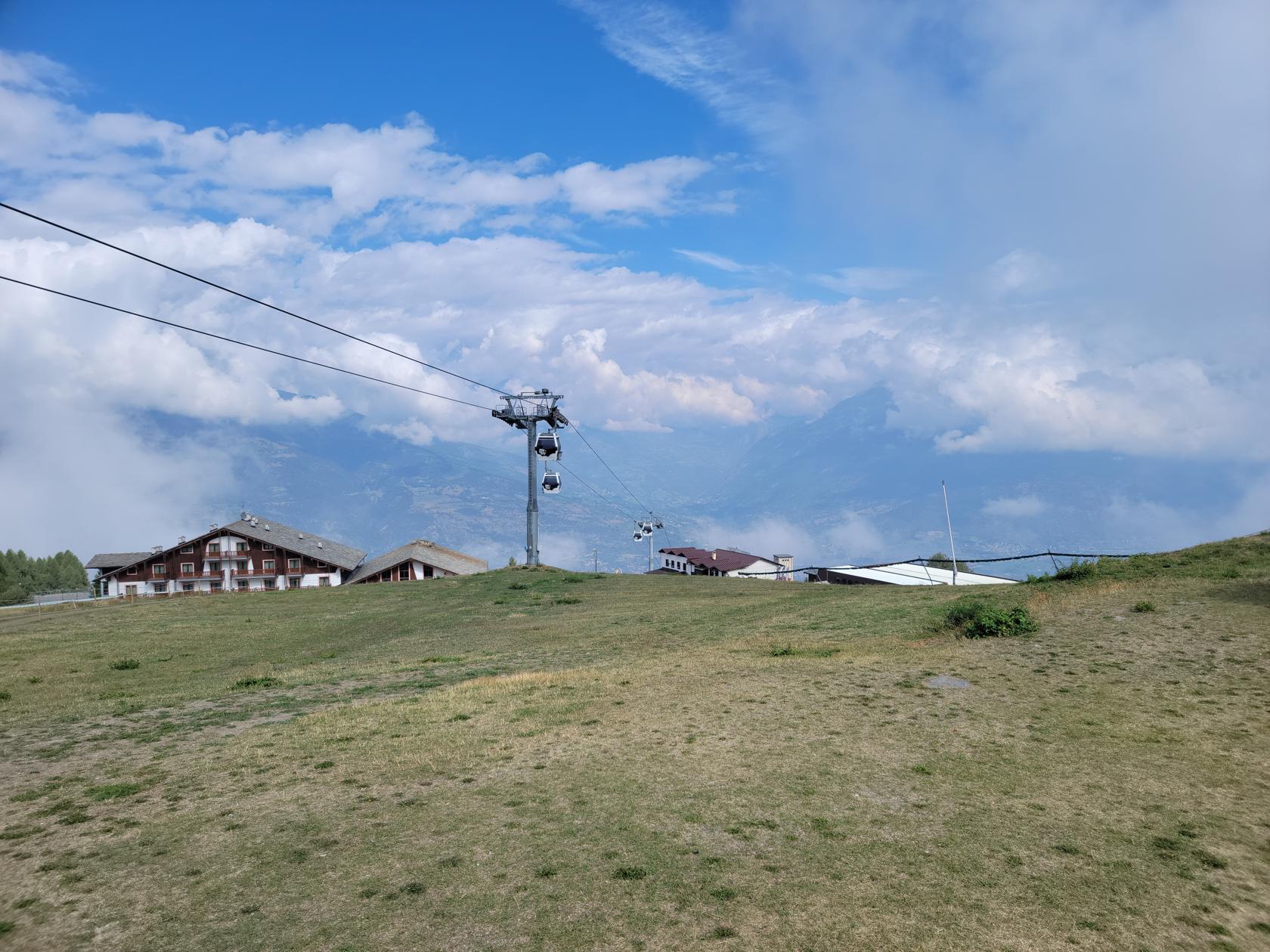
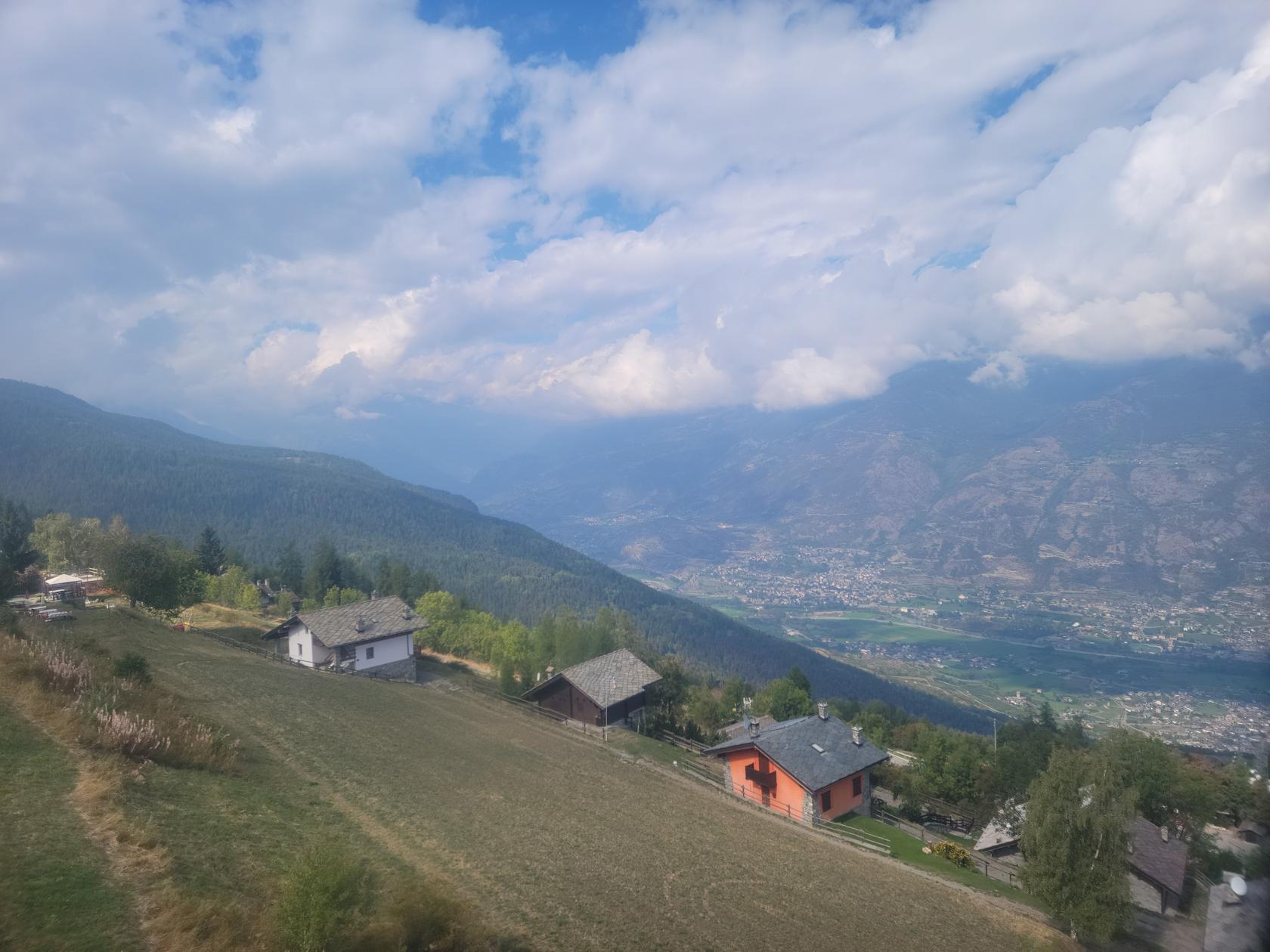
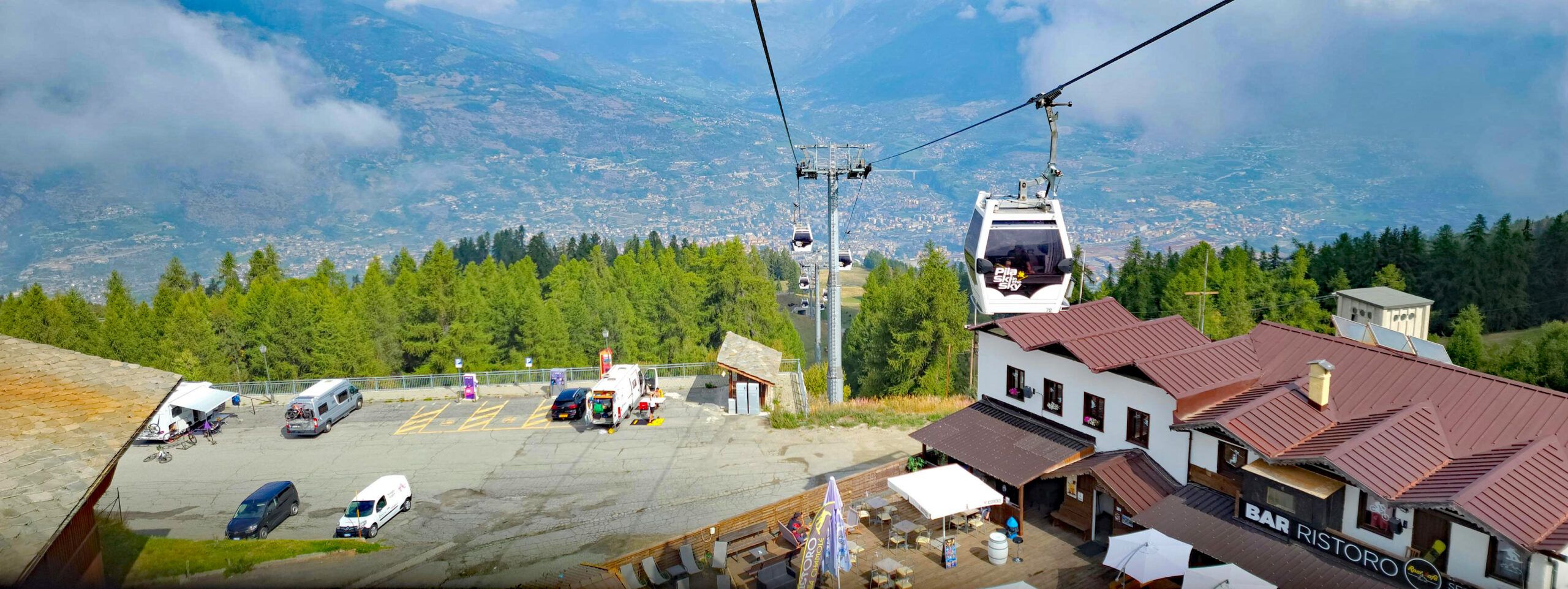
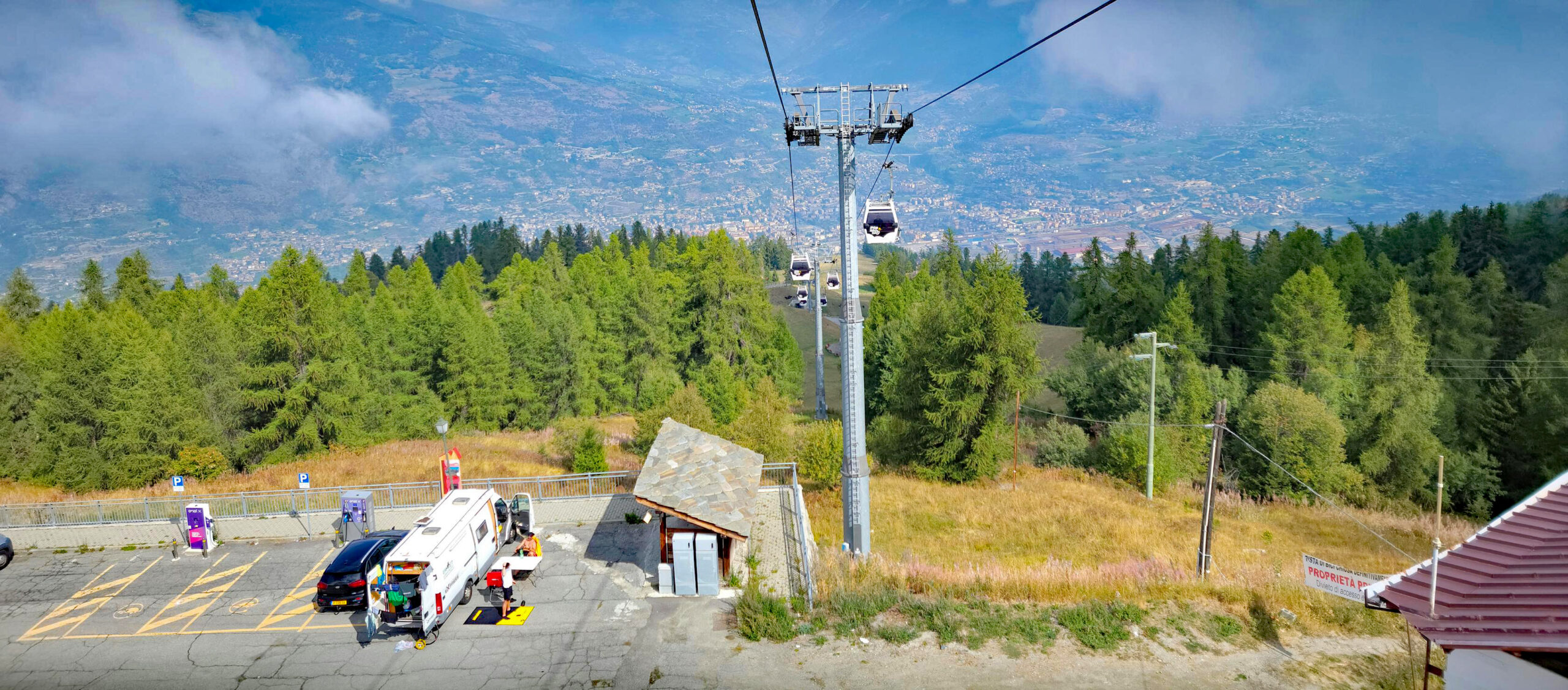
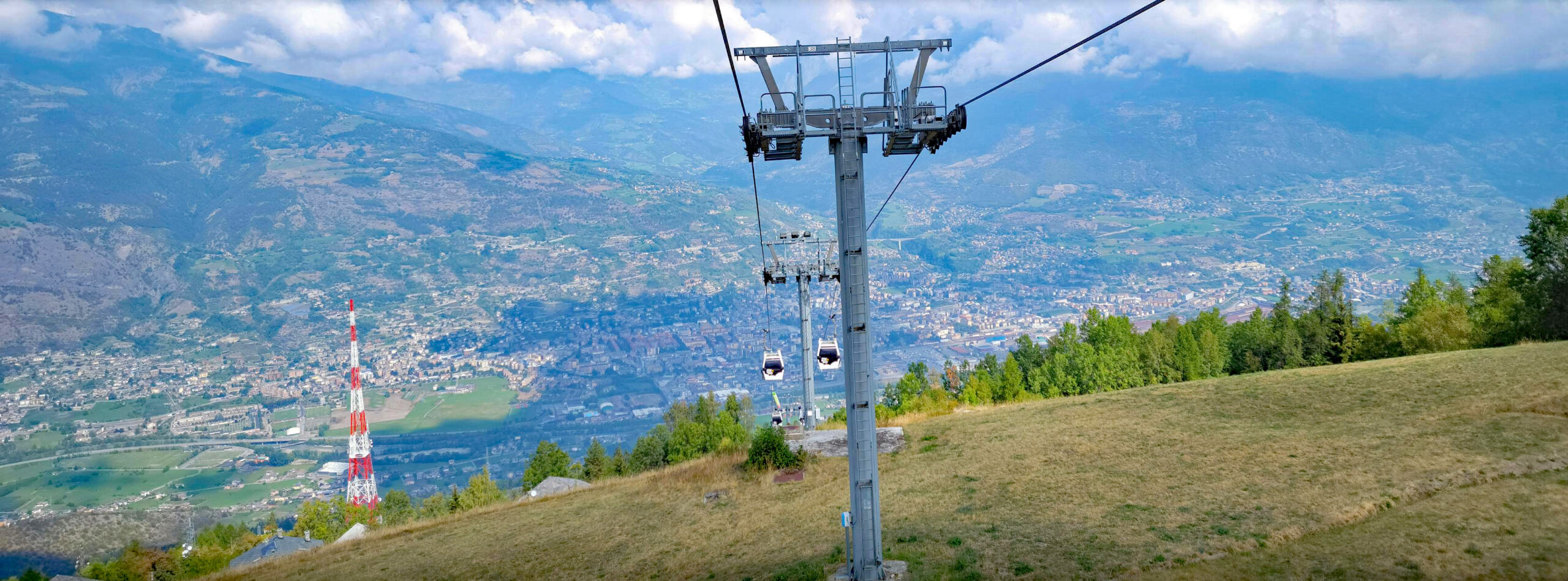
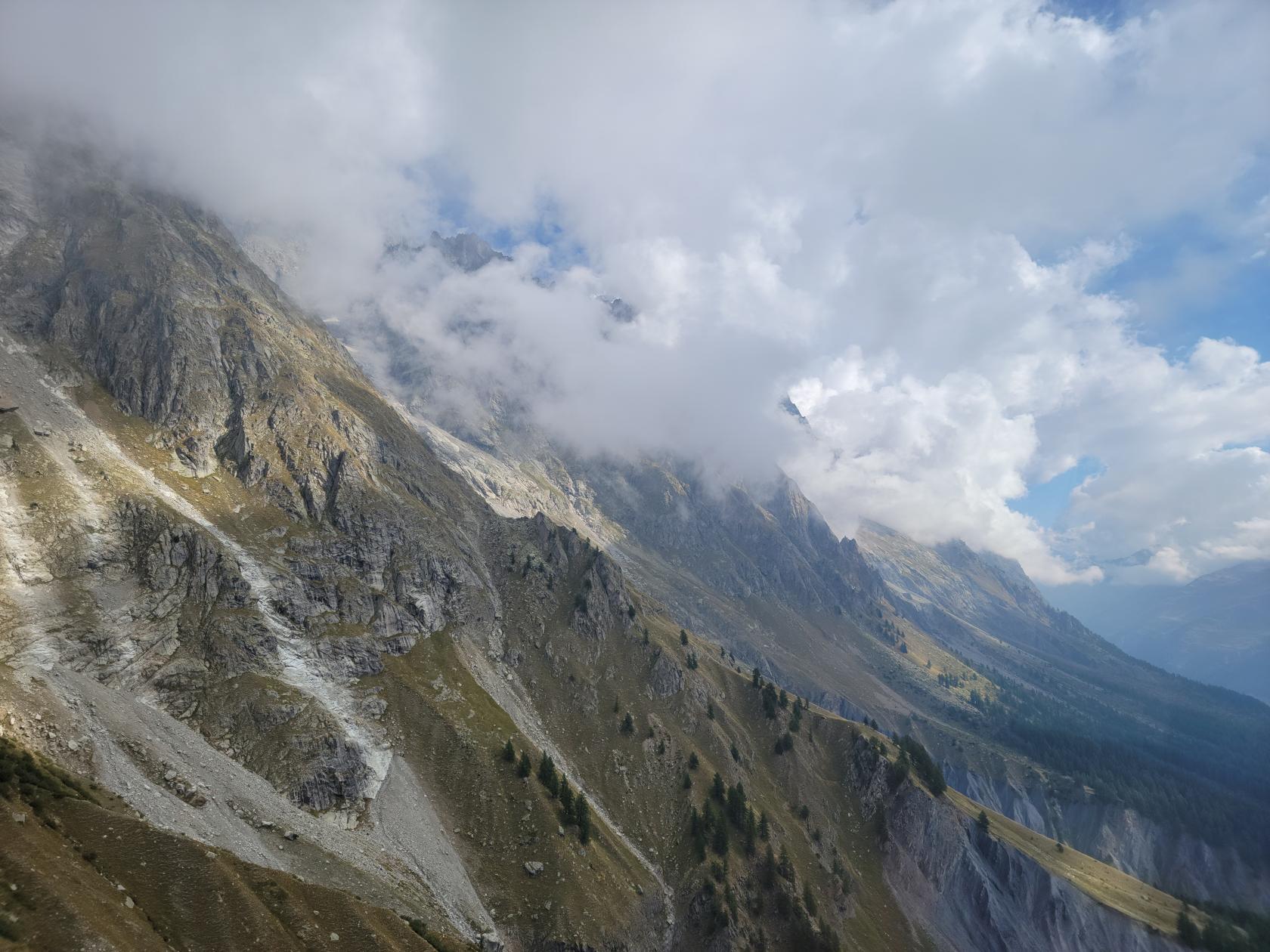
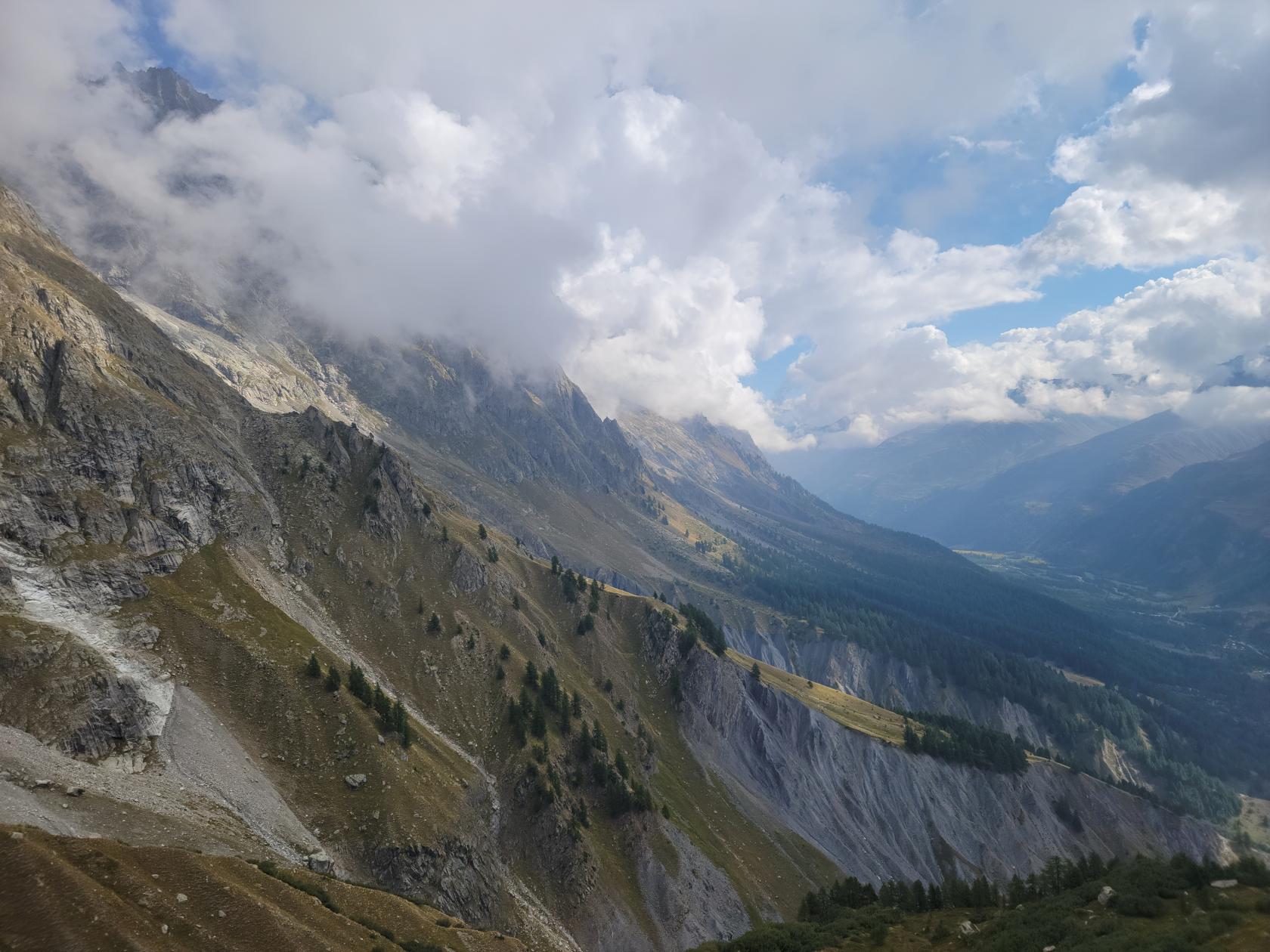
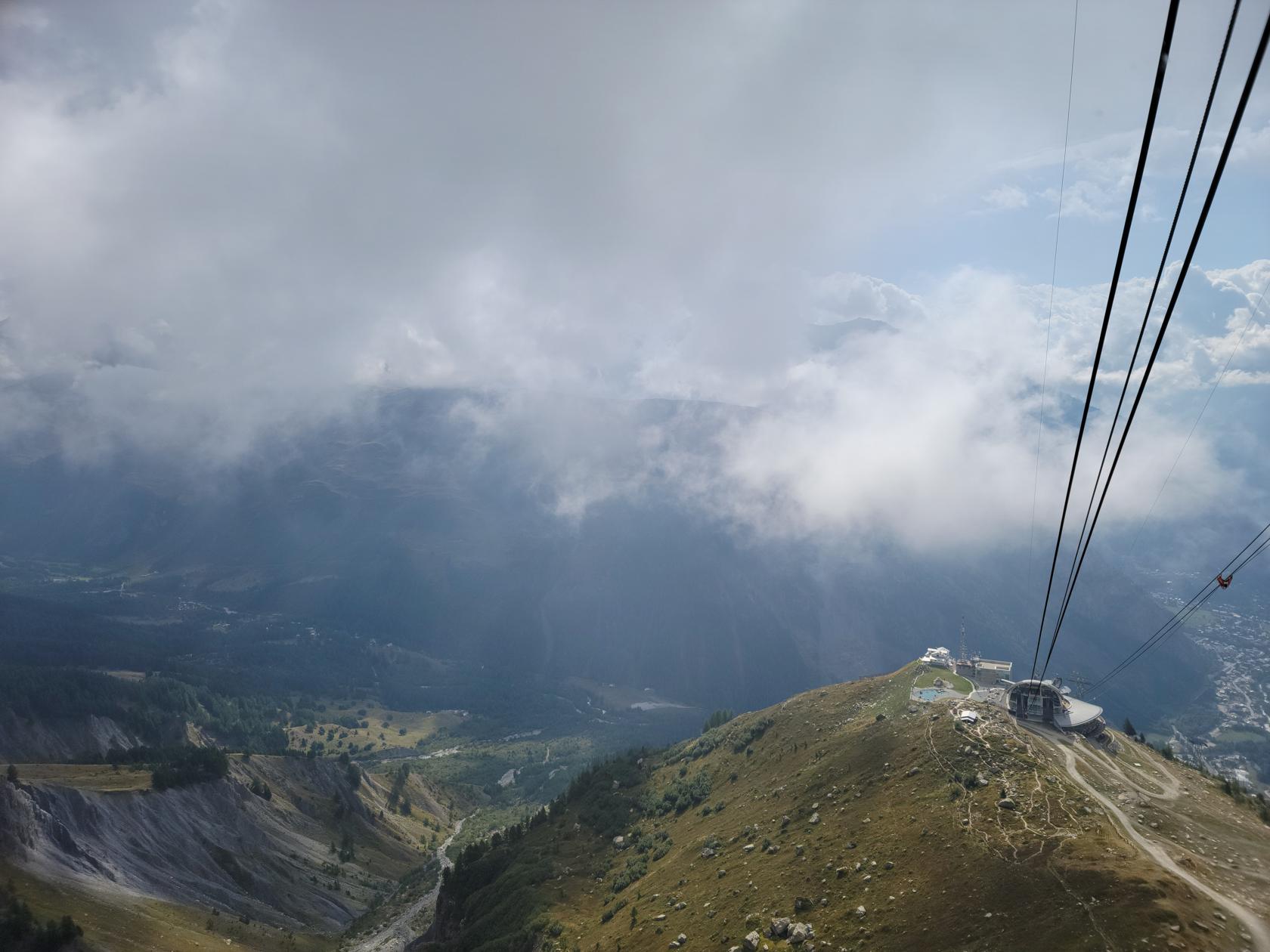
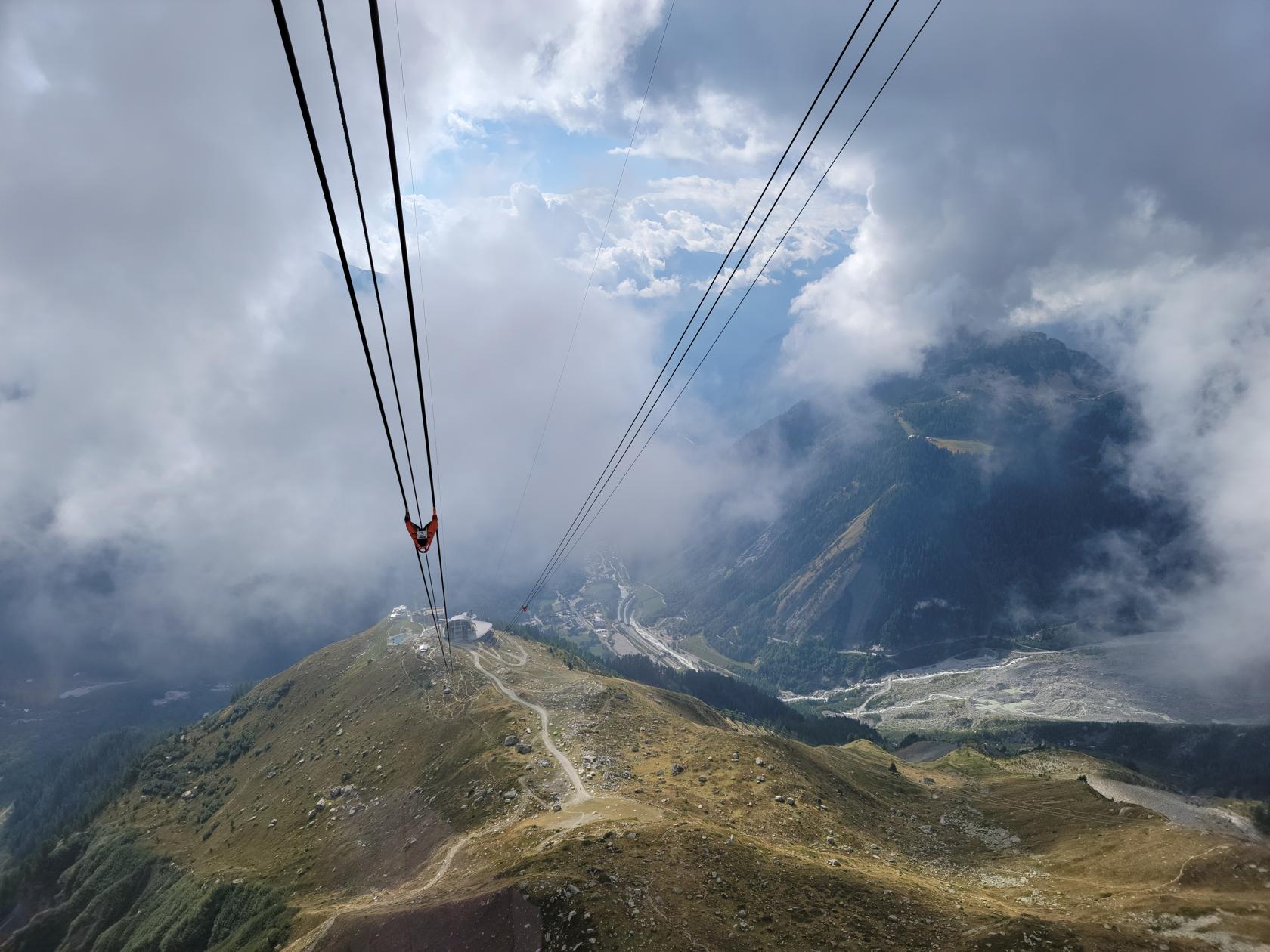
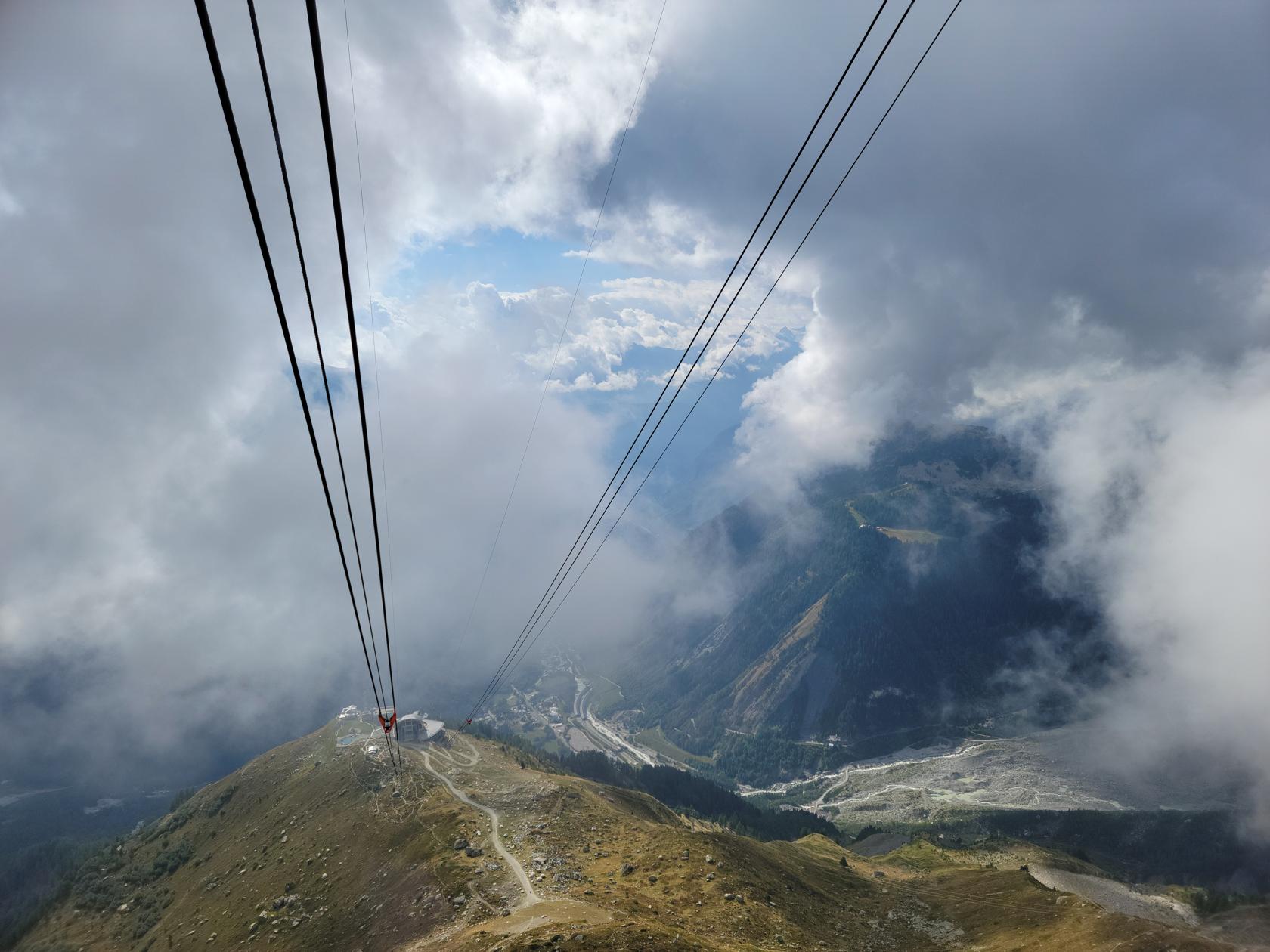
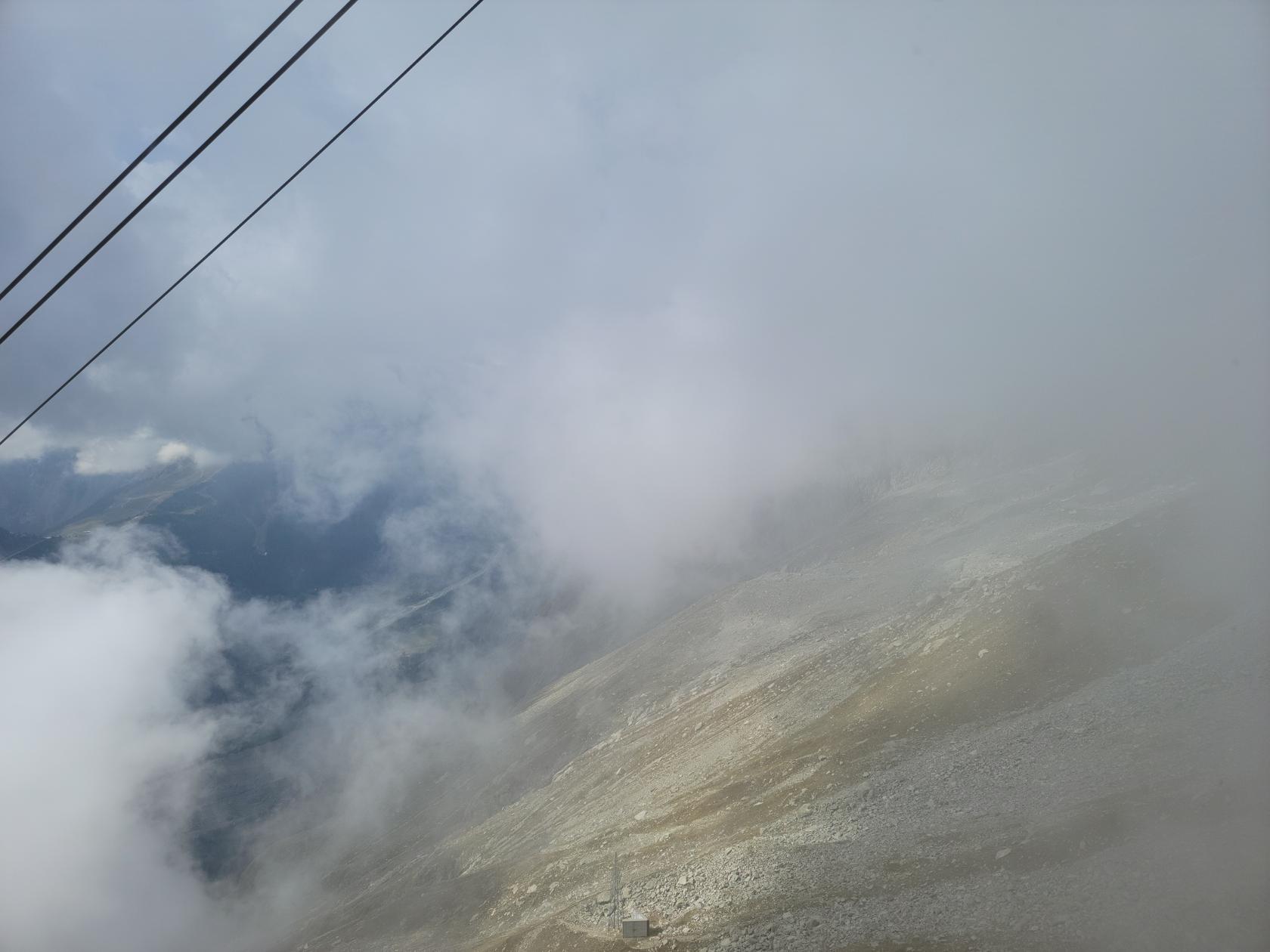
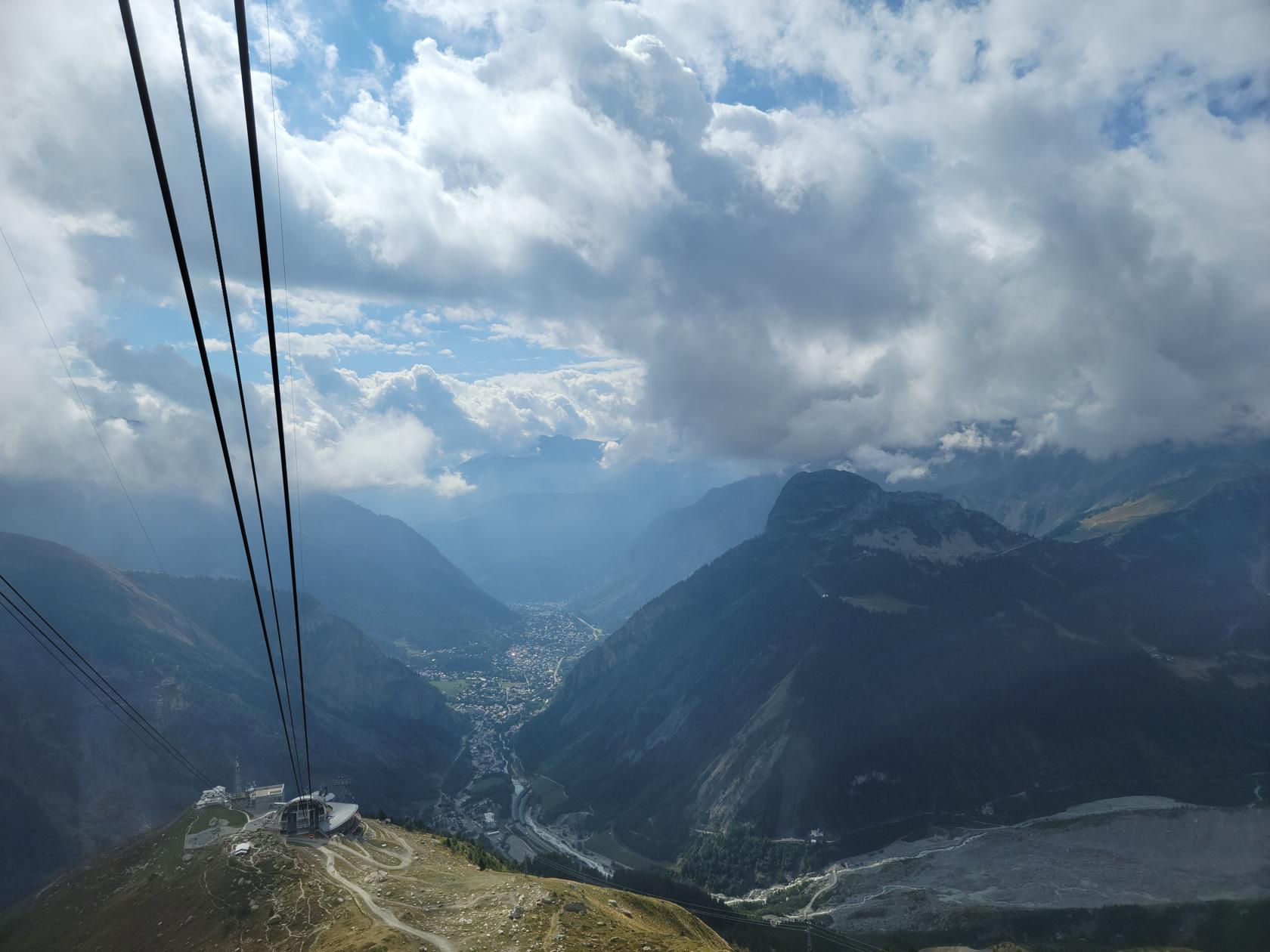
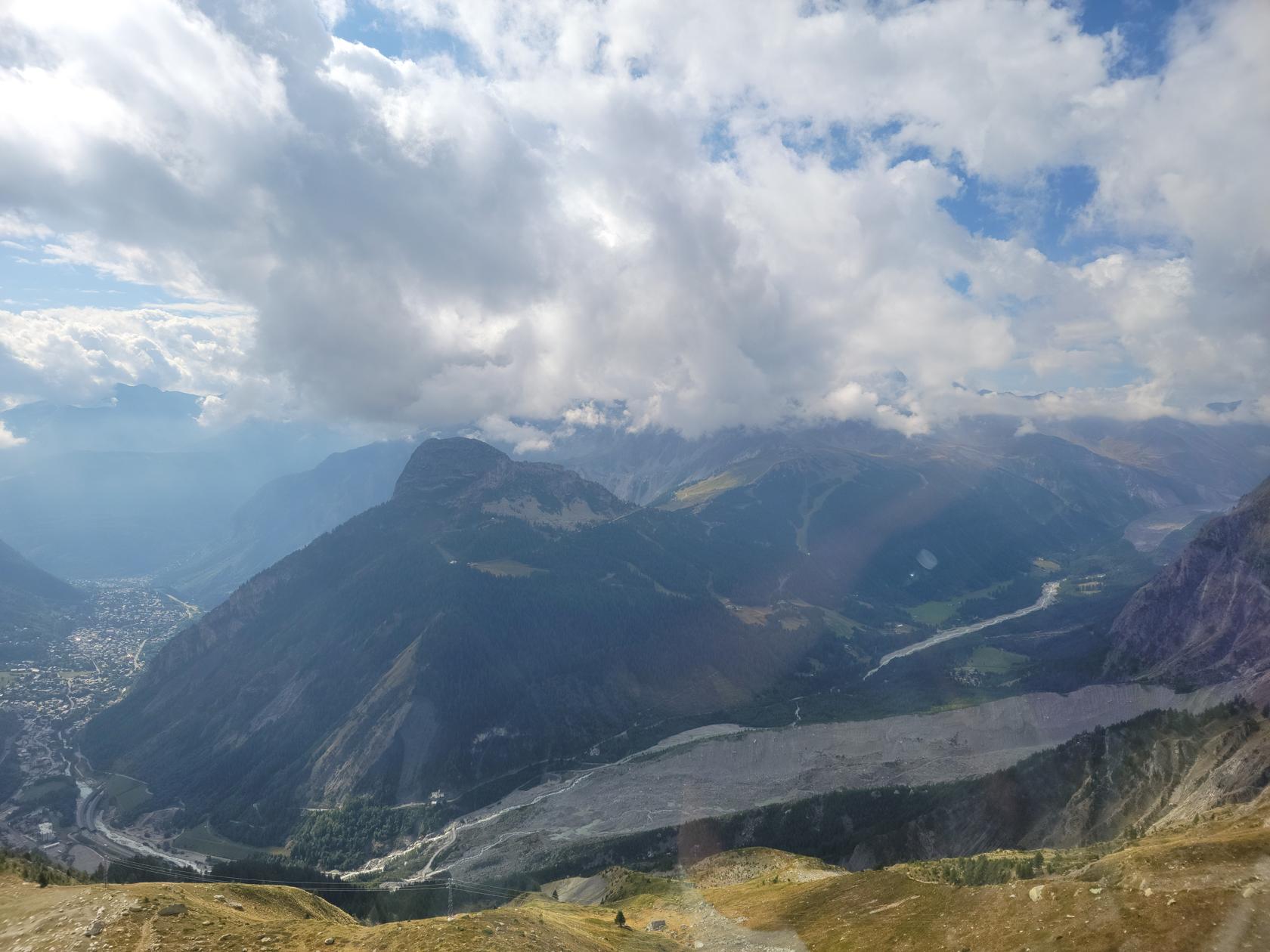
Taking the Pila Cable Car from Aosta one can have a marvelous day trip above the clouds. At over six thousands feet in elevation, Pila sits over Aosta and the valley like an eagle’s nest.
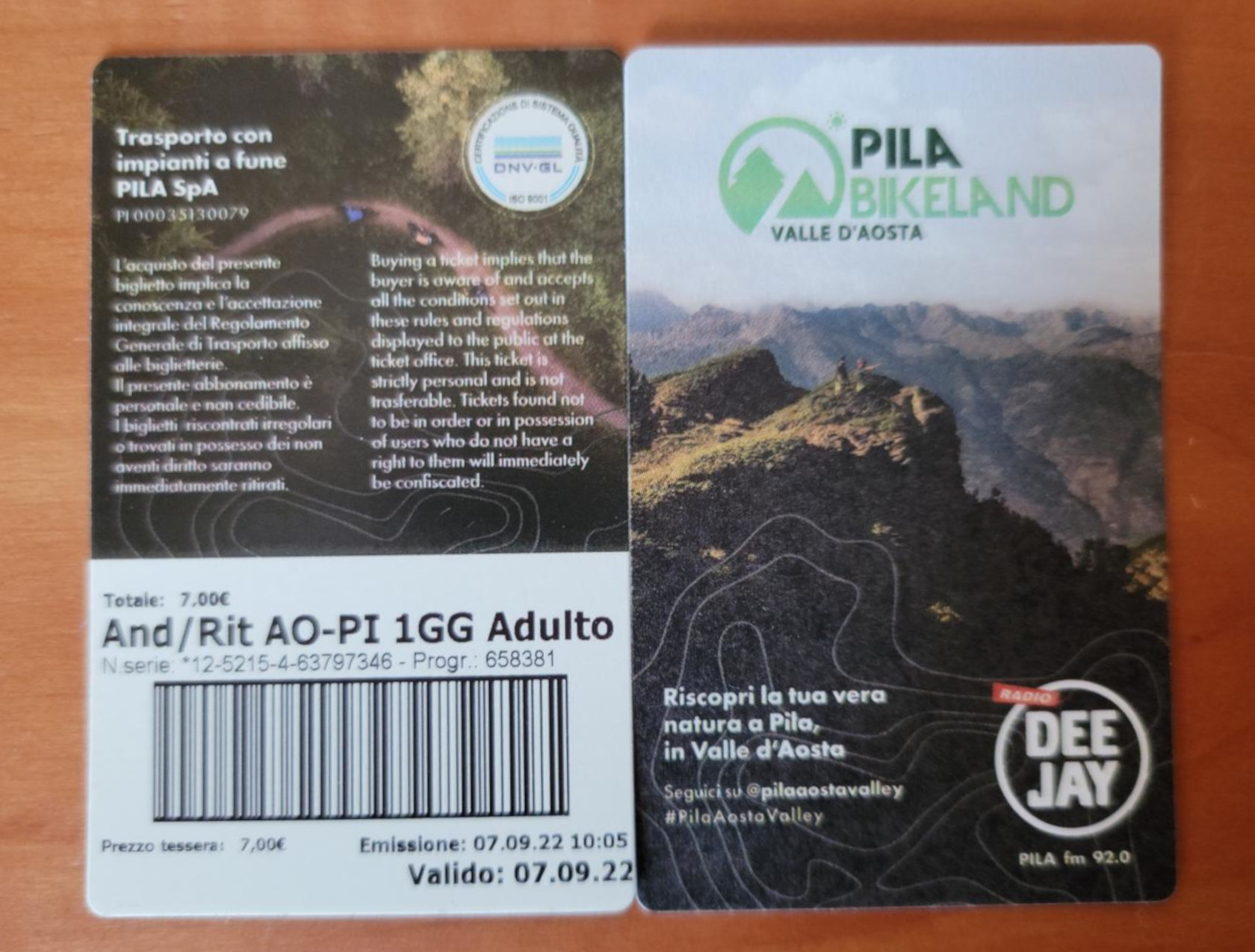
Pila – Pila Cable Car – Tickets For Two
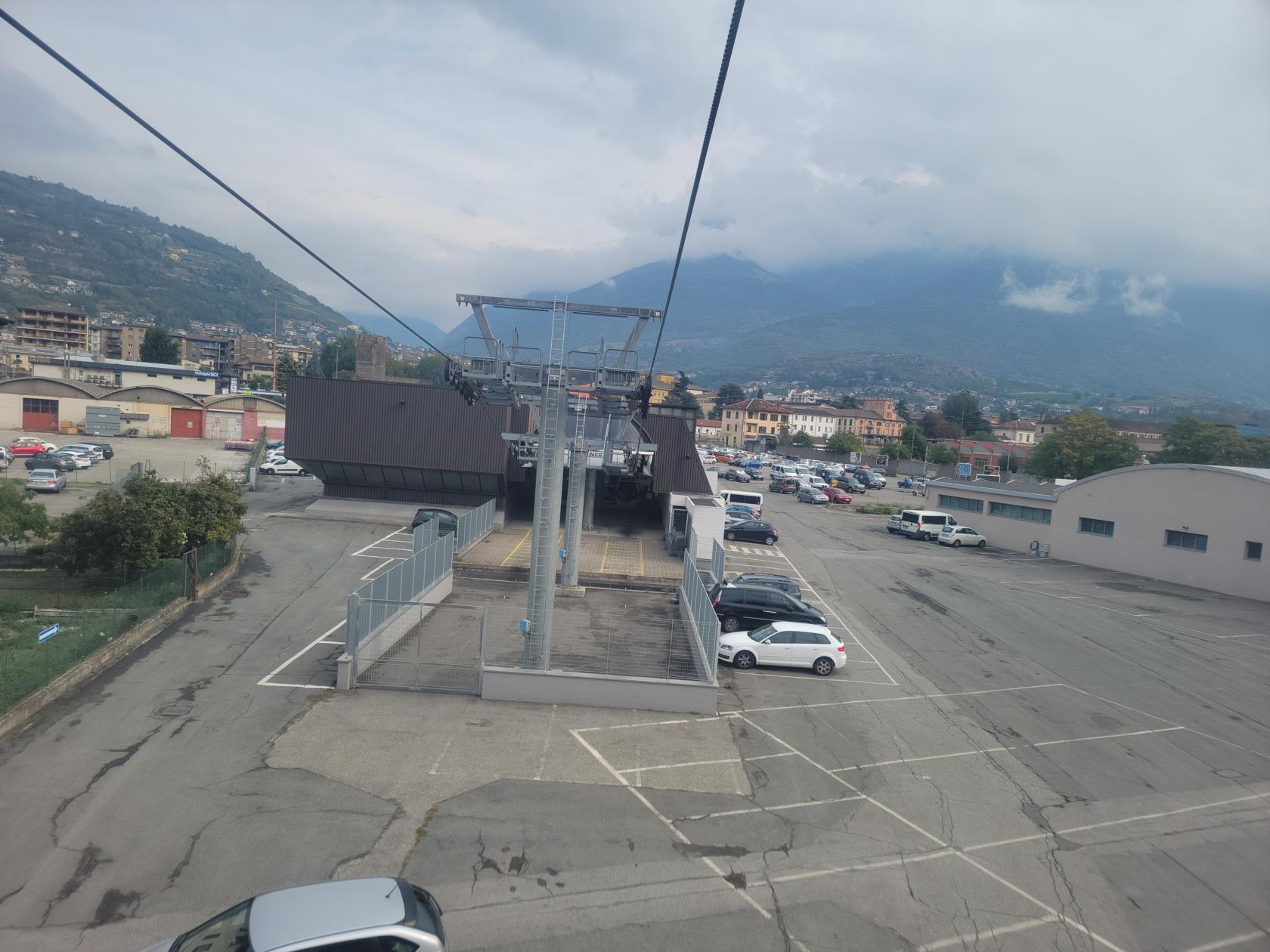
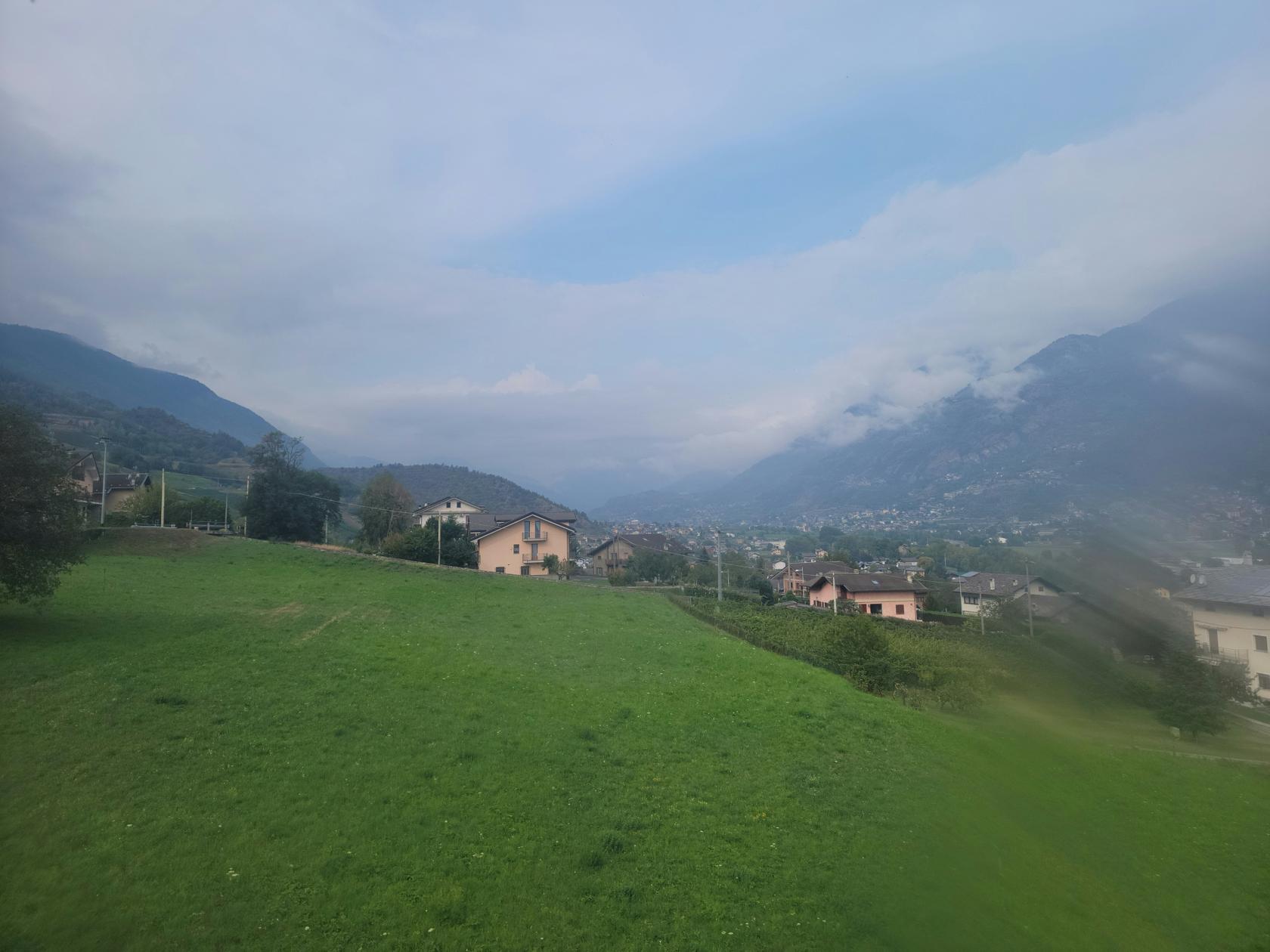
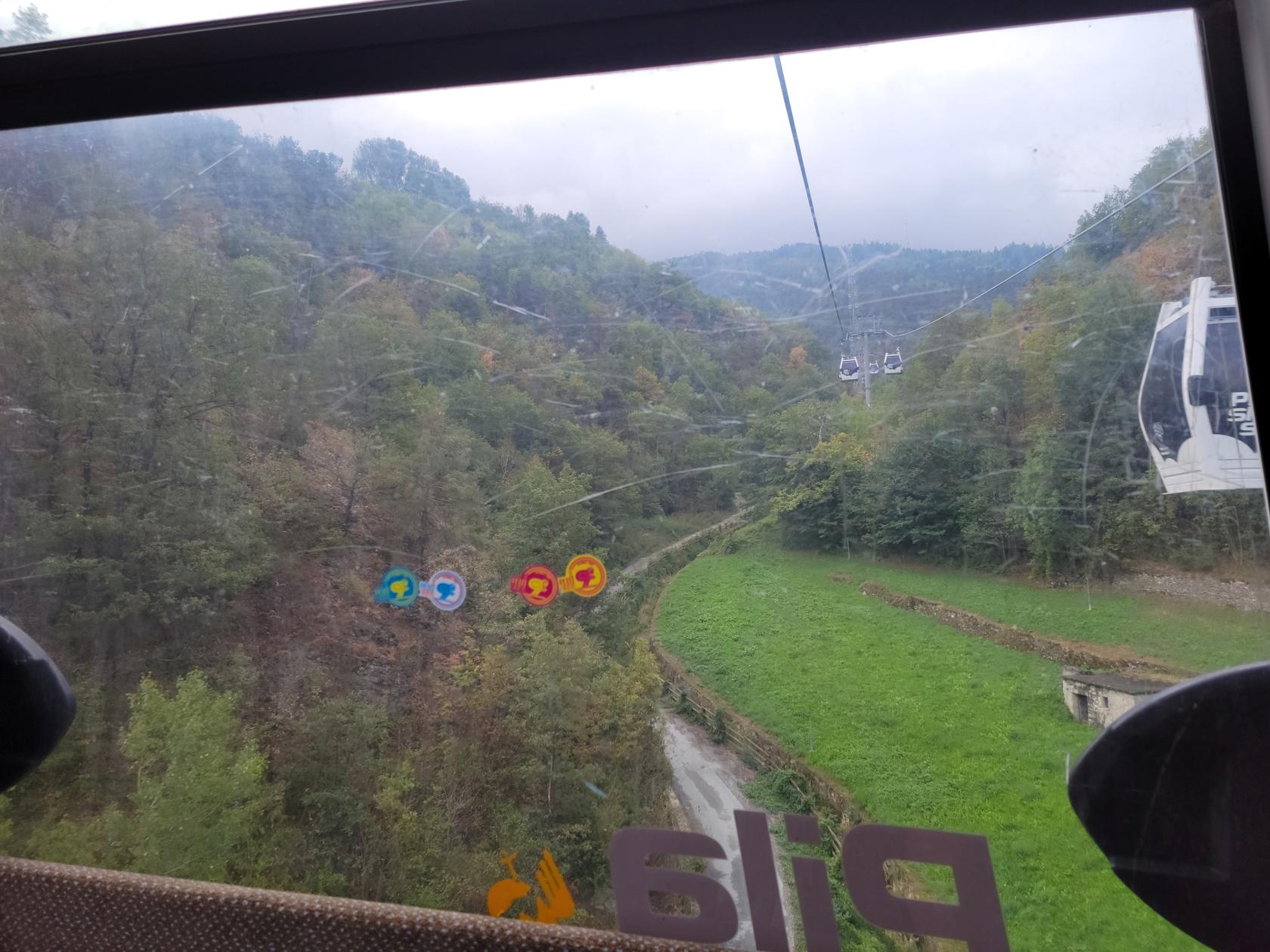
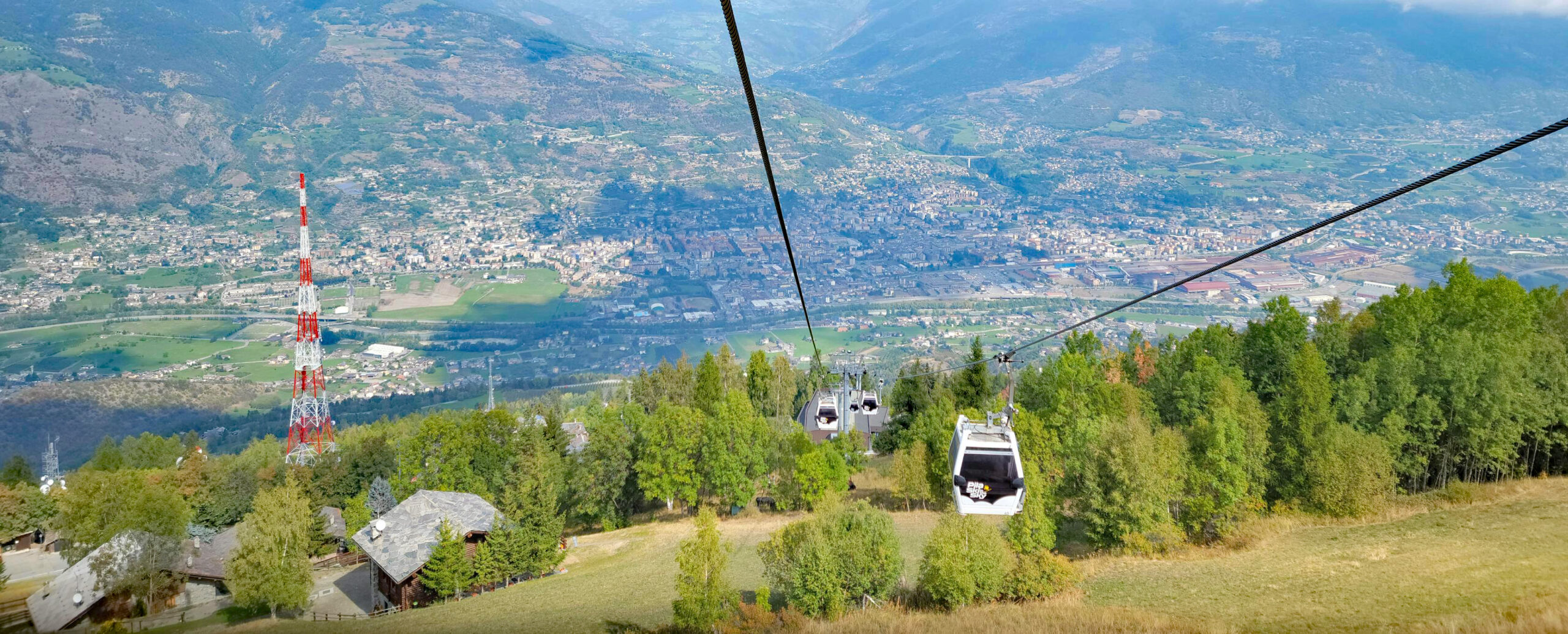
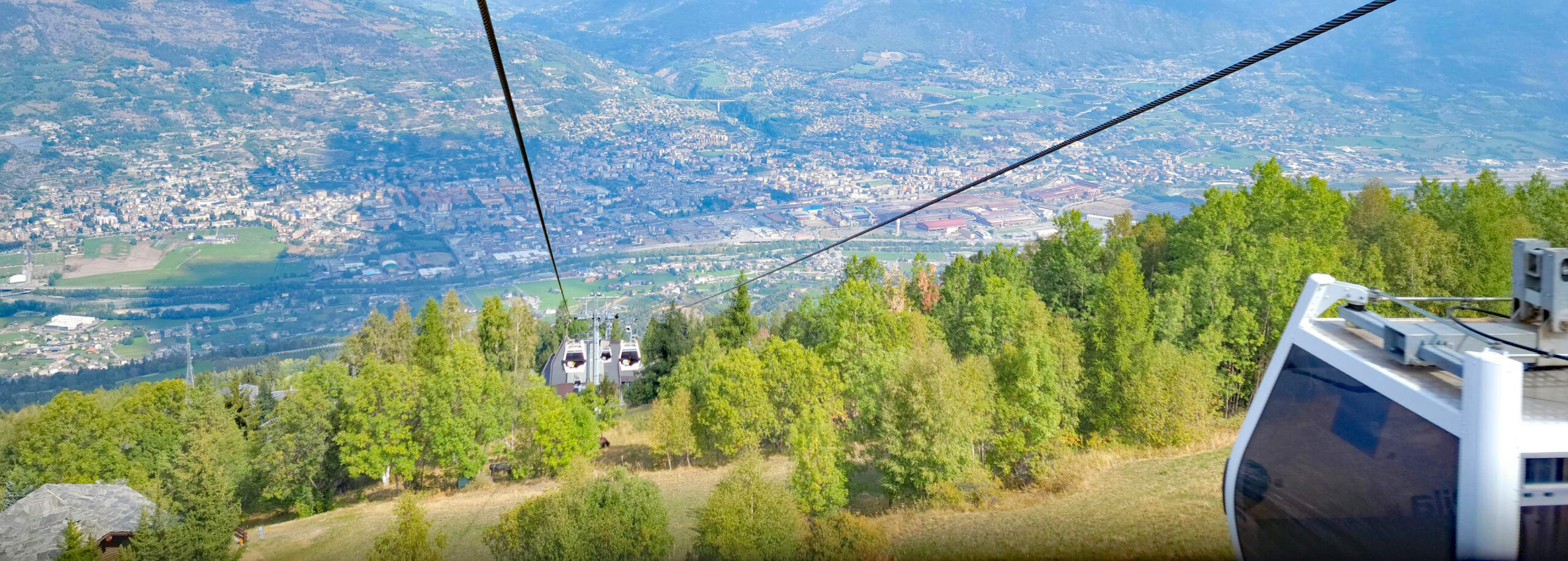
For a modest round trip fee of 7€/person, you can take the 15-20 minute ride on the cable car and enjoy a ride up the mountainside and the Aosta Valley. The cable car takes you over the small towns on the other side of the Dora Bàltea river from Aosta, where you can see the bucolic farms and vineyards from above.
Our Cable Car Ride And Day In Pila
Since there really isn’t much else to tell, a few short series of photographs is all that it takes to enjoy this wonderful day adventure, enjoy!
The Way Up
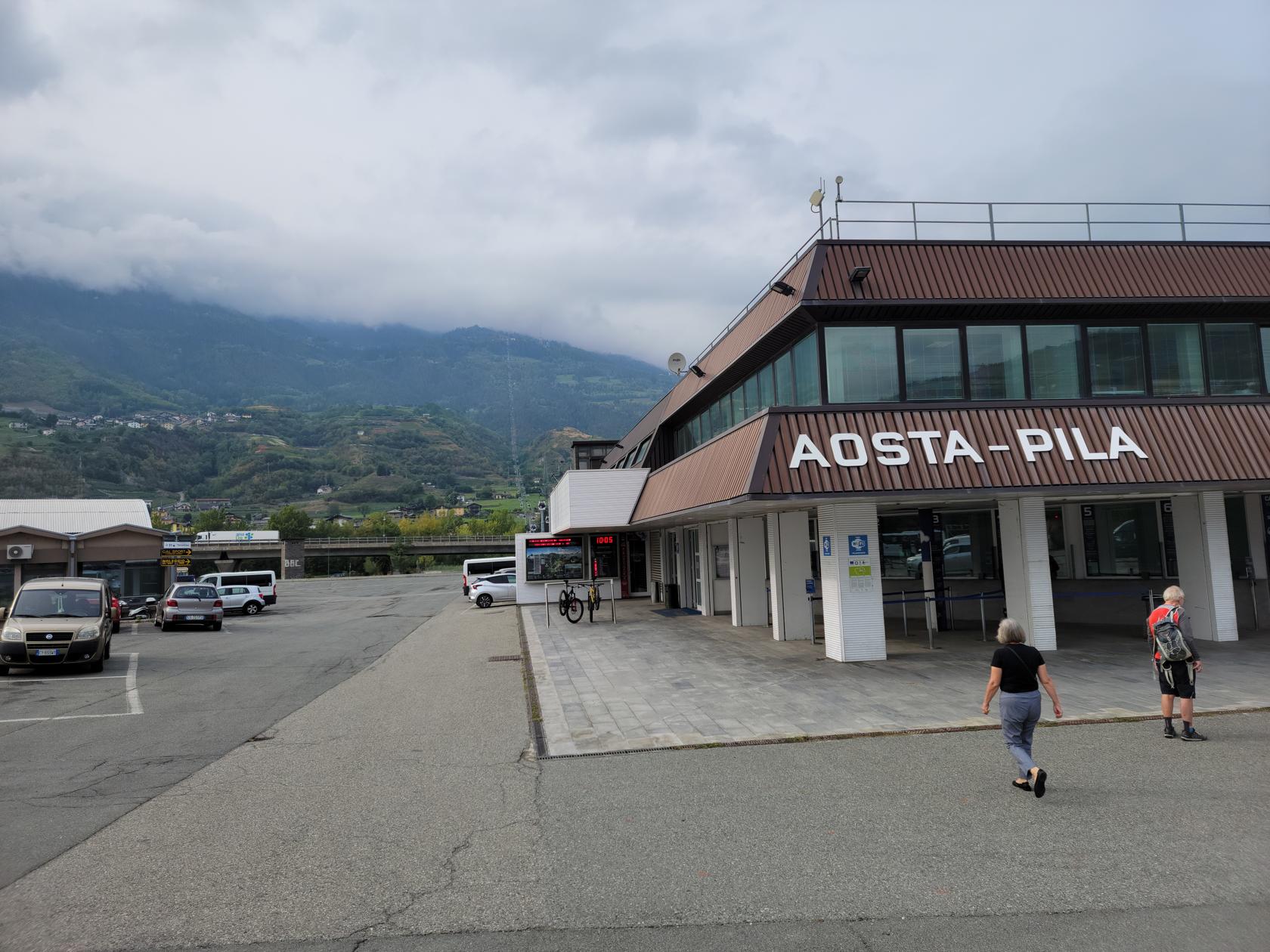
Aosta – Pila Cable Car Station
Aosta – Pila Cable Car Ride Up
Aosta – Pila Cable Car Ride Up
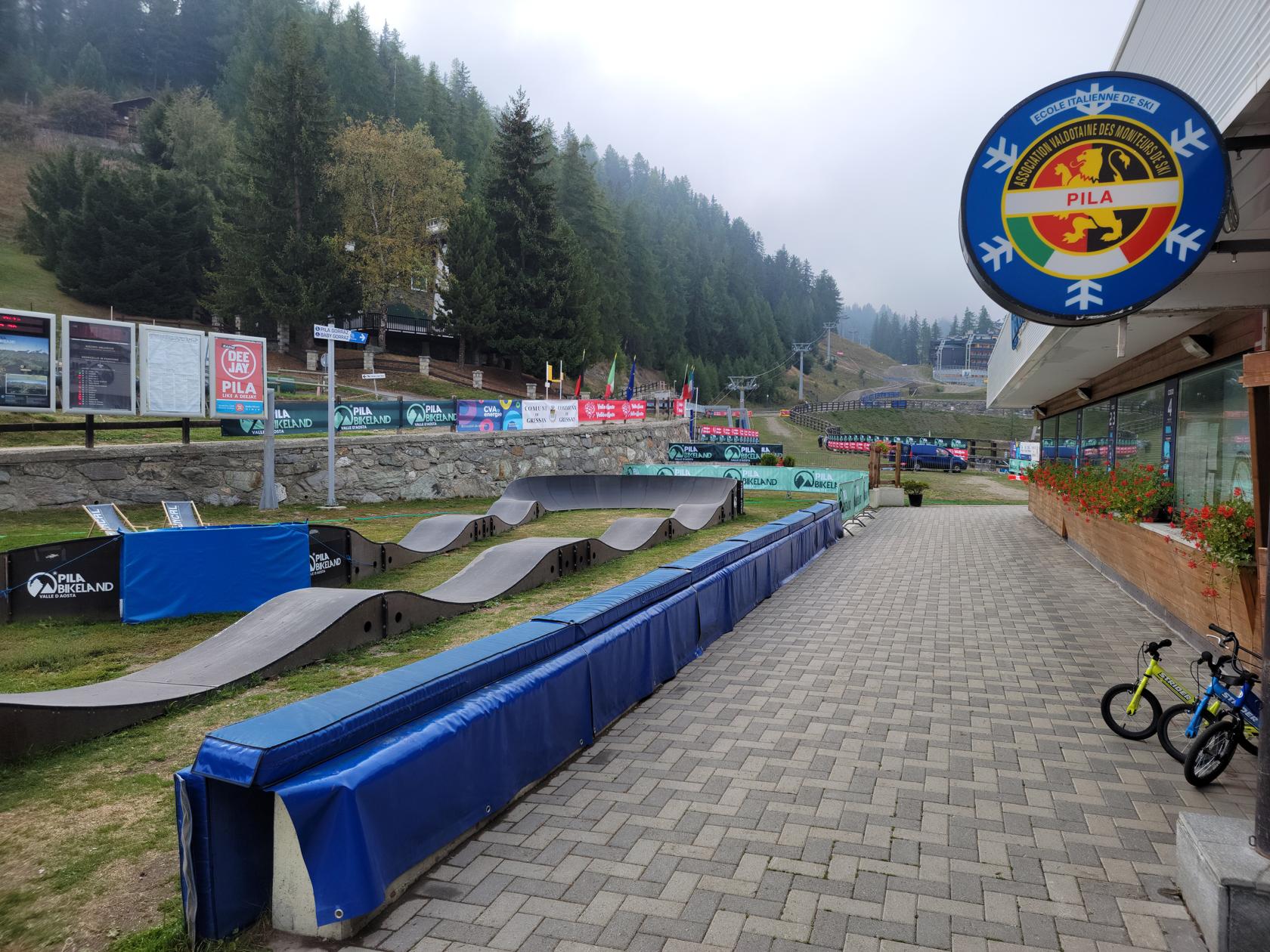
Pila – Pila Ski Resort and Views
Pila Ski Resort – Cable Car Going Up
Pila Ski Resort – Cable Car Going Up
The Ski Resort
Pila Ski Resort – Bike Center
Pila Ski Resort – Dirt Trail
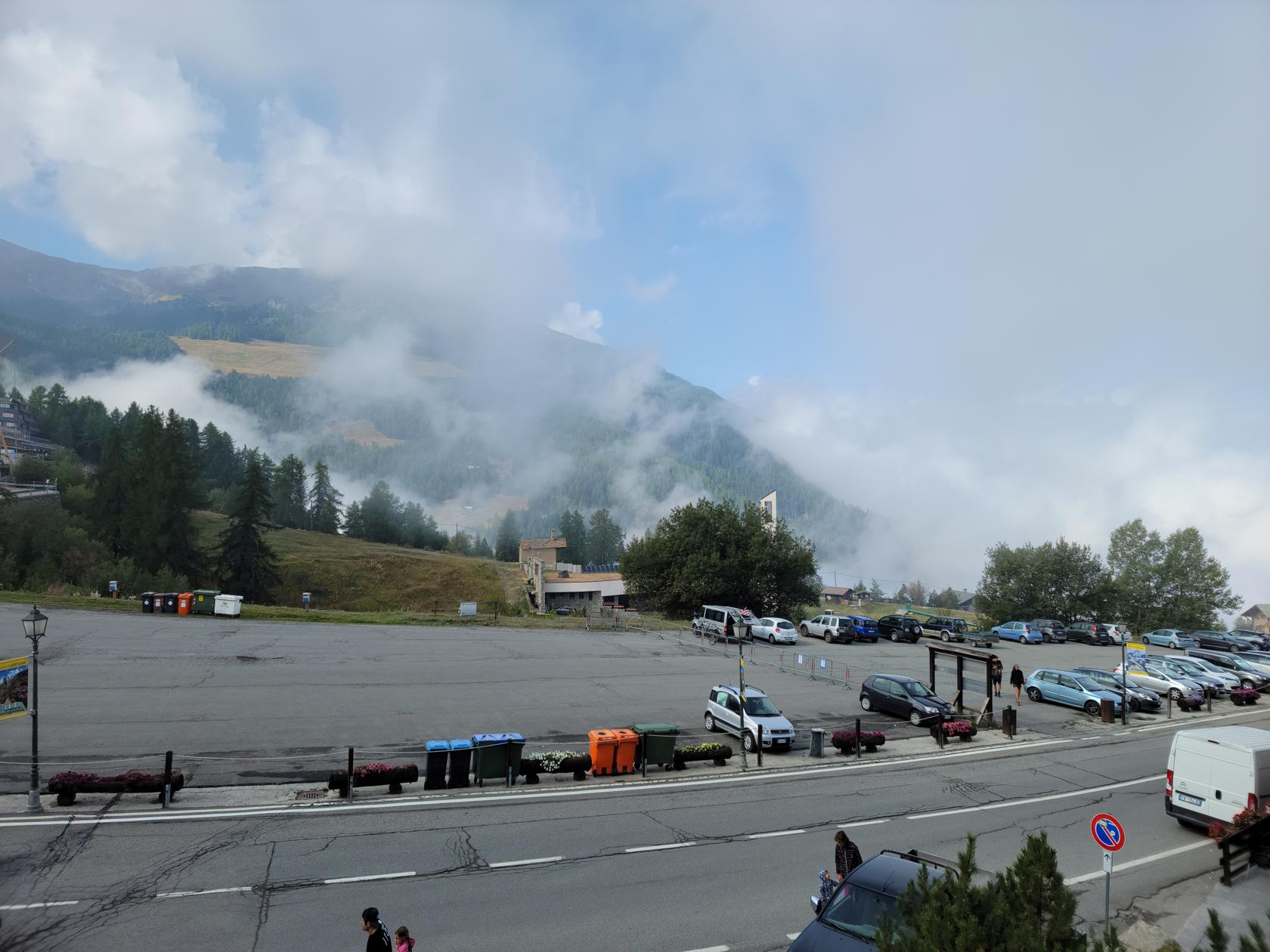
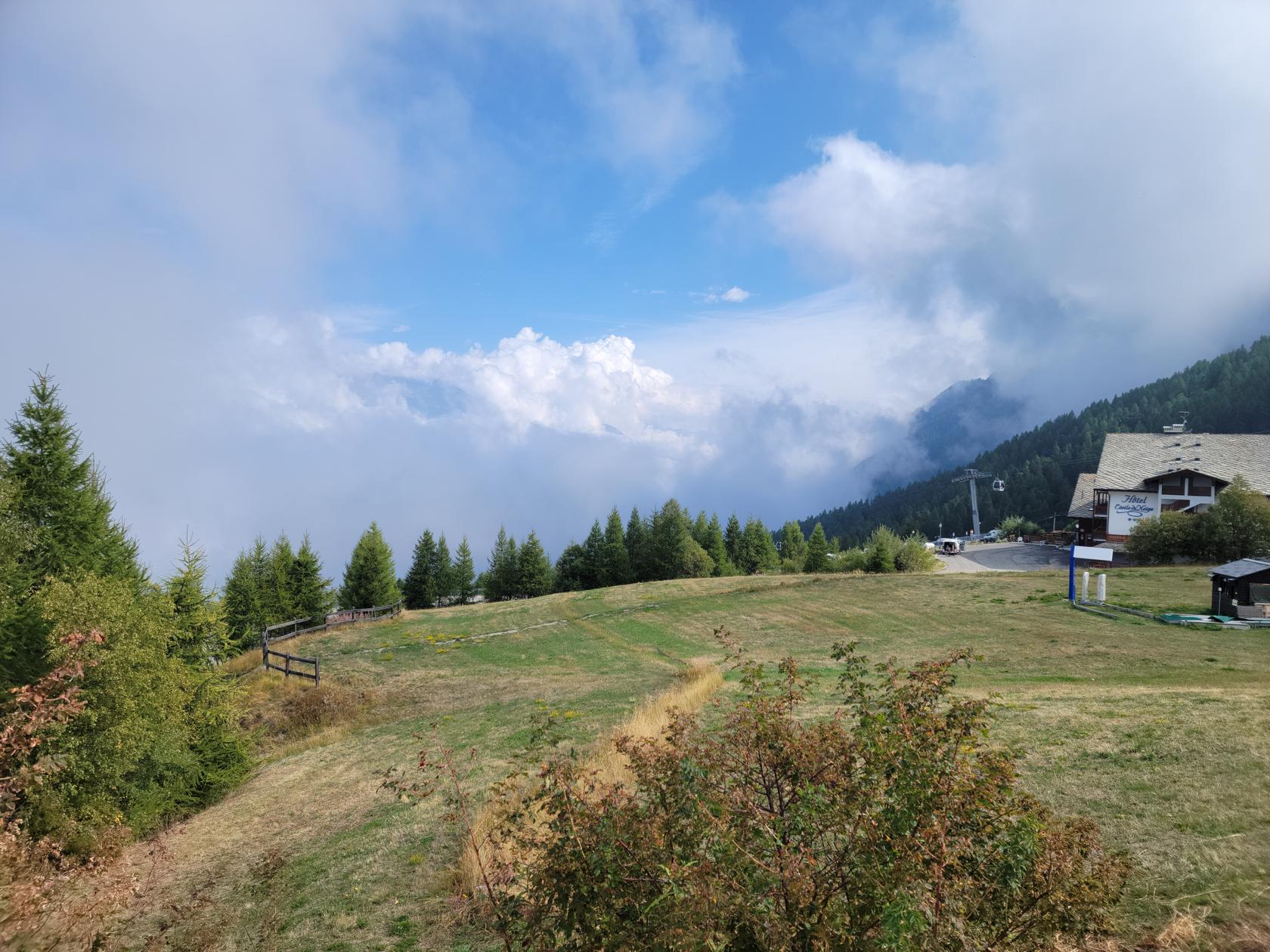
Pila Ski Resort – Fog Clouds rolling in
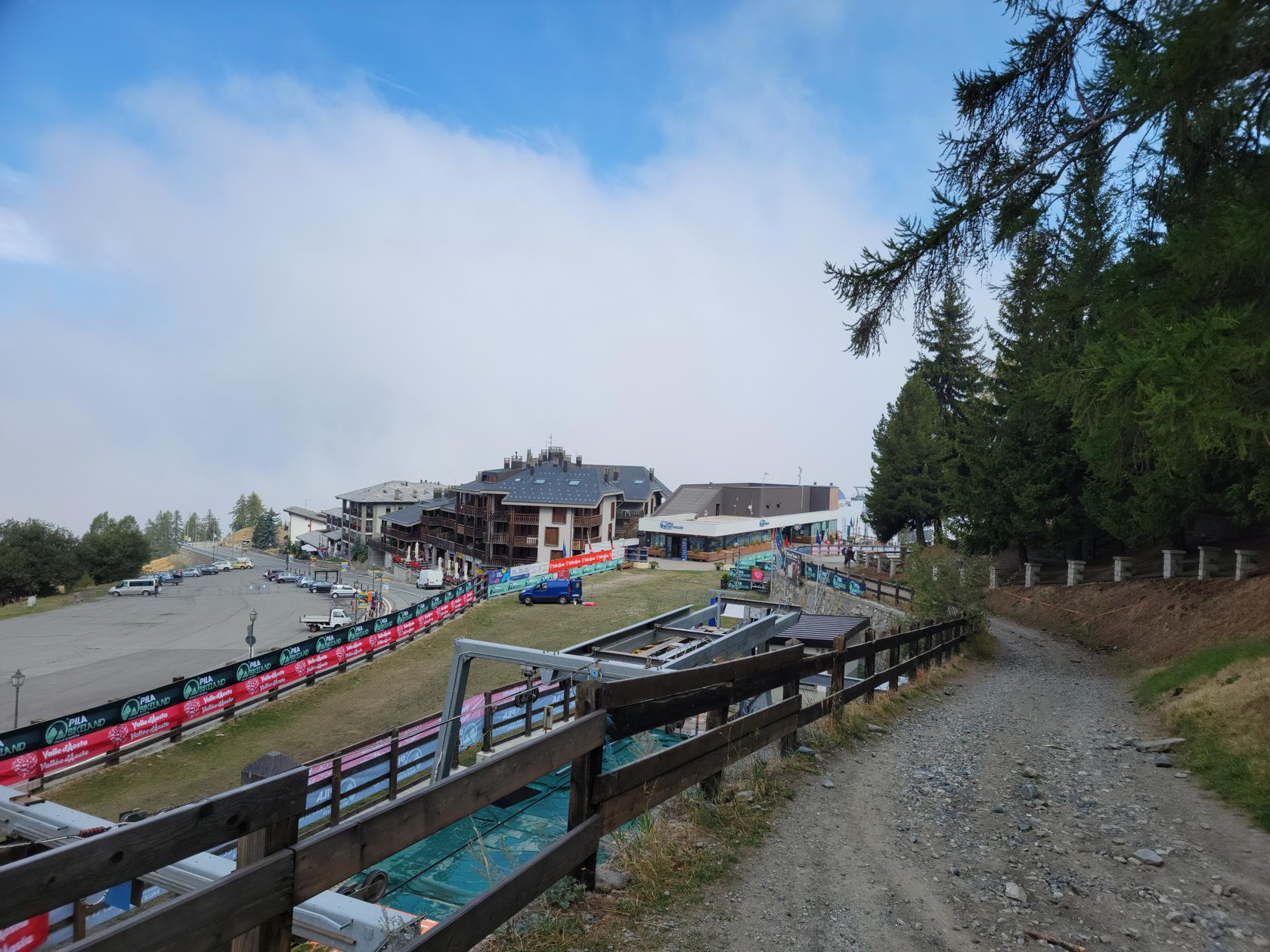
Pila Ski Resort – Resort and Clouds
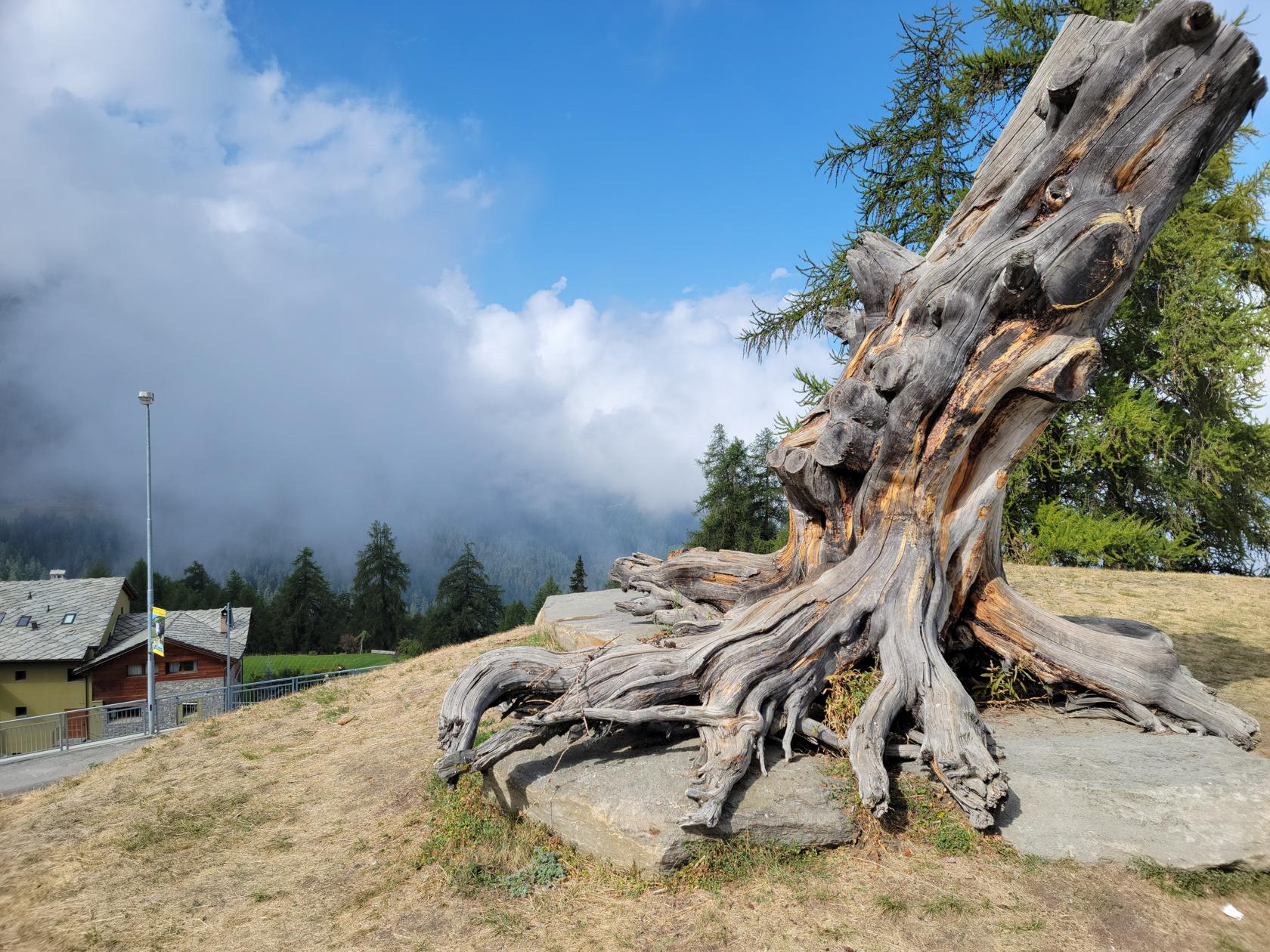
Pila Ski Resort – An Old Stump
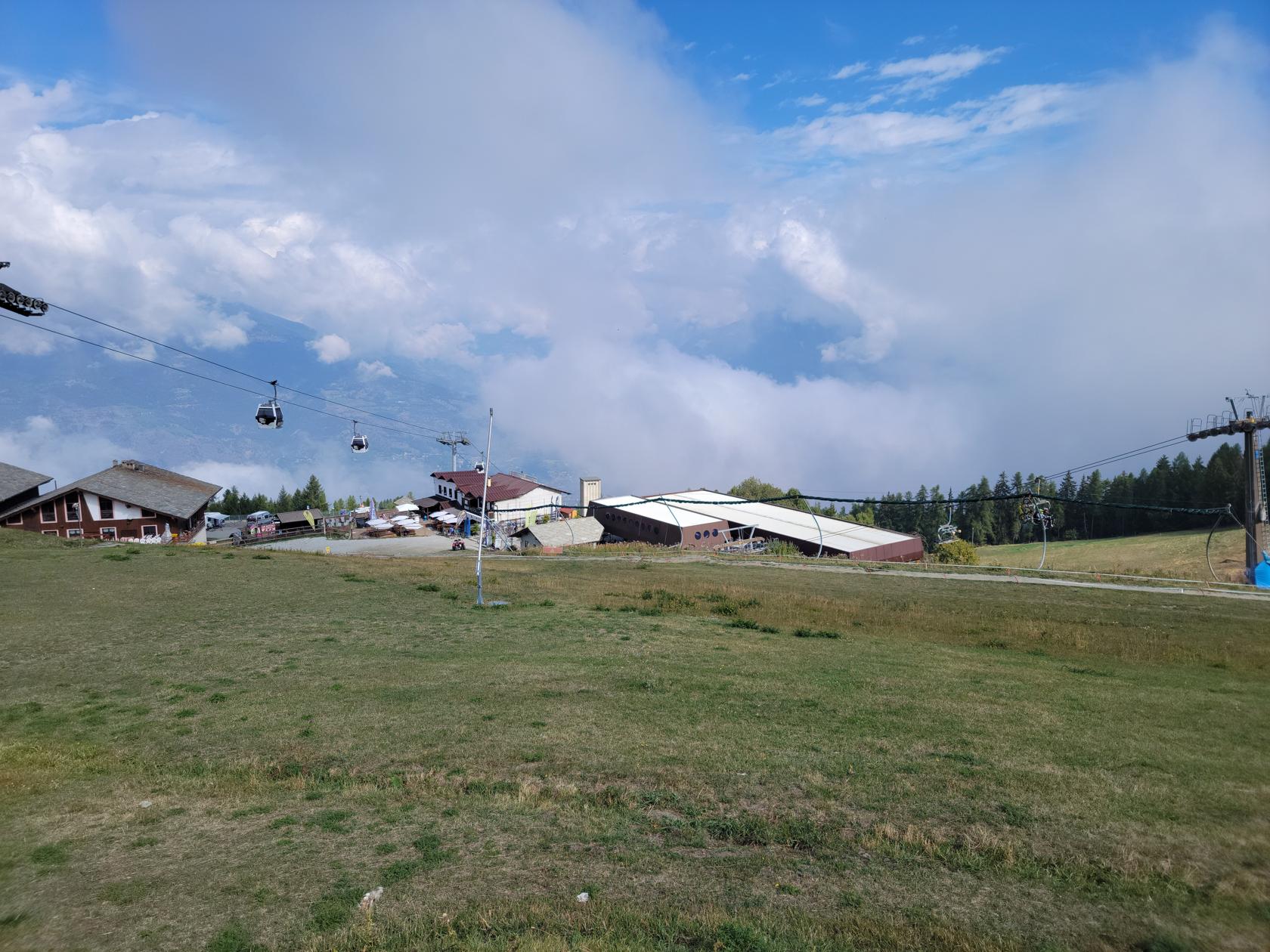
Pila Ski Resort – Clouds
Pila Ski Resort – Cable Car and Aosta Valley below
After a long day of bus rides and cable cars, it was time for some hiking. Nothing hard for our age, but moderate enough, just to get the legs to ache and the bones to complain a little.
Aosta – Gargantua Nature Reserve Hike – Panorama from other end
Having purchased a subscription to AllTrails, we had time before we left Turin to plan several hikes, of varying difficulty. Since the weather was so nice, we went for a scenic hike and chose Gargantua Hill.[1]Though technically any heap of rock and dirt may be called a hill, this is actually a glacial moraine, deposited thousands of years ago when the glaciers from the last Ice Age left this valley.
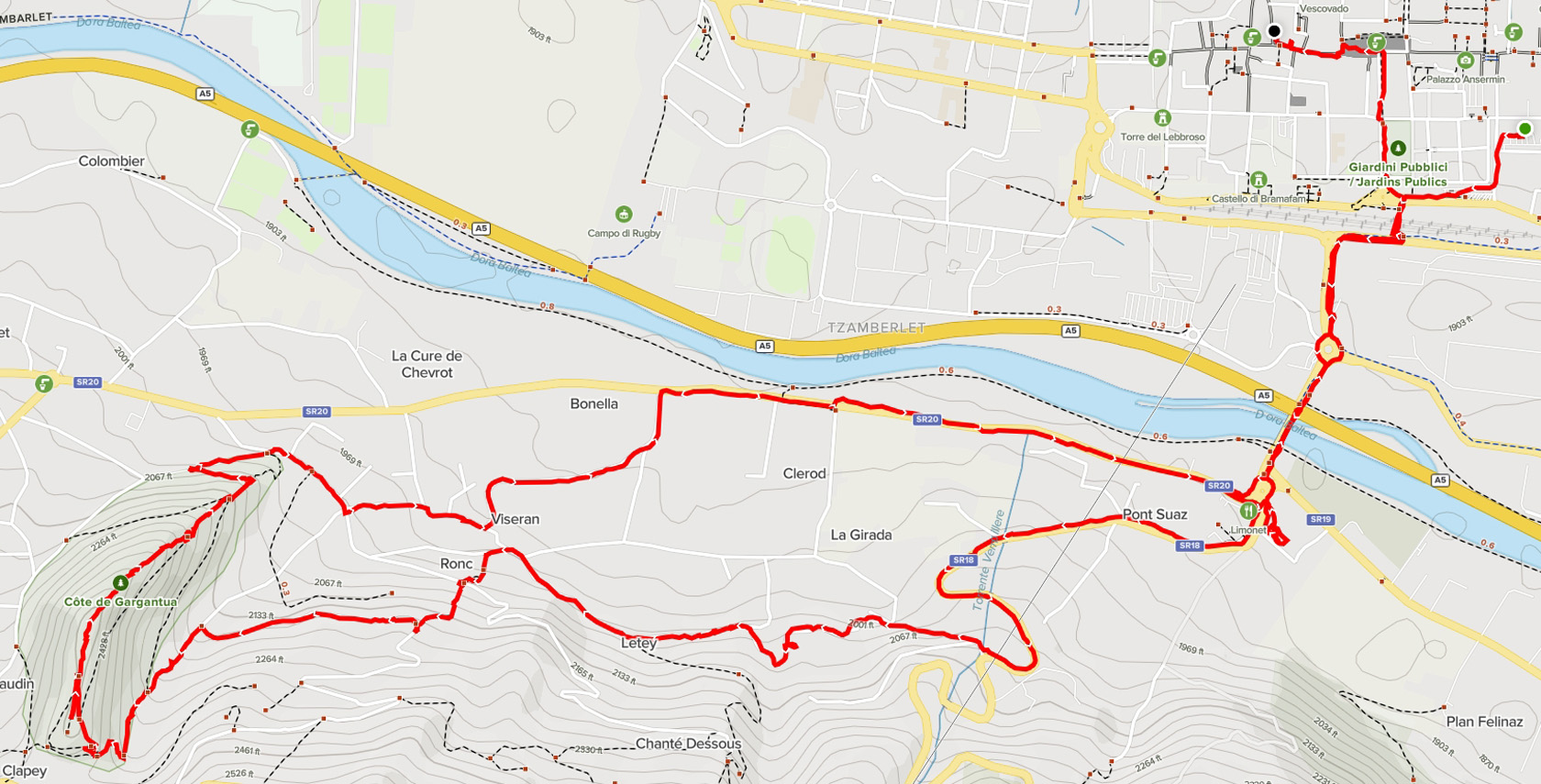
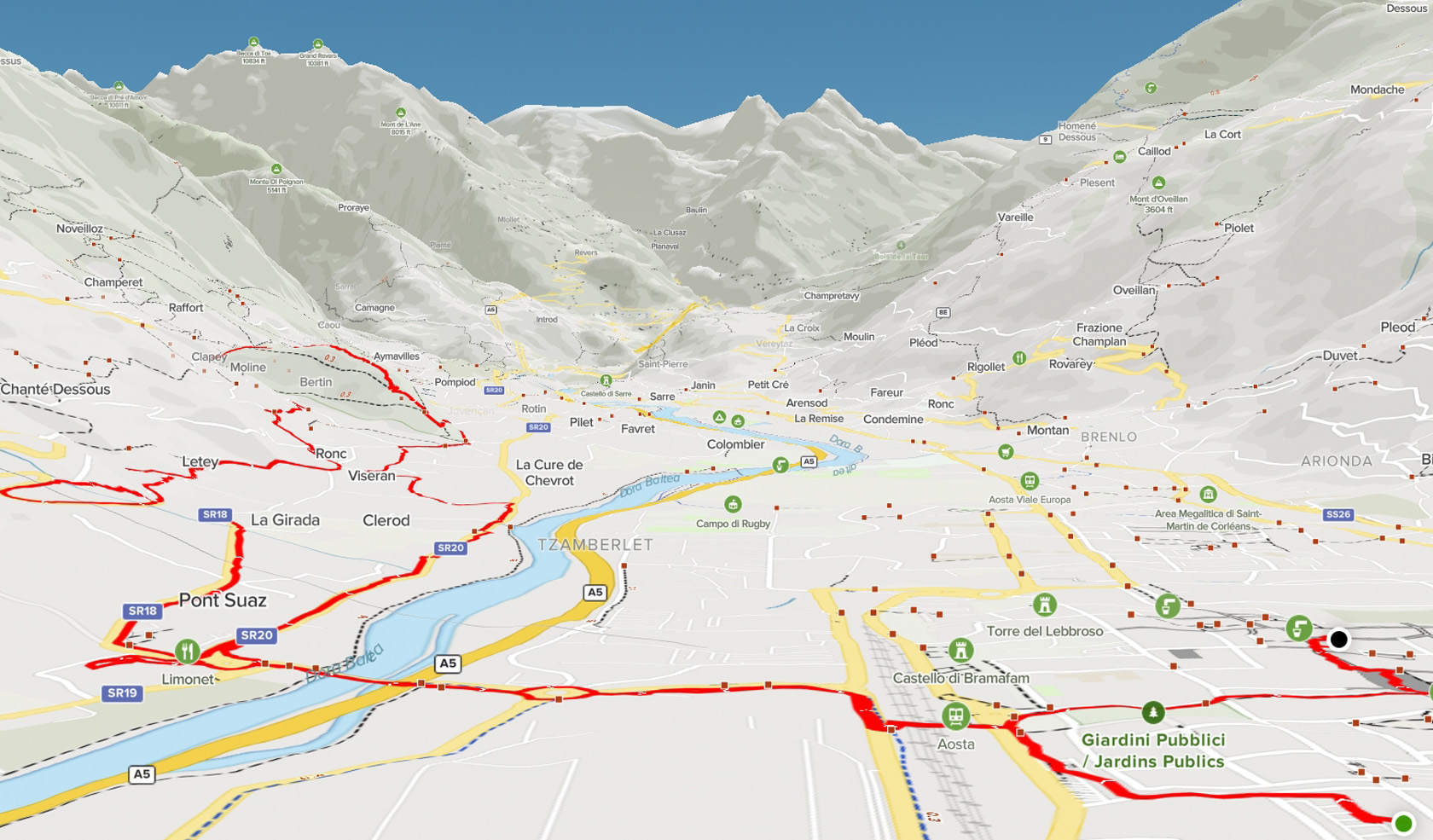
Map – Our Route
Aosta – Gargantua Nature Reserve – Hike Map 2D
Aosta – Gargantua Nature Reserve – Hike Map 3D
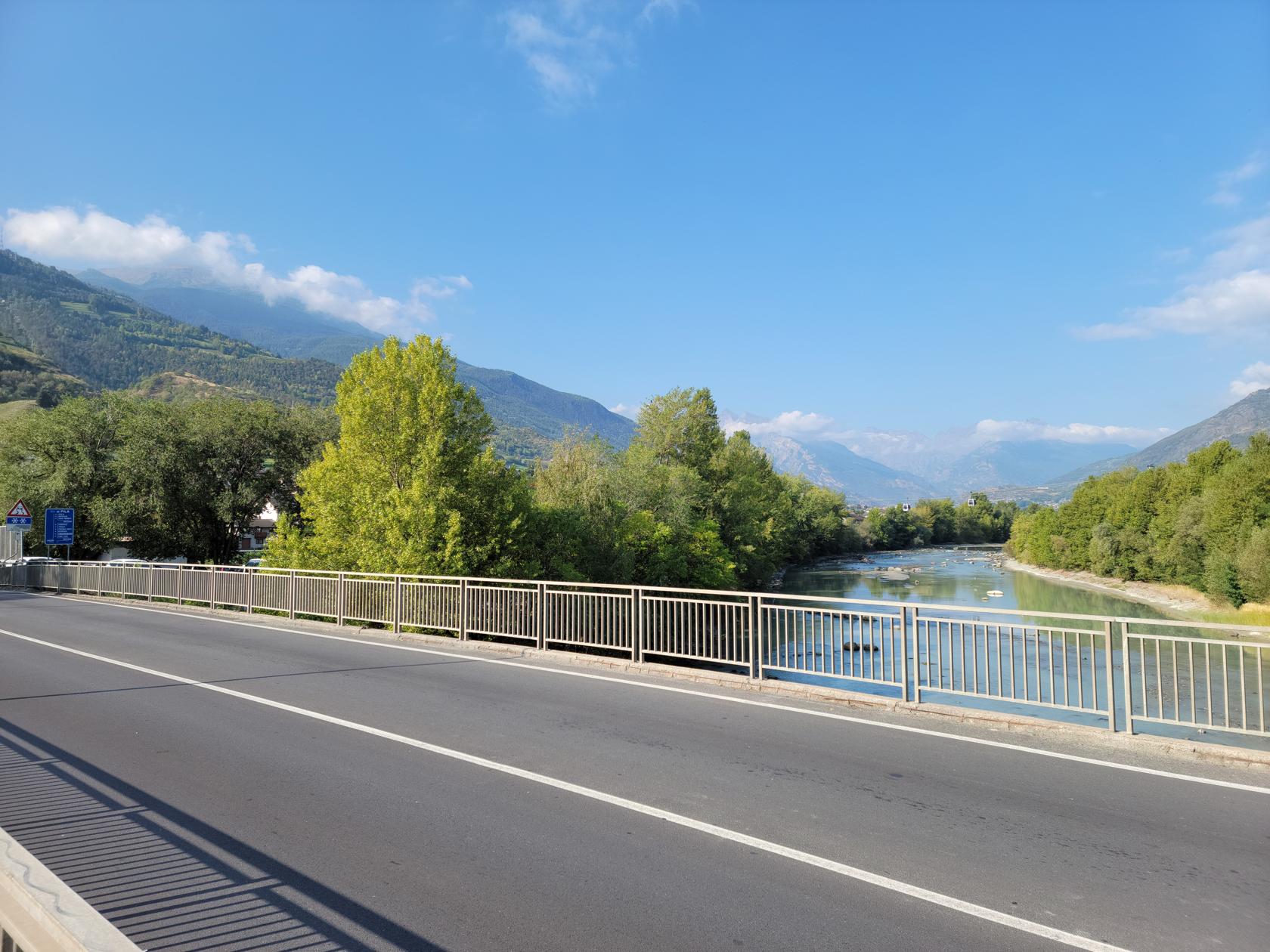
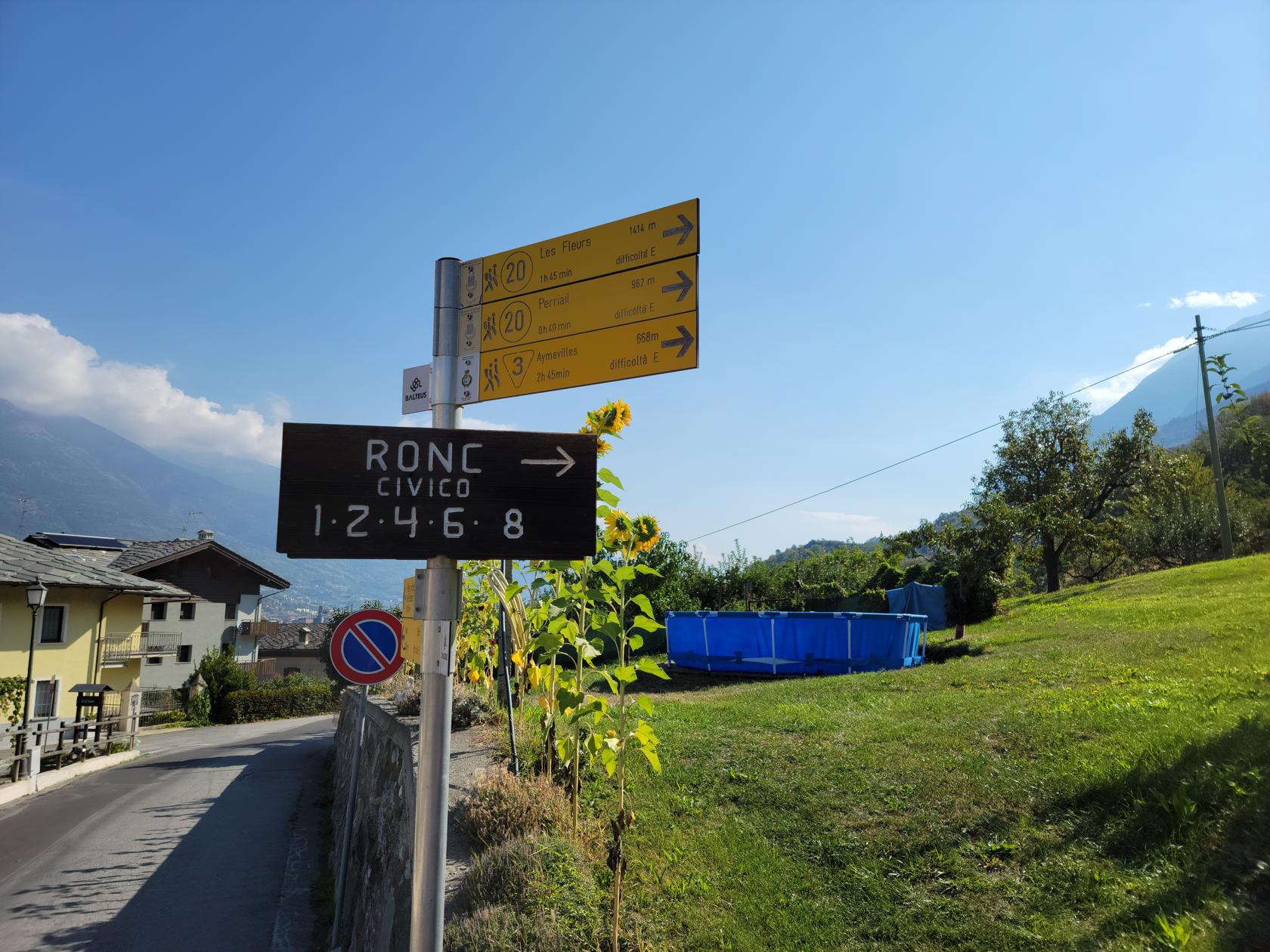
The hike was rather simple, leave our hotel, use the tunnel to go under the rail station, walk across the Pont Suaz bridge and walk the neighborhoods until we reached the hill, then ascend it.
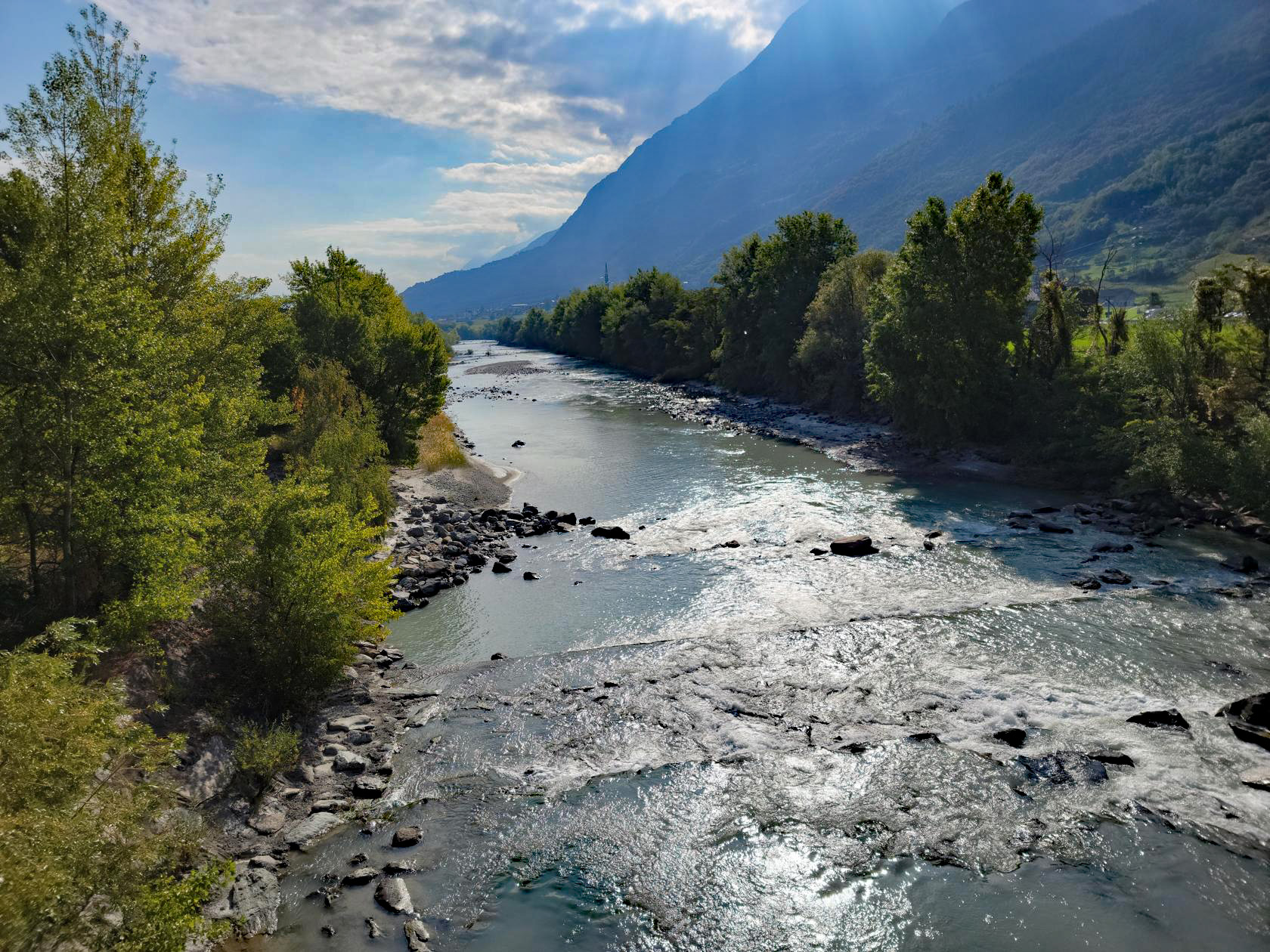
Aosta – Gargantua Nature Reserve Hike – Dora Bàltea river
Aosta – Gargantua Nature Reserve Hike – Dora Bàltea river
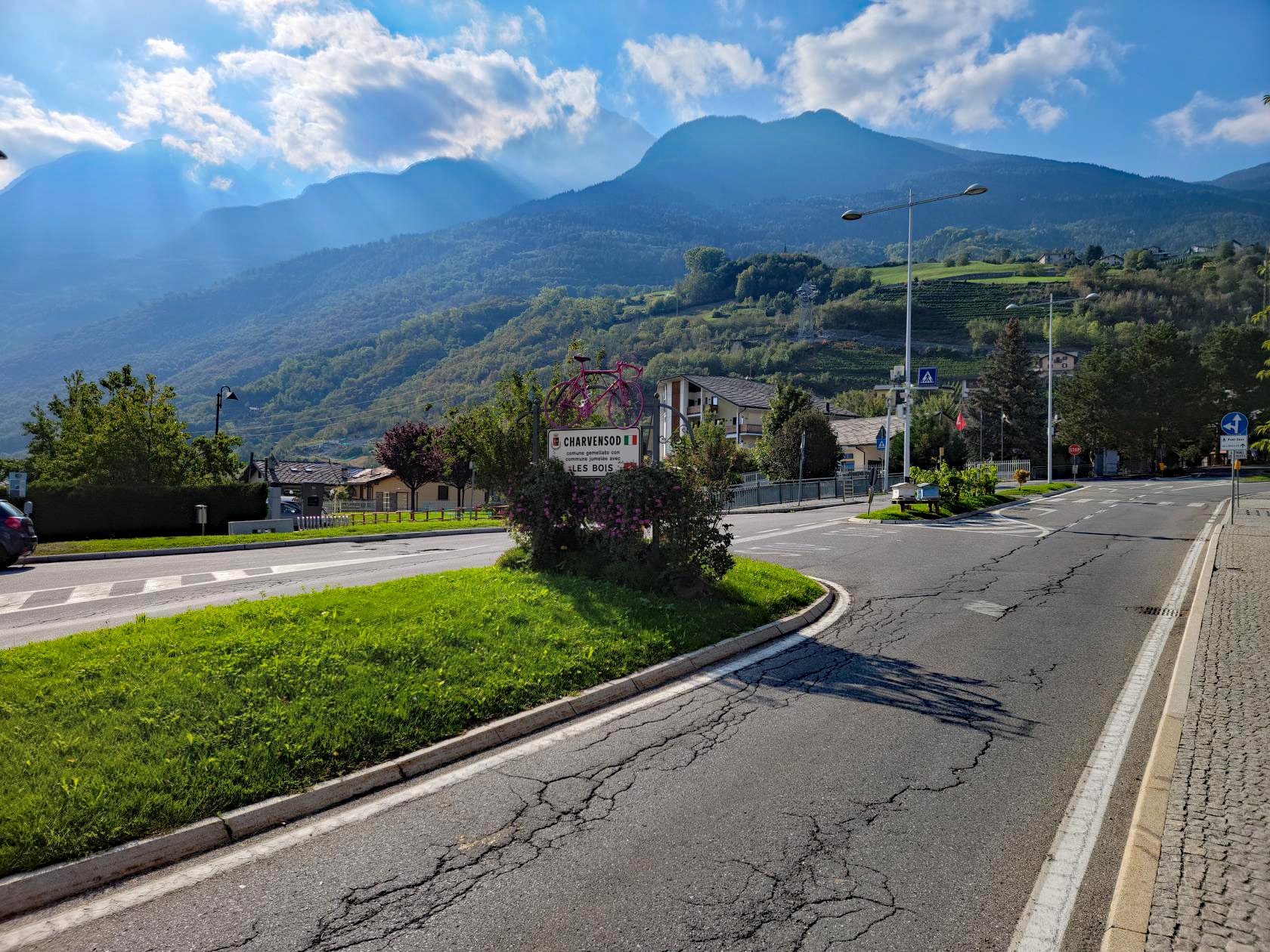
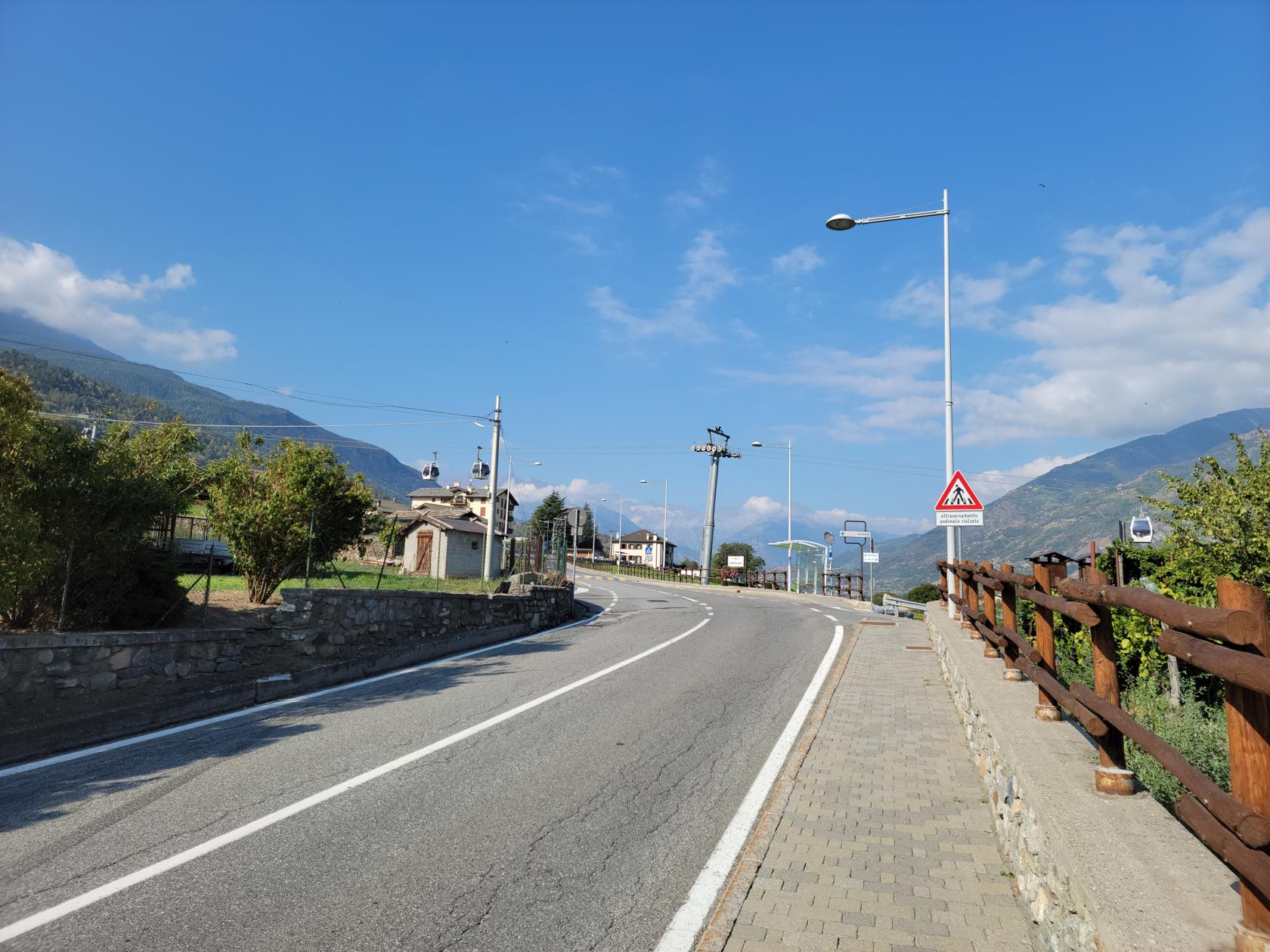
Aosta – Gargantua Nature Reserve Hike – Town of Charvensod
Aosta – Gargantua Nature Reserve Hike – Crossing the Pila Cable Car
We brought plenty of water, and were happy that we did, because it was pretty warm, perhaps in the middle 80s (about 28/29C). I also wore a hat part of the way, which helped to shade the sun beating down on me, so one can say – wearing a hat is good advise.
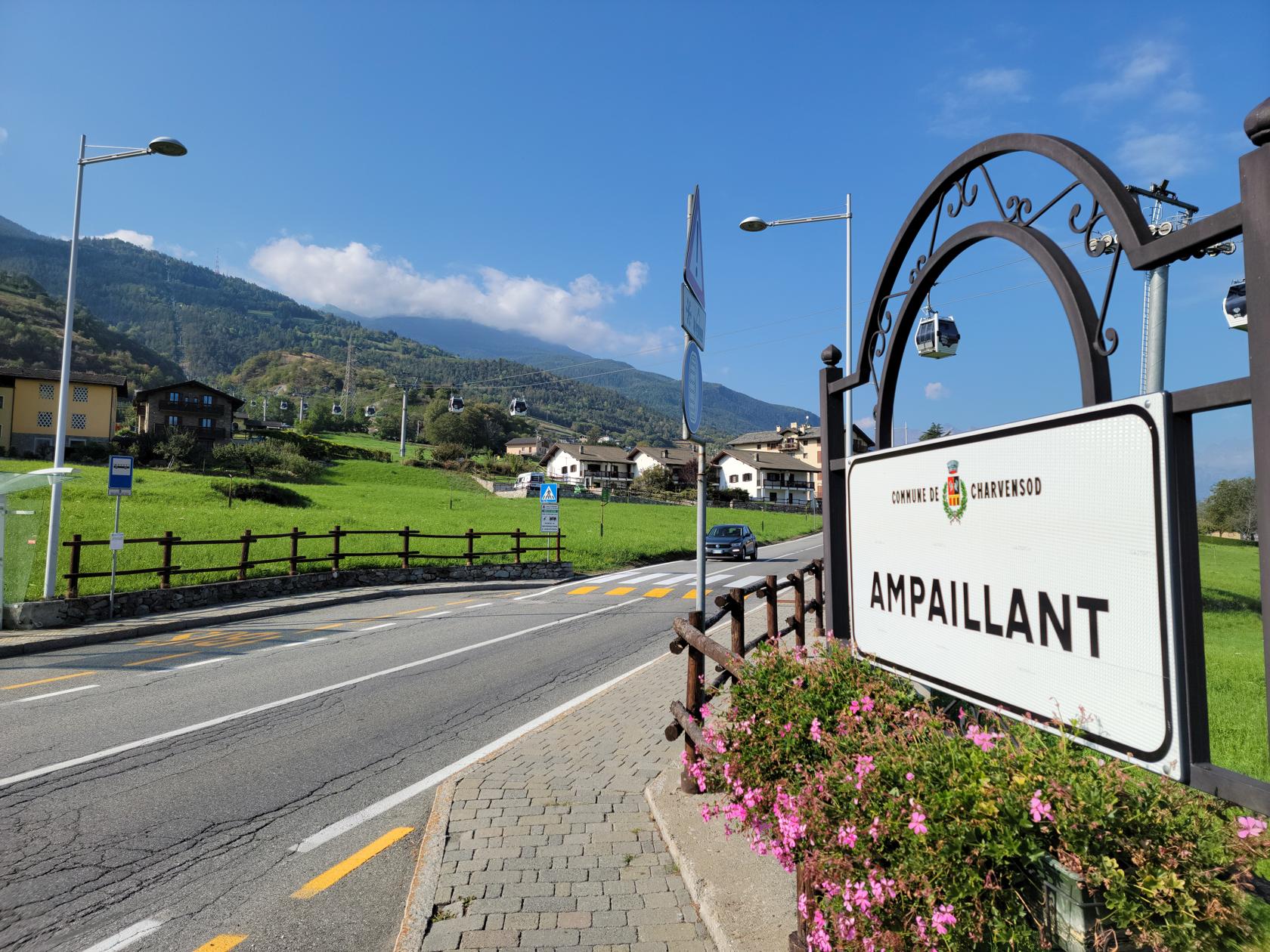
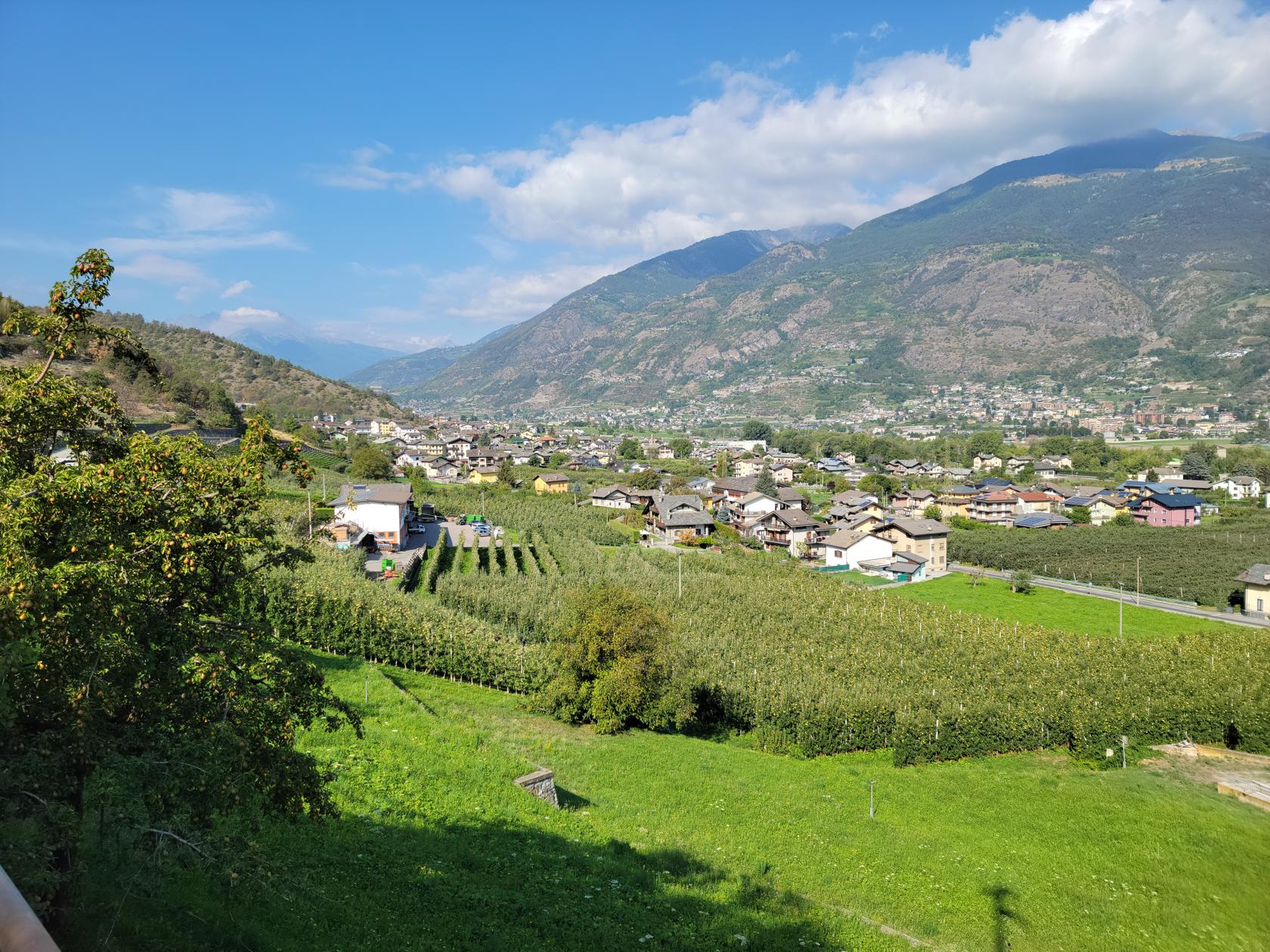
Aosta – Gargantua Nature Reserve Hike – Town or Ampaillant
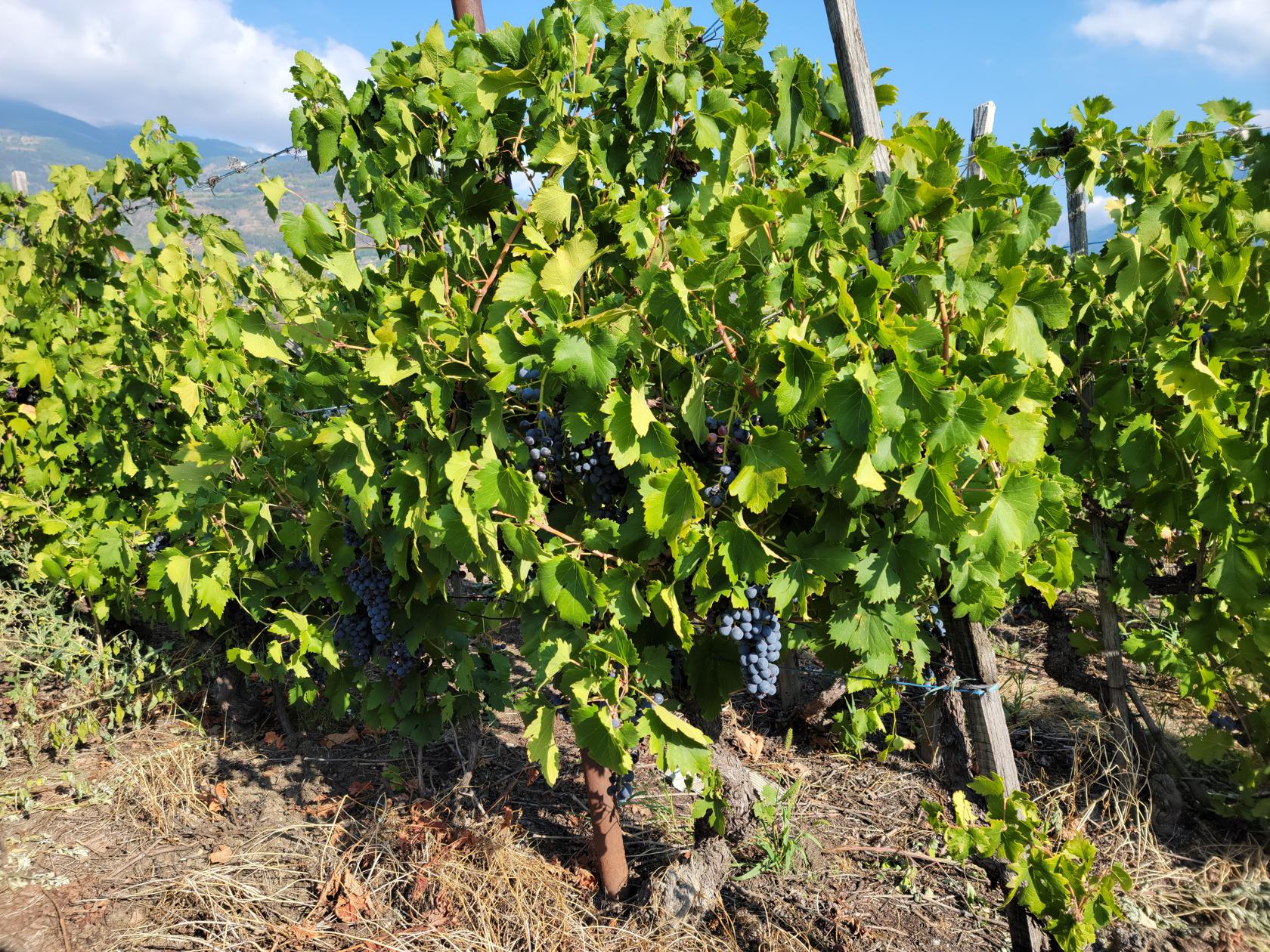
Aosta – Gargantua Nature Reserve Hike – Local Vineyard
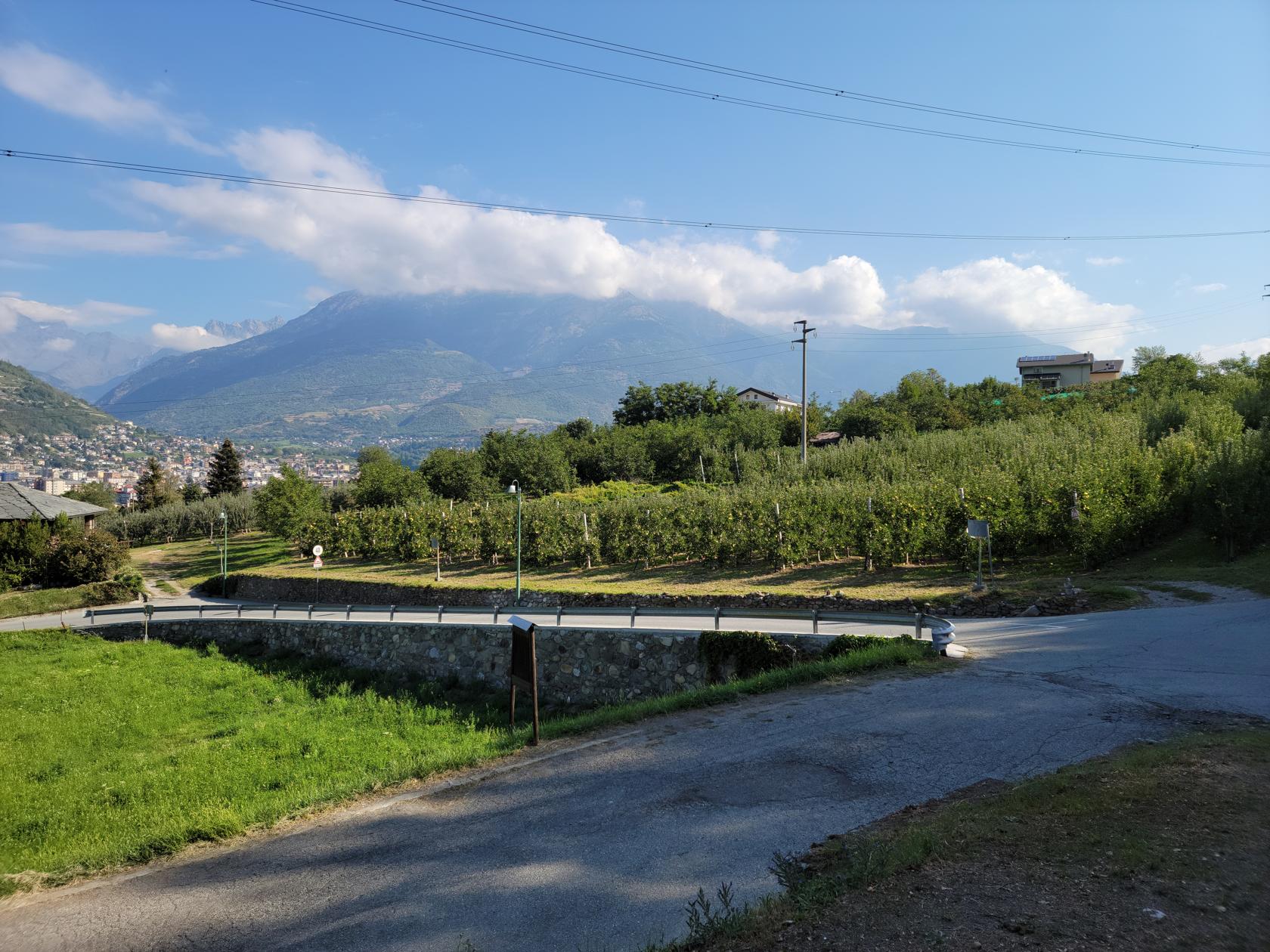
Aosta – Gargantua Nature Reserve Hike – Apple Orchards in Ampaillant
Aosta – Gargantua Nature Reserve Hike – Apple Orchards in Ampaillant
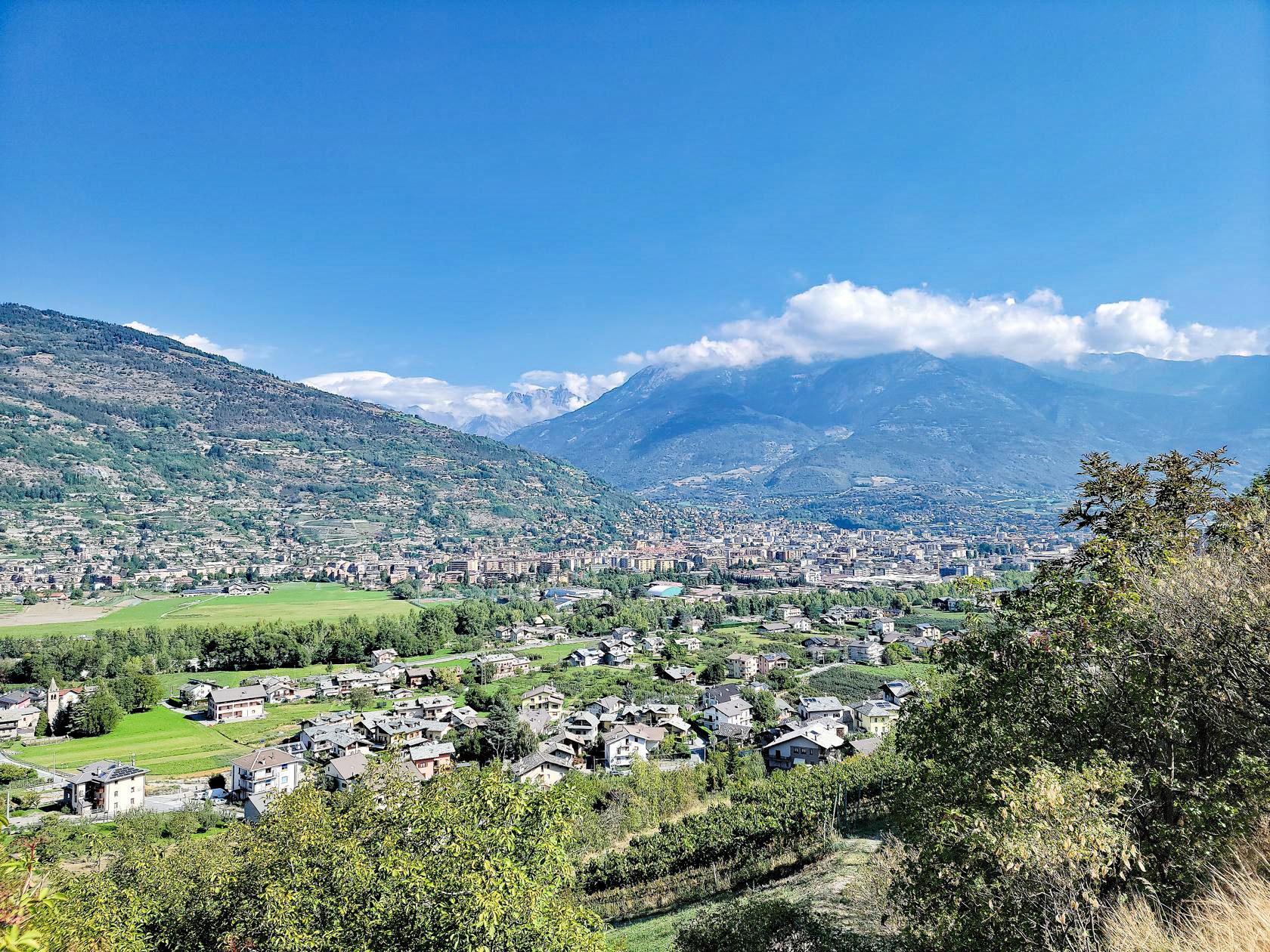
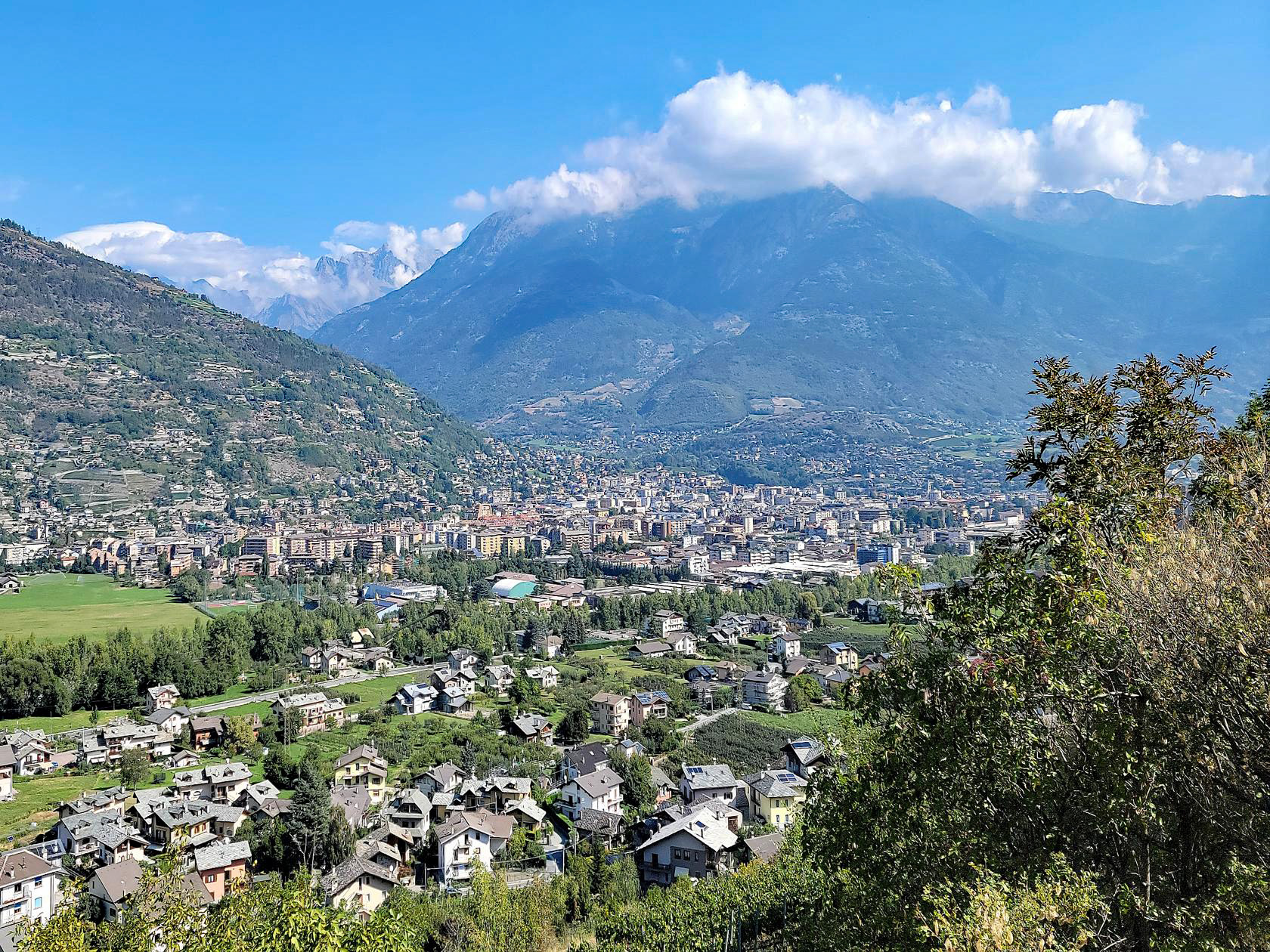
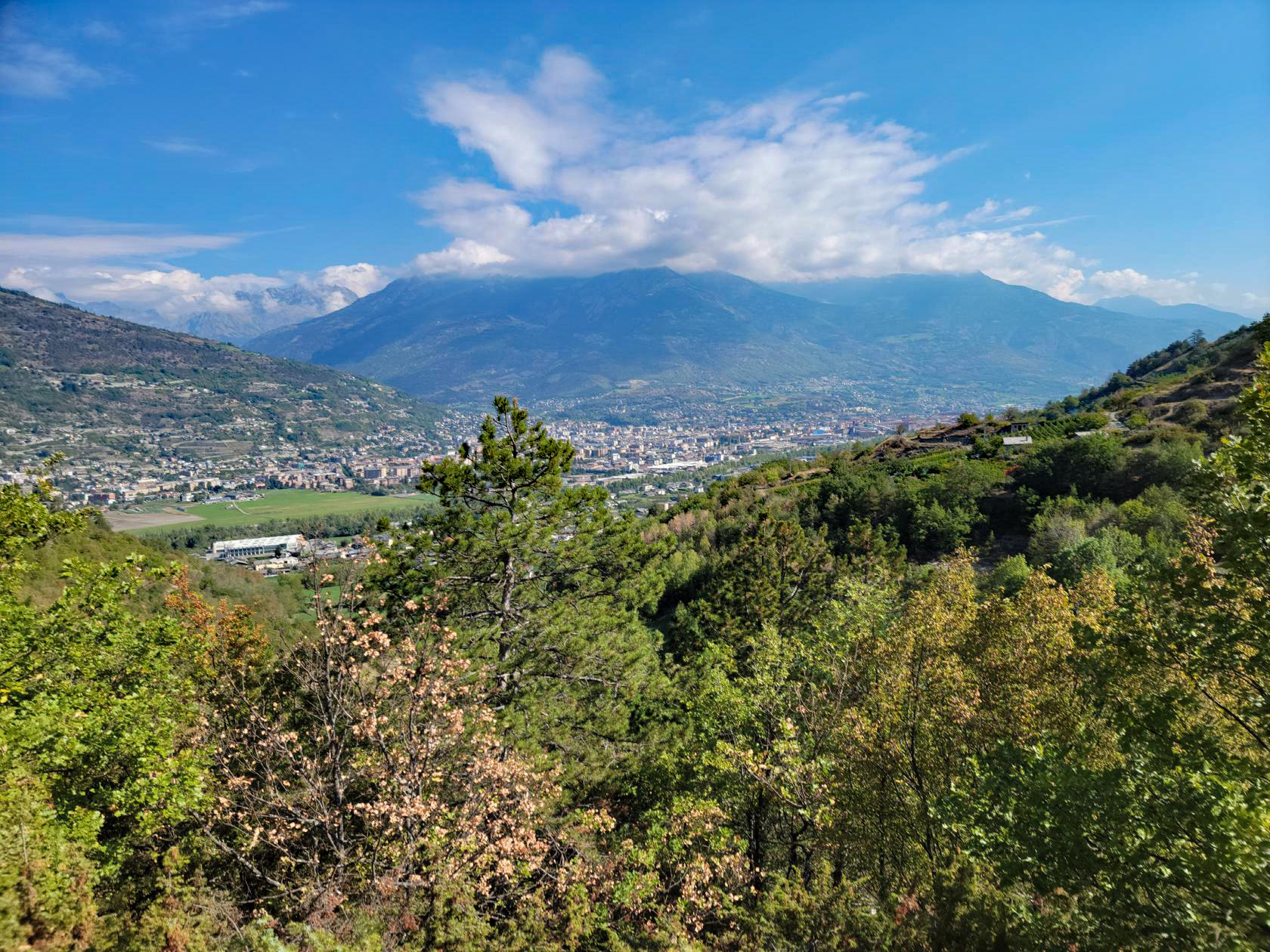
Aosta – Gargantua Nature Reserve Hike – Aosta in the distance
Aosta – Gargantua Nature Reserve Hike – Aosta in the distance – Closeup
Gargantua Nature Preserve
The hill is part of the Riserva Naturale de Gargantua, or Gargantua Nature Preserver, and is some 150m, or 450 feet, in elevation. It has several trails on either side, most of which can be used to ascend and descend it. The one we chose was from the vineyard side to the east, with an approach from where it joins with the mountain. This was slightly easier than a direct approach, since it afforded us the use of the farming roads a third of the way up.
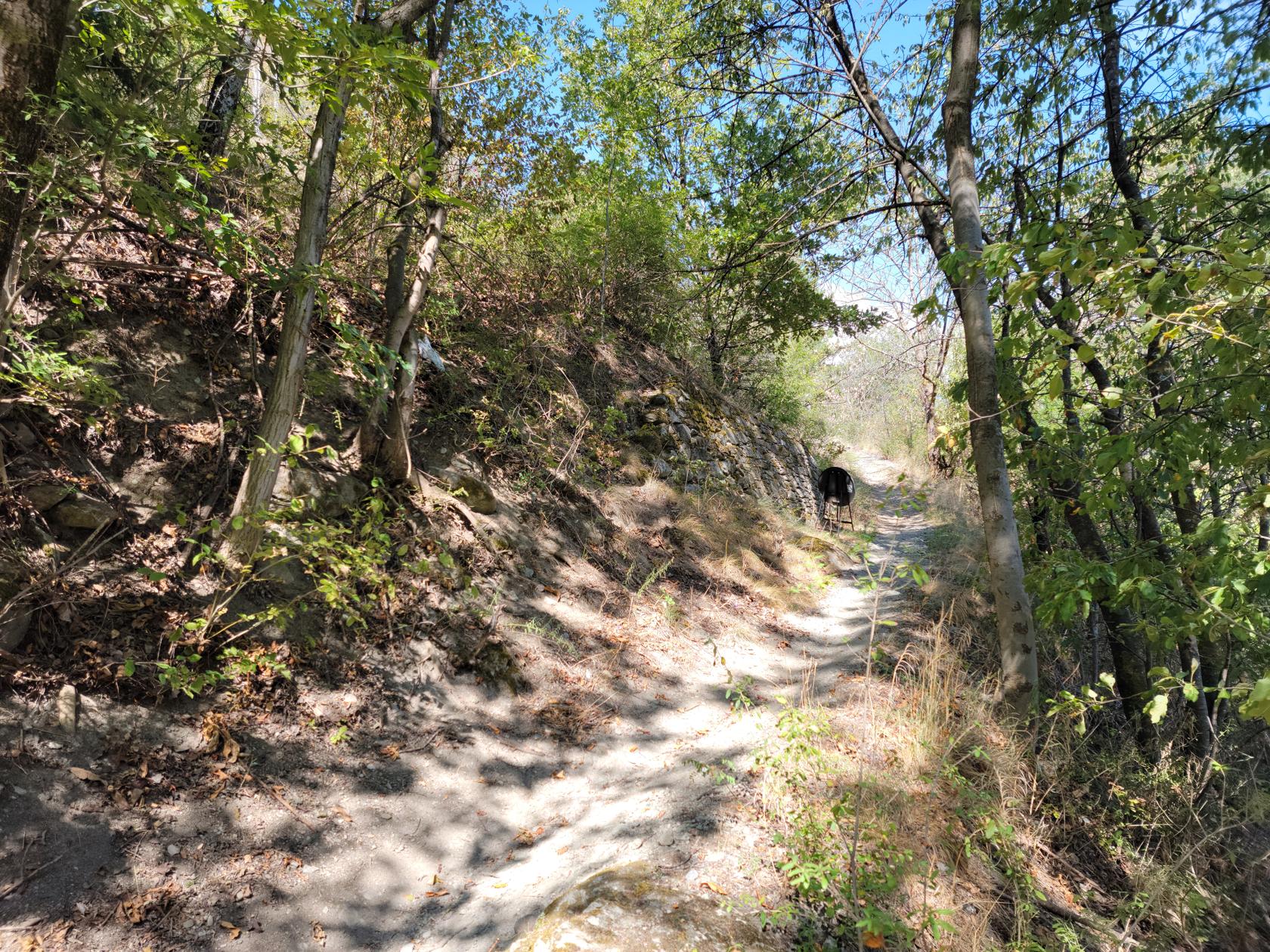
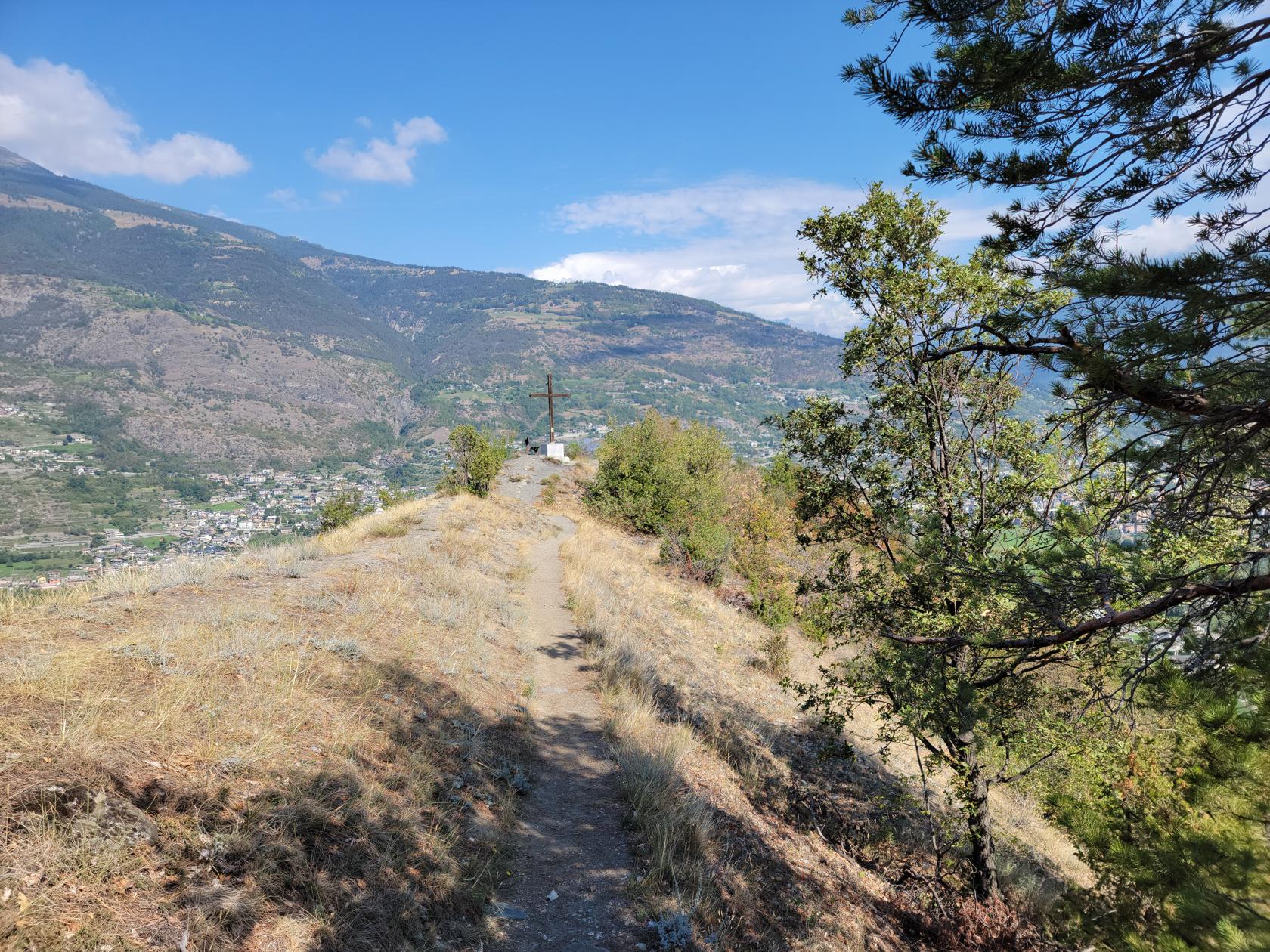
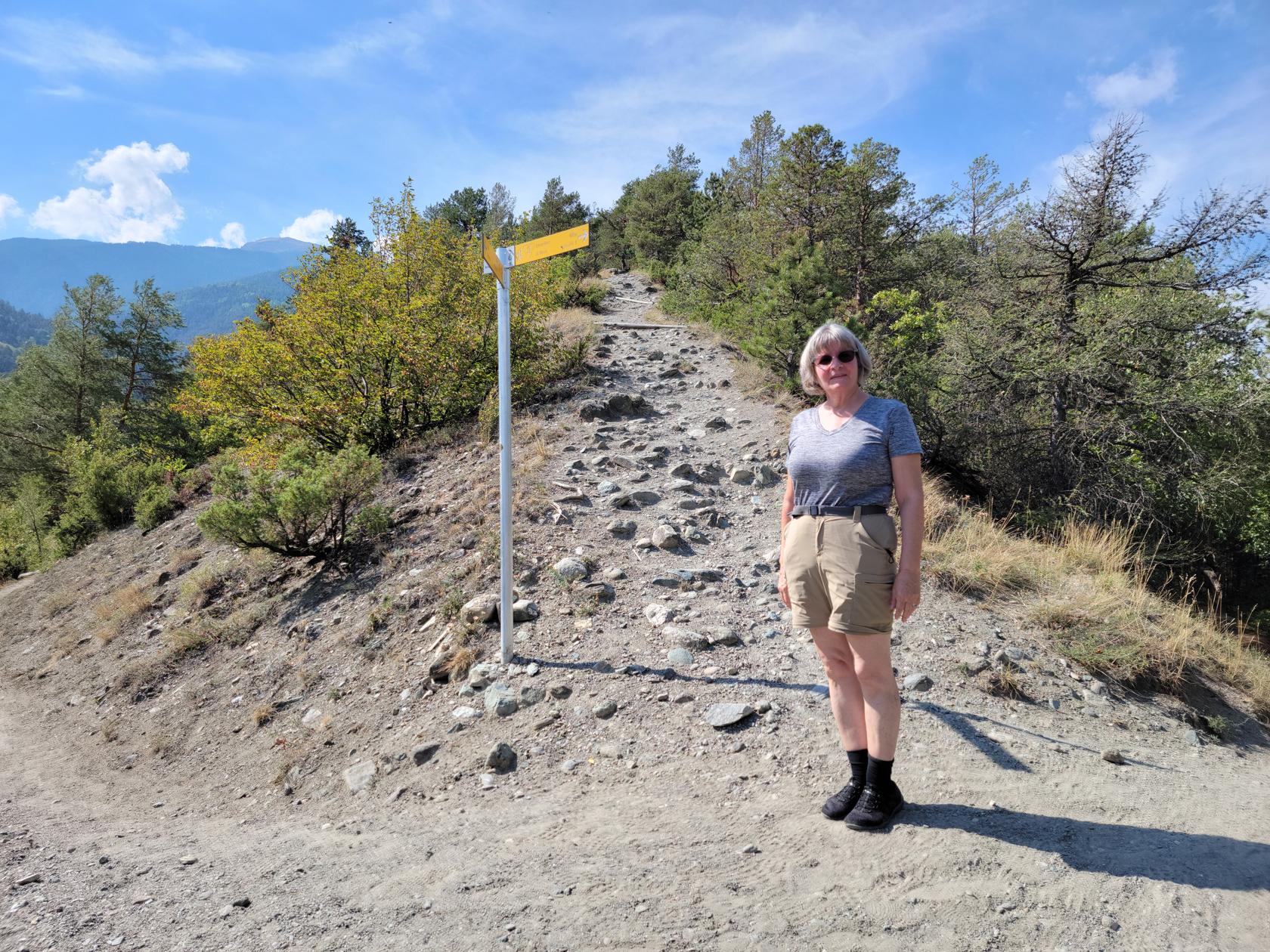
Aosta – Gargantua Nature Reserve Hike – Trail on Gargantua
Aosta – Gargantua Nature Reserve Hike – Aosta
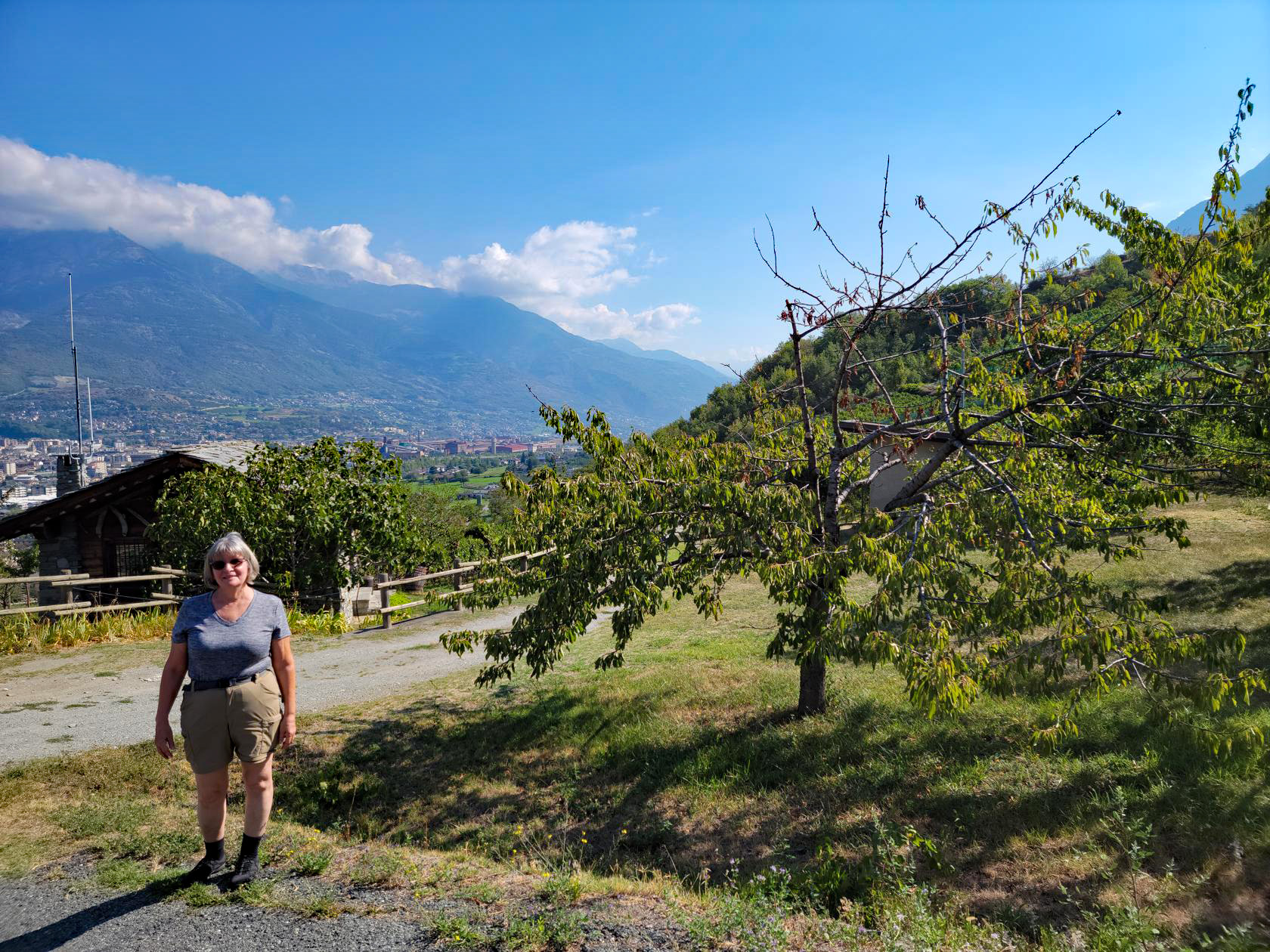
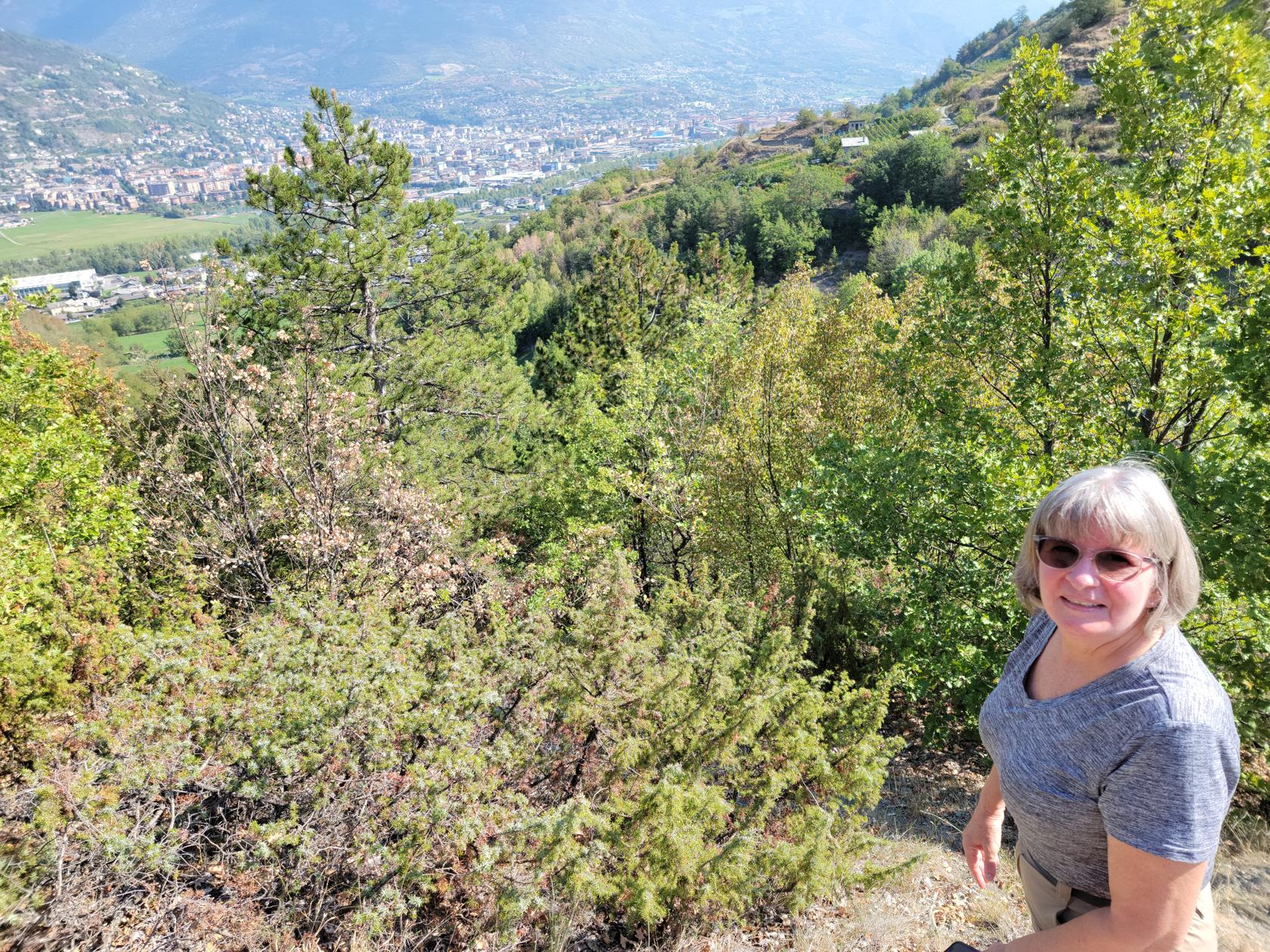
Aosta – Gargantua Nature Reserve Hike – Patti on the Gargantua Trail
Aosta – Gargantua Nature Reserve Hike – Tall Peaks
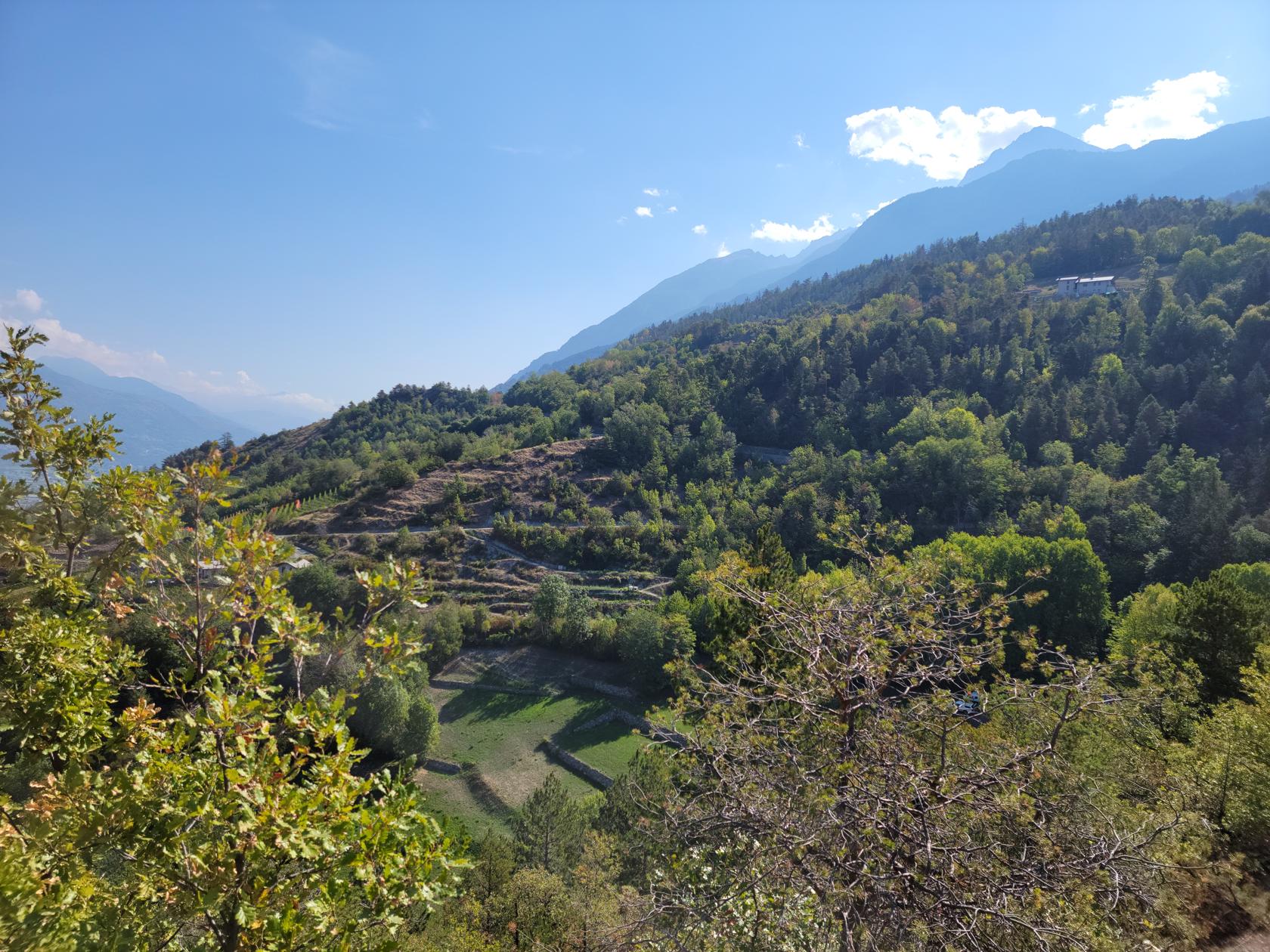
The hill is mostly porous dirt, rocks and stones, therefore it does not hold water very well and was severely dry due to this year’s climatic conditions in Italy. The dirt was very loose and without proper foot gear, one could easily slip in it.
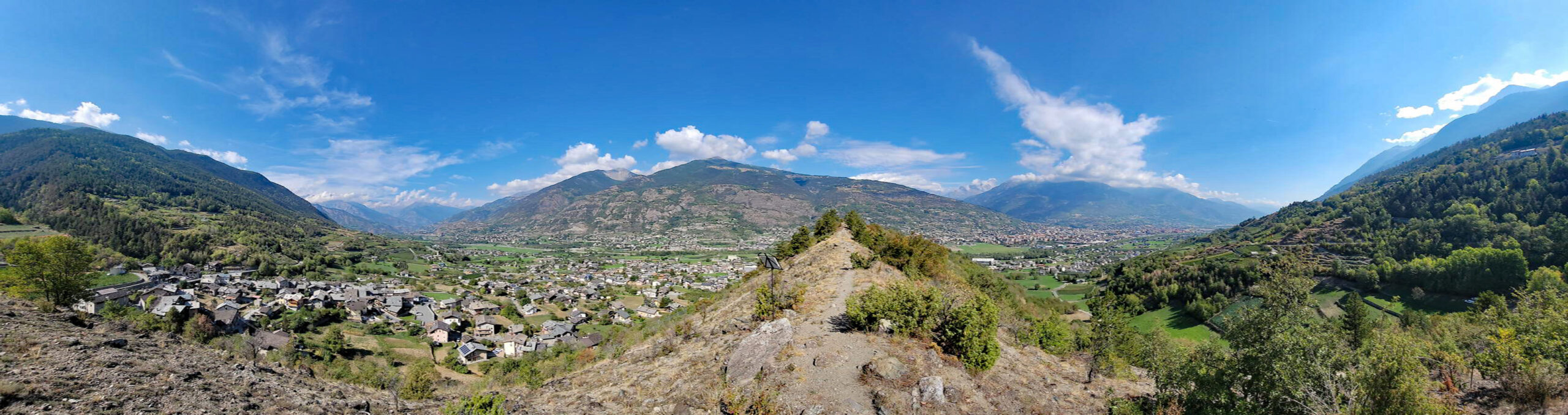
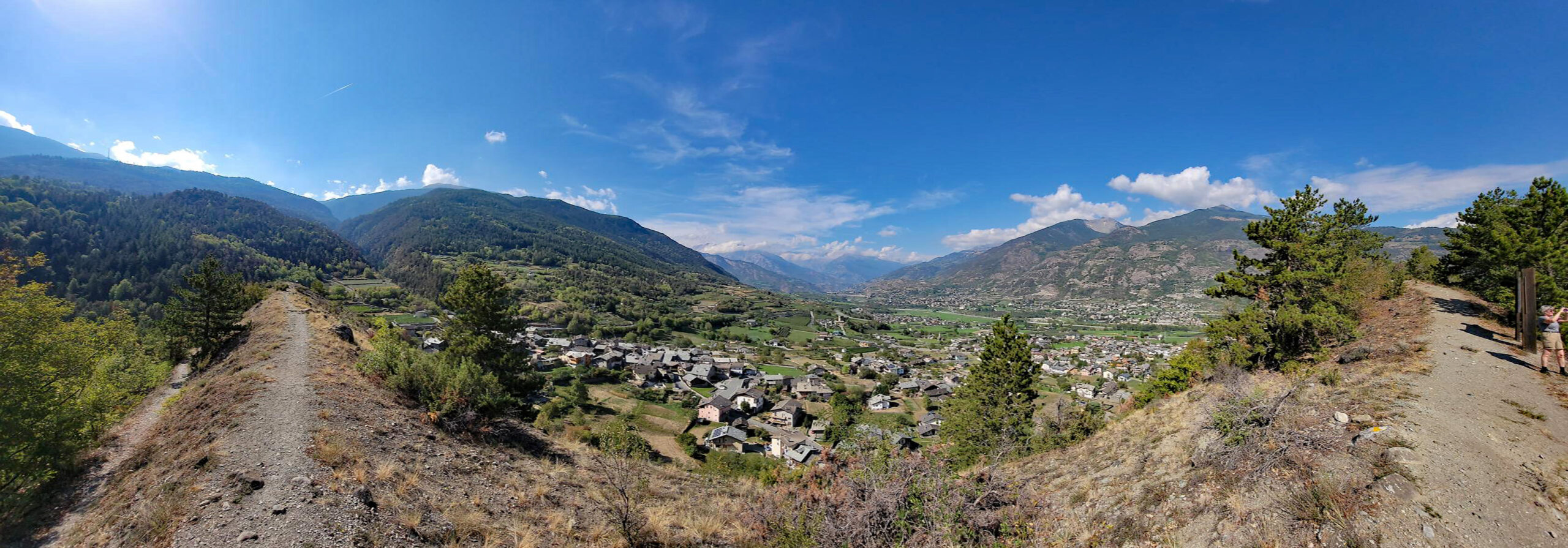
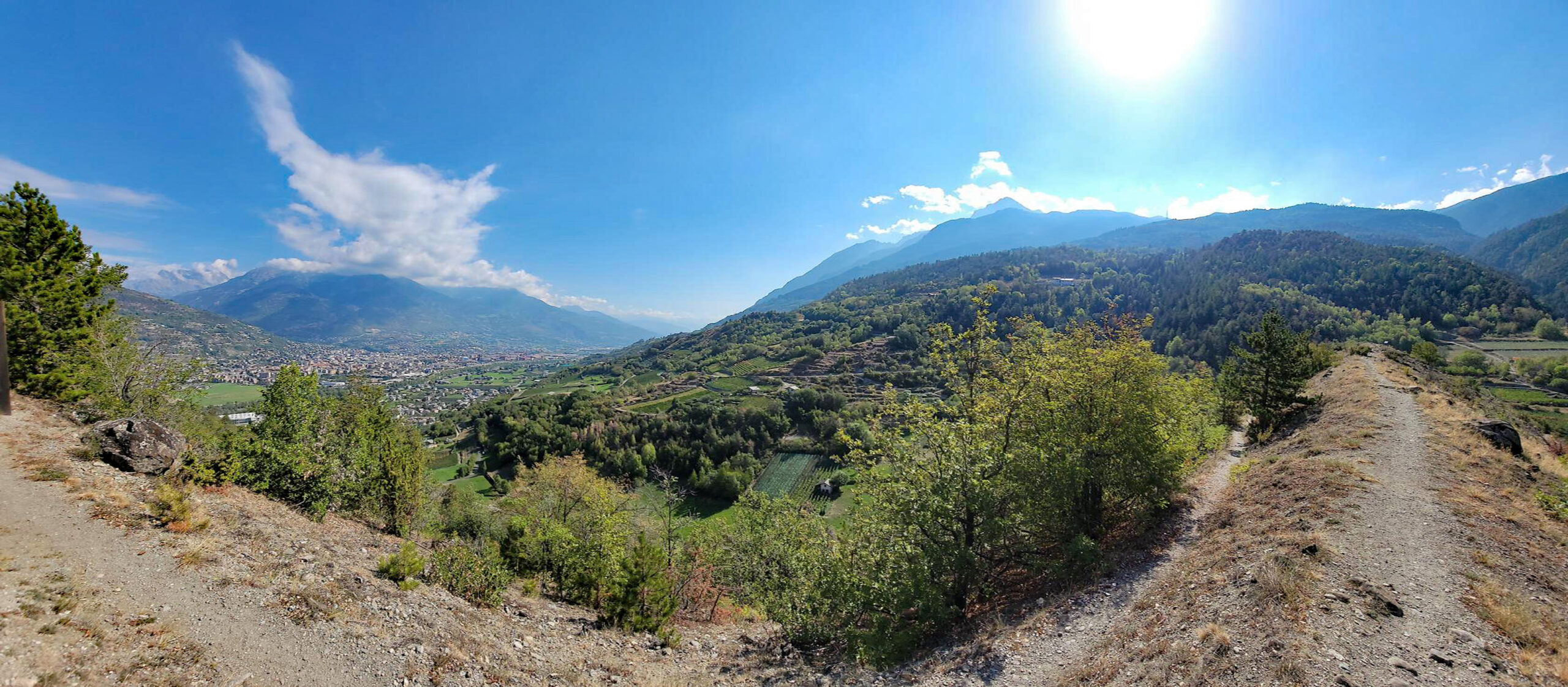
Aosta – Gargantua Nature Reserve Hike – Panorama on top of hill – 150m (450ft) above valley
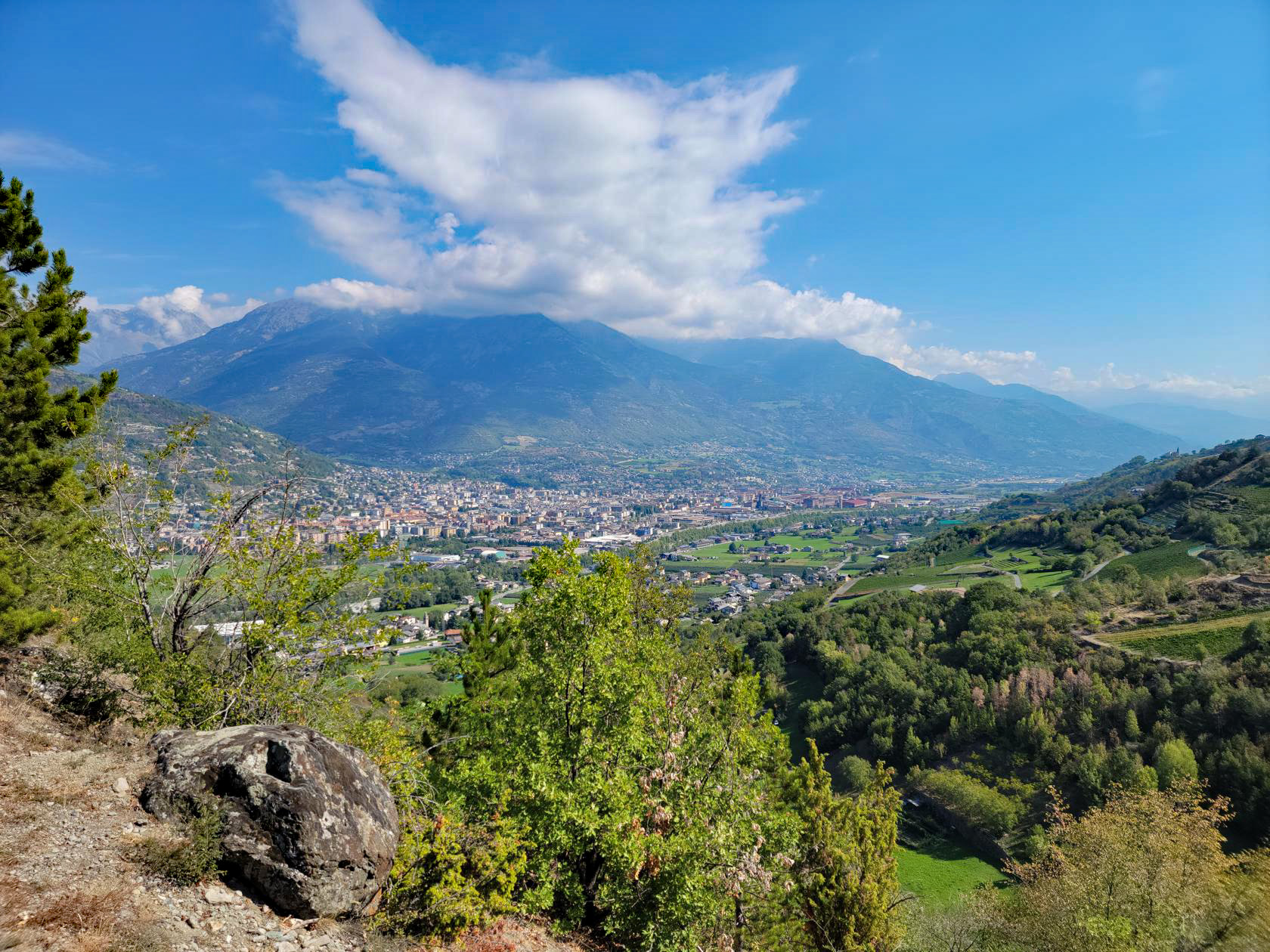
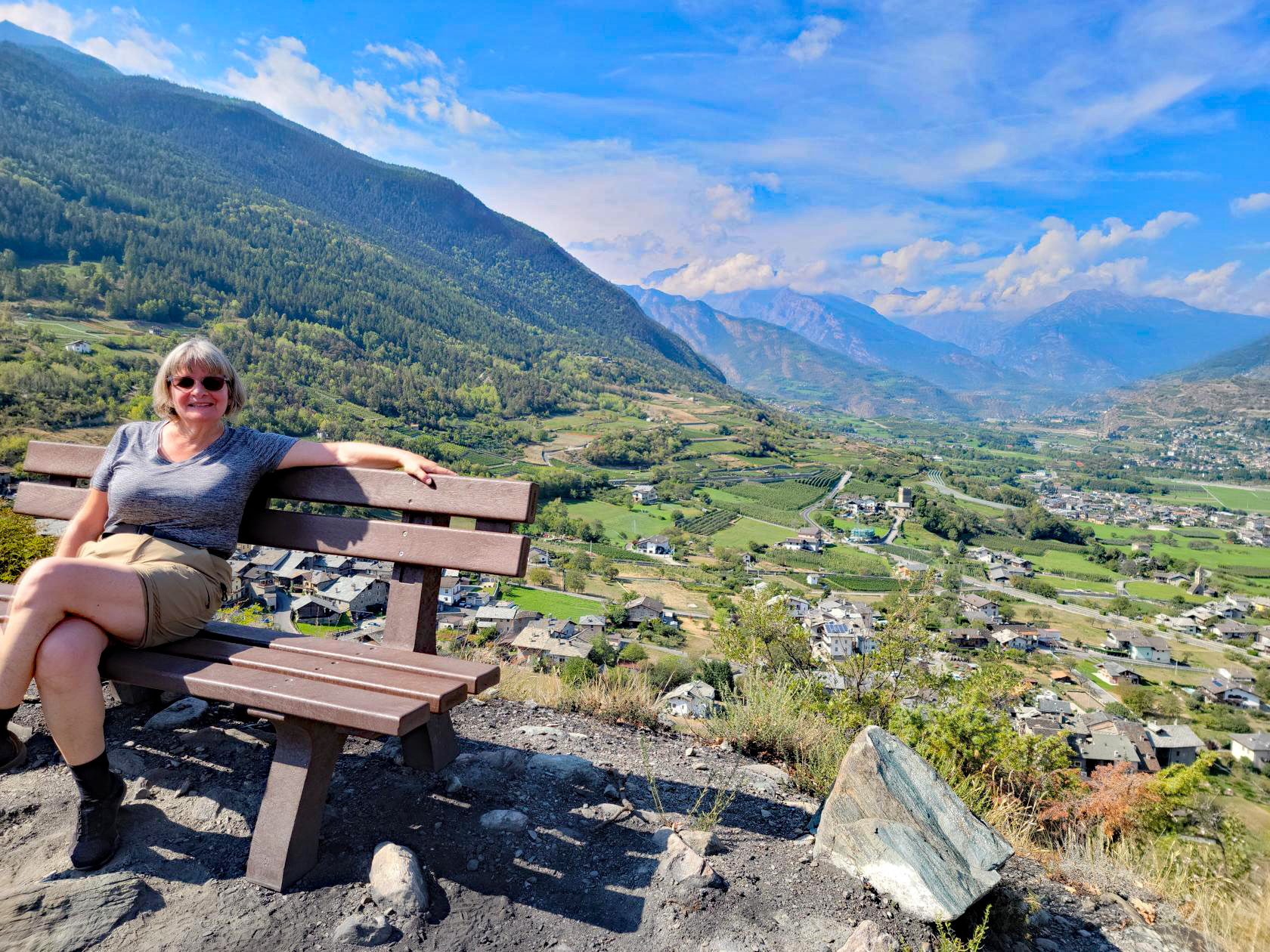
The summit provides impressive views of the entire Aosta Valley, with an excellent view of Aosta to the east.
Aosta – Gargantua Nature Reserve Hike – Valle d’Aosta to the east
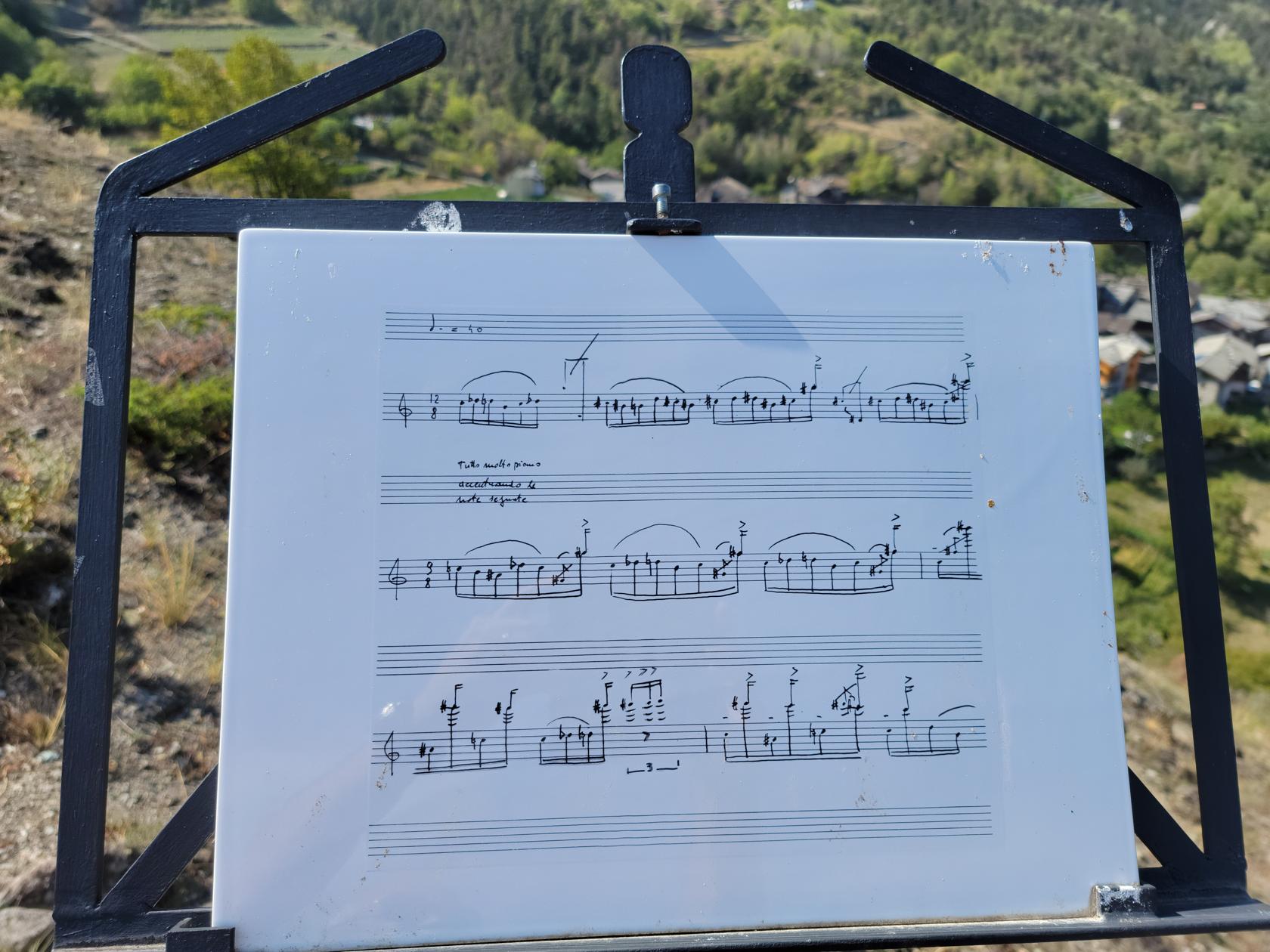
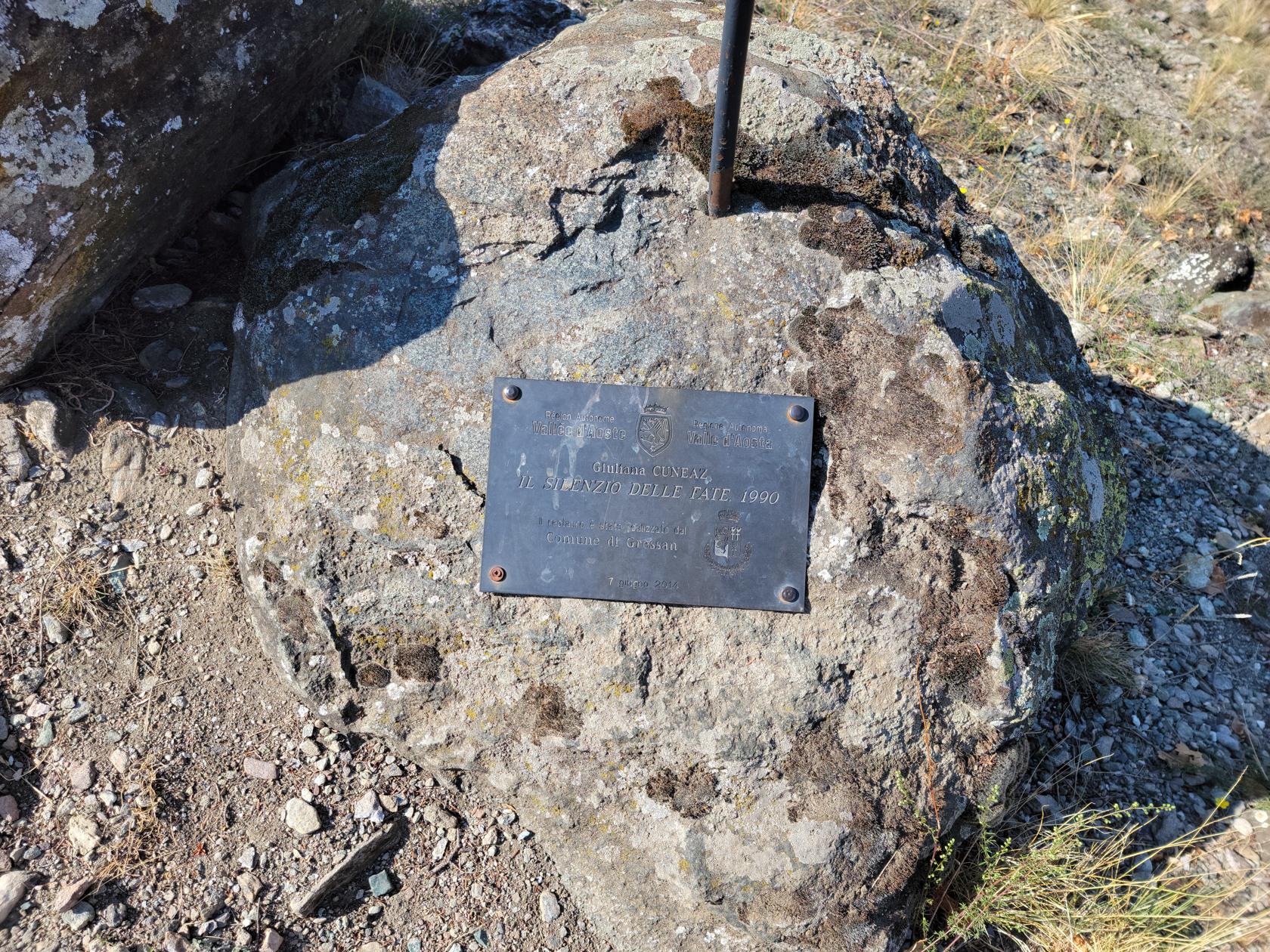
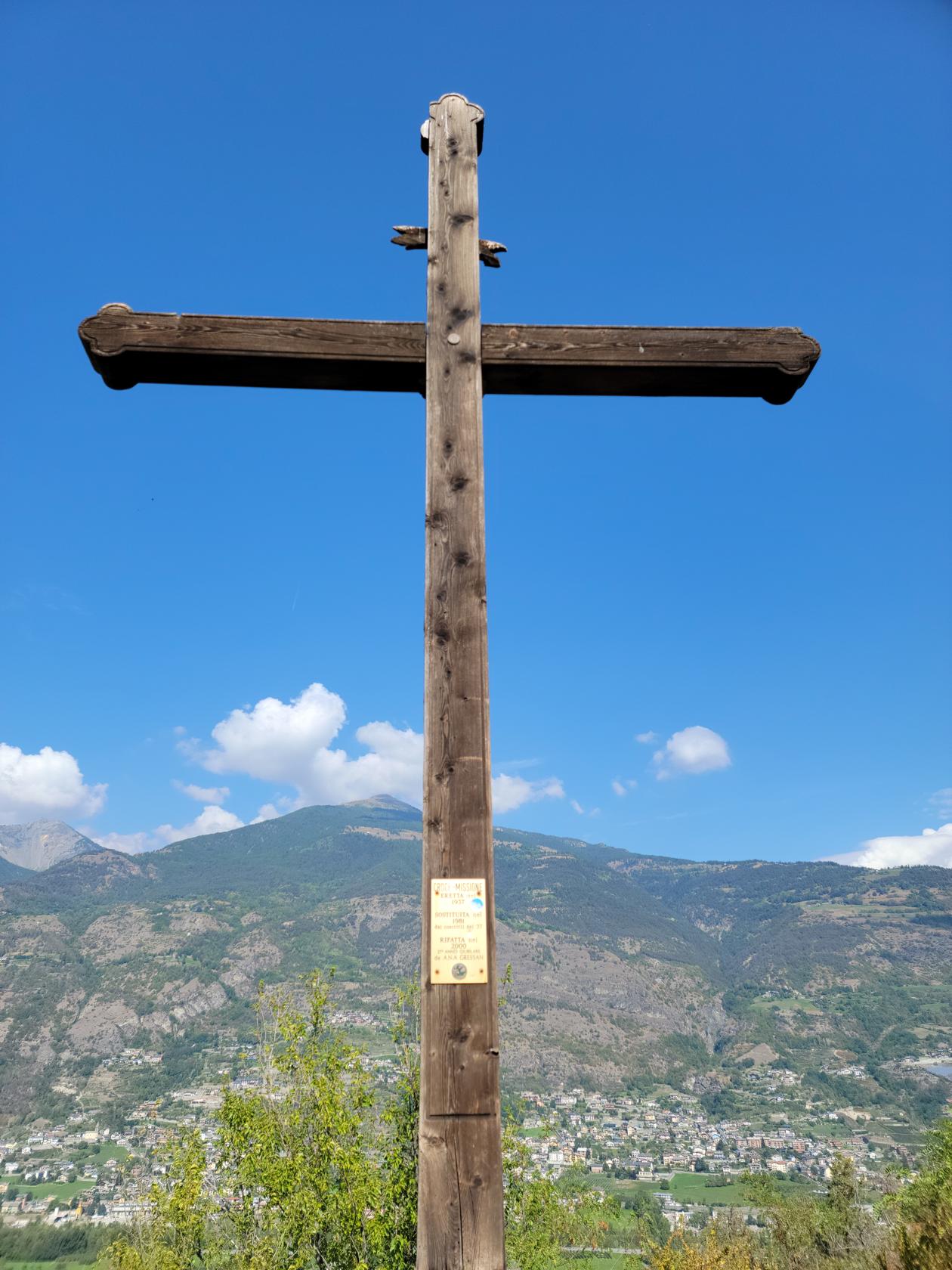
There are also several monuments and other artifacts on the top, including a score of music, a cross and some signs (which I did not translate).
Aosta – Gargantua Nature Reserve Hike – Il Silenzio della Fate – Score Sheet
Aosta – Gargantua Nature Reserve Hike – Il Silenzio della Fate – Marker
Aosta – Gargantua Nature Reserve Hike – The Cross
Aosta – Gargantua Nature Reserve Hike – Valle d’Aosta to the east
The hike down was a bit more interesting than the ascent, since it was from the end of the hill that sticks out into the valley. Therefore, it was a bit steeper and more treacherous. There were several places that we had to be careful, but luckily there were always enough rocks on which we could purchase a grip.
Aosta – Gargantua Nature Reserve Hike – The Cross
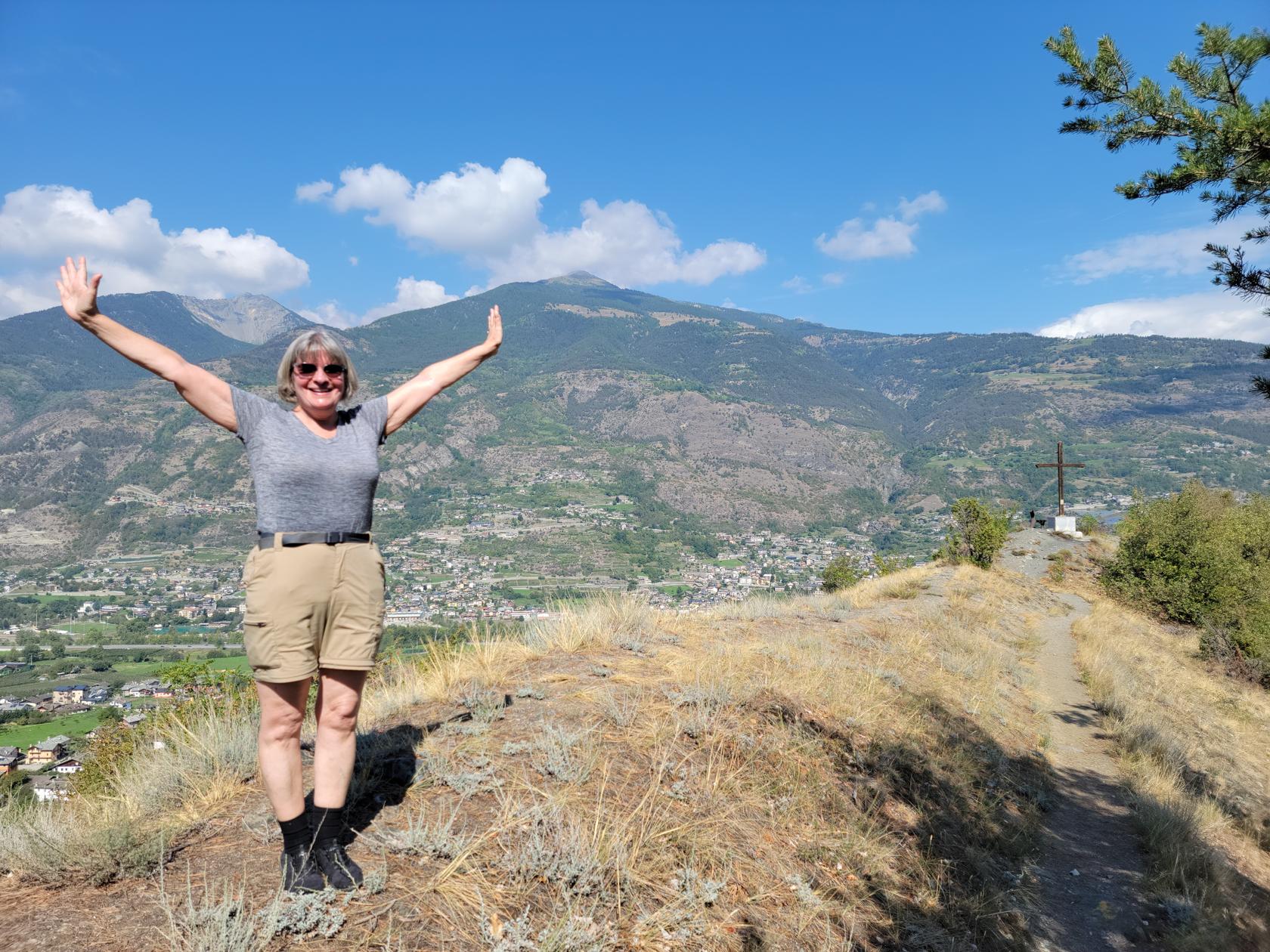
Aosta – Gargantua Nature Reserve Hike – Patti made it!
Aosta – Gargantua Nature Reserve Hike – Patti on the way down
Aosta – Gargantua Nature Reserve Hike – Gardens
Aosta – Gargantua Nature Reserve Hike – Gardens
That does it for our day hike in Aosta. In all, it totaled about 7.5 miles and some 450ft in ascent and descent, and about three and a half hours to hike. We went straight to a restaurant, since we had been out since 9:30AM and did not want the restaurants closing while we were dropping our things off at the hotel. All in all, a very gratifying September day of hiking in Aosta. Go Hike!
Aosta – Gargantua Nature Reserve Hike – Panorama with mountains
Though technically any heap of rock and dirt may be called a hill, this is actually a glacial moraine, deposited thousands of years ago when the glaciers from the last Ice Age left this valley.
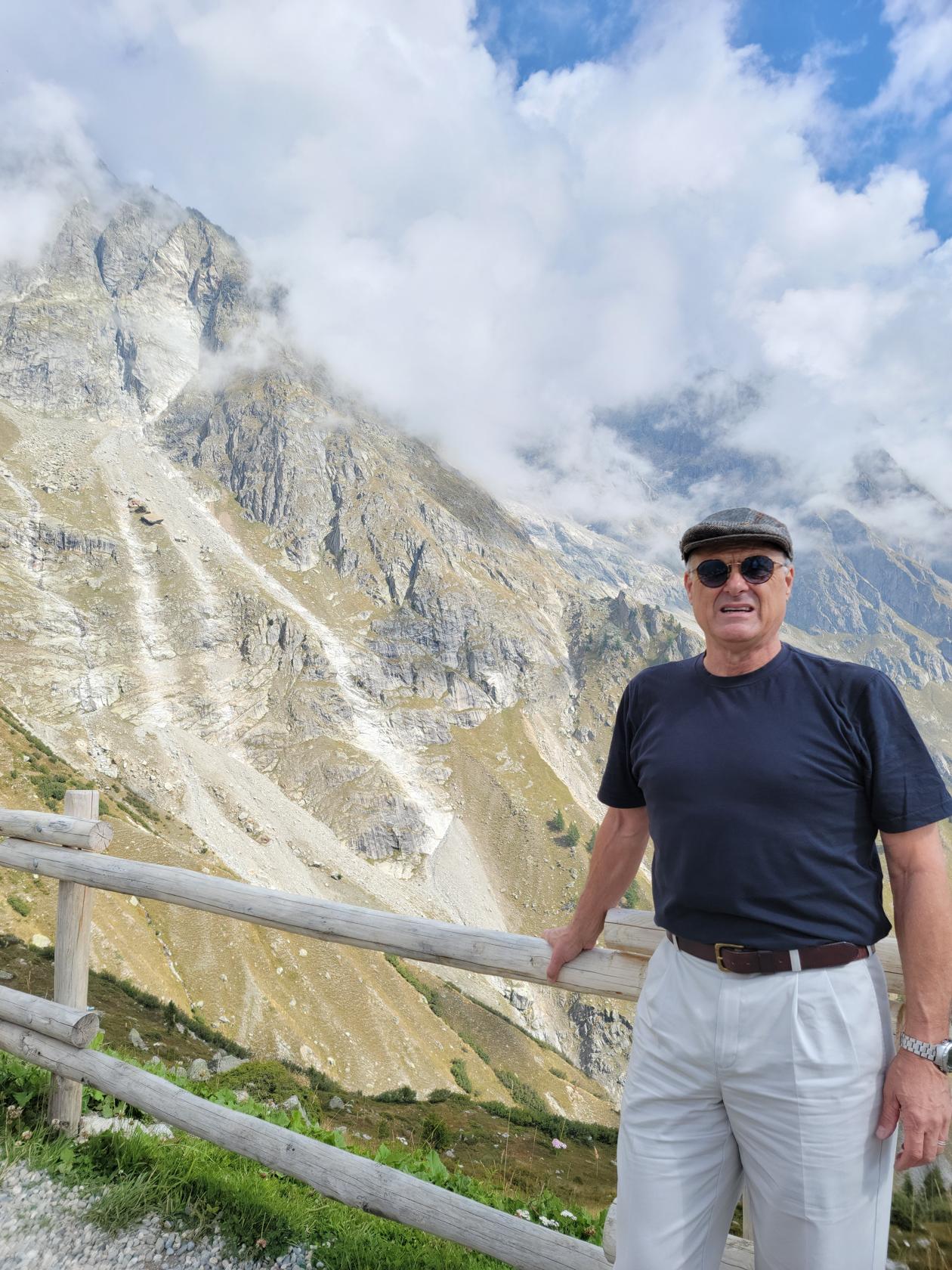
Courmayeur – The Skyway Monte Bianco – Erick at the Saussurea Alpine Botanical Garden
Some 33km from Aosta, or about one hour by bus, is the small ski hamlet of Courmayeur and the starting point of our day journey to Pont Helbronner (Helbronner Point) and Monte Bianco, or Mont Blanc.
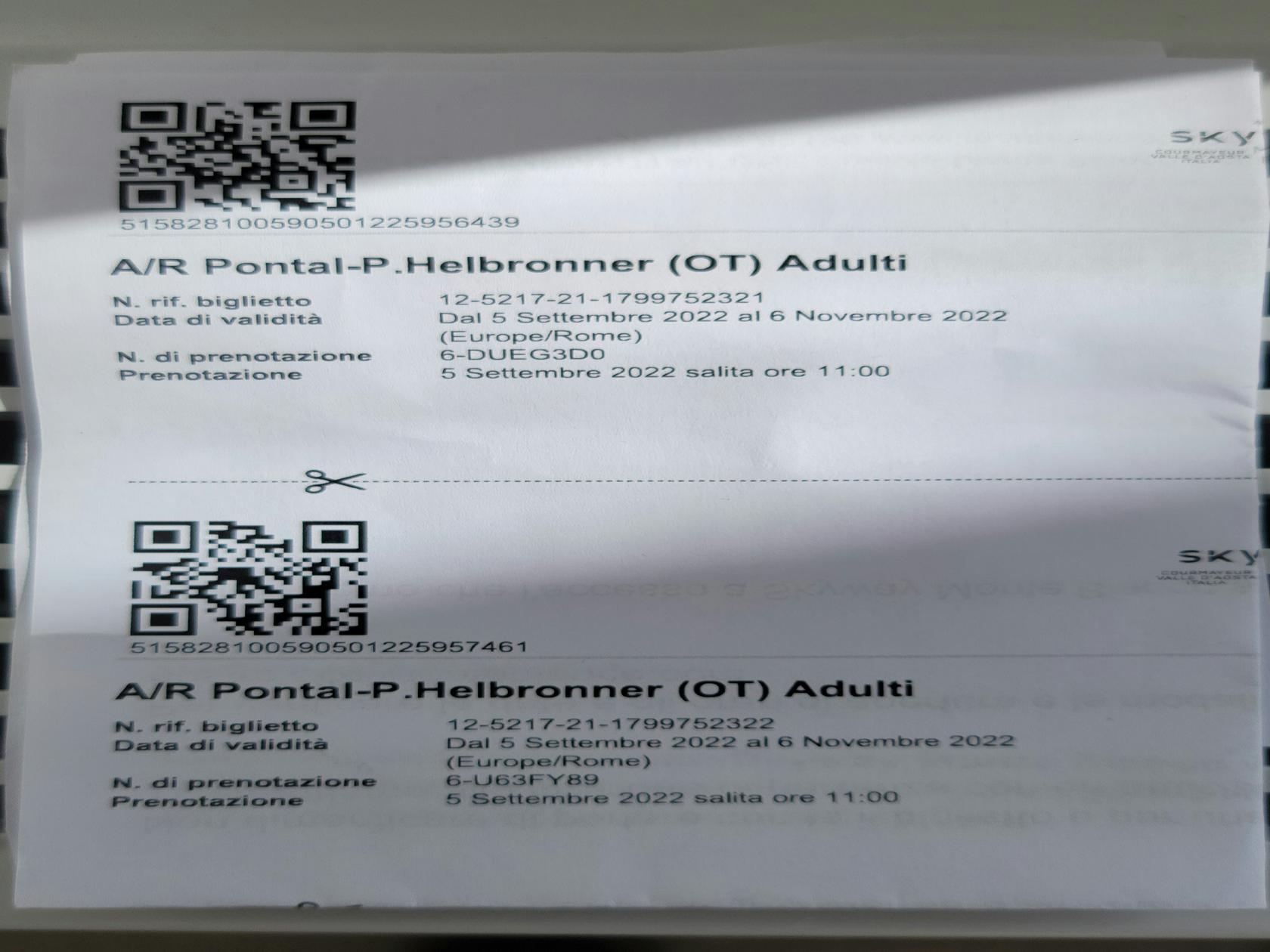
Courmayeur – The Skyway Monte Bianco – Tickets For Two
Courmayeur
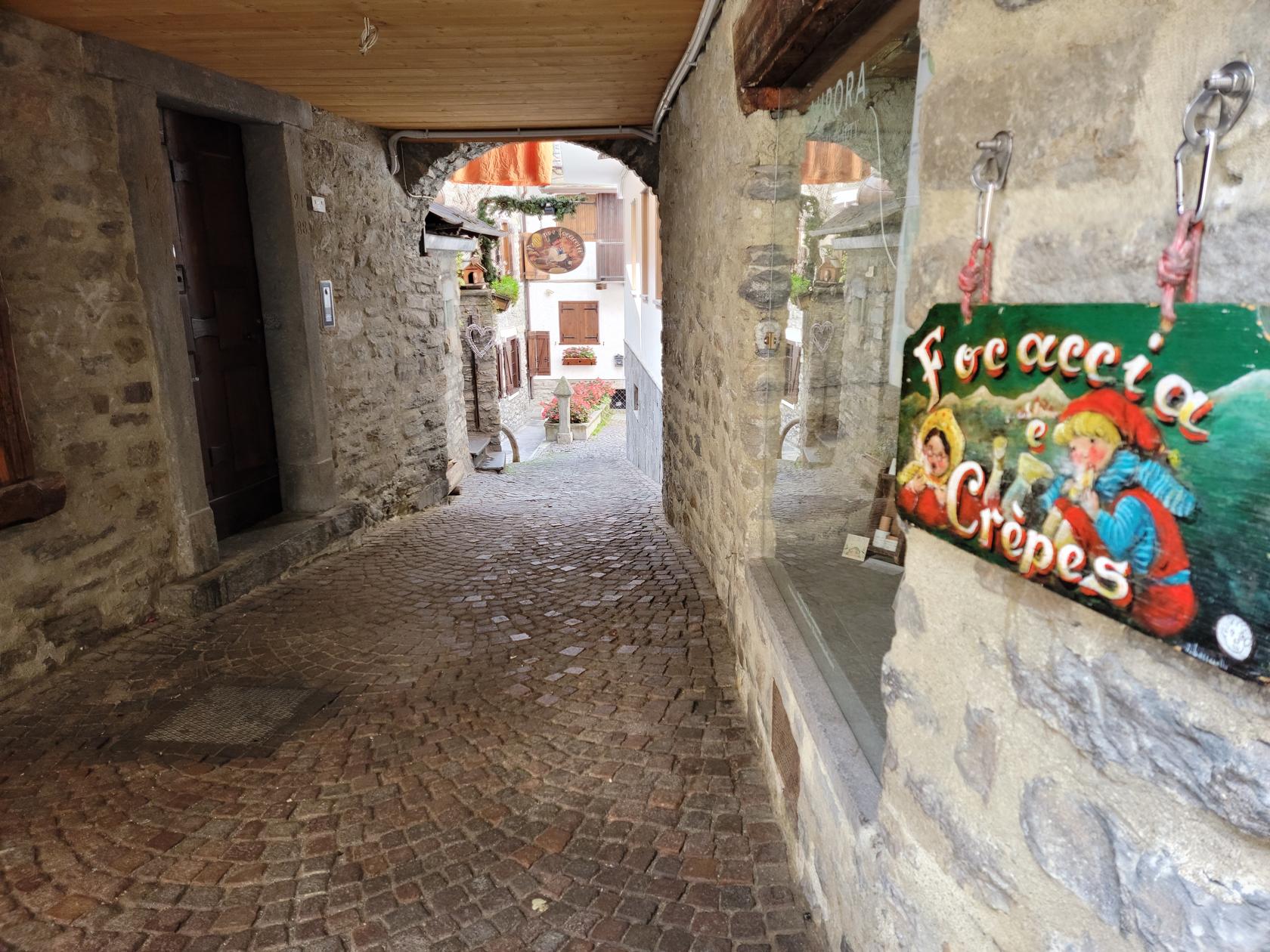
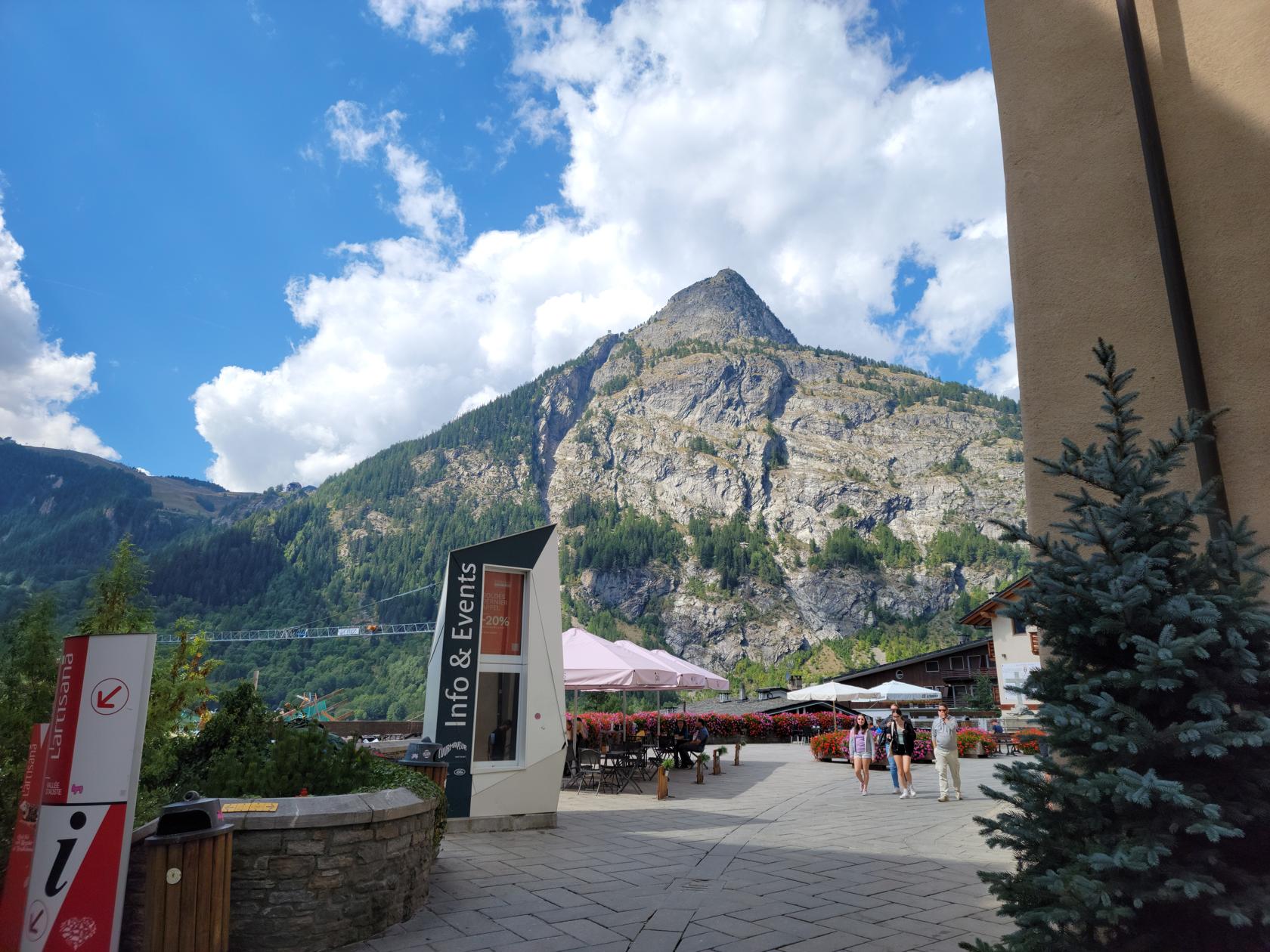
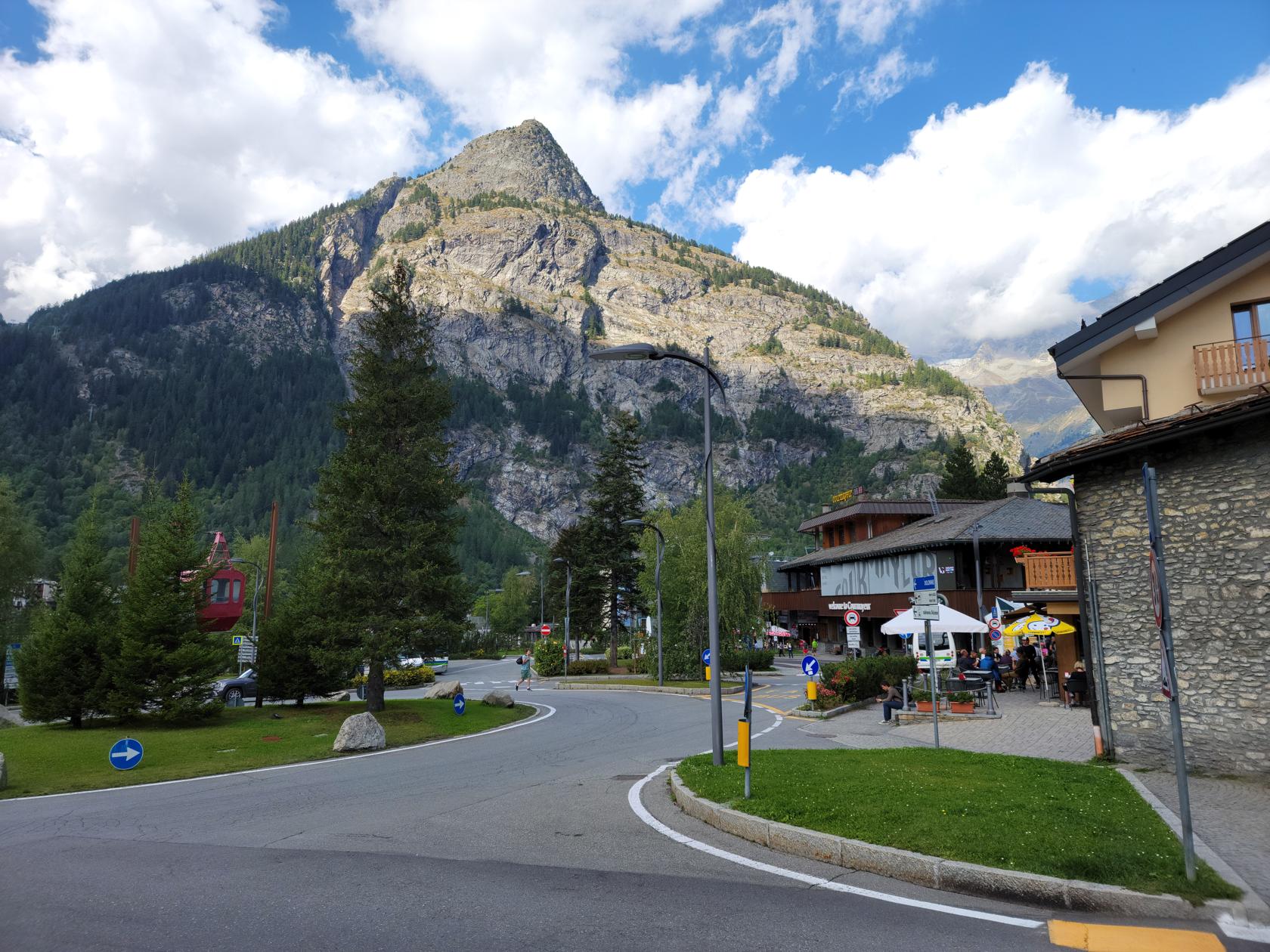
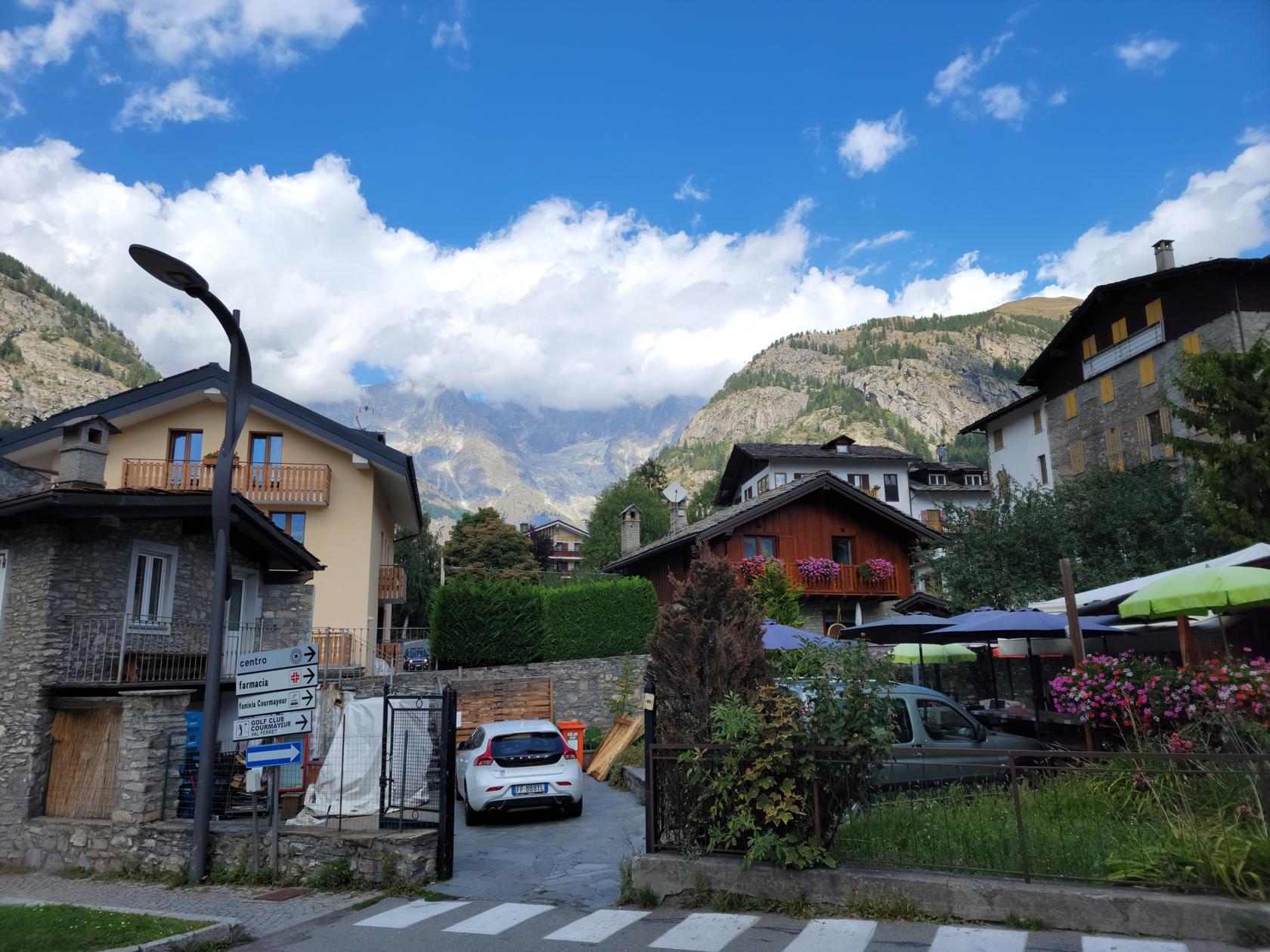
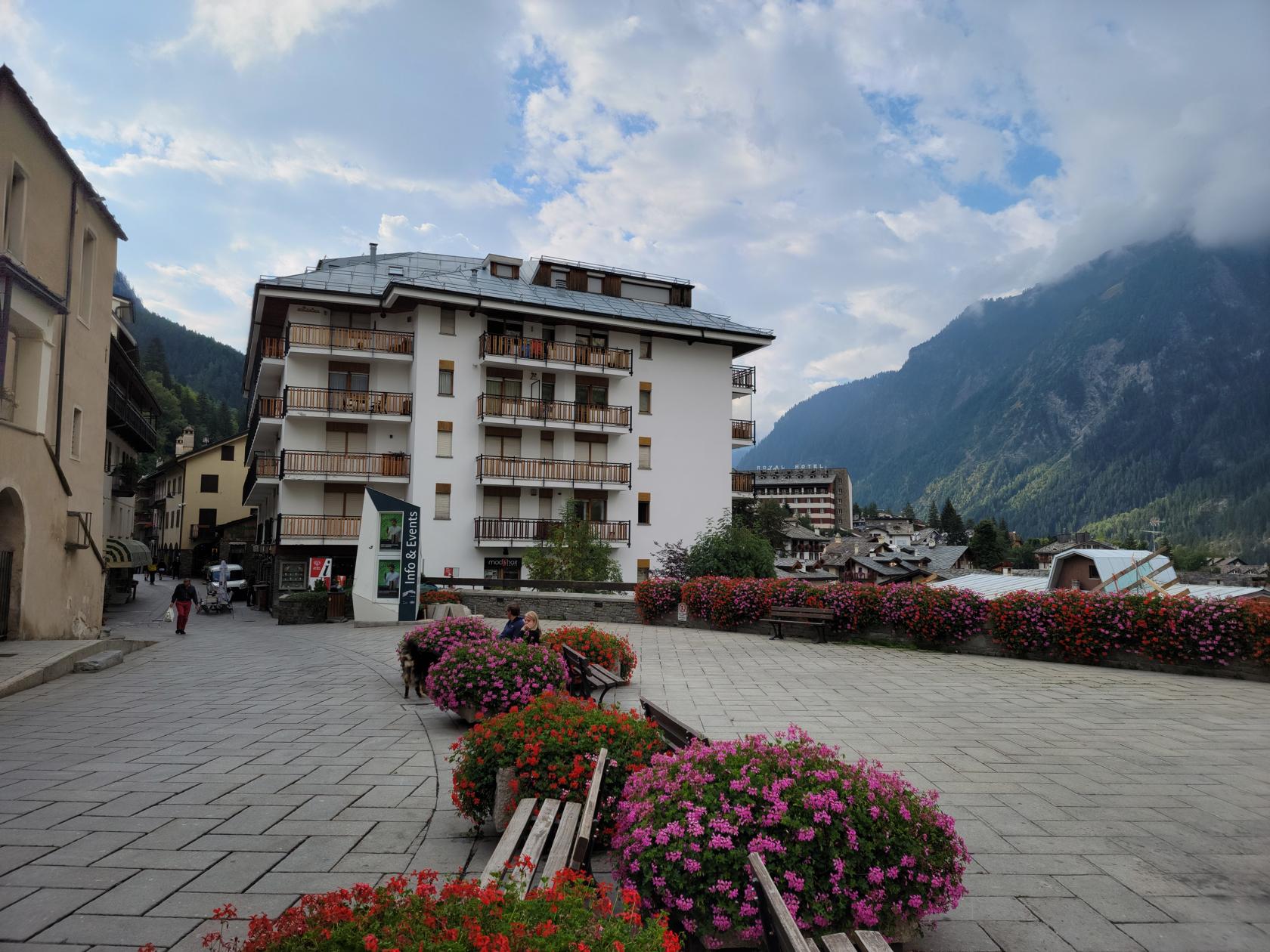
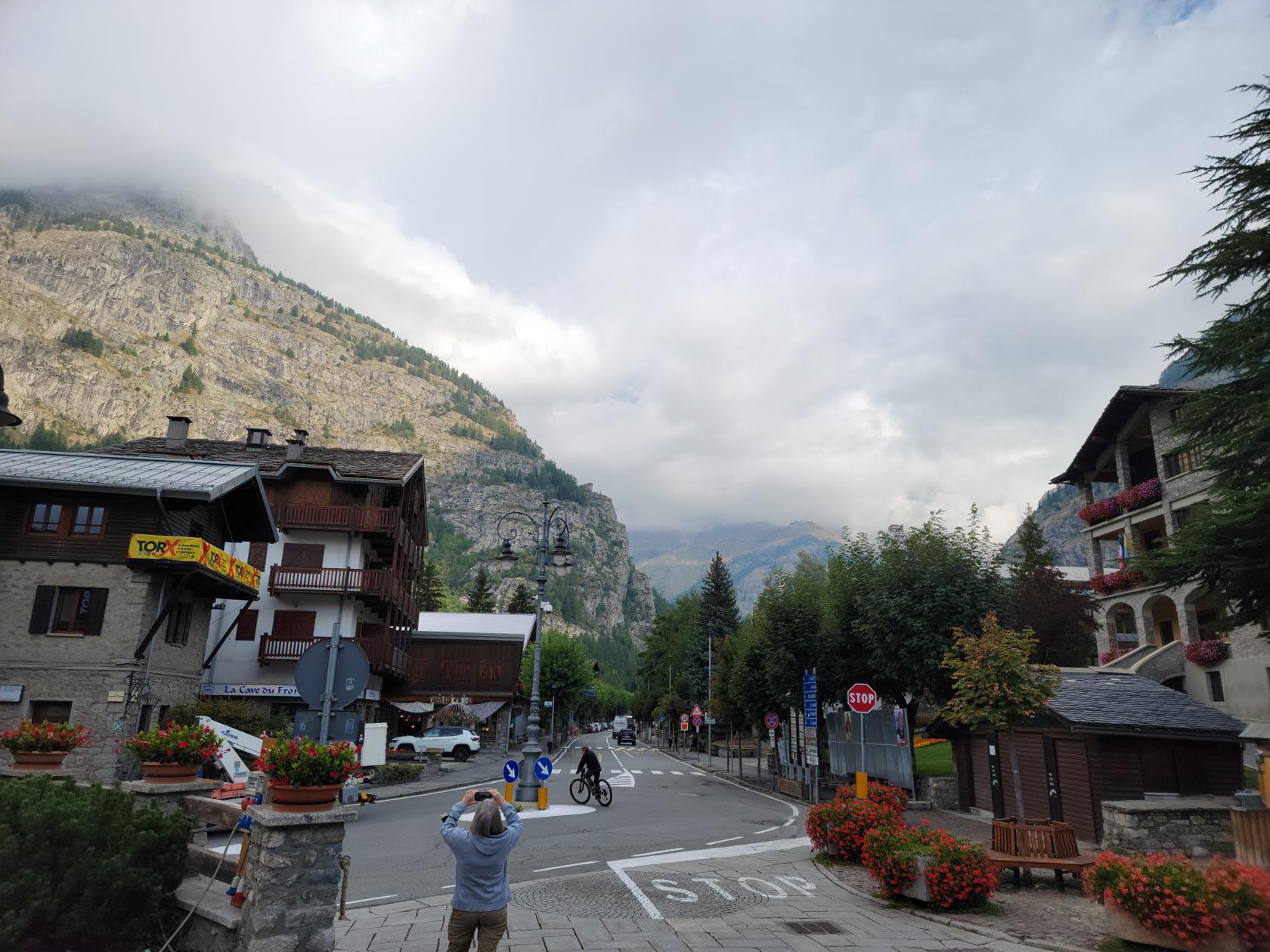
A quaint little ski hamlet that offers a traditional Italian, Swiss and French Alpine feel. The town is built to withstand the snows that most likely visit this region every winter season. Luckily, we visited when the weather was a bit more mild and pleasant.
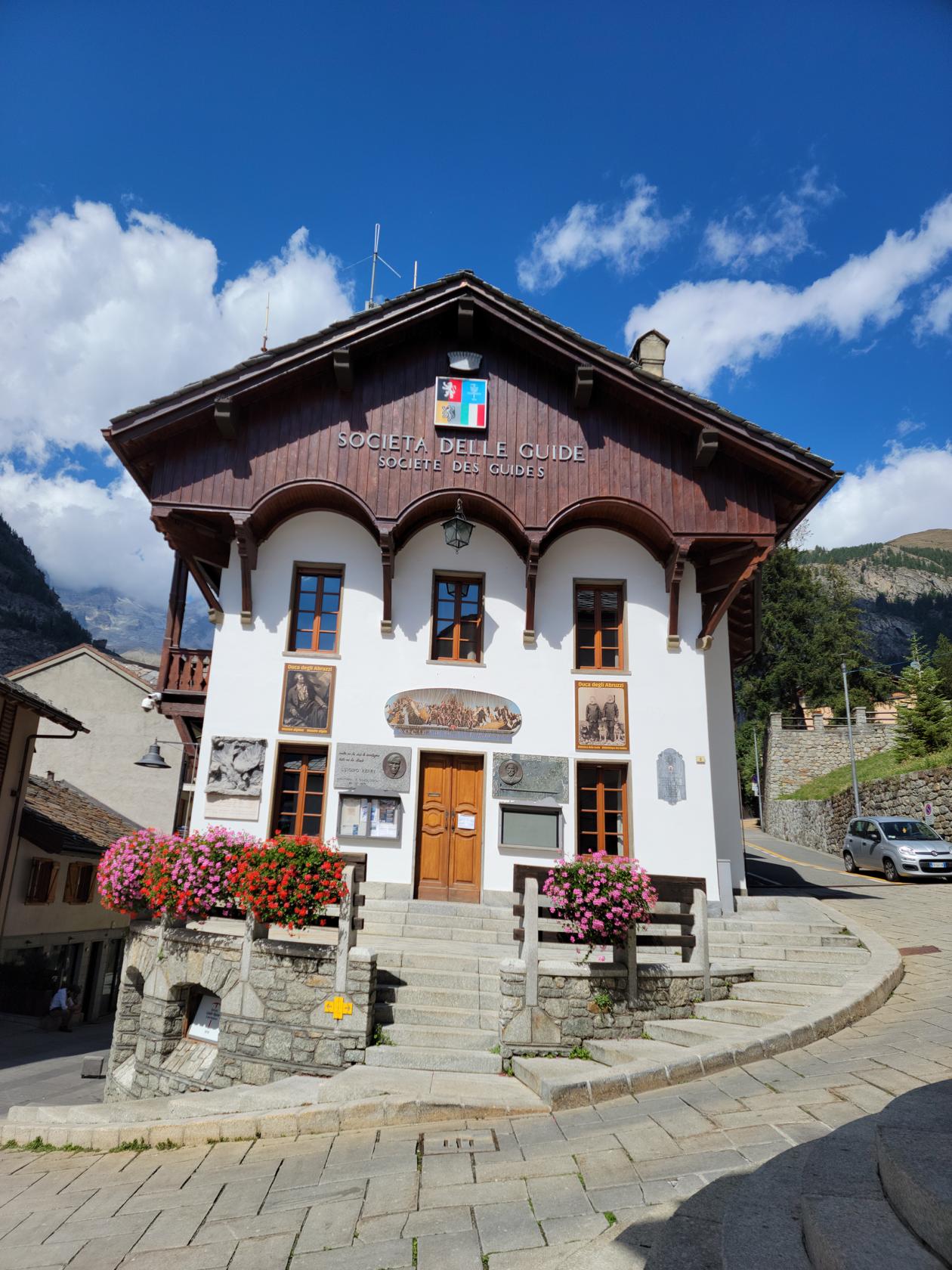
Courmayeur – The Town’s Climbing Society
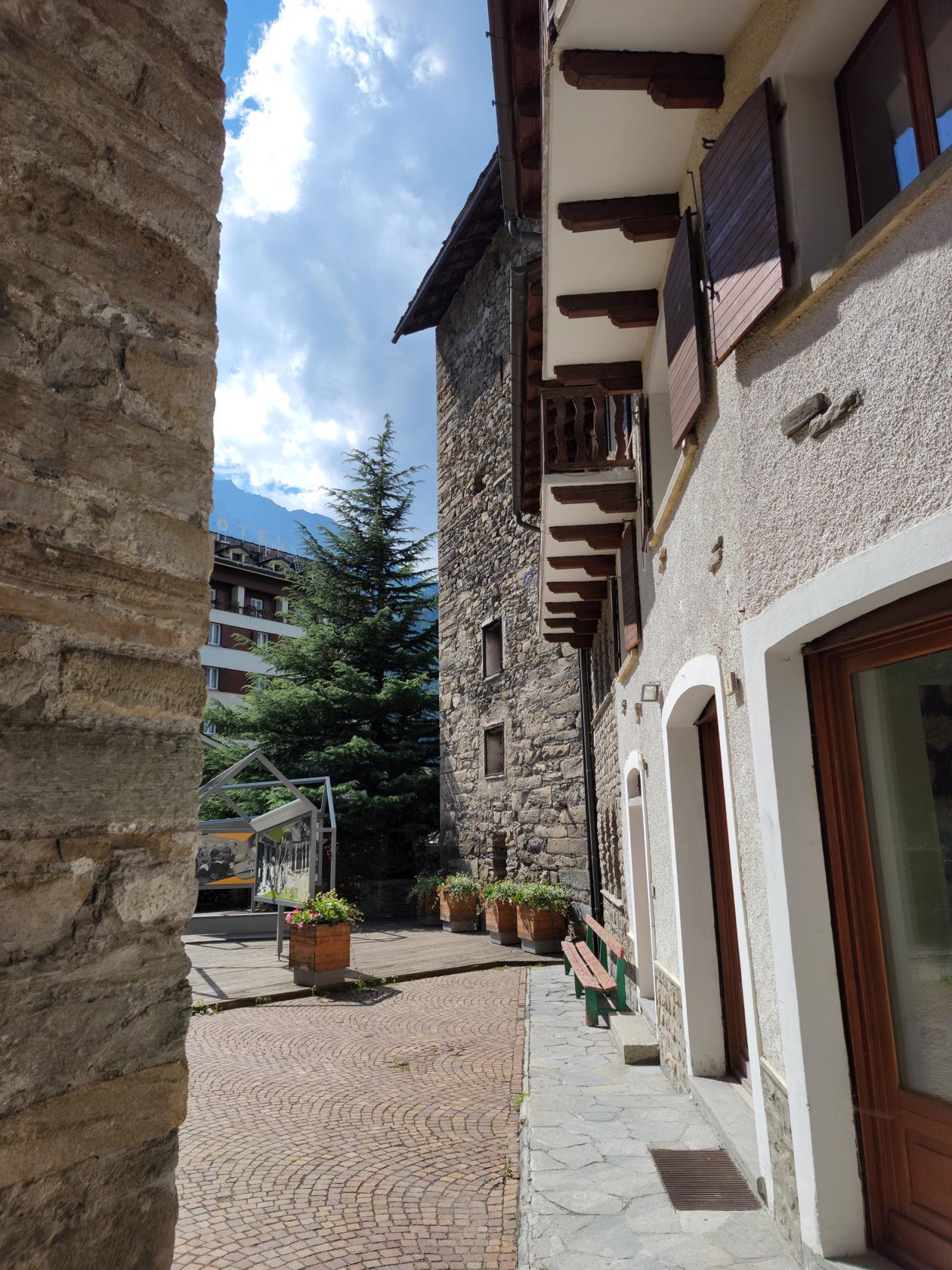
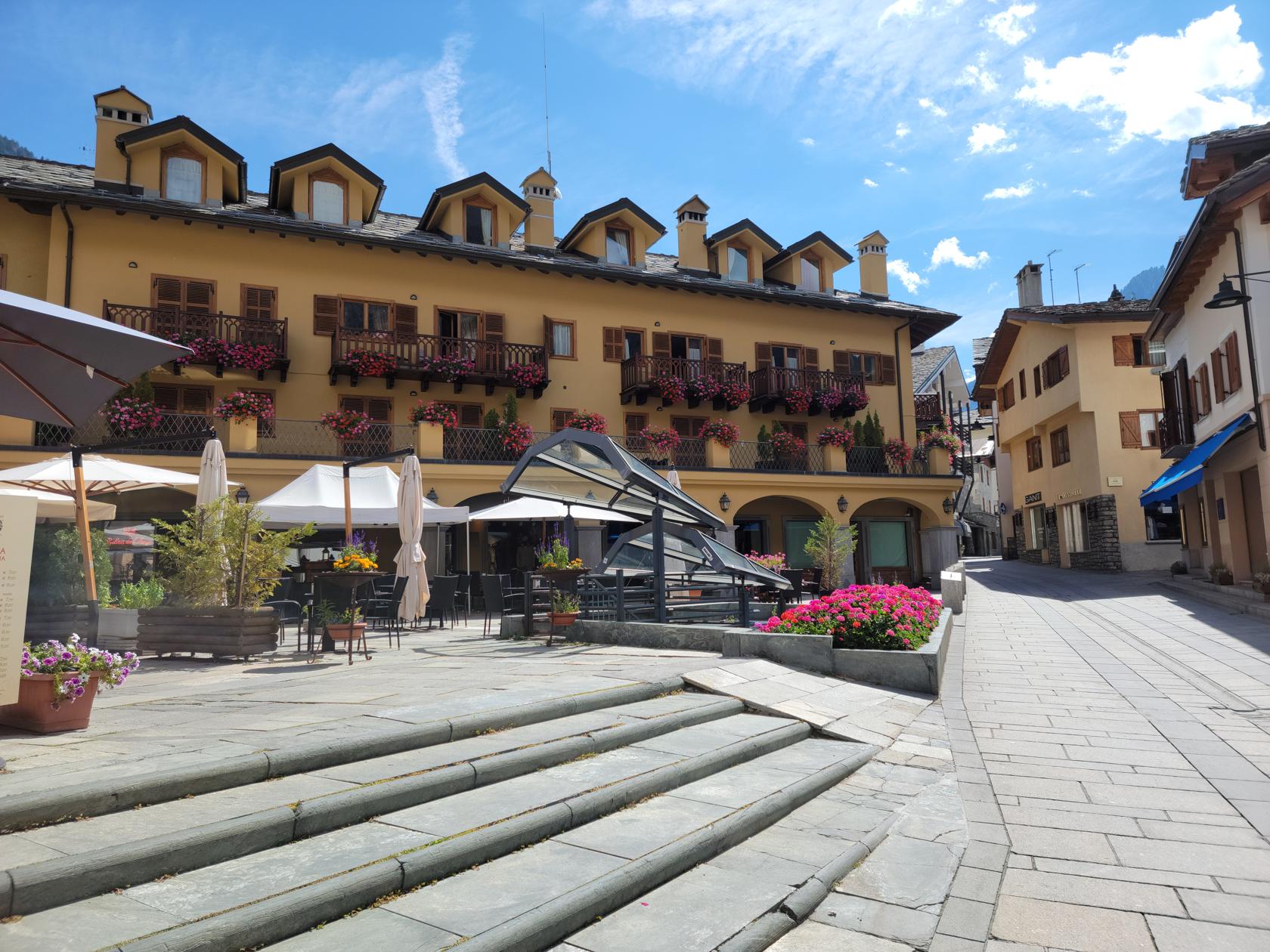
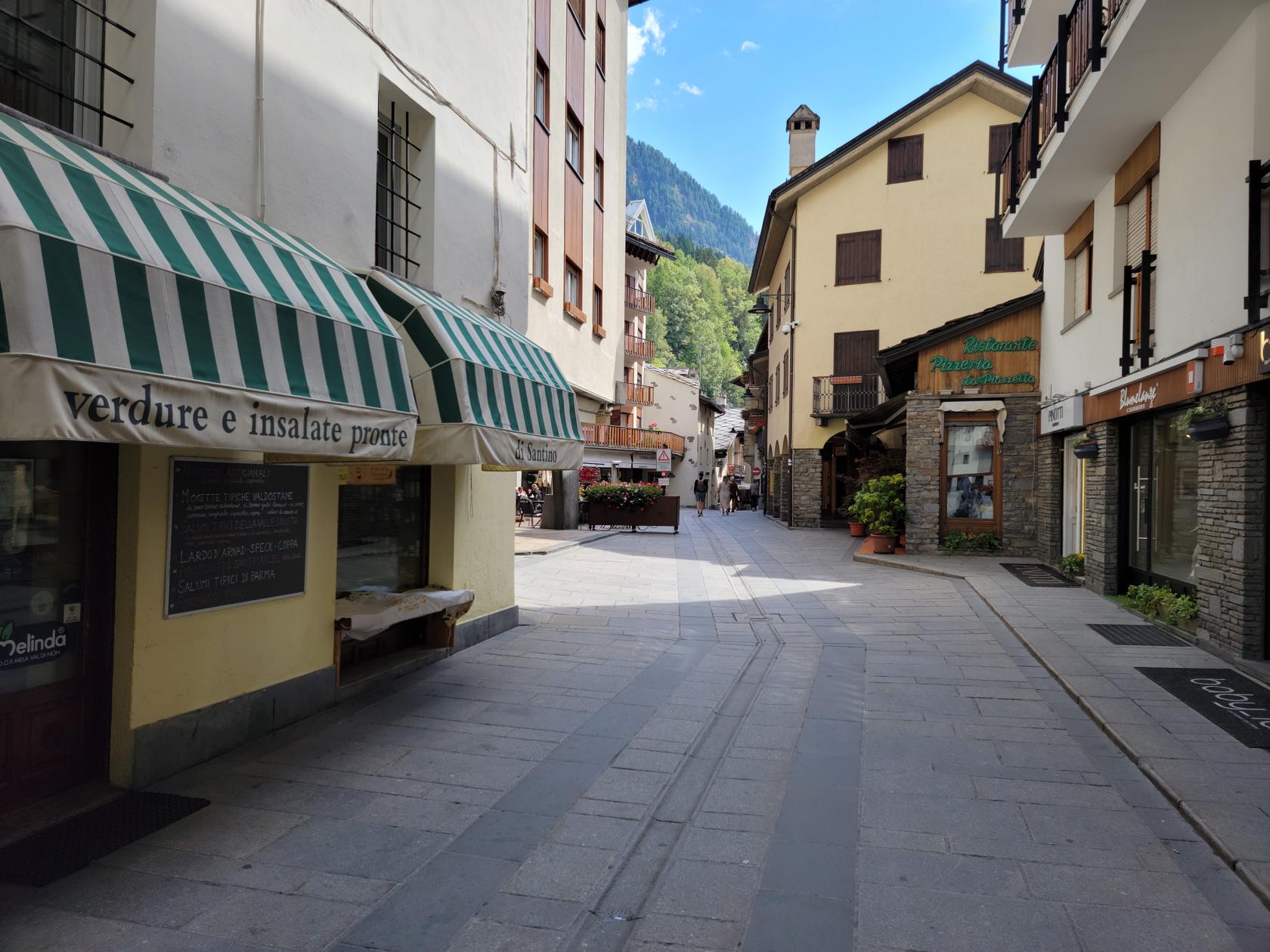
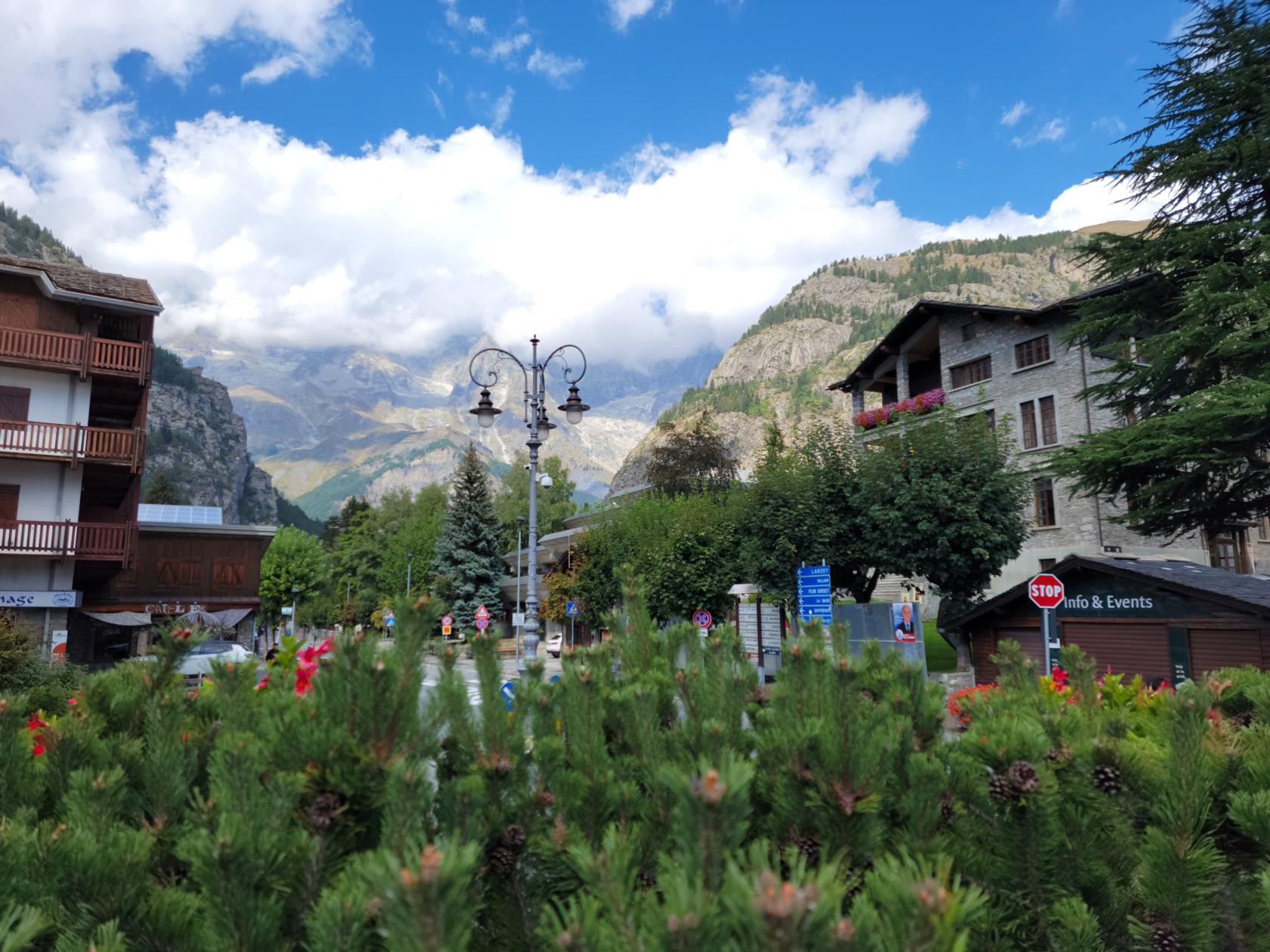
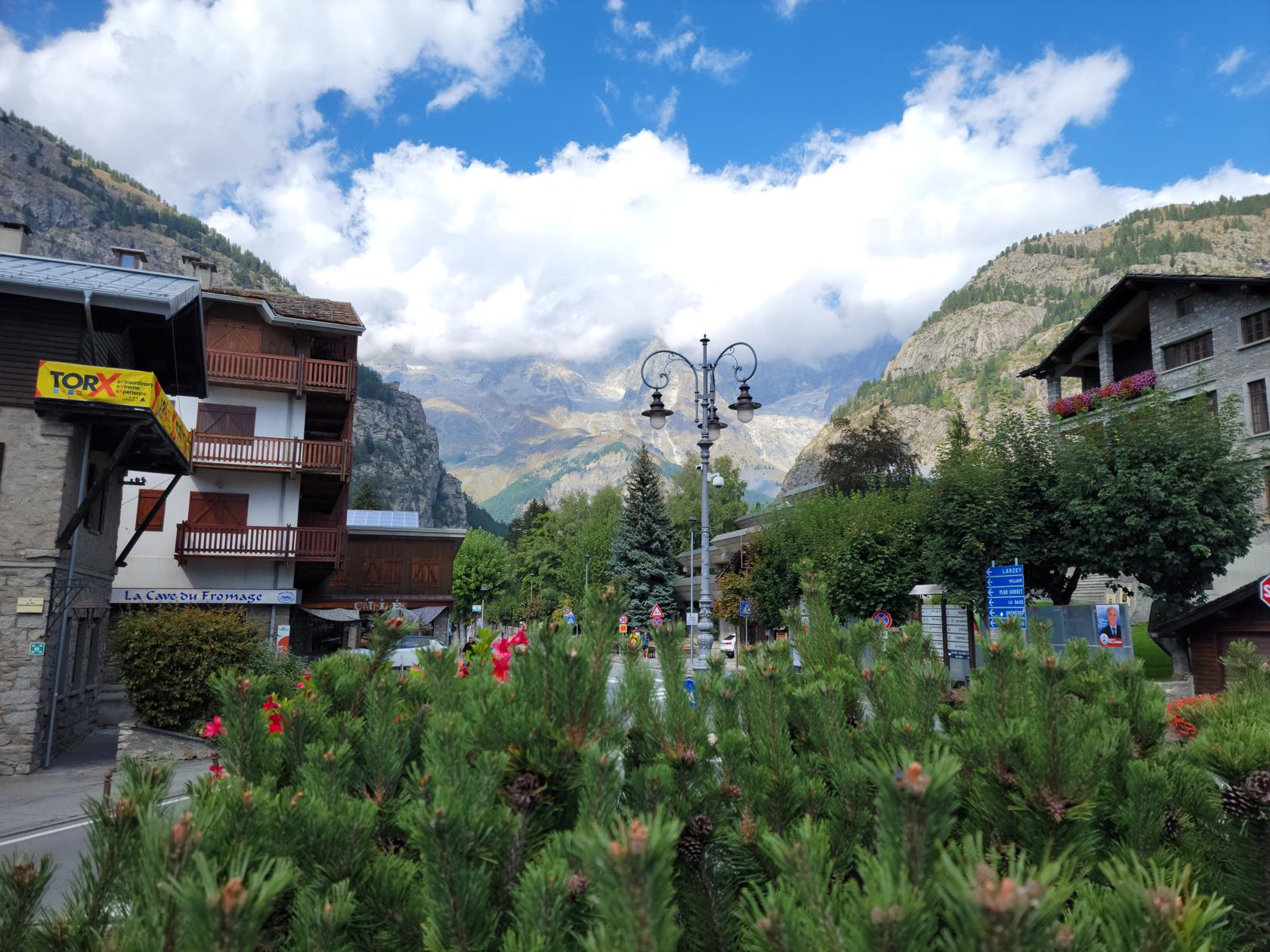
Courmayeur – The Town Main Street
Courmayeur – The Town Main Street
Courmayeur – The Town Main Street
Courmayeur – The Town Main Street
Courmayeur – The Mountains
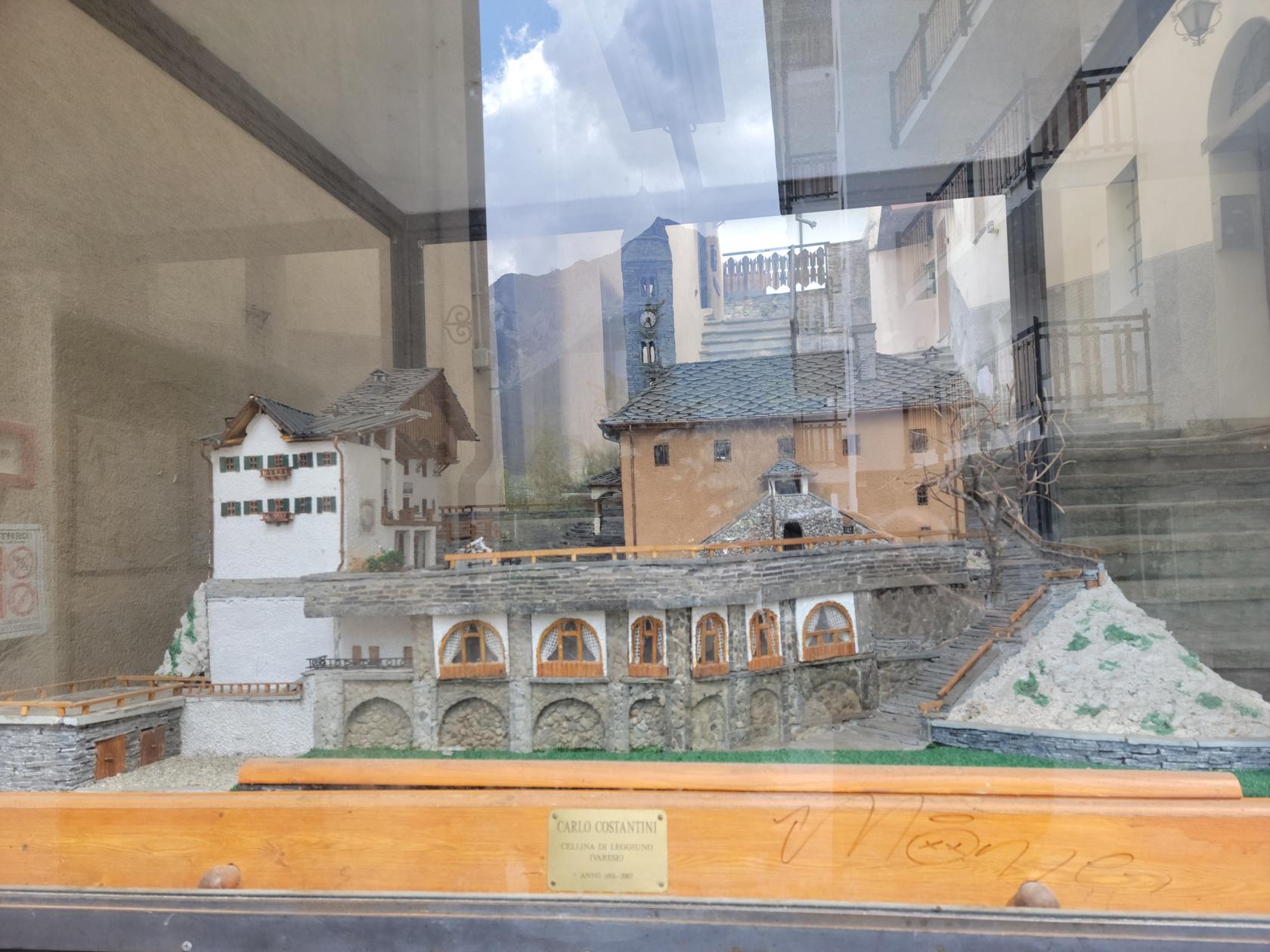
Courmayeur – Diorama of an old structure in town
Courmayeur – The Mountains and Moghu Pines
Courmayeur – The Mountains and Moghu Pines
Courmayeur – The Mountains
Courmayeur – The Mountains
Courmayeur – A Town in the High Alps
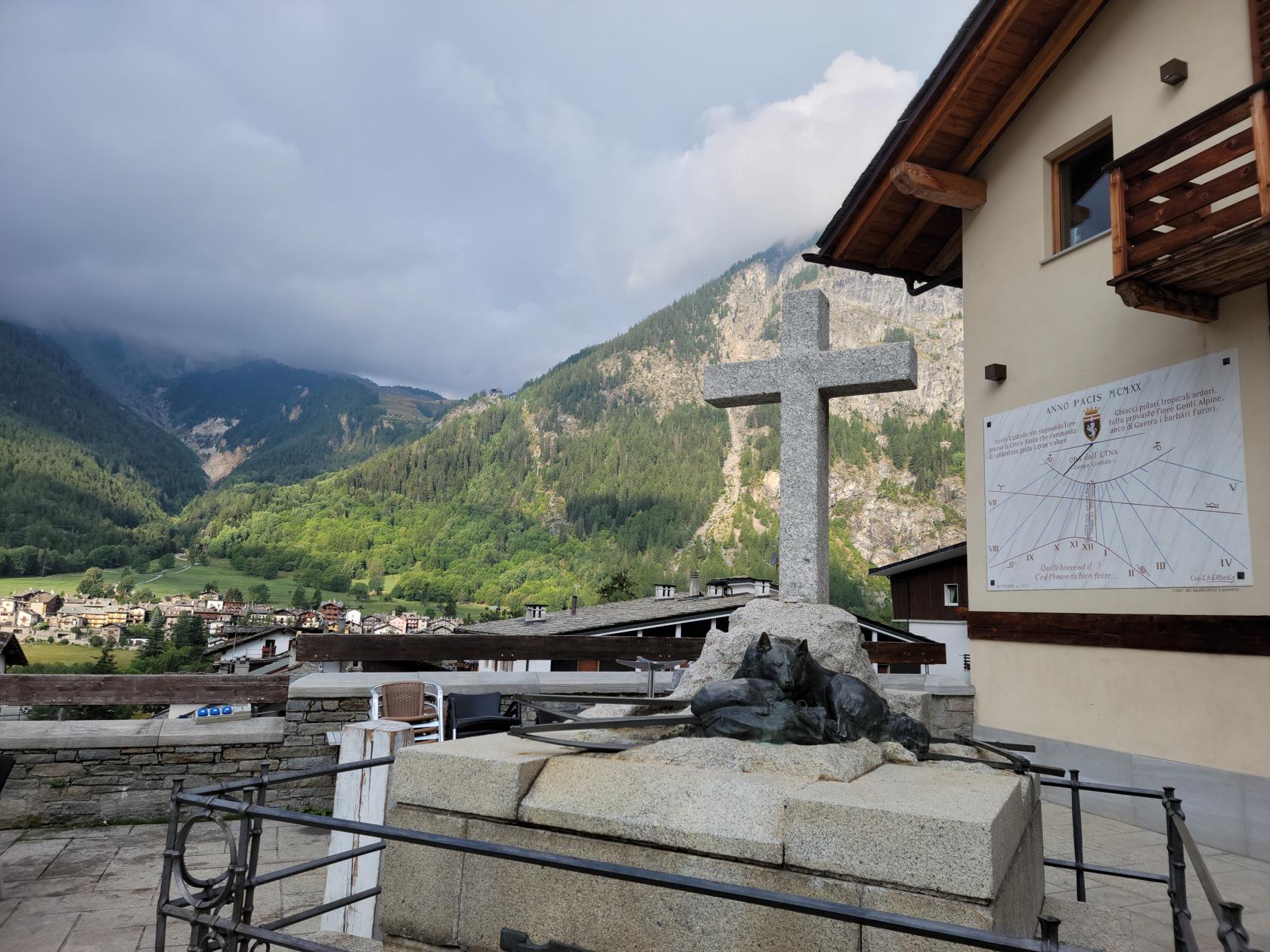
Courmayeur – A Sundial in Town
Courmayeur – The Town and Mountains
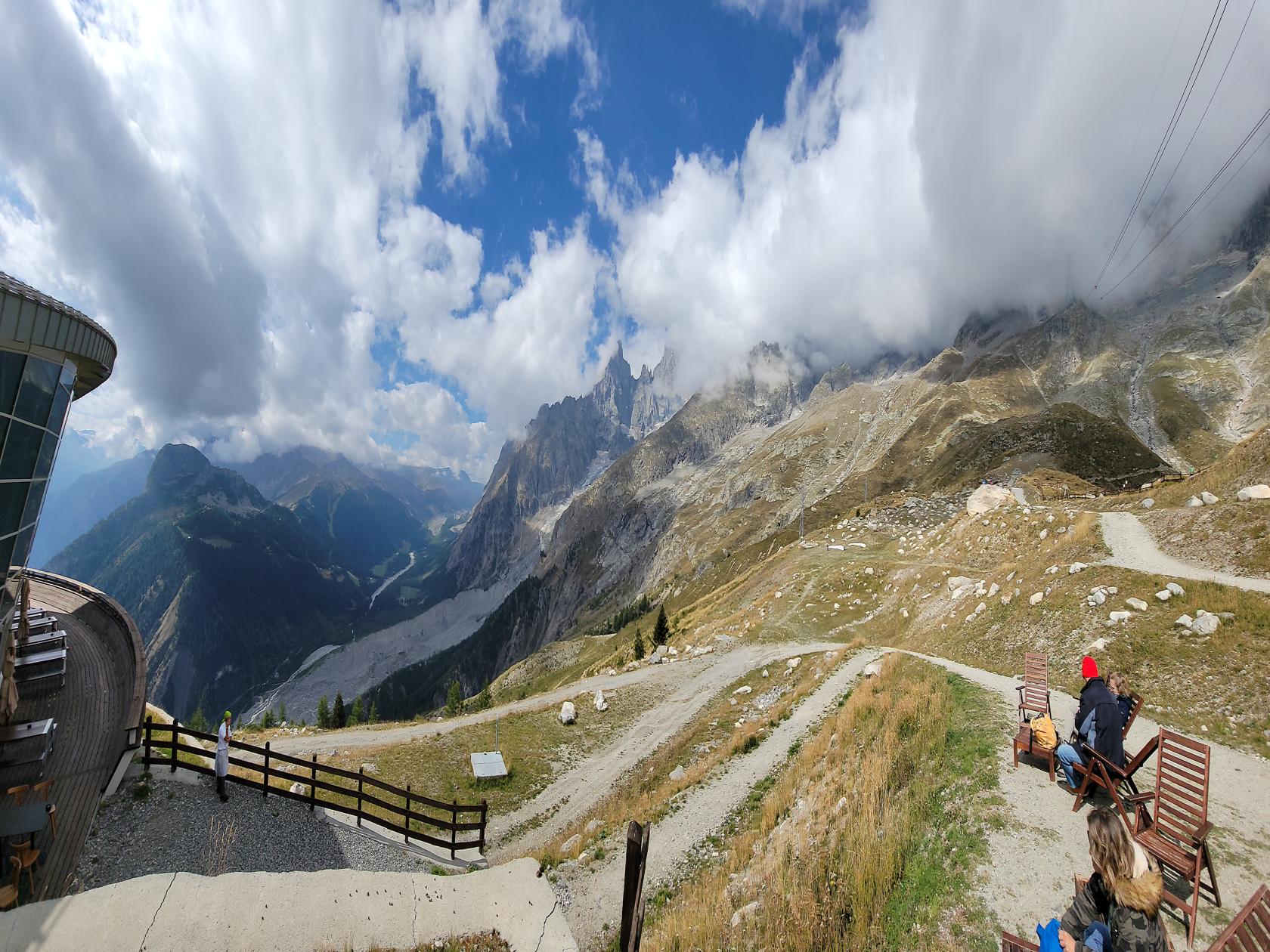
Or primary reason for being here was taking the Skyway Monte Bianco and visiting the mountain across from Mont Blanc, in order to get some good photographs of it and the valley of glaciers that it creates.
Helbronner and Mont Blanc
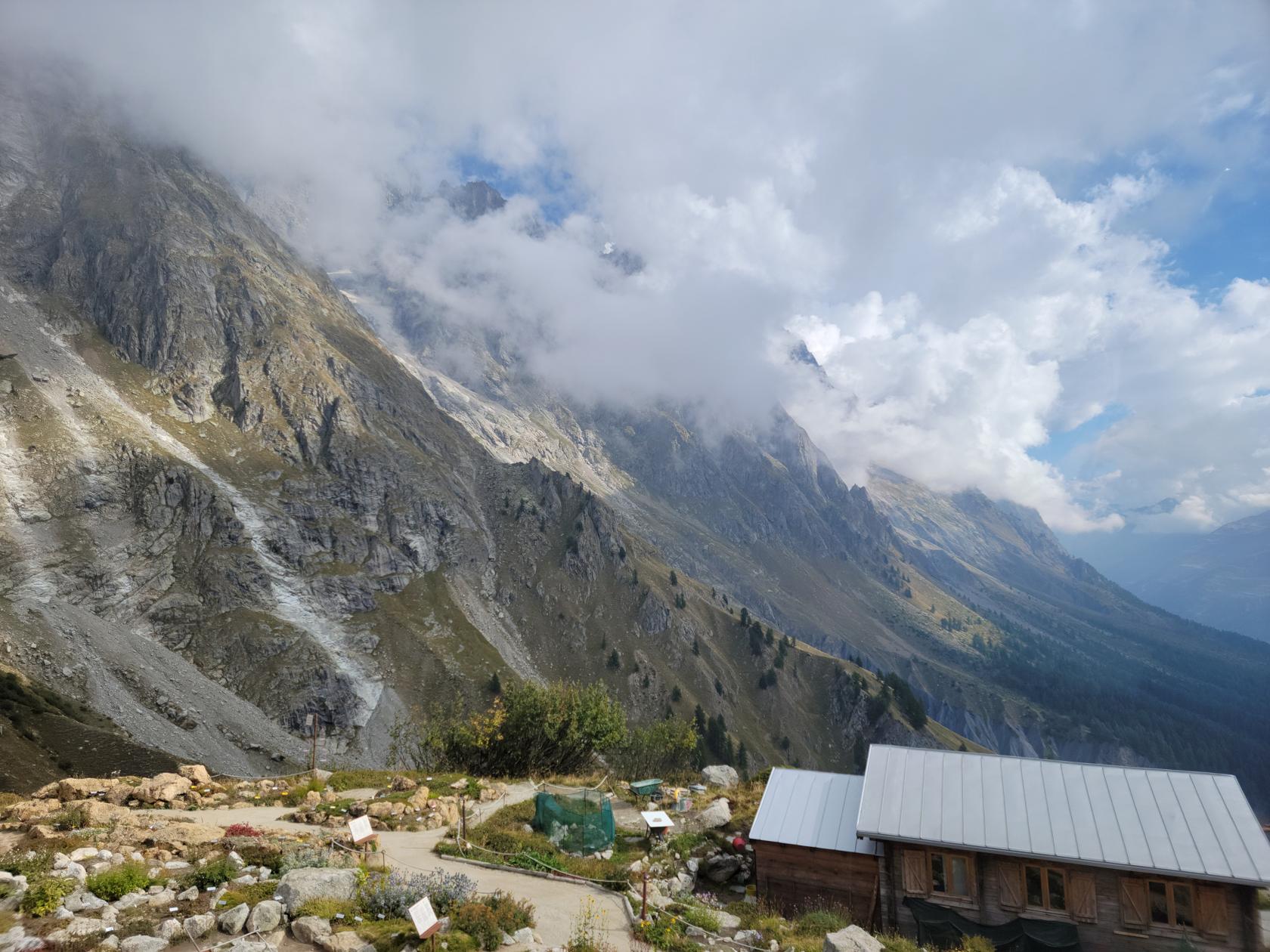
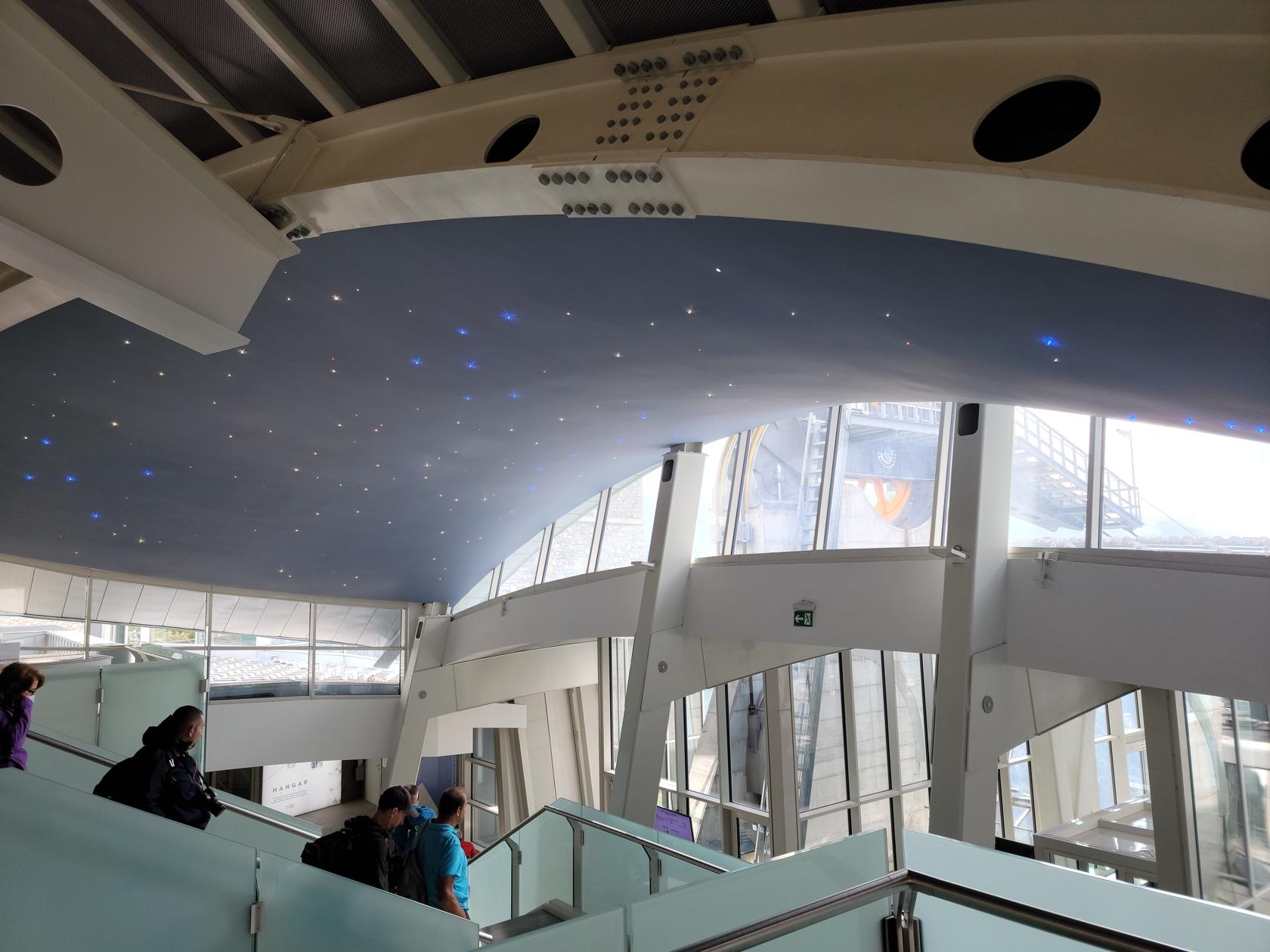
Once you board the cable car you ascend rapidly to the intermediate stop of where the Saussurea Alpine Botanical Gardens are, where you can stretch you legs and your soul.
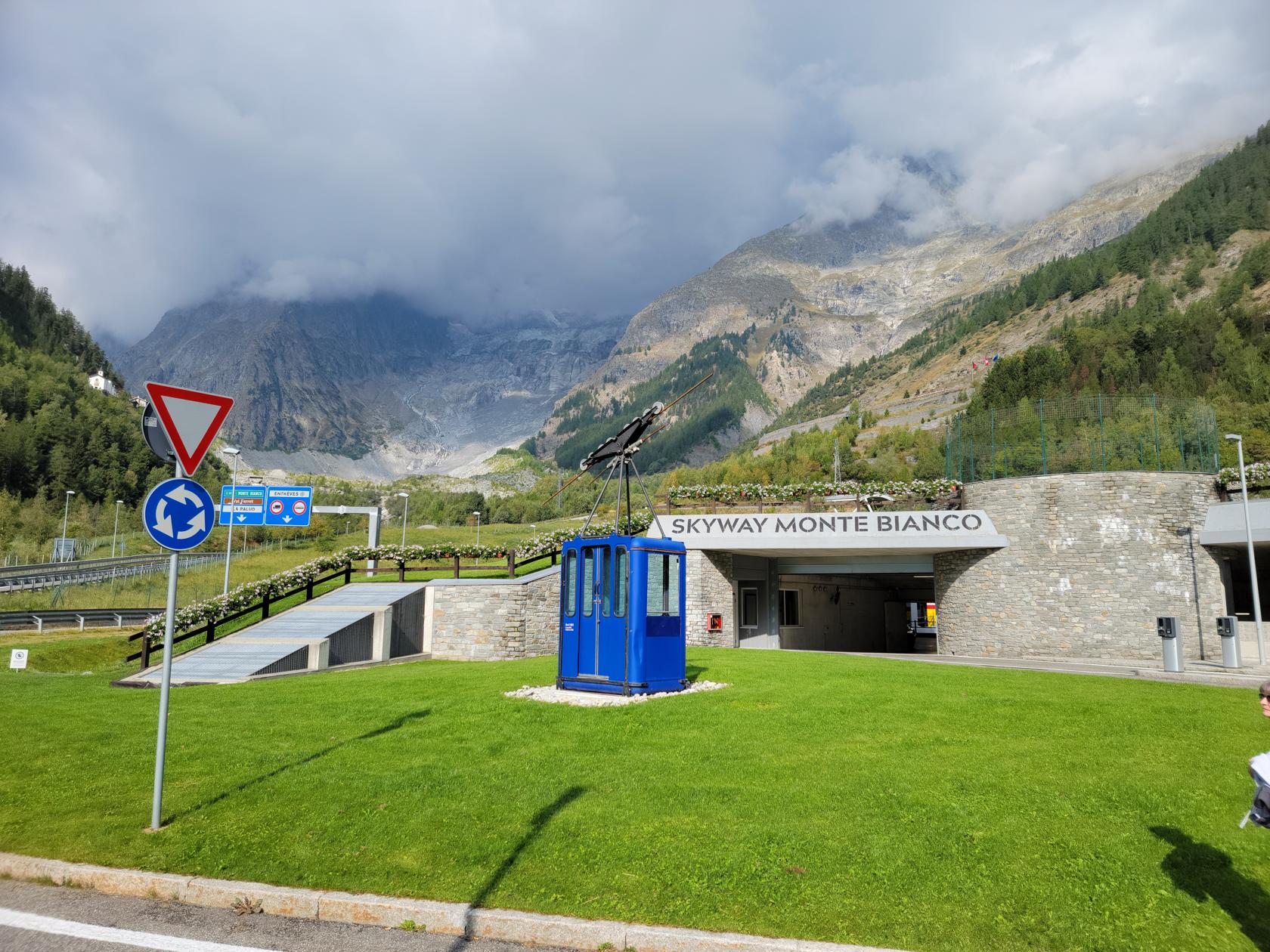
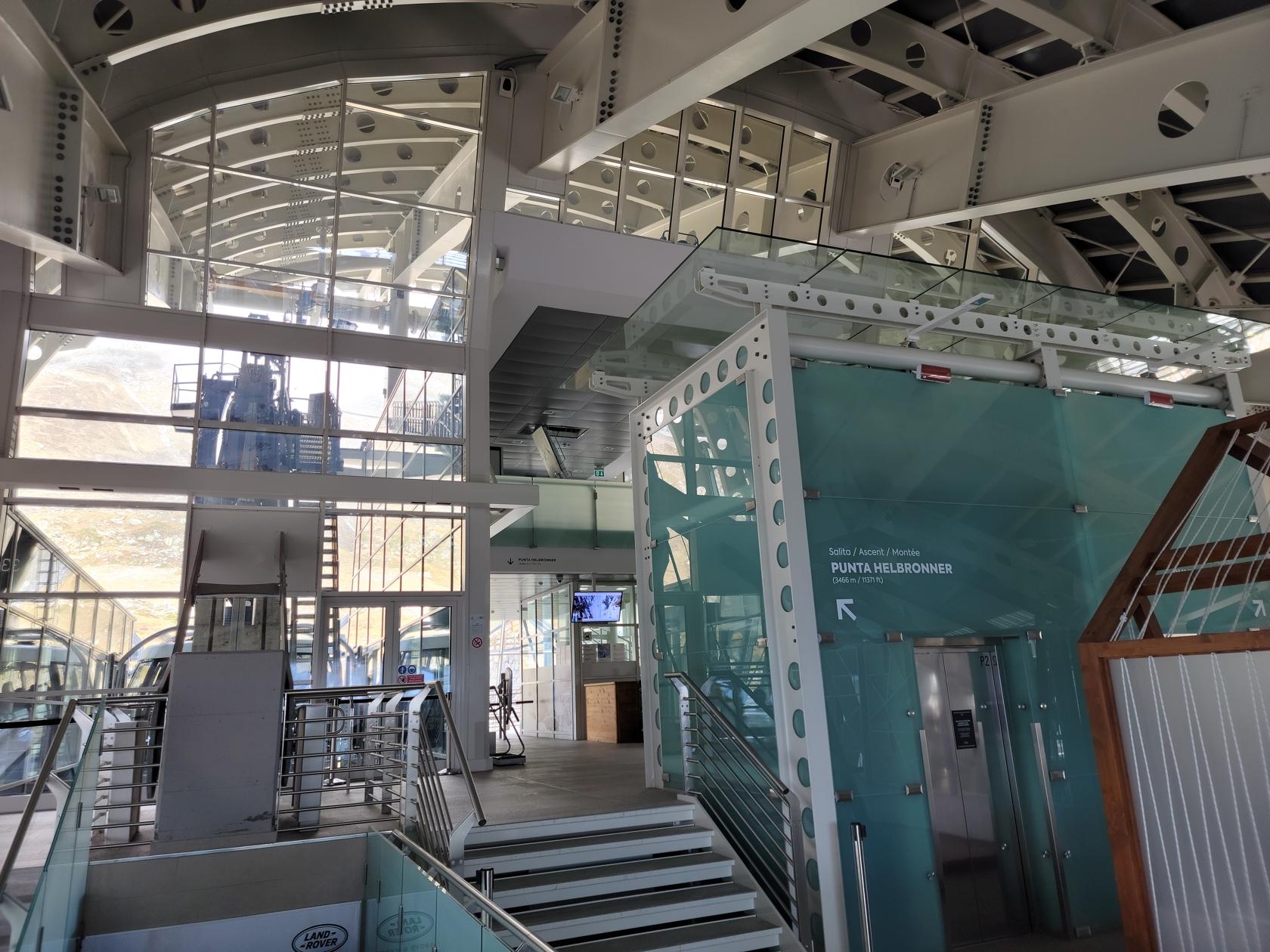
Courmayeur – The Skyway Monte Bianco – Cable Car Entrance
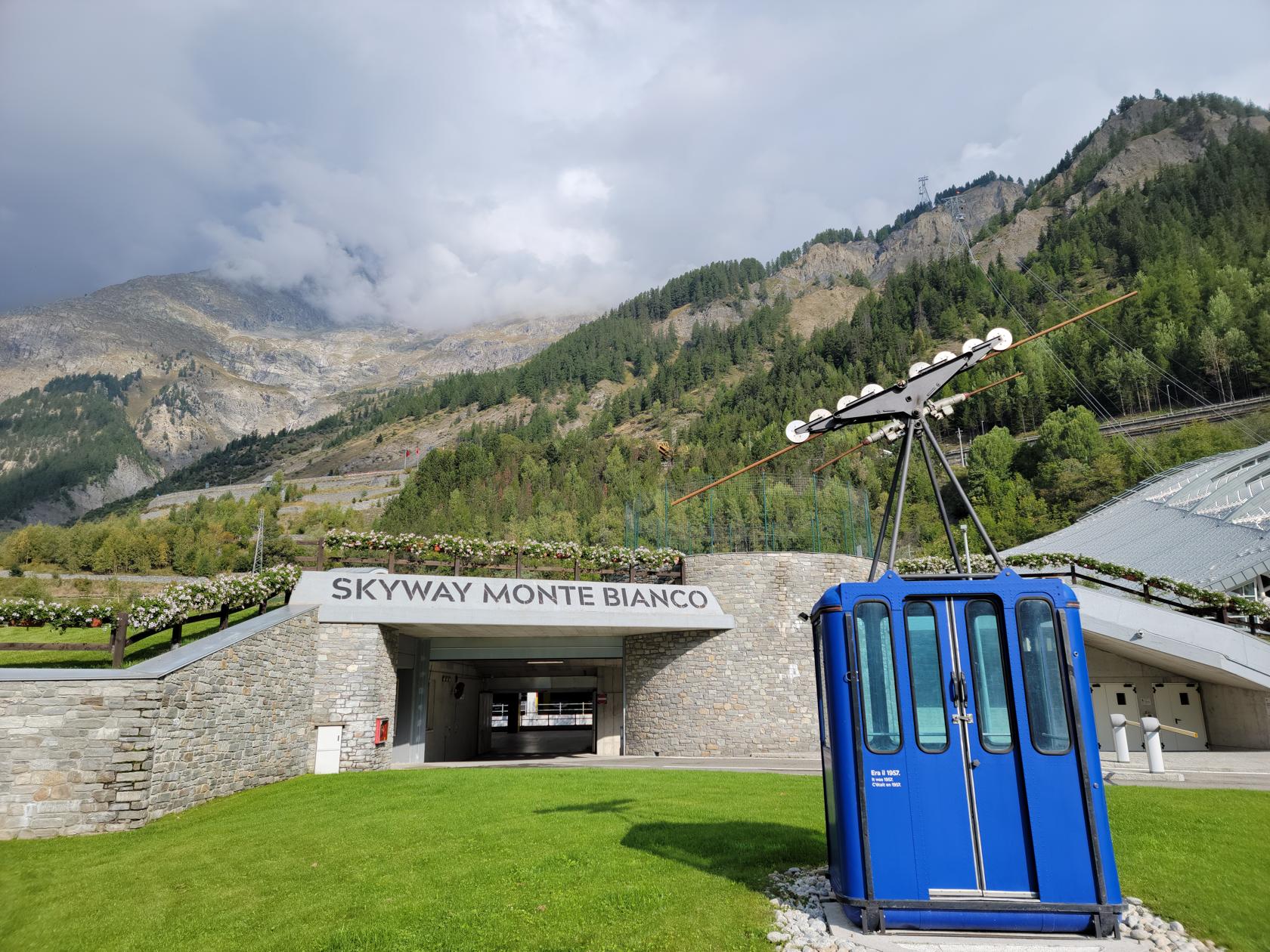
Courmayeur – The Skyway Monte Bianco – Cable Car Entrance
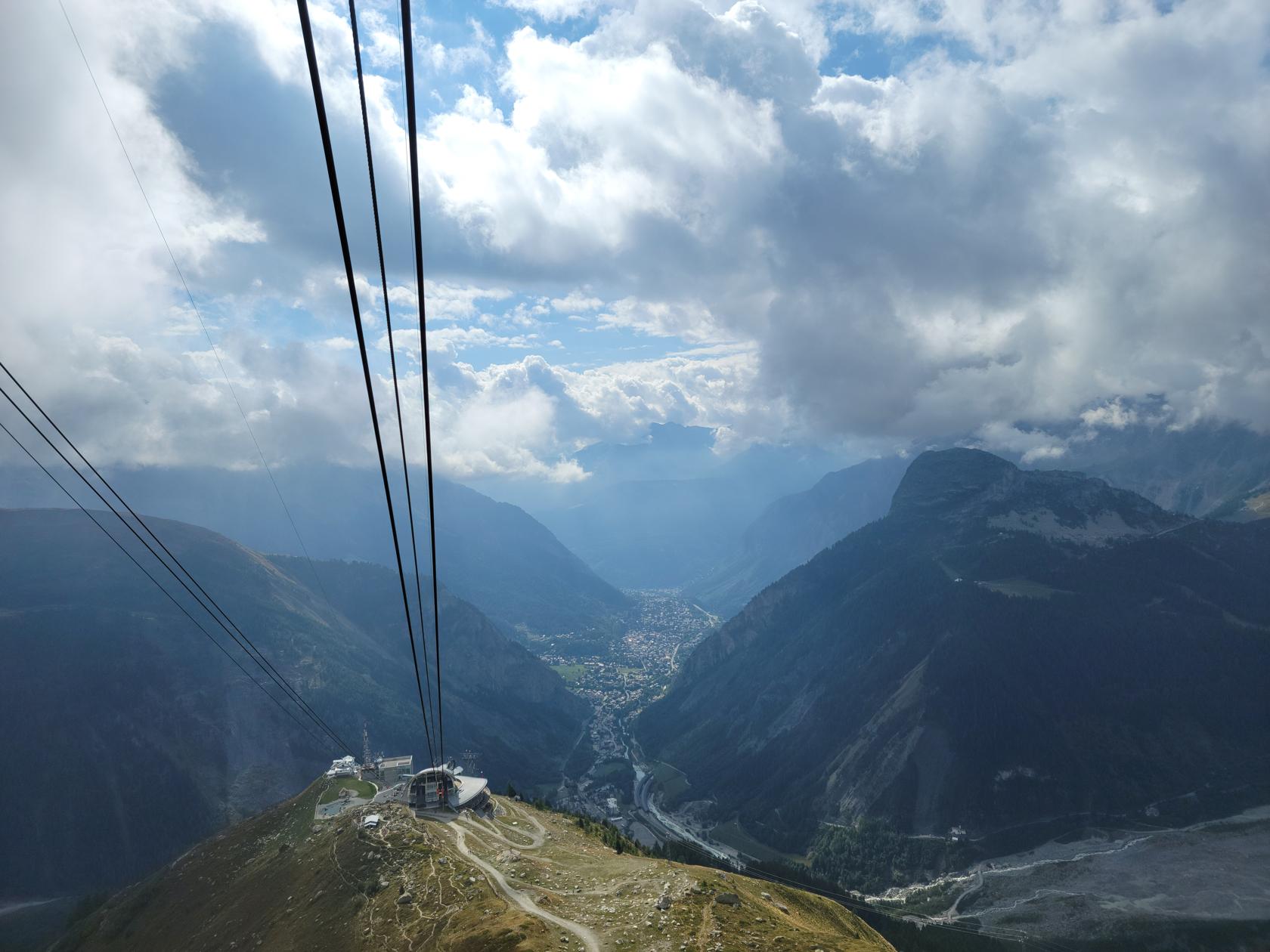
Courmayeur – The Skyway Monte Bianco – View From Cable Car
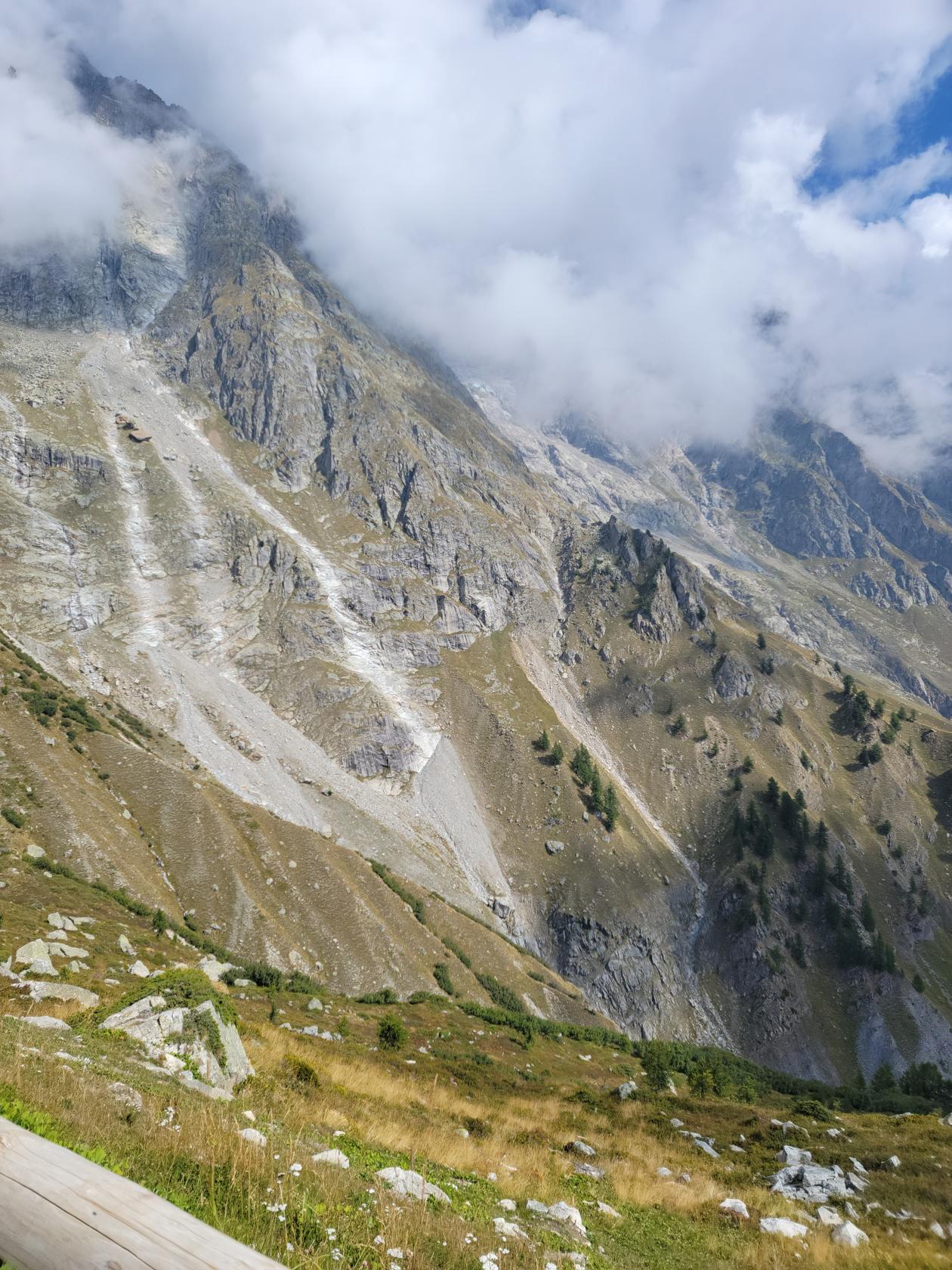
Courmayeur – The Skyway Monte Bianco – View From Cable Car – Mountain Face of Aiguilles Marbrées
Courmayeur – The Skyway Monte Bianco – View From Cable Car – Mountain Face of Aiguilles Marbrées
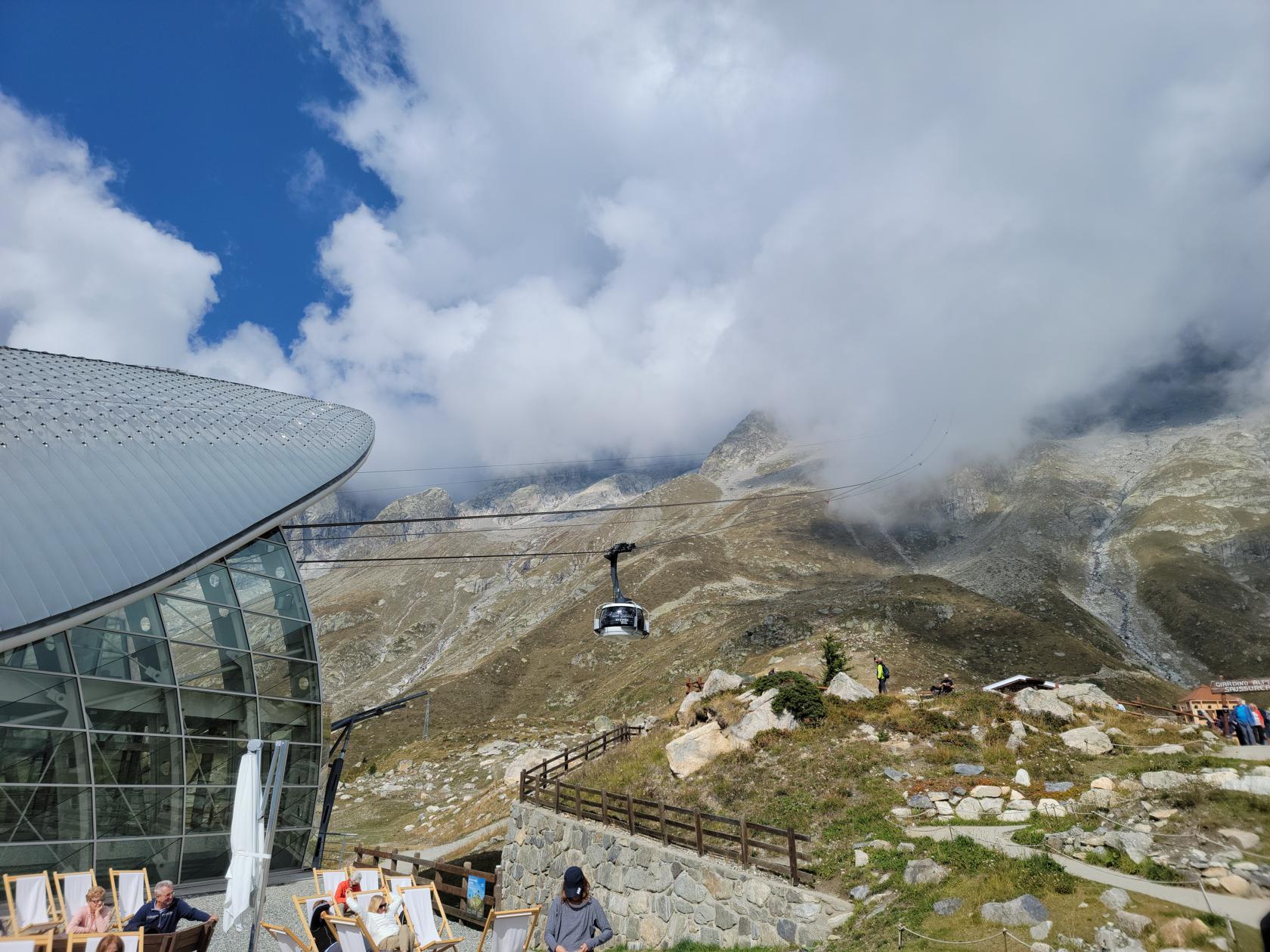
Courmayeur – The Skyway Monte Bianco – View From Cable Car – Second Cable Car at Saussurea Alpine Botanical Garden
Courmayeur – The Skyway Monte Bianco – View From Cable Car – Second Cable Car at Saussurea Alpine Botanical Garden
Courmayeur – The Skyway Monte Bianco – View From Cable Car – The Aosta Valley Floor
Courmayeur – The Skyway Monte Bianco – View From Cable Car – Cloud Shrowded Mont Blanc
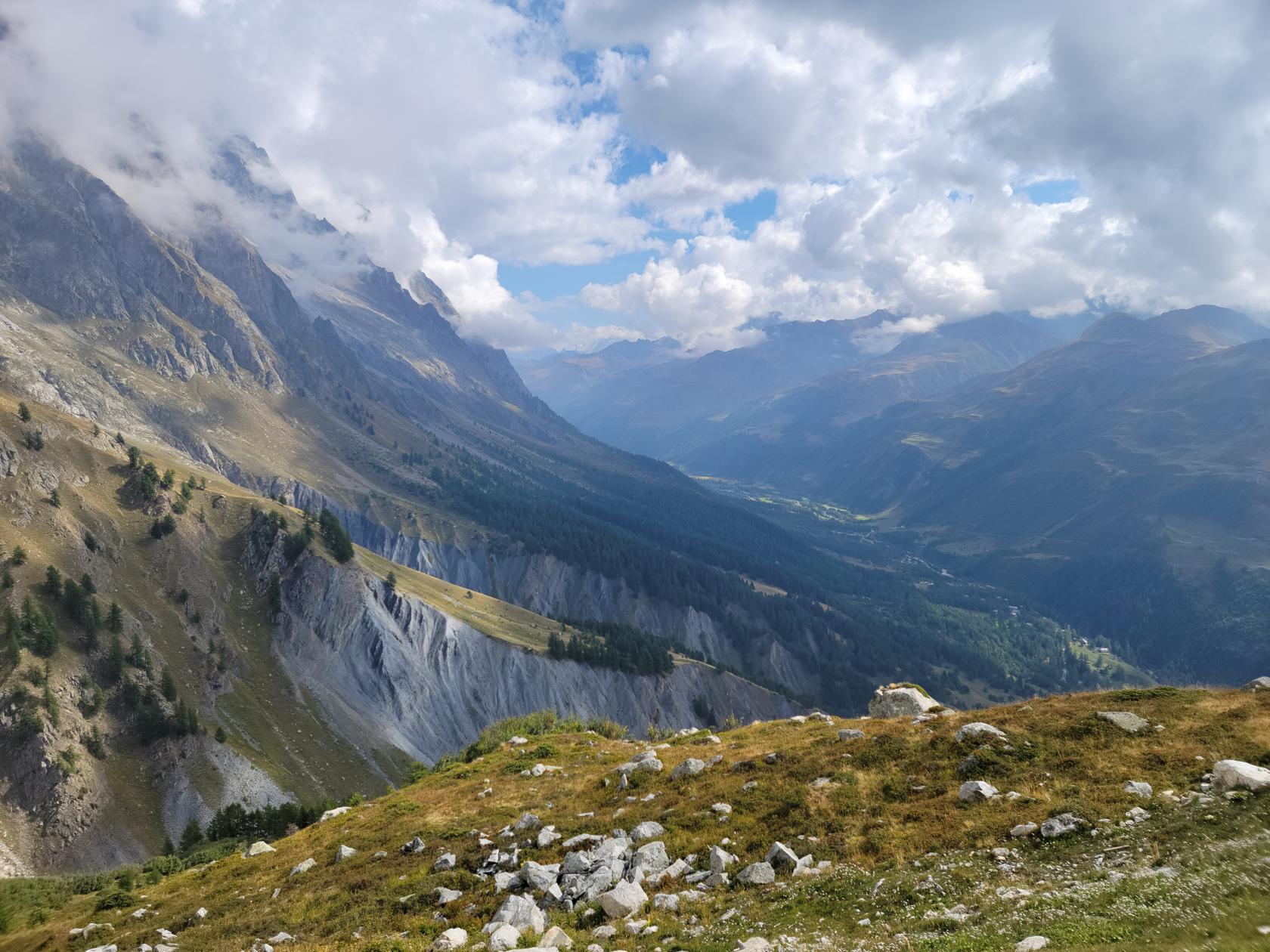
Courmayeur – The Skyway Monte Bianco – The Way Down – Aosta Valley
Courmayeur – The Skyway Monte Bianco – The Way Down – Aosta Valley
Courmayeur – The Skyway Monte Bianco – The Way Down – Aosta Valley
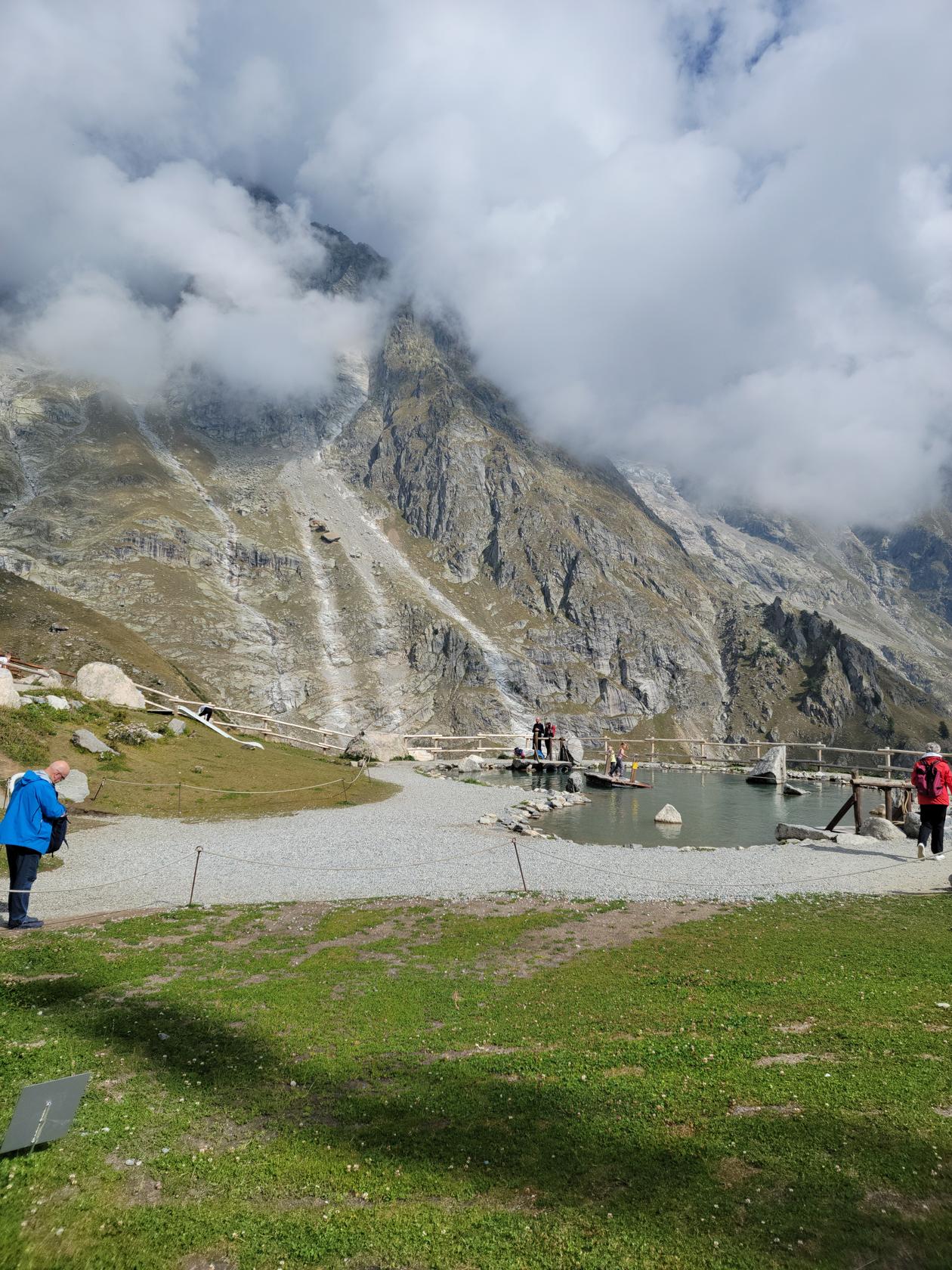
There are many things you can do here besides enjoy the cafe or bar. There are hiking trails all over the mountain, and within a few minutes you can be totally alone, hiking a few minutes up any of the trails. If not to discover, perchance to enjoy a different view of the mountain side, which in these parts, is steep enough to tax anyone’s endurance.
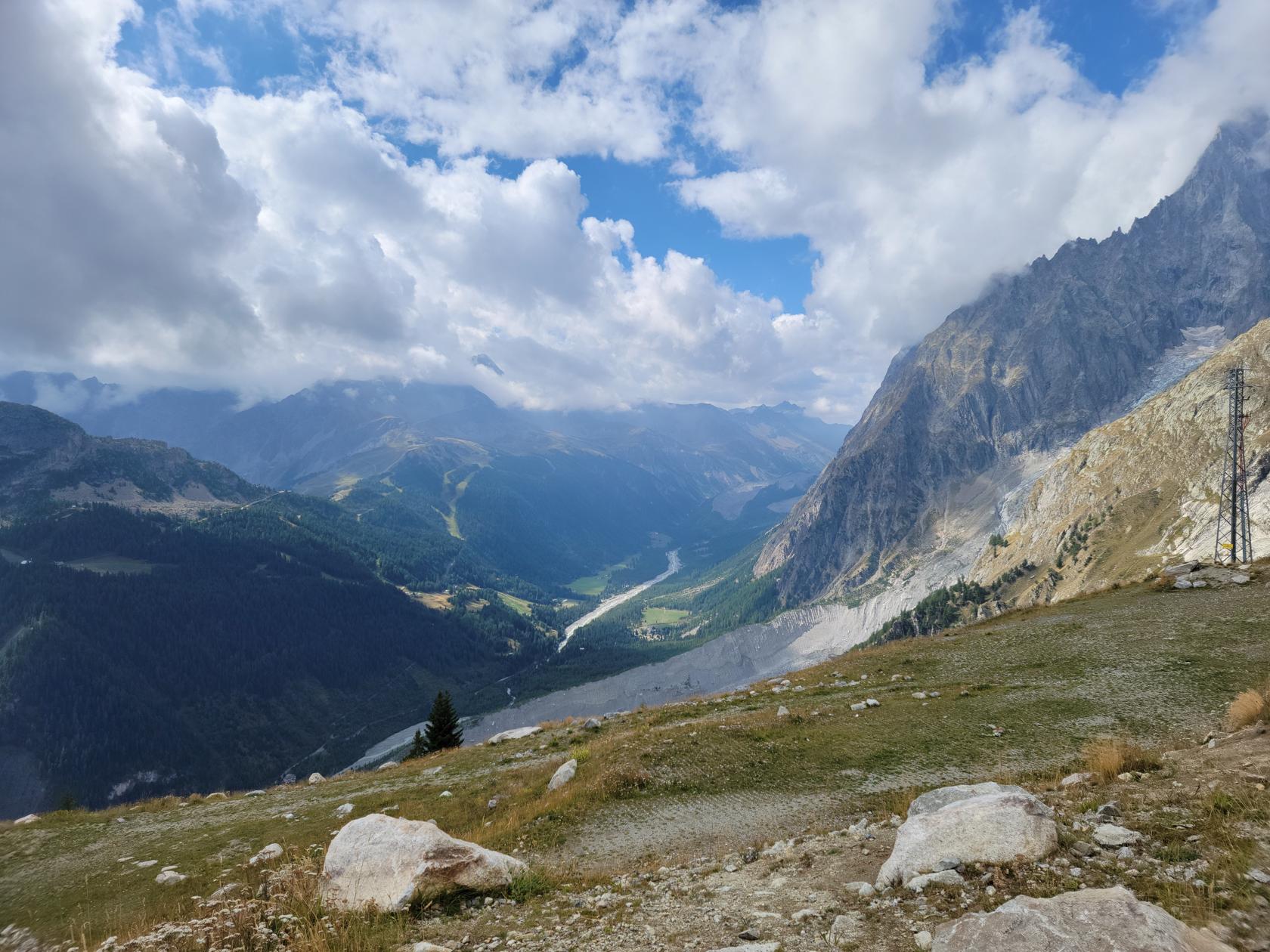
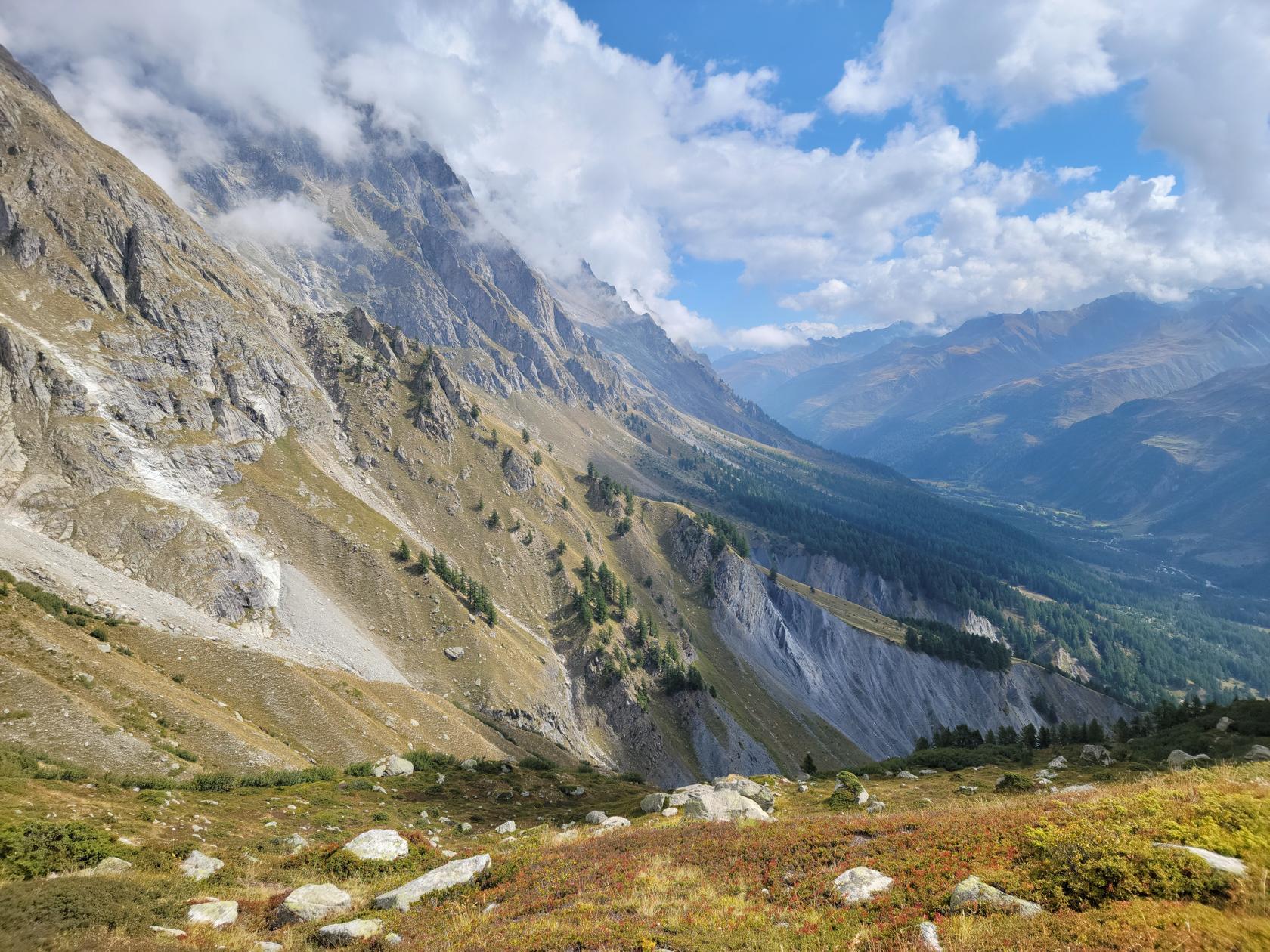
Courmayeur – The Skyway Monte Bianco – Veni Valley from the Saussurea Alpine Botanical Garden
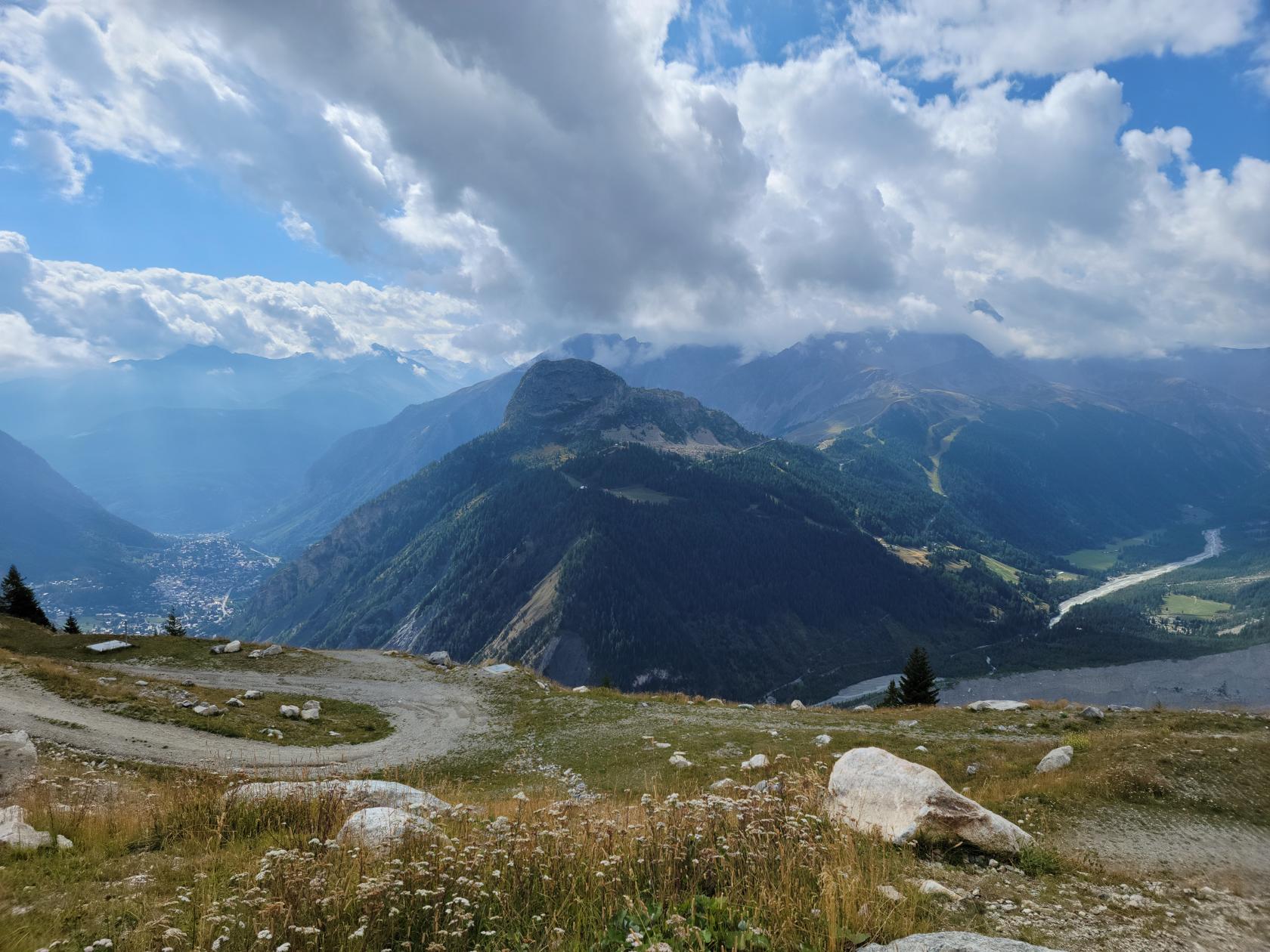
Courmayeur – The Skyway Monte Bianco – Aosta Valley the Saussurea Alpine Botanical Garden
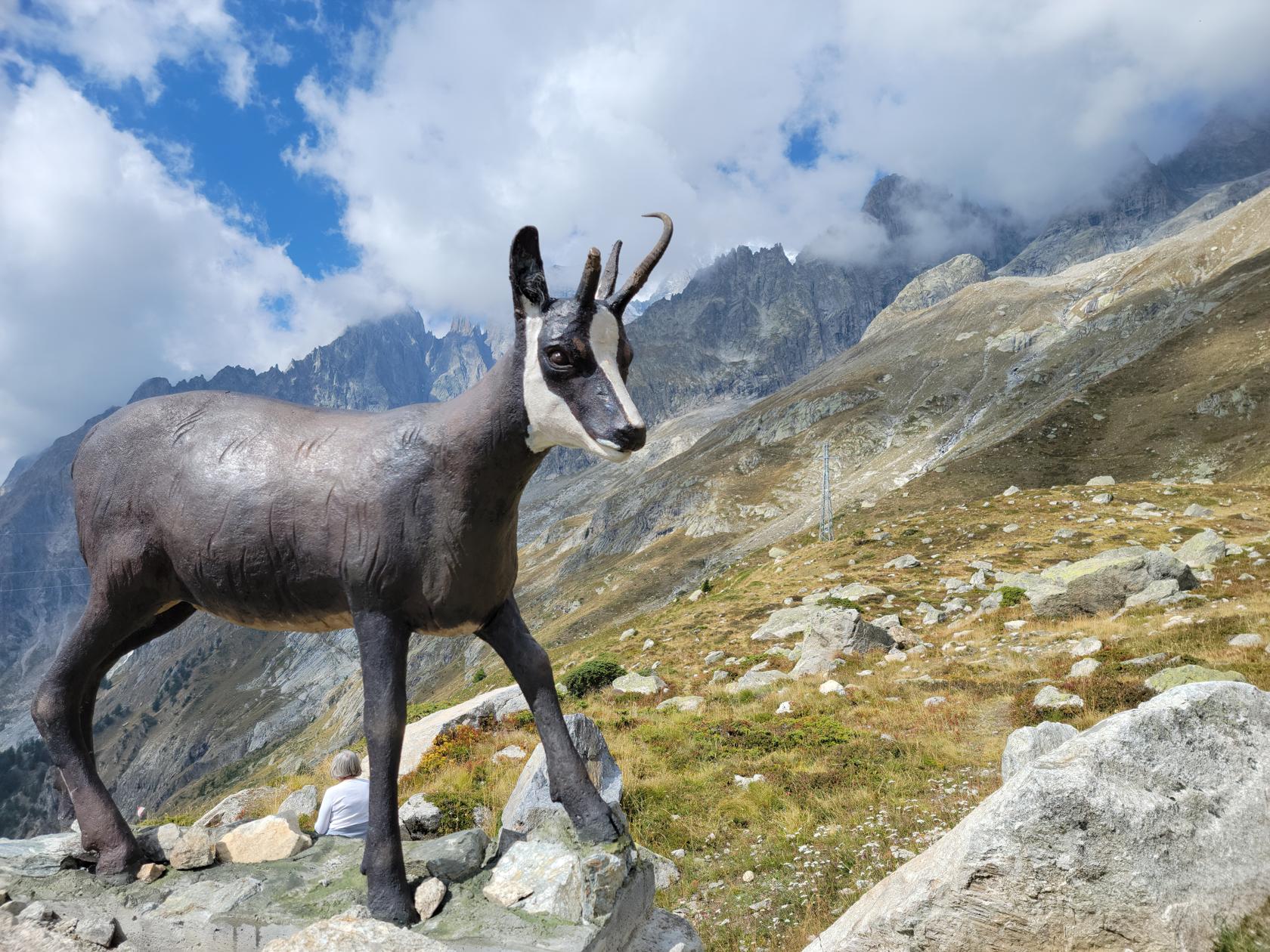
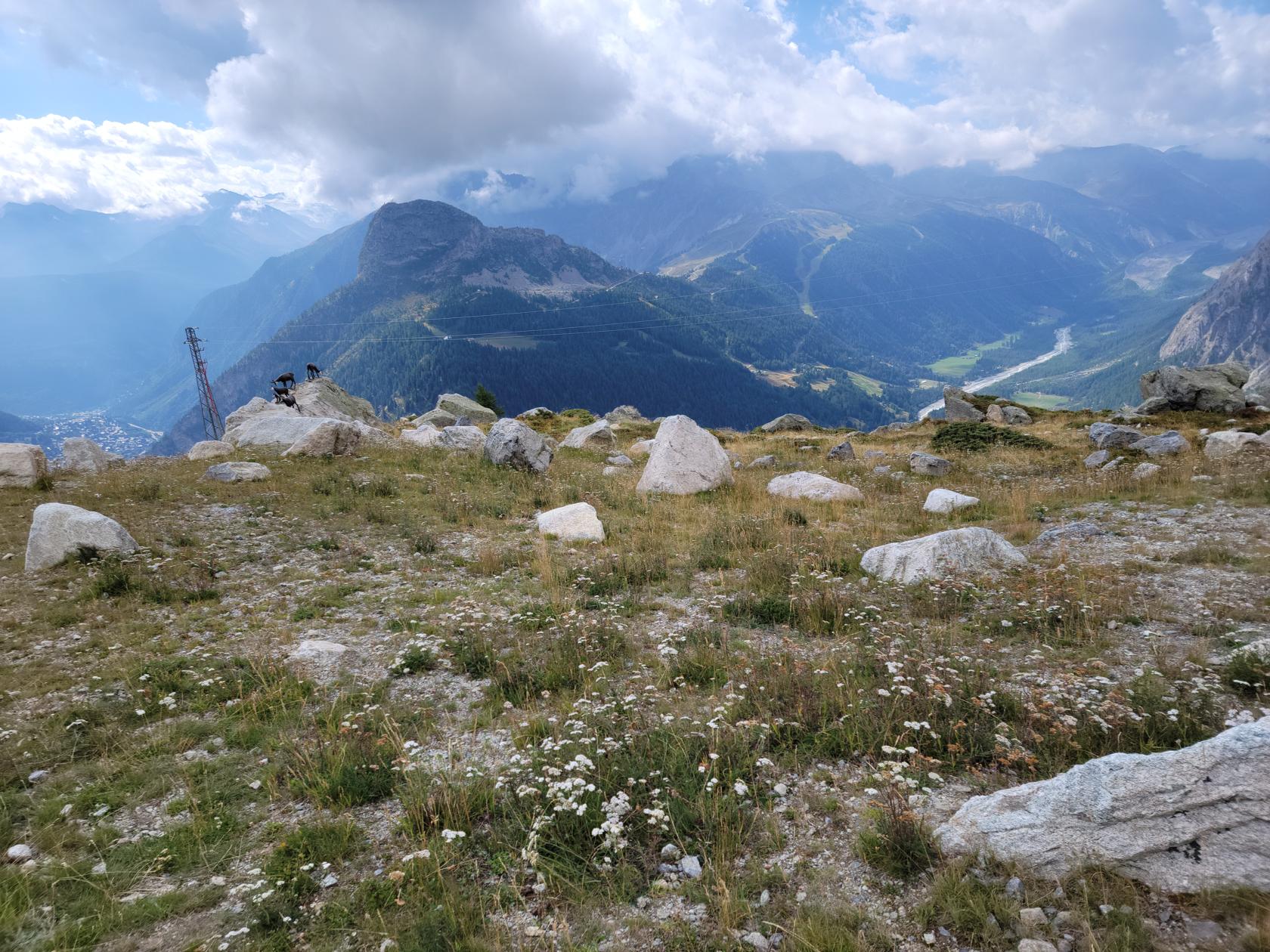
Courmayeur – The Skyway Monte Bianco – Mountain Goat at the Saussurea Alpine Botanical Garden
Courmayeur – The Skyway Monte Bianco – Aosta from the Saussurea Alpine Botanical Garden
Courmayeur – The Skyway Monte Bianco – Stella at the Saussurea Alpine Botanical Garden
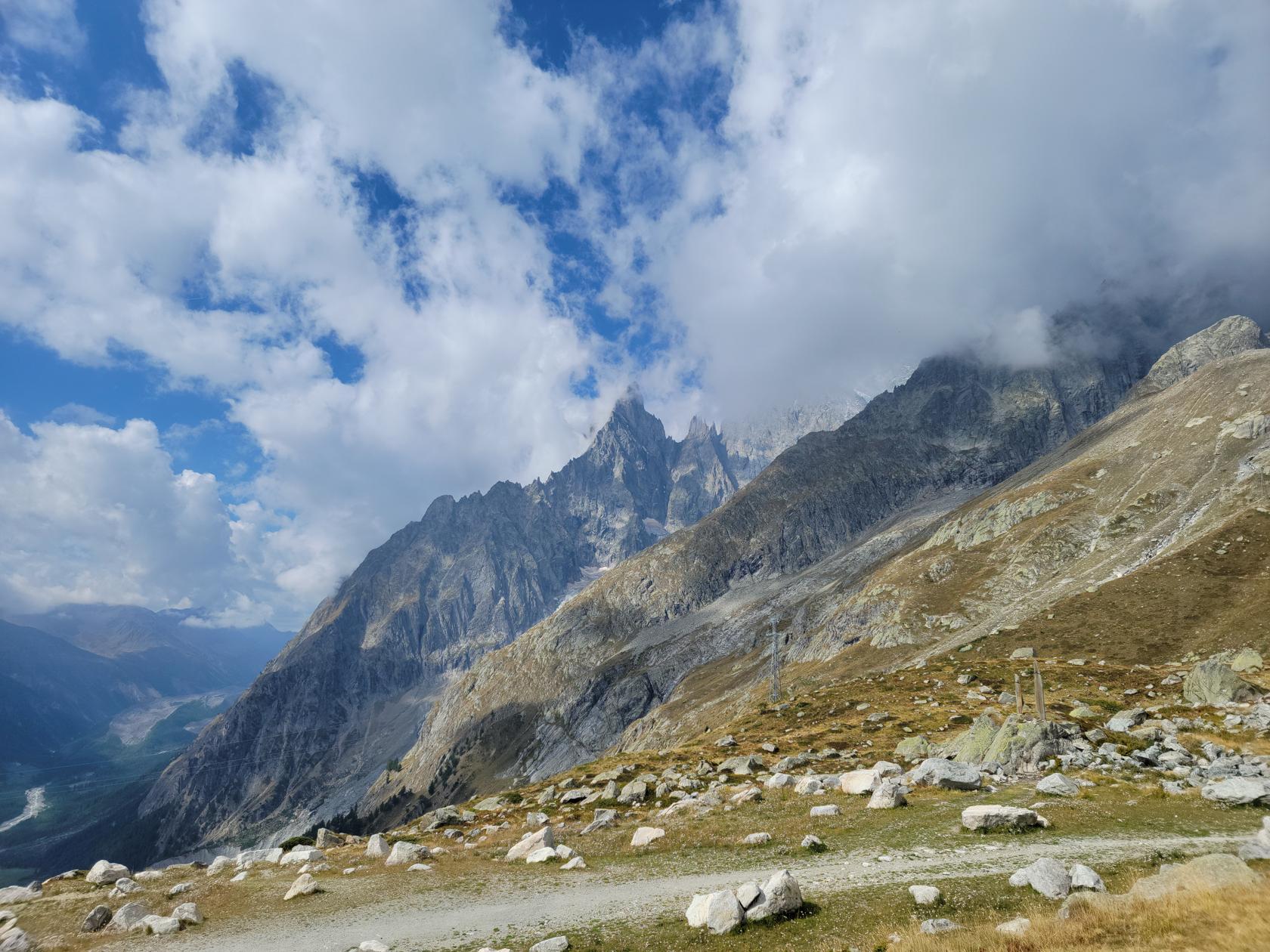
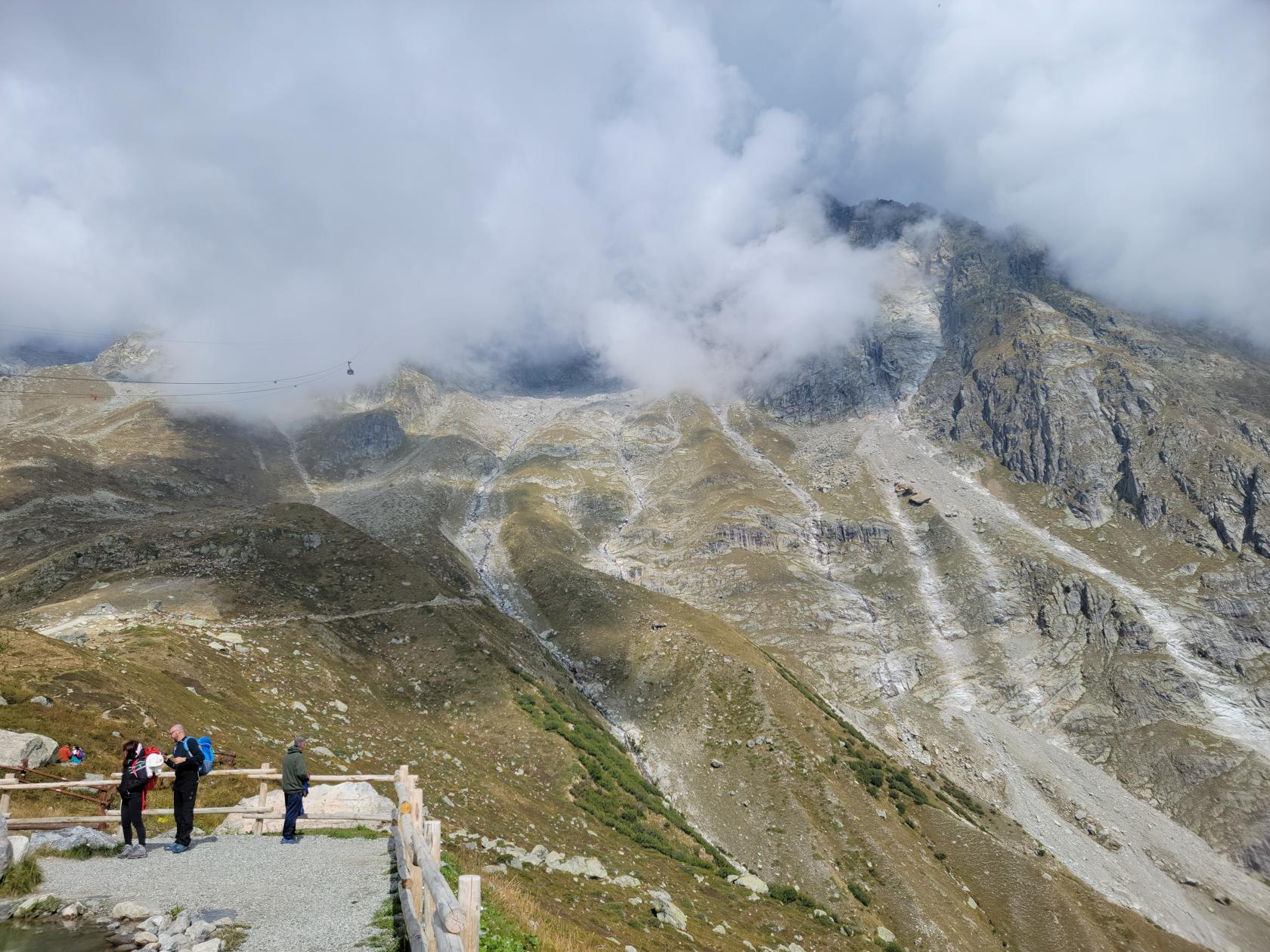
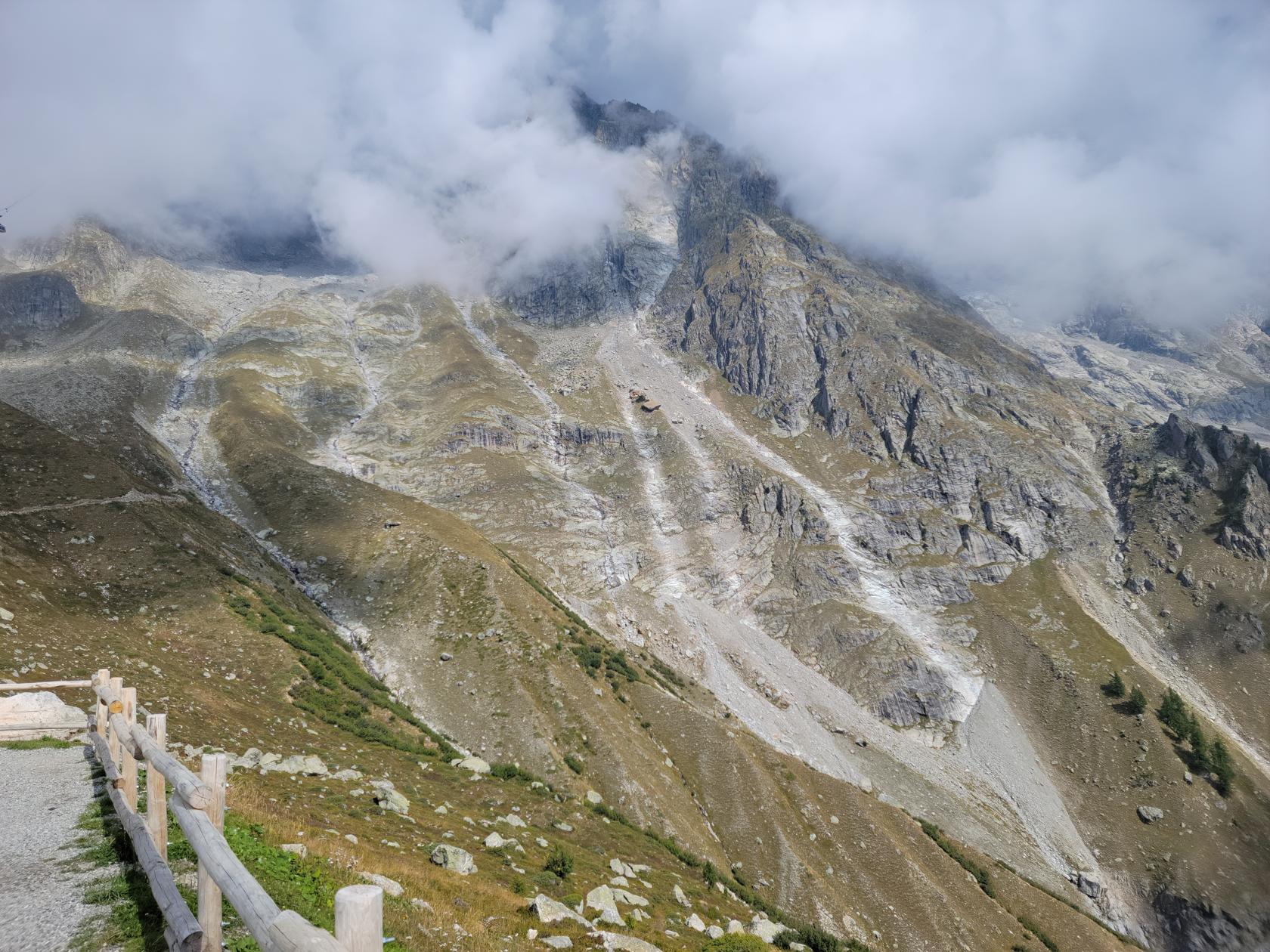
Courmayeur – The Skyway Monte Bianco – Brenva Glacier and Punta Baretti
Courmayeur – The Skyway Monte Bianco – Saussurea Alpine Botanical Garden
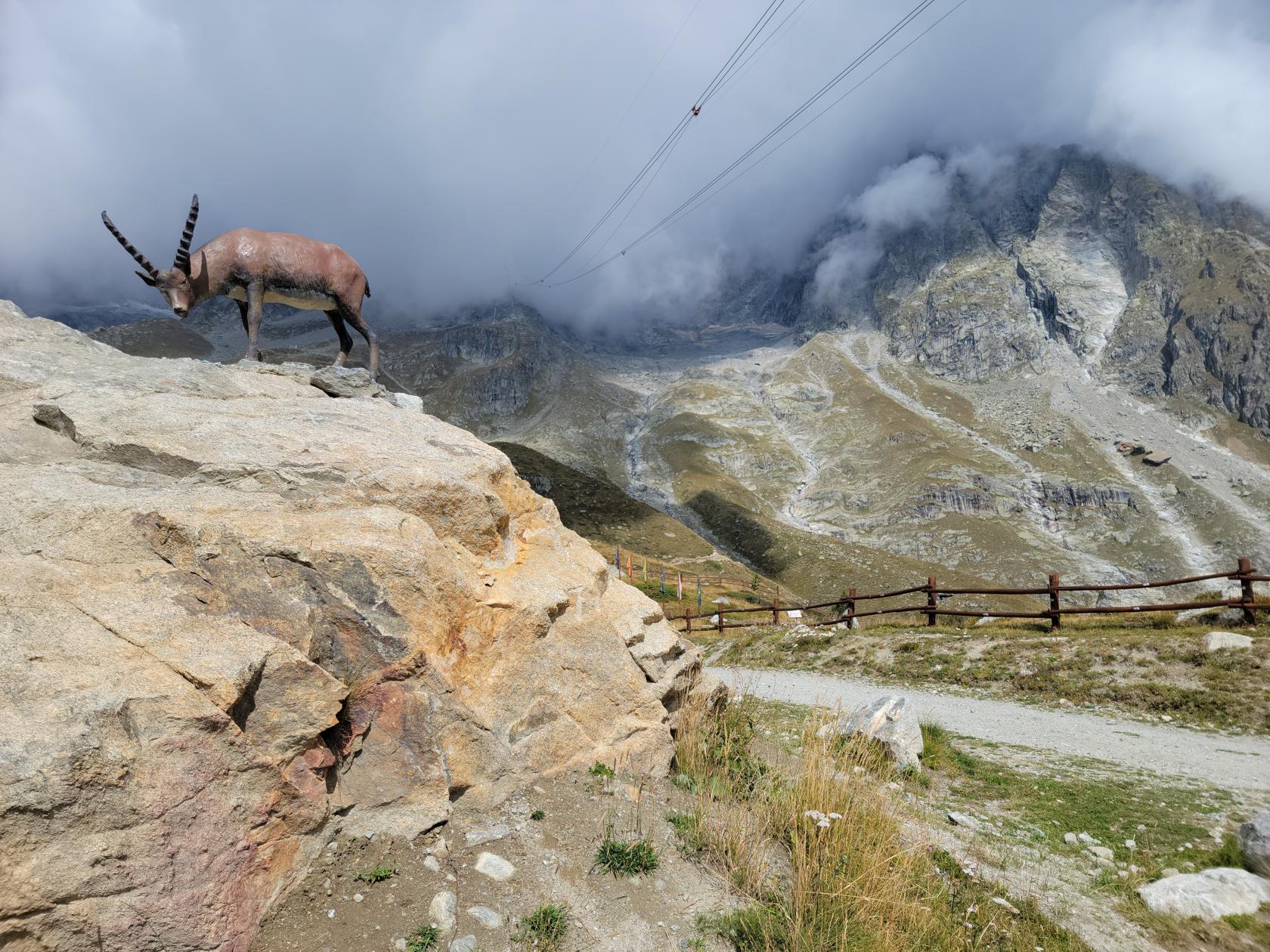
Courmayeur – The Skyway Monte Bianco – Fake Ibex at the Saussurea Alpine Botanical Garden
Courmayeur – The Skyway Monte Bianco – Brenva Glacier and Punta Baretti
Courmayeur – The Skyway Monte Bianco – Brenva Glacier and Punta Baretti
Courmayeur – The Skyway Monte Bianco – Brenva Glacier and Punta Baretti
Courmayeur – The Skyway Monte Bianco – Brenva Glacier and Punta Baretti
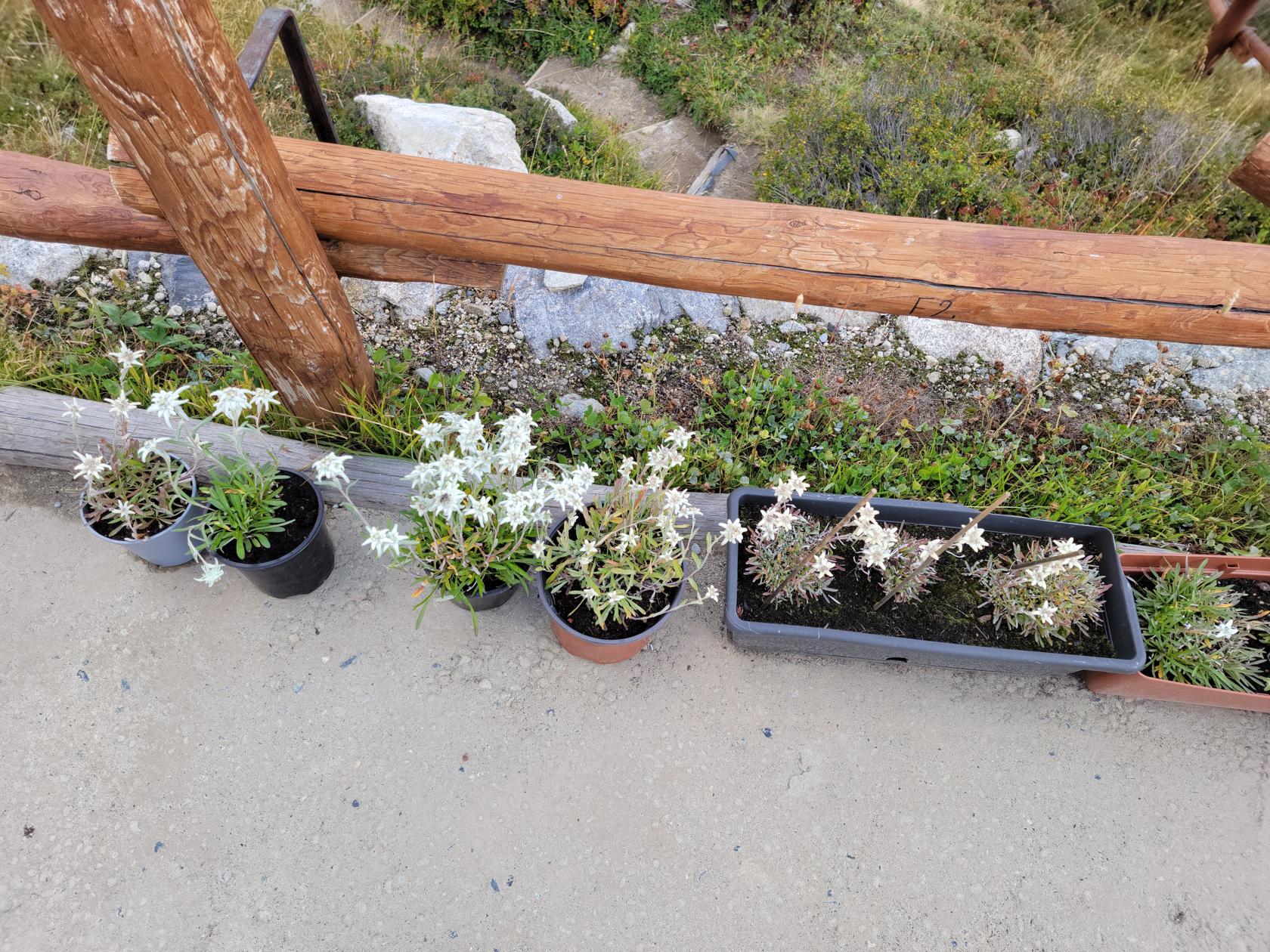
Courmayeur – The Skyway Monte Bianco – Edelweiß at the Saussurea Alpine Botanical Garden
Courmayeur – The Skyway Monte Bianco – Stop at Saussurea Alpine Botanical Garden
Courmayeur – The Skyway Monte Bianco – Stop at Saussurea Alpine Botanical Garden
Courmayeur – The Skyway Monte Bianco – Stop at Saussurea Alpine Botanical Garden
Courmayeur – The Skyway Monte Bianco – Stop at Saussurea Alpine Botanical Garden
Courmayeur – The Skyway Monte Bianco – Stop at Saussurea Alpine Botanical Garden
Courmayeur – The Skyway Monte Bianco – Stop at Saussurea Alpine Botanical Garden
Courmayeur – The Skyway Monte Bianco – Halfway Point
Courmayeur – The Skyway Monte Bianco – Stop at Saussurea Alpine Botanical Garden
Pont Helbronner
Courmayeur – The Skyway Monte Bianco – View From Cable Car – Mont and Glacier du Géant
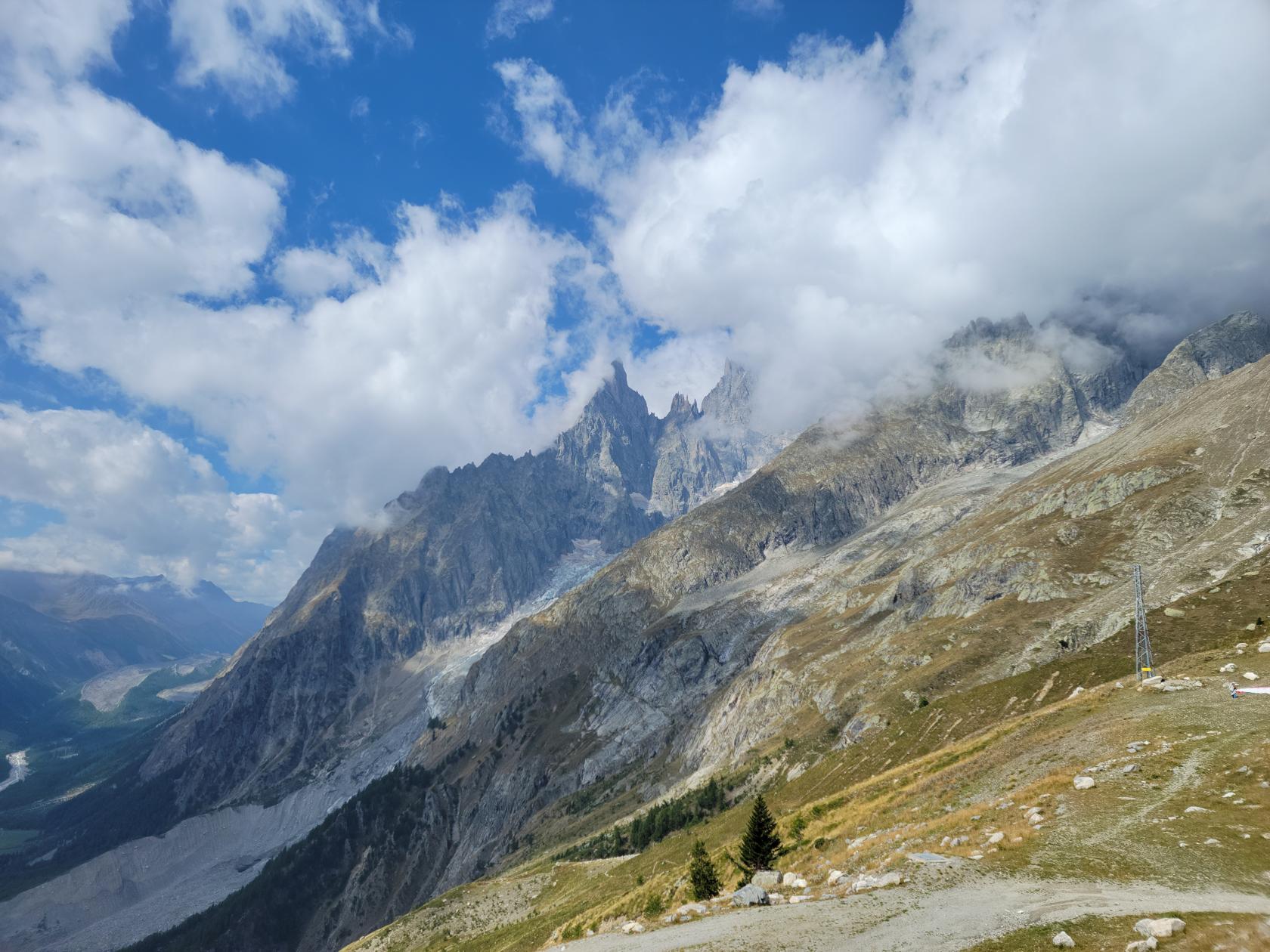
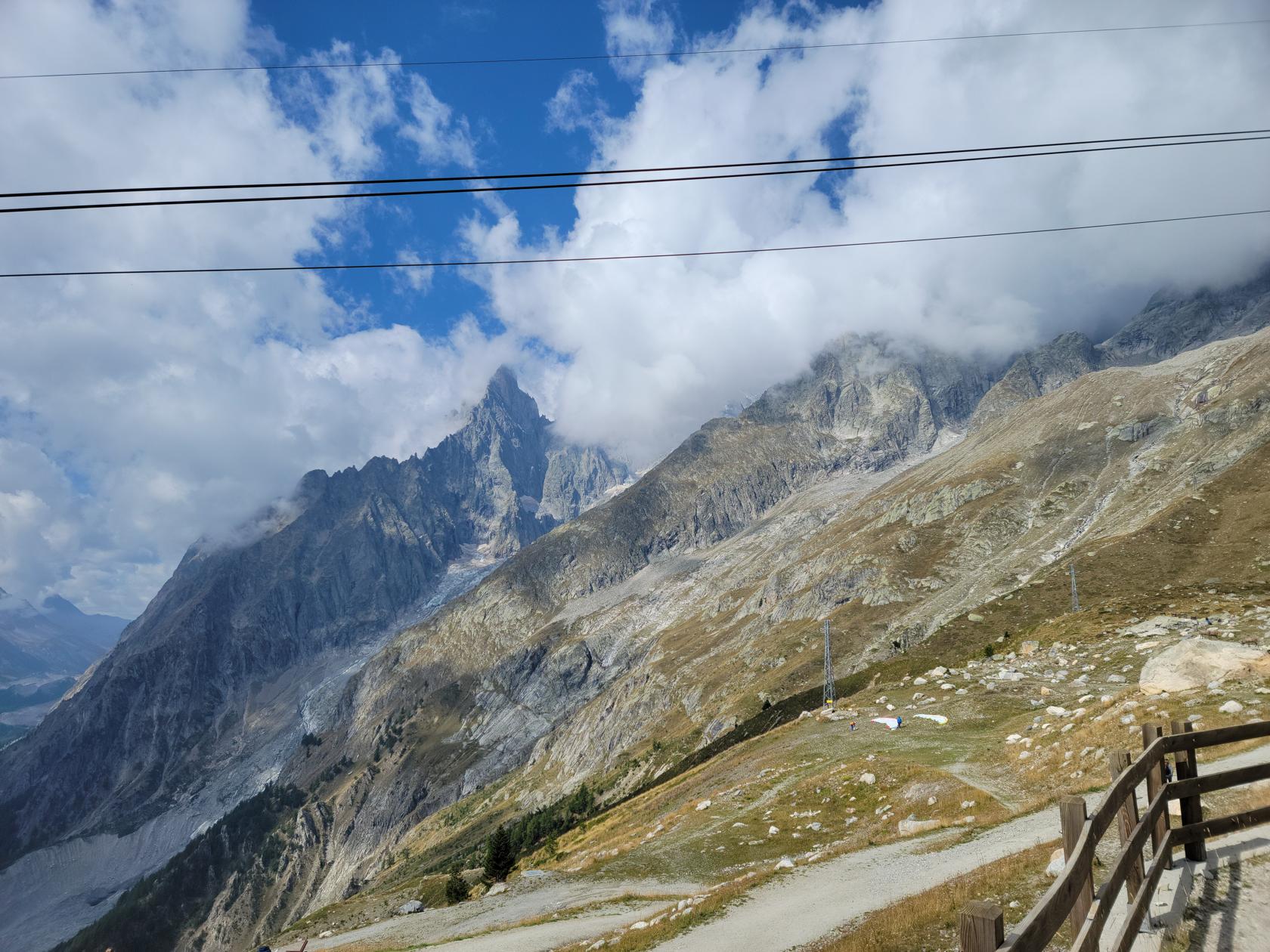
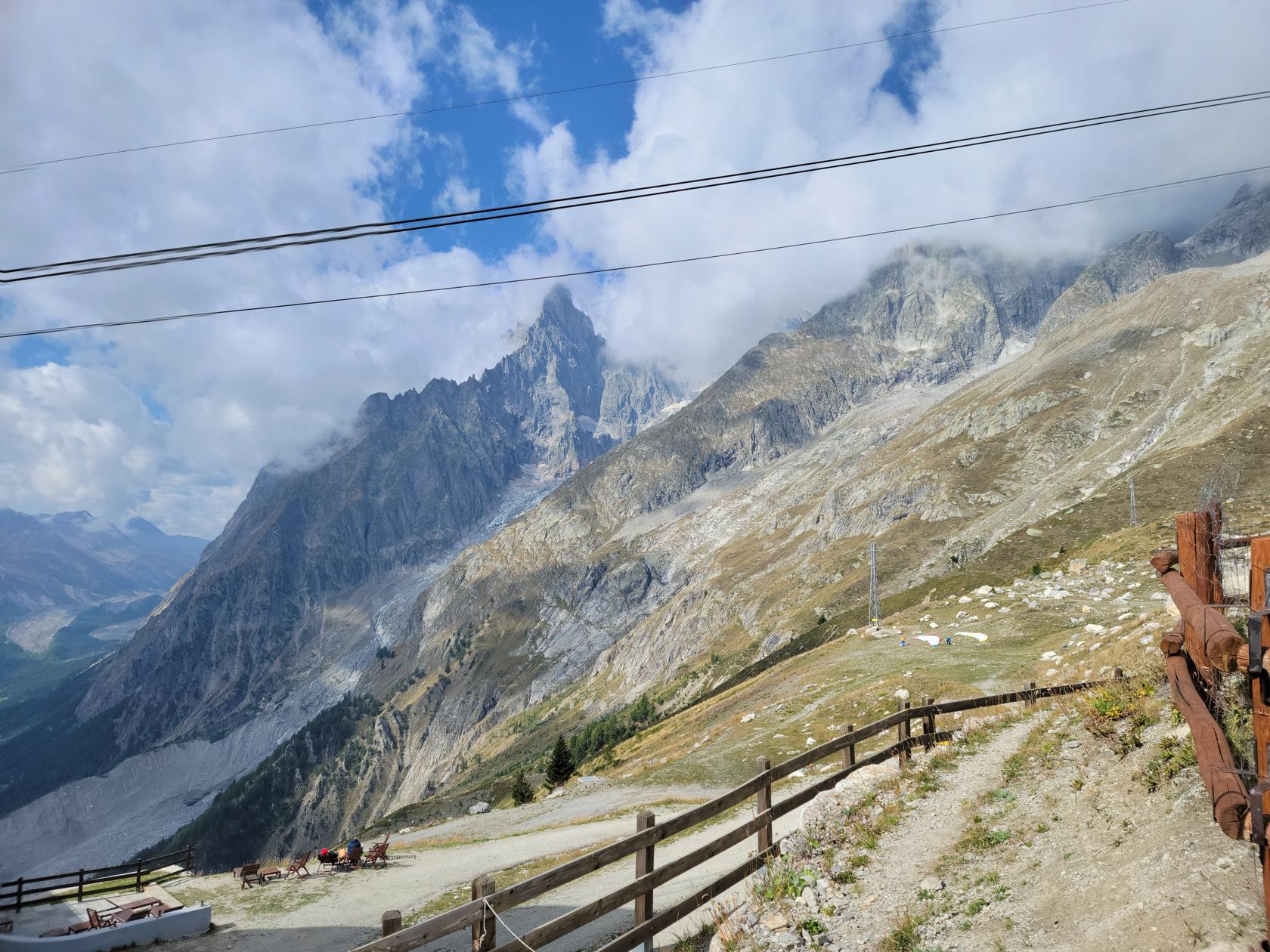
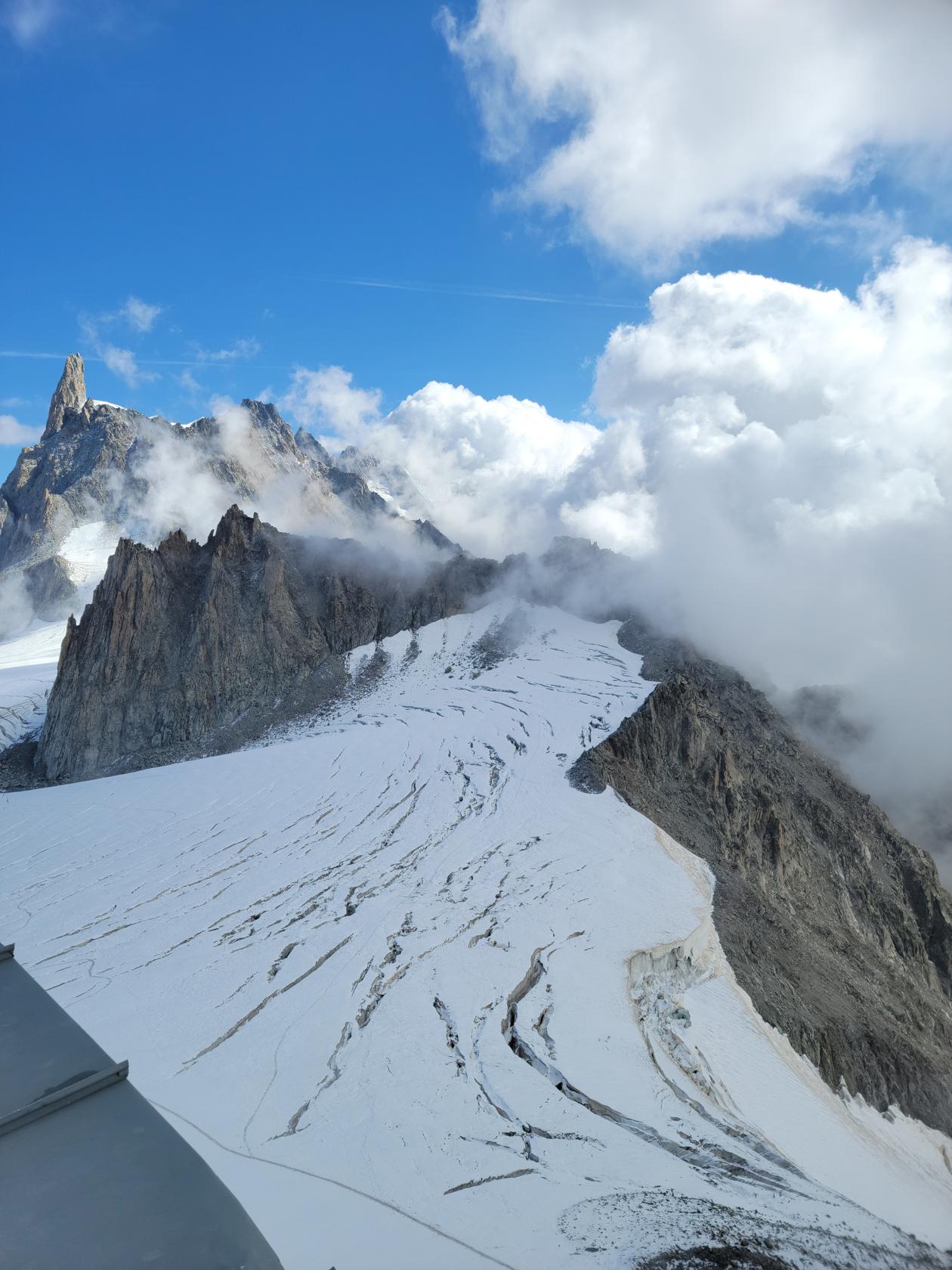
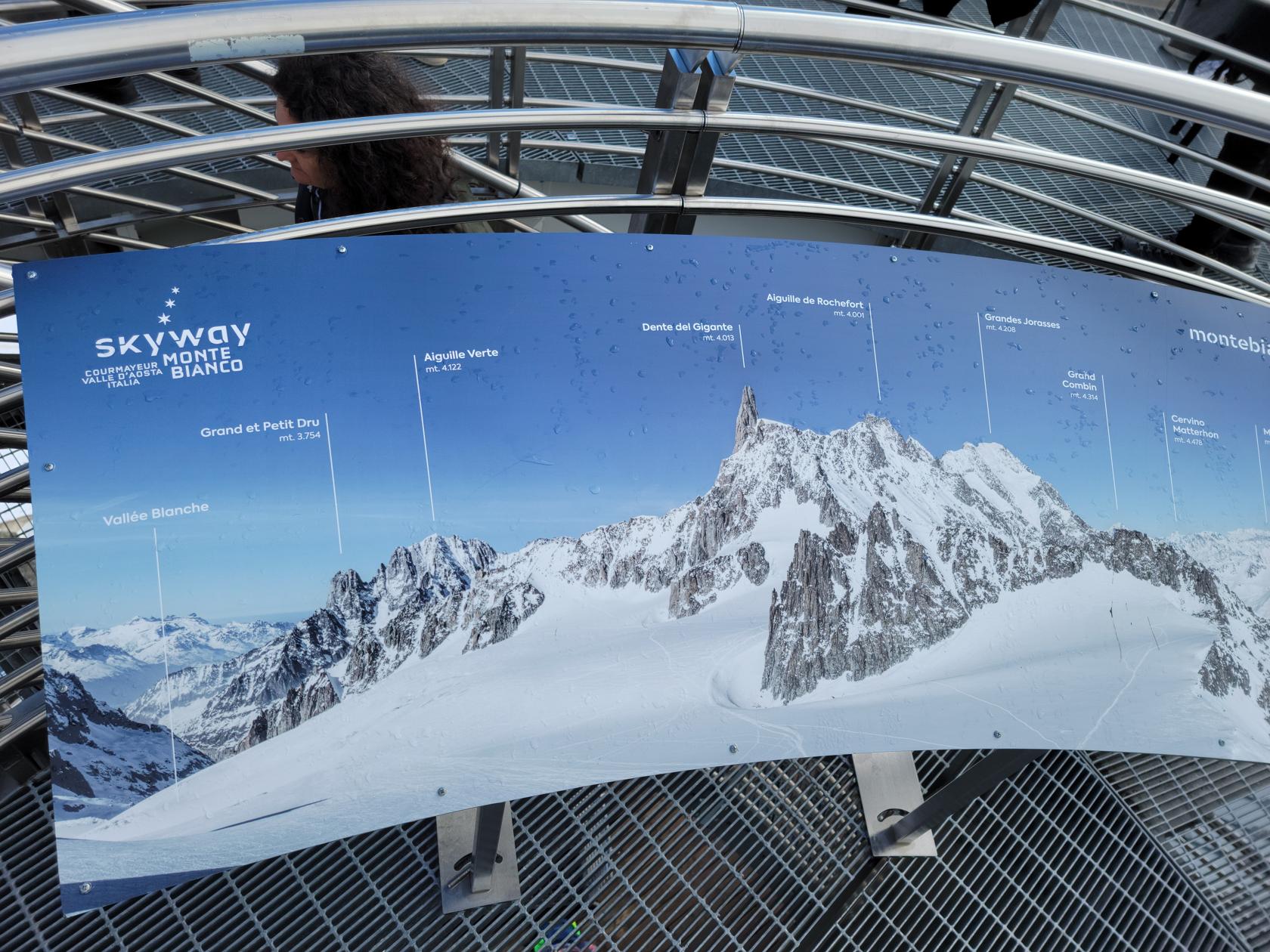
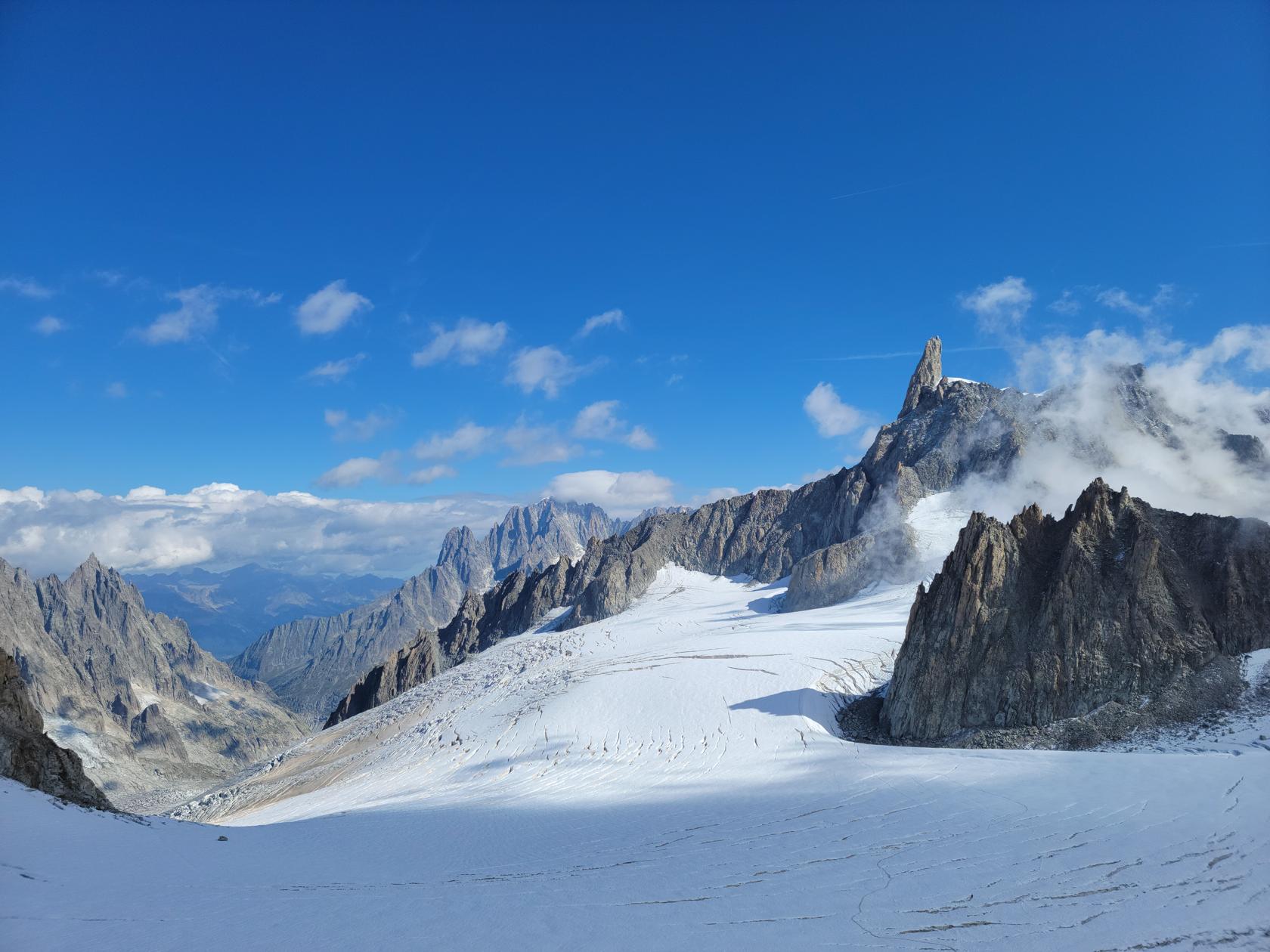
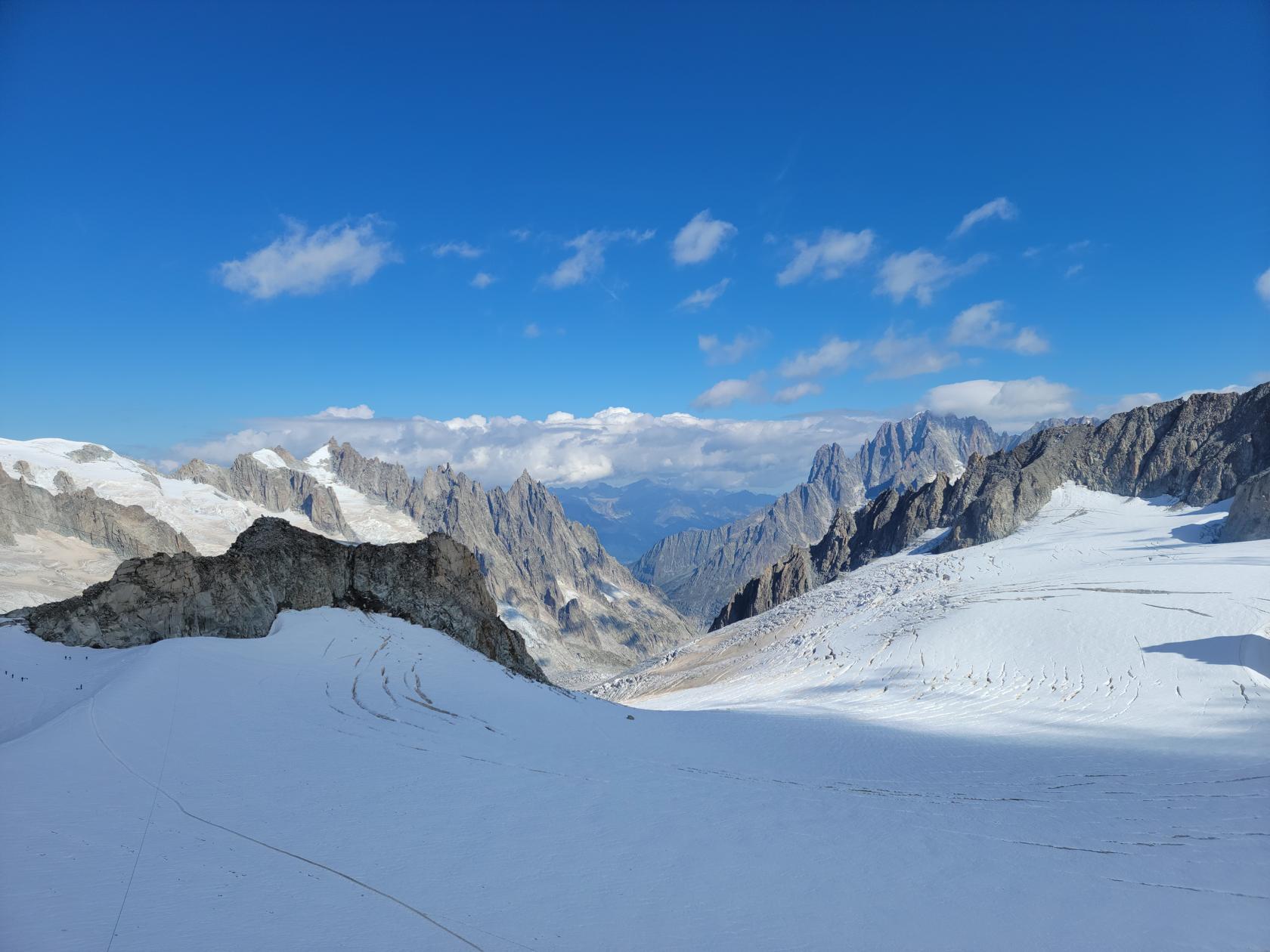
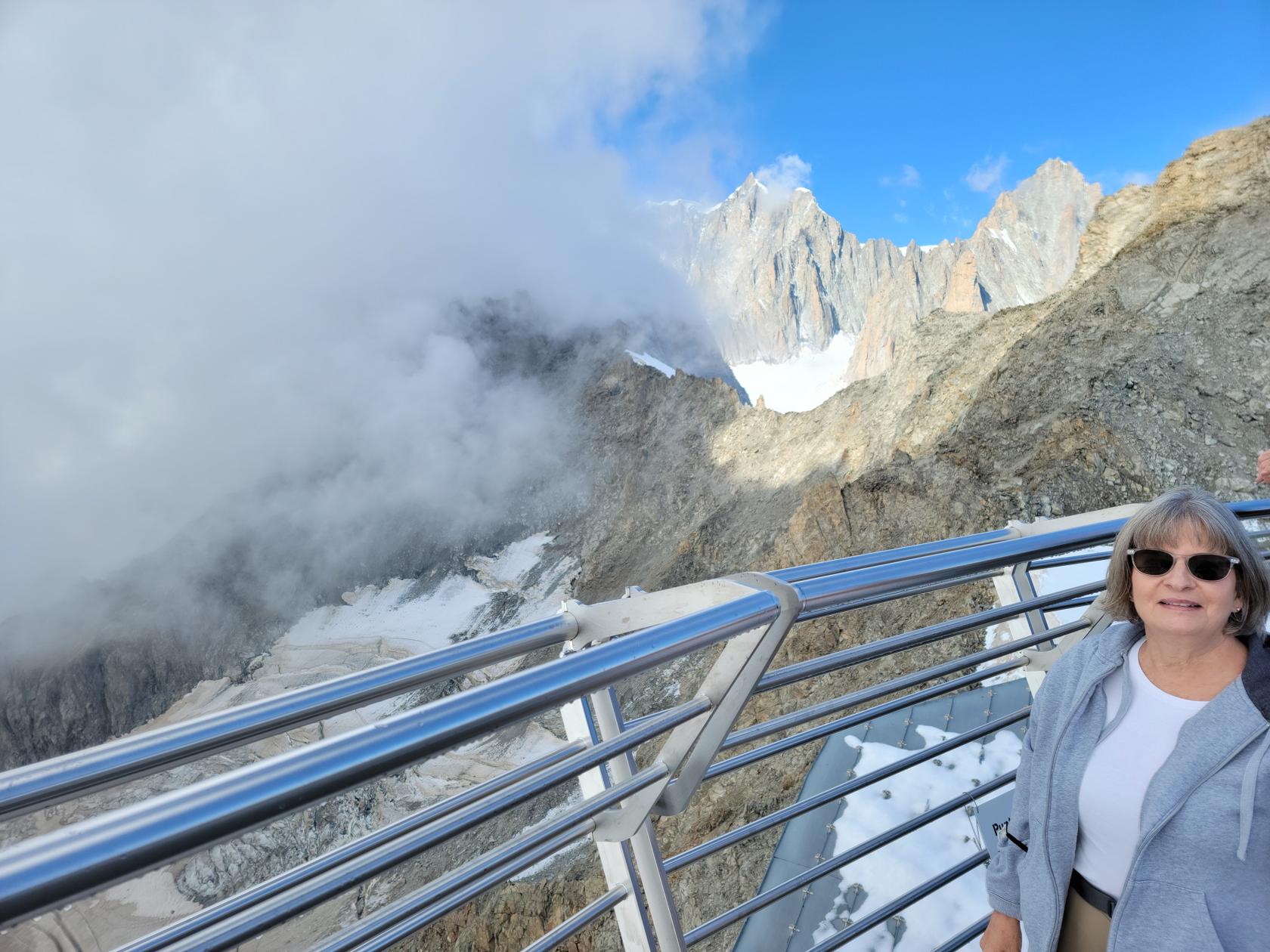
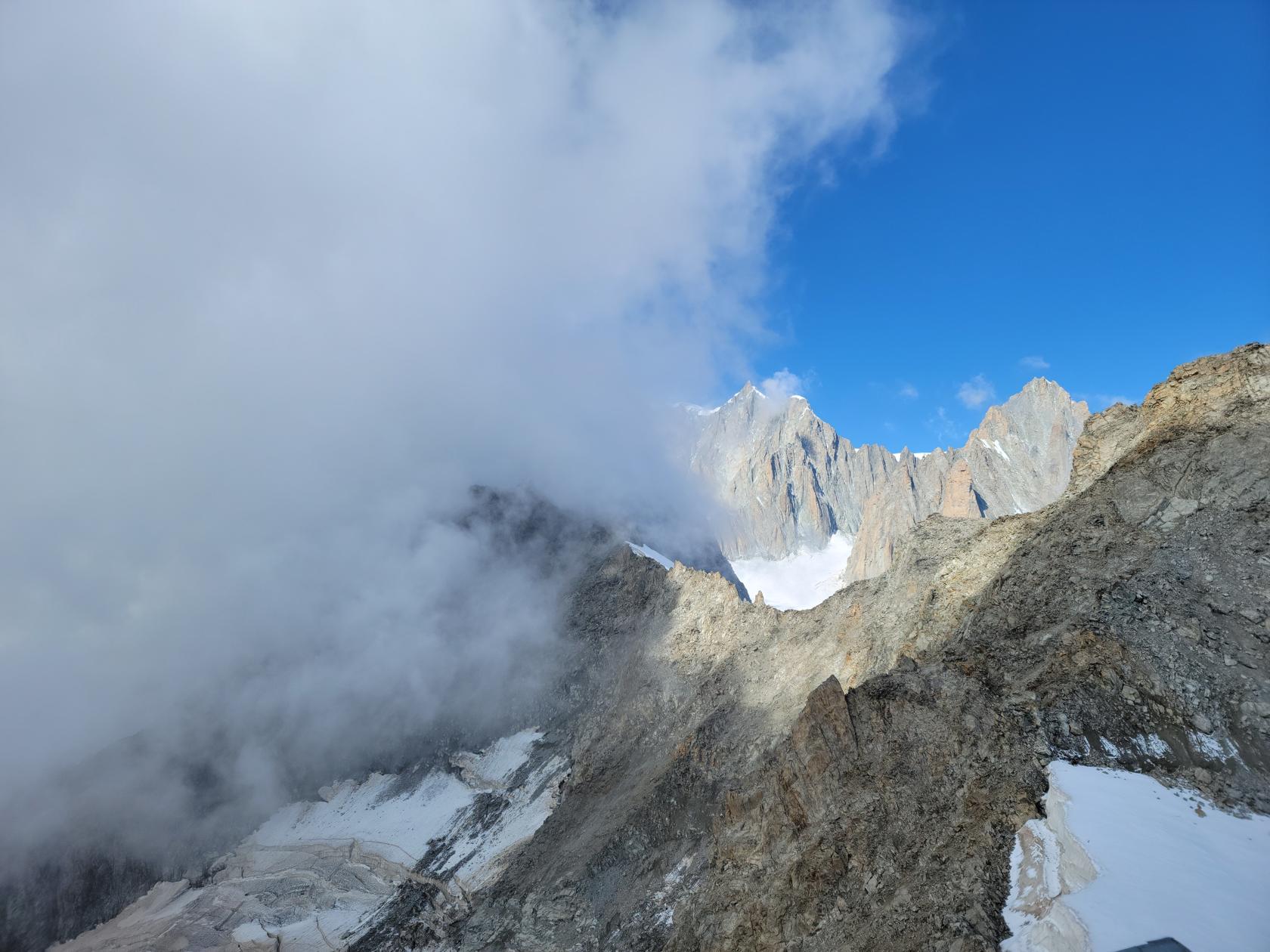
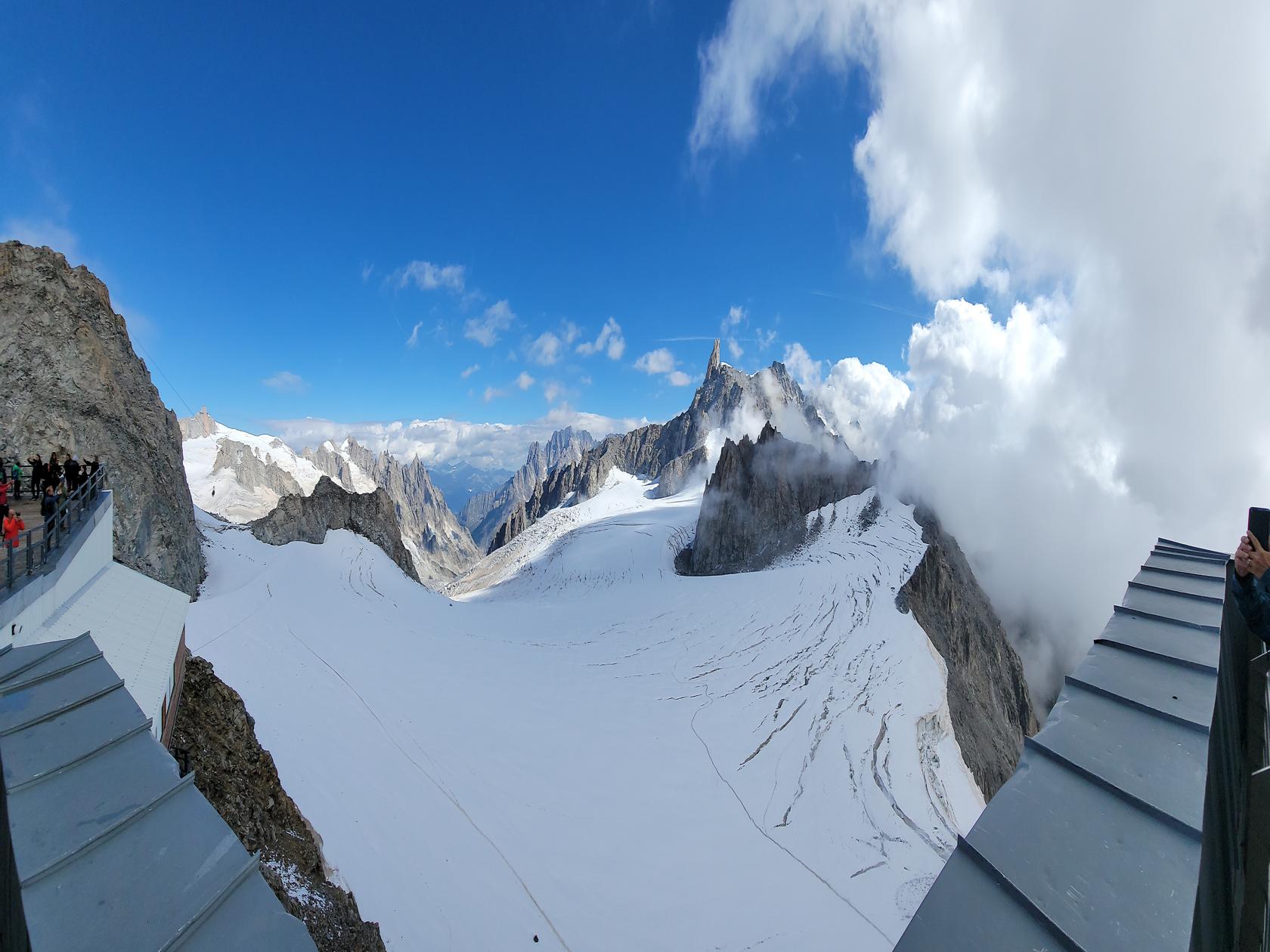
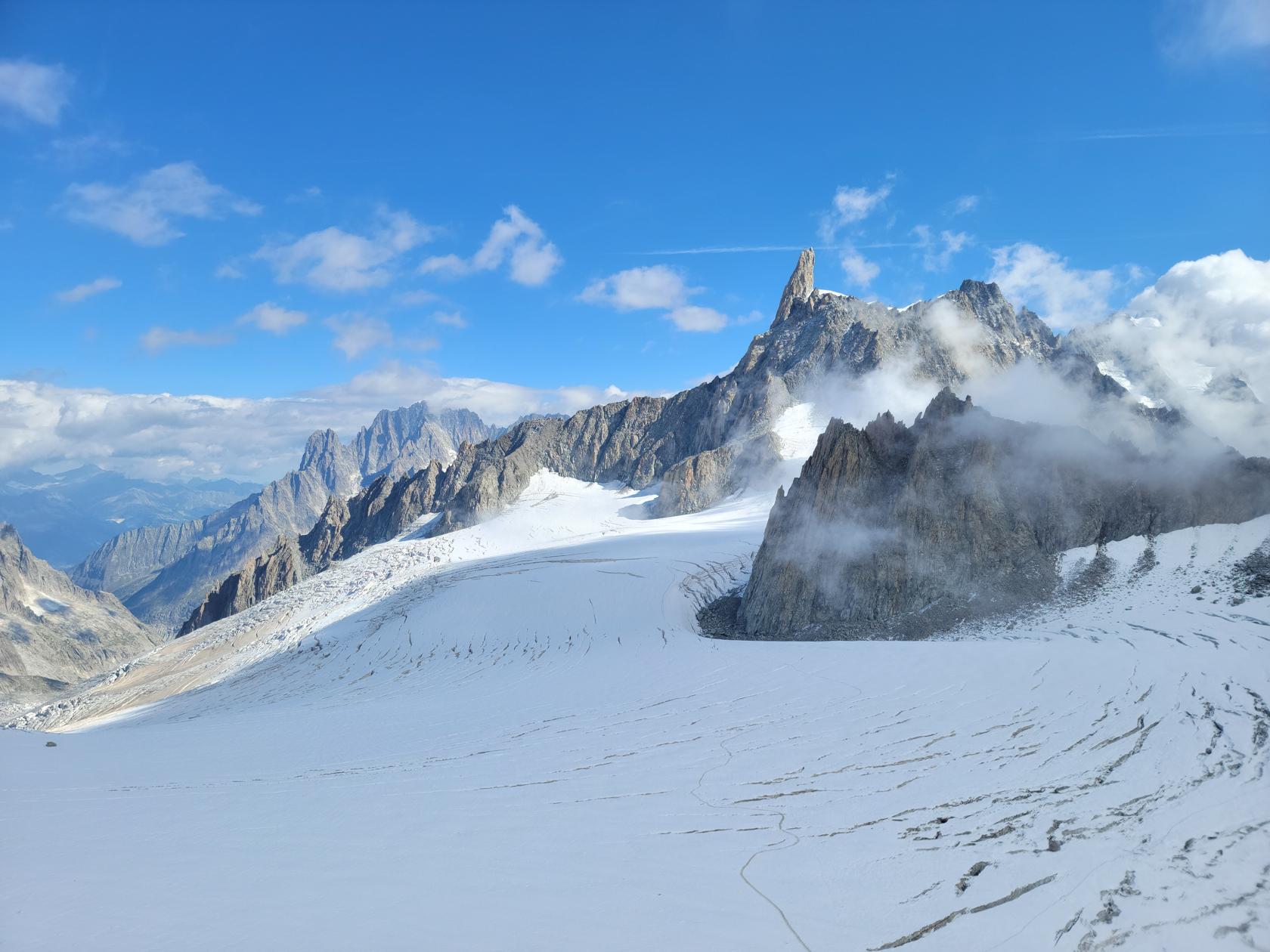
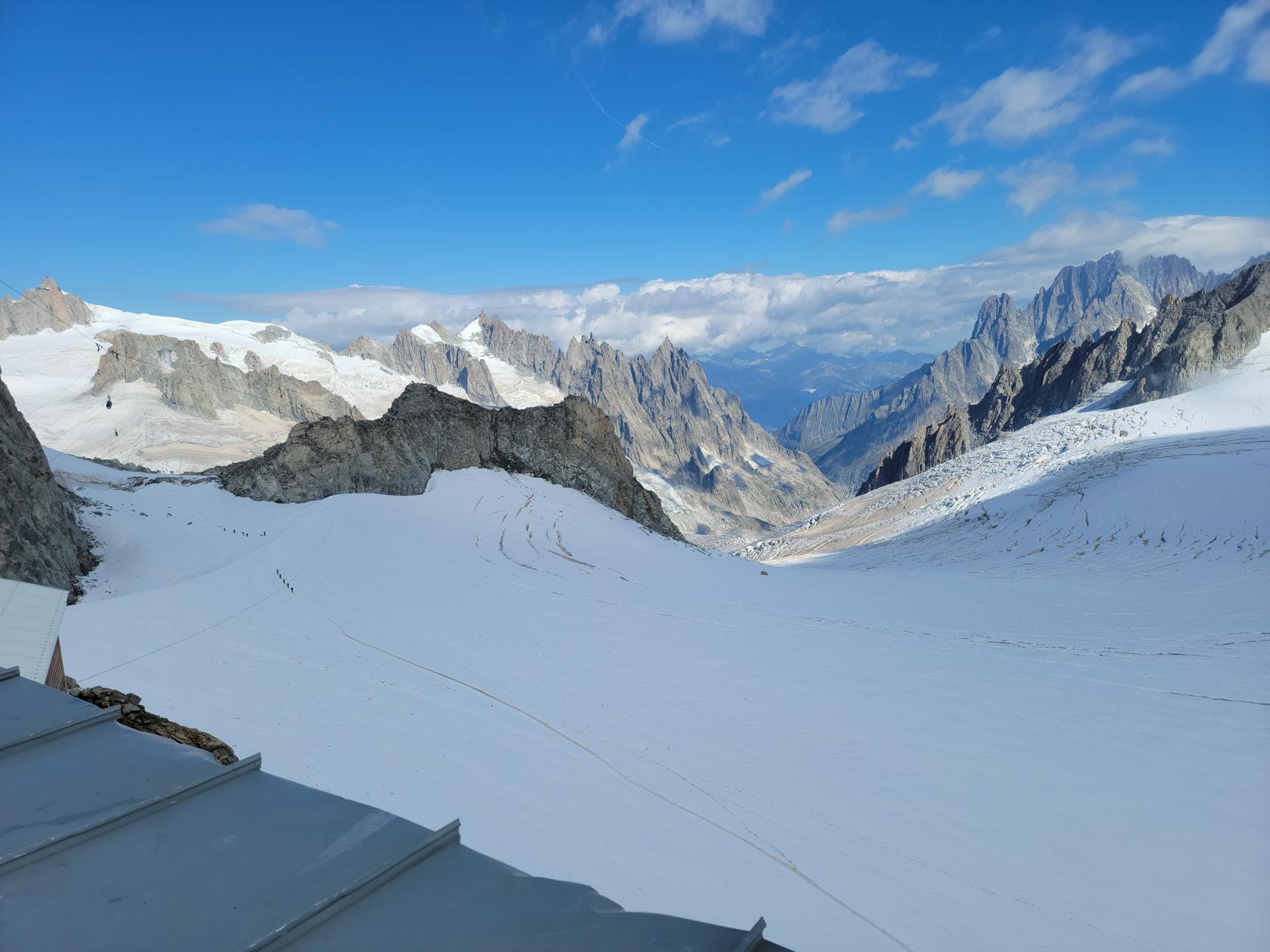
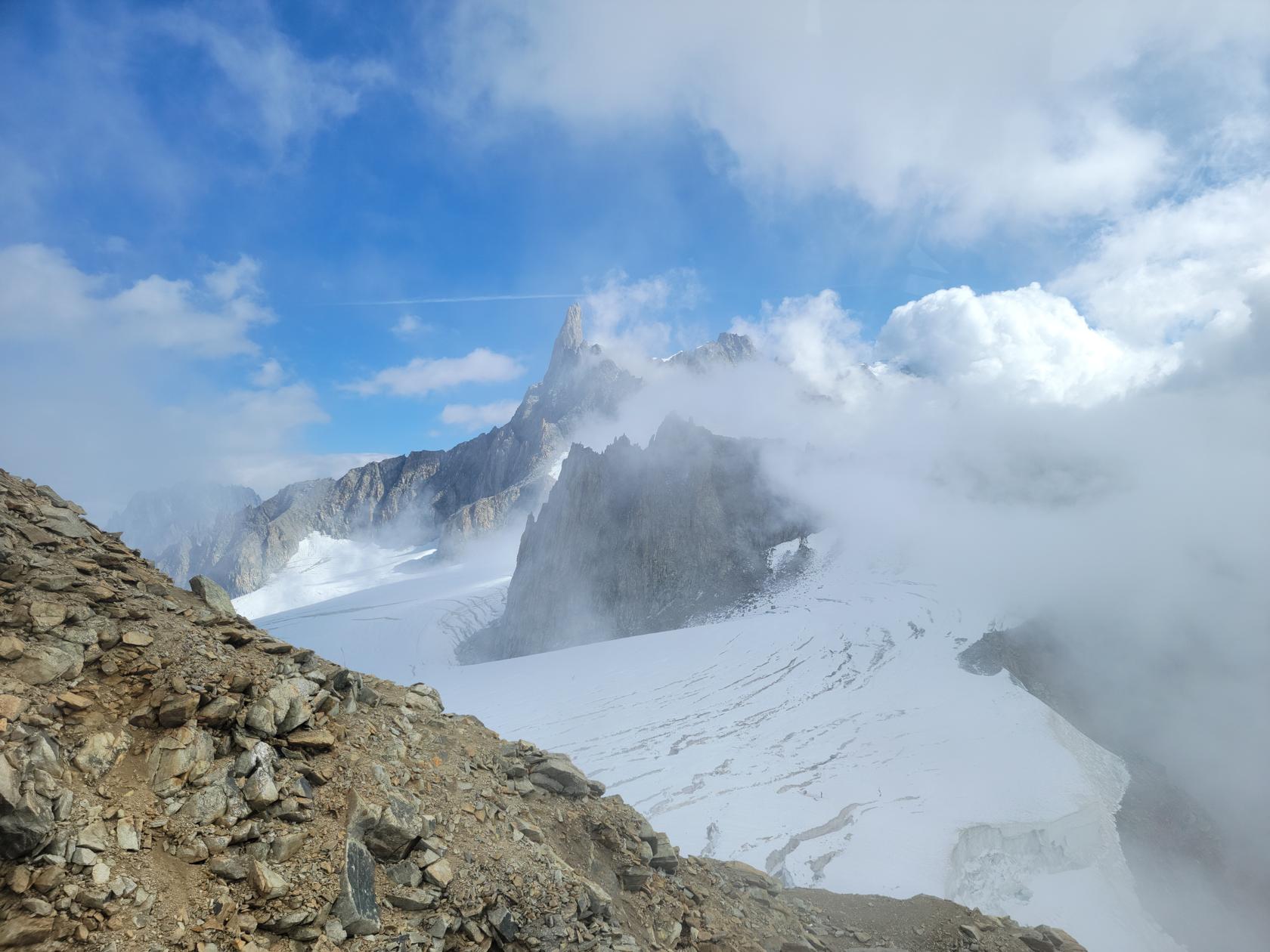
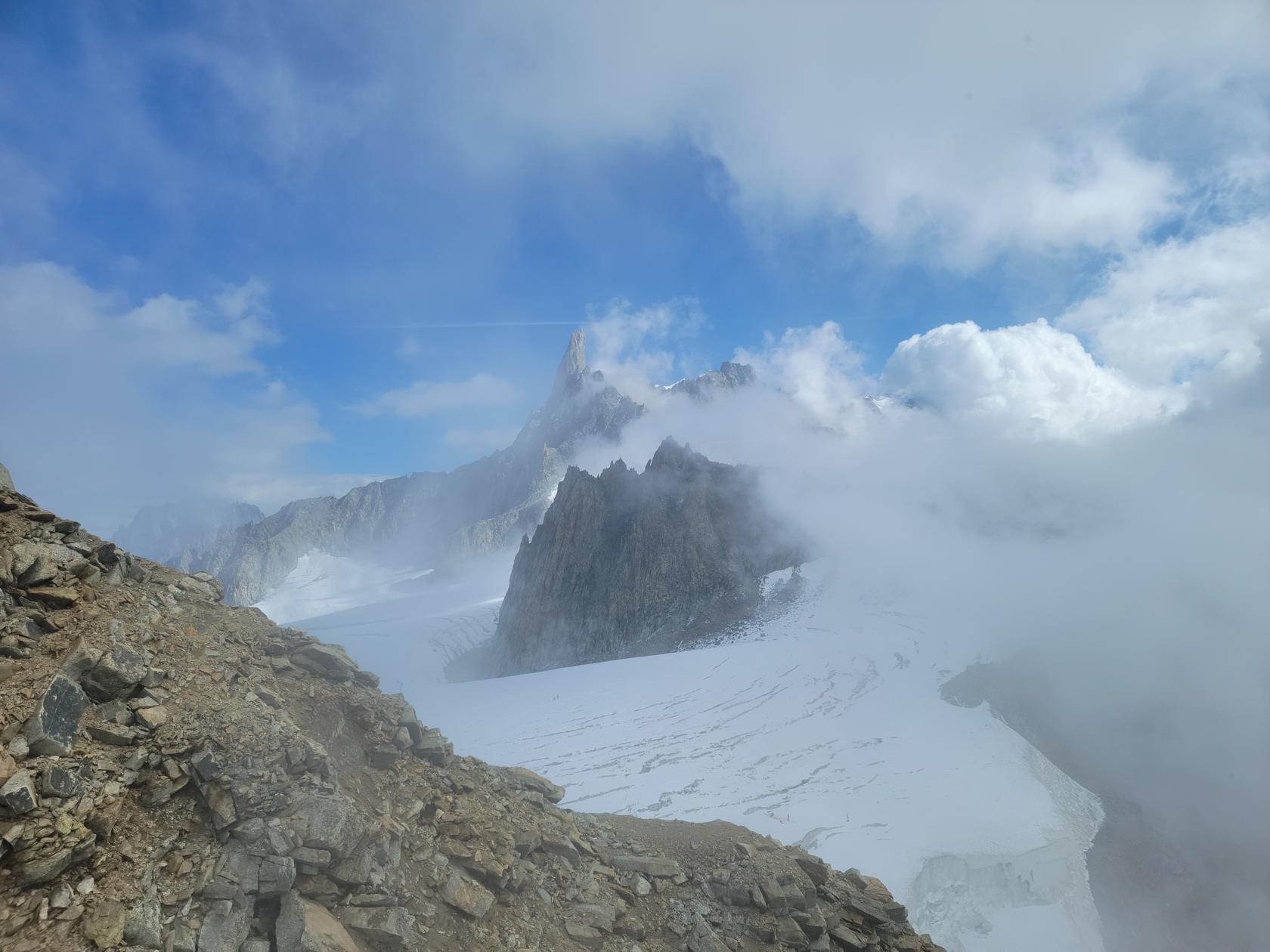
A singular place to visit to enjoy the almost lunar landscape of this Alpine geography. Aside from occasional dyspepsia and dizziness that this altitude might cause, the visitor is welcomed to an almost surreal landscape once exiting the cable car and ascending the stairs to the observation deck.
Courmayeur – The Skyway Monte Bianco – Legend
Courmayeur – The Skyway Monte Bianco – Glacier du Géant and Dente del Gigante
Courmayeur – The Skyway Monte Bianco – Glacier du Géant
Courmayeur – The Skyway Monte Bianco – Patti and view of Mont Blanc in clouds and Mont Maudit
Courmayeur – The Skyway Monte Bianco – View From Cable Car – Mont Blanc in Clouds and
Courmayeur – The Skyway Monte Bianco – View From Cable Car – Mont and Glacier du Géant
Courmayeur – The Skyway Monte Bianco – View From Cable Car – Dente del Gigante
Courmayeur – The Skyway Monte Bianco – View From Cable Car – Glacier du Géant
Courmayeur – The Skyway Monte Bianco – View From Cable Car – First View du Géant
Courmayeur – The Skyway Monte Bianco – View From Cable Car – Second Cable Car at Saussurea Alpine Botanical Garden
Restaurants
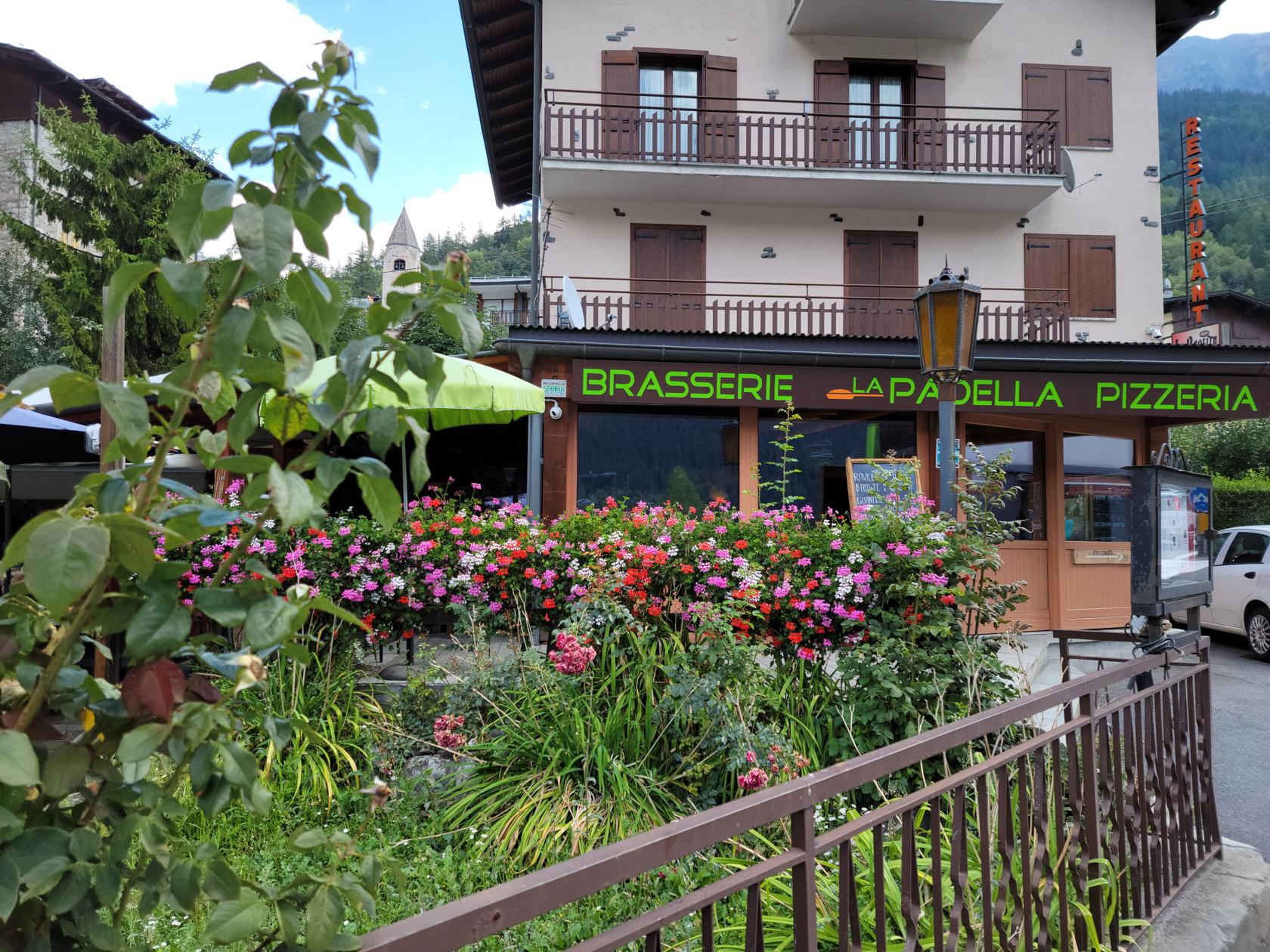
Brasserie la Padella Pizzeria
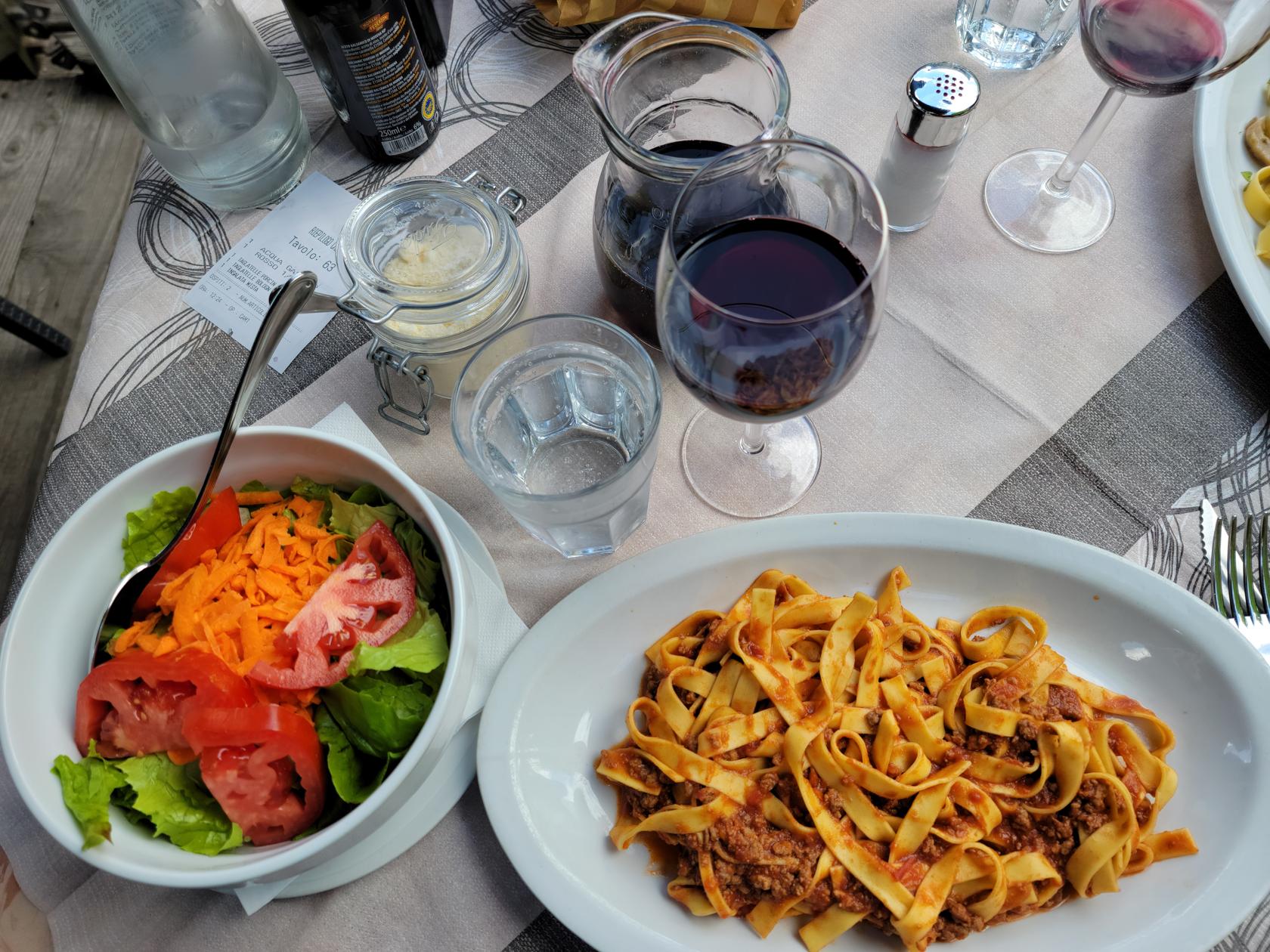
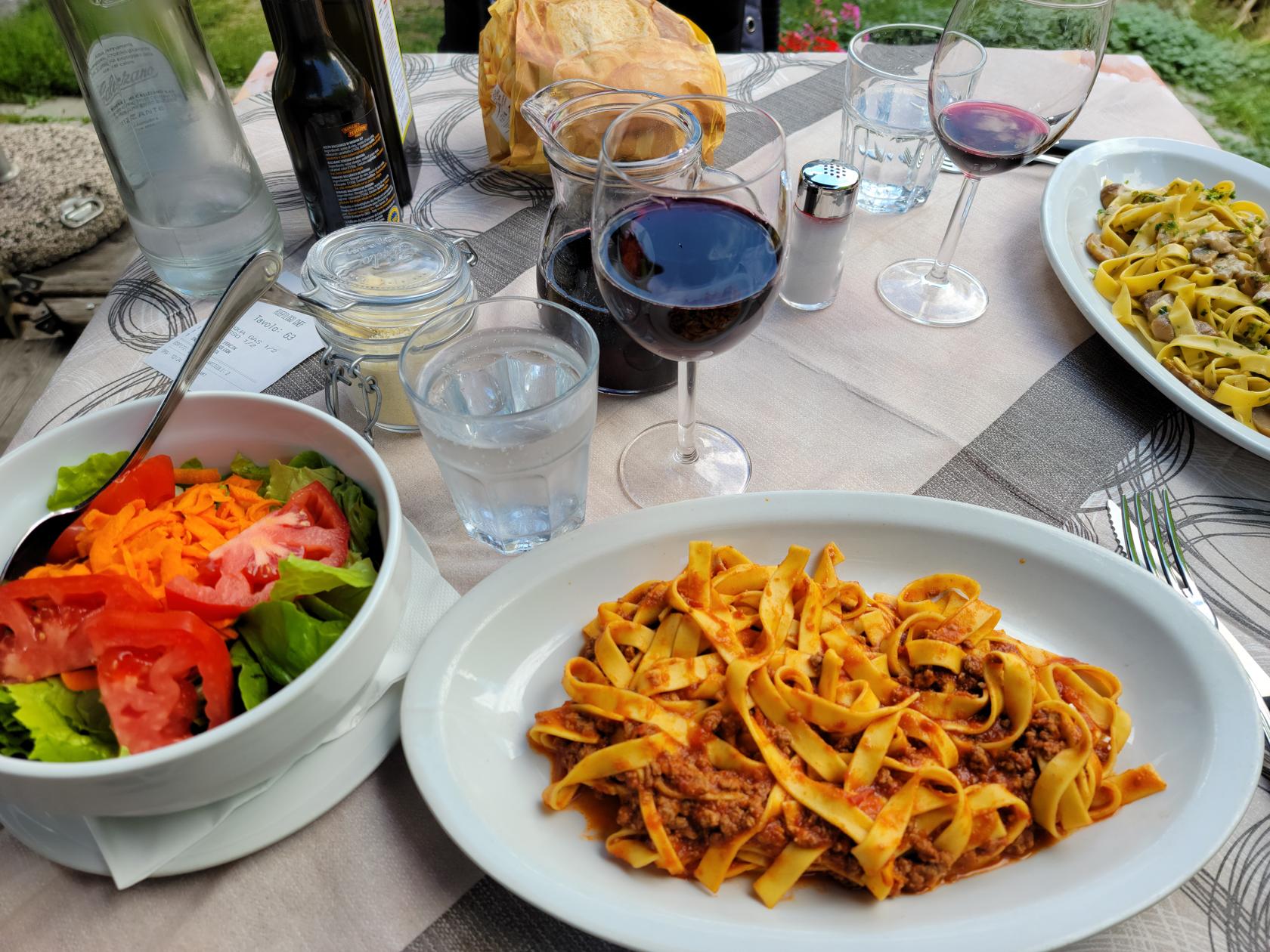
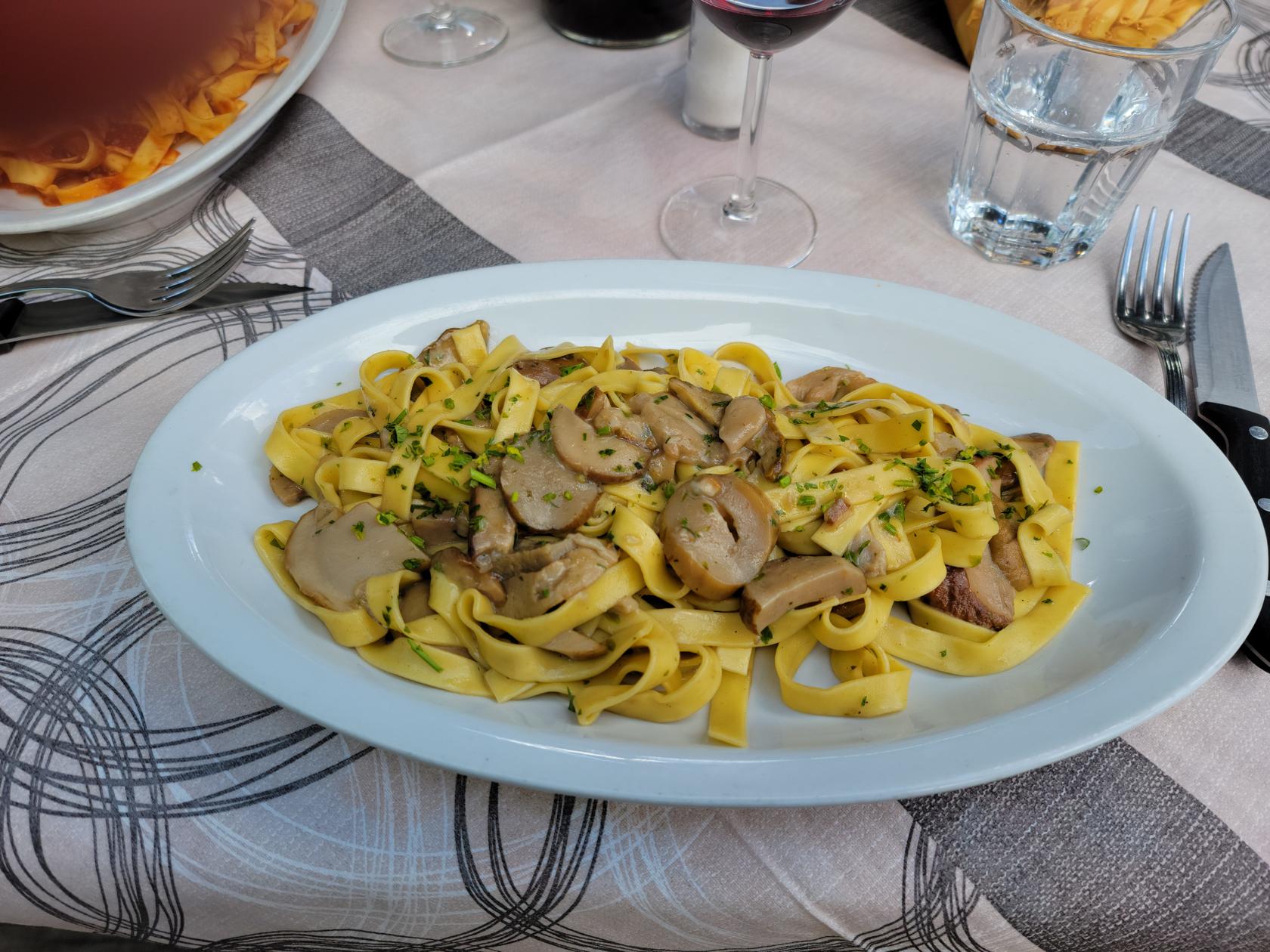
A normal pizzeria and brasserie by any Italian standards, as a stop for lunch it fit the bill nicely. We enjoyed a quick lunch of pasta, salad, water, wine and coffee with very pleasant service as an added bonus. There is nothing to complain about here, the staff is well versed in taking orders and serving food quite promptly.
Courmayeur – Brasserie la Padella Pizzeria
Courmayeur – Brasserie la Padella Pizzeria – Erick’s Tagliatelle in Ragu and Insalate Mista
Courmayeur – Brasserie la Padella Pizzeria –
Courmayeur – Brasserie la Padella Pizzeria – Patti’s Tagliatelle with Porchini mushrooms
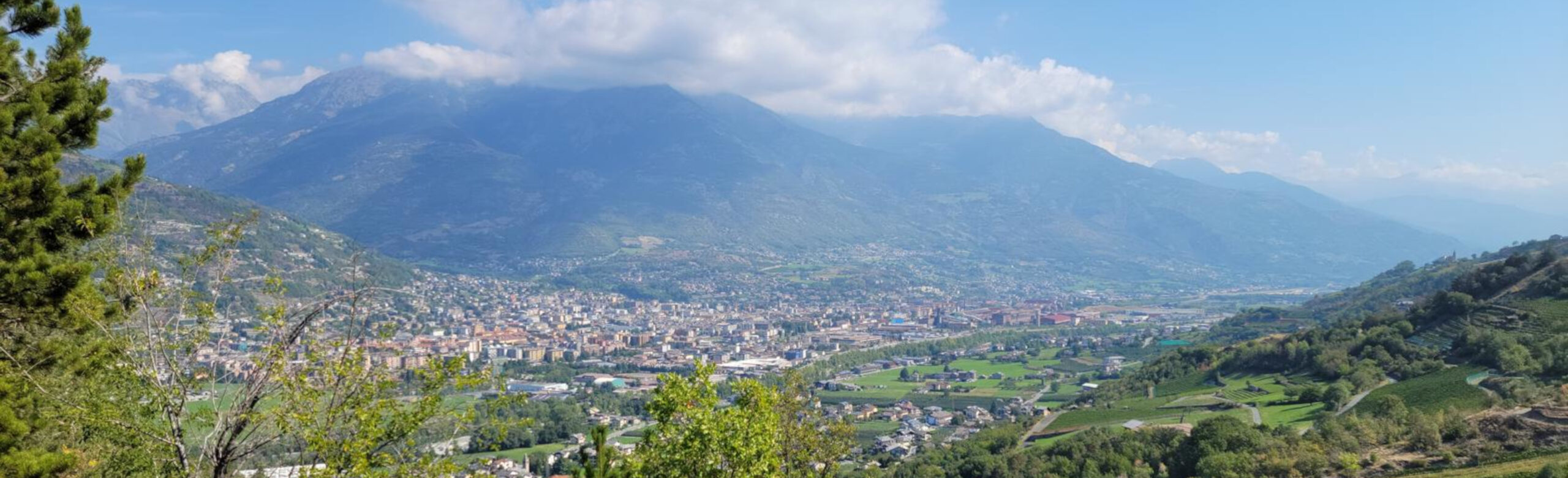
Located about two hours north of Turin by train and down a very large valley, is the small city of Aosta (pronounced: Ahh’osta). It is a cute little city of about thirty-five thousands inhabitants and a former ancient Roman military outpost.
Aosta – From Gargantua
We had planned a short trip for Aosta some time ago, hoping to go there during the hot summer month of July, but we were busy. So, we adjusted our plans to September and glad we did. The valley can be as hot as the Po Valley in summer and can also have wild swings in weather. So, along with the fact that we had additional plans for Mont Blanc, we prepared both ways, and perhaps in the end packed a bit too heavily.
The Valley
It is located in the Aosta Valley of the same name and is the capital of one of the autonomous regions in Italy. It can be found at the confluence of the rivers Dora Baltea, which starts at the foot of Mont Blanc, and the Buthier, which starts at the foot of the Grandes Murailles glacier and the Valpelline valley.
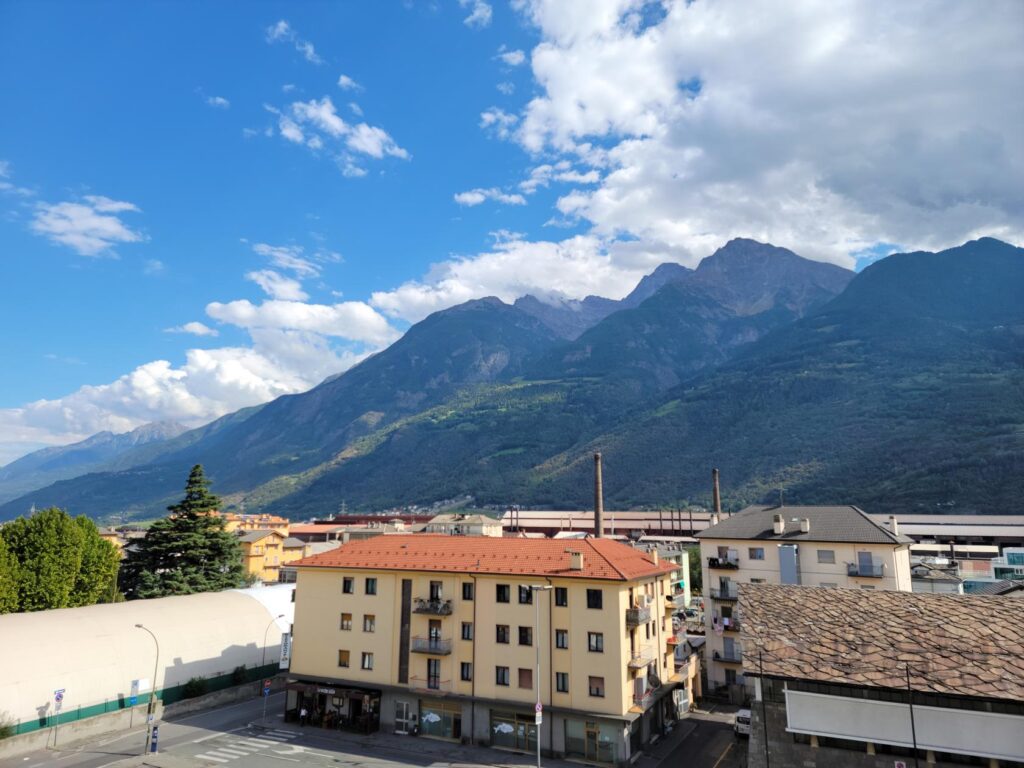
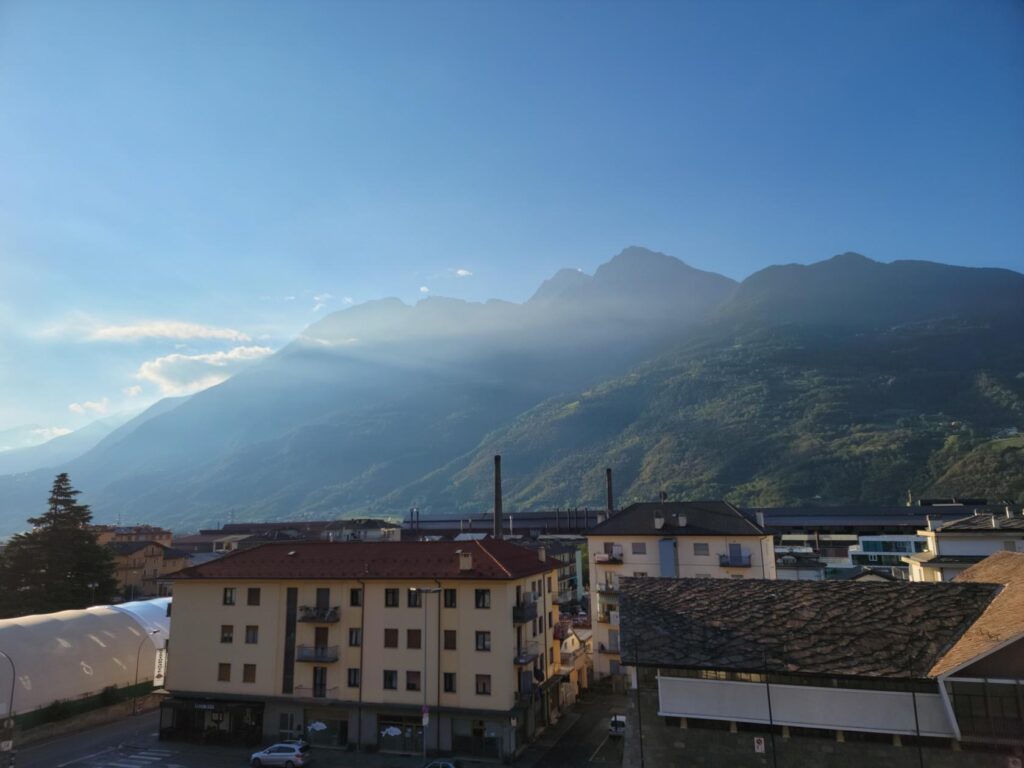
Aosta – Looking Southeast from Omama hotel
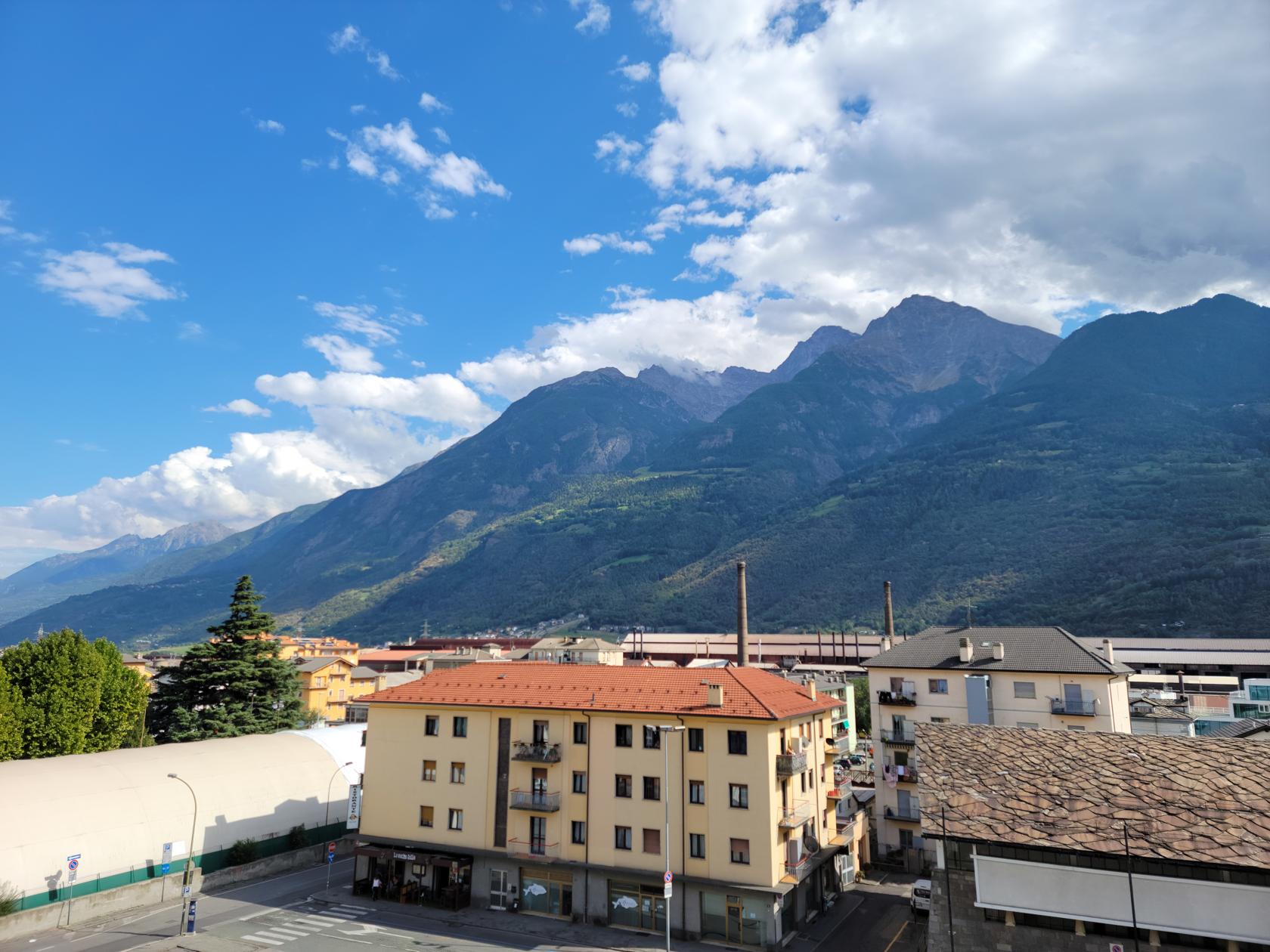
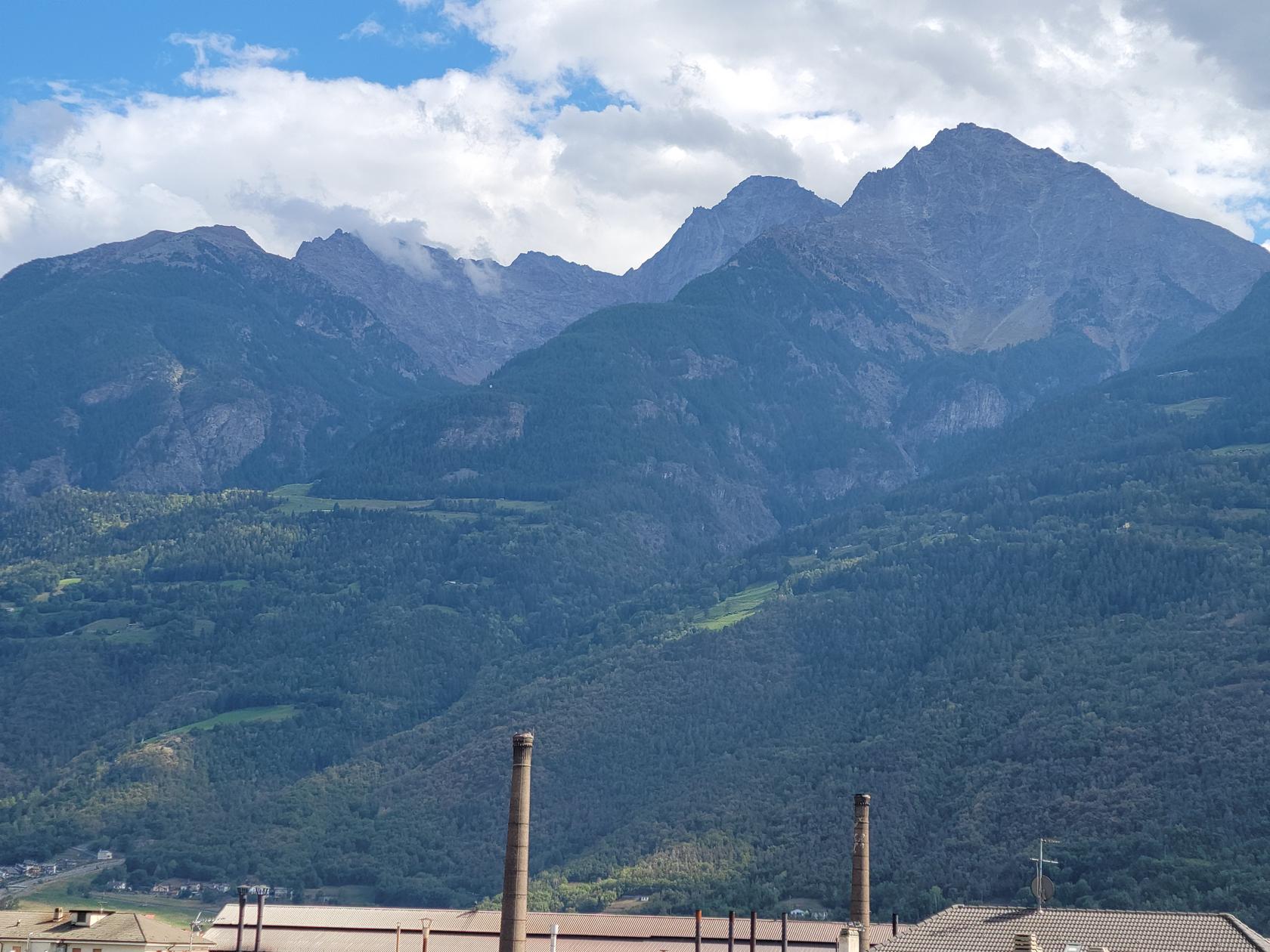
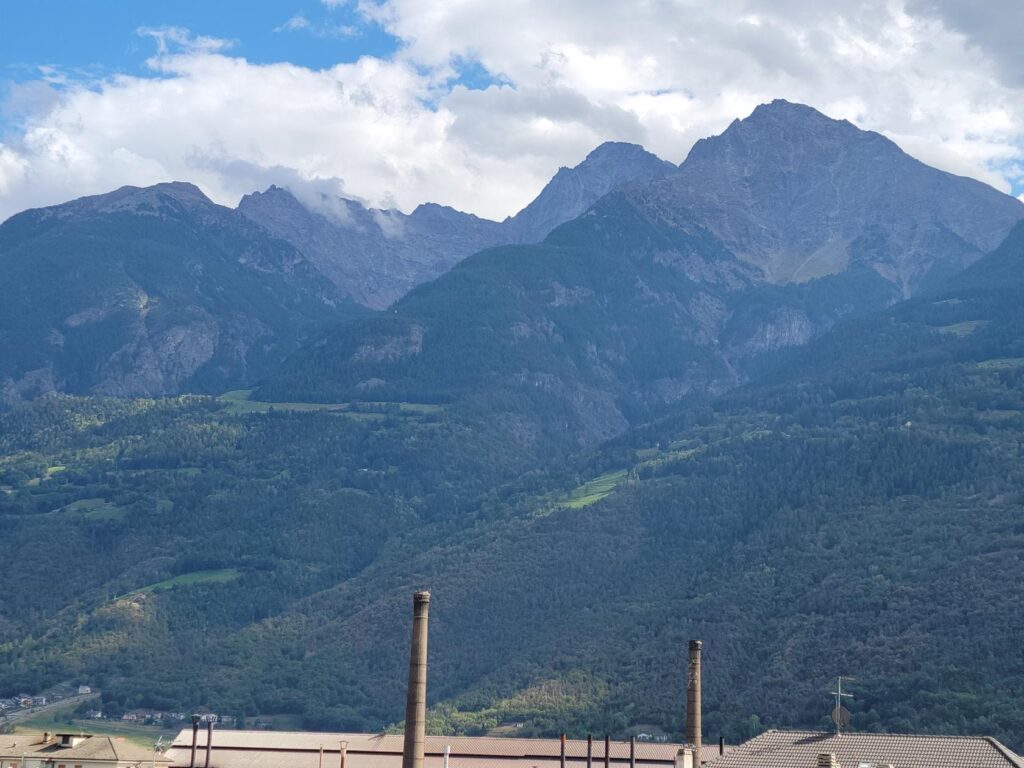
Aosta – Looking South and Mount Garin
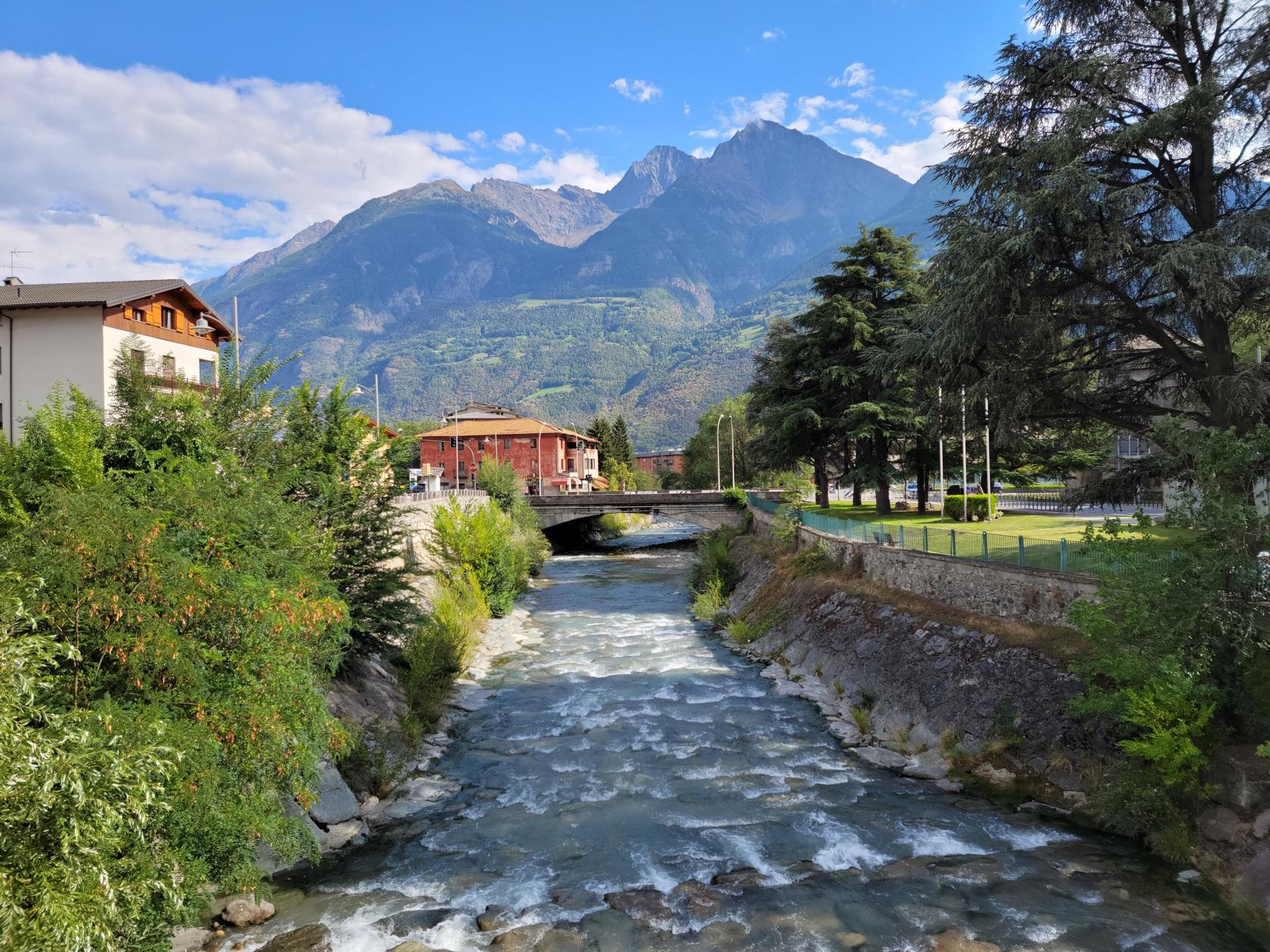
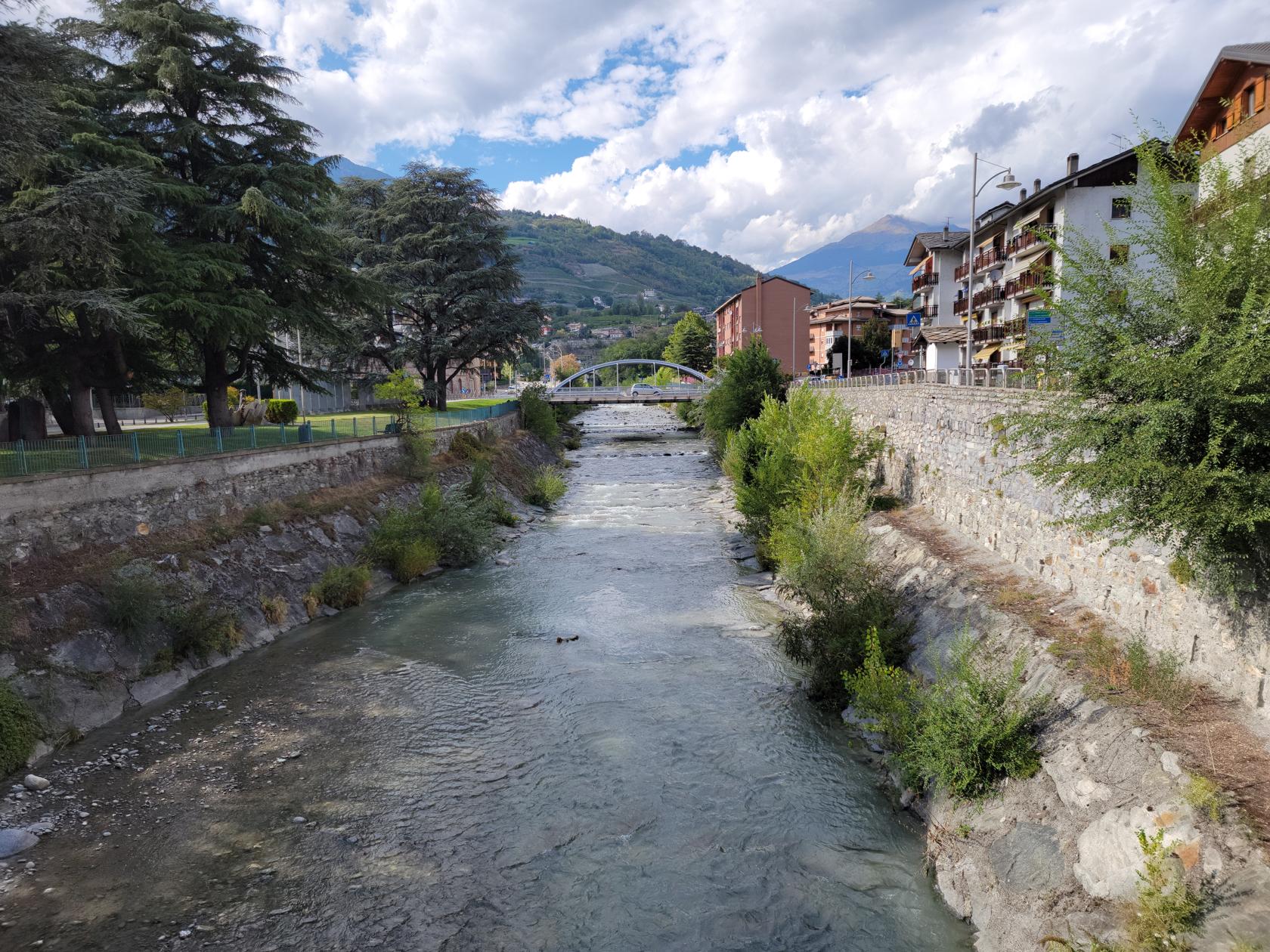
Aosta – The Buthier river
Aosta – The Buthier river
The City
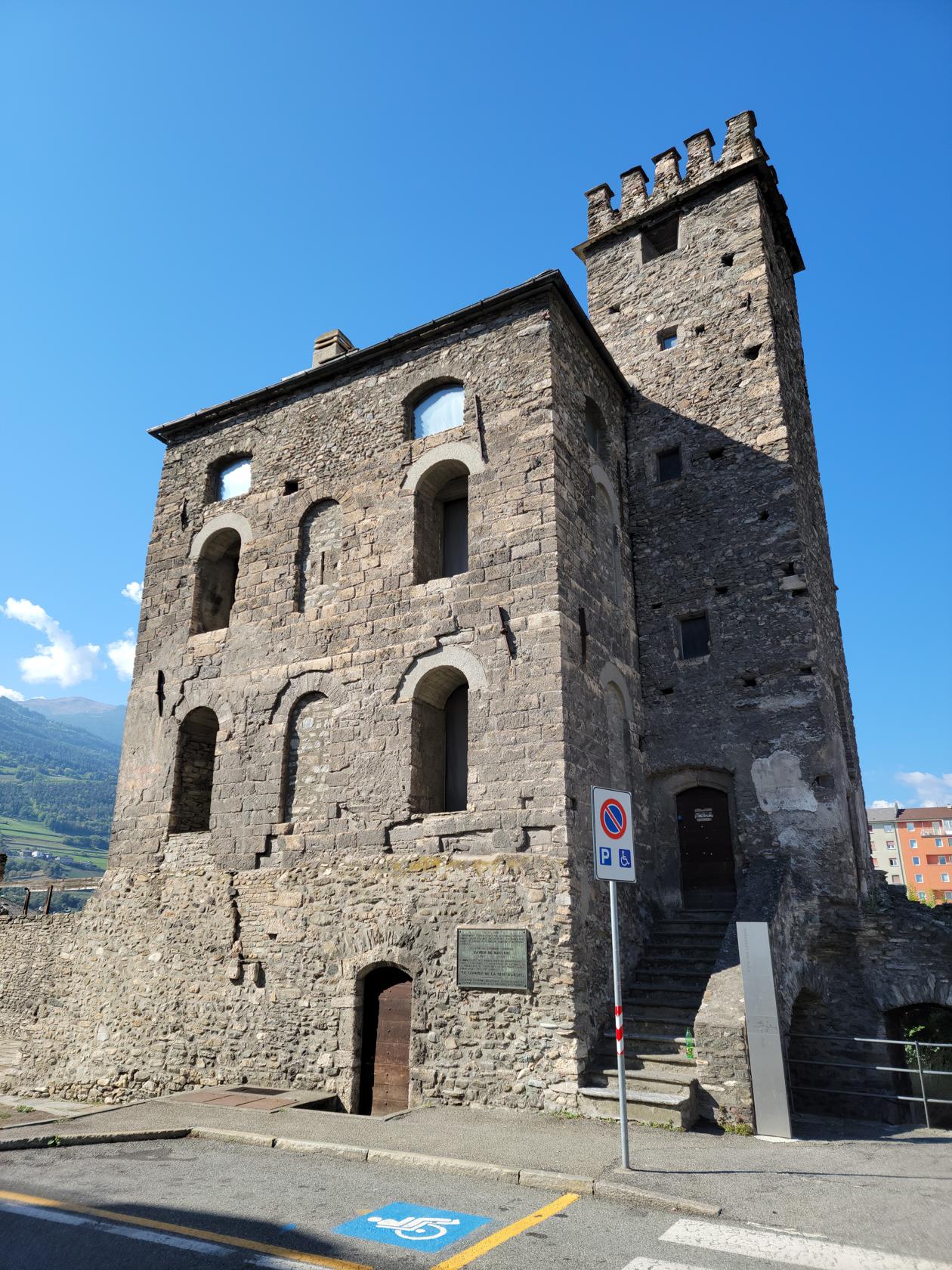
The city is an ancient Roman enclave and military output, that was supported by the Roman Empire and an important Roman presences in the first century, guarding the northern pass from barbarians. Augustus Caesar is displayed throughout the city in many bronzes and other forms of statue.
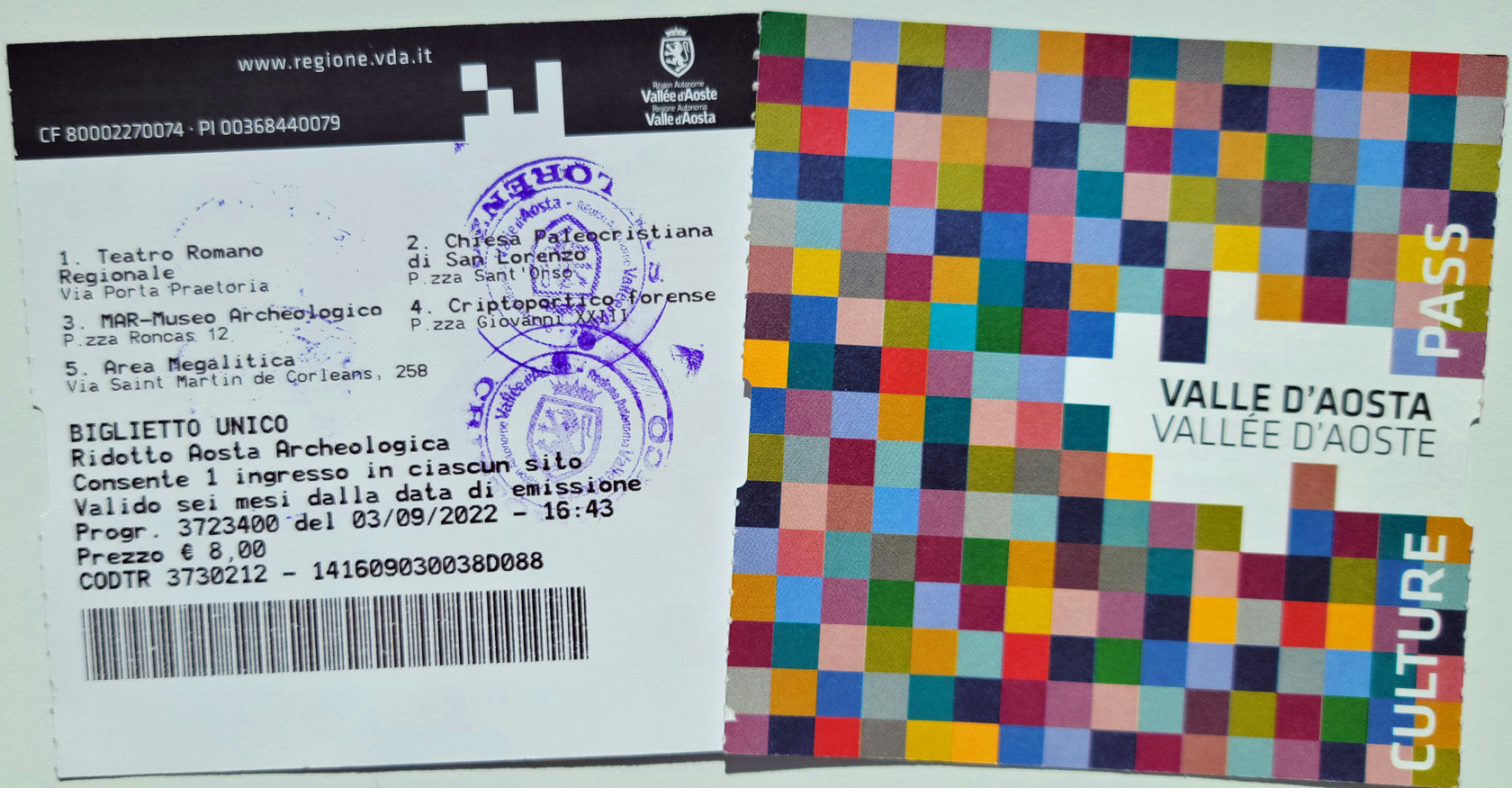
Aosta – Tickets For Two – Archeological Sites Aosta
If you are going to do any meaningful investigation of this city, you must enjoy its many archeological sites. In order to do so, a visit to the information center is needed, its by the Praetorian Gate (or triple bridge), and for a modest 8€/person, you can purchase tickets to all of the important venues in town.
Aosta – Looking Southeast from Omama hotel
Aosta – Looking South and Mount Garin
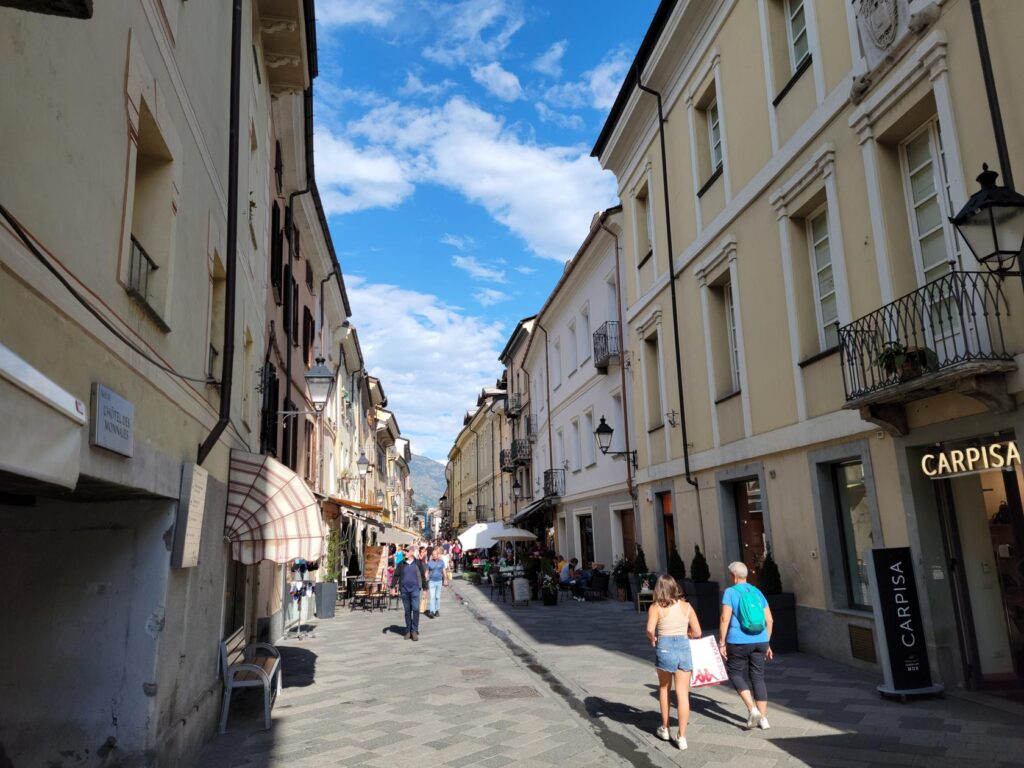
Aosta – via Torino
Aosta – Early Morning View from Hotel Room
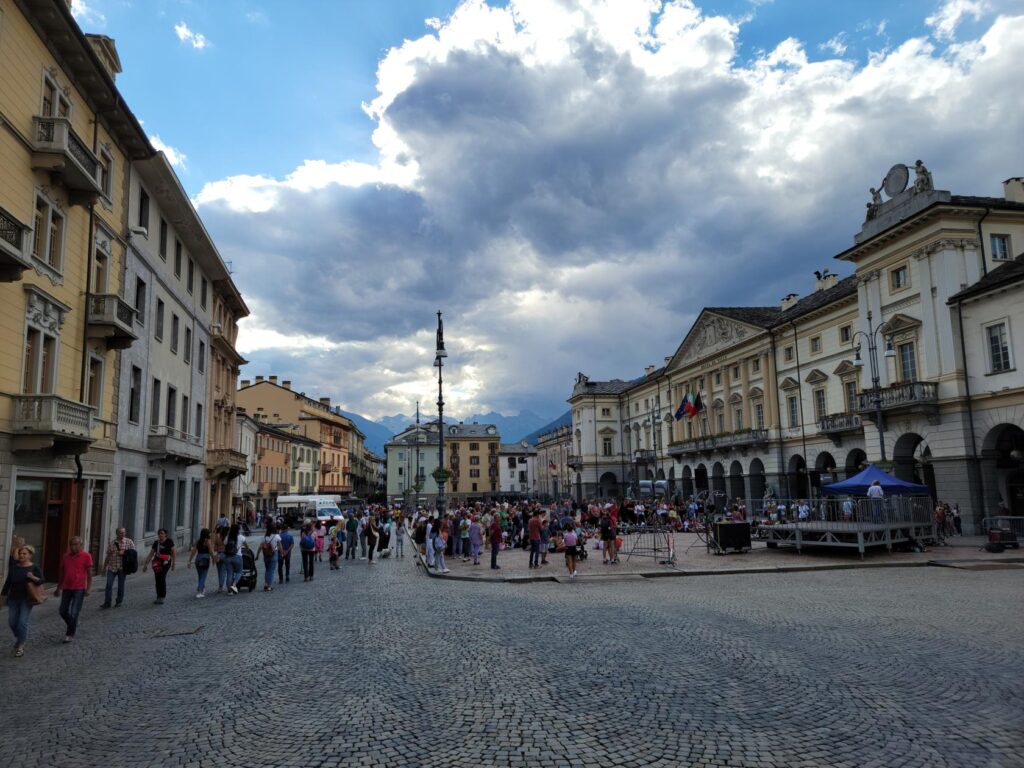
Aosta – Piazza Émile Chanoux
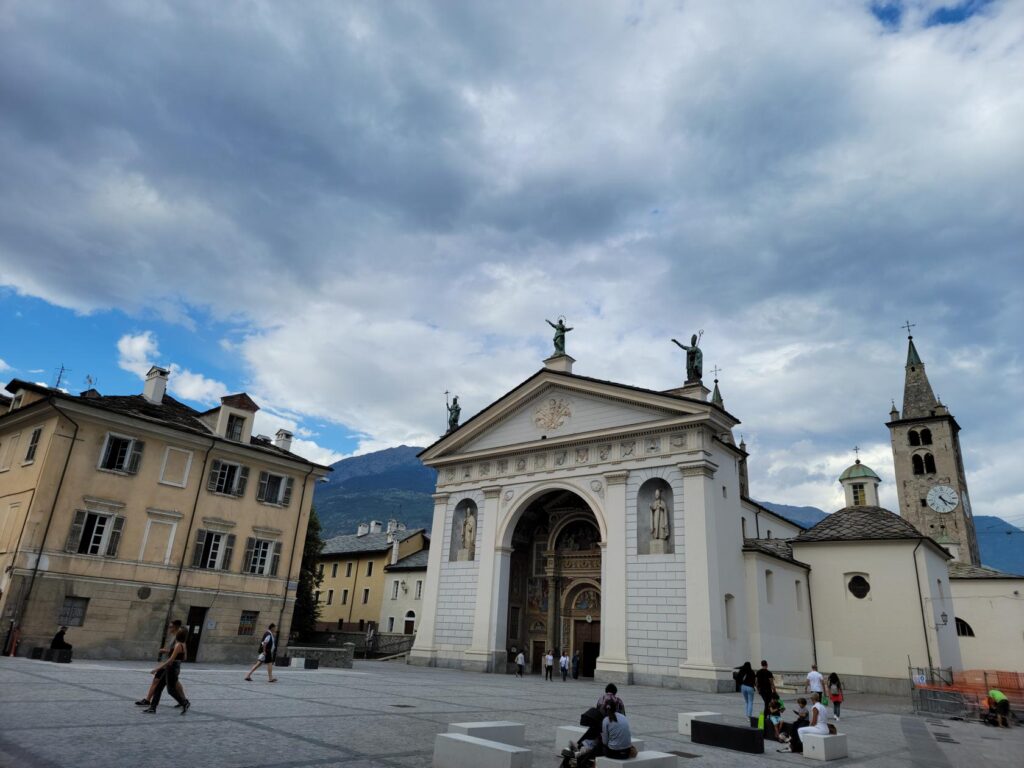
Aosta – Aosta Cathedral
Aosta – Early Morning View from Hotel Room
Aosta – Main Train Station
Aosta – Piazza Emile Chanoux
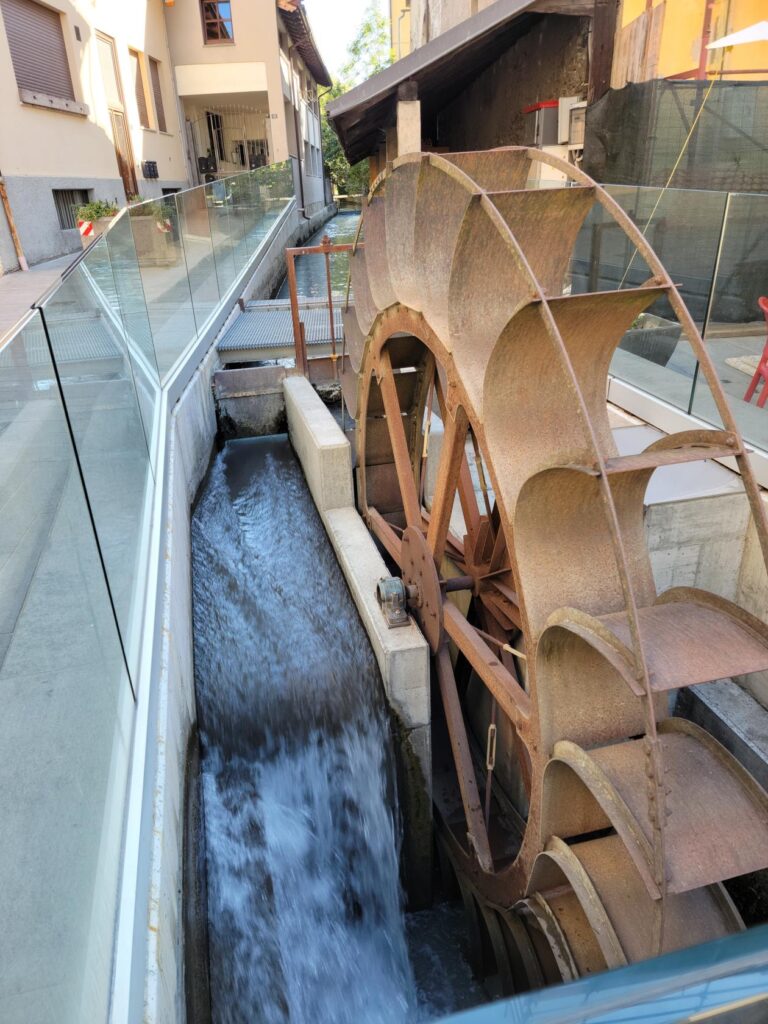
Aosta – Water Wheel
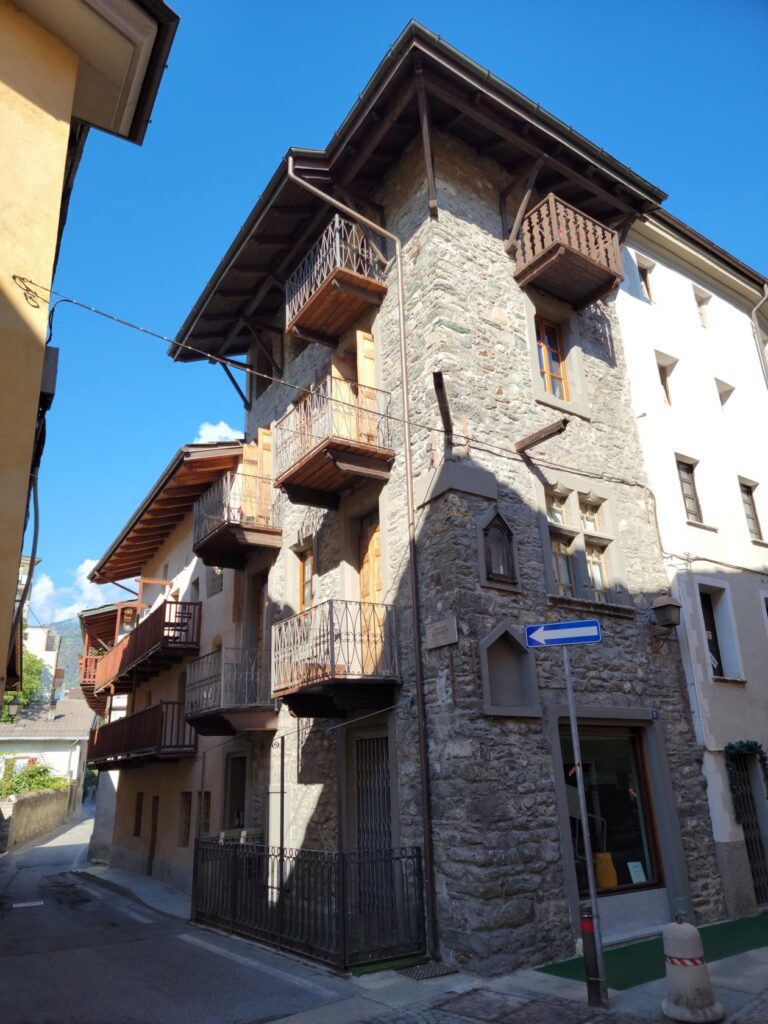
Aosta – Ancient House
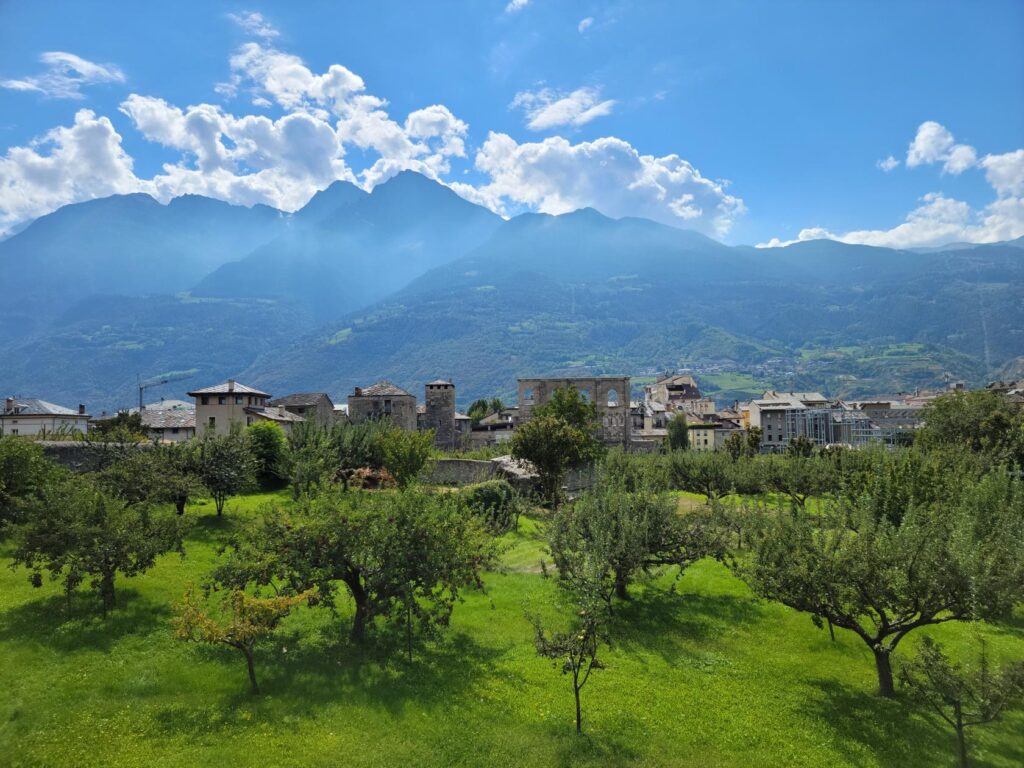
Aosta – Orchard in front of the Roman Theater
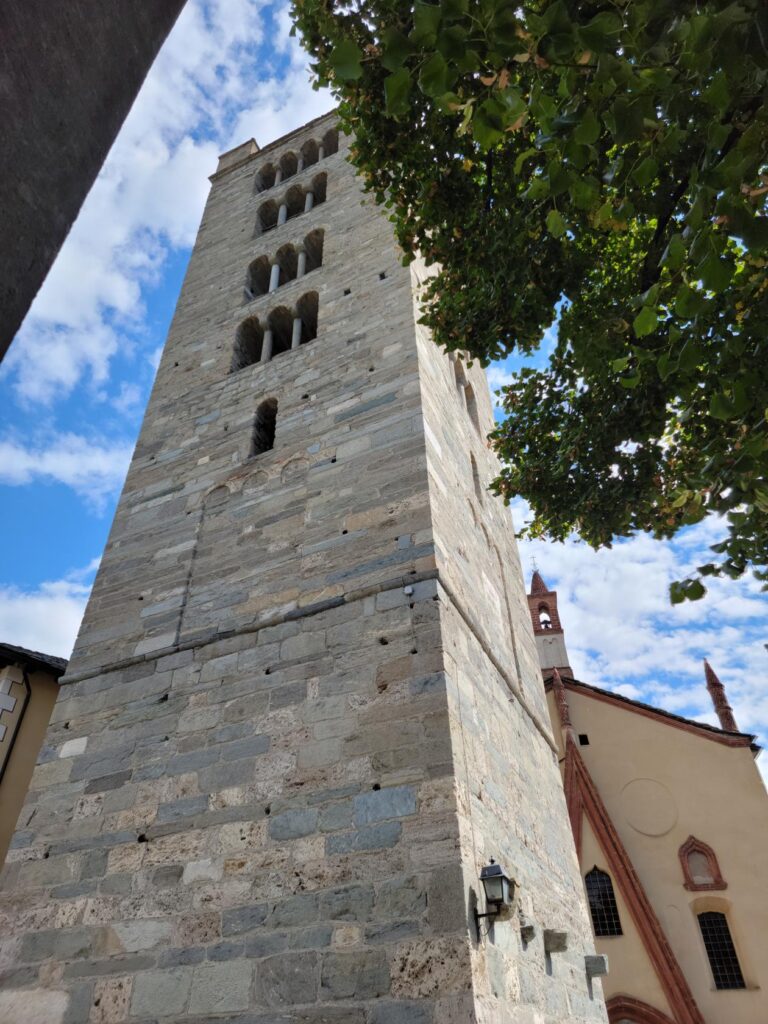
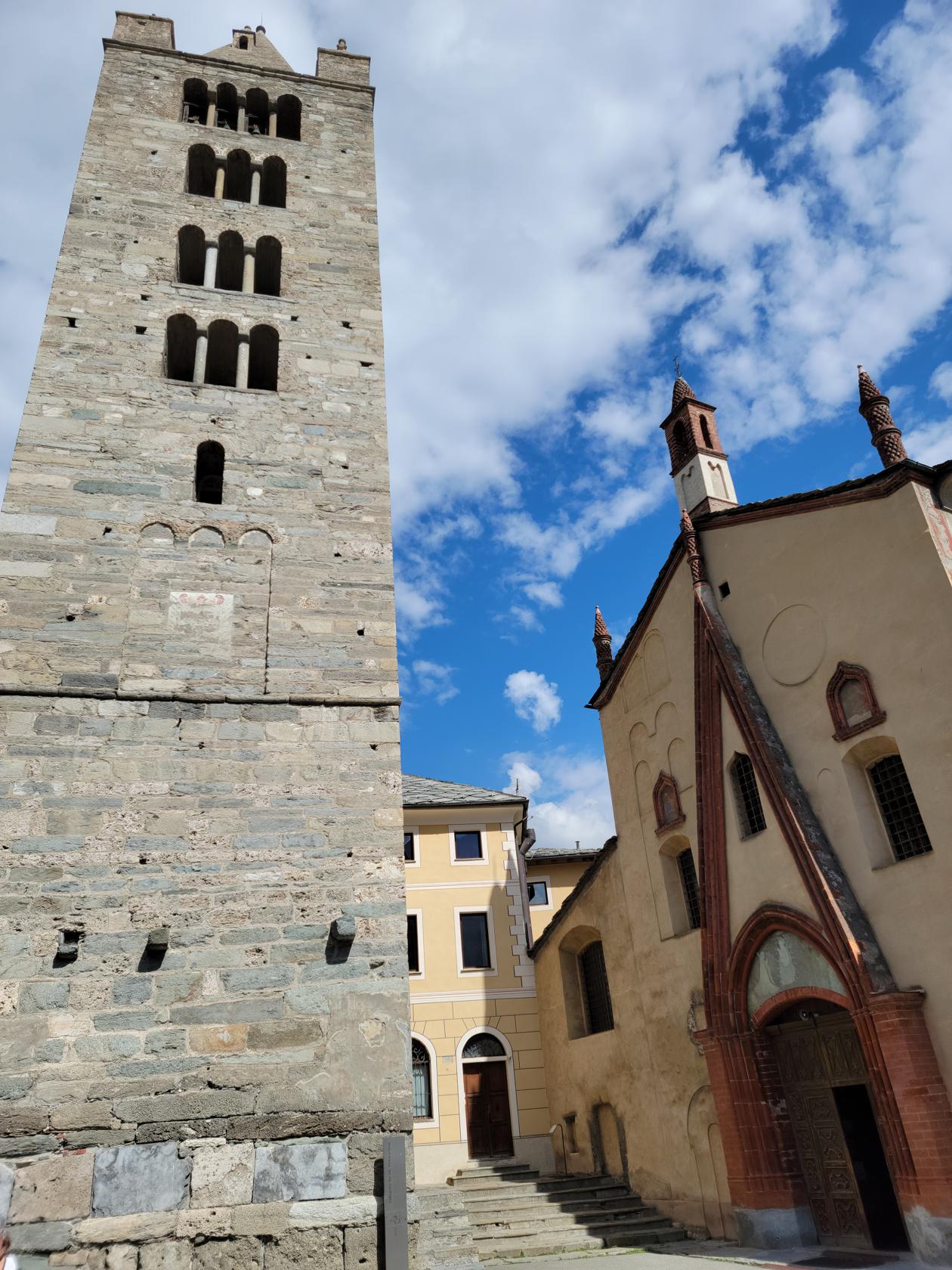
Aosta – Bell Tower of the Church of Sant Orso
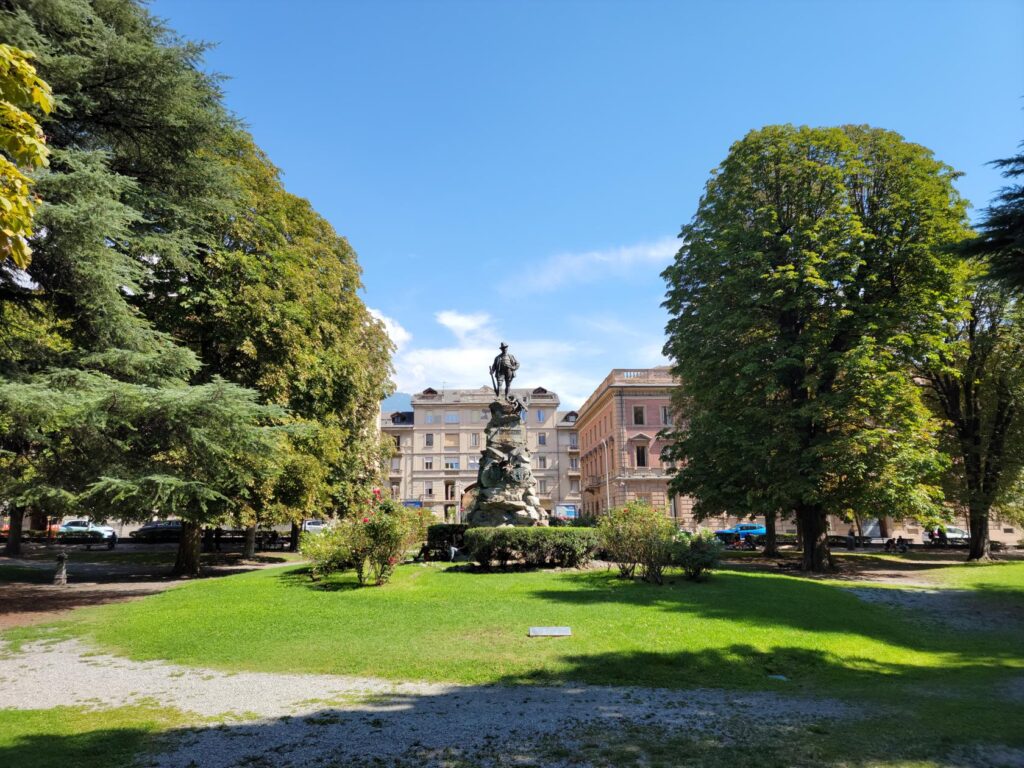
Aosta – Giardini Pubblici Emilio Lussu
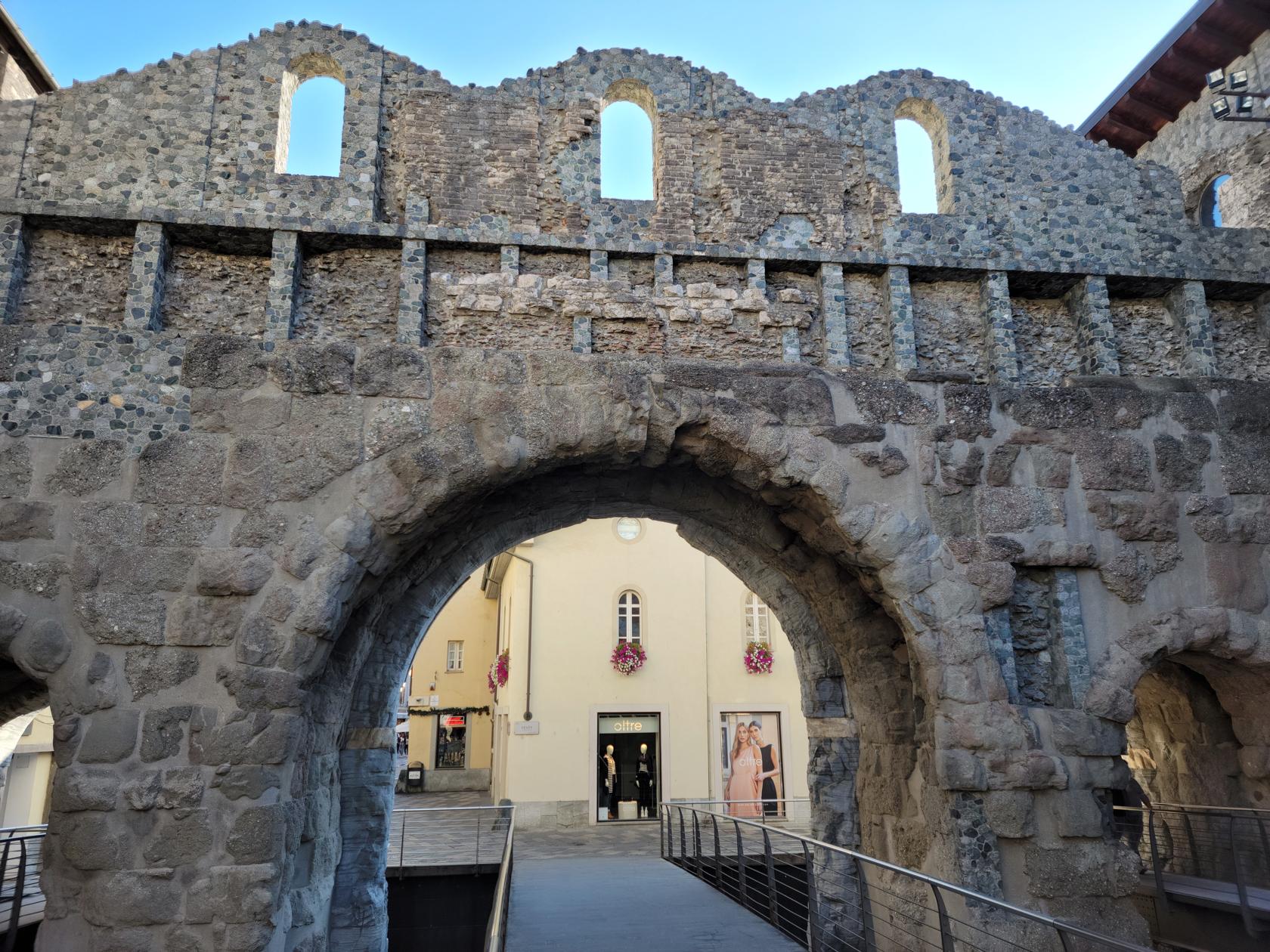
Roman Arch Of Augustus
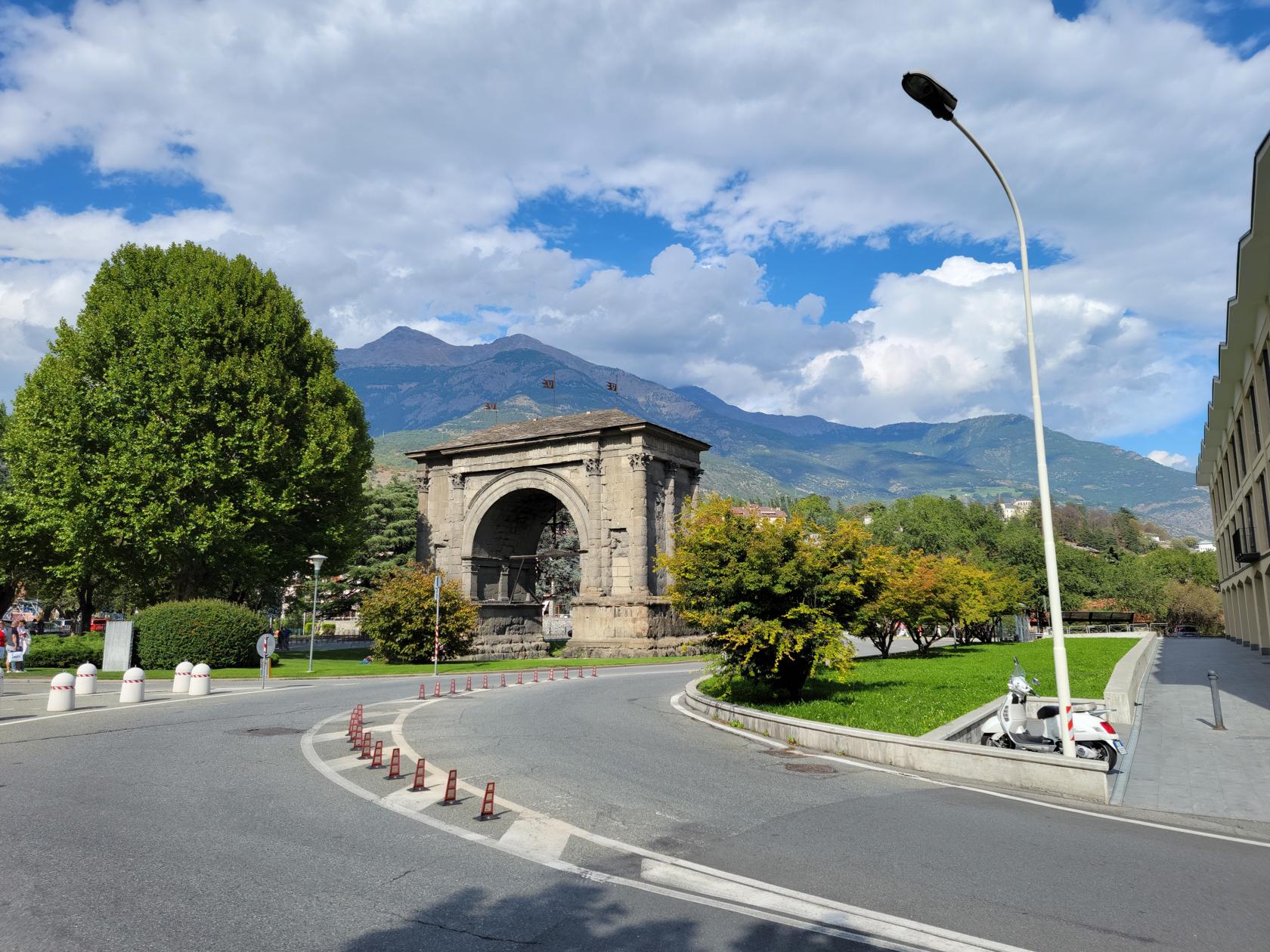
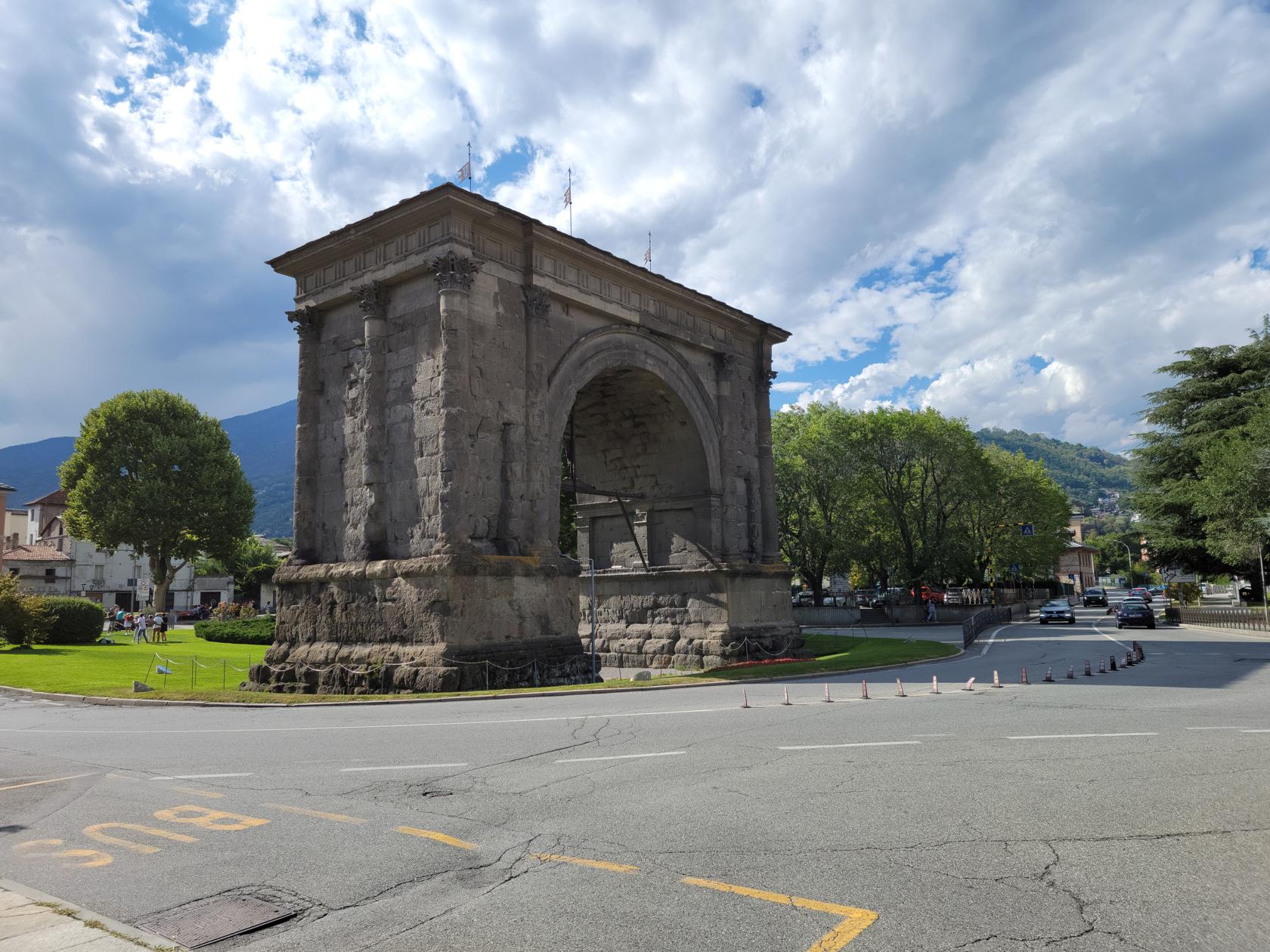
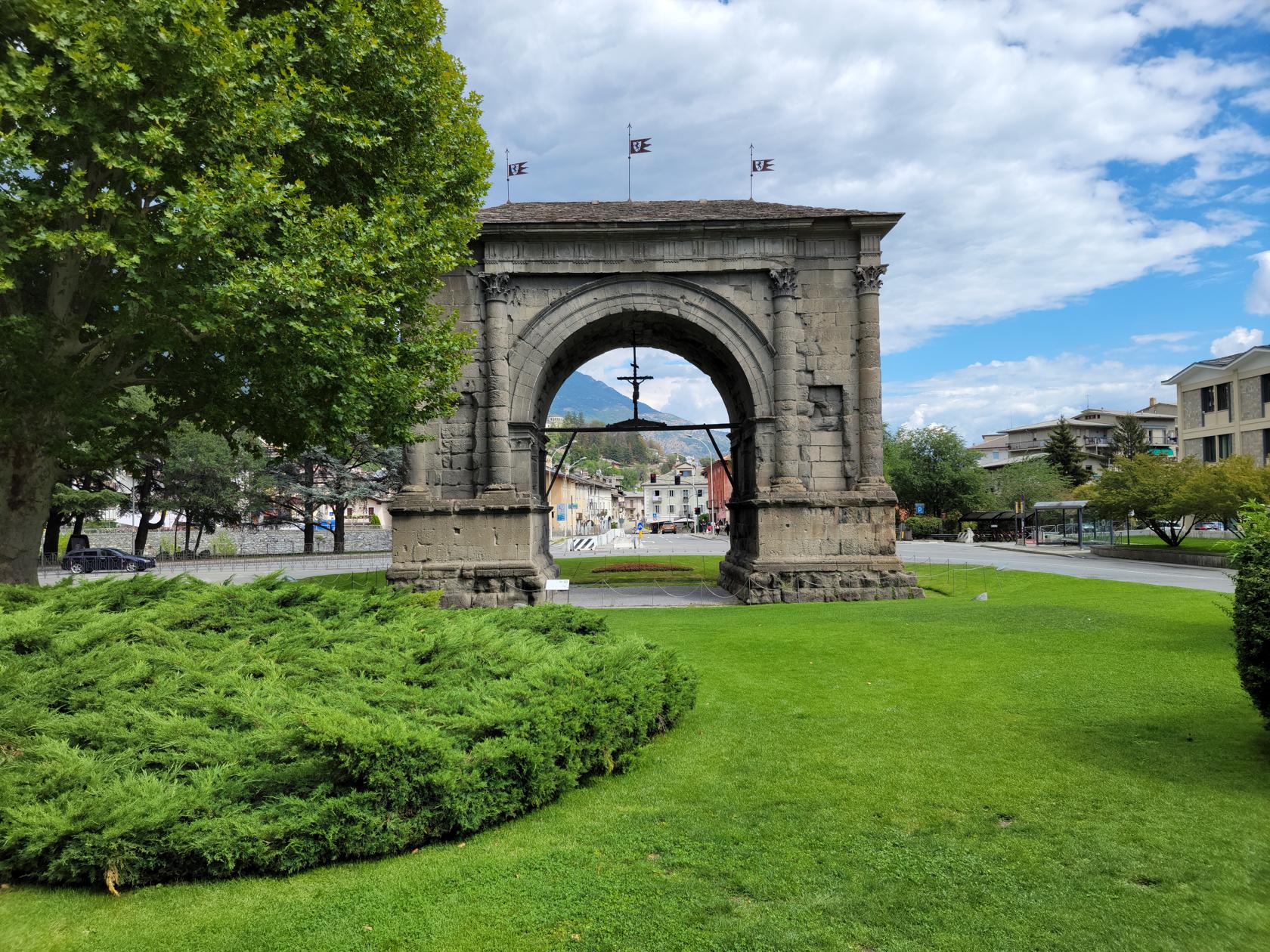
The enormous Arch of Augustus was built in 25 BCE to commemorate Augustus Caesar’s victory over the Salassis.
Aosta – Roman Gate of Augustus Ceasar
Aosta – Roman Gate of Augustus Ceasar
Located by the Pietra di Aosta bridge, which goes over the Buthier river, it is a large arch that contains a cross inside.
The Roman Theater
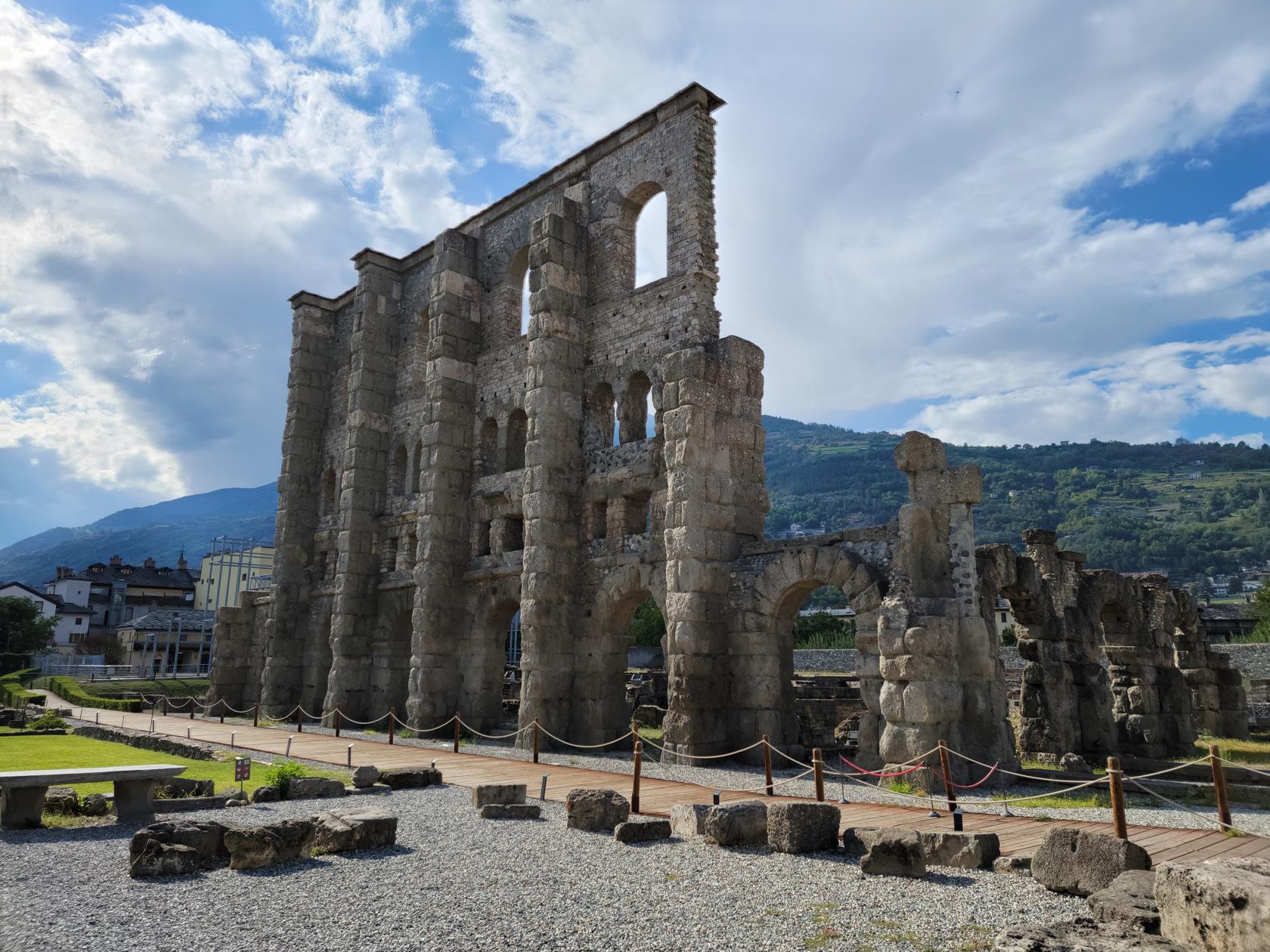
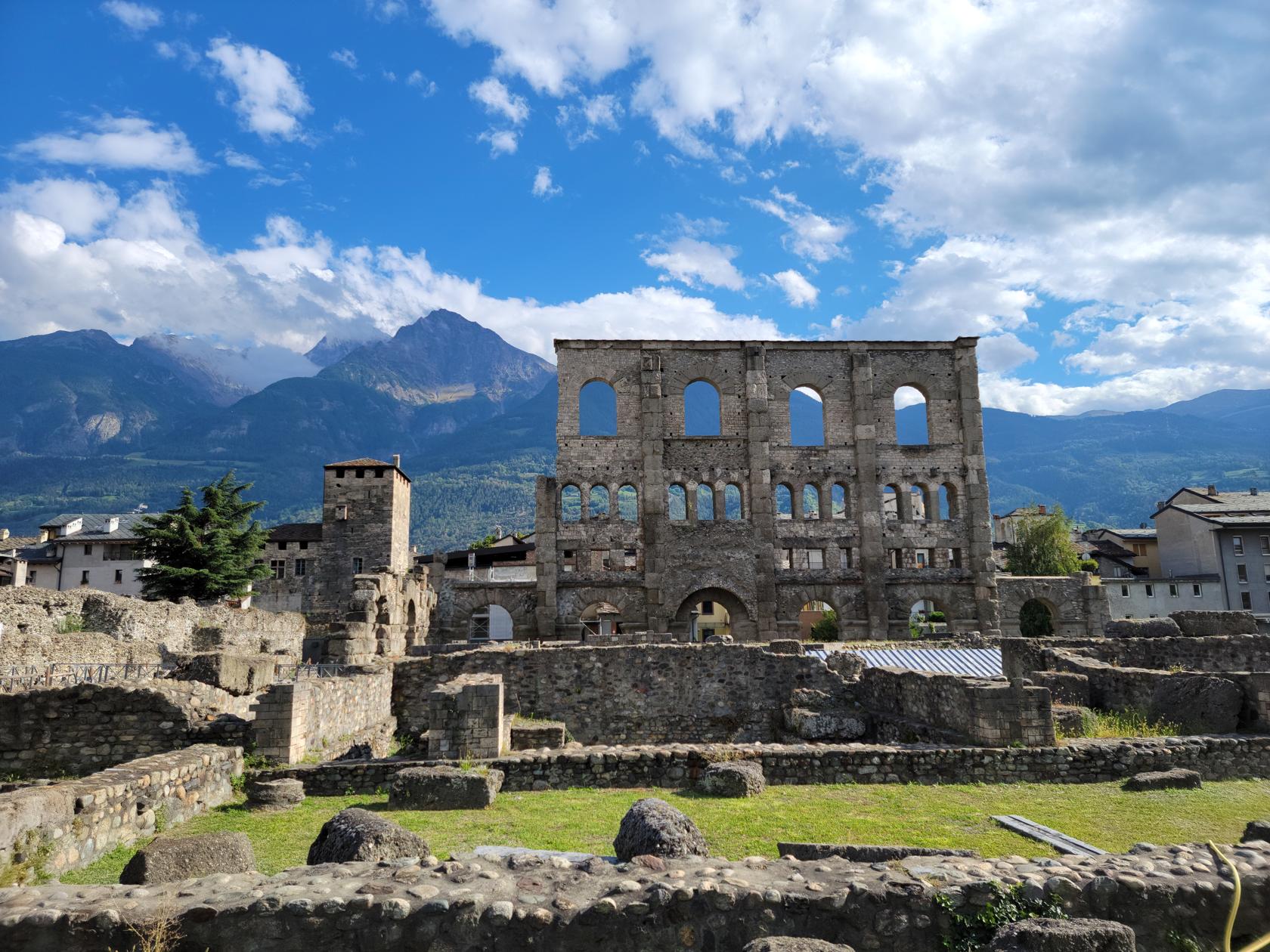
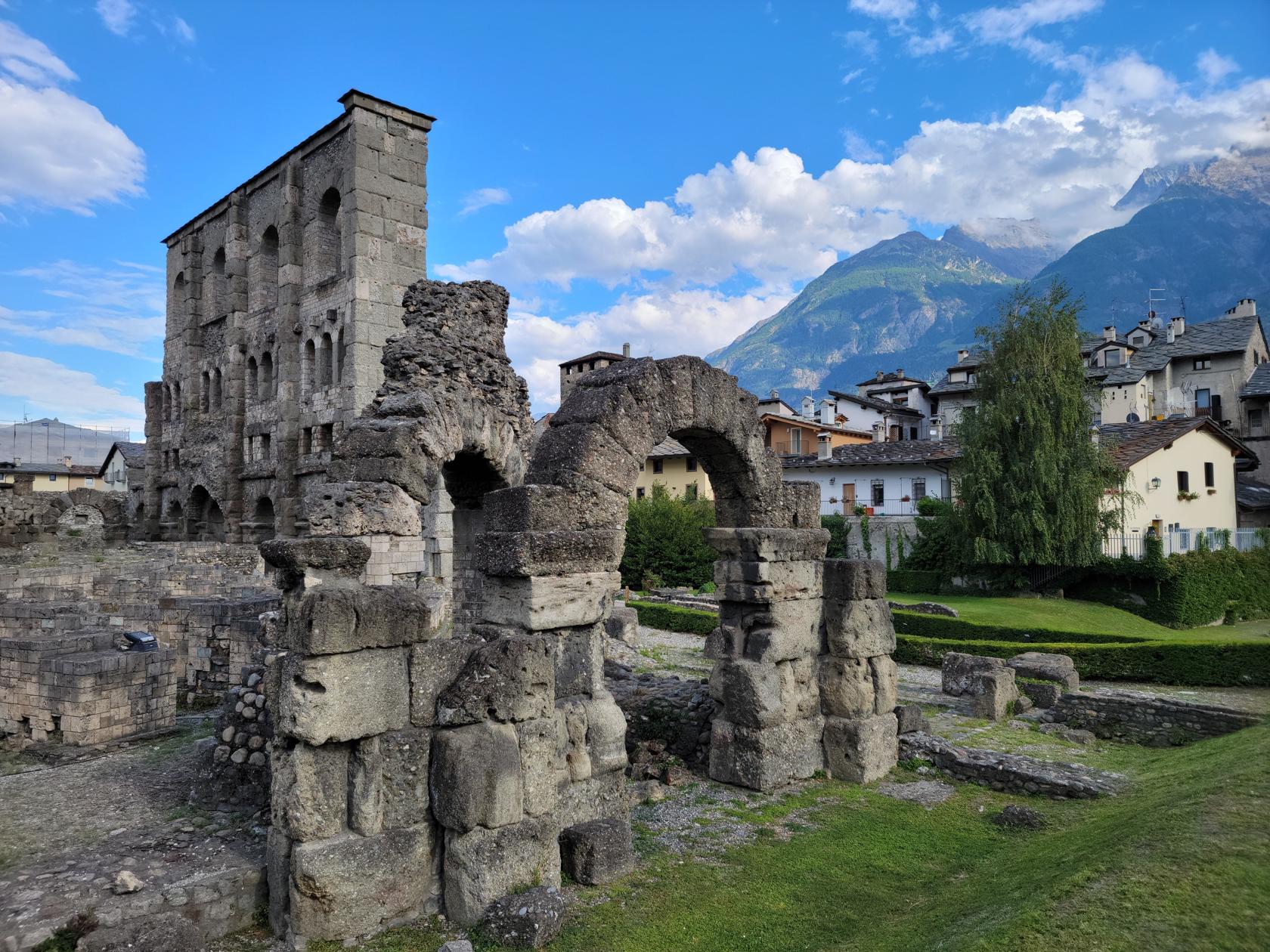
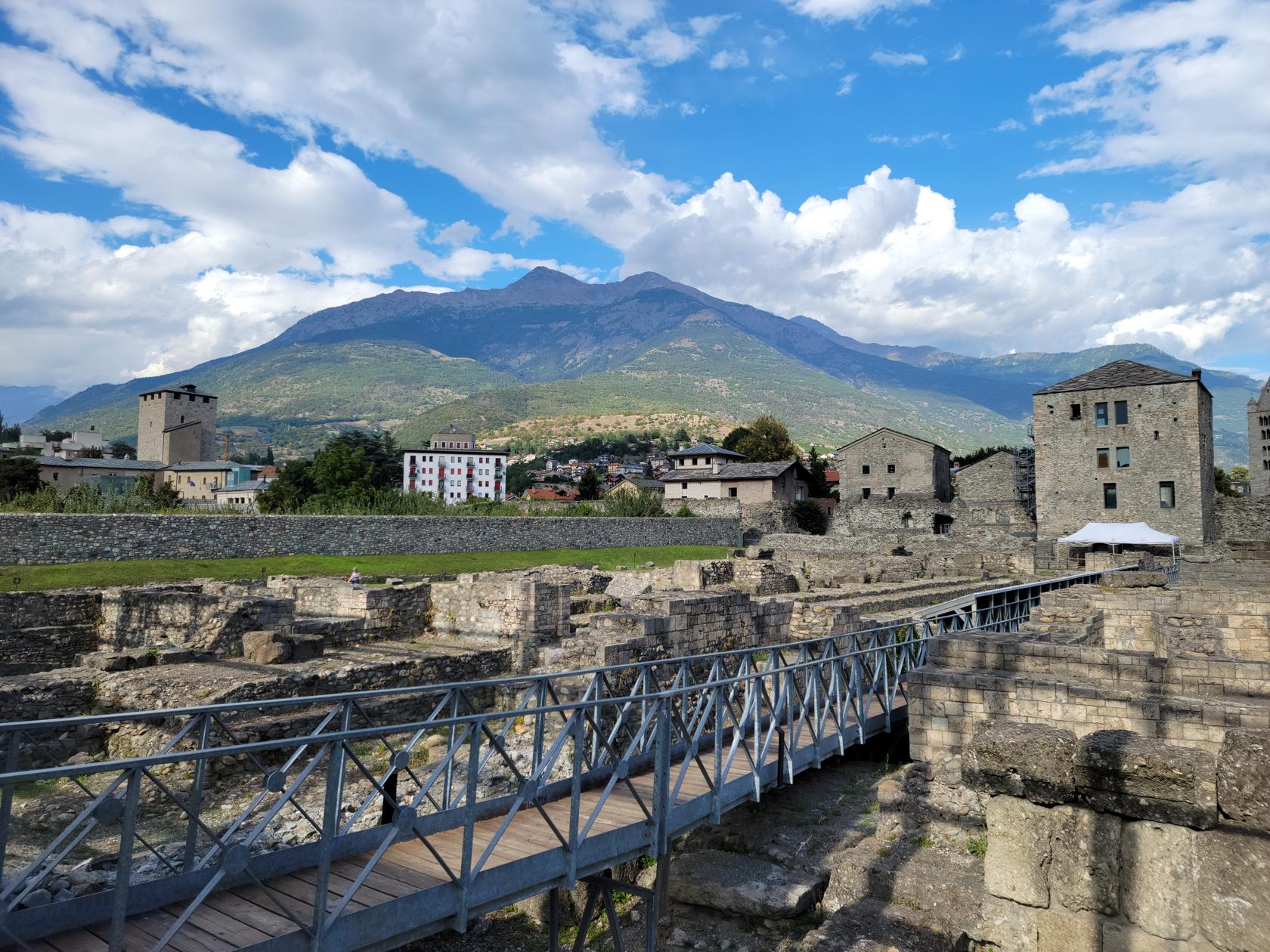
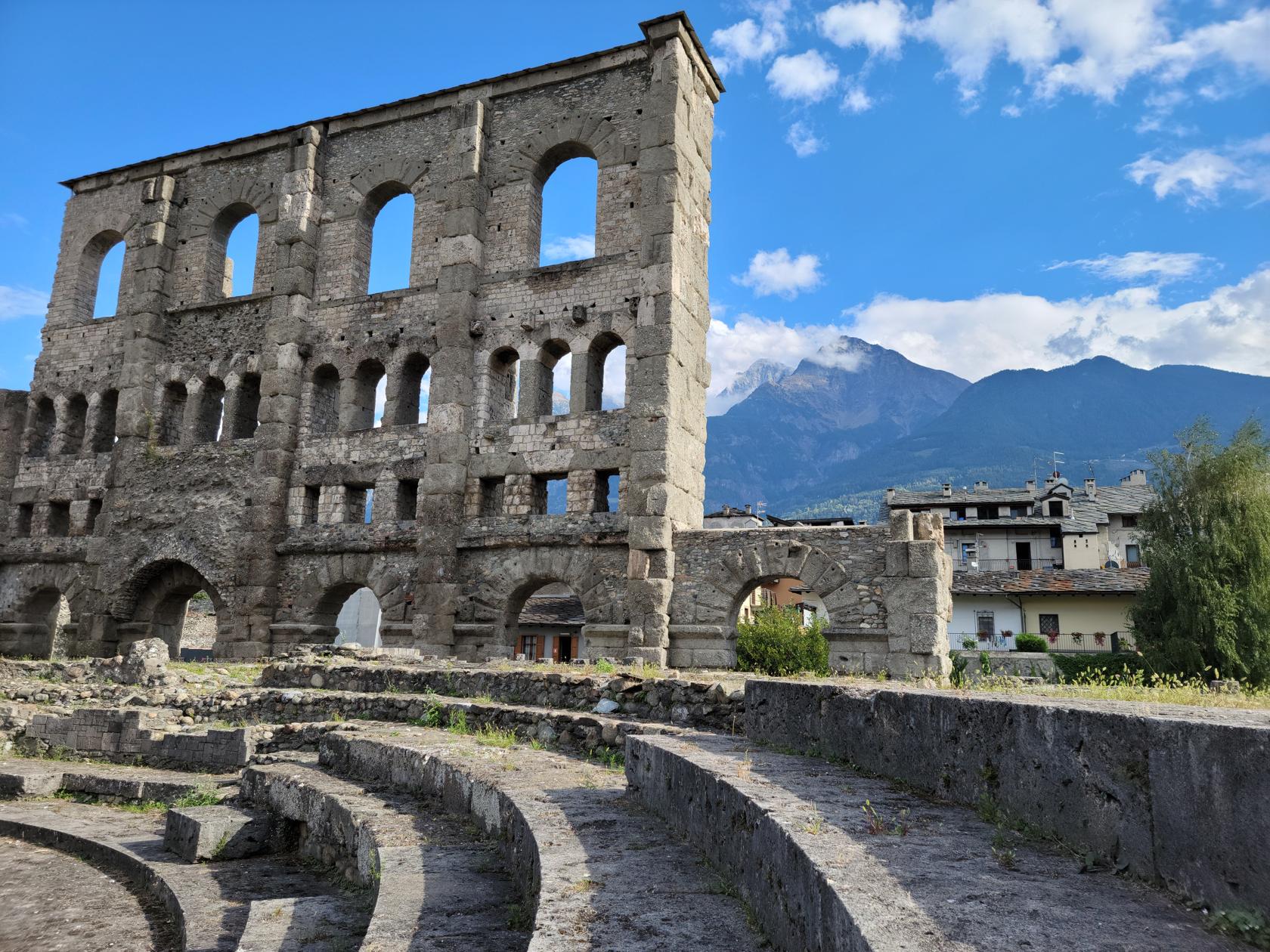
Another important site is the Roman Theater. Apparently in the early 1900s there were several structures built against the entrance, using it as one wall in their buildings. When the government decided that it was an important archeological site, these buildings were raised to prepare the site for excavations.
Aosta – Roman Theater
Aosta – Roman Theater
Aosta – Roman Theater
Aosta – Roman Theater
Aosta – Roman Theater
Aosta – Roman Theater – Section of Theater
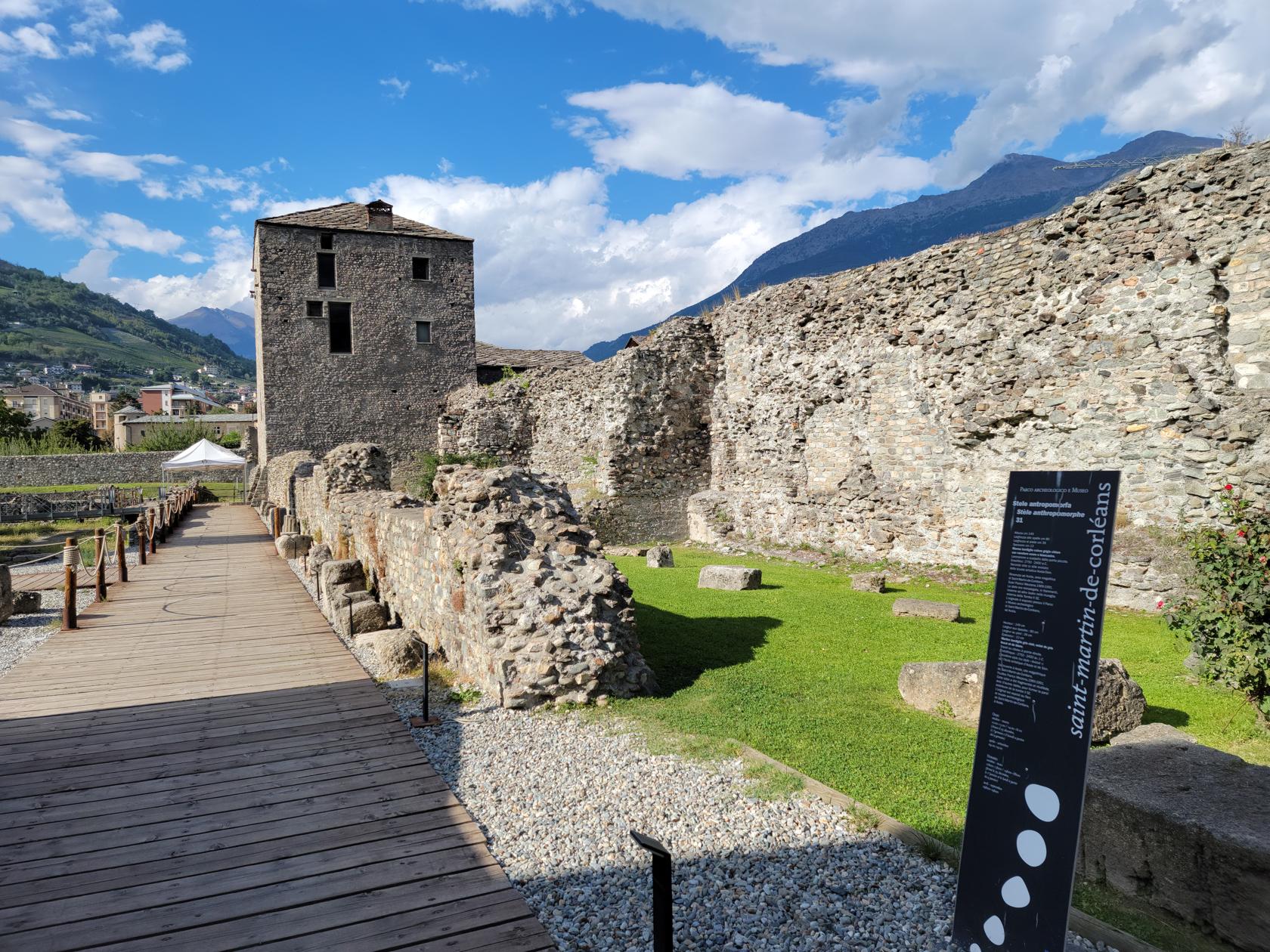
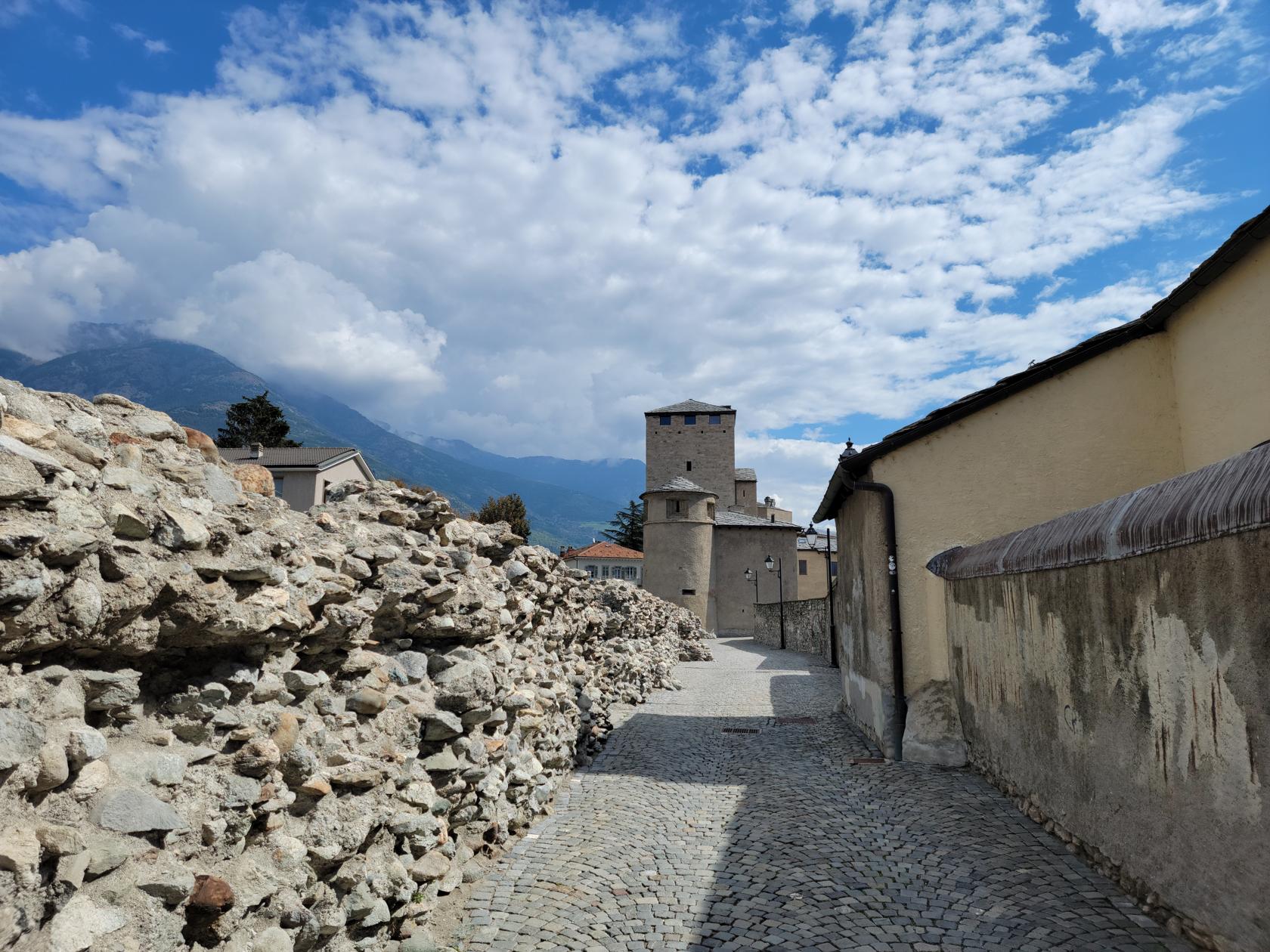
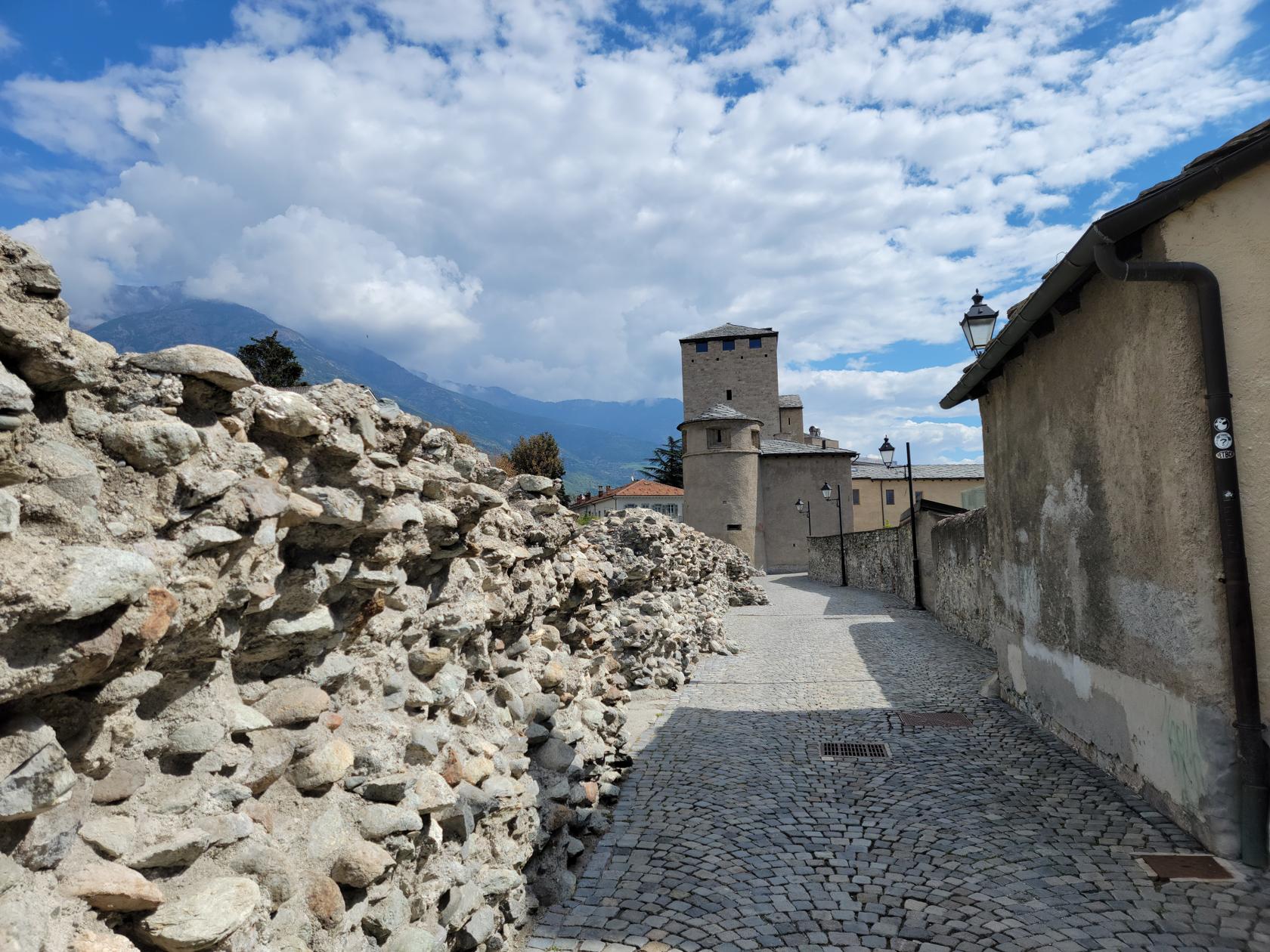
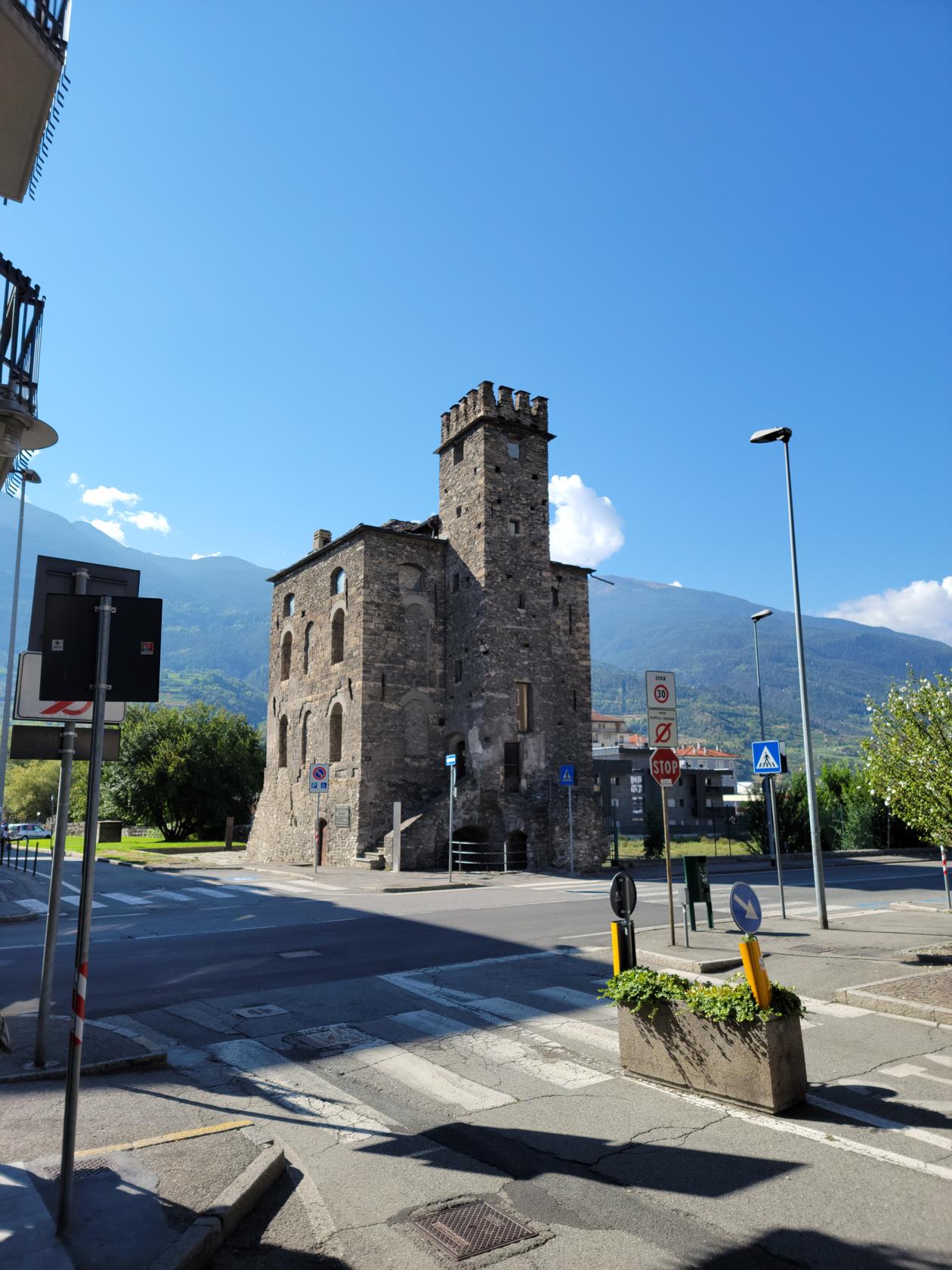
The Roman Wall and Towers
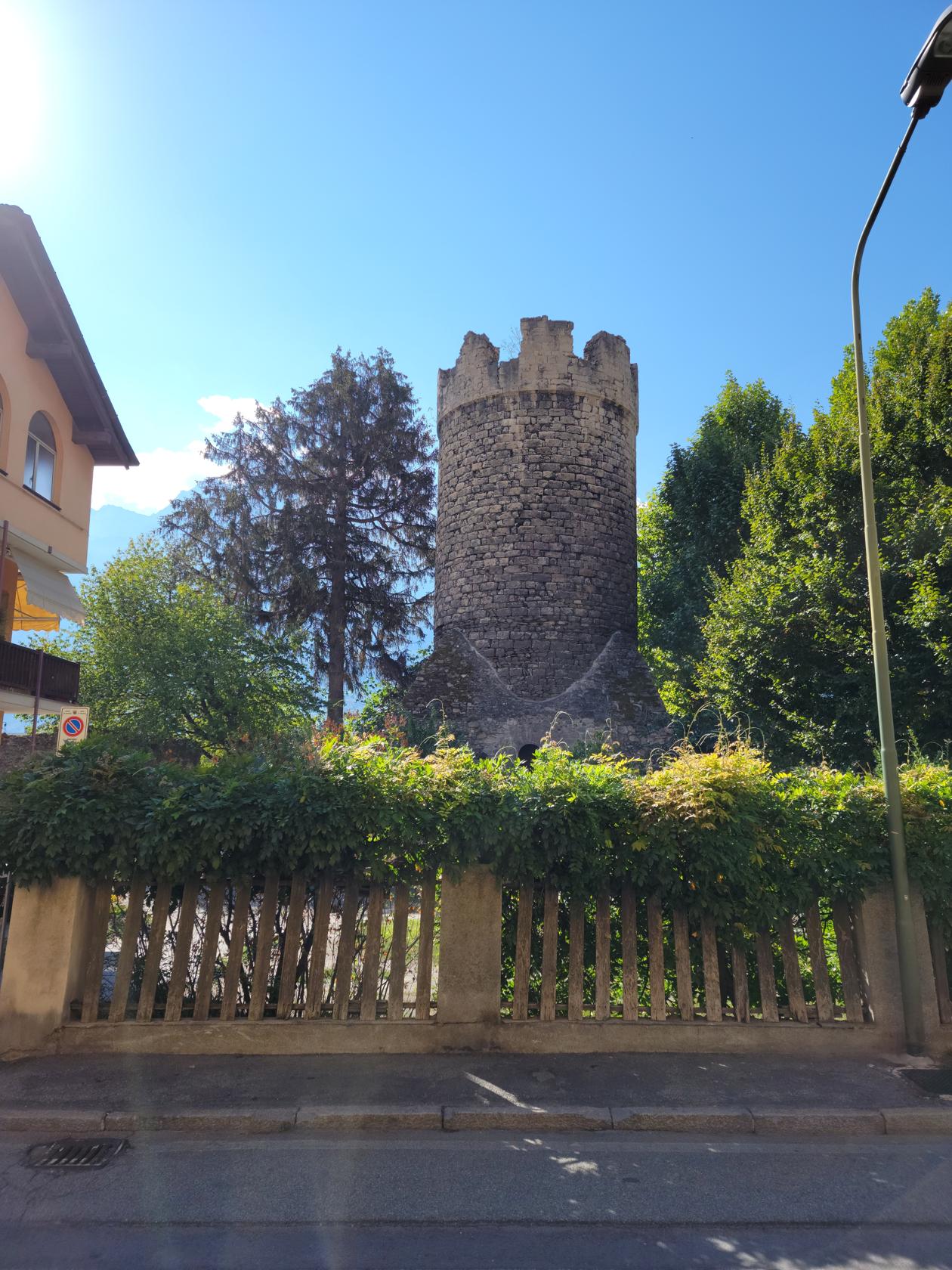
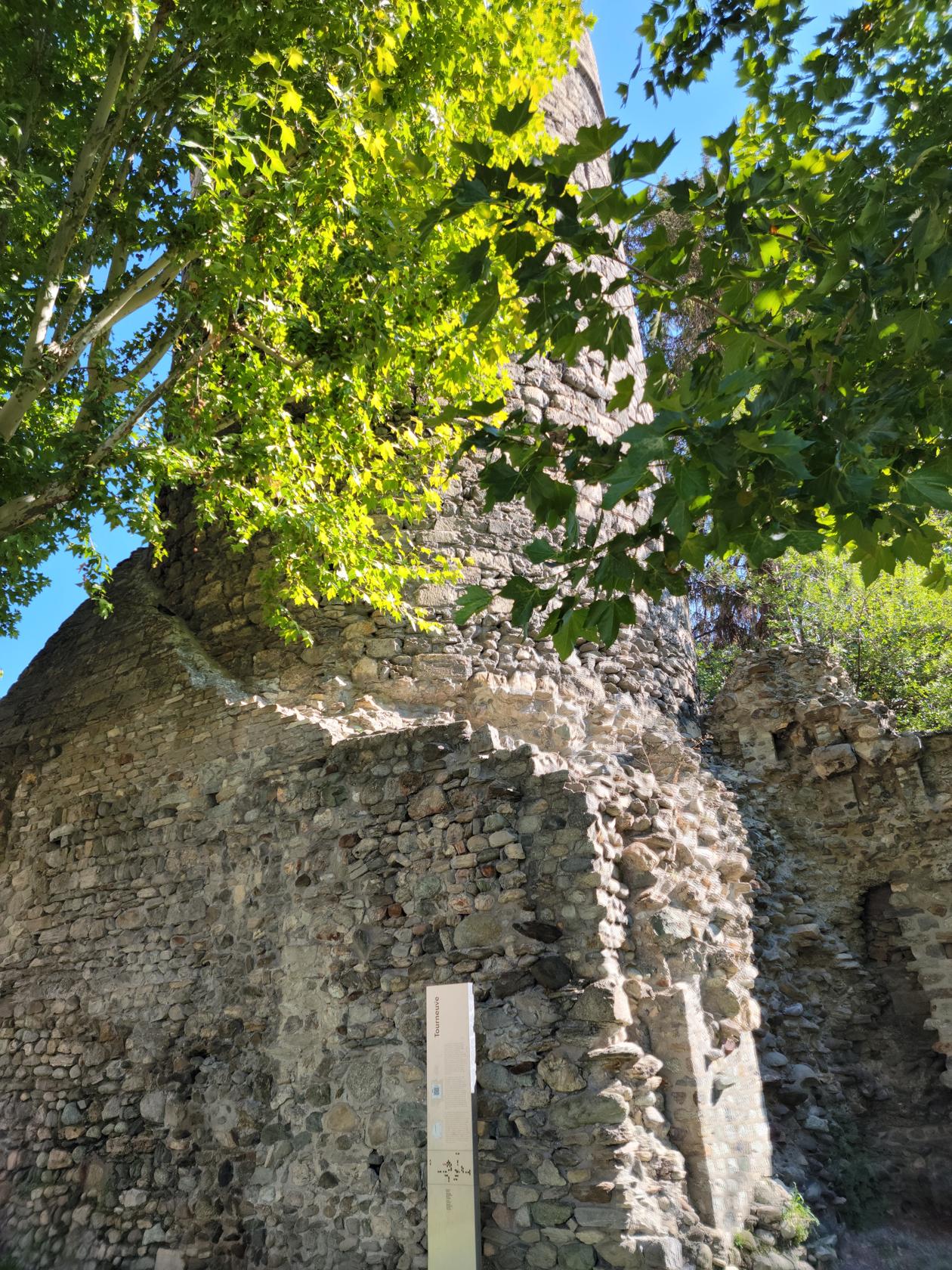
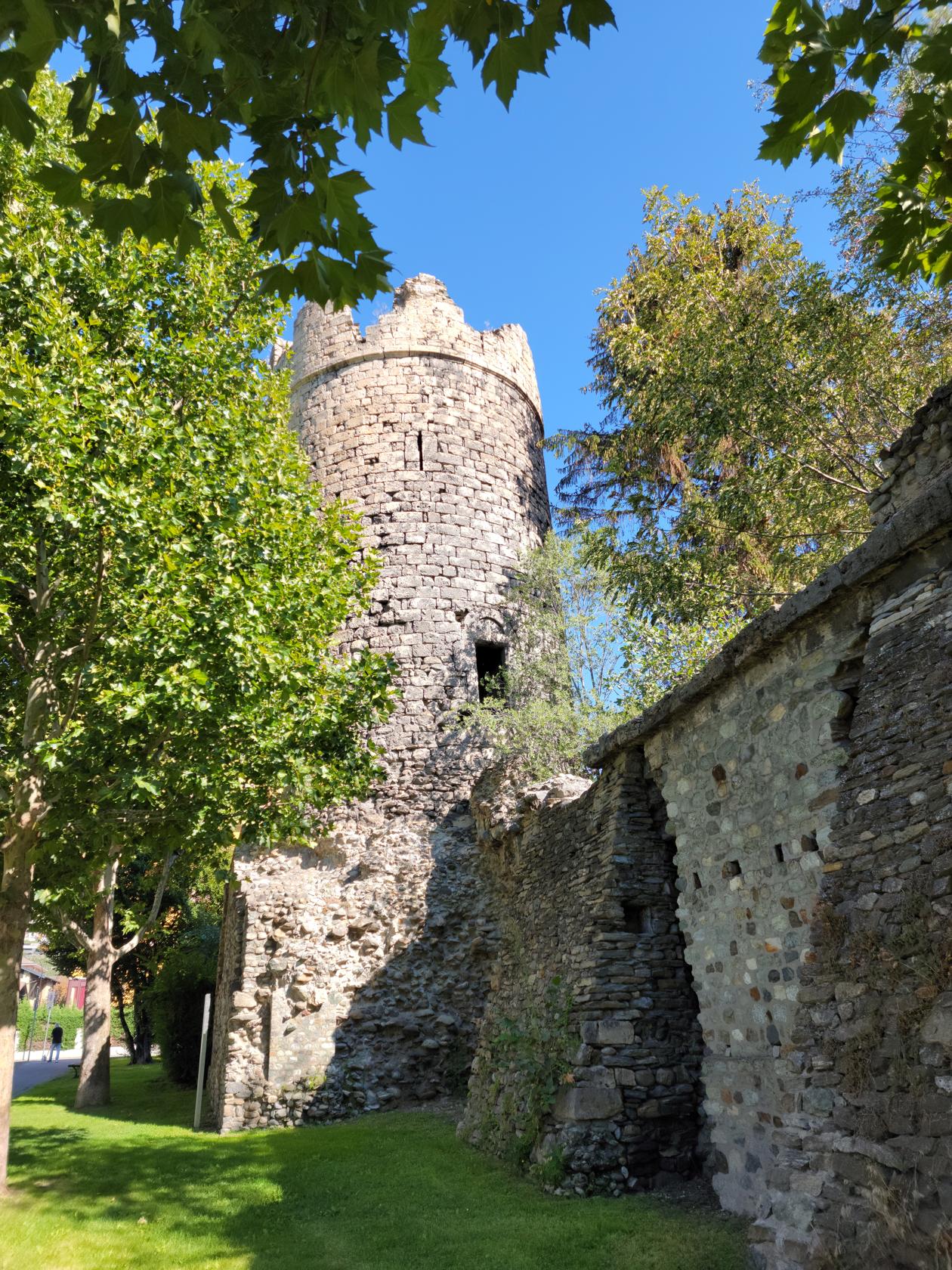
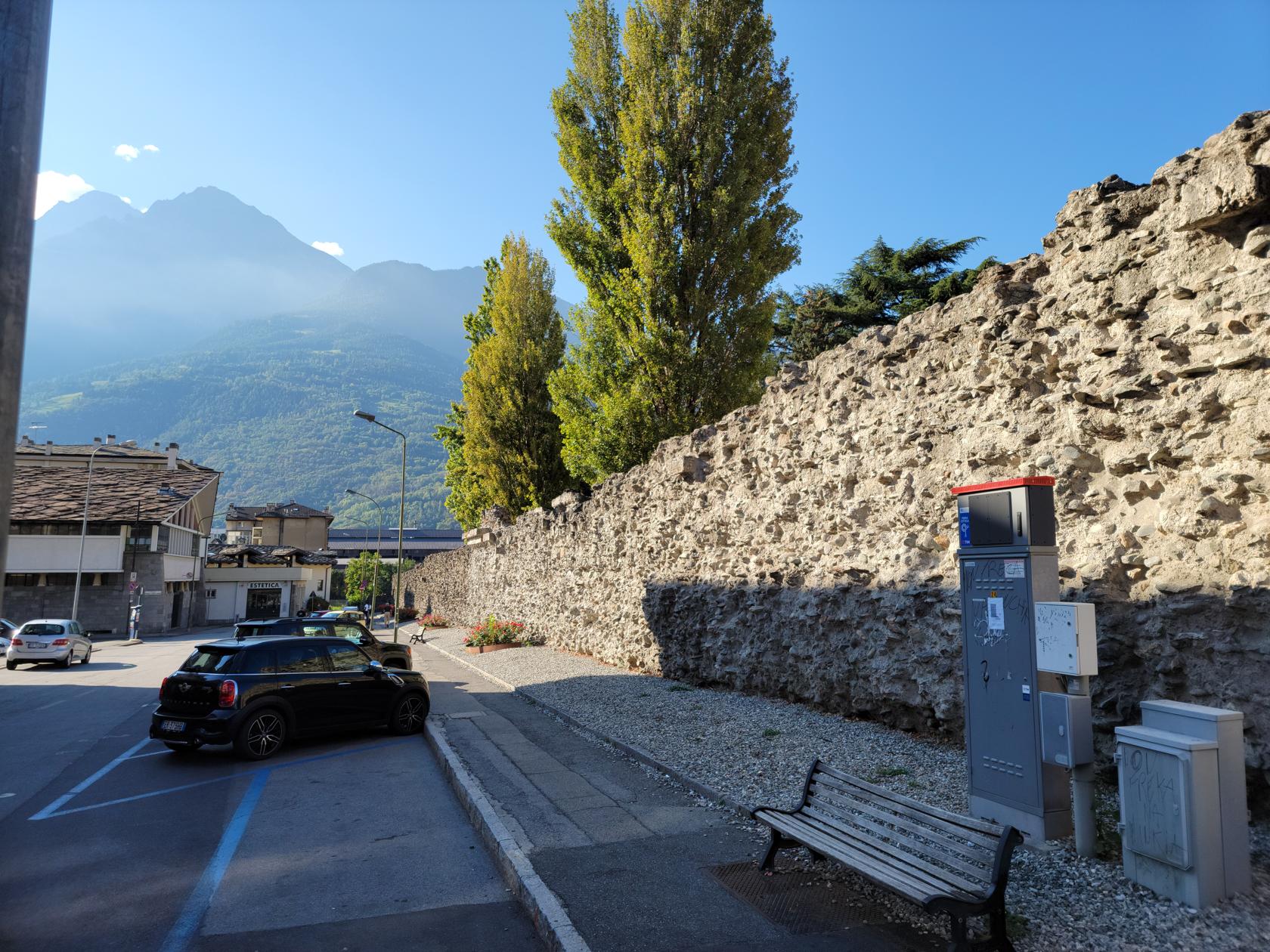
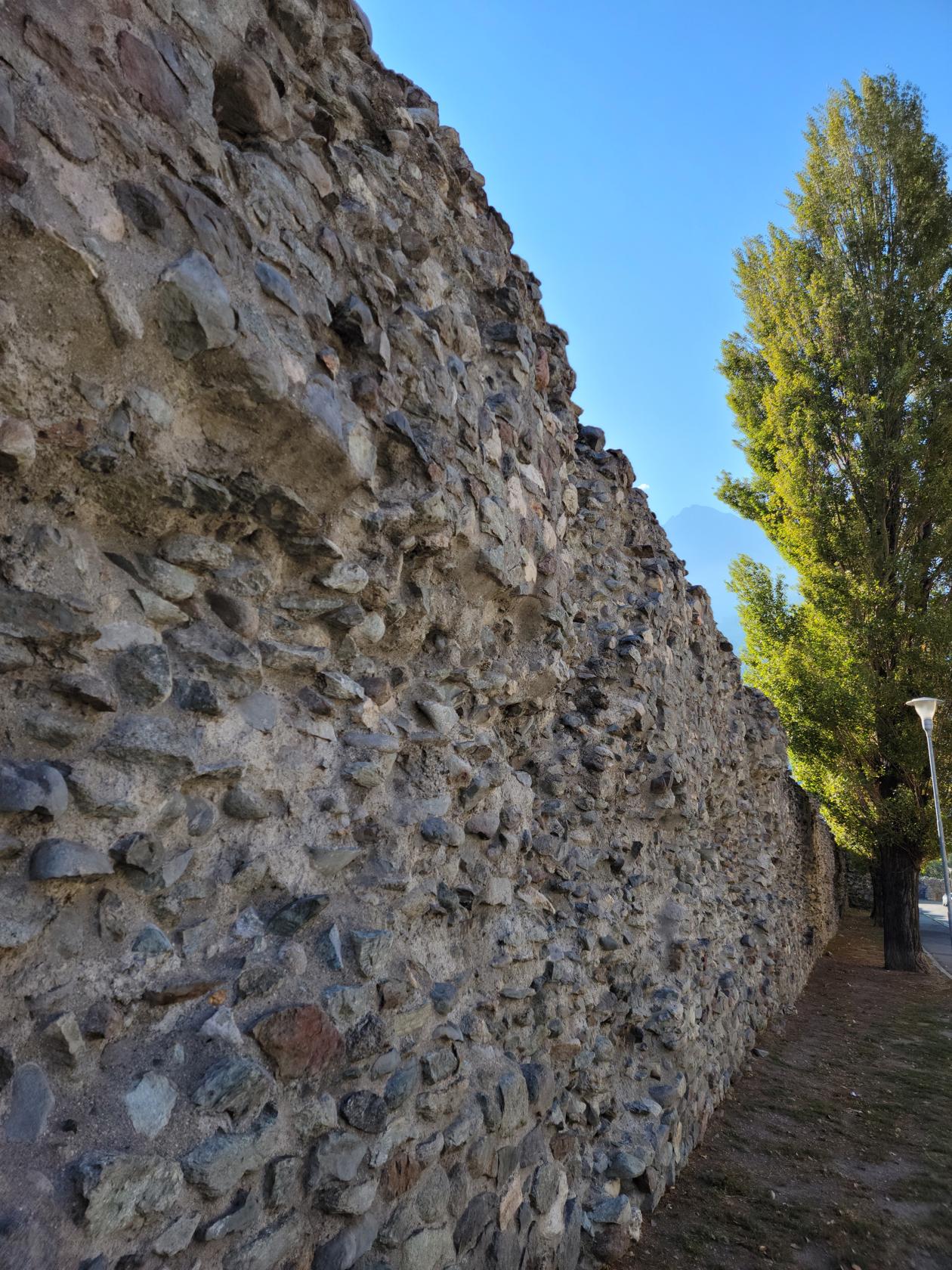
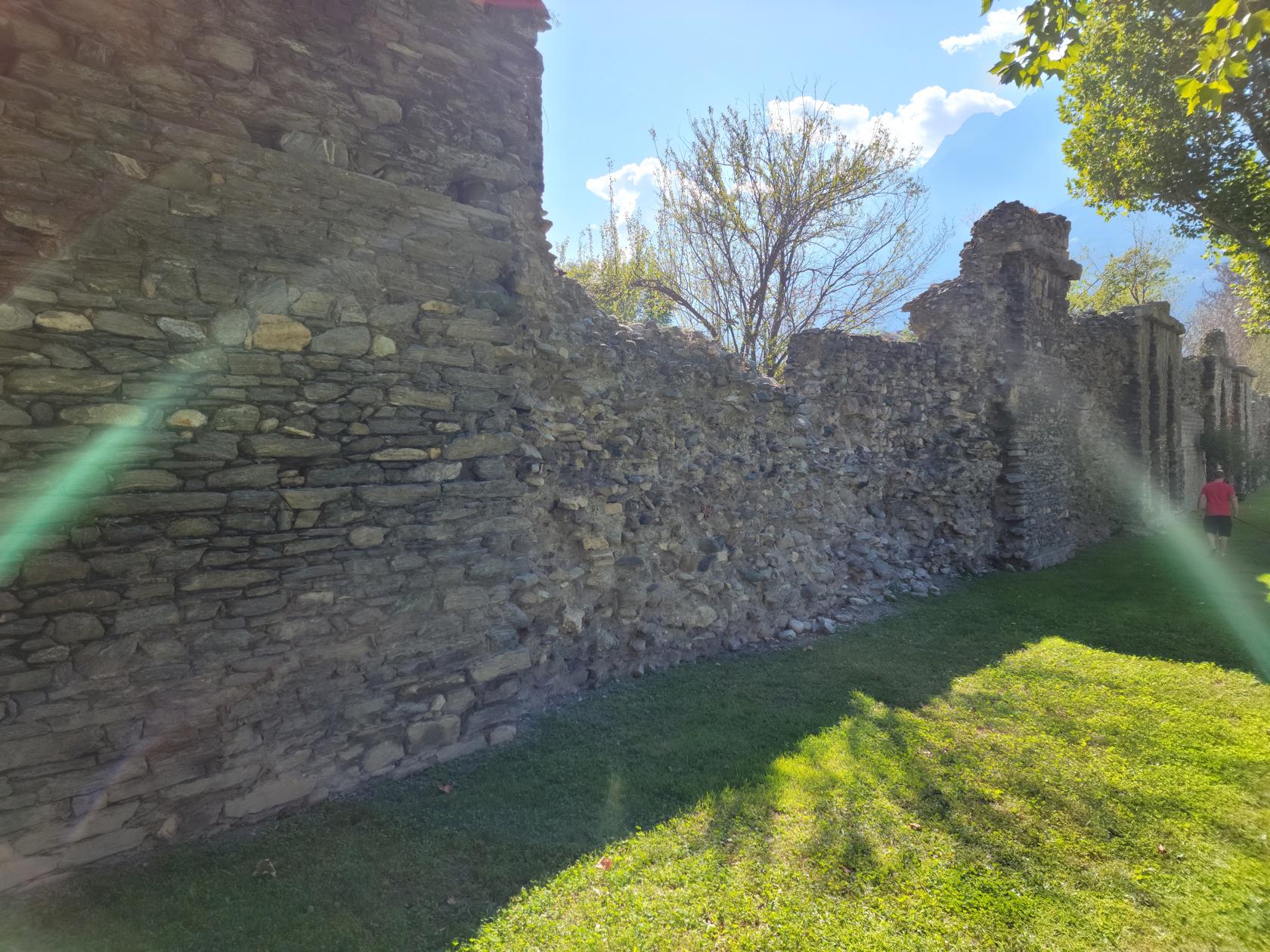
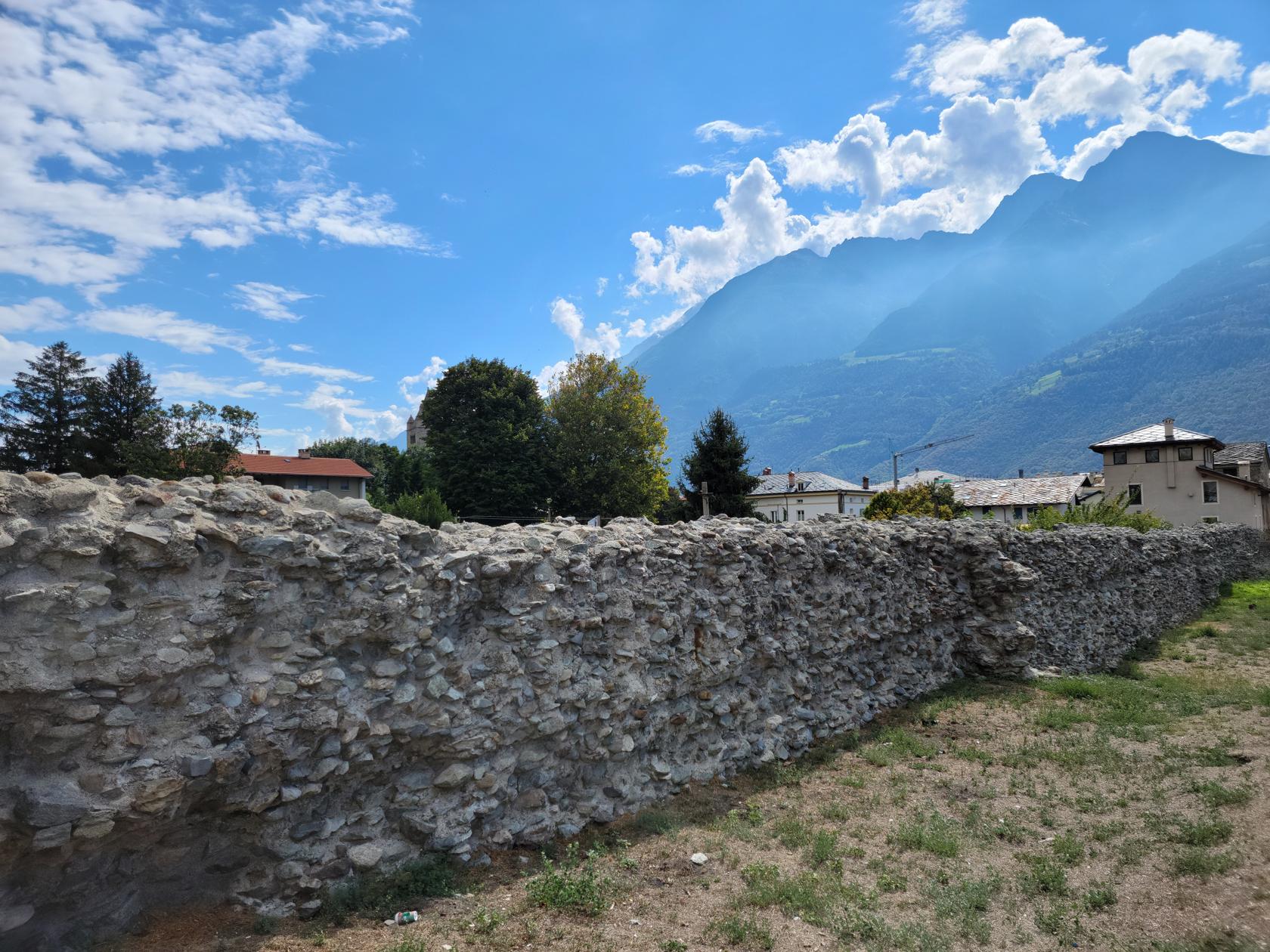
The city is encircled by a Roman Wall and several towers, four of which mark each corner of the rectangle that is made by the walls.
Aosta – Bell Tower and front of the Church of Sant Orso
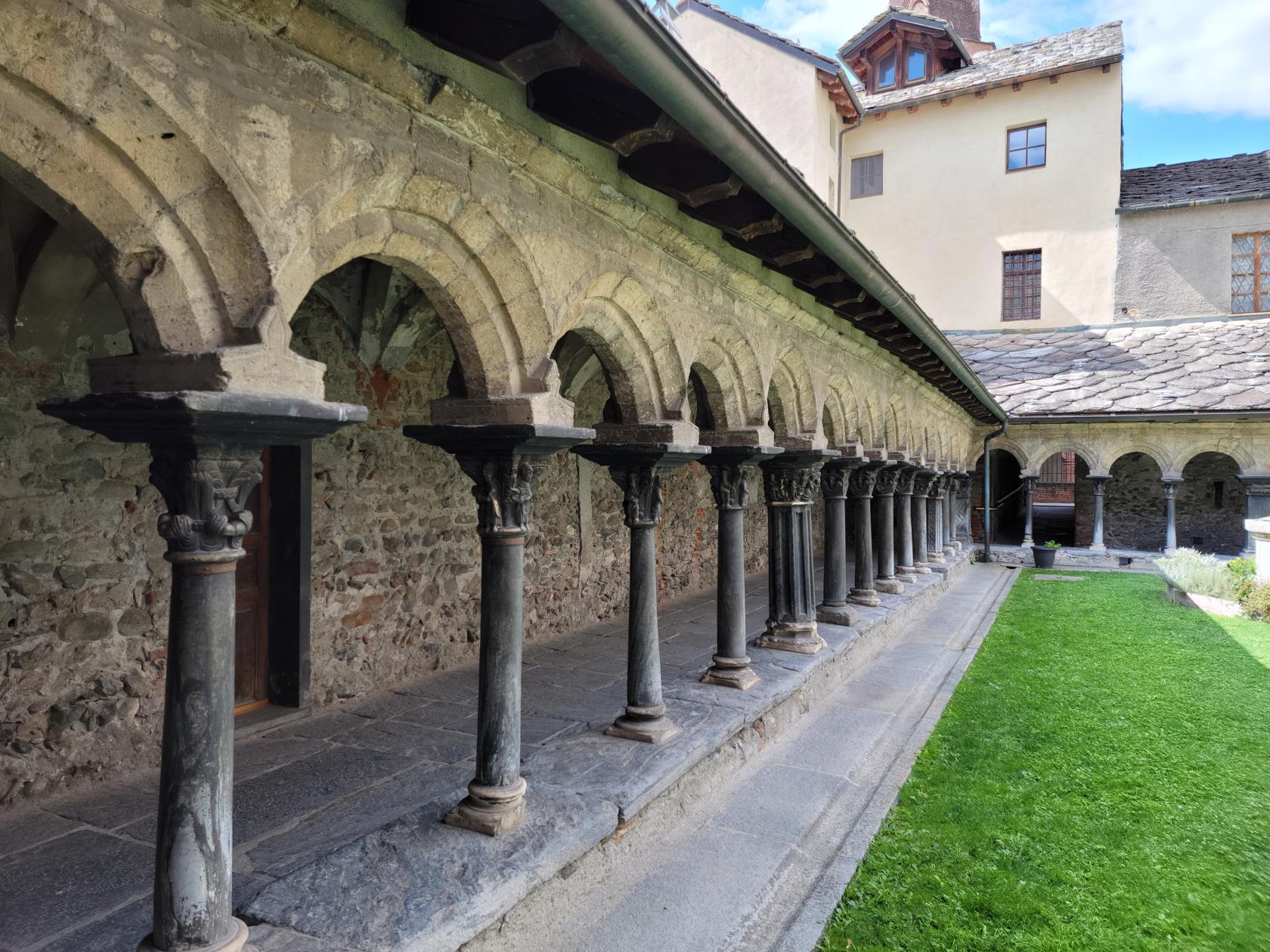
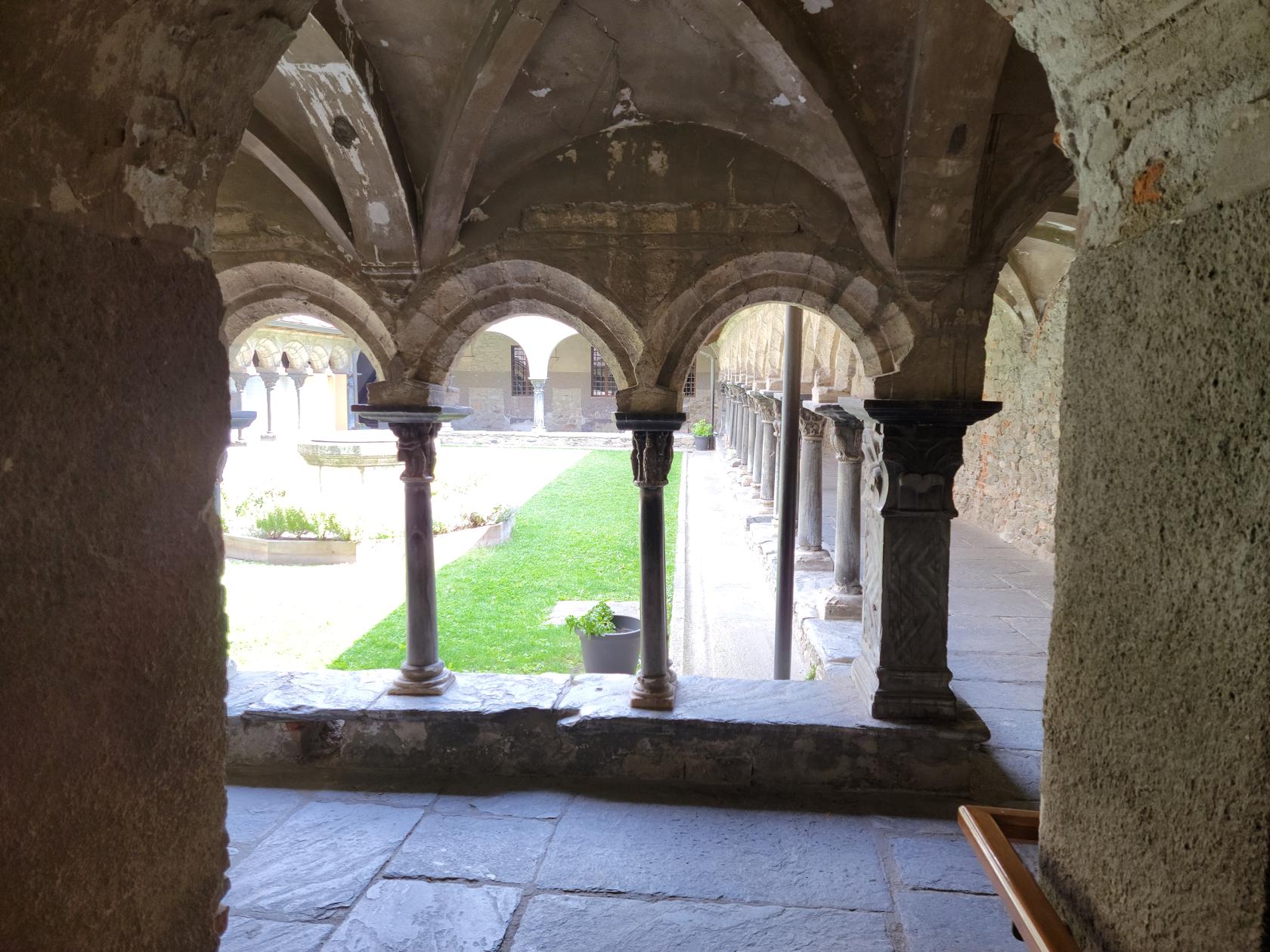
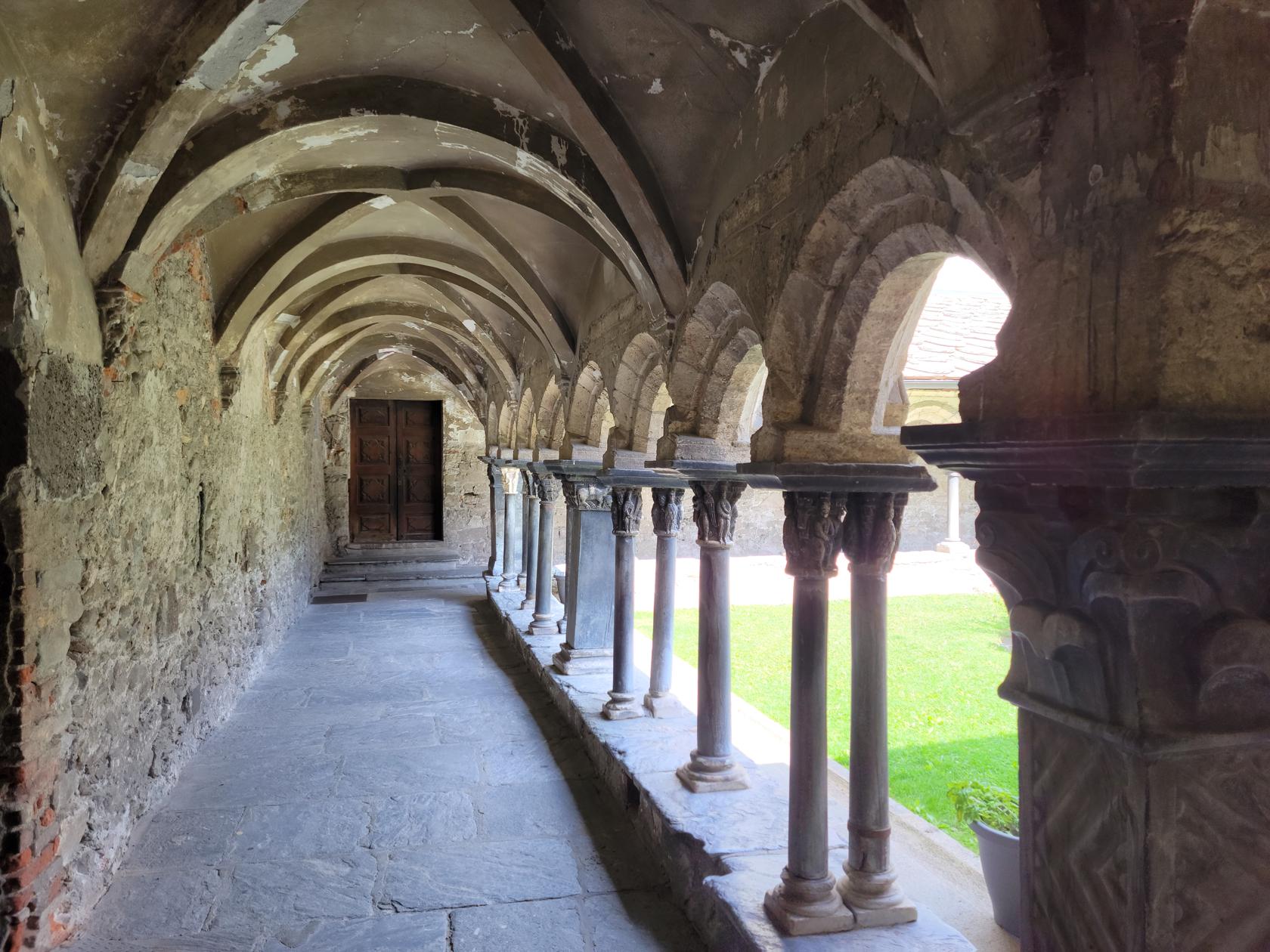
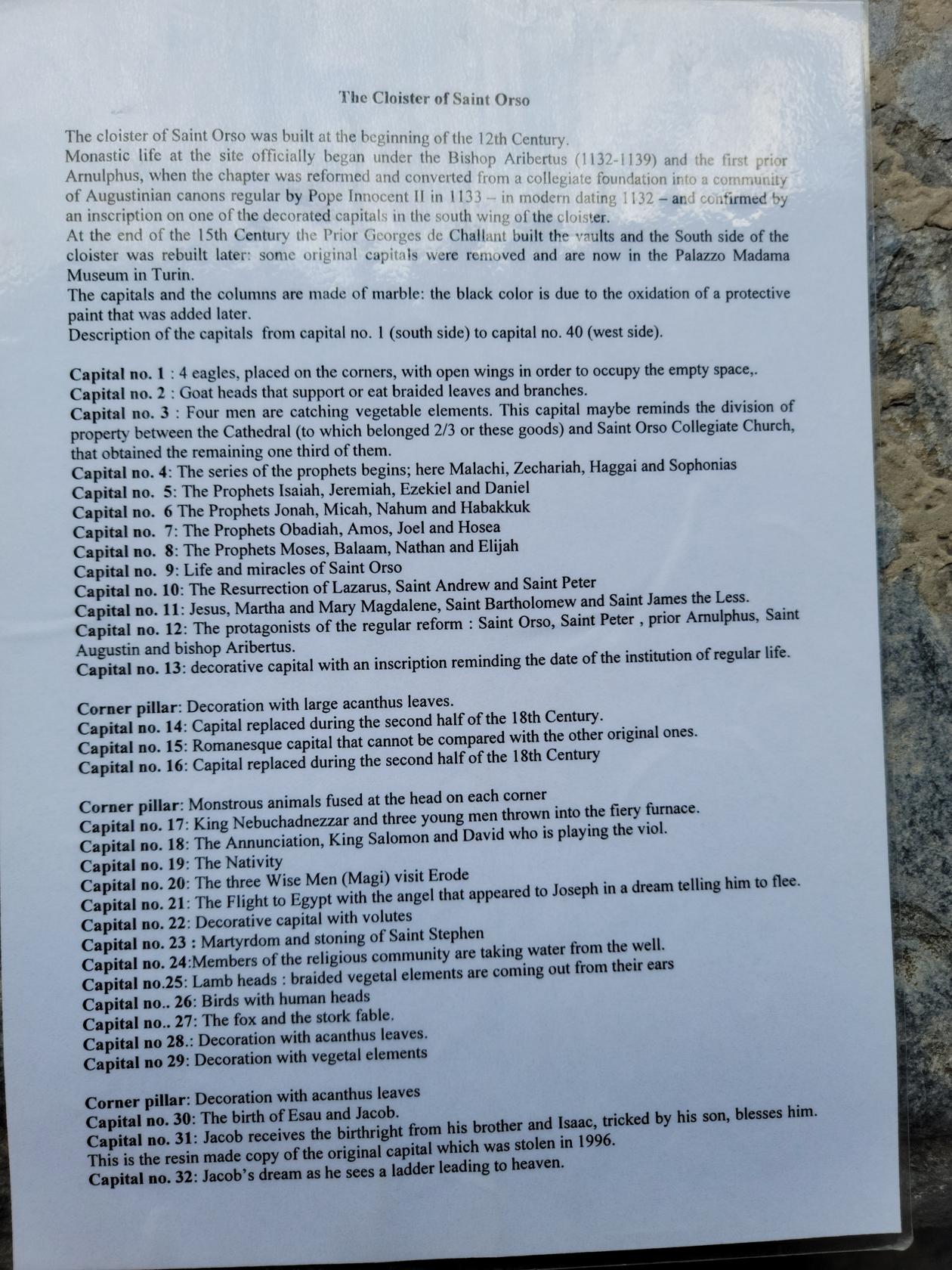
Romanesque Cloister of Sant-Orso
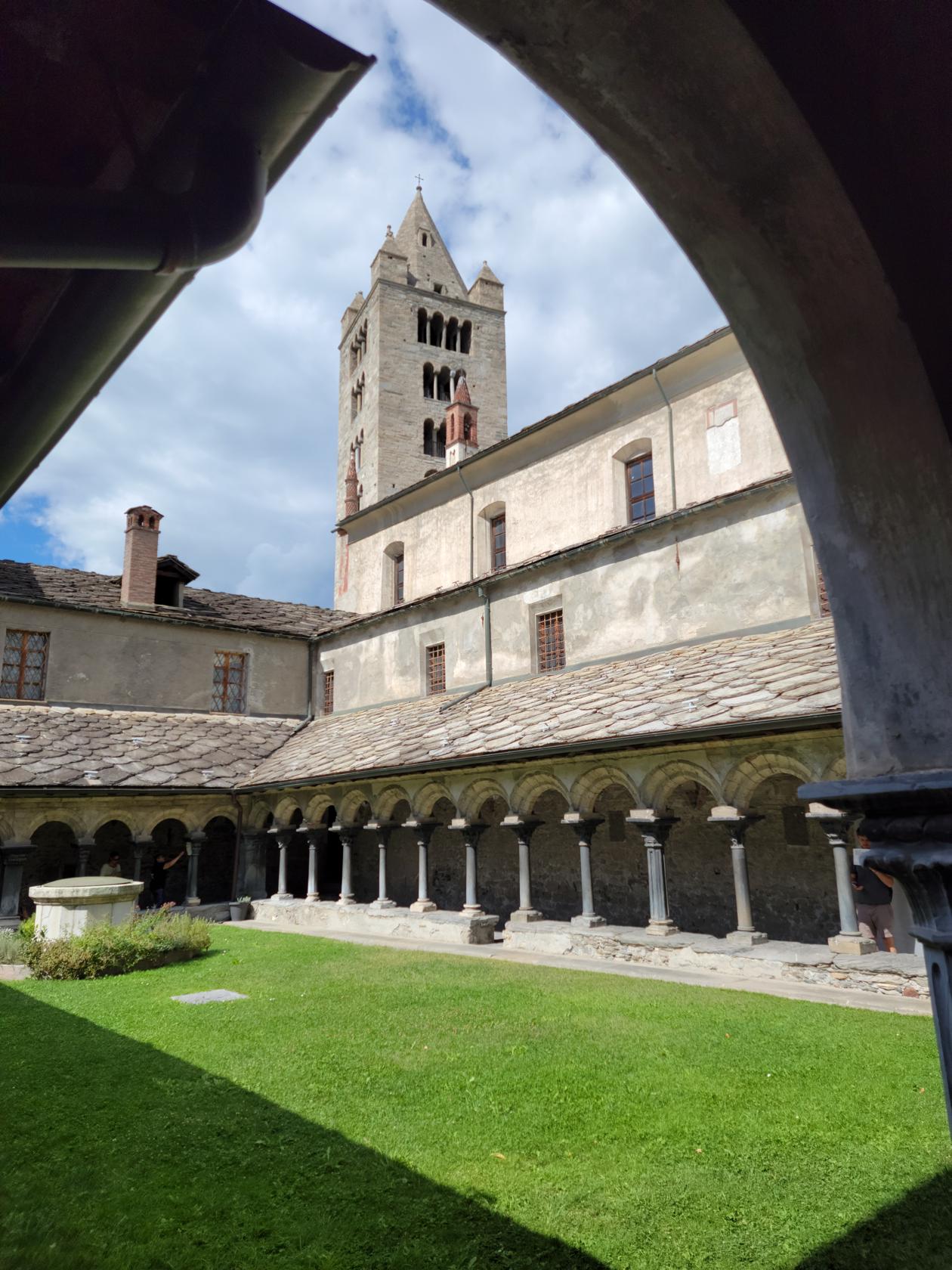
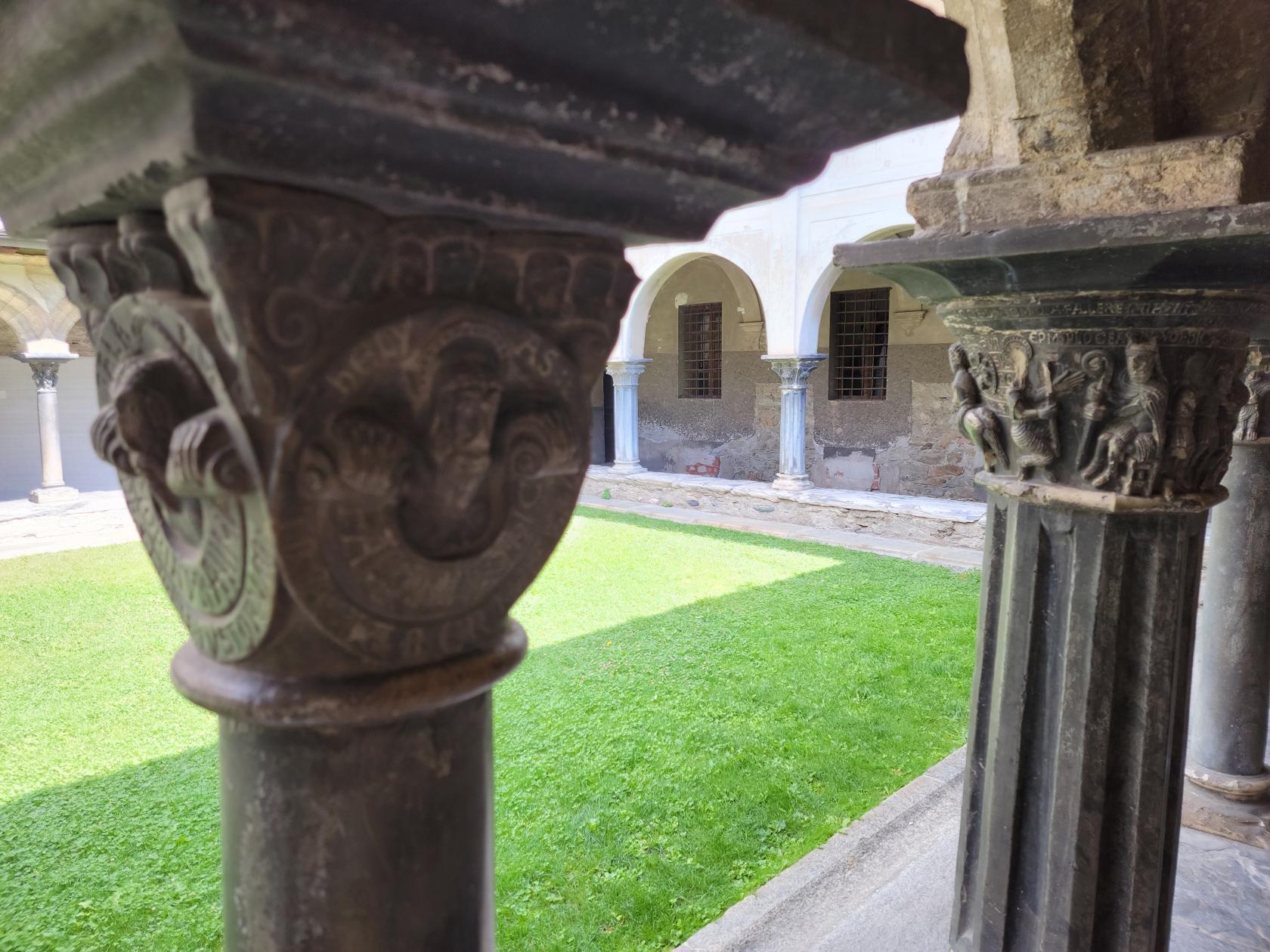
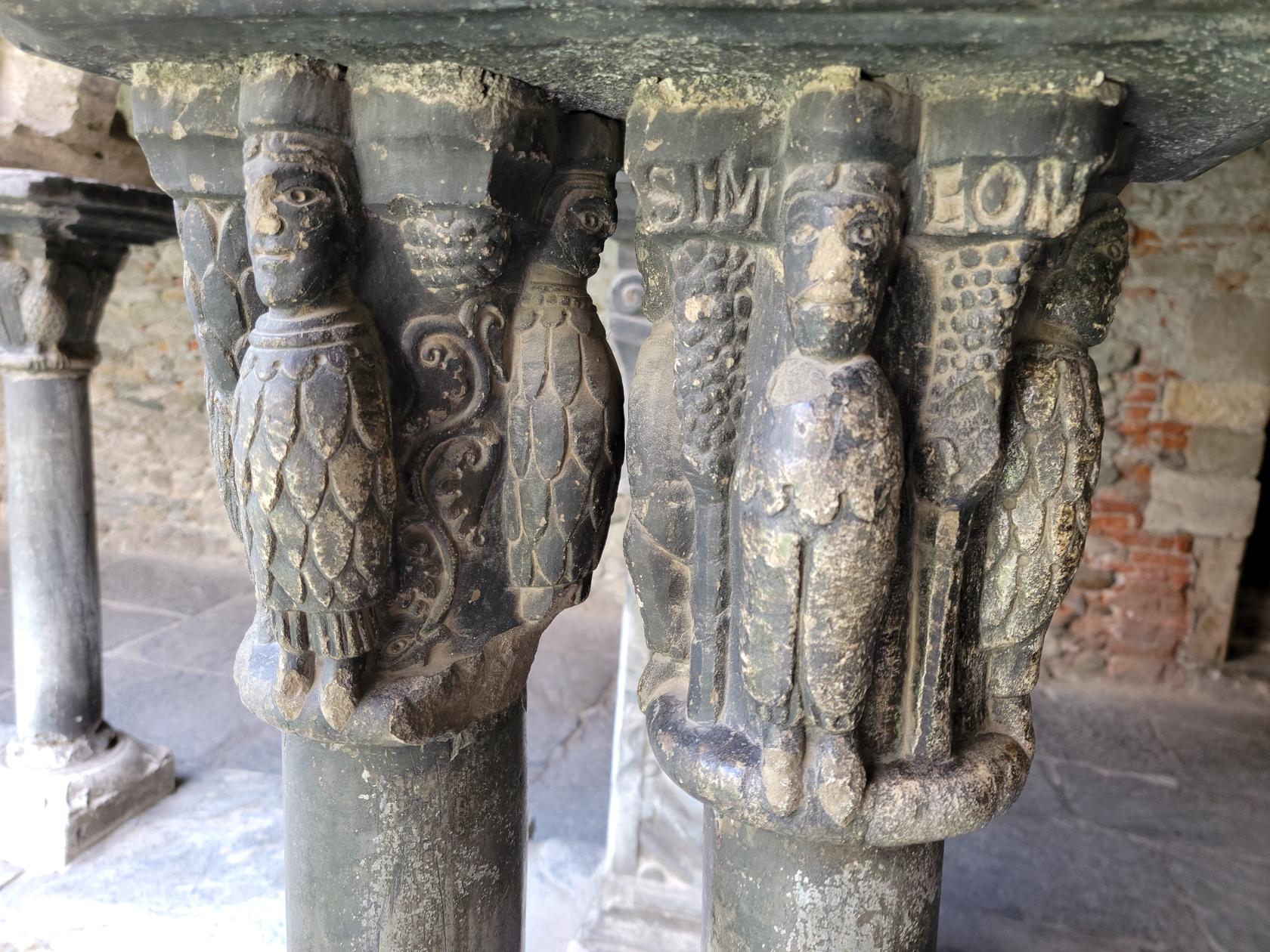
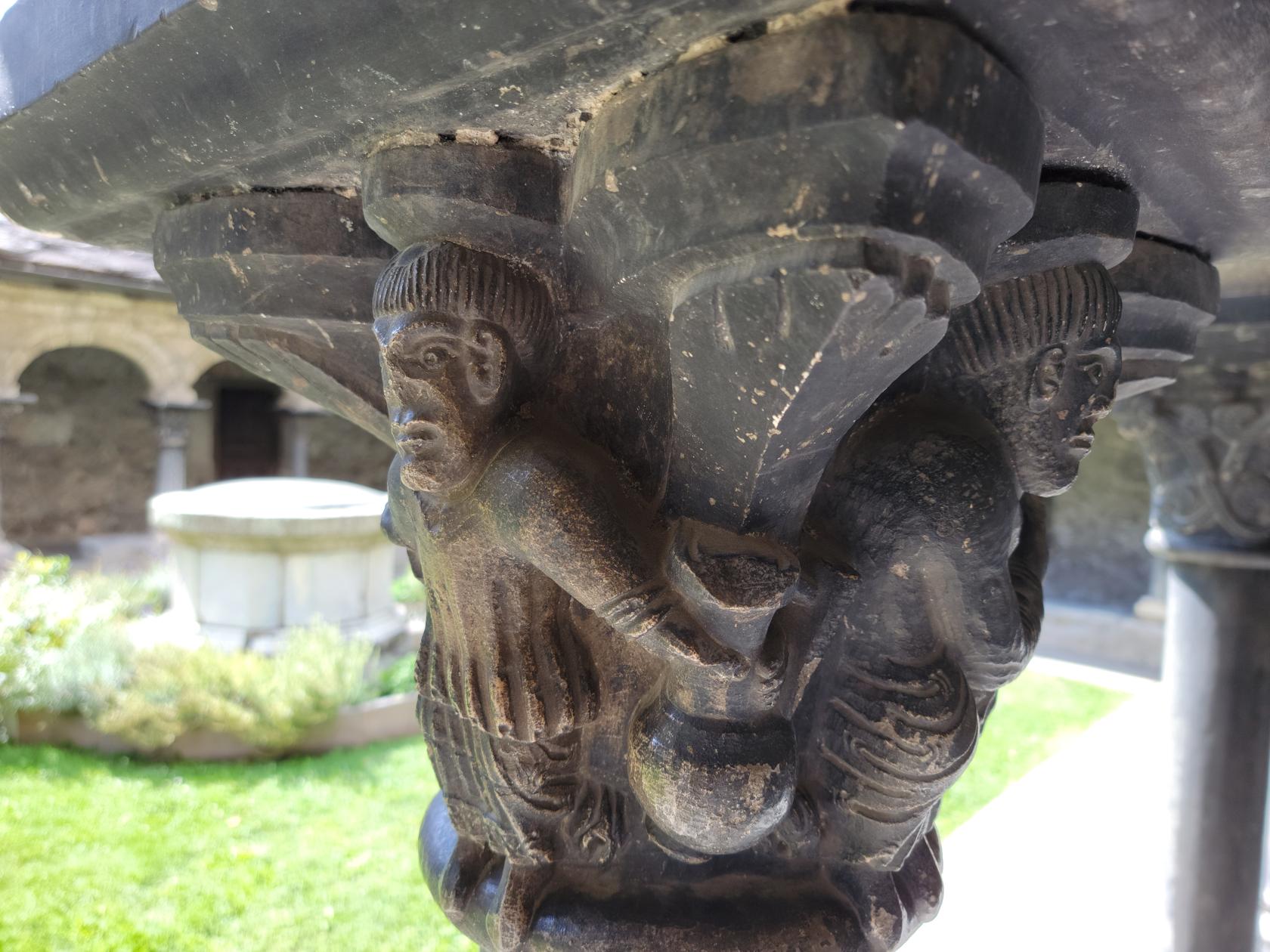
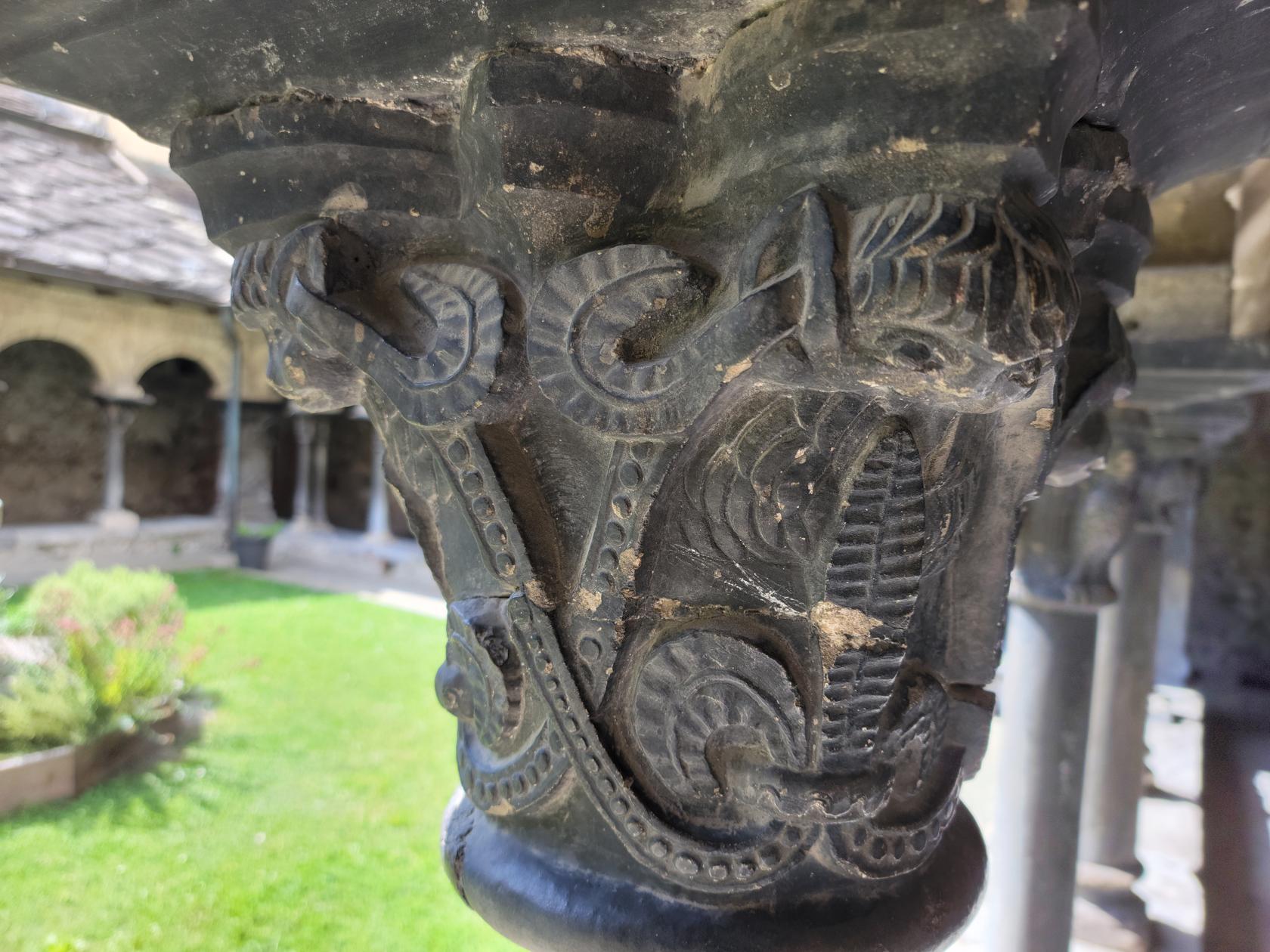
A fine example of Romanesque art and cloister architecture the Cloister of Saint Orso.
Aosta – Arches and Columns inside of the Cloister of Sant Orso
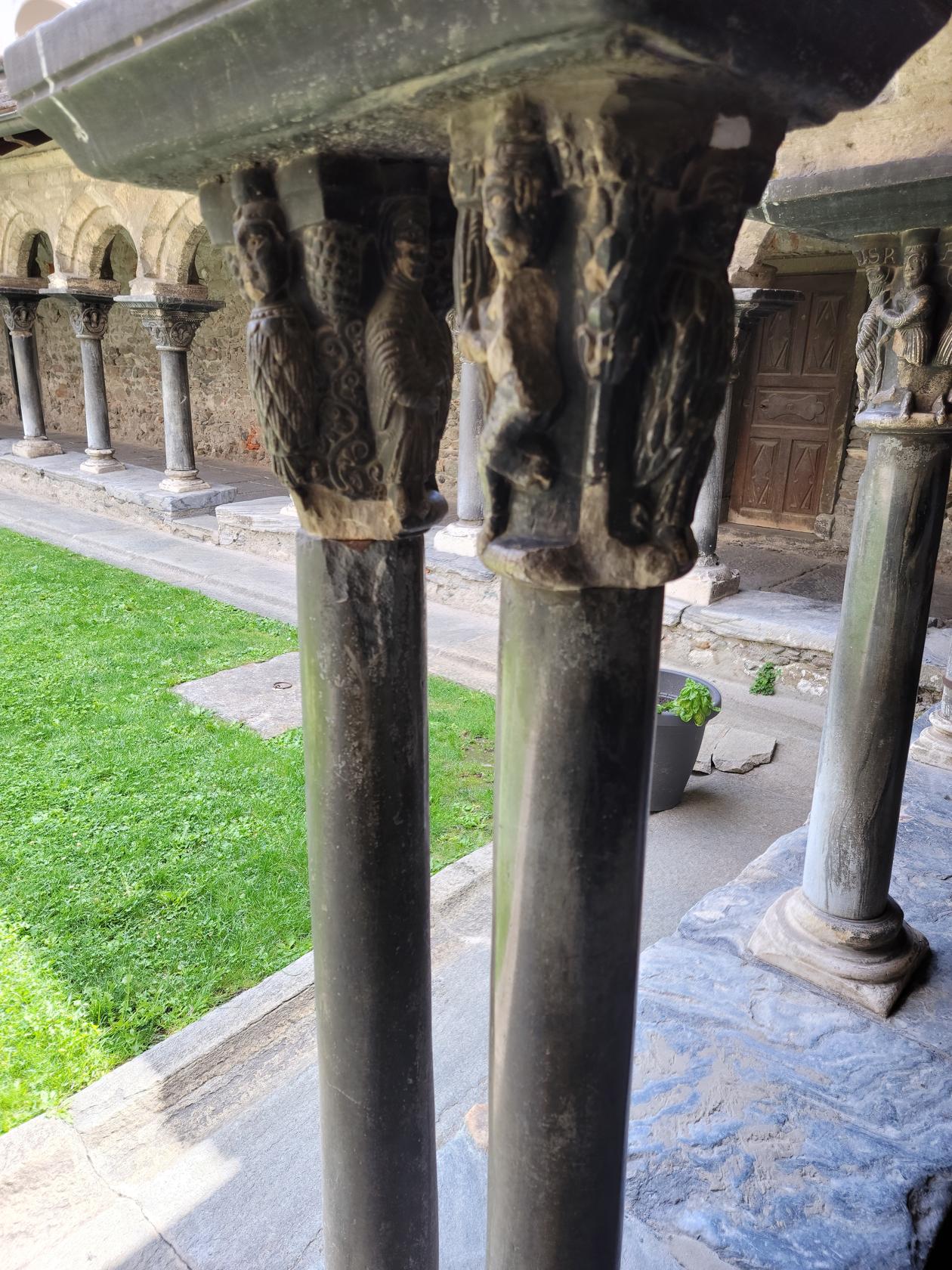
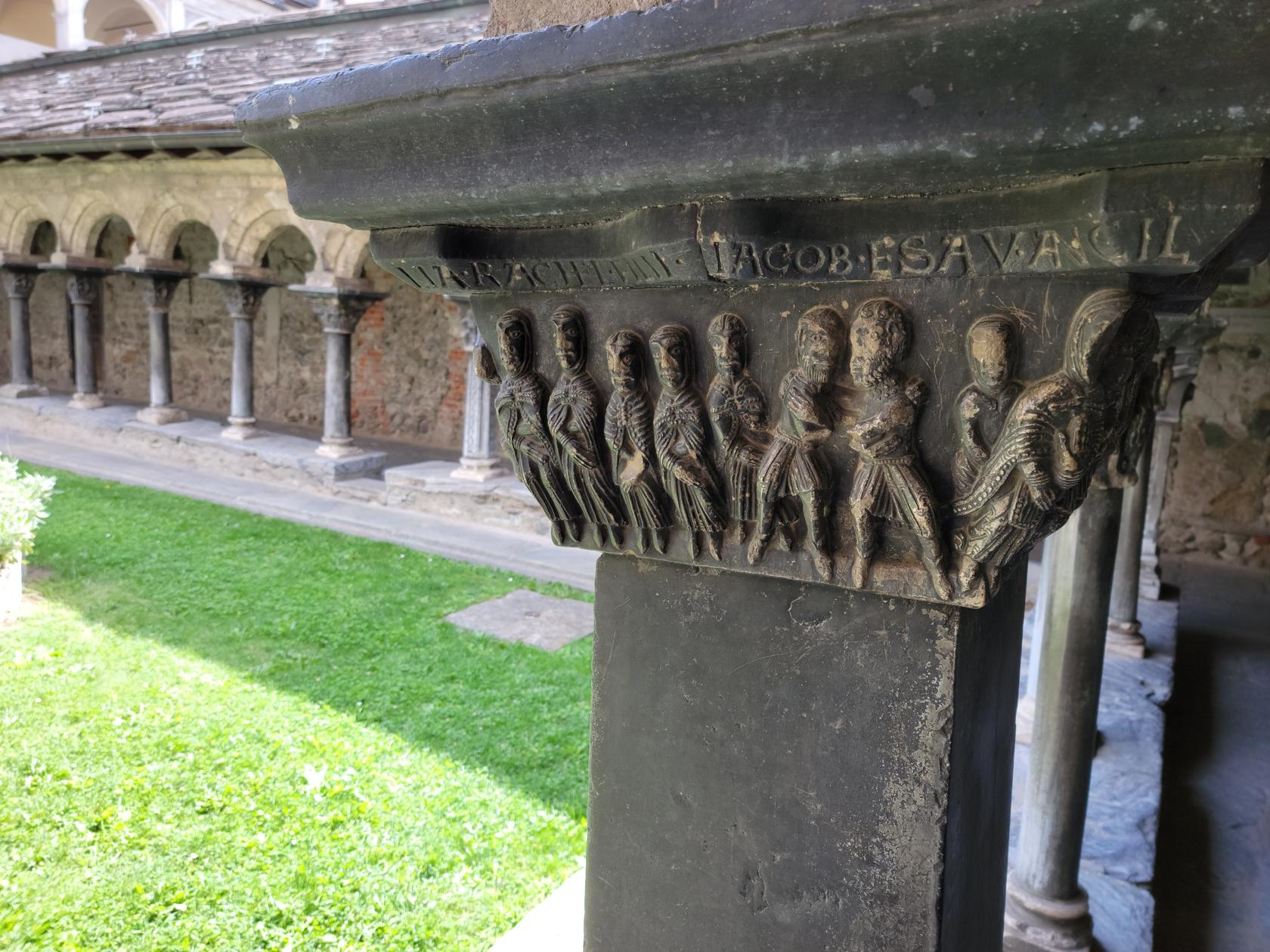
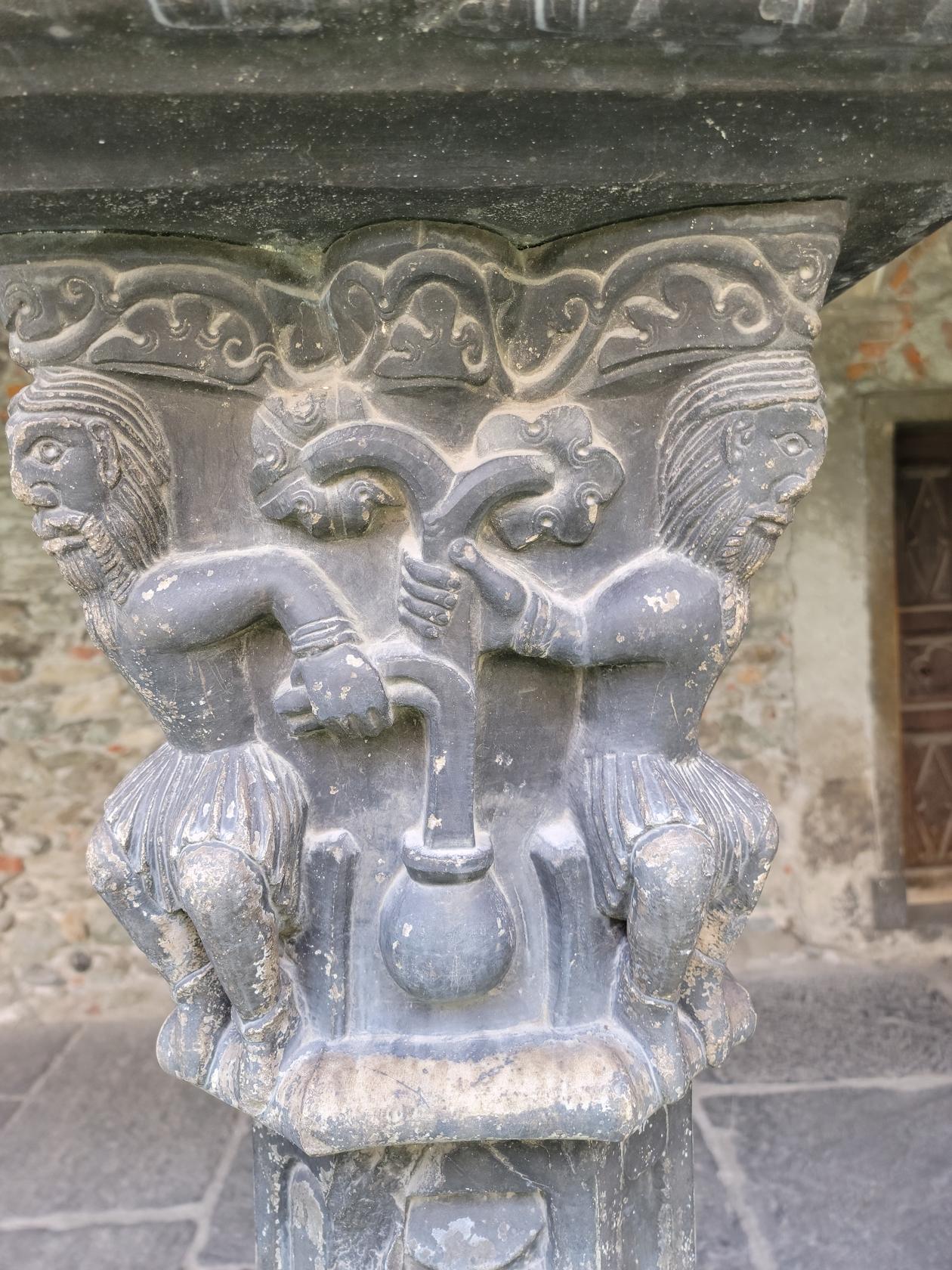
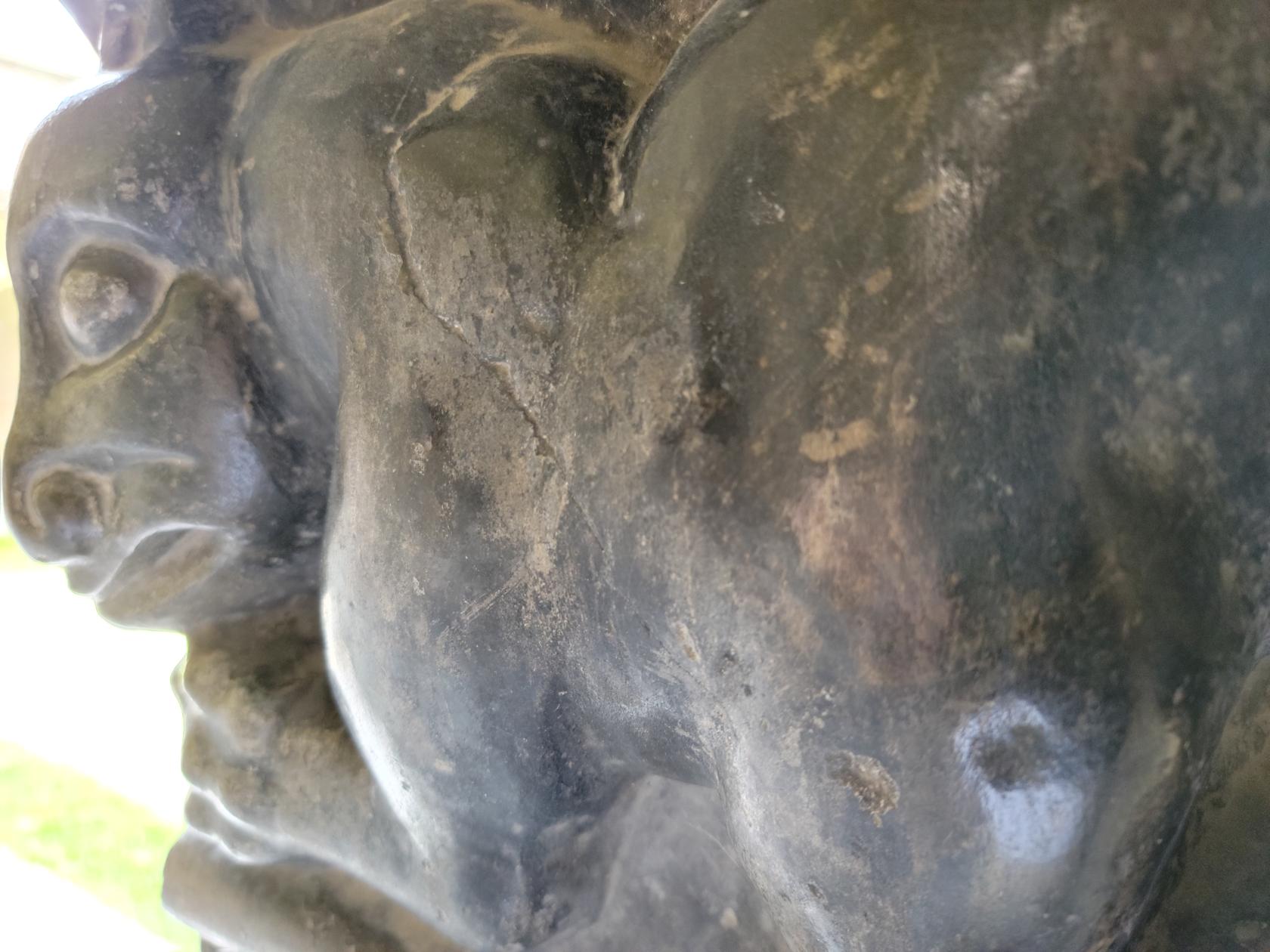
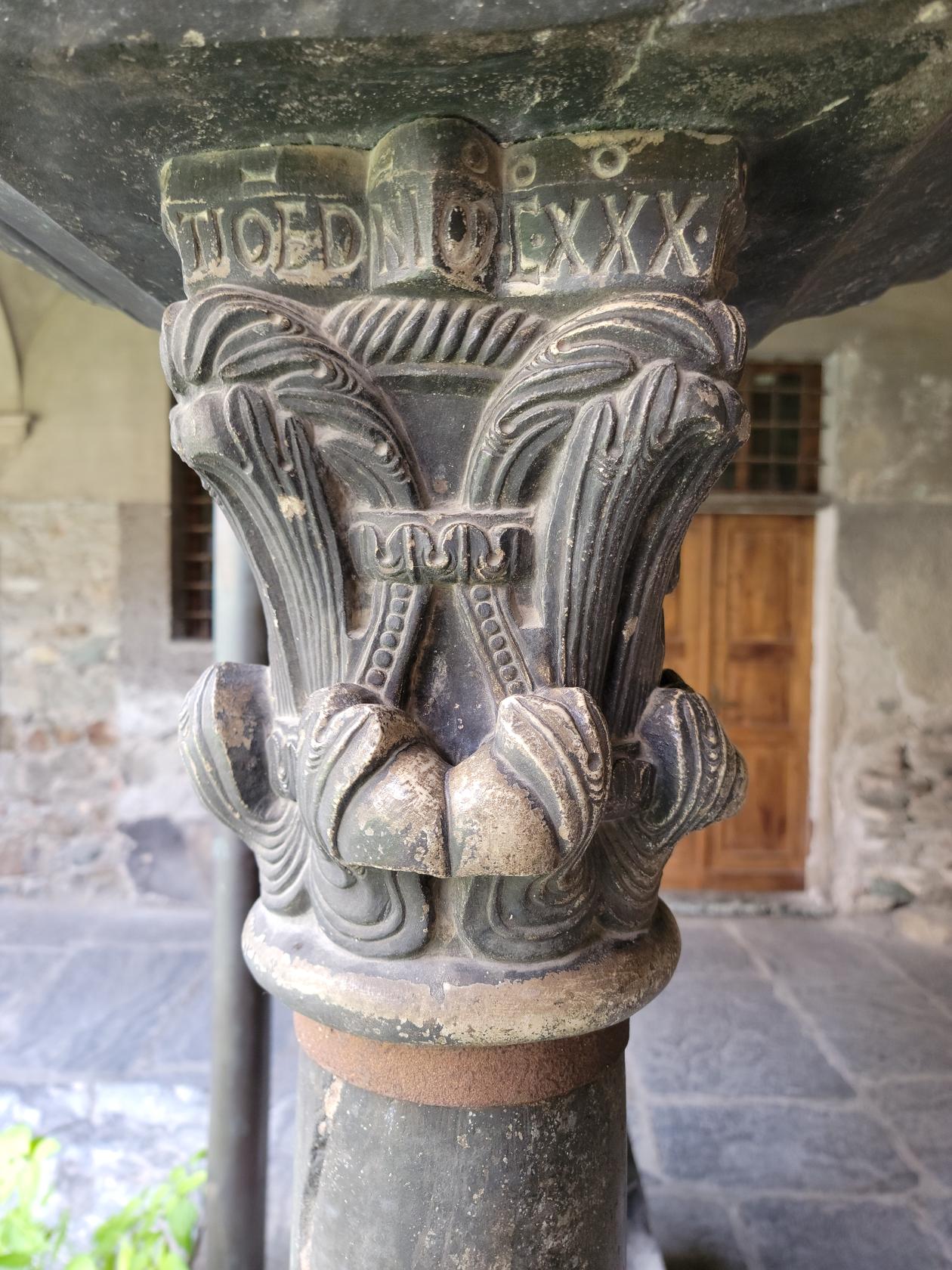
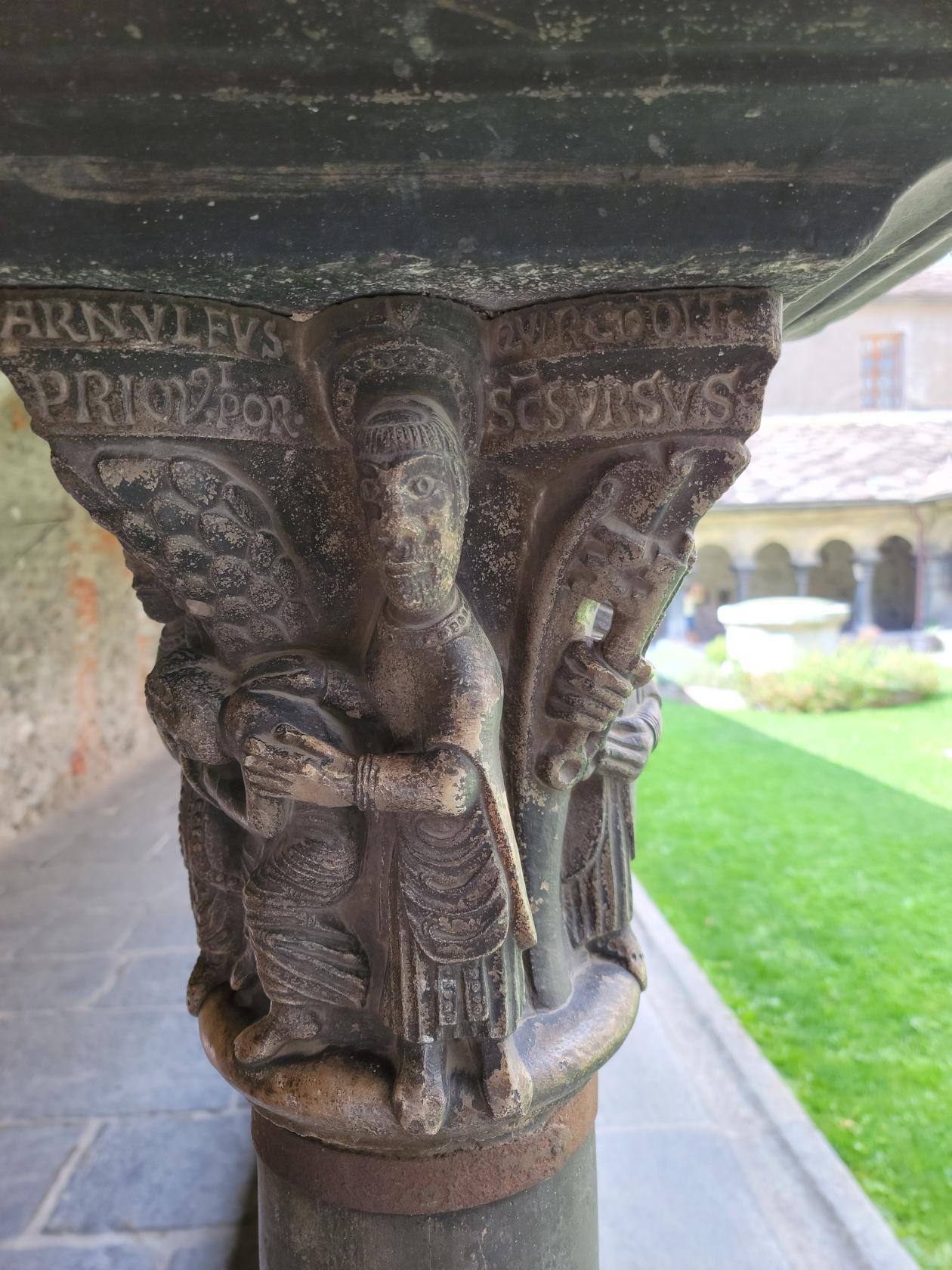
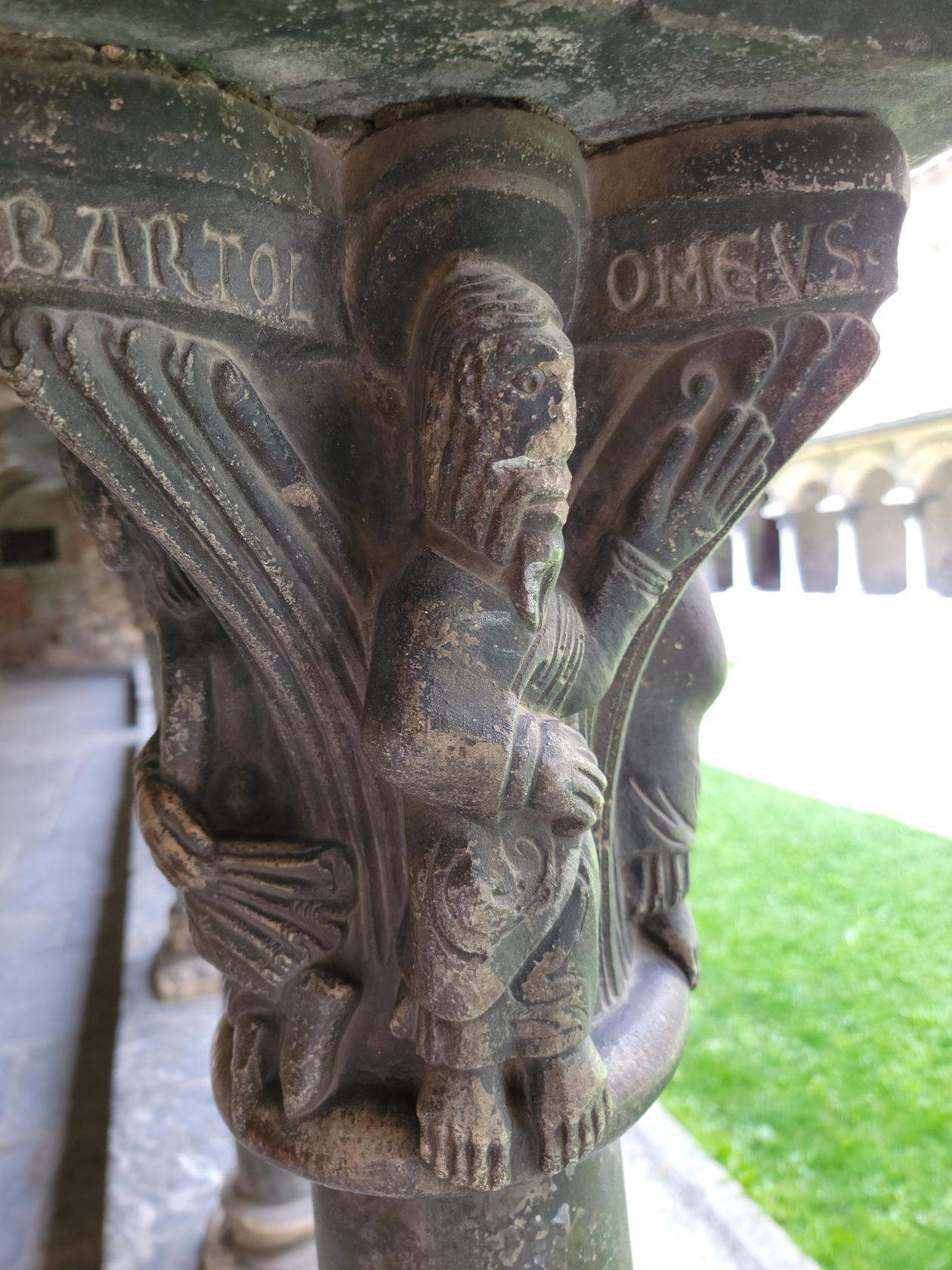
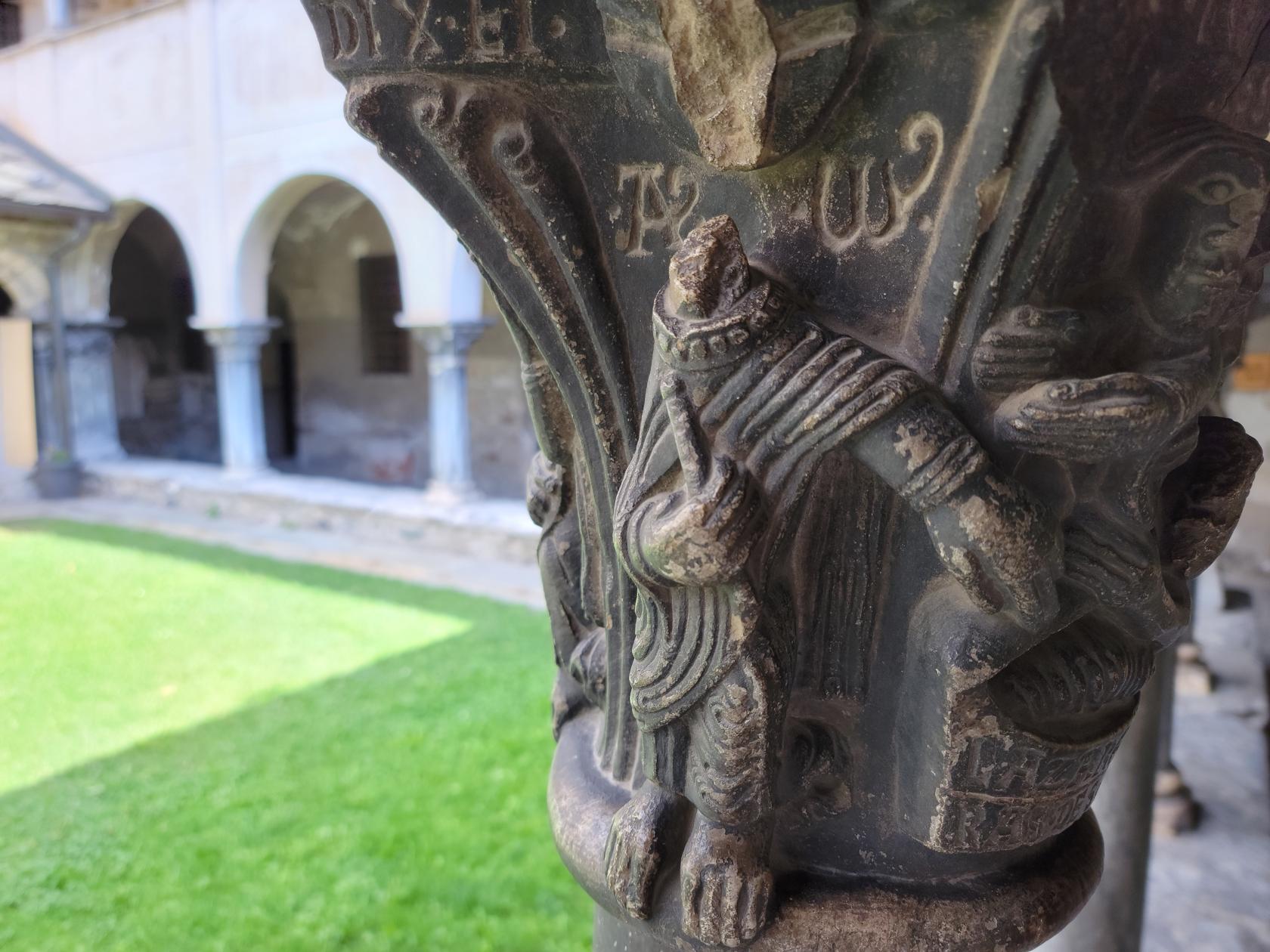
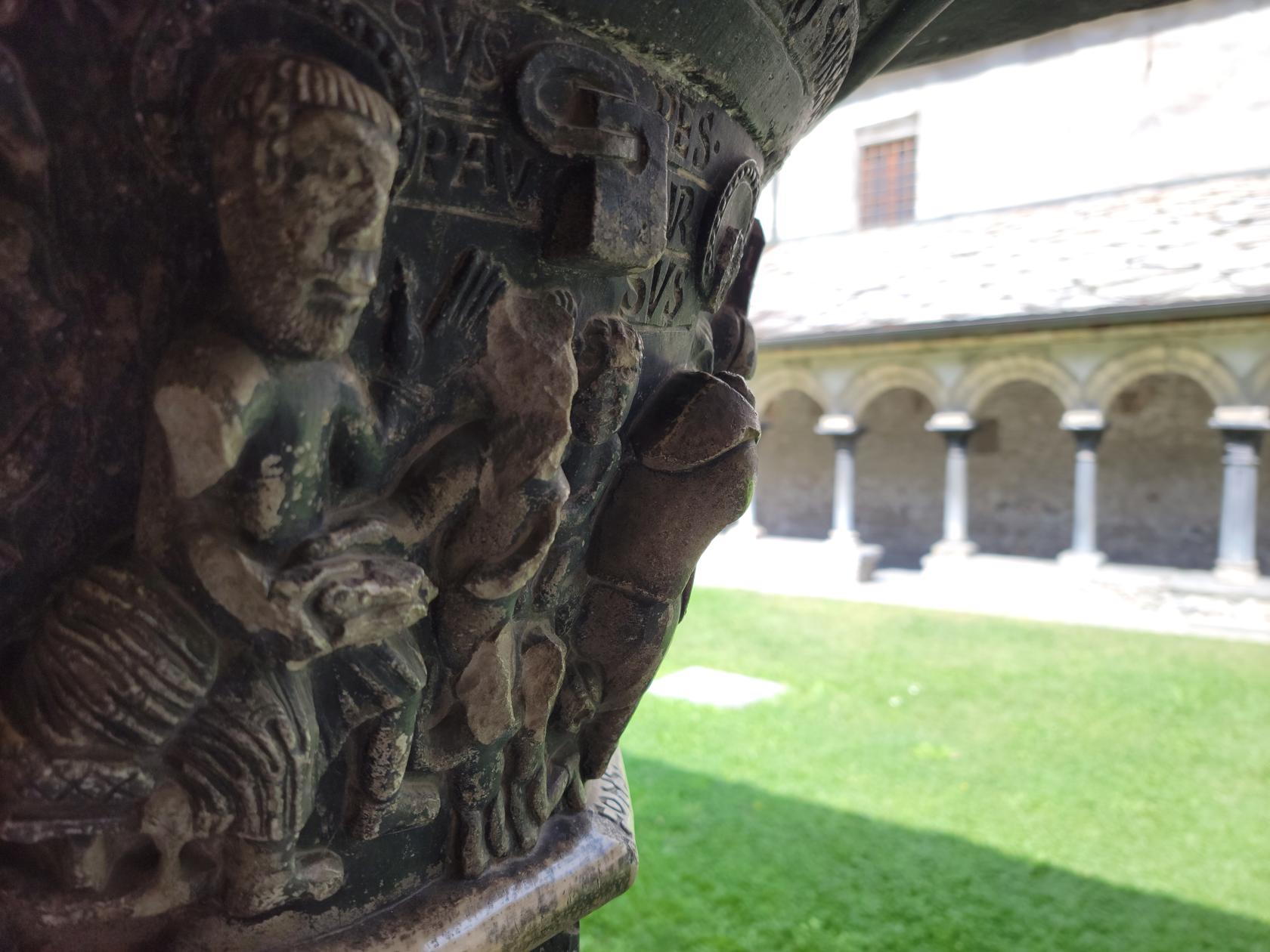
Almost every column lining the portico inside the cloister has a unique sculpted capital, depicting strange images of times forgotten. Some of the columns have multiple pillars abutting their capitals, making them even stranger and perhaps more difficult to understand by researchers.
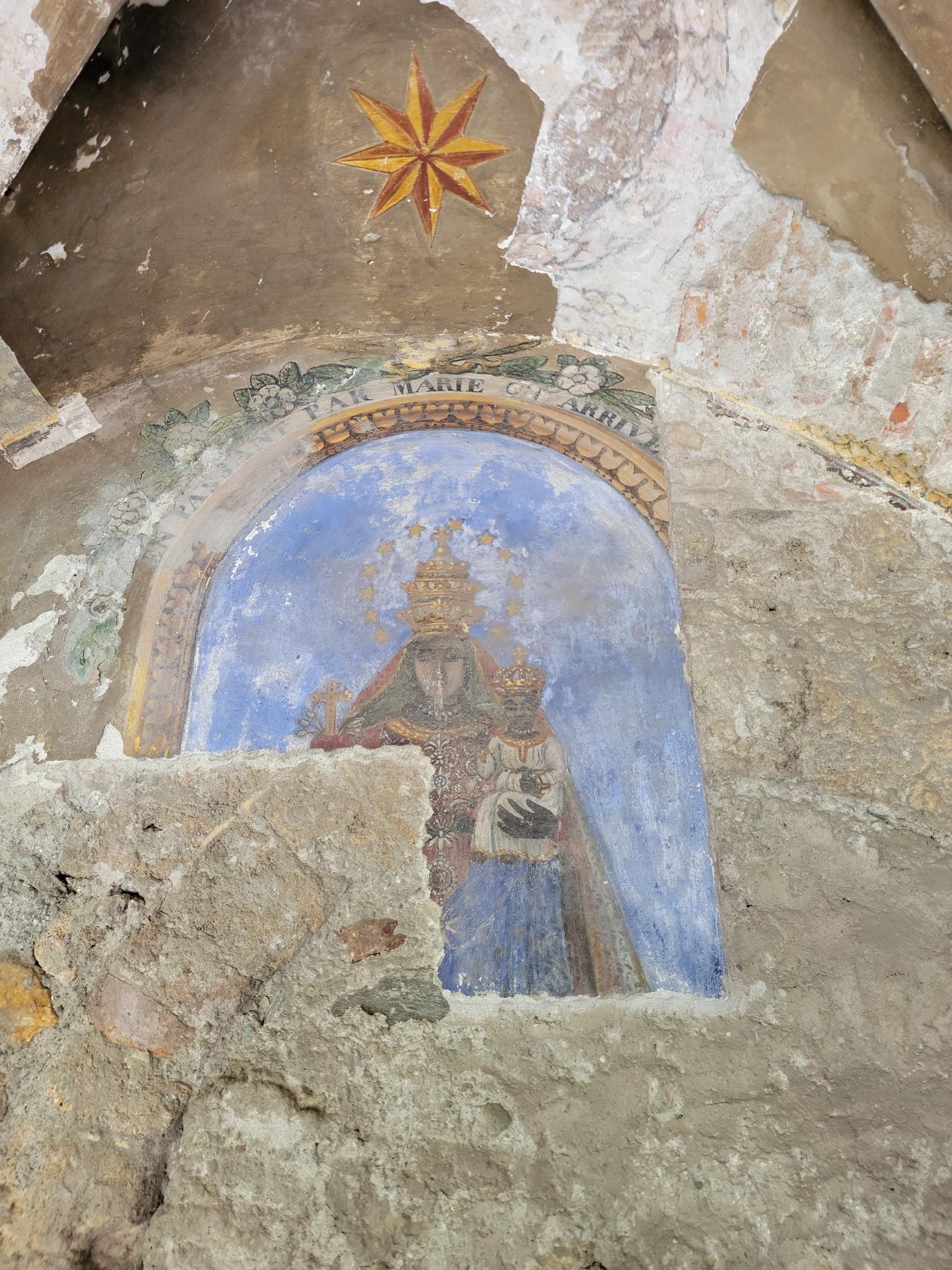
Aosta – Fresco inside of the Cloister of Sant Orso
Aosta – Arches and Columns inside of the Cloister of Sant Orso
Aosta – Arches and Columns inside of the Cloister of Sant Orso
Aosta – Interesting Double-Columns inside of the Cloister of Sant Orso
Aosta – Unique Column Capitals – Cloister of Sant Orso
Aosta – Unique Column Capitals – Cloister of Sant Orso
Aosta – Unique Column Capitals – Cloister of Sant Orso
Aosta – Unique Column Capitals – Cloister of Sant Orso
Aosta – Unique Column Capitals – Cloister of Sant Orso
Aosta – Unique Column Capitals – Cloister of Sant Orso
Aosta – Unique Column Capitals – Cloister of Sant Orso
Aosta – Unique Column Capitals – Cloister of Sant Orso
Aosta – Unique Column Capitals – Cloister of Sant Orso
Aosta – Unique Column Capitals – Cloister of Sant Orso
Aosta – Unique Column Capitals – Cloister of Sant Orso
Aosta – Unique Column Capitals – Cloister of Sant Orso
Aosta – Unique Column Capitals – Cloister of Sant Orso
Aosta – Unique Column Capitals Legend – Cloister of Sant Orso
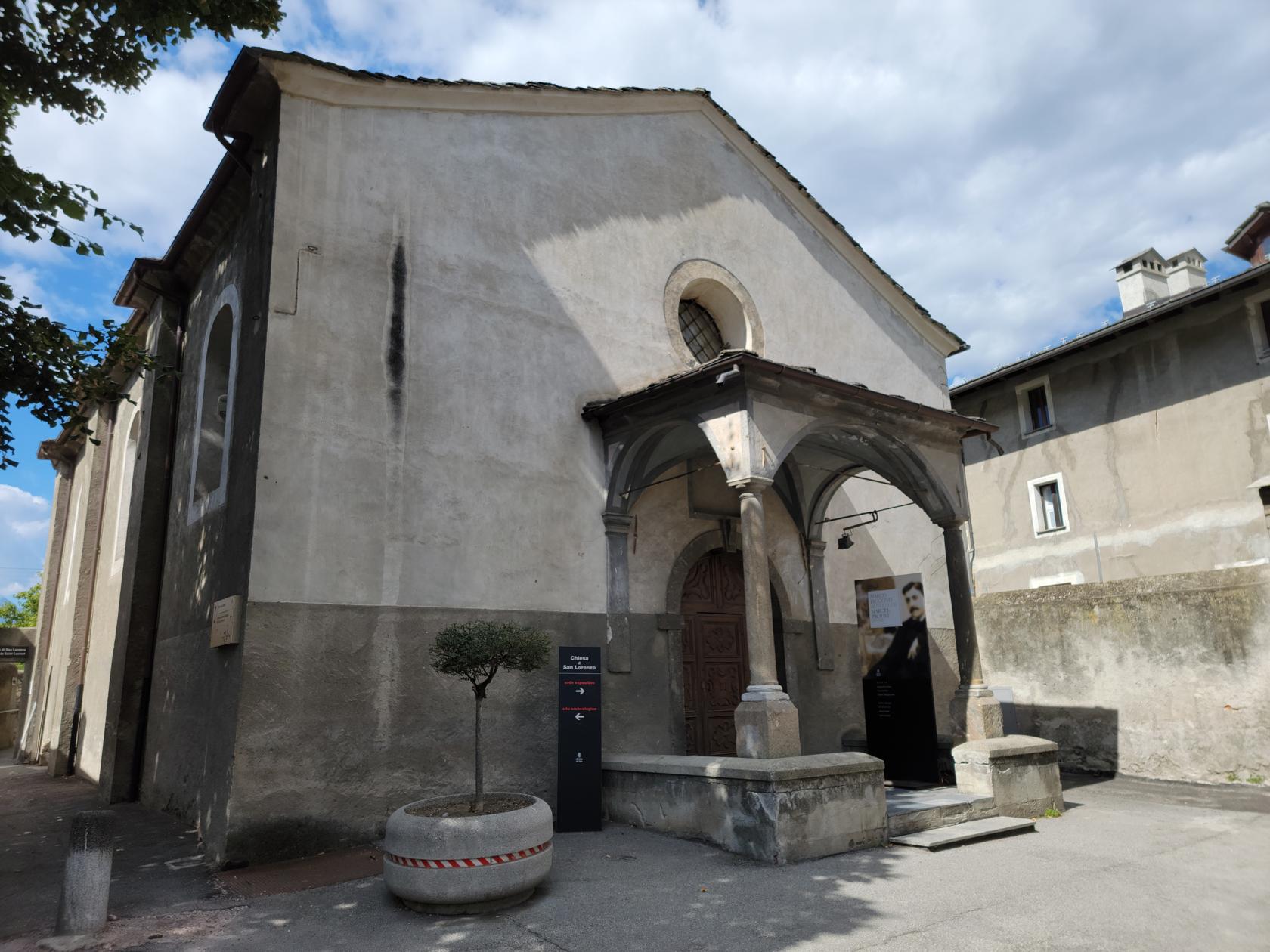
Paleo-Christian Church Of Sant Lorenzo
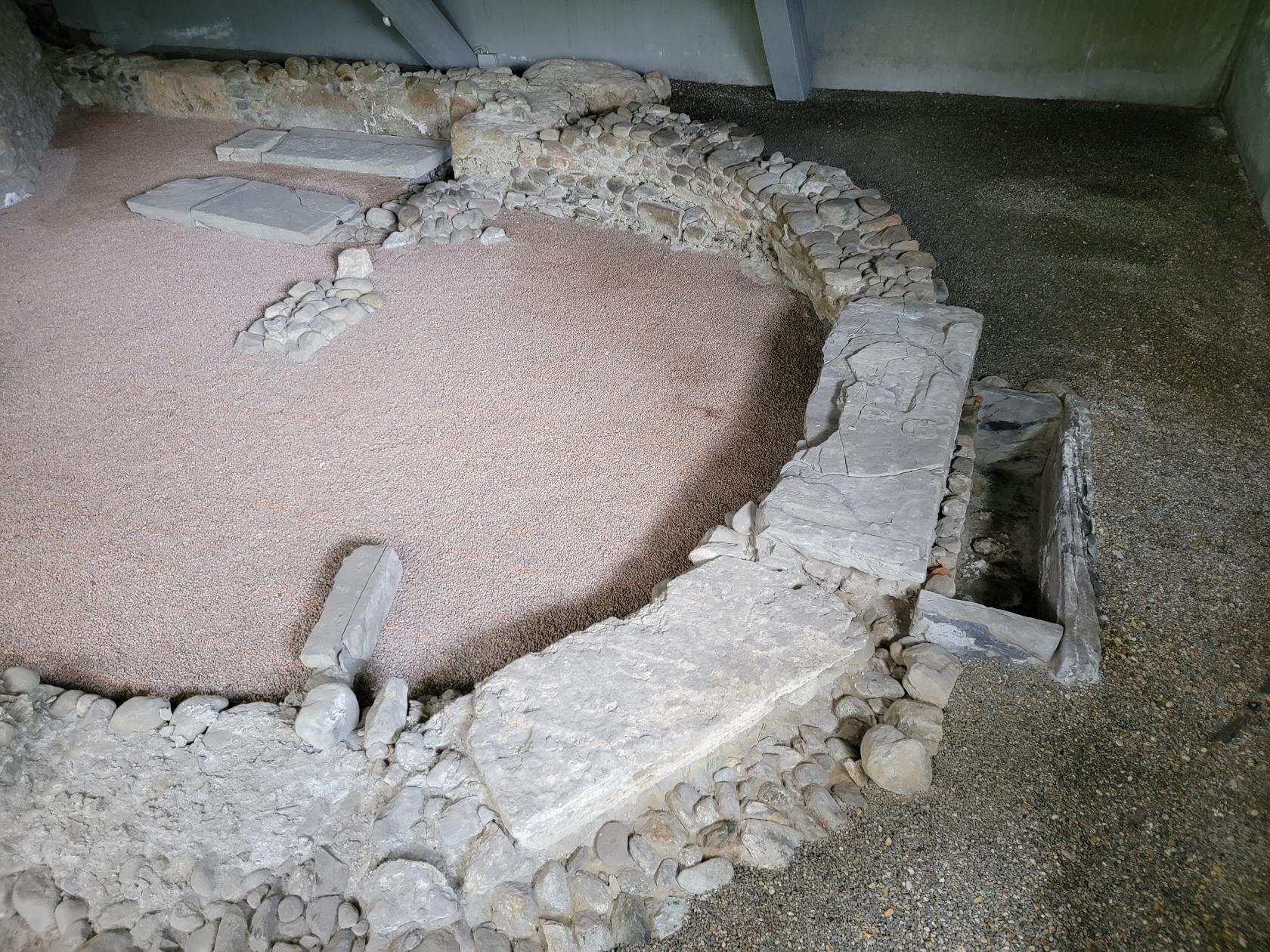
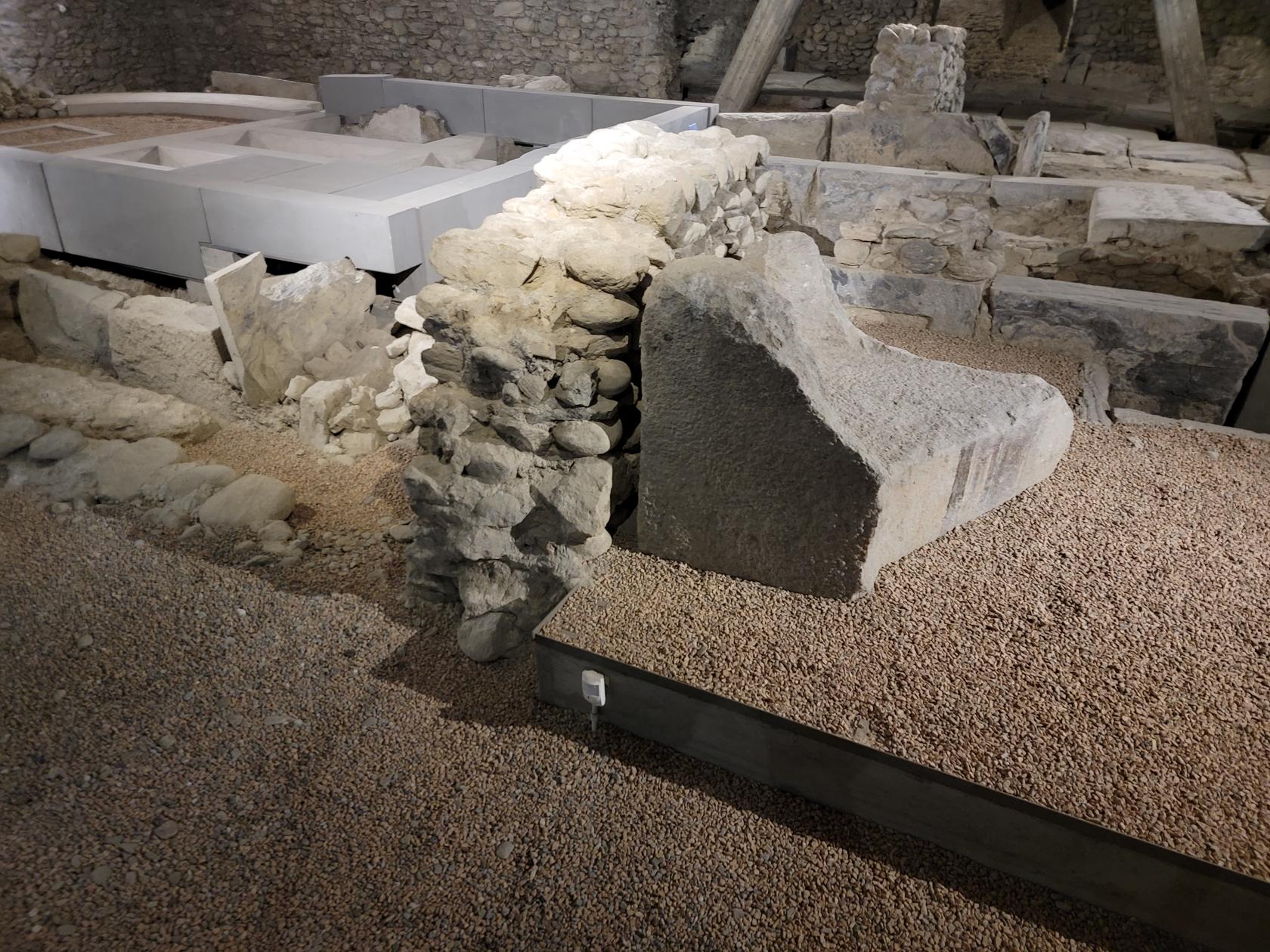
Of special interest is the small, paleo-christian Church of Saint Lorenzo. An archeological site in its own right, the old church has actually been excavate underneath the existing church of the same name, Church of Sant Lorenzo.
Aosta – The Paleo-Christian Church of Sant Lorenzo
Aosta – The Paleo-Christian Church of Sant Lorenzo
Aosta – The Paleo-Christian Church of Sant Lorenzo
Aosta – The Paleo-Christian Church of Sant Lorenzo
The Cryptoportico
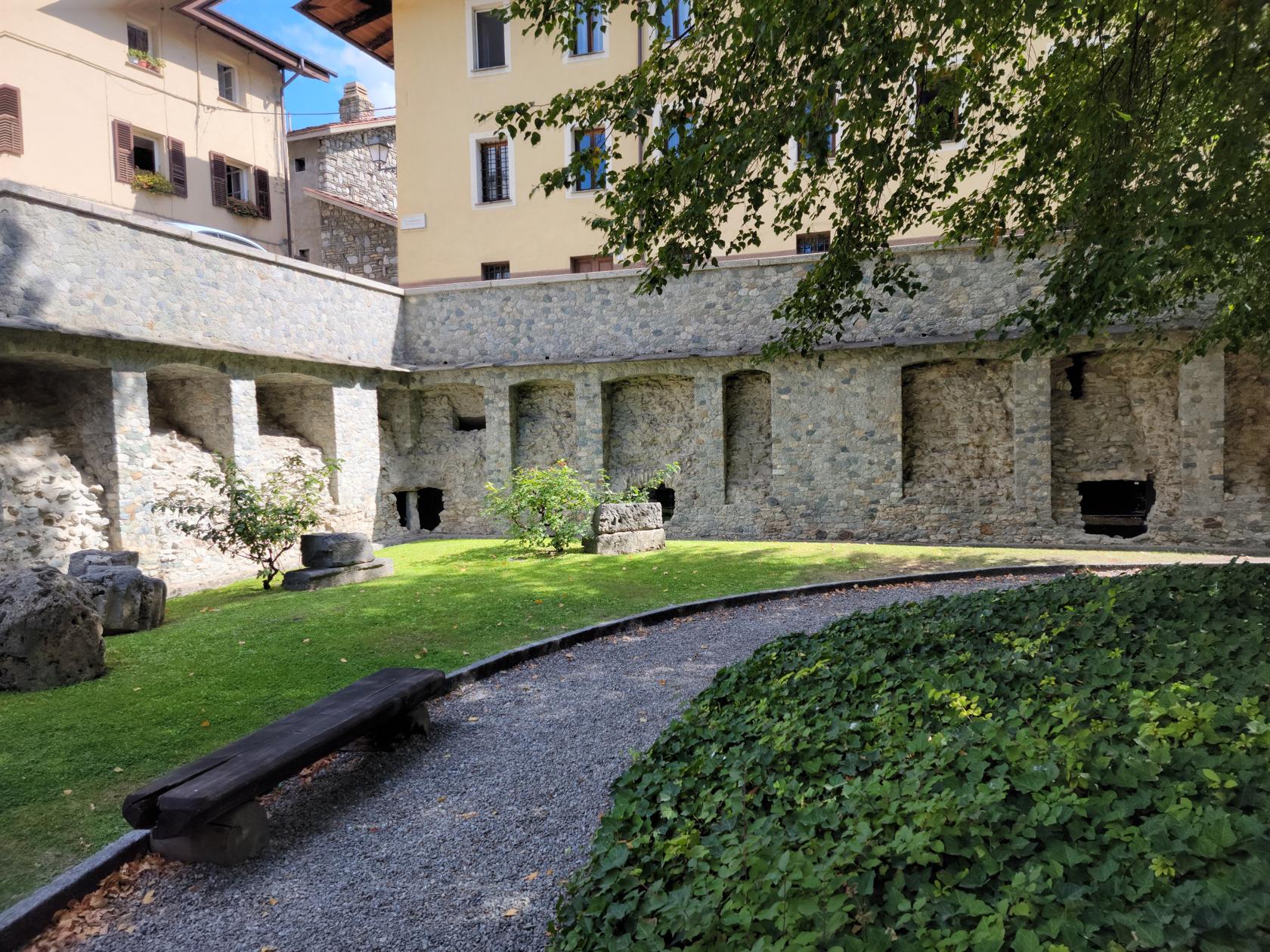
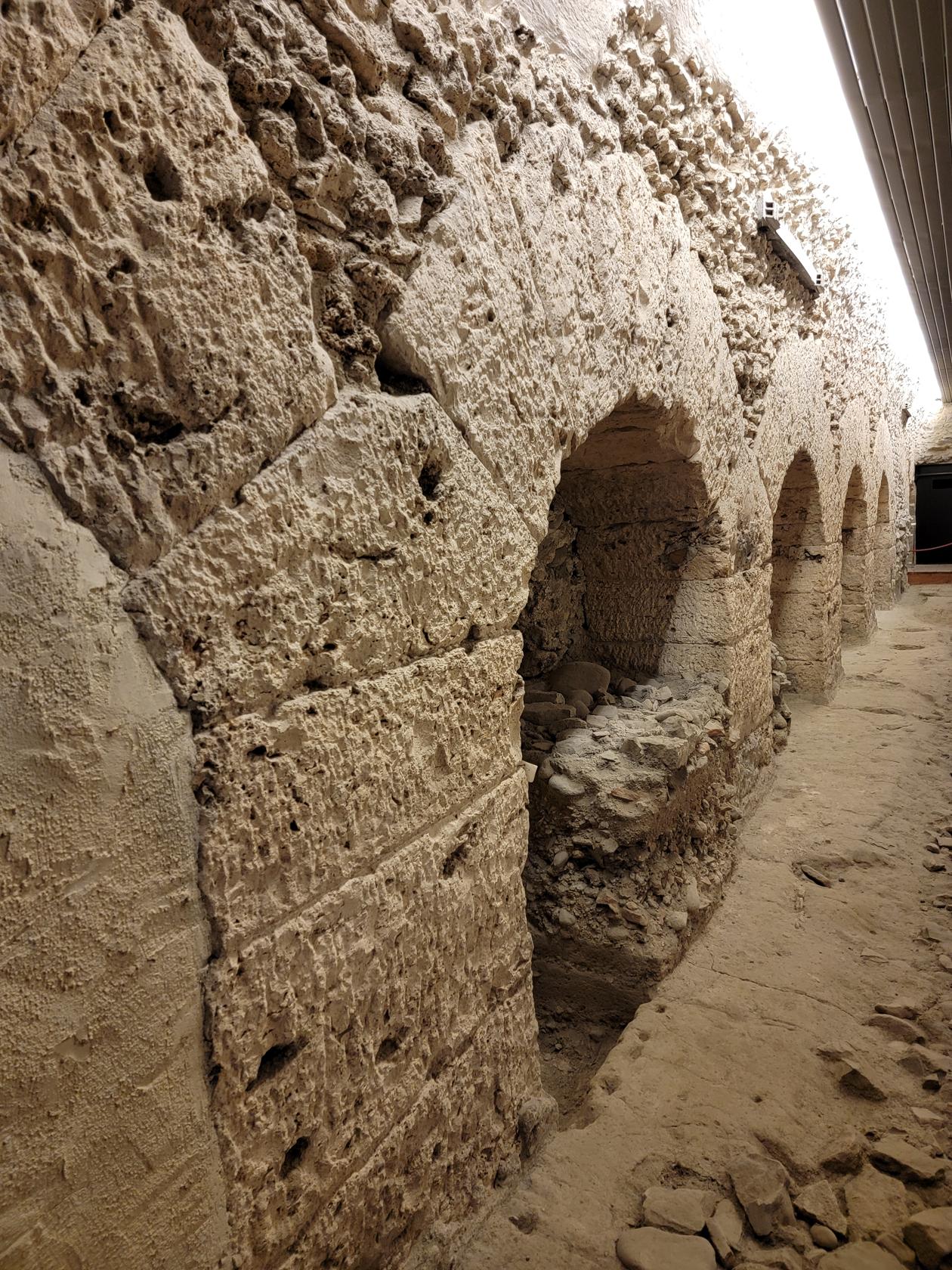
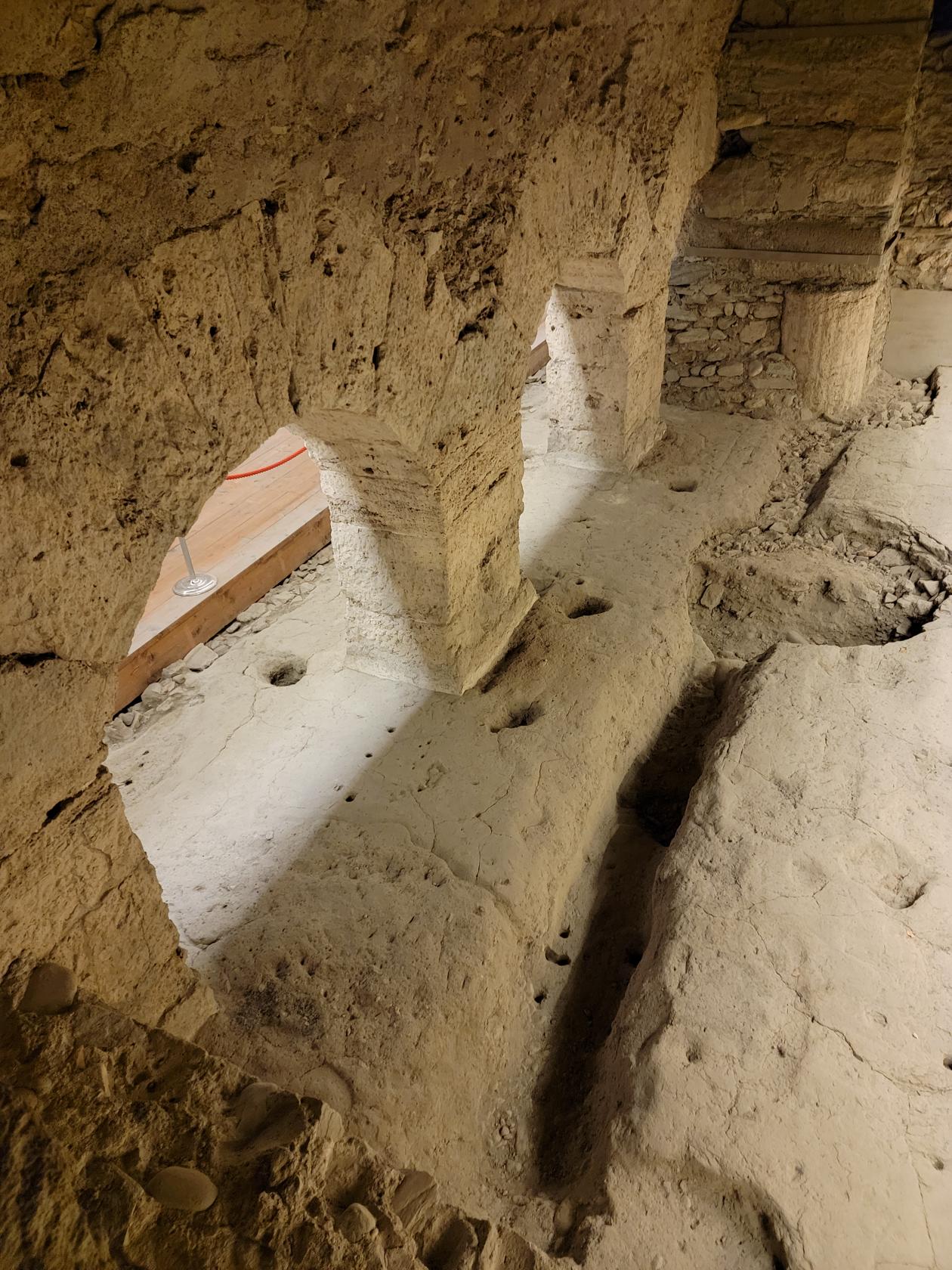
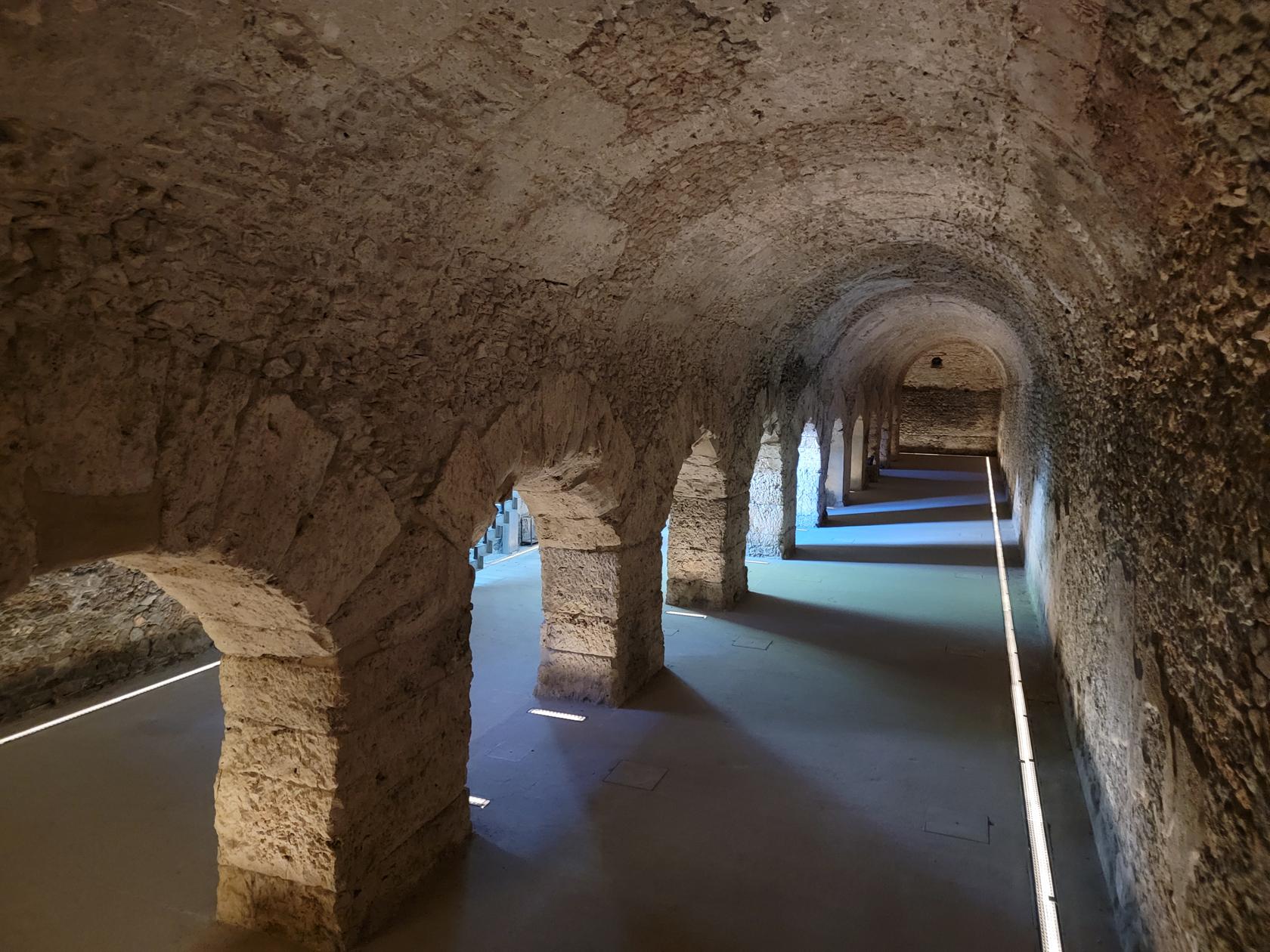
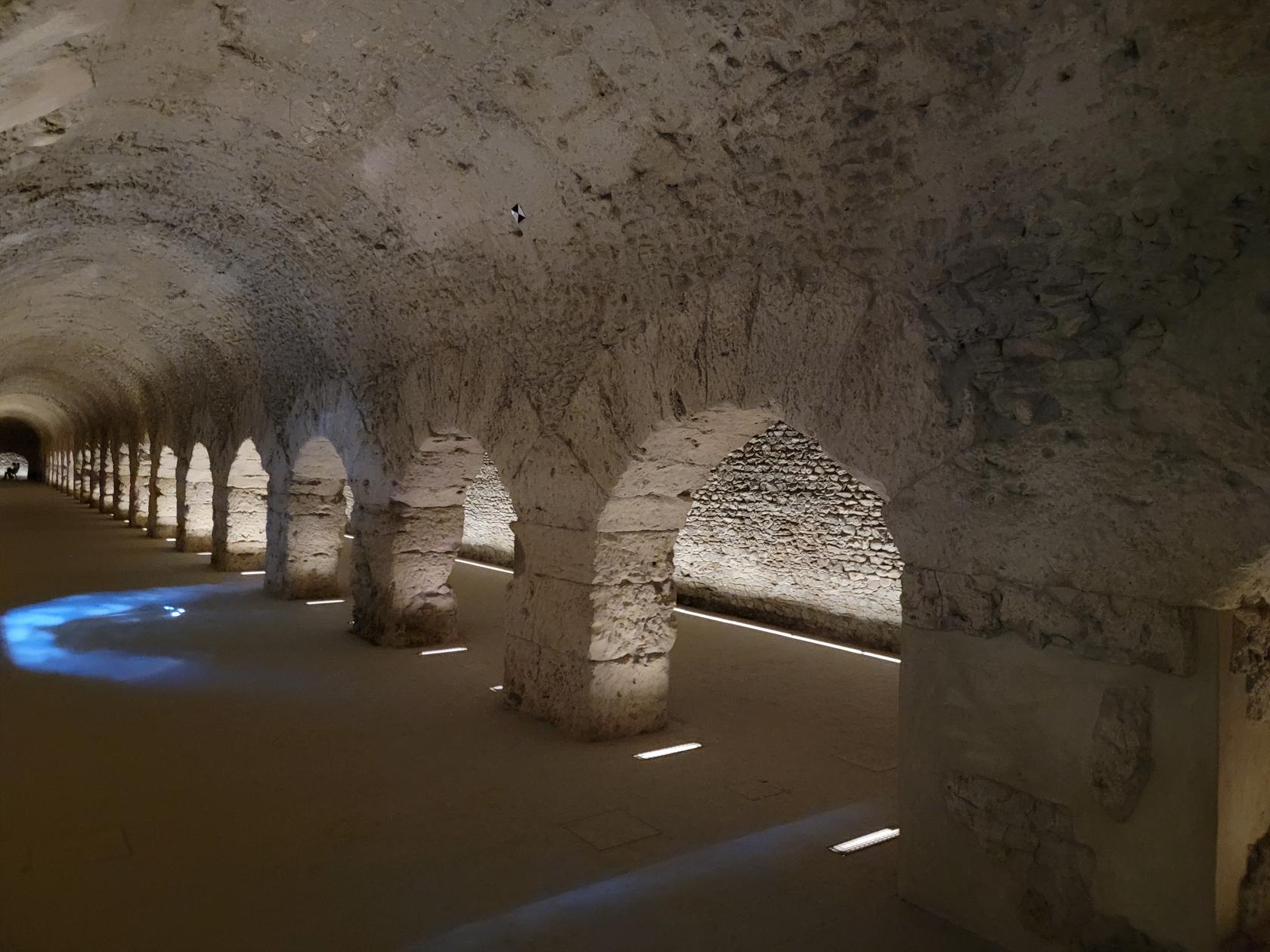
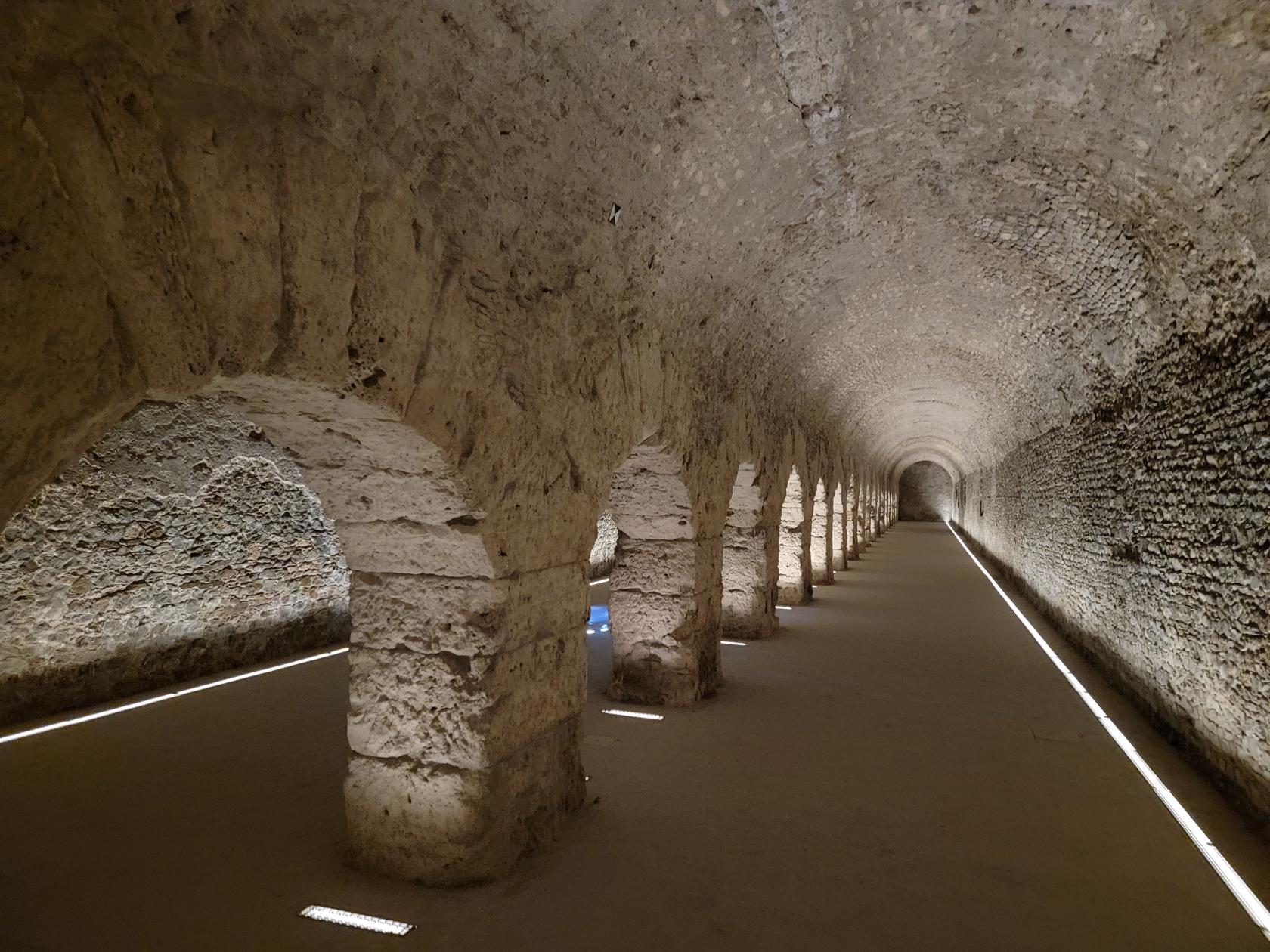
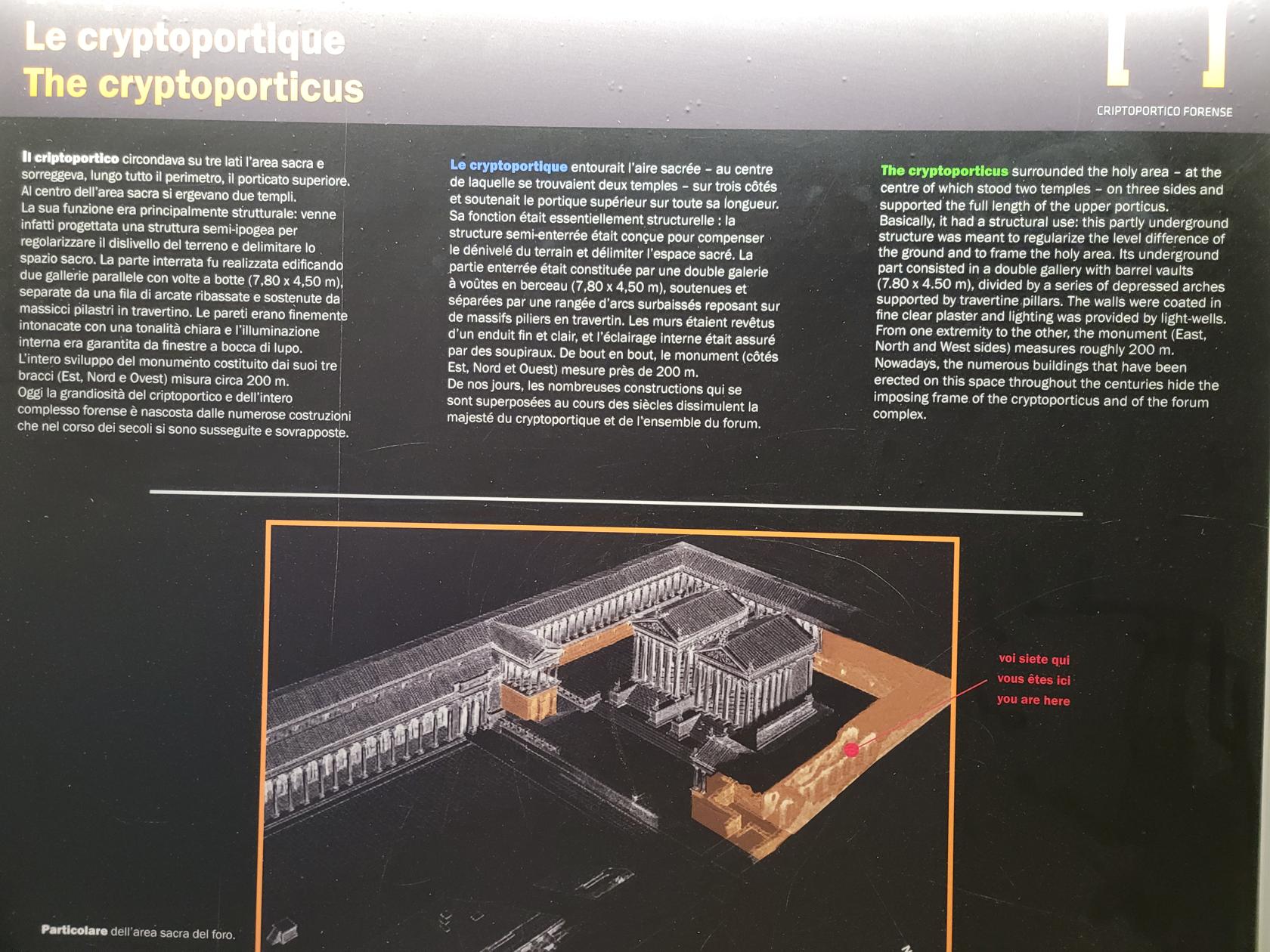
No one actually knows what the Cryptoportico was used for, it is only known that it was a large rectangular structure with a corresponding lighted basement. It has been conjectured that the layout hints at its use as a marketplace and the cellar as a storage place for grain and other commodities. Unfortunately the slide show provided in the cellar is provided only in Italian, but that appears to only have explained the archeological details of the excavation and not necessarily its intended use.
Aosta – Cryptoporticus Museum
Aosta – Cryptoporticus Museum – Barrel Arches
Aosta – Cryptoporticus Museum – Barrel Arches excavations
Aosta – Cryptoporticus Museum – Barrel Arches
Aosta – Cryptoporticus Museum – Barrel Arches
Aosta – Cryptoporticus Museum – Barrel Arches
Restaurants
Caffe Nazionale
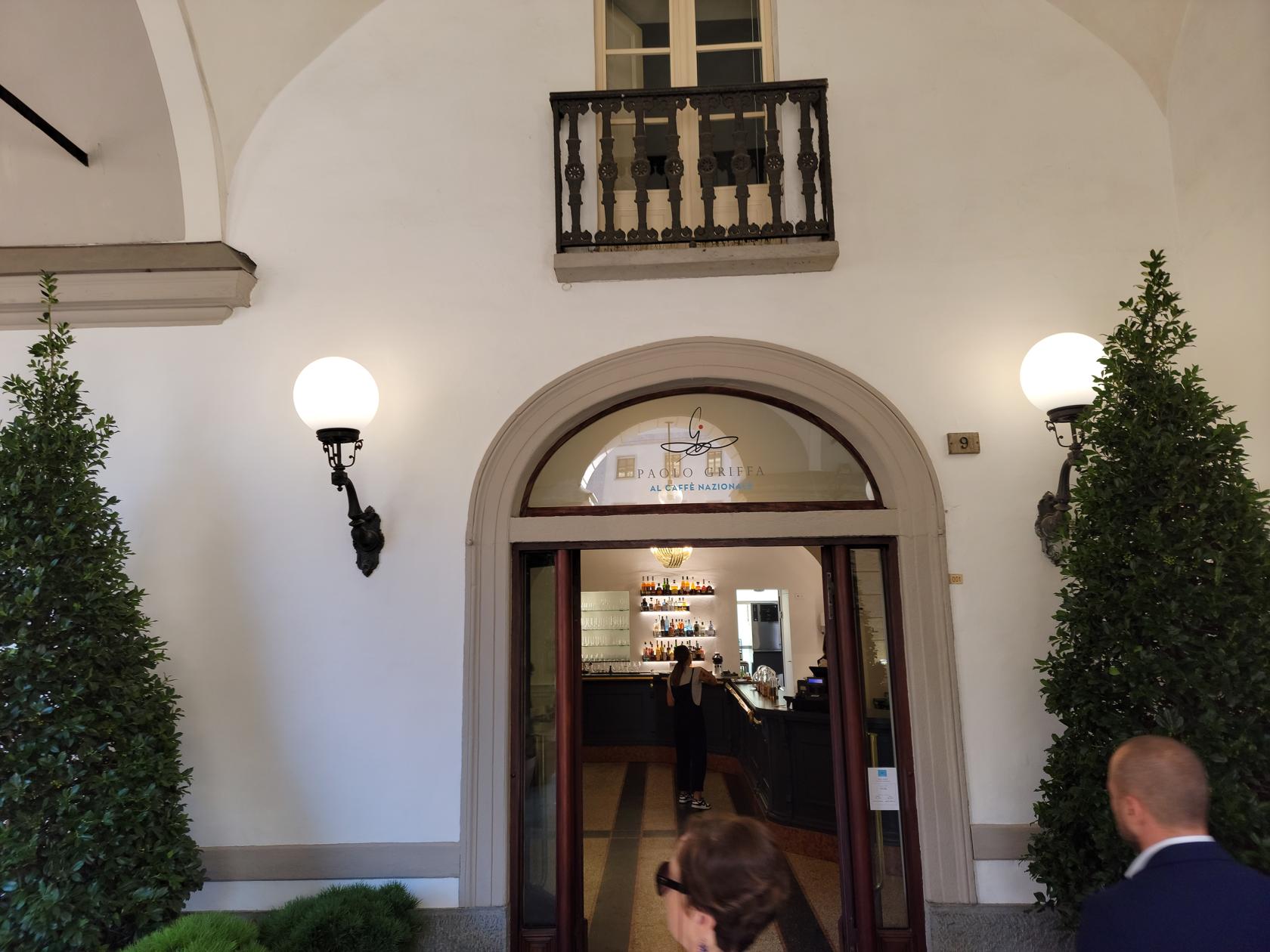
Its claim to fame ostensibly is that it’s the oldest cafe in Aosta. Aside from its coffee being overpriced, its outside seating suffering from the hot sun (no umbrellas) and it only having one staff member taking orders, its coffee and brioche are good. However, when I can purchase two Capucinos and two Brioches of the same or better quality right next to my hotel at half the price, it is definitely not worth it! However, if you want a seat in the Piazza Emile Chanoux to eat breakfast, then it is perhaps one of your only options.
Aosta – Caffe Nazionale – Piazza Emile Chanoux
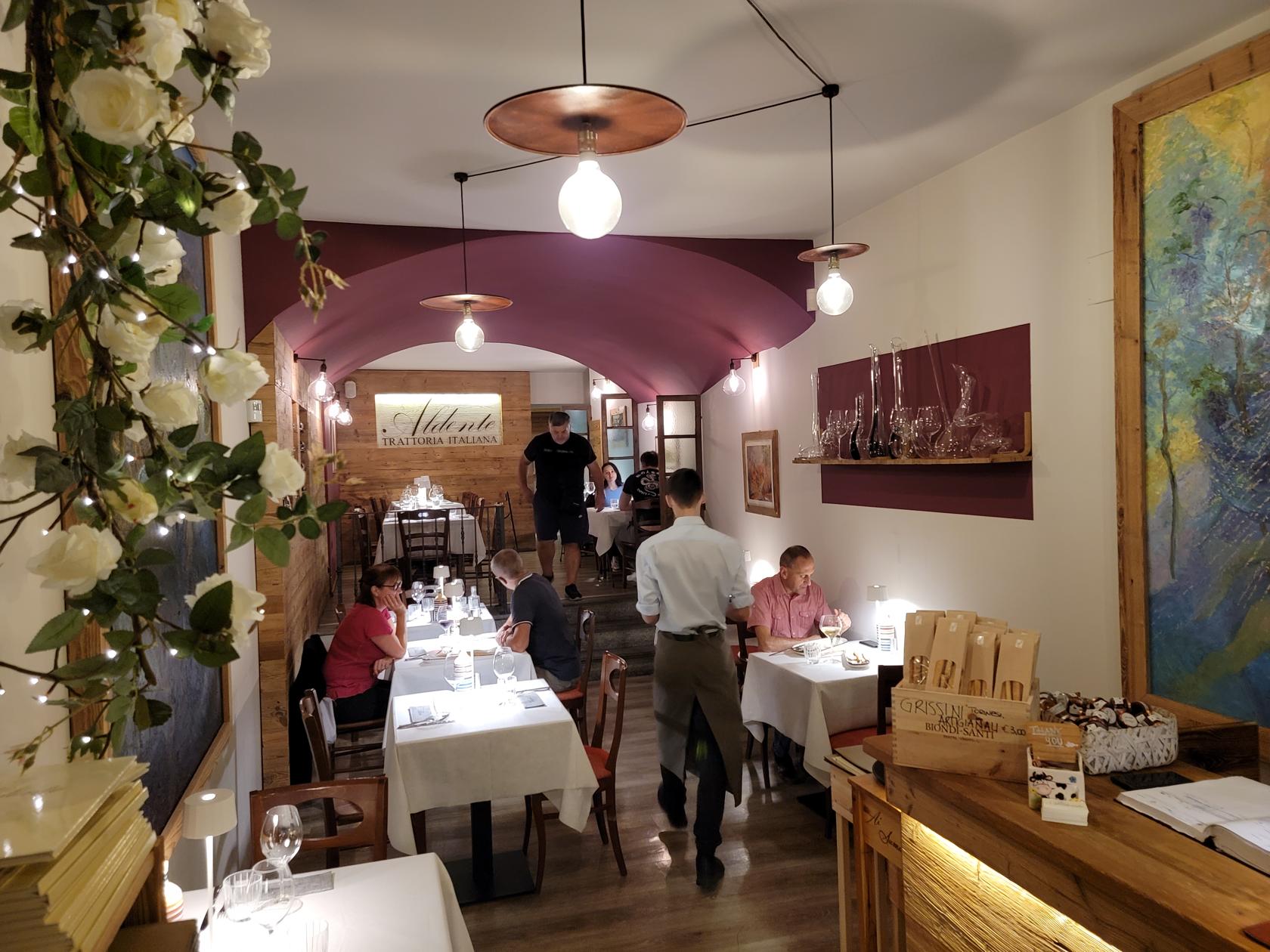
Ristorante Aldente
A very good restaurant, offering both inside and outside seating, is Aldente.
Aosta – Ristorante Aldente
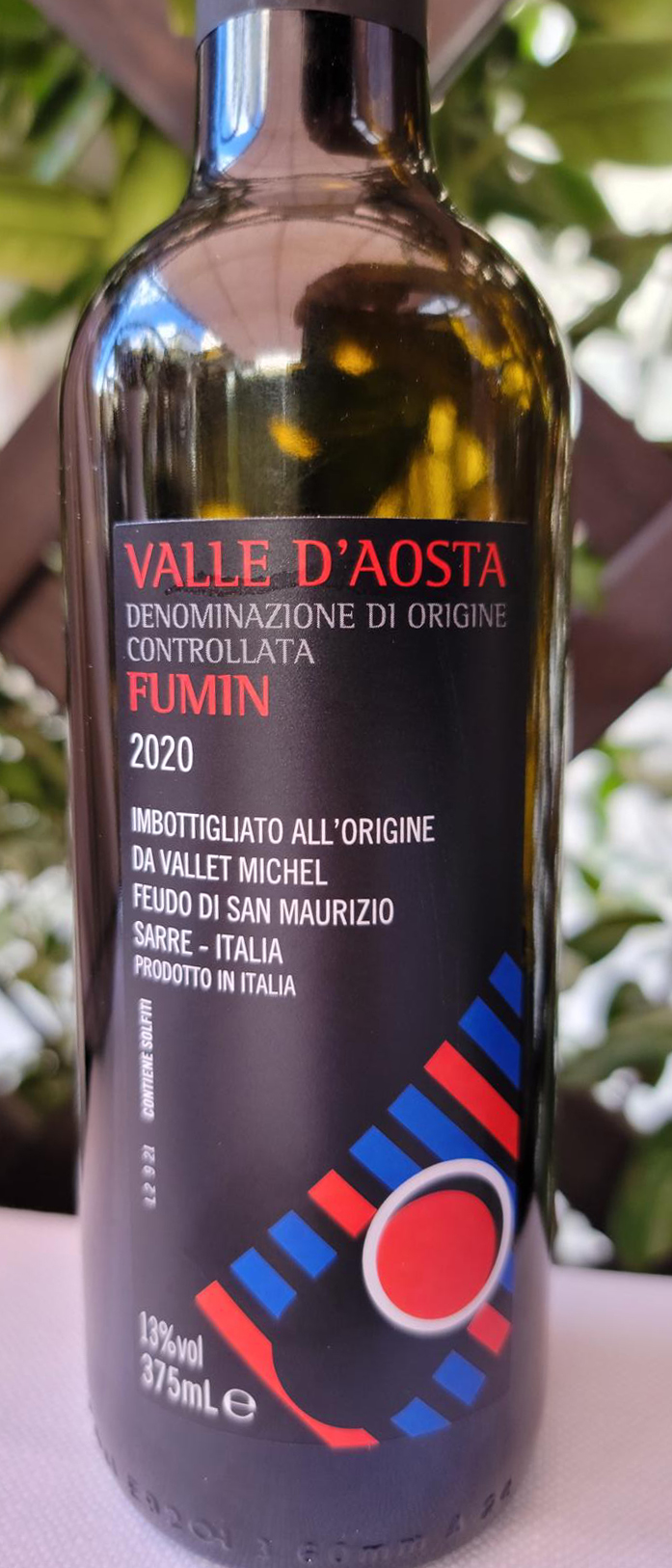
They have a full wine list, with a concentration on local and regional wines, so a great place to try something new. The menu has all the local favorites, consisting of a blend of Italian and French cuisines. A great place to eat for a special evening, or just to relax and enjoy great food.
Aosta – Ristorante Aldente – Fumin Wine – Valle D’Aosta
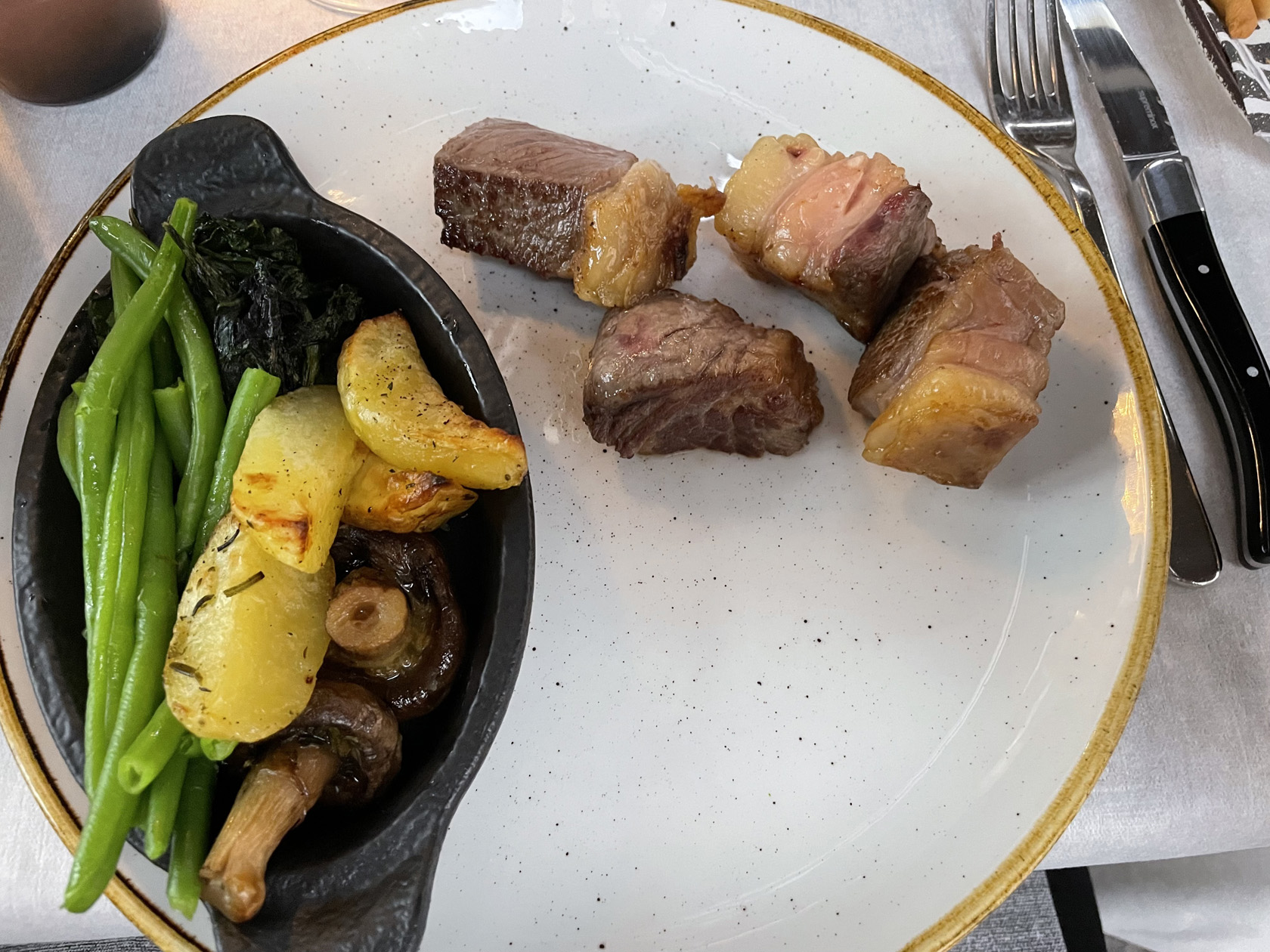
Aosta – Ristorante Aldente – Braised Veal with Vegetables
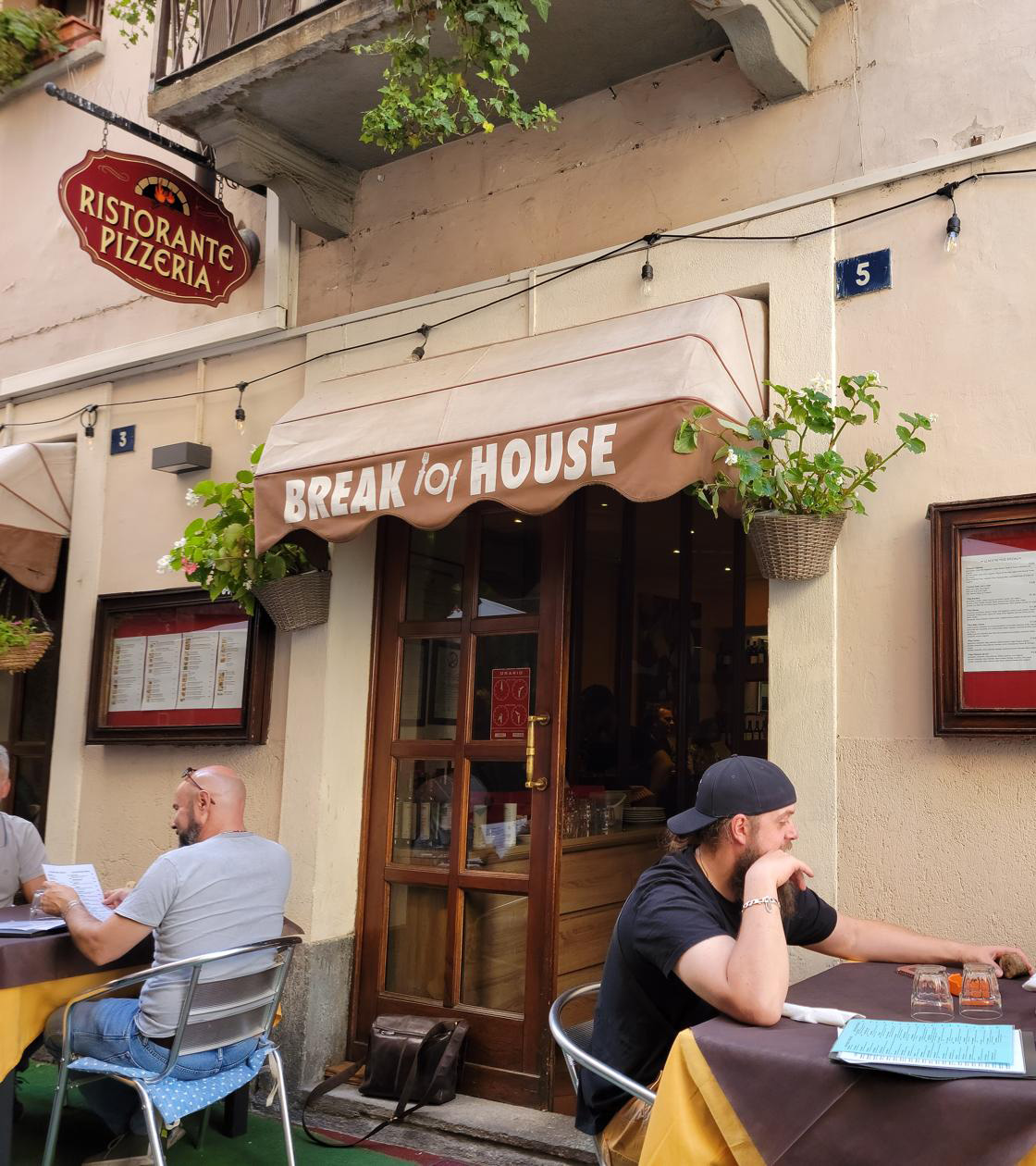
House O Break
A fantastic place for lunch or dinner. We ate here twice, since they have a varied menu with many local specialties at very good prices.
Aosta – Break O House – Front
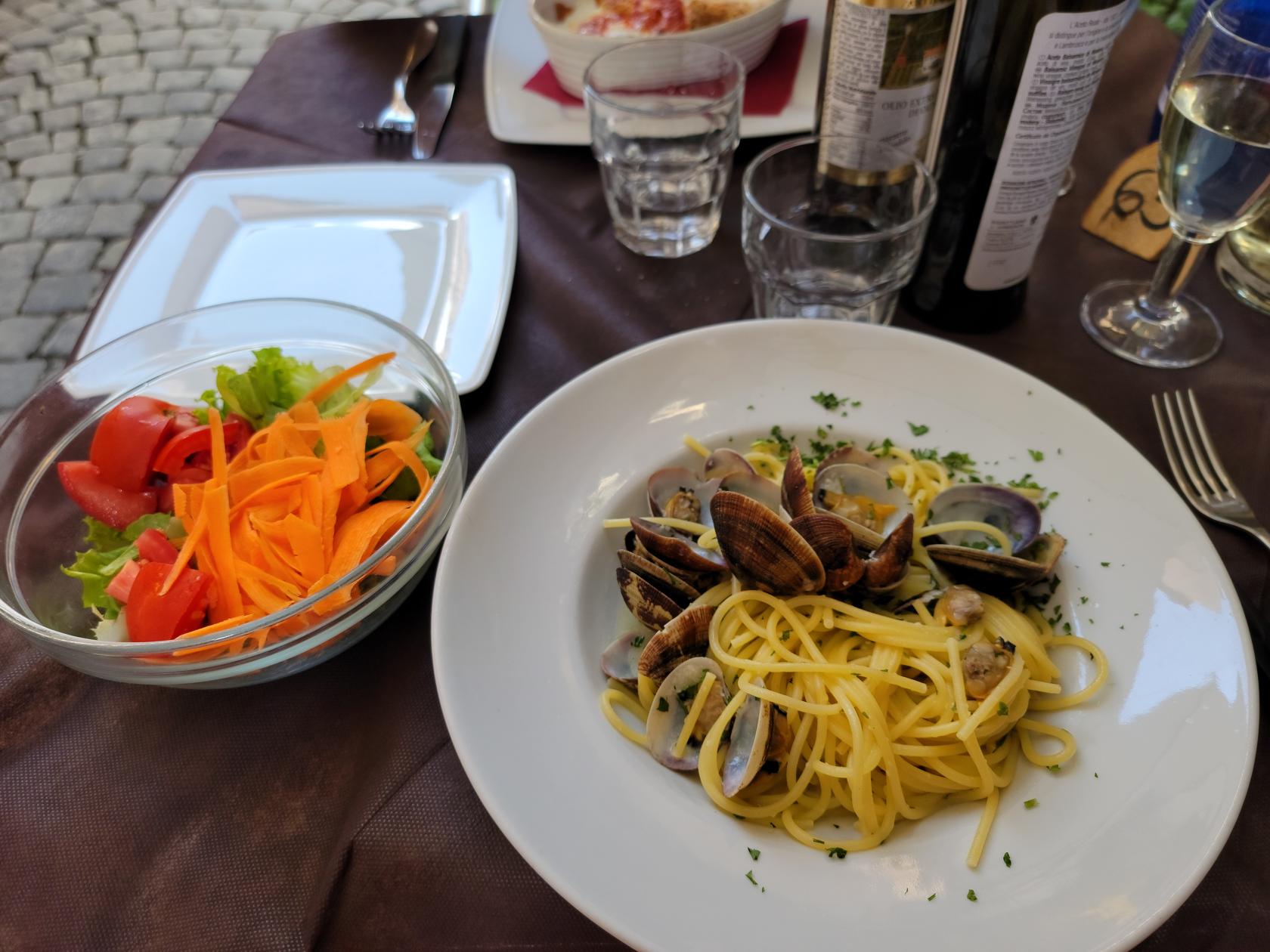
Aosta – Break O House – Spaghetti e Vongole
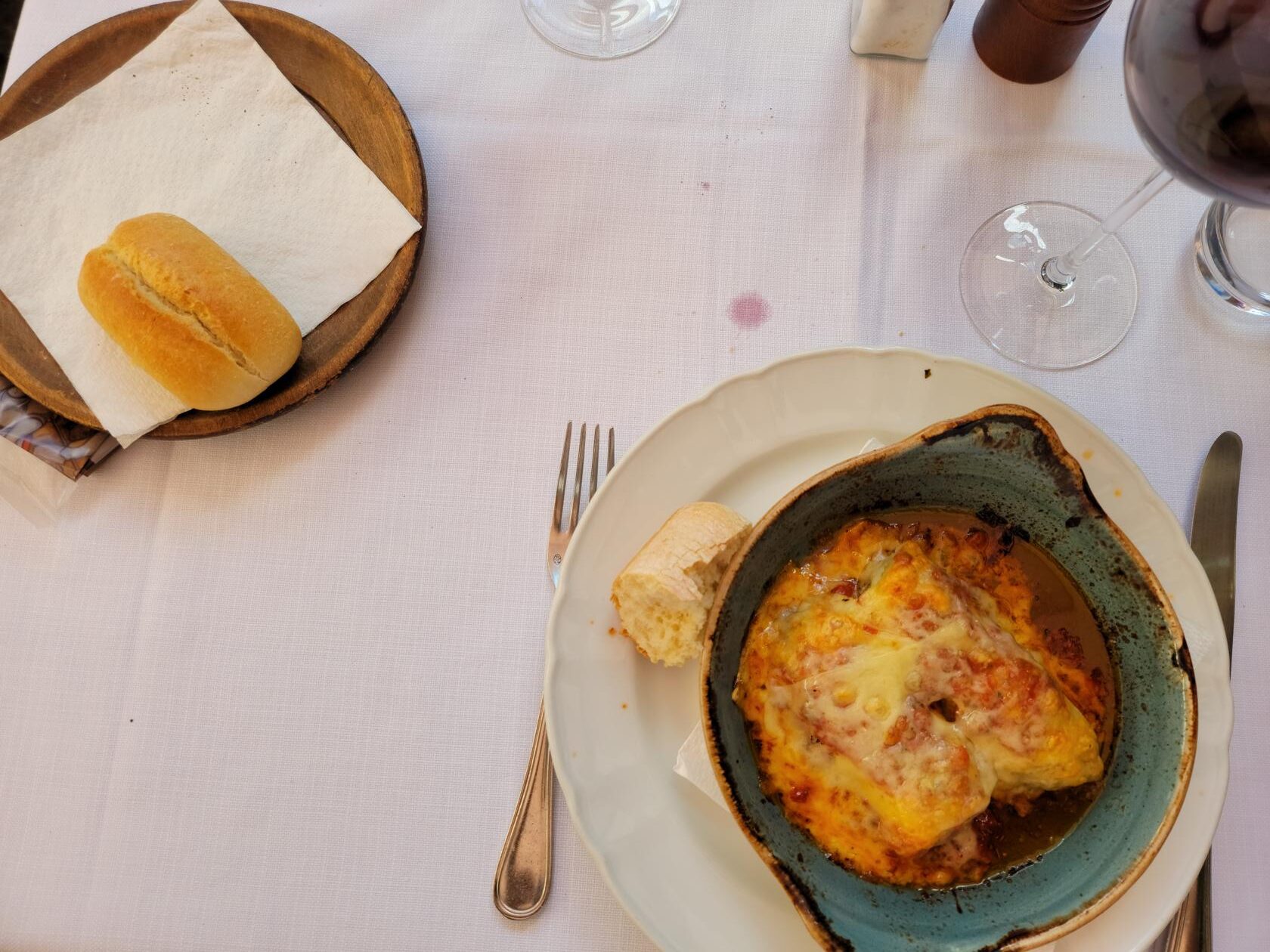
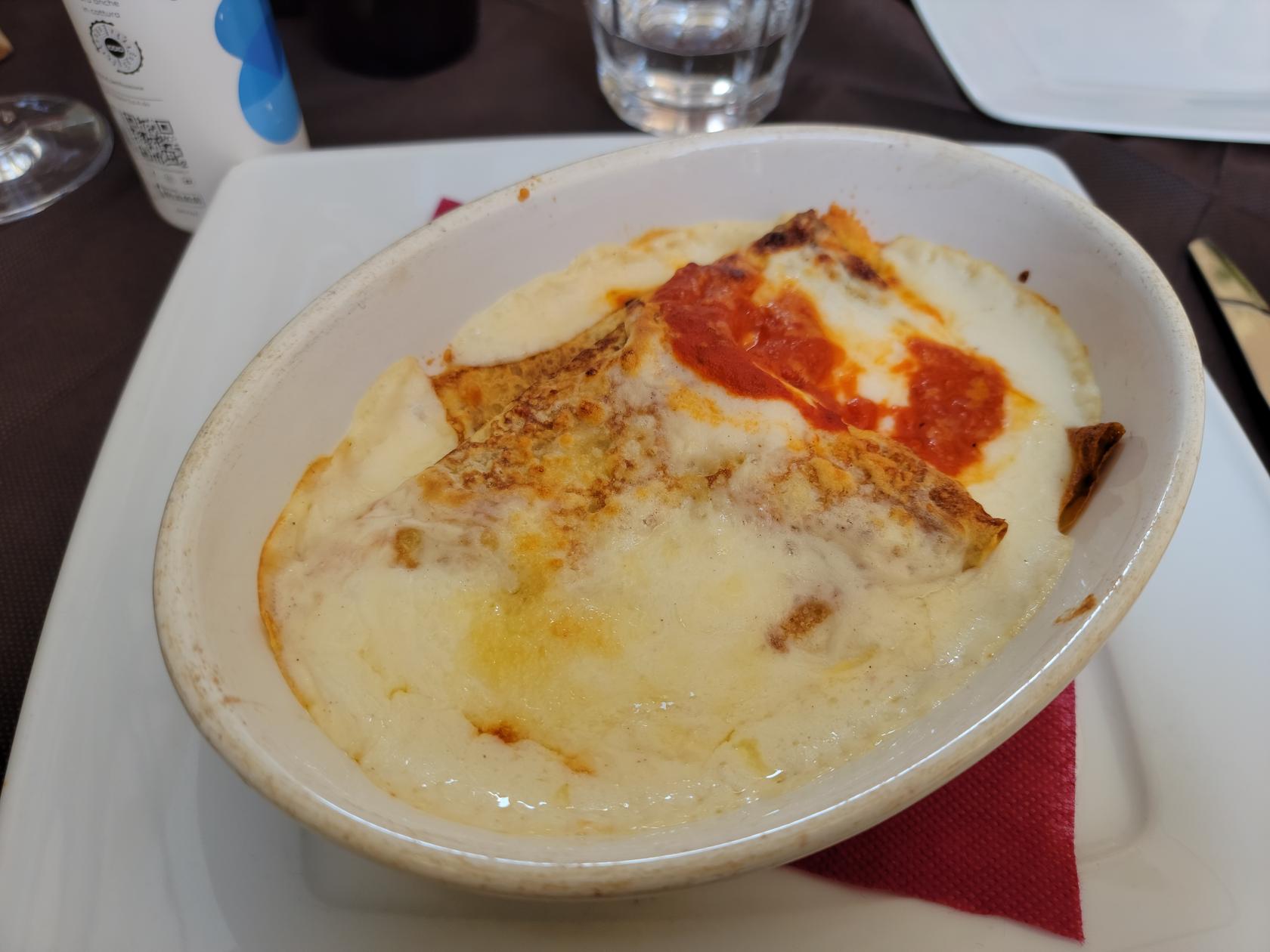
Aosta – Break O House – Crepe with Fontina Cheese and Béchamel
PubBurger
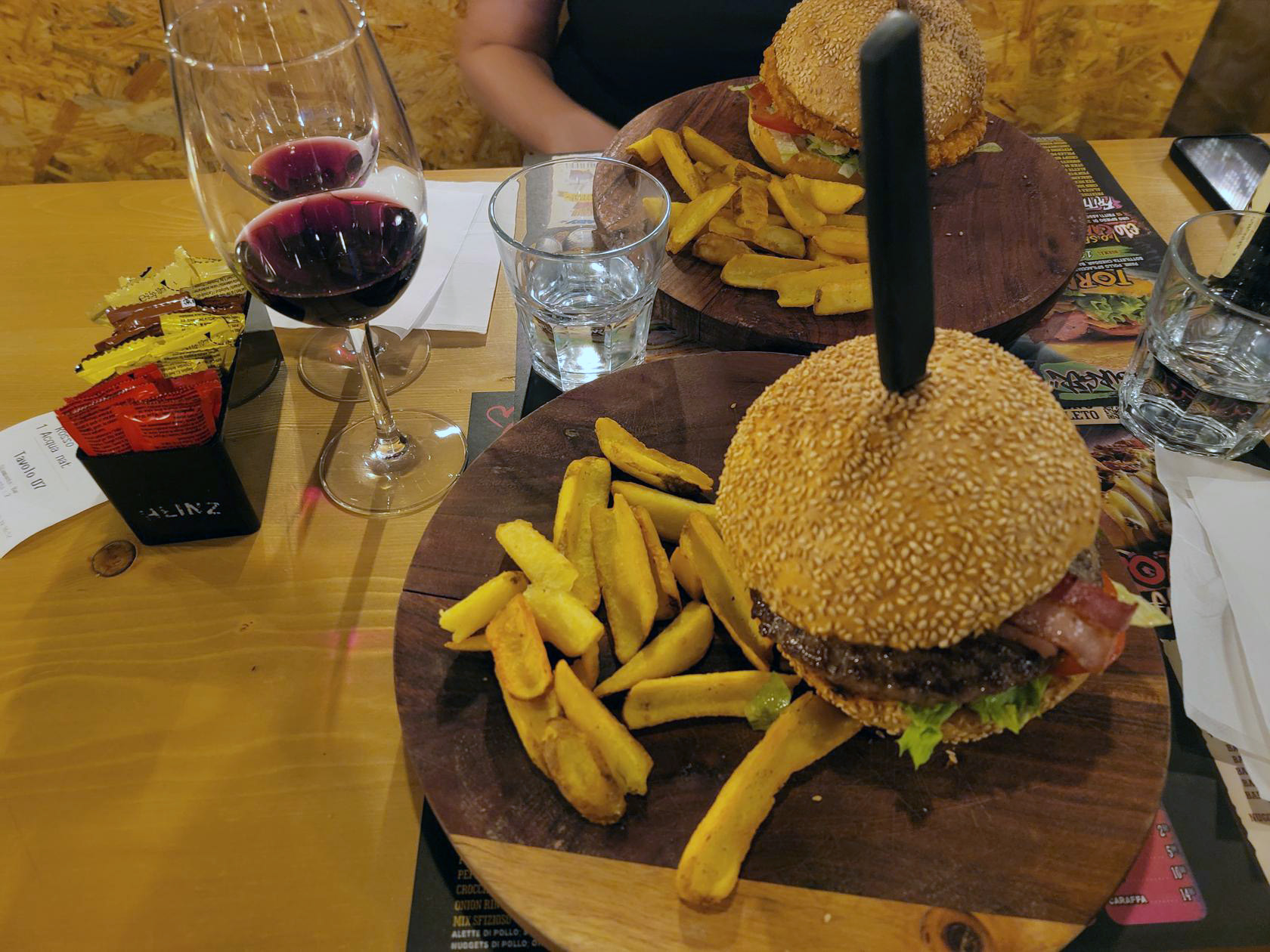
Nothing special, but dying for something different we went to a burger chain here called PubBurger. The burgers are actually pretty good, but the buns are a bit hard, unlike the ones in the States. The quantity of French Fries too was a bit on the small side, considering it is a burger place, but I didn’t complain because the size of the burger was HUGE!
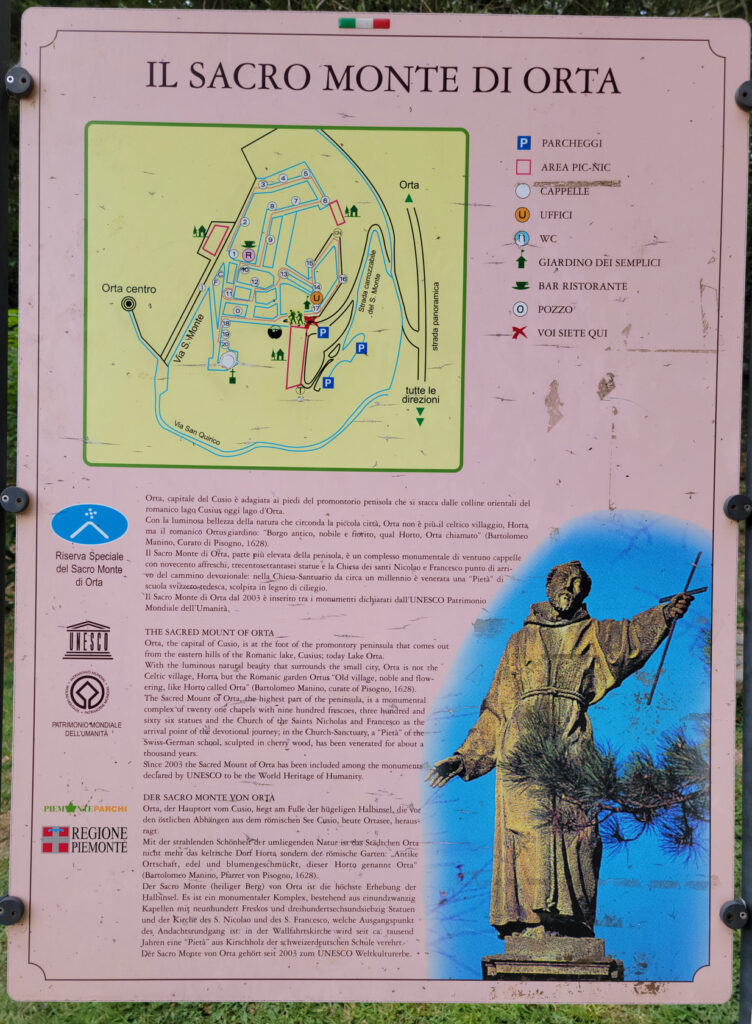
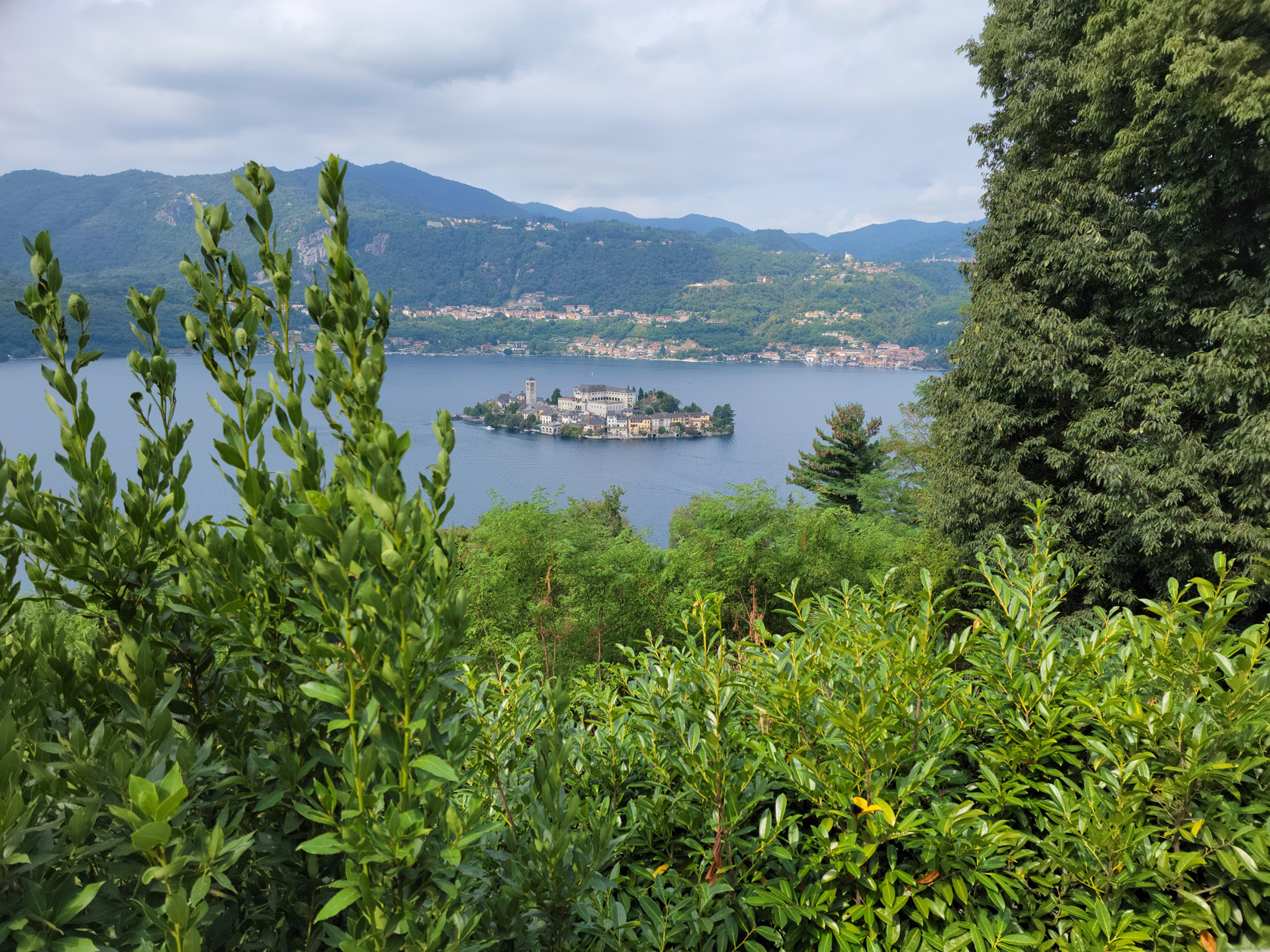
Across from the Isola di San Giulio sits the town of Orta di San Giulio on a promontory jutting out into the lake towards it. It is mostly known for the hill above it, or Sacro Monte, which contains the World UNESCO site of Sacro Monte di Orta.
Omegna – Navigazione Lago d’Orta Servizio Pubblico di Linea – Photograph from afar
Last Treats Of Our Time On Lake Orta
We actually took the public ferry twice[1]It is actually called the Servizio di trasporto pubblico locale or Servizio Traghetti Orta to Orta San Giulio, in order to more fully explore what this little town had to offer. While there, we visited the Sacro Monte, the main street of town and many of the shops that are open along the way. After our short stay it was time to head back and enjoy what was left of Omegna before returning to Turin.
Orta San Giulio
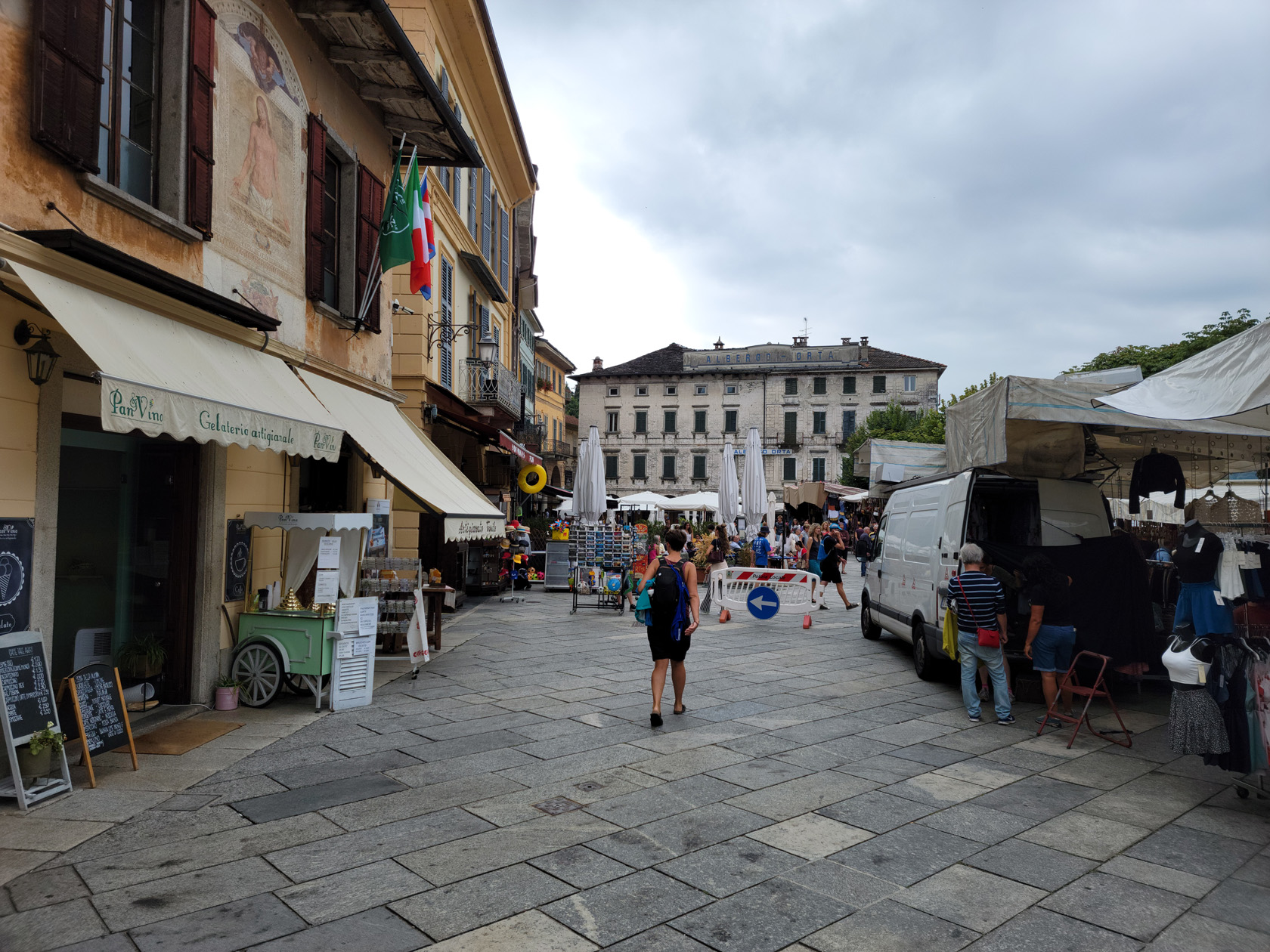
A typical lake town on Lake Orta is San Giulio. As expected, most activity and the main square, is down by the water and along the shore of the lake. There are many cafes, bars and restaurants in Piazza Mario Motta, as well as some others sprinkled along the main street and in some alleys.
Orta San Giulio – Piazza Mario Motta
The main street, which changes its name almost every block, contains all of the shops in town. Here one can find anything from leather goods – made in Italy, to Piedmont agricultural goods and other local products.
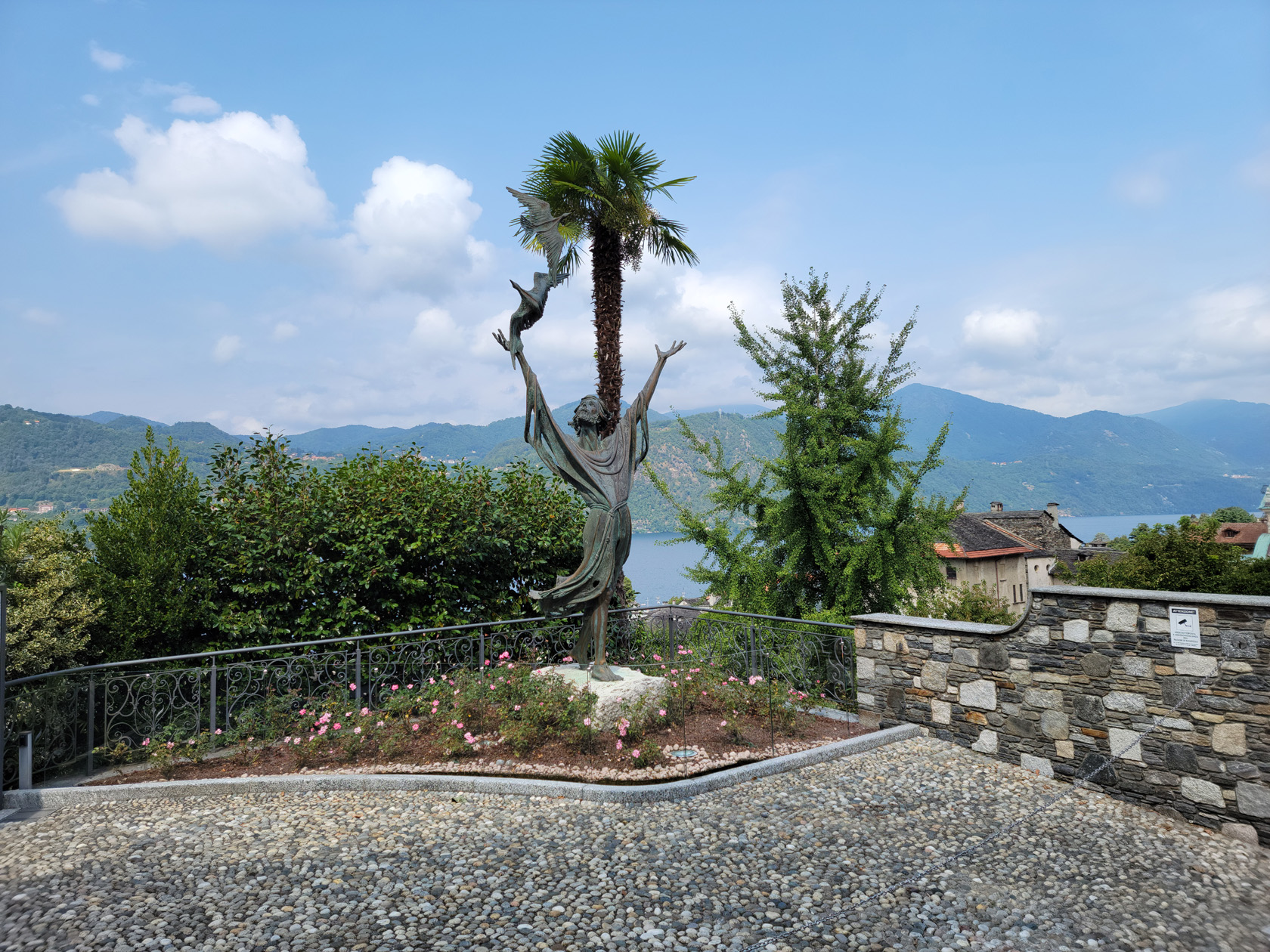
San Giulio – Sculpture of San Francis of Assissi
San Giulio – Side Alley
San Giulio – Side Alley
San Giulio – Side Alley – No Head Room
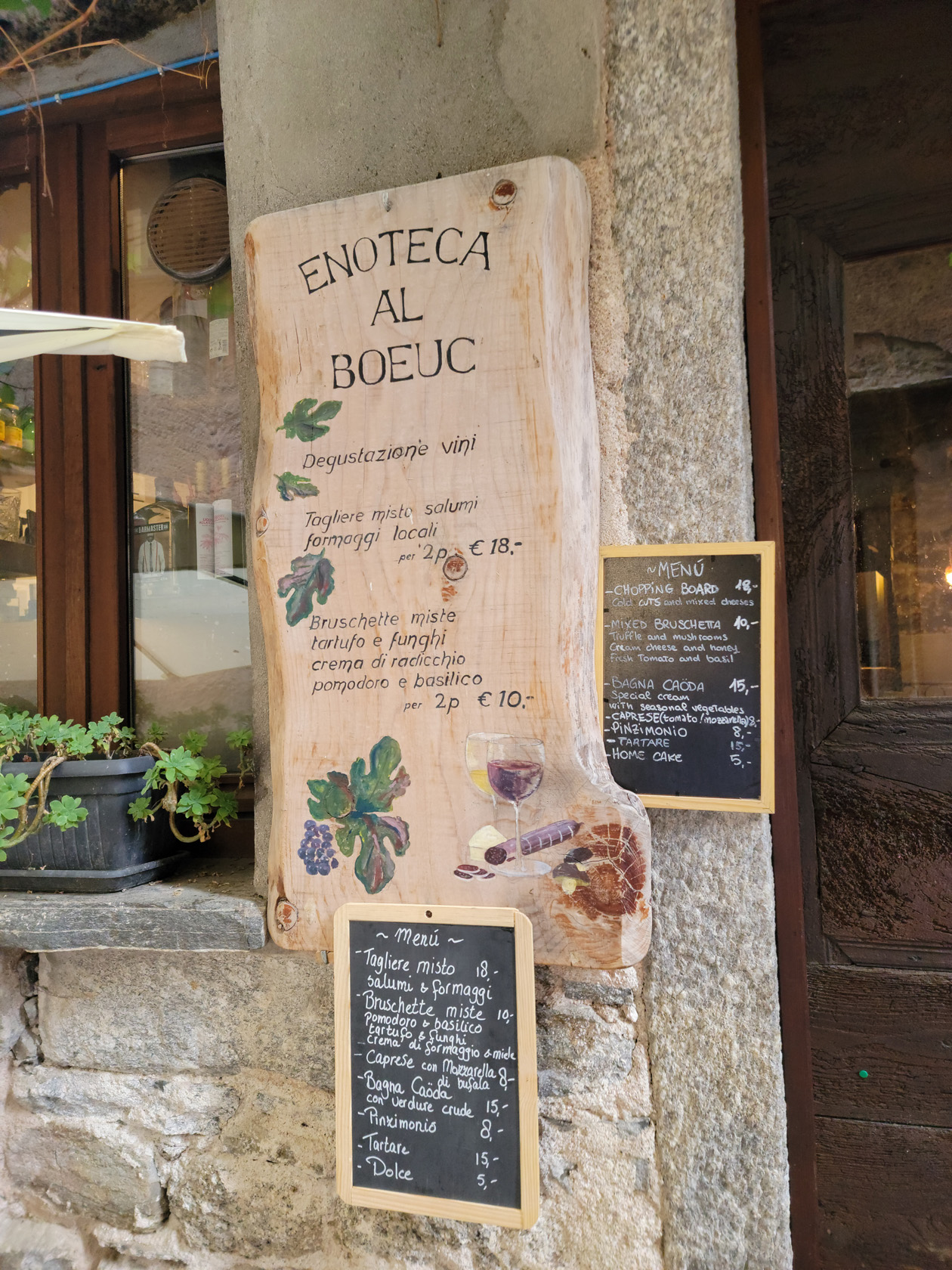
San Giulio – Typical Restaurant or Enoteca Sign
San Giulio – Municipal Gardens
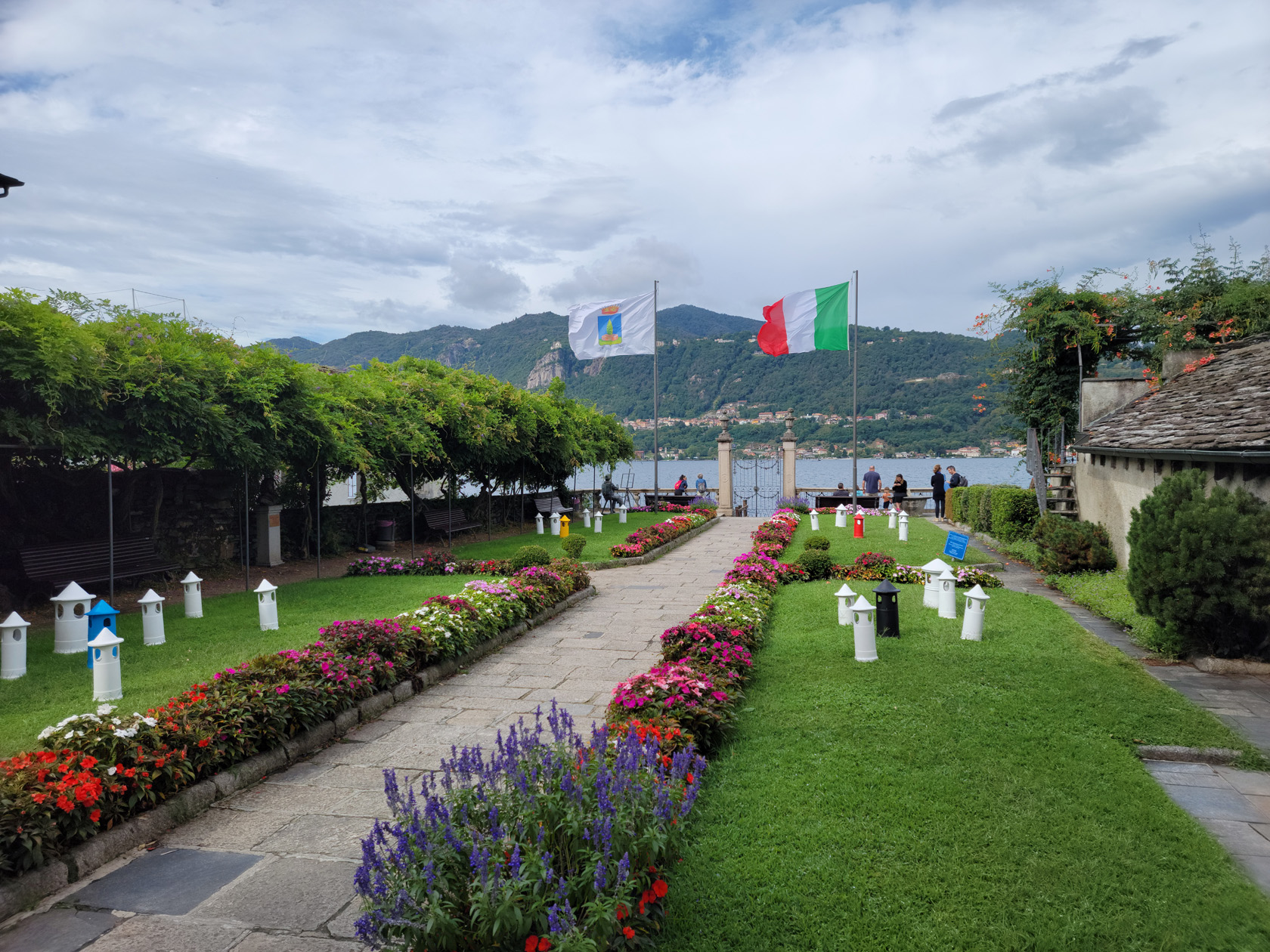
San Giulio – Municipal Gardens
San Giulio
San Giulio – Sign Painted on Wall
San Giulio – Main Street
Sacro Monte
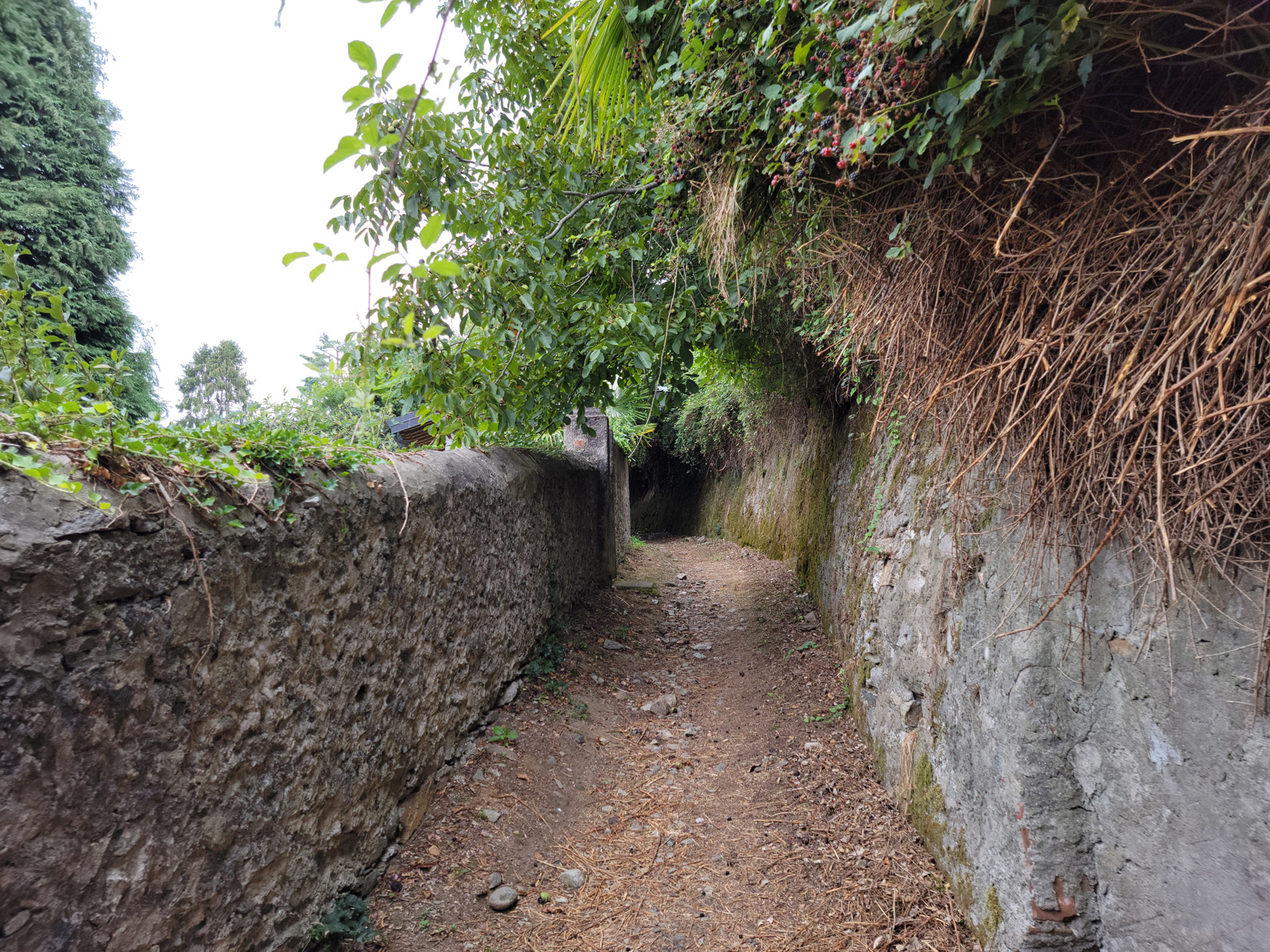
There are two ways to walk the hill to Sacro Monte, one can either take a left or a right at the Church of Saint Mary of the Assumption on via Caire Albertoletti.
Orta San Giulio – Via Caire Albertoletti
Orta San Giulio – Via Caire Albertoletti – Toward Sacro Monte
Orta San Giulio – Via Caire Albertoletti to Via Palma
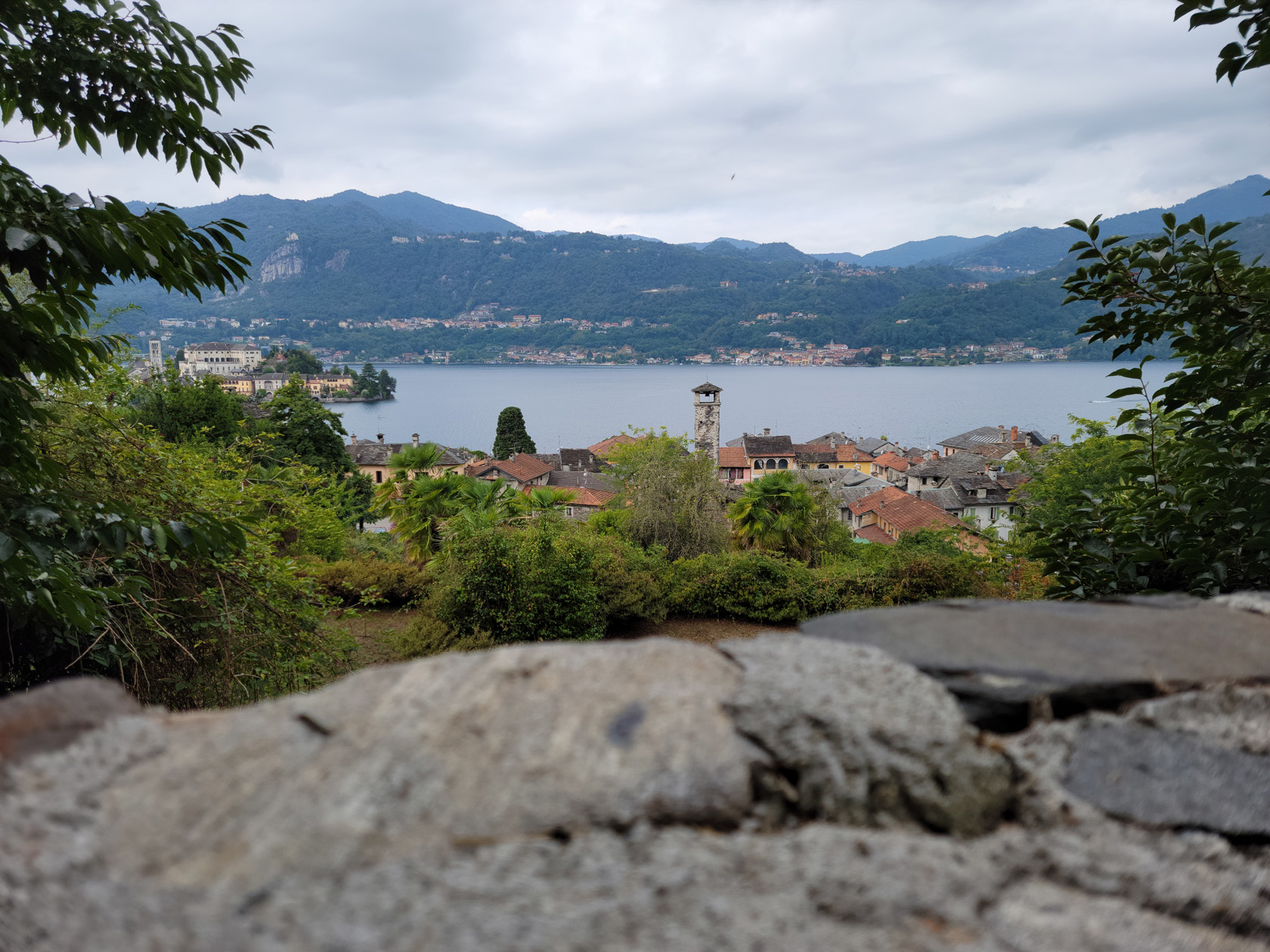
Orta San Giulio – The Town from Via Palma
Orta San Giulio – Overview from Via Palma
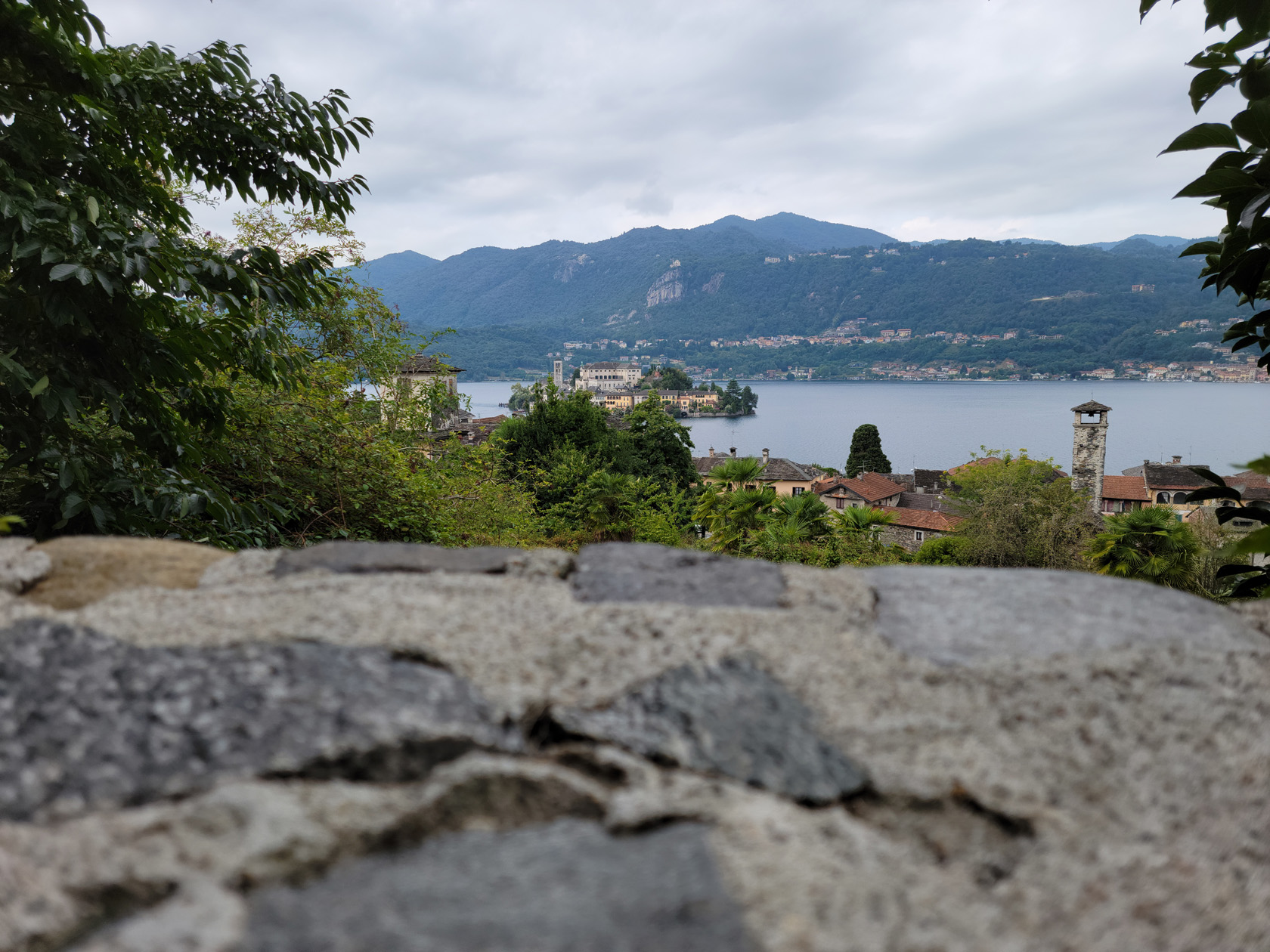
Orta San Giulio – Isola di San Giulio from Via Palma
Most people will take the right, it is much shorter and direct, but as we found out, may not be offered on some phone maps[2]I swiftly submitted an update on the missing road, as soon as I was able. If one takes the left, you will circumnavigate the hill and eventually bring you back around to where you can enter the Sacro Monte from the back parking lot entrance, about a 15-20 minute walk. Of course there is nothing wrong with this, it is just different and longer, but will get you to the same place.
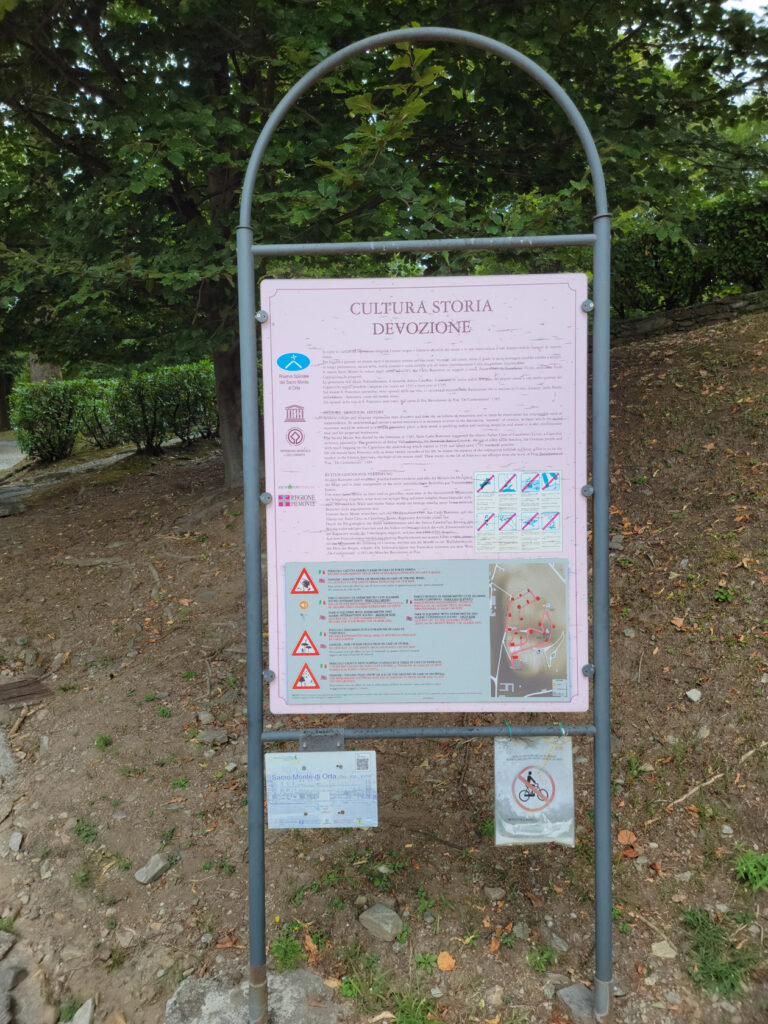
Sacro Monte – Back Entrance Signs
Sacro Monte – Back Entrance Signs
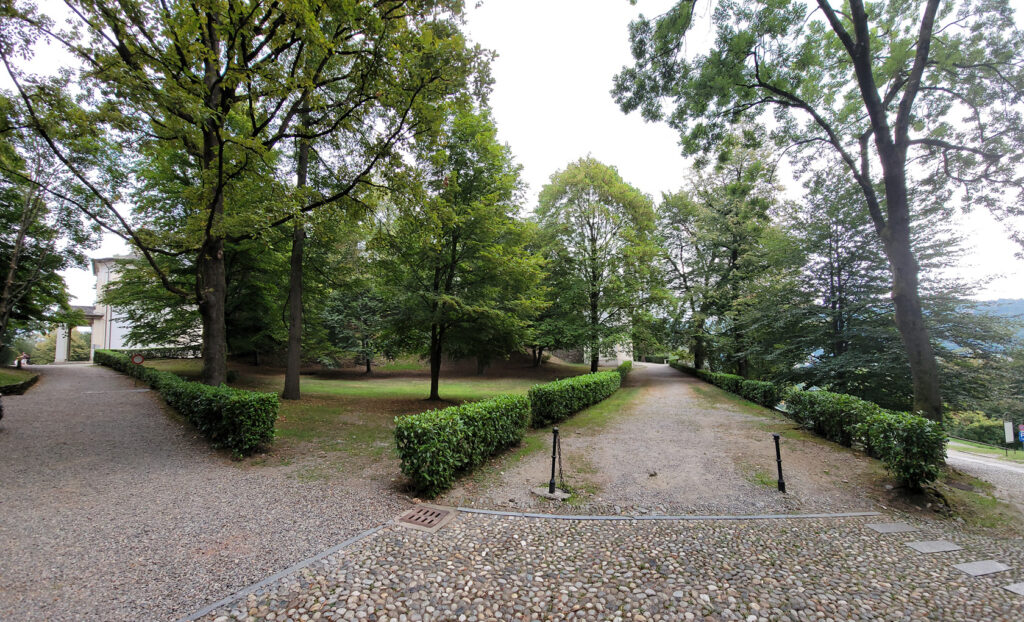
Sacro Monte – Interlinking Paths to each Chapel
The Sacro Monte has numerous chapels which one can visit, each having its own purpose, according to Catholic religious sources. Of the twenty or so chapels and churches that comprise the site, we visited about a handful.
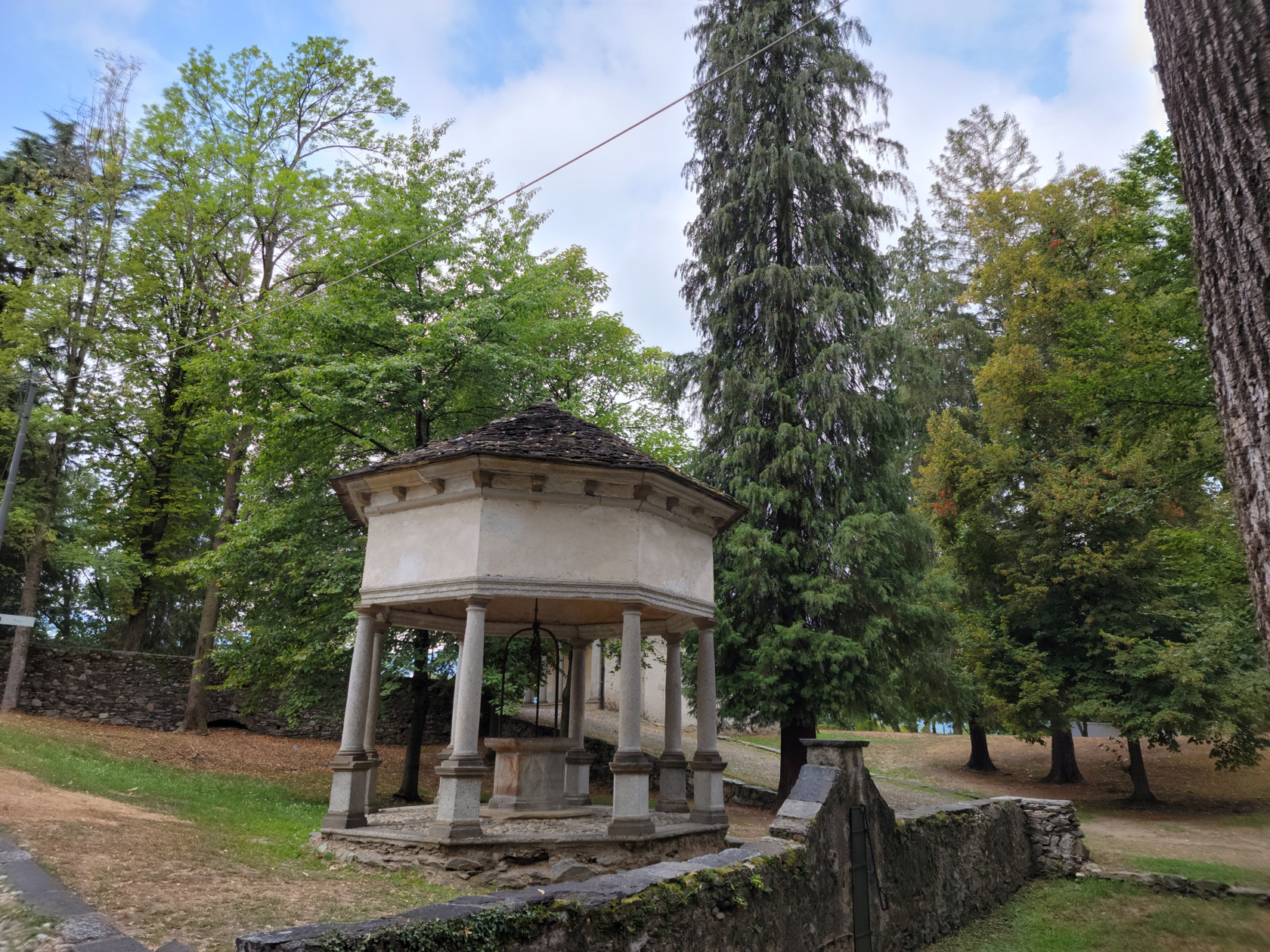
Sacro Monte – The Pozzo or Font
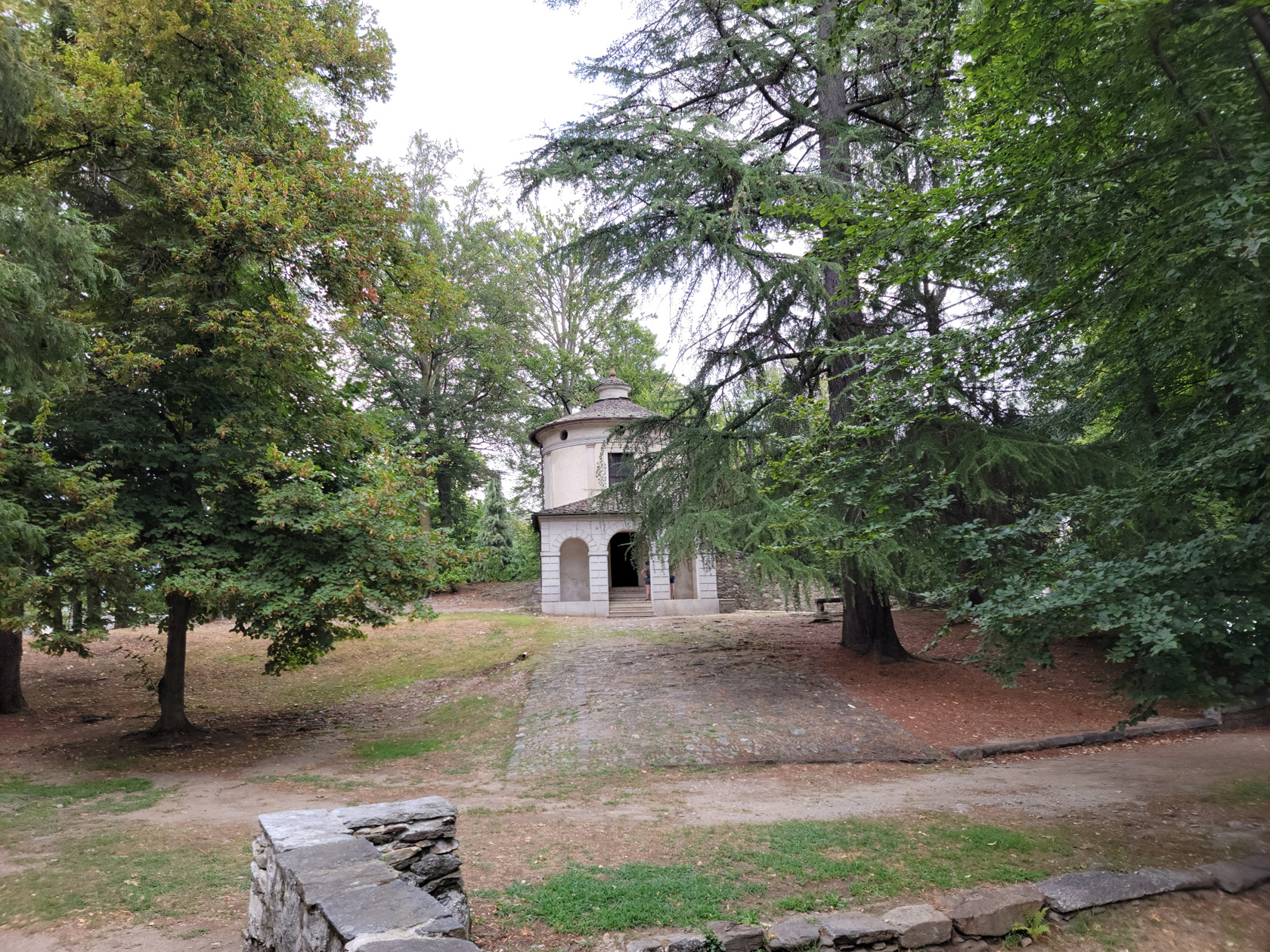
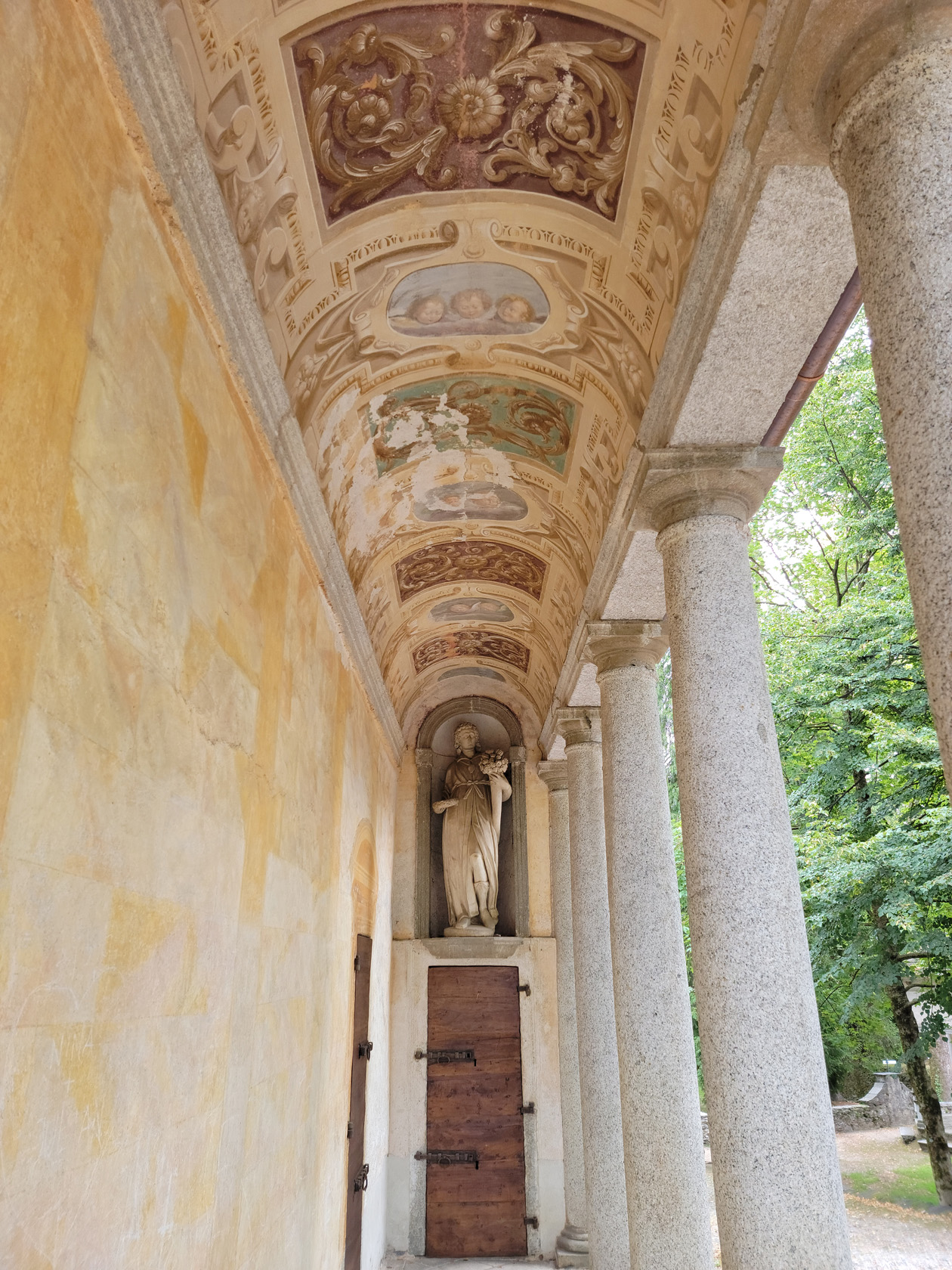
Sacro Monte – Chapel
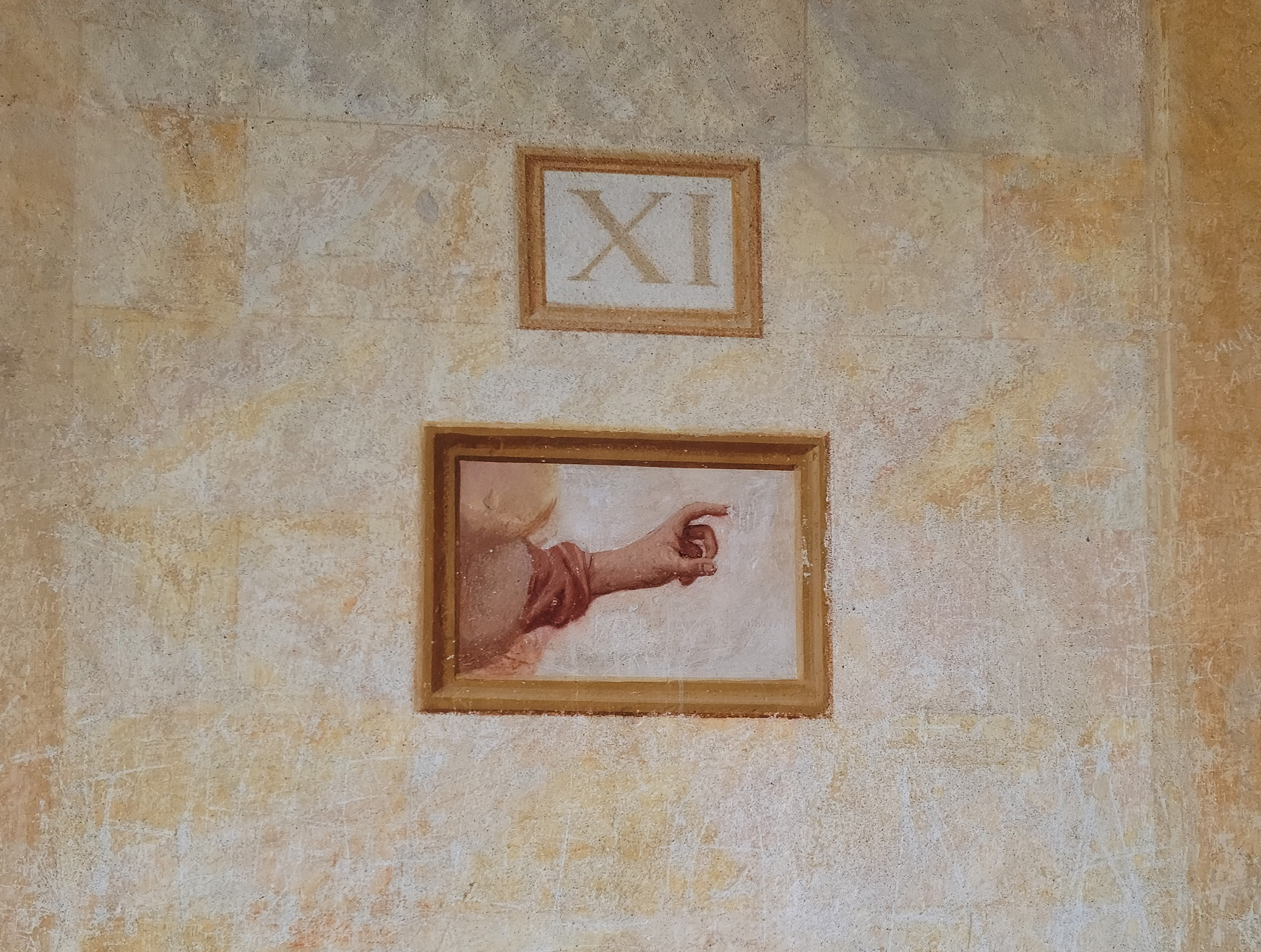
Sacro Monte – Hand Directing Toward Church Eleven
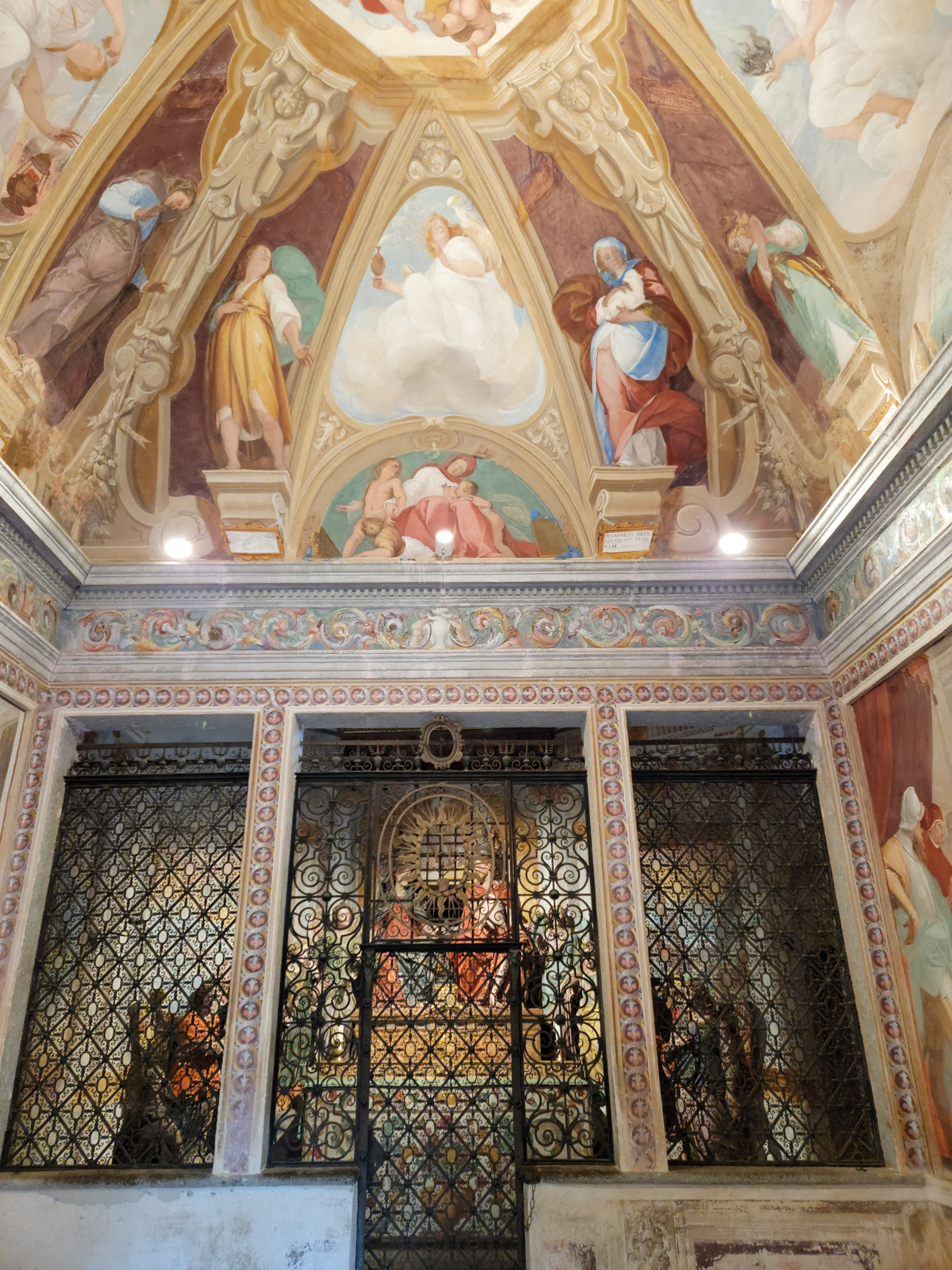
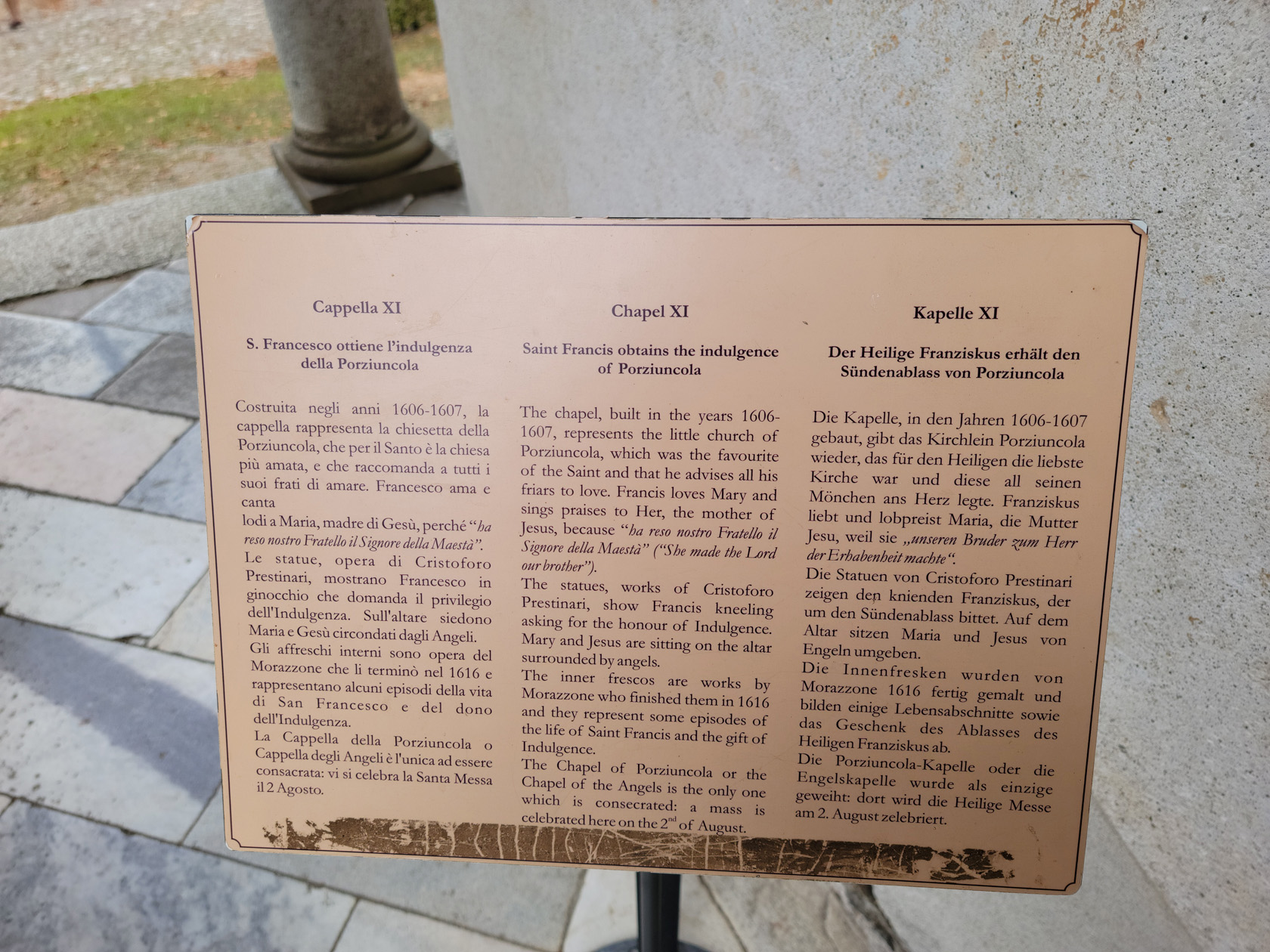
Sacro Monte – Chapel Eleven
Sacro Monte – Chapel Eleven
Sacro Monte – Chapel Eleven
Sacro Monte – Main Entrance
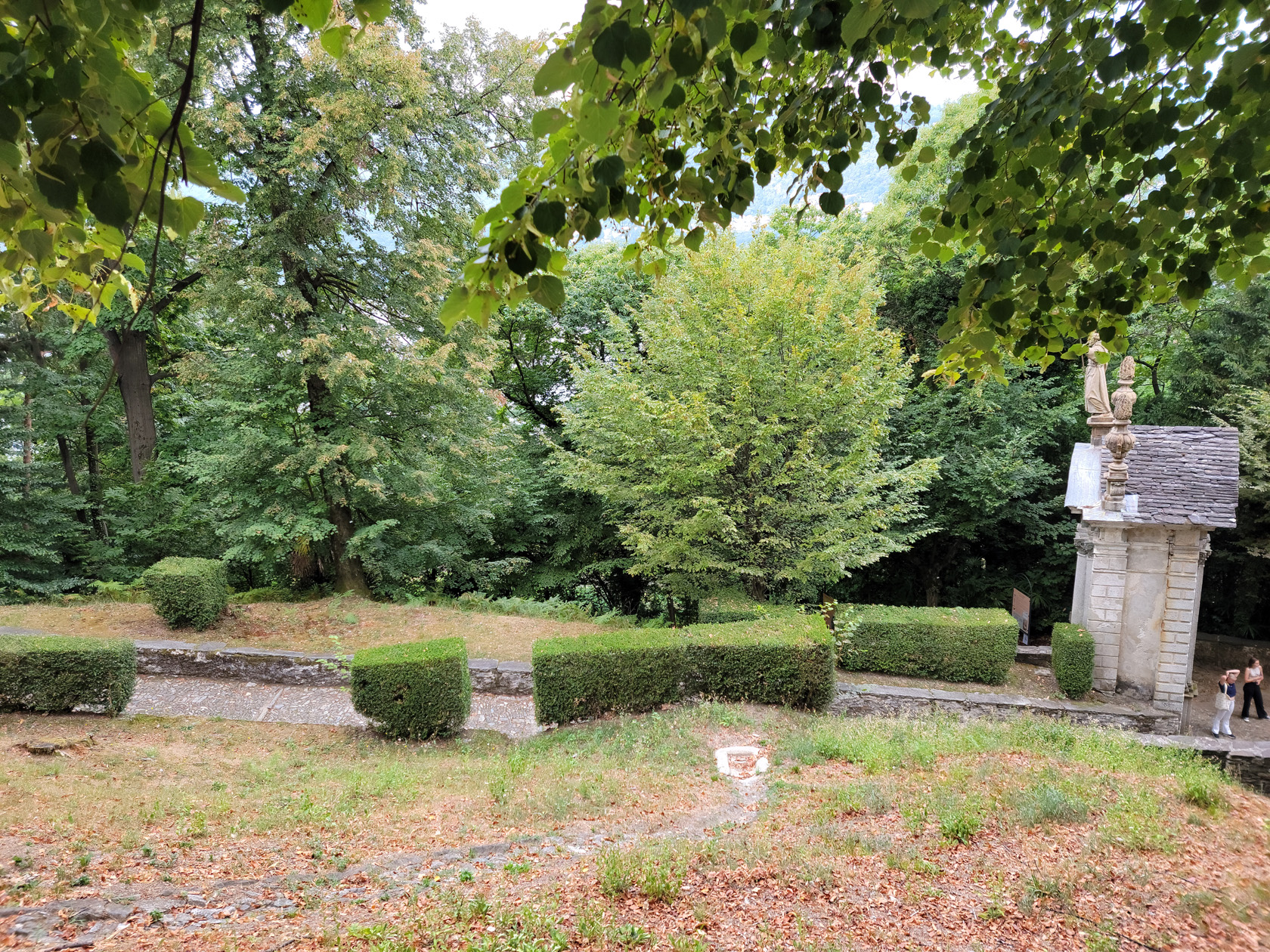
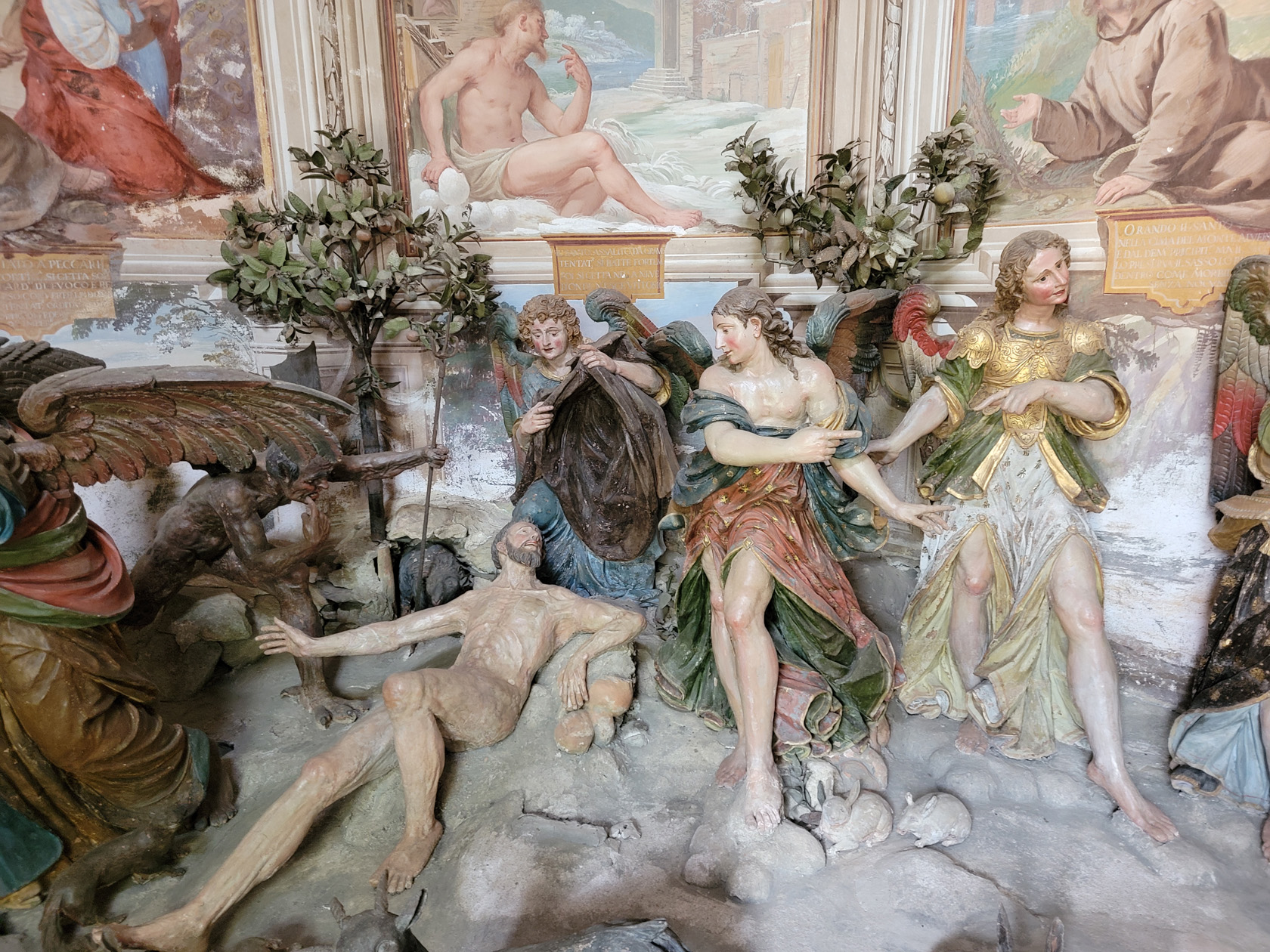
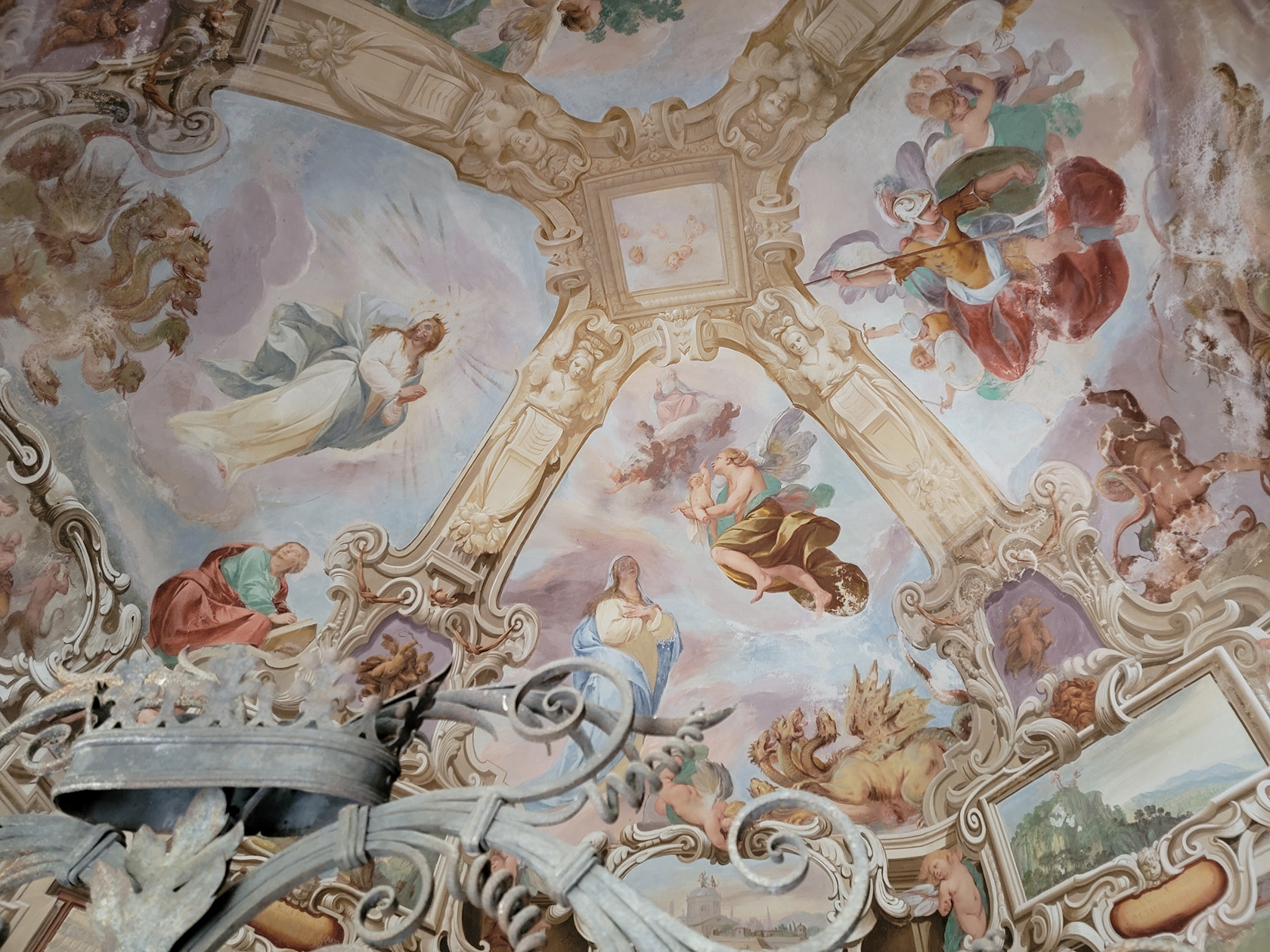
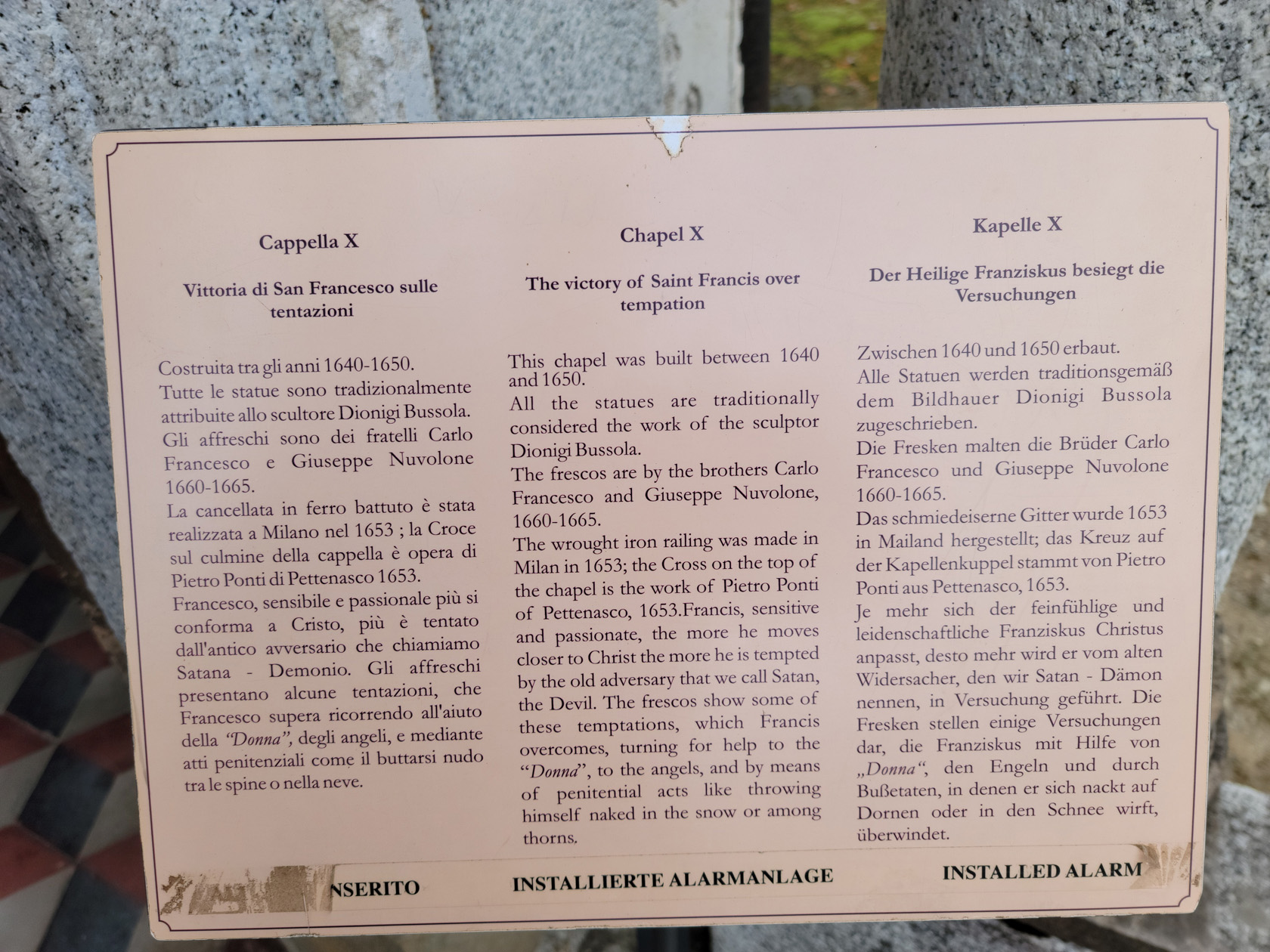
Sacro Monte – Chapel Ten
Sacro Monte – Chapel Ten
Sacro Monte – Chapel Ten
Sacro Monte – Isola di San Giulio
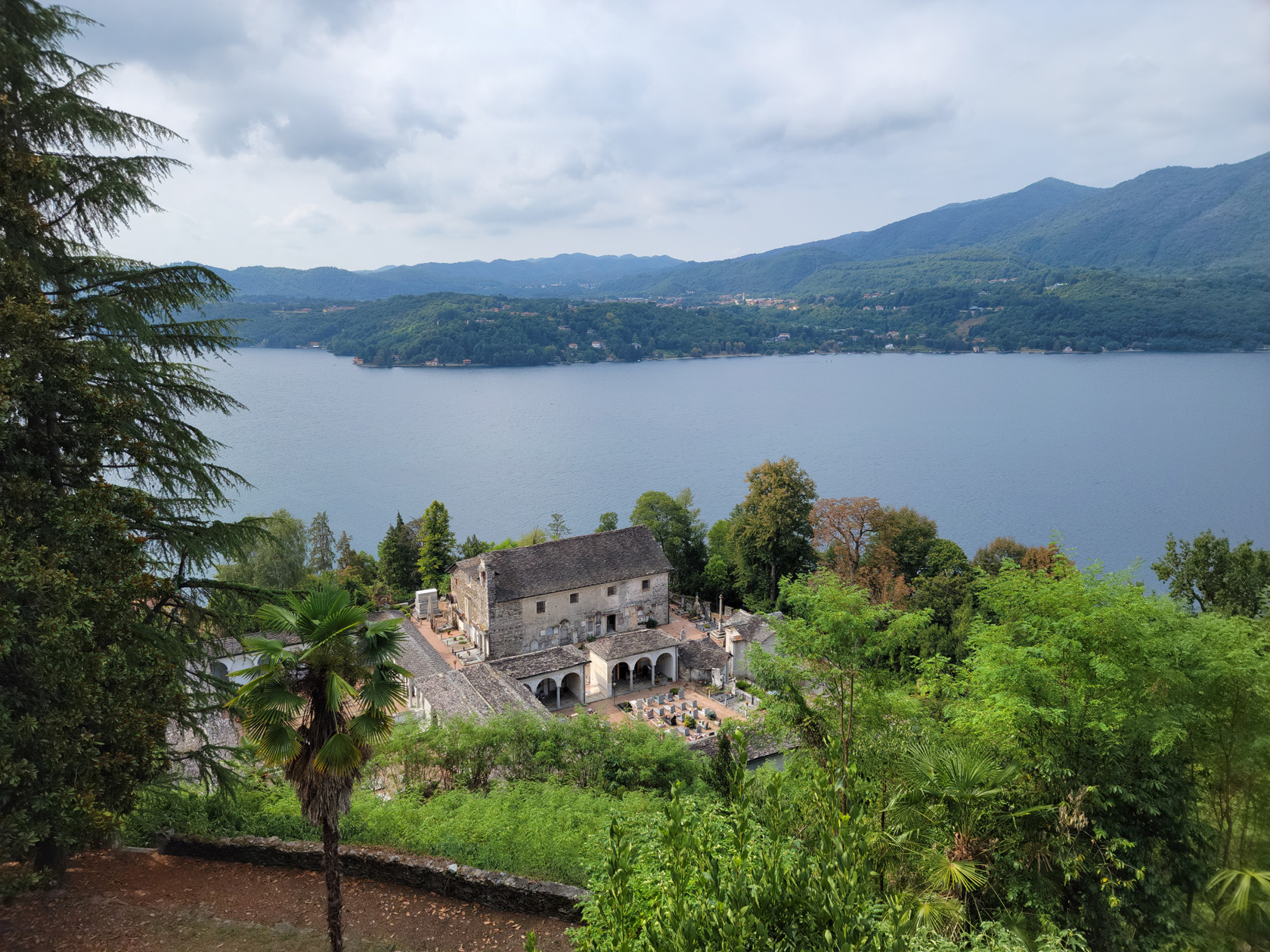
Sacro Monte – Church of Saint Cyricus and the Cemetery
The Rest of Omegna
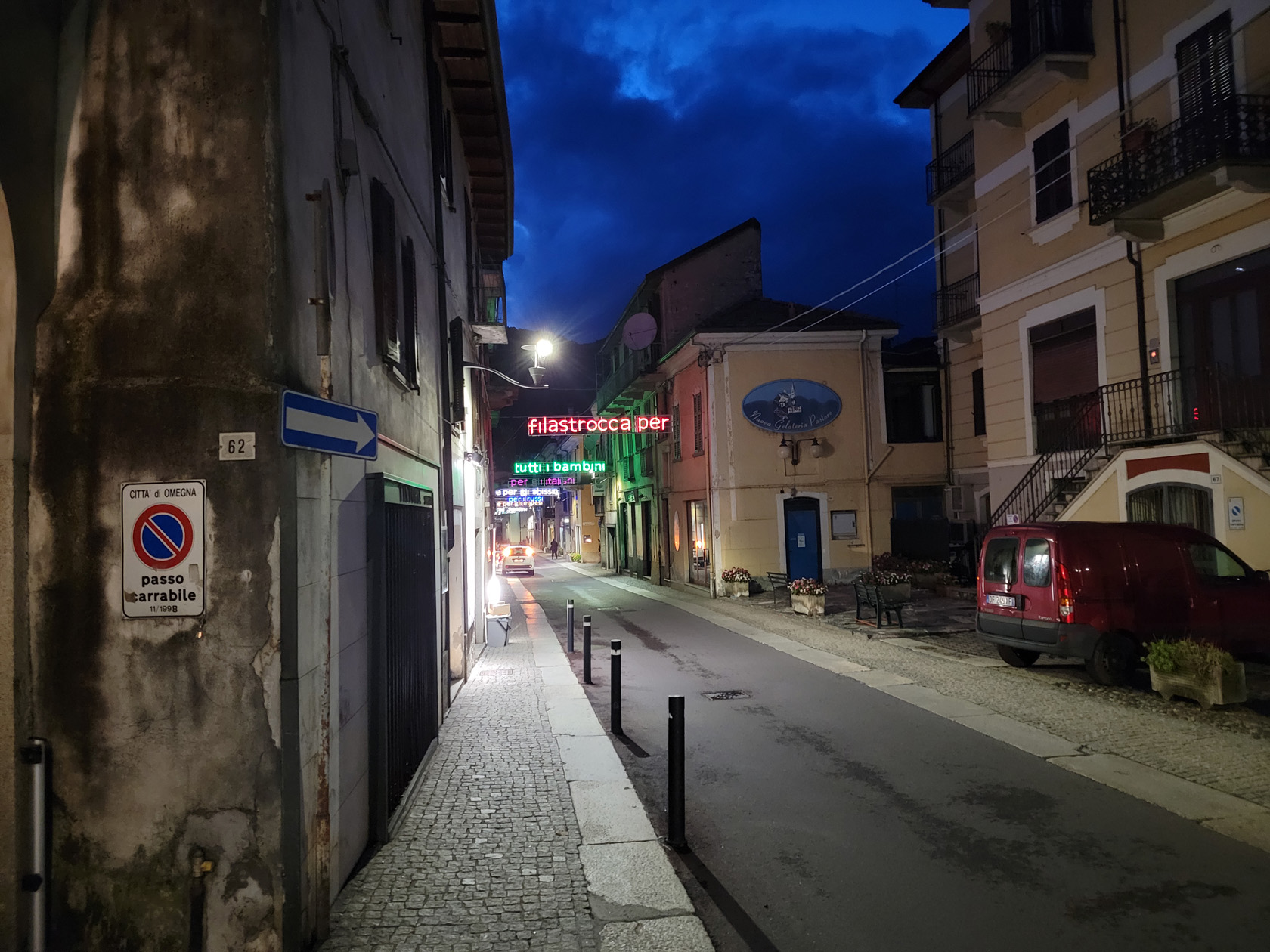
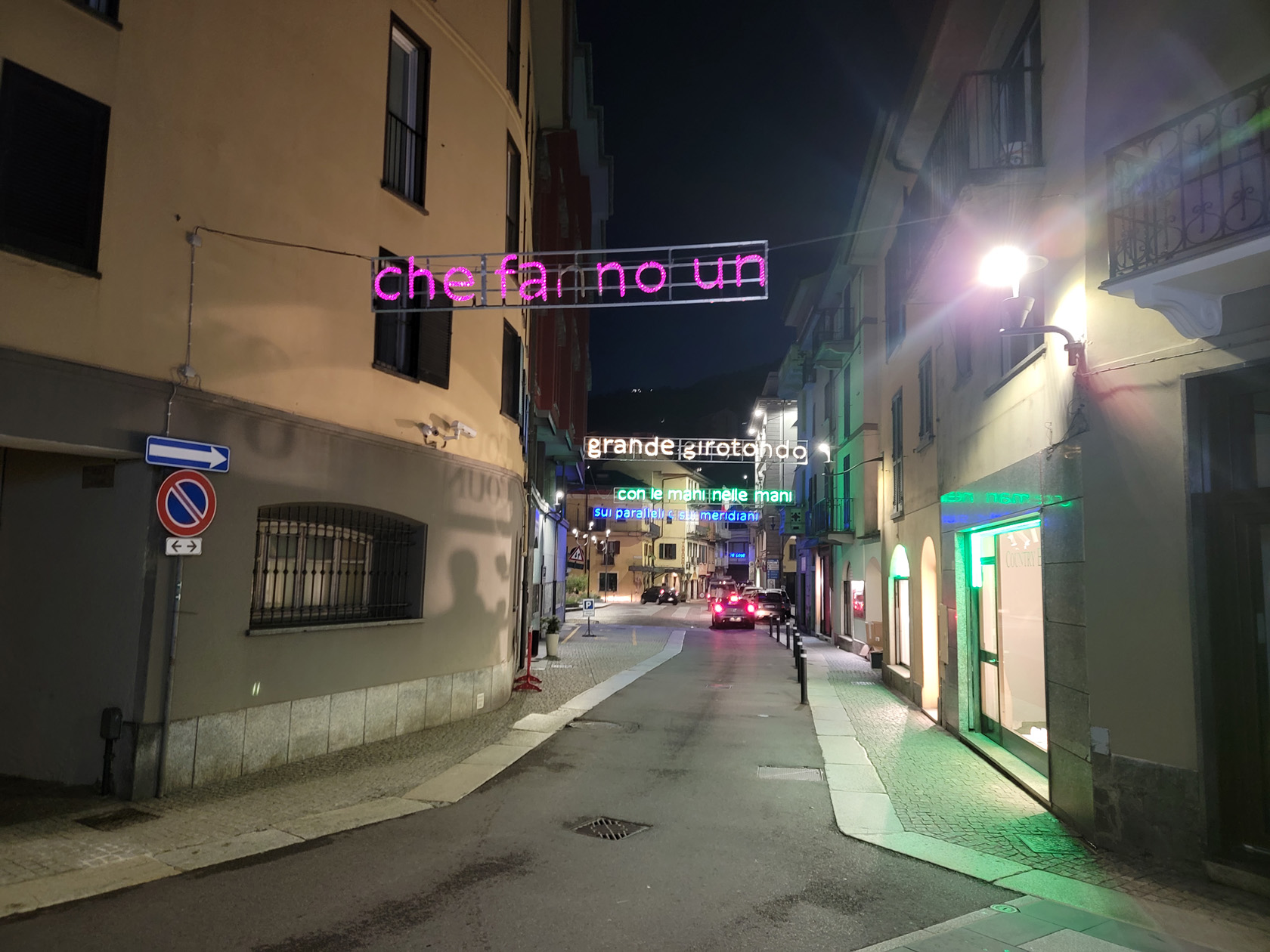
Our last couple of days in the town of Omegna were spent mostly relaxing. It rained one day, which really curtailed anything we could do, especially with respect to any hiking we had had in mind. However, we were able to venture out in the evening, after the rain had passed and enjoyed the evening mountain air.
Omegna – Via Giuseppe Mazzini
Omegna – Via Giuseppe Mazzini
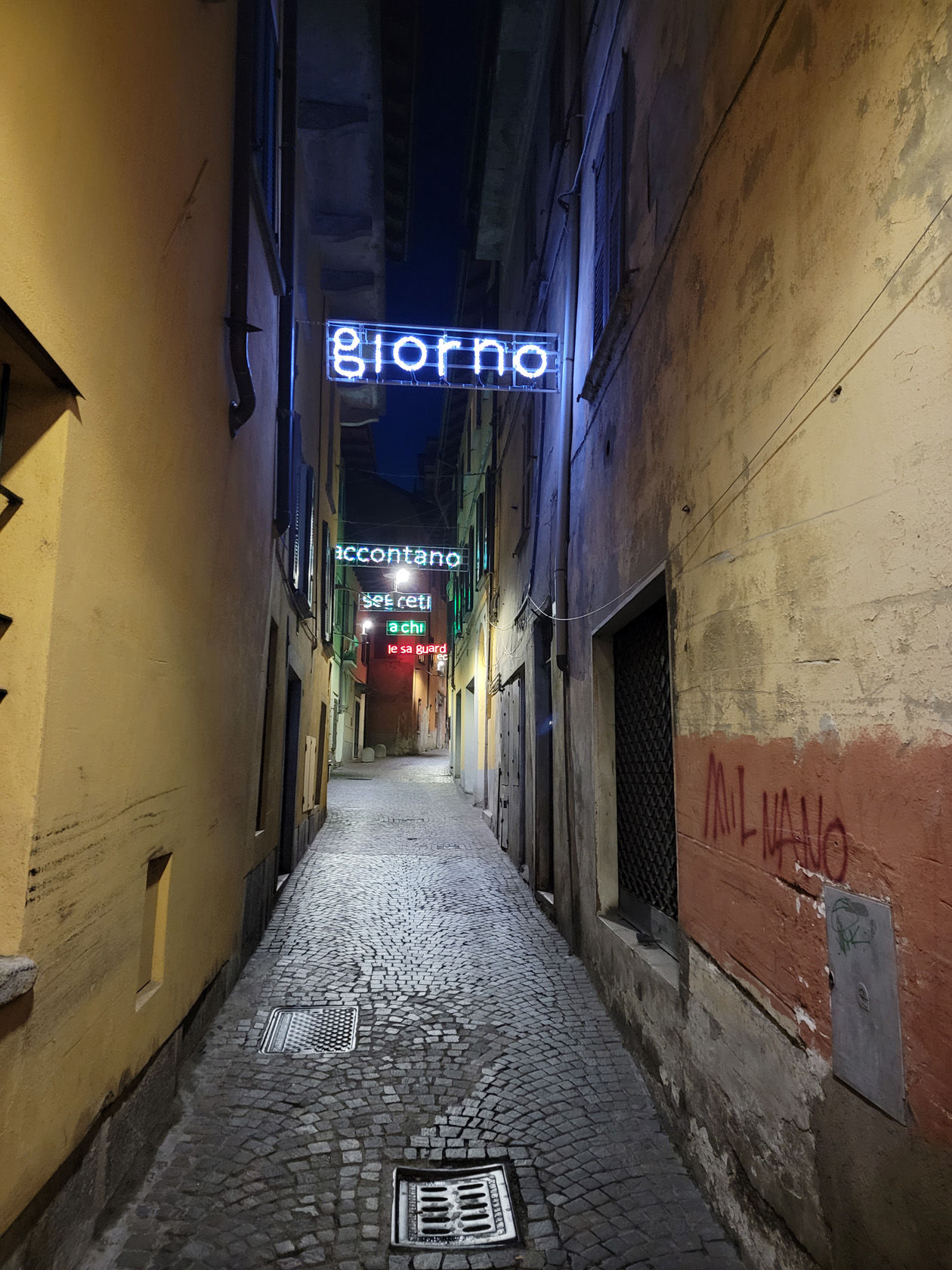
Omegna – Side Street at Night
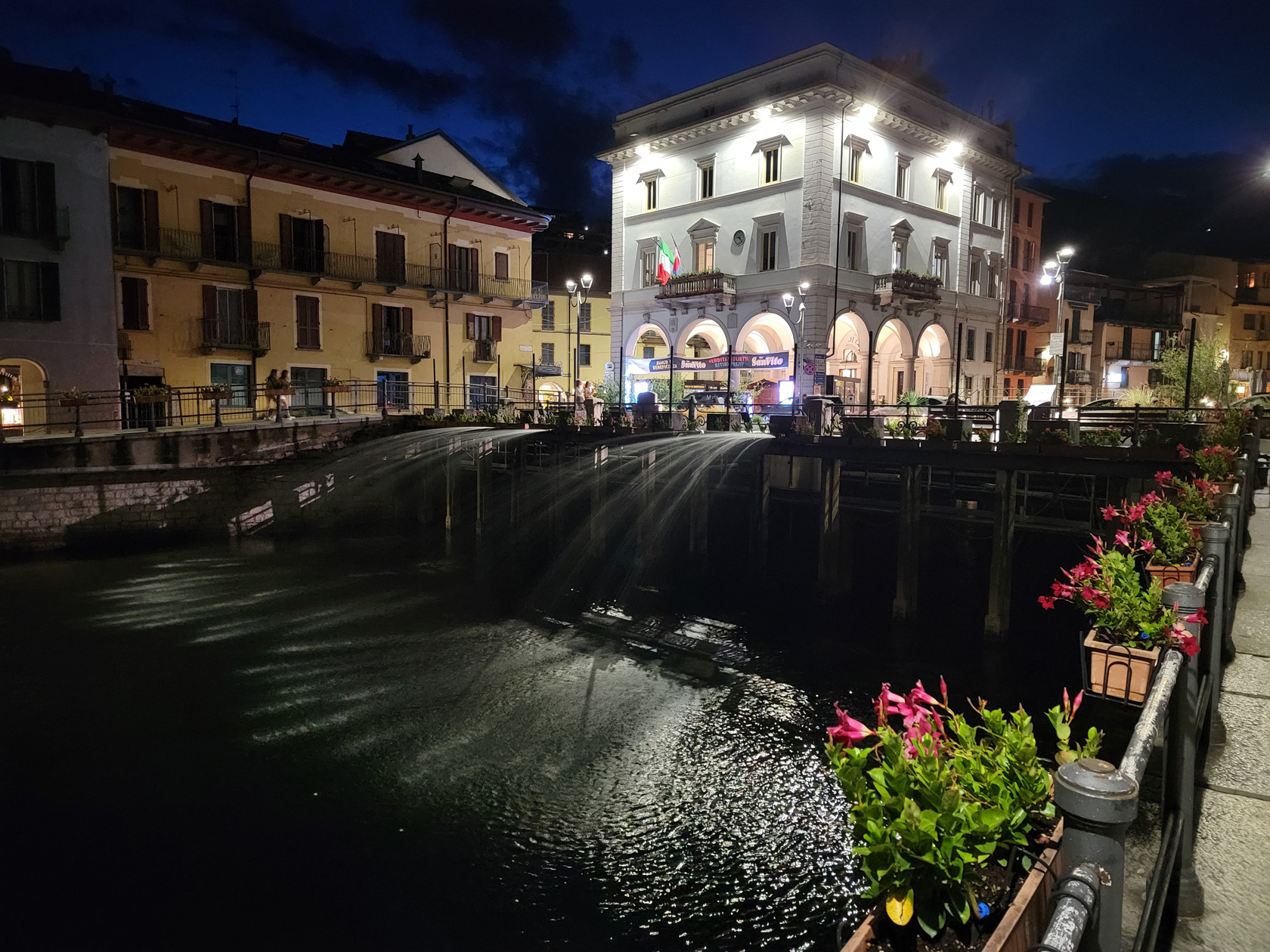
Omegna – Piazza XXIV April – Commune Building
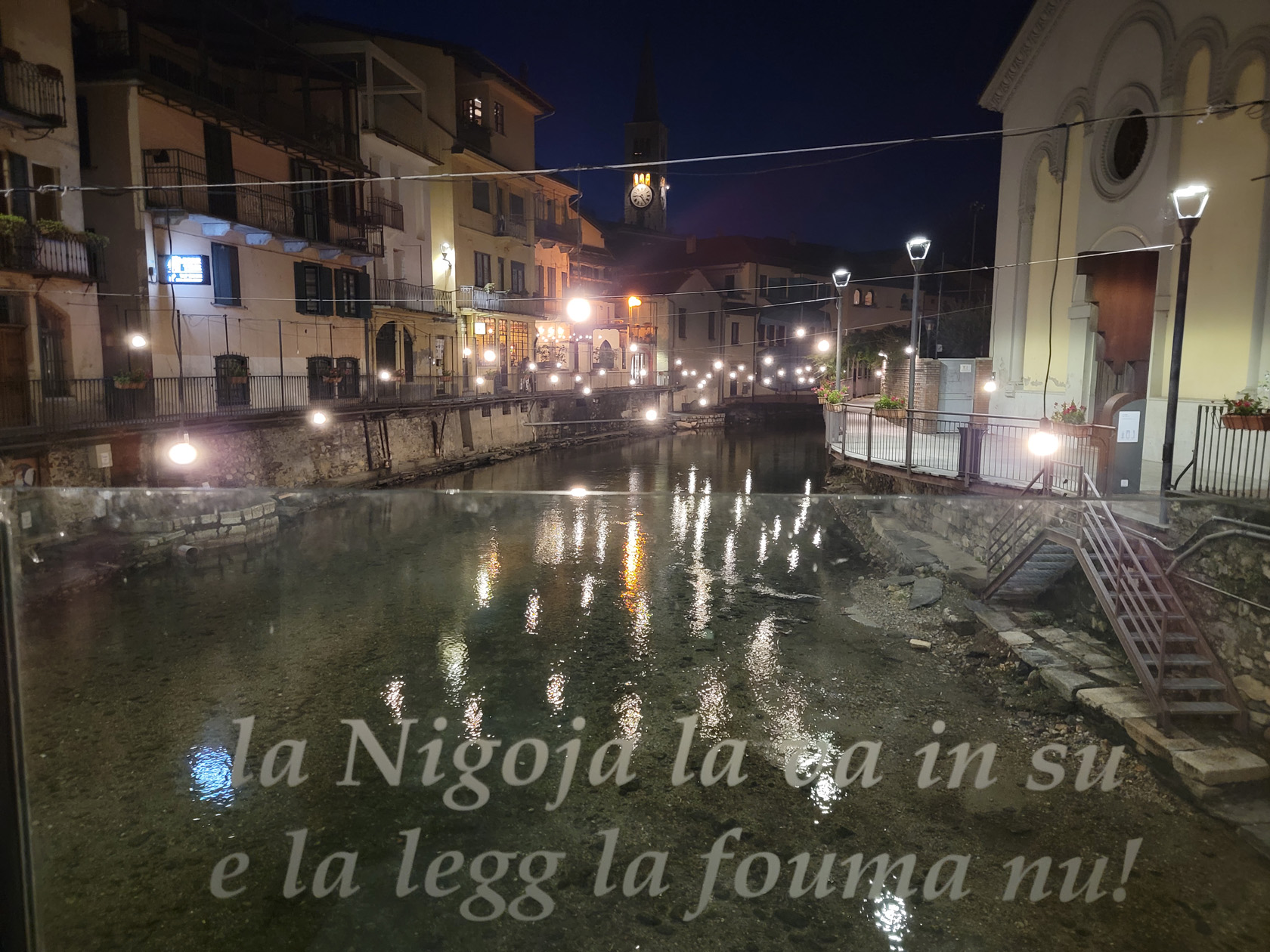
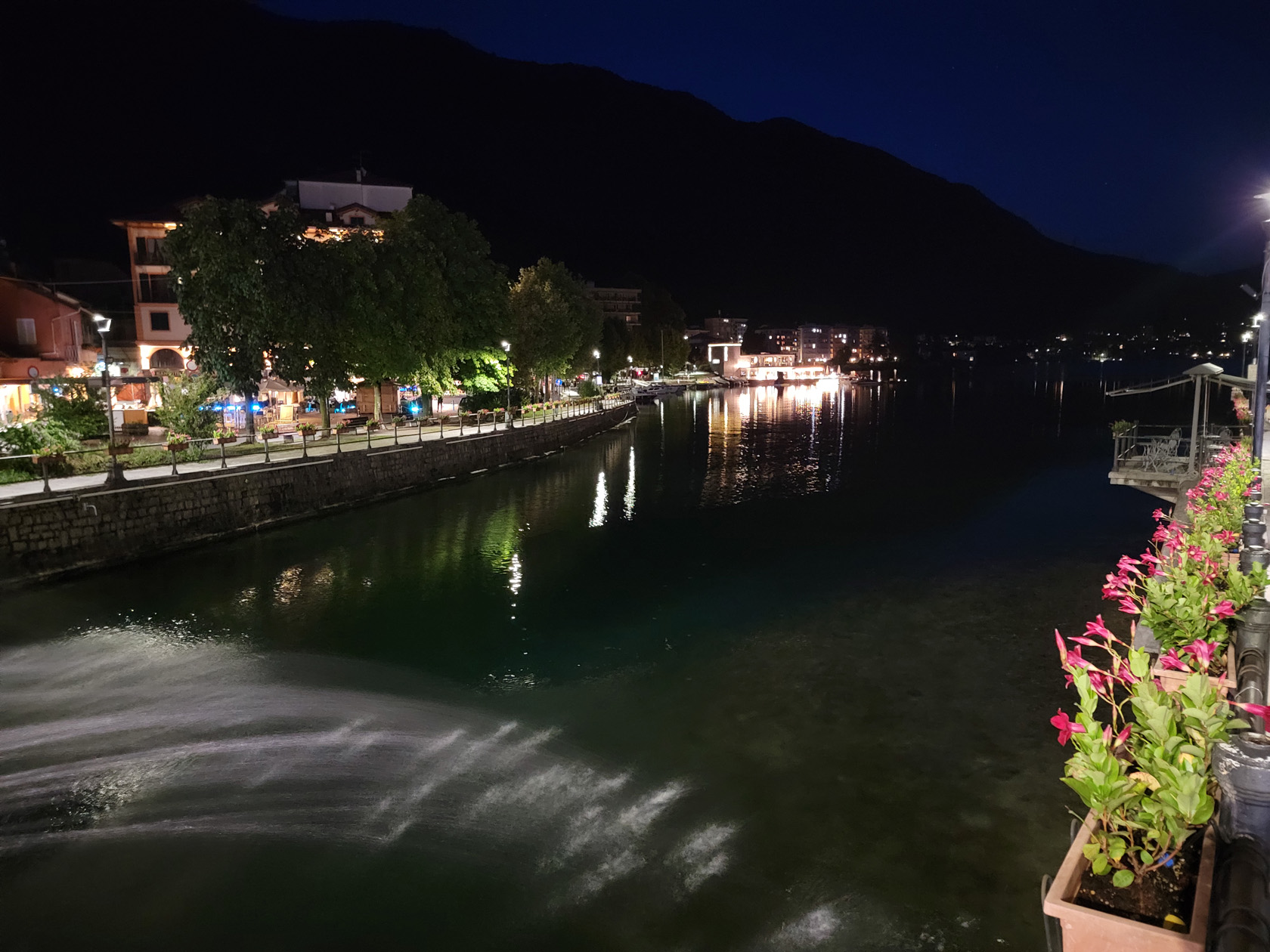
Omegna – Nigoglia Stream at Night
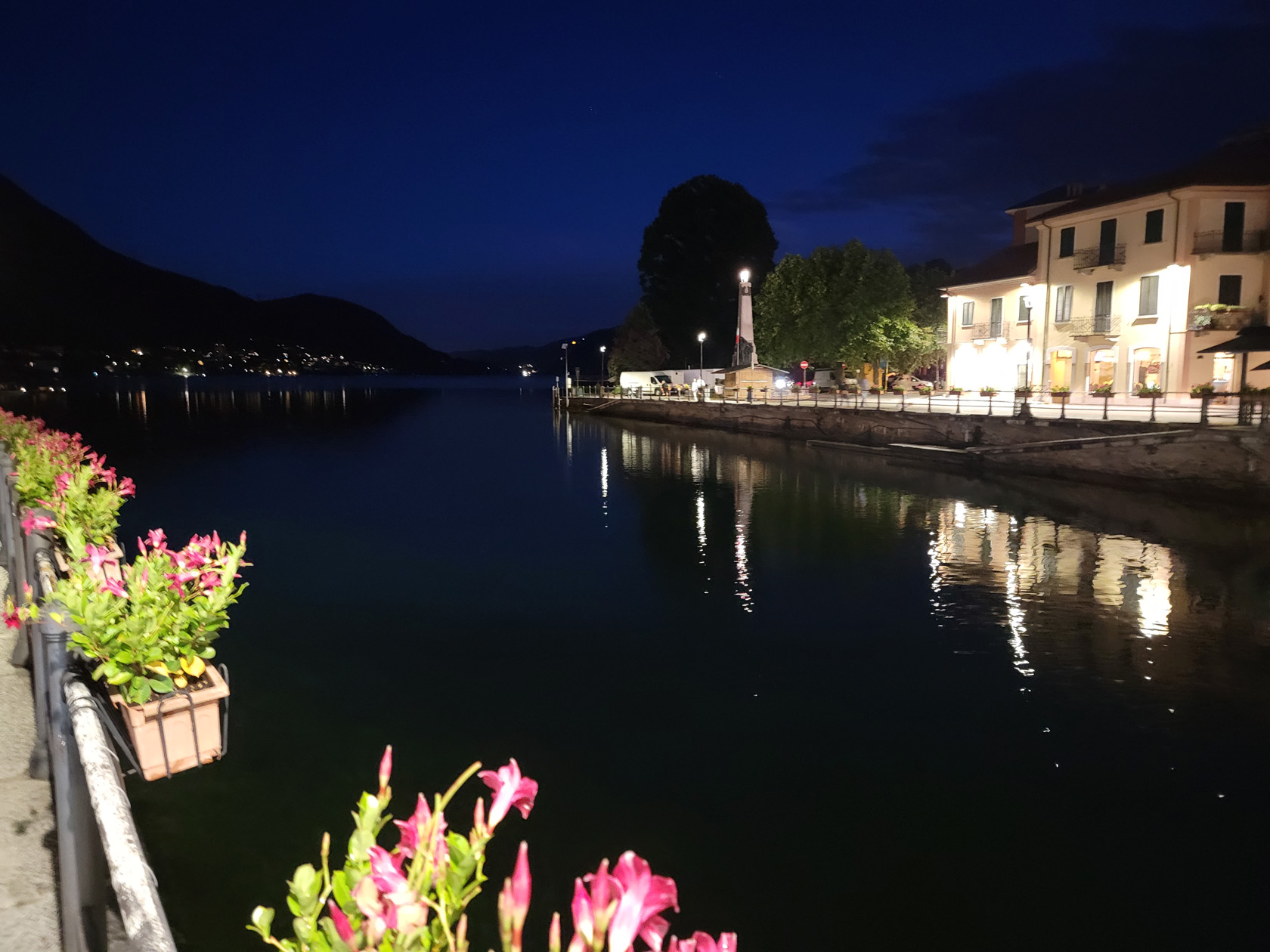
Omegna – Lake at Night
Omegna – Lake at Night
As an afterthought we would have to say we thoroughly enjoyed our stay here; but must also honestly say, it’s not for everyone. Omegna is really laid back and probably accounts for the wild swings we saw in the number of tourists we saw day to day. The weekends are definitely busier, and all of the Italian holidays, so plan your trip accordingly. There is also a definite lack in the assortment of restaurants and we found it difficult to chose, after having been here for a week. It is also a haven for backpackers, so if you find them annoying, you might want to head elsewhere since they are pretty much everywhere enjoying the fine hiking that is available in the area.
Restaurants
Rosticceria Ruyi
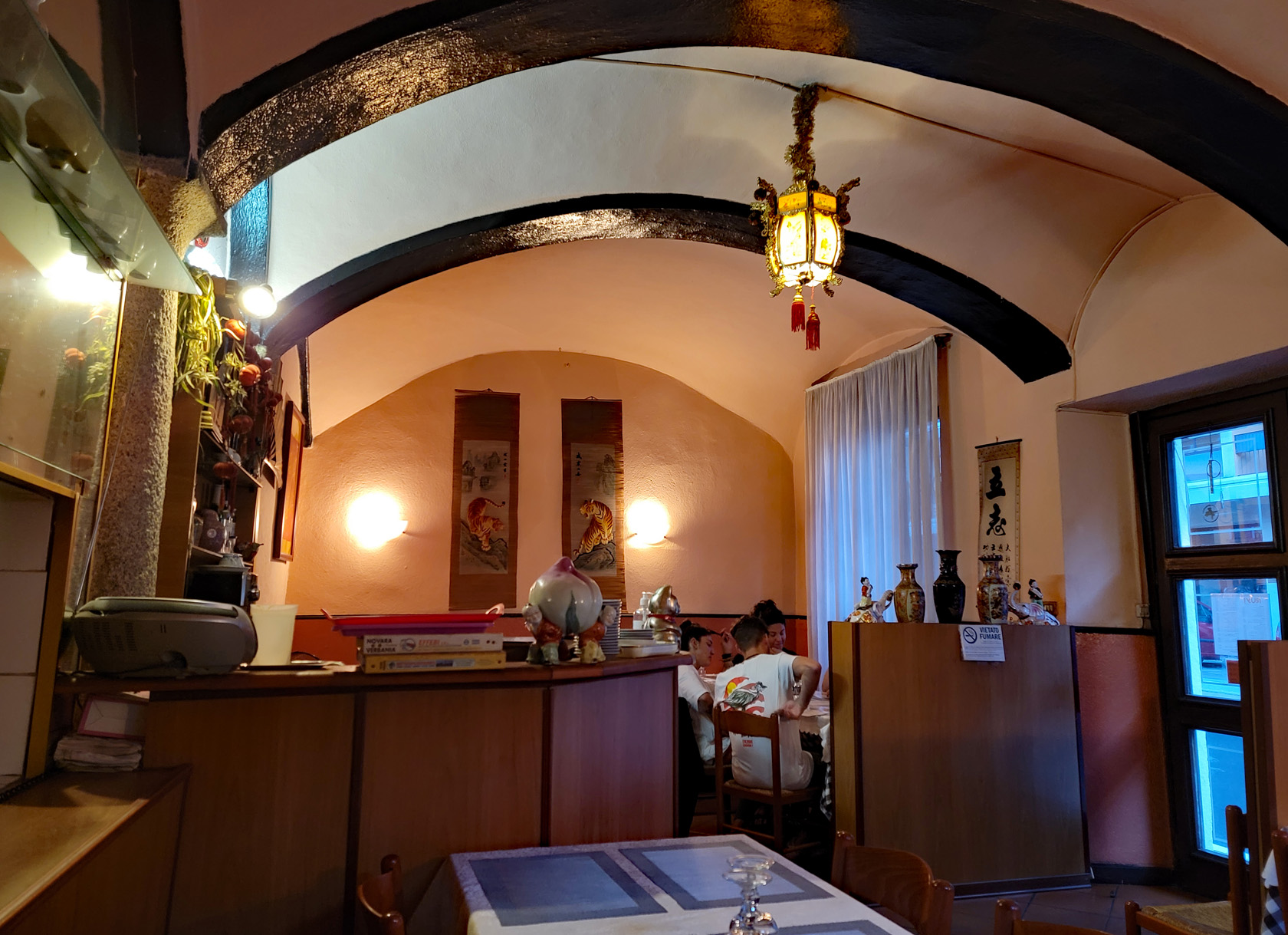
The Chinese restaurant, Rosticceria Ruyi on via Giuseppe Mazzini, essentially saved us from culinary hell. After a week of Caprese, Pizza and Pasta, a well cook meal of rice and vegetables was sorely needed and this restaurant has the food at excellent prices (e.g. a dish of Cantonese Rice – 3€). However, be aware at the time of this writing, they open at 18:00 for take-away but were not serving sit down inside the restaurant until 20:15, or 8:15PM in the evening. So plan accordingly!