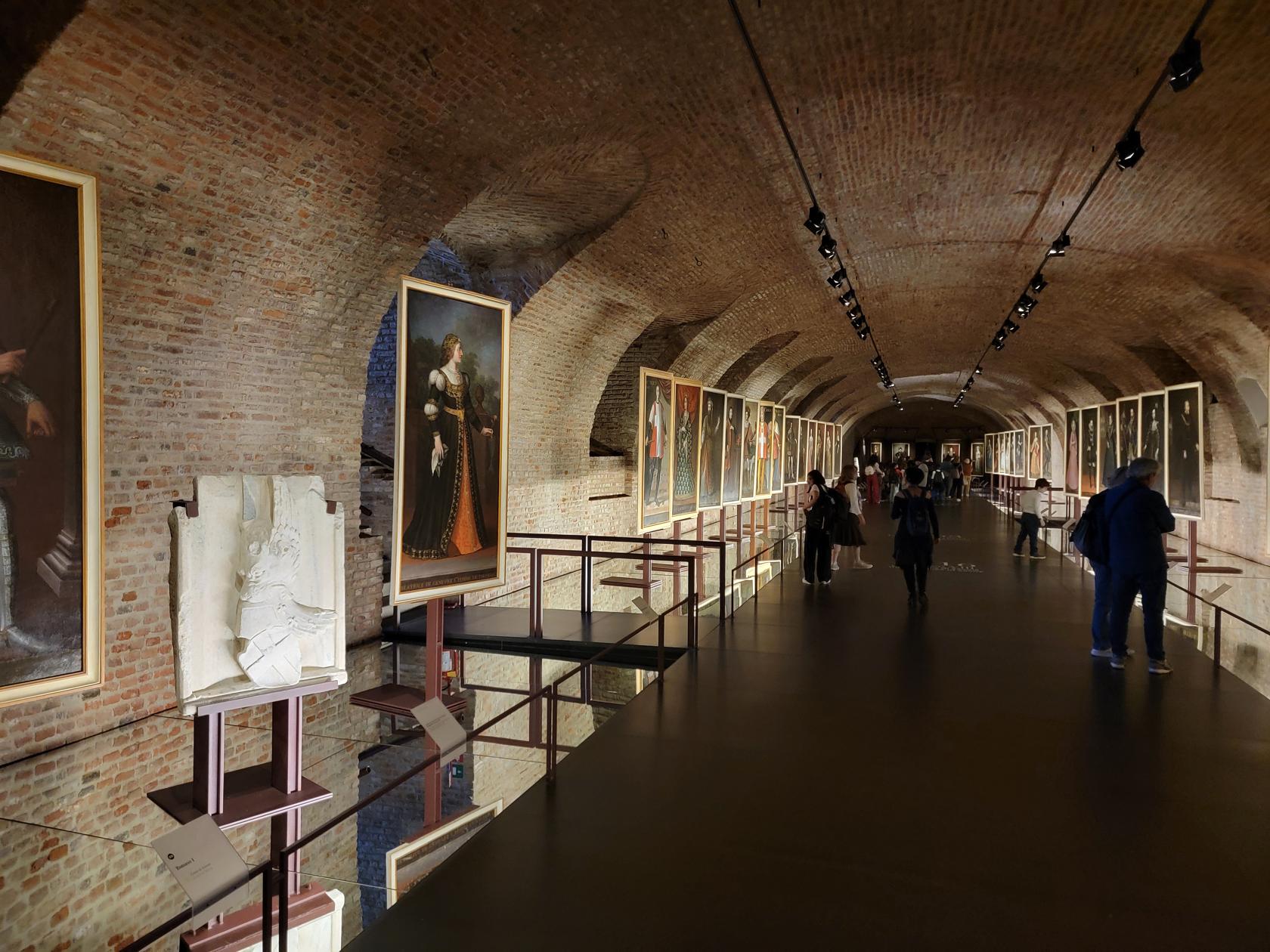
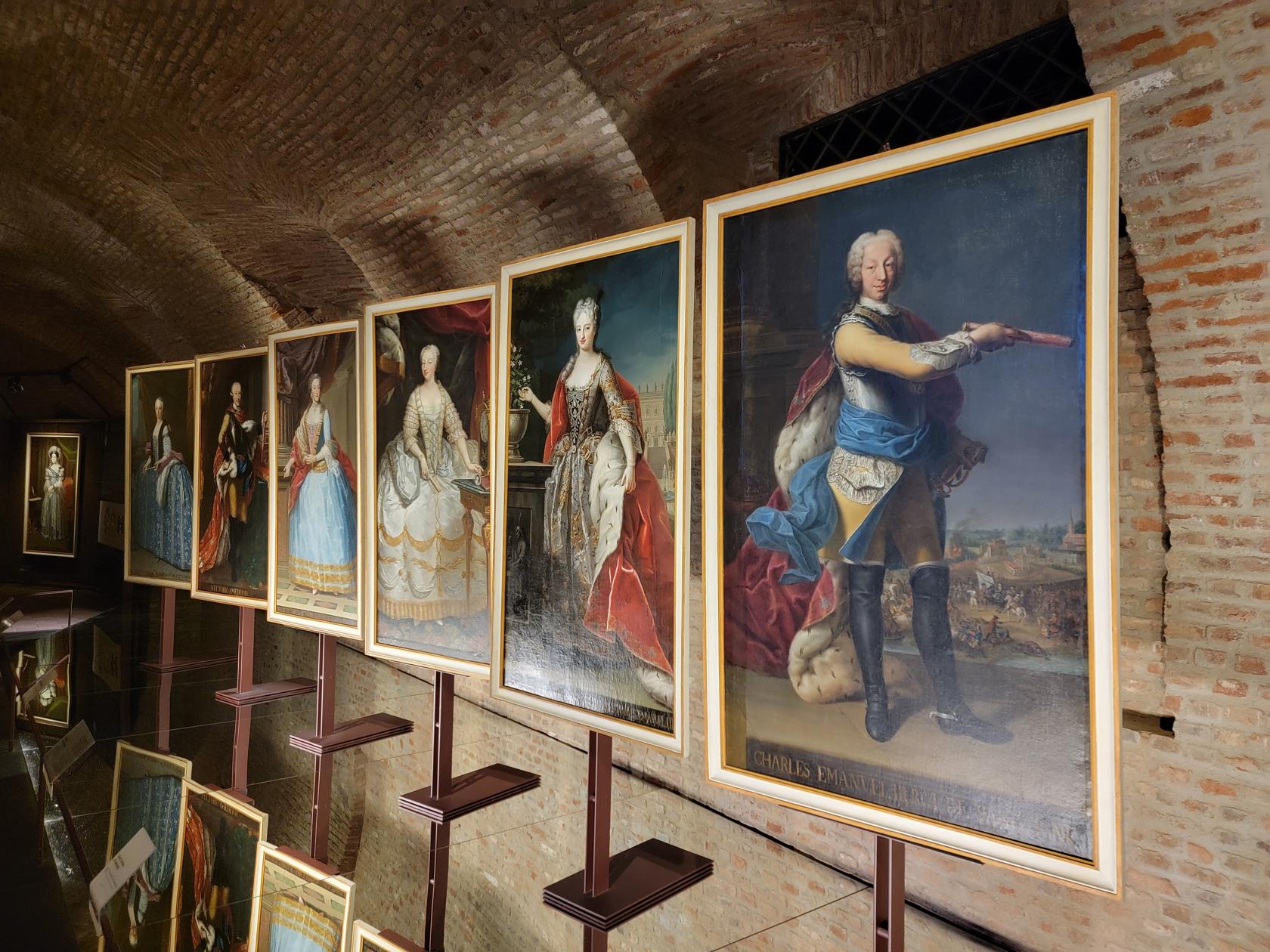
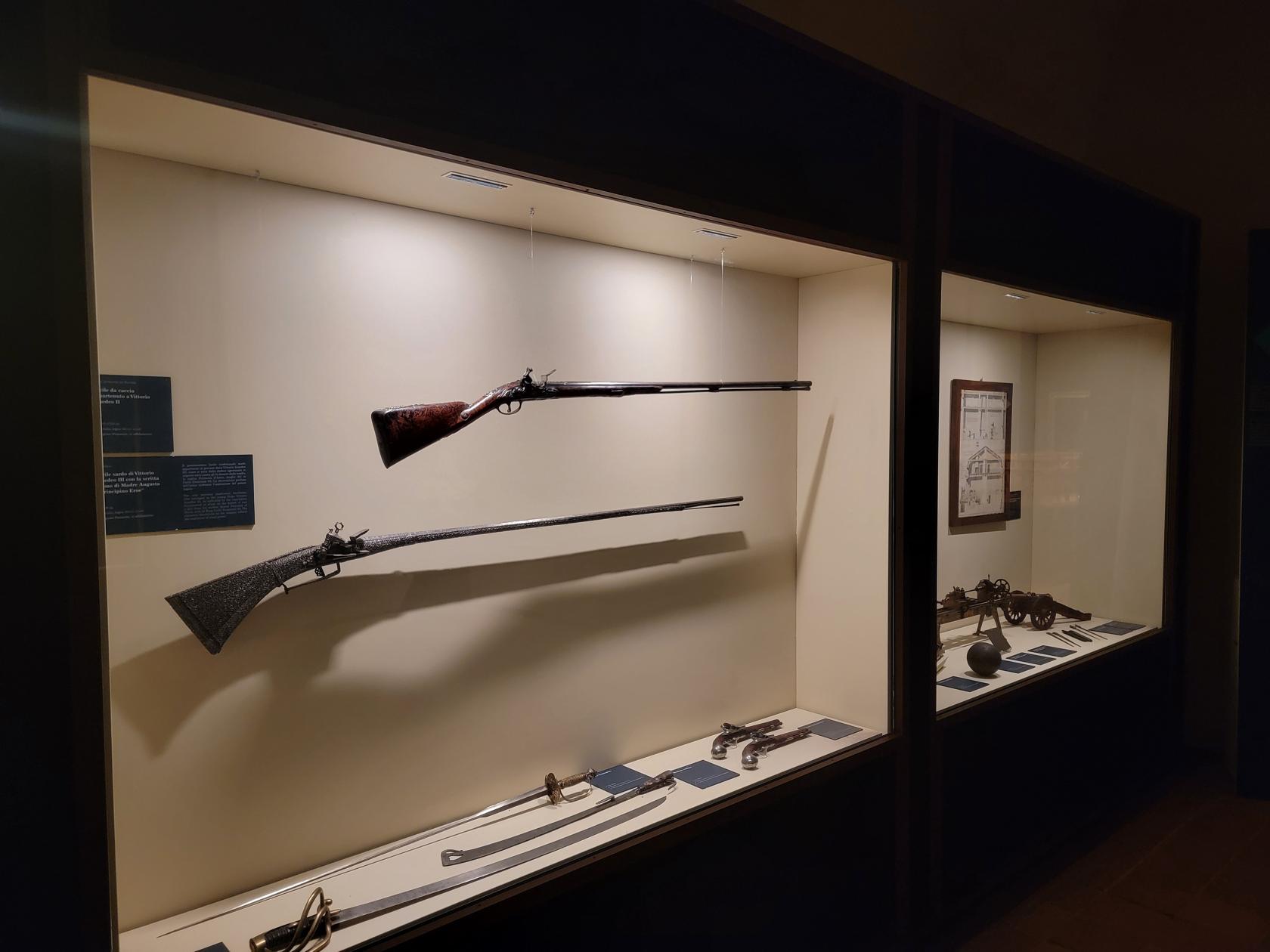
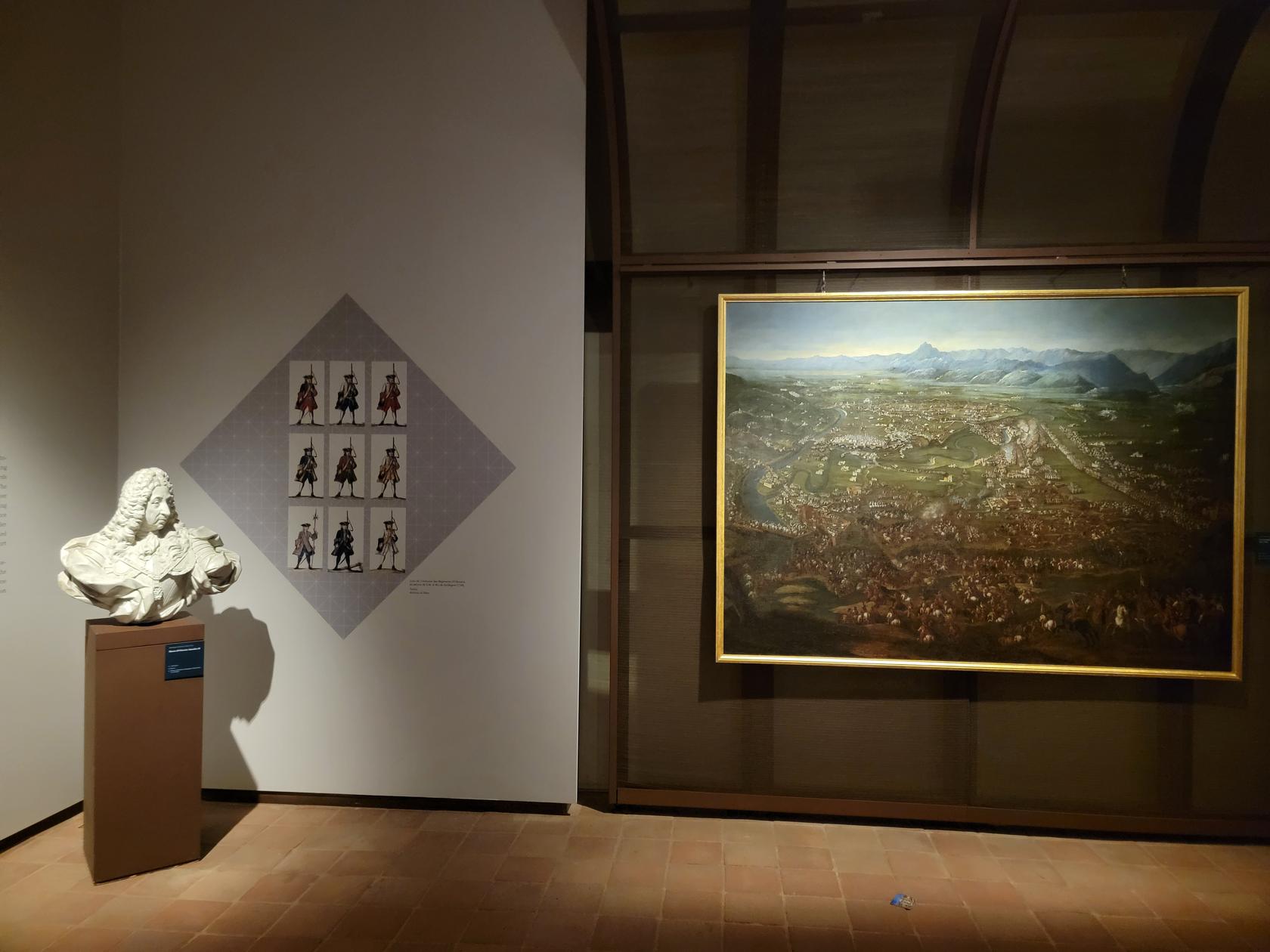
For the past two days the city of Turin celebrated Saint John, with local events, parades and special deals on museum entry as well as other presentations.
Saint John’s Eve
The celebration of the Saint John is a big deal in Turin, as it is in other cities in Italy as well as other countries. Actually called the celebration of Saint John’s Eve, it starts on the 23rd of June at sunset and continues for two days in Italy. Marking the birth of John the Baptist, who ostensibly was born six months prior to Jesus, it is one of only a few feast days that mark births, rather than deaths.
A list of activities that were scheduled in Turin include the following:
Tuesday 23 June 2026
There was an opening parade with majorettes, municipal band and historical characters that went from Piazza Palazzo di Città to Piazza Castello.
At Palazzo Madama there was the ringing of the civic bell, a ceremony that dates back to 1670.
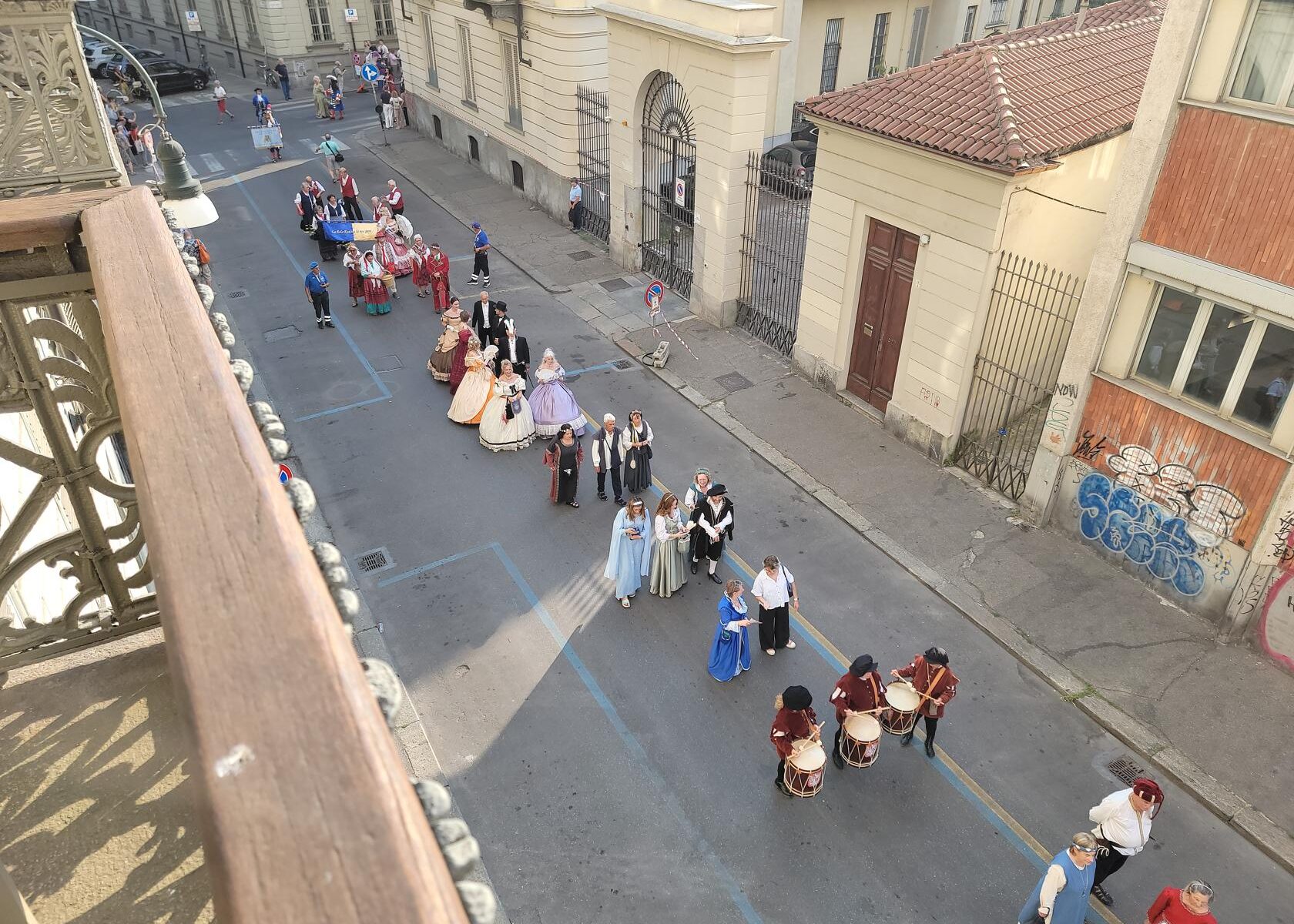
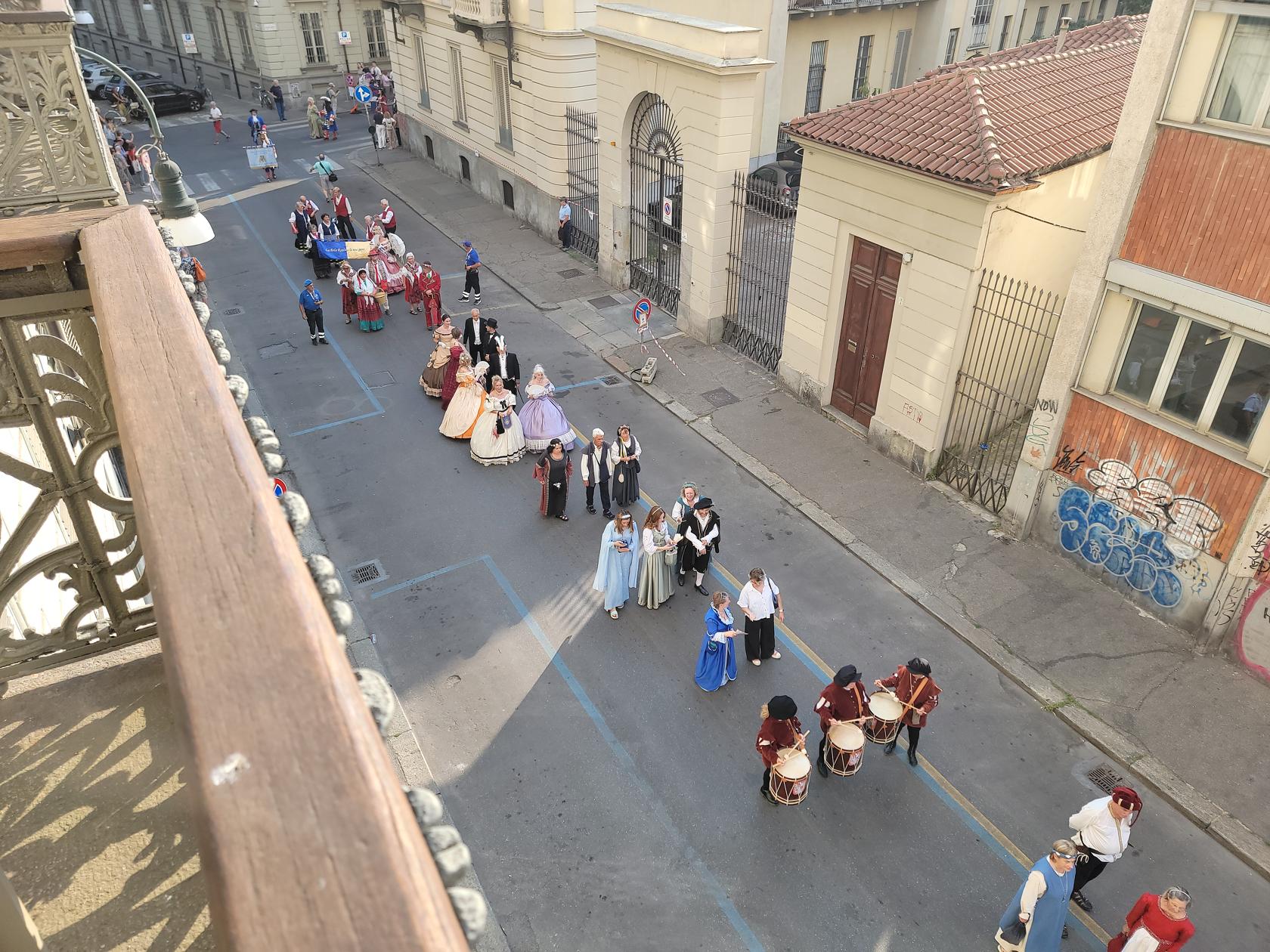
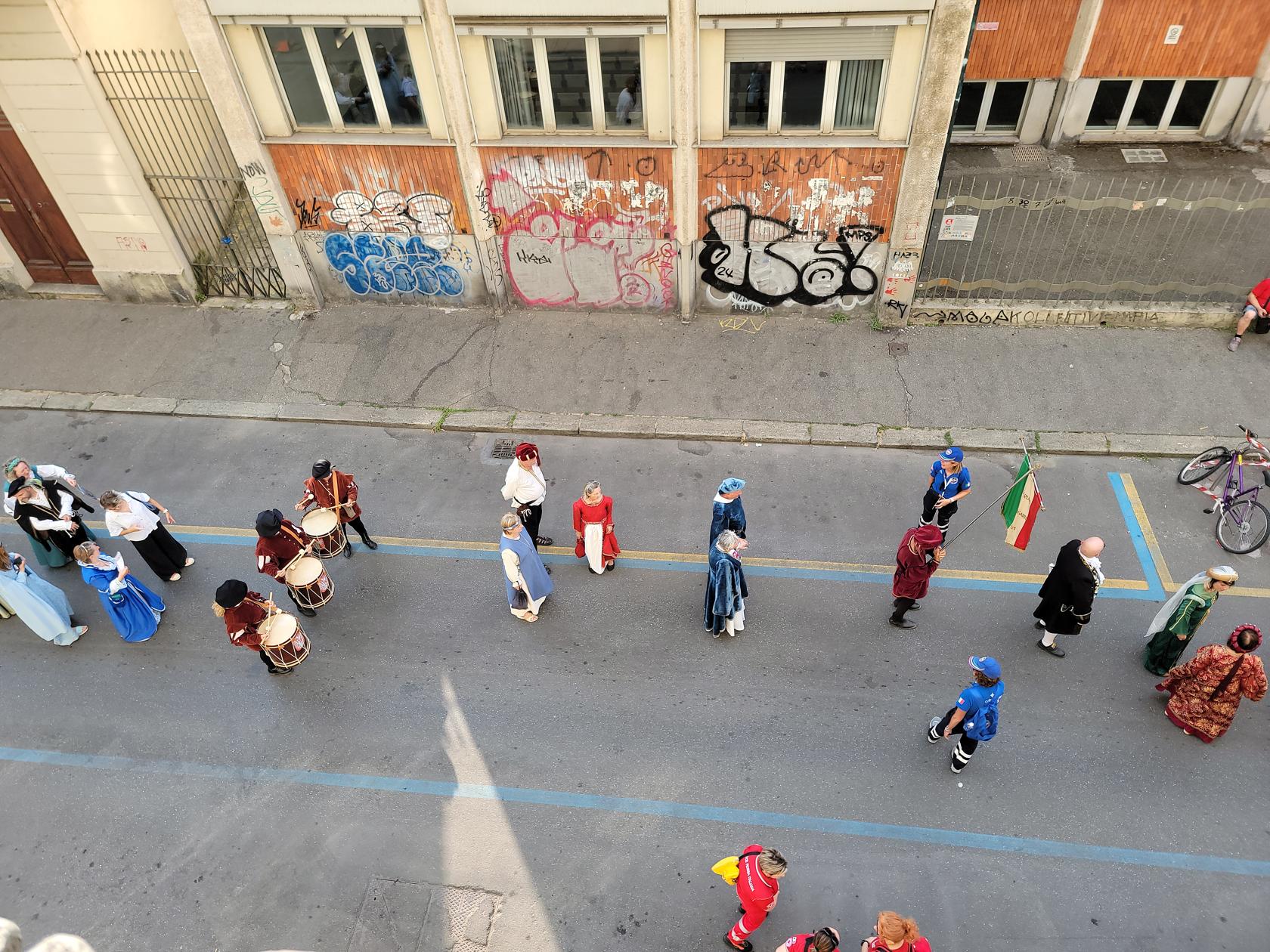
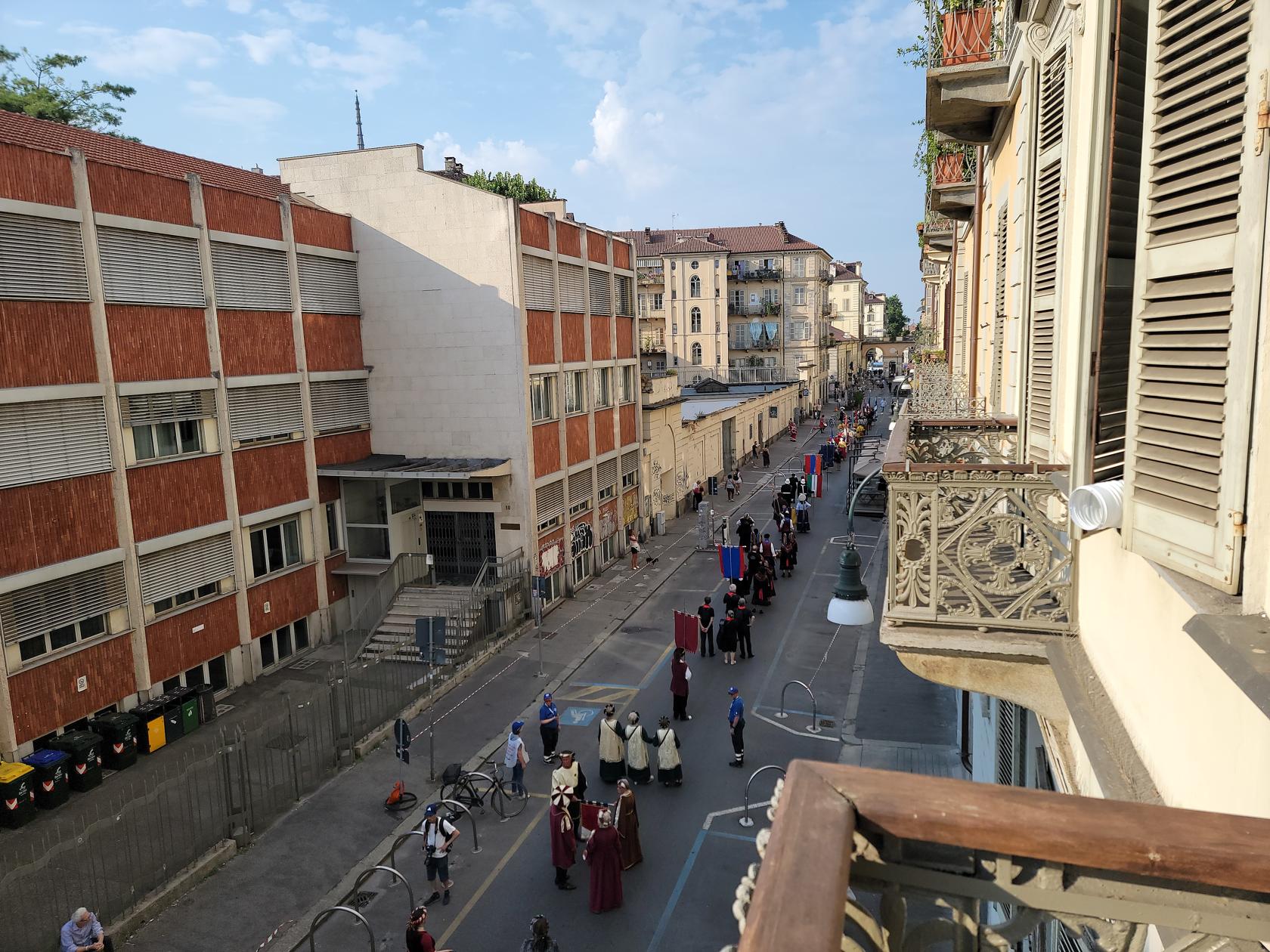
They also had a traditional historical procession from Giardini Cavour to Piazza Castello with period costumes, for which we had front row seats.
San Giovanni Battista Day Parade and Procession – via Giovanni Plana – Turin, Italy
San Giovanni Battista Day Parade and Procession – via Giovanni Plana – Turin, Italy
San Giovanni Battista Day Parade and Procession – via Giovanni Plana – Turin, Italy
At the Turin Cathedral, they used the bell tower for a vigil bell concert using cord techniques.
There was an award ceremony for the winning thesis about Turin at City Hall.
Later on in the evening at Piazza Castello, the ceremonies for the day ended with displays of ceremonial salutes by the Pietro Micca Historical Group, musical moments, and finally the lighting of the evening bonfire in the presence of civic authorities.
Wednesday 24 June 2026
The following day there was a vintage car parade from Piazza Vittorio Veneto to the Cathedral.
During the day there were several bell concerts across the city and museums open with reduced admission prices.
A solemn mass was held at Turin’s Cathedral, with the traditional distribution of charity bread to those in attendance.
The celebration continued after lunch with a rowing regatta from Castello del Valentino, along with the submarine Provana and the Maritime Museum was opened for public viewing and enjoyment (this is often closed).
In the evening there were several parades and concerts, including a symphony concert at the Rai Auditorium.
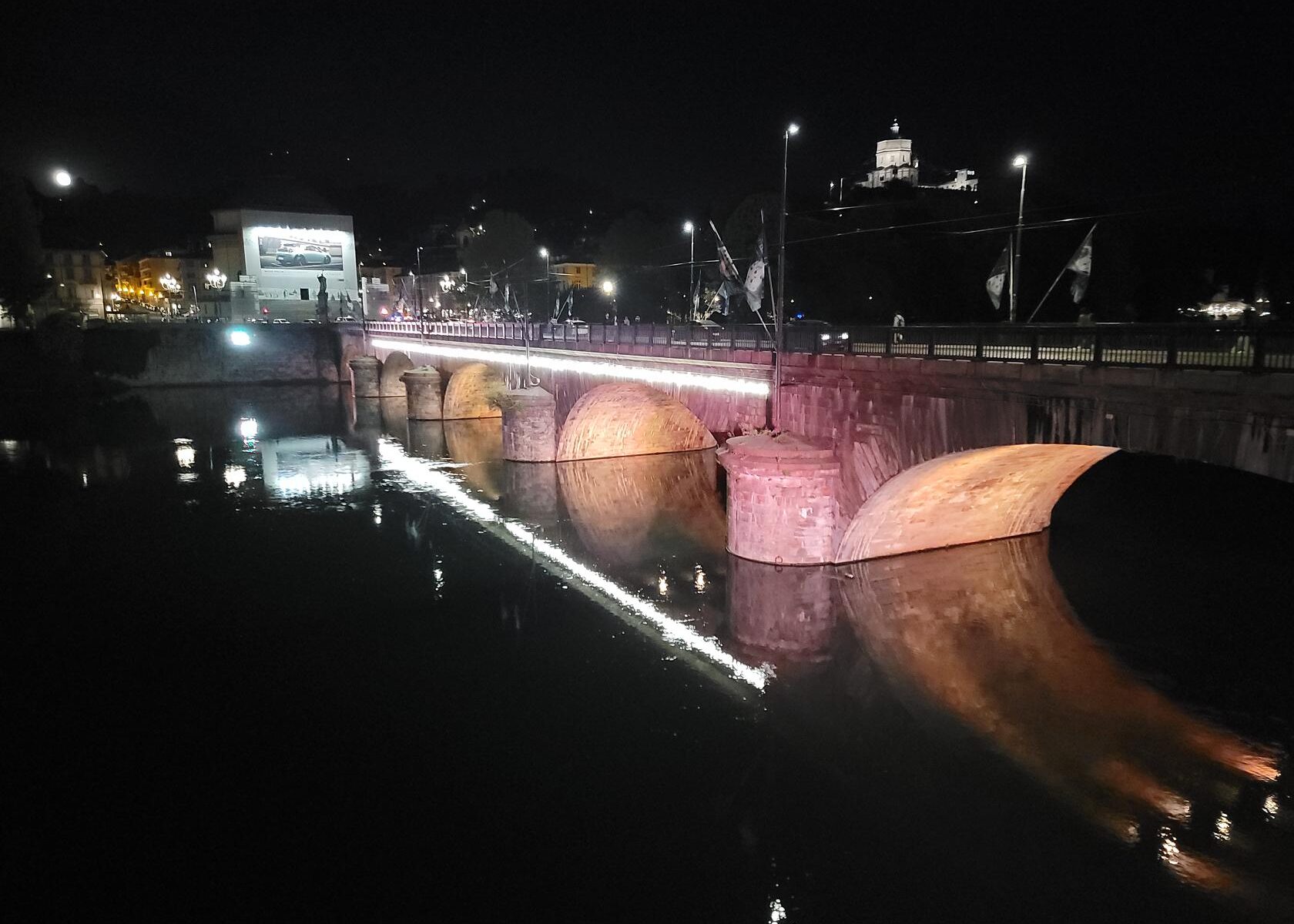
The city sponsored a torchlight procession on the river from Castello del Valentino to Ponte Vittorio Emanuele I in the late evening.
Finally, a fireworks display with an original soundtrack playing was held at Piazza Vittorio Veneto before midnight, to close the ceremonies.
All in all, I cannot remember the feast being celebrated here before, but with our constant travels it would be no surprise. In either case, we enjoyed what we saw of the celebrations and would commend anyone, if they are in the city at the time of the celebration to visit some of the venues, especially the parades with period costumes. We found them quite interesting and beautiful.
For a few days we enjoyed the company of our cousin Chris, who luckily was traveling for business in the area and was able to stop by for a visit.
Turin
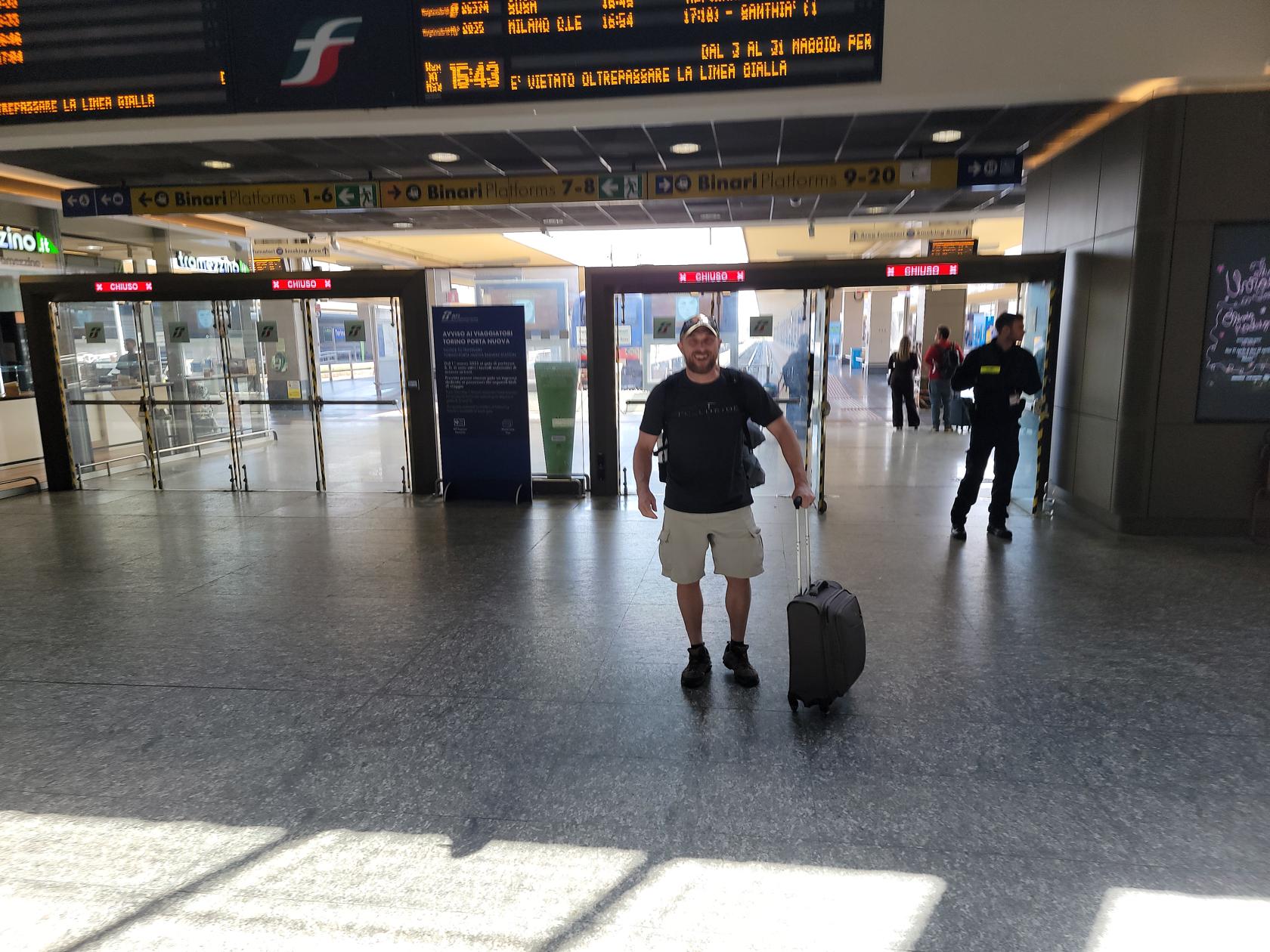
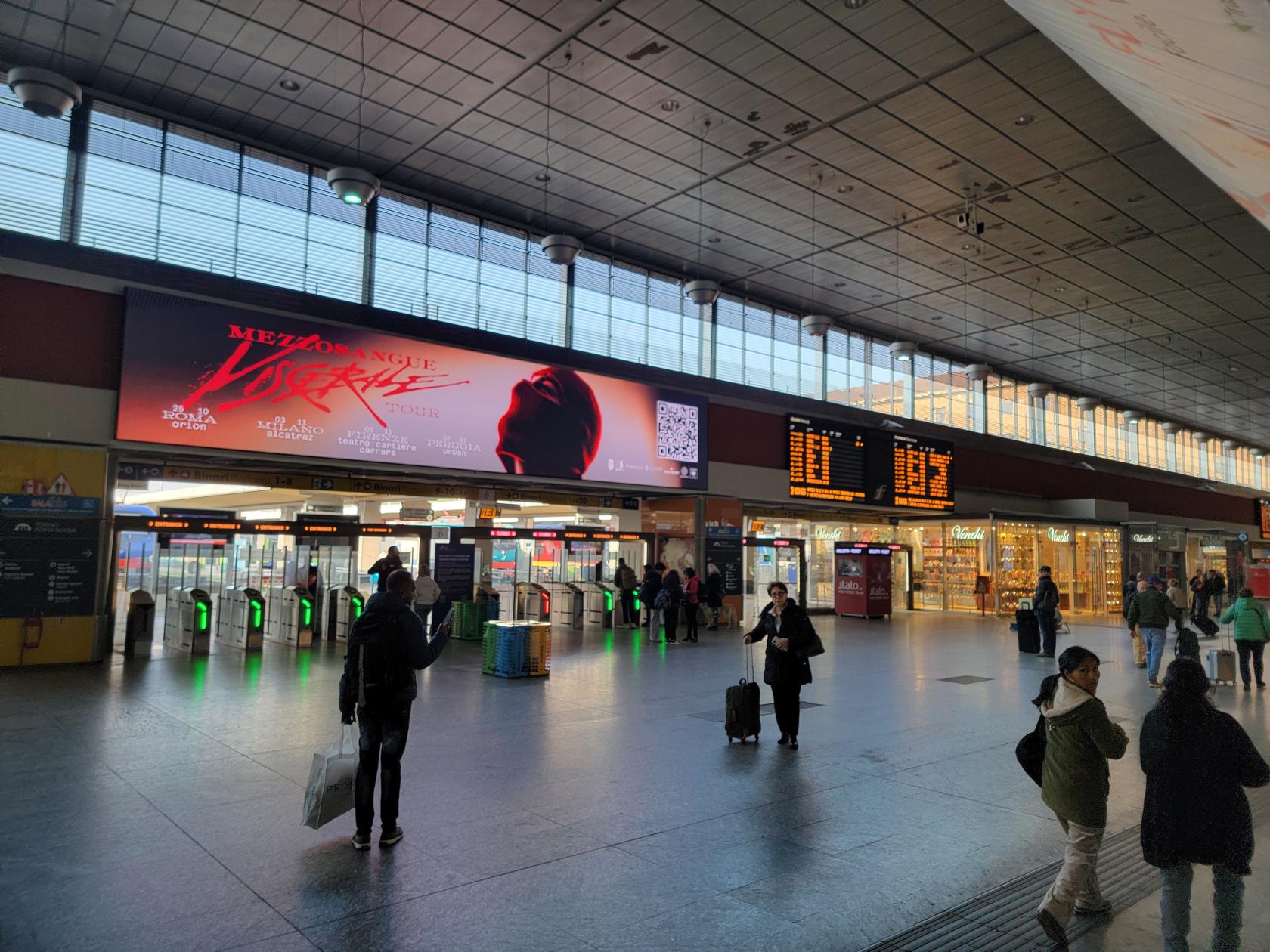
Chris arrived on Friday and I met him at our main train station of Porta Nuova, which because it was coming from Naples and went through Rome, was late by about fifteen minutes.
Cousin Chris Arriving – Porta Nuova – Turin, Italy
For one entire Saturday, the 2nd of May, we were able to enjoy amazing weather and show Chris the city of Turin. One of our major stops was the Open Market in Piazza della Repubblica. There he purchased authentic Italian cheese to take back home with him. Other than that, we just made sure he enjoyed great food here and kept him as comfortable as possible in our apartment for a few days.
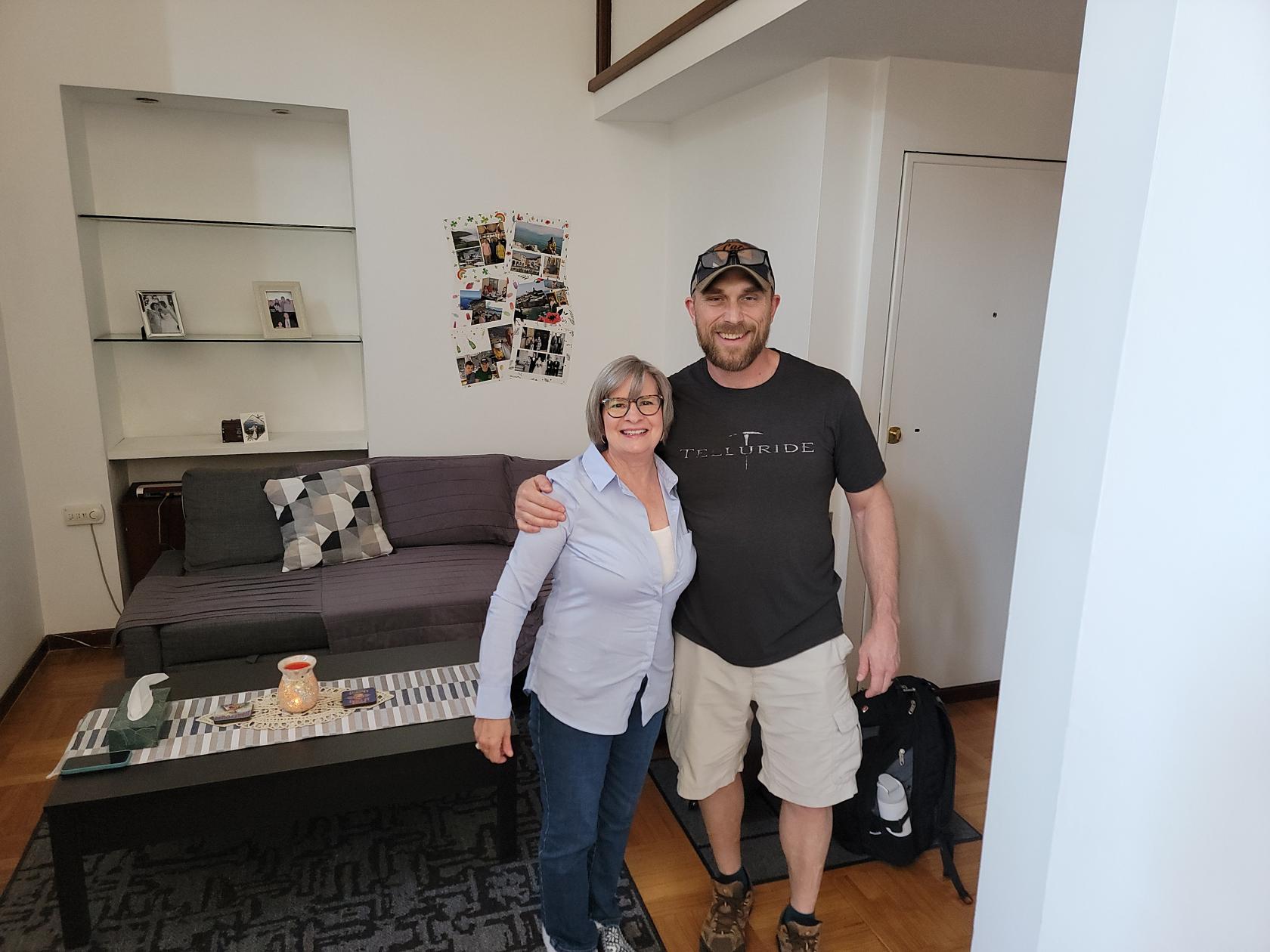
Patti and Chris – Giolitti Apartment – Turin, Italy
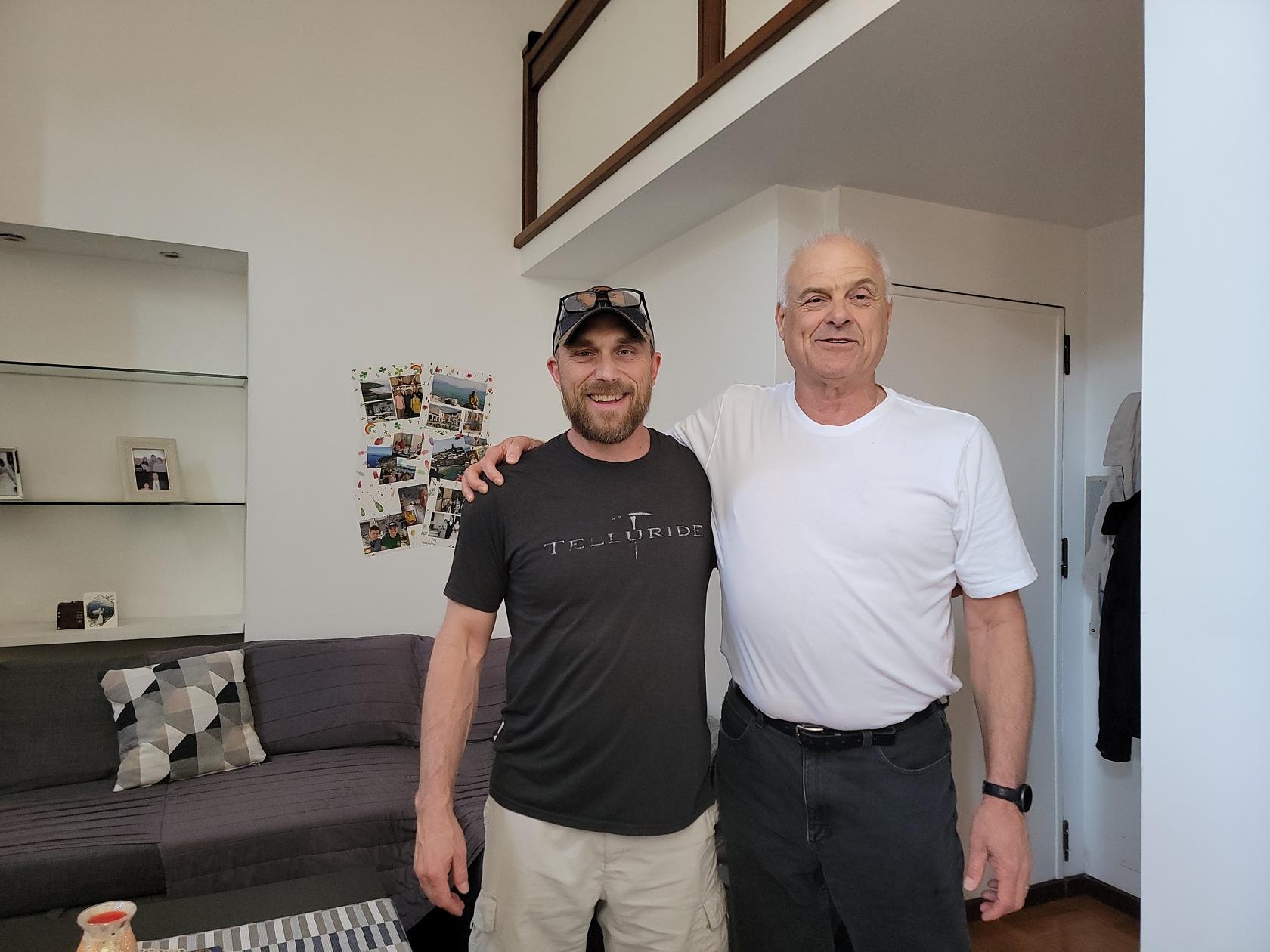
Chris and Erick – Giolitti Apartment – Turin, Italy
Restaurants
It seemed like we spent more time in the restaurants, trattoria and cafes, than we did walking around. We made a point of it to take him to our two favorite restaurants nearby, which I am happy to say we had reservations for, given the fact the city was packed with people for the Jazz Festival in Turin.
Trattoria D’Agata
Our favorite Trattoria for authentic Silician cuisine is the Trattoria D’Agata in Turin. Here we always enjoy good food, their Arancini are to die for, and good wine.
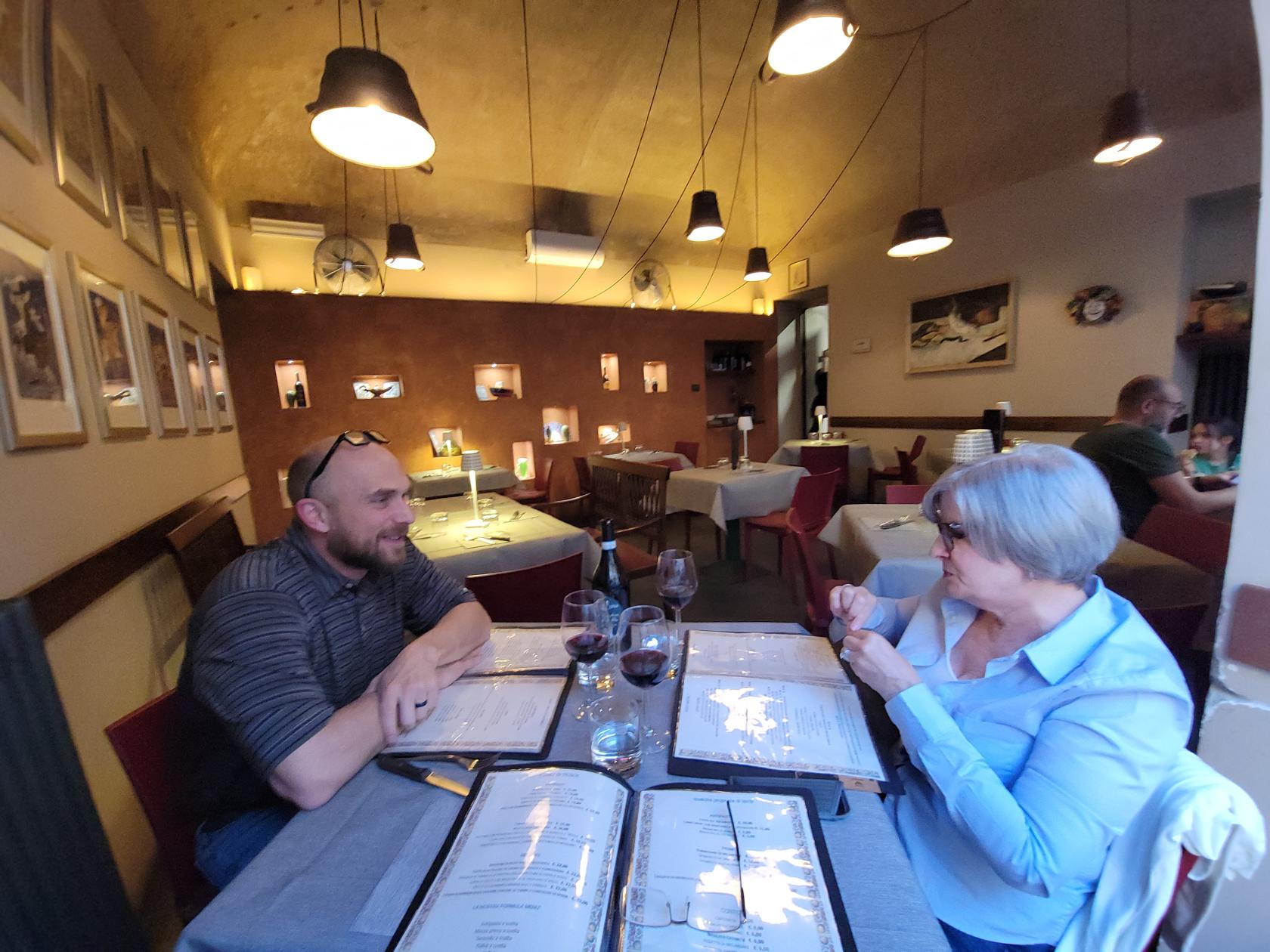
Chris and Patti talking food – Trattoria D’Agata – Turin, Italy
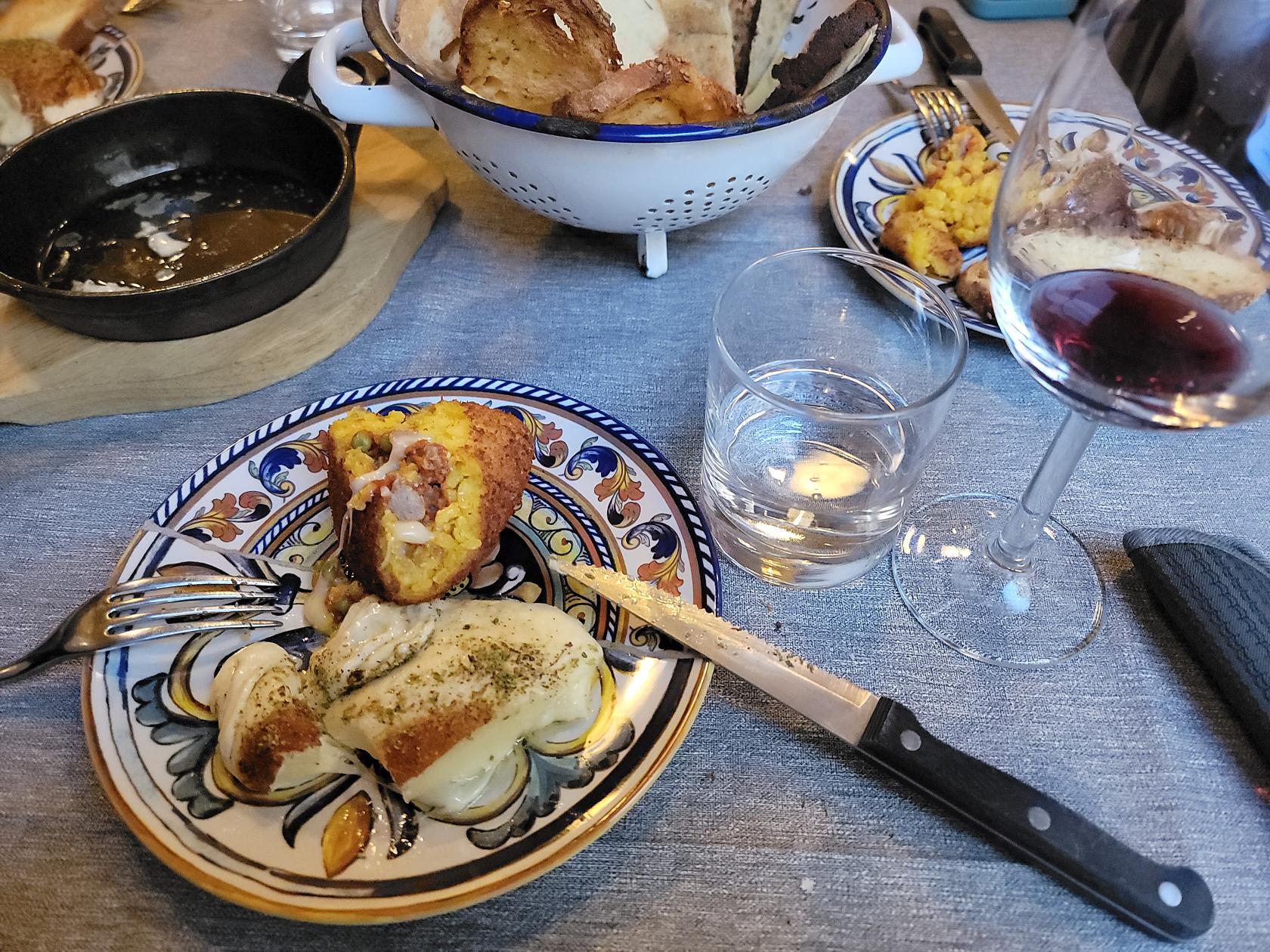
Arancini and Baked Mozzarella – Trattoria D’Agata – Turin, Italy
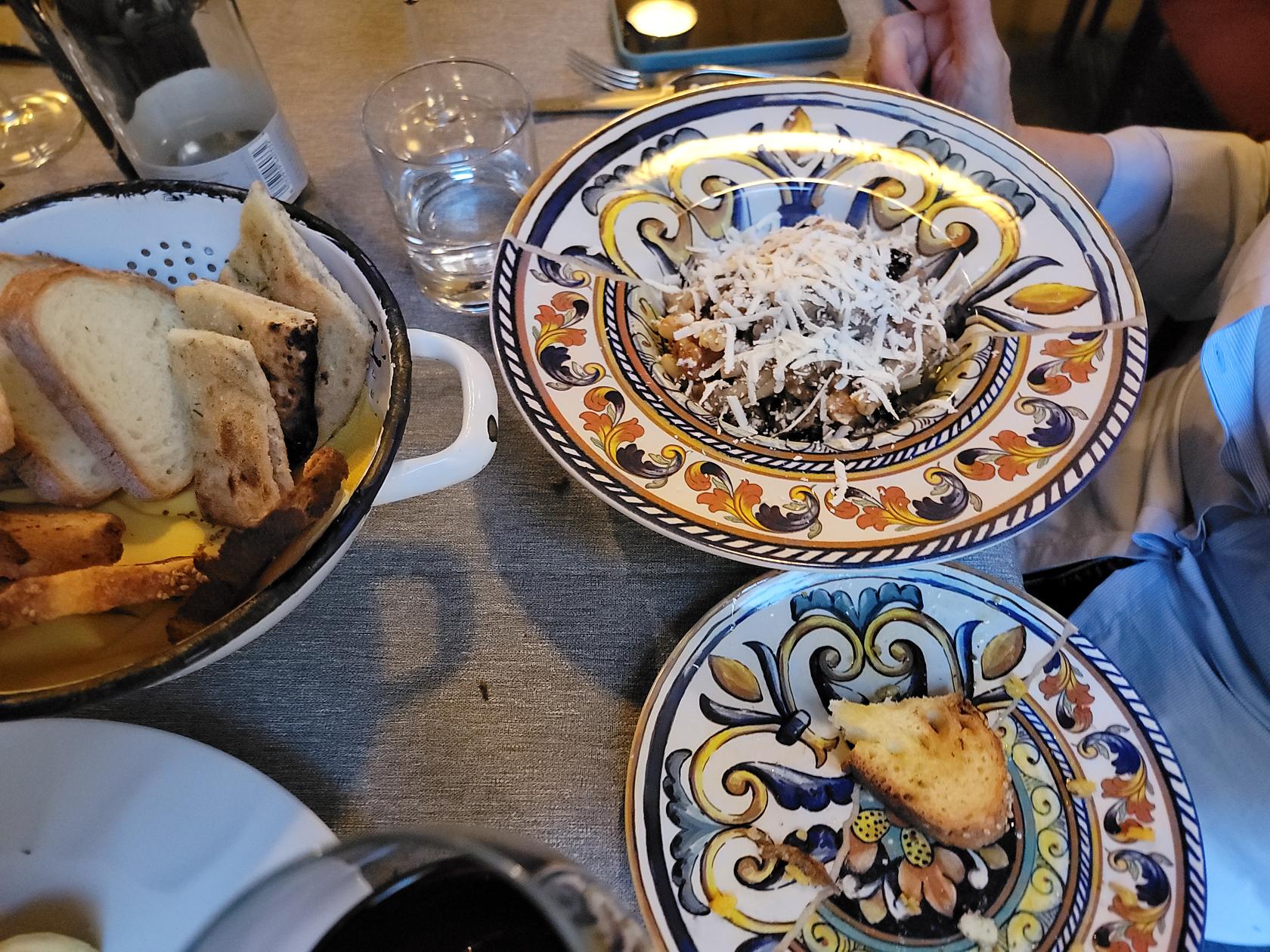
Patti’s Pasta alla Norma – Trattoria D’Agata – Turin, Italy
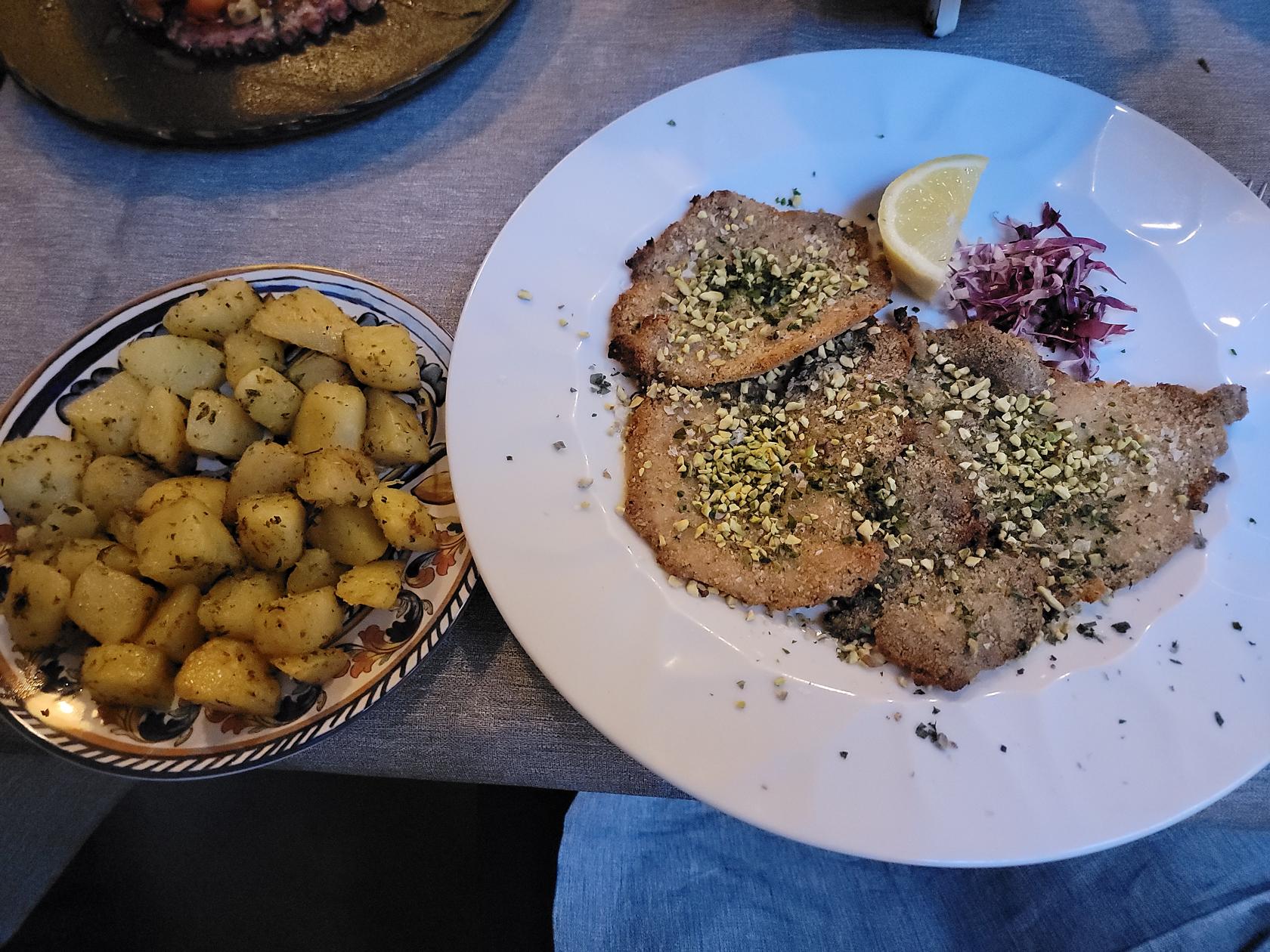
Patate al Forno and Filetta with Pistachios – Trattoria D’Agata – Turin, Italy
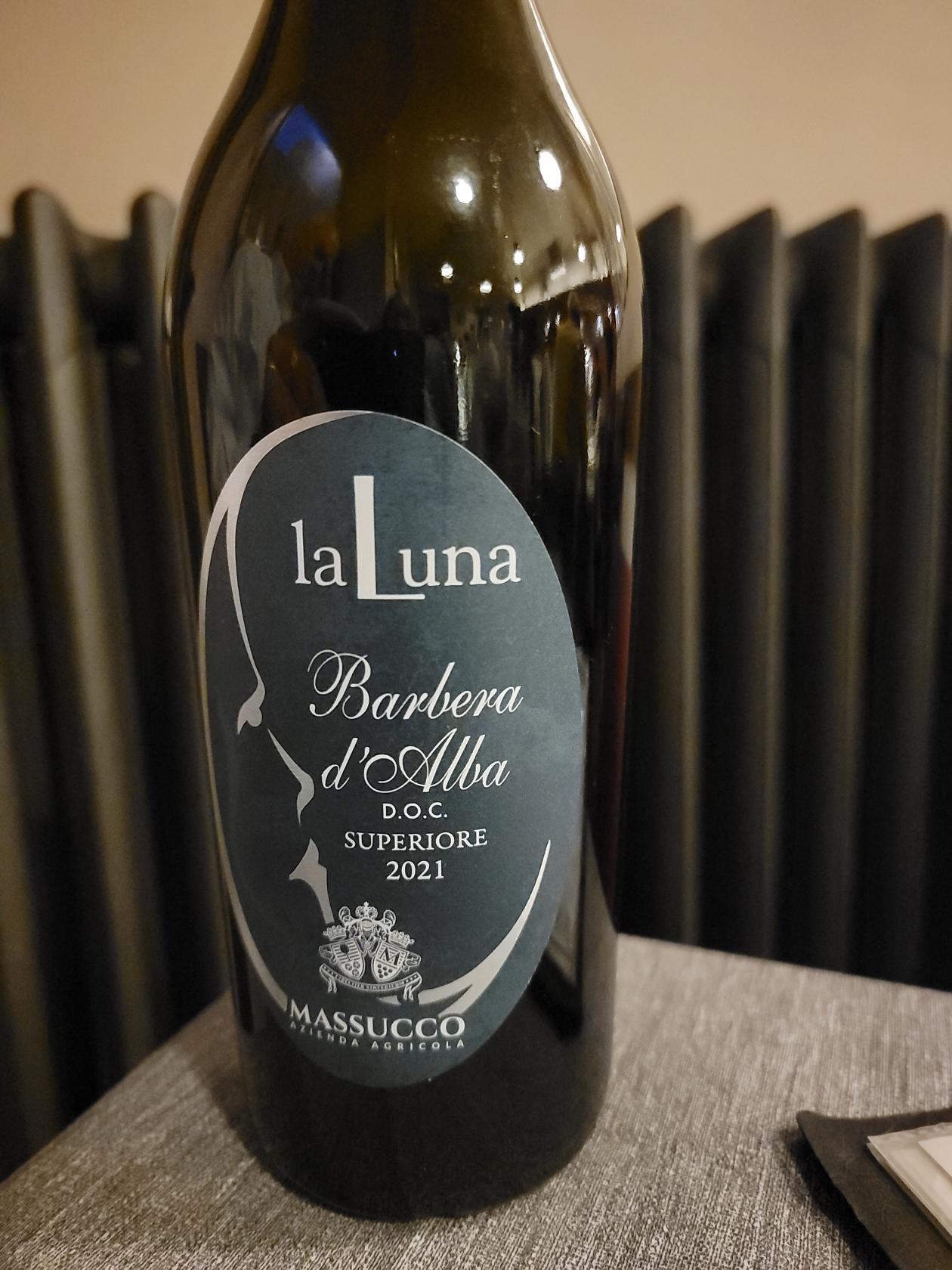
la Luna Barbera from Alba – Trattoria D’Agata – Turin, Italy
Porto di Savona
Another favorite of ours for Piemontese cuisine is the Porta di Savona. Since the weather was so exceptional and it was lunch we sat outside. Located in the corner of the Piazza Vittorio Veneto, we essentially sat on the edge of the rest of chaos going on in the piazza, it was very busy.
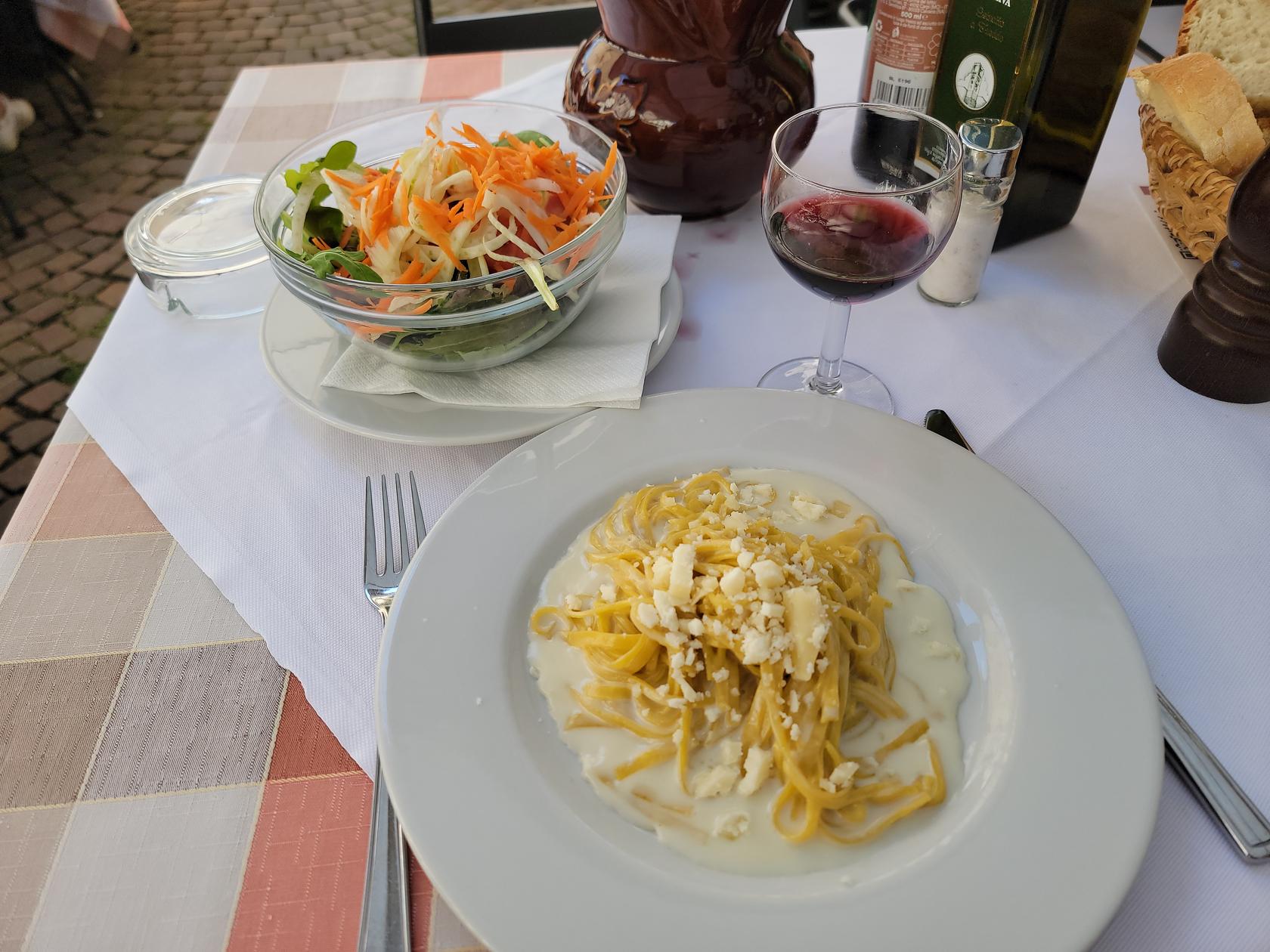
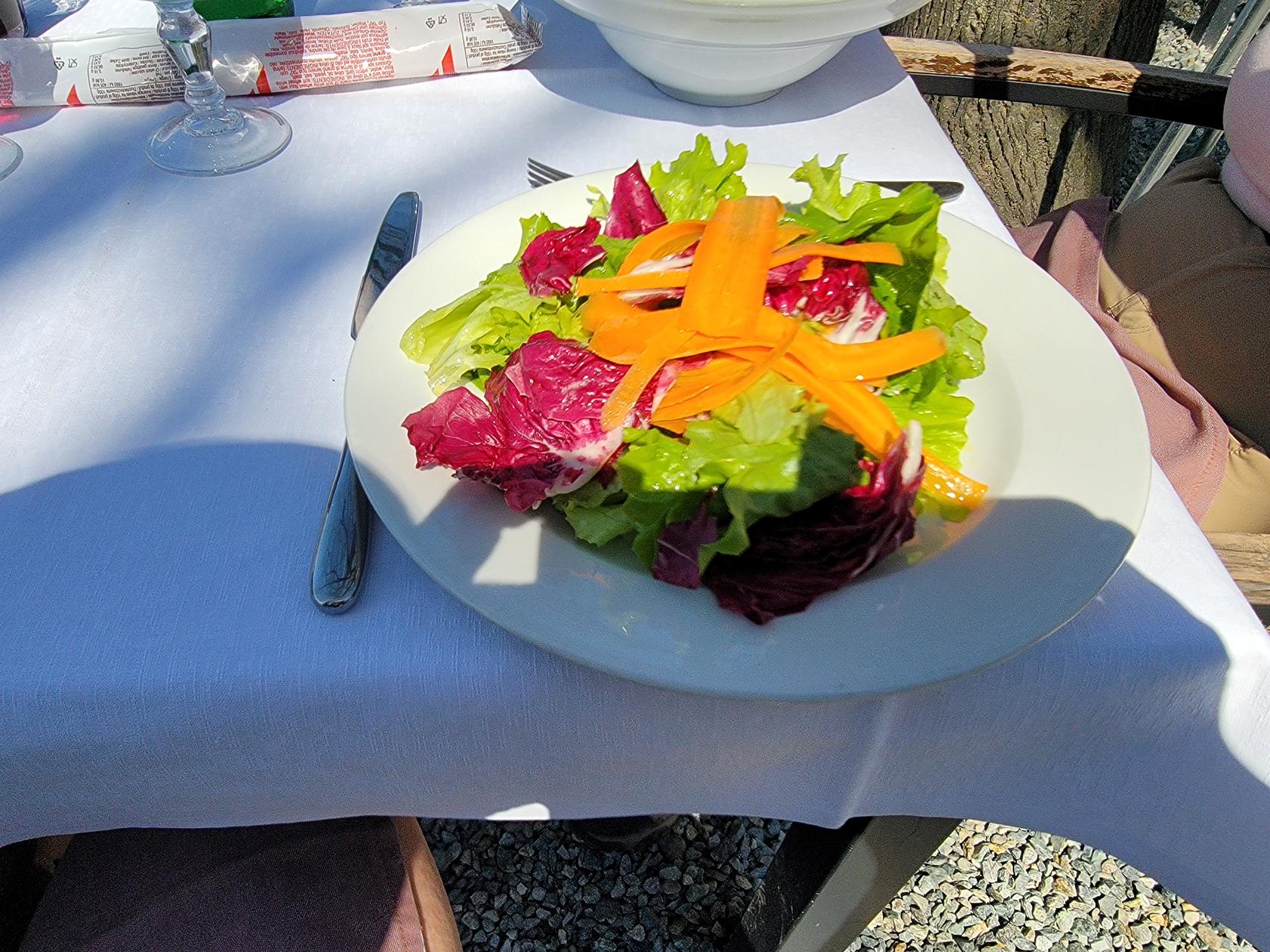
Tajarin with Cheese Sauce and Insalata Mista – Porto di Savona Ristorant – Turin, Italy
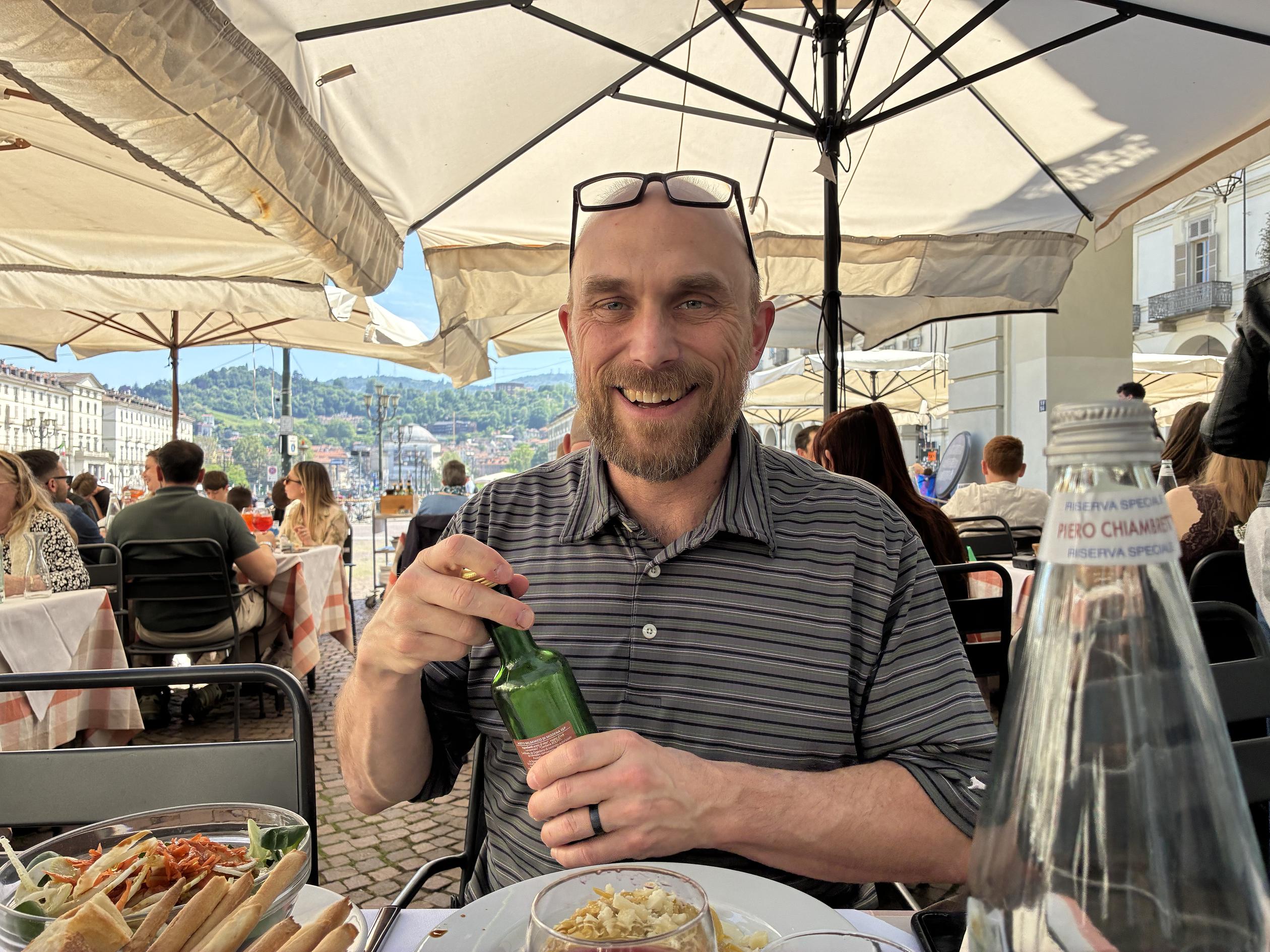
Chris – Porto di Savona Ristorant – Turin, Italy
We had a great time and we are sure Chris did too!
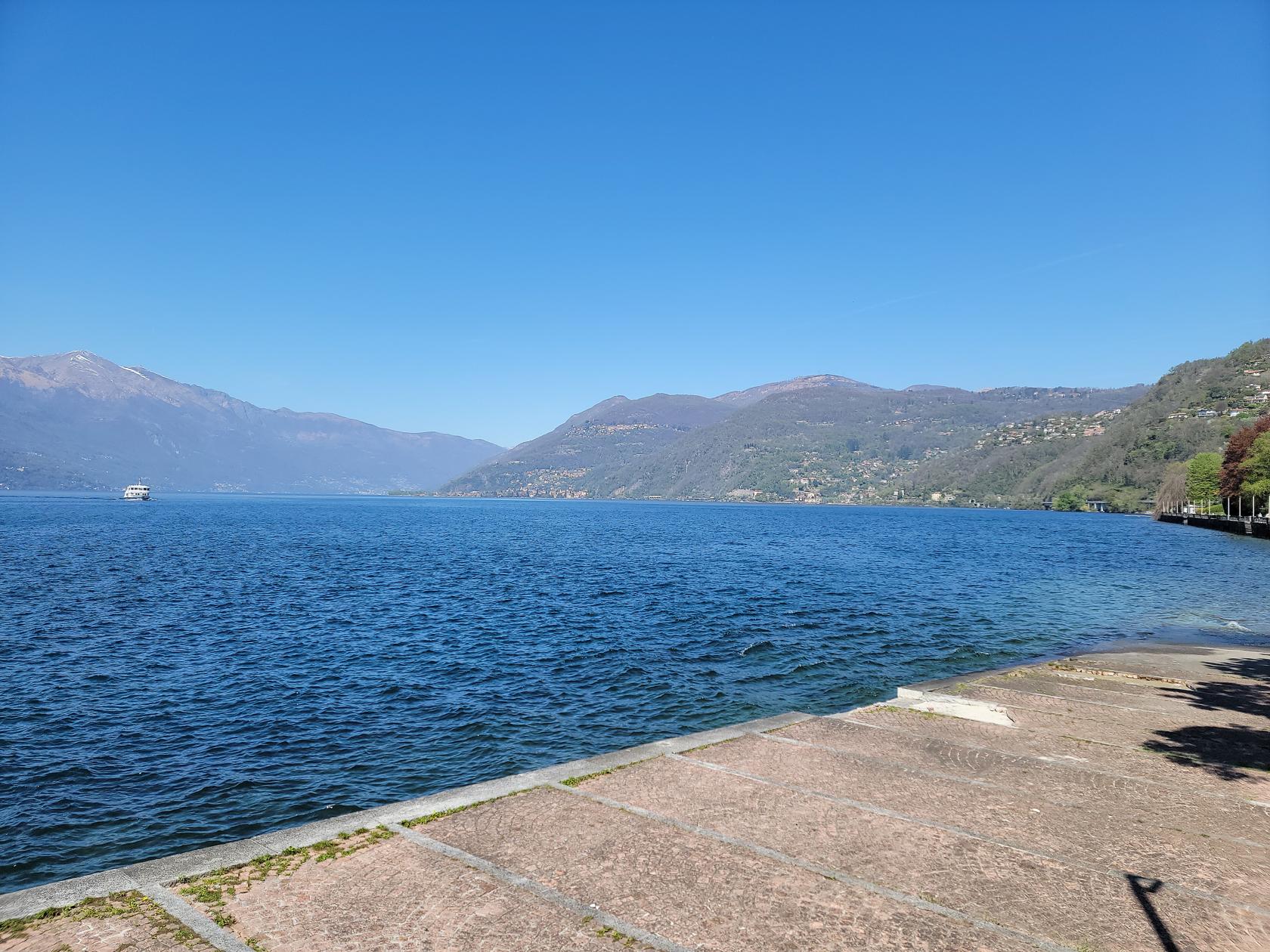
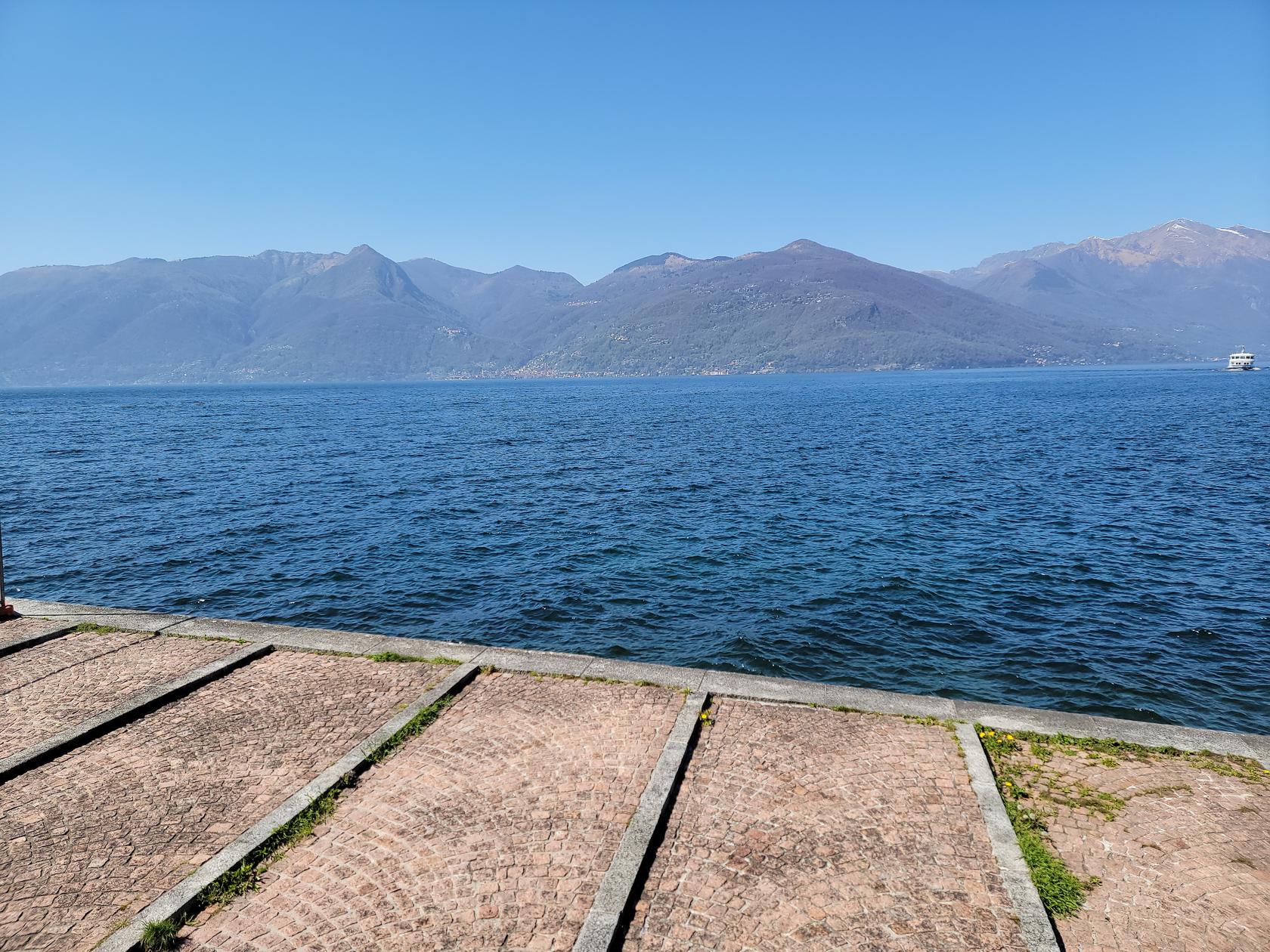
A popular tourist destination for the Swiss, Germans and Netherlanders is the small town of Luino on the northeast end of Lake Maggiore. The boat services on the lake are divided here for destinations north of it and south of it. From the south, especially from Stresa, it is difficult, if not impossible, to arrange a roundtrip to this town except on wednesdays. Even to get here by train is a three to five hour ordeal and roundtrips by rail or bus are all but out of the question. The town is truely lacking service from the southern end of the lake.
Other Boat Leaving – Lake Boat Trip – Luino, Italy
Luino
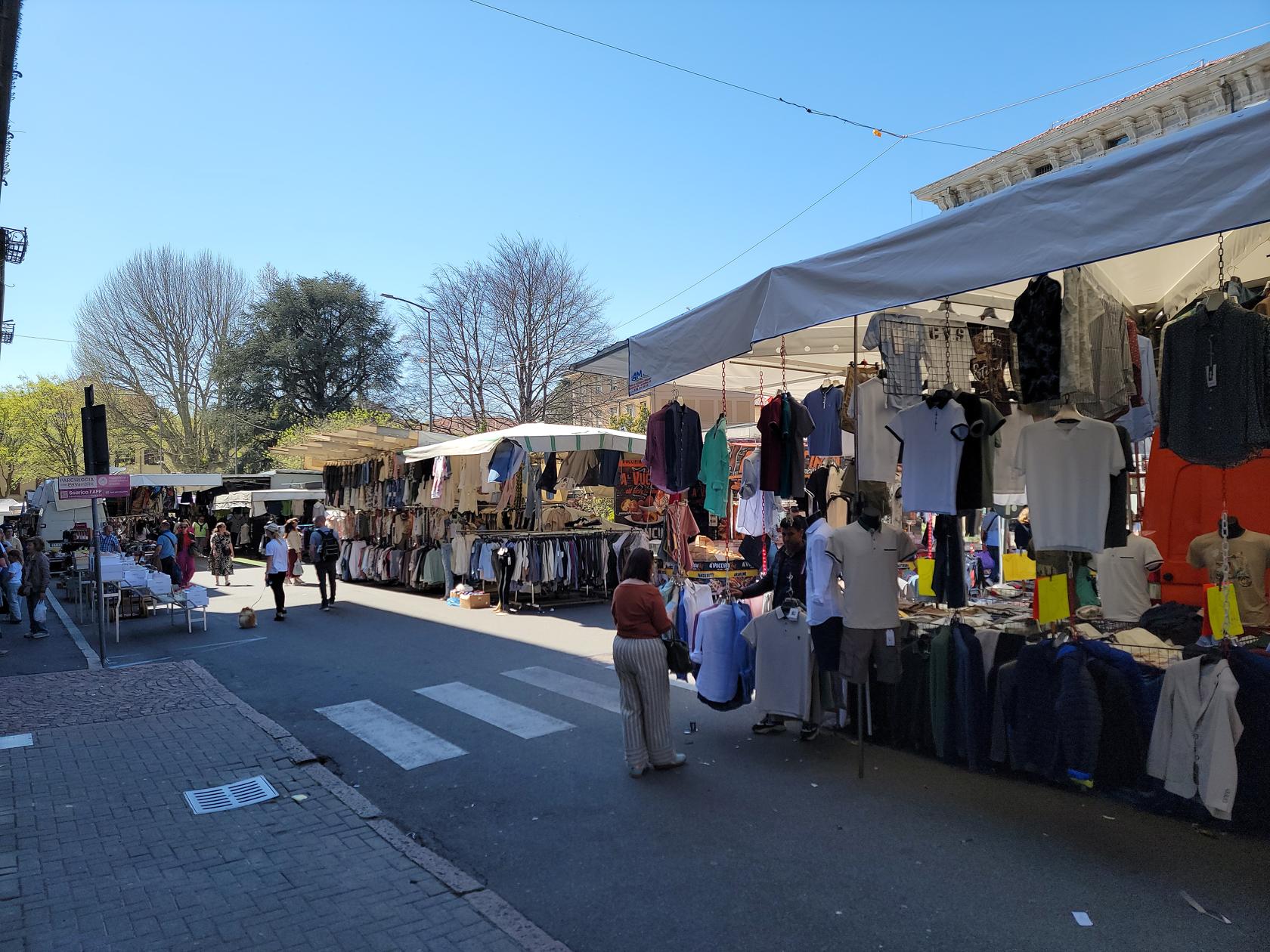
It seems a popular destination for people from the north, who are either staying in Switzerland or the nearby town of Cannobio. It is especially busy on Wednesdays, this is when the town holds its weekly market. [1]Proportedly the largest in Europe, but that is not possible. The one in Turin far eclipses it in size and weekly frequency, being open every day and not just the middle of the week.
Wednesday Market Place – Luino, Italy
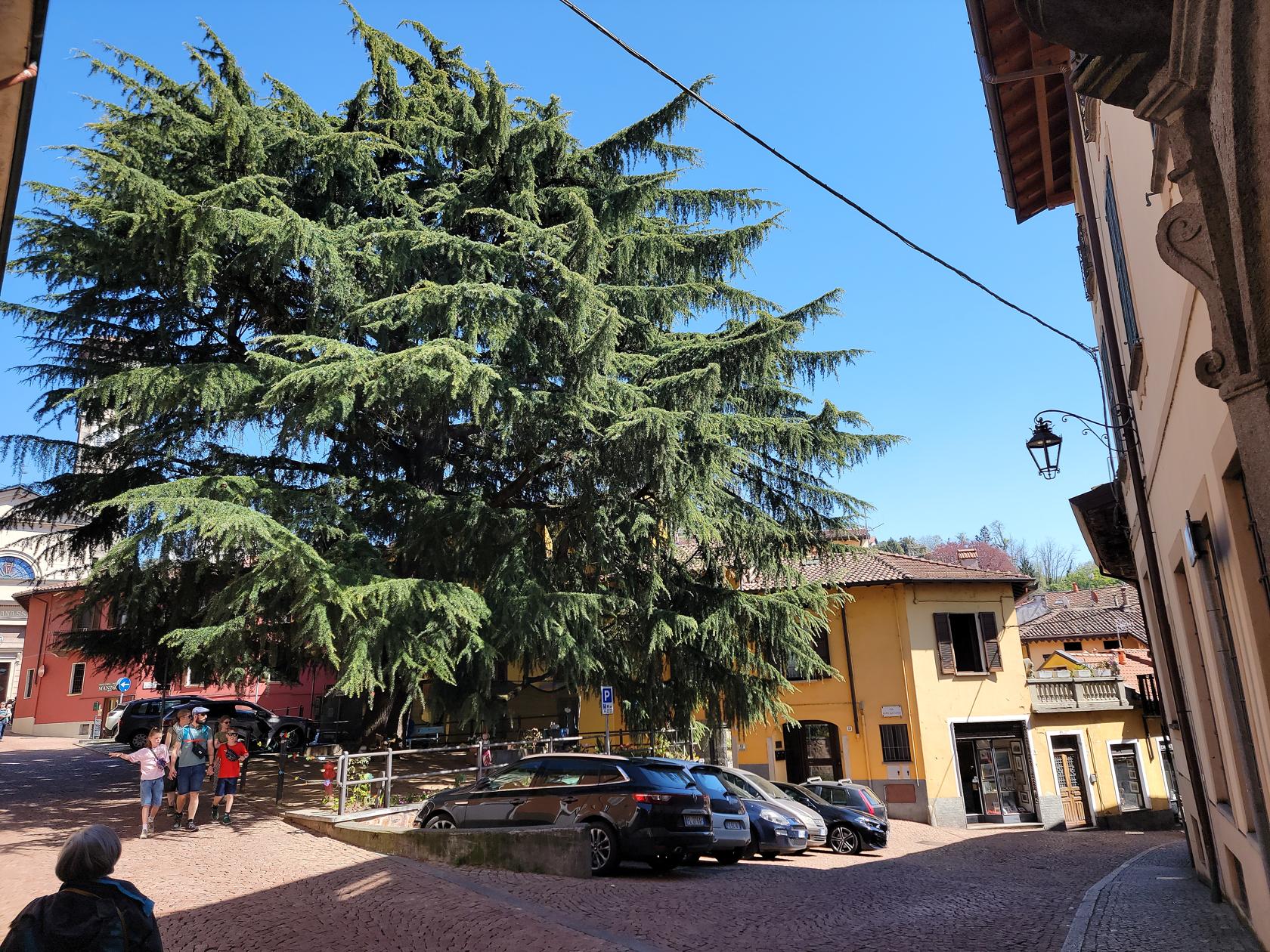
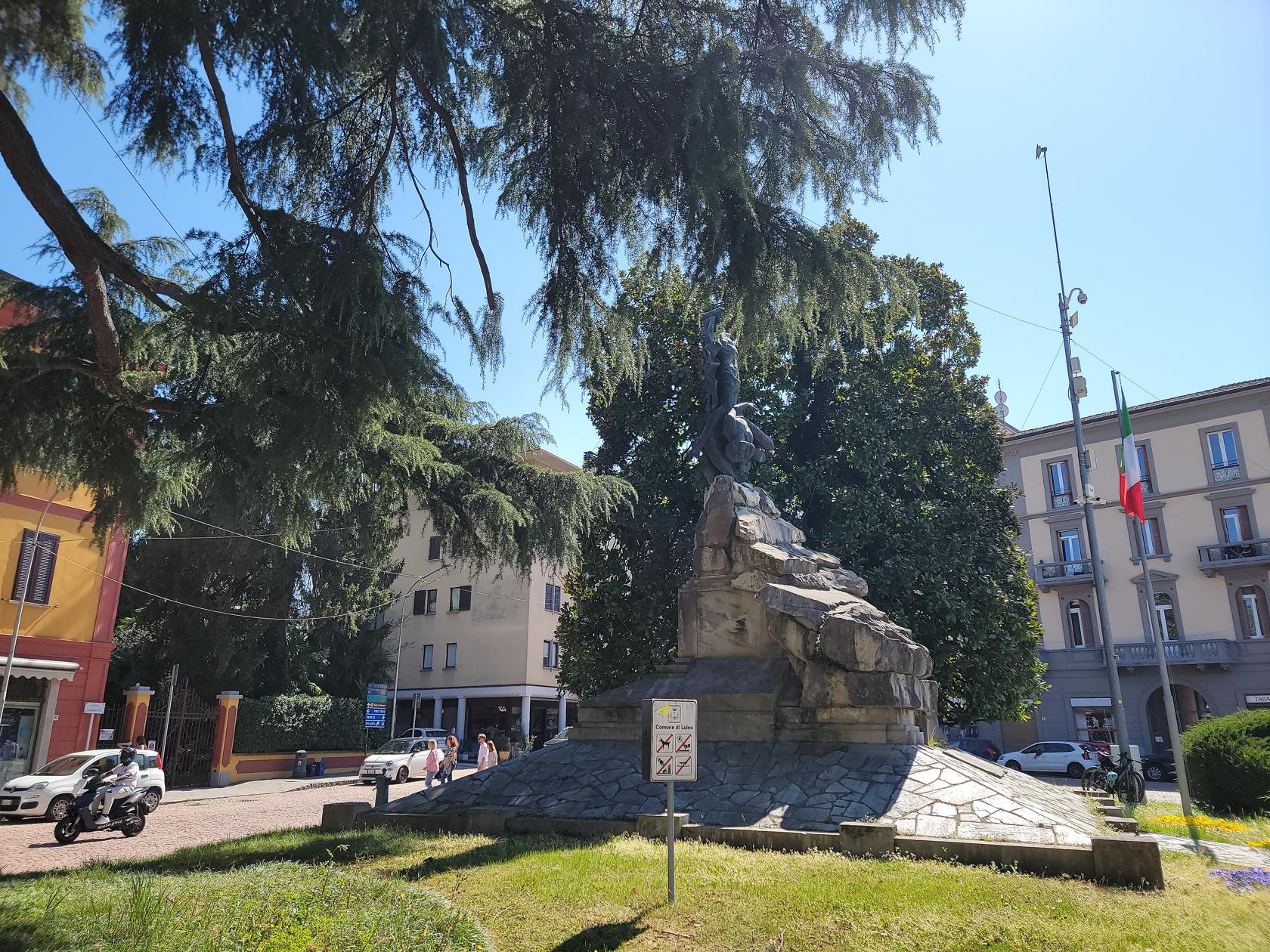
Hemlock Near Church Of Saints Peter And Paul – Luino, Italy
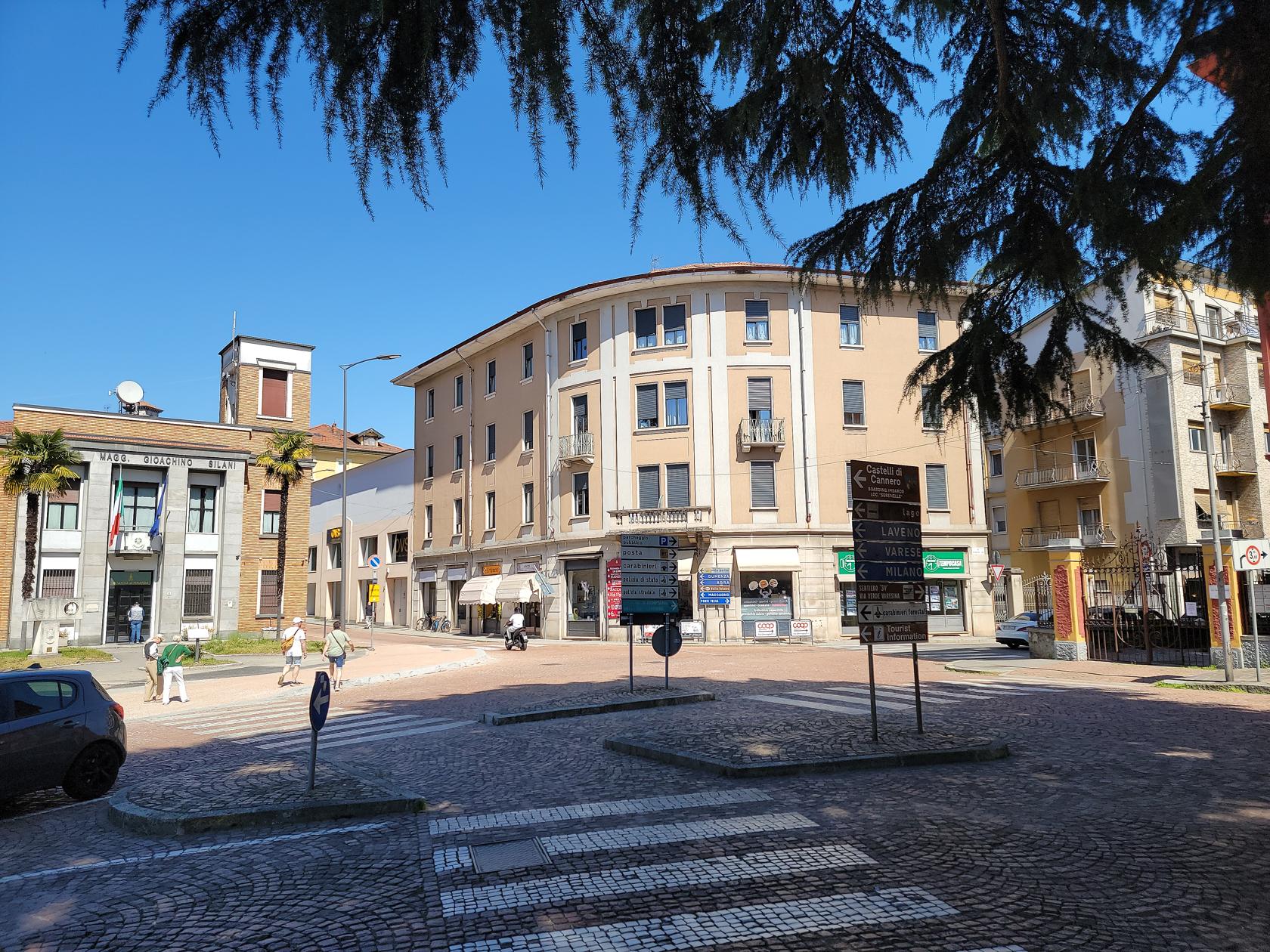
Piazza Risorgimento – Luino, Italy
Piazza Risorgimento – Luino, Italy
At one time the town was heavily industrialized and there were many textile factories here, which accounted for the terrible pollution the lake had to endure for years after its demise. Luckily today, the lake has considerably cleaner water that in the previous century.
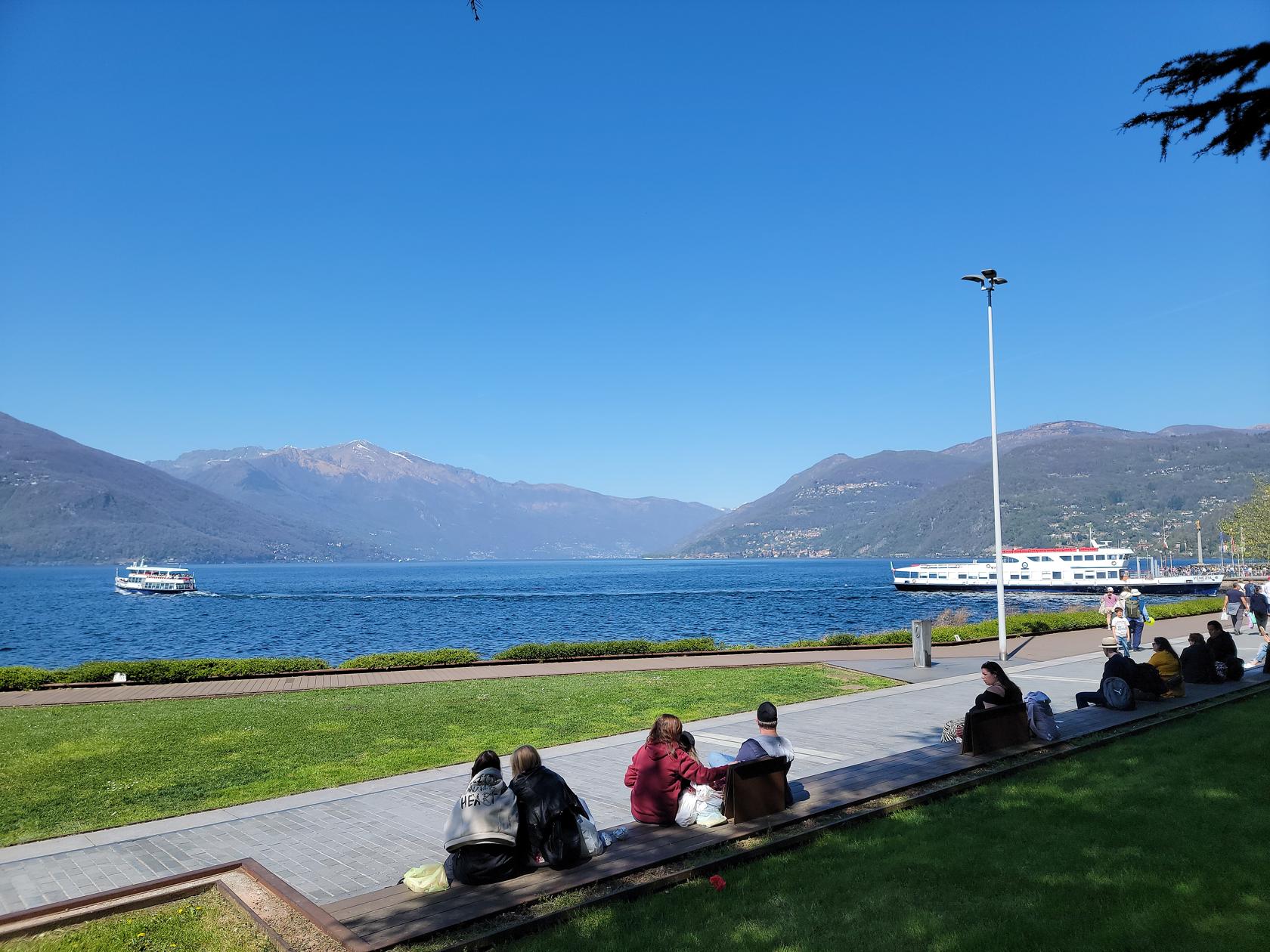
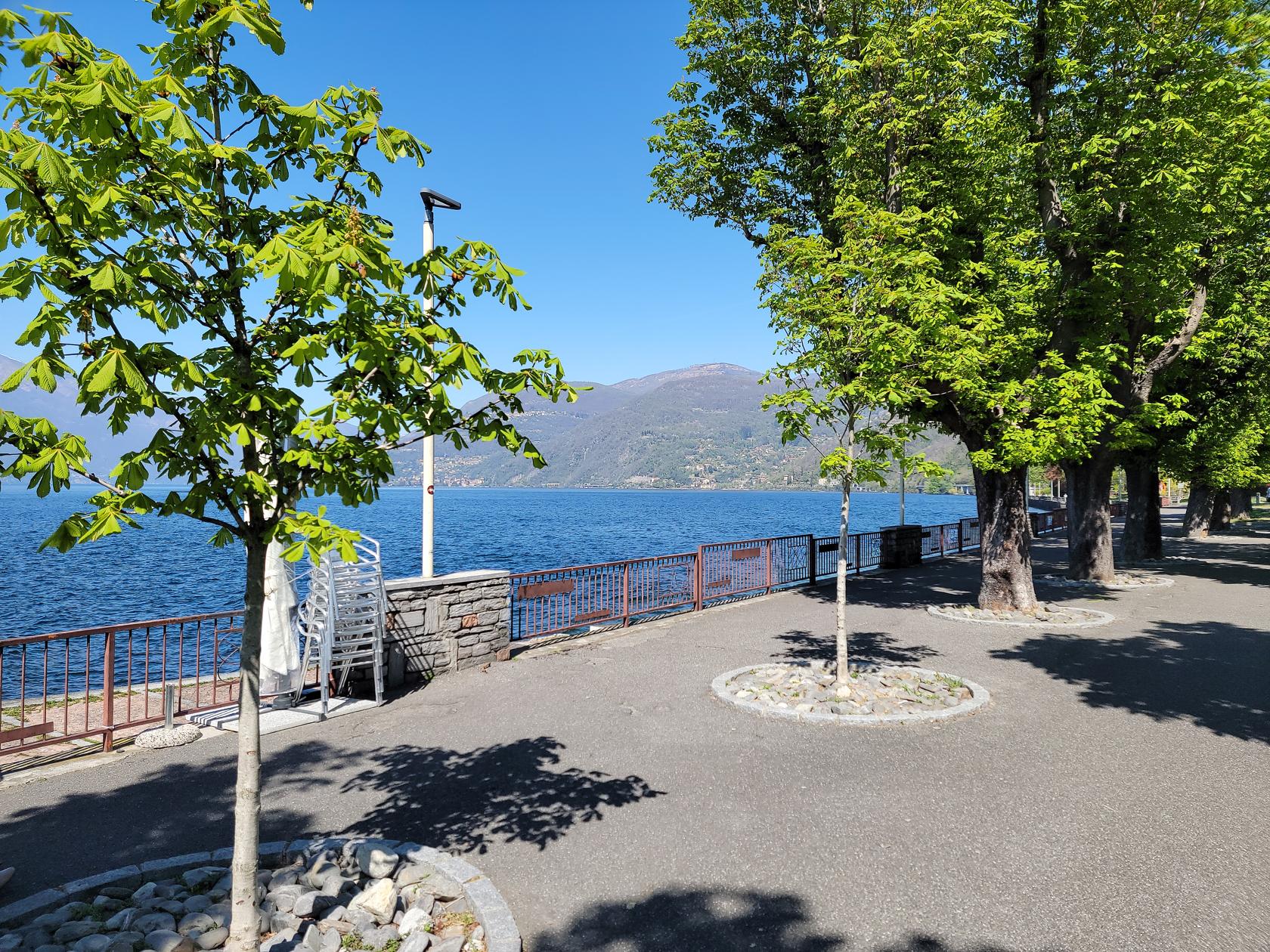
Lungolago – Luino, Italy
Lungolago – Luino, Italy
Lungolago – Luino, Italy
Lungolago – Luino, Italy
Getting There
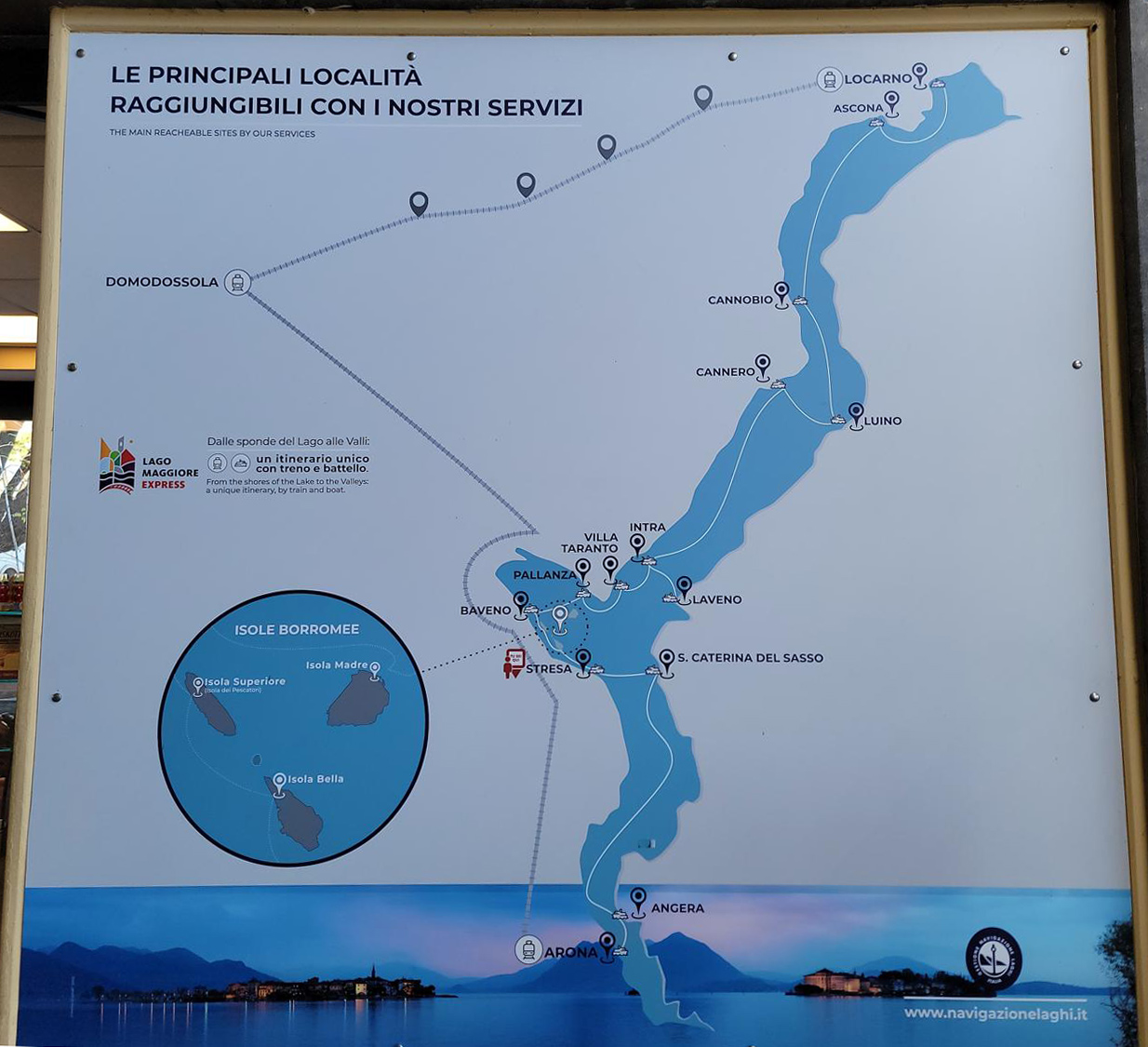
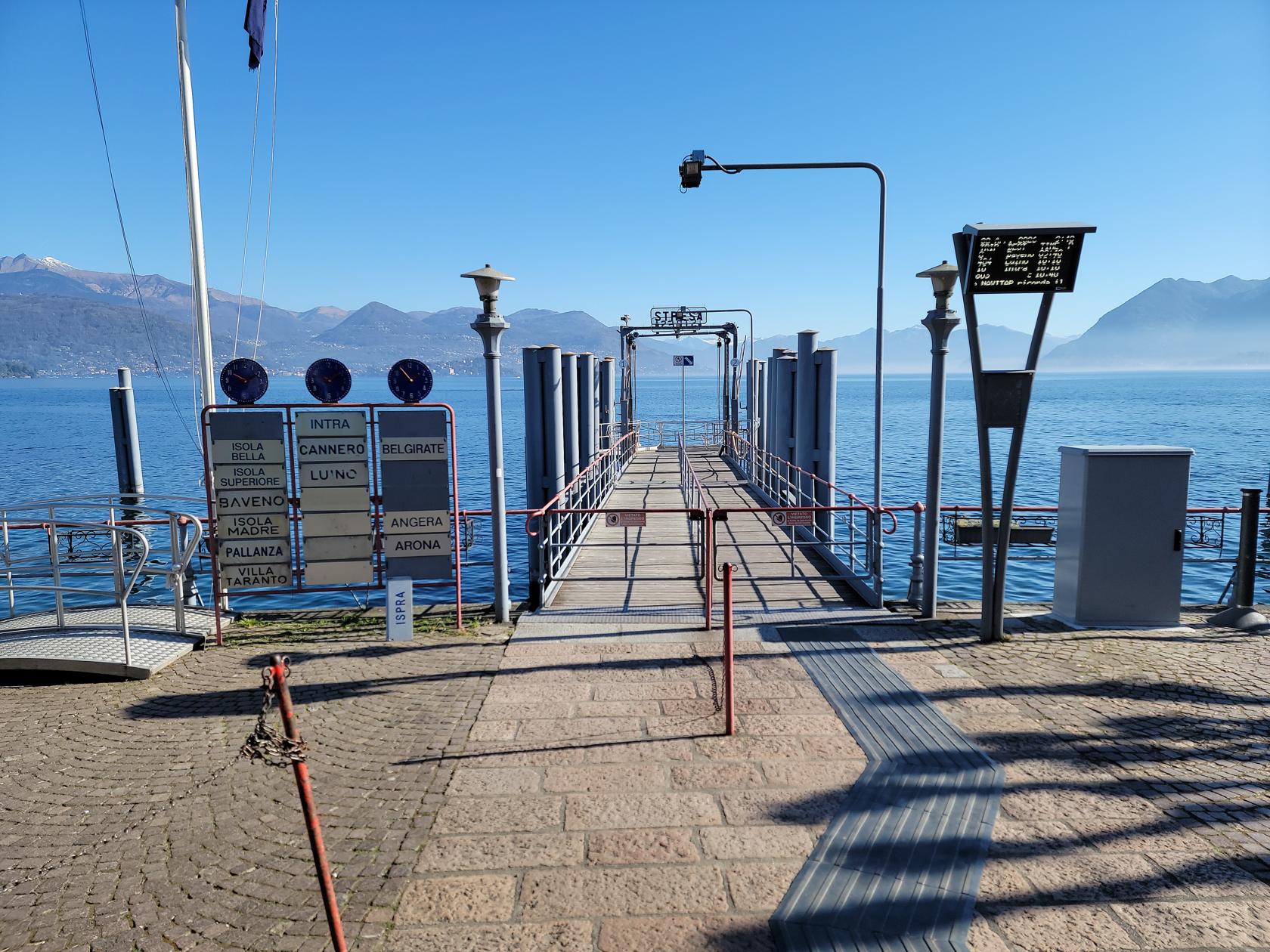
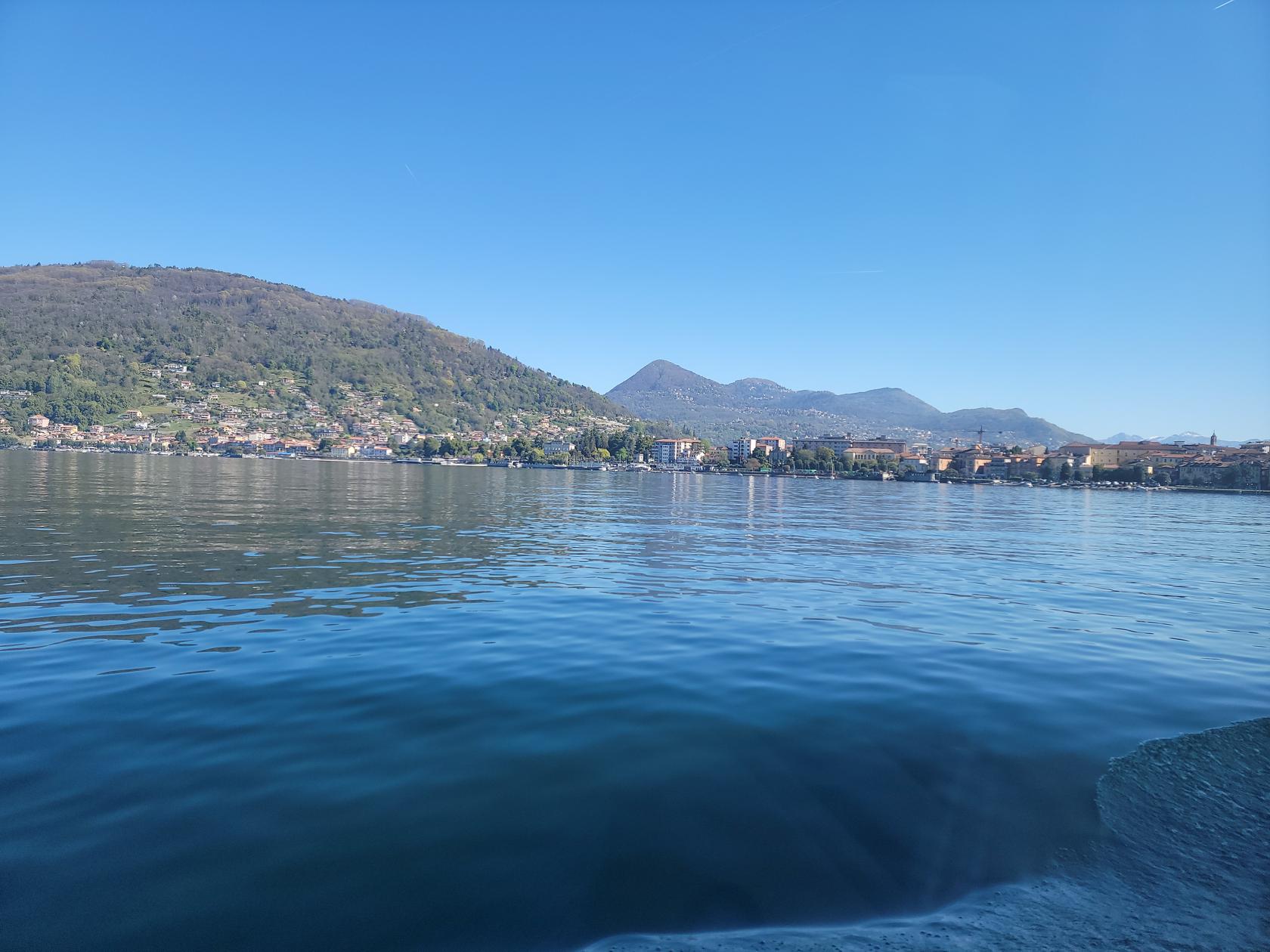
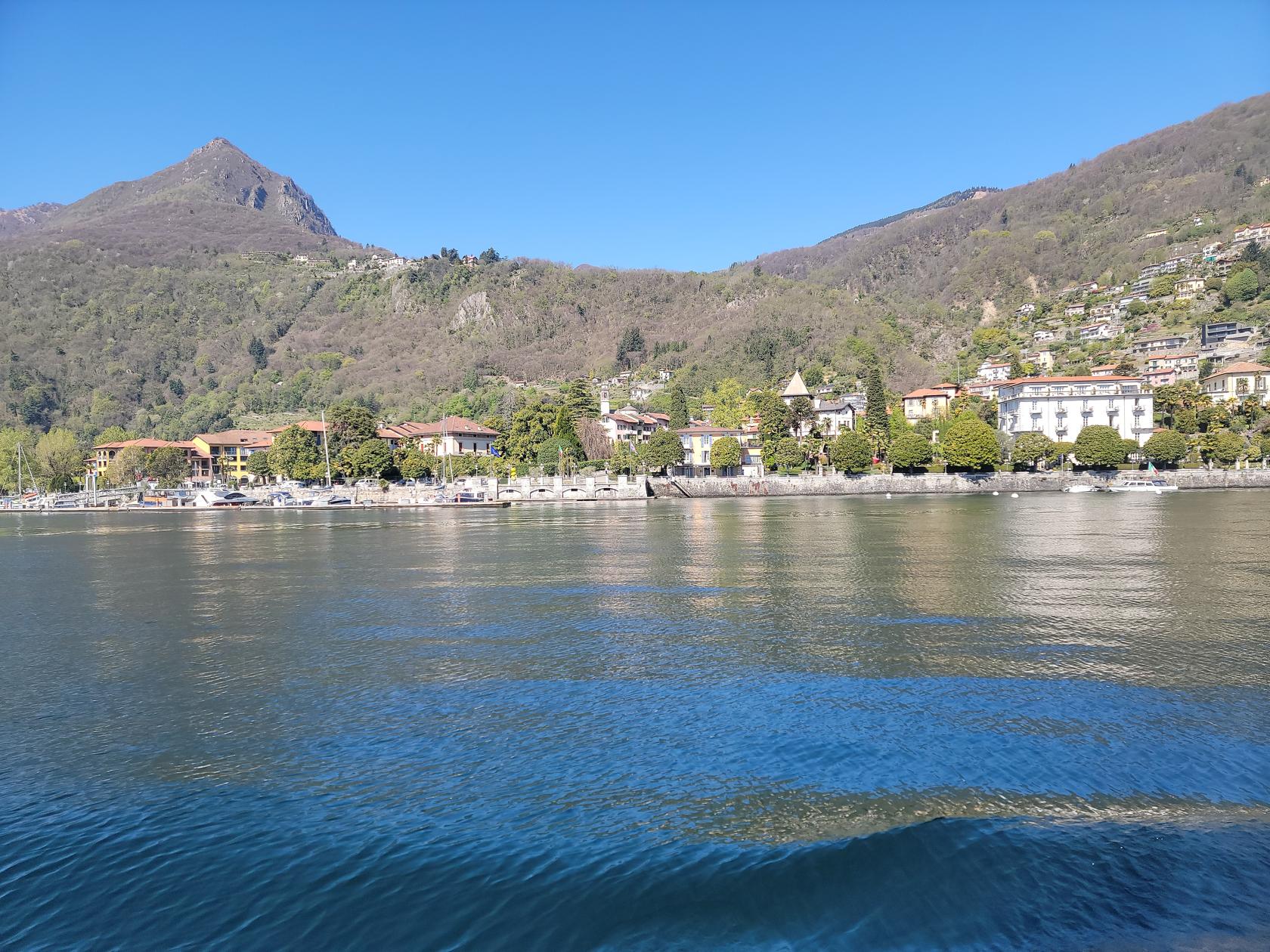
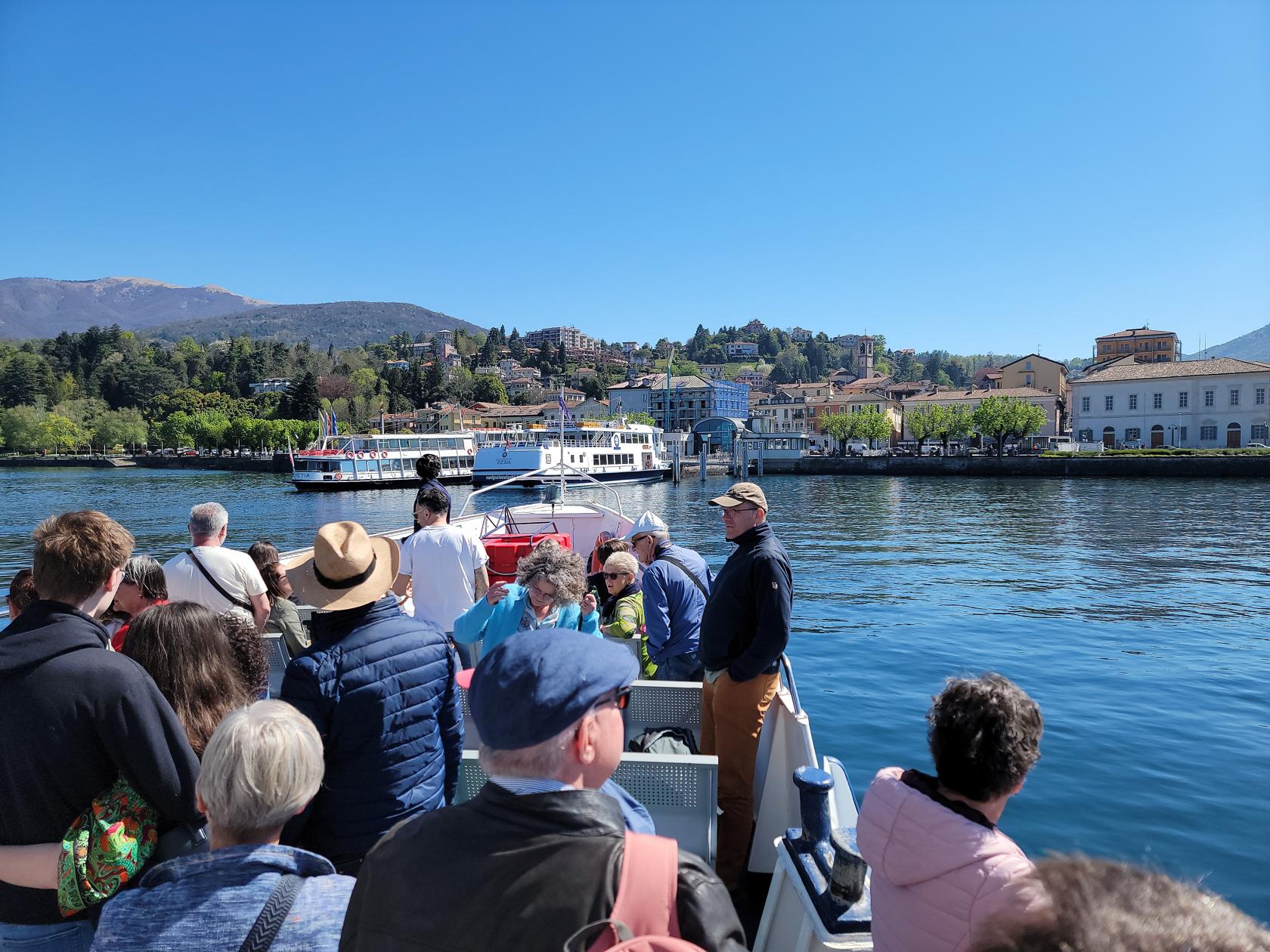
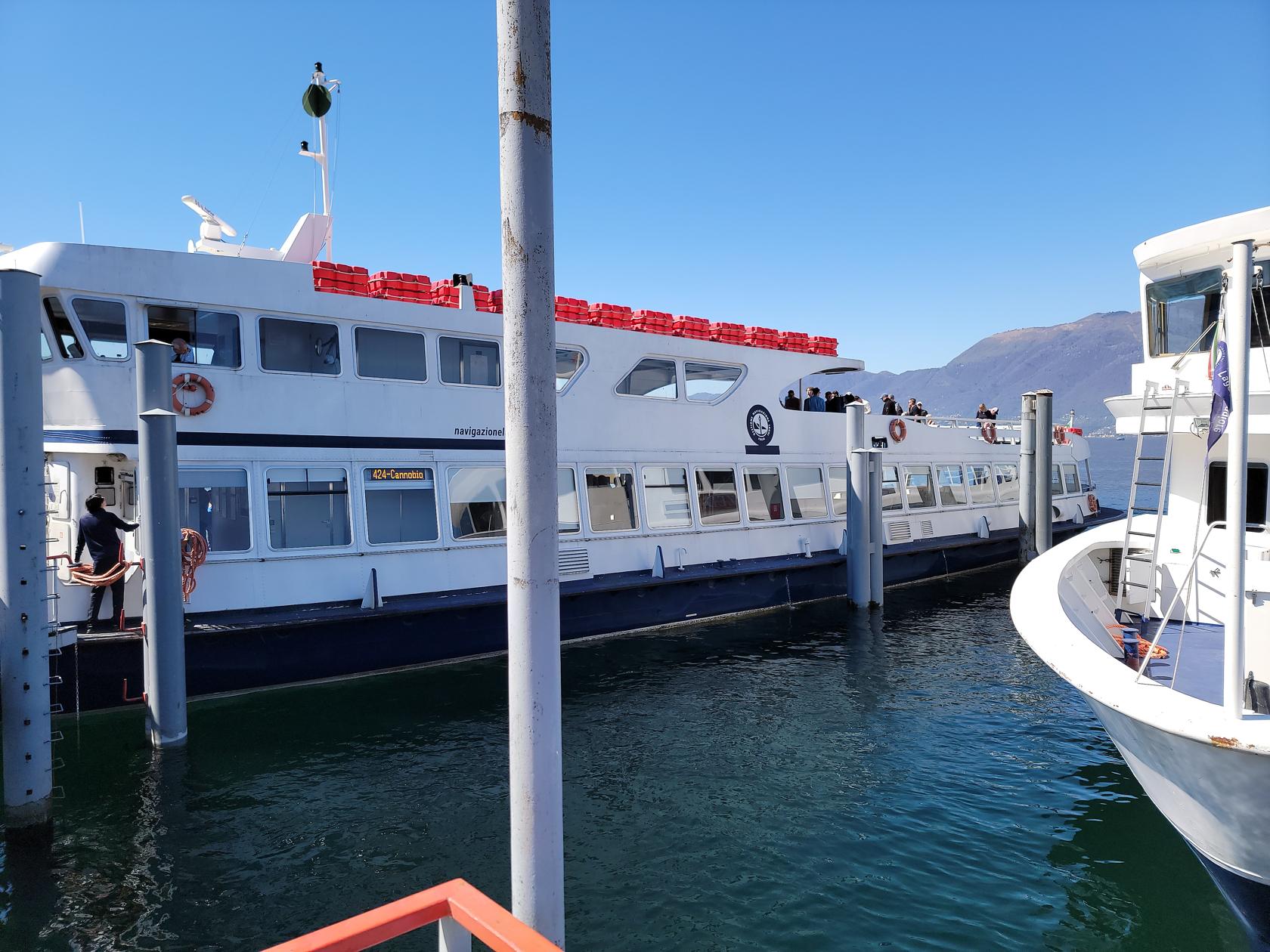
From the north, the map shows all traffic by boat going through Cannobio. From the south, we took the boat from Stresa. From there we stopped a half dozen times before reaching our destination.
Navigation Map – Lake Boat Trip – Luino, Italy
Stresa Boat Dock – Lake Boat Trip – Luino, Italy
It should be noted, if you are traveling from the south and want to go further than Luino, you can, you just may have to change boats in Luino.
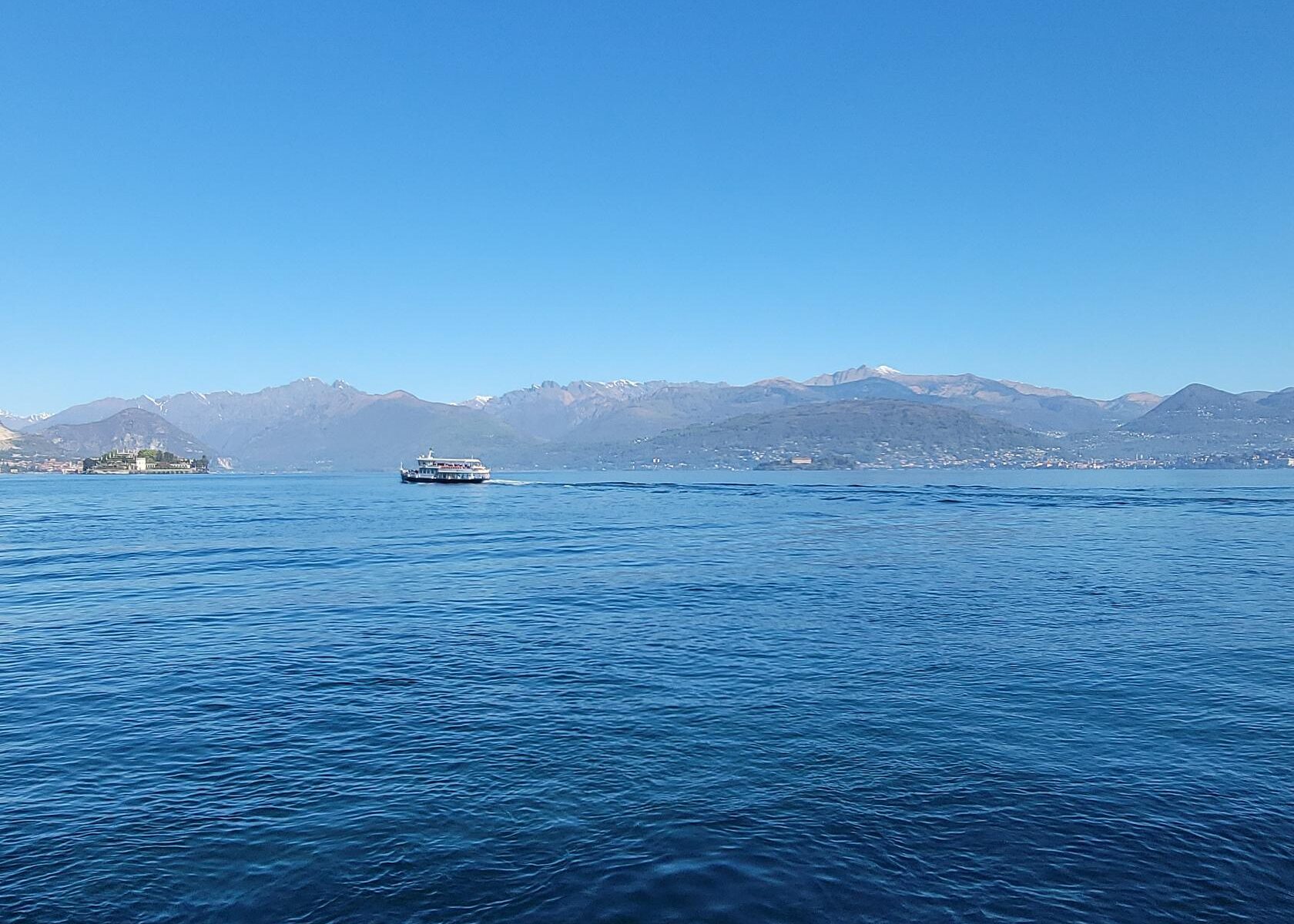
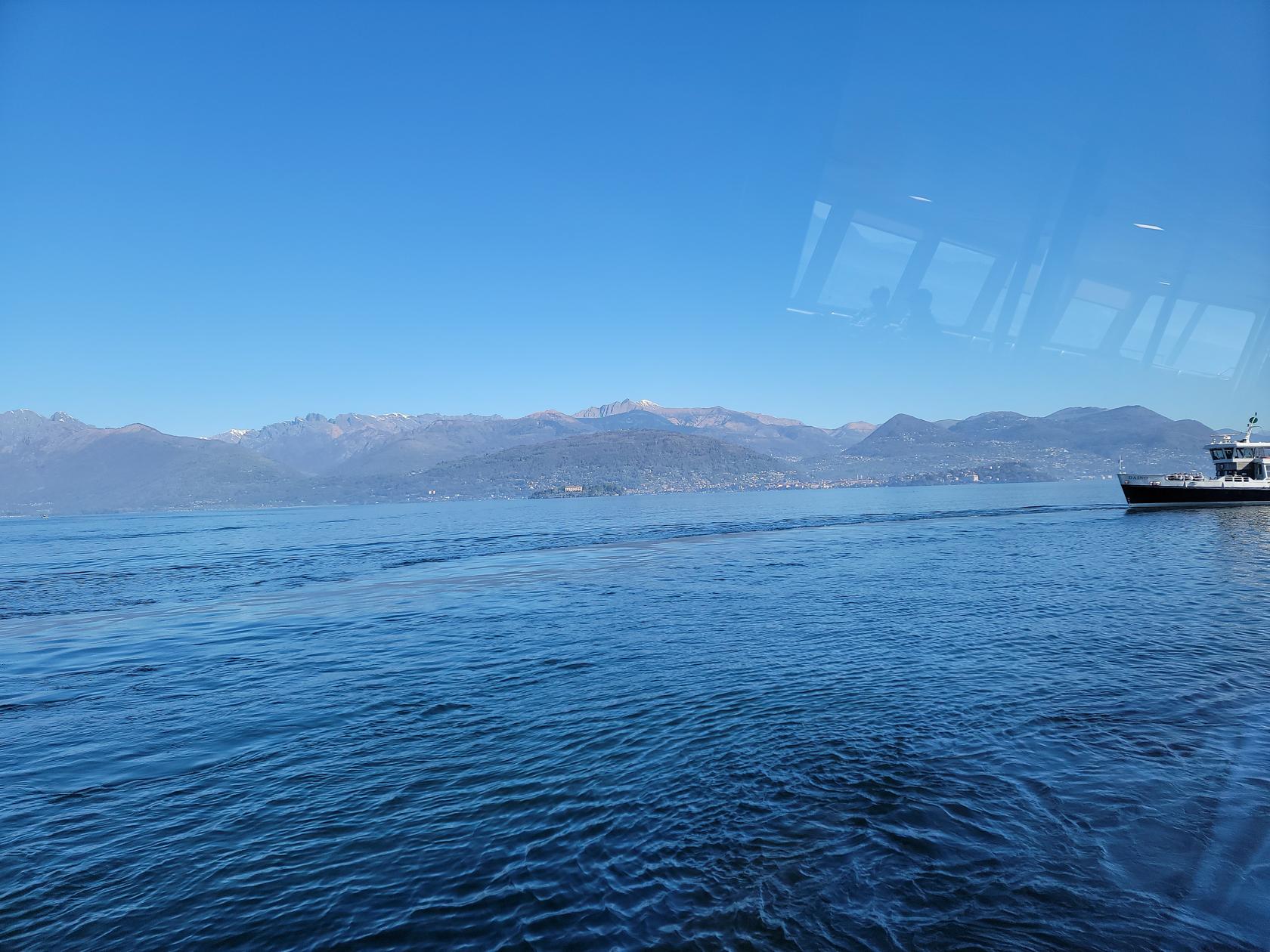
Beautiful Day – Lake Boat Trip – Luino, Italy
Coming Into Our First Stop – Lake Boat Trip – Luino, Italy
Arriving In Luino – Lake Boat Trip – Luino, Italy
Our Boat – Lake Boat Trip – Luino, Italy
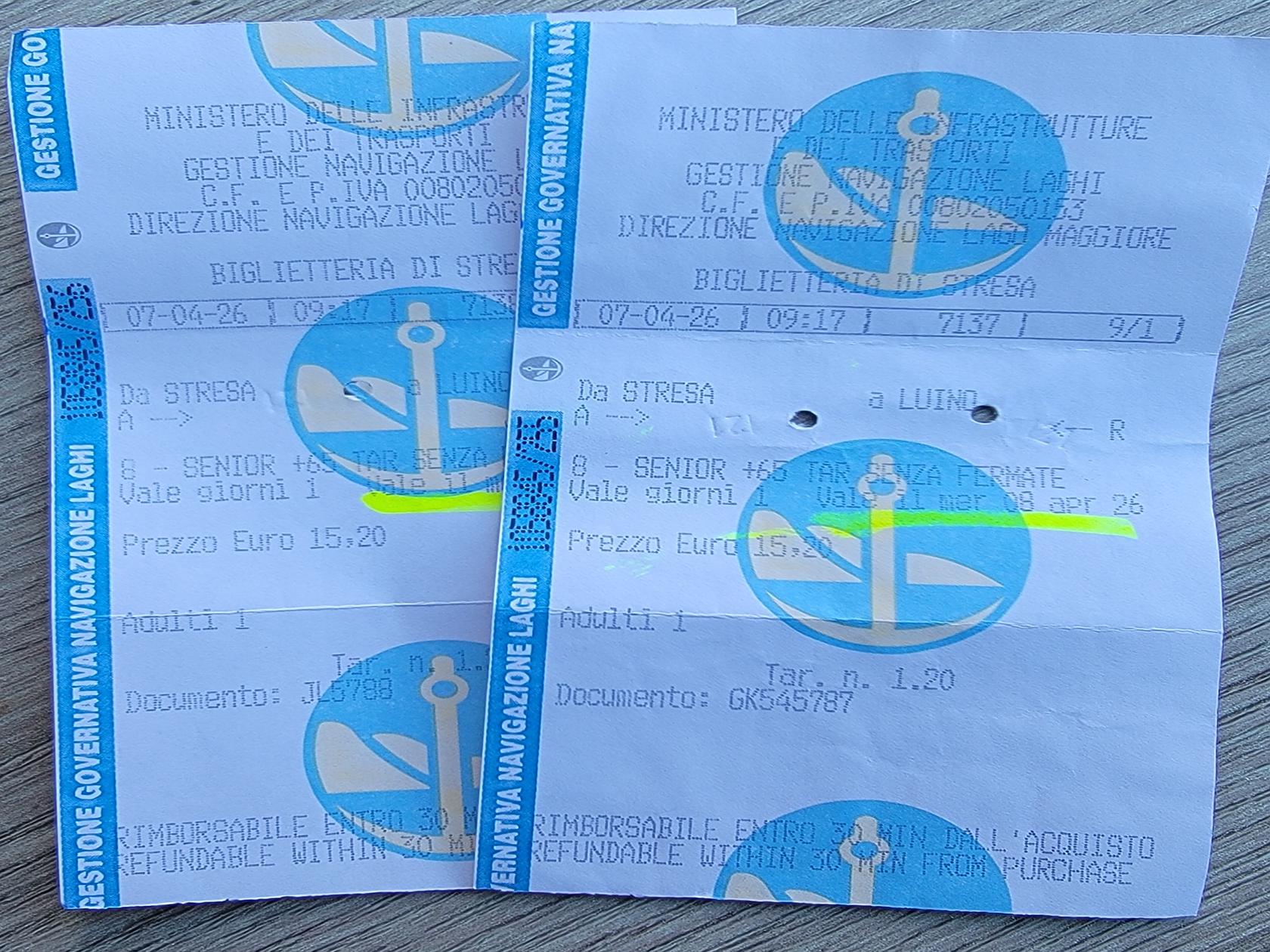
From Stresa the trip is not inexpensive to Luino. For roundtrip tickets it cost us €15.20 per person[2]or about $18 per person.
Tickets For Two – Lake Boat Trip – Luino, Italy
Church of Saints Peter and Paul
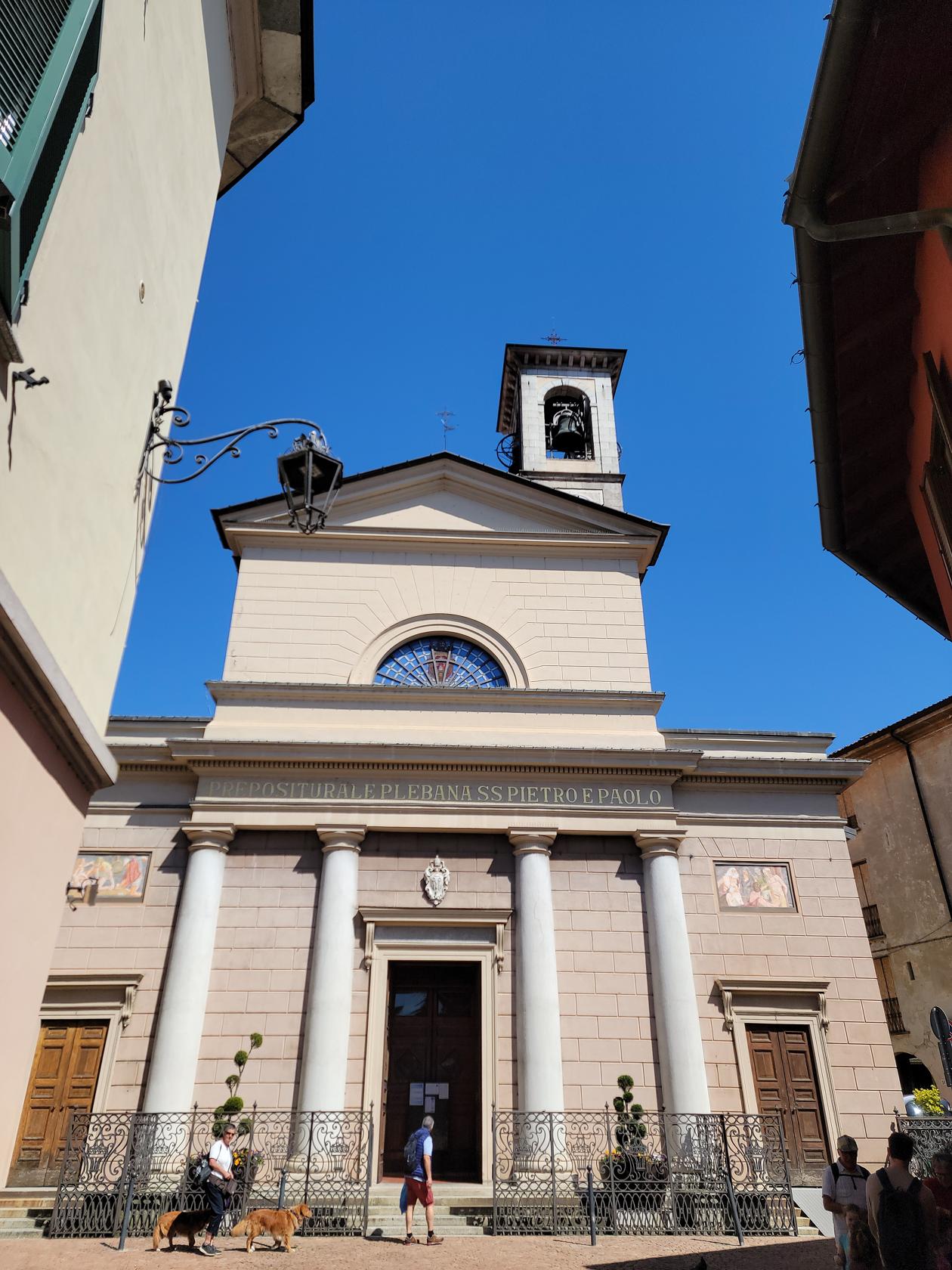
A walk through the town and above most if, you will find the Church of Saints Peter and Paul. An unusual church which looks more like an administrative building than a church.
Front And Entrance – Church Of Saints Peter And Paul – Luino, Italy
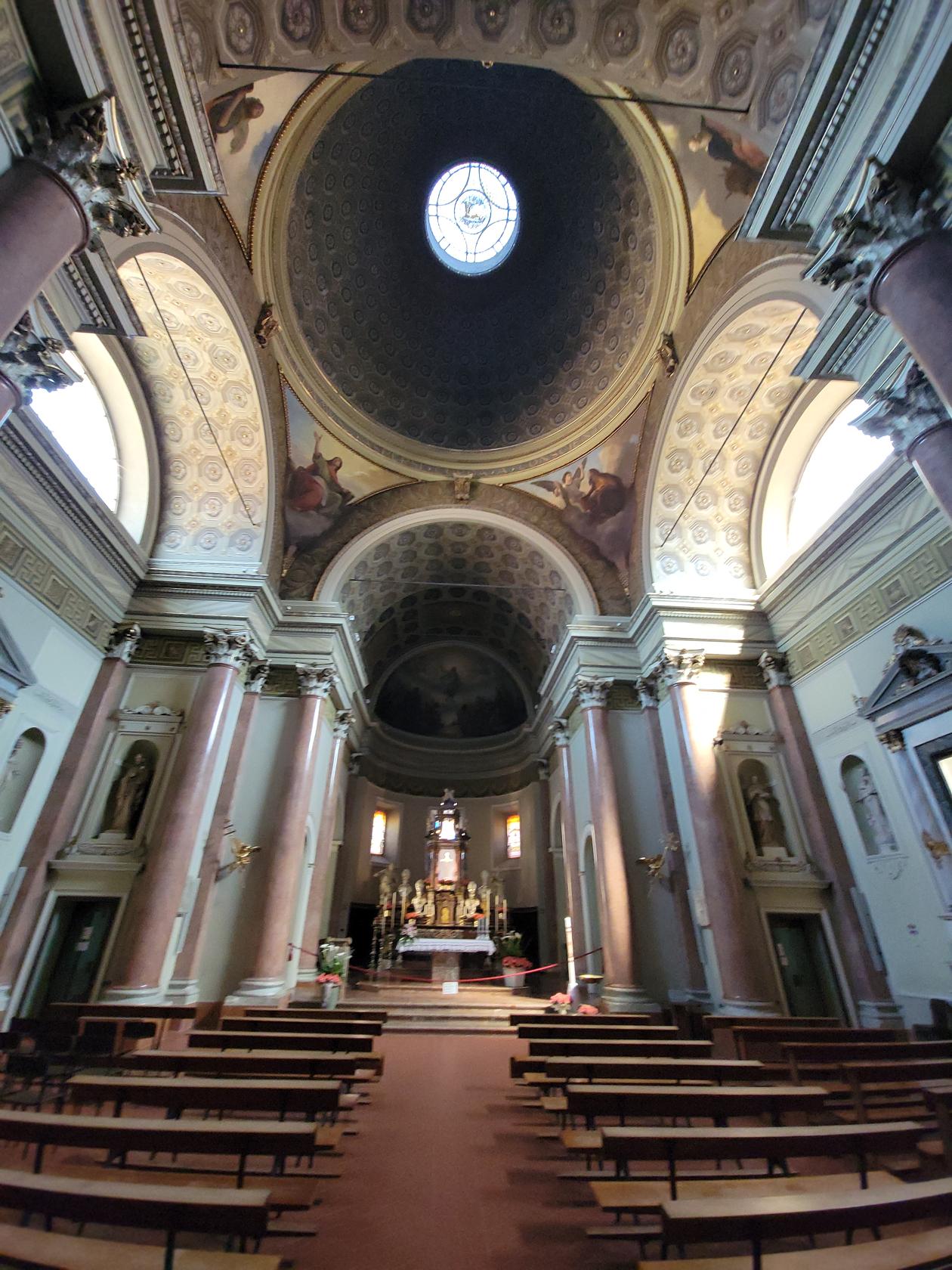
The inside does have some marble, but the rest of the nave and ceiling are painted in the style trompe-l’œil, giving the impression of relief where none really exists.
Nave – Church Of Saints Peter And Paul – Luino, Italy
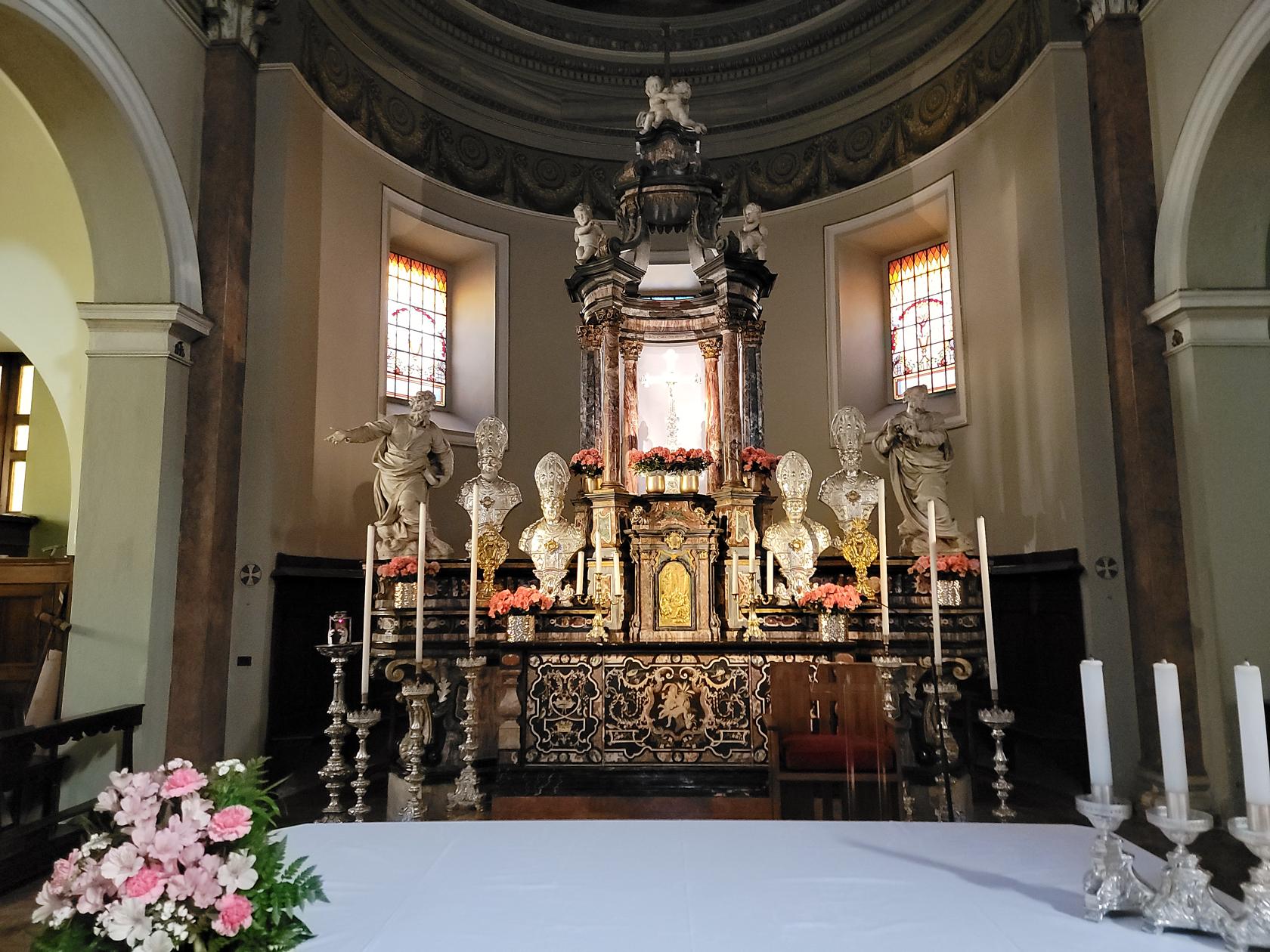
Altar – Church Of Saints Peter And Paul – Luino, Italy
Restaurants
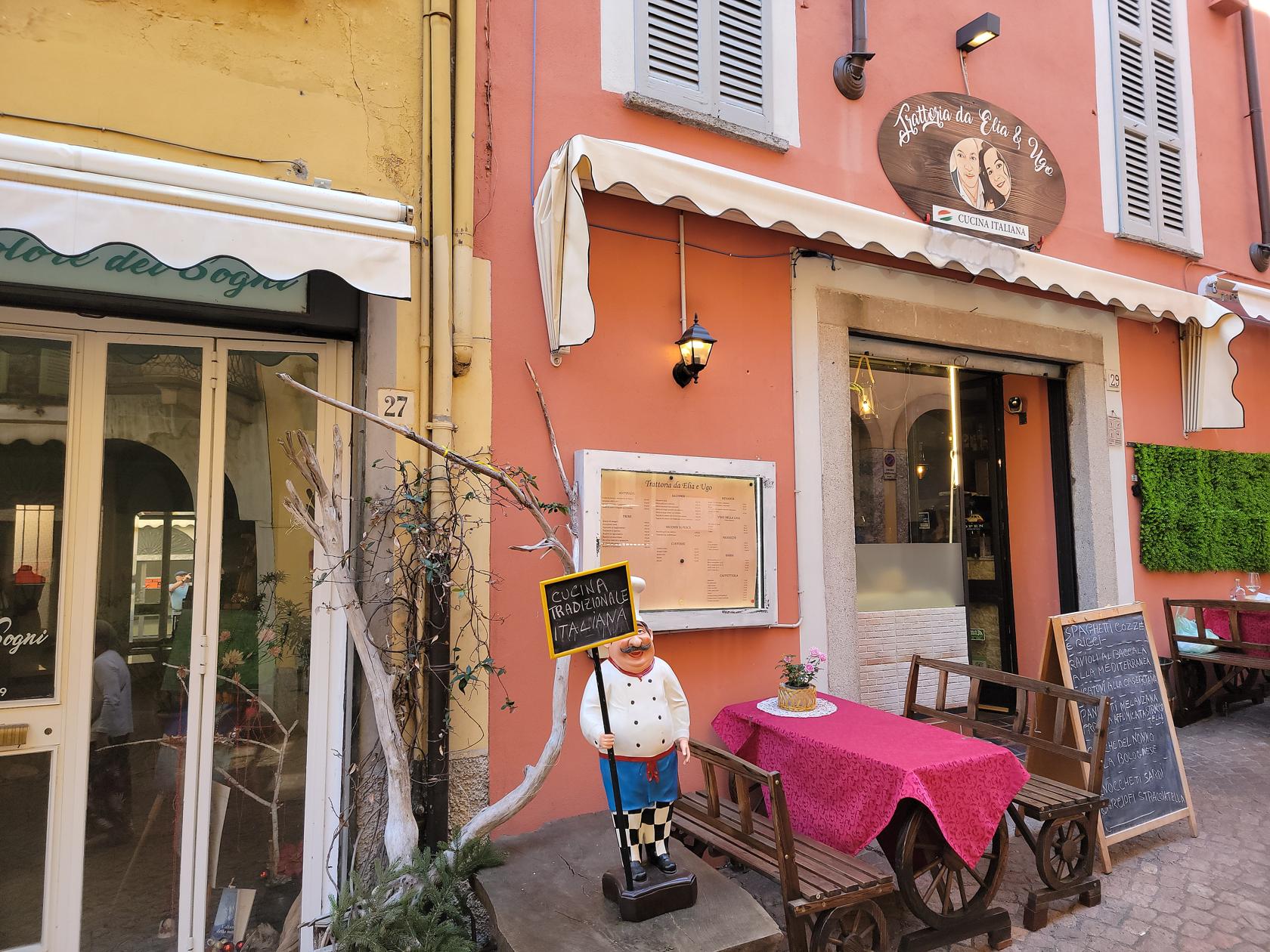
When we arrived in Luino, we only had three hours before our boat trip back, so we had to make good use of our time. Subsequently, we looked for a place to eat first and chose the Trattoria da Elia e Ugo.
Front – Trattoria da Elia e Ugo – Via Felice Cavallotti – Luino, Italy
Trattoria da Elia e Ugo
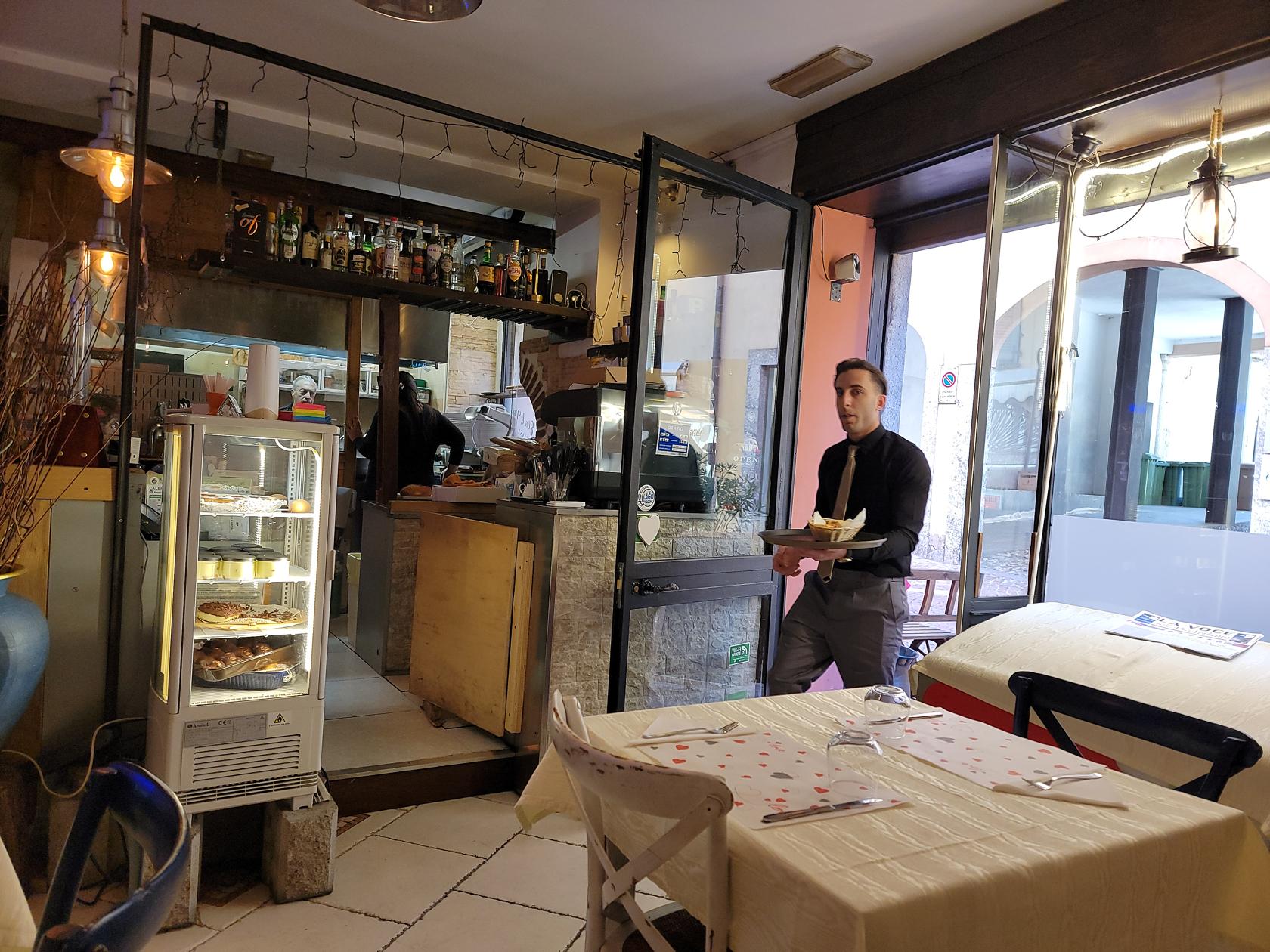
A small restaurant that caters to locals and tourists alike. They speak very good english, so there should be no problem with the language; they are even willing to look words up in order to make sure they have the correct word.
Entrance – Trattoria da Elia e Ugo – Via Felice Cavallotti – Luino, Italy
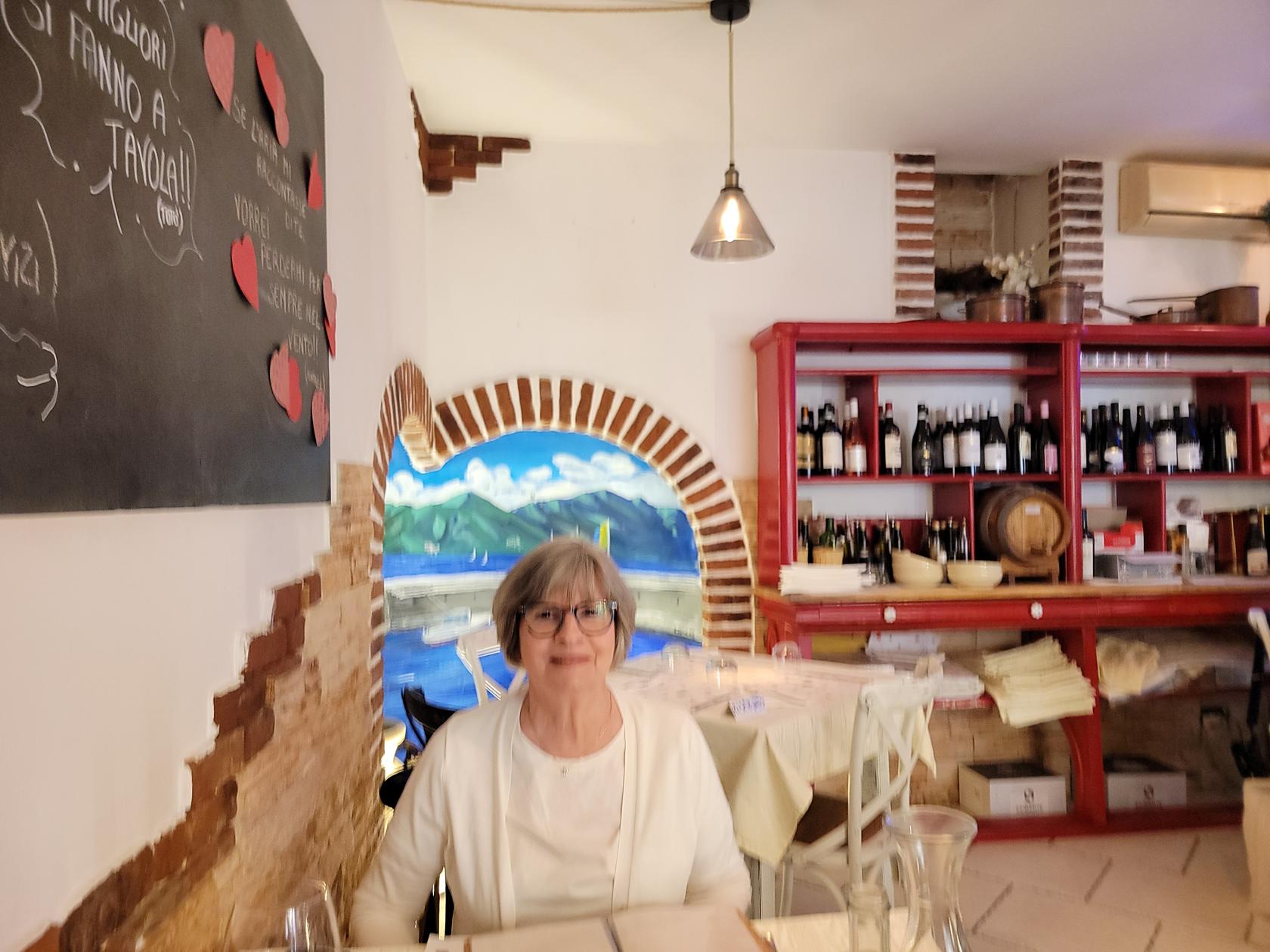
Patti – Trattoria da Elia e Ugo – Via Felice Cavallotti – Luino, Italy
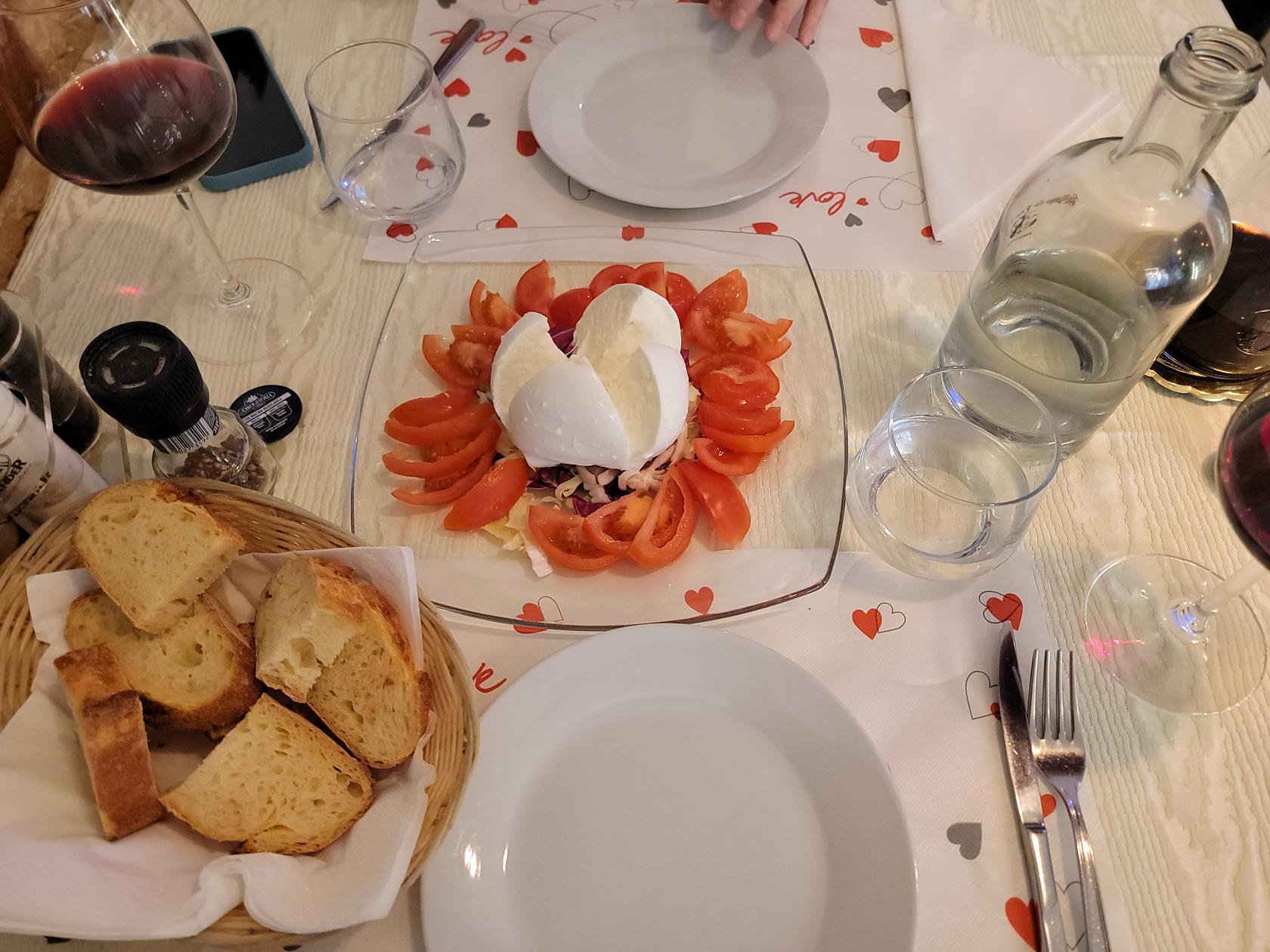
The food is very good and well portioned. The caprese is rather large and good enough for two. The pasta dishes are also fairly large and well seasoned.
Caprese – Trattoria da Elia e Ugo – Via Felice Cavallotti – Luino, Italy
Pasta Special – Trattoria da Elia e Ugo – Via Felice Cavallotti – Luino, Italy
Aside from the popular marketplace on wednesdays and the odd historical monument, there really is not much to see in Lunio. Coming from the south, it can only be commended for the odd day trip with lunch as the primary reason for the expedition, since it is rather far away and the boat service only runs roundtrip on wednesday, so plan accordingly.
Proportedly the largest in Europe, but that is not possible. The one in Turin far eclipses it in size and weekly frequency, being open every day and not just the middle of the week.
About a ten minute train ride from Stresa is the small town and bedroom community of Arona. Its claim to fame, if it has any, would be the La Rocca[1]“The castle” in italian, or the Arona or Borromeo Castle.
Arona
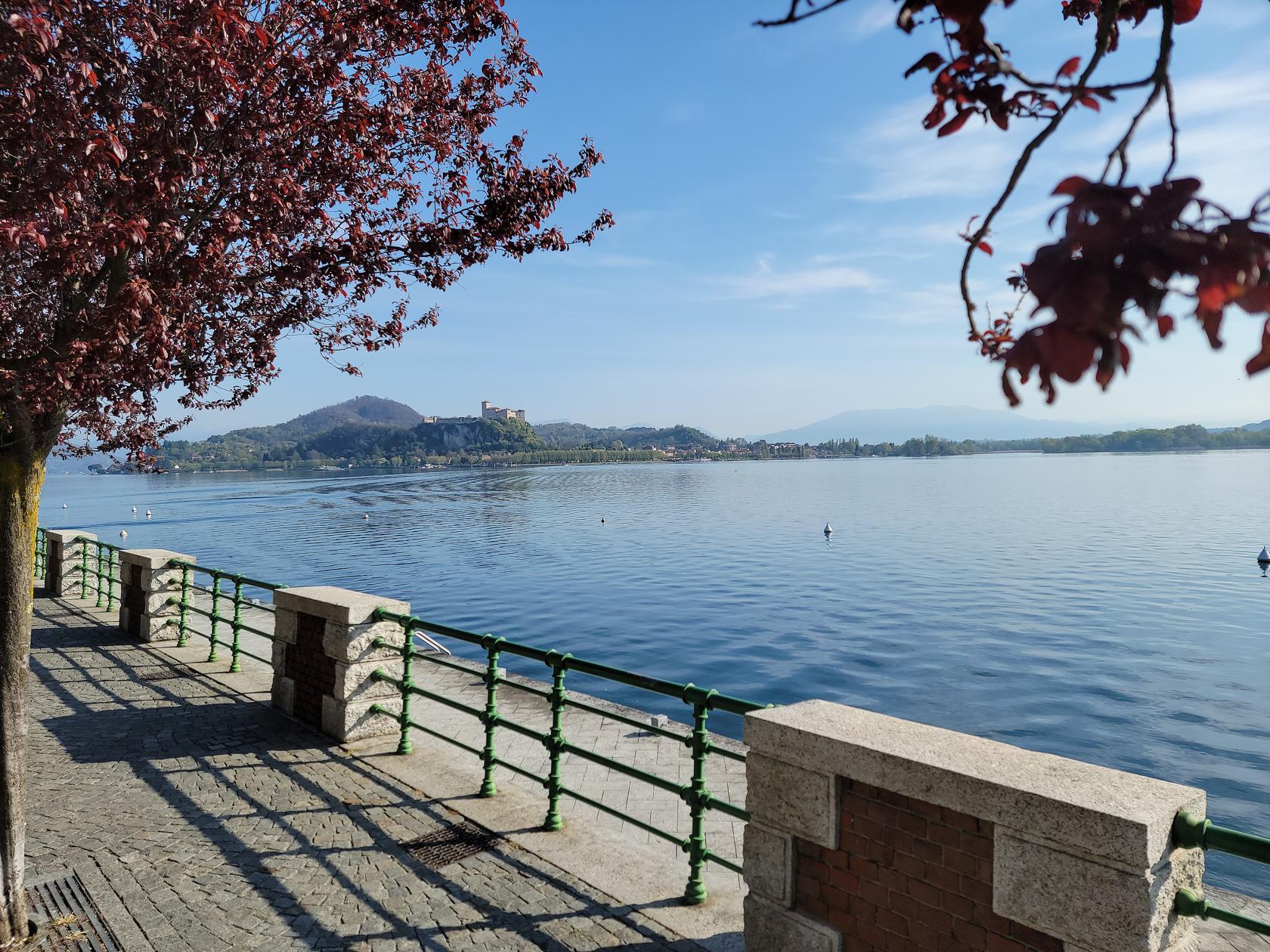
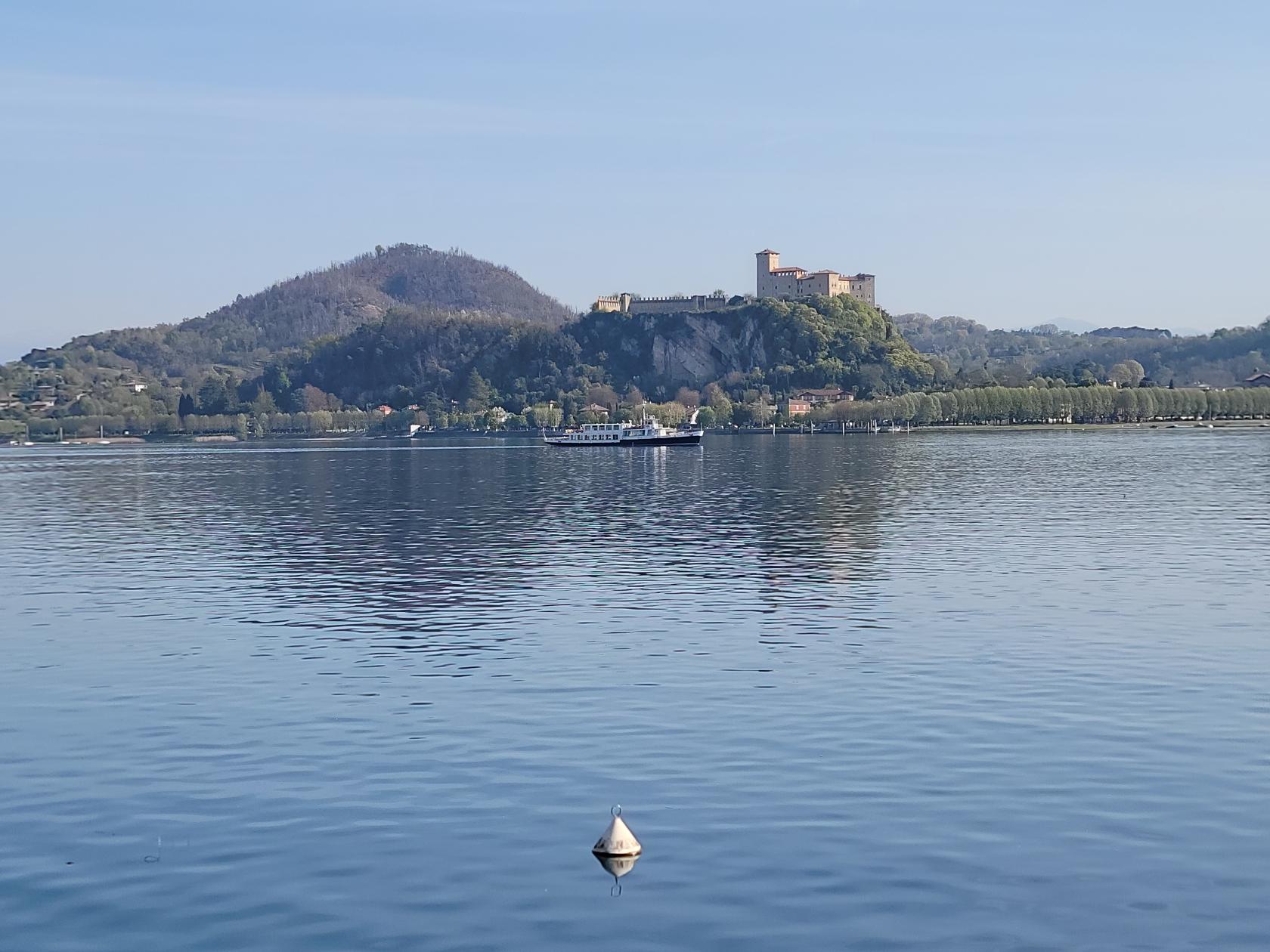
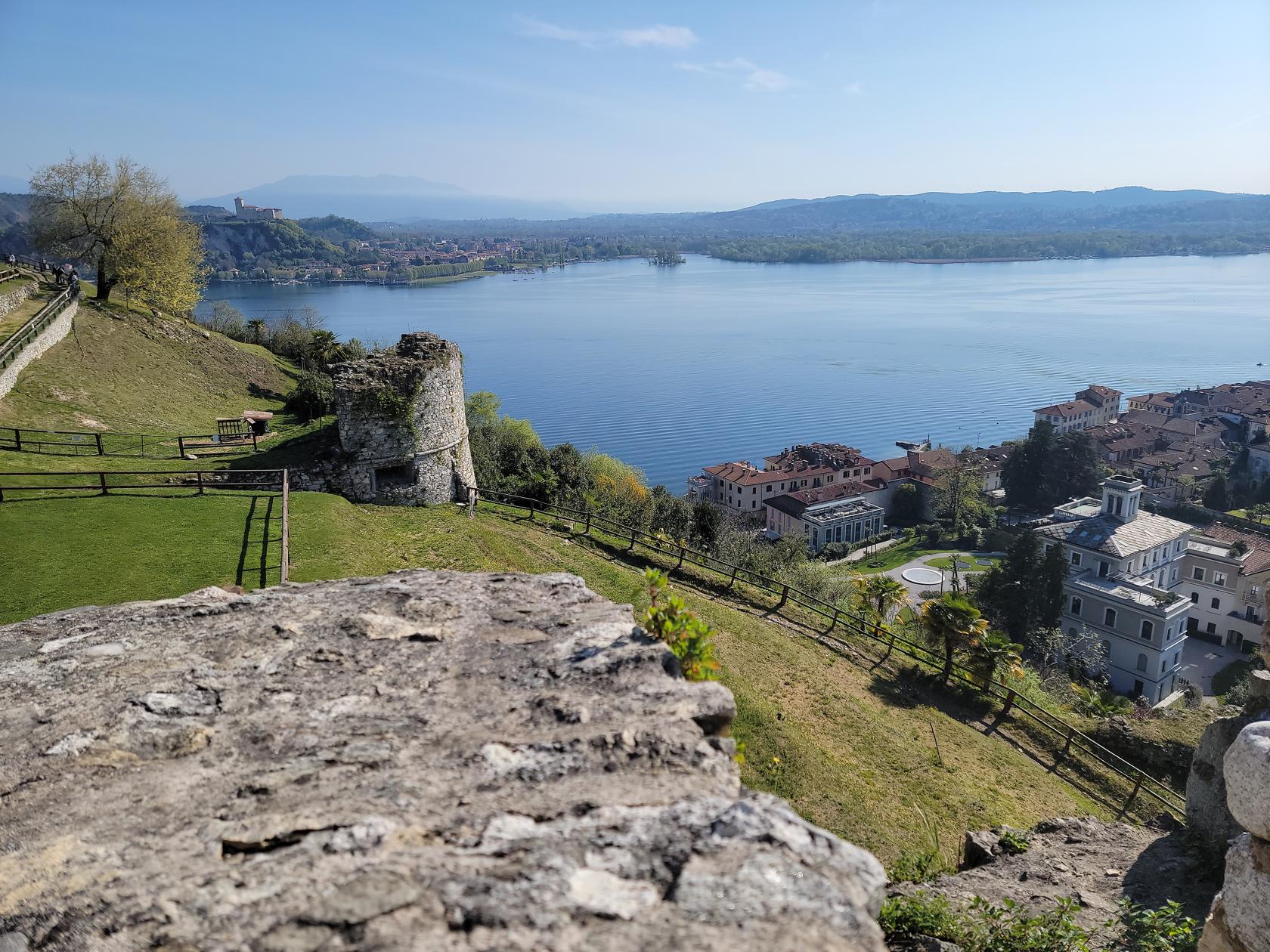
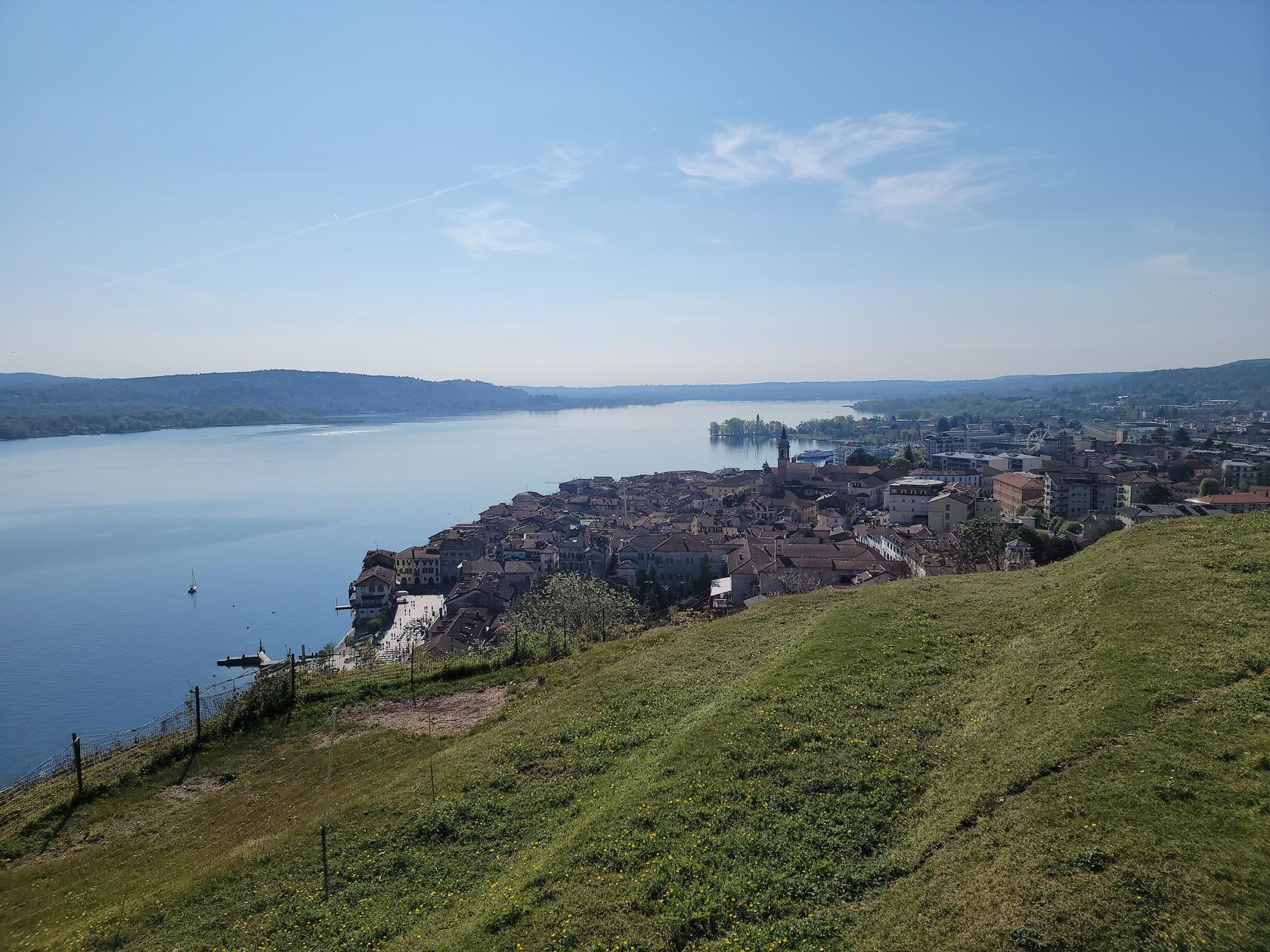
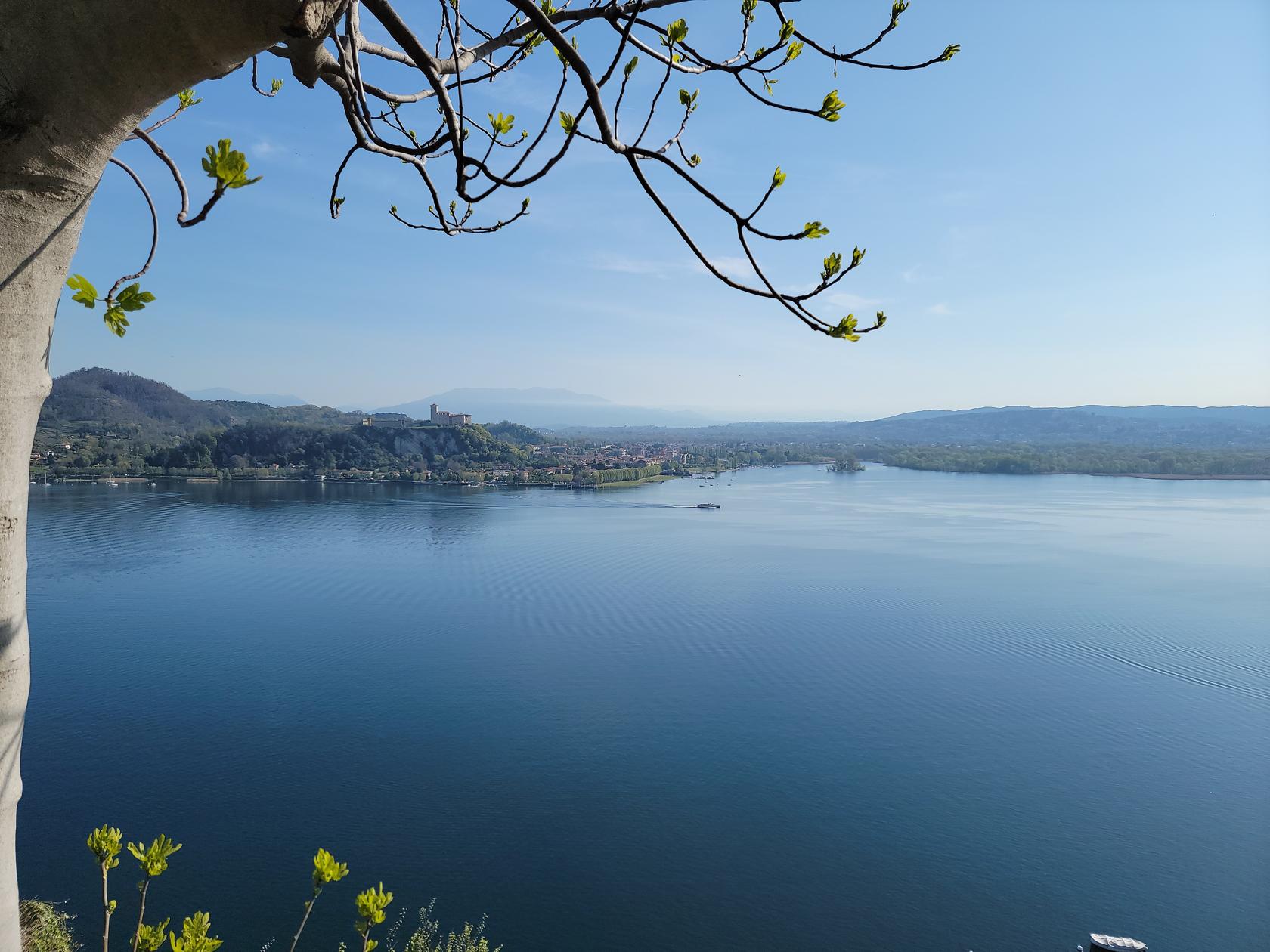
Situated on the southern tail of Lake Maggiore and home to the Arona Castle is the small city of Arona. From the Lungolago, or boardwalk that runs along the lake, it offers a beautiful view of the Angera Castle on the other side of the lake.
Arona Street – Arona, Italy
Arona Street – Arona, Italy
Boat Launch – Arona, Italy
Castle di Angera – Lake Maggiore – Arona, Italy
Castle di Angera – Lake Maggiore – Arona, Italy
Piazza Gorizia – Lake Maggiore – Arona, Italy
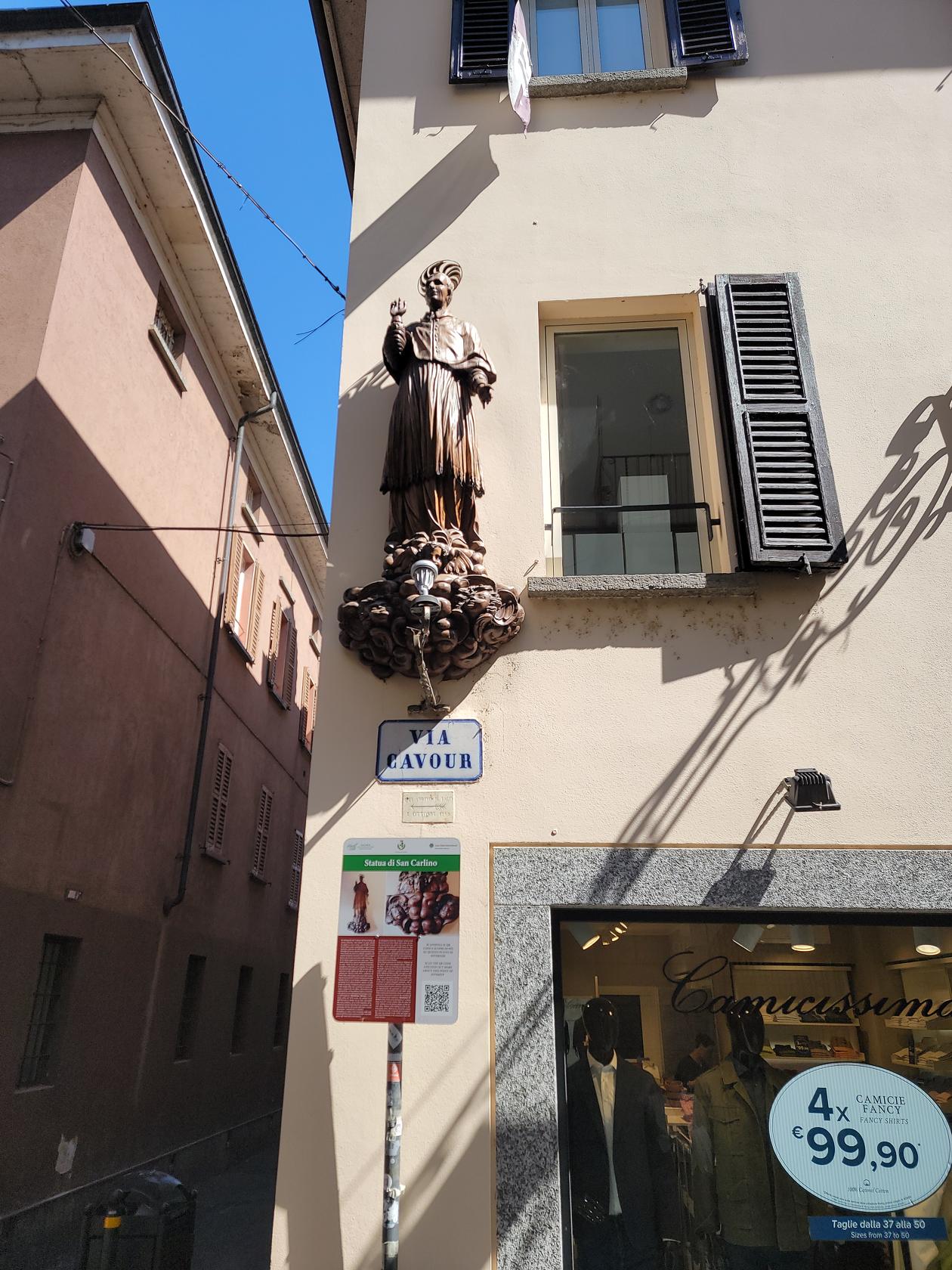
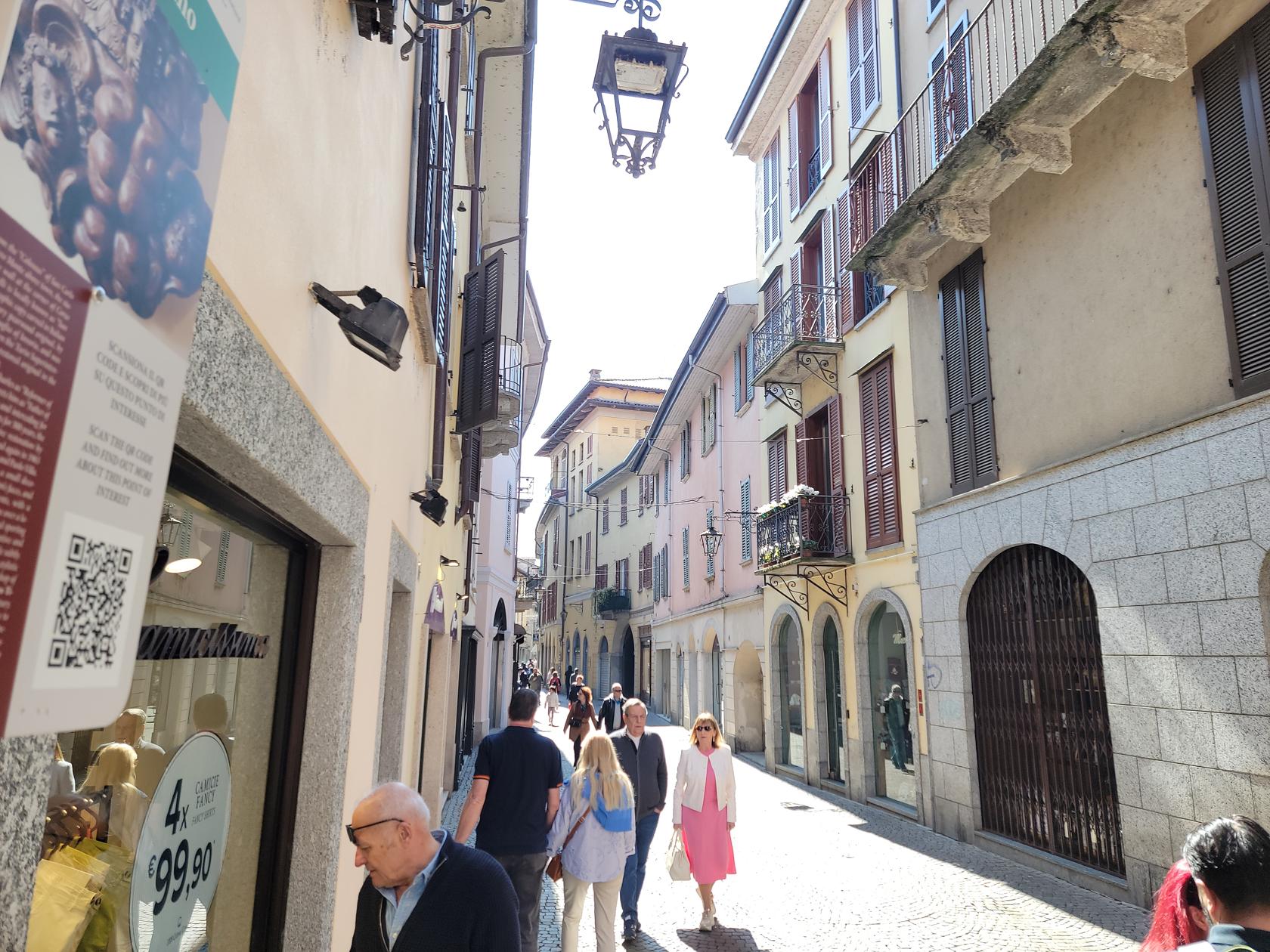
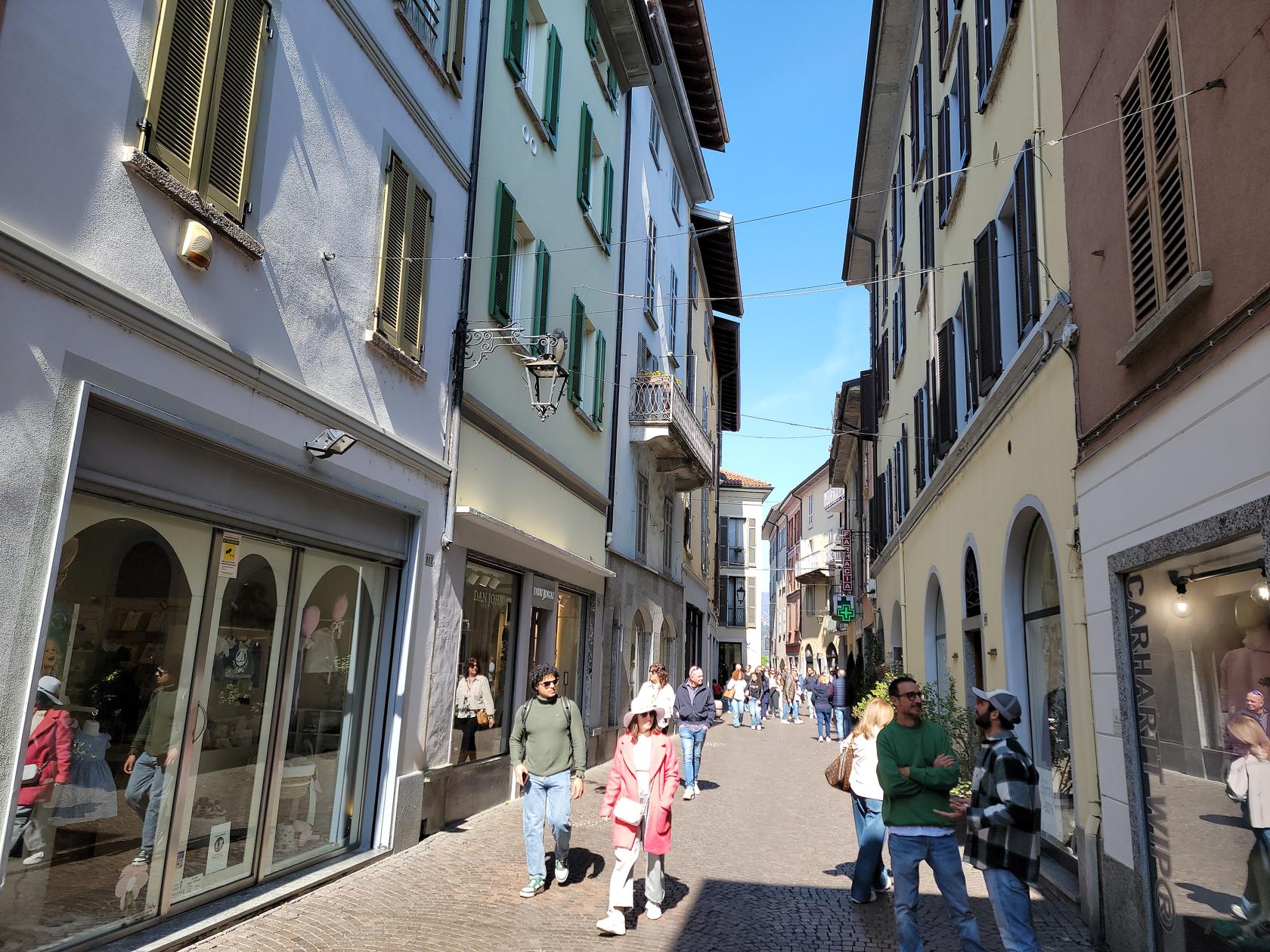
Its main thoroughfare is the Via Cavour. Here you will find most of the shopping, with restaurants available on many of its side streets.
Statue – Via Cavour – Arona, Italy
Main shopping street – Via Cavour – Arona, Italy
Main shopping street – Via Cavour – Arona, Italy
Getting There
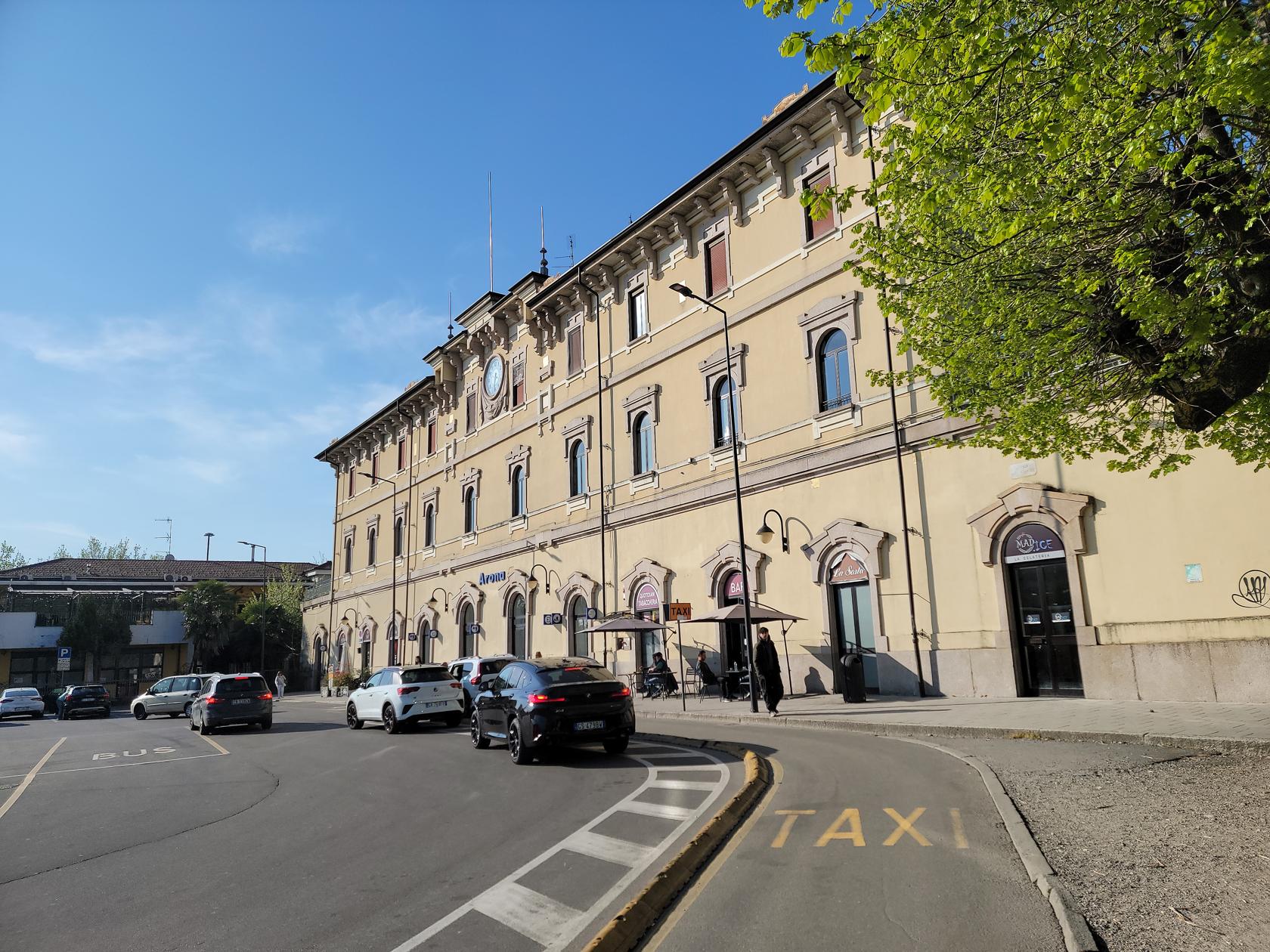
From Stresa we took the Regional Express, which runs from Milan to Domodossola. The ride takes about ten minutes in the direction of Milan and for this trip costs around €3.30 per person per direction.
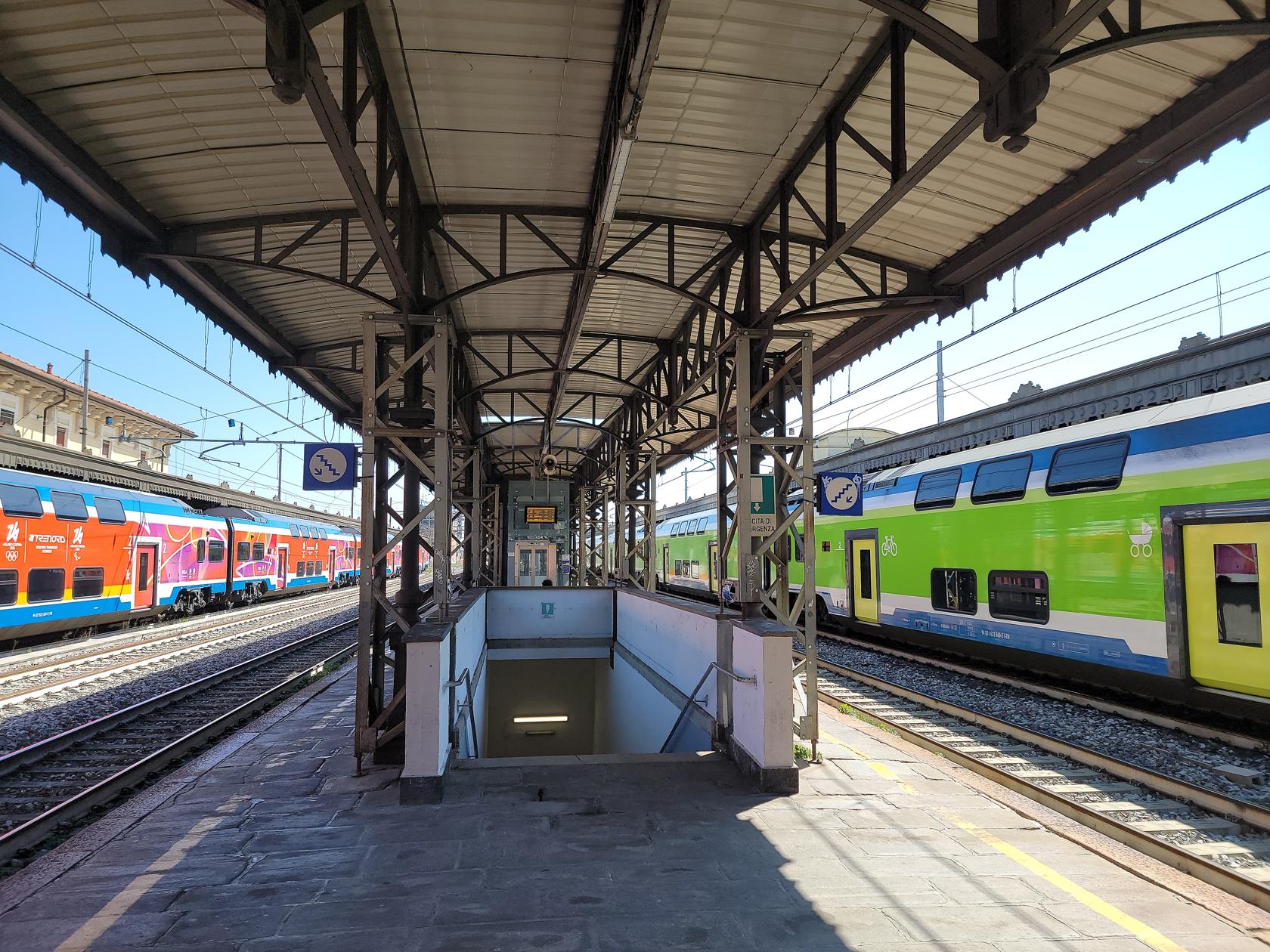
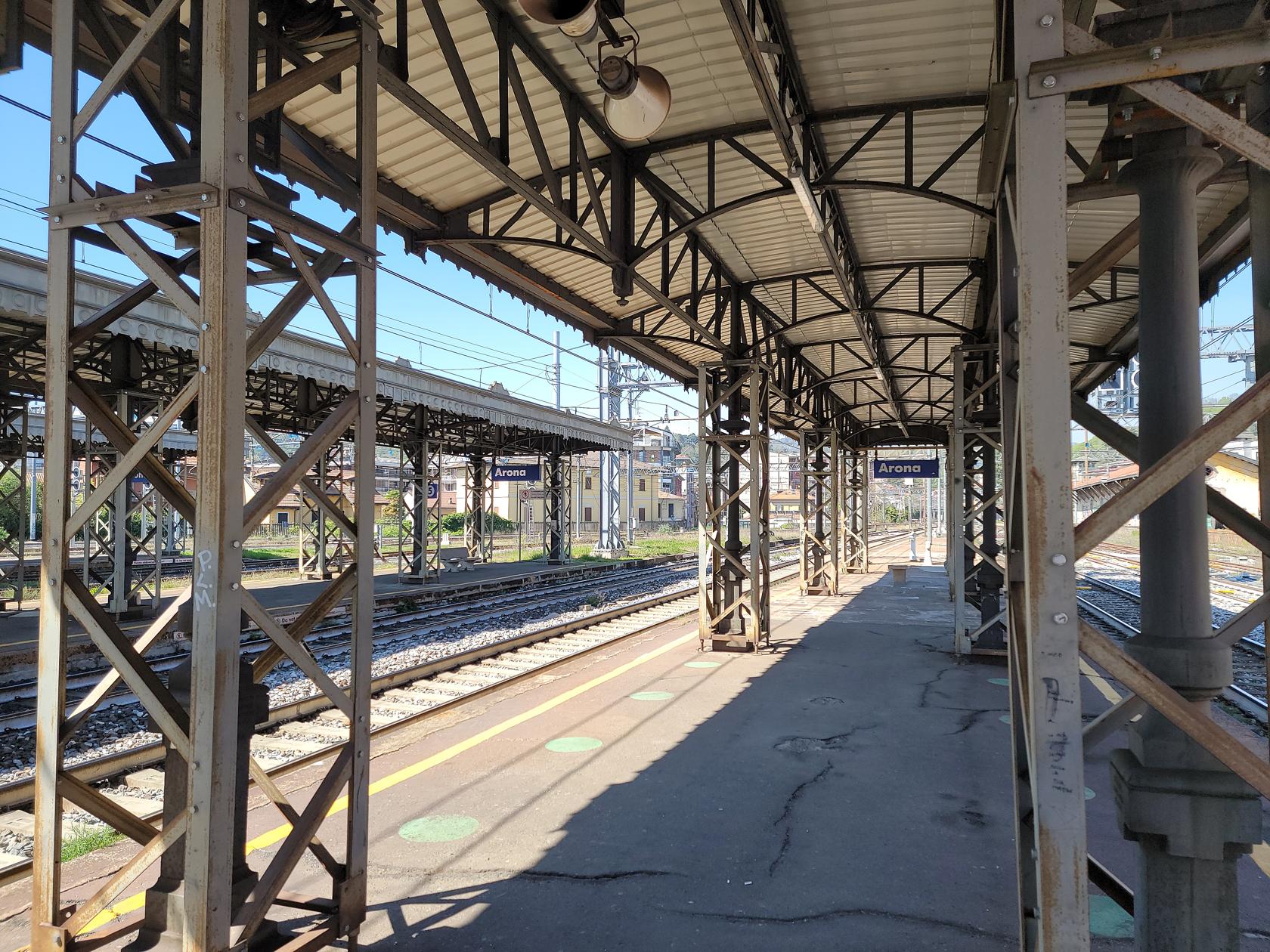
Train Station – Arona, Italy
Train Station – Arona, Italy
Train Station – Arona, Italy
Church of San Graziano
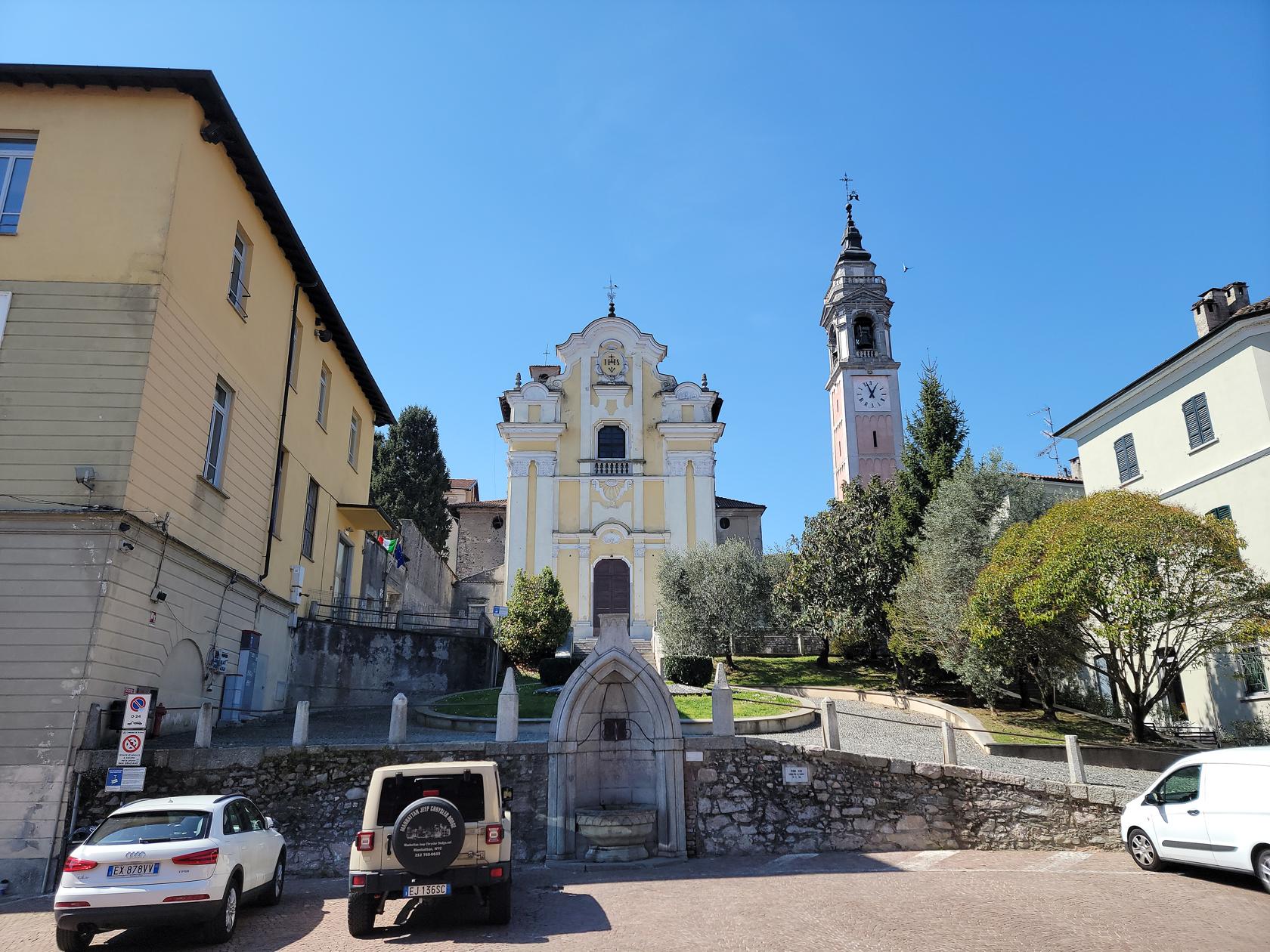
Also known as the Santi Martiri is a Roman Catholic chuch in Arona on the hill where Piazza San Graziano is located. We noted the church as we passed by, but did not walk the stairs to enter, since we were on our way back to the train station.
Church of the Martyred Saints of San Graziano – Arona, Italy
Collegiate Church of Arona
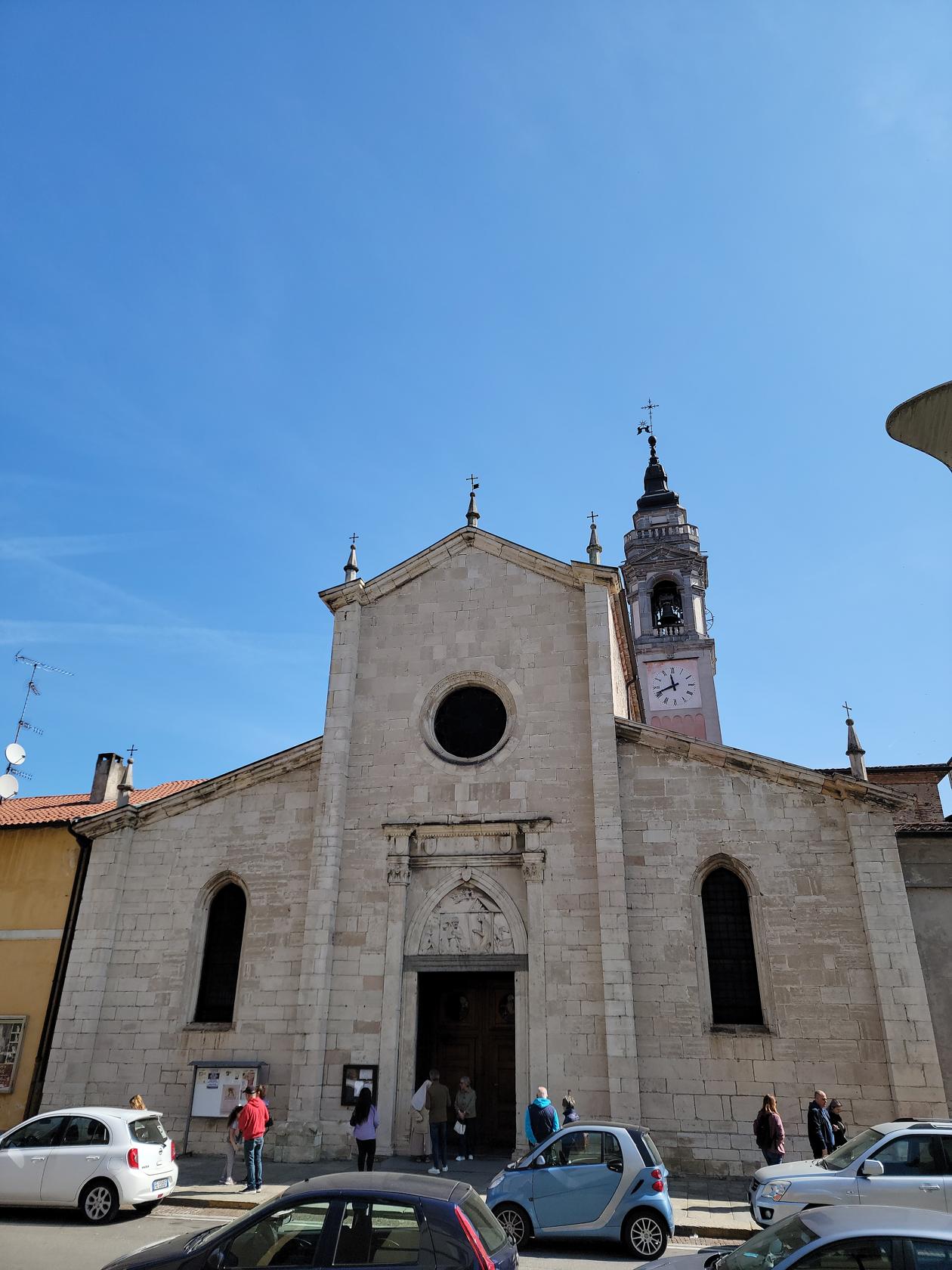
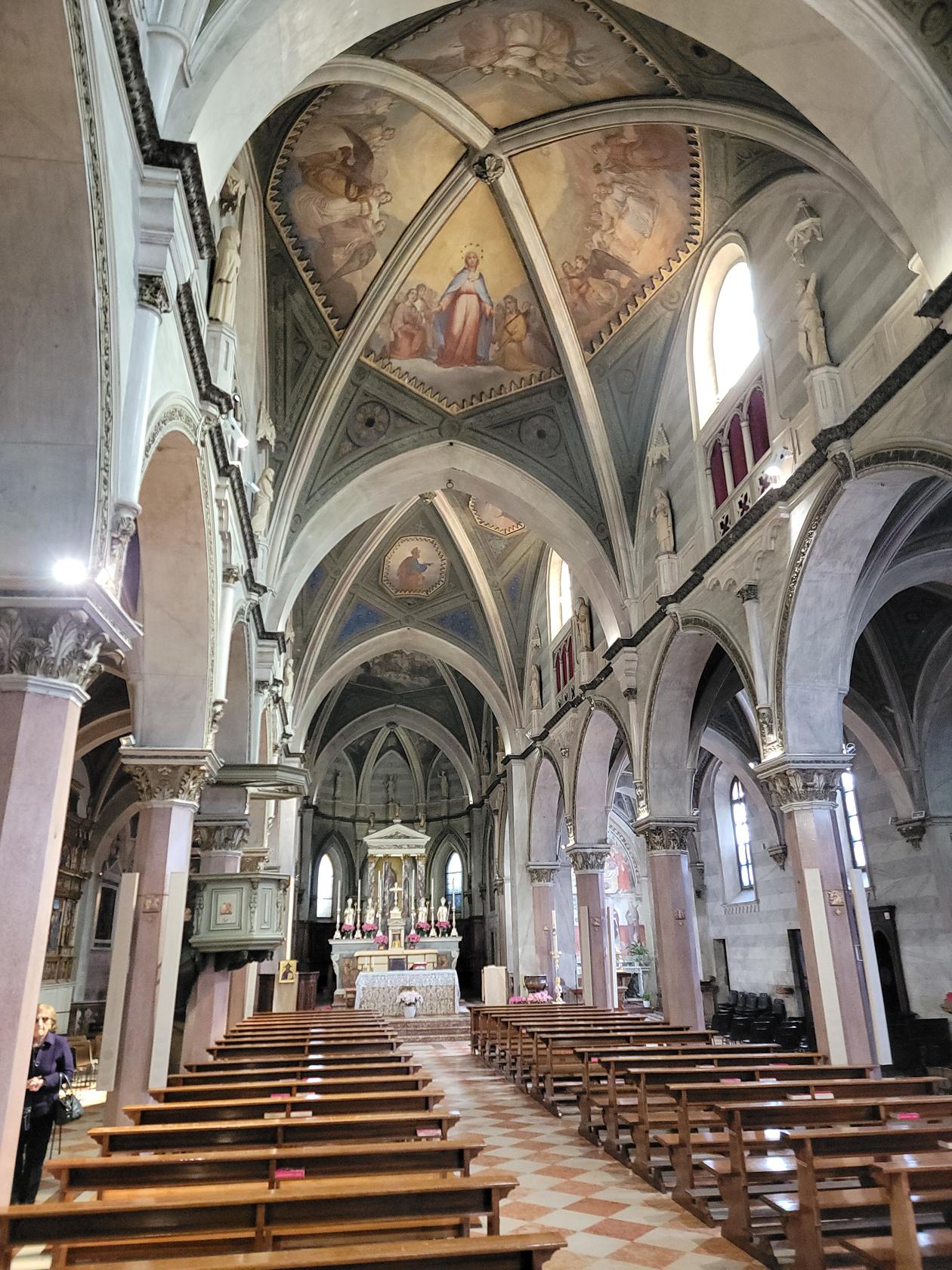
The Collegiate Church of Arona is also referred to as the New Church, or the Collegiate Church of the Nativity of the Virgin Mary. It has a long history dating back to the mid fifteenth century and was actually consecrated before its completion, in order to resolve internal issues and from competition with Santi Martiri, which was being built at the same time.
Entrance – Collegiata di Santa Maria Nascente – Arona, Italy
Nave – Collegiata di Santa Maria Nascente – Arona, Italy
Arona Castle
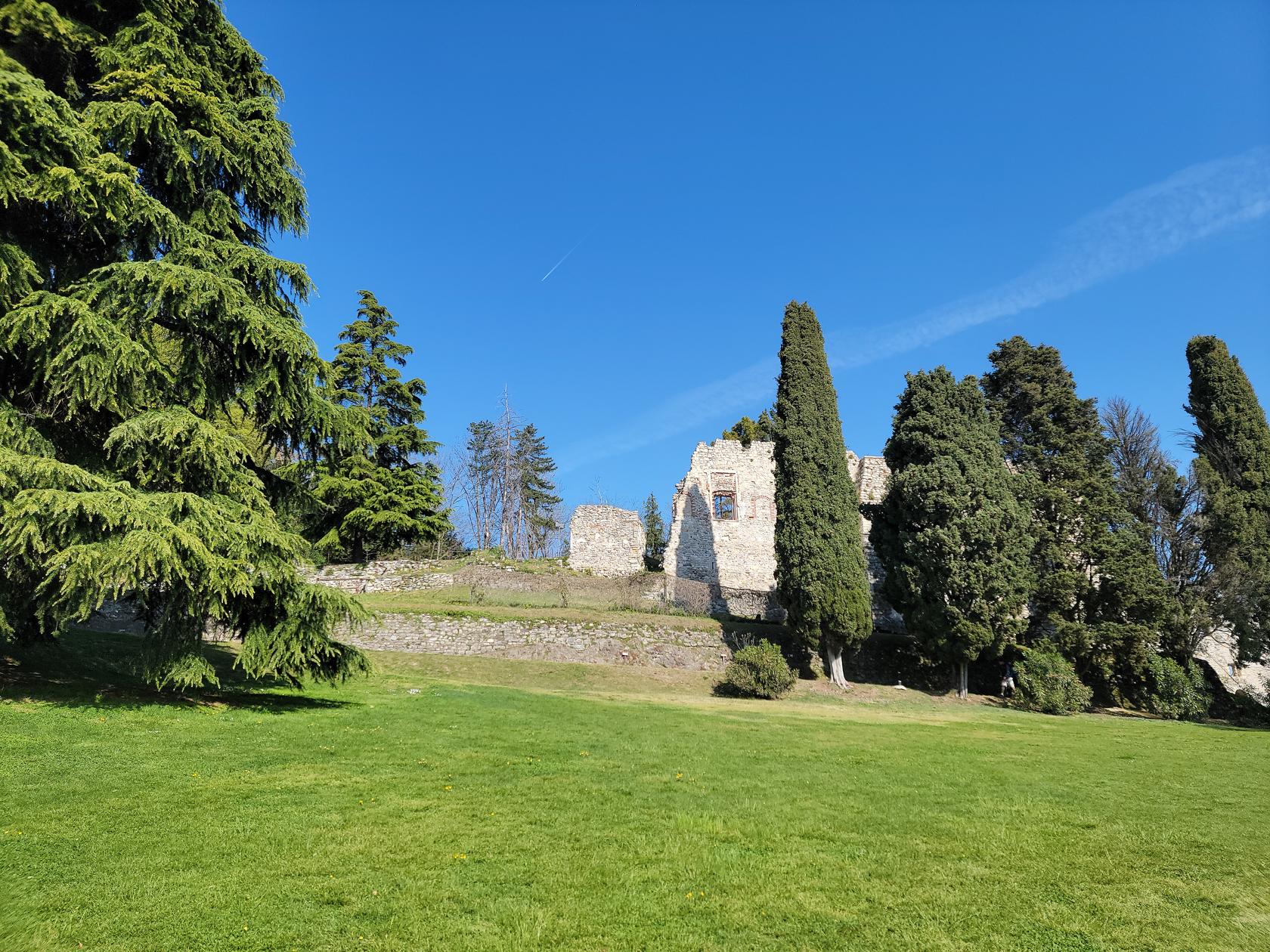
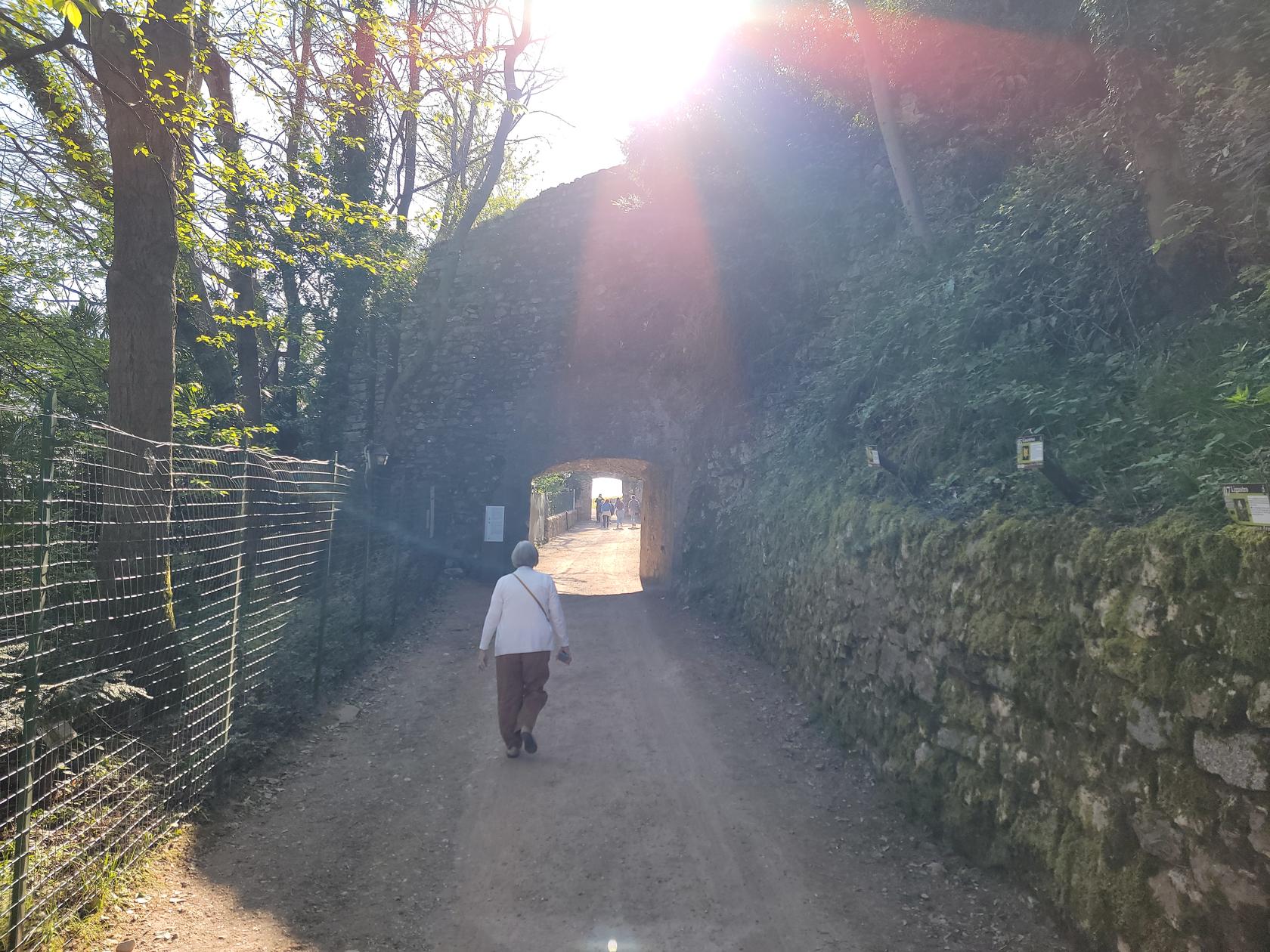
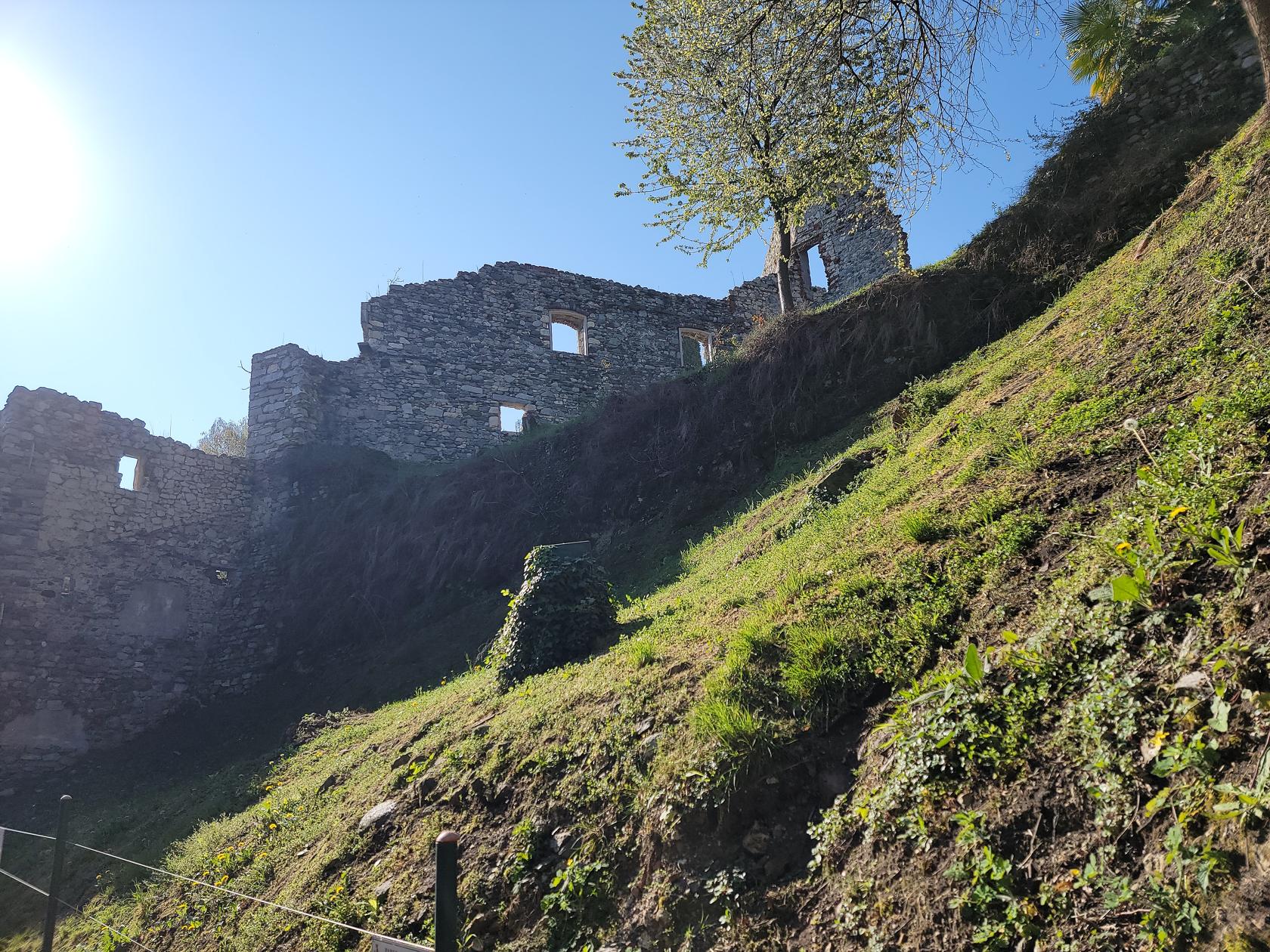
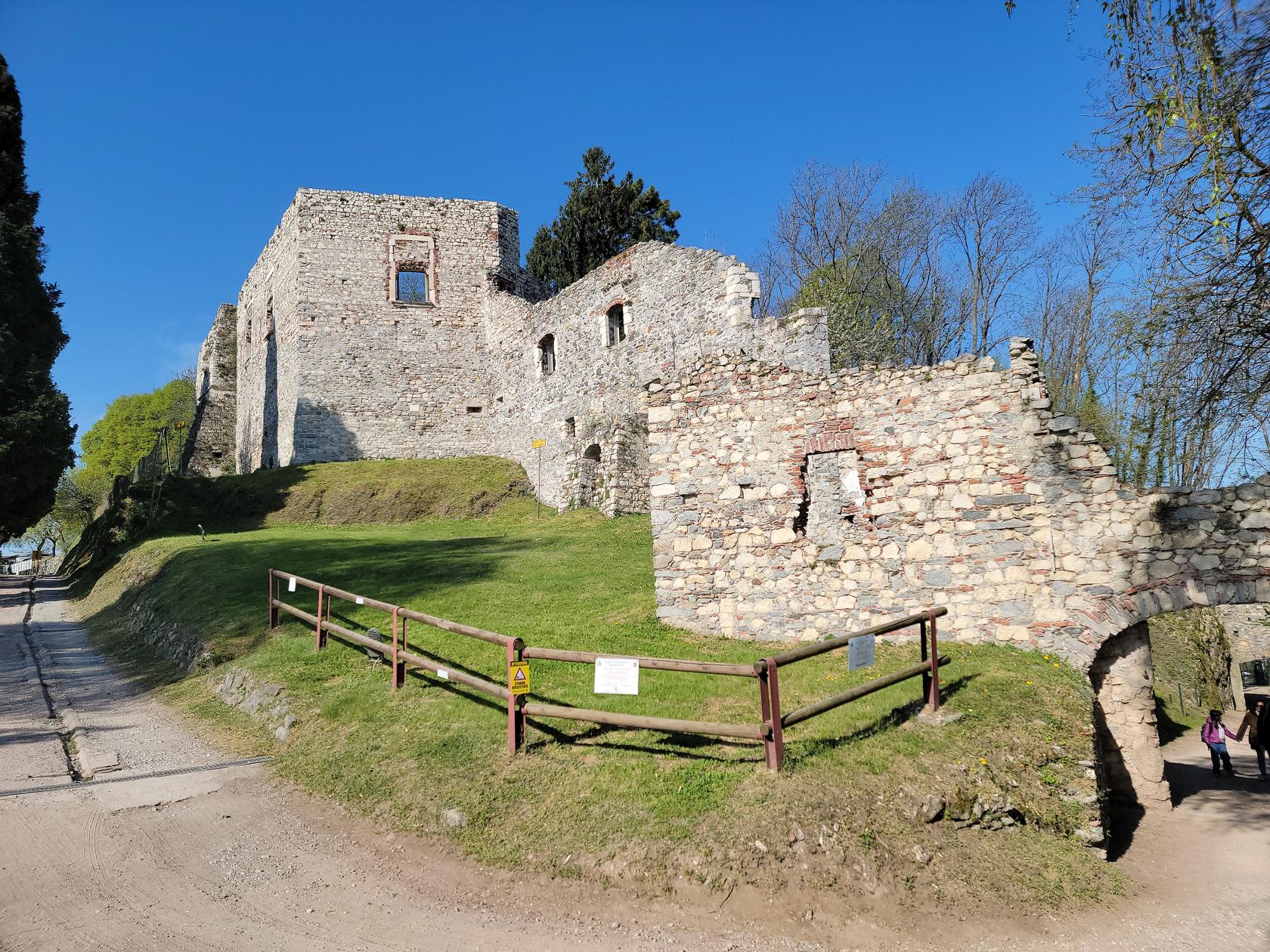
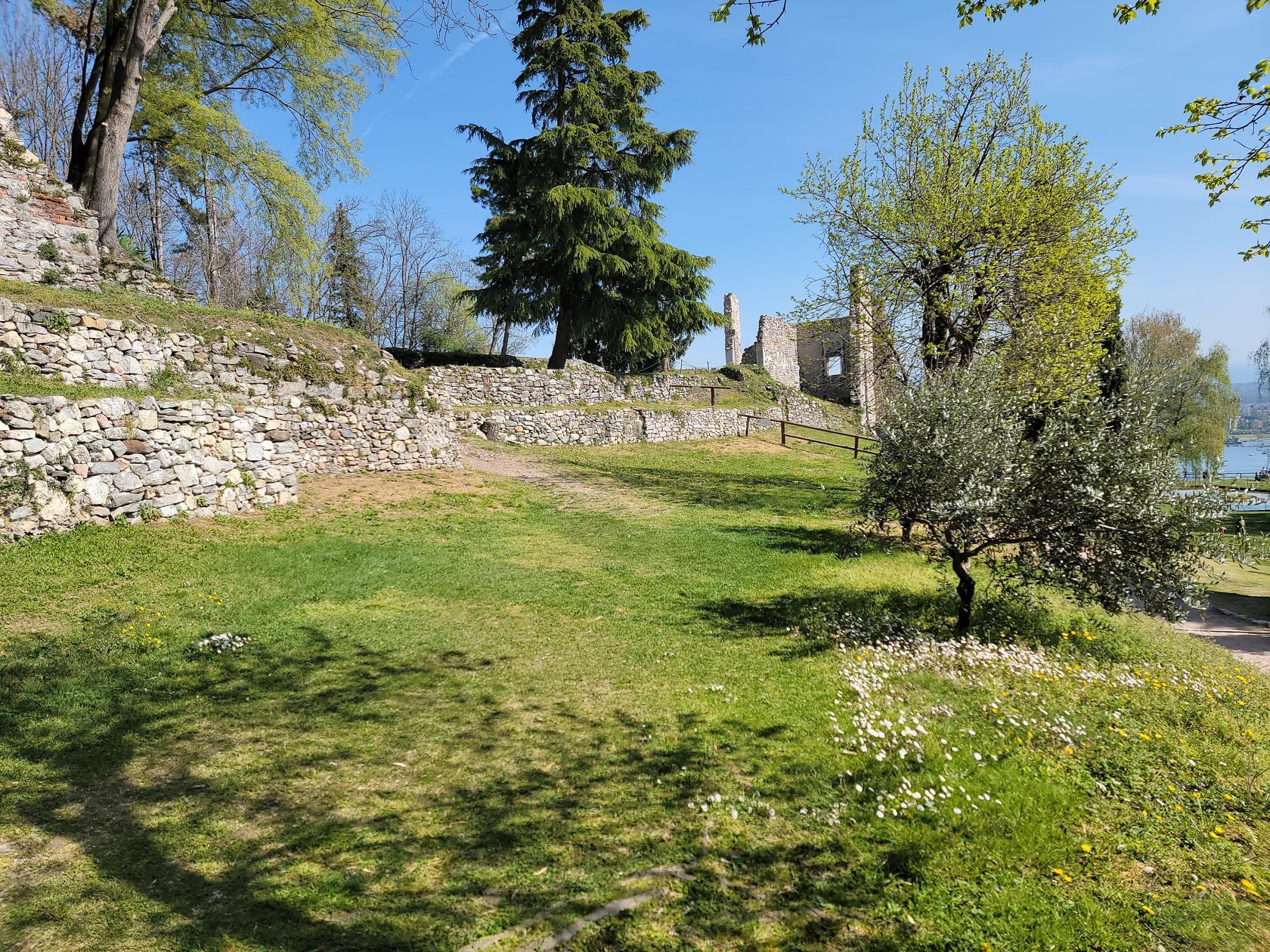
More people come here for the Rocca Park, wherein the castle resides, and not for the castle itself, since there is actually not much of it to see.
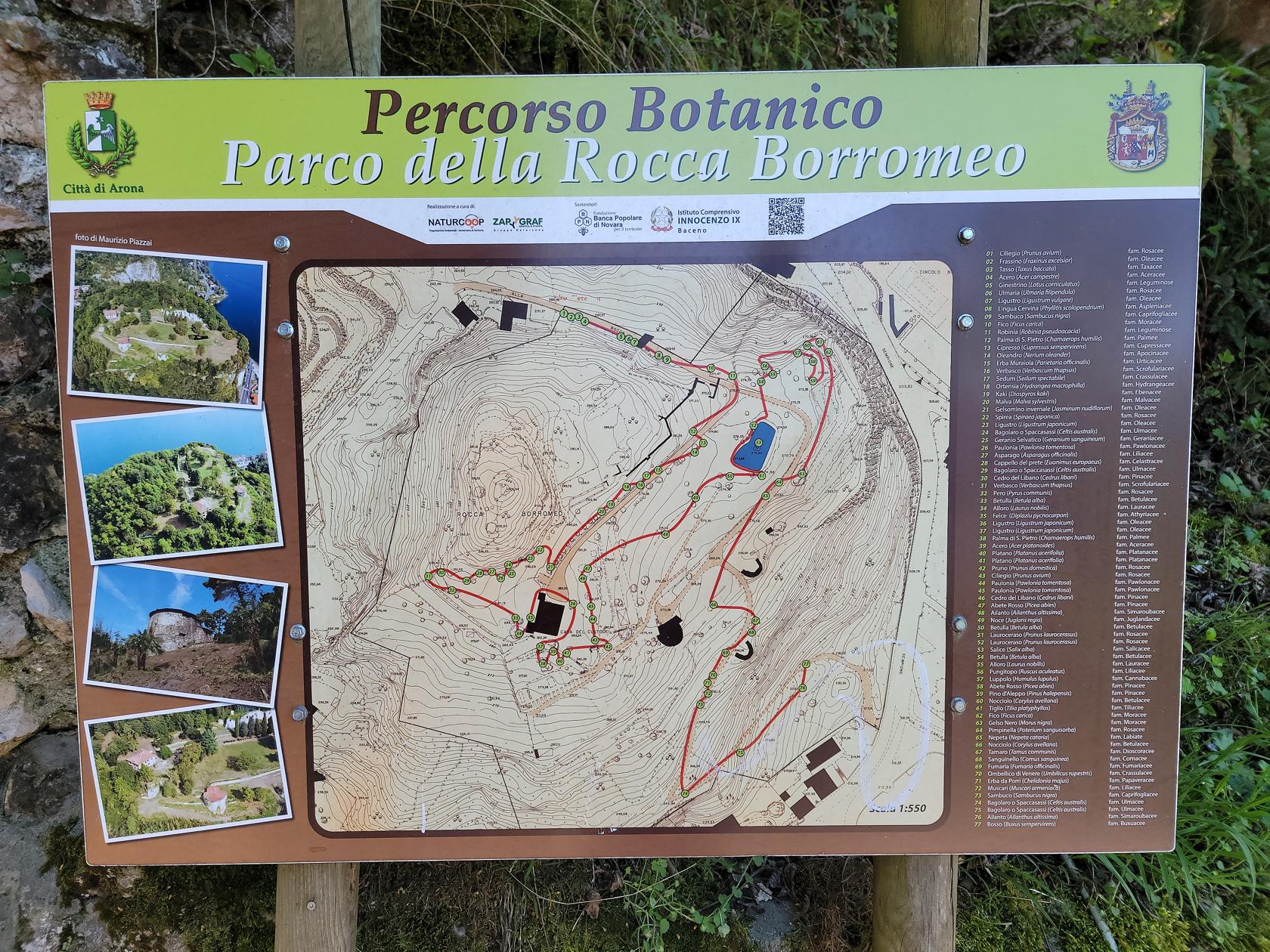
Borromeo Castle Park – Arona, Italy
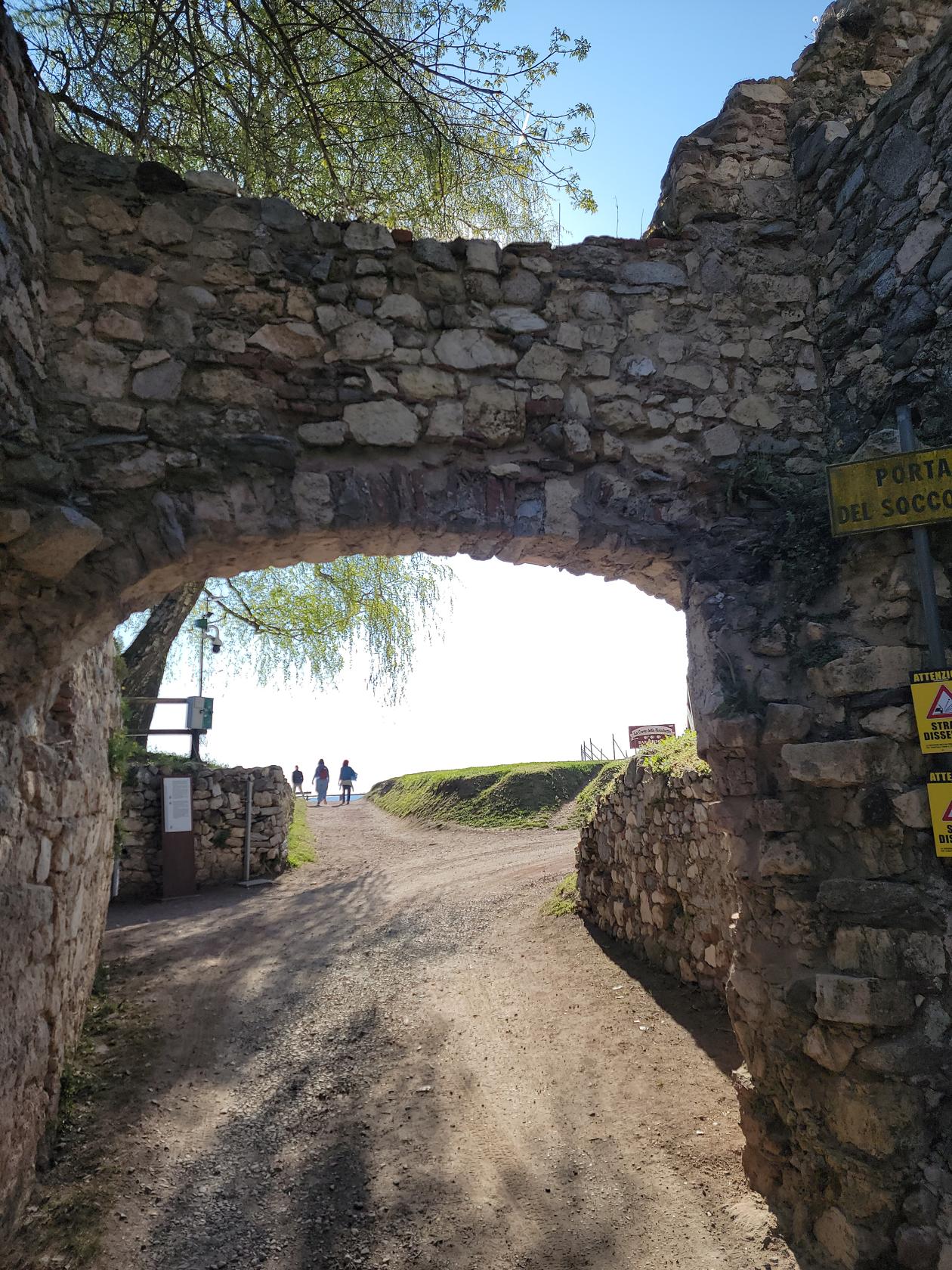
Borromeo Castle – Arona, Italy
Borromeo Castle – Arona, Italy
The Rocca, or castle, apparently dates back to the late tenth century and by the eleventh century it had become a military fortification to defend the Milanese territory. From then on, it was fought over by the Torriani, Viscontis and Borromeo families.
Borromeo Castle – Arona, Italy
Borromeo Castle – Arona, Italy
Borromeo Castle – Arona, Italy
Borromeo Castle – Arona, Italy
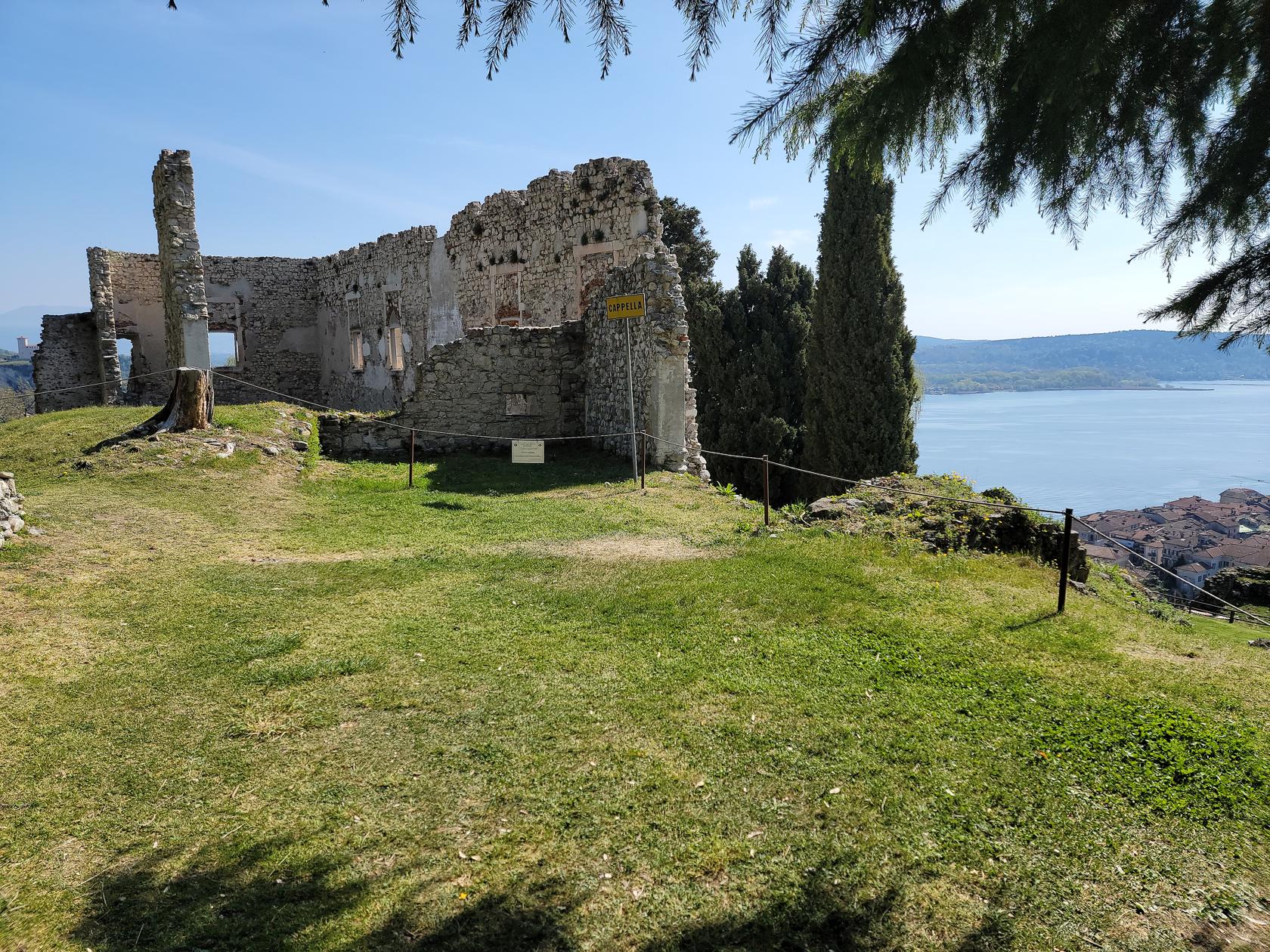
Old Chapel – Borromeo Castle – Arona, Italy
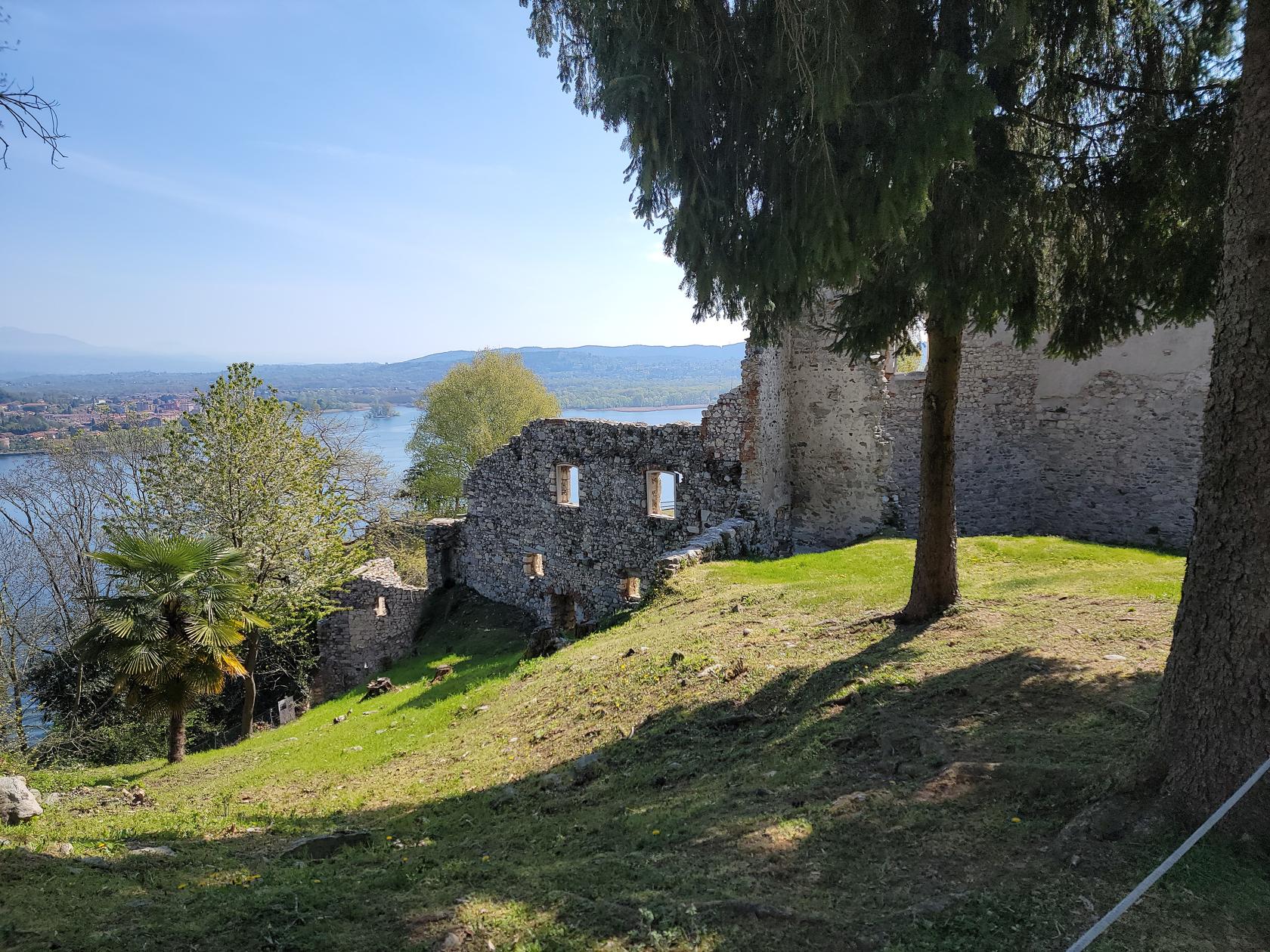
Borromeo Castle – Arona, Italy
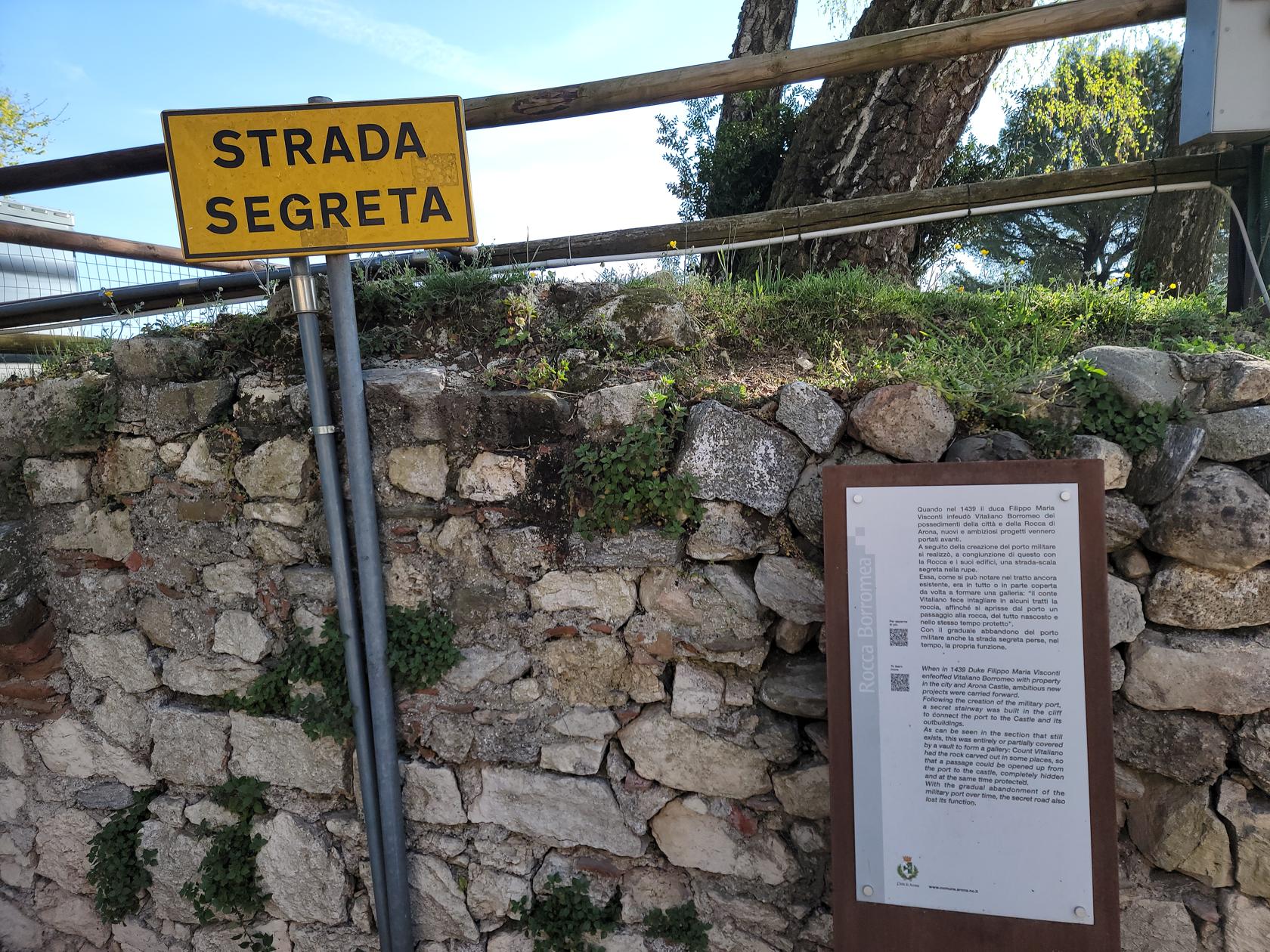
Some time in the fifteenth century, the Viscontis family built a hidden stairway from the port to the castle, so that the two could be connected during times of trouble. Parts of which were hewn from solid rock. After the castle was sacked, the stairway remained, though it is currently cordoned off to visitors.
Secret Street – Borromeo Castle – Arona, Italy
It wasn’t until Napoleon Bonaparte arrived, that the castle was completely destroyed and left in ruin.
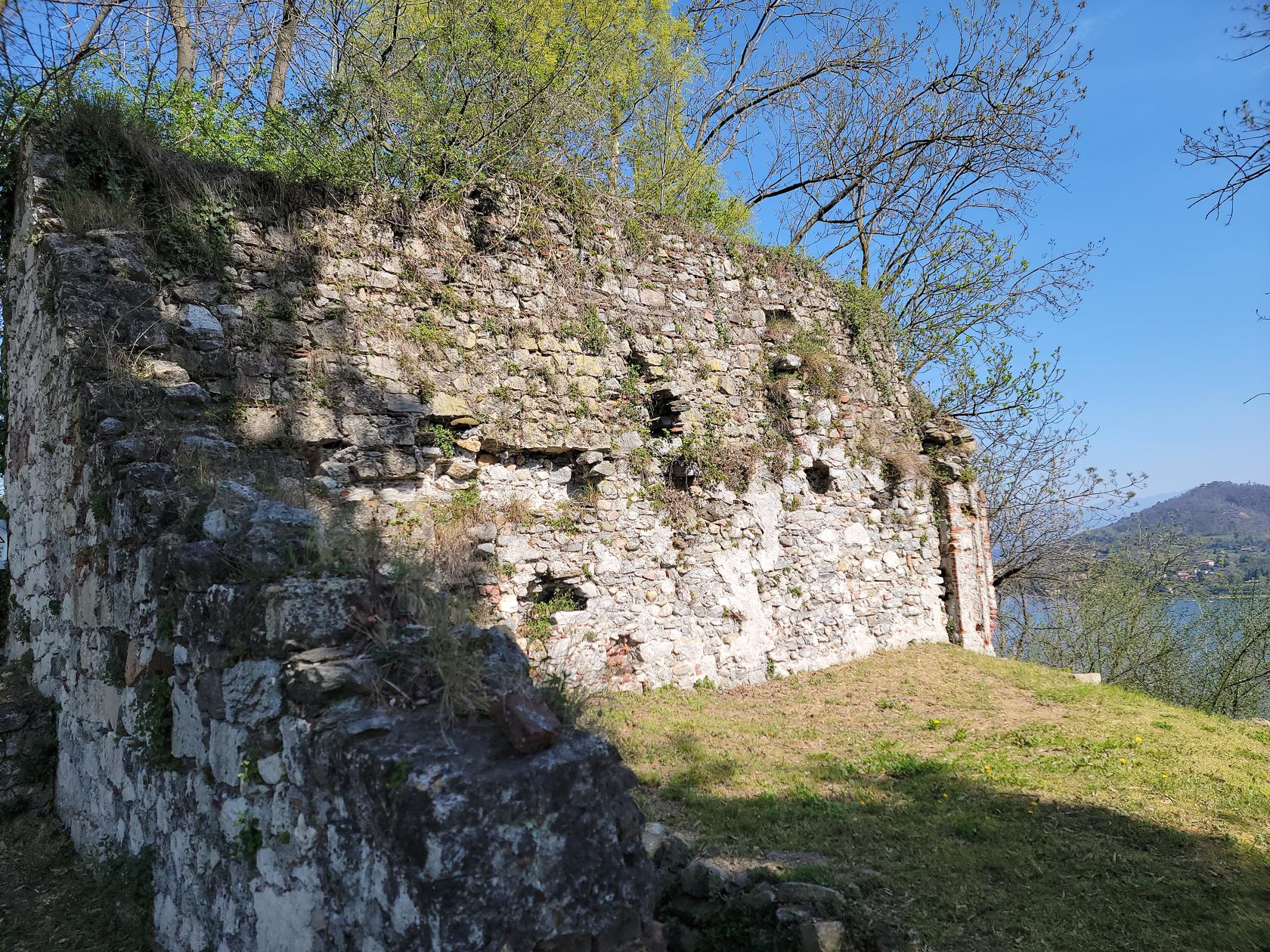
Borromeo Castle – Arona, Italy
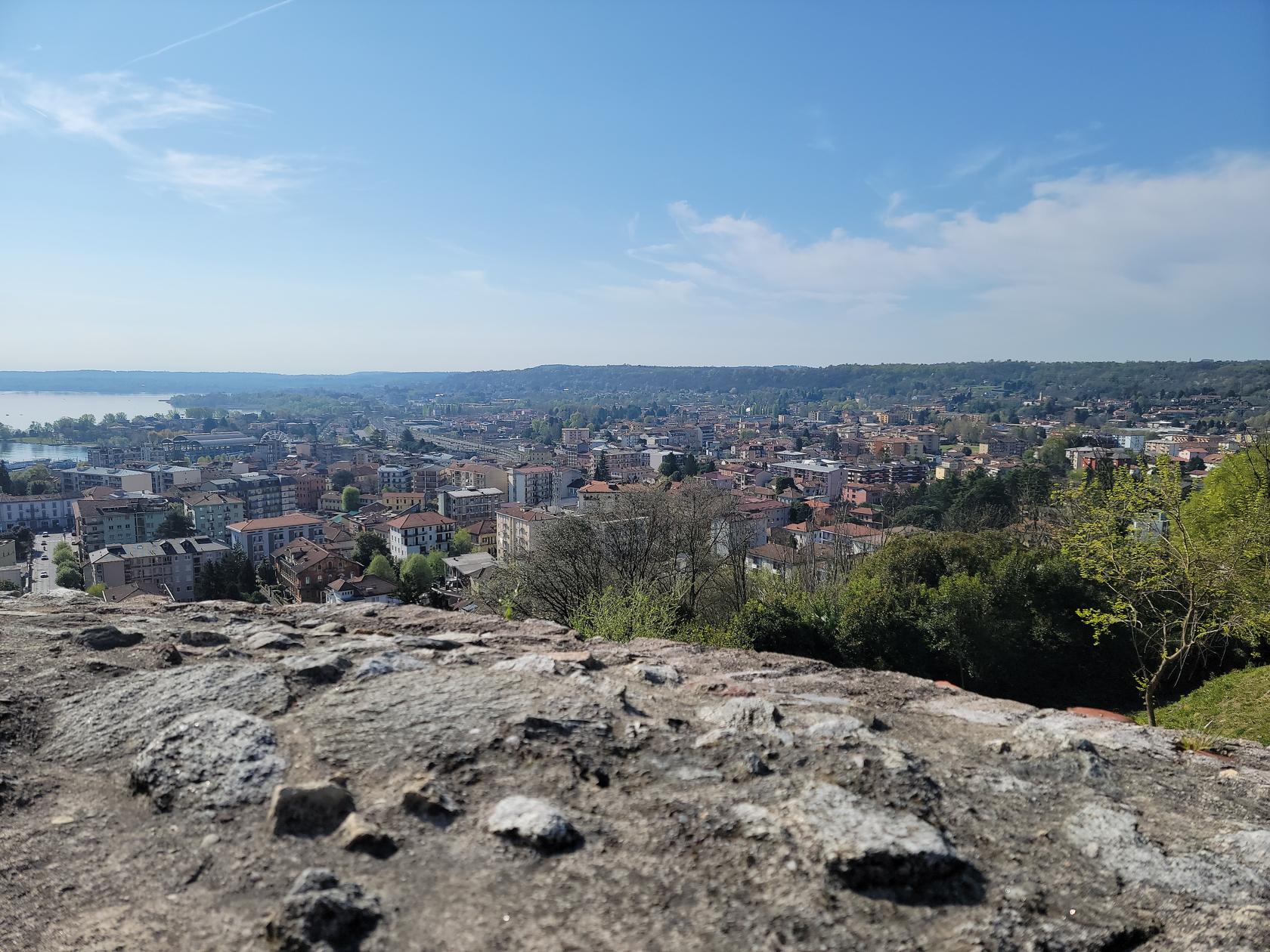
The park however does command a view of the lake and the town itself. One can also get a good view of the Angera Castle on the other side of the lake, which looks a lot more impressive than the one in Arona.
Arona – Borromeo Castle – Arona, Italy
Arona – Borromeo Castle – Arona, Italy
Lake Maggiore and Arona – Borromeo Castle – Arona, Italy
Lake Maggiore – Borromeo Castle – Arona, Italy
There is a small cafe where you can also stop and get some refreshment and enjoy the views.
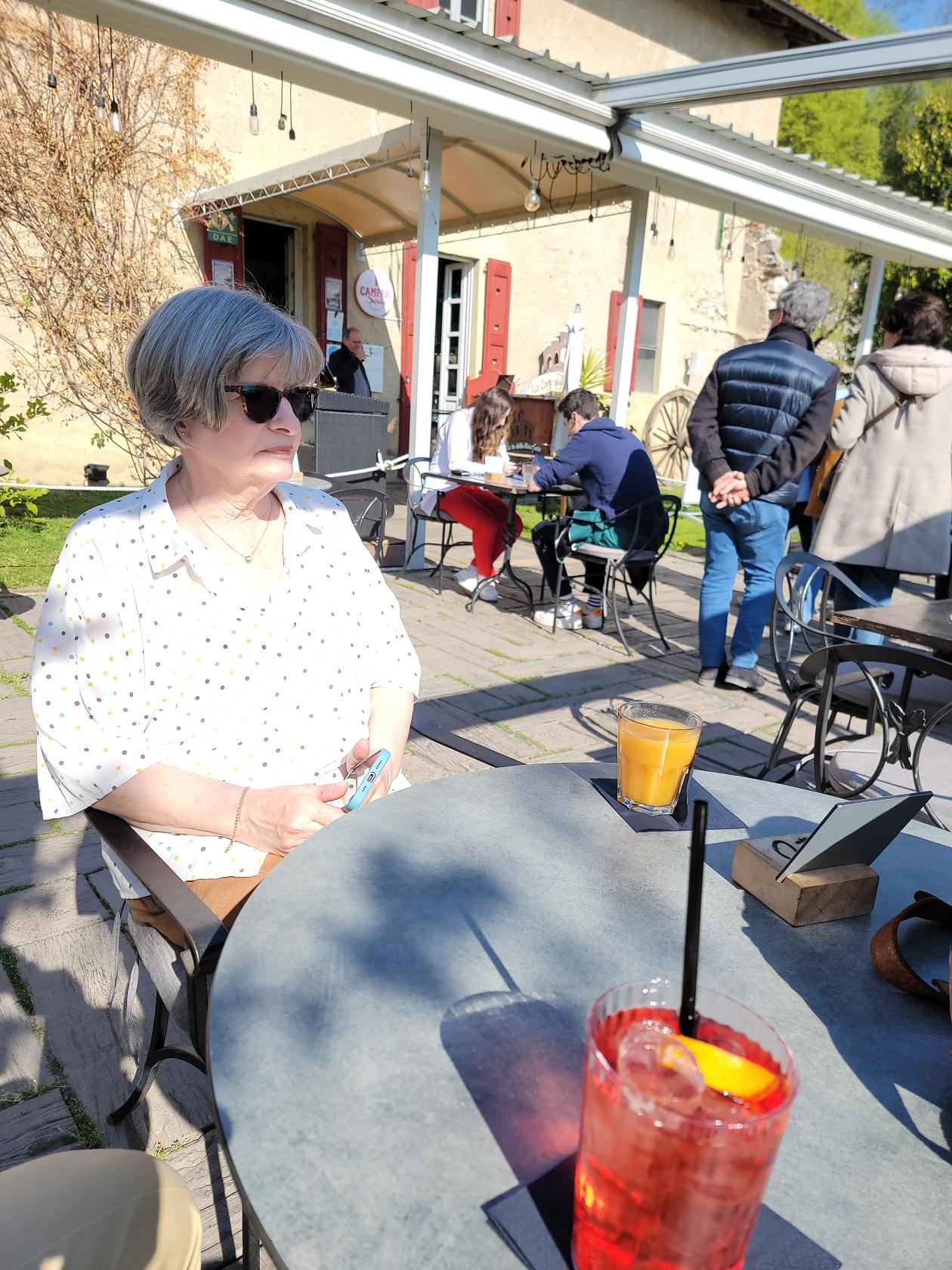
Patti at cafe – Borromeo Castle – Arona, Italy
Restaurants
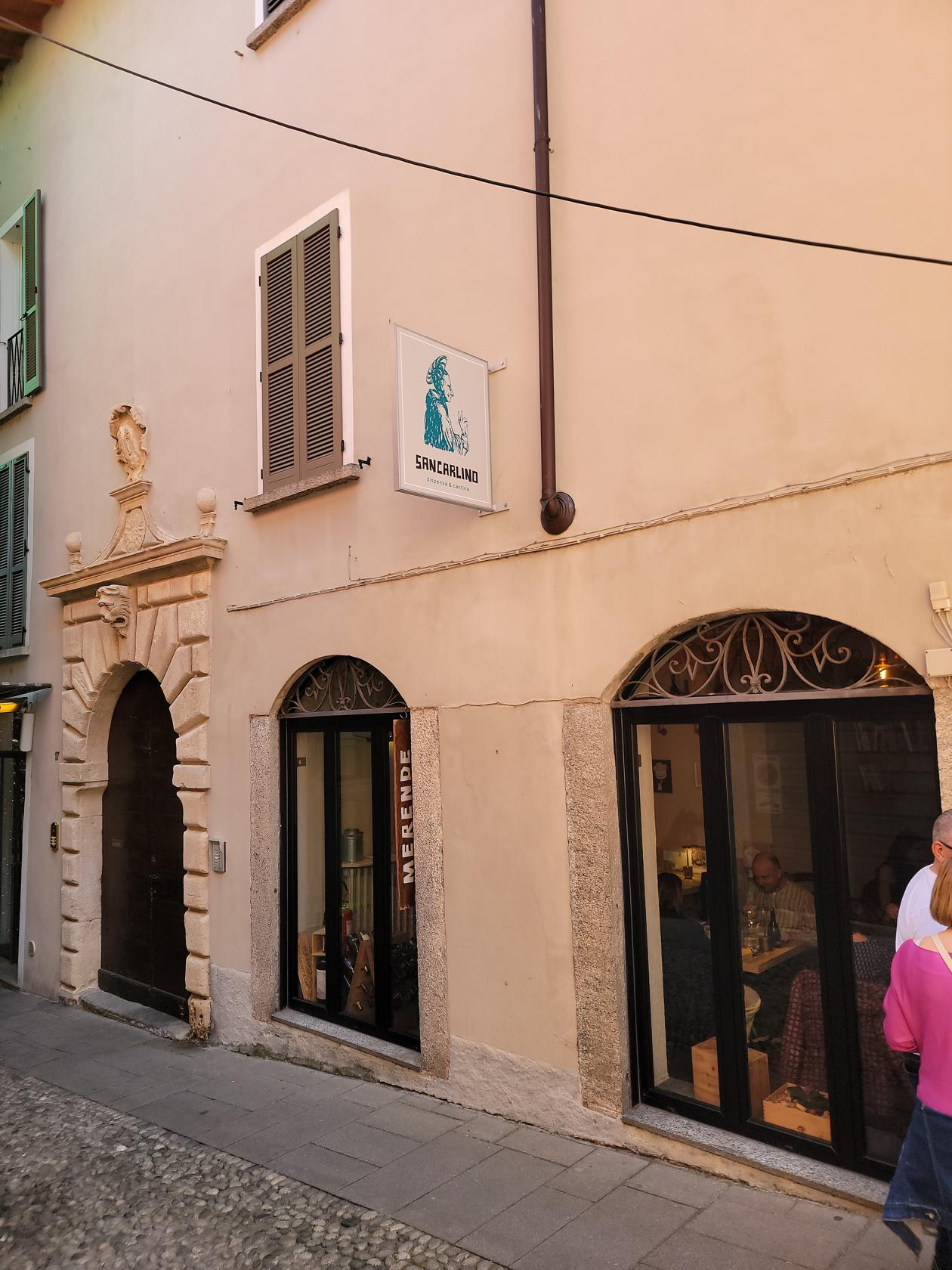
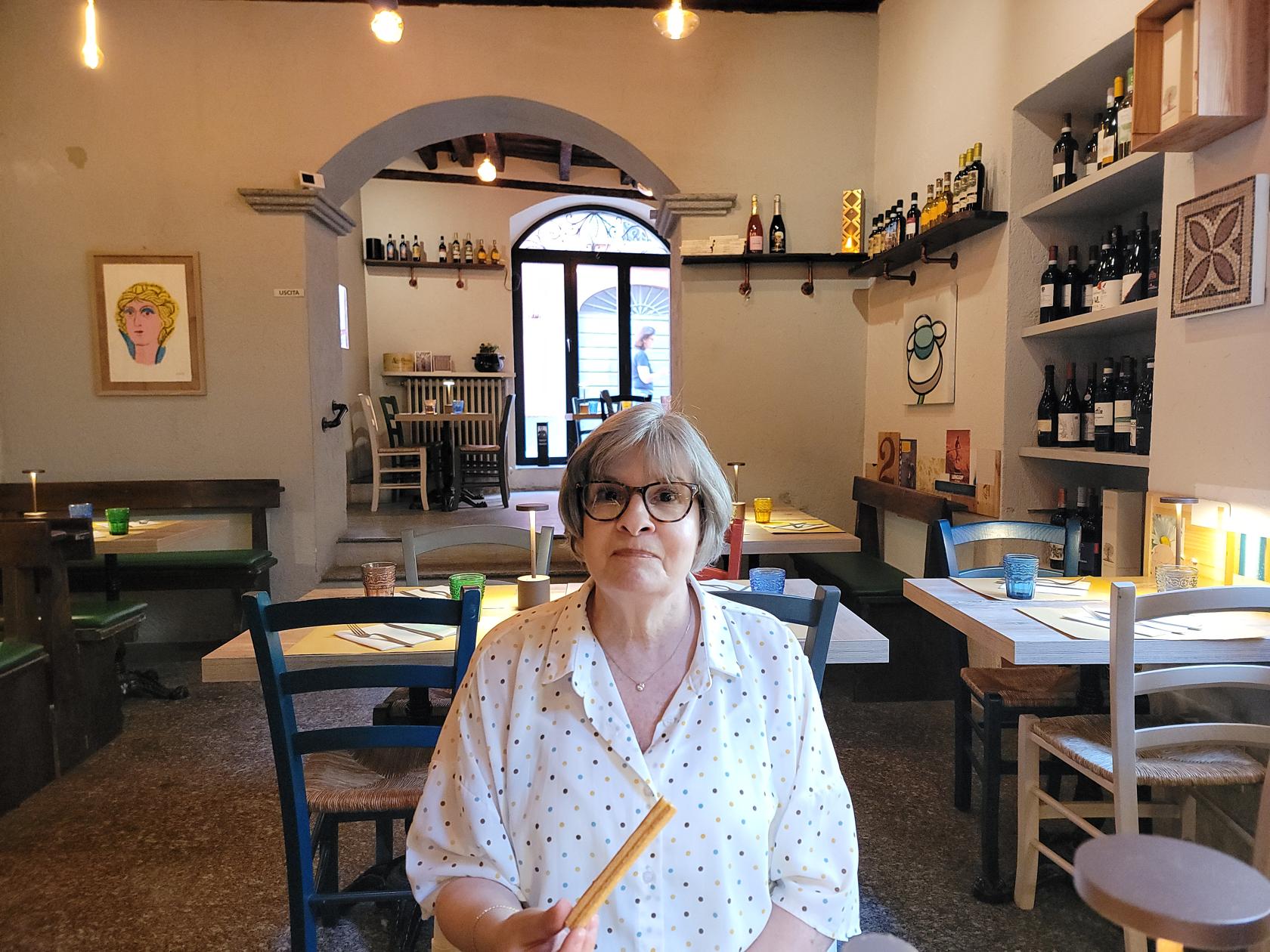
Sancarlino
A small place with fewer than a dozen tables. It has good food and will get full after about 12:30, so get there early at opening for a seat. While we were eating, they were turning people away.
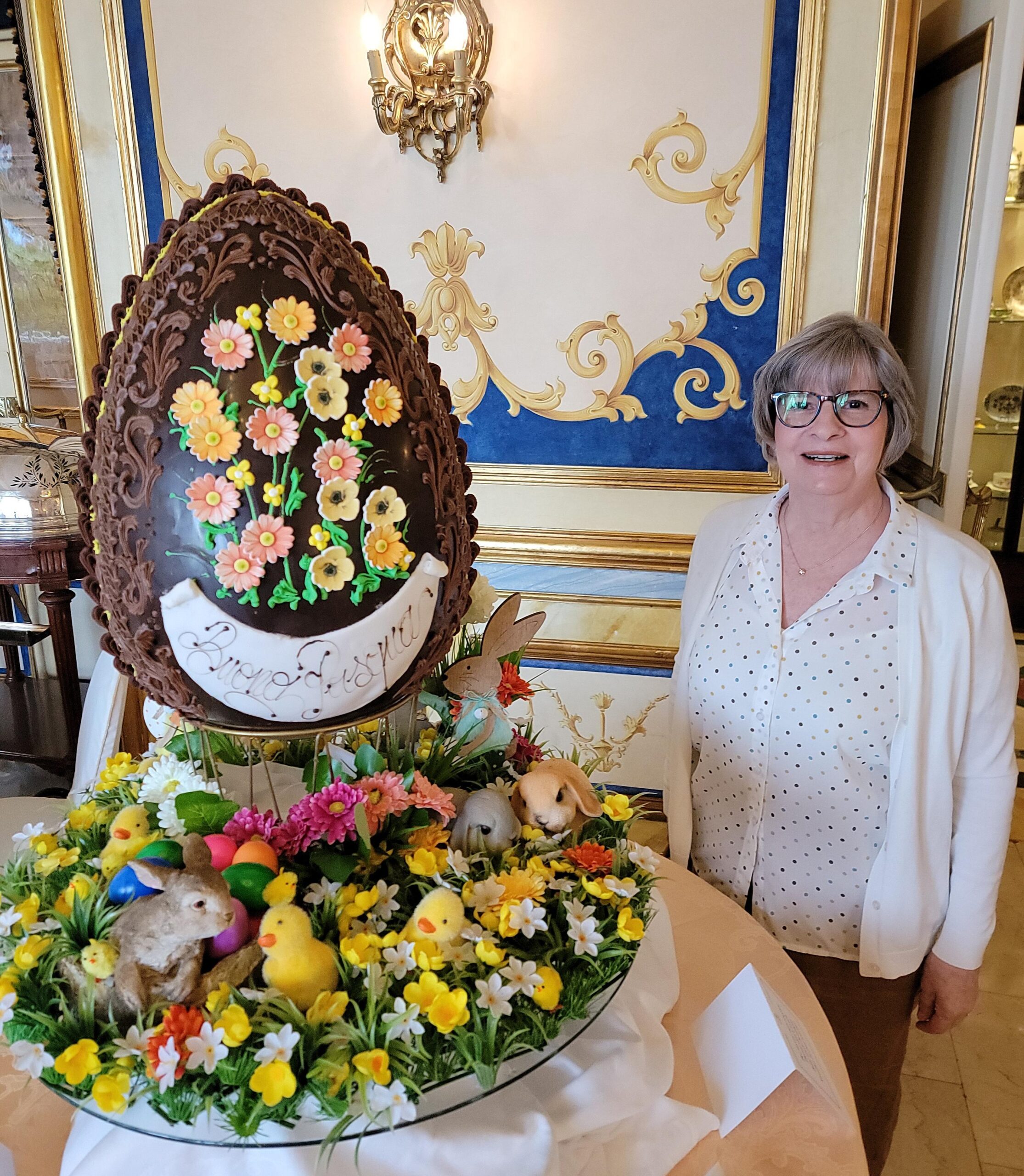
Enjoying the beautiful weather in Turin, we looked at each other one day and exclaimed it was time to go somewhere local again. Seeing a weather prediction of rain about a week and half out, we decided to travel to Stresa and Lake Maggiore for our Easter weekend. Little did we know, everyone else in Italy, France and Germany was thinking the same thing! So be warned, Easter may be a very busy weekend on the lake.
Patti and the giant Easter Egg – Easter – Regina Palace Hotel – Stresa, Italy
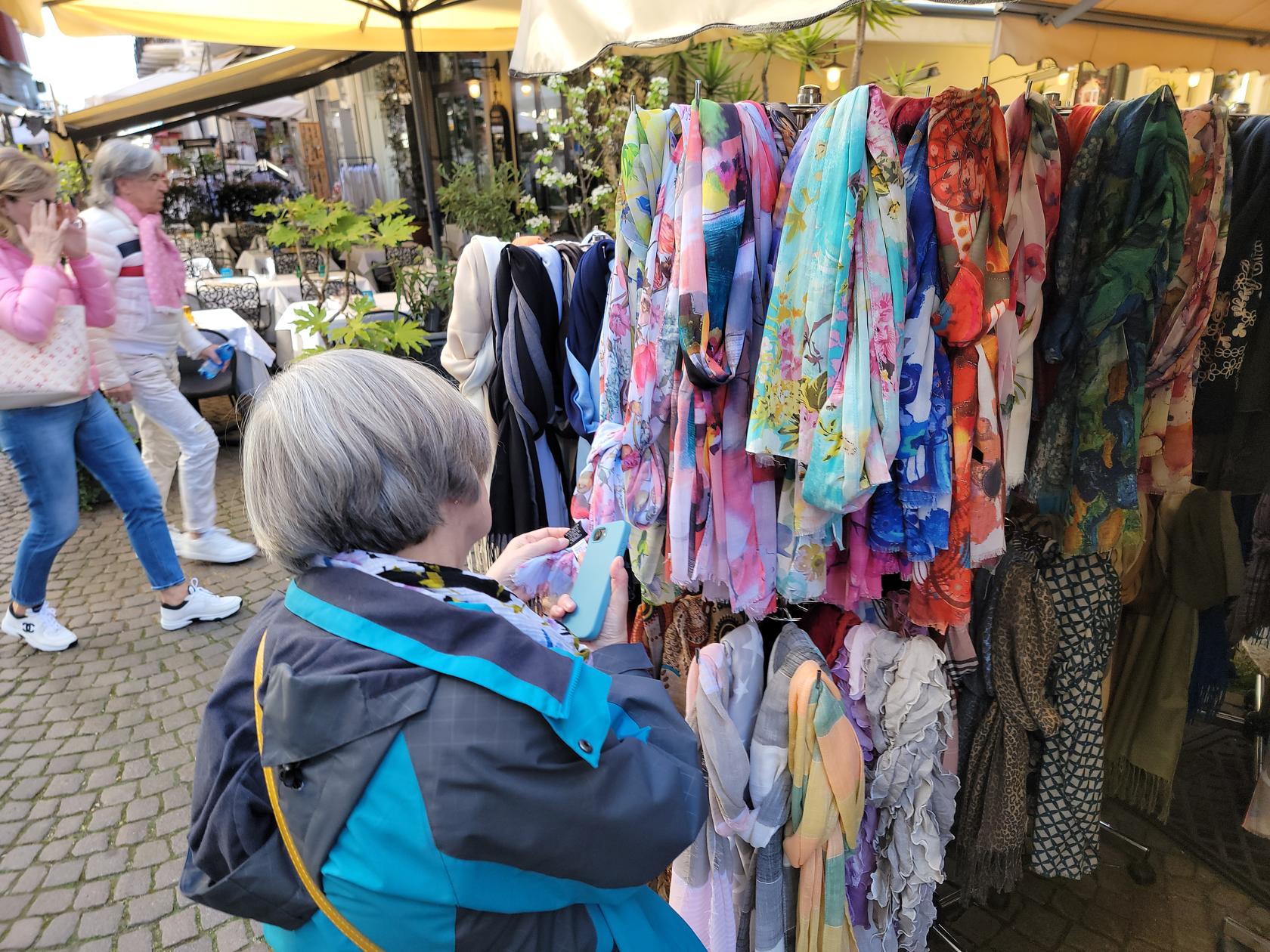
Patti Browsing Scarfs – Stresa, Italy
Stresa
We have been in Stresa before and enjoyed it thoroughly the last time. We rebooked the same hotel for five nights and left Turin, destined for new adventures in this beautiful lake area.
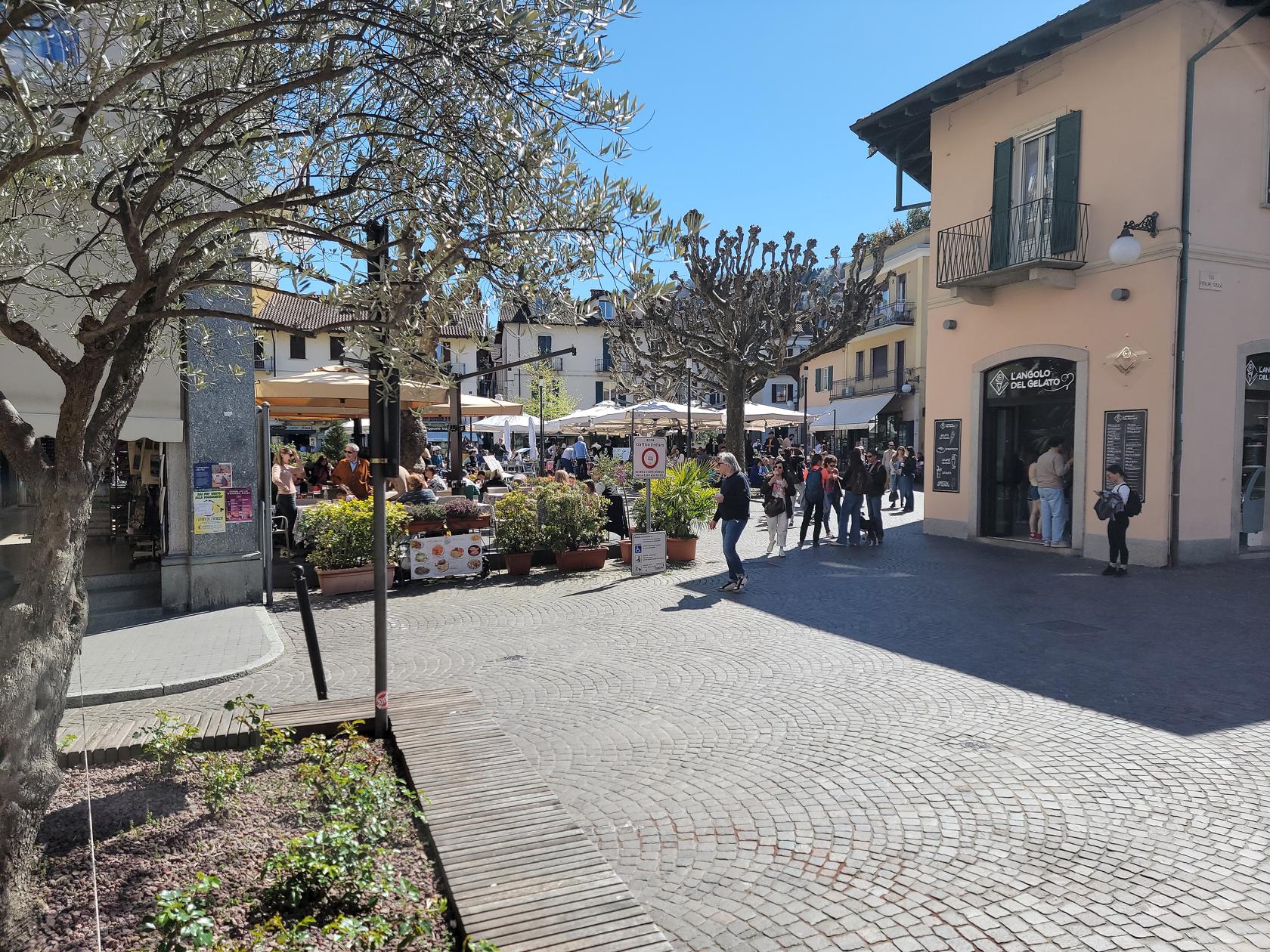
Piazza Luigi Cardona – Stresa, Italy
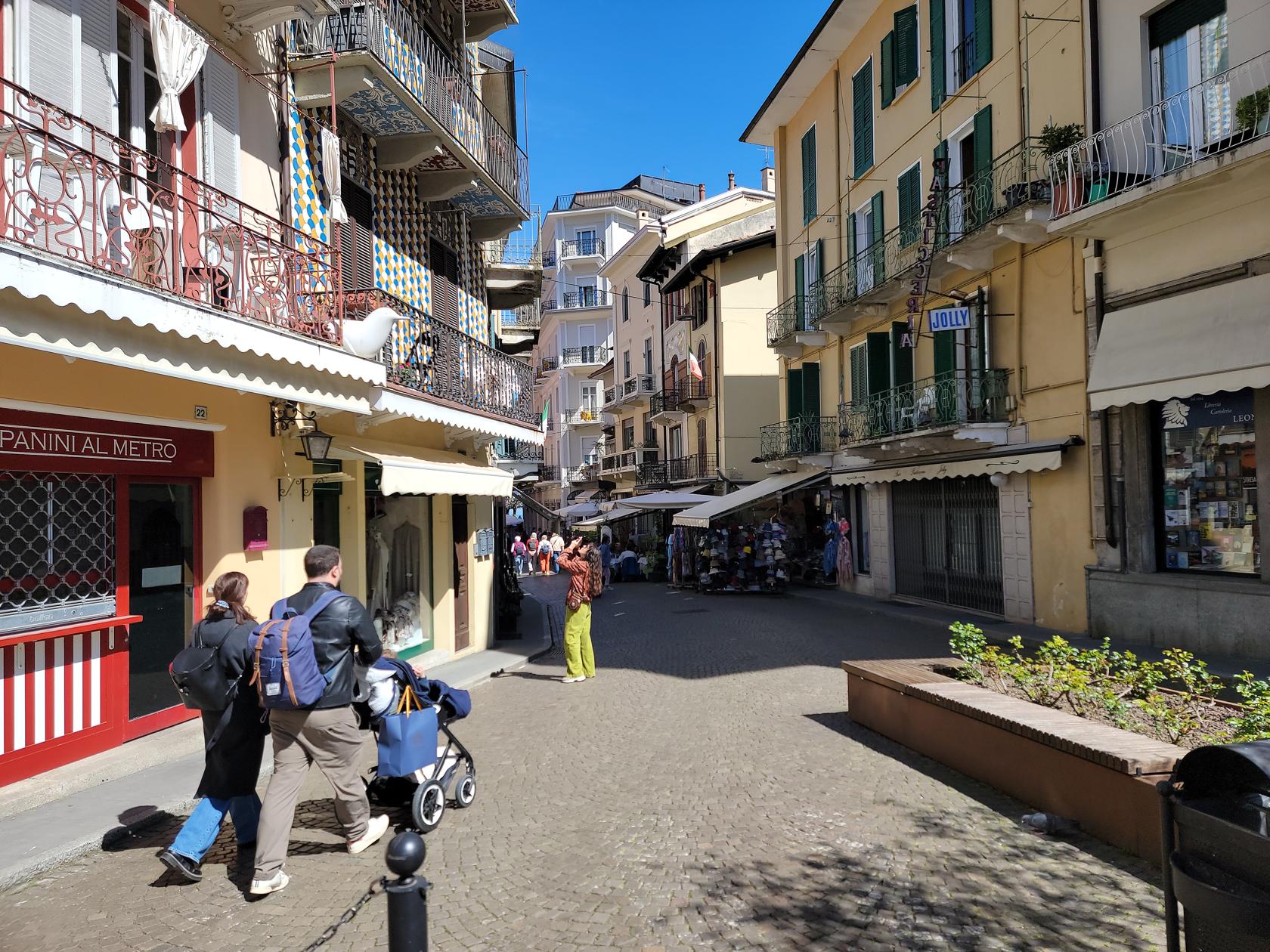
Via Principe Tomaso – Stresa, Italy
Getting There
From Turin we took the Freccia Rossa from Torino Porta Nuovo to Milan Rho-Fiera and then one of the Regional Express trains to Stresa for a total trip time of about two hours.
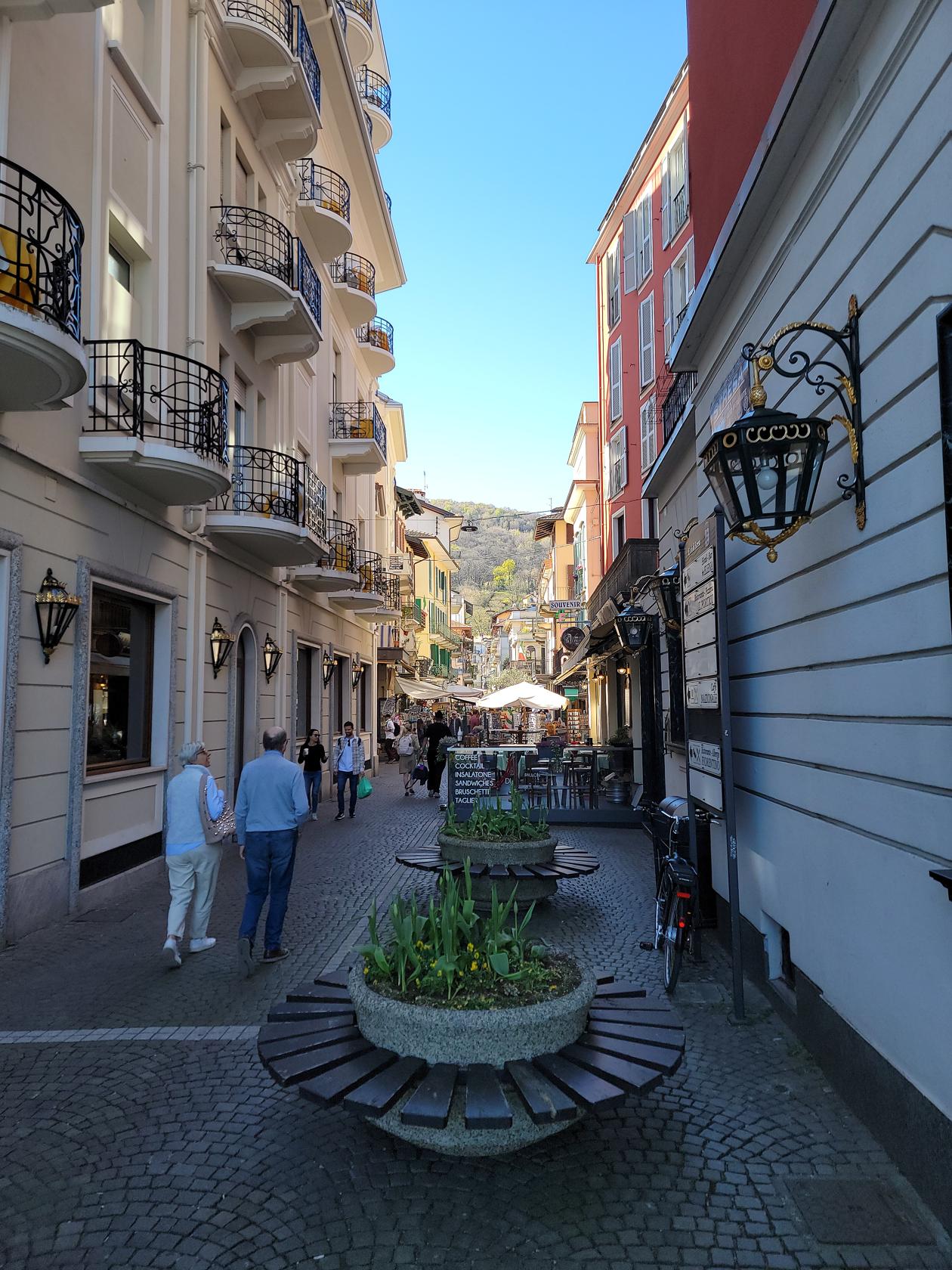
The City Streets – Stresa, Italy
Where We Stayed
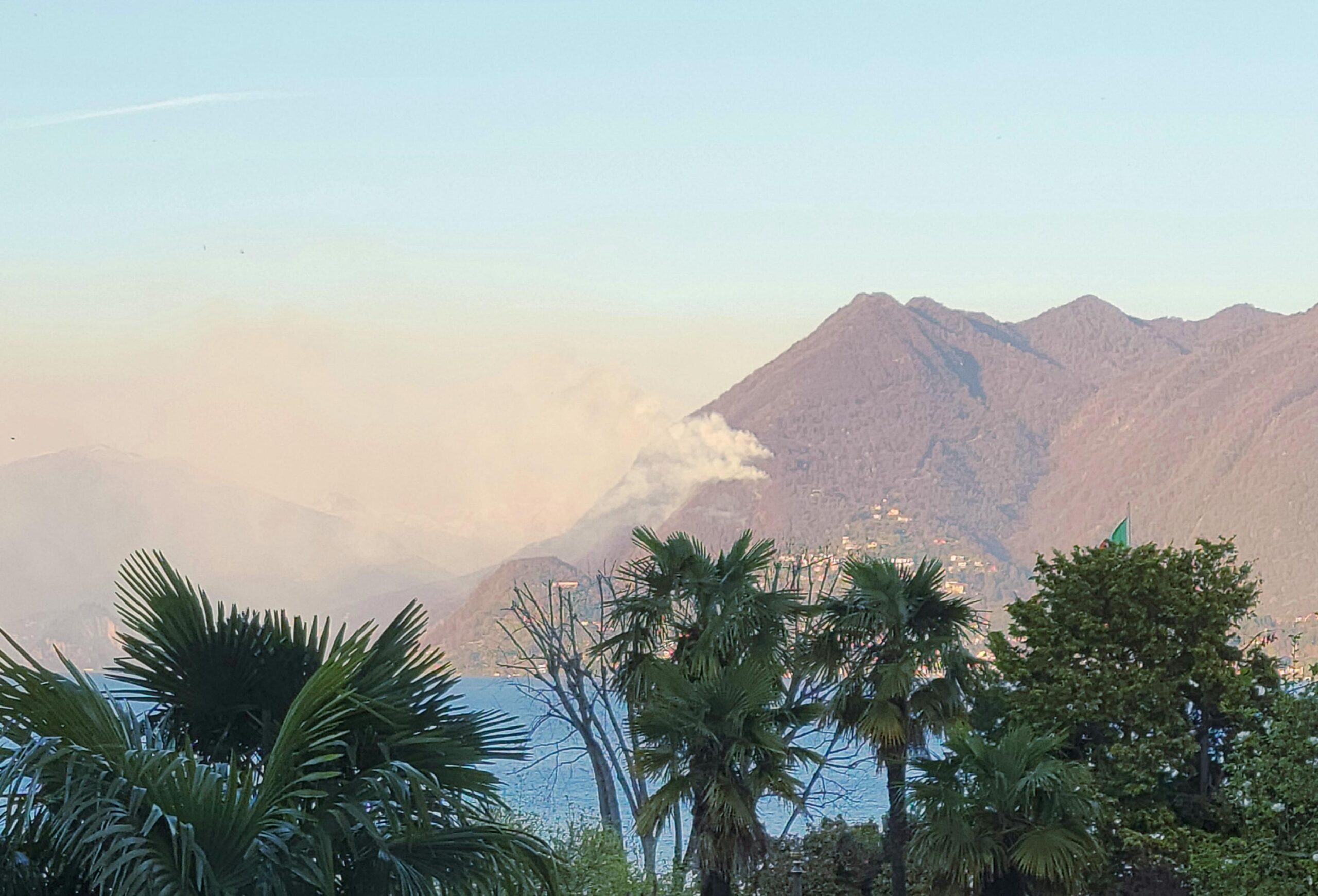
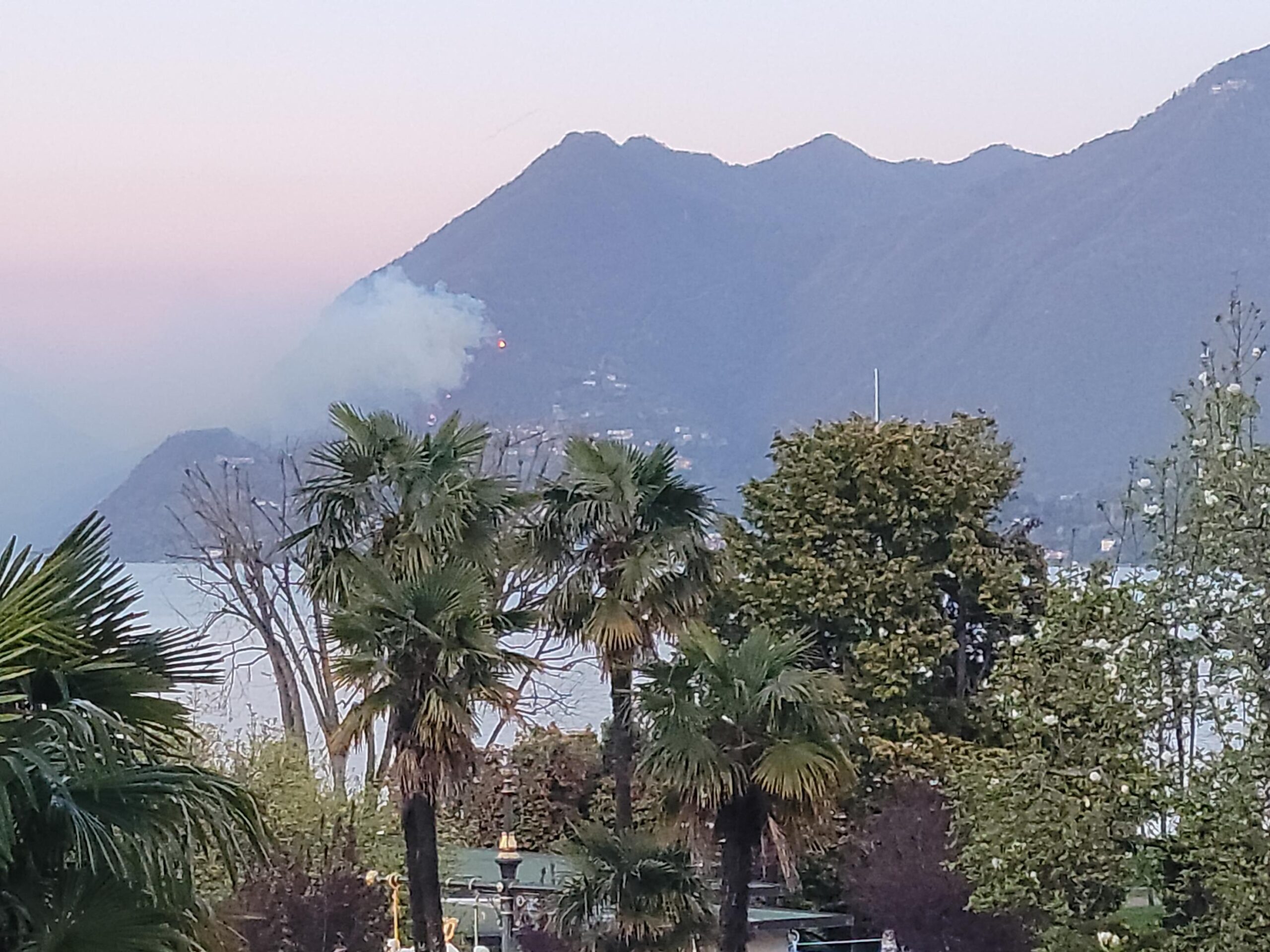
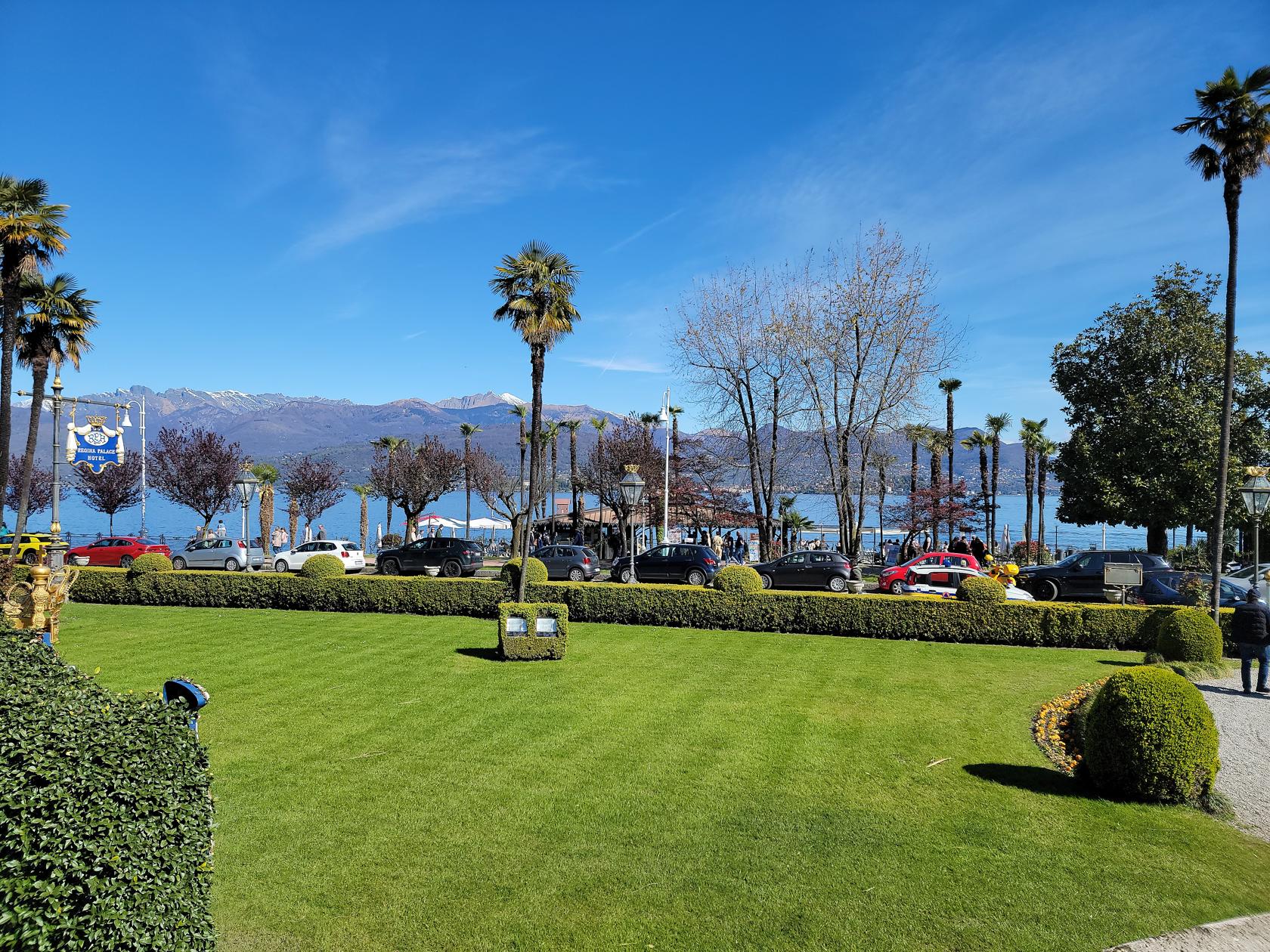
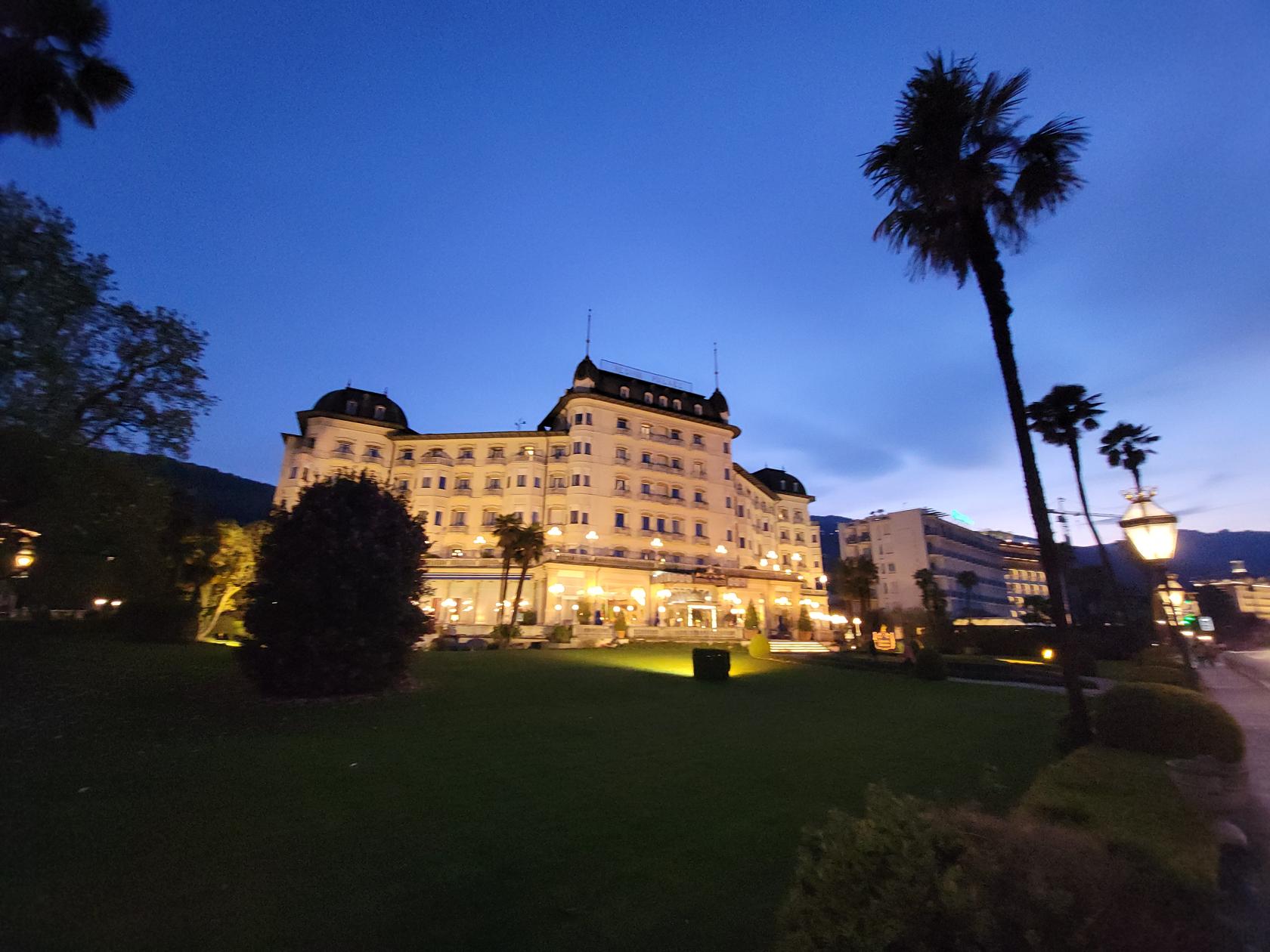
We stayed at the Regina Palace Hotel again, since we had such a good time on our previous visit. From there we were able to witness a forest fire that broke out on the other side of the lake. It burned for two days and was finally put out with the help of helicopters.
Forest Fire In Laveno – Stresa, Italy
Forest Fire In Laveno – Stresa, Italy
Regina Palace Hotel
Unfortunately, our booking put us in a rather large room, number 115, which was located right above the bar and almost directly in front of the main stairwell. The noise on our first evening was ridiculous and I did not get to sleep until some time after twelve.
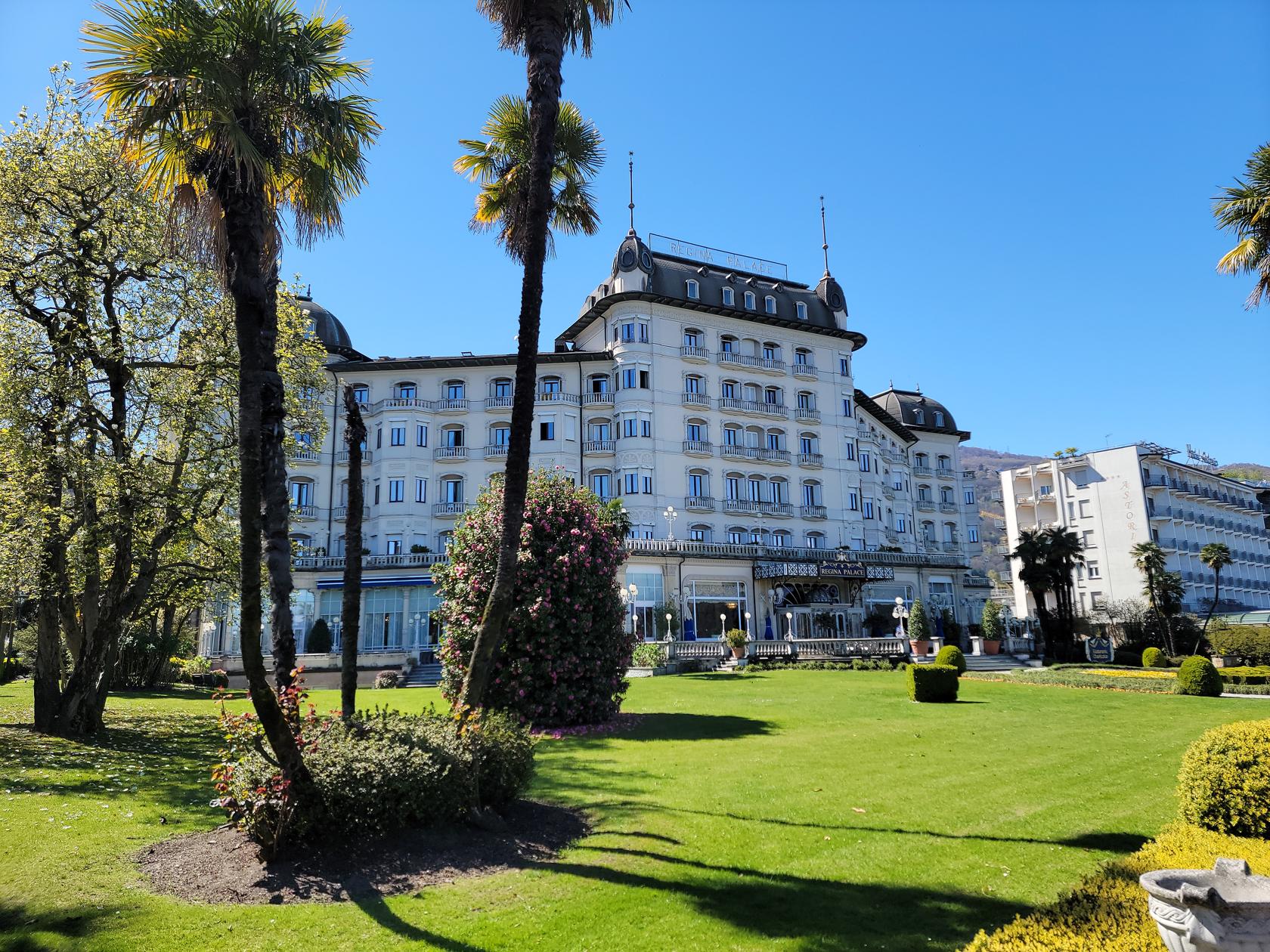
Regina Palace Hotel – Corso Umberto I – Stresa, Italy
Regina Palace Hotel – Corso Umberto I – Stresa, Italy
Regina Palace Hotel – Corso Umberto I – Stresa, Italy
The bar plays music from seven in the evening until midnight, and the later it got, the louder it got. So the next morning, I had our room moved to one of the extremities of the hotel, which was much quieter and overall much more enjoyable.
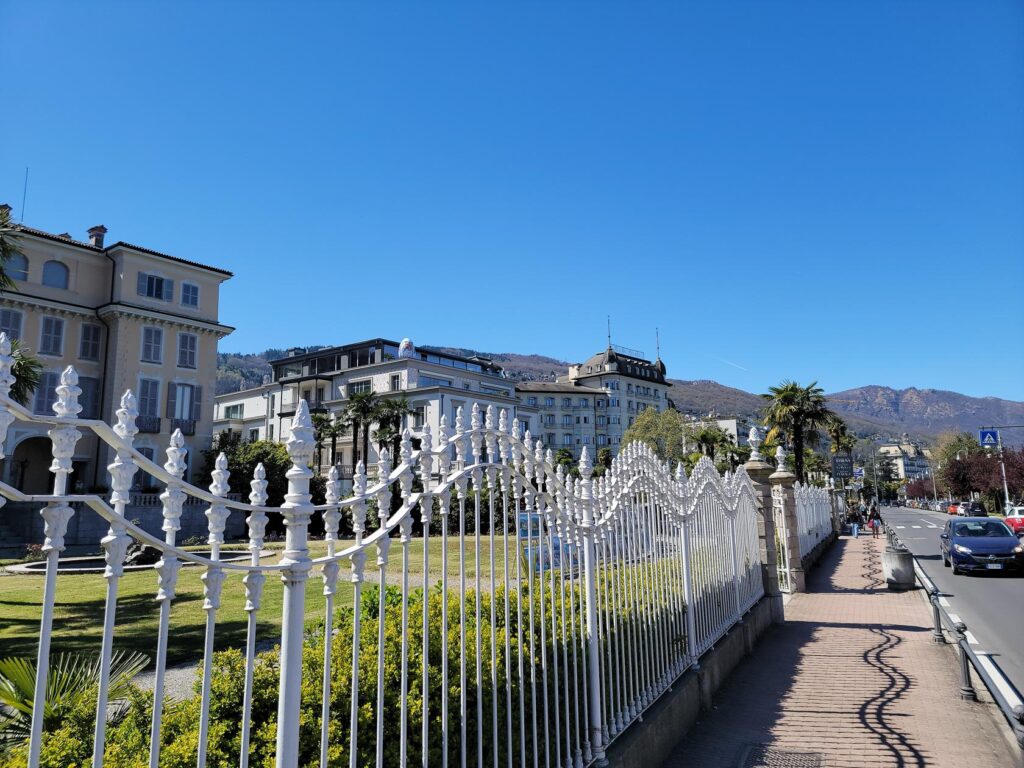
Corso Umberto I – Stresa, Italy
Regina Palace Hotel – Corso Umberto I – Stresa, Italy
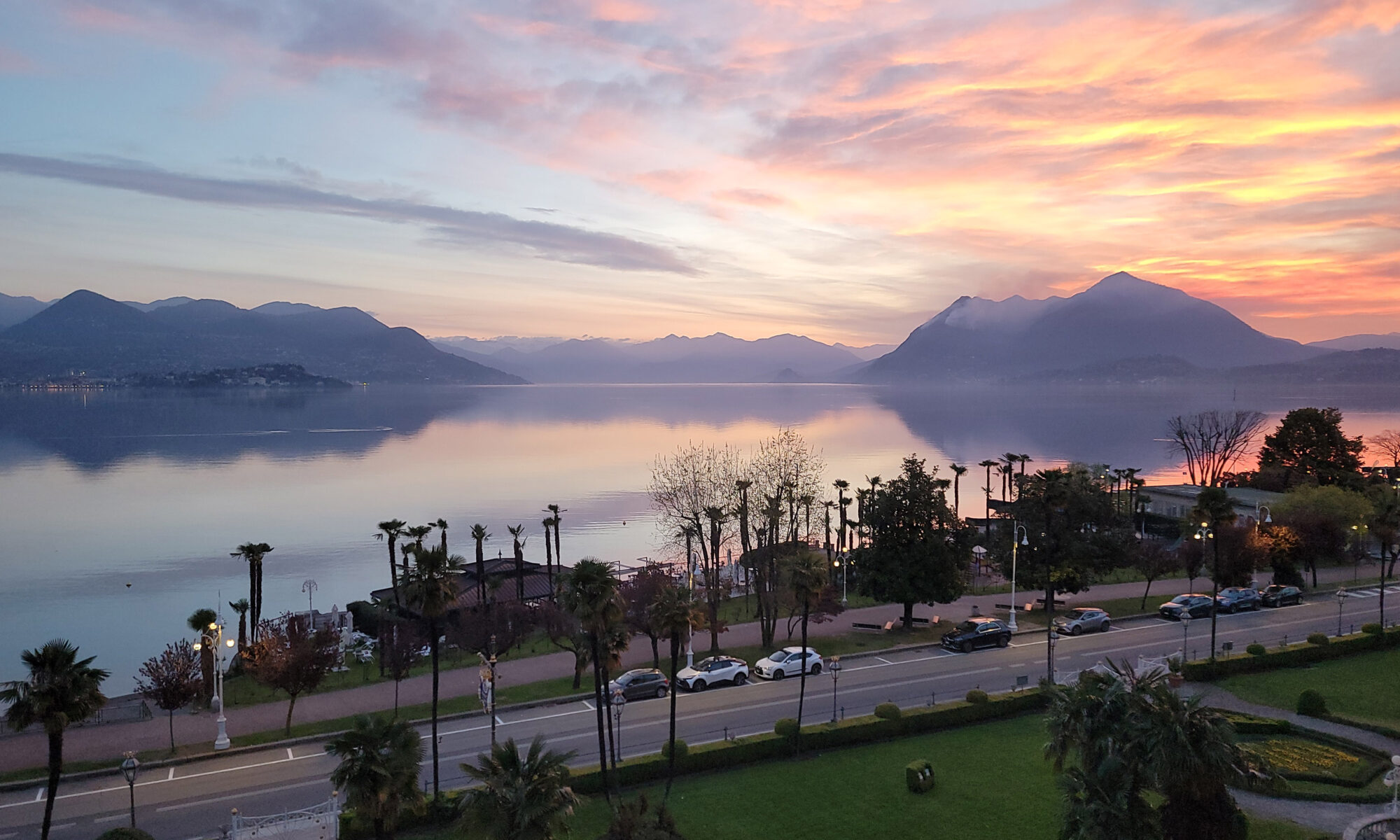
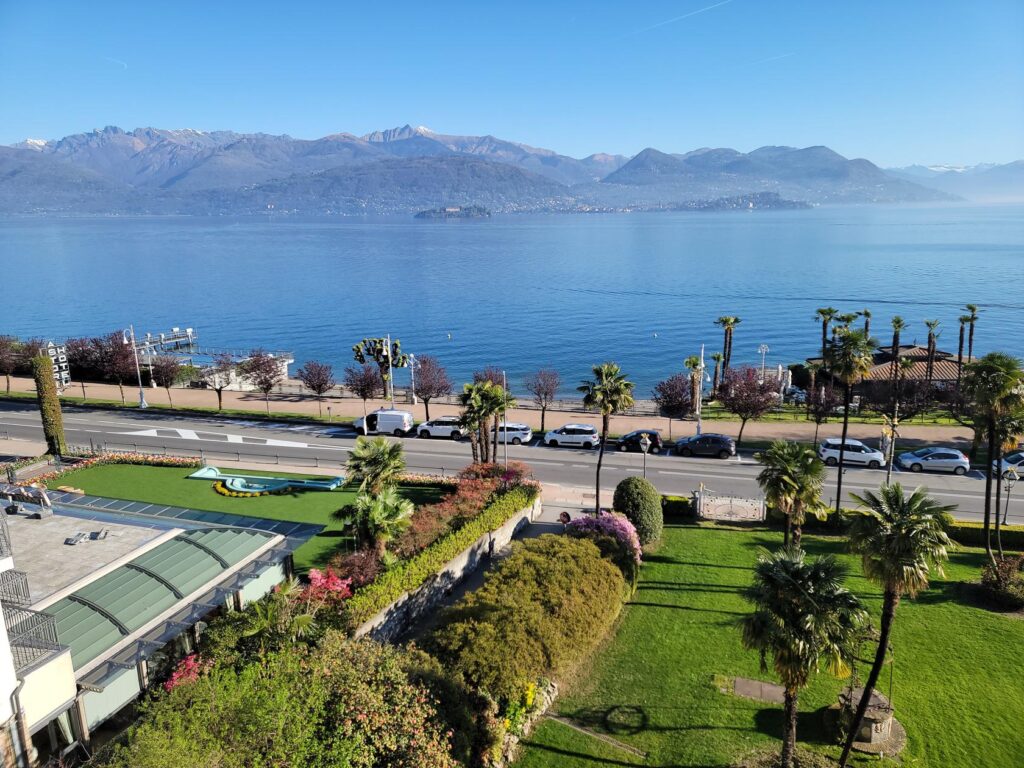
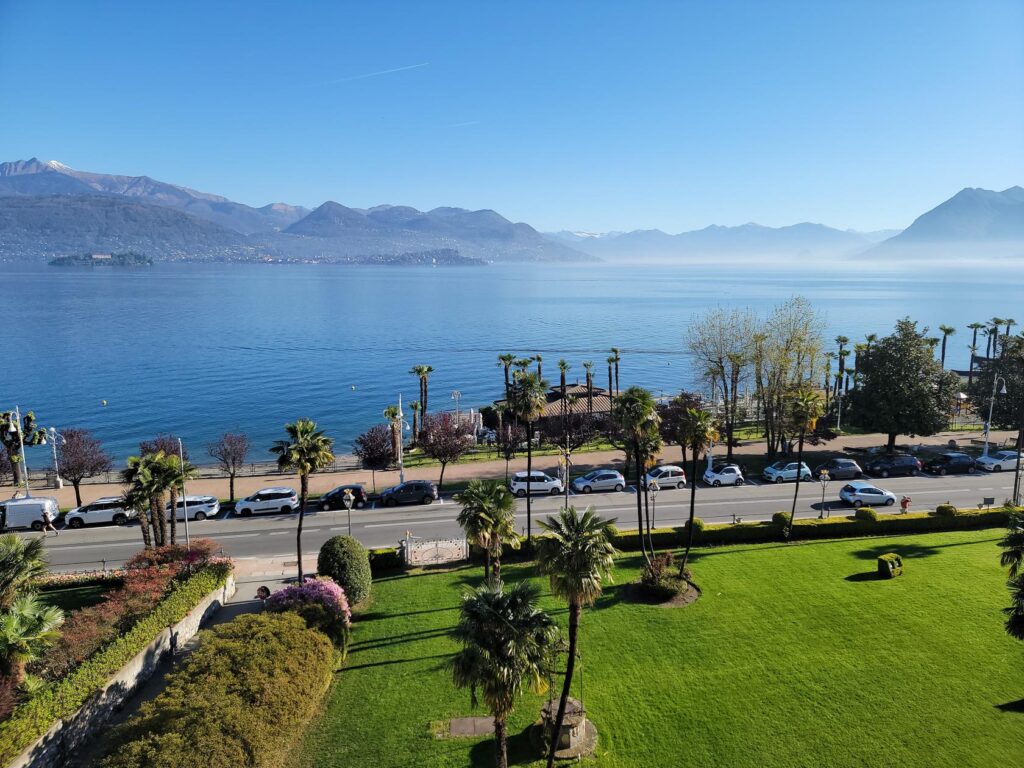
Regina Palace Hotel – Afternoon View – Stresa, Italy
Regina Palace Hotel – Afternoon View – Stresa, Italy
Lungolago
Stresa has a beautiful boardwalk along the lake. It winds its way along the western side, all the way down to Piazzale Lido, another boat launch on the lake. There is only one short stretch you have to walk along the road, which is where the Borromeo estates are located, since they have complete lake access. Other than that, it’s a fine walk to enjoy the view and take photographs.
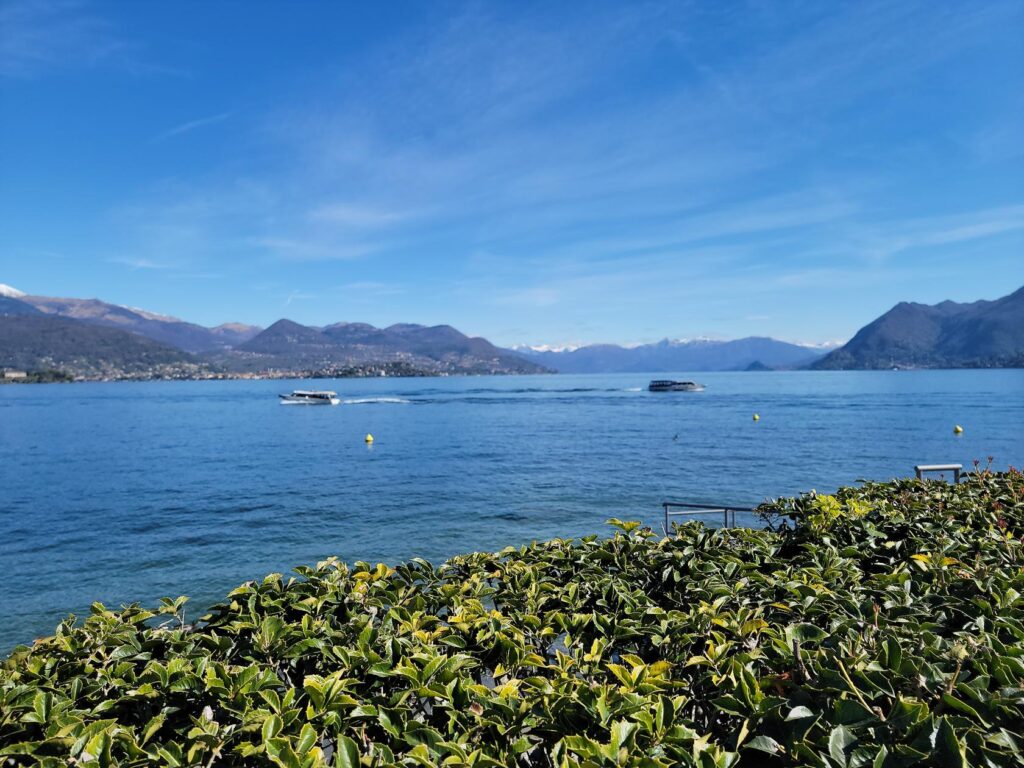
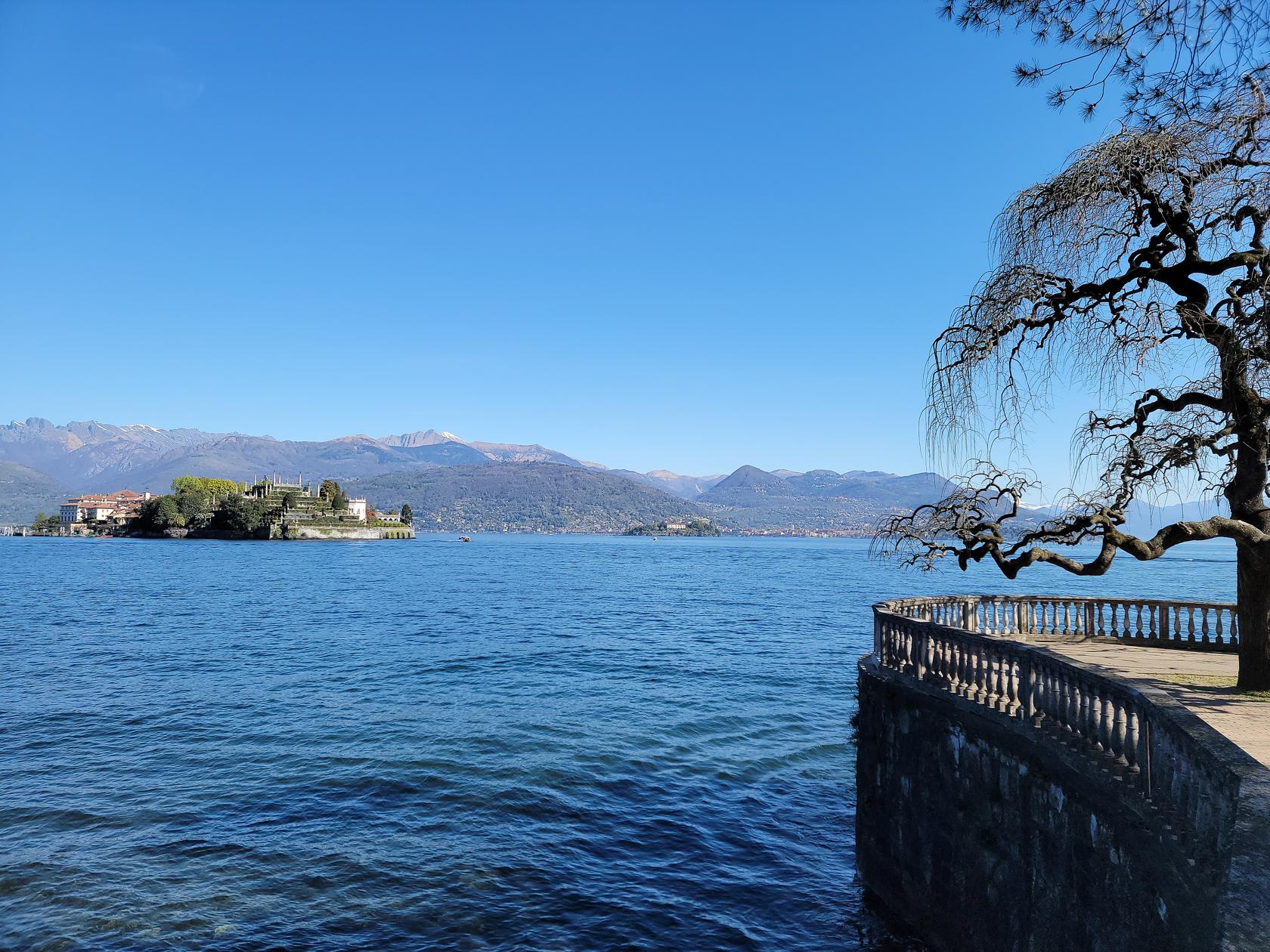
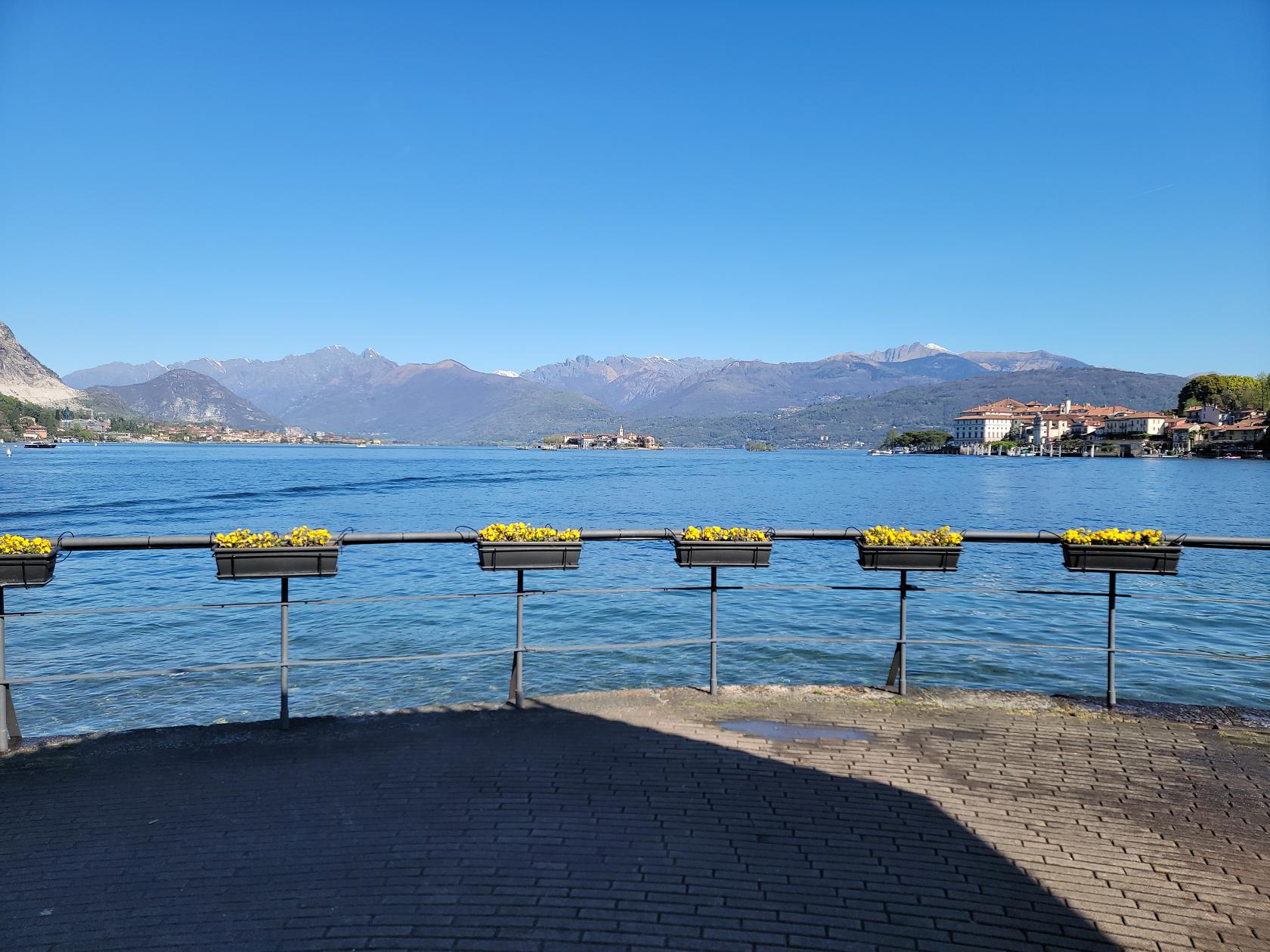
Lungolago – Isola Bella – Stresa, Italy
Lungolago – Isola Bella and Pescatore – Stresa, Italy
Water Fountain – Stresa, Italy
Restaurants
Since we have been to Stresa before, our concentration was more on day trips from the location, rather than visiting the city itself. However, we were able to enjoy some restaurants and cafes while we were here.
Il Vicoletto Ristoranti
A typical italian restaurant that serves fine food. The service is good and the meals are well portioned and taste great.
Patti – Il Vicoletto Ristoranti – Stresa, Italy
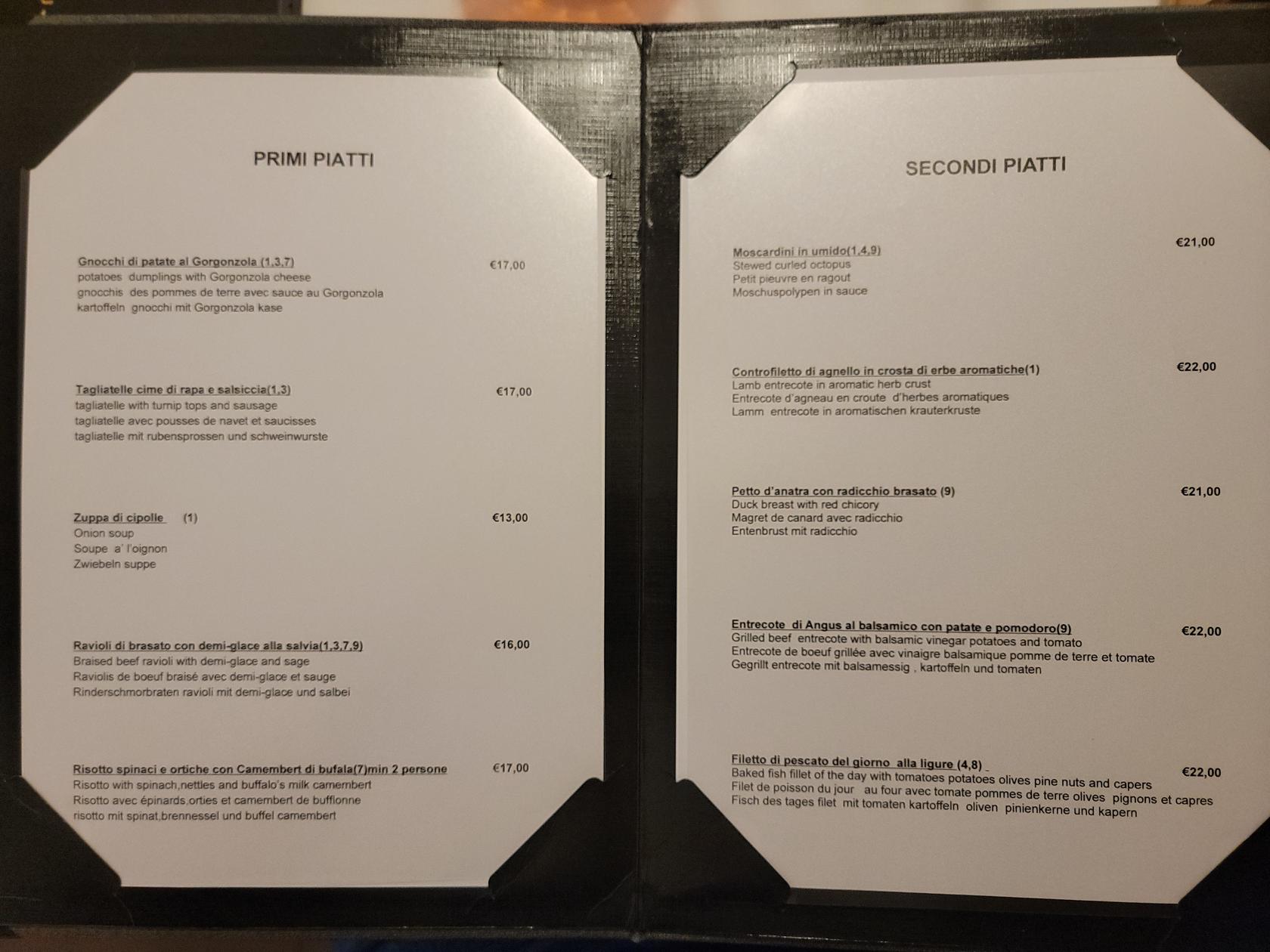
Menu – Il Vicoletto Ristoranti – Stresa, Italy
Erick – Il Vicoletto Ristoranti – Stresa, Italy
The desserts are exceptional, from the Almond Torte to the Panna Cotta, and commendable.
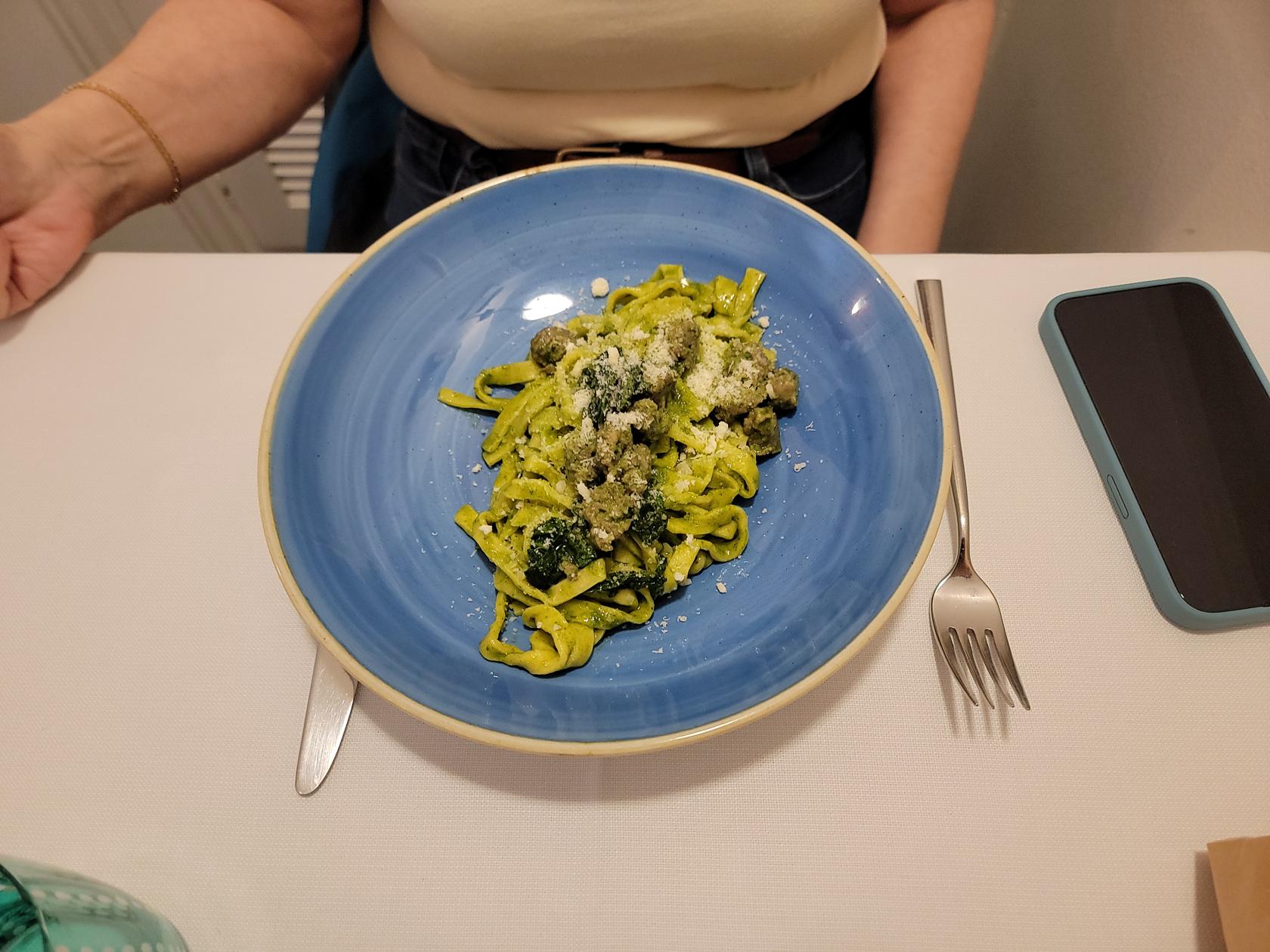
Tagliatelli with Broccoli Rabe and Sausage – Il Vicoletto Ristoranti – Stresa, Italy
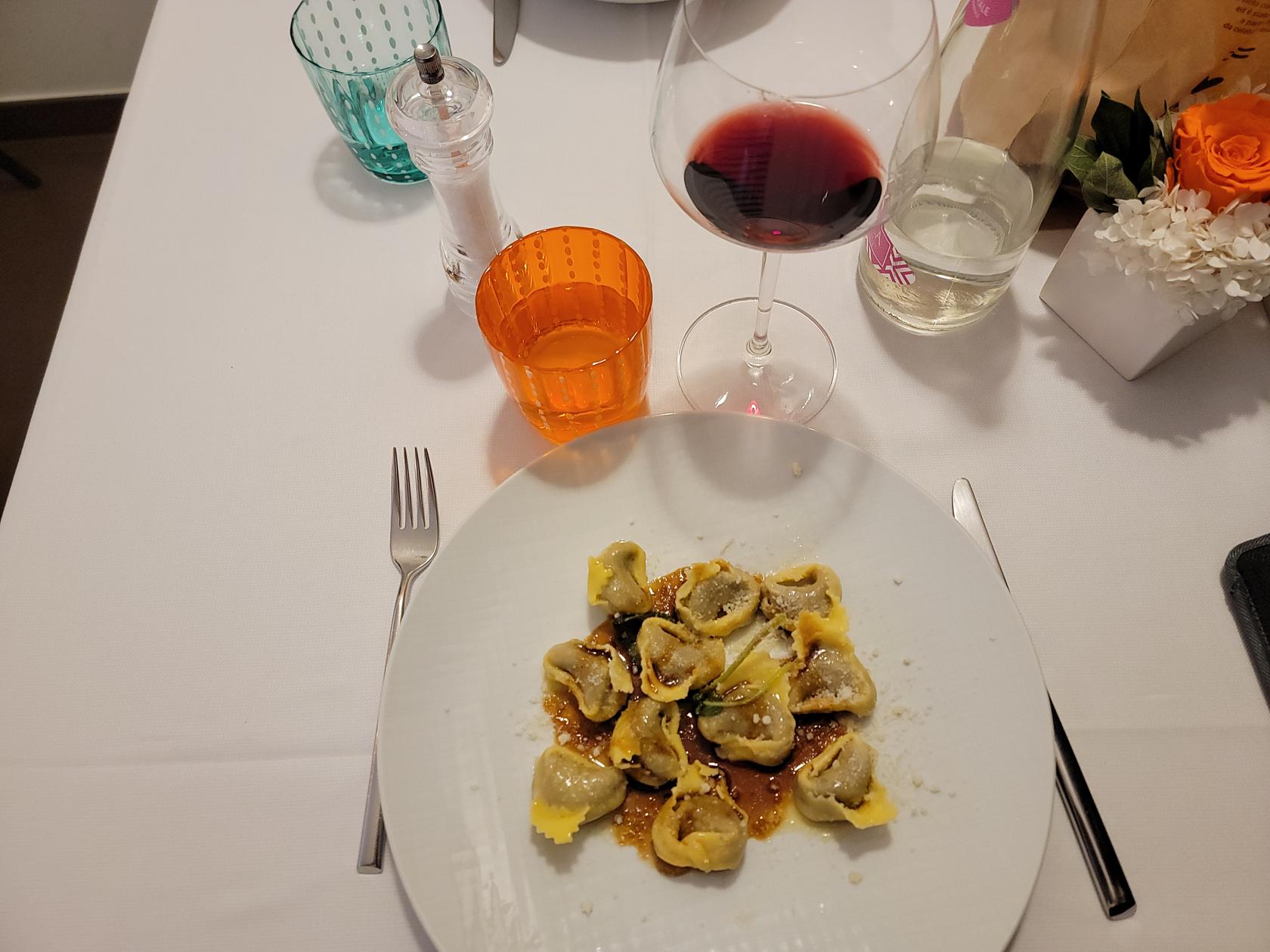
Plin Sugo and Sage – Il Vicoletto Ristoranti – Stresa, Italy
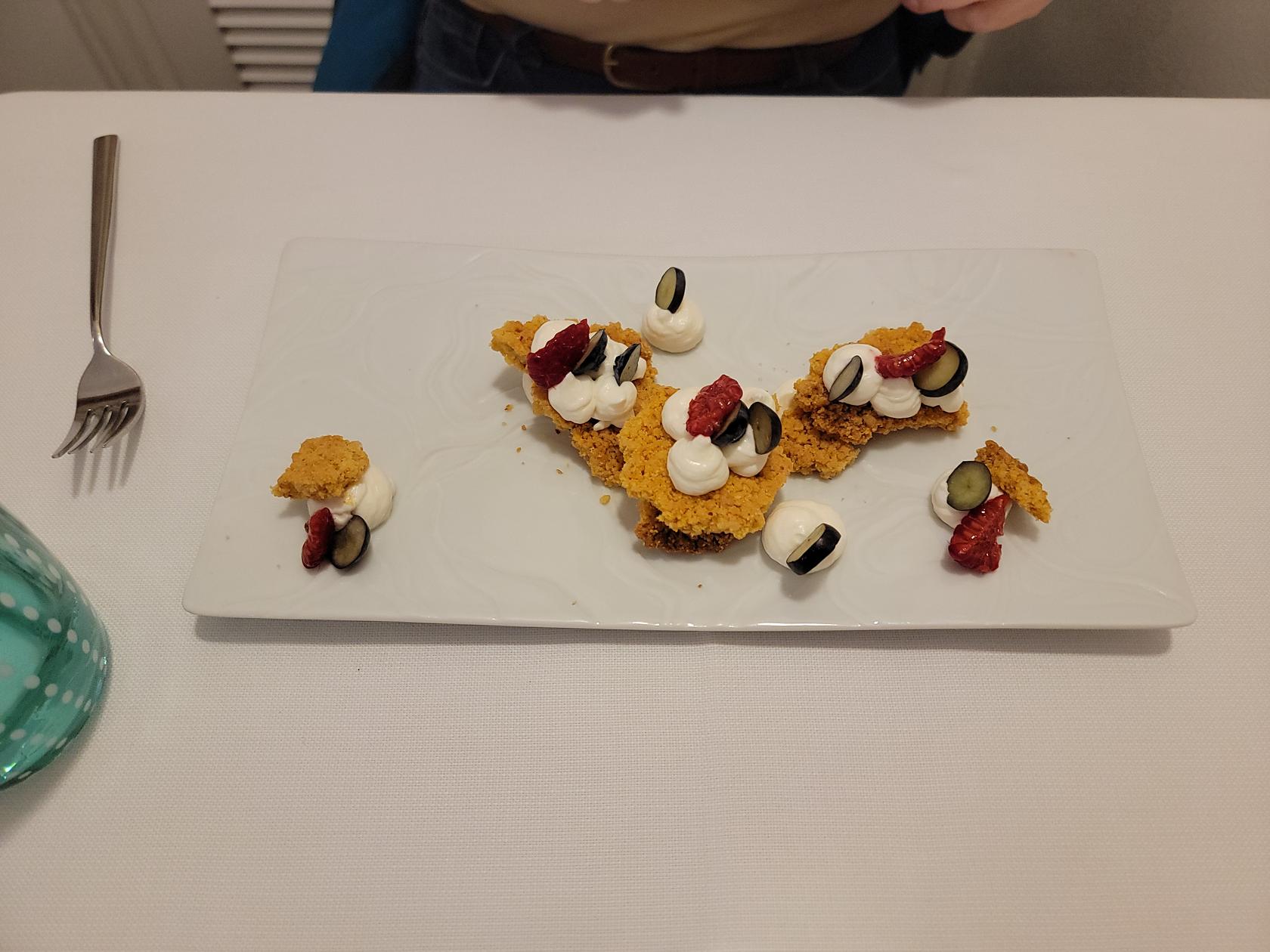
Almond Torte – Il Vicoletto Ristoranti – Stresa, Italy
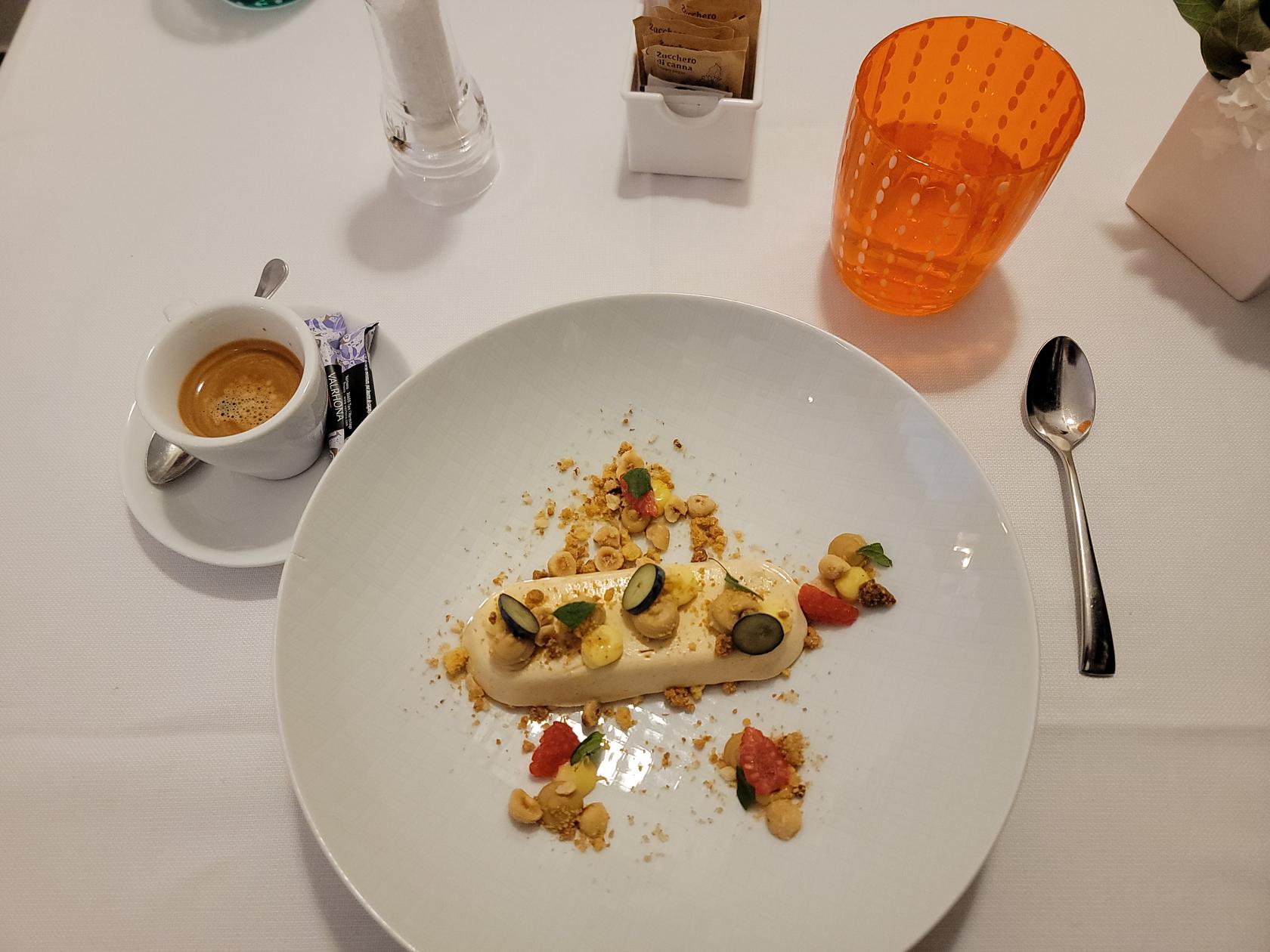
Panna cotta al Mojto – Il Vicoletto Ristoranti – Stresa, Italy
Al Buscion
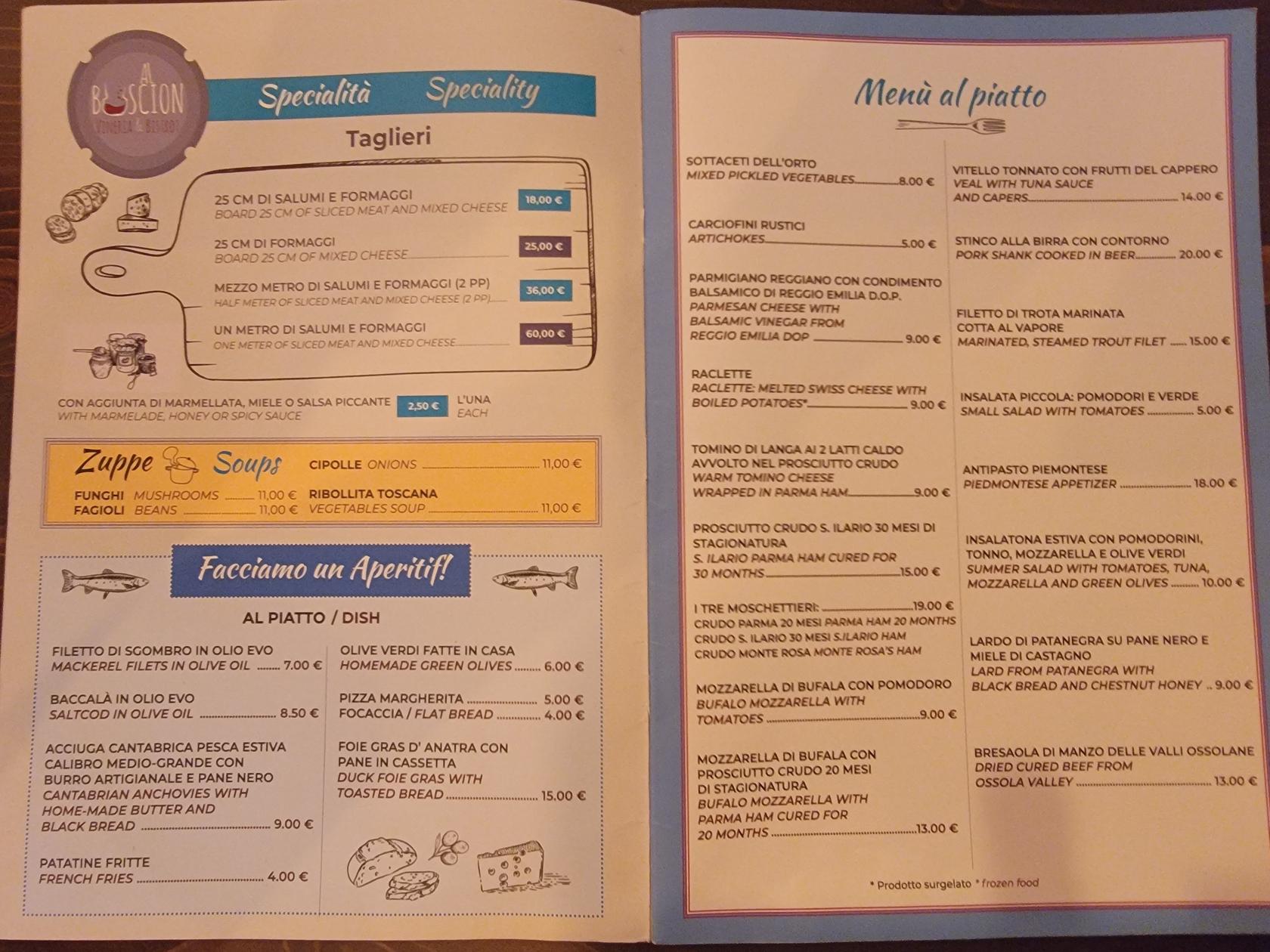
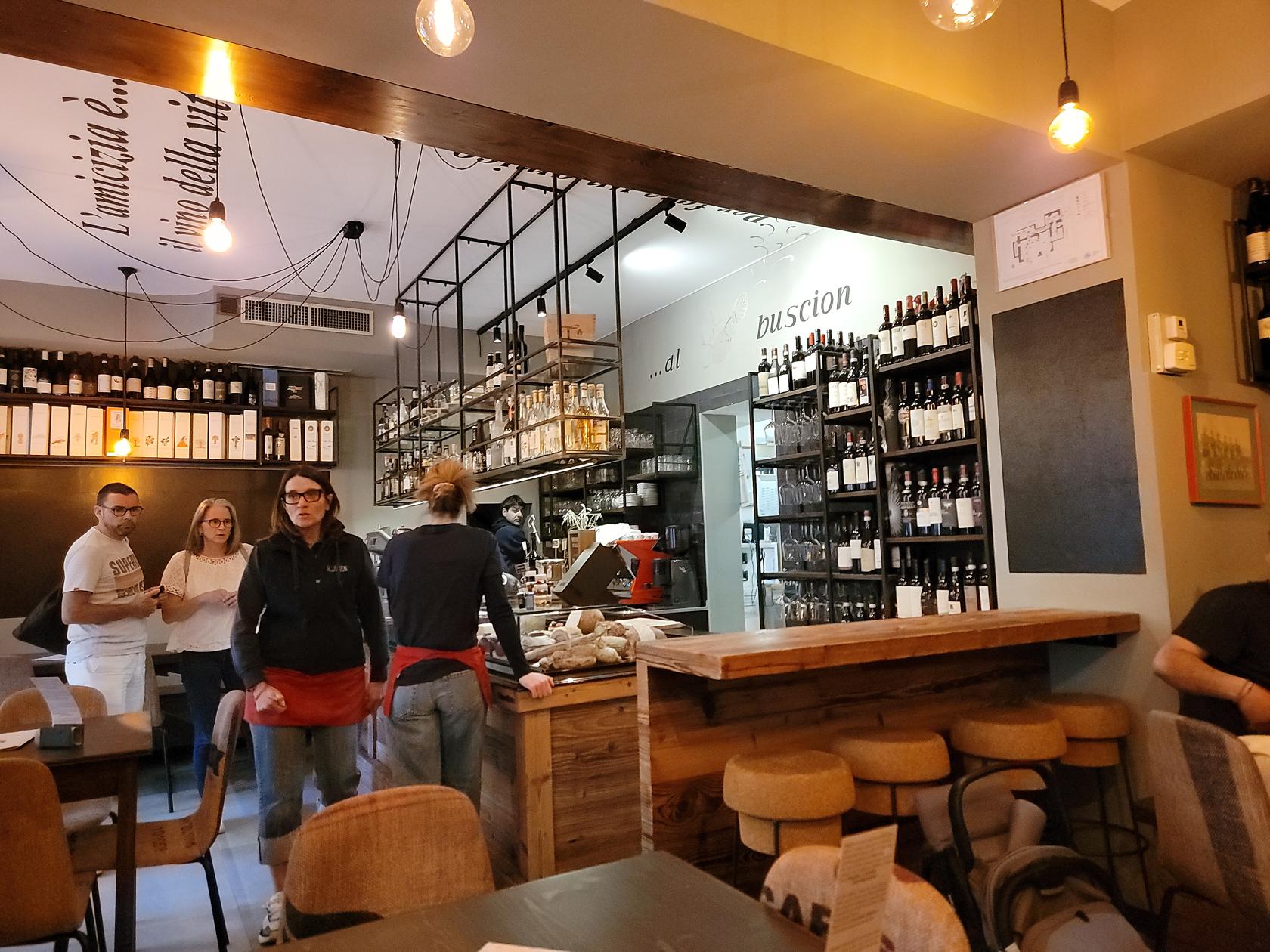
More of a cafe or bistro, this little place has something for everyone. It is one of the few places in Stresa, where you will find more than one kind of soup being served. It is more known for its charcuterie boards and paninis, than anything else, though we never had the chance to order one.
Menu – Al Buscion Cafe – Stresa, Italy
Inside – Al Buscion Cafe – Stresa, Italy
La Piola
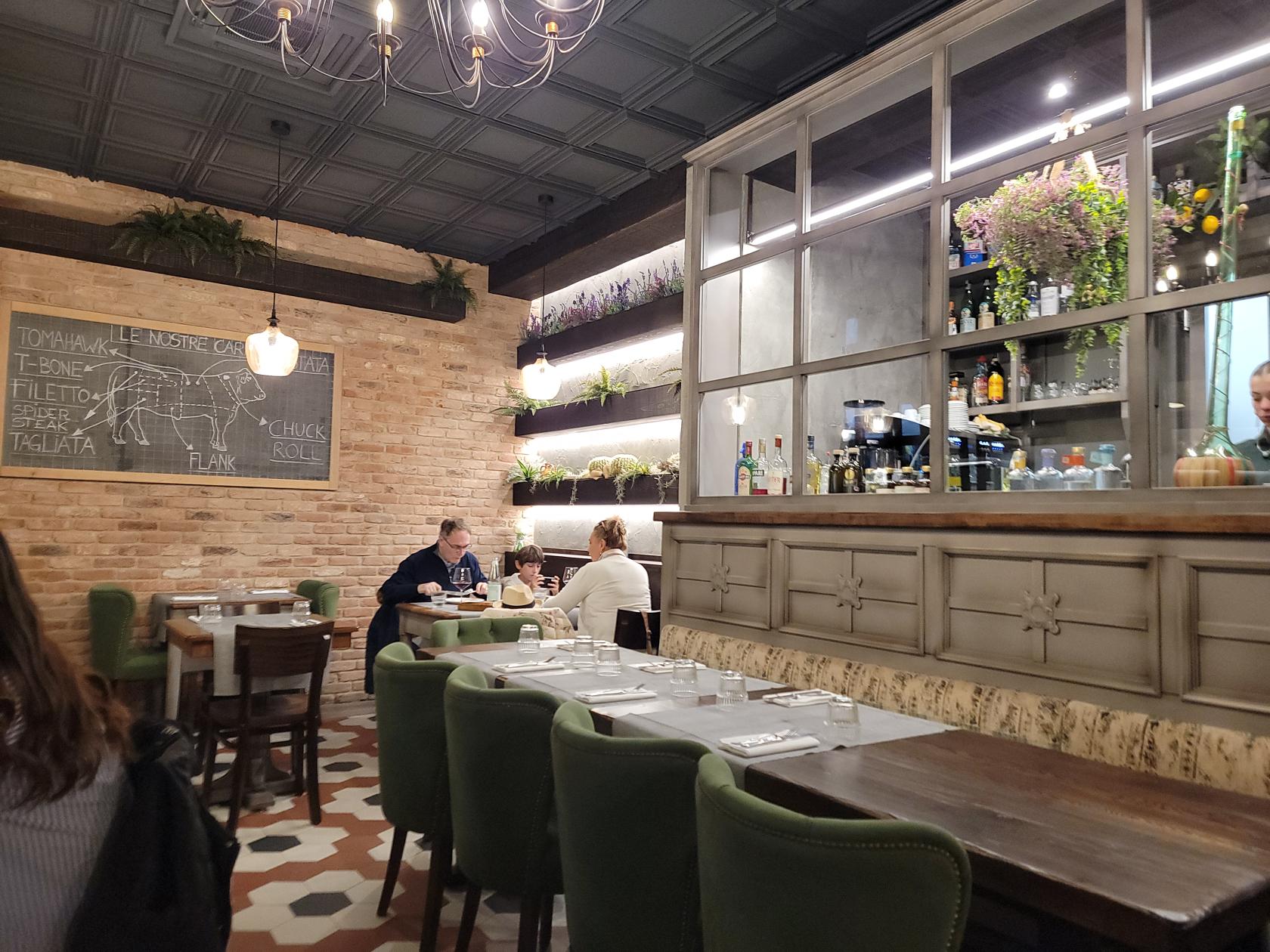
If you like finer dining, then look no further than La Piola.
Patti – La Piola Cafe – Stresa, Italy
Inside – La Piola Cafe – Stresa, Italy
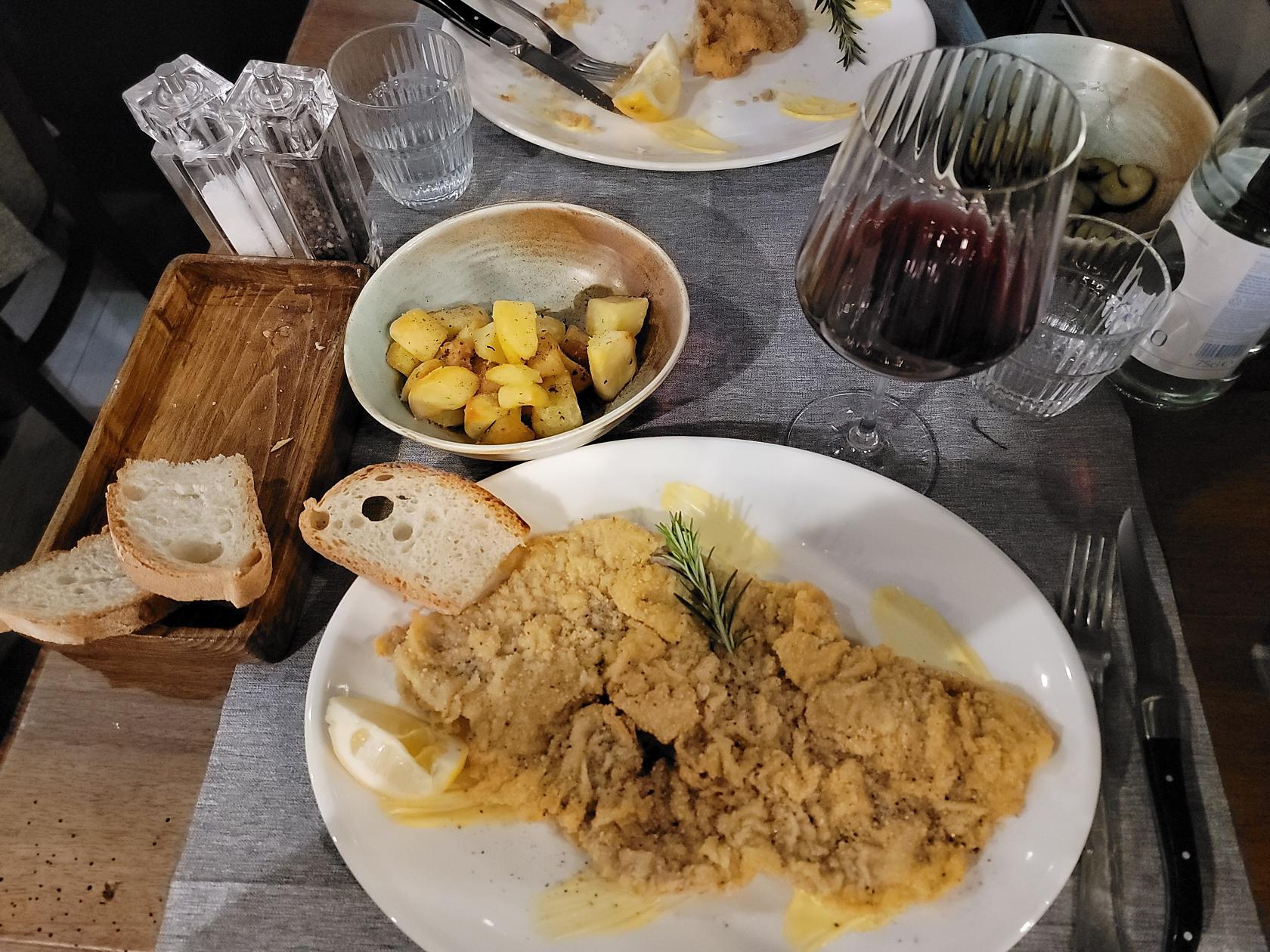
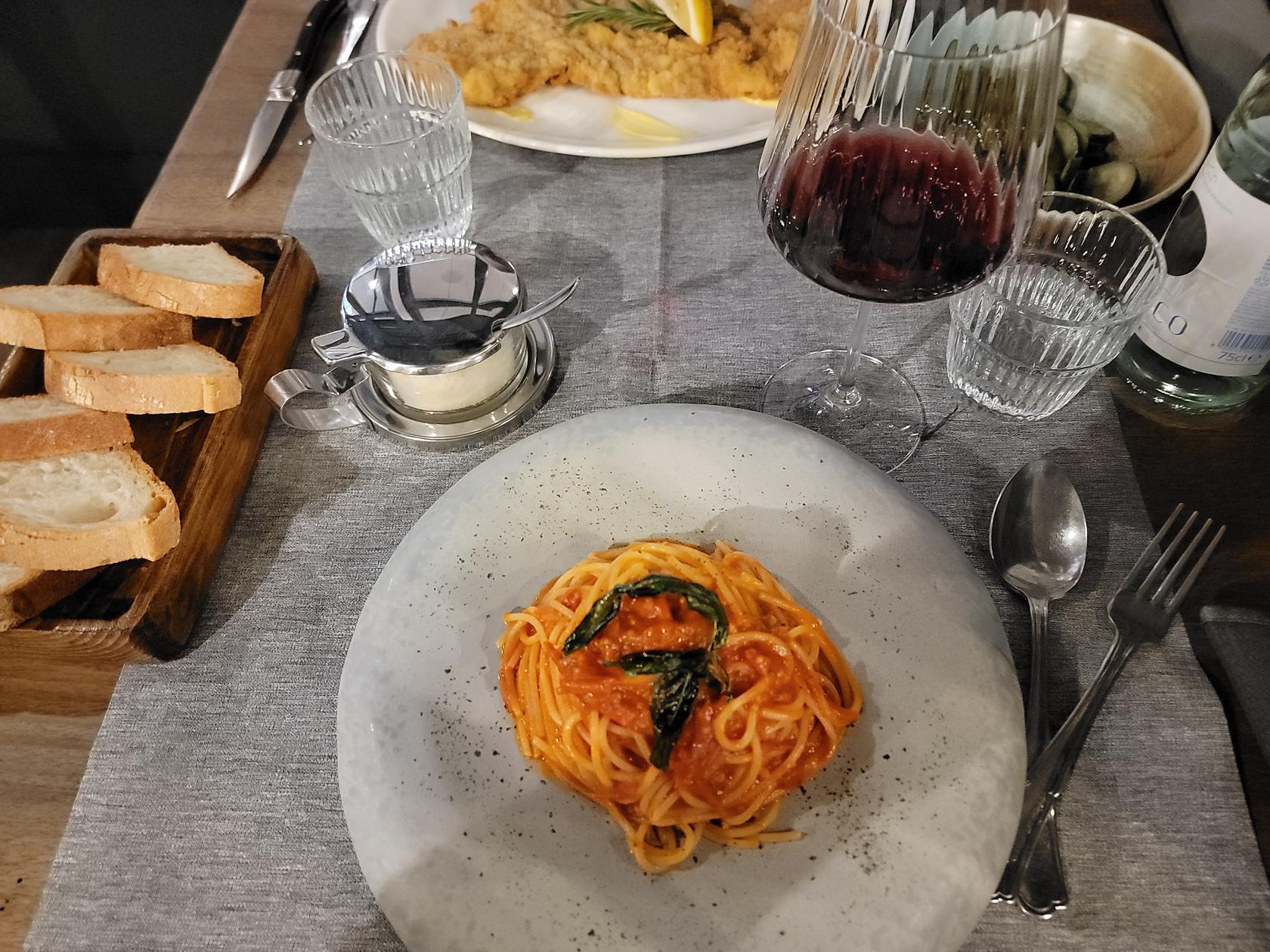
We thoroughly enjoyed the food here, though we didn’t order any dessert. The pasta dish was excellent and very tasty, and Patti enjoyed here Chicken Cutlet as well.
Filetto of Chicken – La Piola Cafe – Stresa, Italy
Spaghetti – La Piola Cafe – Stresa, Italy
El Gato Negro Cafe
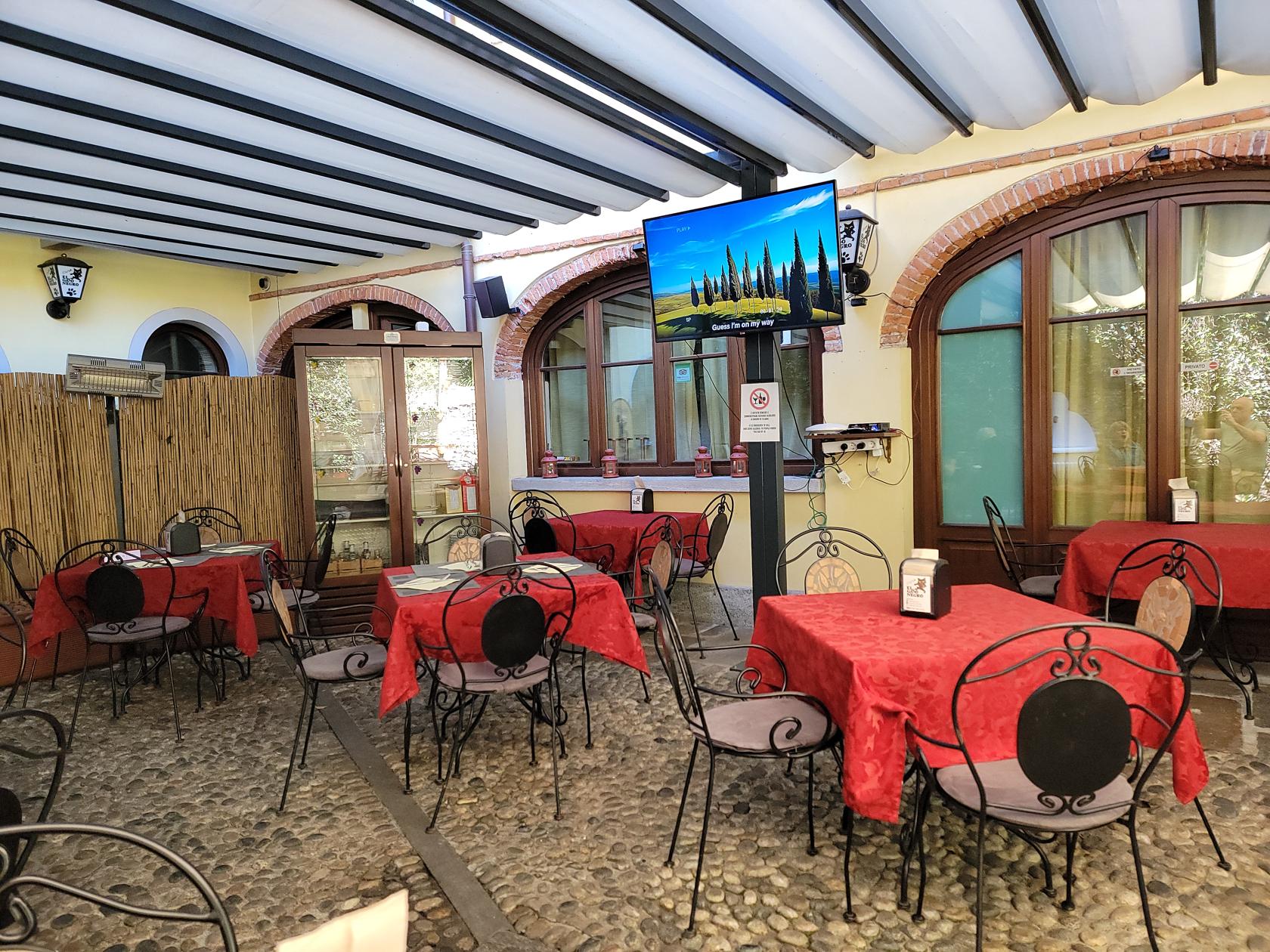
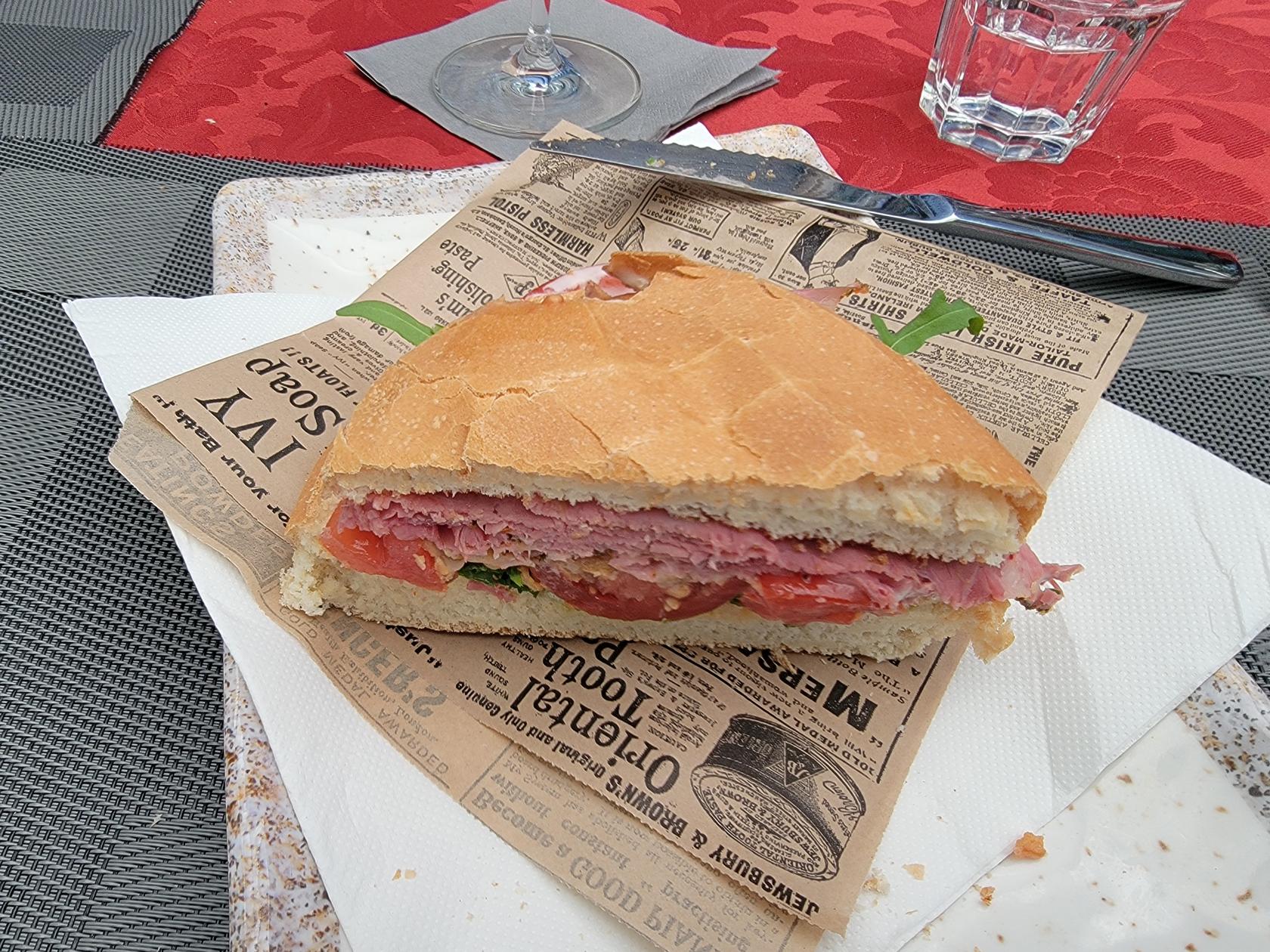
We stopped at El Gato Negro for a late lunch and glad we did. They have very tasty soups, salads and sandwiches at very reasonable prices. The pastrami sandwich, though not like pastrami in the States, was delicious. It had an exceptional dressing on it that complimented the tomatoes, lettuce and pastrami to perfection.
Terrace – El Gato Negro Cafe – Stresa, Italy
Pastrami sandwich – El Gato Negro Cafe – Stresa, Italy
Il Centrale
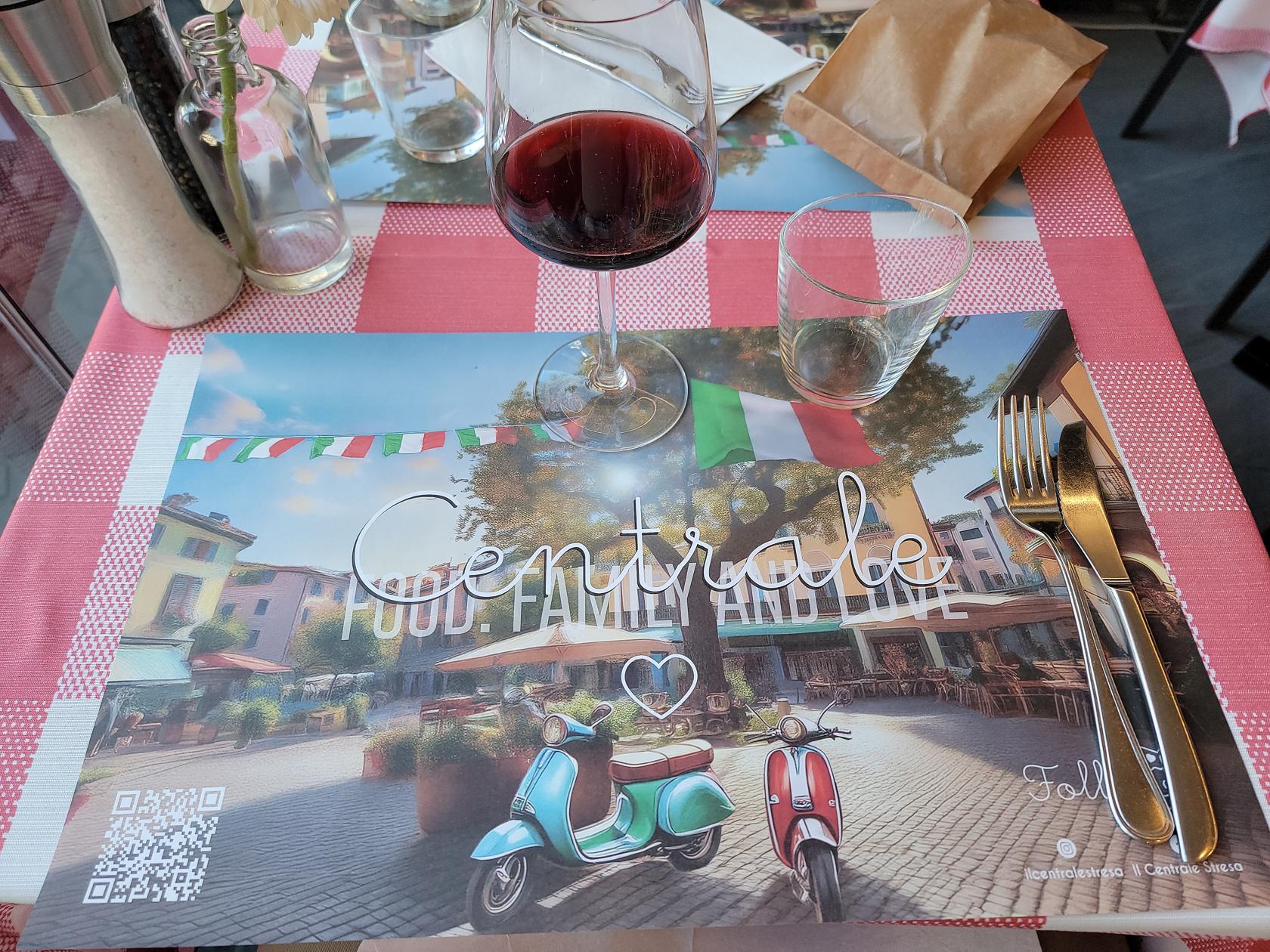
Though inside the city a bit, it is more of a tourist trap restaurant than any of the other ones we have patronized. If you are looking for something to eat, you cannot go wrong here, but it is definitely nothing special.
Placesetting – El Gato Negro Cafe – Stresa, Italy
The food is okay and the service is a bit slow. But for what you get, we found them a bit pricey and the coperto[1]This is a cover charge in Italy. It is suppose to offset the fee of table linens, cutlery, napkins, etc., and is applied unevenly throughout the country. It will most often be found in tourist areas, … Continue reading was a bit high for our liking.
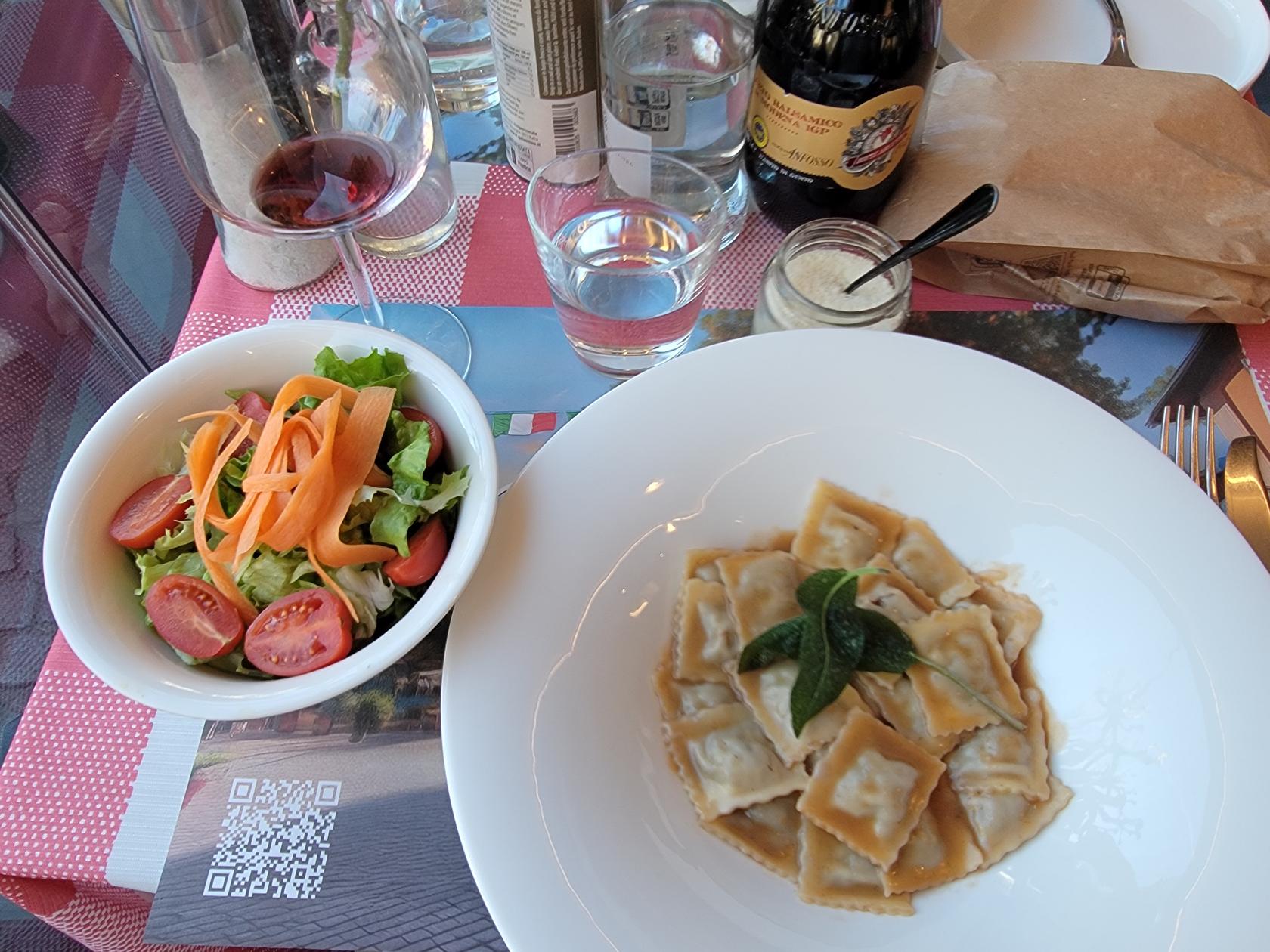
Plin al sugo and Salad – Il Centrale – Stresa, Italy
This is a cover charge in Italy. It is suppose to offset the fee of table linens, cutlery, napkins, etc., and is applied unevenly throughout the country. It will most often be found in tourist areas, where the establishments can get away with charging it. If so, DO NOT leave a tip, you’re covered.
A former eminent place where most woolen products came from in Italy is the city of Biella. As far back as the thirteenth century, the city has been known for its fine wool fabrics and products. However, with the recent globalization of products and competition of the early twenty-first century, many of the factories and businesses associated with that industry have gone away, creating what some might term – the woolen woes.
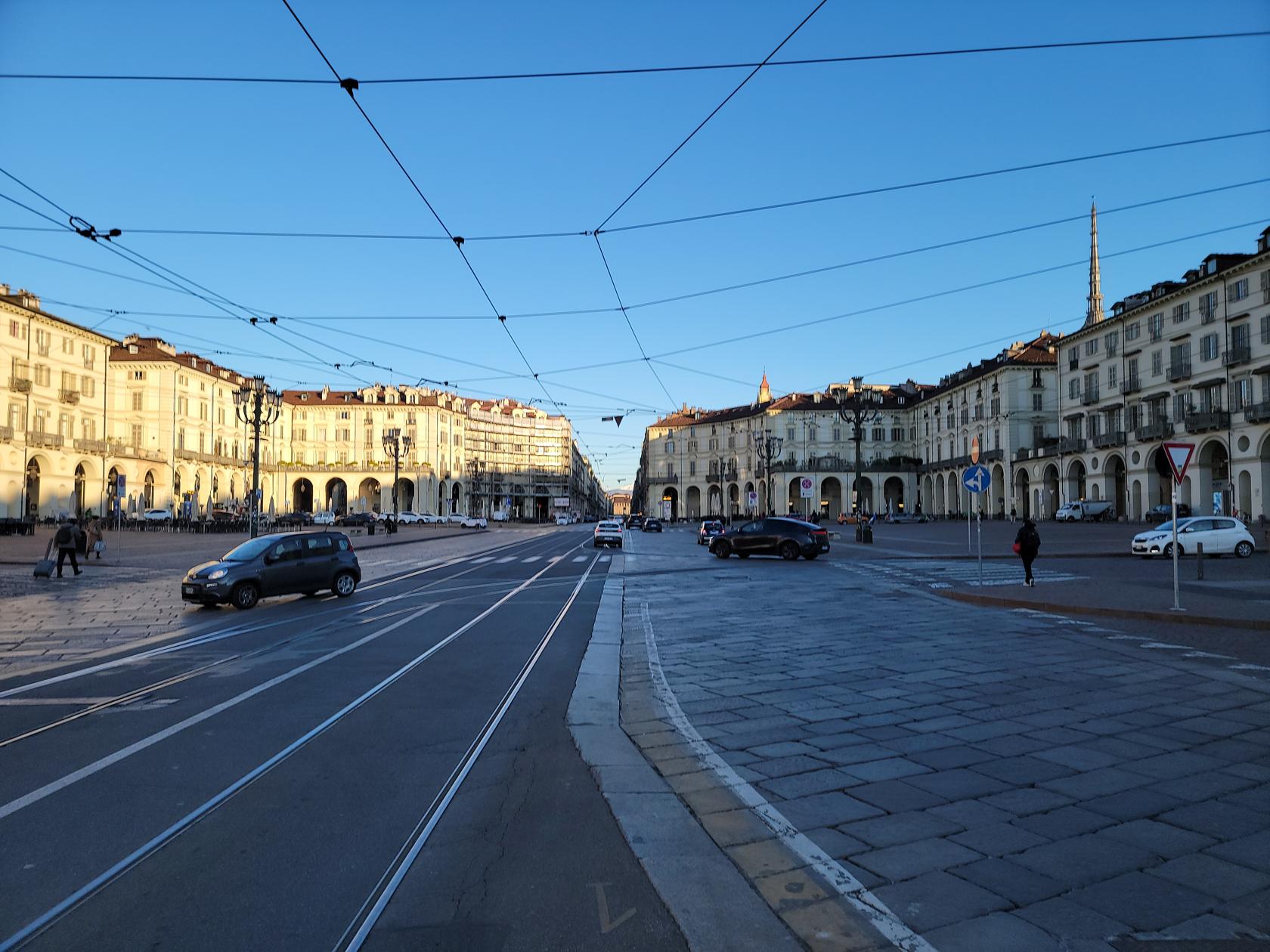
Waiting for Tram 13 – Vittoria Veneto Piazza – Turin, Italy
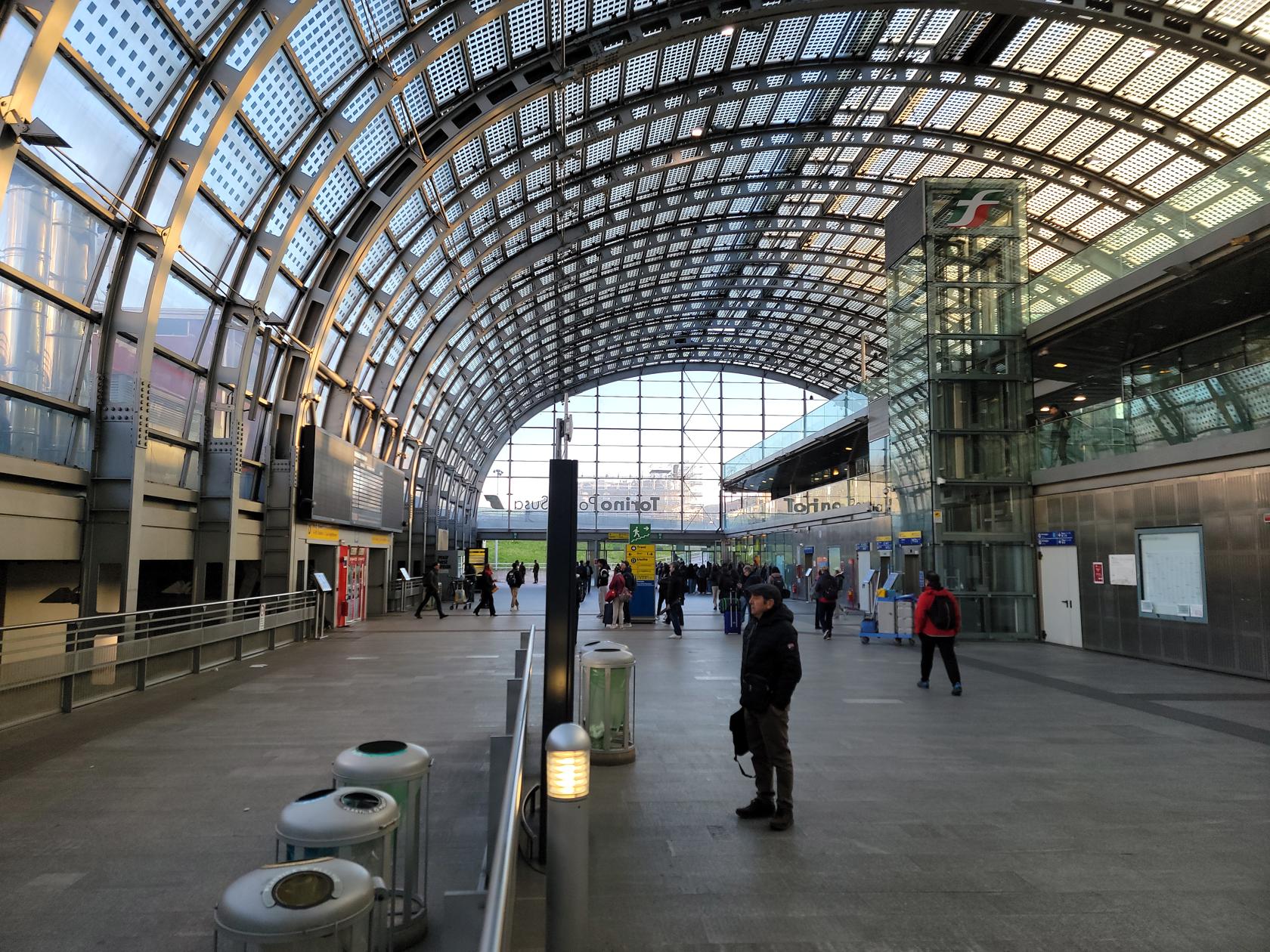
Torino Porta Susa Train Station – Turin, Italy
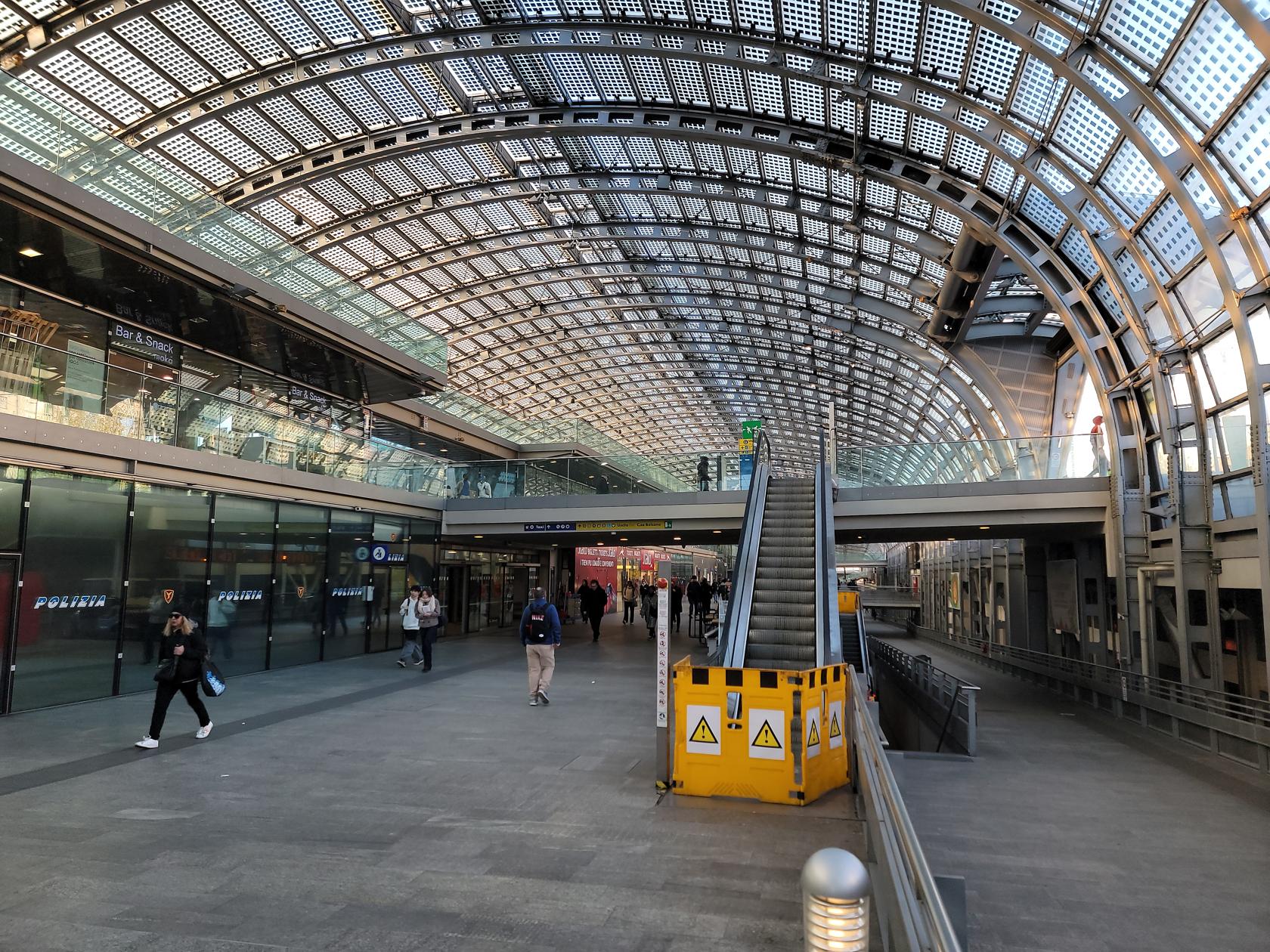
Torino Porta Susa Train Station – Turin, Italy
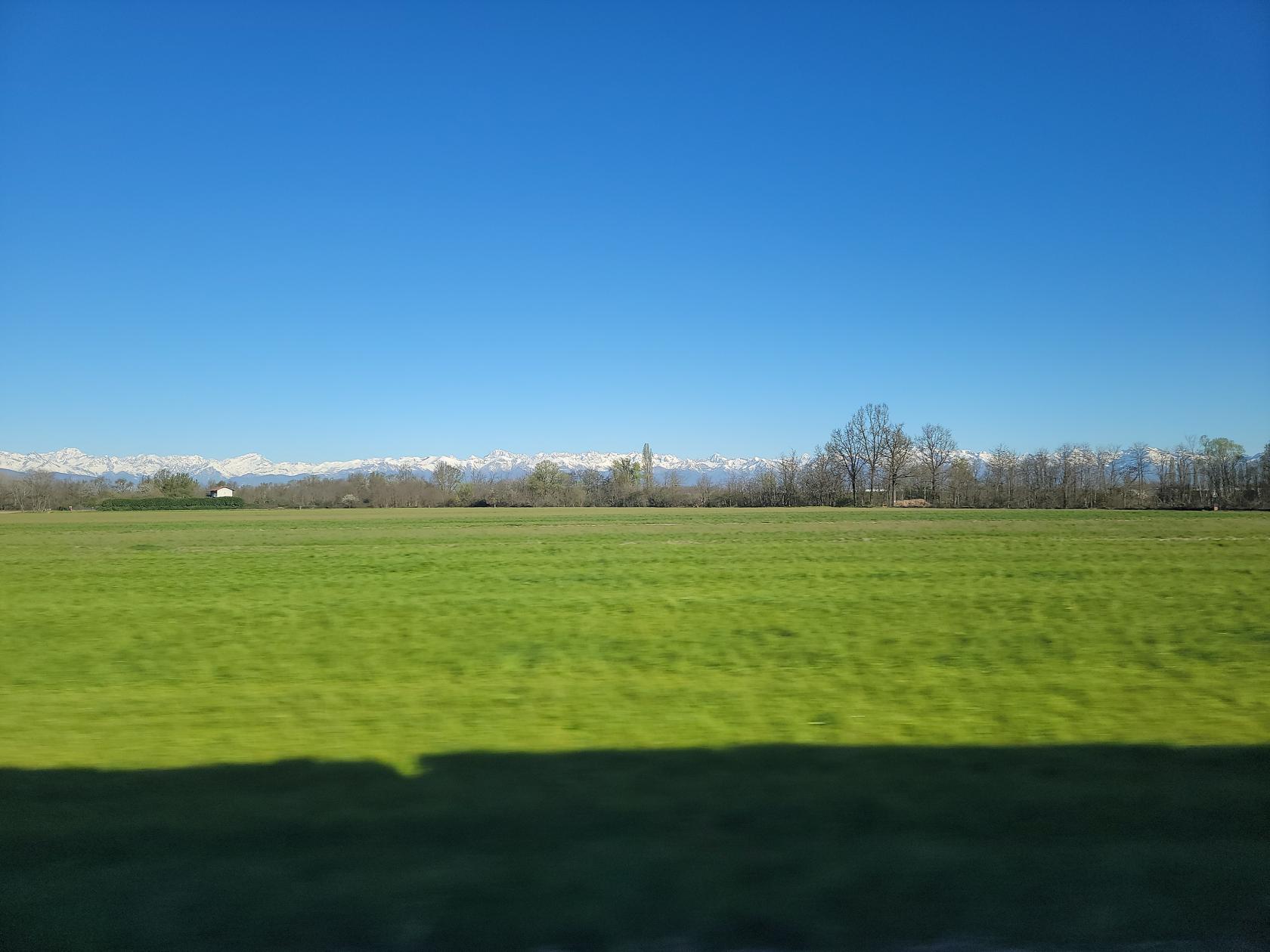
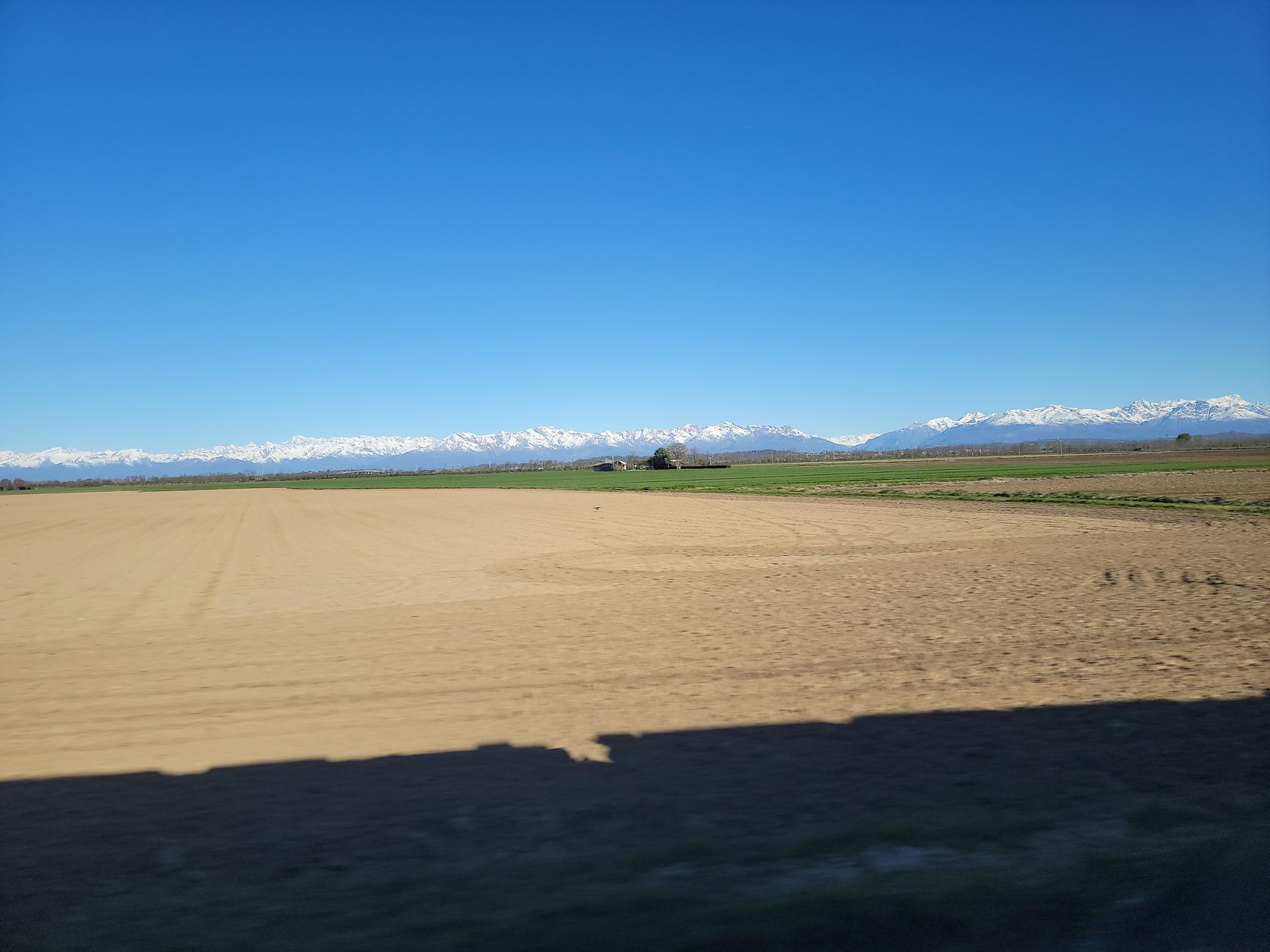
The Alps From Our Train To Biella – Turin, Italy
The Alps From Our Train To Biella – Turin, Italy
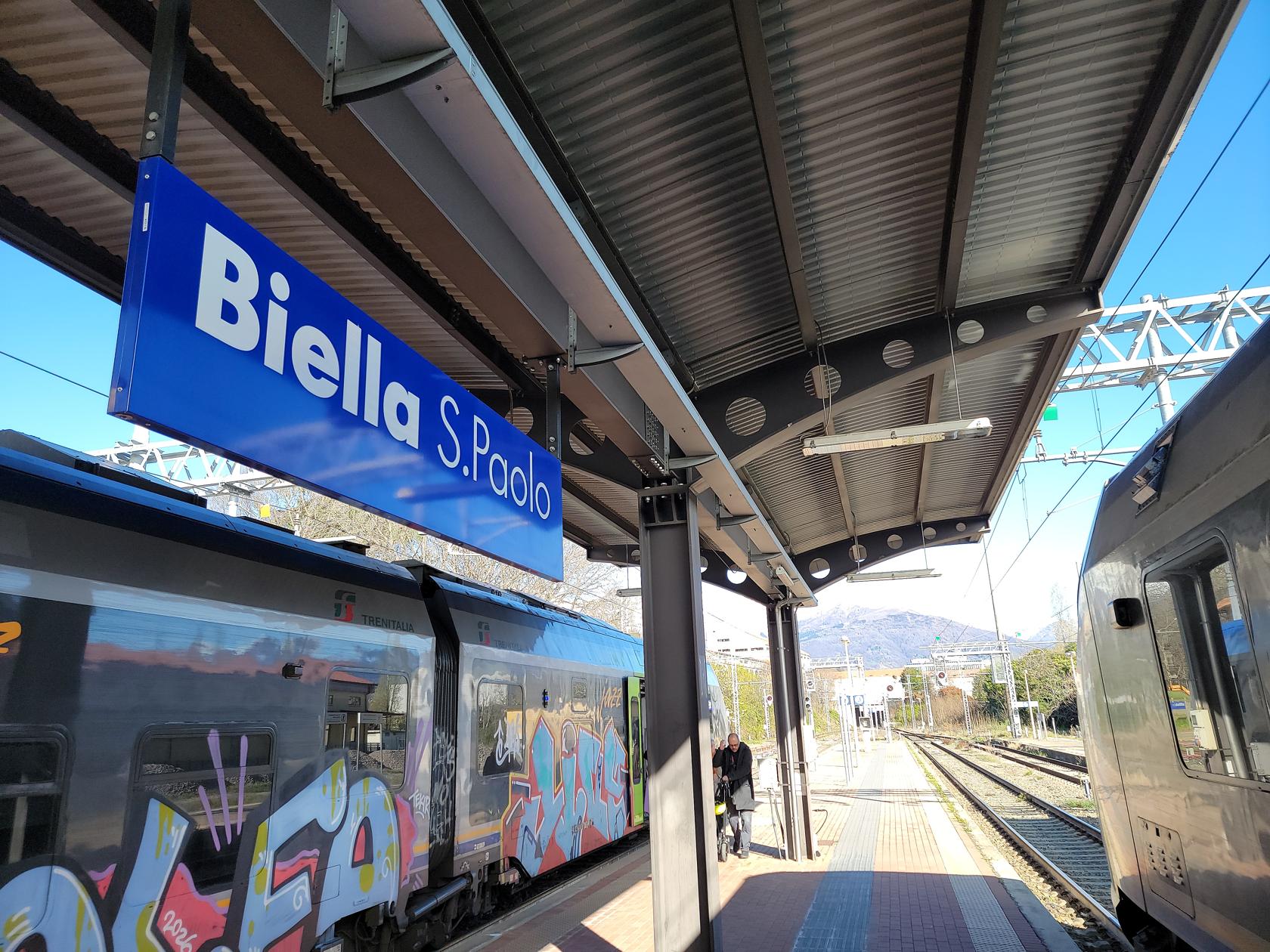
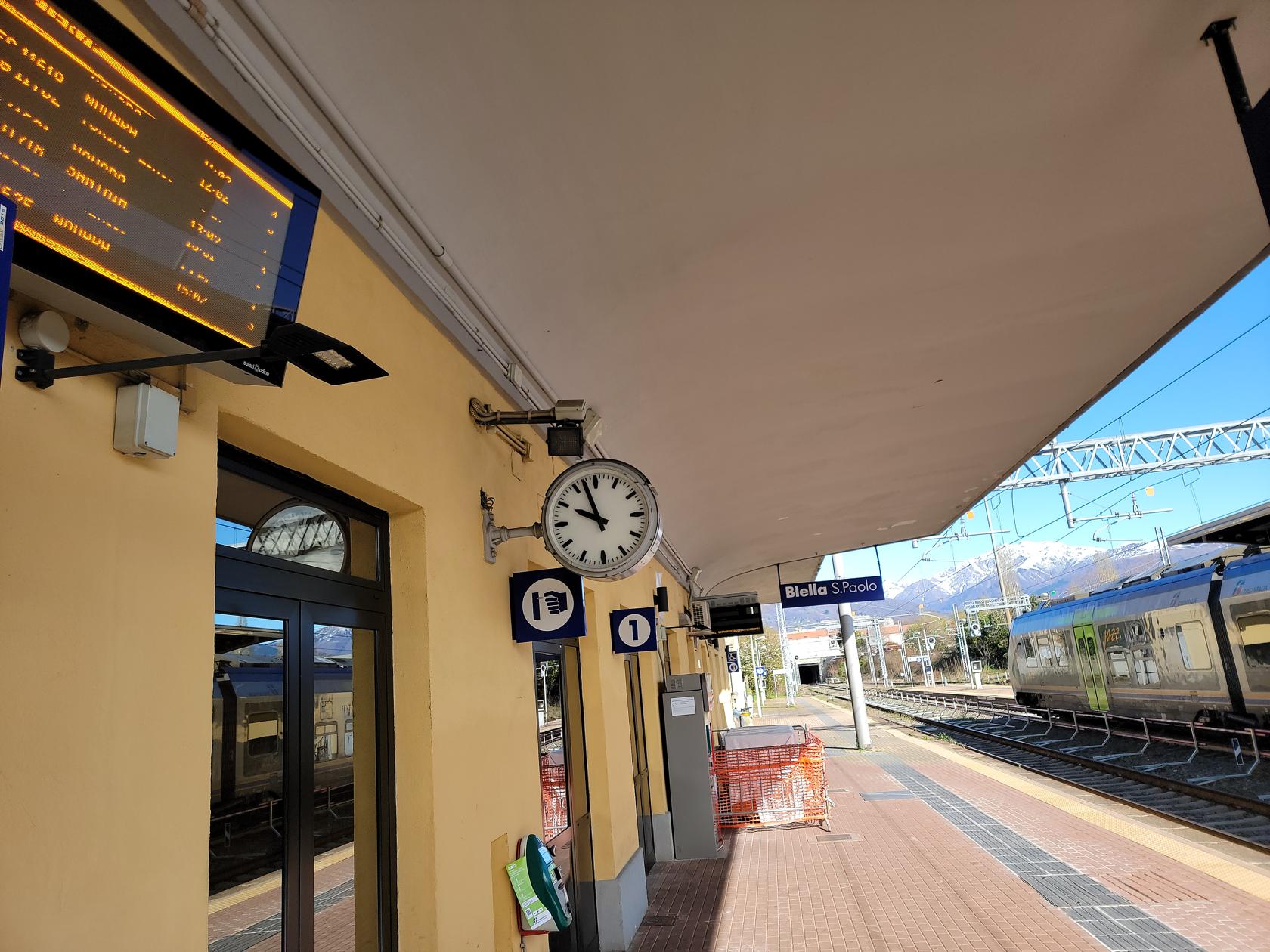
Biella San Paolo Train Station – Biella, Italy
Biella
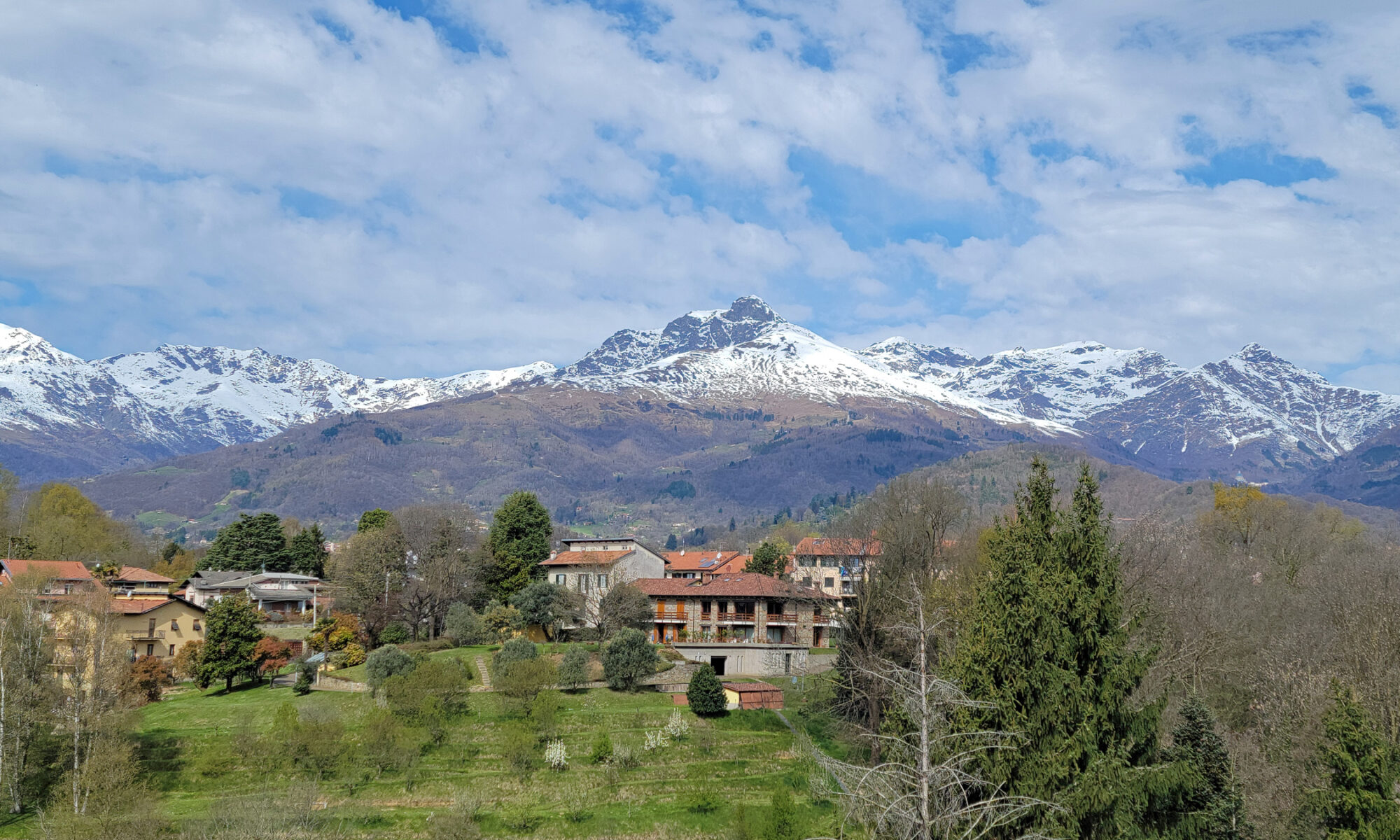
The city sits at the foot of the eponymous mountain range of the Biellese Alps. It has been so affected by the wool industry’s decline and other issues, that it is considering cutting back on some municipal services, including the possible cessation of the funicular, or the Funicolare del Piazzo, which was severely damaged by past weather events.
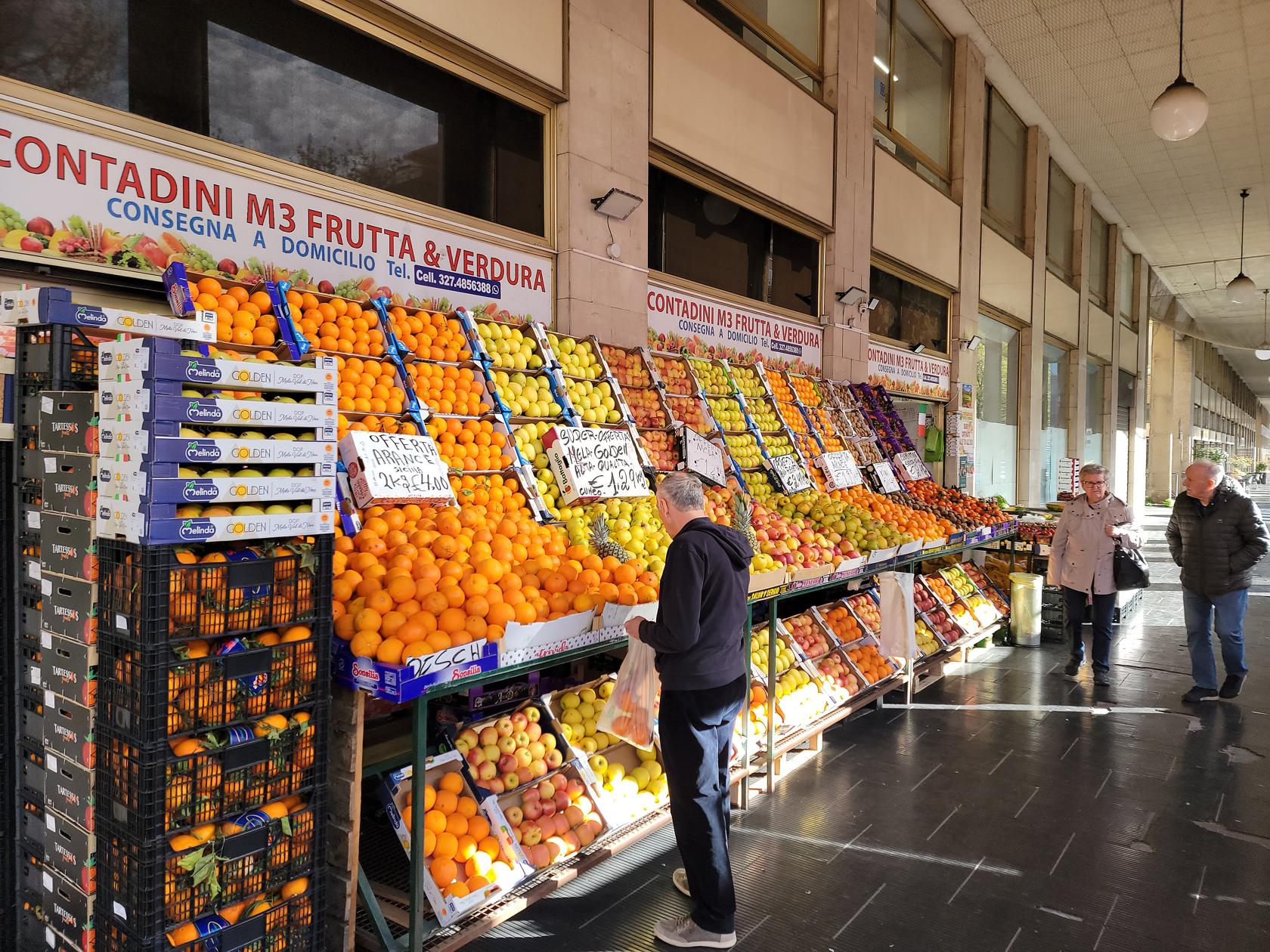
Outdoor Market – Biella, Italy
Getting There
We took the train from Turin’s Porta Susa to Biella. It is easy and very cost effective and only takes about an hour.
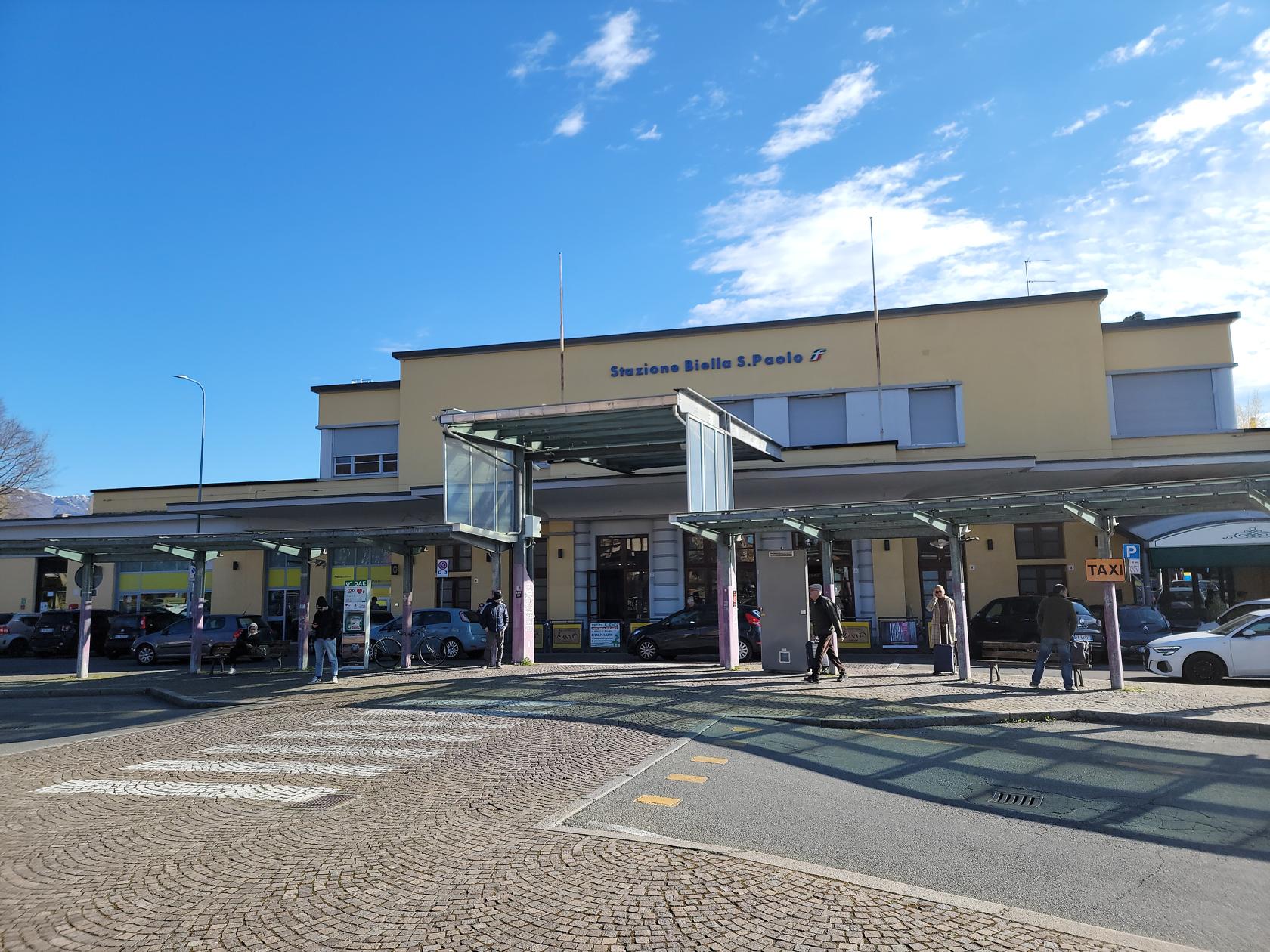
Biella San Paolo Train Station – Biella, Italy
Biella San Paolo Train Station – Biella, Italy
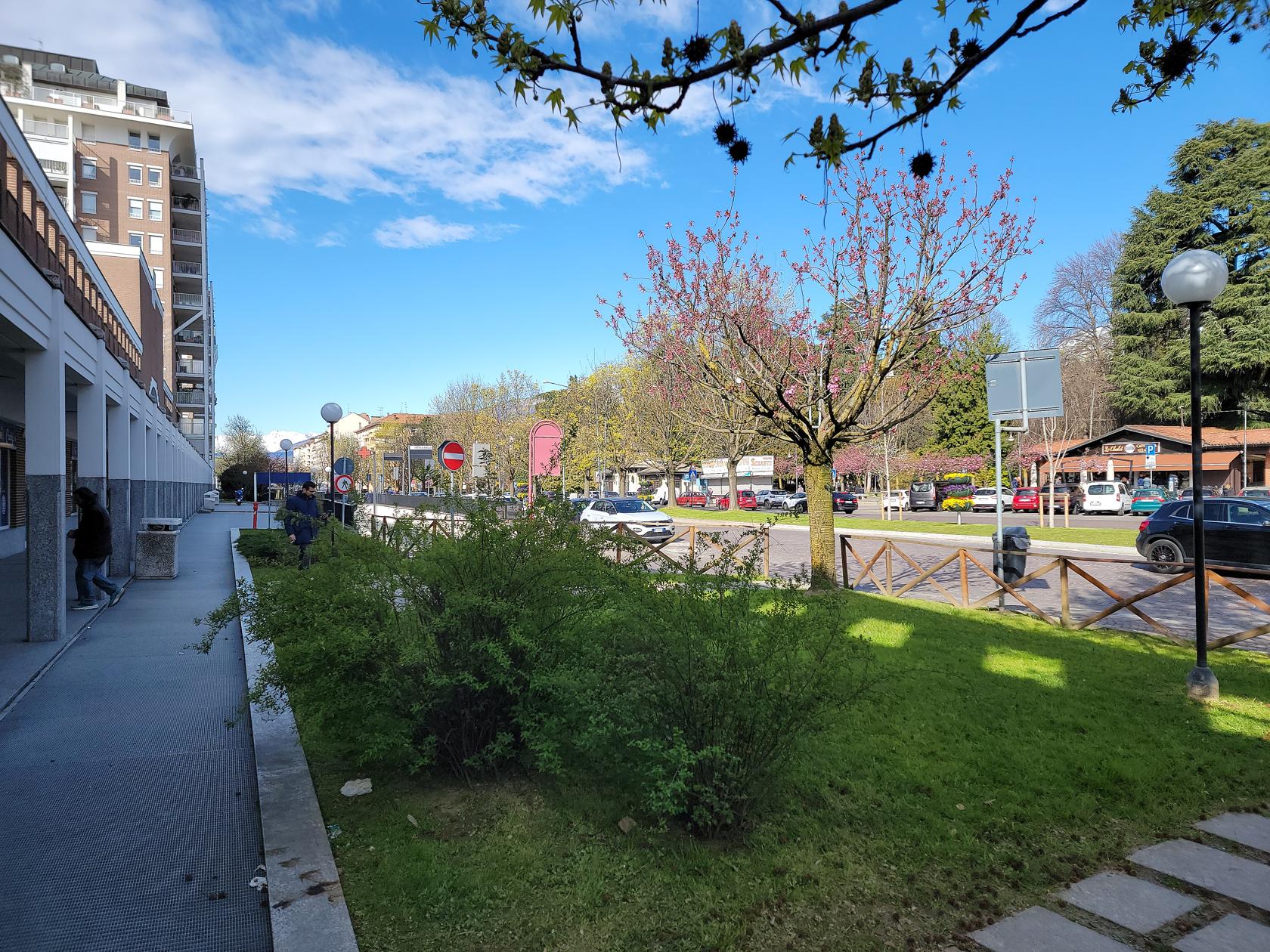
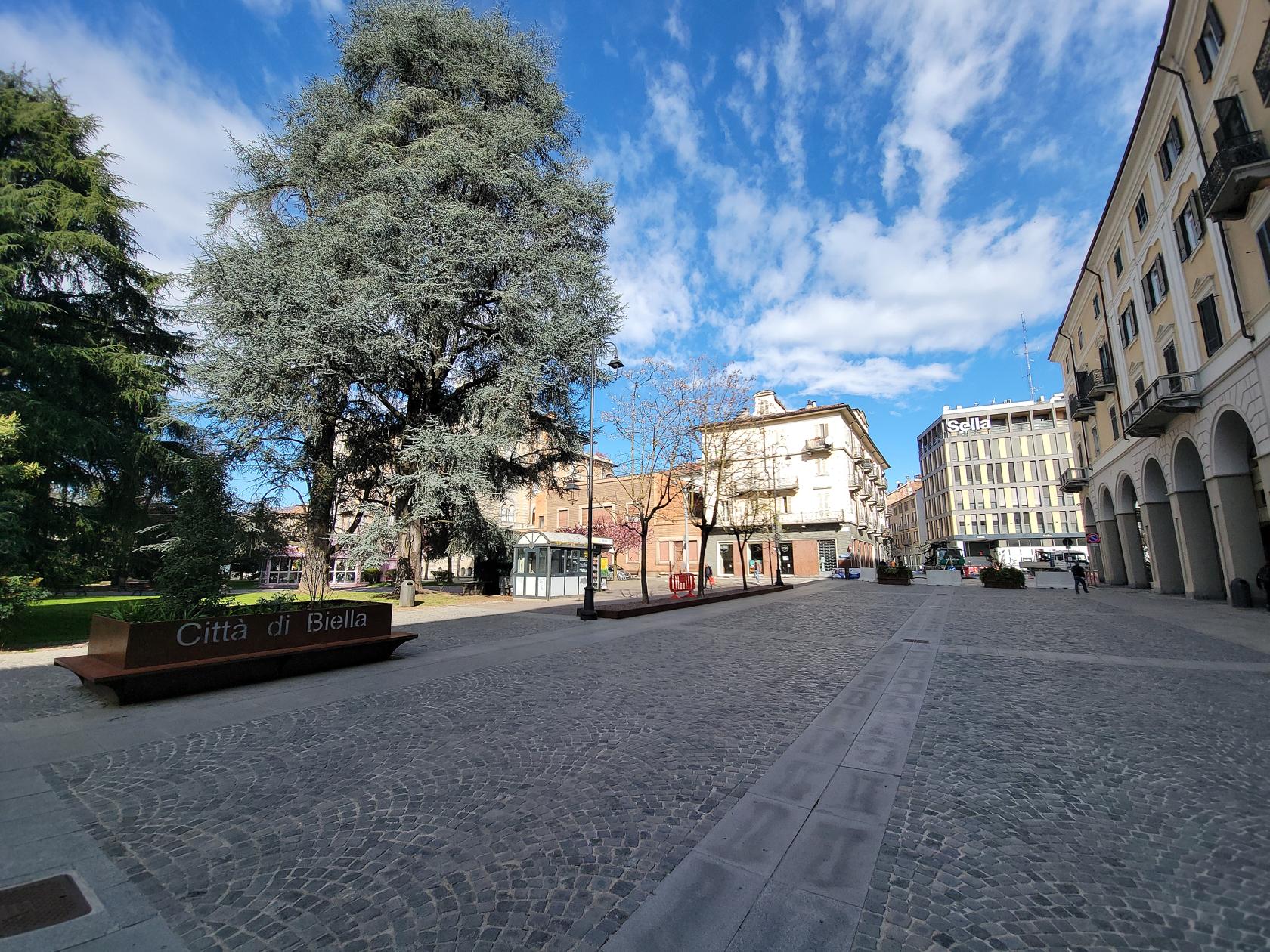
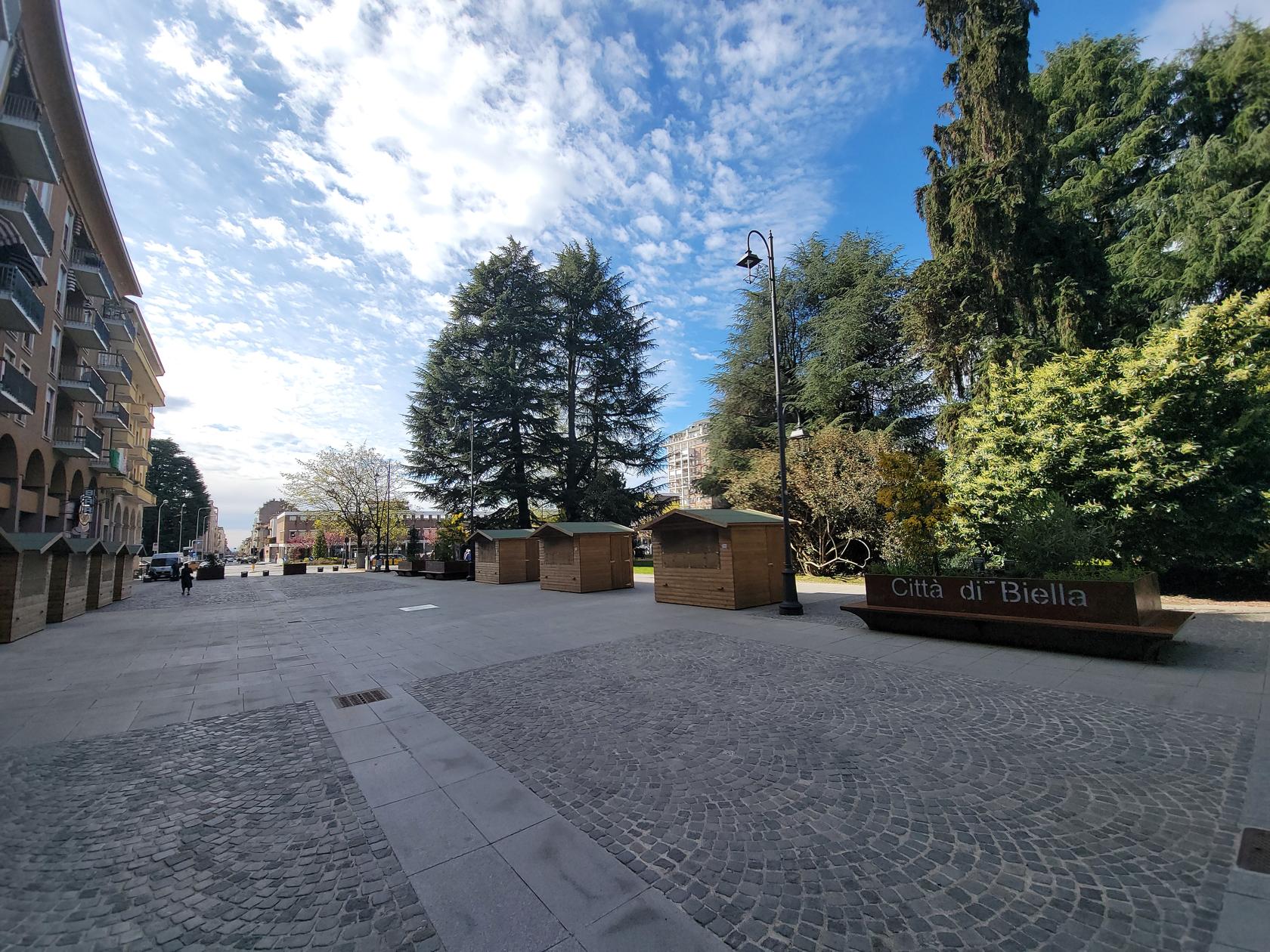
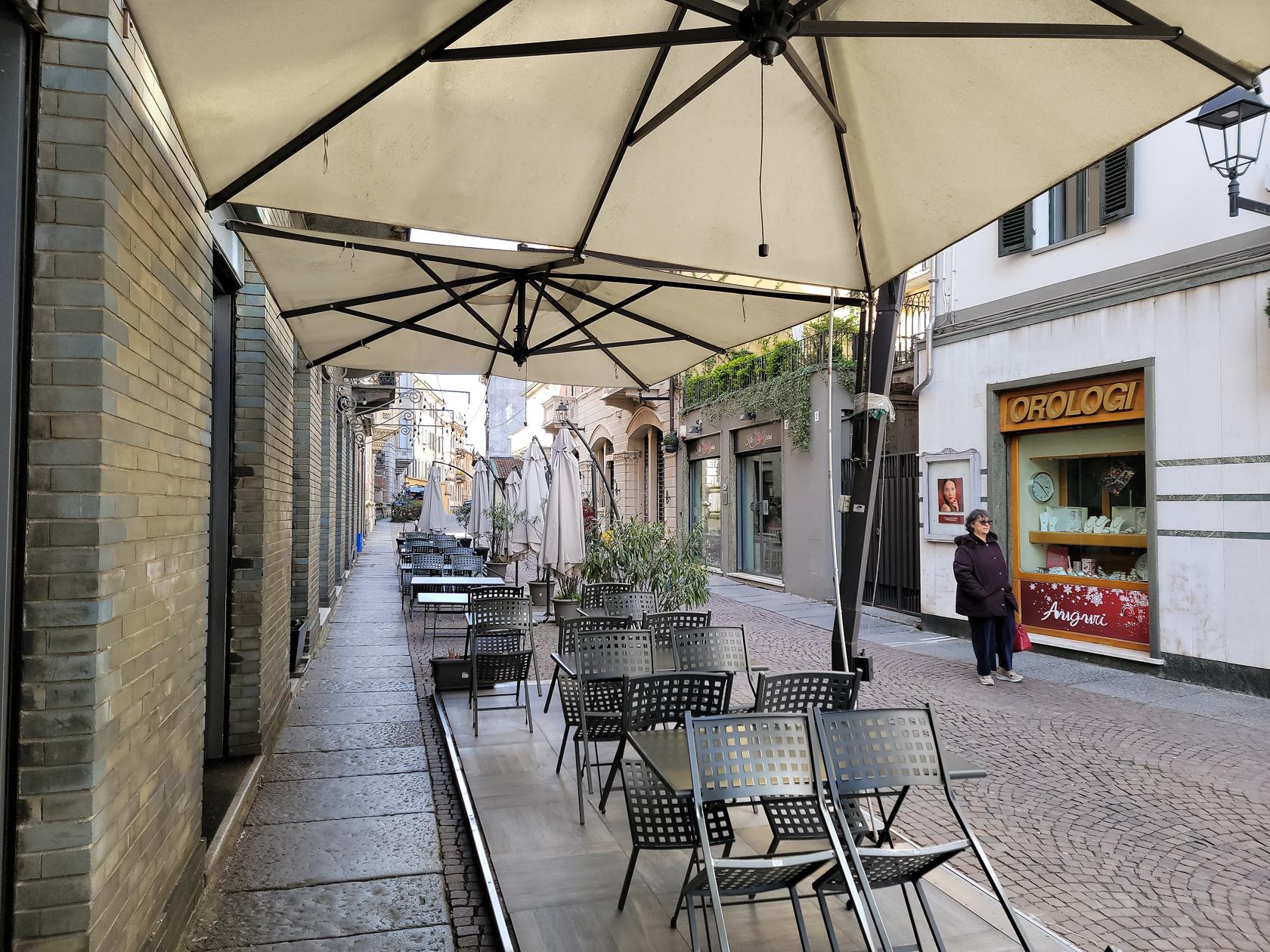
Though a very liveable city, it is fairly quiet, but we found lacking in some amenities. It is also not a very pretty city, it had many empty stores while we were here and many buildings appeared to have maintenance issues. However, if you did not stray far from the main street of Via Italia you wouldn’t notice.
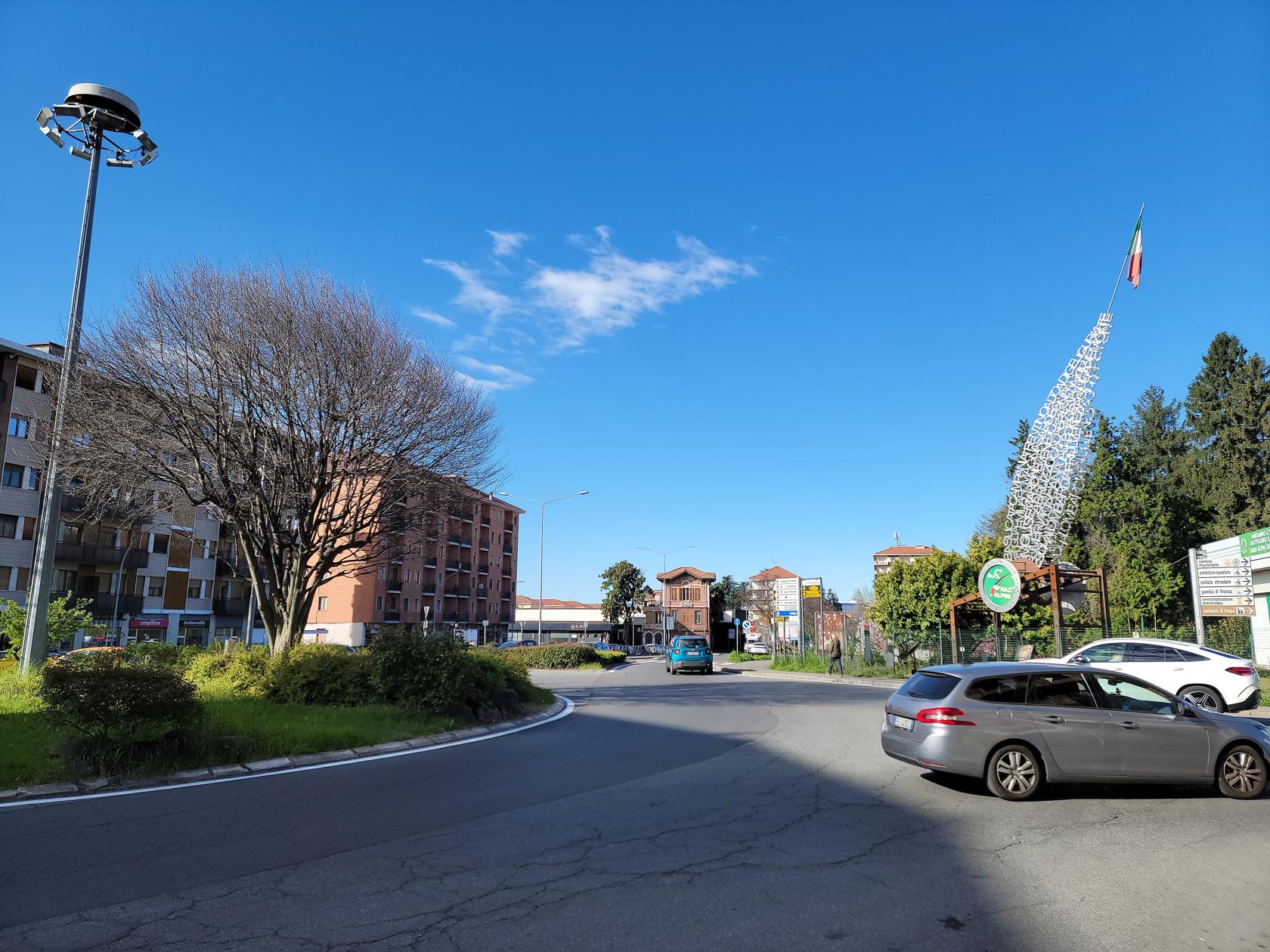
Entering Town – Biella, Italy
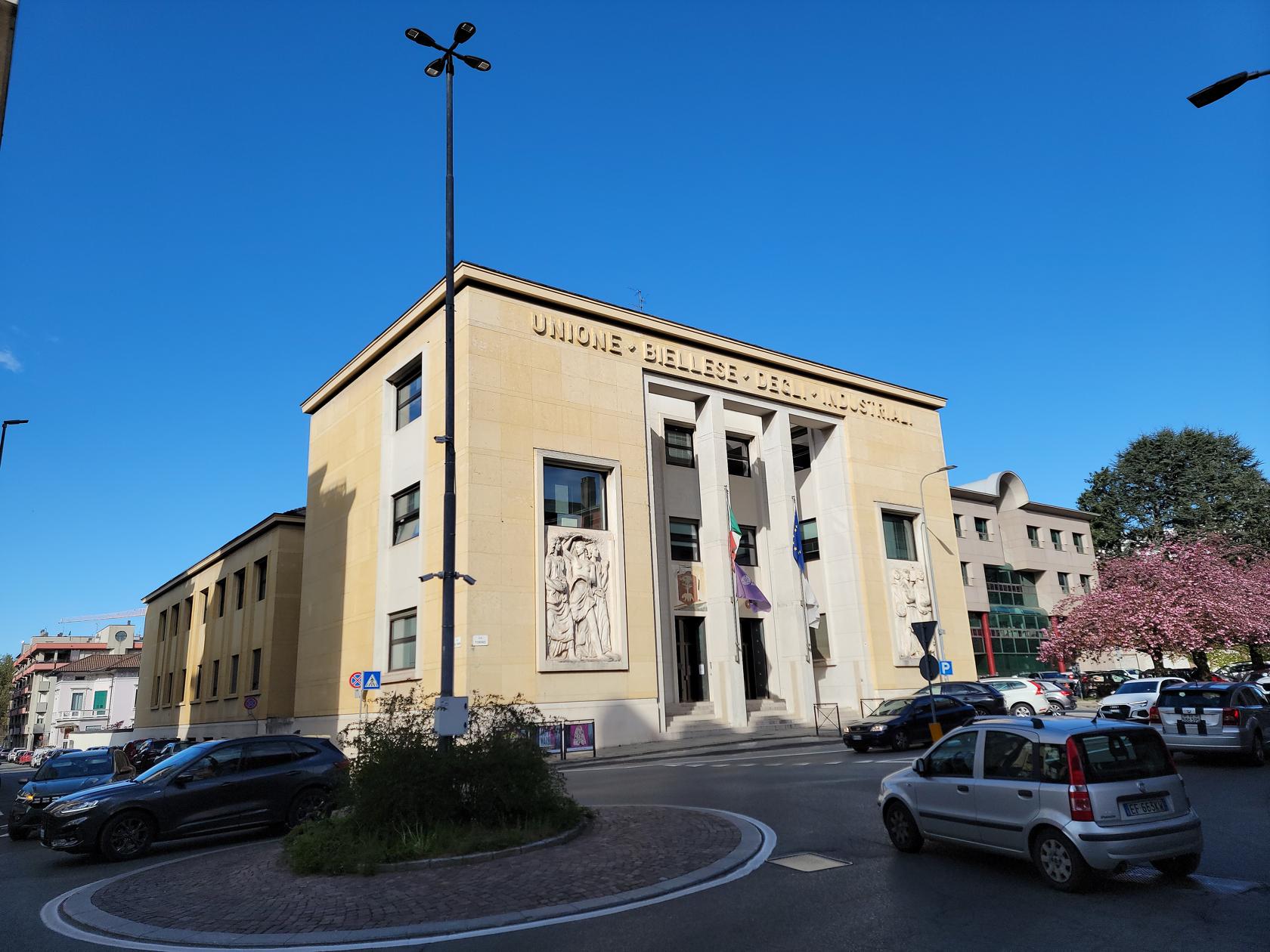
Typical Fascist Period Building – Via Torino – Biella, Italy
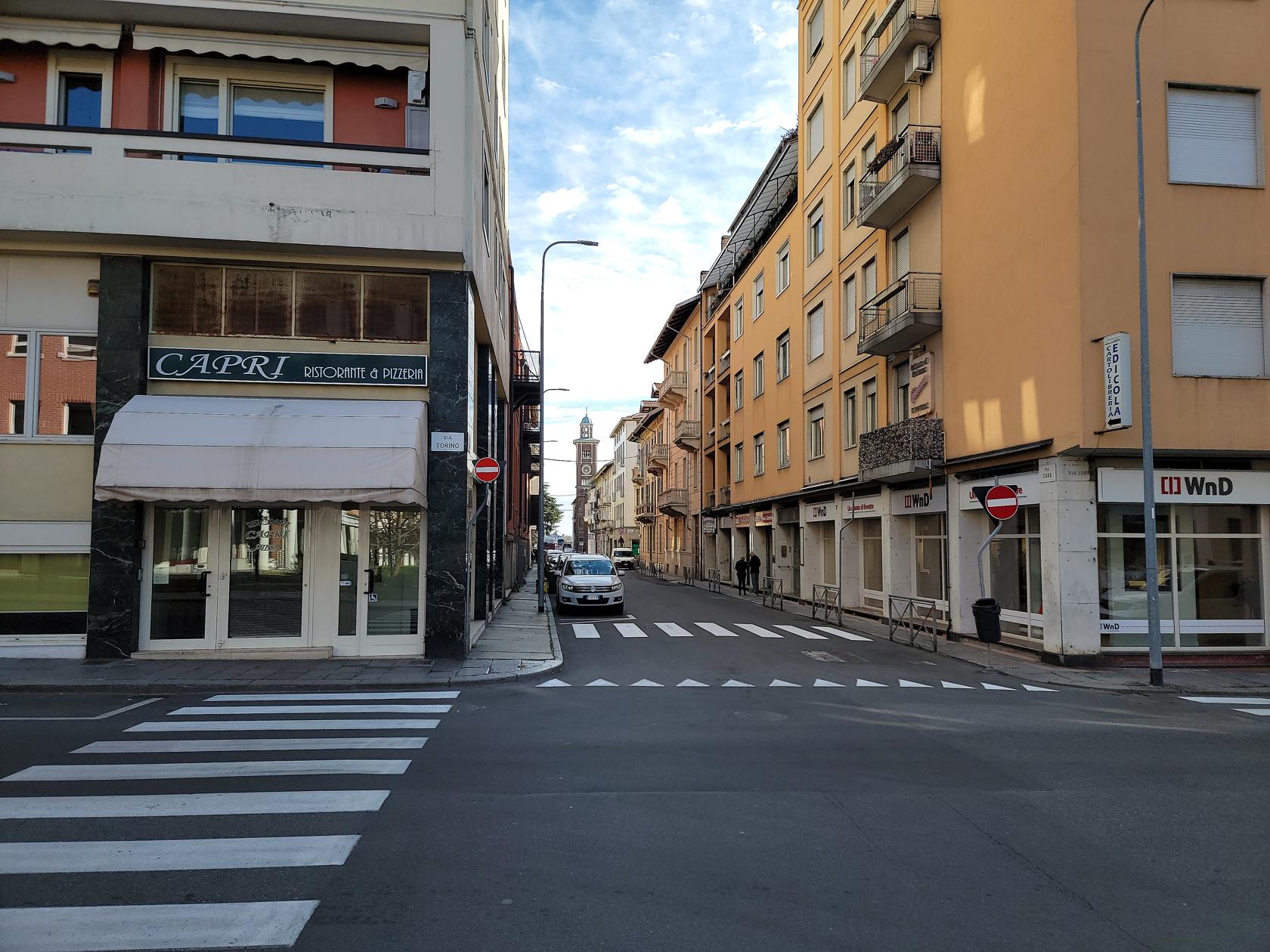
San Paolo Church Tower – Via Torino – Biella, Italy
SP338 – Biella, Italy
Zumaglini Park – Via Italia – Biella, Italy
Zumaglini Park – Via Italia – Biella, Italy
Via Italia – Biella, Italy
Via Italia – Biella, Italy
Via Italia – Biella, Italy
Via Italia – Biella, Italy
Via Italia – Biella, Italy
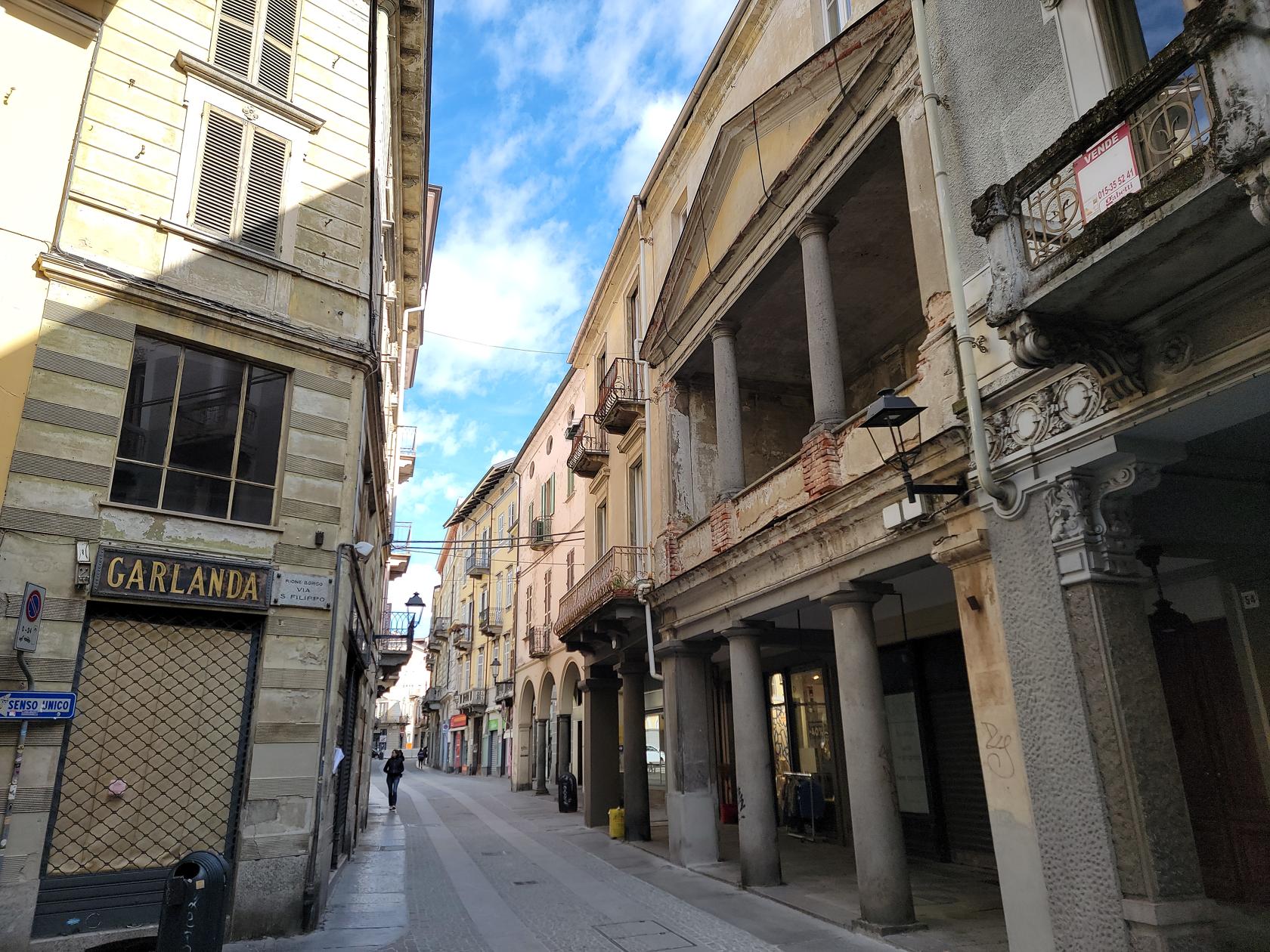
Old Building – Via S. Filippo and Via Italia – Biella, Italy
Piazza Biella
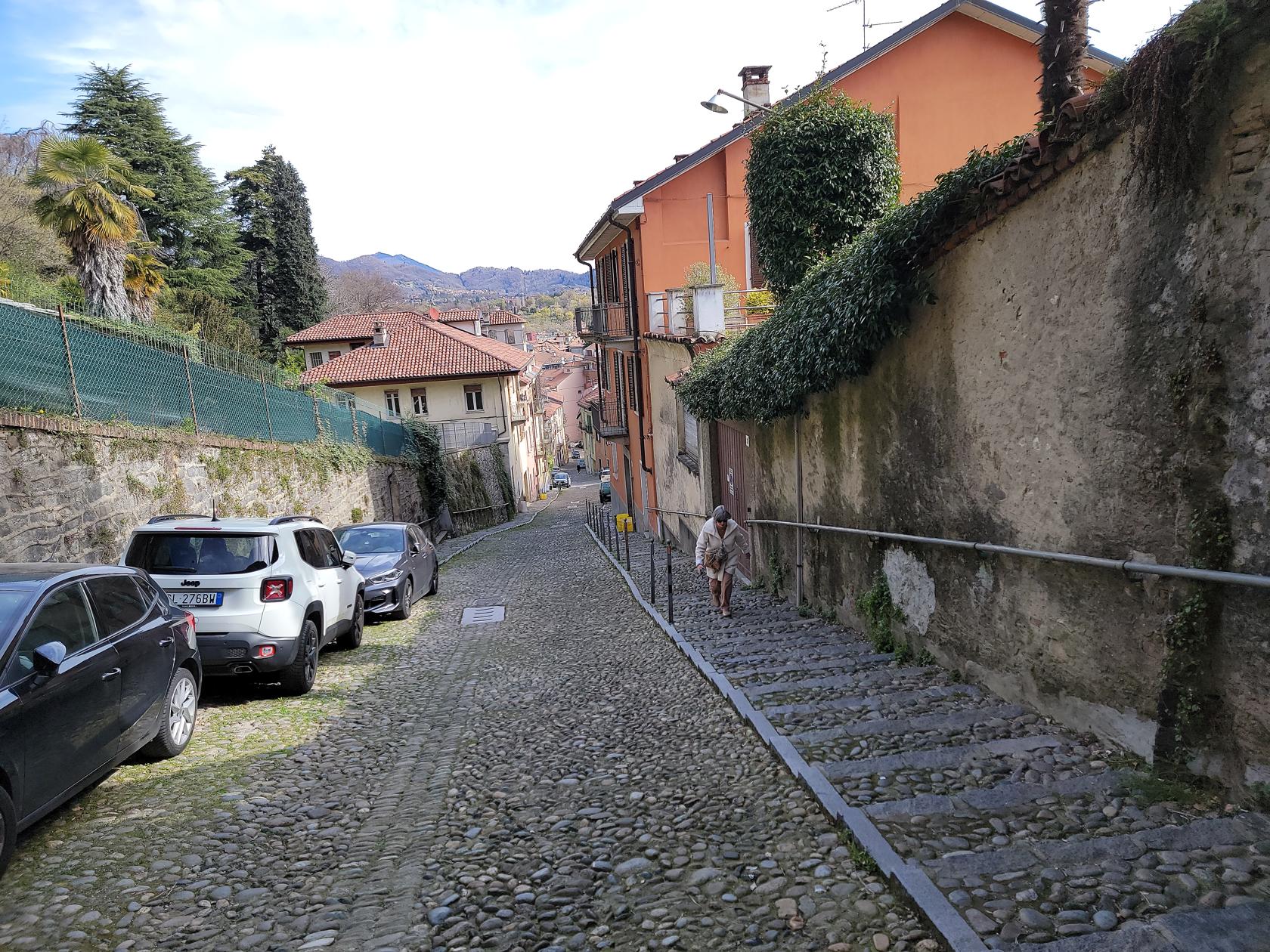
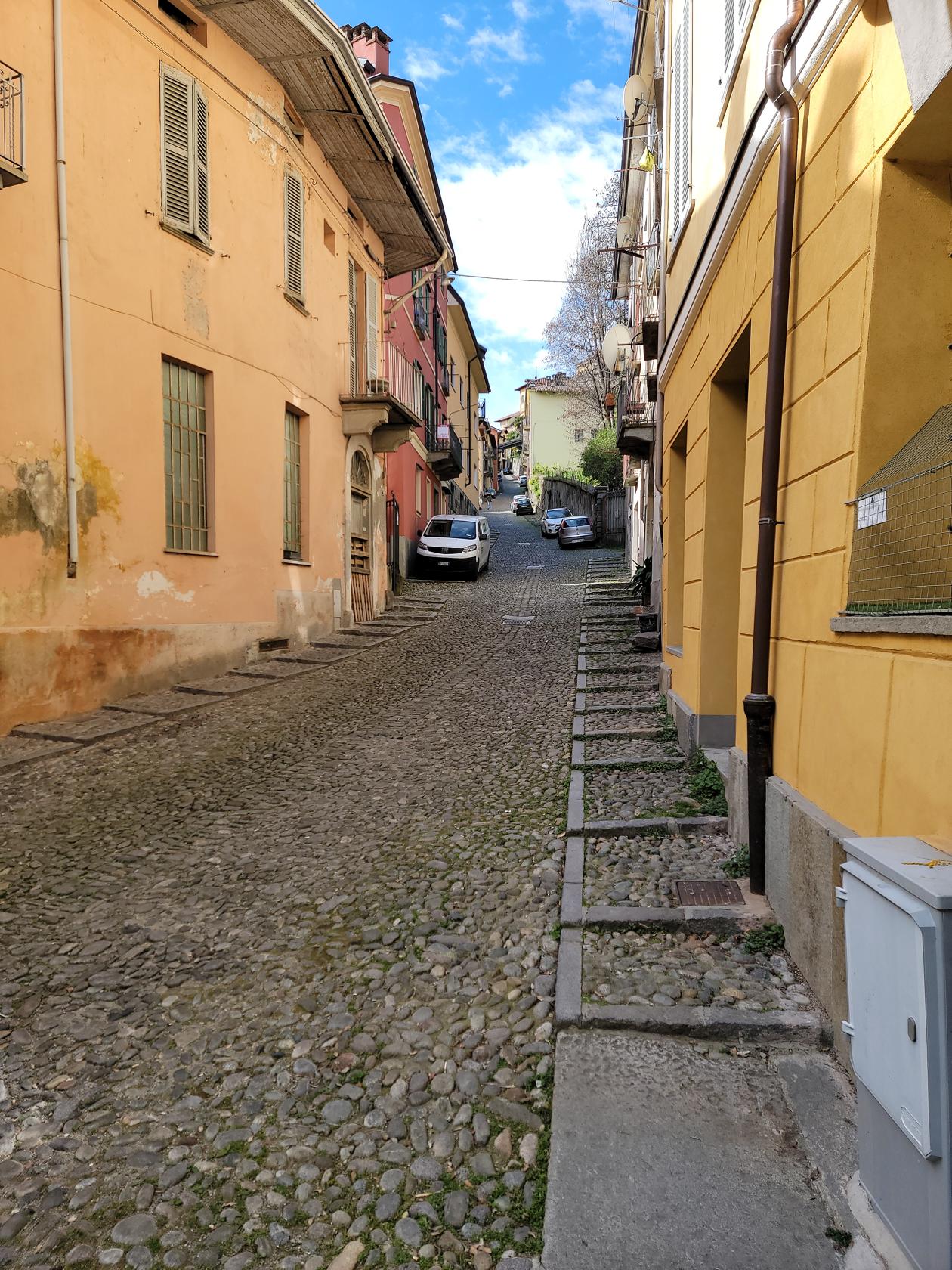
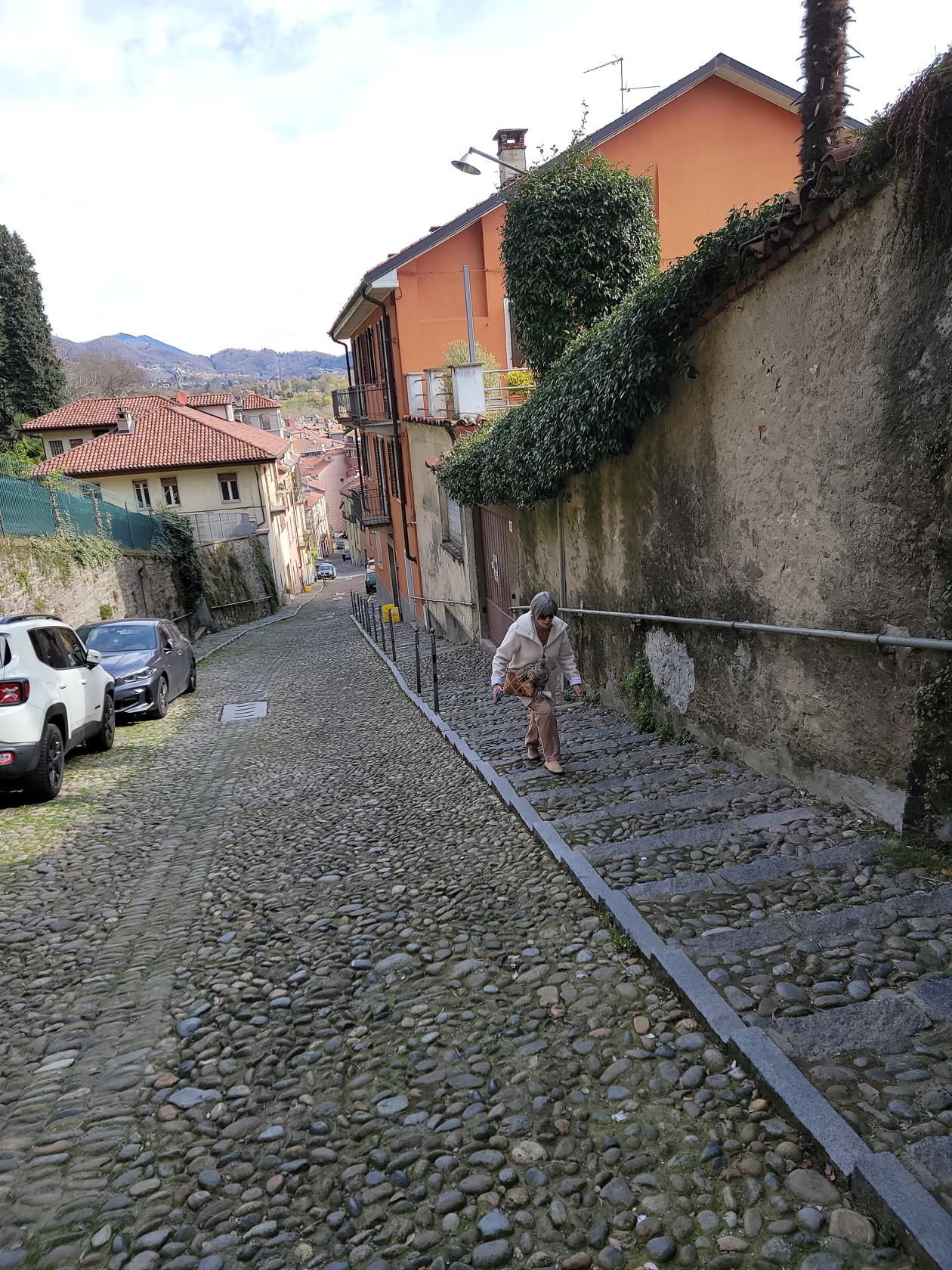
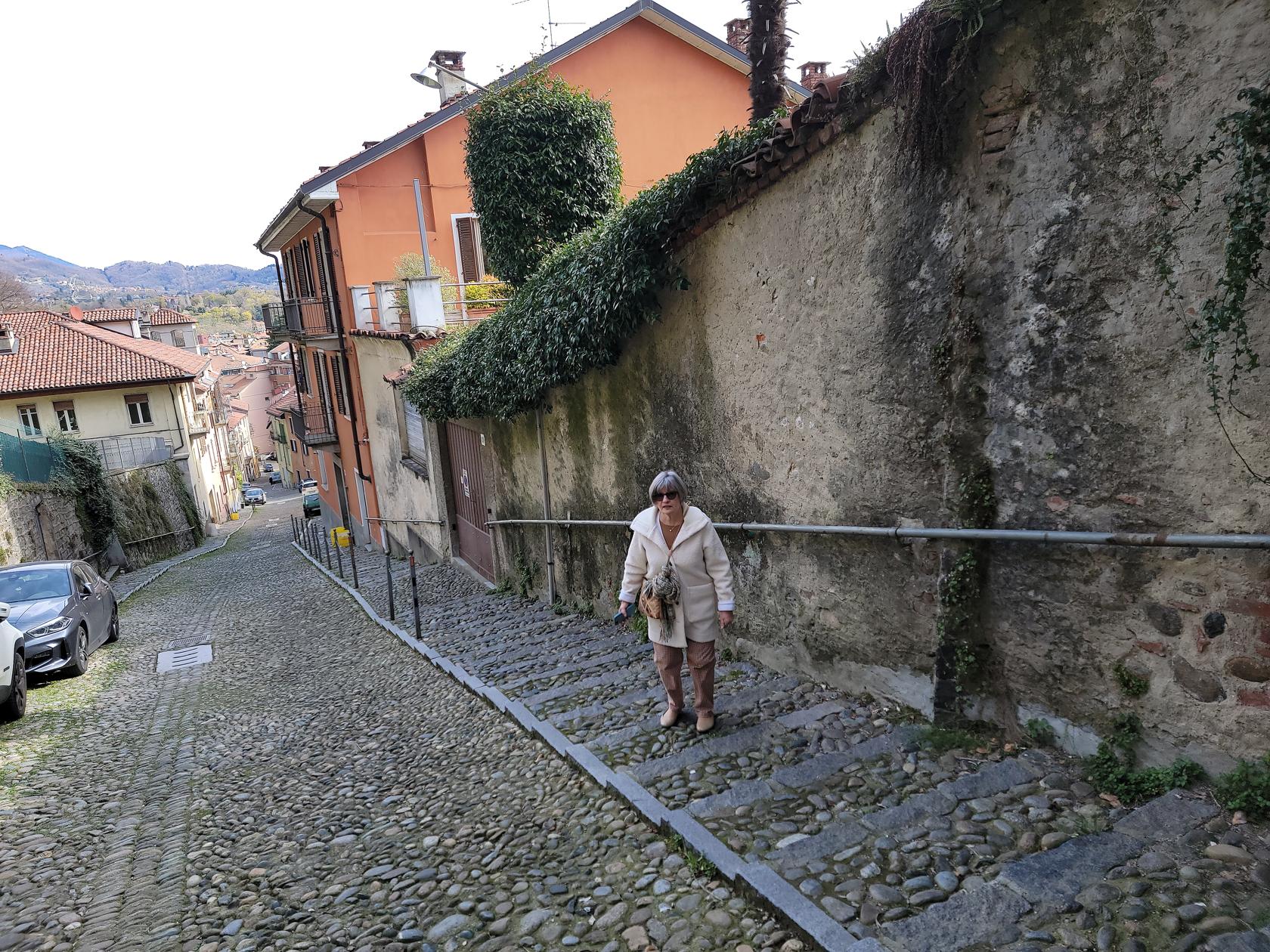
On the west side of the city, on top of the hill, is the Piazza Biella. A fifteen to twenty minute walk up the Costa del Piazza will bring you to the upper part of town. The cobbled street is a bit treacherous, so take care, especially if the weather is bad, the stones are quite slippery, even when dry.
Via Cerino Zegna – Biella, Italy
Patti – Costa del Piazzo – Biella, Italy
Costa del Piazzo – Biella, Italy
Patti – Costa del Piazzo – Biella, Italy
Patti – Costa del Piazzo – Biella, Italy
Costa del Noci – Costa del Piazzo – Biella, Italy
Here you will find the Piazza Biella, which has a few cafes and bars to enjoy. Aside from that, it is very quiet.
Piazza Biella – Biella, Italy
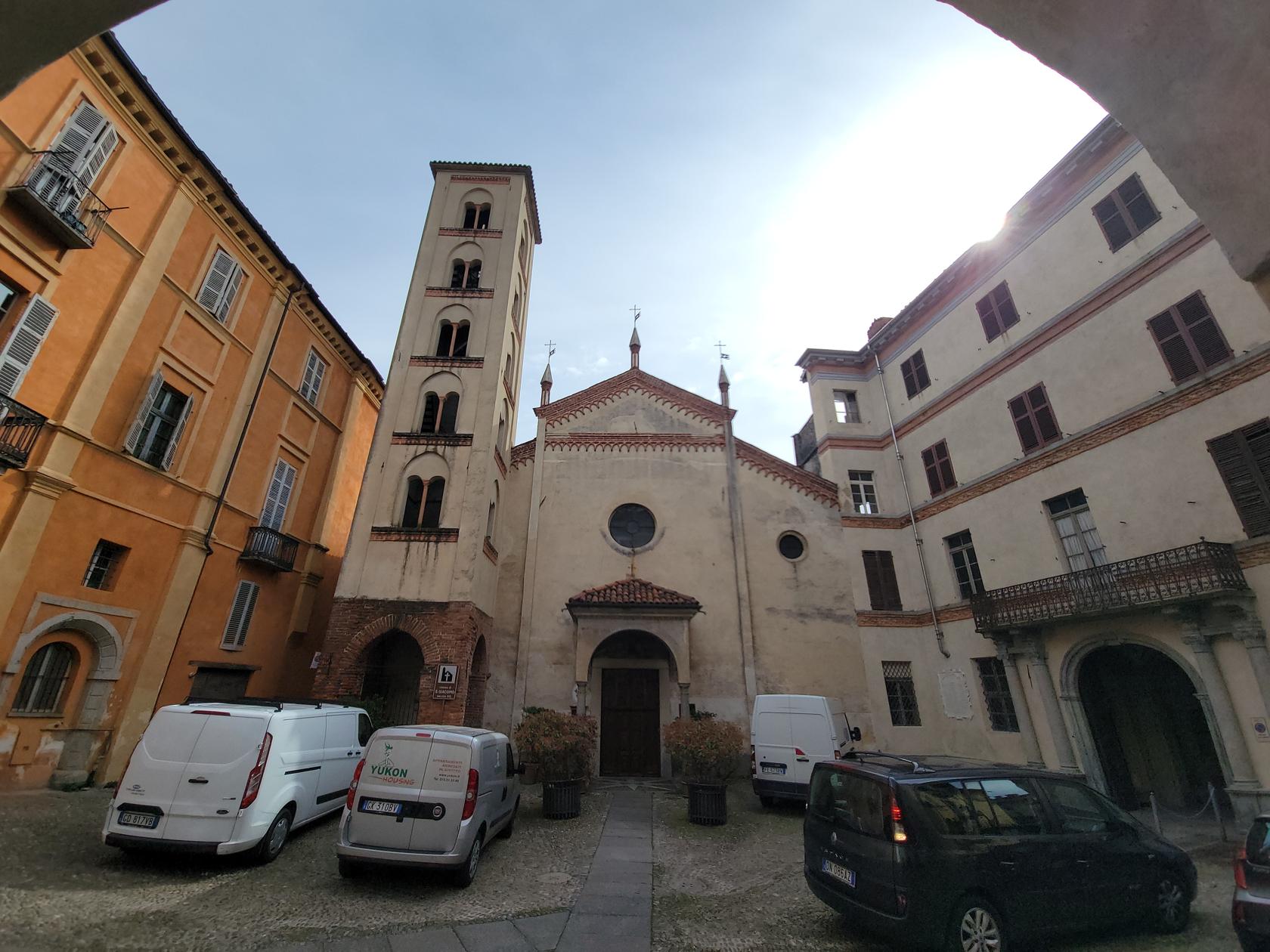
Church of San Giacomo – Piazza Biella – Biella, Italy
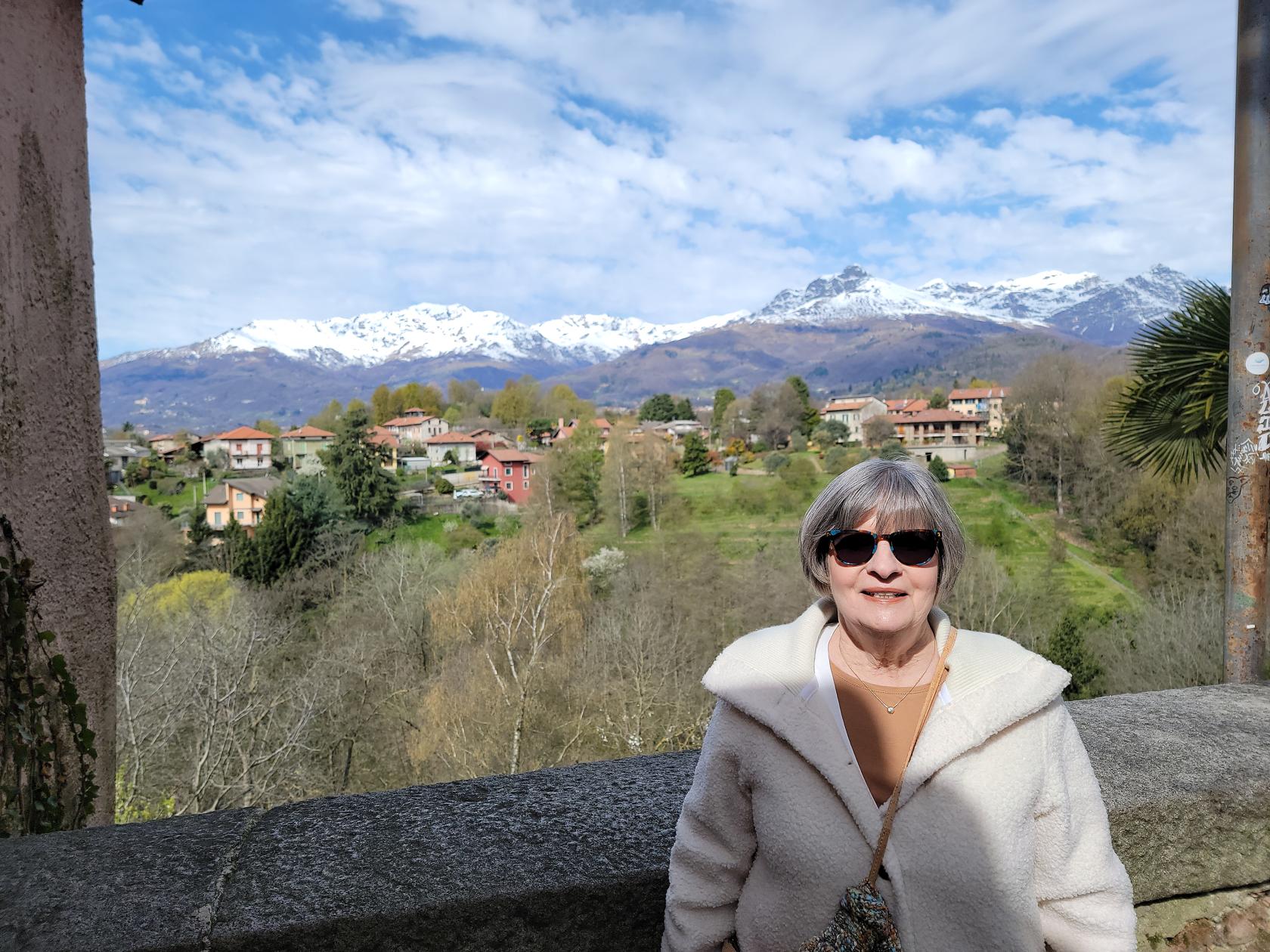
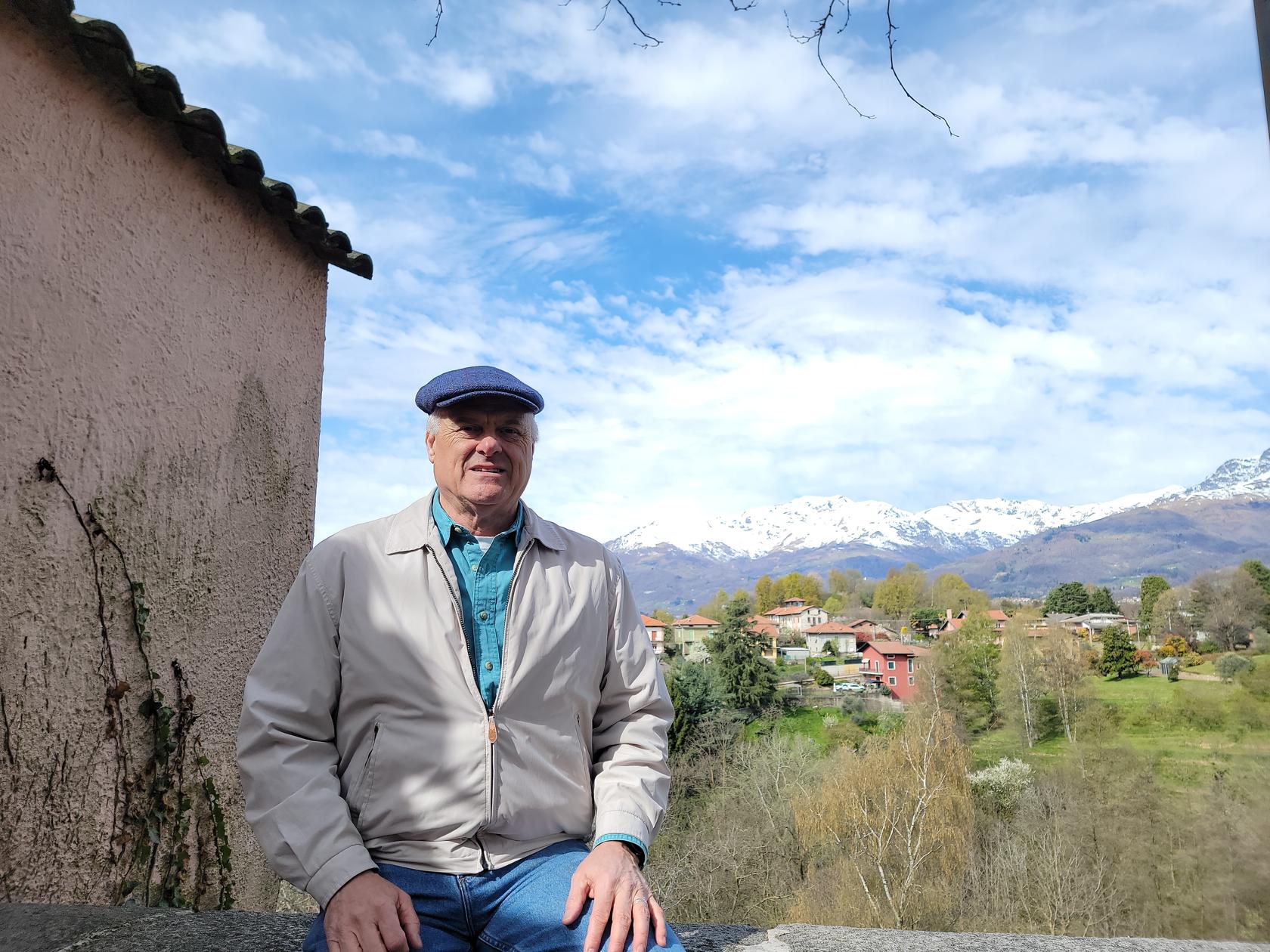
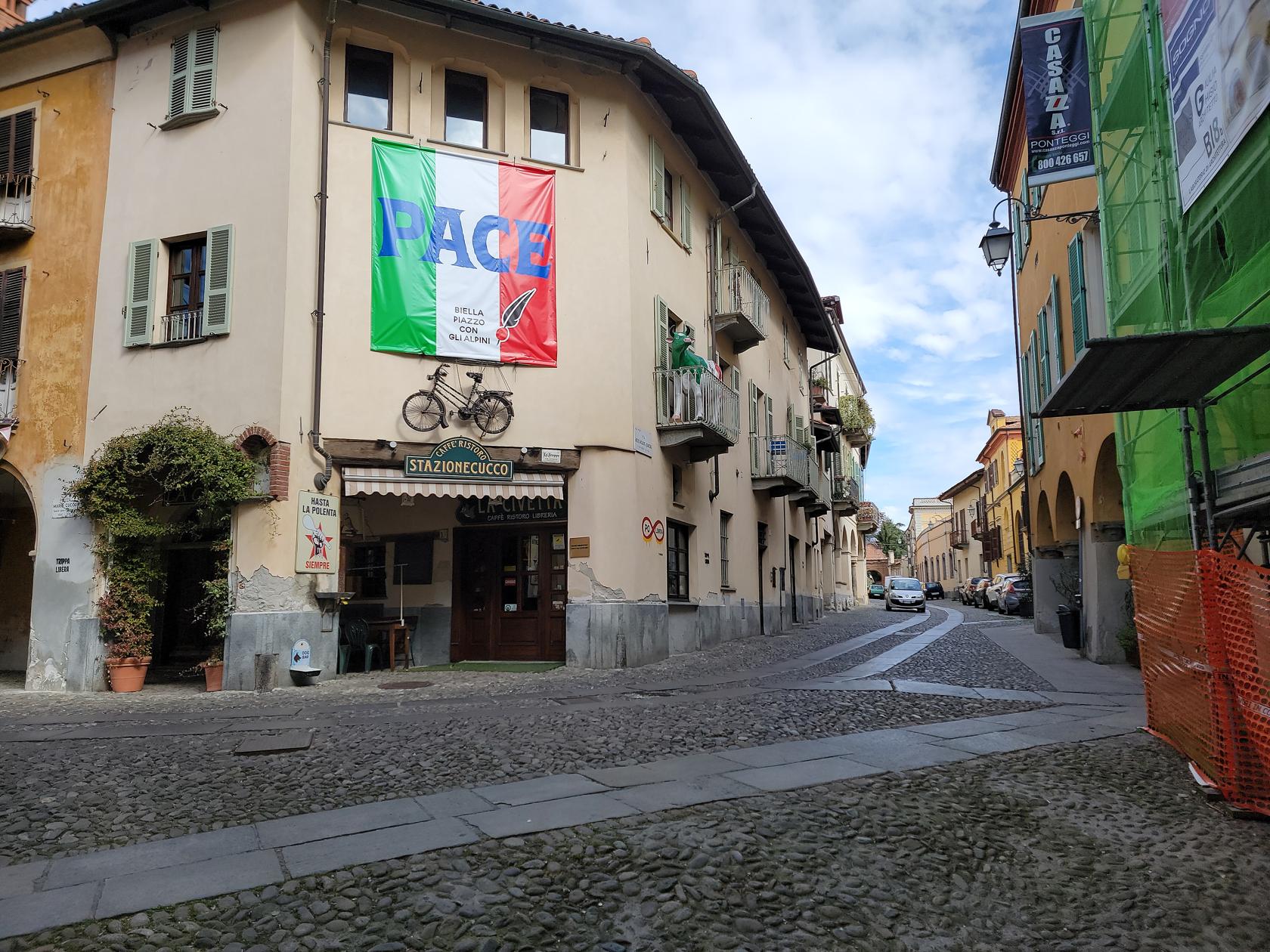
Close by is the Piazza Mario Cucco, from where you will be able to get a fantastic view of the Biellese Alps.
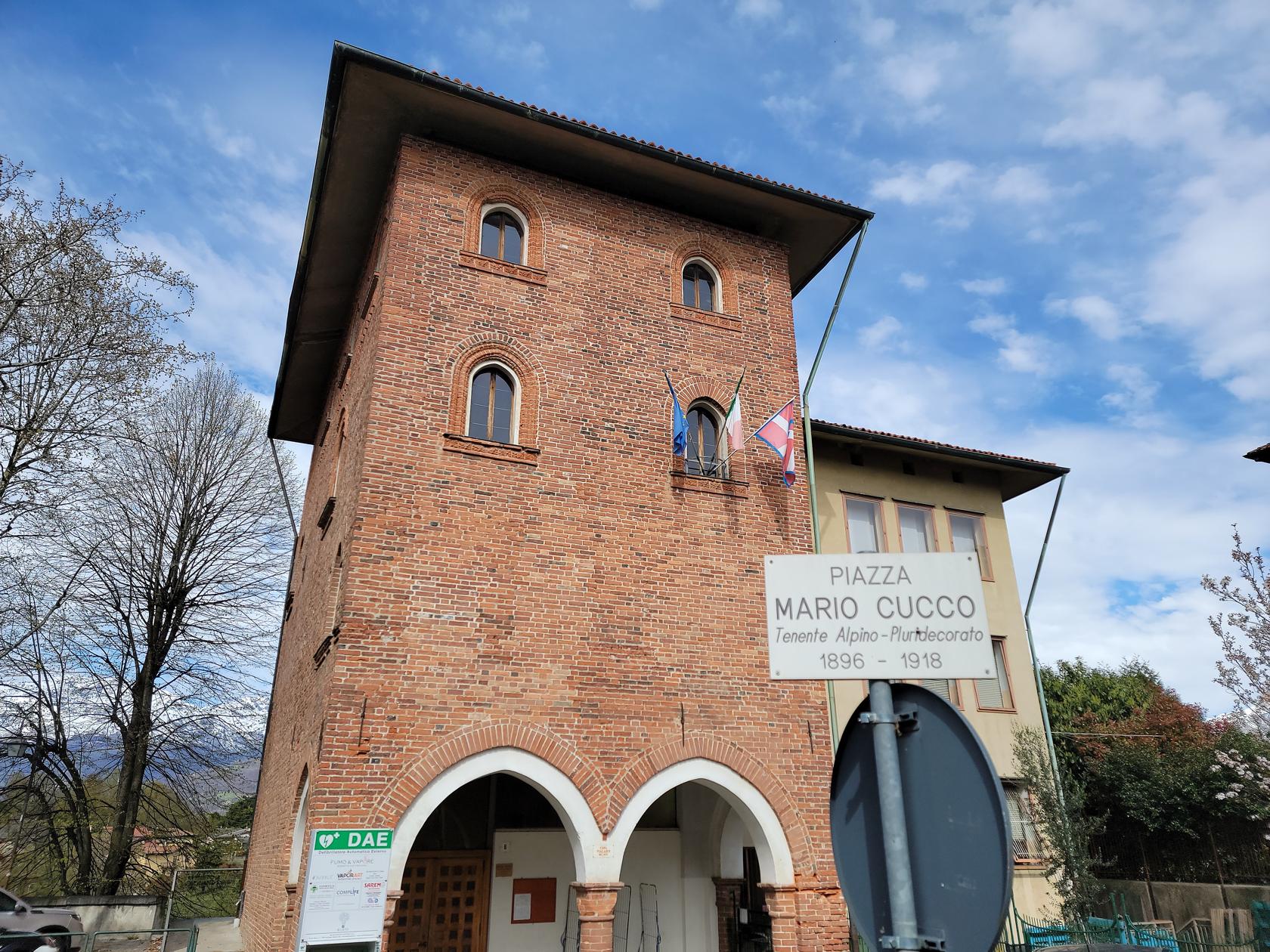
Piazza Mario Cucco – Biella, Italy
Patti With The Alps In Background – Piazza Mario Cucco – Biella, Italy
Erick With The Alps In Background – Piazza Mario Cucco – Biella, Italy
Piazza Mario Cucco – Biella, Italy
Piazza Mario Cucco – Biella, Italy
Old Buildings – Piazza Mario Cucco – Biella, Italy
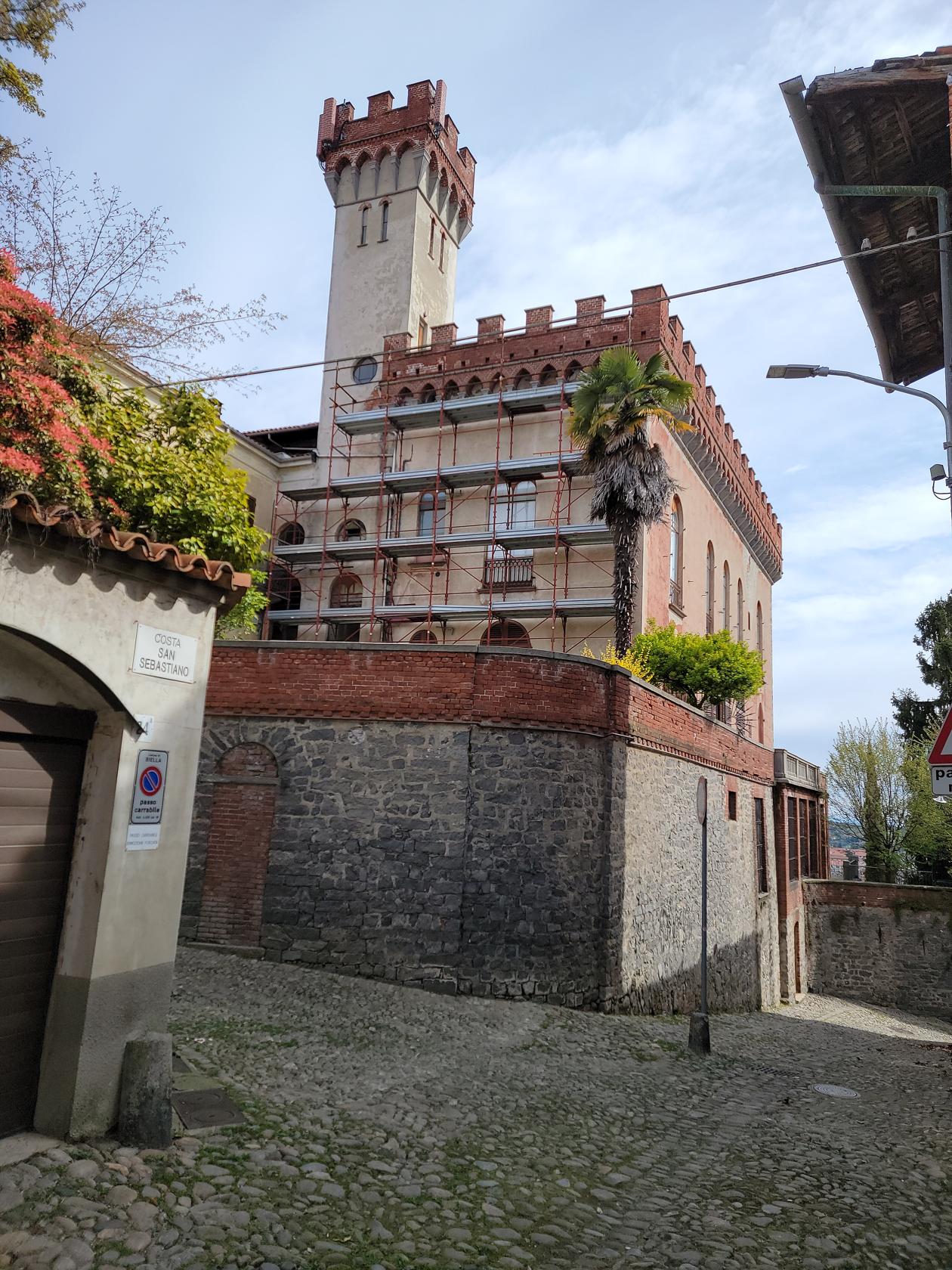
One the way down, we took the Costa San Sebastiano, which led us directly to the Basilica of San Sebastiano in Biella.
Patti – Costa San Sebastiano – Biella, Italy
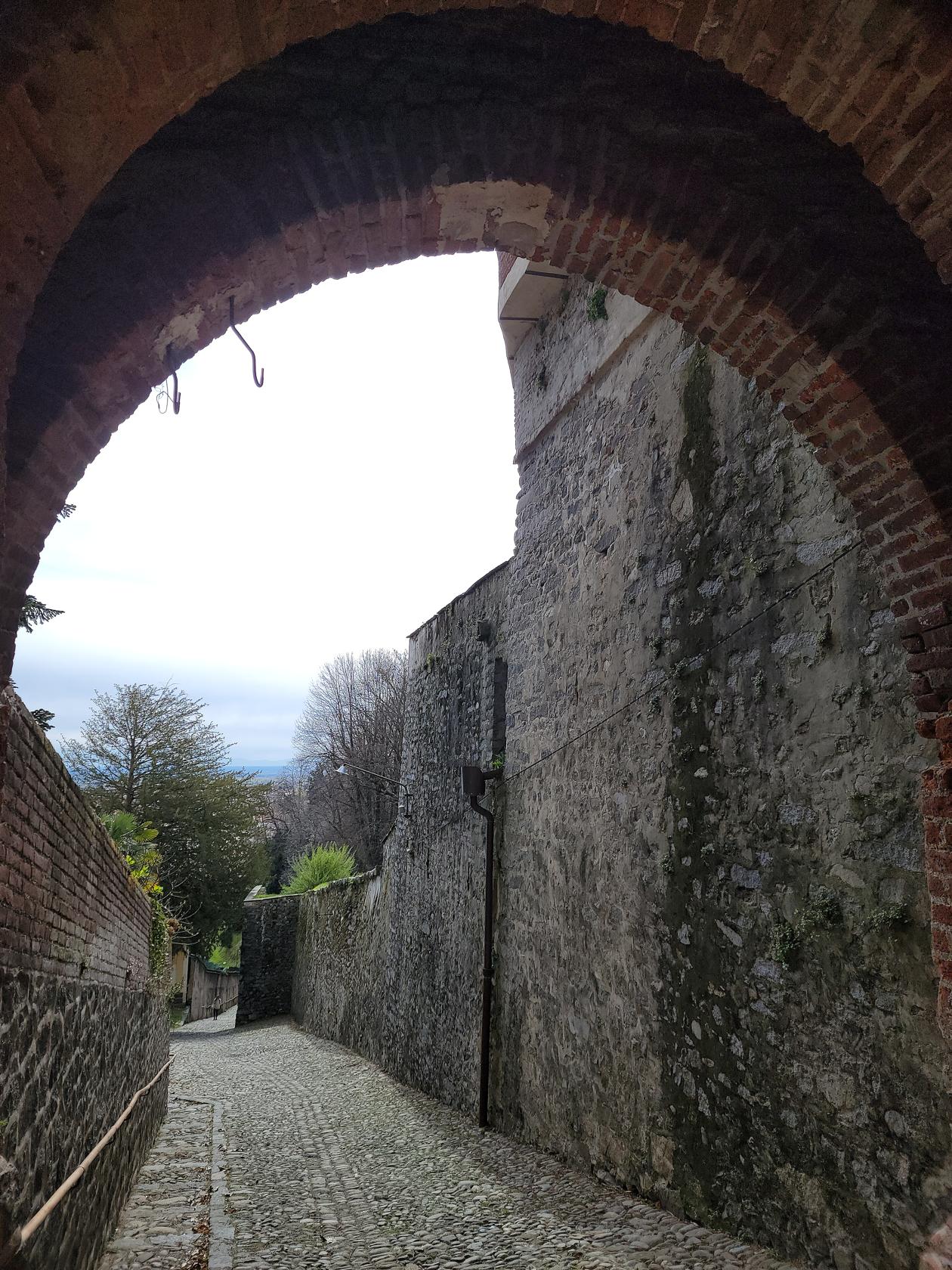
Costa San Sebastiano – Biella, Italy
Costa San Sebastiano – Biella, Italy
Basilica Biella
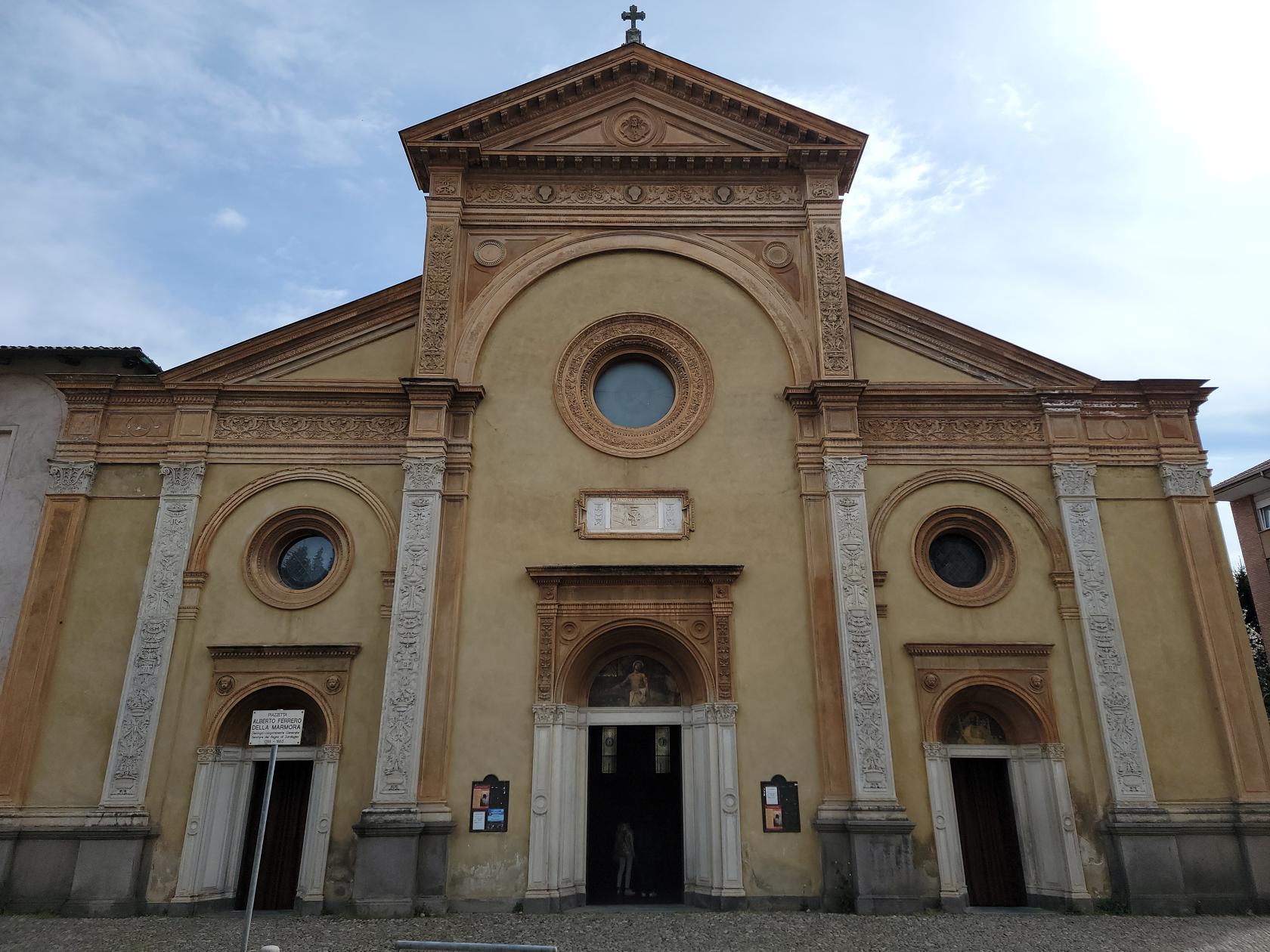
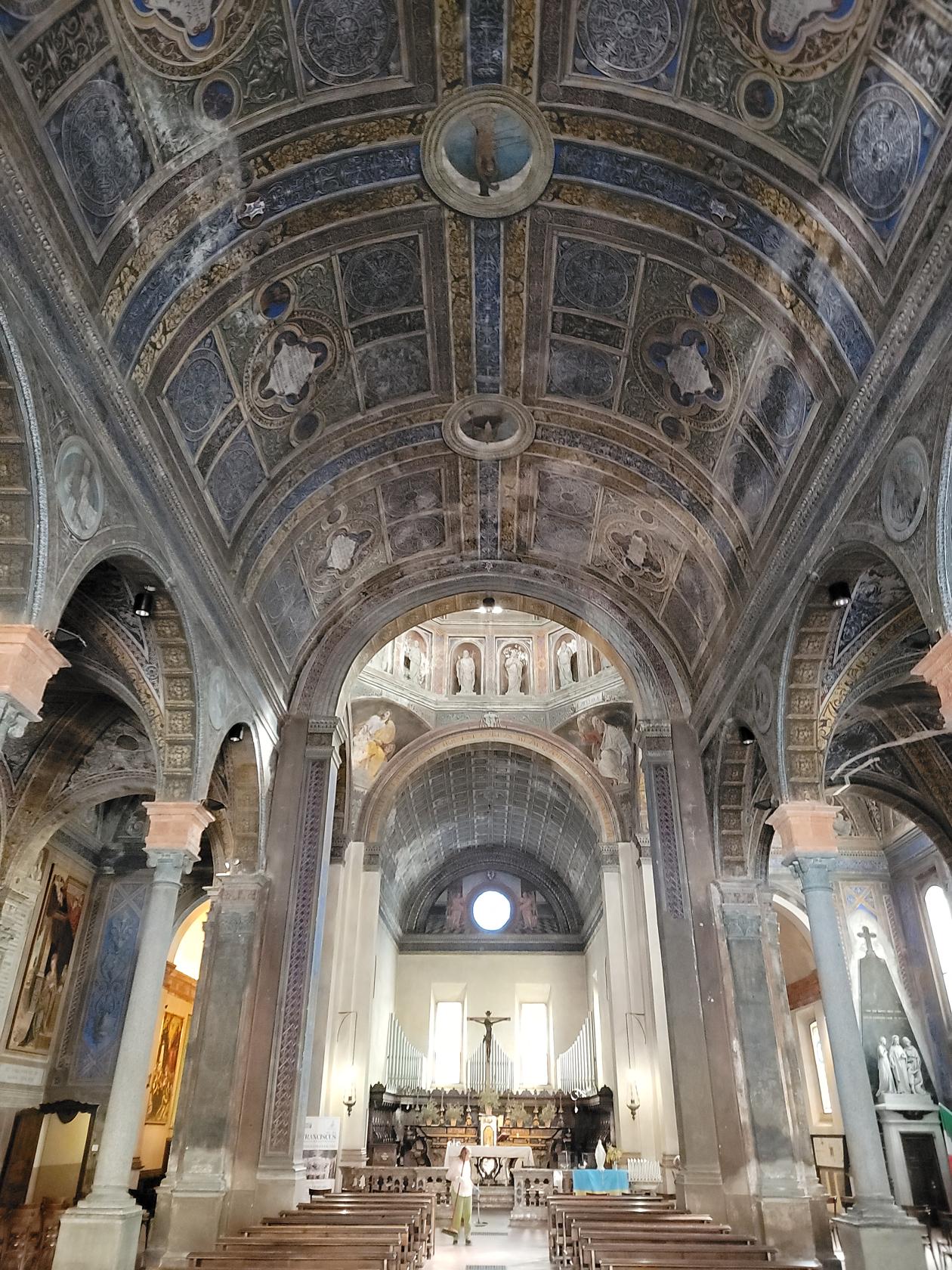
The Basilica of San Sebastiano, together with the monastery of San Girolamo, stands as the pinnacle of the Biella Renaissance. Commissioned and funded by Sebastiano Ferrero, it featured artists from the Lombardy region for its masonry work. The church’s foundation stone was laid in 1500, and in honor of the patron, it was dedicated to San Sebastiano. The construction was overseen by Maestro Eusebio, who was present during the laying of the foundation stone. By 1504, the church’s walls were already finished, but it wasn’t consecrated until 1540 by Monsignor Guglielmo di Gattinara, the Bishop of Nicomedia.
Entrance – Basilica San Sebastiano – Biella, Italy
Interior – Basilica San Sebastiano – Biella, Italy
Cathedral of Biella
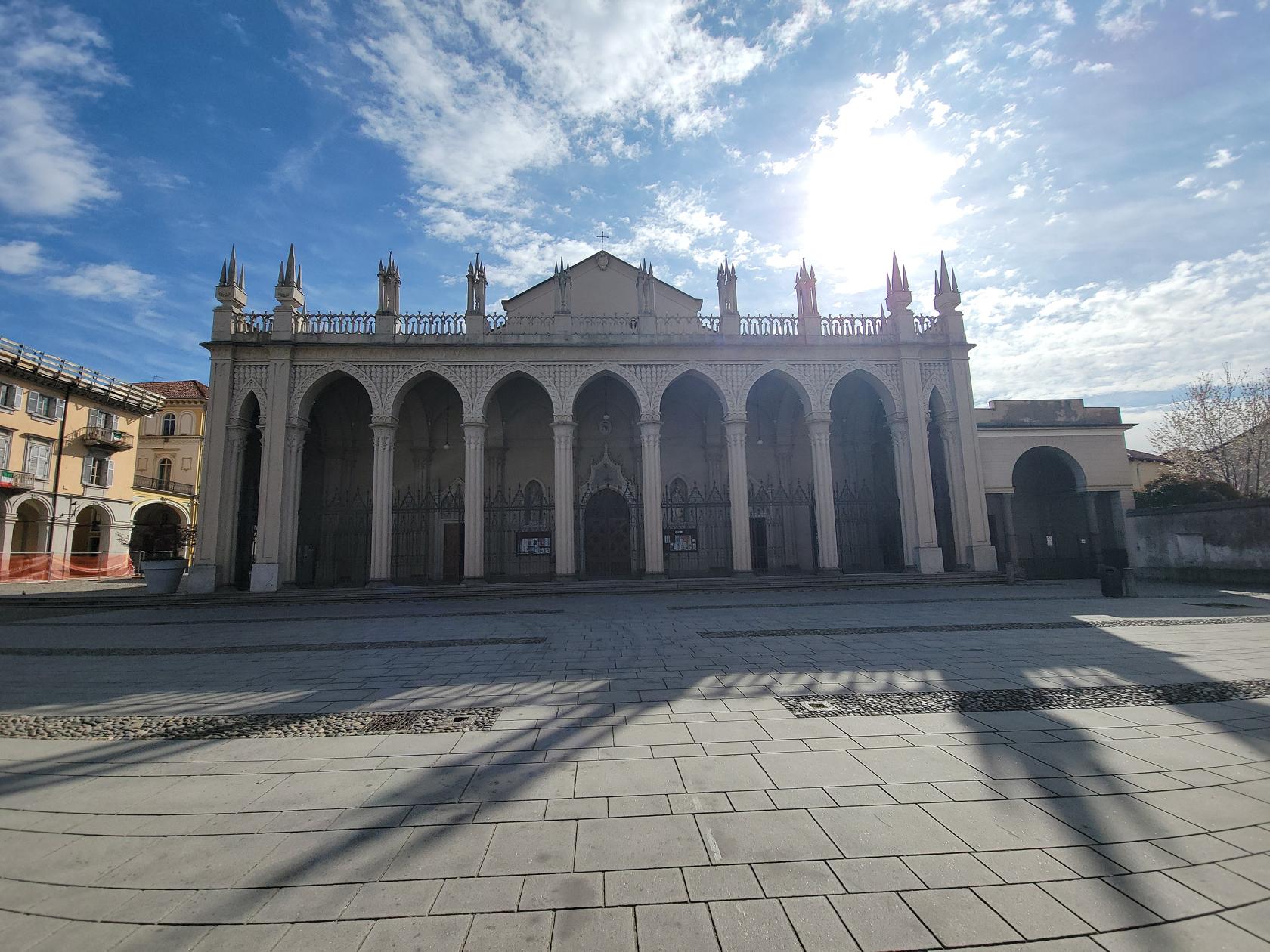
From the outside the Biella Cathedral, or Cathedral of Saint Stefano Protomartire, might almost remind one of a mosque, if it weren’t for the cross on the apex of the roof.
Entrance and Front – Cathedral of Saint Mary Assunta – Biella, Italy
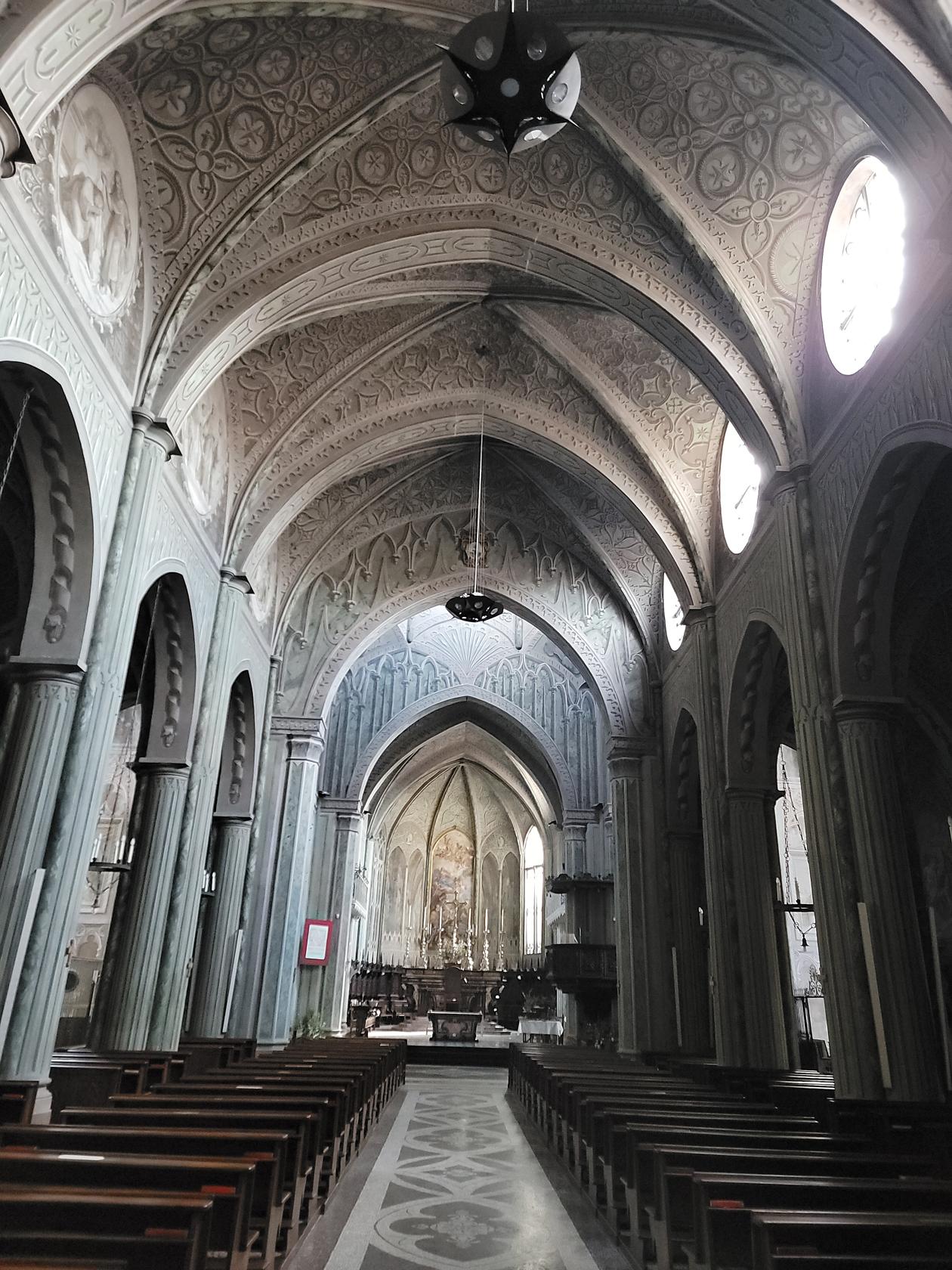
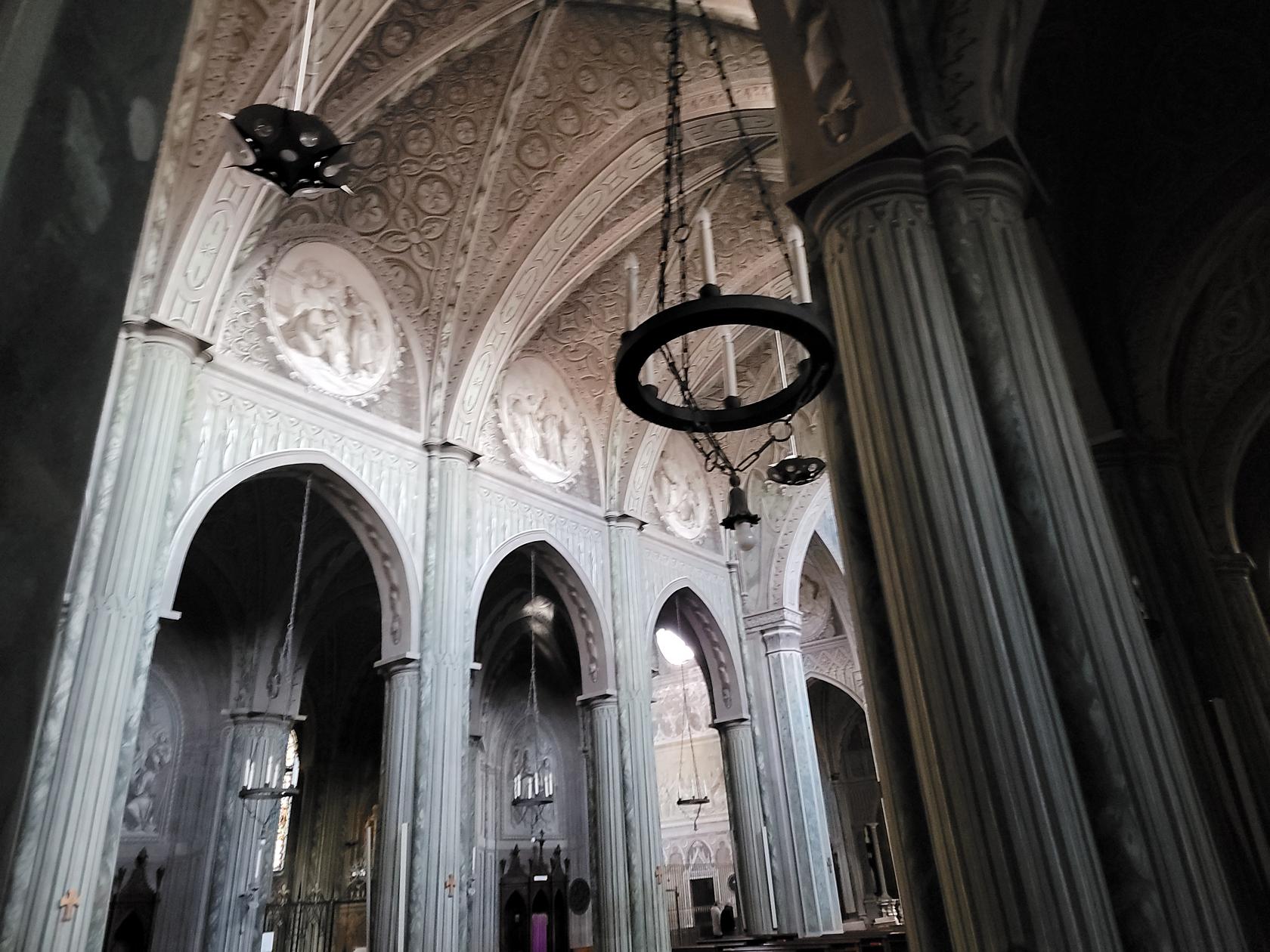
However, from the inside there is no mistaking it for anything other than a catholic cathedral. Interestingly, the interior contors of the colums and relief of the ceiling are all a visual illusion and one of the best examples of trompe-l’œil. This is where the intricate details are painted on the existing stone, plaster or masonry to mimick definition or relief, when in fact there is none.
Interior – Cathedral of Saint Mary Assunta – Biella, Italy
Interior – Cathedral of Saint Mary Assunta – Biella, Italy
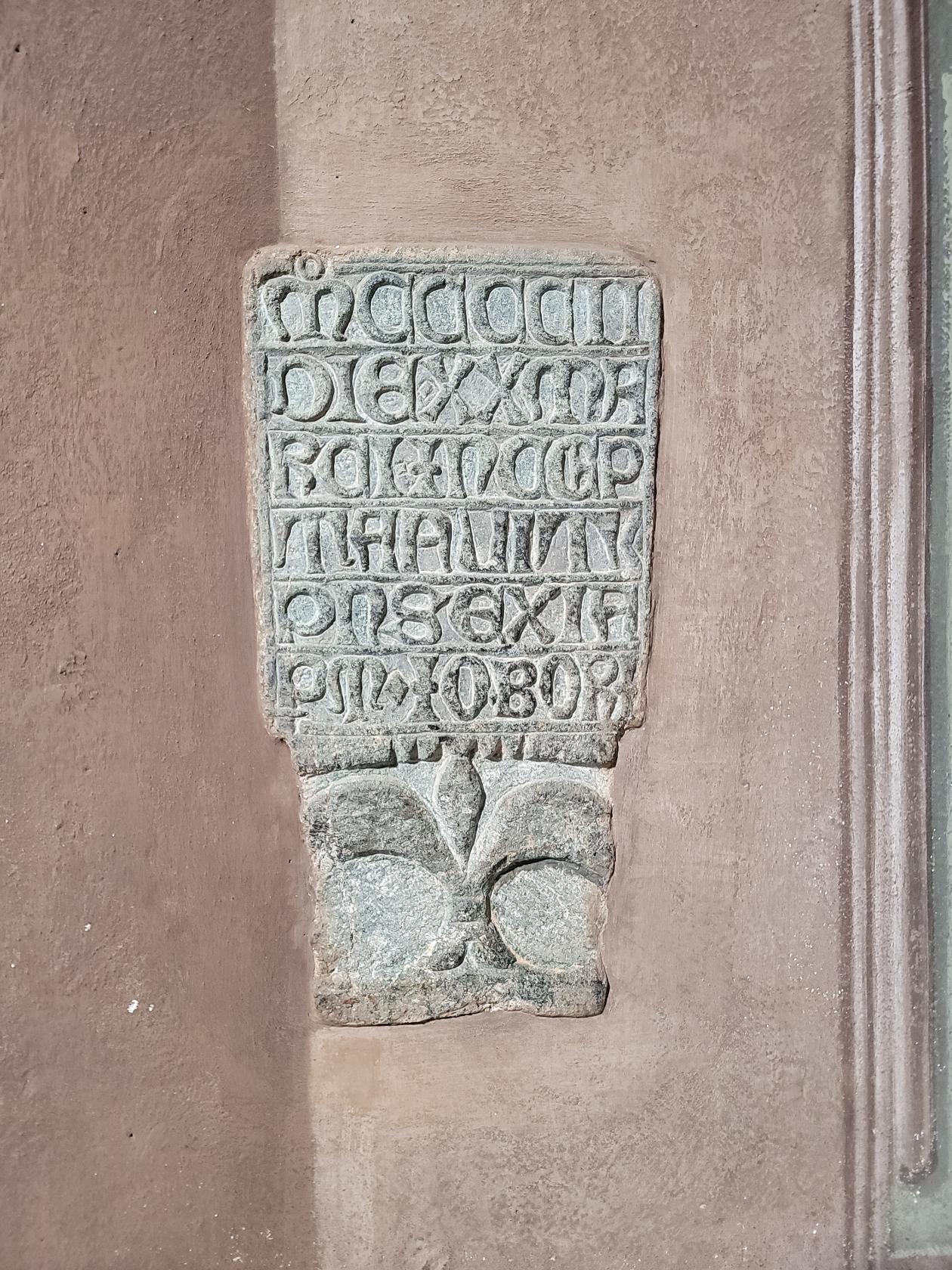
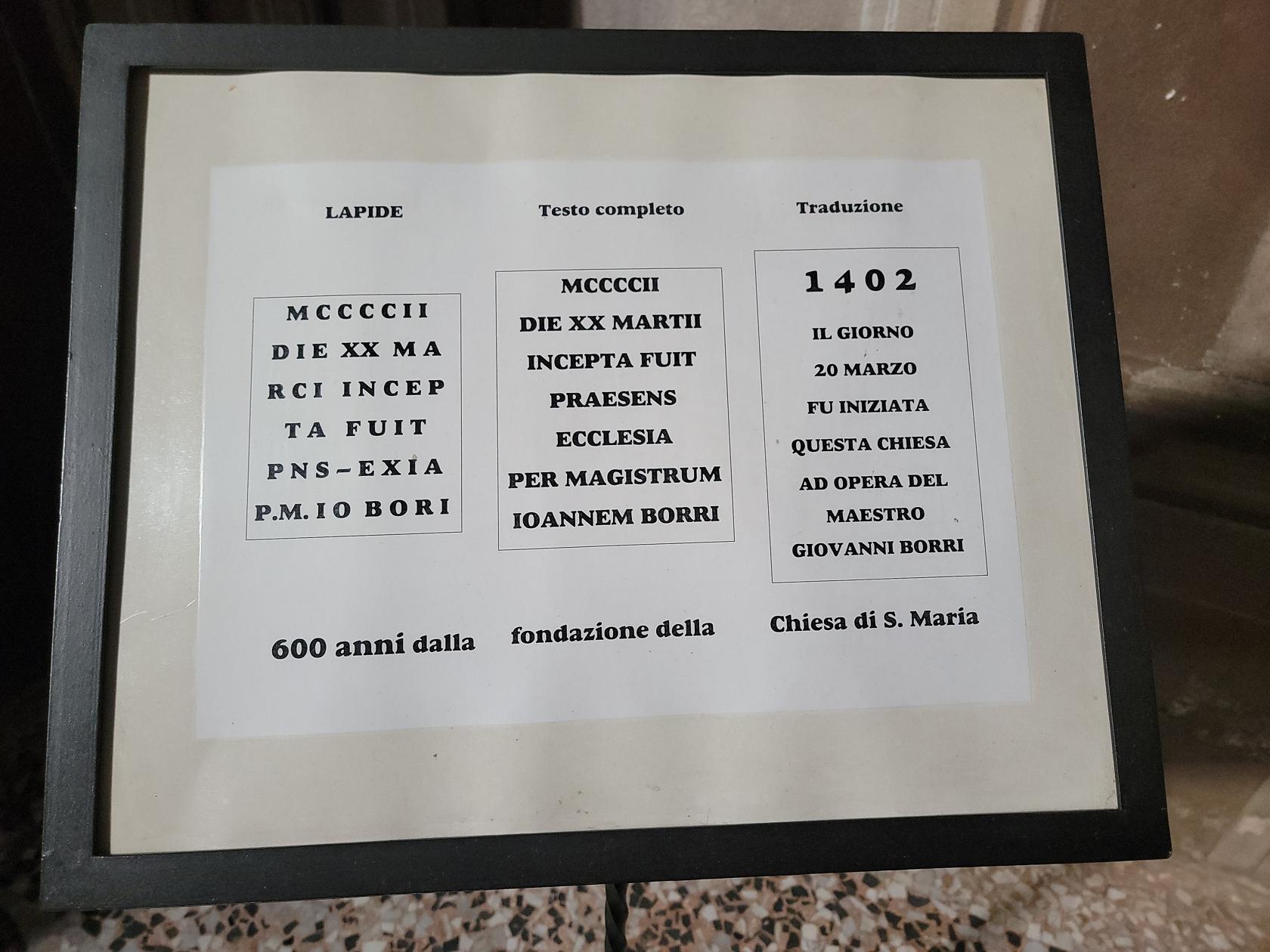
If you look carefully you may find the original first foundation stone for the church, that is before it became of cathedral. It was set in the early fifteenth century and has been interpreted, first from the ancient latin, then into modern italian.
Foundation Stone – Cathedral of Saint Mary Assunta – Biella, Italy
The english translation would say, “1402, today on the 20th of March, construction of this church was begun by master Giovanni Borri.”
Foundation Stone Interpretation – Cathedral of Saint Mary Assunta – Biella, Italy
Biella Baptistery
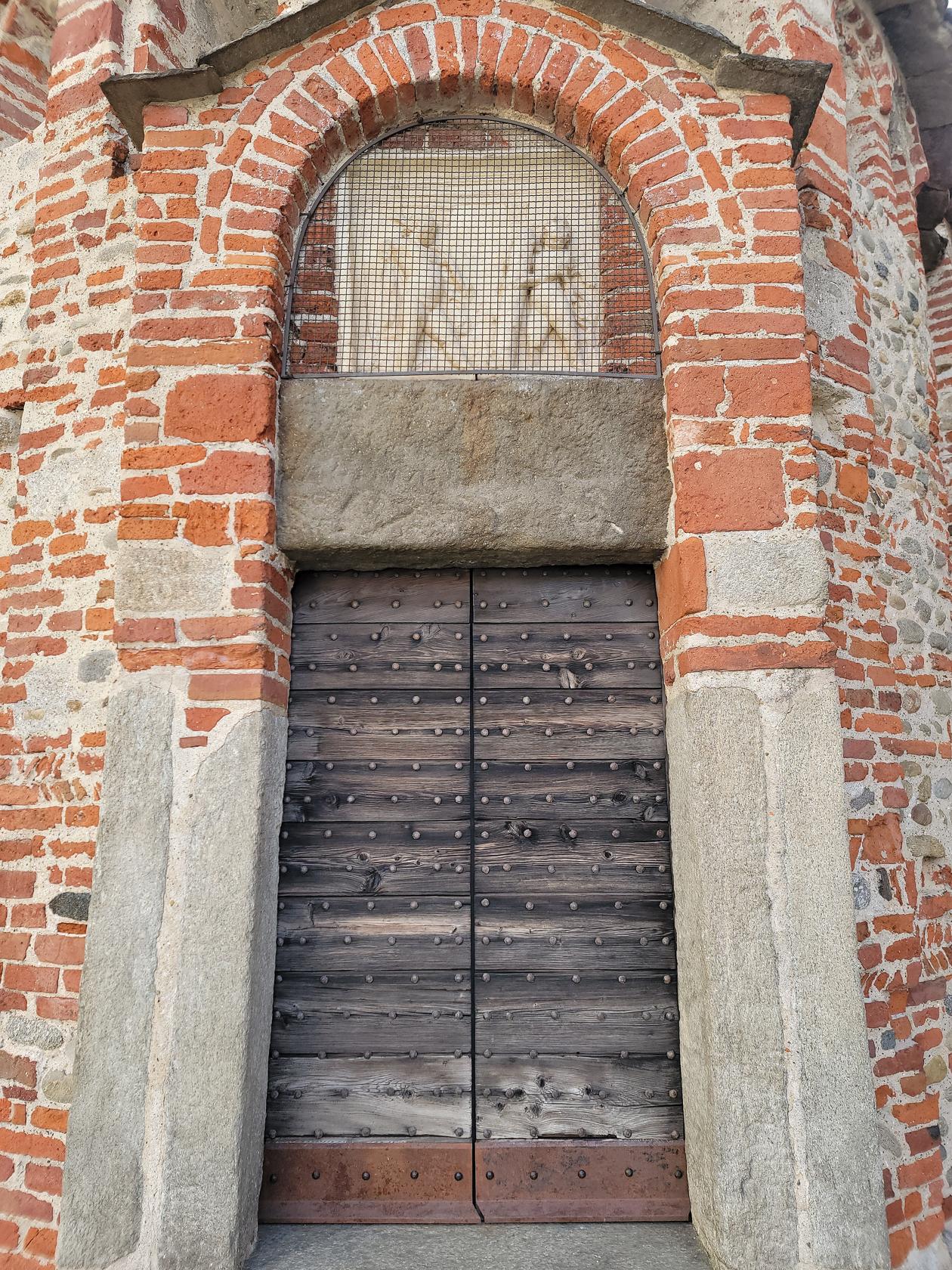
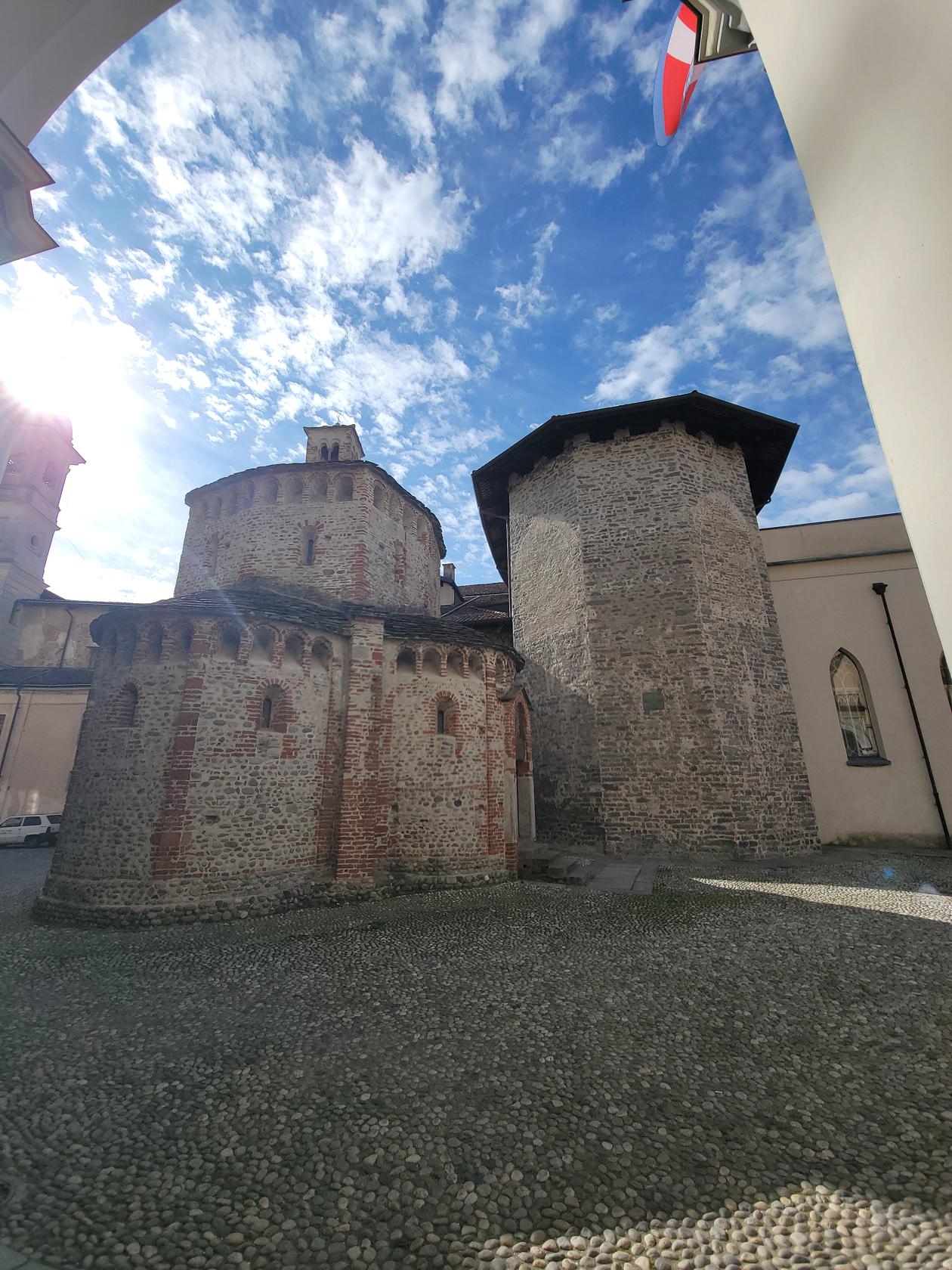
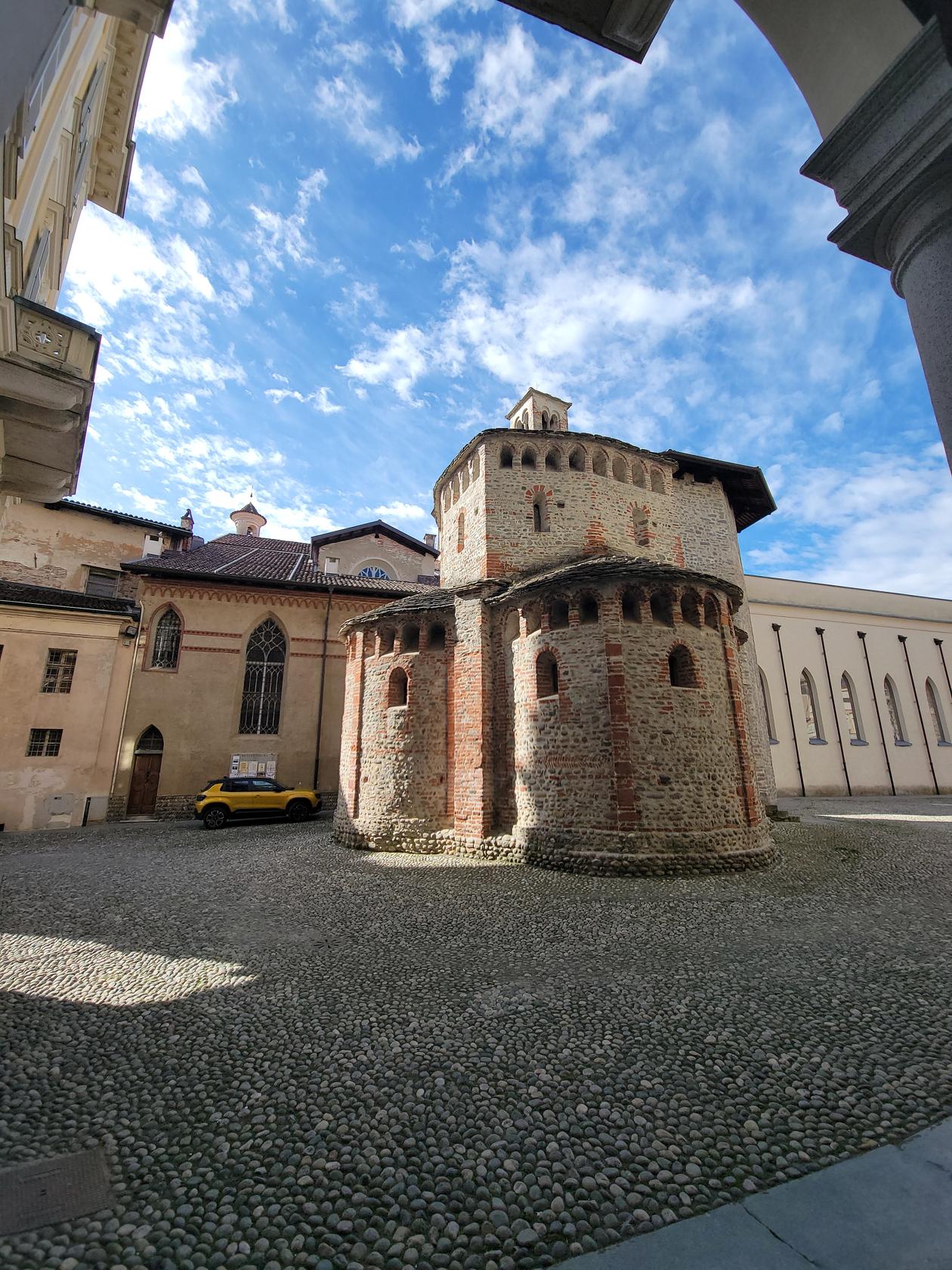
Extremely close by the cathedral is the Baptistery of John the Baptist. Unfortunately, no entry is allowed. But a quick look of the outside and it is clear that it is a fairly old building.
Baptistry of John the Baptist – Via Battistero – Biella, Italy
Baptistry of John the Baptist – Via Battistero – Biella, Italy
Baptistry of John the Baptist – Via Battistero – Biella, Italy
Church of the Santissima Trinity
Directly off the Via Italia is the small church of Santissima Trinity. It has high vaulted ceilings with frescoes and a very ornate altar. Here again, the relief is mostly done using paint.
Church of the Santissima Trinity – Via Italia – Biella, Italy
Church of the Santissima Trinity – Via Italia – Biella, Italy
Church of the Santissima Trinity – Via Italia – Biella, Italy
Restaurants
Since this was a day trip, we only had time to enjoy lunch. At first we had some difficulty and our first choice, the higly rated L’Arrugginita on the upper side of town, was completely booked. Then we mistakenly sat down in what we thought was a neapolitan pizzeria, which turned out to actually be a poke bowl bistro. Then finally we found Ristorante Il Salotto.
Ristorante Il Salotto
A very fine place for lunch, Il Salotto offers a tasty fixed priced menu at €17 for pasta (primi only), or €24 for the two course lunch (primi and secundi). For the extra seven euros a piece, we were able to order two primi pasta dishes and two secundi meat dishes, with bread, a glass of wine and water for total of €51.
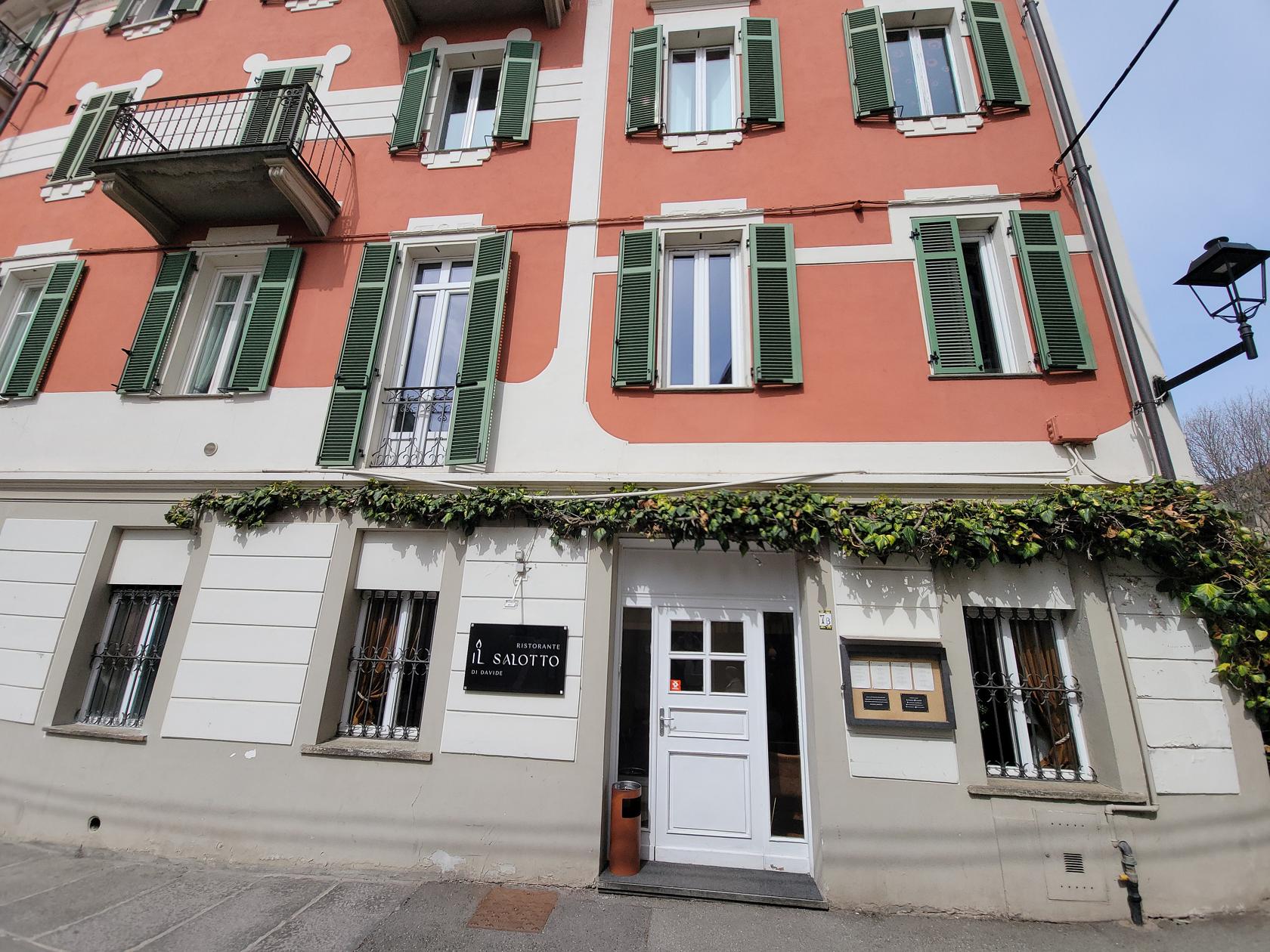
Entrance – Ristorante Il Salotto – Biella, Italy
Interior – Ristorante Il Salotto – Biella, Italy
Interior – Ristorante Il Salotto – Biella, Italy
Interior – Ristorante Il Salotto – Biella, Italy
The food was excellent, as was the service and decor. If you are ever in Biella, definitely one of the places to eat.
Ravioli with Cabbage and Meat – Ristorante Il Salotto – Biella, Italy
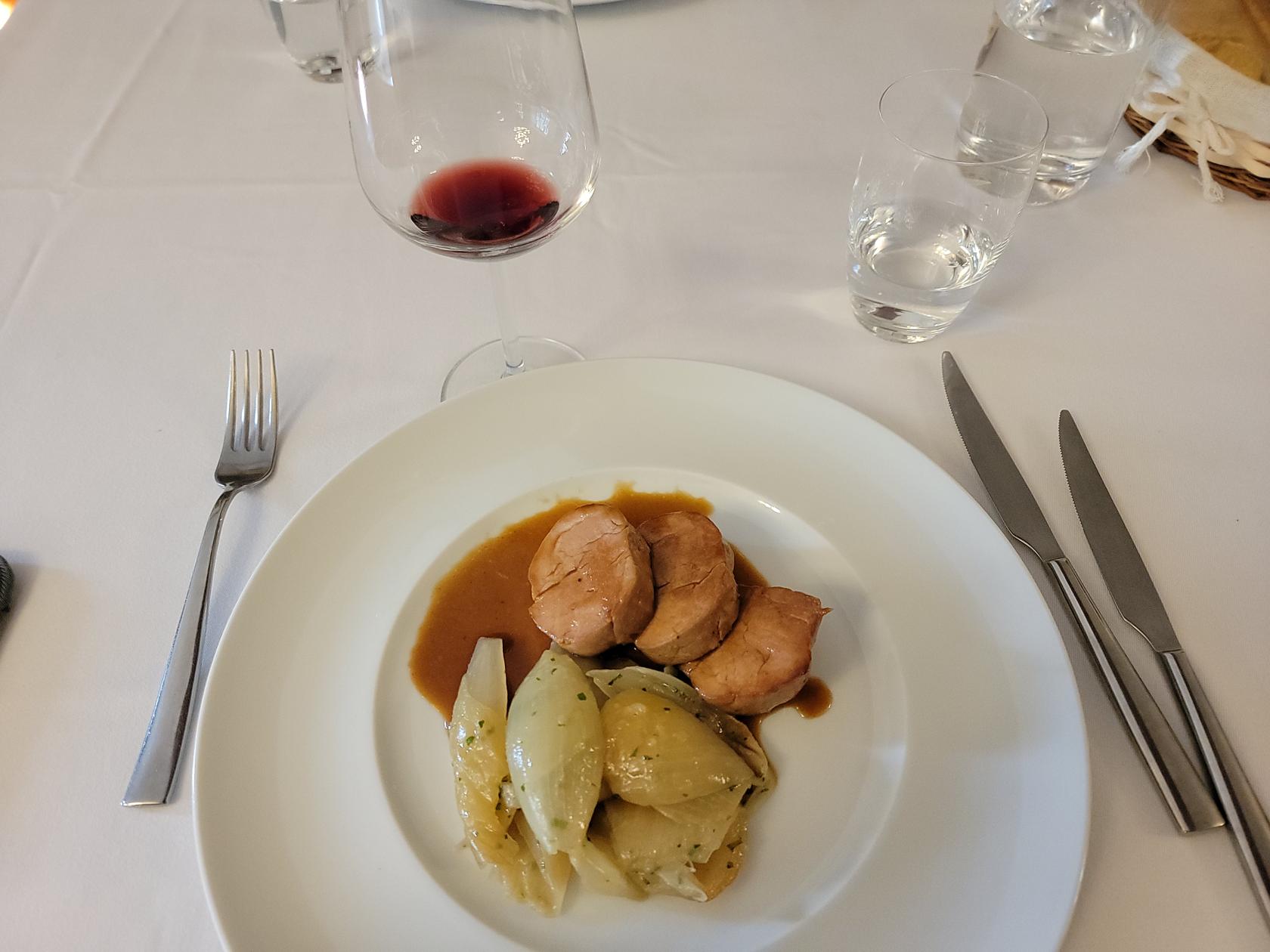
Pork Tenderloin in sauce with pickled onions – Ristorante Il Salotto – Biella, Italy
On a whim, since it was such a nice day out (clear sky, mid-70s), we decided to go to Sassi-Superga for a day trip. The last time we visited Sassi-Superga was in 2019, after we arrived in Turin from the States.
Getting There
From the center of town and a short walk to Piazza Vittorio Veneto we took the GTT #15 tram going toward Sassi. After waiting about 15 minutes, it arrived and we enjoyed a twenty minute ride up to around the Briaza stop on Corso Belgio. Here we ended up behind another tram that was having issues and subsequently was numbered #00, to indicate that it was no longer in use. Because of this, we had to get off the tram at the next stop and were told to take the GTT #68 bus that pulled up behind our tram.
We happily got on and tried to ignore the issue, until at the next stop the bus driver indicated that we had to get off his bus and get on another #68 bus that had pulled up behind us. Flaborghasted and flumexed we did complied, but not after we clearly showed our displeasure, however being Italian, he was totally nonplussed by the situation. Luckily, after another short 10 minute ride we arrived at our destination, still in time to catch the Cog or Inclined Train up to Superga hill.
Sassi-Superga
After your bus, or tram ride if you are so lucky, there is a short five minute walk to the train station. It is located on a rather confusing intersection on Corso Casale between SS10 and SC di Superga, for which there are about seven or eight crosswalks!
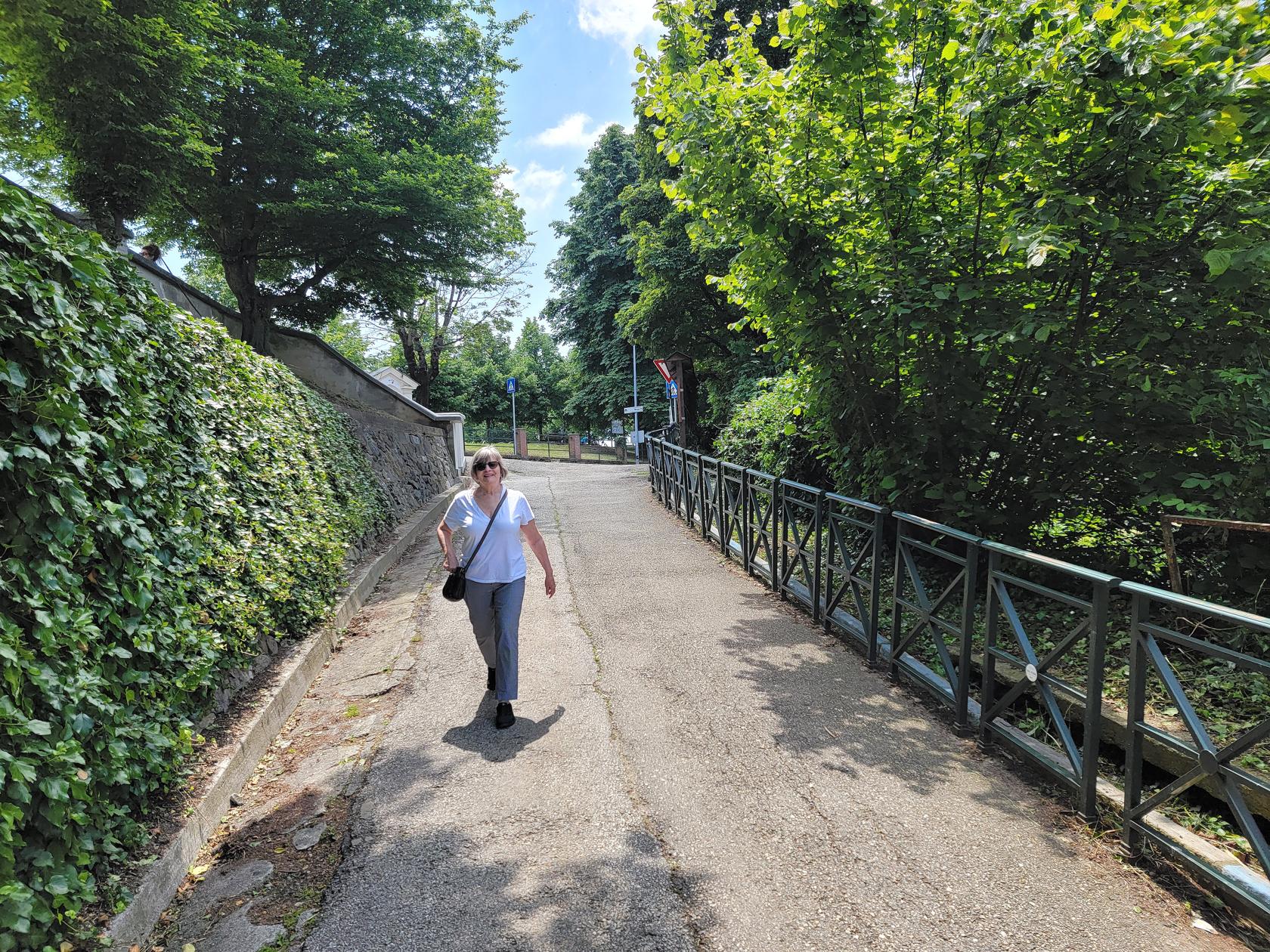
Basilica of Superga – Patti going back to Train Station – Turin, Italy
Stazione Sassi
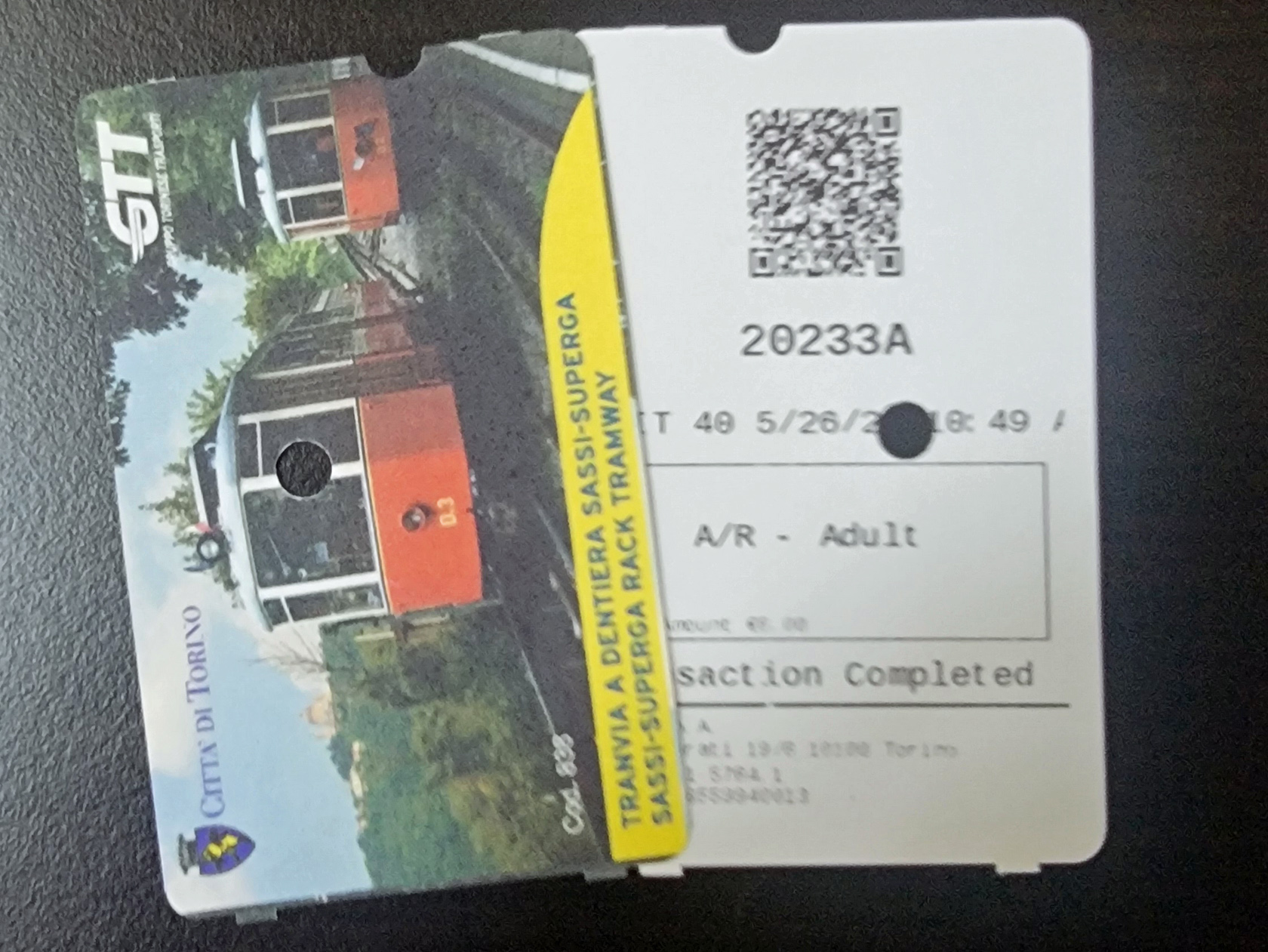
If you use the GTT phone application for tickets, you would get the mistaken impression that your €1.90 commuter ticket, that was used on the tram and bus, should still apply (within the 90 minute time limit) to take the Inclined Railway up Superga Hill, it does not. Ticket vending machines are inside the railway and cafe building on-site, they may also be purchased from the conductor, but there may be an additional charge. The charge from the vending machine is €3 per person one way, so for two persons round-trip, that came to €12 total for us.
Sassi-Superga Inclined Railway – Tickets For Two – Turin, Italy
The train departs promptly and after about twenty to twenty-five minutes, you will arrive at Superga Station, just below the Basilica of Superga. The station has a cafe, so if you are in need of refreshment, now would be the time.
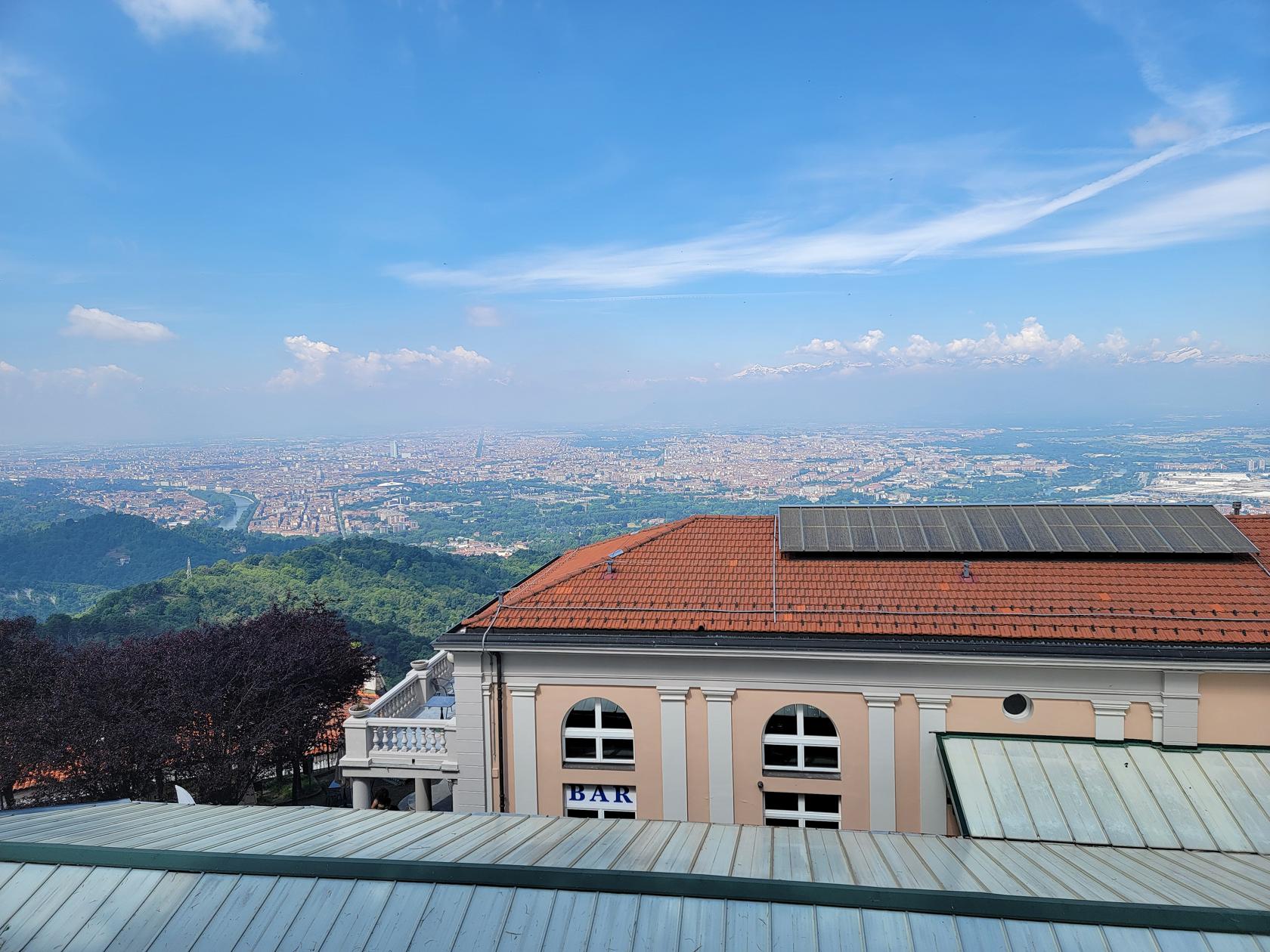
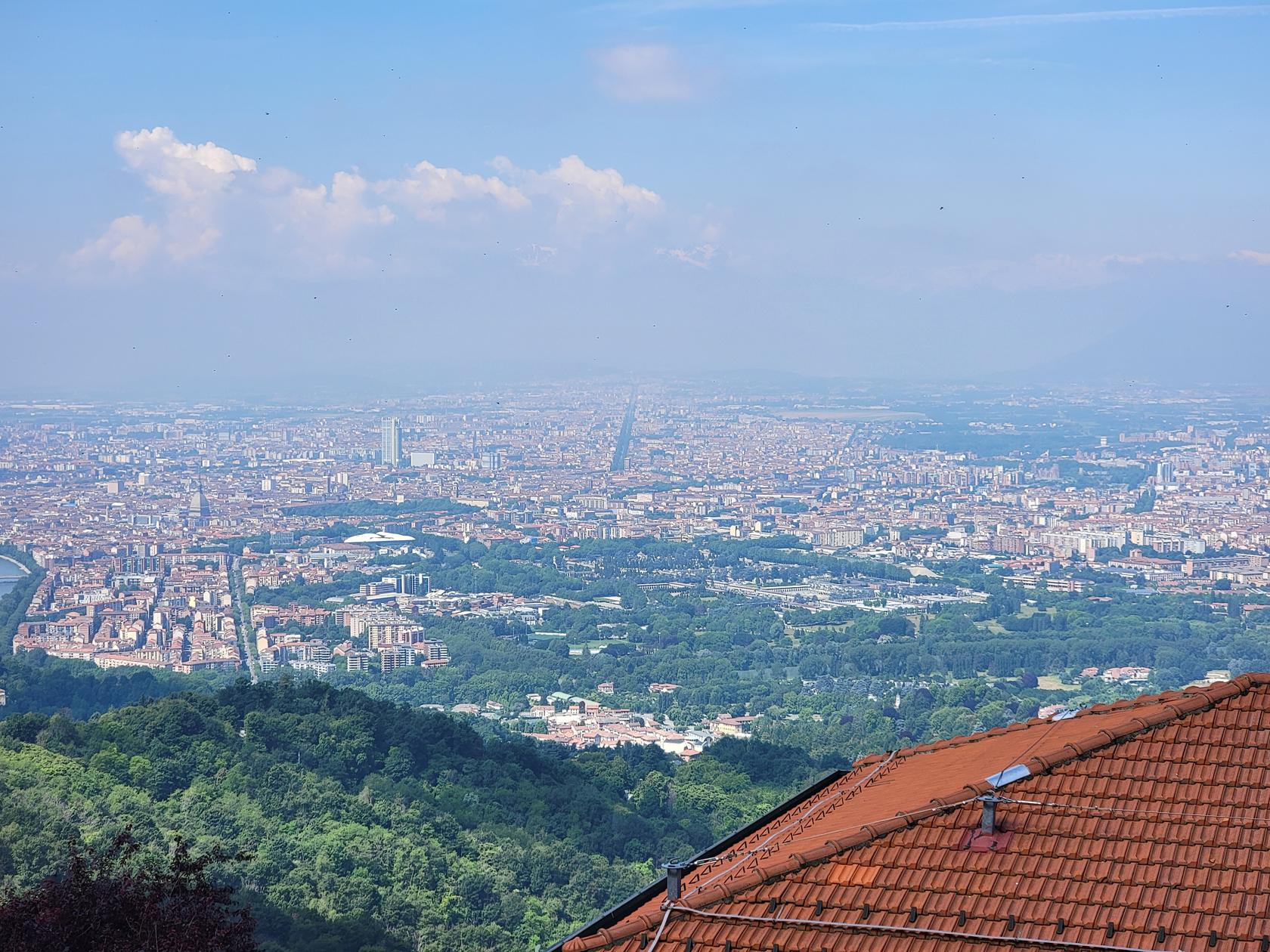
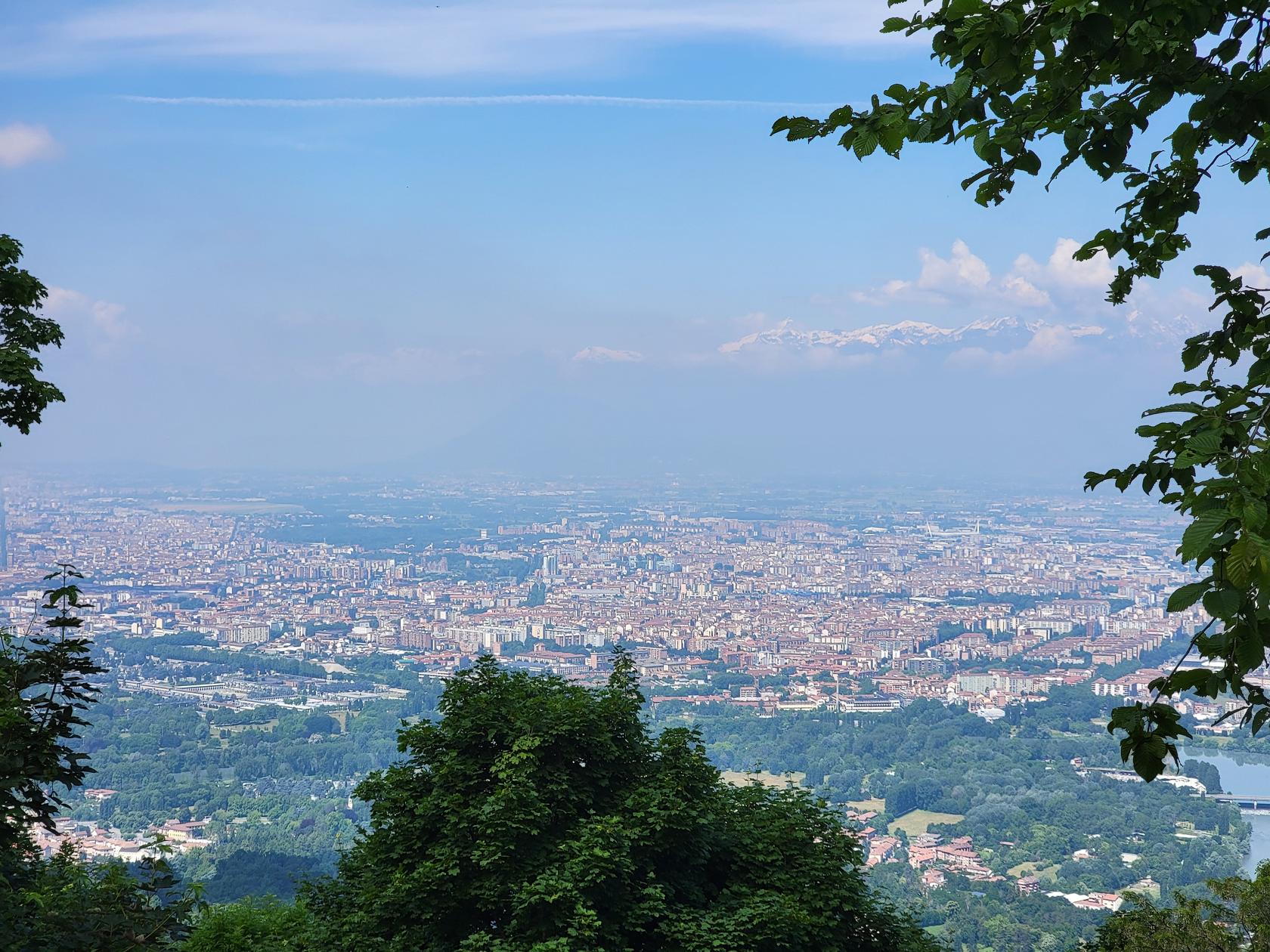
View of Turin – Sassi-Superga Station – Turin, Italy
View of Turin – Sassi-Superga Station – Turin, Italy
View of Turin – Basilica of Superga – Turin, Italy
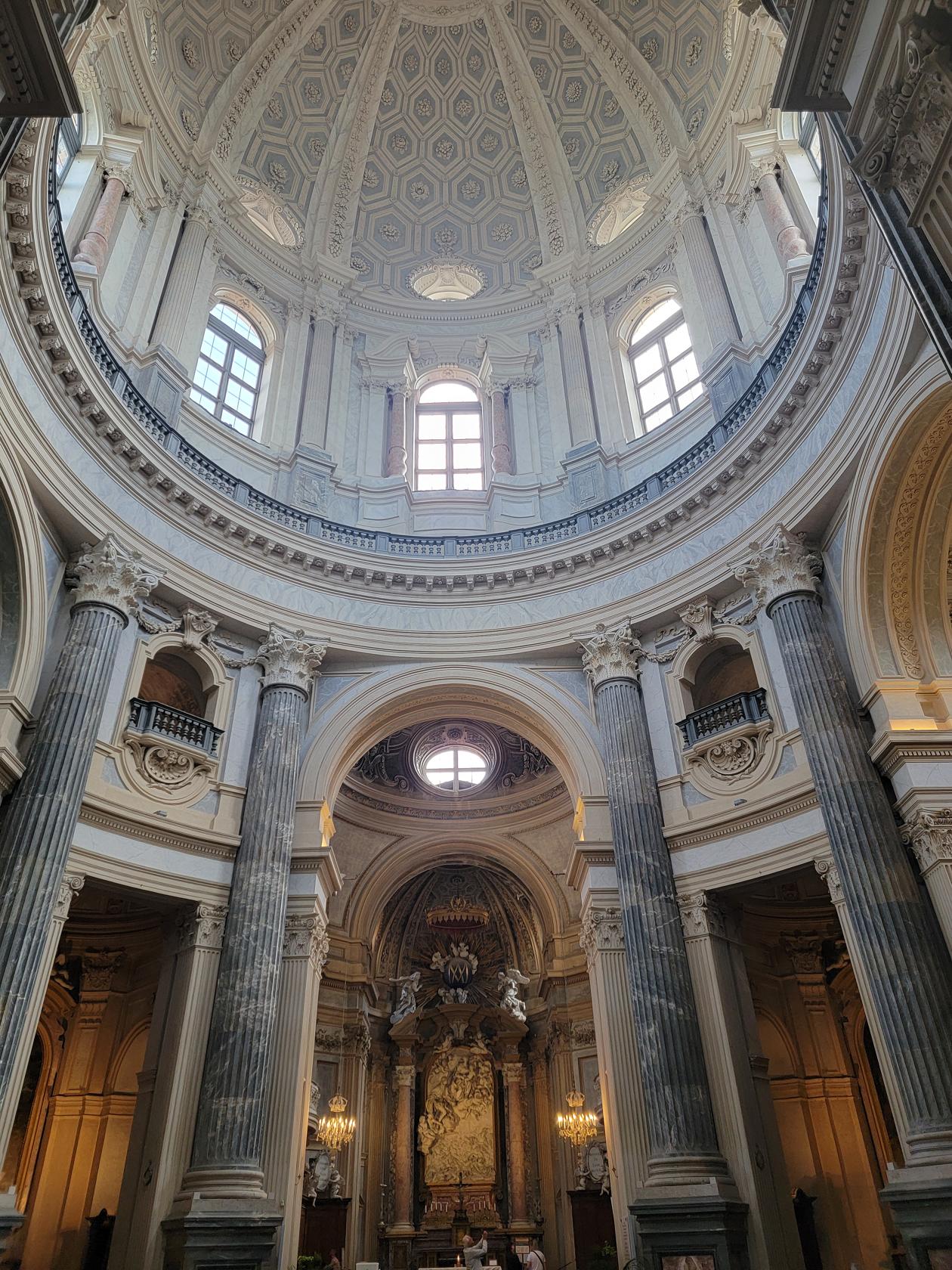
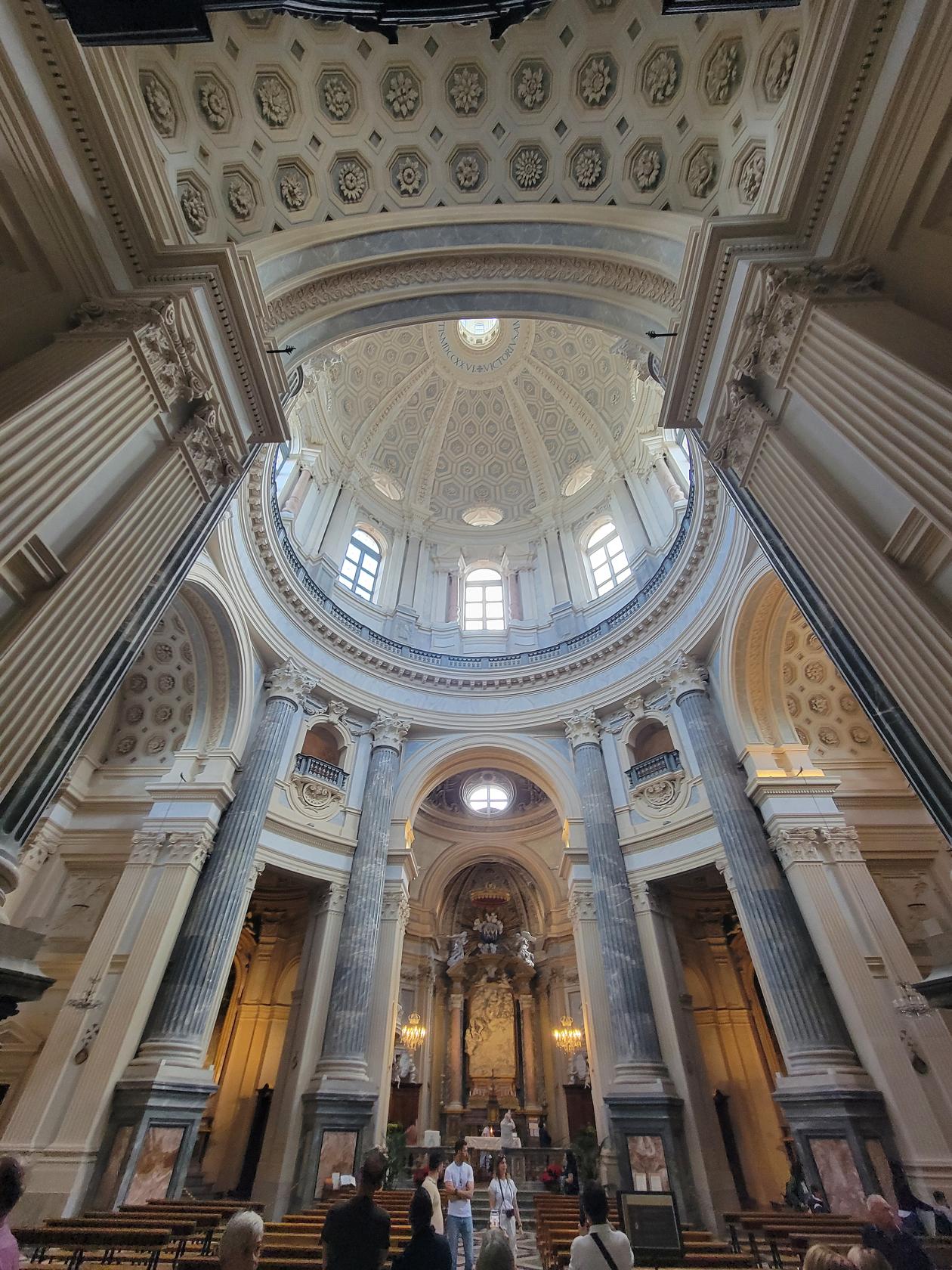
Basilica of Superga
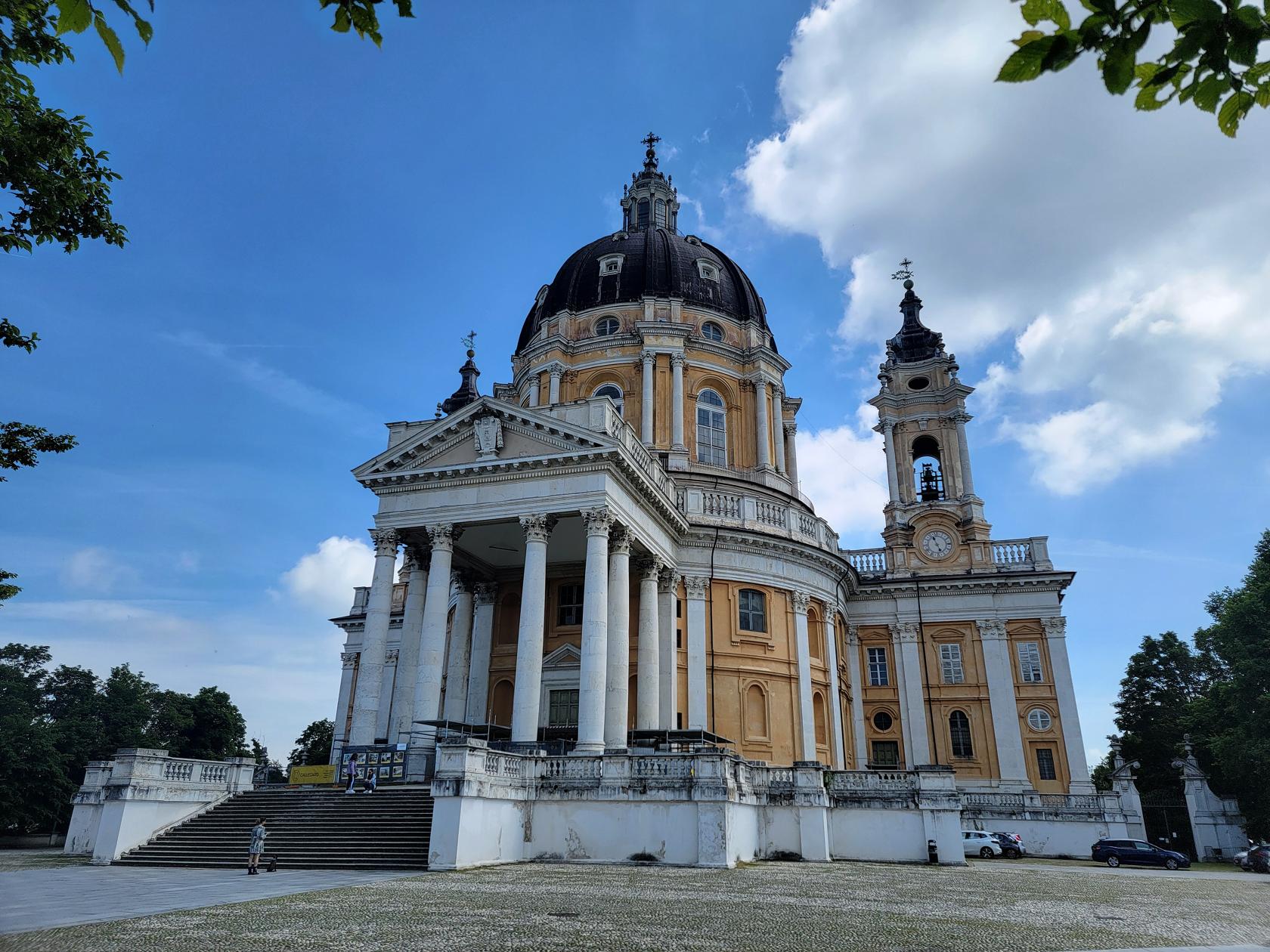
The basilica is still undergoing renovations after all these years and has scaffolding in and around the outside of the building. Most of this appears to be in place to protect visitors from falling debris. The exterior is starting to really look in need of major work, but they do appear to have the upper hand on the issue inside.
Basilica of Superga – Turin, Italy
Unfortunately, the little restaurant that used to be housed on the left hand side of the church no longer exists, there is only an entrance to the Tomb of the Savoy family. So our plans to eat there vanished as soon as we figured out that it had closed, most likely due to the pandemic.
Basilica of Superga – Dome and Altar – Turin, Italy
Basilica of Superga – Dome and Altar – Turin, Italy
Restaurants
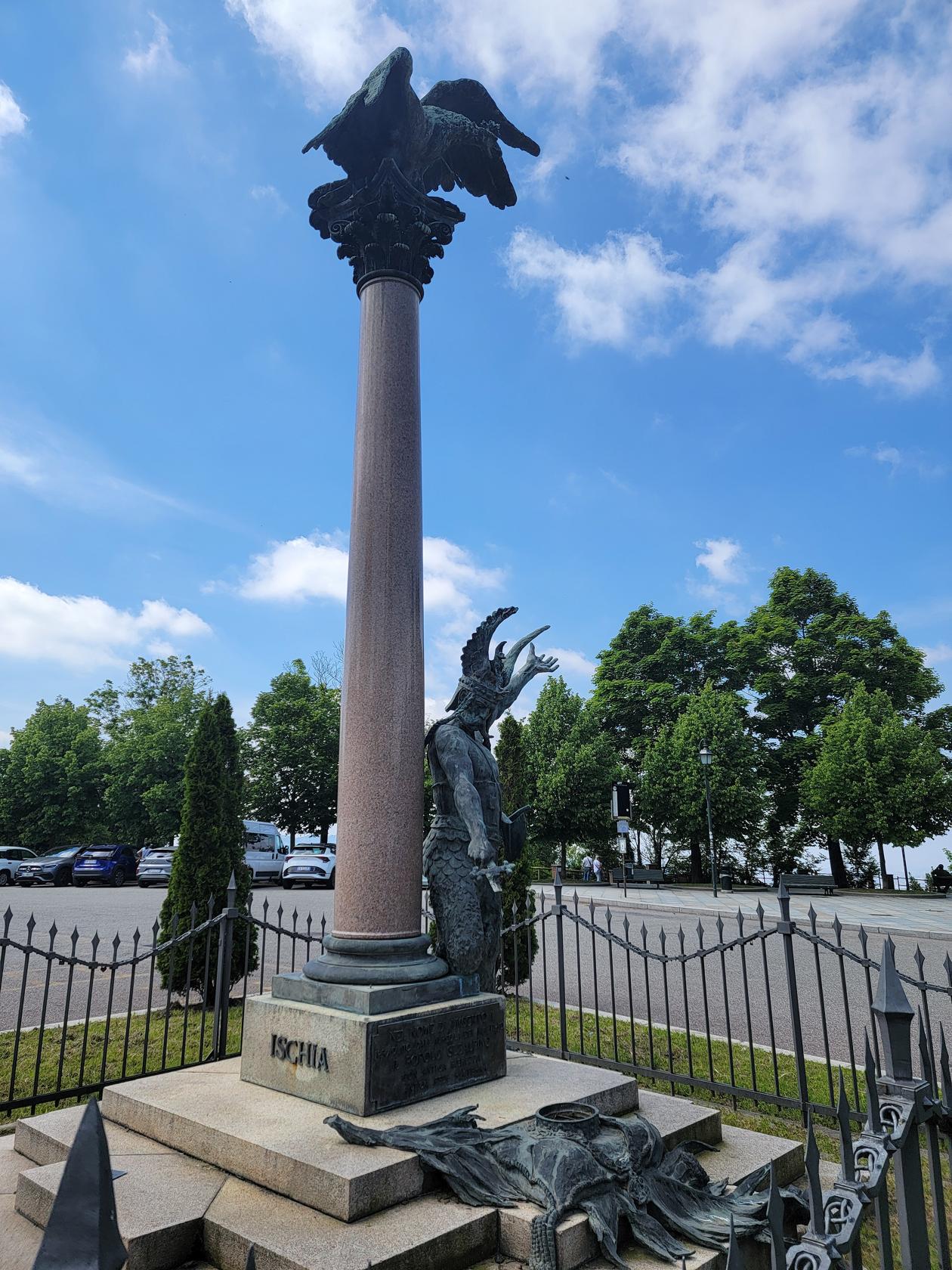
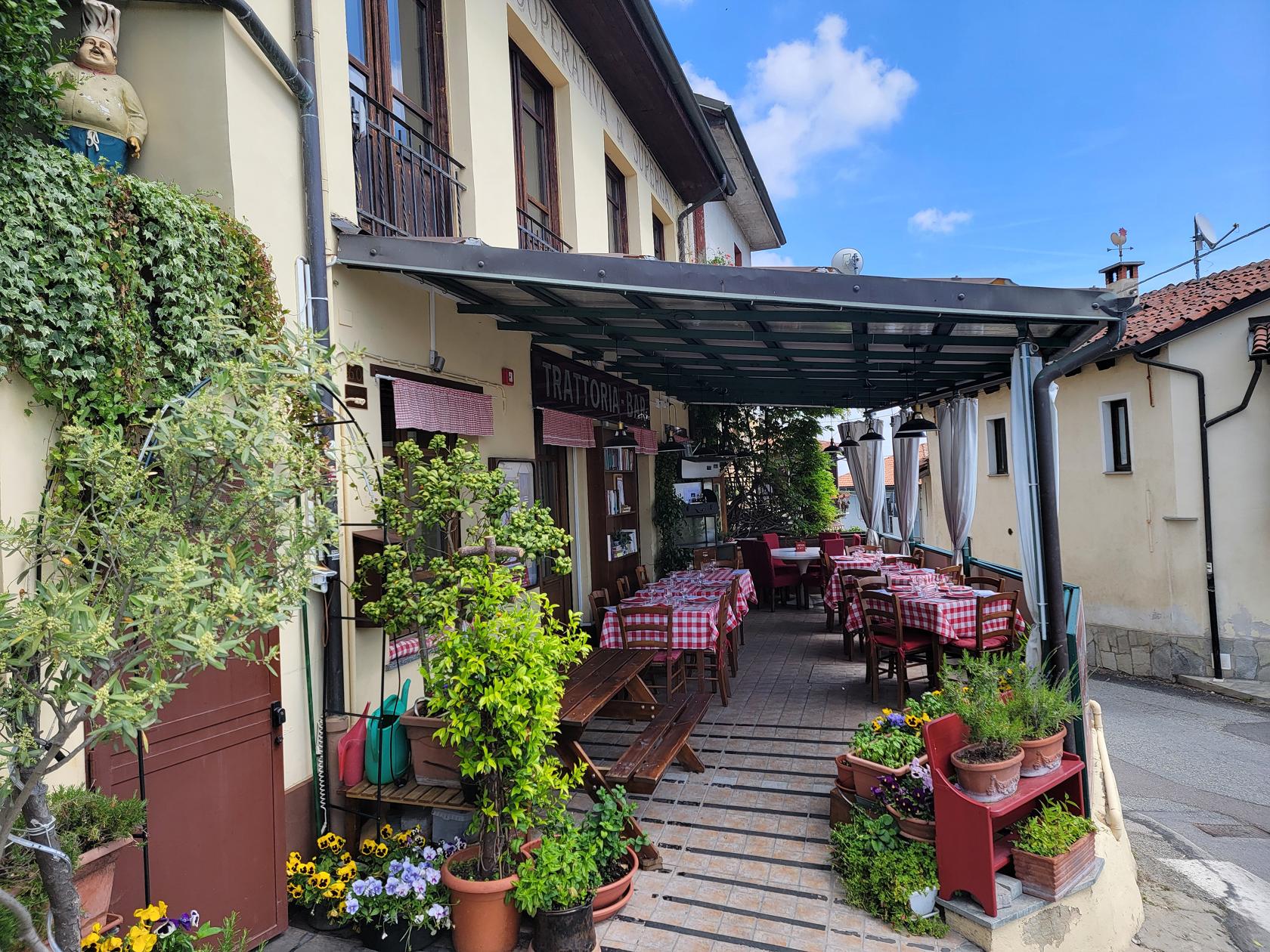
However, all is not lost and a short walk down the hill toward on Sentiero 26 path near the Monument of Umberto I, is a nice little Trattoria that we visited for lunch.
Basilica of Superga – Monument of Umberto I – Turin, Italy
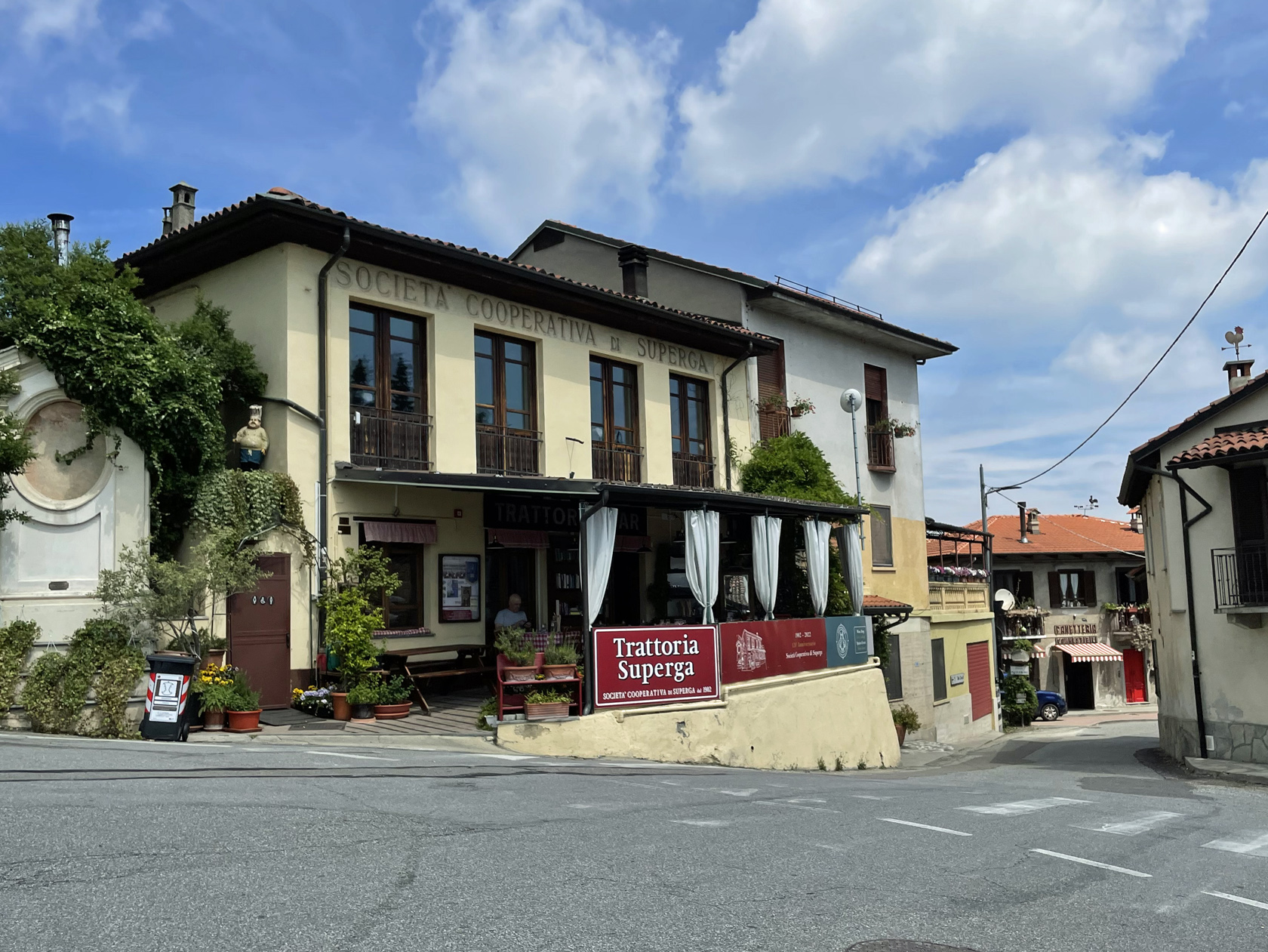
Conserva – Trattoria Superga
A short ten minute walk downhill on the trail from the monument is the Trattoria Superga. It is on a rather busy road, however we saw as many cyclists while sitting there as we did cars and other forms of transportation.
Trattoria di Superga – Outside – Baldissero Torinese, Turin, Italy
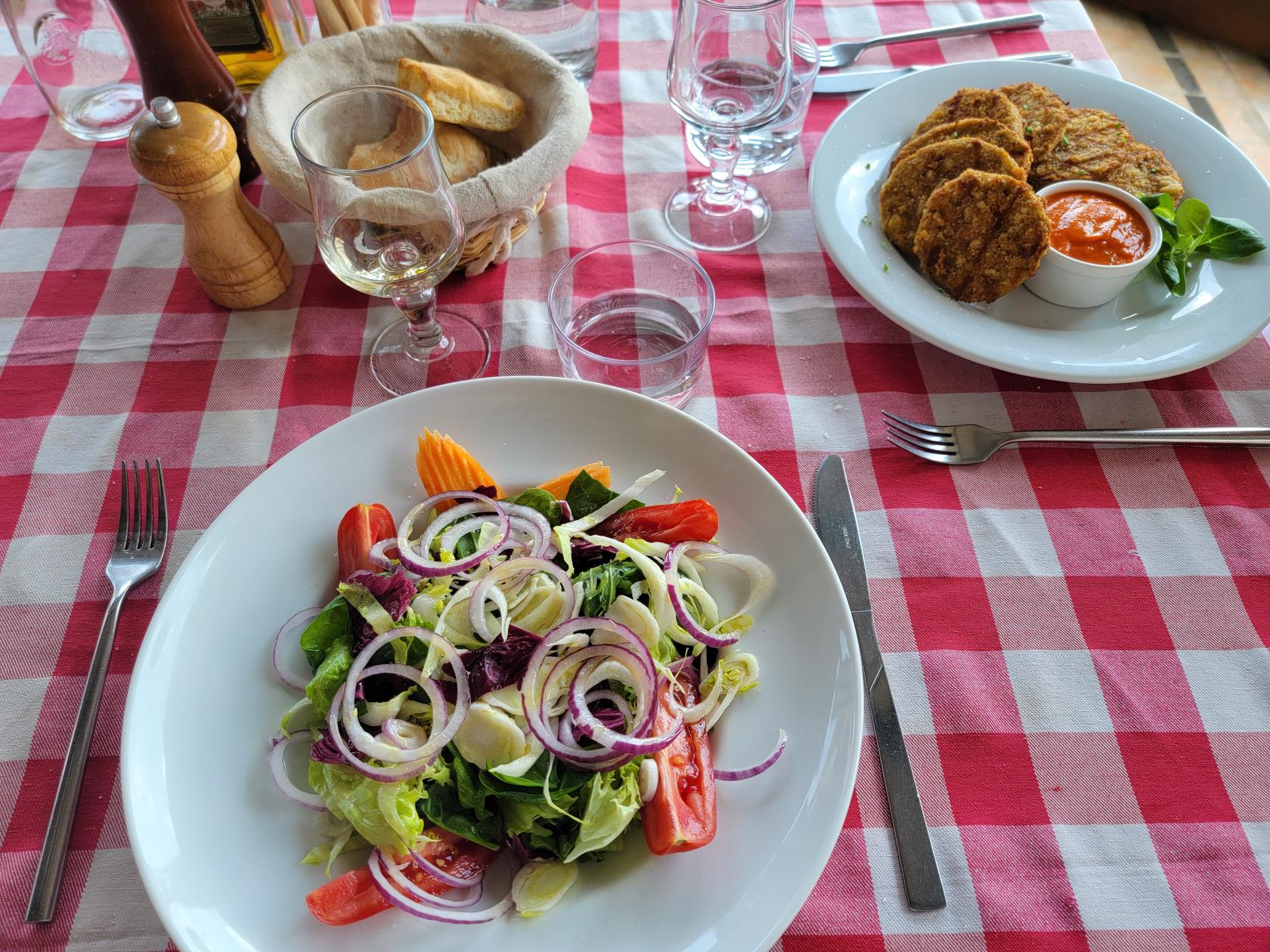
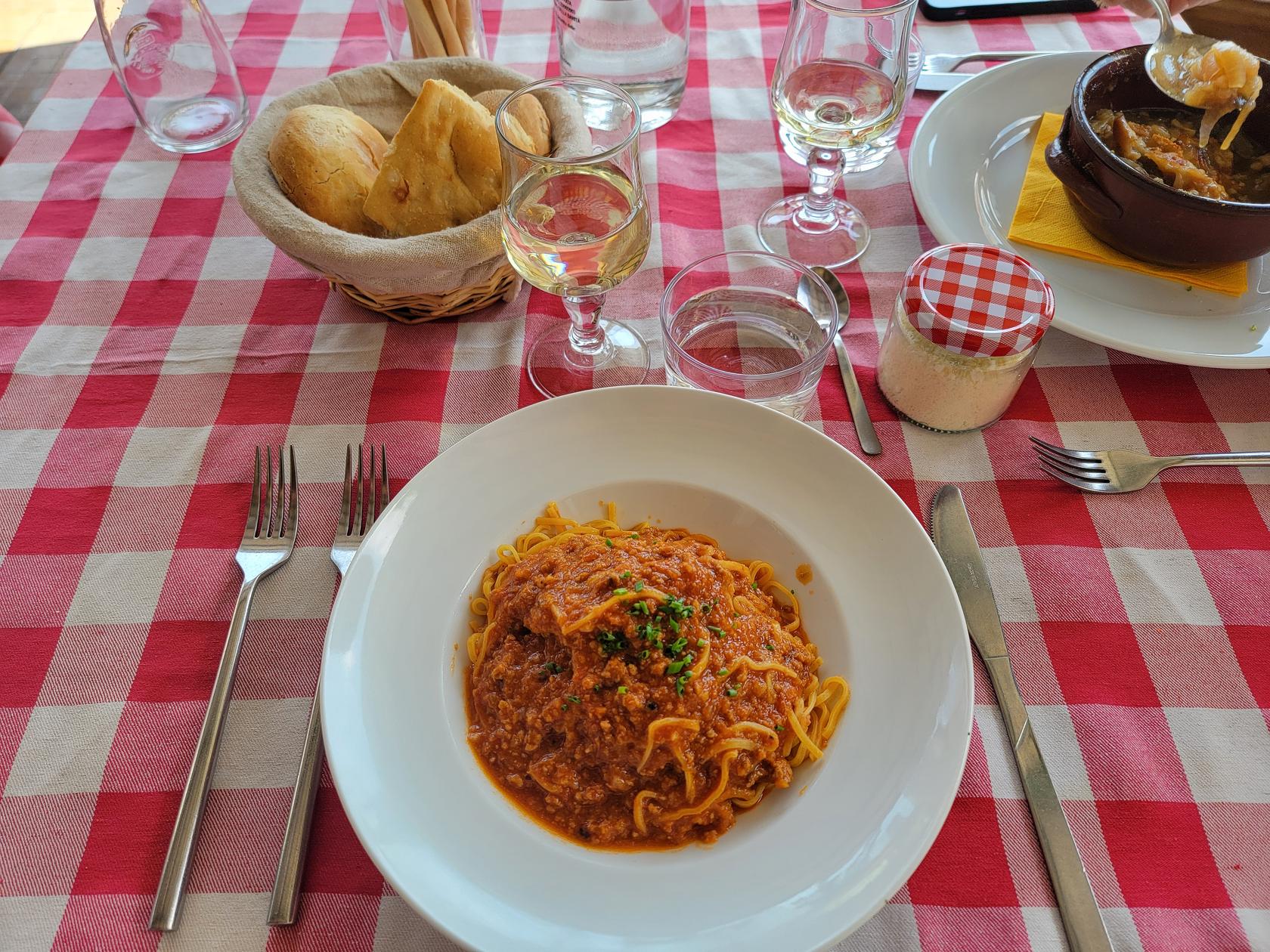
We can only say that the food was very good and typical for Piedmont and the area. The Tajarin and salads were both delicious, though a bit pricey. Our entire lunch with wine, water, bruschetta, pasta, coffee and digestive came to €77 for two, which we consider rather high, though not exorbitant.
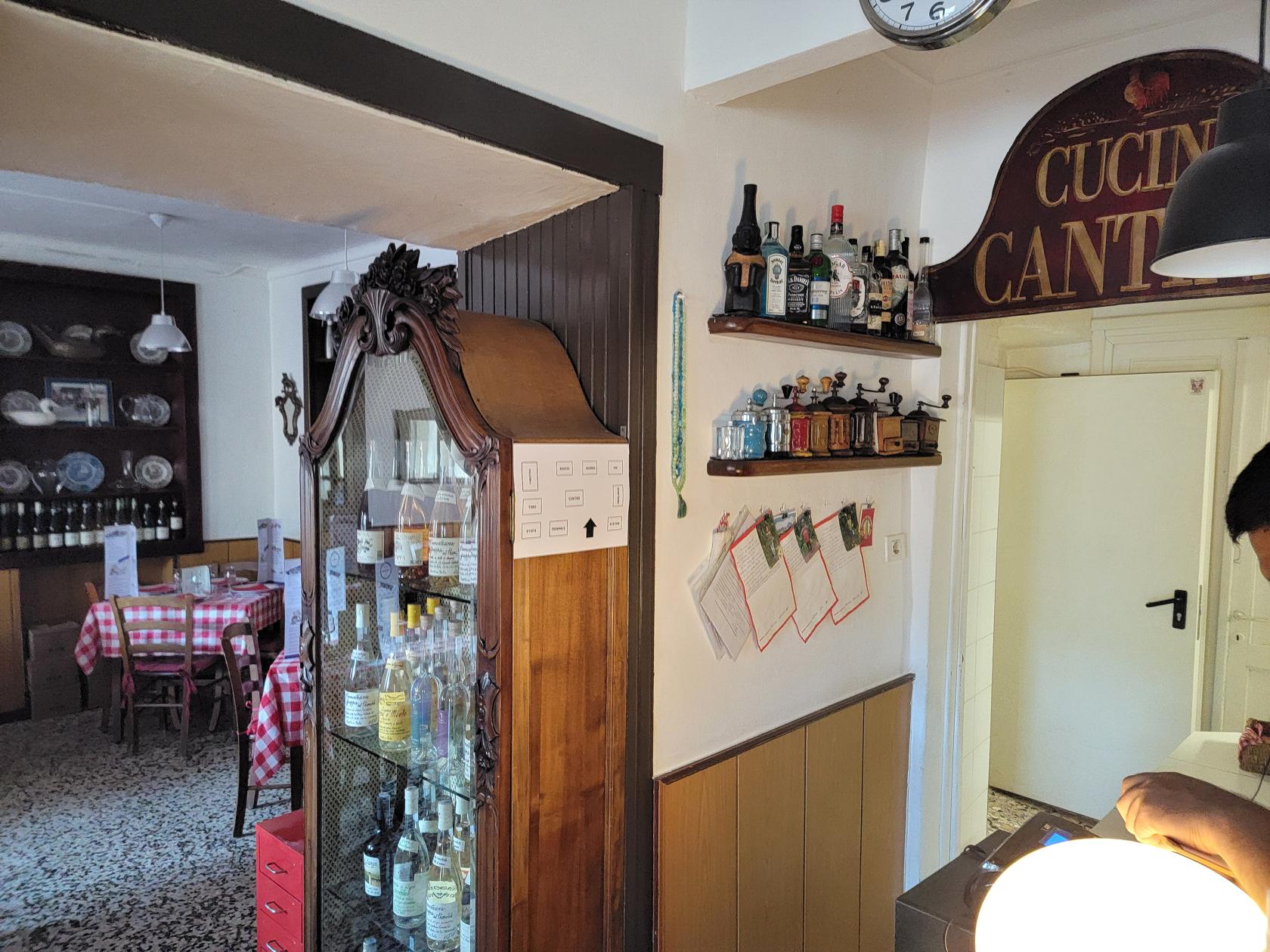
Trattoria di Superga – Inside – Baldissero Torinese, Turin, Italy
Trattoria di Superga – Insalata Mista and Croccante de Melanzana su Crema Pomodori Confit – Baldissero Torinese, Turin, Italy
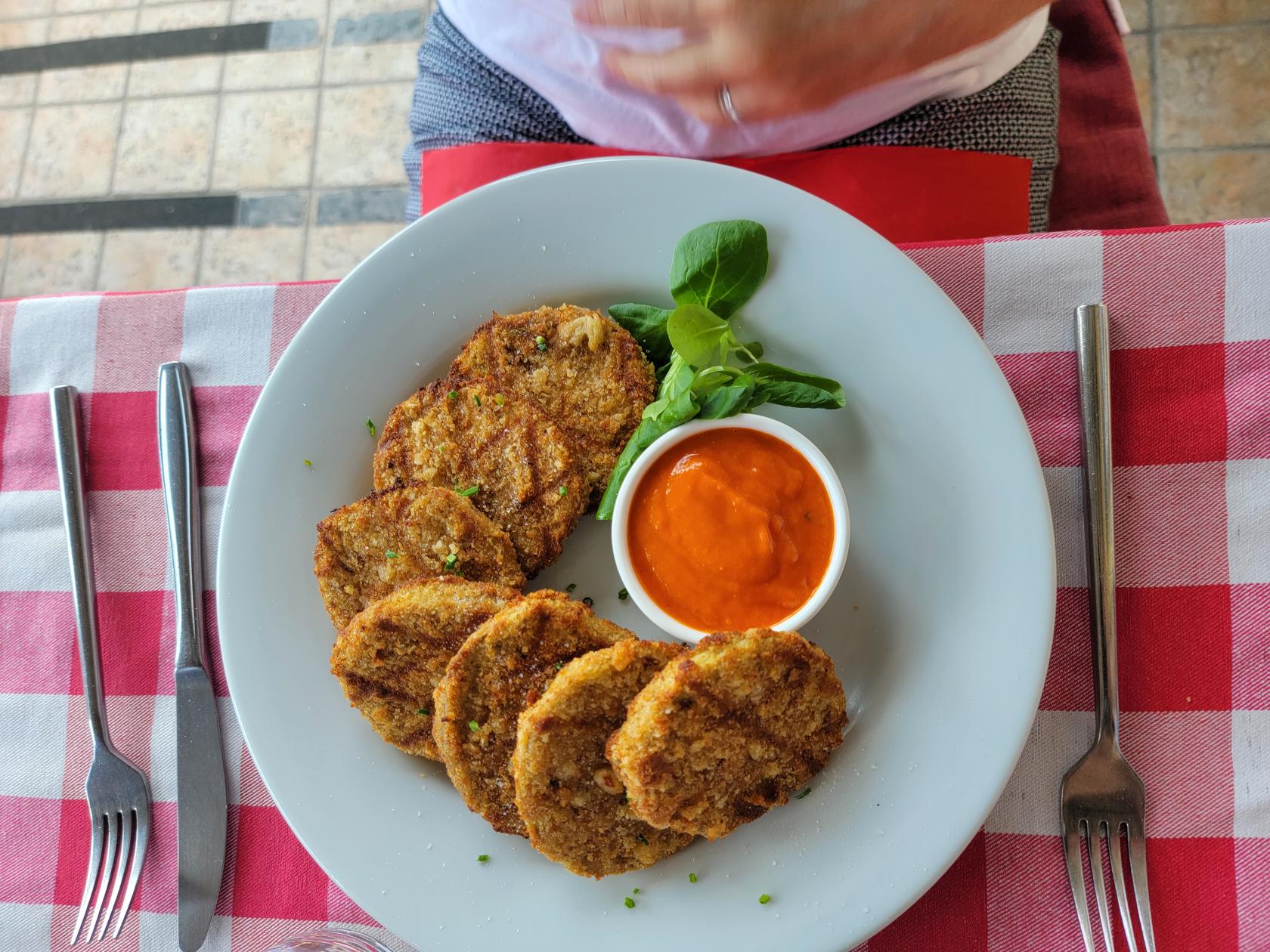
Trattoria di Superga – Croccante de Melanzana su Crema Pomodori Confit – Baldissero Torinese, Turin, Italy
Trattoria di Superga – Tajarin di Re Vittoria Emmanuelle II and Onion Soup Gratinata alla Piemontese – Baldissero Torinese, Turin, Italy
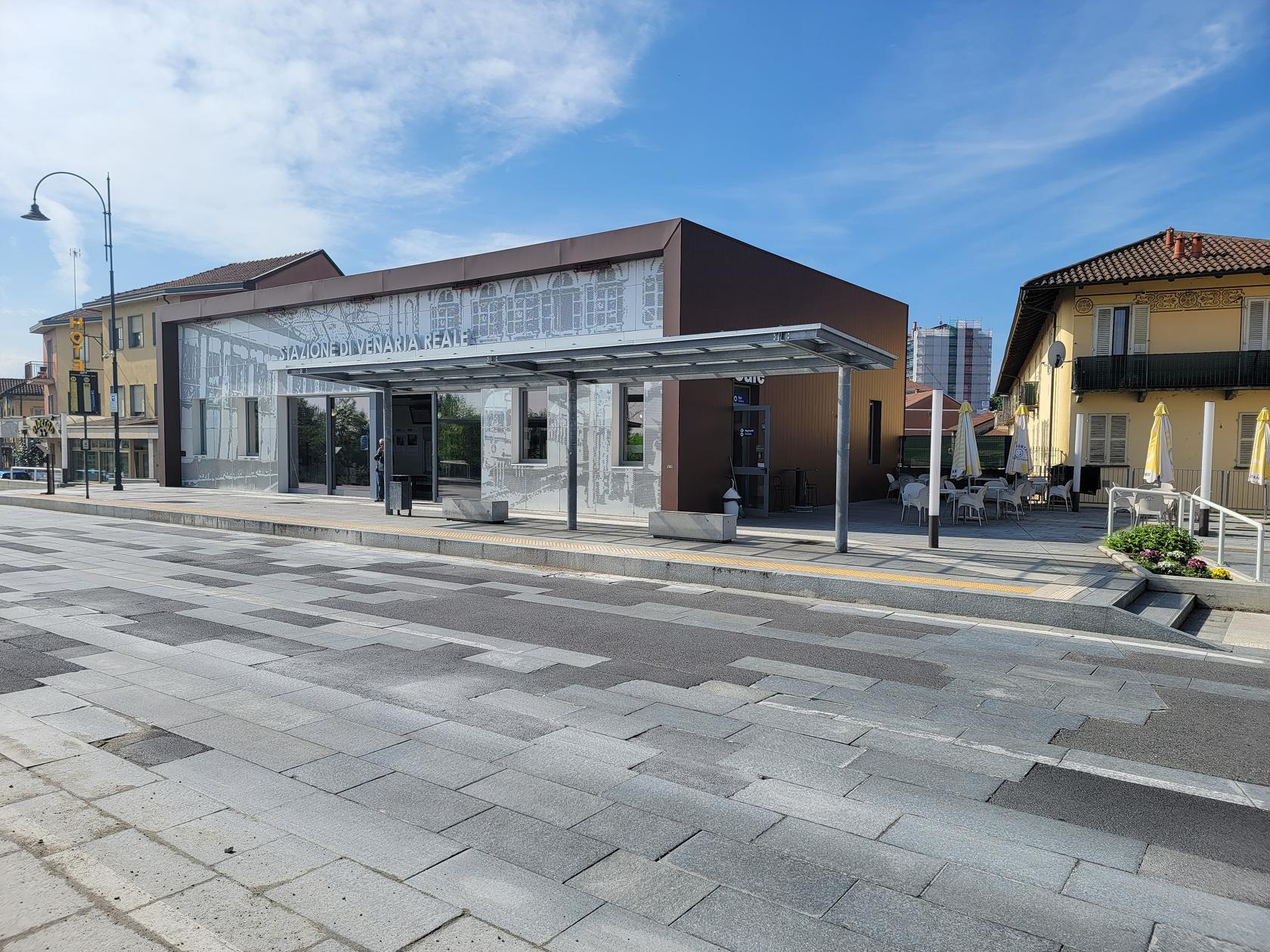
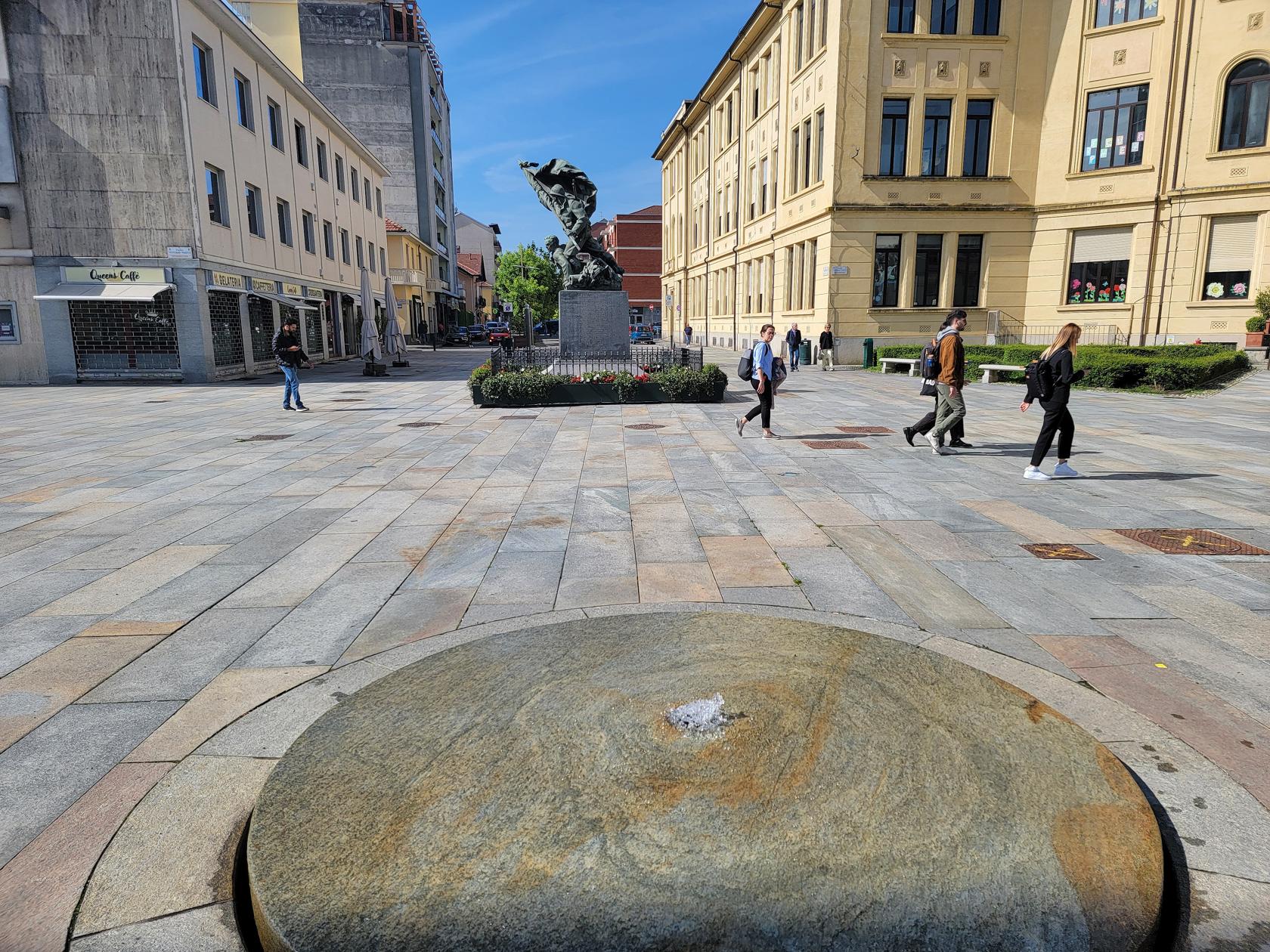
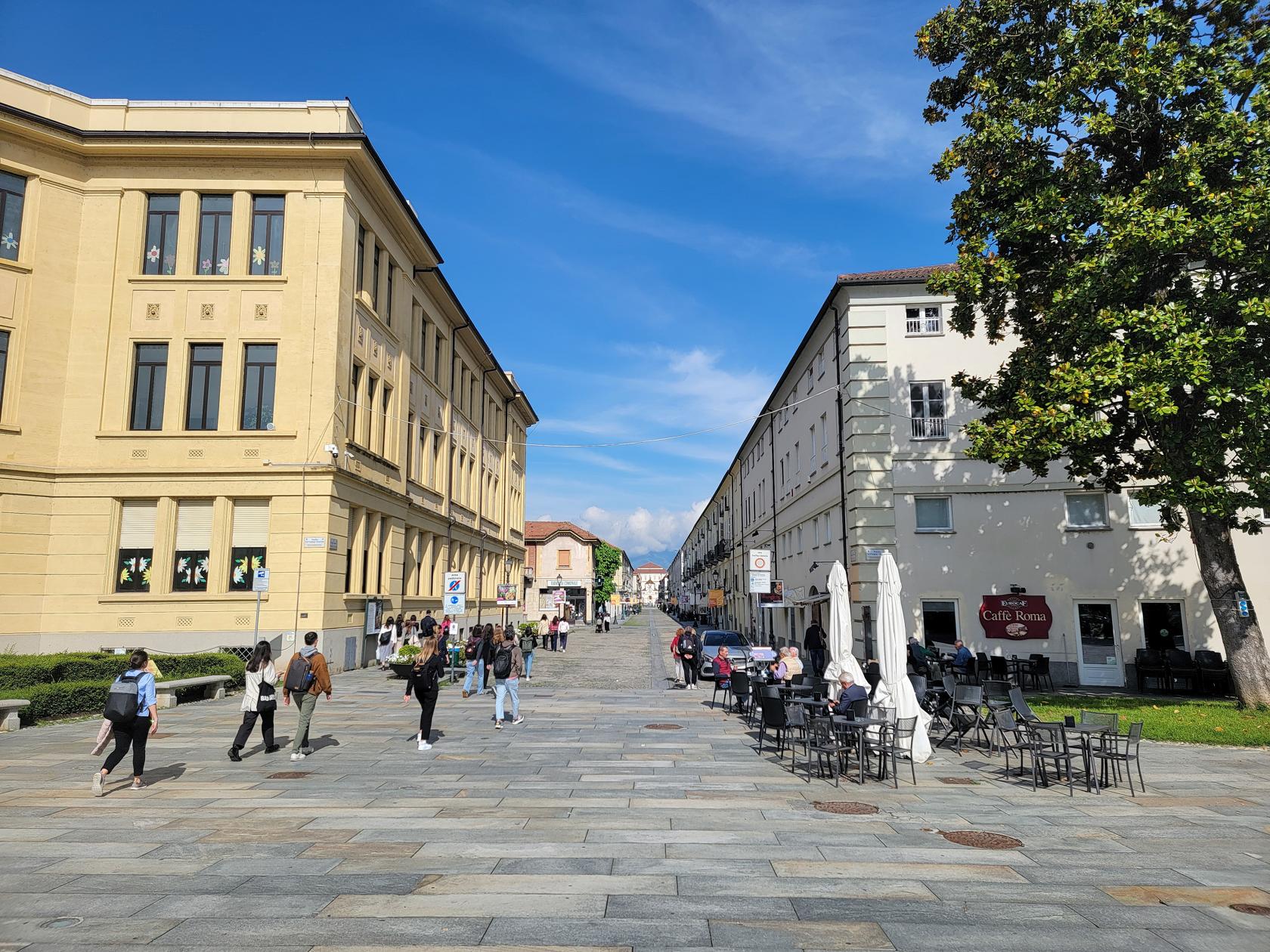
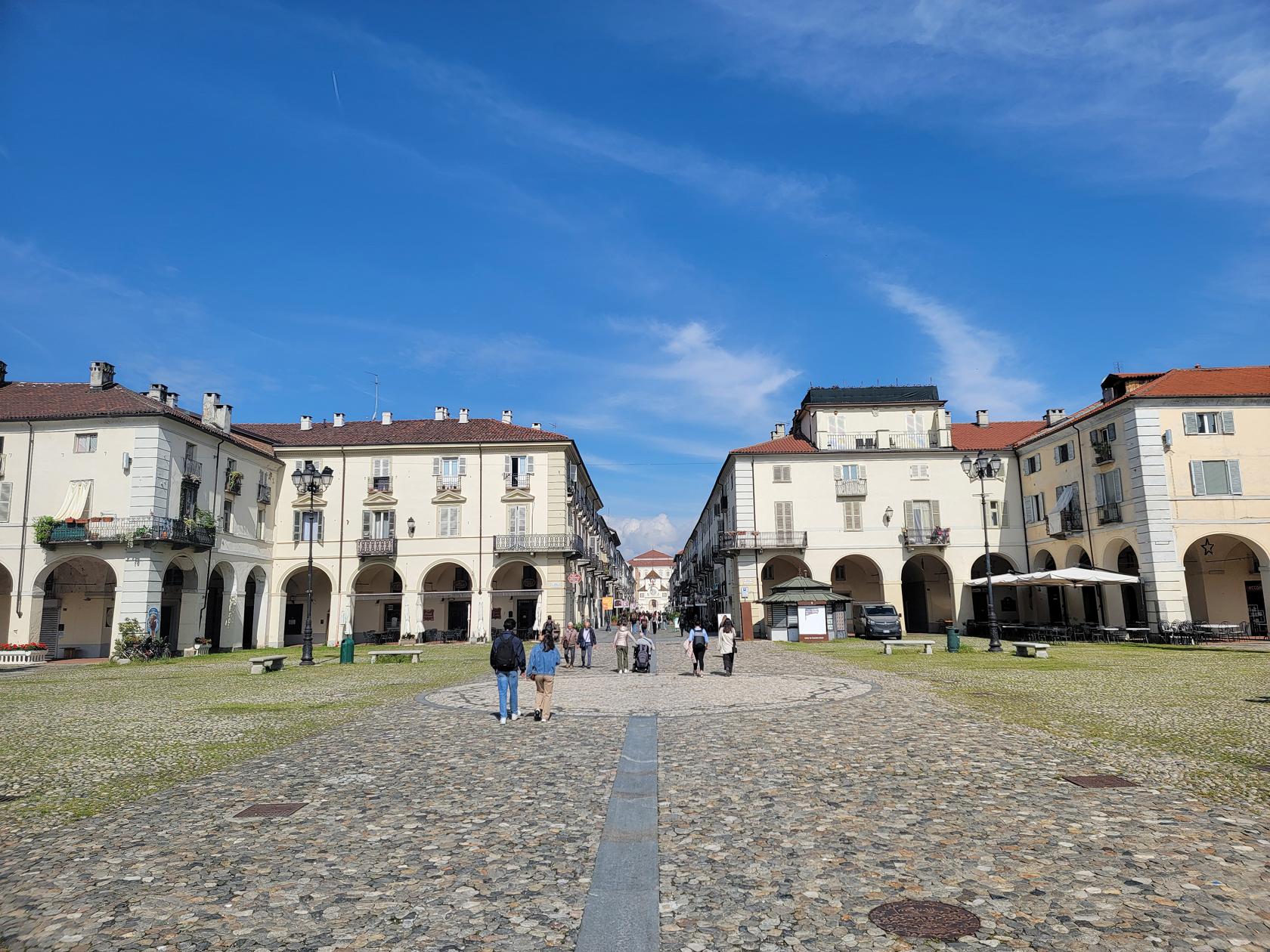
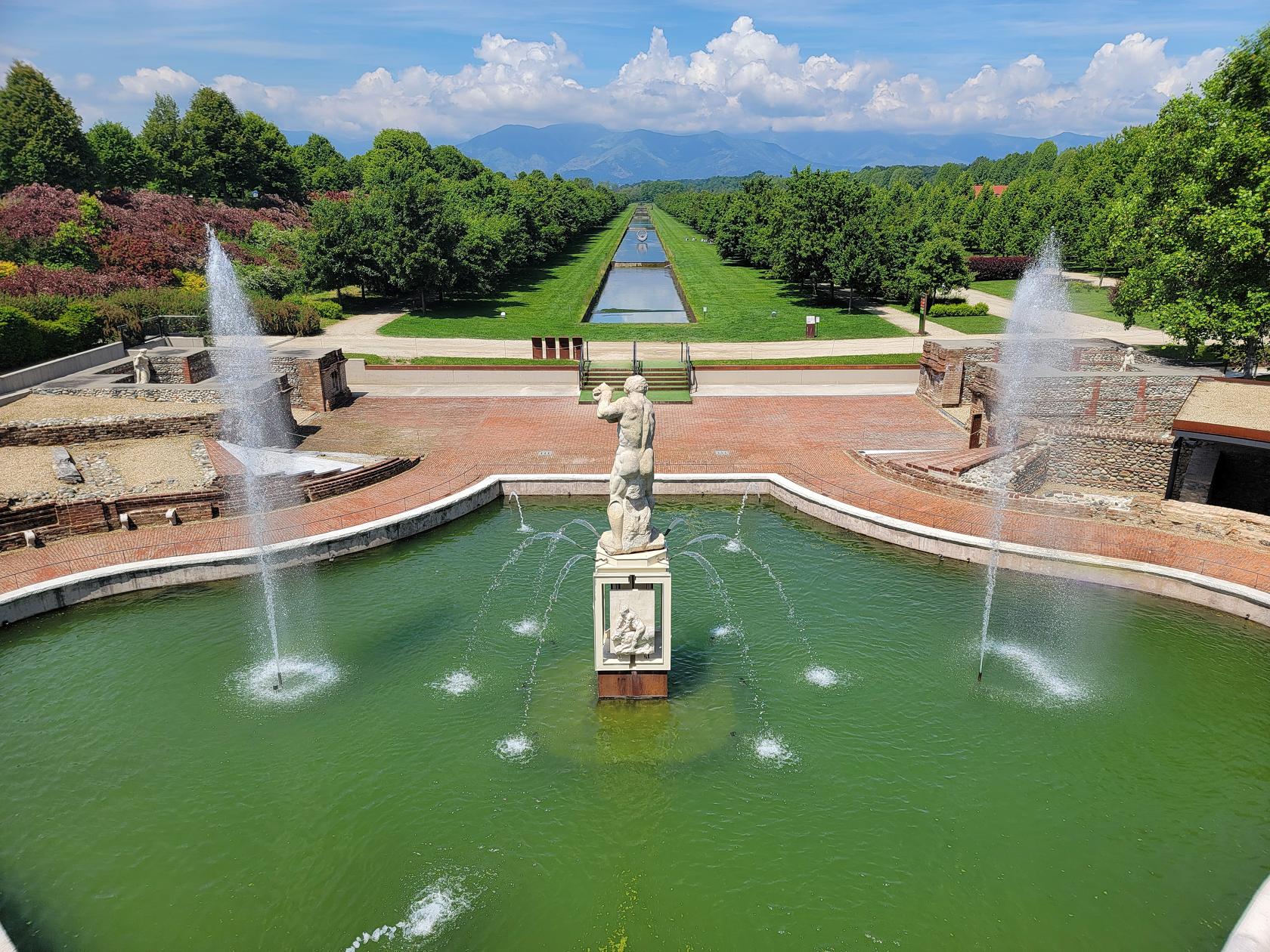
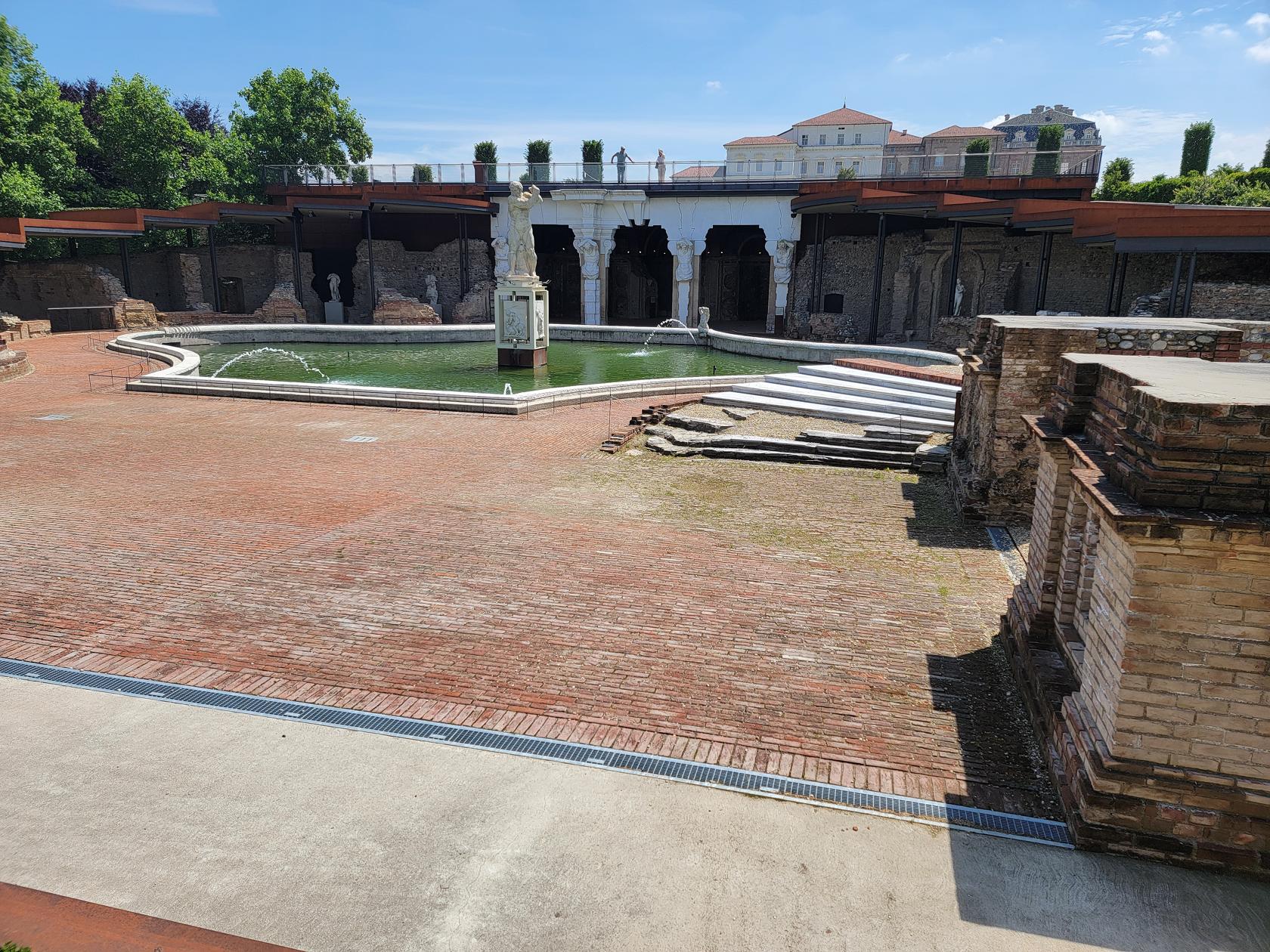
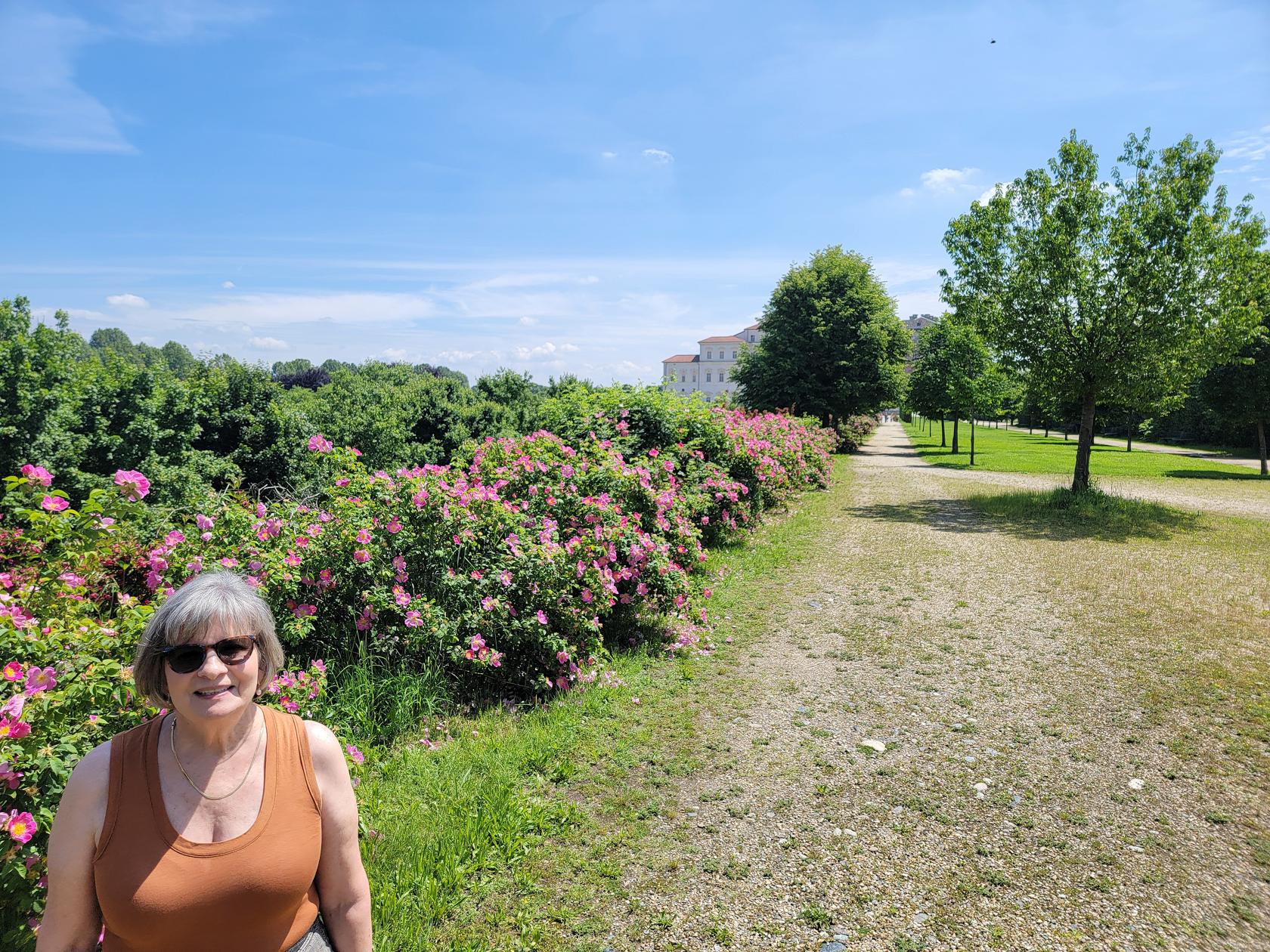
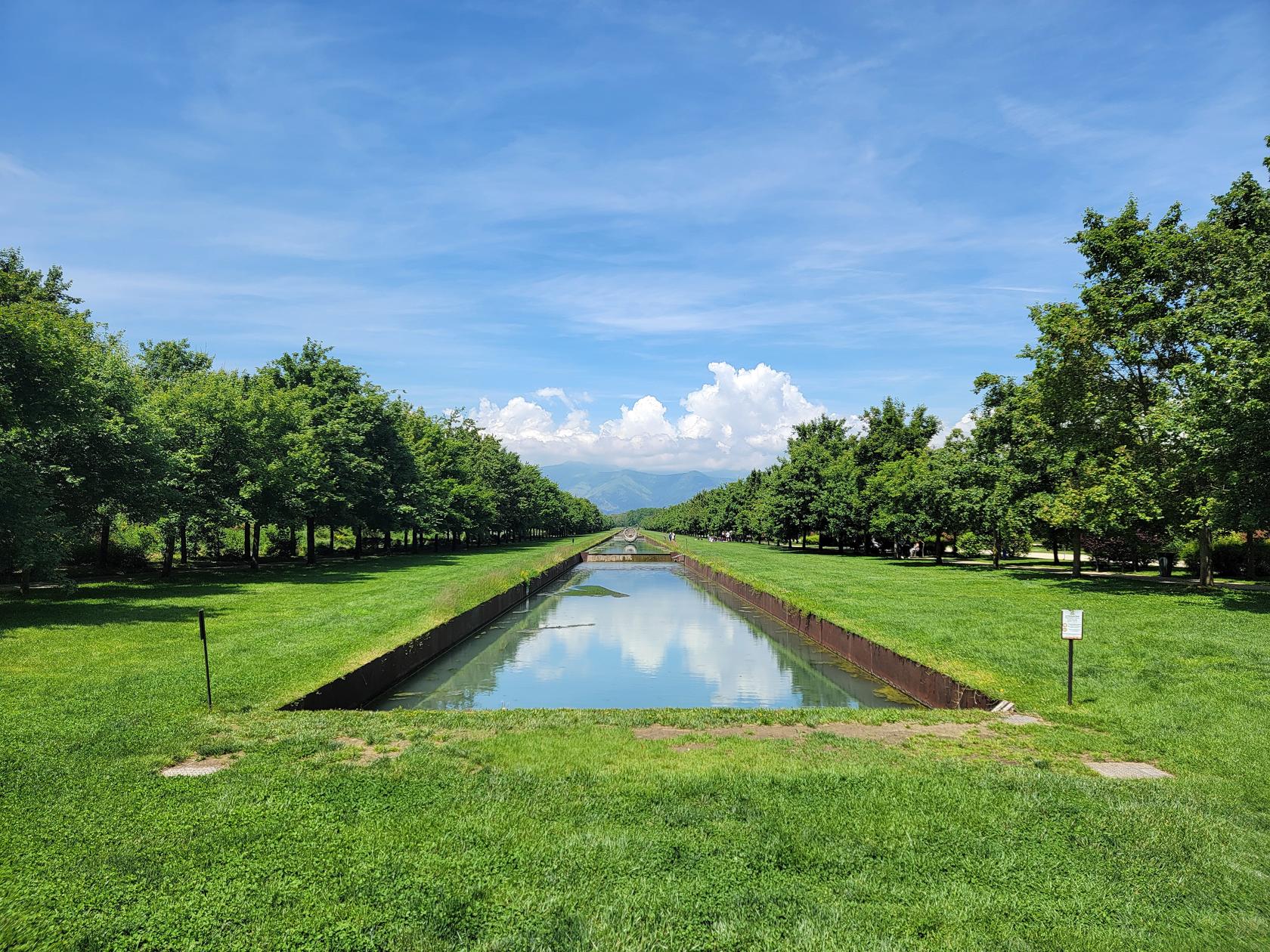
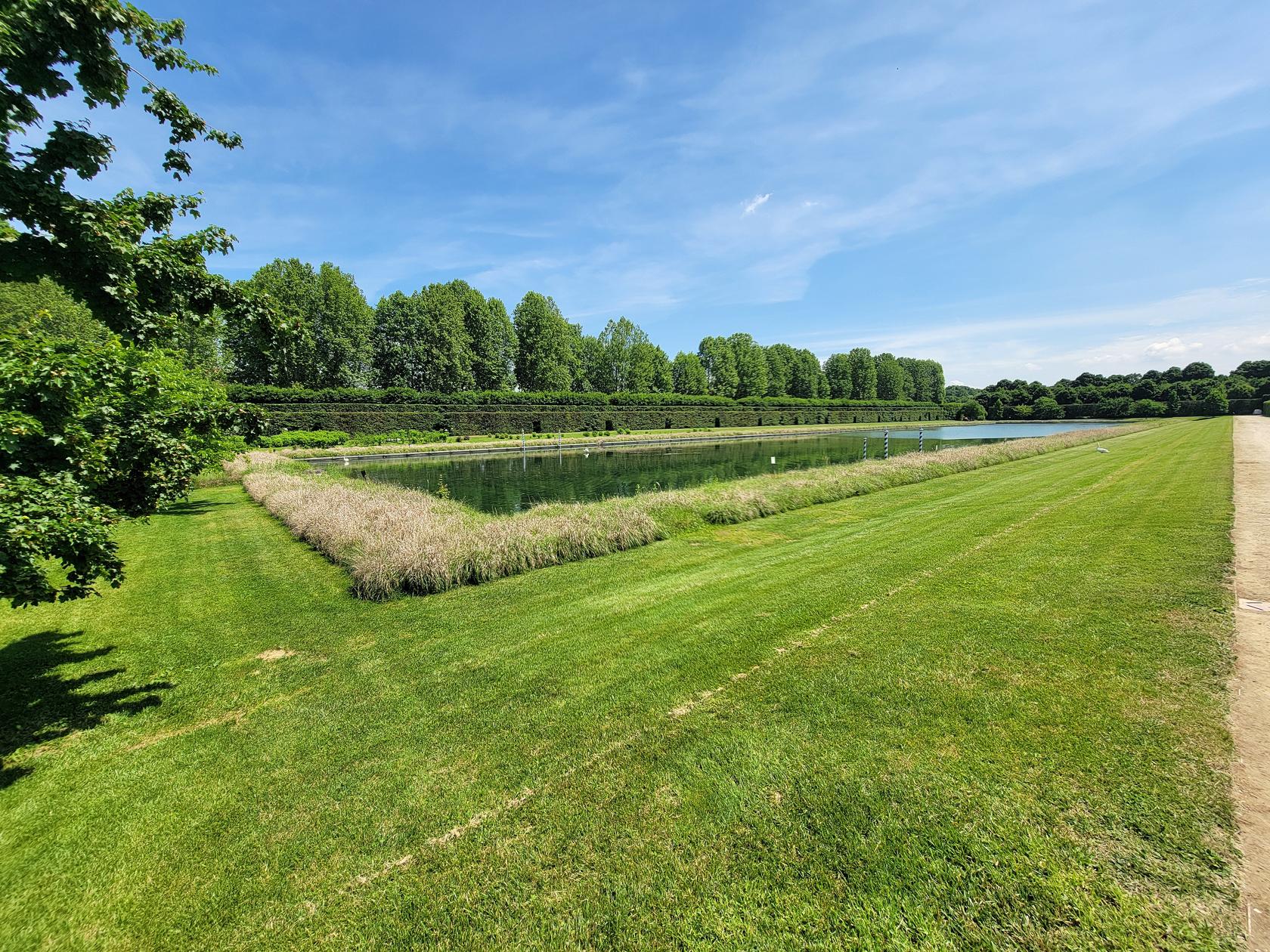
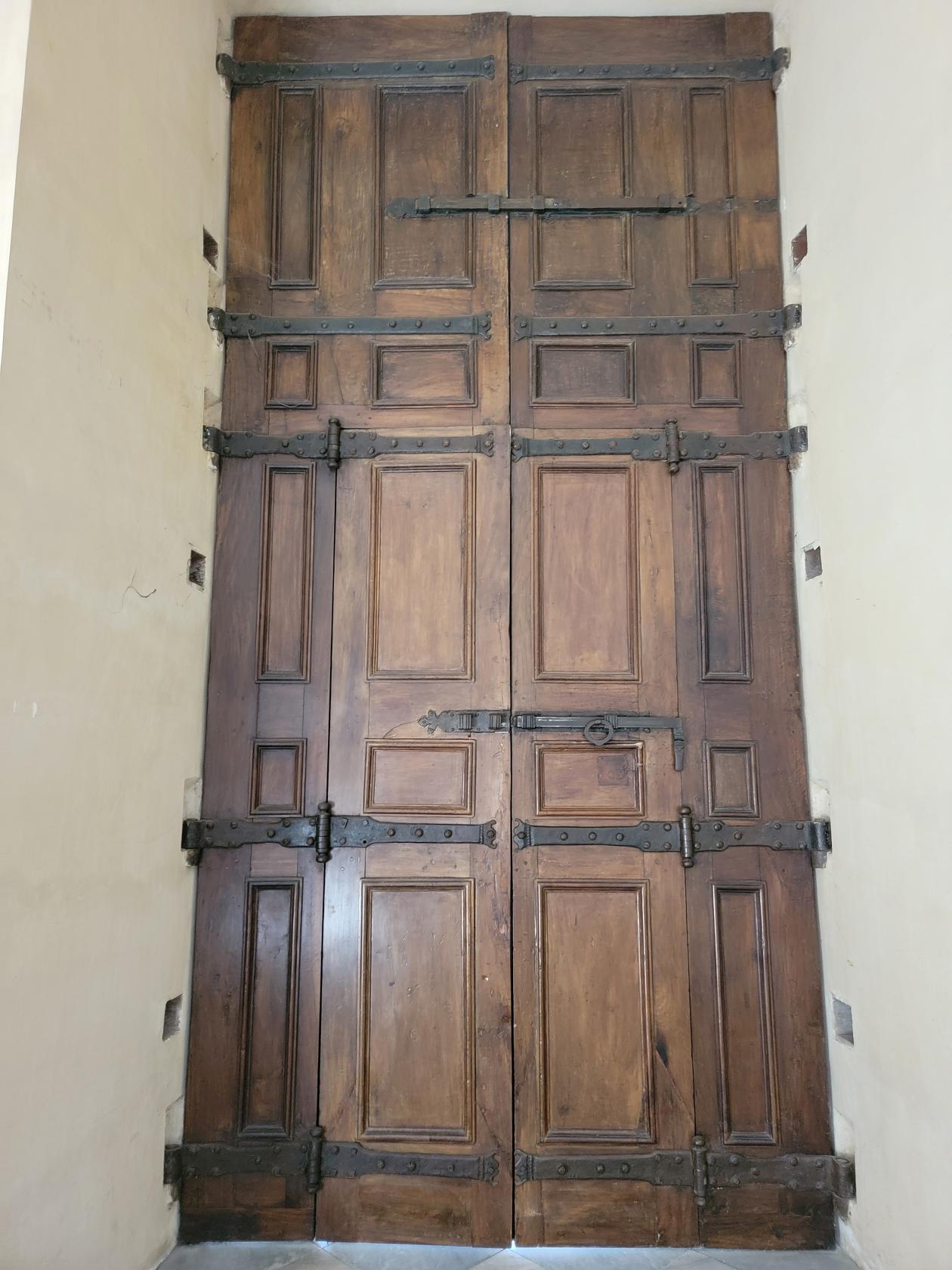
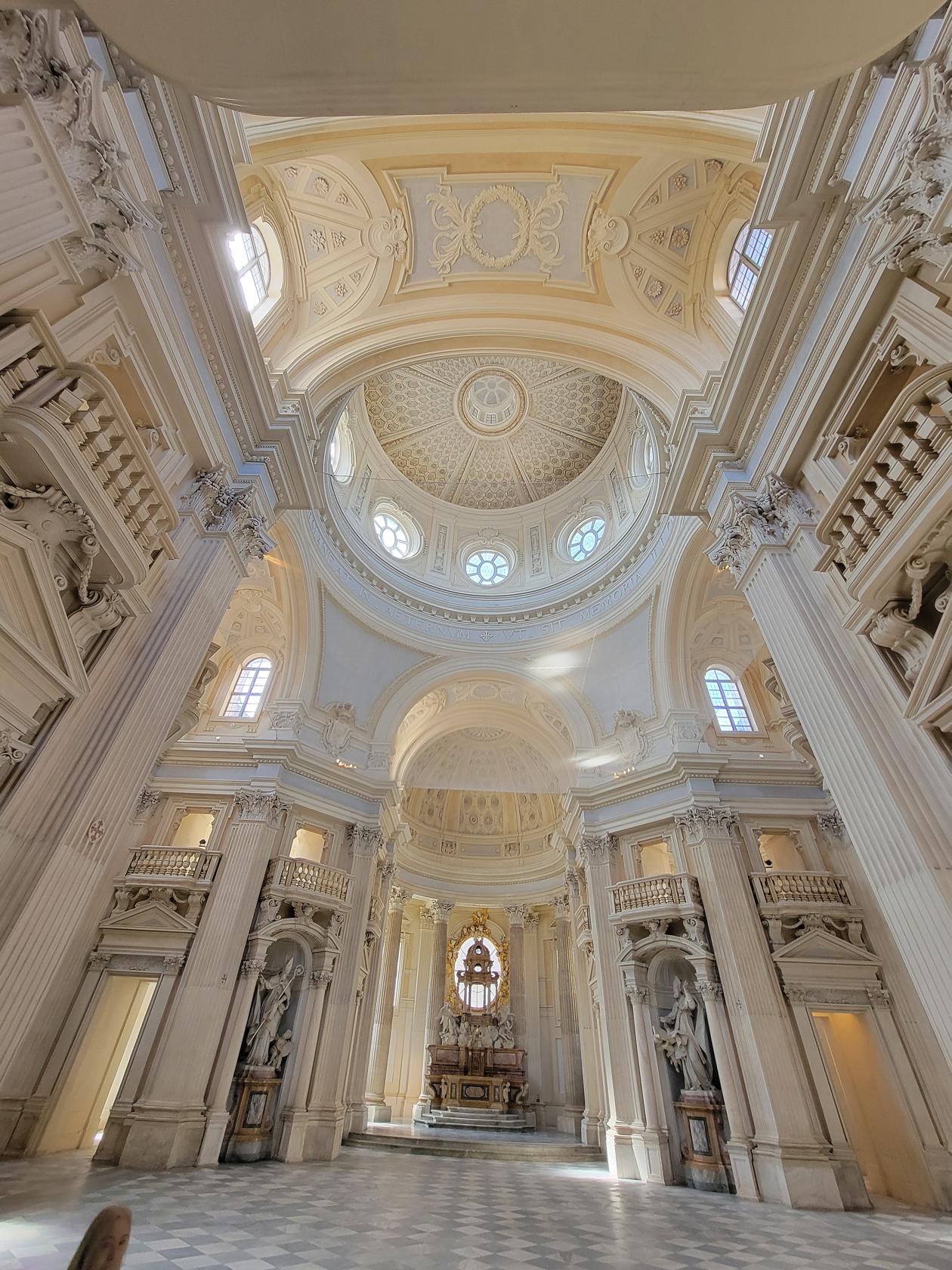
Reggia di Venaria Reale was a royal residence and palace to the northwest of Turin, Italy. It was one of more that a dozen residences of the Savoy family. It was abondoned after the Napoleonic Wars and later became a military post and barracks and subsequently slowly fell into disrepair and abandonment. After a major restoration, it finally opened to the public in 2007 as a musuem and tourist attraction.
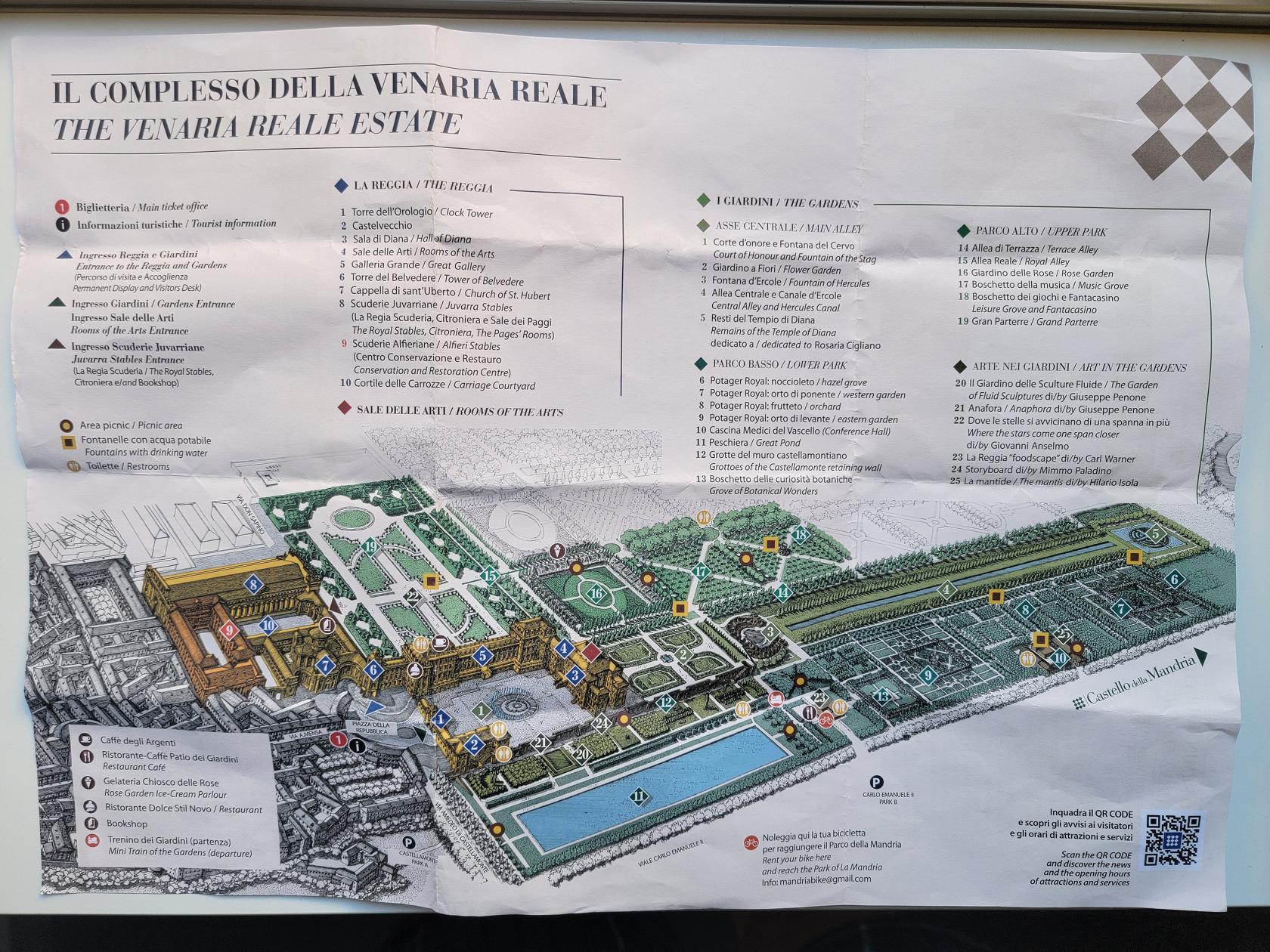
La Venaria Reale – Map of Complex – Turin, Italy
Getting There
The easiest was to get there from Turin is to take one of the SFM trains from Porta Susa towards the Turin Airport. Many of these trains stop at Venaria Station and it only takes about fifteen to twenty minutes and costs about €3.50 per person. We often use the phone application and do not book a round-trip ticket, since you never know how long you might stay, especially if you are planning for lunch as well.
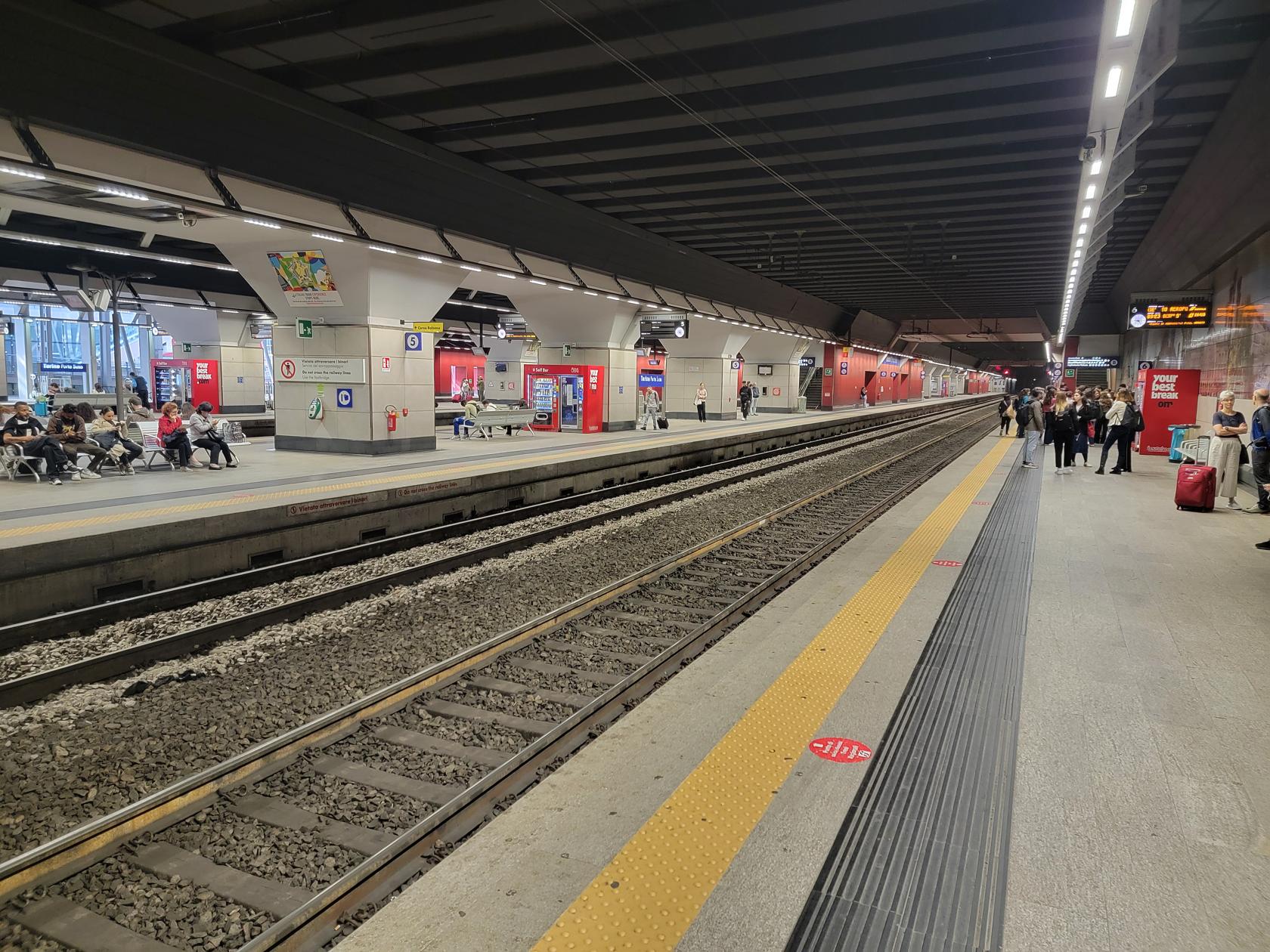
Porta Susa – Leaving for Venaria – Turin, Italy
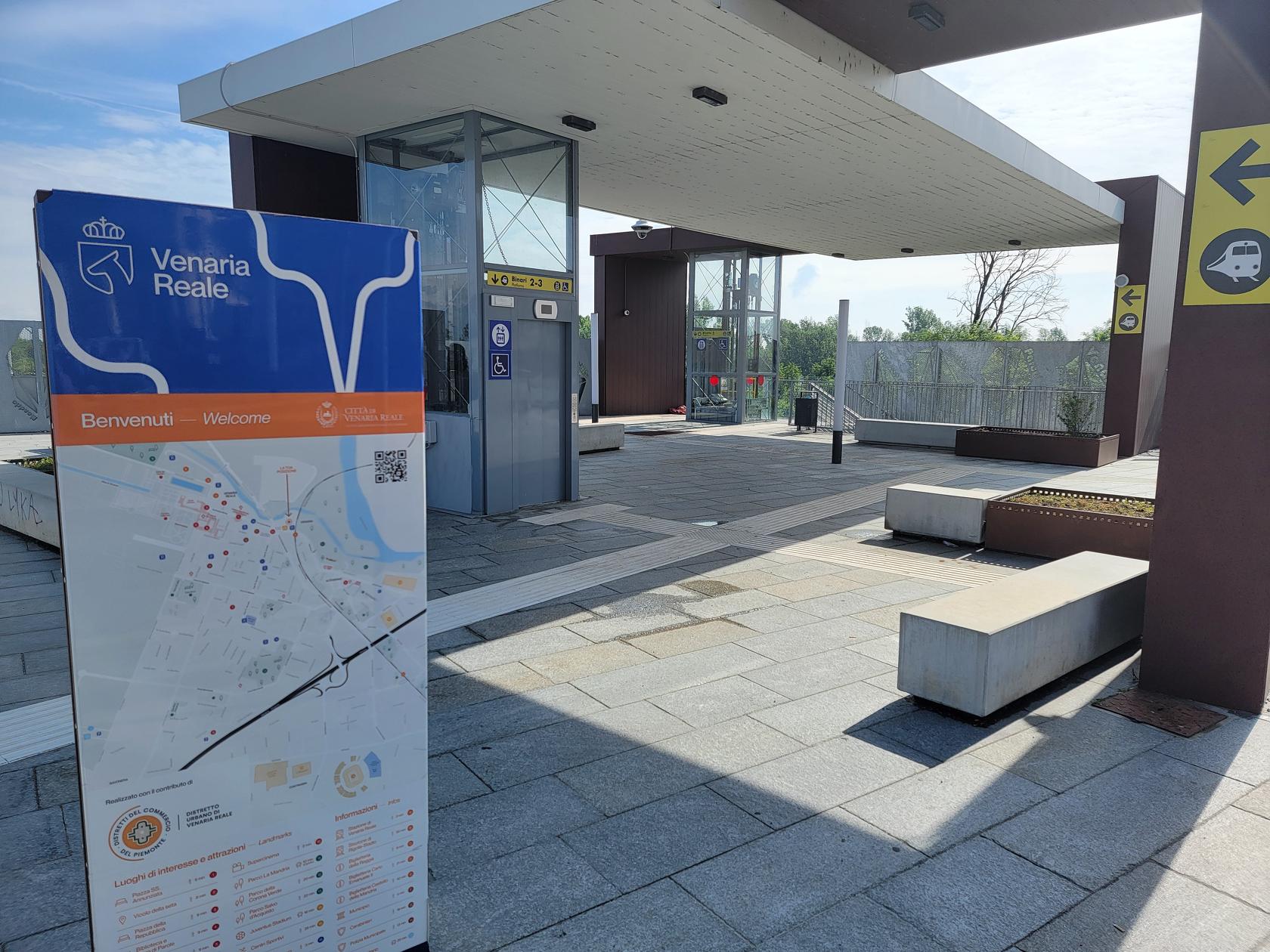
La Venaria Reale – Train Station at Venaria – Turin, Italy
La Venaria Reale – Train Station at Venaria – Turin, Italy
La Venaria Reale – Military Monument – Turin, Italy
La Venaria Reale – Via Andrea Mensa – Turin, Italy
La Venaria Reale – Via Andrea Mensa – Turin, Italy
The Palace
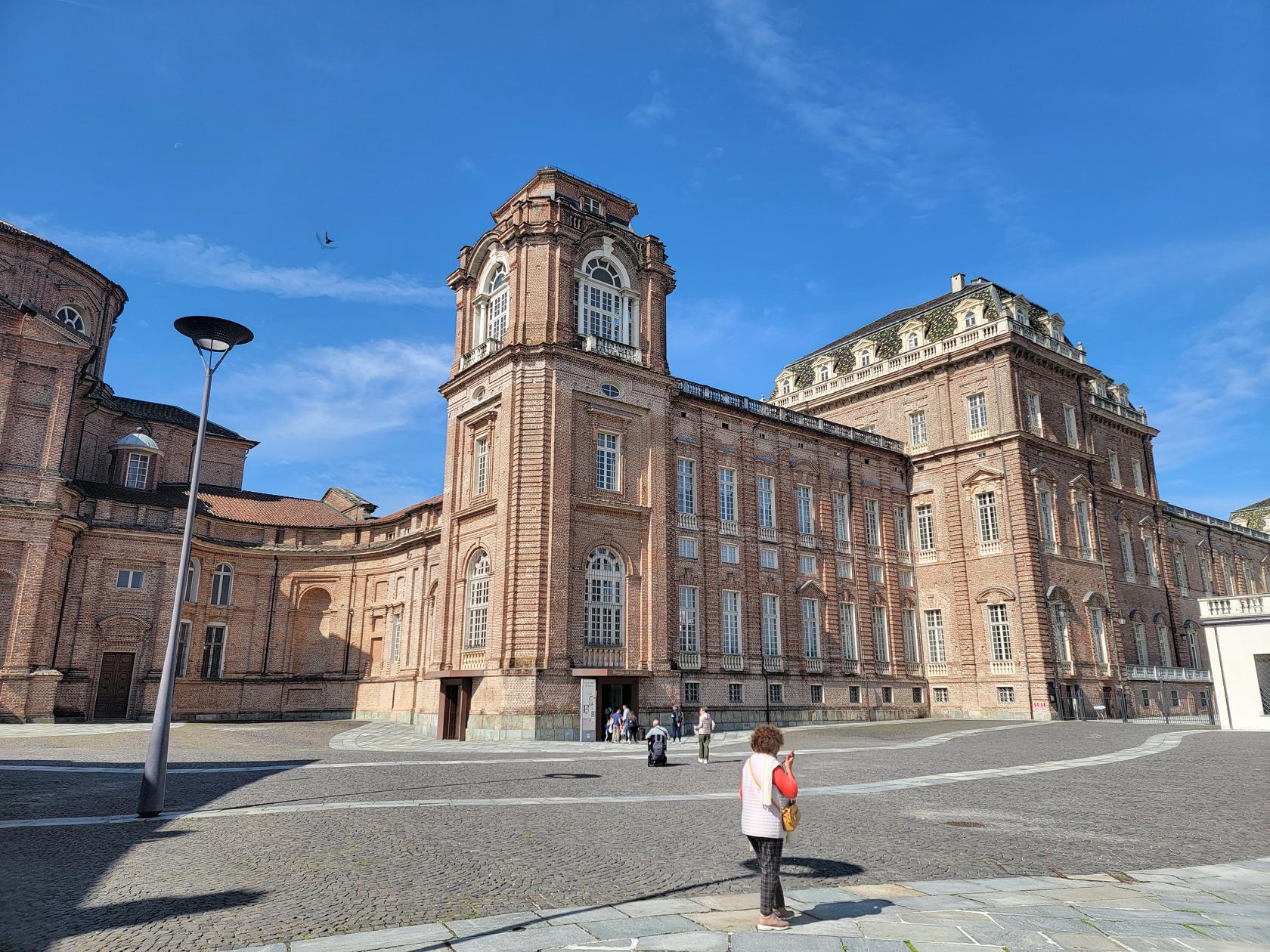
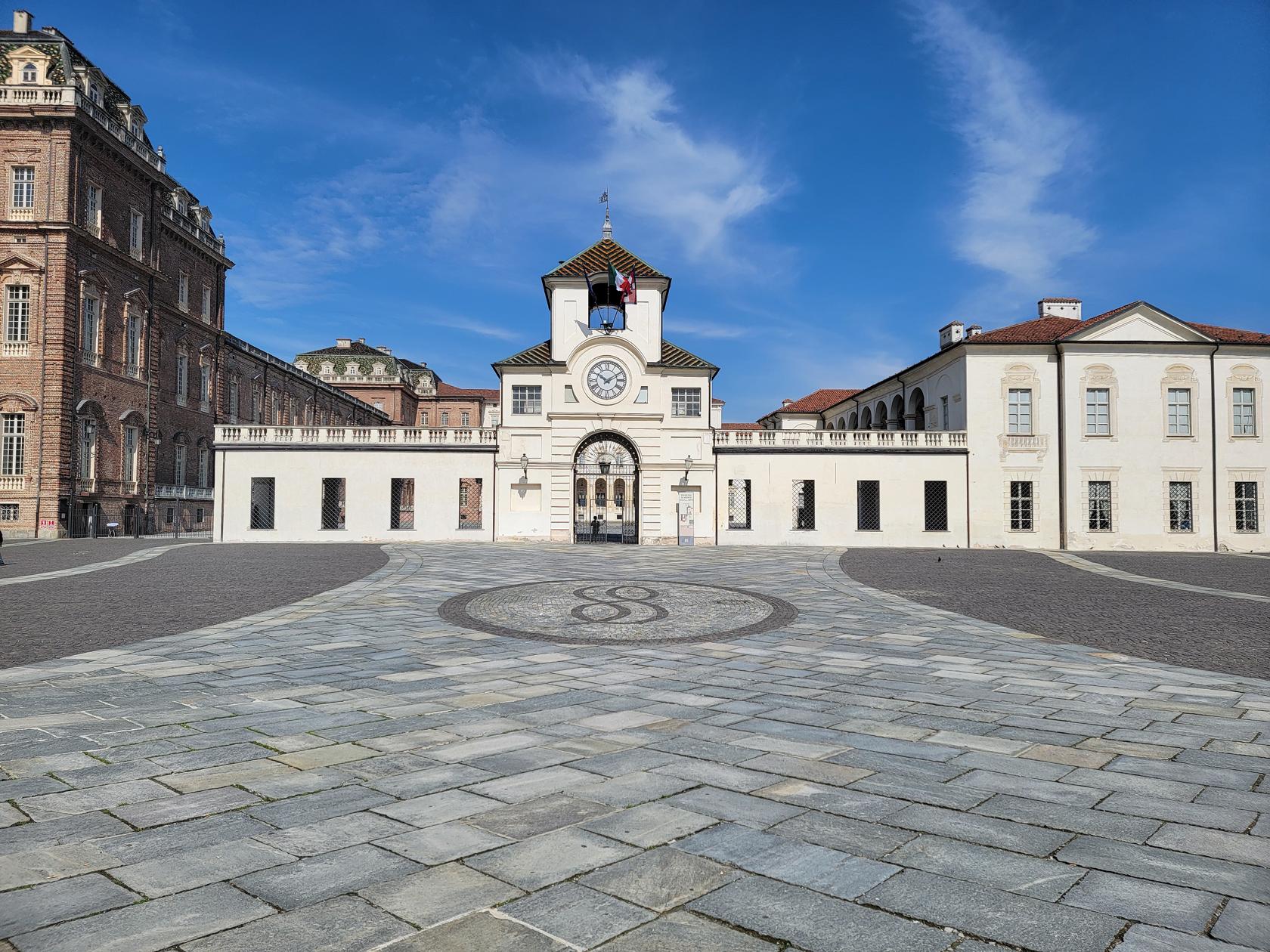
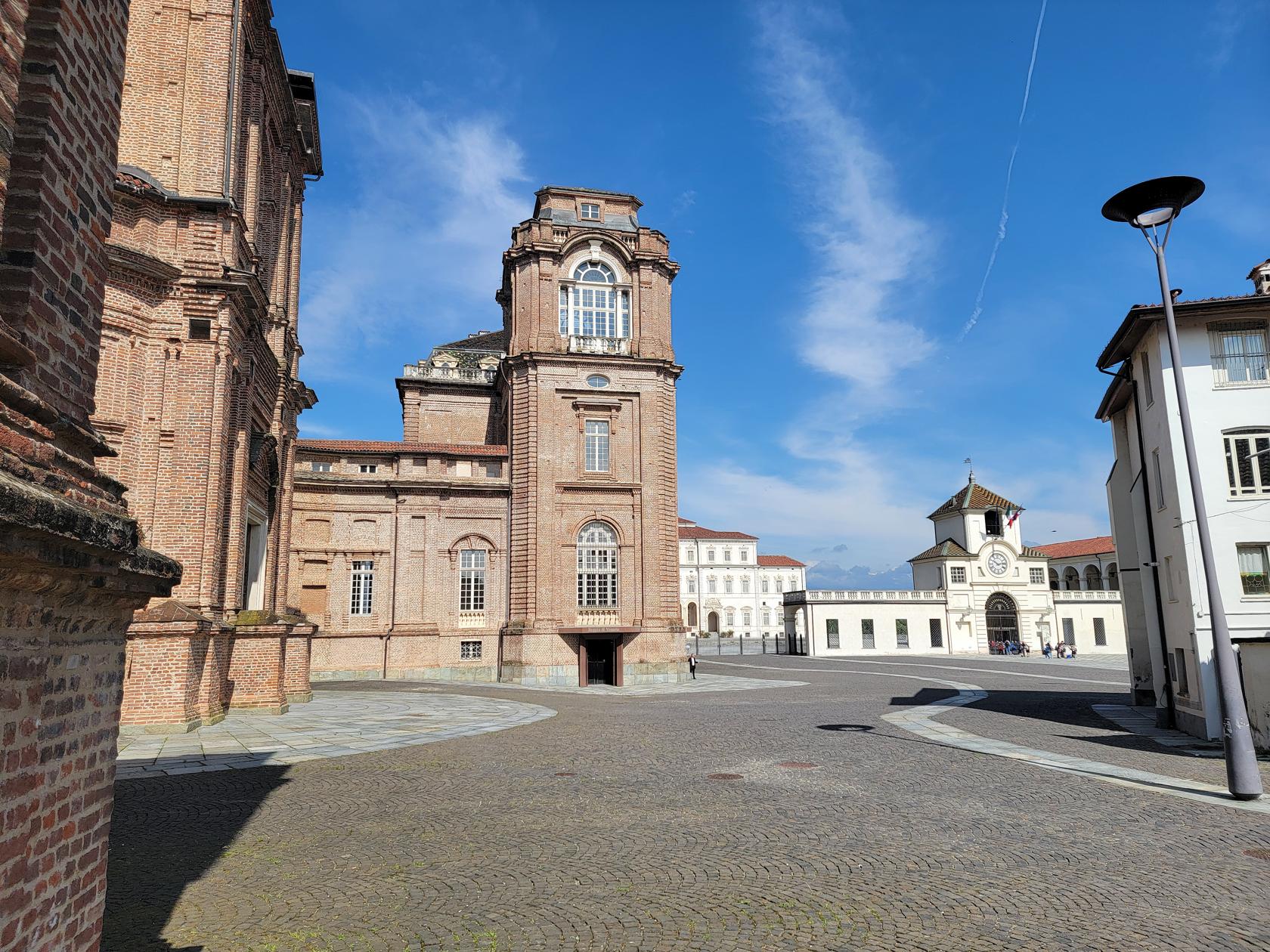
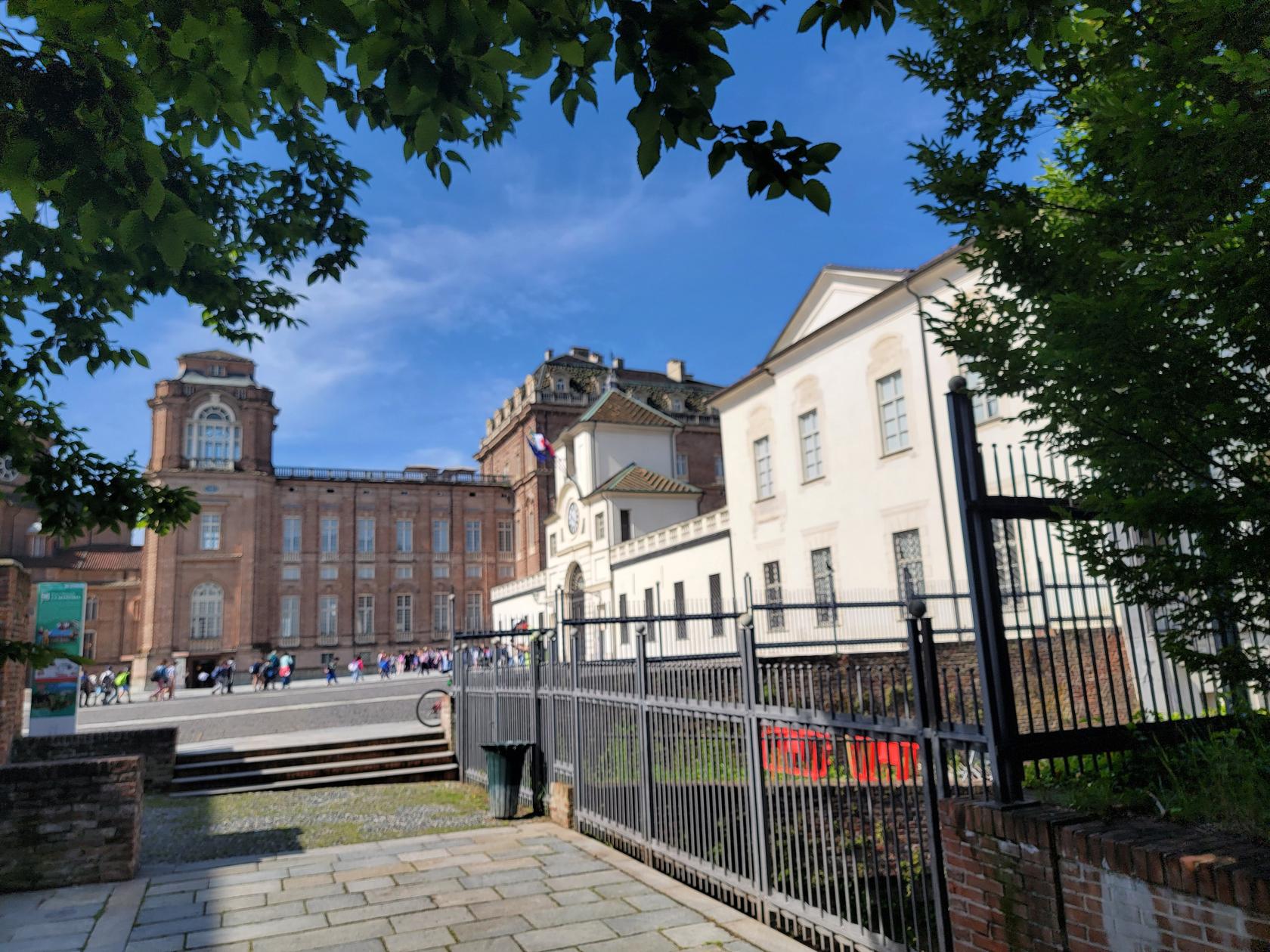
The palace is actually in two pieces, the original Palace of Diana from the seventeenth century in white stucco with a white clock tower and the latter eighteenth century addition in raw brick with the Belvedere Tower, where you enter.
La Venaria Reale – Piazza della Repubblica – Turin, Italy
La Venaria Reale – Clock Tower, Piazza della Repubblica – Turin, Italy
La Venaria Reale – Piazza della Repubblica – Turin, Italy
La Venaria Reale – Via Castelmonte – Turin, Italy
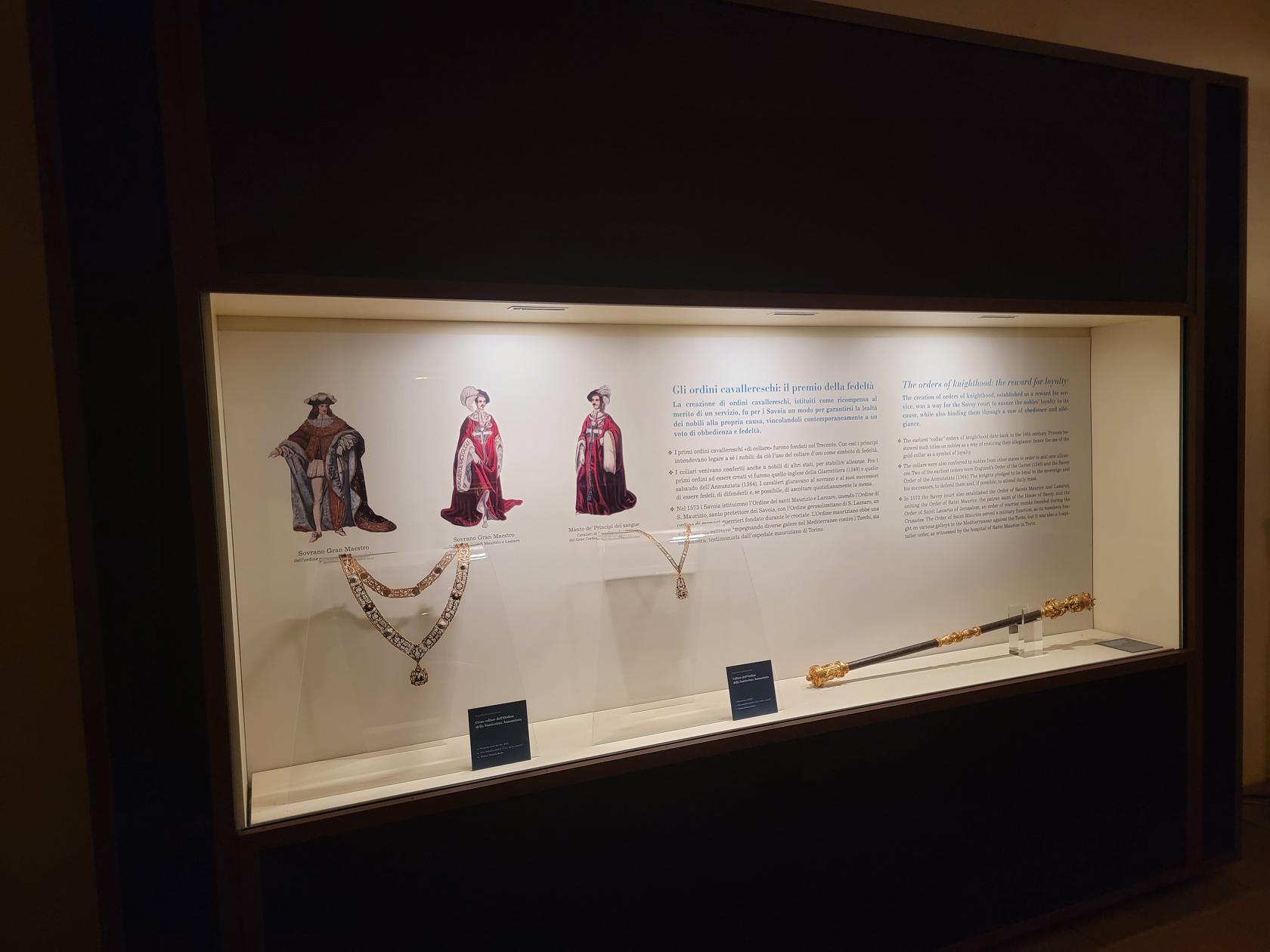
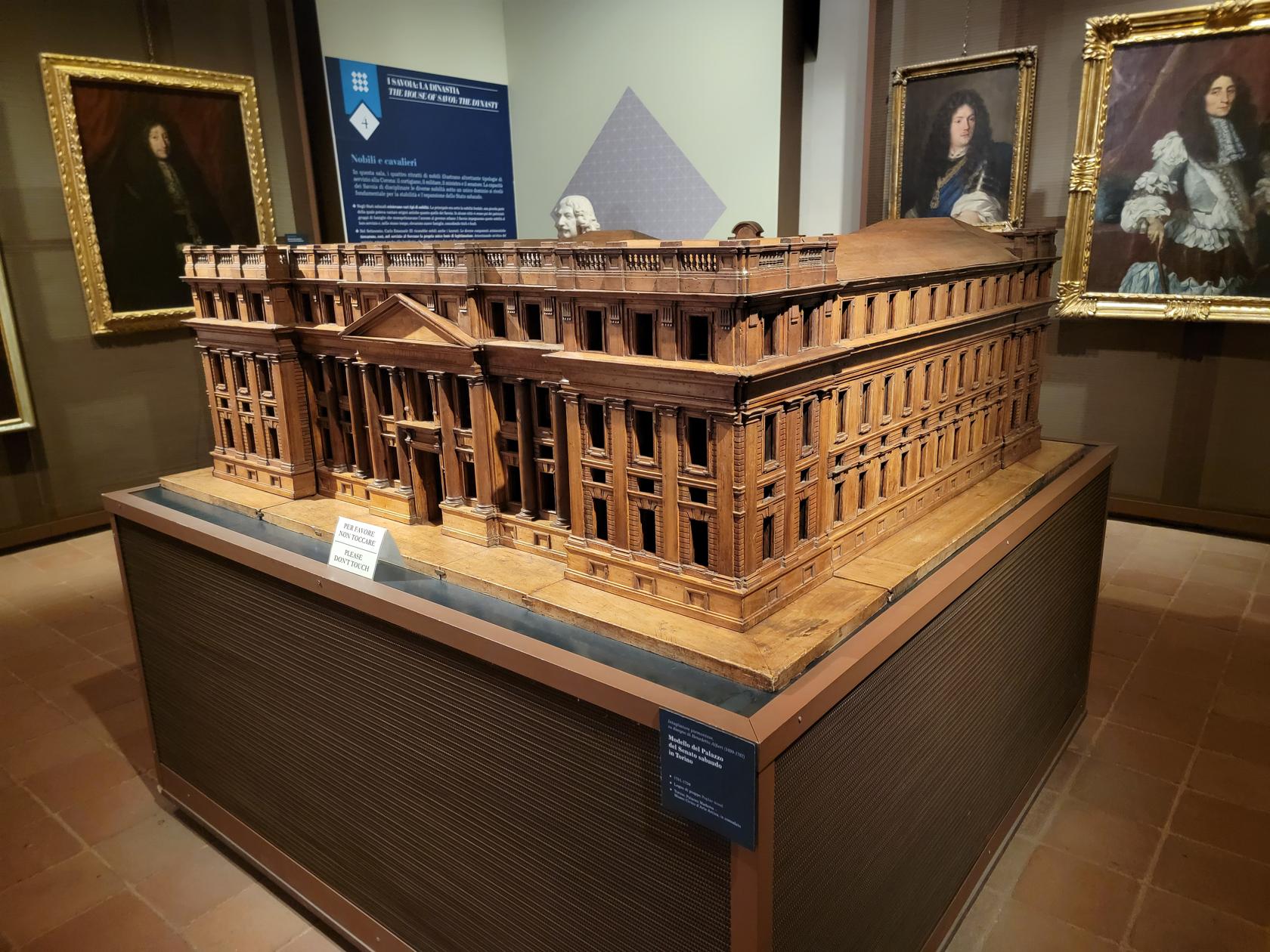
La Venaria Reale – Noble Families, La Reggia – Turin, Italy
La Venaria Reale – Noble Families, La Reggia – Turin, Italy
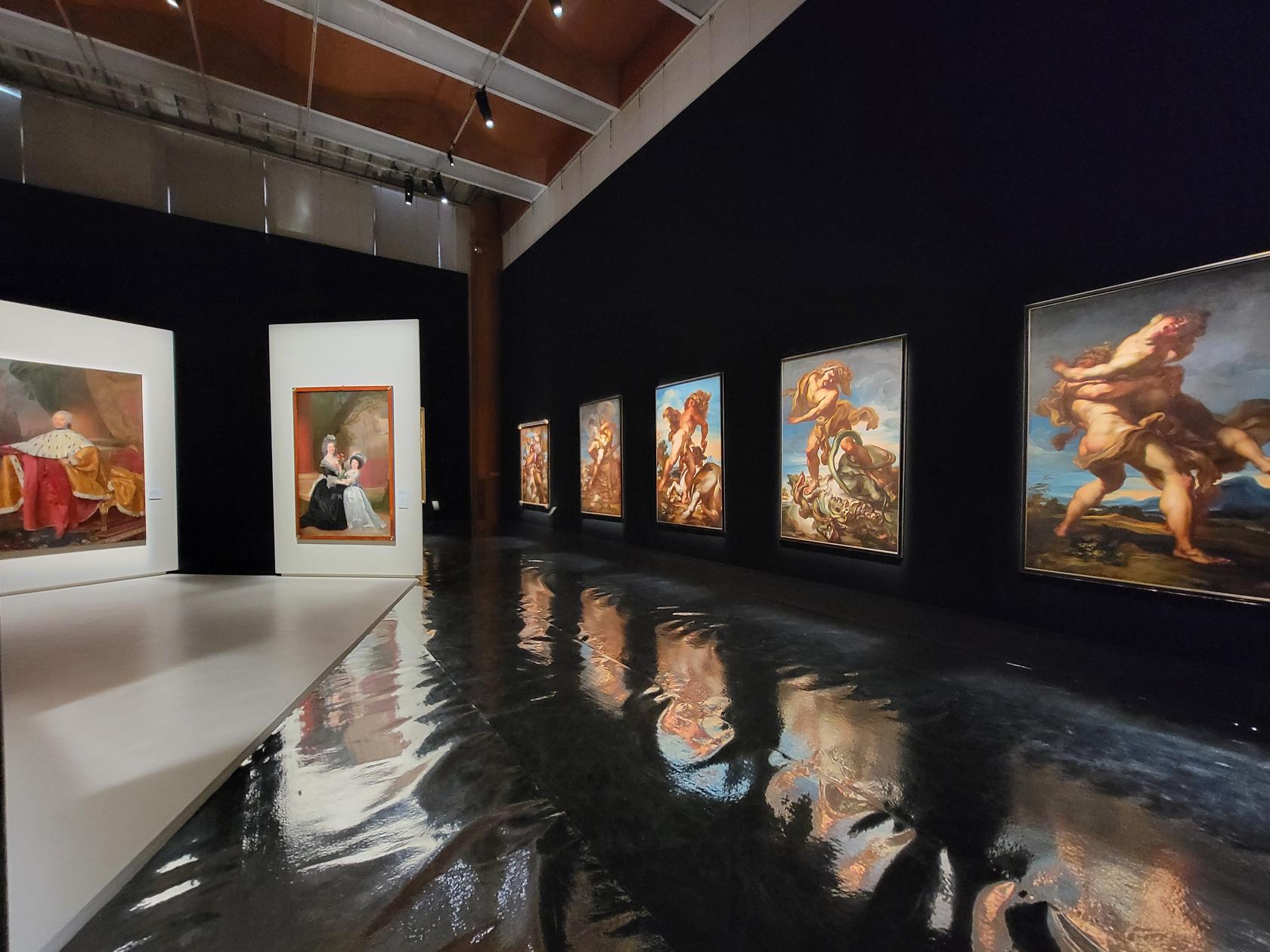
La Venaria Reale – Museum, La Reggia – Turin, Italy
La Venaria Reale – Art Room, La Reggia – Turin, Italy
La Venaria Reale – Art Room, La Reggia – Turin, Italy
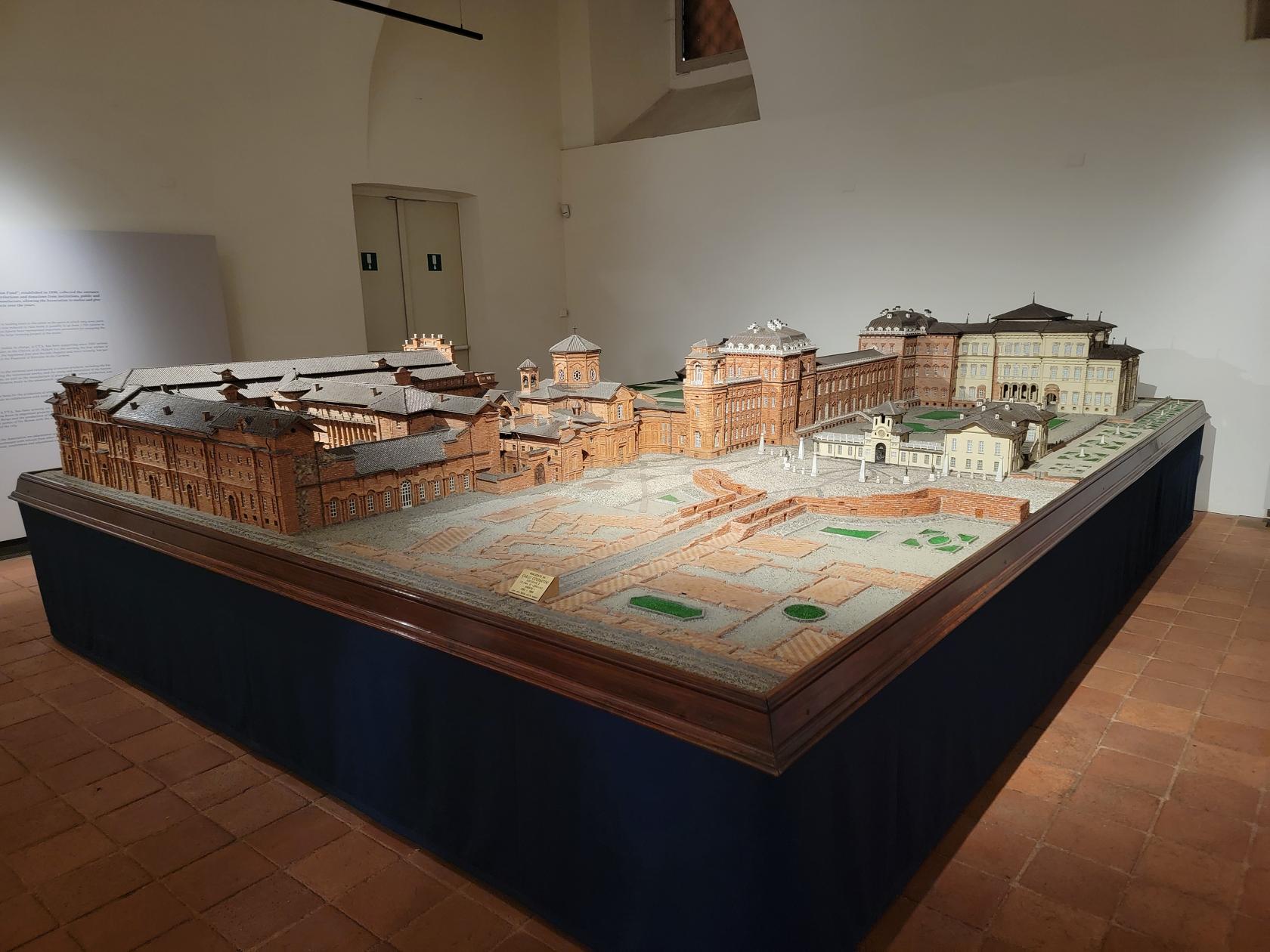
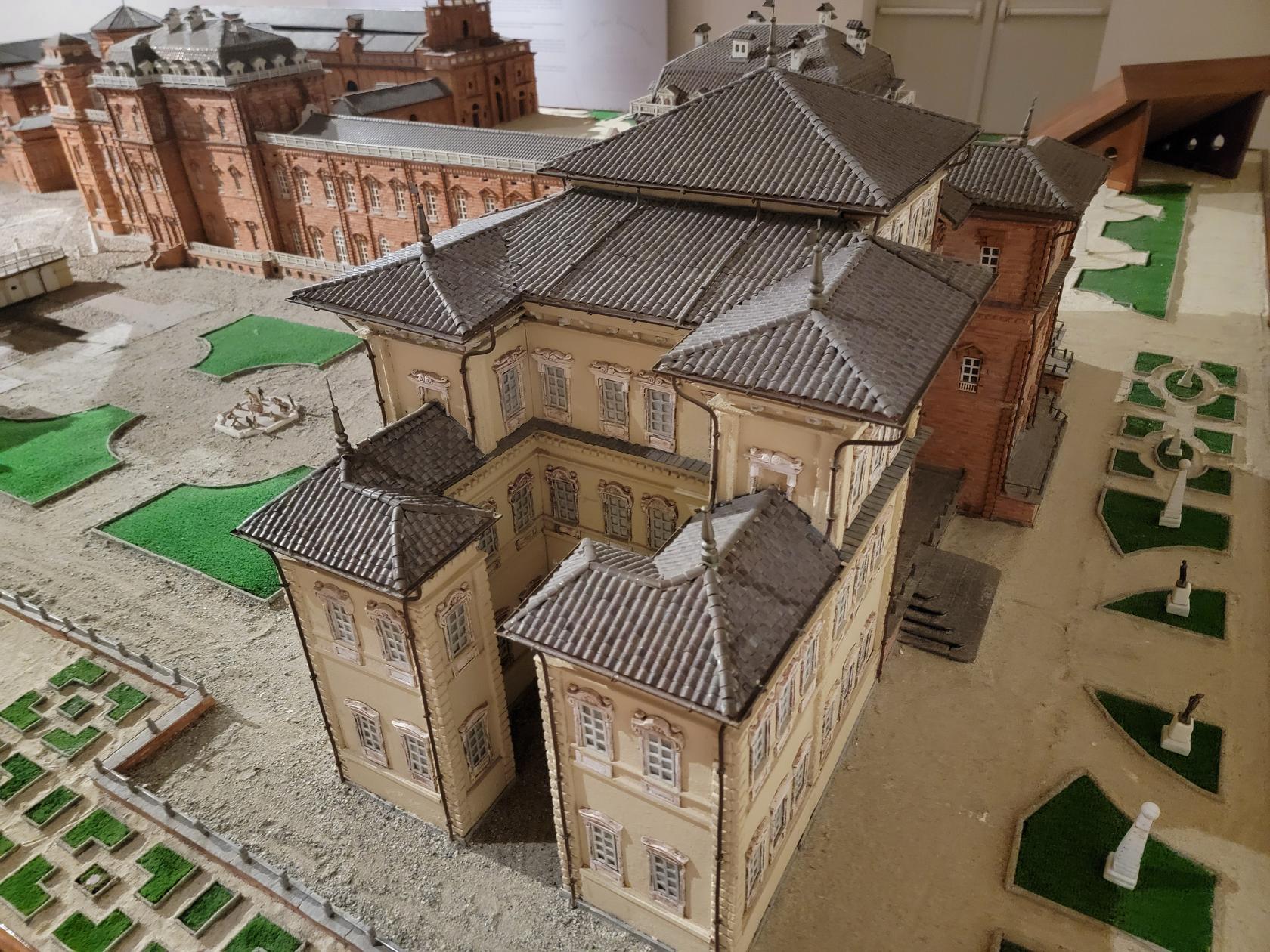
La Venaria Reale – Castle Diorama, La Reggia – Turin, Italy
The Grand Gallery
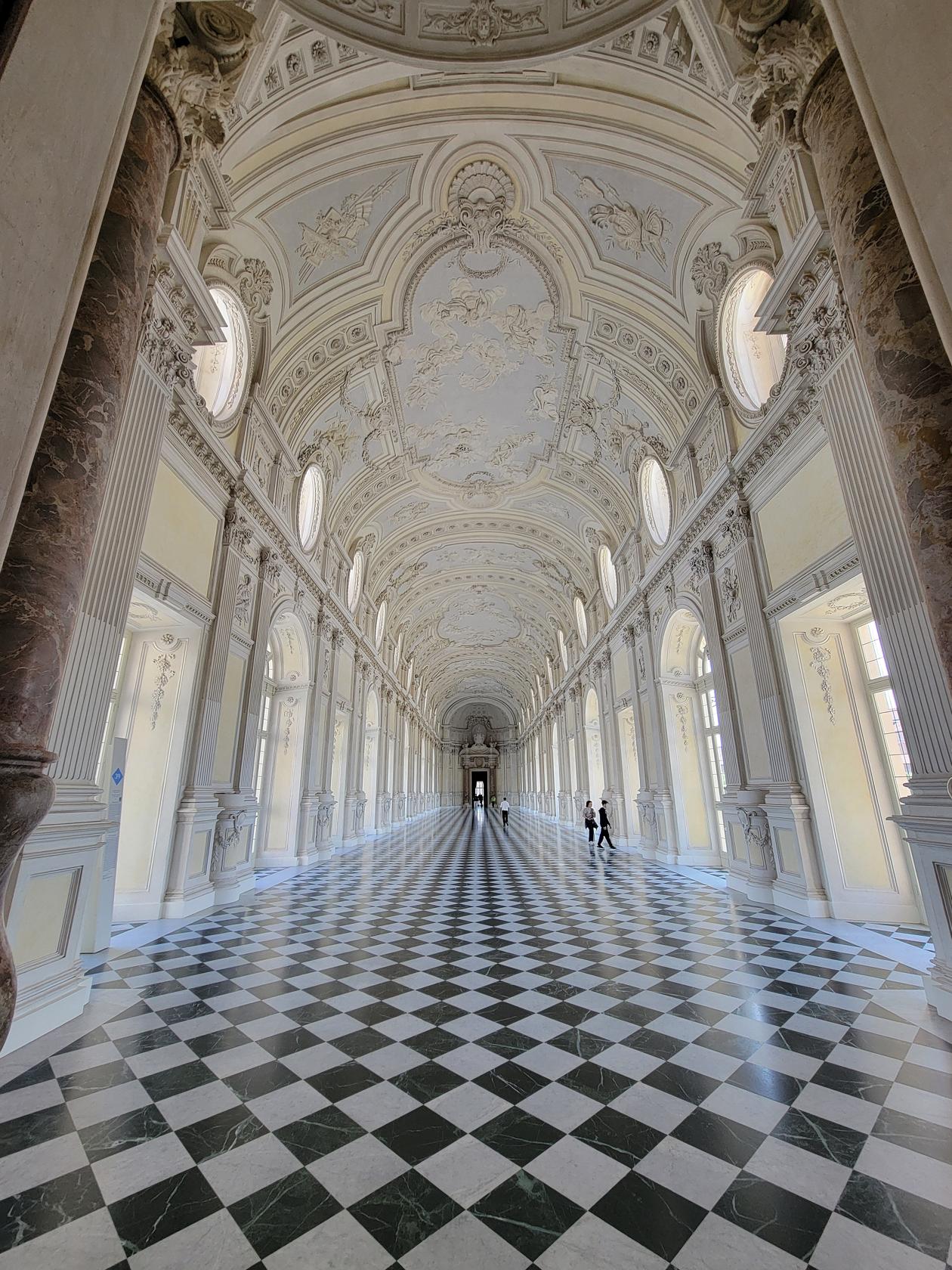
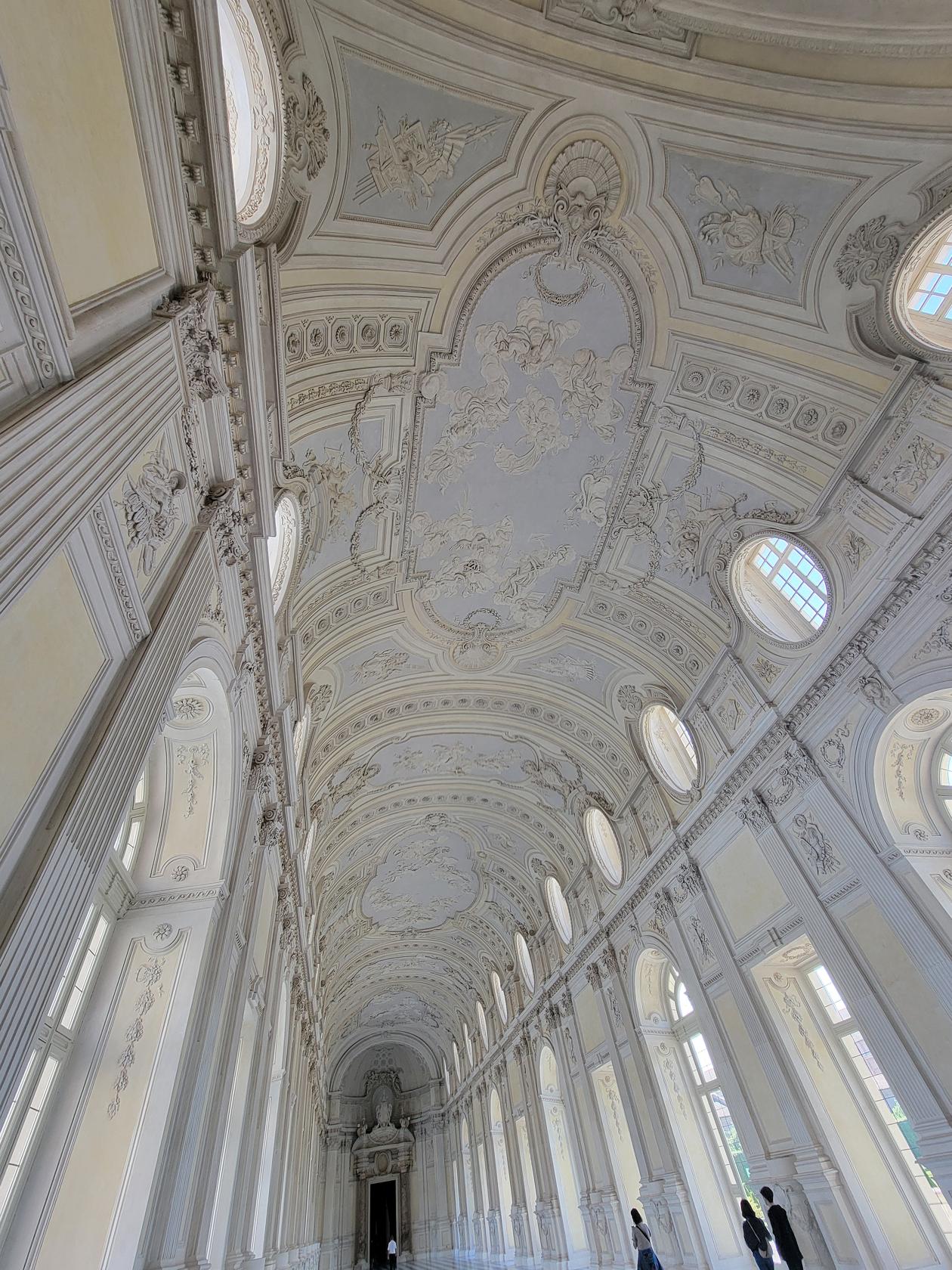
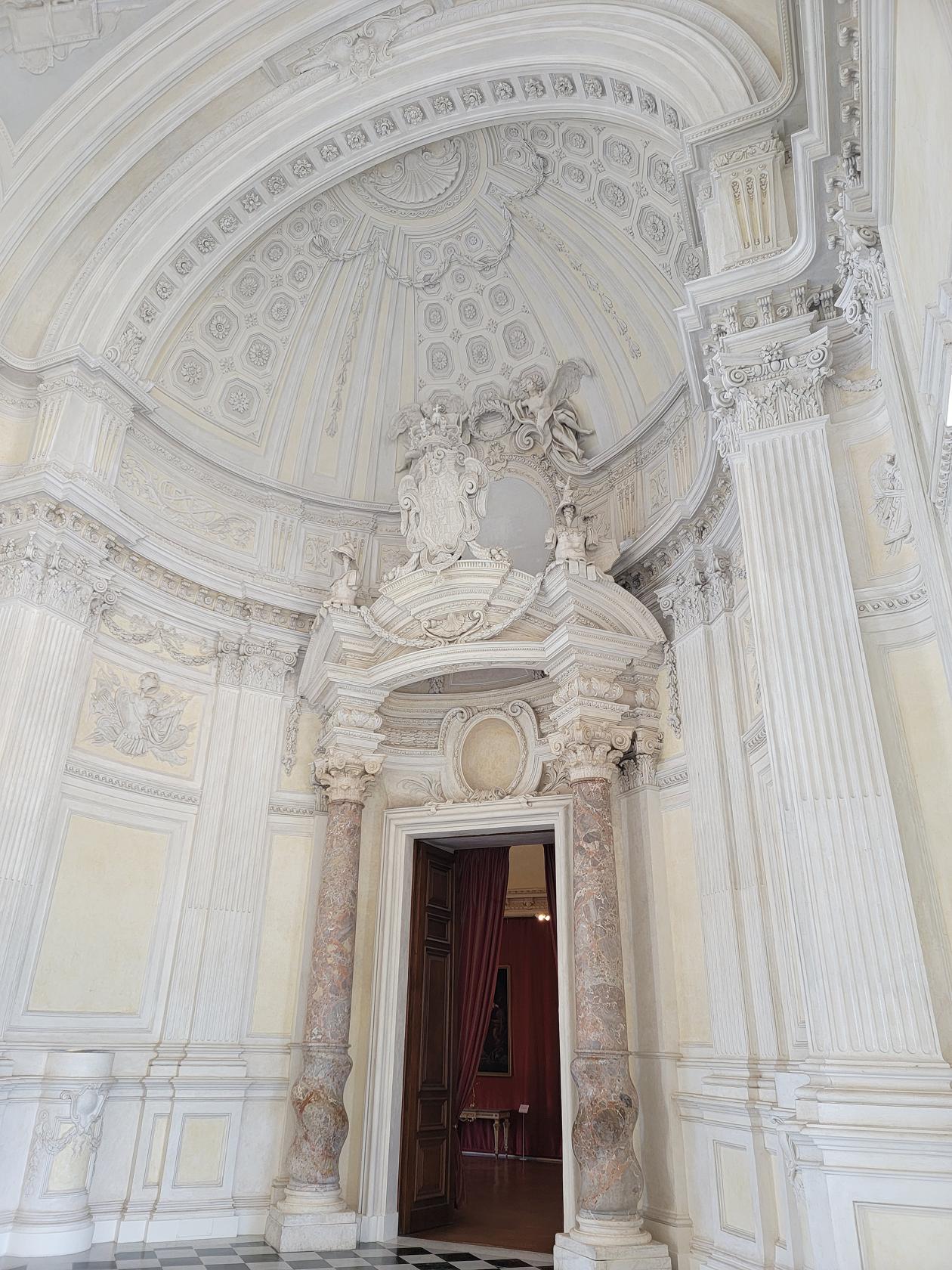
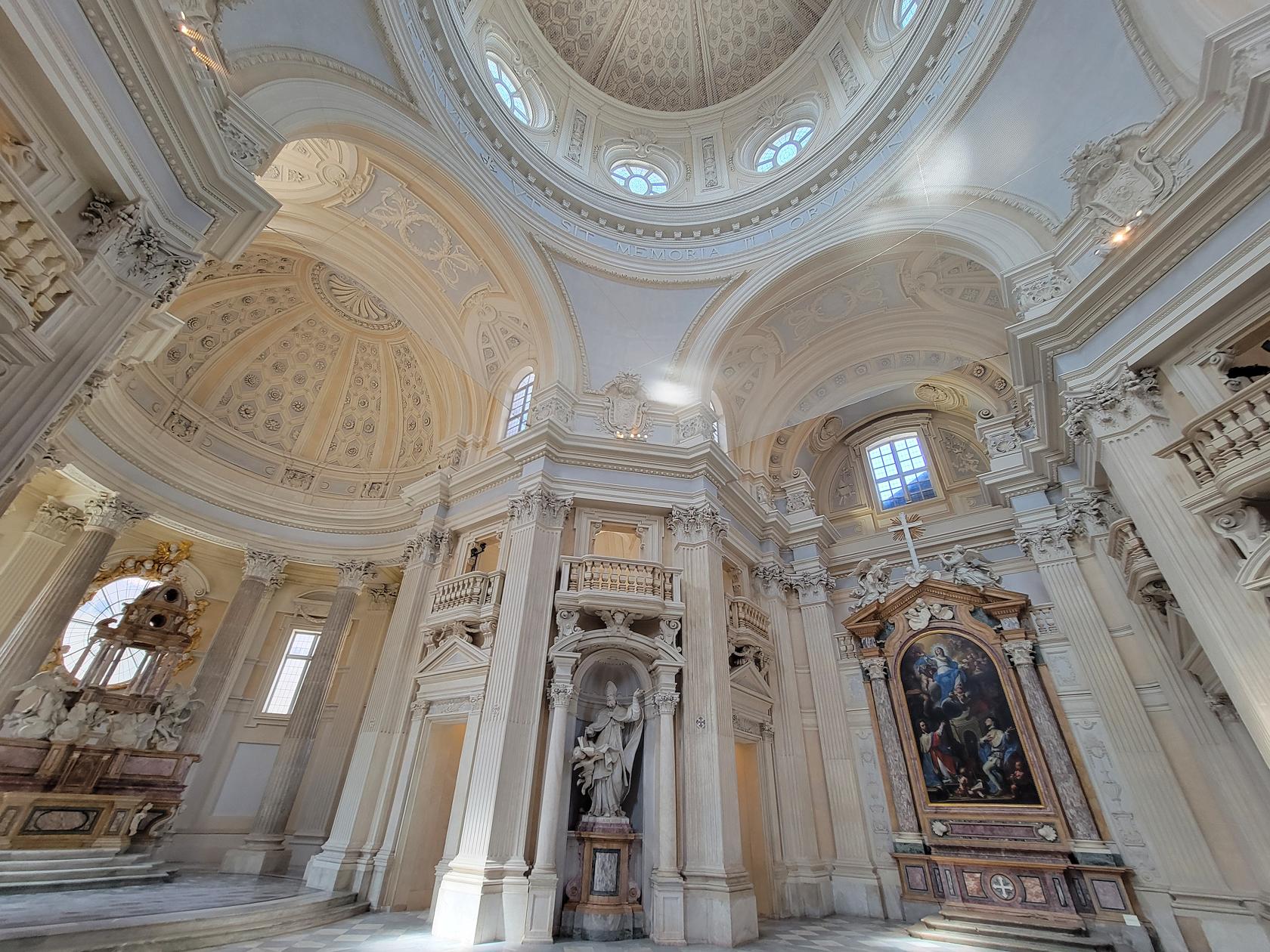
Probably the most striking room and the pinnacle of the visit, the Grand Gallery is part of the Palace of Diana and a core piece of the original palace.
La Venaria Reale – Grand Gallery, La Reggia – Turin, Italy
La Venaria Reale – Grand Gallery, La Reggia – Turin, Italy
La Venaria Reale – Grand Gallery, La Reggia – Turin, Italy
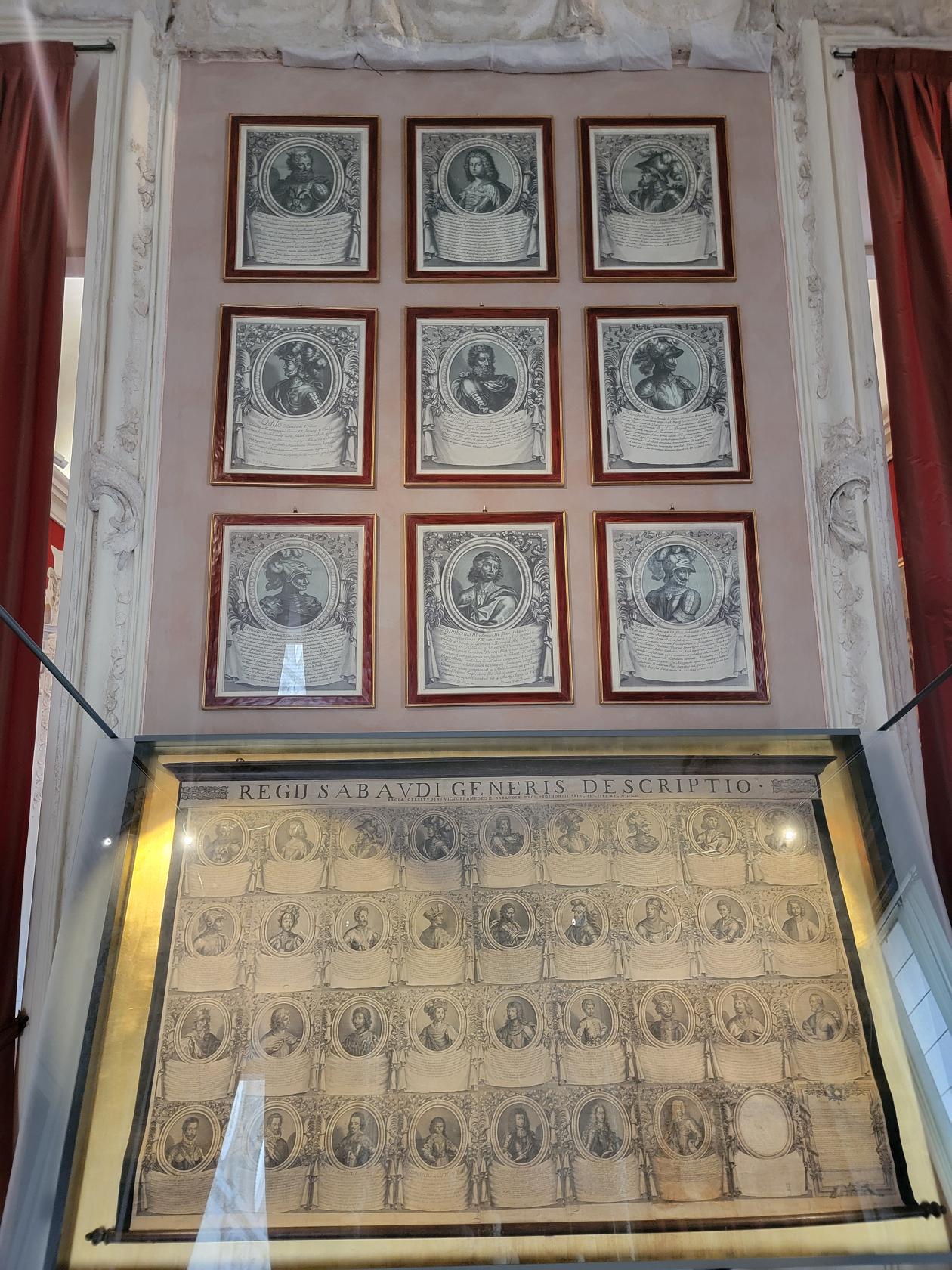
La Venaria Reale – Saubaud Generations, Bedrooms, La Reggia – Turin, Italy
Turin At The Turn Of The Century
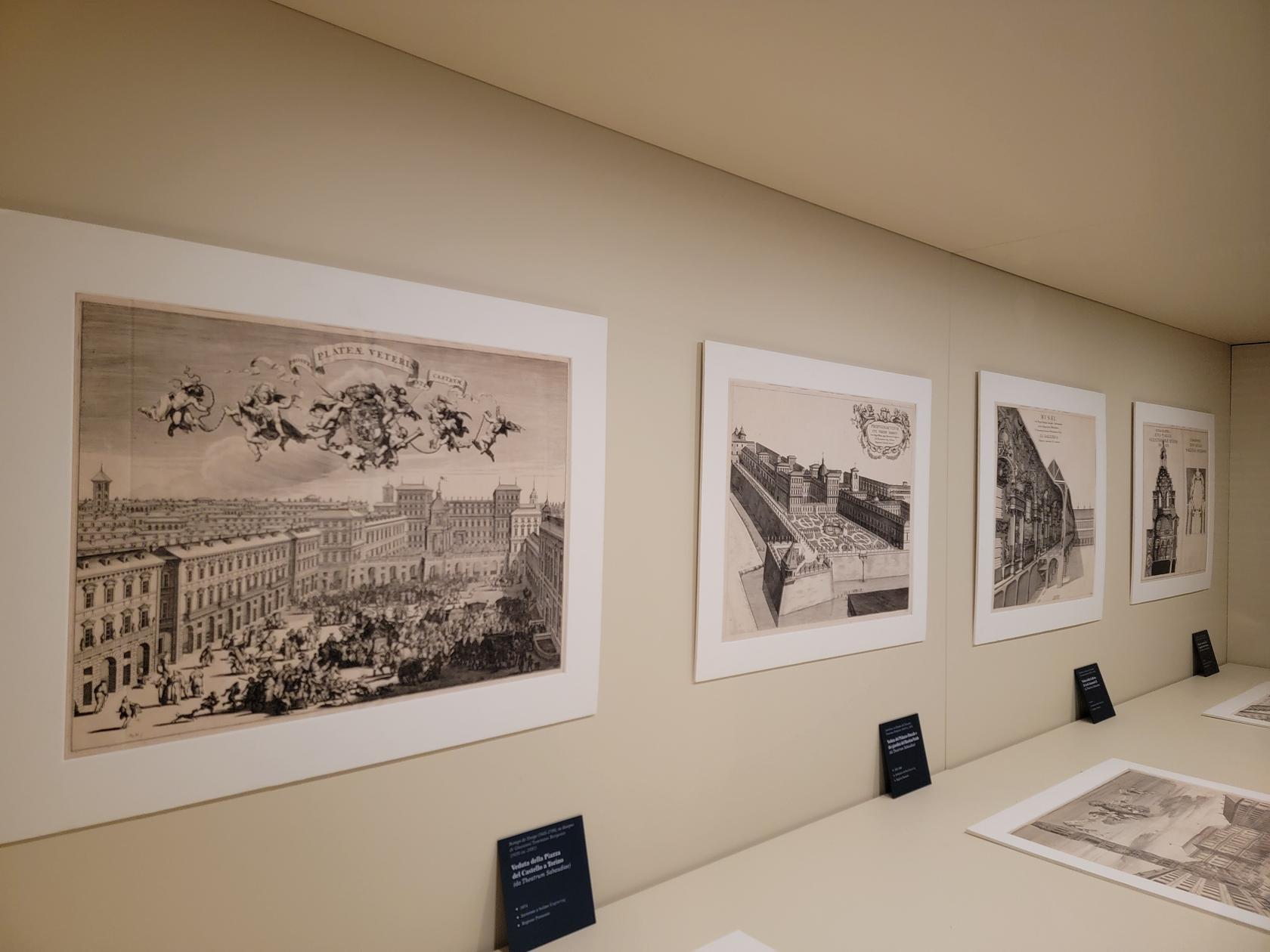
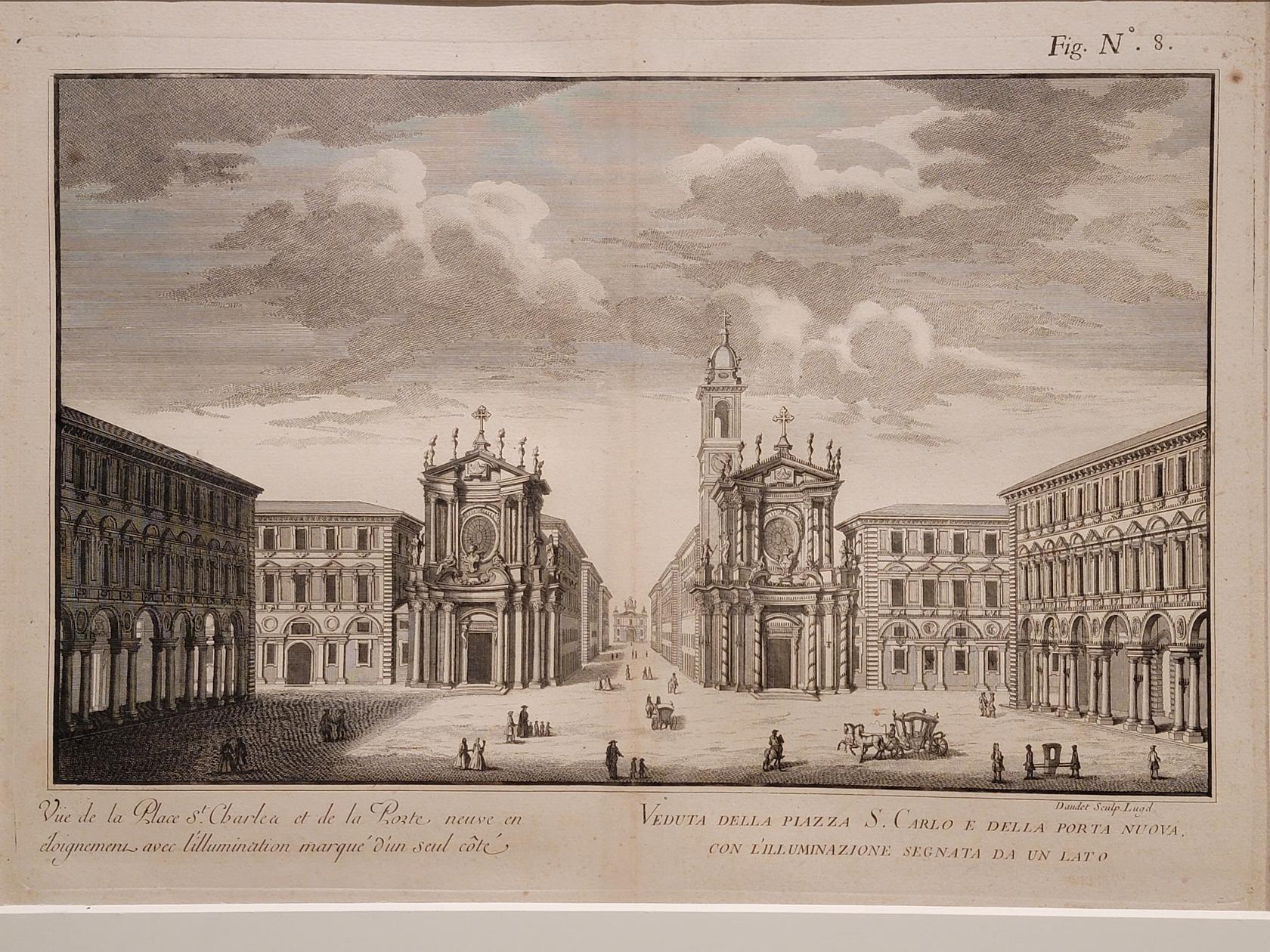
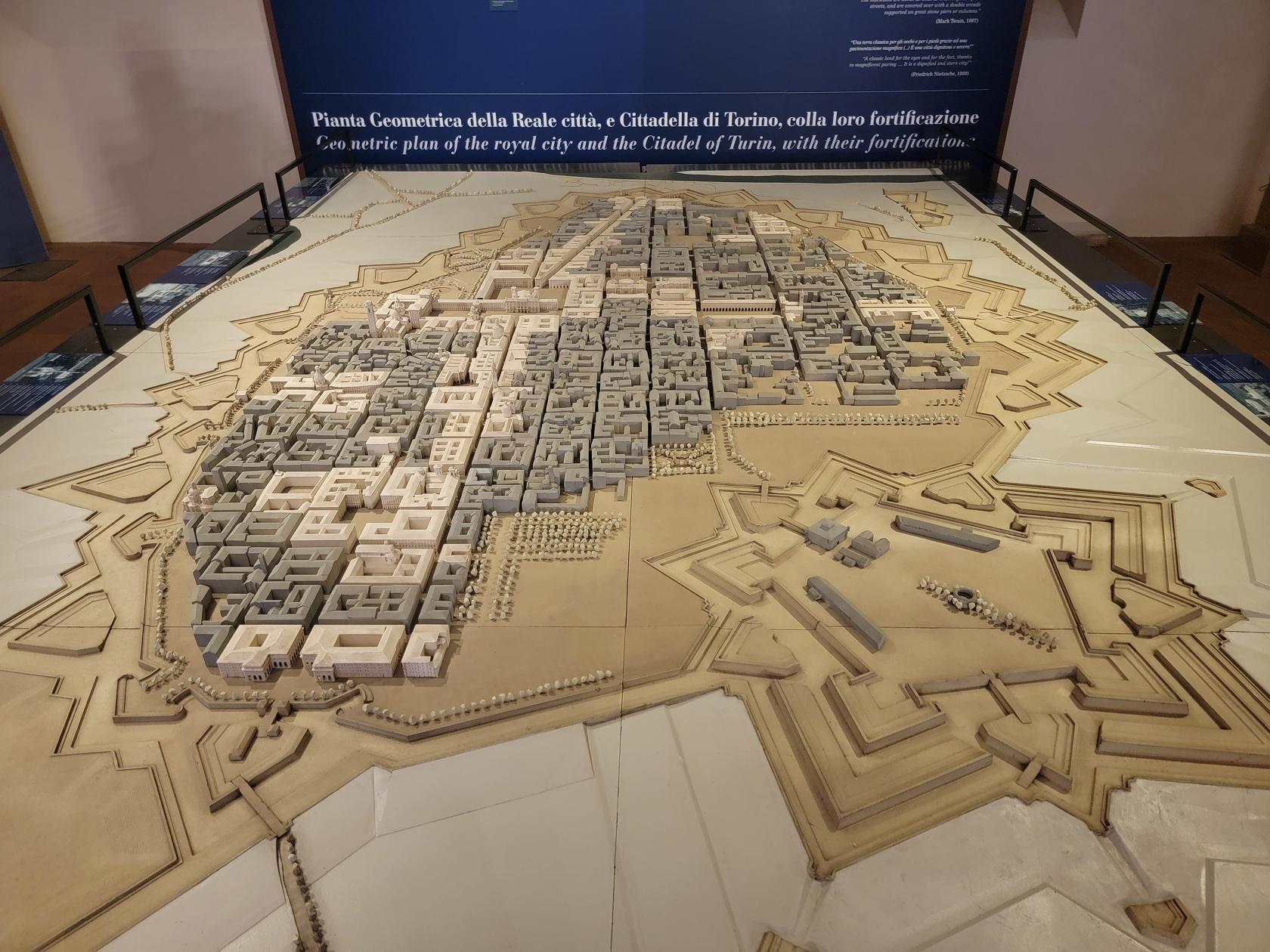
There is a nice collection of maps, dioramas and other works depicting Turin at the turn of the seventeenth century. Interesting from the perspective of present day Turin and what was lacking back in the day of the House of Savoy.
La Venaria Reale – Plan Room of Castle and Turin, La Reggia – Turin, Italy
La Venaria Reale – Plan Room of Castle and Turin, La Reggia – Turin, Italy
La Venaria Reale – Piazza San Carlo, Plan Room of Castle and Turin, La Reggia – Turin, Italy
La Venaria Reale – Plan Room of Castle and Turin, La Reggia – Turin, Italy
La Venaria Reale – Plan Room of Castle and Turin, La Reggia – Turin, Italy
La Venaria Reale – Plan Room of Castle and Turin, La Reggia – Turin, Italy
The Rooms Of Art
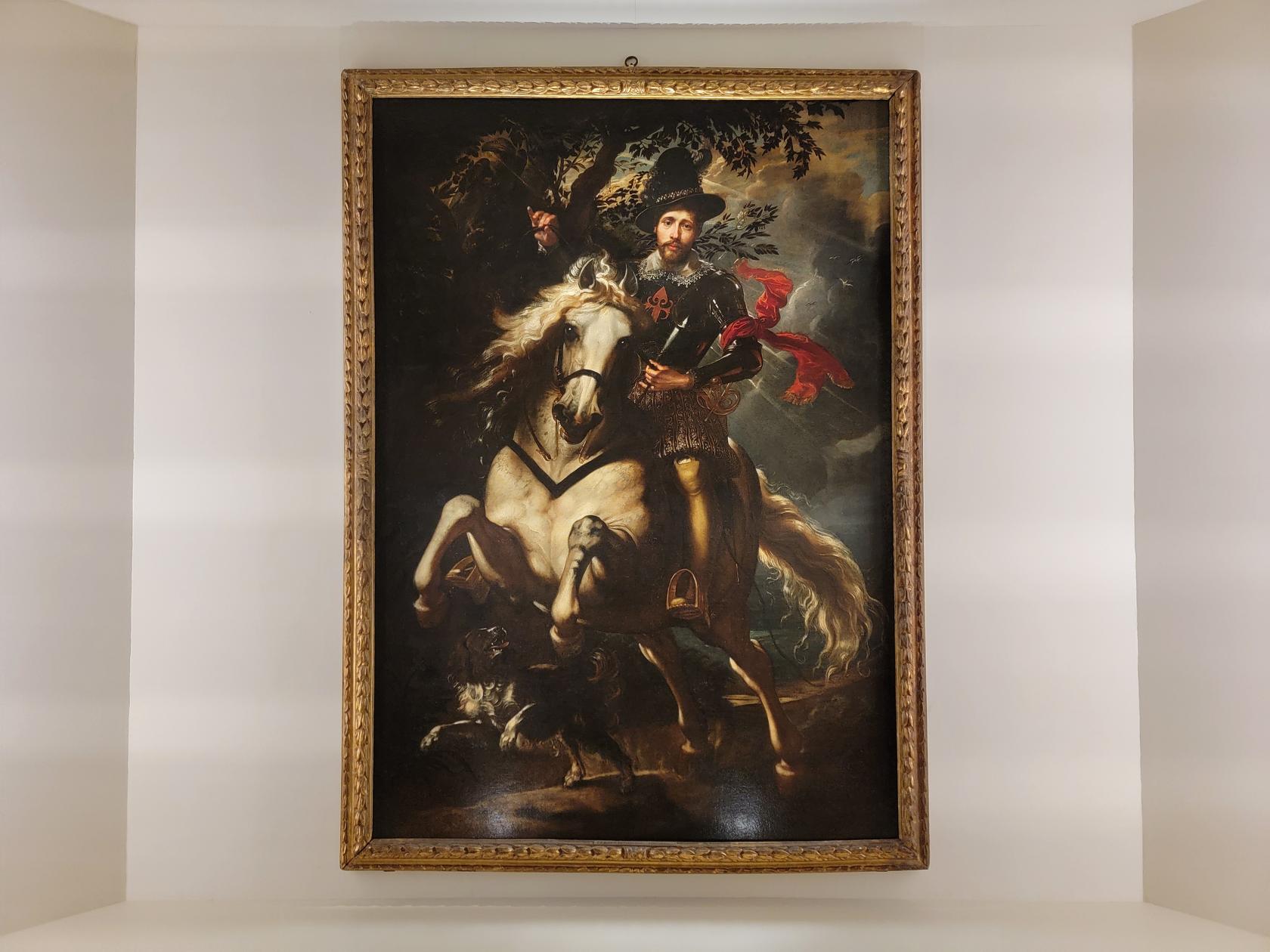
There is also a fine exhibit of art at the palace. Located through the entrance to the gardens, the entrance is in the back of the Palace of Diana.
La Venaria Reale – Exhibition of Art – Turin, Italy
La Venaria Reale – Exhibition of Art – Turin, Italy
La Venaria Reale – Exhibition of Art – Turin, Italy
La Venaria Reale – Exhibition of Art – Turin, Italy
La Venaria Reale – Exhibition of Art – Turin, Italy
La Venaria Reale – Exhibition of Art – Turin, Italy
The Stables
Juvarra Stables
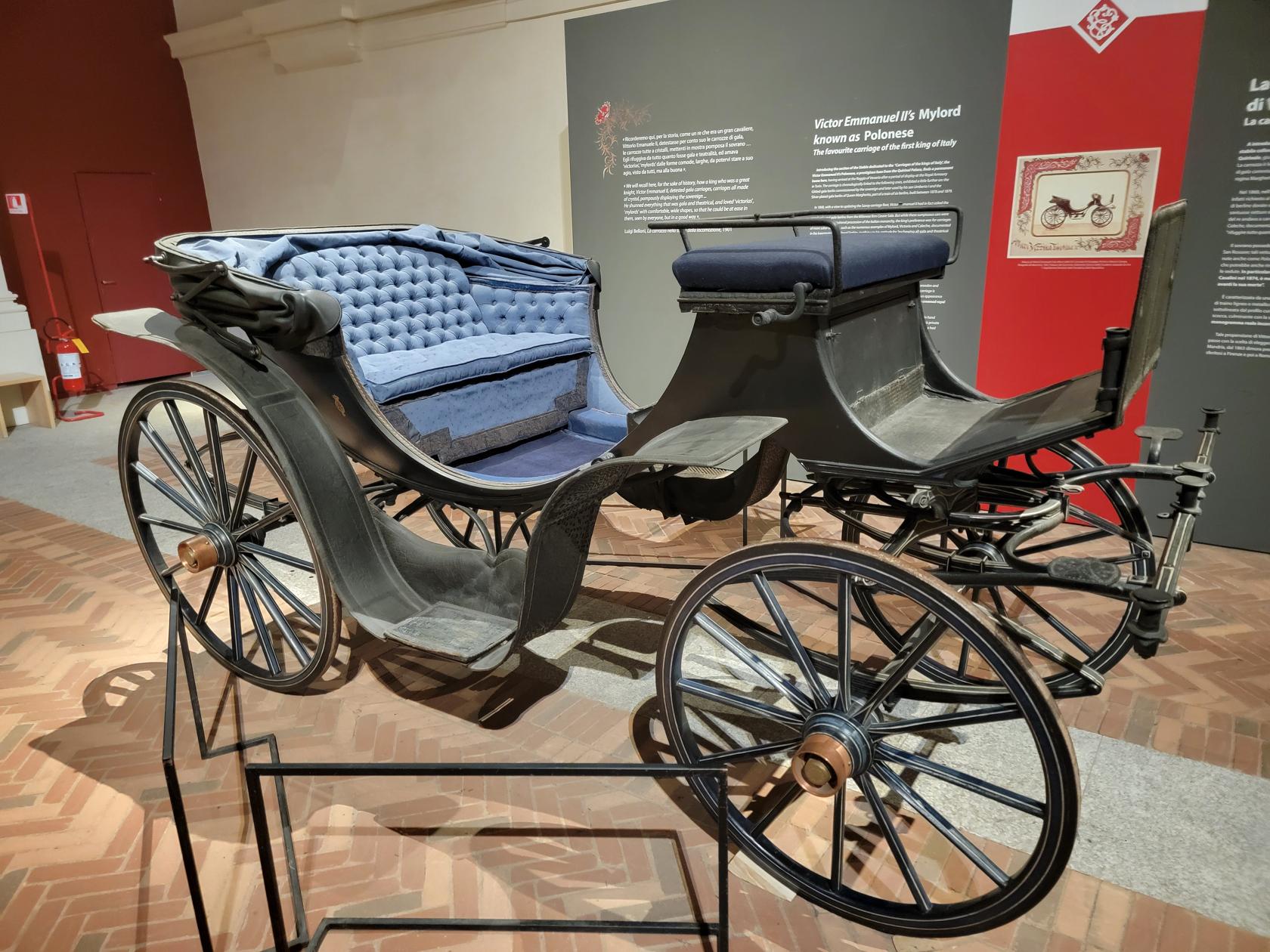
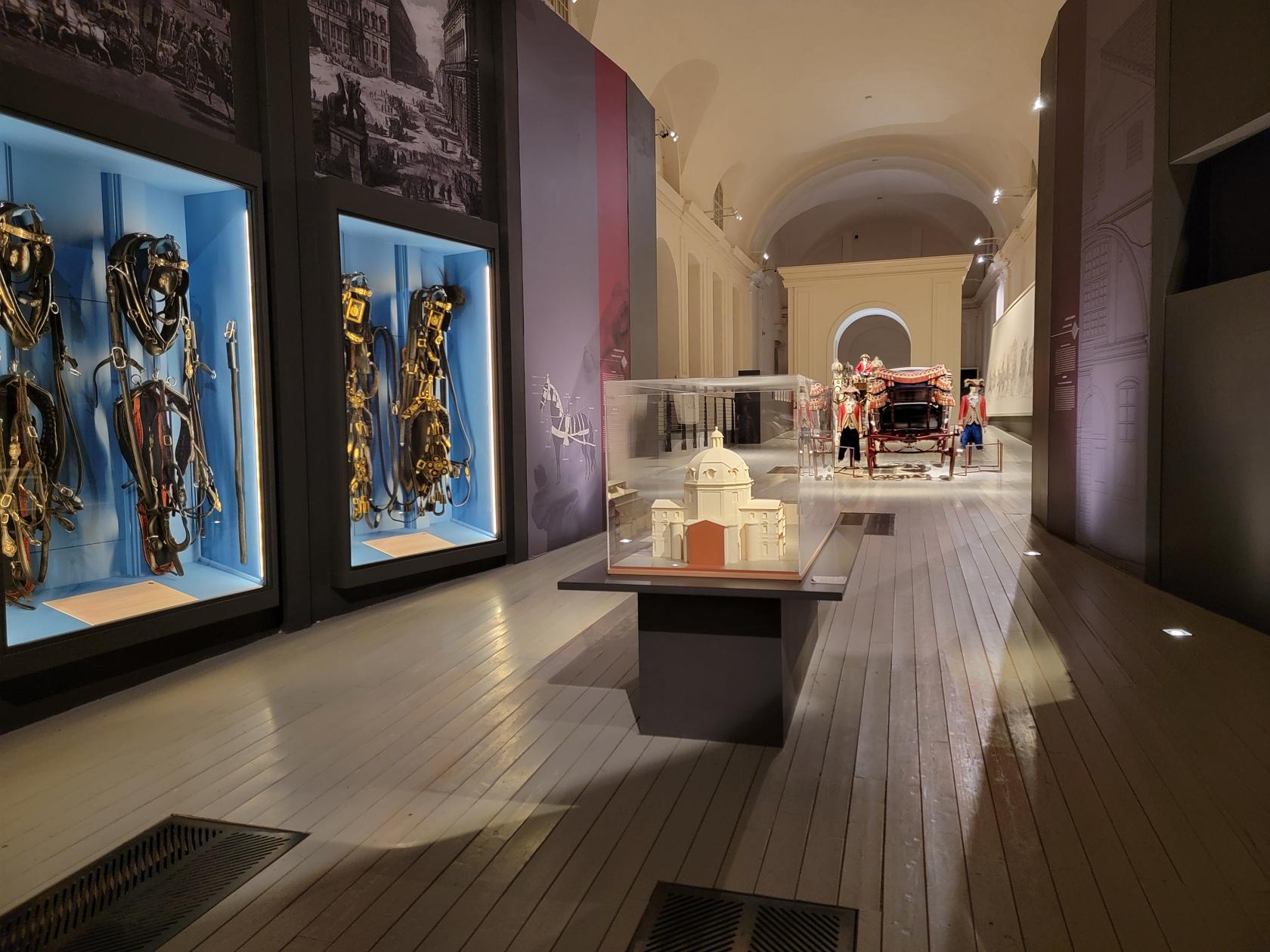
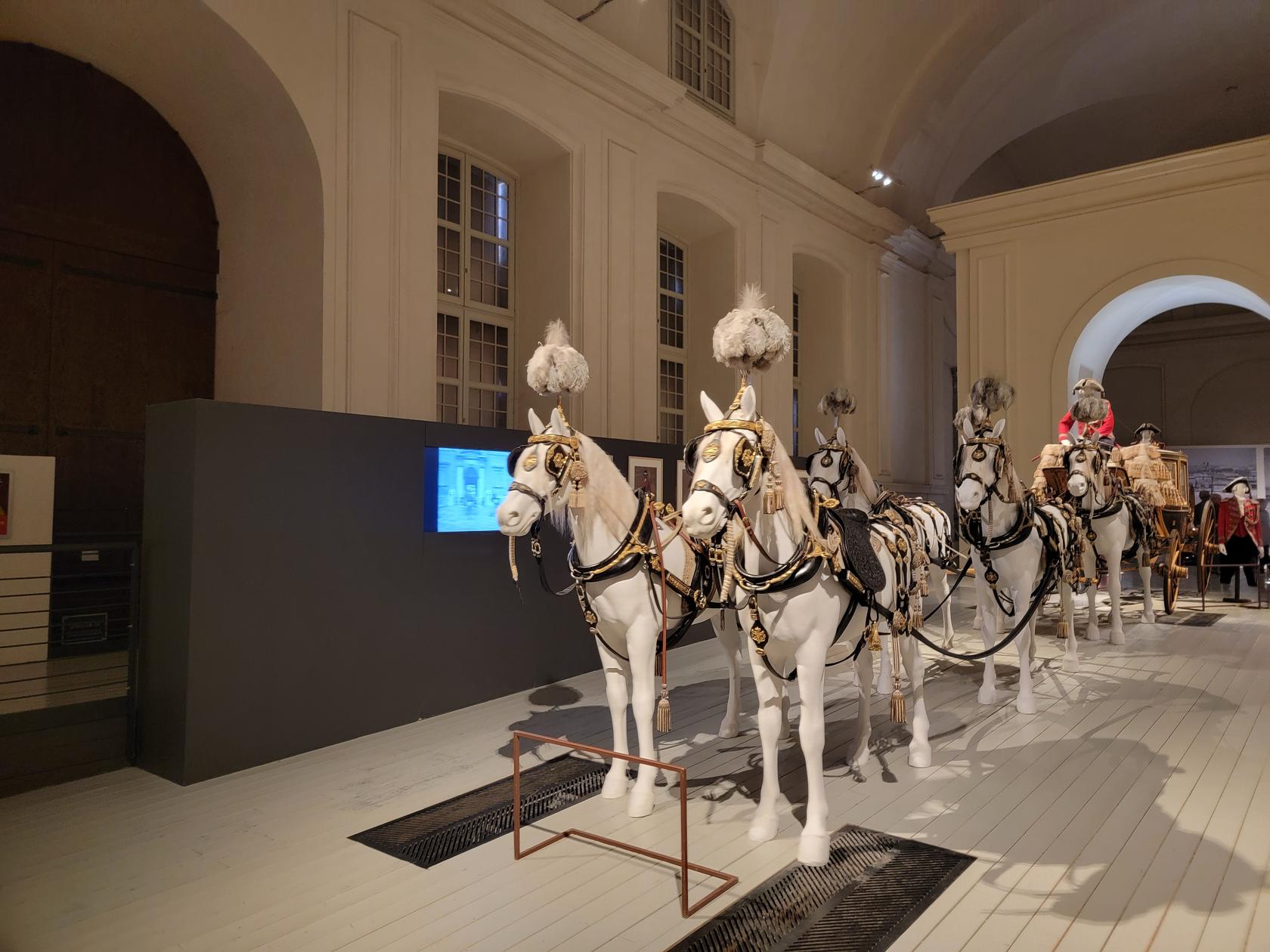
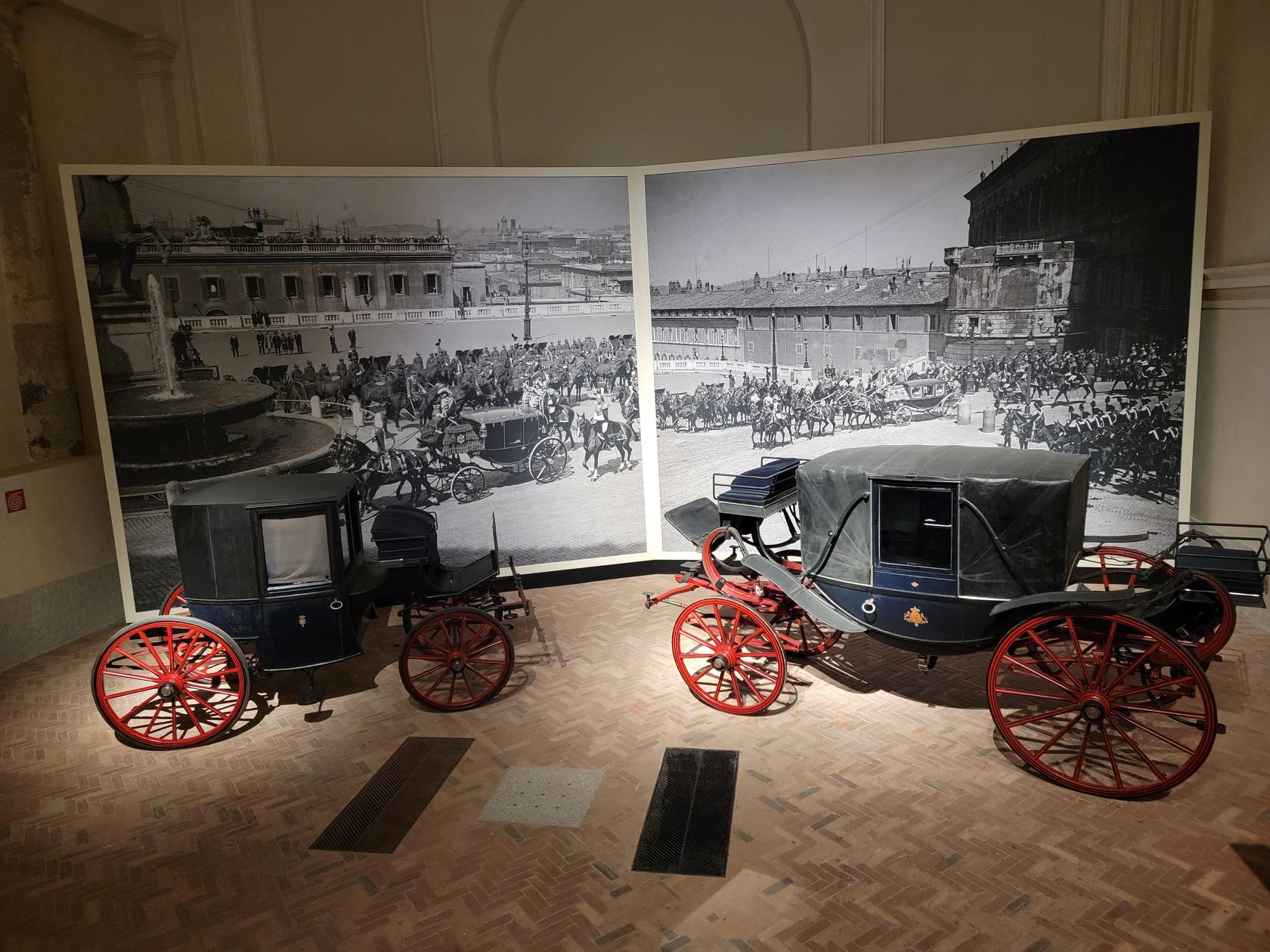
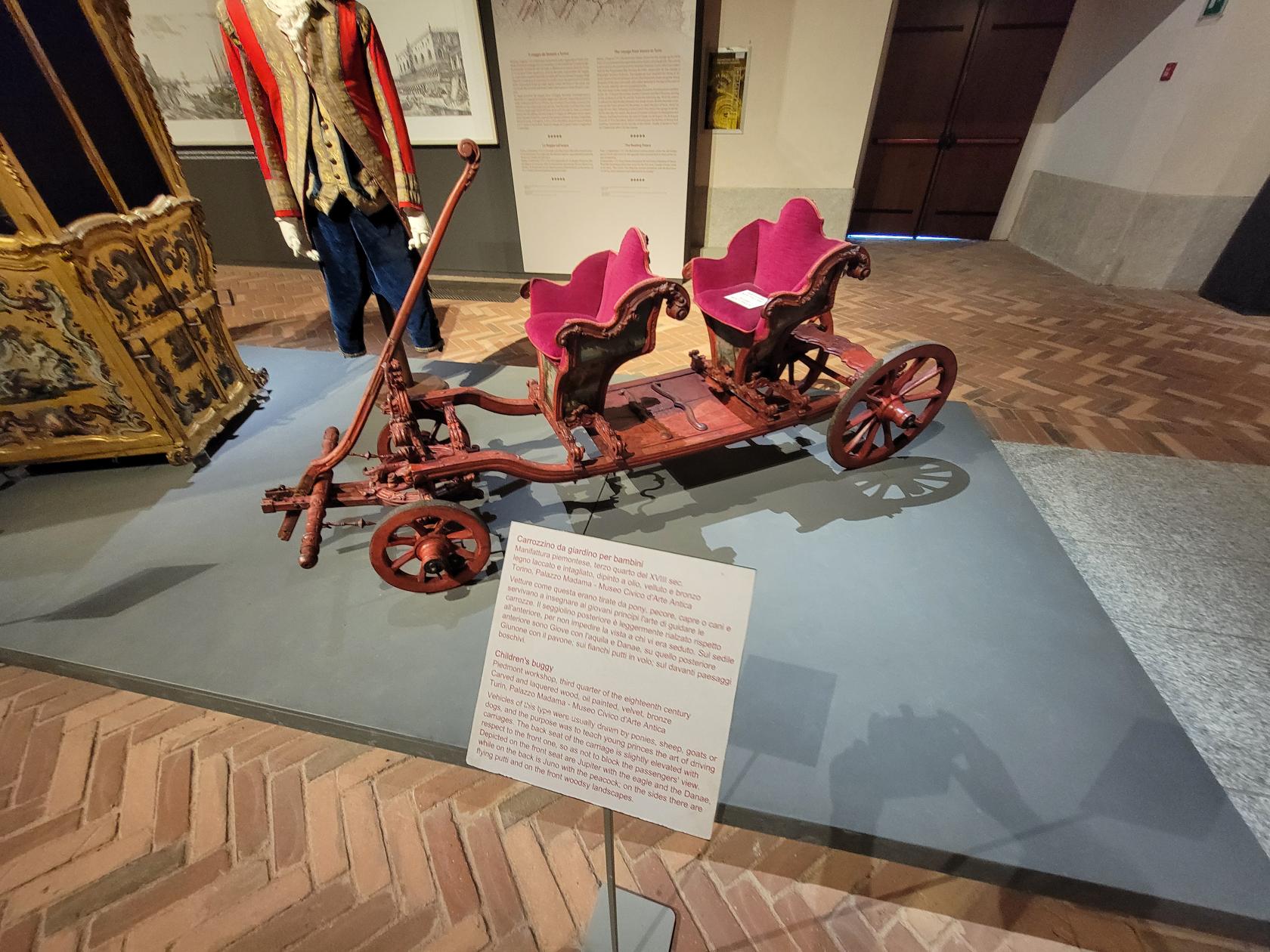
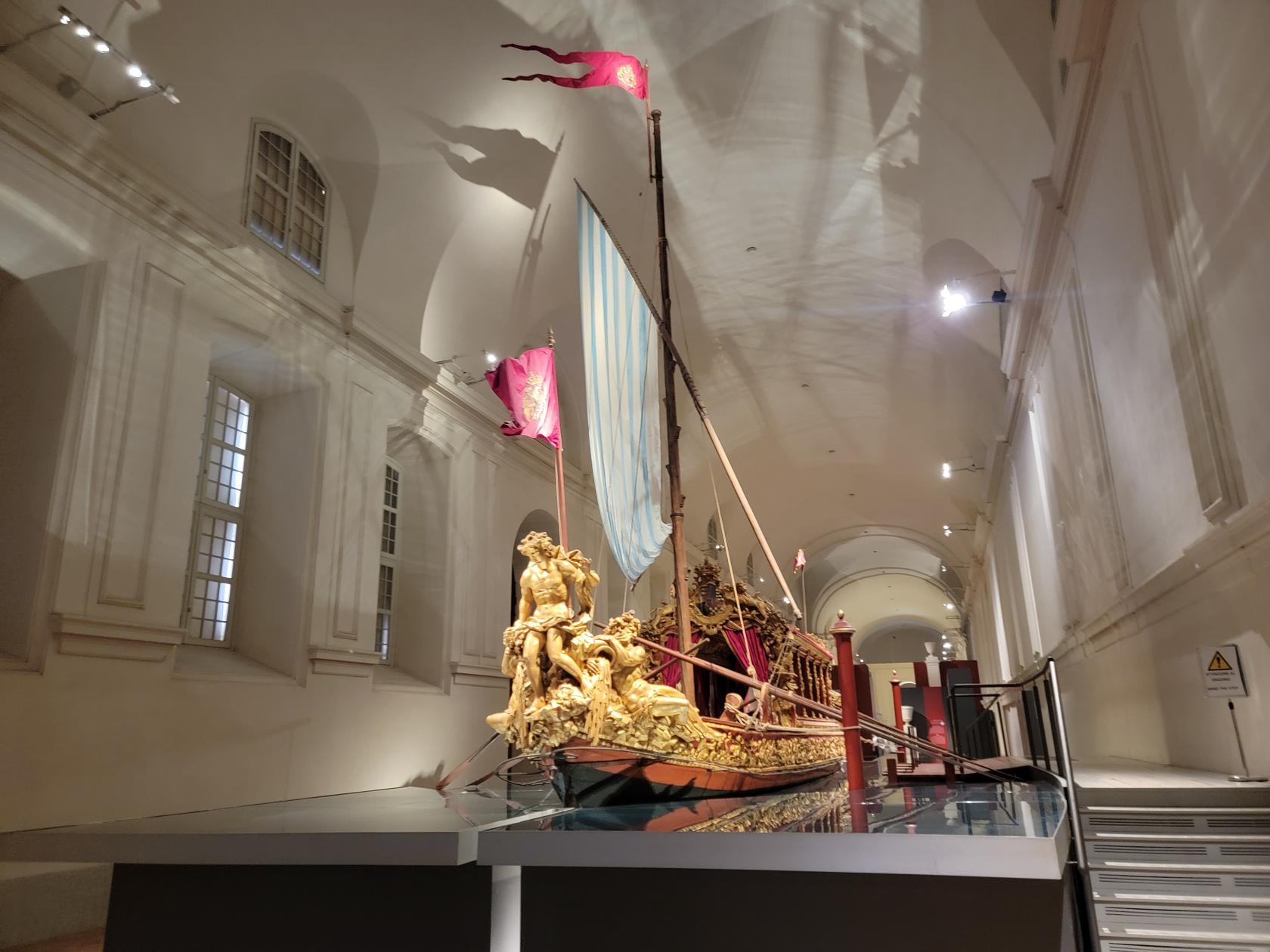
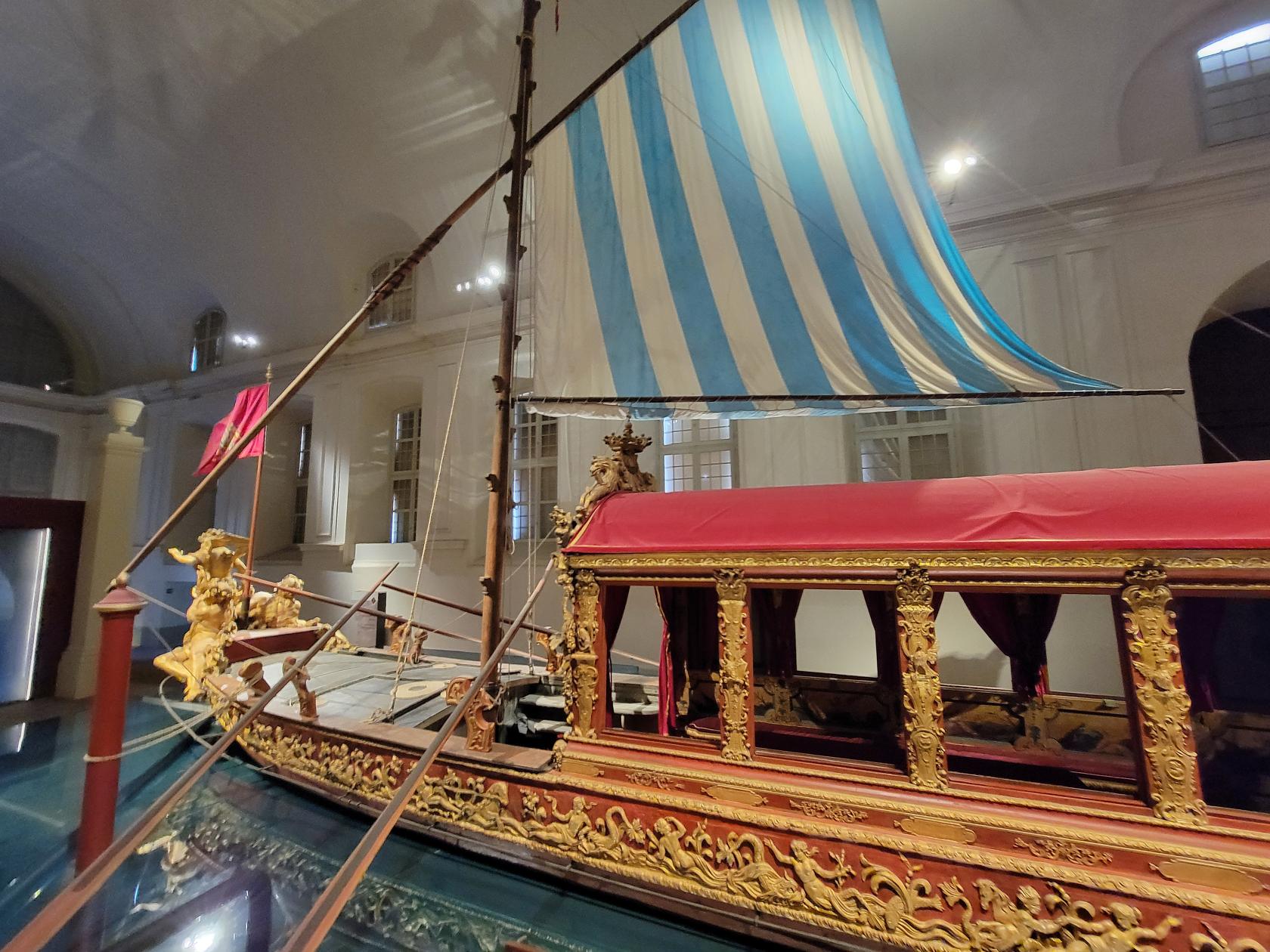
The Juvarra Stables contain a collection of the royal family’s modes of transportation, from a river gondolla, to the royal coach and other broughams, all the way to childrens toy coach.
La Venaria Reale – Juvarra Stables – Turin, Italy
La Venaria Reale – Juvarra Stables – Turin, Italy
La Venaria Reale – Juvarra Stables – Turin, Italy
La Venaria Reale – Juvarra Stables – Turin, Italy
La Venaria Reale – Juvarra Stables – Turin, Italy
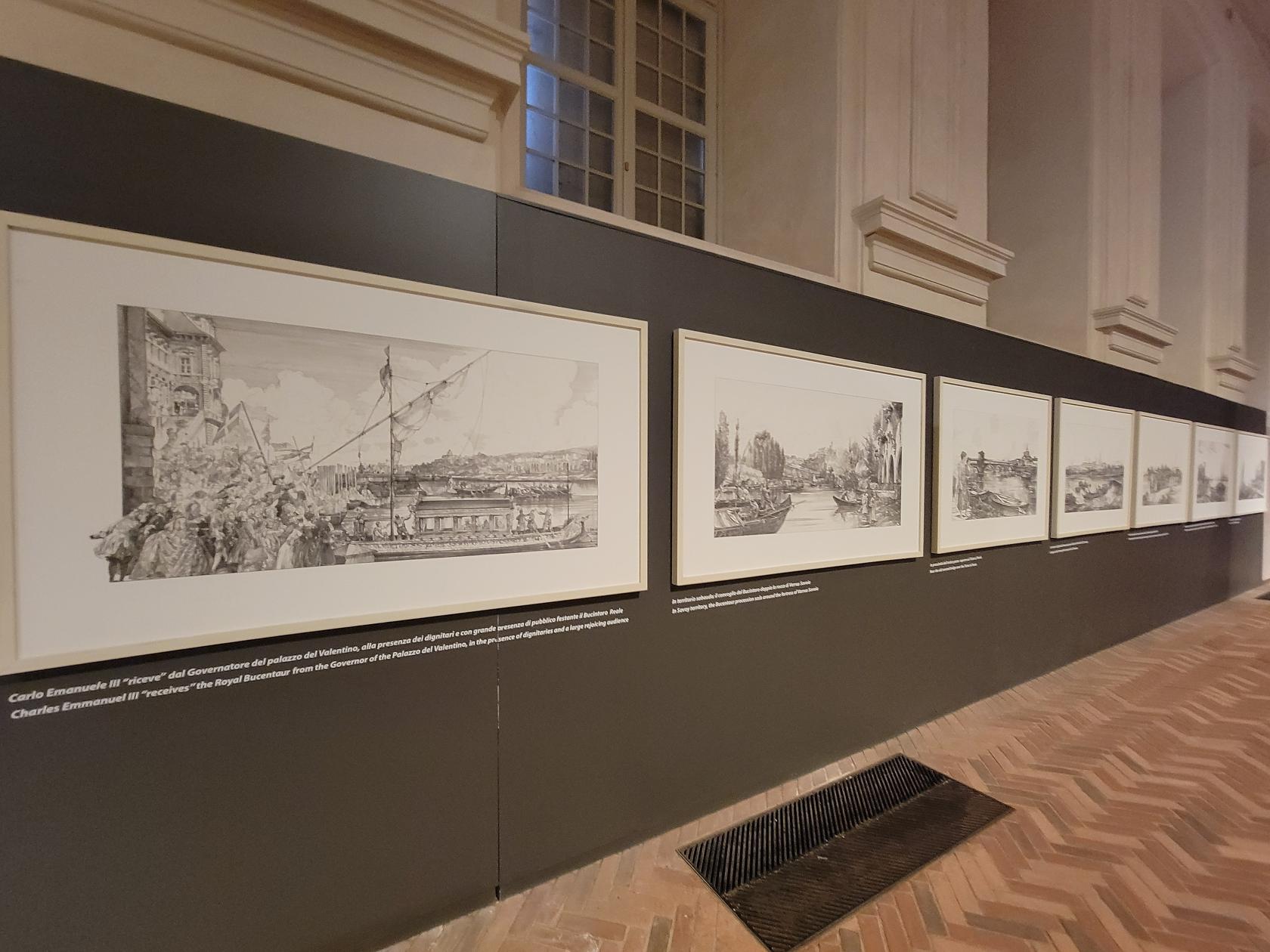
The wall is surrounded by a historical account of a trip up the River Po using the gondola from Venice to Turin.
La Venaria Reale – Juvarra Stables – Turin, Italy
La Venaria Reale – Juvarra Stables – Turin, Italy
La Venaria Reale – Juvarra Stables – Turin, Italy
La Venaria Reale – Juvarra Stables – Turin, Italy
Alfieri Stables
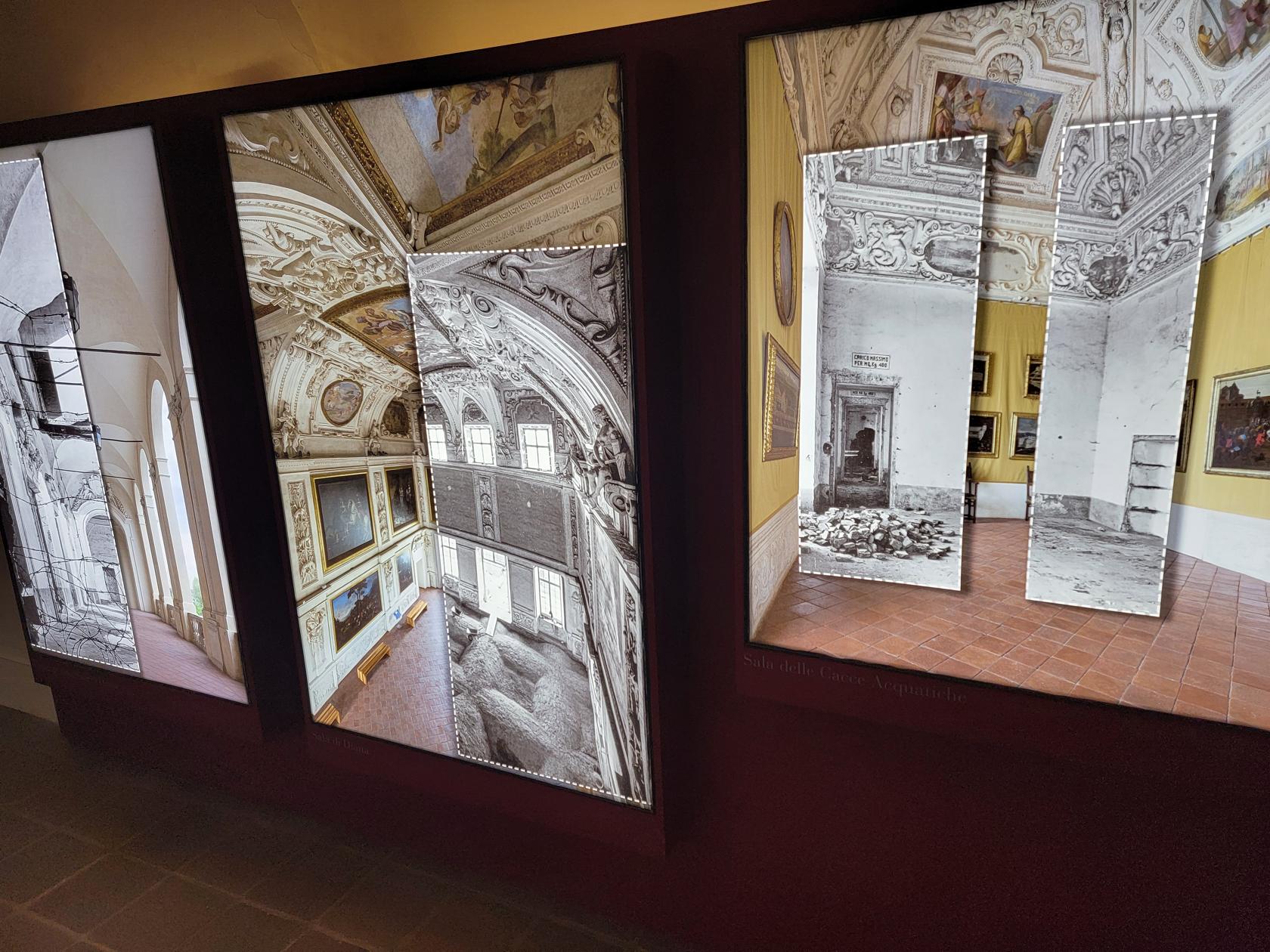
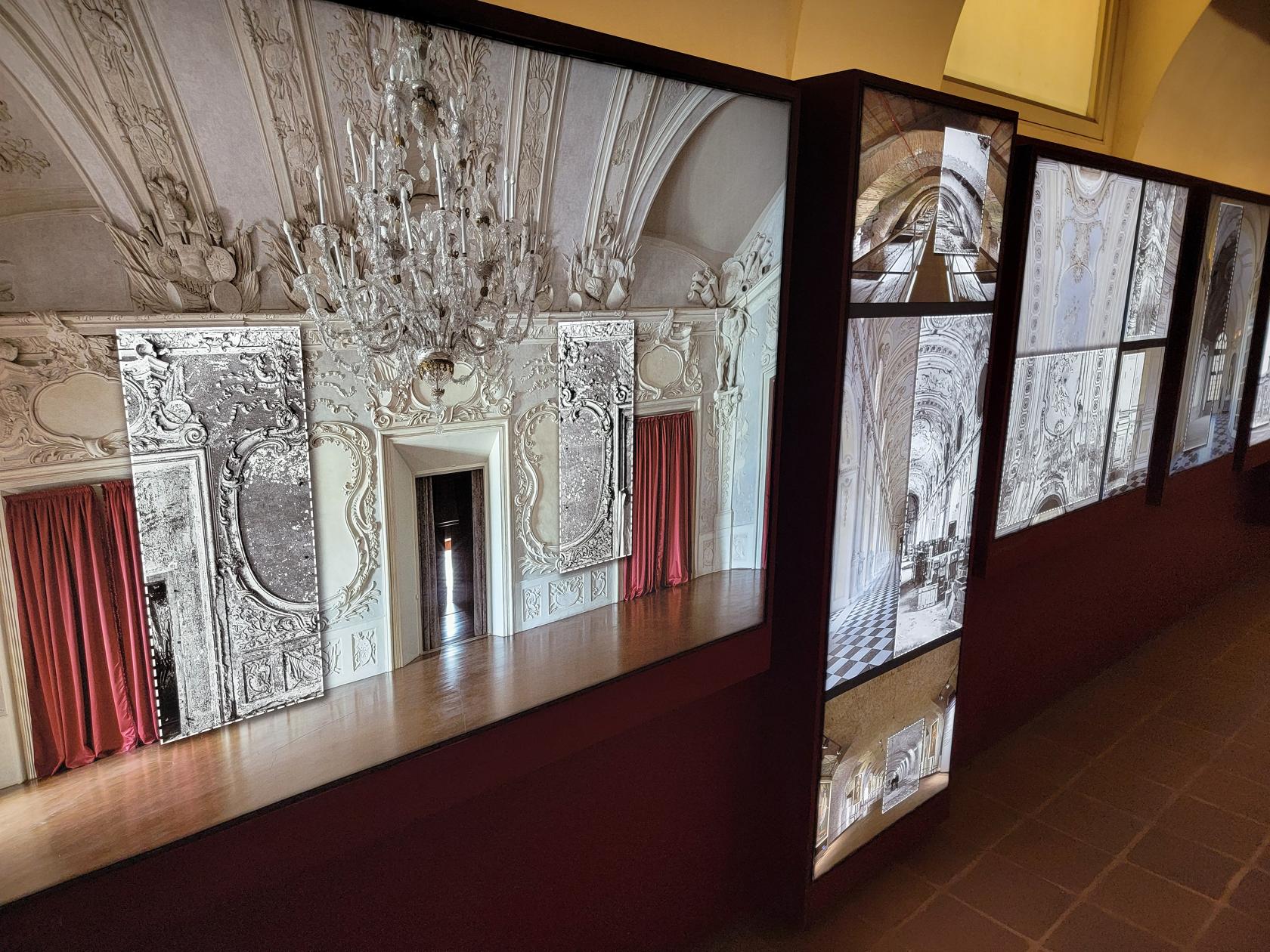
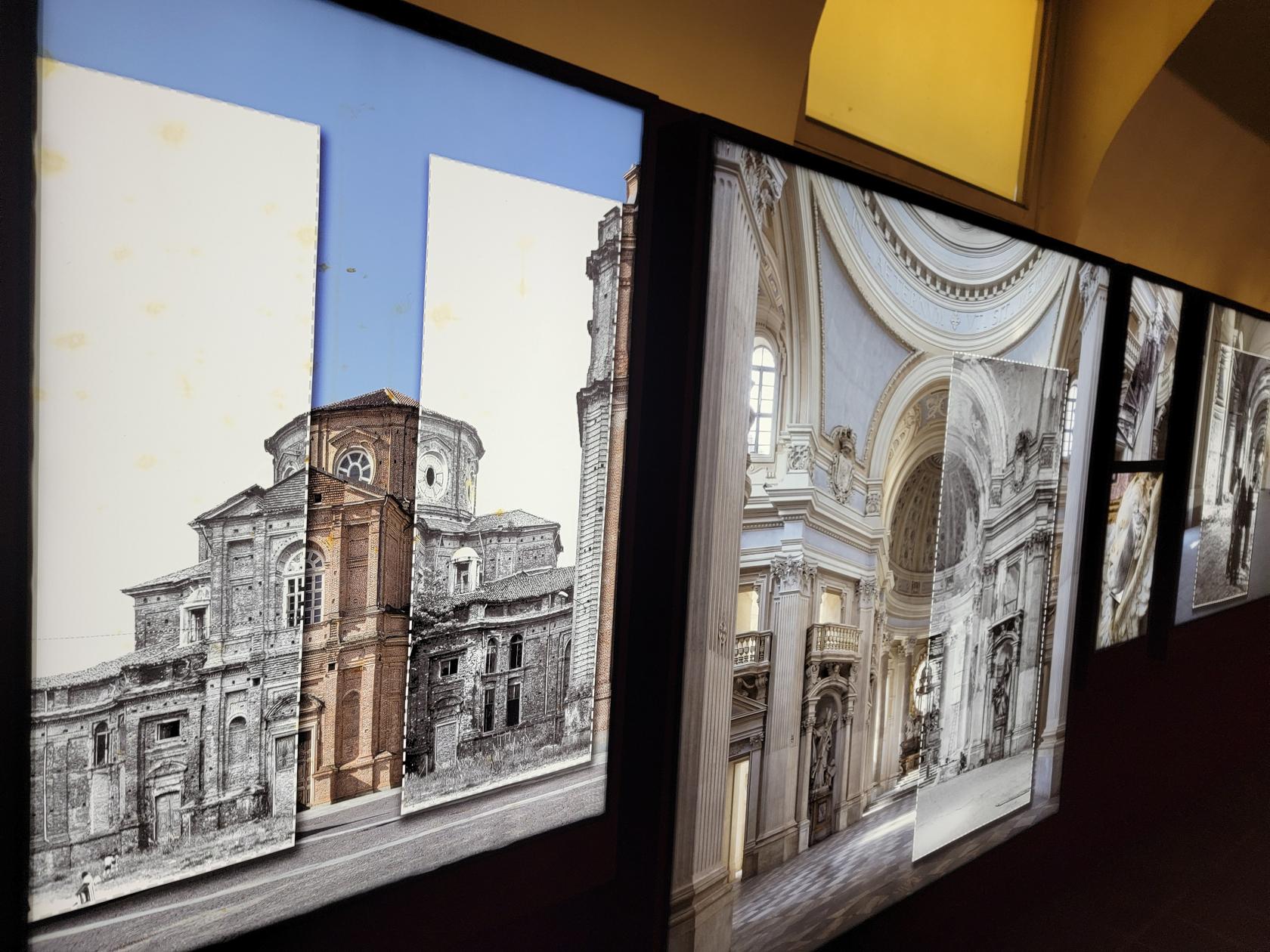
Today these just appear as a hallway depicting the transition from a palace in ruin to full restoration. Some of the photographs in the collection are strinking and it is well worth thoughful look and some consideration.
La Venaria Reale – Ruin and Restoration, Alfiere Stables – Turin, Italy
La Venaria Reale – Ruin and Restoration, Alfiere Stables – Turin, Italy
La Venaria Reale – Ruin and Restoration, Alfiere Stables – Turin, Italy
La Venaria Reale – Ruin and Restoration, Alfiere Stables – Turin, Italy
The Gardens
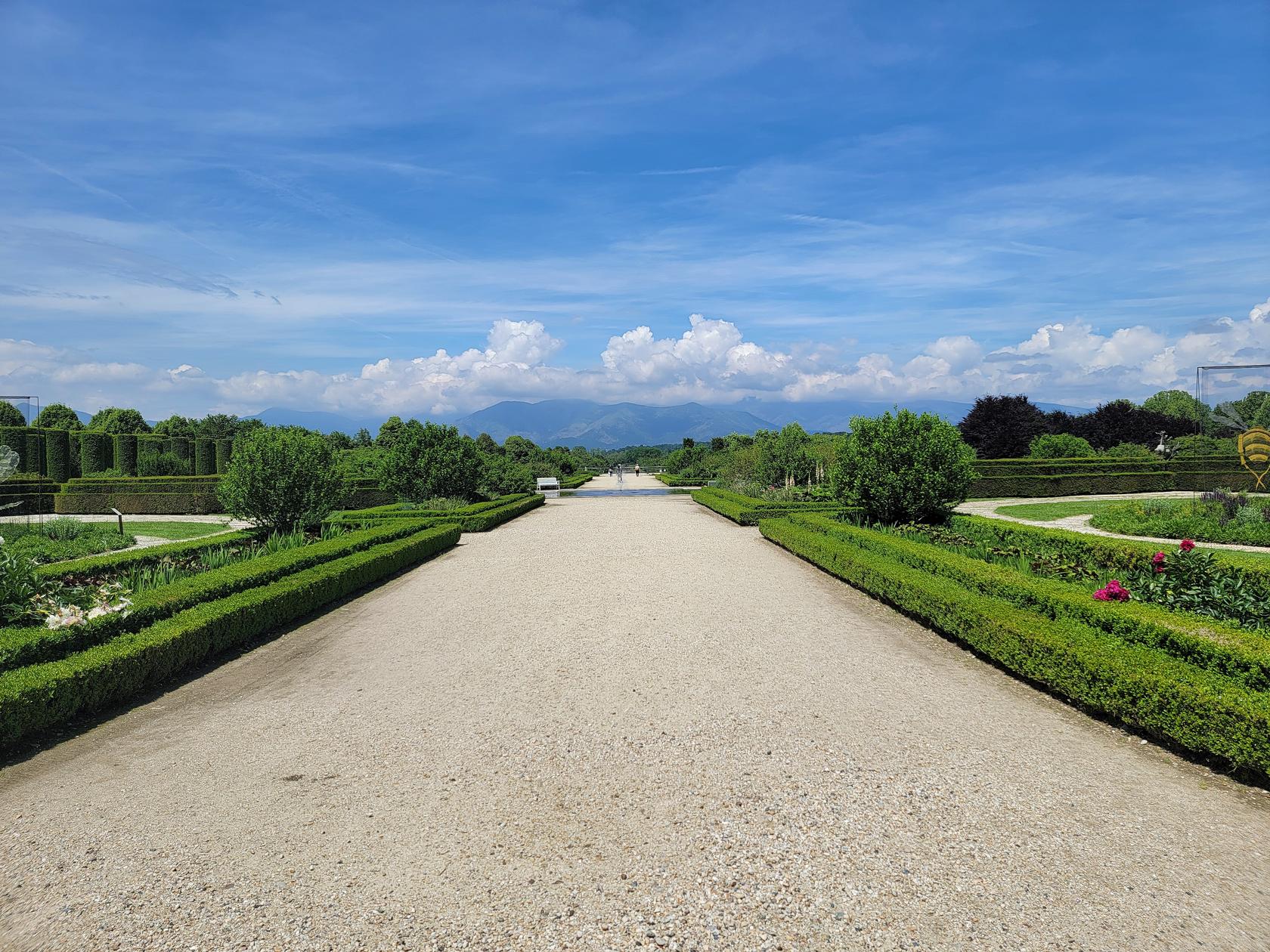
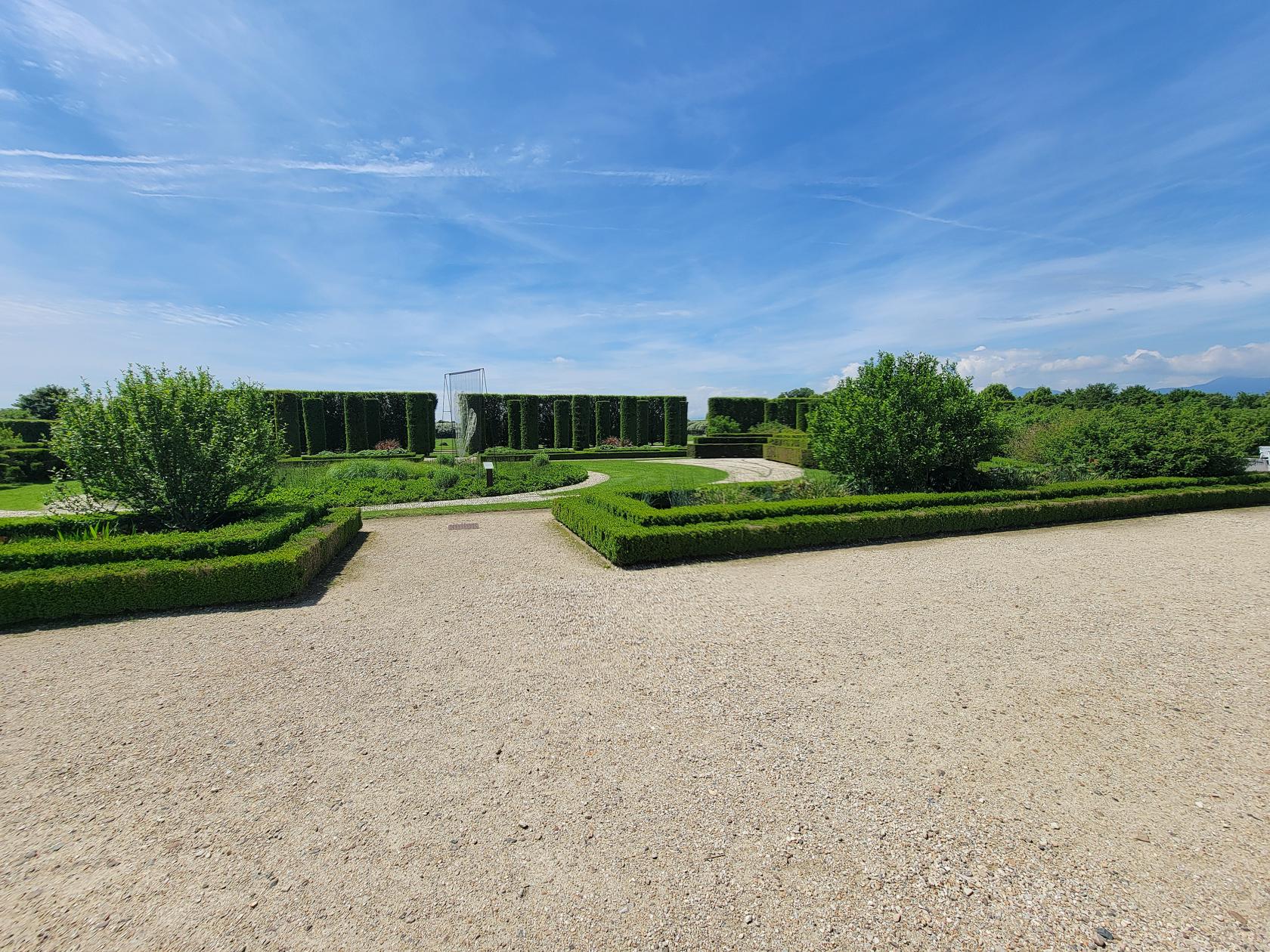
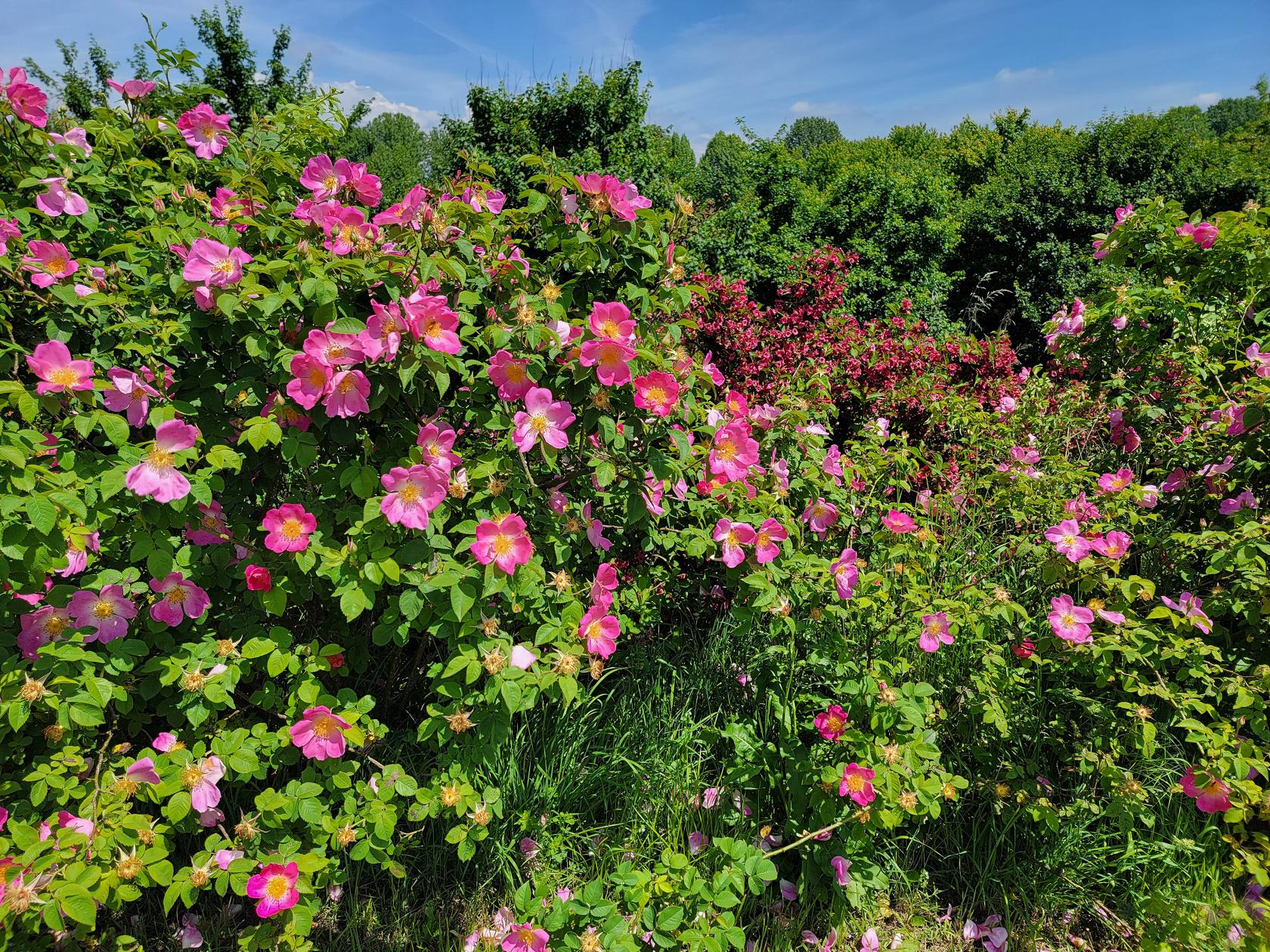
The gardens here include several, the most conspicuous one is the Flower Garden. But there is also several orchards and three distinct terraces that one can walk through and enjoy the well manicured estate.
La Venaria Reale – Flower Gardens – Turin, Italy
La Venaria Reale – Flower Gardens – Turin, Italy
La Venaria Reale – Flower Gardens – Turin, Italy
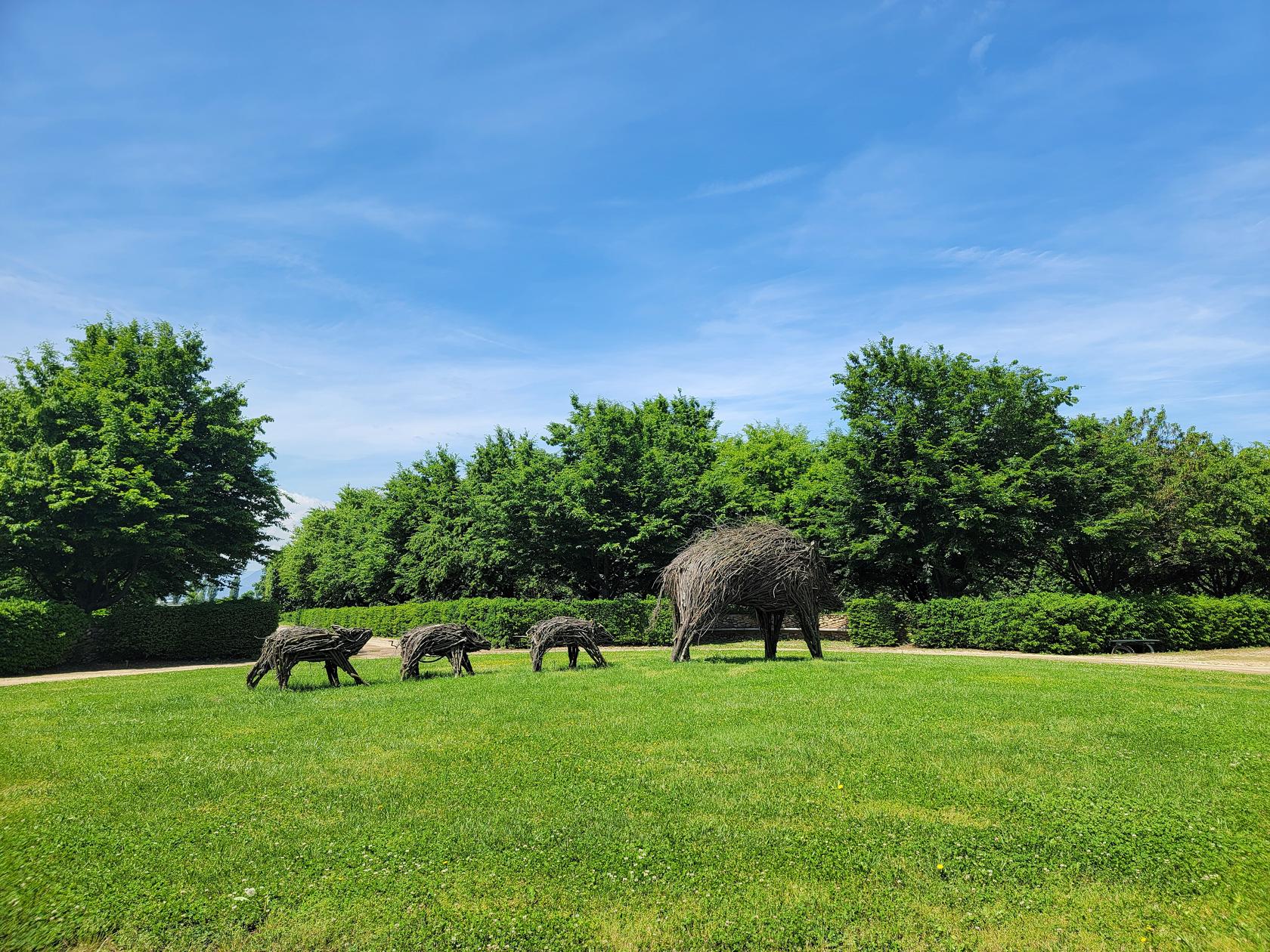
La Venaria Reale – Pig Sculpture in wood, Flower Gardens – Turin, Italy
La Venaria Reale – Patti, Flower Gardens – Turin, Italy
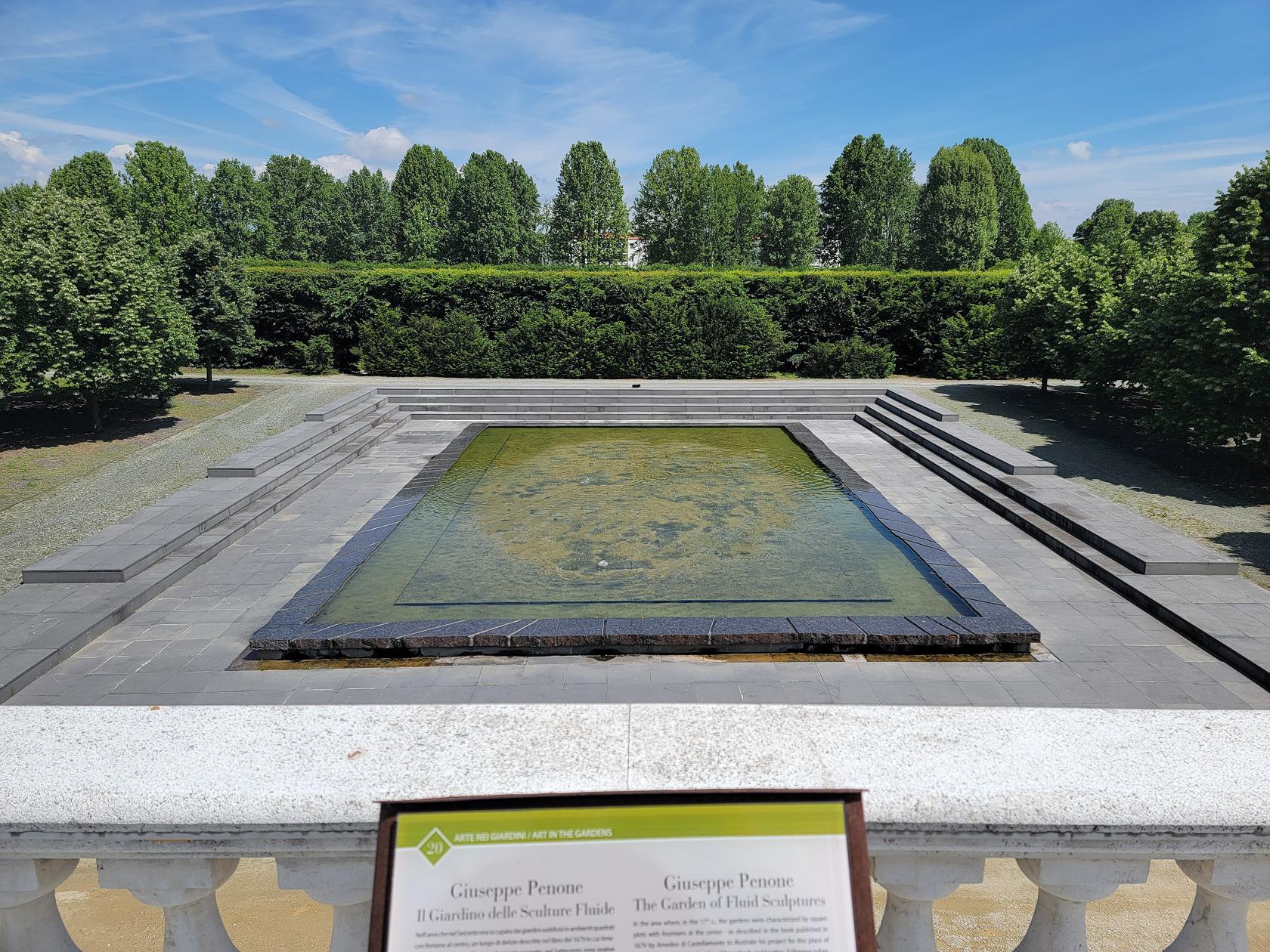
La Venaria Reale – Reflecting Pool, Flower Gardens – Turin, Italy
La Venaria Reale – Gondola Pool – Turin, Italy
Church of Saint Hubert
One has to walk to the Church of Saint Hubert from within the complex near the stables, outside entry is not possible. All of the pews have been removed, only the artwork, frescoes and a high altar remain, everything else is gone.
La Venaria Reale – Church of Saint Hubert – Turin, Italy
La Venaria Reale – Church of Saint Hubert – Turin, Italy
La Venaria Reale – Church of Saint Hubert – Turin, Italy
La Venaria Reale – Church of Saint Hubert – Turin, Italy
La Venaria Reale – Church of Saint Hubert – Turin, Italy
Restaurants
Il Convito della Venaria
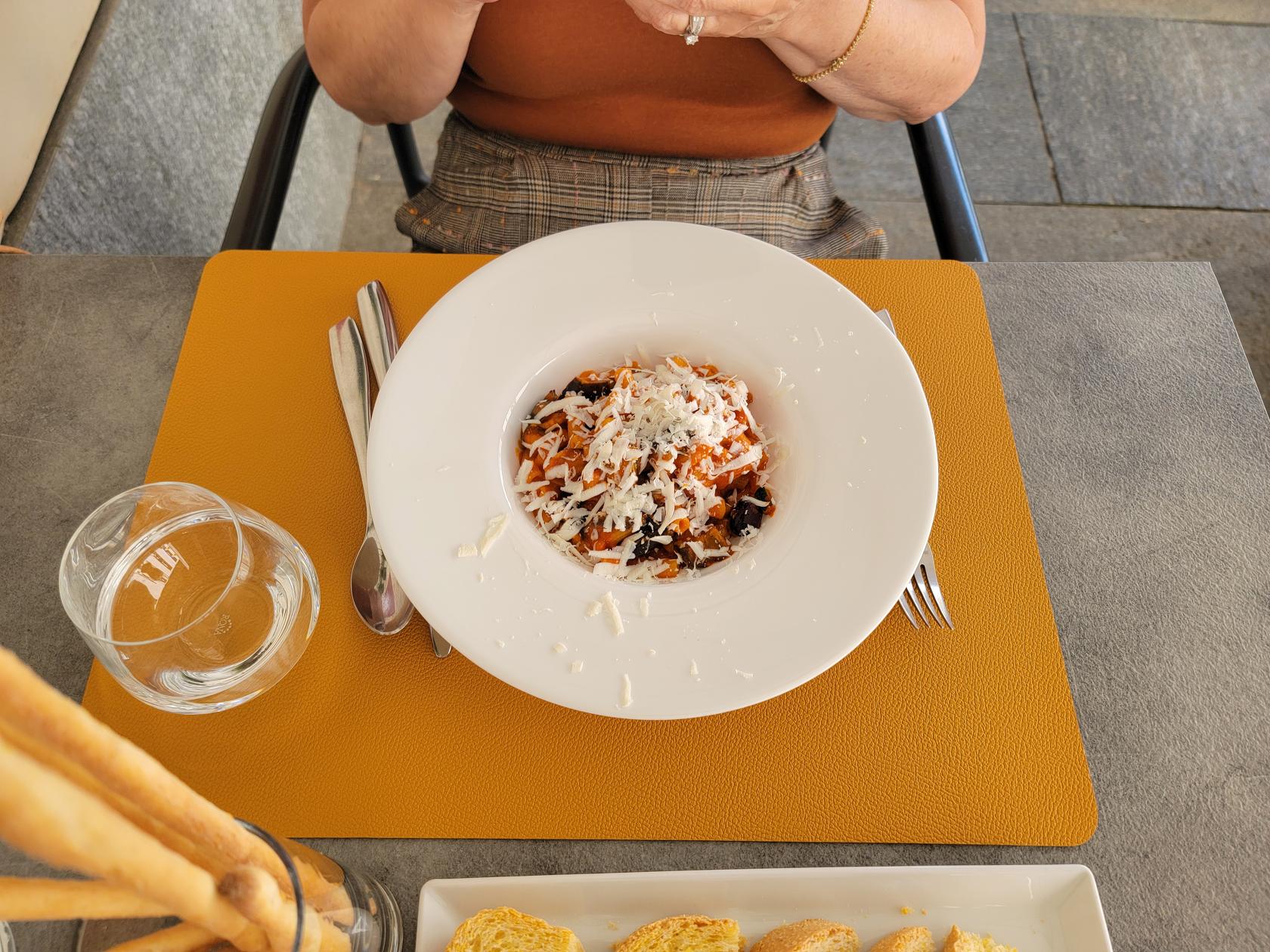
Just on the corners of the Piazza della Repubblica and Via Andrea Mensa is the ristorante Il Convito della Venaria. A fine place for lunch, though probably a bit pricier than some of the alternatives, though restaurants and cafes appear to get sparser and sparser as you walk back towards the train station, so word of warning. We had a simple lunch of Bruschetta and two different pasta dishes, Patti had Maccheroncino al Tochio with Eggplant, Zucchini and Olives in a red sauce and I had the Agnolottini del Plin Piemontese Style, both were delicious.
Il Convito della Venaria – Pasta with Olives and Squash – Turin, Italy
Il Convito della Venaria – Plin Piemontese – Turin, Italy
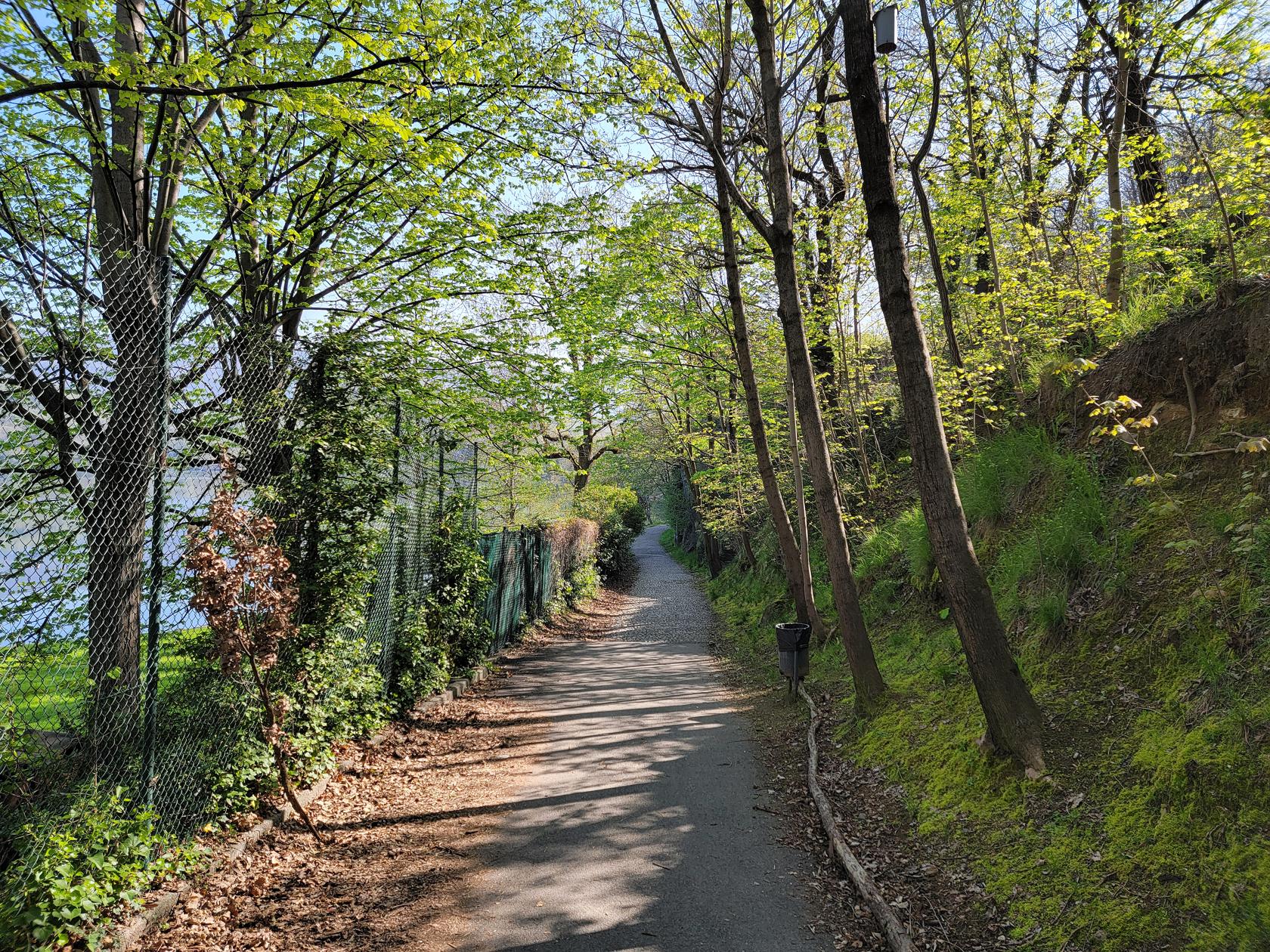
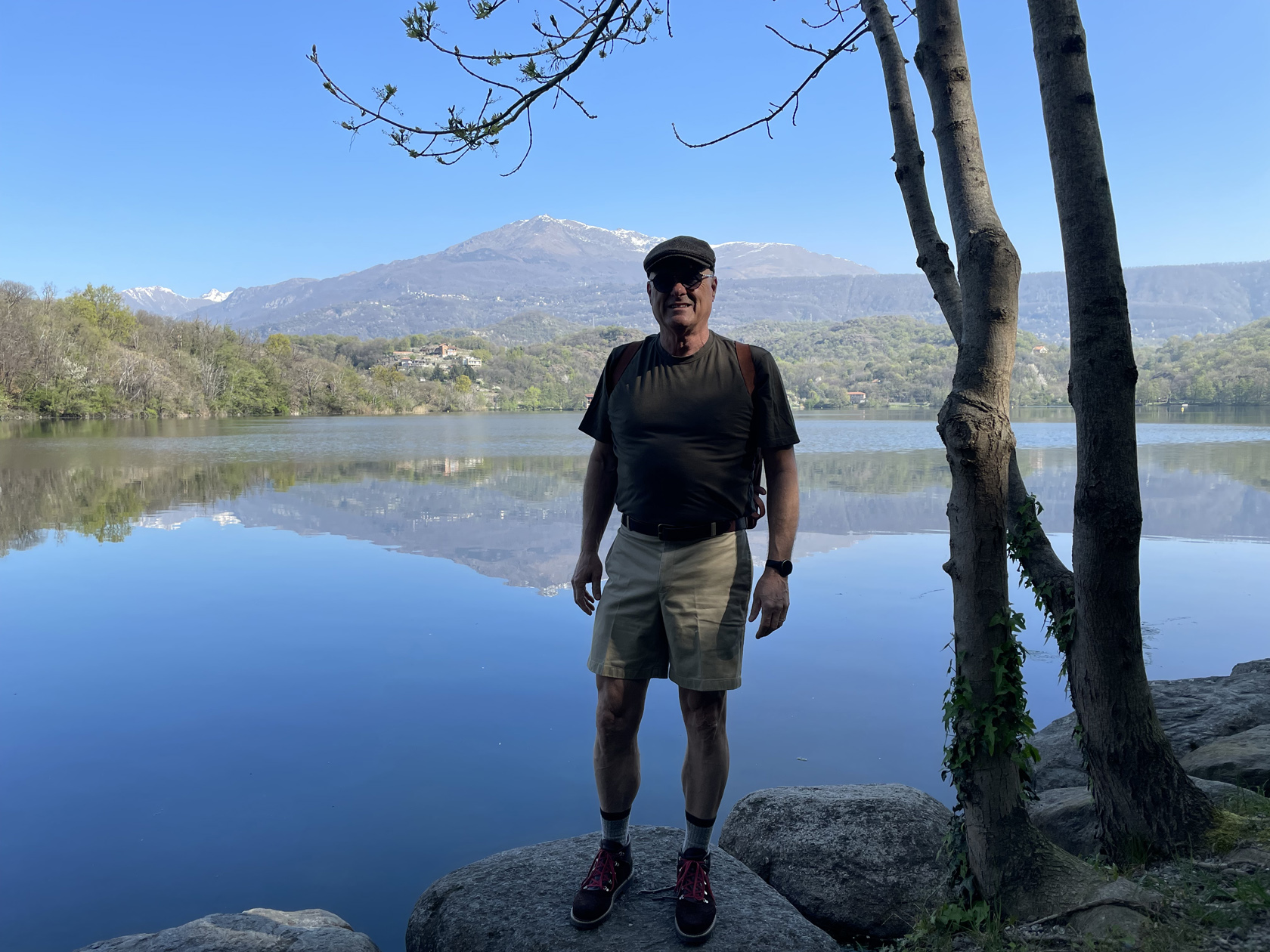
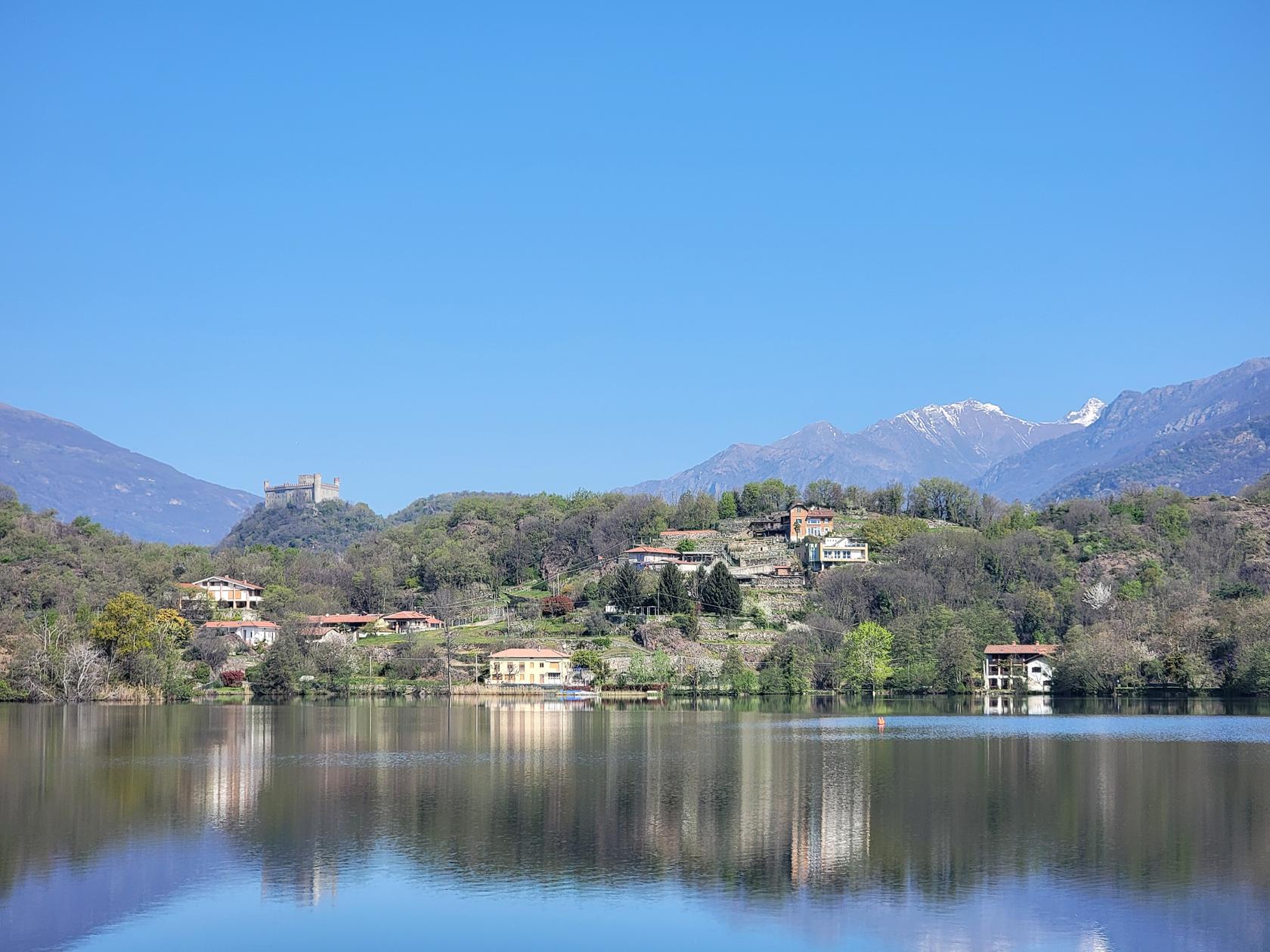
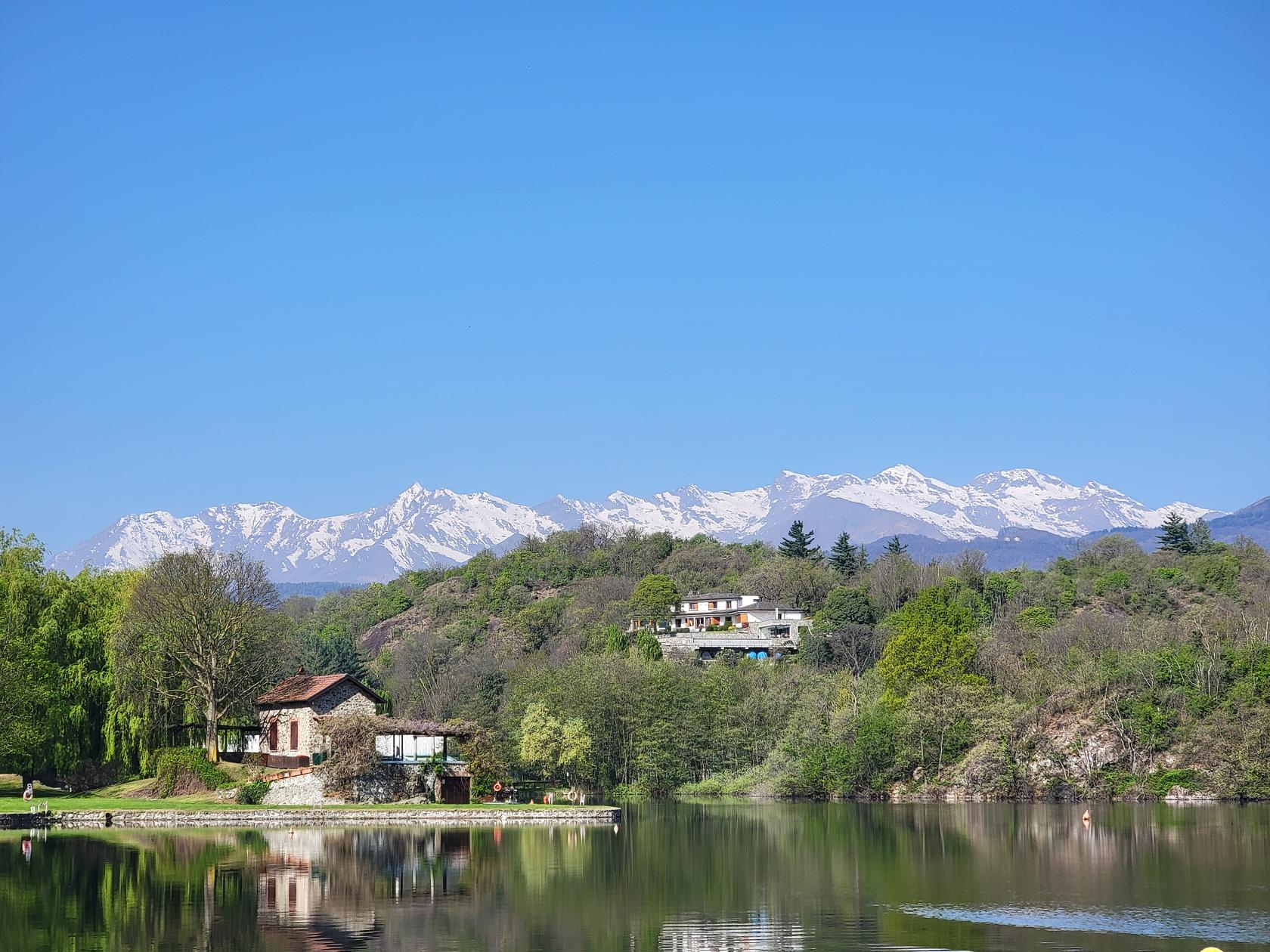
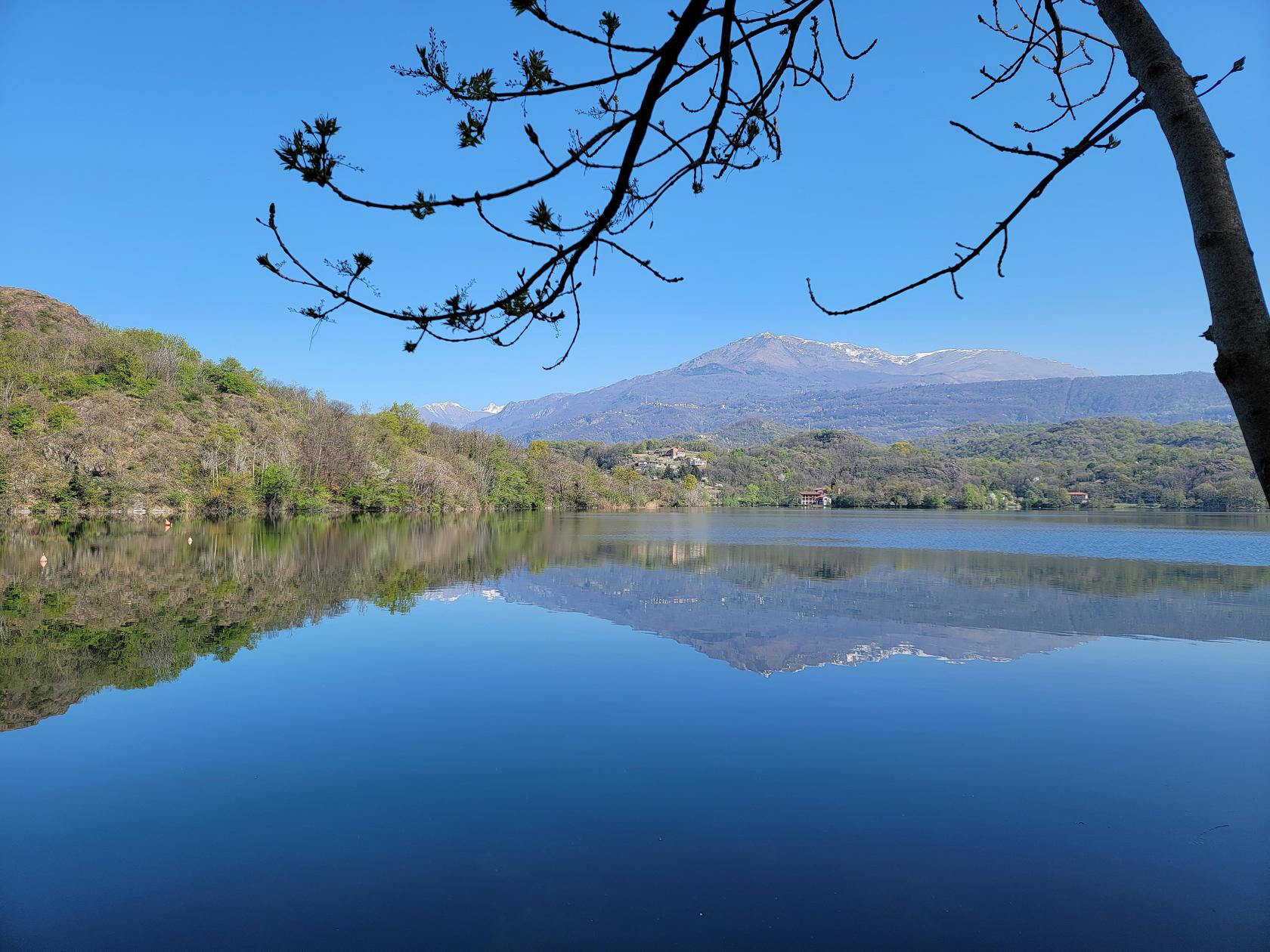
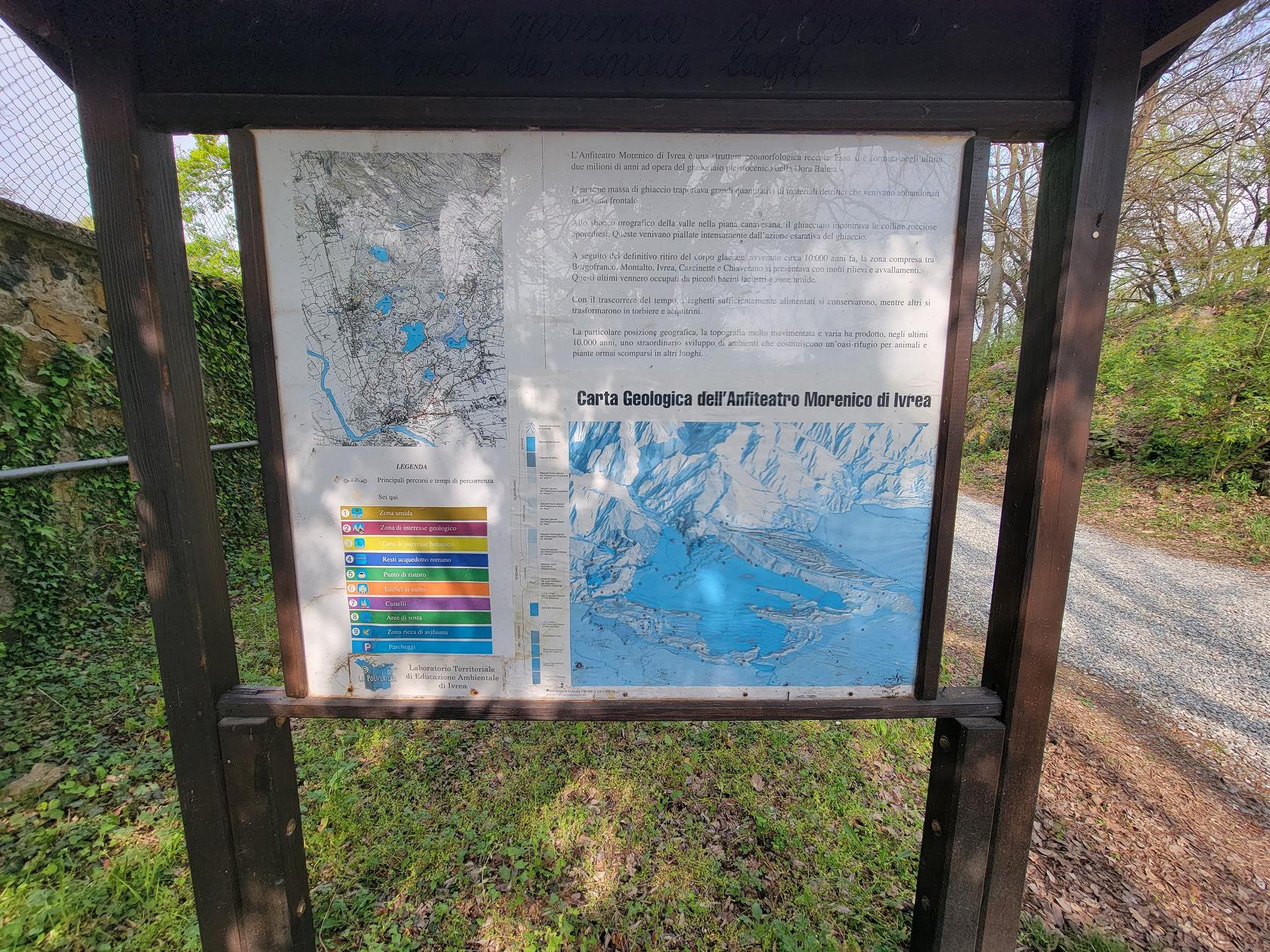
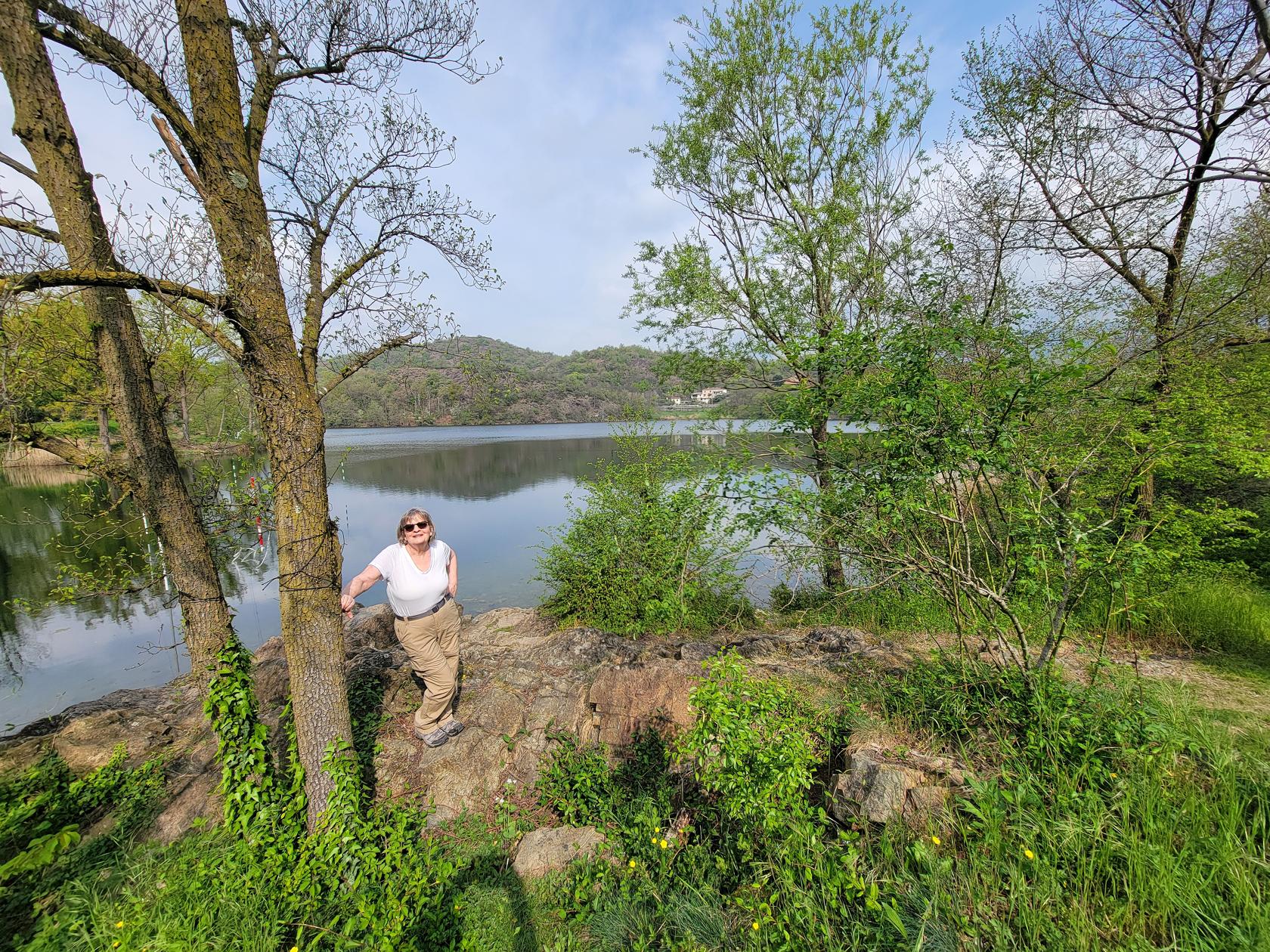
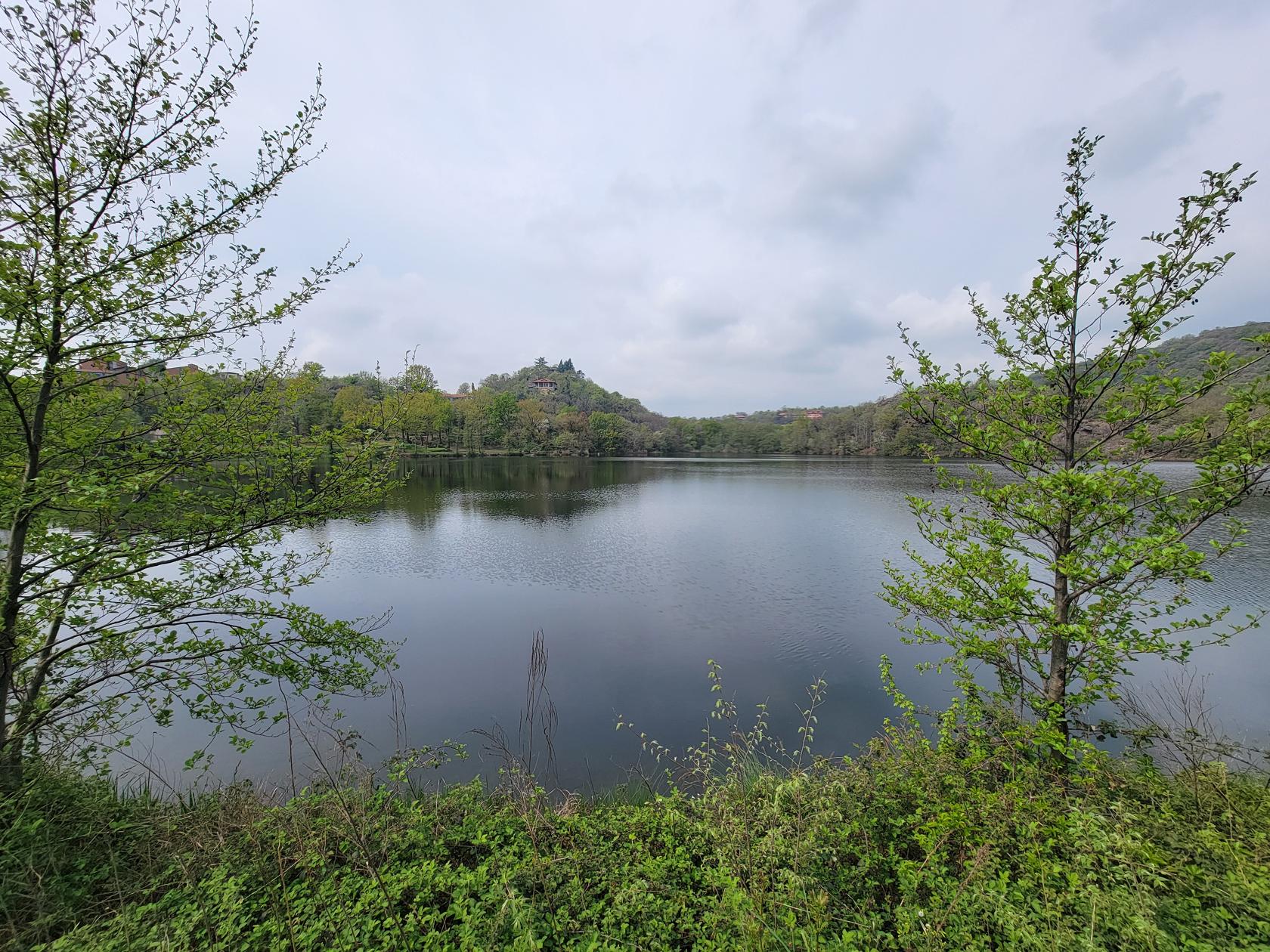
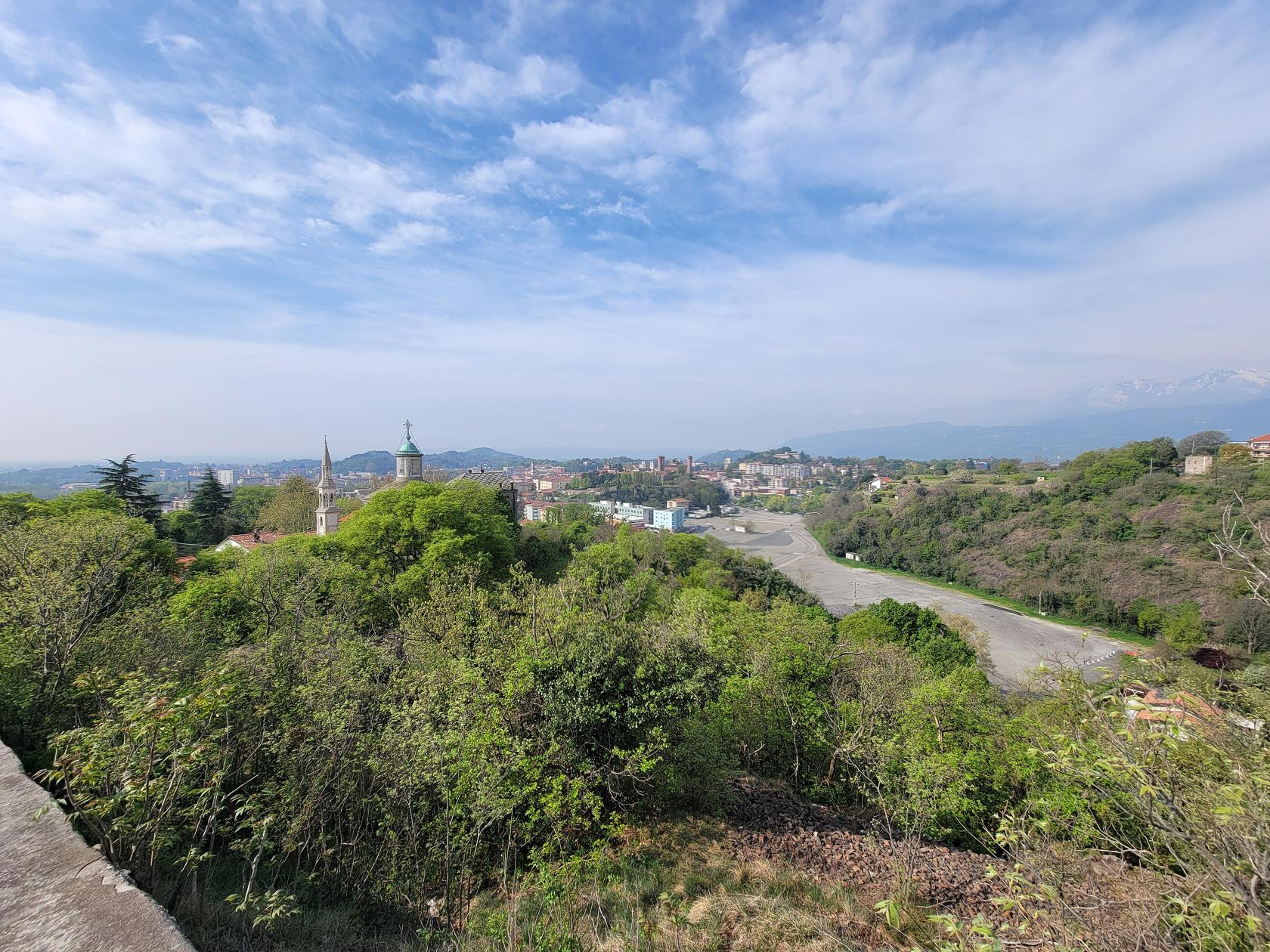
After a day of familiarizing ourselves with the town Ivrea, it was time to do some hiking and see the surrounding countryside. Though probably not known to the layperson, the lakes and surrounding area were formed by glacier activity around 9700 BCE. All five lakes and the long, gradual hill in the distance that is not a mountain of the Alps, are actually glacial moraines from that time. Here, after a long hike, we were able to repose along Lake Sirio for a long and needed lunch, as well as a magnificent view.
Five Lakes Hike – Sticker and Course Route – Ivrea, Italy
The Five Lakes Hike
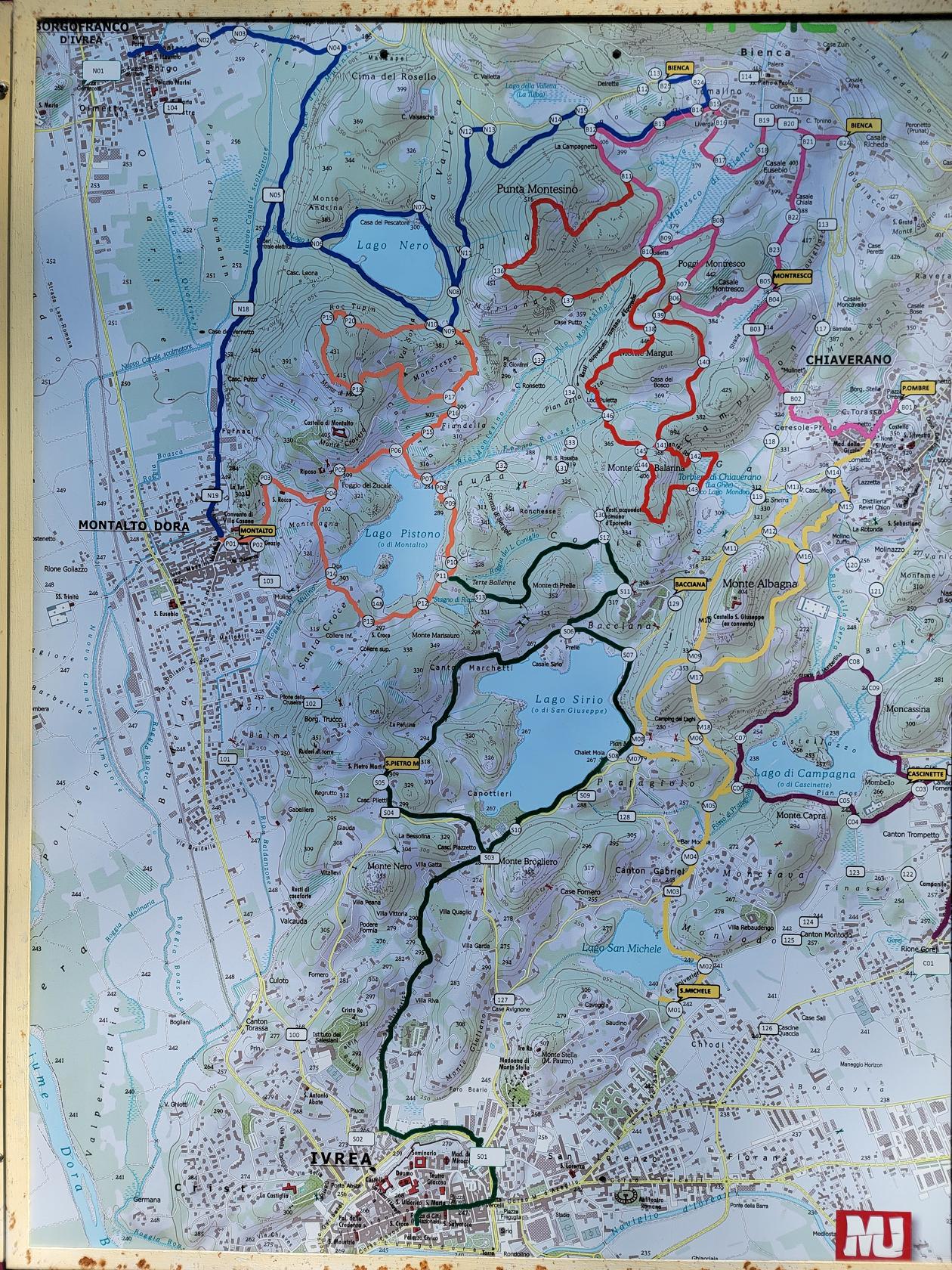
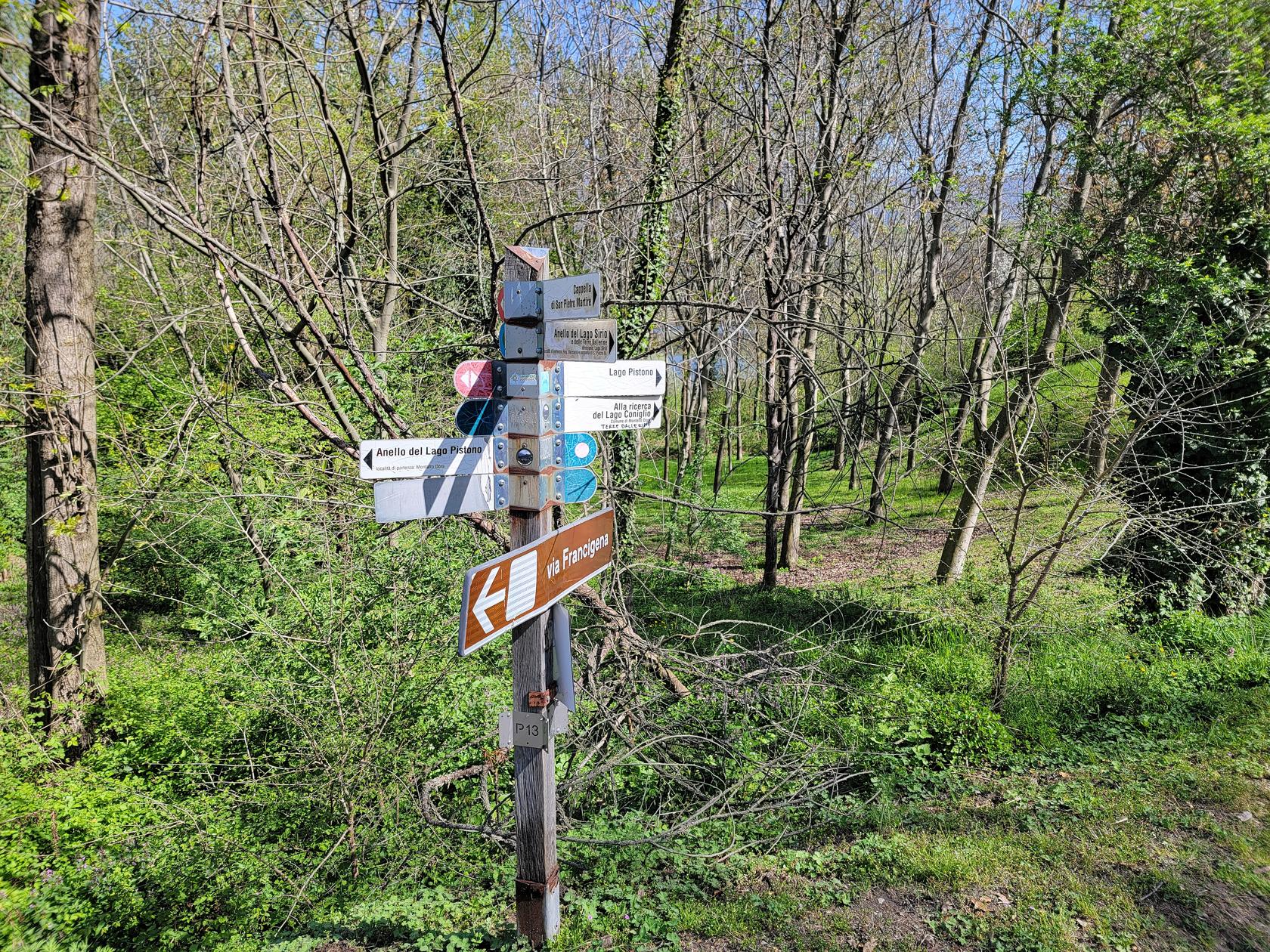
In and around Ivrea are hiking trails known as the Five Lakes Hike through which part of the Via Francigena trail also passes. None of the hiking trails are difficult, per se, however many of the surfaces are poor, so hiking shoes or a good trekking shoe is commended.
Five Lakes Hike – Map – Ivrea, Italy
Unfortunately, due to time and the weather, we were unable to visit all of them and had to forgoe seeing Lake Nero and Lake Campagna. Luckily, they appear very similar to the ones below that we were able to visit, so no harm done.
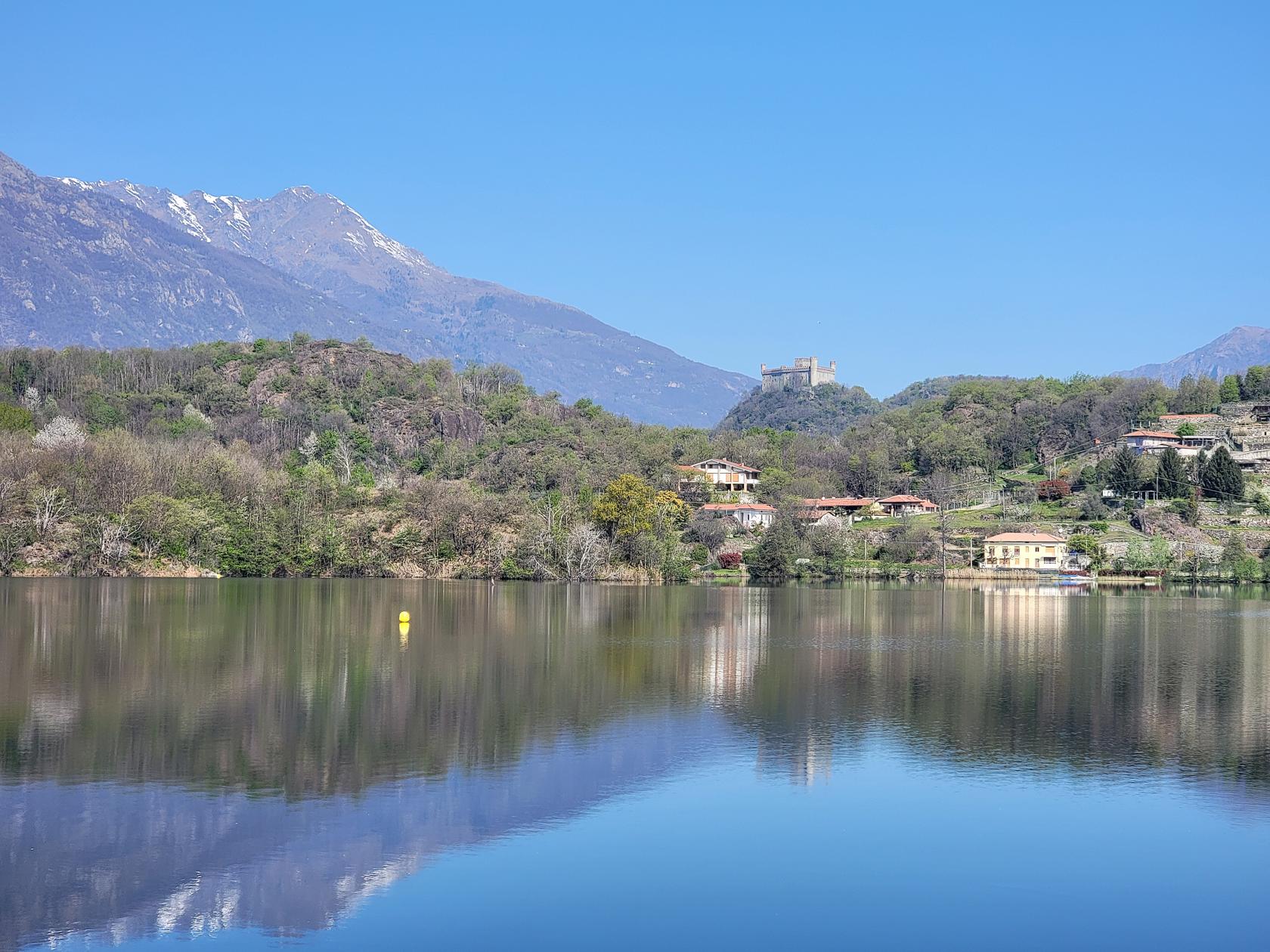
Five Lakes Hike – Lake Sirio, Italian Alps – Ivrea, Italy
Lake Sirio
Our first lake that we encountered was Lake Sirio, perhaps the largest of the five and it has the comenserate amount of lake resources around it for swimming, sunbathing and other activities.
Five Lakes Hike – Ivrea, Italy
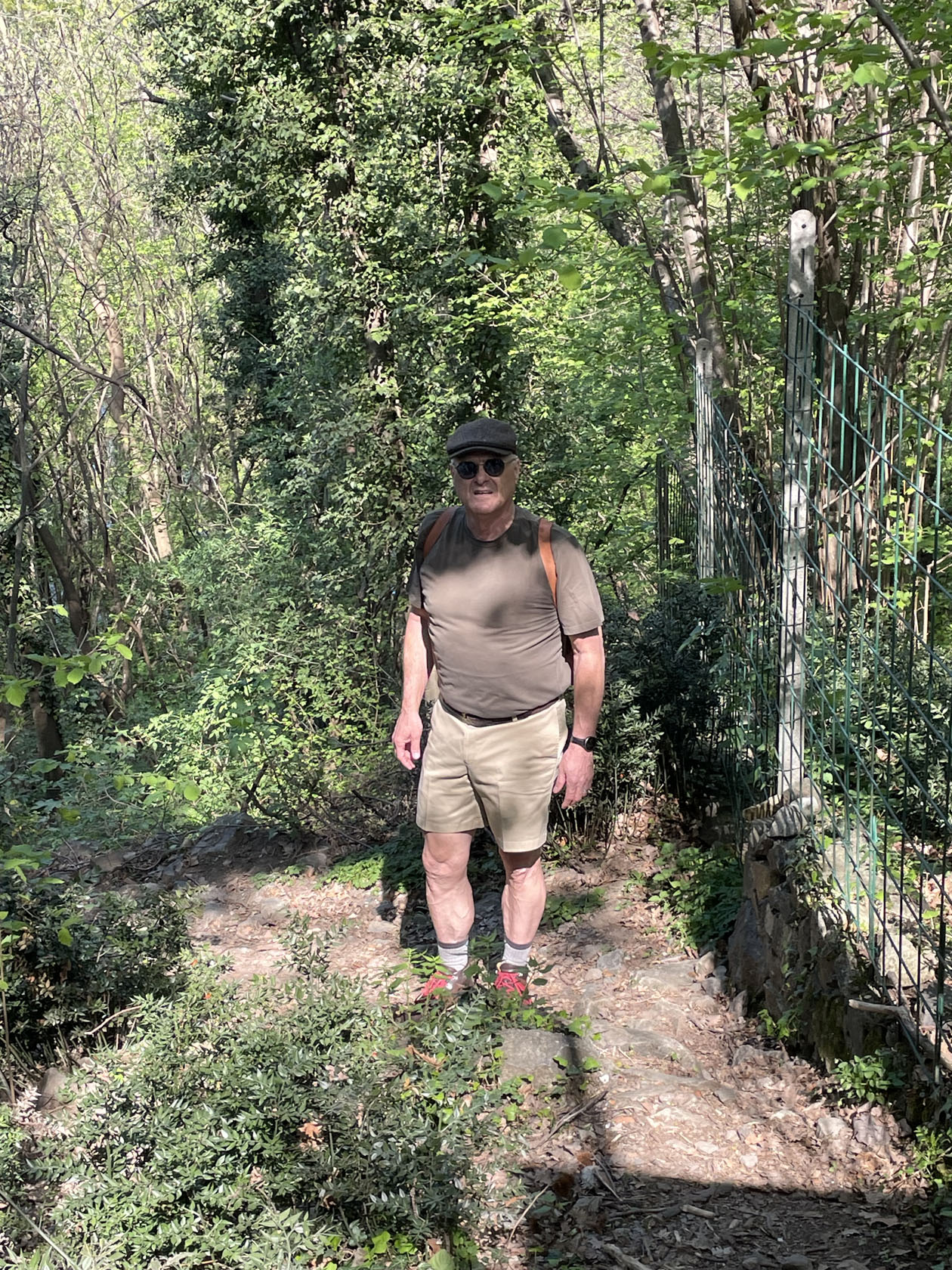
Five Lakes Hike – Lake Sirio, Erick – Ivrea, Italy
The trail winds around this lake perhaps three quarters of the way and then veers off into the woods towards Lake Pistono. We followed the trail and then made a wide circle back around, essentially making a circle, to revisit this lake and have lunch at Restaurant Il Cigno.
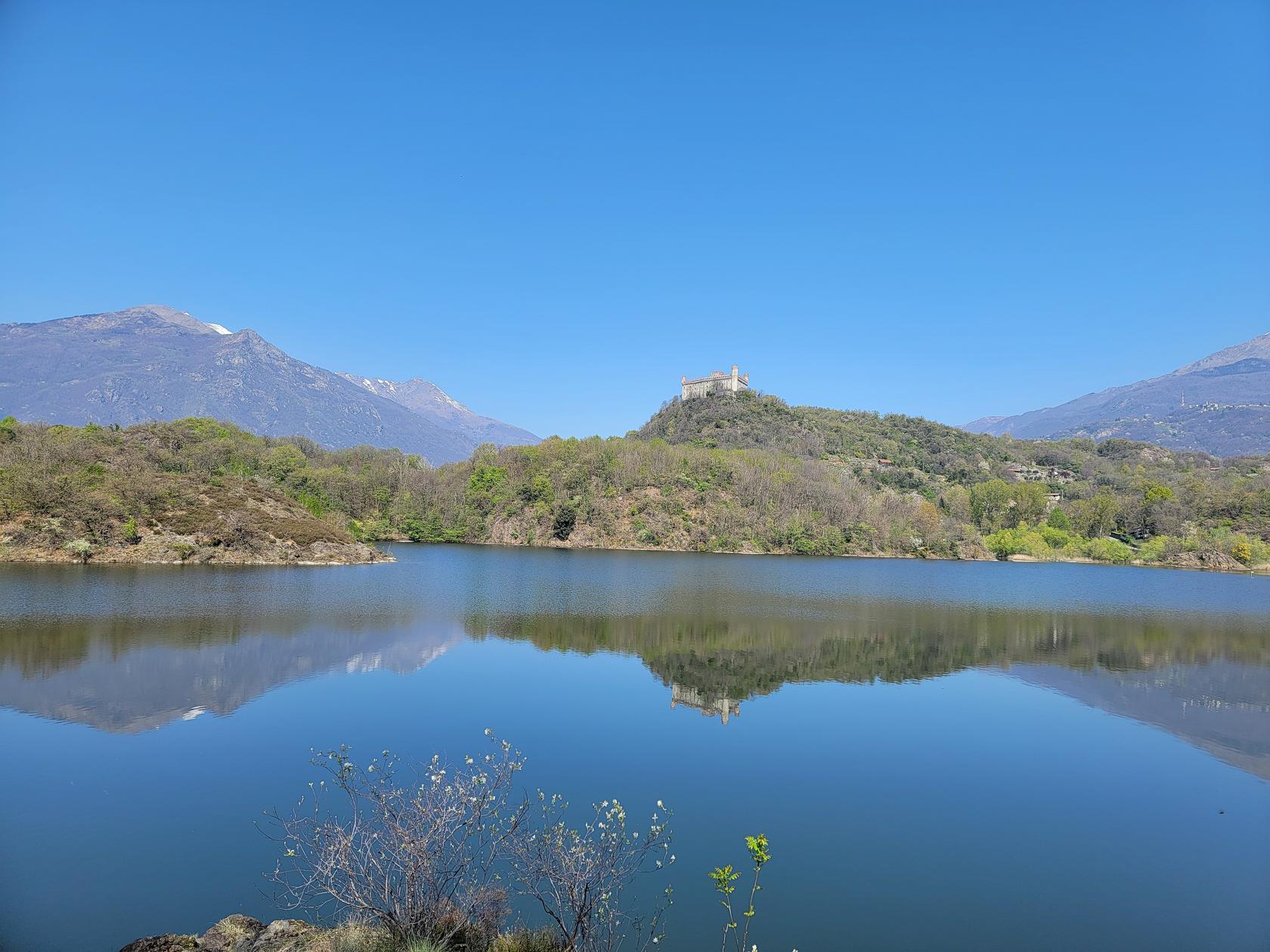
Five Lakes Hike – Lake Sirio, Castello di Montalto – Ivrea, Italy
Five Lakes Hike – Lake Sirio, Italian Alps – Ivrea, Italy
Five Lakes Hike – Lake Sirio, Italian Alps – Ivrea, Italy
Five Lakes Hike – Lake Sirio – Ivrea, Italy
Lake Pistono
Lake Piston is a smaller lake and only offers a few trails to get close to the lake. We found this lake surrounded by more water, which also means more insects, so bug lotion or spray is recommended, they are voracious!
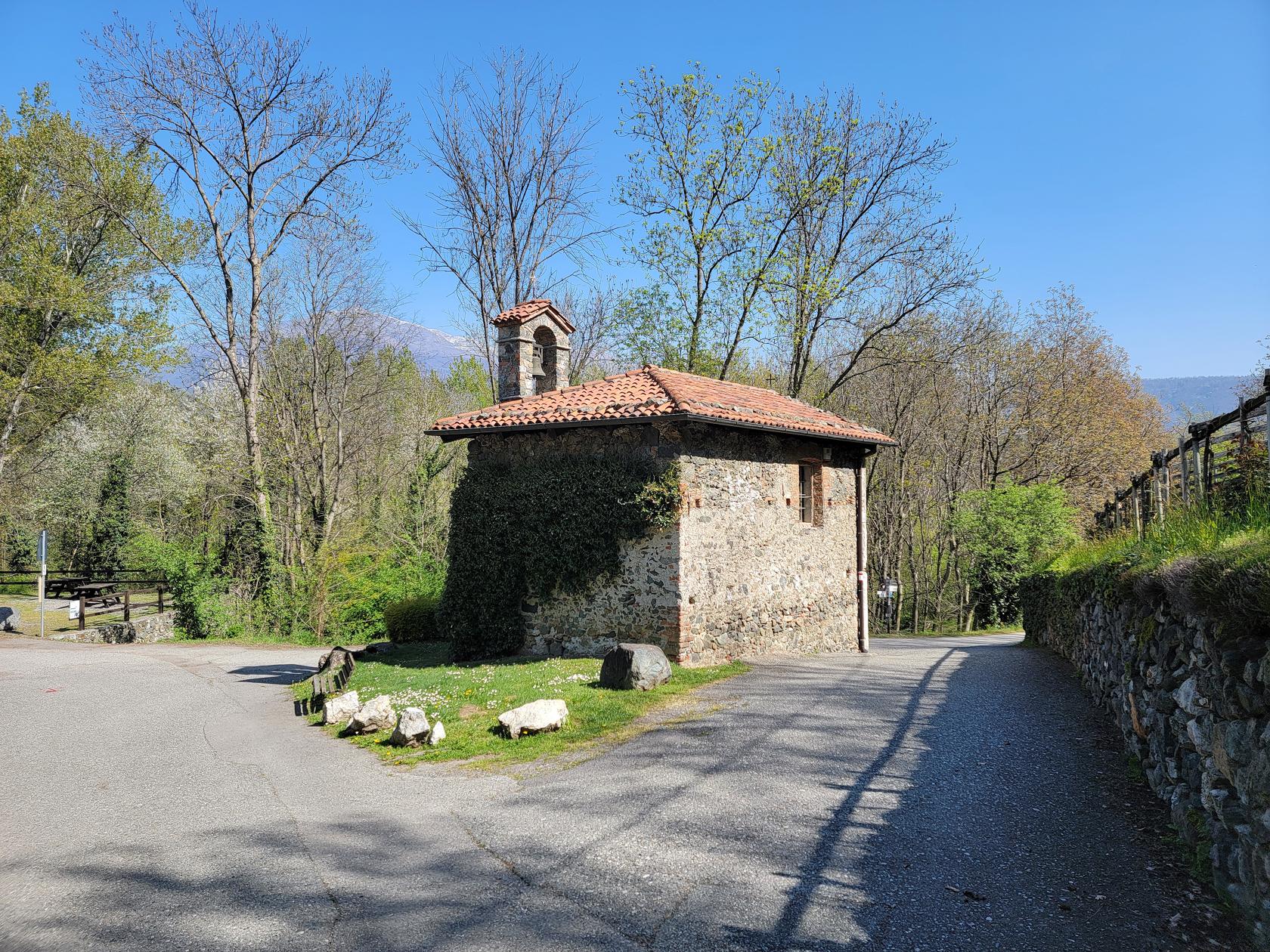
Five Lakes Hike – Chapel – Ivrea, Italy
Five Lakes Hike – Trail Marker for Via Francigena – Ivrea, Italy
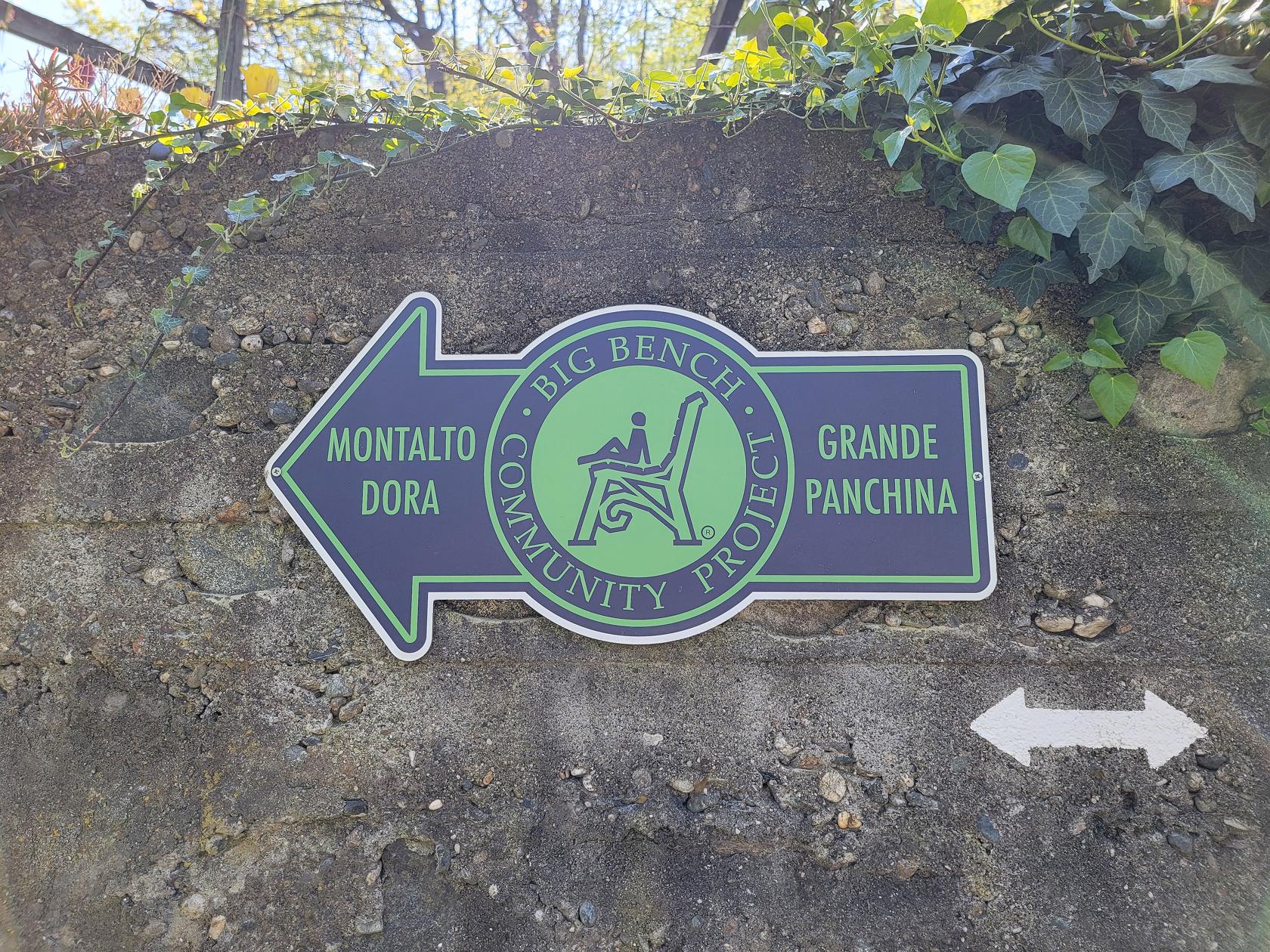
Five Lakes Hike – Trail Marker for a Big Bench – Ivrea, Italy
Five Lakes Hike – Lake Pistono, Erick – Ivrea, Italy
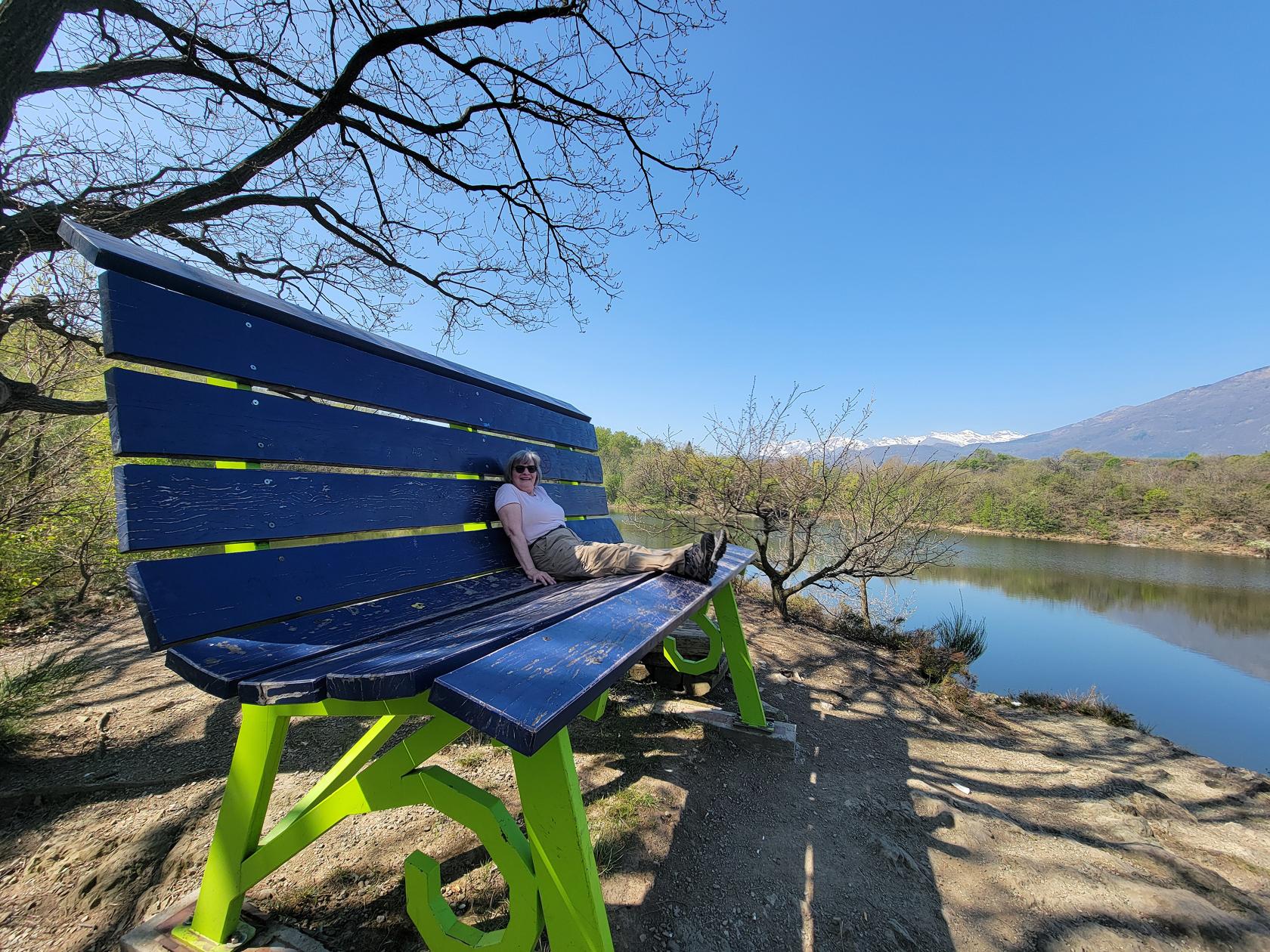
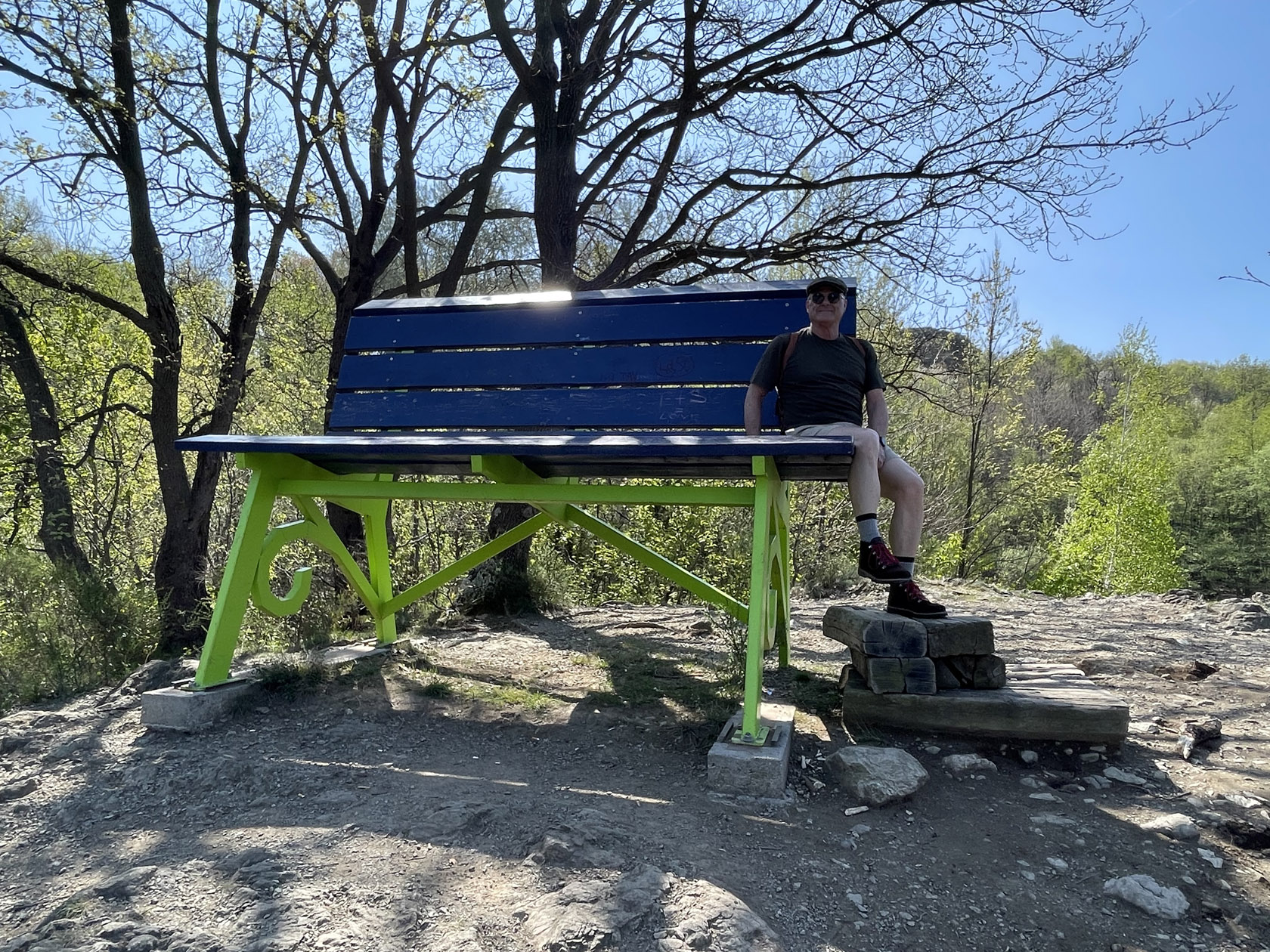
This lake has one distinction, it is home to one of the Big Benches, which can be found throughout Piedmont in different areas and settings. Such projects make it fun and interesting to get out and find such silly objects. However, having said that, most are in areas that are out of the way and may present difficulty for some. But if you are able, the sights can be beautiful, so go for it!
Five Lakes Hike – Lake Pistono, Castello di Montalto – Ivrea, Italy
Five Lakes Hike – Lake Pistono, Patti on the Big Bench – Ivrea, Italy
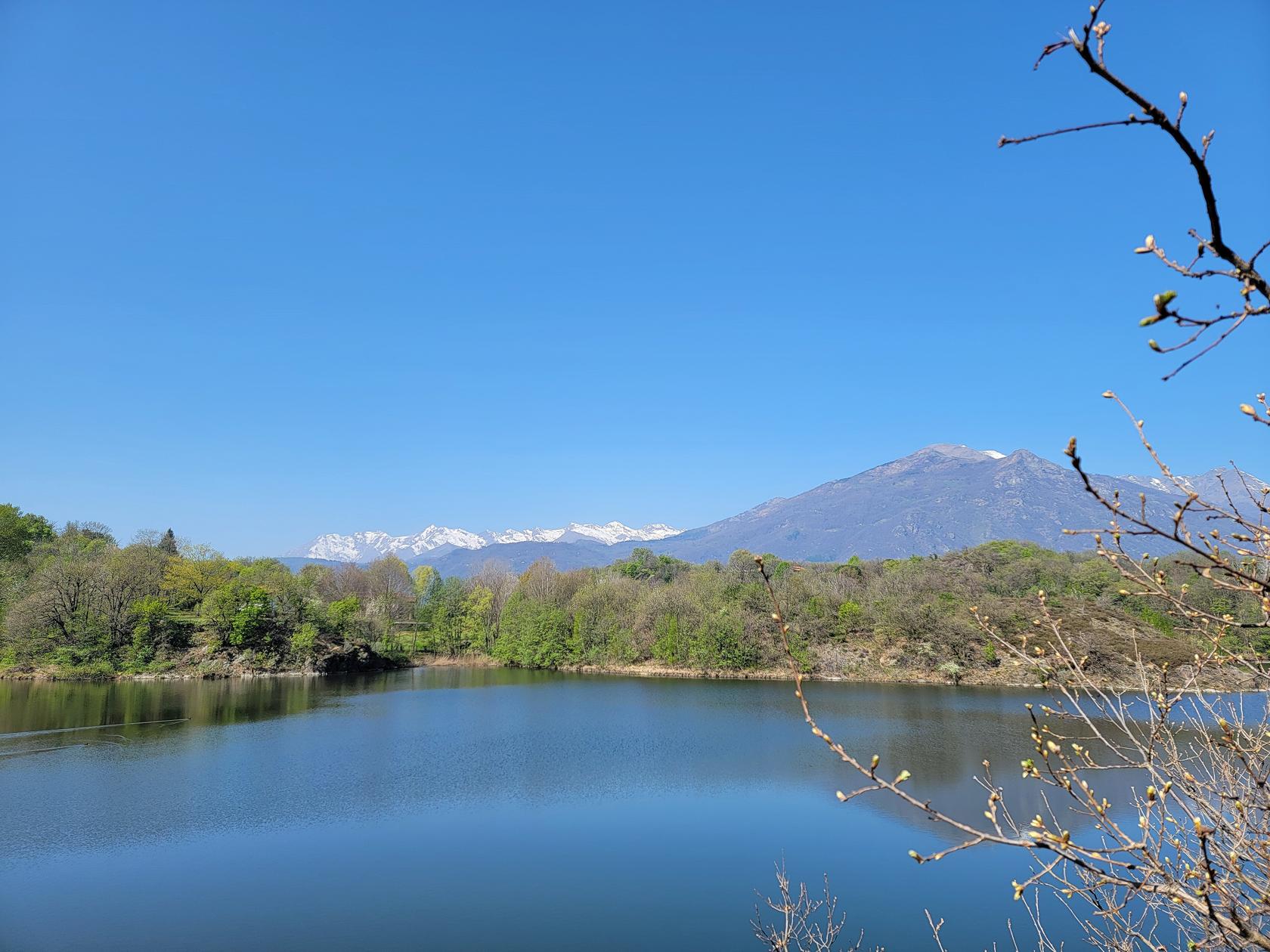
Five Lakes Hike – Lake Pistono – Ivrea, Italy
Five Lakes Hike – Lake Pistono, Erick on the Big Bench – Ivrea, Italy
Lake San Michele
A smaller lake and closer to Ivrea is lake San Michele. Though we had some bother getting there and visited the Chapel of the Three Kings unintentionally, since the Italians with money just love to block public access to things, even roads, if they can do so.
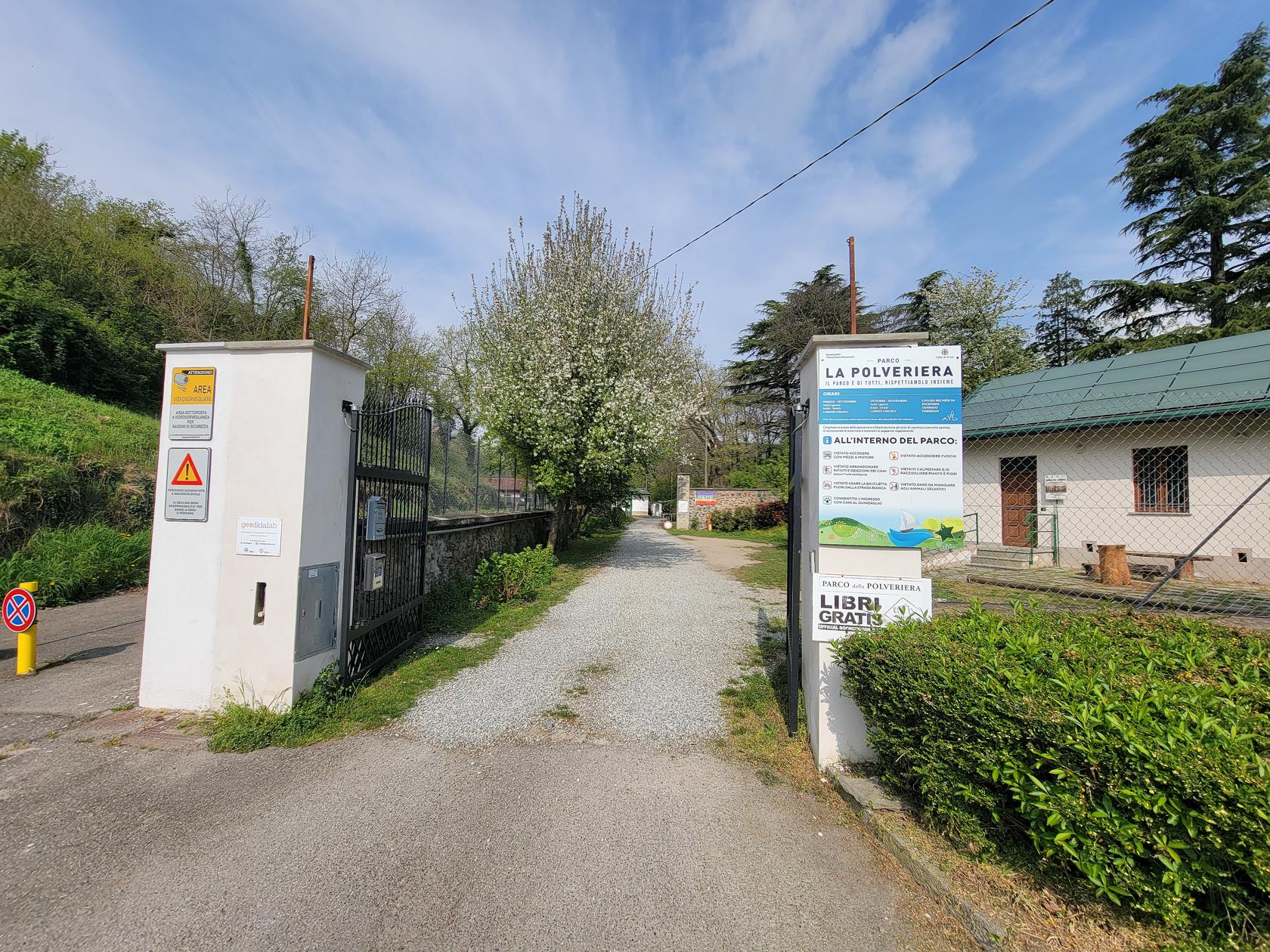
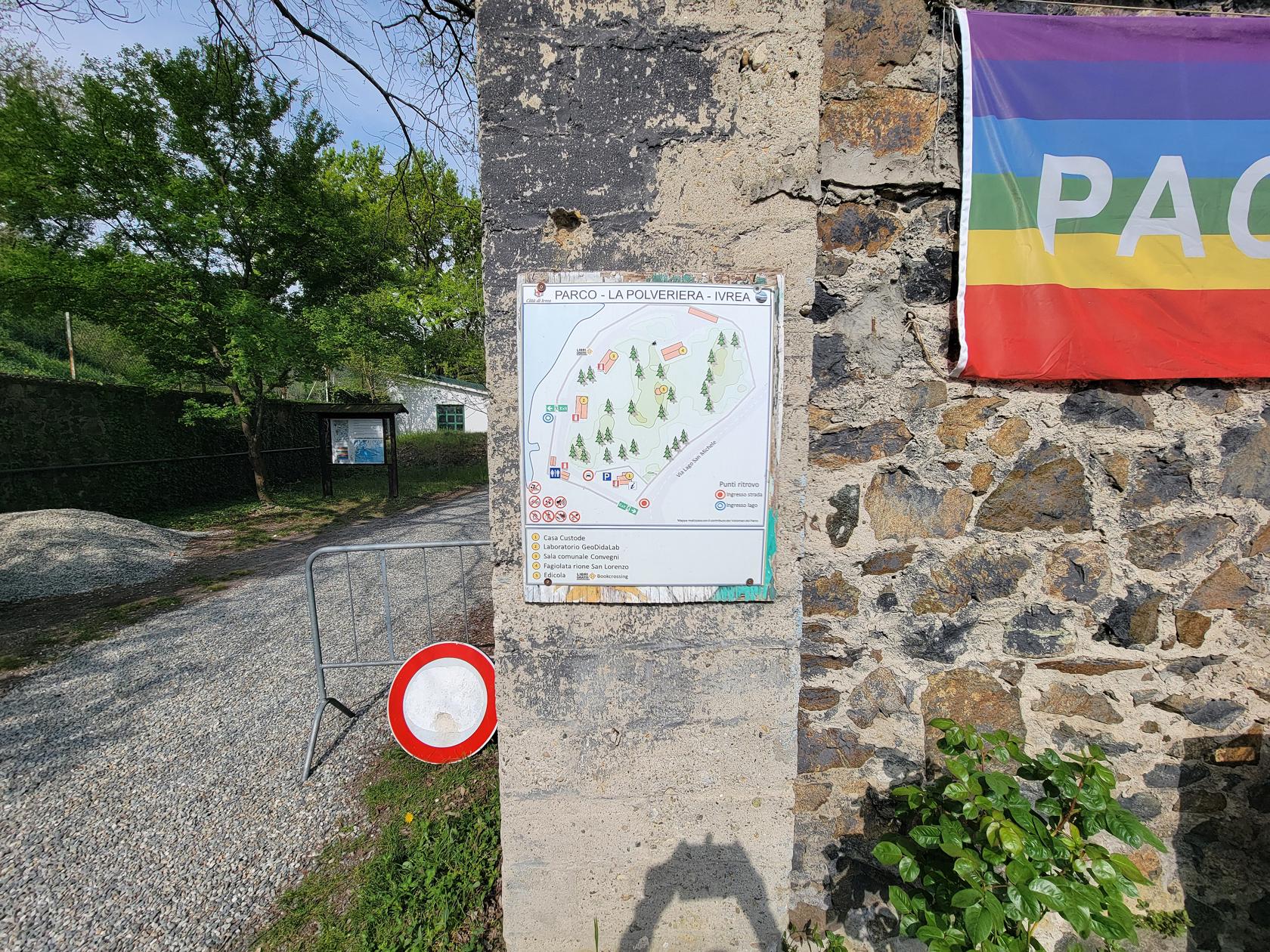
Five Lakes Hike – Polveriera Park – Ivrea, Italy
Five Lakes Hike – Polveriera Park – Ivrea, Italy
Five Lakes Hike – Polveriera Park – Ivrea, Italy
Five Lakes Hike – San Michele Lake – Ivrea, Italy
So, we were unable to continue our travels using the Via Boaro, since it is blocked by a gate and a fancy house with video surveillance, so if you have the same idea – don’t bother. Instead, use the Via Cascinette and Via Lago San Michele roads to get to the lake. There is a lake park entrance that may be used, or you can continue on Via Lago S. Michele and see the lake once you round the bend in the road.
Five Lakes Hike – San Michele Lake – Ivrea, Italy
Churches And Chapels
Though not known for the churches or chapels, there are a few that can be visited in the area. We found the following when we continued our Five Lakes Hike the next day. The Sanctuary was open, but the chapel appears closed, perhaps for good.
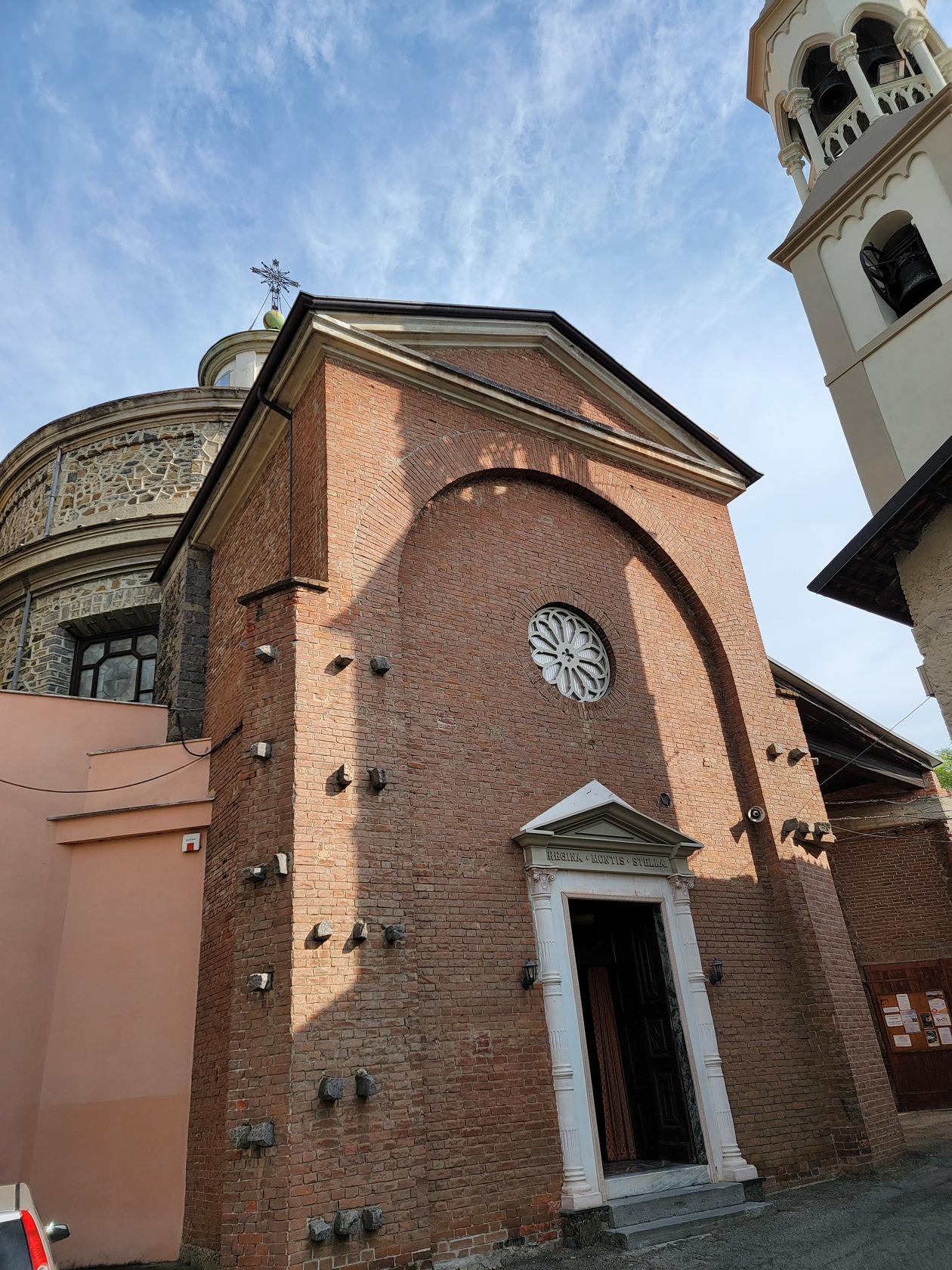
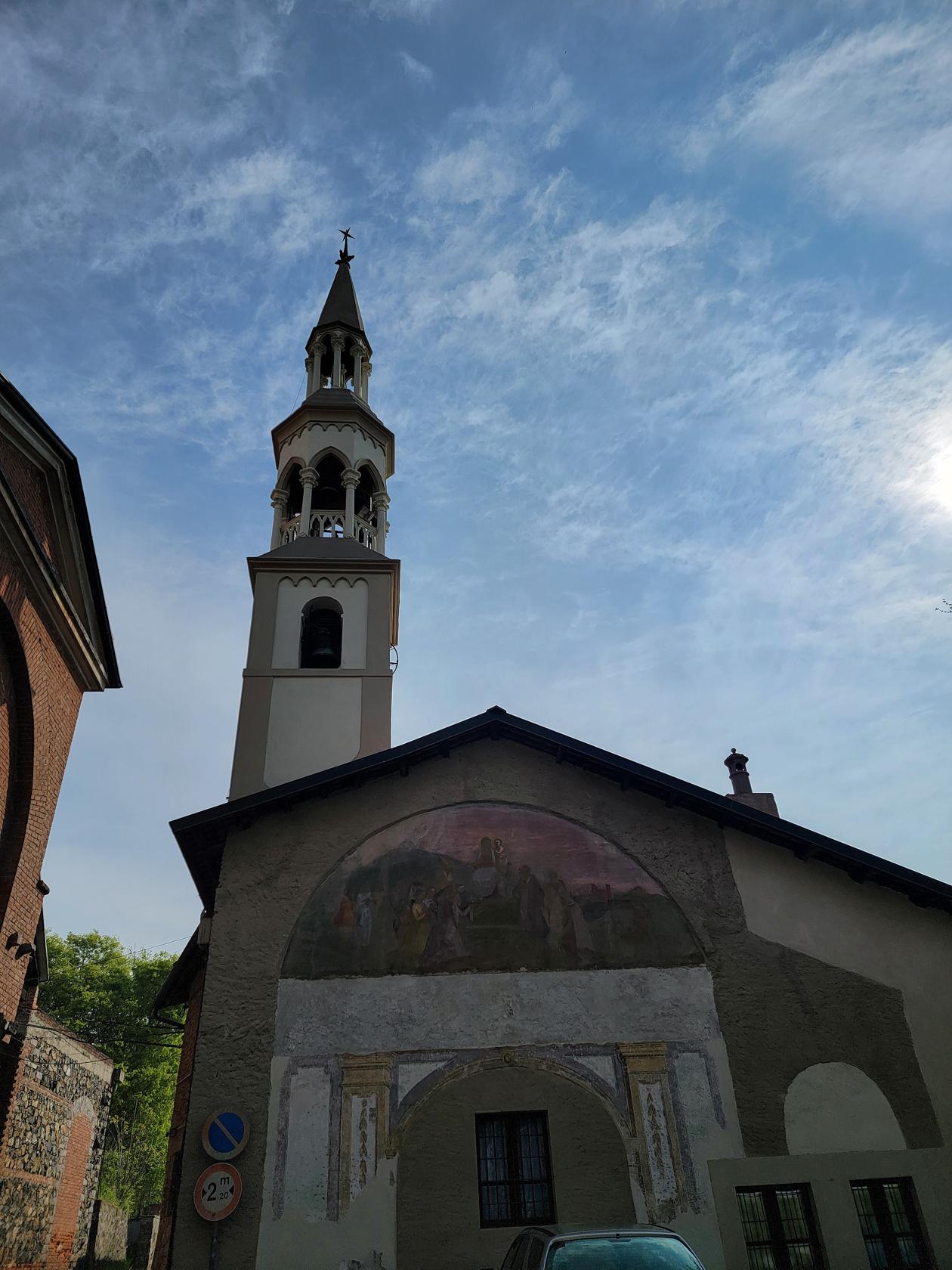
Five Lakes Hike – Monte Stella Sanctuary – Ivrea, Italy
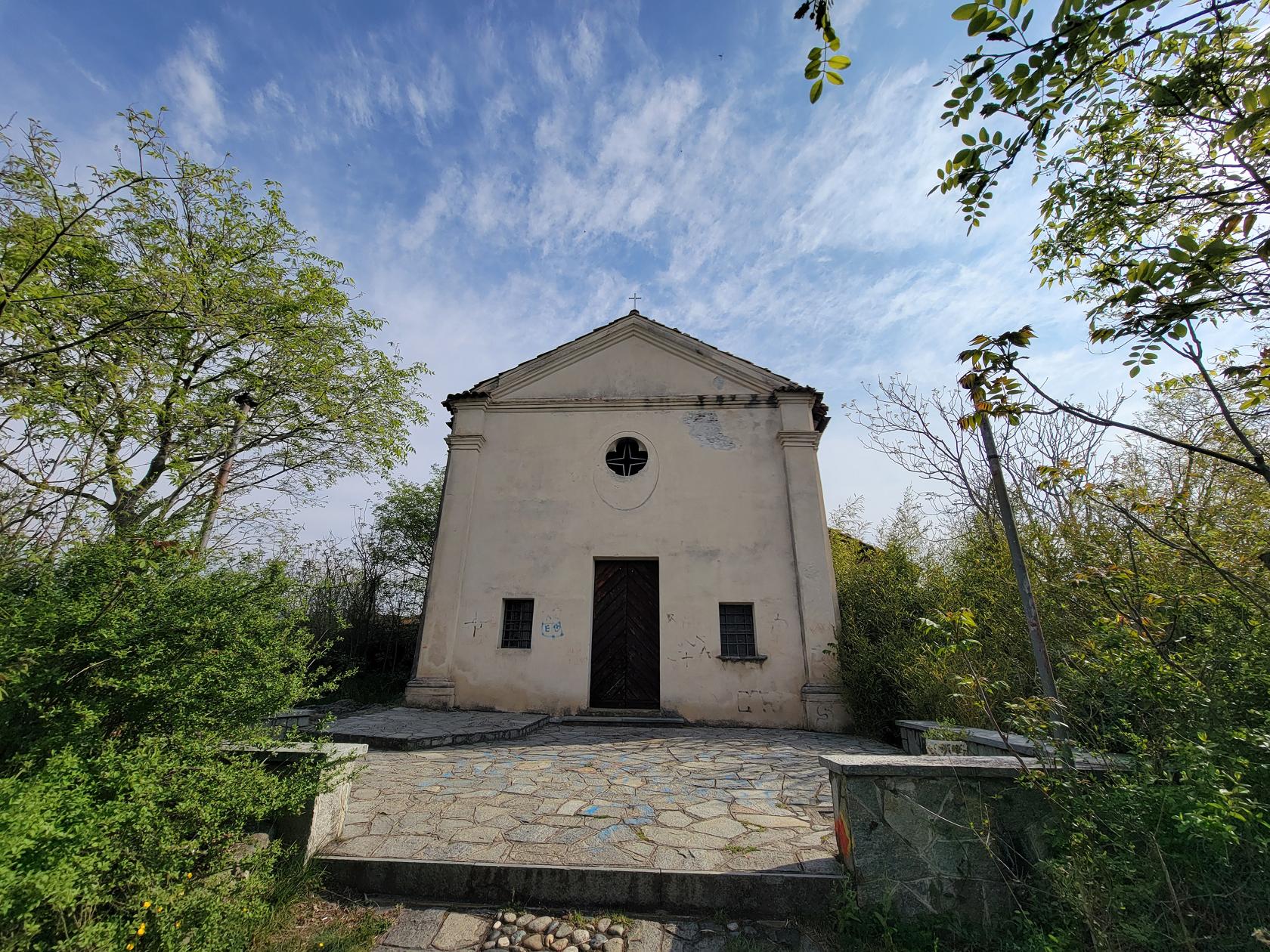
Five Lakes Hike – Church of San Lorenzo the Martyr – Ivrea, Italy
Five Lakes Hike – Monte Stella Sanctuary – Ivrea, Italy
Five Lakes Hike – Monte Stella Sanctuary – Ivrea, Italy
Five Lakes Hike – Chapel of the Three Kings – Ivrea, Italy
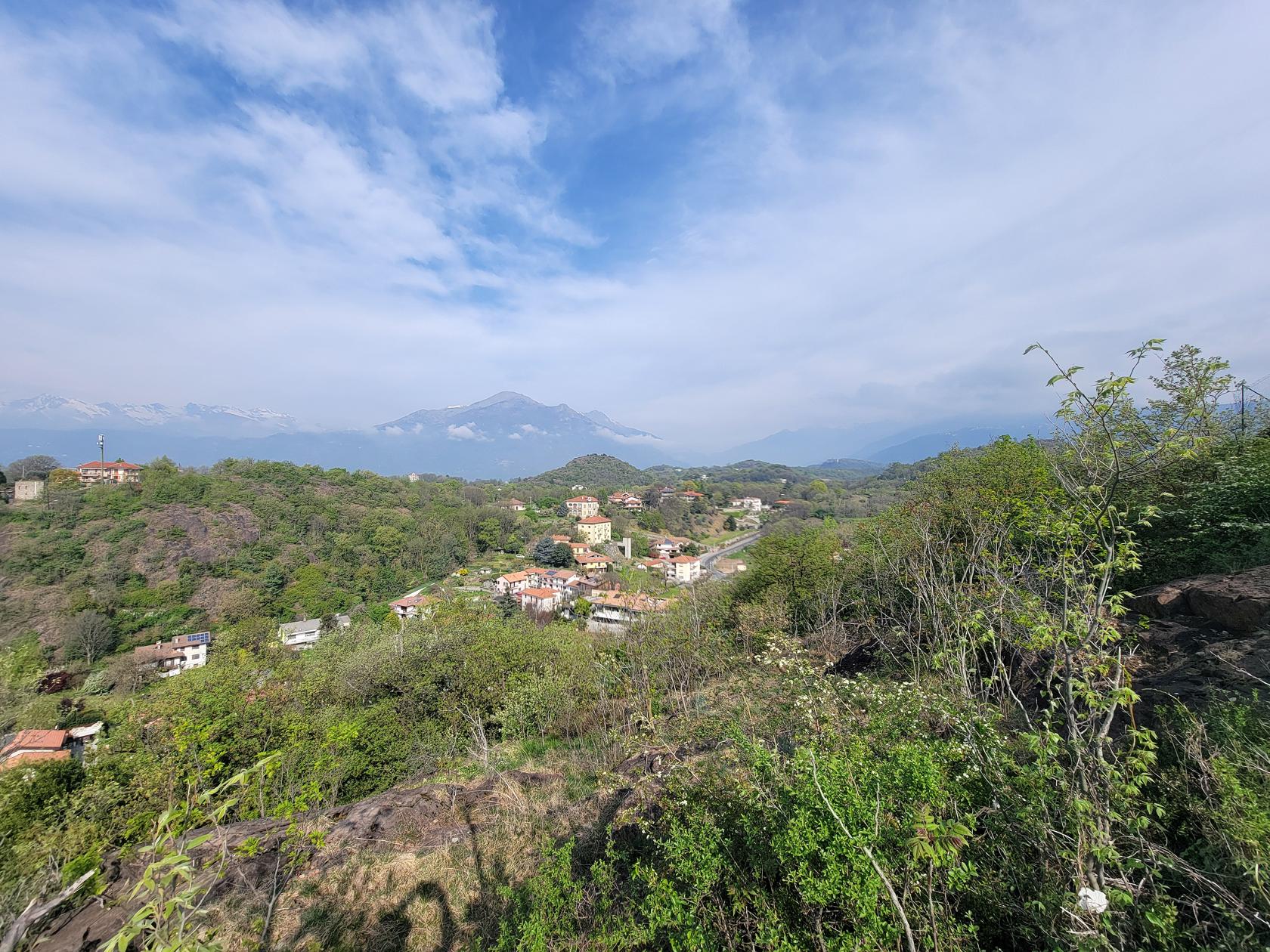
Five Lakes Hike – View from Monte Stella Sanctuary – Ivrea, Italy
Five Lakes Hike – View from Monte Stella Sanctuary – Ivrea, Italy
Restaurants
Il Cigno
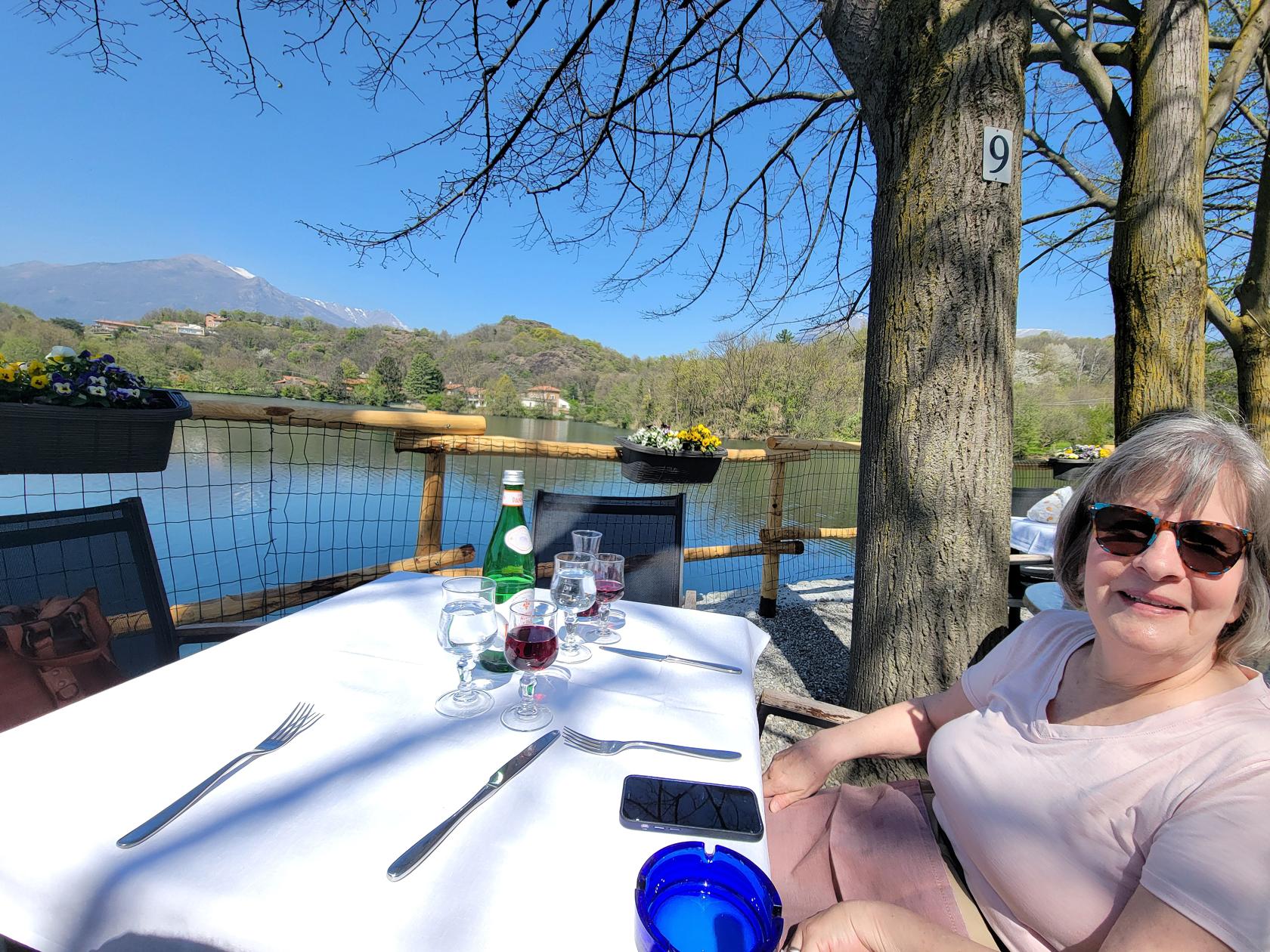
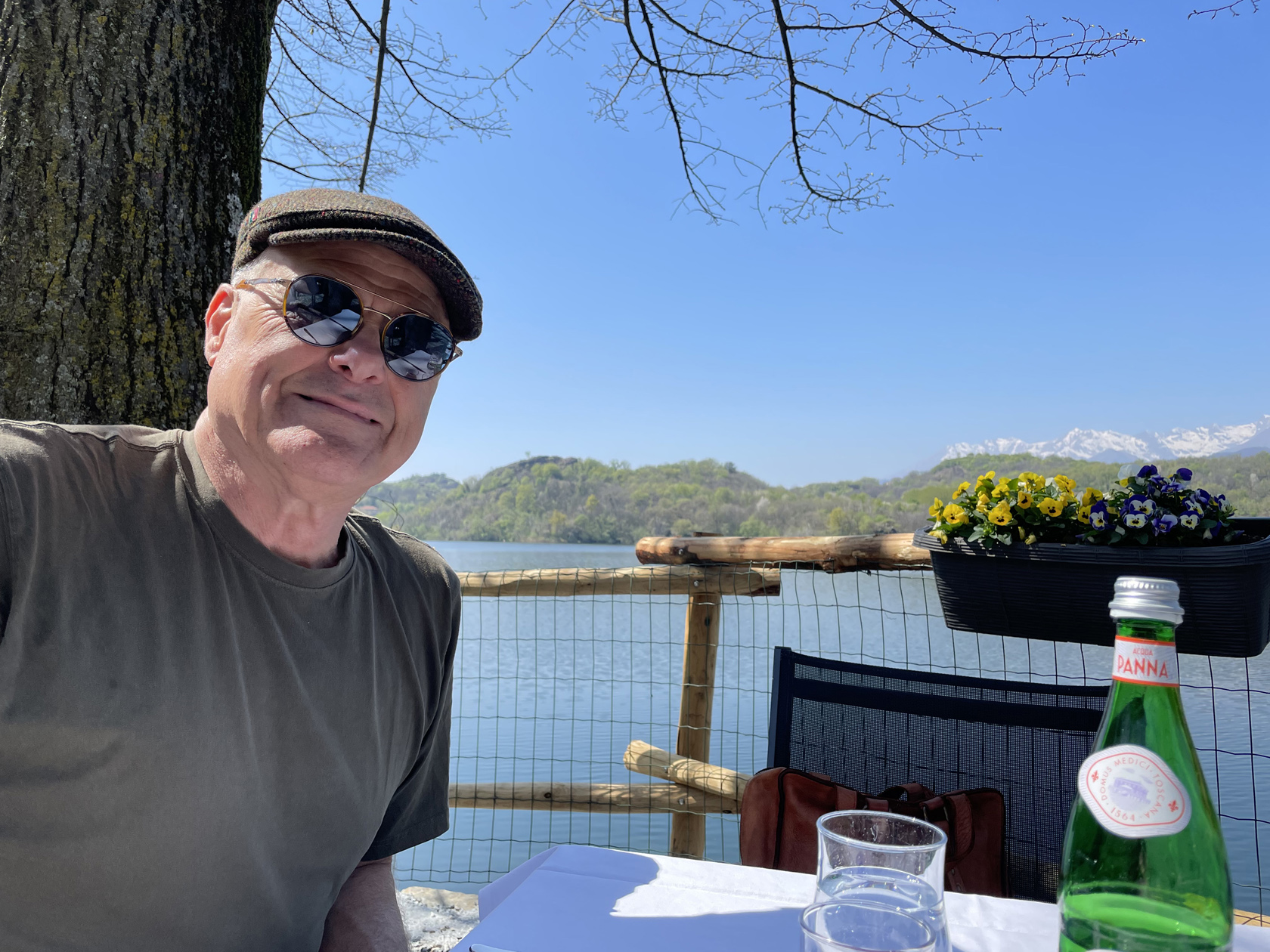
We made note of this restaurant on Lake Sirio when we were outbound headed for Lake Pistono and made plans to swing back around for lunch. It has amazing seating right along the shore of the lake with marvelous views of the Graian Alps.
Five Lakes Hike – Patti at Ristorante Il Cigno, Lake Sirio – Ivrea, Italy
Five Lakes Hike – Erick at Ristorante Il Cigno, Lake Sirio – Ivrea, Italy
The food is good and prices are reasonable. We were here during the off-season, but one can easily imagine that it gets quite busy in the summer, especially on the weekends, so plan accordingly.
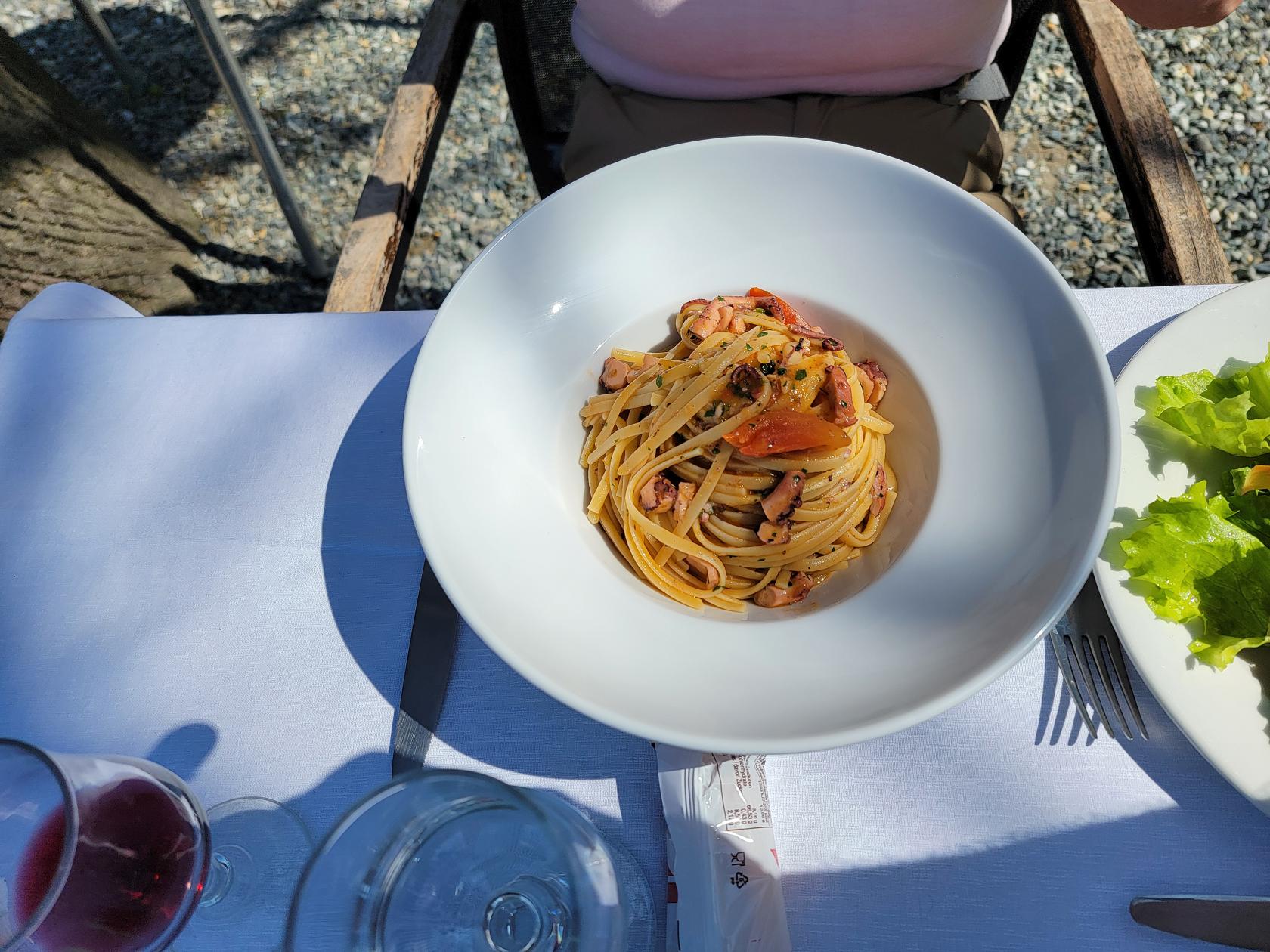
Five Lakes Hike – Patti’s Linguini with Octopus – Ristorante Il Cigno, Lake Sirio – Ivrea, Italy
Five Lakes Hike – Erick’s Insalata Mista – Ristorante Il Cigno, Lake Sirio – Ivrea, Italy
Five Lakes Hike – Erick’s Bonet – Ristorante Il Cigno, Lake Sirio – Ivrea, Italy
Ristorante Pizzeria da Romano
Not far from our hotel, Hotel 3T, along the Stata Stradale (SS26) is the Ristorante Pizzeria da Romano. We ate here one evening only because we did not want to venture from the hotel, who’s restaurant unfortunately was closed.
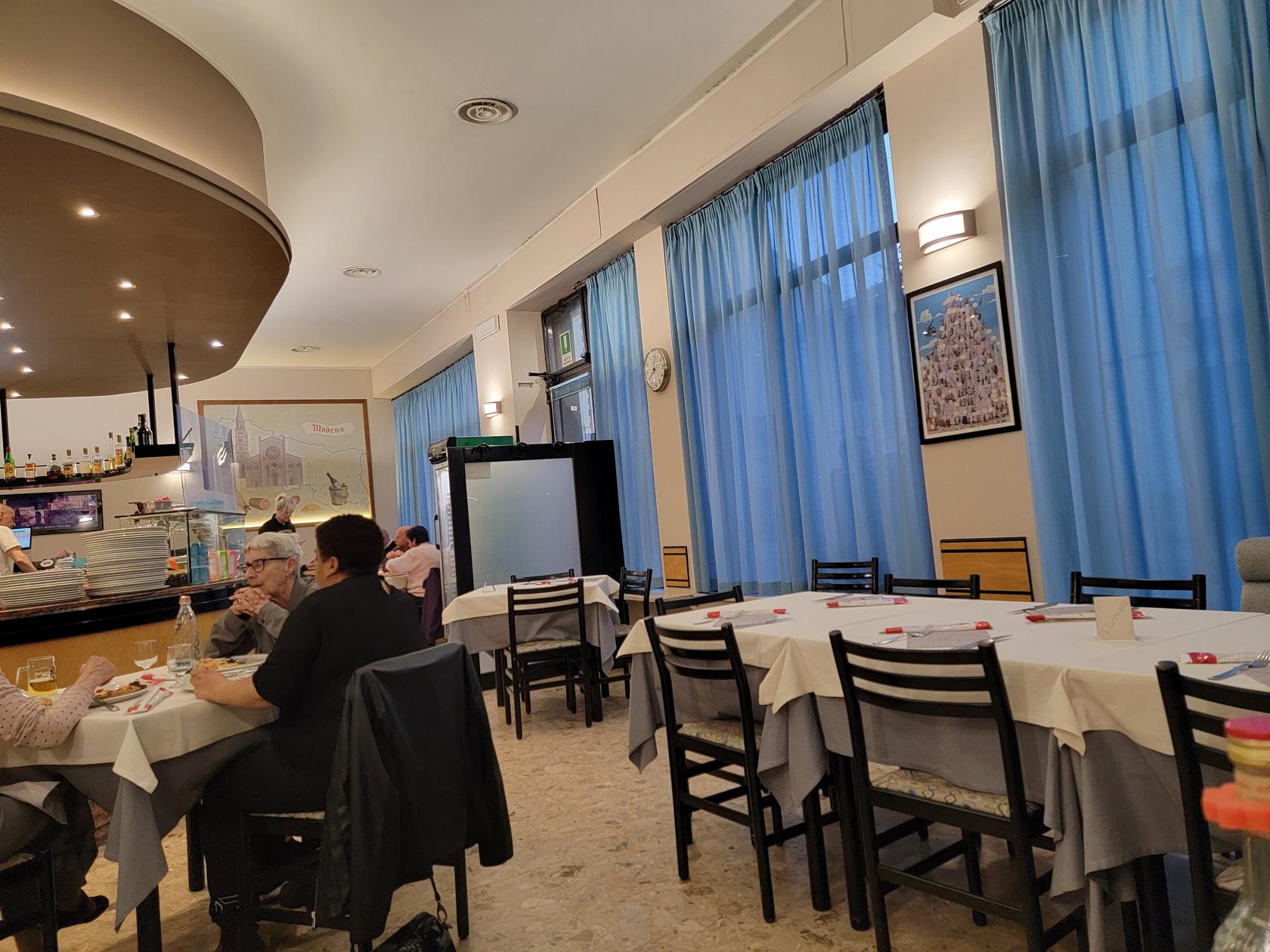
Ristorante Pizzeria da Romano – Inside – Ivrea, Italy
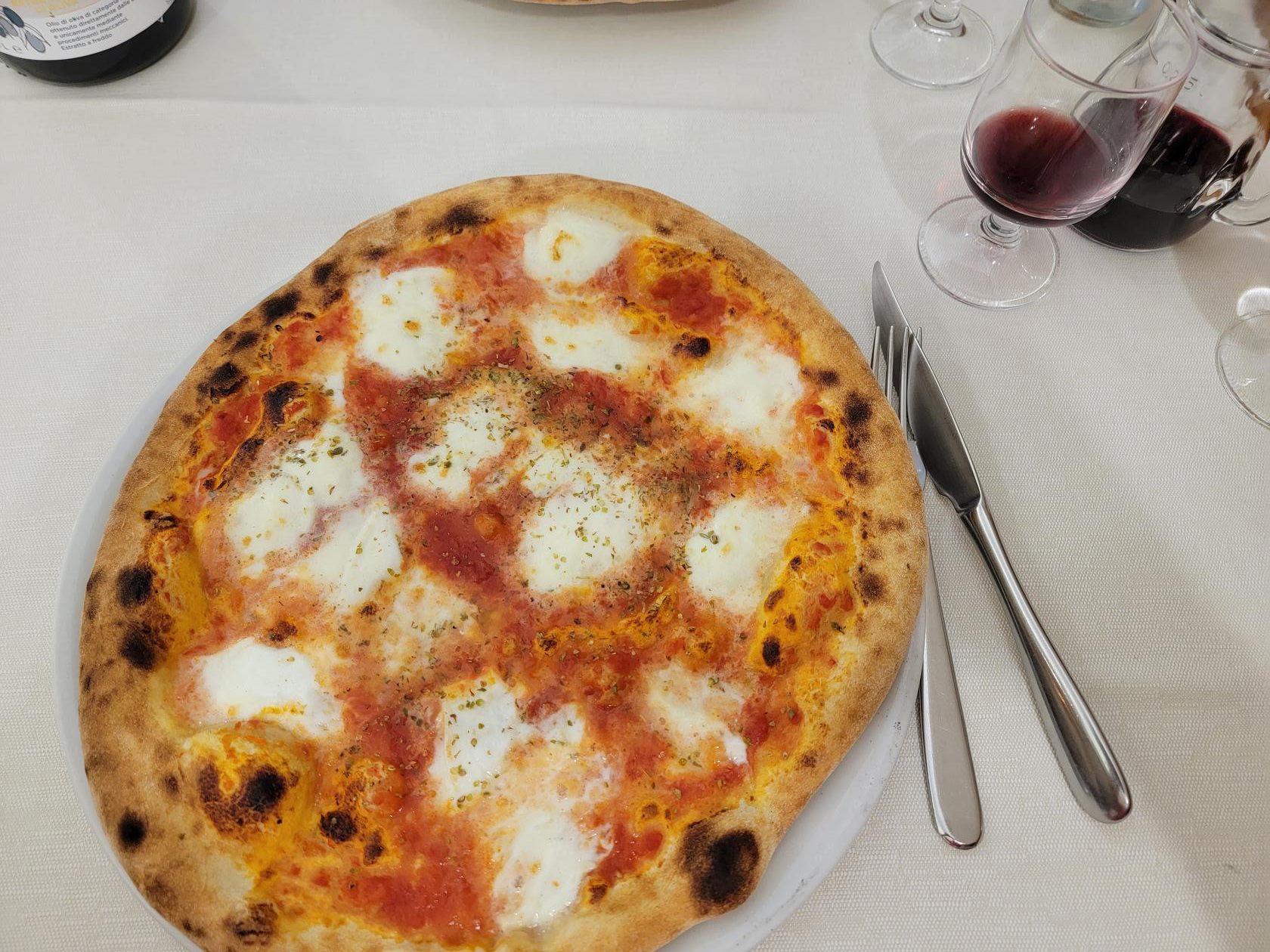
Ristorante Pizzeria da Romano – Pizza Margherita, Bufalina – Ivrea, Italy
Here is where you will find all the locals looking for excellent pizza at great prices. We ordered a salad, two pizzas, half liter of wine and water for around thirty Euros.
La Gustiera
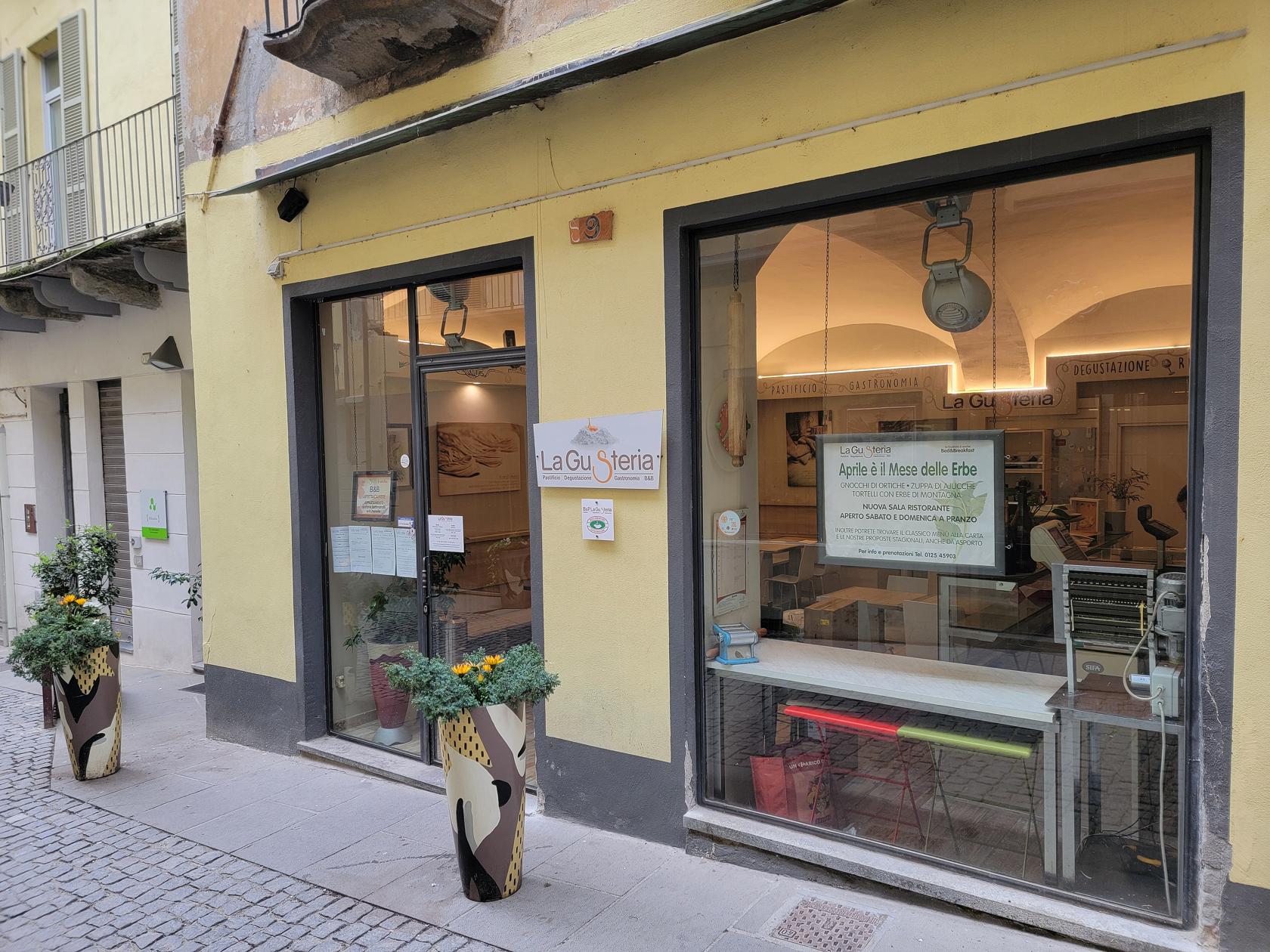
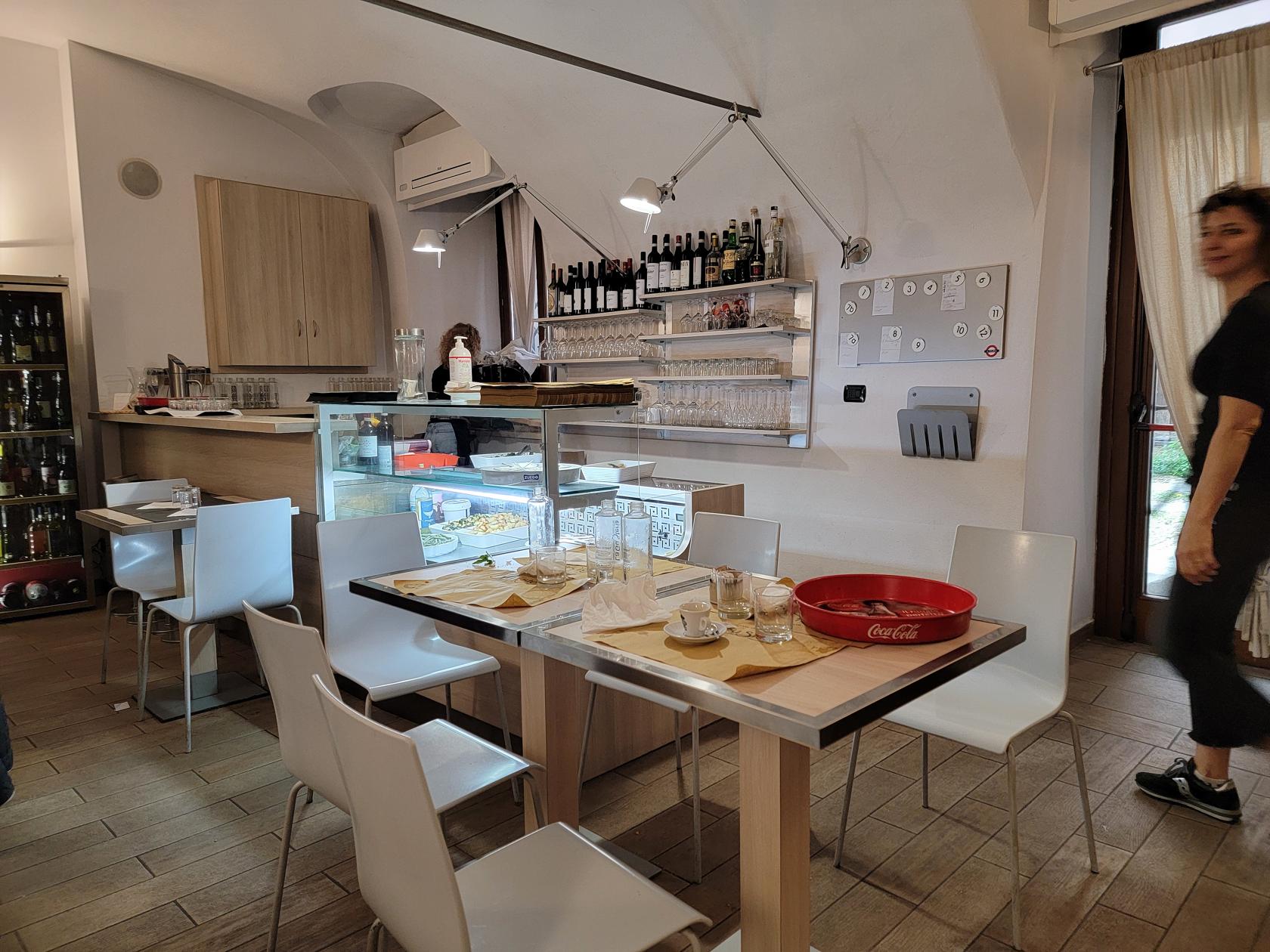
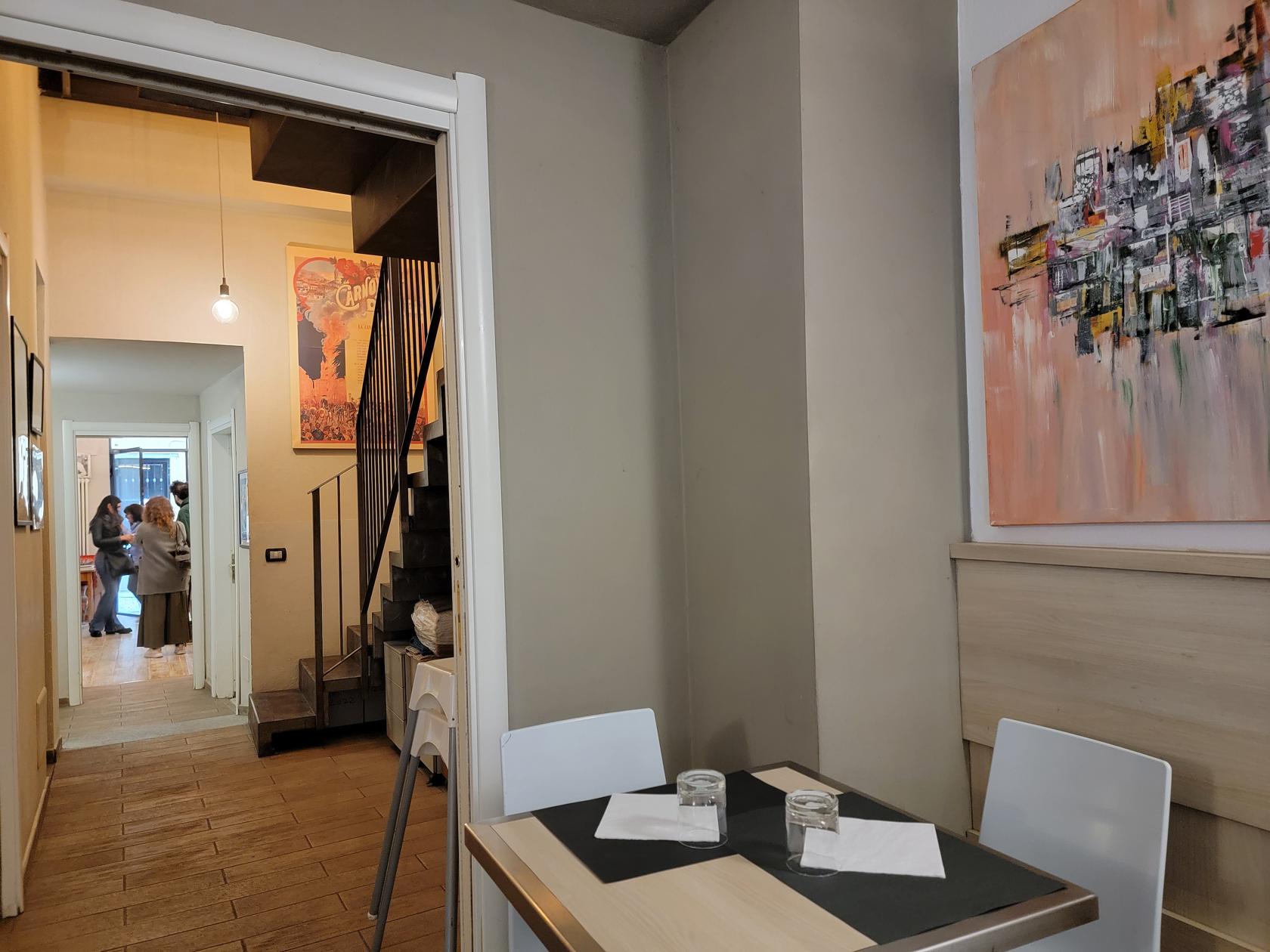
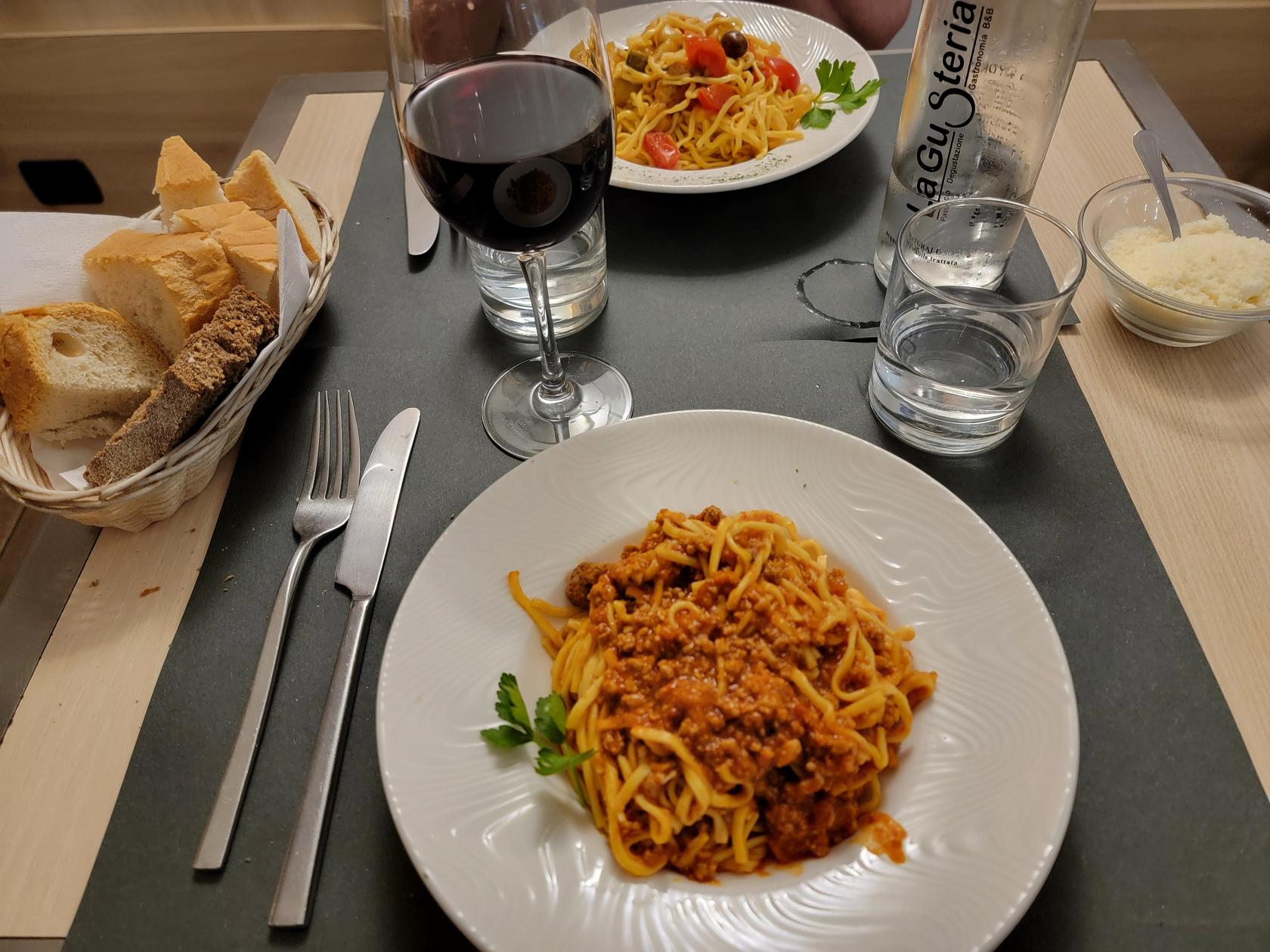
Another good place to eat, but come early if you do not have reservations, is La Gustiera Osteria. Located on Via Quattro Martiri, La Gustiera offers a select menu every evening of authentic Piedmont cuisine, perhaps half fish and half meat, so something for everyone’s taste.
La Gustiera – Outside – Ivrea, Italy
La Gustiera – Inside – Ivrea, Italy
La Gustiera – Inside – Ivrea, Italy
La Gustiera – Spaghetti Bolognese and Linguini with Cherry Tomotoes and Olives – Ivrea, Italy
Trattoria Monferrato
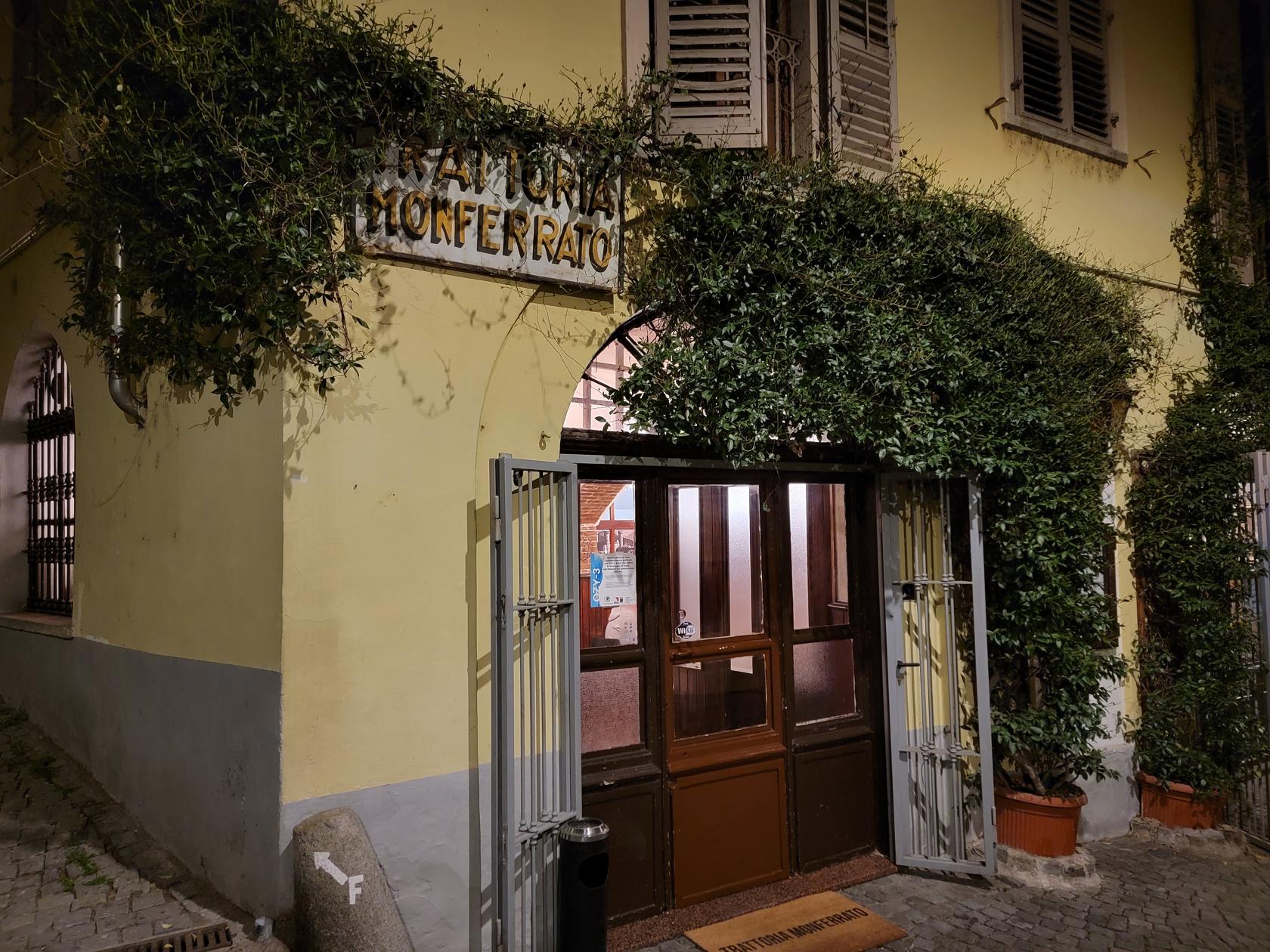
Almost directly in the old city center on Via Gariglietti is the Trattoria Monferrato. Having trouble finding a place to eat elsewhere, we found a table free here on a Saturday just by luck.
Trattoria Monferrato – Outside and Entrance – Ivrea, Italy
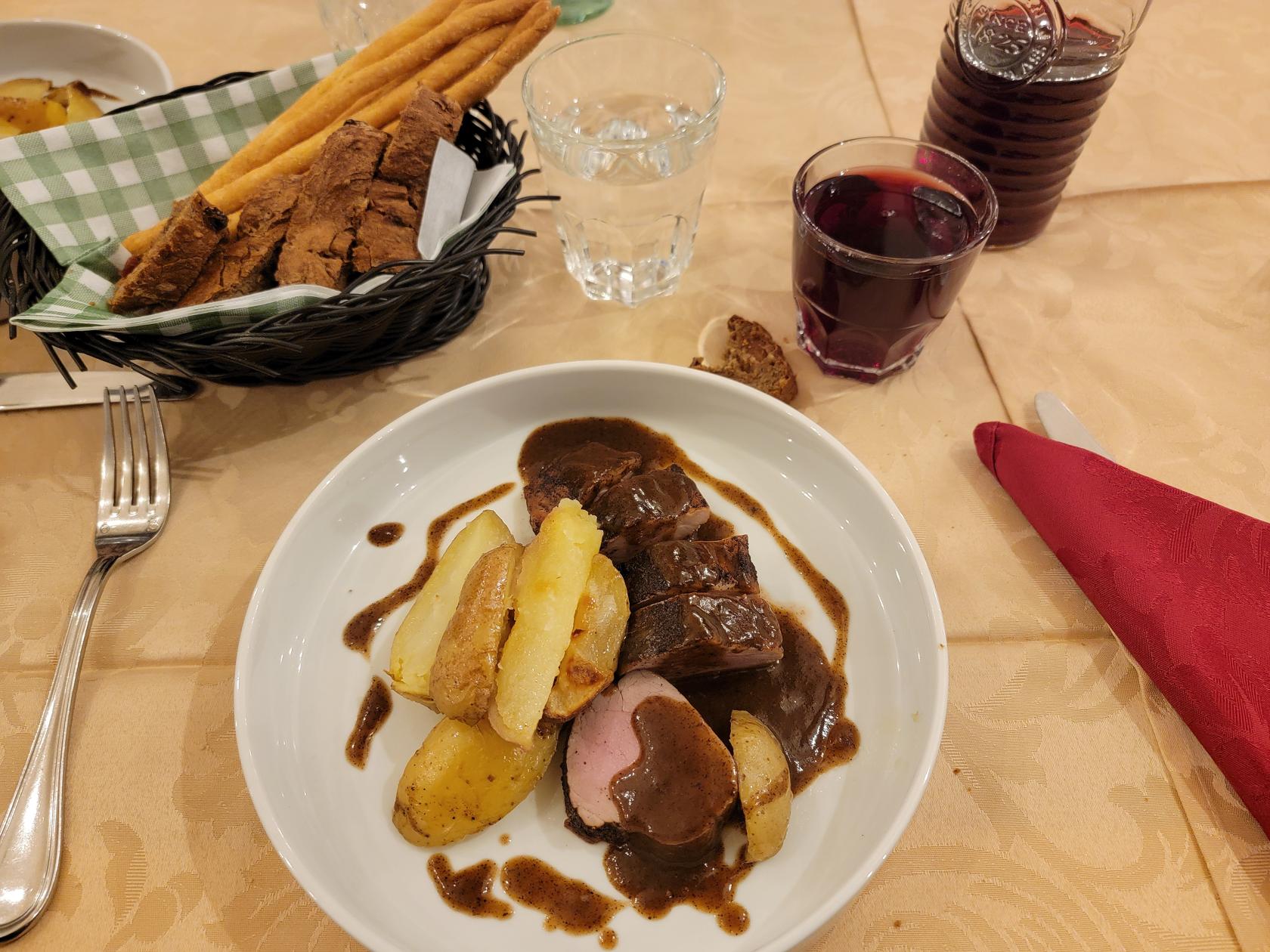
Trattoria Monferrato – Pork Filet and Potatoes – Ivrea, Italy
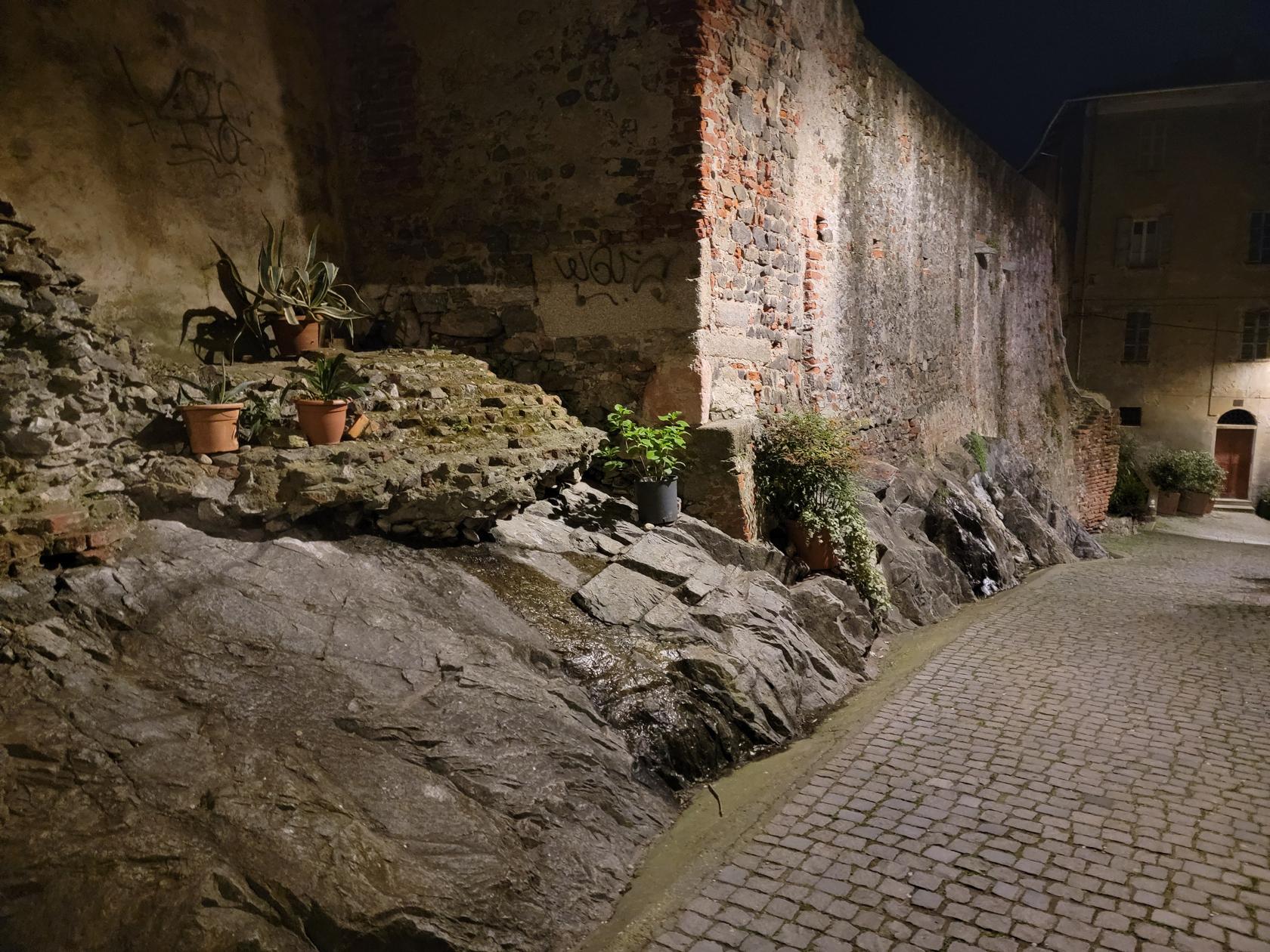
Diorite rock near Trattoria Monferrato – Ivrea, Italy
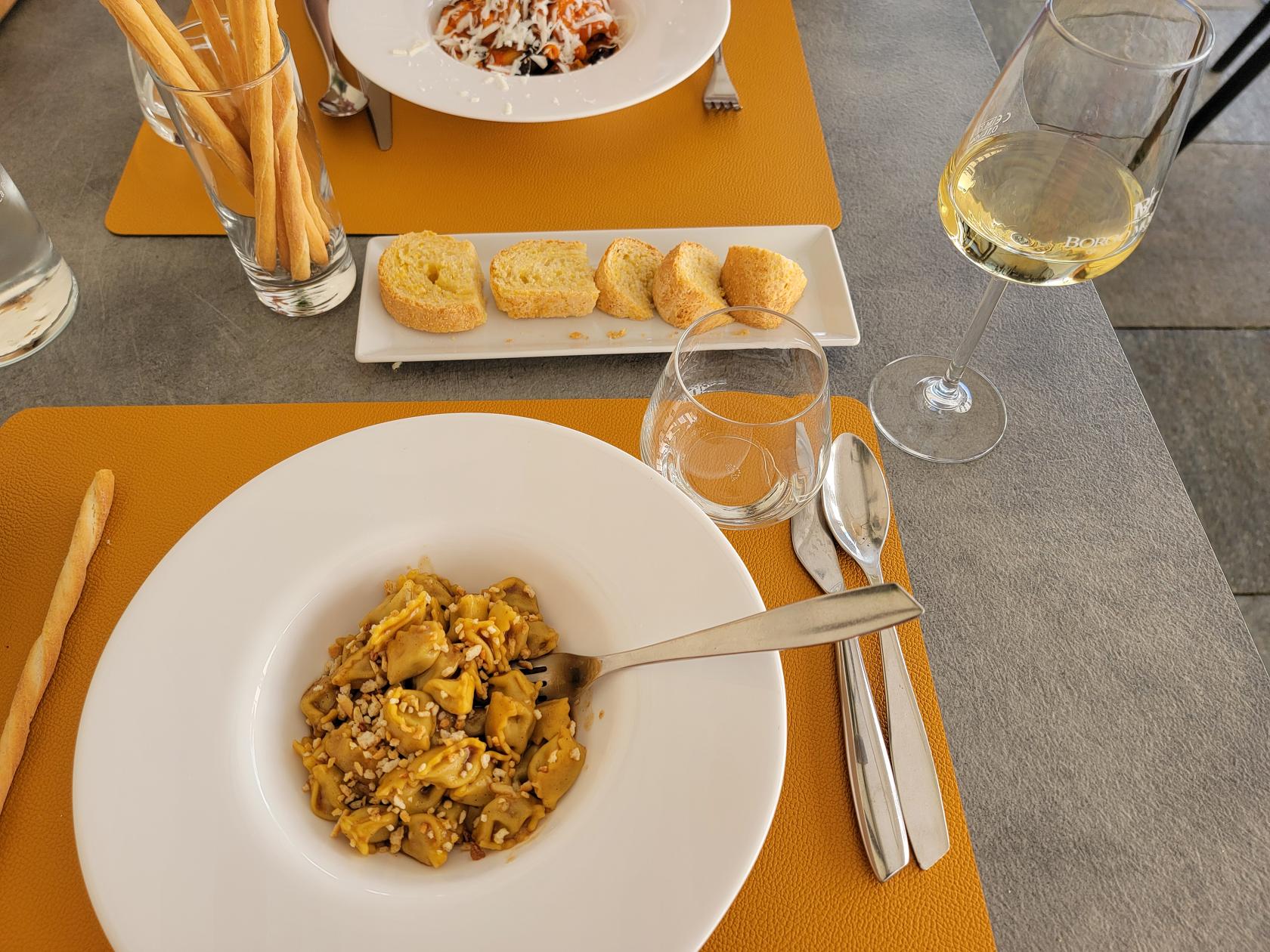
The food here was very good, a cross between home cooking and something made by a chef. The pork filet with gravy was delicious, along with a side of potatoes and some wine the meal was very enjoyable. Knowing the difficulty we had finding a place to eat, we shared our large table for six with a German couple from Frieburg and had a very entertaining conversation about them traveling through Italy on E-Bike.
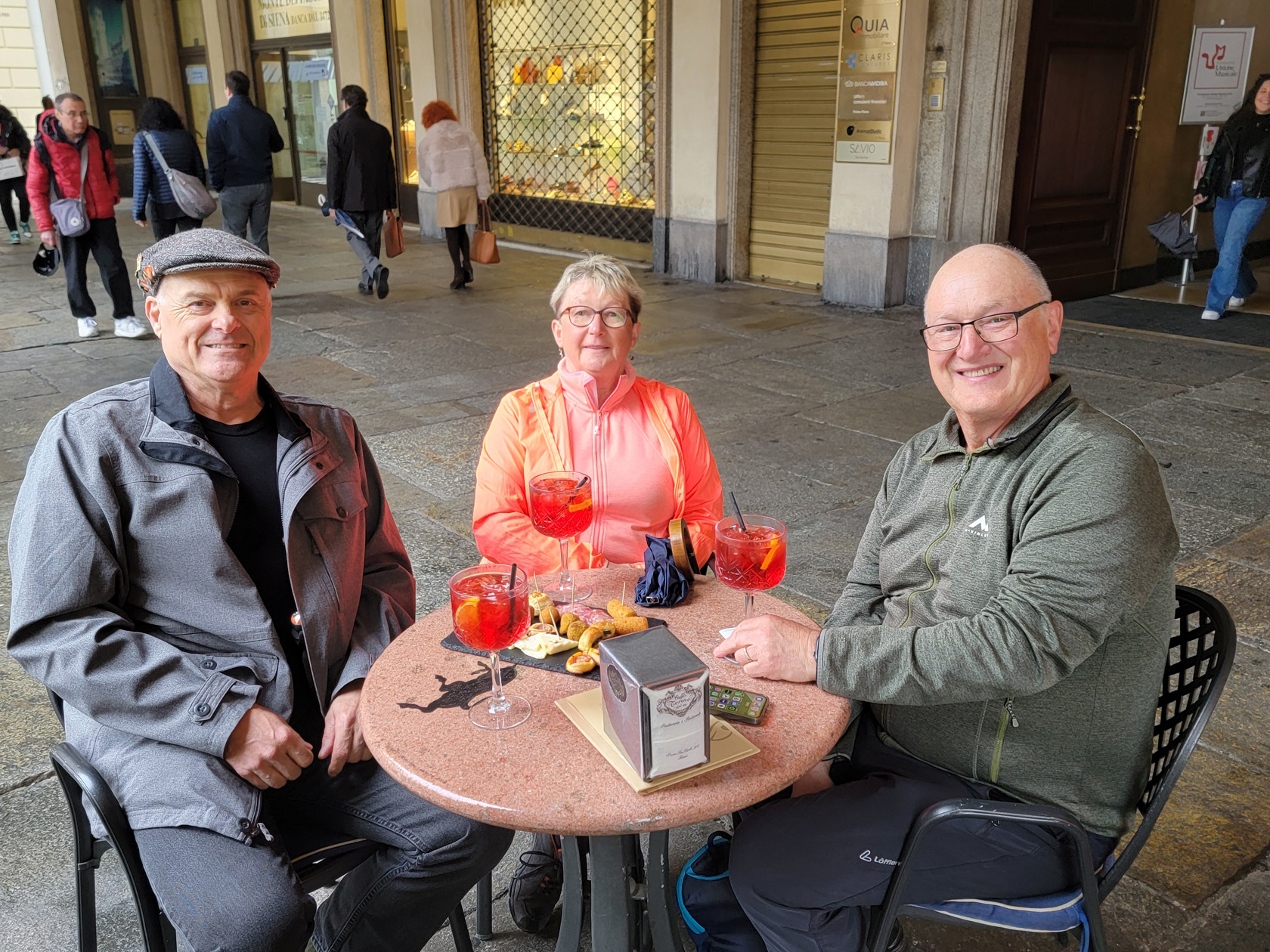
Erick with Regina and Leo, who we met at the Trattoria Monferrato – Outside Caffe Torino, Piazza San Carlo – Turin, Italy
Our Hotel
We stayed at one hotel for the entire weekend on the north side of town, only to have more convenience leaving on our hikes.
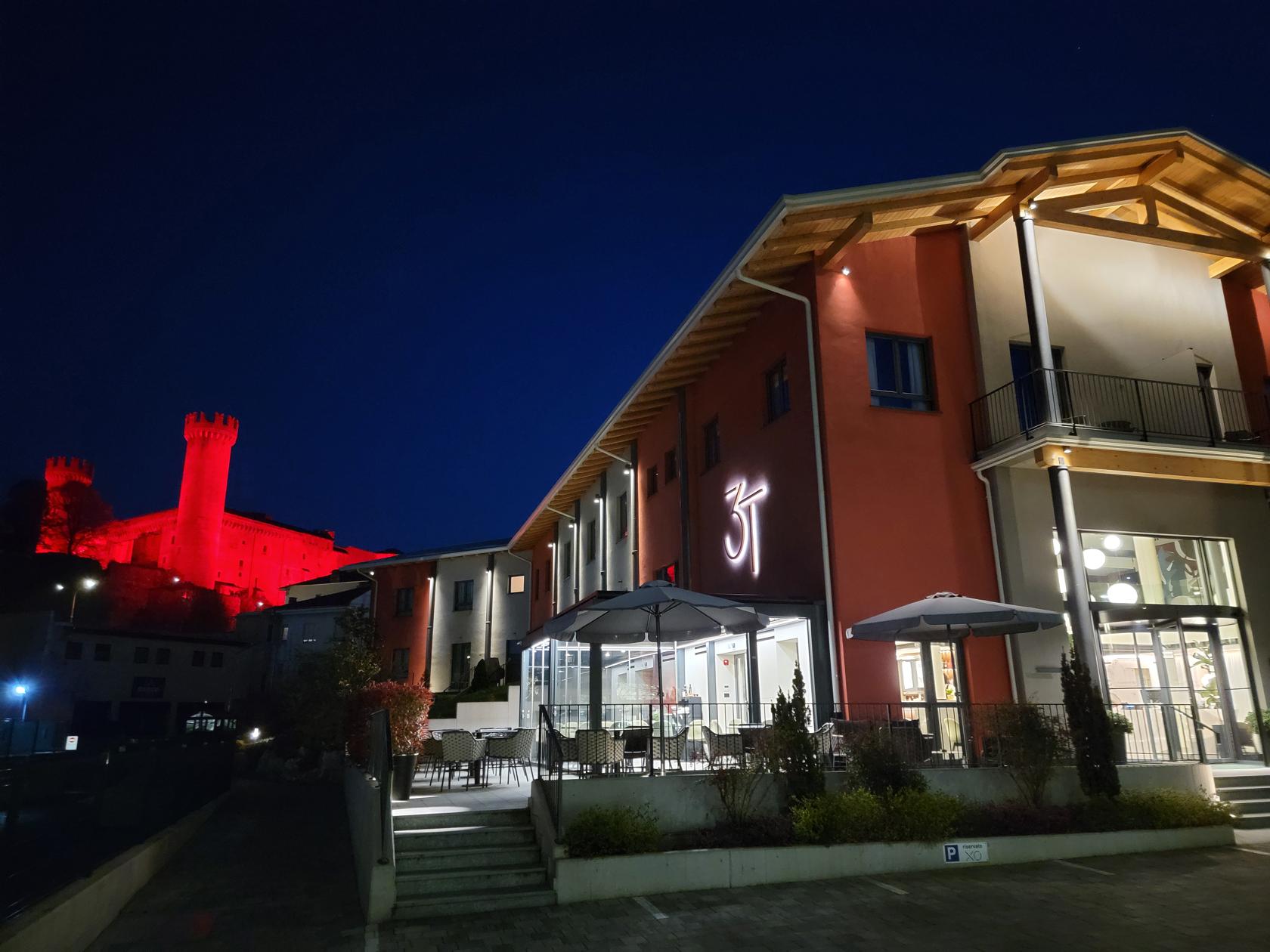
3T Hotel – Castle Sabaudo, At Night – Ivrea, Italy
Hotel 3T
A rather modern hotel with most amenities. The hotel staff can be a bit problematic on the weekends, since we had to ask a few times for towels and toilet paper. So, attention to detail is not a priority.
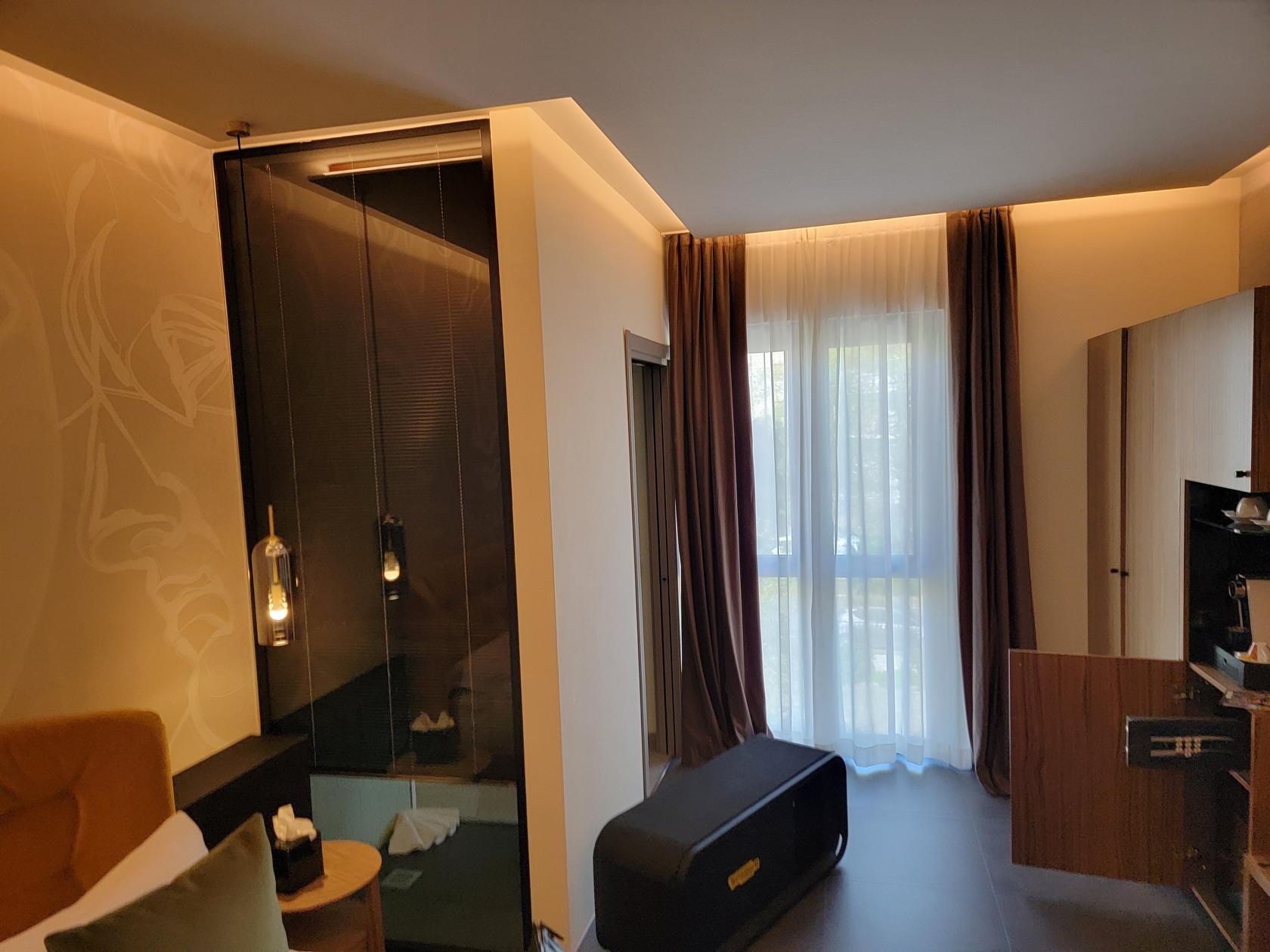
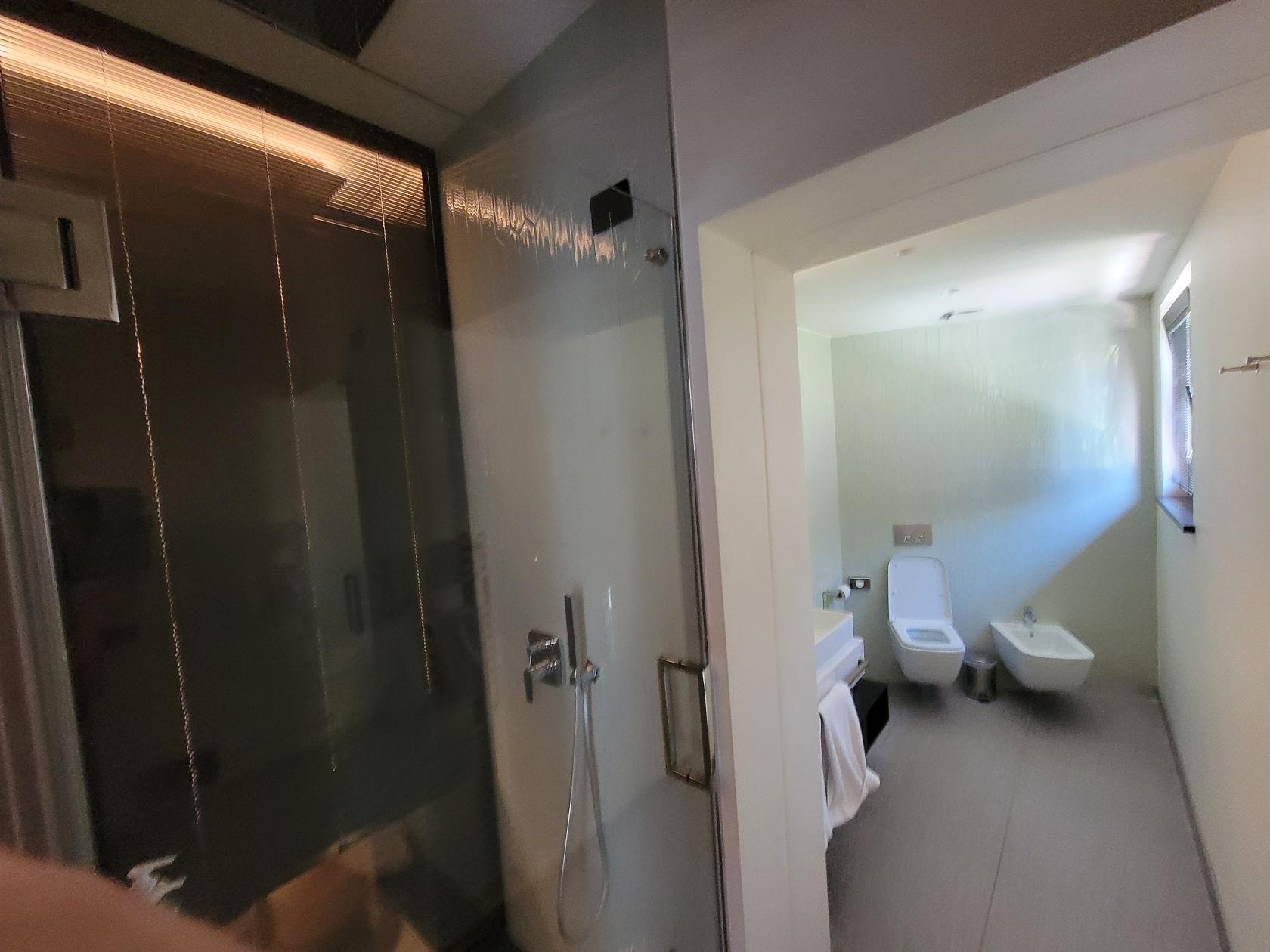
3T Hotel – Our Room, 209 – Ivrea, Italy
3T Hotel – Our Room, 209 – Ivrea, Italy
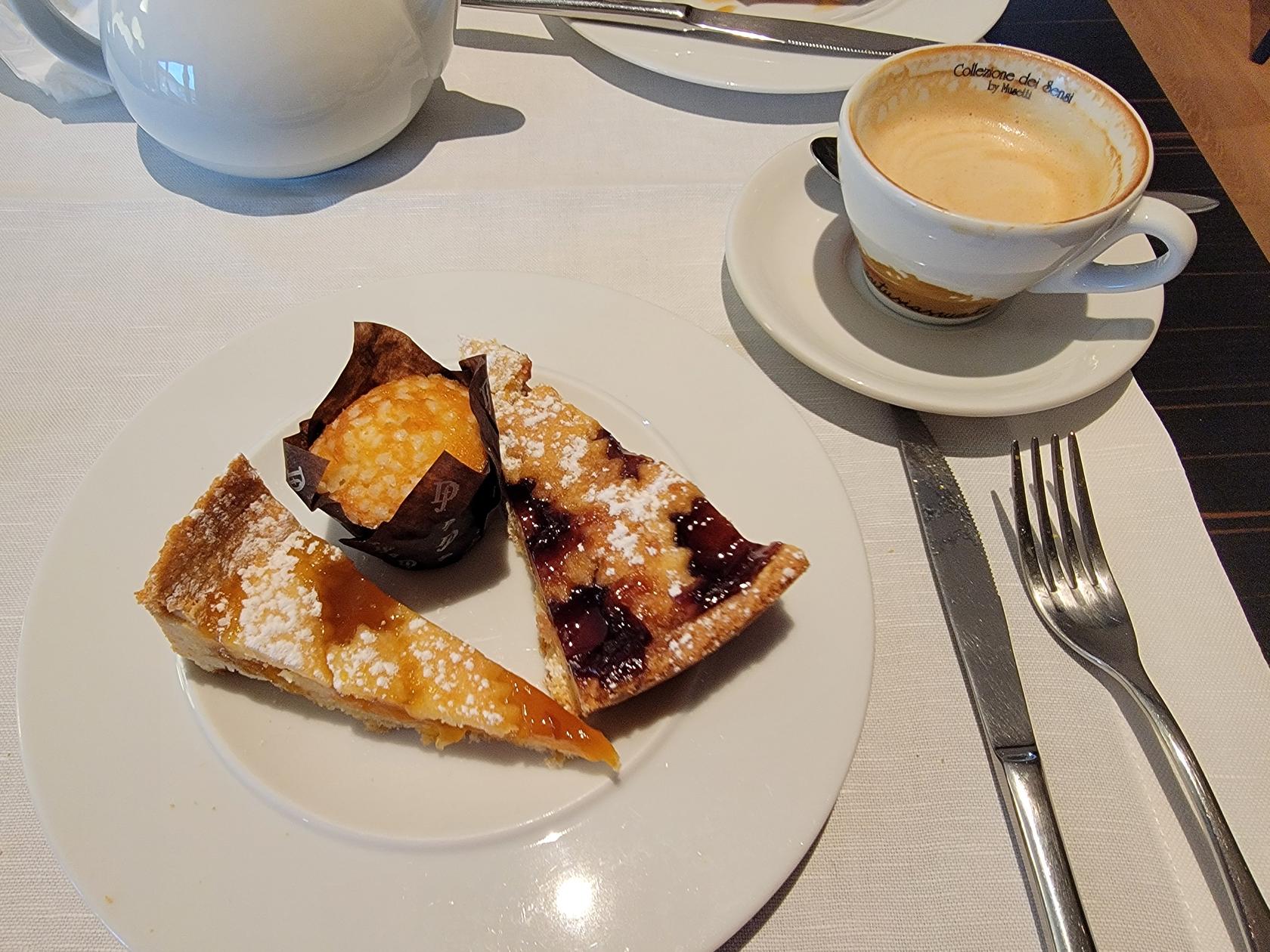
Hotel 3T – Breakfast pastries and cappuccino – Ivrea, Italy
Another drawback was the restaurant, which was closed for dinner, so we had to go every night, which can be annoying if you had a long and tiring hike. However, the hotel is clean and the bed and pillows were very comfortable, a big plus when you need a good night’s rest.
If you are into hiking and enjoy a really good weekend excursion, then the Metropolitan town of Turin has something great to offer, the tiny little town of Ivrea. Known for being part of the Via Francigena[1]The ancient pilgrimage route from England to Rome. and Five Lake hiking area, it is a great place to spend a few days.
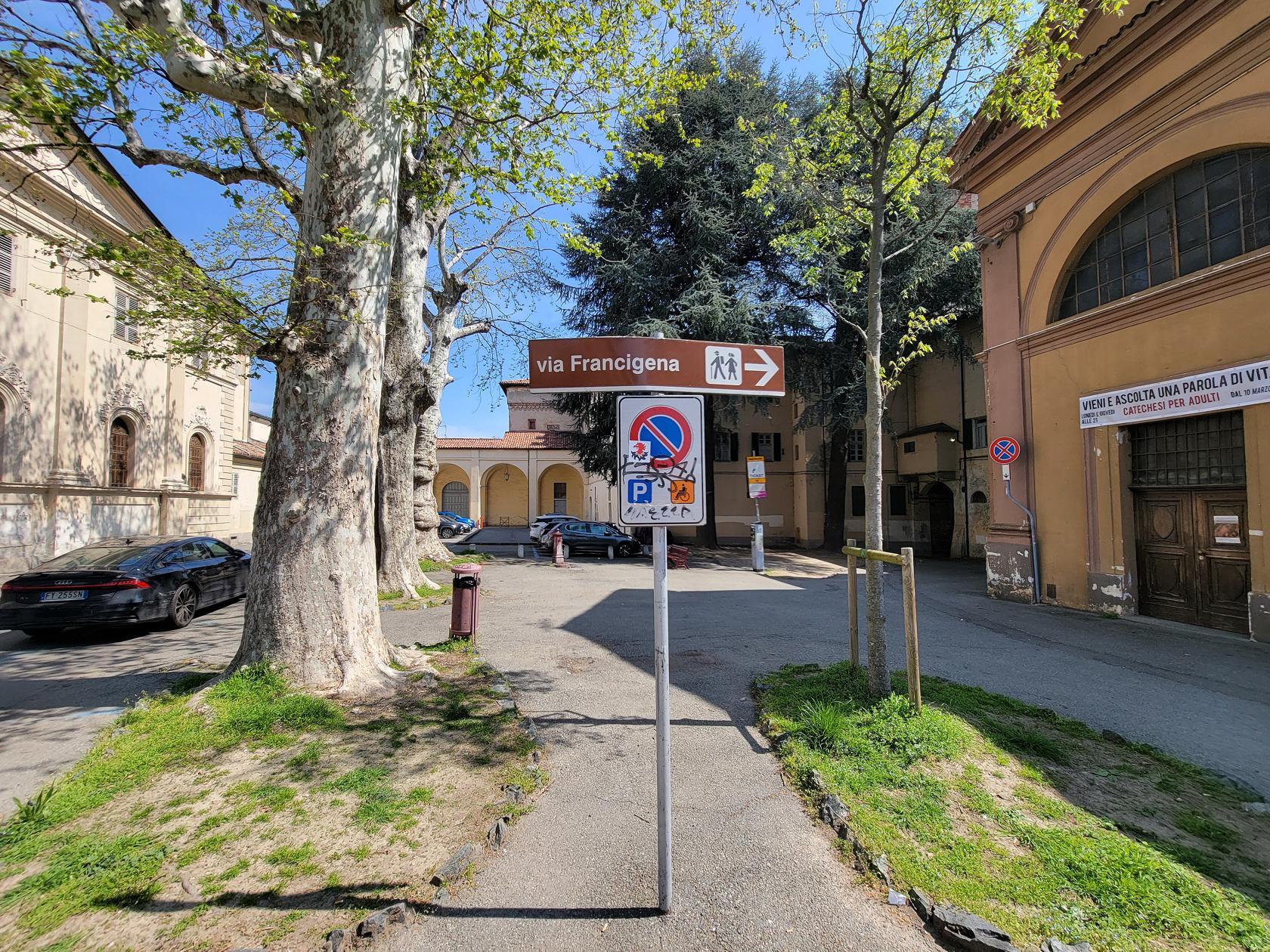
Via Francigena – Hiking and Trail Sign – Ivrea, Italy
Via Francigena – Hiking and Trail Guide – Ivrea, Italy
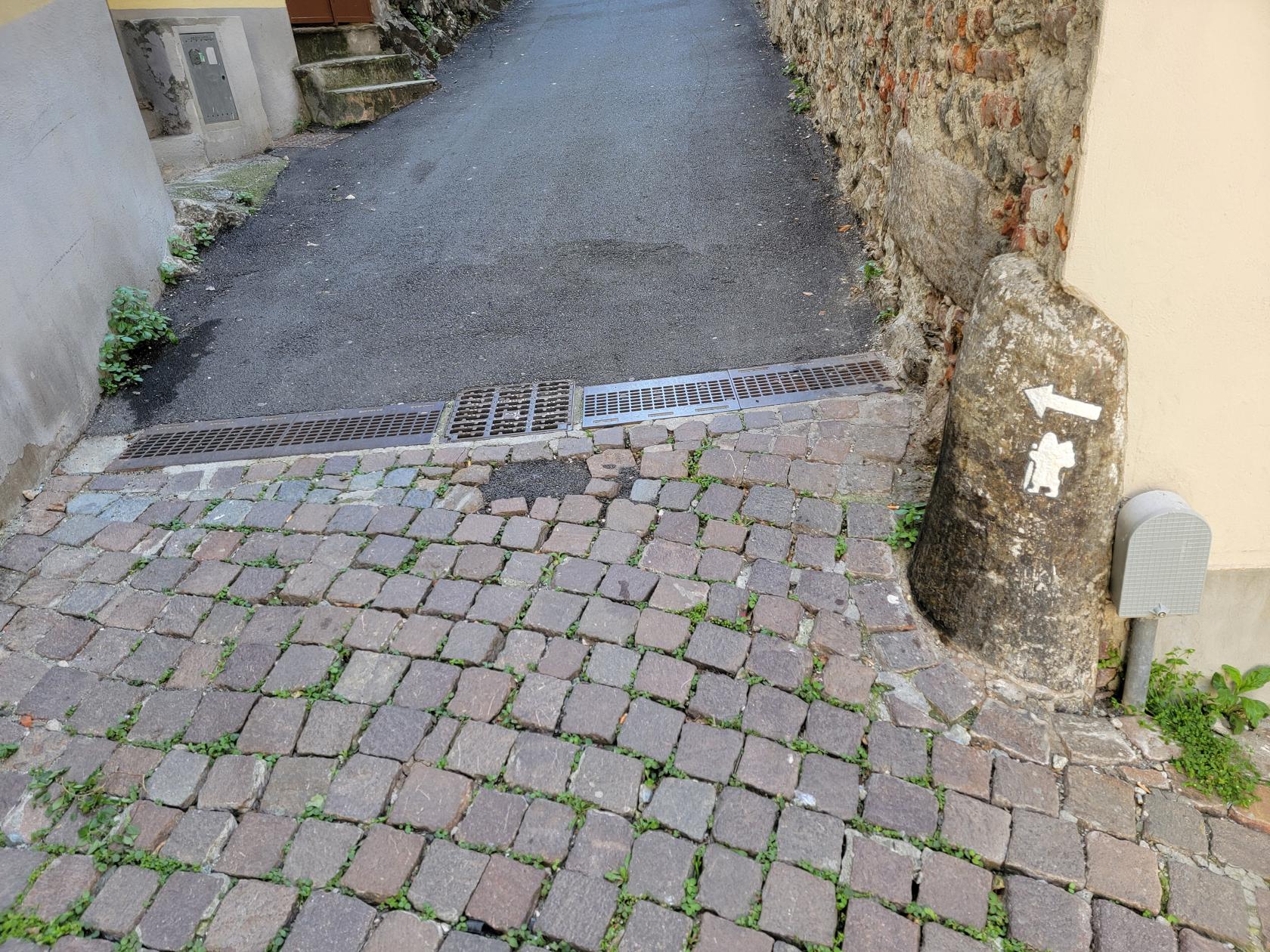
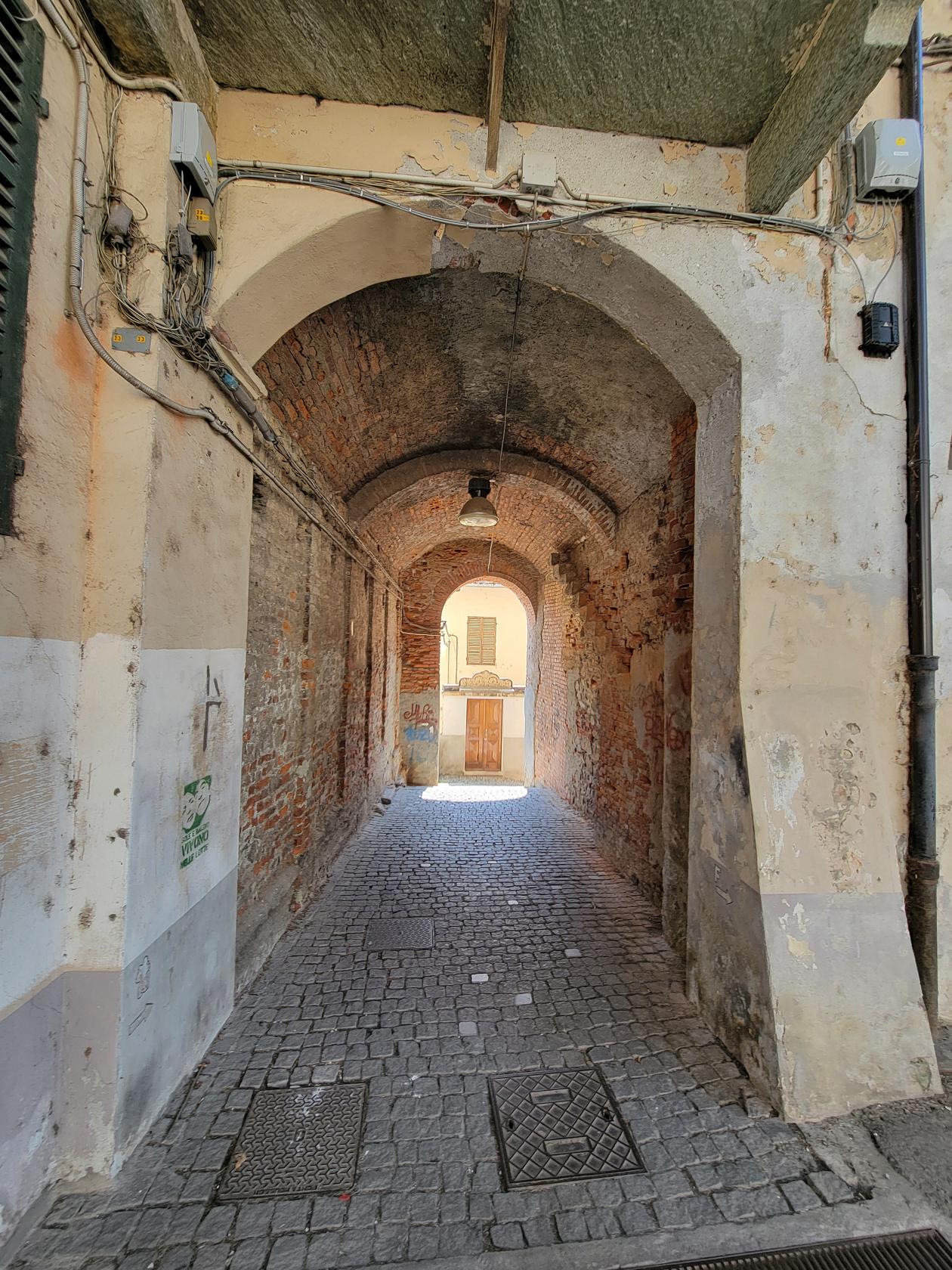
Via Francigena – Way through the city – Ivrea, Italy
Via Francigena – Way through the city – Ivrea, Italy
Getting There
This town can be reached in just under an hour’s train ride from Porta Nuovo in Turin. The Regional Veloce (RV) runs directly from the main train station, through Porta Susa and onto Ivrea. Unfortunately, the line no longer continues to Aosta, so those who are stopping over have to use the bus service to continue their journeys.
Porta Nuovo Train Station – Main Lobby – Turin, Italy
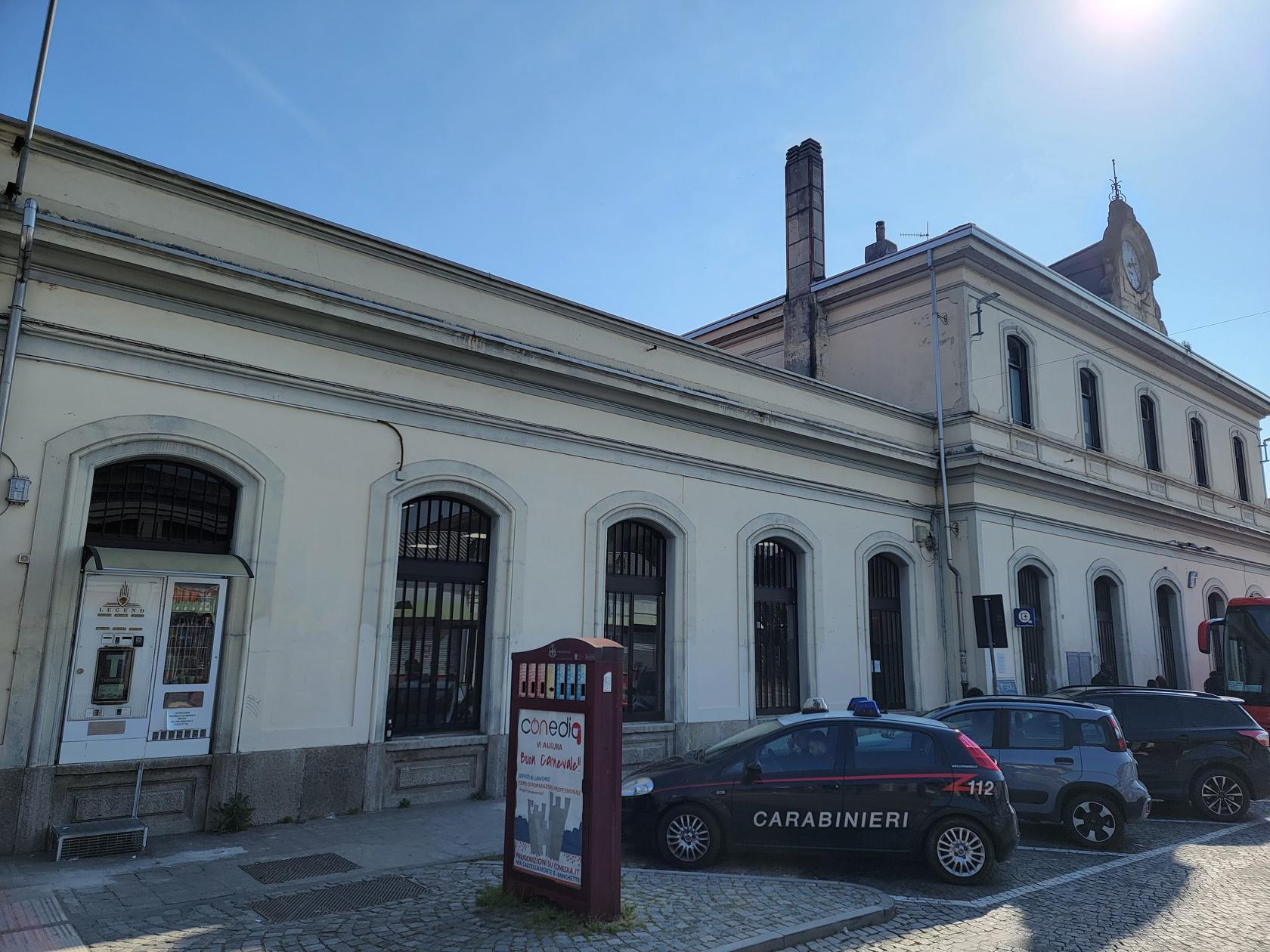
Ivrea Train Station – Outside – Ivrea, Italy
The Hotel
We stayed at the Hotel 3T on Via Sant’Ulderico, a modern hotel that has most of the amenities. One thing I disliked about this hotel, at least during this time of year (Spring), is that the thermostat makes you believe you have control over the temperature in your room, when in fact you don’t!
3T Hotel – Castle Sabaudo, At Night – Ivrea, Italy
3T Hotel – Our Room, 209 – Ivrea, Italy
3T Hotel – Our Room, 209 – Ivrea, Italy
The Town
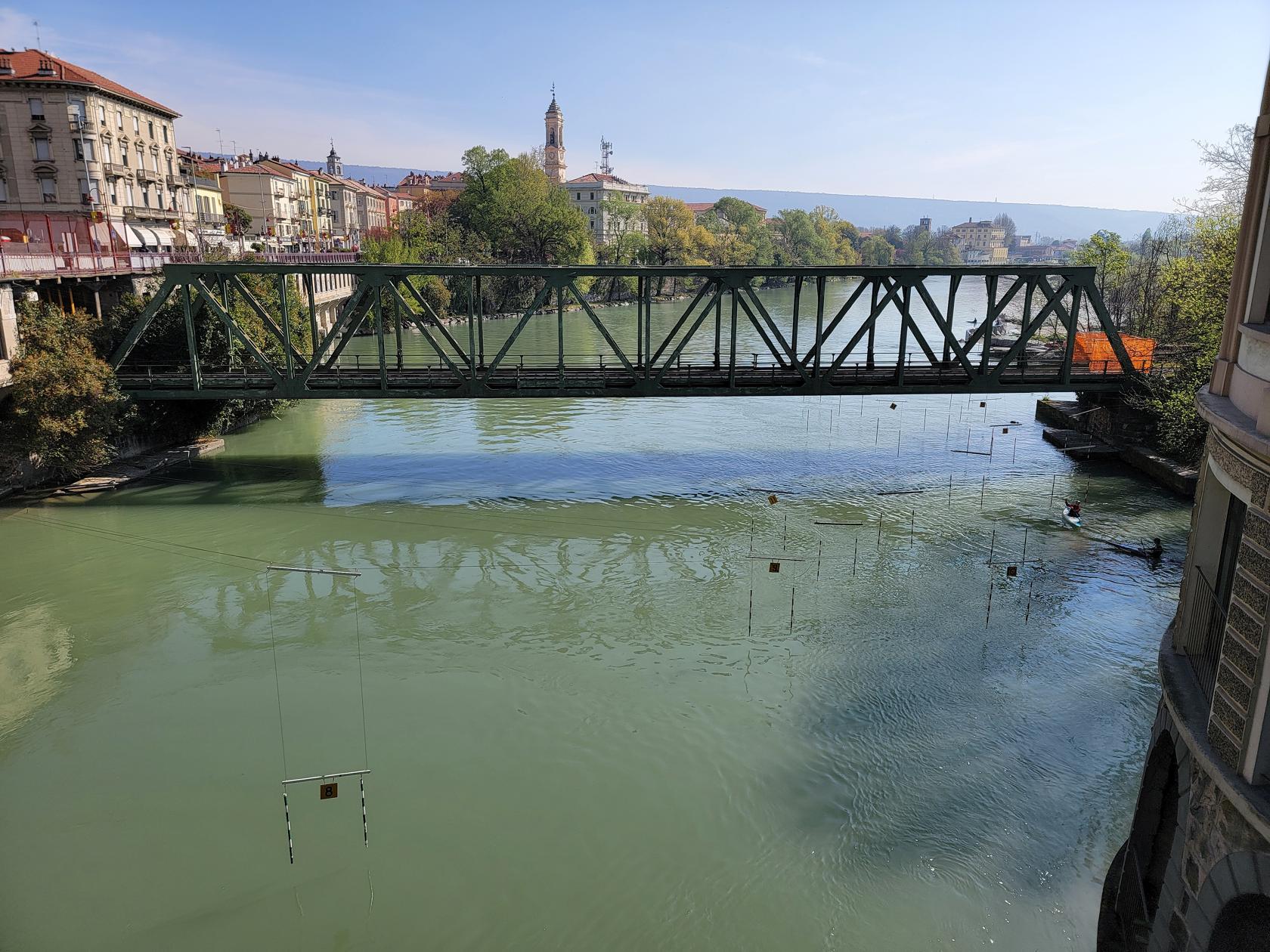
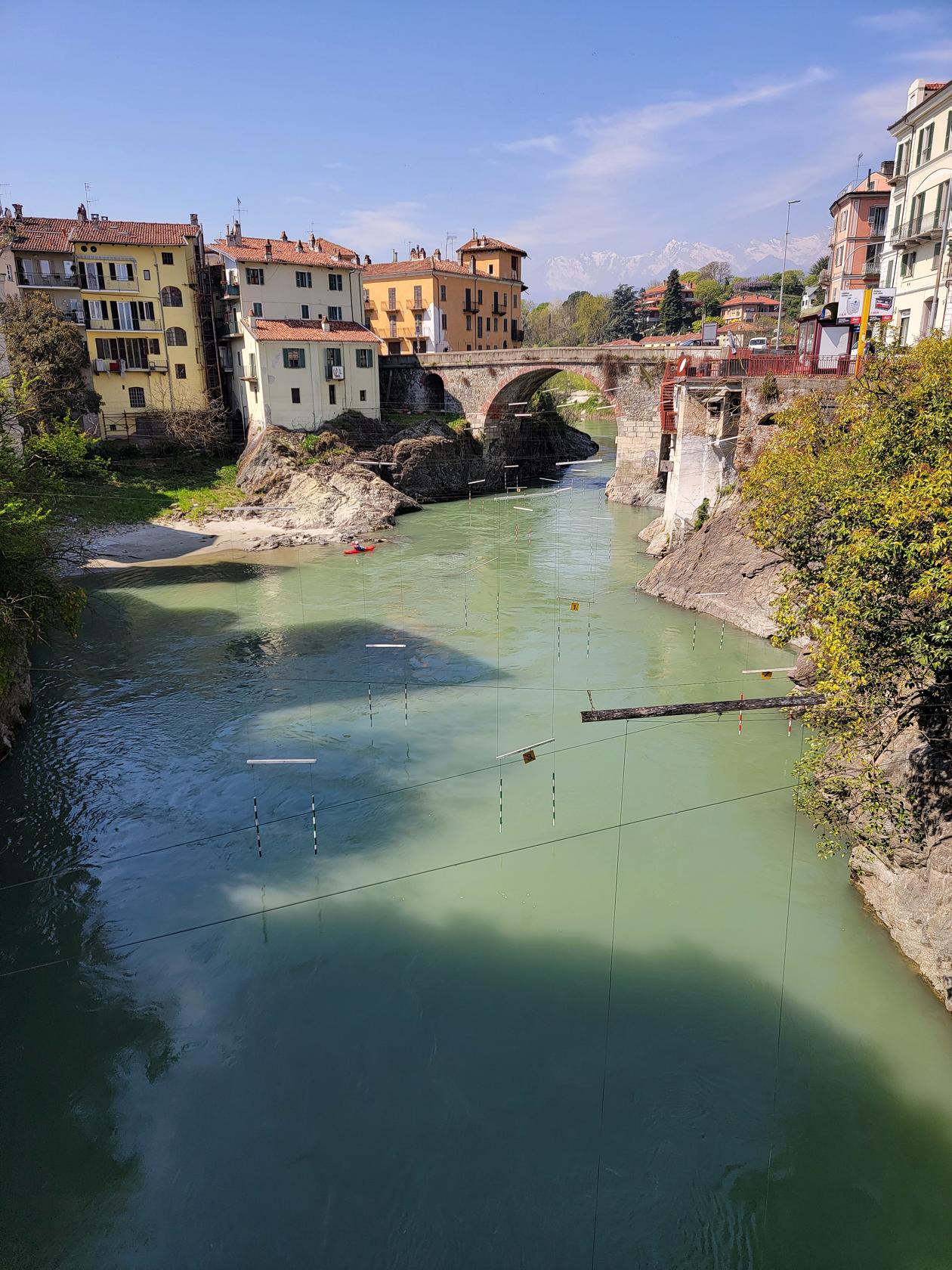
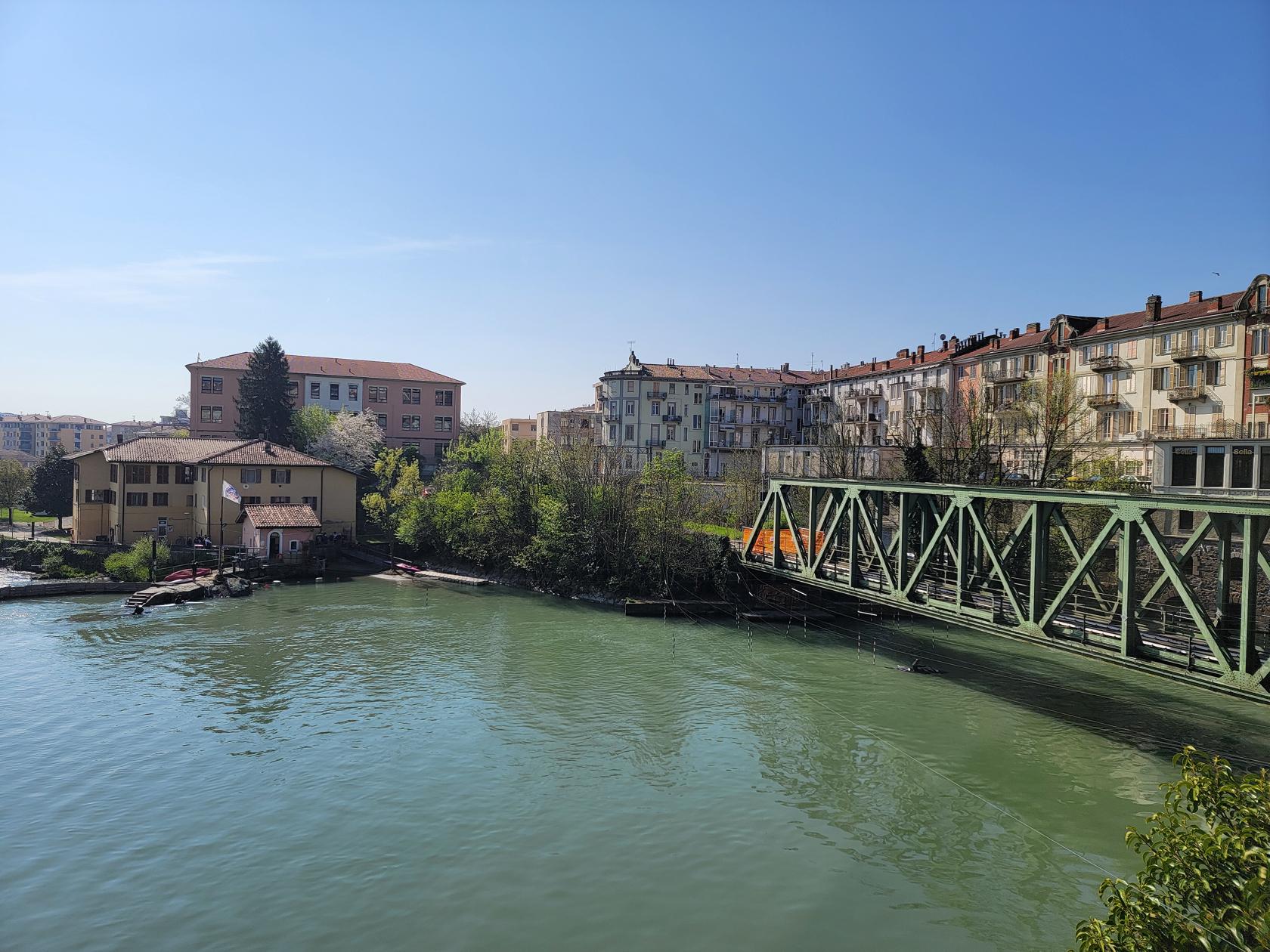
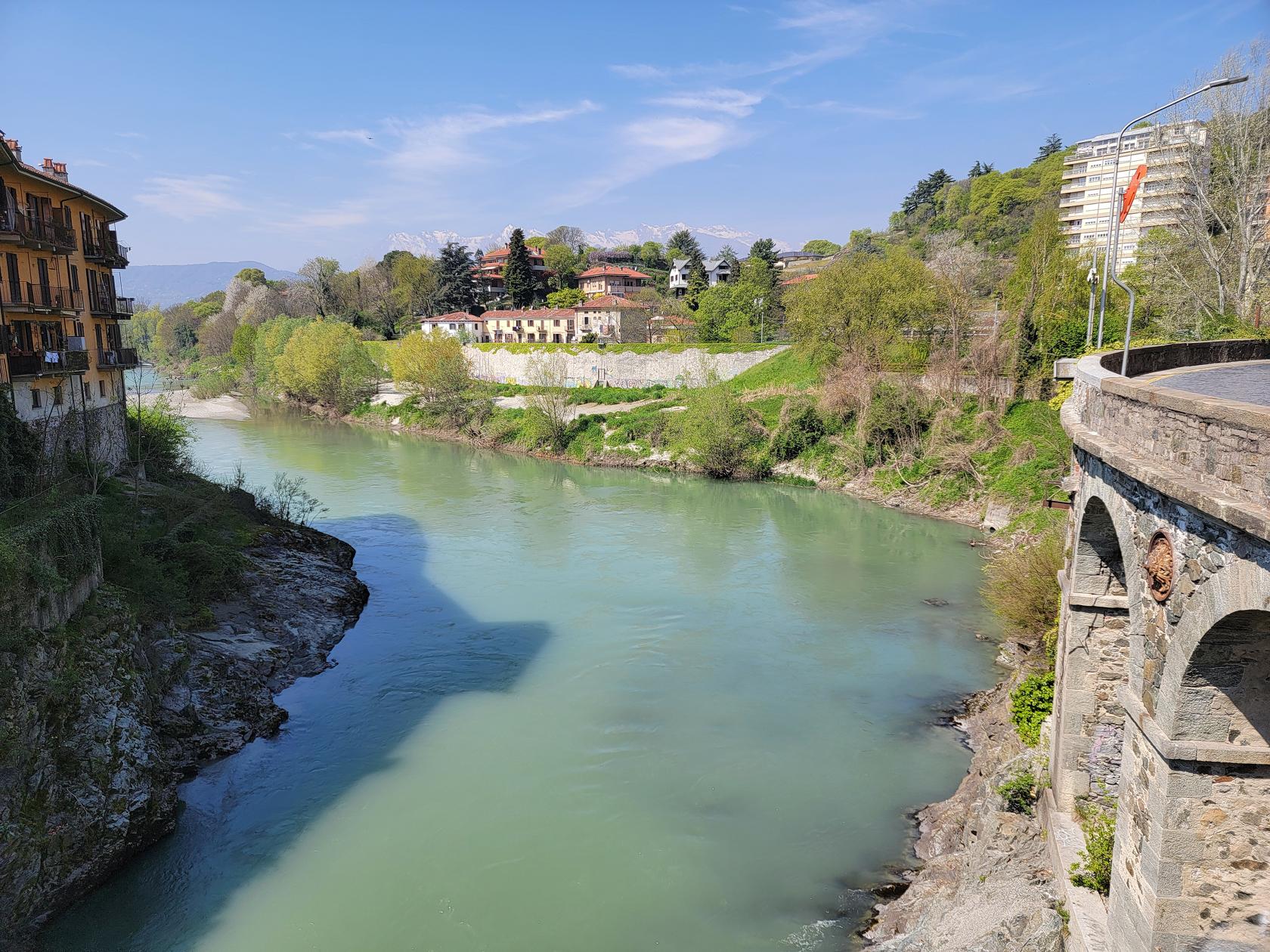
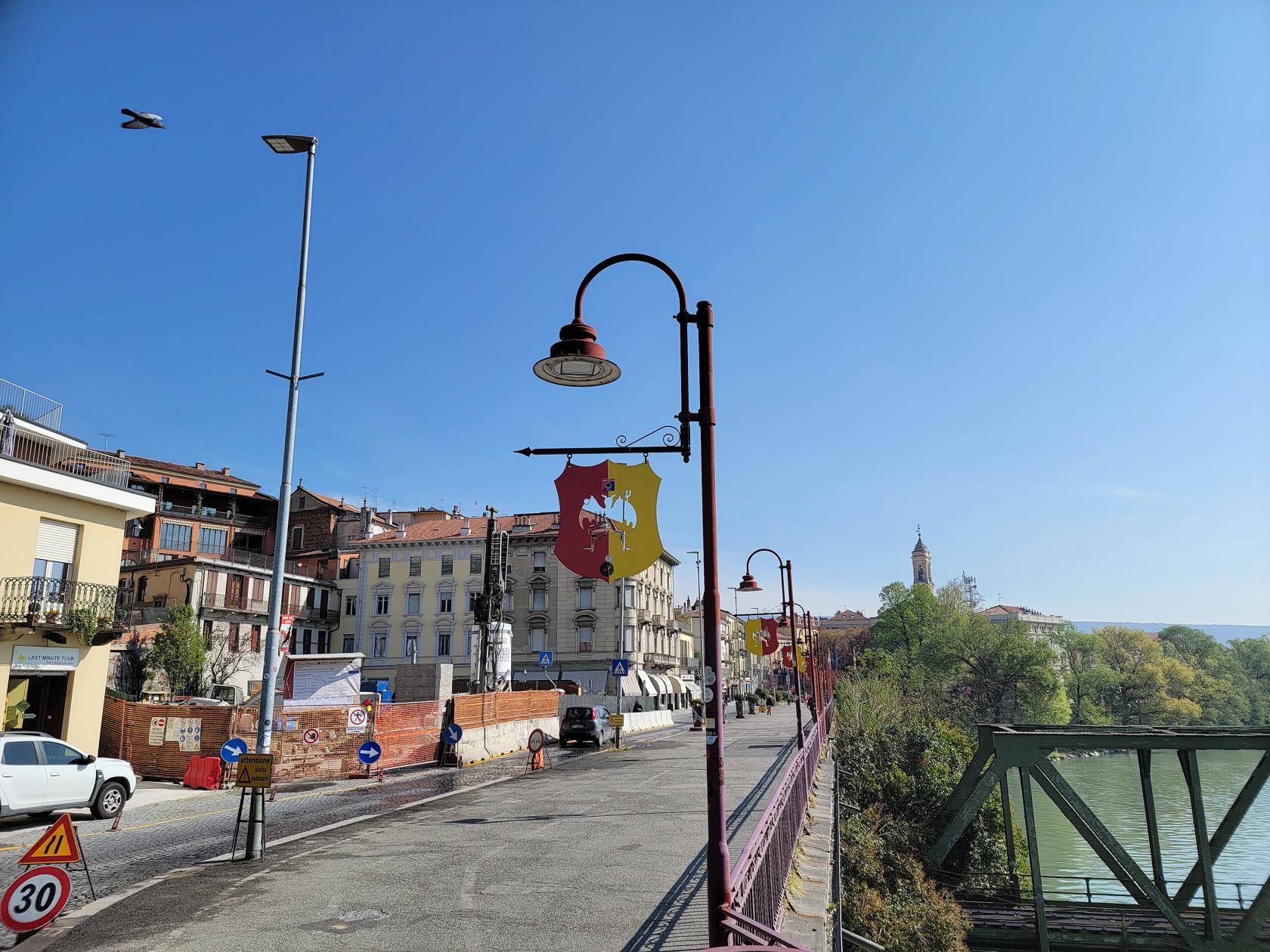
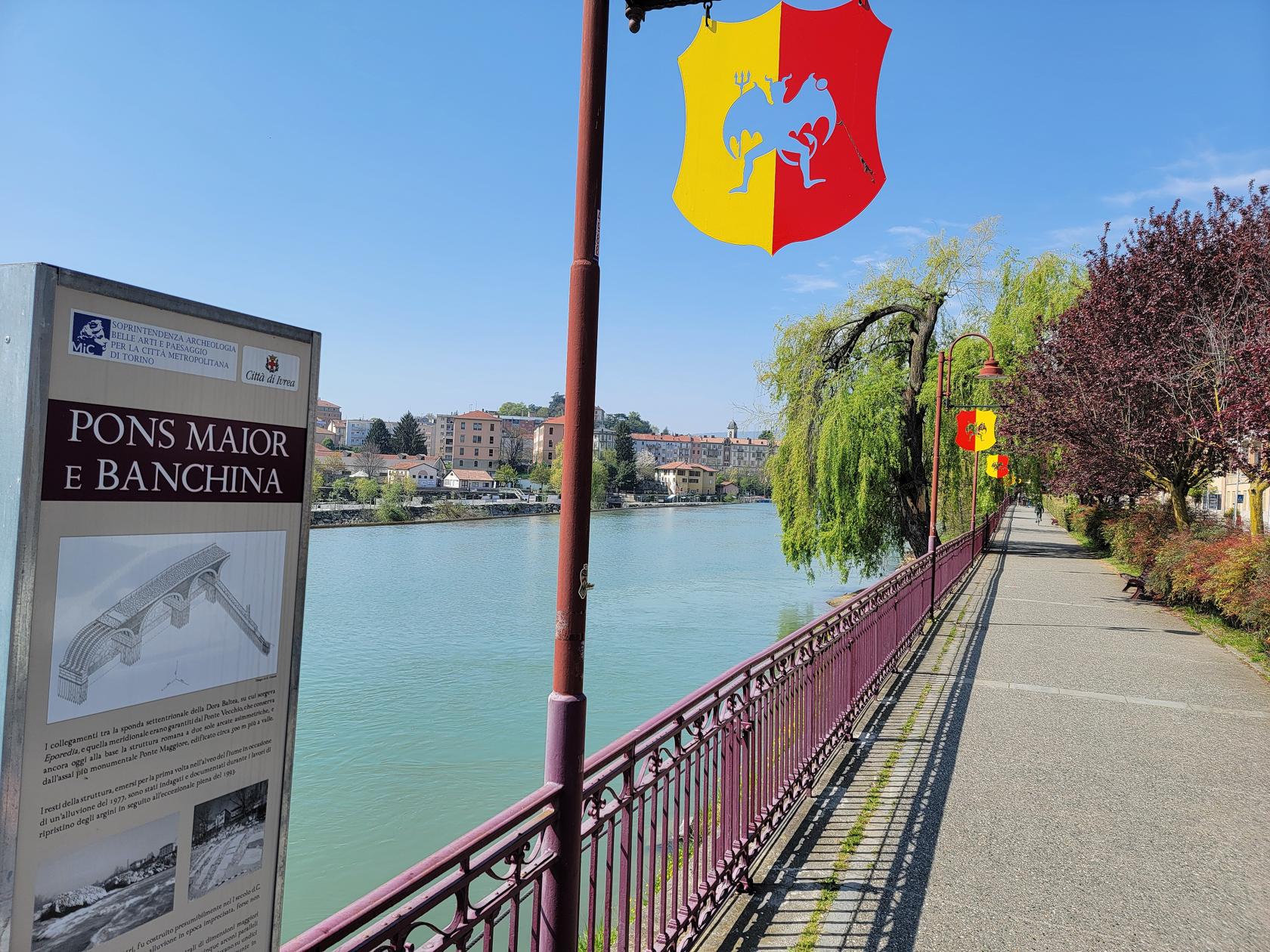
The town is cut in two by the Dora Baltea river, which offers a few courses for avid kayakers and seems to draw them from all over. The river here cuts right through the native diorite rock, which can be seen everywhere you look and presents a dark geologic hardness that makes it such a stable building foundation; practically everything, including the hospital, is built on it.
Dora Baltea River – Train Bridge to Aosta, closed – Ivrea, Italy
Dora Baltea River – Ponte Vecchio – Ivrea, Italy
Dora Baltea River – Train Bridge to Aosta, closed – Ivrea, Italy
Dora Baltea River – From Ponte Vecchio – Ivrea, Italy
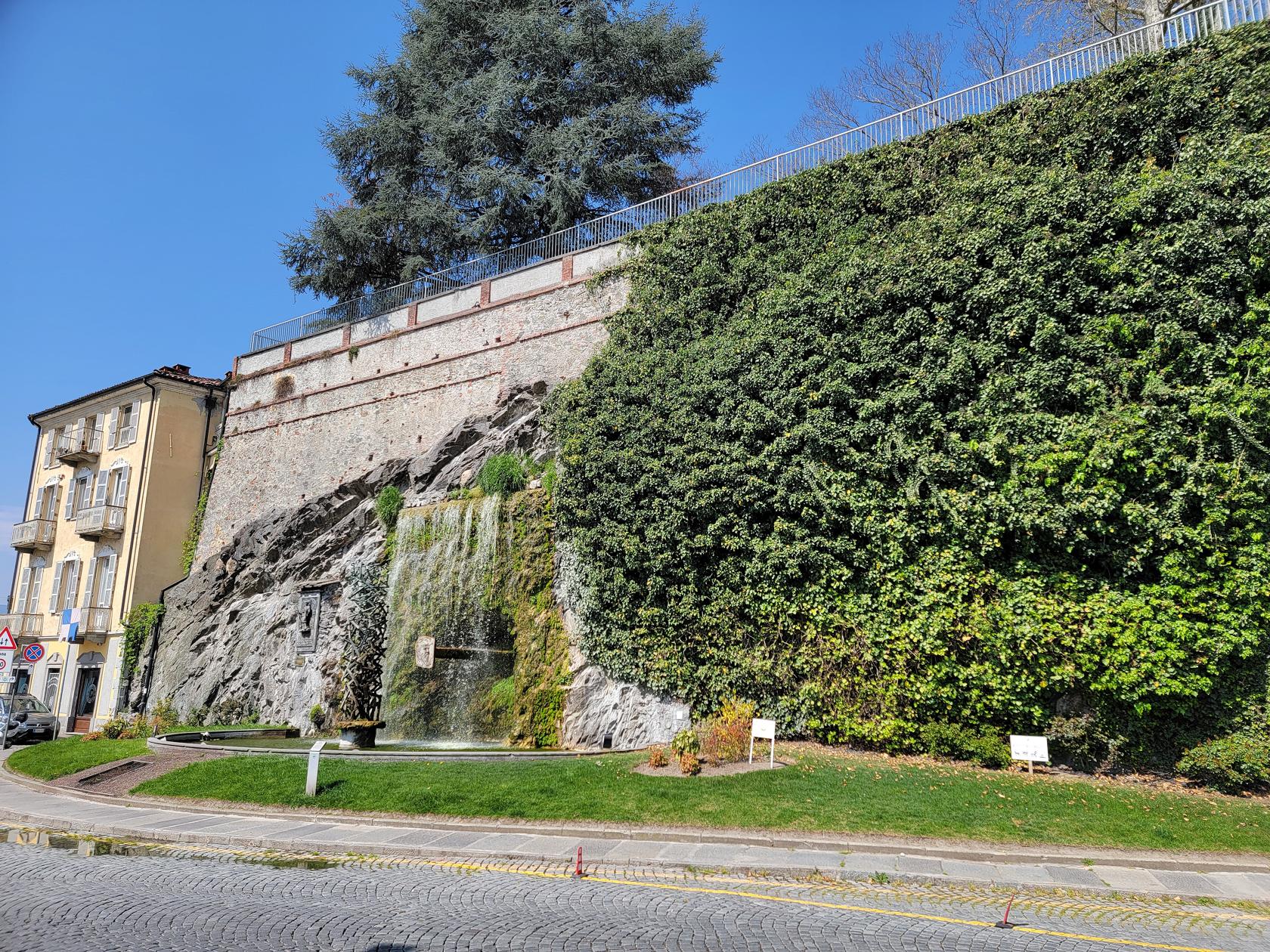
Dora Baltea River – Fontana Camillo Olivetti – Ivrea, Italy
There is not much to the town itself, just the Lungodora, or walkway along the river, and one central main street where one can find most of the shops, cafes and other stores.
Dora Baltea River – Corse Re Umberto – Ivrea, Italy
Dora Baltea River – Corse Re Umberto – Ivrea, Italy
Castle Saubauda
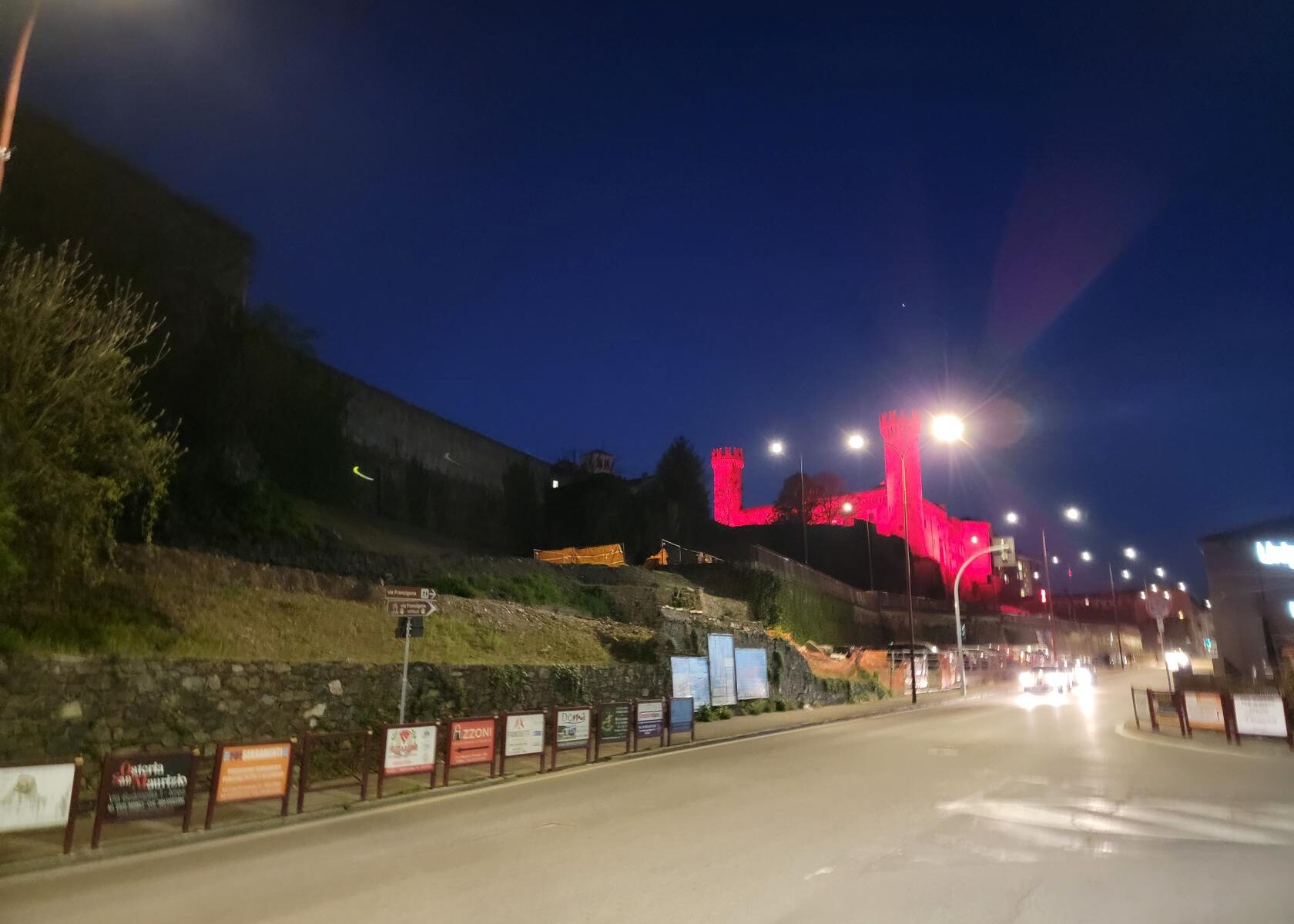
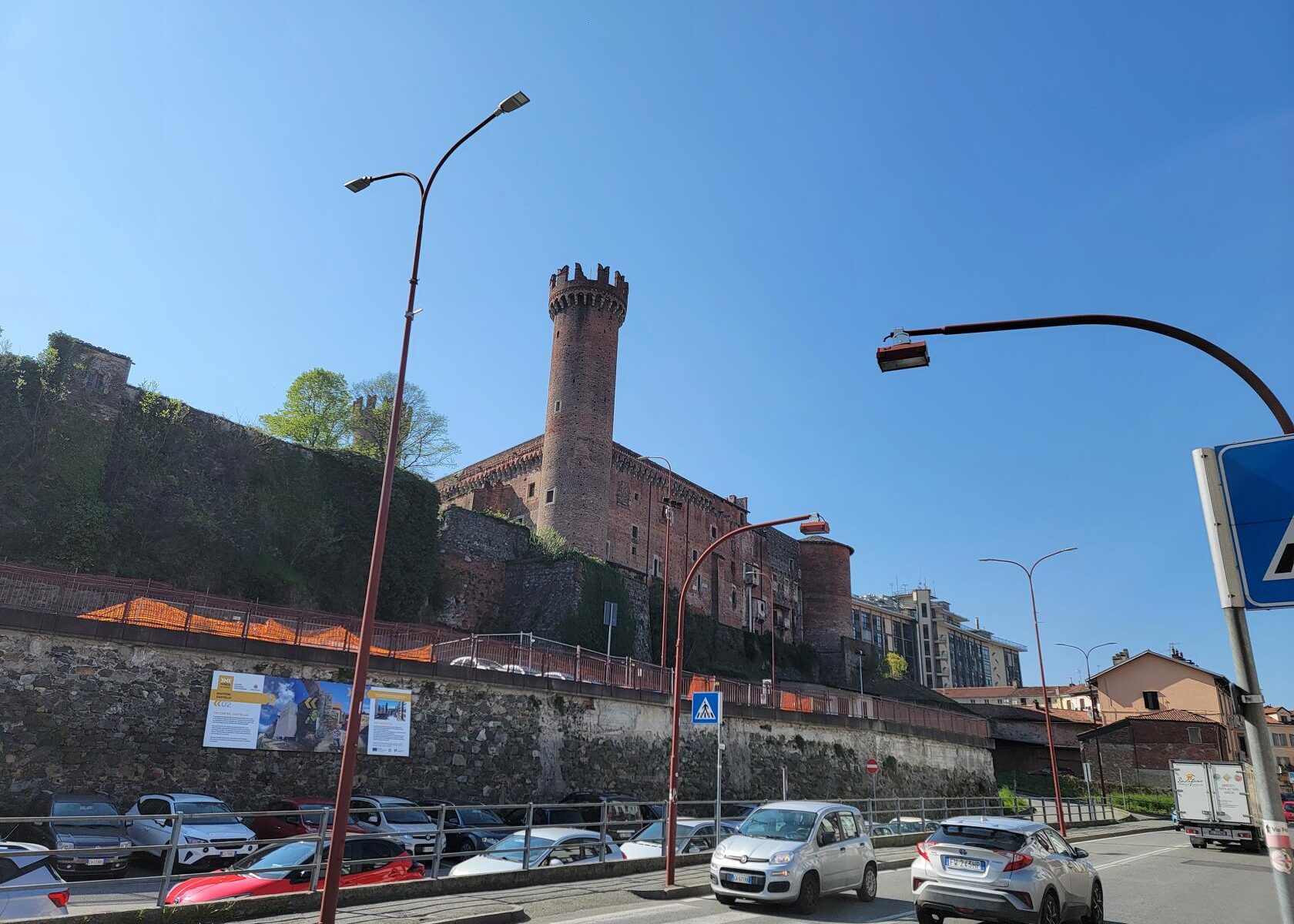
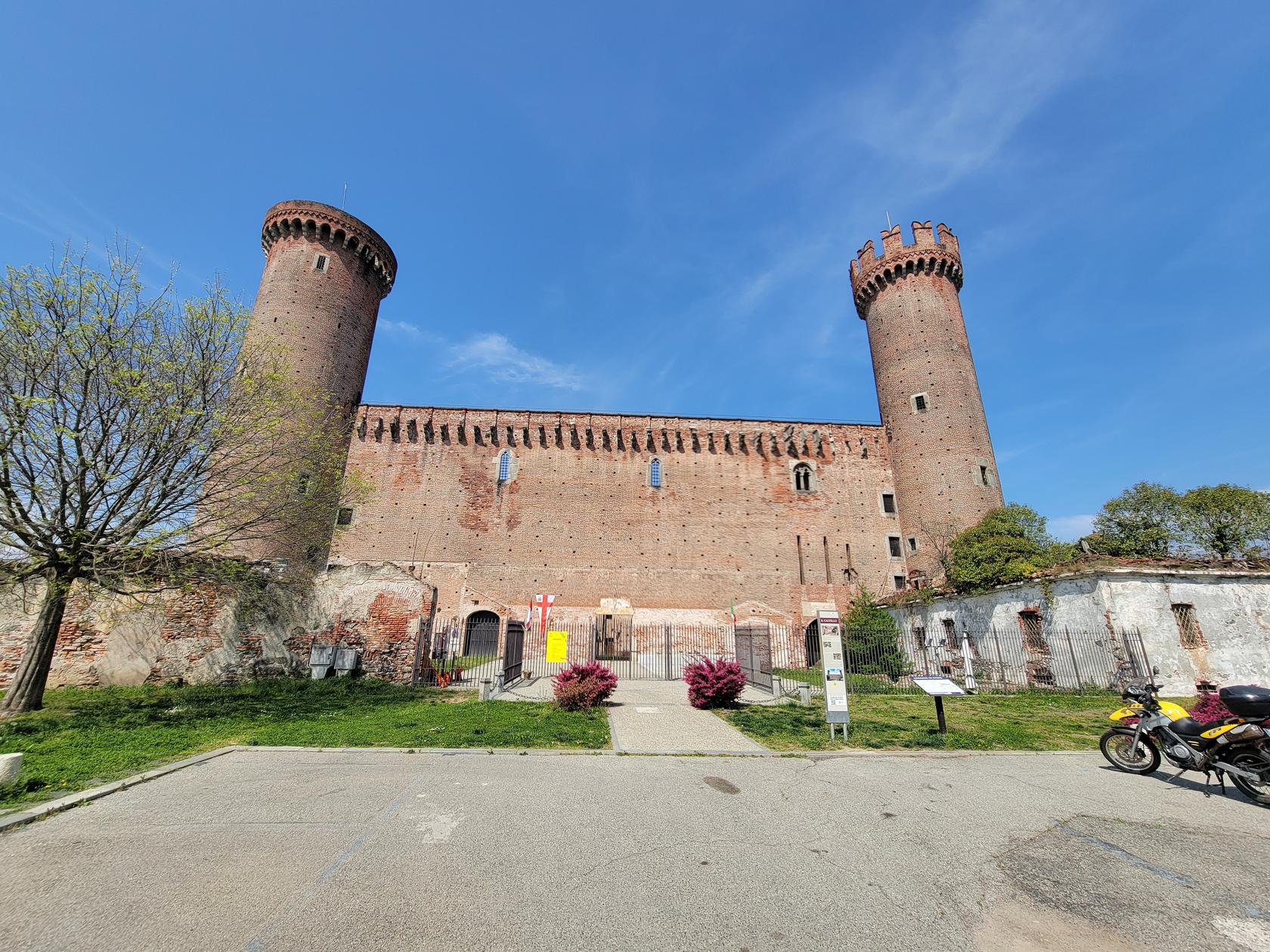
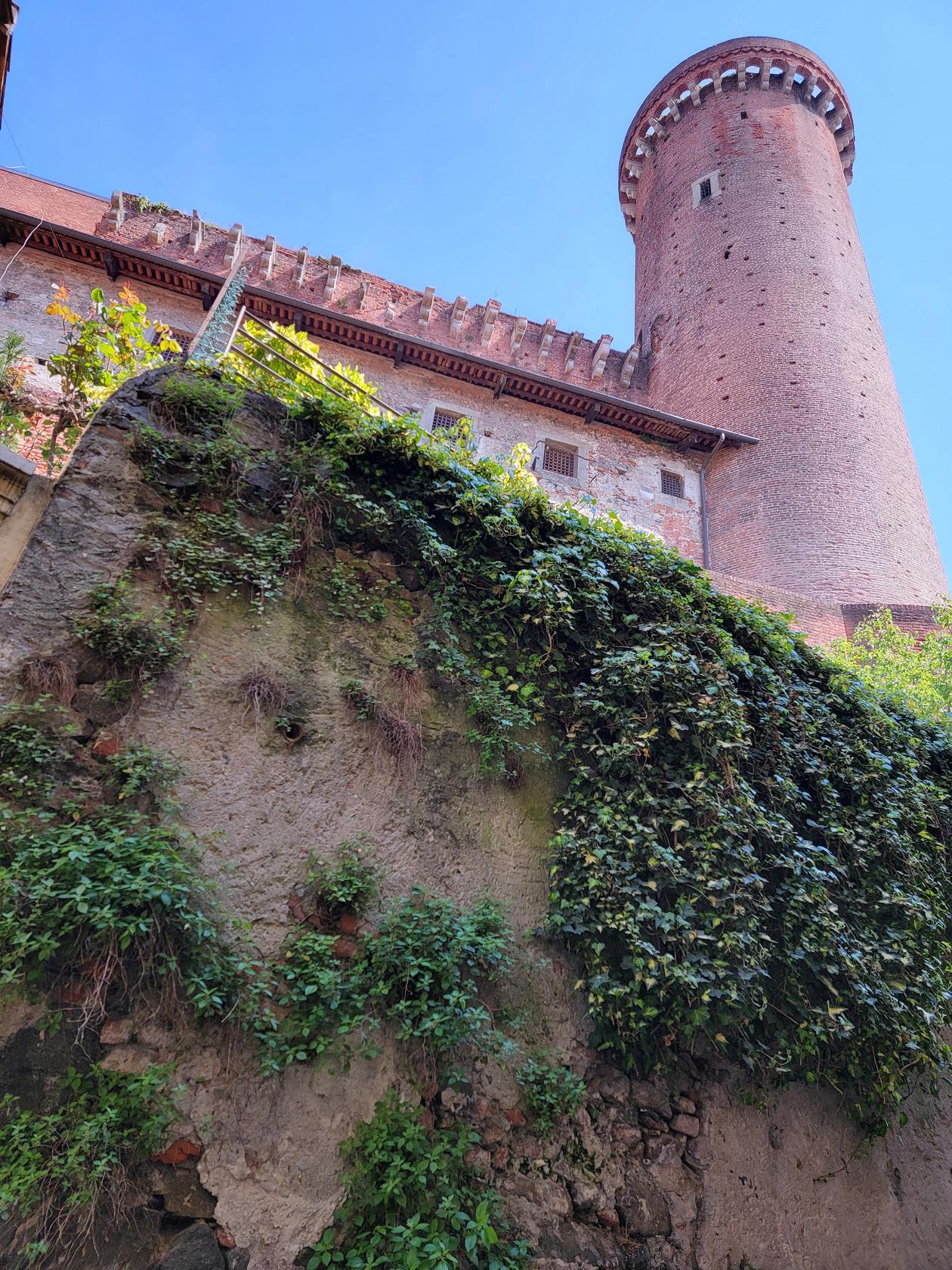
A large rectangular castle built in the fourteenth century by the Savoy family. It is only open certain times during the year and one has to reserve their guided tour ahead of time. We were only able to see the outside and sometimes at night it is lit up in different colors.
Sabaudo Castle – Ivrea, Italy
Sabaudo Castle – Ivrea, Italy
Ivrea Cathedral
Actually known as the Cathedral of the Assumption of Saint Mary, or Cattedrale di Santa Maria Assunta, is very close to the castle on the hilltop. It is in need of restoration and there are several, apparently small projects already underway inside the cathedral.
Cathedral Santa Maria Assunta – Il Duomo, Entrance – Ivrea, Italy
Inside the cathedral is actually quite impressive. The nave is well decorated with ceiling frescoes and religious art. It is quite dark and reminiscent of the Sistine Chapel before that was restored and suffers from decades, if not centuries or candle and other smoke.
Cathedral Santa Maria Assunta – Il Duomo, Nave and ceiling – Ivrea, Italy
Cathedral Santa Maria Assunta – Il Duomo, Altar – Ivrea, Italy
Cathedral Santa Maria Assunta – Il Duomo, Aisle – Ivrea, Italy
Cathedral Santa Maria Assunta – Il Duomo, Altar screen entrance – Ivrea, Italy
Cathedral Santa Maria Assunta – Il Duomo, bricked up window – Ivrea, Italy
Cathedral Santa Maria Assunta – Il Duomo, Nave and Organ – Ivrea, Italy
Cathedral Santa Maria Assunta – Il Duomo, Transept – Ivrea, Italy
Cathedral Santa Maria Assunta – Il Duomo, Altar screen ceiling frescoes – Ivrea, Italy
Cathedral Santa Maria Assunta – Il Duomo, Altar screen frescoes – Ivrea, Italy
Cathedral Santa Maria Assunta – Il Duomo, Altar screen frescoes – Ivrea, Italy
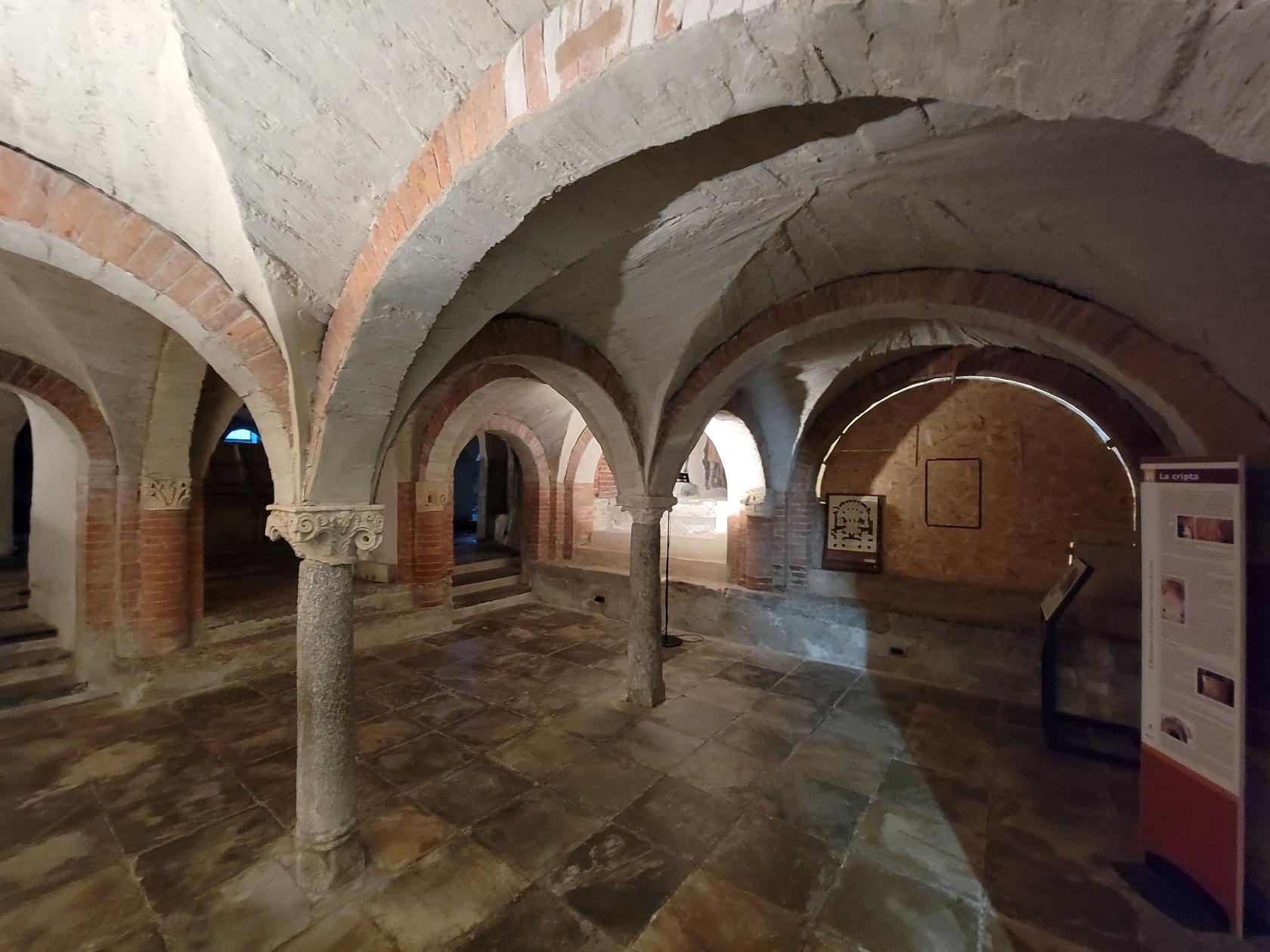
The Crypt
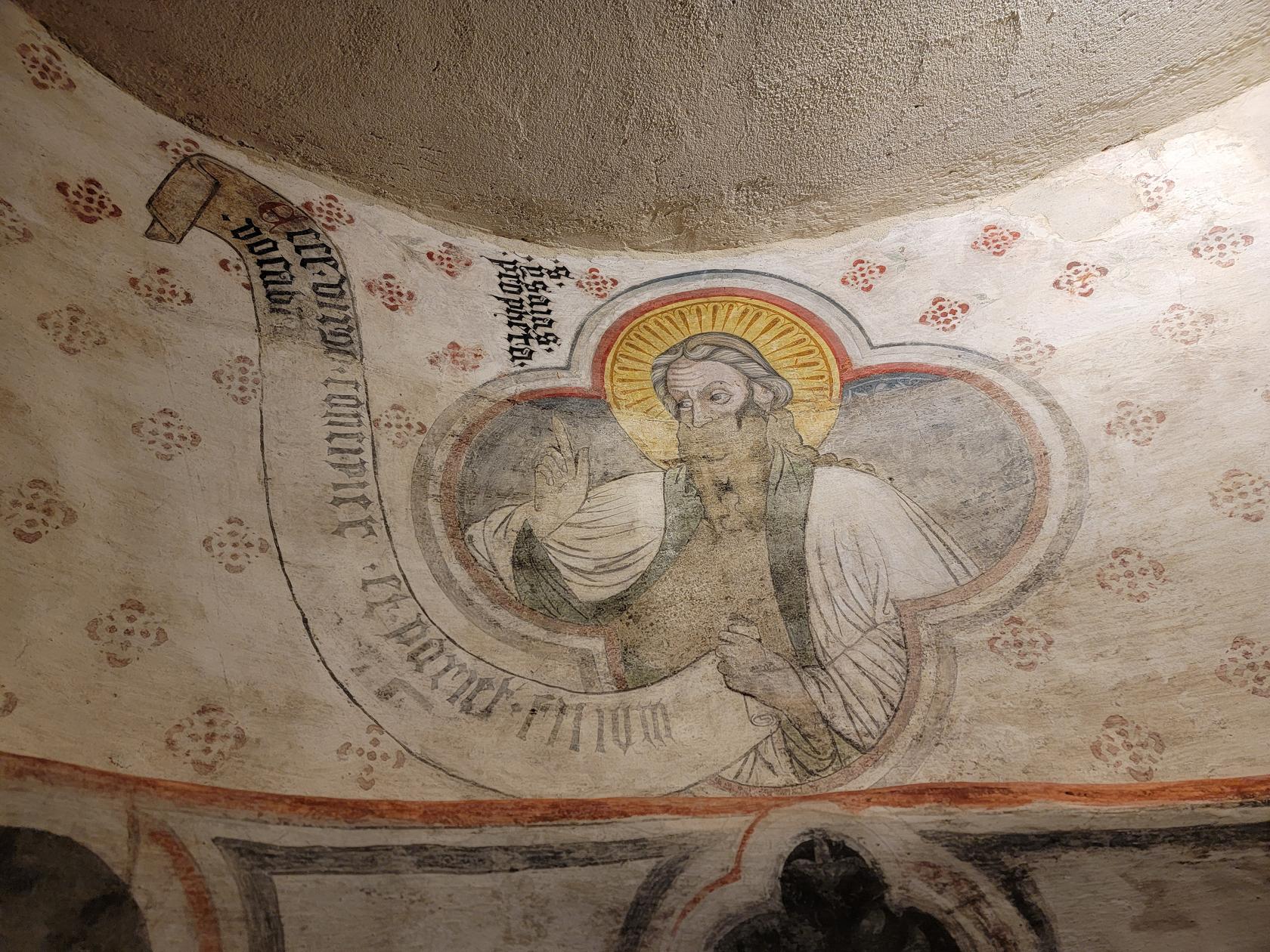
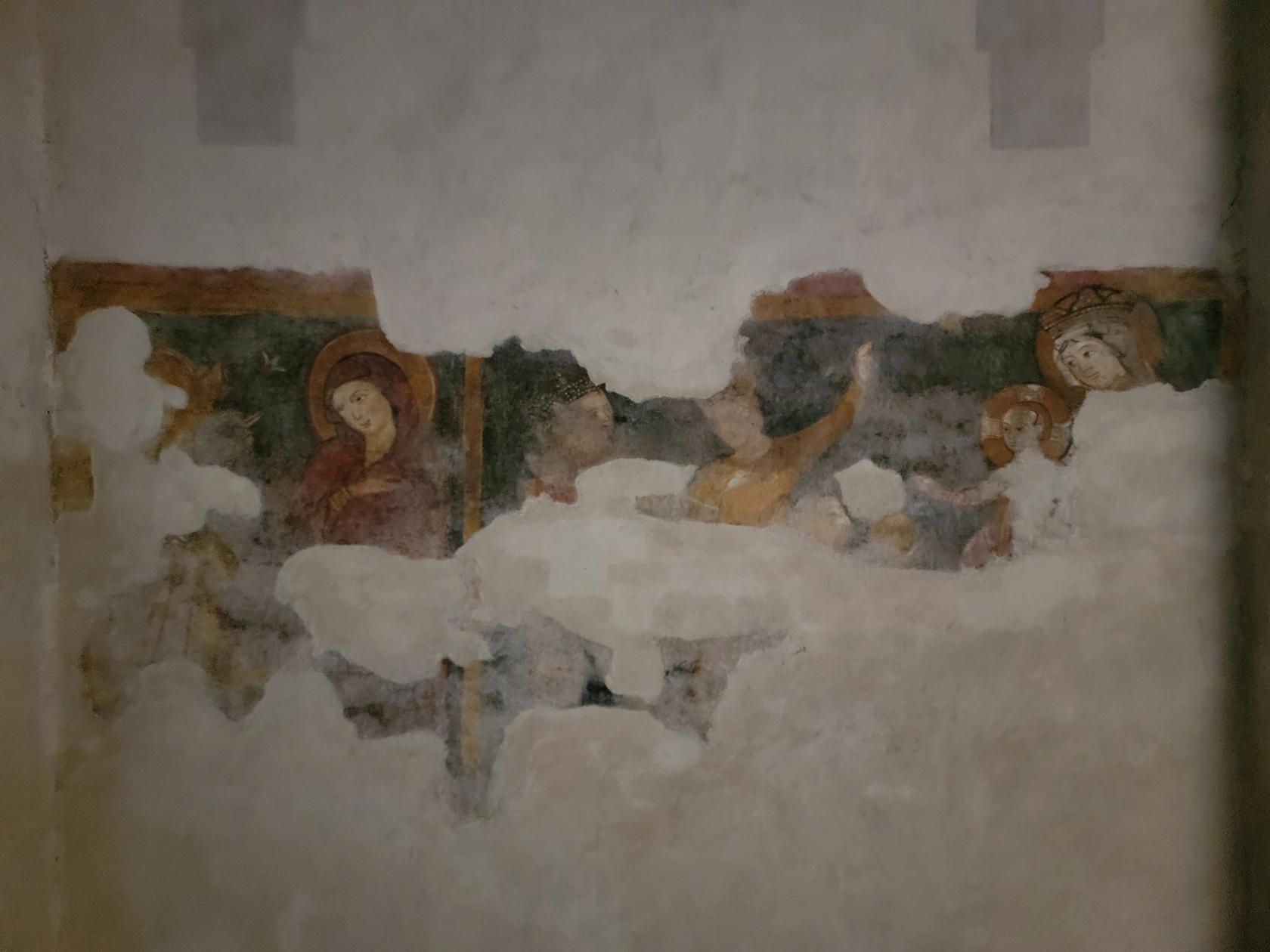
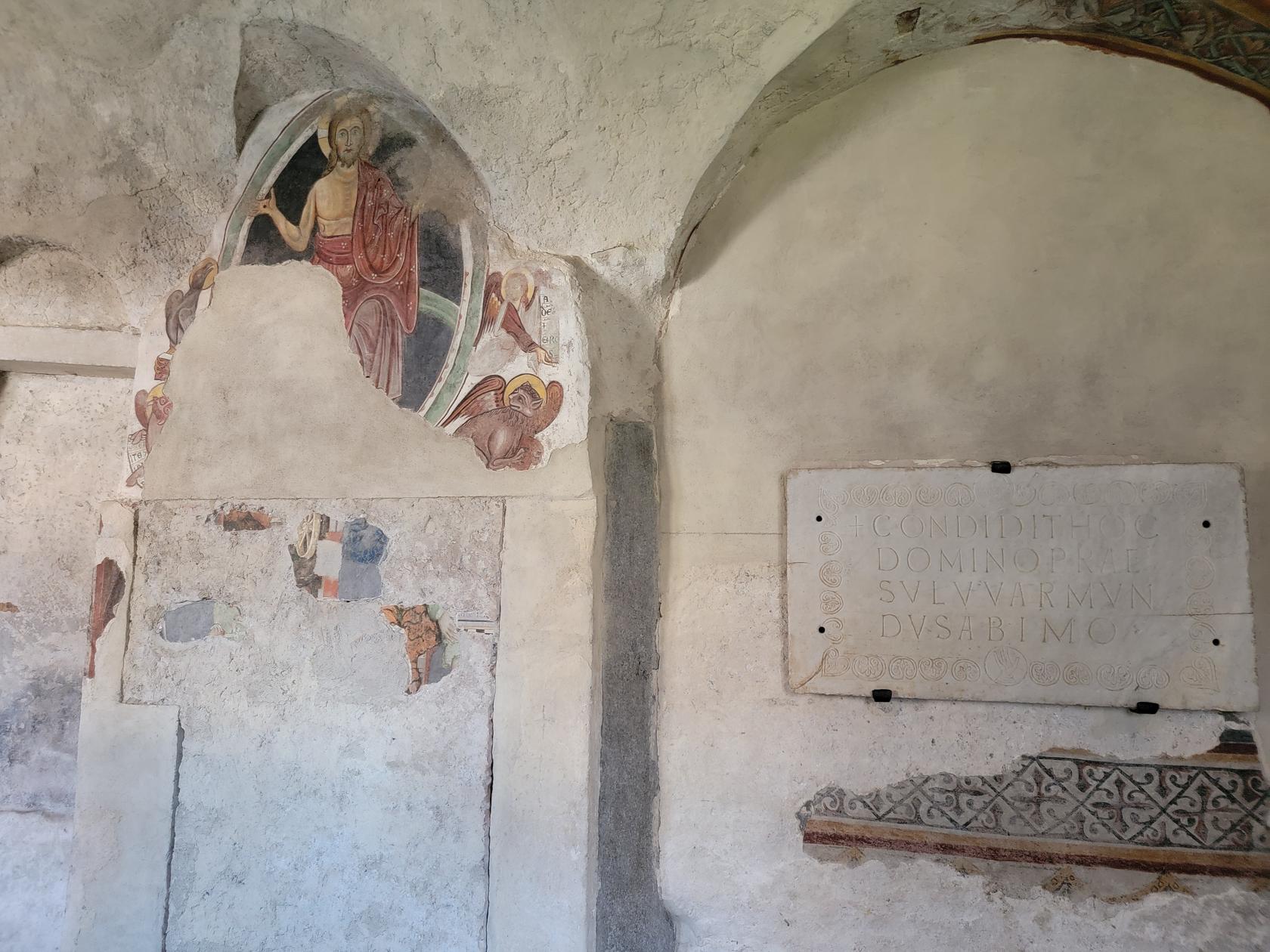
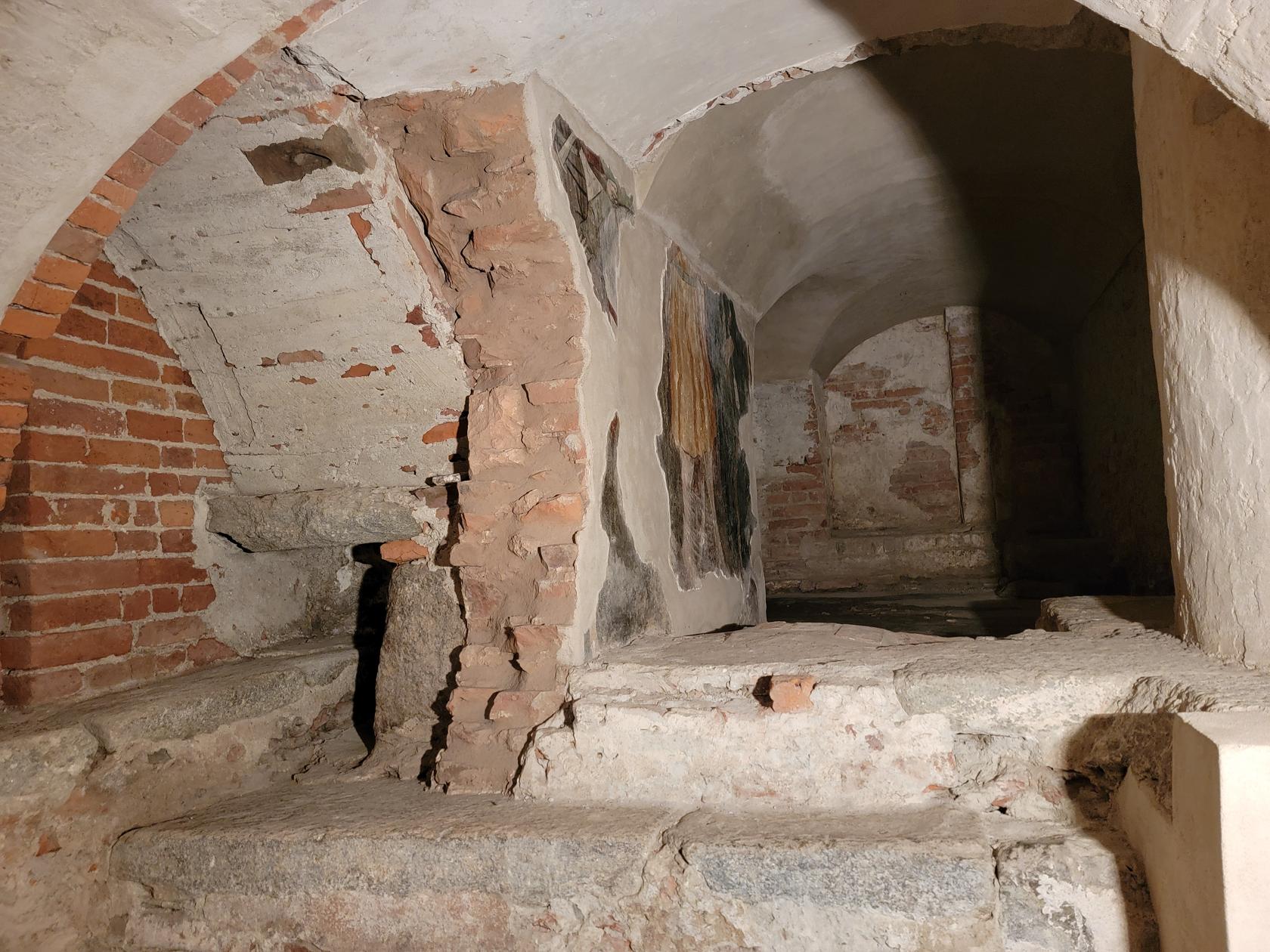
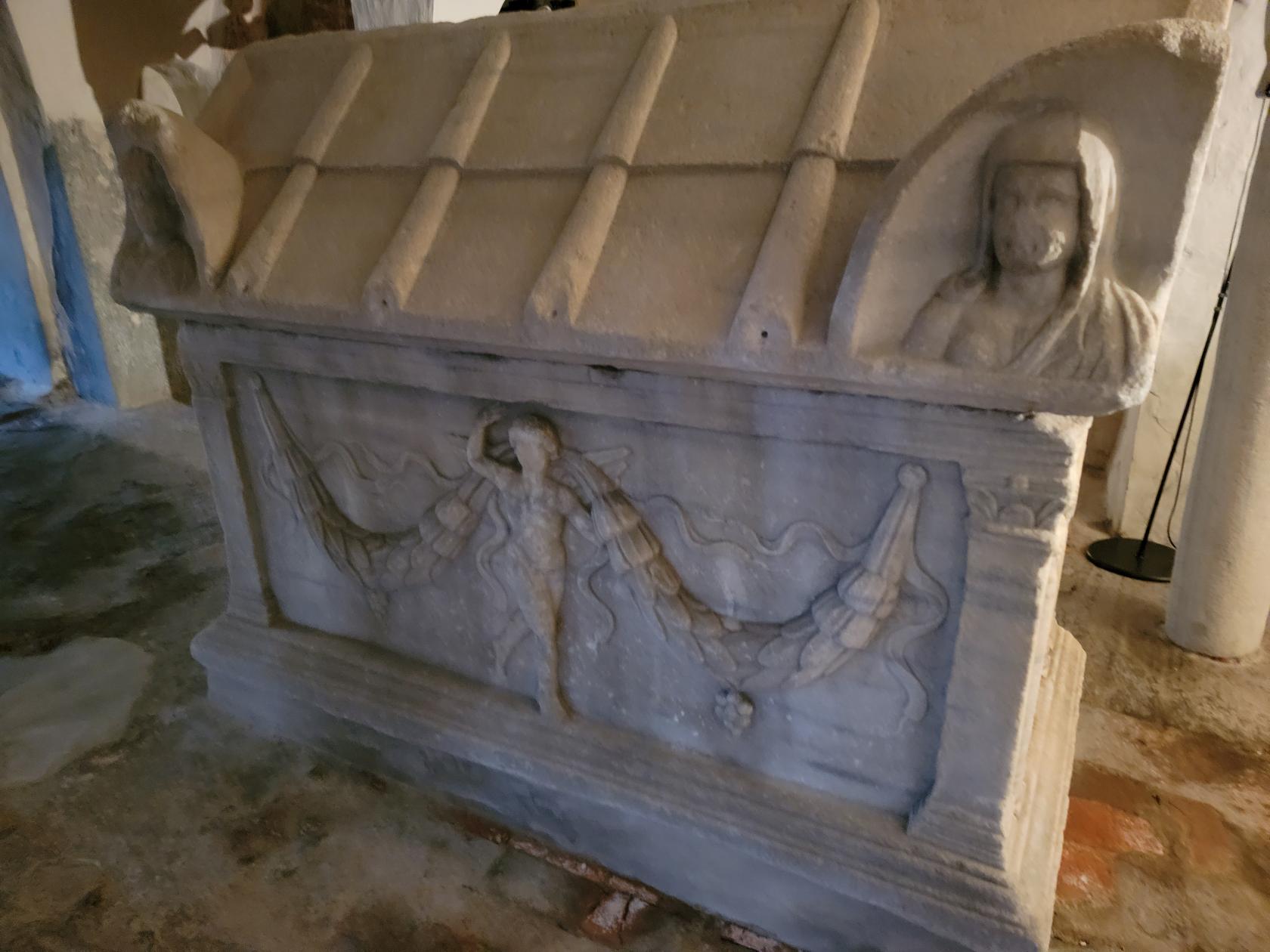
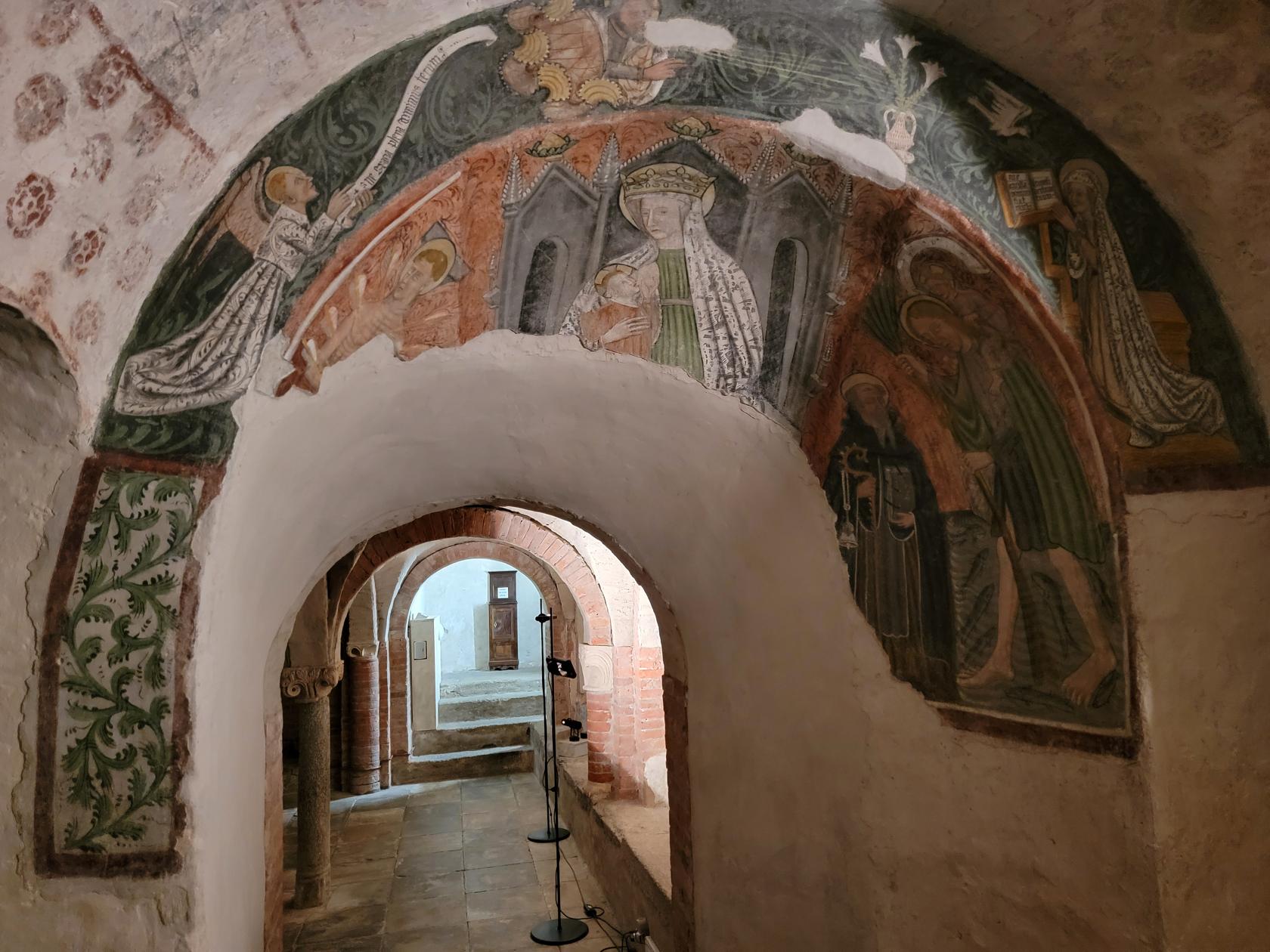
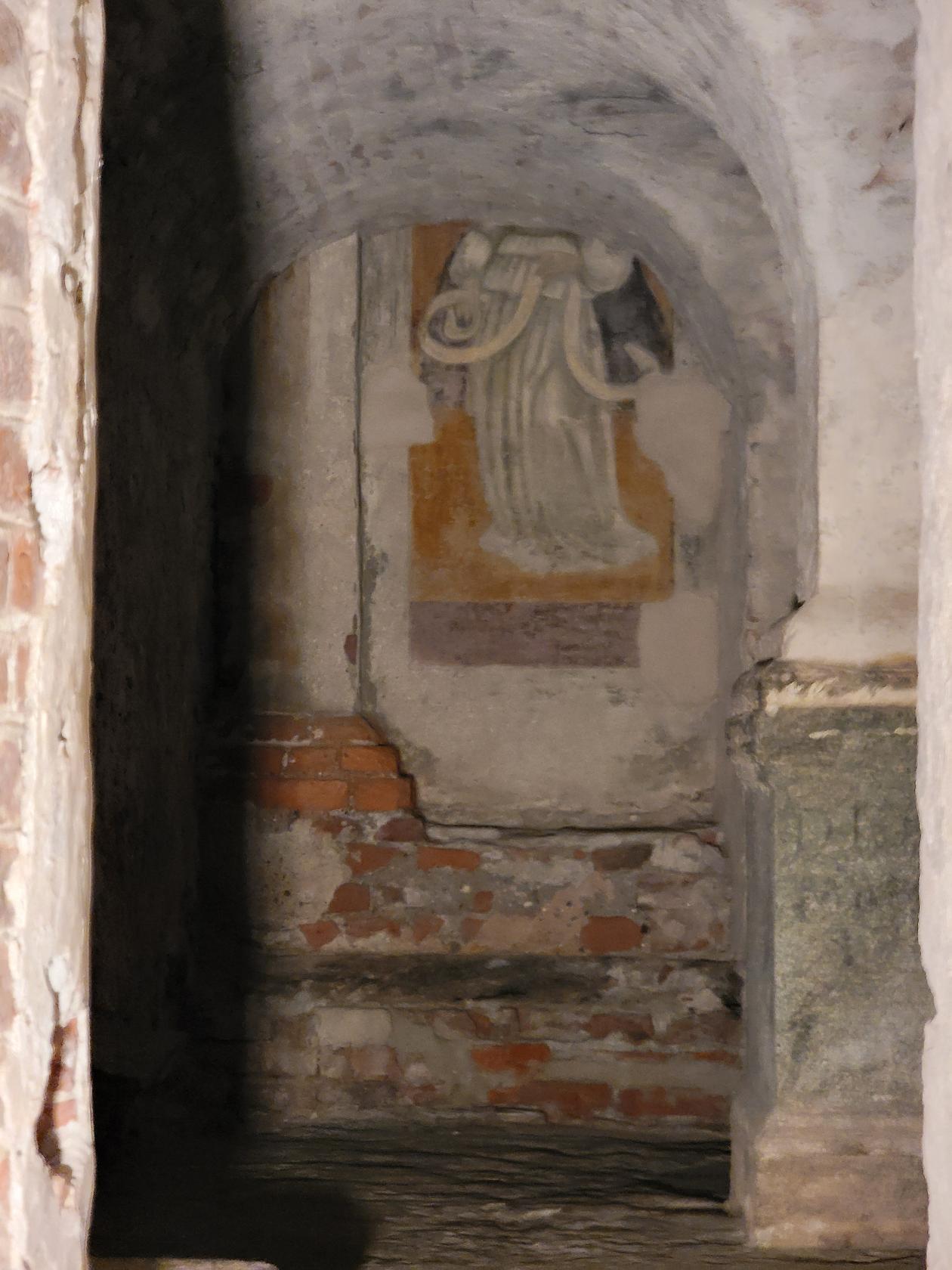
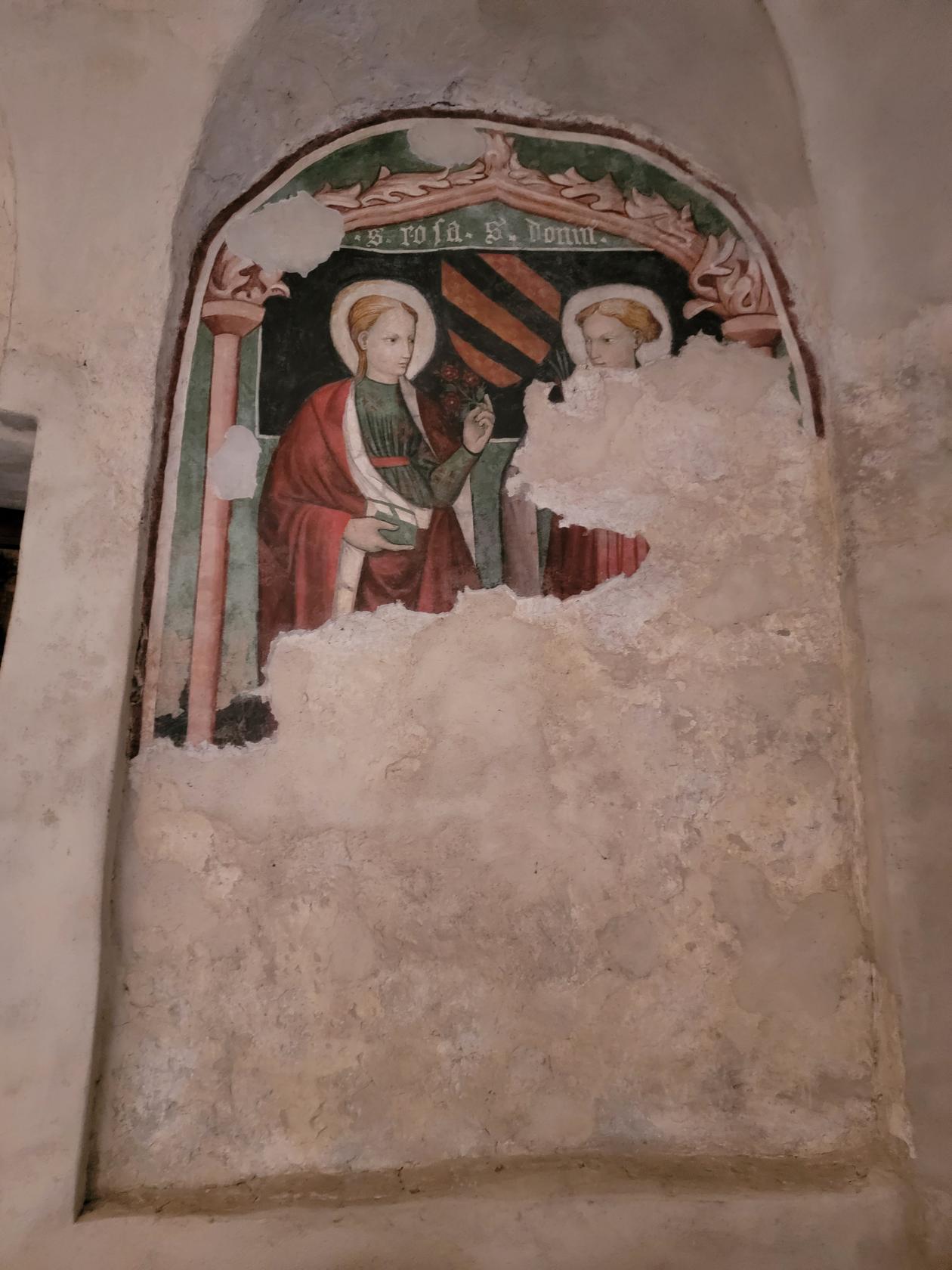
The main attraction of the crypt are the frescoes. When possible the caretakers of the cathedral have installed lighting, so that you can adore without the need for using the flash on your camera, which you should never do.
Cathedral Santa Maria Assunta – Il Duomo, Crypt – Ivrea, Italy
Cathedral Santa Maria Assunta – Il Duomo, Crypt – Ivrea, Italy
Cathedral Santa Maria Assunta – Il Duomo, Crypt – Ivrea, Italy
Cathedral Santa Maria Assunta – Il Duomo, Crypt – Ivrea, Italy
Cathedral Santa Maria Assunta – Il Duomo, Crypt – Ivrea, Italy
Cathedral Santa Maria Assunta – Il Duomo, Altar screen frescoes – Ivrea, Italy
Restaurants
Moma
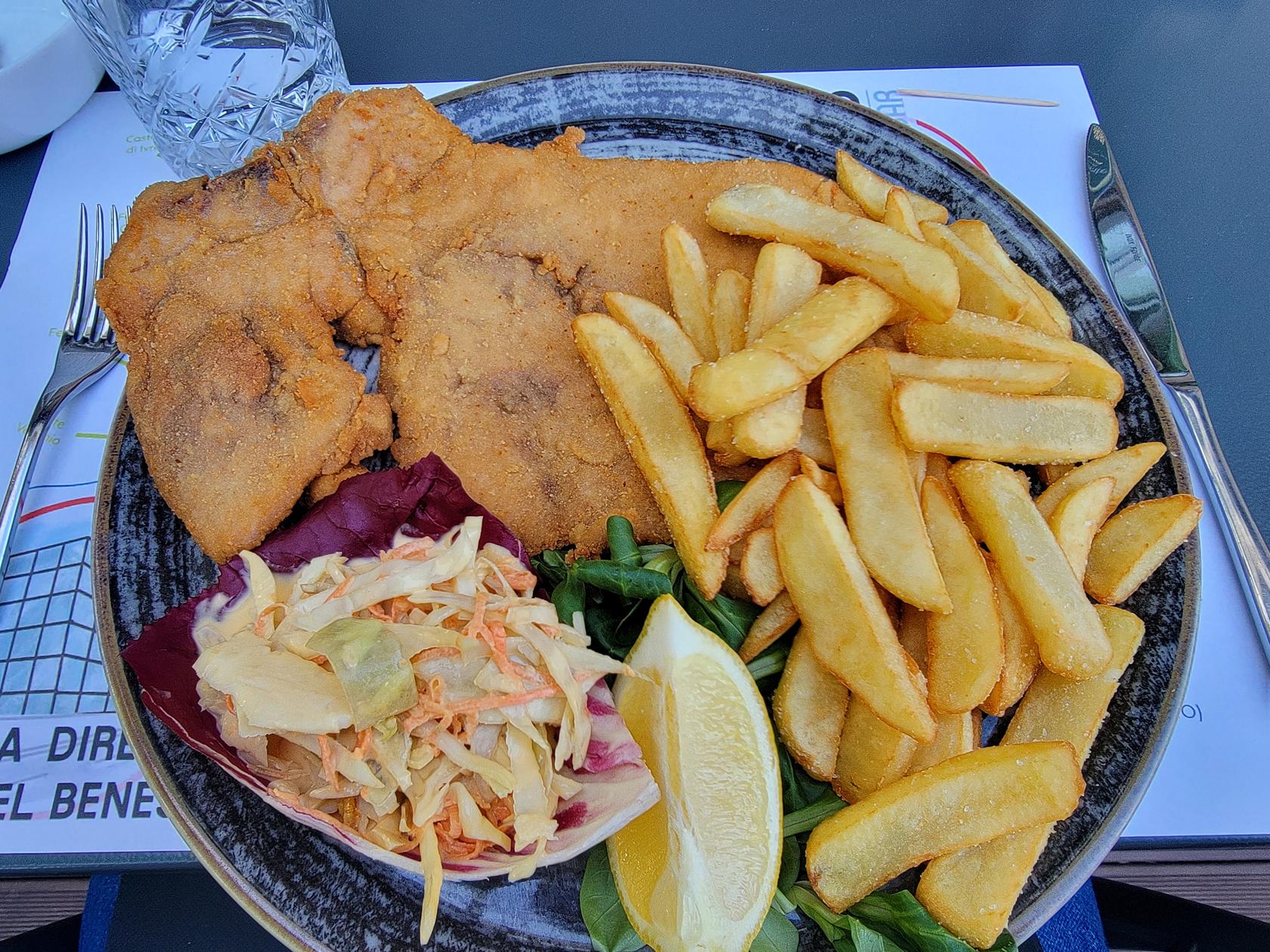
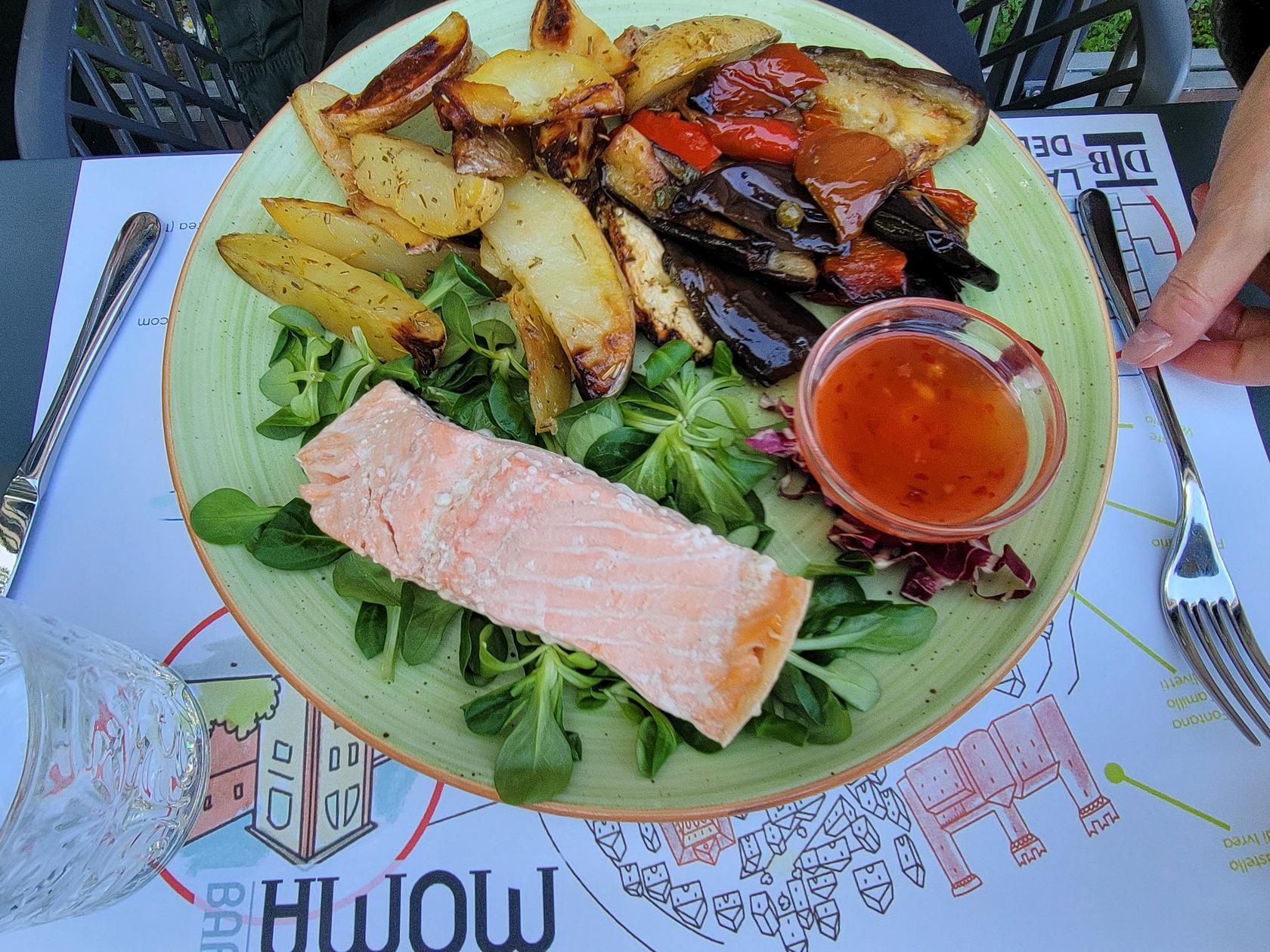
Moma is actually a bar and restaurant, so you can stop their early for a drink before dinner, or wait until 7PM and dine there as well. They have a fairly good selection of food which may be considered cosmopolitan and some Piedmont dishes. Both of our dishes were very good and came with rather large portion size which is unusual of Italy.
Moma Restaurant – Pork Filet with French Fries and Coleslaw – Ivrea, Italy
Moma Restaurant – Norwegian Salmon with Potatoes and Eggplant – Ivrea, Italy