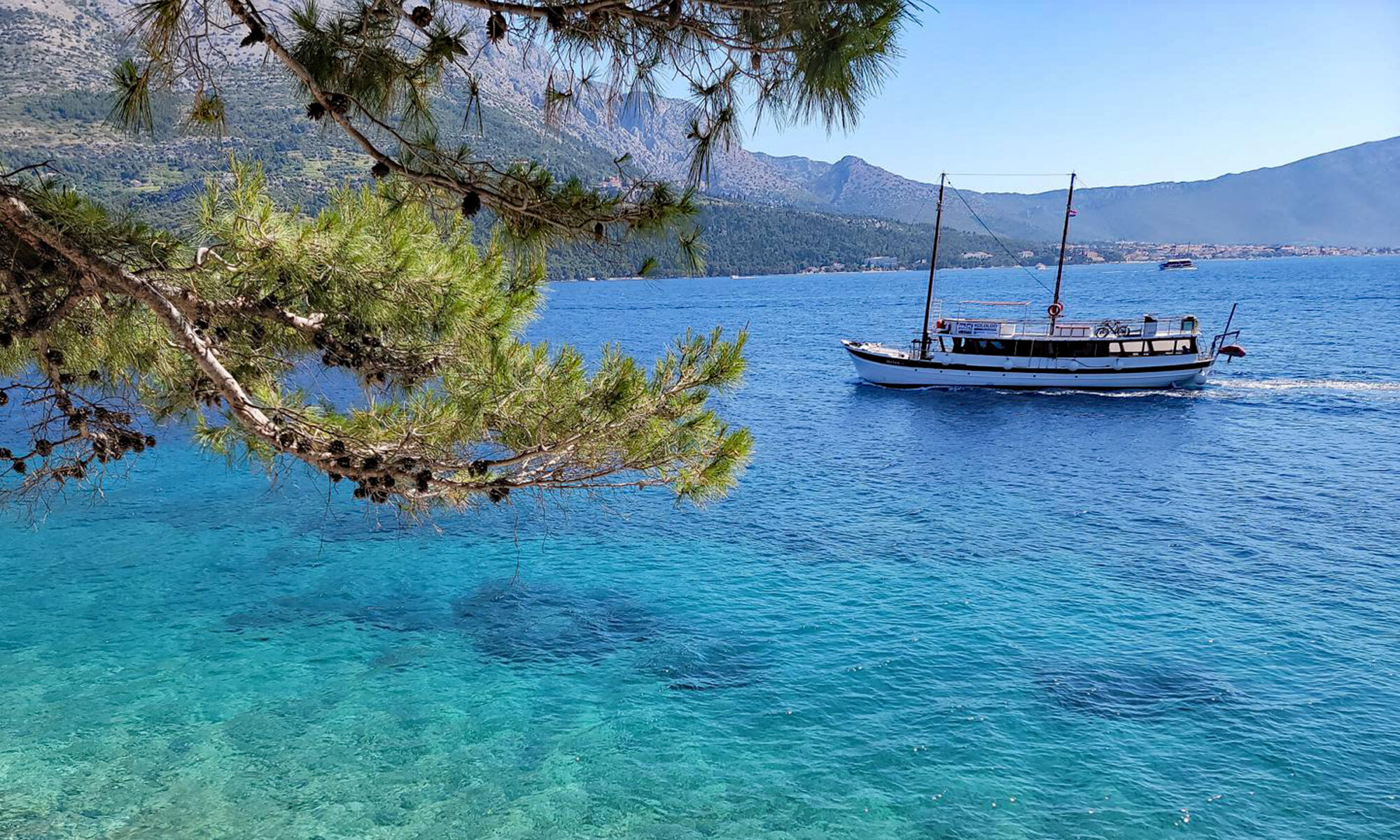
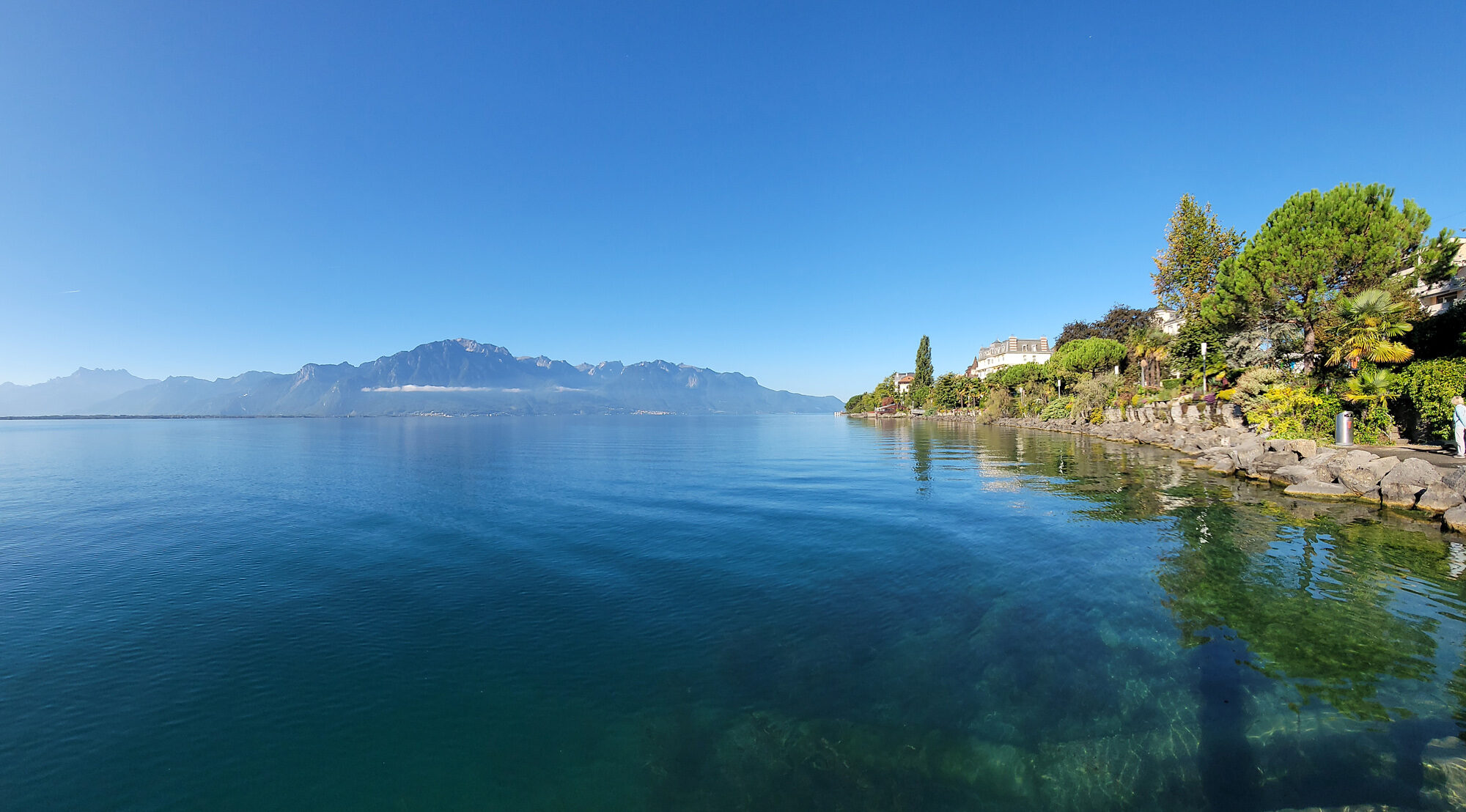
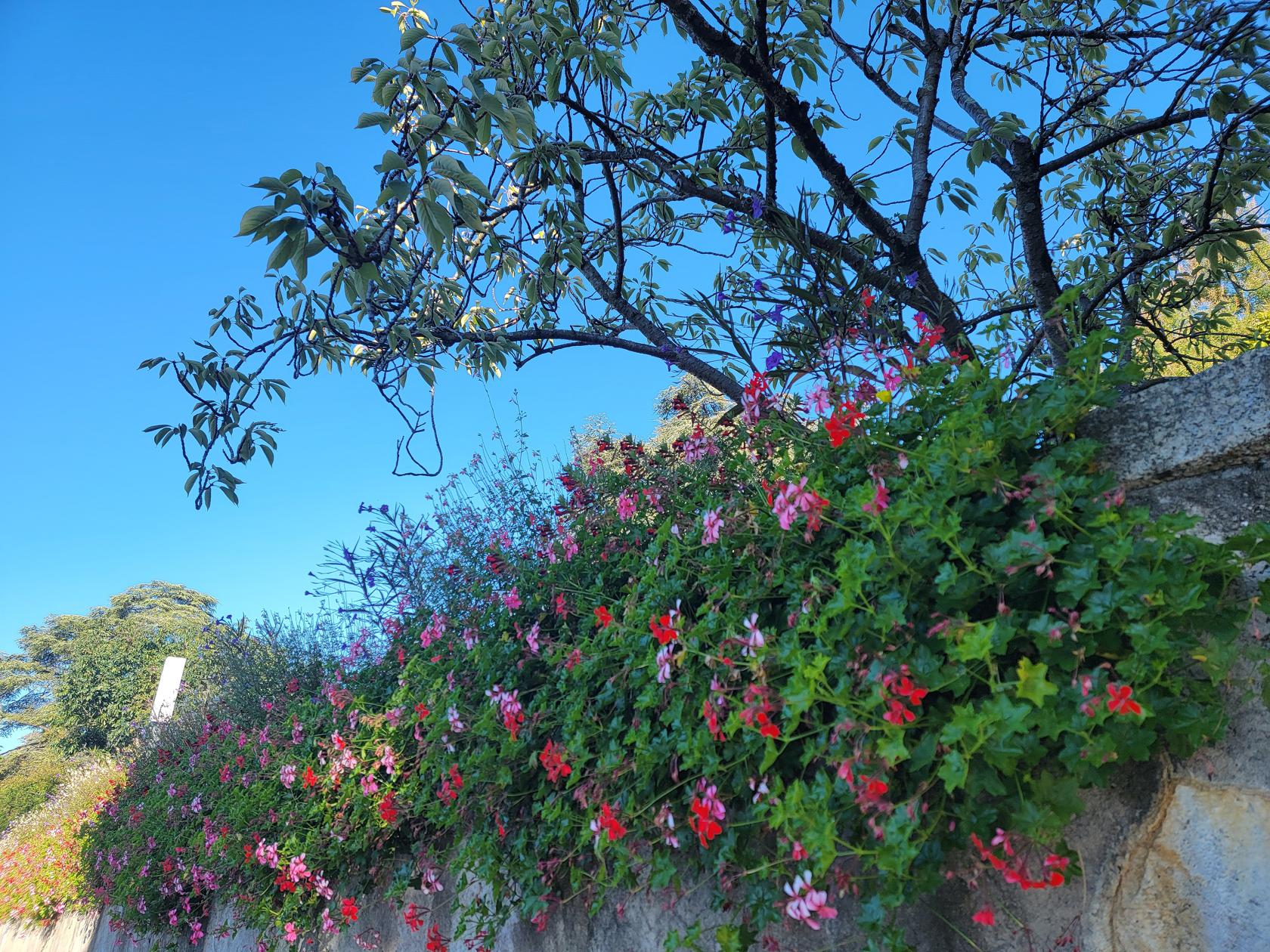
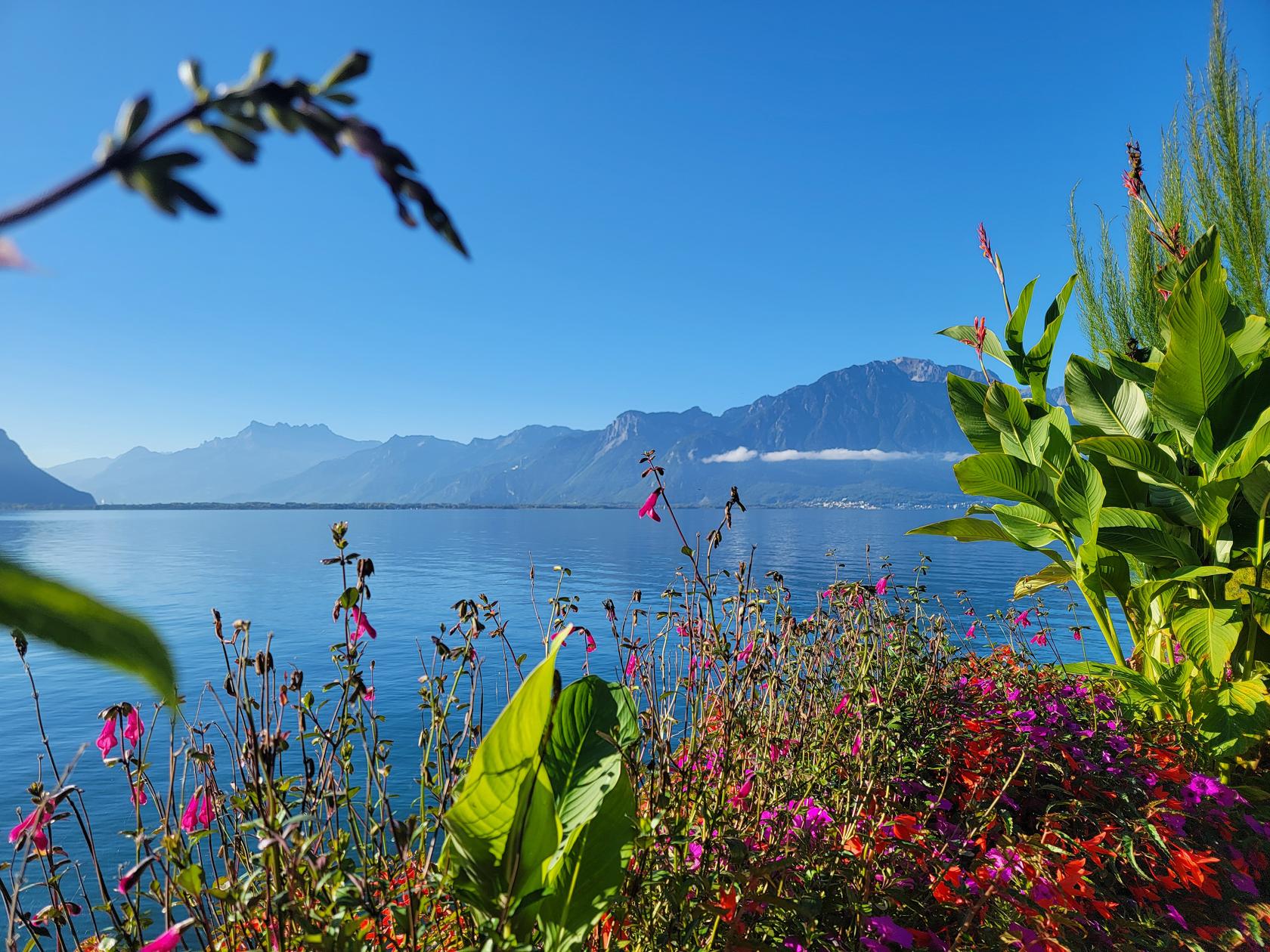
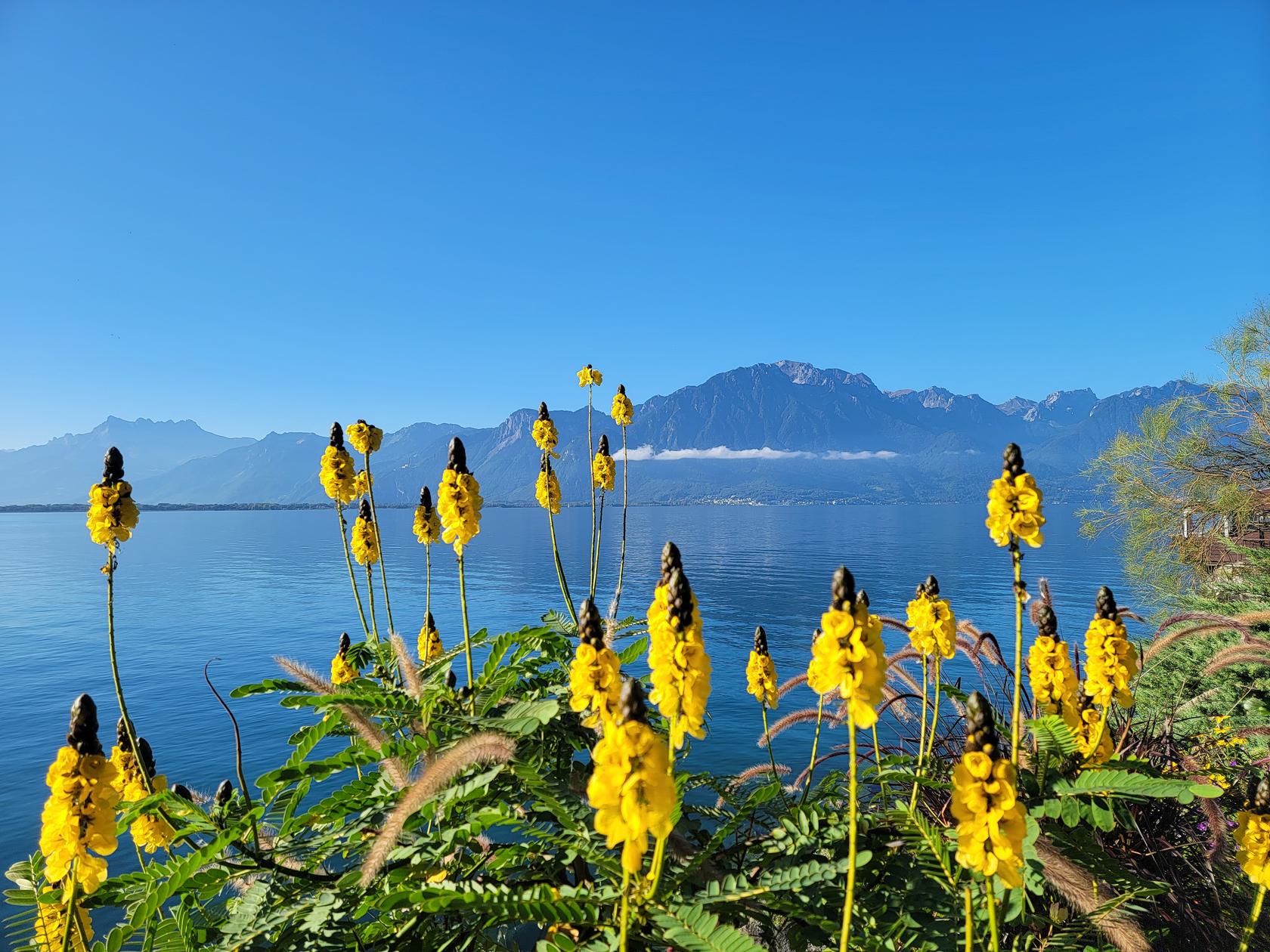
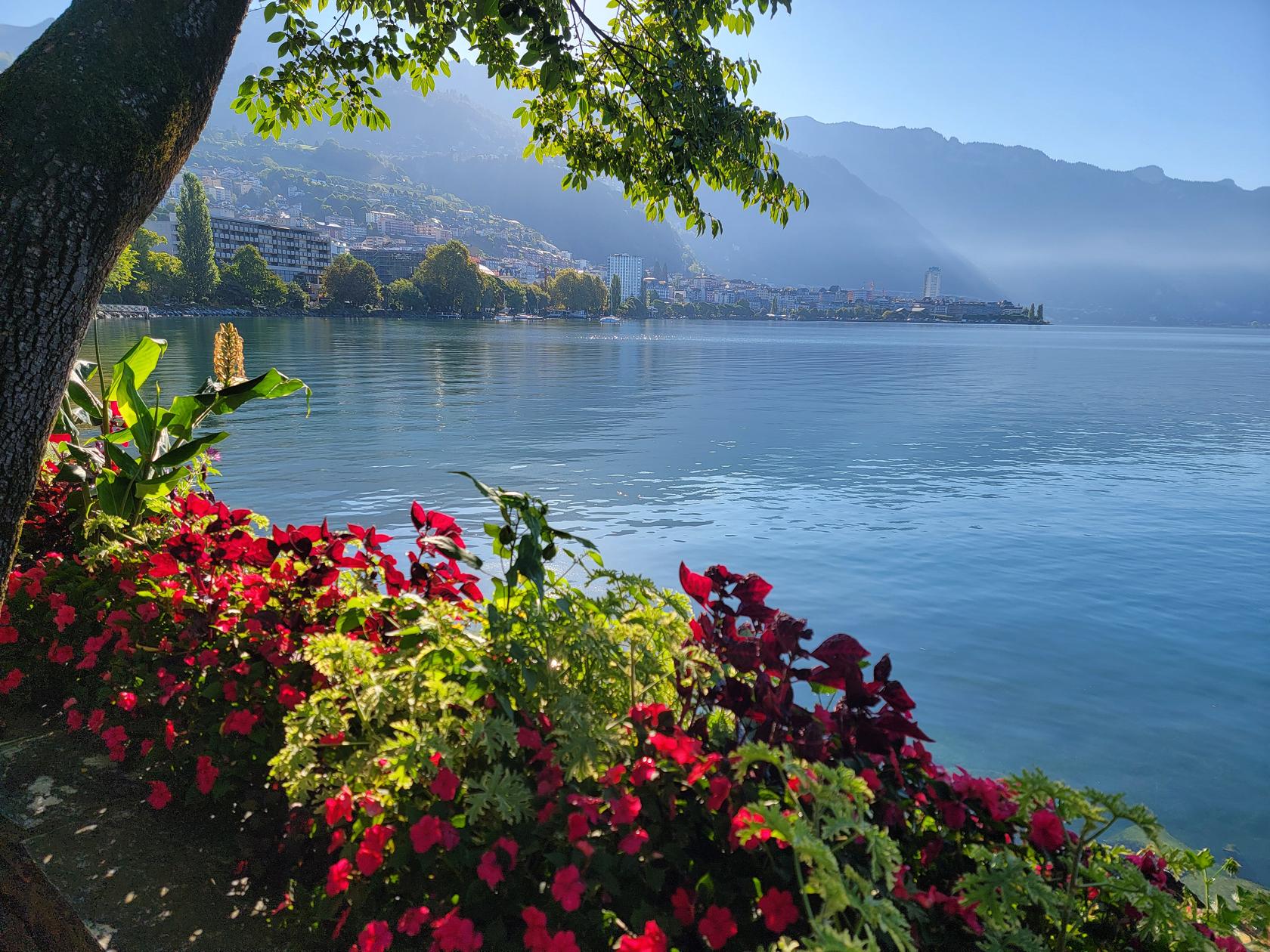
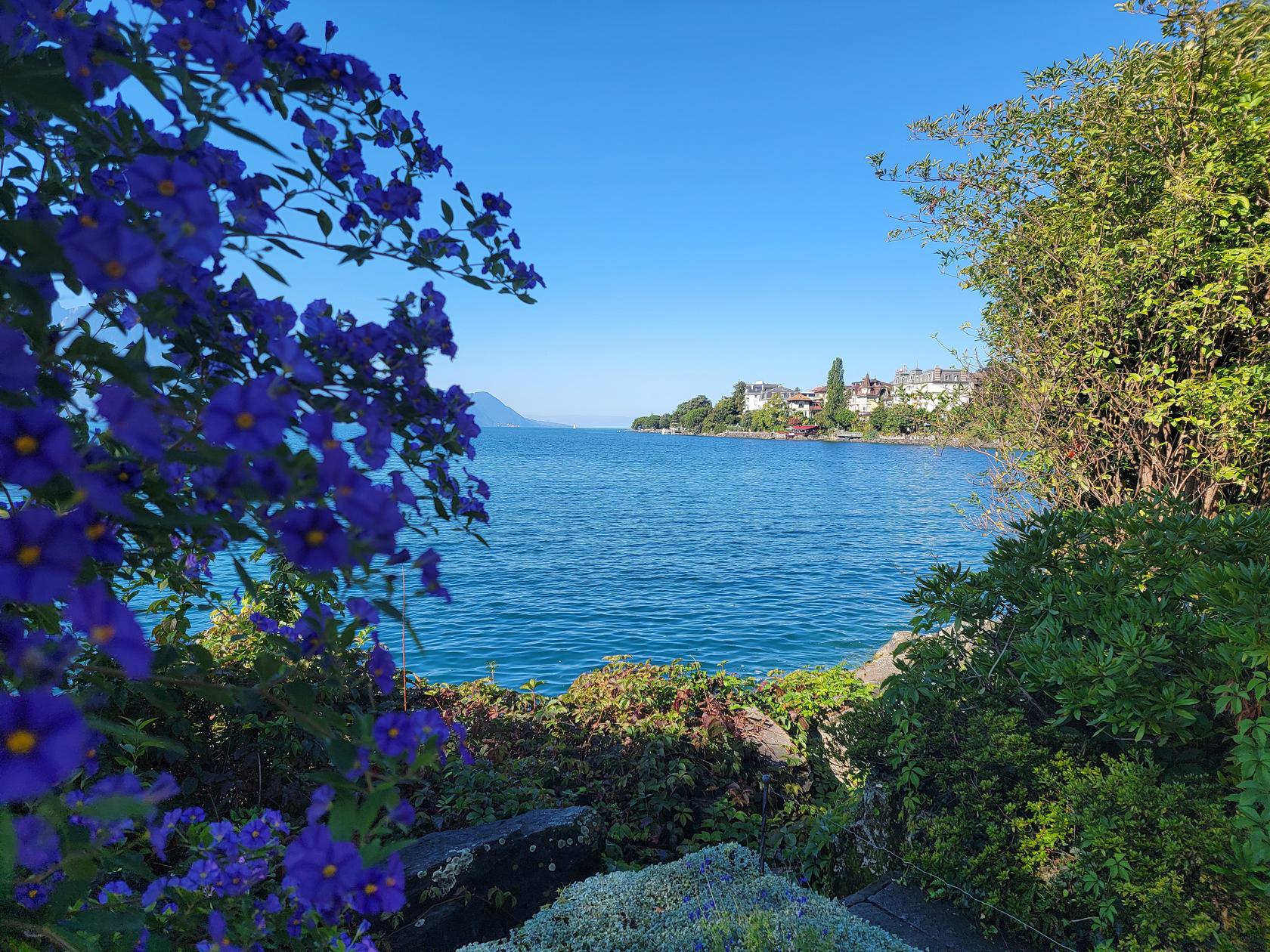
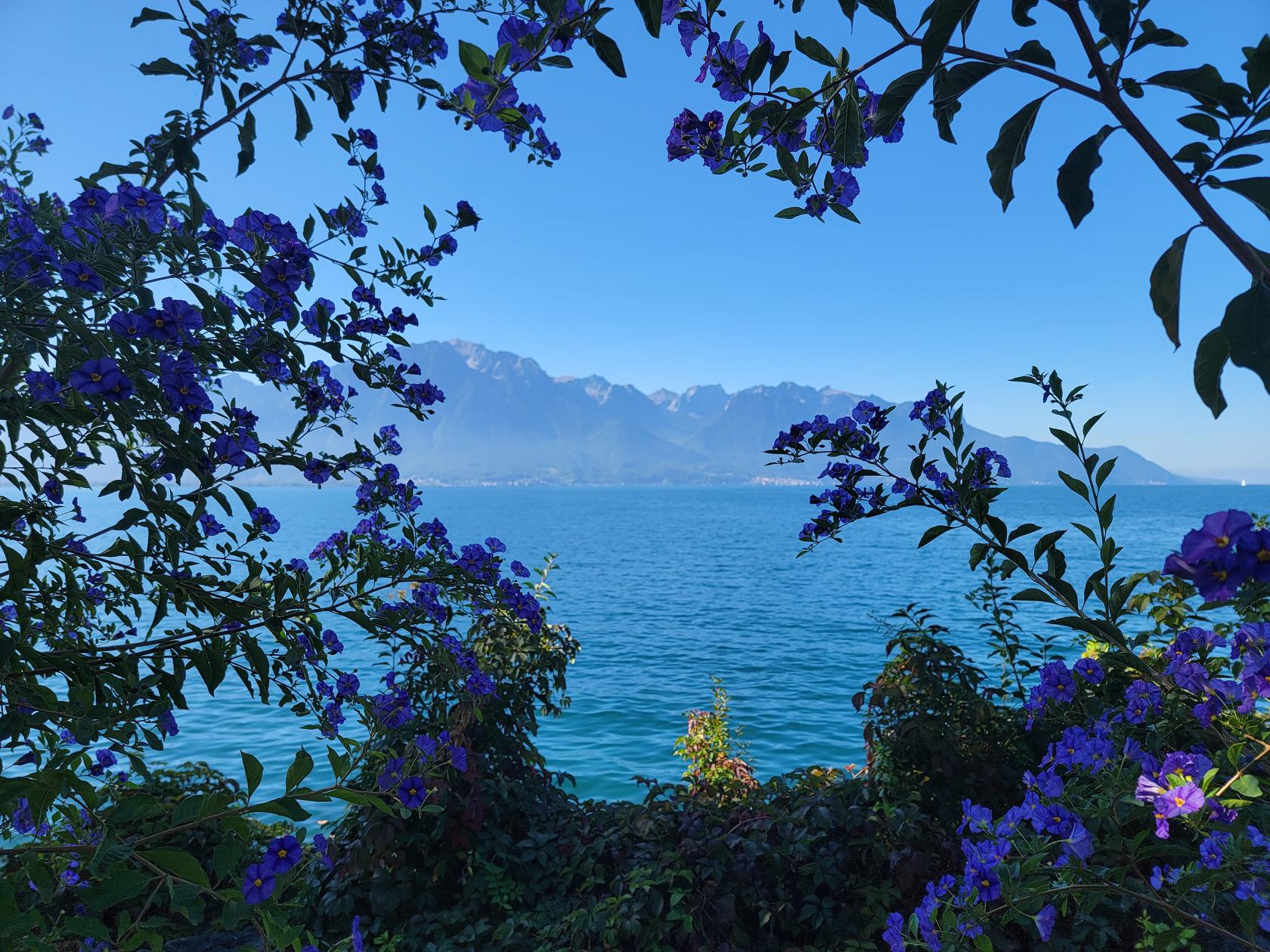
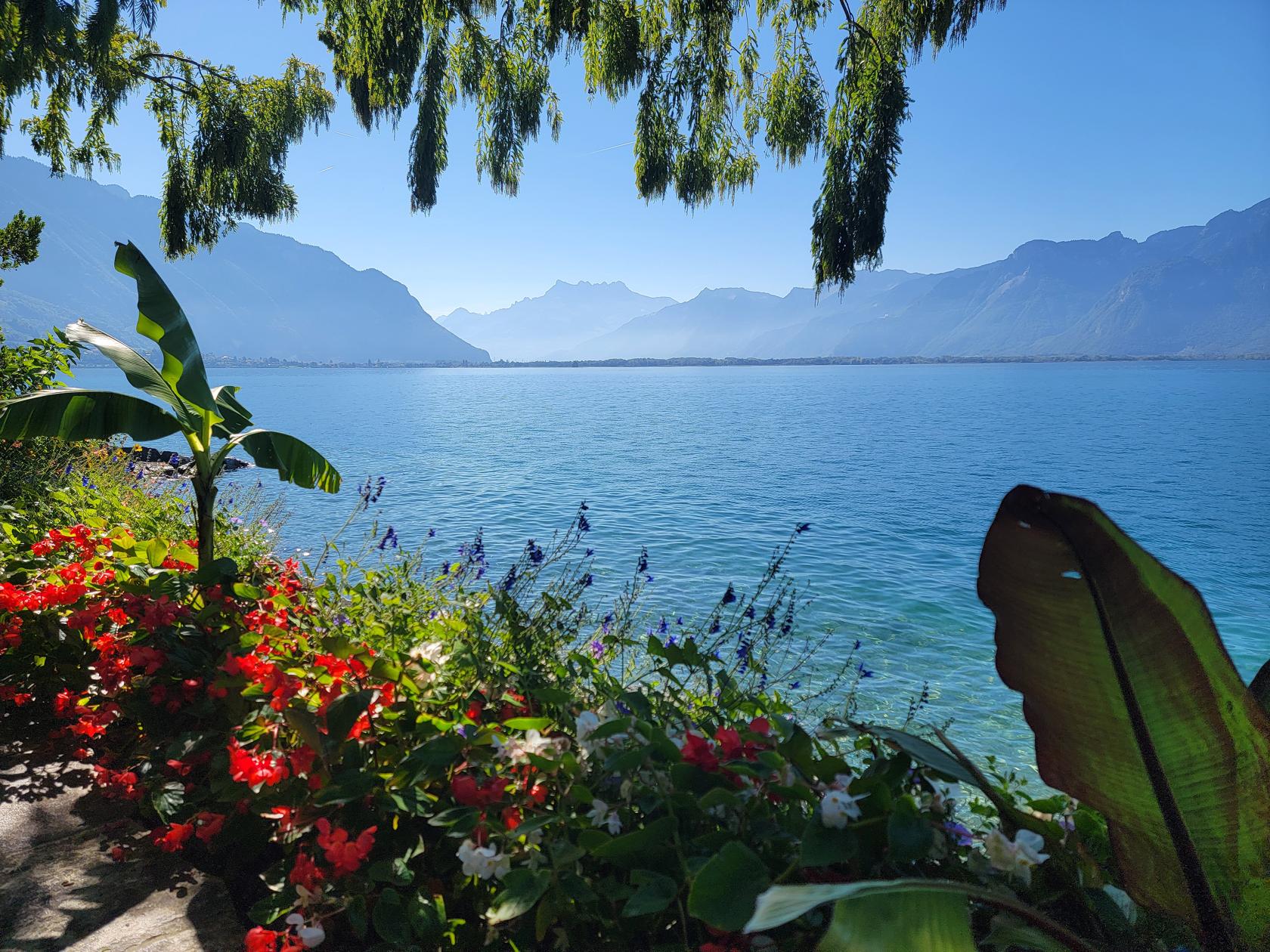
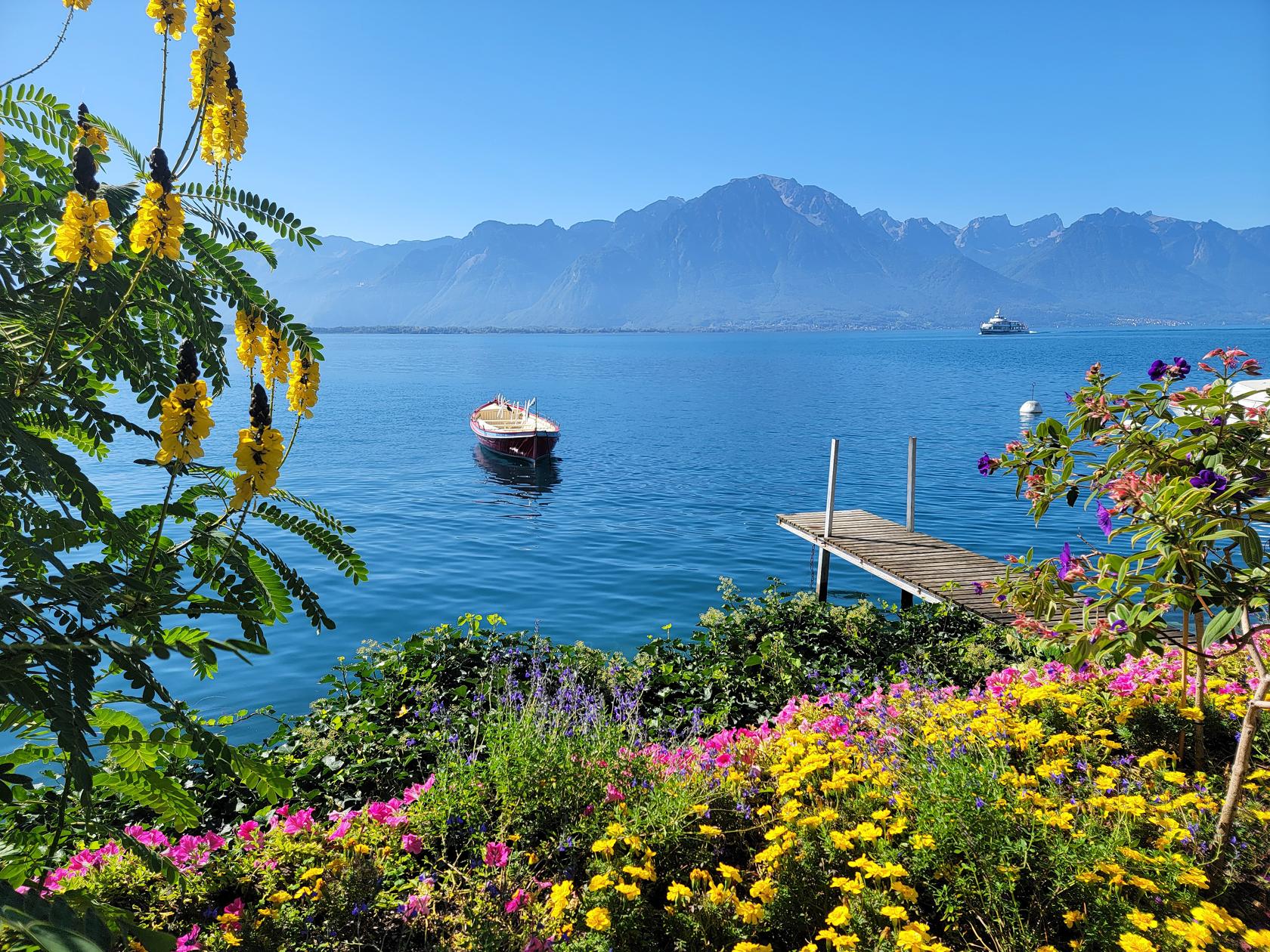
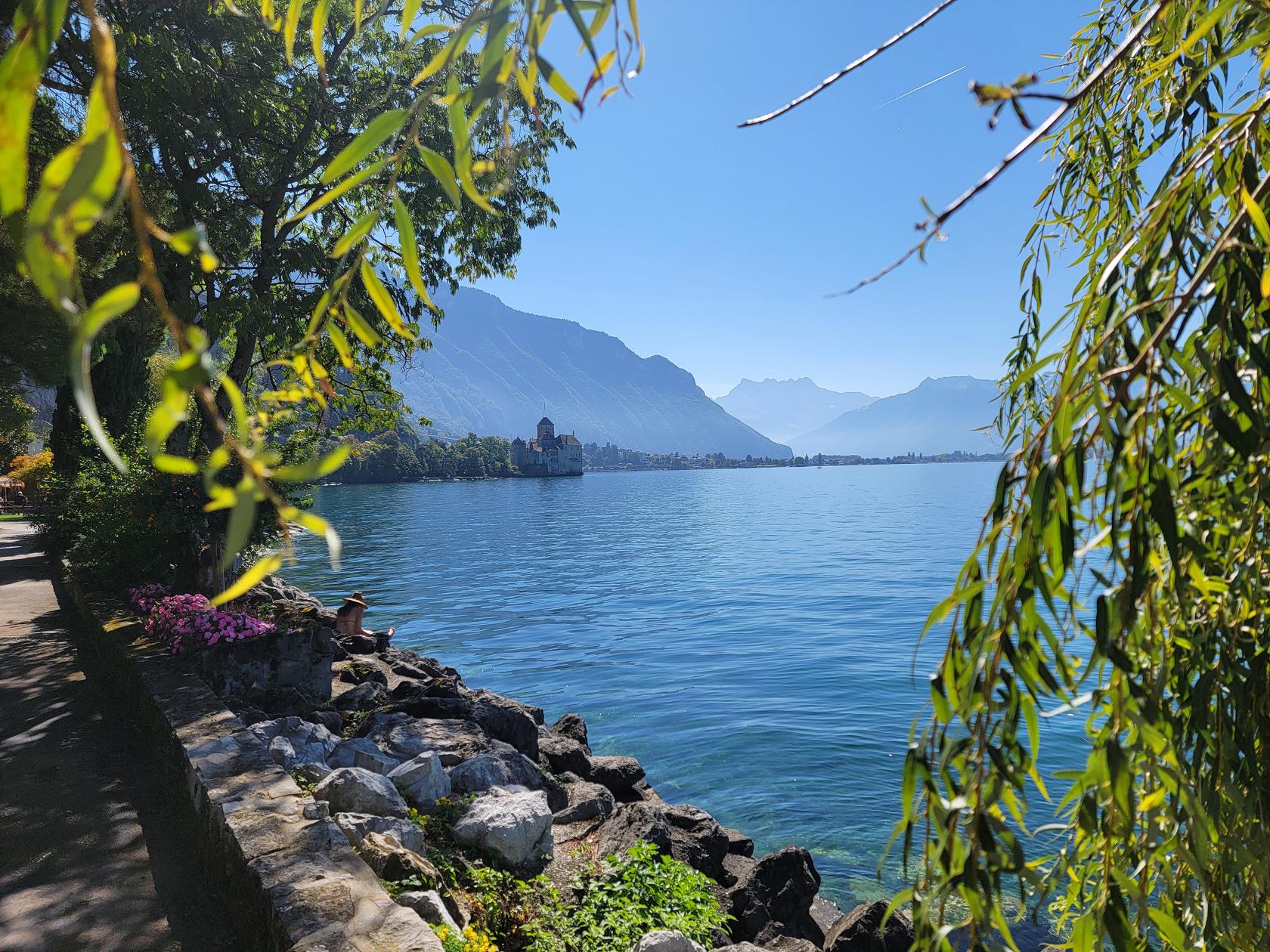
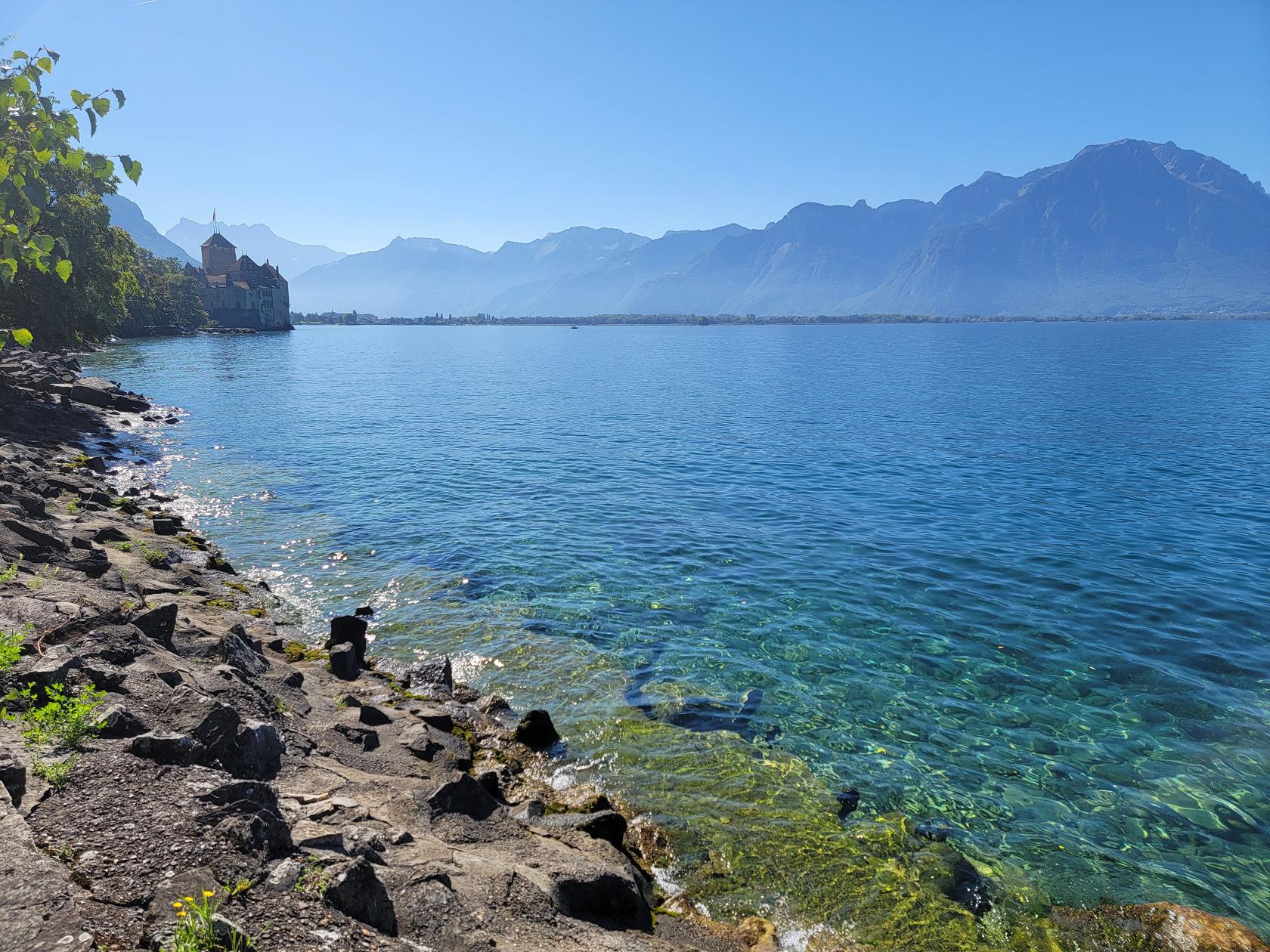
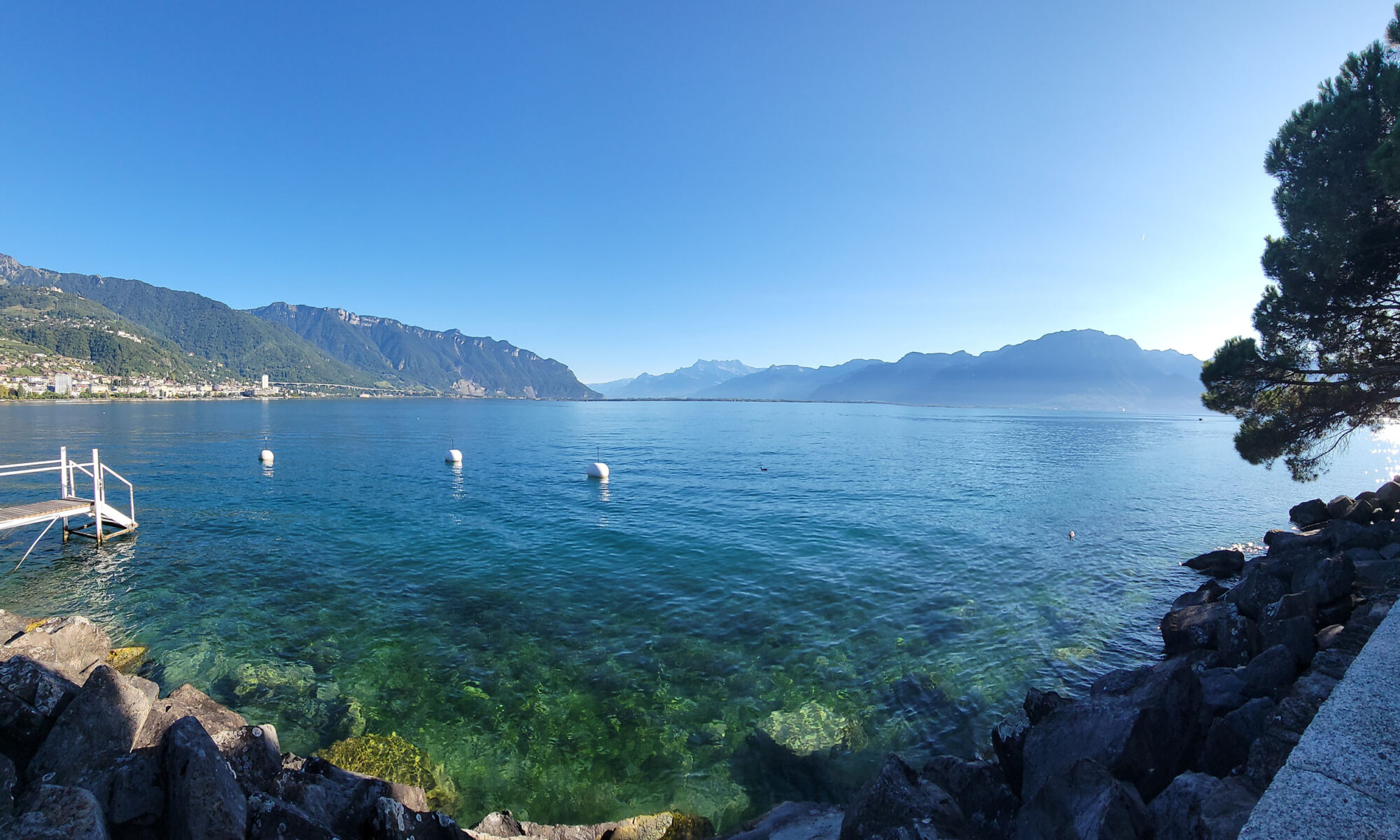
From our hotel the Quai de Clarens extends to the left and right. Taking a left while leaving, it turns into the Quai de Vernex within a short time and then it has many other monikers. For an early morning September stroll it is a very picturesque and beautiful walk along the lake, being well maintained by the authorities.
Quai Alfred Chatelanat – Walk To Castle Chillon – Montreaux, Switzerland
Quai Alfred Chatelanat – Walk To Castle Chillon – Montreaux, Switzerland
Quai Alfred Chatelanat – Walk To Castle Chillon – Montreaux, Switzerland
Quai Alfred Chatelanat – Walk To Castle Chillon – Montreaux, Switzerland
Quai Alfred Chatelanat – Walk To Castle Chillon – Montreaux, Switzerland
Quai Alfred Chatelanat – Walk To Castle Chillon – Montreaux, Switzerland
Quai Alfred Chatelanat – Walk To Castle Chillon – Montreaux, Switzerland
Quai Alfred Chatelanat – Walk To Castle Chillon – Montreaux, Switzerland
Quai Alfred Chatelanat – Walk To Castle Chillon – Montreaux, Switzerland
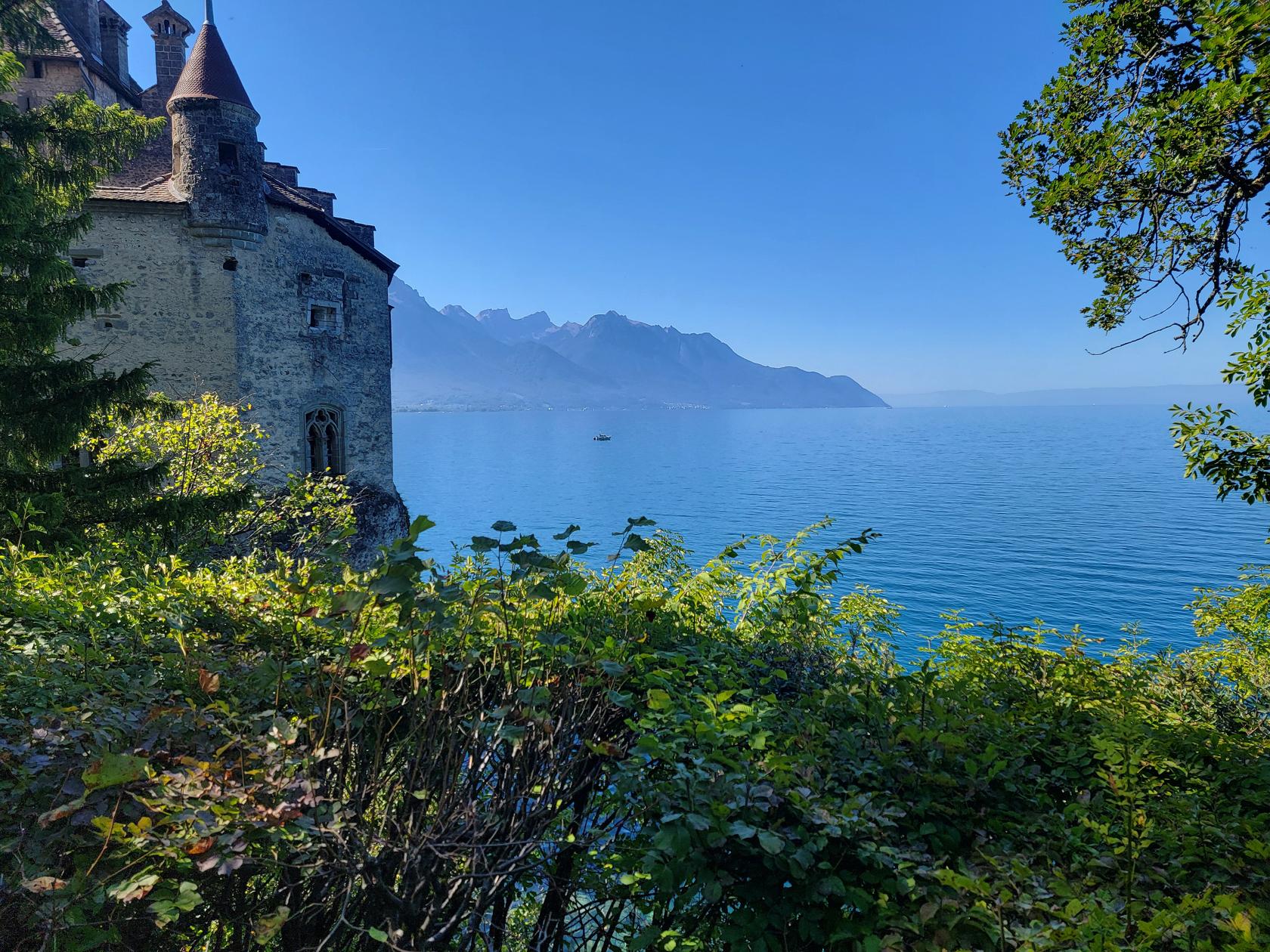
Eventually, as you pass the towns of Montreux and Veytaux, it will turn into the Quai Alfred Chatelanat. It is here you will see the Castle or Chateau de Chillon.
Quai Alfred Chatelanat – Castle Chillon – Montreaux, Switzerland
Quai Alfred Chatelanat – Castle Chillon – Montreaux, Switzerland
Getting There
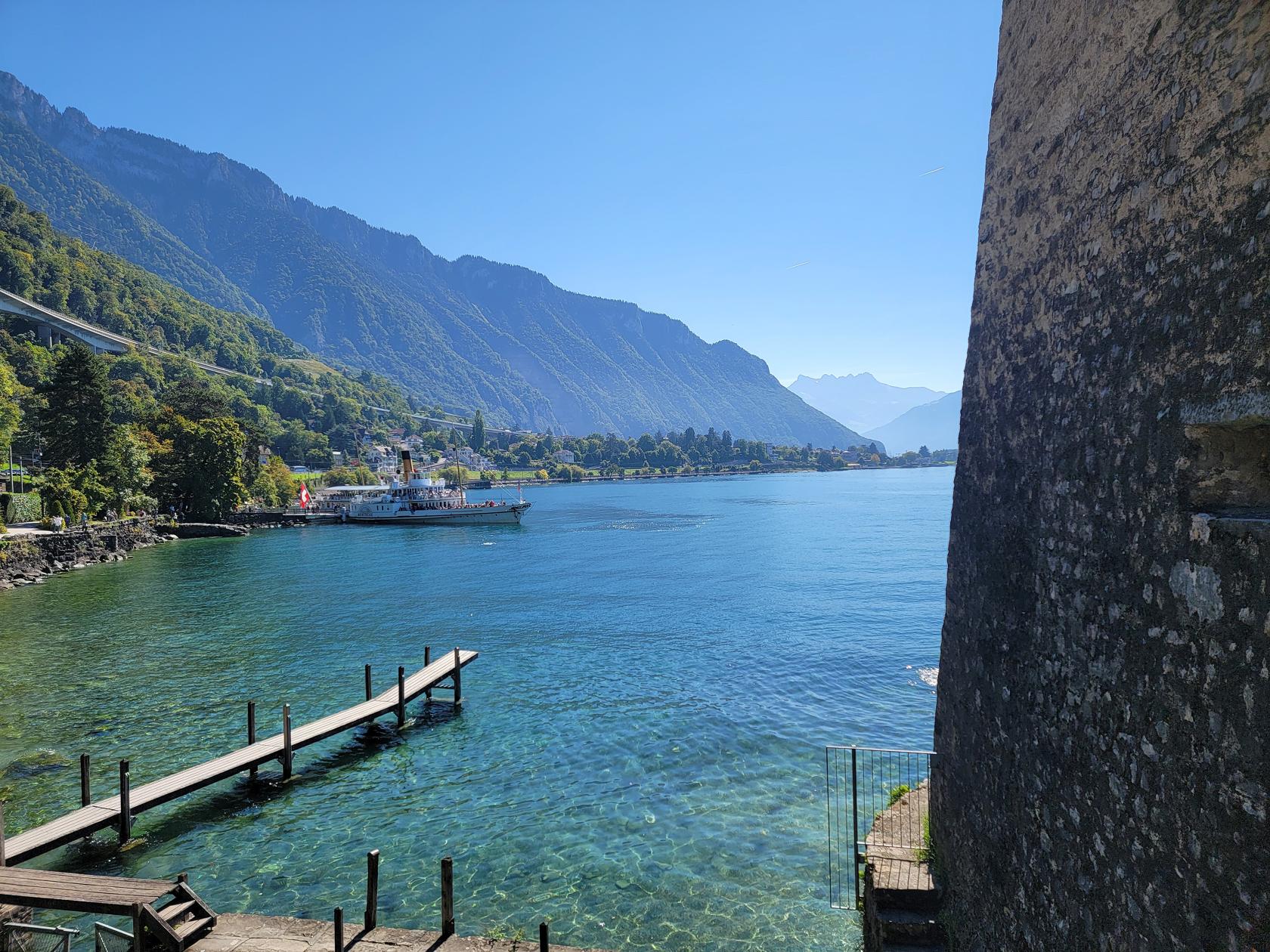
To get to Castle Chillon there are many options. One preferrable one, since the walk along the Quai is fairly long, at least a couple of miles, is taking the boat. It docks at several places and has a rather spotty schedule, so check the authorities and the schedule at your location prior to depending upon it. It does however dock just below the castle and had arrived as we were on our tour of it.
Castle Chillon – Lake Boat Embarking – Montreaux, Switzerland
You can also take the bus. This is probably the easiest option and there are numerous bus stops along the way. The 201 from Clarens to Veytaux comes every half hour. We chose this option to return to our hotel. Tickets can be purchases on the SBB mobile application.
Chateau de Chillon
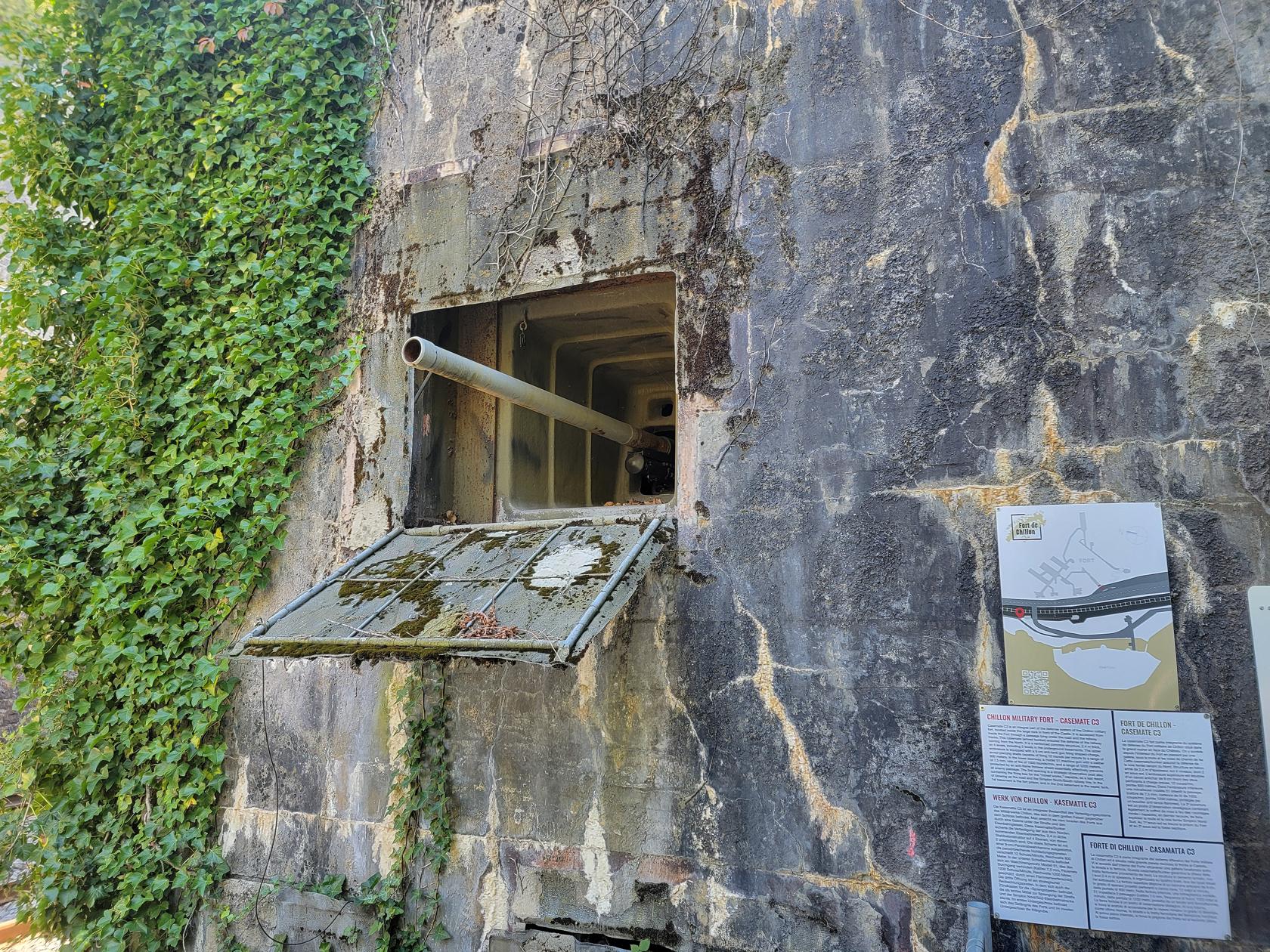
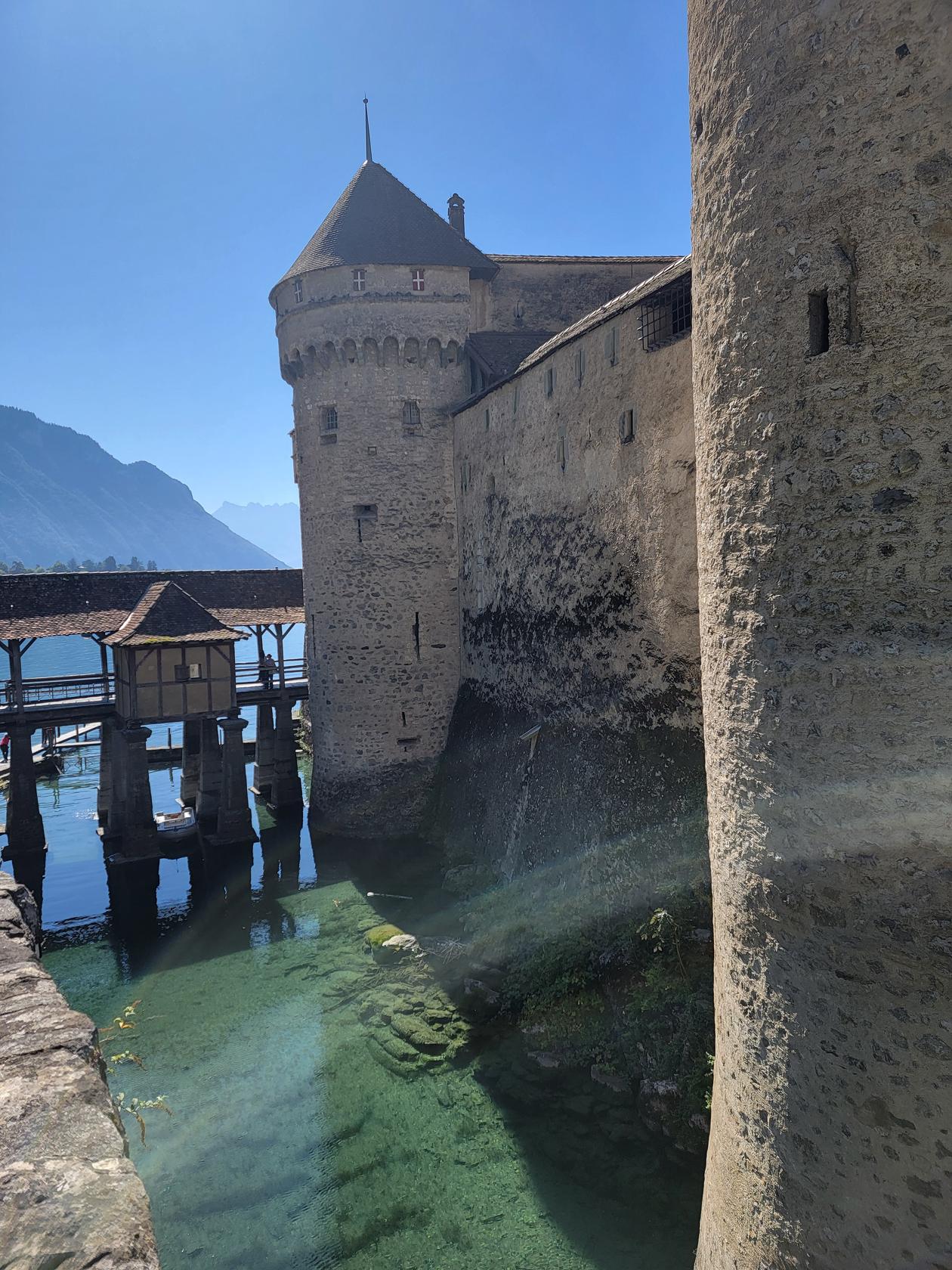
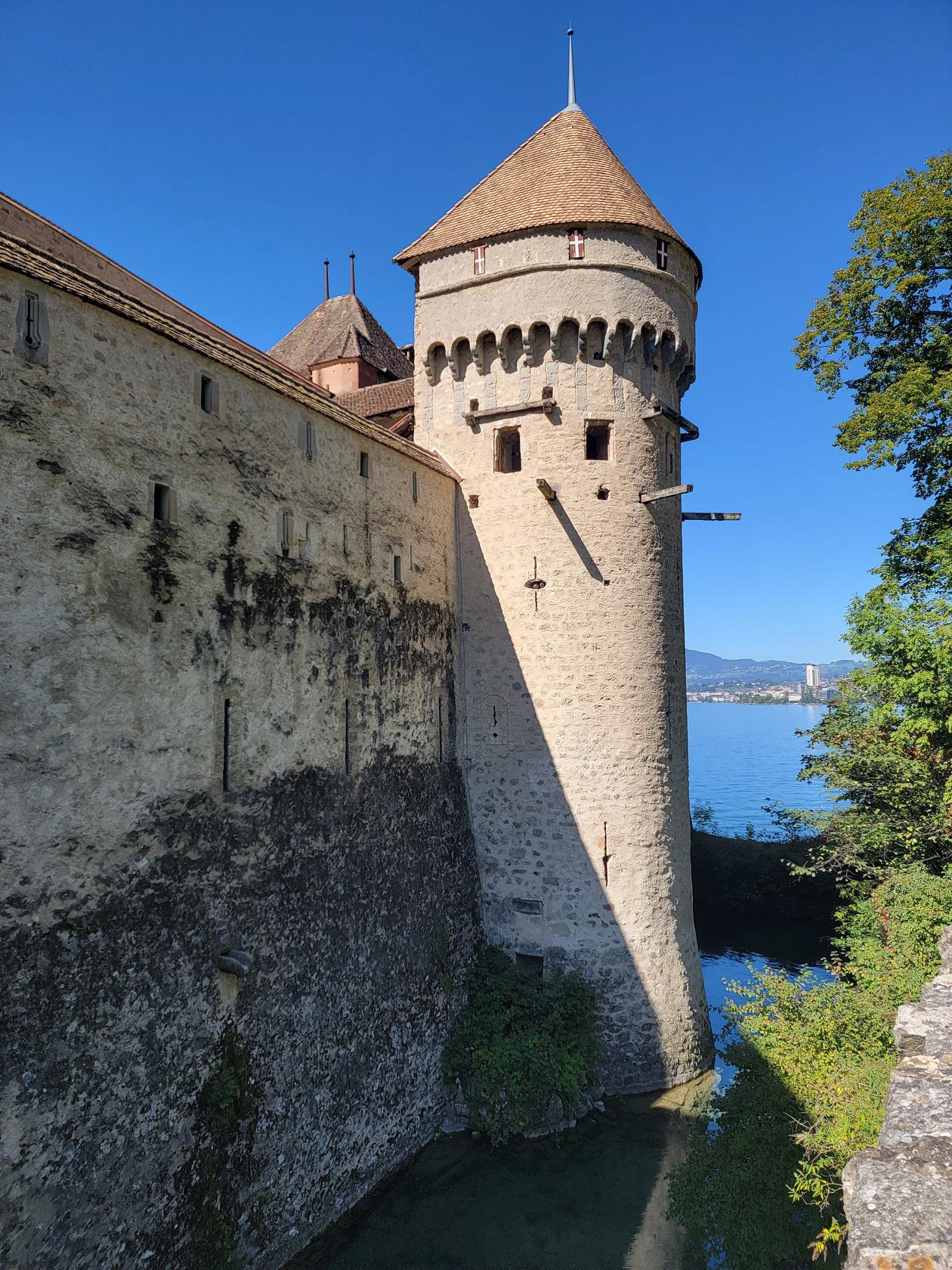
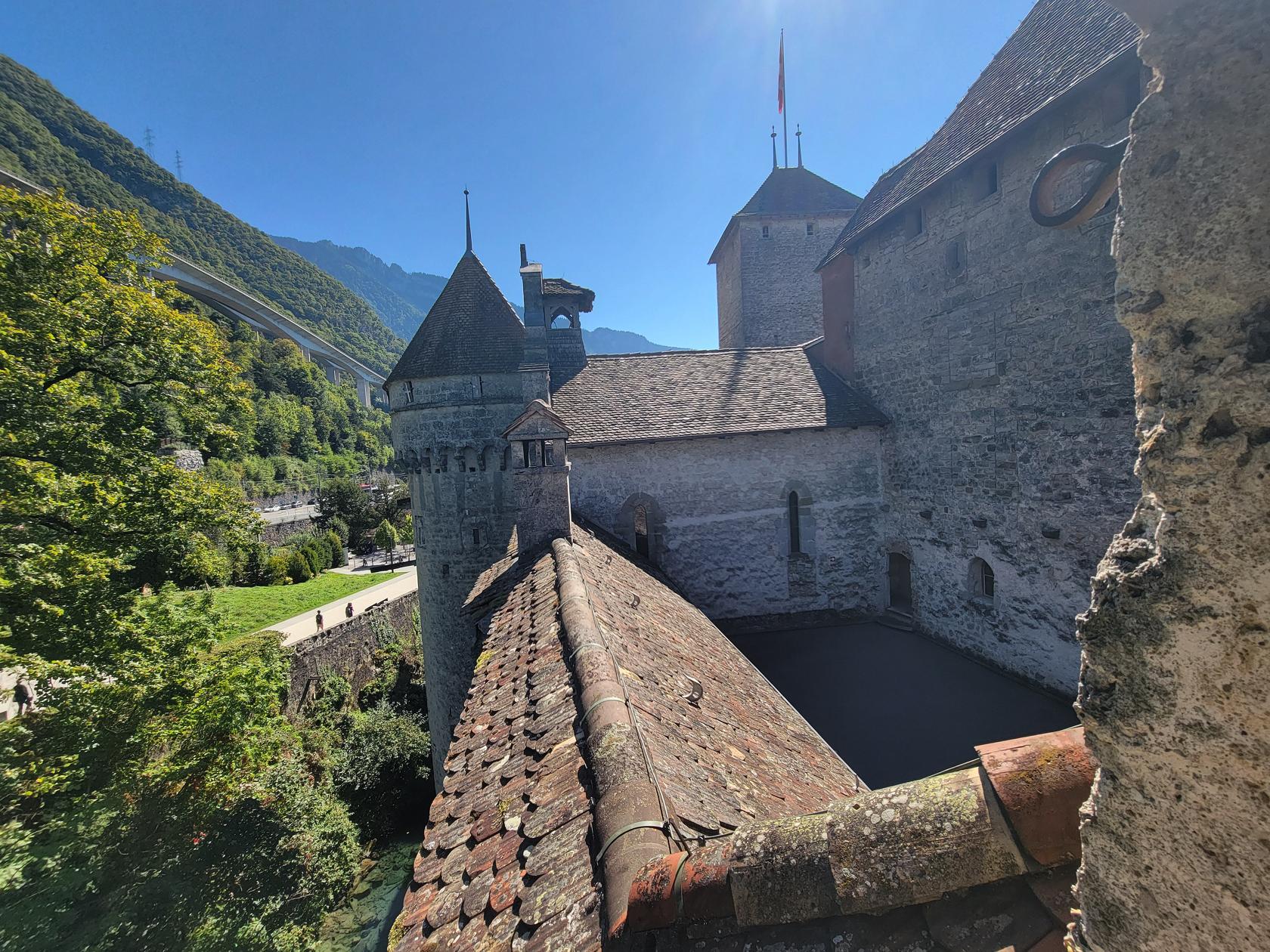
The Castle Chillon was originally built by the Savoy family and has had many different functions since it was first erected. It can be seen in the distance for some time before one notices the gun casement that guards it to the north.
Castle Chillon – Lake Leman – Montreaux, Switzerland
Castle Chillon – Lake Moat – Montreaux, Switzerland
Castle Chillon – Lake Moat – Montreaux, Switzerland
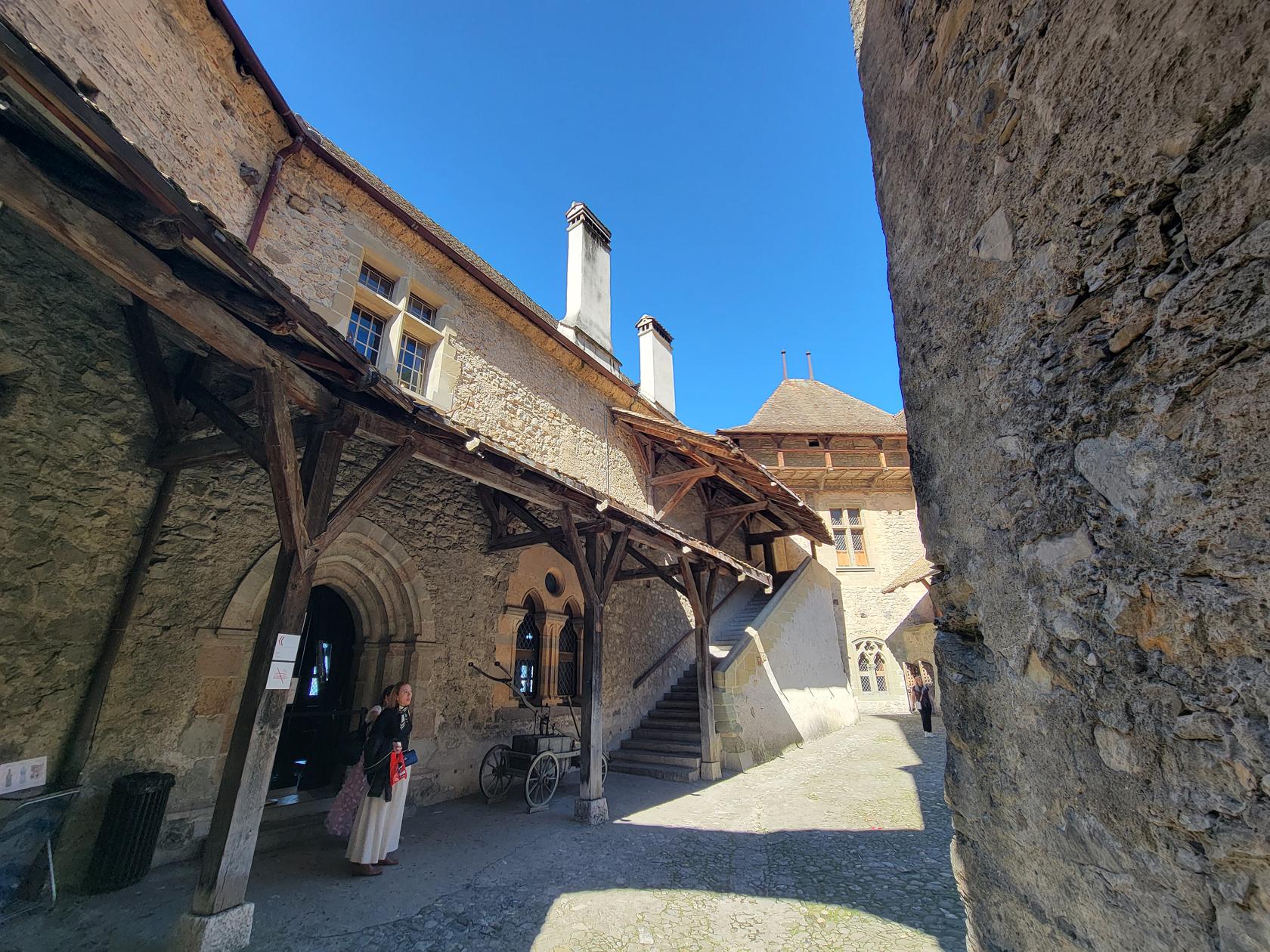
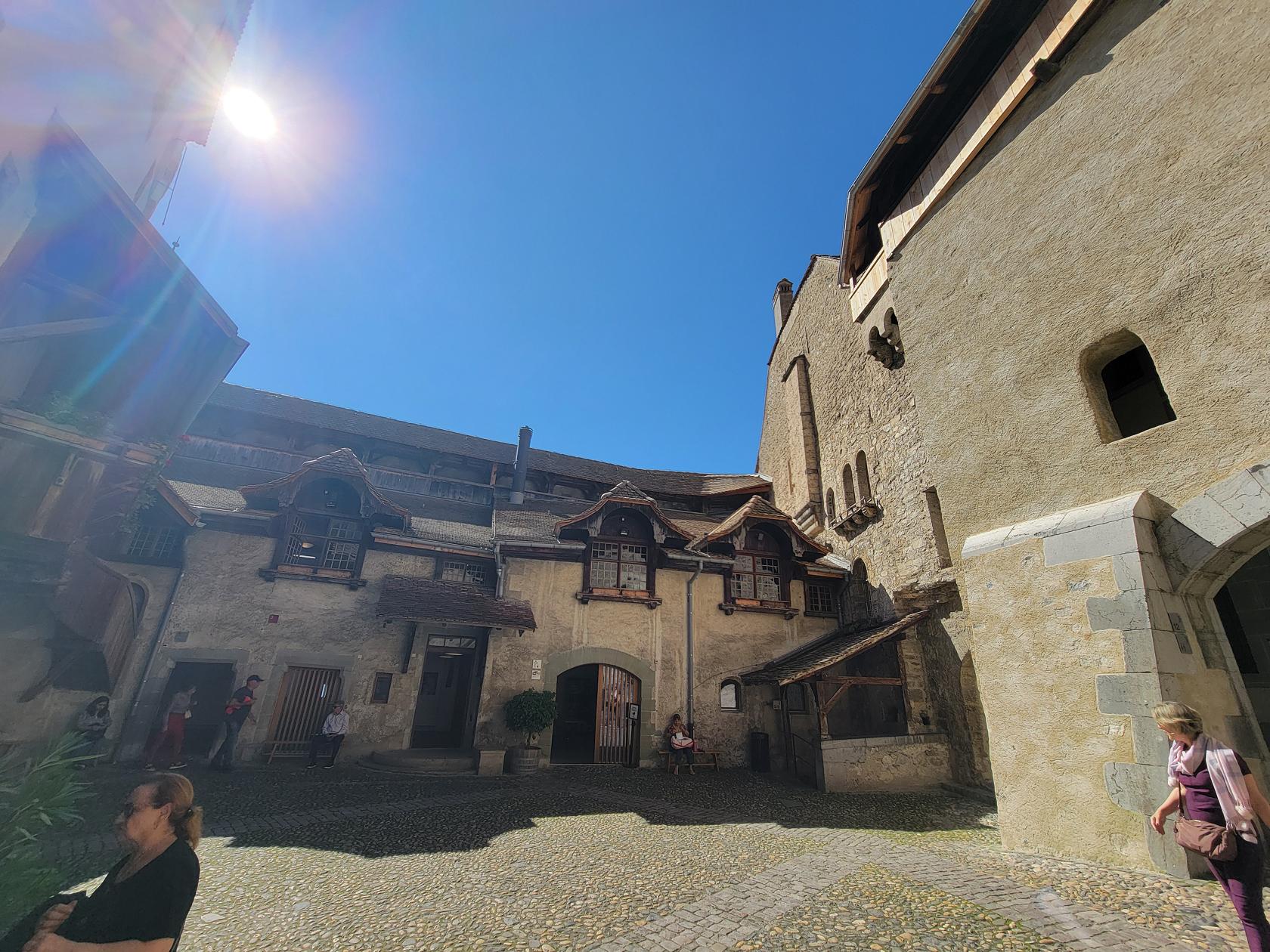
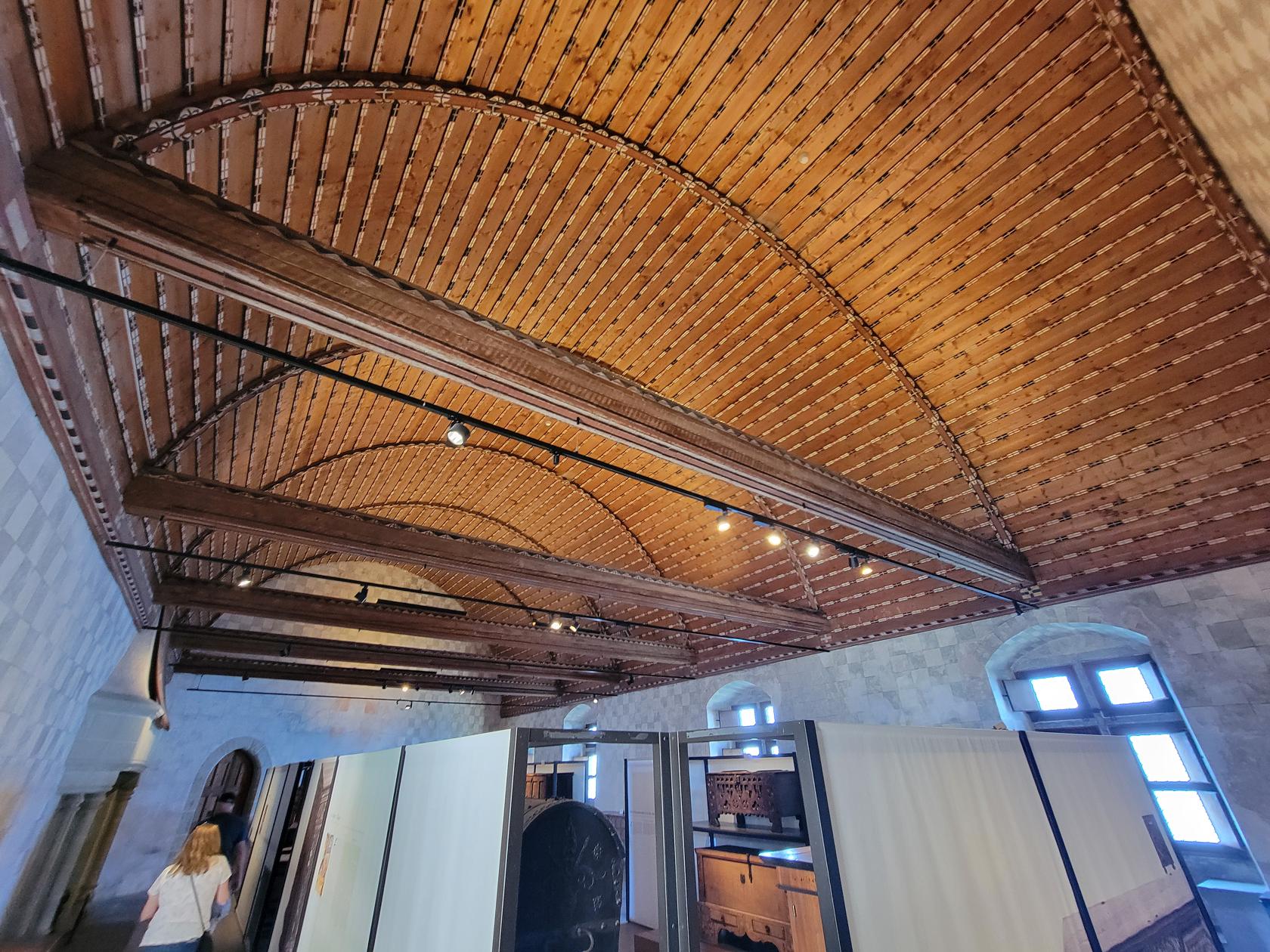
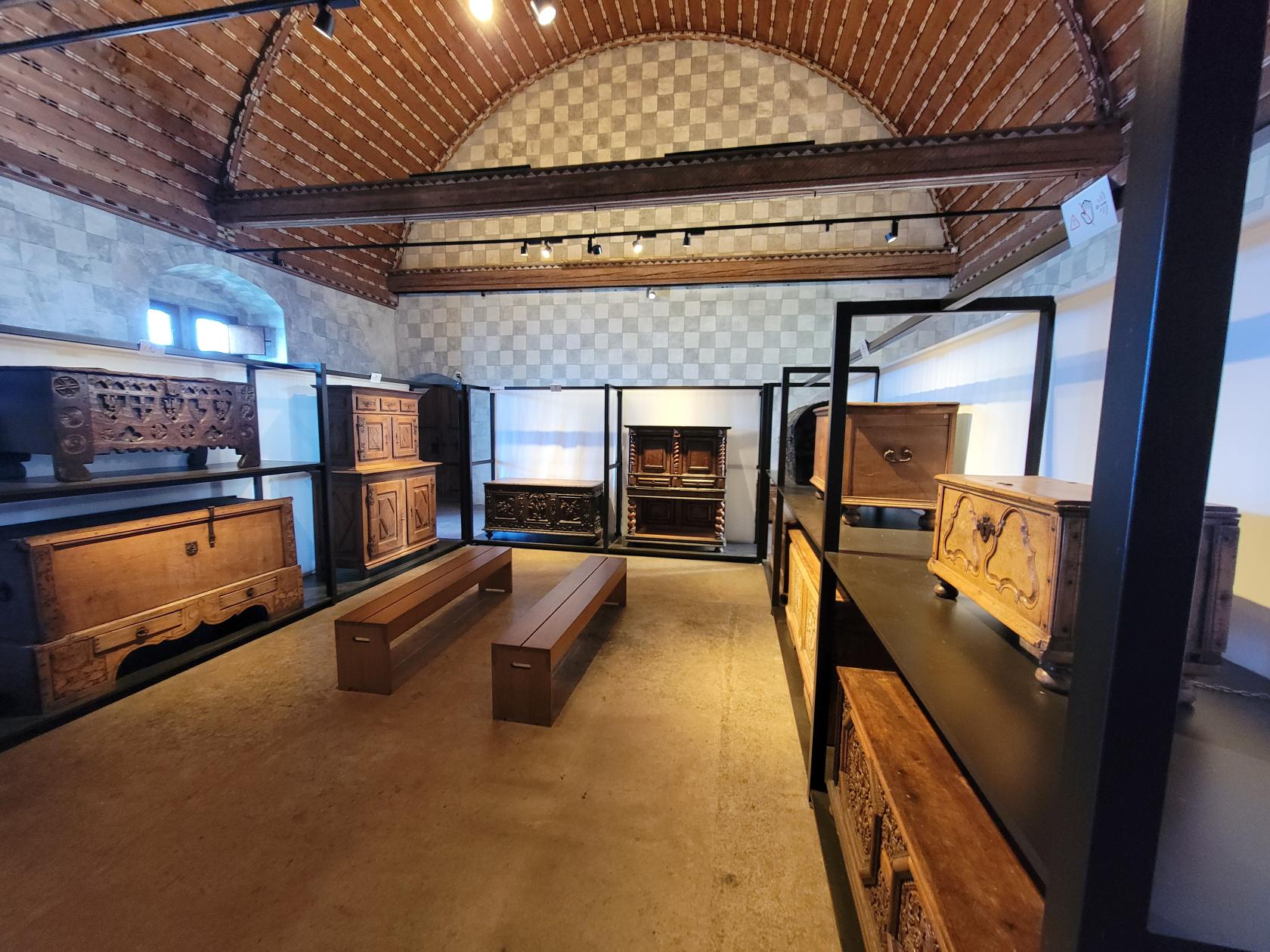
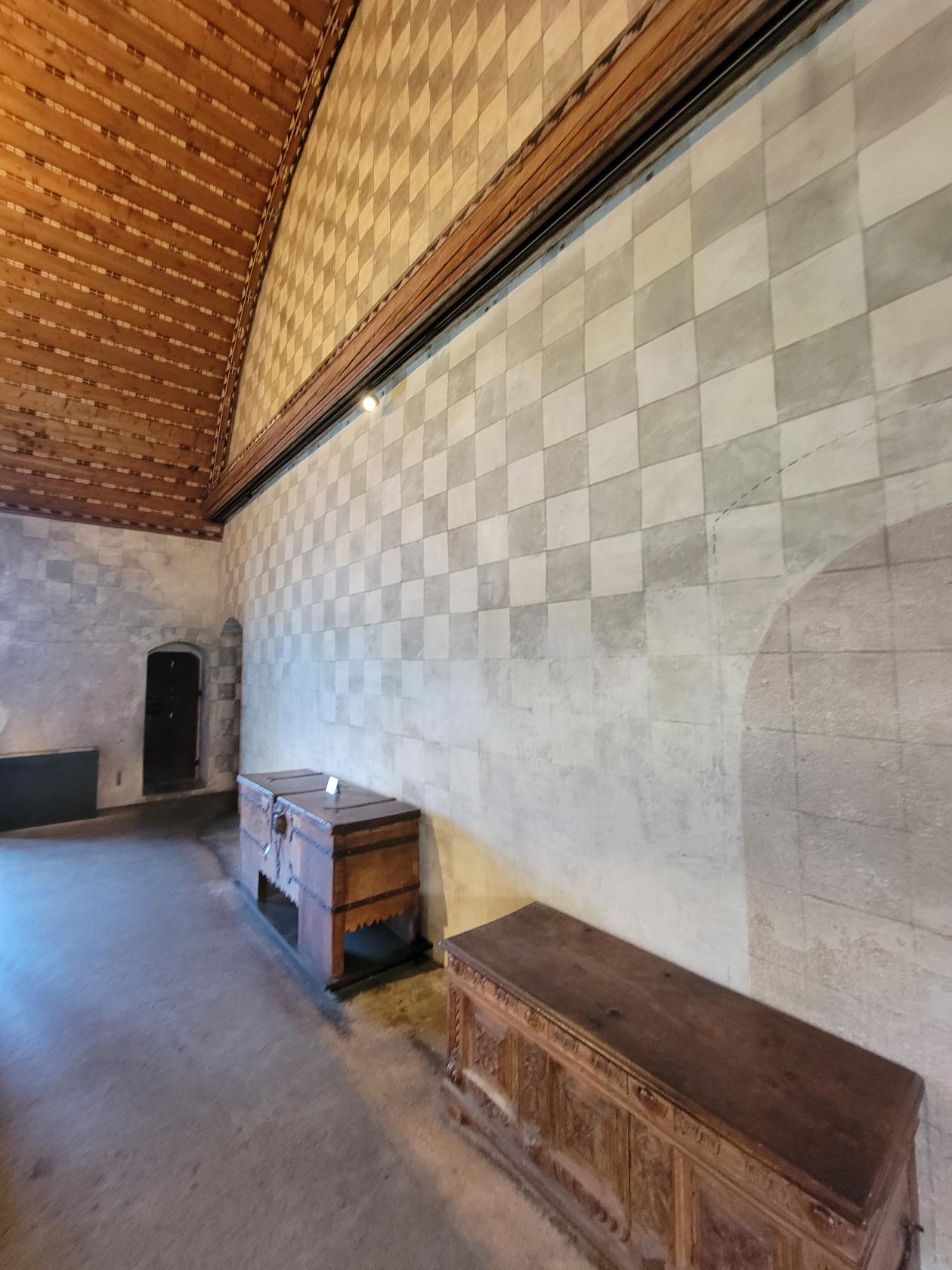
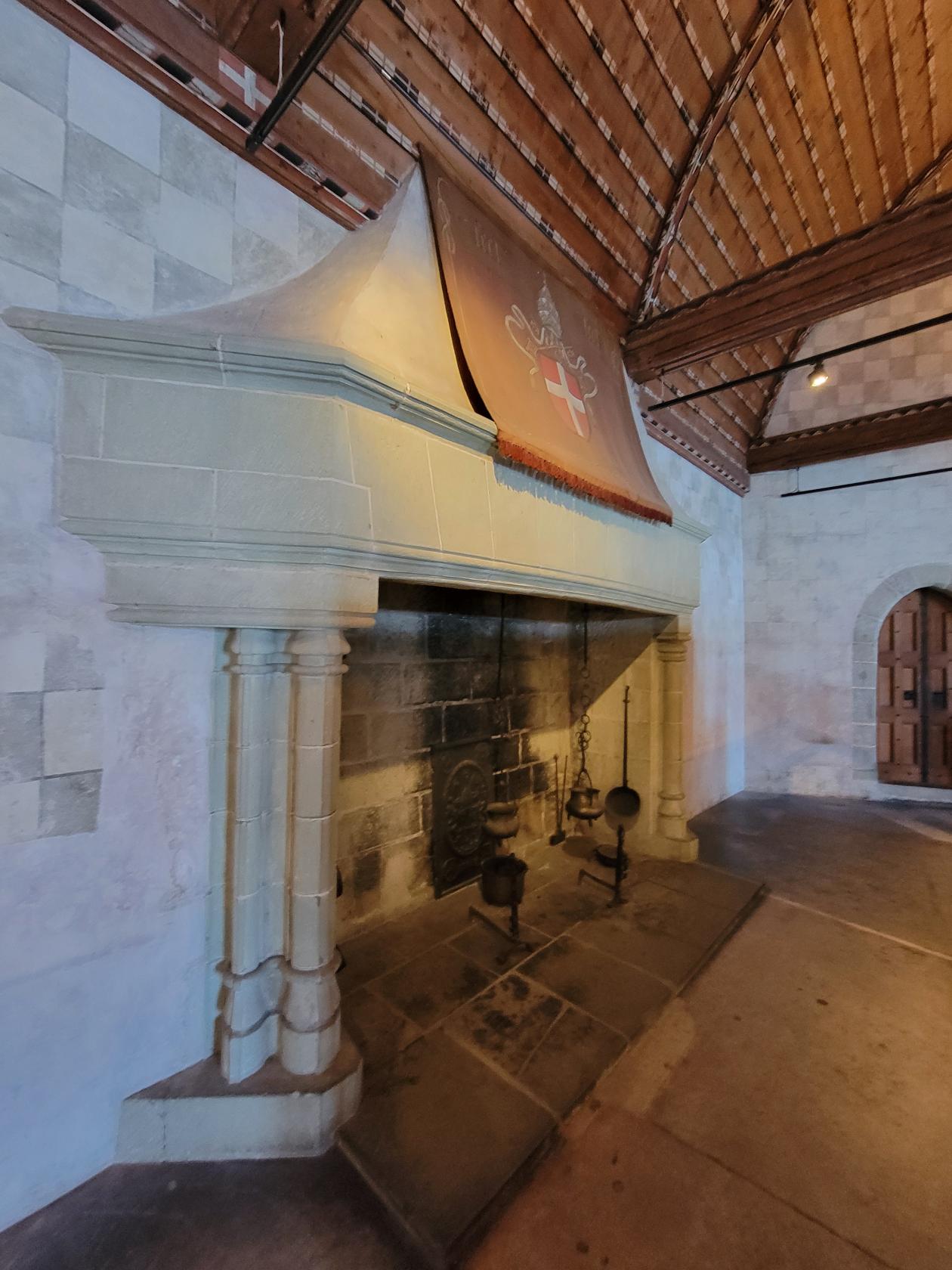
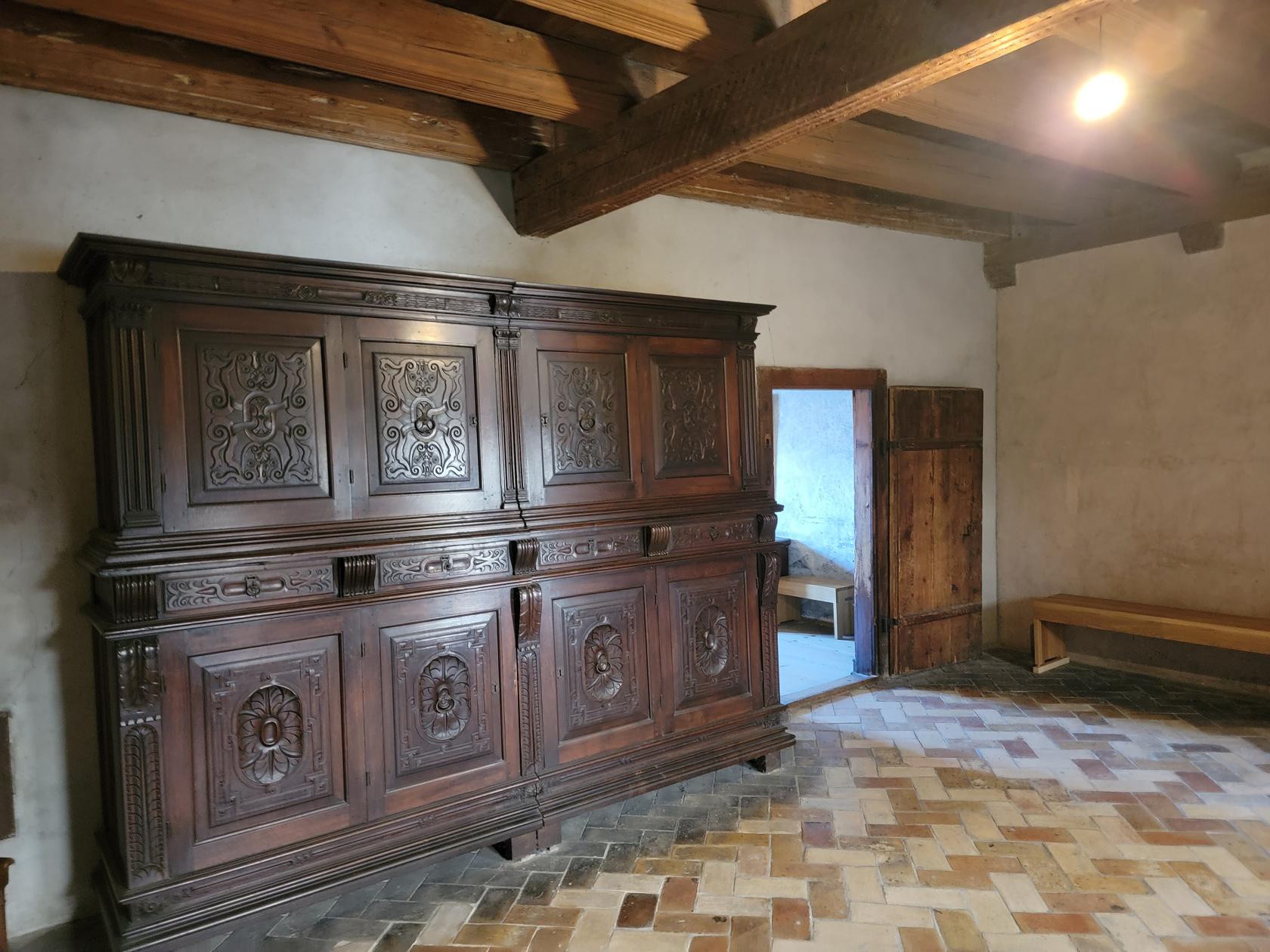
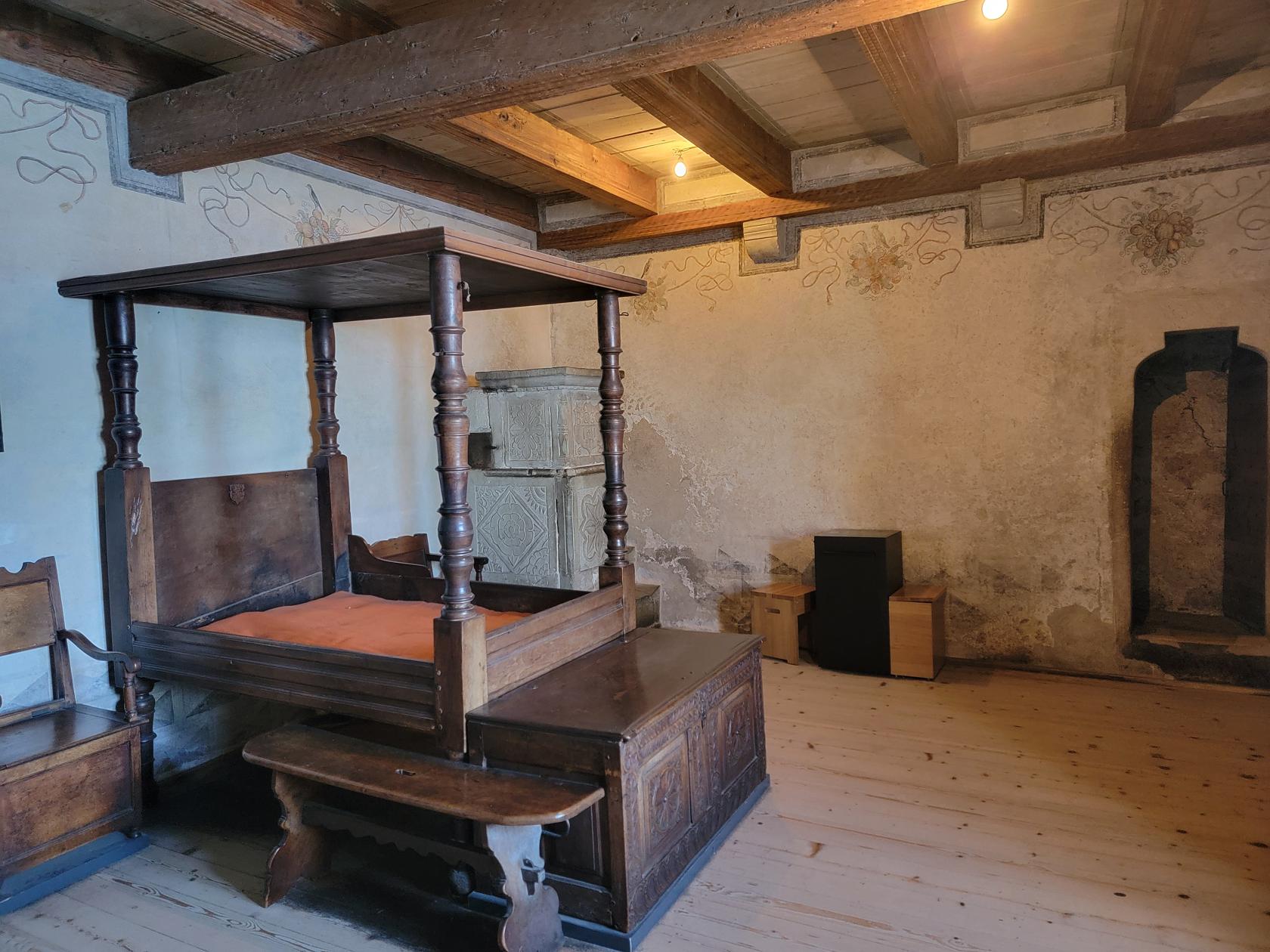
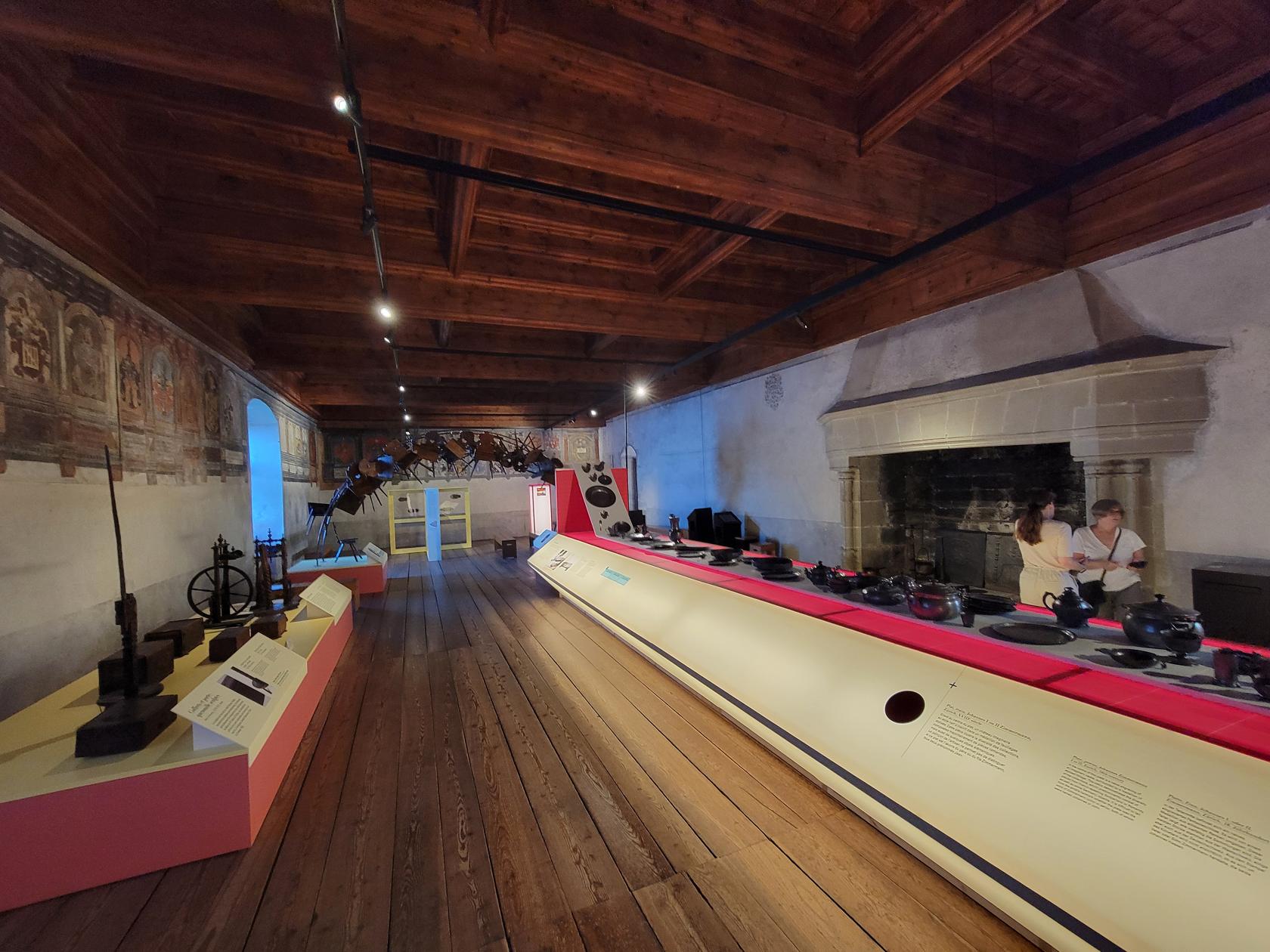
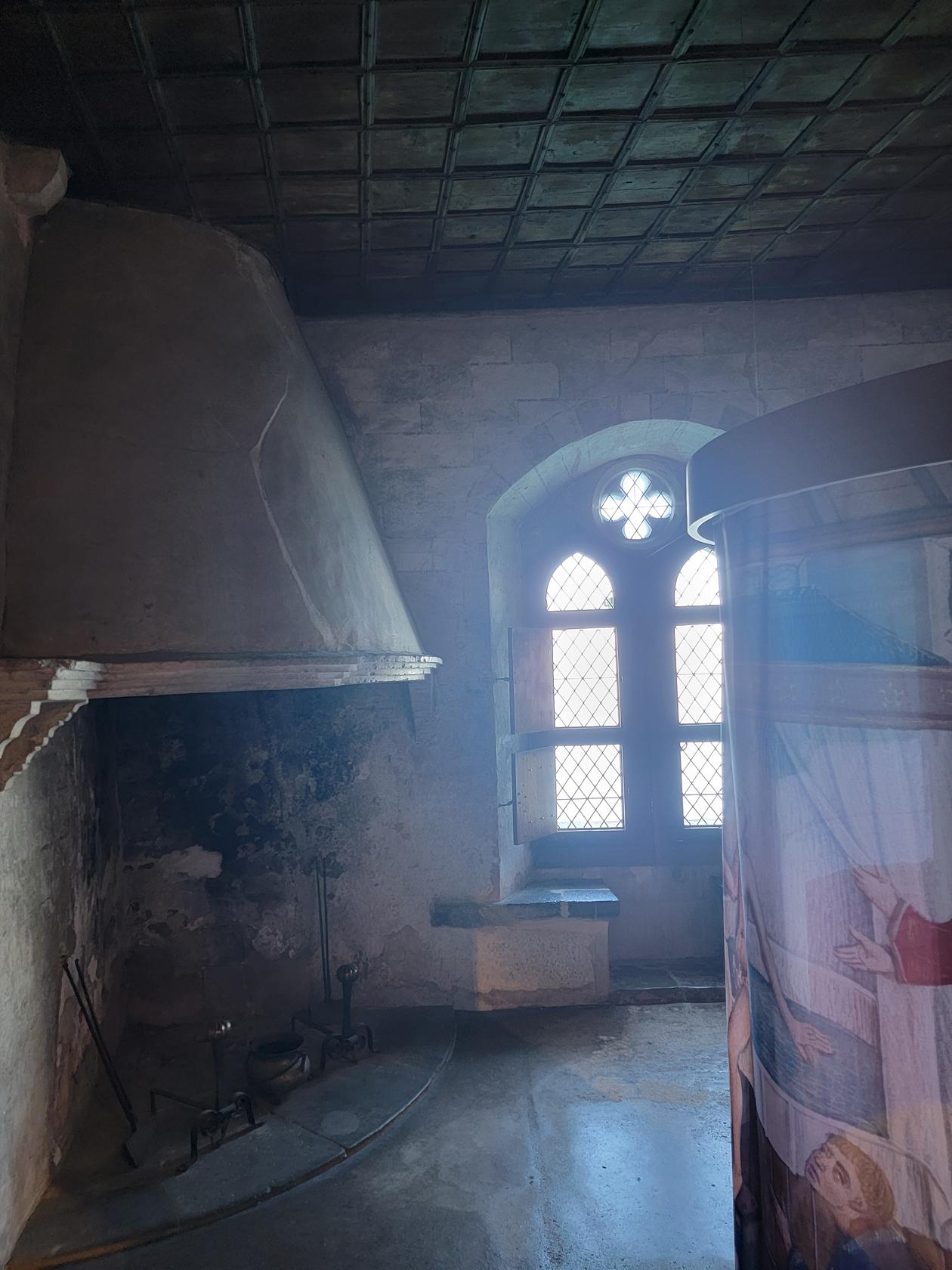
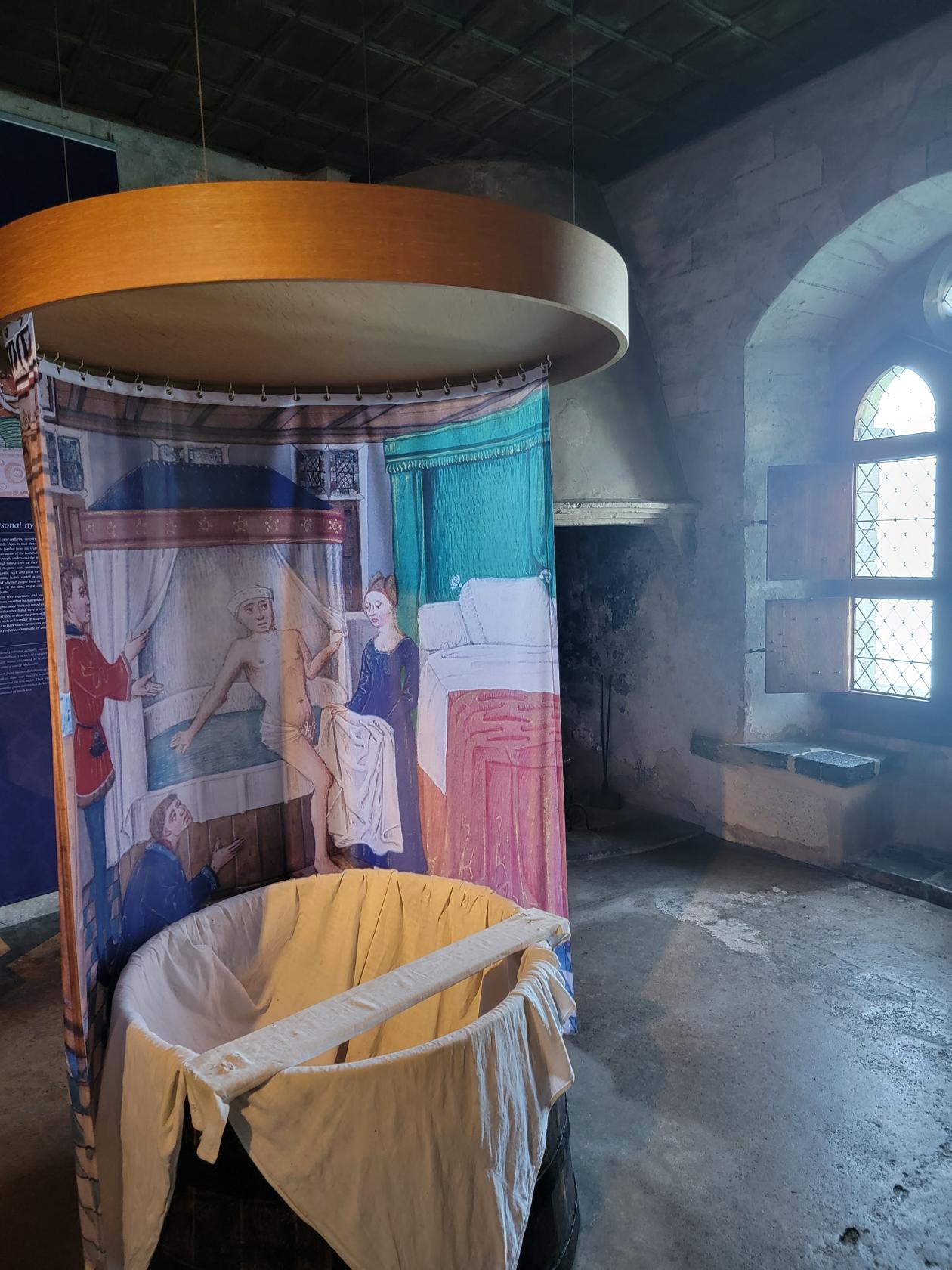
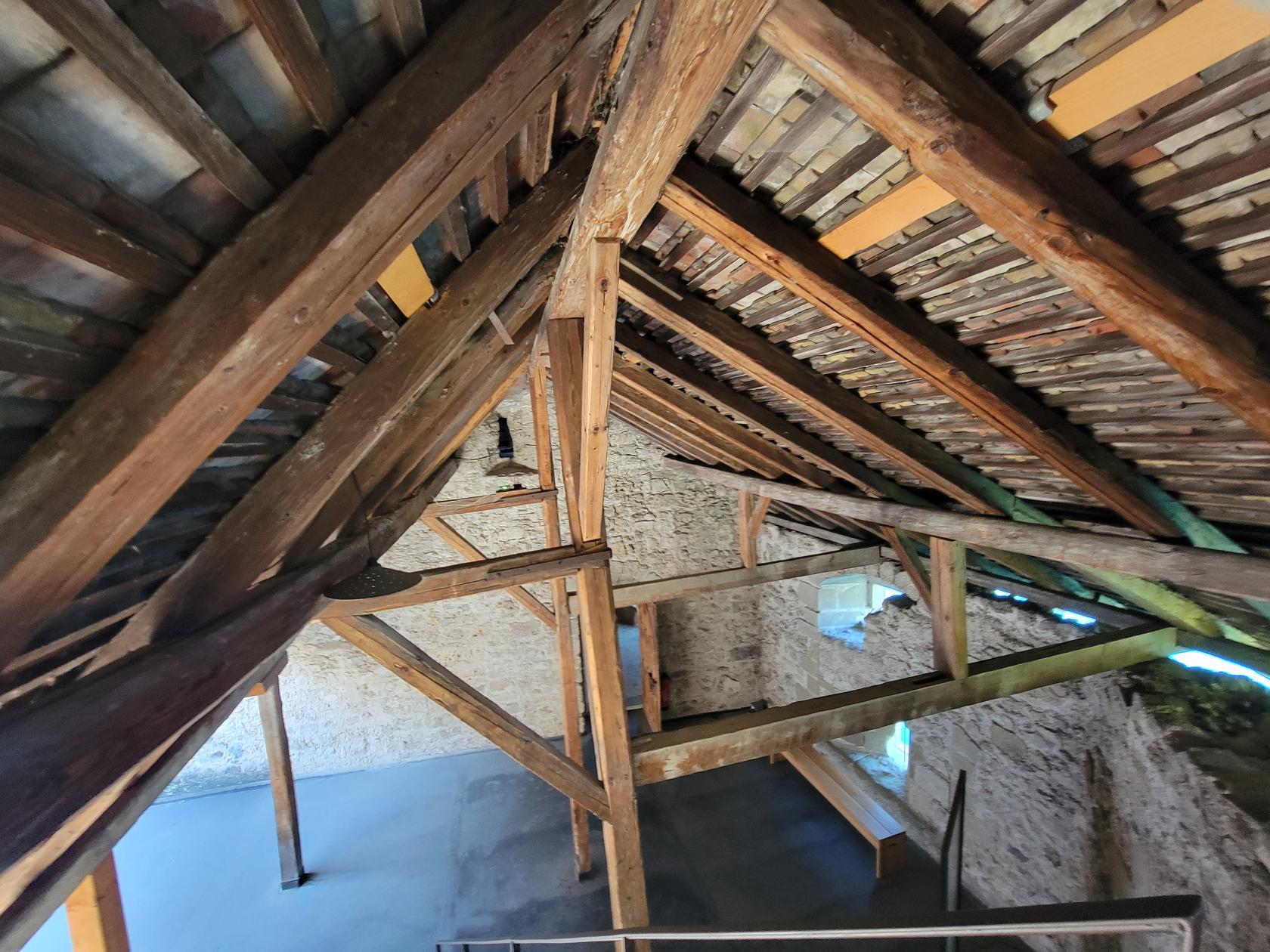
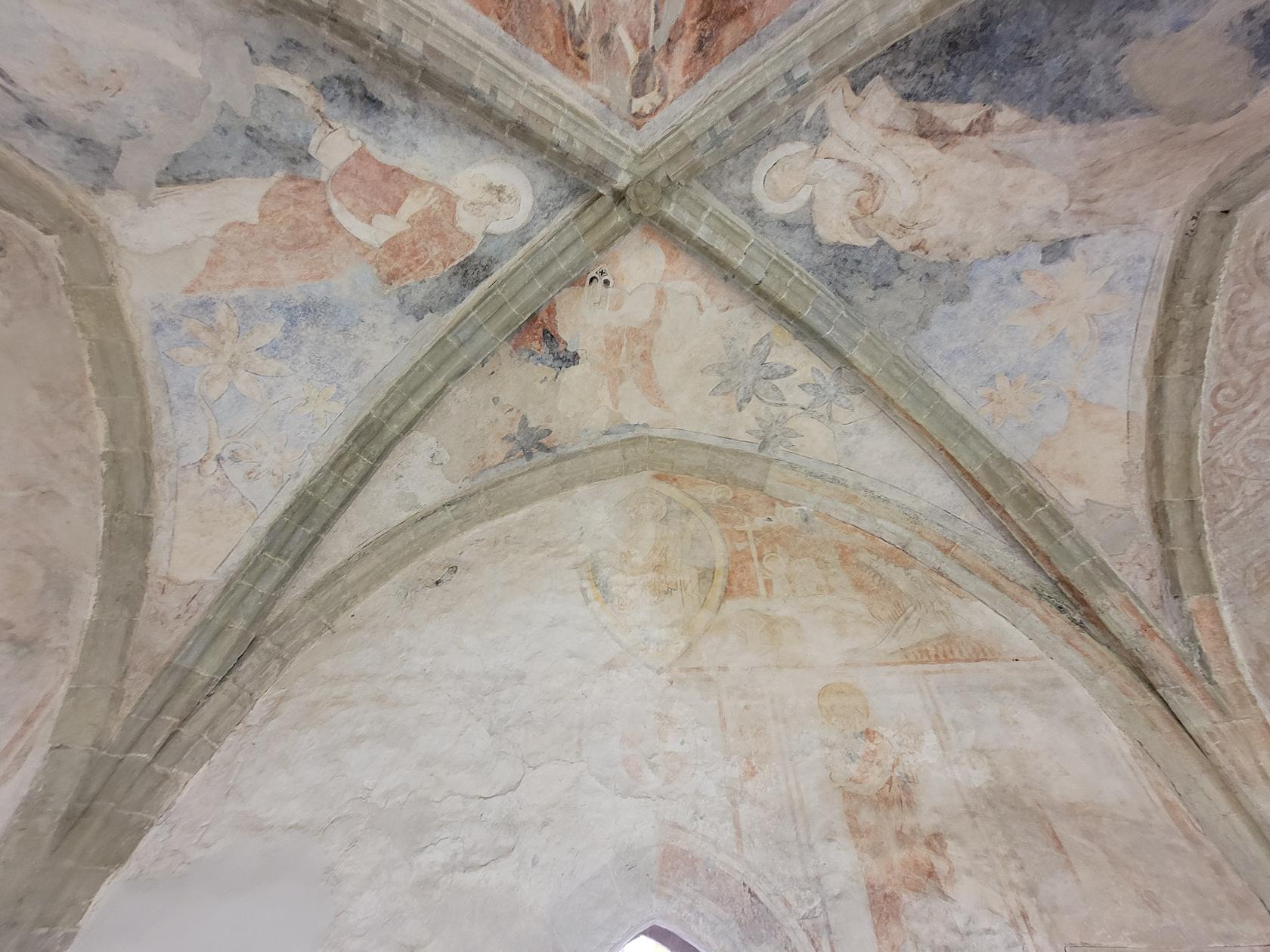
The castle has a number of rooms dedicated to particular themes. Each has a unique story to tell, as well as furnishing that were used in the past by the residents. The following were taken while touring the inside of the castle.
Castle Chillon – Interior Ward or Courtyard – Montreaux, Switzerland
Castle Chillon – Interior Ward or Courtyard – Montreaux, Switzerland
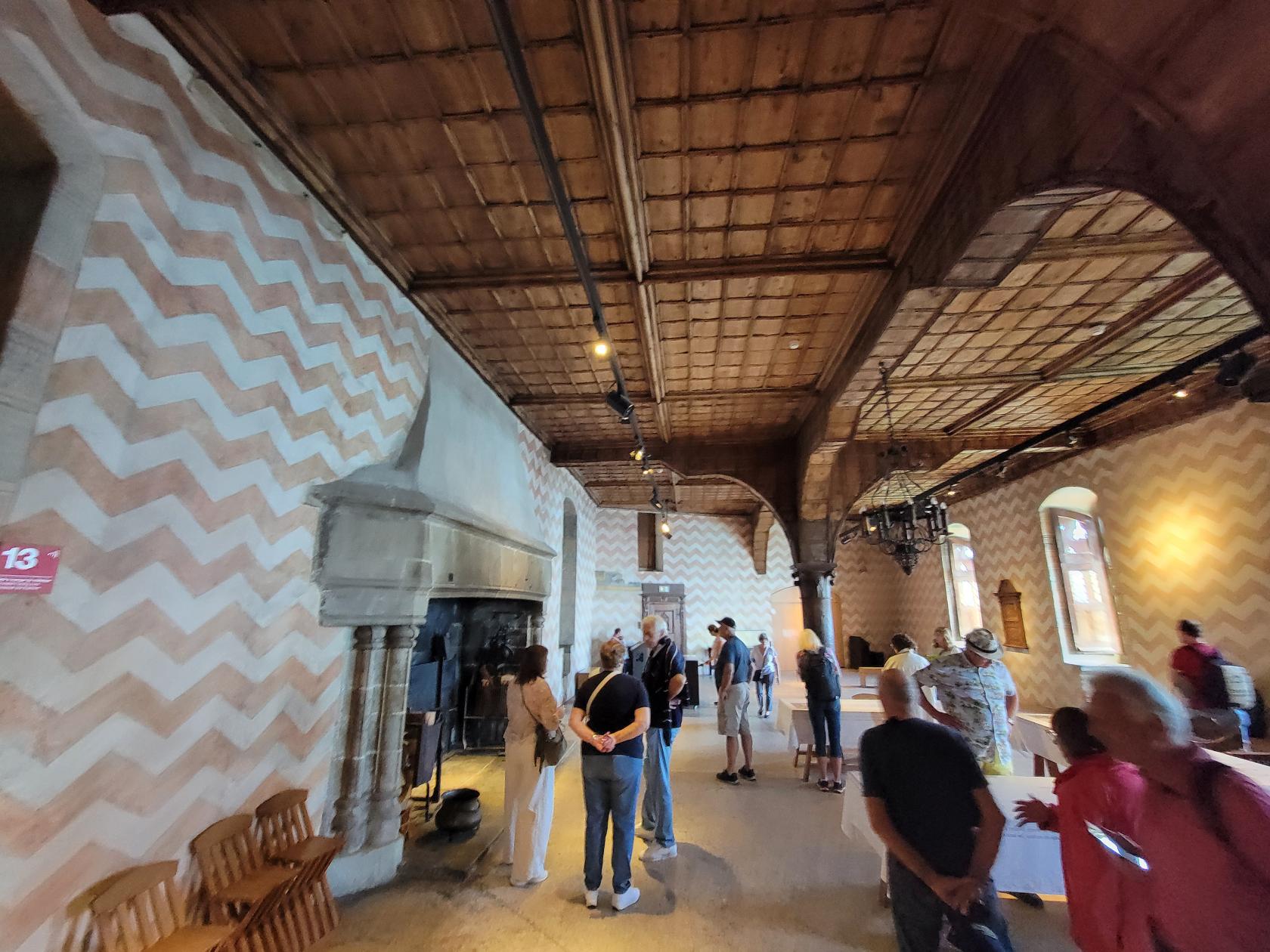
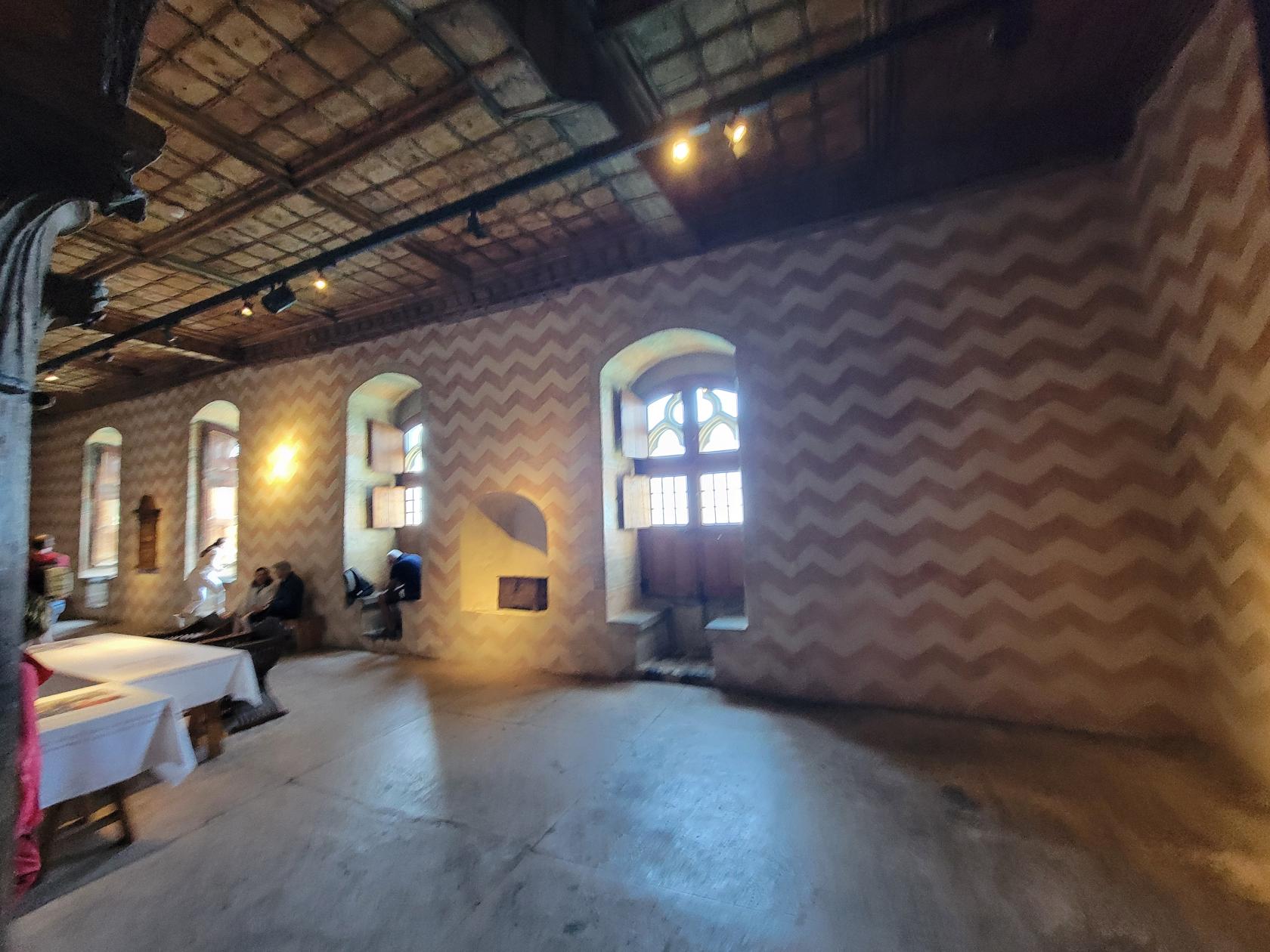
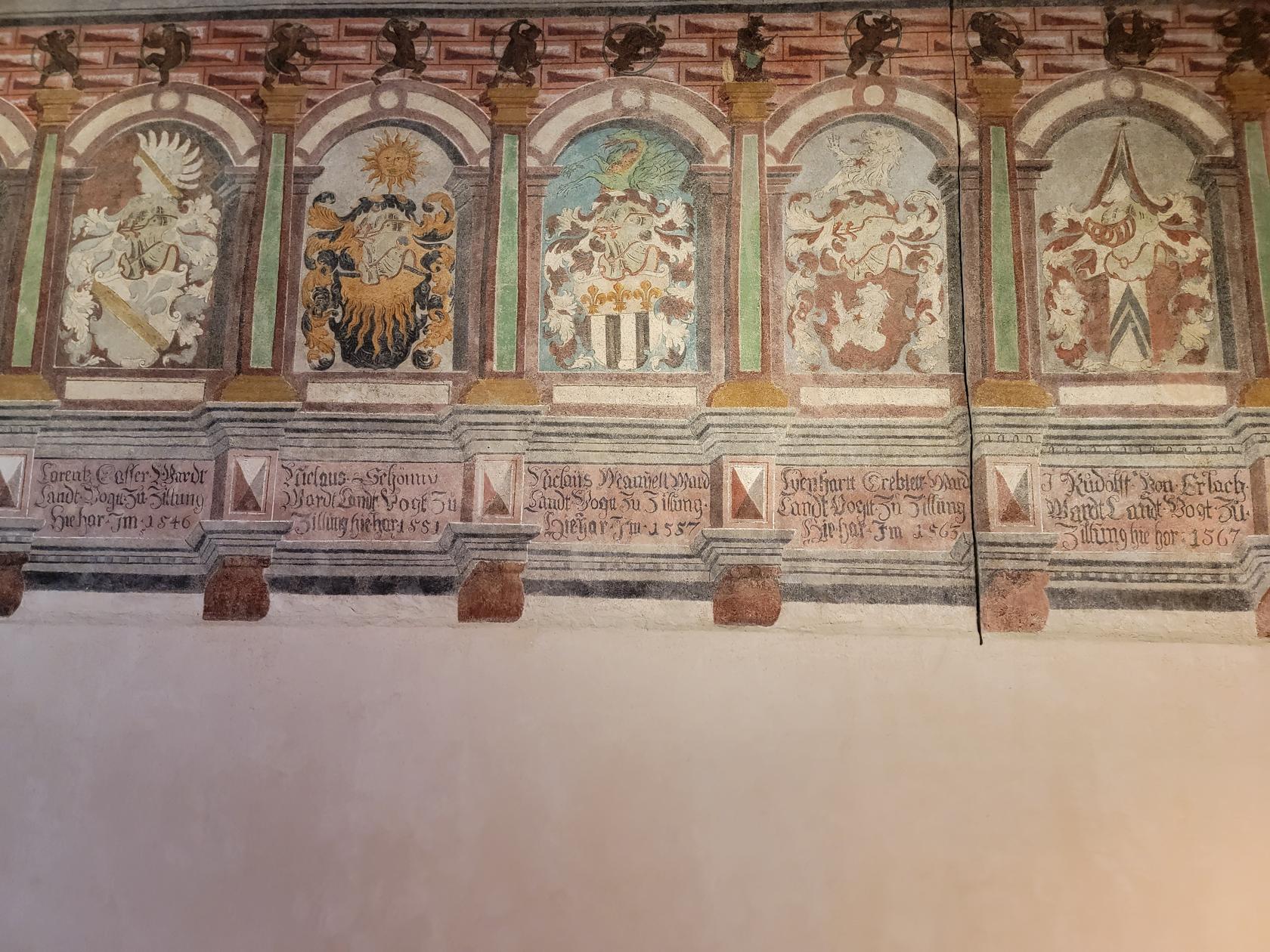
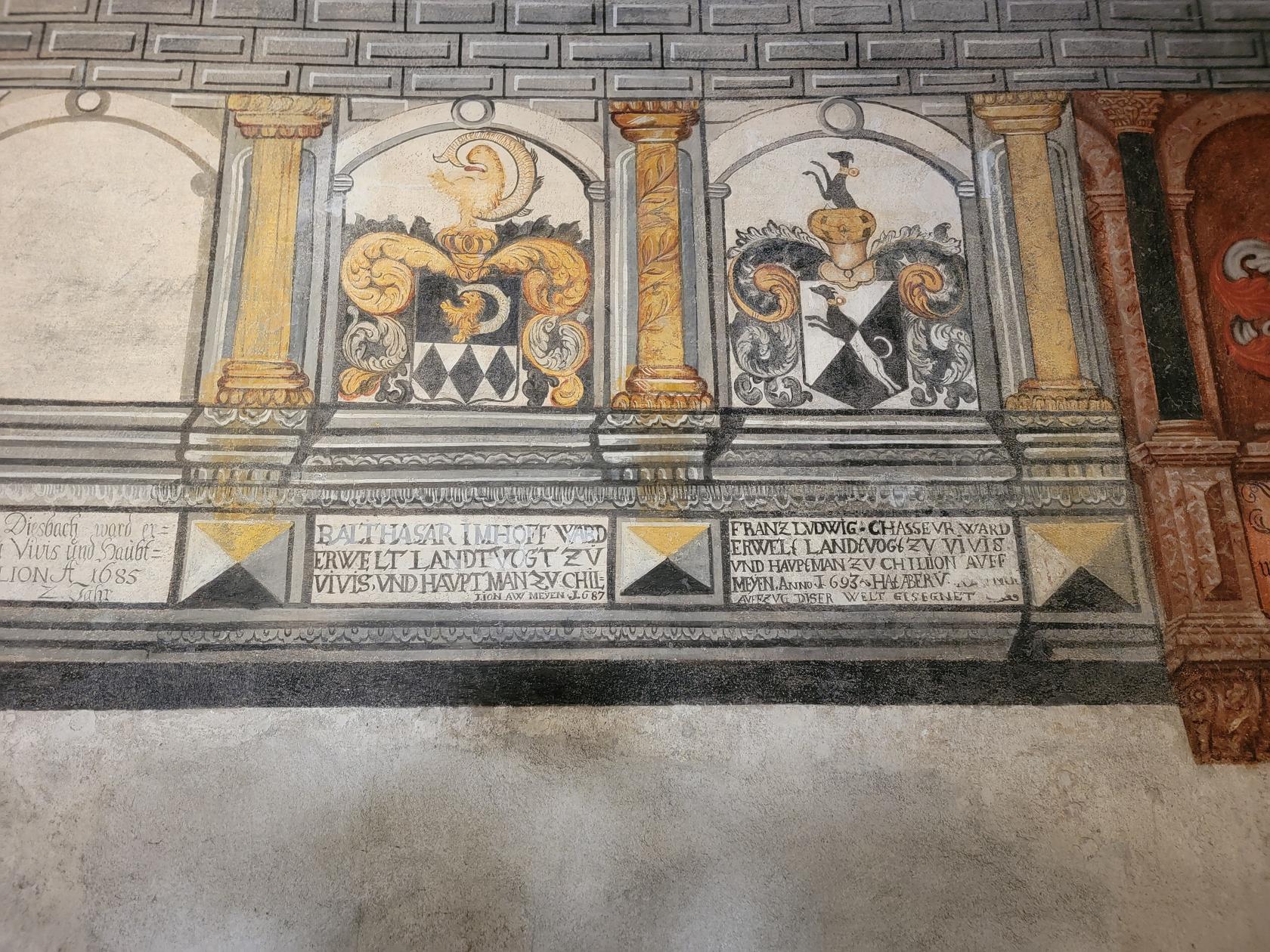
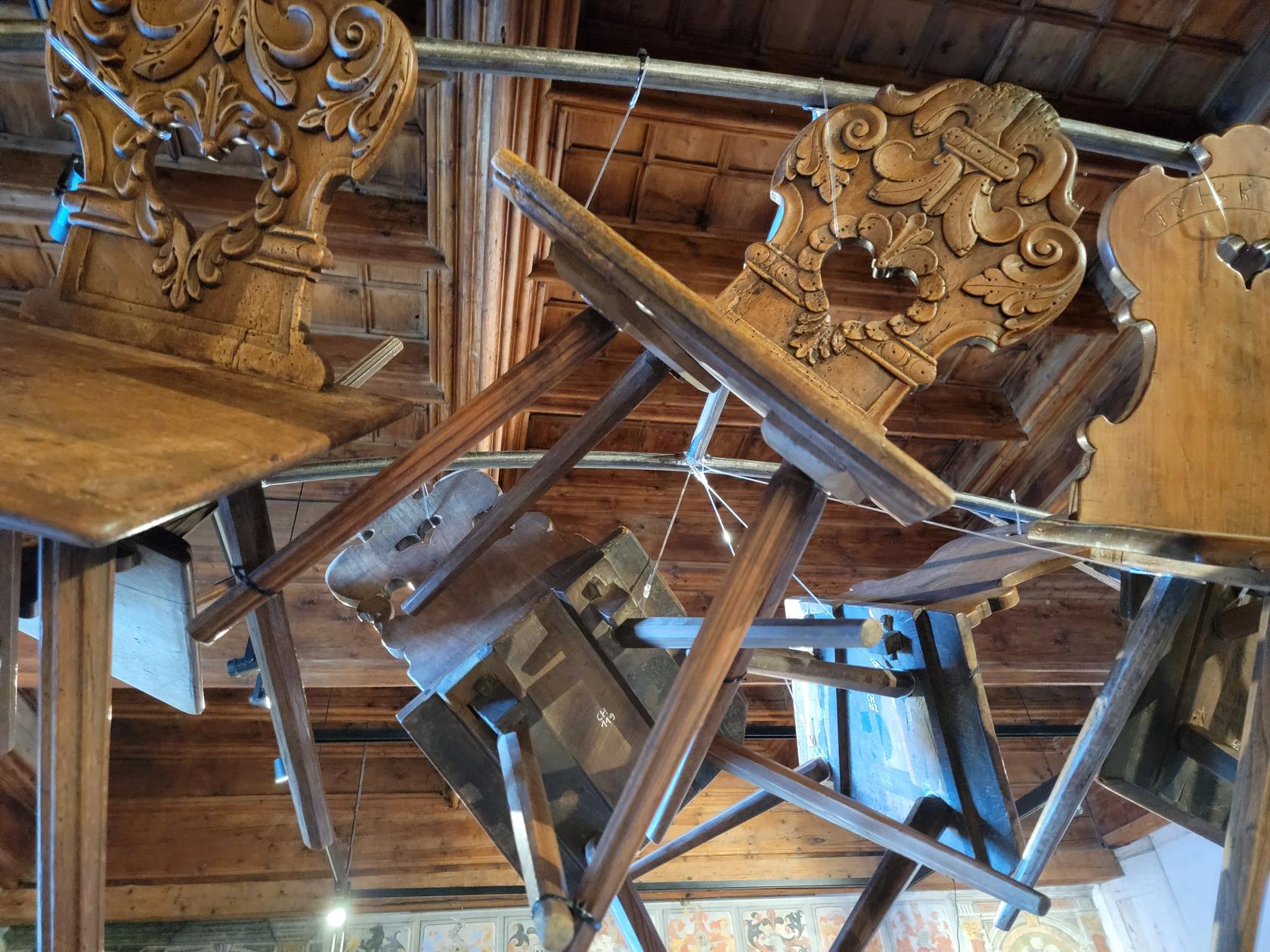
Castle Chillon – Constable’s Dining Hall – Montreaux, Switzerland
Castle Chillon – Constable’s Dining Hall – Montreaux, Switzerland
On the far northeast corner of Lake Leman (a.k.a. Lake Geneva) sits the small vacation town of Clarens, a stone’s throw away from Montreux, Switzerland. Though there really isn’t much to speak of the town itself, aside from some shopping, it has a beautiful waterfront and expansive walking path along the lake called the Quai Perdonnet.
Getting There And Around
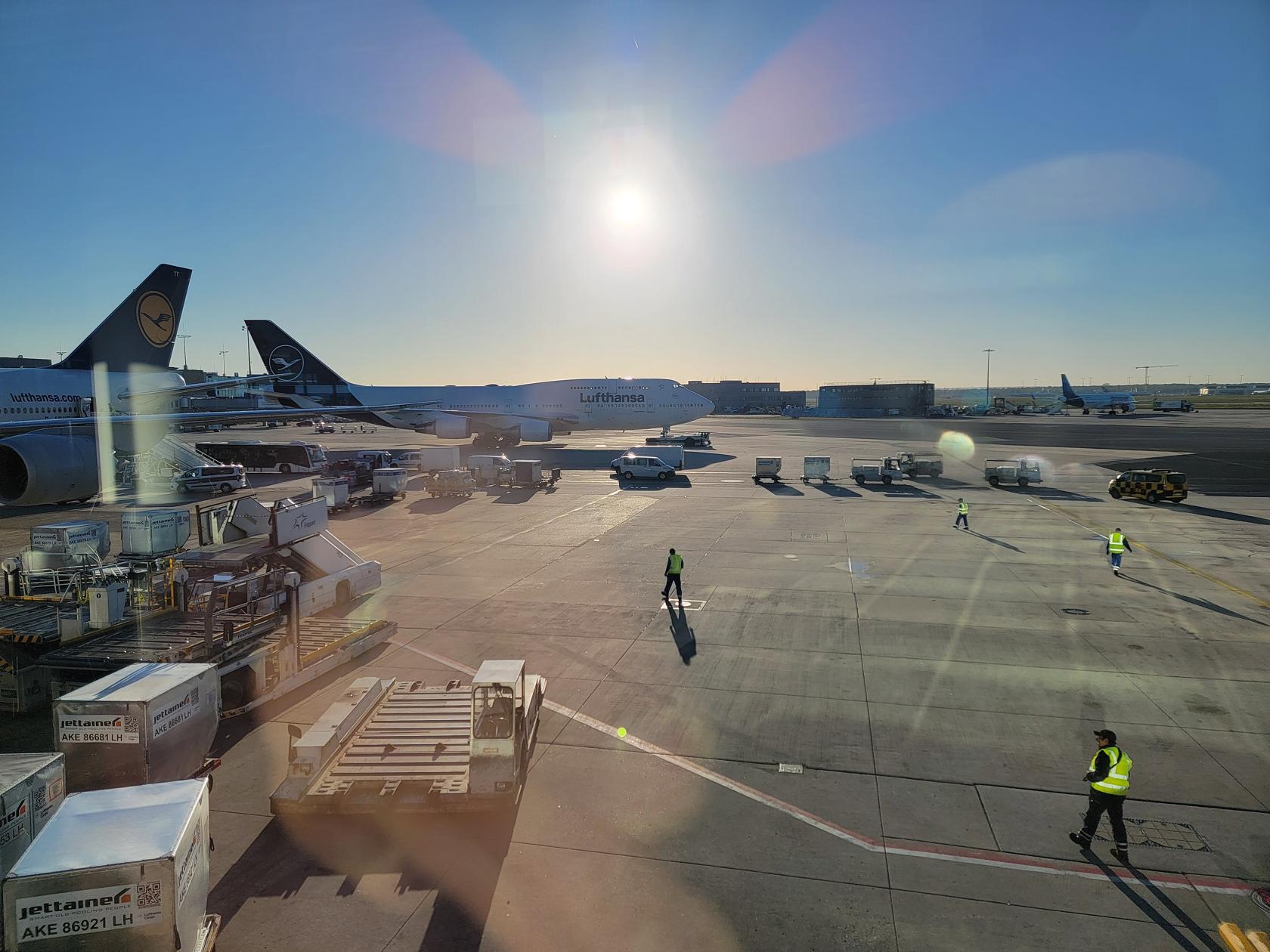
From Frankfurt, Germany we took Swiss Airways to Geneva, Switzerland, about an hour and a half flight. At the Geneva airport it is then easy to use the local train system to travel from Geneva to Clarens, with the only exception of having to switch trains once in Renens.
Frankfurt Airport – Frankfurt, Germany
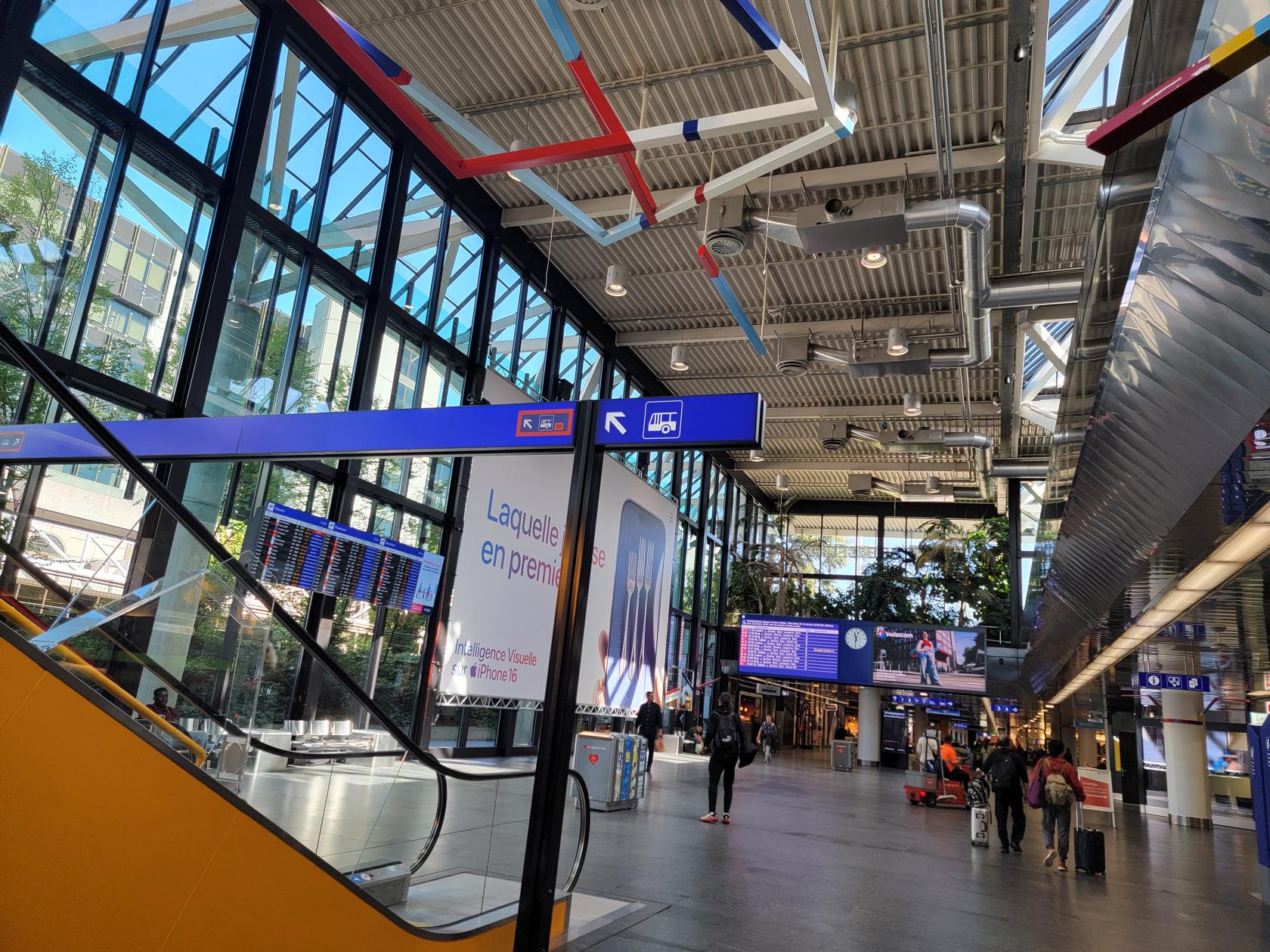
Geneva Airport – Geneva, Switzerland
Travel Cards And Other Arrangements
Depending on your situation it may be prudent to look into some of the many travel cards and discount programs that Swiss Rail system has to offer. Since we were traveling as a rather large family group and were going to use the public transit system often, we decided to at least puchase the Swiss Half-Fare Card. Though initially somewhat expensive, it cuts your fares in half for all types of transportation. Also be aware that every ticket purchased with it, you must also present this card for fare validation, a bit annoying, but it’s Switzerland.
Hotel La Villa
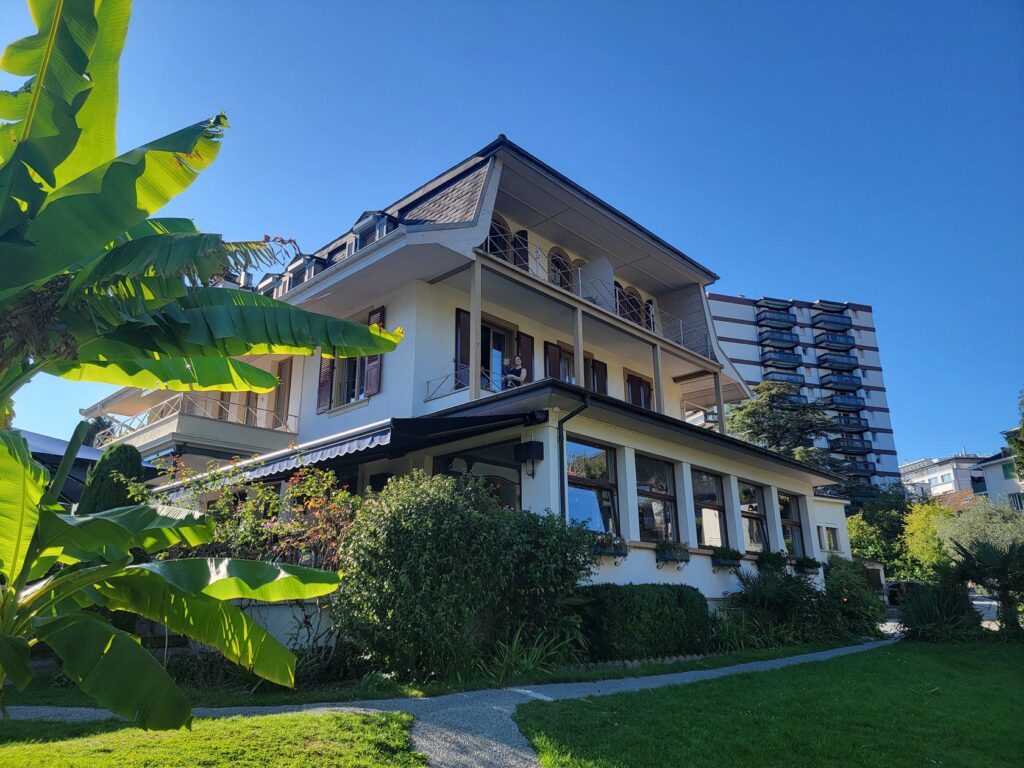
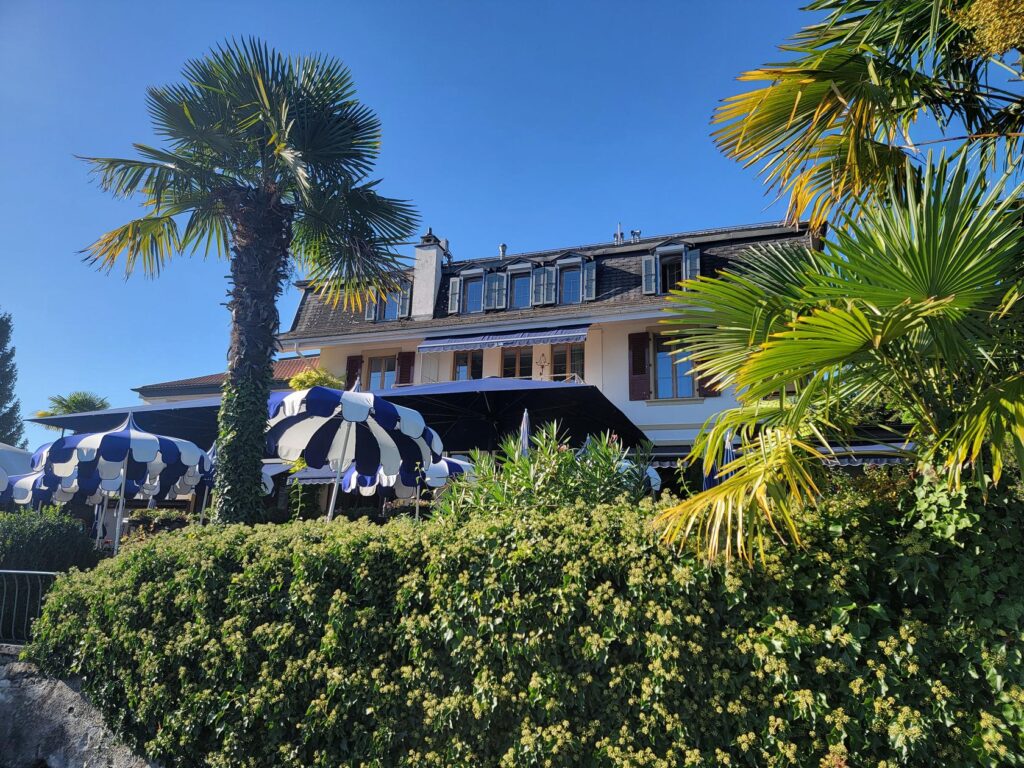
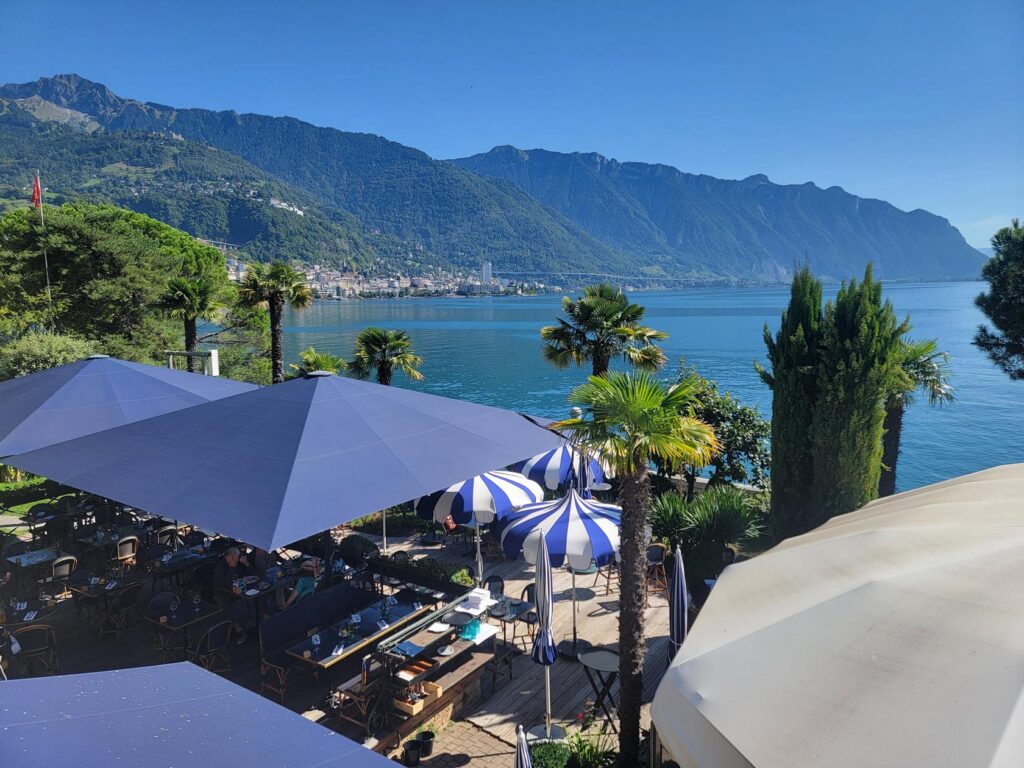
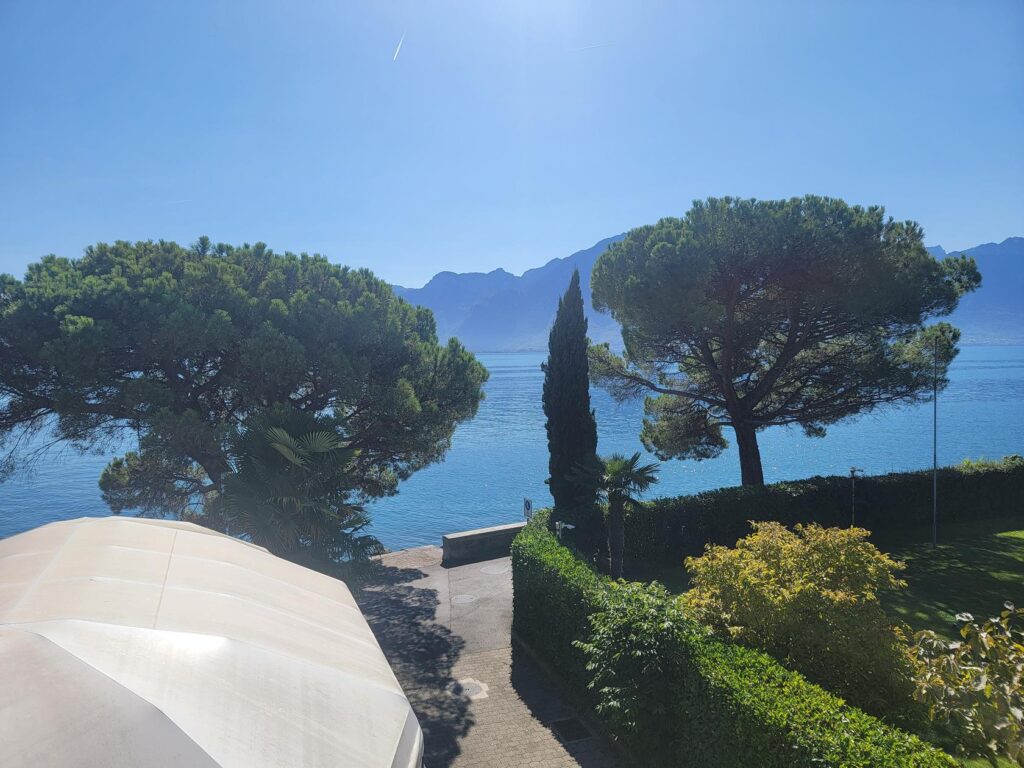
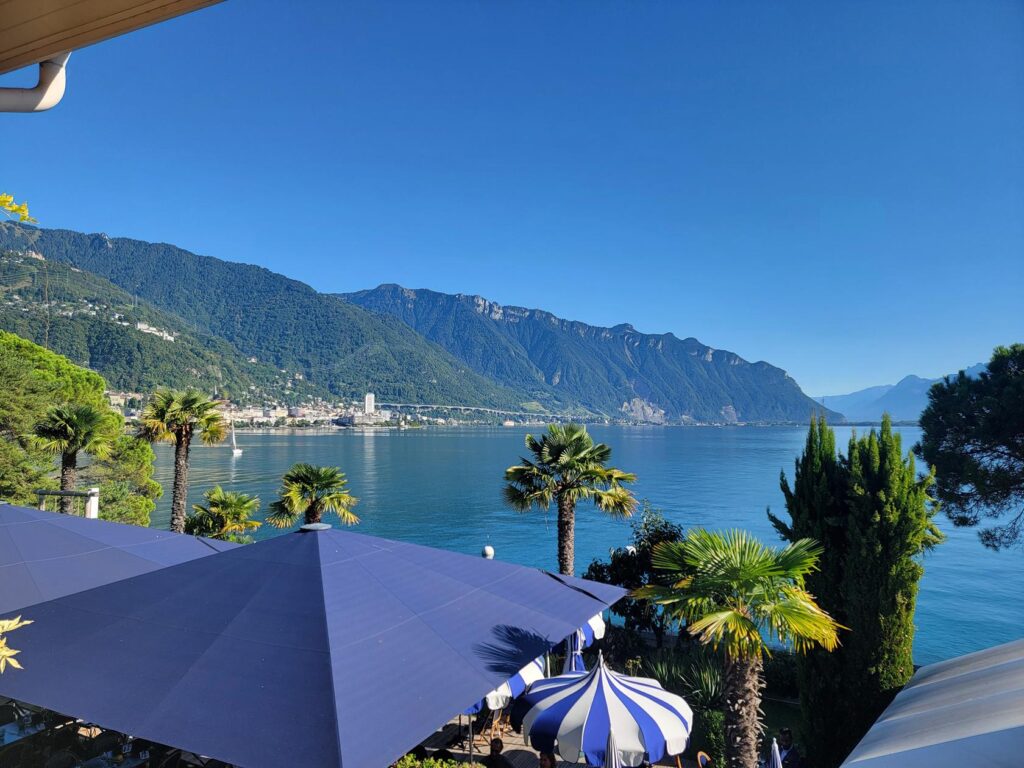
We stayed at the Hotel La Villa, which also has a restaurant by the same name. This hotel is right on the lake and offers scenic views, especially when enjoying a drink or something to eat on the terrace or veranda.
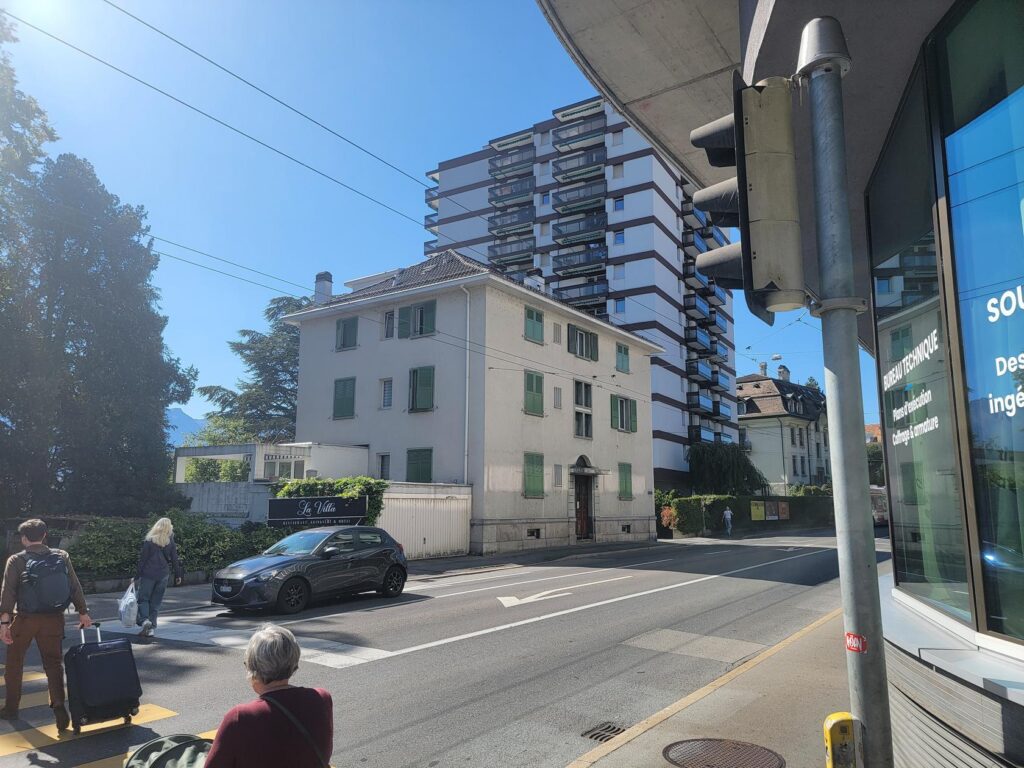
La Villa Hotel – Main Entrance – Clarens, Switzerland
La Villa Hotel – Our Hotel – Clarens, Switzerland
La Villa Hotel – Back – Clarens, Switzerland
La Villa Hotel – Lake Leman – Clarens, Switzerland
La Villa Hotel – Lake Leman – Clarens, Switzerland
La Villa Hotel – Lake Leman – Clarens, Switzerland
Restaurants
During our stay we ate at the following restaurants.
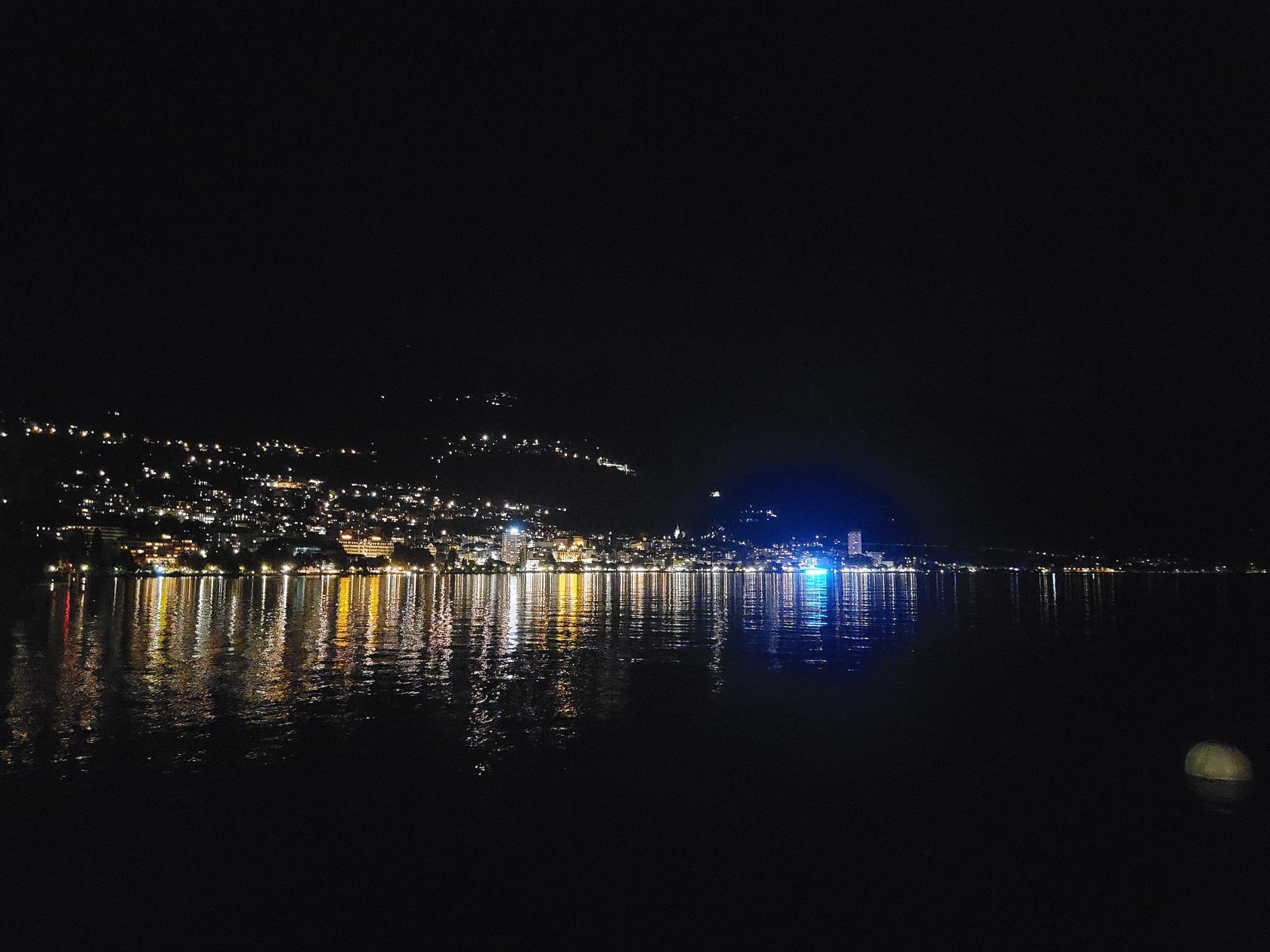
Lake Leman At Night – Clarens, Switzerland
La Villa
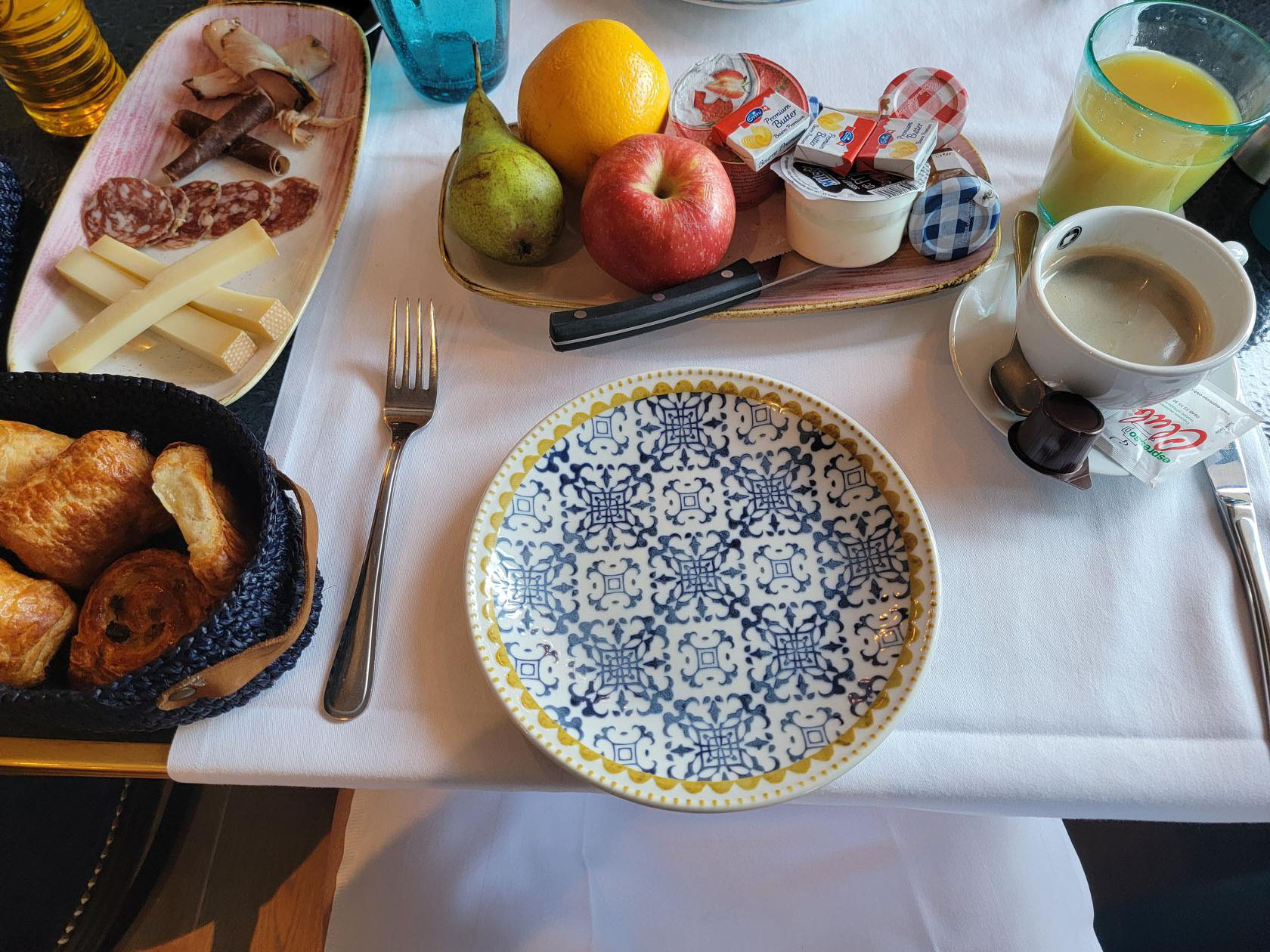
The restaurant is part of the hotel and is very convenient for those staying at the hotel, since all other options are some walk from the hotel. It has a very good menu and a continental breakfast, for those staying at the hotel. Though they offer boiled eggs as a hot entree for breakfast, if you are looking for something more substantial, you may have to look in town.
La Villa Restaurant – Breakfast – Clarens, Switzerland
For dinner the restaurant offers are very nice menu, complete with wine pairings and other amenities.
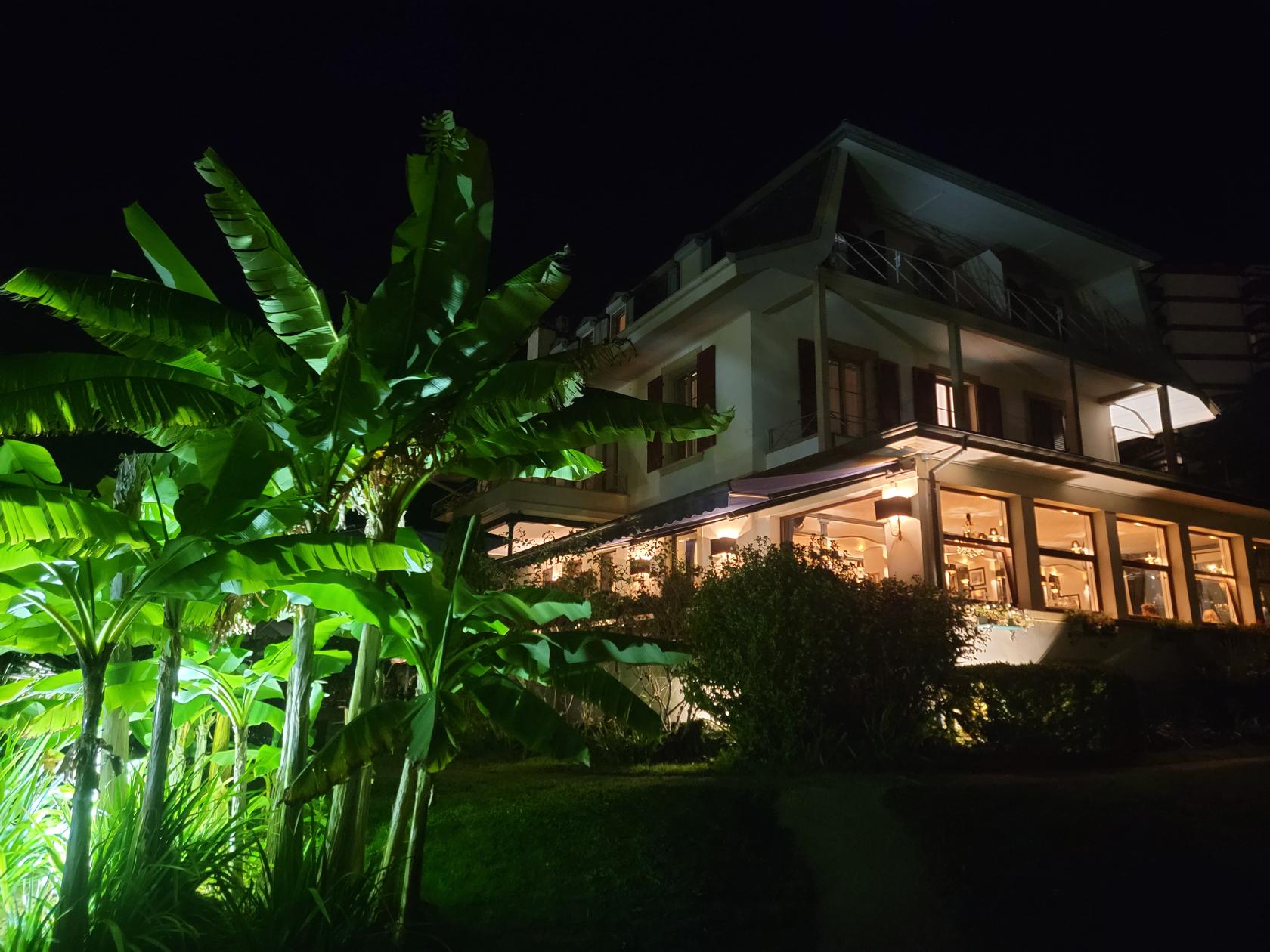
La Villa Hotel and Restaurant – Side At Night – Clarens, Switzerland
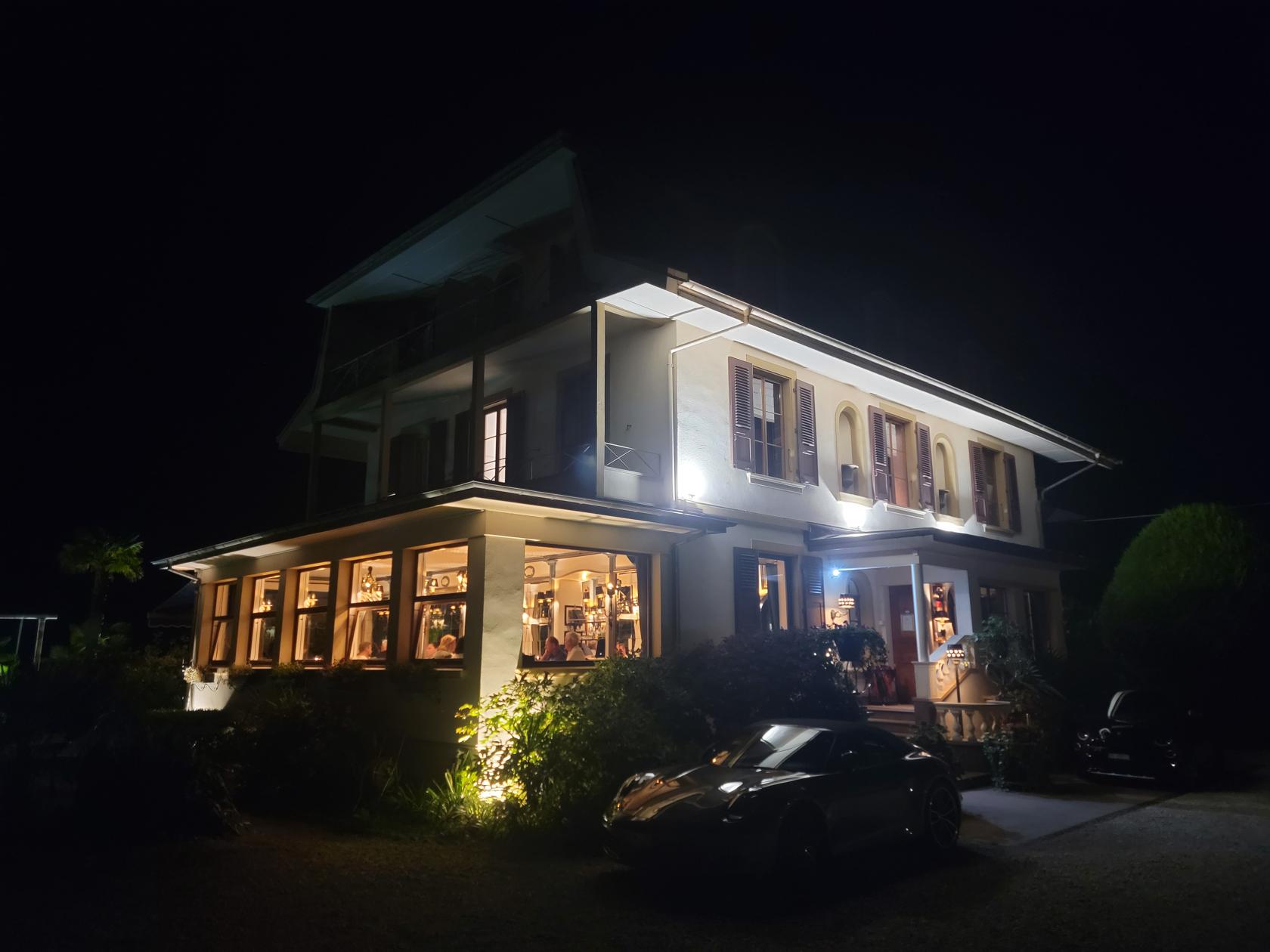
La Villa Hotel and Restaurant – Front At Night – Clarens, Montreaux, Switzerland
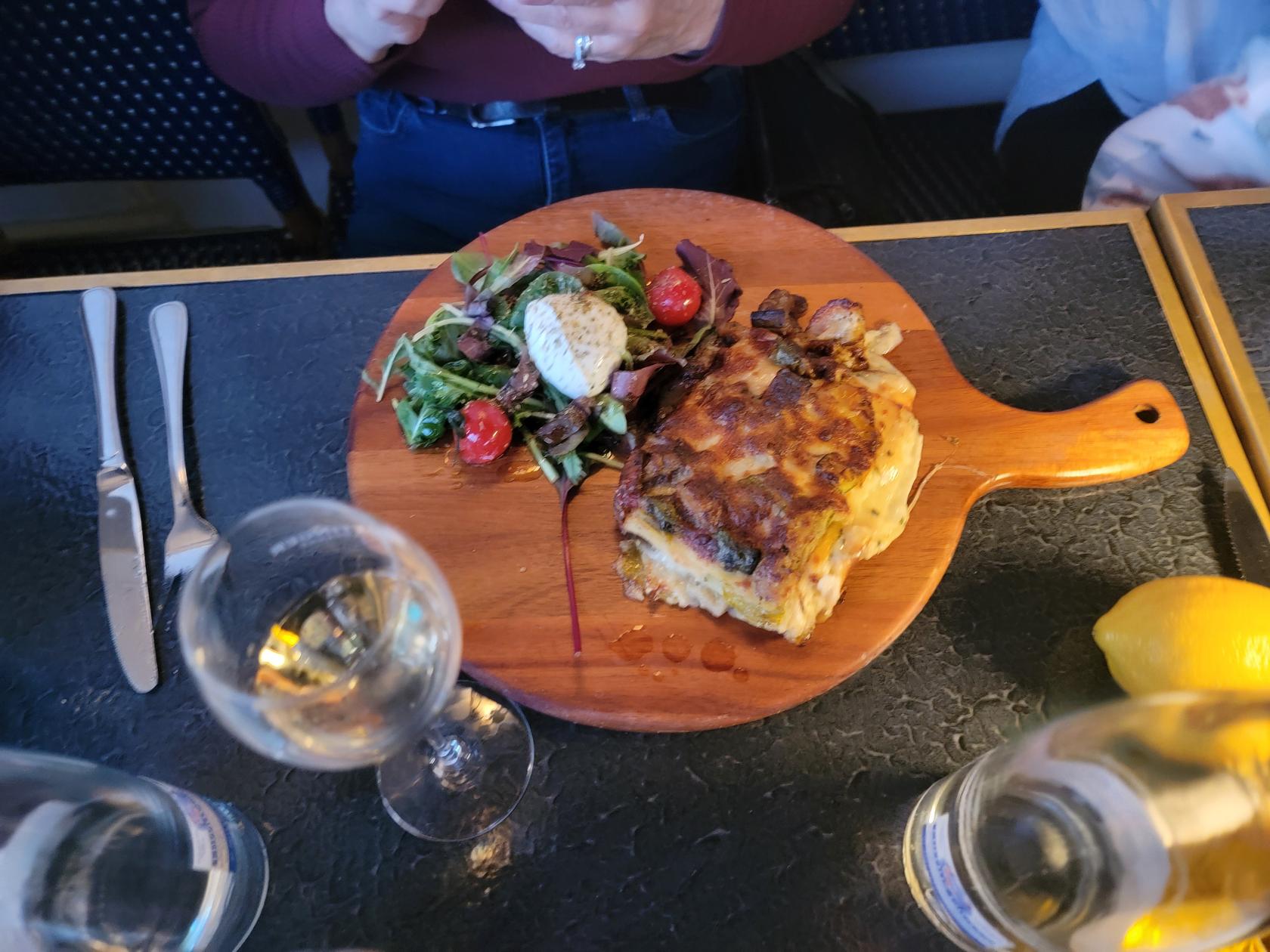
La Villa Restaurant – Lasagna – Clarens, Switzerland
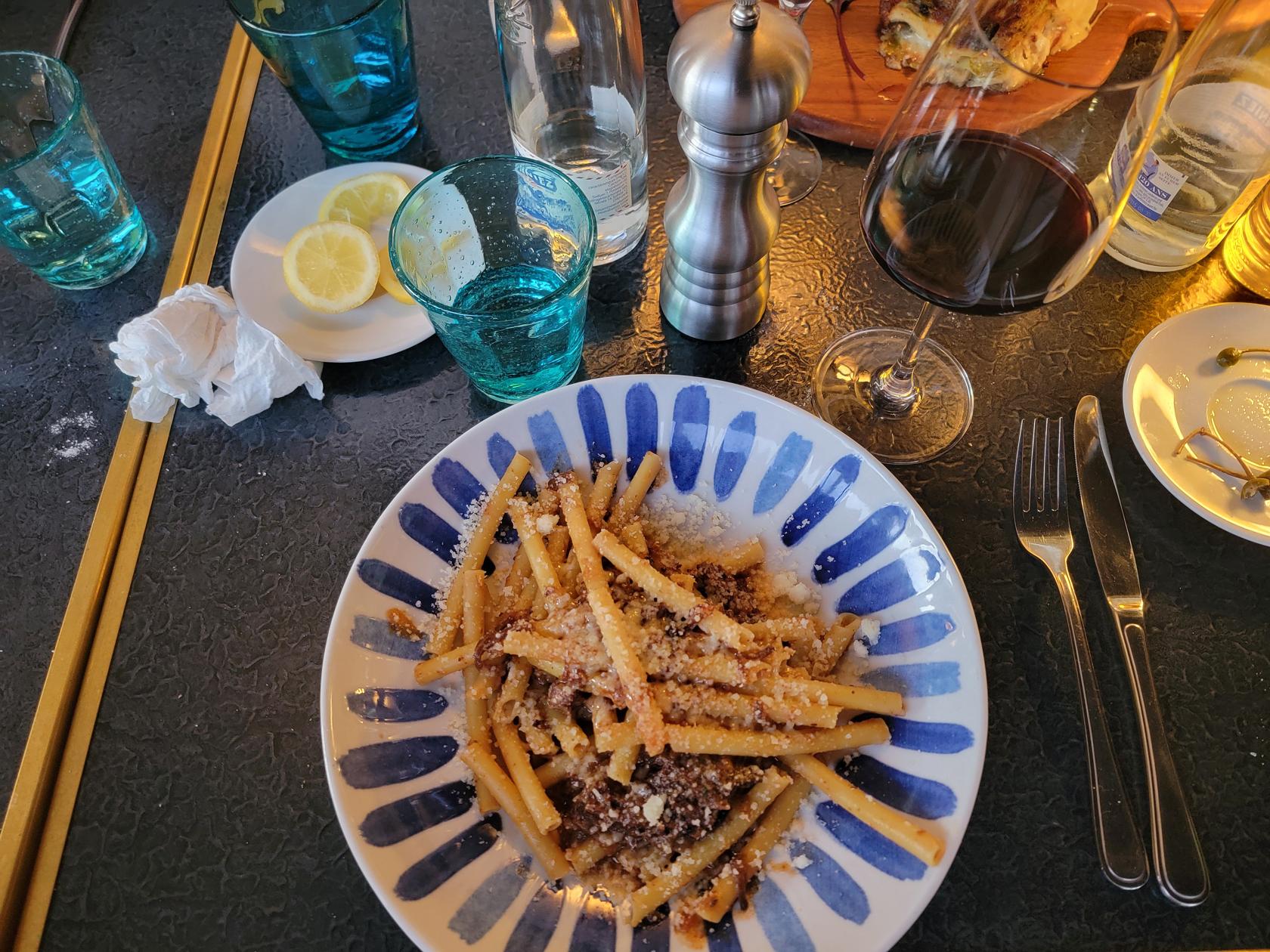
La Villa Restaurant – Pasta Bolognese – Clarens, Switzerland
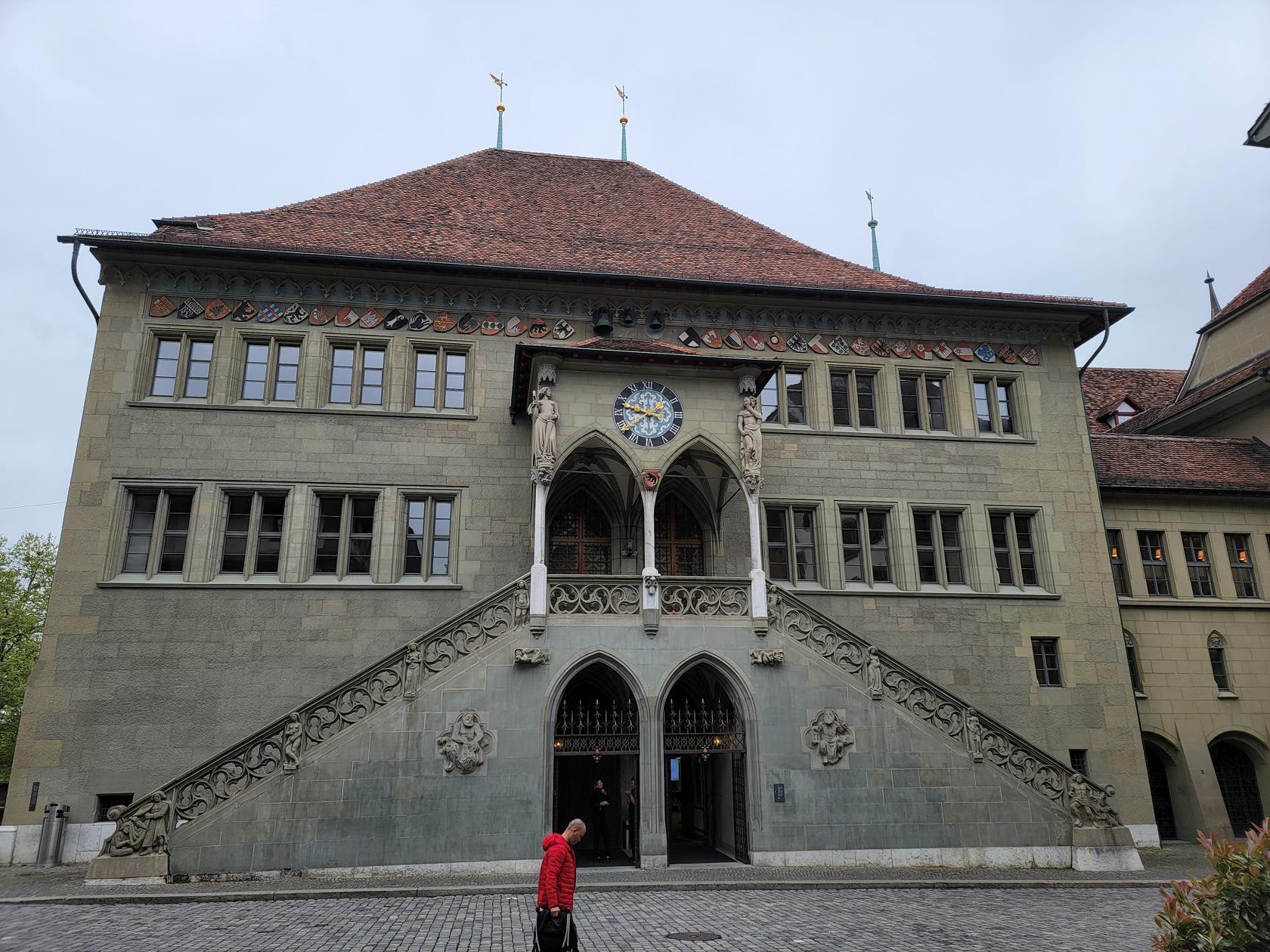
Bern was originally settled by Swabians[1]The Zähringen noble family from around Freiburg im Breisgau in the twelfth century and quickly died out within a century. from the lower parts of Germany, it is the fifth largest in Switzerland and was initially surrounded by the Aare river on three sides, with fortifications protecting it’s west side.
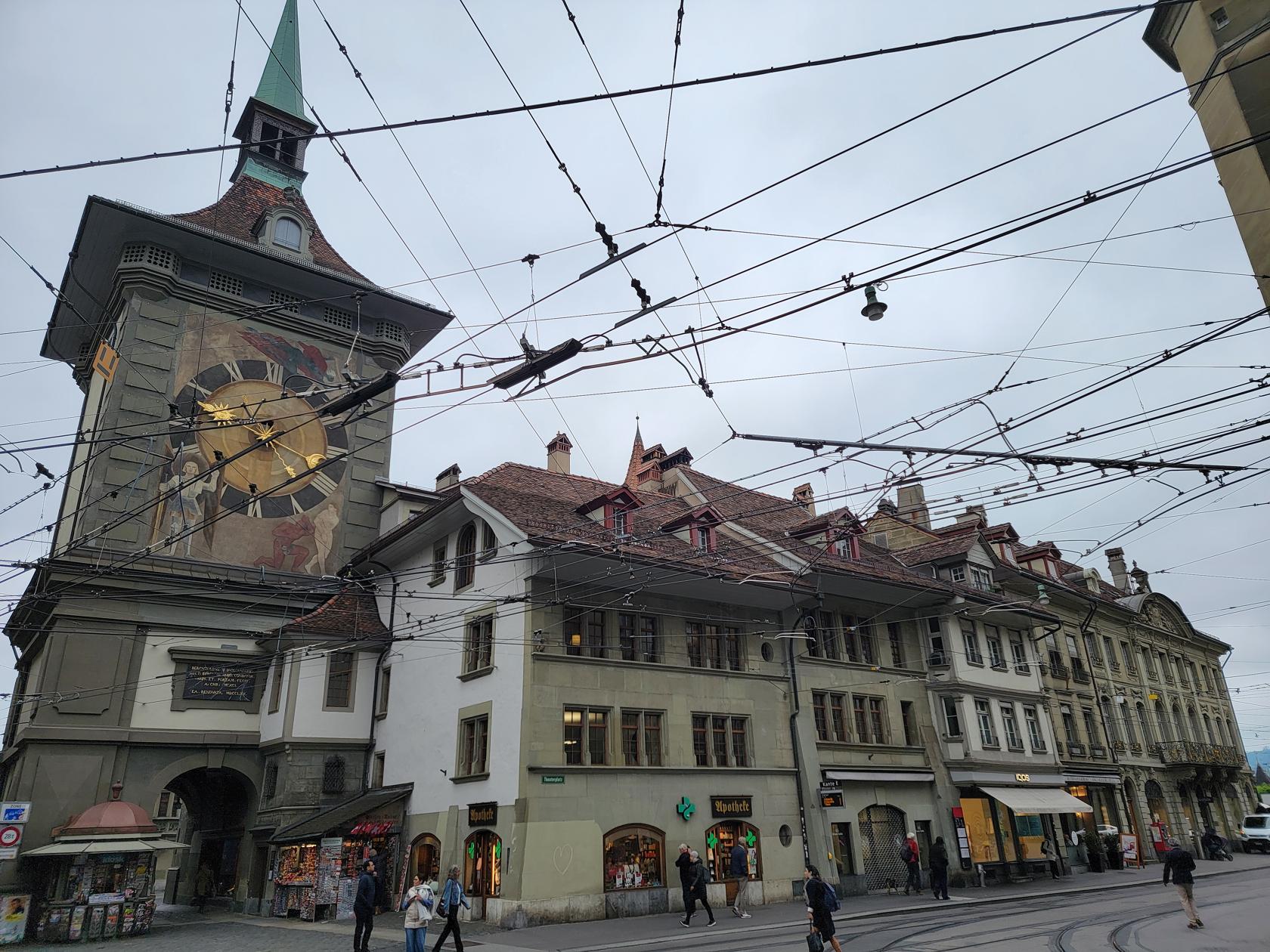
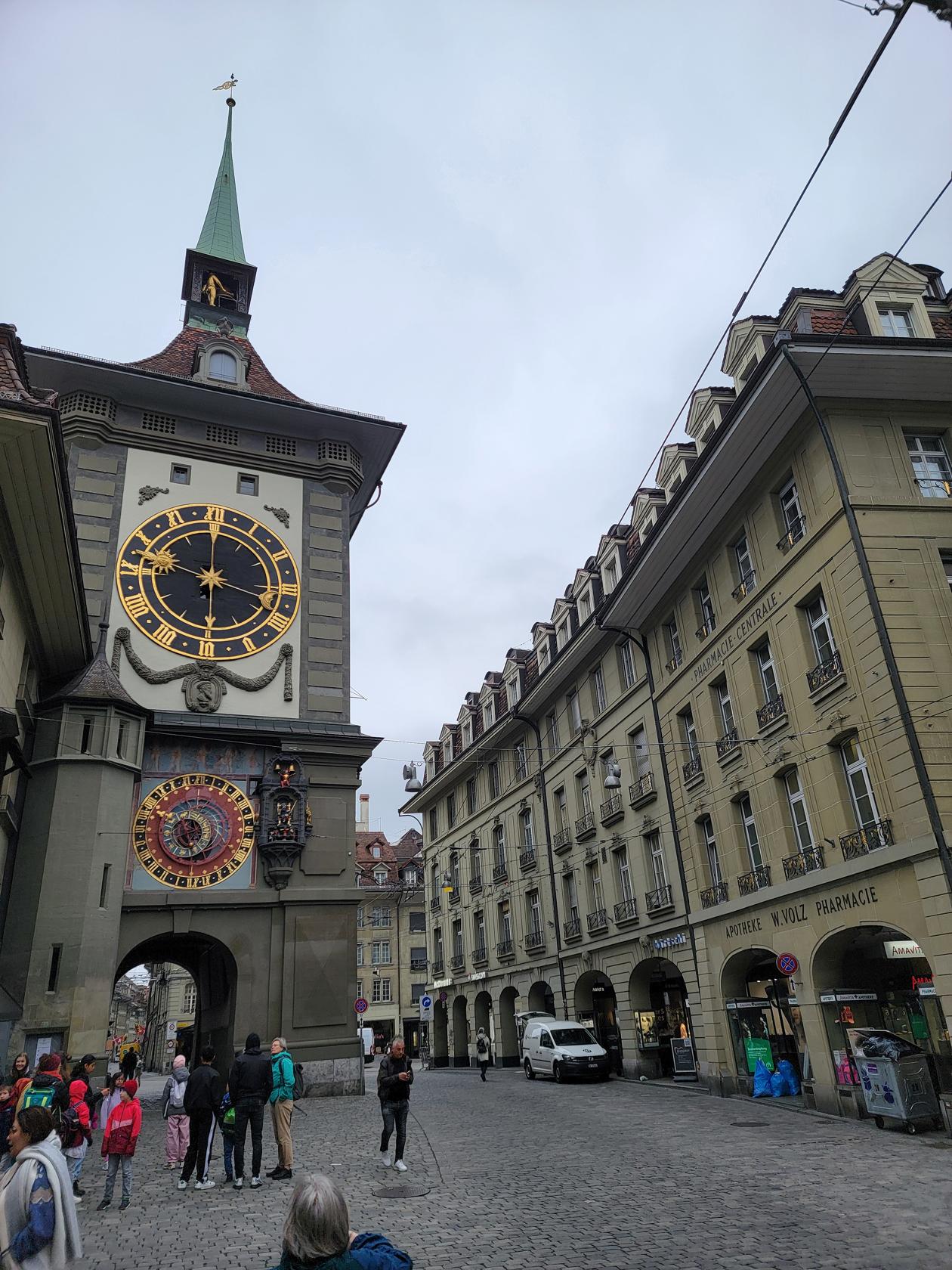
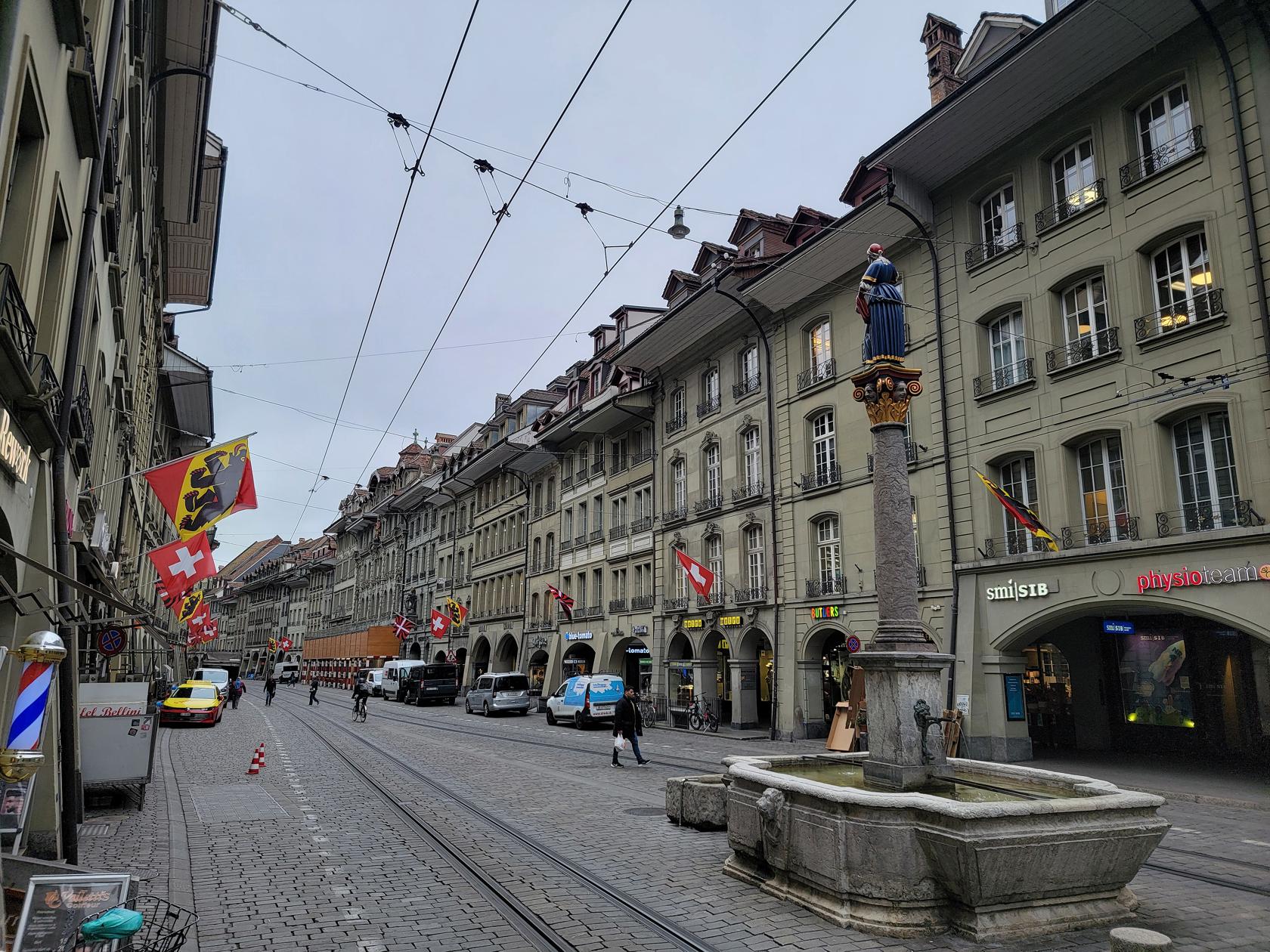
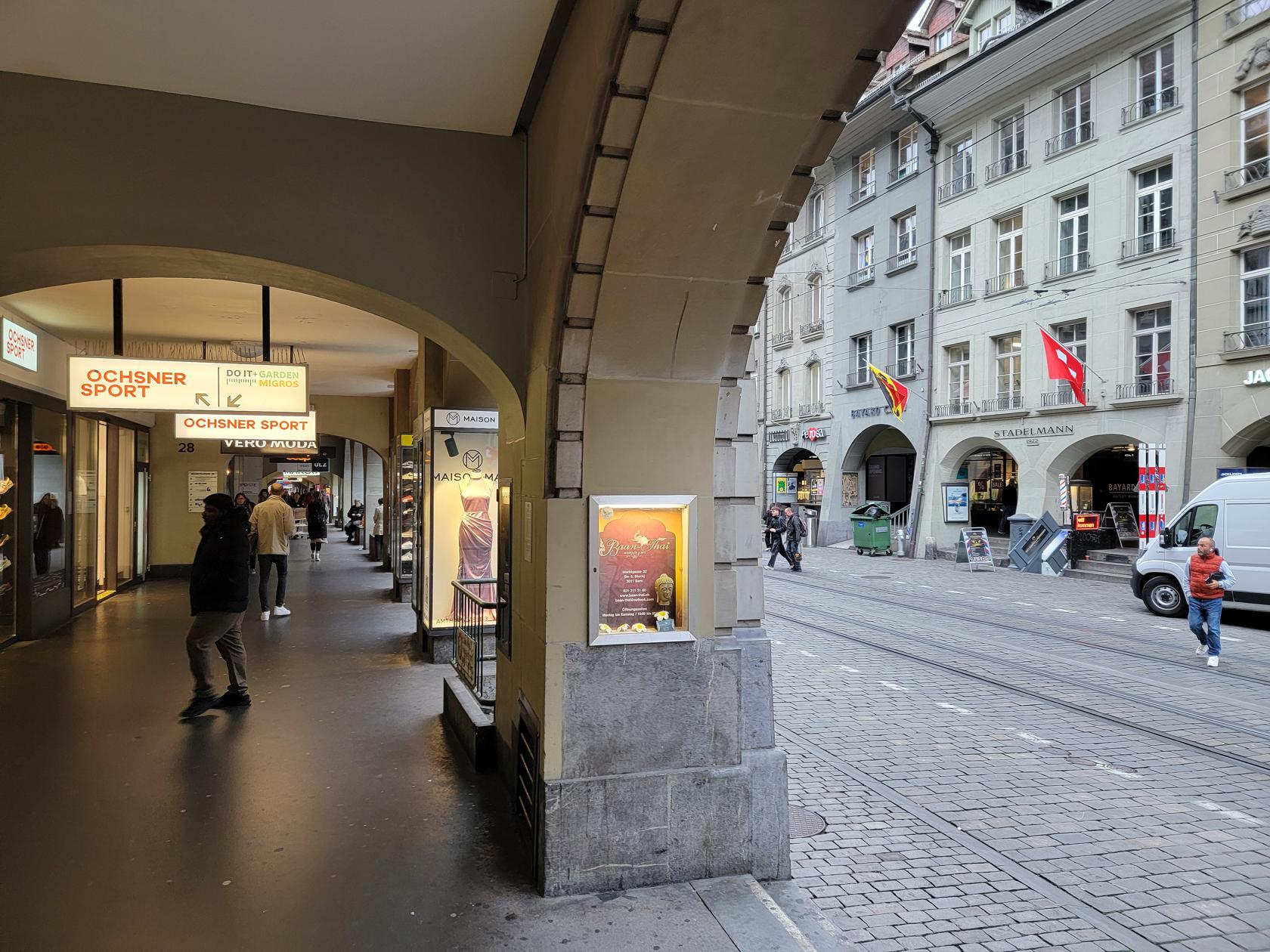
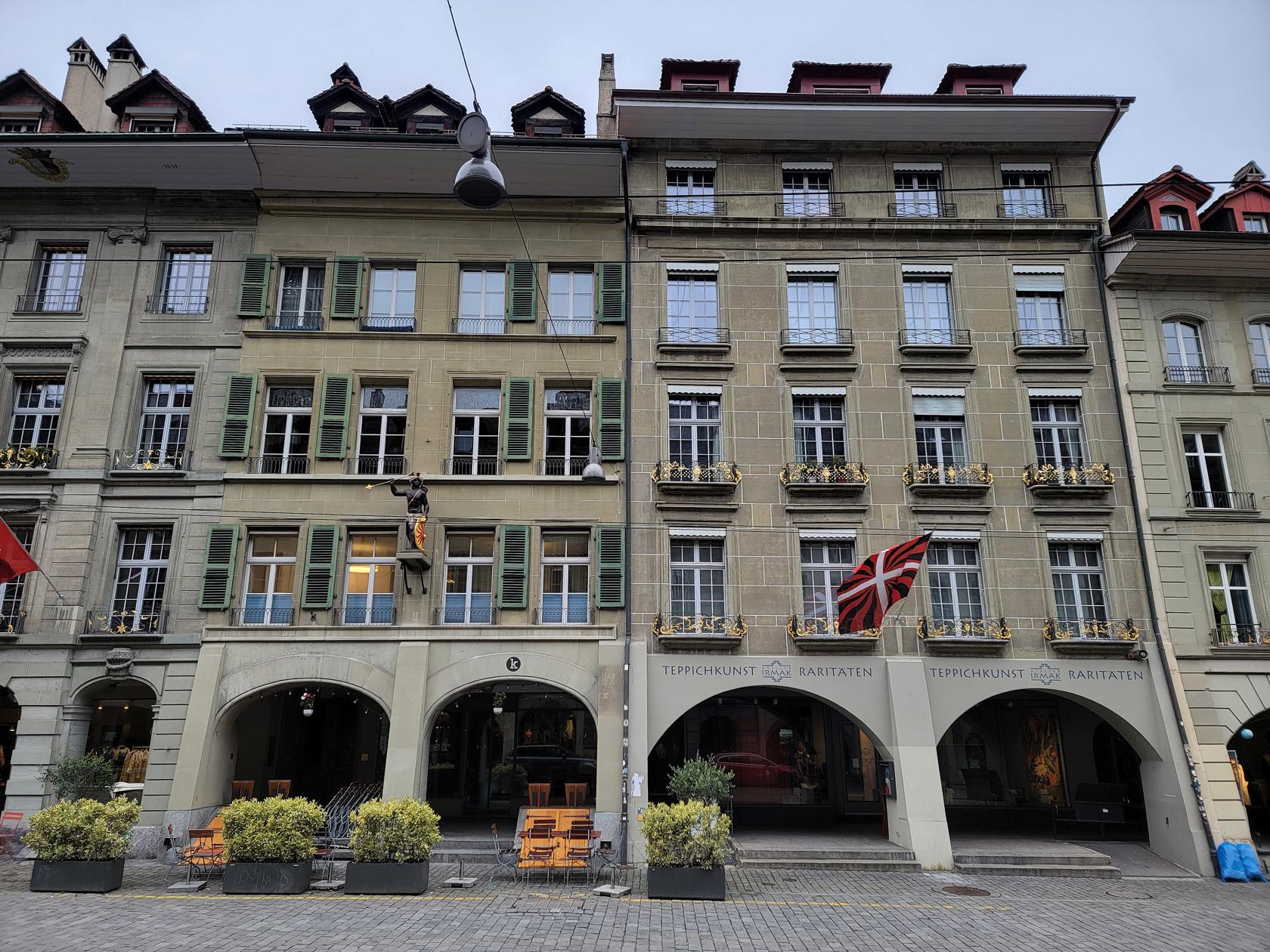
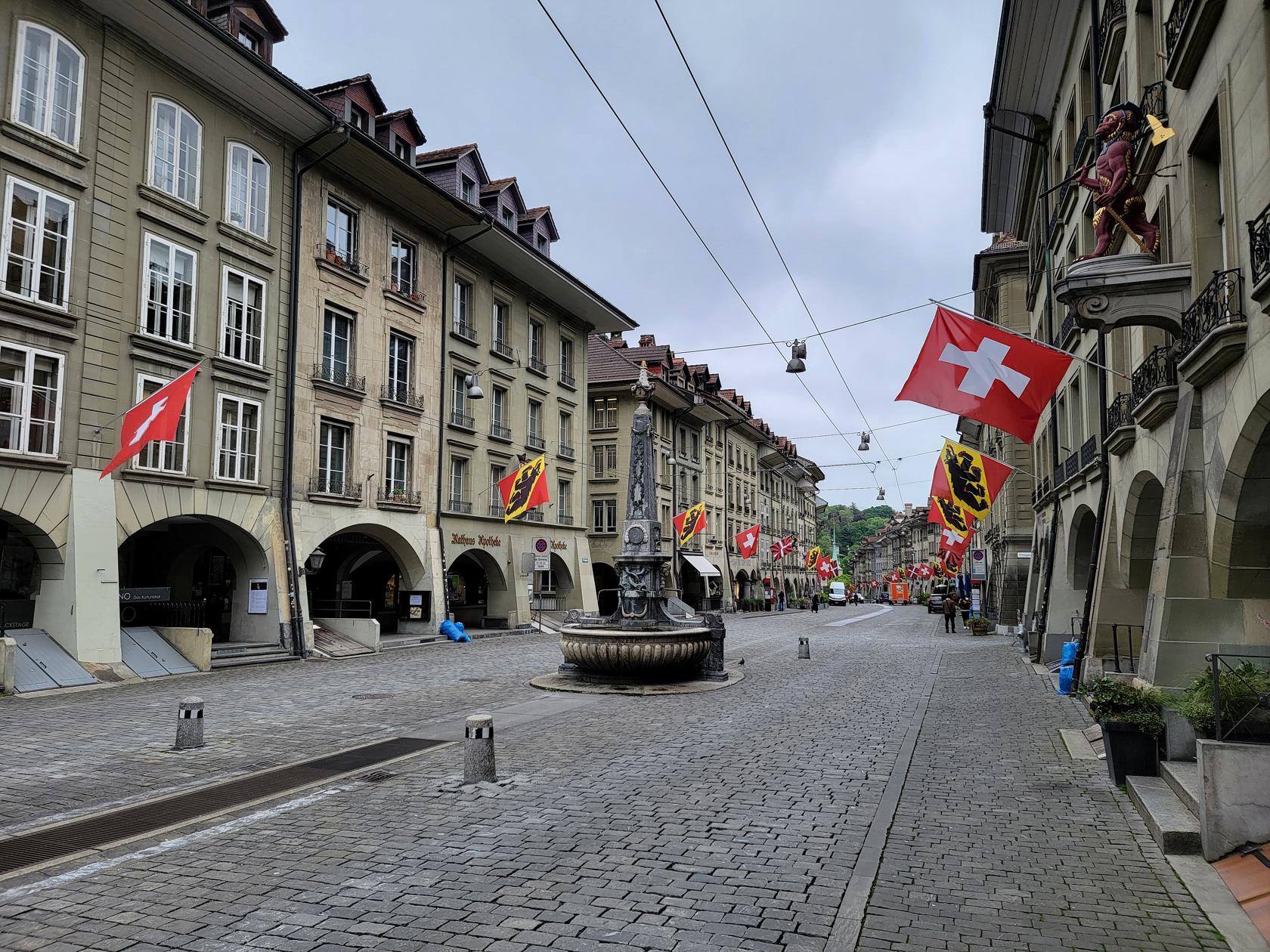
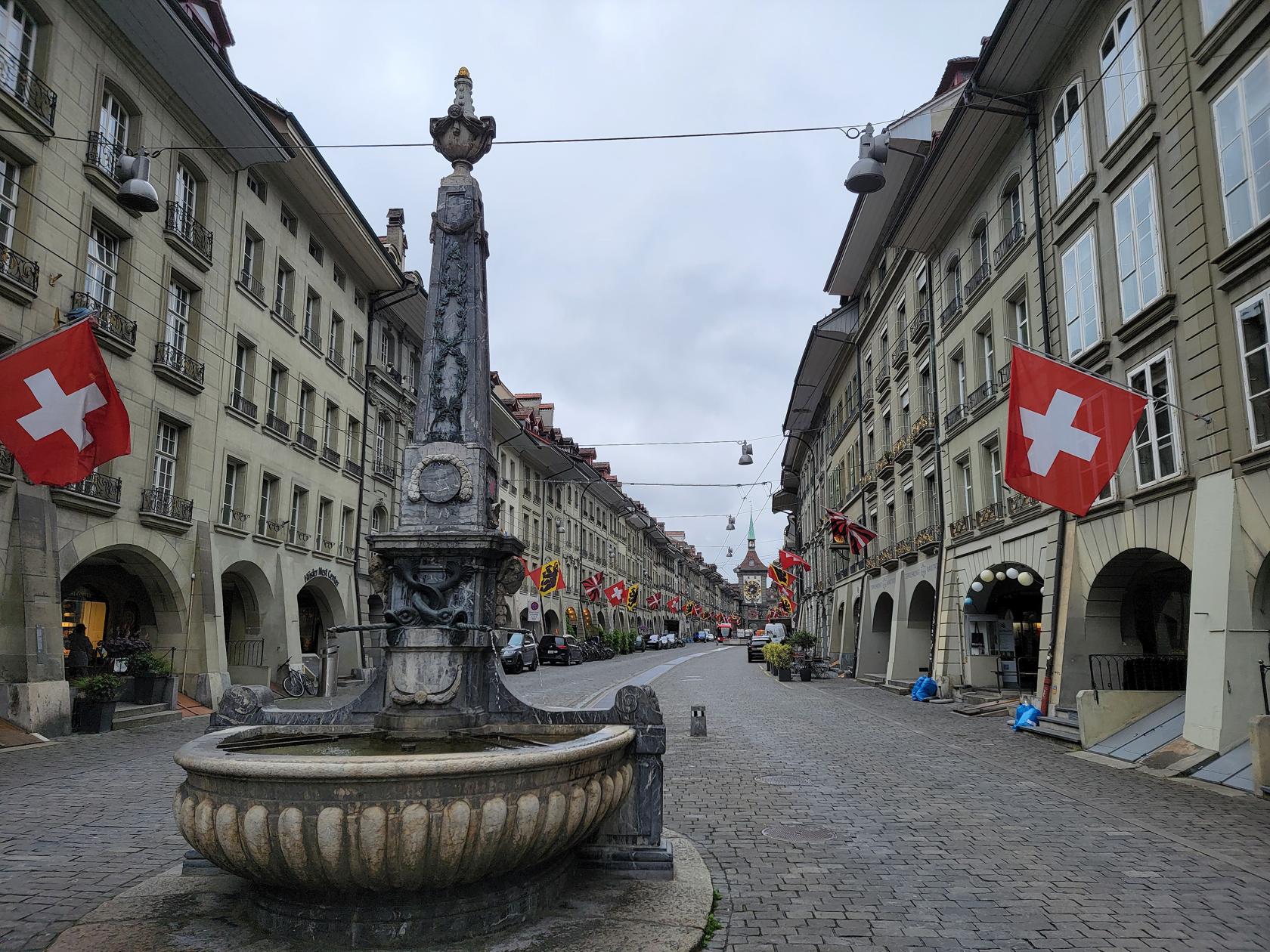
Marktgasse – Zytglogge – Bern, Switzerland
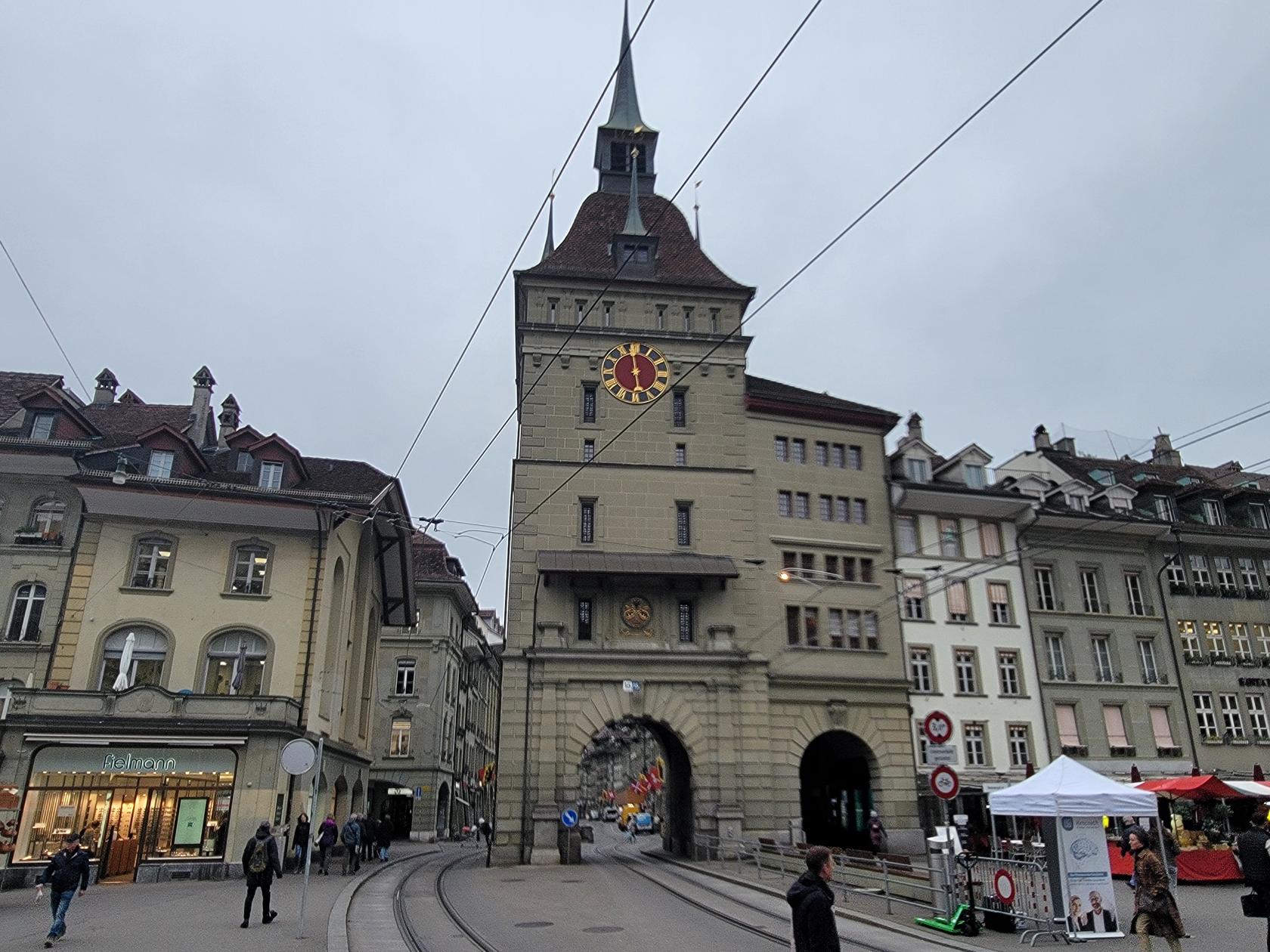
Käfigturm – Bern, Switzerland
Marktgasse – Zytglogge – Bern, Switzerland
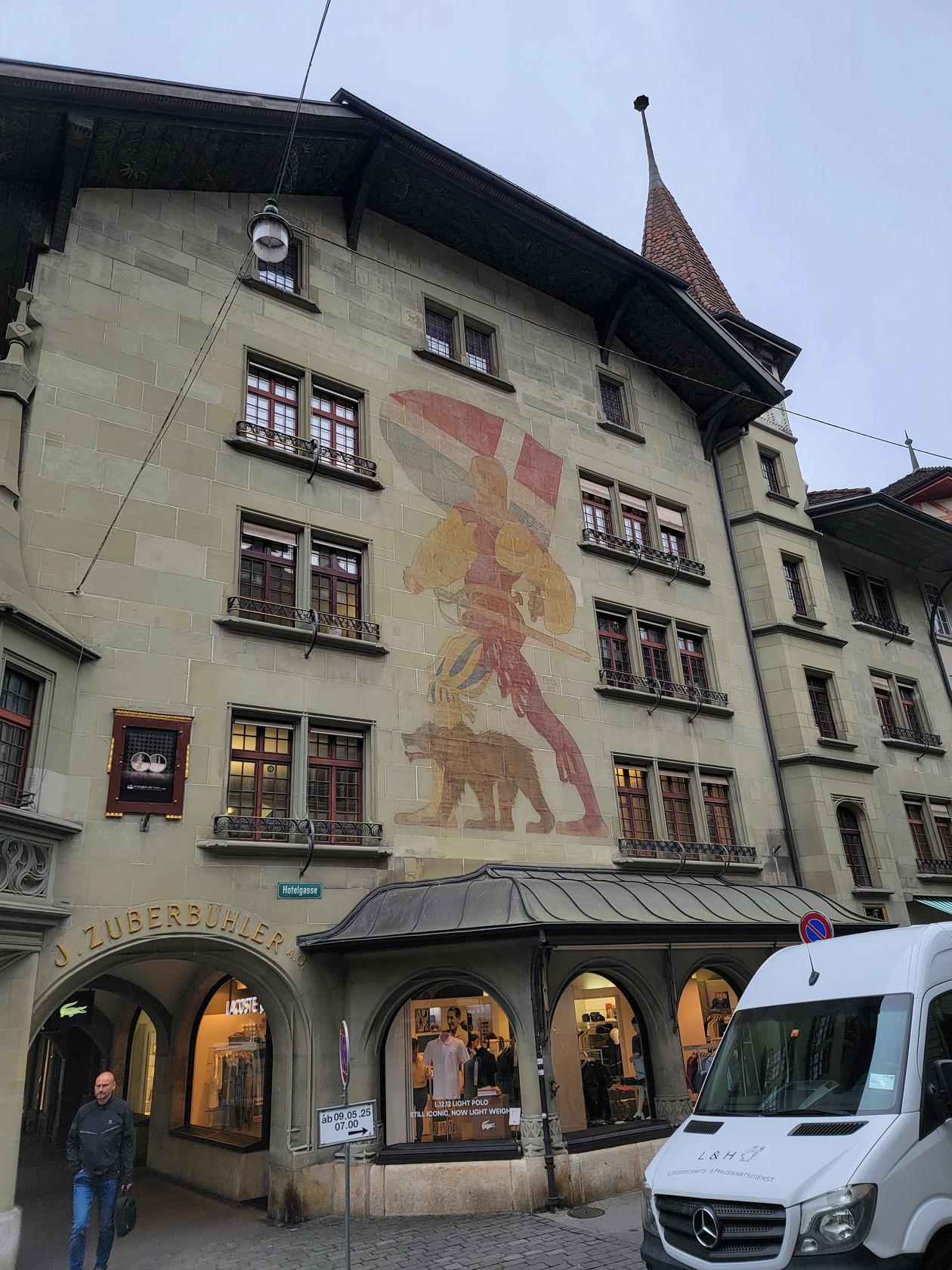
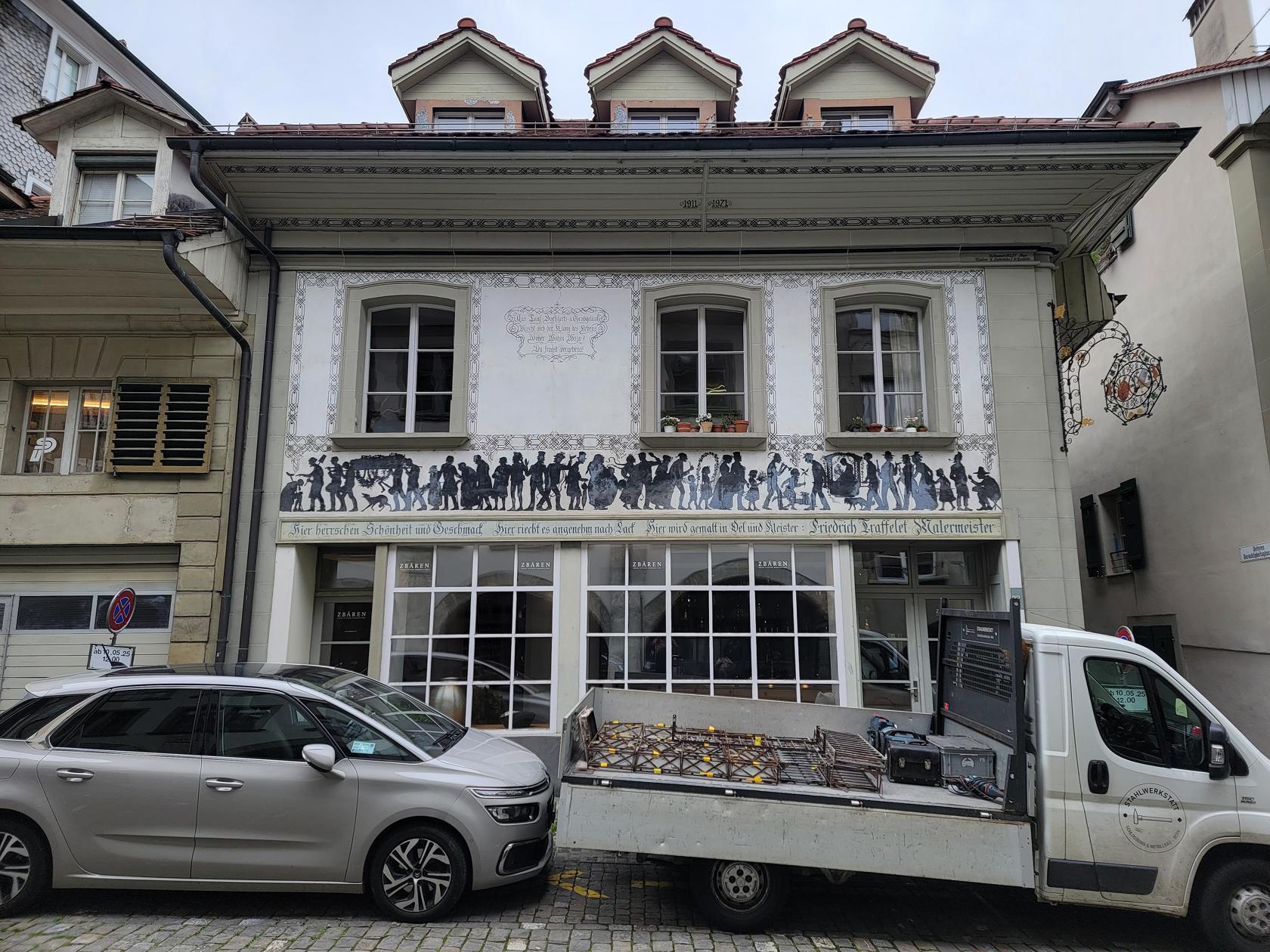
Marktgasse – Bern Fresco – Bern, Switzerland
Getting There
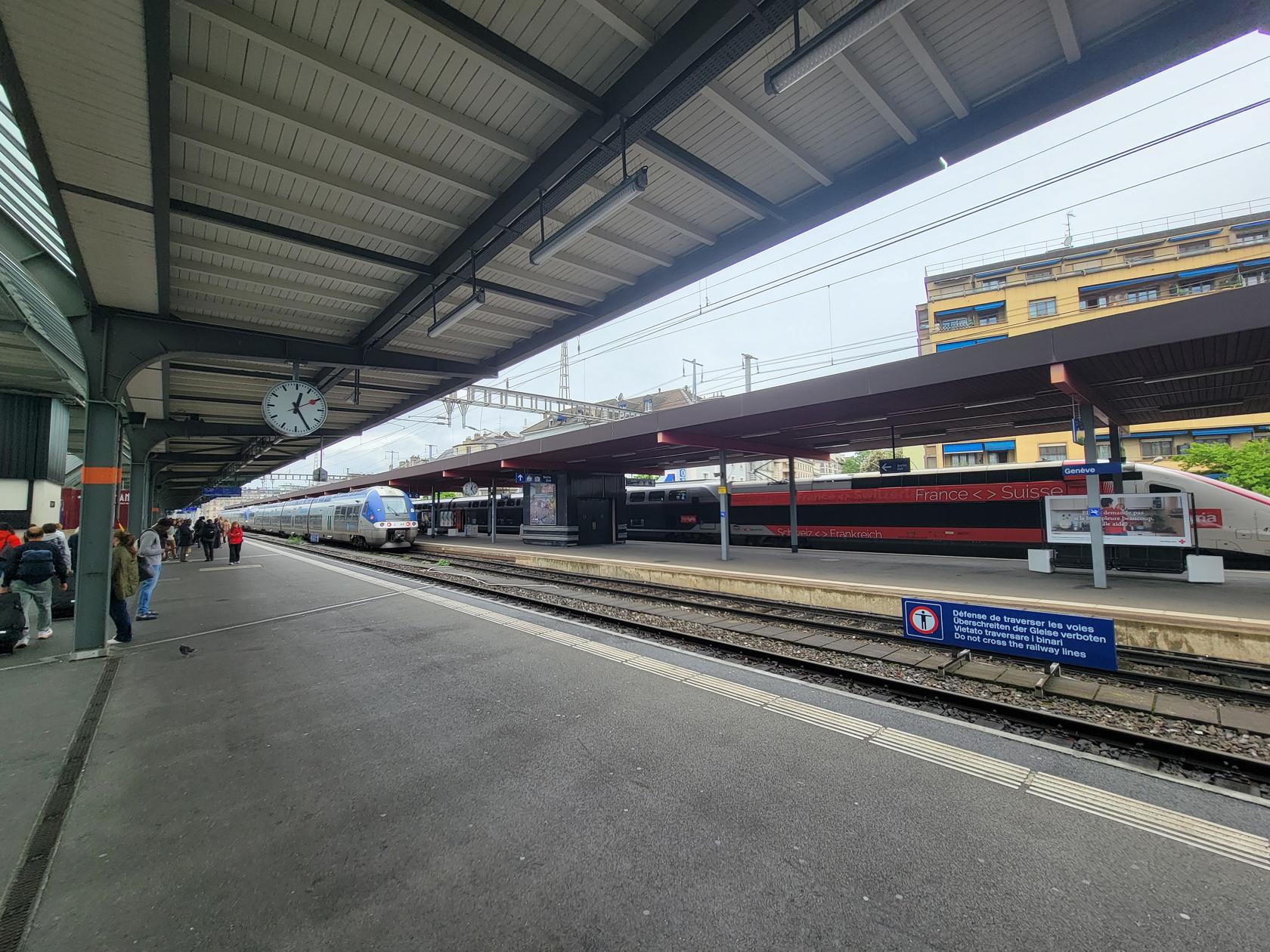
Bern does not have a commercial airport, so you will either have use Zürich‘s or Geneva’s and then take a train. We had already started in Geneva, so taking one of the ICE trains from Geneva to Bern was automatic. However, in typical SBB[2]Schweizerische BundesBahnen or Swiss train fashion, it was halted before leaving the Lake Léman area and we had to find another train to continue our two hour journey, which then turned into a three hour trip[3]There have been few times when traveling by train in Switzerland was a normal affair. It is getting to be more like the Deutscher Bahn.
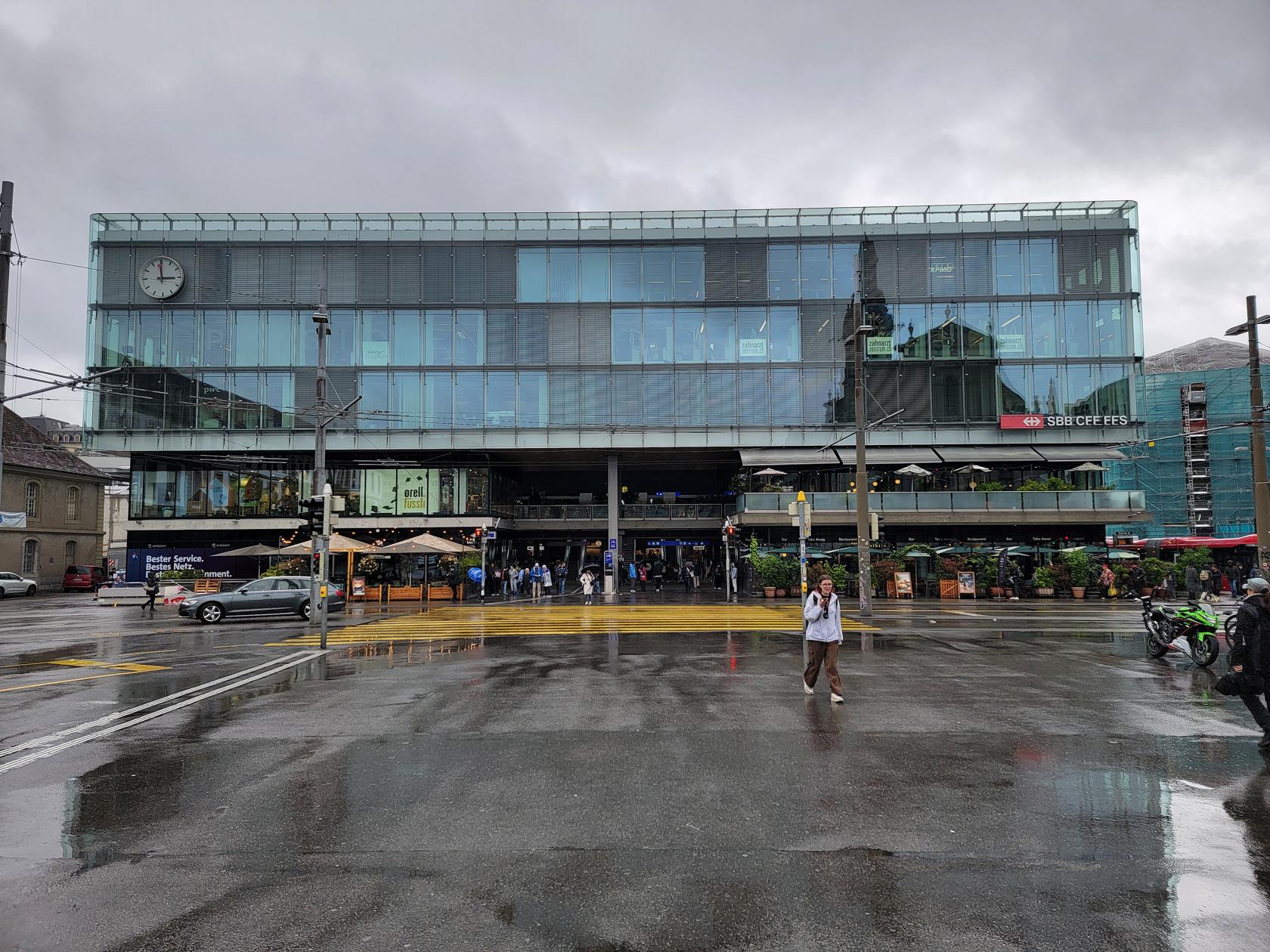
Bern Train Station – Main Entrance – Bern, Switzerland
Bern Train Station – Platform – Bern, Switzerland
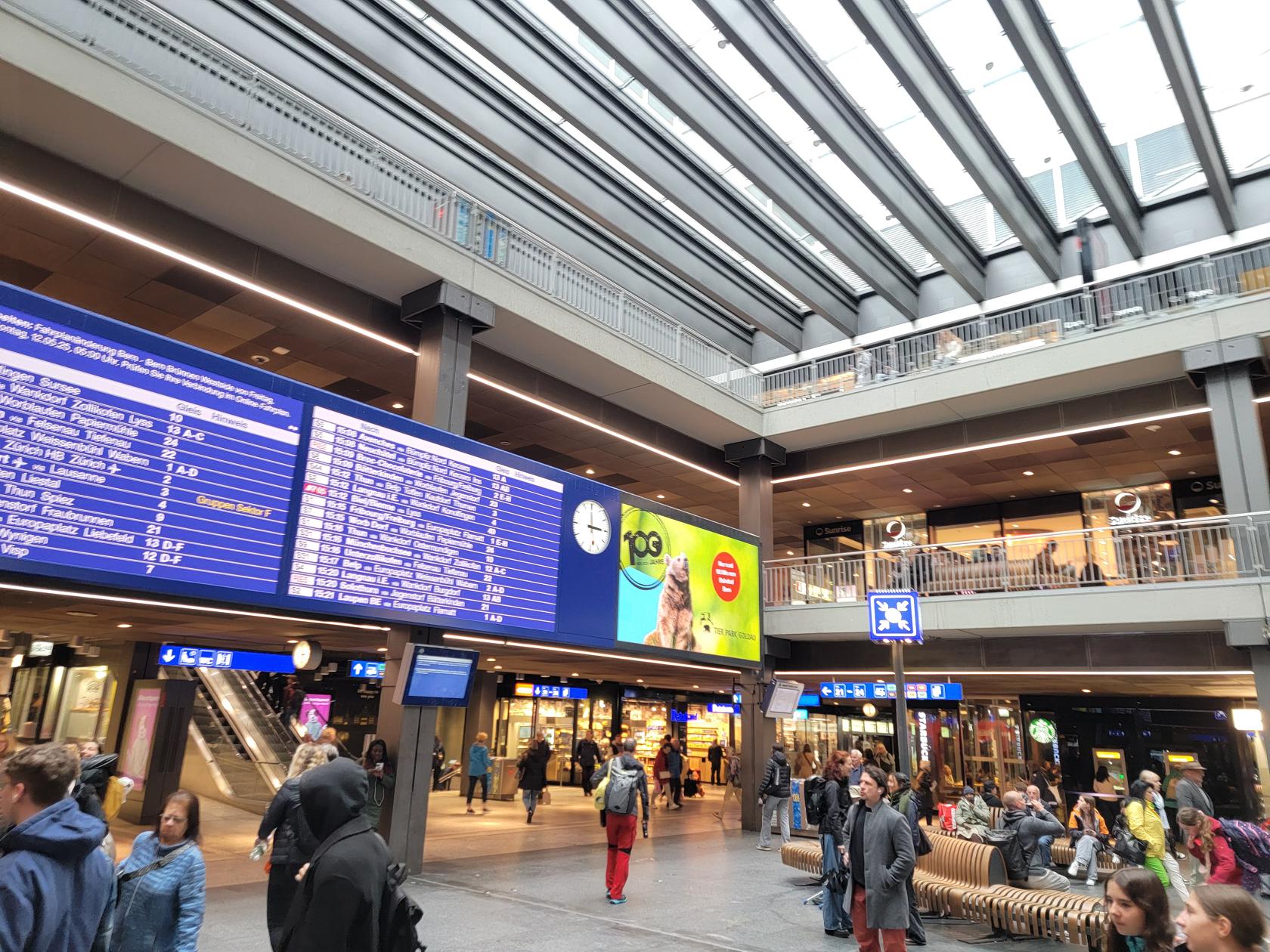
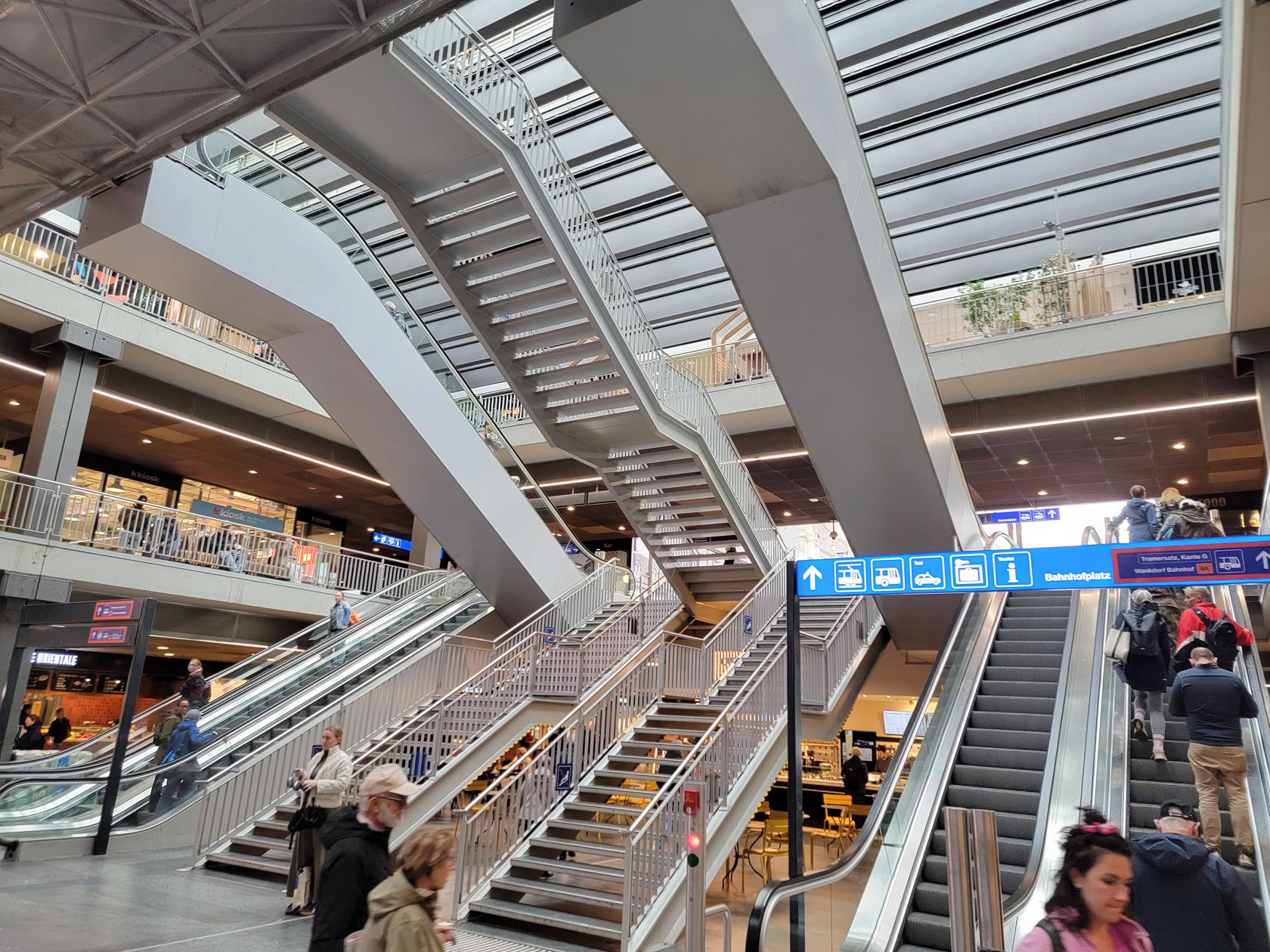
Bern Train Station – Main Waiting Hall – Bern, Switzerland
Bern Train Station – Main Waiting Hall – Bern, Switzerland
The City
The old medieval city of Bern is rather compact, due to it being confined by the Aare river. The main train station is on the west side of the city, so it is probably best to find a hotel close to it. We stayed at the Hotel Savoy, three blocks away from the train station.
Gerberngasse – Interesting House – Bern, Switzerland
Nydeggbrücke – Rose Garden Hill and Paul Klee Center – Bern, Switzerland
Walking from the train station to the Nydeggbrücke, via the Marktgasse of Kramgasse, should not take more than a twenty-five to thirty minutes without stopping. The main shopping avenue is the Marktgasse, which is lined with many watch stores and most other modern shops you expect to see in city that is heavily traveled. See the restaurant section below for where to go for food.
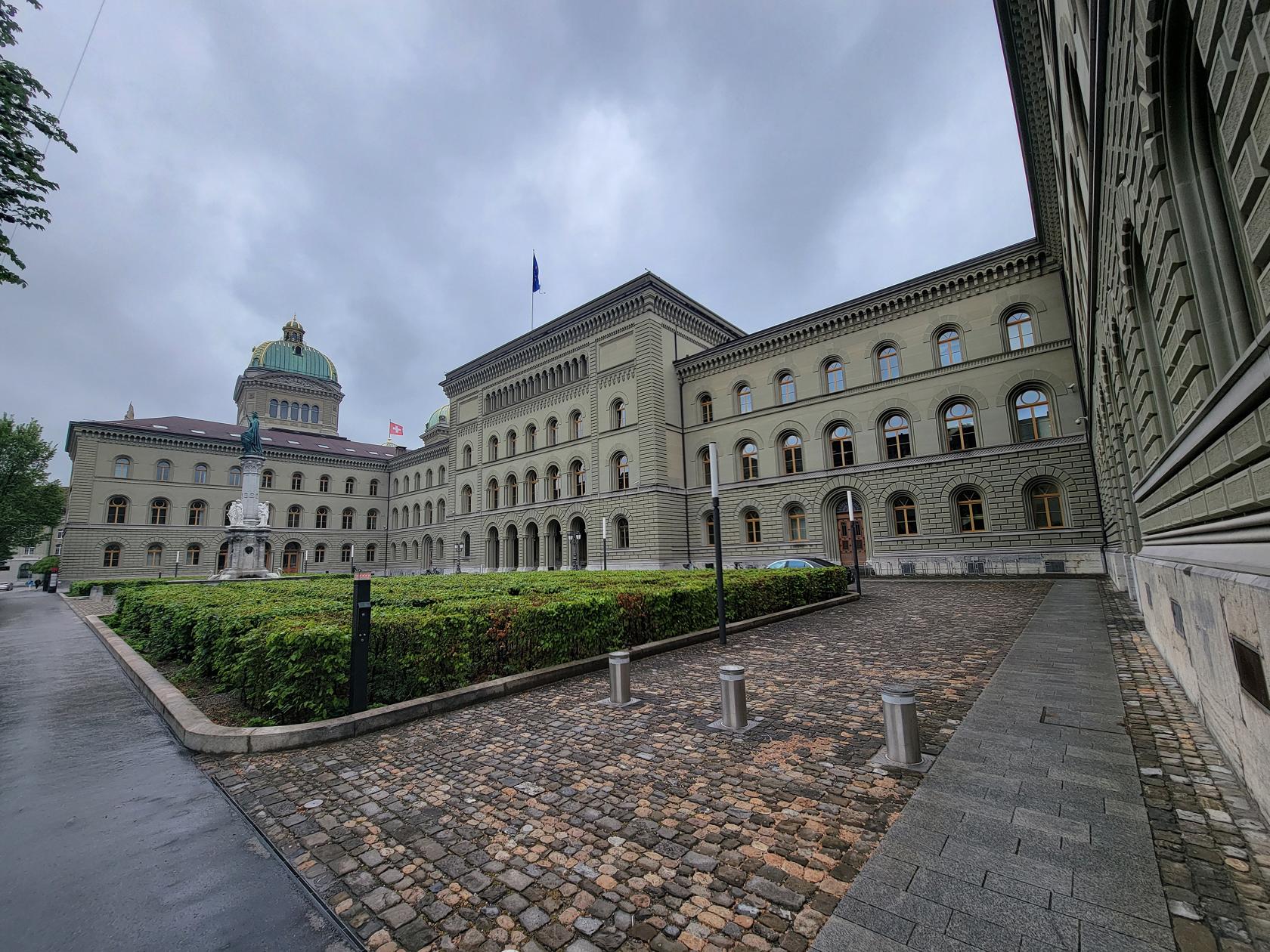
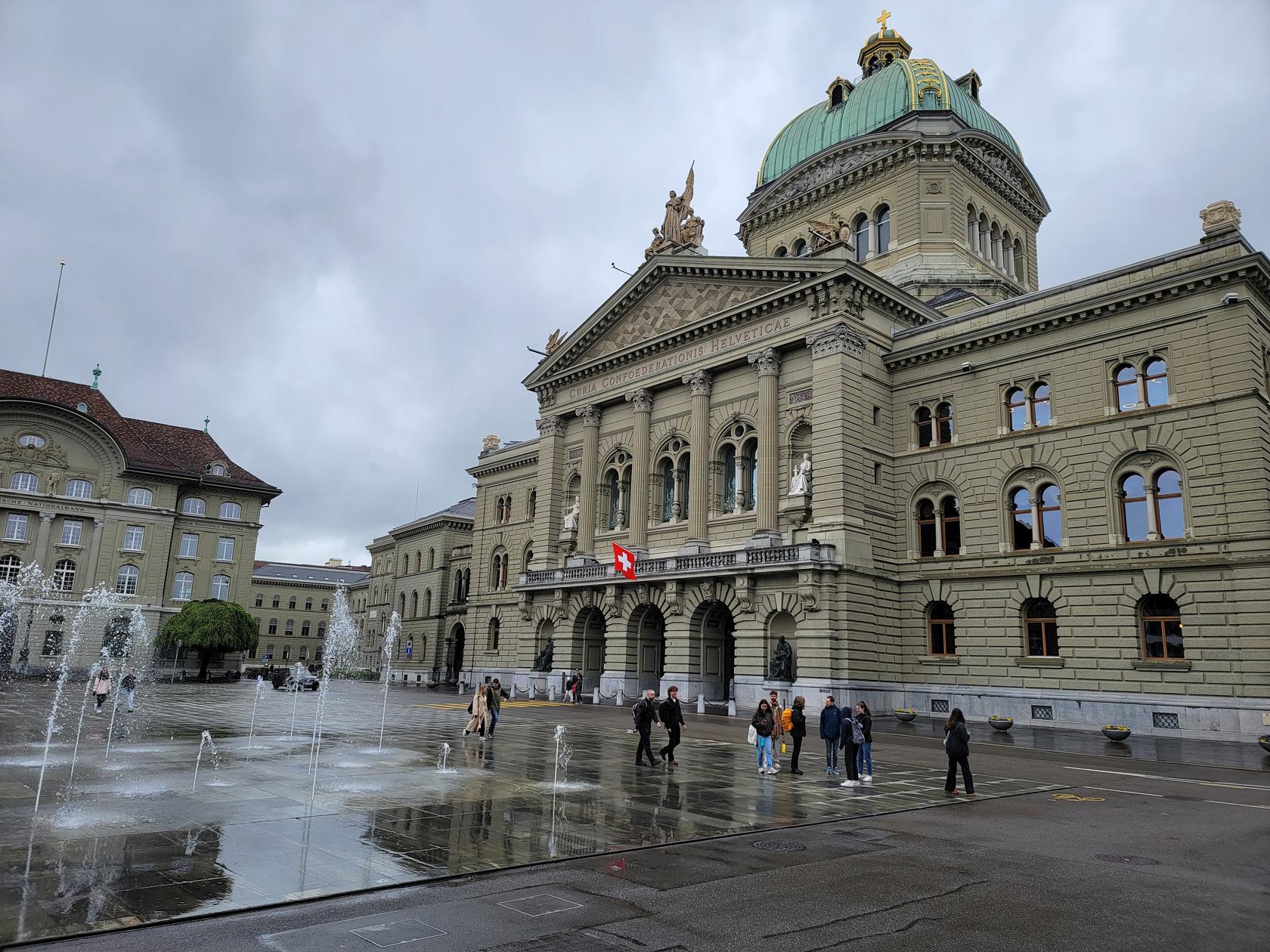
Bundeshaus – Bern, Switzerland
Bundeshaus – Bern, Switzerland
Bundeshaus – Bern, Switzerland
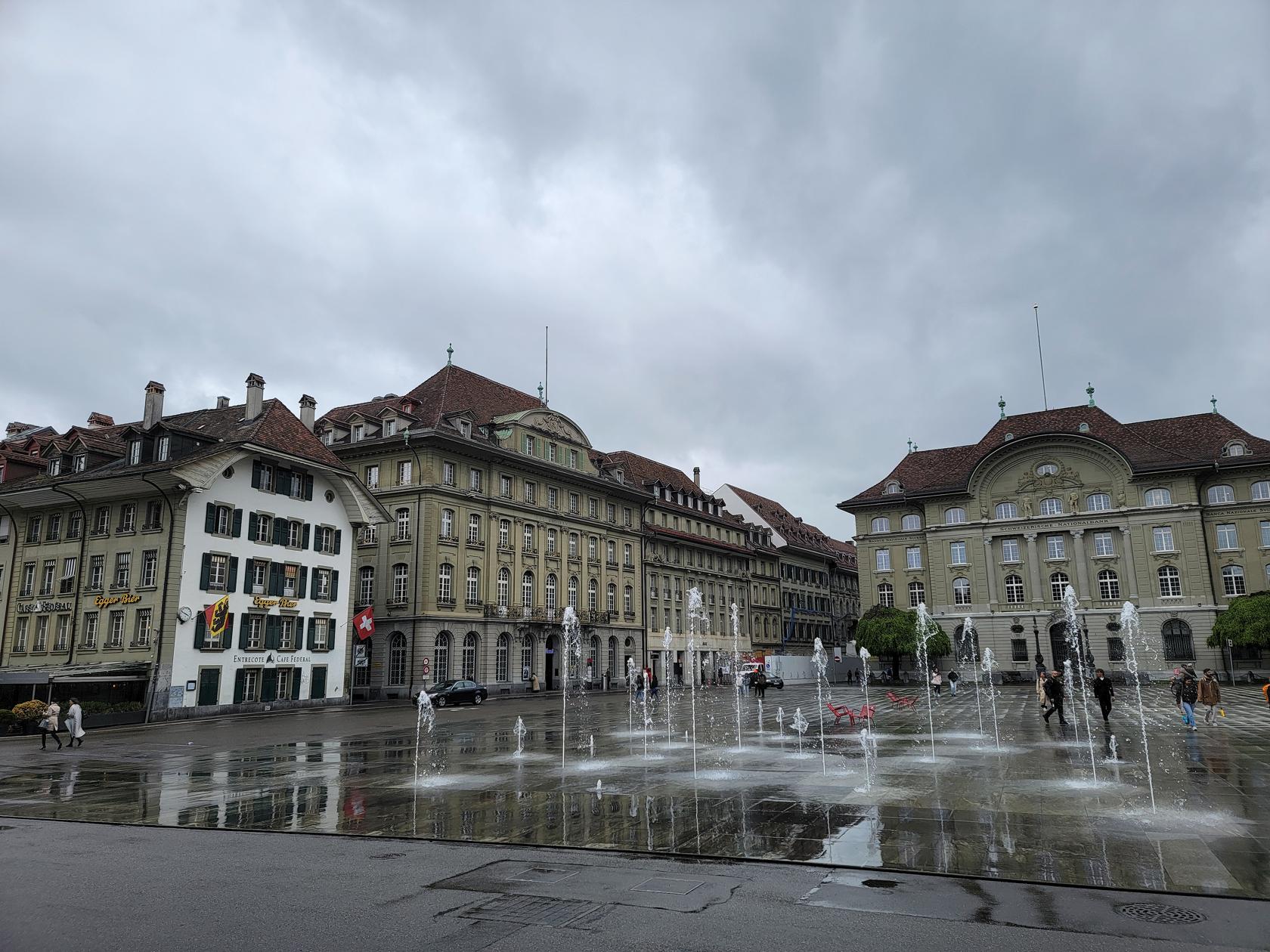
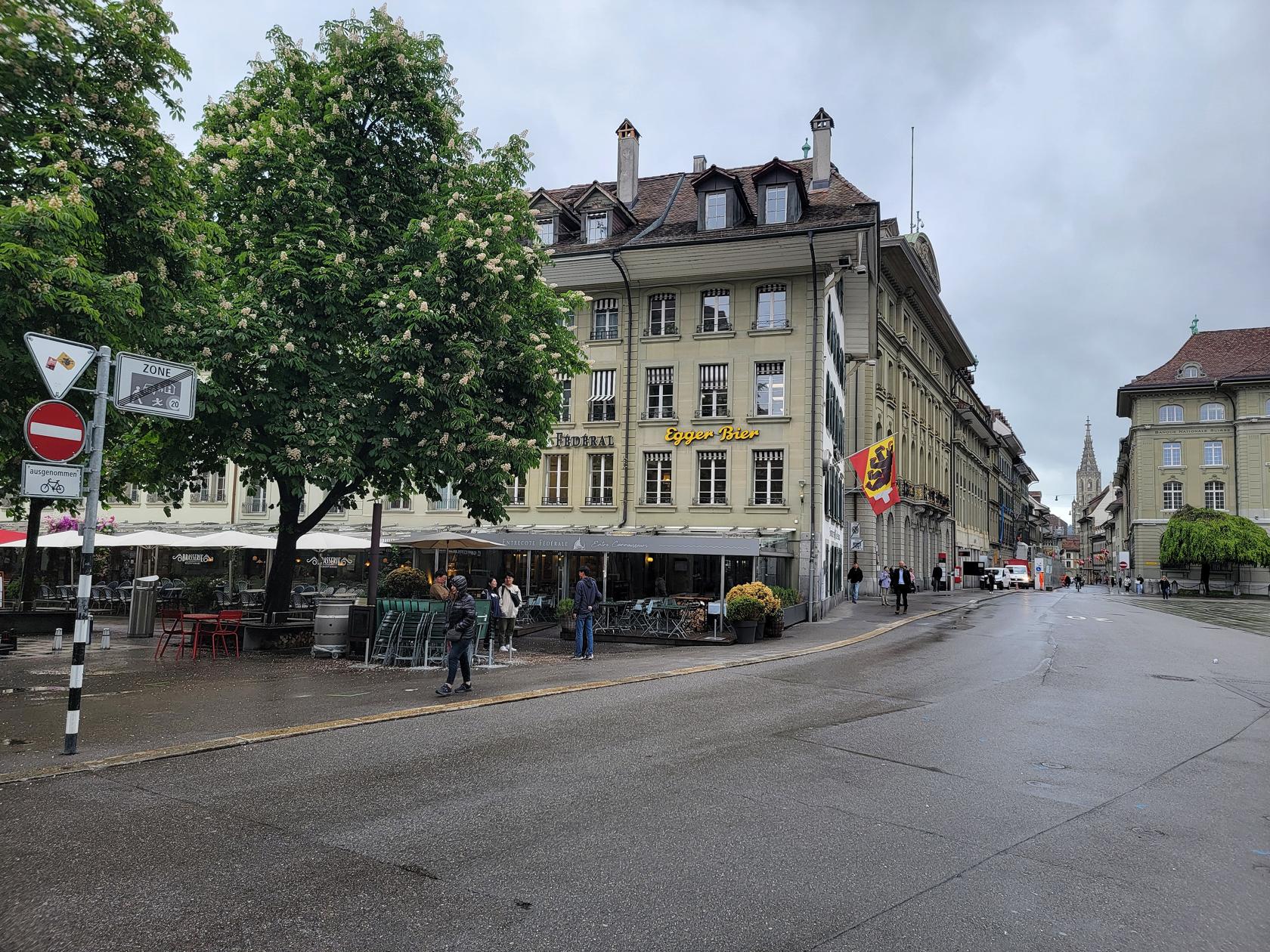
Bärenplatz – Bern, Switzerland
Marktgasse – Anna Seiler Brunnen – Bern, Switzerland
Marktgasse – Porticos and Shops – Bern, Switzerland
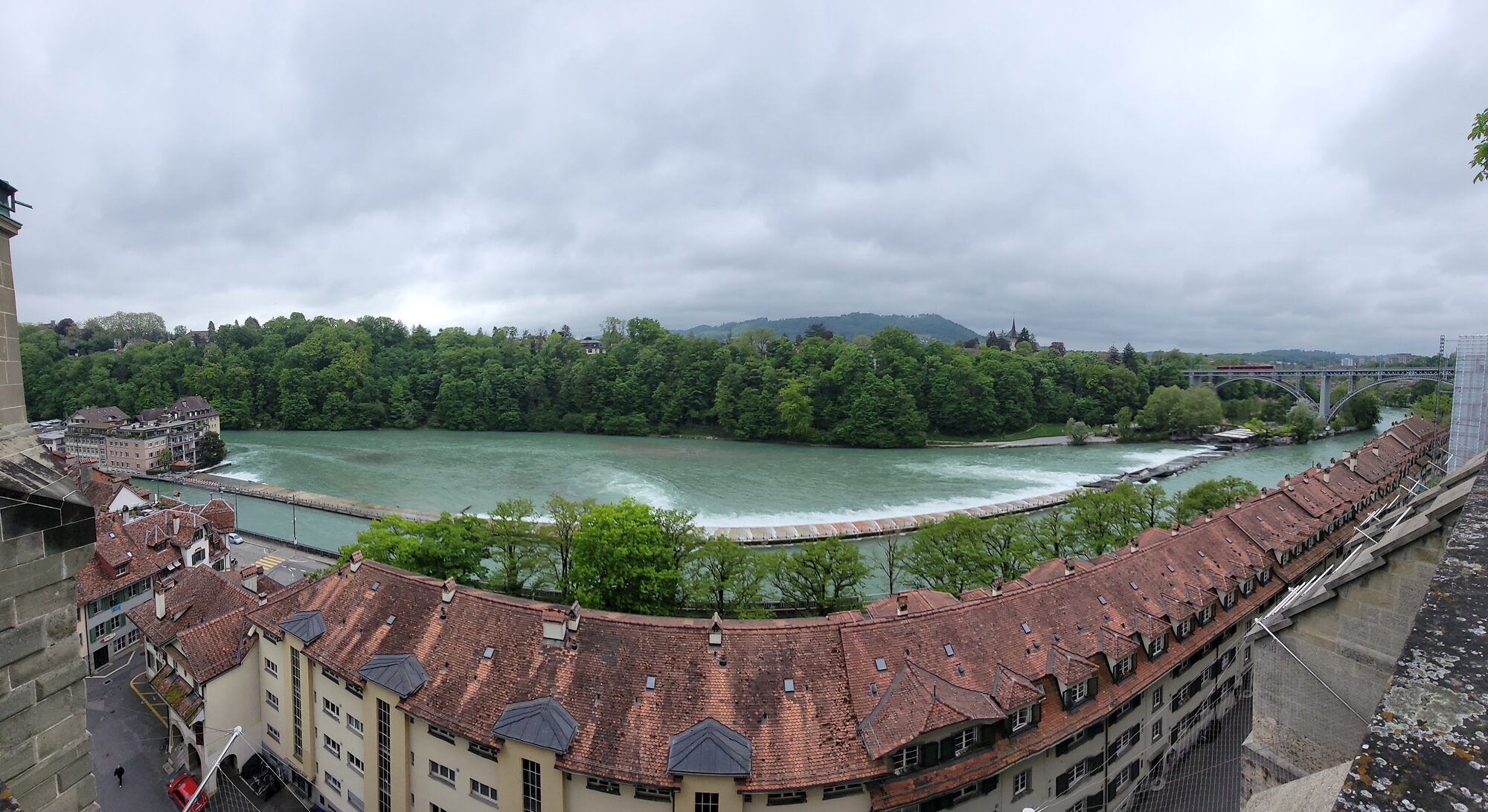
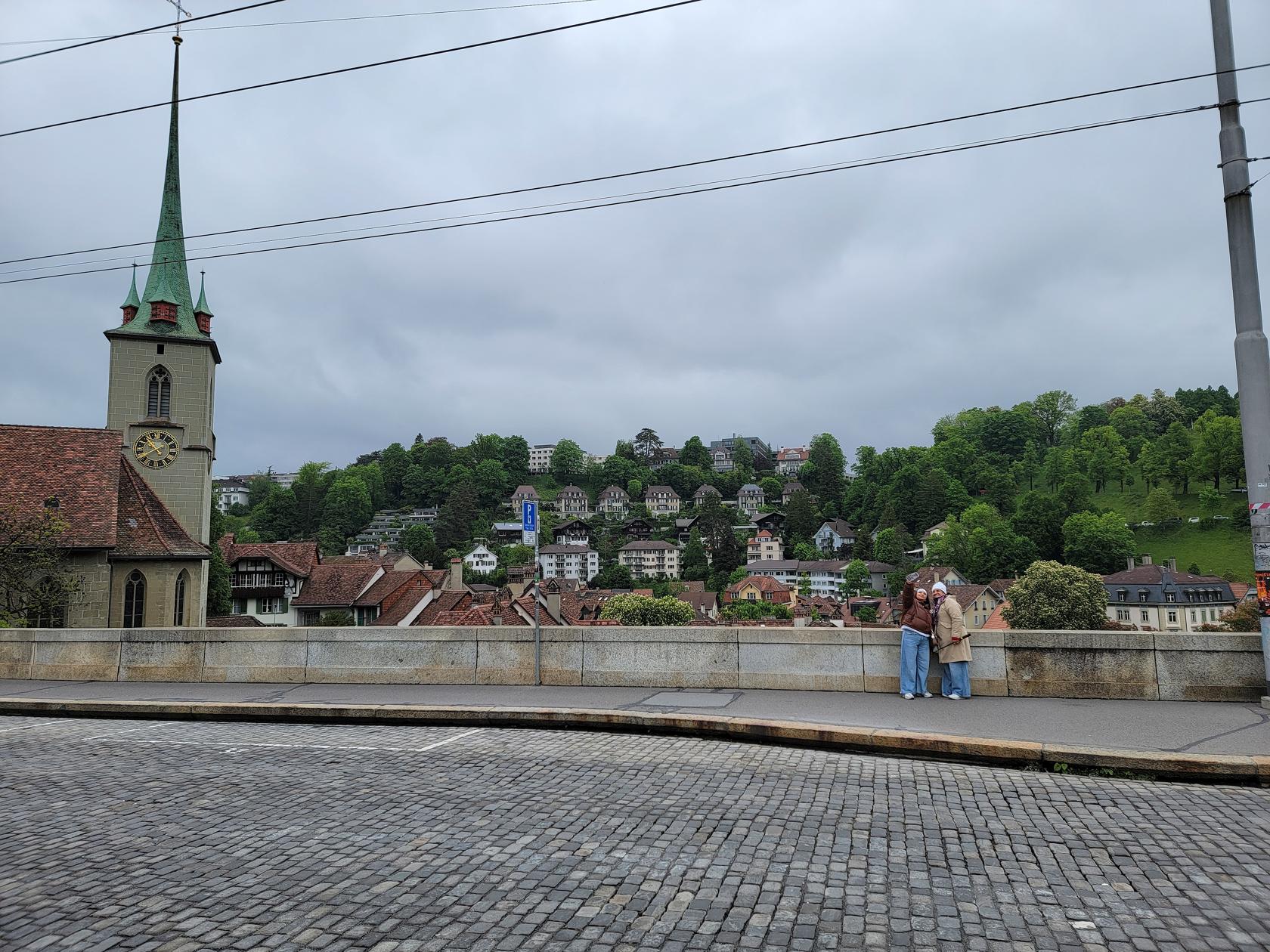
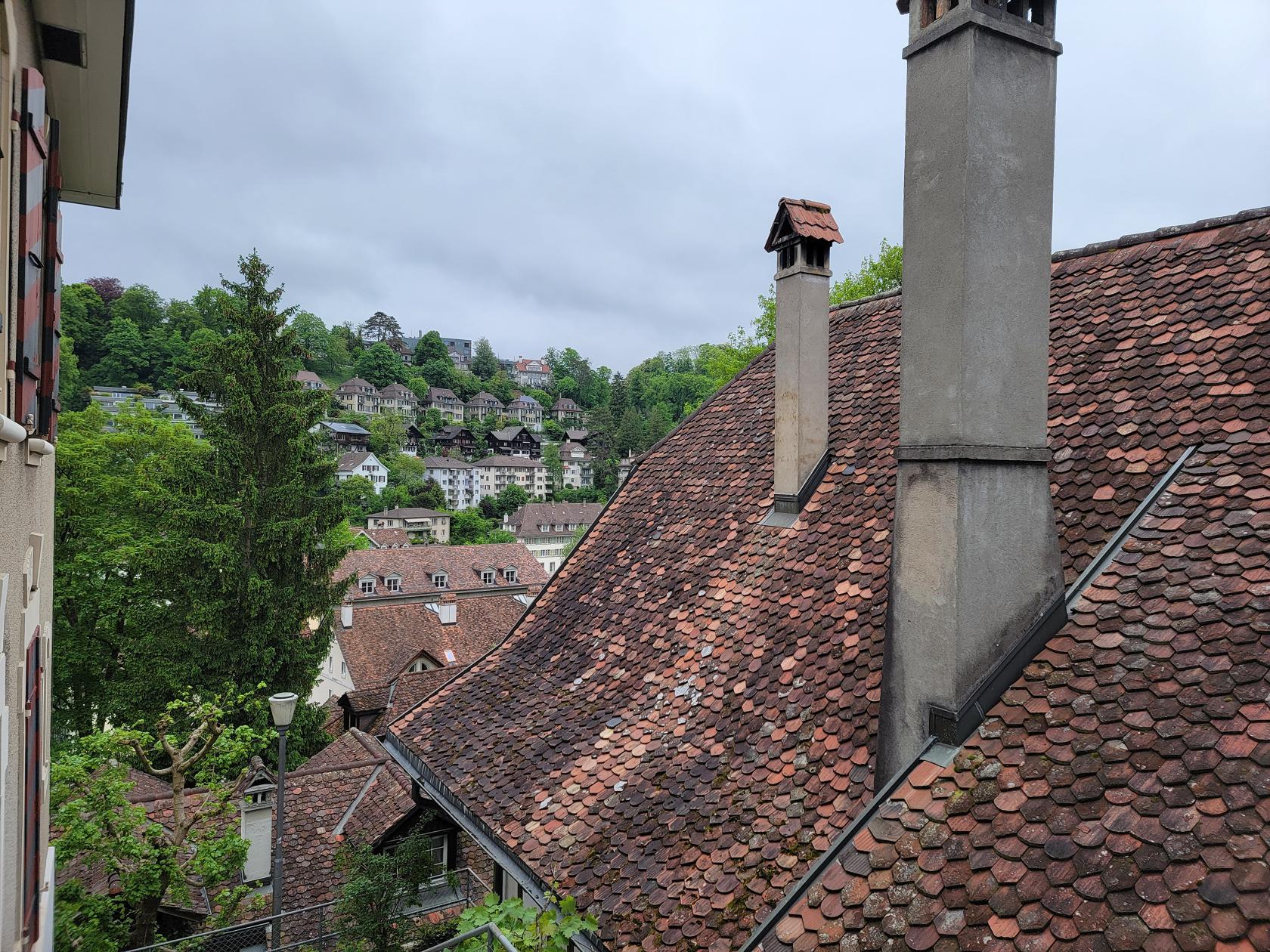
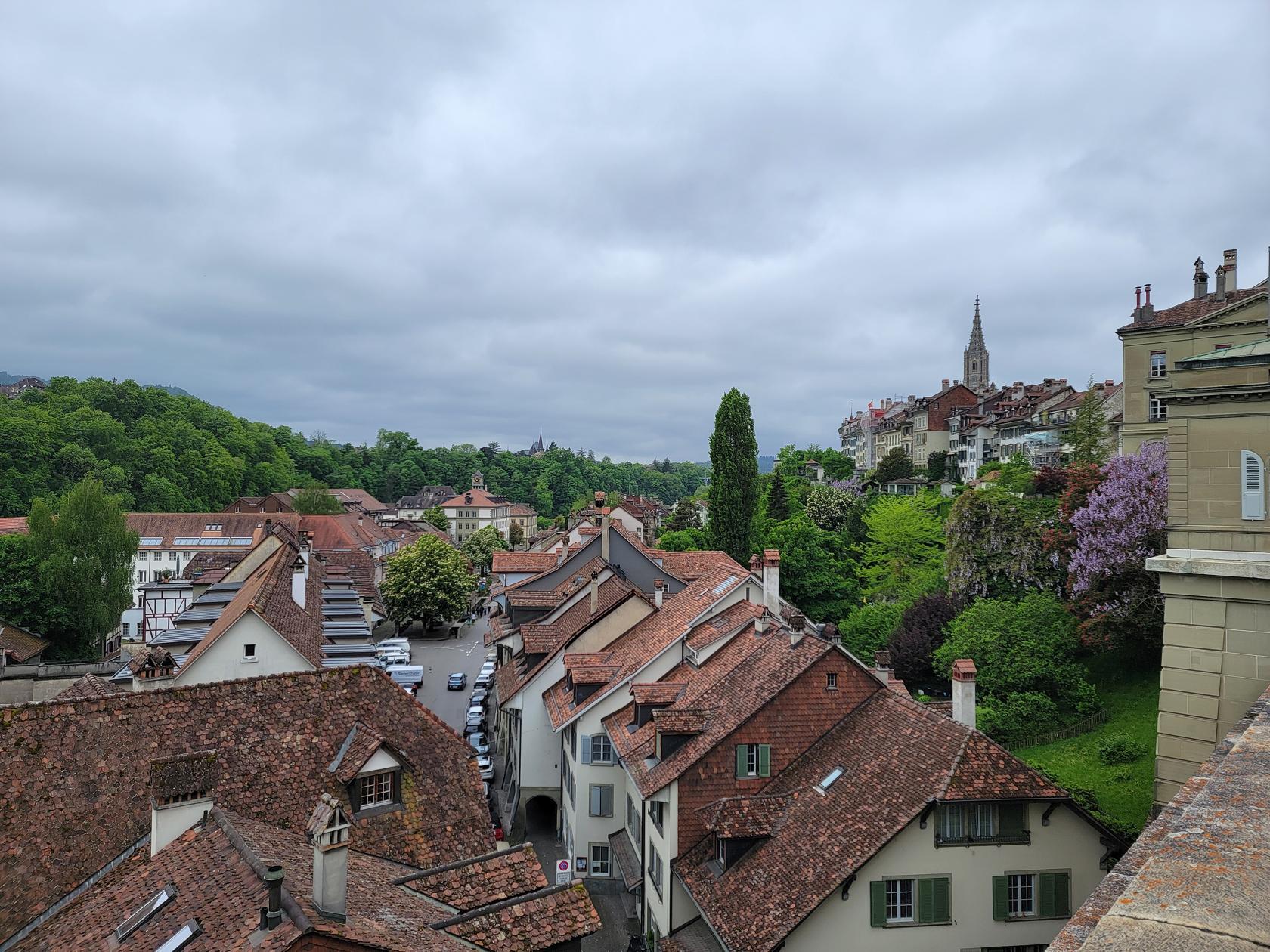
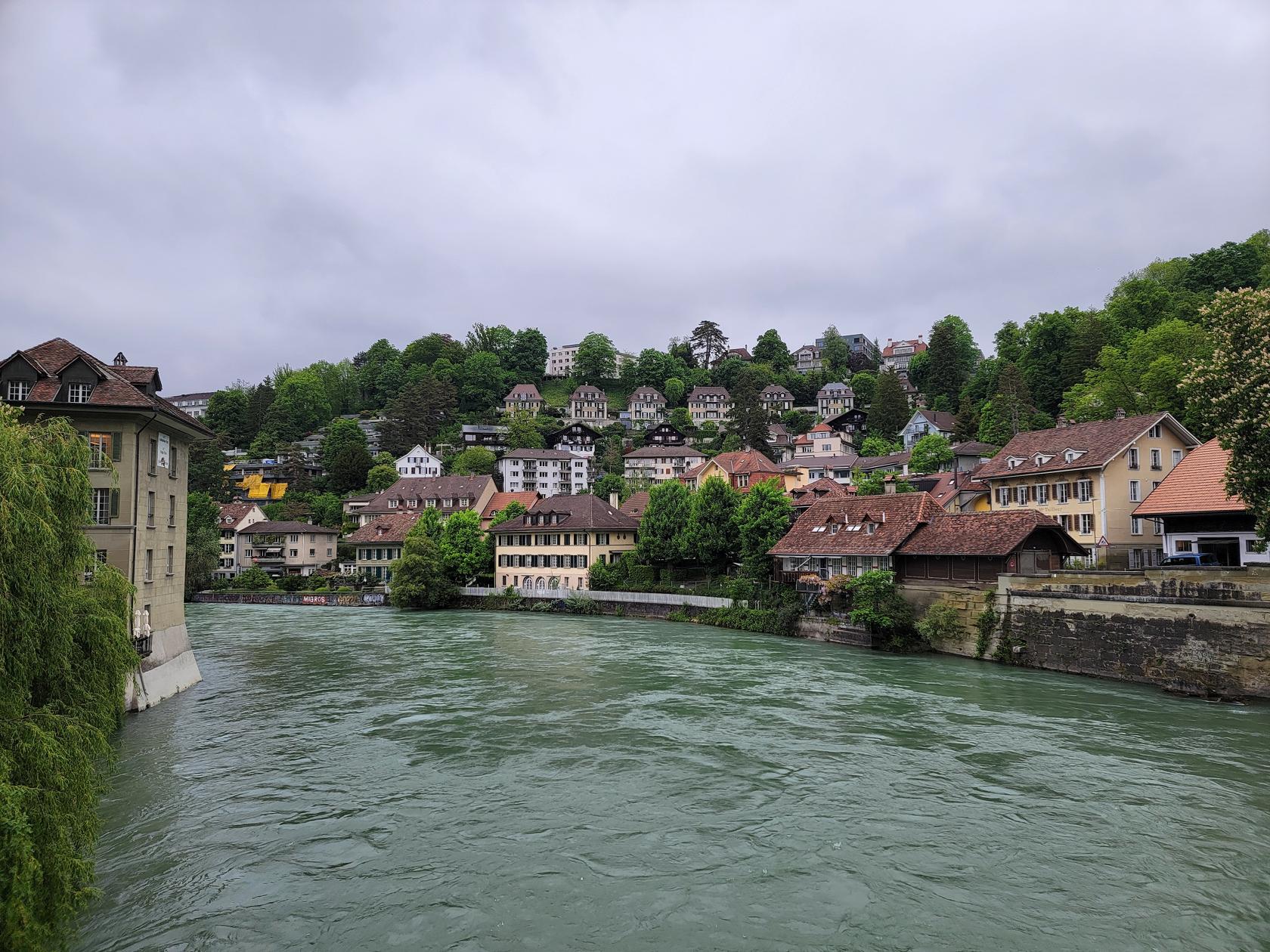
Rooftops and Houses across the Aare river – Bern, Switzerland
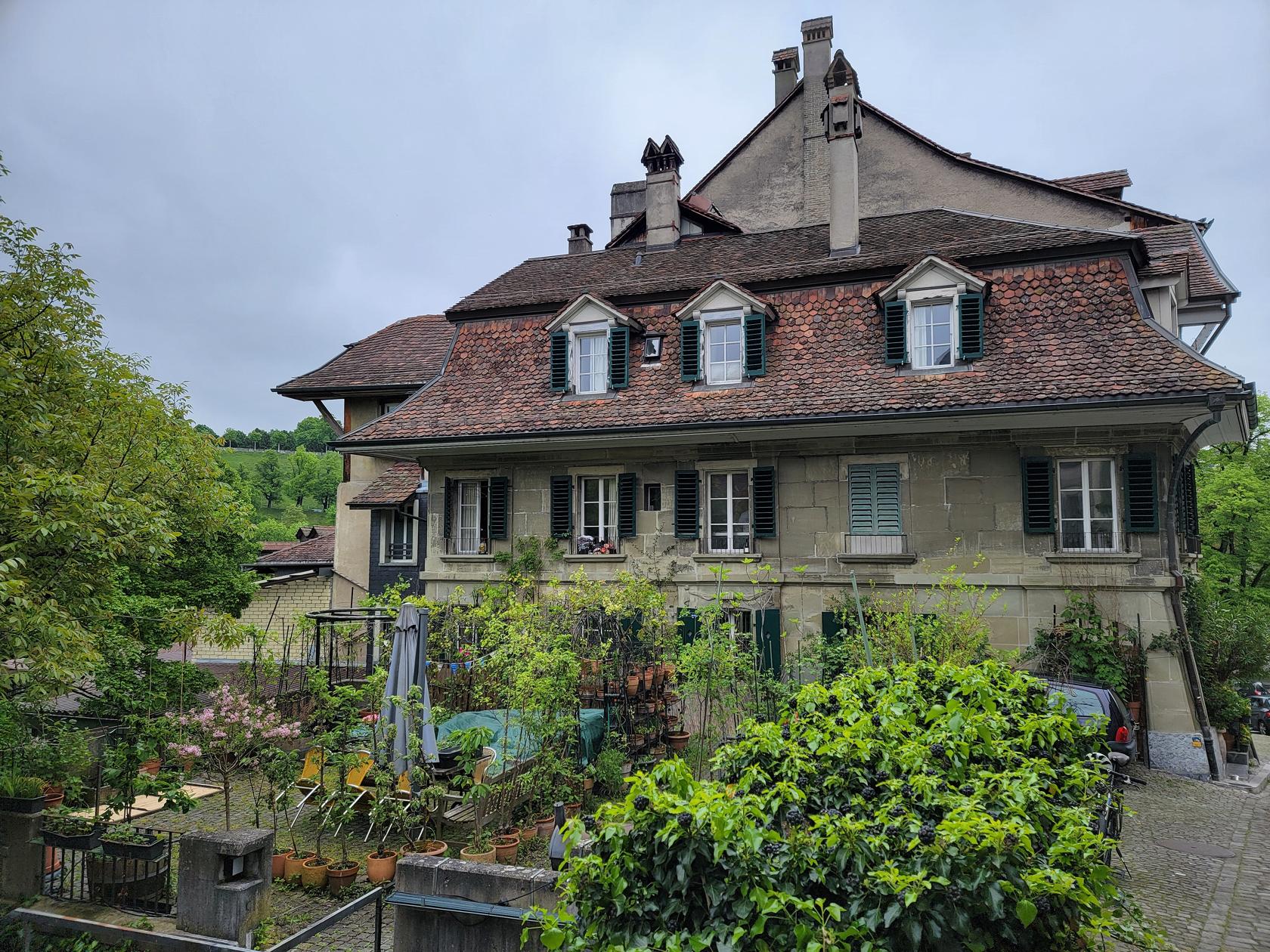
Old house – Bern, Switzerland
Nydeggbrücke – Wasserwerkgasse from bridge – Bern, Switzerland
Brunnen Or Fountains
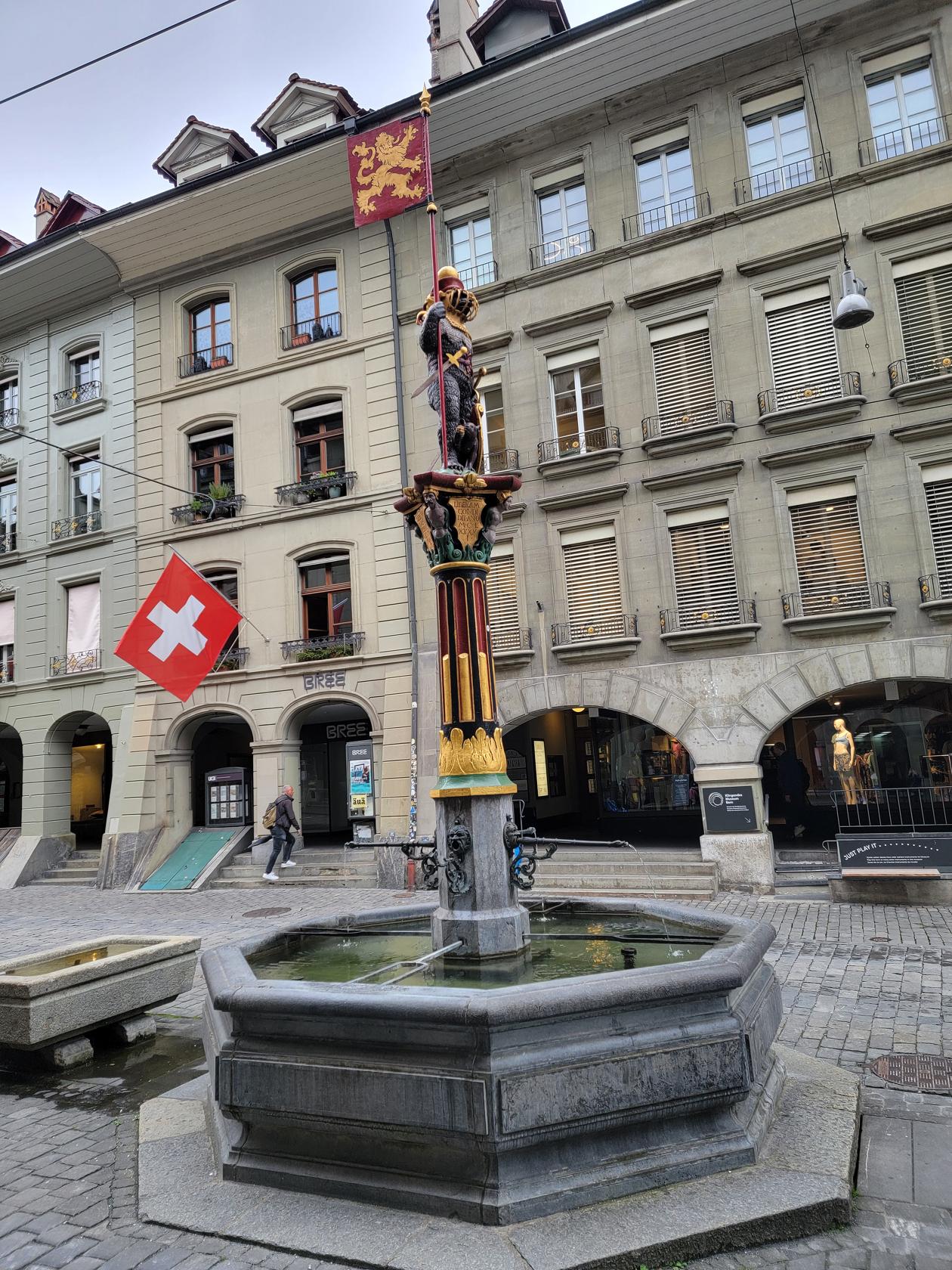
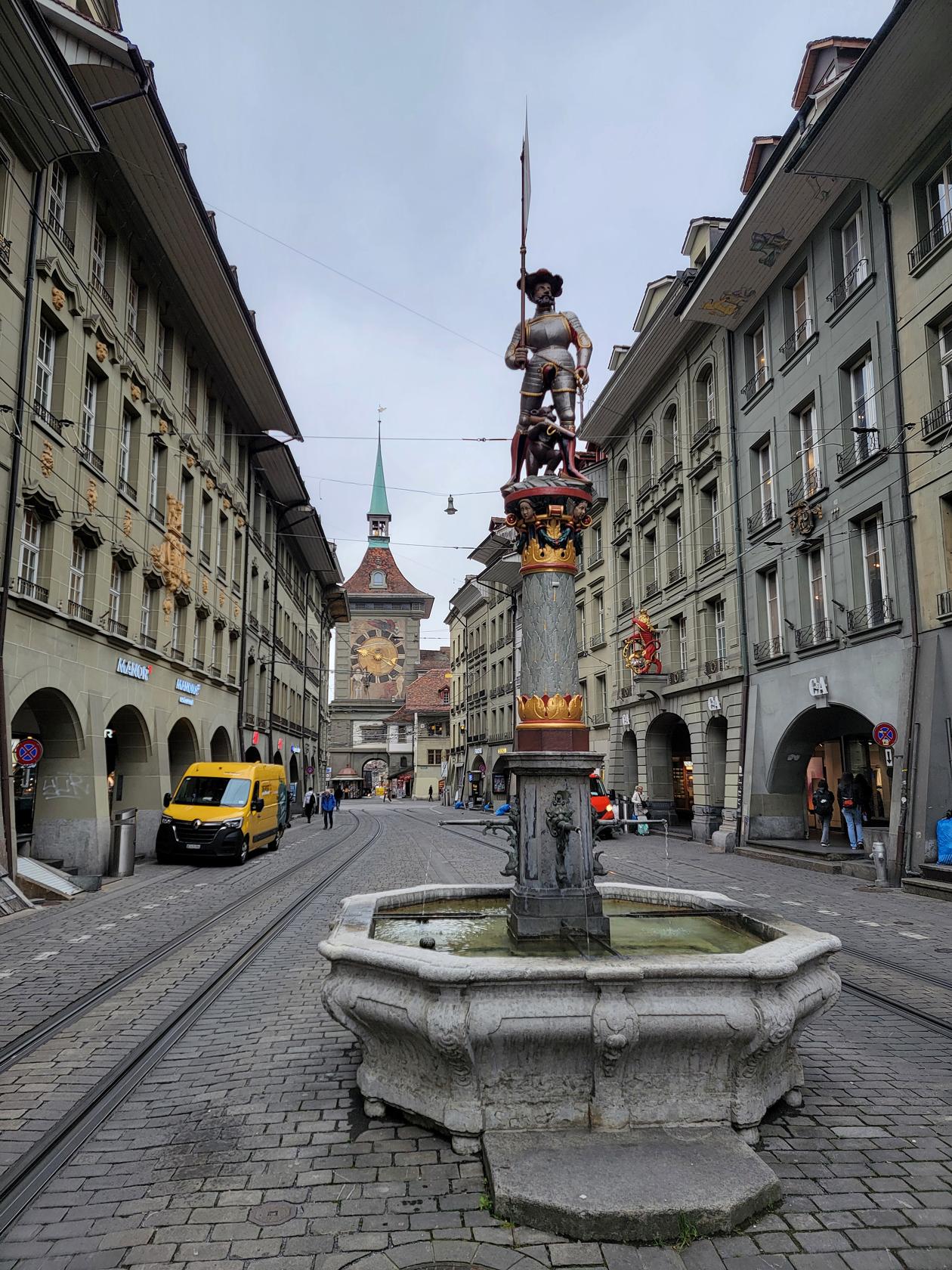
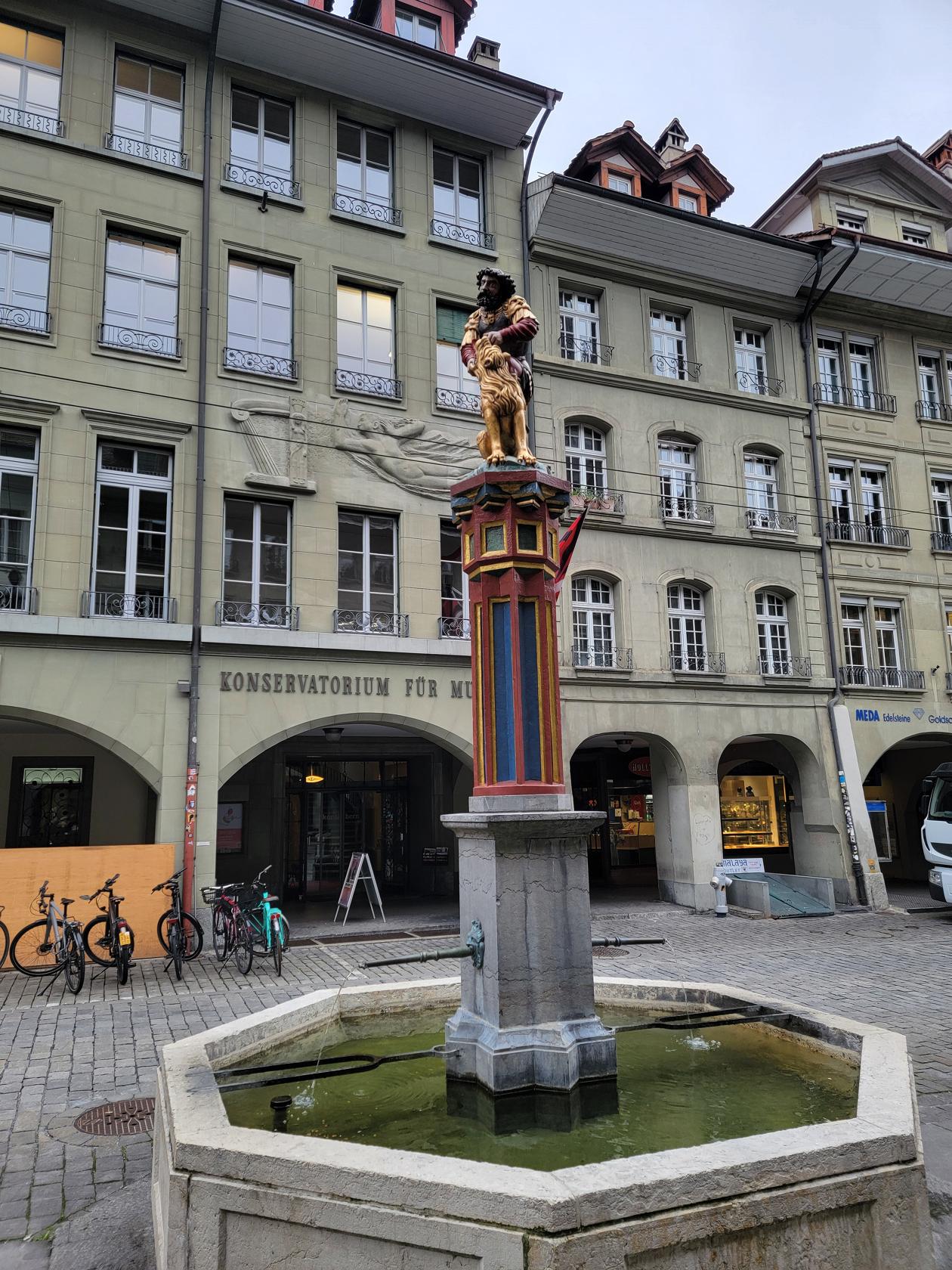
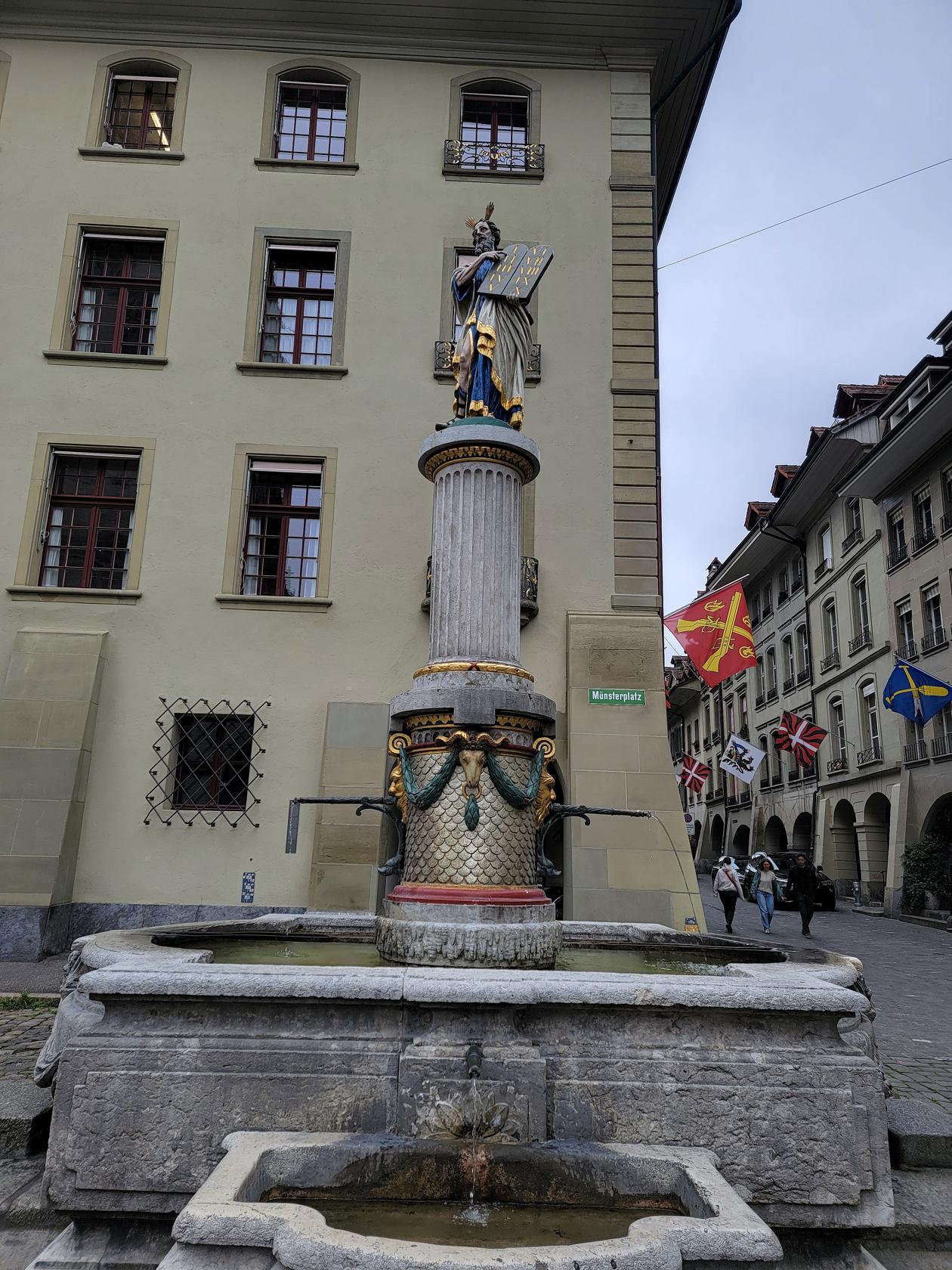
The city has a lot of brunnen, or fountains in English, especially down the middle of the Marktgasse. Most of these have figures or other mythical forms, stylized perhaps from some historical figure.
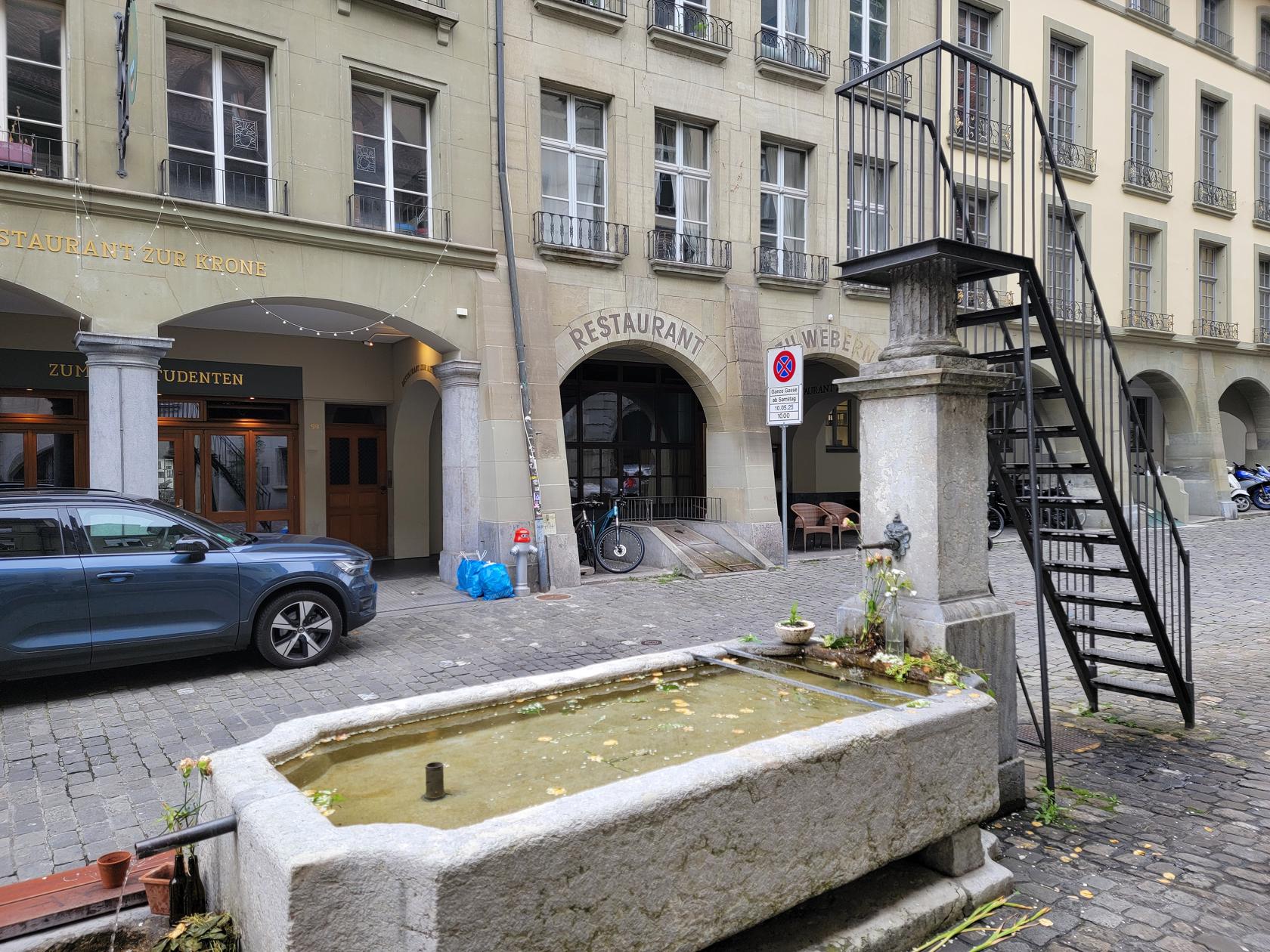
There is also the Lischetti-Brunnen, also known as the Postgassbrunnen or Upper Postgassbrunnen, which was erected in 1820 next to the Staatskanzelei (State Chancellery) and is to be used by anyone who wishes to experience being a fountain.
Lischettibrunnen – Kronenbrunner or Upper Postgass Fountain – Bern, Switzerland
Hotel Savoy
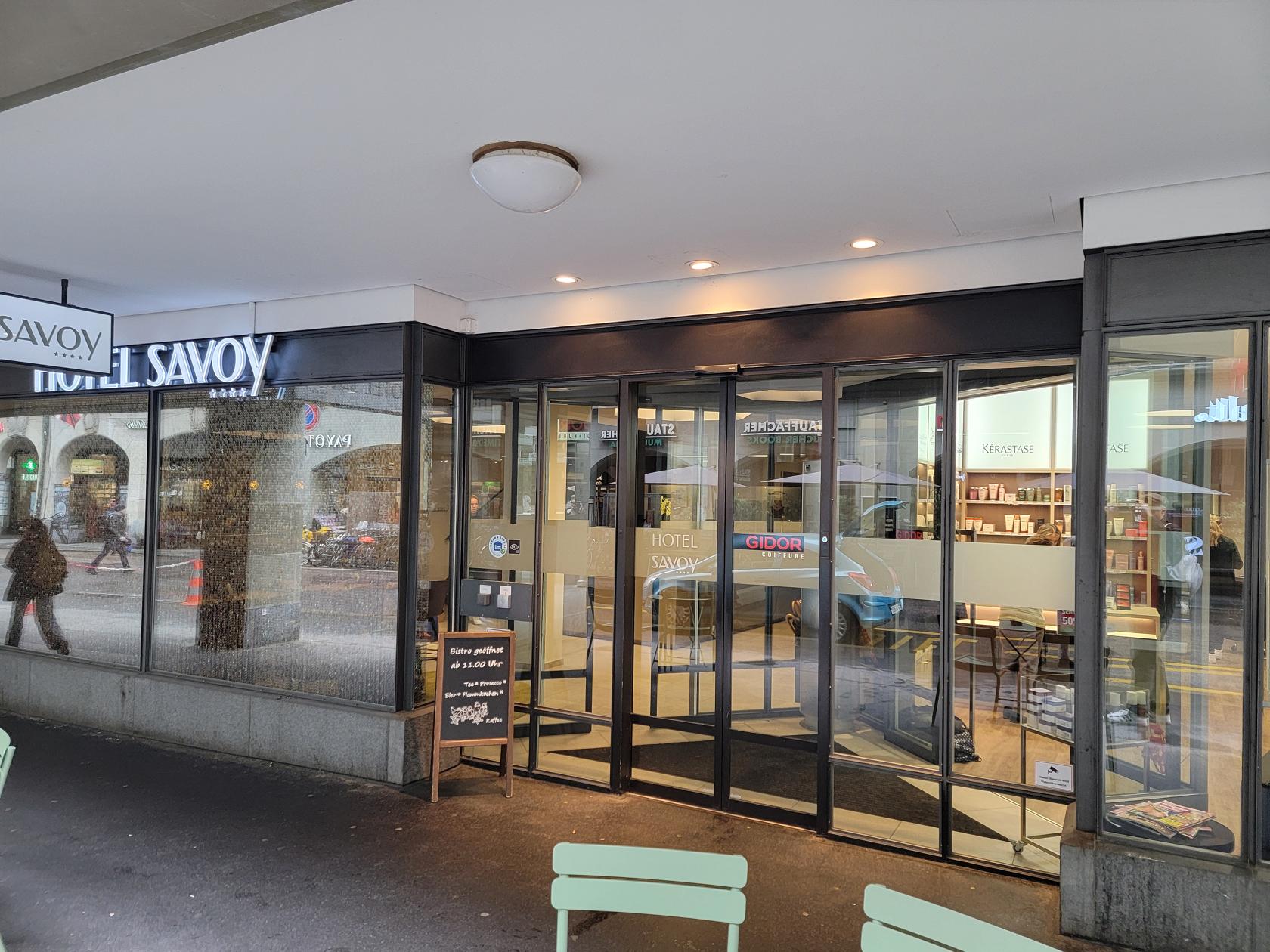
A fairly good hotel on the Kramgasse, sharing an entrance with another store. We found it reasonably priced for a Swiss hotel and central for visiting the city. The breakfast is rather expensive, as it is in most Swiss hotels, at 30CHF per person. We found this unreasonable and ventured out each morning to stop at one of the many Konditoreien, or pastry shops, in the neighborhood. This option ran around 9-10CHF per person, but was only coffee and a pastry, which for use was sufficient.
Hotel Savoy – Main Entrance – Bern, Switzerland
Cathedrals And Churches
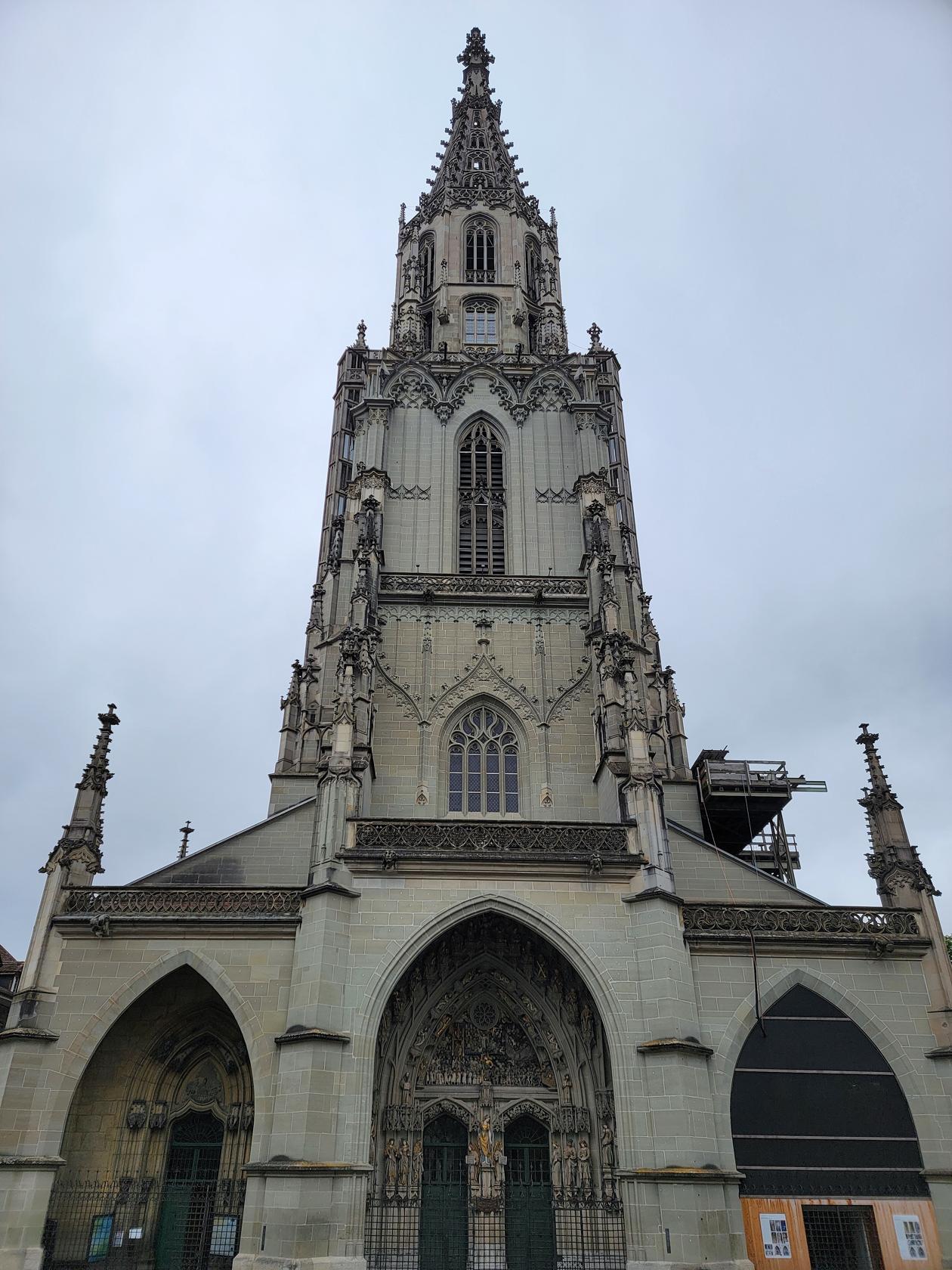
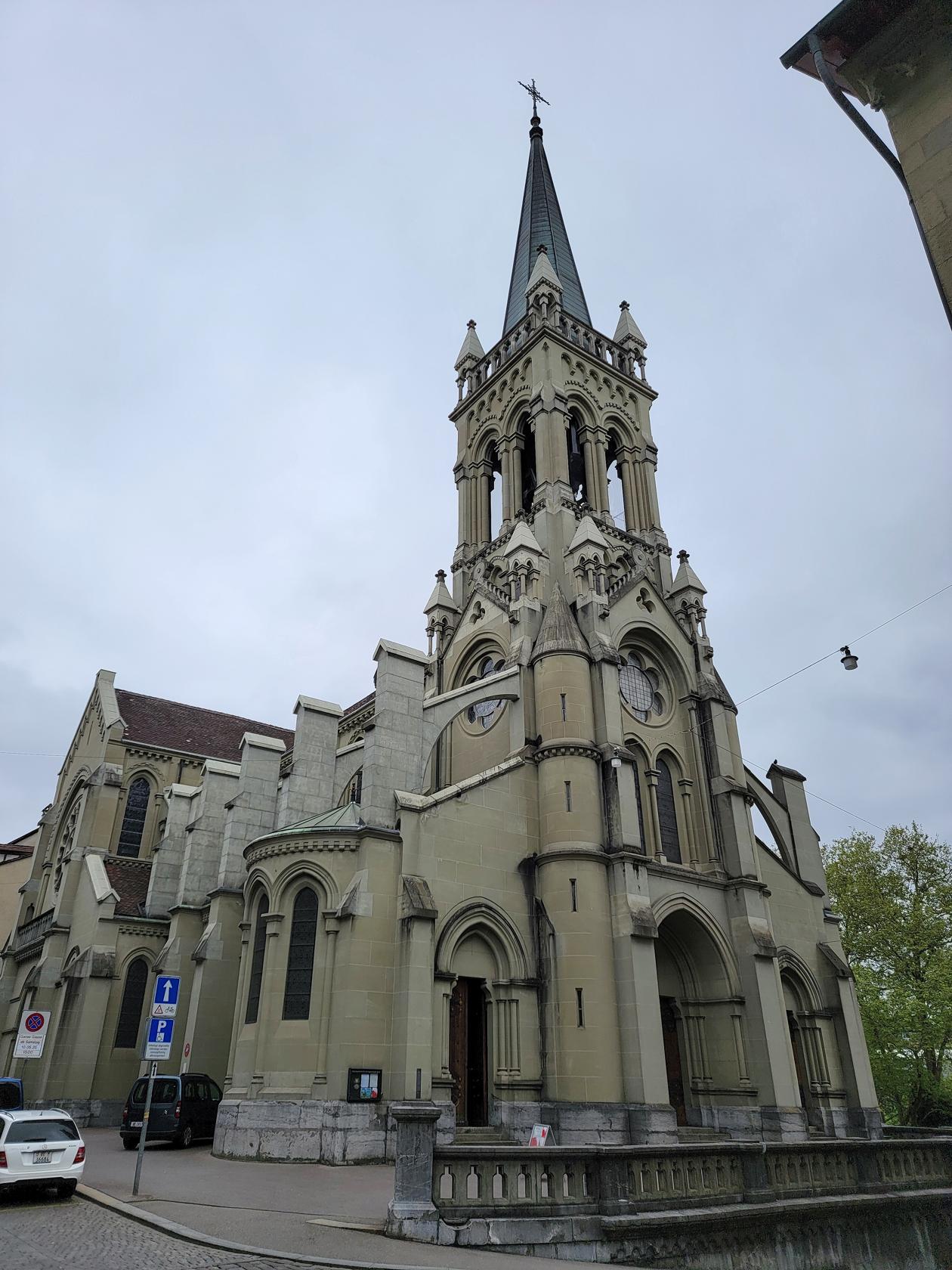
A few religious buildings of note in Bern are the Cathedral of Bern and the Church of Saint Peter and Paul.
Cathedral Of Bern
Cathedral of Bern – Entrance – Bern, Switzerland
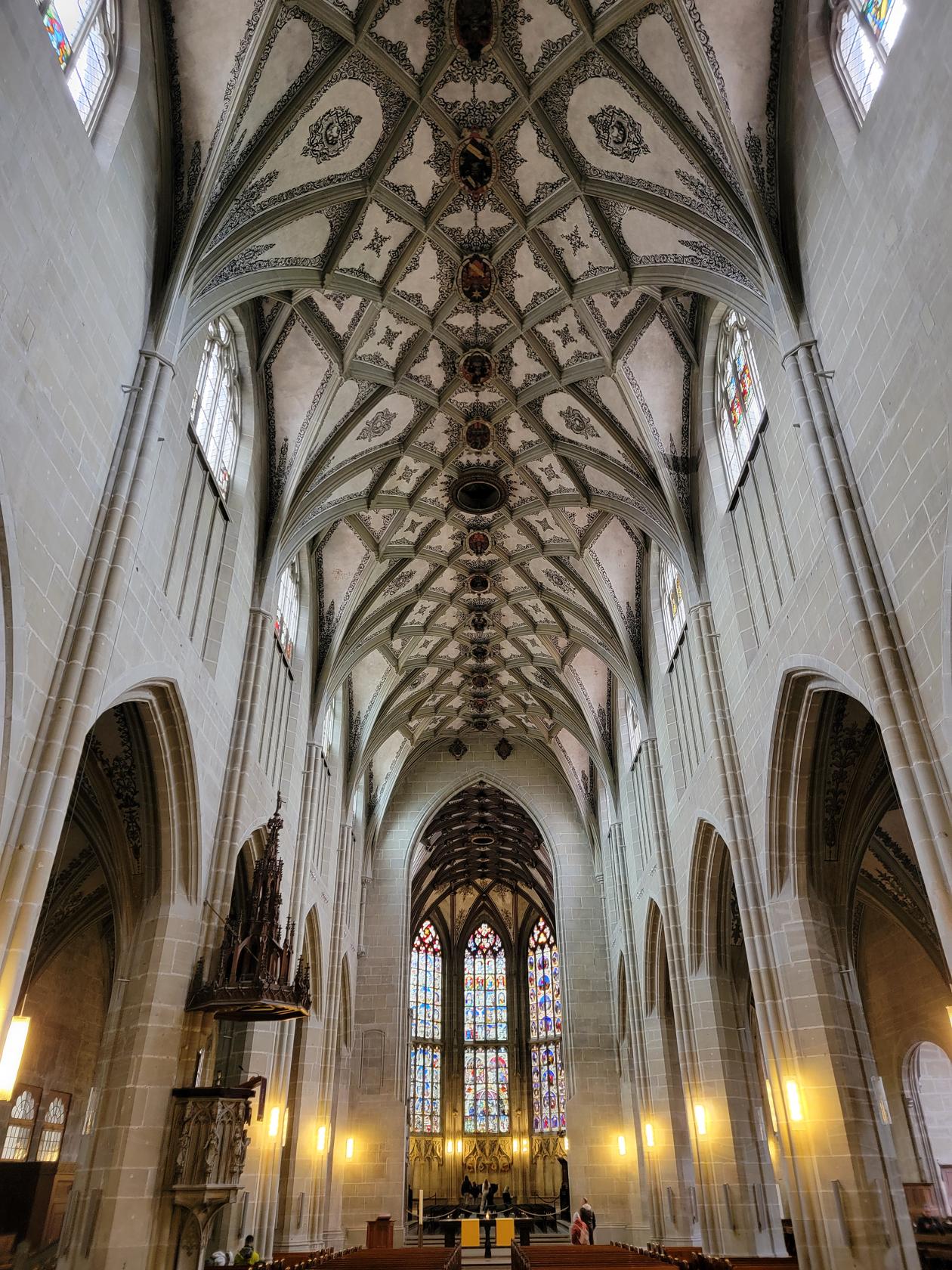
Cathedral of Bern – Nave and Alter – Bern, Switzerland
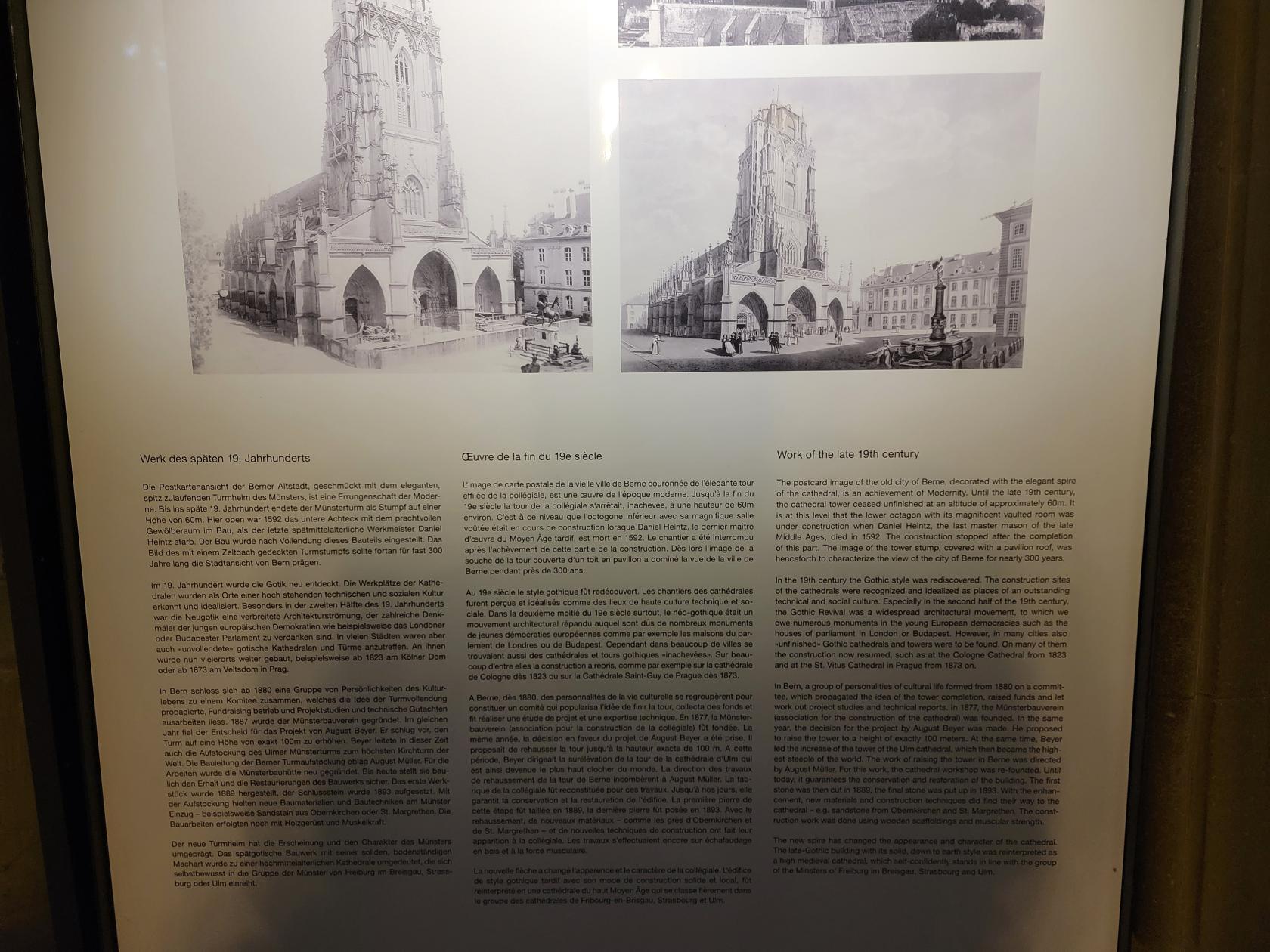
Cathedral of Bern – History of Tower – Bern, Switzerland
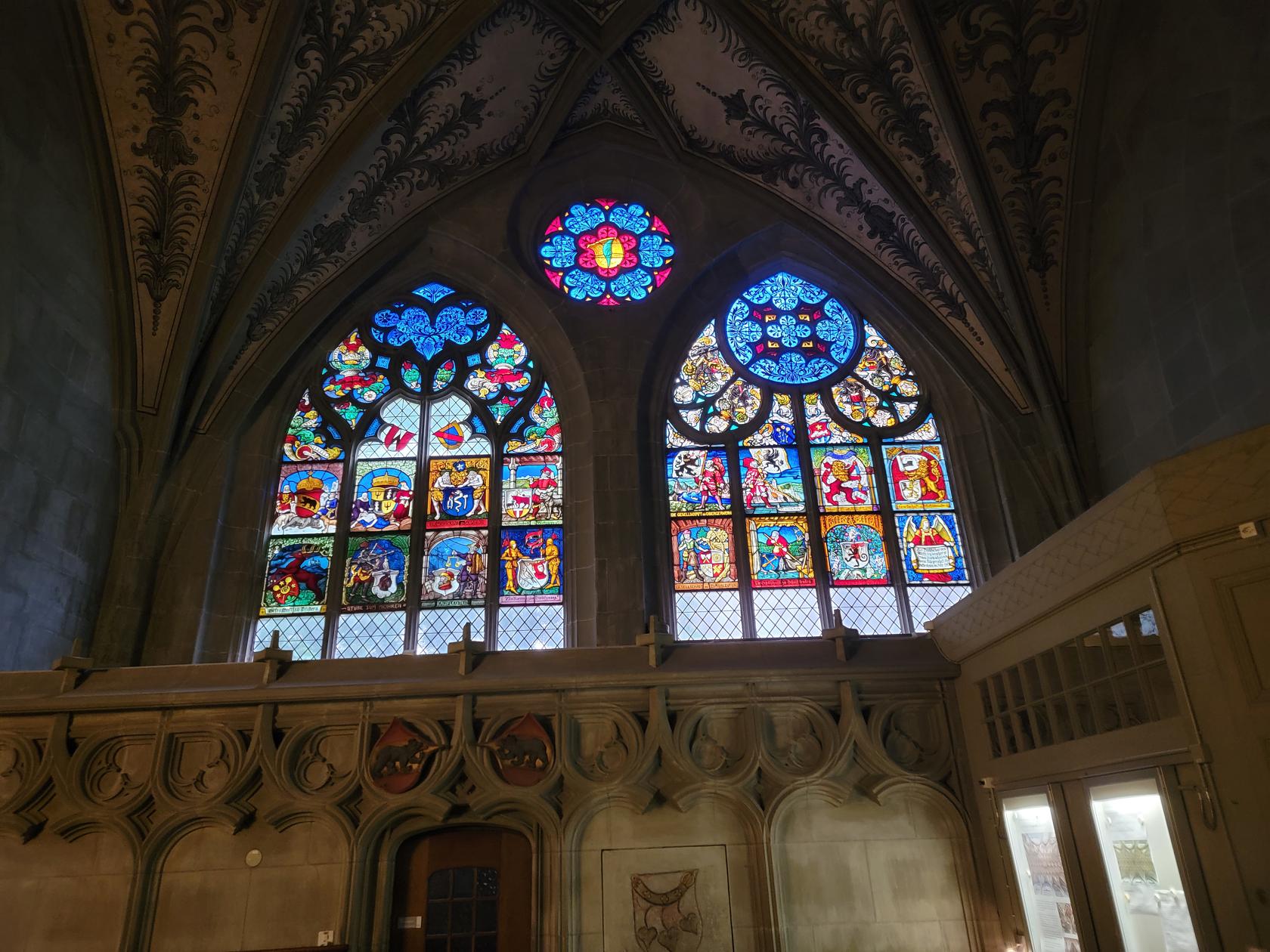
Cathedral of Bern – Houses of Patrons – Bern, Switzerland
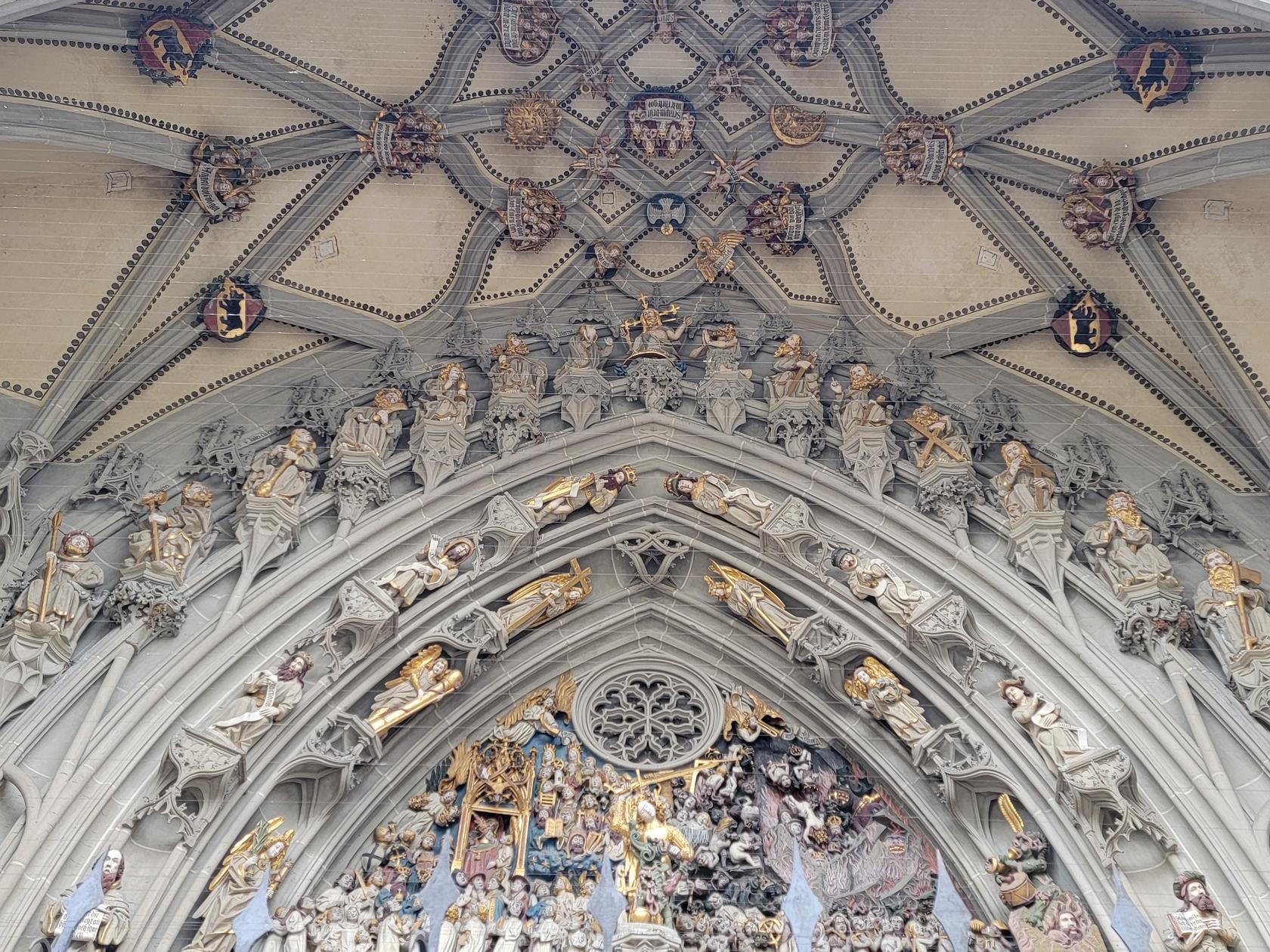
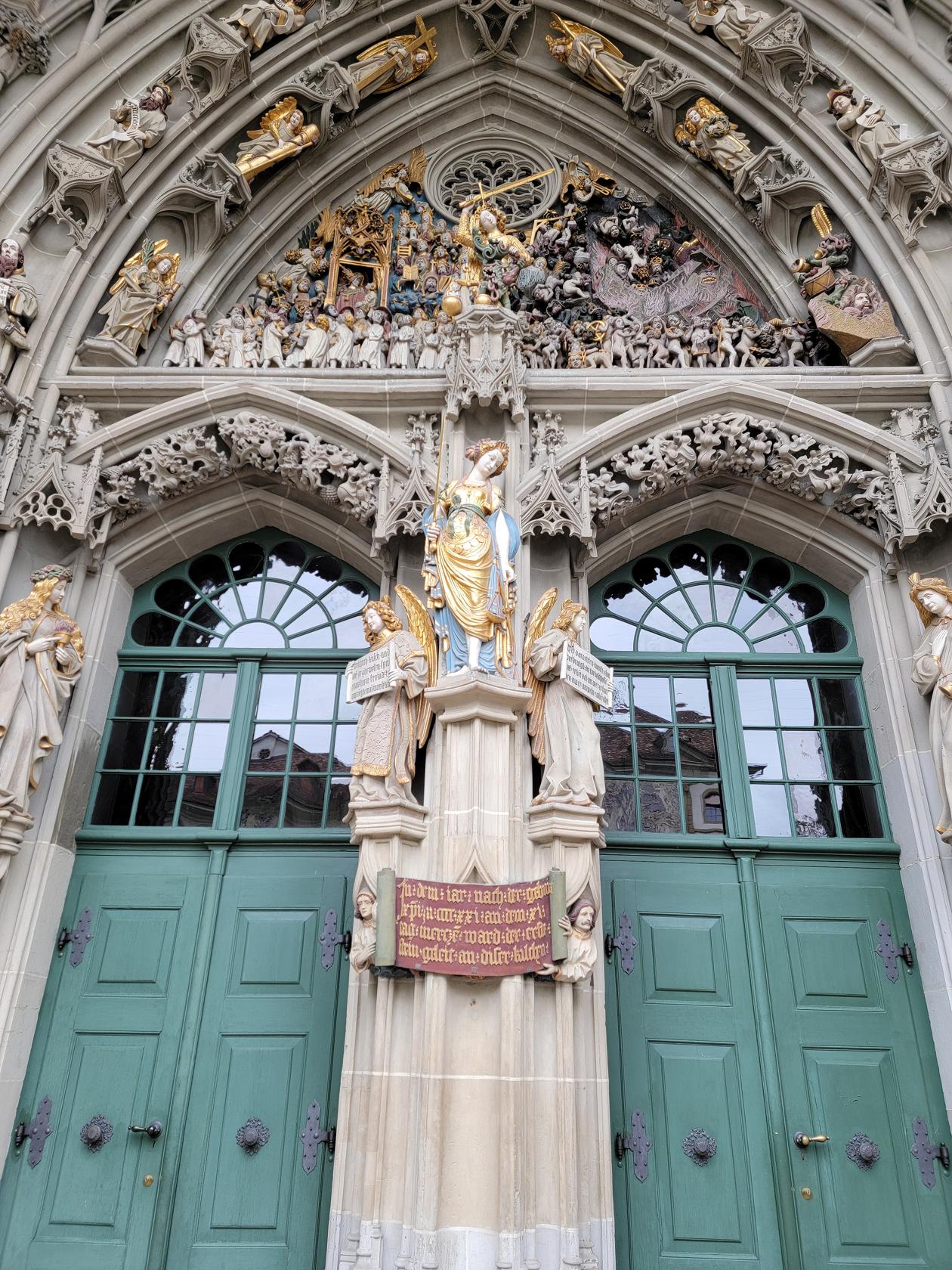
Cathedral of Bern – Intricate Facade over Entrance – Bern, Switzerland
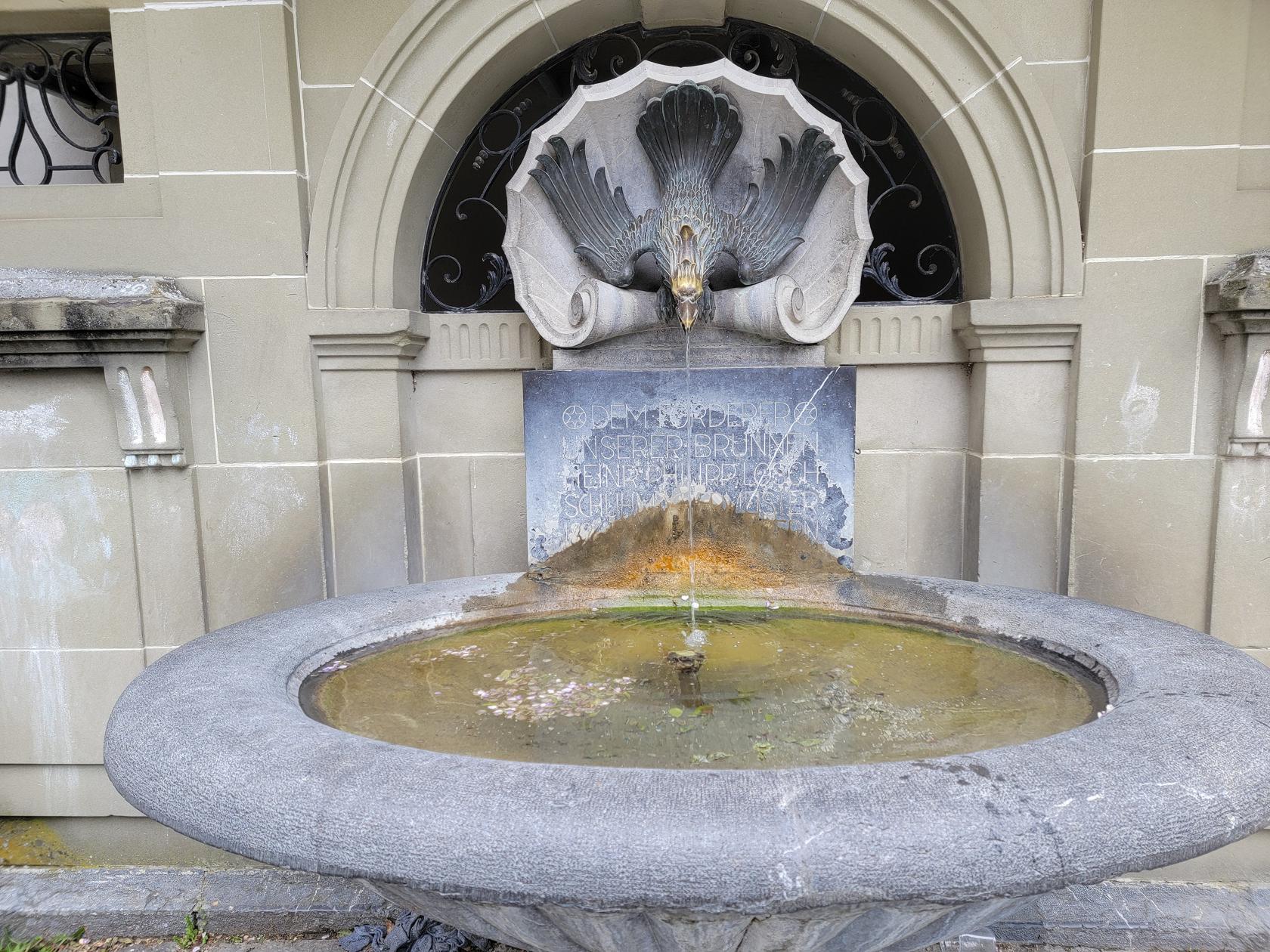
Cathedral of Bern – Fountain – Bern, Switzerland
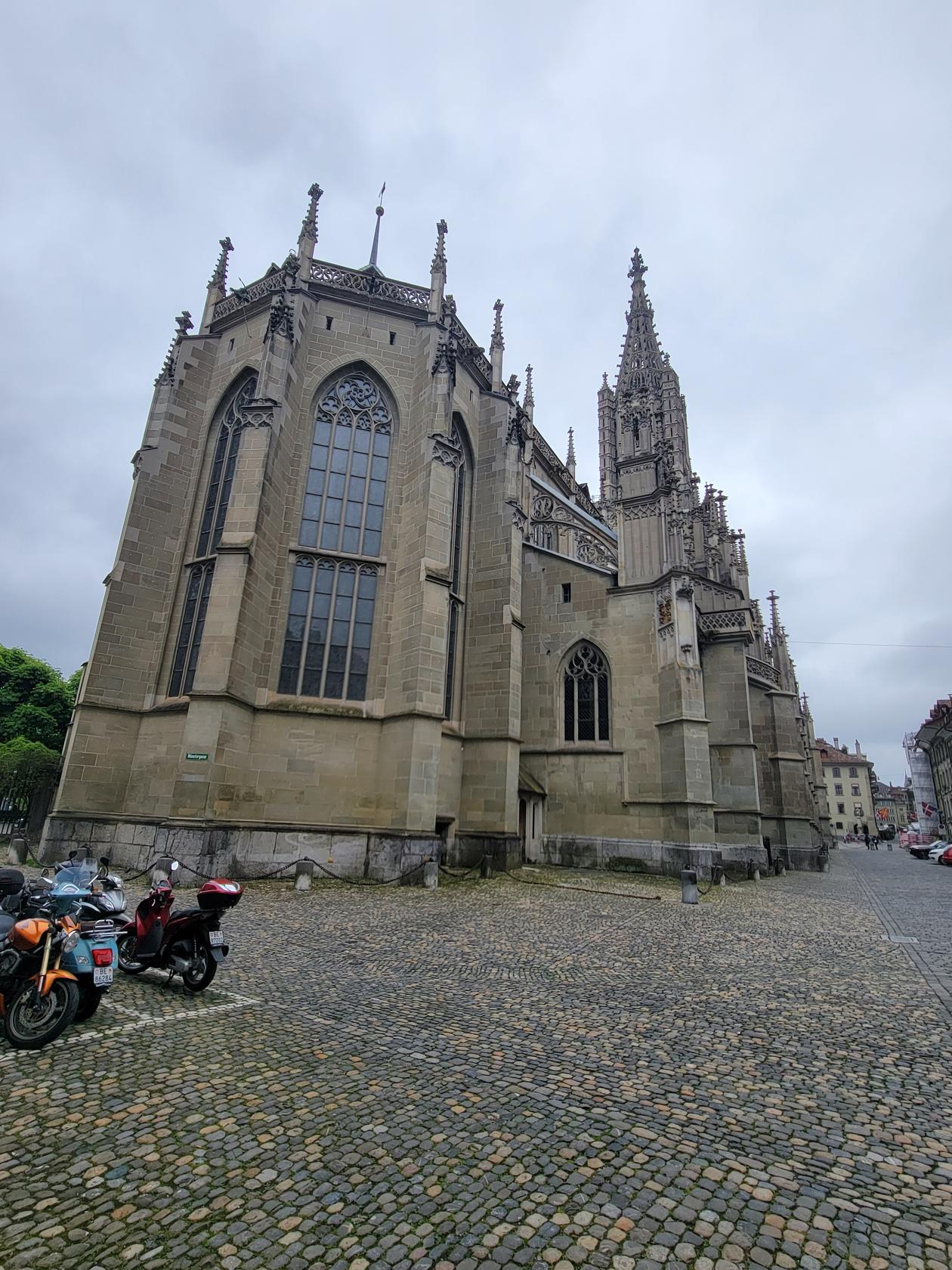
Cathedral of Bern – Backside – Bern, Switzerland
Cathedral of Bern – Intricate Facade over Entrance – Bern, Switzerland
Church Of Saint Peter And Paul
Church of Saint Peter and Paul – Entrance, Rathausgasse – Bern, Switzerland
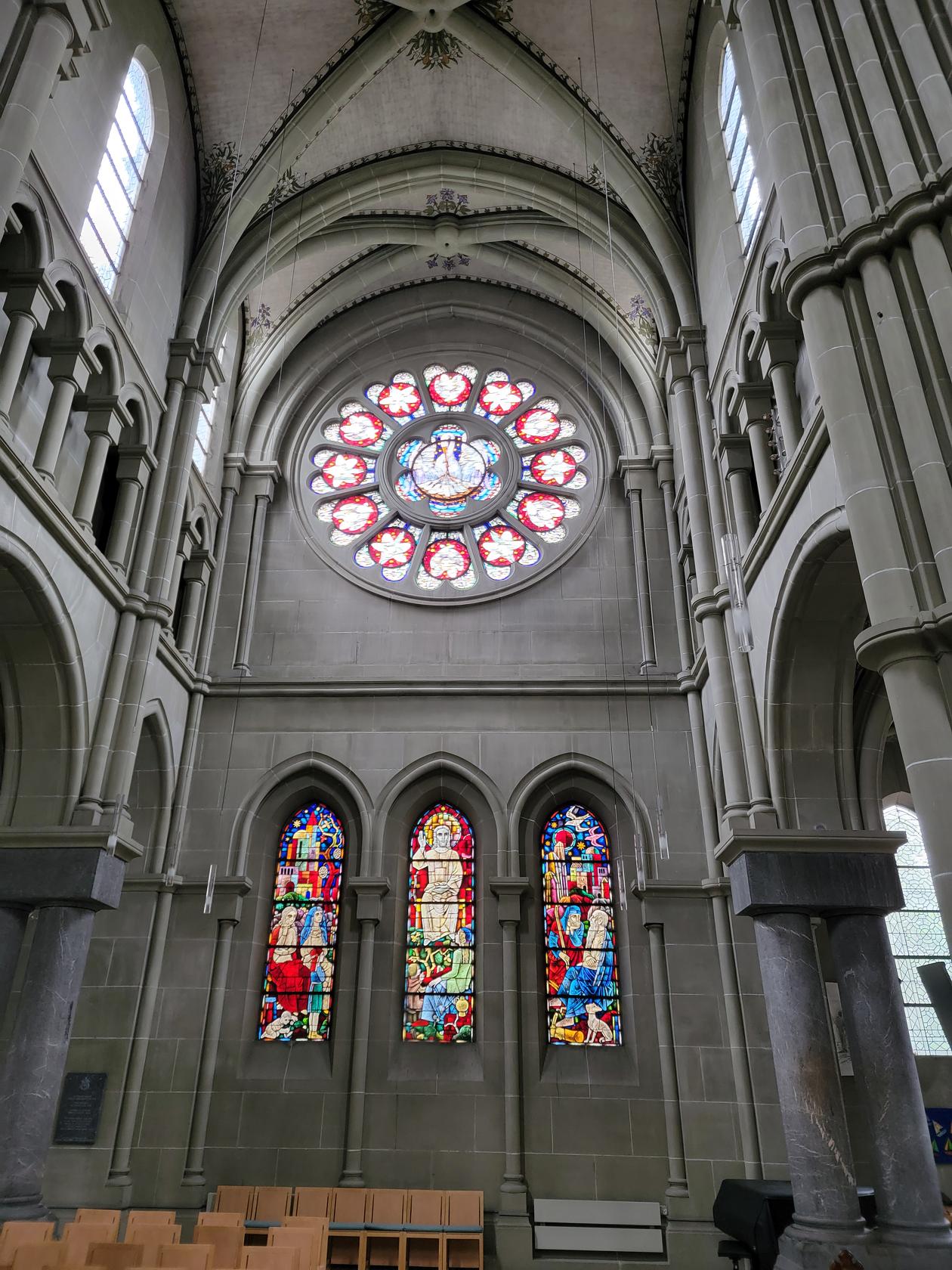
Church of Saint Peter and Paul – Rose Window – Bern, Switzerland
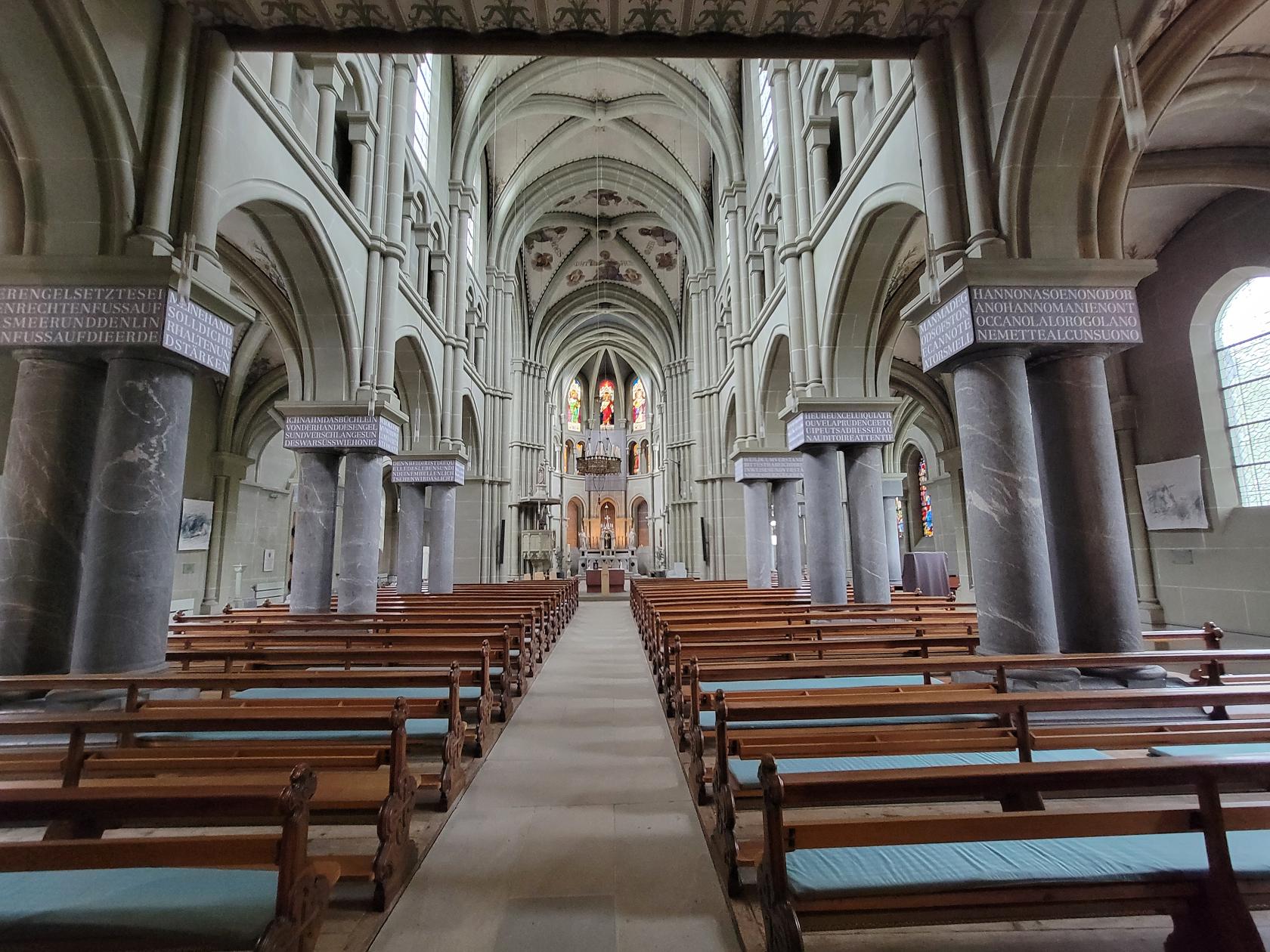
Church of Saint Peter and Paul – Nave and Altar – Bern, Switzerland
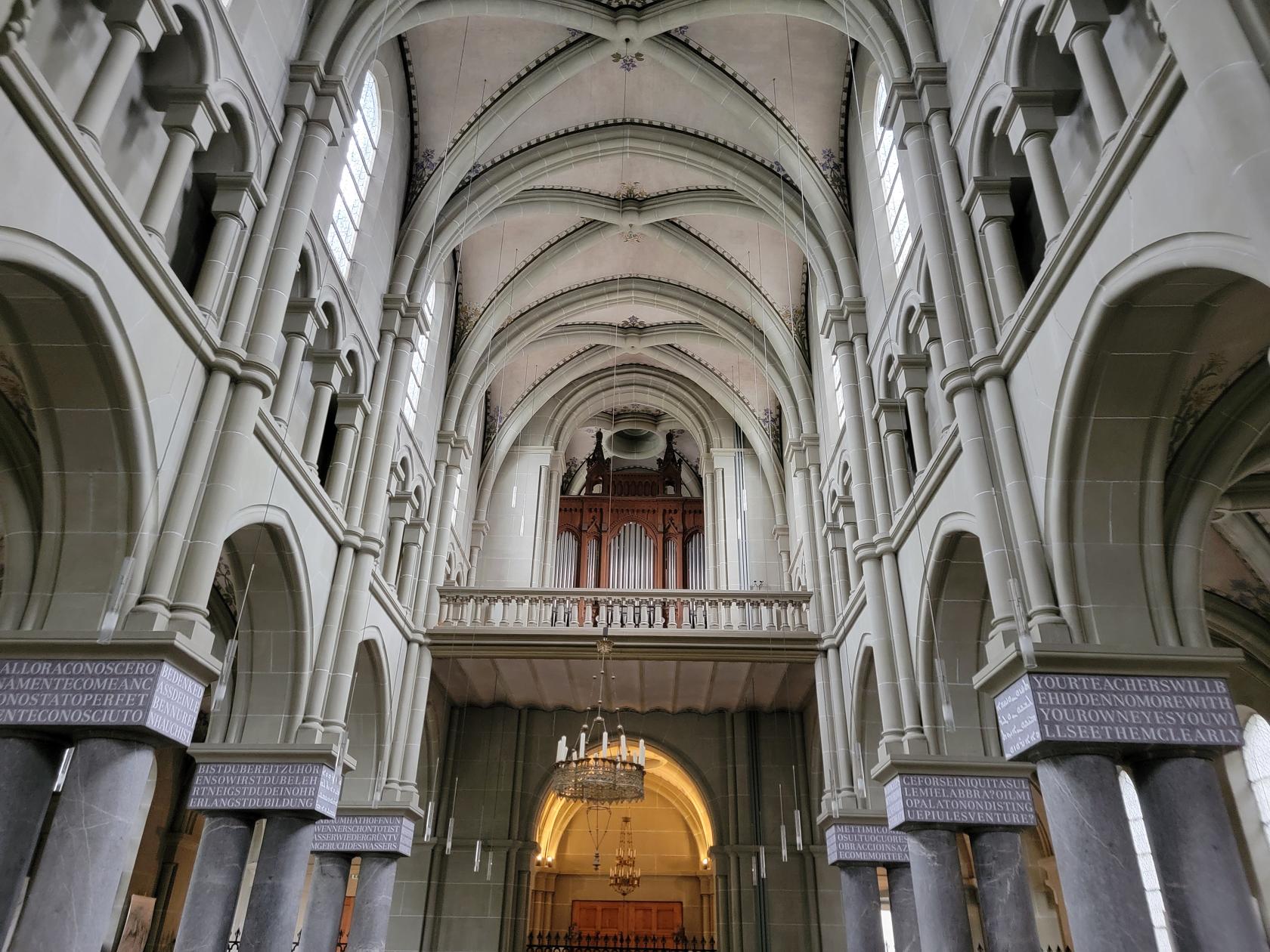
Church of Saint Peter and Paul – Organ – Bern, Switzerland
Bridges And The Aare River
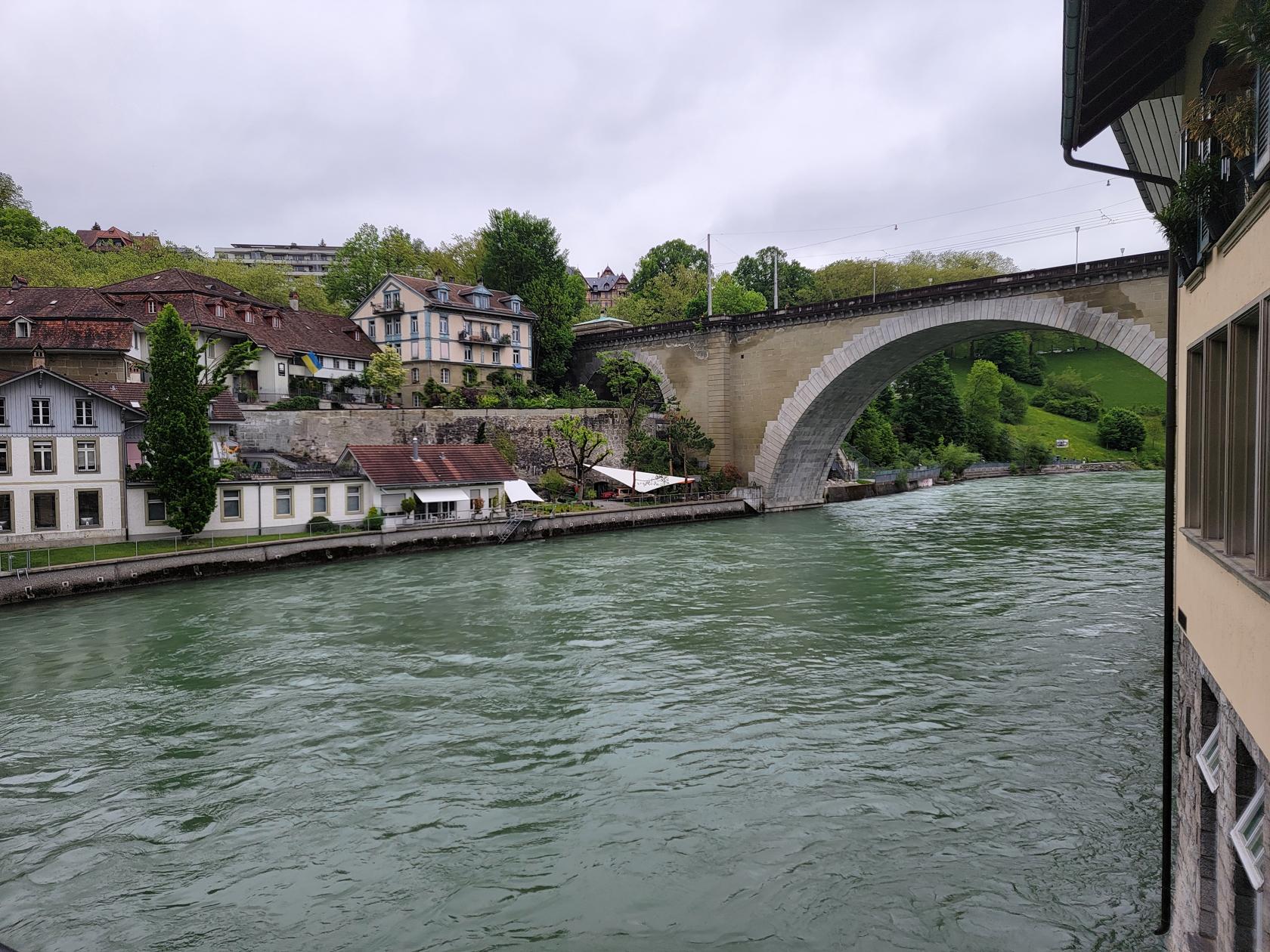
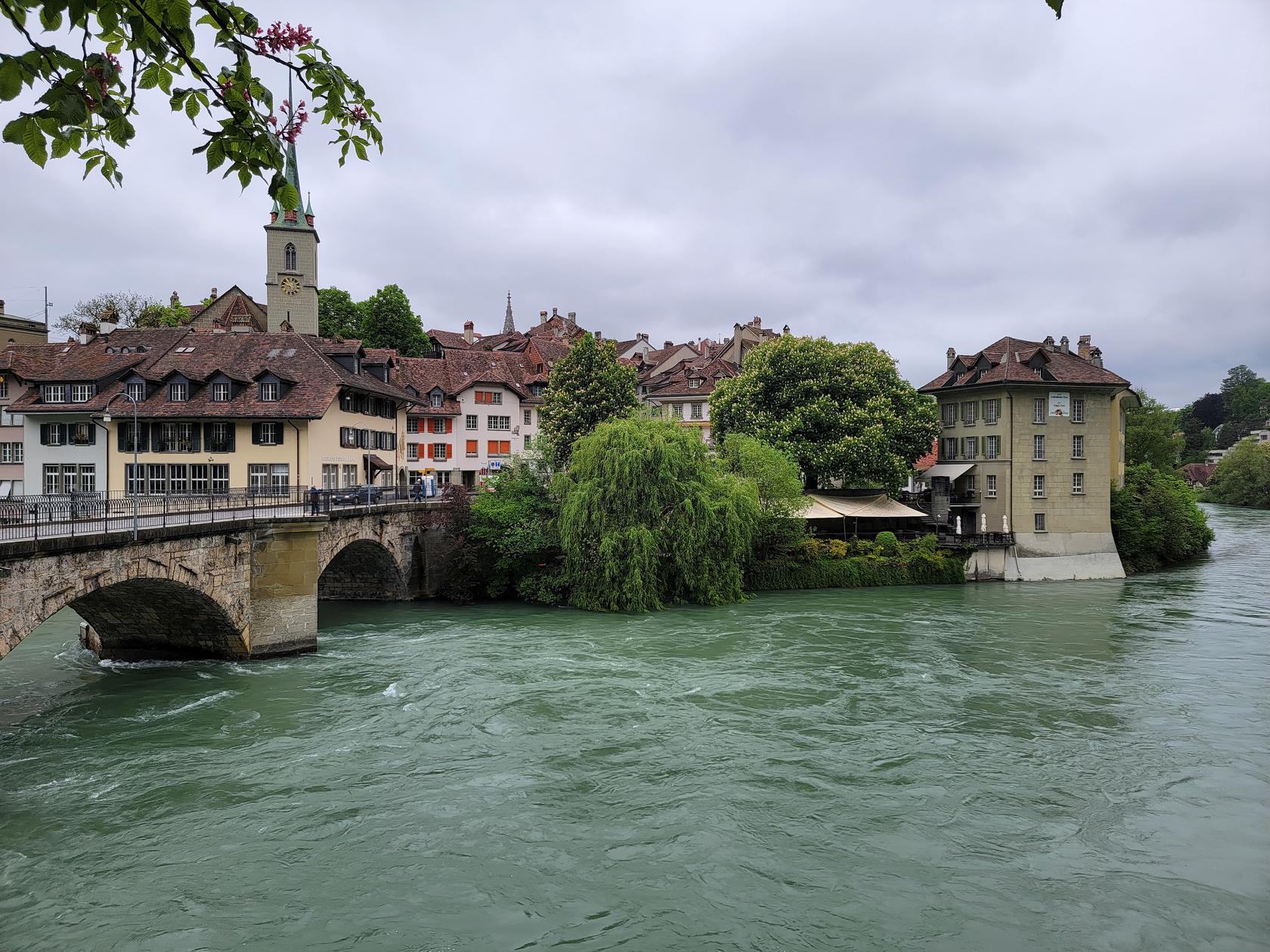
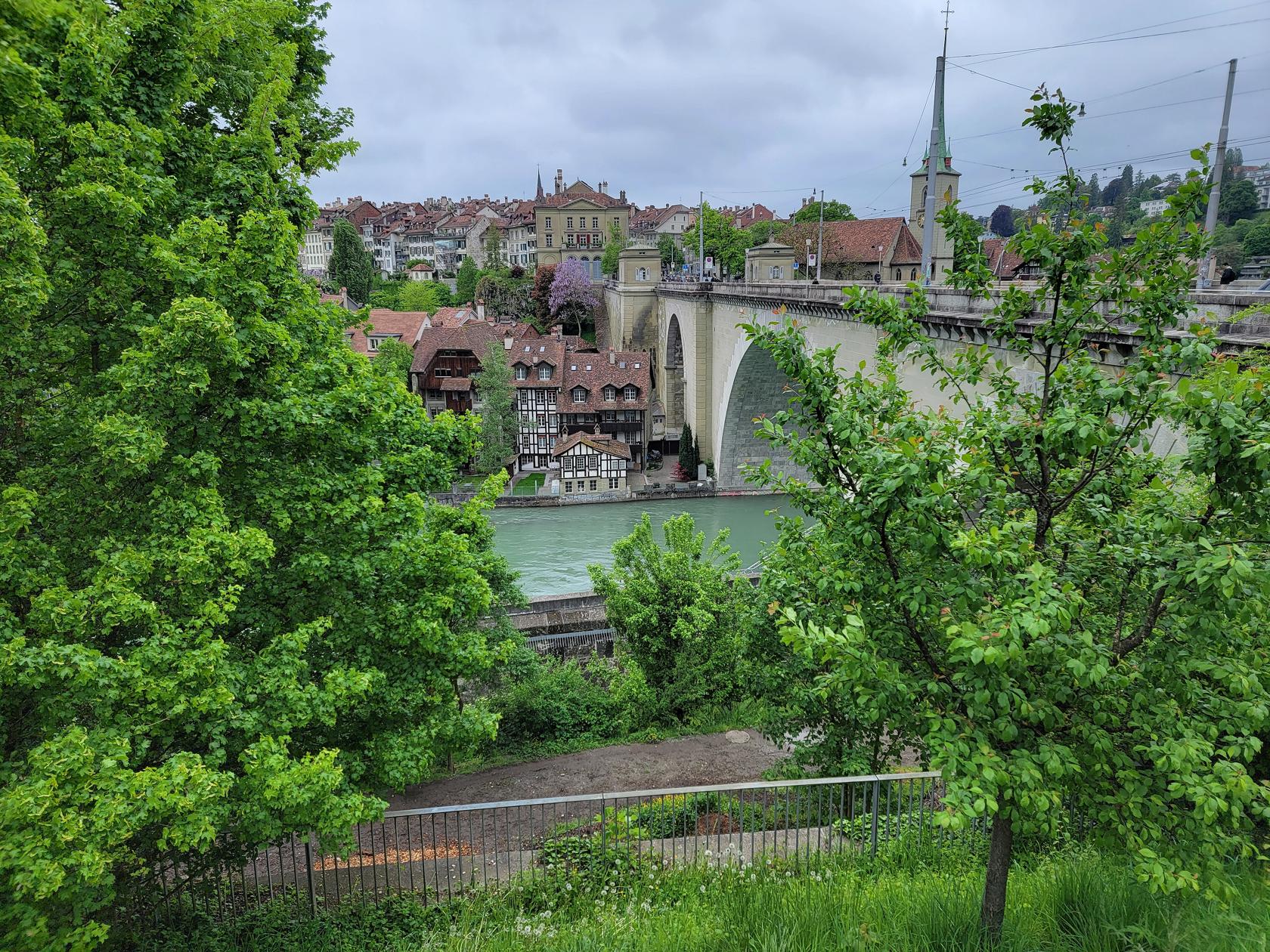
There are two central bridges that span the Aare at the tip of the city. The Untertorbrücke, the first one to be built and is shown on maps of the city from the seventeenth century, and the Nydeggbrücke, which carries the tram and modern vehicular traffic.
Untertorbrücke – Nydeggbrücke over the Aare – Bern, Switzerland
Untertorbrücke – The Aare River – Bern, Switzerland
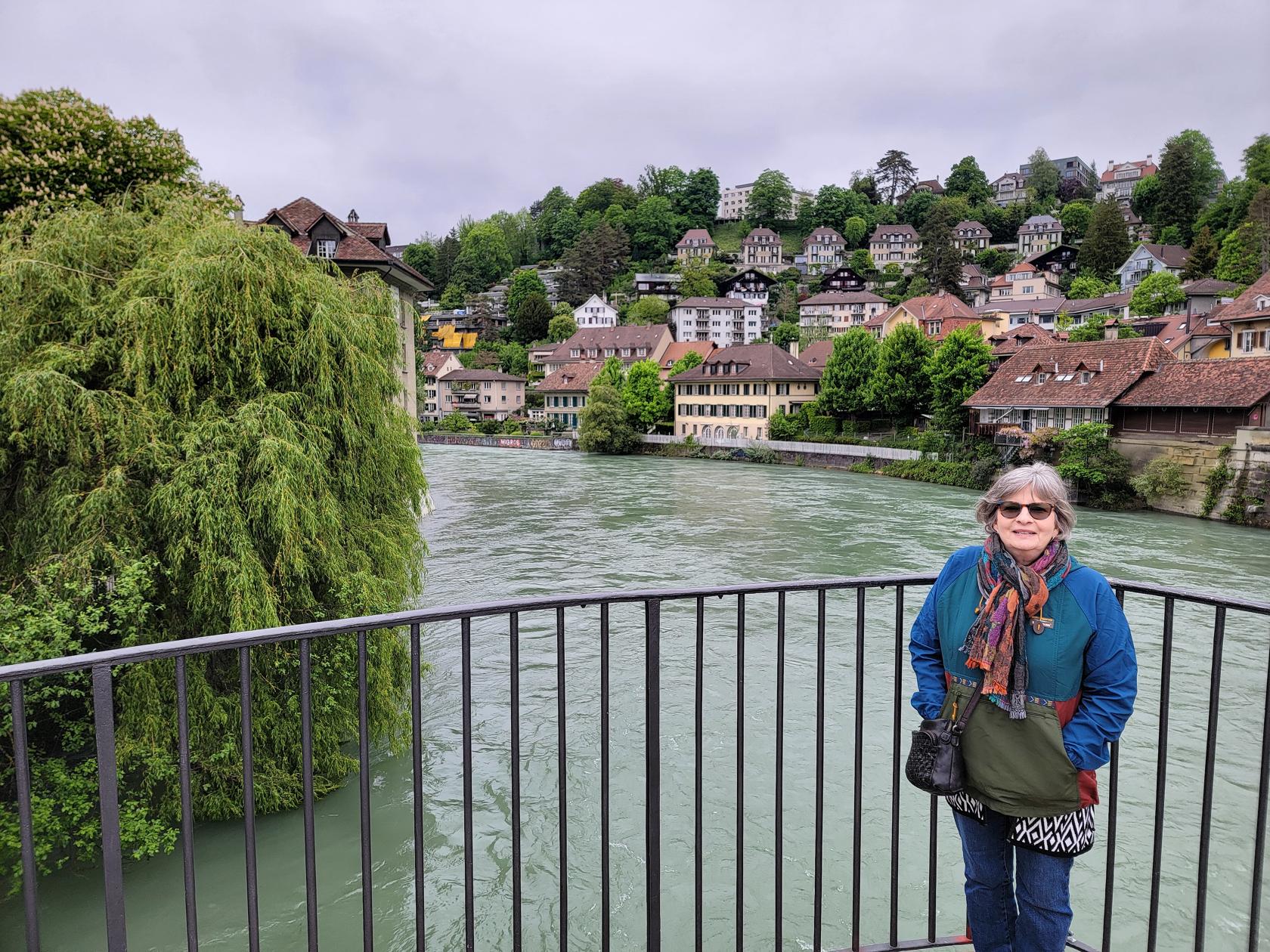
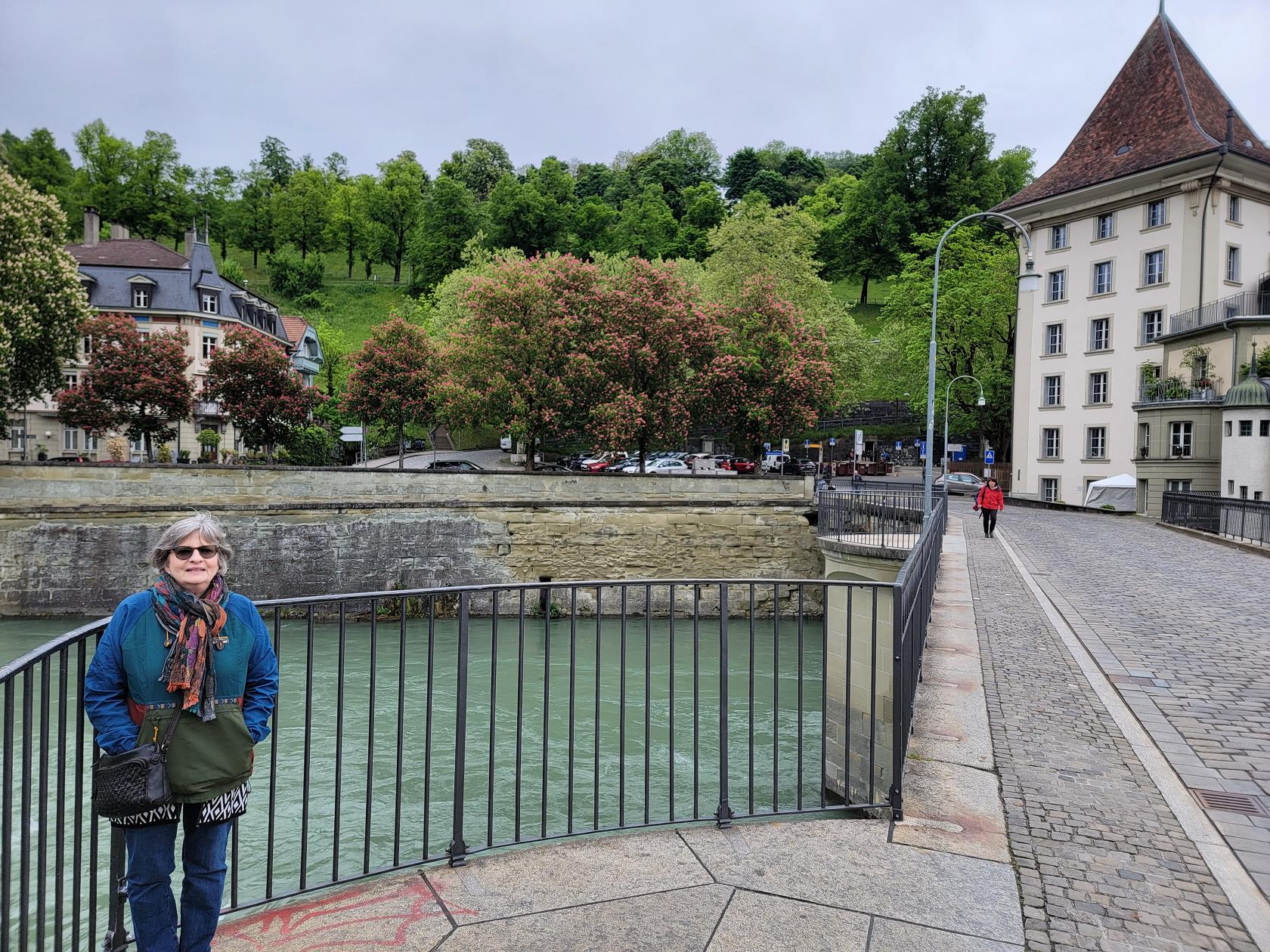
Untertorbrücke – Patti and the Aare River – Bern, Switzerland
Untertorbrücke – Patti and the Aare River, Rose Garden on the hill – Bern, Switzerland
Untertorbrücke and the Aare River – Bern, Switzerland
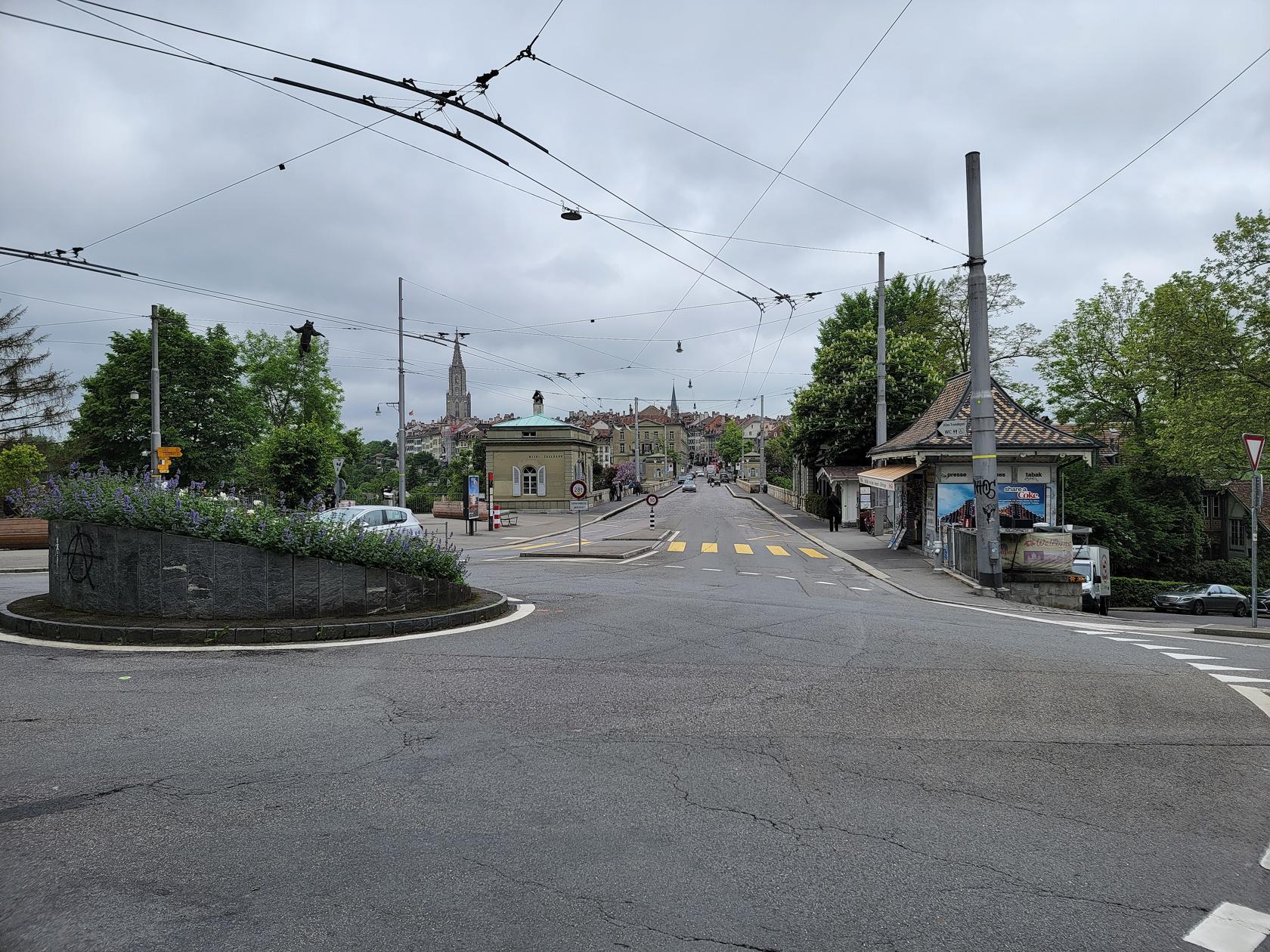
Nydeggbrücke – Bärenpark – Bern, Switzerland
Bären Park
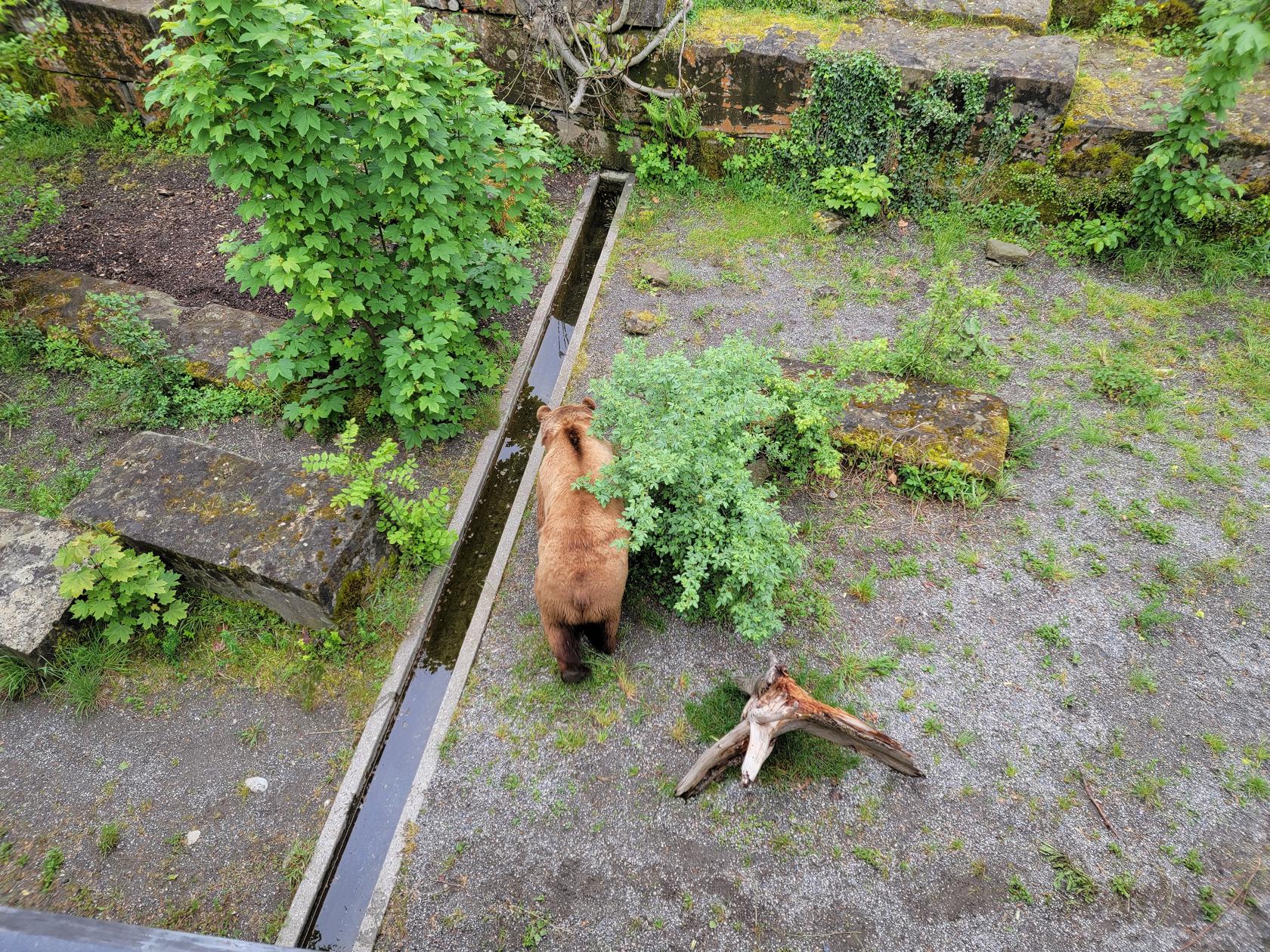
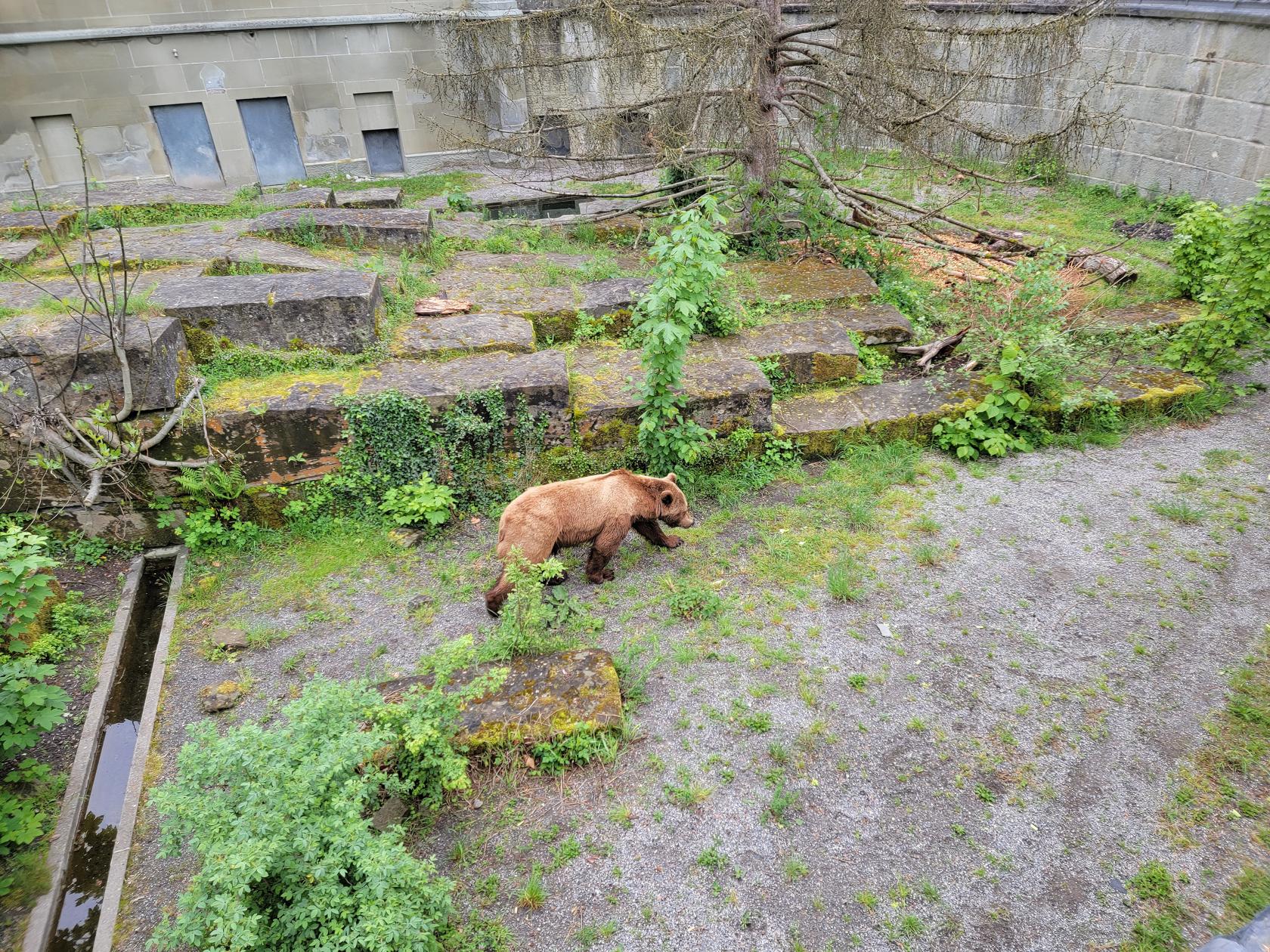
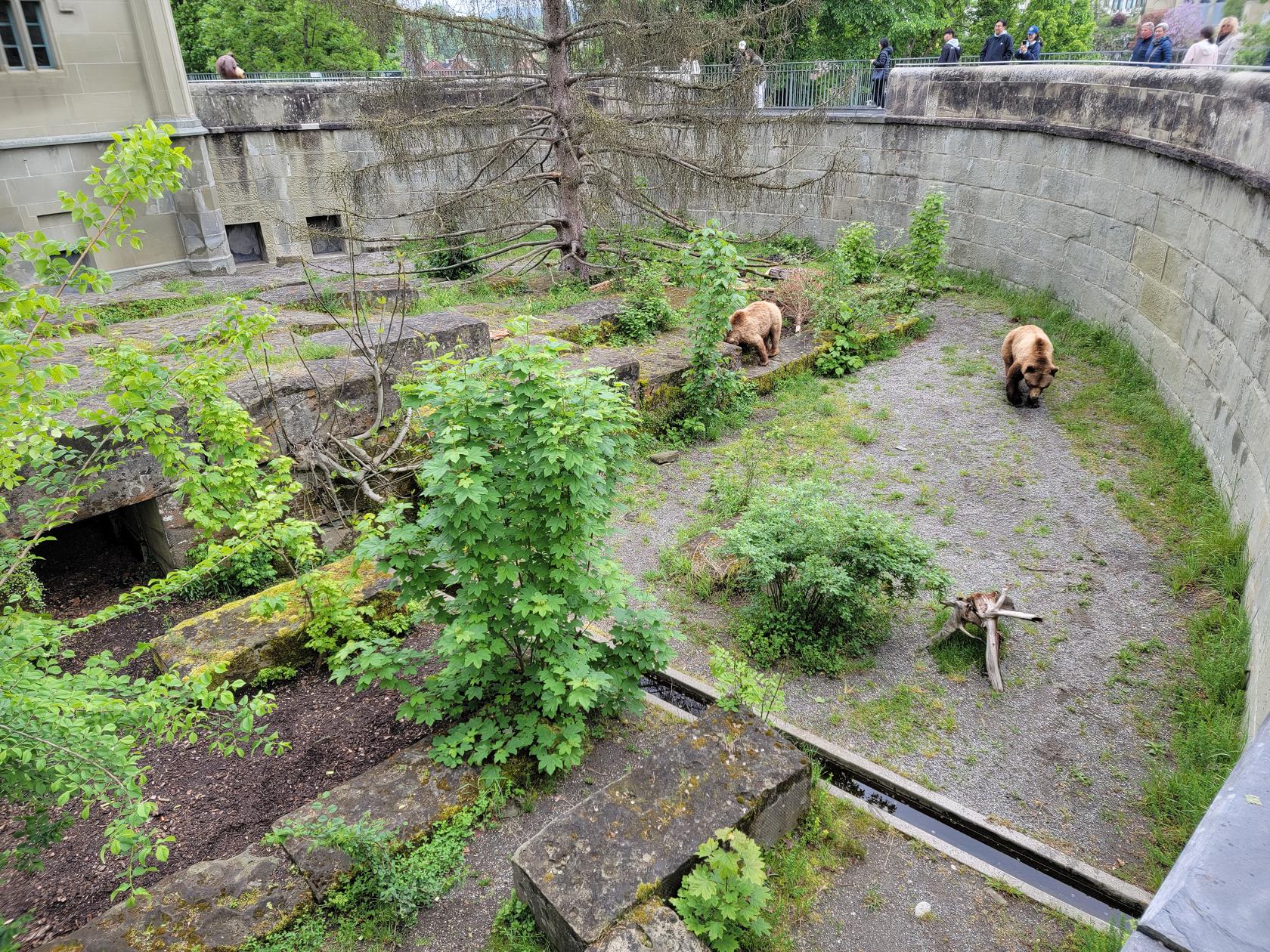
On one end of the Nydeggbrücke is the Bärenpark, or Bear Park. As early as the beginning of the sixteenth century the city has been known to have a Bärengraben, or Bear Pit, of some type or another. Ostensibly the city becoming eponymously named for the same in 1191 when the Duke of Zähringen killed a bear first on one of his many famous hunts. But seriously, this is just conjecture and there is more evidence that it was from a pre-existing toponym of Celtic origin, possibly berna, meaning cleft.
Nydeggbrücke – Bärenpark – Bern, Switzerland
Nydeggbrücke – Bärenpark – Bern, Switzerland
Nydeggbrücke – Bärenpark – Bern, Switzerland
Nydeggbrücke – Bärenpark – Bern, Switzerland
Einsteinhaus
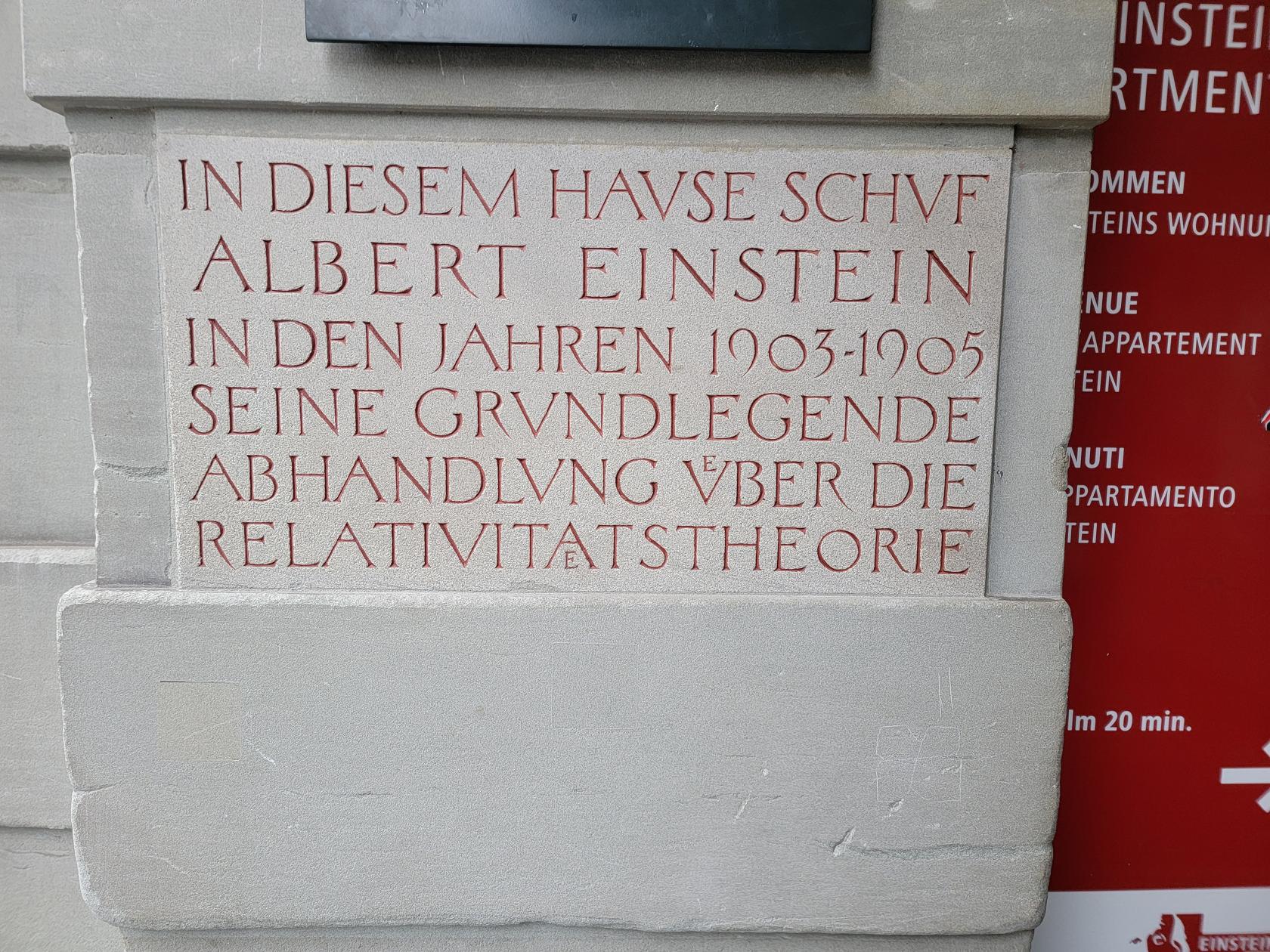
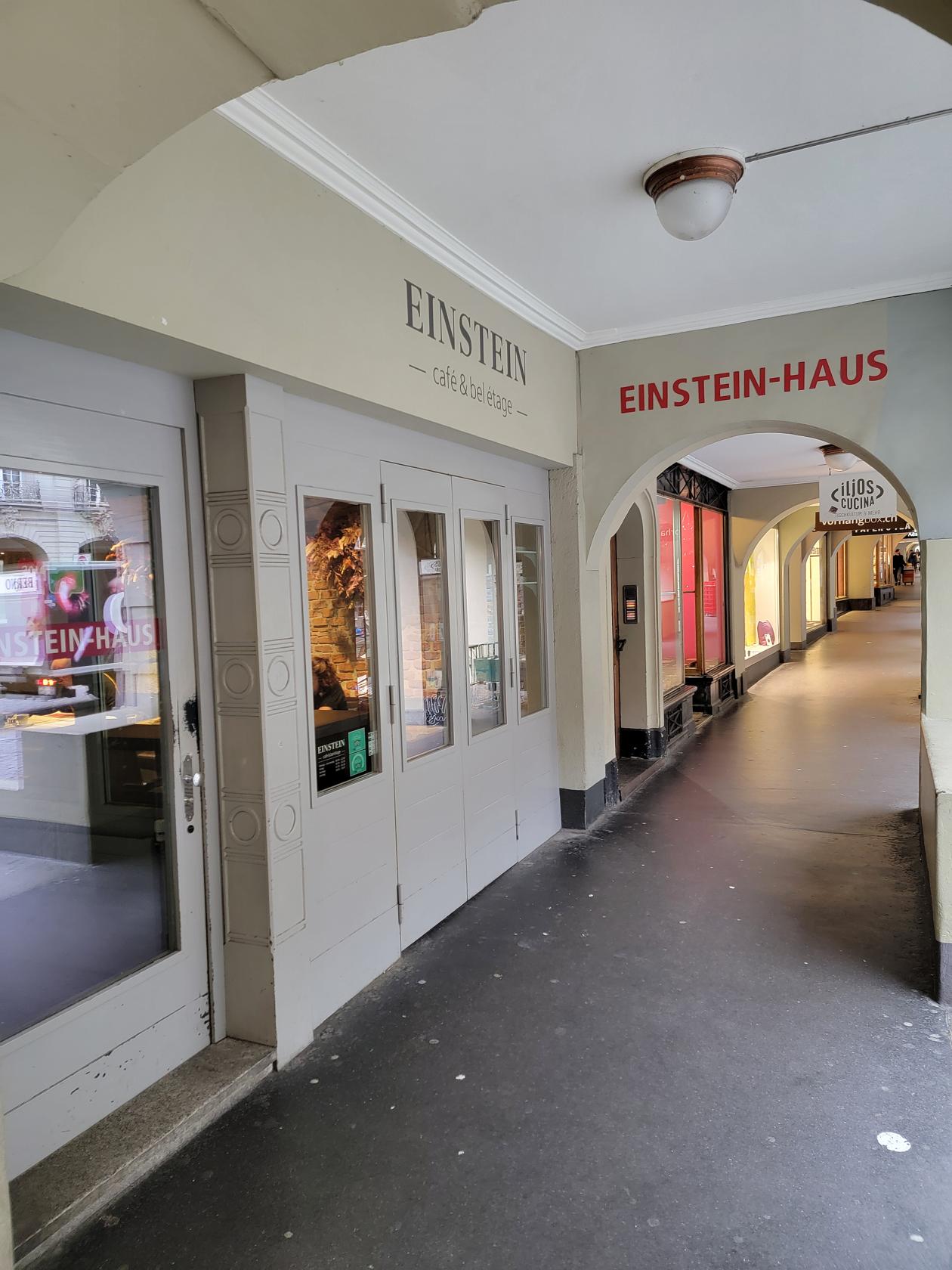
On Marktgasse 49, visitors will find the Einsteinhaus, or the apartment that Albert Einstein lived in during his publication of his ground breaking theories of 1905, including his Special Theory of Relativity.
Kramgasse 49 – Einstein House – Bern, Switzerland
Kramgasse 49 – Einstein House – Bern, Switzerland
The Rosengarden Bern
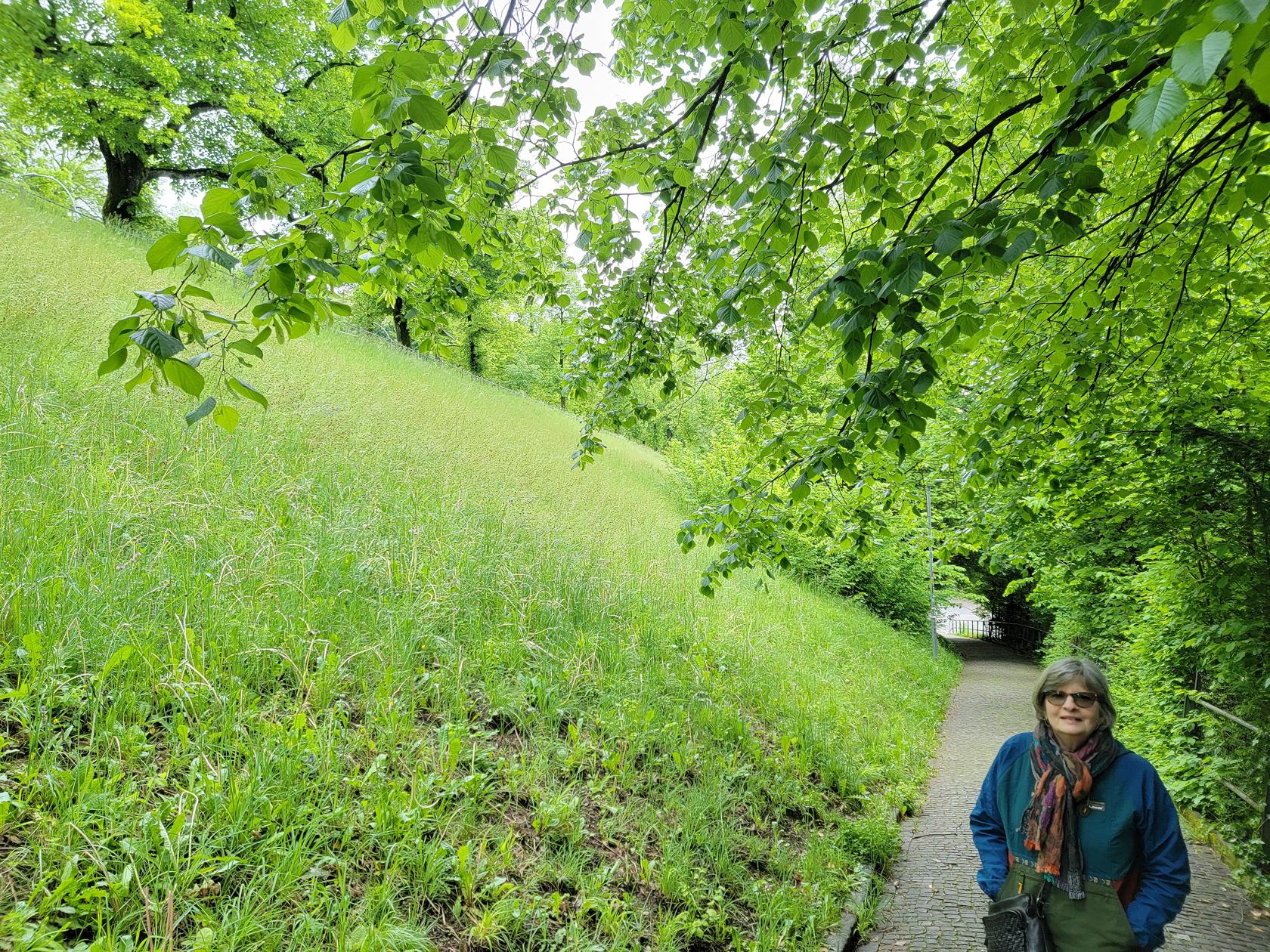
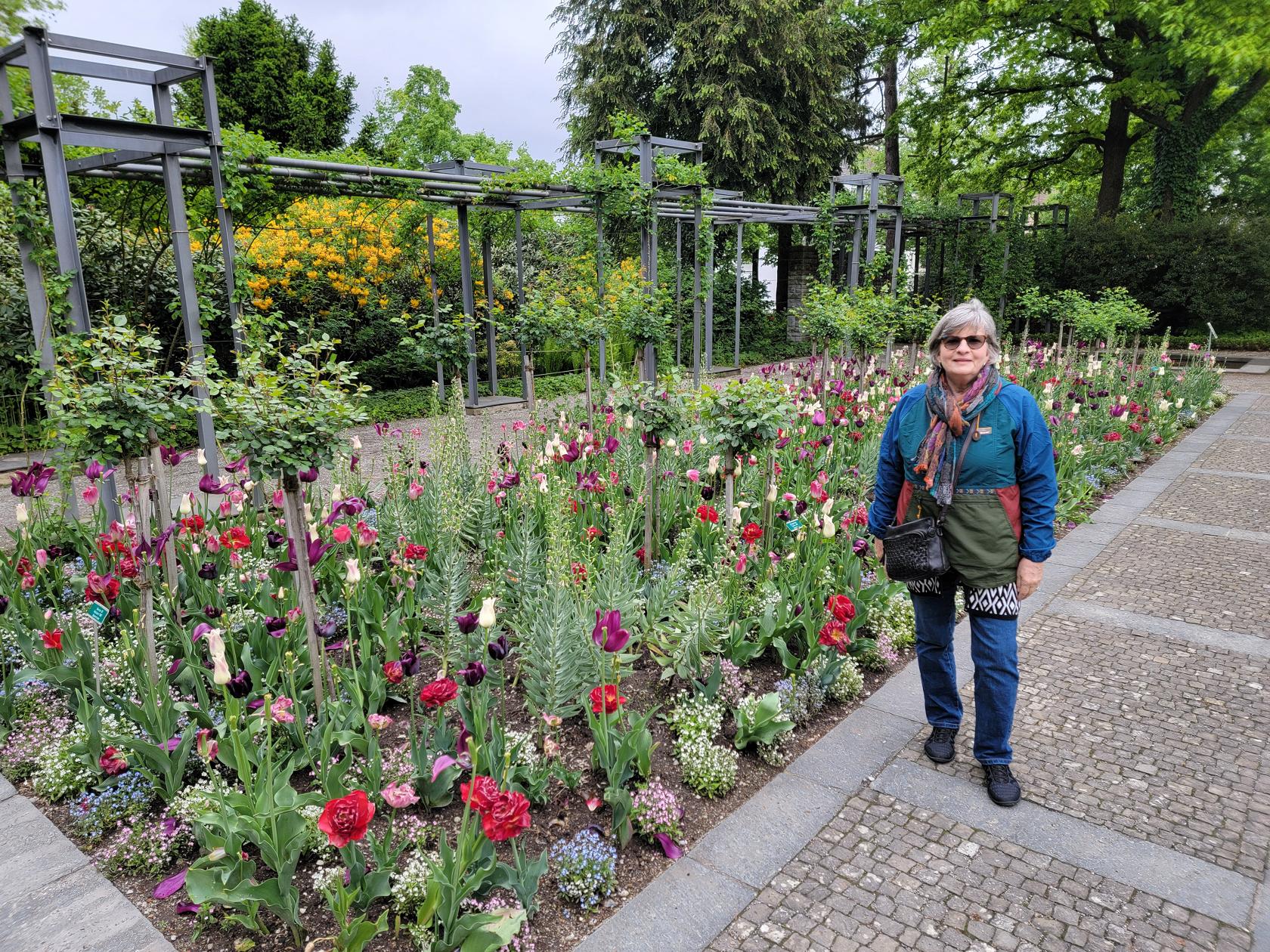
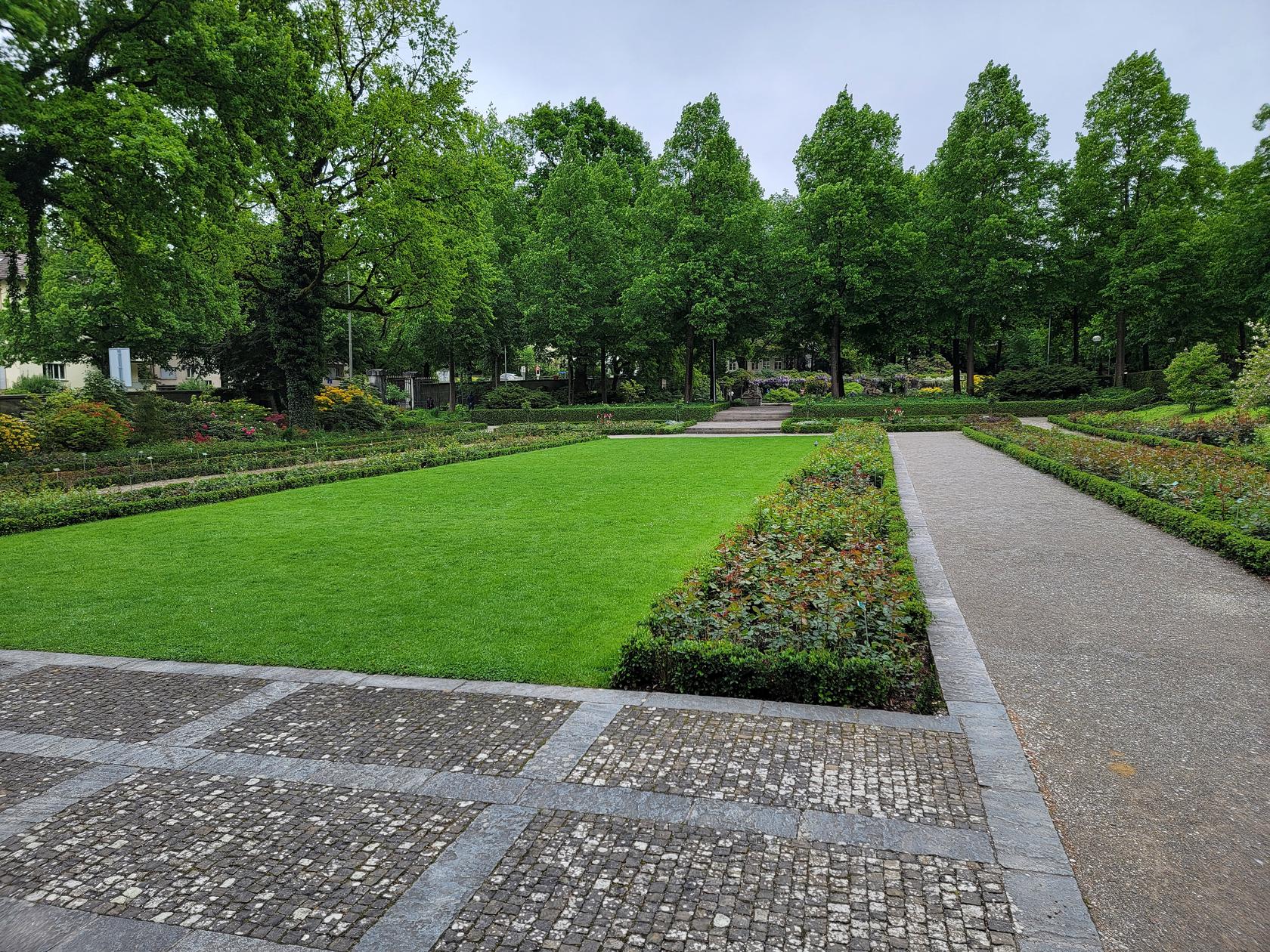
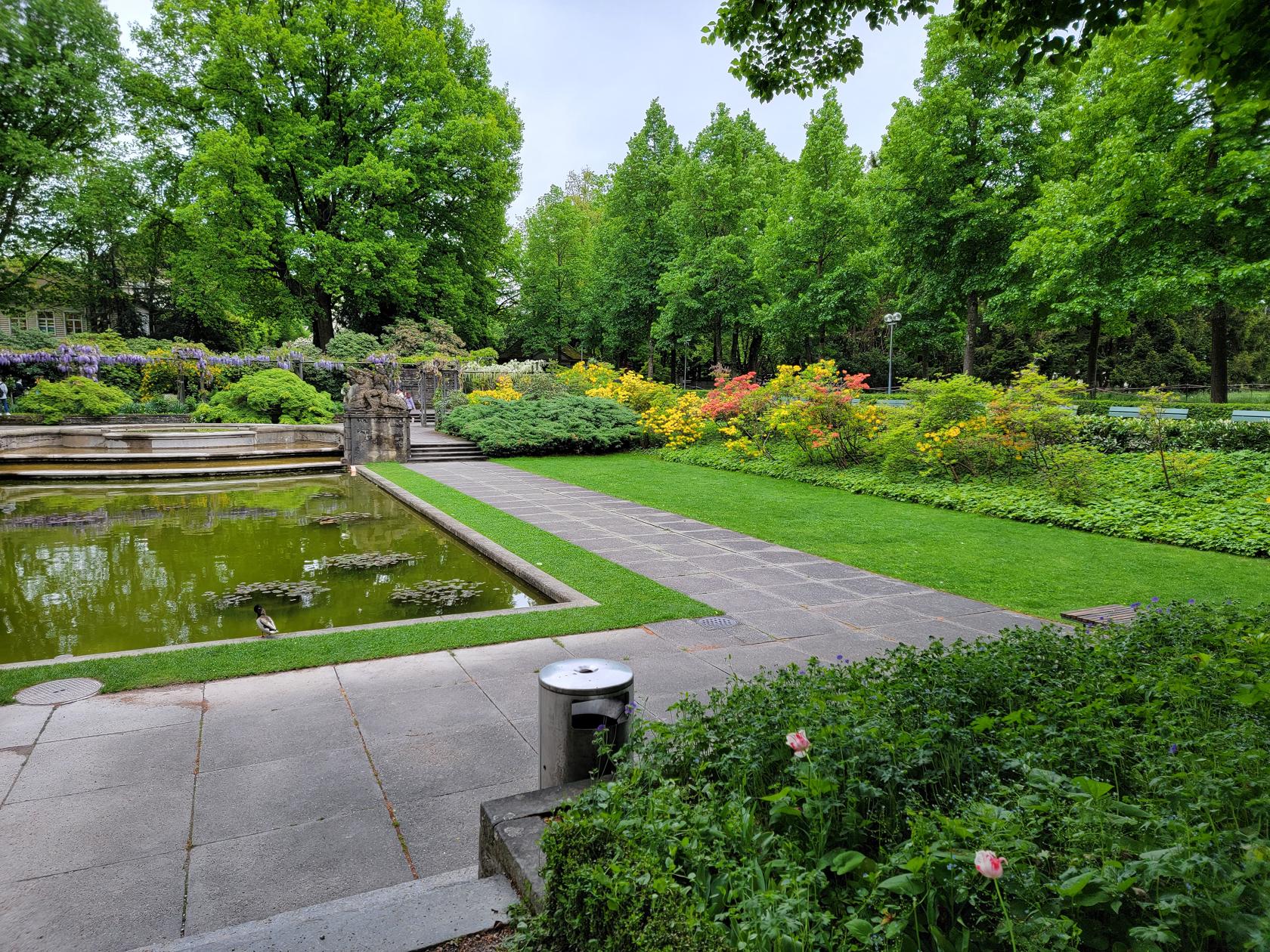
One top of the hill on the other side of the Aare river is the park containing the Rose Garden, or Rosengarden. Unfortunately for us, the roses were not in bloom in May, so we were unable to enjoy their colors. However, there were other flowers, trees and bushes to be enjoyed in the park.
Rose Garden – Patti on walkway up to garden – Bern, Switzerland
Rose Garden – Patti and the garden – Bern, Switzerland
Rose Garden – The garden – Bern, Switzerland
Rose Garden – The garden – Bern, Switzerland
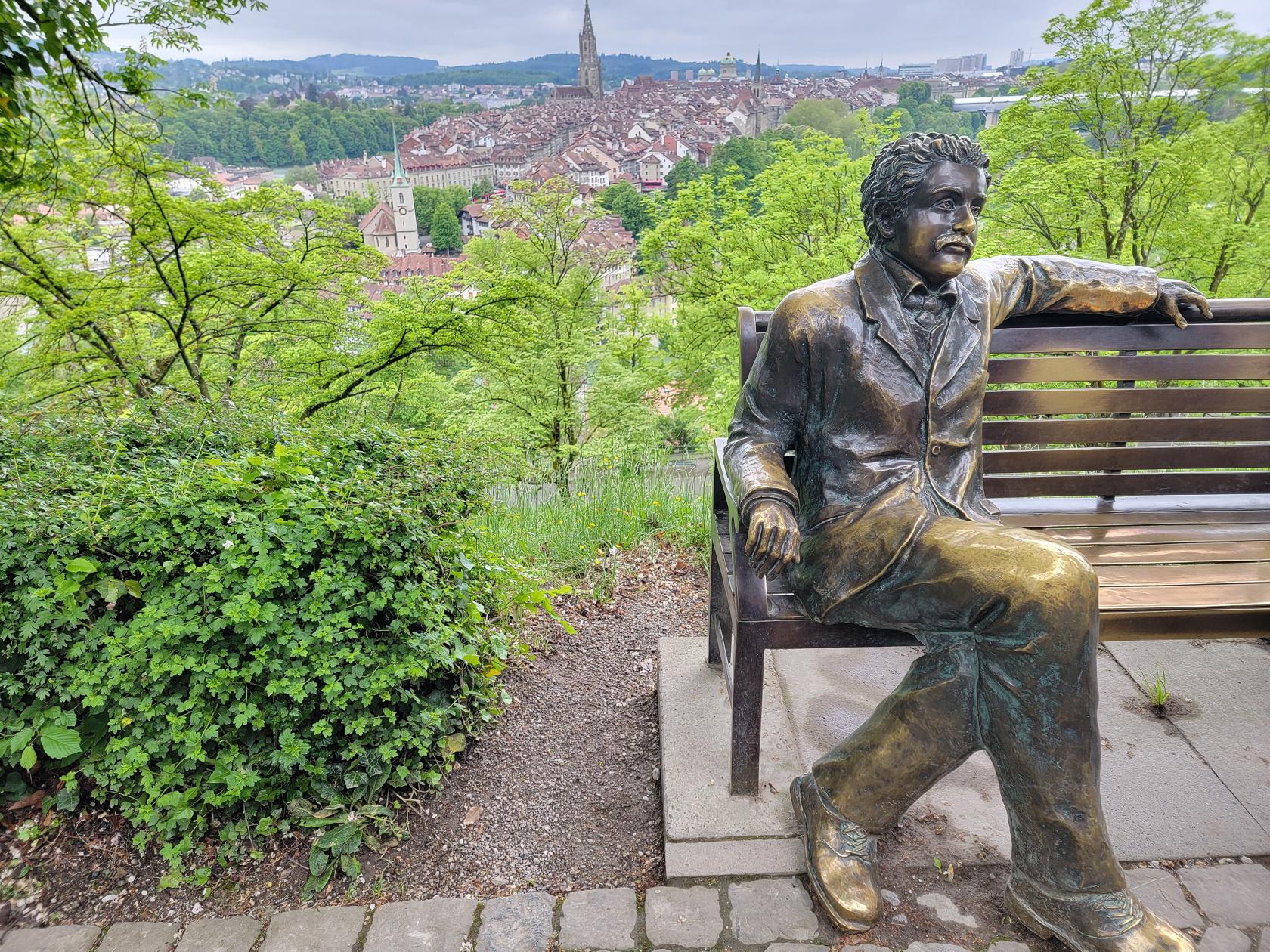
It is here, that Albert Einstein probably contemplated many of the problems around his Theory of Relativity, and a bench here so commemorates his efforts.
Rose Garden – Einstein bench and overlook of Bern – Bern, Switzerland
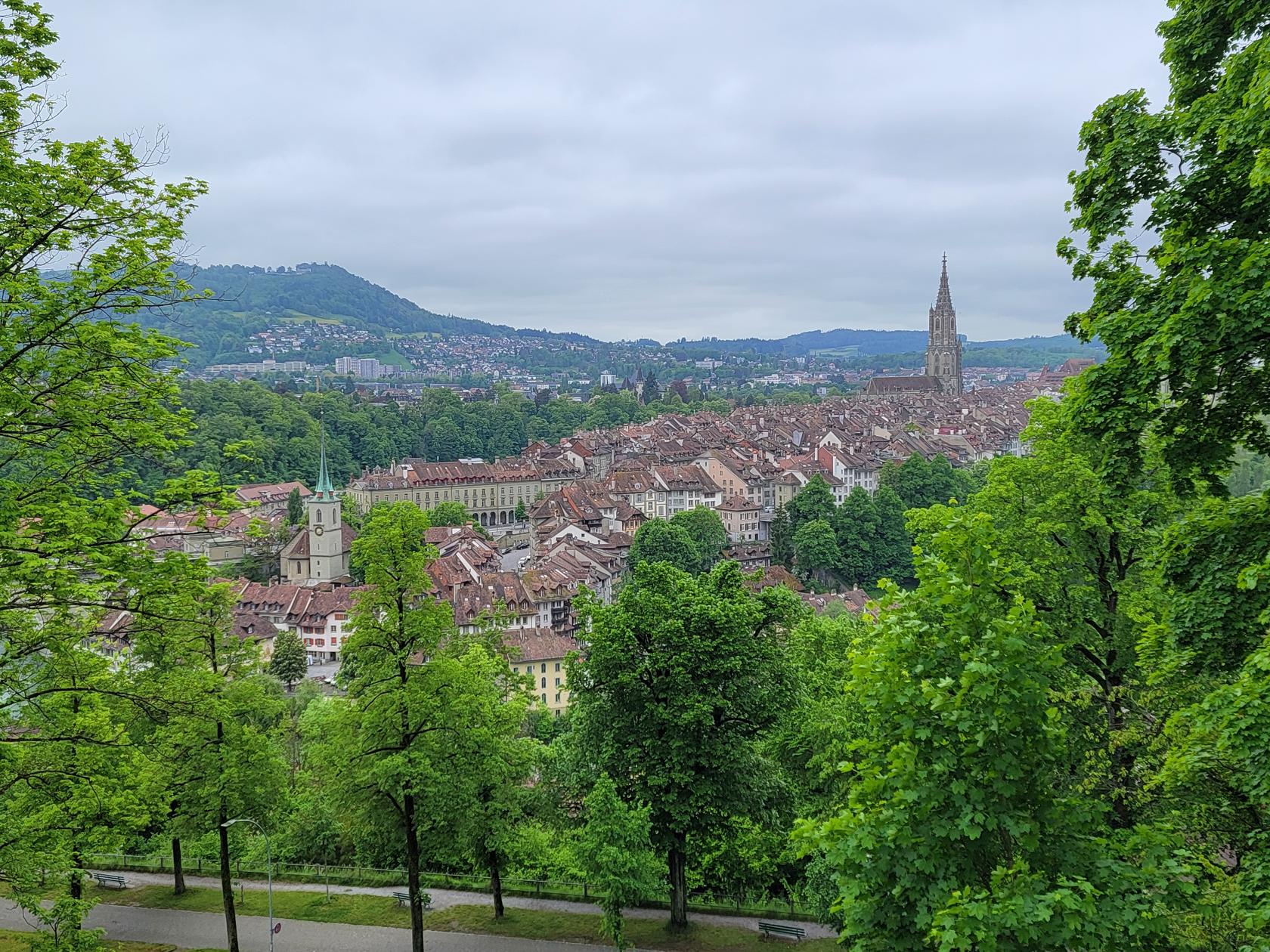
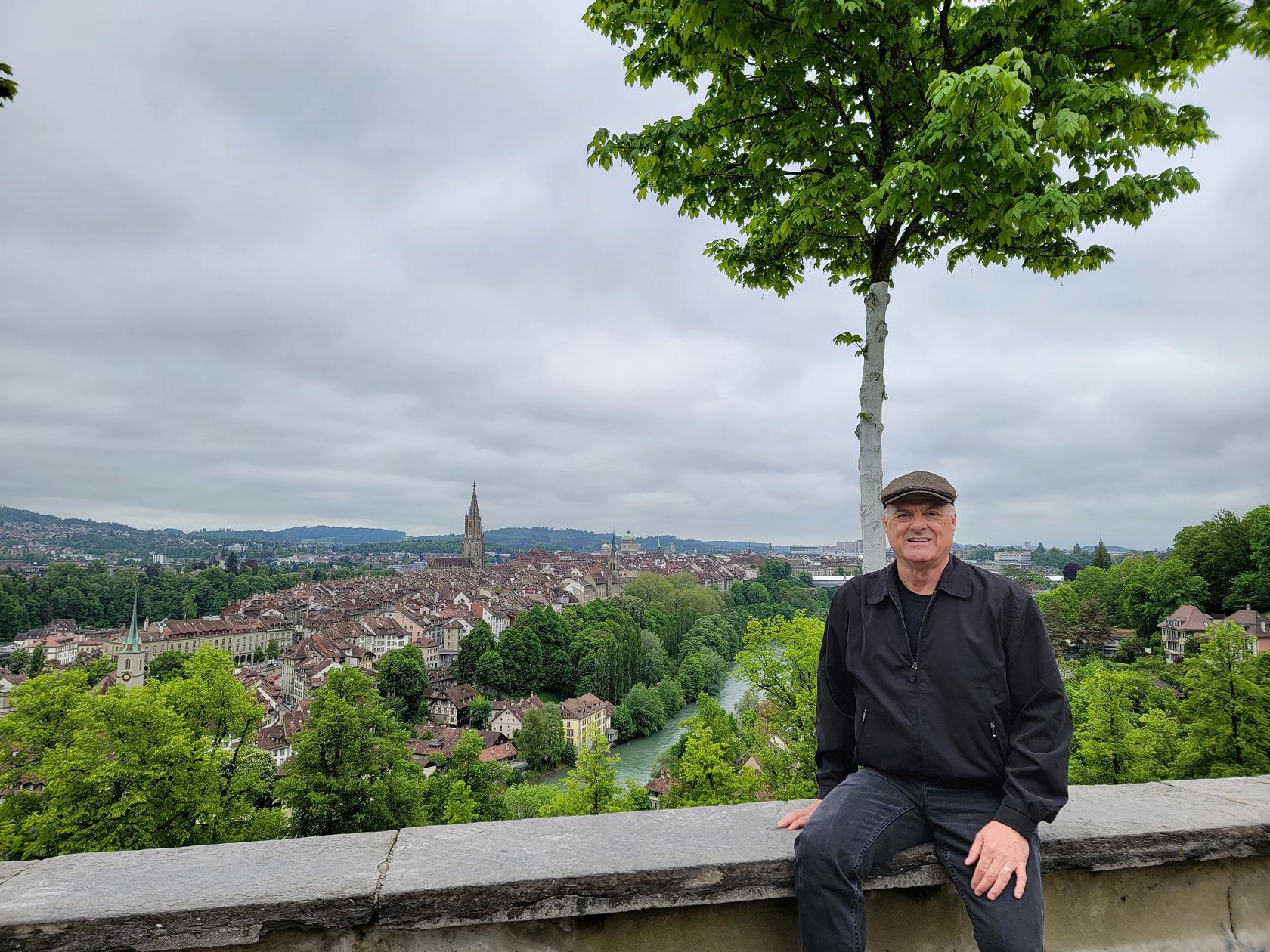
From this vantage point you get a very good view of the old Medieval city of Bern, with its many churches, bridges and old style houses.
Rose Garden – Overlook of Bern – Bern, Switzerland
Rose Garden – Erick and overlook of Bern – Bern, Switzerland
Restaurants
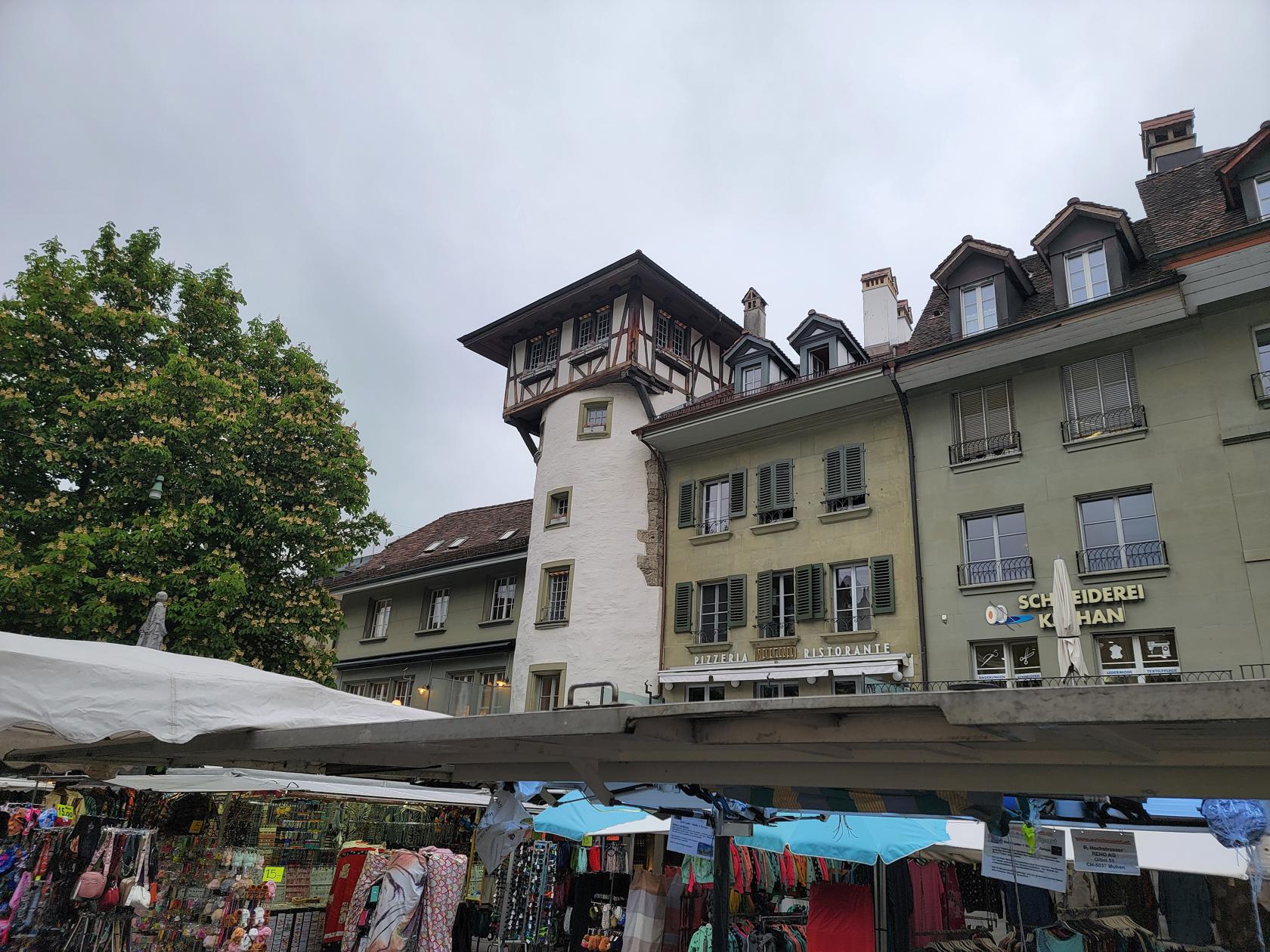
The Bärenplatz and Waisenhausplatz are central areas for restaurants and have a good mix of local Swiss restaurants to Italian and other cuisines.
Bärenplatz – Market on Waisenhausplatz – Bern, Switzerland
Santa Lucia Ristorante
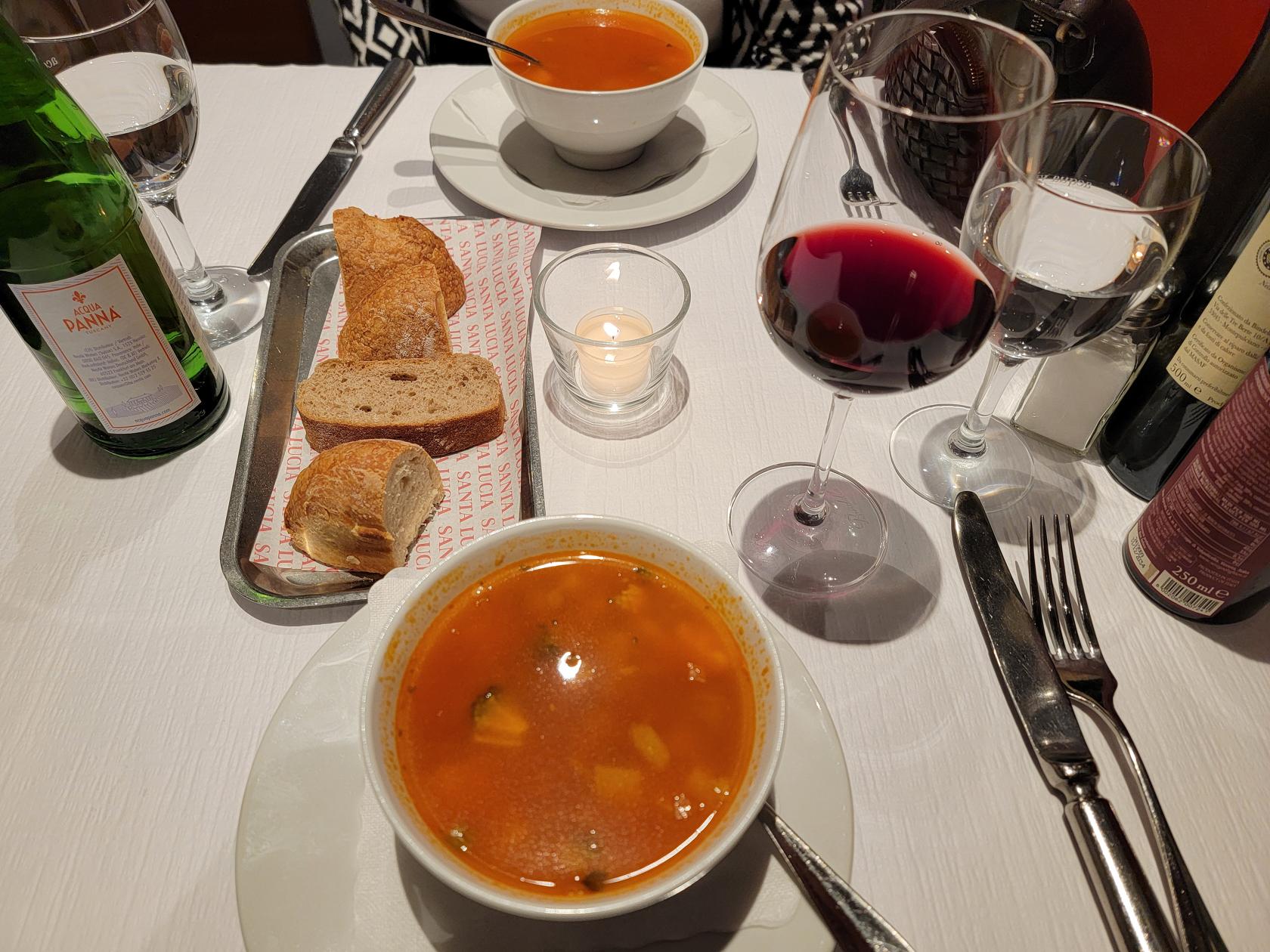
Another Italian restaurant which has a very active lunch crowd. Here you can enjoy reasonable prices and a wide selection of Italian dishes, including pizza. Our first evening here we enjoyed the soup and spaghetti.
Santa Lucia Ristorante – Minestrone Soup – Bern, Switzerland
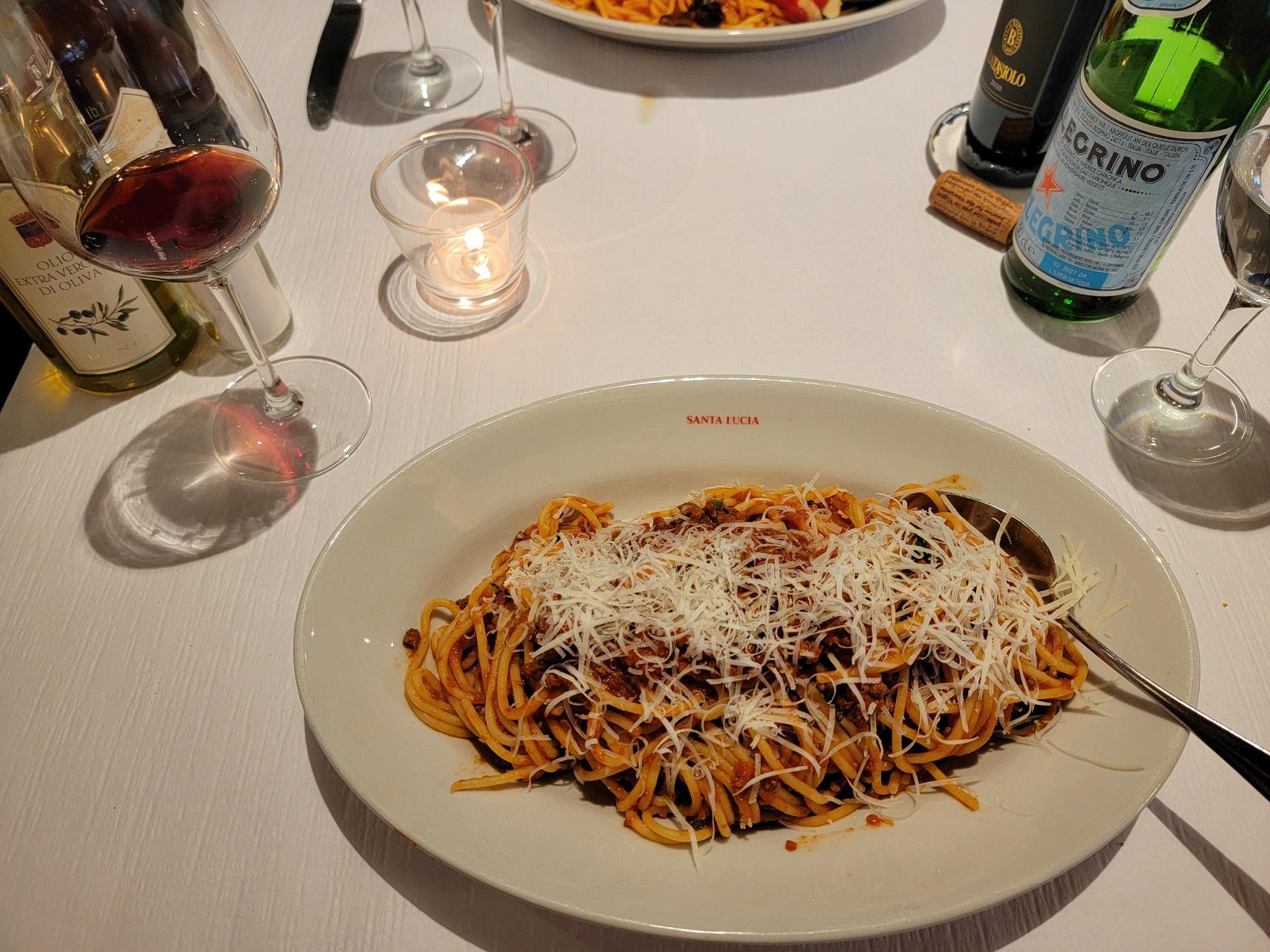
Bärenplatz, Santa Lucia Ristorante – Spaghetti Bolognese – Bern, Switzerland
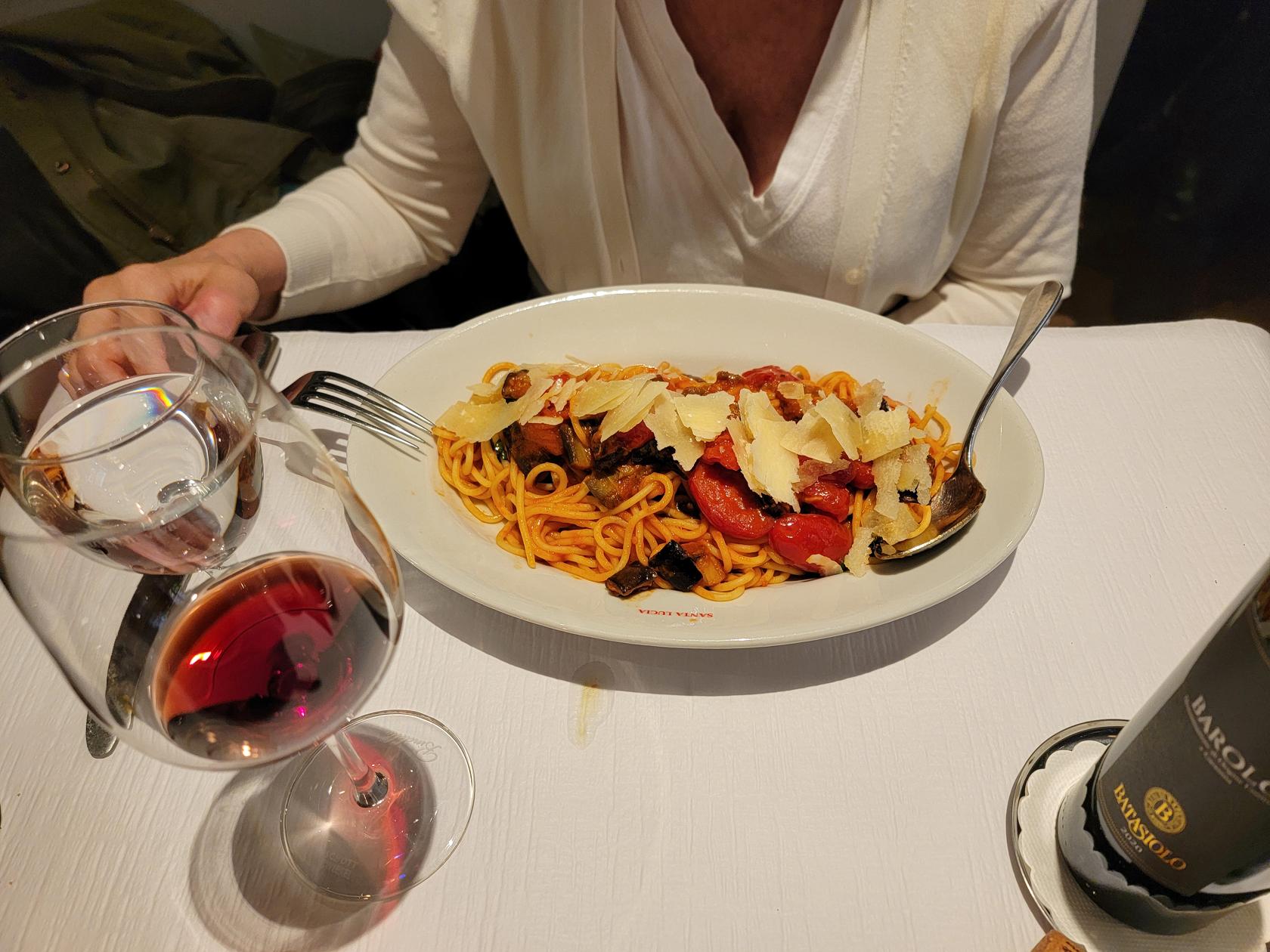
Bärenplatz, Santa Lucia Ristorante – Spaghetti and Tomatoes – Bern, Switzerland
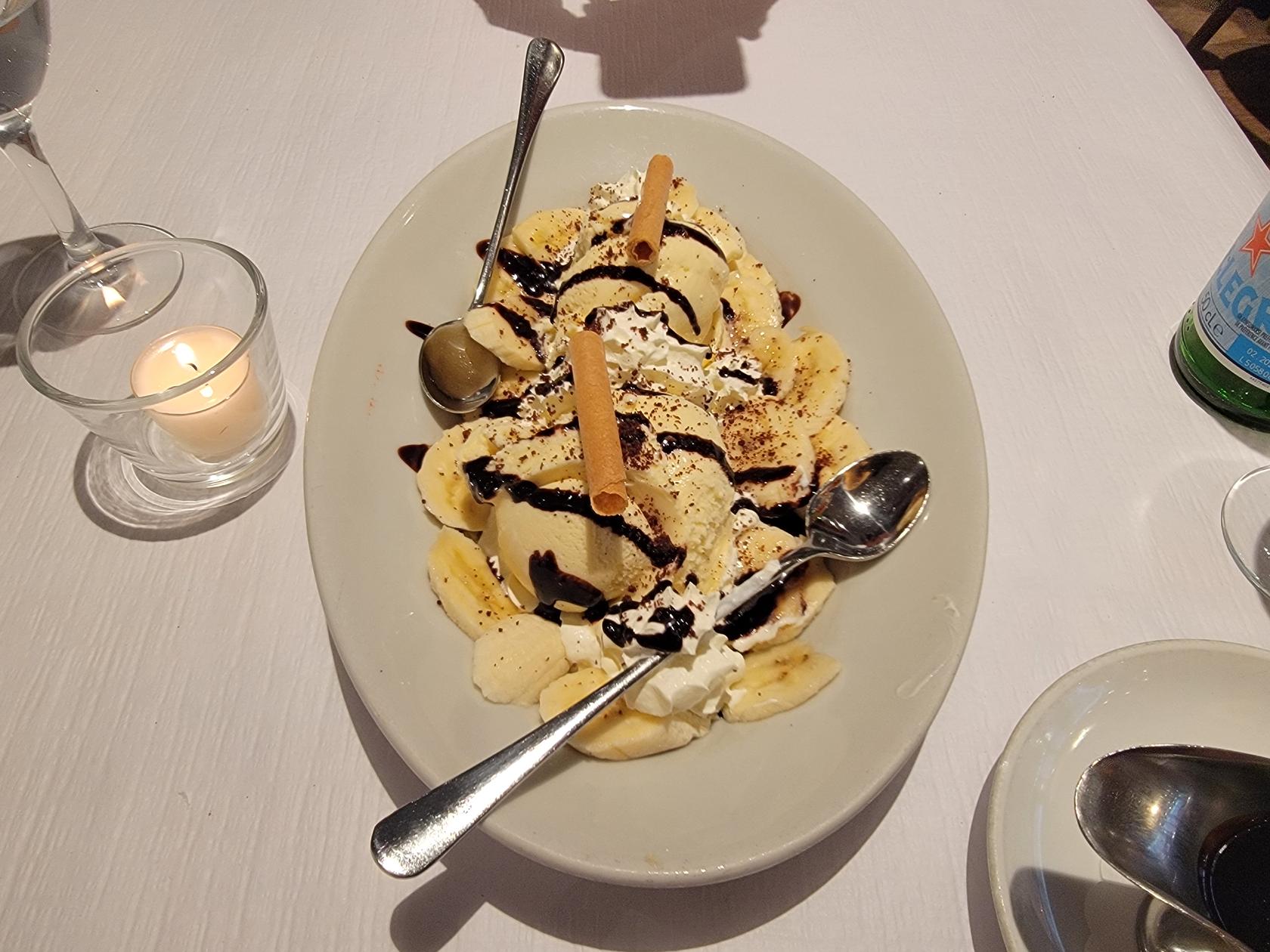
Bärenplatz, Santa Lucia Ristorante – Banana Split – Bern, Switzerland
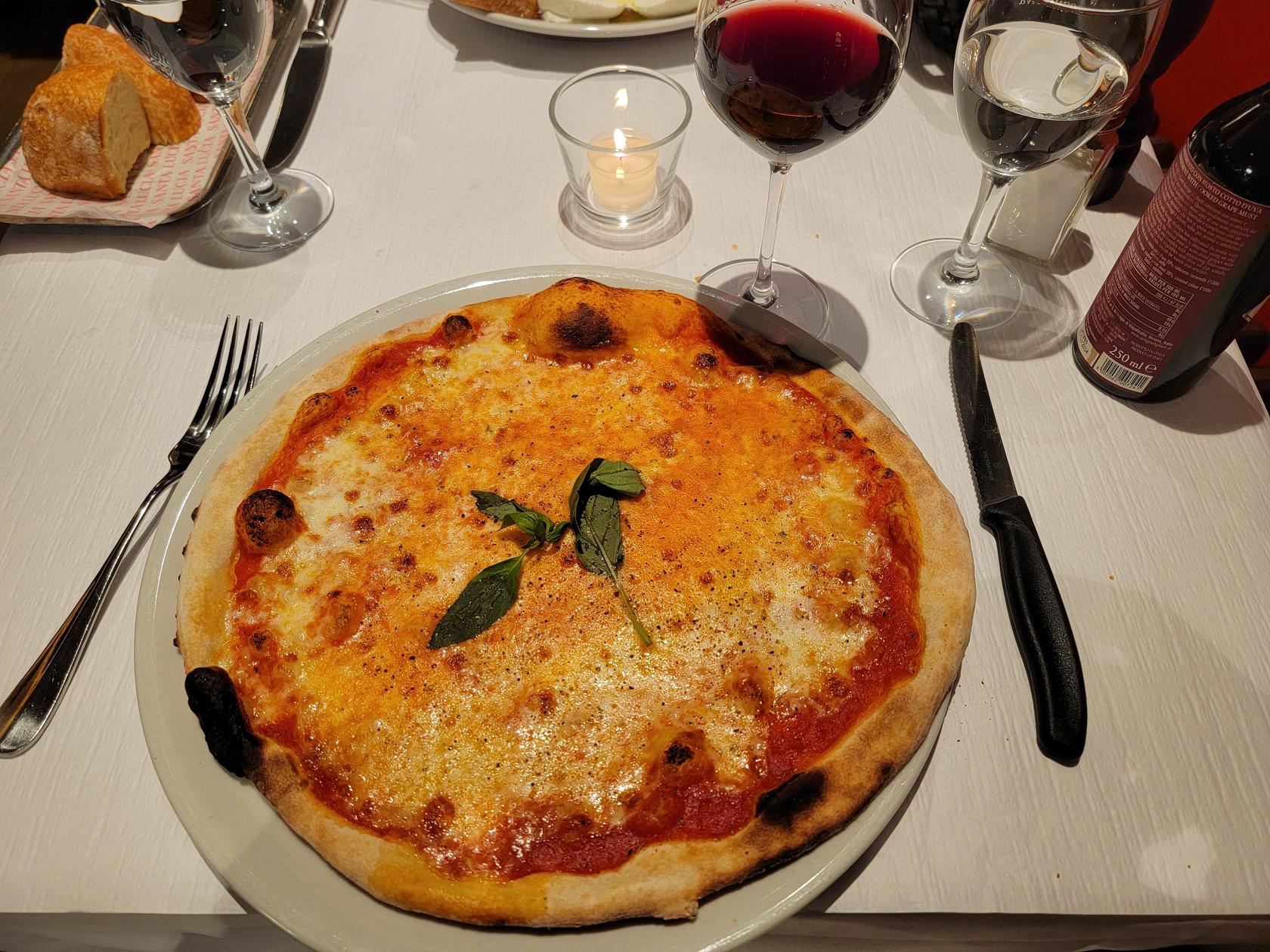
The second time we visited was for lunch, then I ordered a pizza, which was very good and typical of the Neapolitan style from Naples. The house wine is also very pleasant.
Santa Lucia Ristorante – Pizza Margherita – Bern, Switzerland
Ristorante Luce
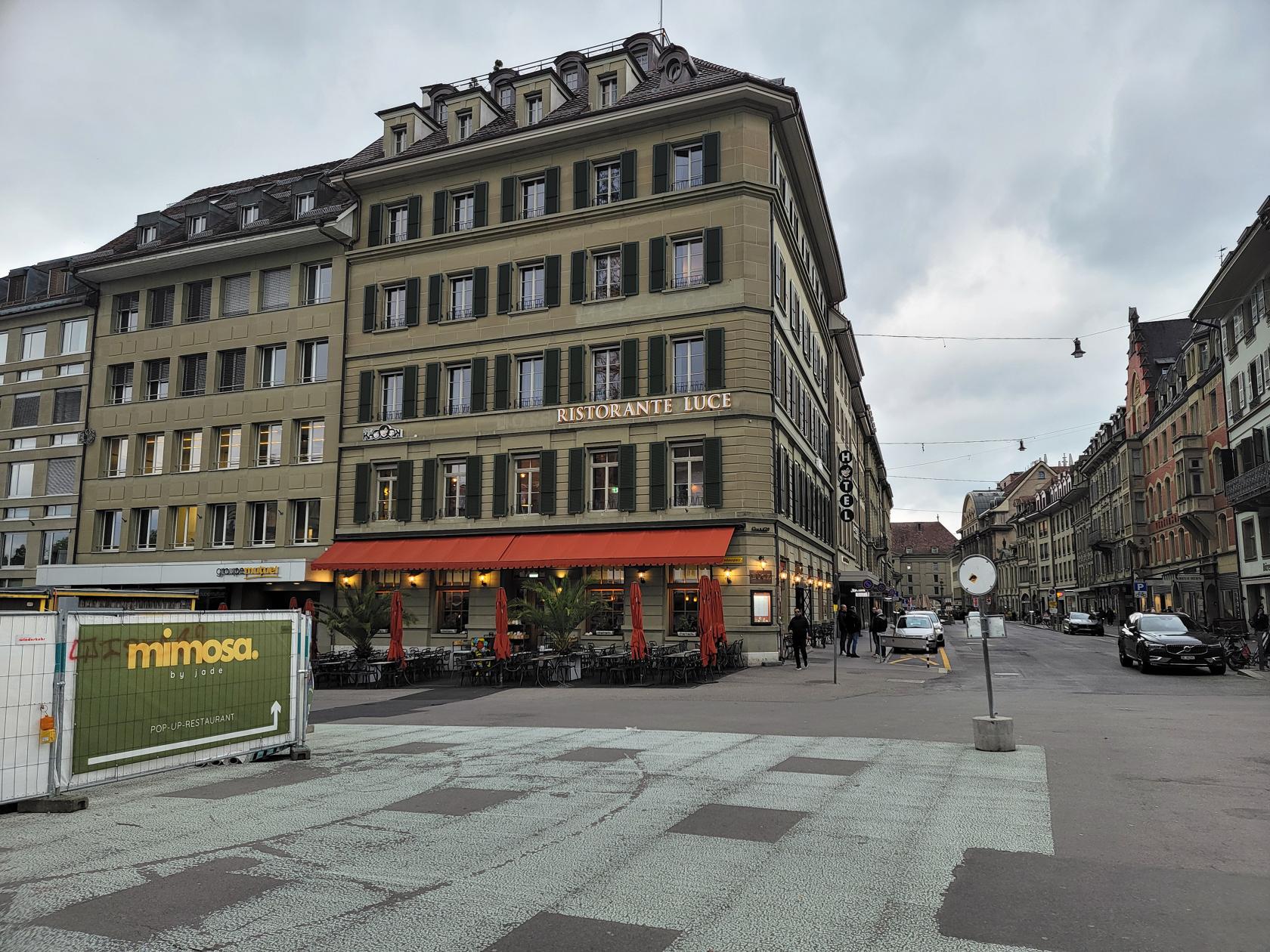
On the corner of Zeughausgasse and Waghausegasse is the Italian restaurant of Ristorante Luce. If you are looking for higher end Italian food, look no further. The service here is also exceptional, though the seating was a bit cramped.
Ristorante Luce – Entrance – Bern, Switzerland
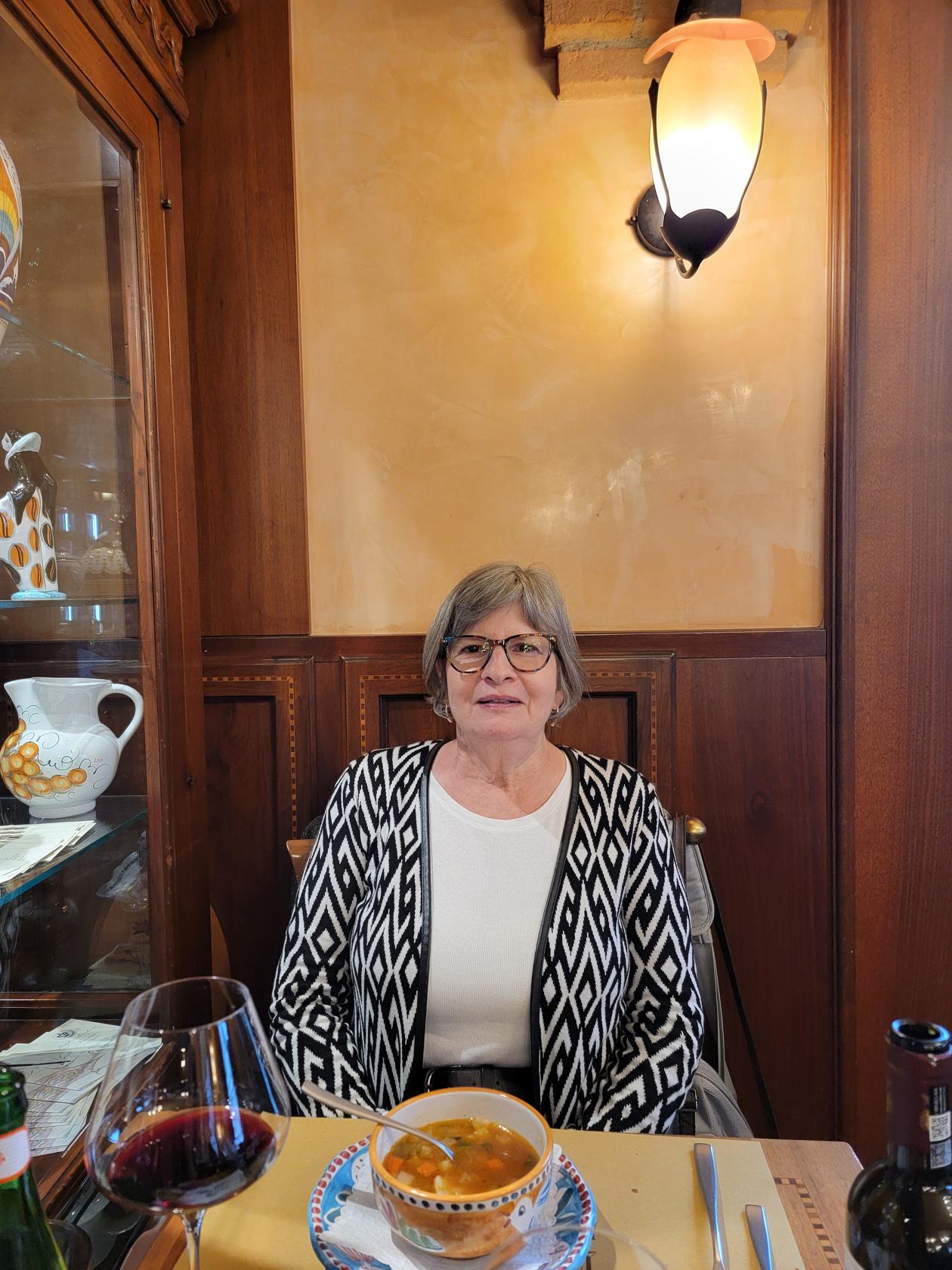
Ristorante Luce – Patti with her Soup – Bern, Switzerland
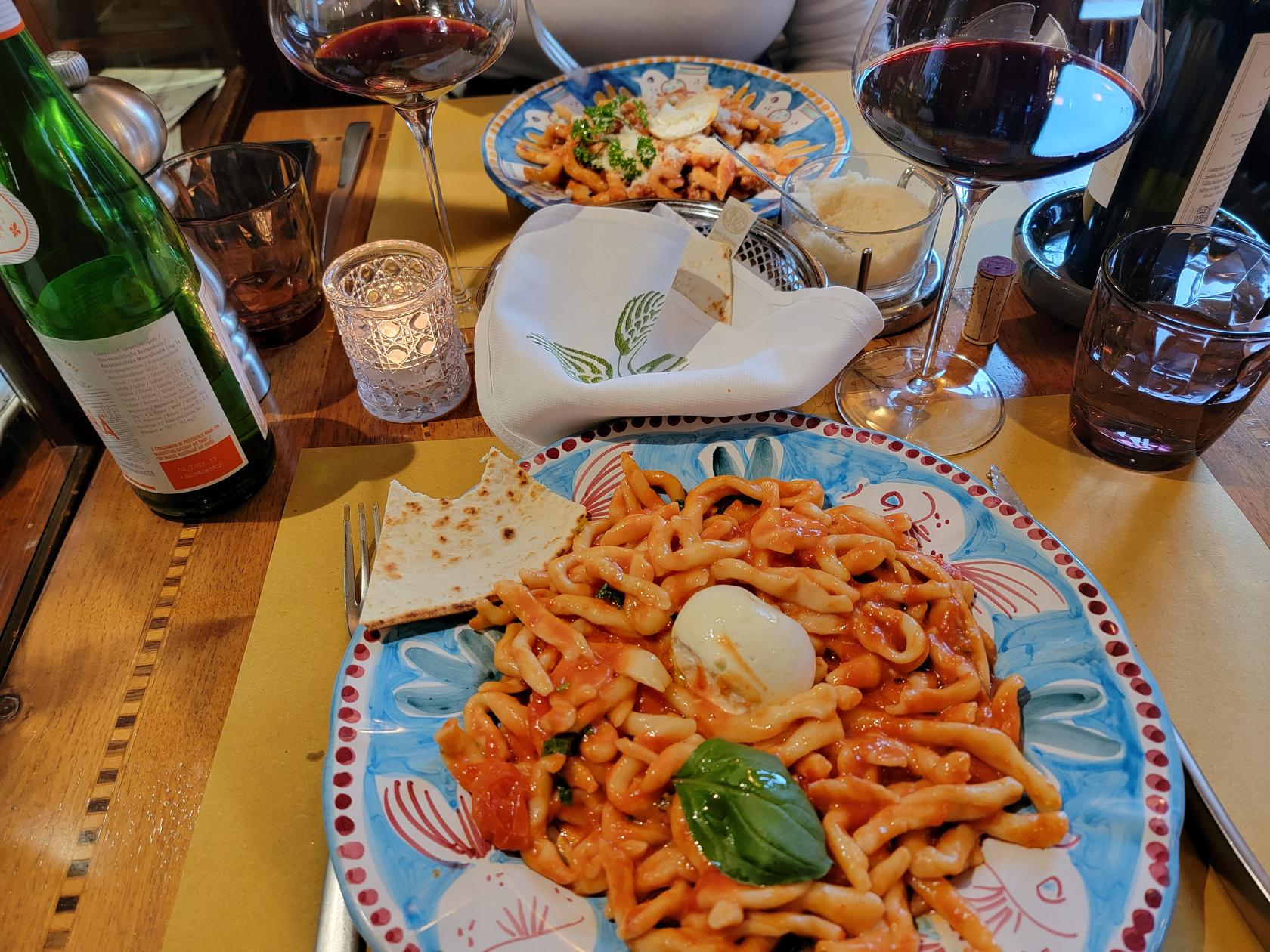
Here they serve very good Italian specialties and have an excellent wine list. Here you can find Strozzapreti, or Priest Strangler/Choker Pasta with Mozzarella. A rather large and somewhat gummy pasta with an very interesting history.
Ristorante Luce – Strozzapreti Pasta with Buffalo Mozzarella – Bern, Switzerland
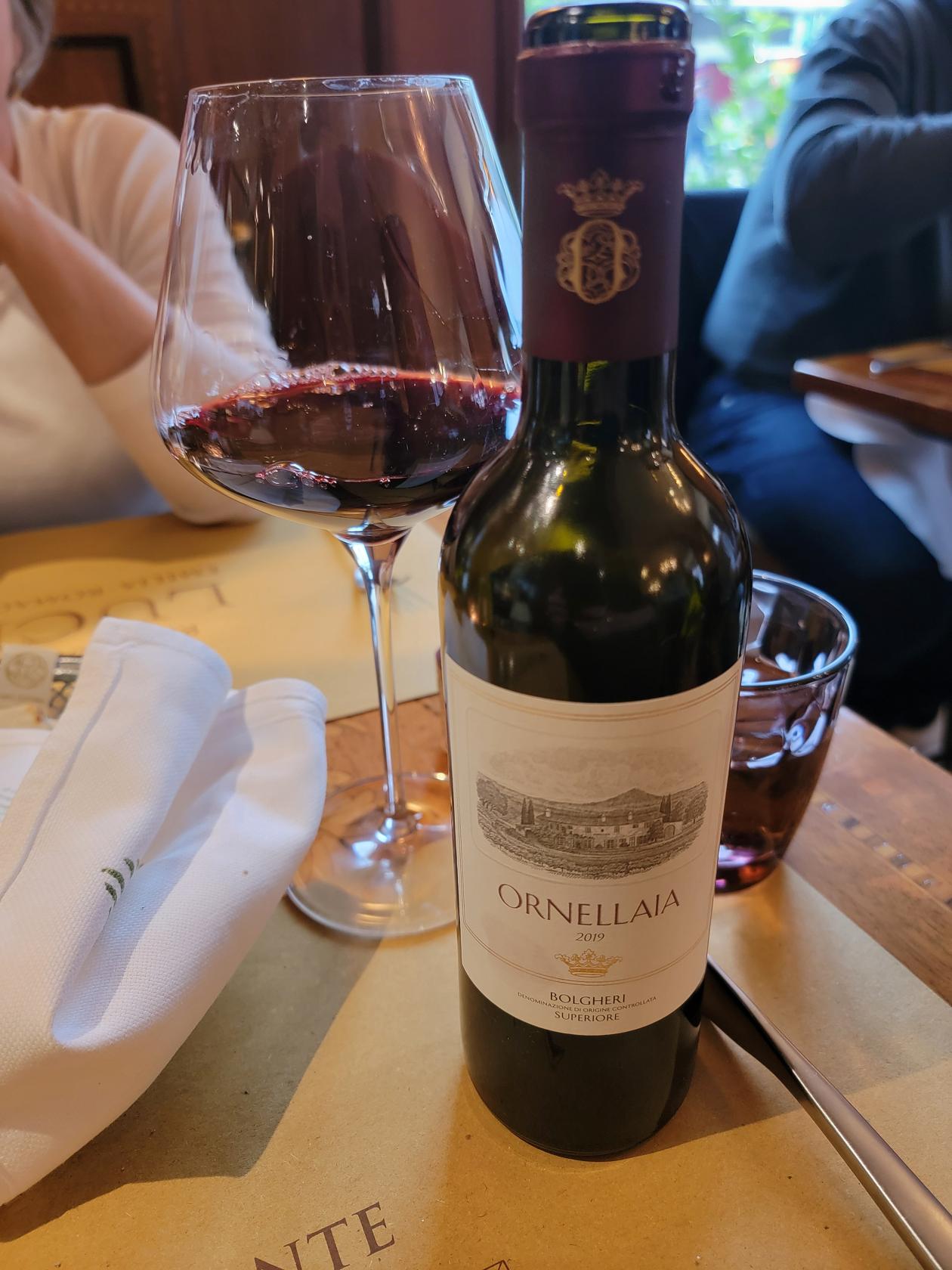
I can specifically attest to spending 150CHF for a 375ml bottle of Ornellaia 2019. A DOC wine from Italy with extremely high ratings which regularly fetches $250-$800 a bottle, a truly amazing wine. So if you are a true wine lover, your pallet might enjoy this restaurant.
Ristorante Luce – Ornellaia Cabernet Sauvignon, 2019 – Bern, Switzerland
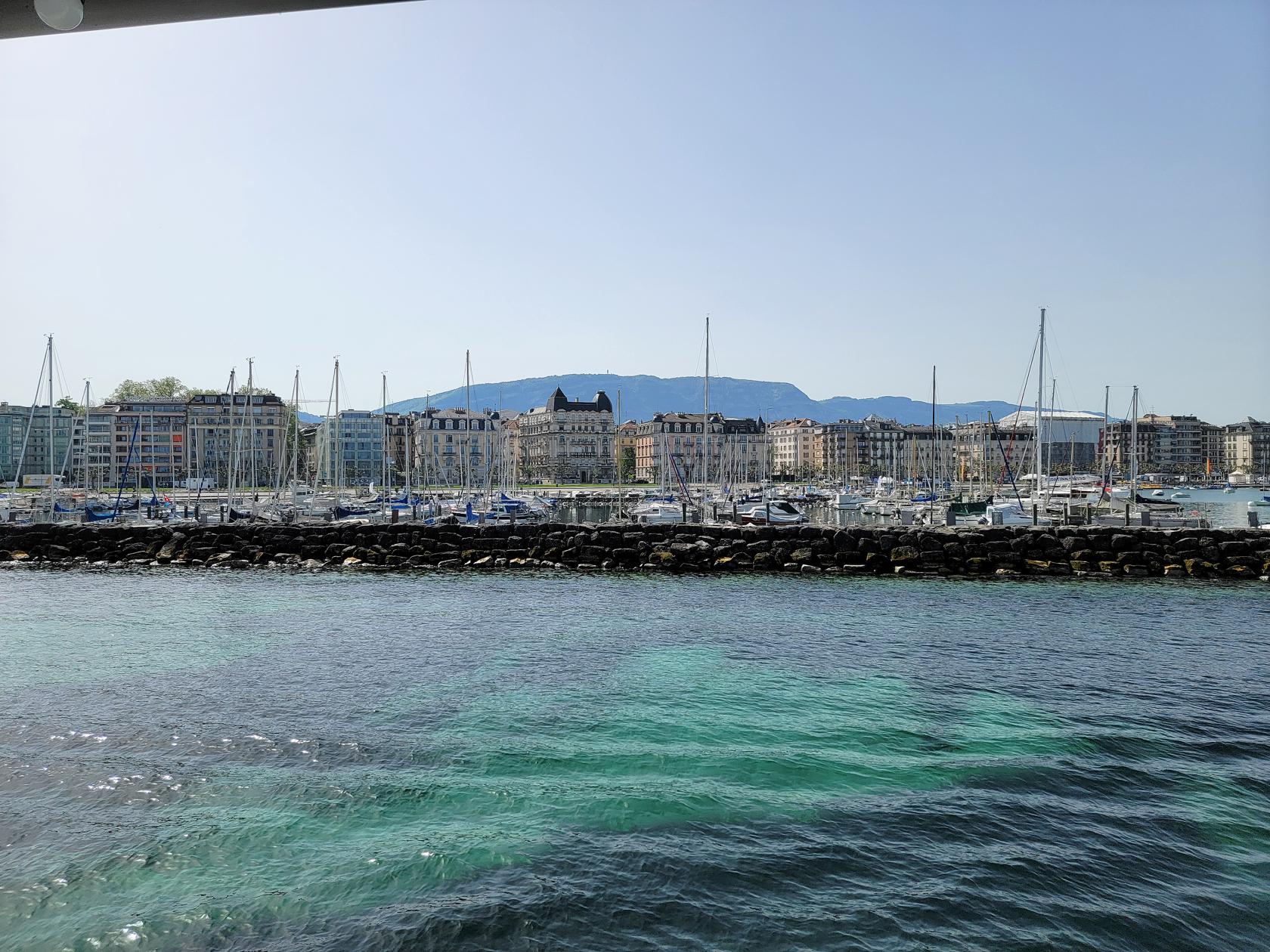
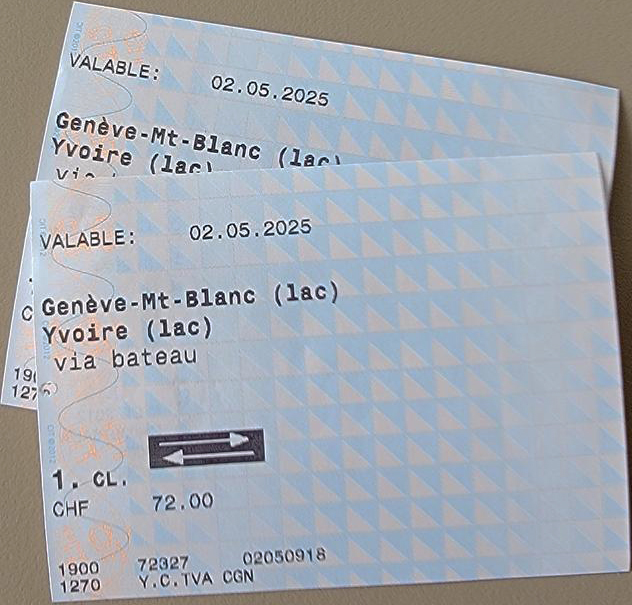
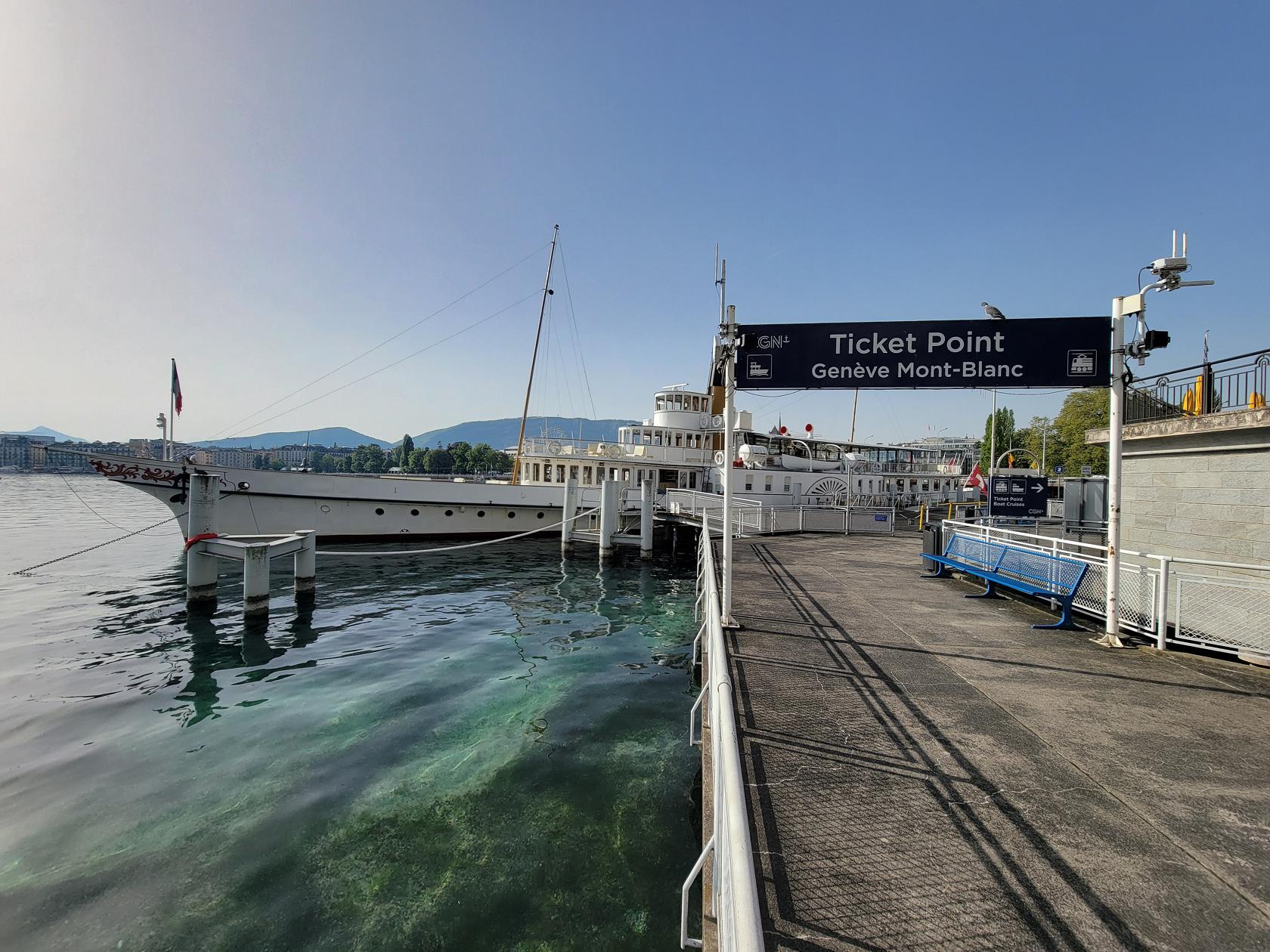
Expecting very nice weather for the next day, Patti and I purchased cruise tickets from CGN Cruise line at Geneva’s Mont-Blanc port for a day trip to Yvoire, France. Our primary intention was to have lunch away and escape the city’s hustle and bustle. We were not disappointed and had a very enjoyable day on the water and in the town.
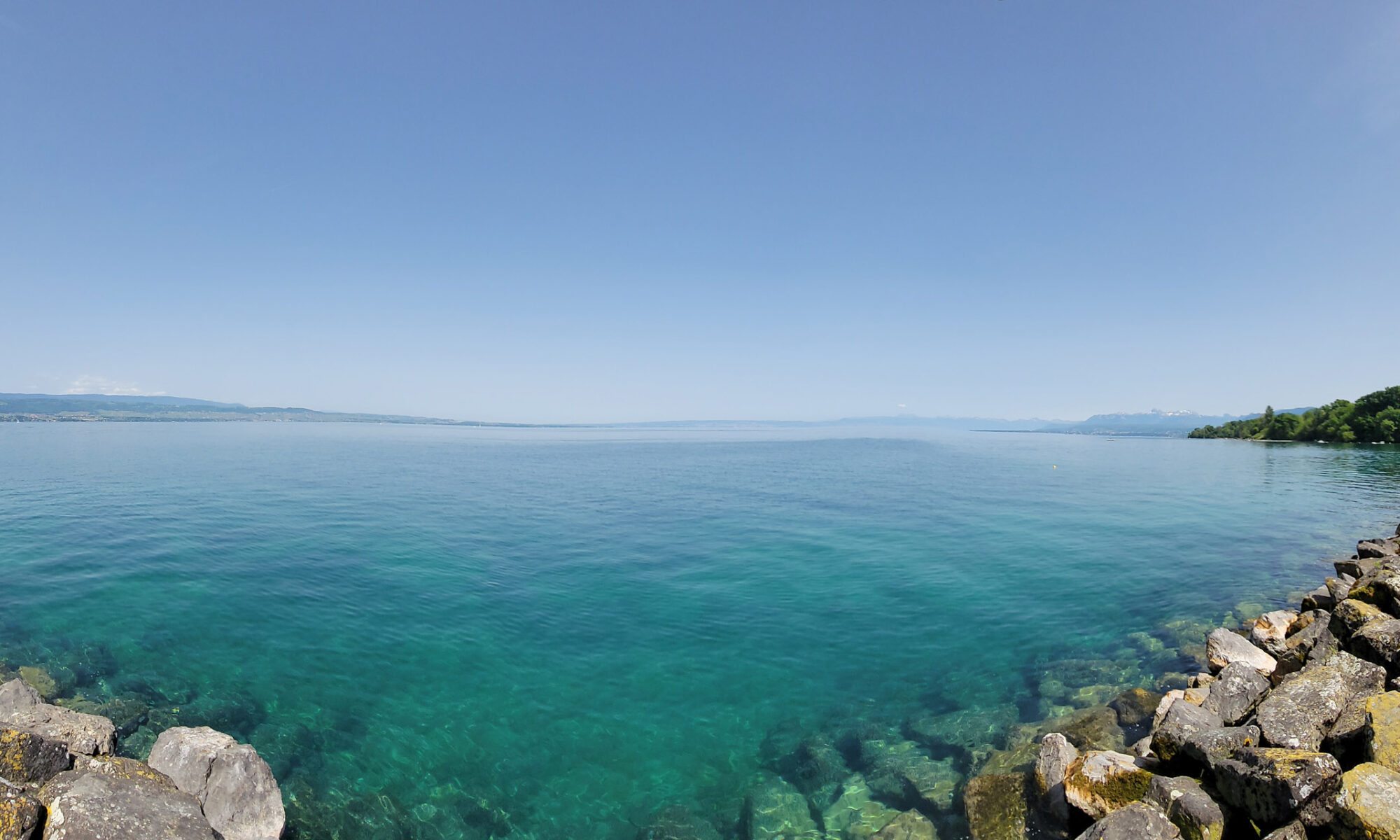
Lake Léman – Cornavin – Geneva, Switzerland
CGN Cruise – Tickets for Two – Yvoire, France
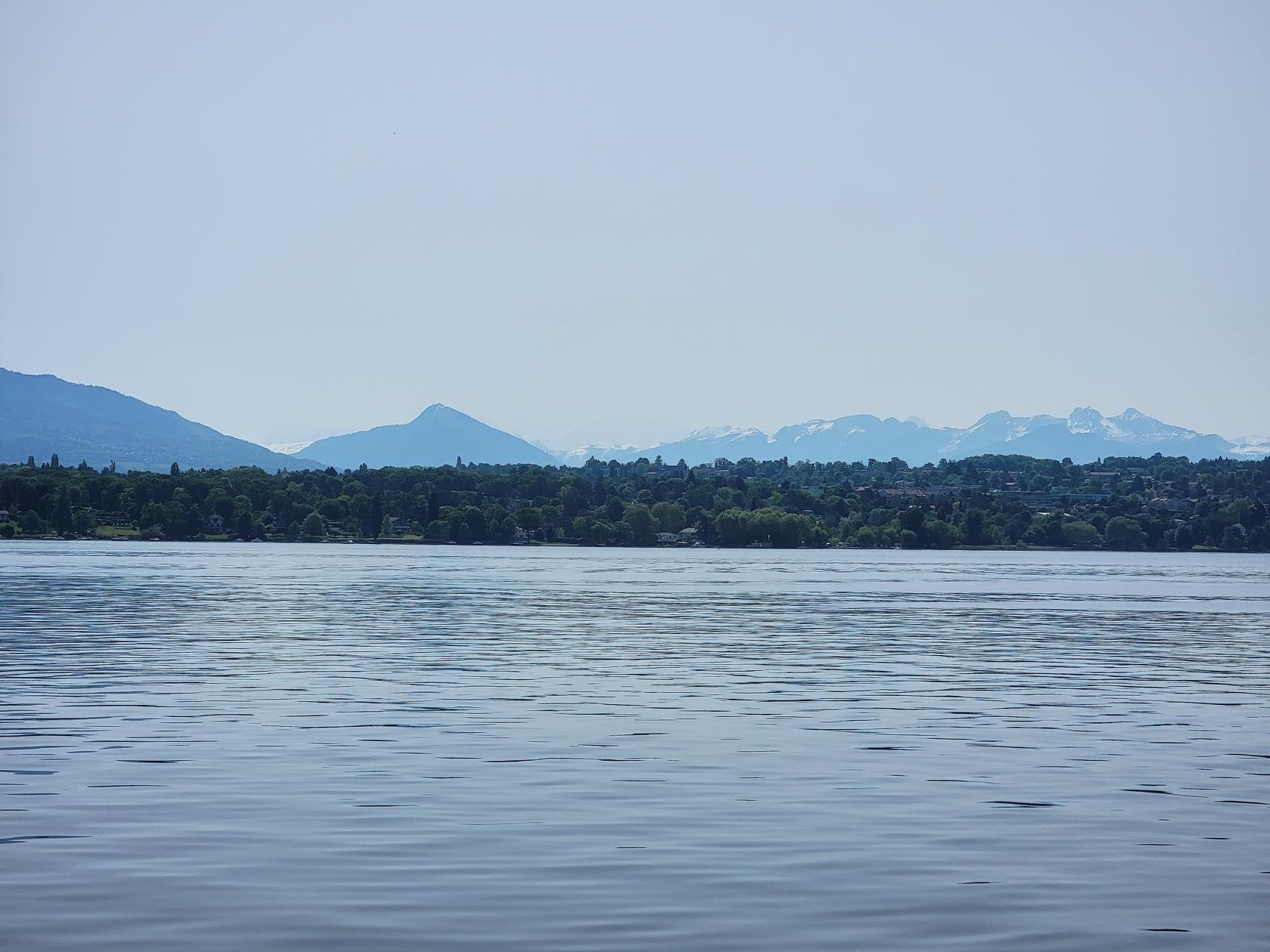
Lake Léman – Mont Blanc in the distance – Geneva, Switzerland
Getting There
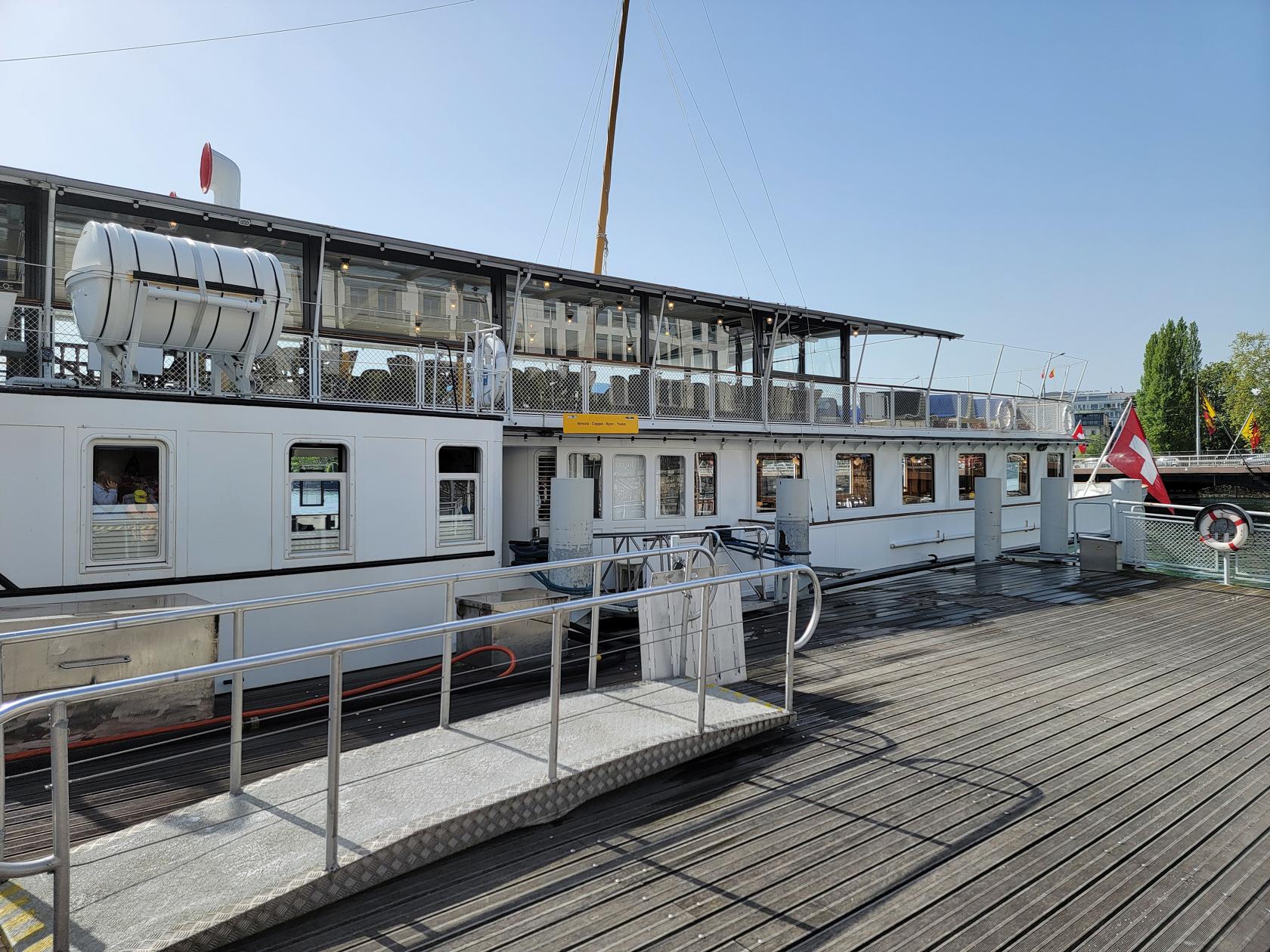
One of several cruise lines that operate Lake Léman, also known as Lake Geneva, CGN Cruise to Yvoire departs port Mont Blanc in Cornavin twice daily in May for a two hour cruise, stopping at other ports along the way. The ship is a rather large, double paddle-wheel, three deck ship that has dining and full bar for a most enjoyable trip.
Lake Léman – Mont-Blanc Port – Geneva, Switzerland
Lake Léman – Mont-Blanc CGN Cruise – Geneva, Switzerland
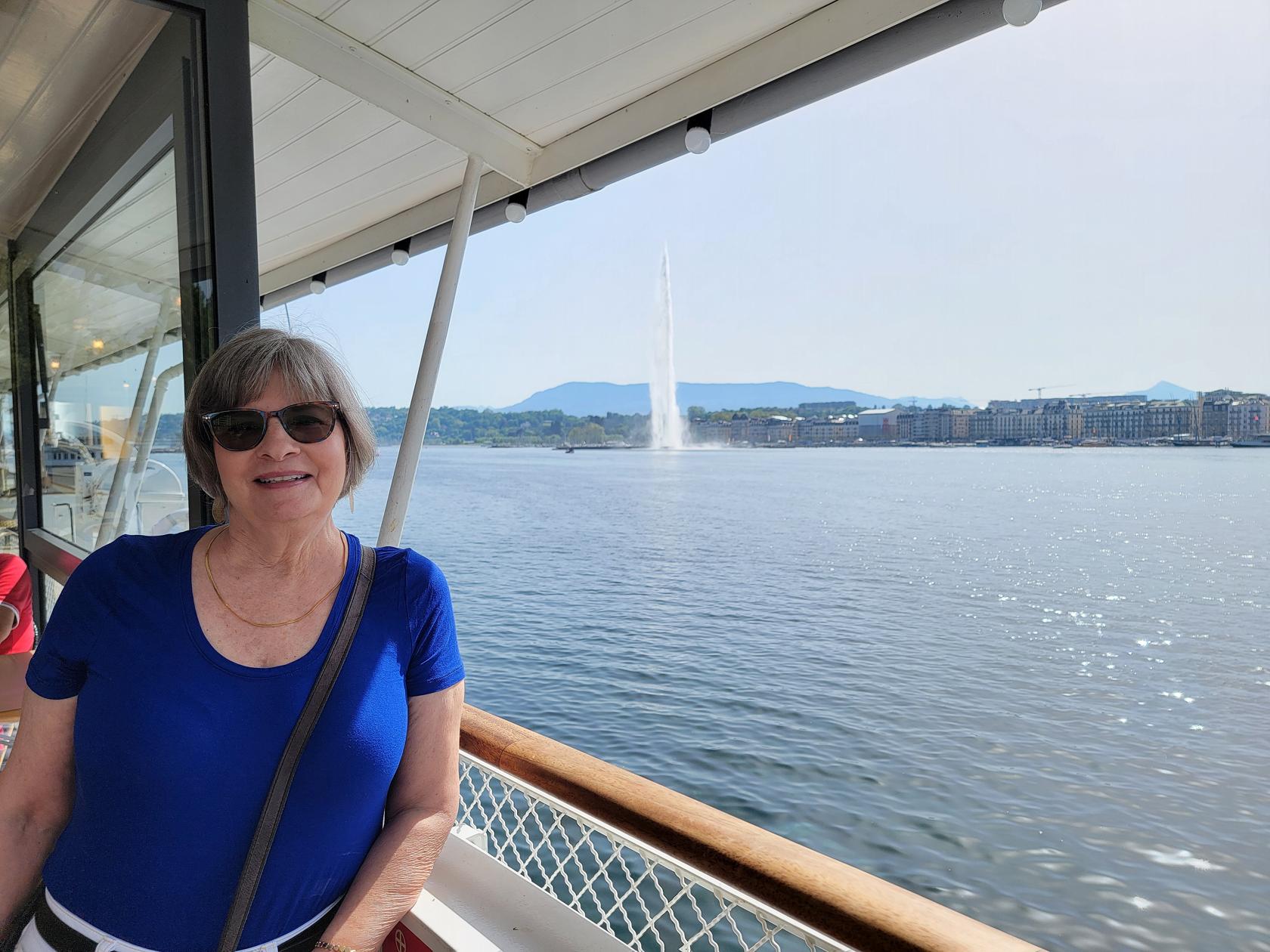
Lake Léman – Patti with the Water Jet behind – Geneva, Switzerland
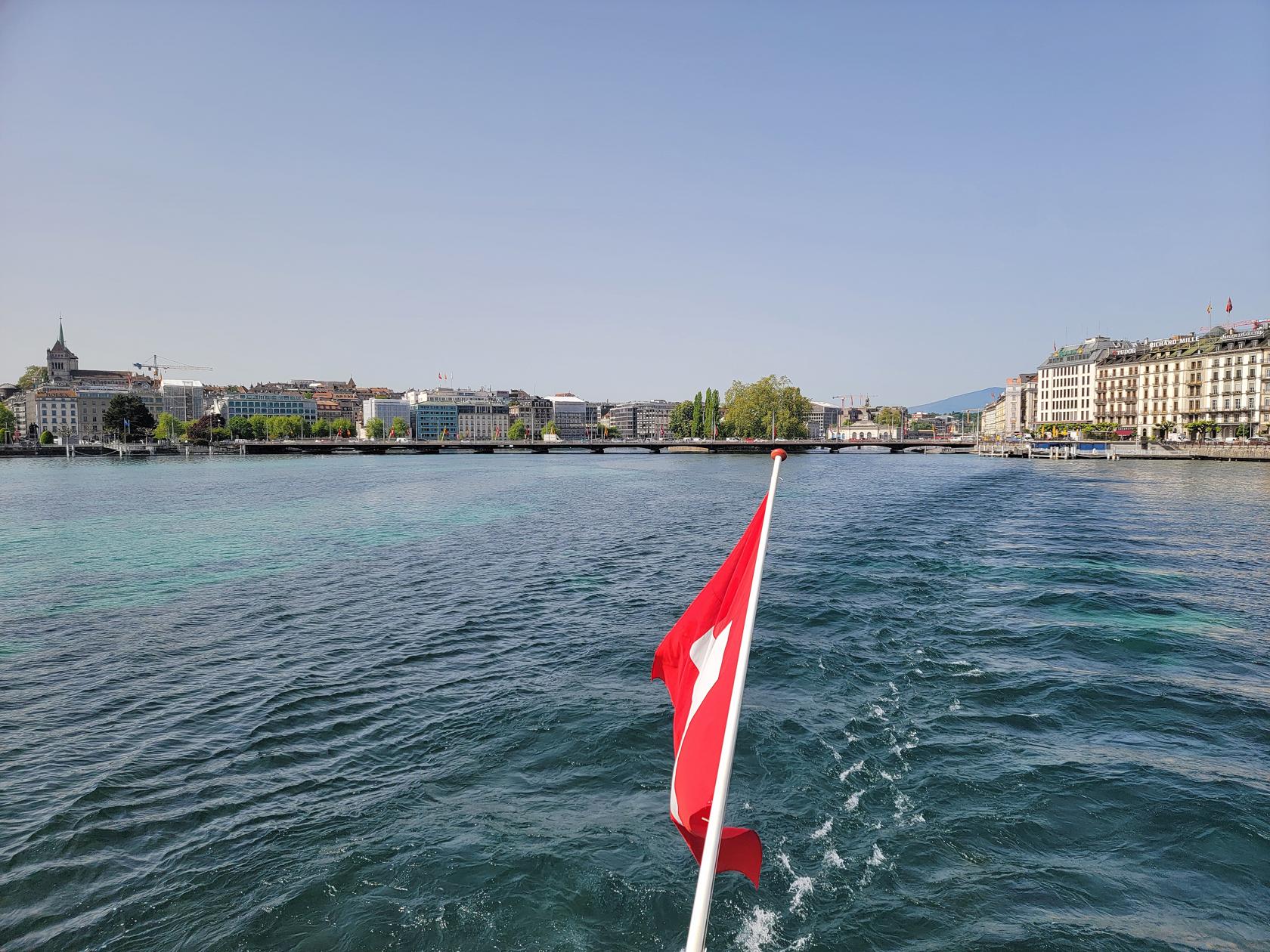
Lake Léman – Leaving – Geneva, Switzerland
Though the air was cool, it was very still for both our outward and inward bound journeys, so the lake was a smooth as glass.
Lake Léman – Port – Yvoire, France
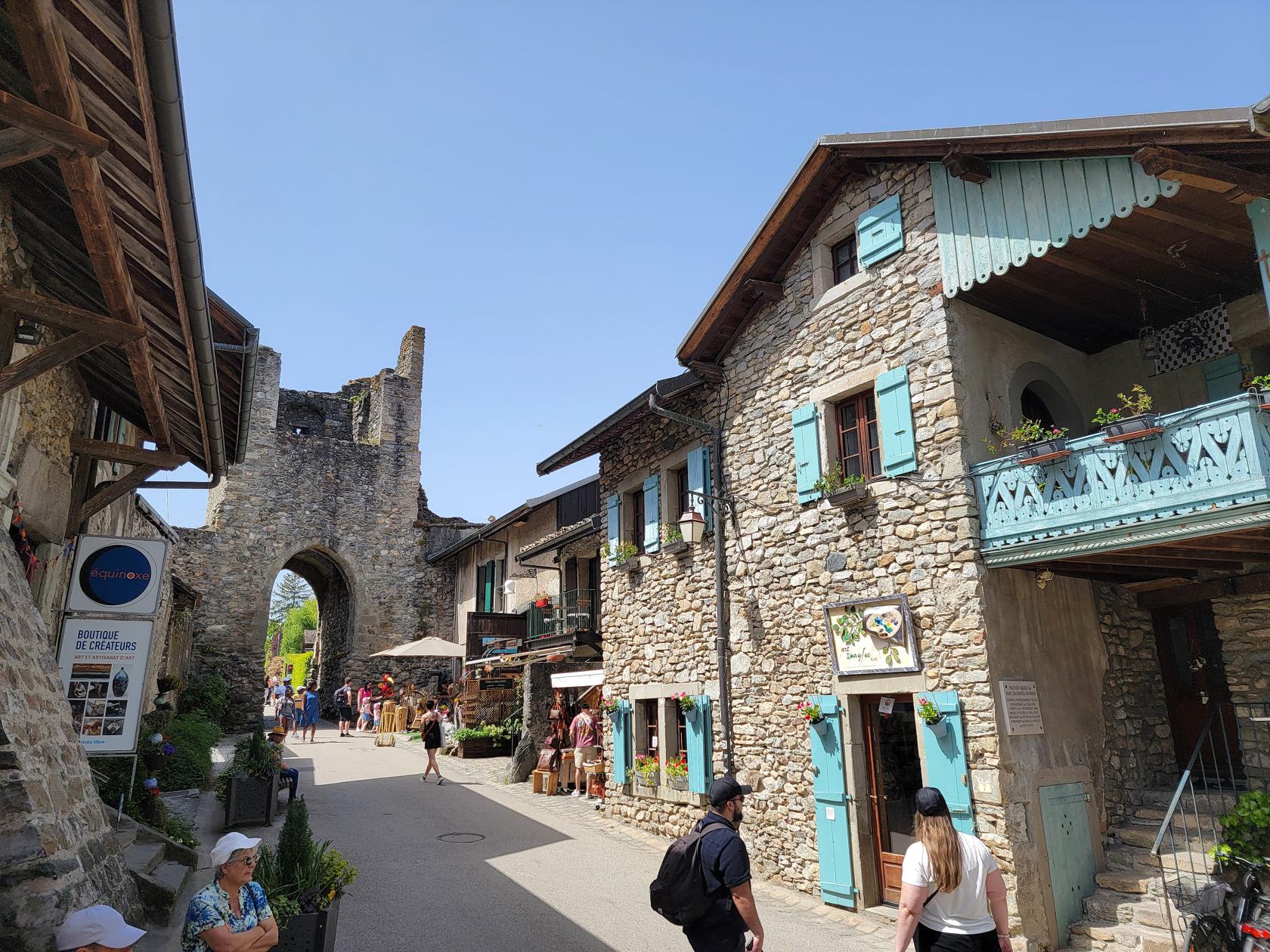
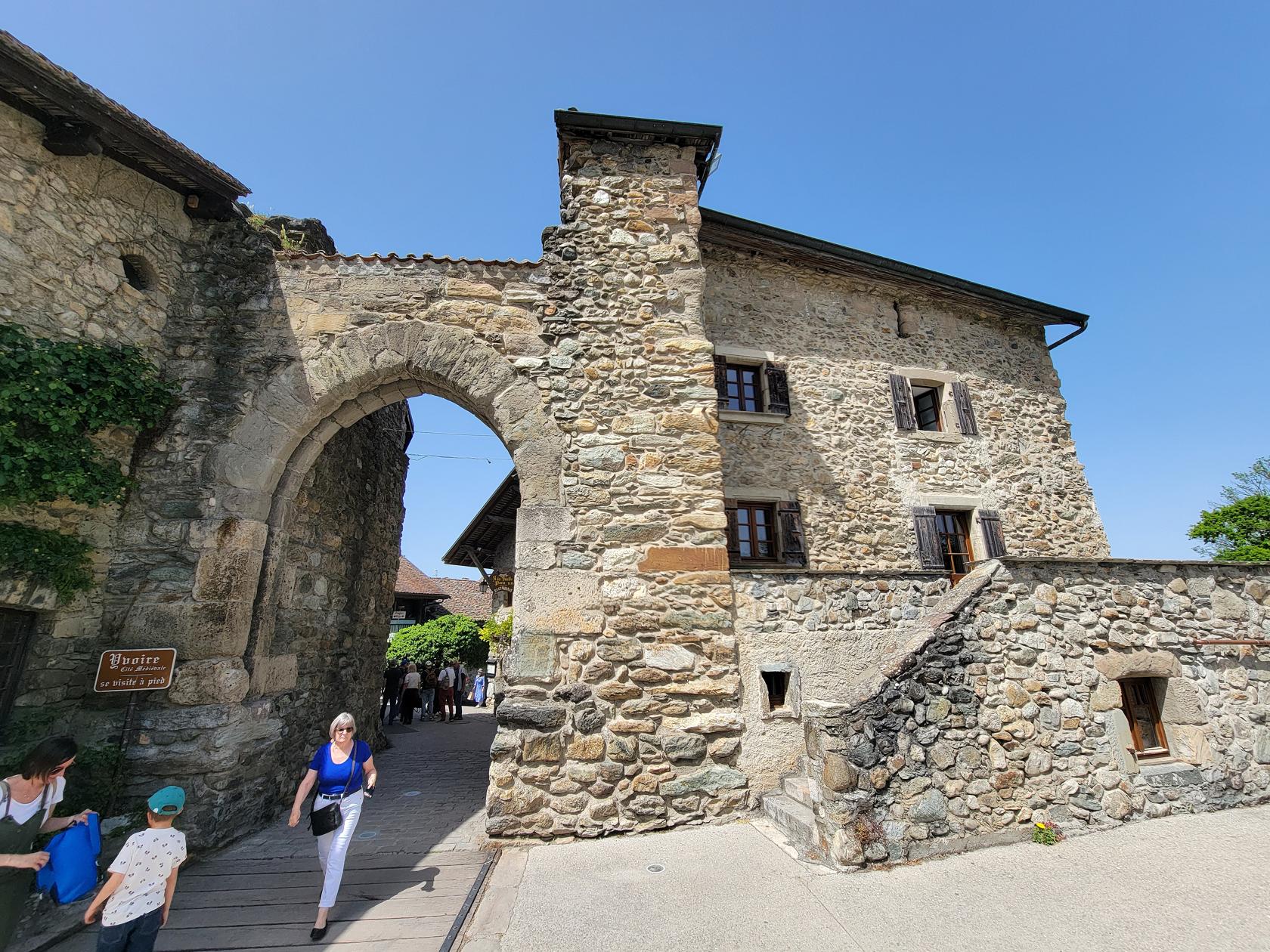
Old Town Gate – Yvoire, France
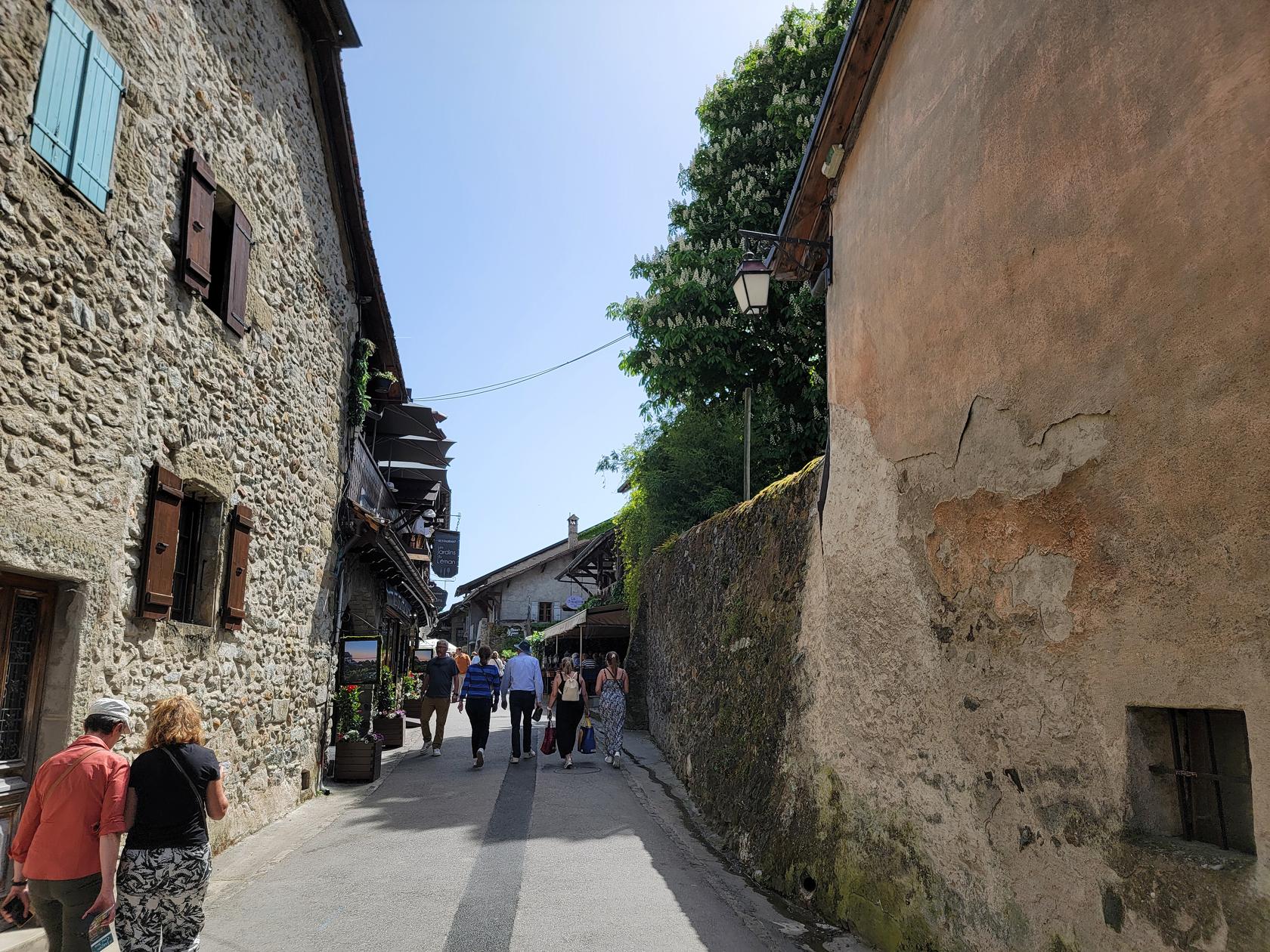
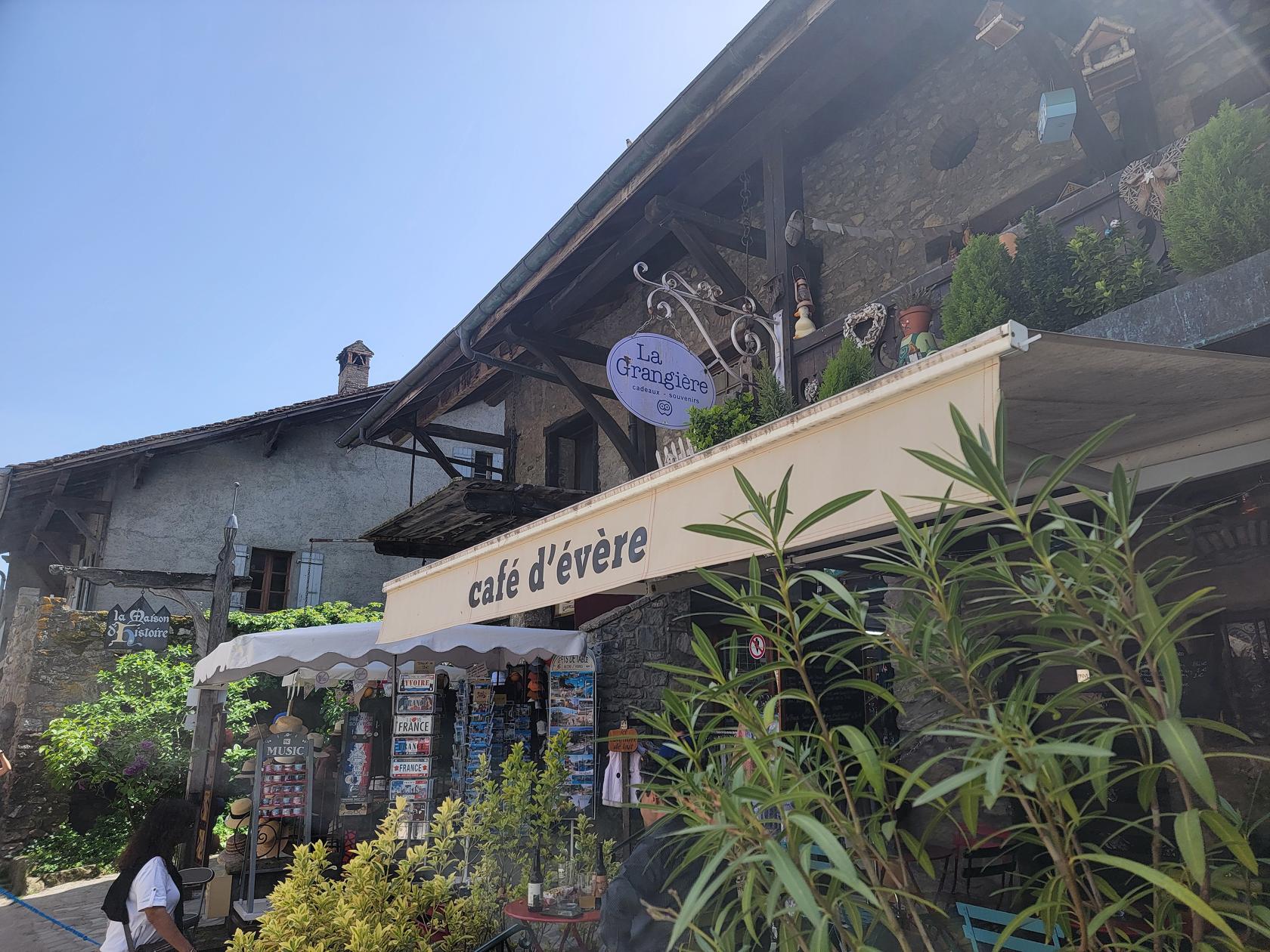
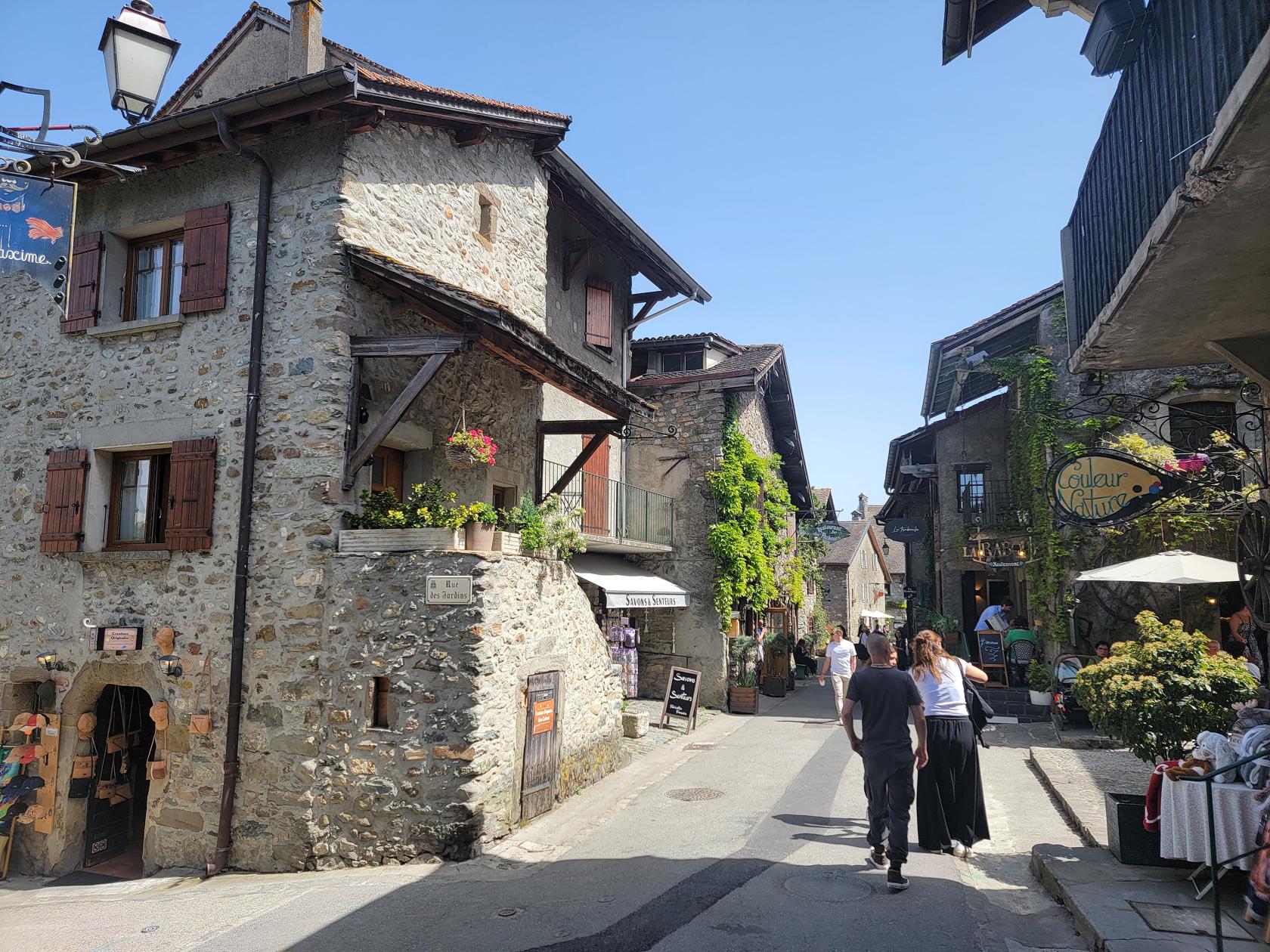
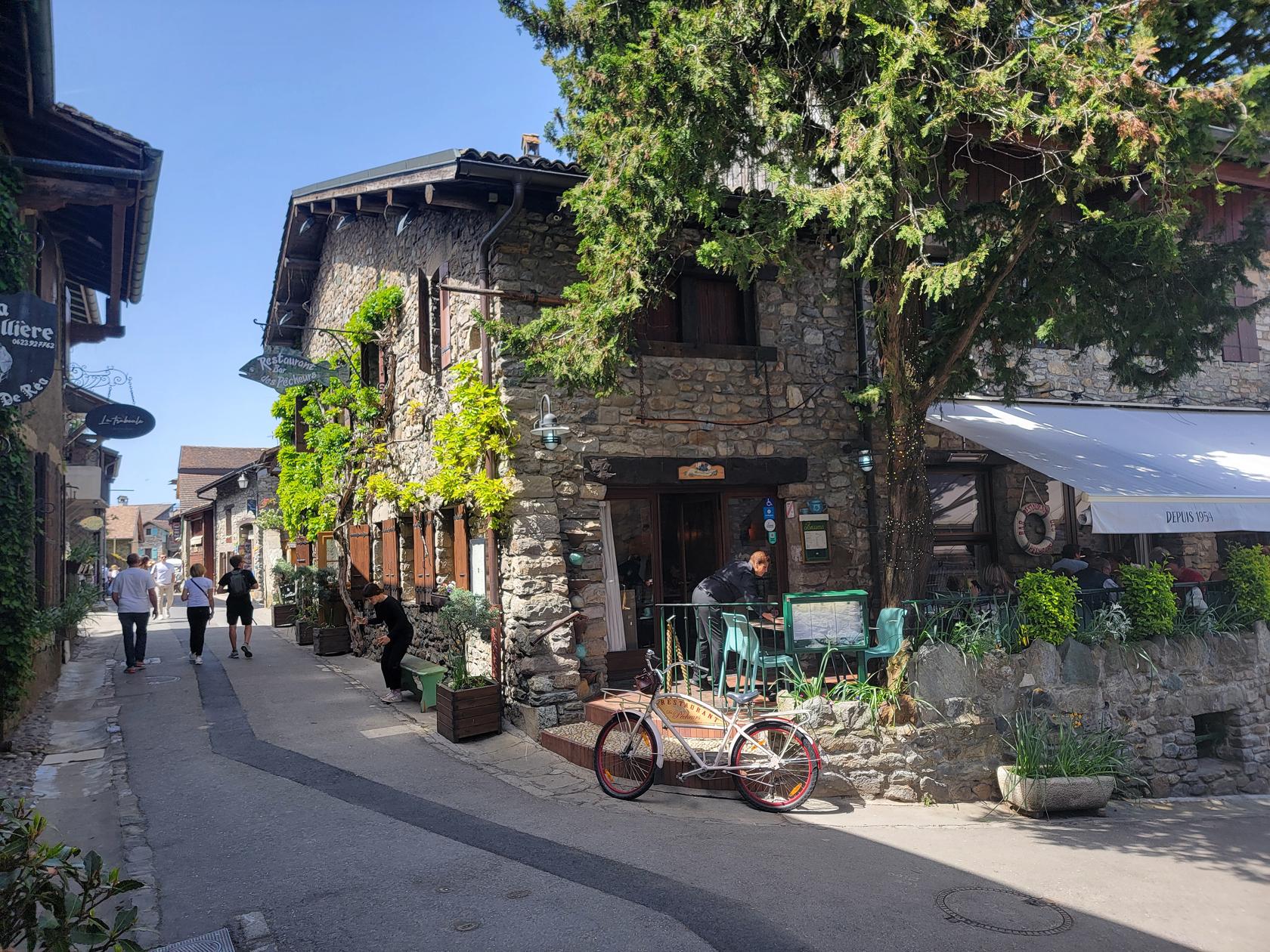
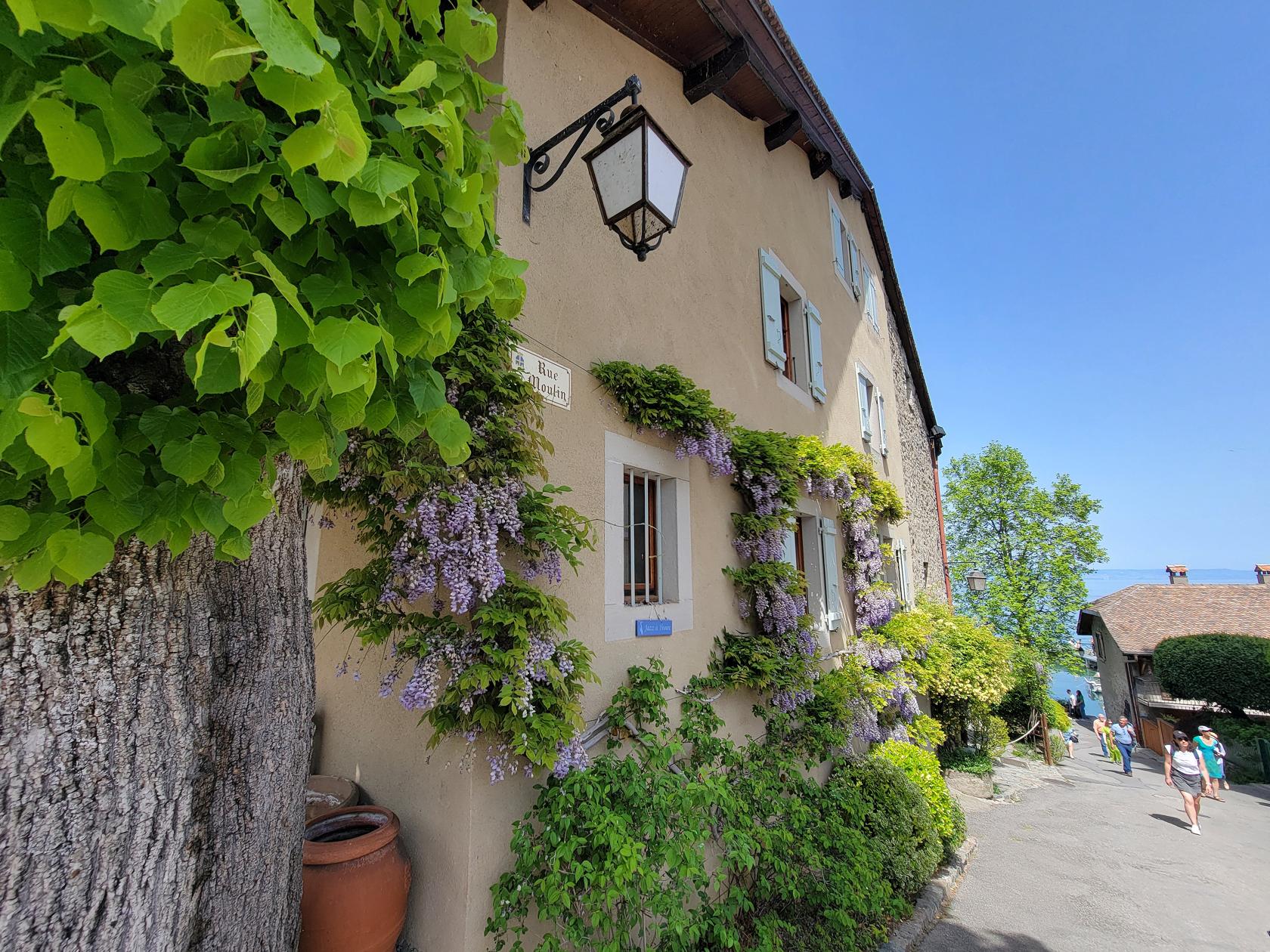
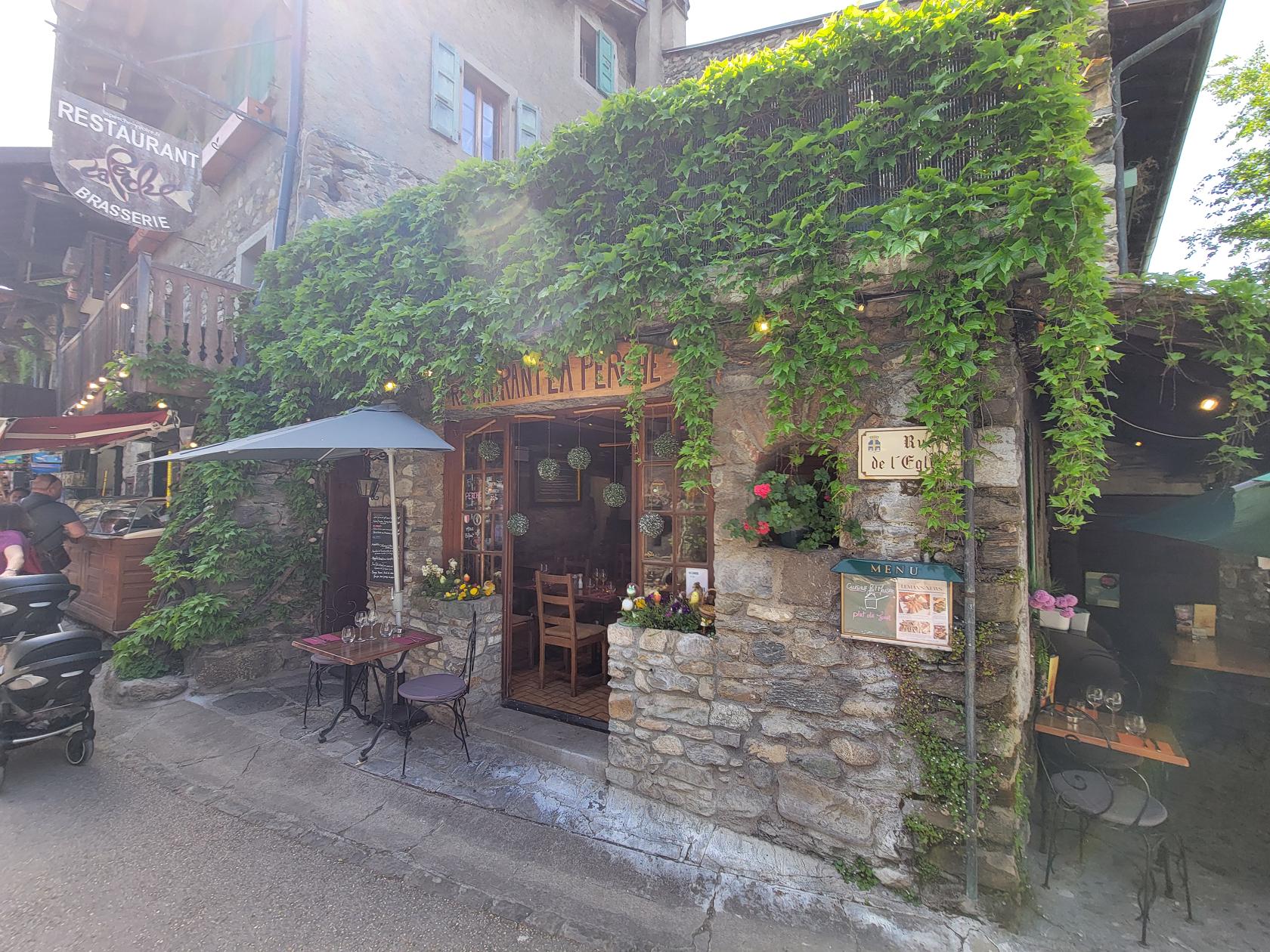
Rue du Port – Yvoire, France
The Town
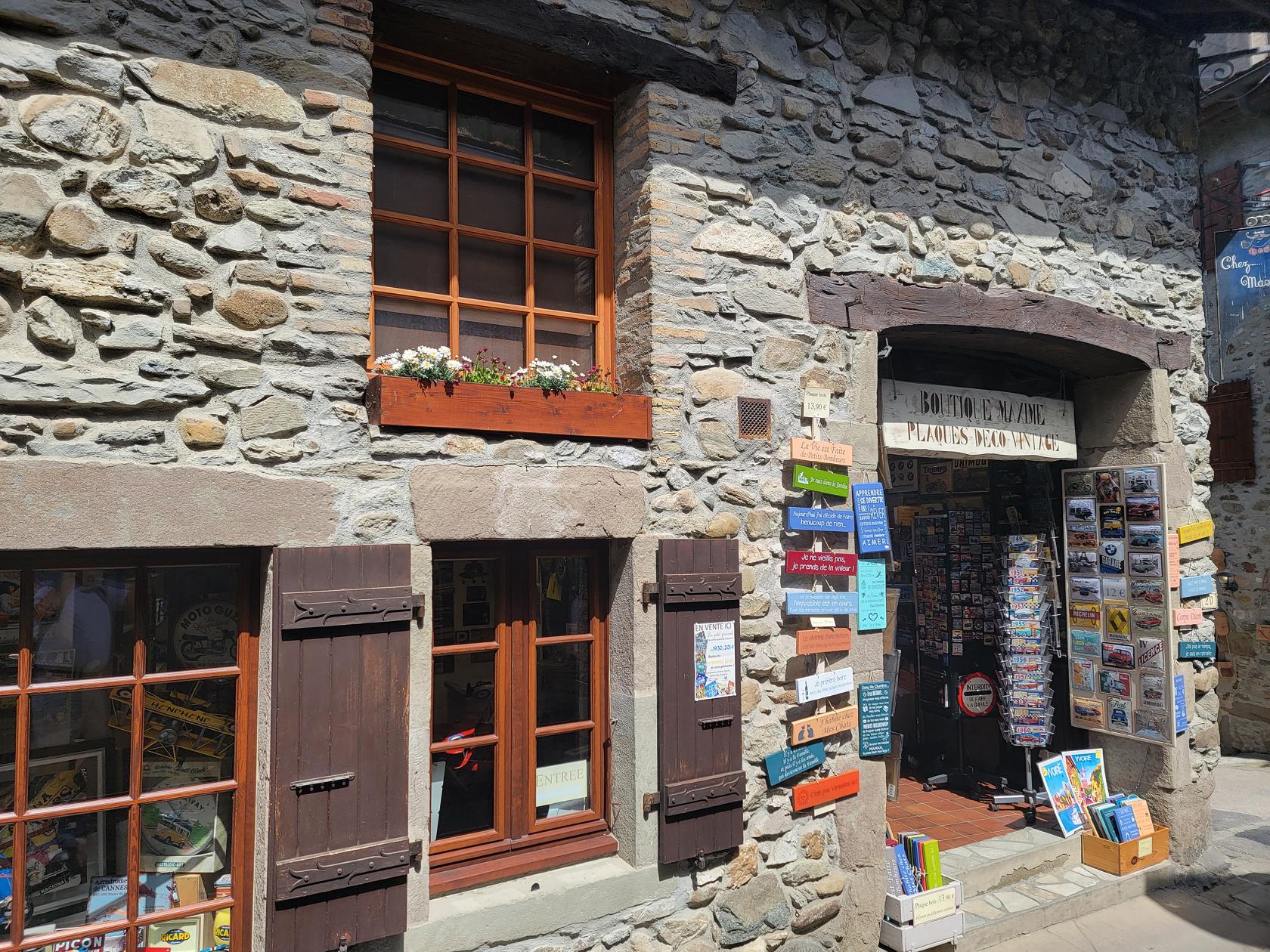
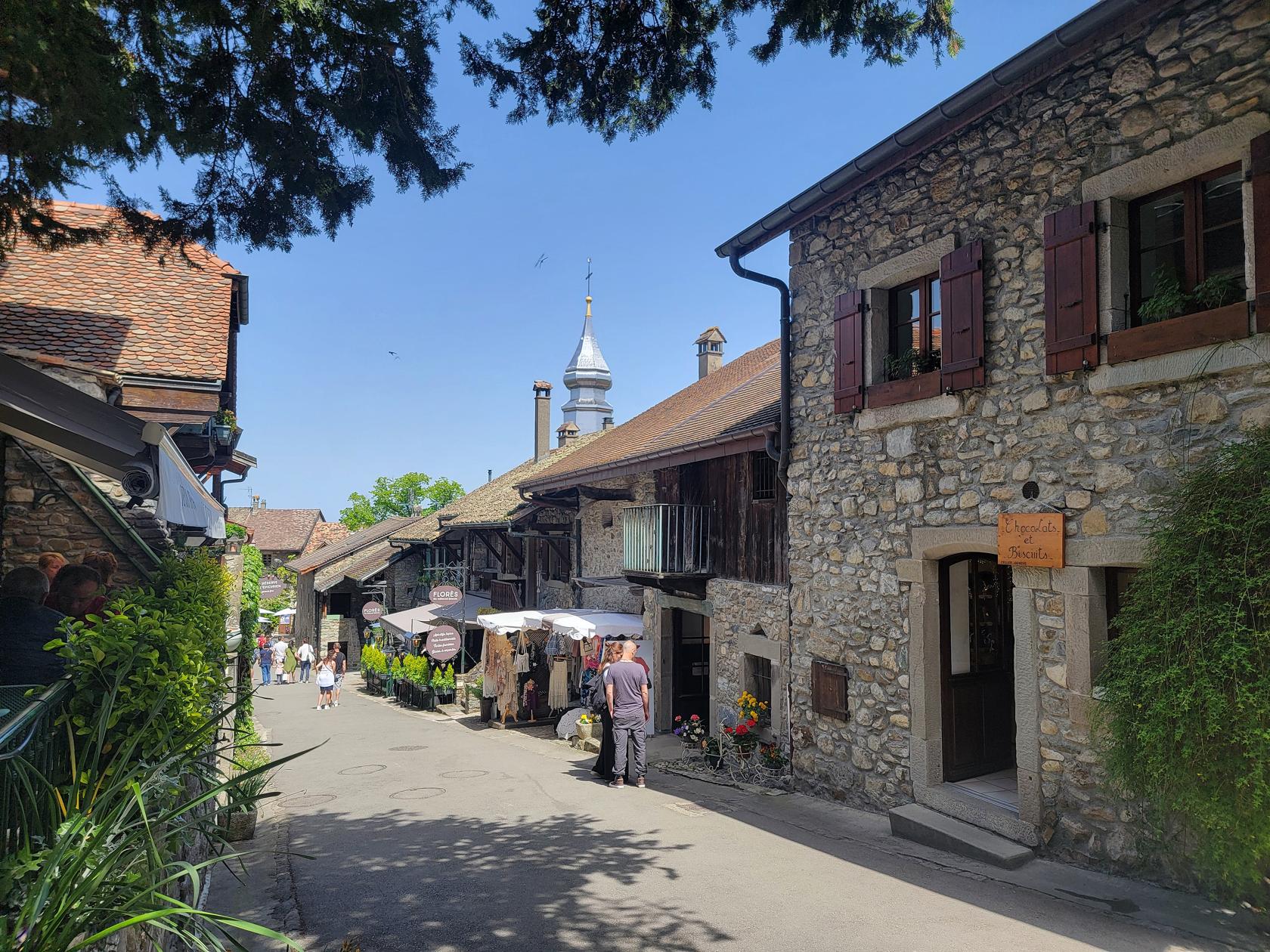
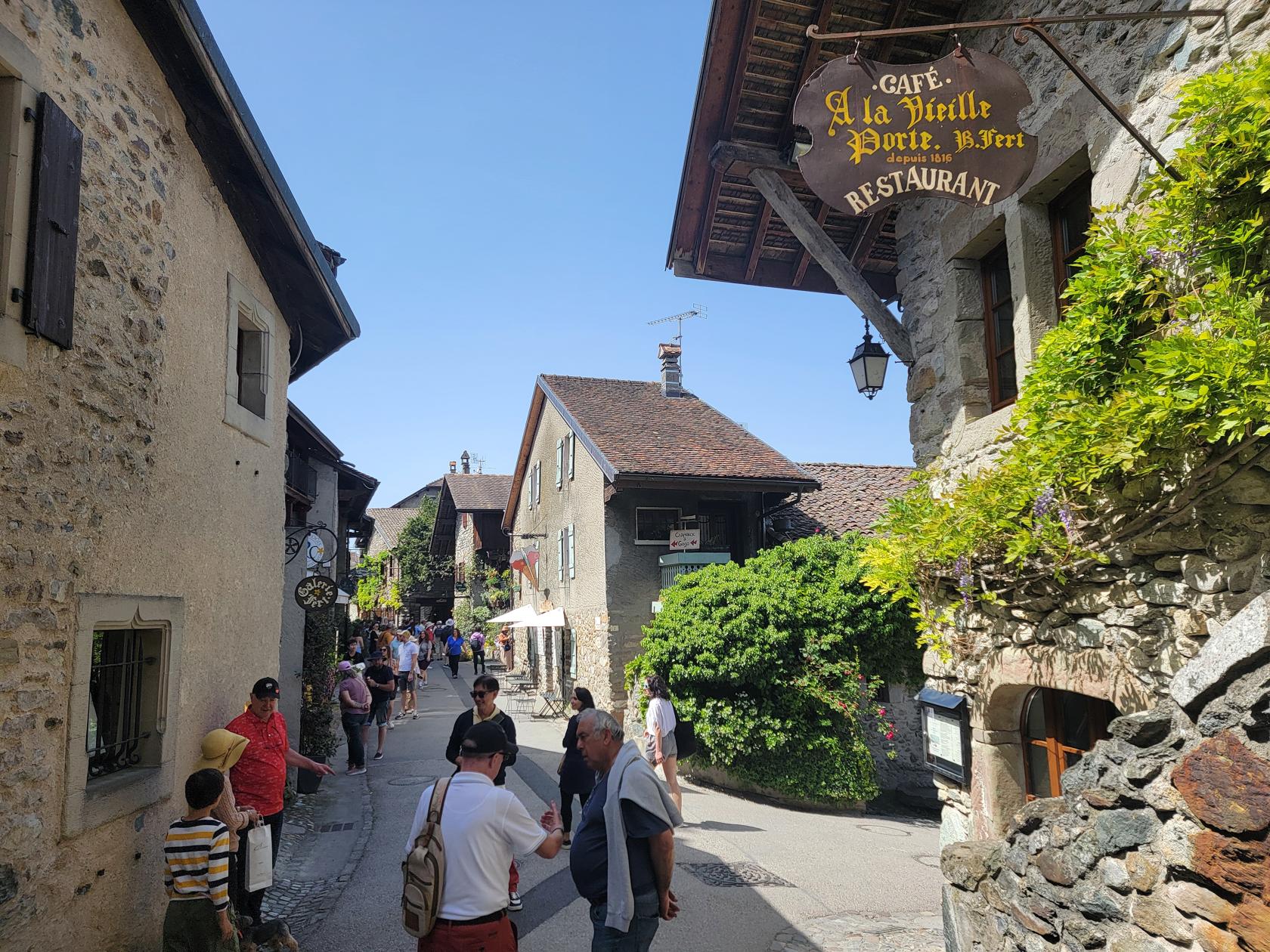
It is a rather small town, but well suited for a day-trip. It has at least three large parking lots for visitors who prefer to drive. There are numerous restaurants throughout the town with varying prices ranges, which provide some relief from the high prices in Switzerland.
Typical stone house – Yvoire, France
Caffe in town – Yvoire, France
Stone buildings with wooden roofs – Yvoire, France
Grand Rue – Yvoire, France
Grand Rue – Yvoire, France
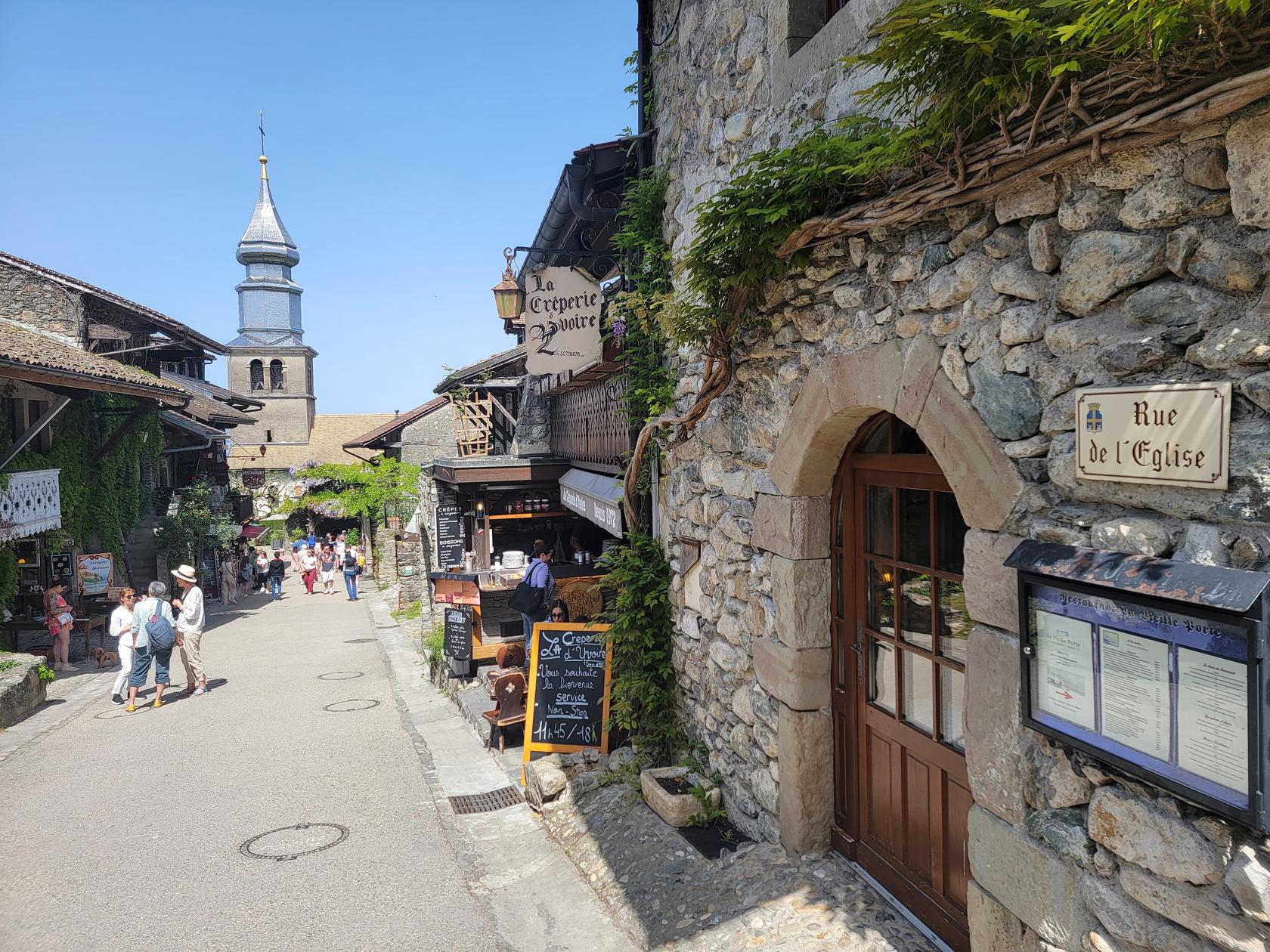
Rue de l’Église – Église Saint Pancrace d’Yvoire in background – Yvoire, France
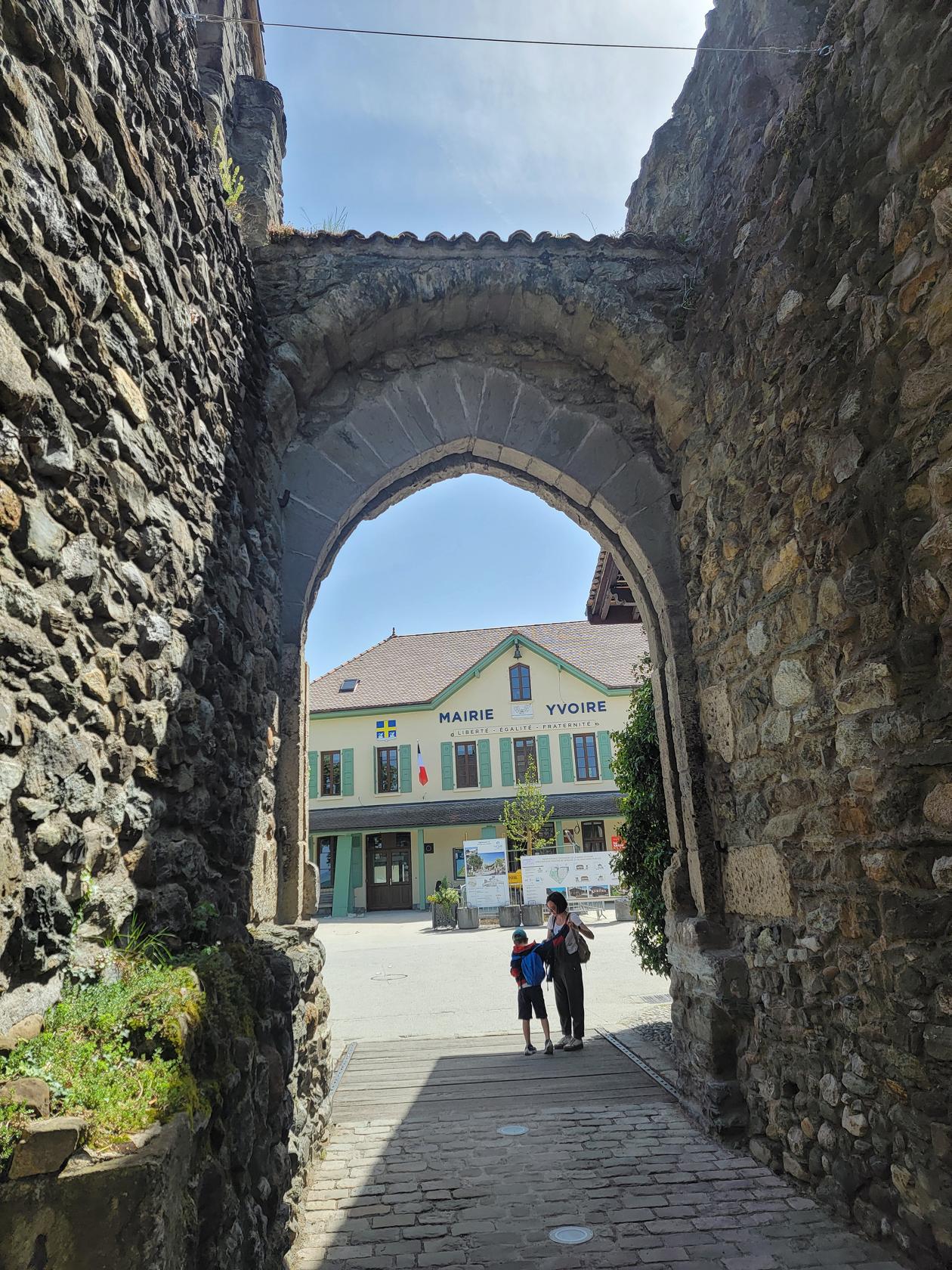
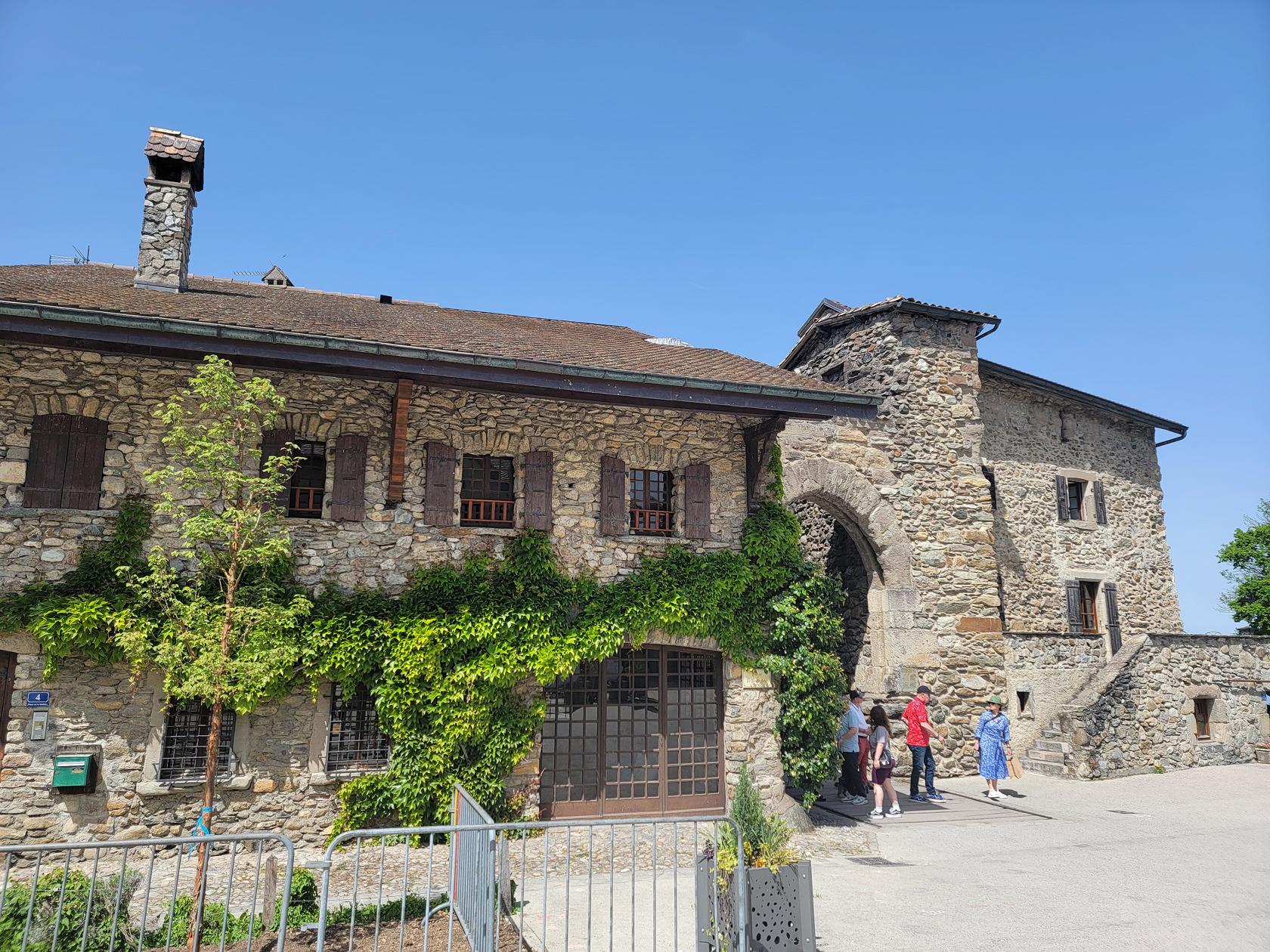
Medieval Gate – Place La Vieille Port – Yvoire, France
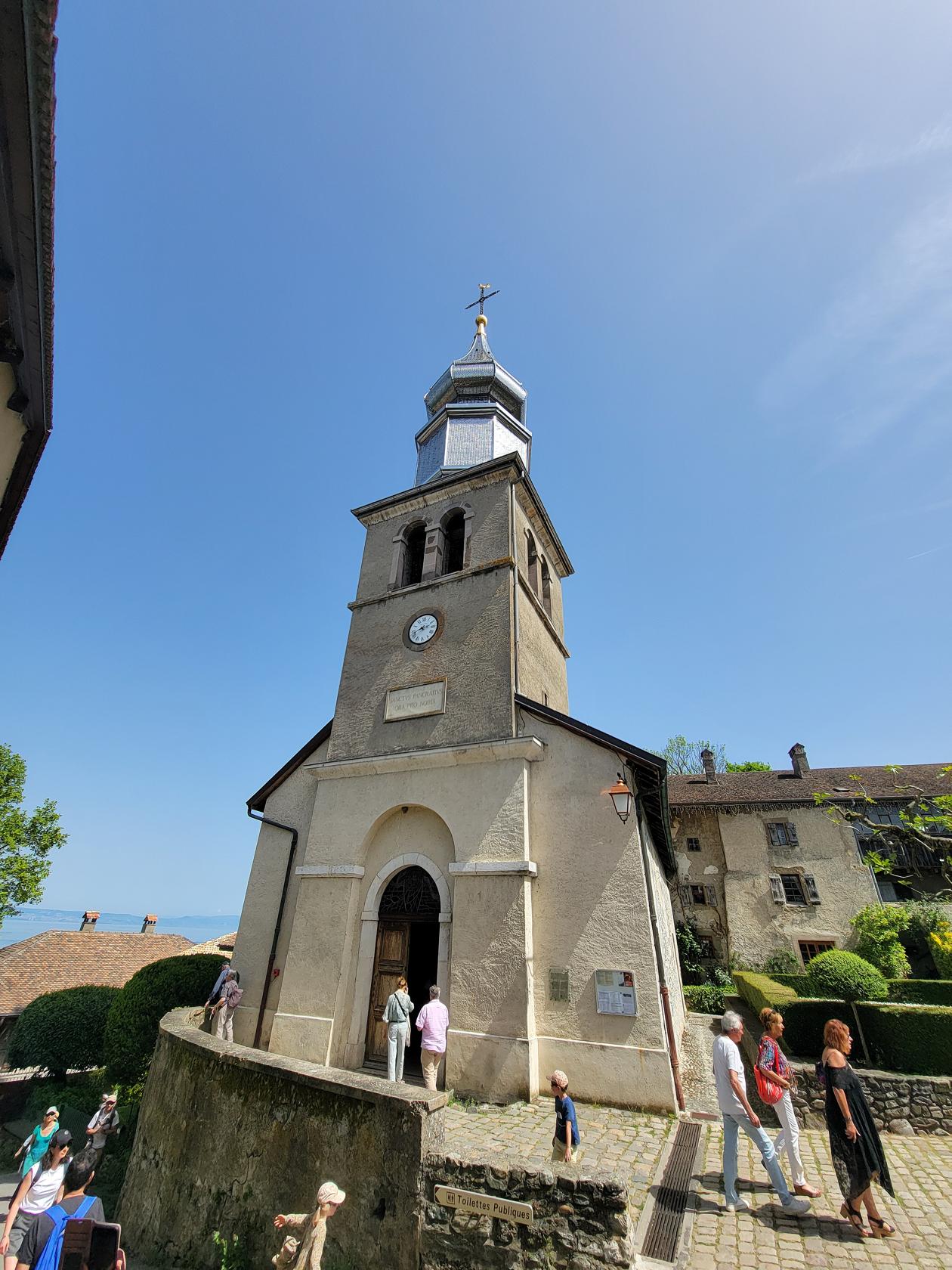
Église Saint Pancrace d’Yvoire – Entrance – Yvoire, France
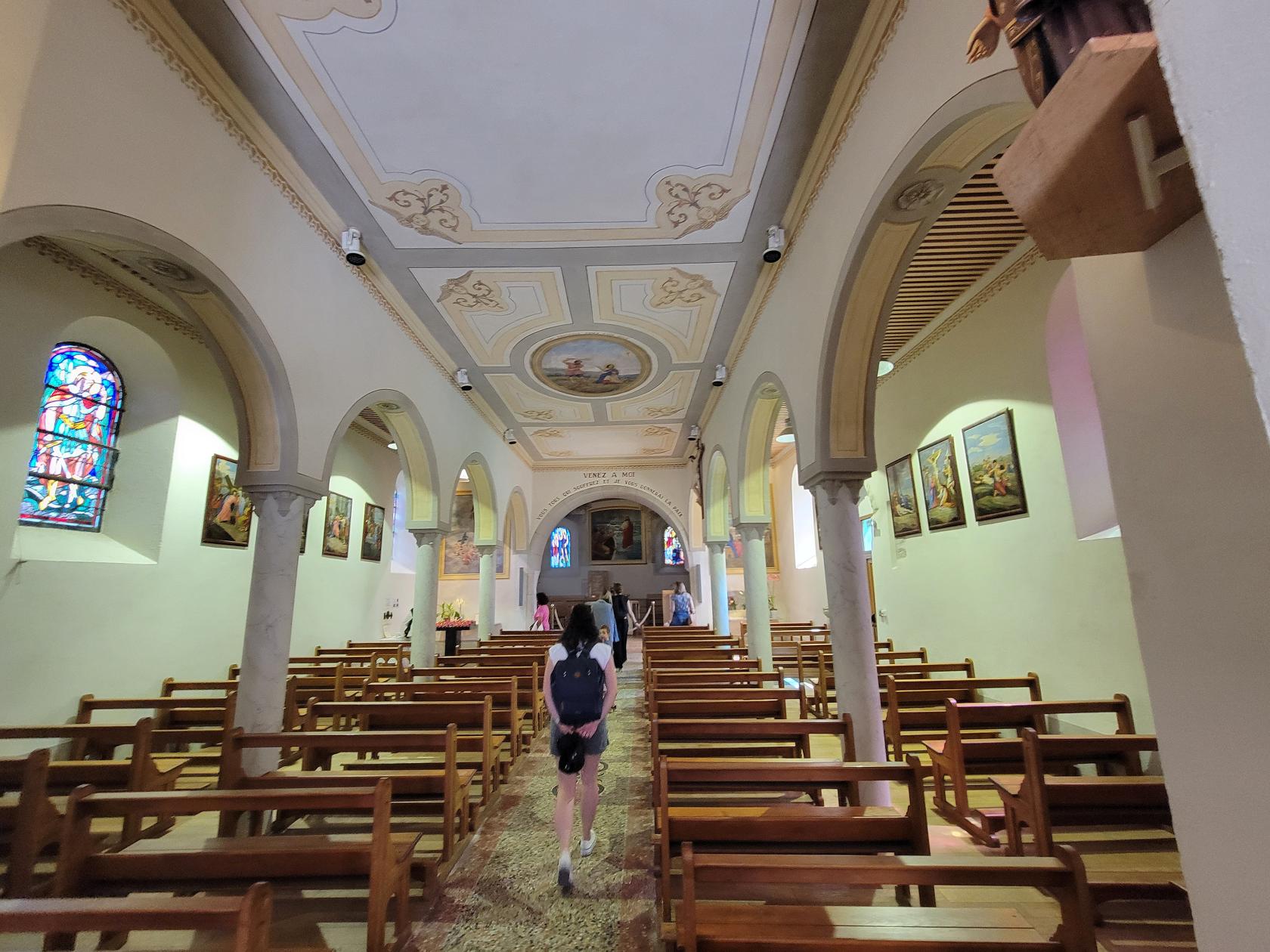
Église Saint Pancrace d’Yvoire – Inside – Yvoire, France
Place La Vieille Port – Yvoire, France
Medieval Gate – Place La Vieille Port – Yvoire, France
Medieval Gate – Place La Vieille Port – Yvoire, France
Flowers – Yvoire, France
Rue de l’Église – cafe – Yvoire, France
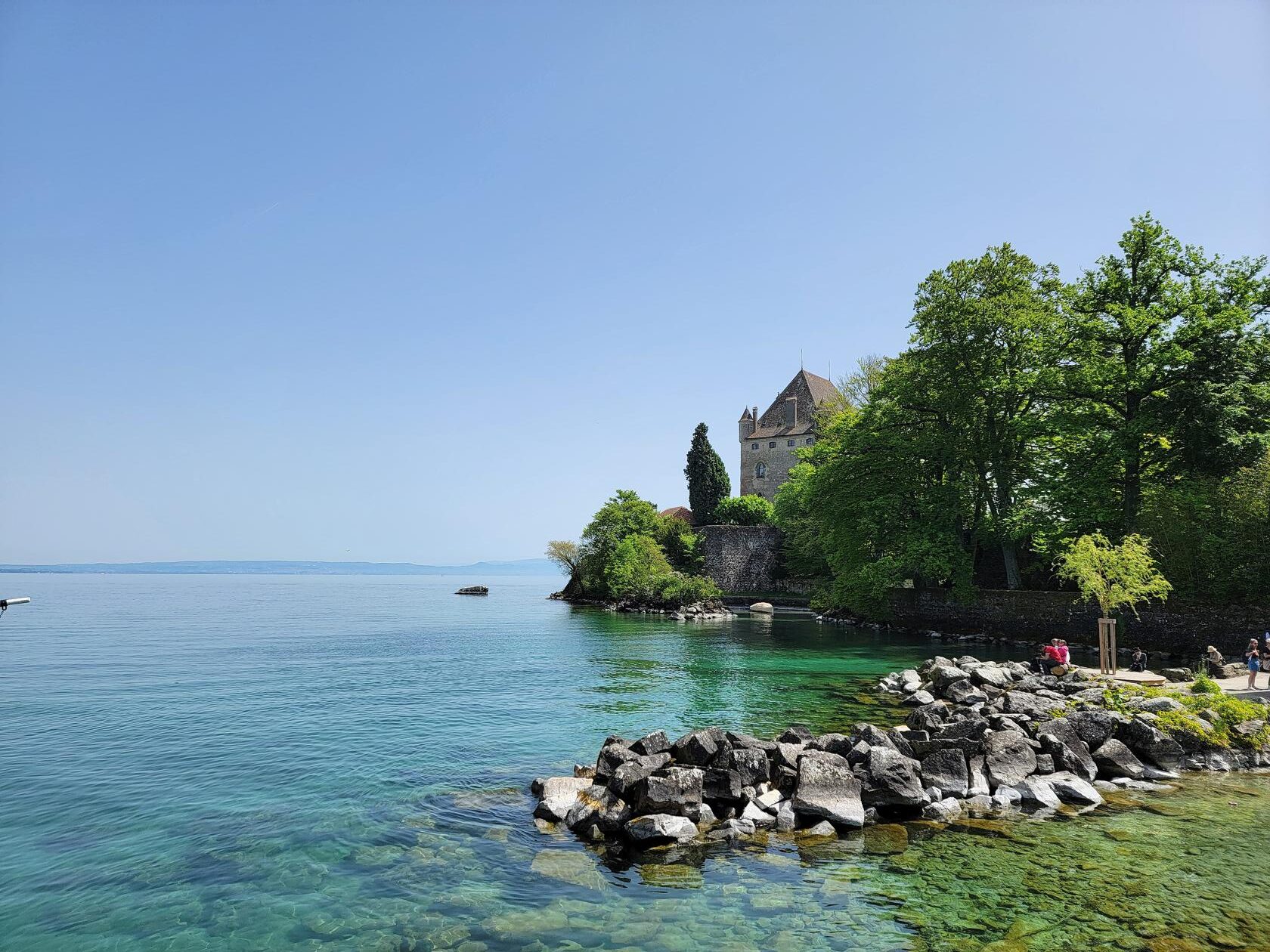
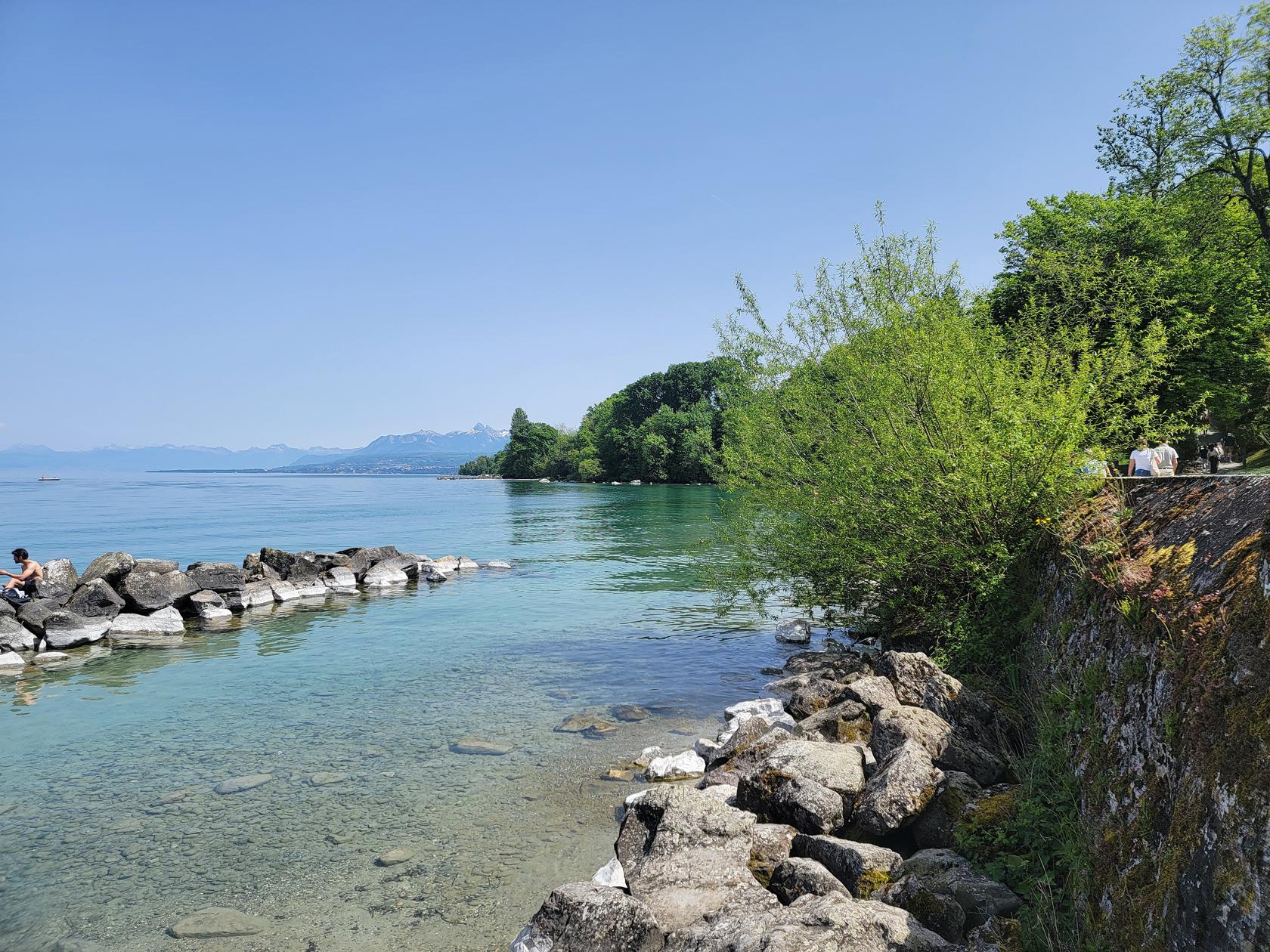
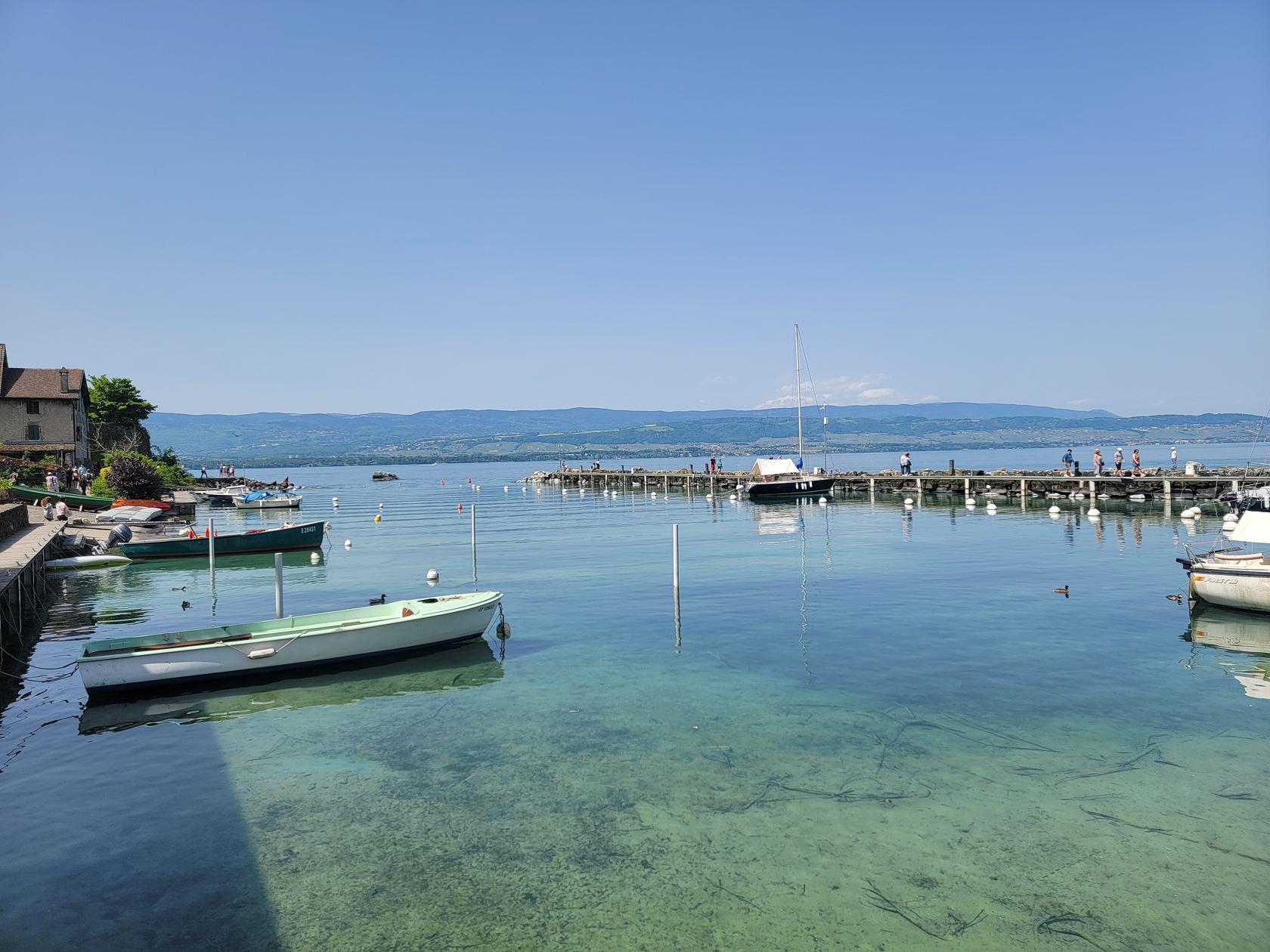
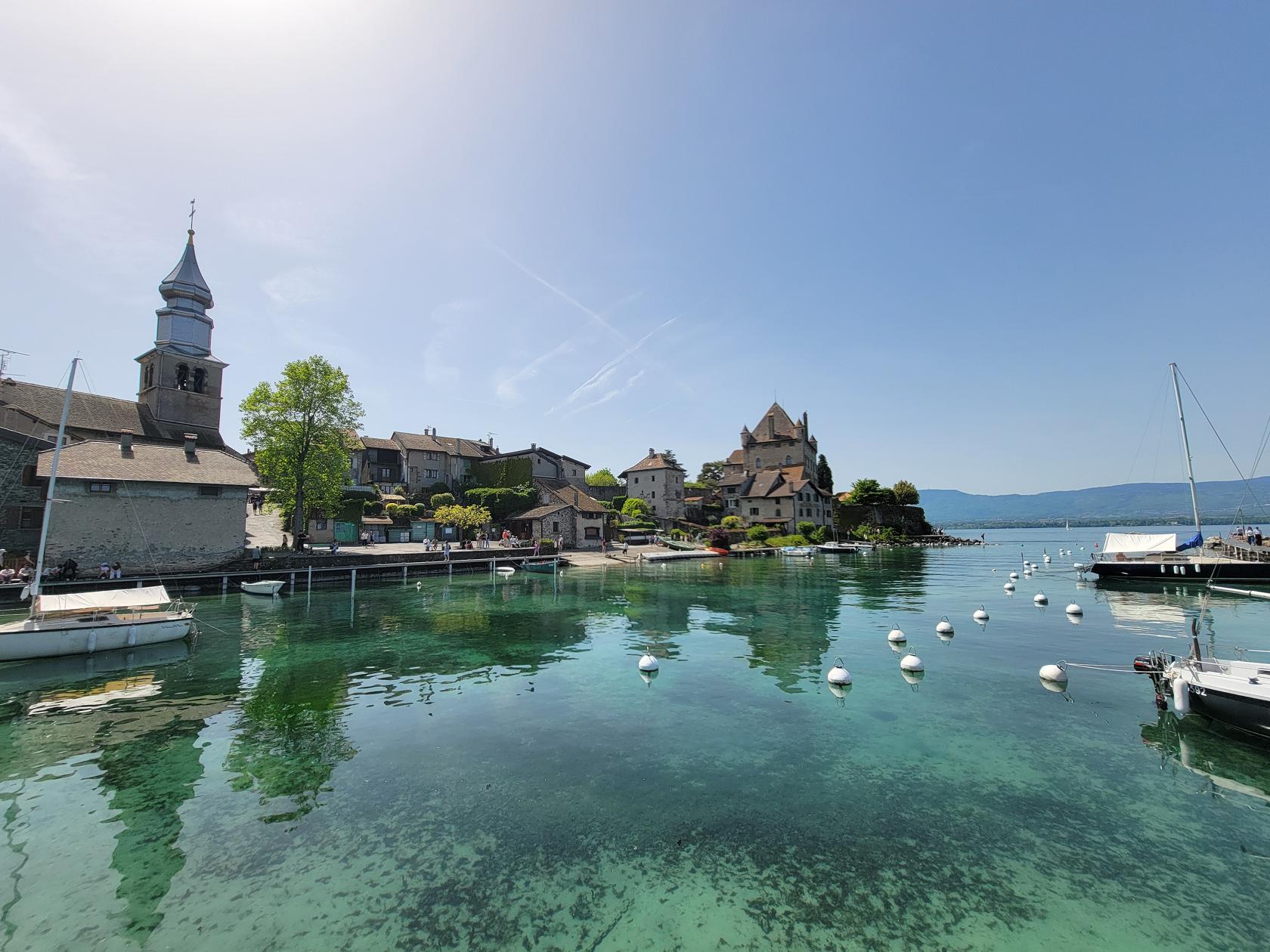
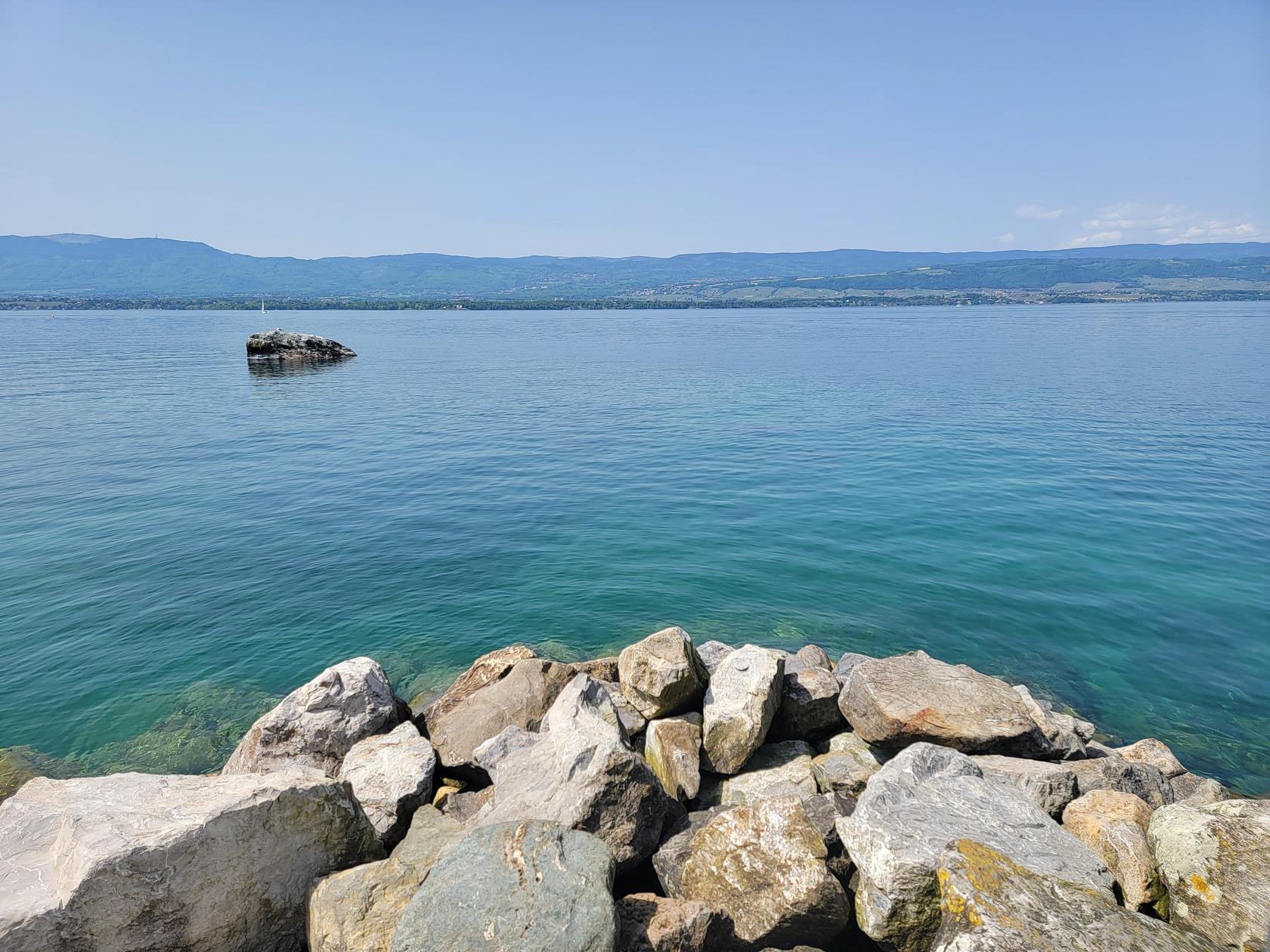
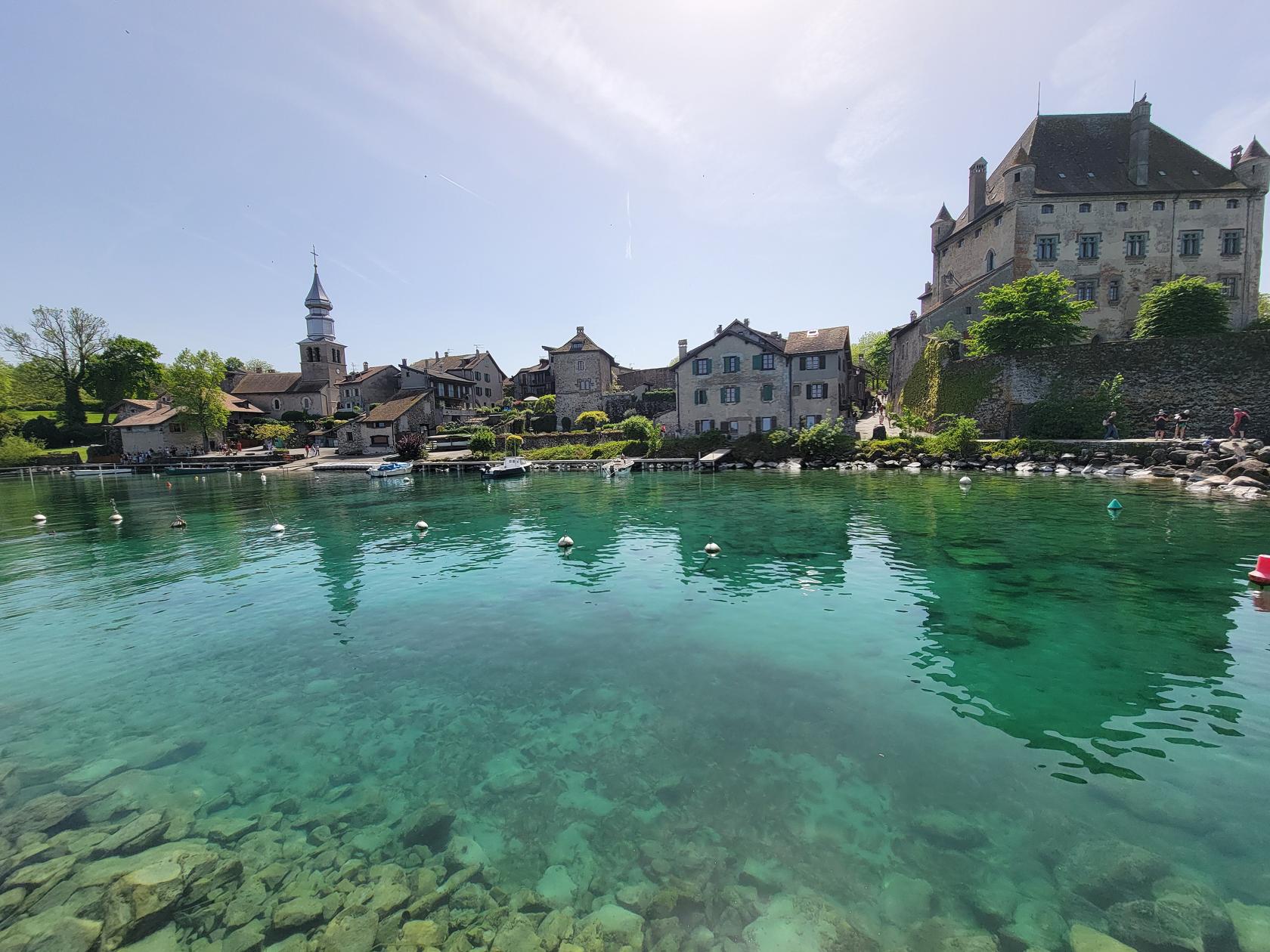
There is a small church closer to the water, simple but apparently still in use. The area by the water has a jetty that it used by locals to swim off of and to also dock boats that come in from the lake occasionally.
Ancien Port de Plaisance d’Yvoire – Yvoire, France
Ancien Port de Plaisance d’Yvoire – Yvoire, France
Ancien Port de Plaisance d’Yvoire – Yvoire, France
Ancien Port de Plaisance d’Yvoire – Yvoire, France
Ancien Port de Plaisance d’Yvoire – Yvoire, France
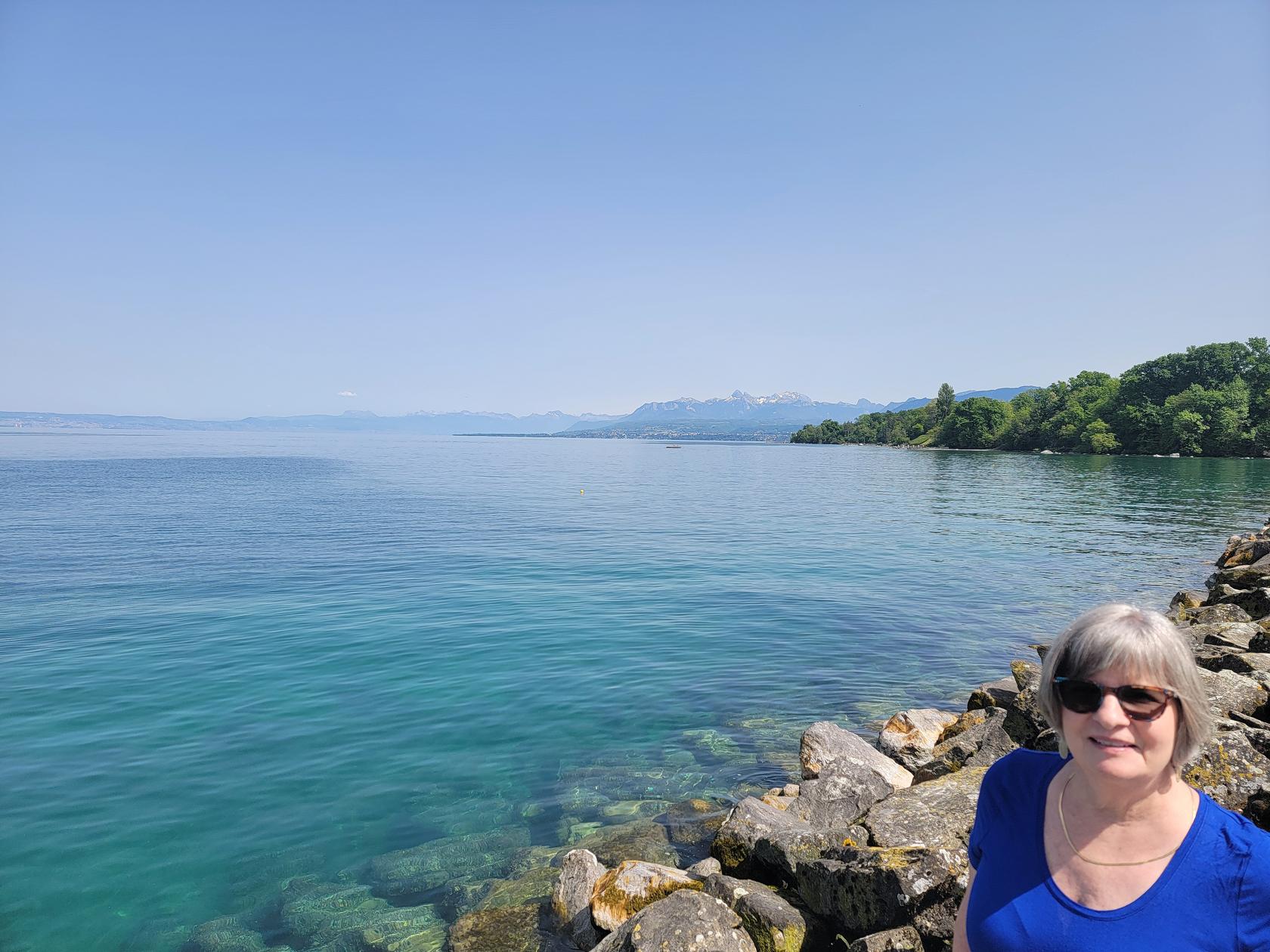
Ancien Port de Plaisance d’Yvoire – Patti – Yvoire, France
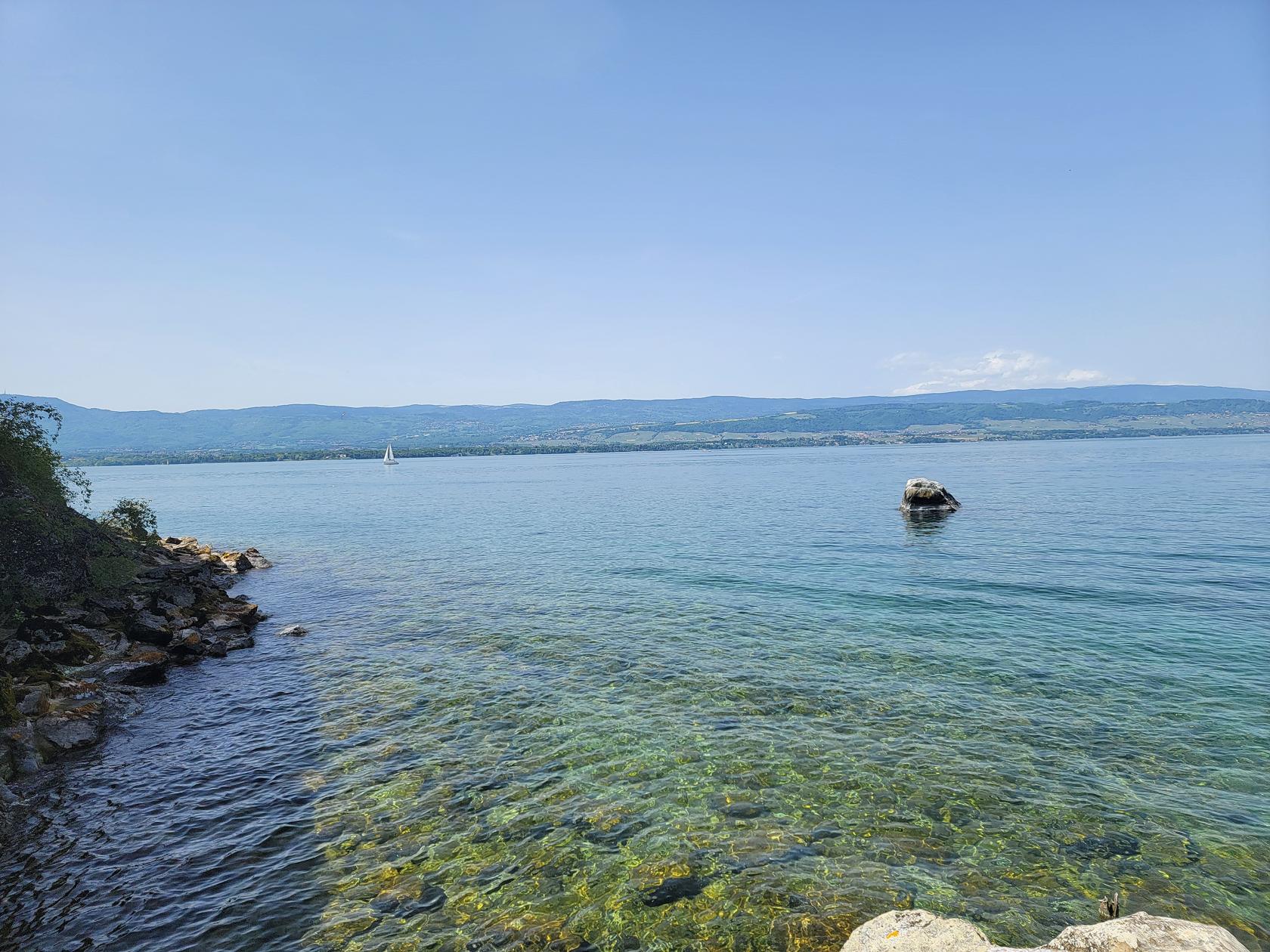
Ancien Port de Plaisance d’Yvoire – Glacier Rock – Yvoire, France
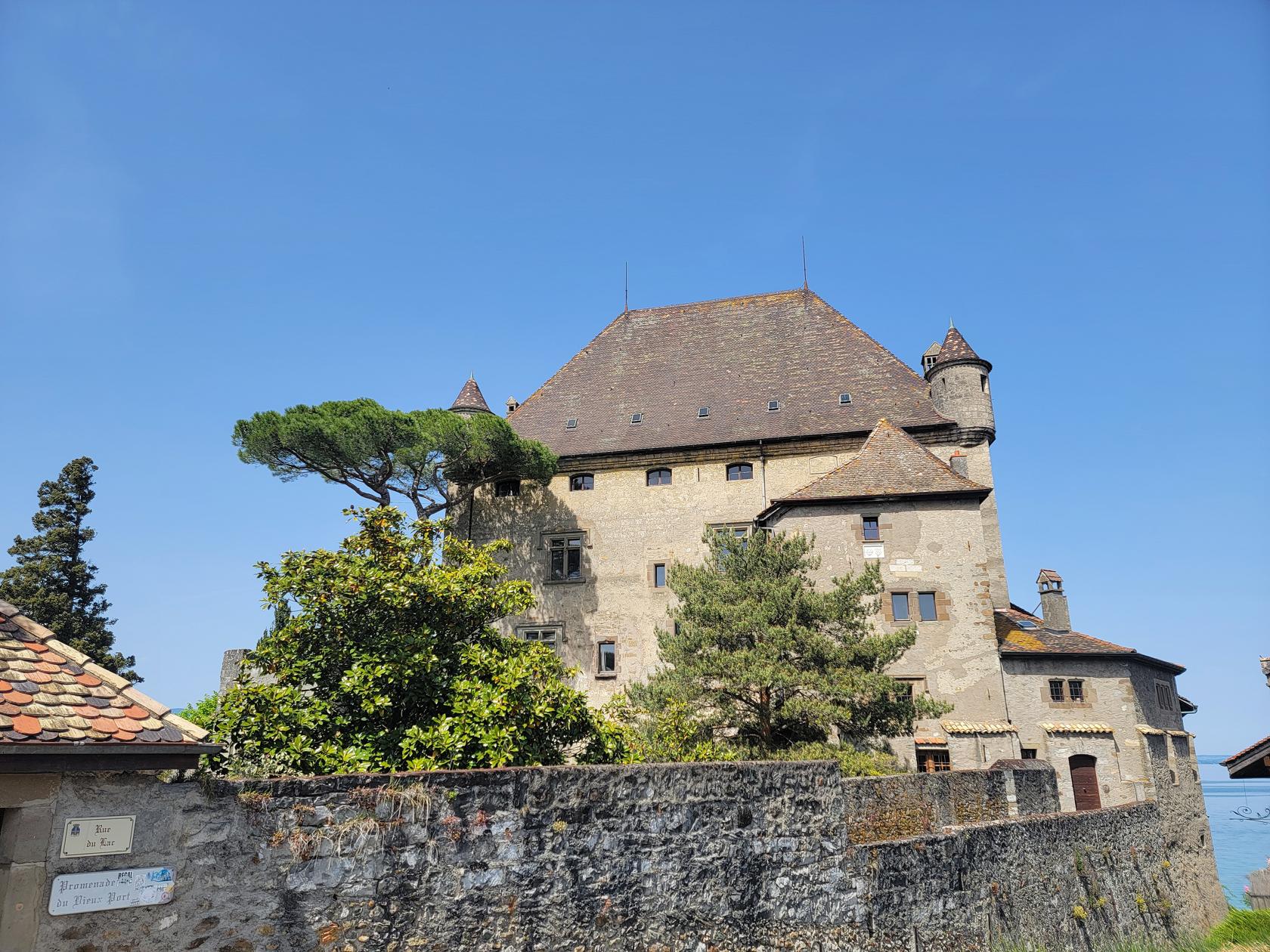
Château d’Yvoire – Yvoire, France
Restaurants
Restaurant Les Jardins du Léman
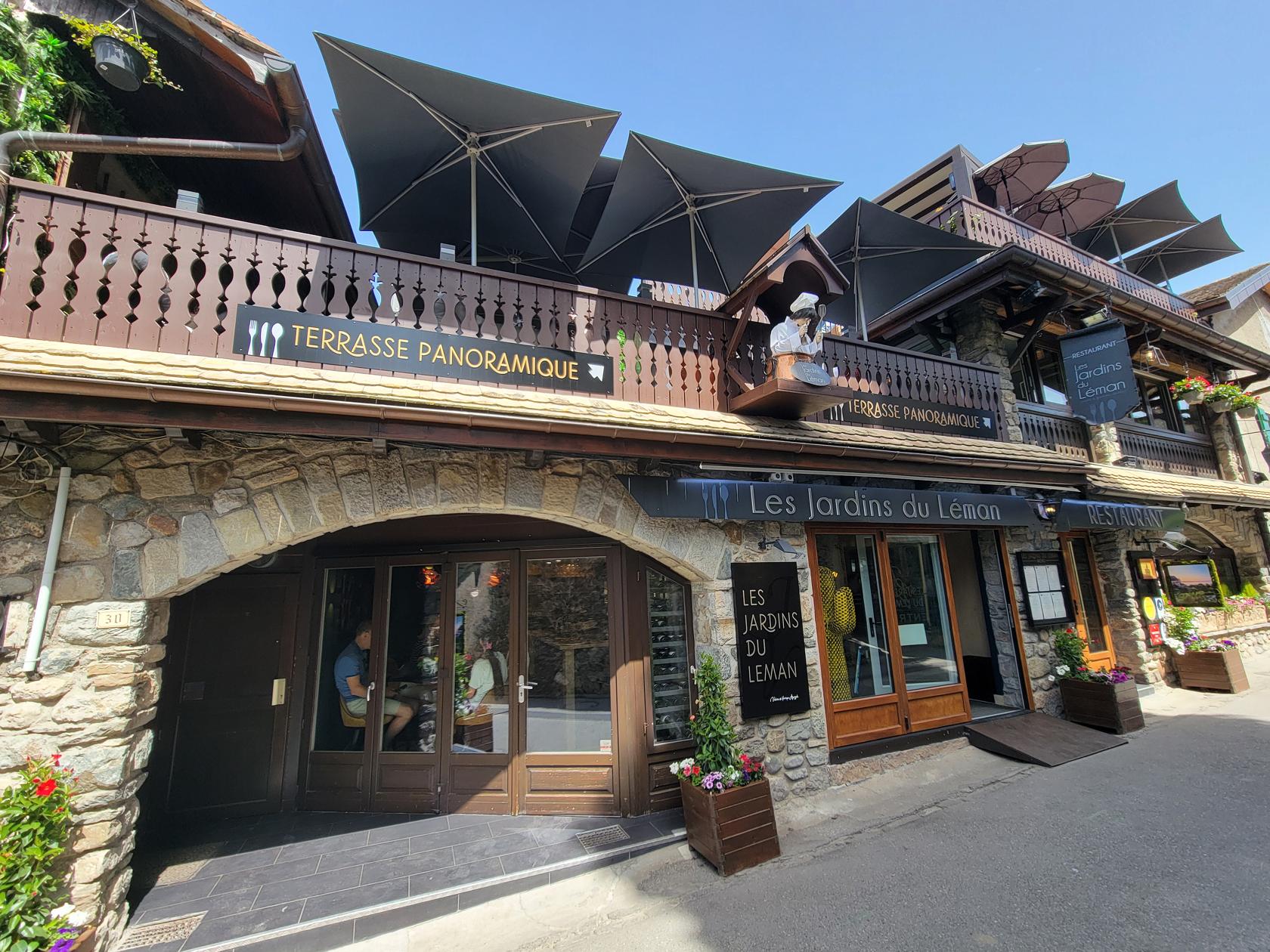
A short walk up the Rue du Port is Les Jardins du Léman restaurant, which has two terraces, a lower and an upper one, where you ostensibly have an unobstructed view of the town and the lake. Since we did not have reservations, we were on the lower terrace, which still was very nice.
Les Jardines du Léman restaurant – Entrance – Yvoire, France
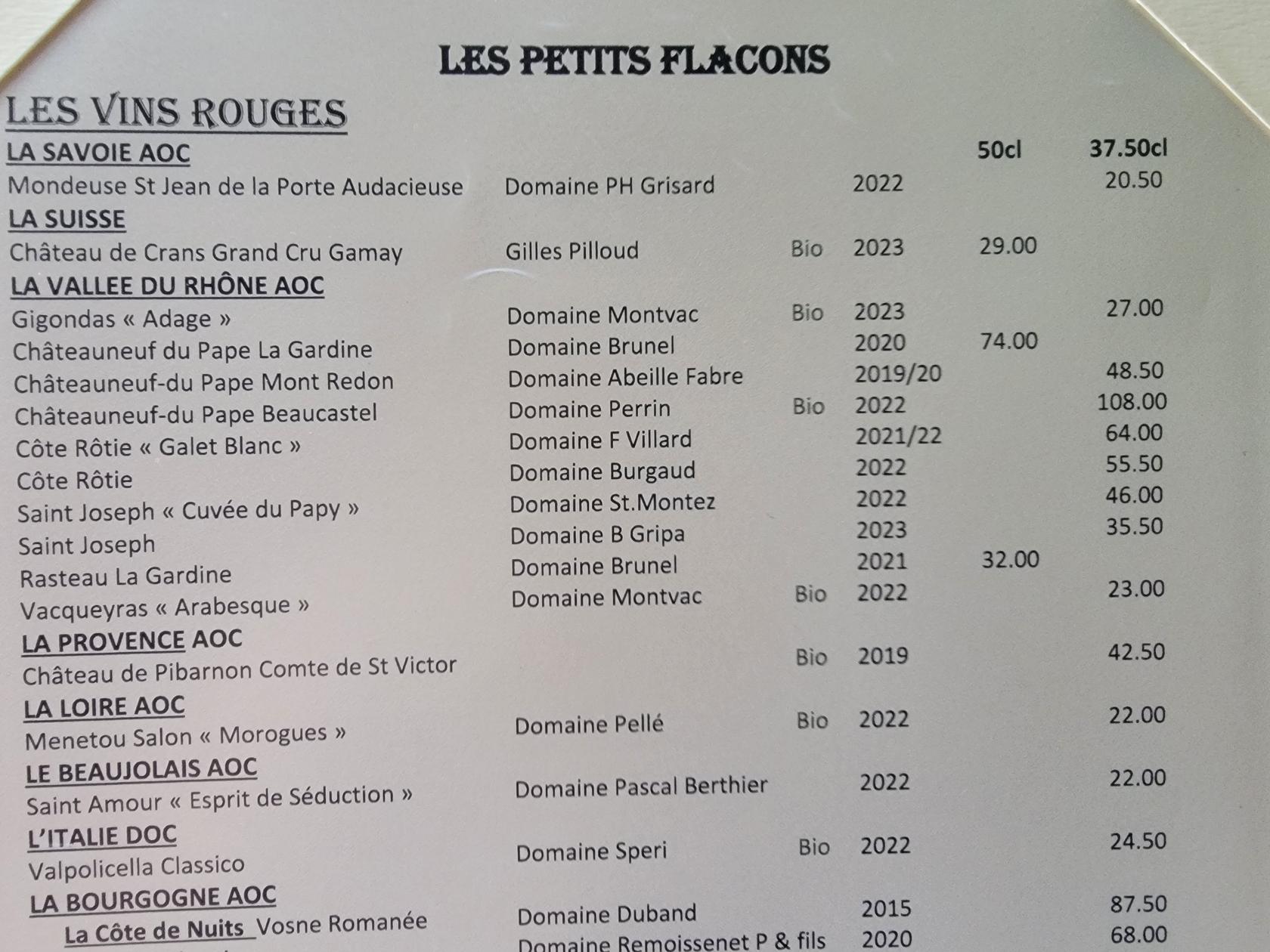
Les Jardines du Léman restaurant – Wine Menu – Yvoire, France
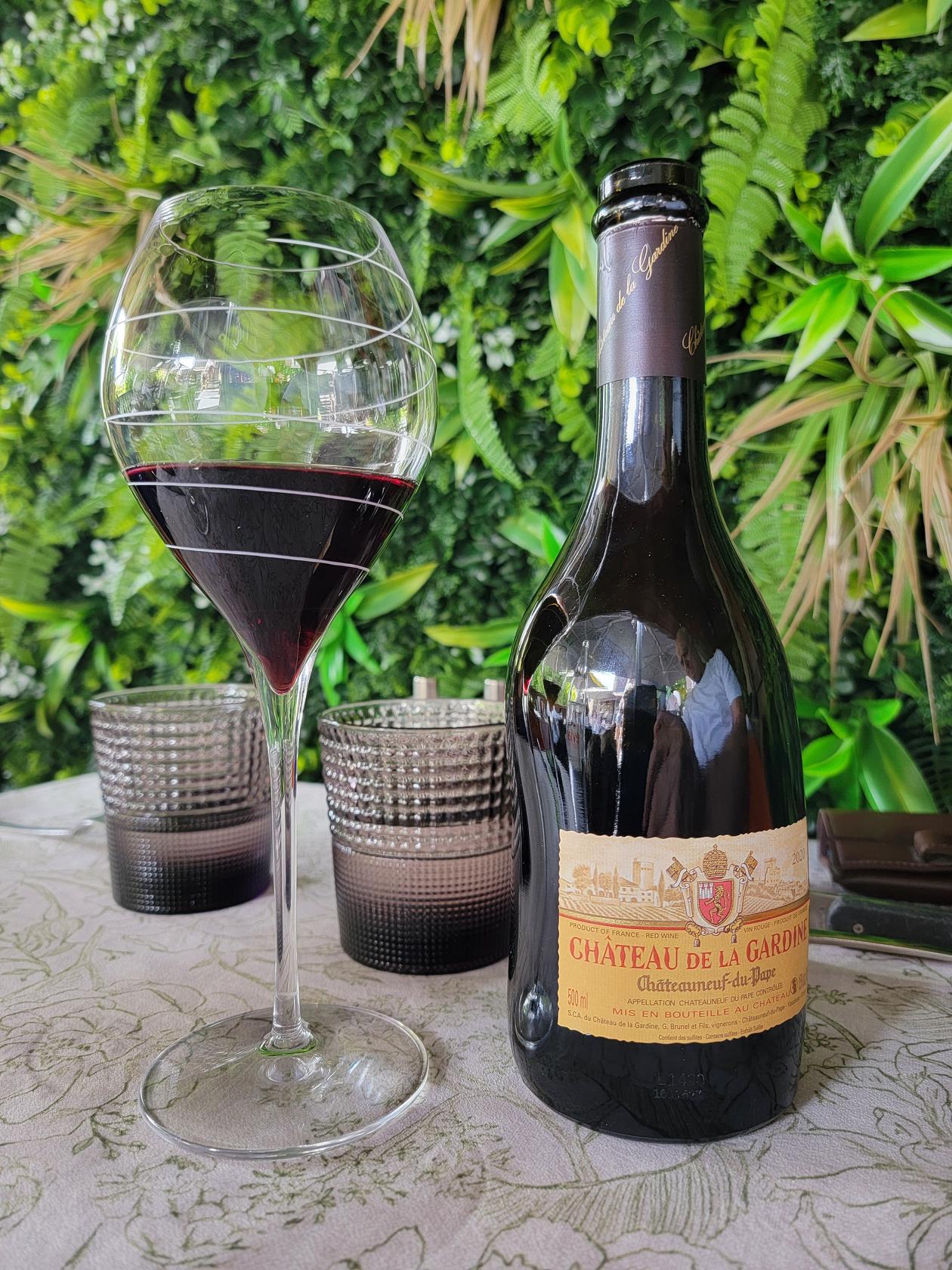
Les Jardines du Léman restaurant – Chateau de la Gardine – Yvoire, France
The staff is attentive at first, then after you’ve ordered, only check on you periodically. So, be prepared to wait a bit, they do become very busy for lunch.
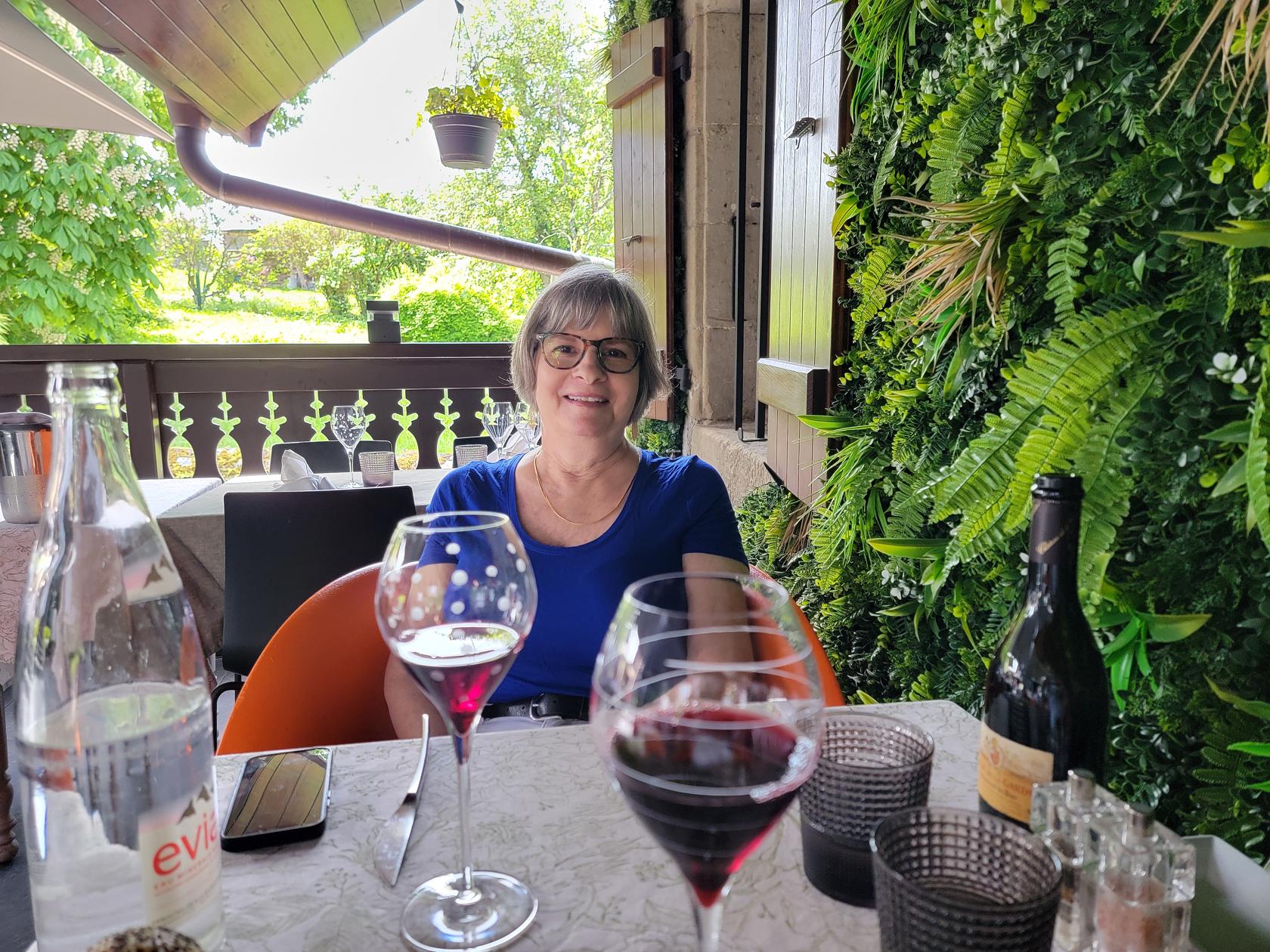
Les Jardines du Léman restaurant – Patti on Terrace – Yvoire, France
The wines here are first rate and I can commend the Chateauneuf du Pape – La Gardine, Domaine Brunel. A beautifully balanced wine with spice and fruity overtones that will go well with most non-fish dishes. It is only offered in half-bottles, which was plenty for lunch and we thoroughly enjoyed it.
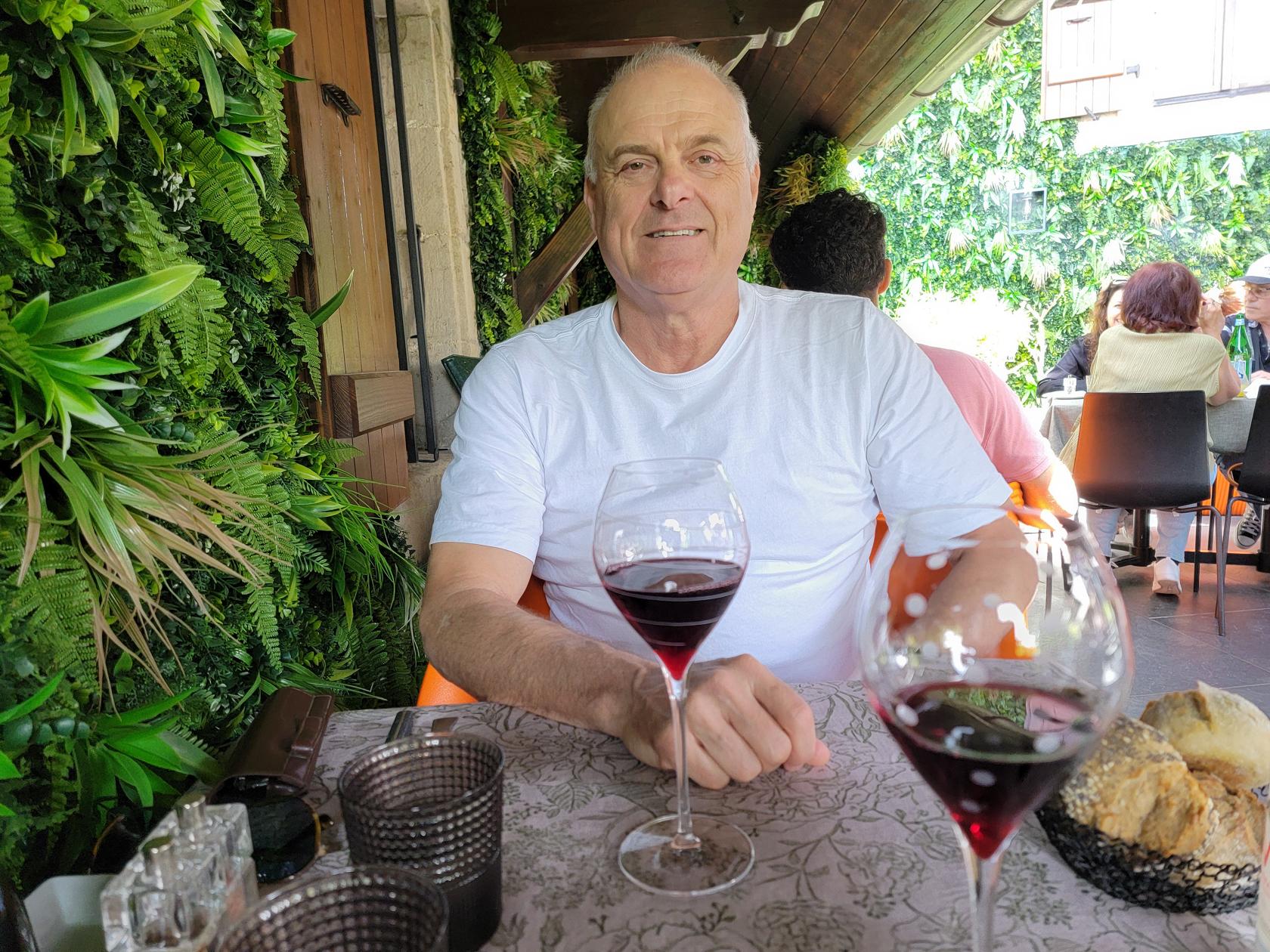
Les Jardines du Léman restaurant – Erick on Terrace – Yvoire, France
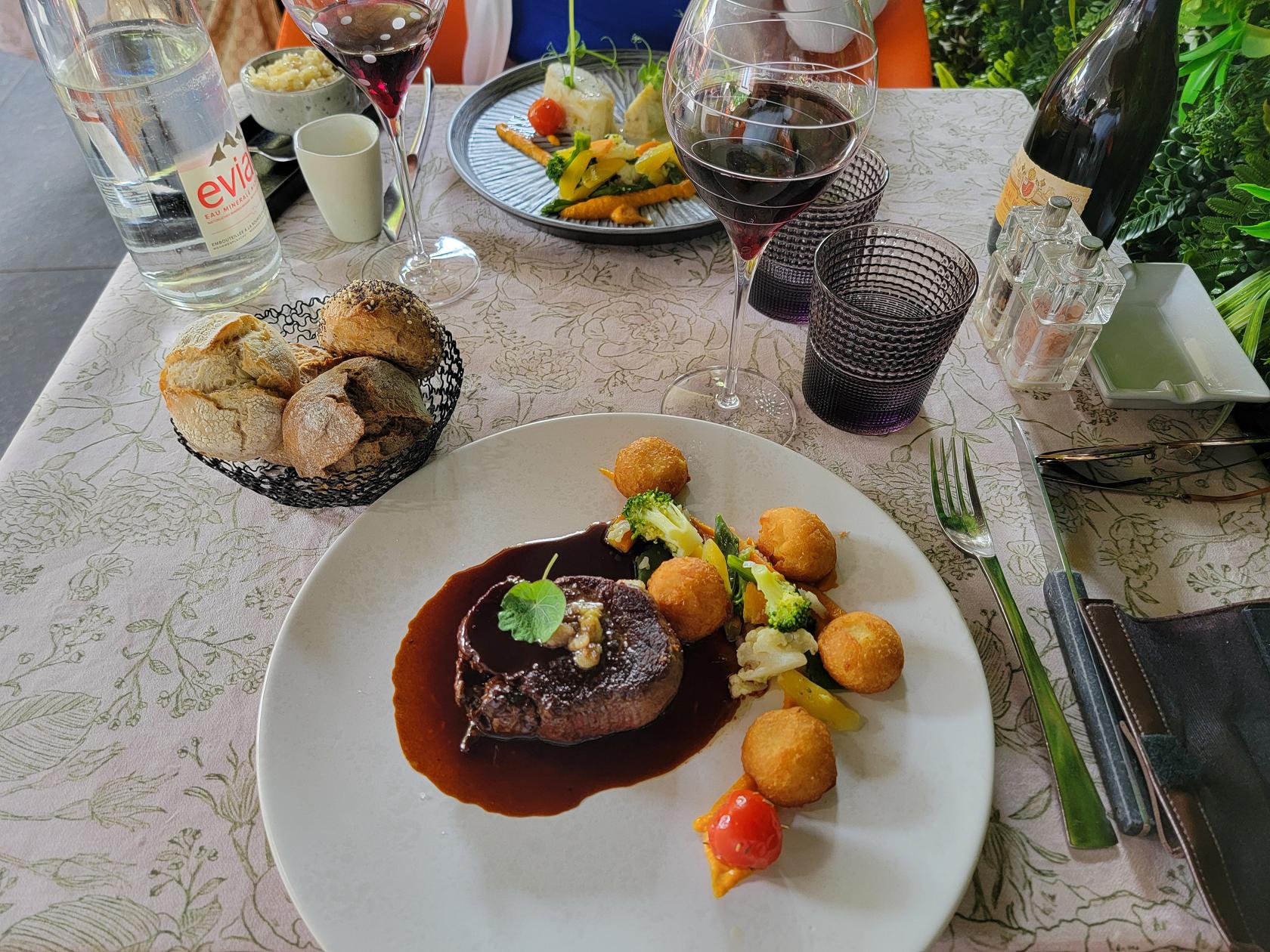
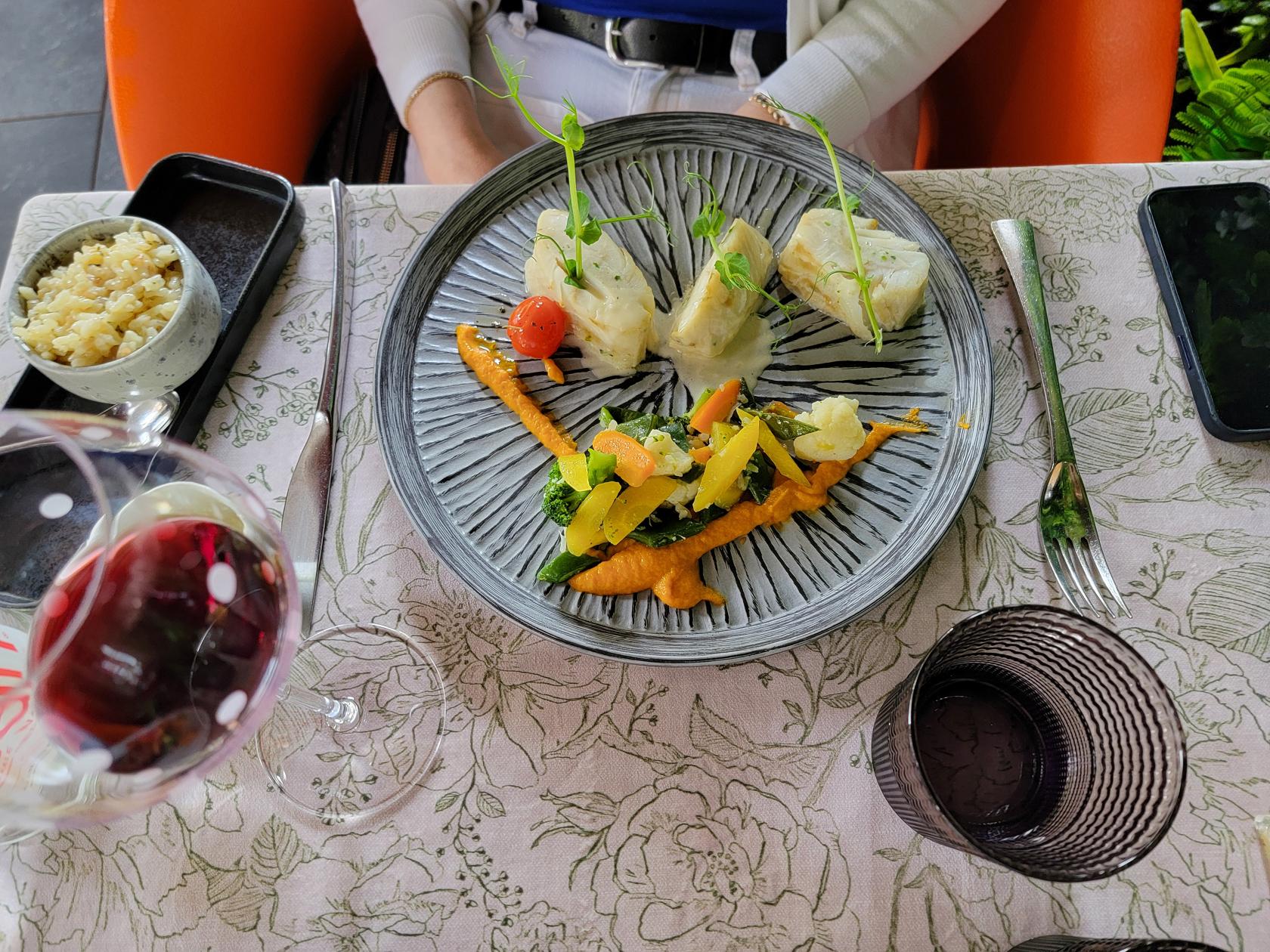
I ordered the Beef, Charolais Breed, Fillet-Stuffed, in the Salt Pan Black Diamond Sauce with Melanosporum Truffle Emulsion of Ratte Potatoes with Vanilla Oil. It was perfectly cooked and some of the best French food I have had in a long time. Patti had the Turbot fish with seasonal vegetables over squash sauce and a side of cauliflower.
Les Jardines du Léman restaurant – Beef with truffel sauce and potatoes – Yvoire, France
Les Jardines du Léman restaurant – Patti’s Turbot and vegetables – Yvoire, France
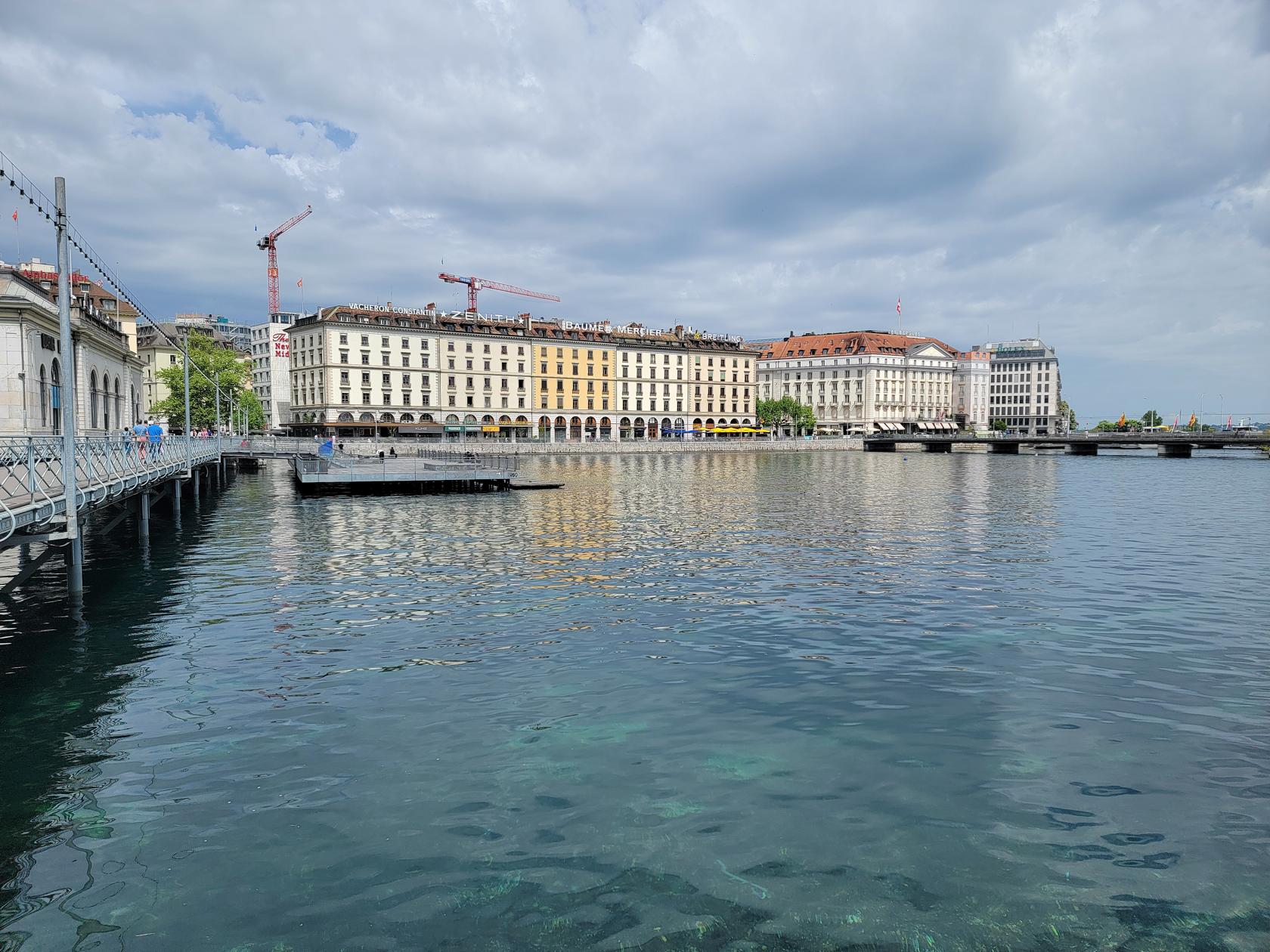
The Watch Capitol of the world is no doubt Genève, Switzerland. Many, if not all, of the major buildings that surround Lake Léman are adorned with signs from almost every watch manufacturer in Switzerland.
Lake Léman – Clock Manufacturer Signs – Geneva, Switzerland
Though one would have thought that at this point, old mechanical watches would have out-grown their usefulness, but there must still be enough interest in them to support all the manufacturers. Apparently it is more like the diamond trade, than a typical consumer item.
Geneva – The City
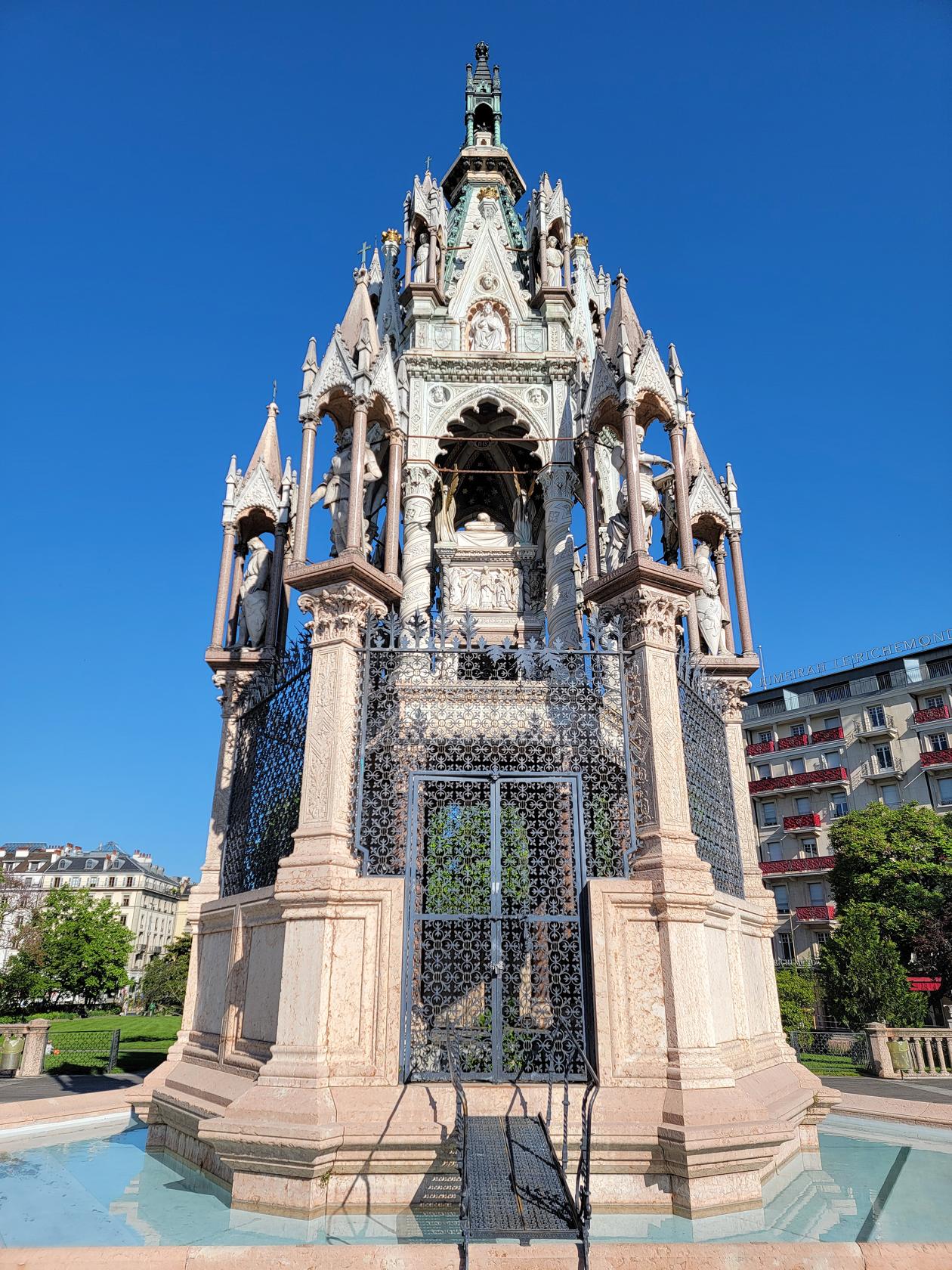
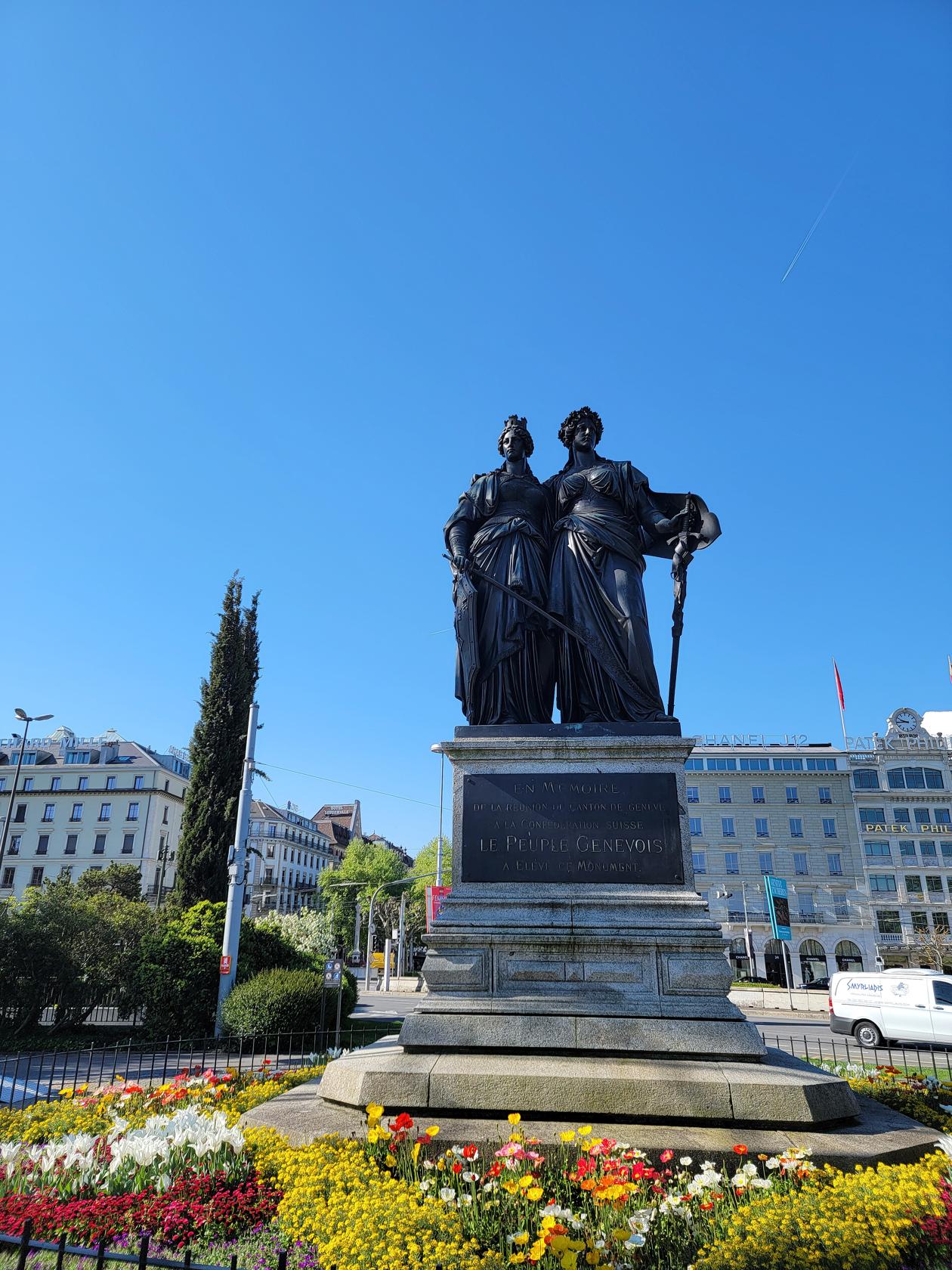
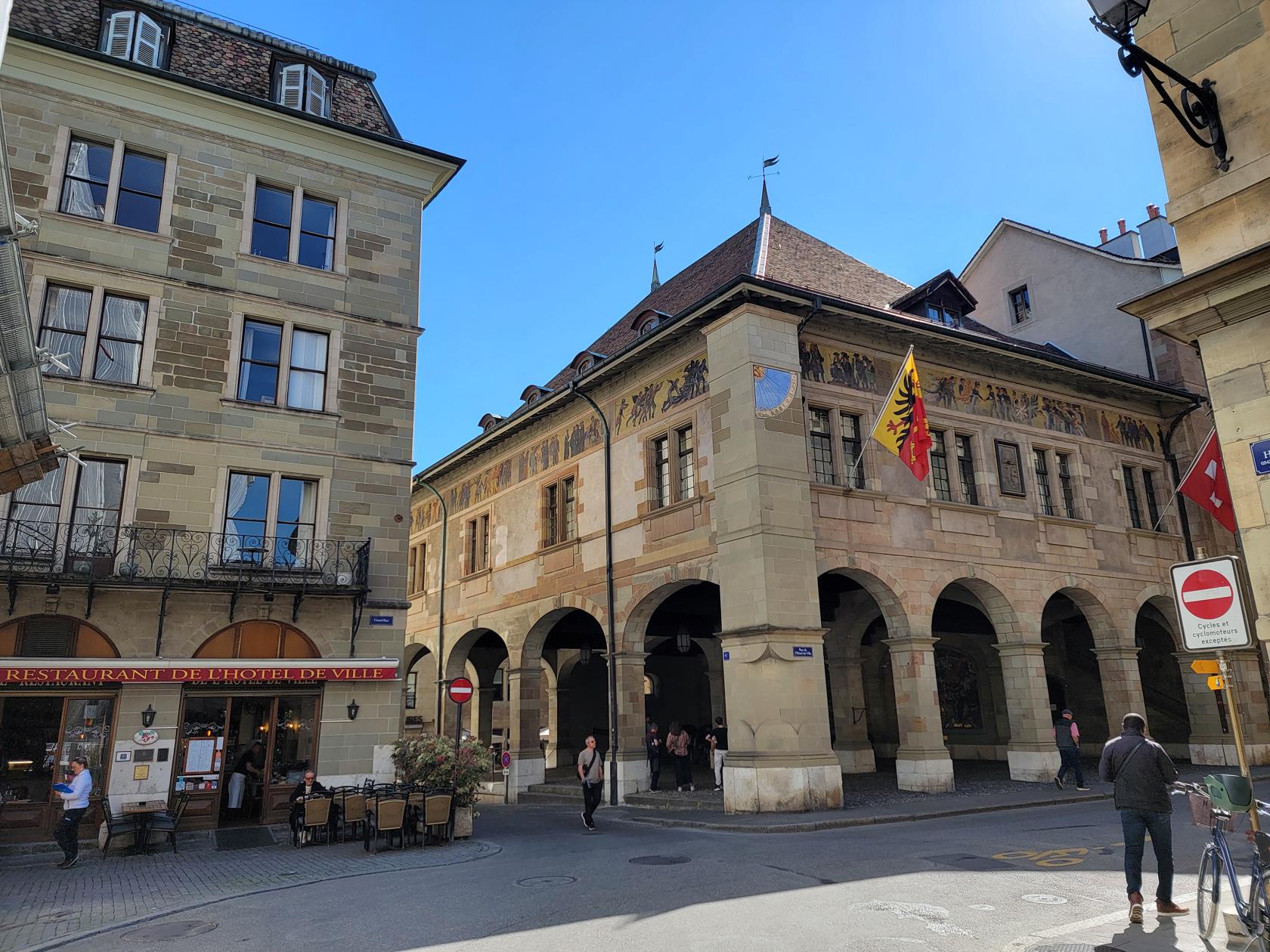
It is difficult to categorize Geneva since the city appears to have many different sections and subsequently a different look and feel around every corner. It some places almost haphazard, where a blend of modern and provincial architectures are often seen close together.
Lake Léman – Brunswick Monument – Geneva, Switzerland
Monument – Geneva, Switzerland
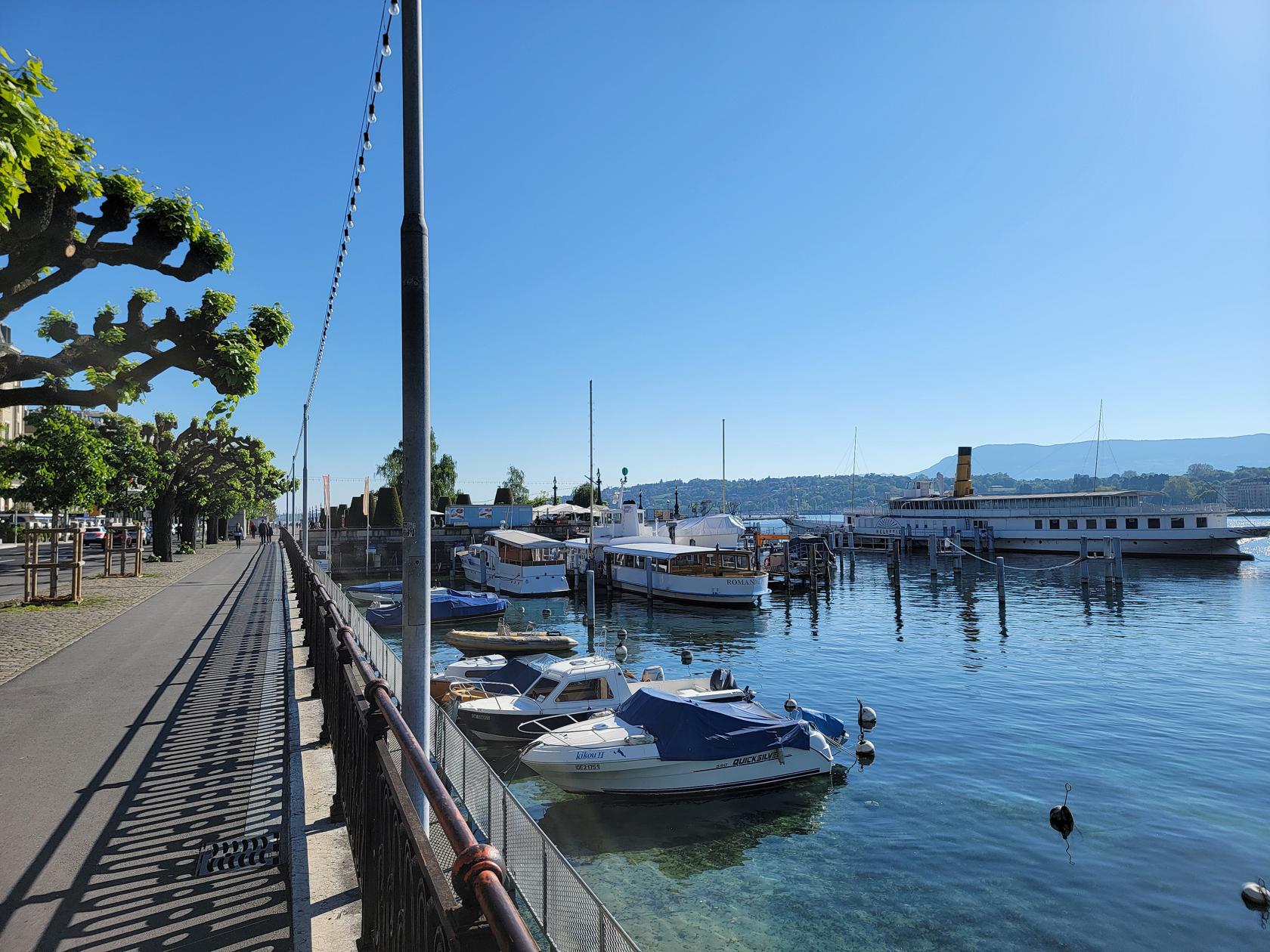
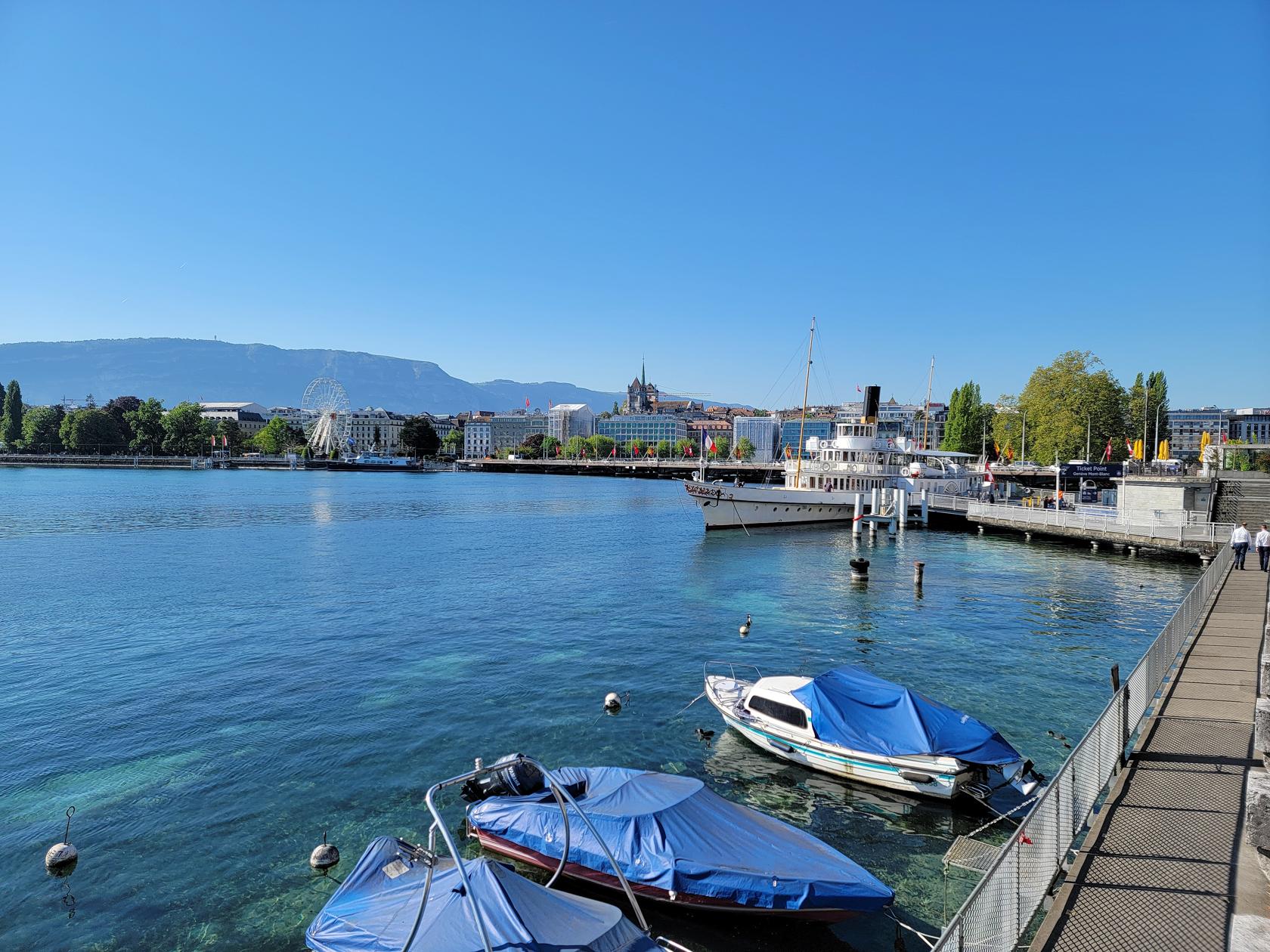
Lake Léman – Point Mount Blanc – Geneva, Switzerland
Lake Léman – Point Mount Blanc – Geneva, Switzerland
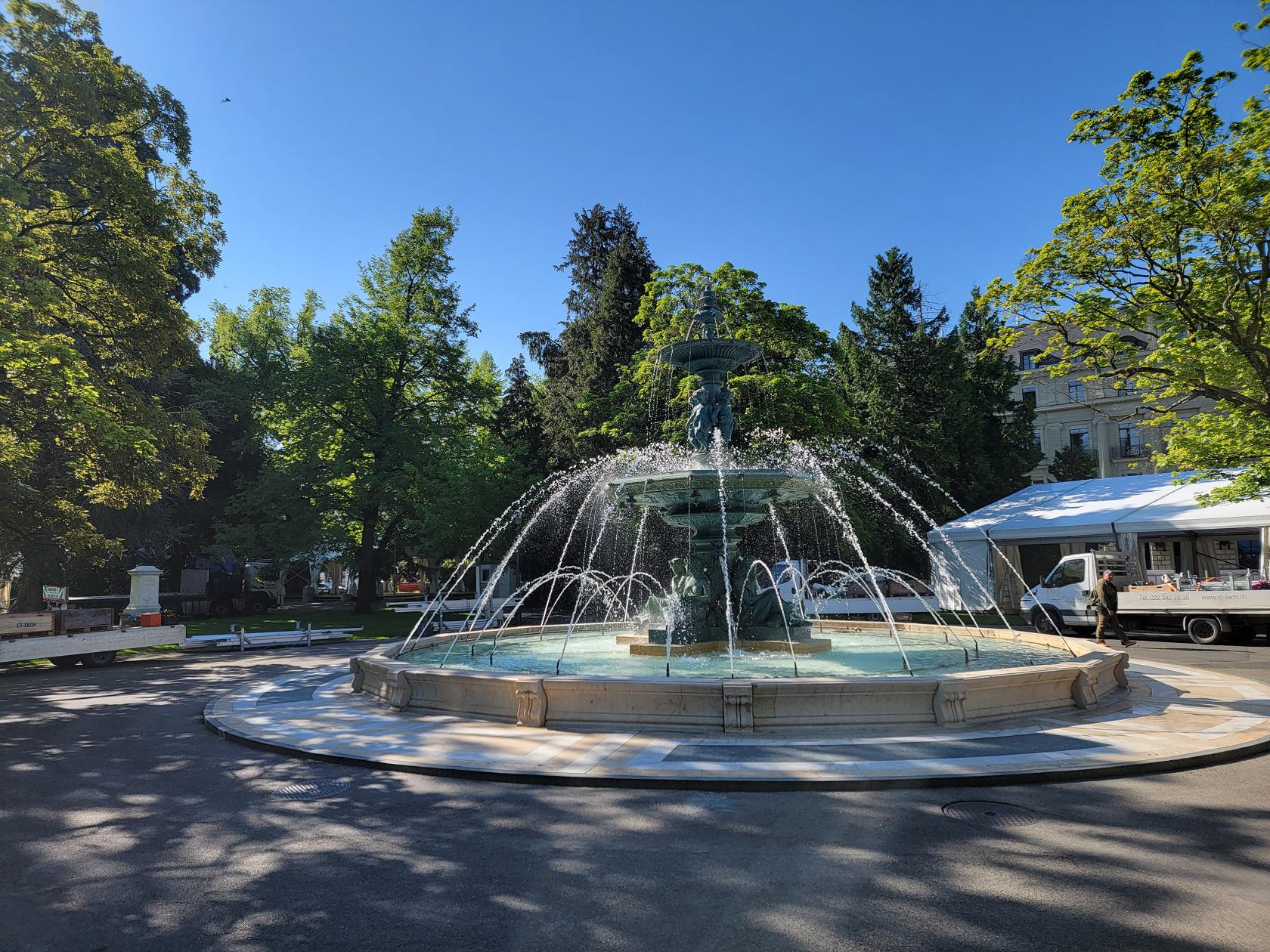
English Gardens – Fountain of the Four Seasons – Geneva, Switzerland
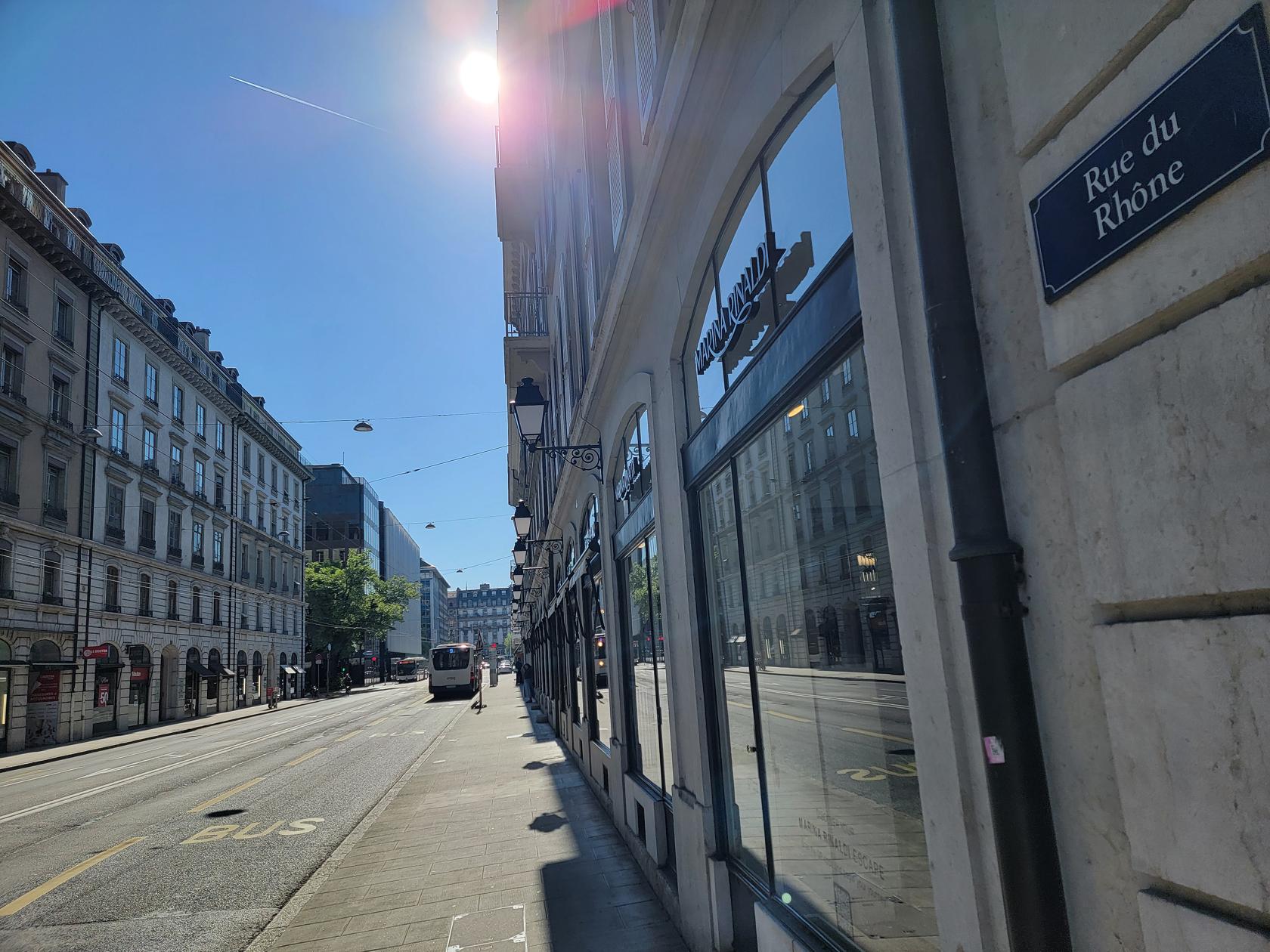
Rue du Rhone – Geneva, Switzerland
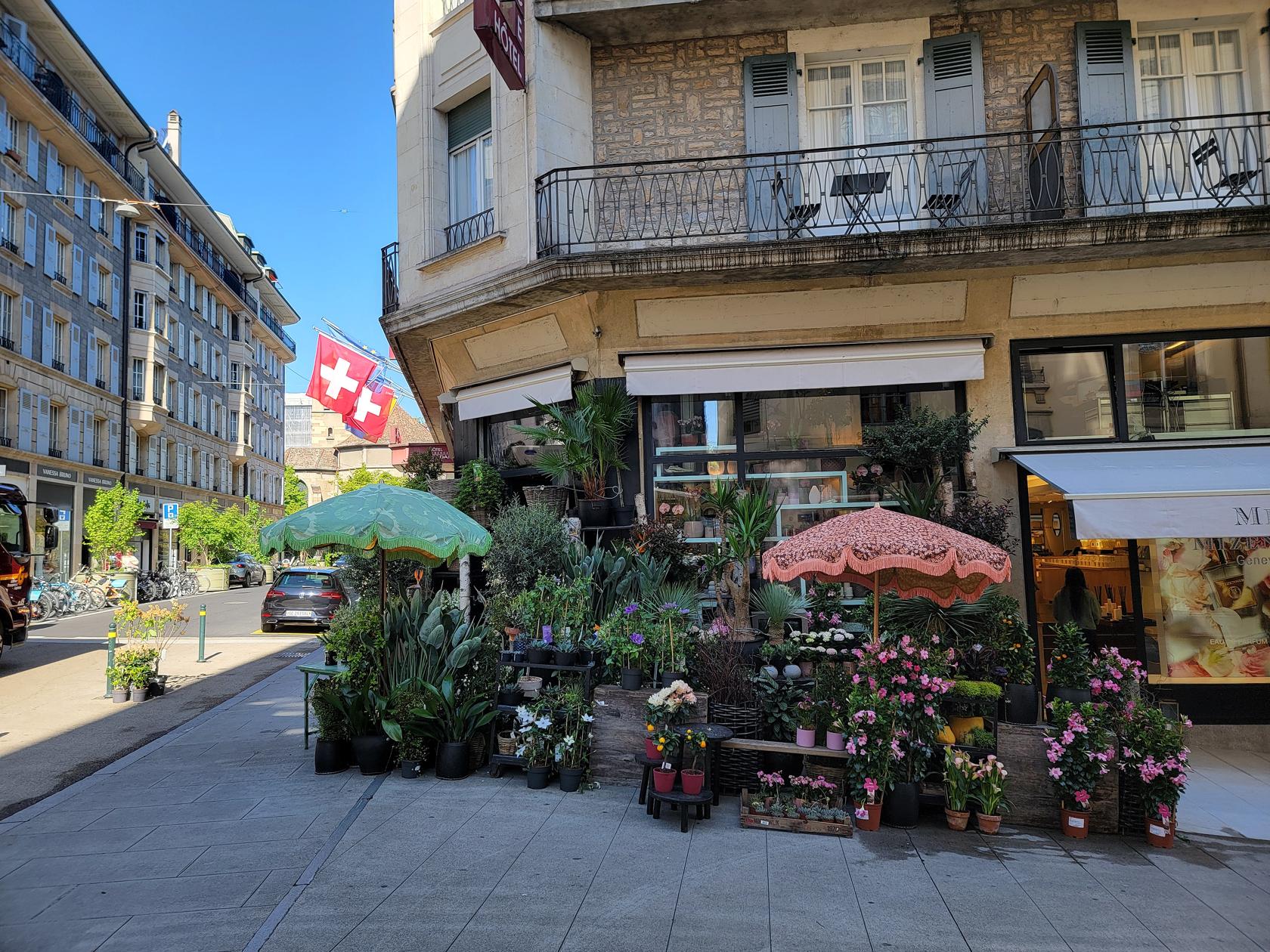
Flower Shop – Geneva, Switzerland
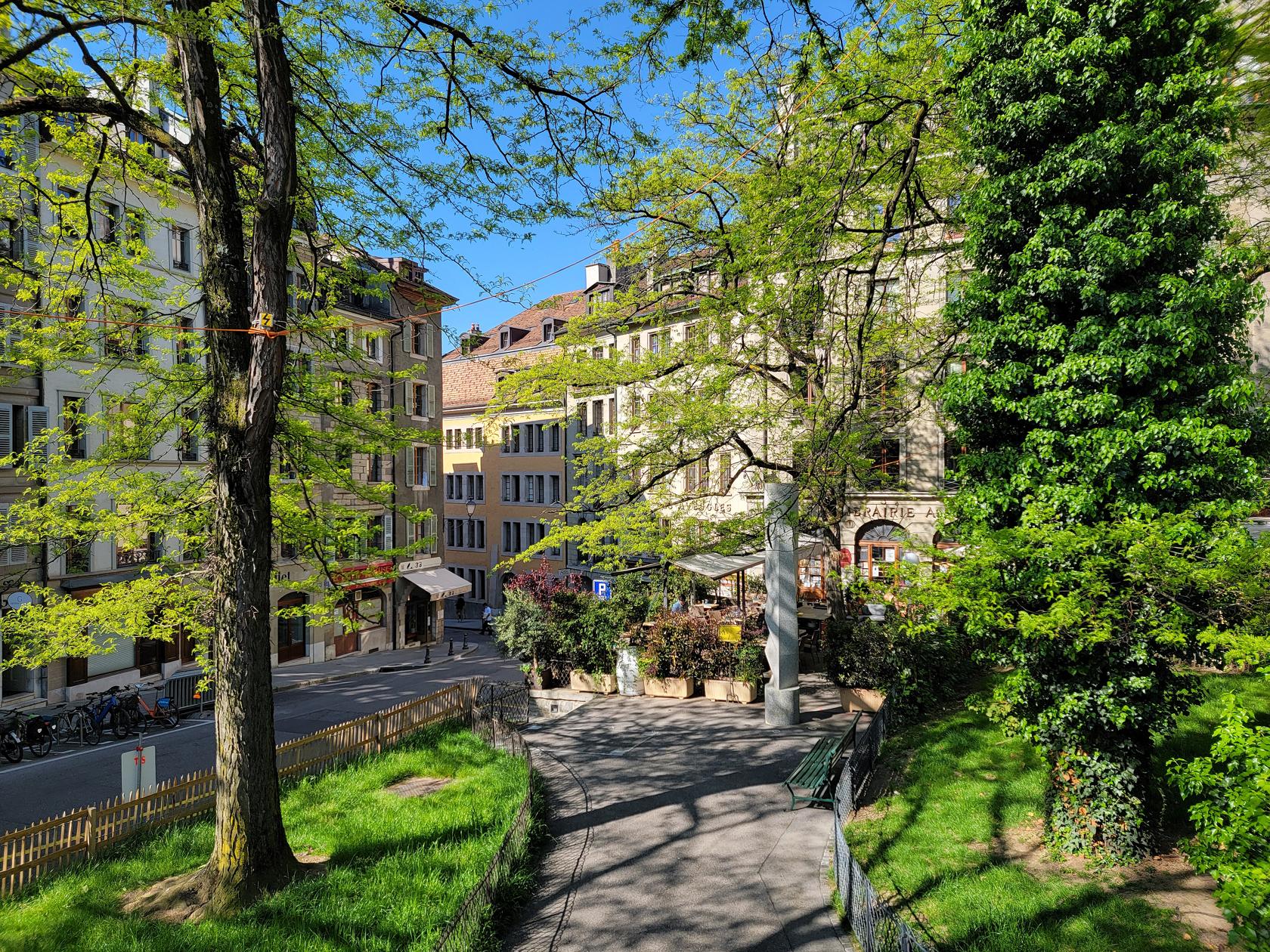
Park – Geneva, Switzerland
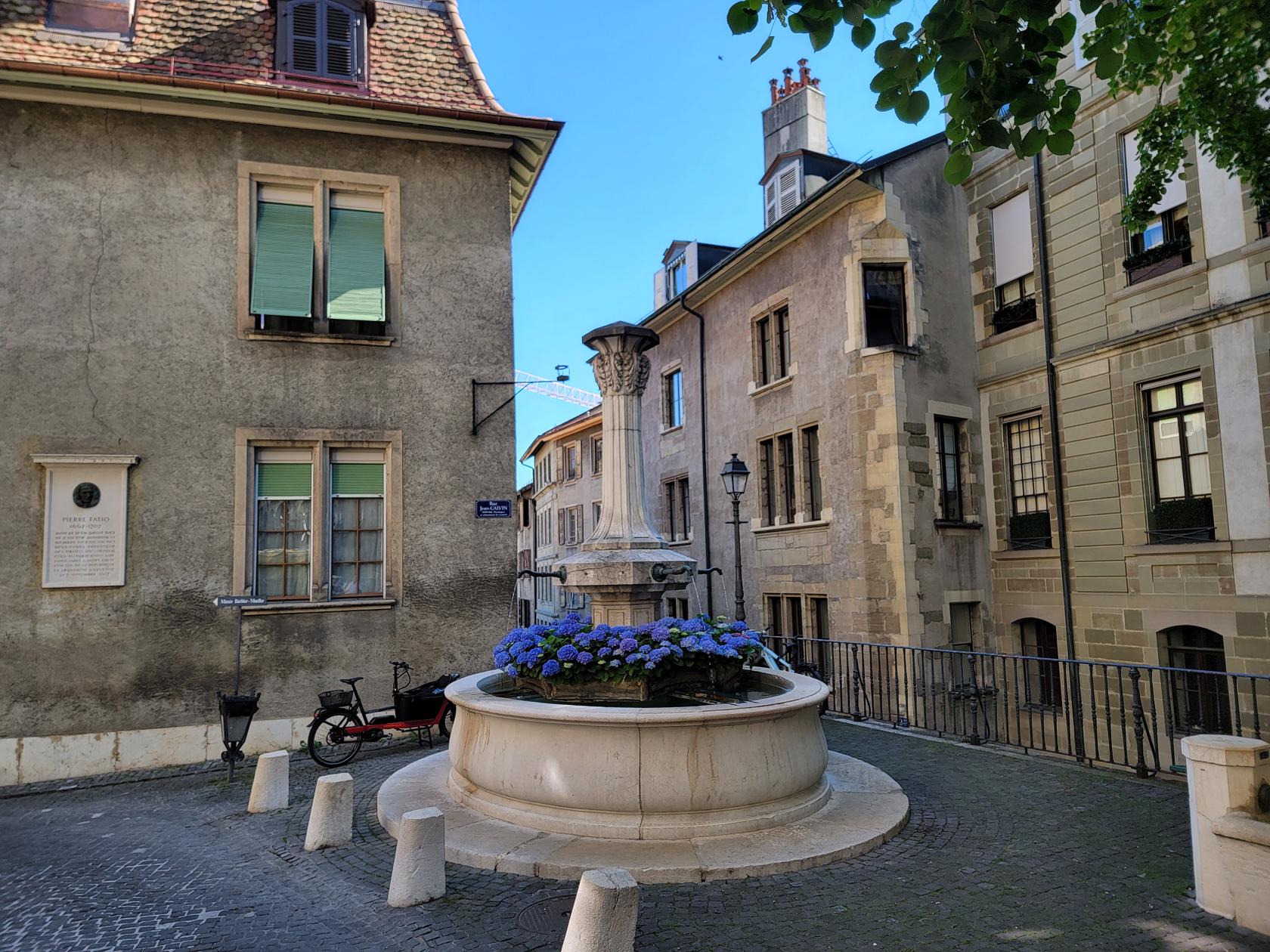
Fountain du Perron – Geneva, Switzerland
L’Ancien Arsenal – Geneva, Switzerland
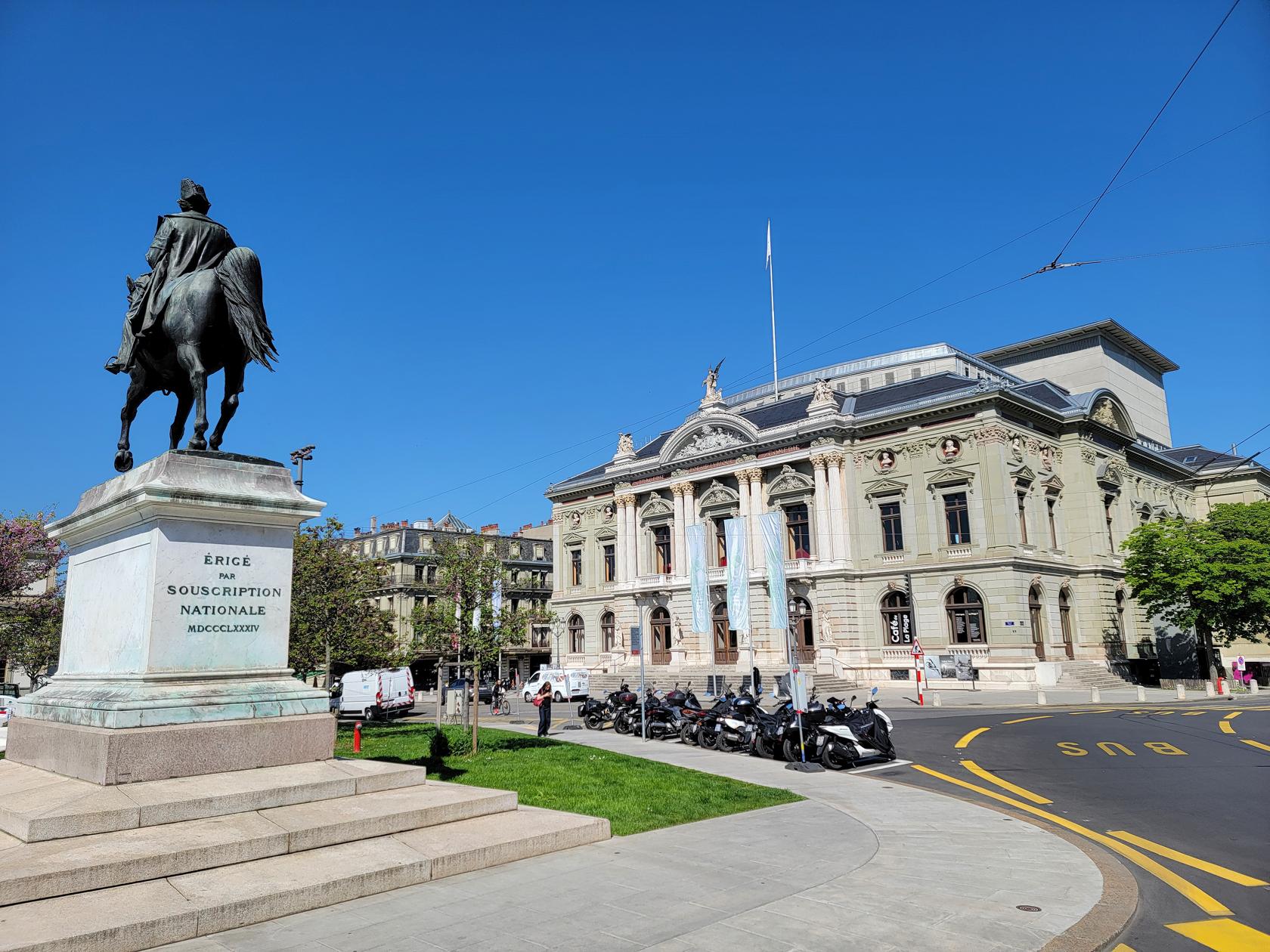
Grand Theater of Geneva – Geneva, Switzerland
Rue de la Corraterie – Geneva, Switzerland
Tour de L’Ille – Tower of the Isle – Geneva, Switzerland
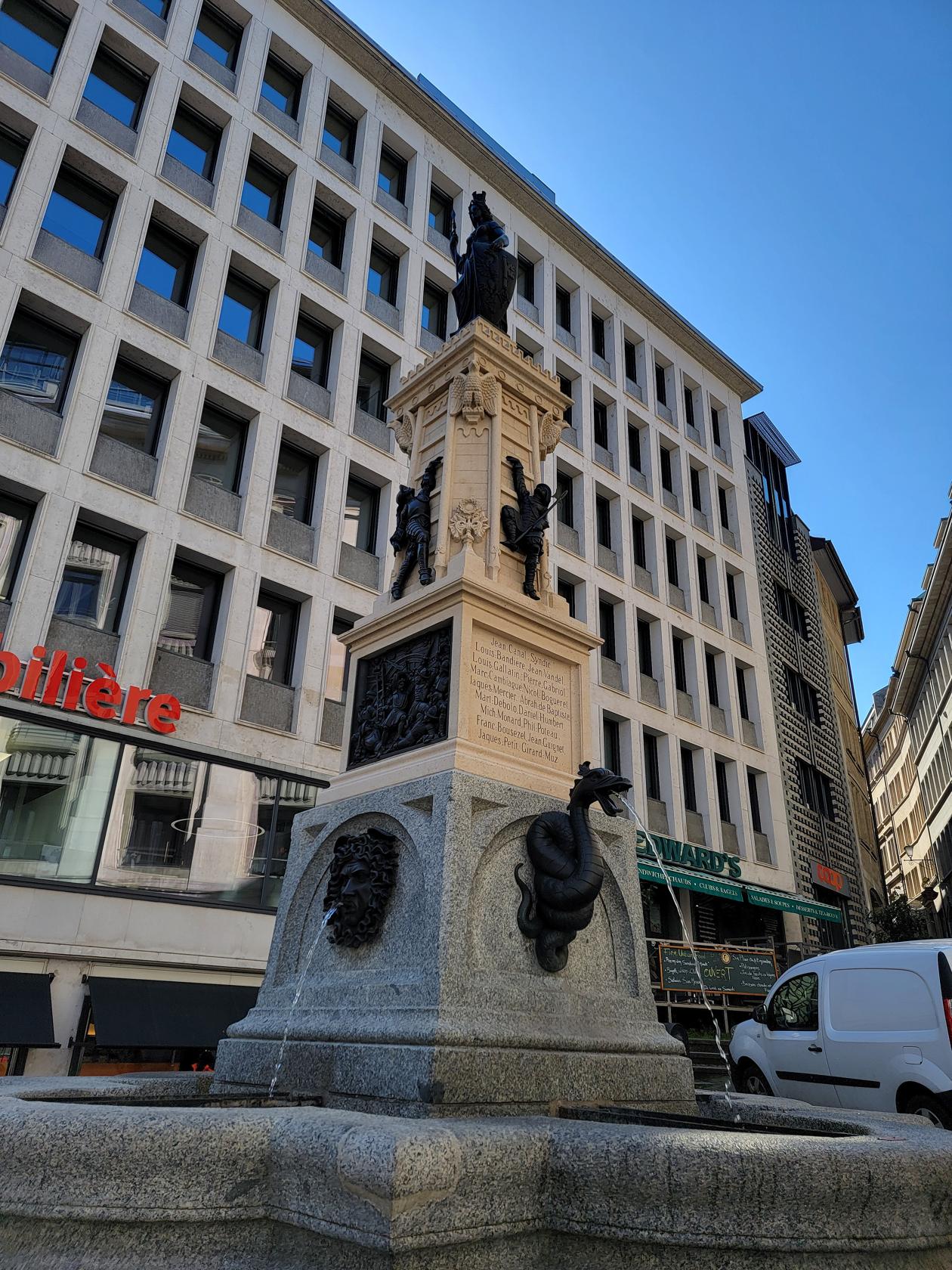
Fontaine de l’Escalade – Geneva, Switzerland
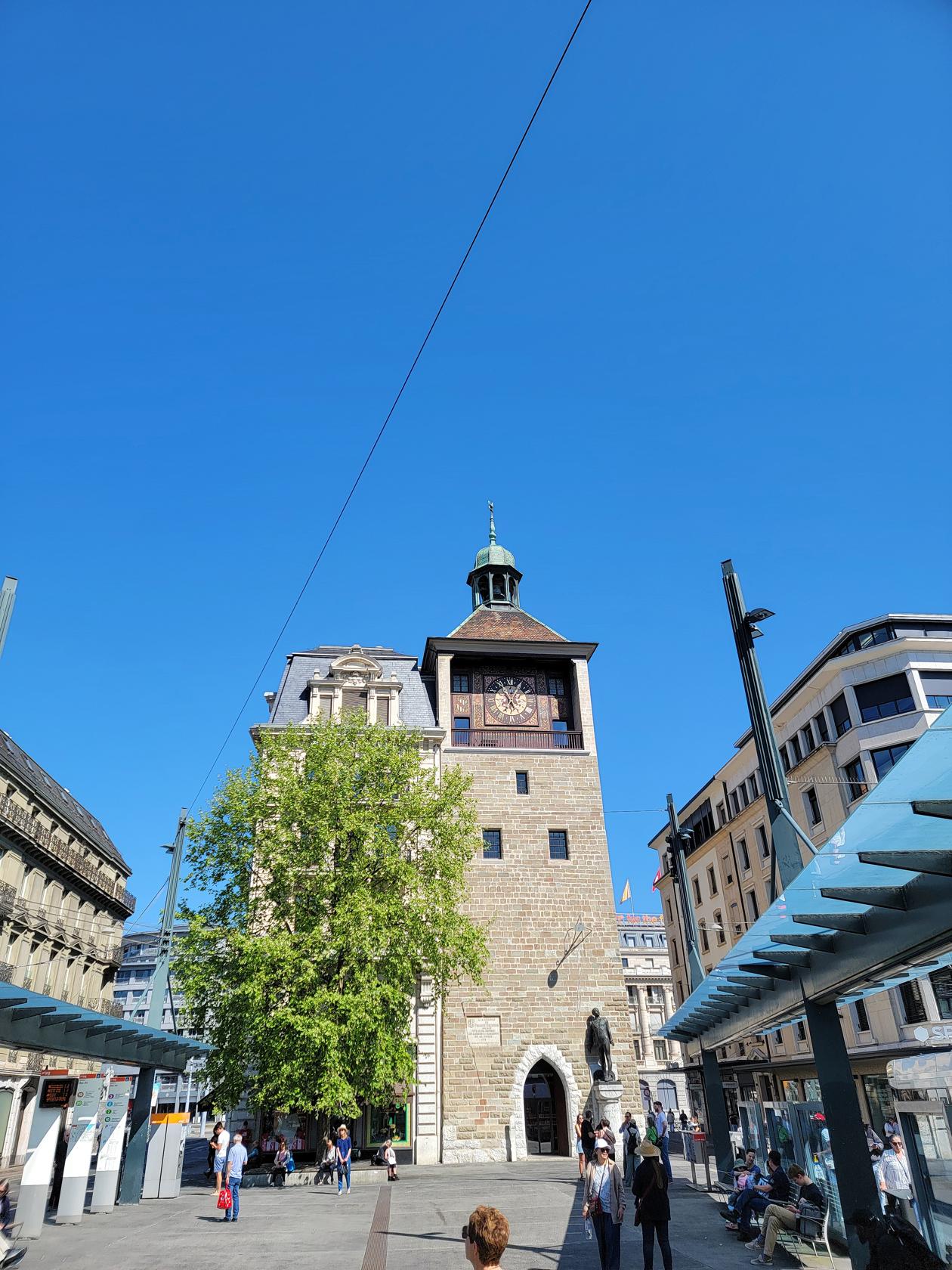
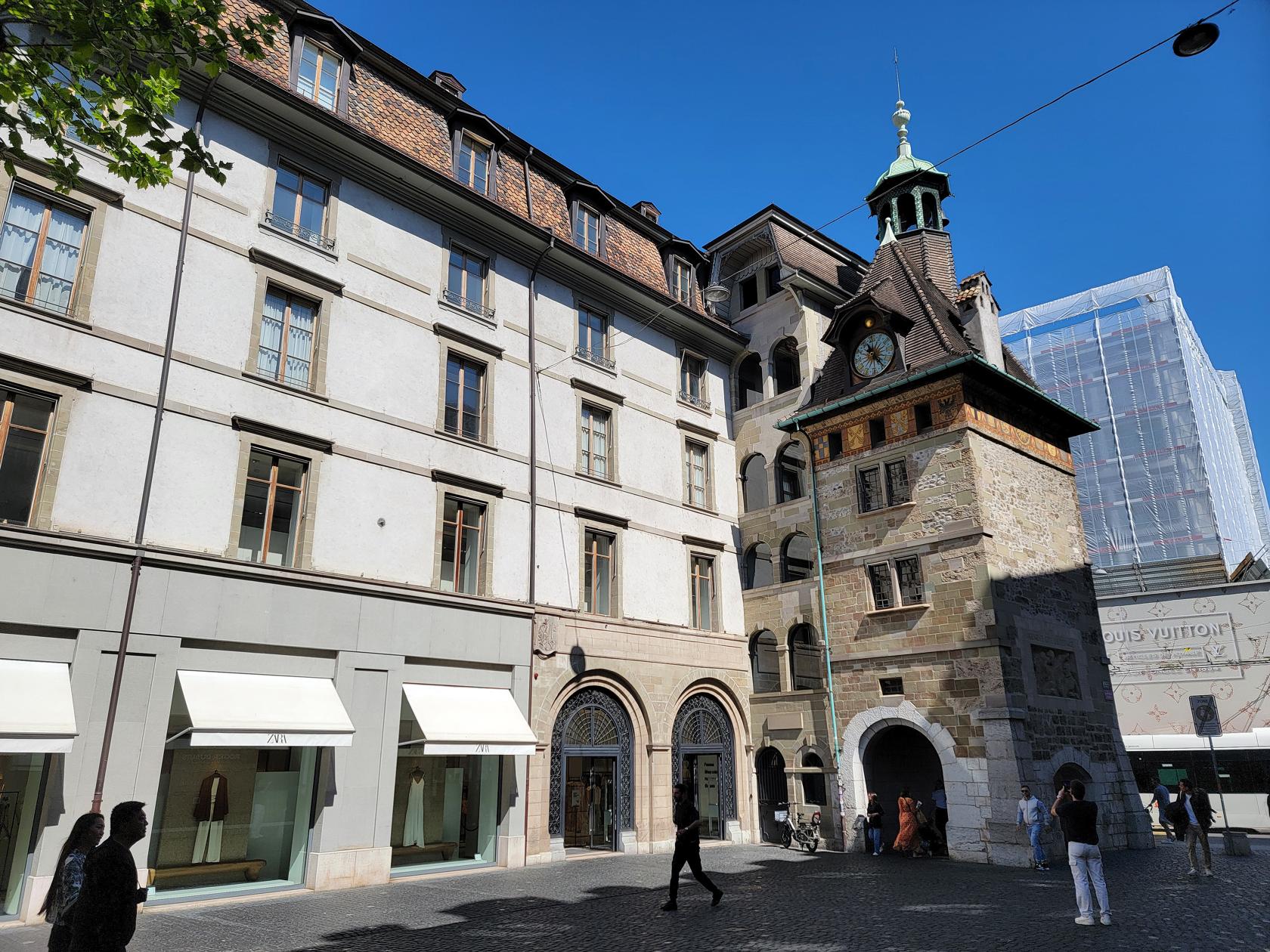
Molard Plaza – Molard Clock Tower and Old Gate – Geneva, Switzerland
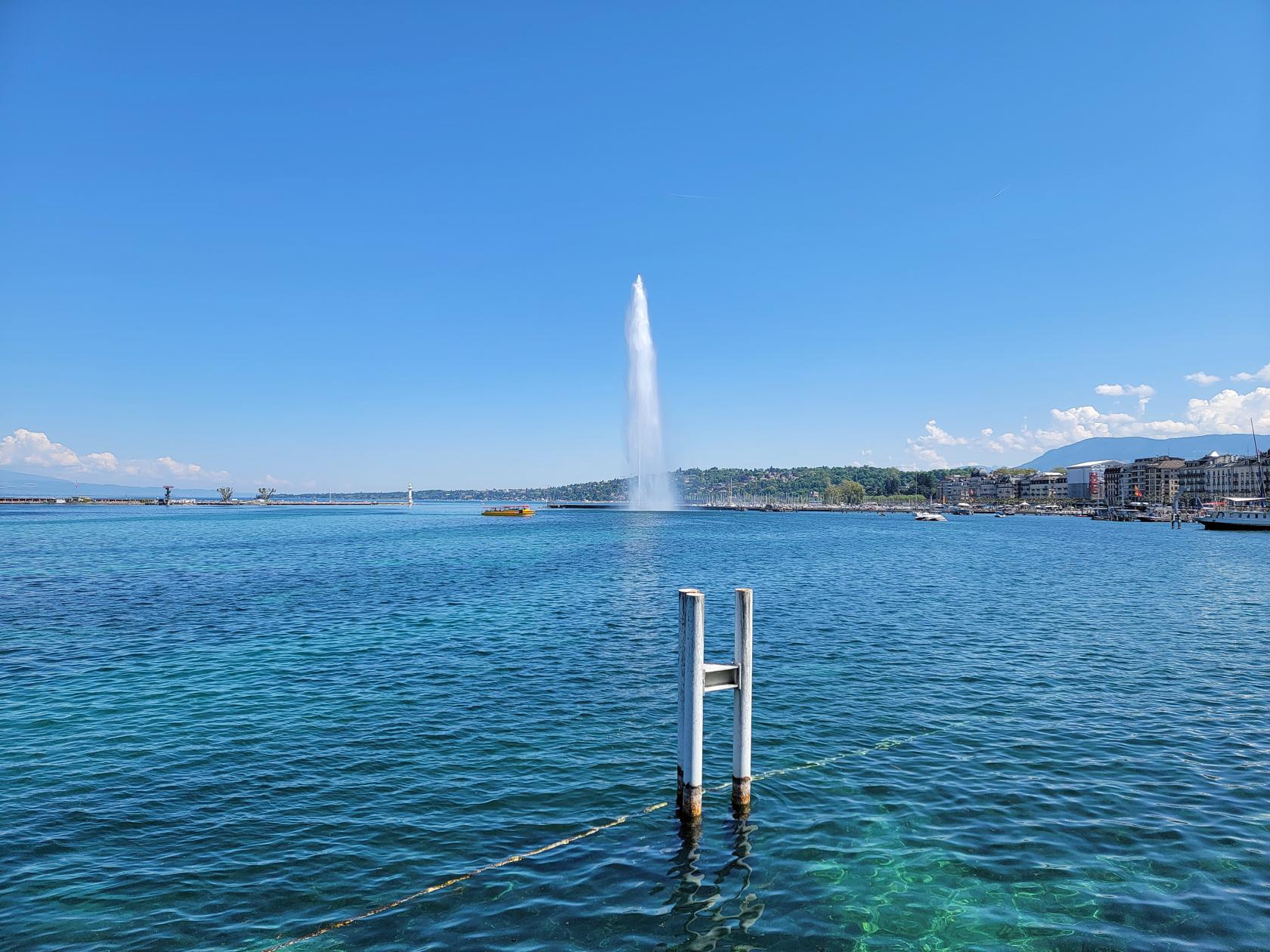
Lake Léman – Jet d’Eau or Jet of Water – Geneva, Switzerland
Hotel Edelweiss
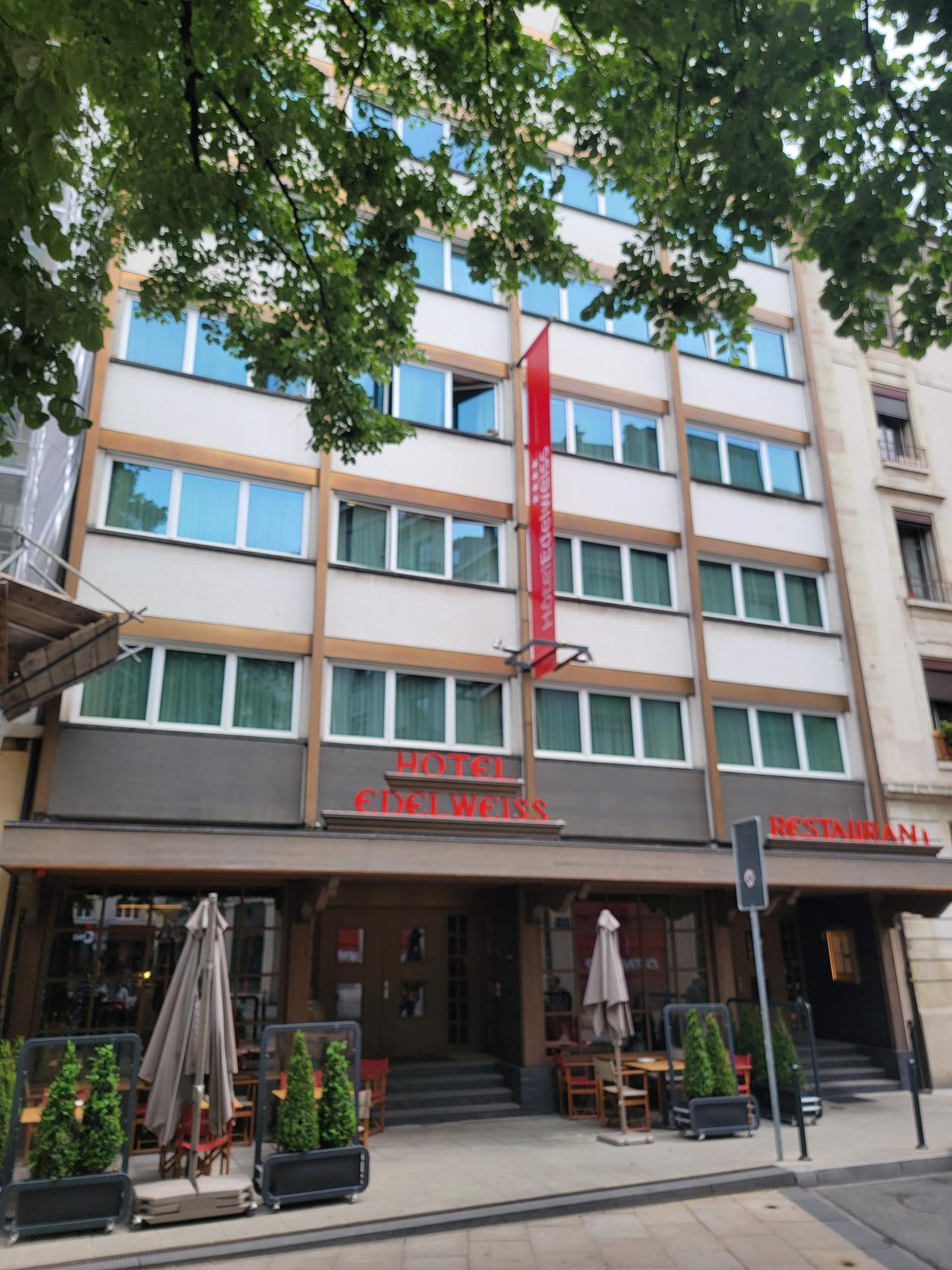
A three star hotel in the Cornavin area of the city. It sits a few blocks from the lake on the north side of the city. Conveniently located to the train station and the lake cruise station, it is a quiet little hotel with a restaurant. The rooms are adequate, though the air conditioning does not work until some undisclosed time in late spring, so your room can be uncomfortable with the sun coming in, so opening the windows is a must.
Hotel Edelweiss – Entrance – Geneva, Switzerland
Lake Léman
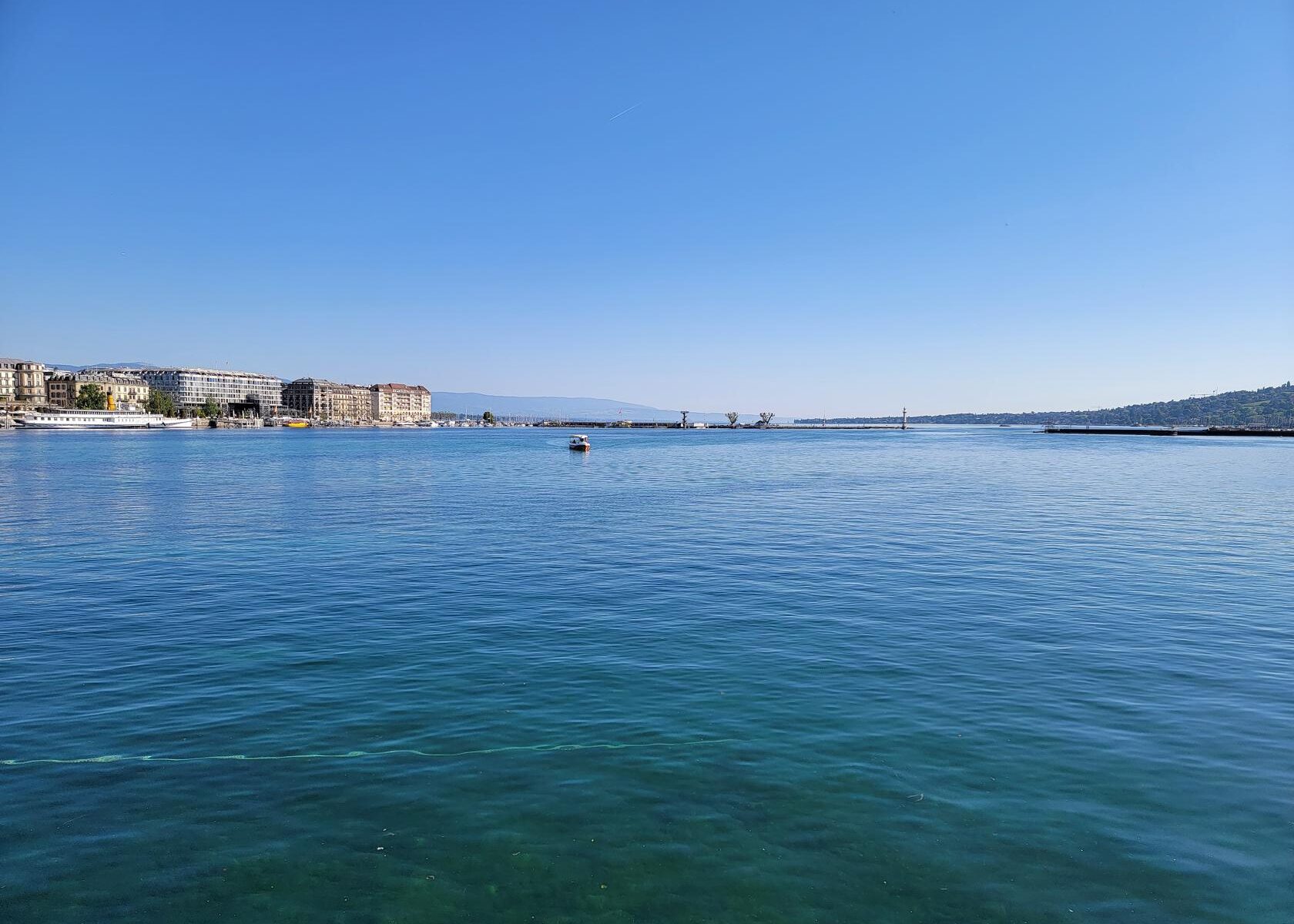
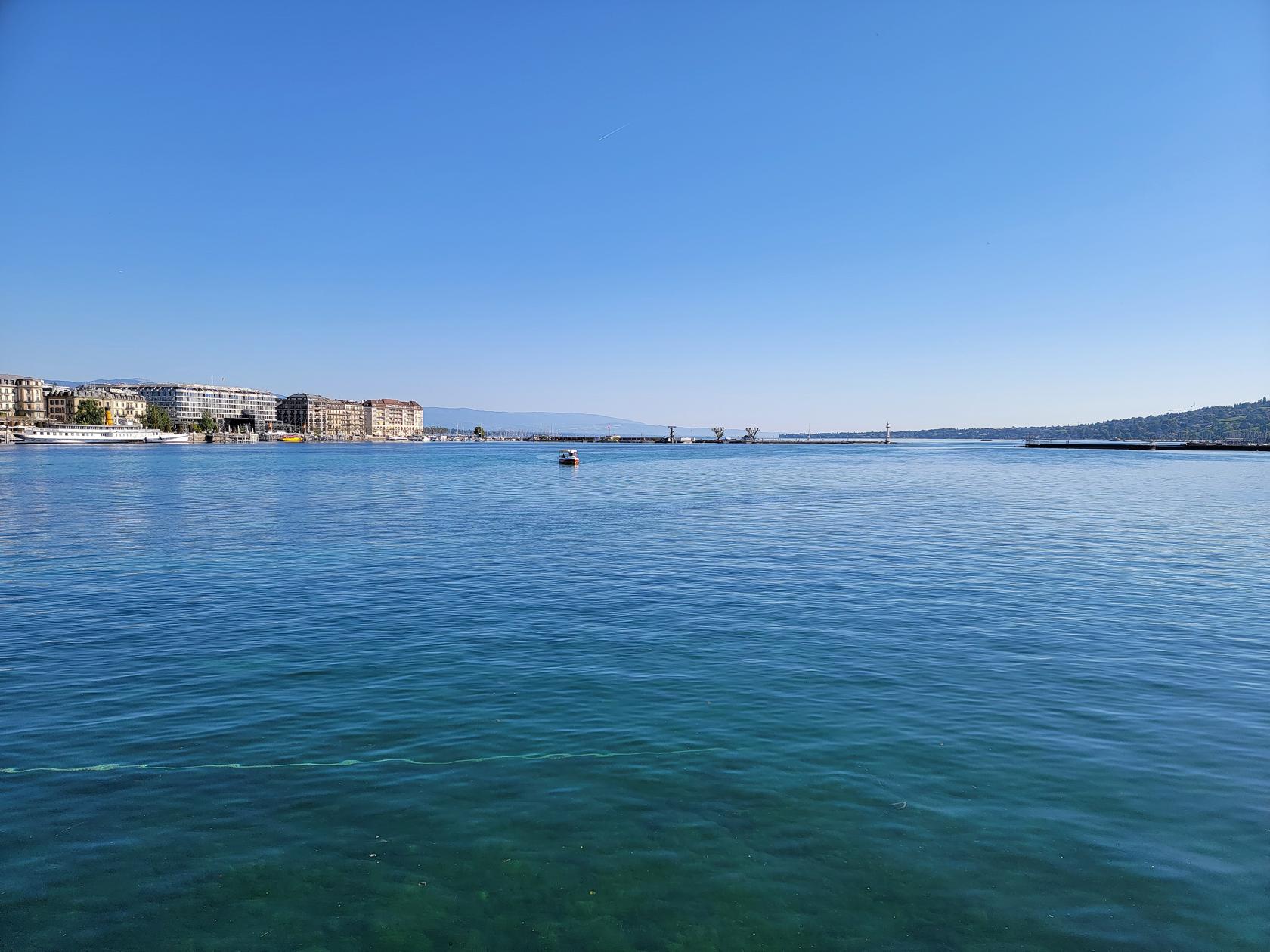
Of course the main attraction in Geneva is Lake Léman and the start of the River Rhone. It is a very clear lake and does not appear very large near Geneva, but as you travel out further on the lake it widens into a formidable body of water.
Lake Léman – Point Mount Blanc – Geneva, Switzerland
Lake Léman – Lighthouse – Geneva, Switzerland
Lake Léman – Point Mount Blanc – Geneva, Switzerland
City Parks
There are numerous parks throughout the city, enough to call Geneva a Green City. Though you may not agree or enjoy some of the haphazard architecture that composes the city, they were mindful enough to include a lot of green space throughout it environs.
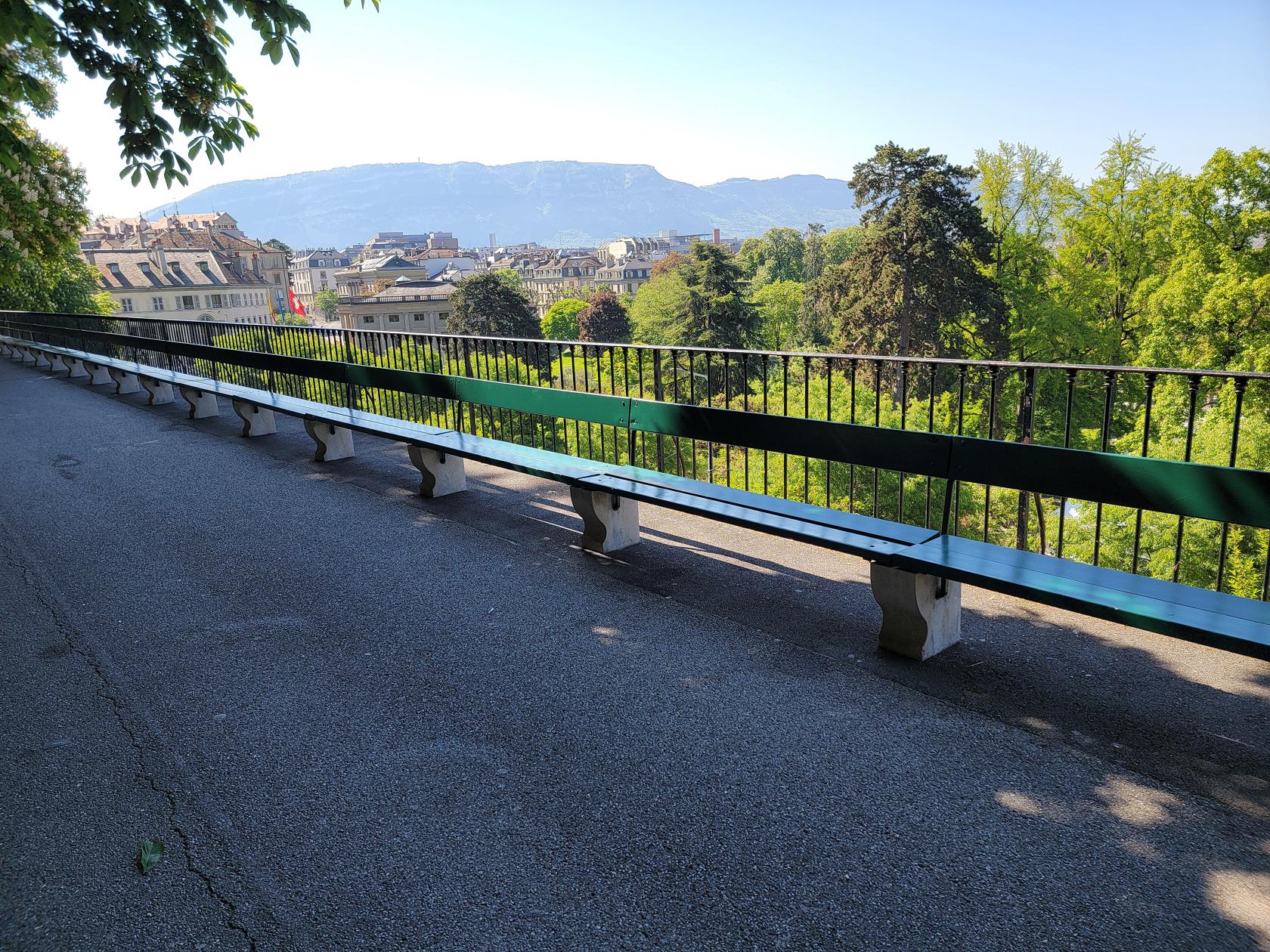
Banc de la Treille – Longest Bench – Geneva, Switzerland
Bastion Park
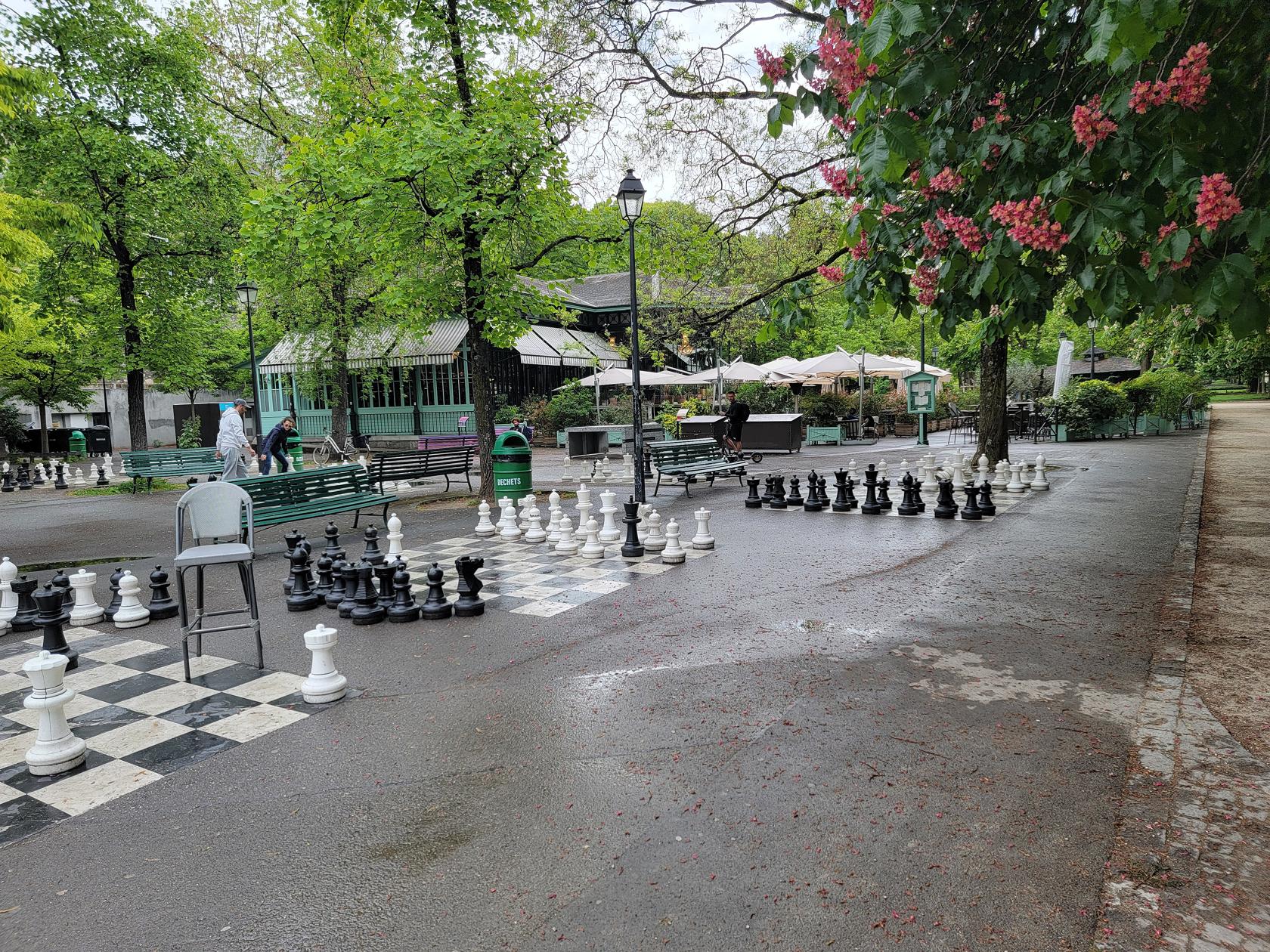
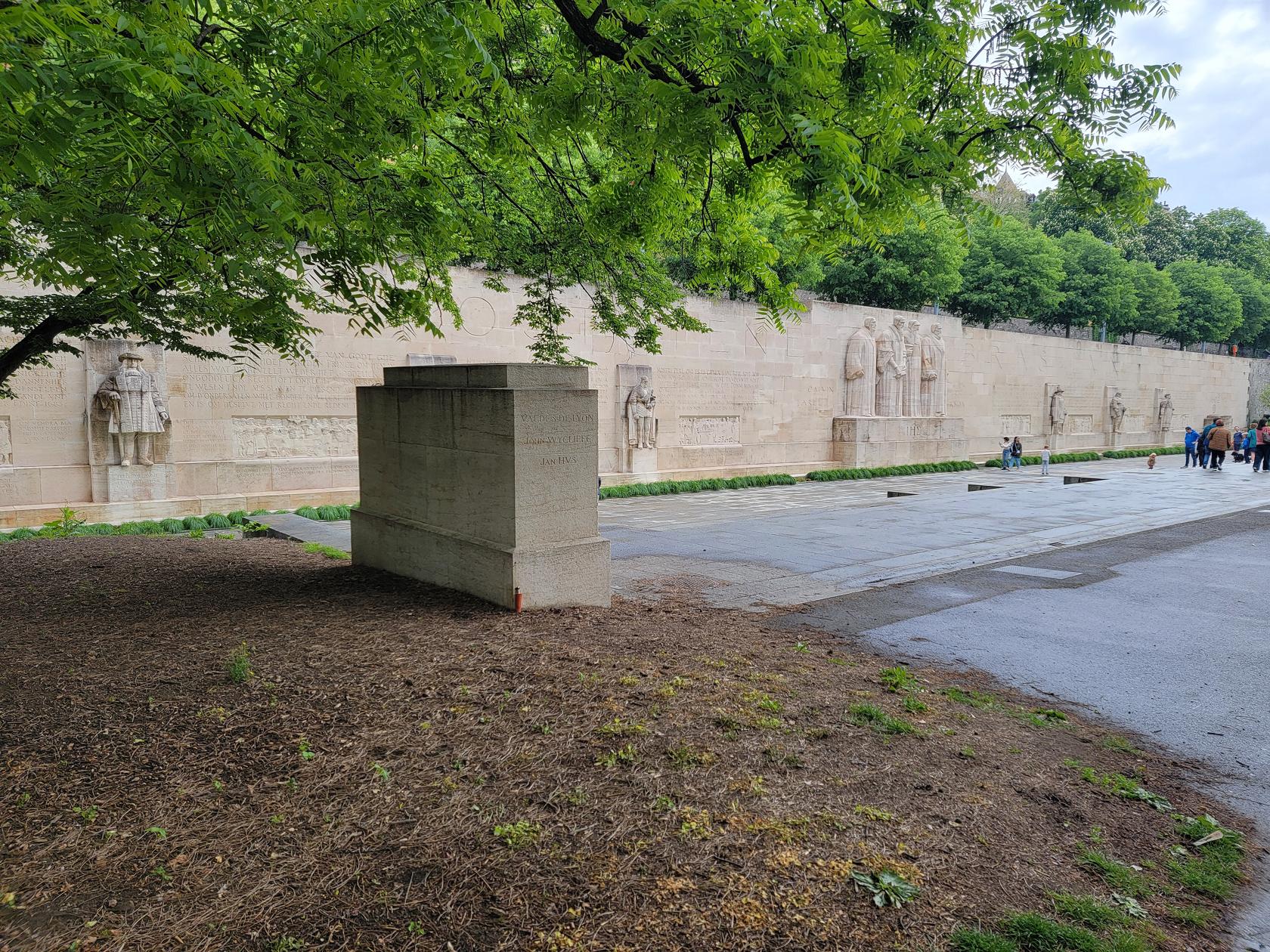
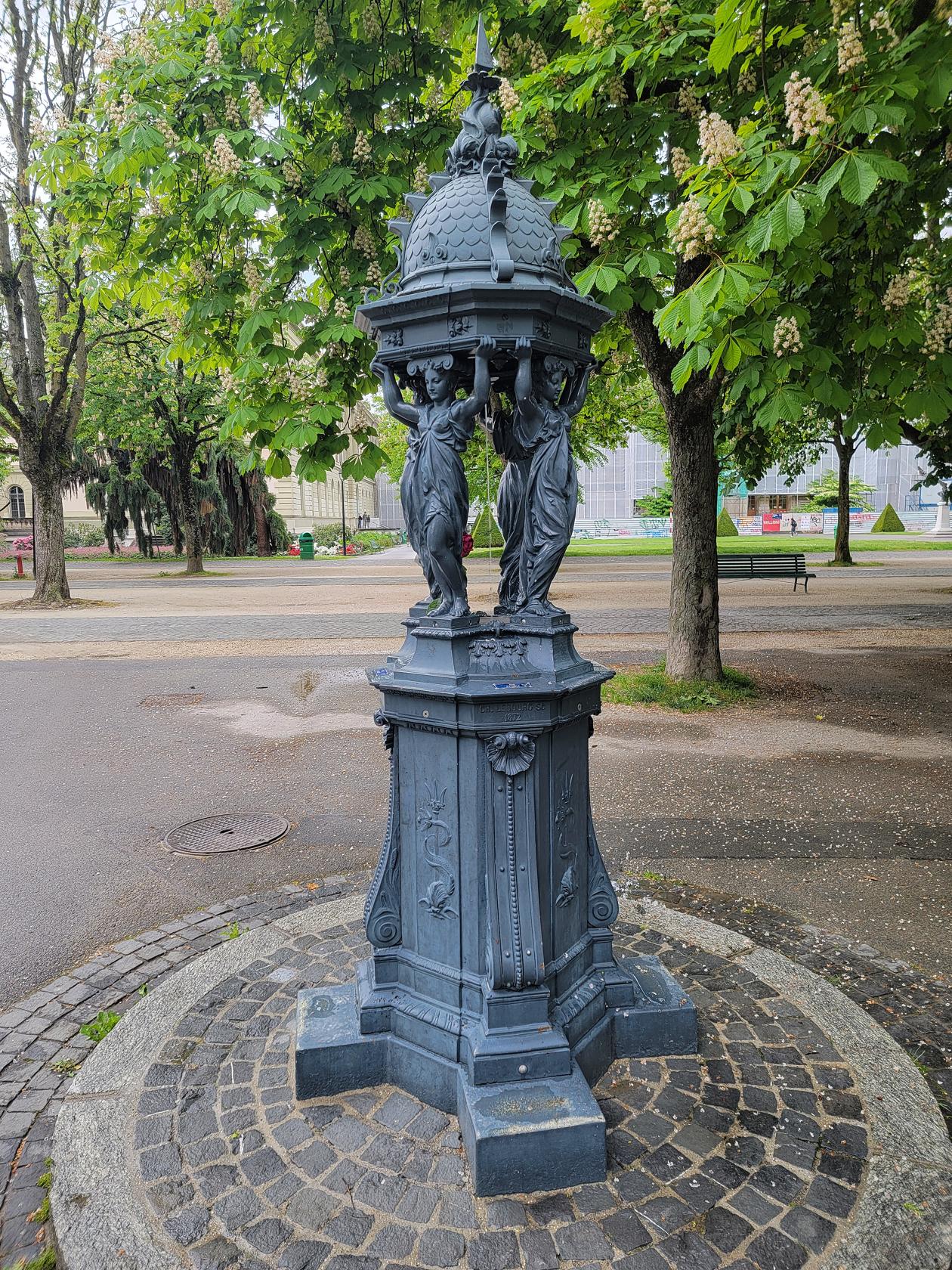
One of the main parks, Bastion Park, is located across from the Geneva Theatre and contains the Reformation Wall. It is a very nice park for an afternoon stroll and to cool off. Many of its walkways are shaded and there are fountains where you may collect water for drinking.
Bastion Park – Chess Sets – Geneva, Switzerland
Bastion Park – Luther’s Reformation Wall – Geneva, Switzerland
Bastion Park – Water Fountain – Geneva, Switzerland
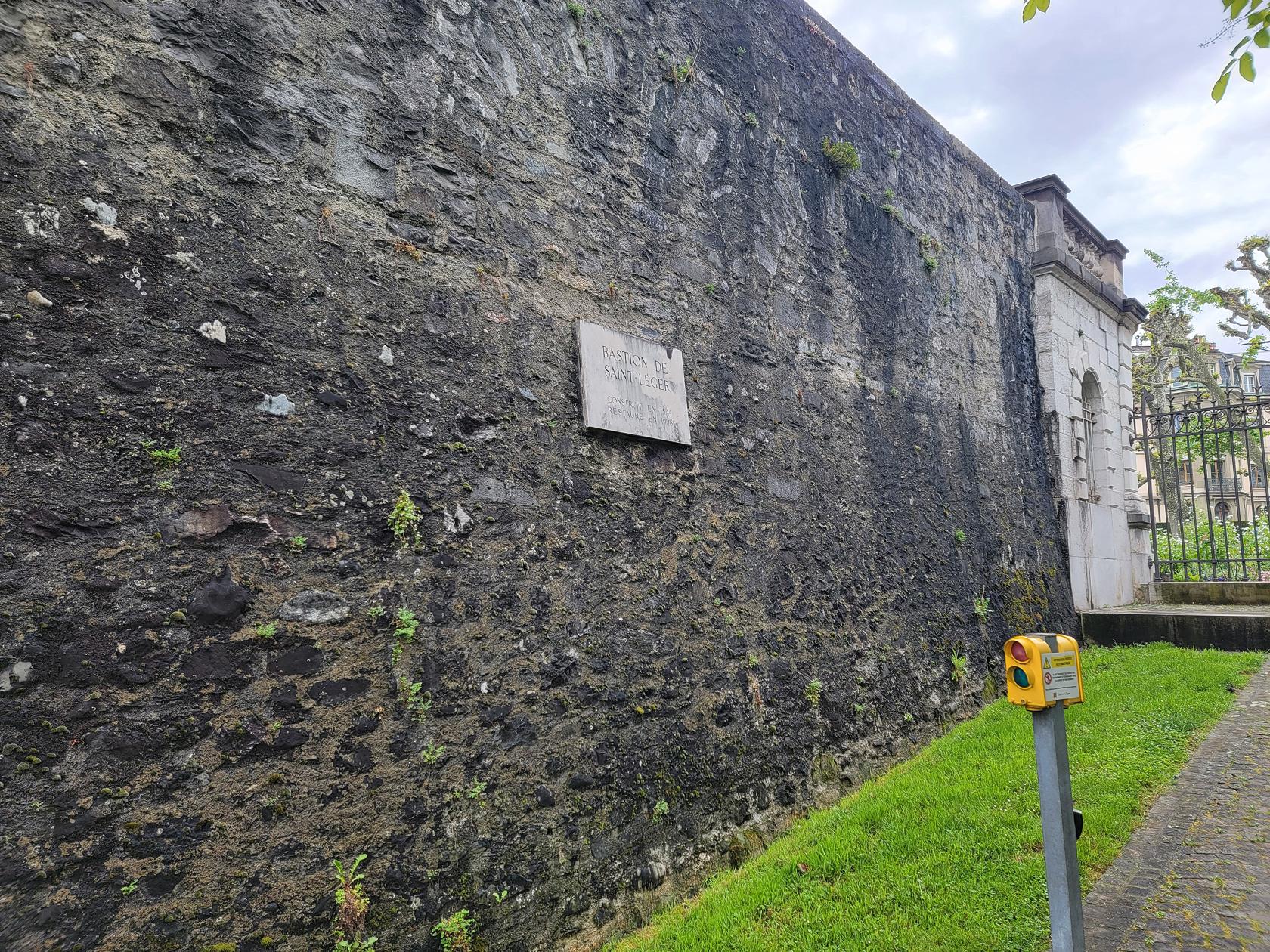
Bastion Park – Old Fortress Wall – Geneva, Switzerland
Park du Pin
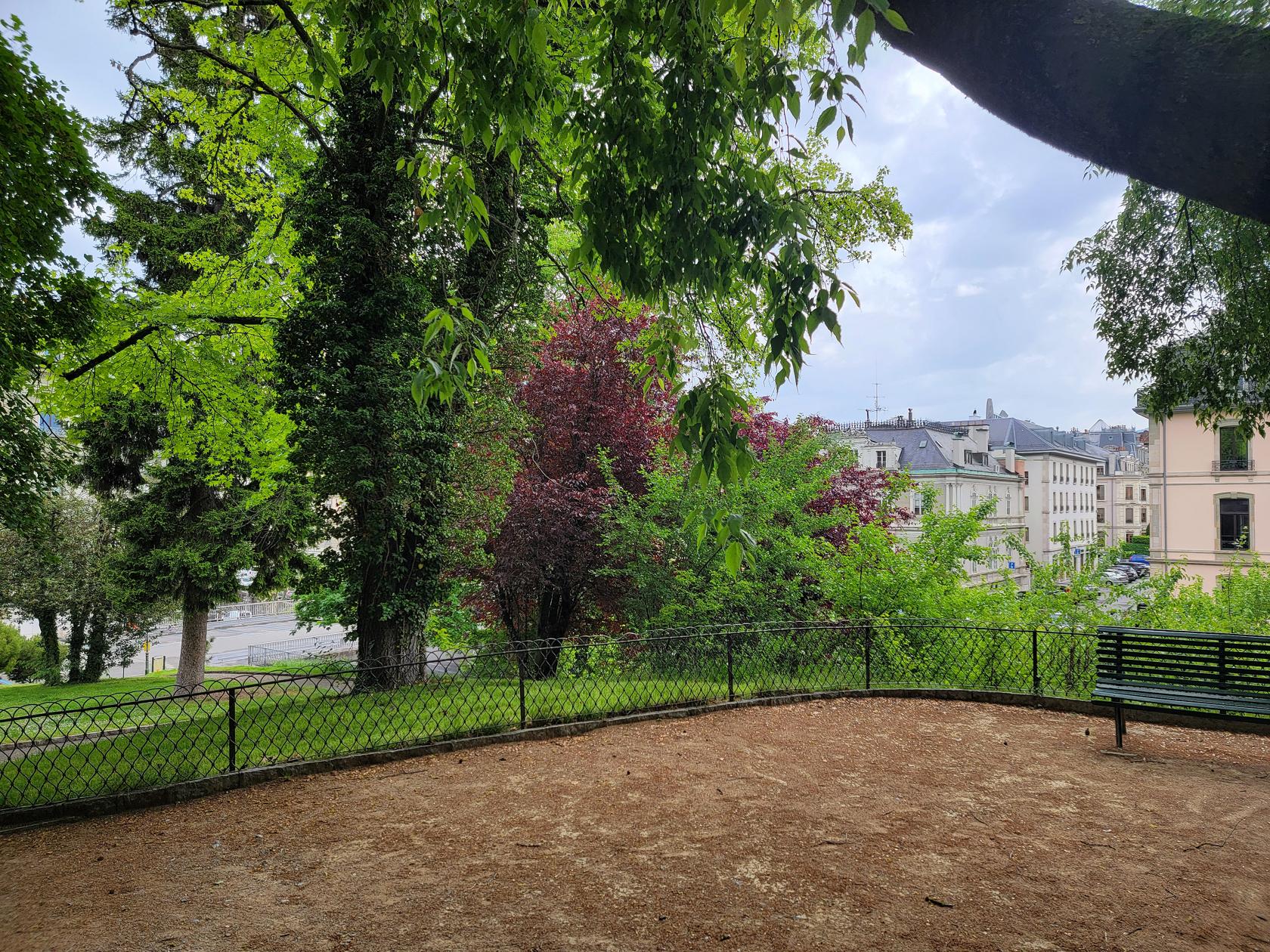
A smaller park further to the east is Park du Pin. It resides on the knob of hill with many pines and other shrubbery. Strolling through it is enough to take your mind off the busy streets that are around it. On the top, there is seating where one can enjoy the breeze that blows in from the lake.
Promenade du Pin – Overlook – Geneva, Switzerland
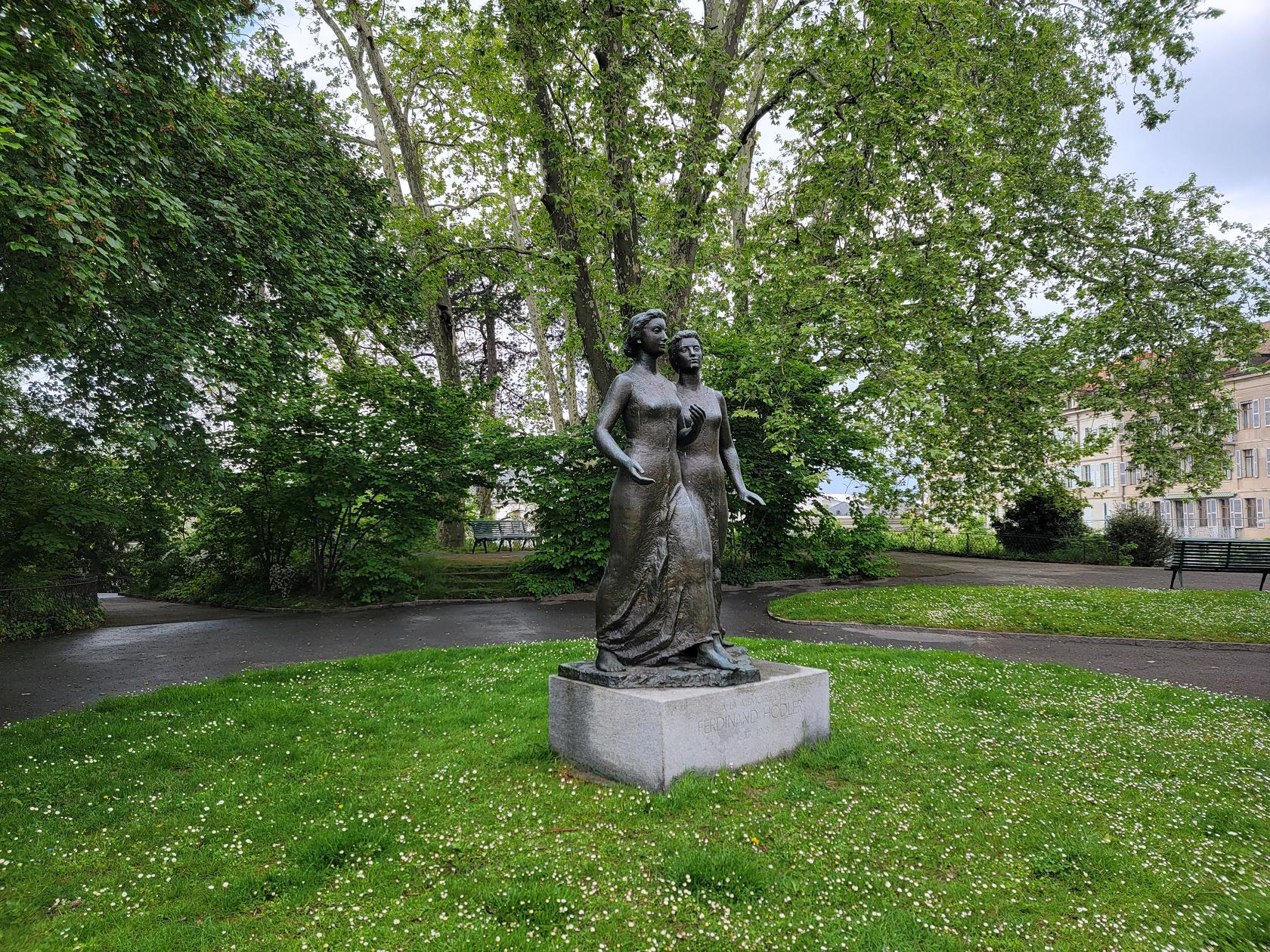
Promenade du Pin – Statue – Geneva, Switzerland
Botanical Gardens
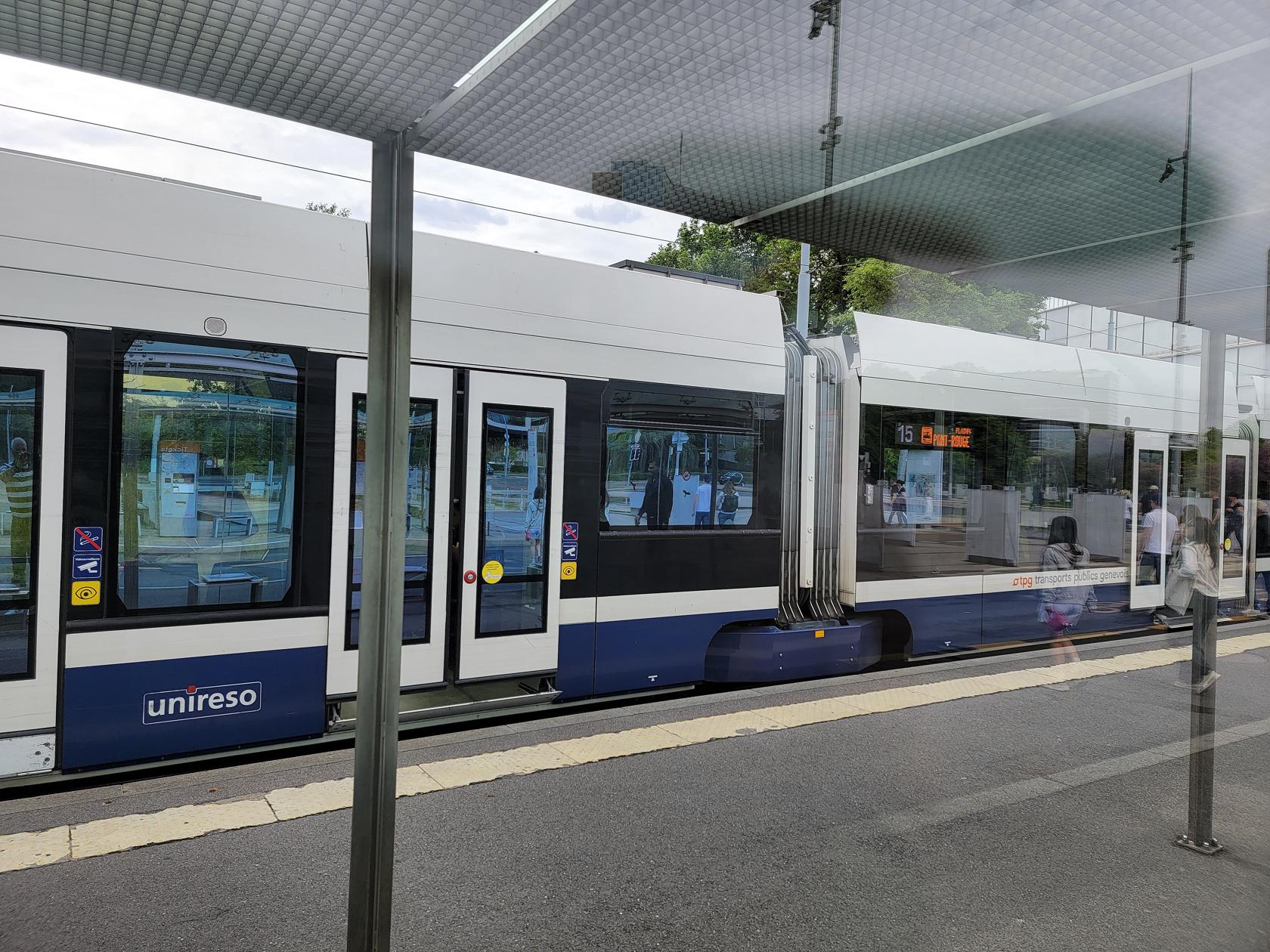
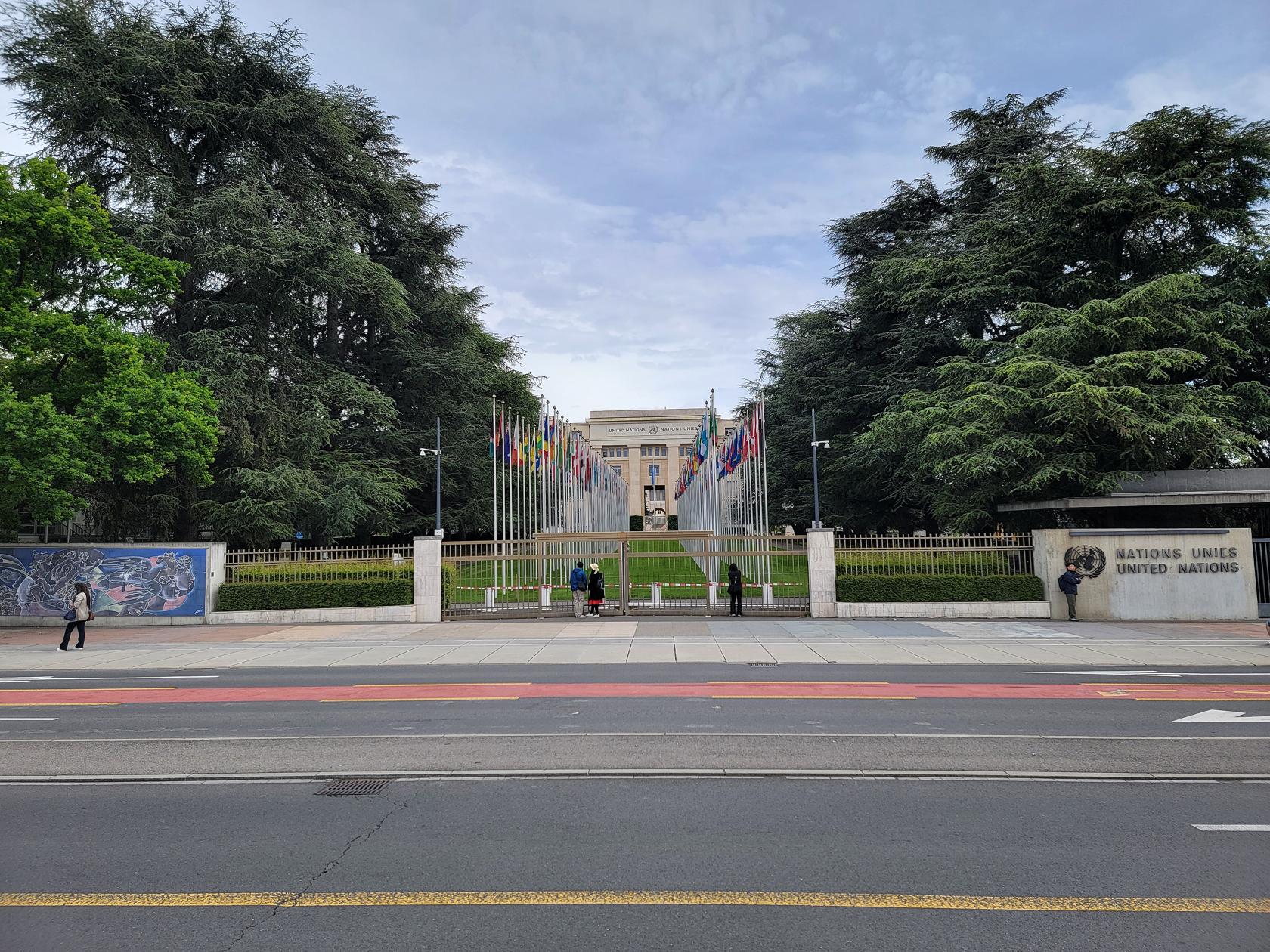
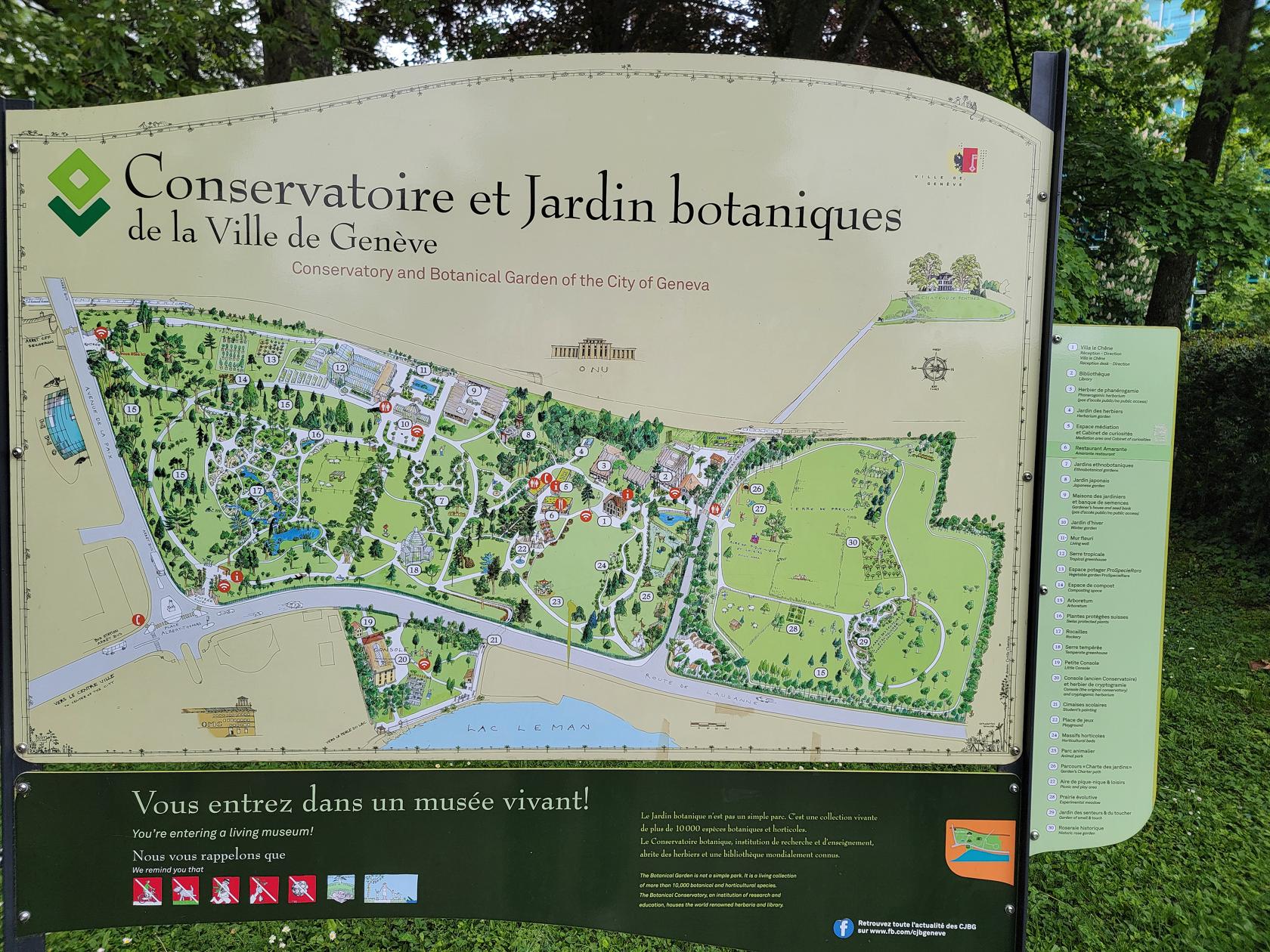
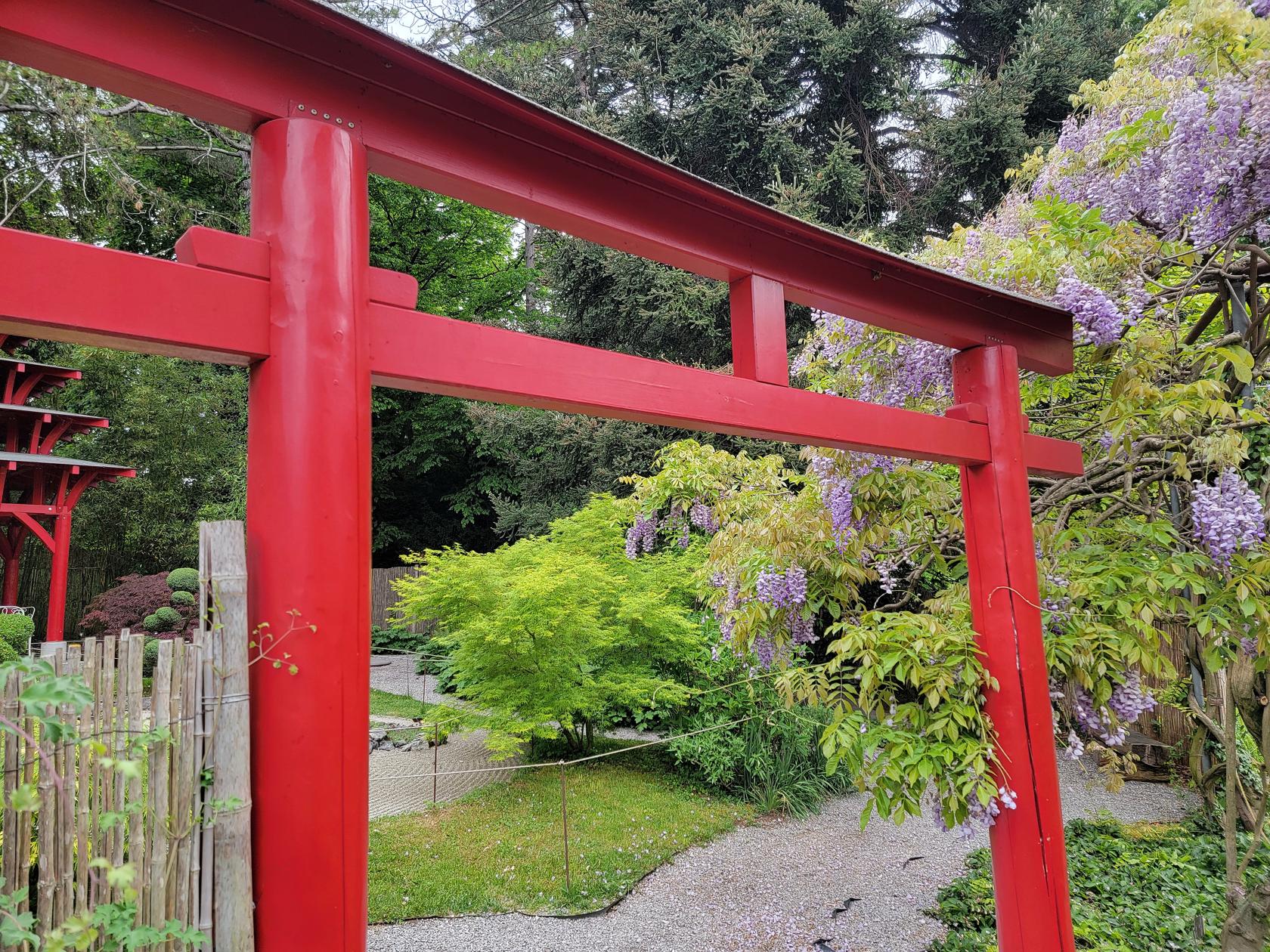
Not far from the center of the city on the N15 tram are the Botanical Gardens of Geneva. An impressive collection of species from every continent adorn this park. It is strategically located close to the Genève-Sécheron train station as well, which also provides commuter transportation for the United Nations in Geneva.
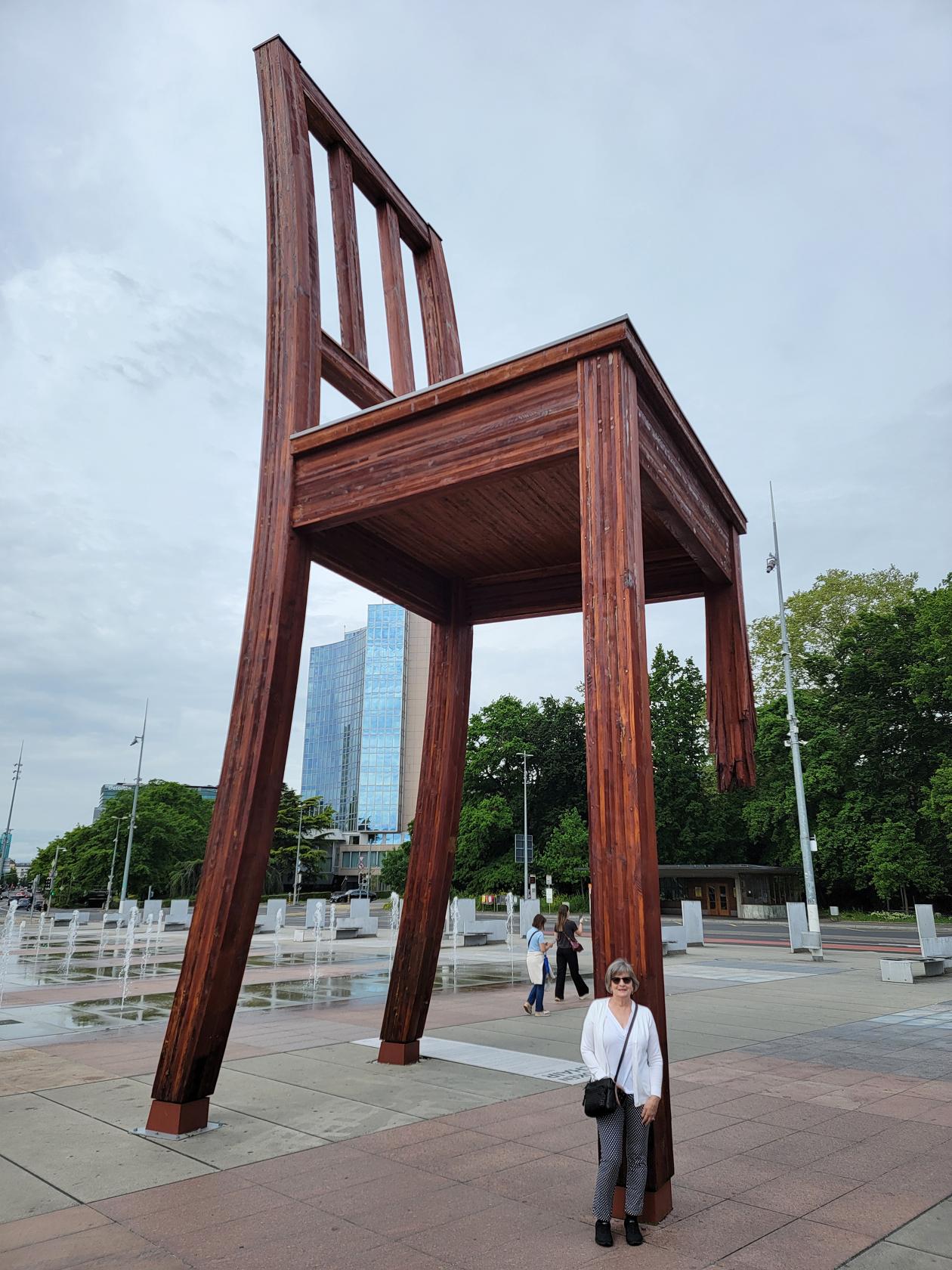
Broken Chair – Patti – Geneva, Switzerland
N15 Tram – Nations Stop – Geneva, Switzerland
United Nations – Flags and Main Entrance – Geneva, Switzerland
The park is laid out in four sections. One housing most of the botanical gardens plants from each continent. A second has livestock and out buildings for the housing of exotic species from the tropics. A third has a view of the lake and a final section is purposed for outdoor activities.
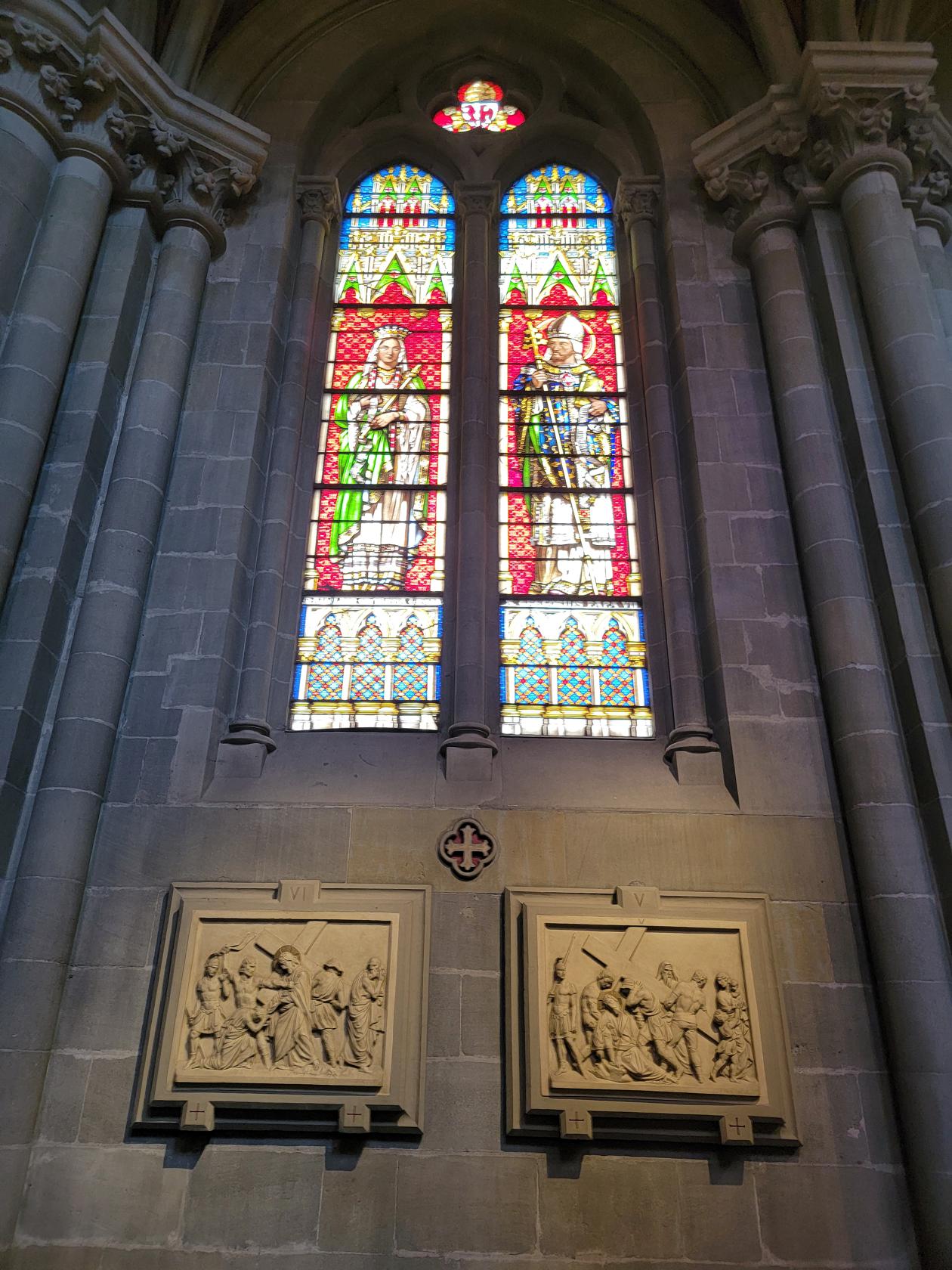
There are a number of important churches in Geneva, below are a few to note.
Basilica Notre Dame of Geneva
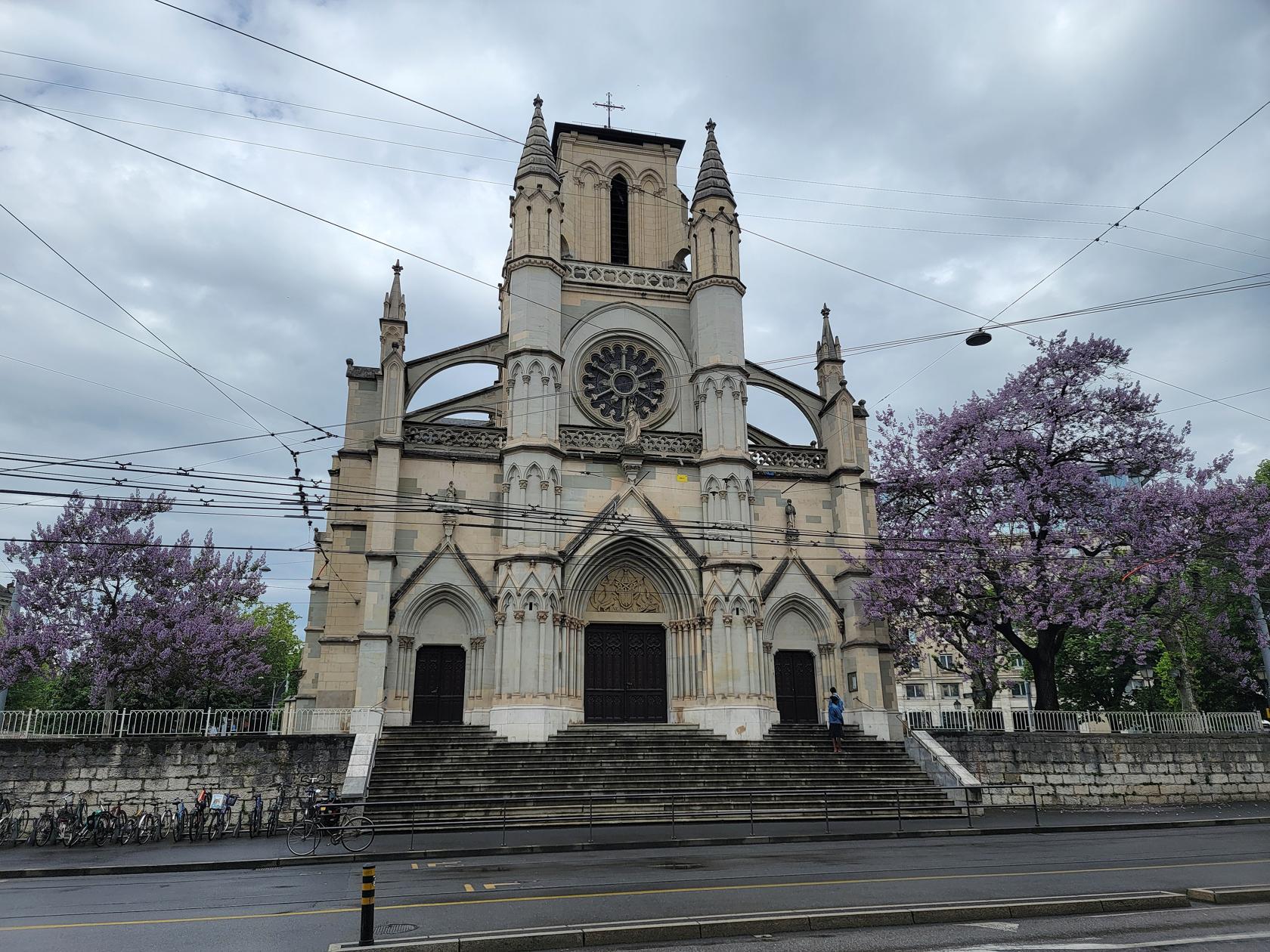
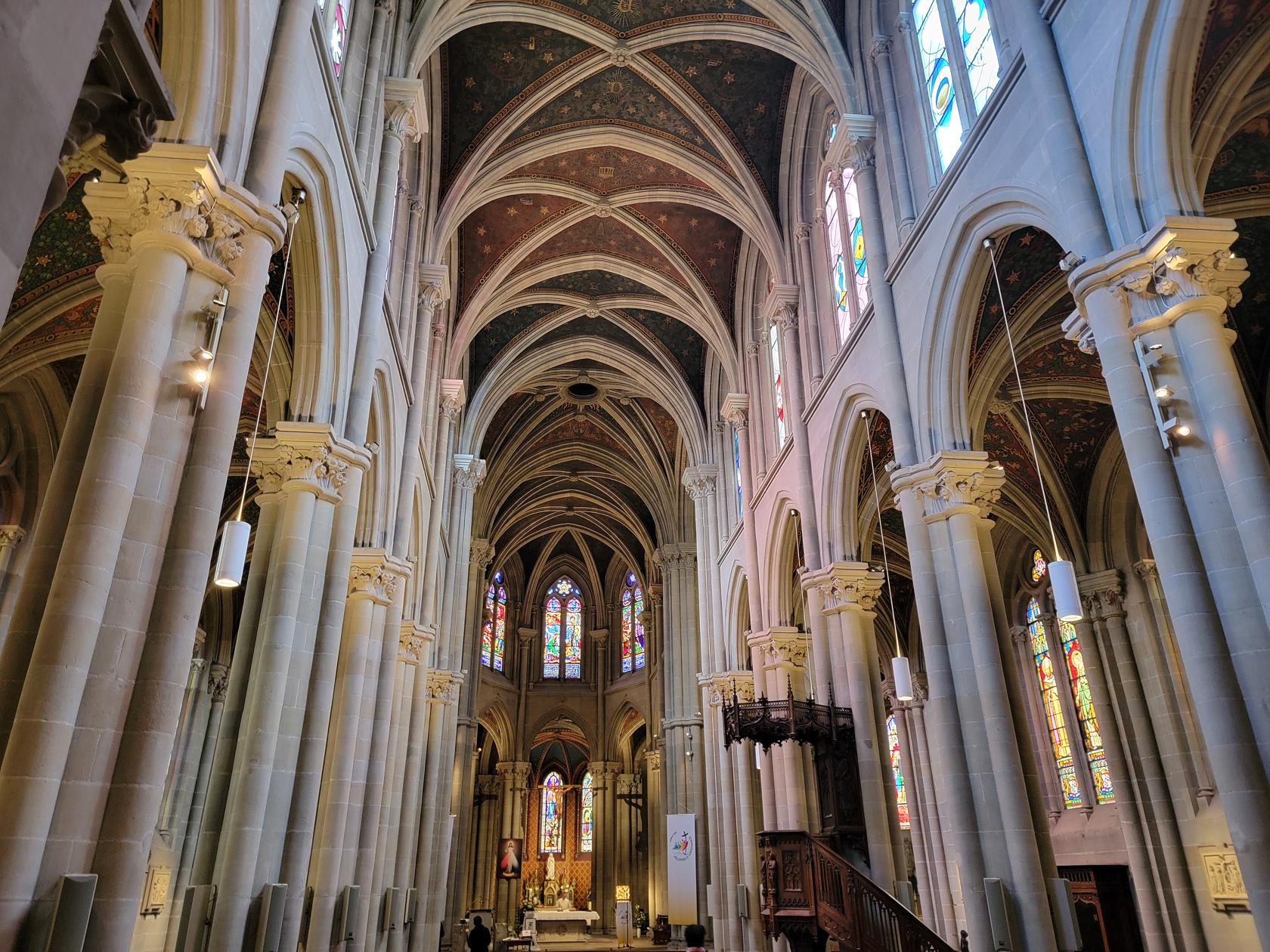
The Basilica Notre Dame in Geneva is compact in size and is reminiscent of some large cathedrals we have seen elsewhere[1]Saint Mary’s Church and Cathedral in Hudson, New York. Unfortunately during our stay, mass was being said and we felt obligated to leave.
Basilica Notre Dame de Geneva – Entrance – Geneva, Switzerland
Basilica Notre Dame de Geneva – Nave – Geneva, Switzerland
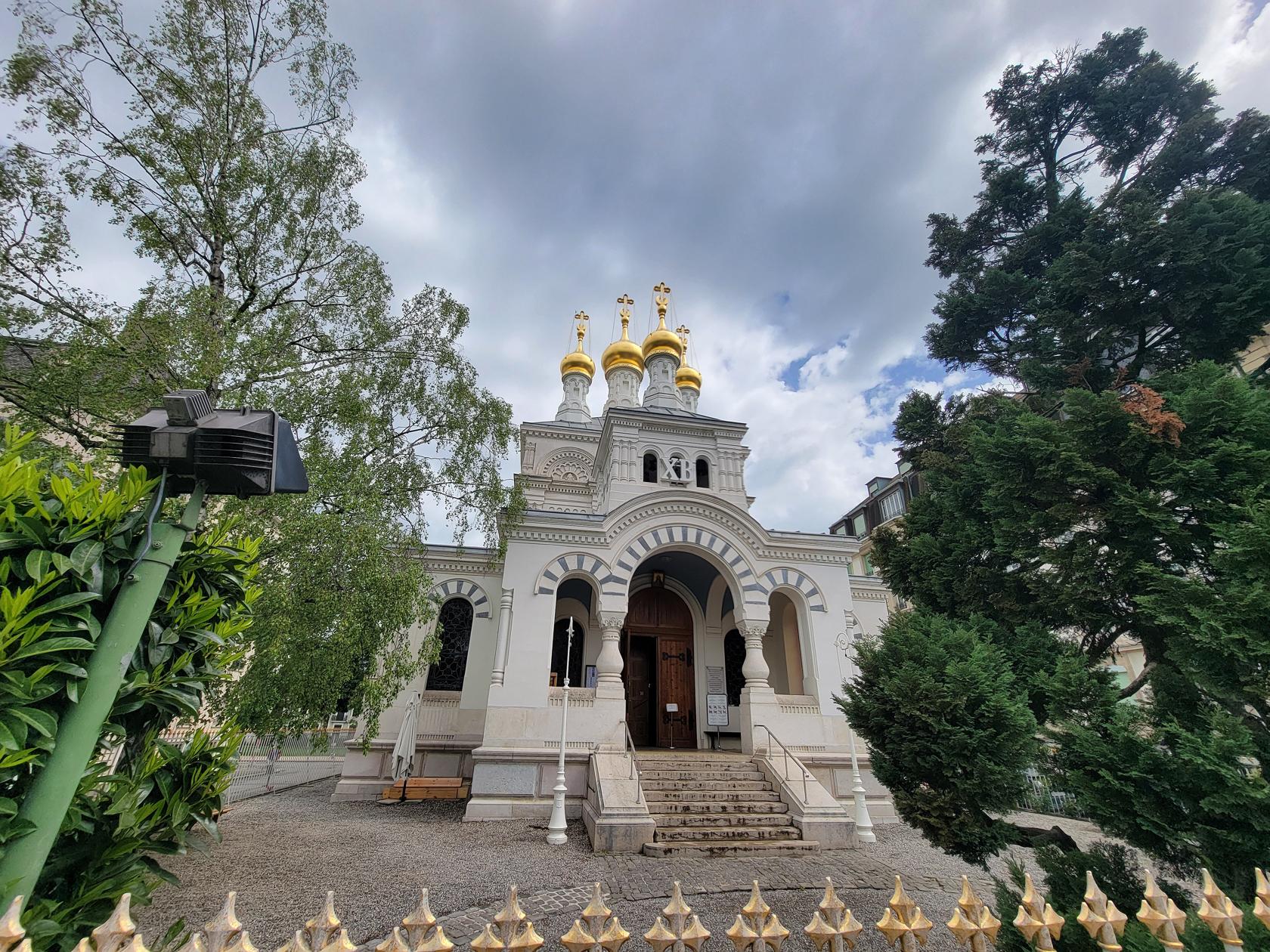
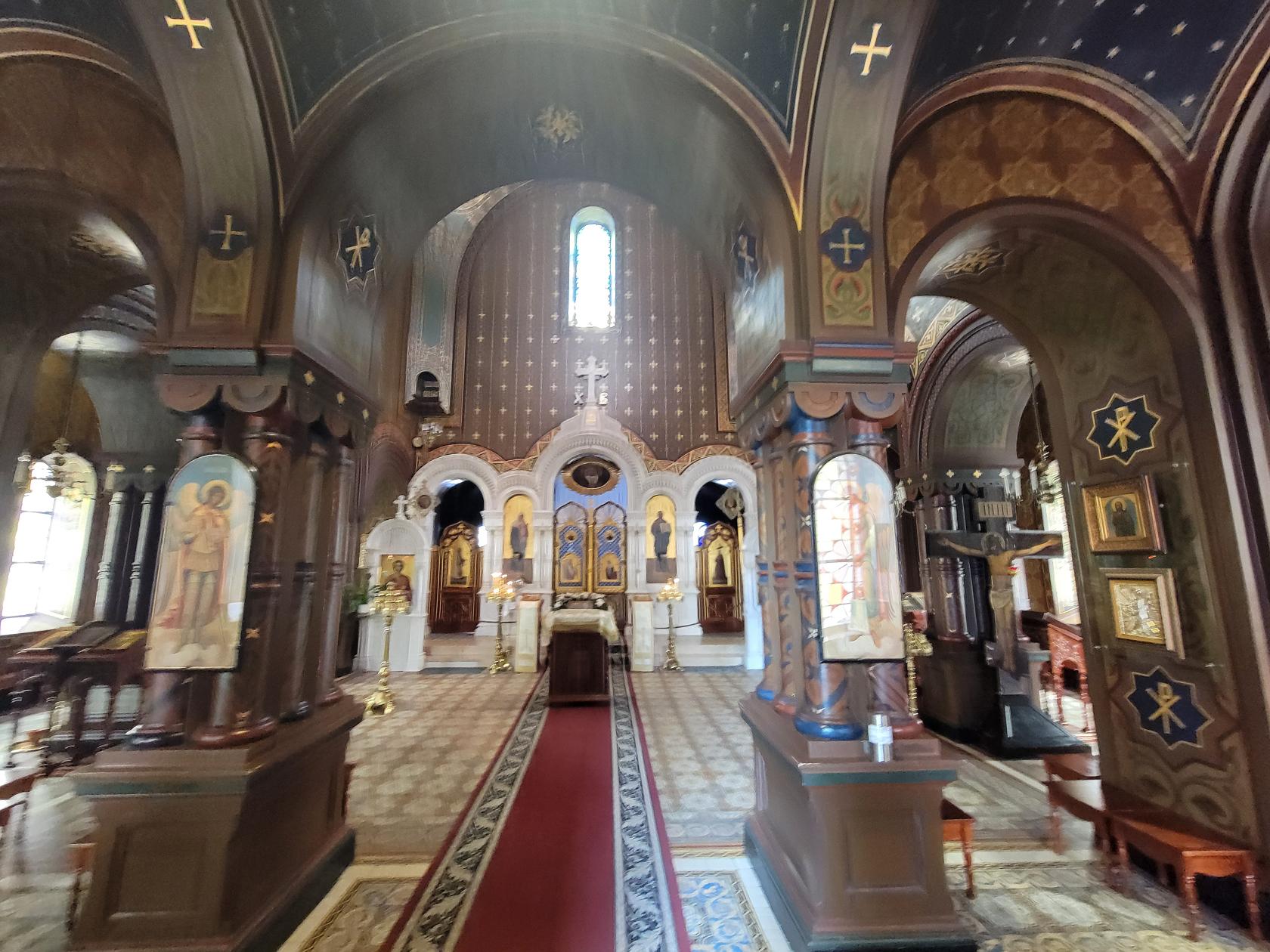
The Russian Orthodox Church in Geneva carries the characteristic golden domes of other orthodox churches. The inside is also gilded in area and very compact. There is a sign asking for donation of 2CHF at the entrance, however during our stay we carried no cash at all on us, so just took a photograph from the doorway.
Russian Orthodox Church – Entrance – Geneva, Switzerland
Russian Orthodox Church – Inside – Geneva, Switzerland
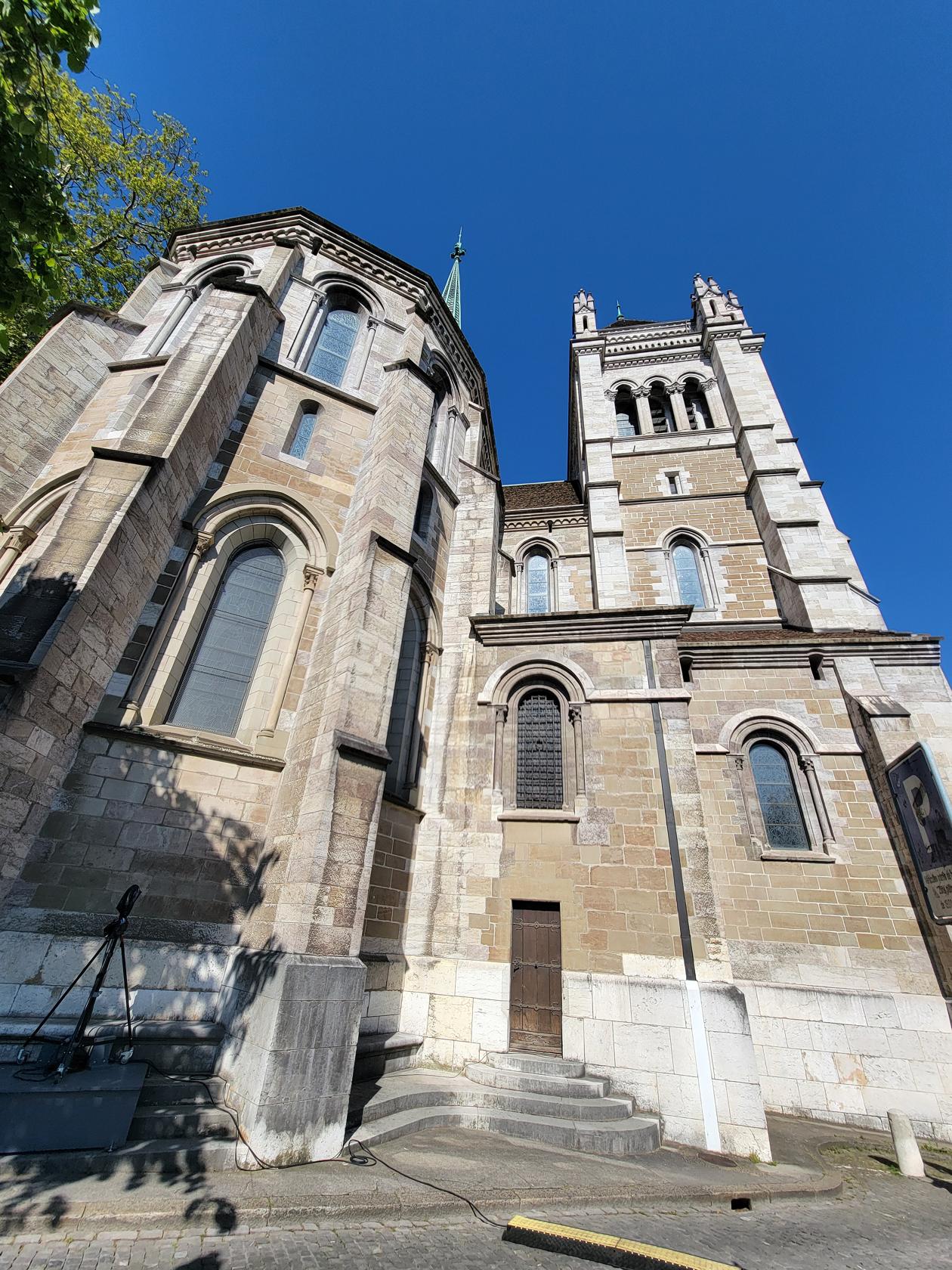
Cathédrale Saint-Pierre Genève
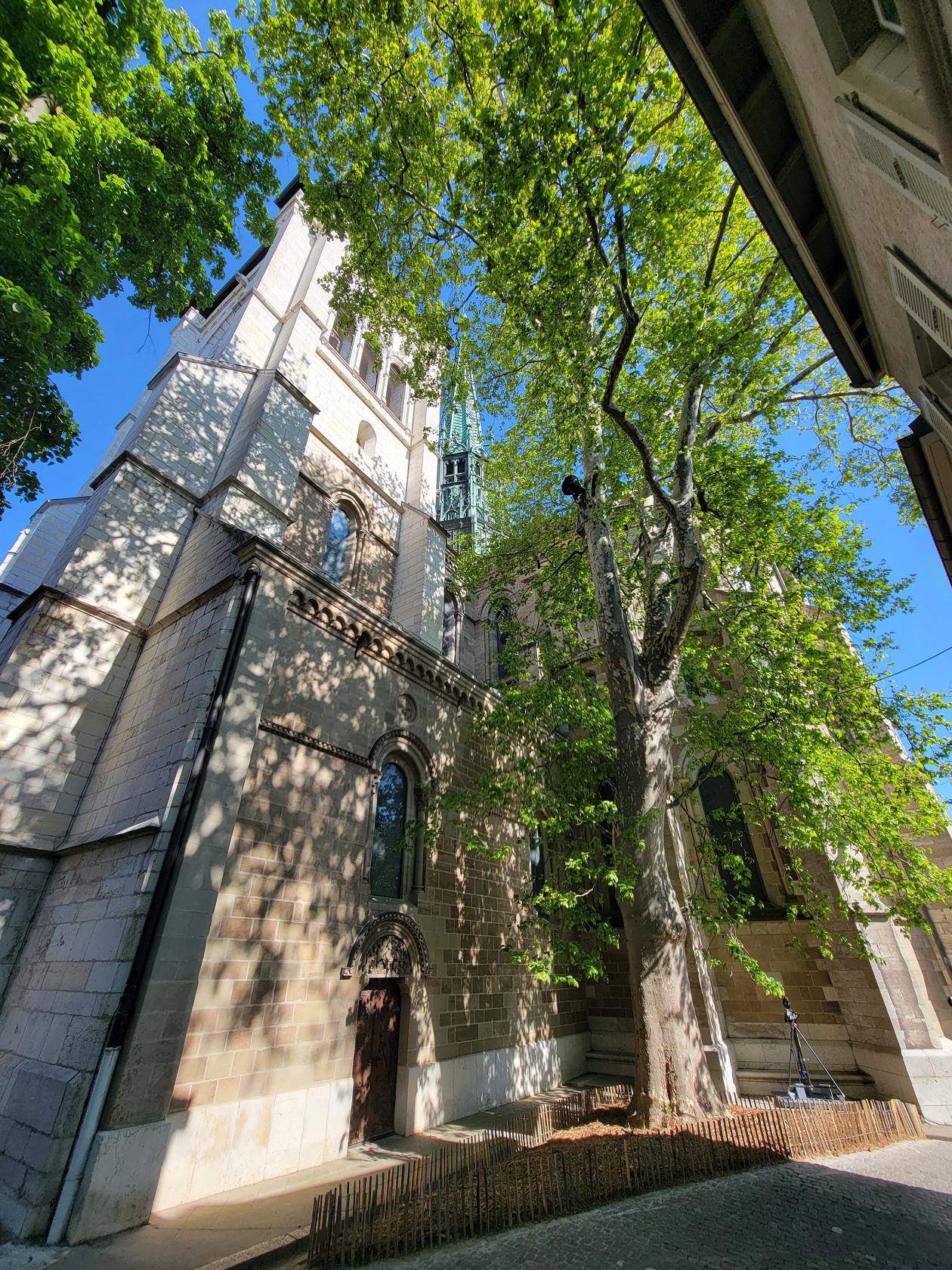
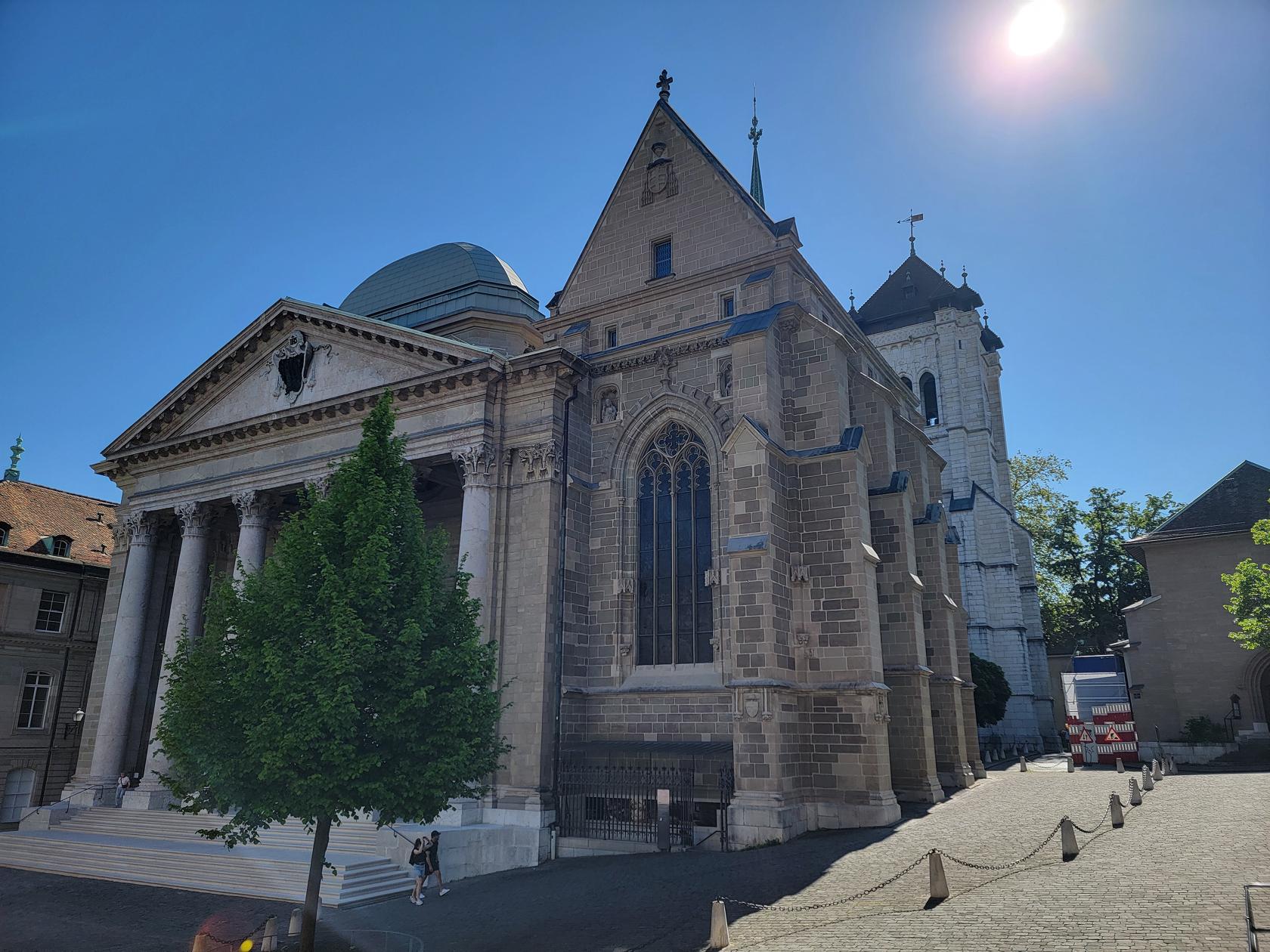
The Cathédrale Saint-Pierre Genève is located in the old section of town, perched on the hill close to Place du Bourg-de-Four, an important piazza in the town. Unfortunately it was not open while we were here, being closed for a Stabat Matar concert series.
Cathedral Saint Pierre – Back View – Geneva, Switzerland
Cathedral Saint Pierre – Side View – Geneva, Switzerland
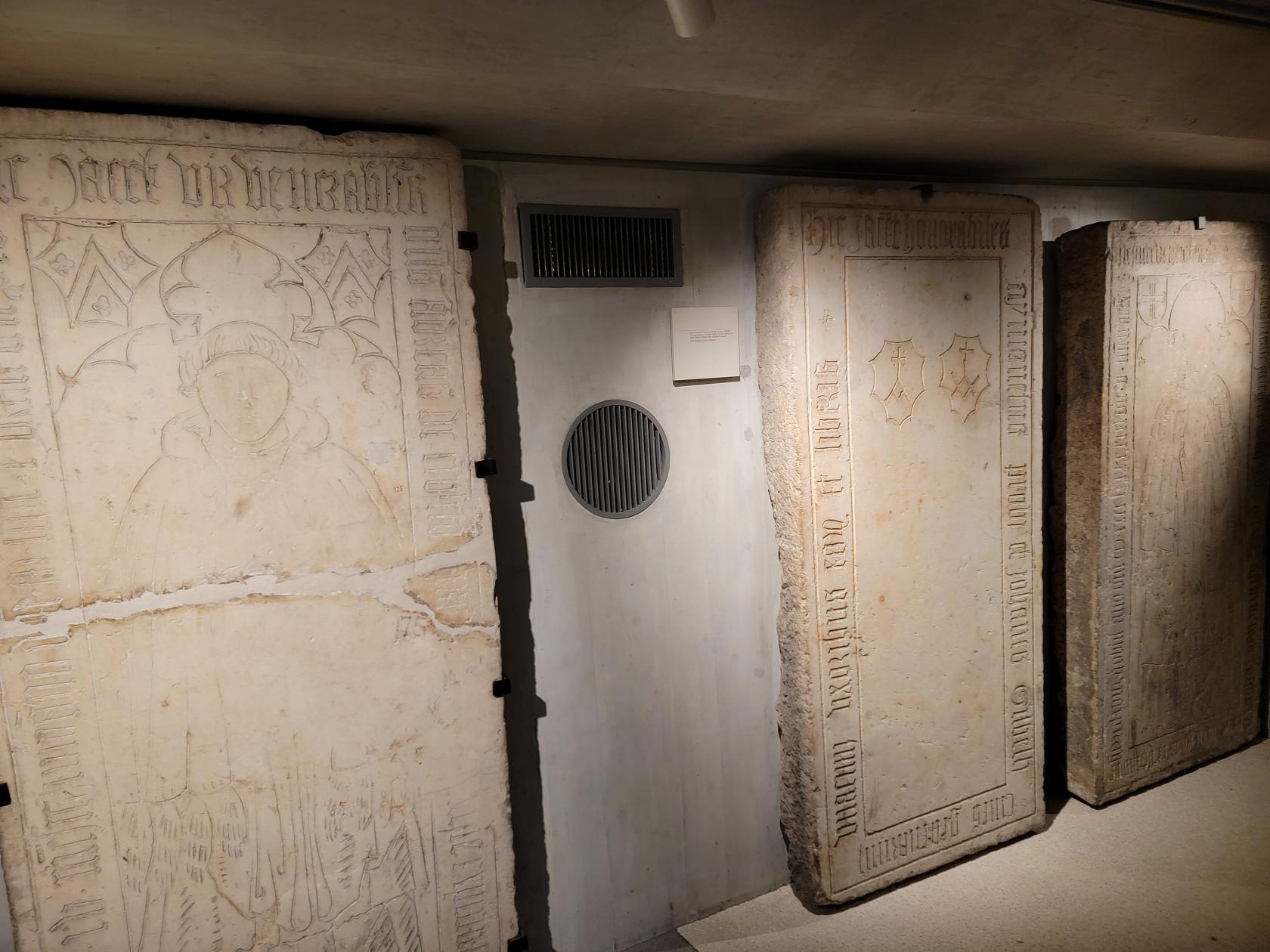
Cathedral Saint Pierre – Archaeologic Site – Geneva, Switzerland
Cathedral Saint Pierre – Front and Entrance View – Geneva, Switzerland
Tour du Romandie
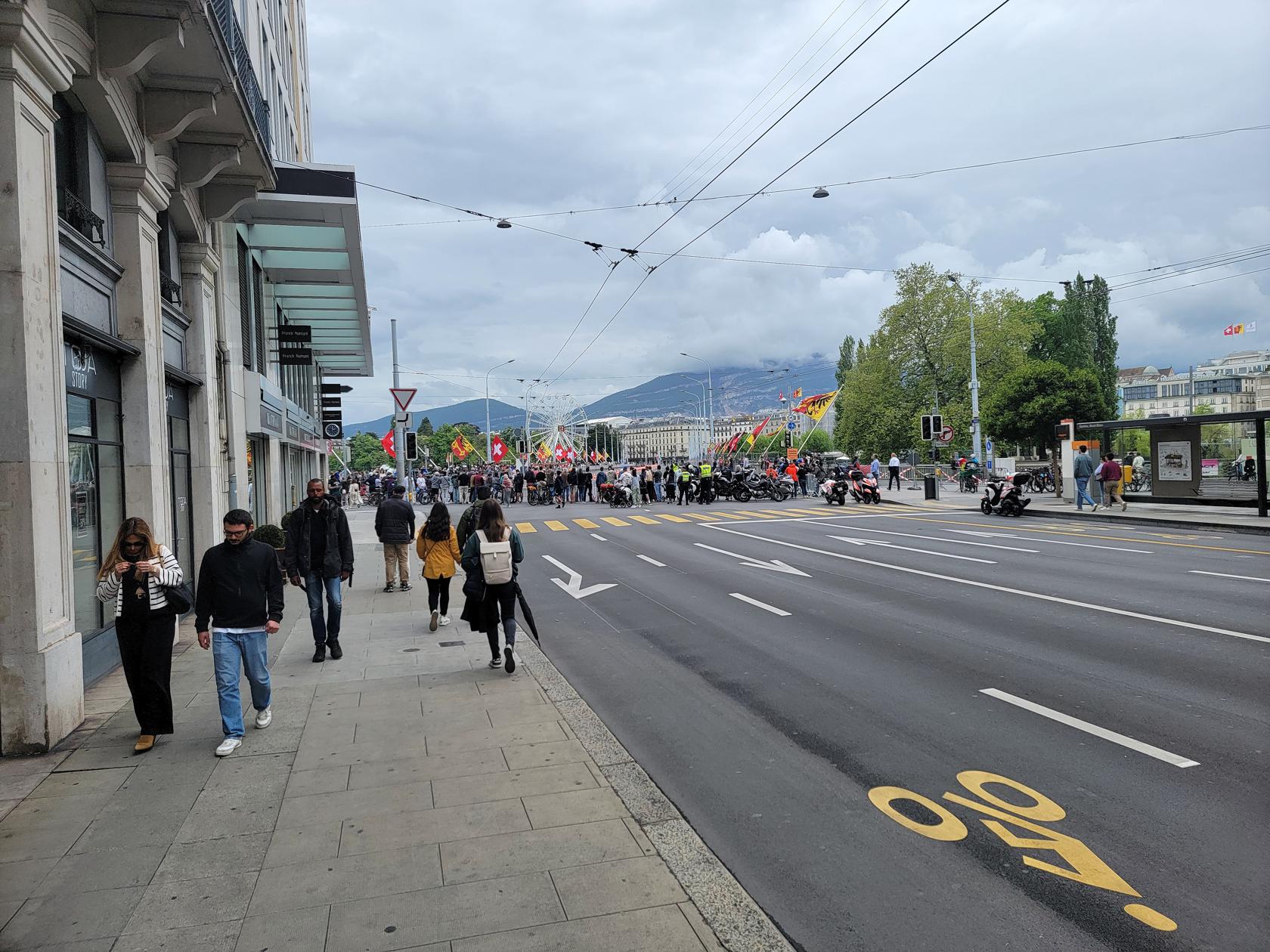
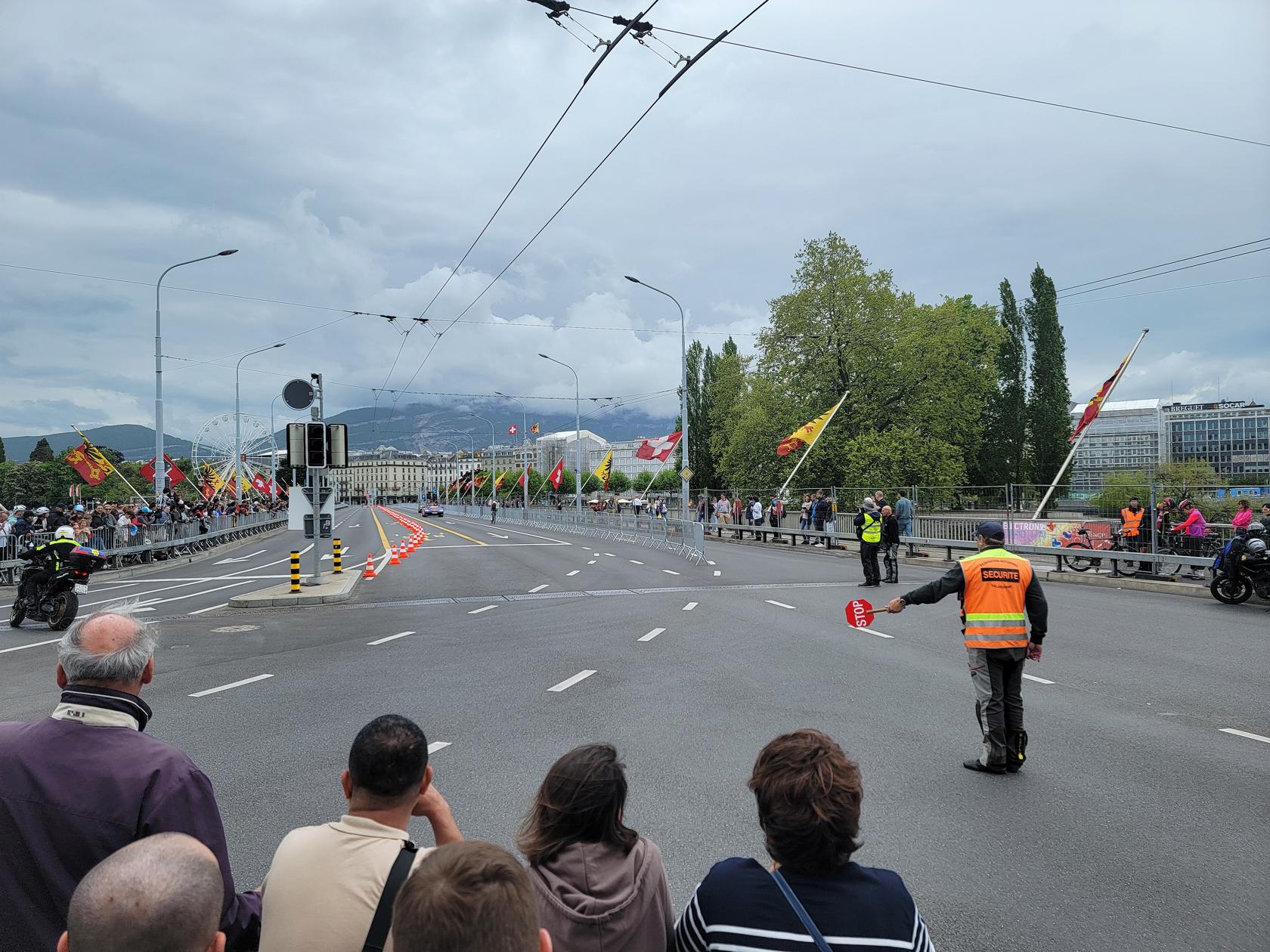
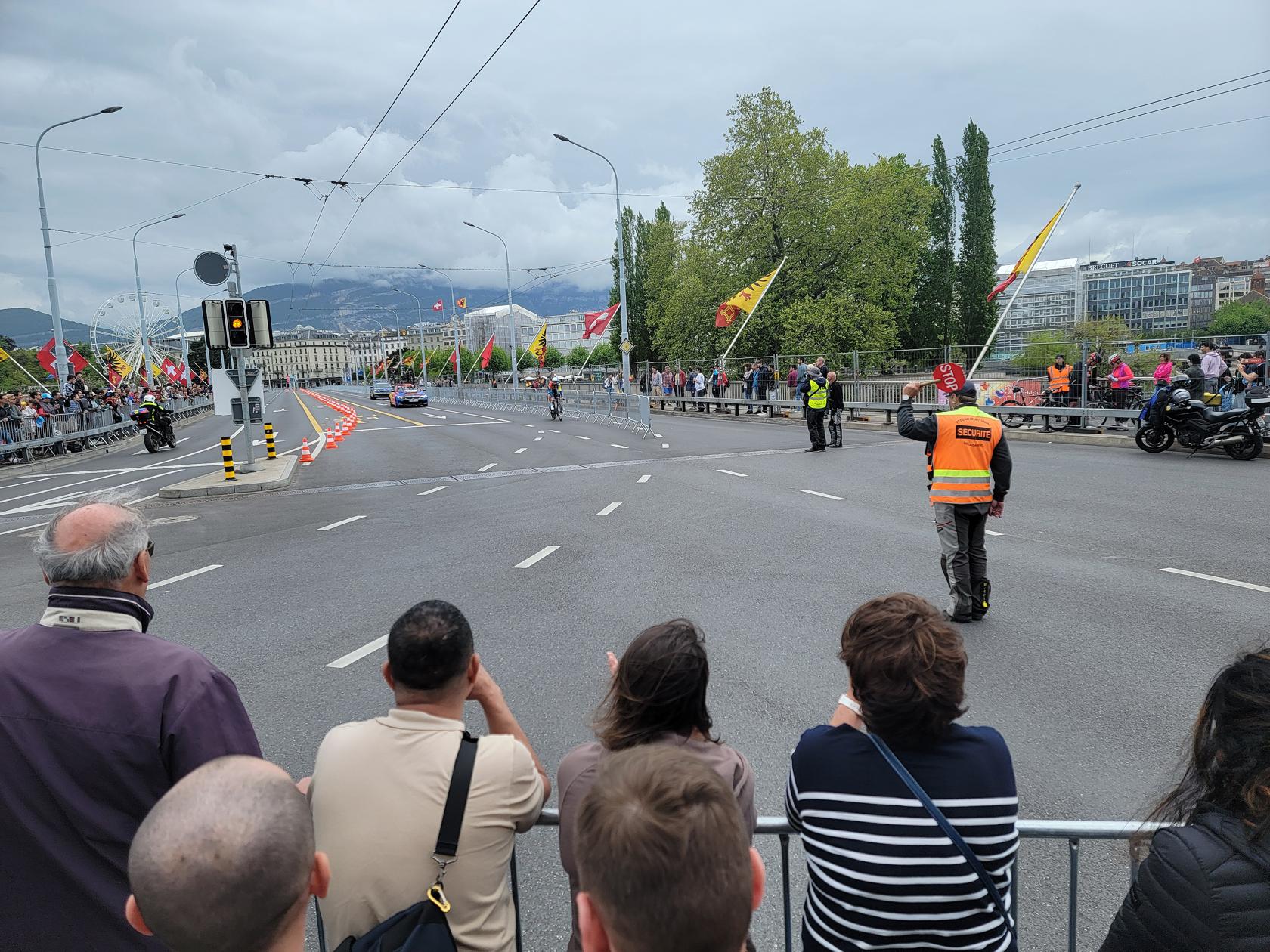
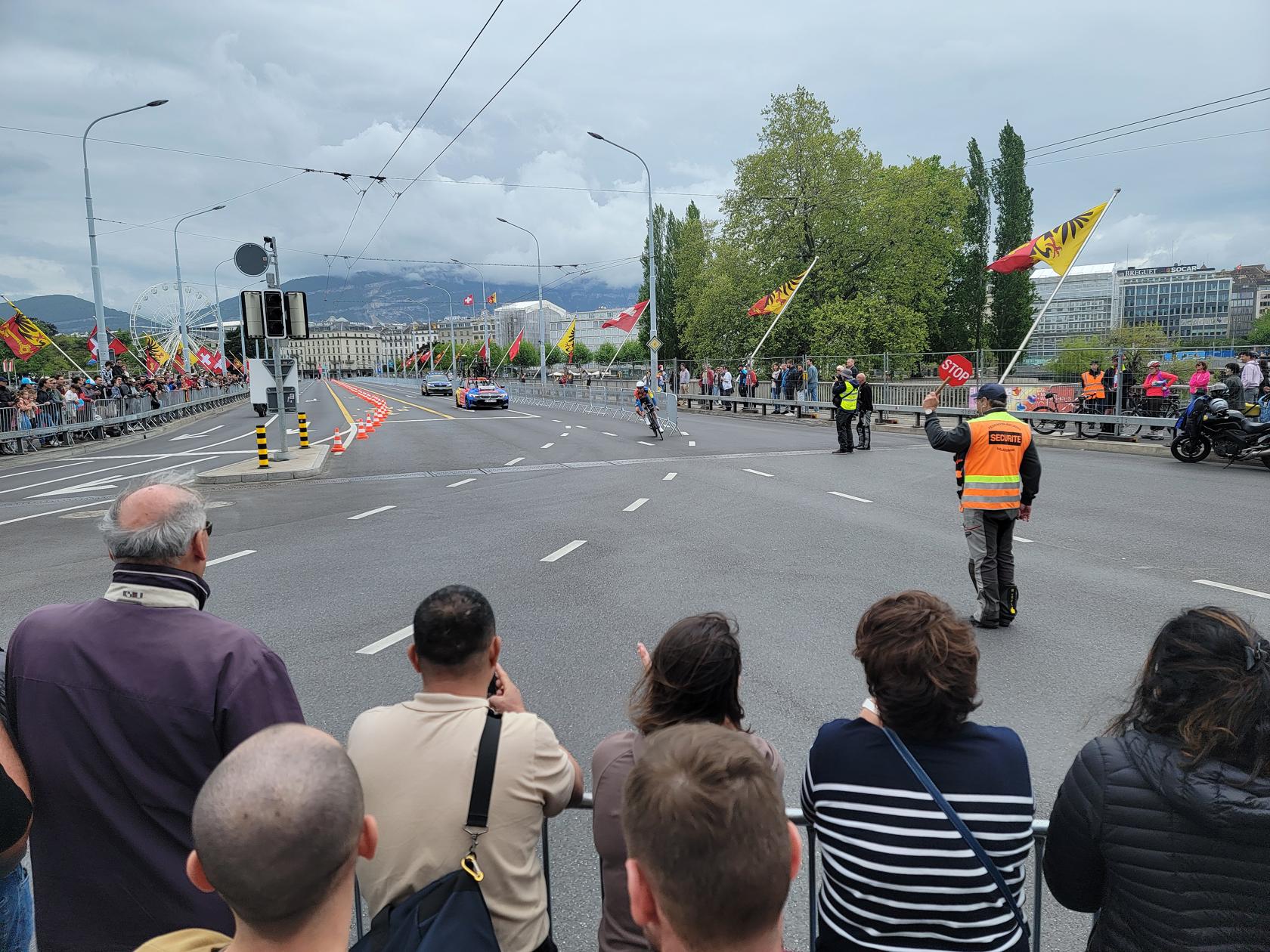
In 2025 Geneva hosted the Tour du Romandie, the last stage race of the spring before the large stage races of the summer. We were fortunate enough to catch the last stage, Stage 5, or Time Trial Stage, on the end of Pont du Mont Blanc. Very exciting.
Tour of Romandie – Pont du Mont Blanc Turnaround – Stage 5, Time Trial Venue – Geneva, Switzerland
Tour of Romandie – Pont du Mont Blanc Turnaround – Stage 5, Time Trial Venue – Geneva, Switzerland
Tour of Romandie – Pont du Mont Blanc Turnaround – Stage 5, Time Trial Venue – Geneva, Switzerland
Tour of Romandie – Pont du Mont Blanc Turnaround – Stage 5, Time Trial Venue – Geneva, Switzerland
Restaurants
Traveling can be daunting, especially when it comes to the different cuisines. The most challenging of which can be the meat based ones, which may not necessarily agree with everyone’s digestive system. Hence, keeping an open mind when in a cosmopolitan city like Geneva is a good thing. French cuisine can be very good, but it can also take a toll on the body after a few days.
Auberge de Savièse
The little restaurant Auberge de Savièse is on Rue des Pâquis and offers typical French cuisine. If you are into crepes, fondues and similar fare, this place offers them all at reasonable prices, at least for Switzerland. They also offer simple things, like soups and salads, if you prefer something lighter. We just had soup and a salad, so didn’t take any photographs.
Zhong Tong
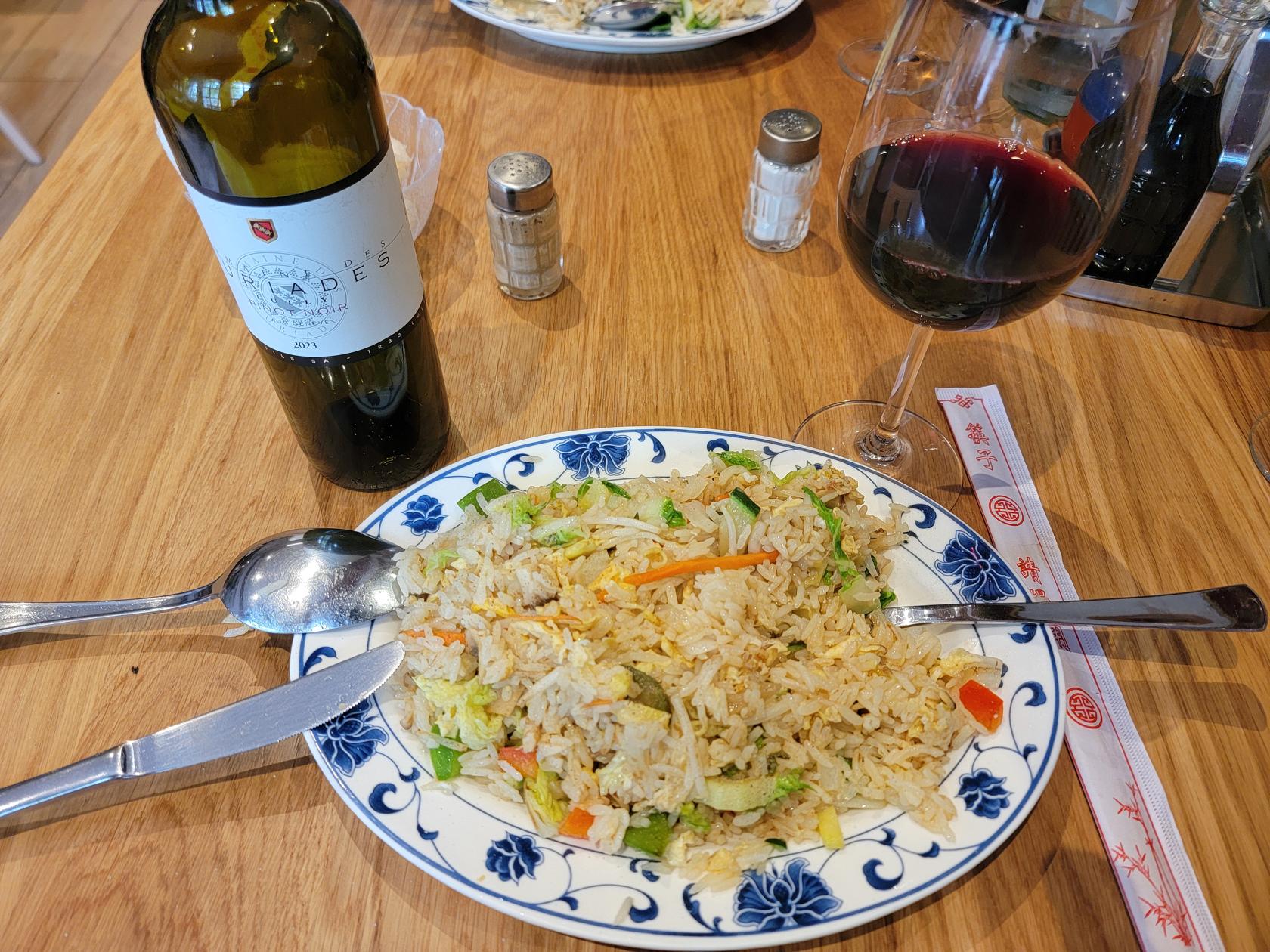
A Chinese restaurant on Rue du Cendrier 10 has pretty good Chinese food. The service is good and it can get busy, but is never overcrowded. If you are craving vegetables, a must stop, especially after all the cheese and other meat oriented dishes exist within the city.
Zhong Tong Chinese Restaurant – Vegetables and Fried Rice, Pinot Noir – Geneva, Switzerland
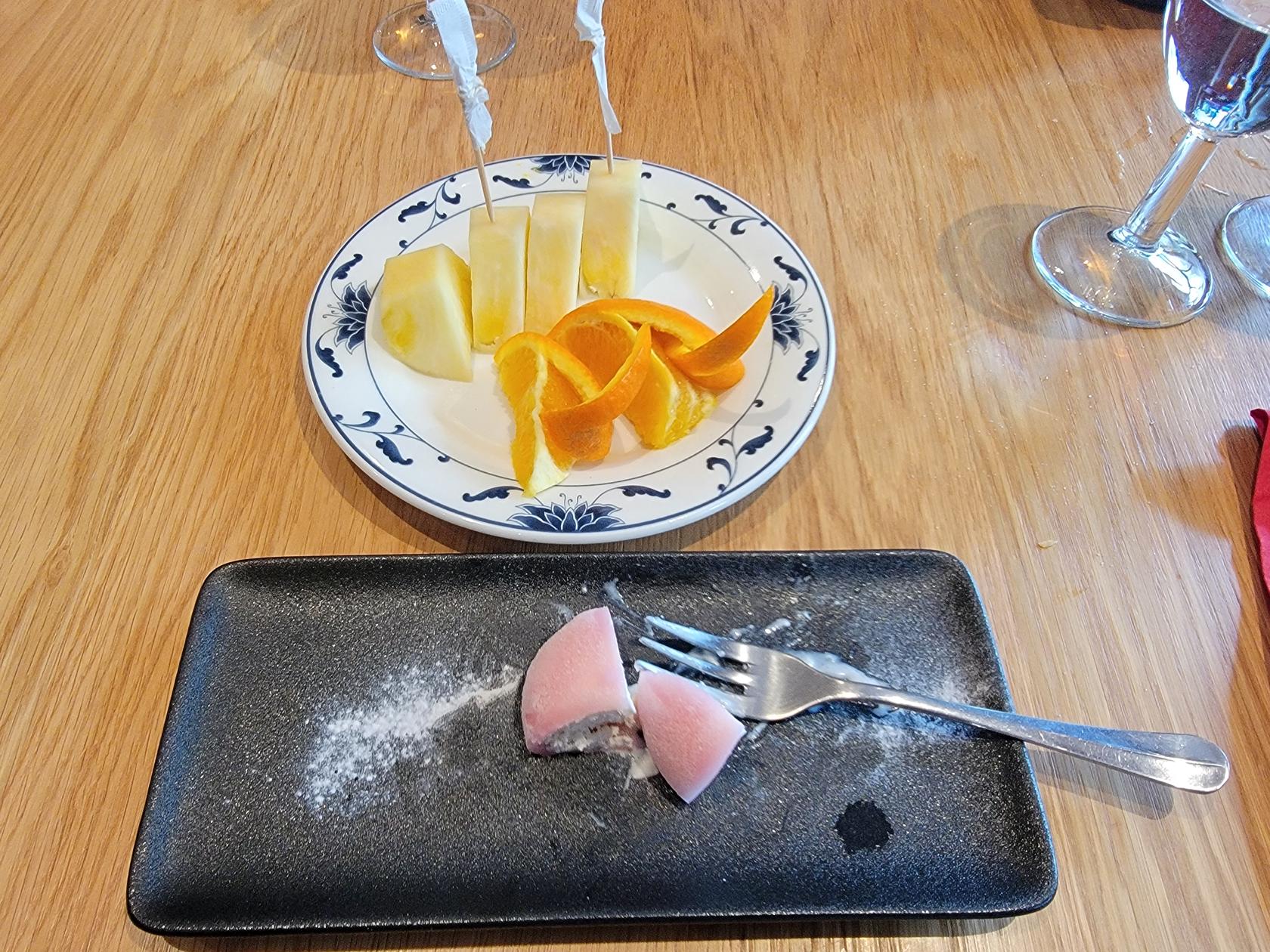
Zhong Tong Chinese Restaurant – Dessert, Cirese (cherry) Ice Cream, Pineapple and Oranges – Geneva, Switzerland
The Matterhorn Express, the last leg of our journey here, is the longest of the rides you may take with the Peak Pass. It covers the gondola ride from Zermatt via Furi, all the way up to Klein Matterhorn and the Matterhorn Glacier Paradise.
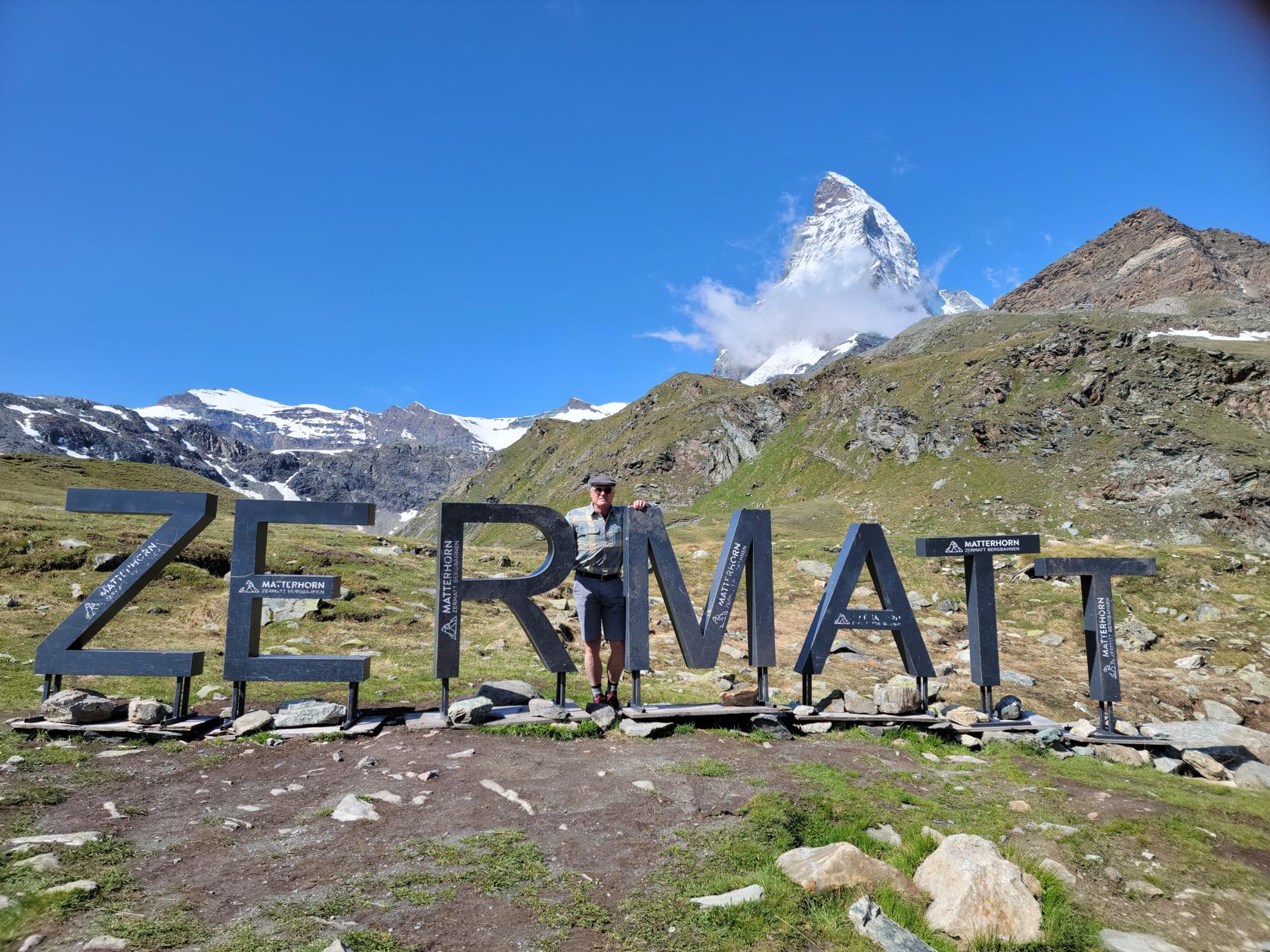
The Matterhorn – Zermatt, Switzerland
Matterhorn – Walking to the gondola entrance – Zermatt, Switzerland
Matterhorn – Walking to the gondola entrance – Zermatt, Switzerland
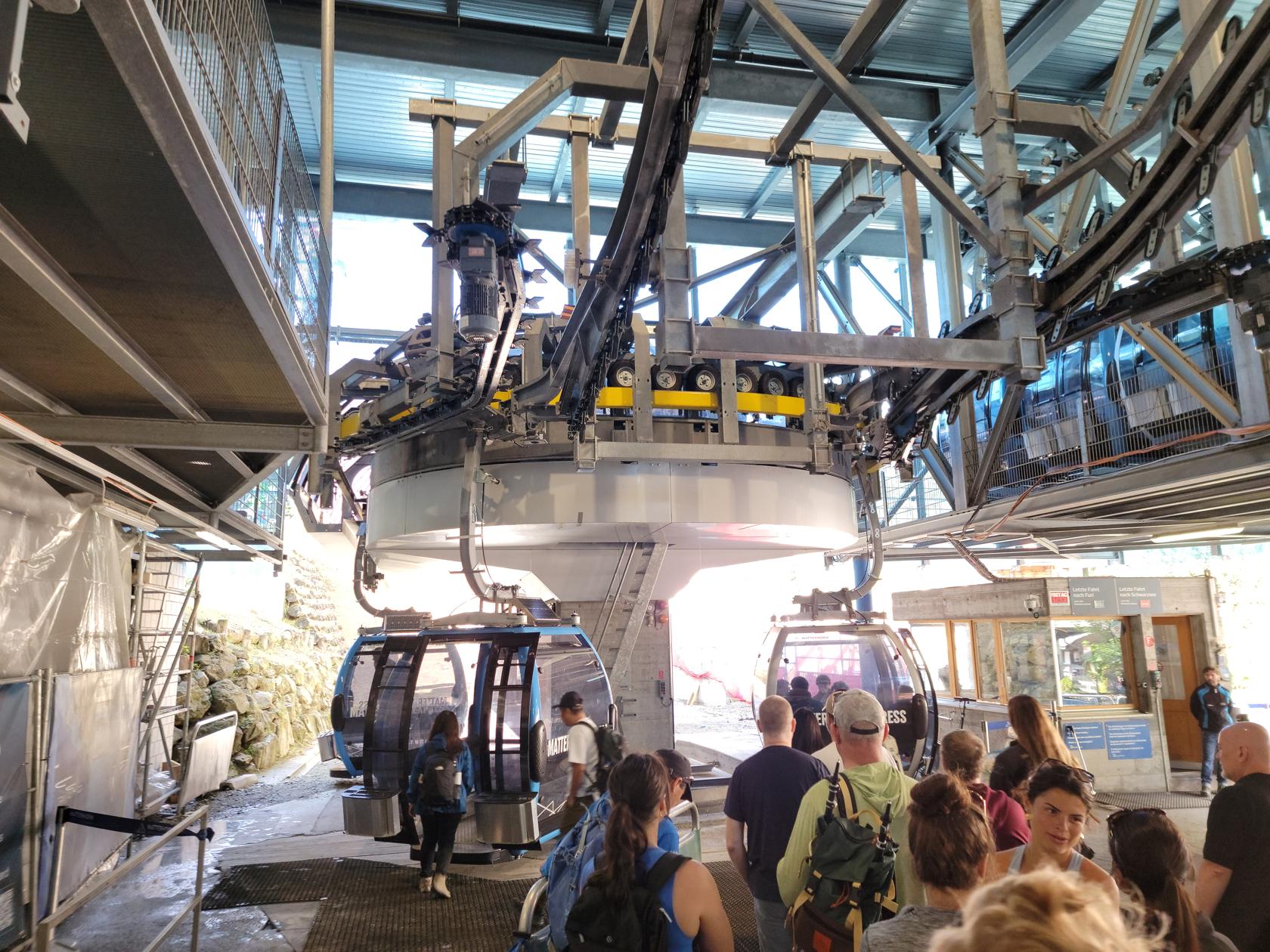
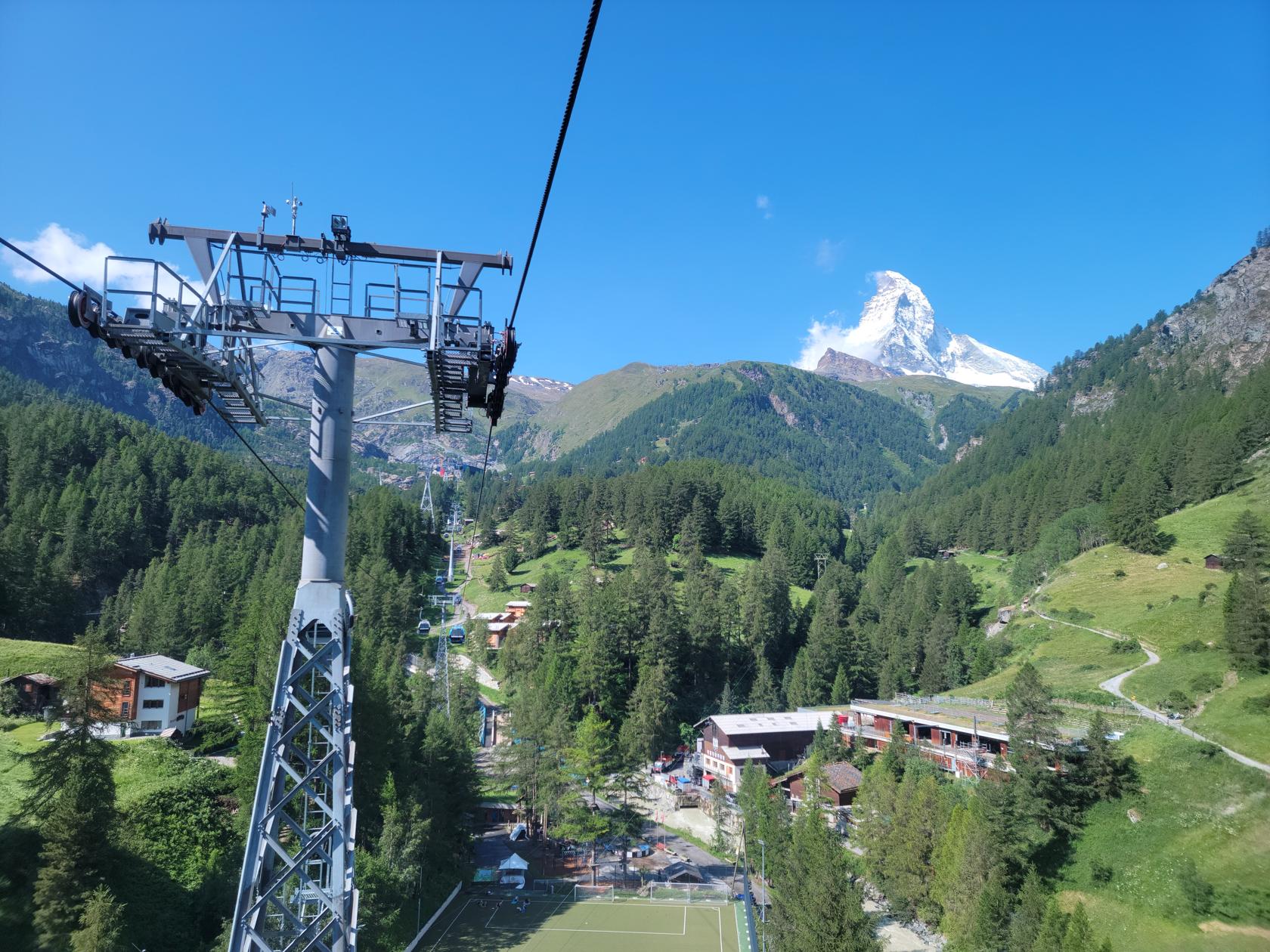
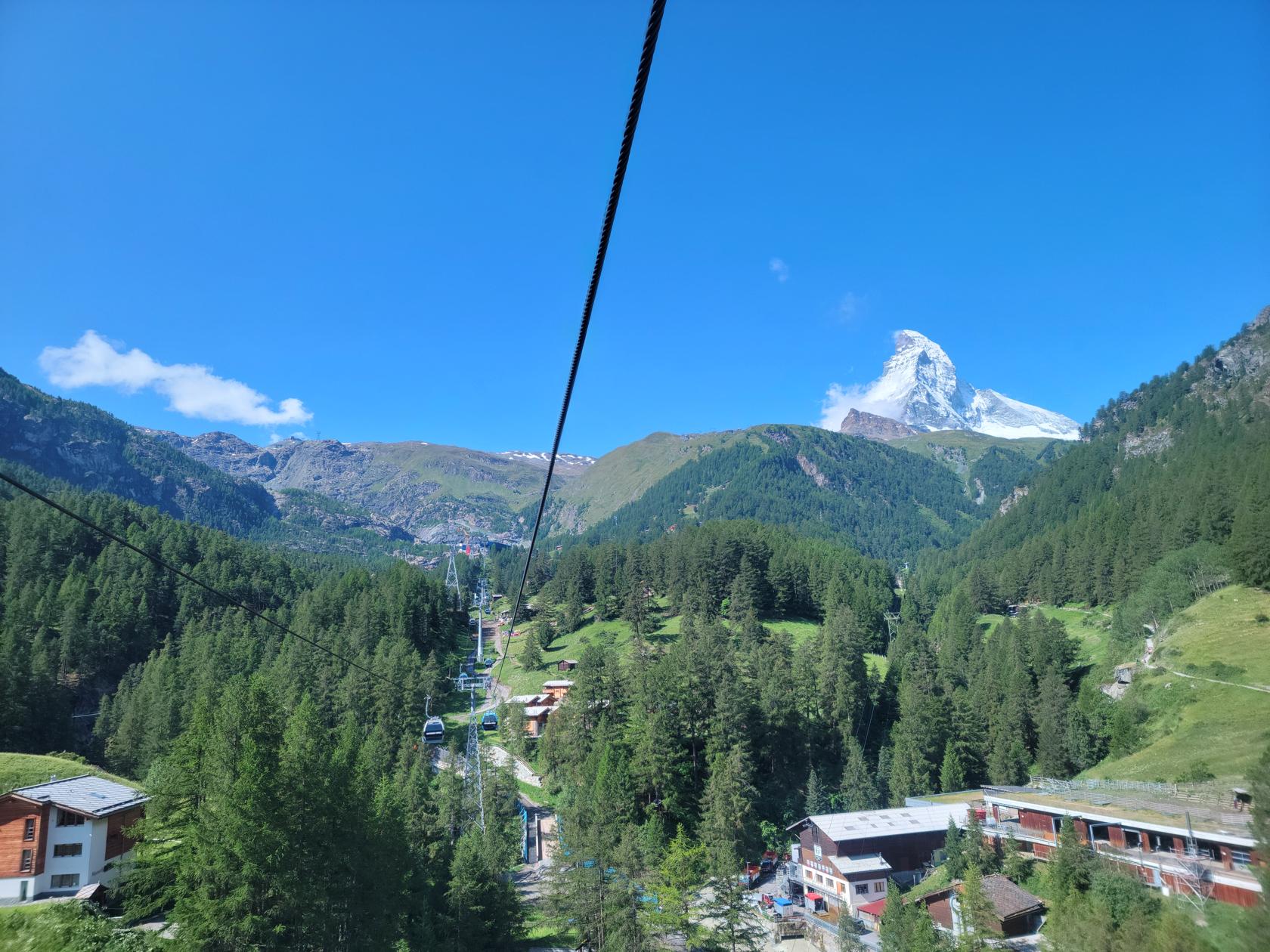
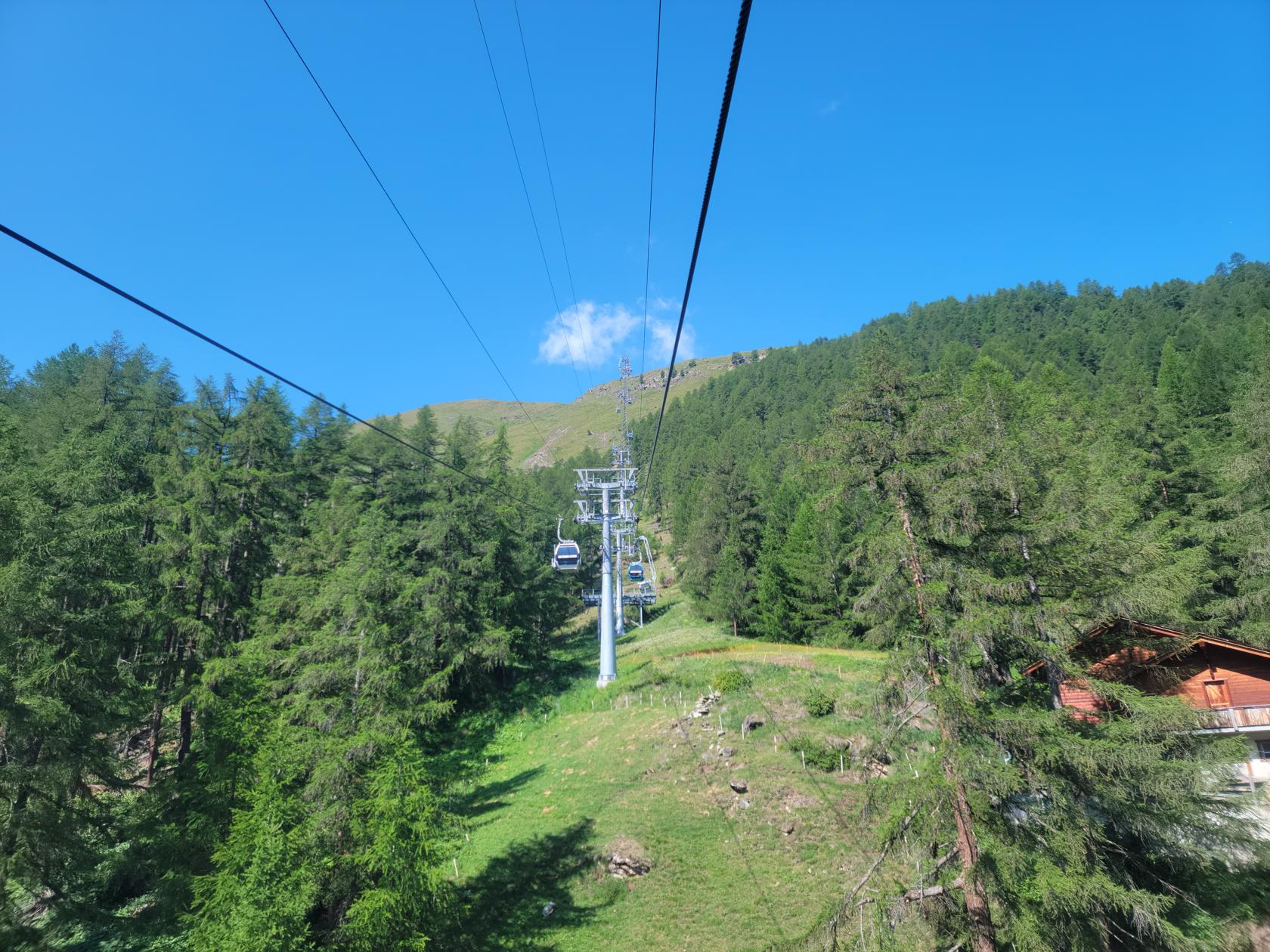
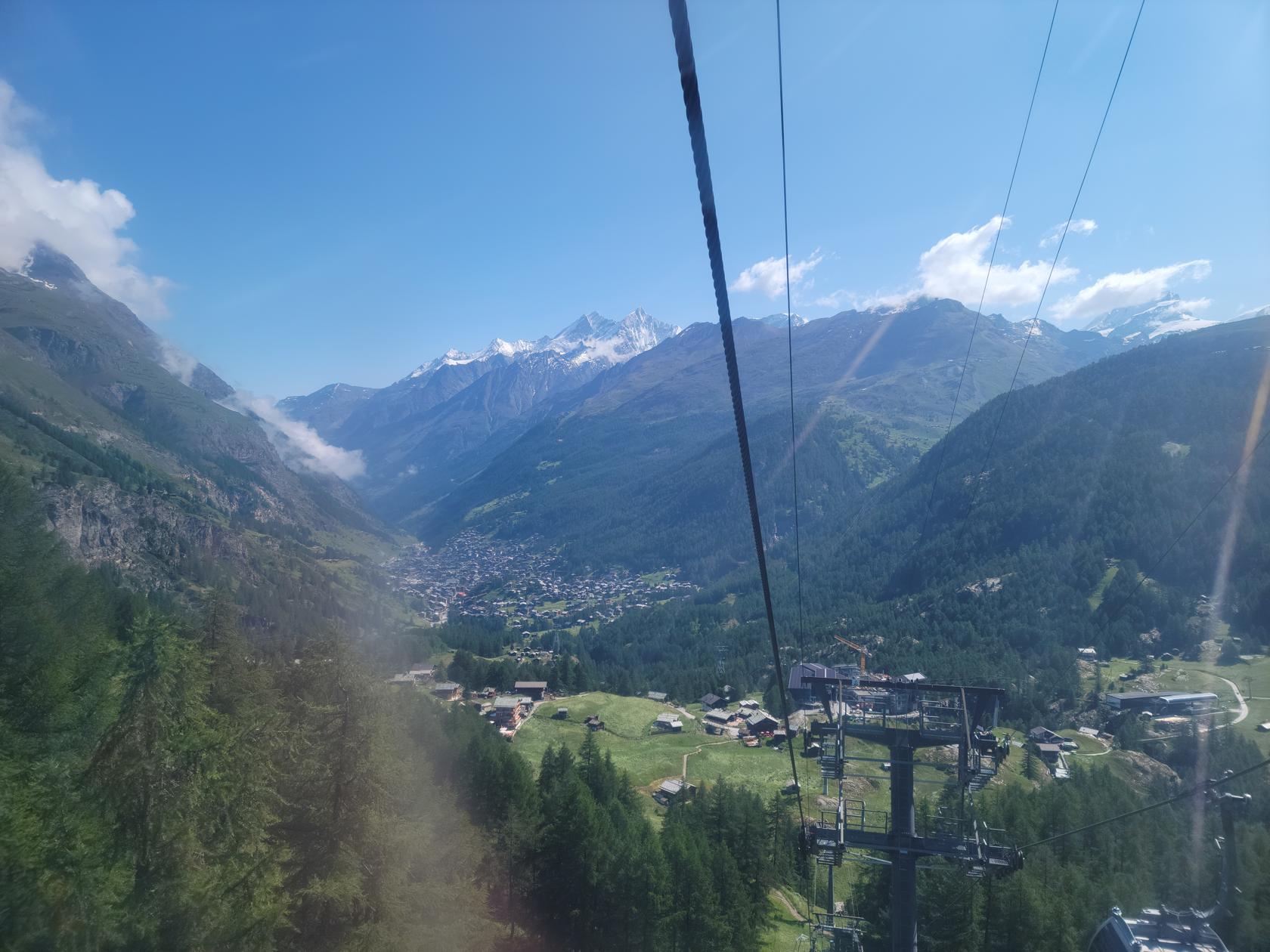
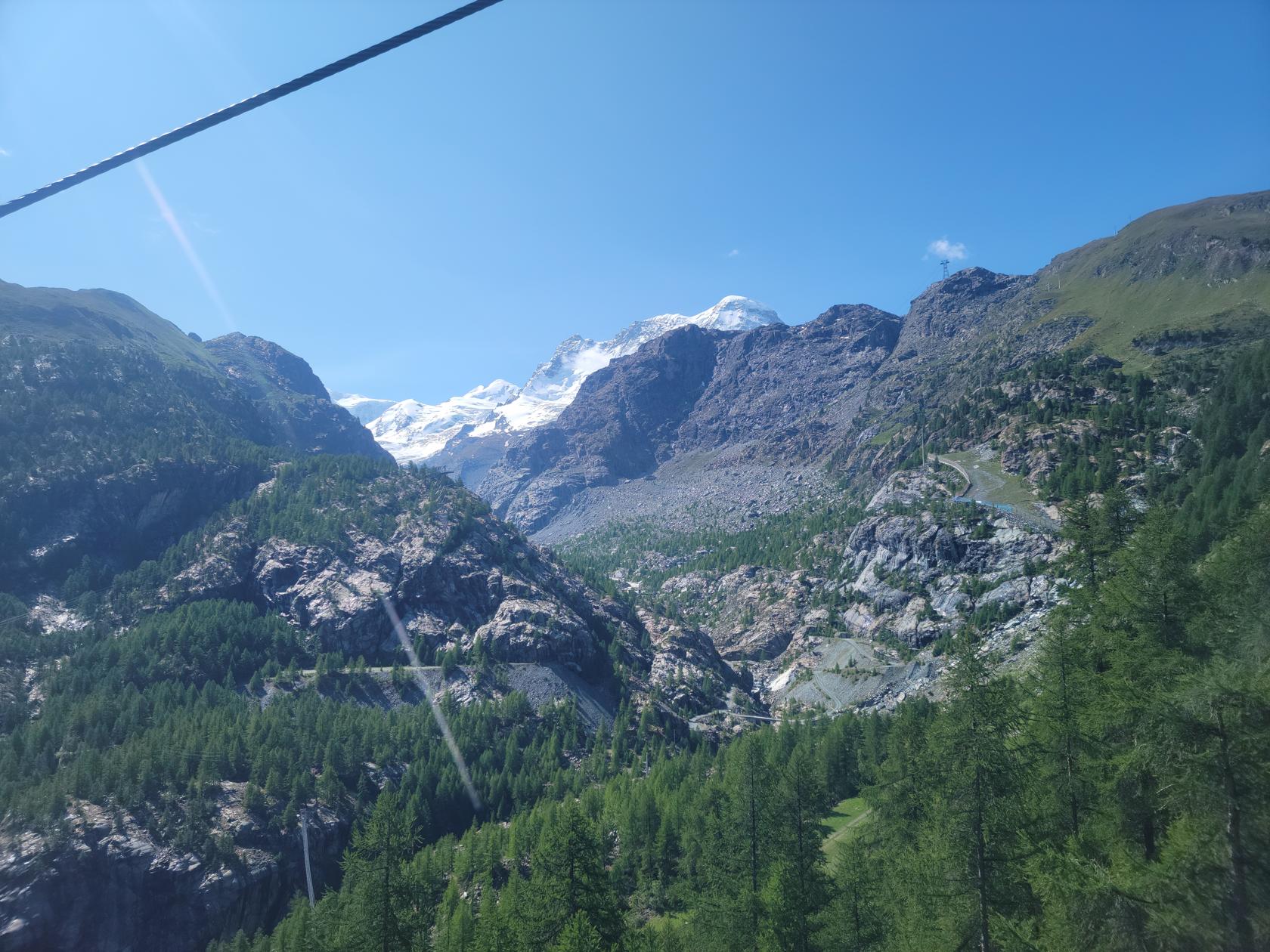
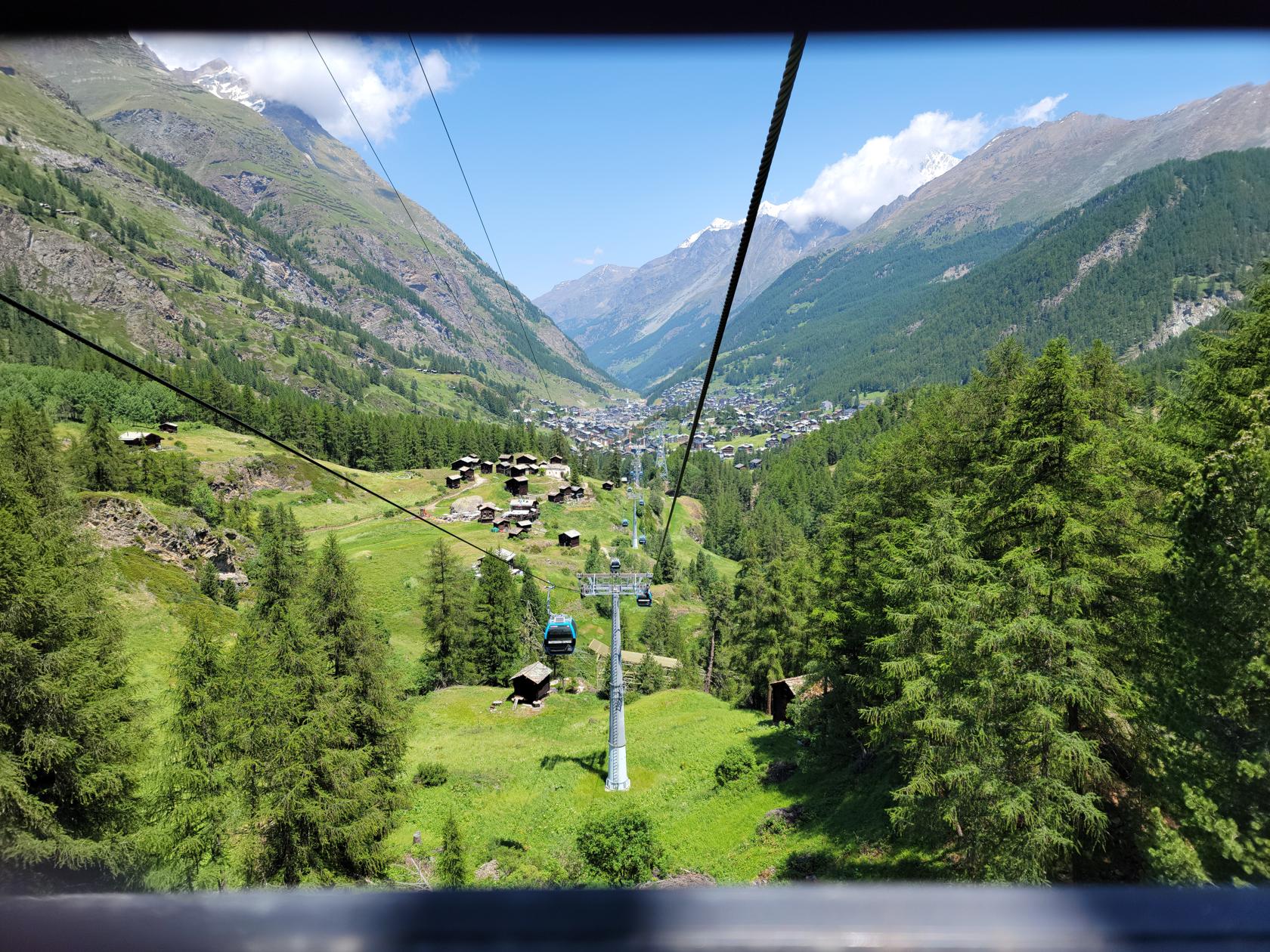
The gondola ride is fairly long and one can hop-on and hop-off and several different places along the way.
Matterhorn Express Gondola ride up to Furi – Zermatt, Switzerland
Matterhorn Express Gondola ride up to Furi – Zermatt, Switzerland
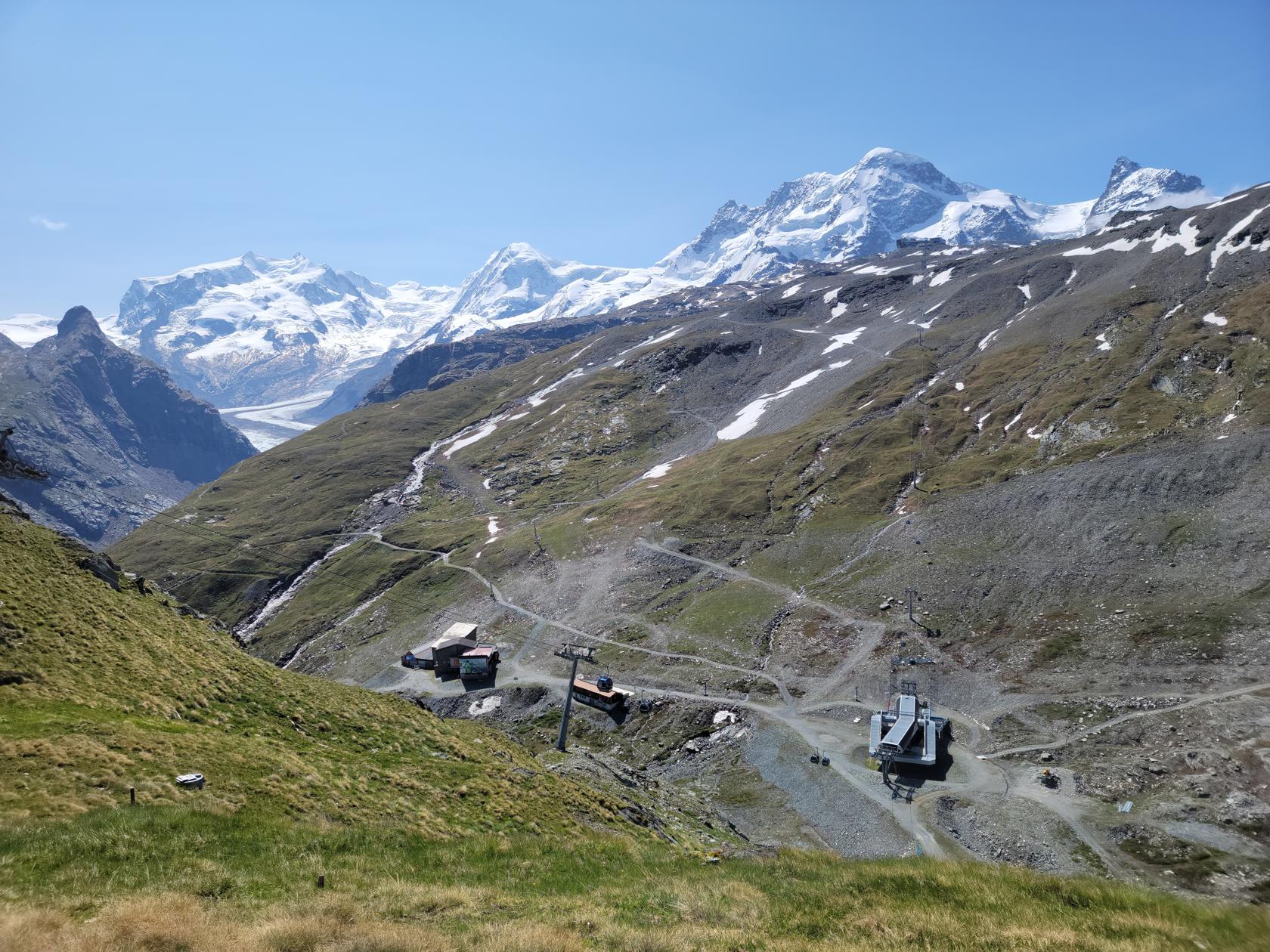
Matterhorn Express Gondola ride up to Schwarzsee – Zermatt, Switzerland
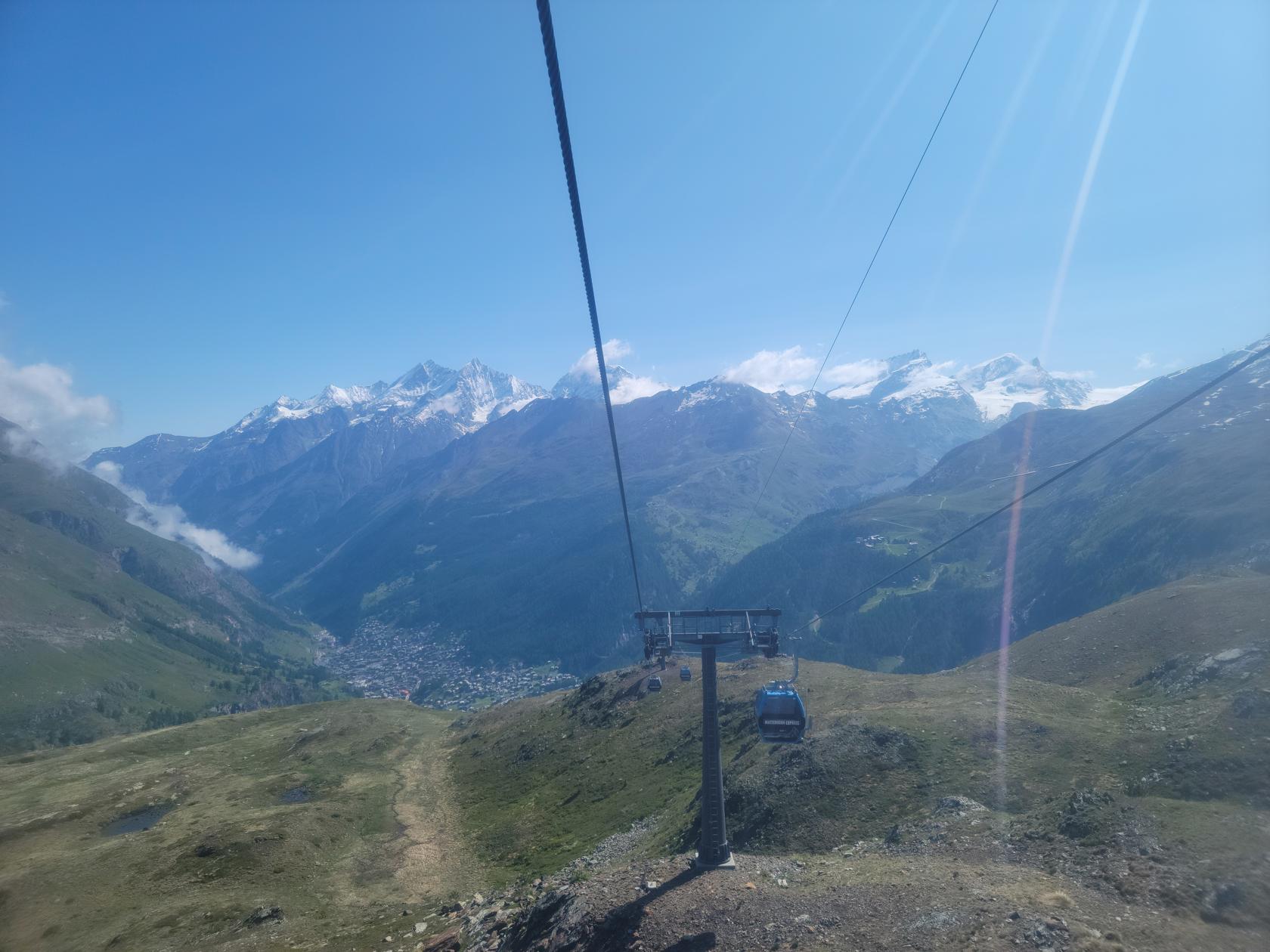
Zermatt below – Matterhorn Express Gondola ride up to Schwarzsee – Zermatt, Switzerland
Matterhorn Express Gondola ride up to Schwarzsee – Zermatt, Switzerland
Matterhorn Express Gondola ride up to Schwarzsee – Zermatt, Switzerland
Schwarzsee
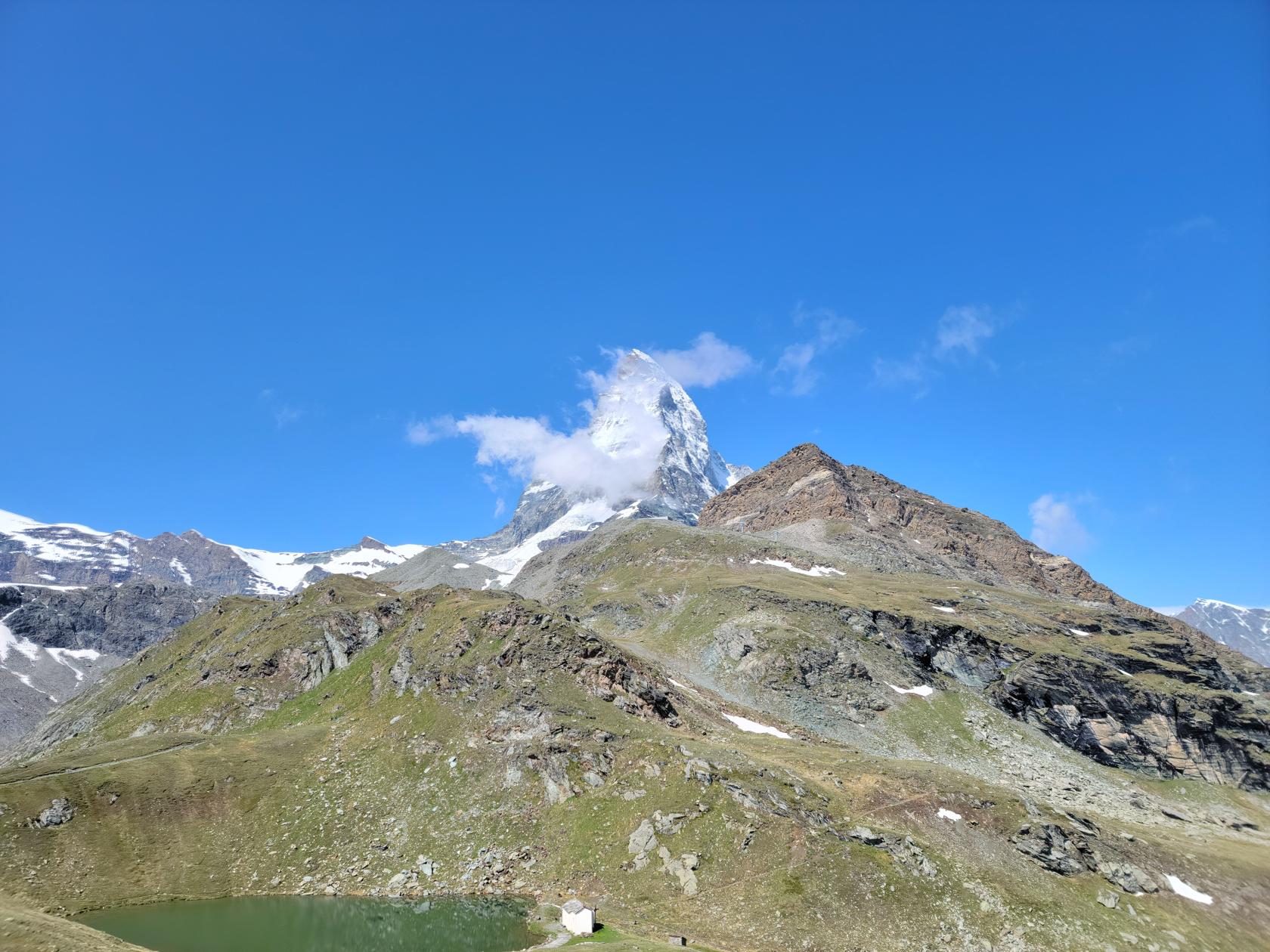
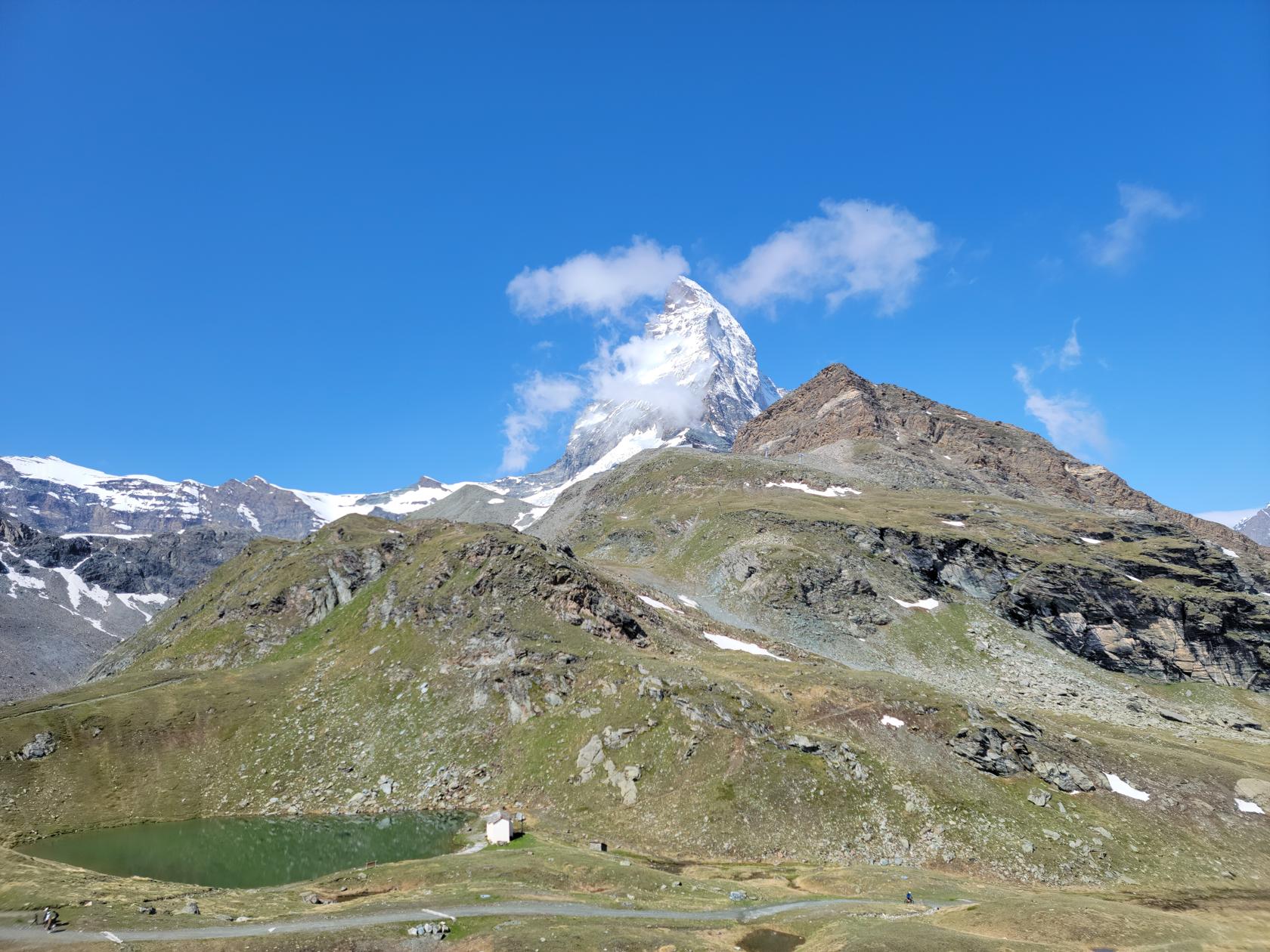
This is about the third stop on the way up and is after Furi. It is just up over massif that separates the high peaks from the valley floor below. In fact, as you go up the hill on the gondola ride you cannot see the Matterhorn until you just about reach Schwarzsee.
Matterhorn at the Schwarzsee – Zermatt, Switzerland
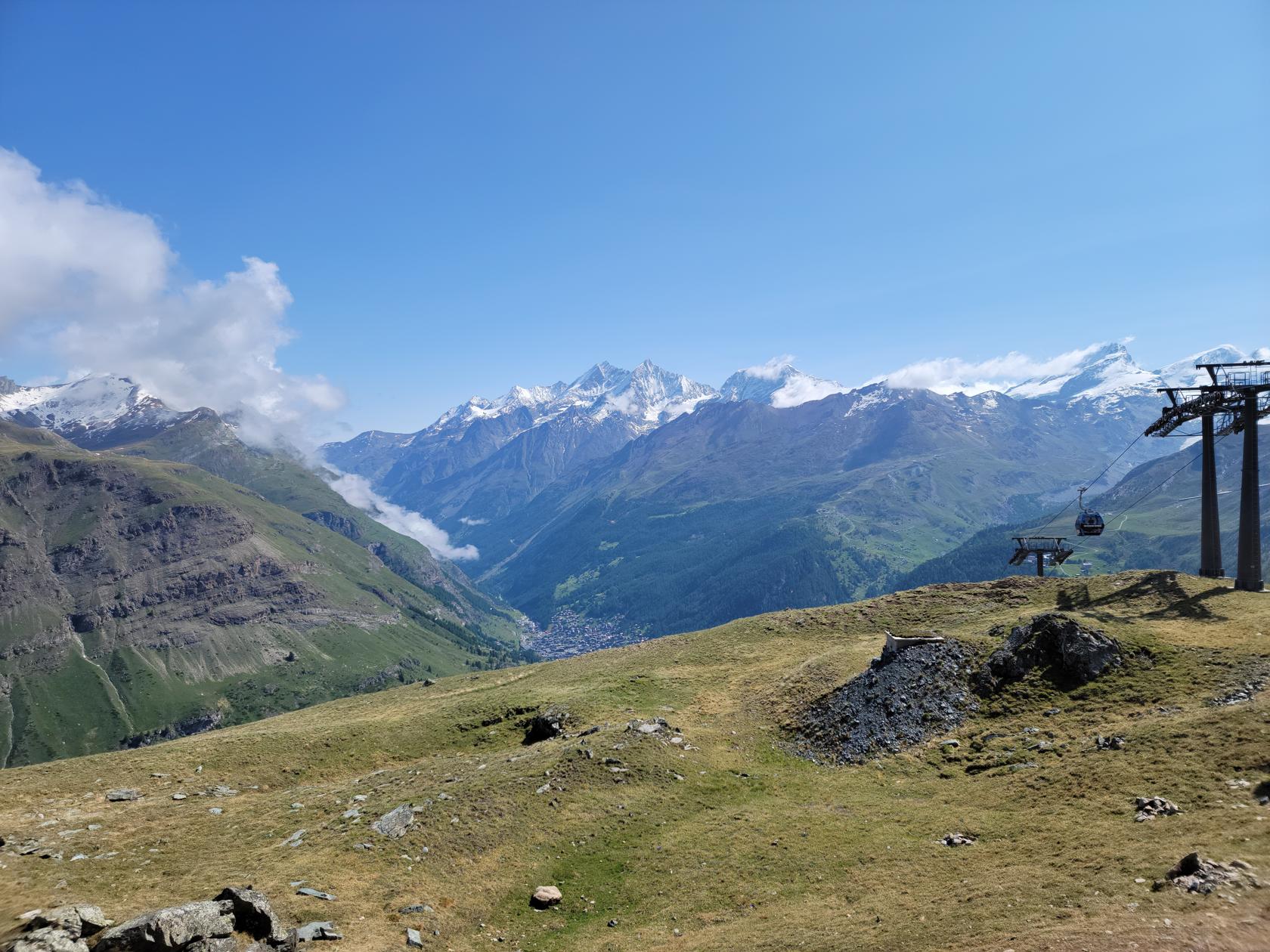
Mattertal and Zermatt from Schwarzsee – Zermatt, Switzerland
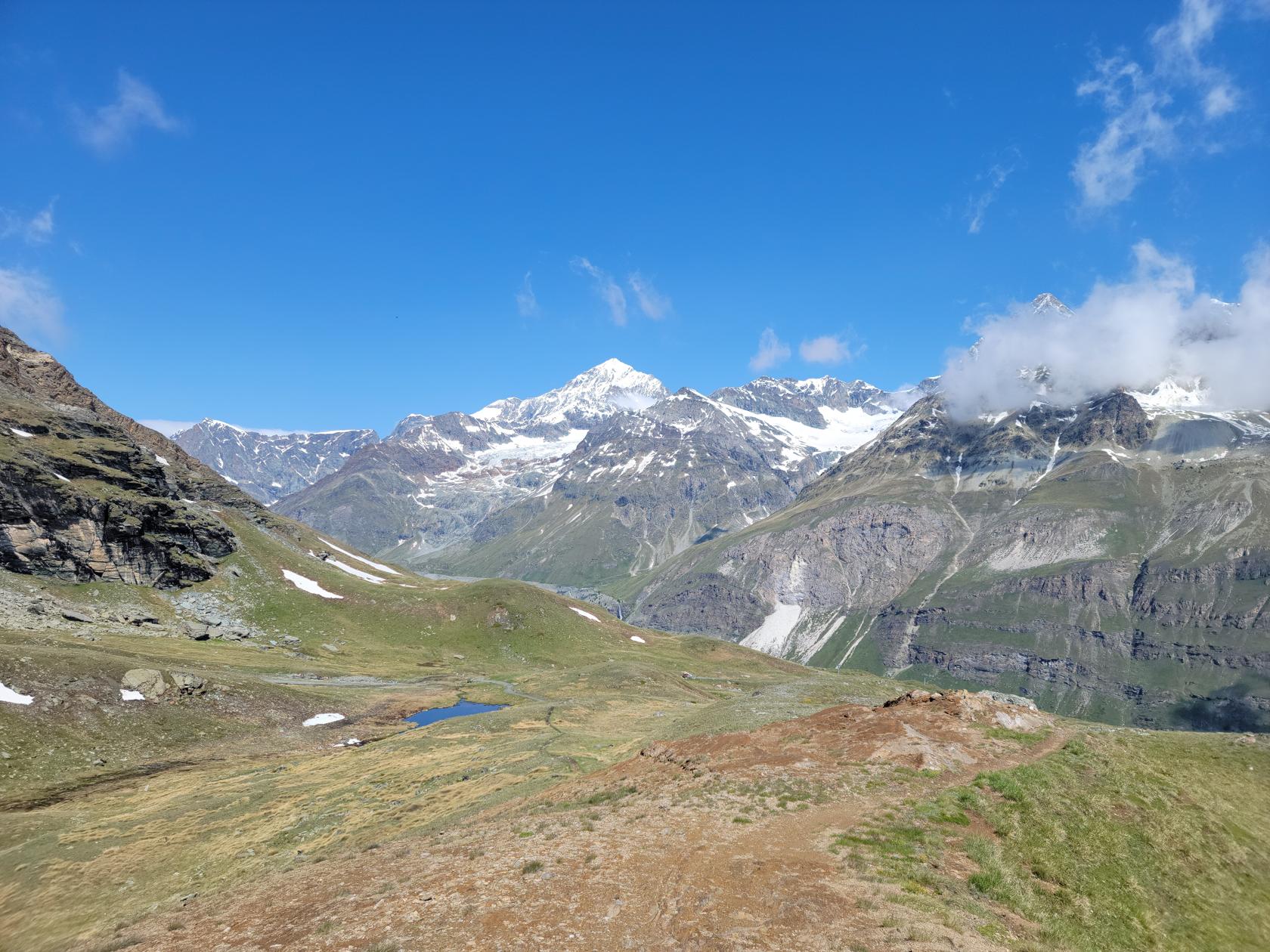
Weisshorn and other peaks from Schwarzsee – Zermatt, Switzerland
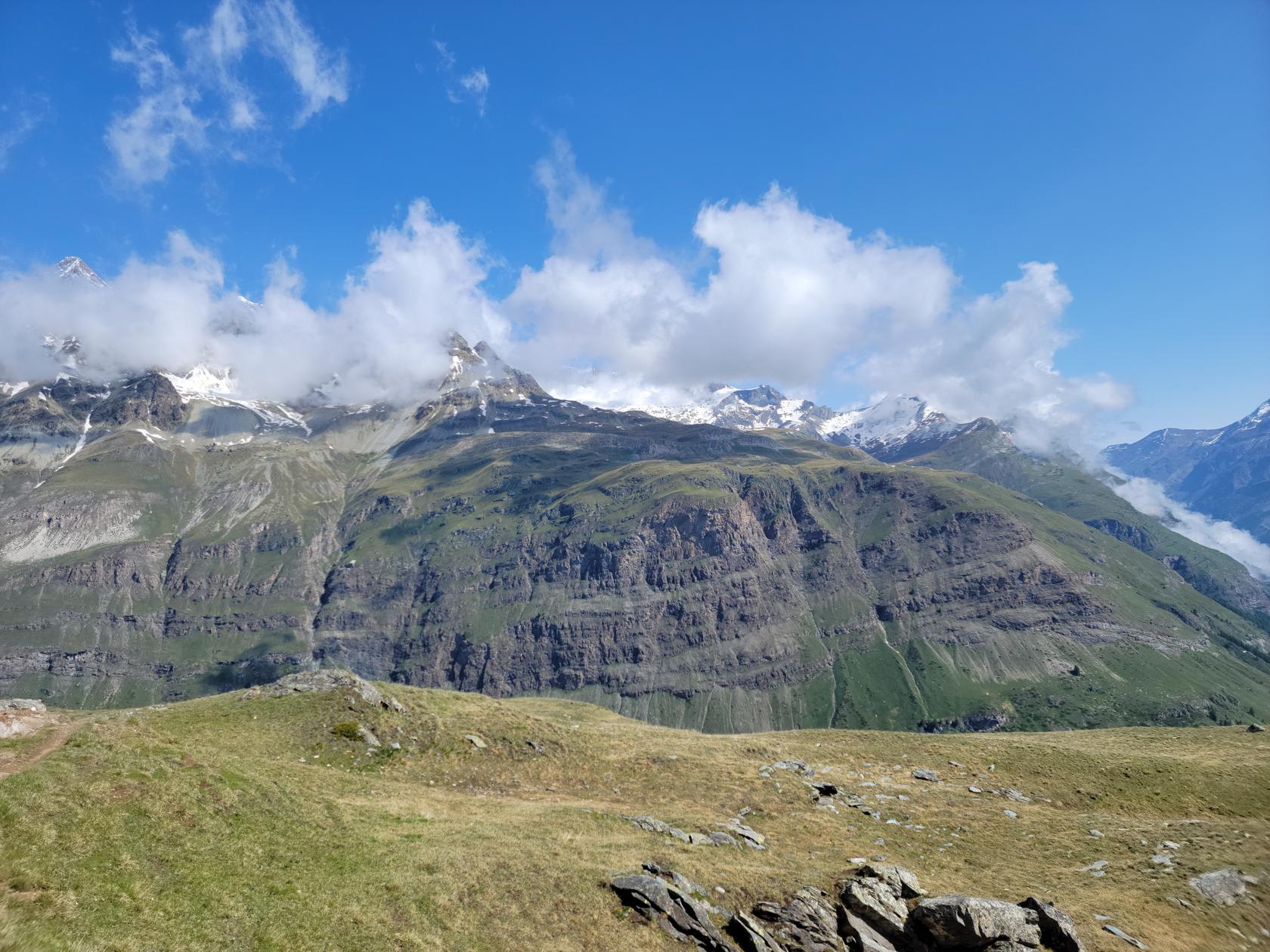
Denta Blanche from Schwarzsee – Zermatt, Switzerland
Matterhorn and the Schwarzsee – Zermatt, Switzerland
Erick at the Zermatt – Schwarzsee – Zermatt, Switzerland
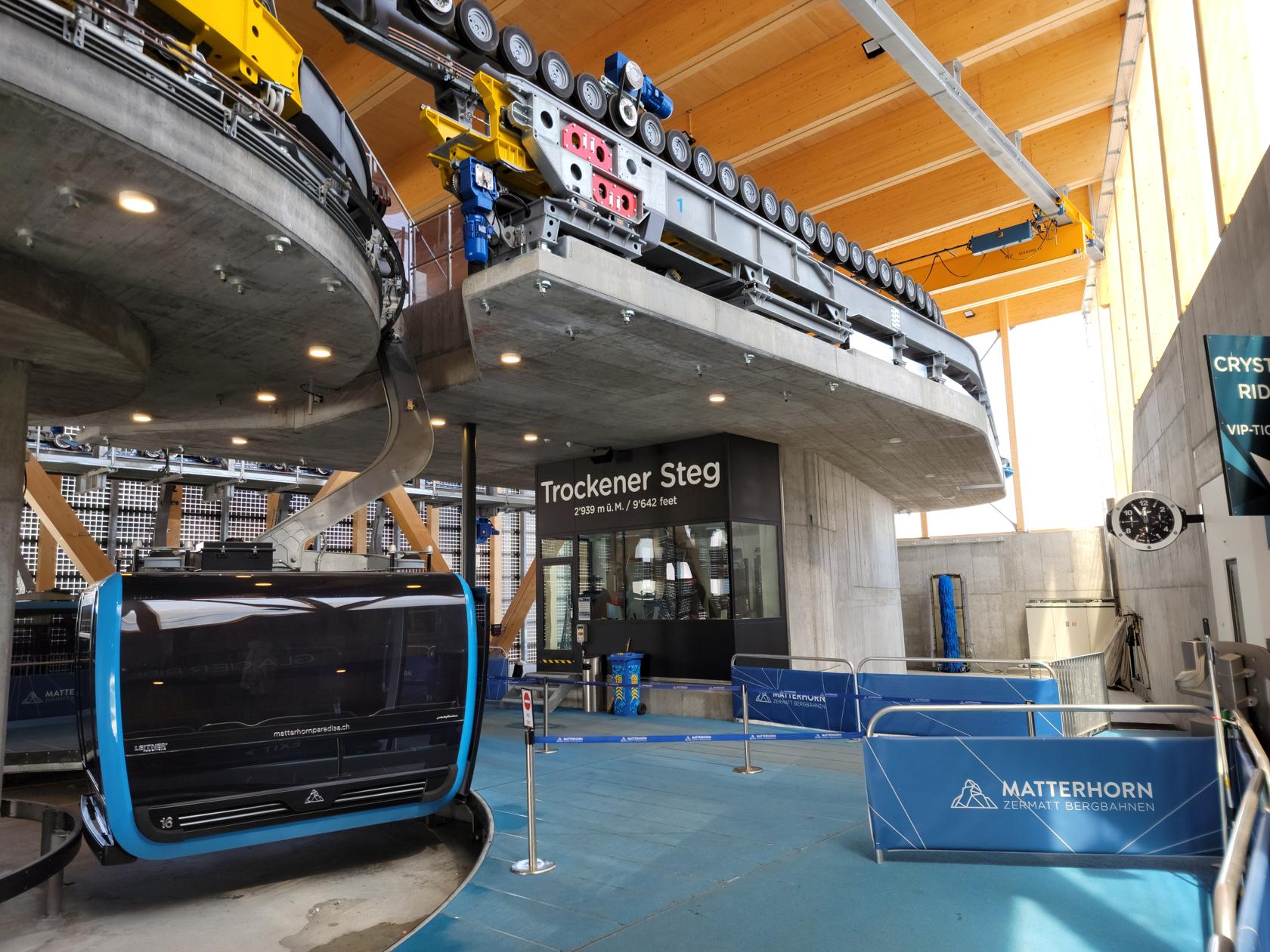
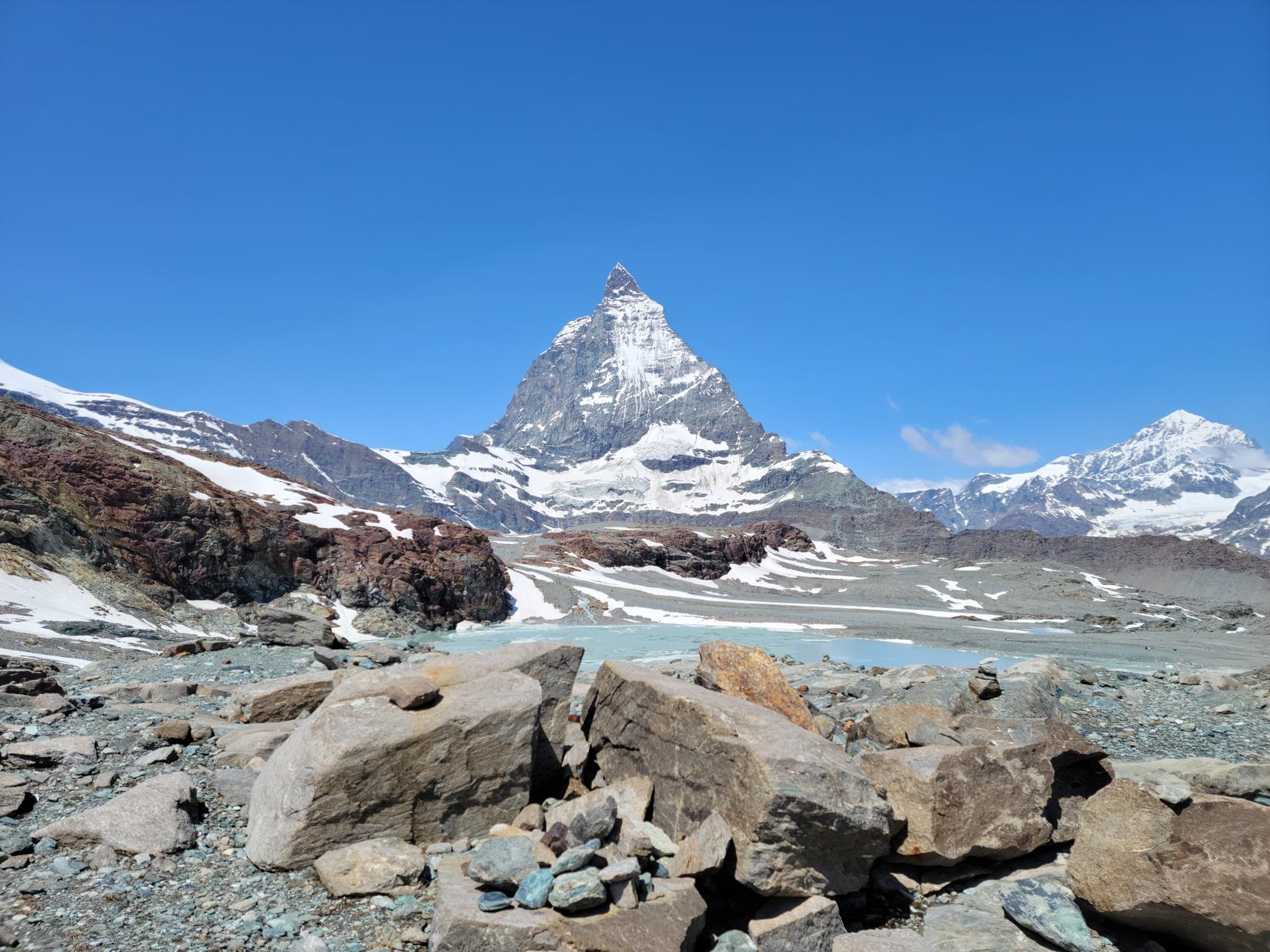
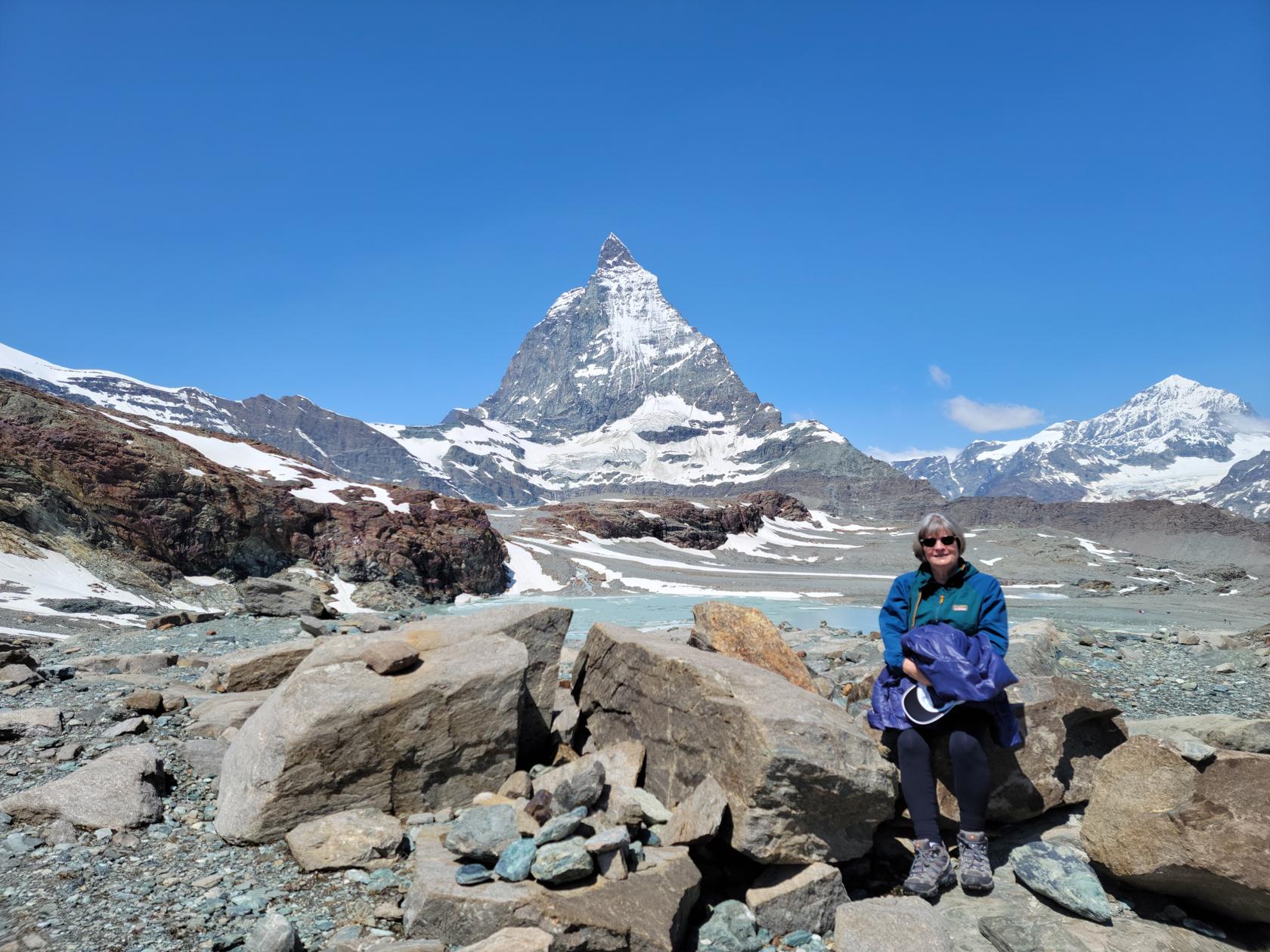
Another stop just before Klein Matterhorn is the Trockener Steg. It lays at around eleven thousand feet in elevation, so you will feel some relief from the elevation once you arrive here on the way back down.
Patti and the Matterhorn – Trockener Steg – Zermatt, Switzerland
Klein Matterhorn
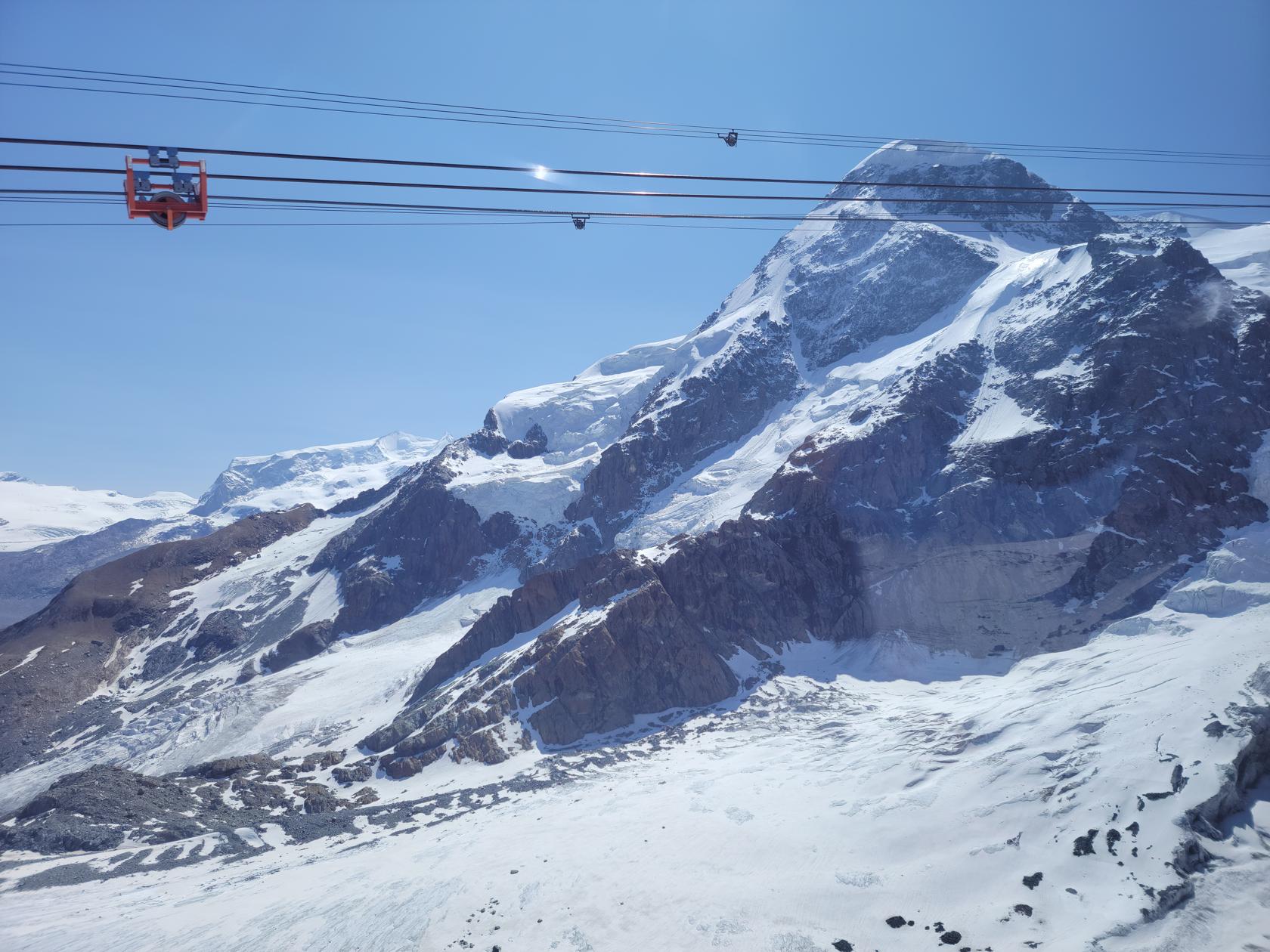
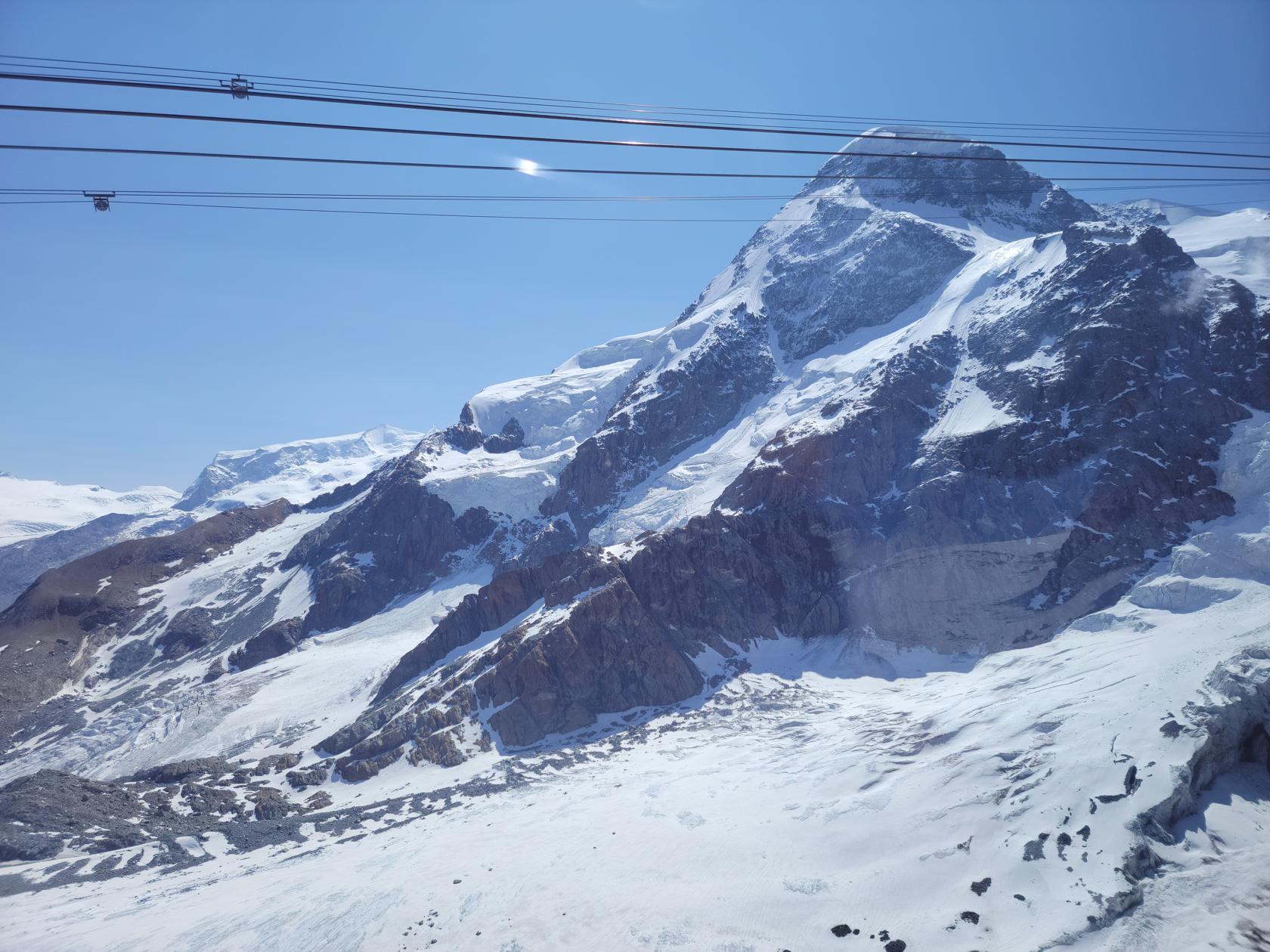
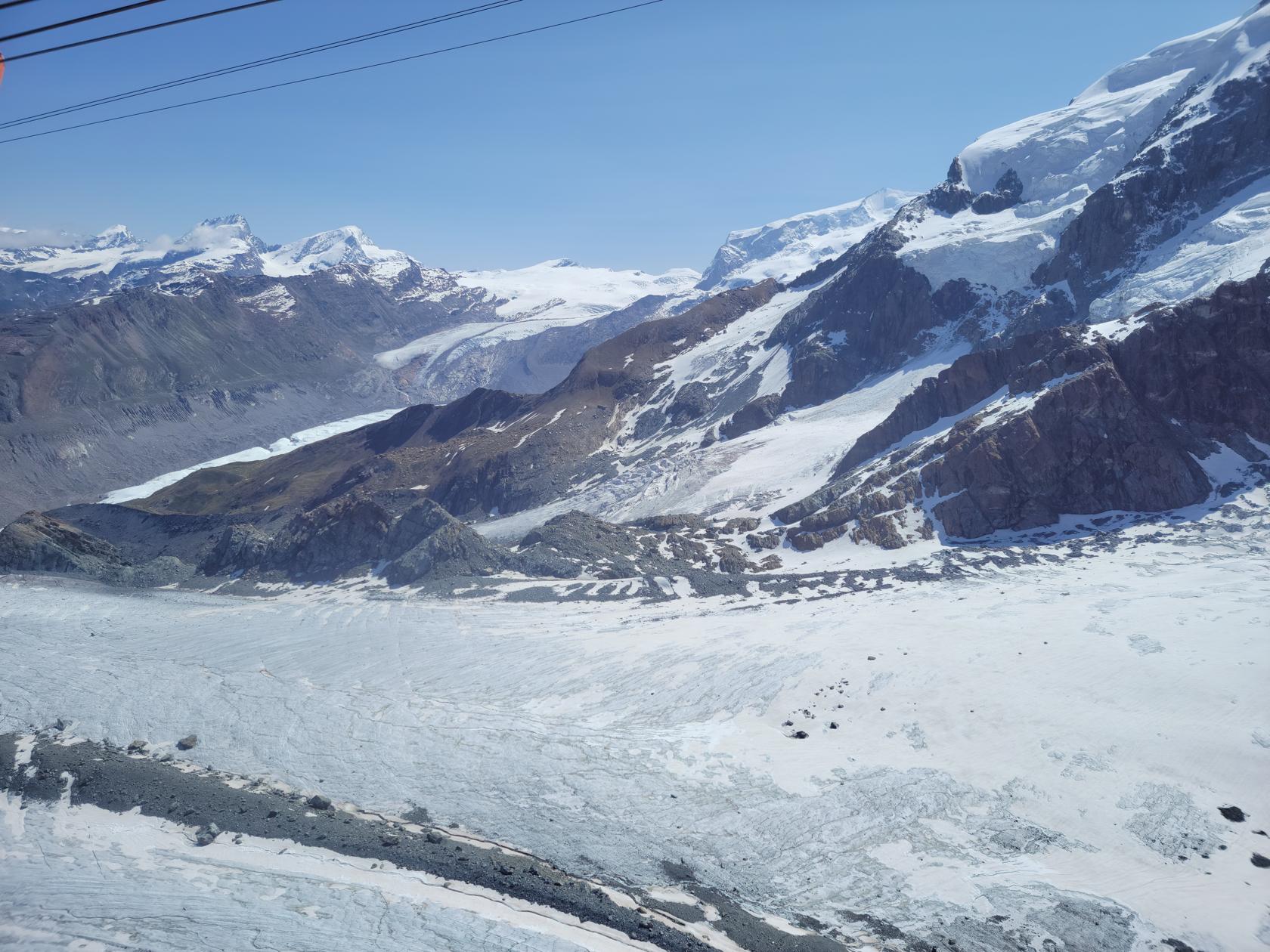
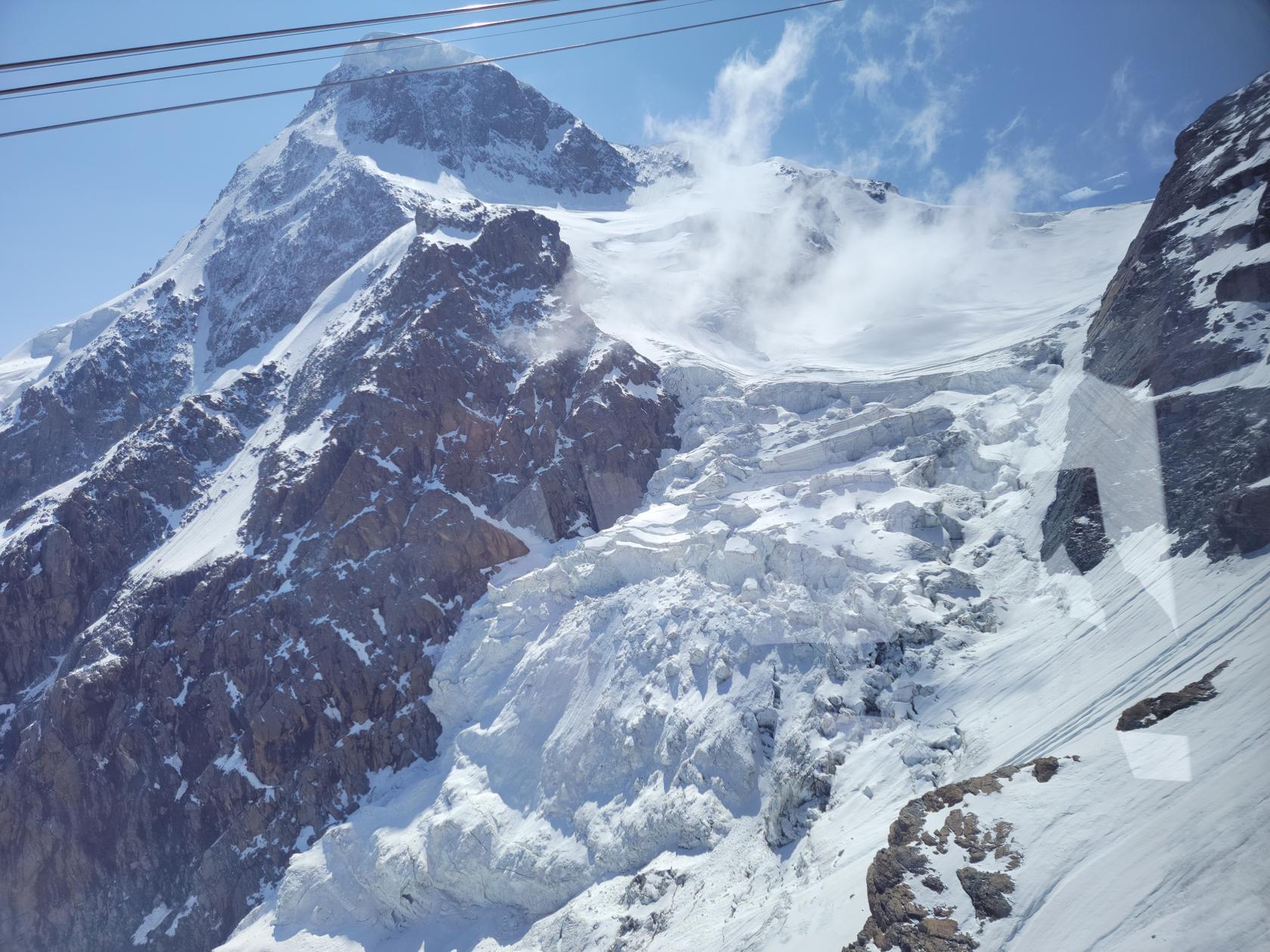
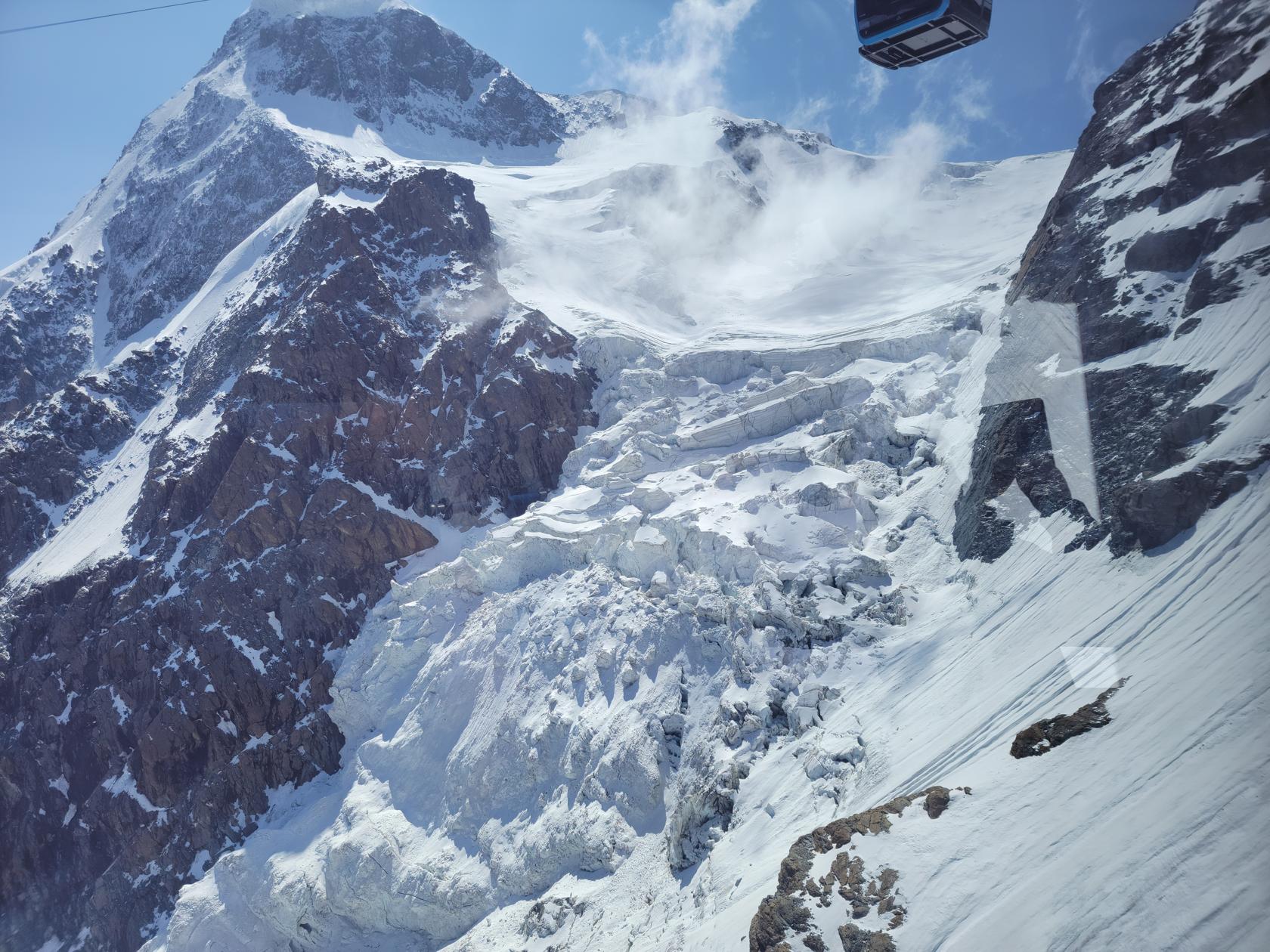
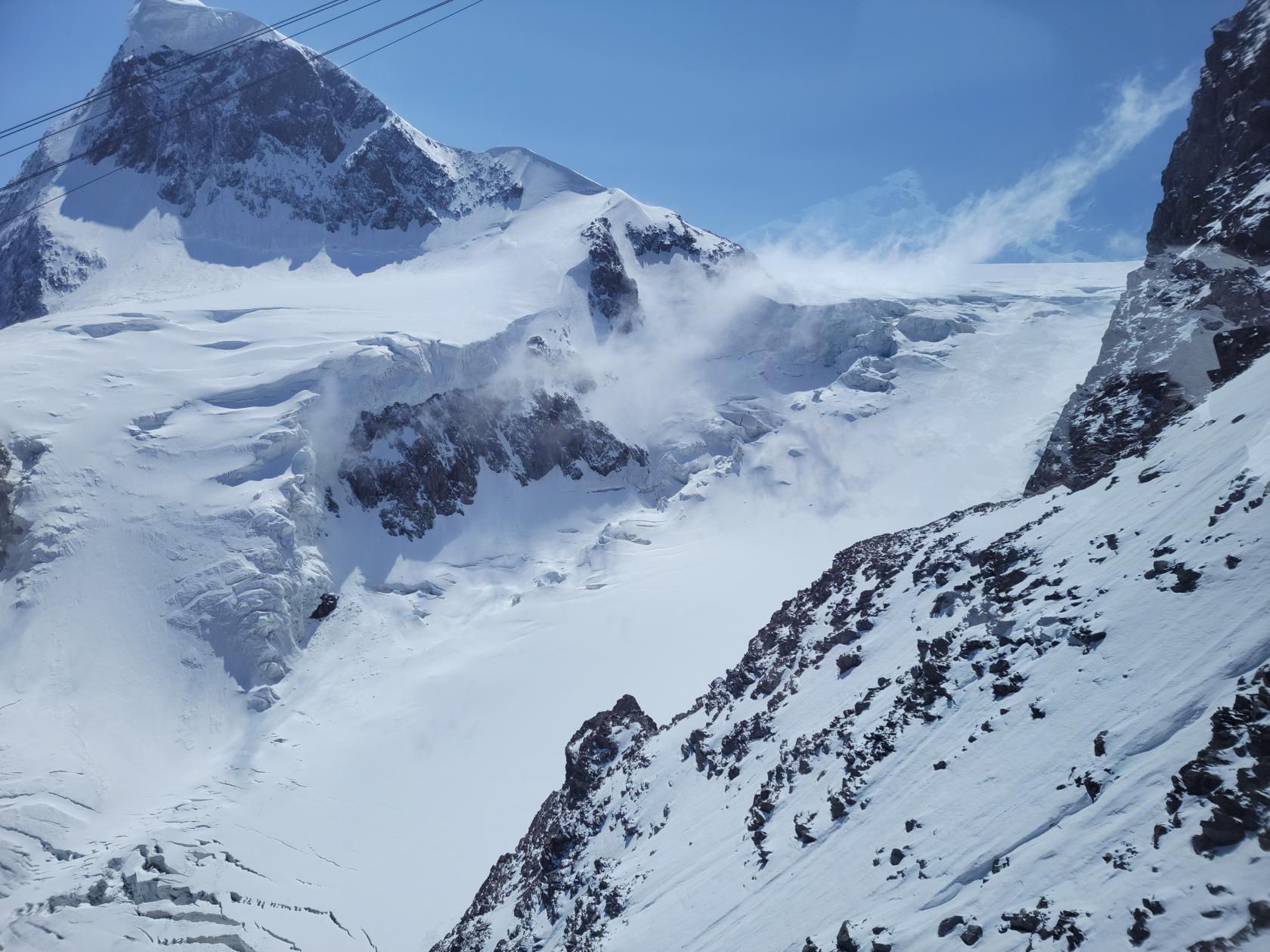
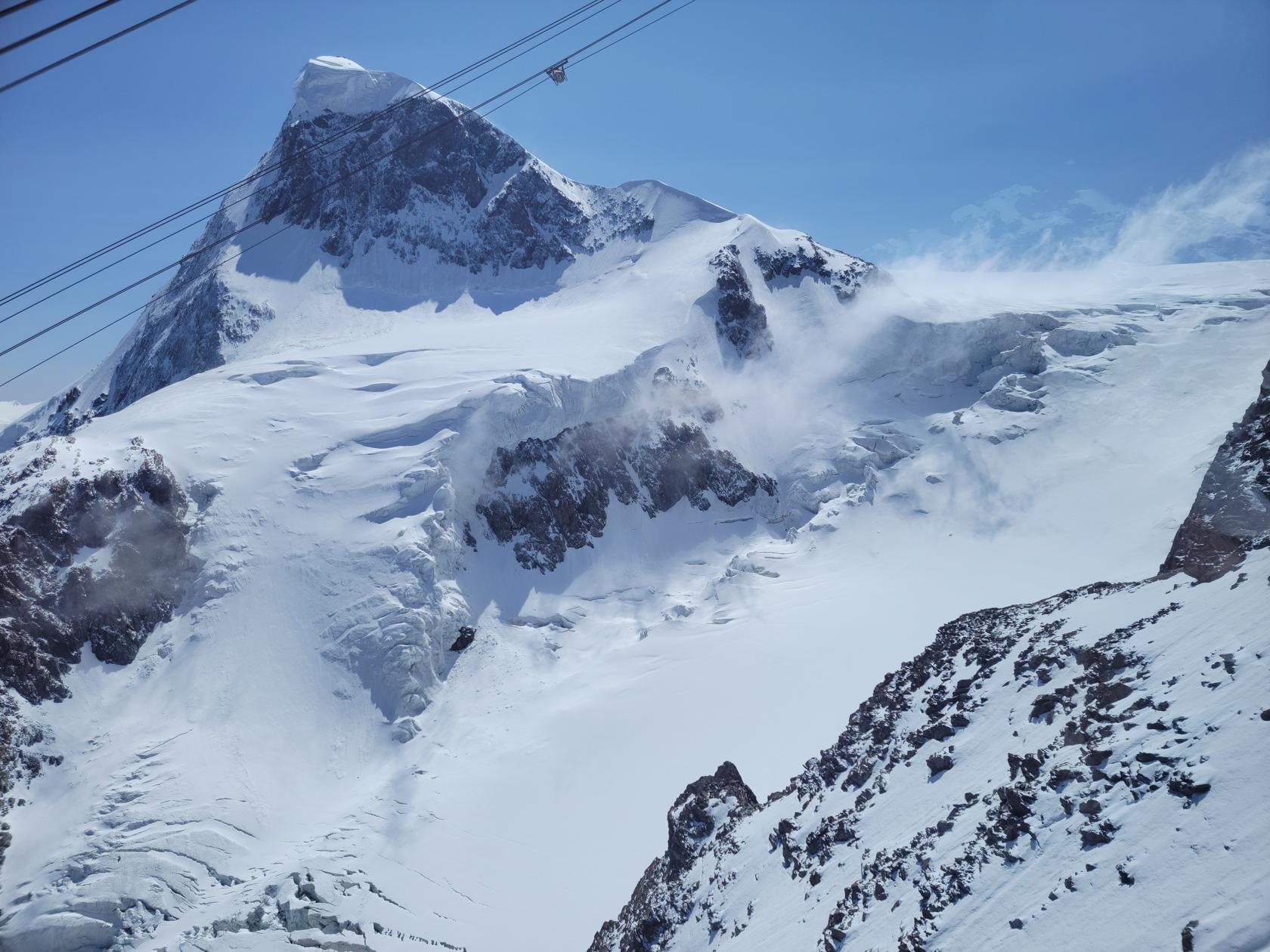
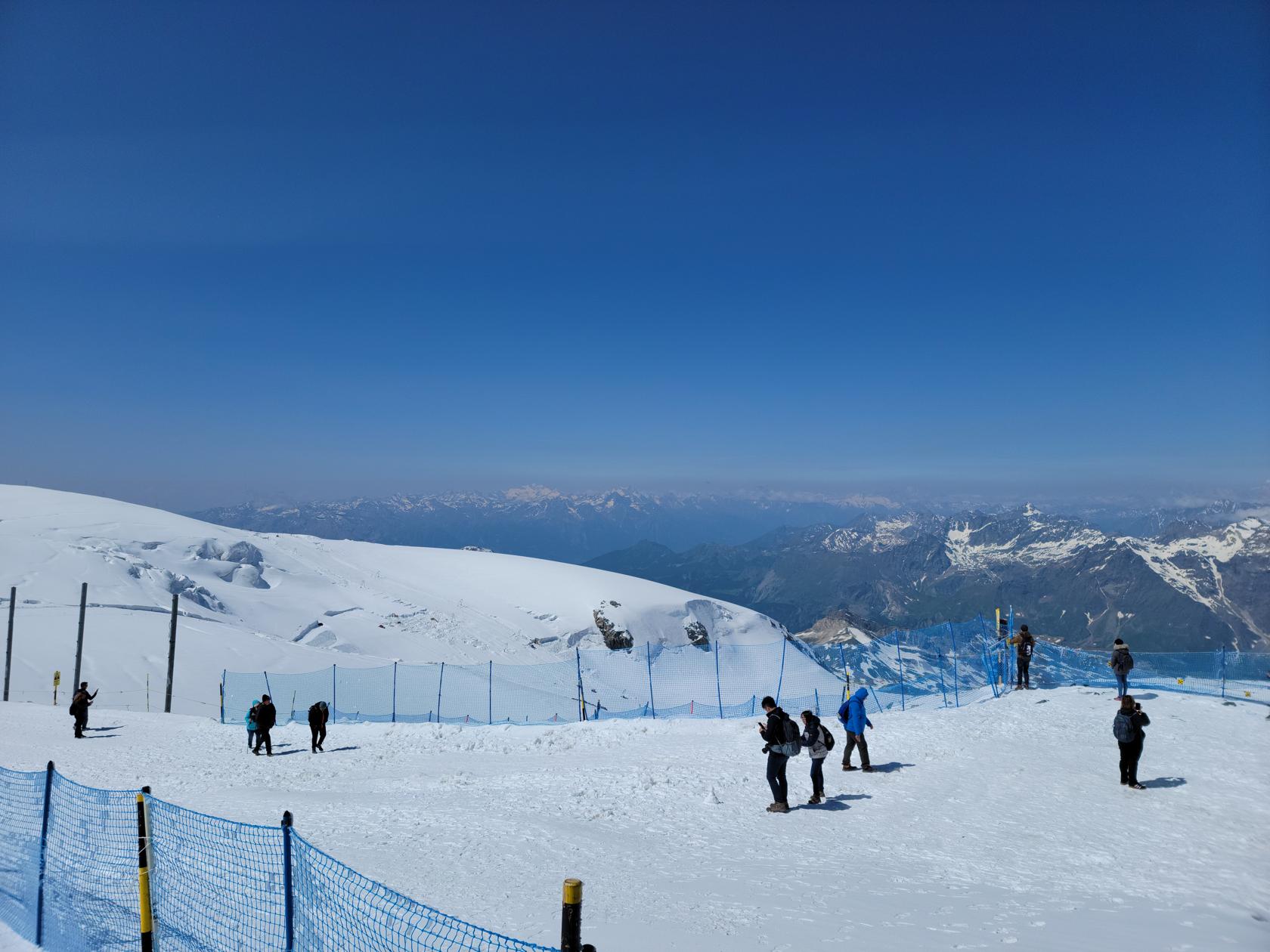
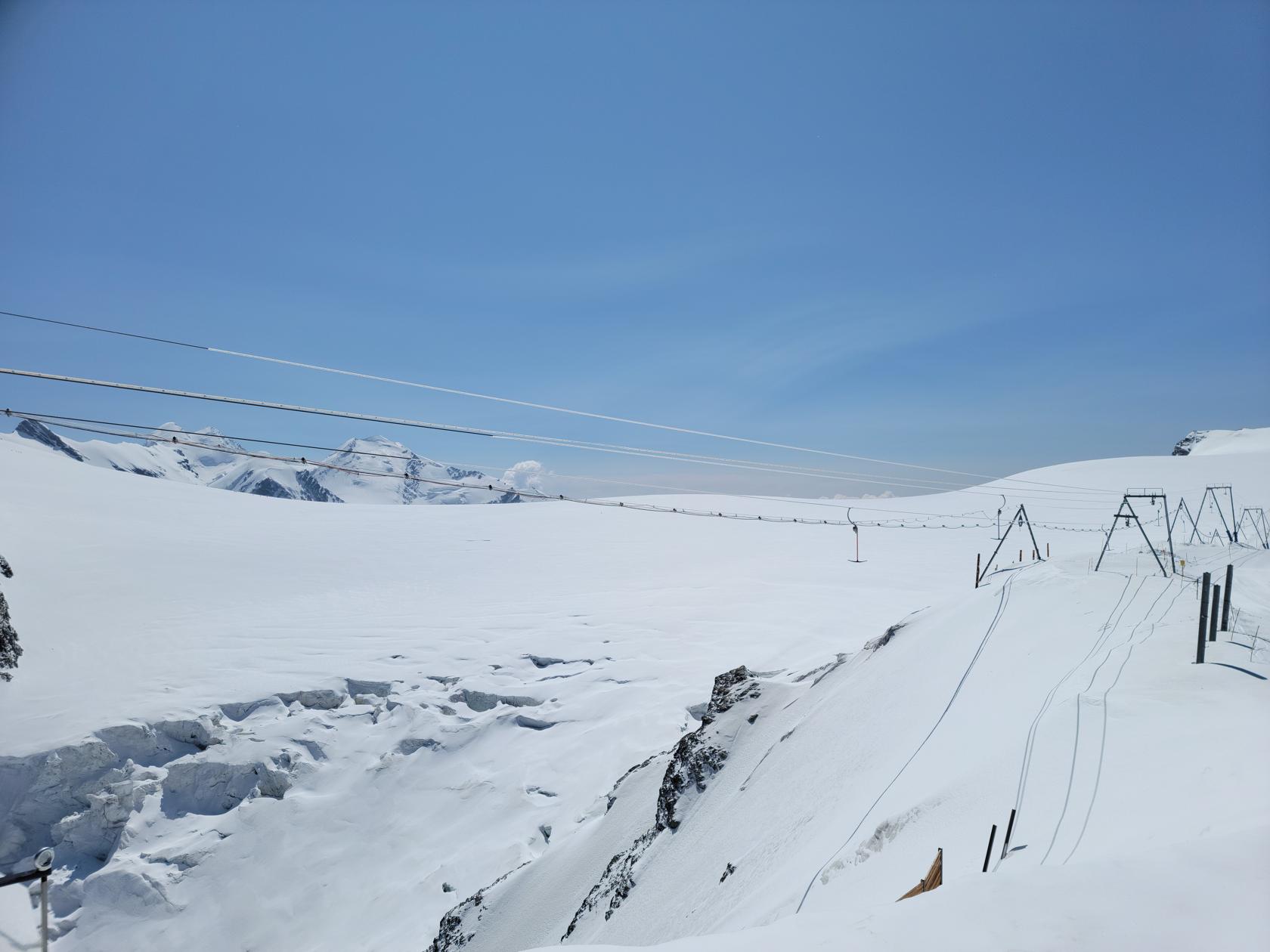
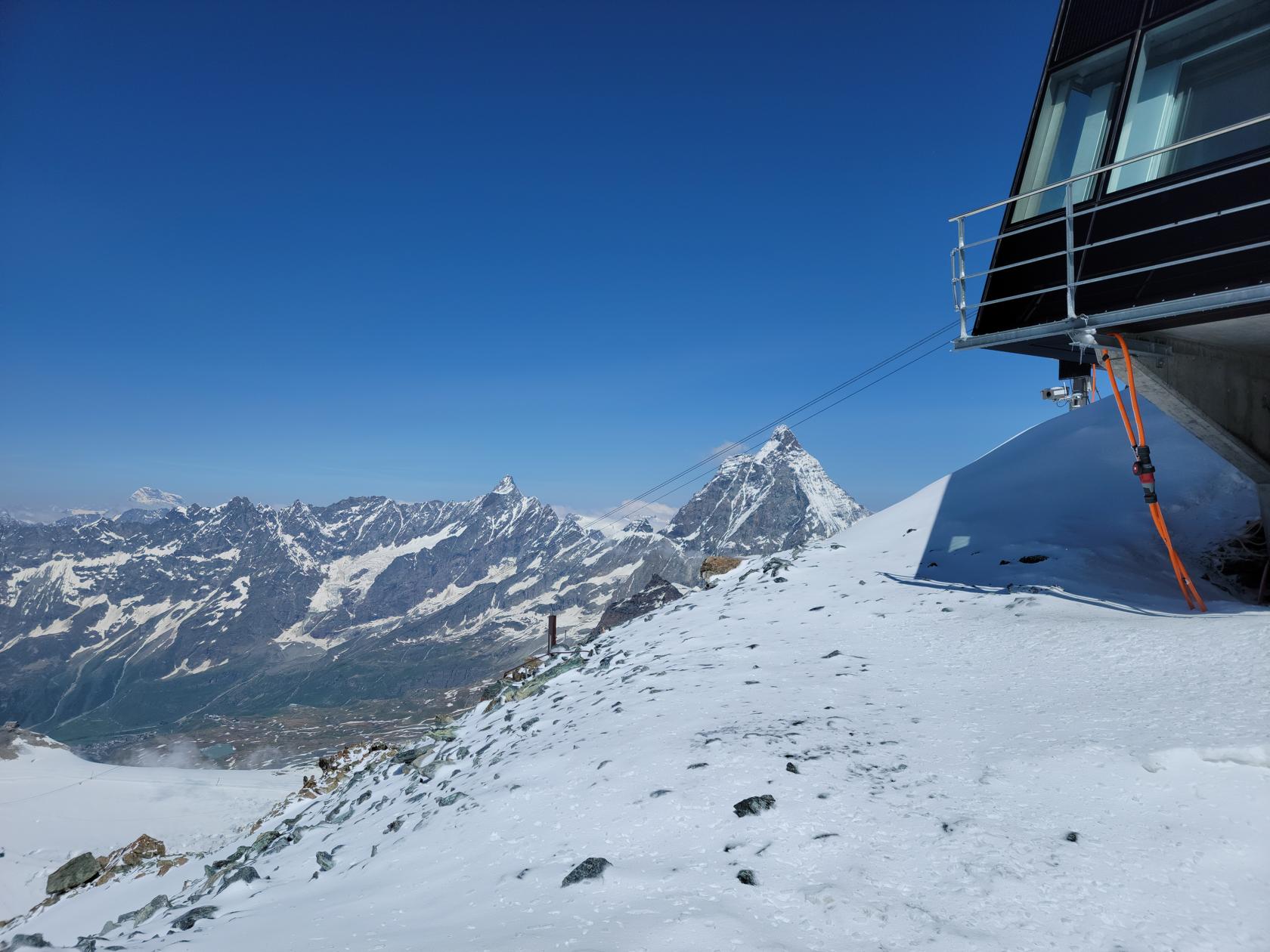
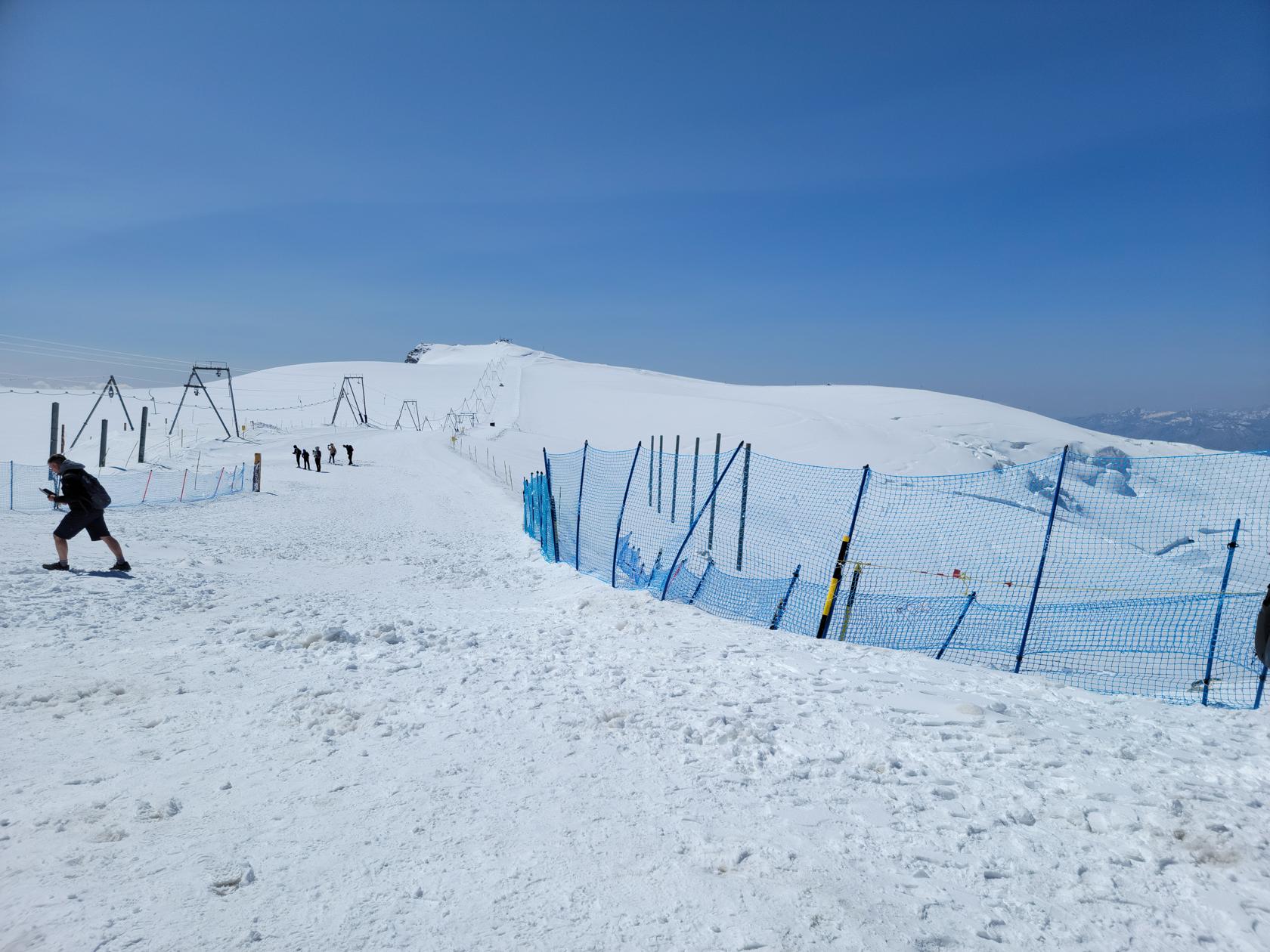
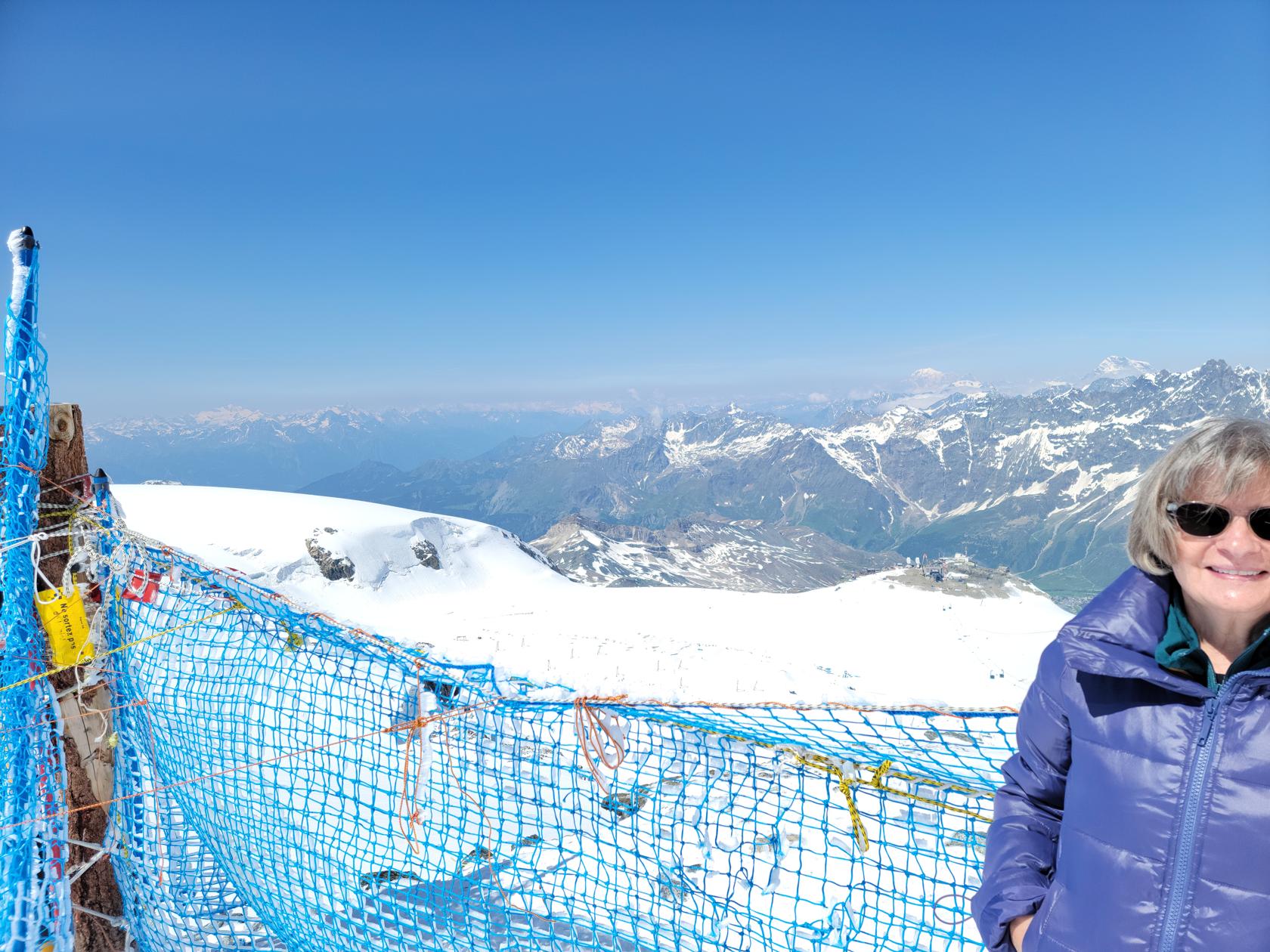
The top of the Klein Matterhorn is a cold, snowy and glacier dominated place. It has a commanding view of the Mattertal towards Zermatt and the Aosta Valley inside Italy. From here the Matterhorn looks very different, taking on the appearance of the rest of the horns, as the high peaks in this area are called.
Breithorn – Ascending Klein Matterhorn – Zermatt, Switzerland
Breithorn – Ascending Klein Matterhorn – Zermatt, Switzerland
Ascending Klein Matterhorn – Zermatt, Switzerland
Breithorn and its glacier – Ascending Klein Matterhorn – Zermatt, Switzerland
Breithorn and its glacier – Ascending Klein Matterhorn – Zermatt, Switzerland
Breithorn and its glacier – Ascending Klein Matterhorn – Zermatt, Switzerland
Breithorn and its glacier – Ascending Klein Matterhorn – Zermatt, Switzerland
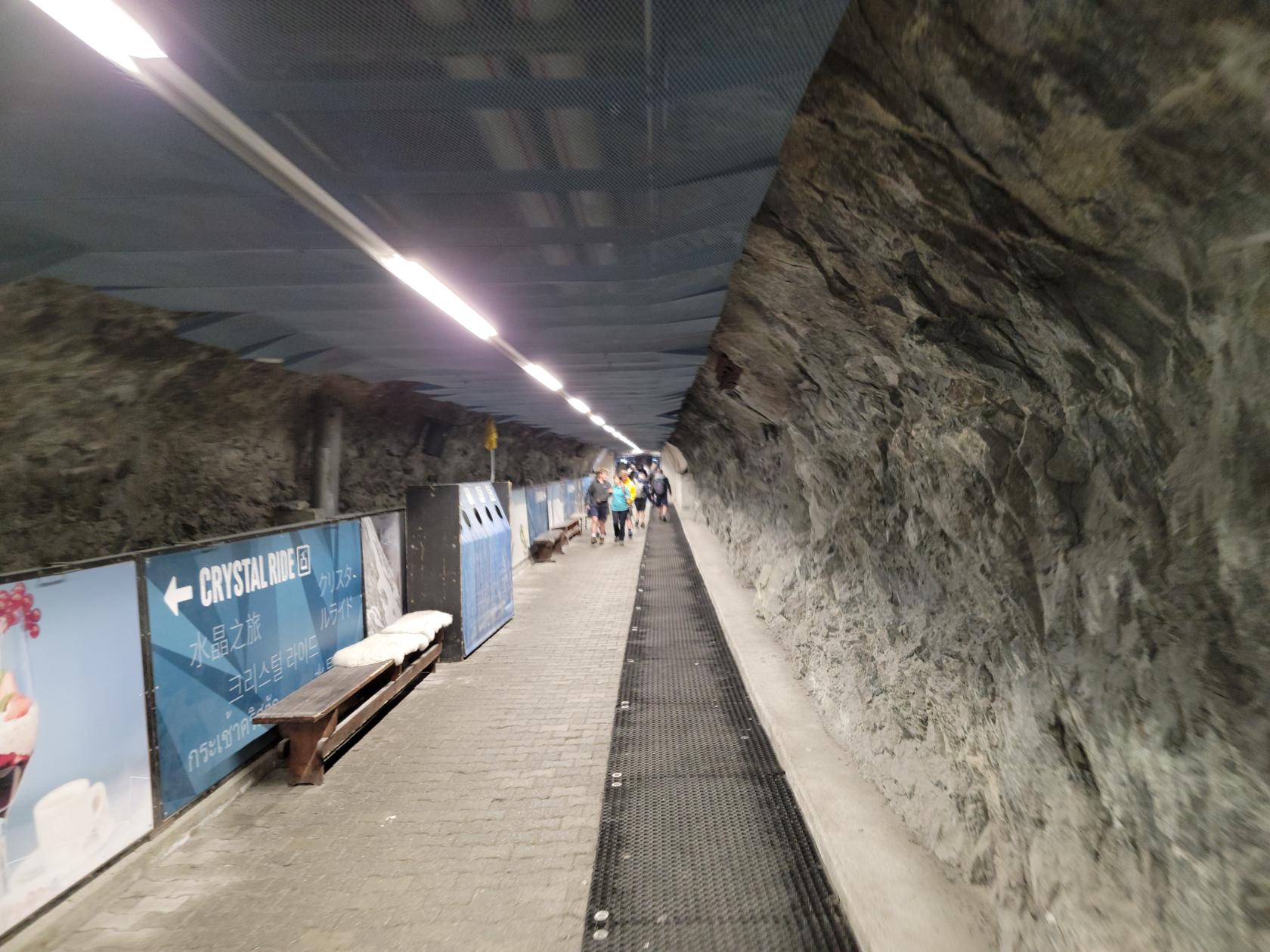
Crystal glacier experience – Klein Matterhorn – Zermatt, Switzerland
Aosta valley, Italy – Klein Matterhorn – Zermatt, Switzerland
Theodul Glacier – Klein Matterhorn – Zermatt, Switzerland
Matterhorn and surrounding peaks – Klein Matterhorn – Zermatt, Switzerland
Theodul Glacier – Klein Matterhorn – Zermatt, Switzerland
Patti and the Aosta valley, ItalyTheodul Glacier – Klein Matterhorn – Zermatt, Switzerland
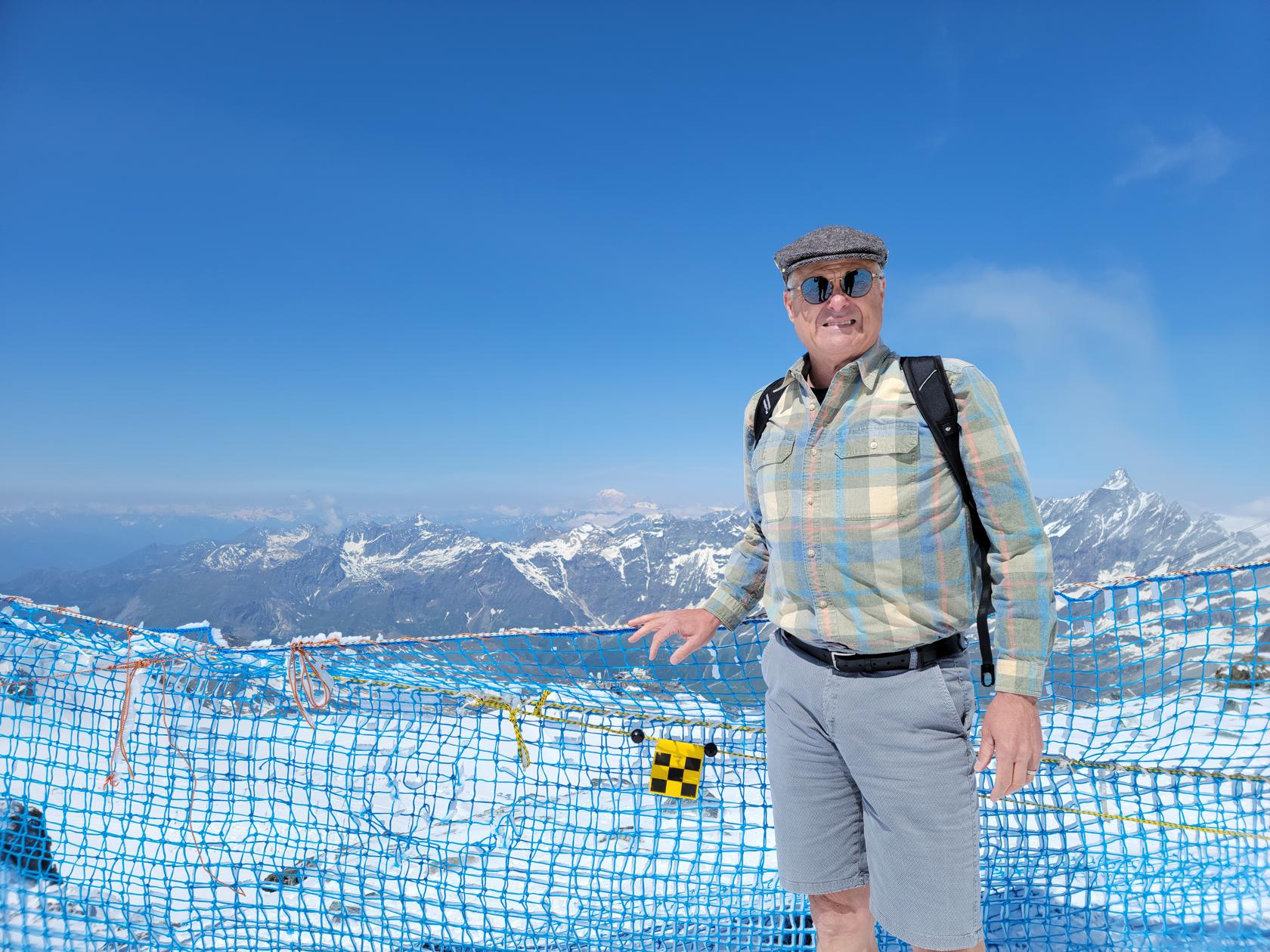
Erick and Aosta valley – Klein Matterhorn – Zermatt, Switzerland
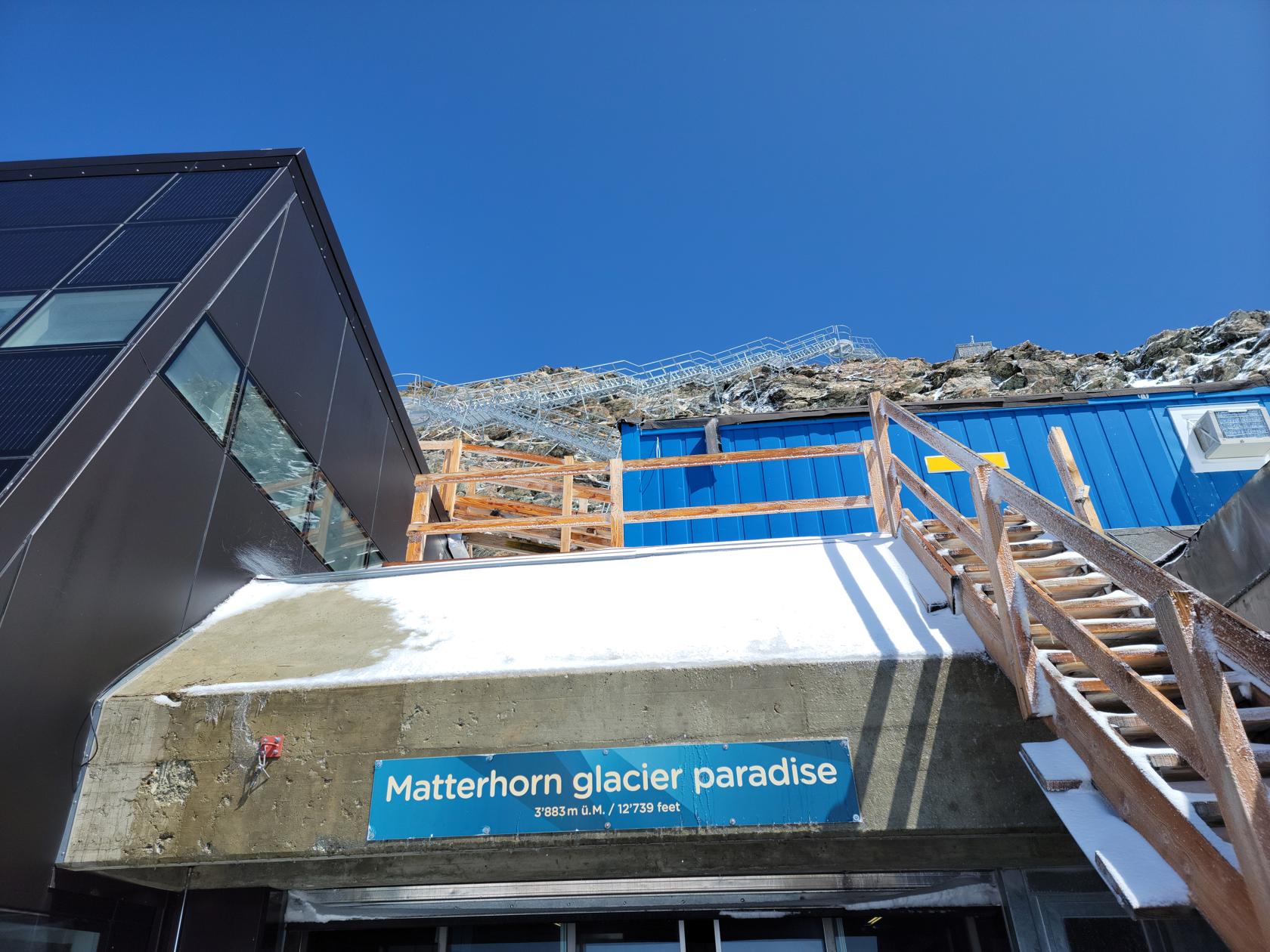
Matterhorn Glacier Paradise
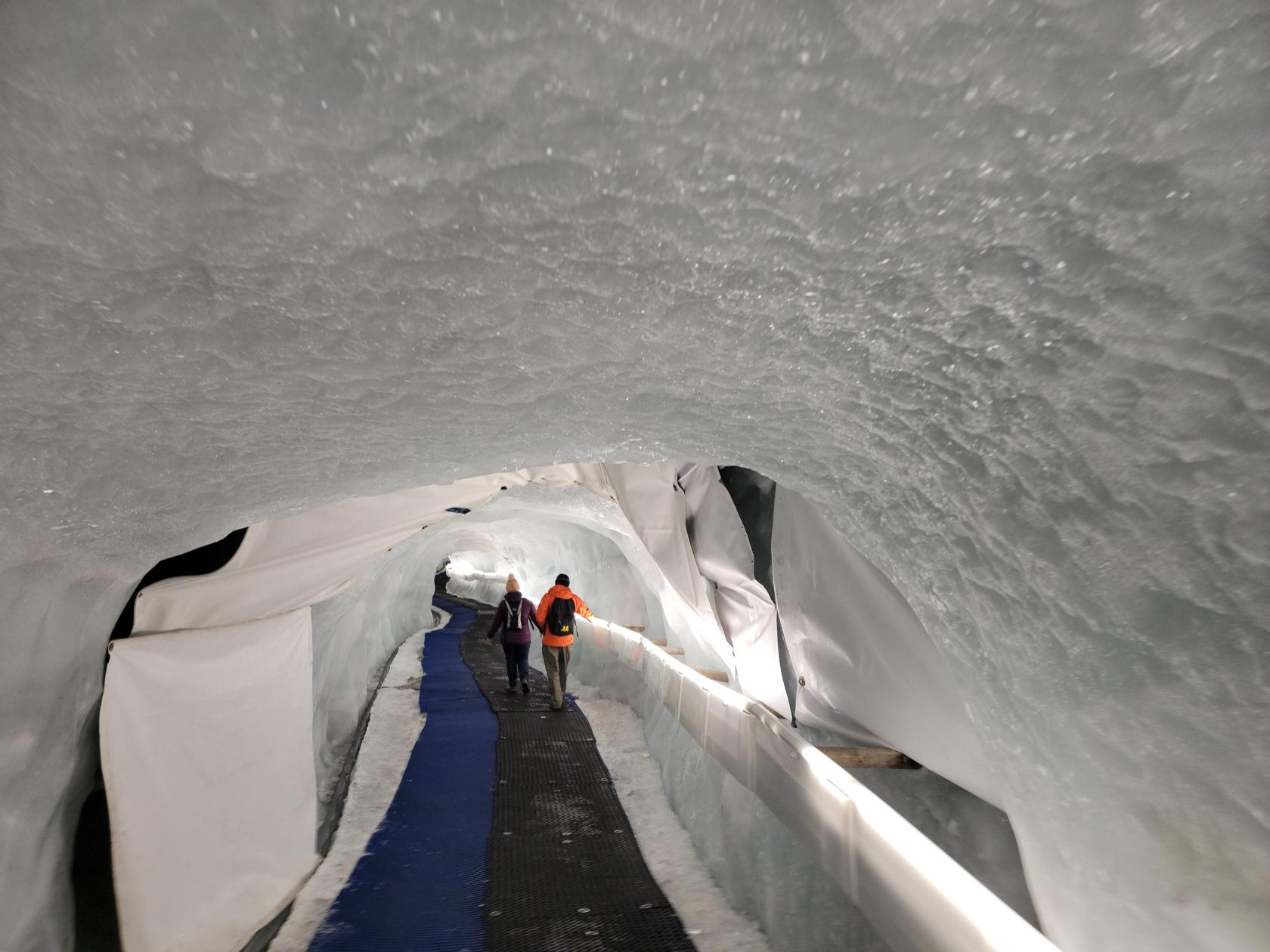
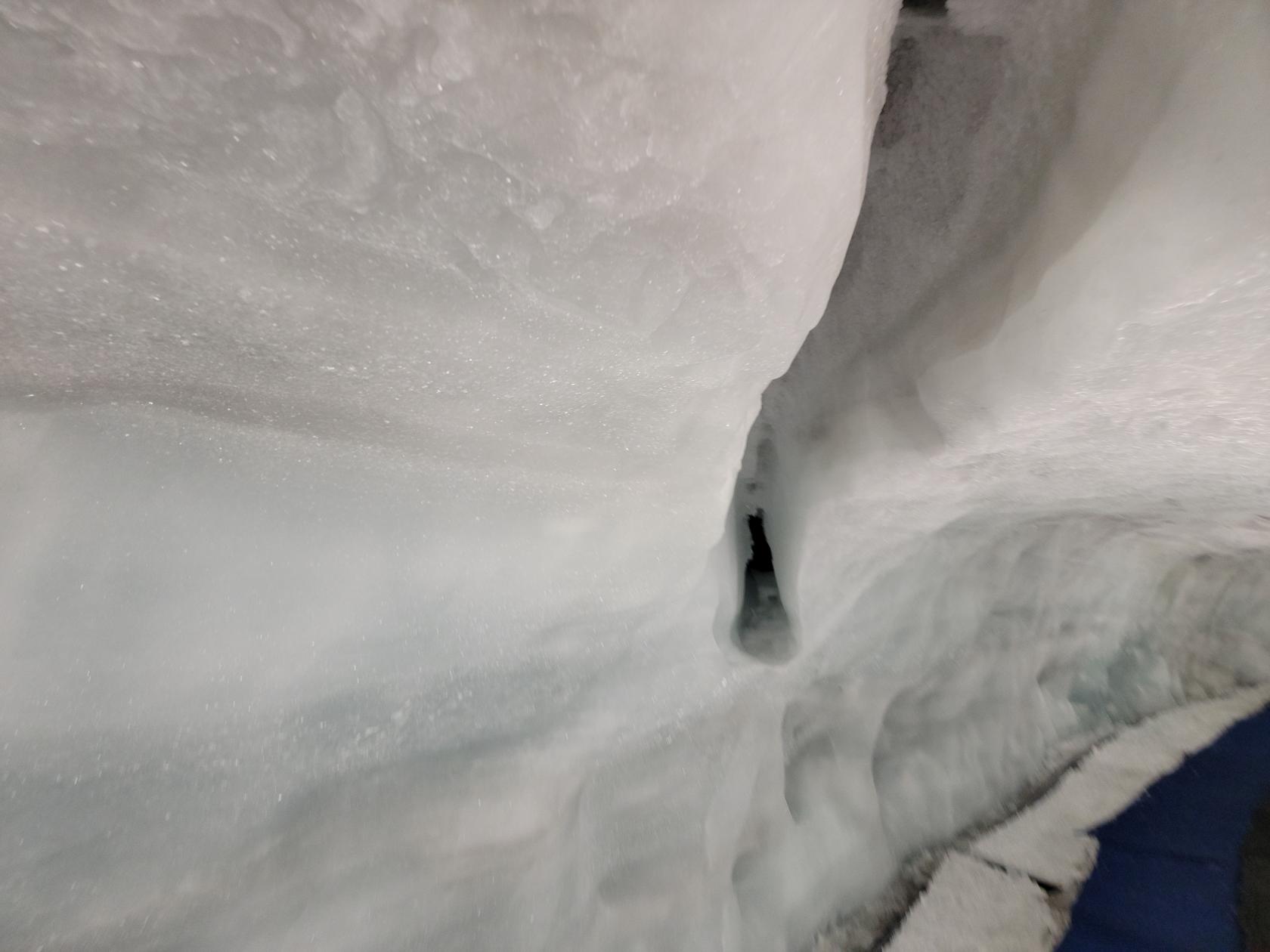
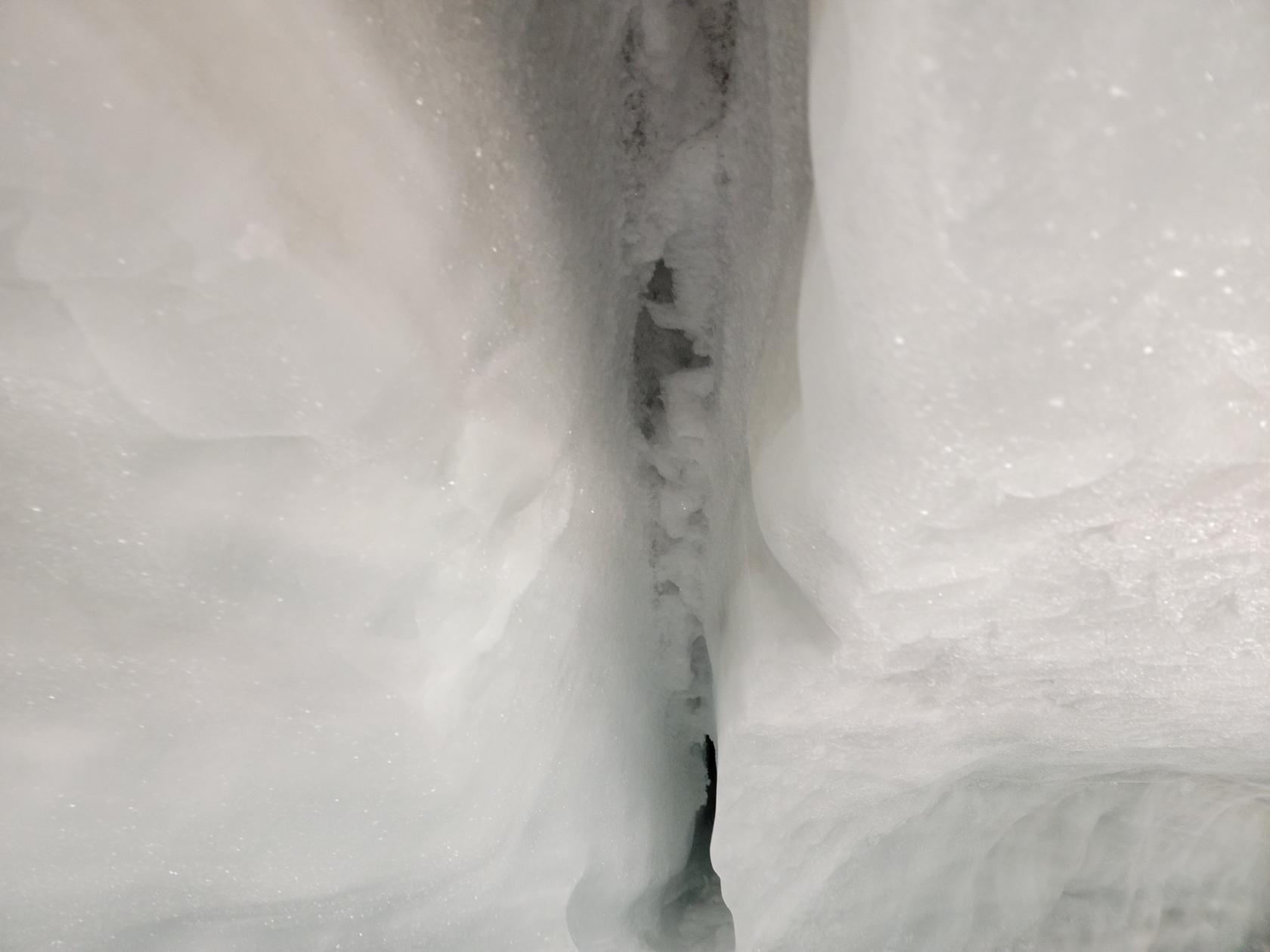
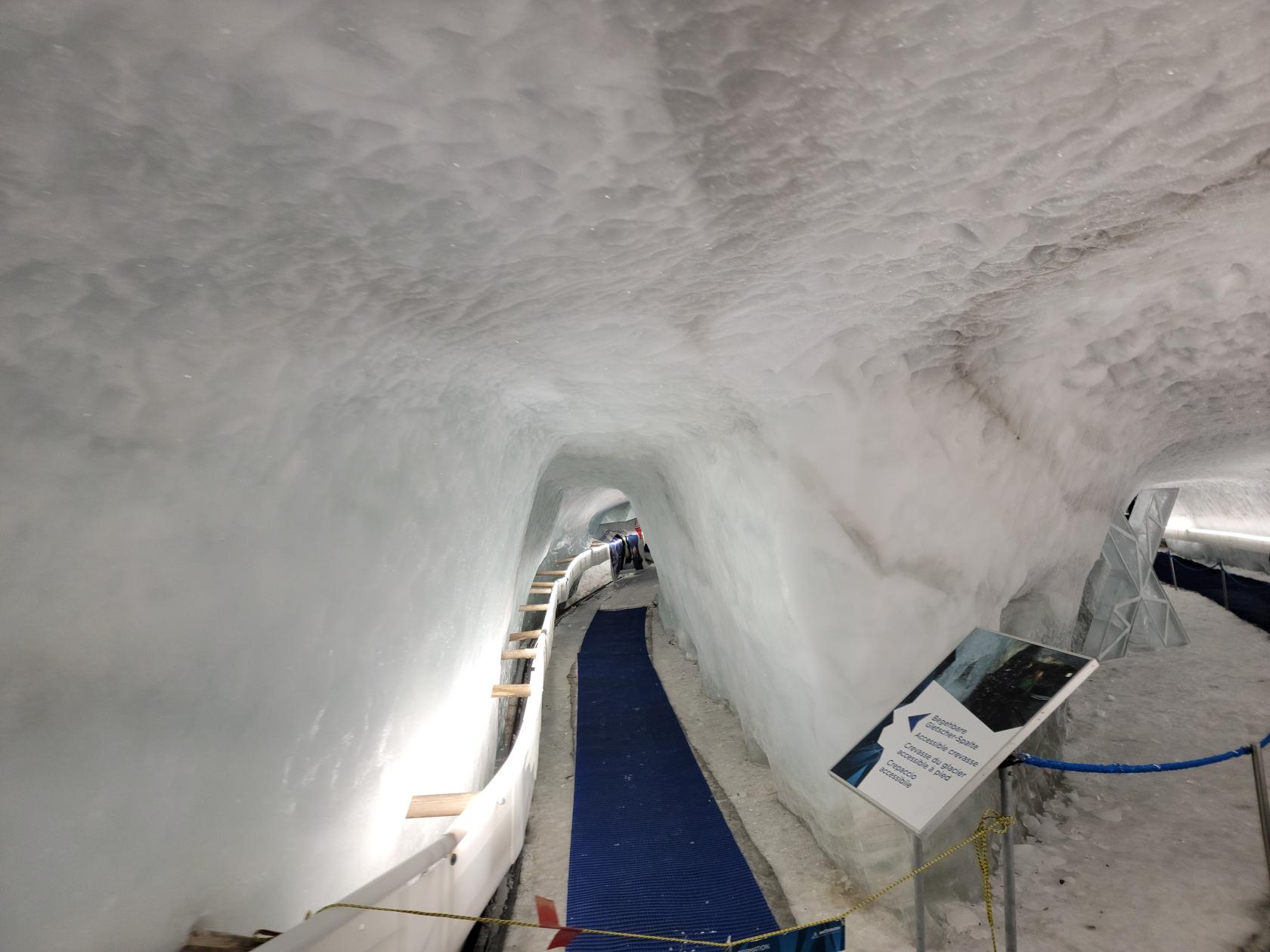
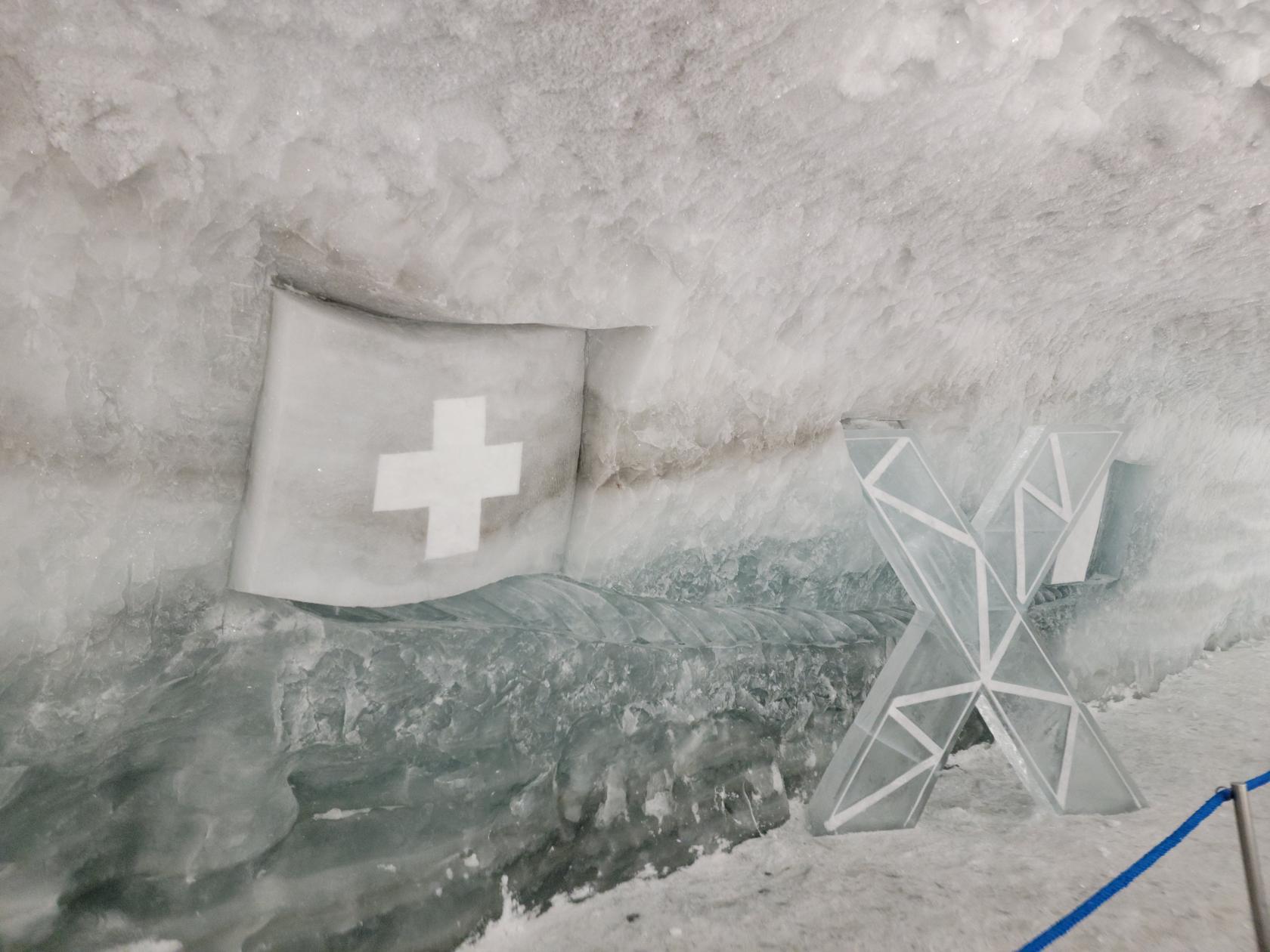
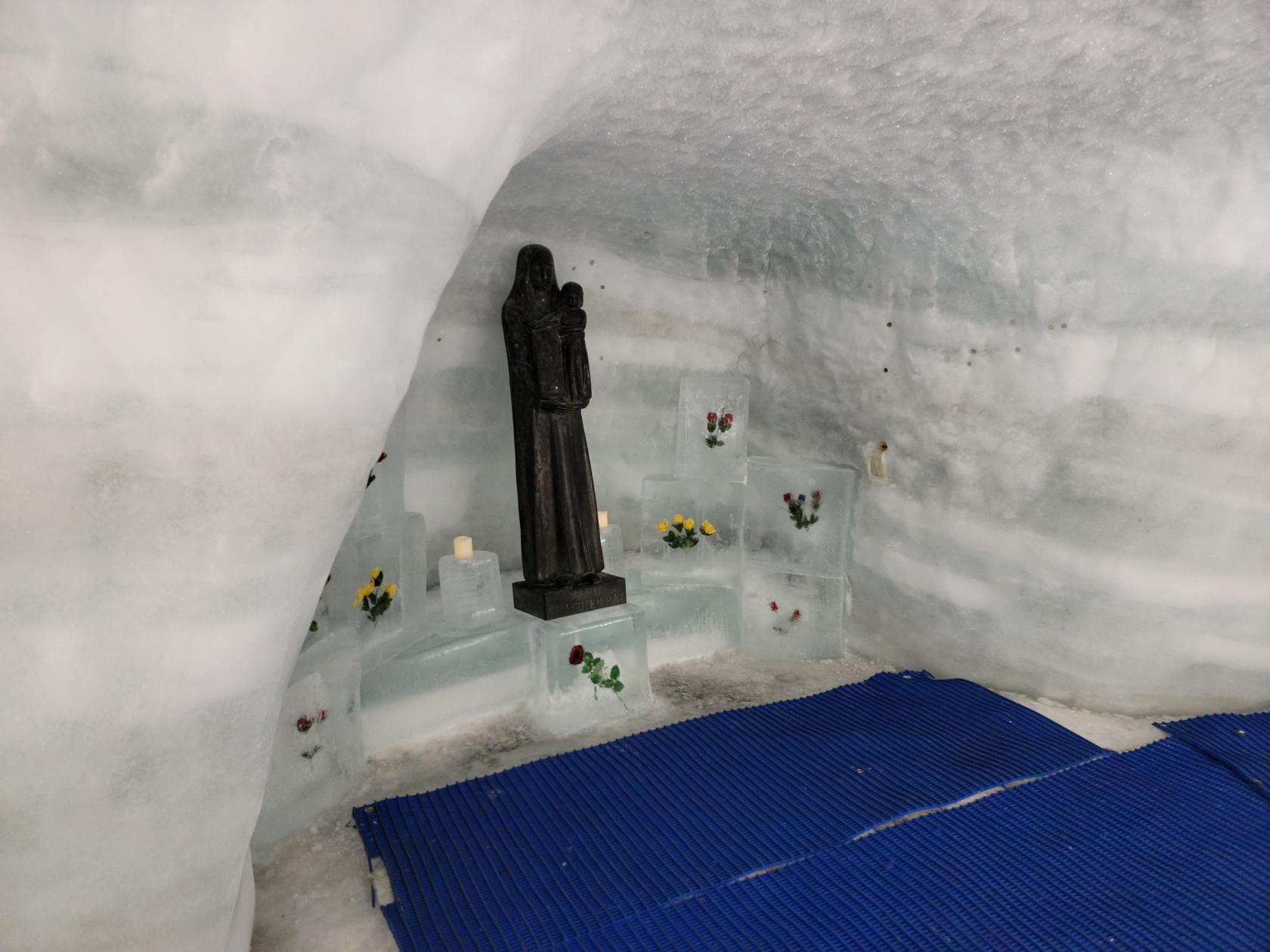
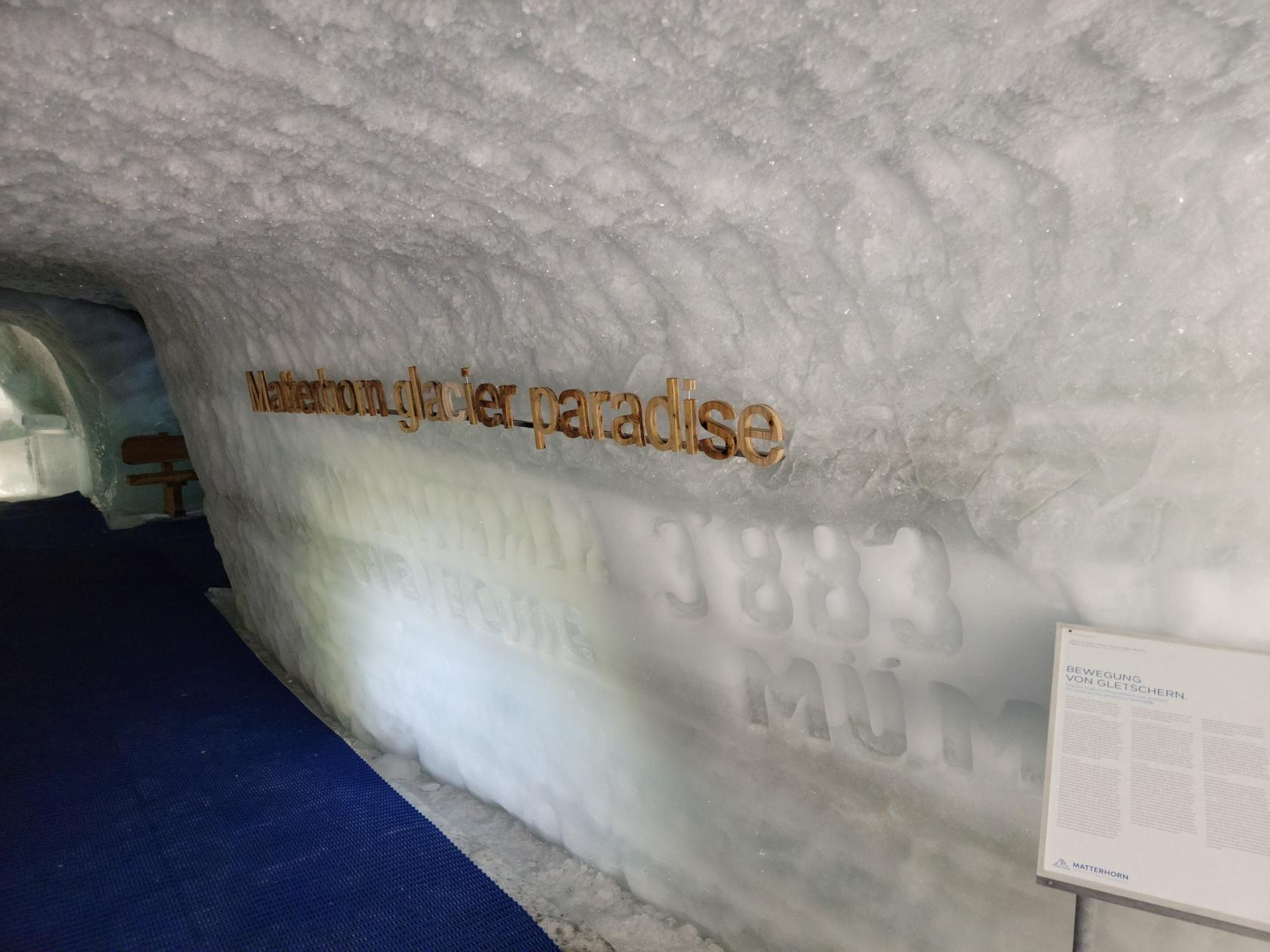
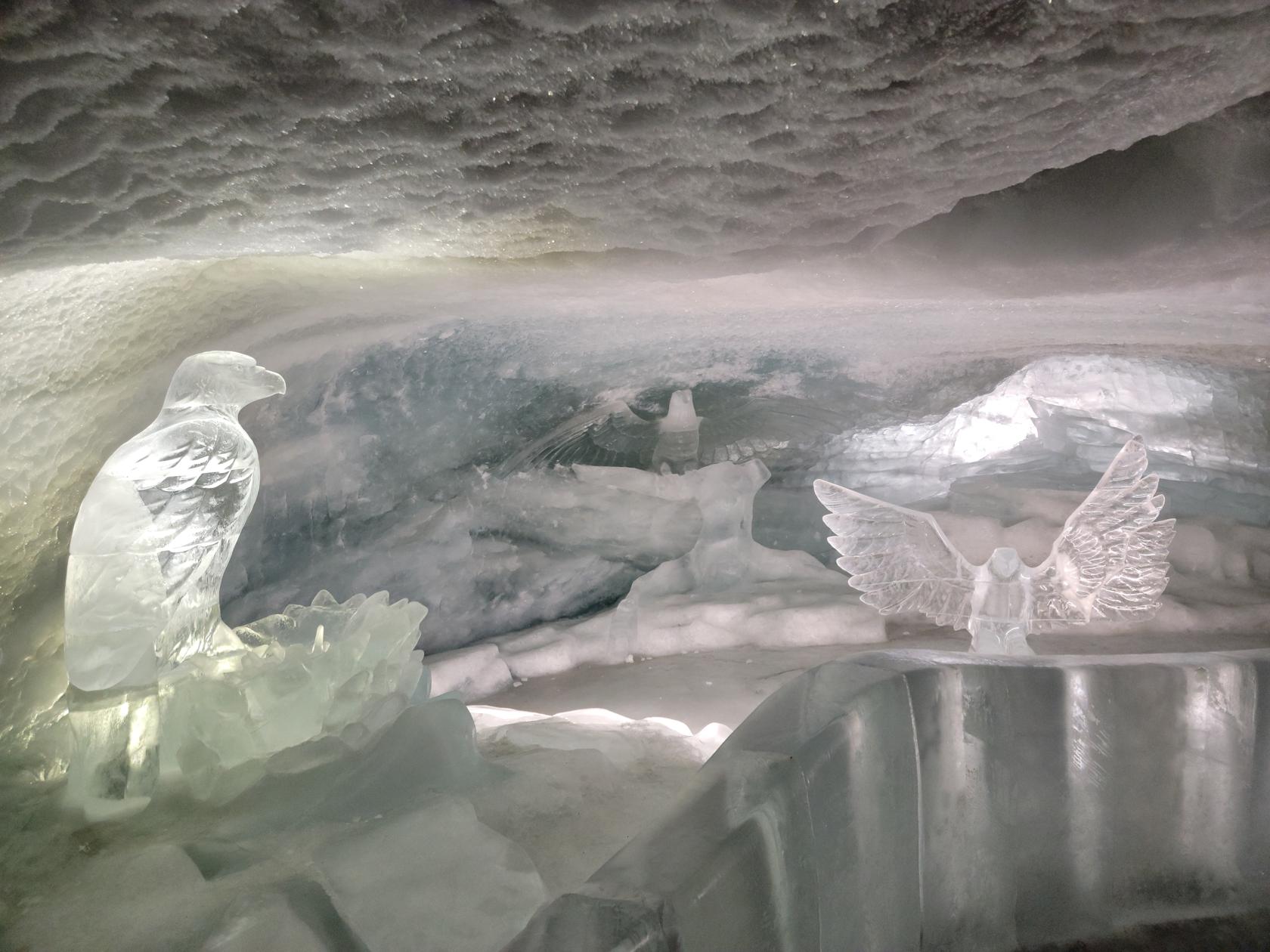
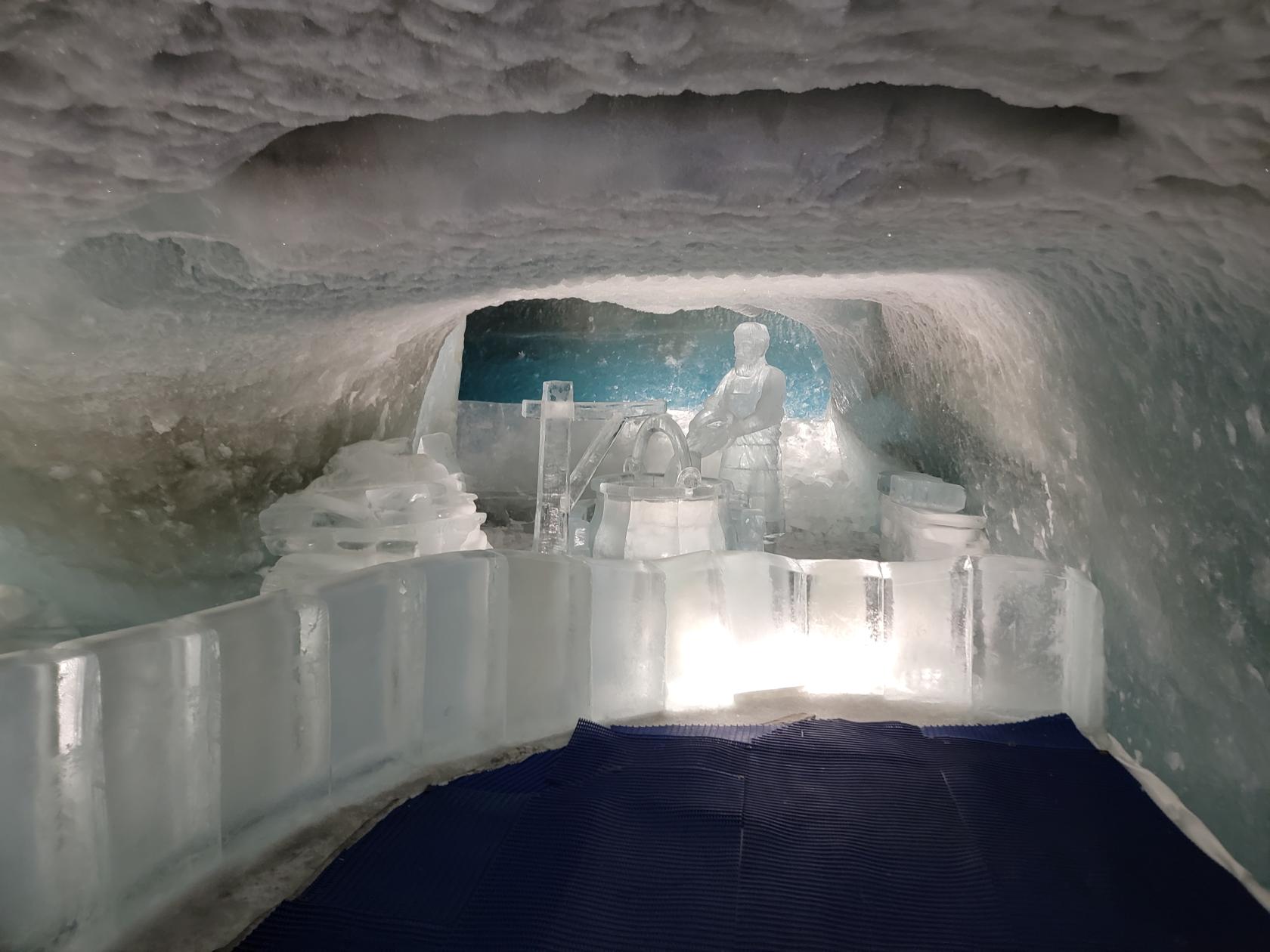
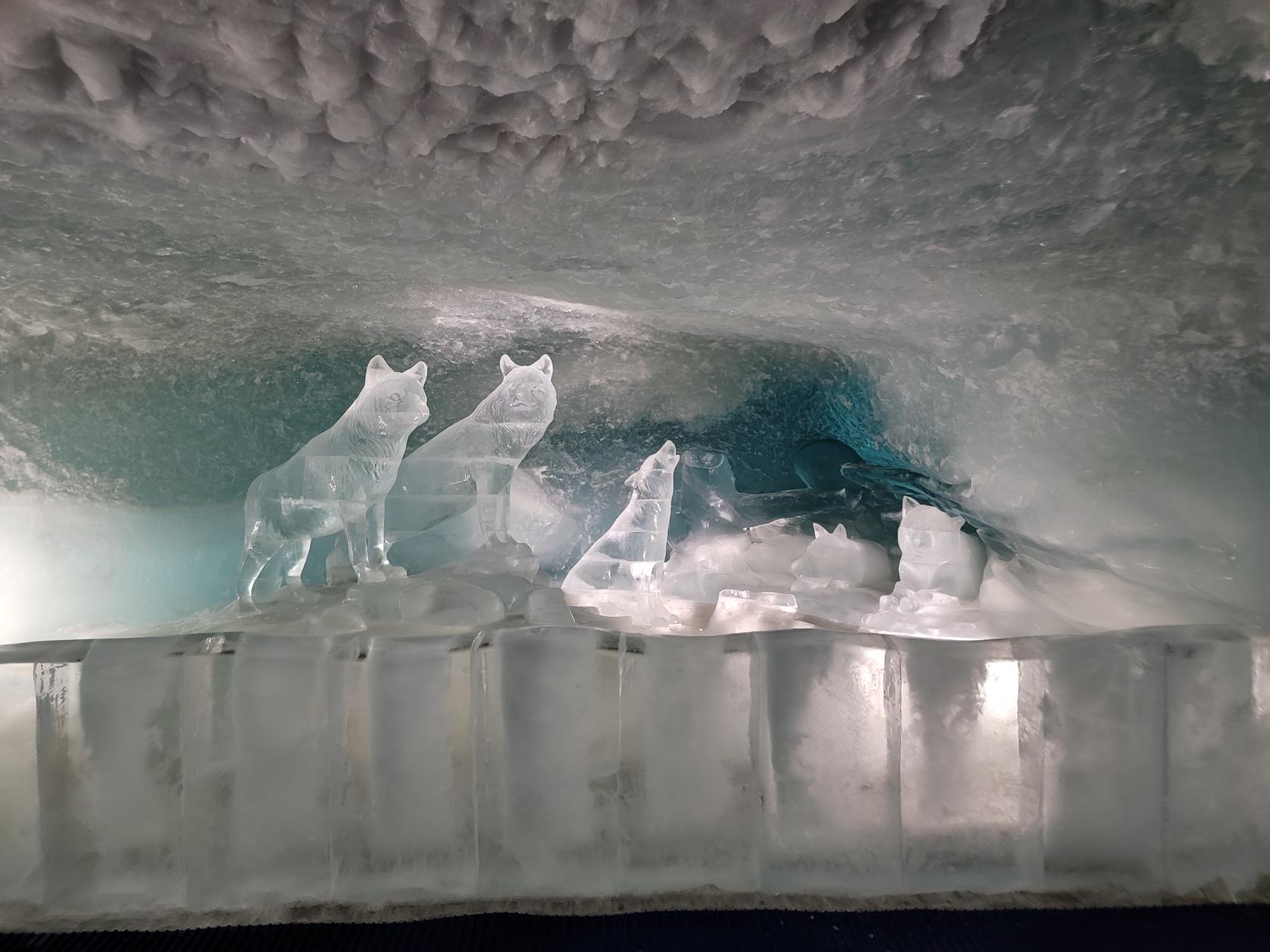
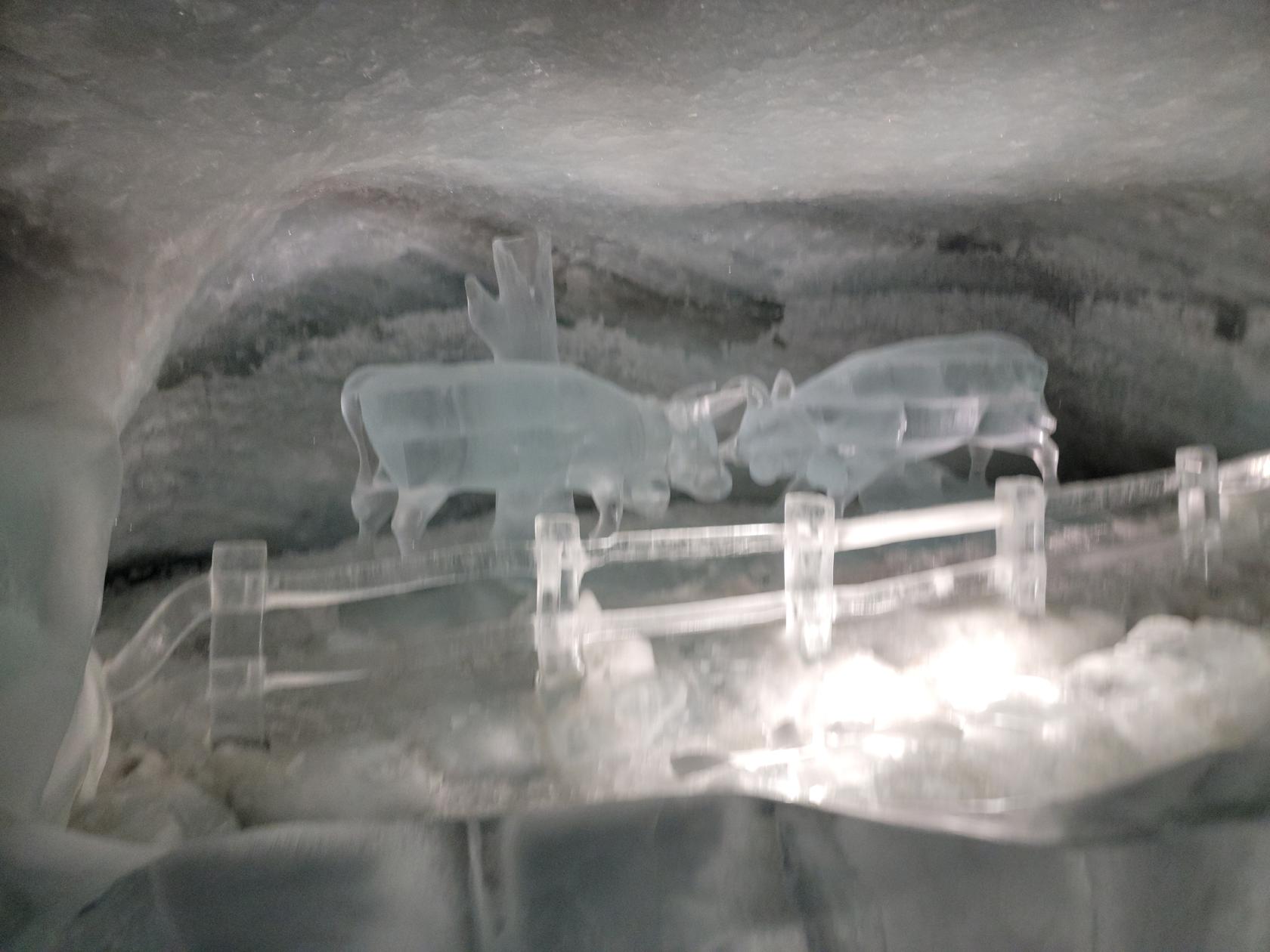
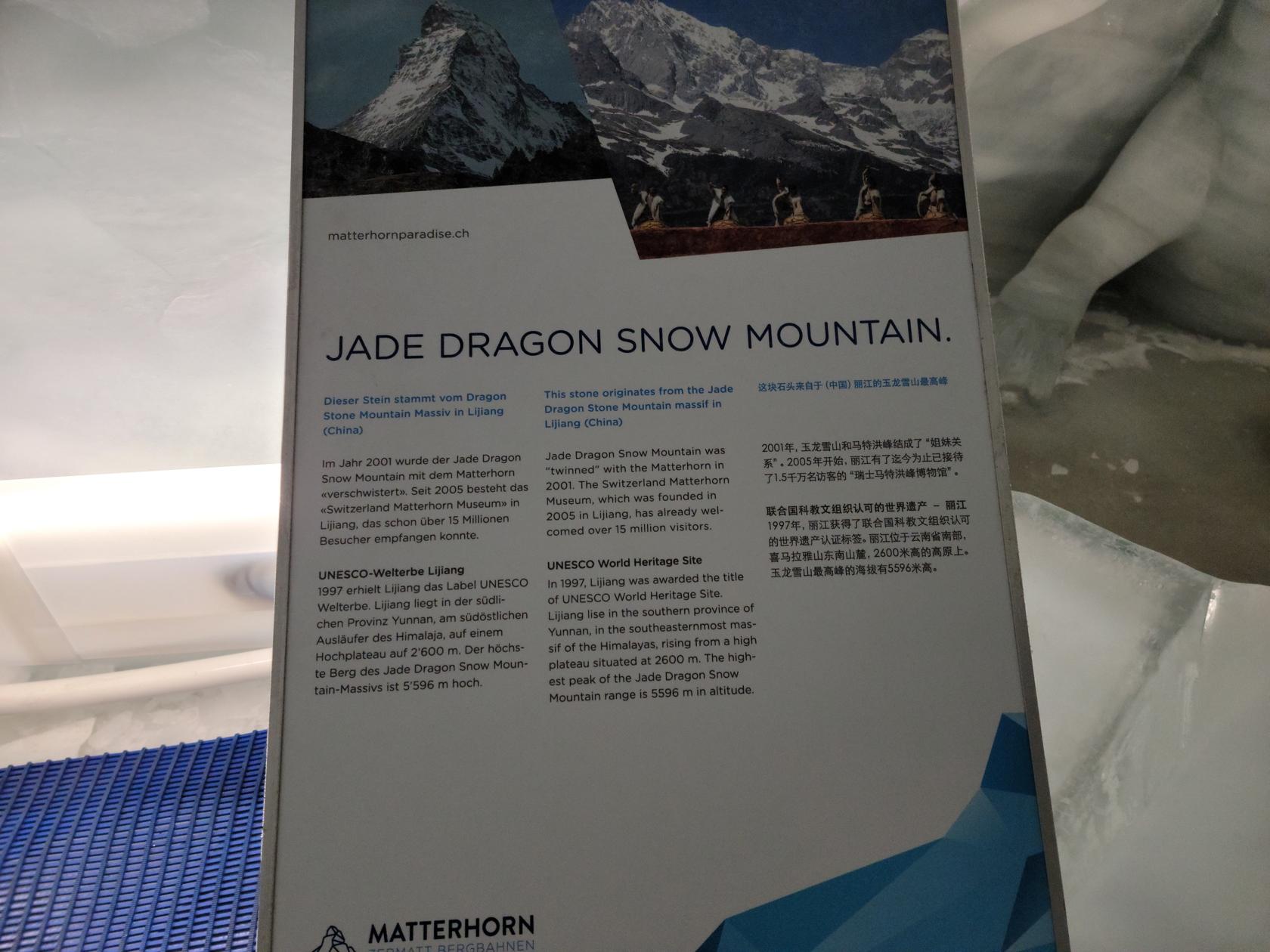
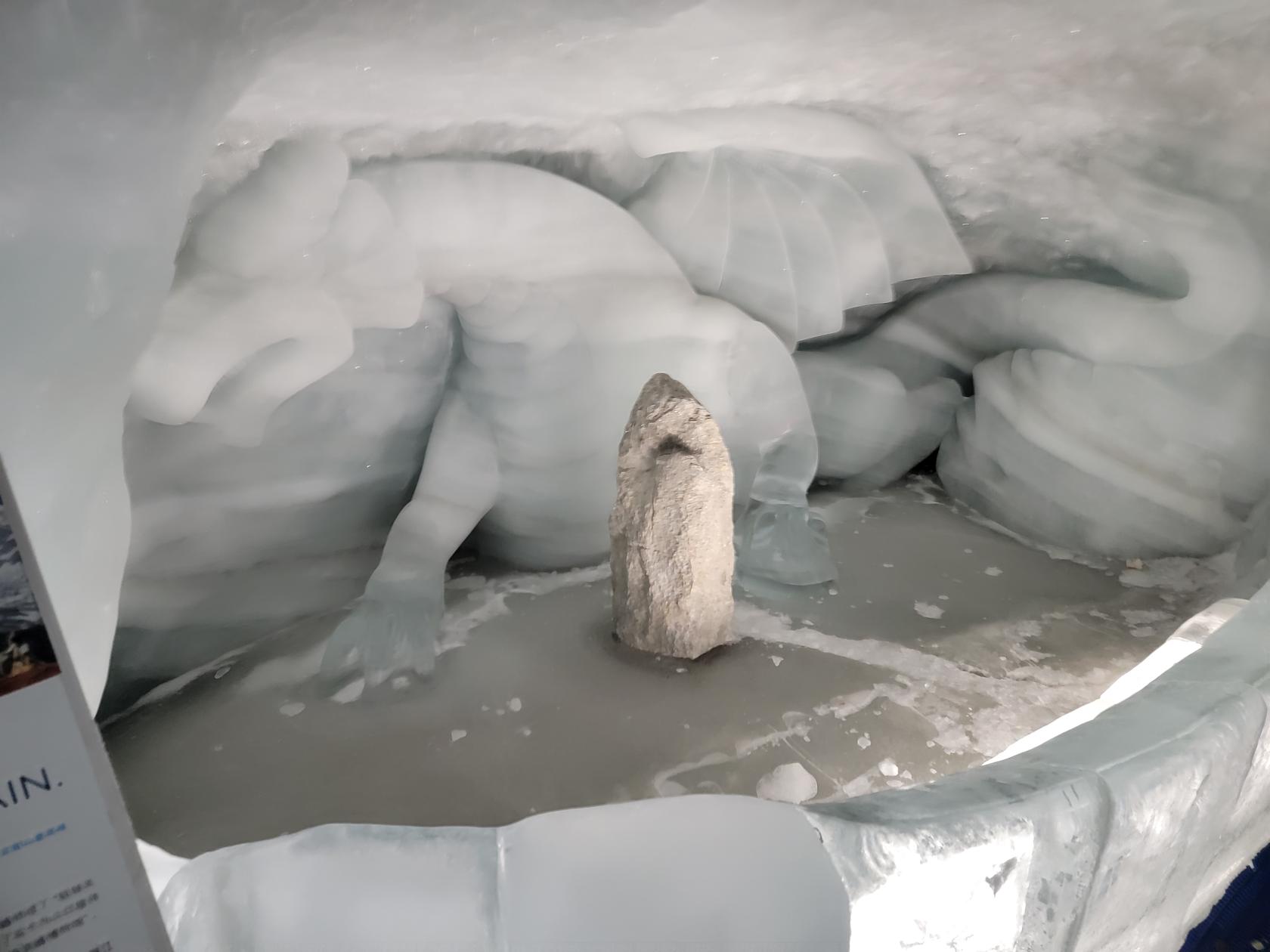
The tunnel that has been carved out into the glacier was probably once done on behalf of scientific curiosity and has now become a tourist attraction, complete with ice carvings. An interesting, if not very cold attraction. In order to thoroughly enjoy this you should be properly dressed, it is very cold.
Matterhorn Glacier Paradise – Klein Matterhorn – Zermatt, Switzerland
Matterhorn Glacier Paradise – Klein Matterhorn – Zermatt, Switzerland
Matterhorn Glacier Paradise – Klein Matterhorn – Zermatt, Switzerland
Matterhorn Glacier Paradise – Klein Matterhorn – Zermatt, Switzerland
Matterhorn Glacier Paradise – Klein Matterhorn – Zermatt, Switzerland
Matterhorn Glacier Paradise – Klein Matterhorn – Zermatt, Switzerland
Matterhorn Glacier Paradise – Klein Matterhorn – Zermatt, Switzerland
Matterhorn Glacier Paradise – Klein Matterhorn – Zermatt, Switzerland
Matterhorn Glacier Paradise – Klein Matterhorn – Zermatt, Switzerland
Matterhorn Glacier Paradise – Klein Matterhorn – Zermatt, Switzerland
Matterhorn Glacier Paradise – Klein Matterhorn – Zermatt, Switzerland
Matterhorn Glacier Paradise – Klein Matterhorn – Zermatt, Switzerland
Matterhorn Glacier Paradise – Klein Matterhorn – Zermatt, Switzerland
Matterhorn Glacier Paradise – Klein Matterhorn – Zermatt, Switzerland
Conclusion
A must see trip and not for the faint of heart. If you have issues with height, be prepared, the gondola ride brings you across chasms that are quite deep and the gondolas are complete glass, so it will seem as though you are suspended in air. Here are a few videos where you can get an appreciation for what to expect.
We really enjoyed our day on the Matterhorn Express and would recommend it to anyone with plans to visit Zermatt. This concludes our visit to Zermatt, Switzerland.
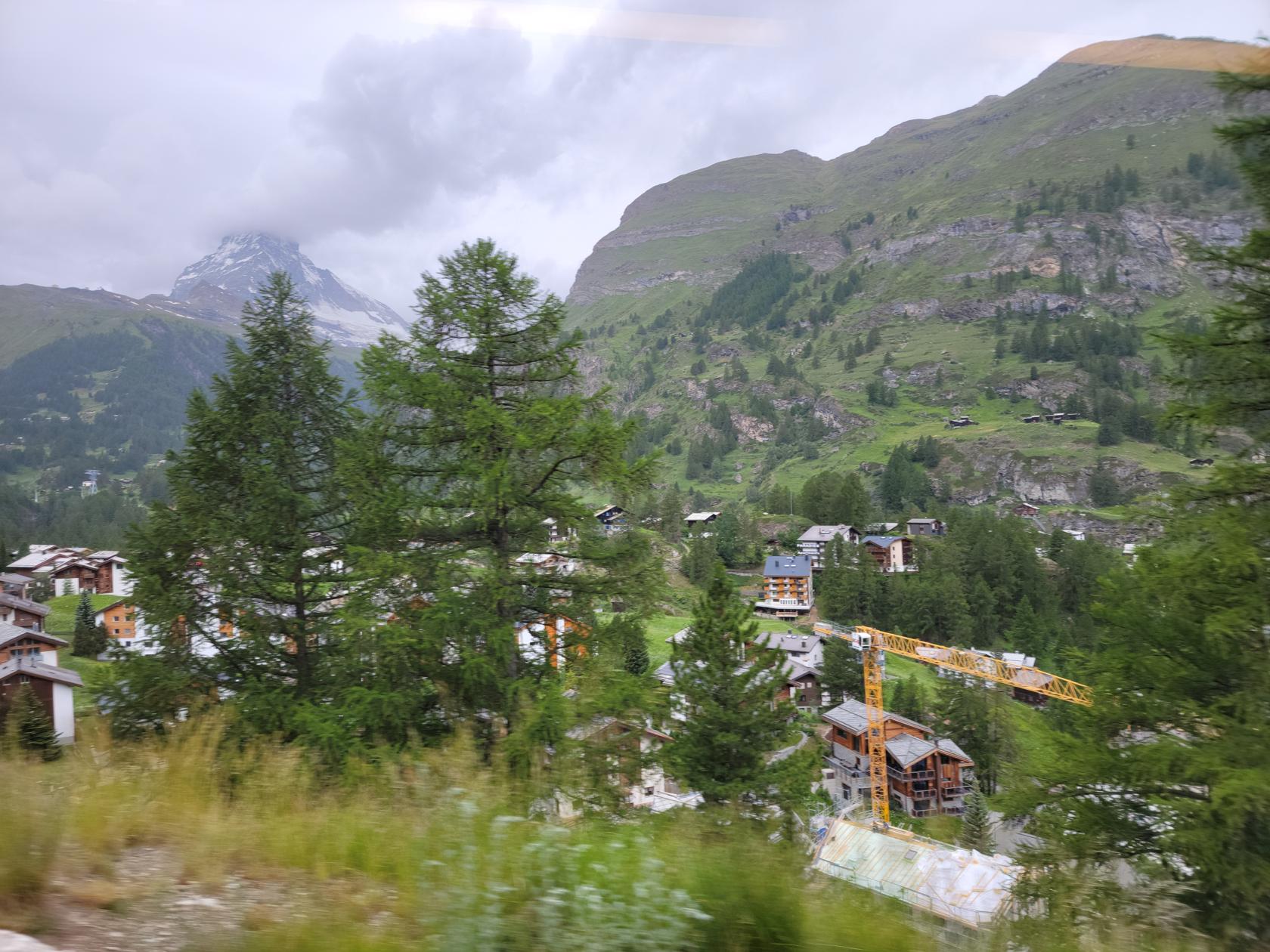
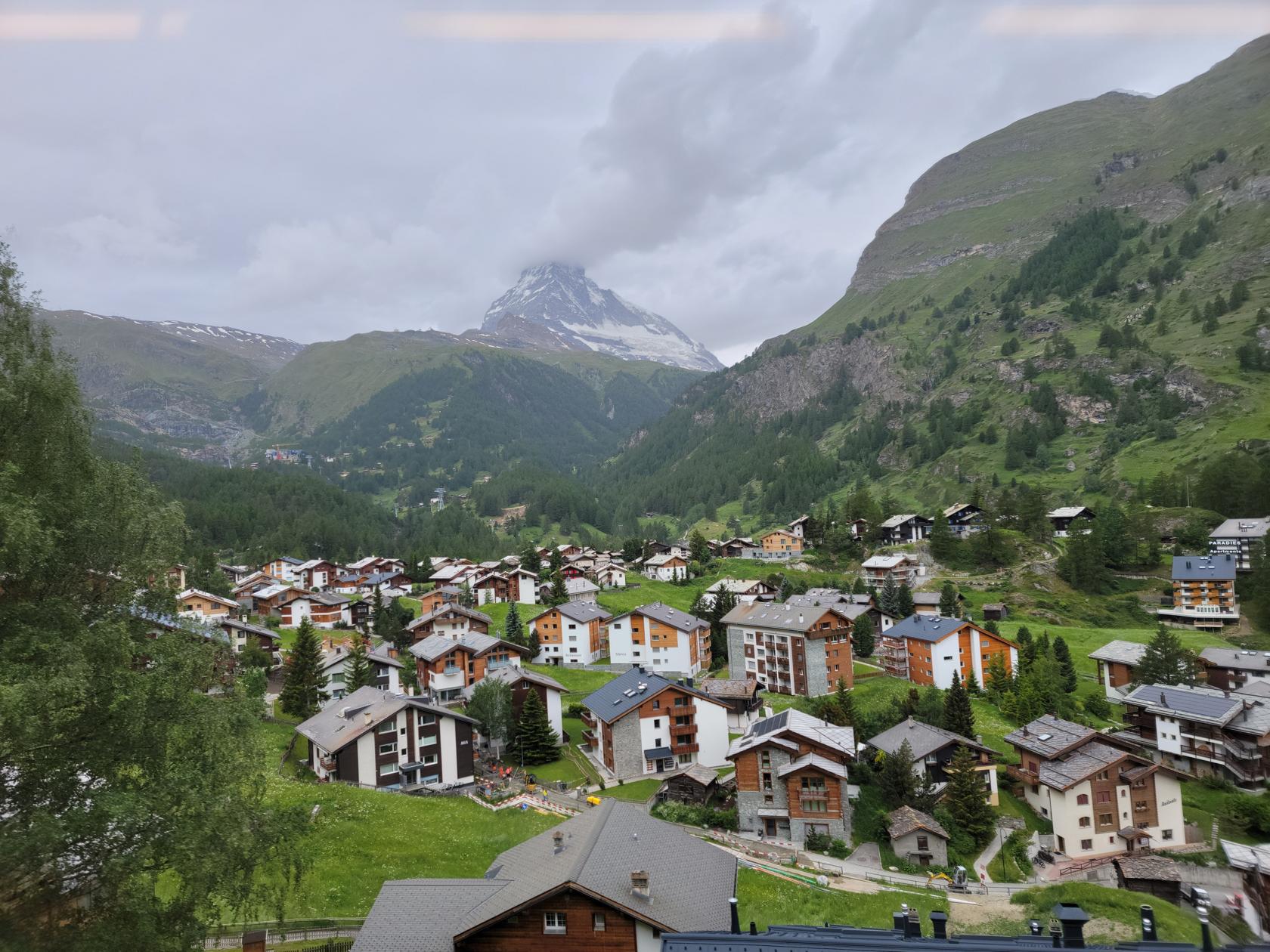
Coming into Zermatt – Zermatt, Switzerland
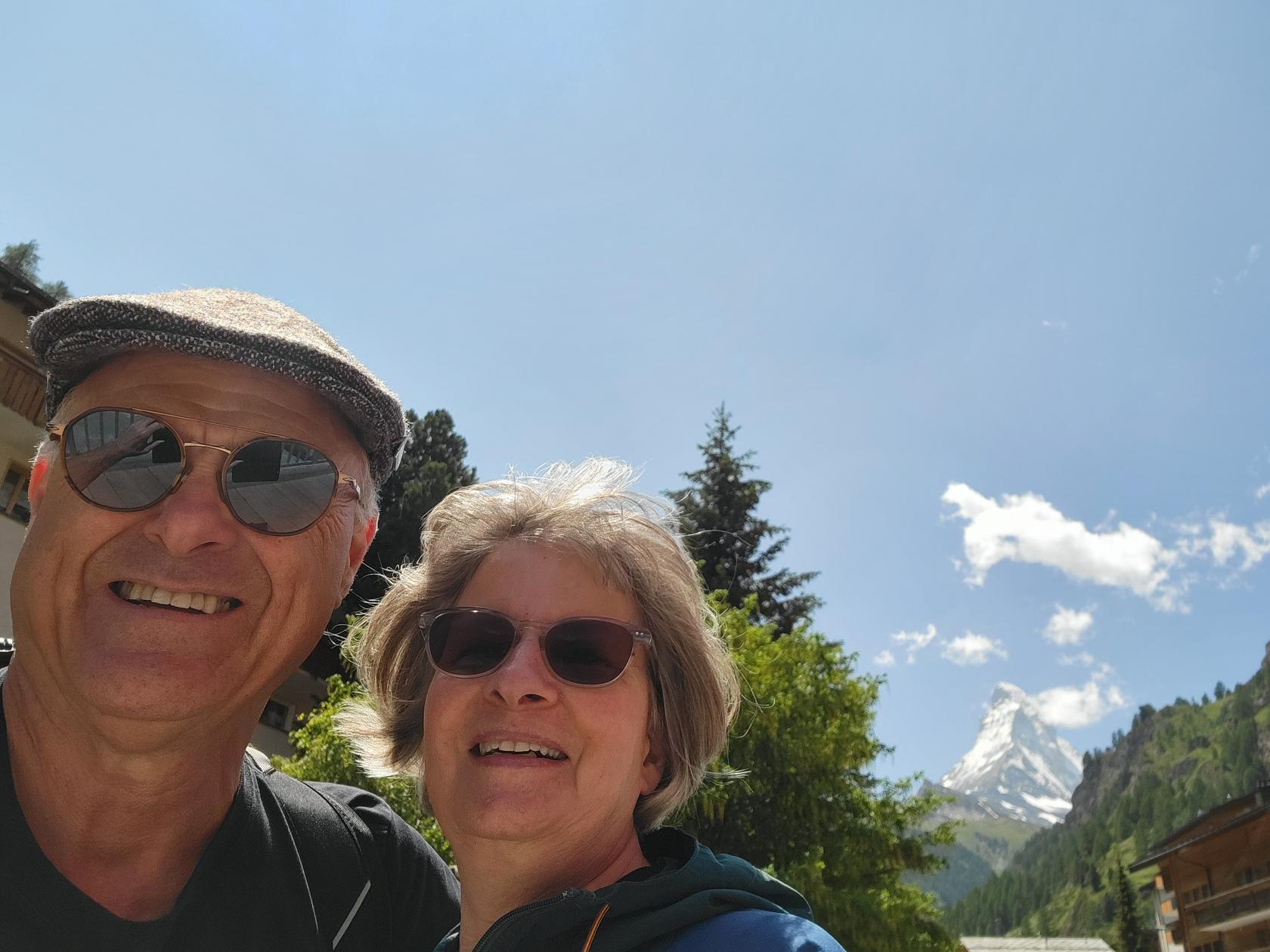
Erick and Patti with the Matterhorn – Zermatt, Switzerland
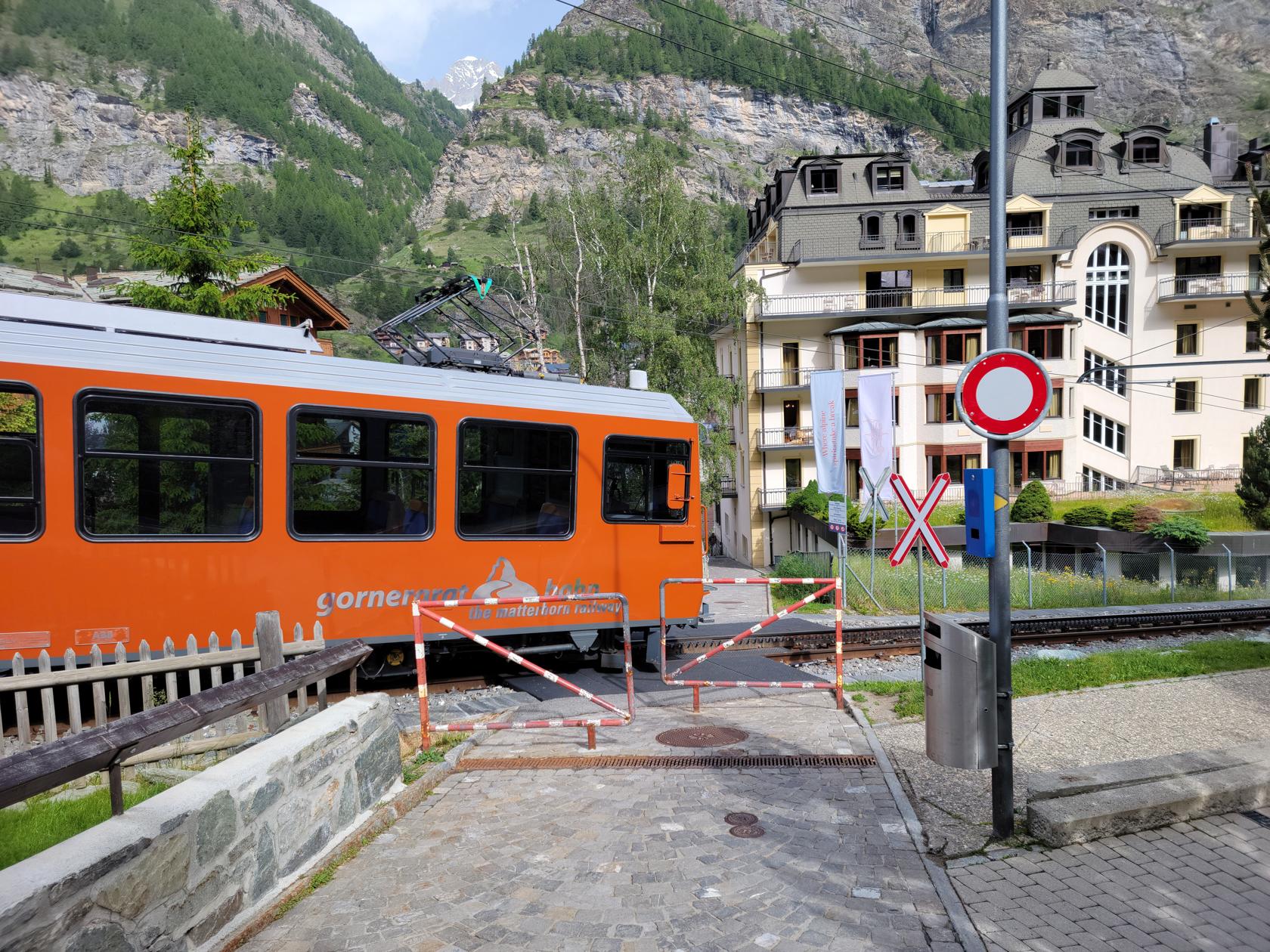
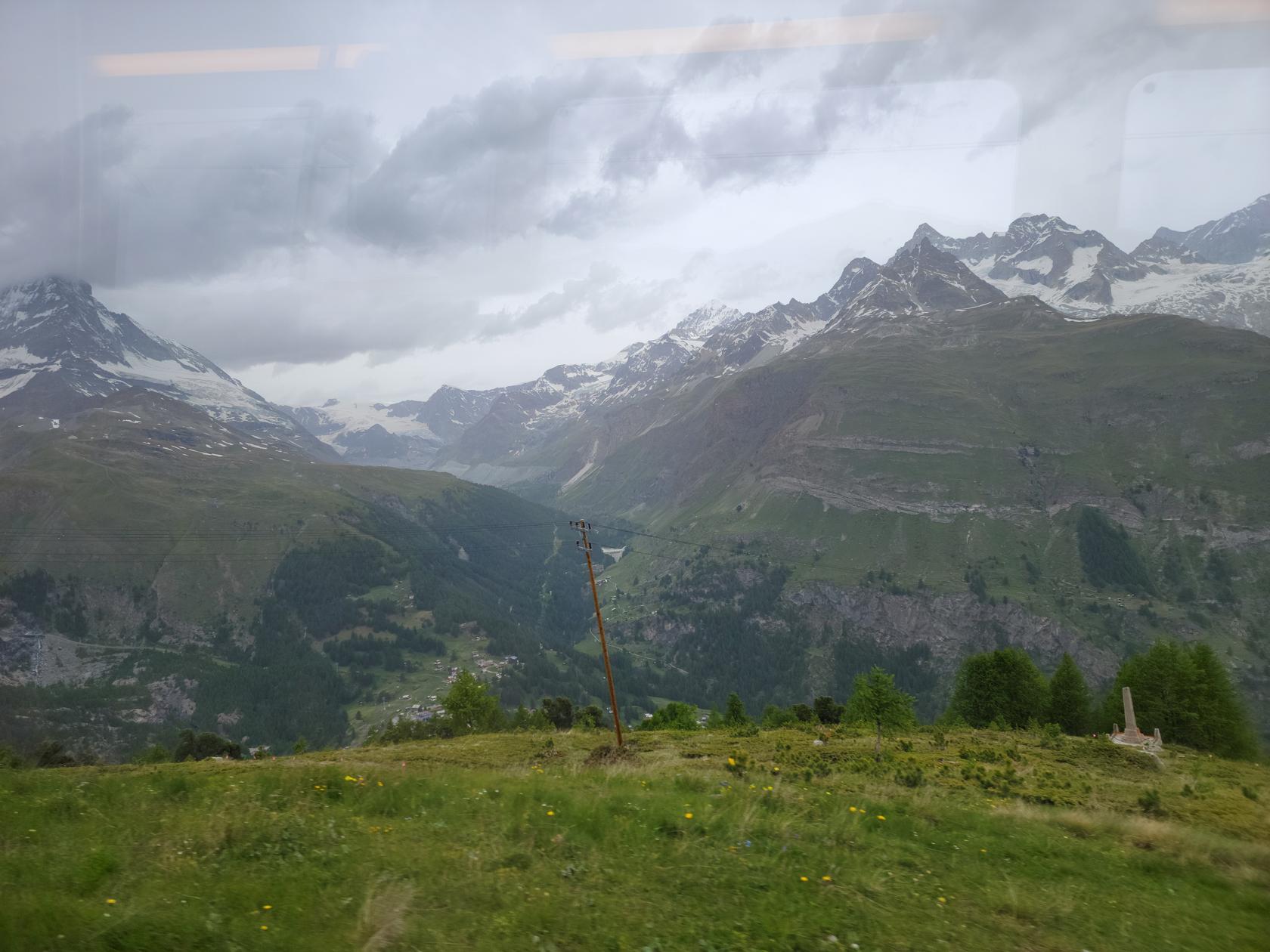
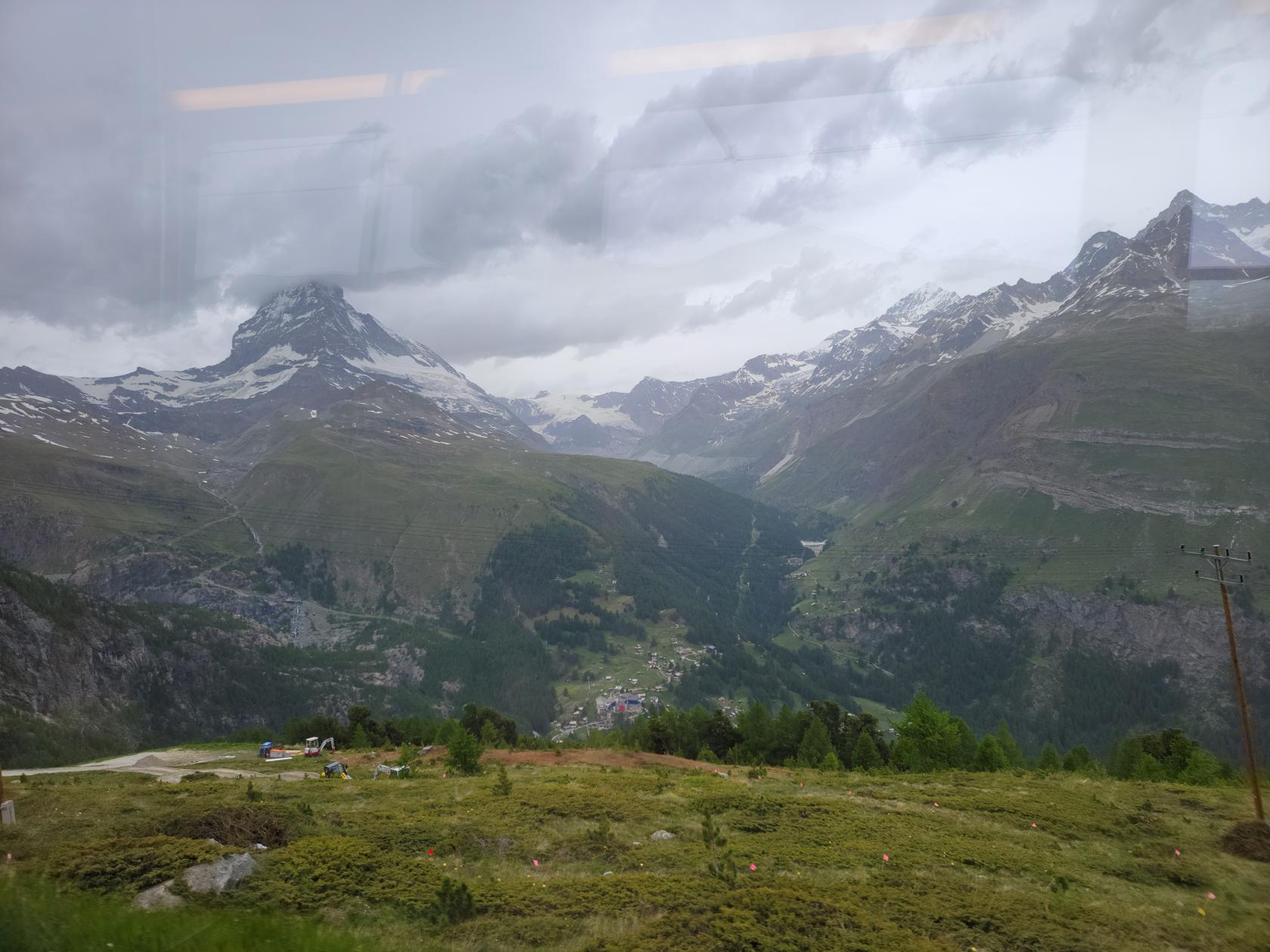
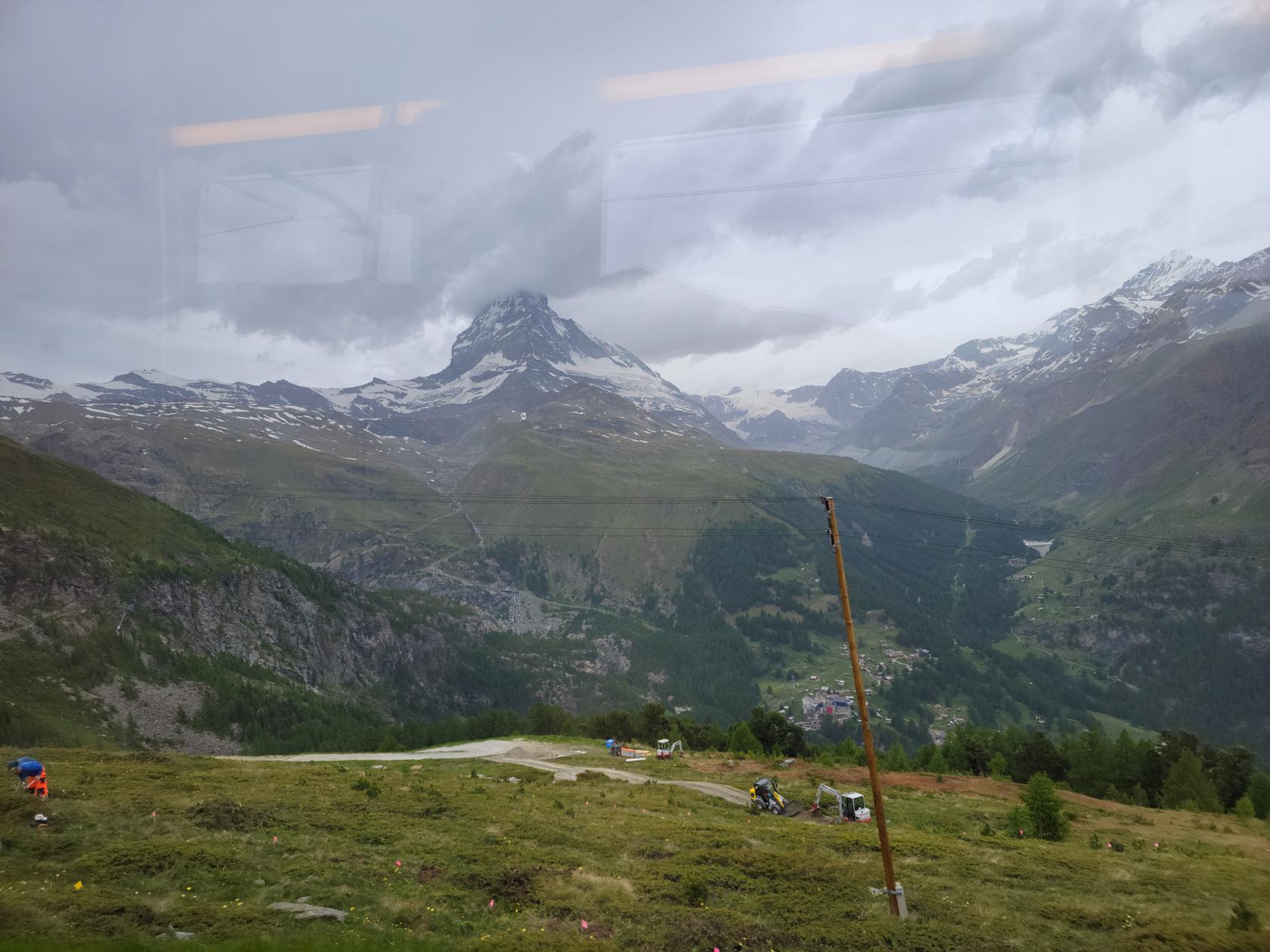
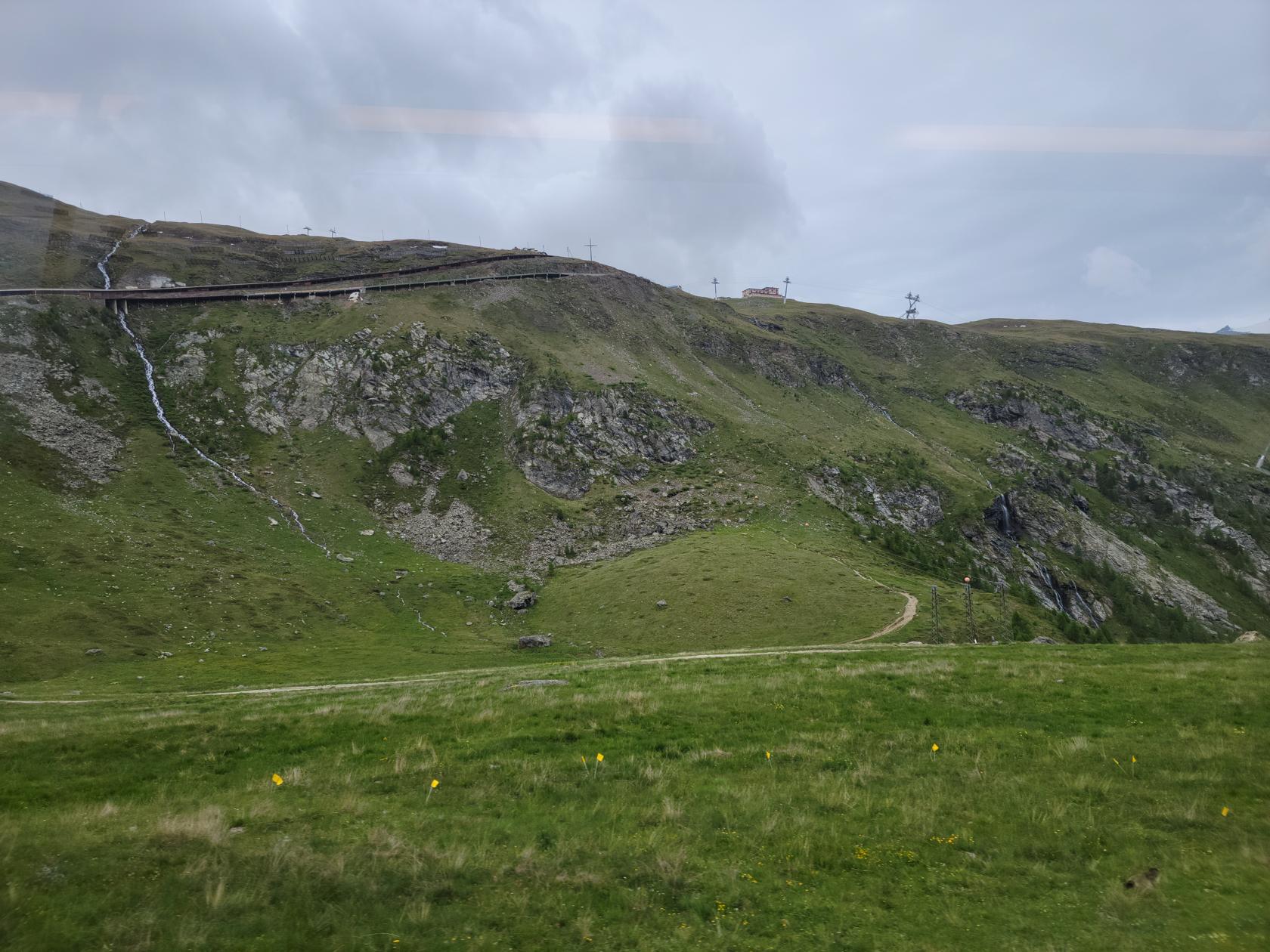
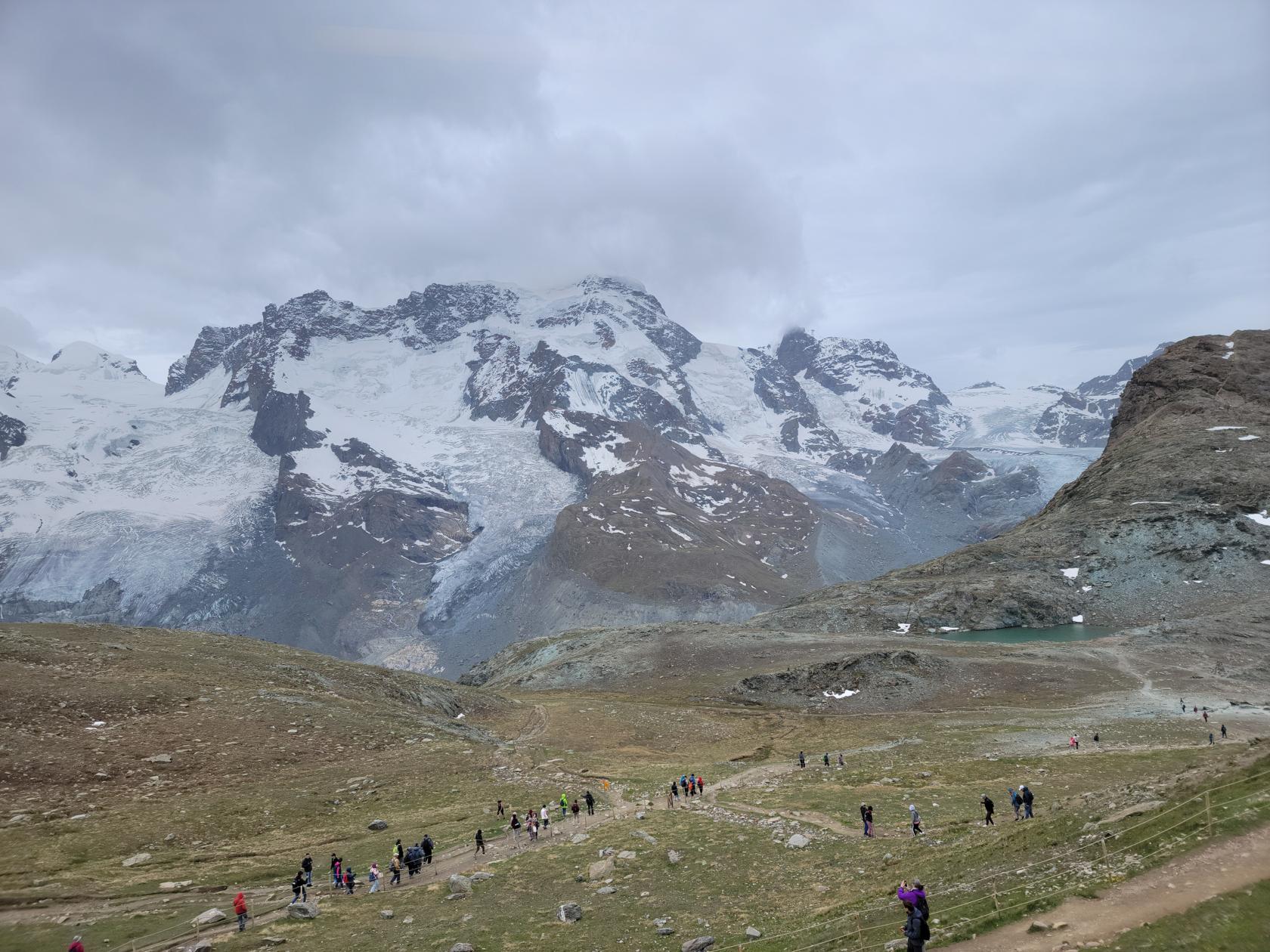
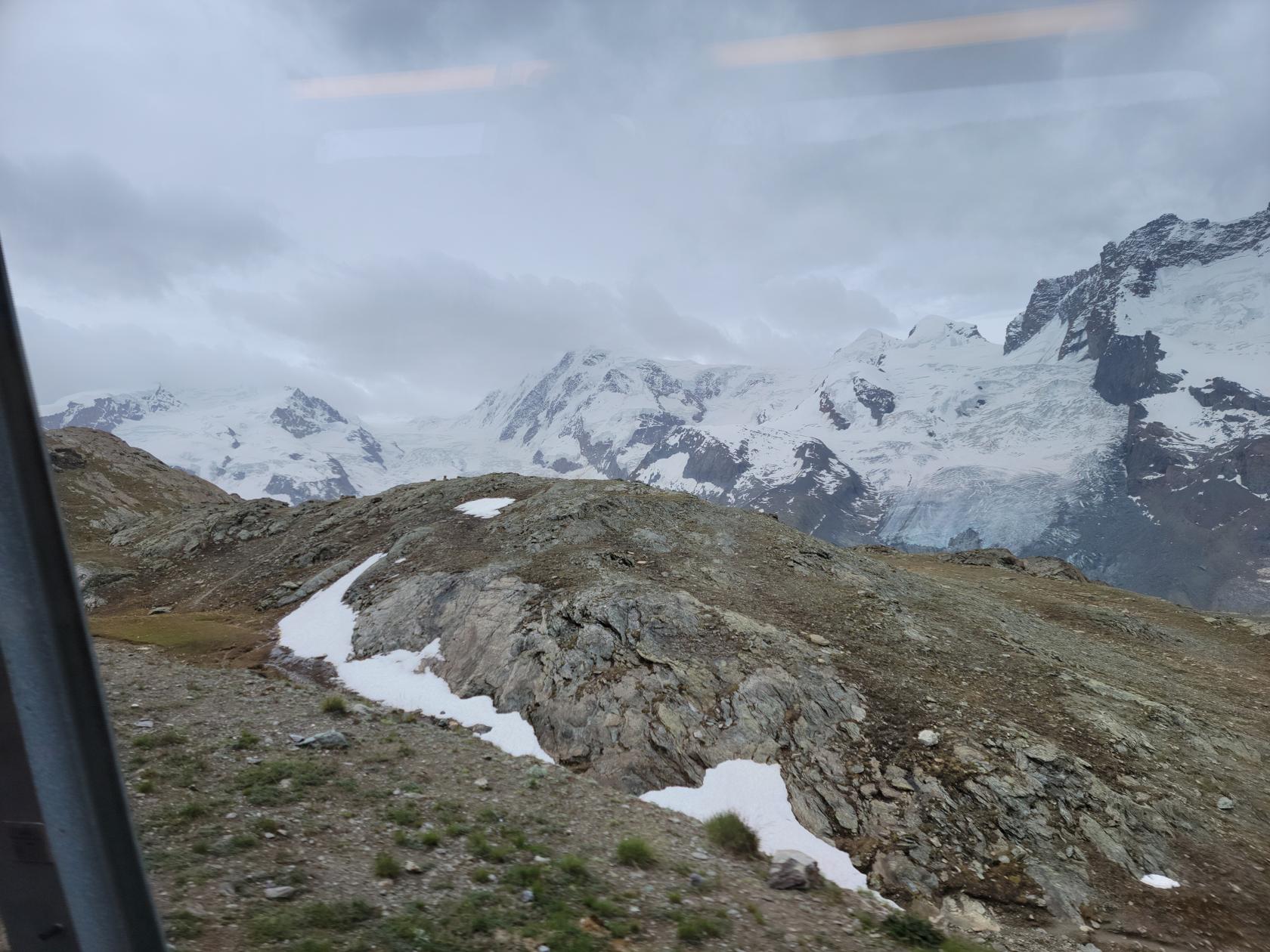
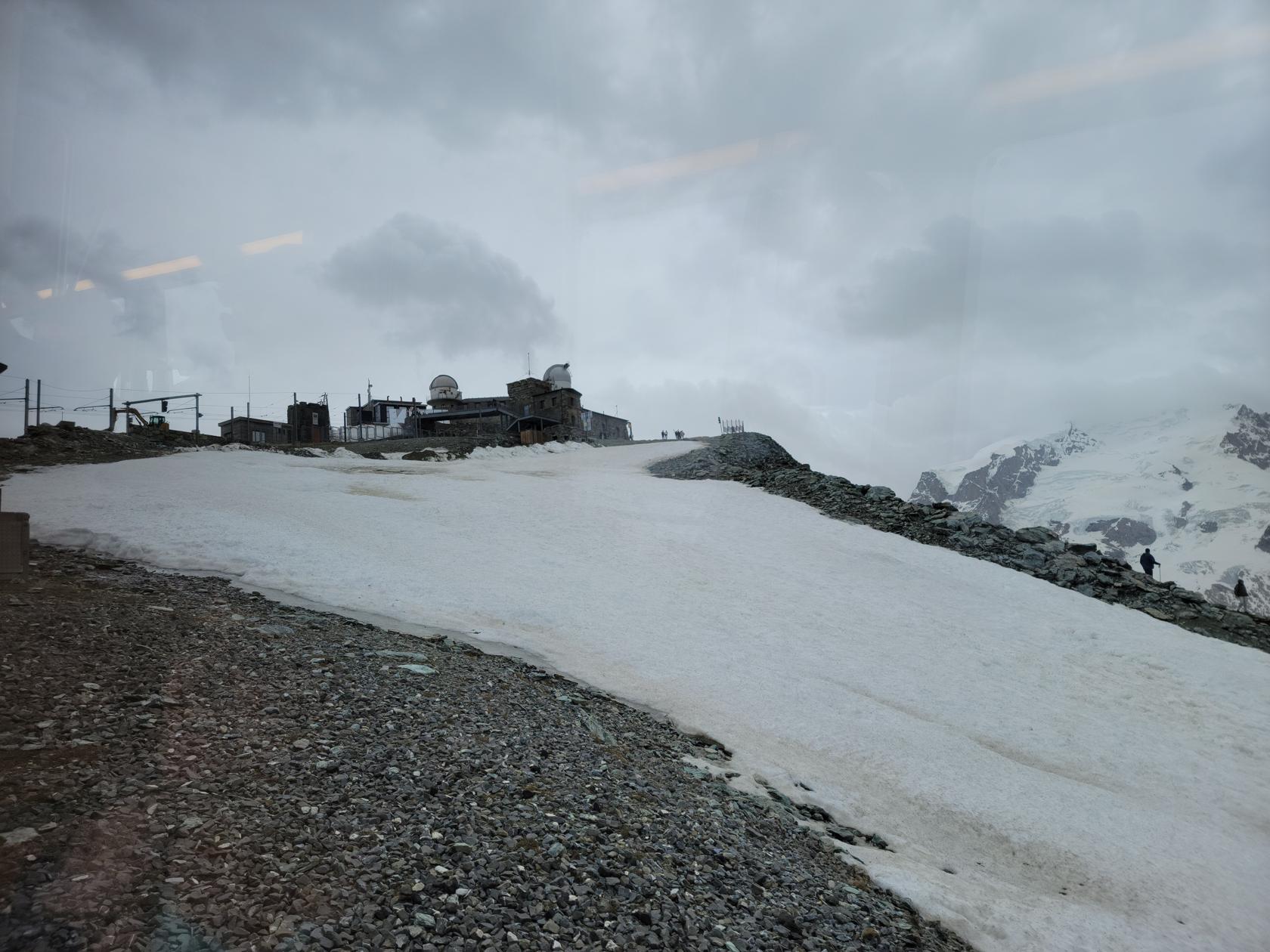
Another must see place in Zermatt is Gornergrat. You can reach this promontory by using the Gornergrat train, a mountain rack railway, which ascends the mountain passed Riffelalp and Riffelberg.
There are several stops besides these two along the way that one may decide to leave the train and just walk or hike. However, unlike Sunnegga and Blauherd, the terrain here is a bit more unforgiving and vertical. Also, the weather on top of the mountains can be cold and unpredictable, so bring something warm and something waterproof, especially if you are hiking.
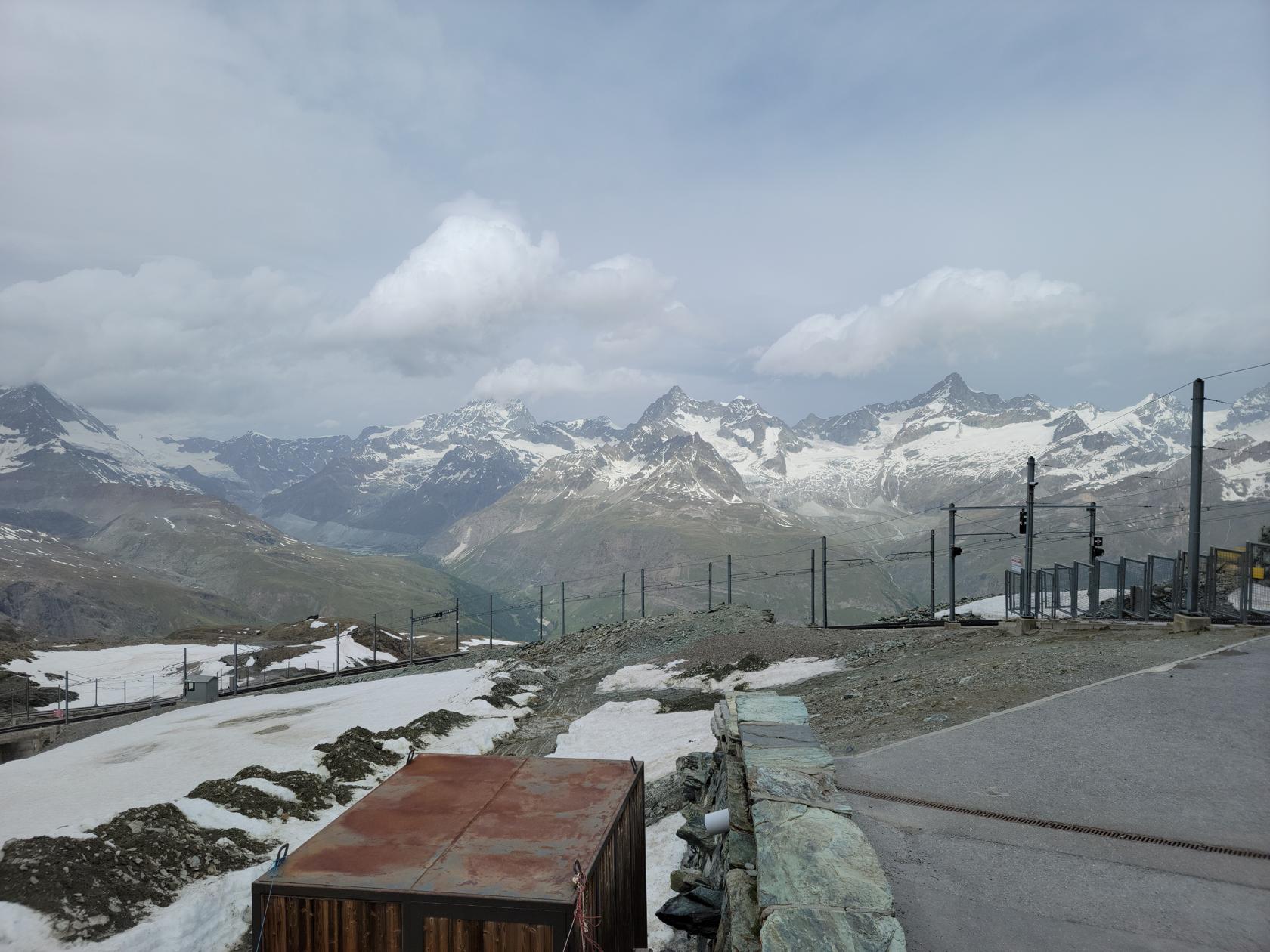
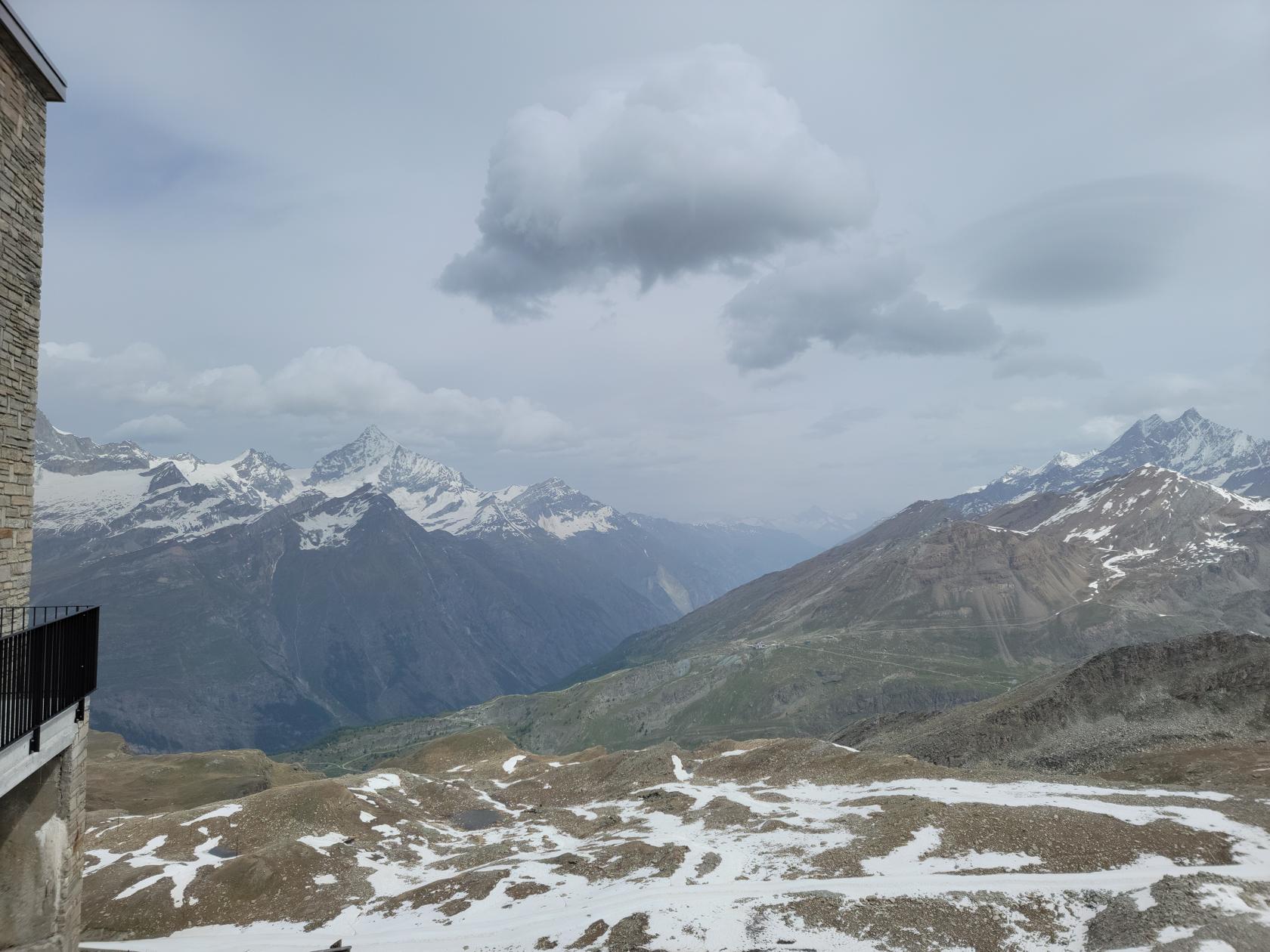
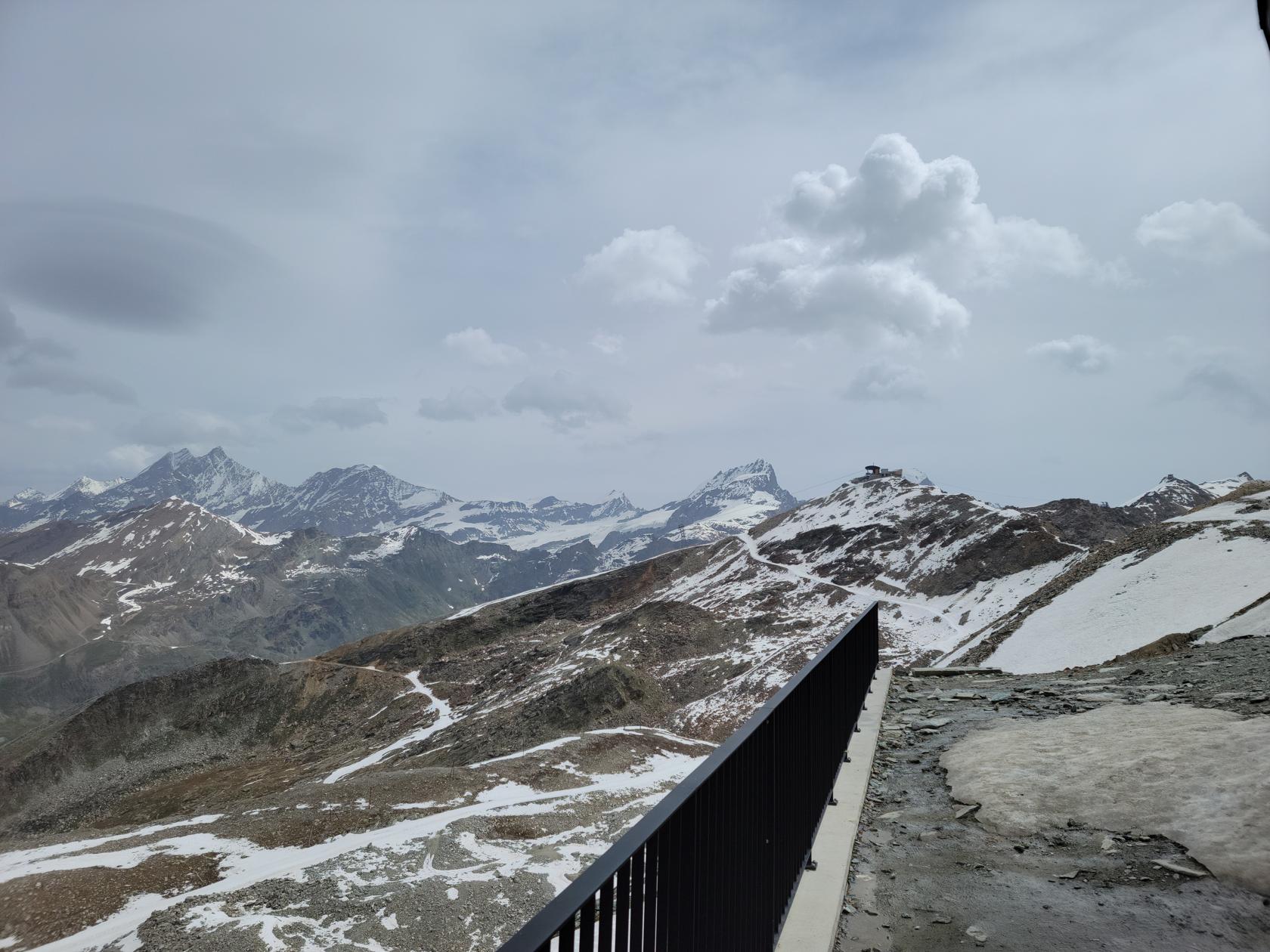
Looking towards Dent Blanche – Gornergrat – Zermatt, Switzerland
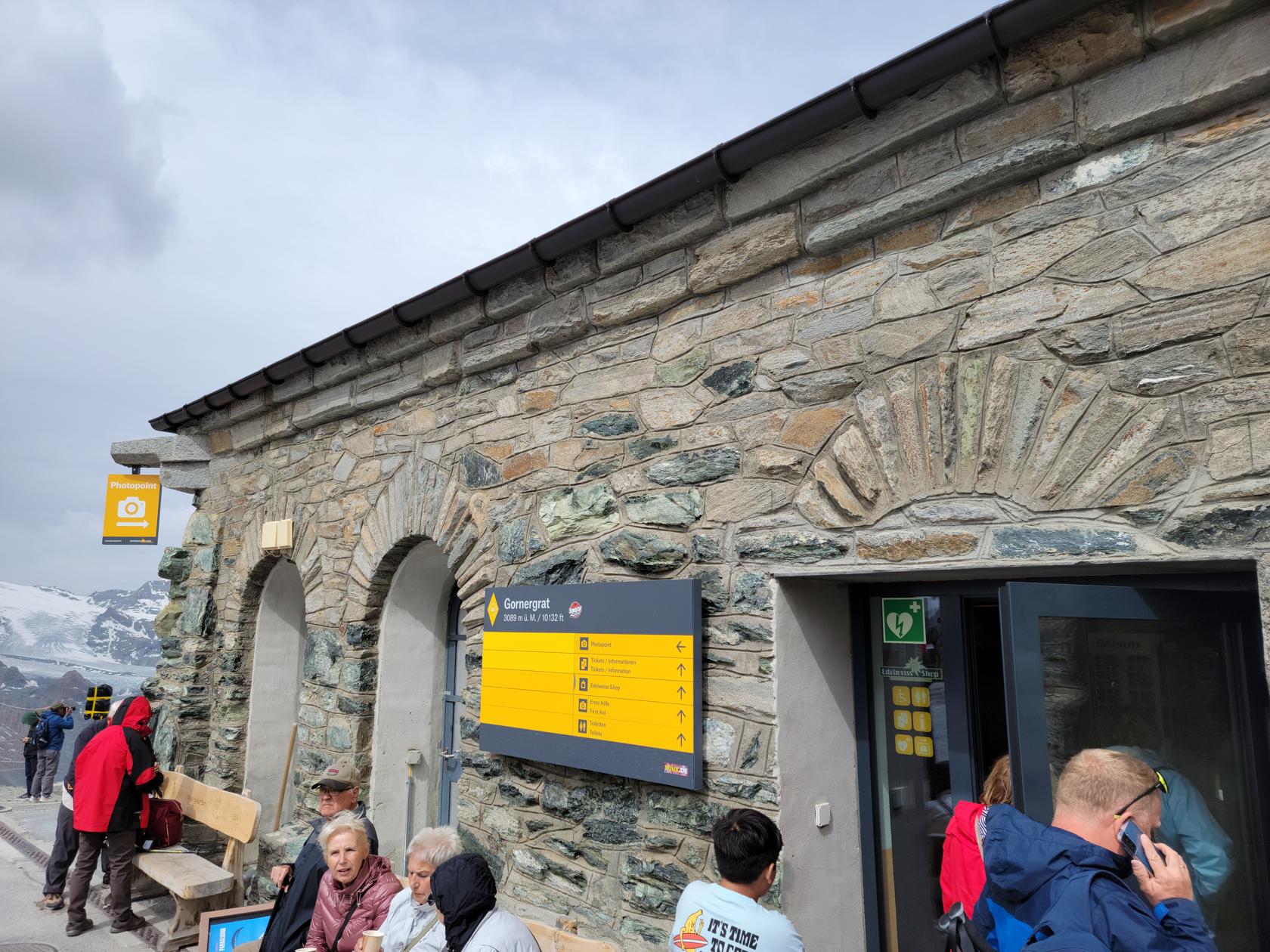
Gornergrat station – Gornergrat – Zermatt, Switzerland
Looking toward Zermatt and Mattertal – Gornergrat – Zermatt, Switzerland
Gornergrat – Zermatt, Switzerland
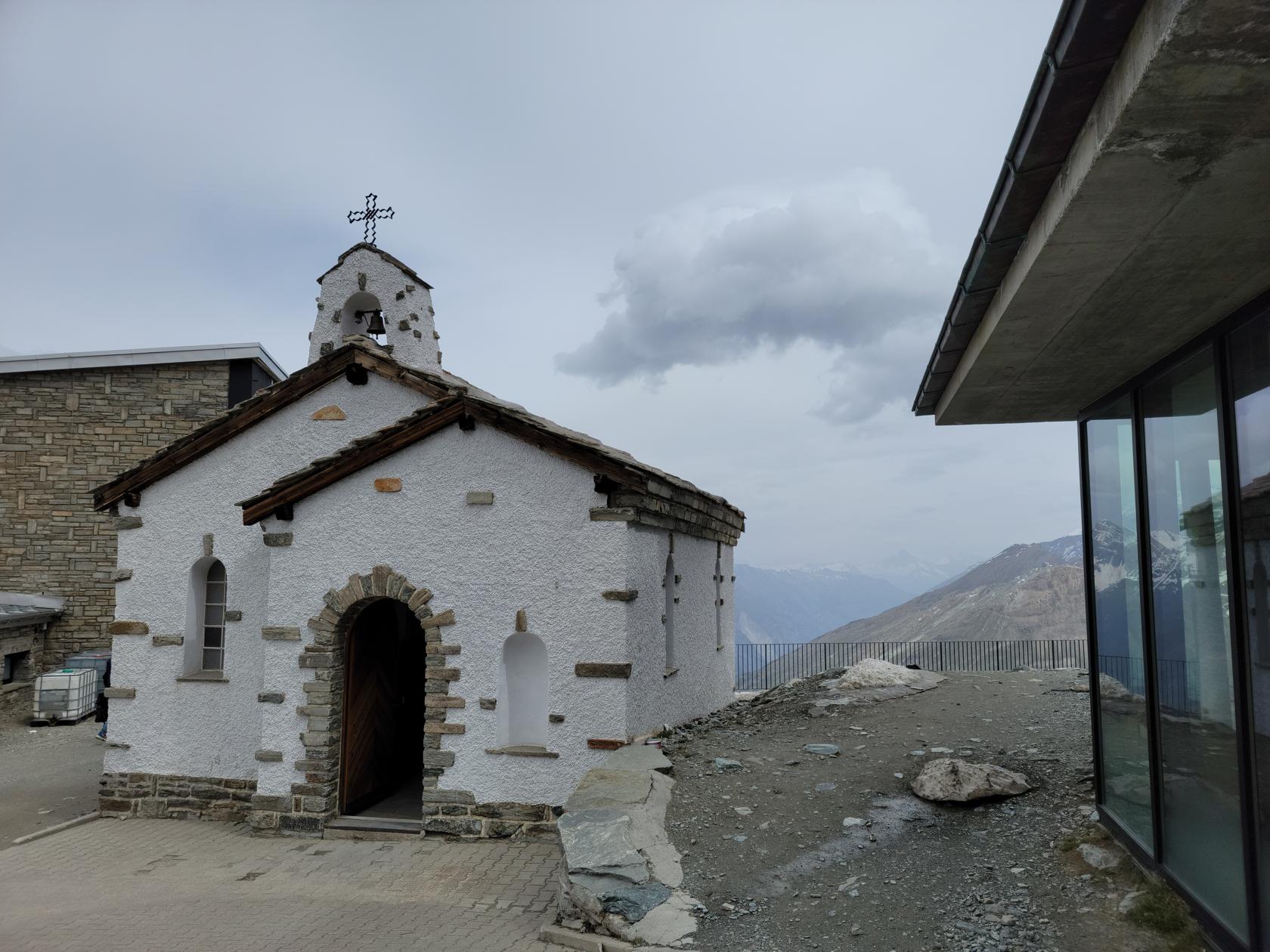
Chapelle du Gornergrat – Bernhard von Aosta – Gornergrat – Zermatt, Switzerland
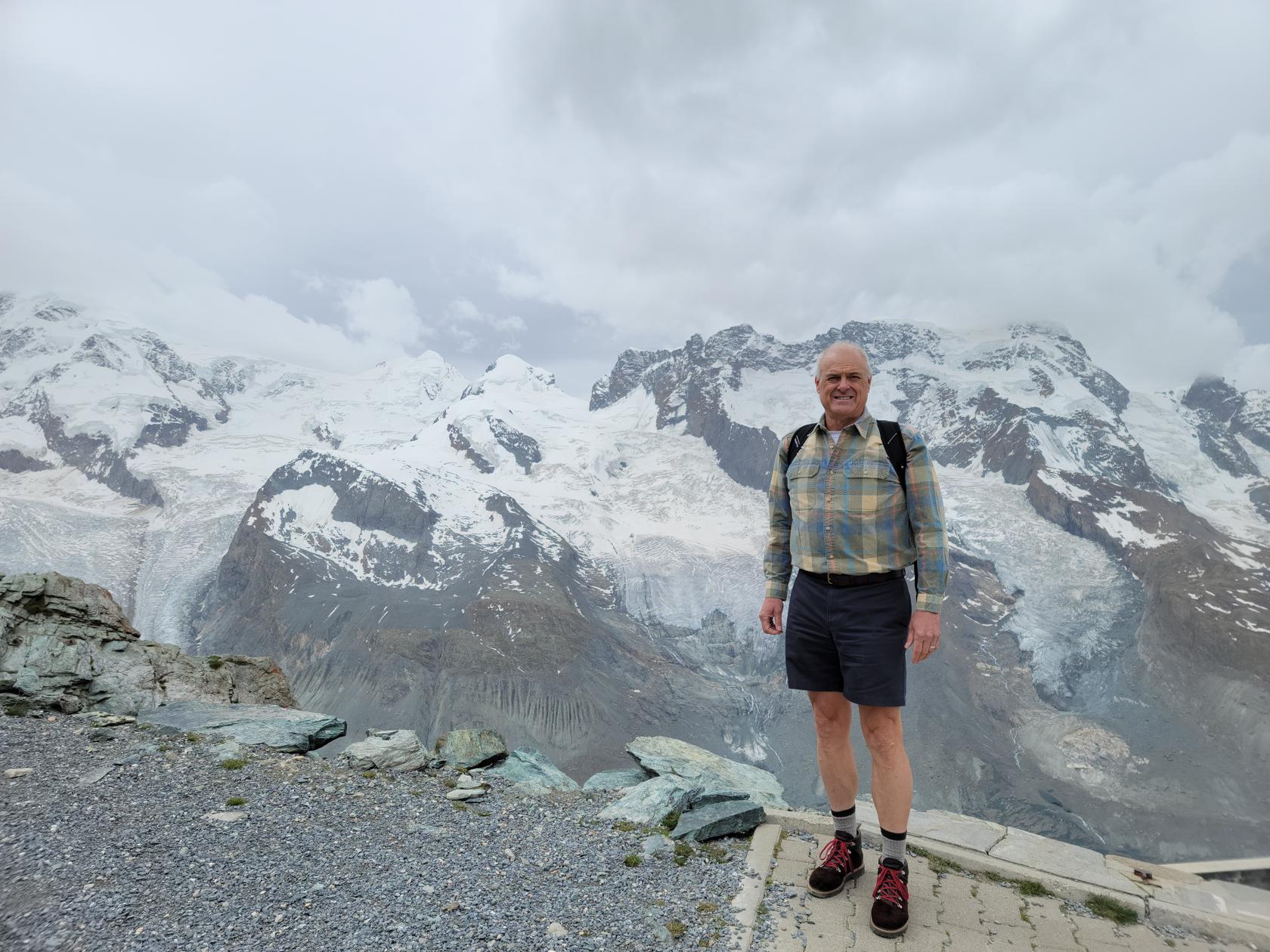
Erick at Riffelberg – Riffelberg – Zermatt, Switzerland
Gornergrat Glacier
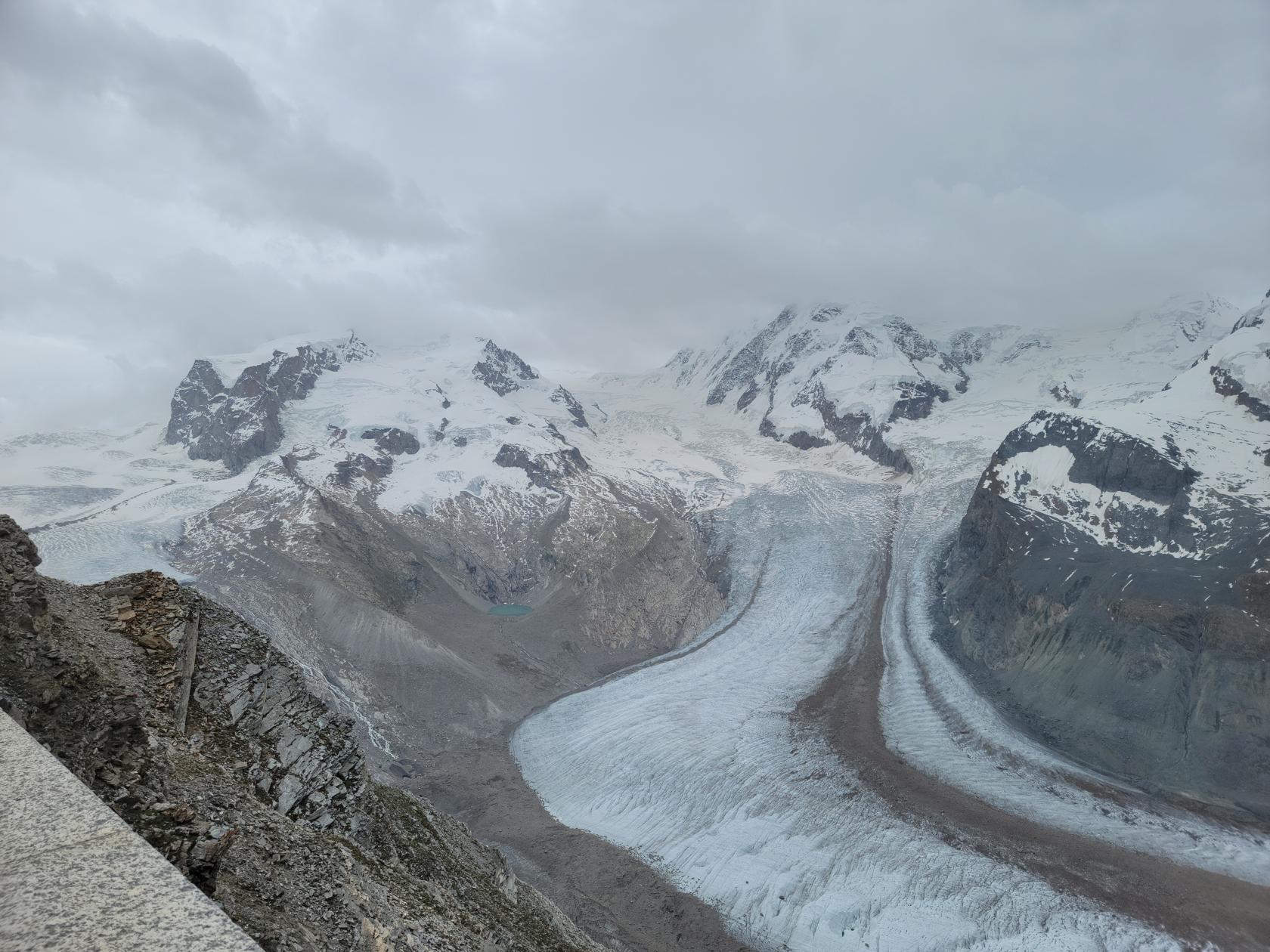
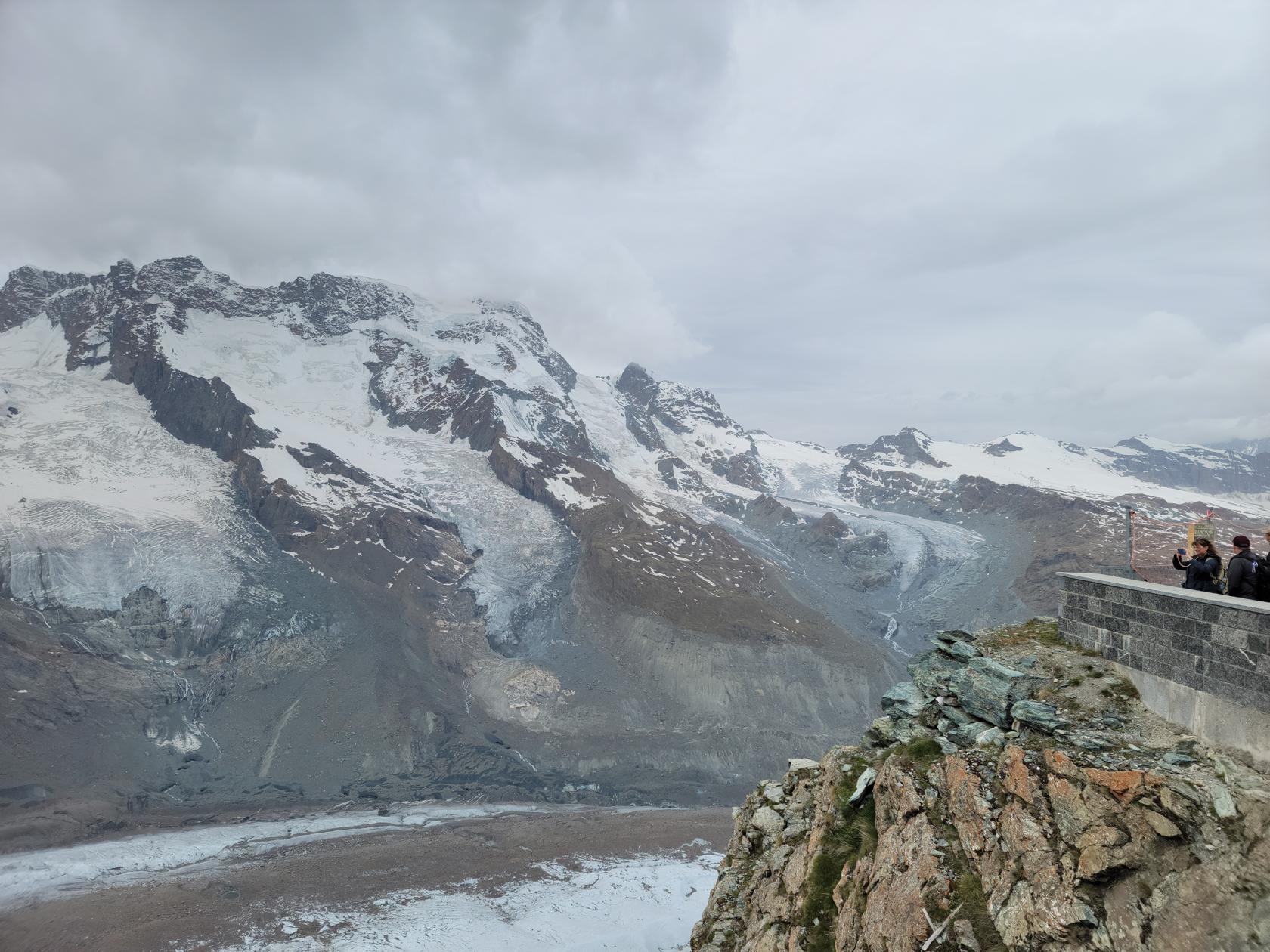
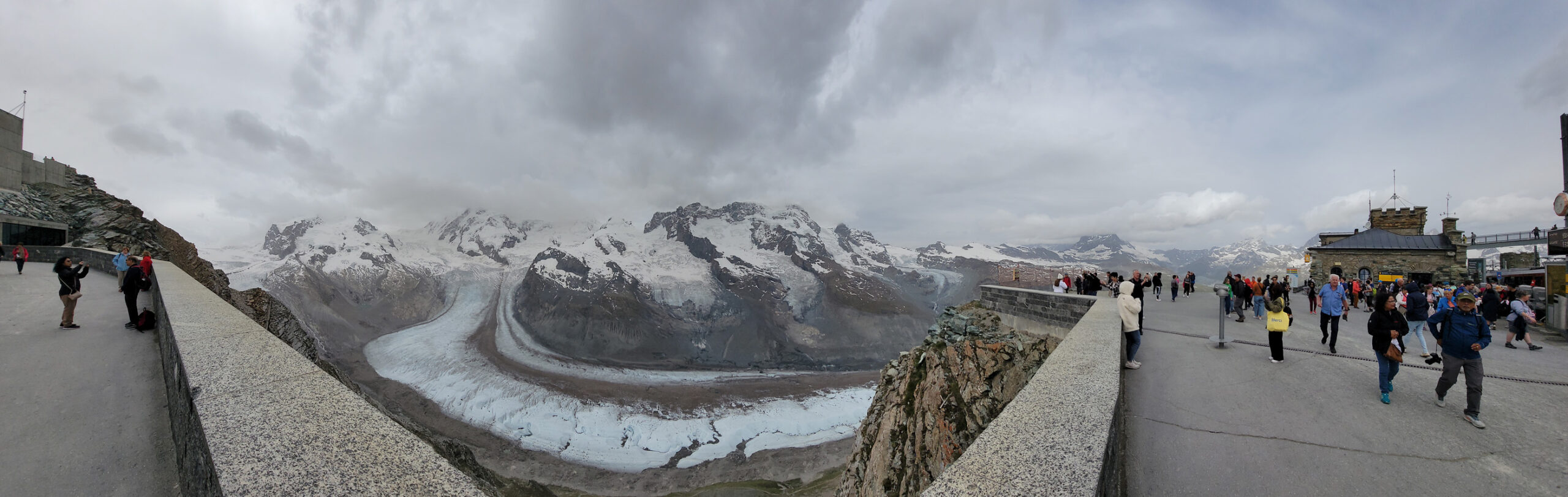
The height of the trip is the summit and the Gornergrat Glacier. Aside from this, this isn’t much to see, especially in marginal weather when the Matterhorn is obscured.
Panorama of Gorner Glacier – Gornergrat – Zermatt, Switzerland
Riffelberg
On the way down we stopped at Riffelberg, with the hopes of getting some hiking in down to Riffelalp. However, the weather was not looking very good and we were still suffering from our colds, so we decided against it.
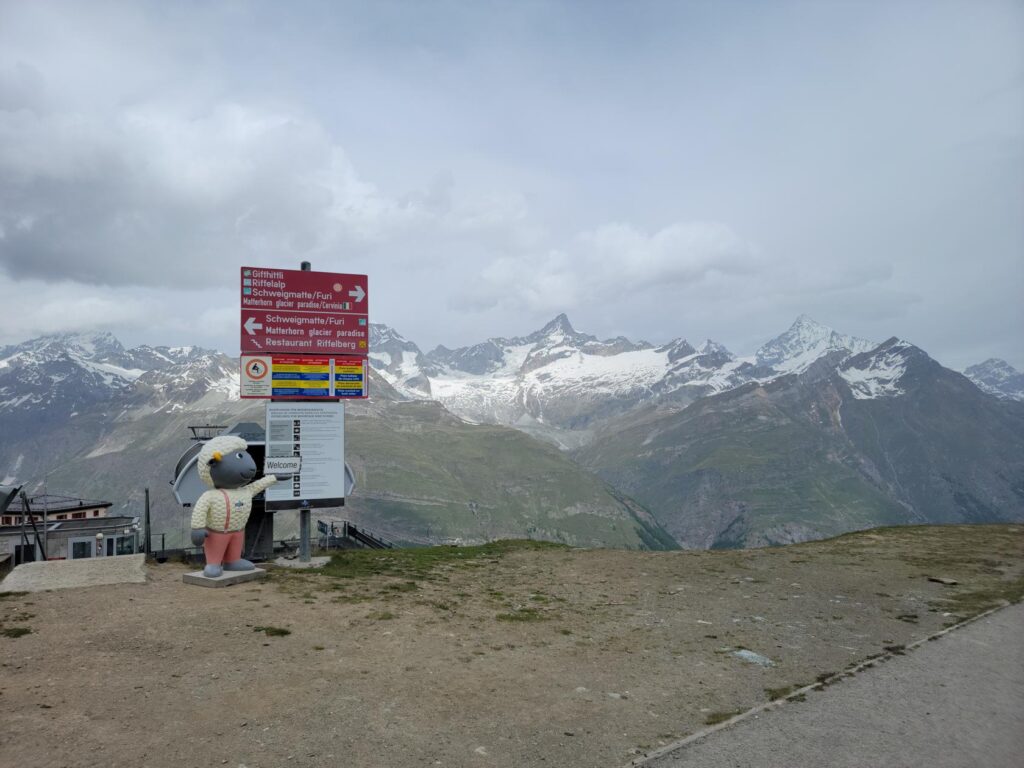
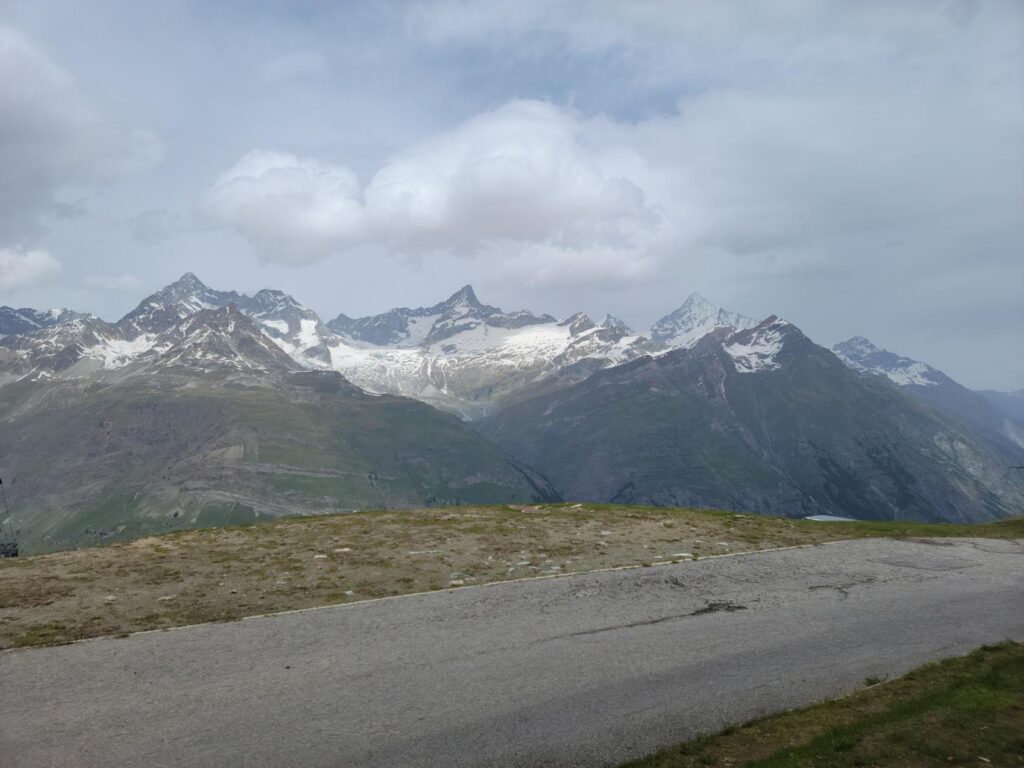
View from Riffelberg – Riffelberg – Zermatt, Switzerland
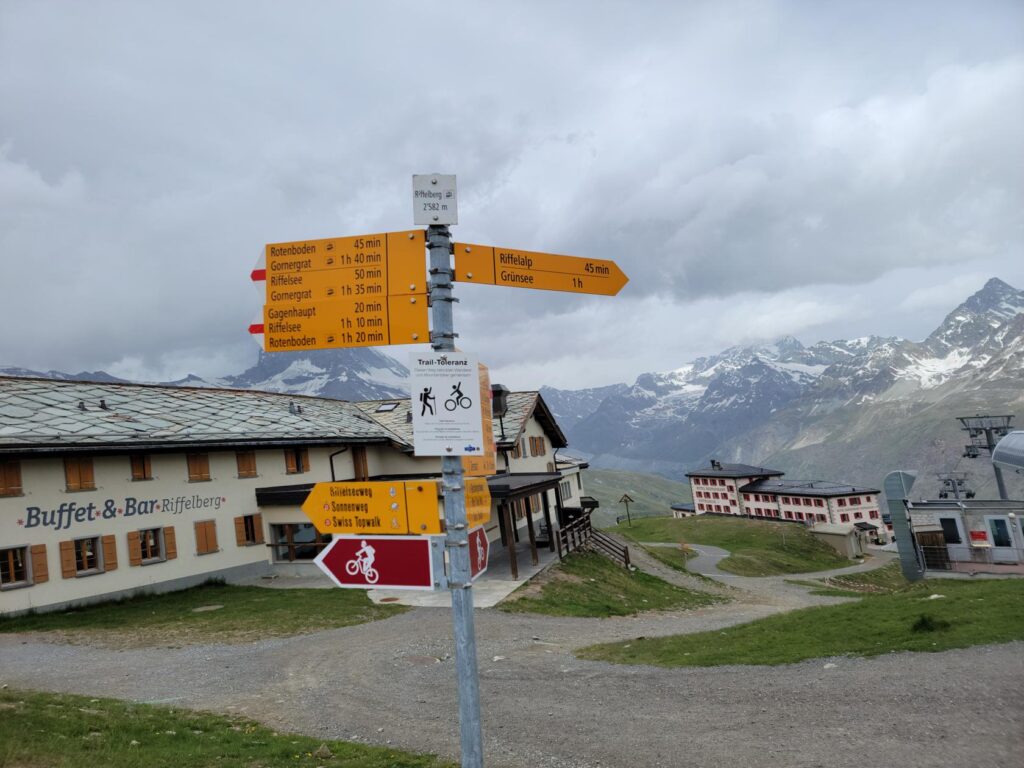
Wanderwege – Riffelberg – Zermatt, Switzerland
Tall Peaks across the valley Matter – Riffelberg – Zermatt, Switzerland
Here are some short videos that were taken of our trip.
Restaurants
We did not eat at the restaurant on the summit, but rather waited until we were back in Zermatt. We left around ten in the morning and were already back a little after noon.
China Garden
Any one seeking good Chinese food at very reasonable prices has to visit the China Garden.
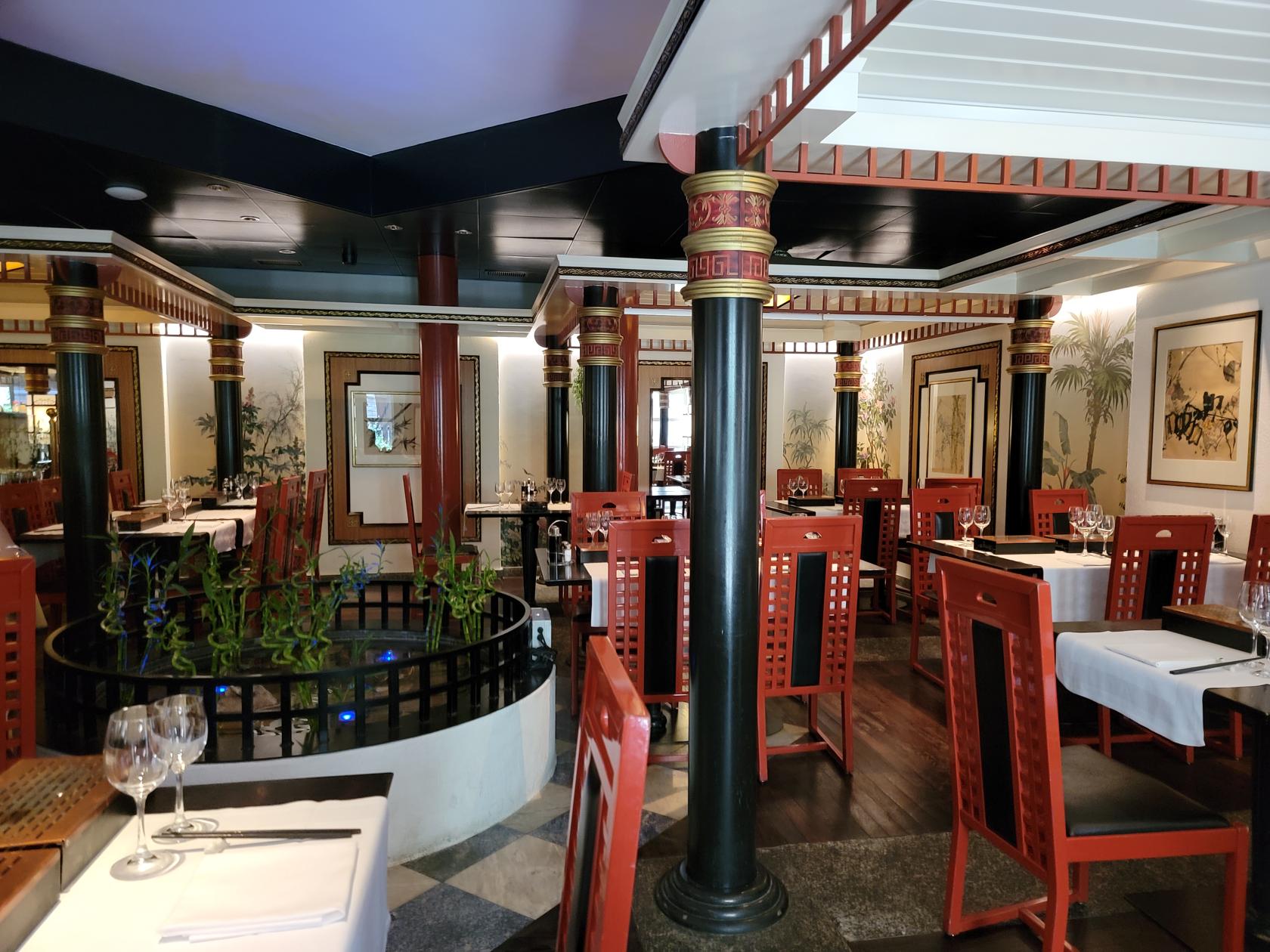
China Garden – Zermatt, Switzerland
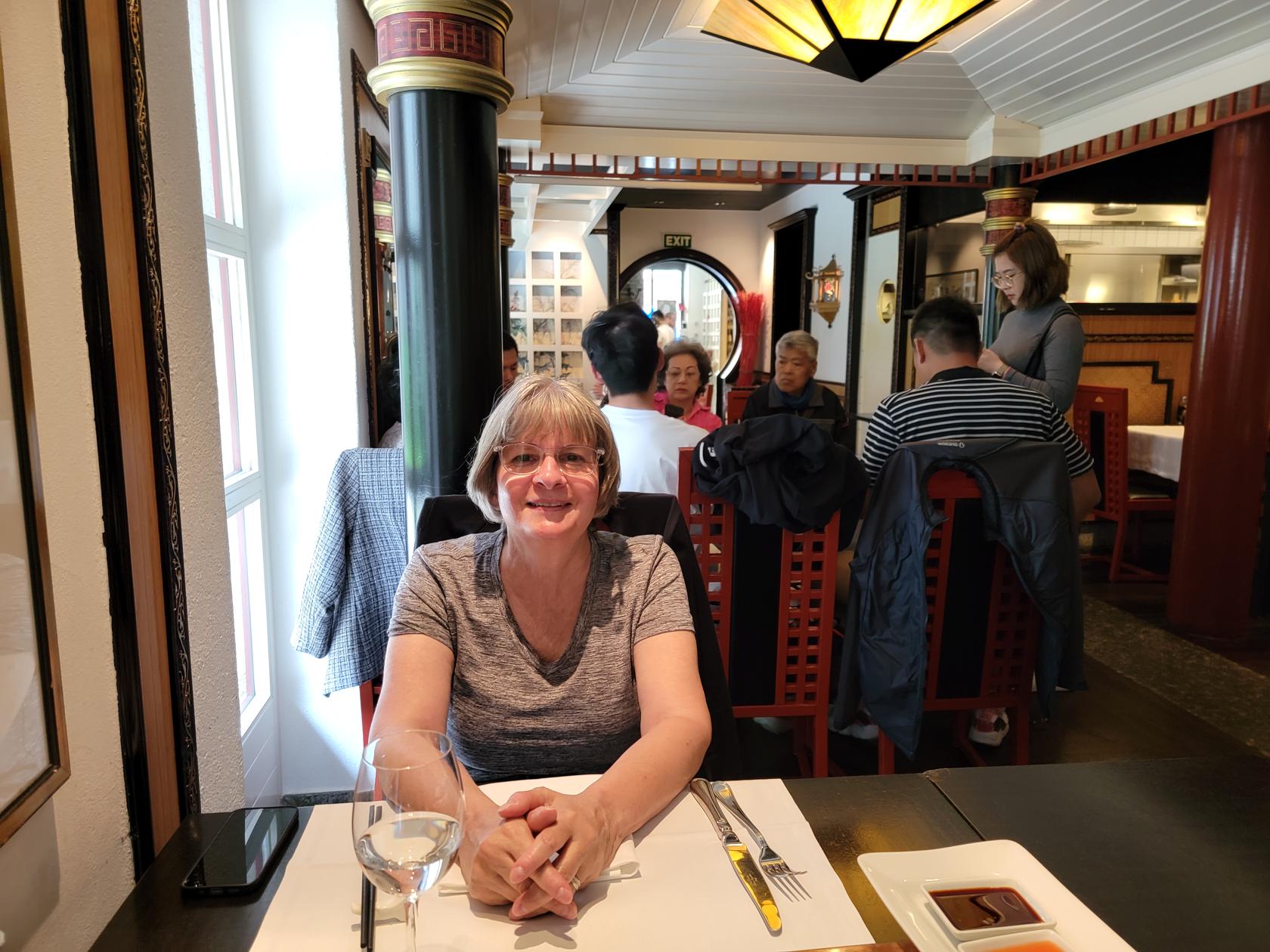
Patti at China Garden – Zermatt, Switzerland
They have all the dishes which are prepared with continental ingredients and taste delicious. For those that prefer their lunches uncomplicated, here you can definitely find some vegetarian or simple to order.
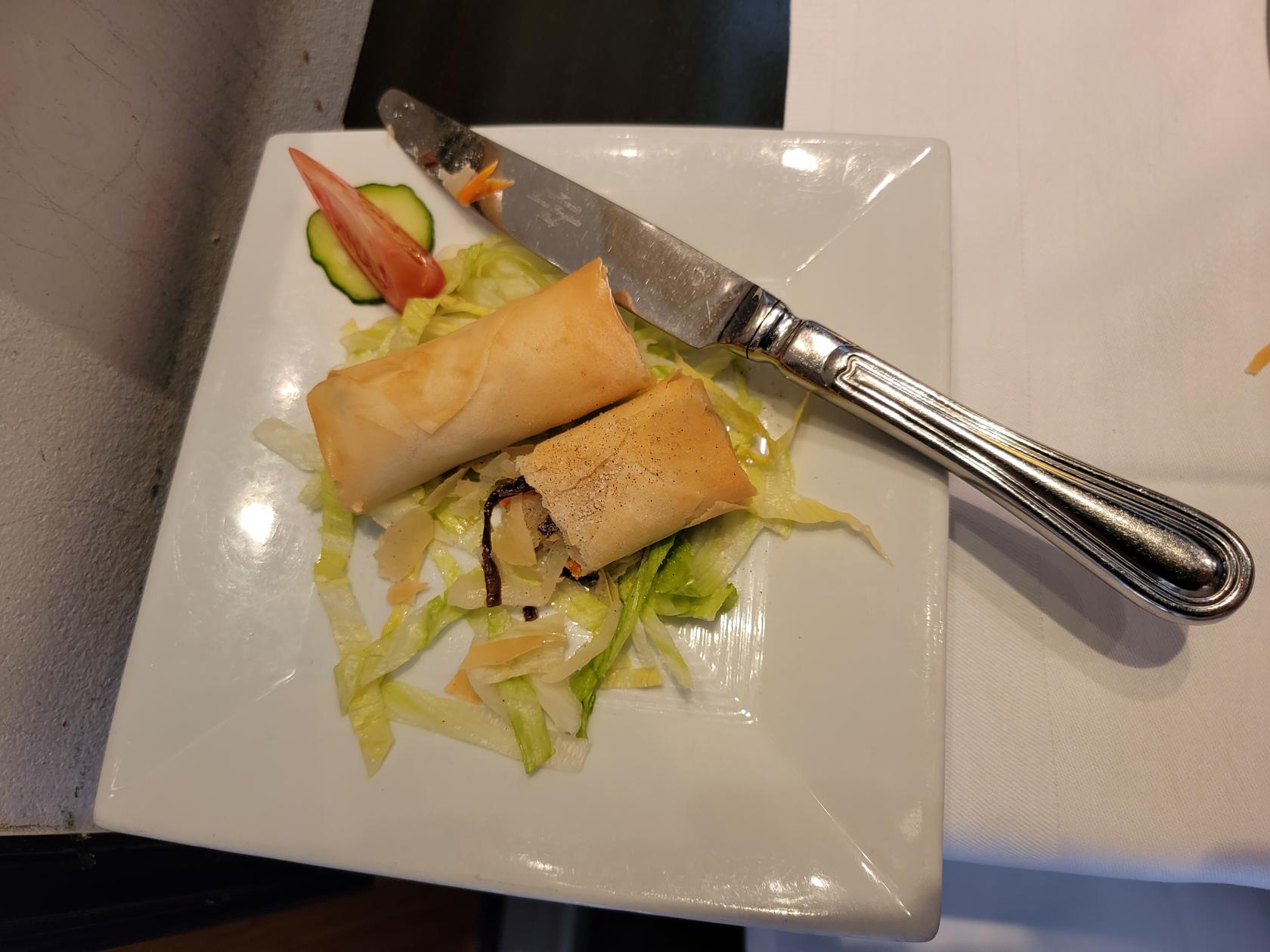
Spring roll – China Garden – Zermatt, Switzerland
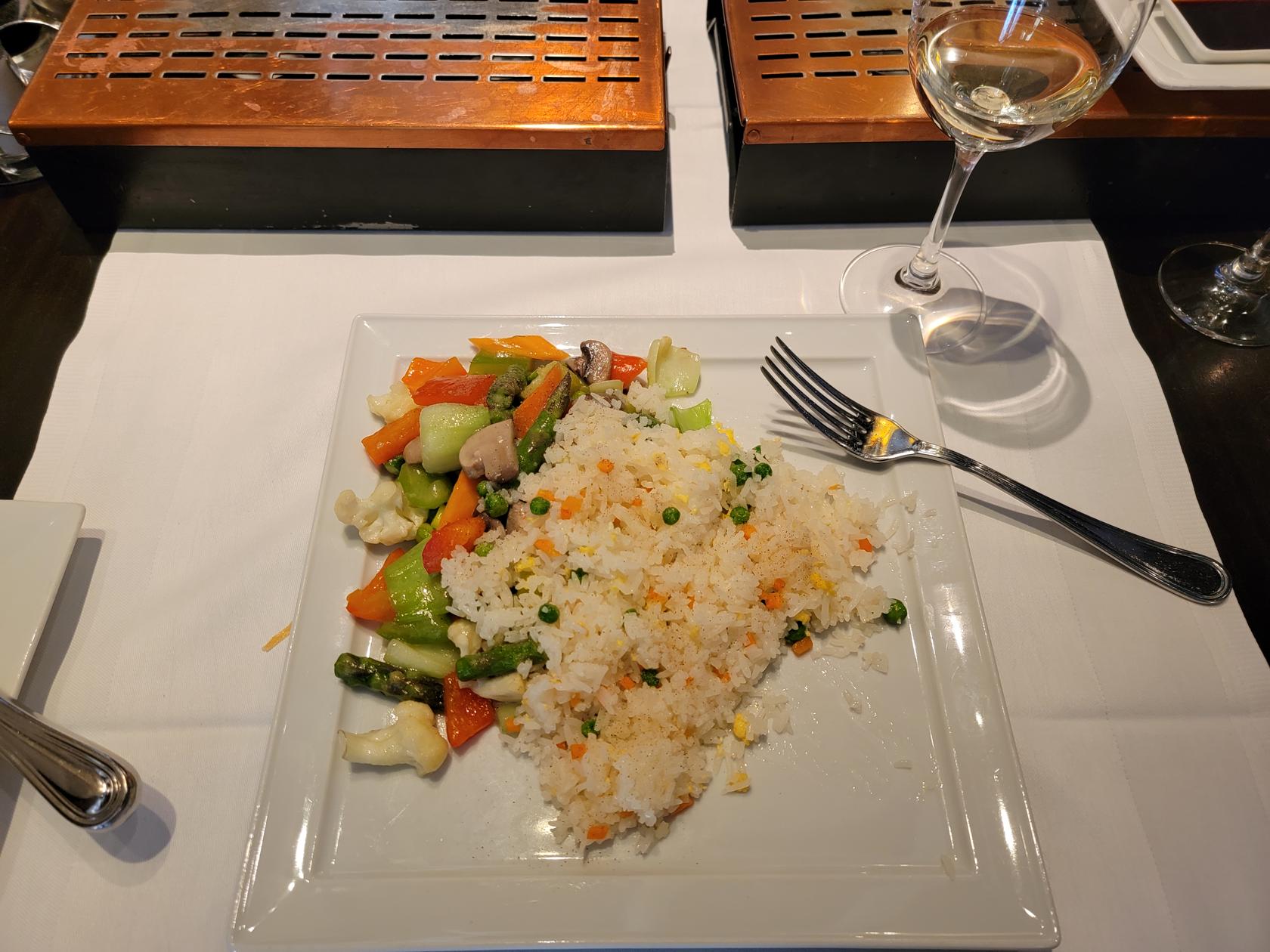
Vegetable rice with vegetable mix – China Garden – Zermatt, Switzerland
And of course, after lunch the day would not be complete this week without the customary rain storm. Actually, this was just a gentle shower, later in the day we had a very severe thunderstorm. But we were inside the hotel by then and did not care. Again, the weather can be unpredictable here, so be prepared and check the forecast, they are for the most part reliable.
Tomorrow it’s on to Matterhorn Glacier, so we will be taking the Matterhorn Glacier Express.
Part of the reason for even going to Zermatt has to be the hiking. Not only are the views breathtaking, even on a marginal day, but the air is fresh and clean and very enjoyable. And then there are the mountains, Zermatt has them and much more.
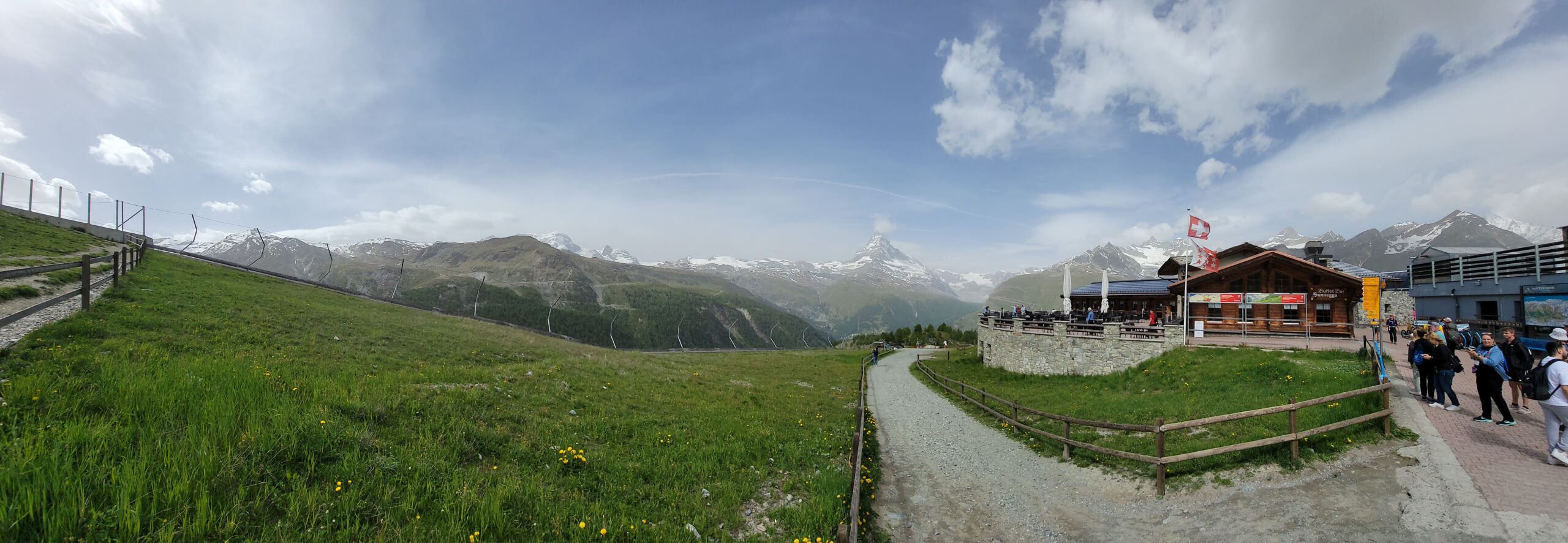
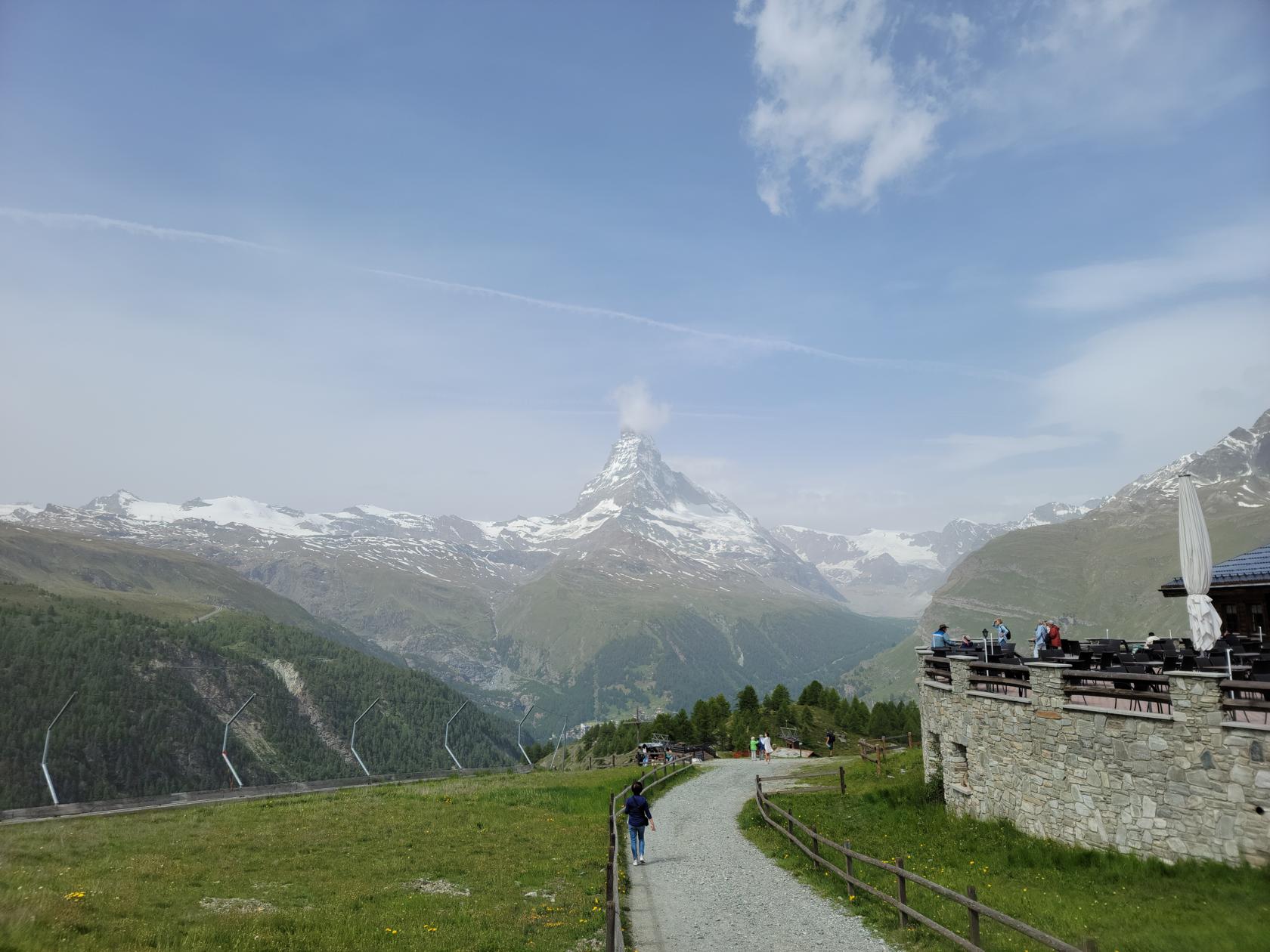
Panorama at Sunnegga – Zermatt, Switzerland
Zermatt
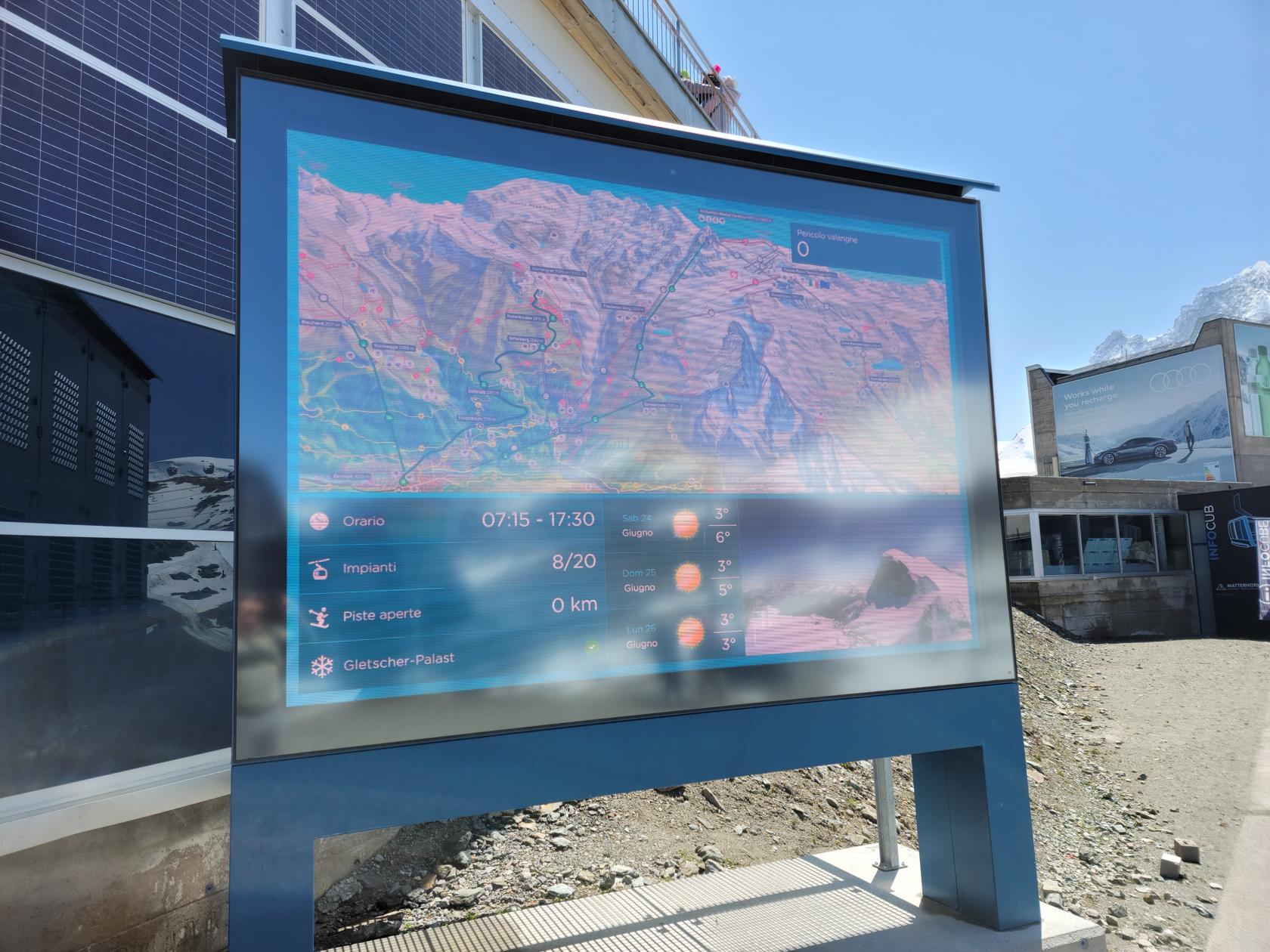
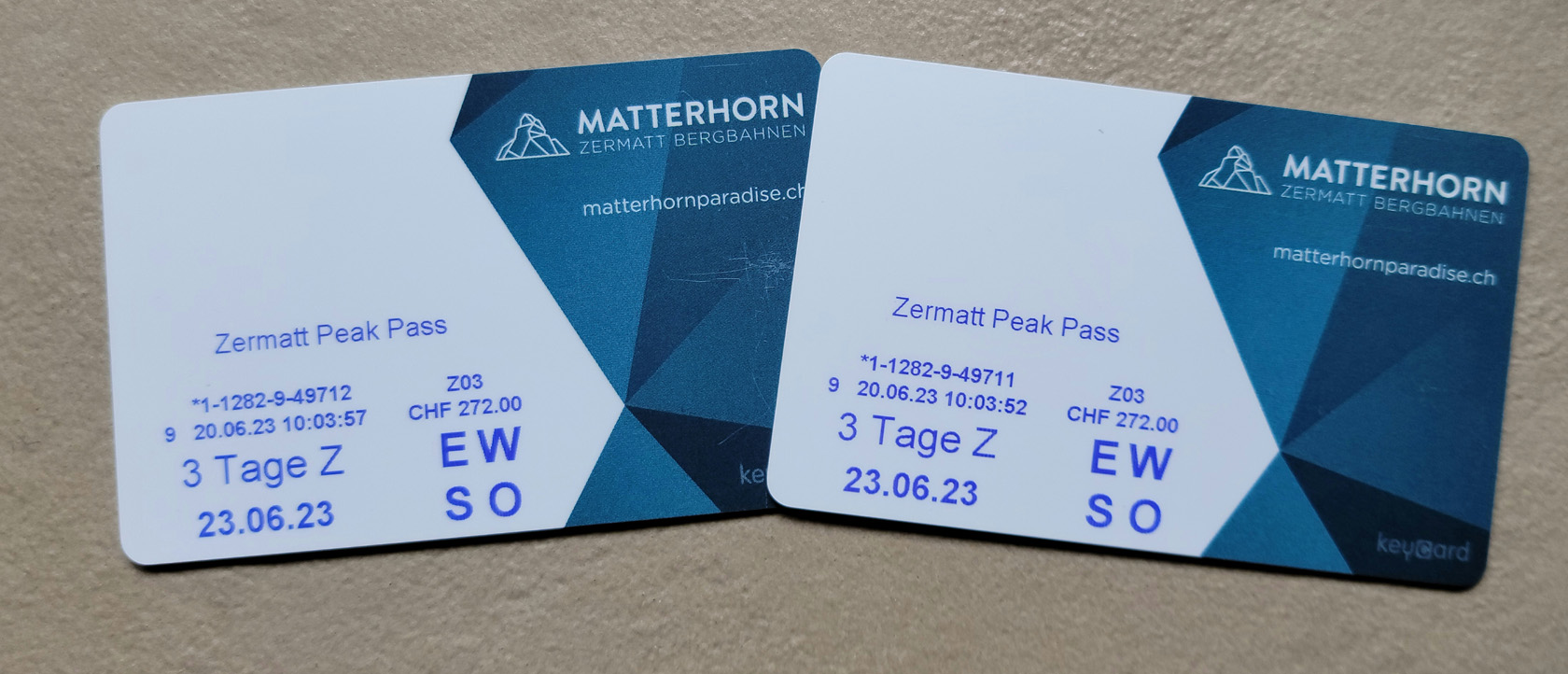
To get anywhere, aside from the town, will require time, energy and a lot of walking. Or, you can purchase tickets to get up the mountains. These can be purchased separately, multi-day pass or the flexi-pass. We found the multi-day pass to be perfect for our needs, since we had no intention of skipping any days (they get a small premium for the flexi-pass, not sure why). The Peak Pass that we purchased, allowed us to travel to all three experiences, the Rothorn (Sunnegga-Blauherd), Gornergrot and the Matterhorn Glacier Experience.
The Peak Pass – Tickets For Two – Zermatt, Switzerland
Sunnegga
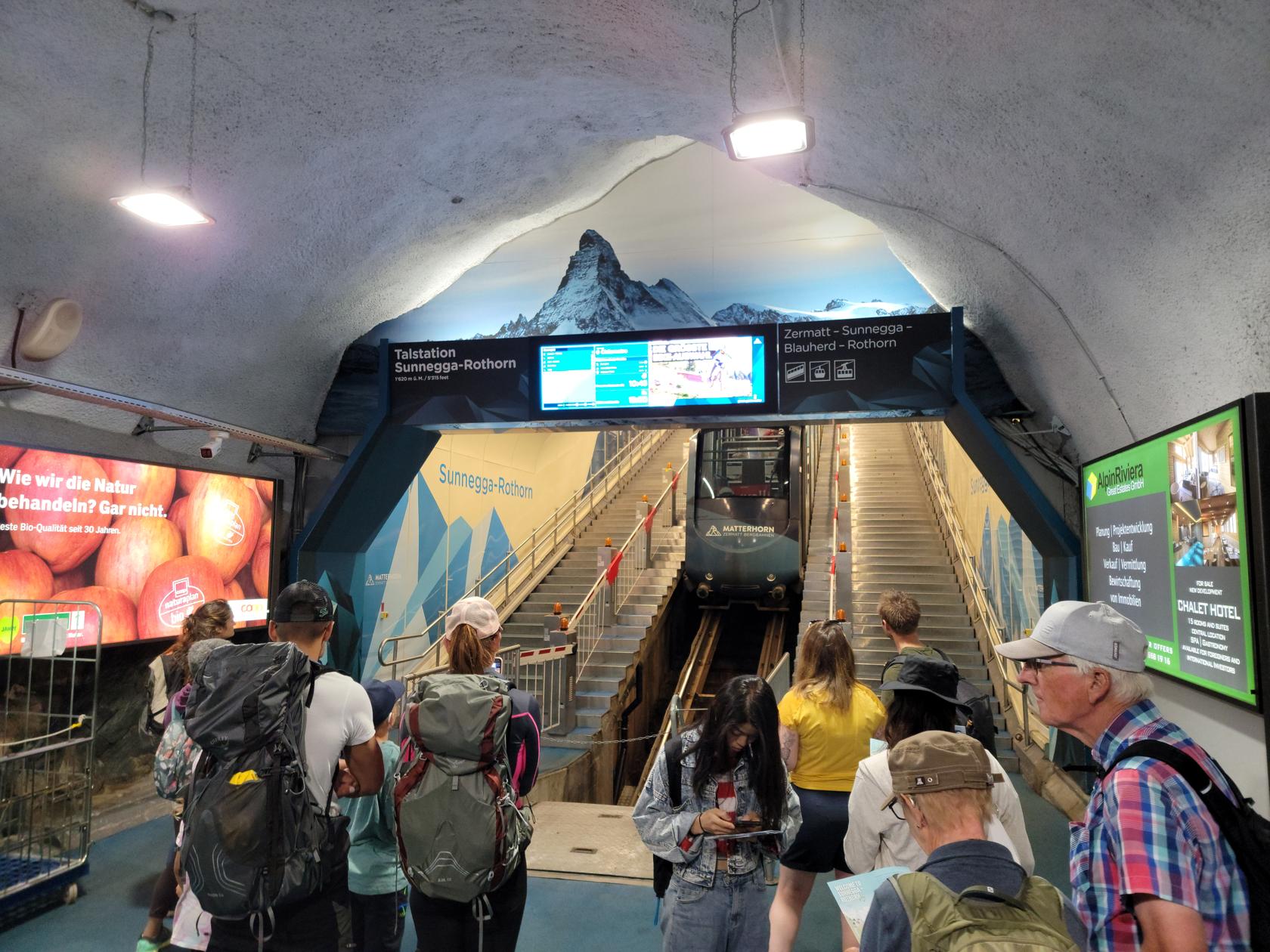
To get to Sunnegga and Blauherd you can either employ one of the hiking trails or take the cable car up to Sunnegga. From there you can start your hike or take a gondola ride to Blauherd, which gets you closer to the Stellisee, if that is your destination. From there however, you will have to hike.
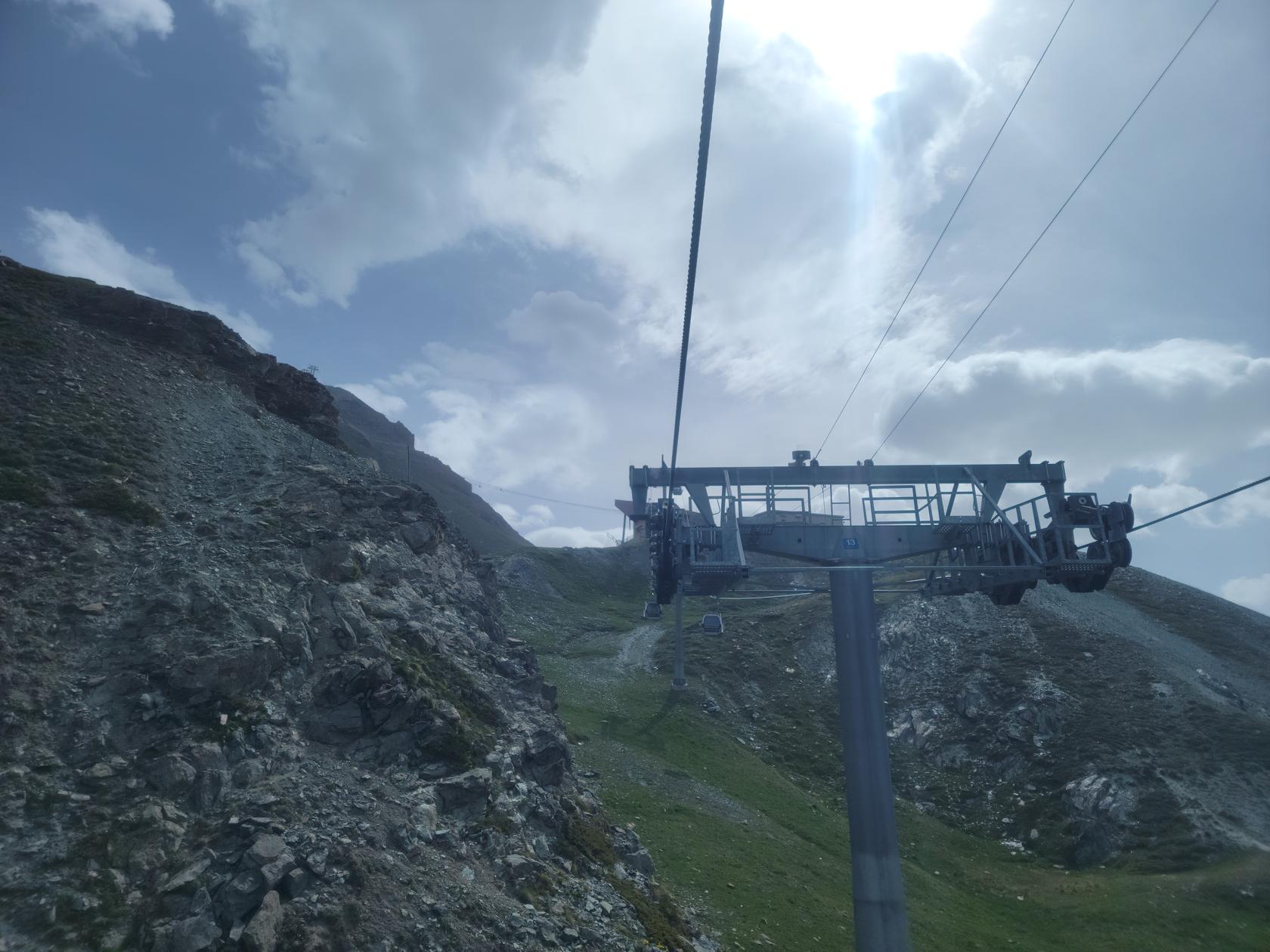
The gondola ride goes up and down over some very treacherous terrain. So we decided we would take the gondola ride up and hike back down to Sunnegga.
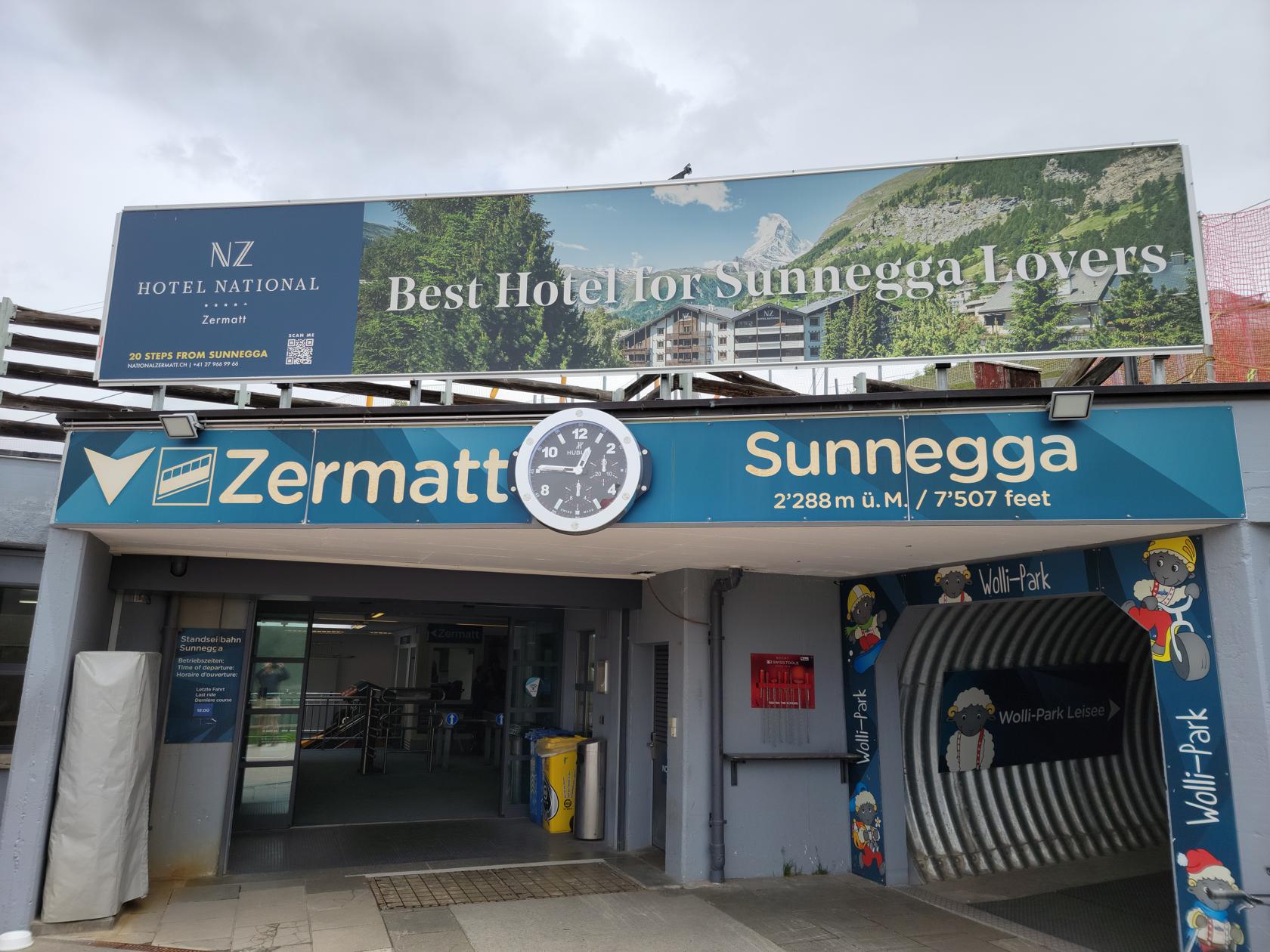
Sunnegga station – Zermatt, Switzerland
Blauherd – Stellisee
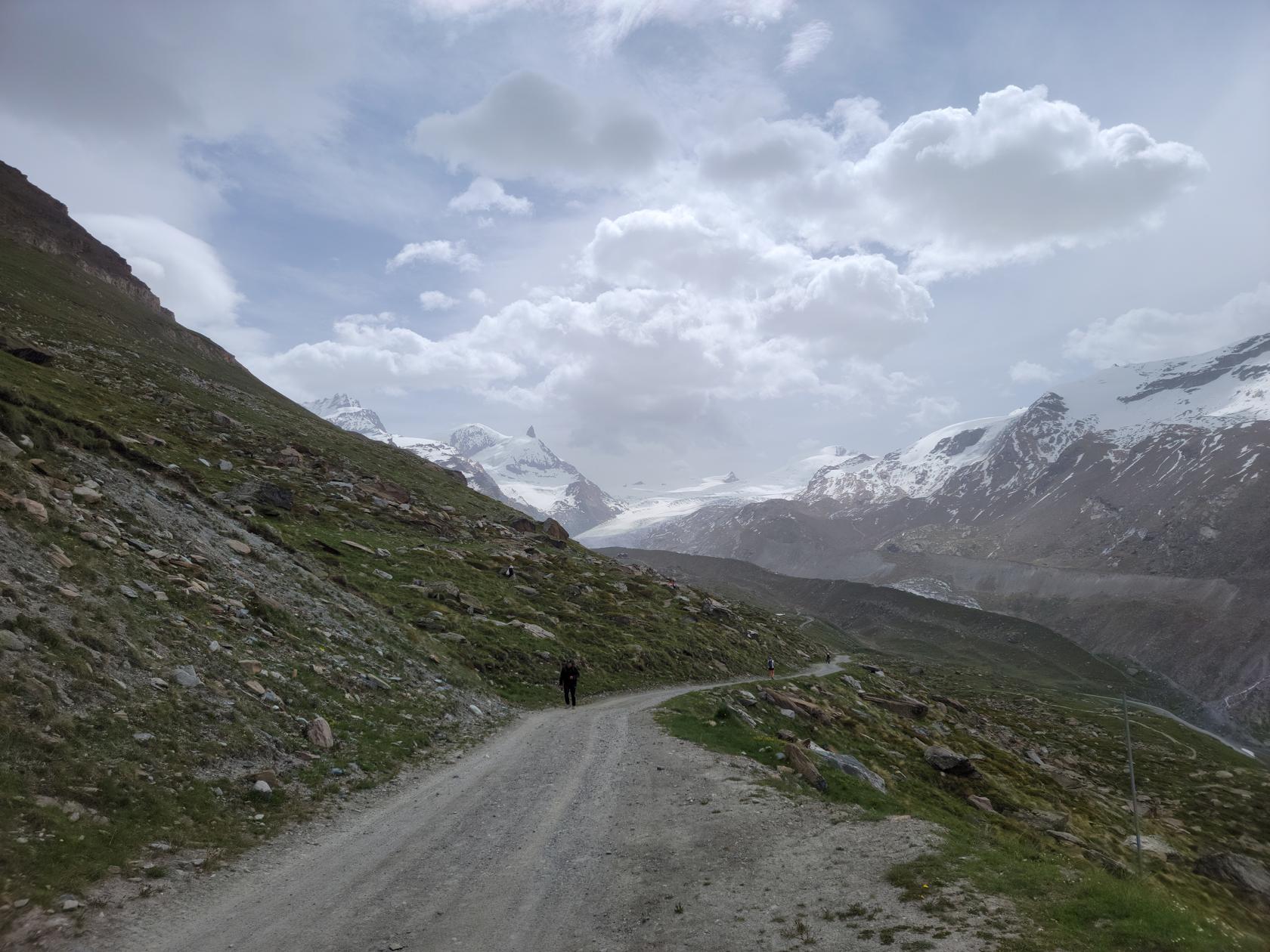
The Stellisee is a good fifteen minute hike from the Blauherd gondola terminal over rather even, if not slightly downward sloping terrain. It is rather easy and should afford most people no difficulties.
Road and hiking trail to Stellisee – Zermatt, Switzerland
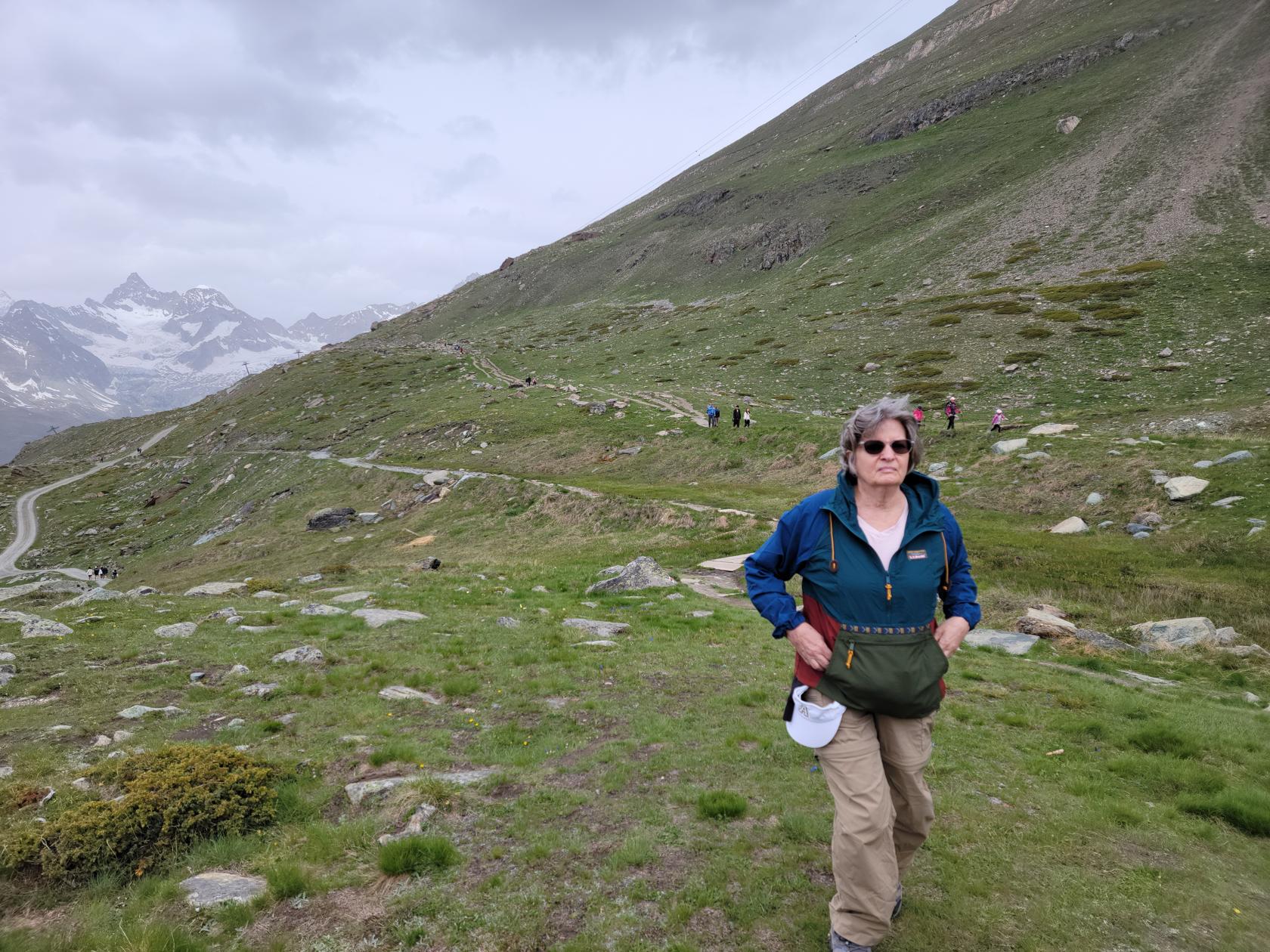
Patti ready to hike – Blauherd – Zermatt, Switzerland
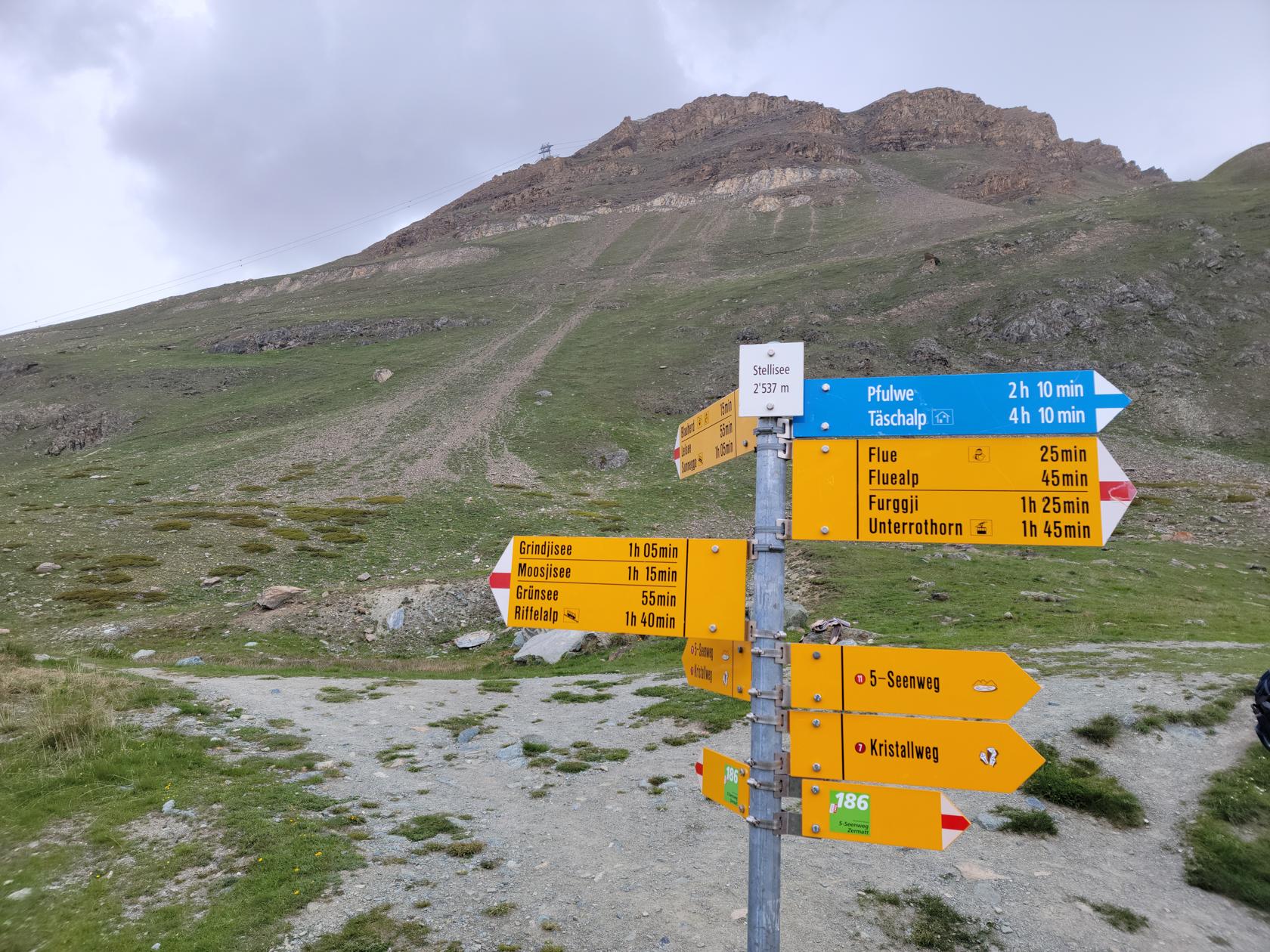
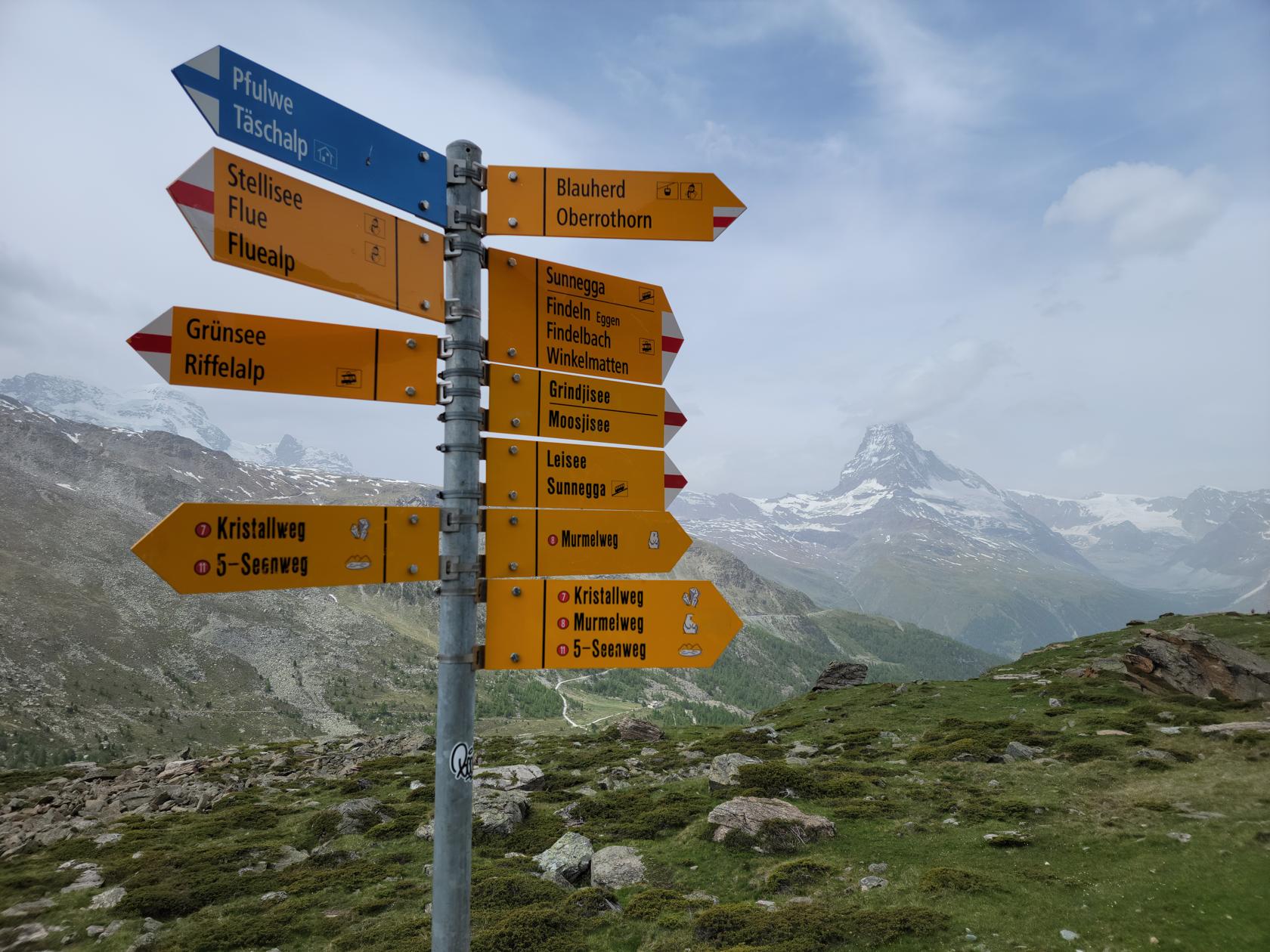
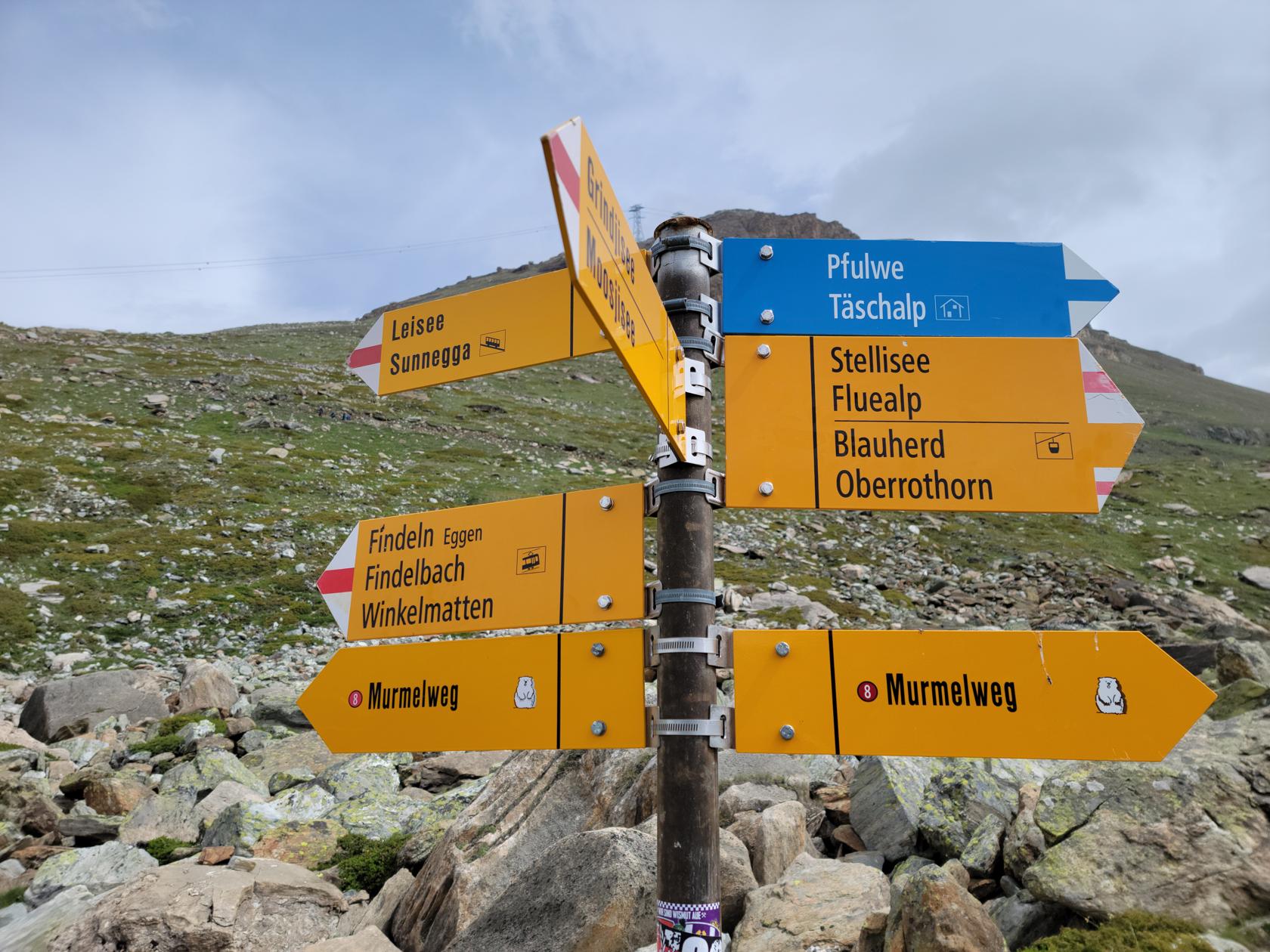
Stellisee hiking sign – Zermatt, Switzerland
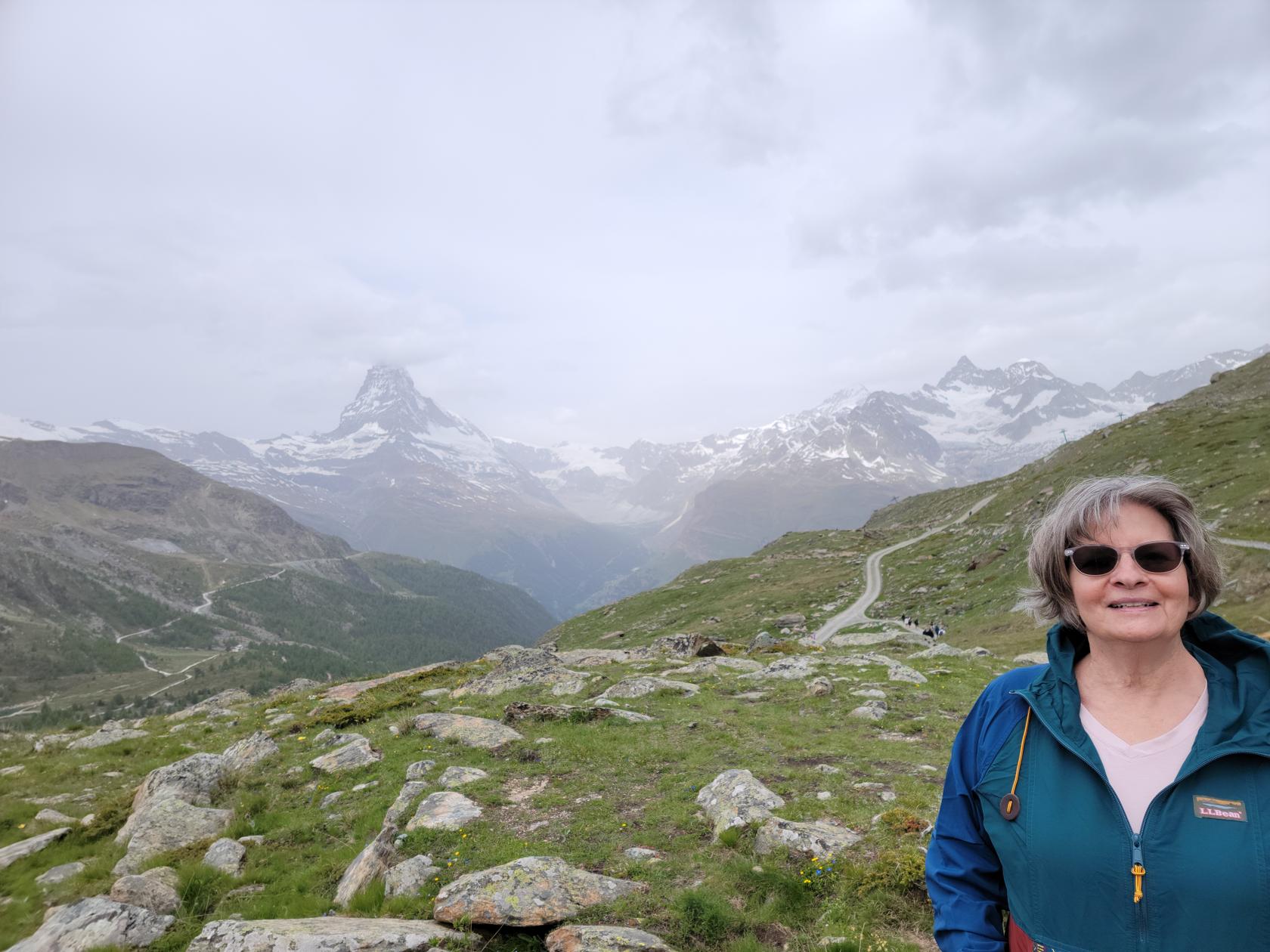
Patti with Matterhorn backdrop – Zermatt, Switzerland
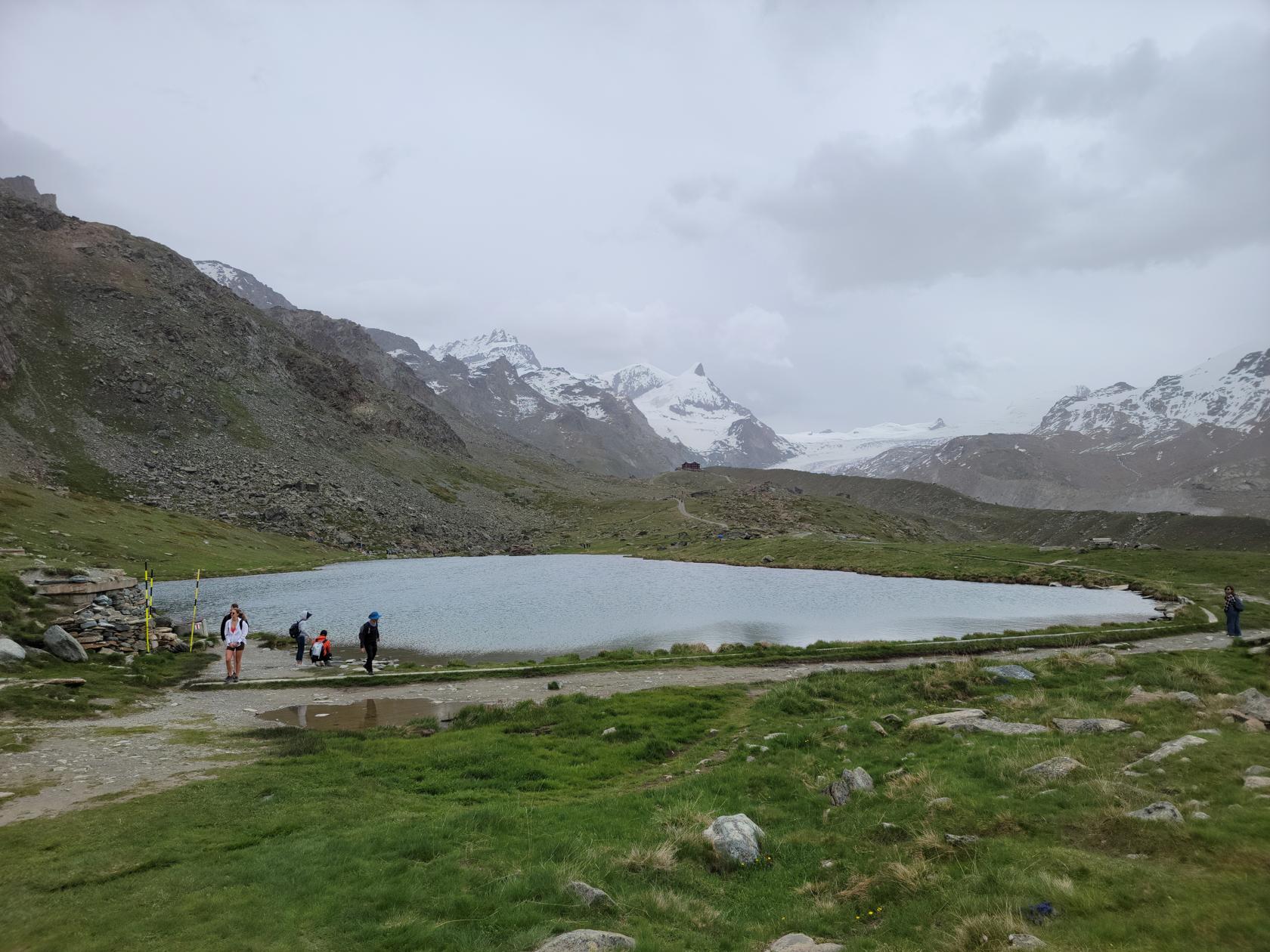
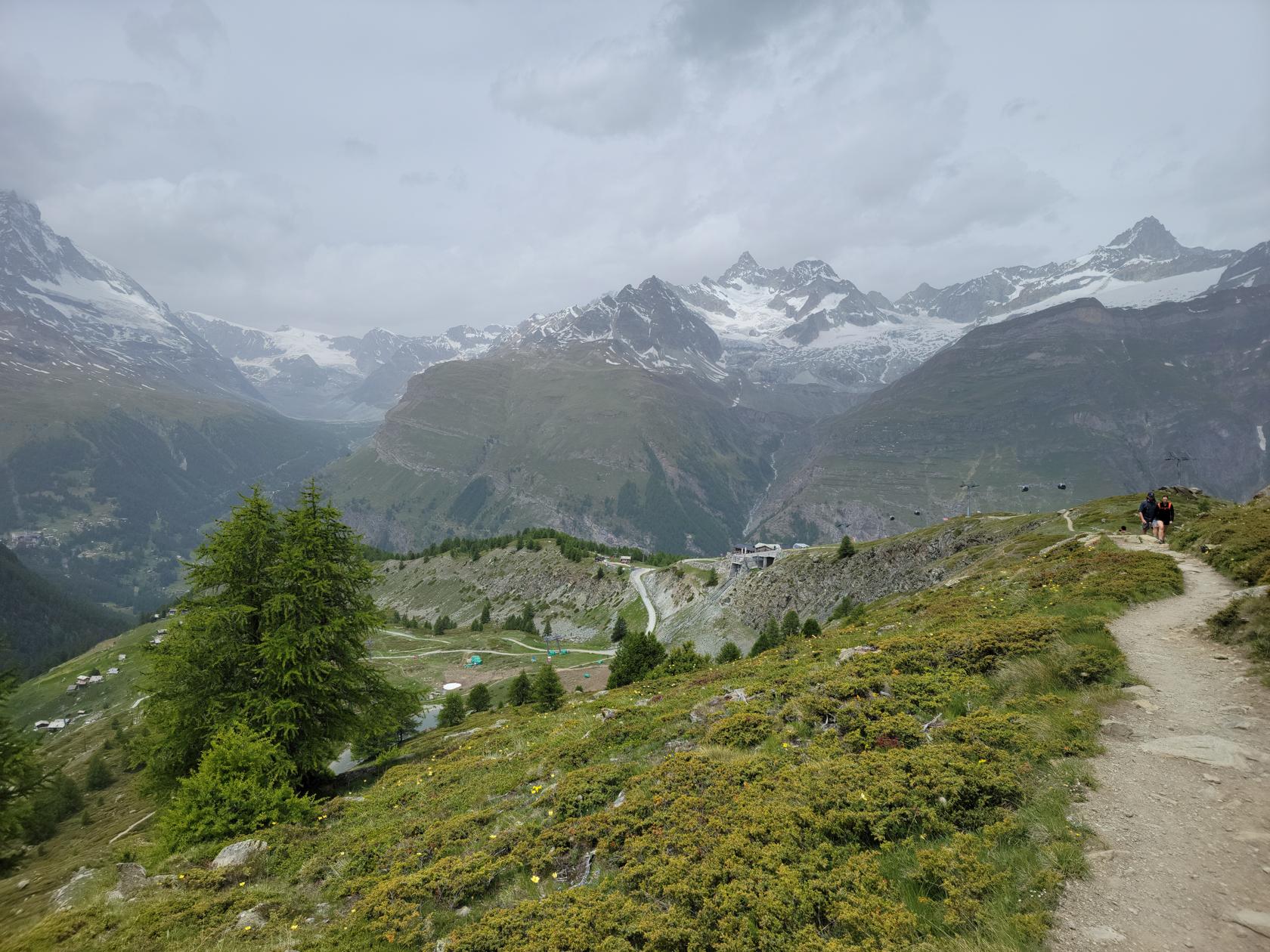
The Stellisee is a rather barren, pristine alpine lake nestled on the side of the Unterrothorn. Many people will usually hike up to the refuge on the other side, but since the conditions were not ideal, we decided to just take a photograph of it and start our hike back down.
Stellisee – Zermatt, Switzerland
Murmelweg
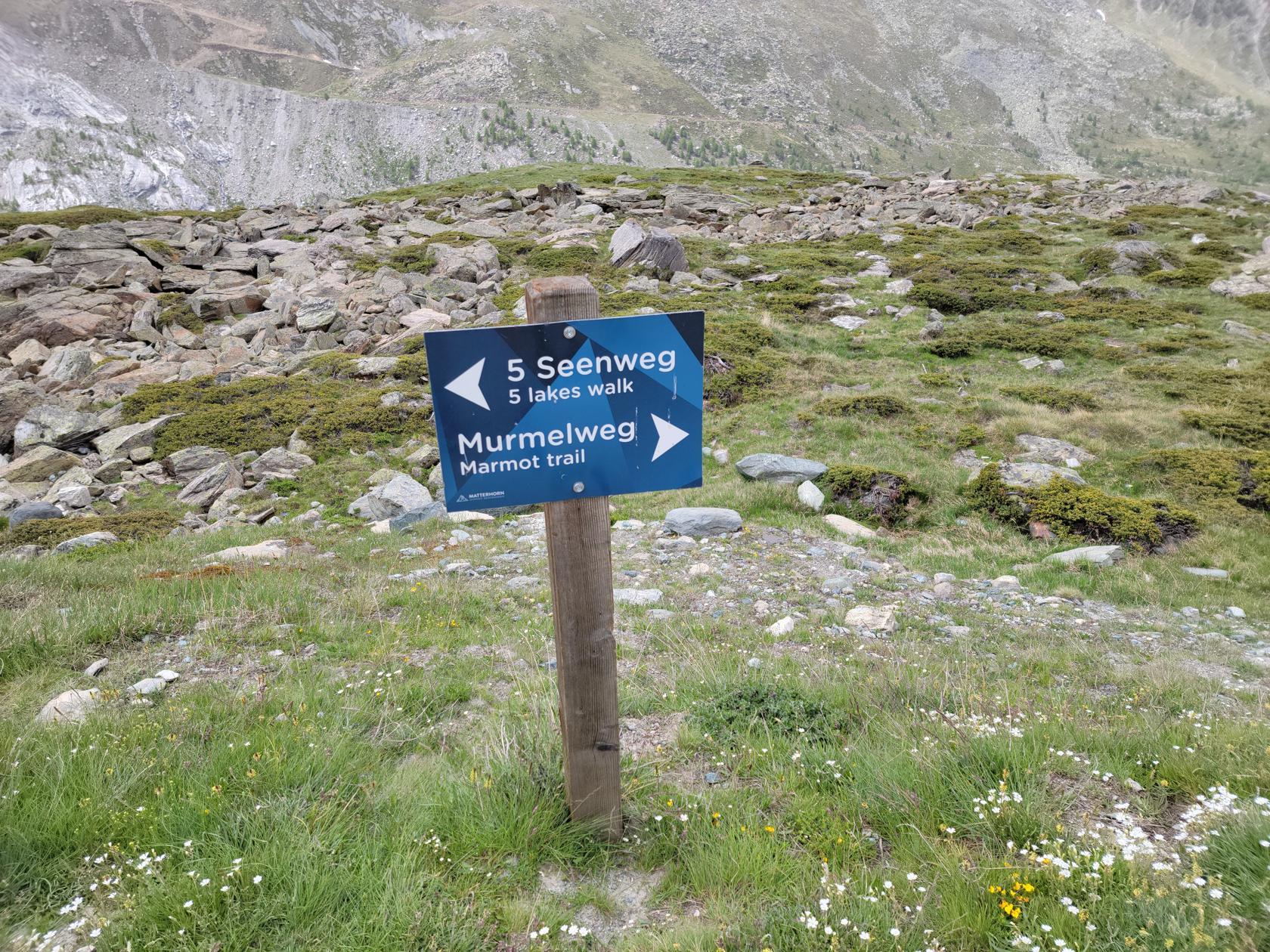
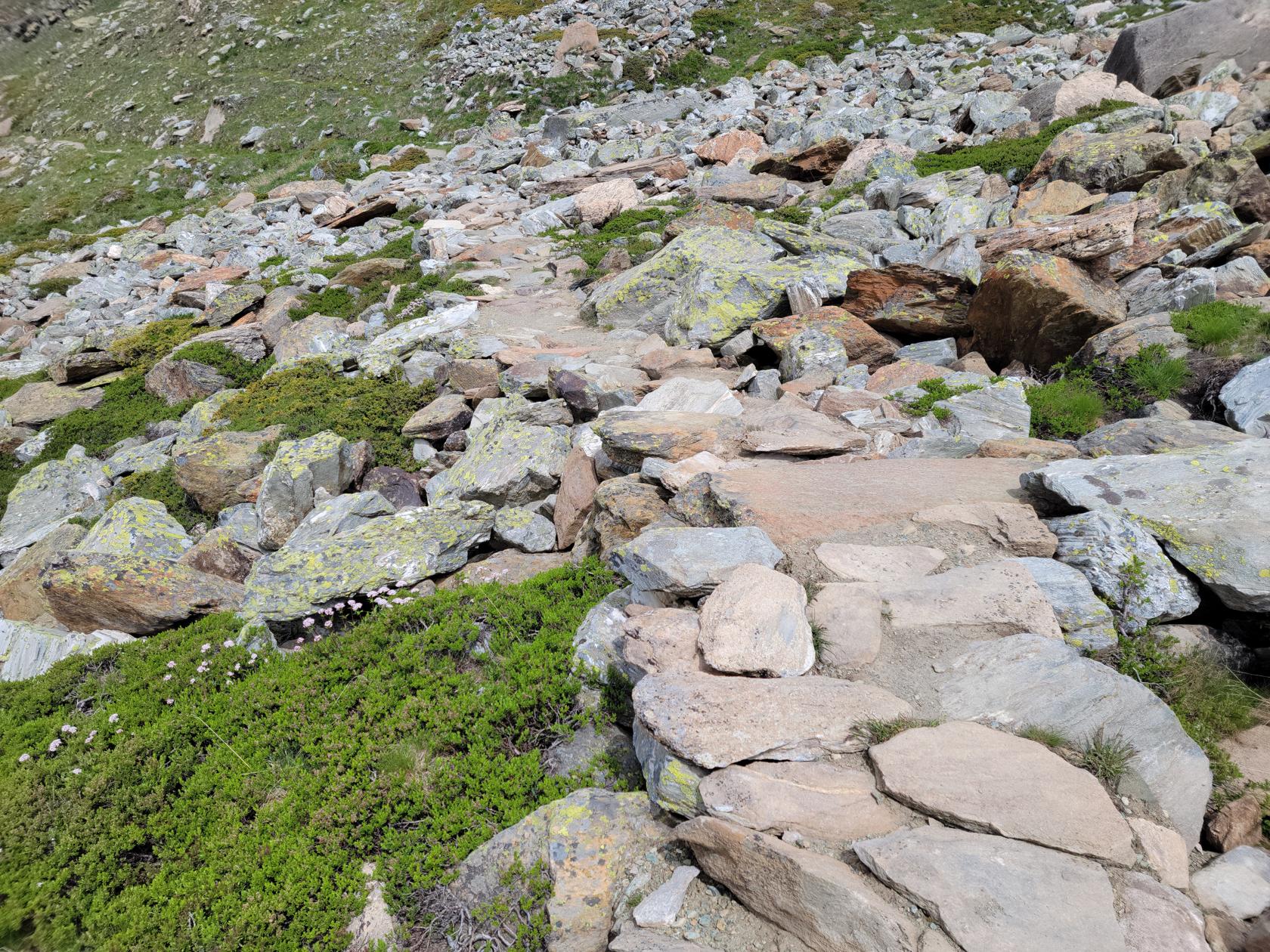
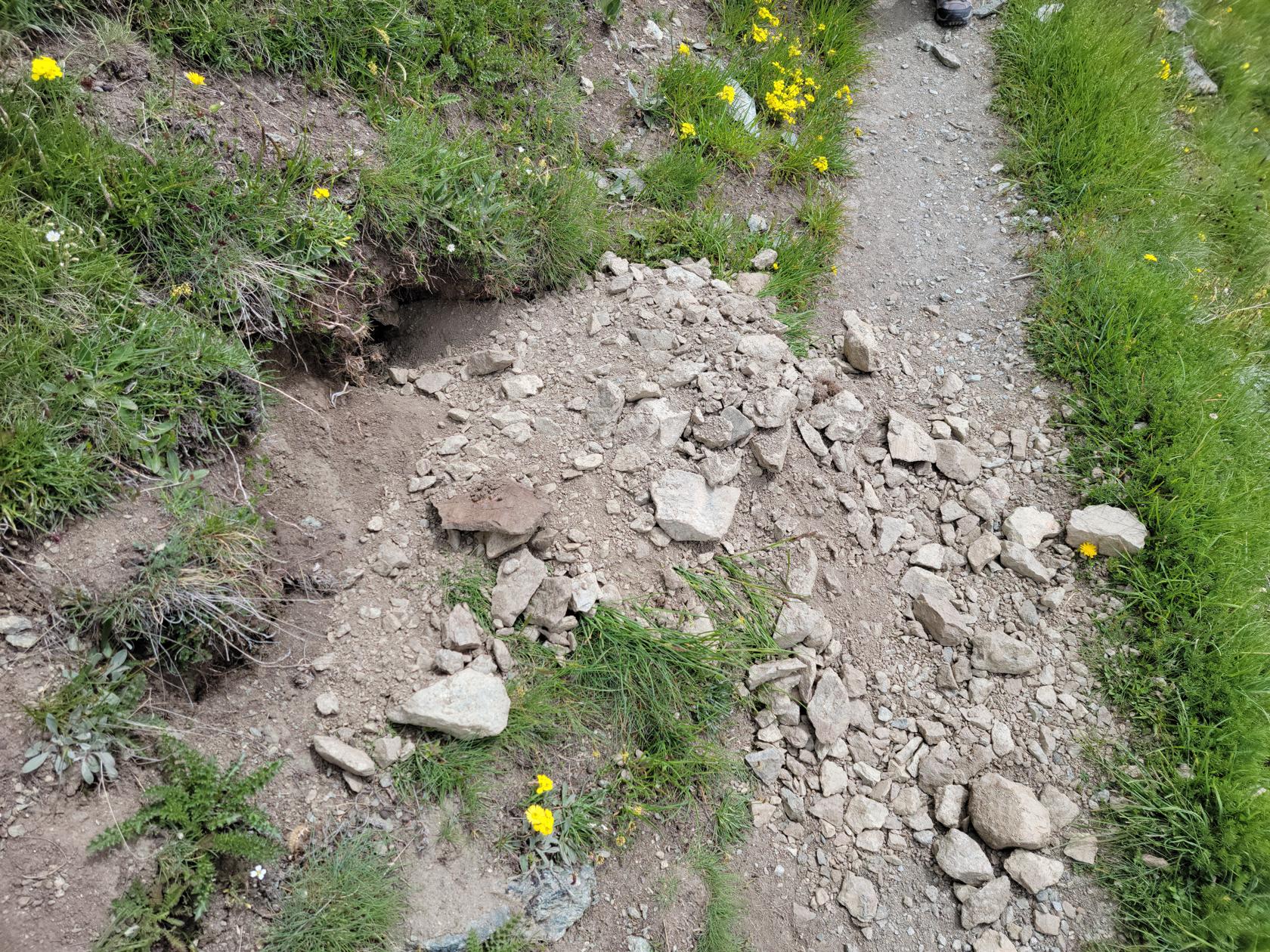
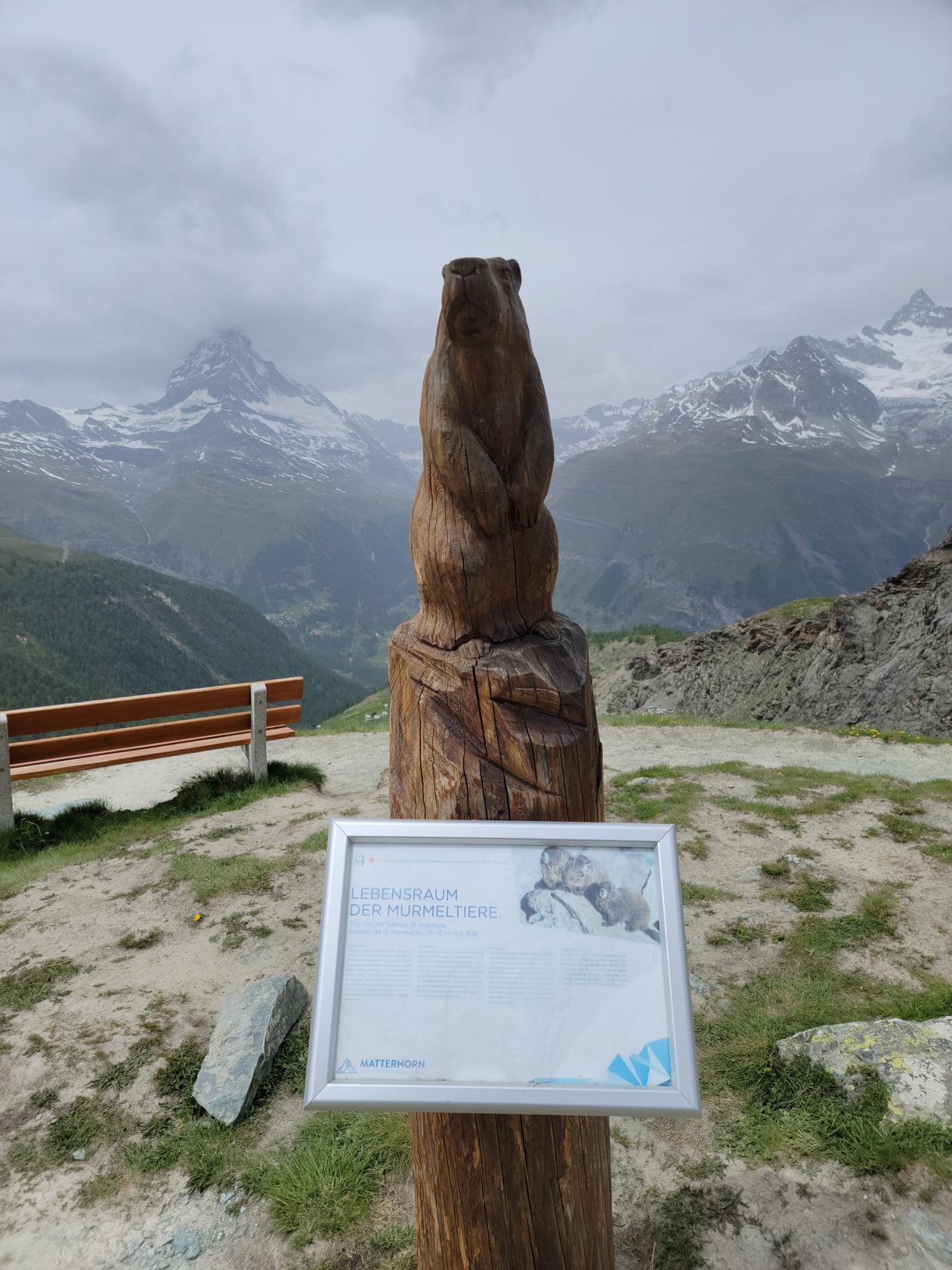
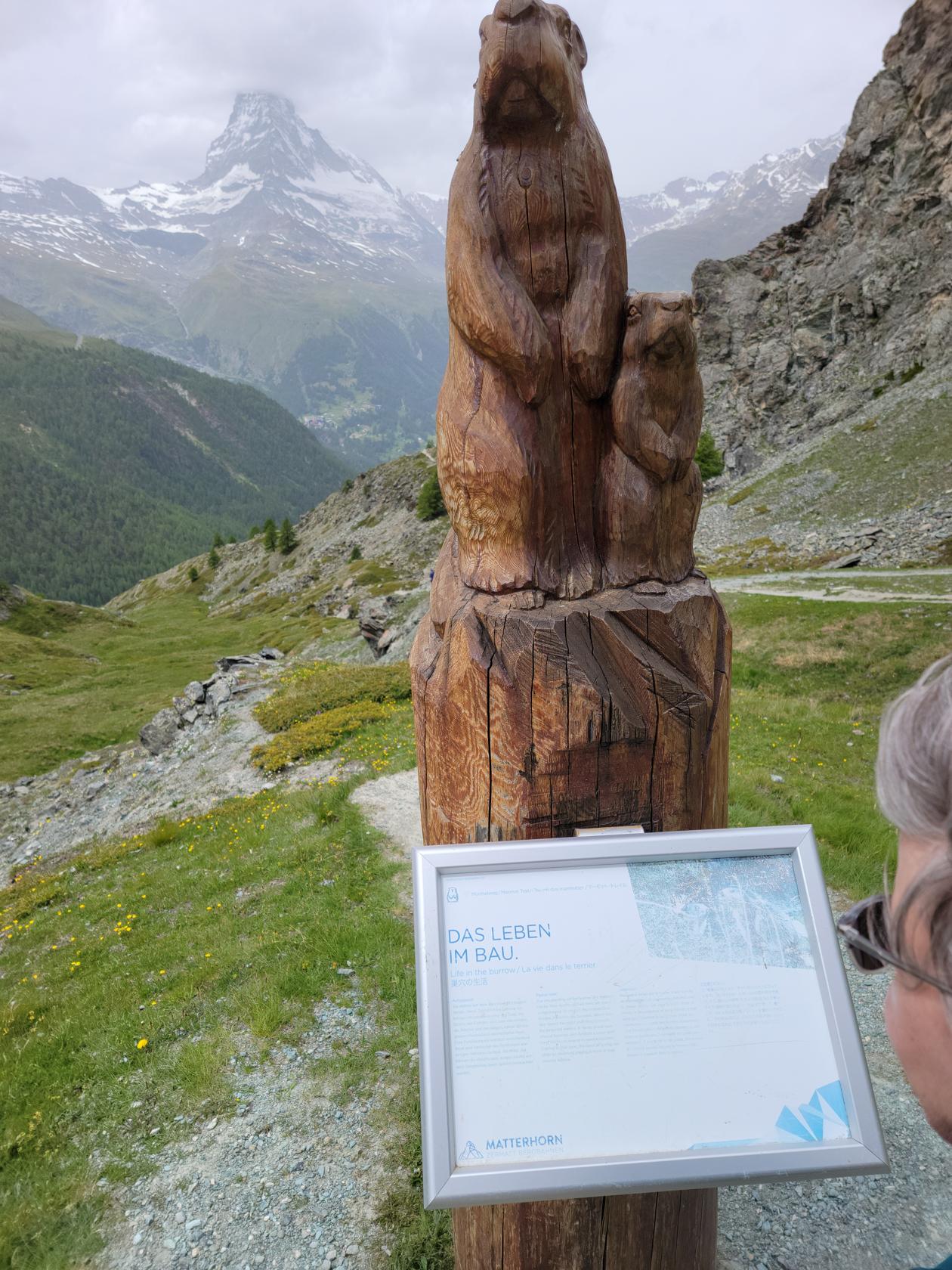
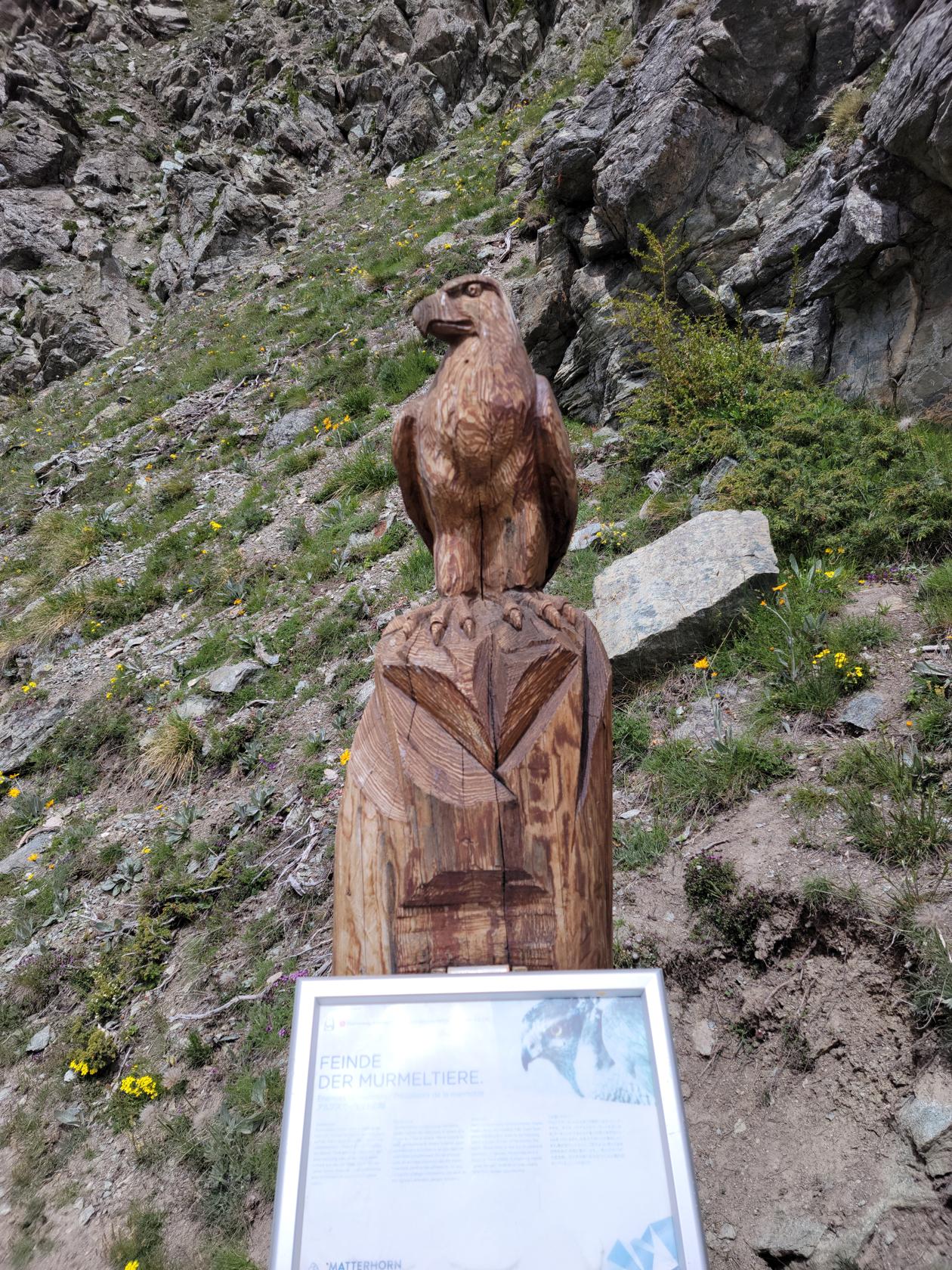
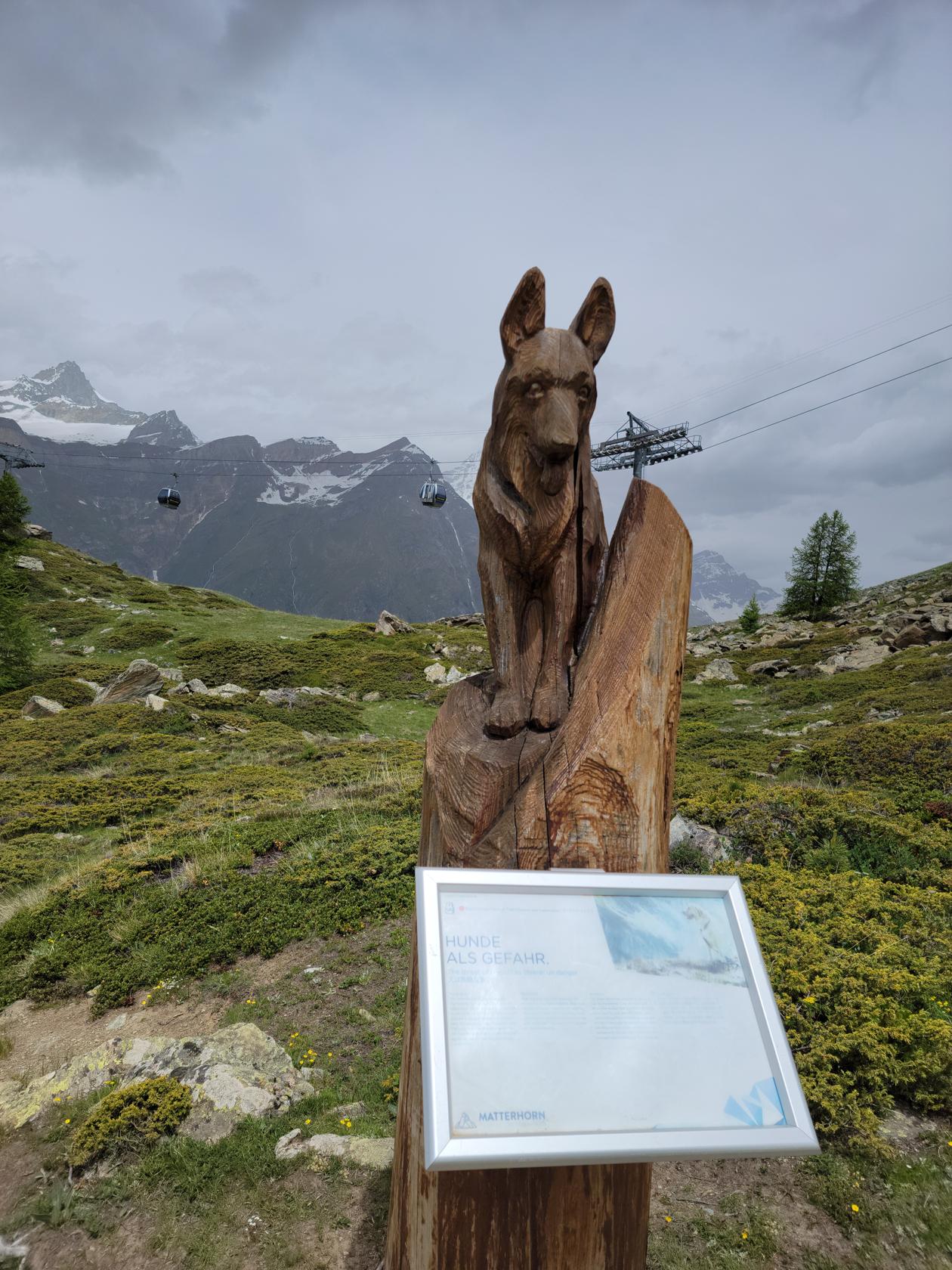
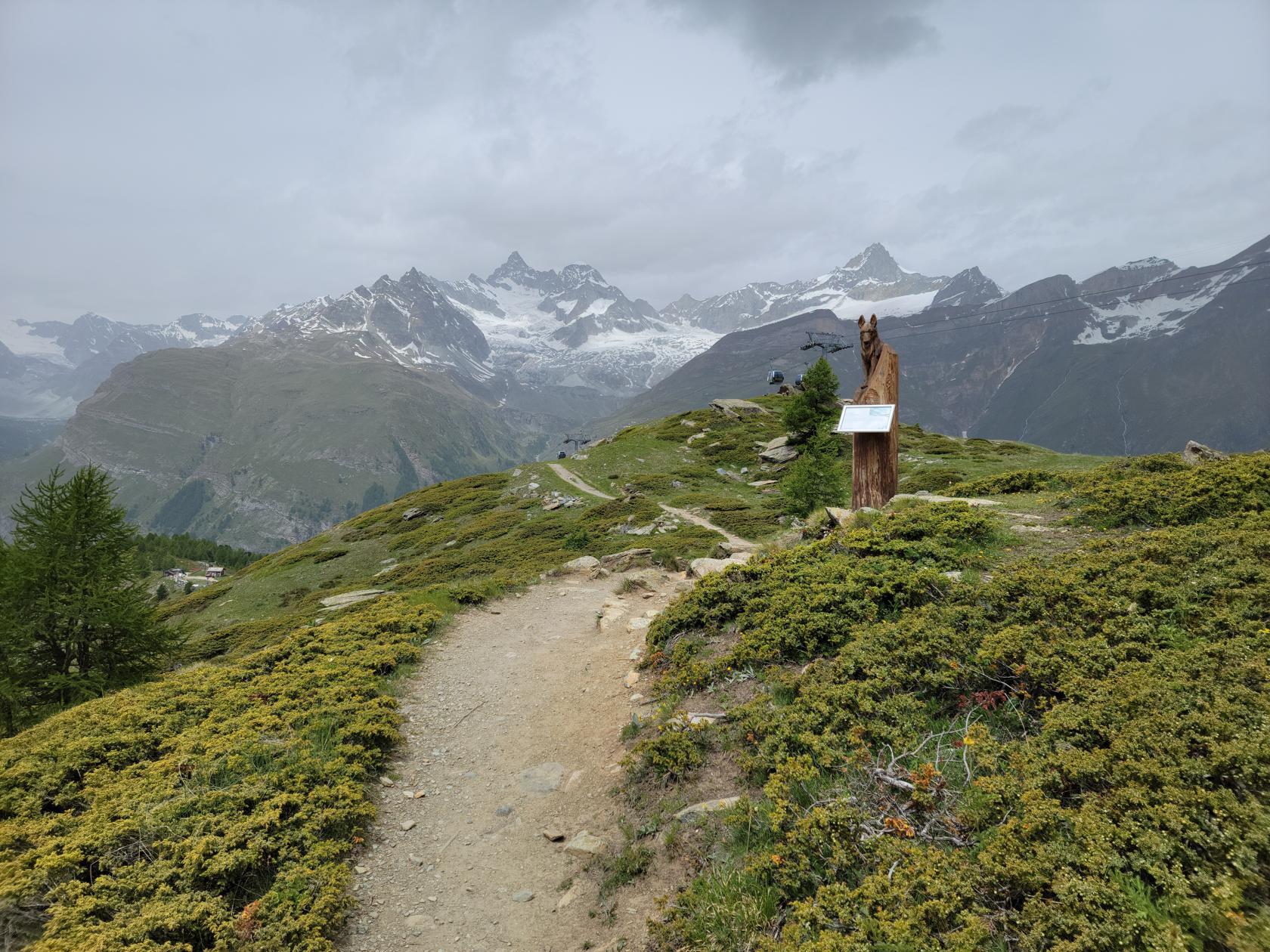
Named for the eponymous animal that has made the territory it goes through its home, the Murmelweg is a casual, if not easy hiking trail back to Sunnegga. There are a few technical areas, but nothing that most people will find impossible to pass. I would wear hiking boots though, the trail goes over rocky terrain and a good boot will help stabilize your ankles and aid your hike.
Hiking sign back to Sunnegga – Blauherd – Zermatt, Switzerland
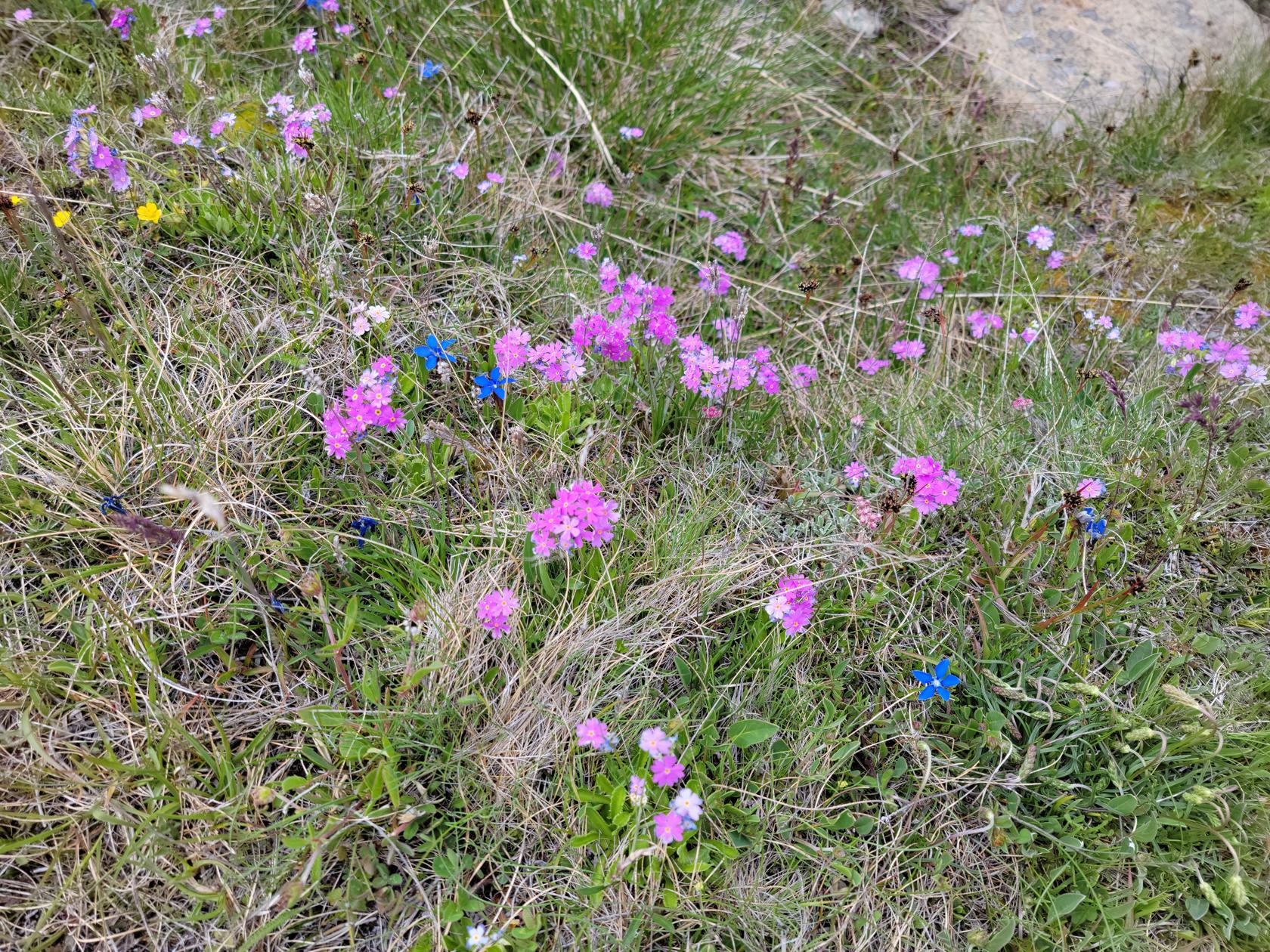
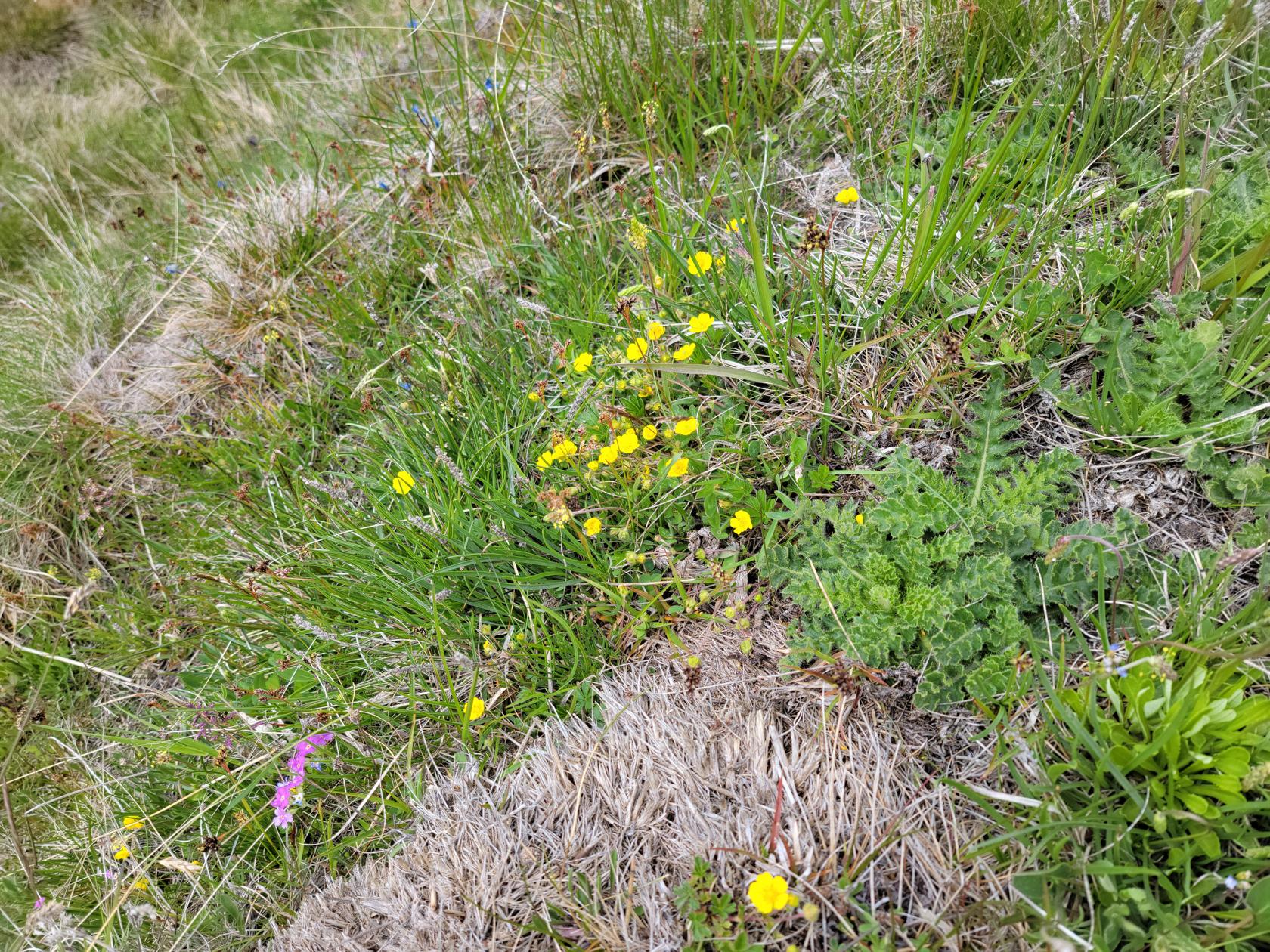
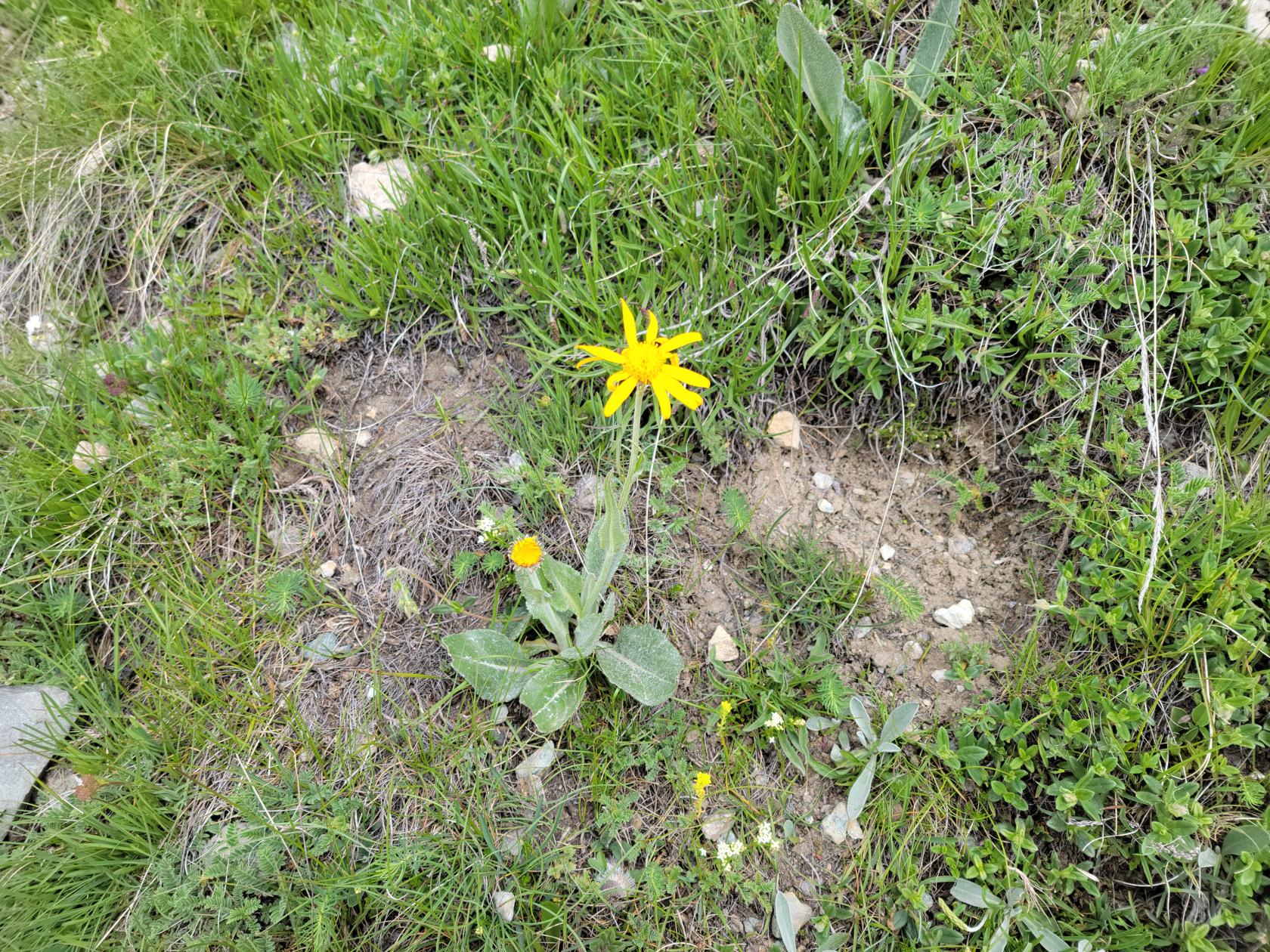
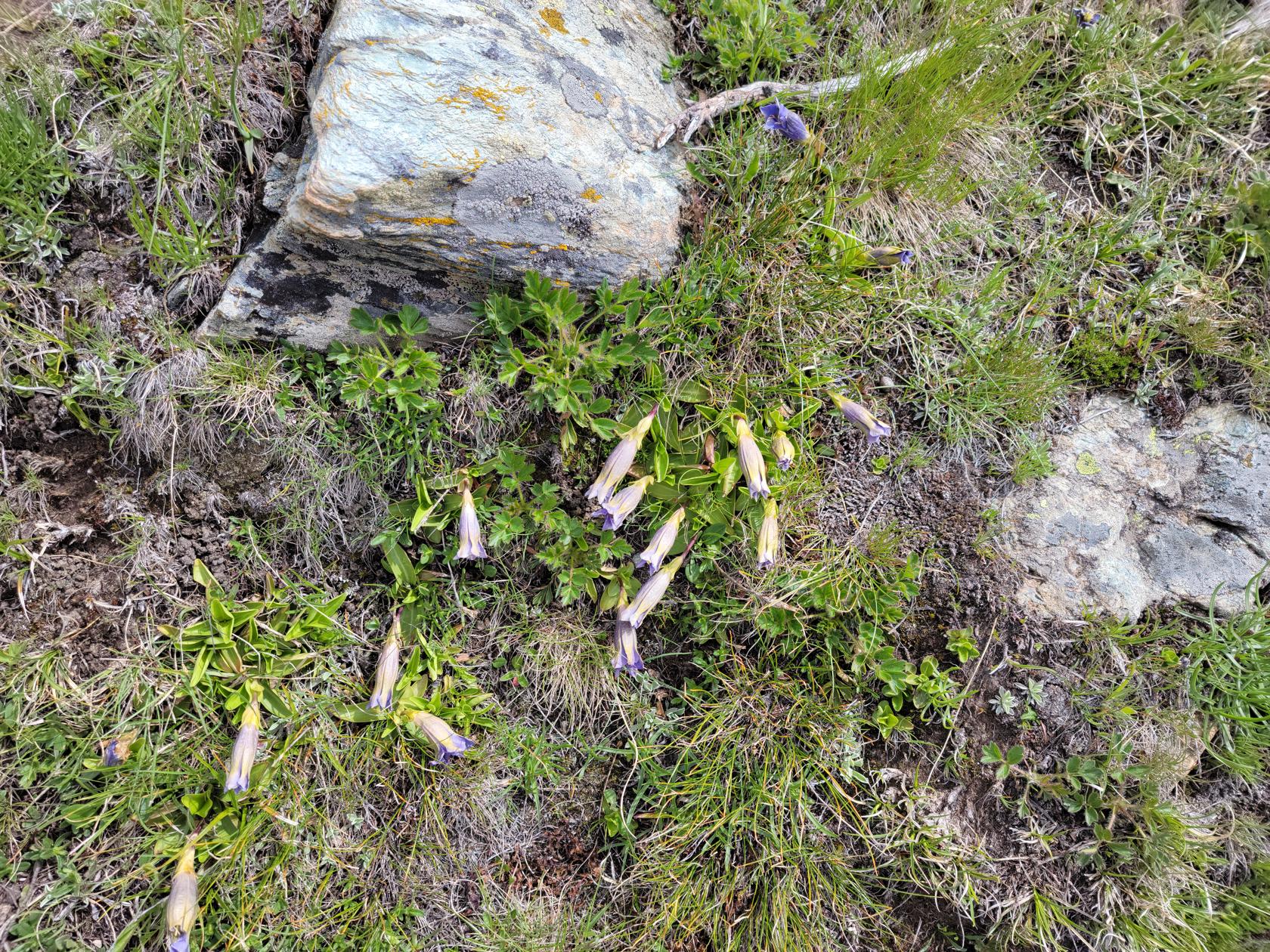
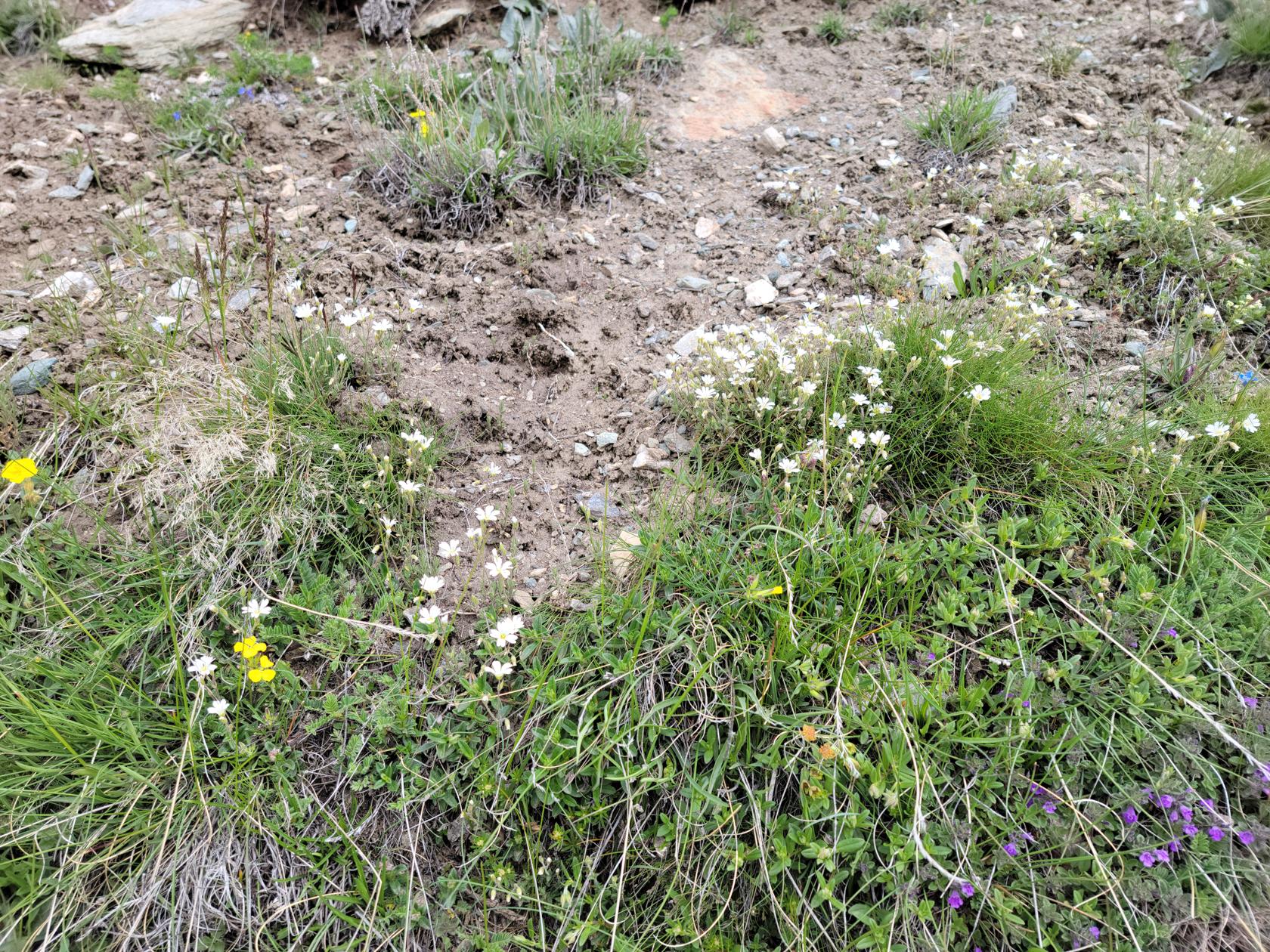
Alpine flowers – Blauherd – Zermatt, Switzerland
Alpine flowers – Blauherd – Zermatt, Switzerland
Alpine flowers – Blauherd – Zermatt, Switzerland
Alpine flowers – Blauherd – Zermatt, Switzerland
Alpine flowers – Blauherd – Zermatt, Switzerland
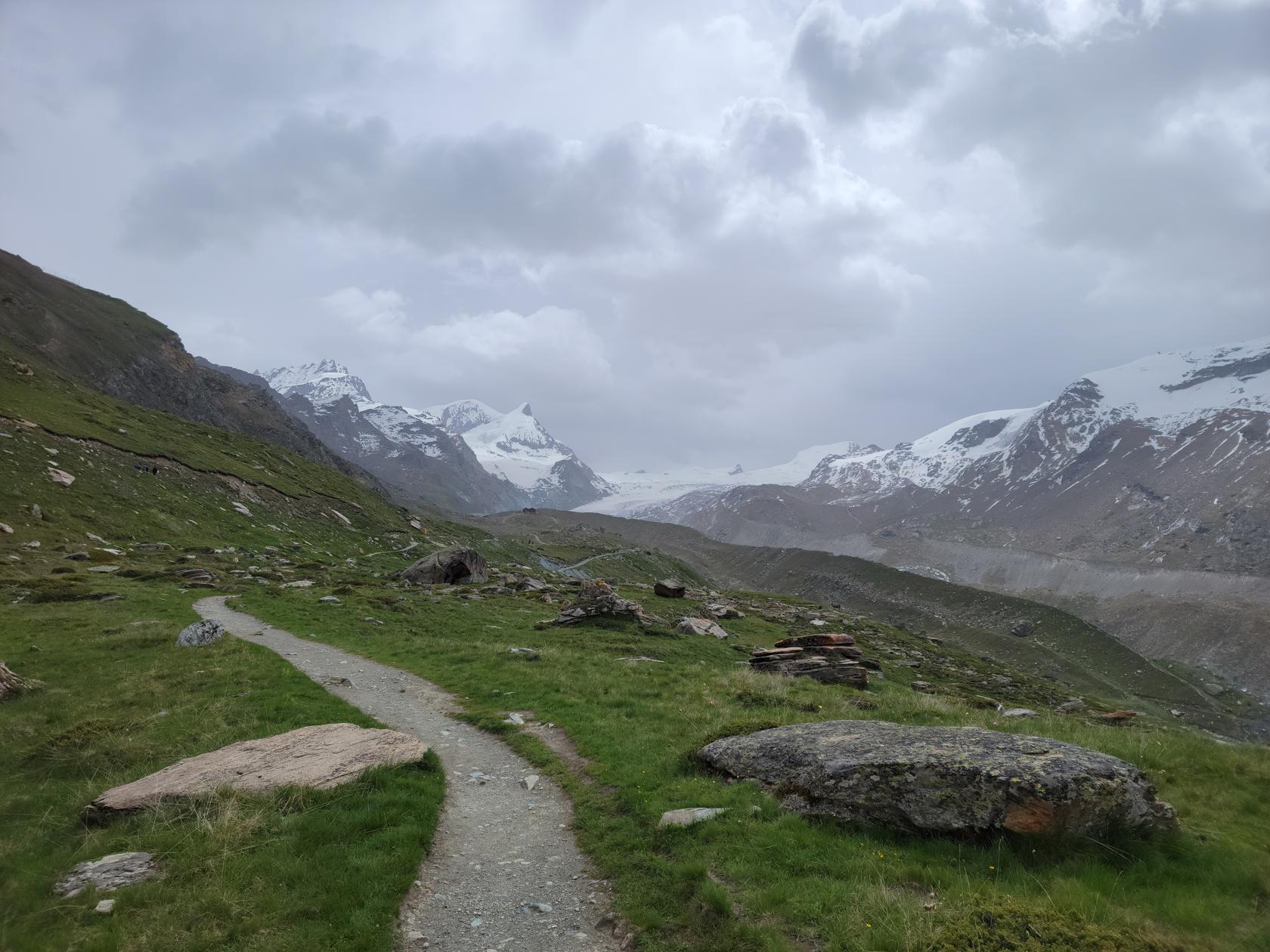
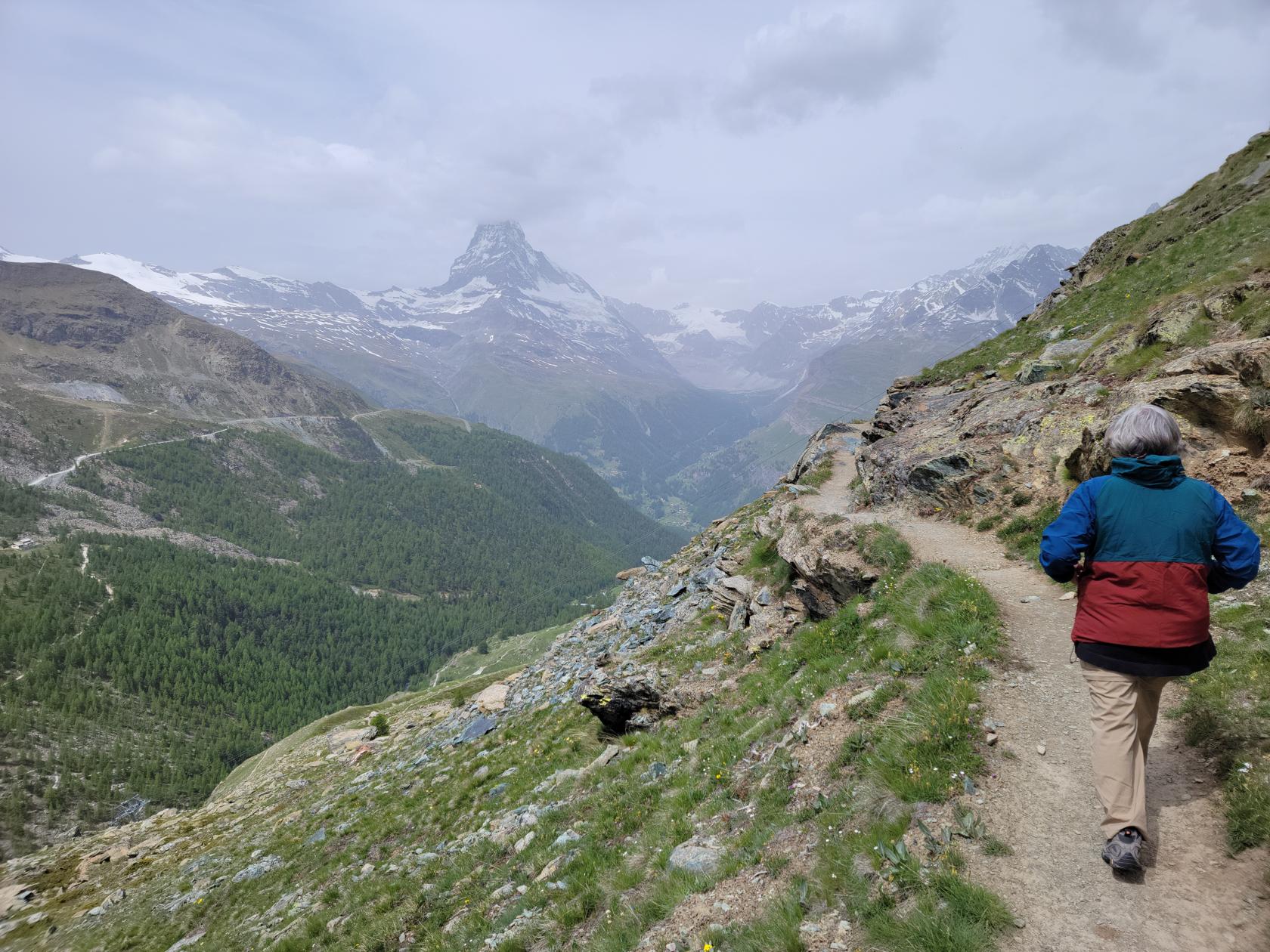
Taking the Murmelweg to Sunnegga – Zermatt, Switzerland
Trail behind looking towards Blauherd – Zermatt, Switzerland
The below video is a fairly good example of what to expect.
We chose this route over the five lakes trail, which you can actually see as you hike this trail, only because we heard that route was rather boring after about the first two lakes. However, if you have the time and motivation, I would commend it, since it has more elevation changes and a bit more challenging than this trail.
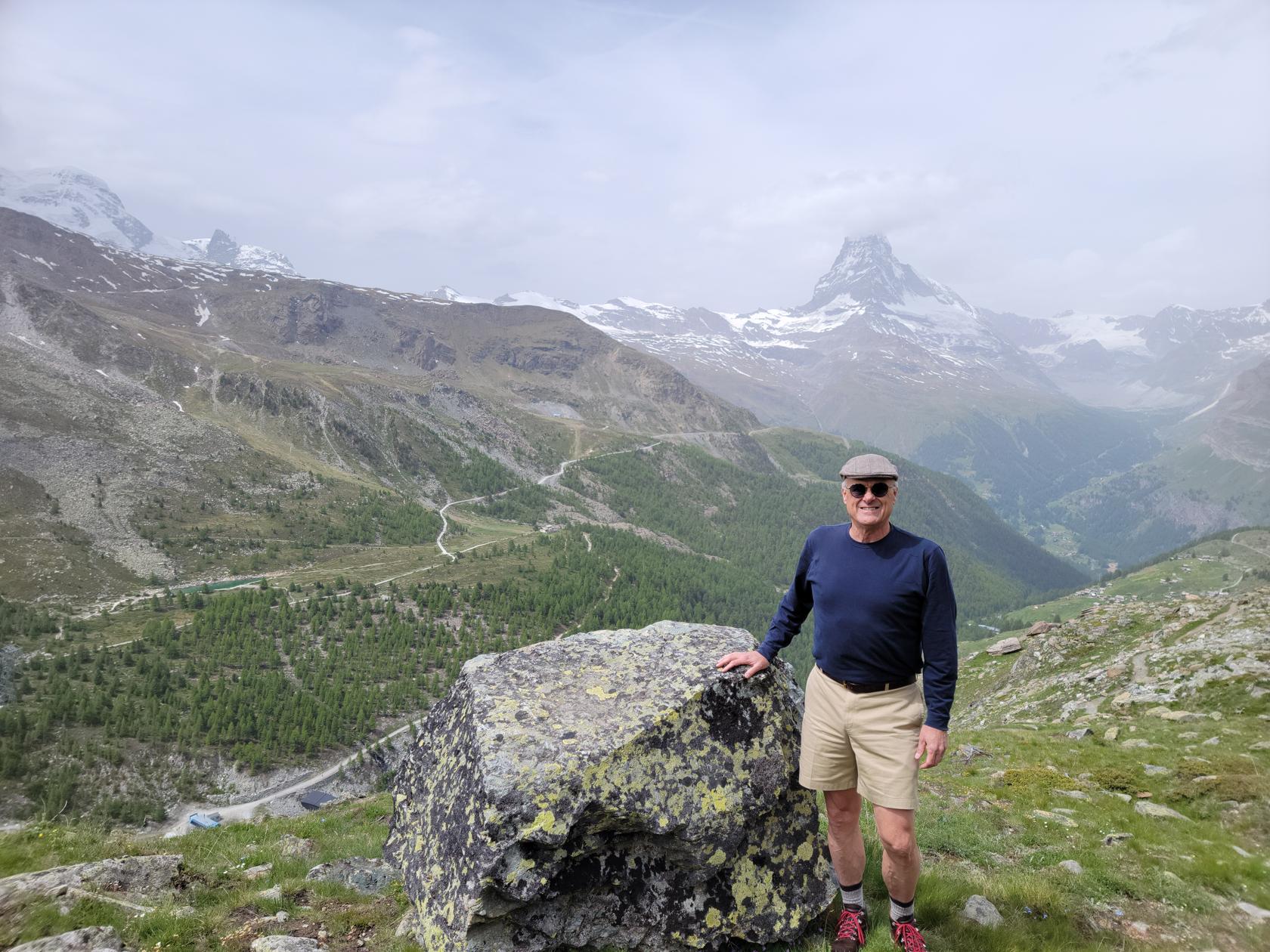
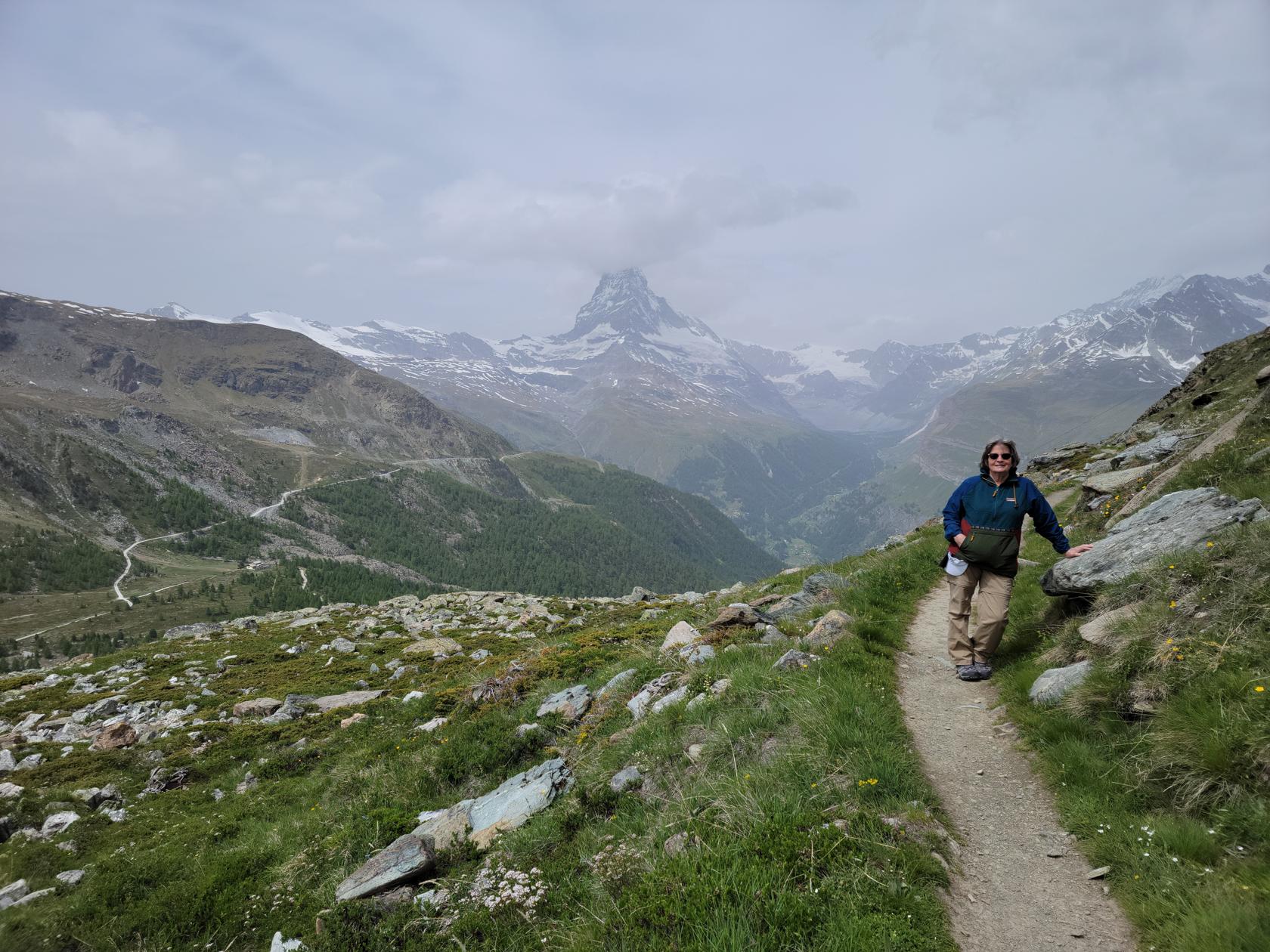
Erick and the Matterhorn – Zermatt, Switzerland
Murmelweg – Zermatt, Switzerland
Trail turns into rocks – Murmelweg – Zermatt, Switzerland
Patti on the Murmelweg – Zermatt, Switzerland
Patti leading the way – Murmelweg – Zermatt, Switzerland
A murmel hole – Murmelweg – Zermatt, Switzerland
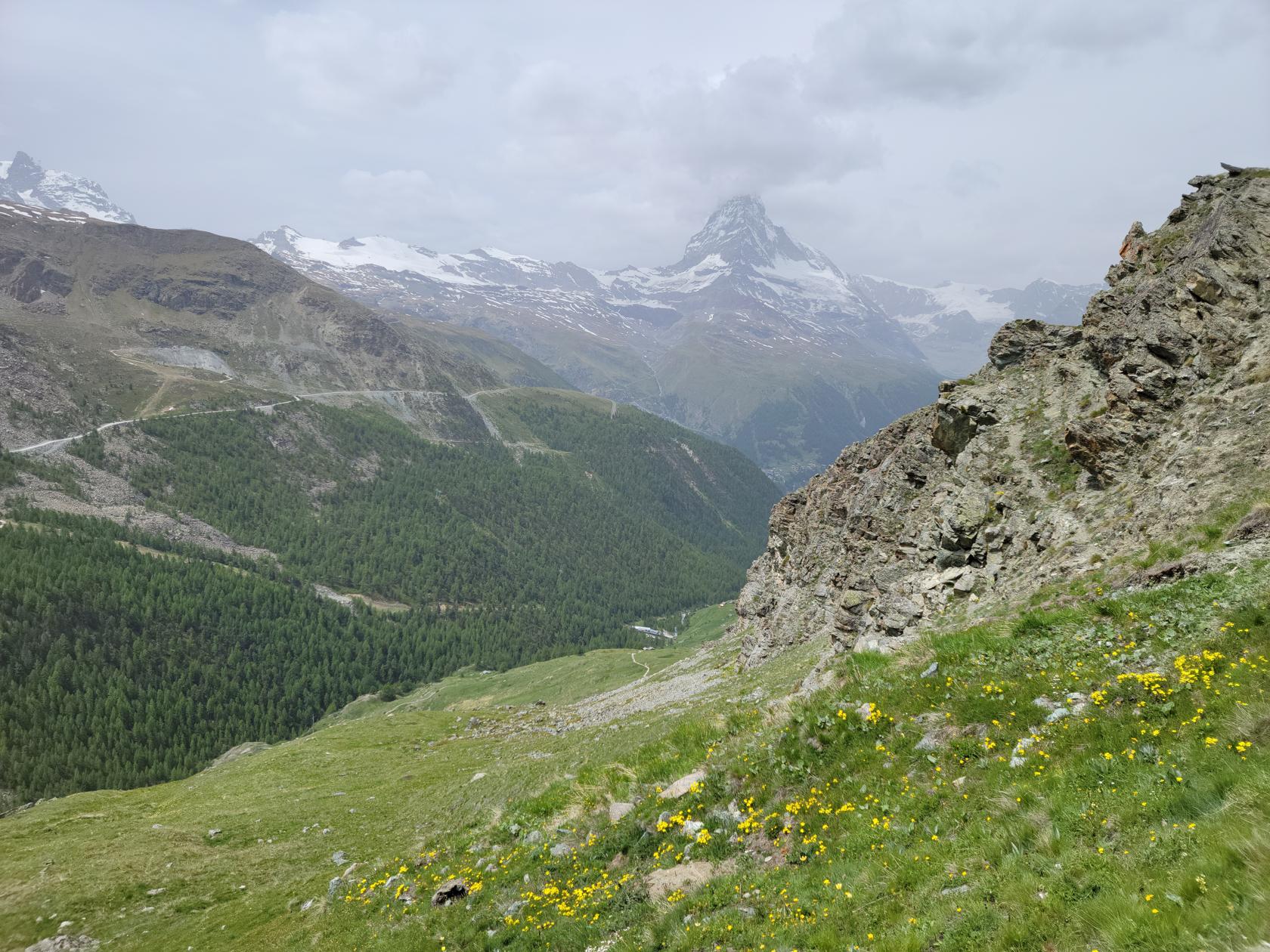
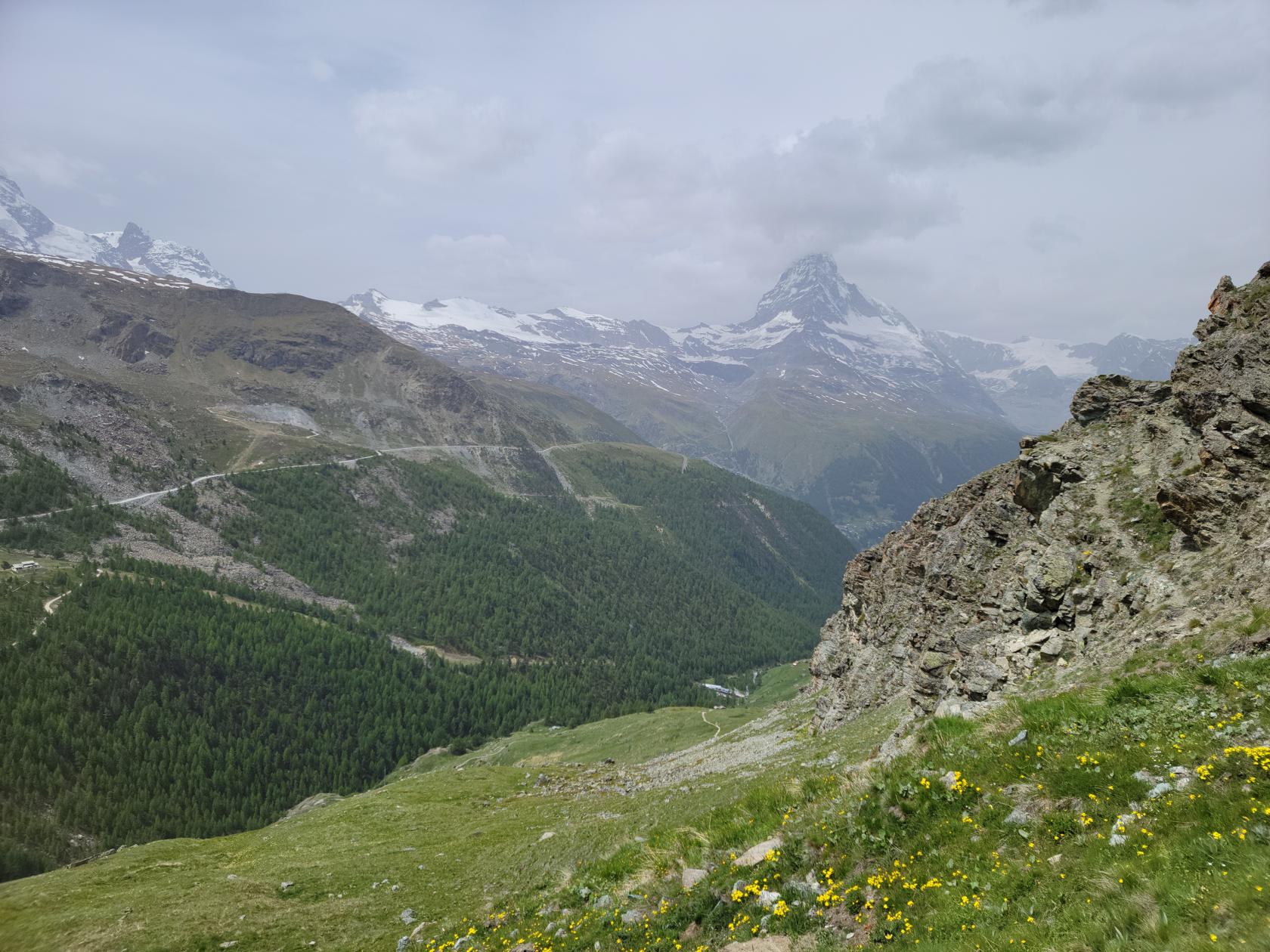
Alpine flowers and valley before Matterhorn – Zermatt, Switzerland
Alpine flowers and valley before Matterhorn – Zermatt, Switzerland
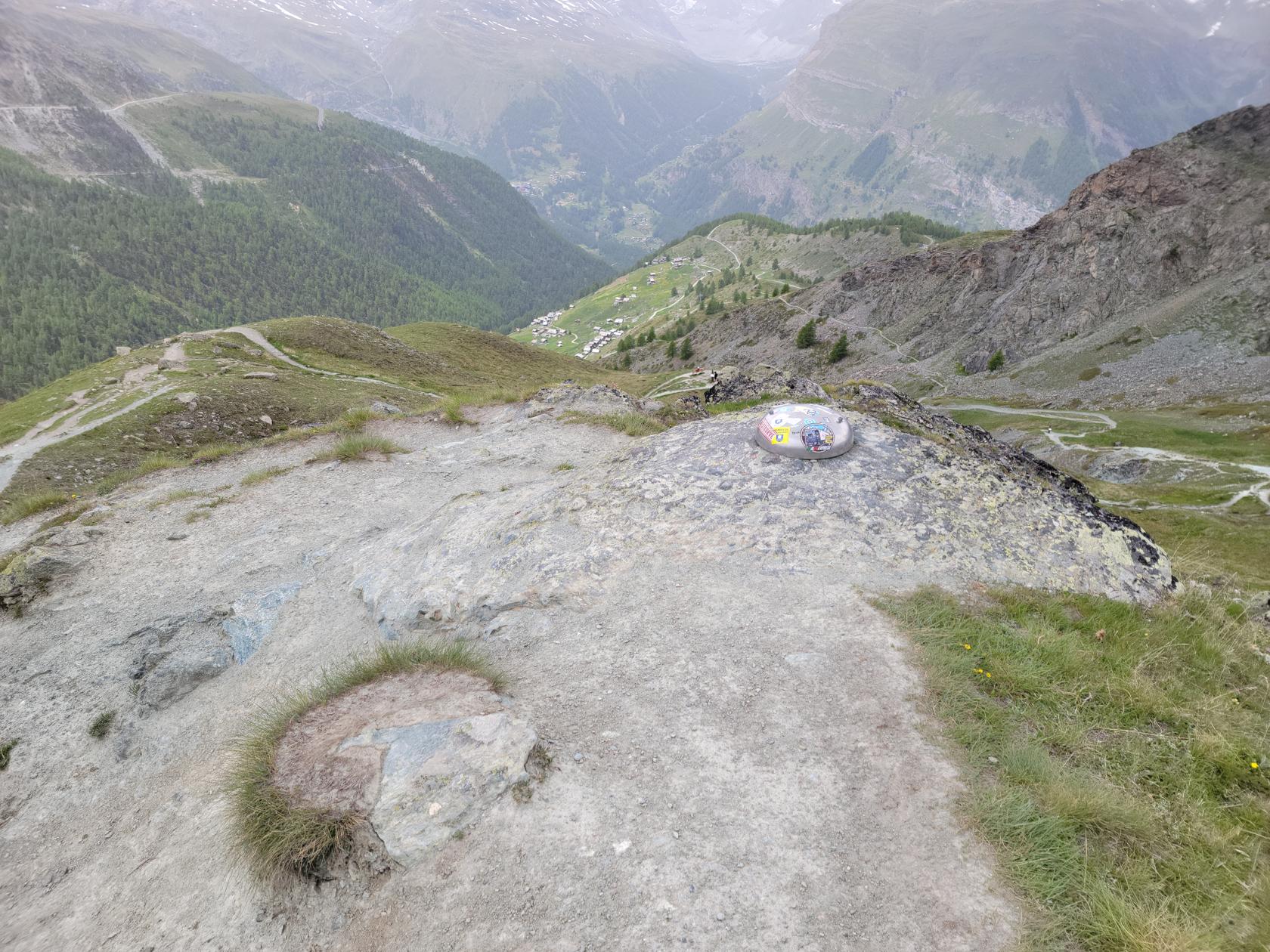
Geodetic marker – Zermatt, Switzerland
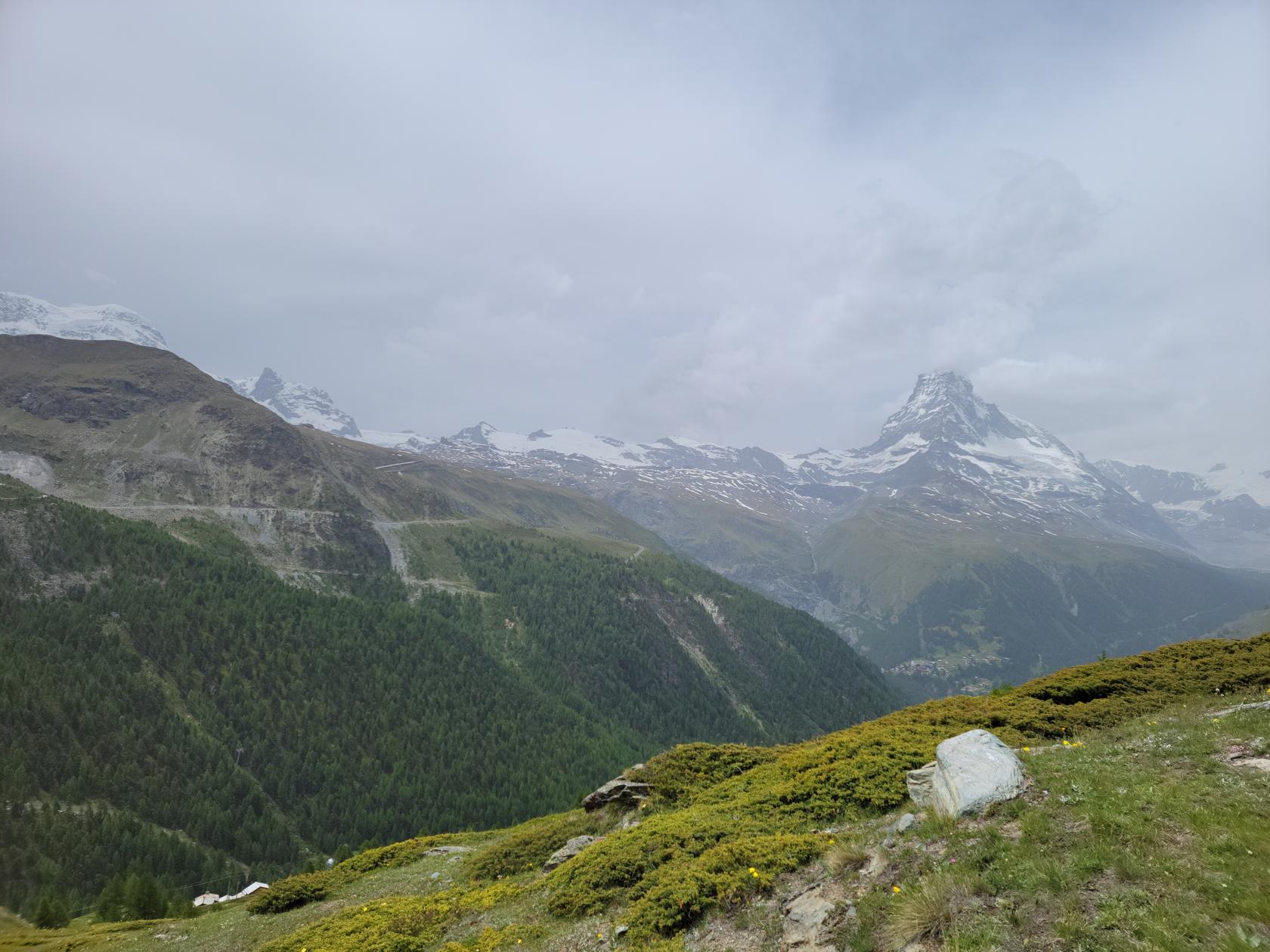
Matterhorn and adjacent peaks – looking towards RiffelalpAnimal carvings with little tails – Murmelweg – Zermatt, Switzerland
Animal carvings with little tails – Murmelweg – Zermatt, Switzerland
Animal carvings with little tails – Murmelweg – Zermatt, Switzerland
Animal carvings with little tails – Murmelweg – Zermatt, Switzerland
Animal carvings with little tails – Murmelweg – Zermatt, Switzerland
The area of Findeln and Gornergrat below – MurmelwegAnimal carvings with little tails – Murmelweg – Zermatt, Switzerland
Getting close to trail end – MurmelwegAnimal carvings with little tails – Murmelweg – Zermatt, Switzerland
Our Route – Map
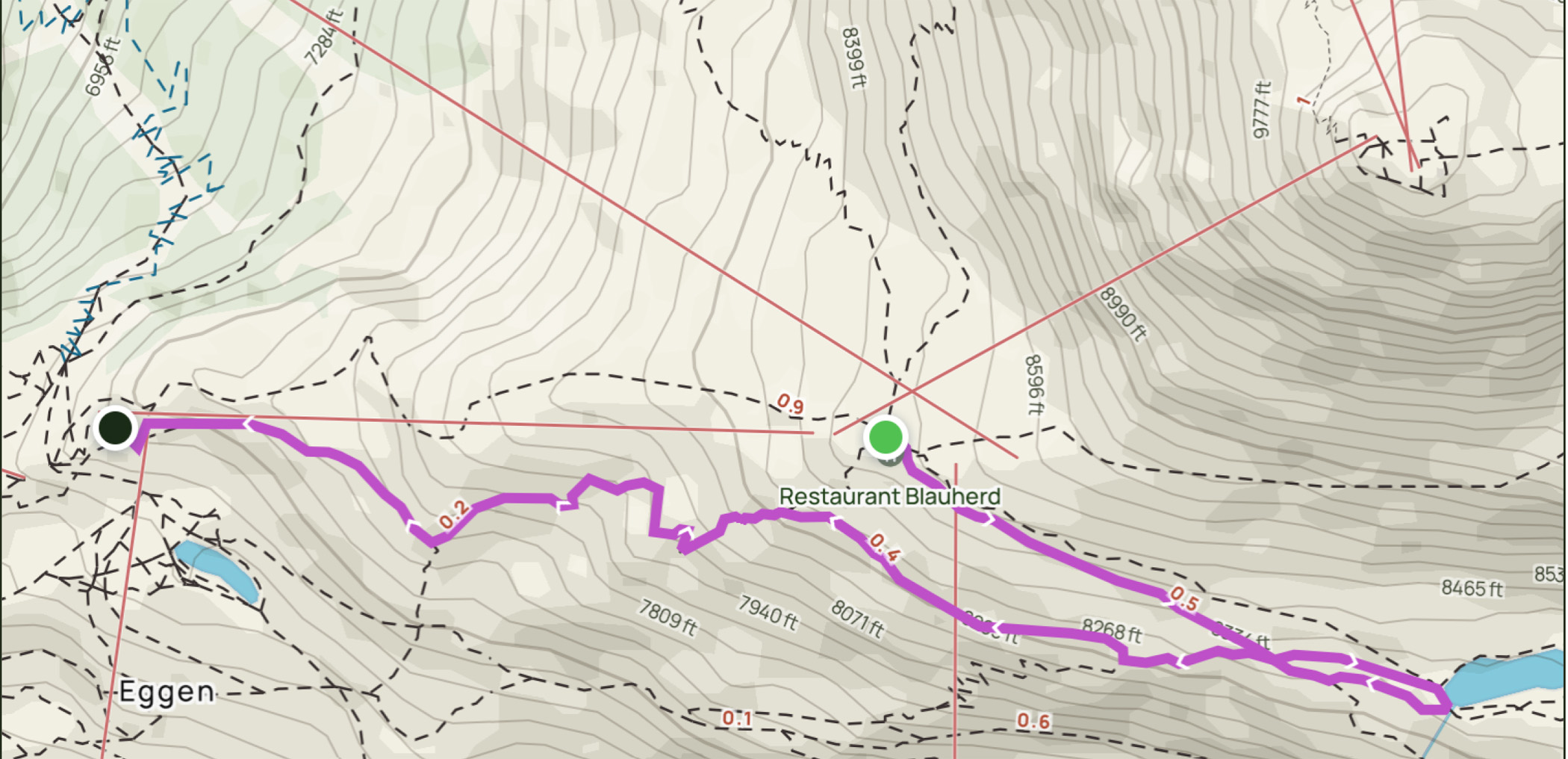
The following reference map details our trail route. The route was a bit over two miles with only a few hundred feet elevation decline and took us about an hour and a half to complete, stopping frequently for photographs.
Blauherd-Stellisee-Murmelweg-Sunnegga Trail – All Trails – Zermatt, Switzerland
Restaurants
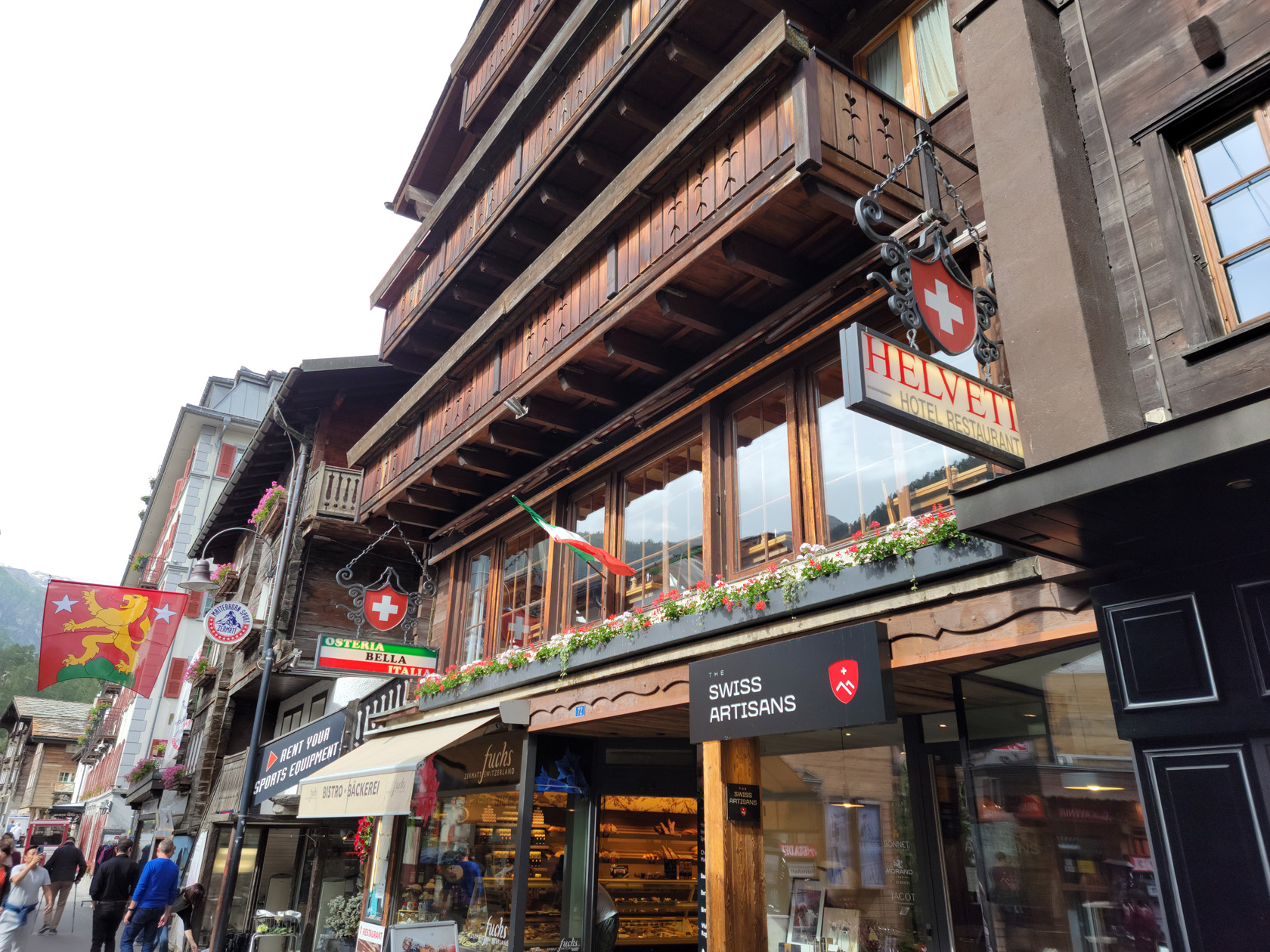
Osteria Bella Italia
Osteria Bella Italia – Zermatt, Switzerland
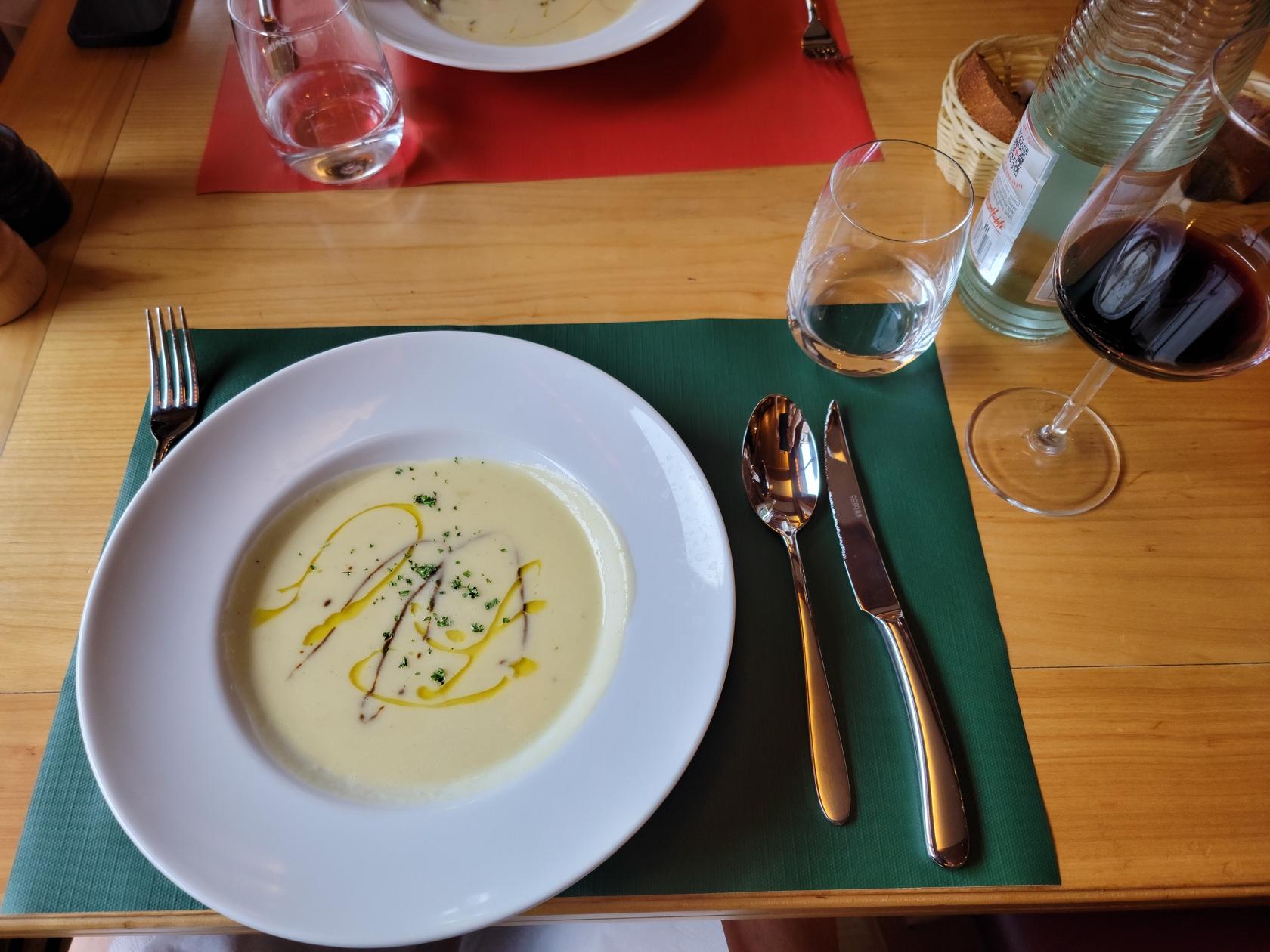
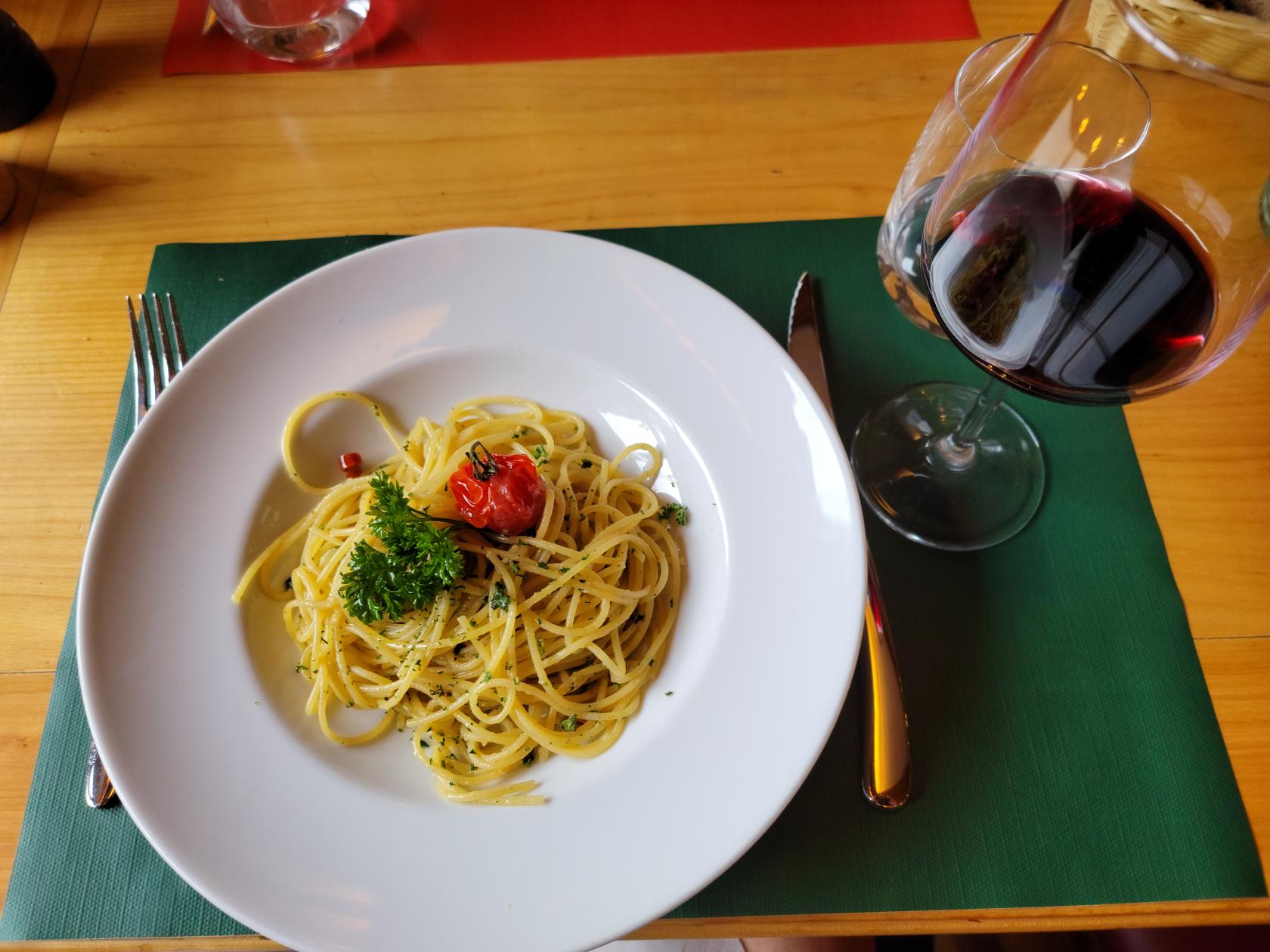
An Italian restaurant that is part of hotel on the Bahnhofstrasse, the Osteria Bella Italia is what my wife and I call and overpriced, corporate dining establishment serving food they want to be Italian. It’s not bad, but the preparation is what I would say a bit sub-optimal. Then there are the prices. I paid 22CHF for a small bowl of pasta with garlic and oil, totally unheard of in Italy.
Cauliflower soup – Osteria Bella Italia – Zermatt, Switzerland
spaghetti aglio olio e peperoncino – Osteria Bella Italia – Zermatt, Switzerland
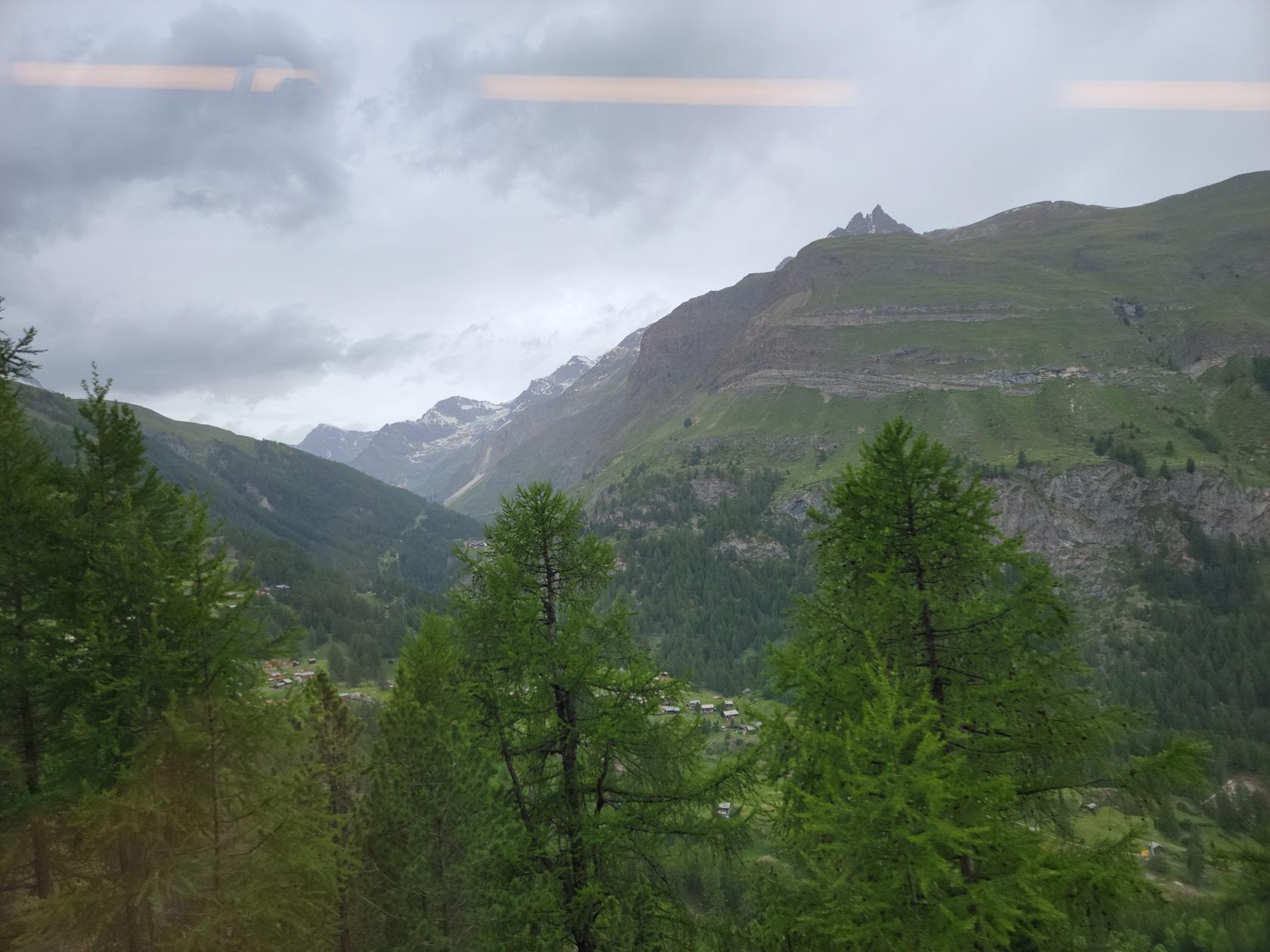
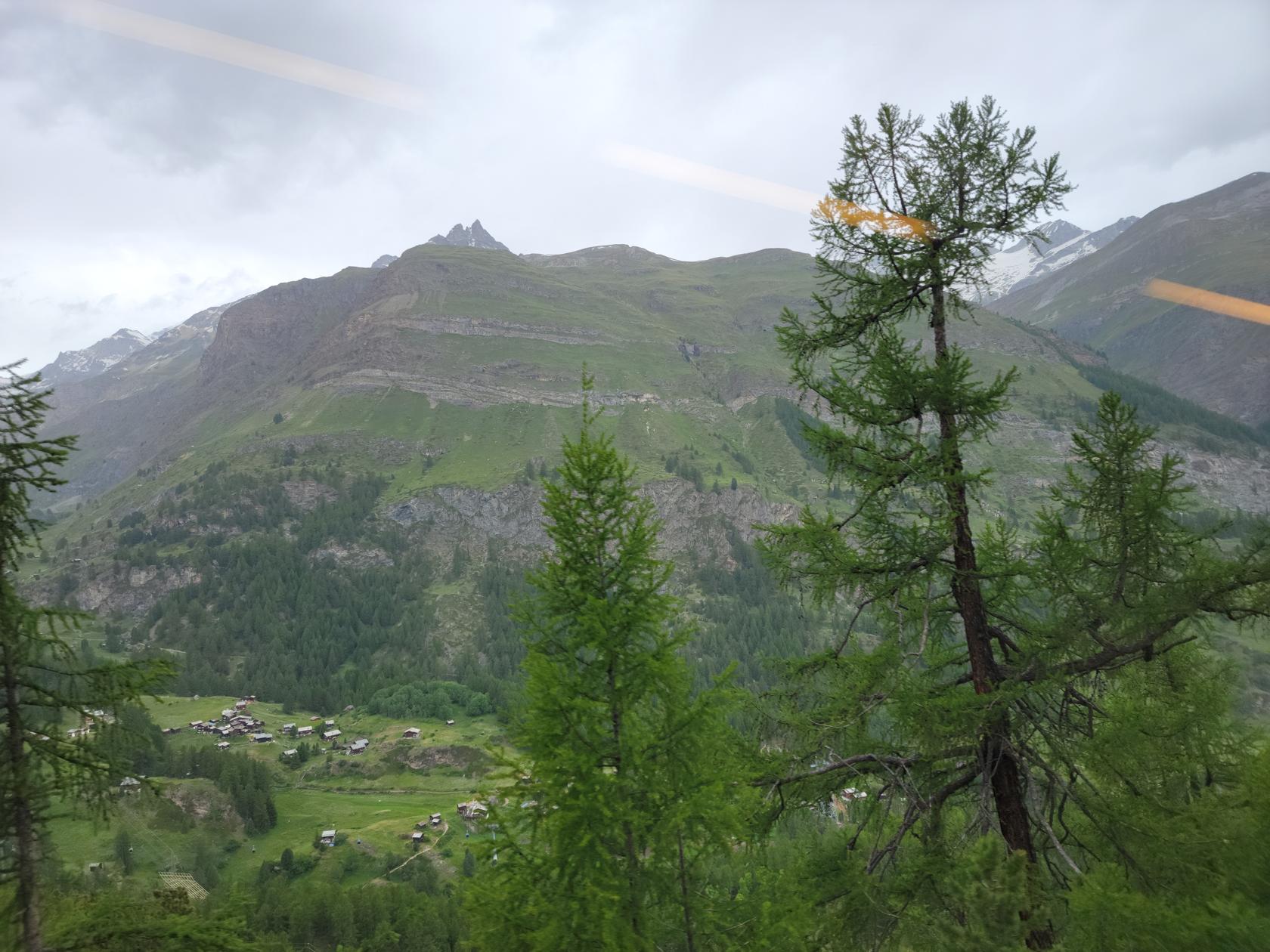
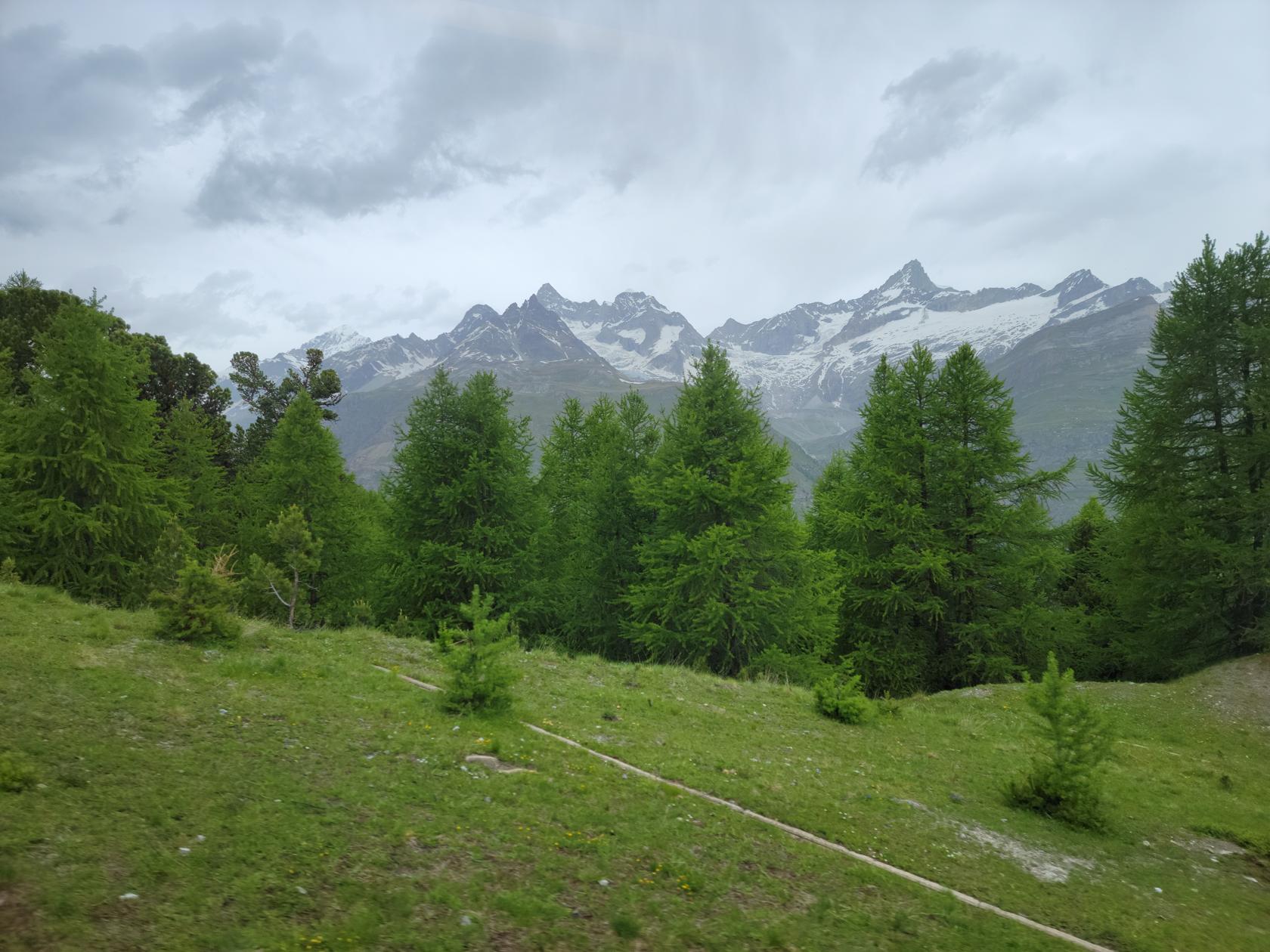
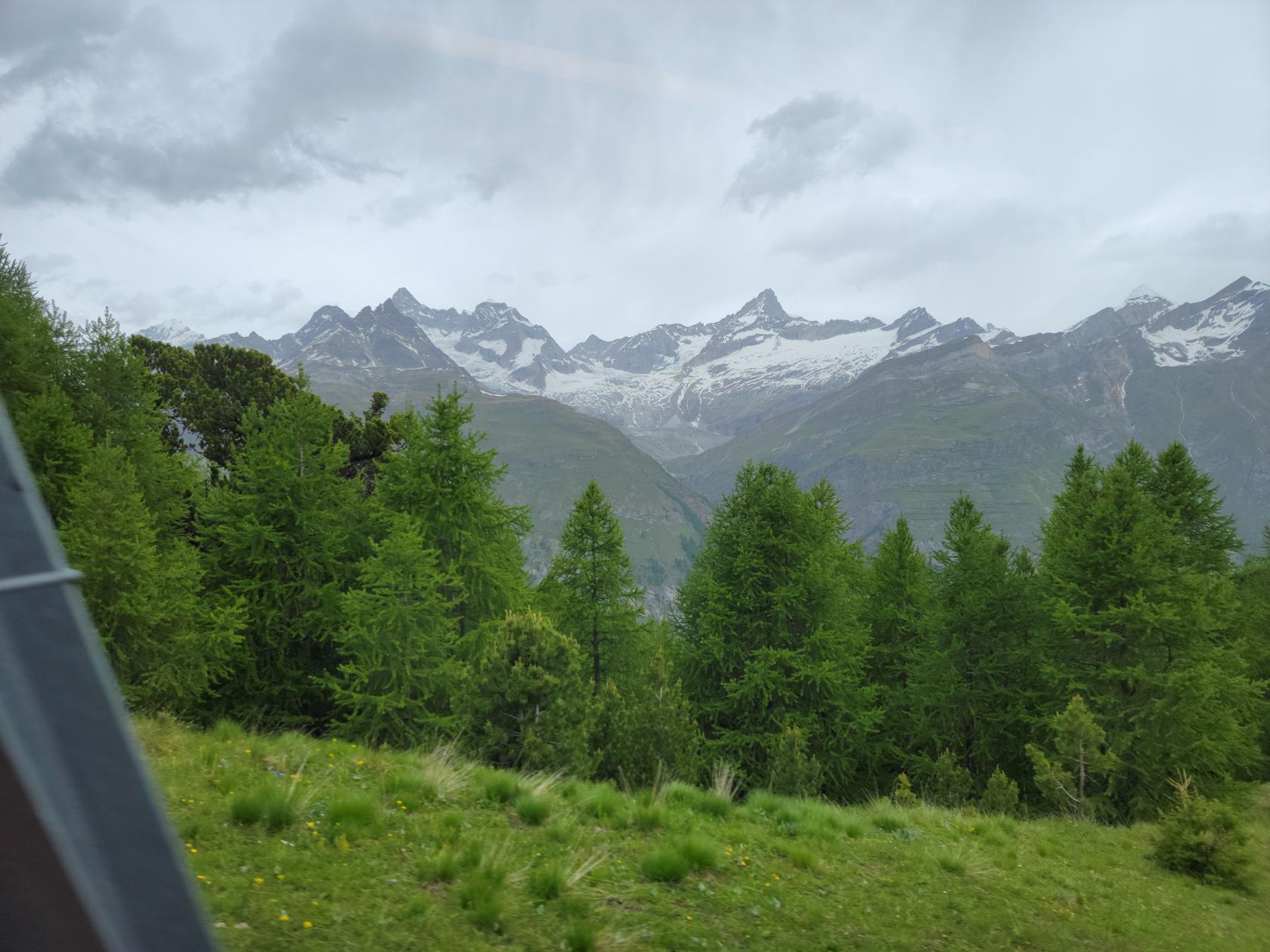
This week we traveled by train from Turin to Zermatt, Switzerland in the hopes of enjoying the weather and the clean air. There is plenty of clean air, but the weather has remained extremely variable, with it almost always raining in the afternoons.
Zermatt train station – Zermatt, Switzerland
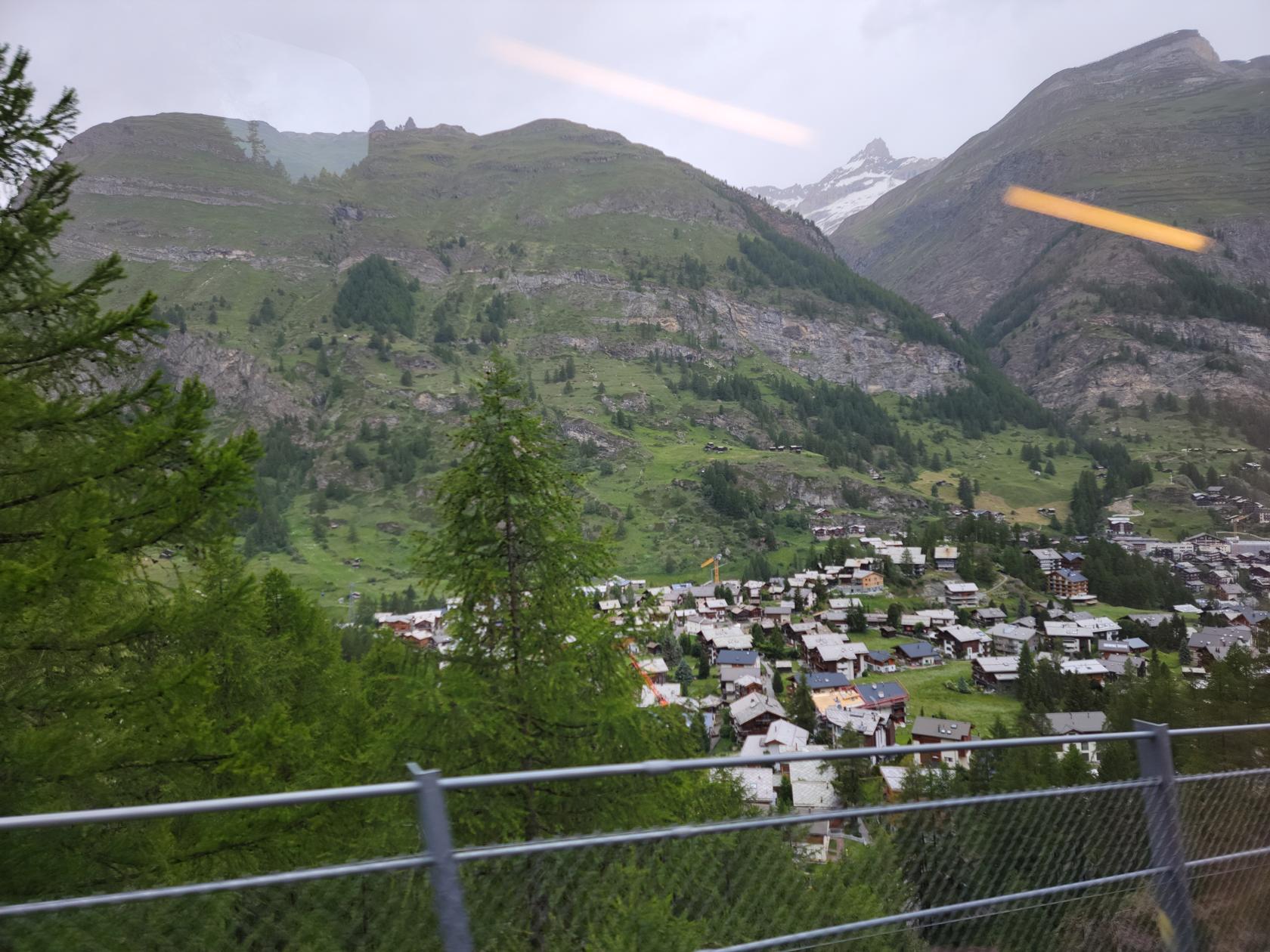
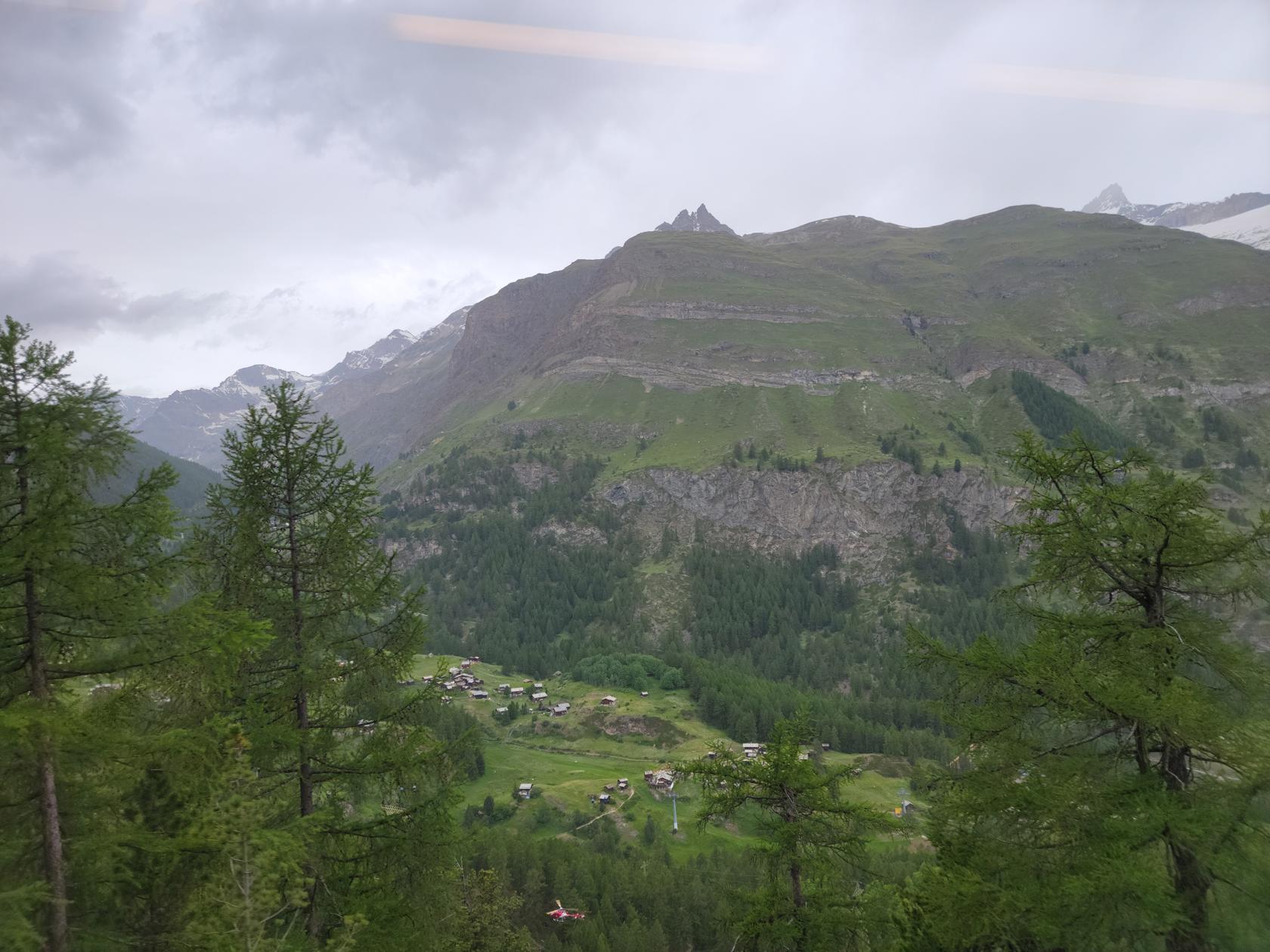
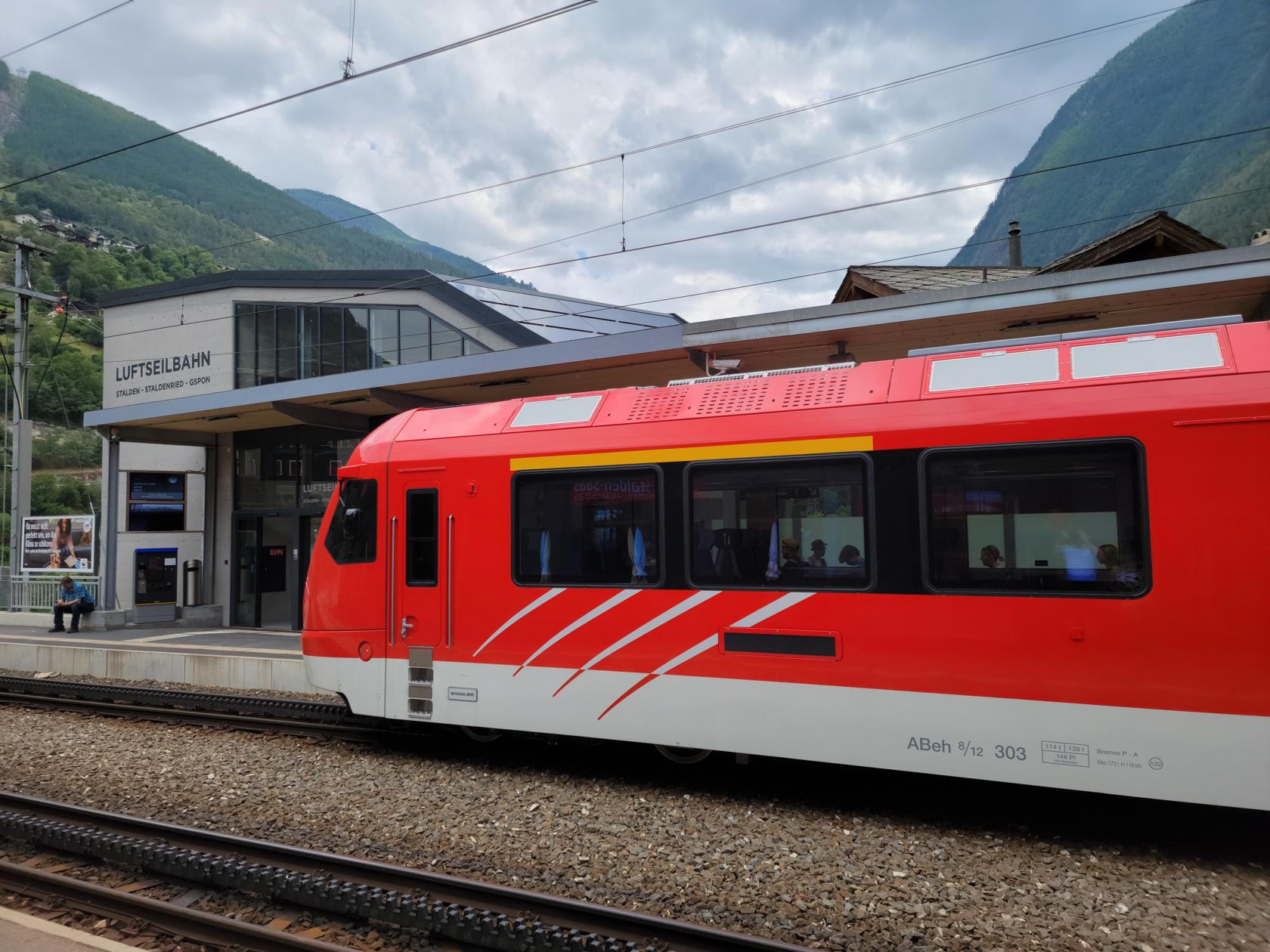
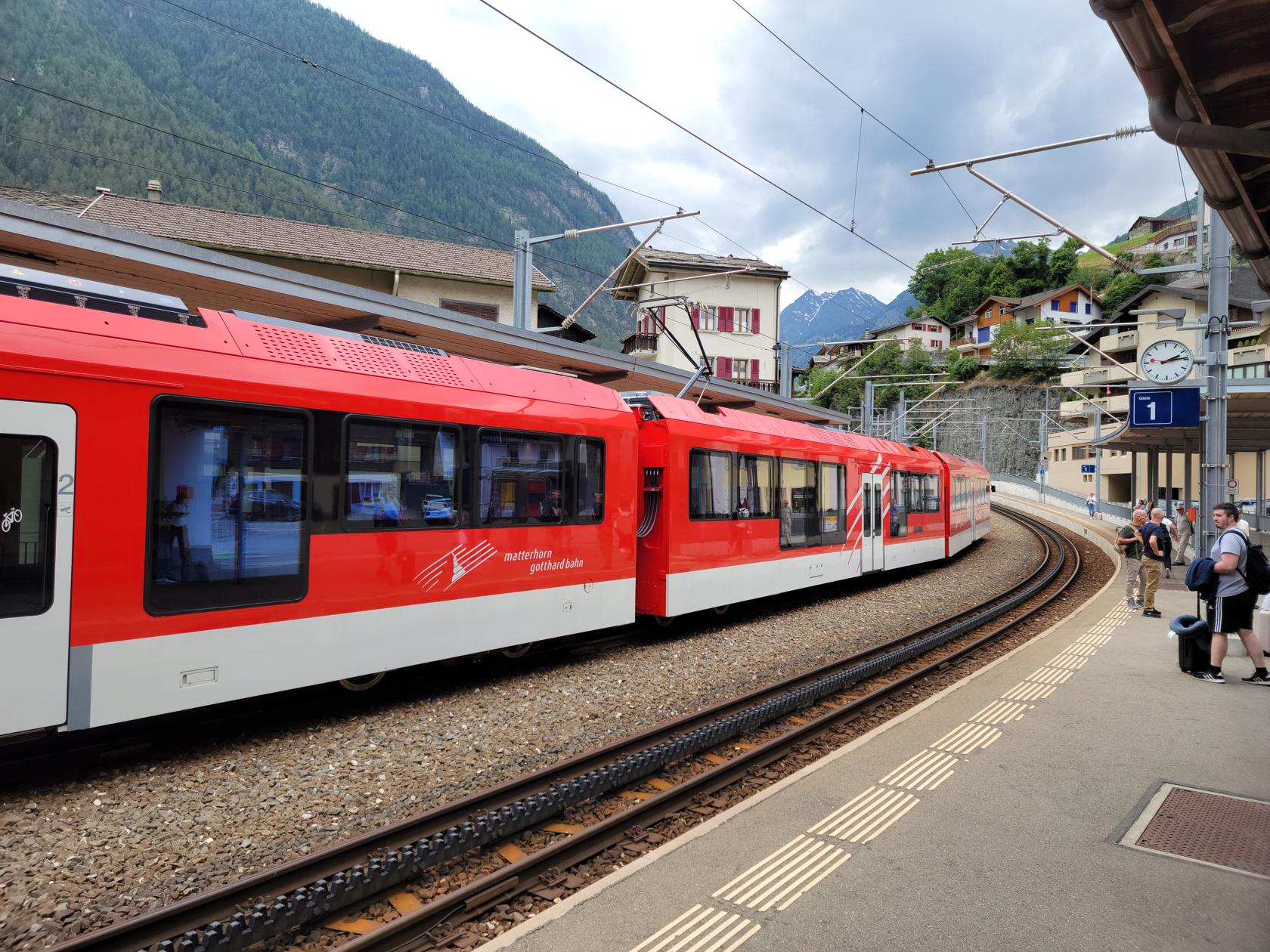
After we got off the EuroCity train in Visp we had to take the local train from there to Zermatt. These trains are run by the canton and are especially equipped to ascend to the 5200ft elevation we needed to ascend in order to get to our destination.
Unfortunately, our first attempt failed and the train that we were on broke down at its first stop. We had to wait approximately a half an hour before another arrived to complete our journey.
Zermatt
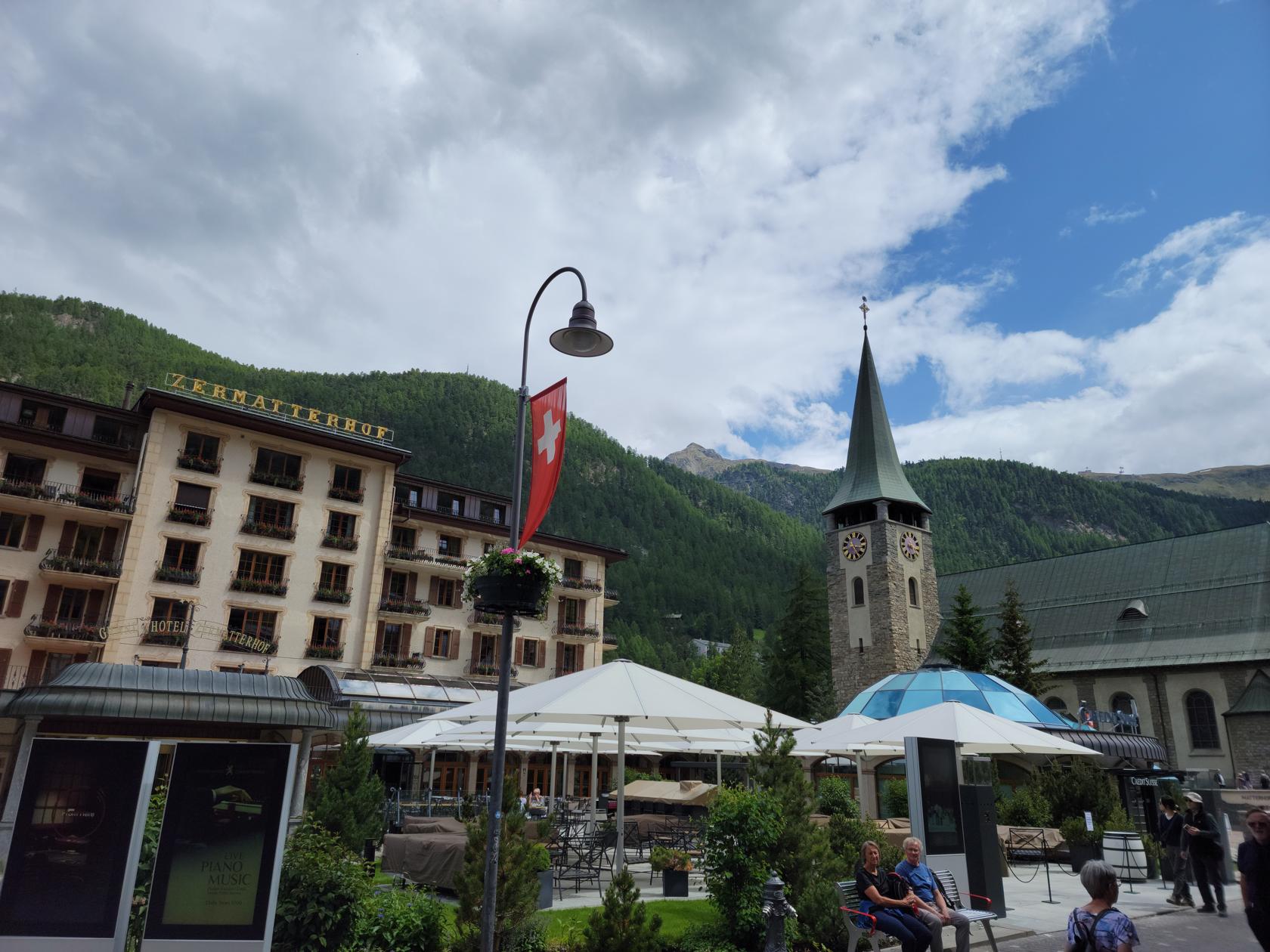
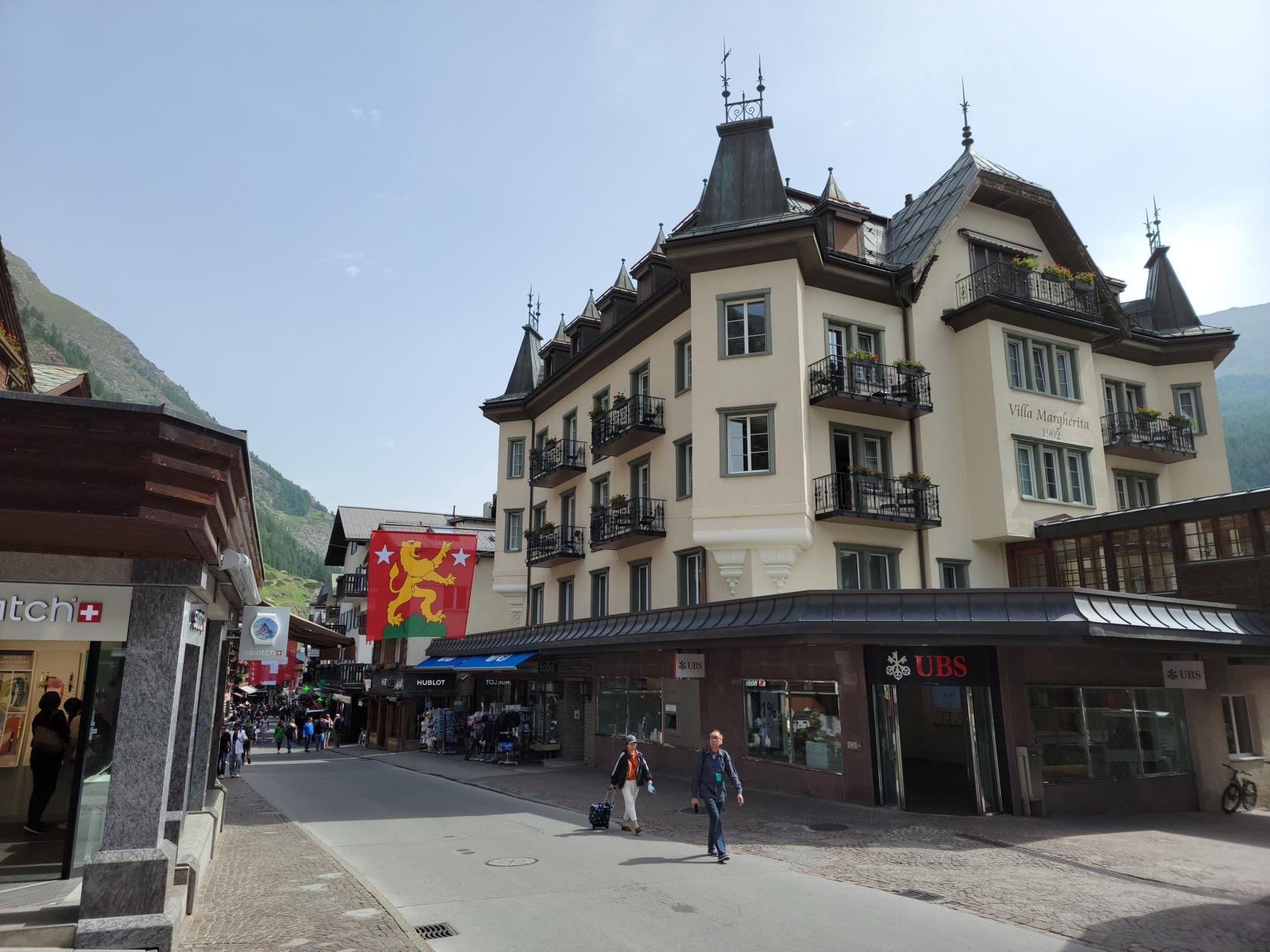
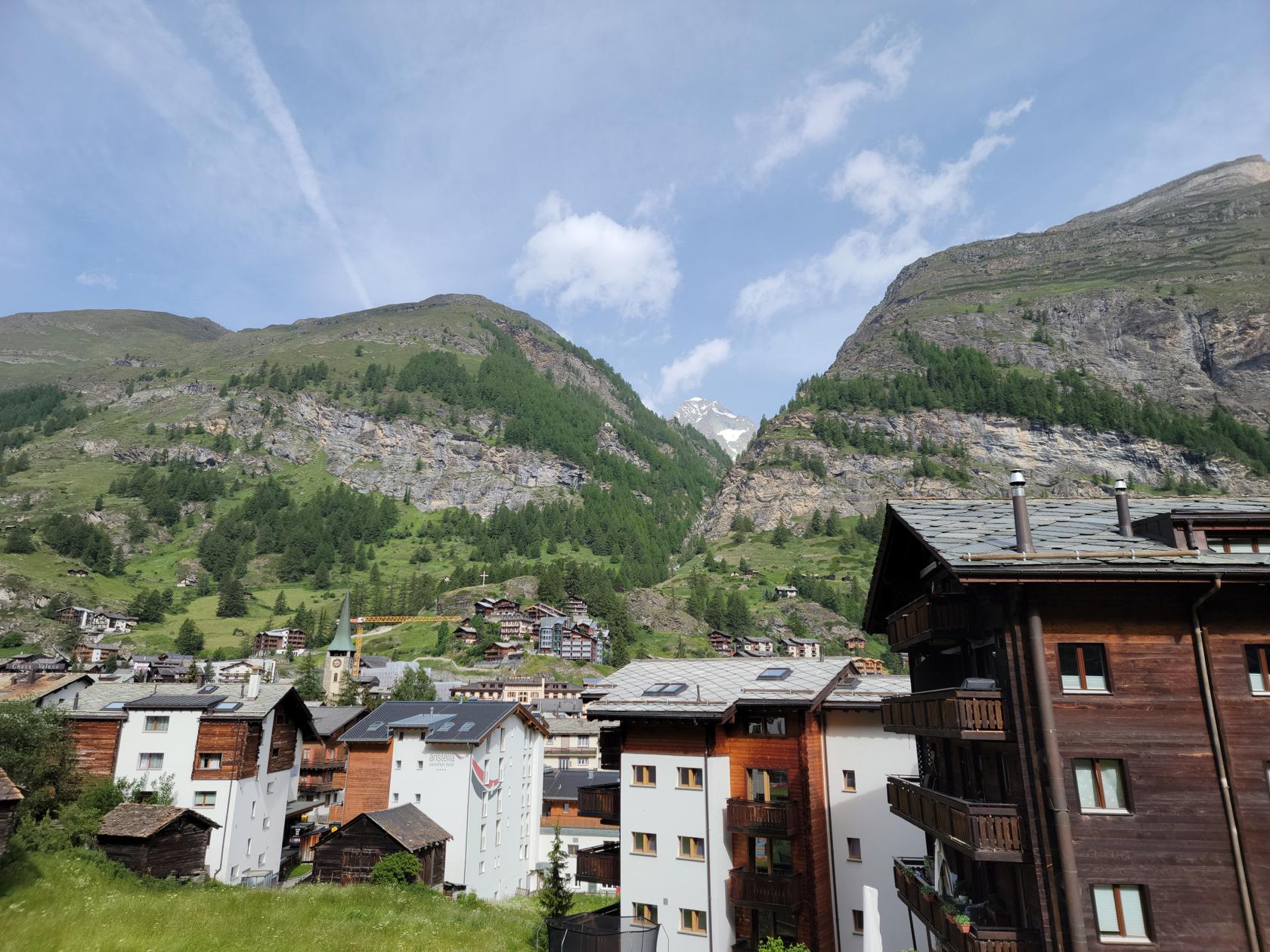
Zermatt is considered a town by the local government and with a constant population of around five thousands, that would seem to be about correct. However, the bulk of the people that you find here are tourists. And as one would expect, the tourist population swells during the weekends as local Swiss and others from neighboring regions come to enjoy the alpine air.
Pfarrerkirche and Zermatterhof – Zermatt, Switzerland
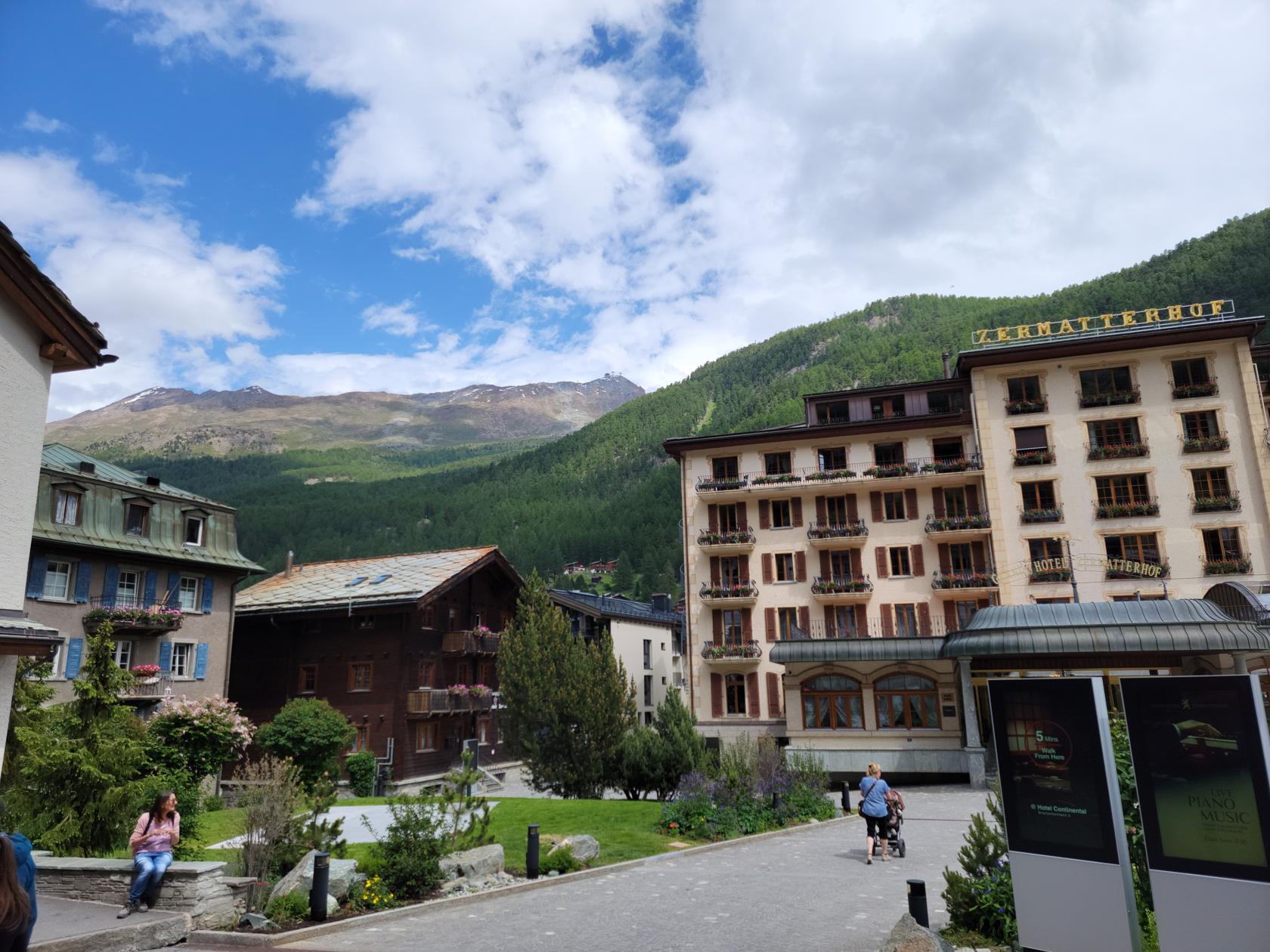
Zermatterhof – Zermatt, Switzerland
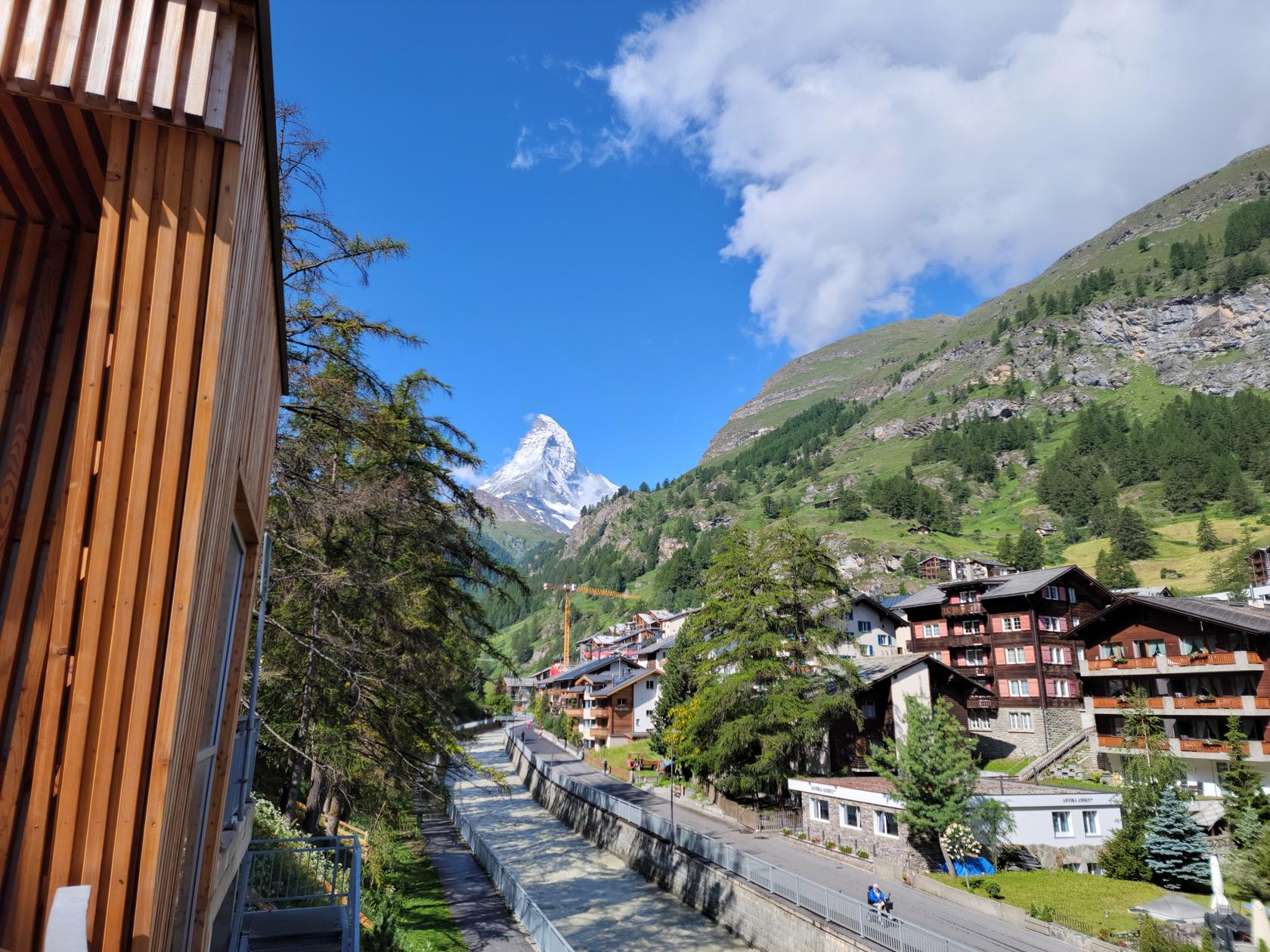
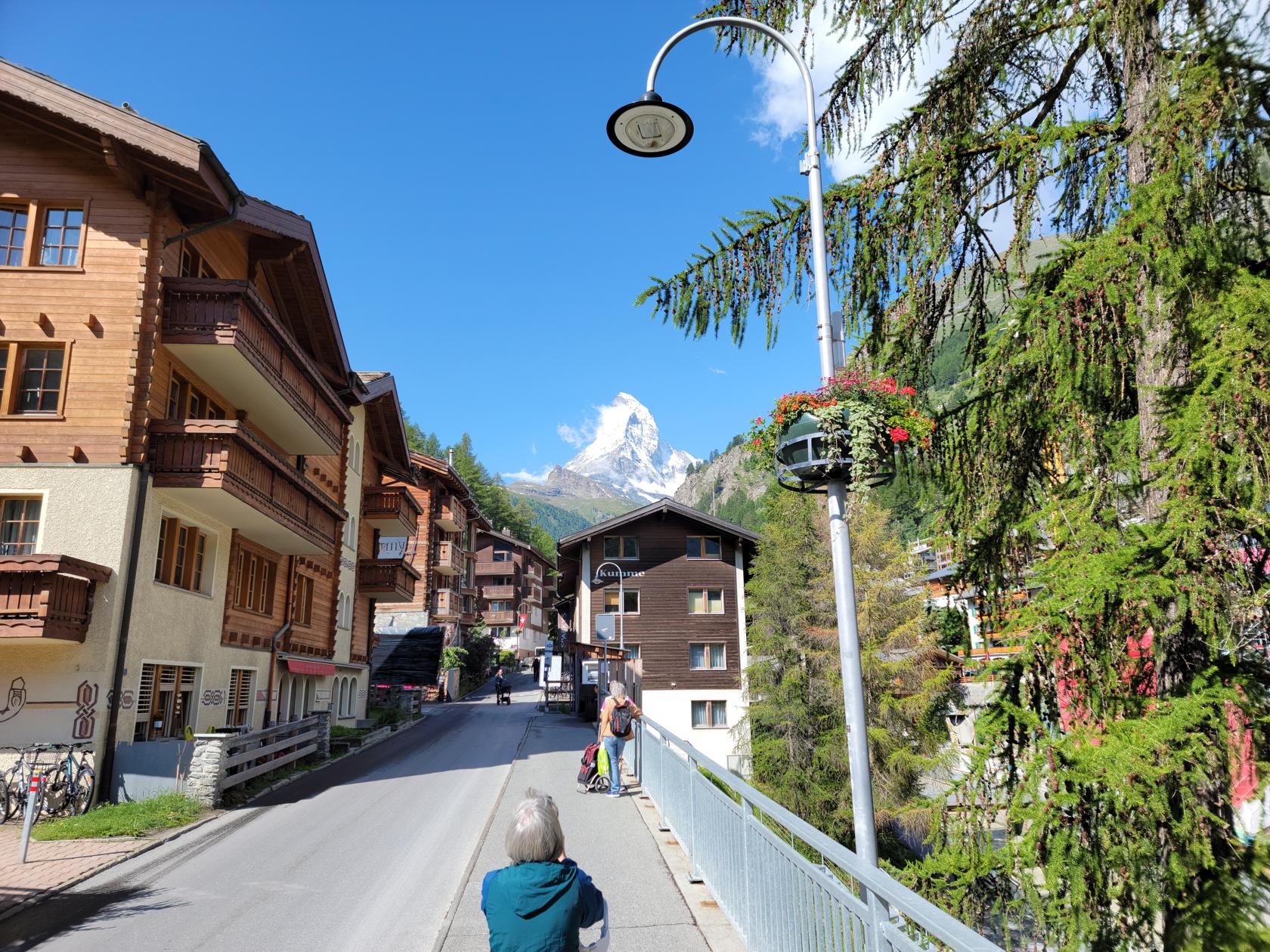
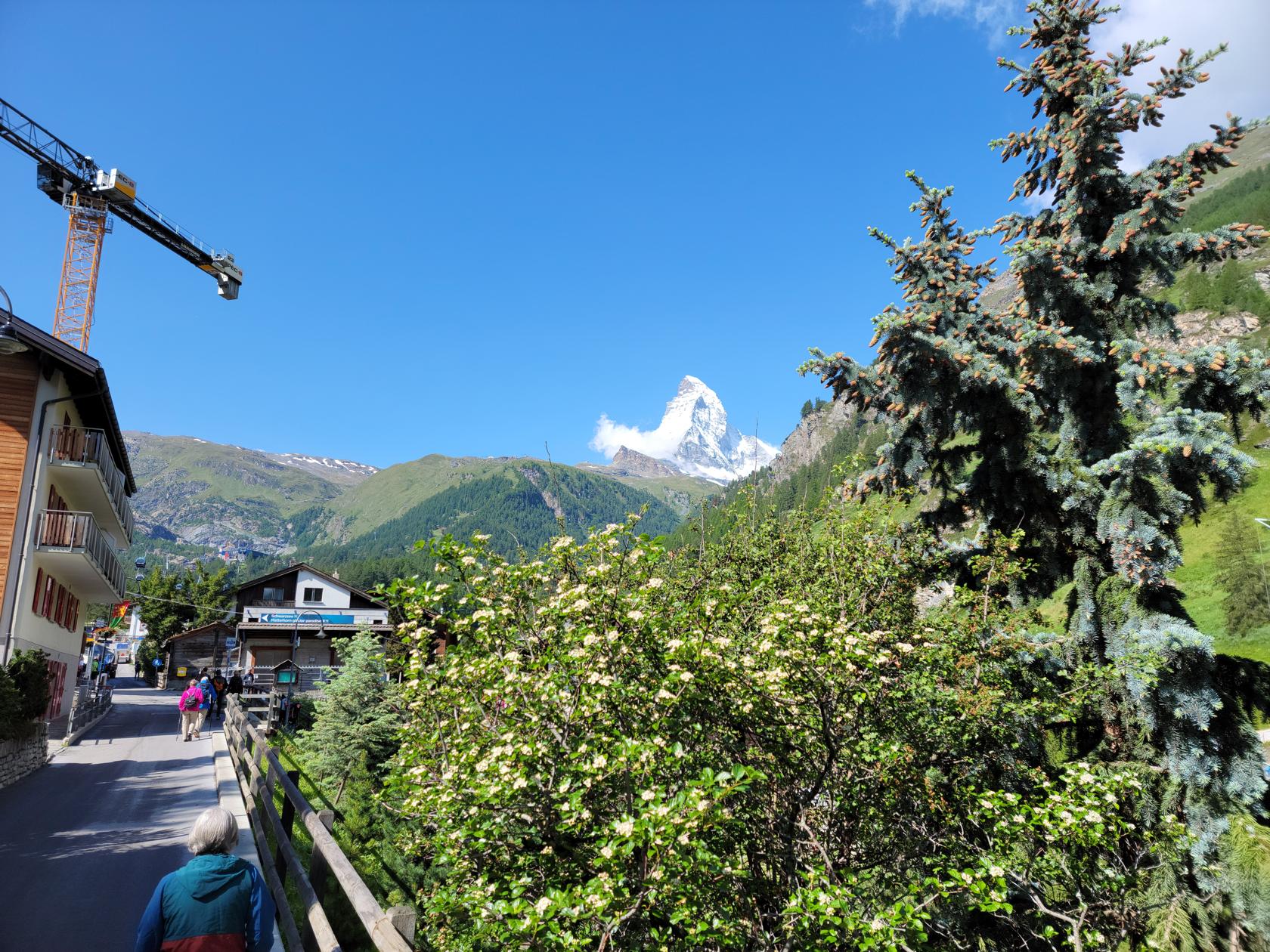
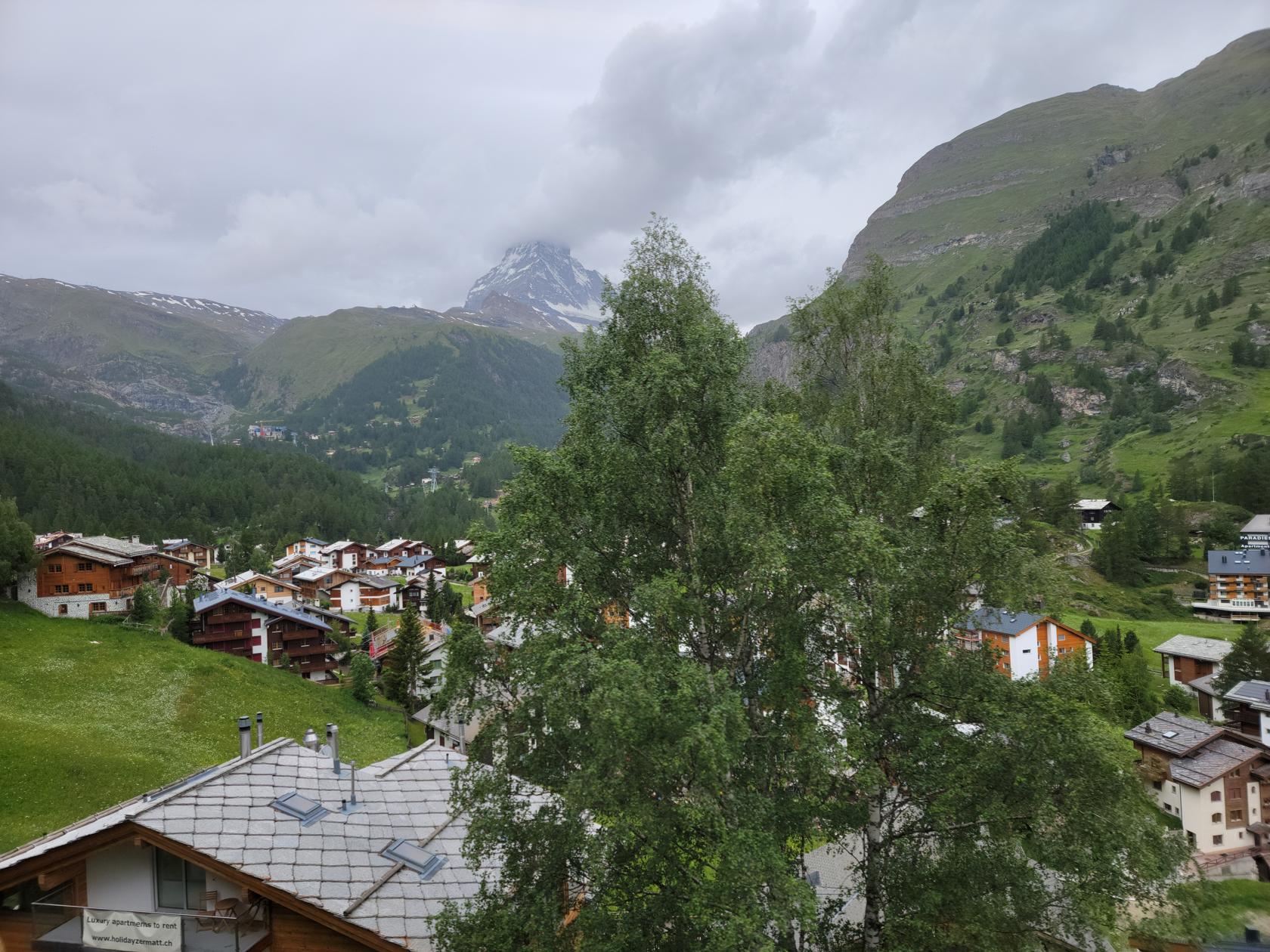
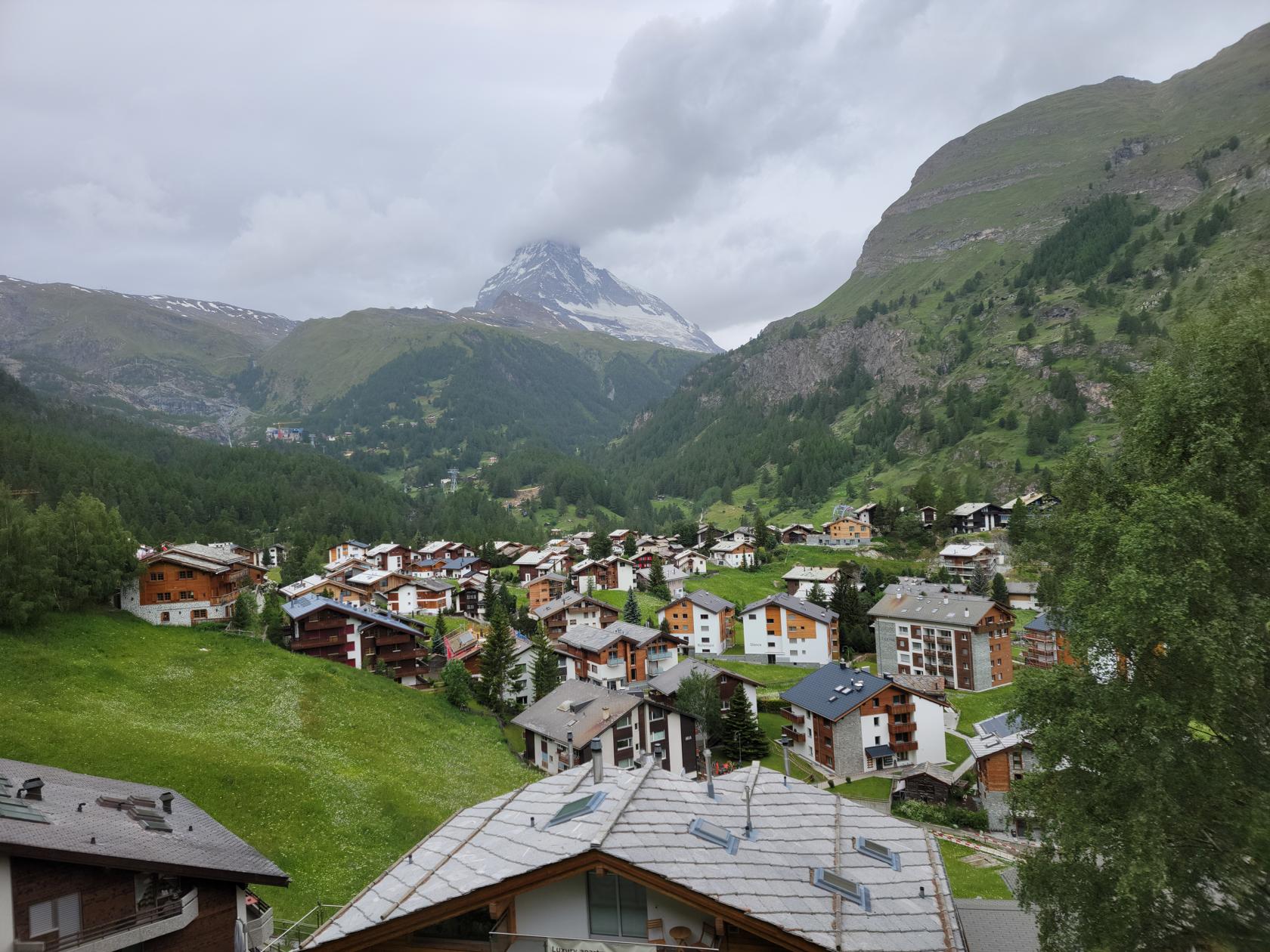
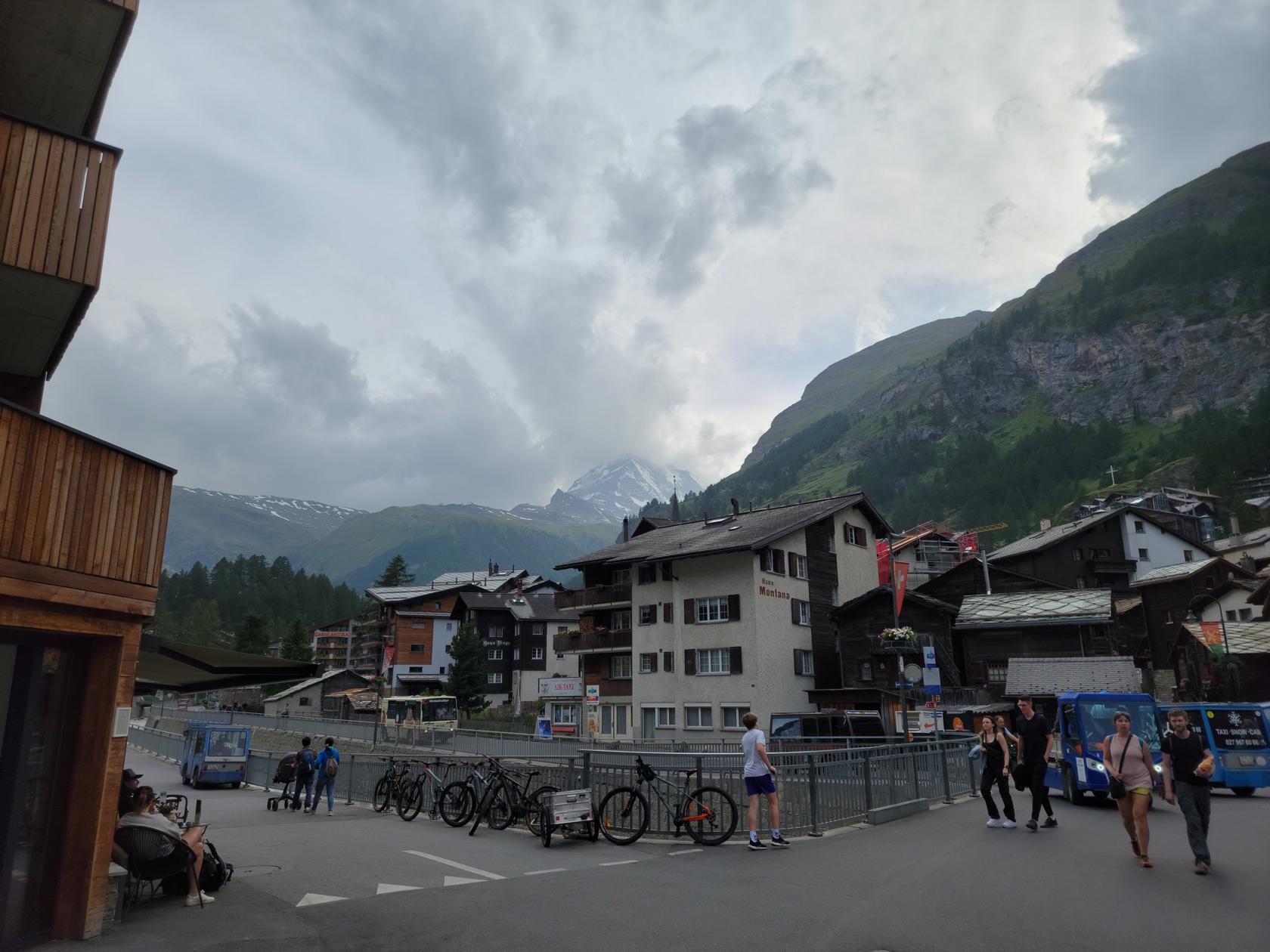
Looking toward the Matterhorn – Zermatt, Switzerland
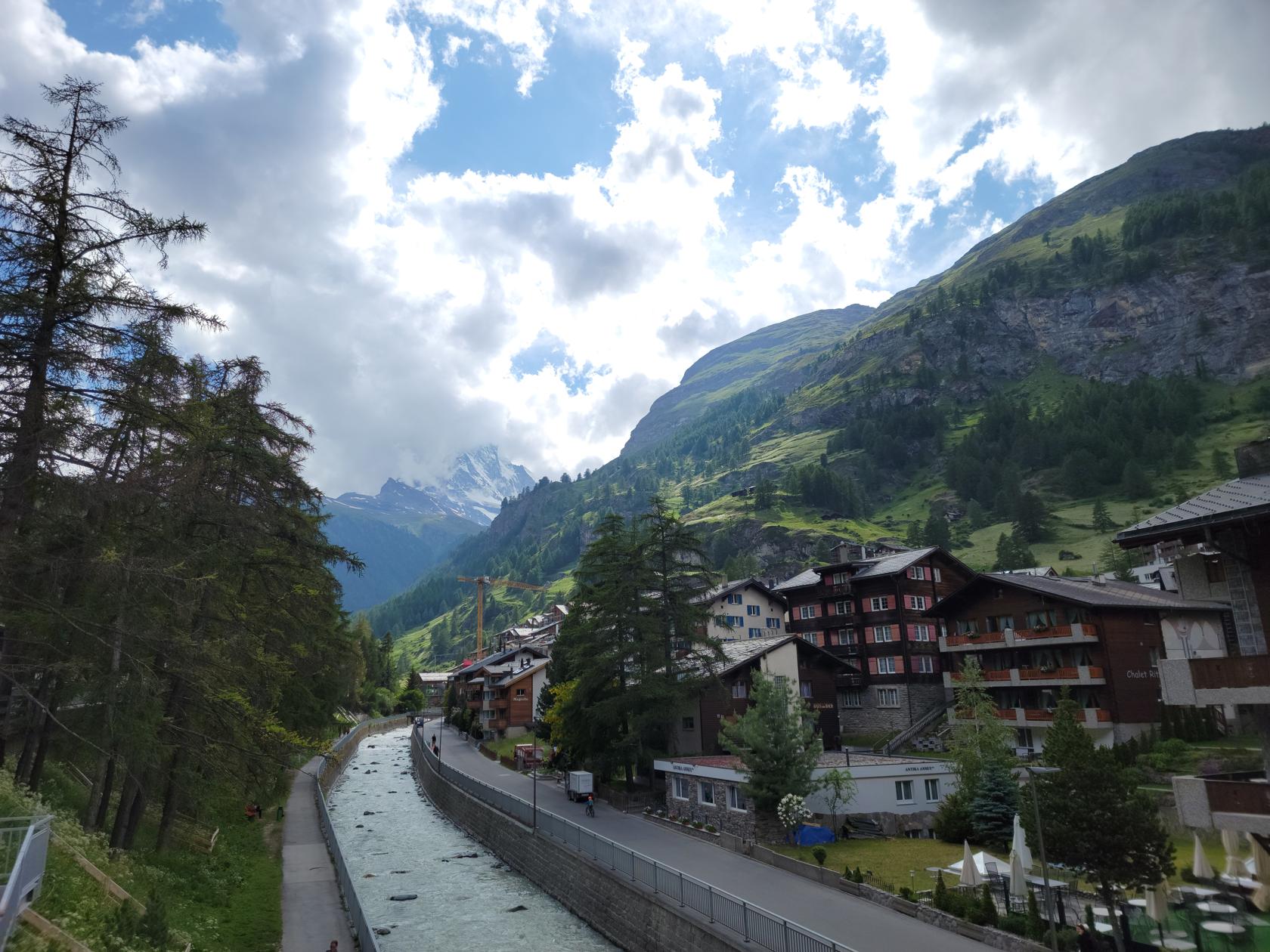
Looking down the Mattertal – Zermatt, Switzerland
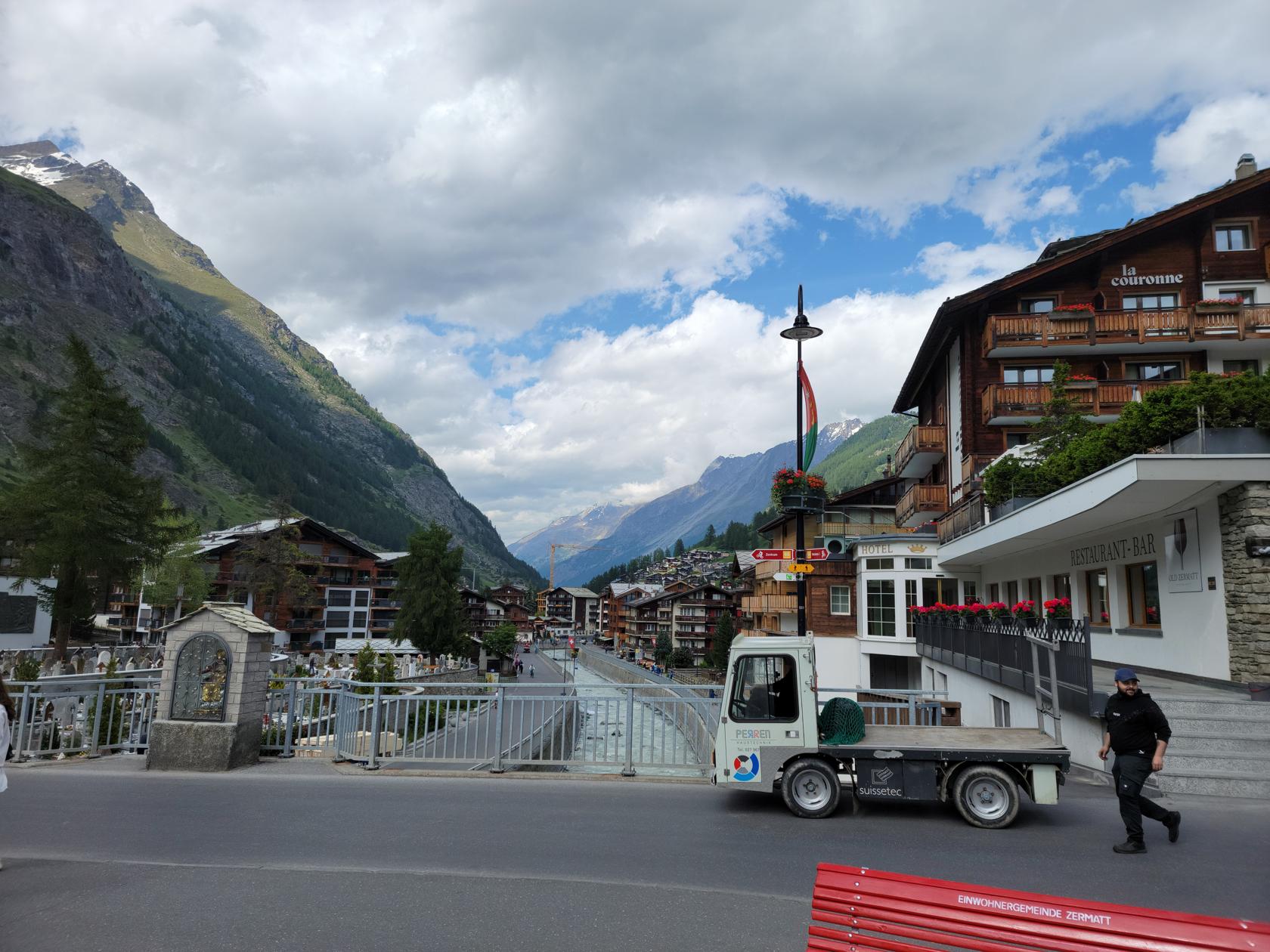
Bahnhofstrasse, the main street – Zermatt, Switzerland
Matterhorn shrouded in clouds – Zermatt, Switzerland
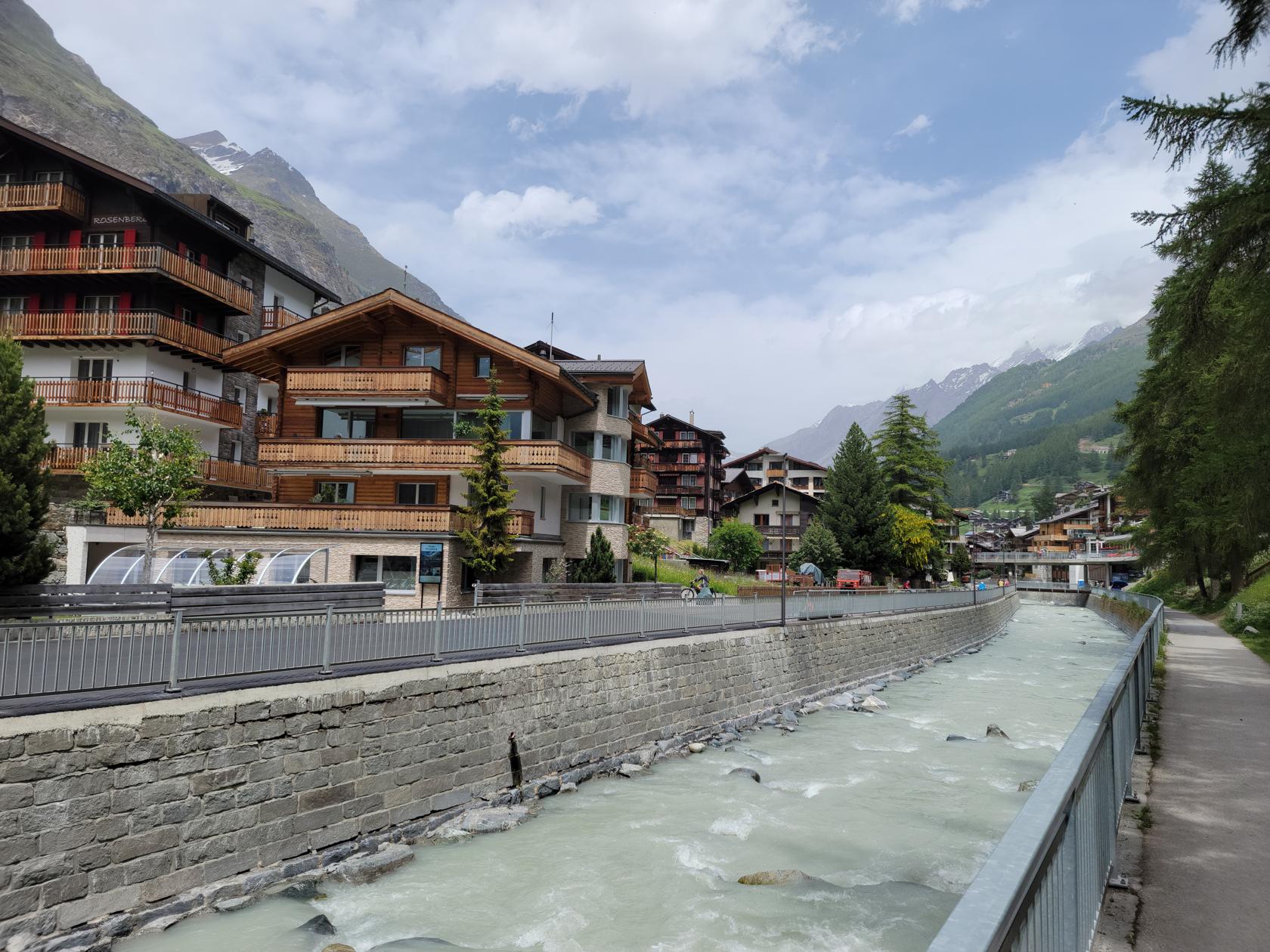
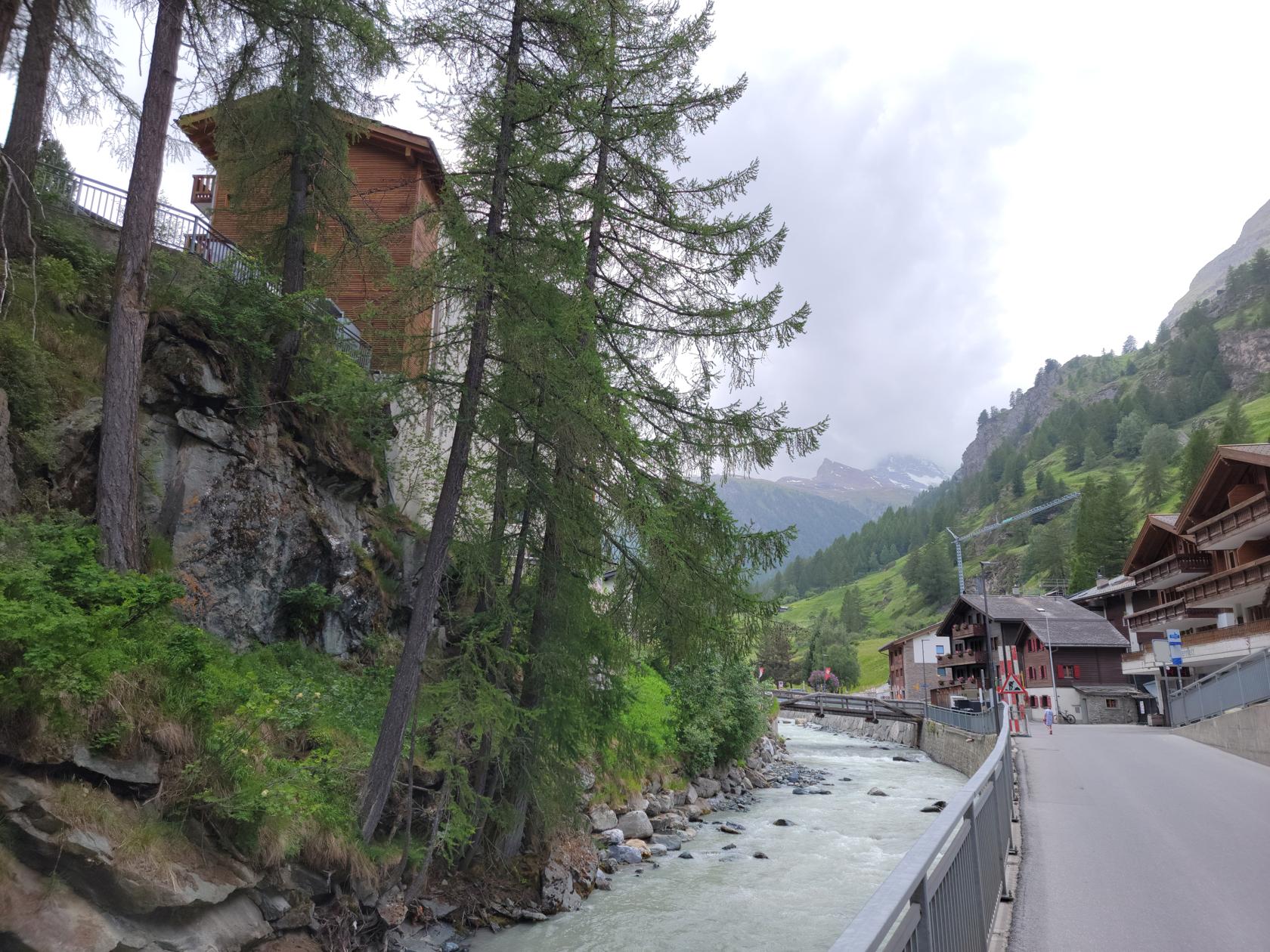
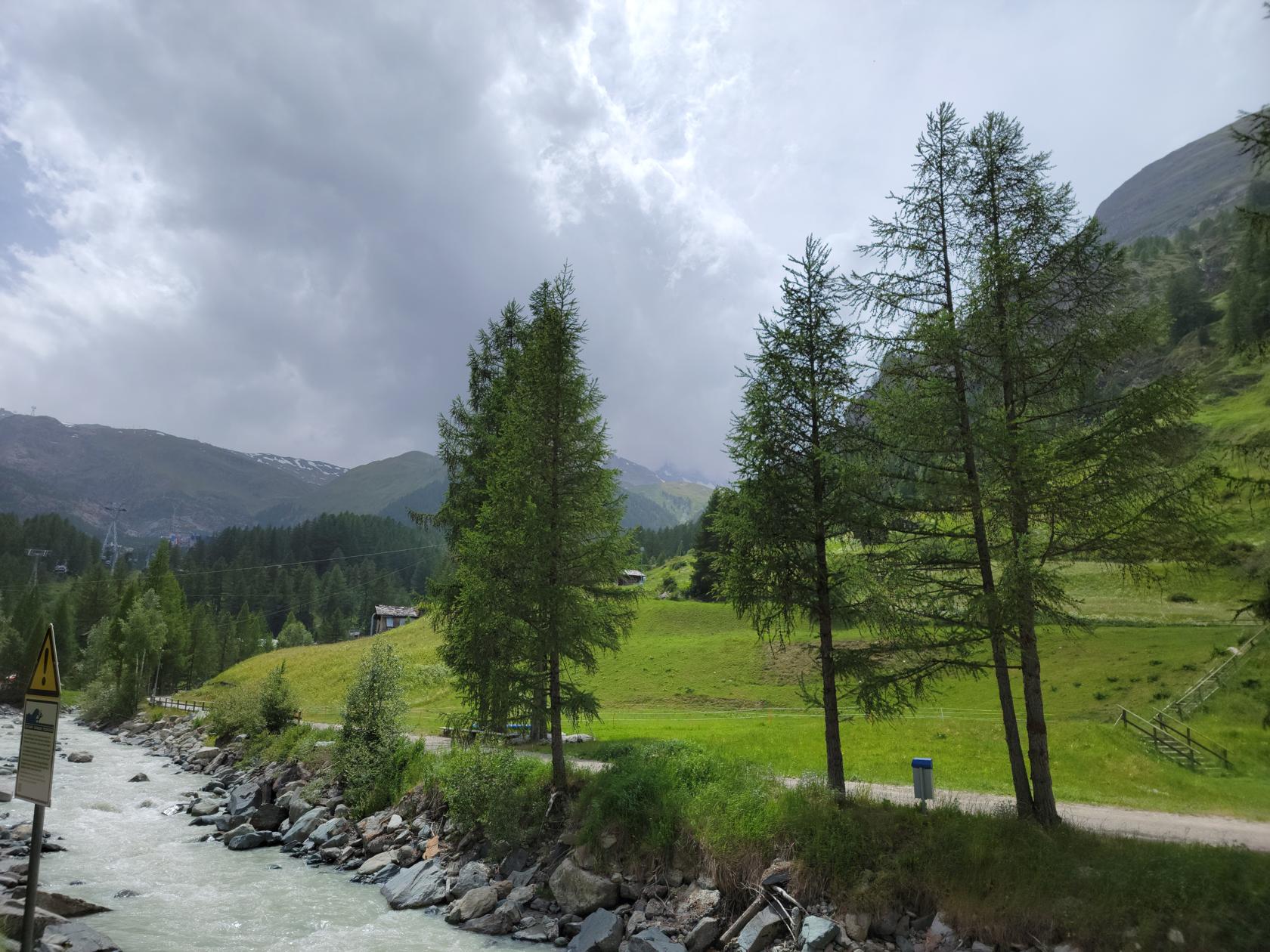
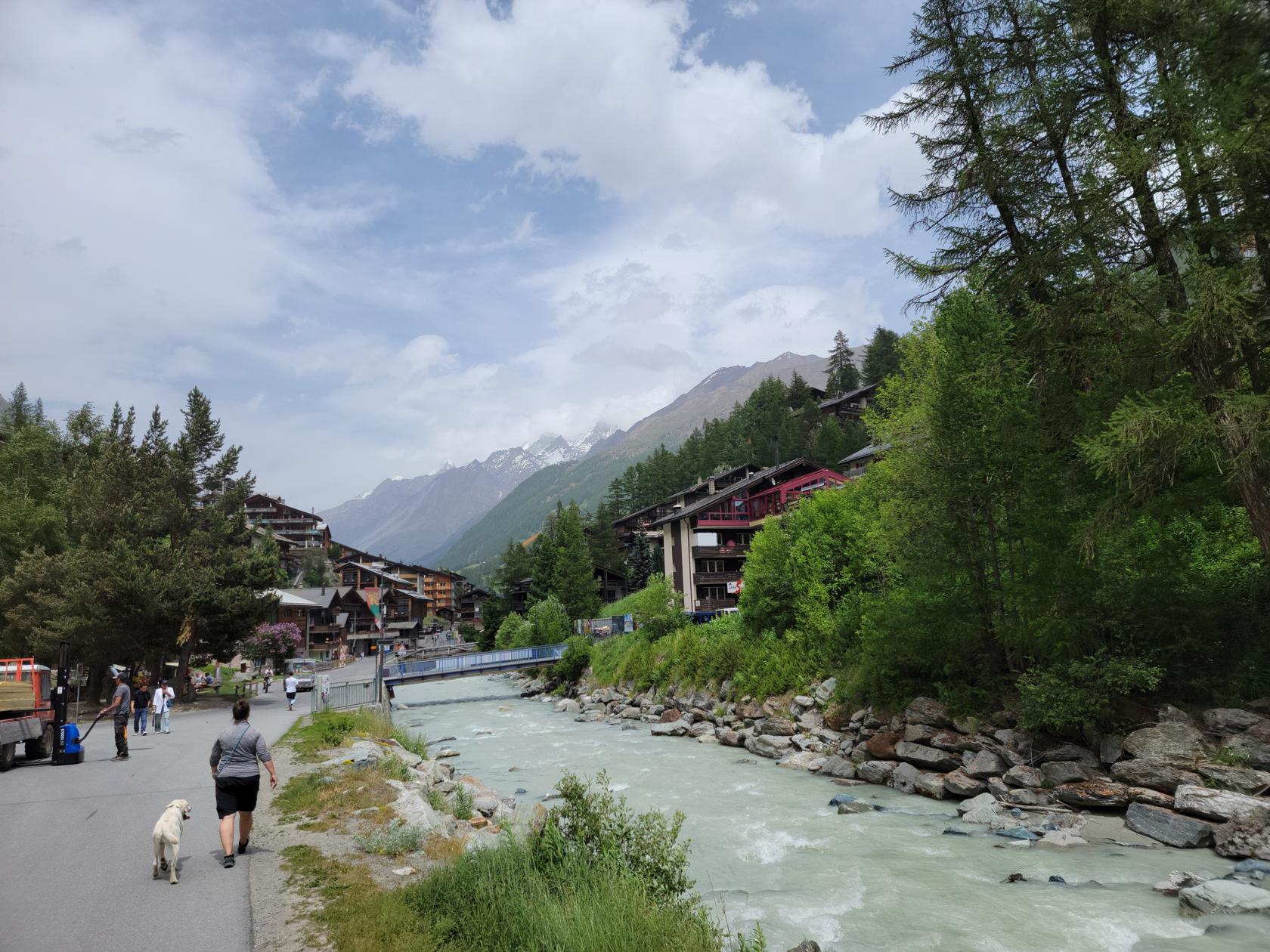
The town is divided by a river with is fed by the many glaciers that surround the town. However, the flow of this river is controlled by a dam and there are signs that warn those who want to sun themselves on the rocks along its banks, that water can be unexpectedly released and you can be swept down river. We actually witnessed the water level rise once due to the rain we had been receiving.
Gomerabach – Zermatt, Switzerland
Uferweg – Zermatt, Switzerland
Uferweg – Zermatt, Switzerland
Area above Zermatt along the river – Zermatt, Switzerland
Old Zermatt
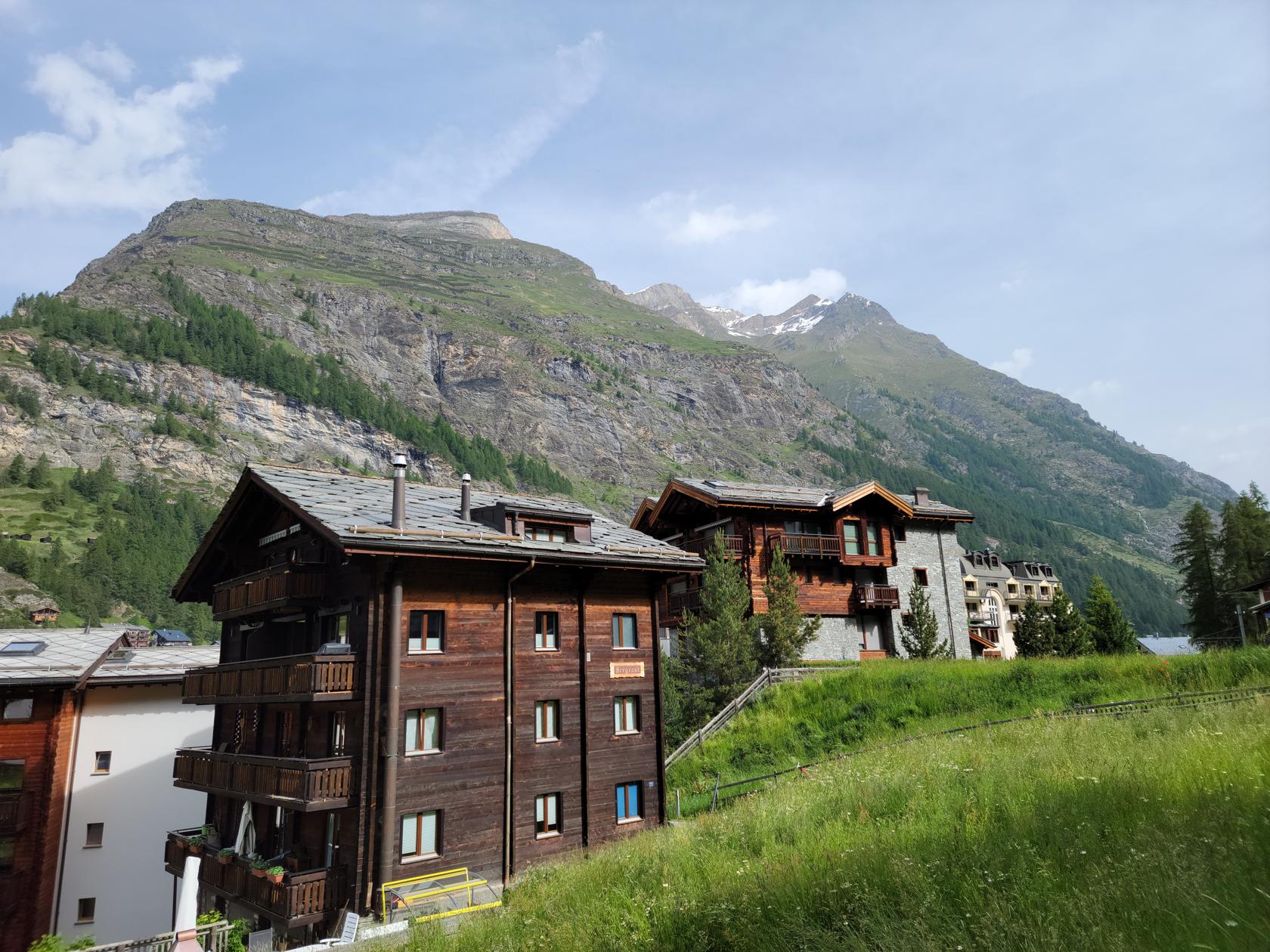
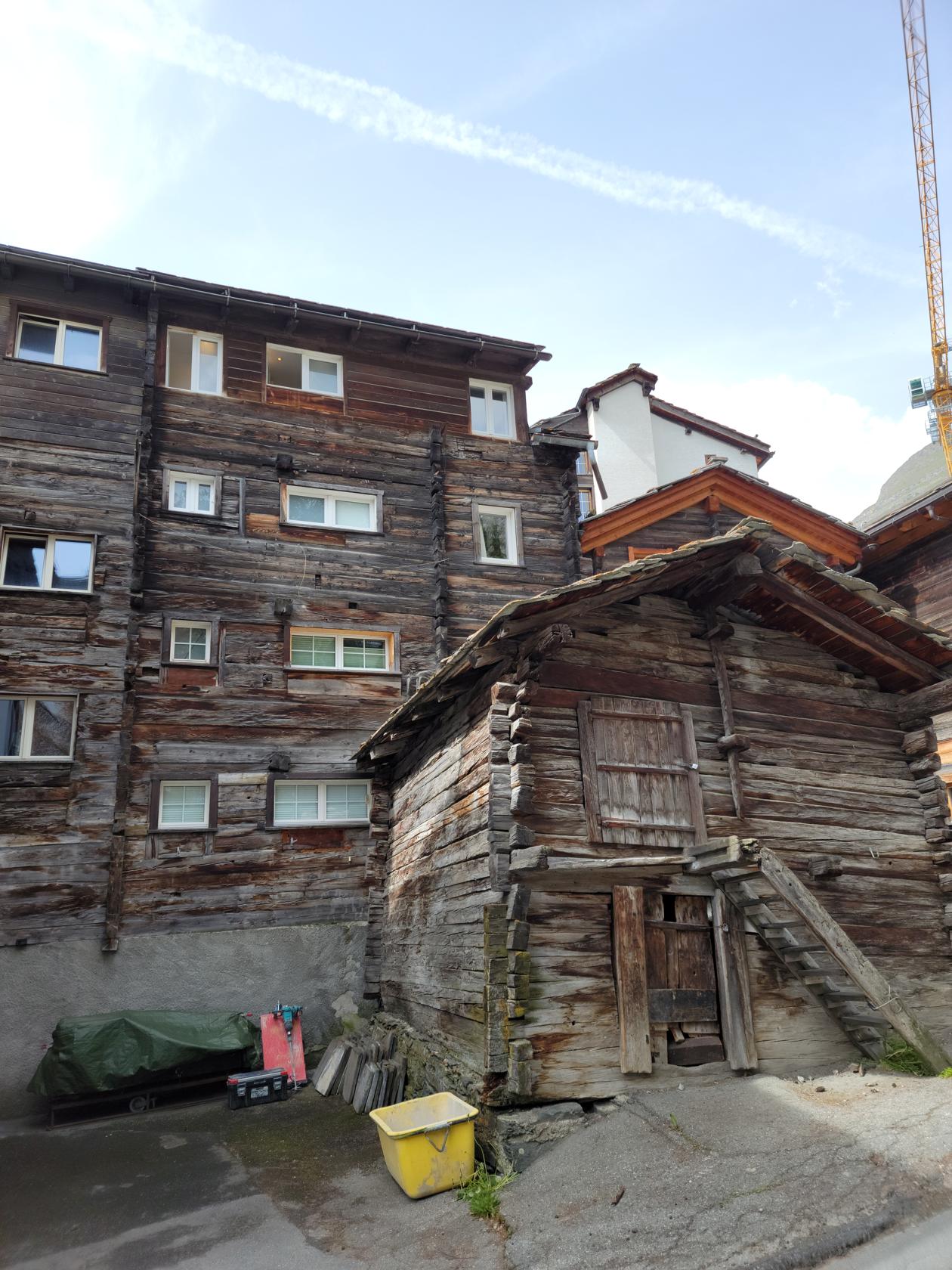
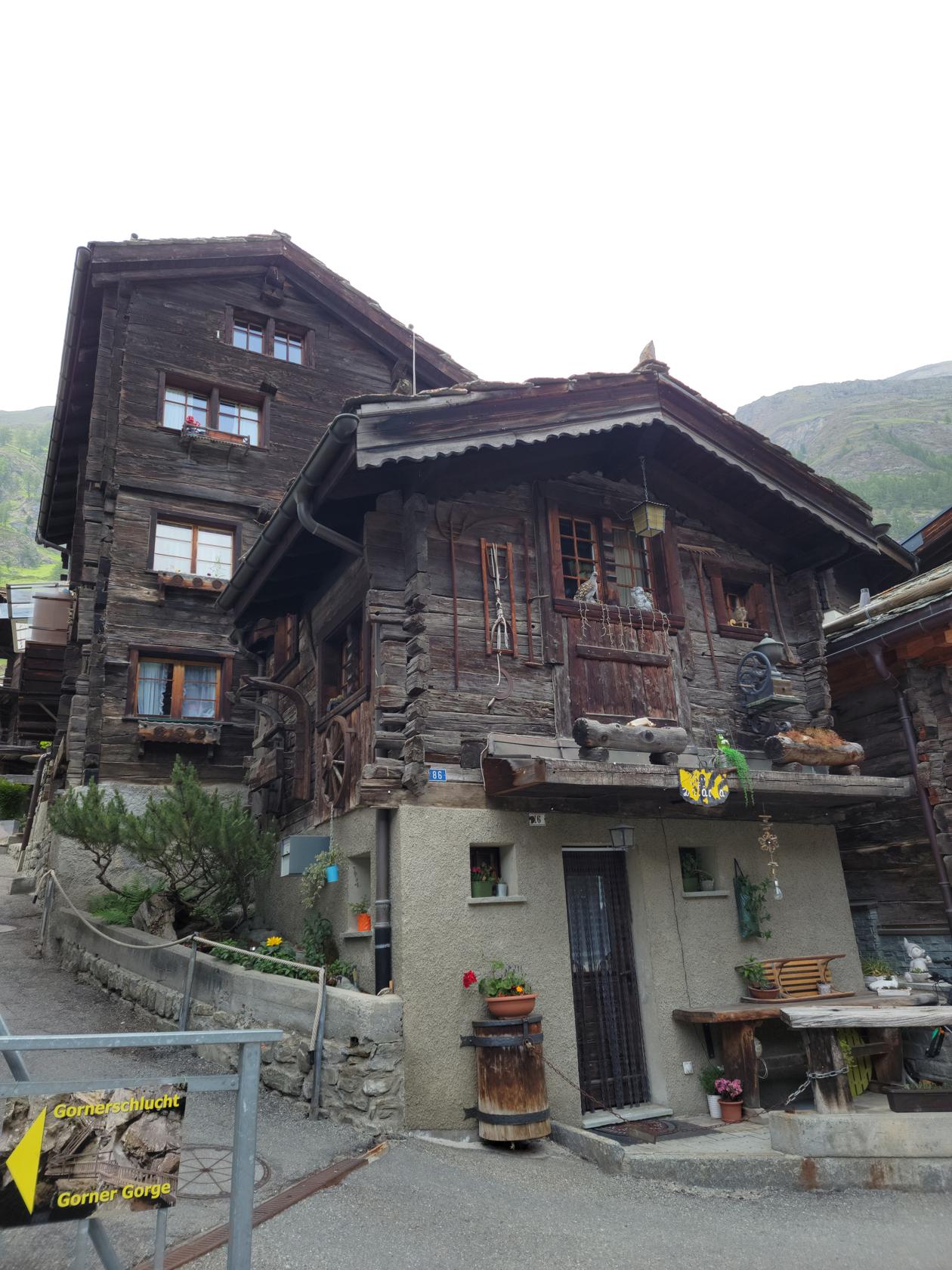
There are examples in the upper parts of Zermatt, of the original buildings that were used by the early residents. Some are still in use today. However, with the increased land prices, most have sold out and moved up valley to get away from the tourism gentrification.
Triftbachtal – Zermatt, Switzerland
Triftbachtal – Zermatt, Switzerland
Scenery on one of our walks – Zermatt, Switzerland
Scenery on one of our walks – Zermatt, Switzerland
Original buildings of Zermatt – Zermatt, Switzerland
Older original buildings of Zermatt – Zermatt, Switzerland
The Tradition Julen
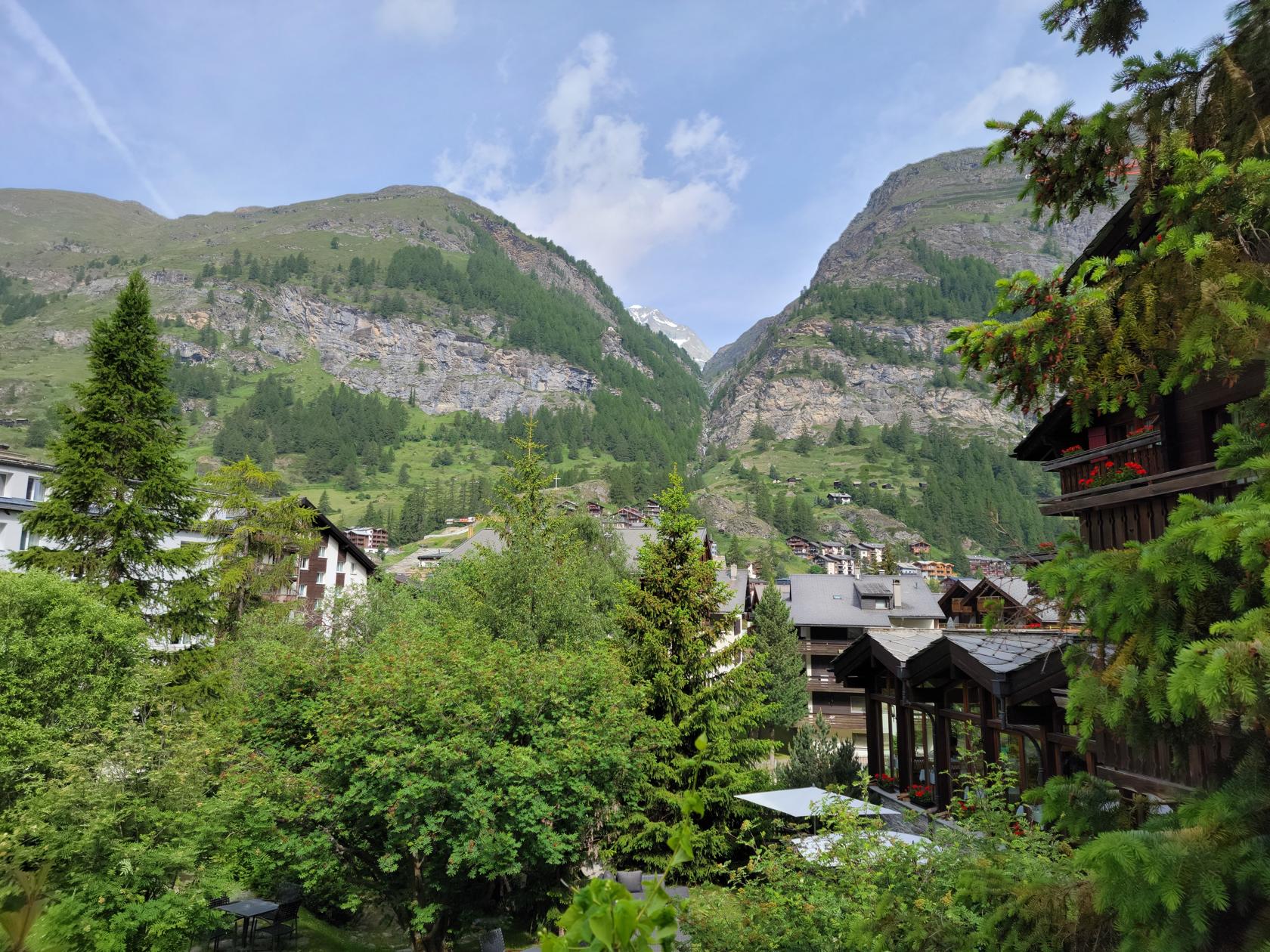
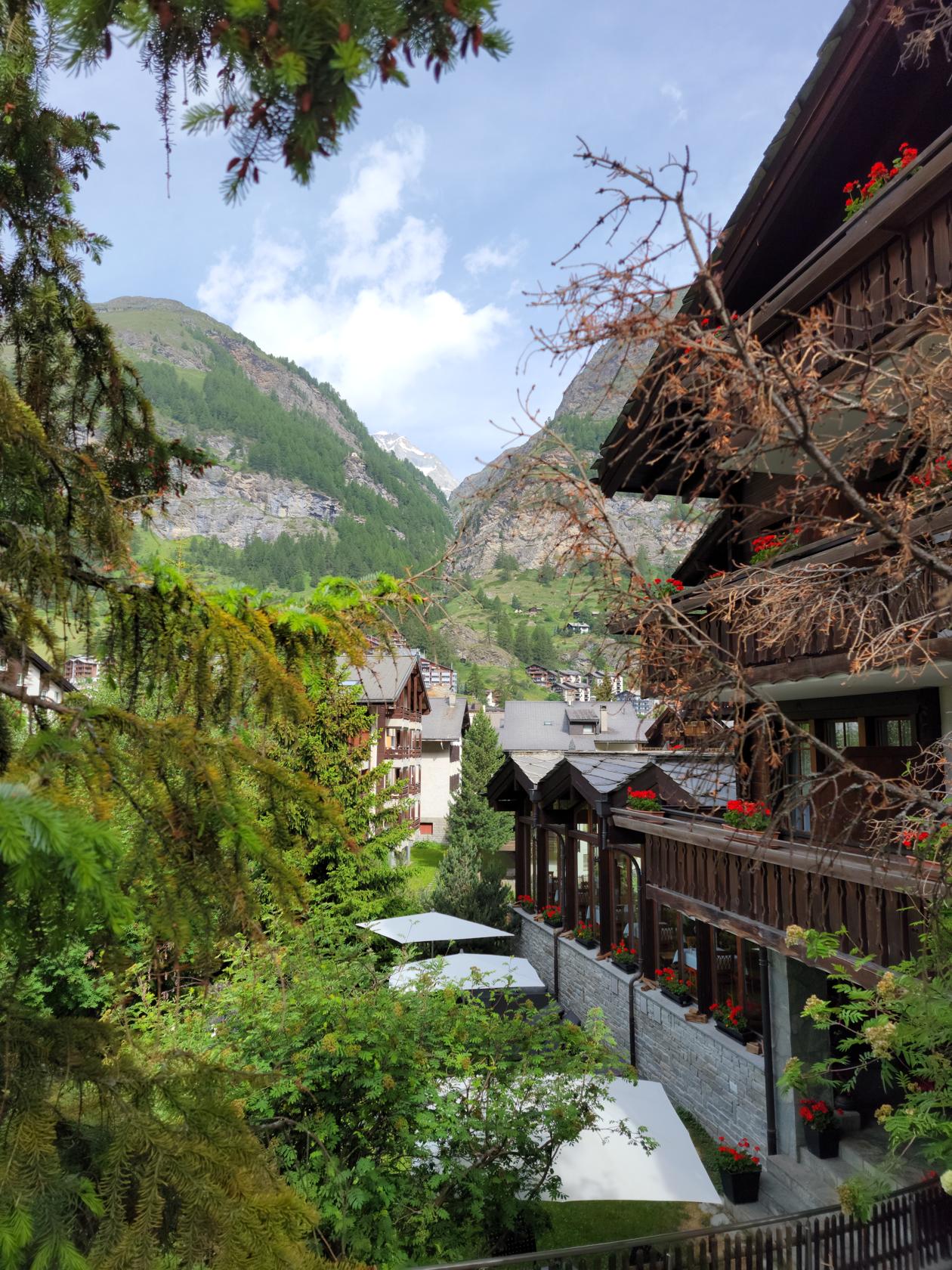
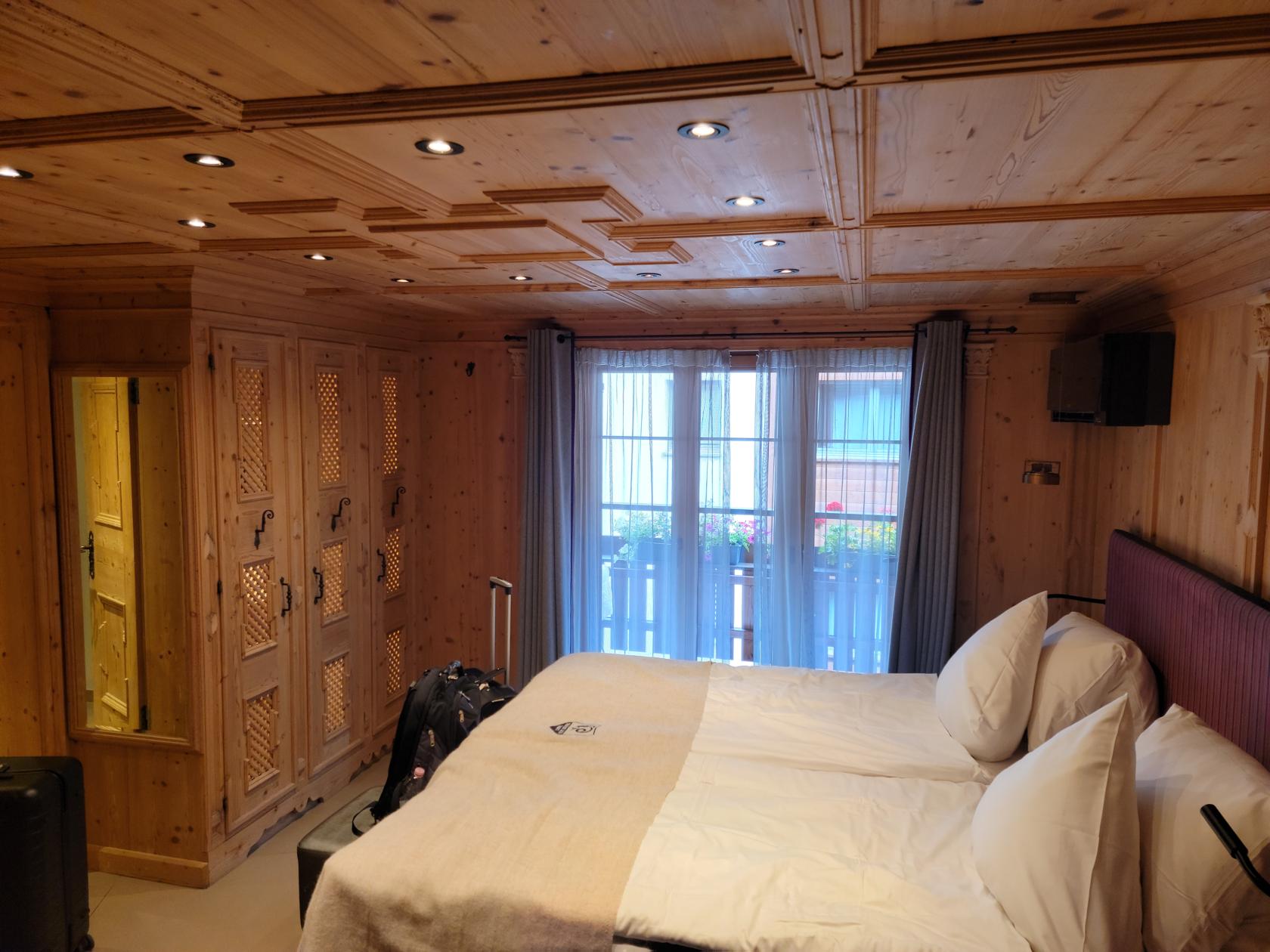
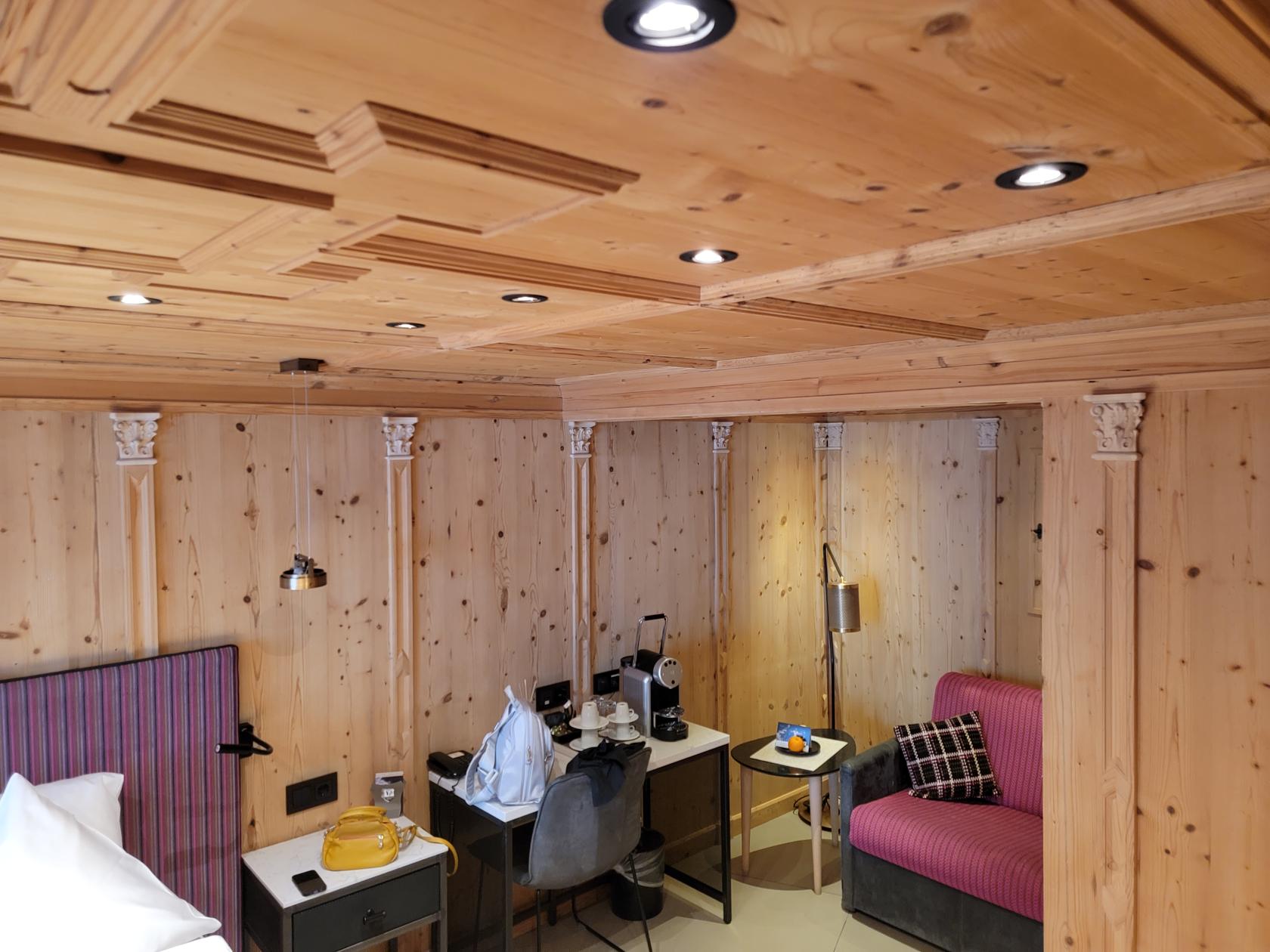
Our hotel is the four star The Tradition Julen hotel. It is one of the more pricier hotels in the area but the rooms are very cozy and comfortable. In fact, it is one of the few four star hotels that I have not had the displeasure of asking for something that should be already included in the room! The service is first rate and so far we are having a great stay. It is also close to the center of town, but kind of out of the way too, so you won’t get a lot of tourist walking by the hotel, which makes for a quieter stay.
Our room – Hotel Tradition Julen – Zermatt, Switzerland
Our room – Hotel Tradition Julen – Zermatt, Switzerland
Restaurants
During our week long stay here, we ate at an assortment of restaurants. The area does have its traditional food and our hotel actually houses a traditional Valais Stube which serves food like this, mainly raclette, beef fondues and other curiosities.
Stadel Restaurant
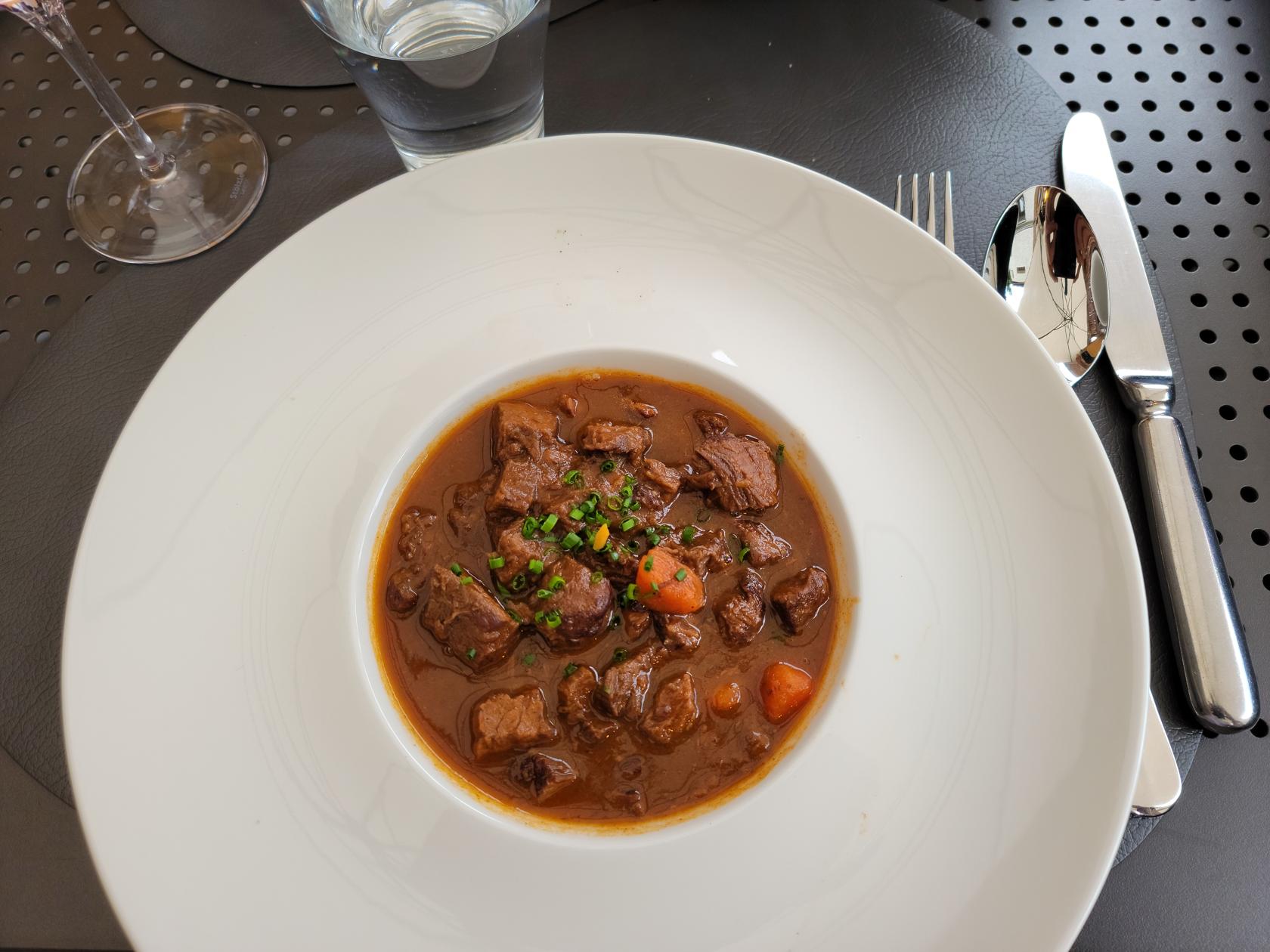
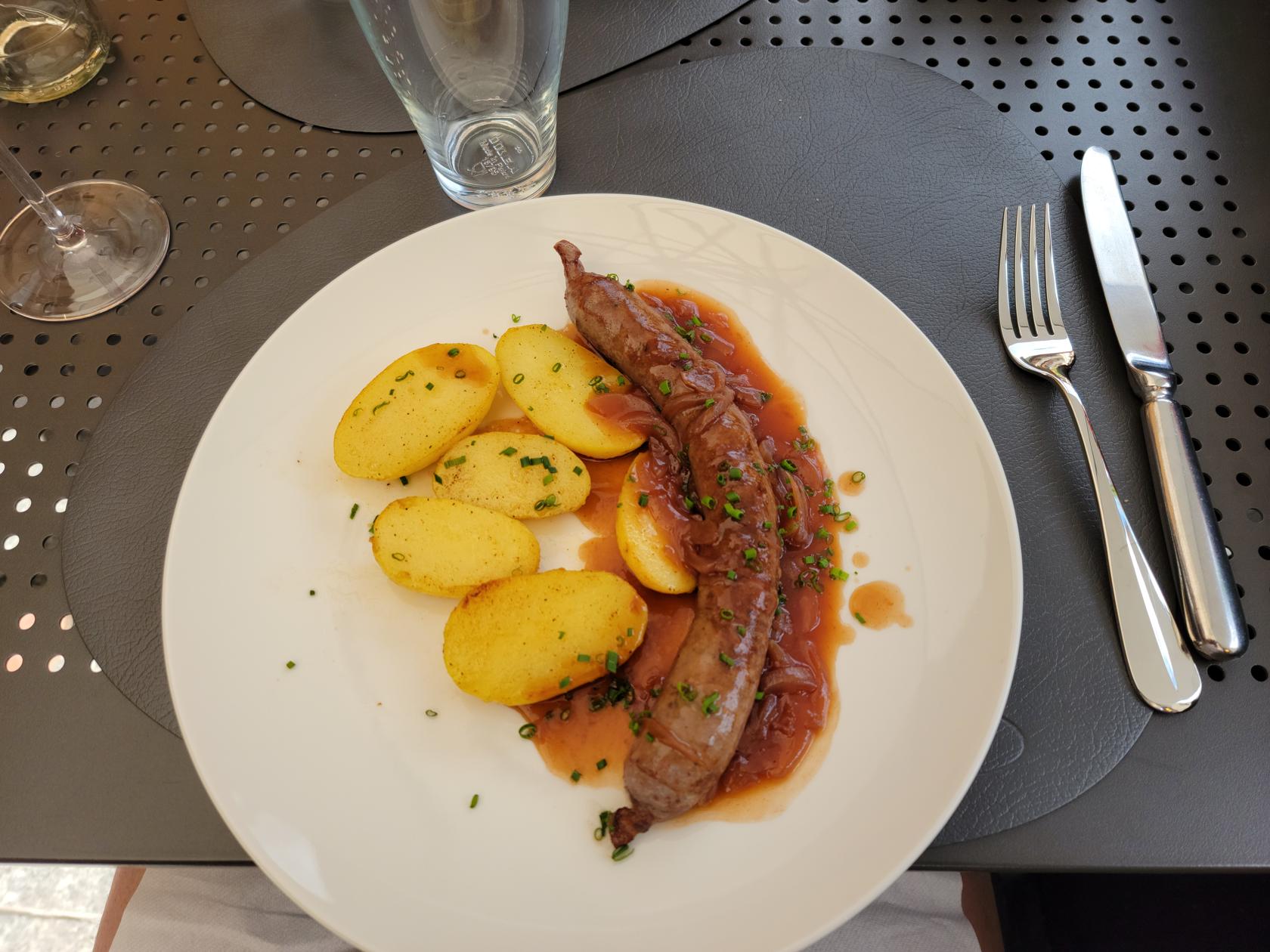
The first restaurant we stopped at that had just opened for the summer months. The service and food were good, but I have to knock them a bit for not having any sauerkraut – it is on the menu. It would have paired well with the Water Buffalo Bratwurst I had ordered and enjoyed.
Water Buffalo Gulash – Stadel Restaurant – Zermatt, Switzerland
Water Buffalo Bratwurst with potatoes – Stadel Restaurant – Zermatt, Switzerland
Hotel Julen Restaurant
Our hotel has its own restaurant that serves cosmopolitan cuisine. Due to weather complications, we were forced to stay in and enjoy what it had to offer one evening and were not disappointed. We thought the food was very good and the prices fair.
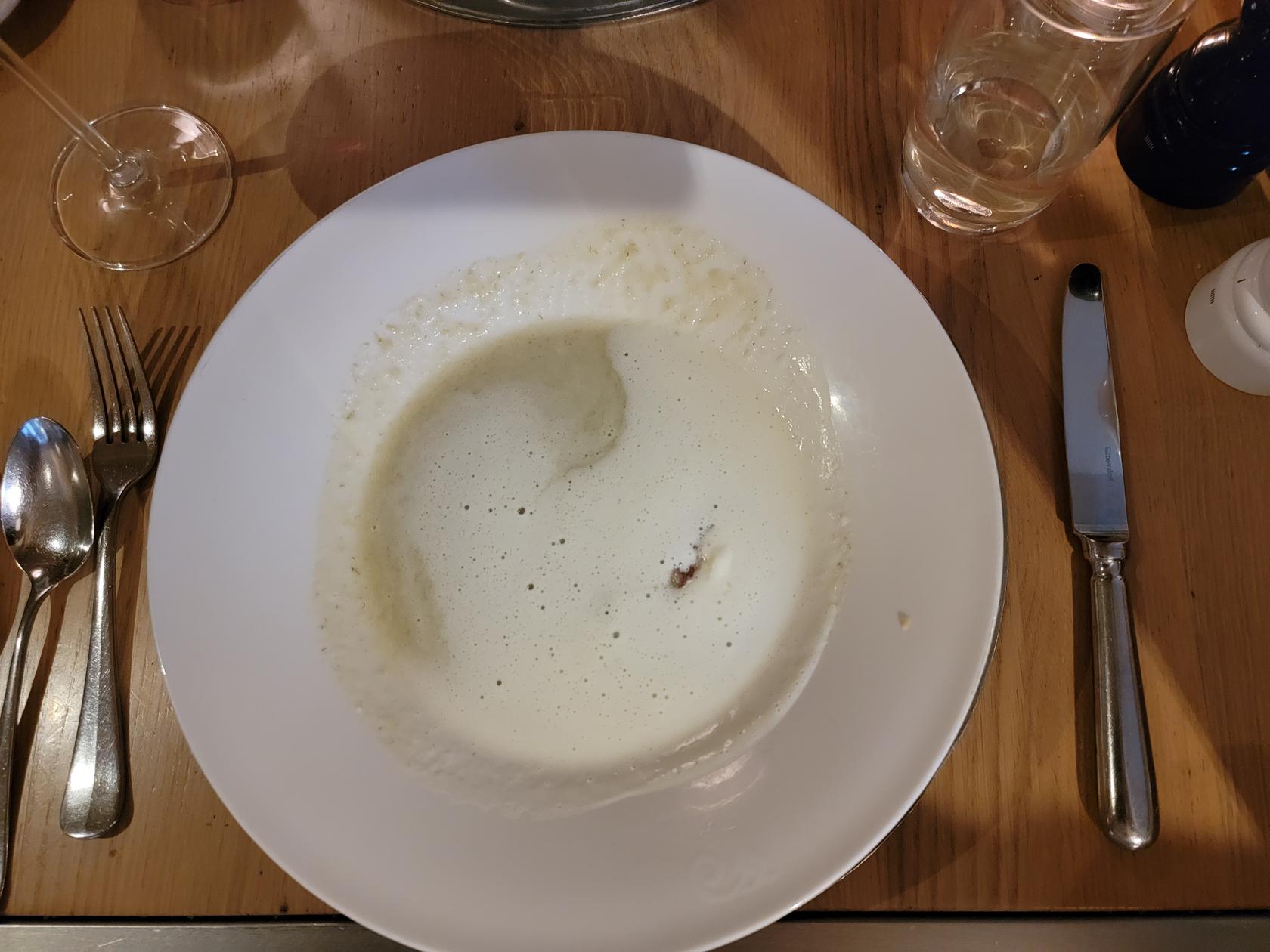
Cauliflower soup – Hotel Julen Restaurant – Zermatt, Switzerland
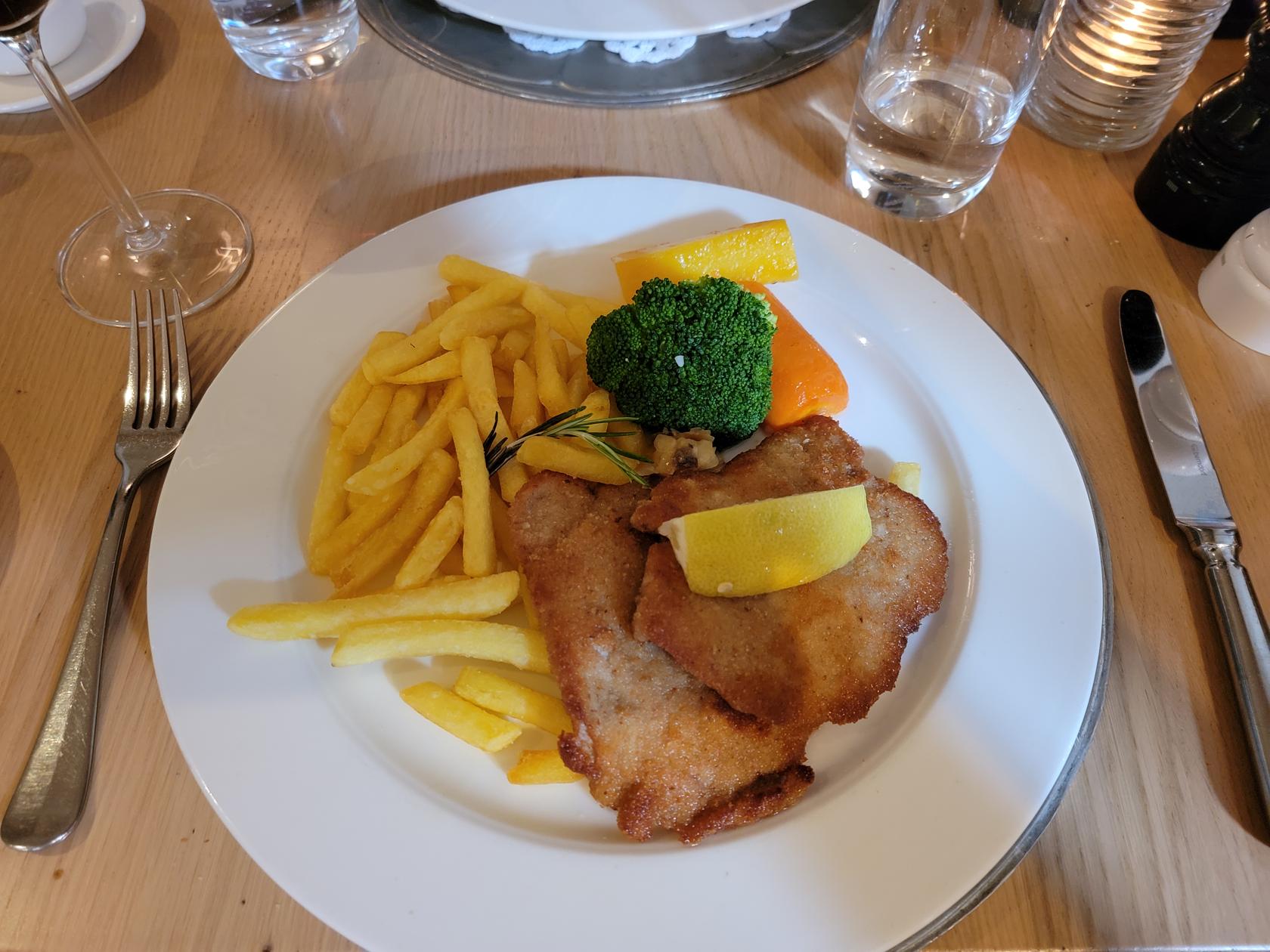
Traditional Wiener Schnitzel with french fried – Hotel Julen Restaurant – Zermatt, Switzerland
Our initial feel for the town is good, it has excellent services and plenty of restaurants and bars. Some of the food can be pricey, but if you stick to the traditional German fare, the prices seem more reasonable. The people are very friendly and speak multiple language, especially English, so getting around should not be an issue.
So we are still here and our next plans included hiking and using the amazing funicular, cog railway and gondola system. I will make additional entries for those once we have completed and recuperated from them a bit. Until then, stay tuned.