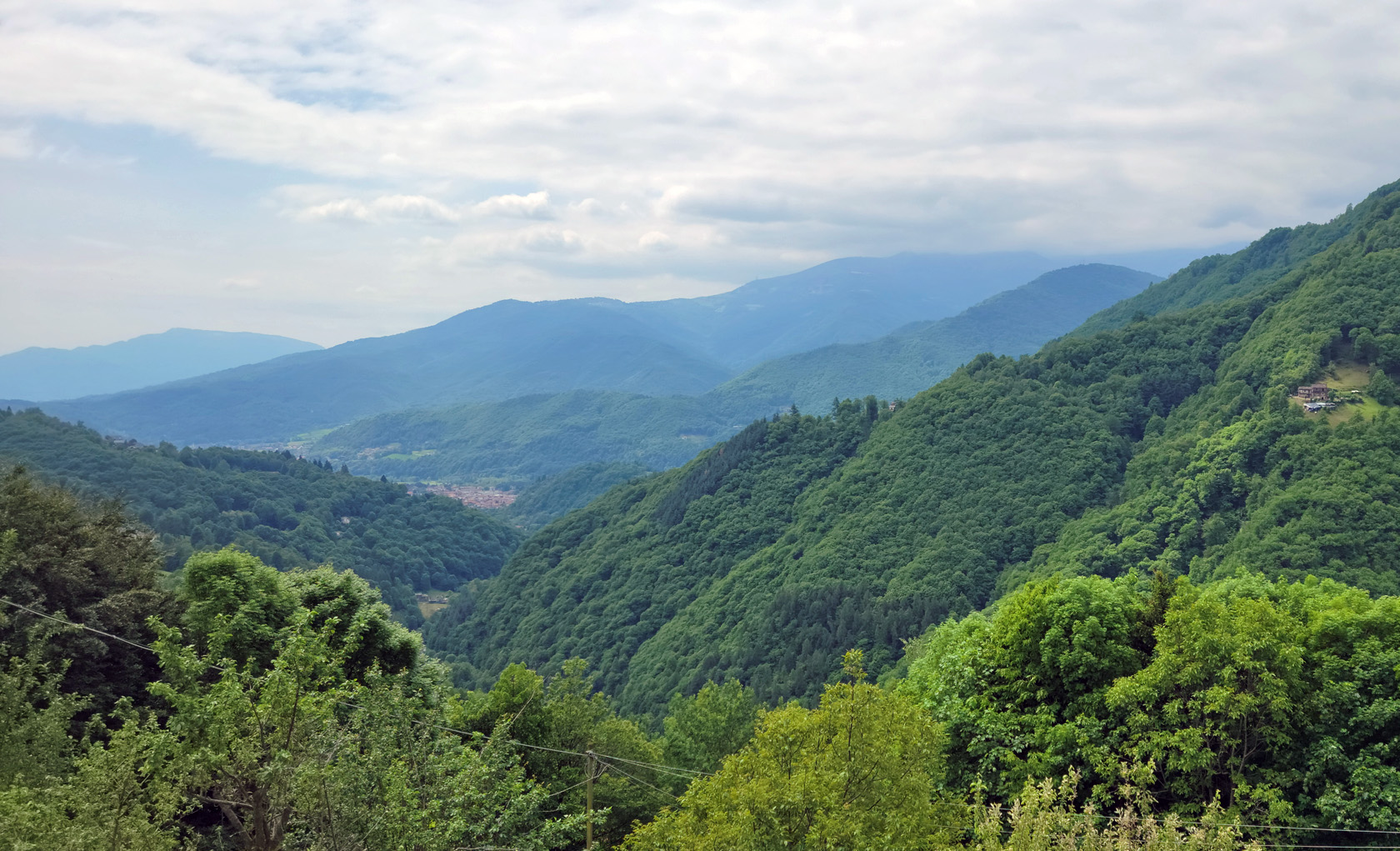
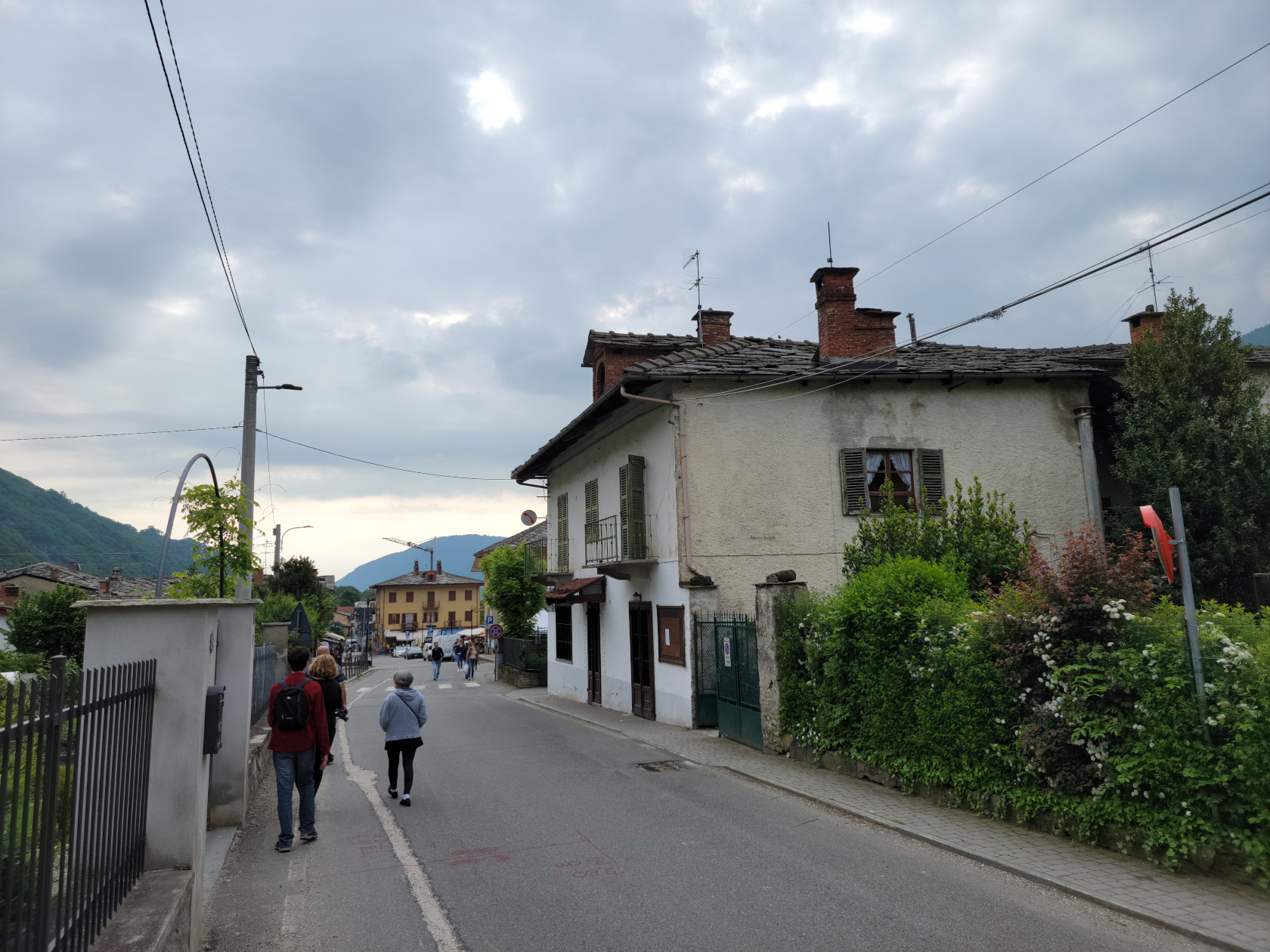
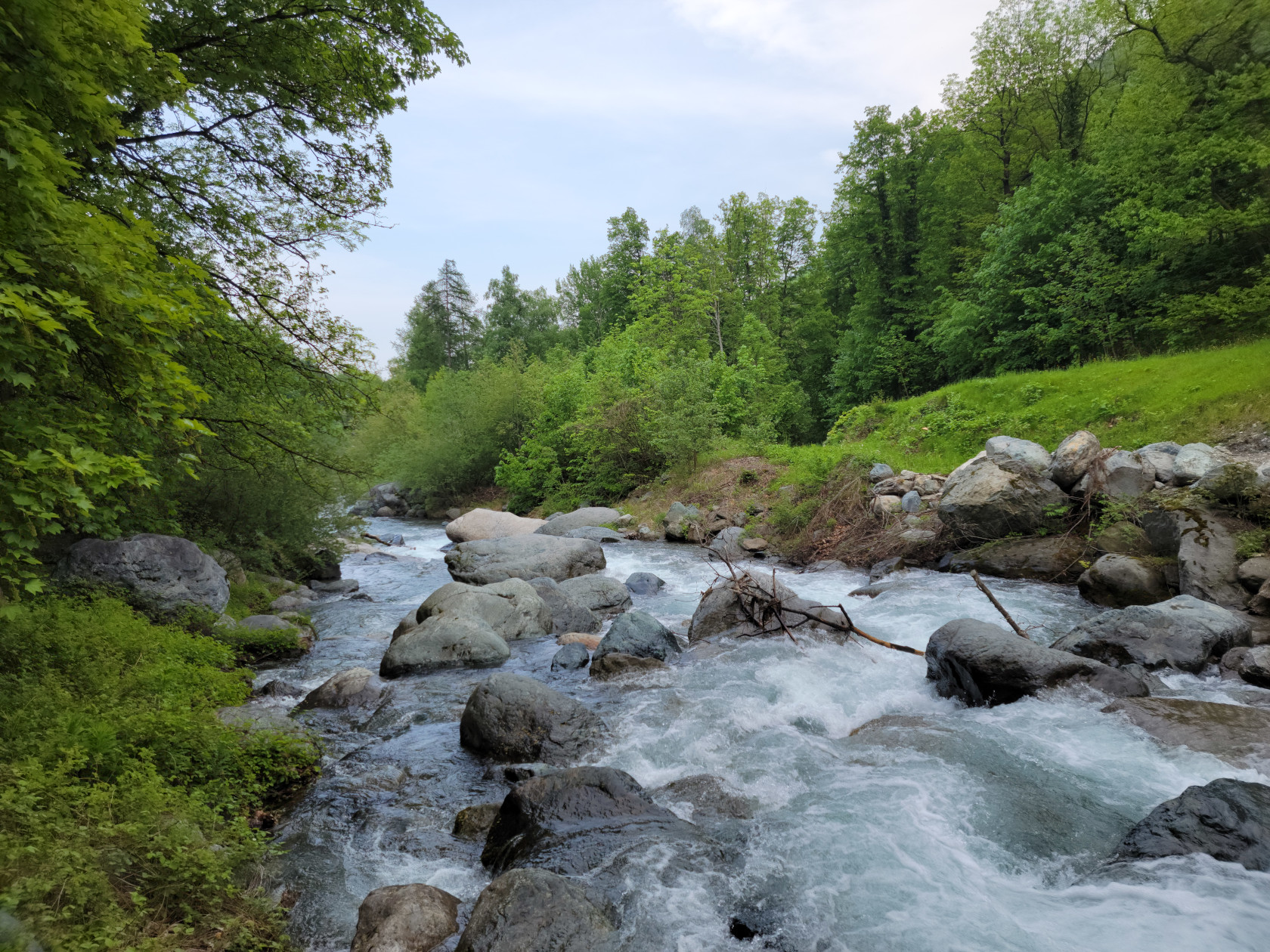
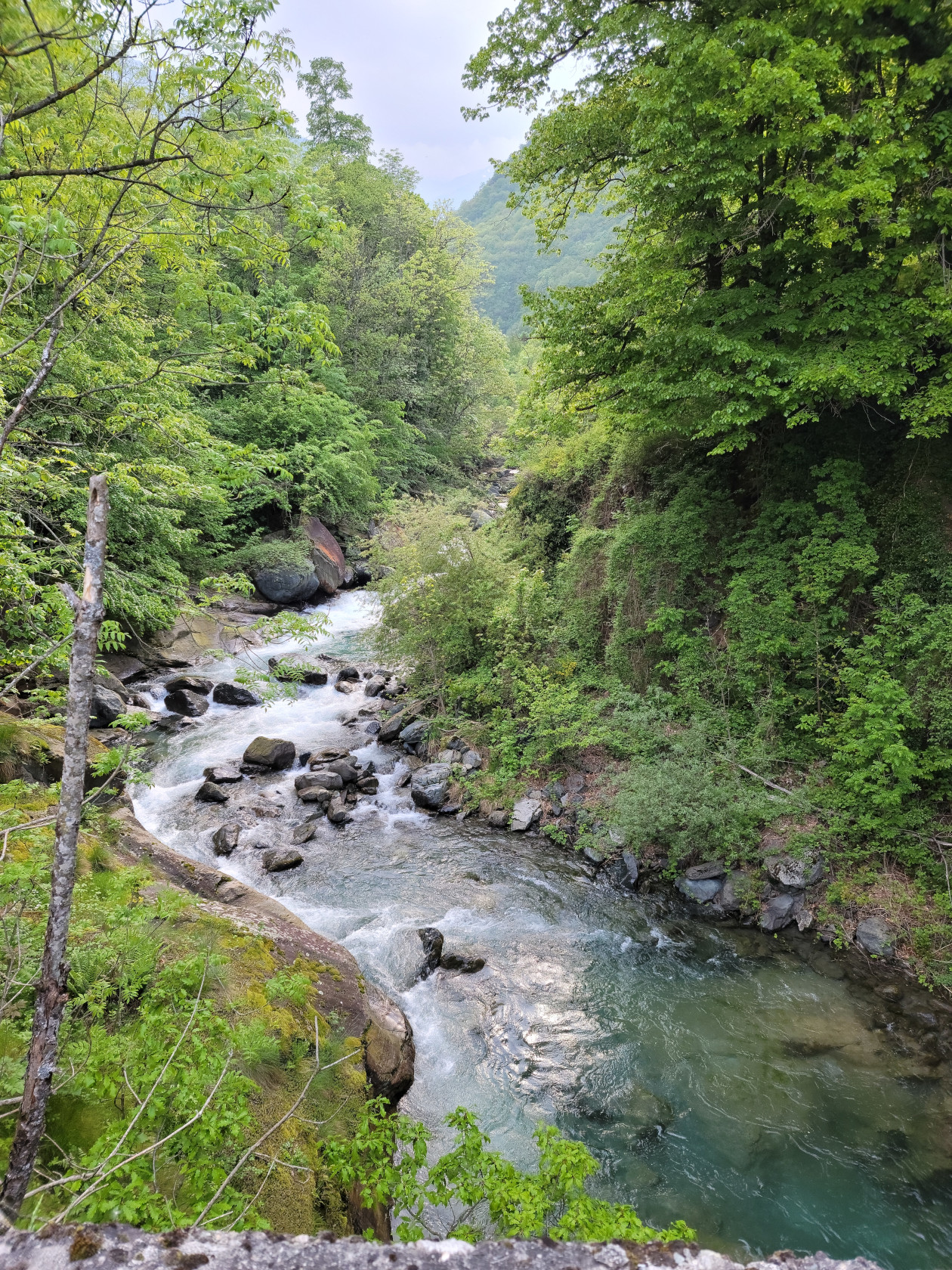
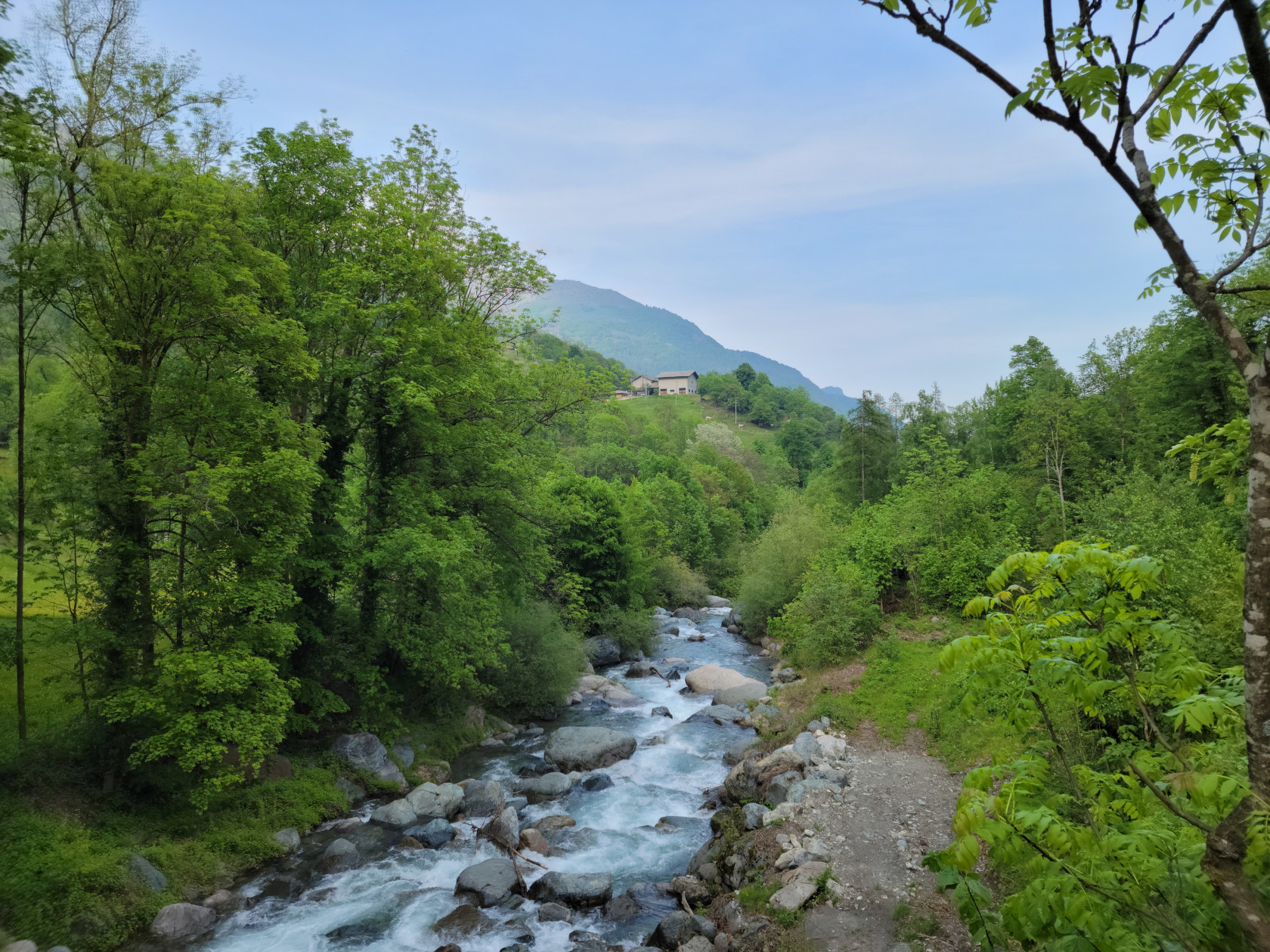
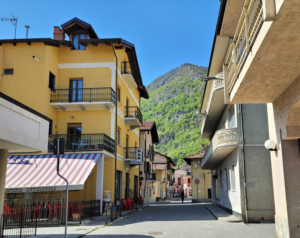
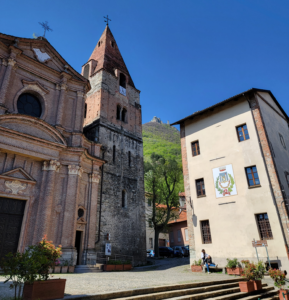
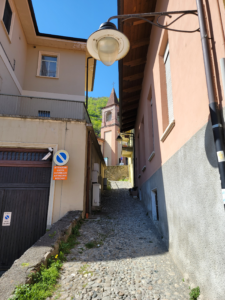
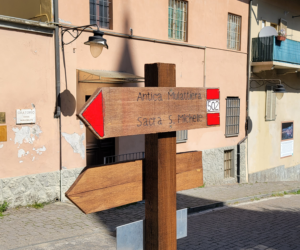
A short drive, just outside Torre Pellice, is the small commune of Angrogna. Situated high up on the hill. Overlooking Torre Pellice, Angrogna commands a very nice view of the valley floor and hides a local secret in the form of a tiny underground chapel by a mostly unknown religious sect.
The Waldensians
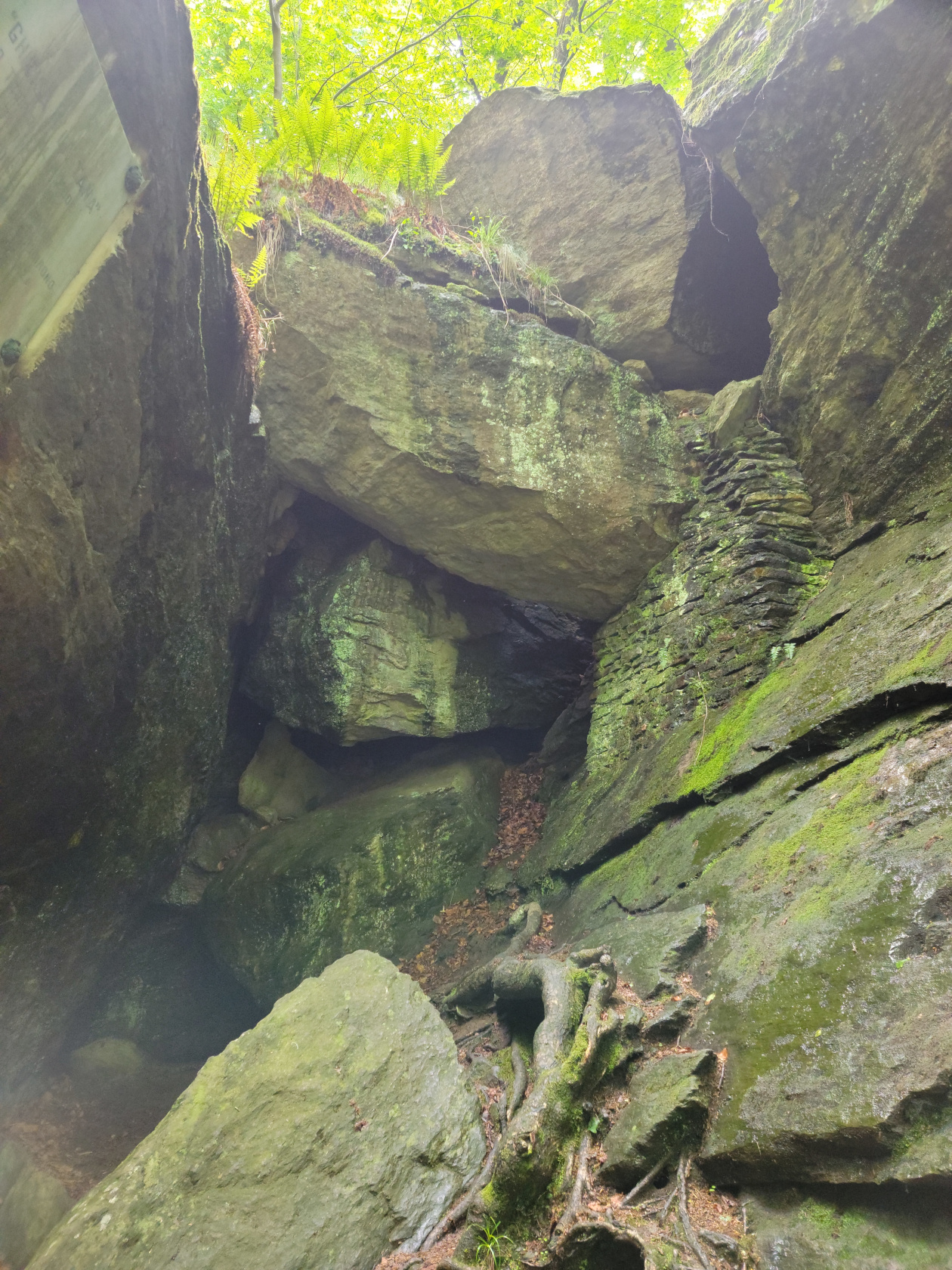
The Waldensians were and are a pre-reformation sect that was extremely persecuted by the Roman Catholic Church as heretical. Therefore, they had to take their religious practices in many places underground, in order to escape discrimination, capture, torture and in many cases death. In Angrogna you will find one such hide out, a small cave on a mountainside used as a chapel. Here members would secretly meet in order to carry out their many religious practices without the notice of the church or local onlookers.
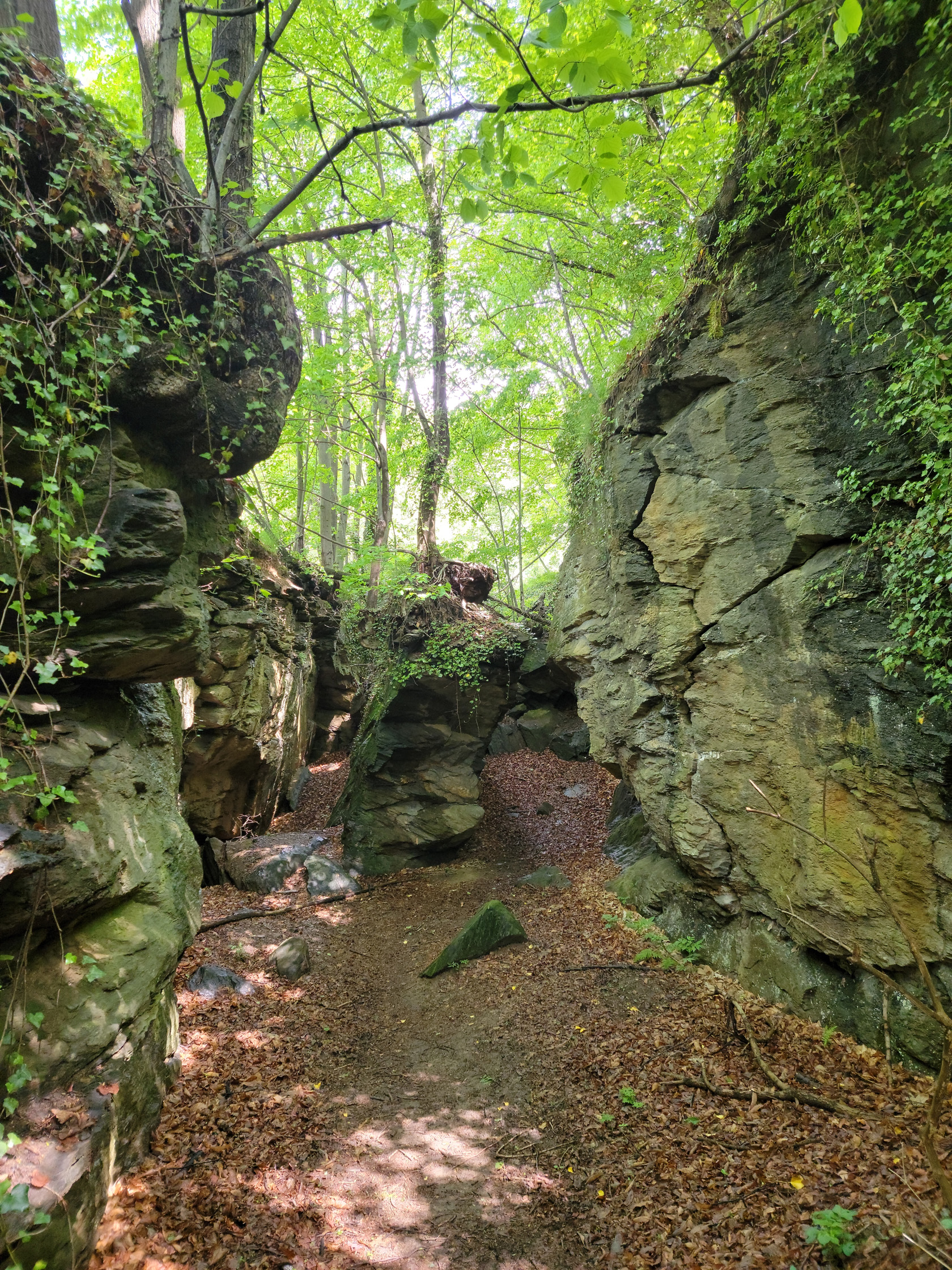
The Geology Close To The Waldensian Chapel – Craggy And Full Of Boulders
The Waldensian Chapel
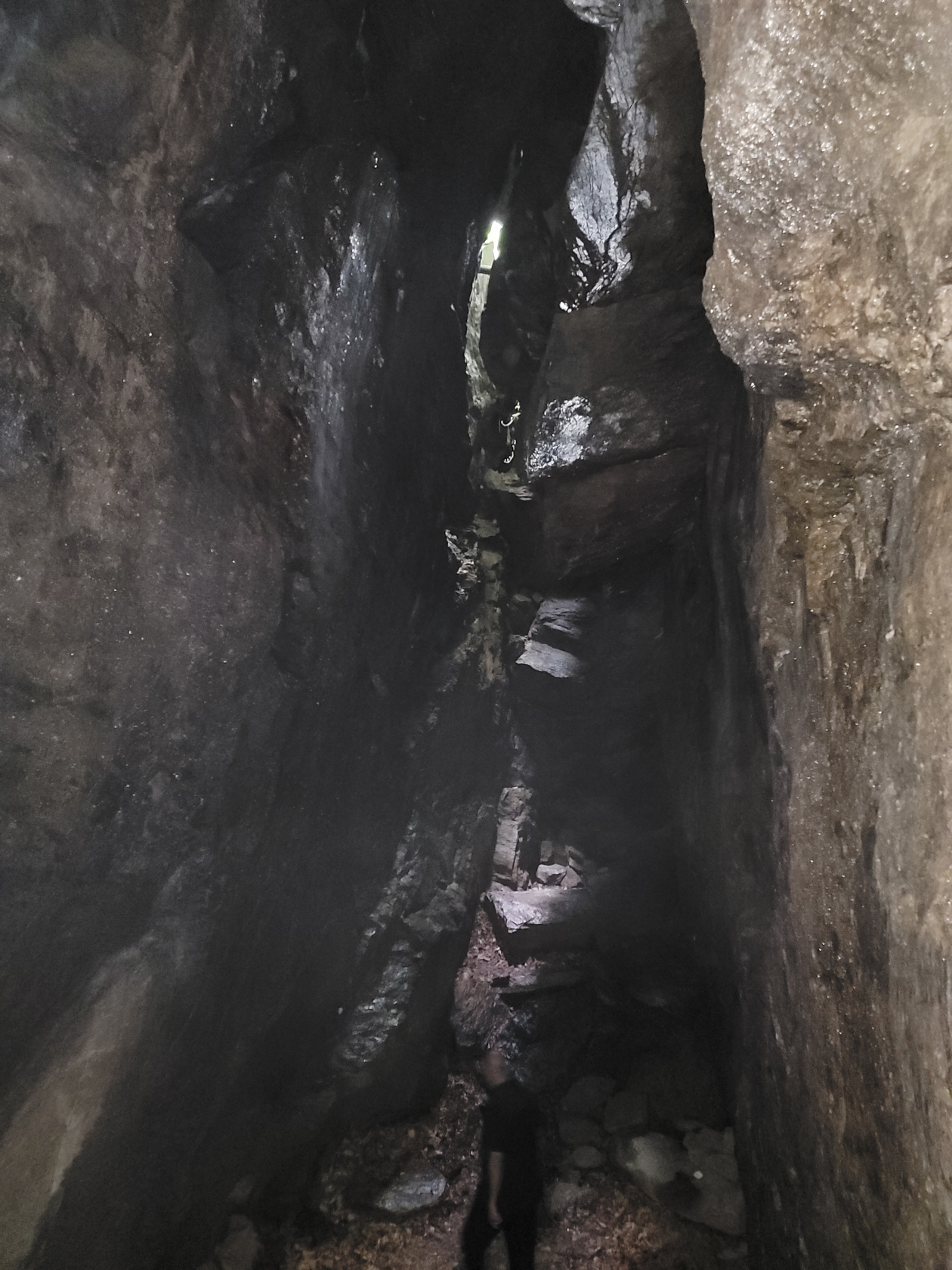
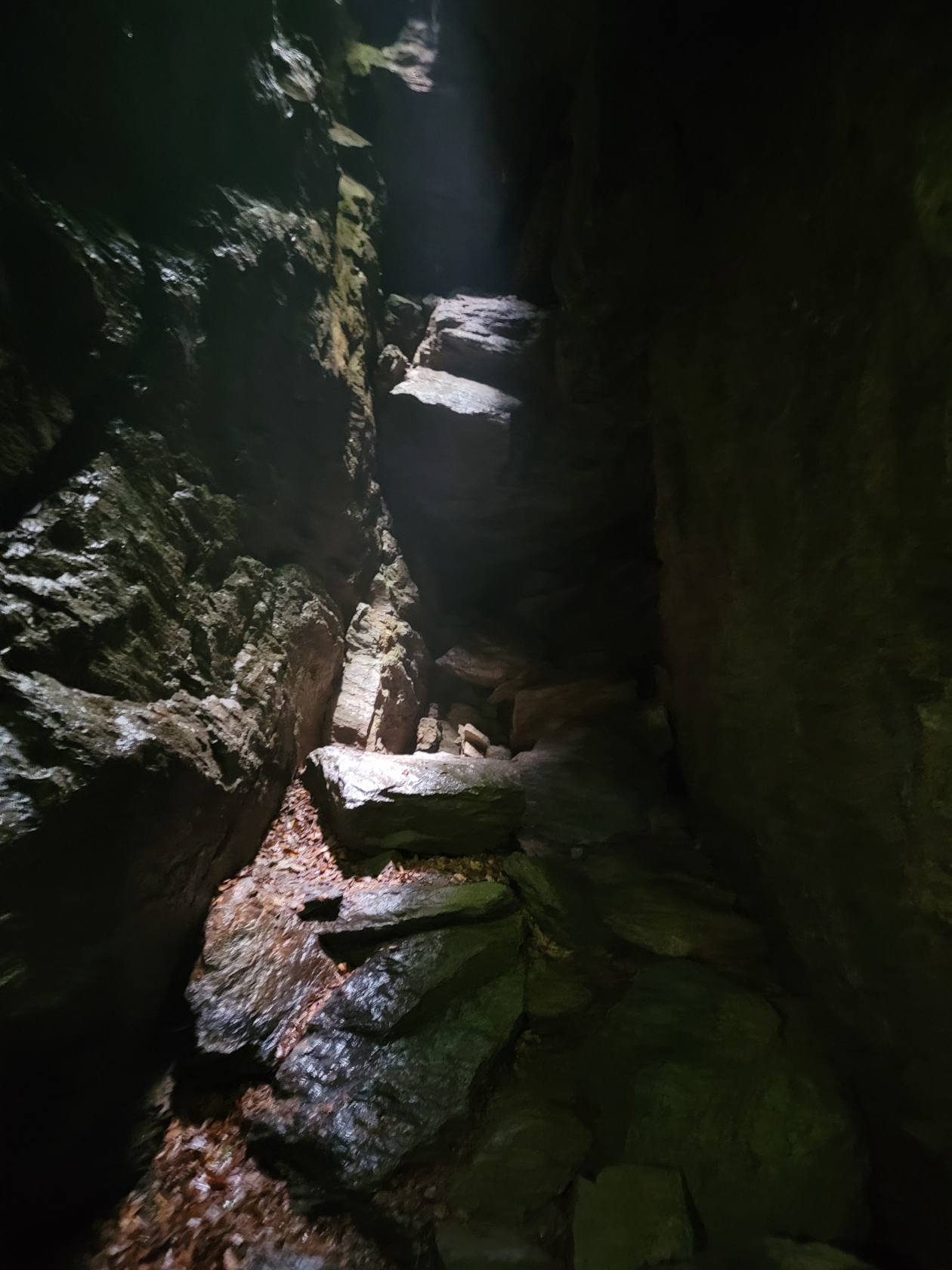
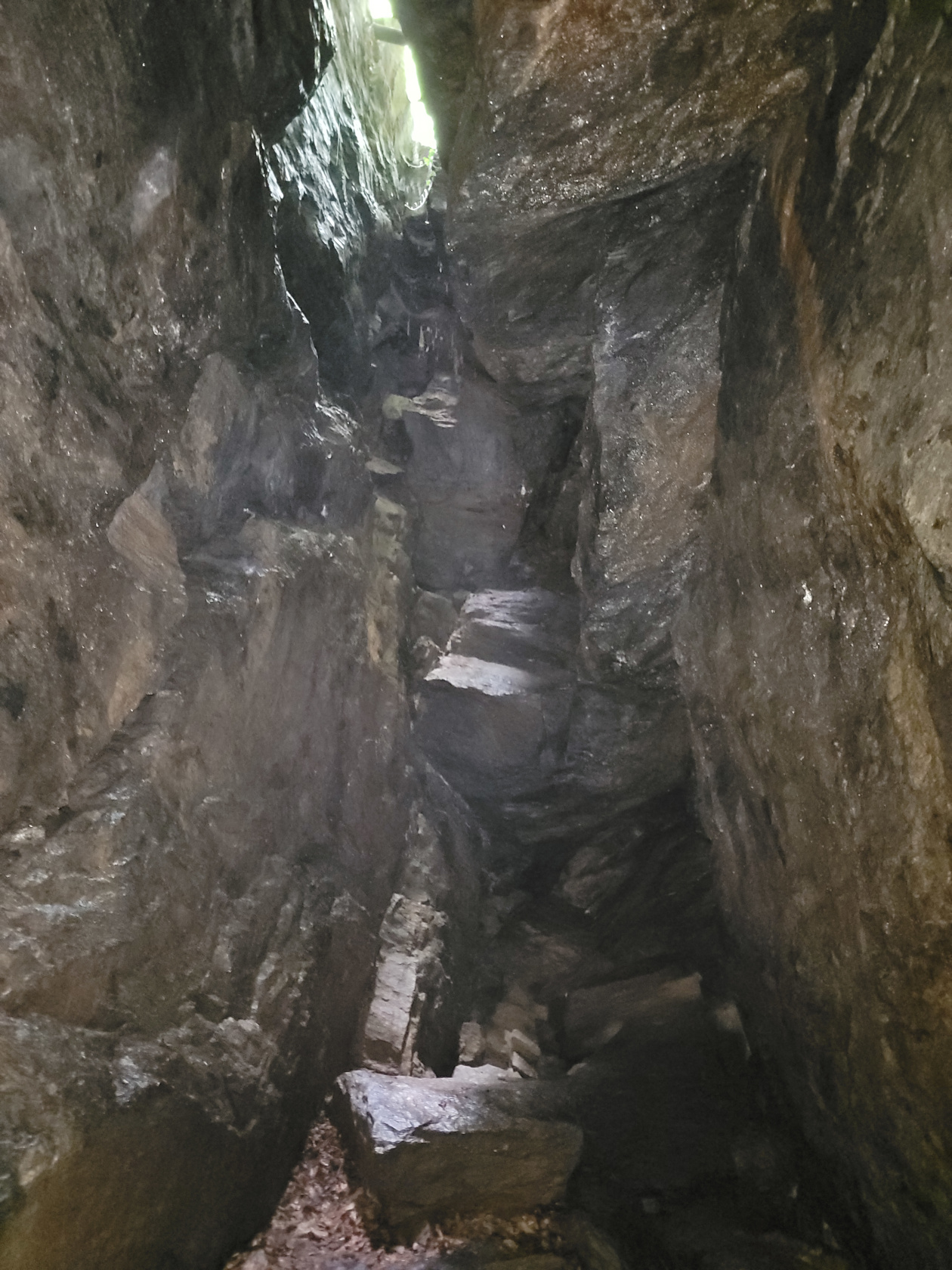
The cave is a poor collection of boulders left by the ice age that apparently produced a cave structure suitable enough for such practices. It is difficult to find, if they were not signs and an entrance stairway to its opening. Even then, the entrance is wet, a very tight fit for most present individuals, and thus requires a degree climbing to actually reach the inner chamber.
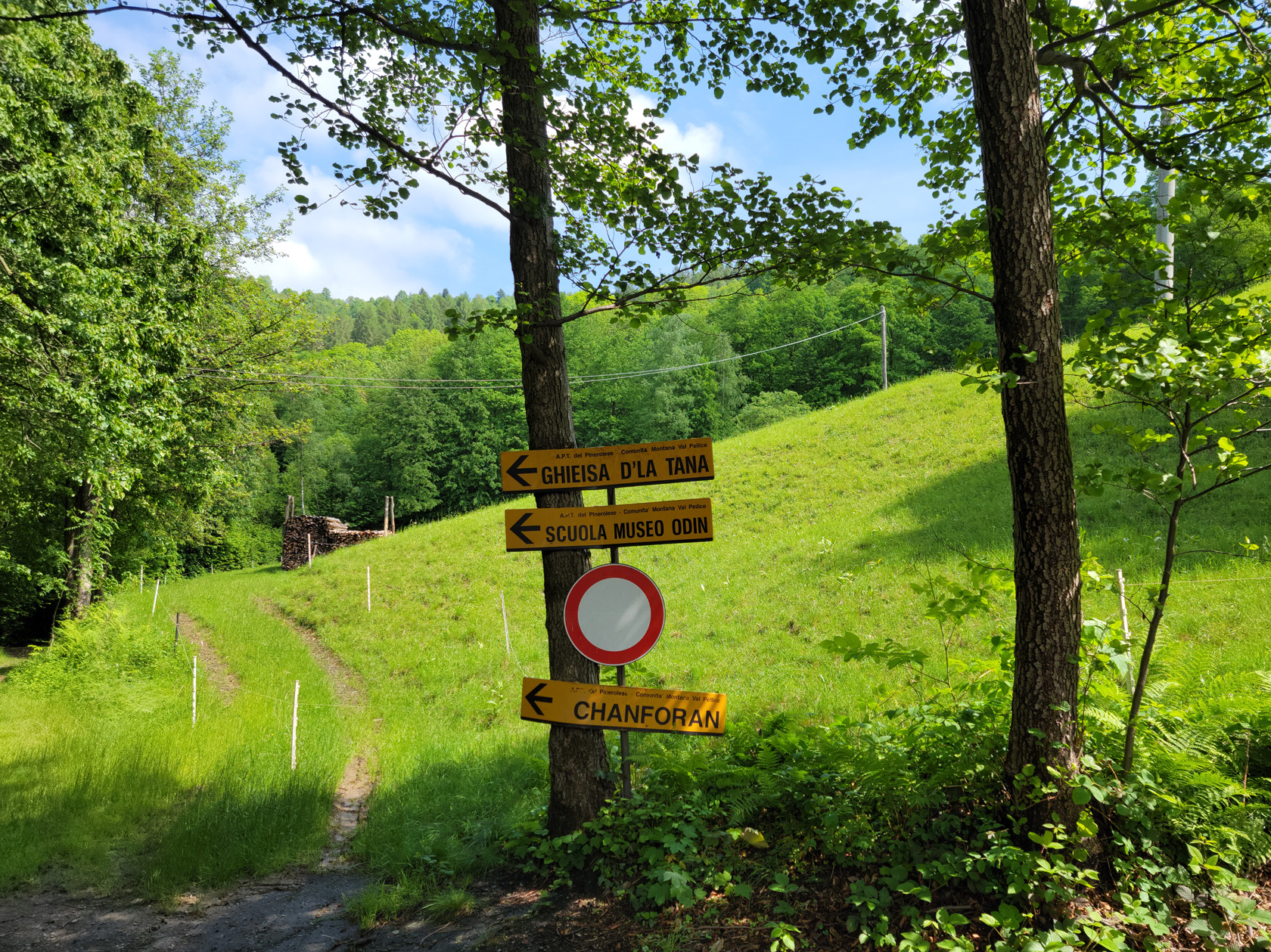
Direction To The Waldensian Chapel – Ghieisa D’La Tana
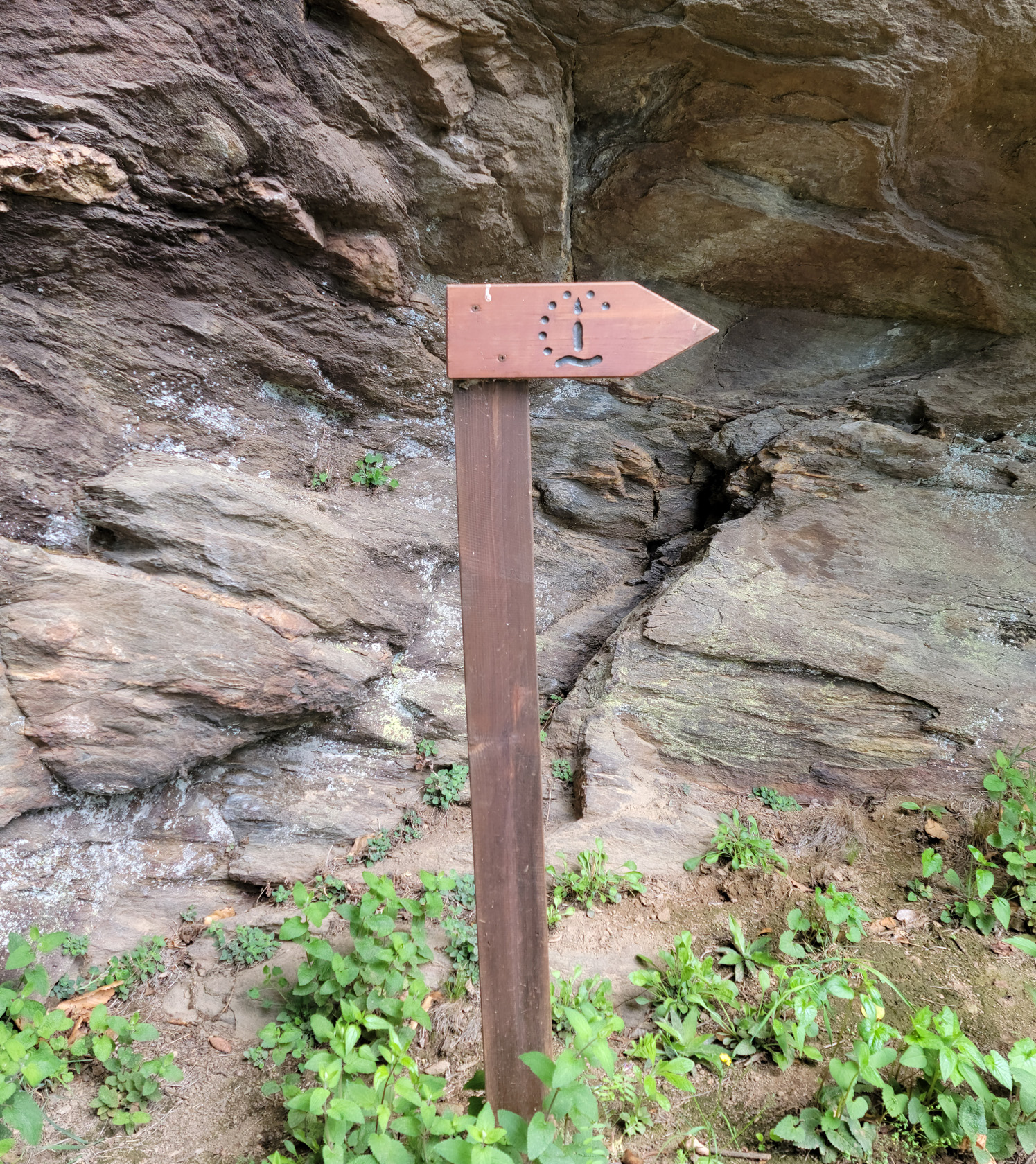
Trail Sign To The Waldensian Chapel
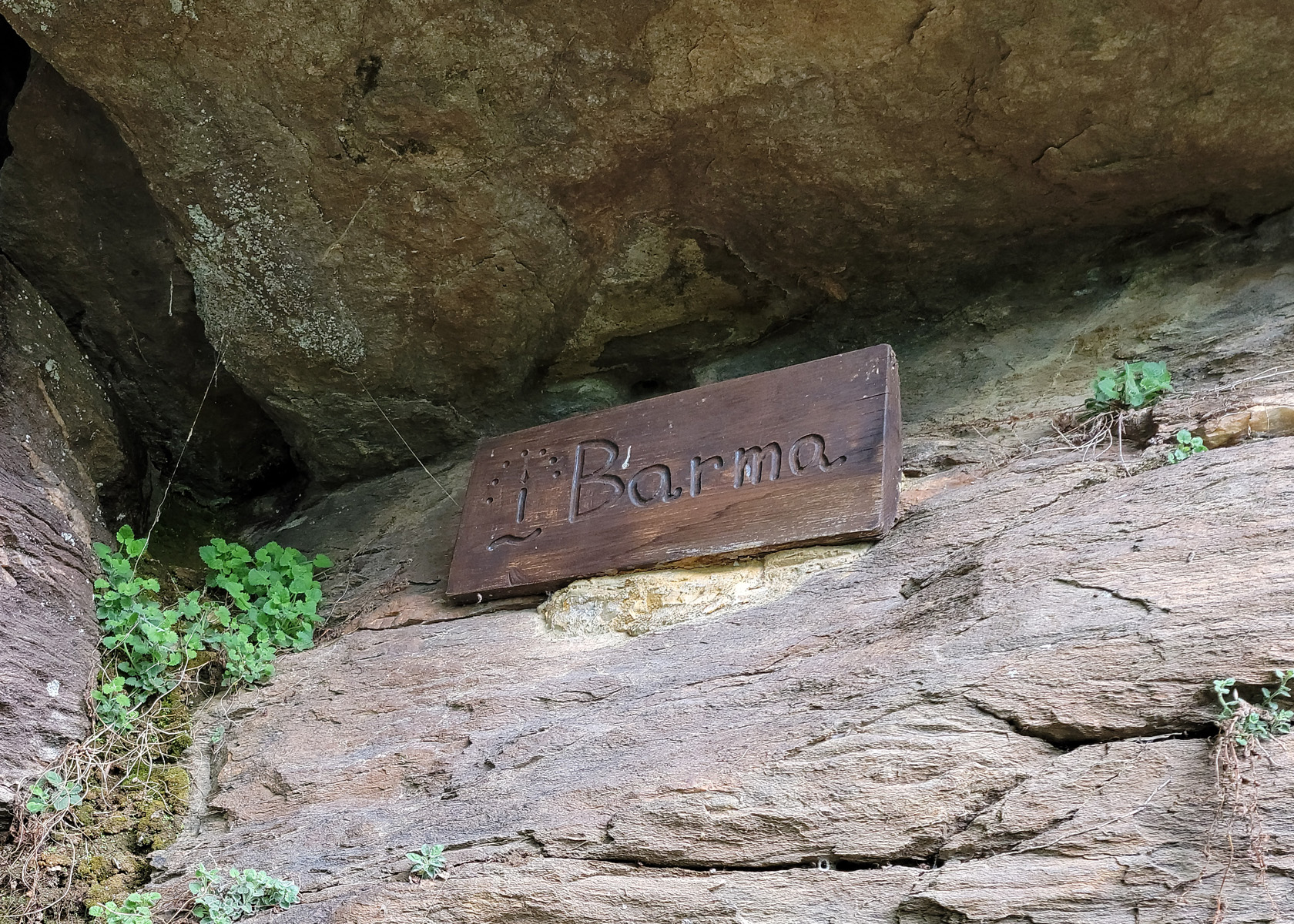
Modern Sign For The Waldensian Church
Entrance To The Waldensian Chapel
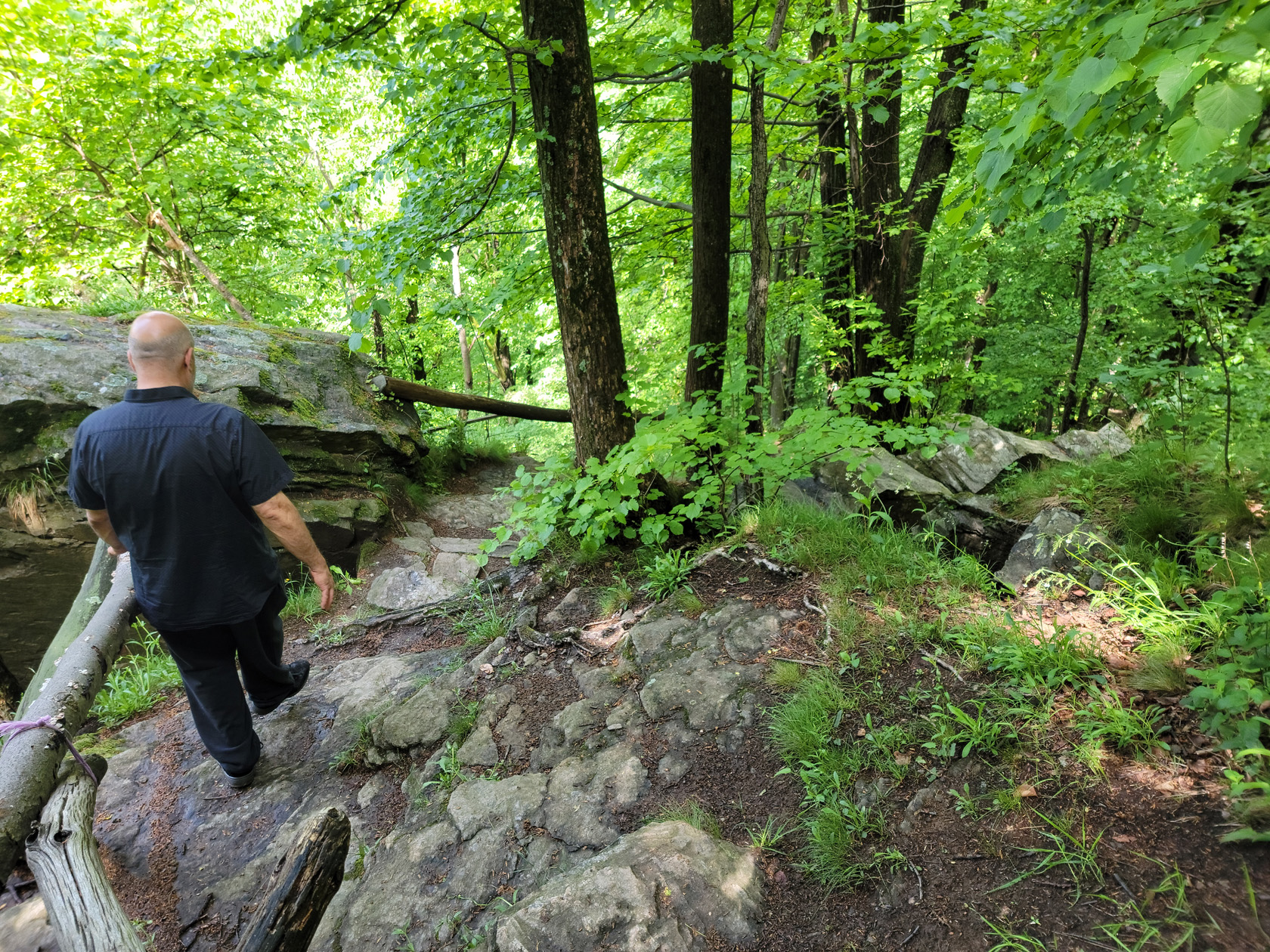
Sam, Our Host, Walking Down The Stairs To The Waldensian Chapel
The Waldensian Chapel Entrance
The Waldensian Chapel Inner Cave From Entrance
The Waldensian Chapel – Light From Above
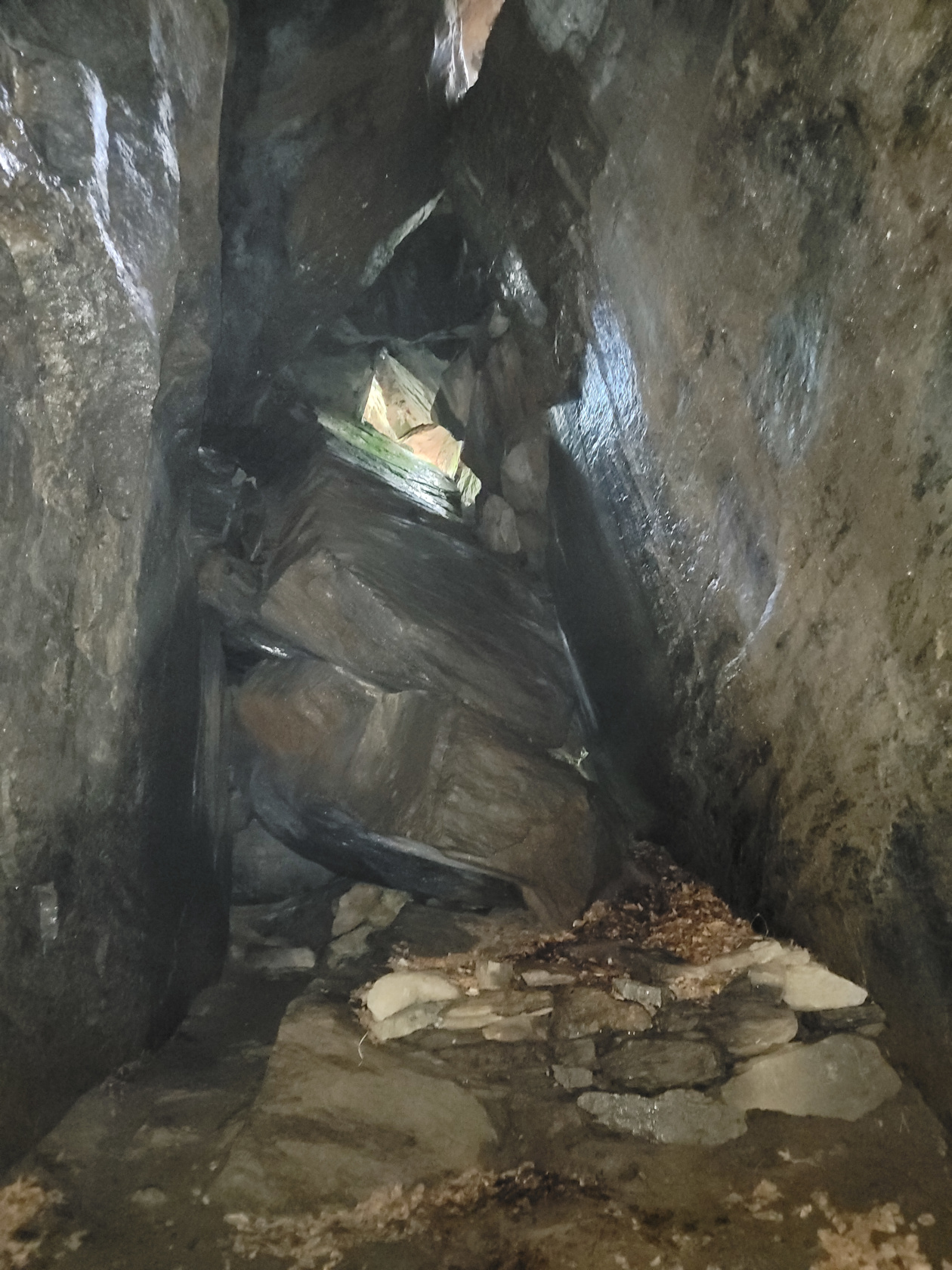
The Waldensian Chapel – The Chapel Altar Lit By A Sunbeam
The Waldensian Chapel – Chapel Altar And Inside – Using A Flash
The Waldensian Chapel – The Altar – Using A Flash
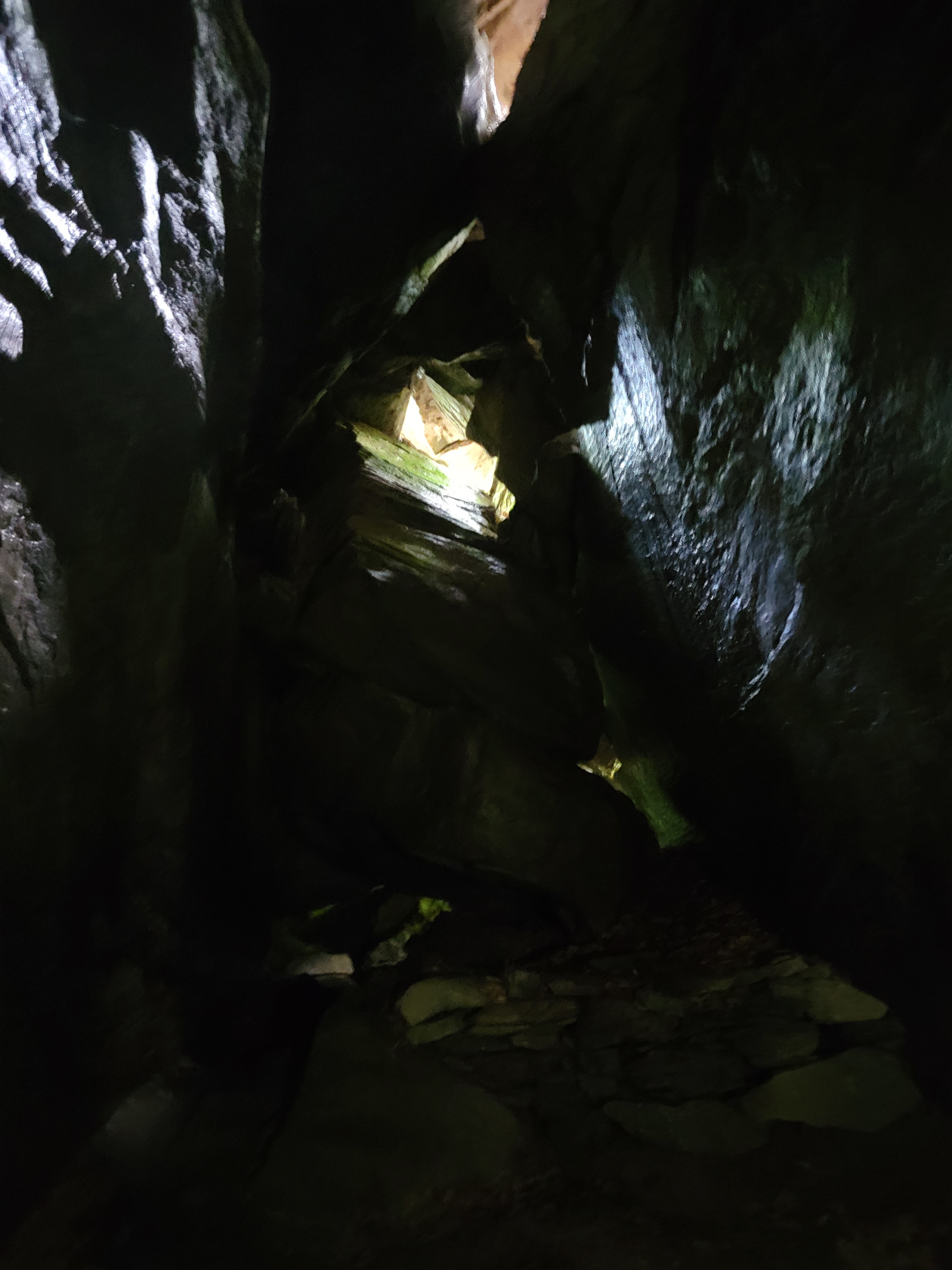
The inner chamber is a small, wet and very dark room about five by ten meters. It includes a small makeshift altar, but nothing else. In its day, it must have been something to experience during a mass.
The School Of Odin-Bertot
Very close by and less than a few hundred meter walk from the hidden chapel, is the School of Odin-Bertot.
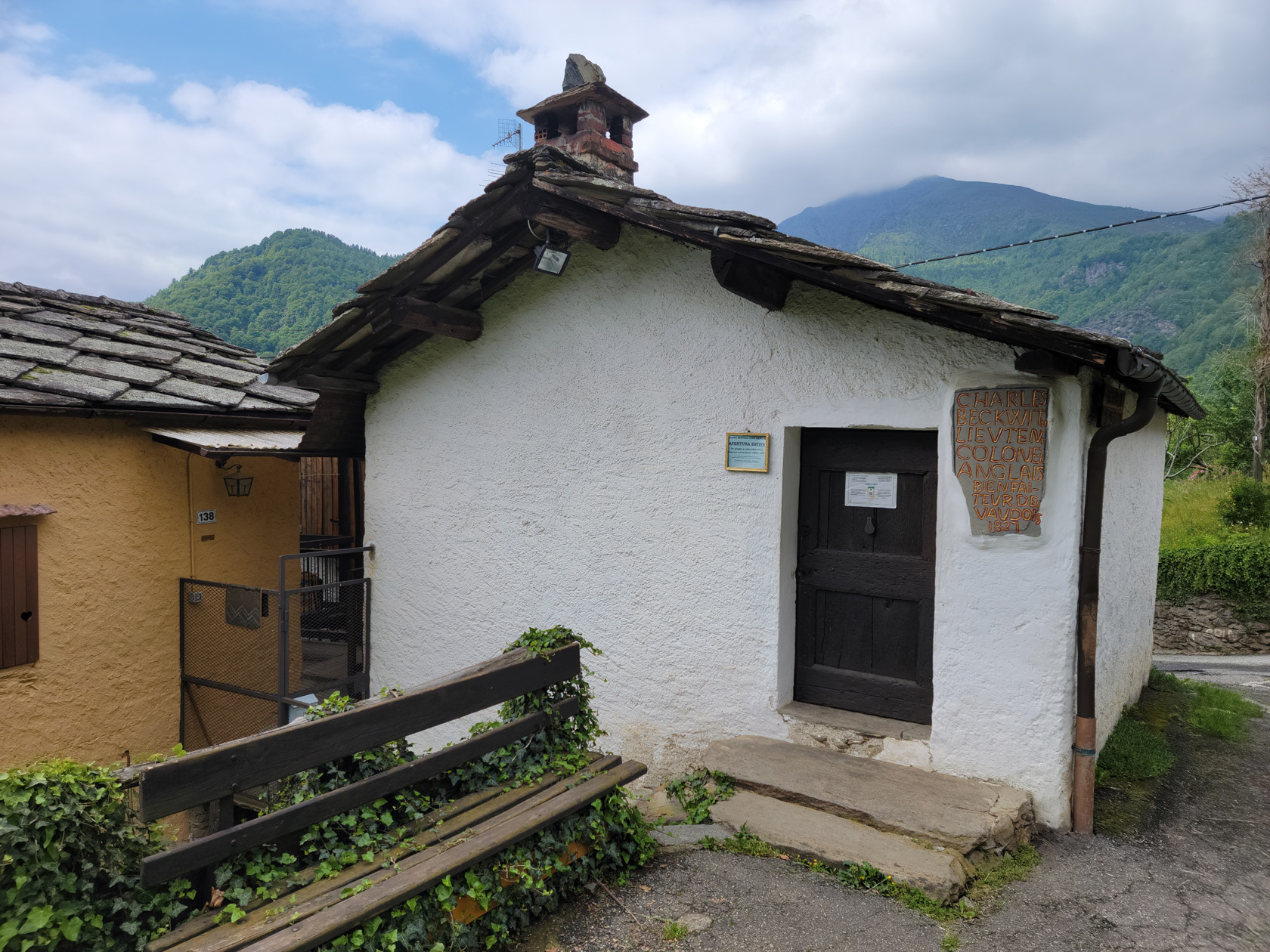
Museum The School Of Odin-Bertot – Outside View of the School Room Entrance
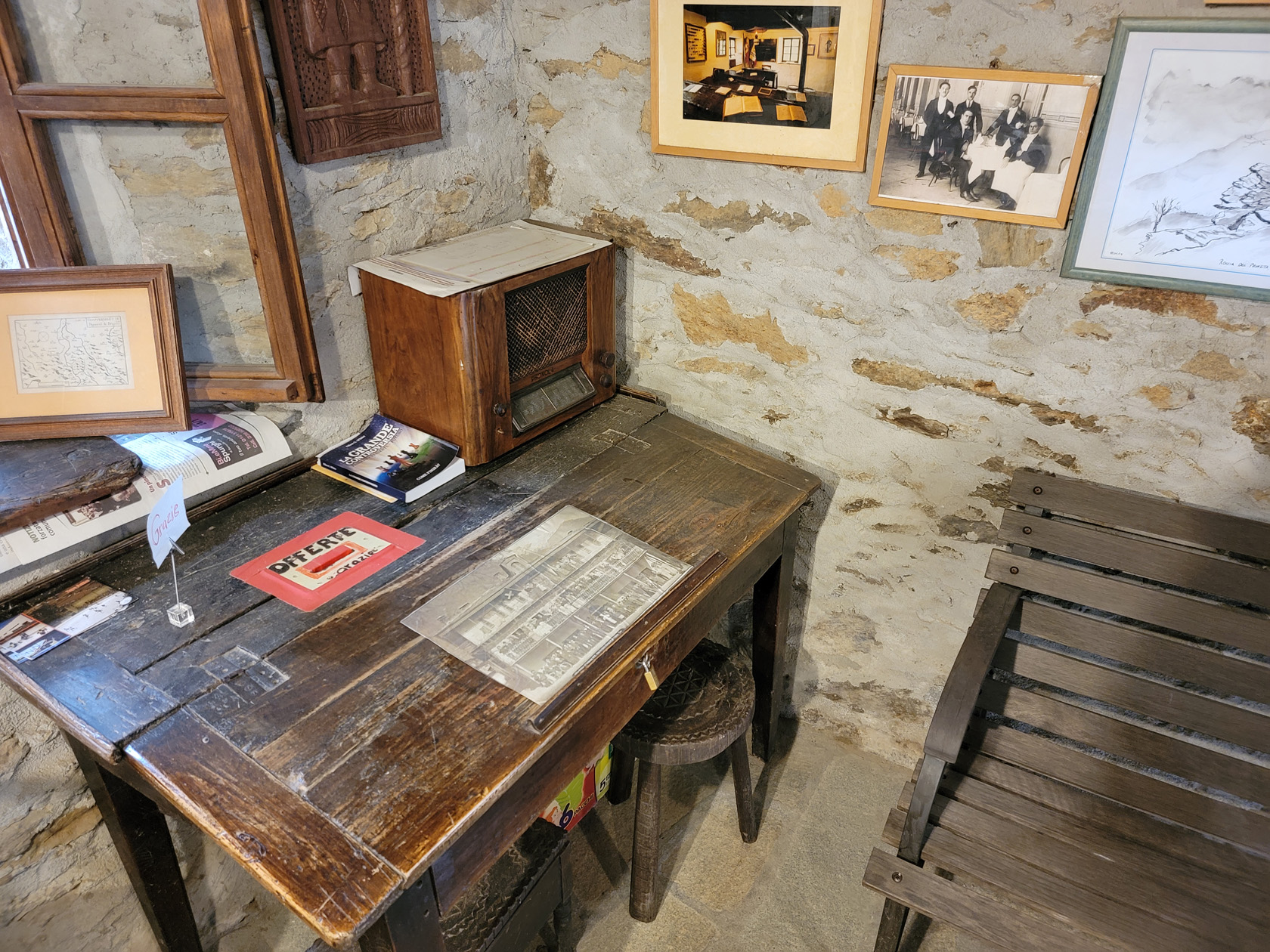
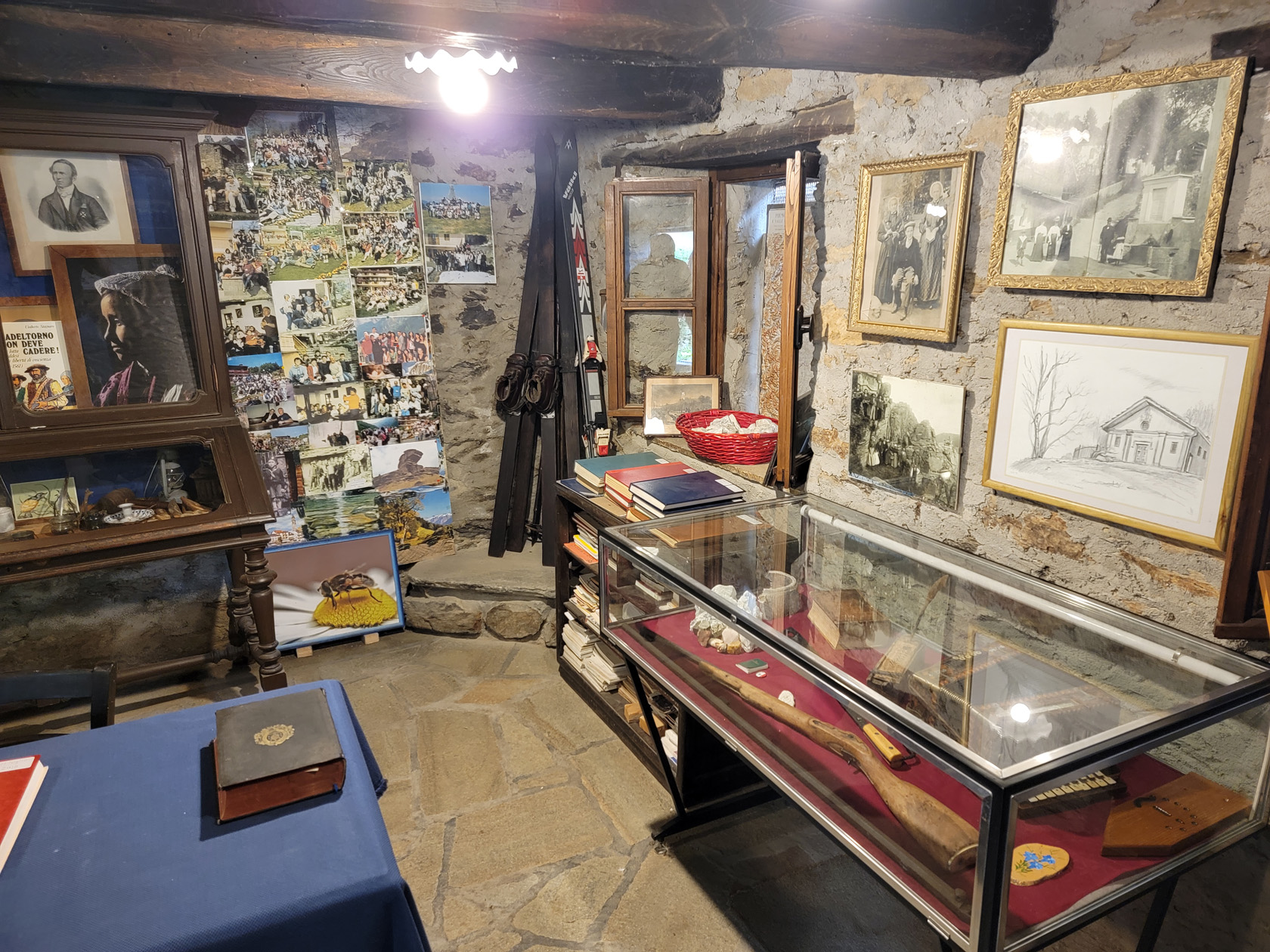
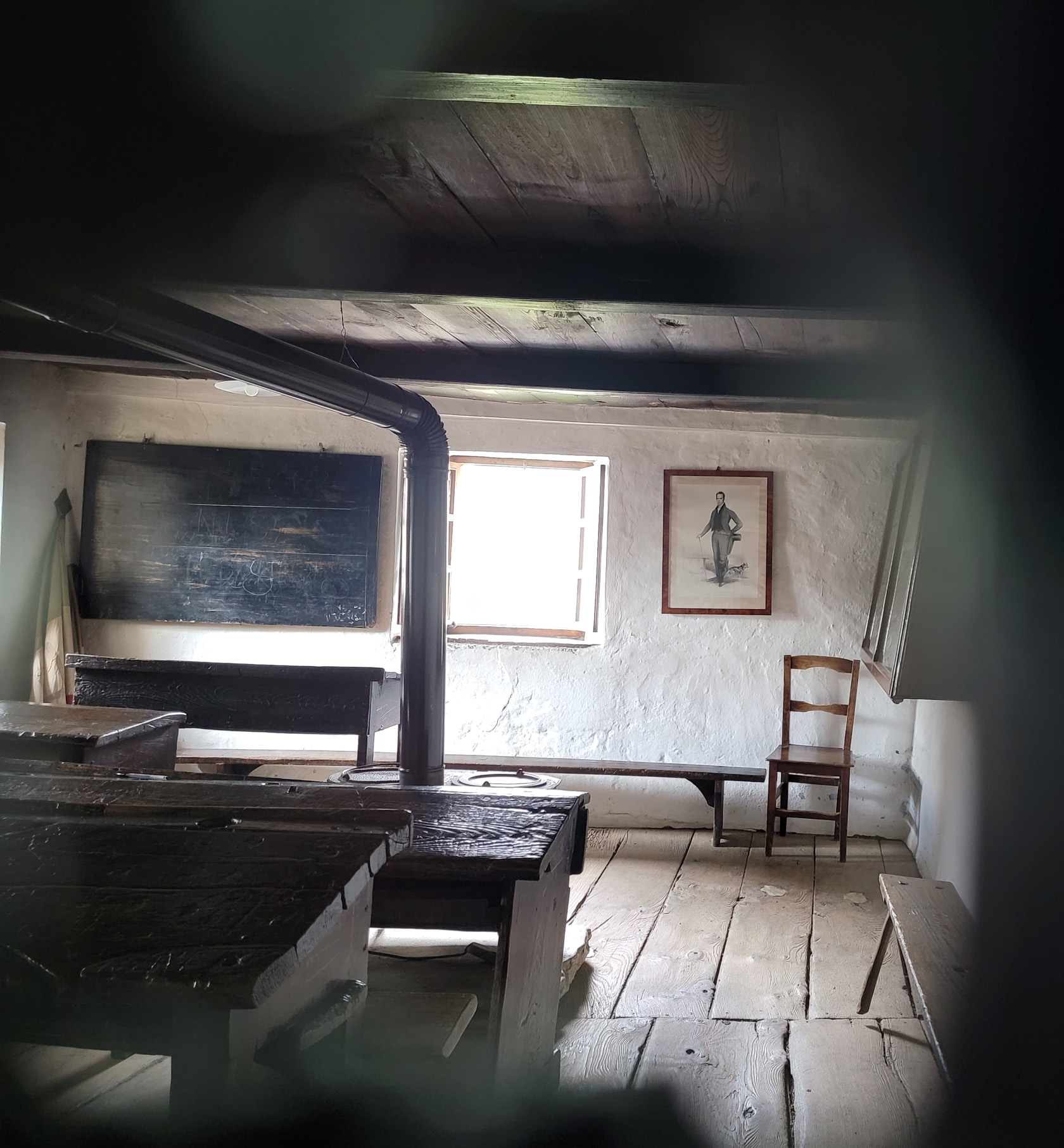
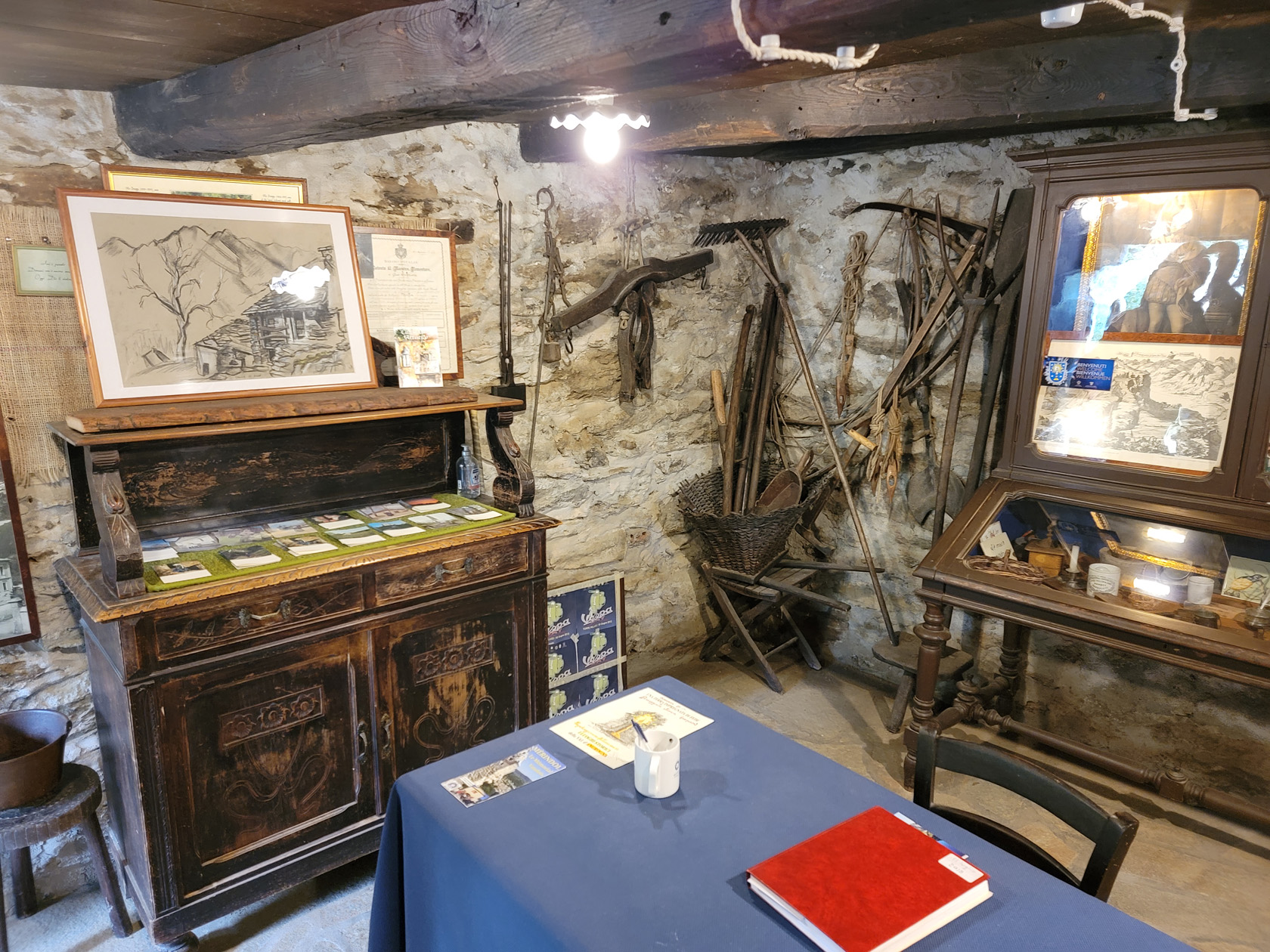
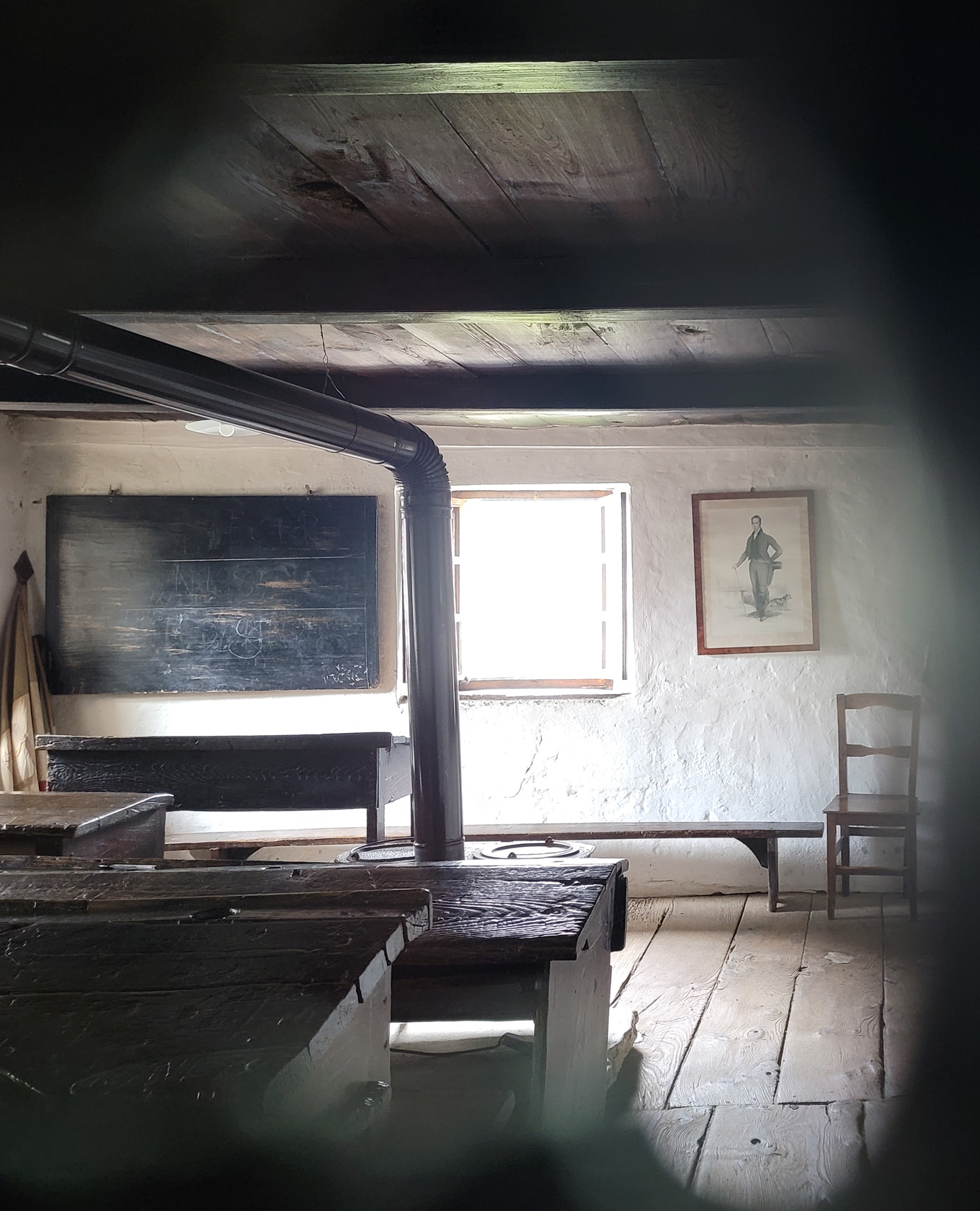
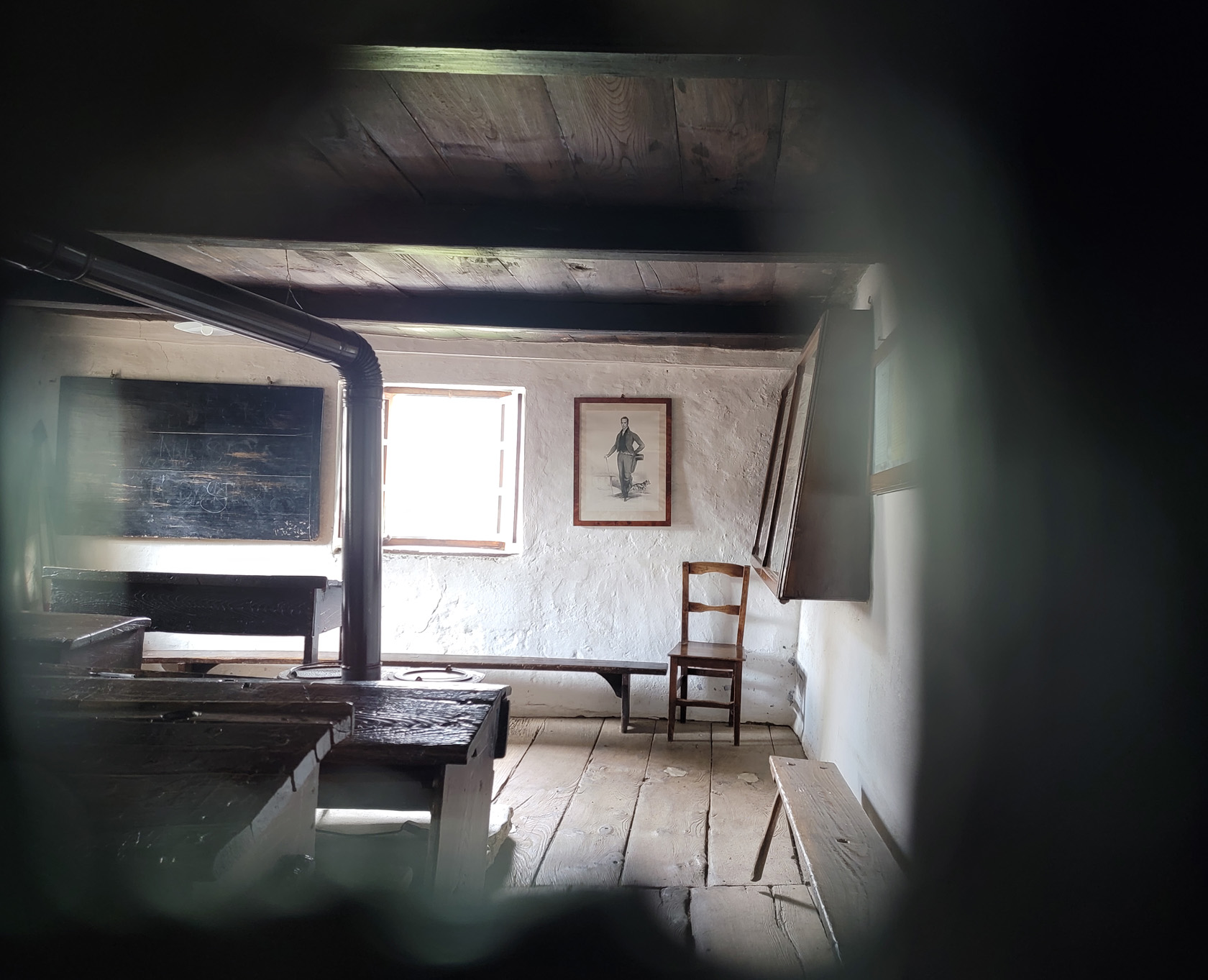
Reminiscent of one room school houses in many other rural areas, this one specifically served the mountain people of the area. Since the above link explains all, a few more photographs of the interior and the museum are all that’s in order at this point.
Museum The School Of Odin-Bertot
Museum The School Of Odin-Bertot
Museum The School Of Odin-Bertot
Museum The School Of Odin-Bertot
Museum The School Of Odin-Bertot – School House Room
Museum The School Of Odin-Bertot – Another View Of The School House Room
How To Get There
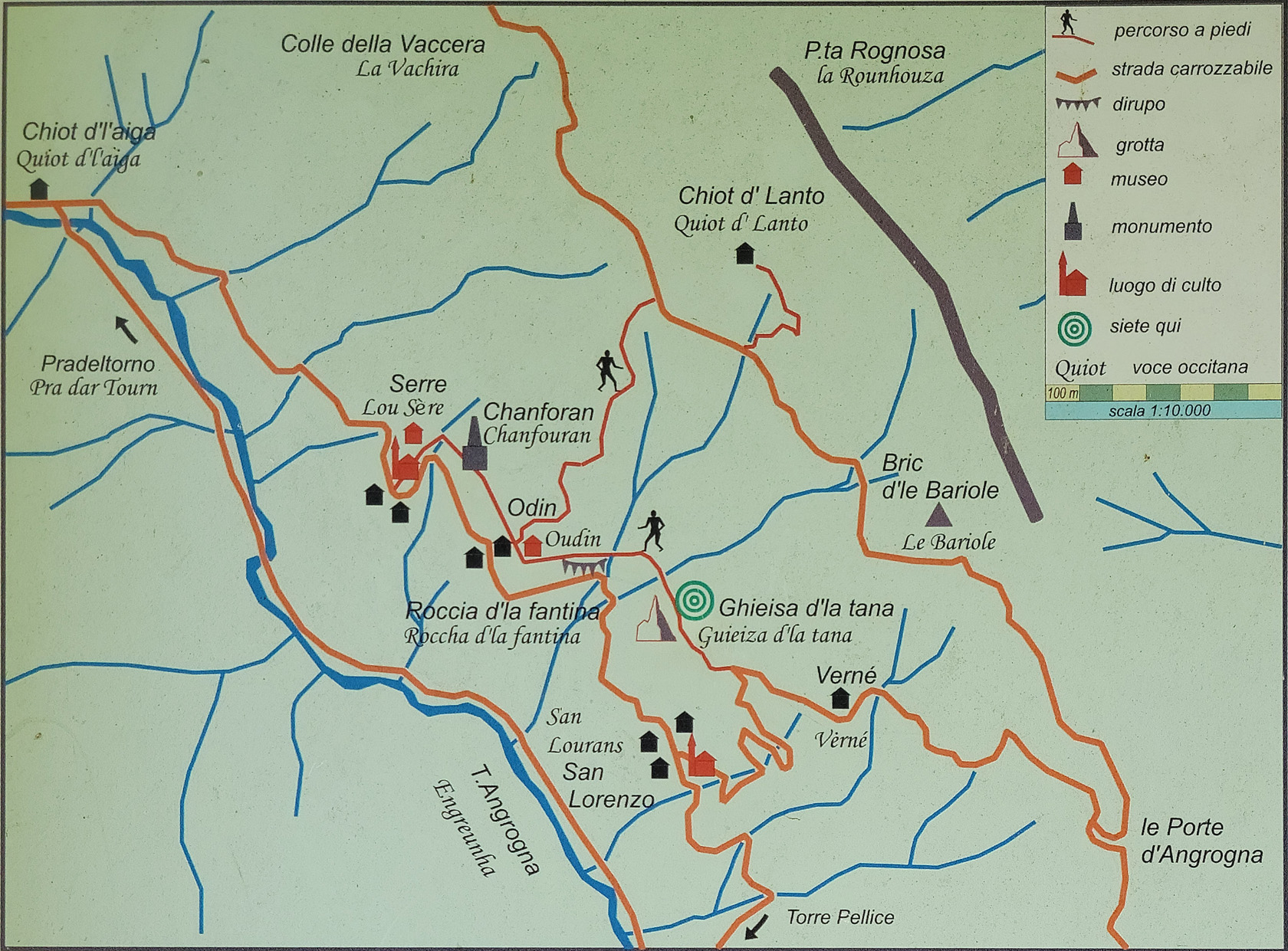
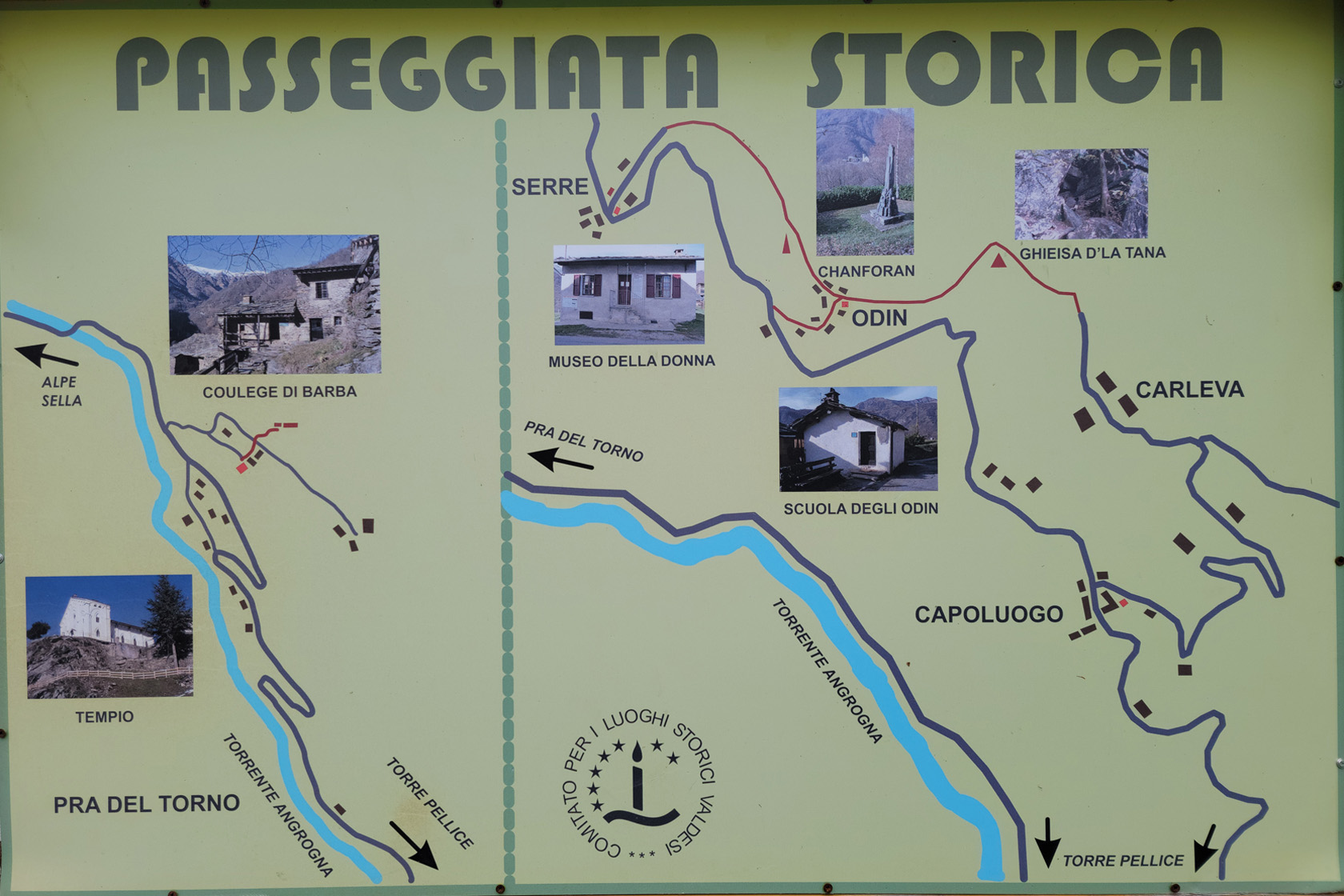
There are several ways to get there, either via the School of Odin, or by the parking area further away. Since maps are worth a thousands words, here are two that you will find once there, but they also show the overall area so you can use this with what ever map, app or device you have to cross reference your way there.
Map For The Waldensian Church And School Of Odin
Local Map Of Historic Sites
Directions
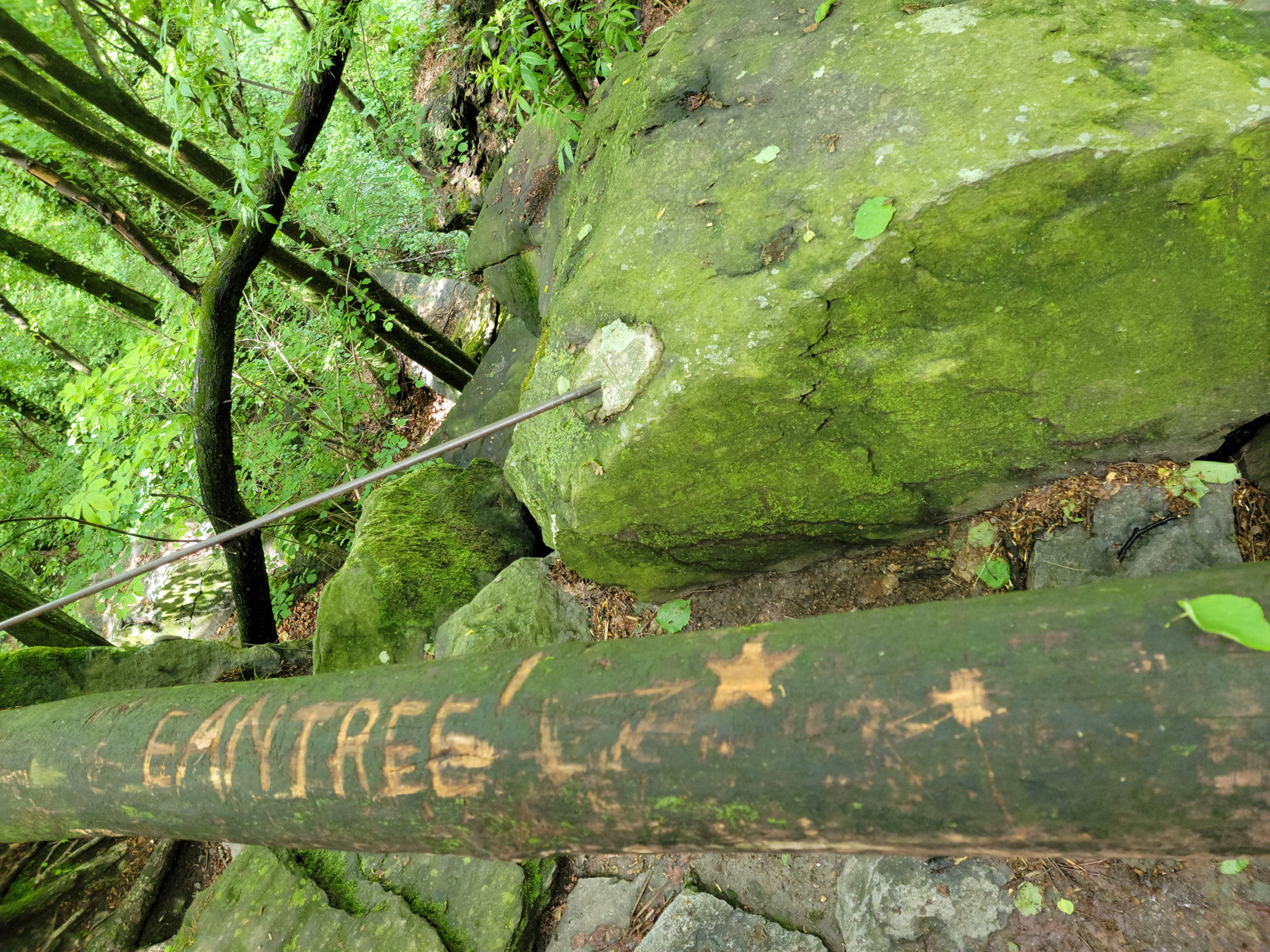
Between Torre Pellice and Luserna San Giovanni you should find road 161. At the traffic circle, take the road towards Angrogna. You should also see signs for the Guieiza d’la Tana, the Chabas and the Vaccera. Keep following road to the main town square, then continue for about two kilometers and you will arrive in the hamlet of Serre. Turn right, you should see the beginning of the path and the signs “Chanforan” and “Odin”. Walk the path, following the sign for Ghieisa D’La Tana. You will eventually come to a wooden railing with the words Entrata on it, walk down the steps, you have arrived at the temple.
Festival T-Shirt – La Fira ‘d la Pouià – Bobbio Pellice – 2022
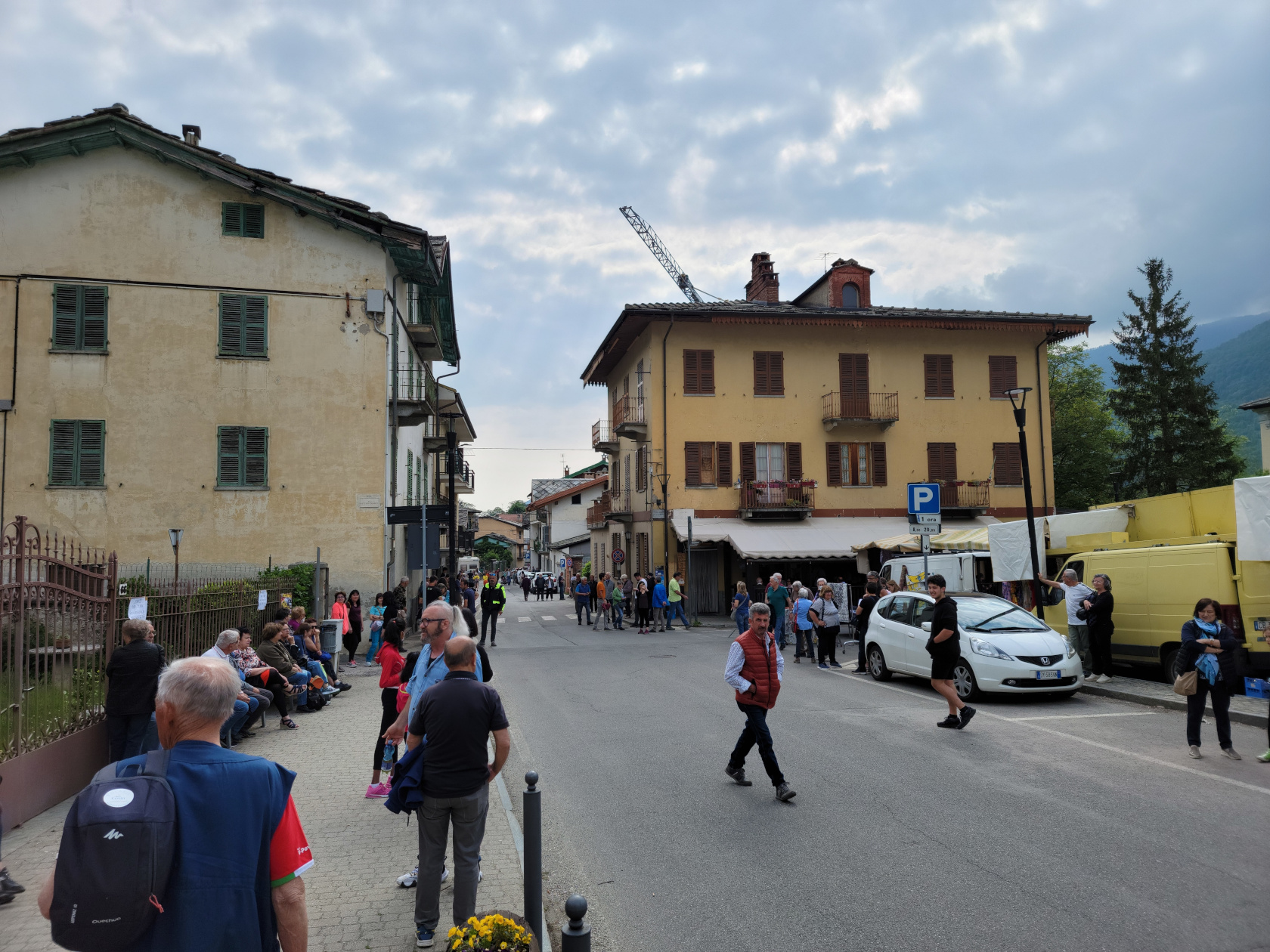
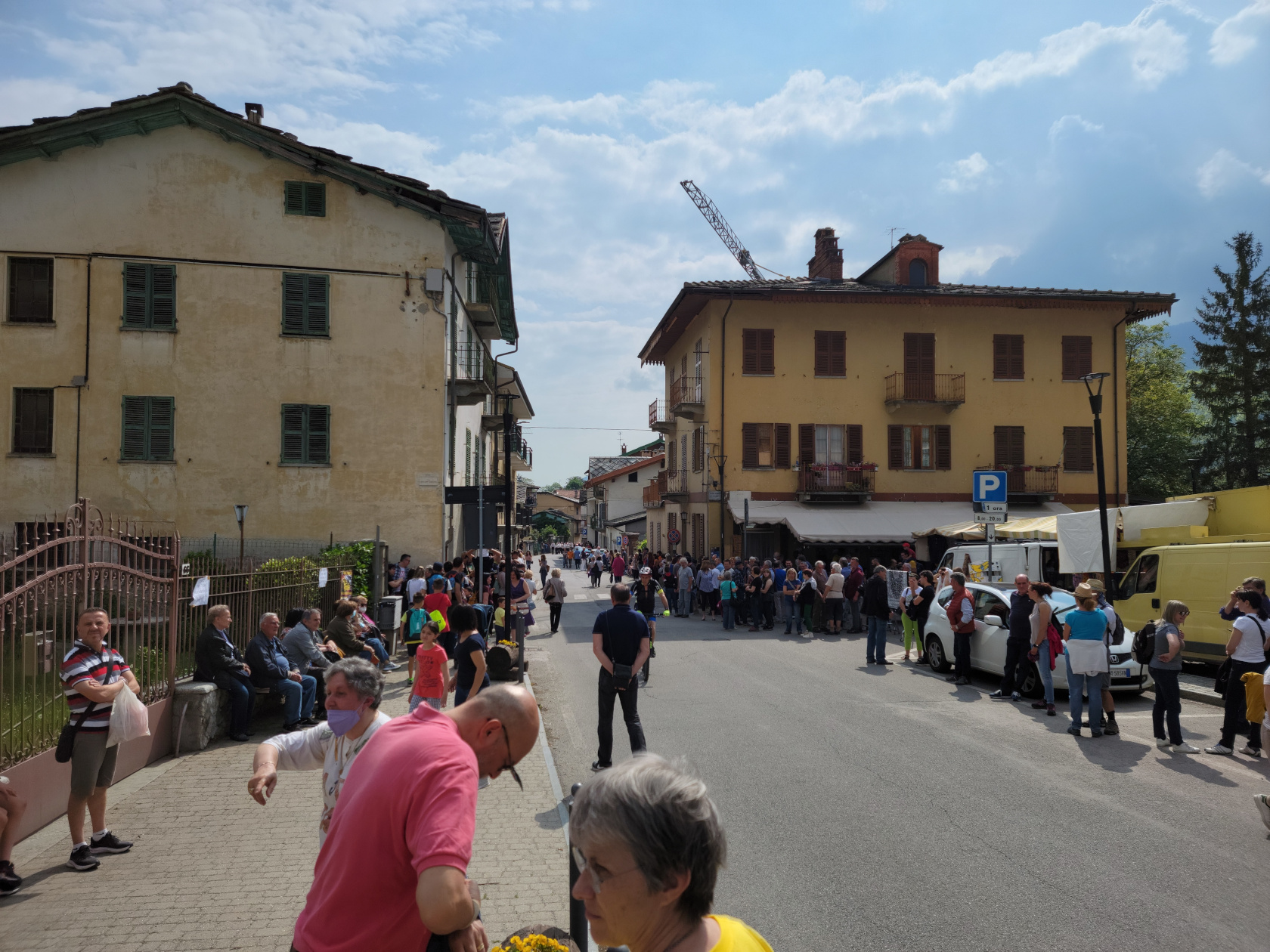
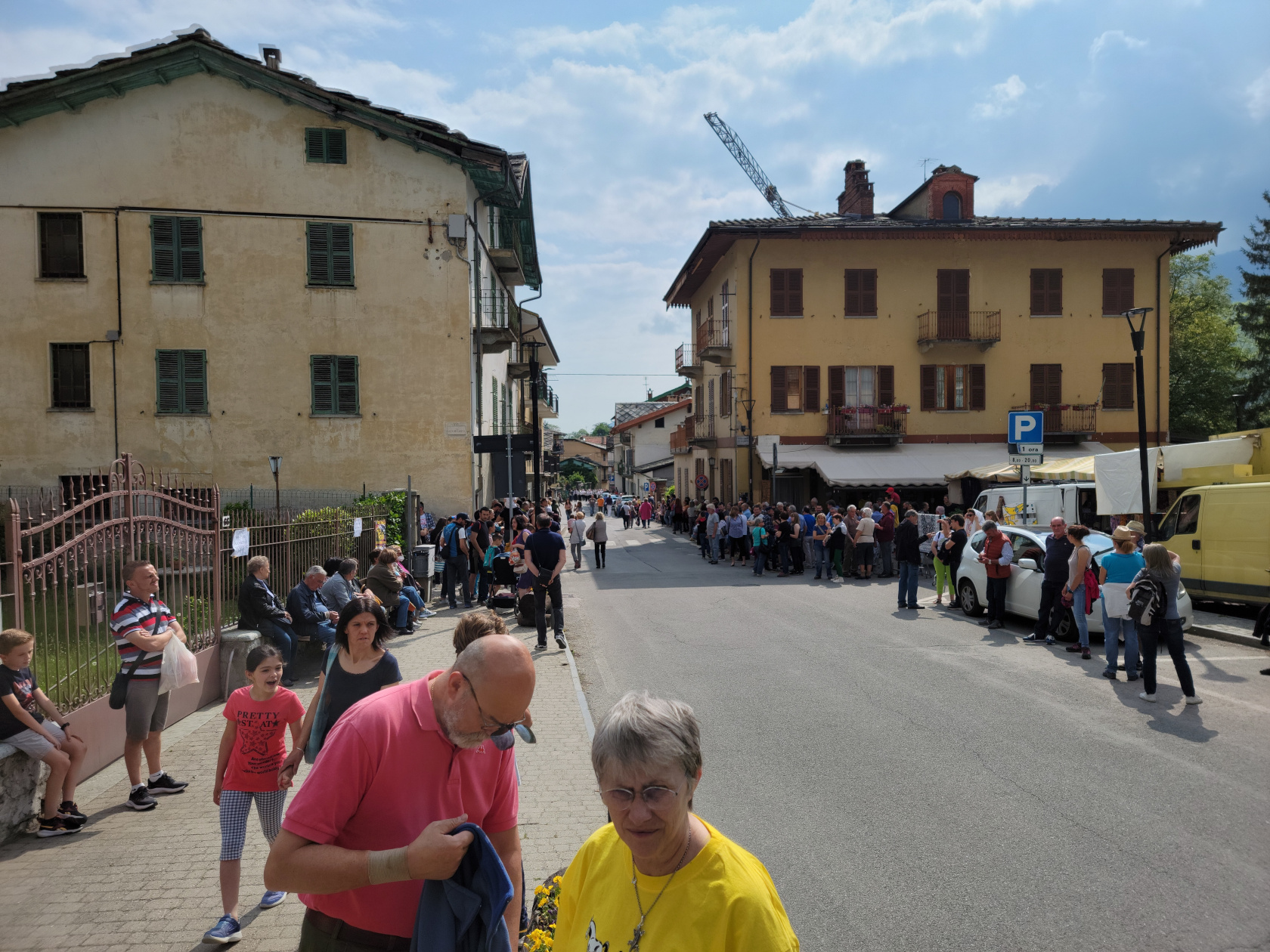
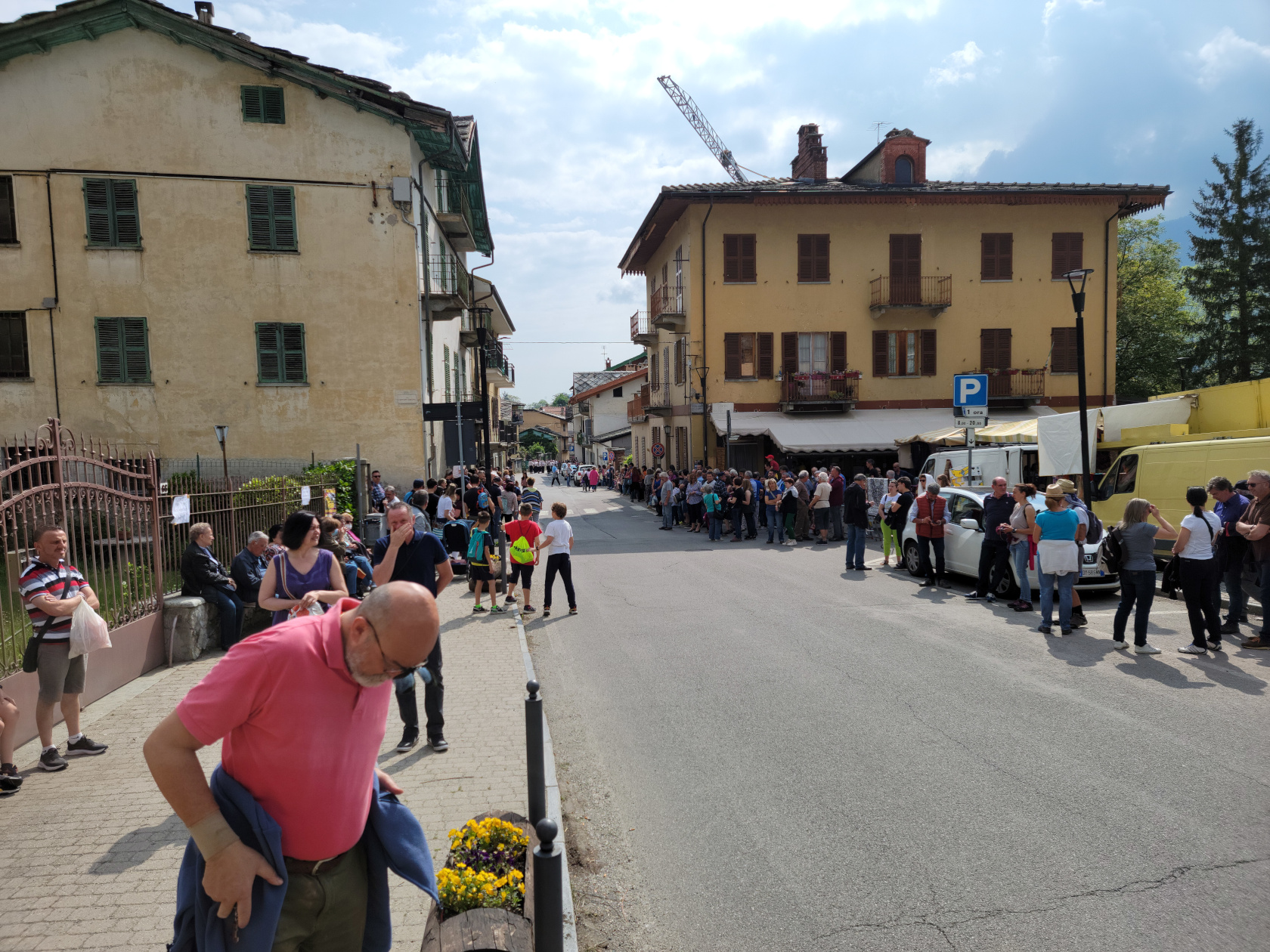
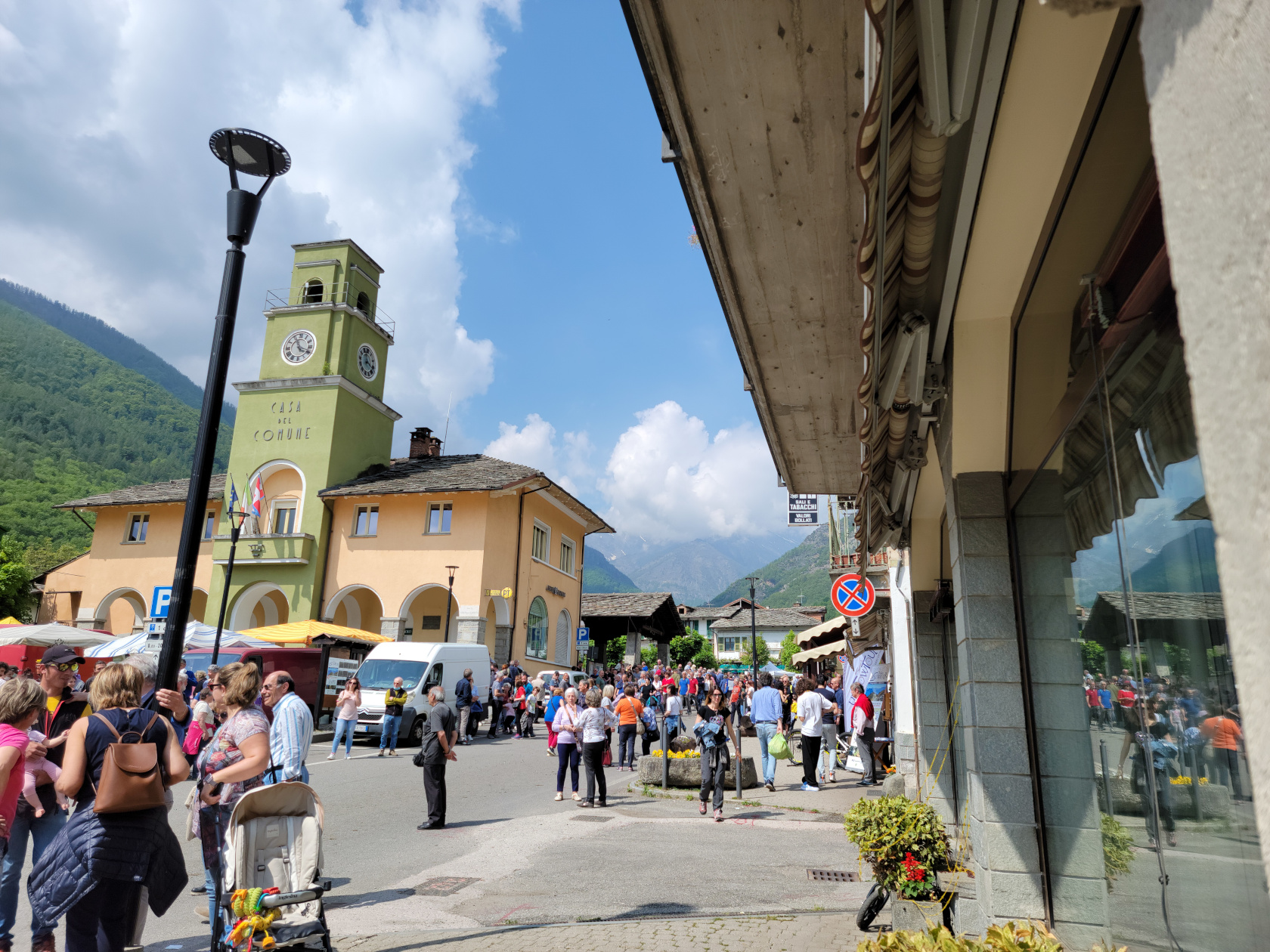
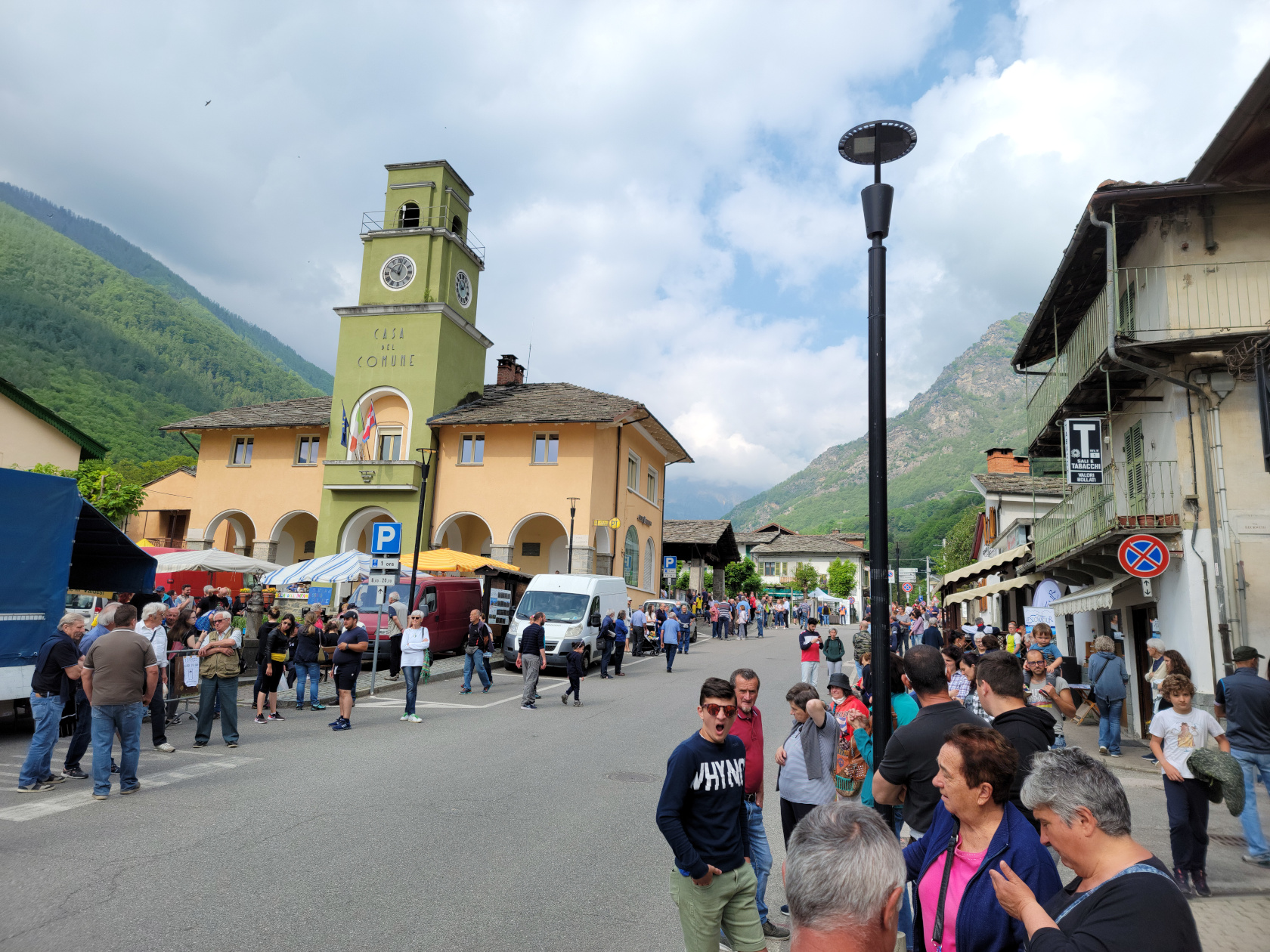
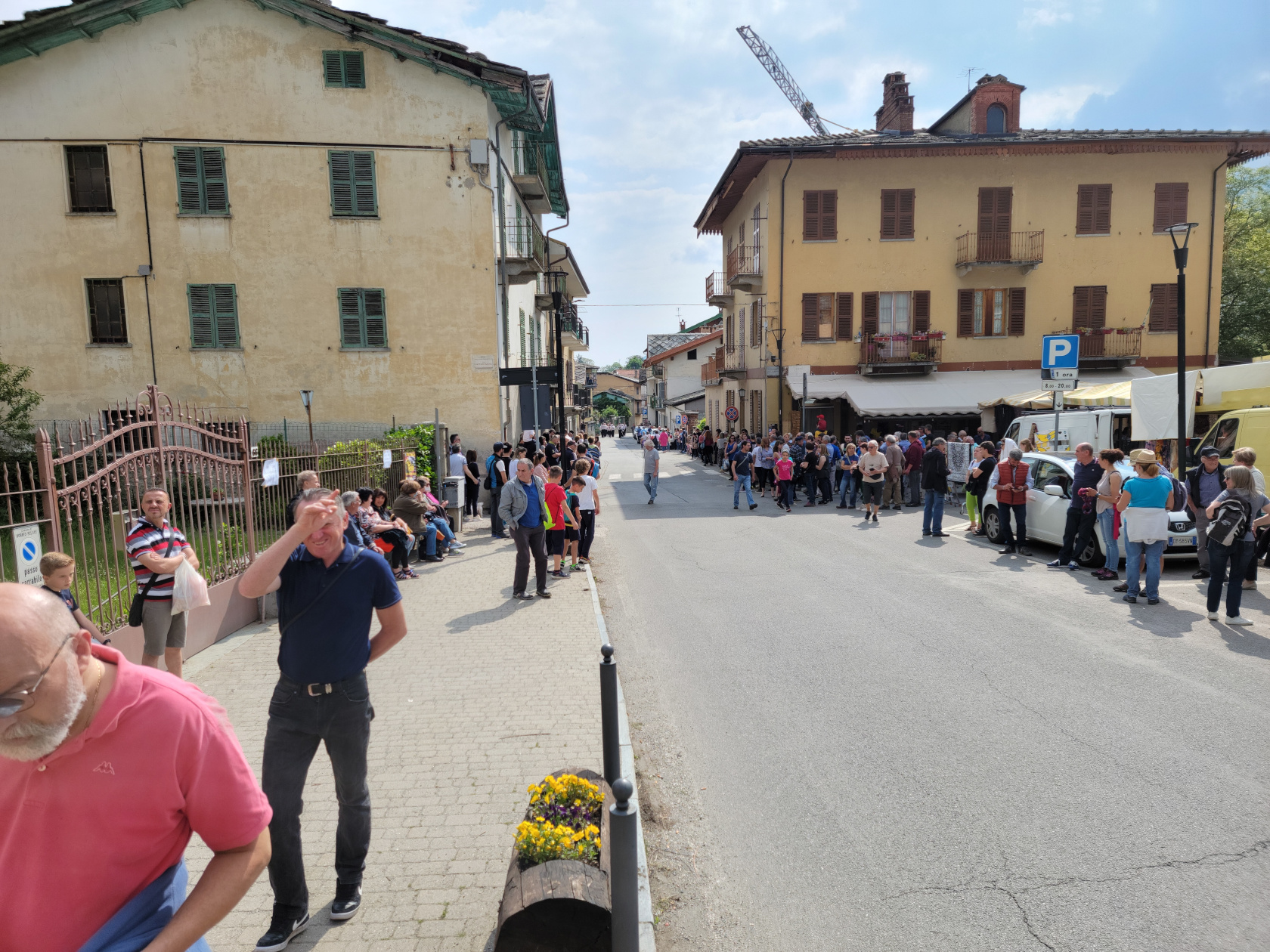
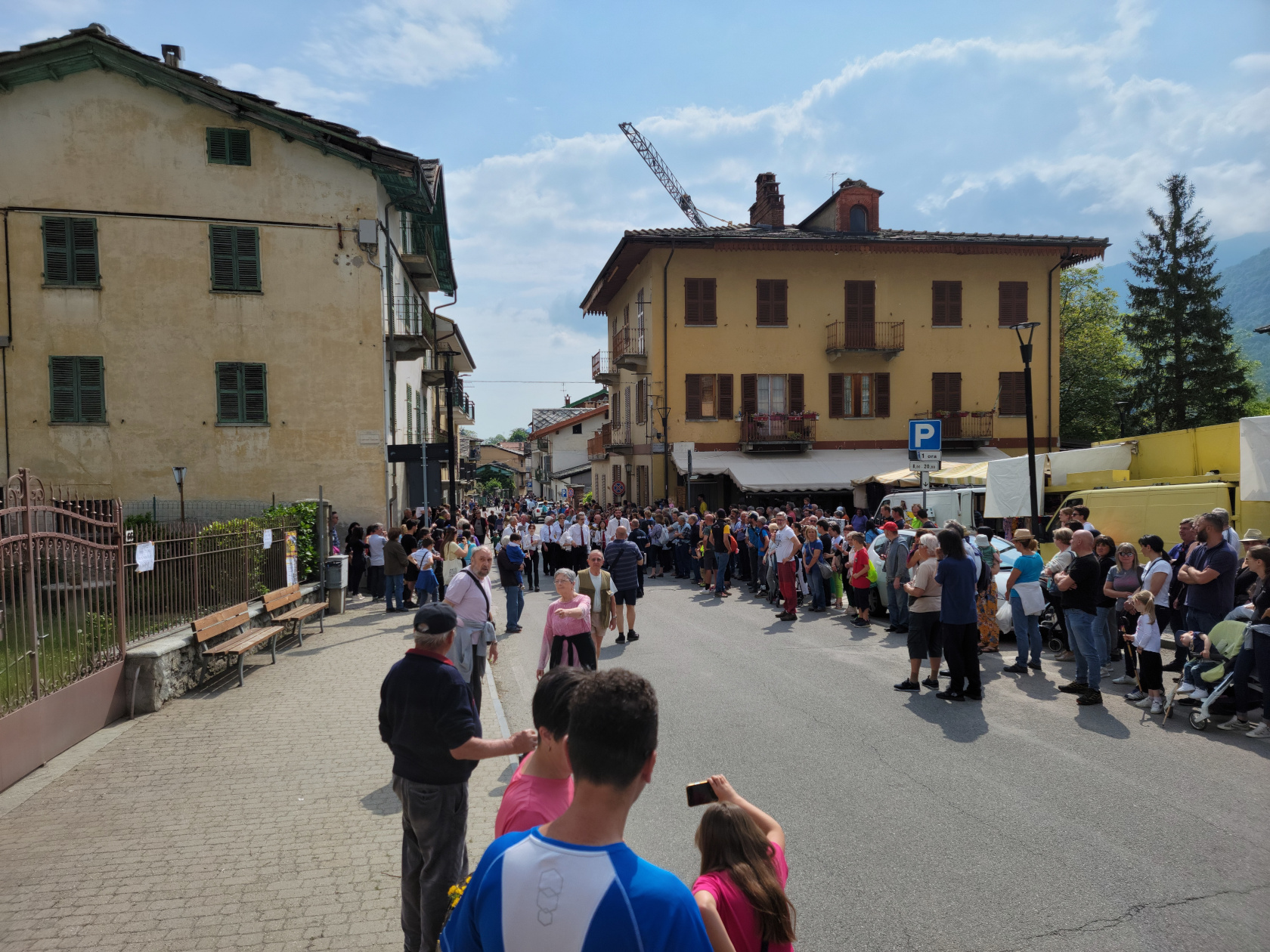
This weekend turned out to be extra special, in that a special festival occurred in the valley known as the “La Fira ‘d la Pouià“, or the fair for the transfer of livestock to their seasonal feeding grounds, also known as transhumance.
La Fira ‘d la Pouià – Bobbio Pellice – 2022
La Fira ‘d la Pouià – Bobbio Pellice – 2022
La Fira ‘d la Pouià – Bobbio Pellice – 2022
La Fira ‘d la Pouià – Bobbio Pellice – 2022
Crowd Gathering – La Fira ‘d la Pouià – Bobbio Pellice – 2022
La Fira ‘d la Pouià – Bobbio Pellice – 2022
Crowd Gathering – La Fira ‘d la Pouià – Bobbio Pellice – 2022
La Fira ‘d la Pouià – Bobbio Pellice – 2022
Anxious Crowd Awaits – La Fira ‘d la Pouià – Bobbio Pellice – 2022
The small town of Bobbio Pellice hosts this event twice a year, once in the spring and once in the fall. Participation by any farm family is voluntary, but many do so, since they have representative booths within the festival grounds. This provides them an opportunity to sell products they make during the year from their farms and animals, like meat, cheeses and other delicacies.
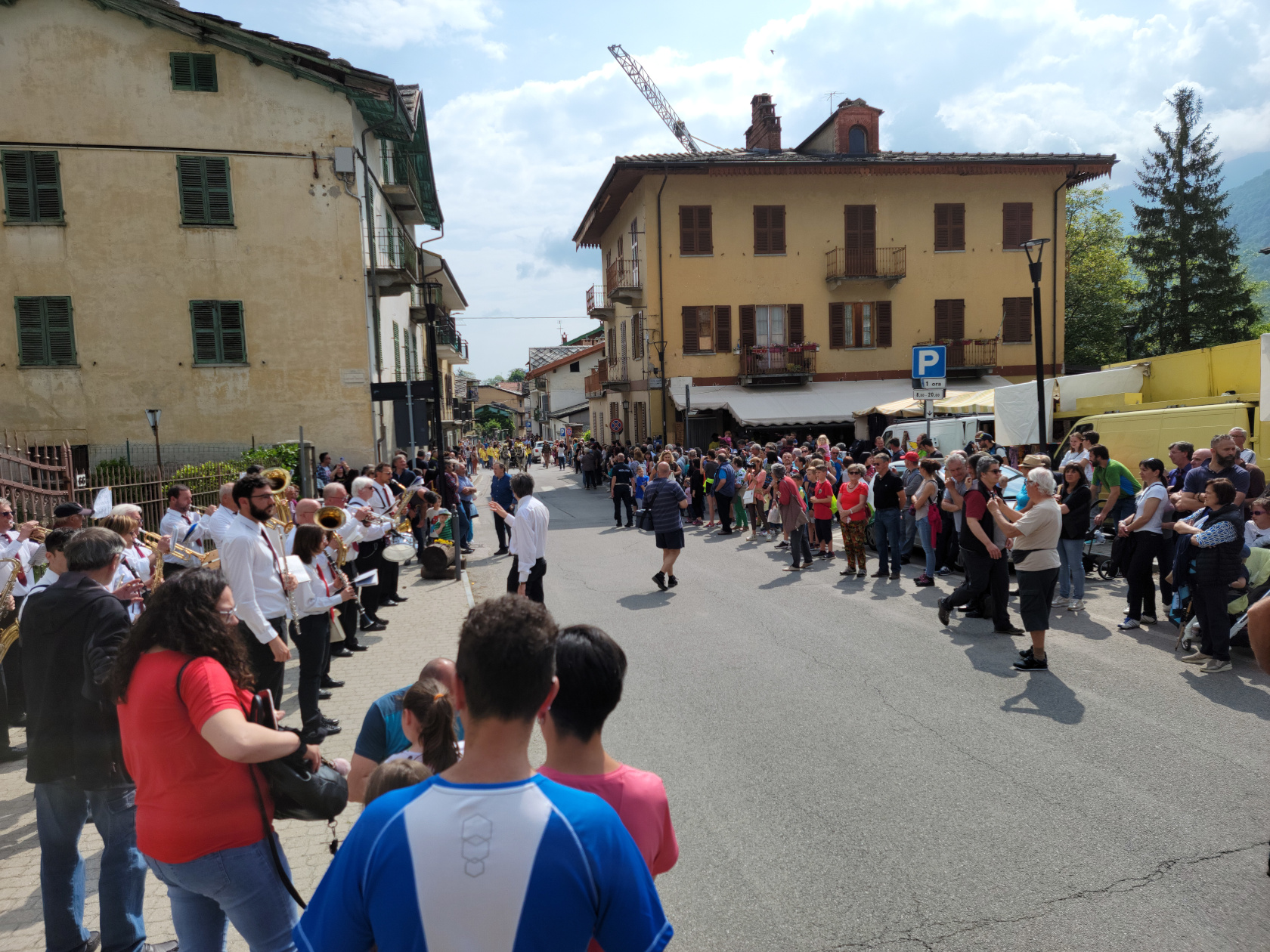
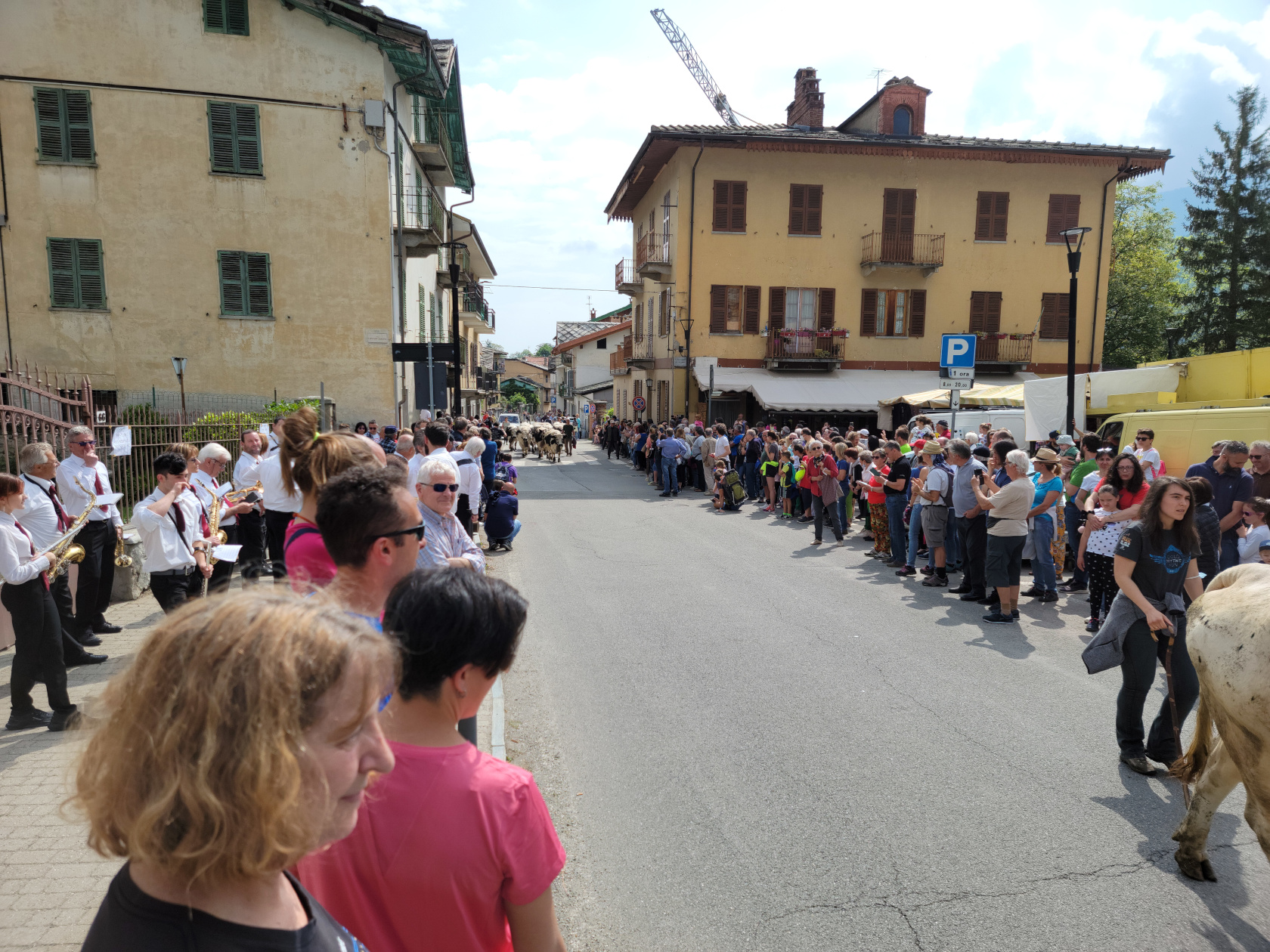
Marching Band Arriving – La Fira ‘d la Pouià – Bobbio Pellice – 2022
It starts with a small marching band that processes up the main street, announcing the arrival of the animals.
Then the children lead a procession down the street, after which one can begin to hear the sound of cow bells.
They remain in the town square for some time playing music until all of the animals, along with their families, have passed.
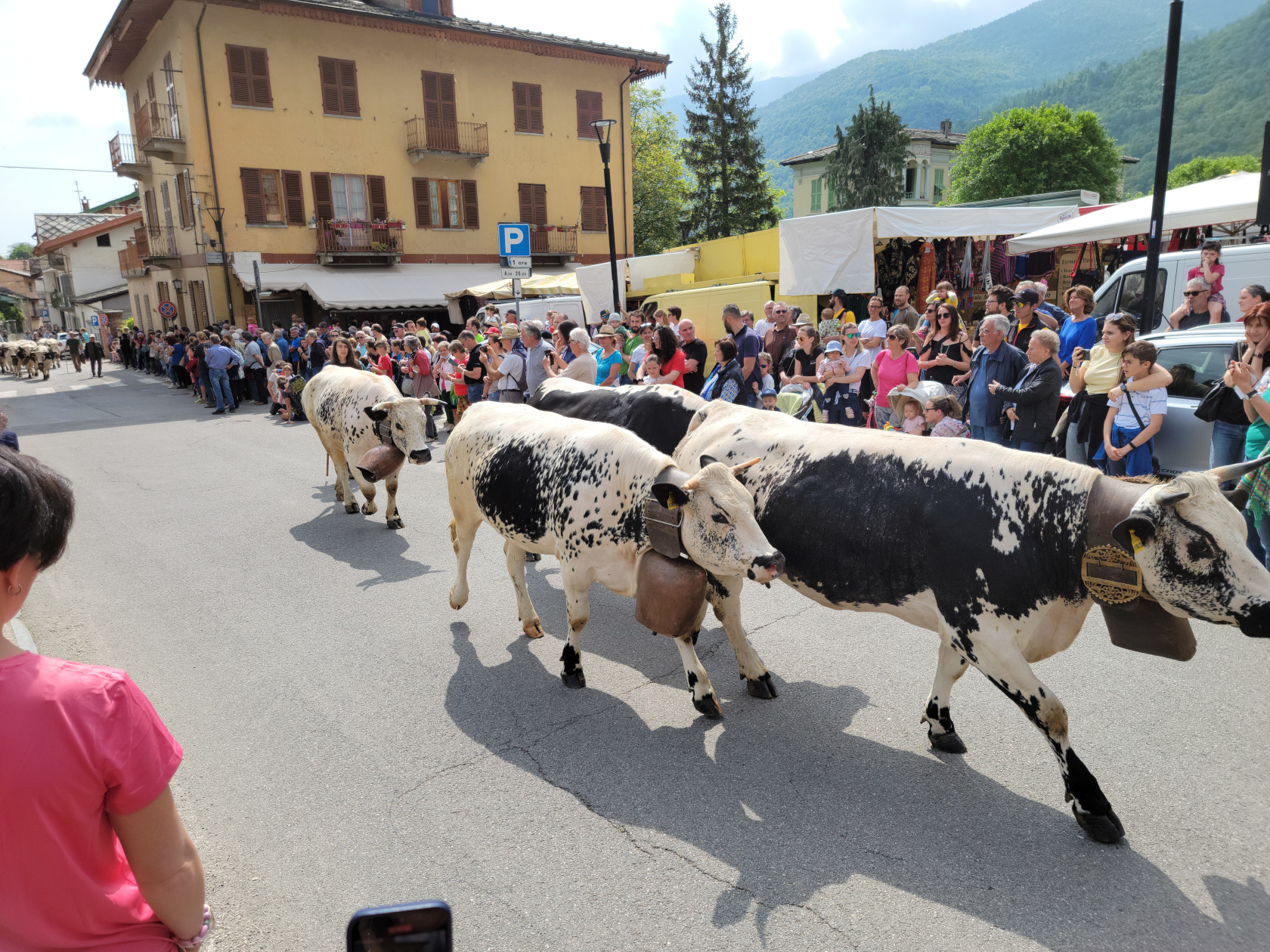
Cows Arriving – La Fira ‘d la Pouià – Bobbio Pellice – 2022
The animals are outfitted with celebration bells, many containing award ribbons that each animal may have won during past fairs, or just fitted with a simpler bell fitting for the occasion.
After they are pastured nearby and judged, these are replaced by smaller and more utilitarian bells which will be worn for the rest of the trip and while they are in their mountain pastures for the summer.
Cows Sporting Their Bells – La Fira ‘d la Pouià – Bobbio Pellice – 2022
When the animals finally come, the parade starts with the larger animals, the cows and later quietly proceeds down to the smaller ones, when the sheep and the goats arrive.
The sheep are customarily under the vigilant eye of a number of dogs, which are trained to watch over them day and night. These animals are not aggressive, but they are very territorial and it is wise to stay away from them and the flock they guard. Rumors have it, they are known to have even killed humans who trespass.
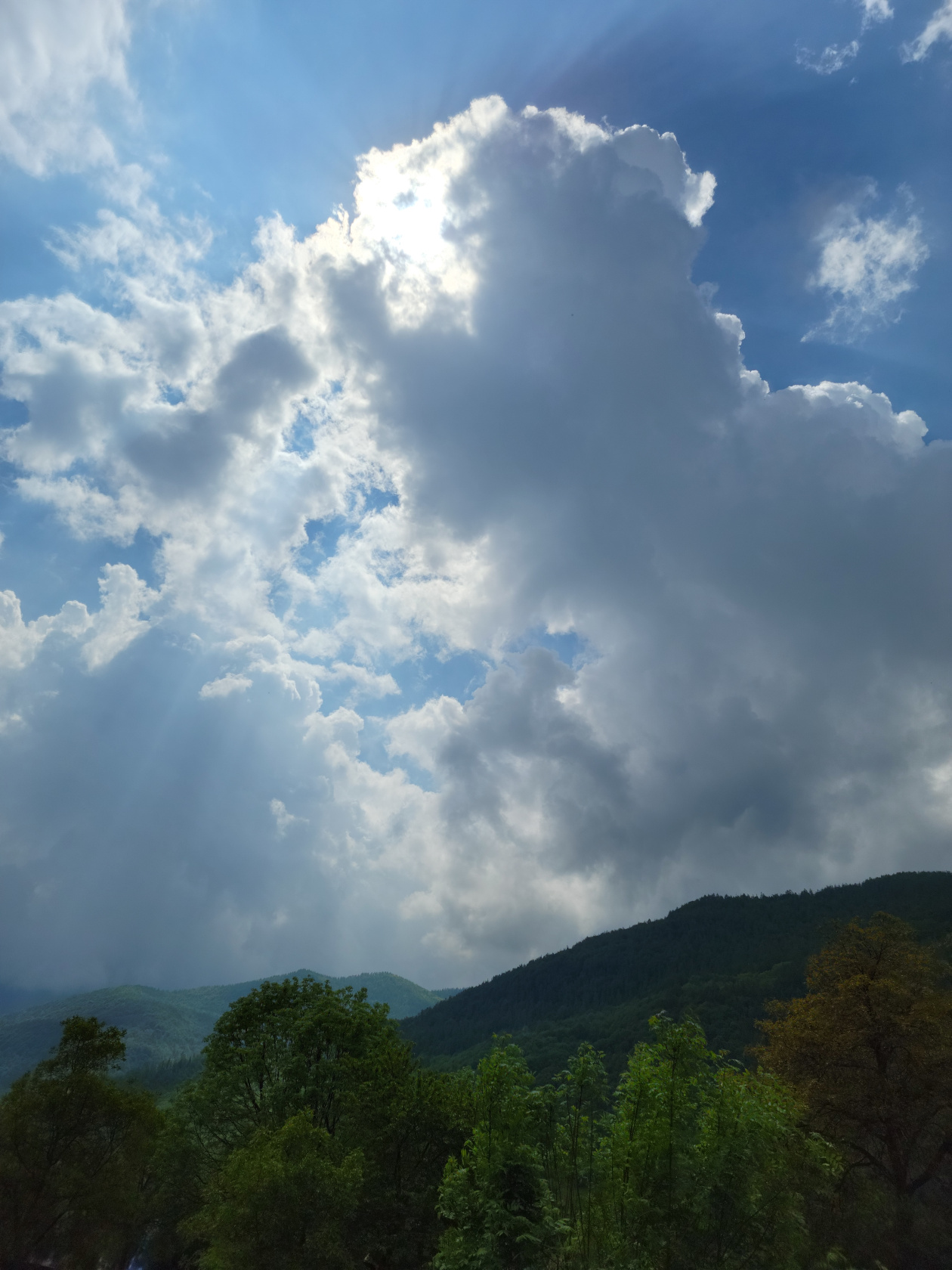
Clouds over Bobbio Pellice
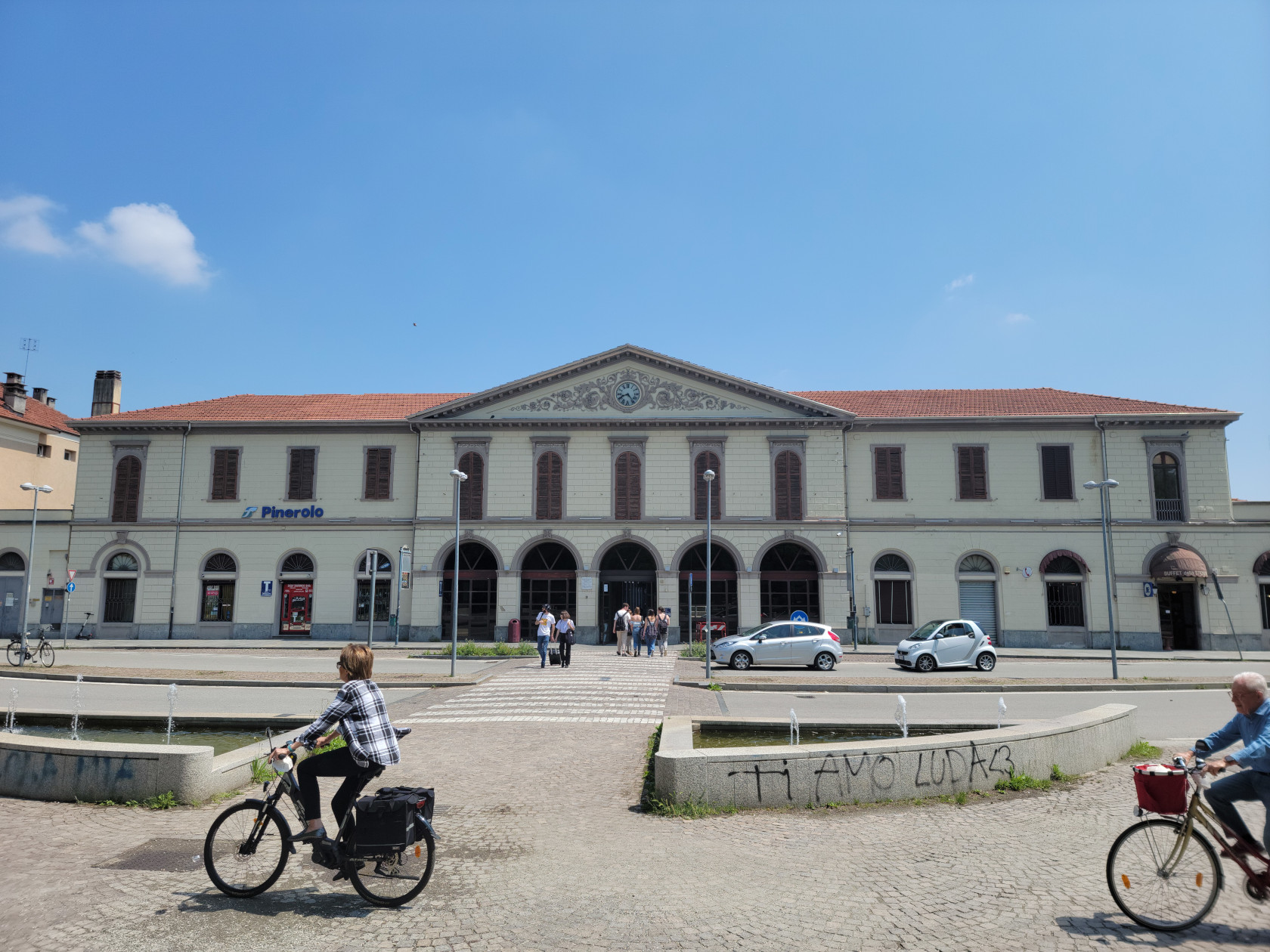
If you are looking for that kind of one off experience and a lover of animals, a trip to Bobbio Pellice to watch this festival is definitely worth it. Many are day trippers who drive to the town, but parking space is extremely limited, so get there early. Since the area offers amazing hiking opportunities, we preferred the slow travel approach and took the train to Pinerolo, then transferred to our Bed and Breadfast here for the week. A short walk down the street would have brought us here, but instead our hosts were going to attend and kindly offered us a lift, which we gladly obliged.
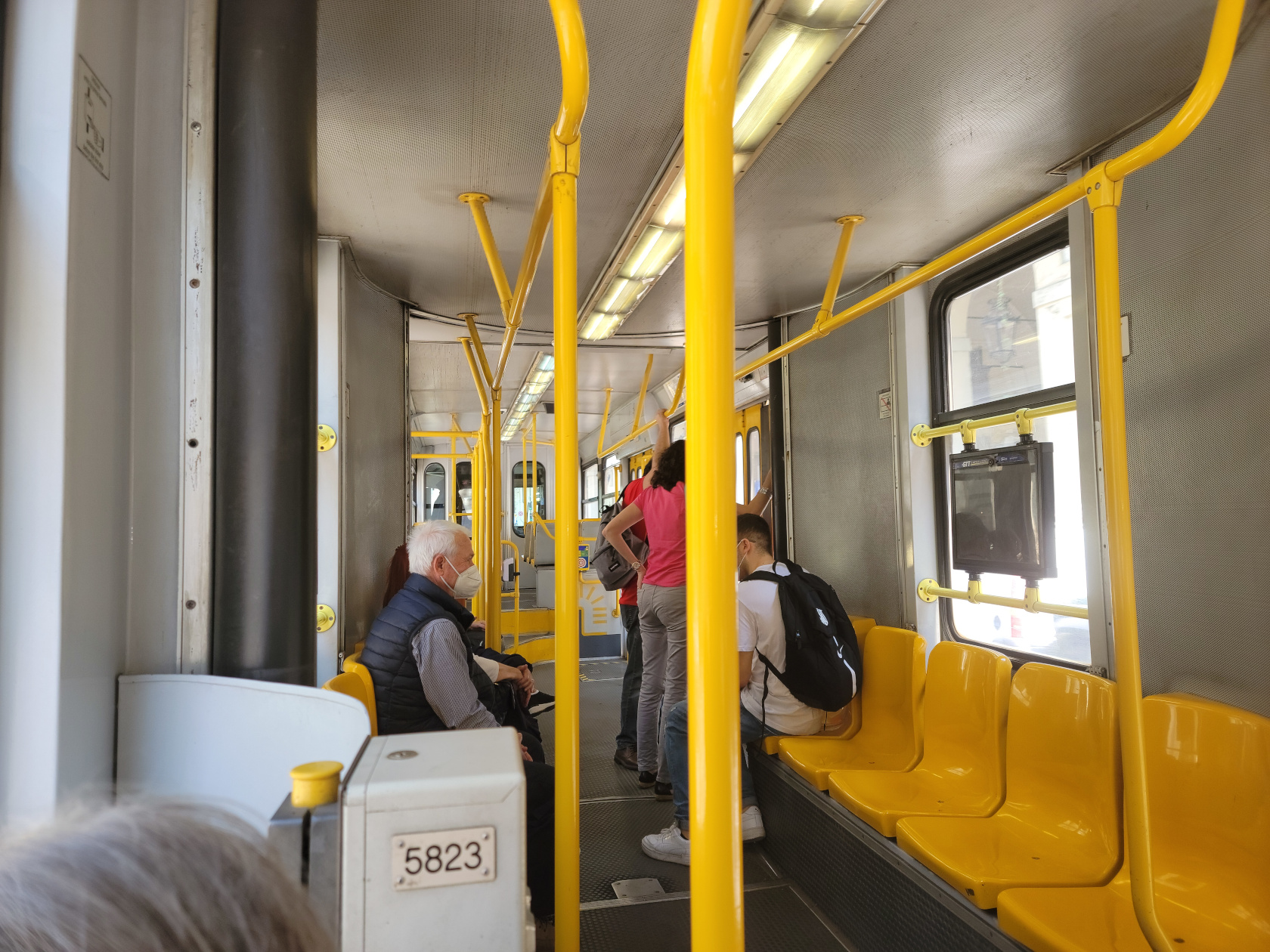
For some time, my wife Patti has been wanting for us to visit her friends in Malpertus. Thankfully with Covid restrictions waning, hopefully along with the virus itself, we finally committed to visiting them this week. In order to get there, we had to take the train from Turin’s Porta Susa terminal, instead of our customary train station, Porta Nuovo. Once on the train, the trip length was about forty-five minutes, which included about eight stops along the way.
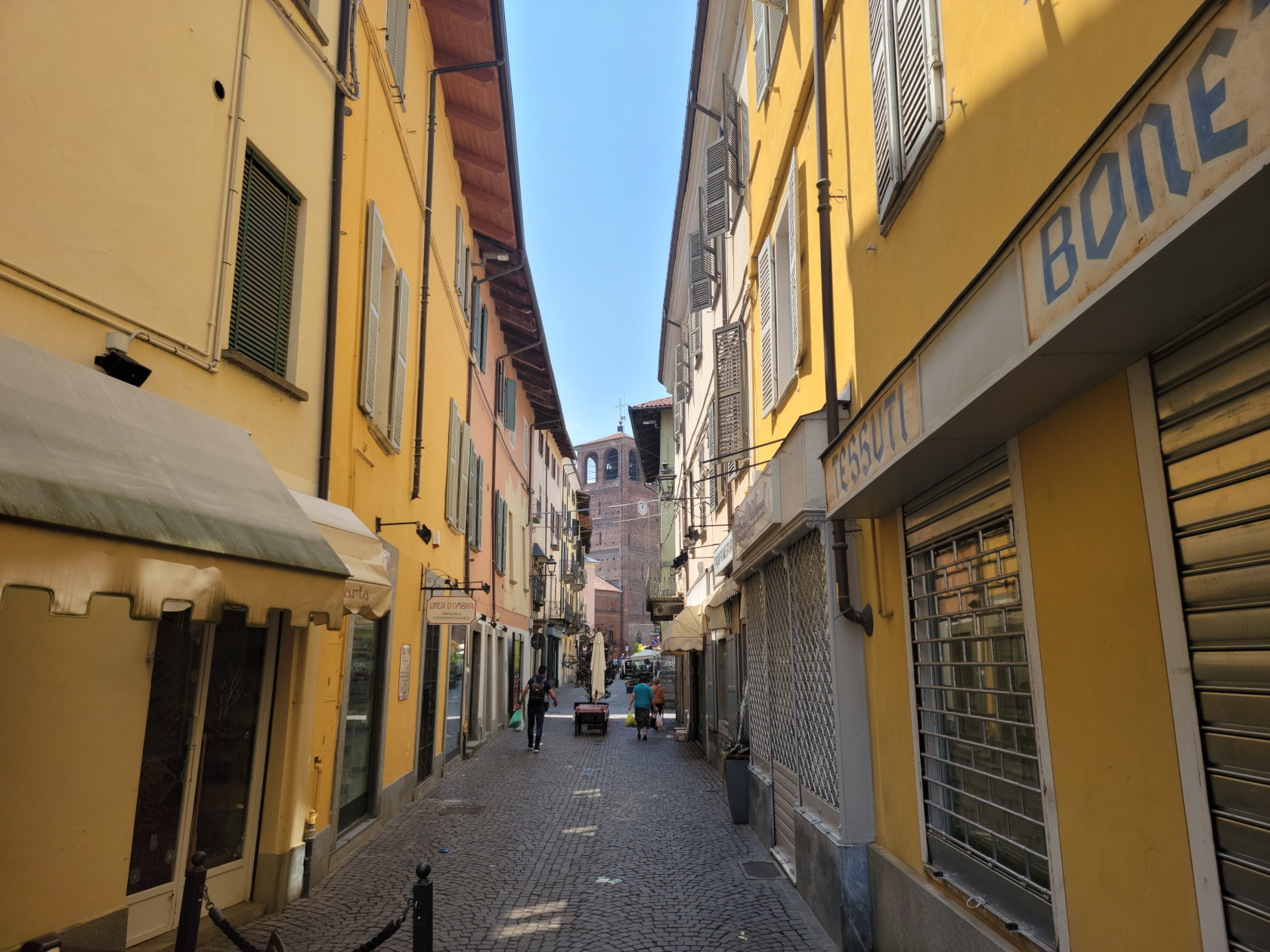
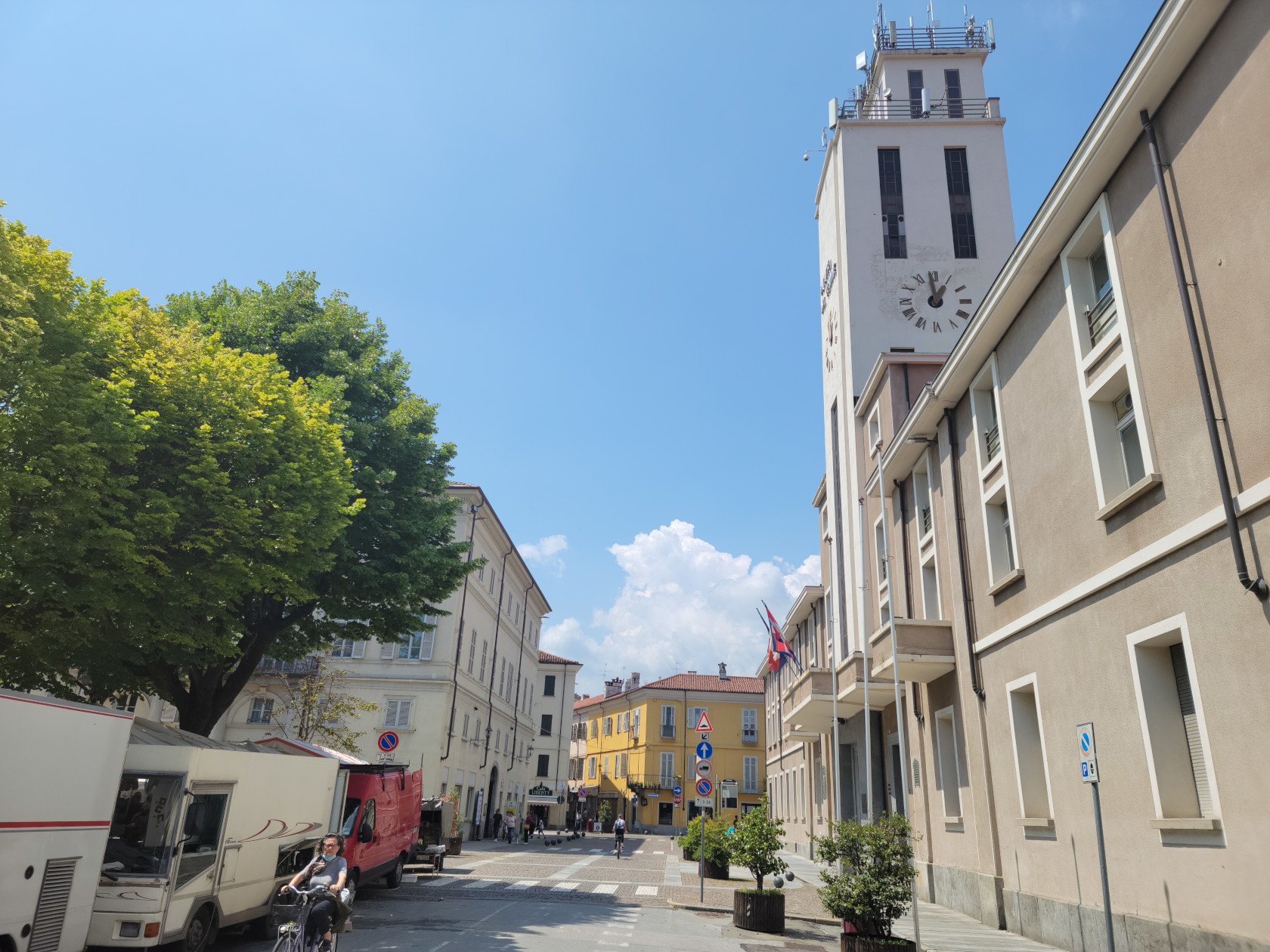
Pinerolo appeared to be fairly quiet and we had noticed most people were preoccupied with the Saturday market place, that was taking place in the main square from the train station. We took little notice of this and continued directly down the main street, via Del Duomo, until we found a suitable place to eat.
Restaurants
Trattobar Kreuzberg
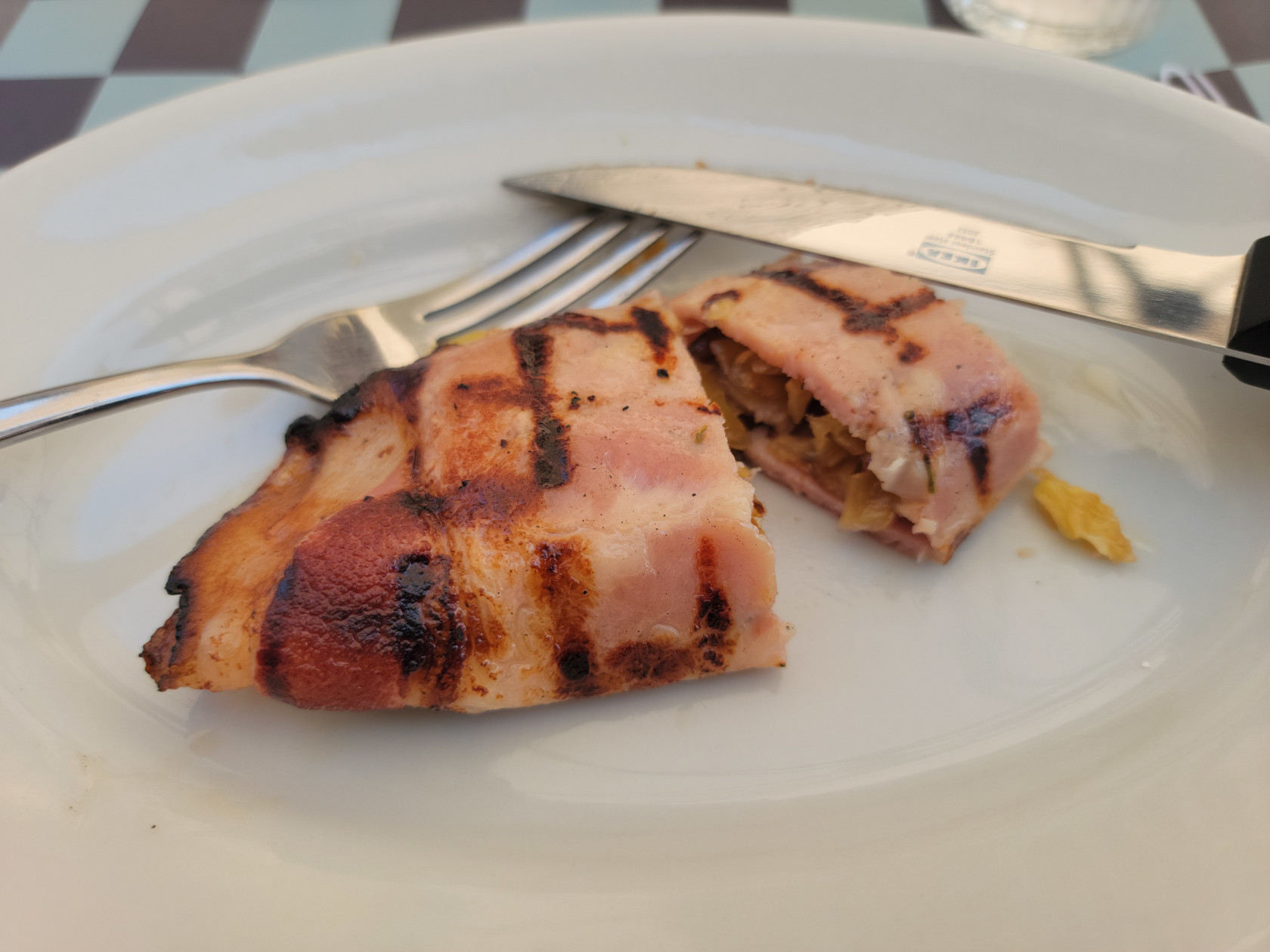
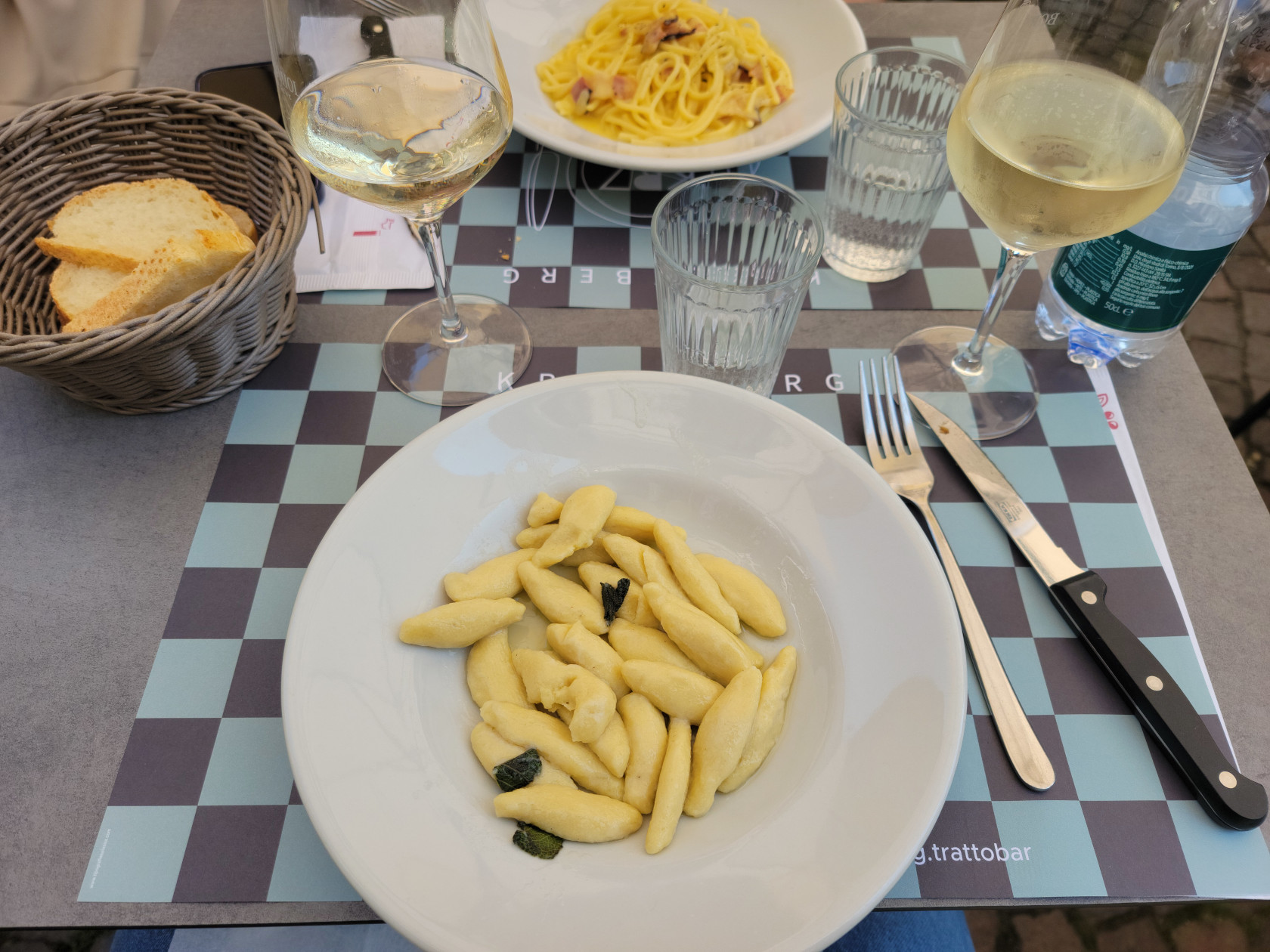
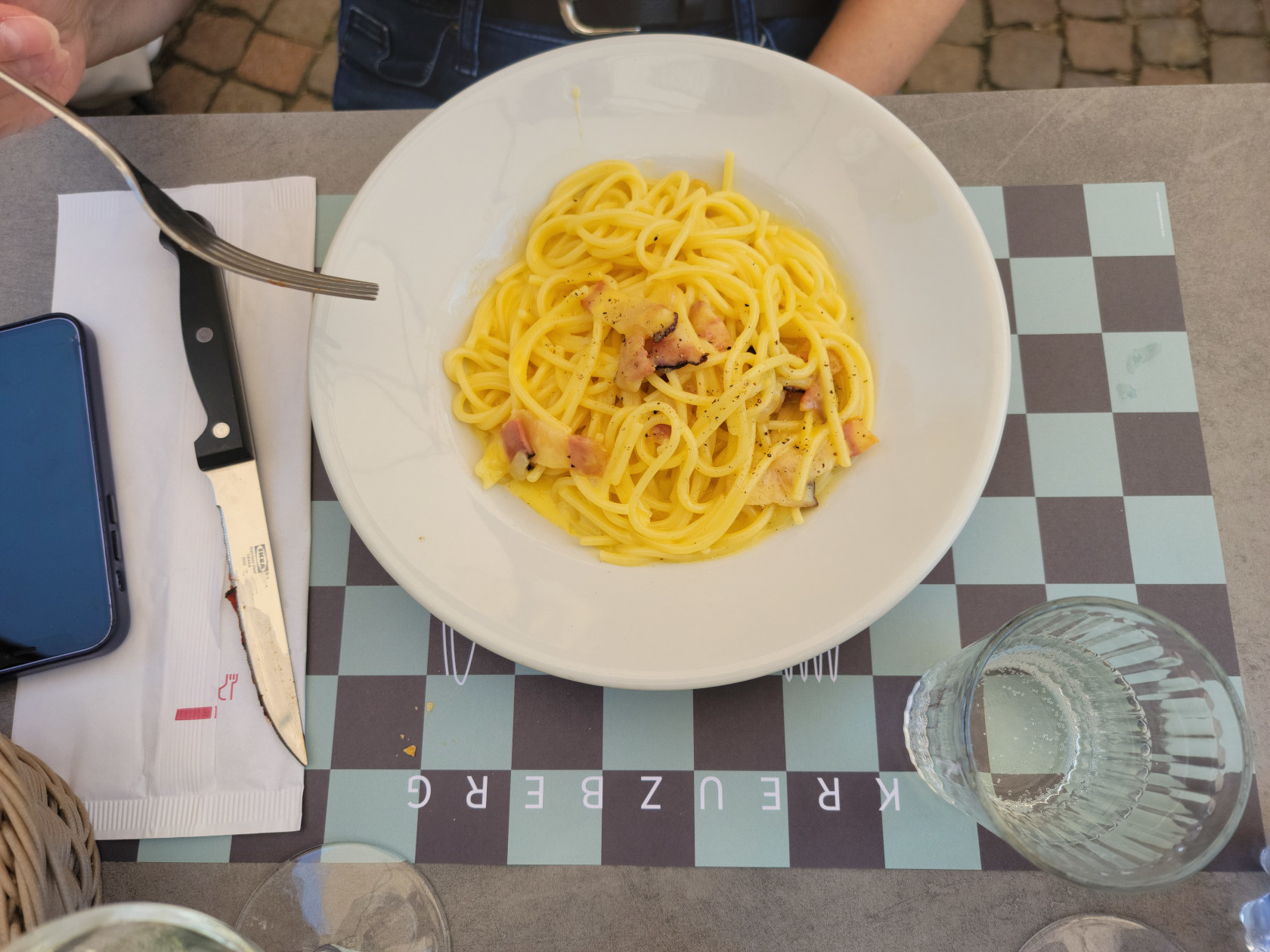
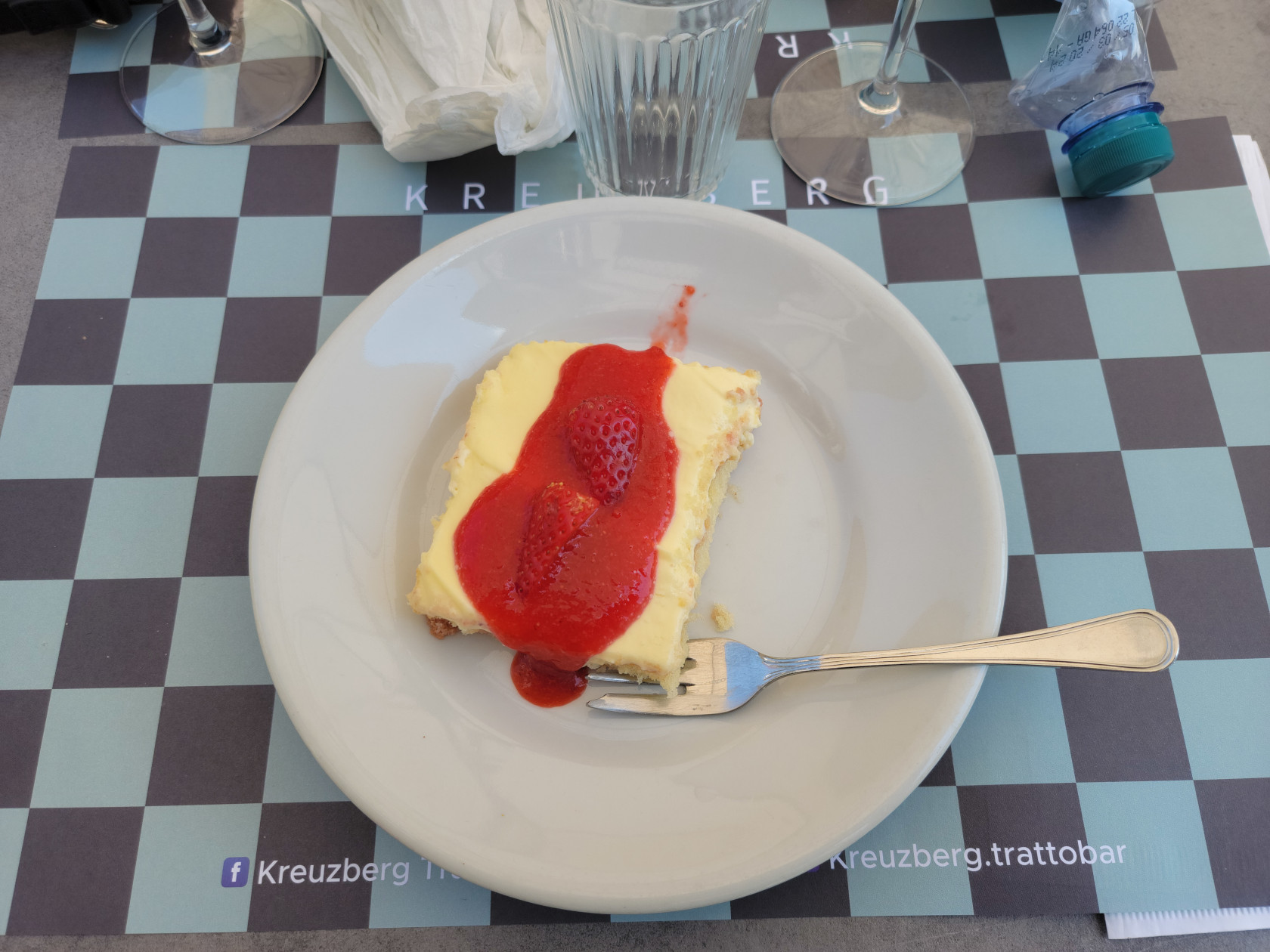
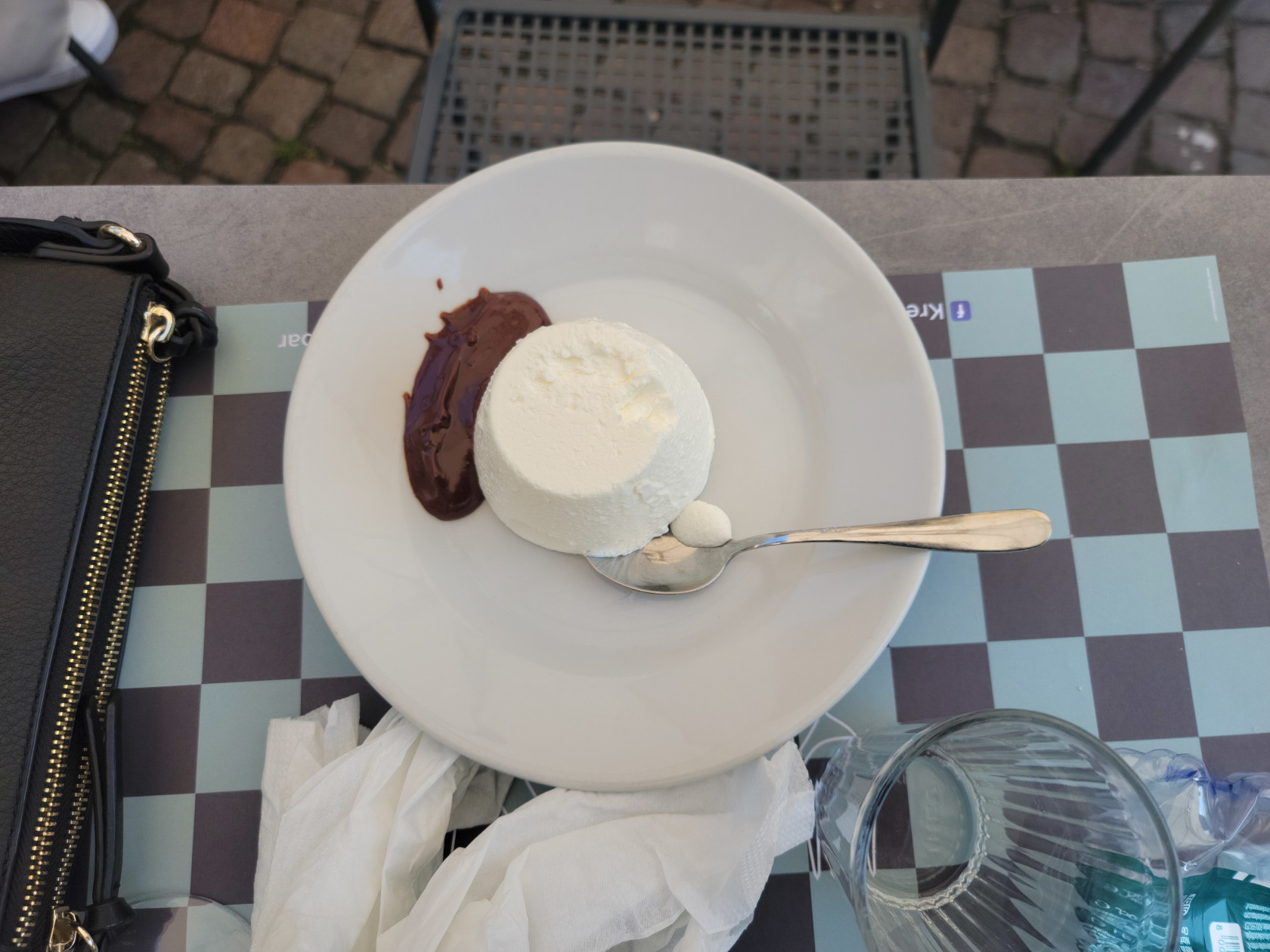
We initially stopped at a pizza place, but they apparently only took orders inside. So, after a quick reconnaissance further up the street we found a trattoria called Trattobar Kreuzberg.
TrattoBar Kreuzberg – Santa Vittoria with Chocolate – Pinerolo
Though the food was very good and for a fair price, the service, even for Italian standards, was very slow. It took us all of three hours to complete our lunch, and we could tell several other clients sitting at tables next to use were not happy either, and they were Italian. So if you are in a hurry, either get seating inside or by the entrance (of course in the hope they will see and not forget you) and not out in the umbrella piazza annex, where we were seated.
Borgata Malpertus
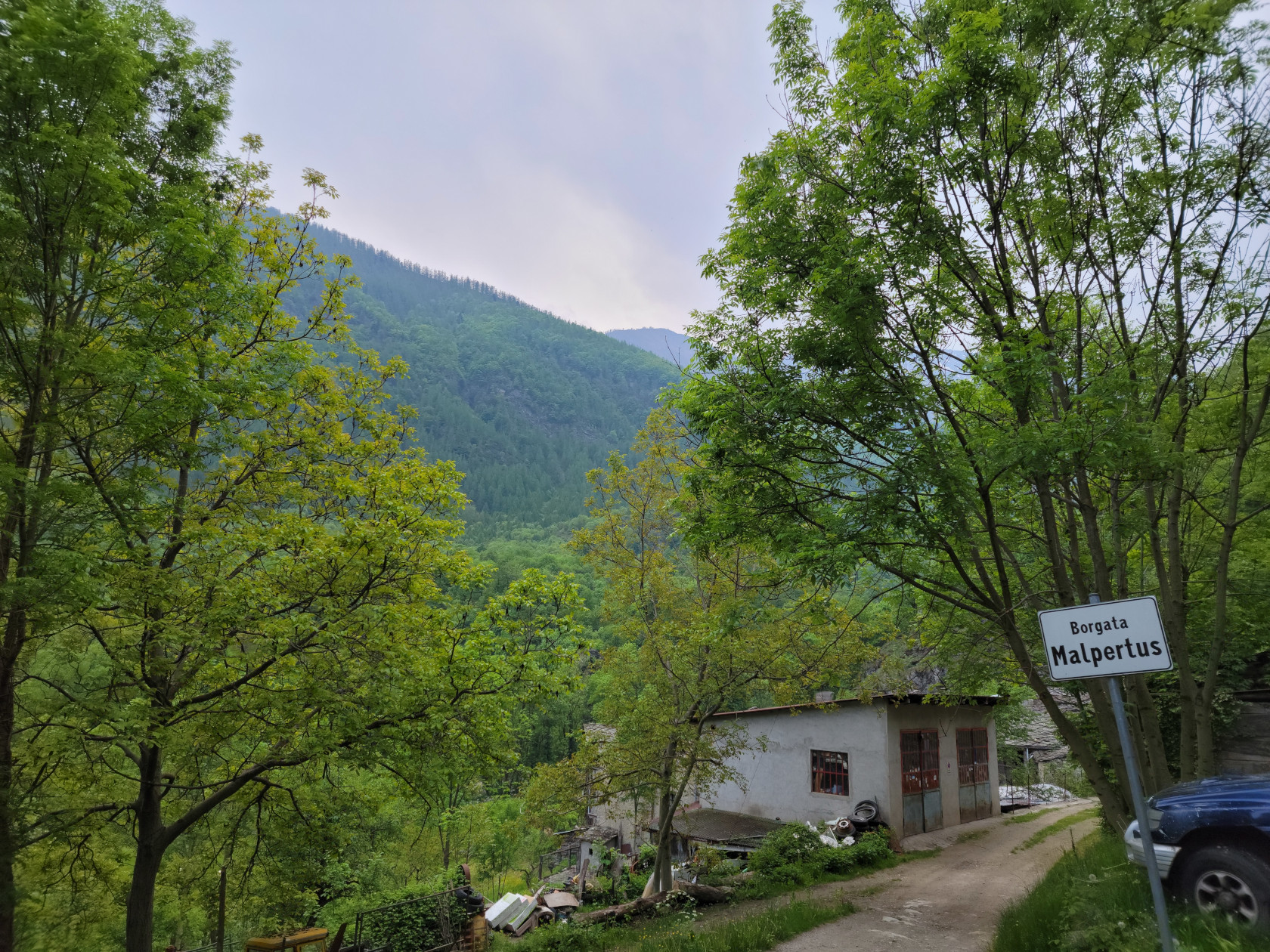
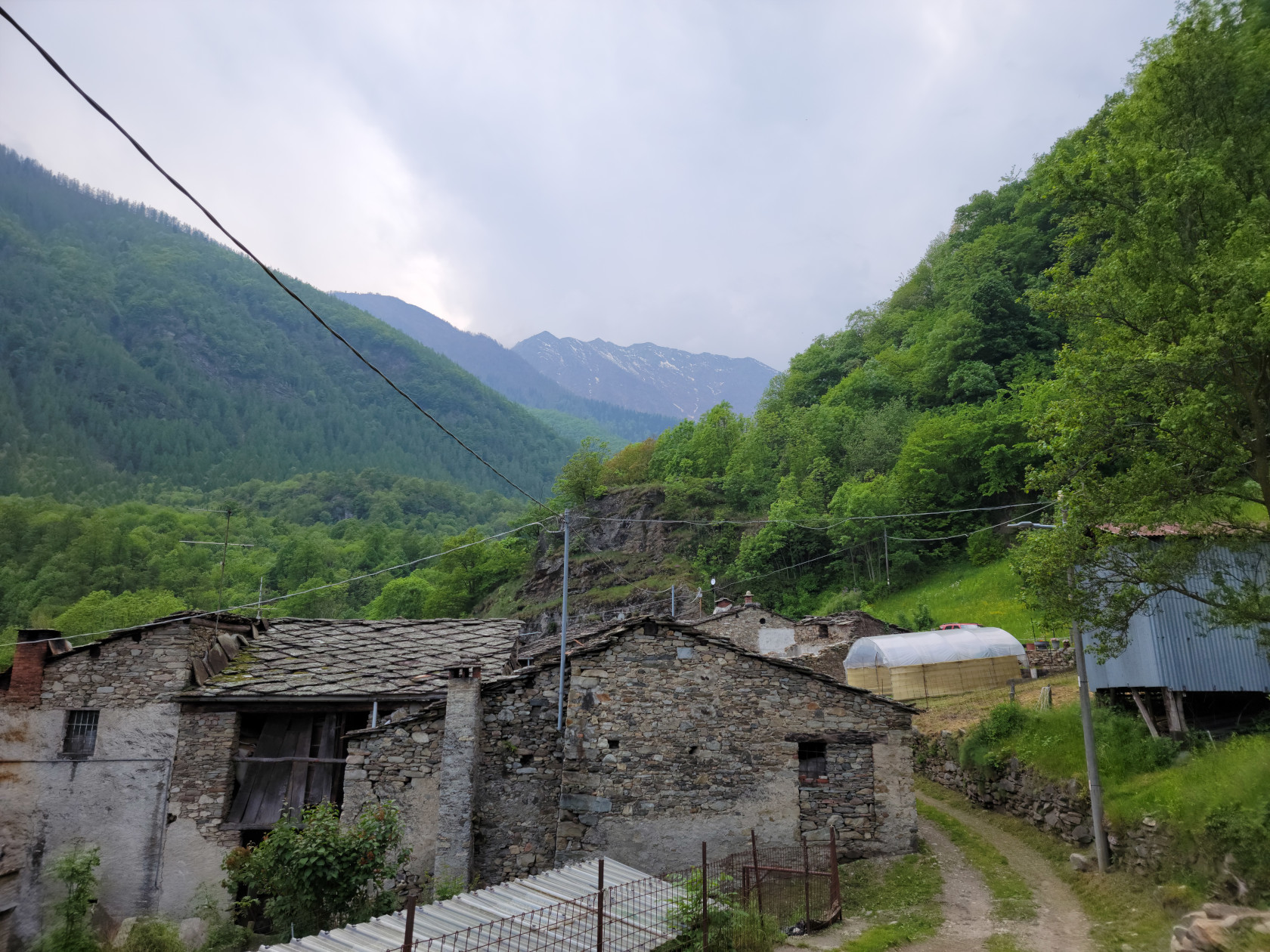
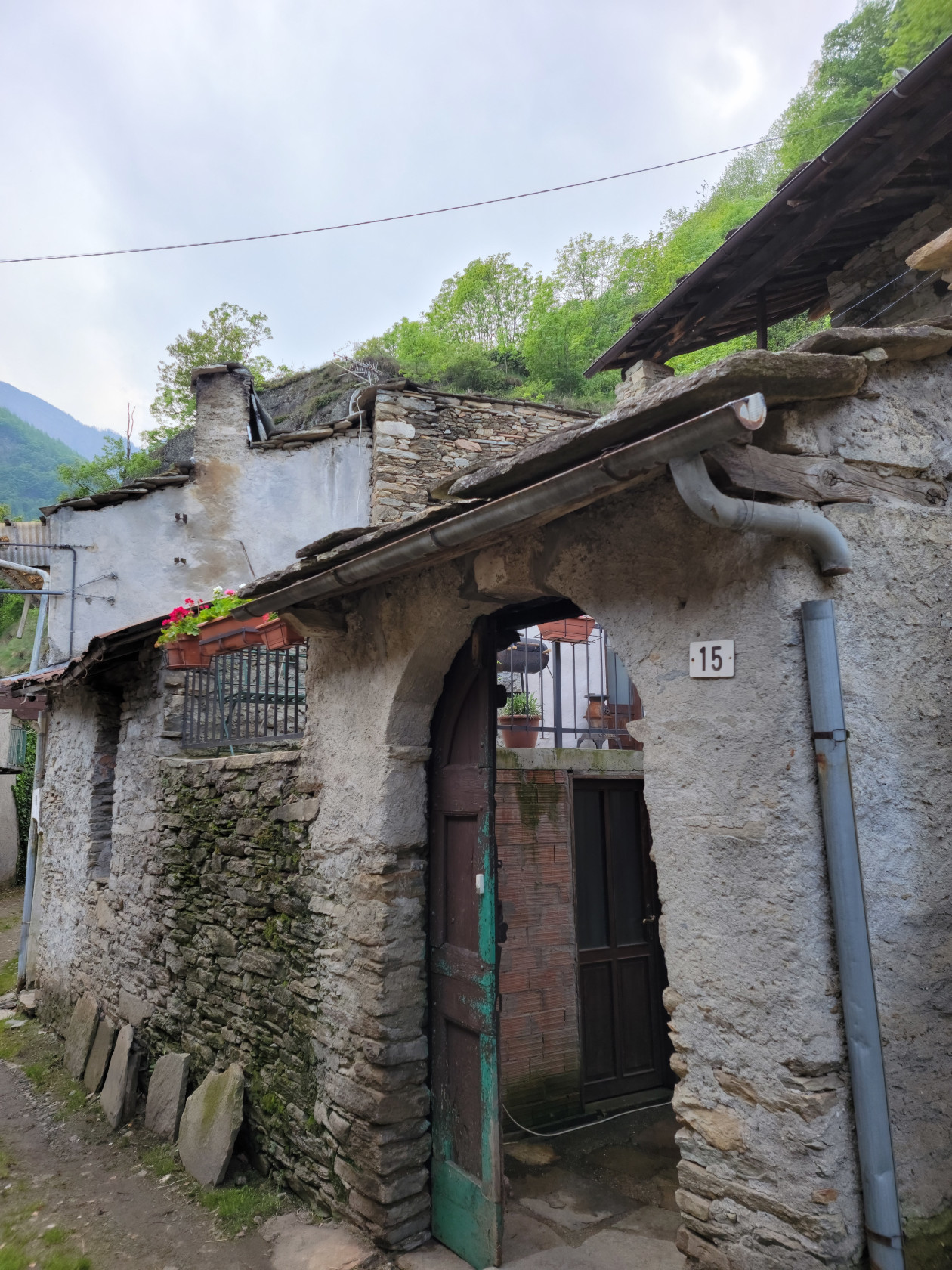
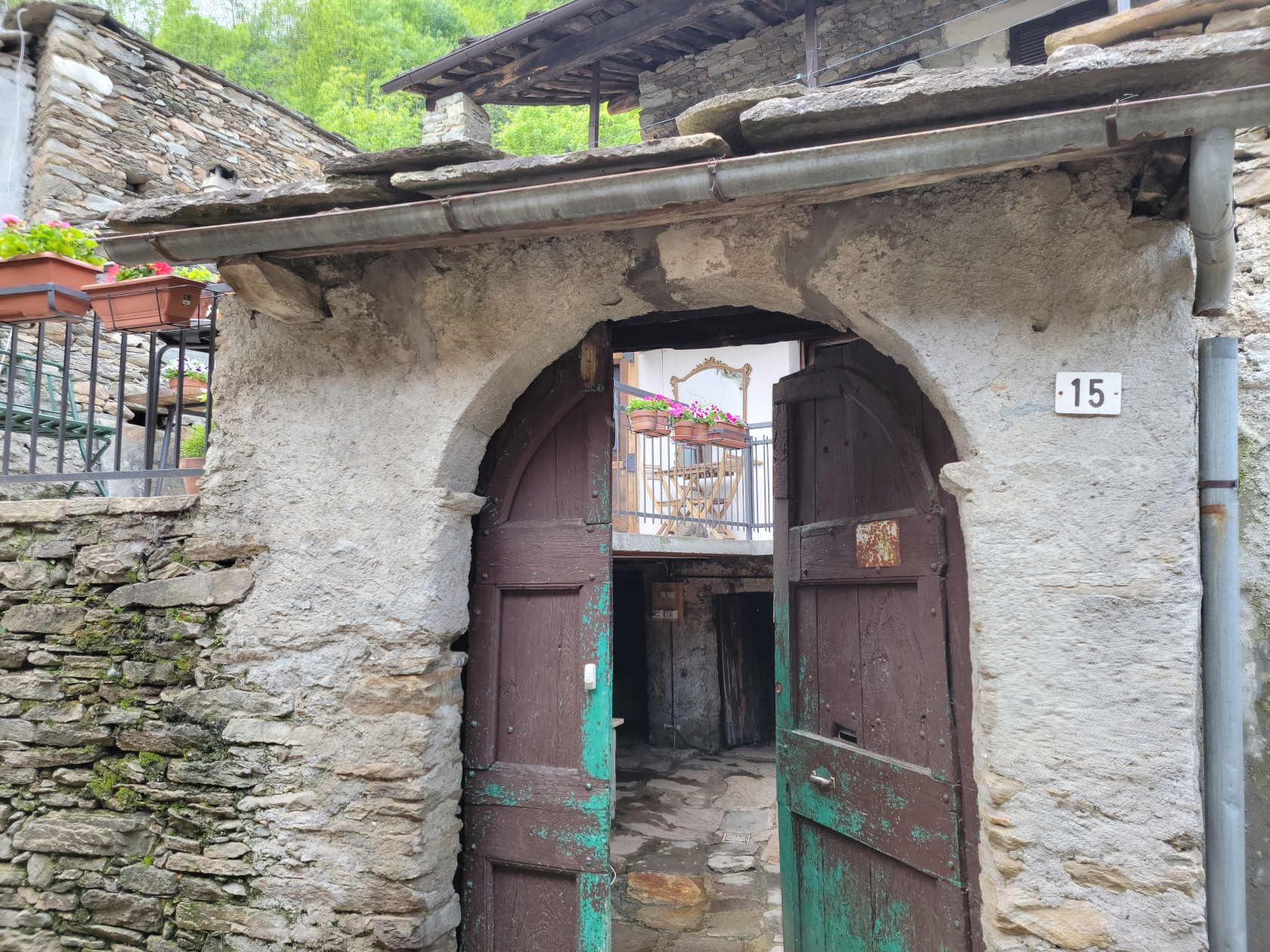
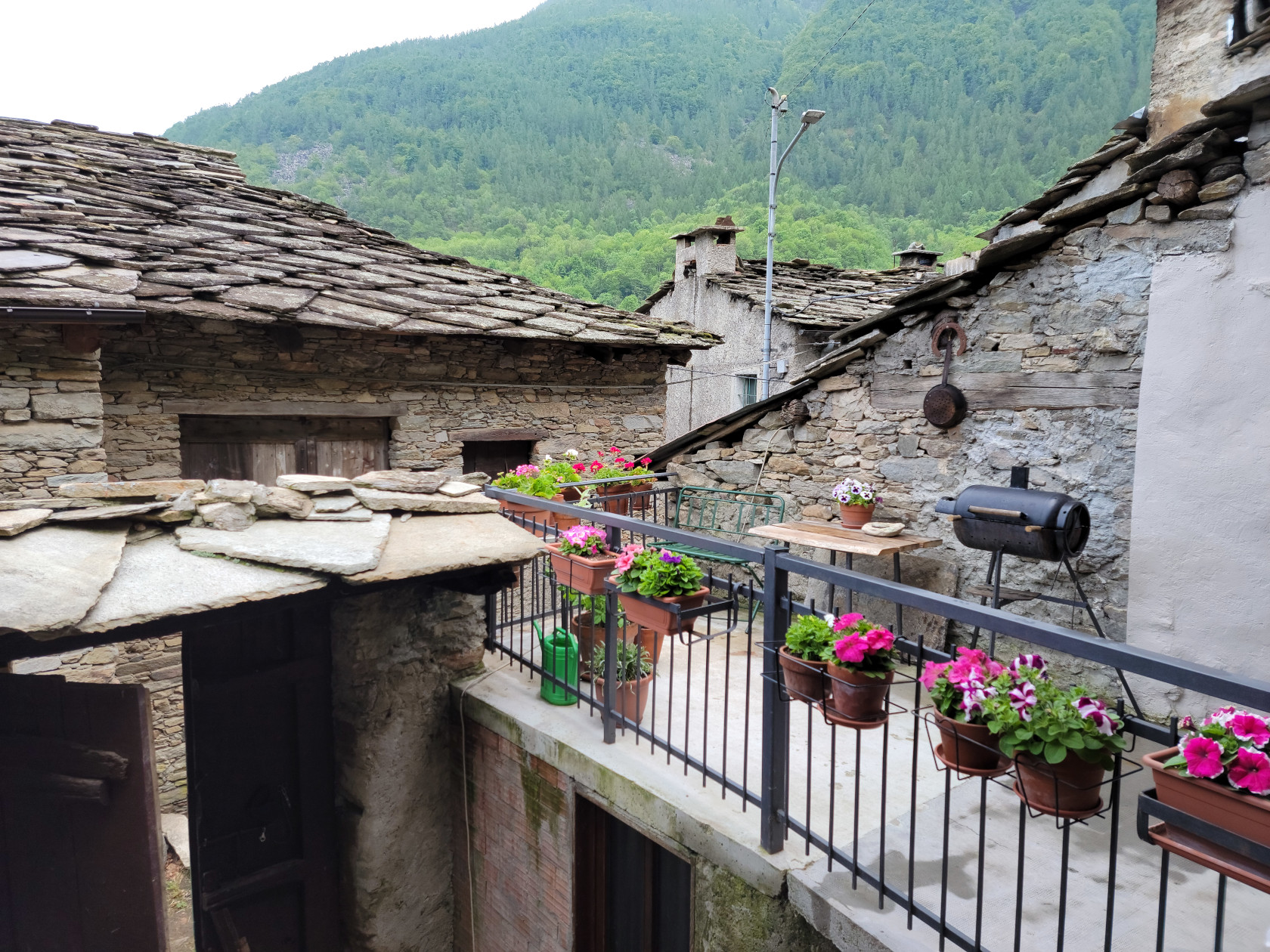
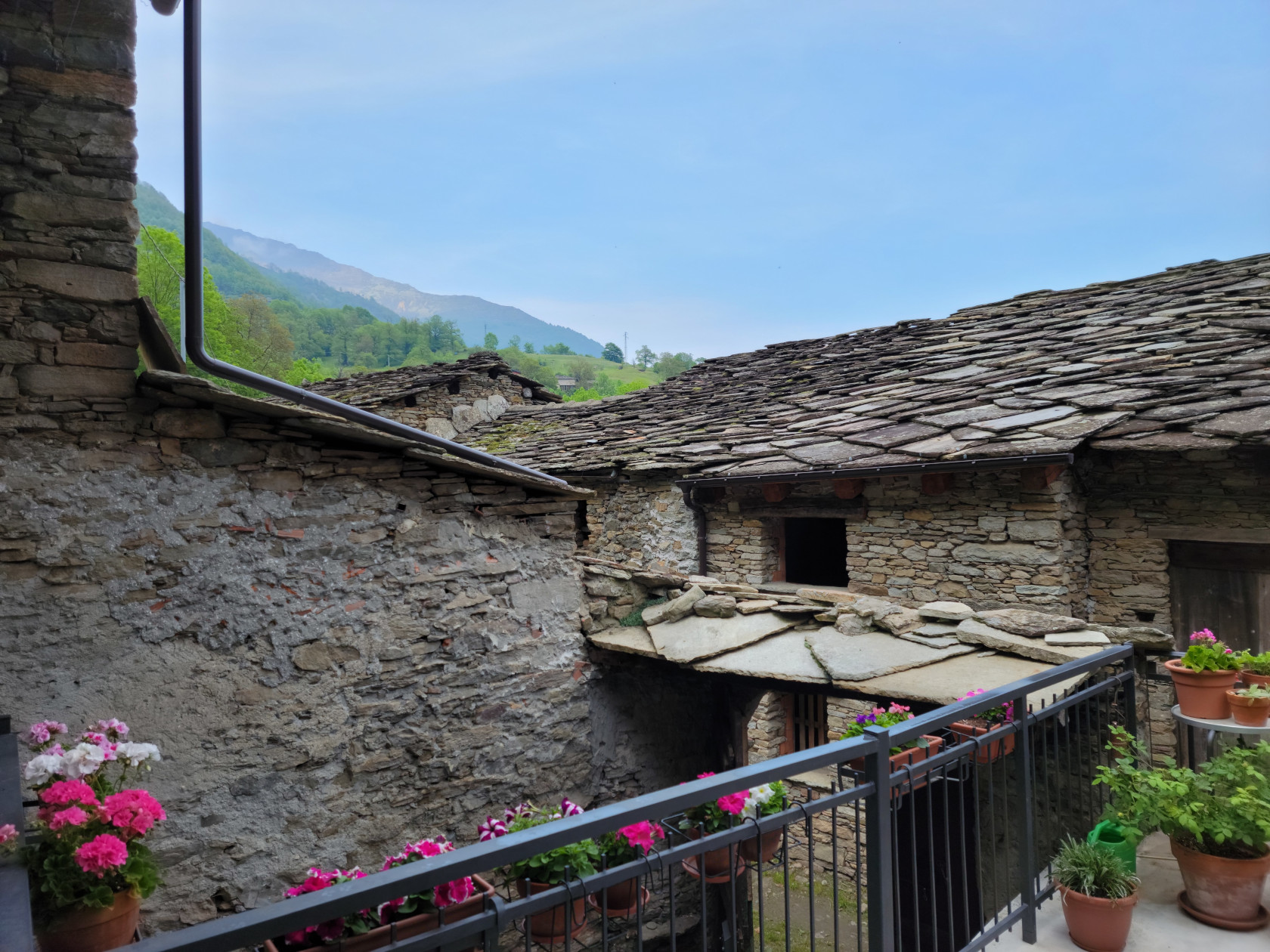
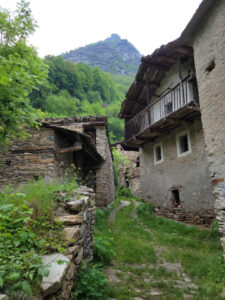
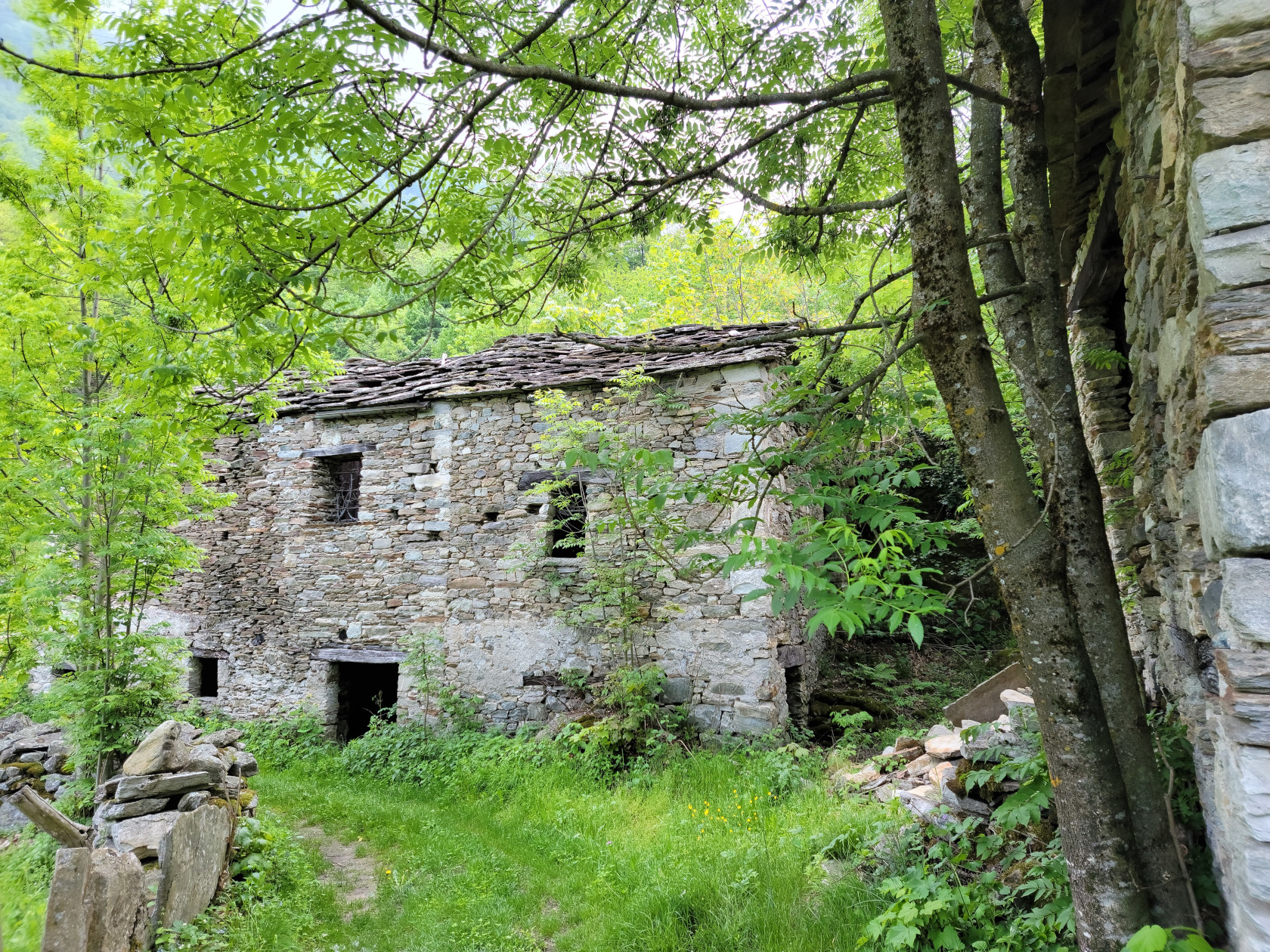
Our hosts live in a very small hamlet called a Borgata. It’s actually just a string of small stone houses collected neatly on the hillside of the Pellice River Valley.
Borgata Malpertus – Pellice River Valley
Borgata Malpertus – Pellice River Valley
15 Borgata Malpertus – Pellice River Valley
15 Borgata Malpertus – Pellice River Valley
15 Borgata Malpertus – Pellice River Valley
15 Borgata Malpertus – Pellice River Valley
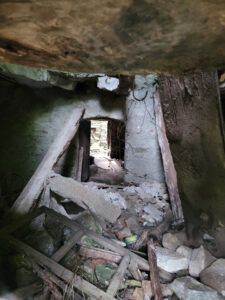
The rest of the Borgata is contained within a few roads or alleys, through which anyone can amble at their leisure. There are few residents here and some of the structures are in dire need of repair and restoration.
Borgata Malpertus – Pellice River Valley
Repairs needed – Borgata Malpertus – Pellice River Valley
Borgata Malpertus – Pellice River Valley
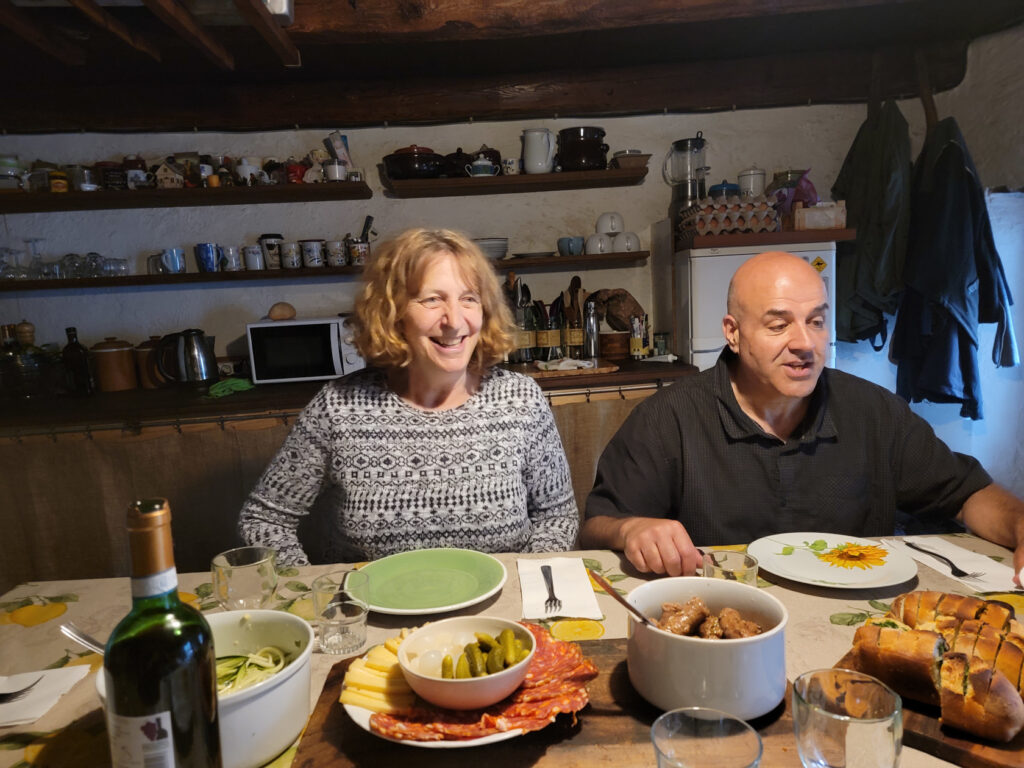
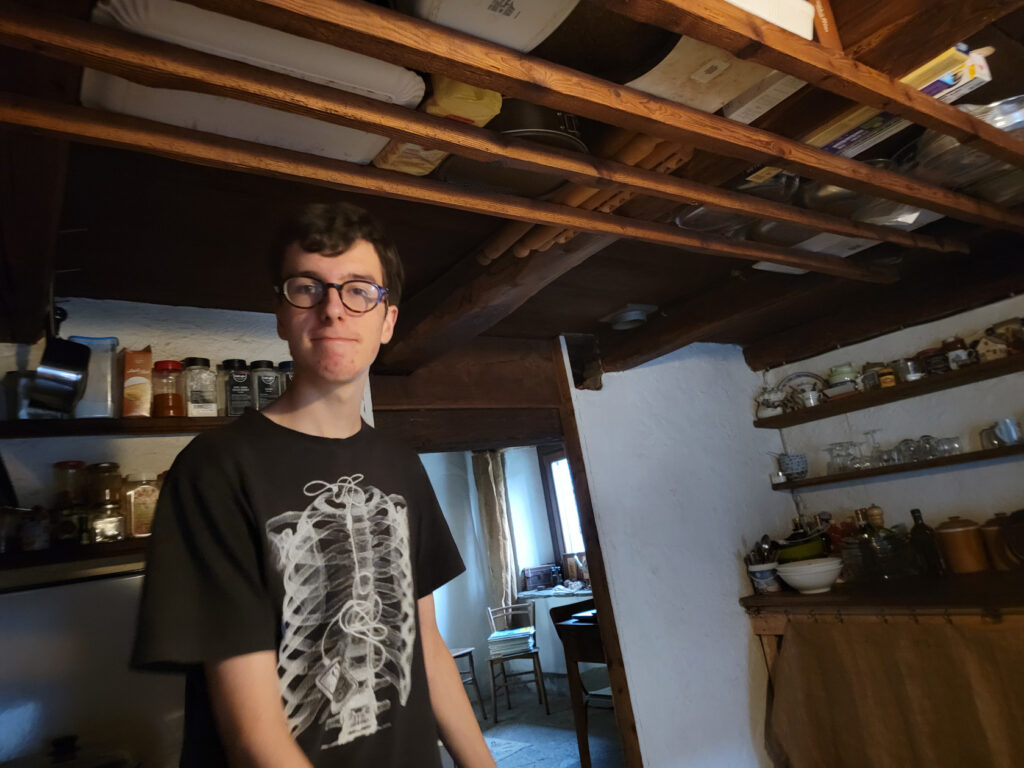
Our host, hostess and their son are great and they have done an amazing job of renovating their own place.
Lisa and Sam Chiodo – Renovating Italy at Borgata Malpertus – Malpertus
Their son Luca – Renovating Italy at Borgata Malpertus – Malpertus
Venturing Out A Bit
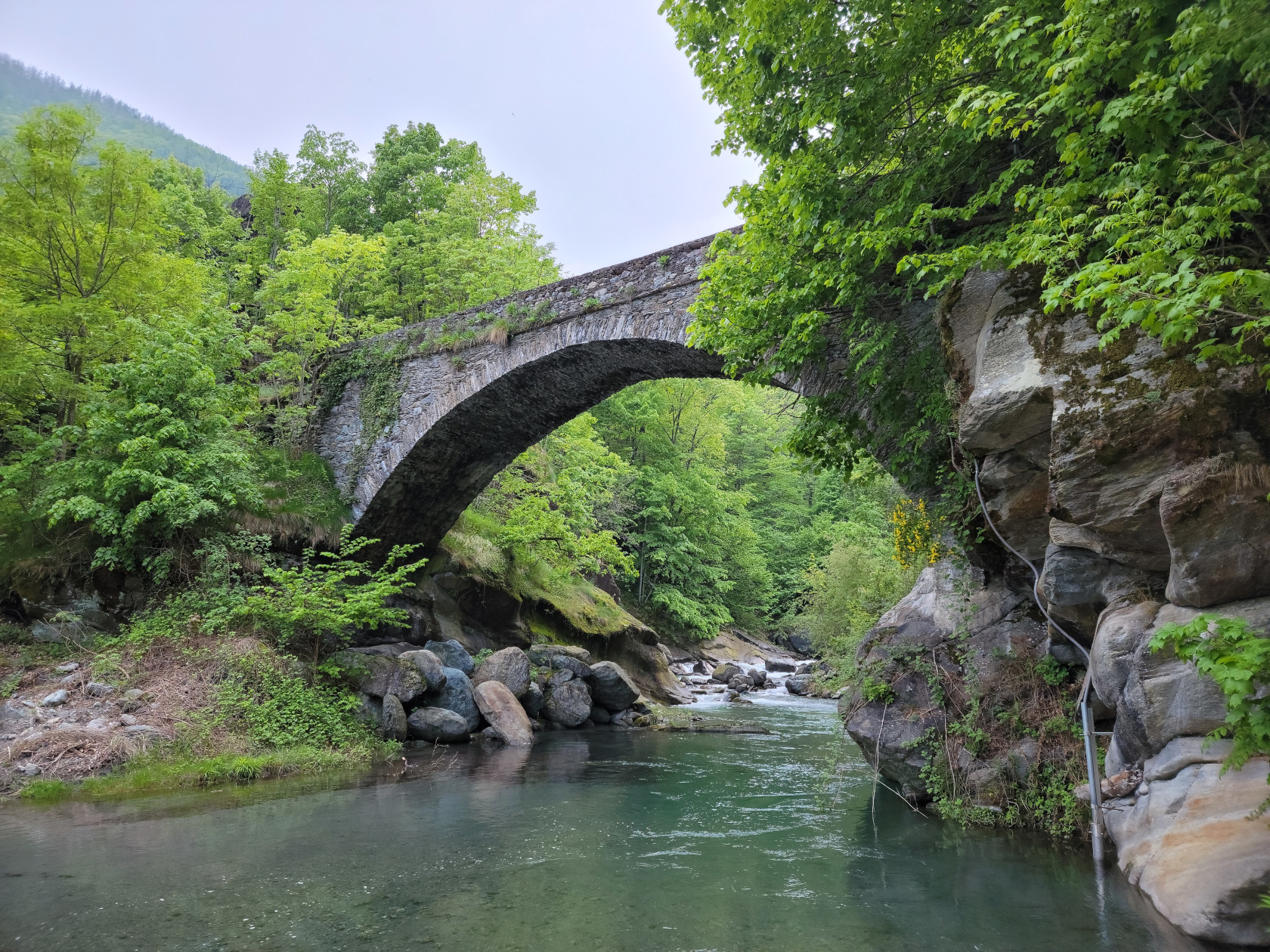
Taking a short walk from the Borgata and a stone’s throw away is Napolean’s Bridge. Of course, Napolean did not build, nor even cross the Pellice River using this bridge. It was built at least a hundred years before he was even born and it is believed that his army never ventured down the valley that far, if in this valley at all.
Pellice River – Napolean’s Bridge – Pellice River Valley
From the Pellice River – Napolean’s Bridge – Pellice River Valley
Pellice River – Napolean’s Bridge – Pellice River Valley
Pellice River – Napolean’s Bridge – Pellice River Valley
Older Buildings (circa 1600s) – Napolean’s Bridge – Pellice River Valley
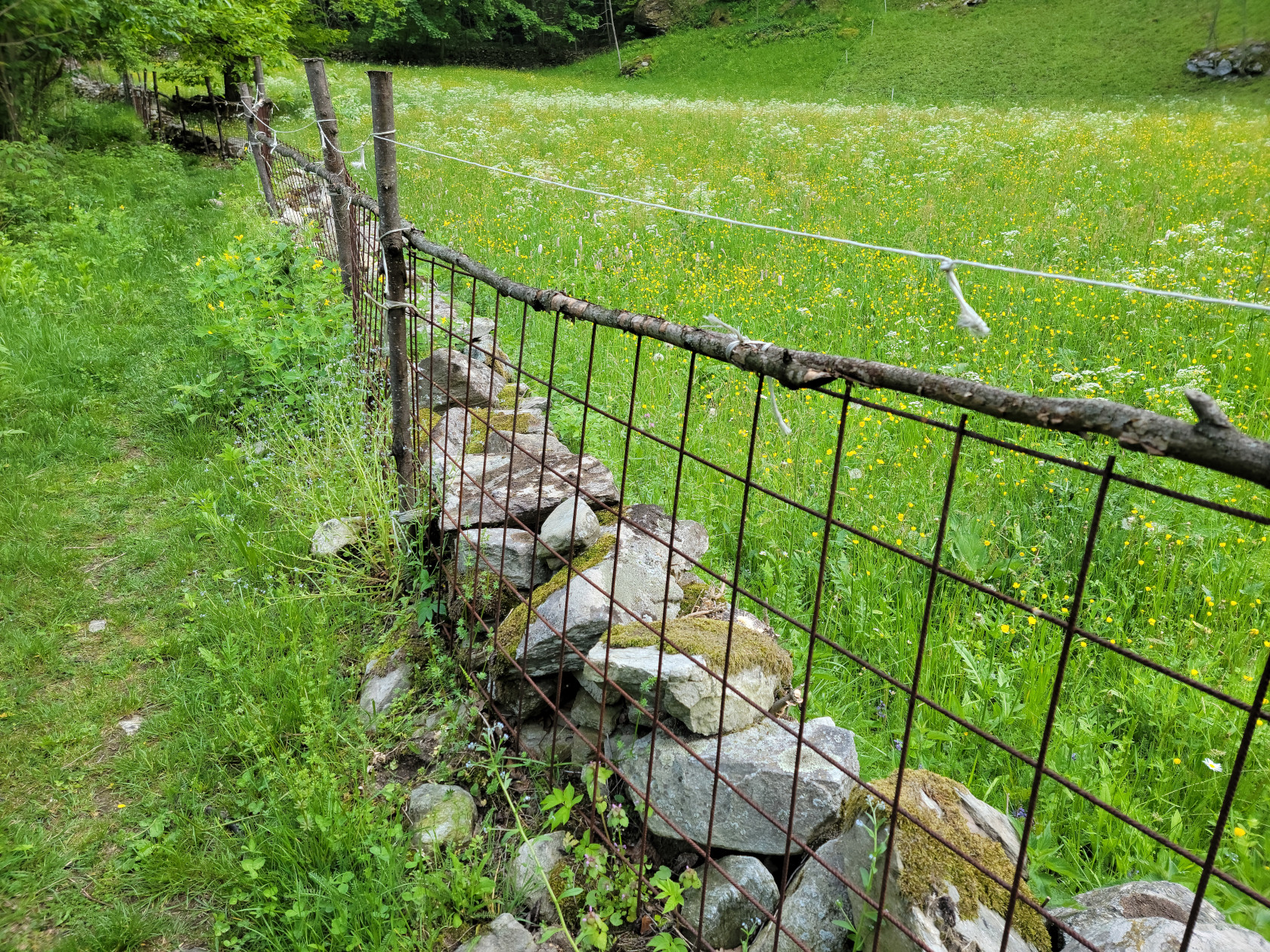
Italian Farm Fencing – Napolean’s Bridge – Pellice River Valley
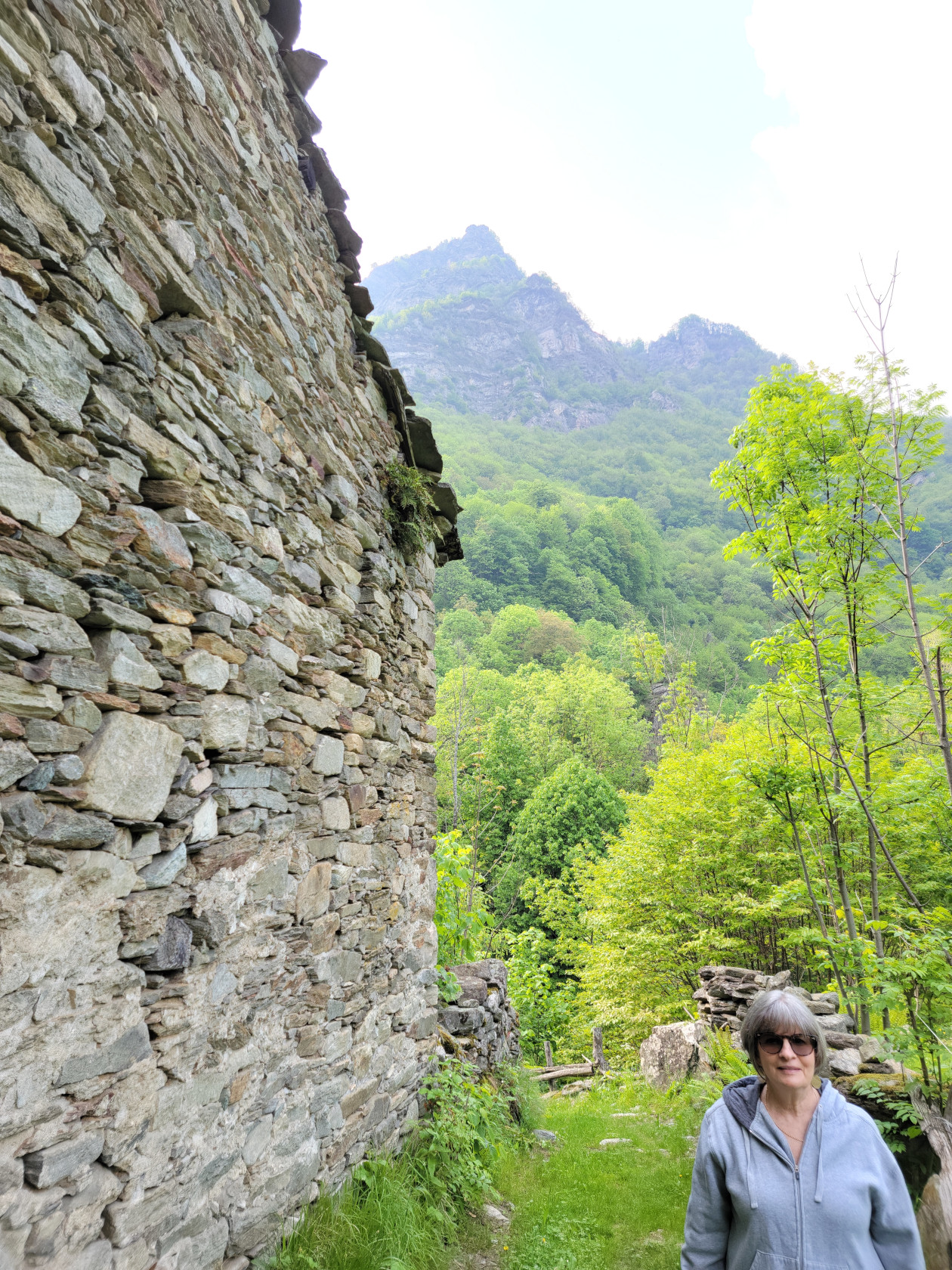
Patti and mountians – Napolean’s Bridge – Pellice River Valley
However, it is a nice walk and an improbable feature of the valley, since it appears to have been built near no know important structure, castle or fortress, yet obviously took a tremendous amount of work to complete.
Flowers – Malpertus
Flowers – Malpertus
Flowers – Malpertus
Flowers – Malpertus
Flowers – Malpertus
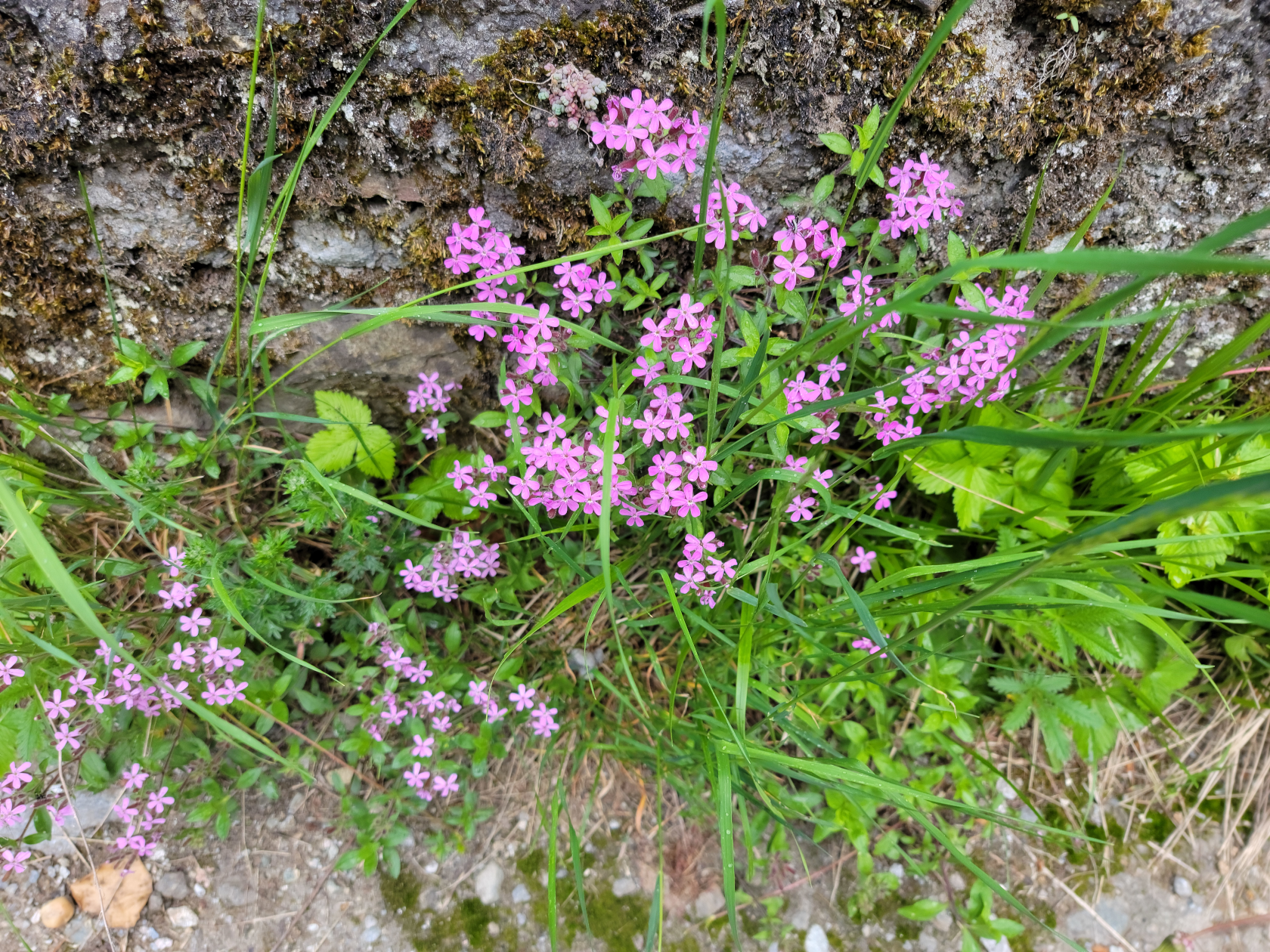
Along the way there are an amazing assortment of flowers and as with other parts of Italy, the fields and pastures are abuzz with this sound of bees and the chirping calls of crickets. So if you are looking for a place for some peace of mind, this might be an appropriate place for you.
For those wanting and willing to see the Sacra di San Michele and experience this great church and its views, one must hike the three or so kilometers and one kilometer ascent in order to really enjoy what the builders had accomplished here. Not only is it a feat of Middle-Ages engineering and stubbornness, its shear existence defies rationality, and so may I add hiking up to it. Well maybe not exactly, but you should be prepared. We saw many individuals when we were descending wearing the wrong type of shoes, etc. More on that later.
Sant’ Ambrogio – Getting There
A thirty three minute train ride from Turin’s train station Porta Nuova will get you to Sant’ Ambrogio and the beginning of your climb. Let me add, before we begin, that you may drive up to the church; but then you would be among the majority of people there and just mere tourists.
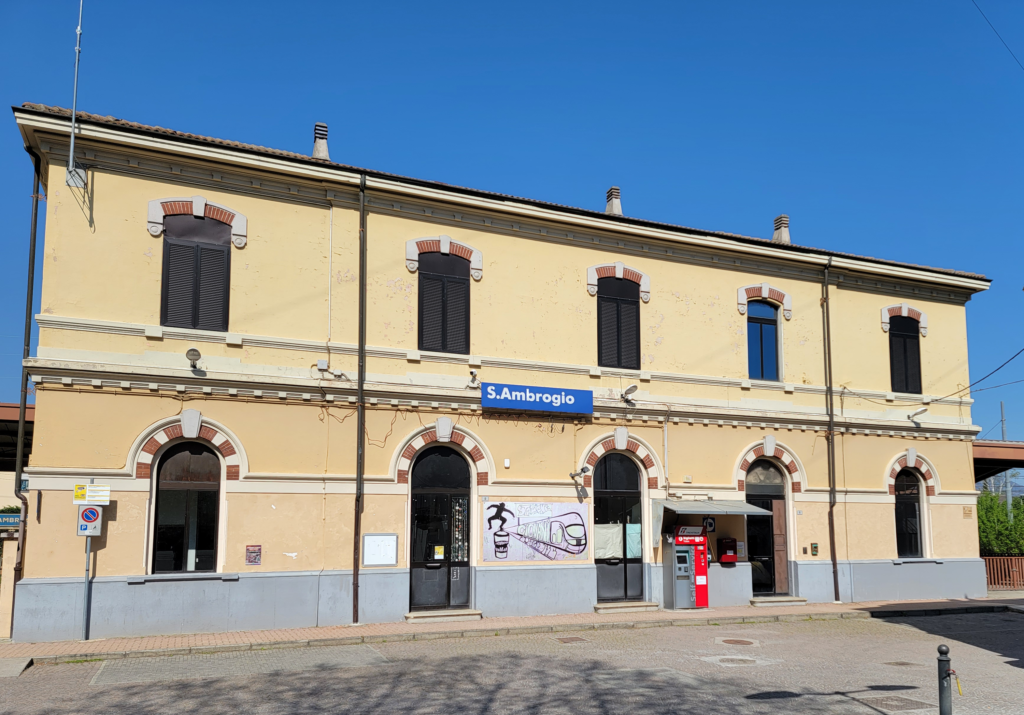
The train station – San Ambrogio
The train station is spartan and leaves you off on track one to enter this small town or hamlet directly. Returning you will have to find the stairwell to the right of the train station and walk under the tracks.
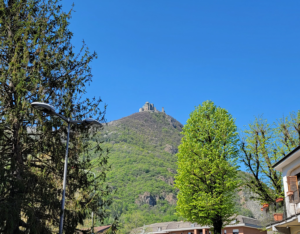
First sight of Sacra di San Michele from train station – Sant Ambrogio
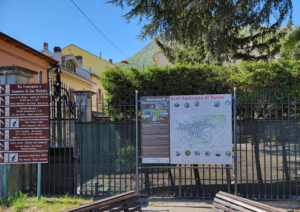
Welcome Sign – Sant Ambrogio
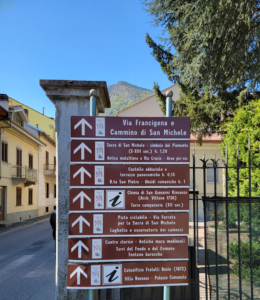
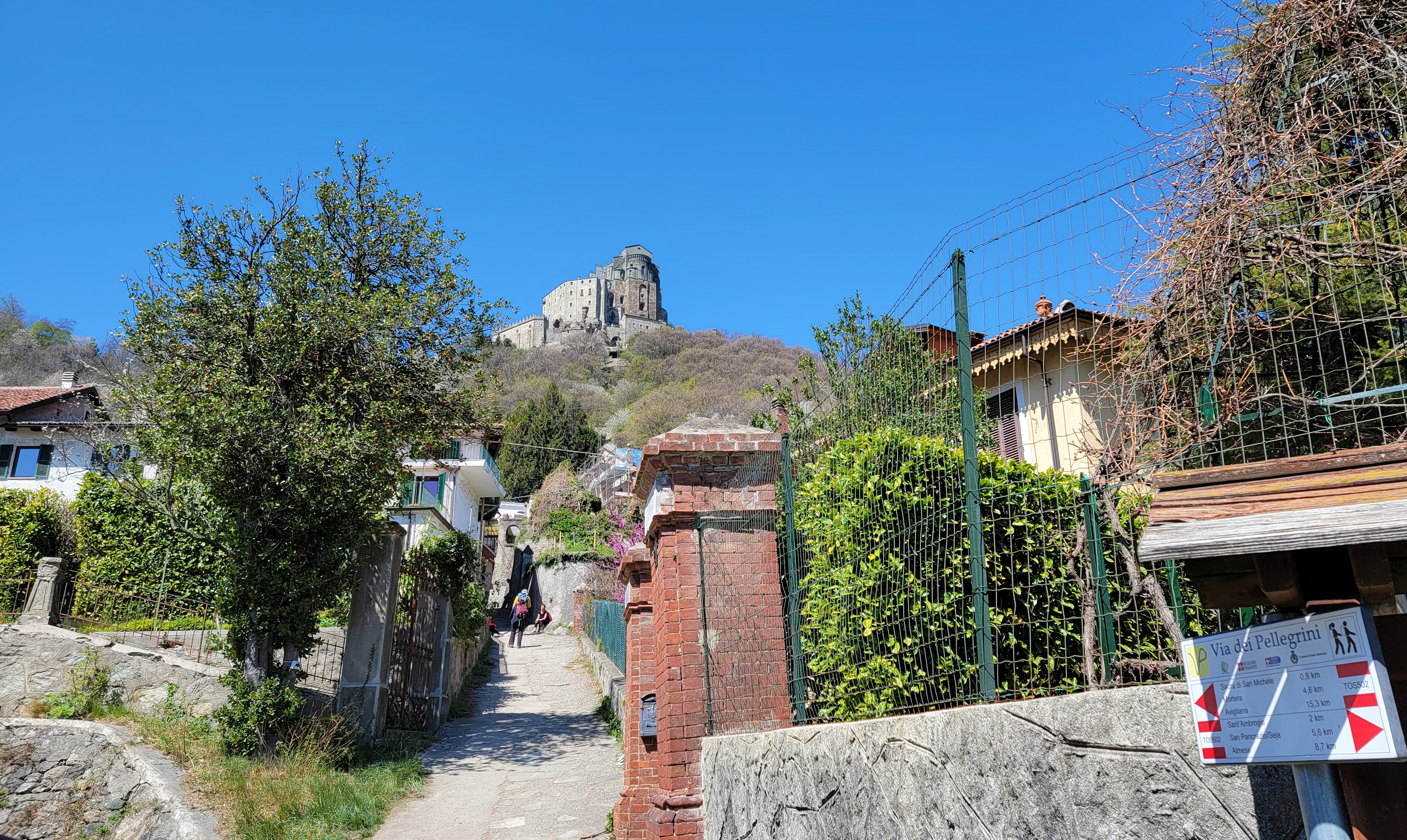
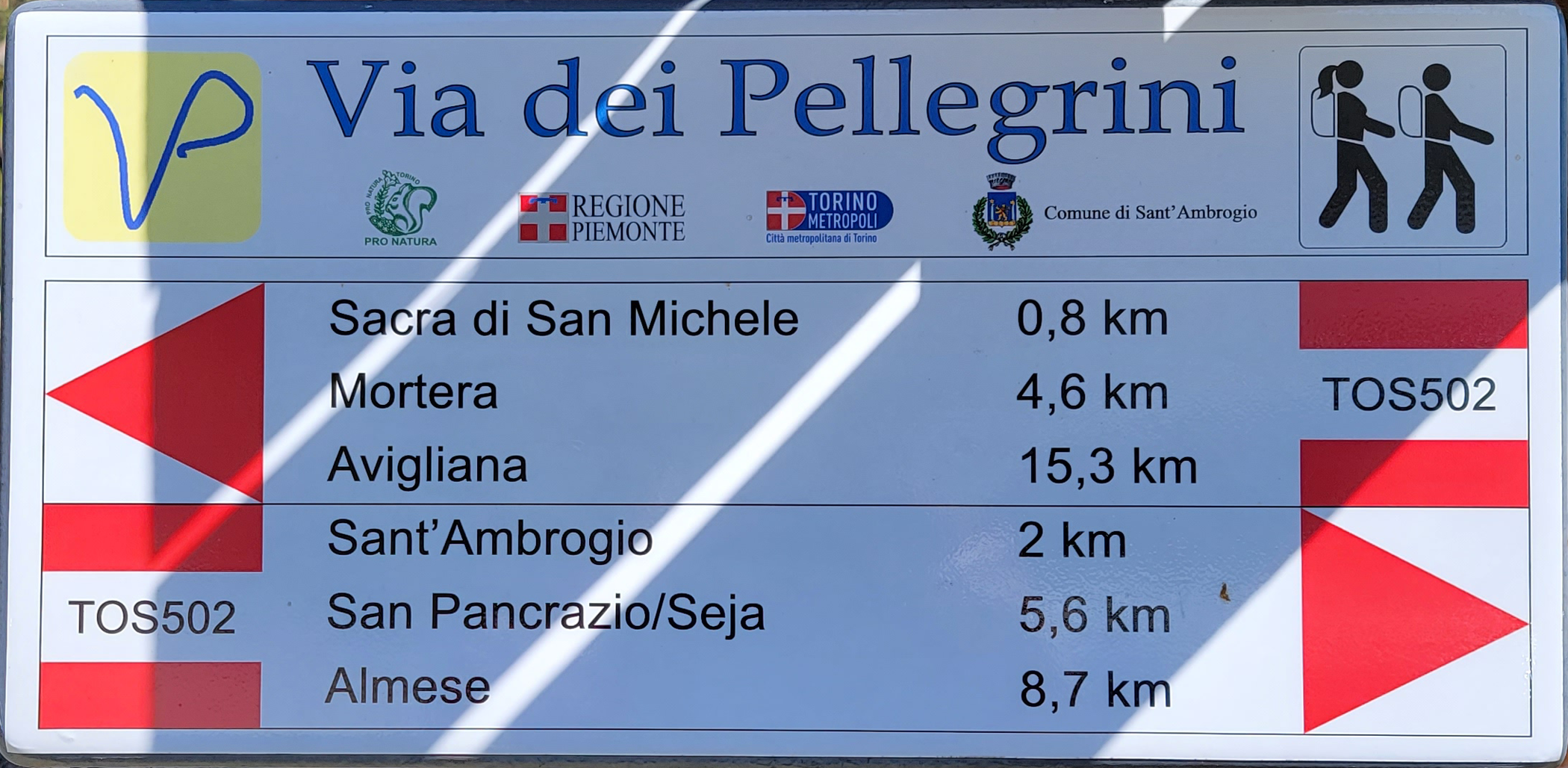
Hiking Trail Signs – Sant Ambrogio
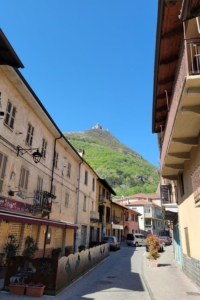
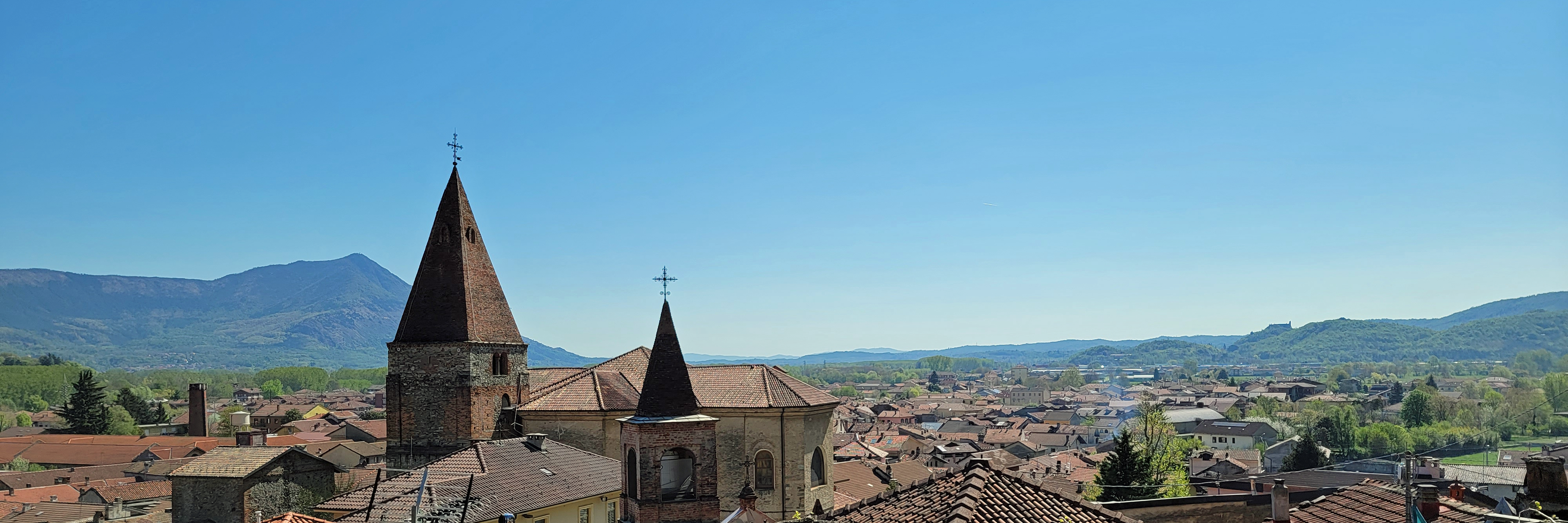
Sacra di San Michele from inside the town – Sant Ambrogio
A sleepy town on Pasquetta (day after Easter) – Sant Ambrogio
A view from the Church of Saint Giovanni Vincenzo – Sant Ambrogio
The trail starts and the Church of Saint Roch – Sant Ambrogio
Follow the signs for two hours – Sant Ambrogio
We arrived the day after Easter Sunday, or as the remembrance in Italy has it for Roman Catholics, Pasquetta [1]Also called, Lunedì dell’ Angelo, which is meant to remember the women of the sepulcher, including Mary Magdalene, who were comforted by an angel when they returned to Jesus’ tomb and found it … Continue reading The town was more or less empty, so our ideas about a quick climb up and back and an early lunch soon vanished.
On the way up, the rooftops of the town – Sant Ambrogio
The walk through the town was short and without incident, in fact, we were mostly accompanied by the individuals who left the train with us, residents of the town having already left for the long weekend or enjoying amenities inside and their extra day off.
Parco Naturale Orsiera – Sentiero Trail 502
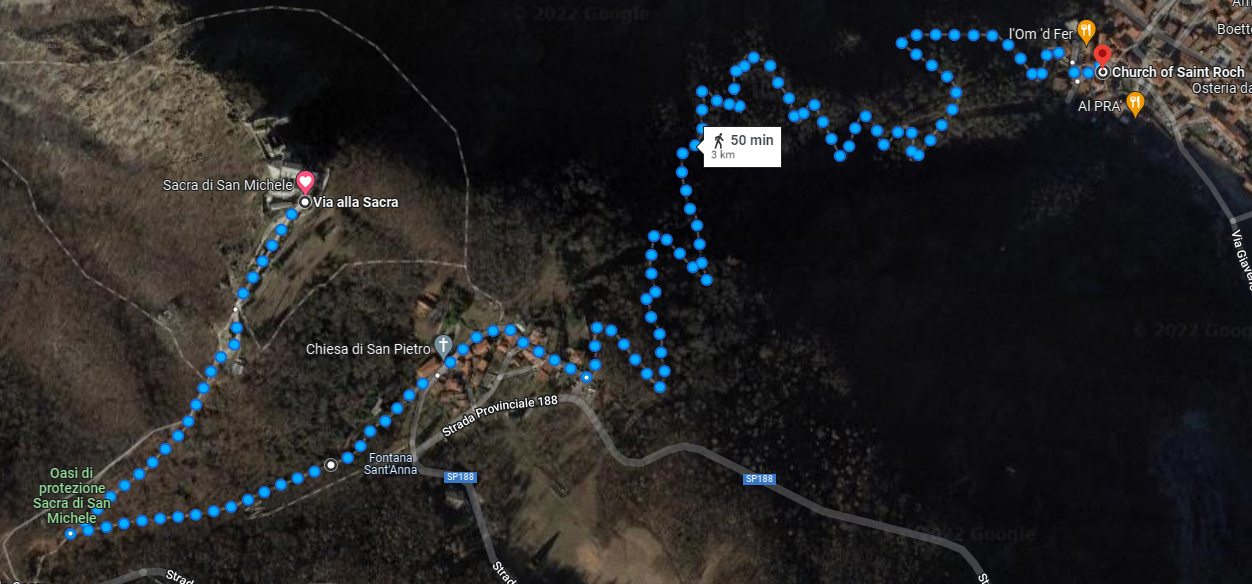
Using the Sentiero Trail 502, or TOS 502, we quickly left the town and started our ascent up the most north-eastern mountain or hill of the Parco Naturale Orsiera. An almost one kilometer ascent for three kilometers with slopes ranging in steepness of three to twenty percent, and I would conjecture most were in the double digits.
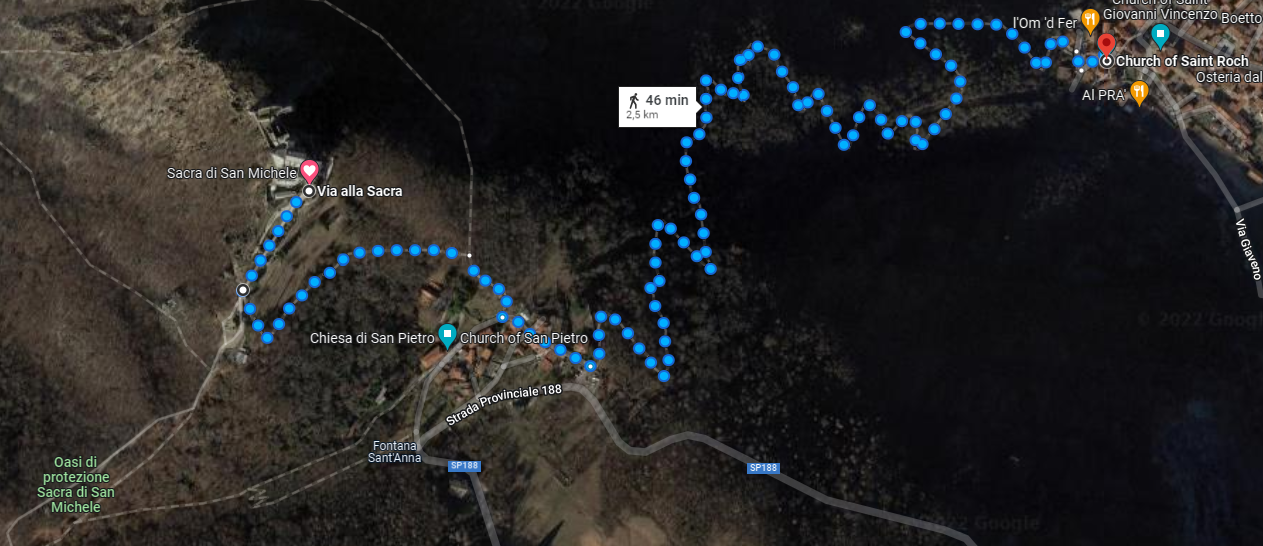
This 3 km rises 1000 meters and takes about 1 and a half to 2 hours to hike – Trail Map
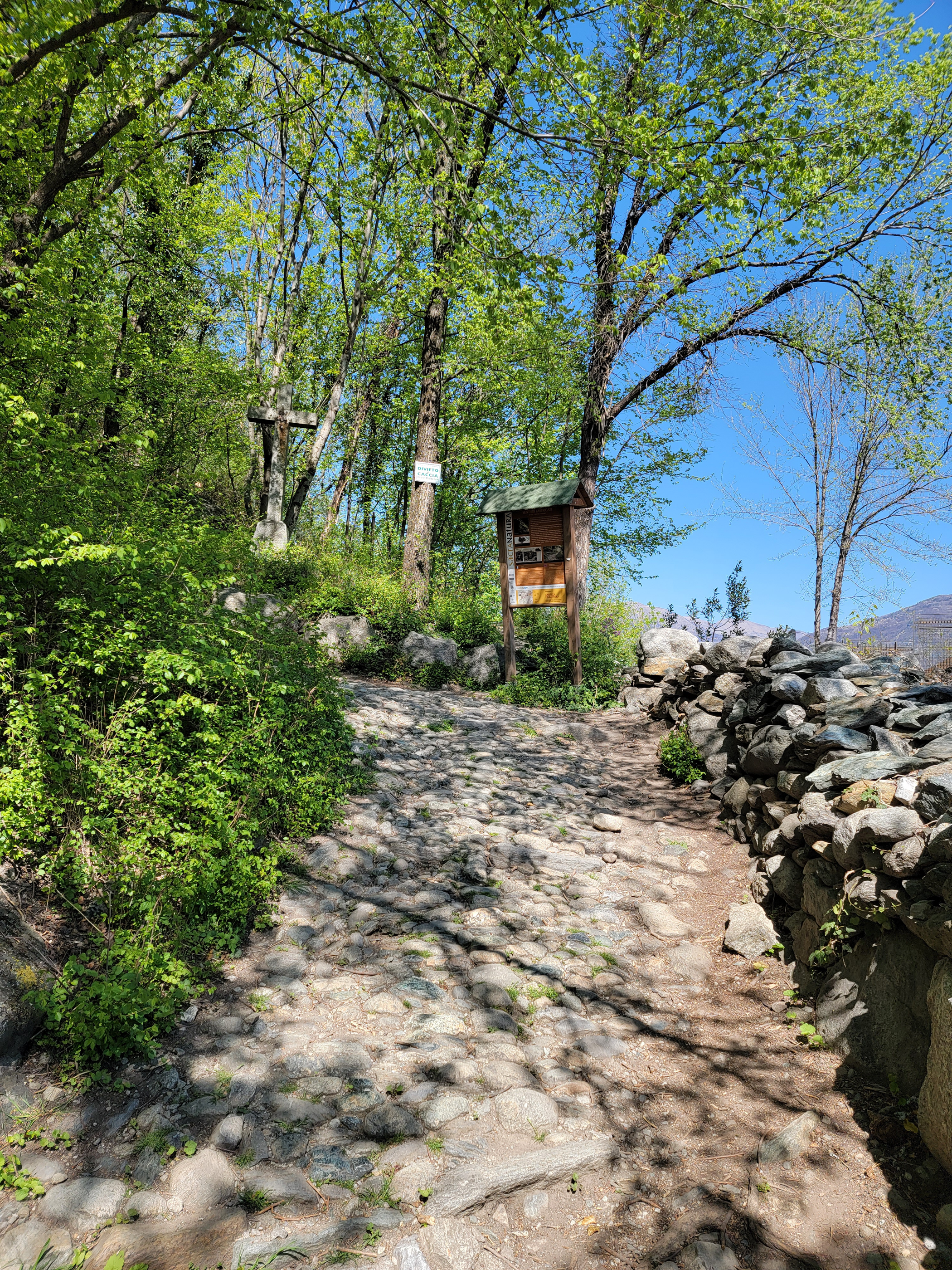
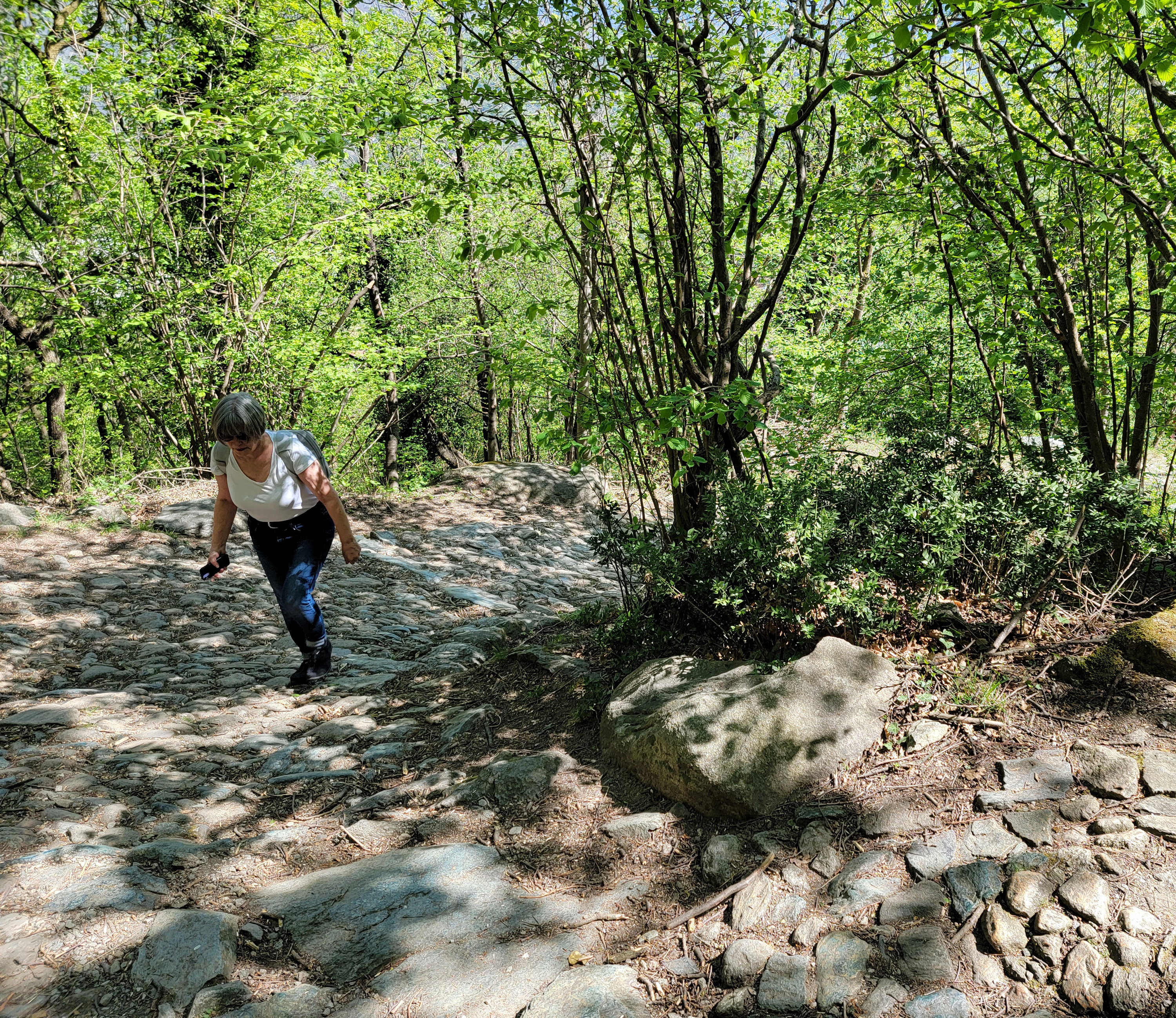
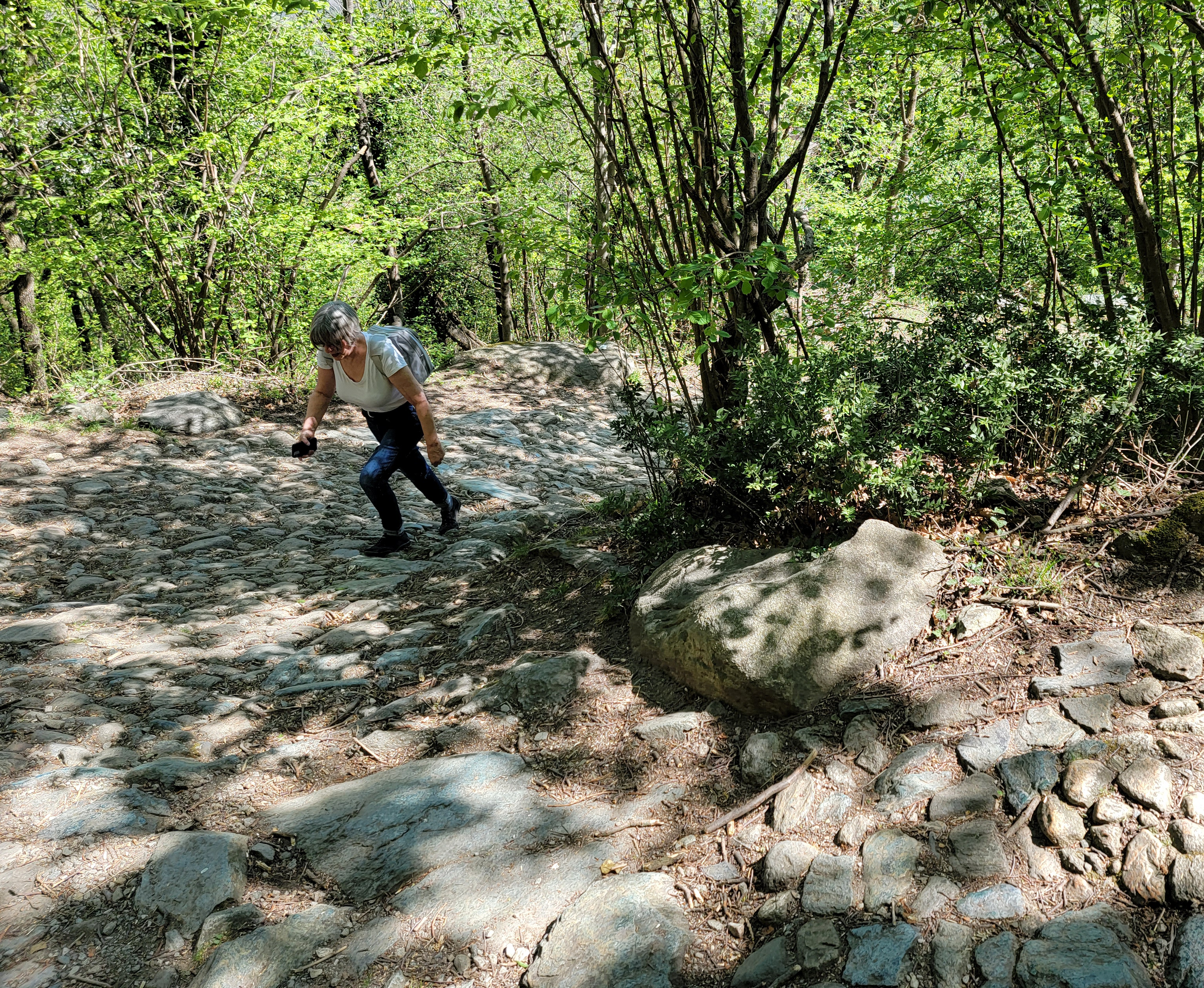
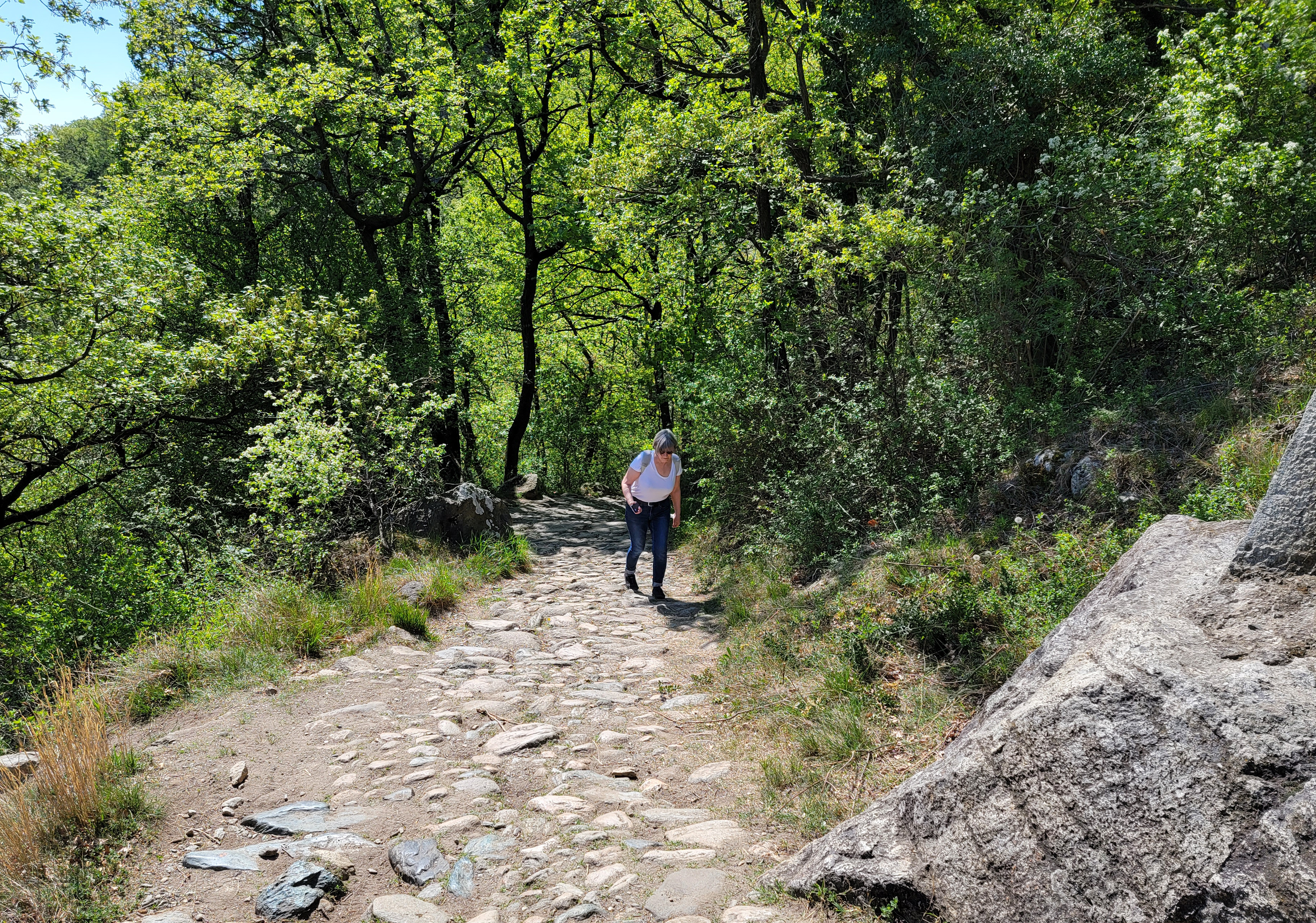
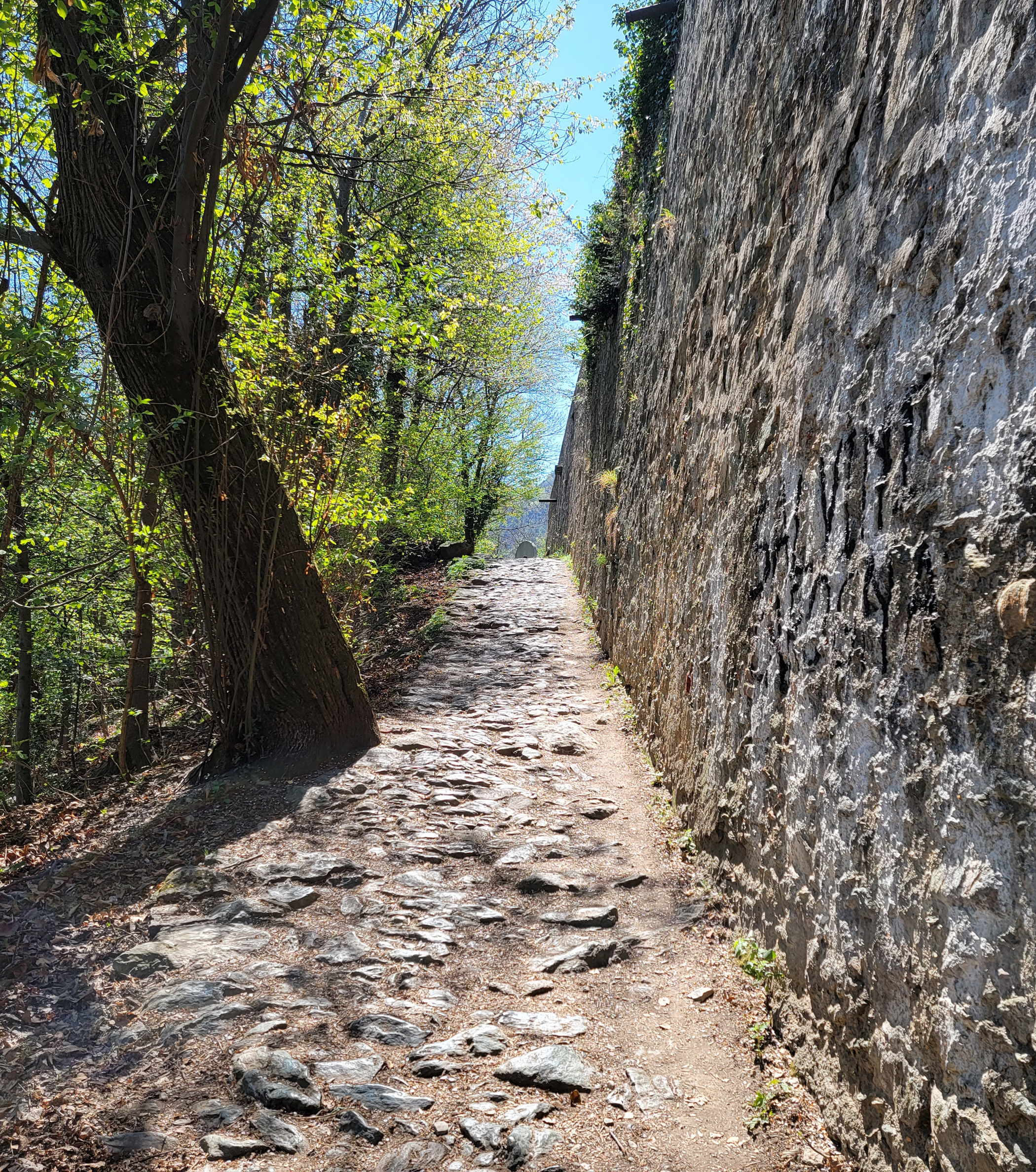
The trail was for the most part cobbled with round and larger stones, some which have a remarkable green color, are shiny and very slippery. Proper shoes are important, though it is possible to navigate the trail with tennis shoes or sneakers.
A welcoming sign, this is the right trail – Sentiero Trail 502
The Trail has Cobble and other Stones all the way up – Sentiero Trail 502
Patti navigating the trail – Sentiero Trail 502
Patti on another turn – Sentiero Trail 502
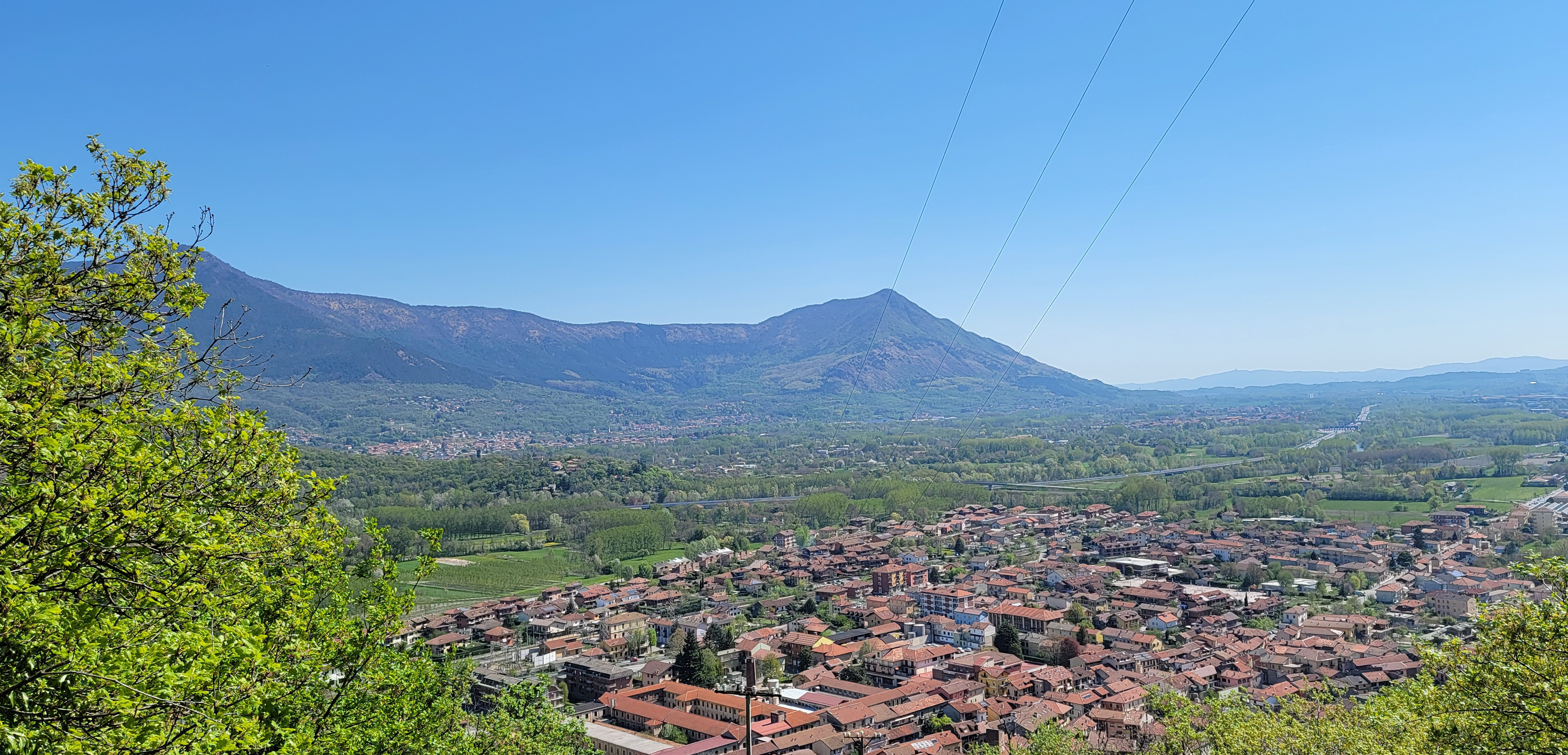
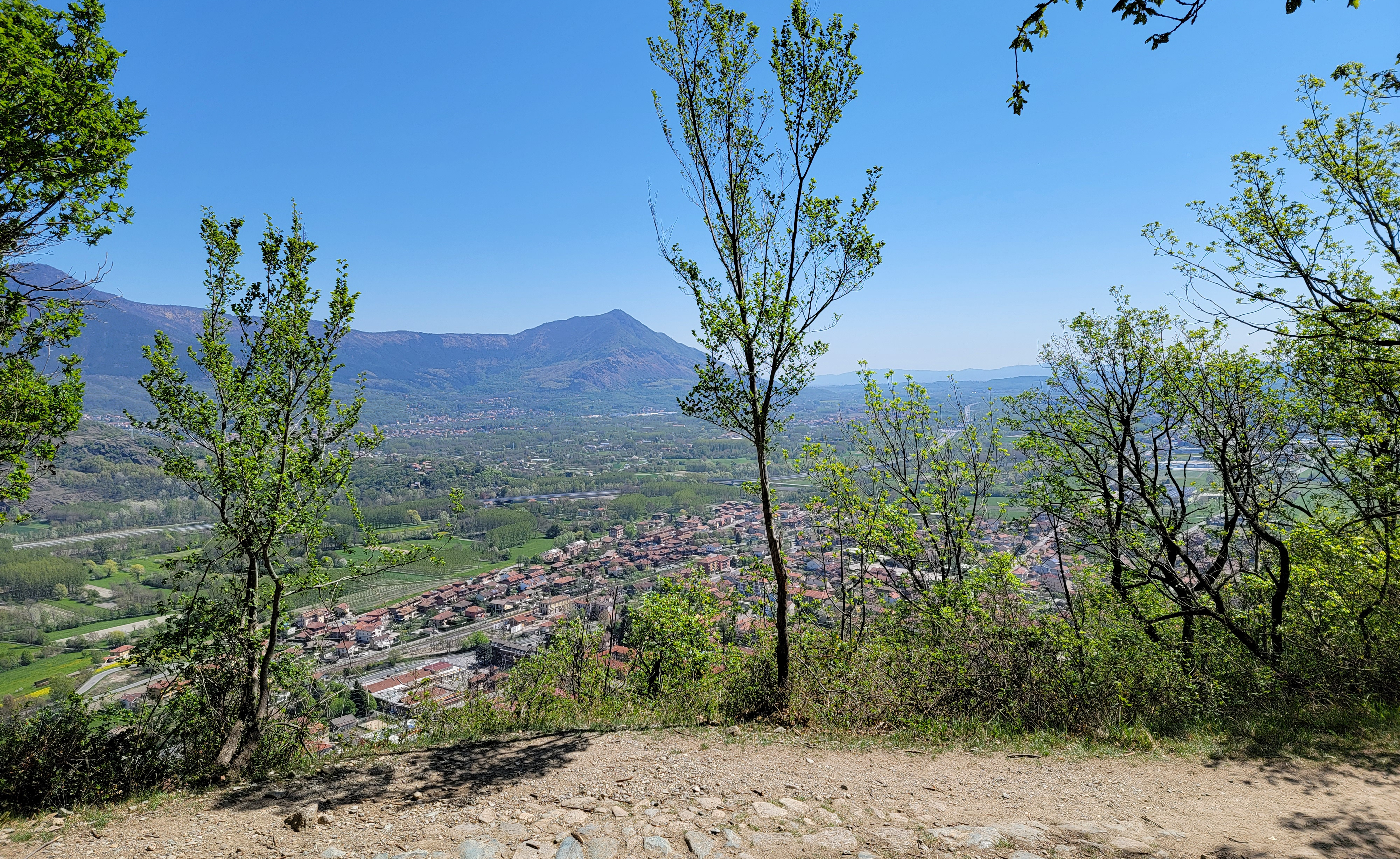
Sant Ambrogio Panorama – Sentiero Trail 502
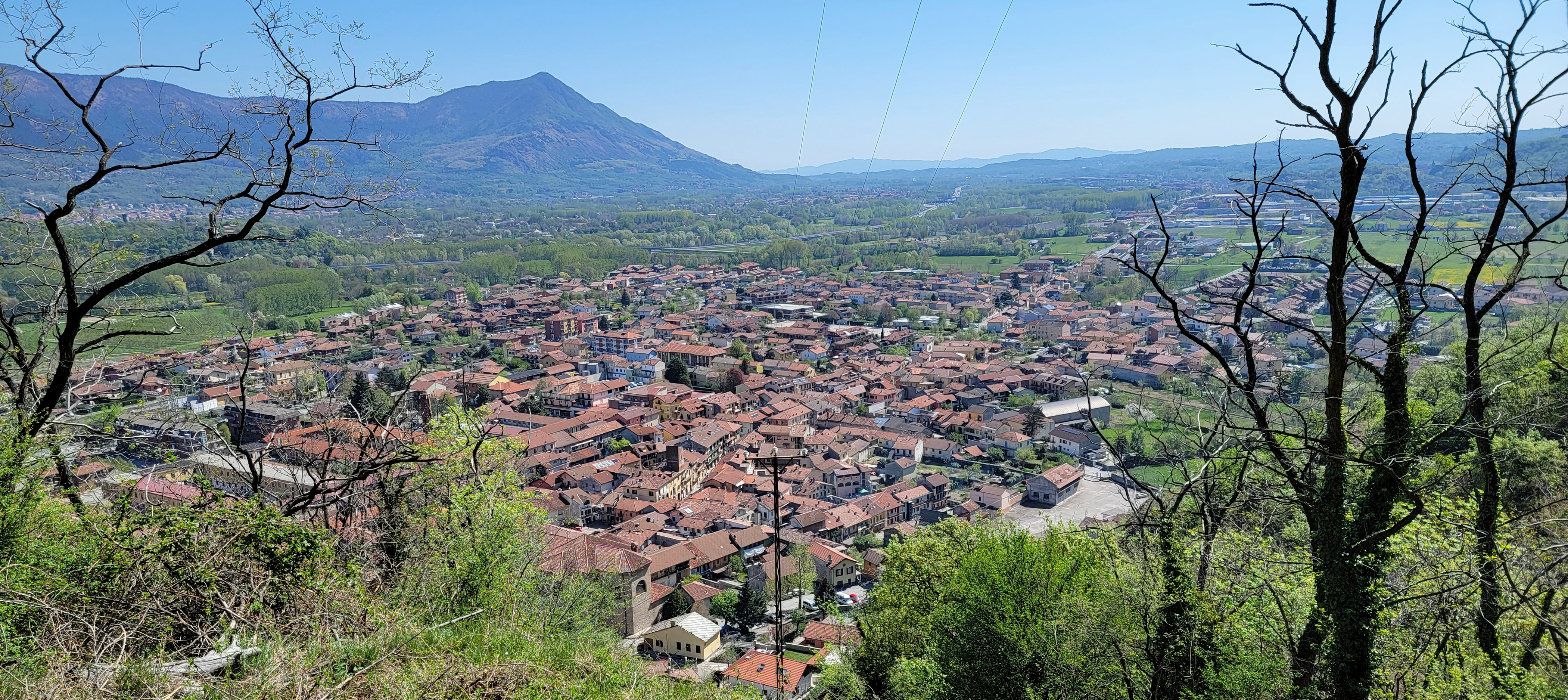
At a higher elevation, overview of Sant Ambrogio – Sentiero Trail 502
Sant Ambrogio from Sentiero Trail 502
Patti still climbing – Sentiero Trail 502
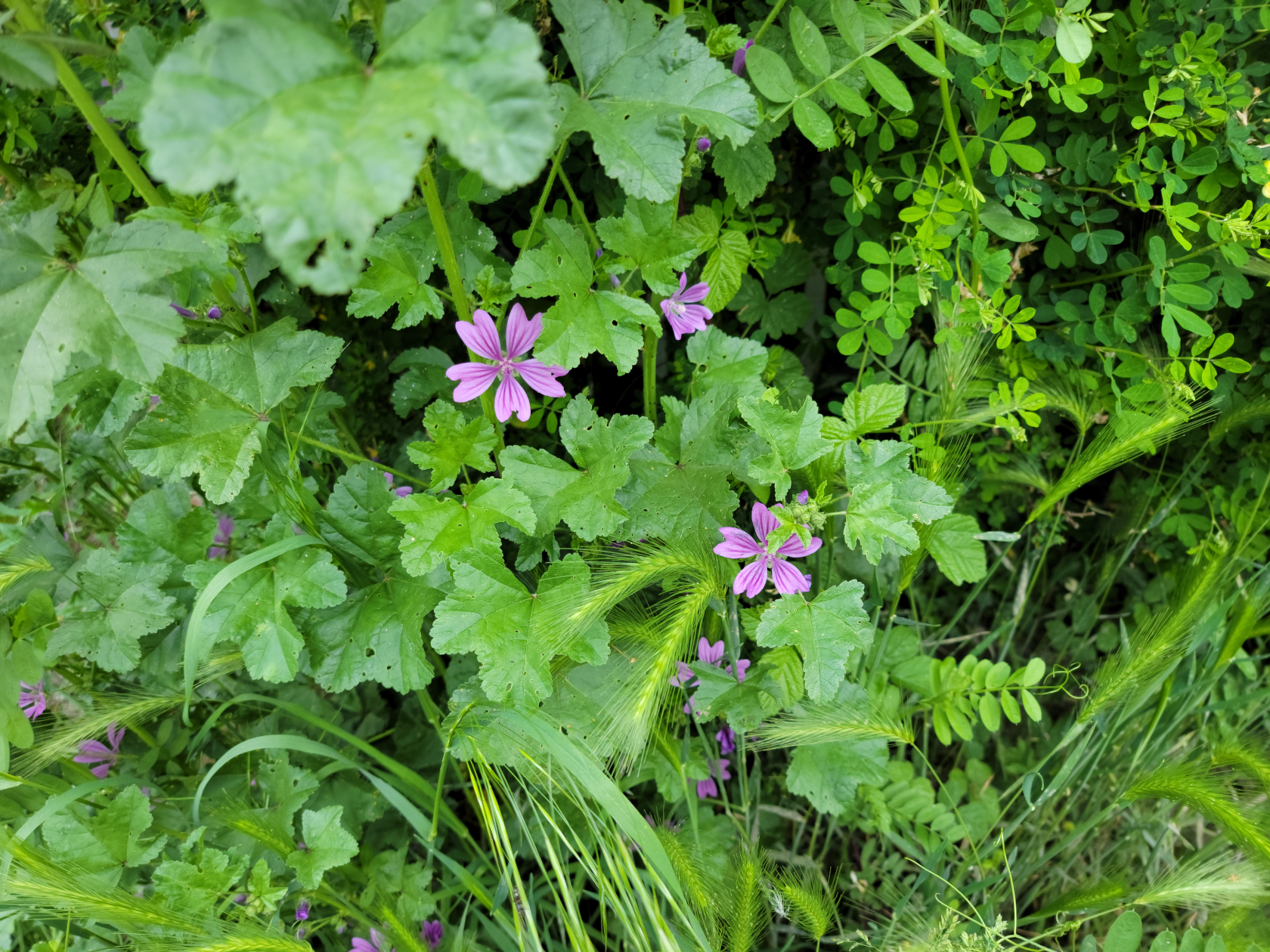
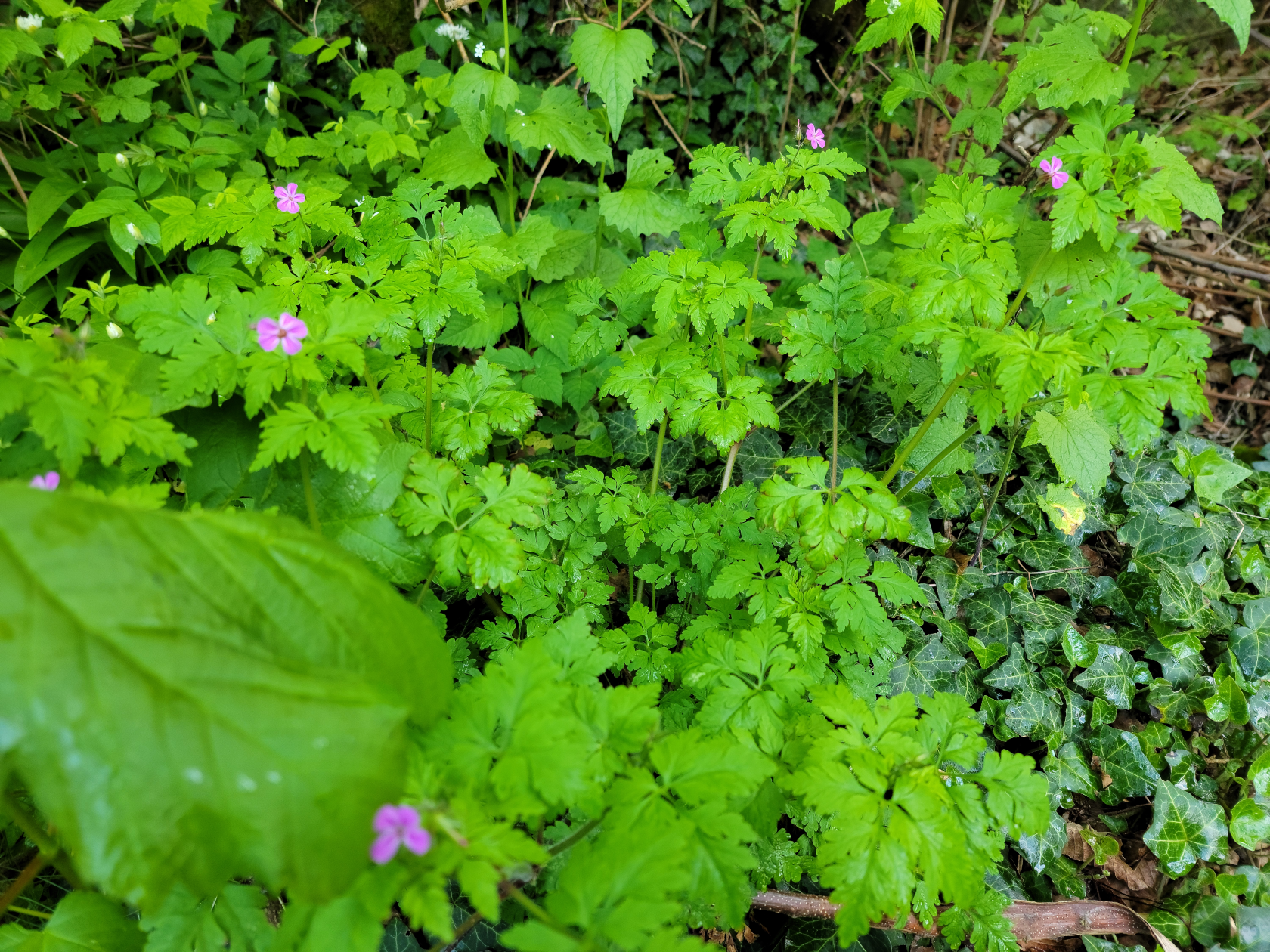
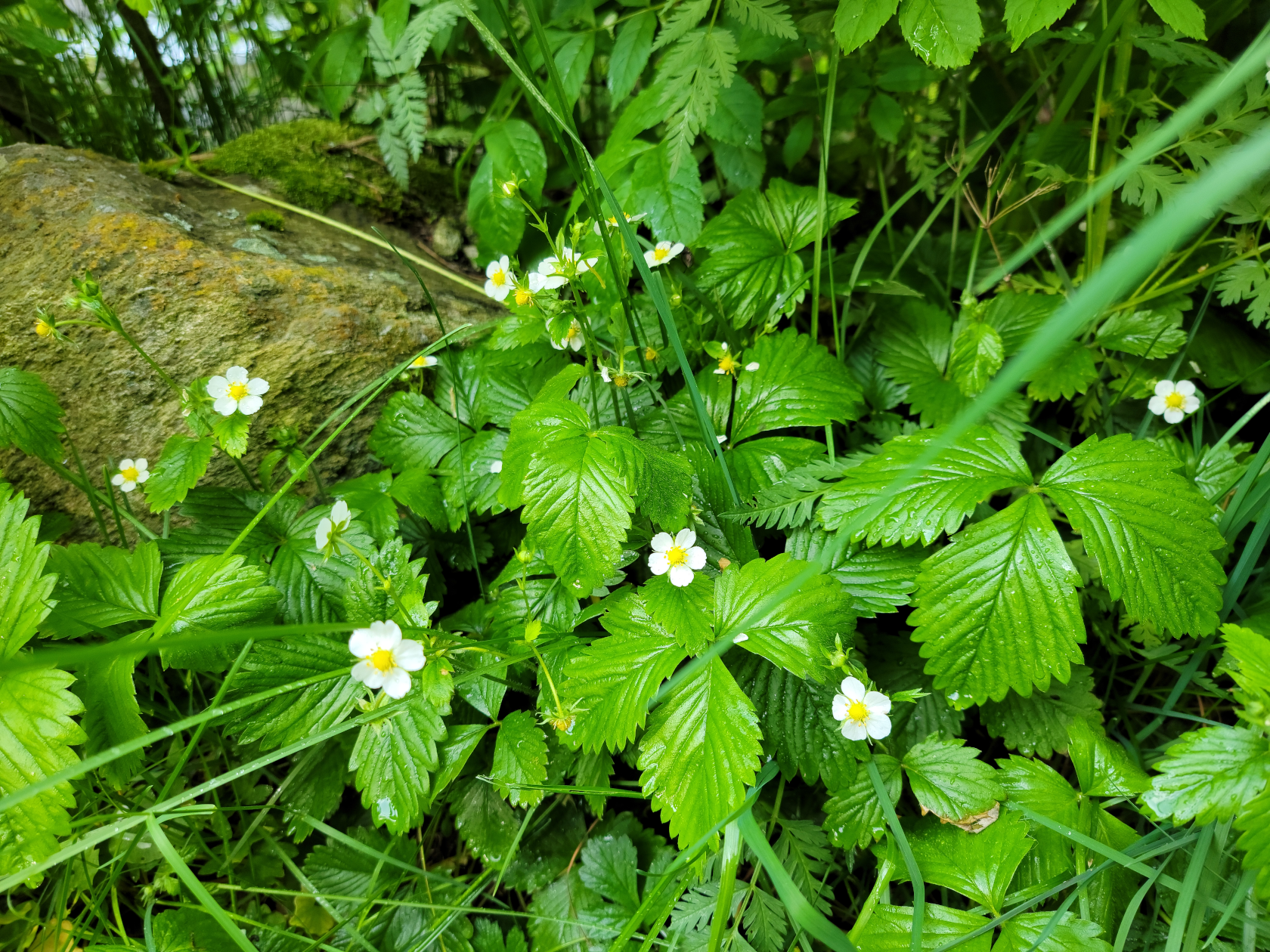
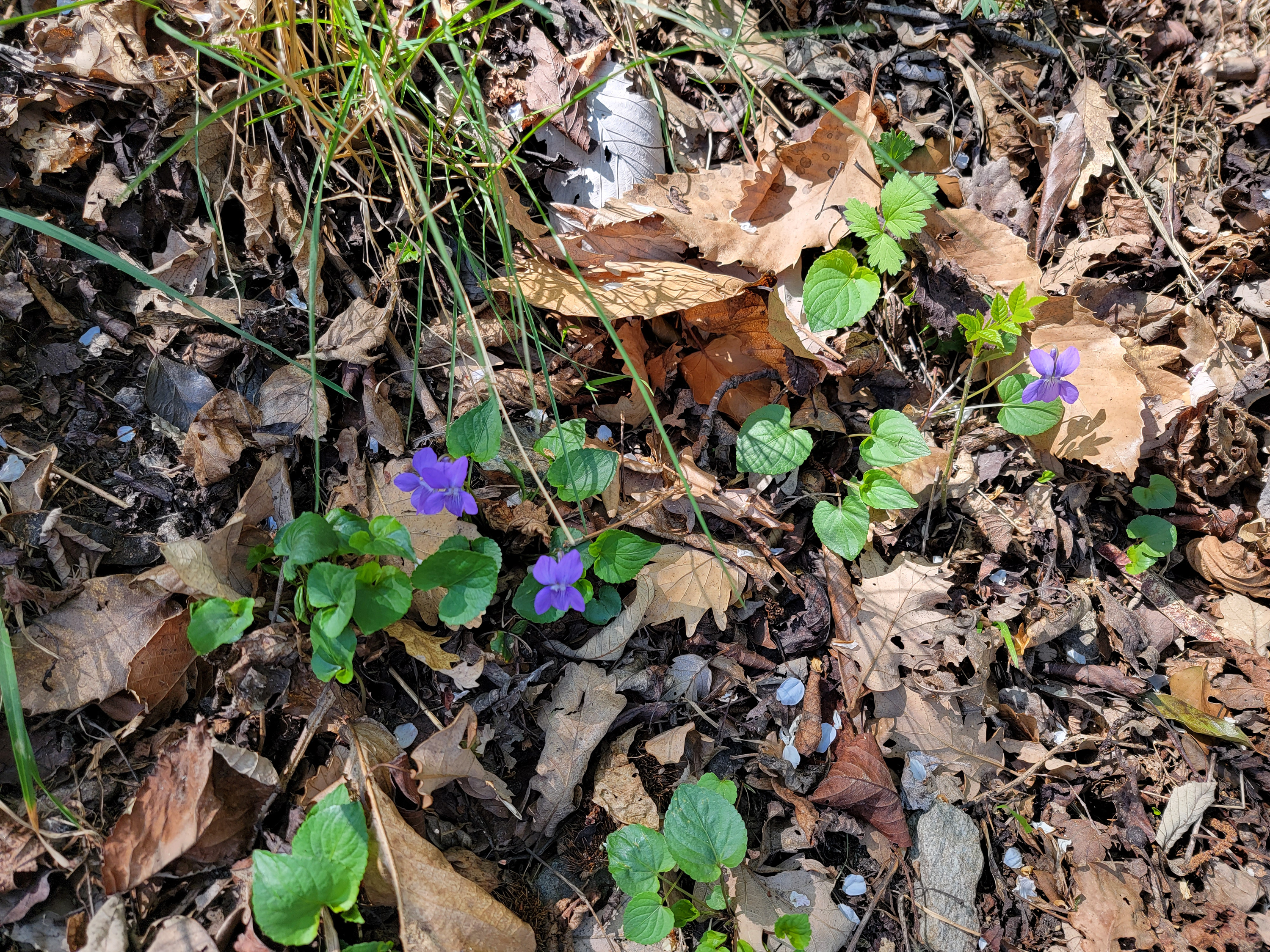
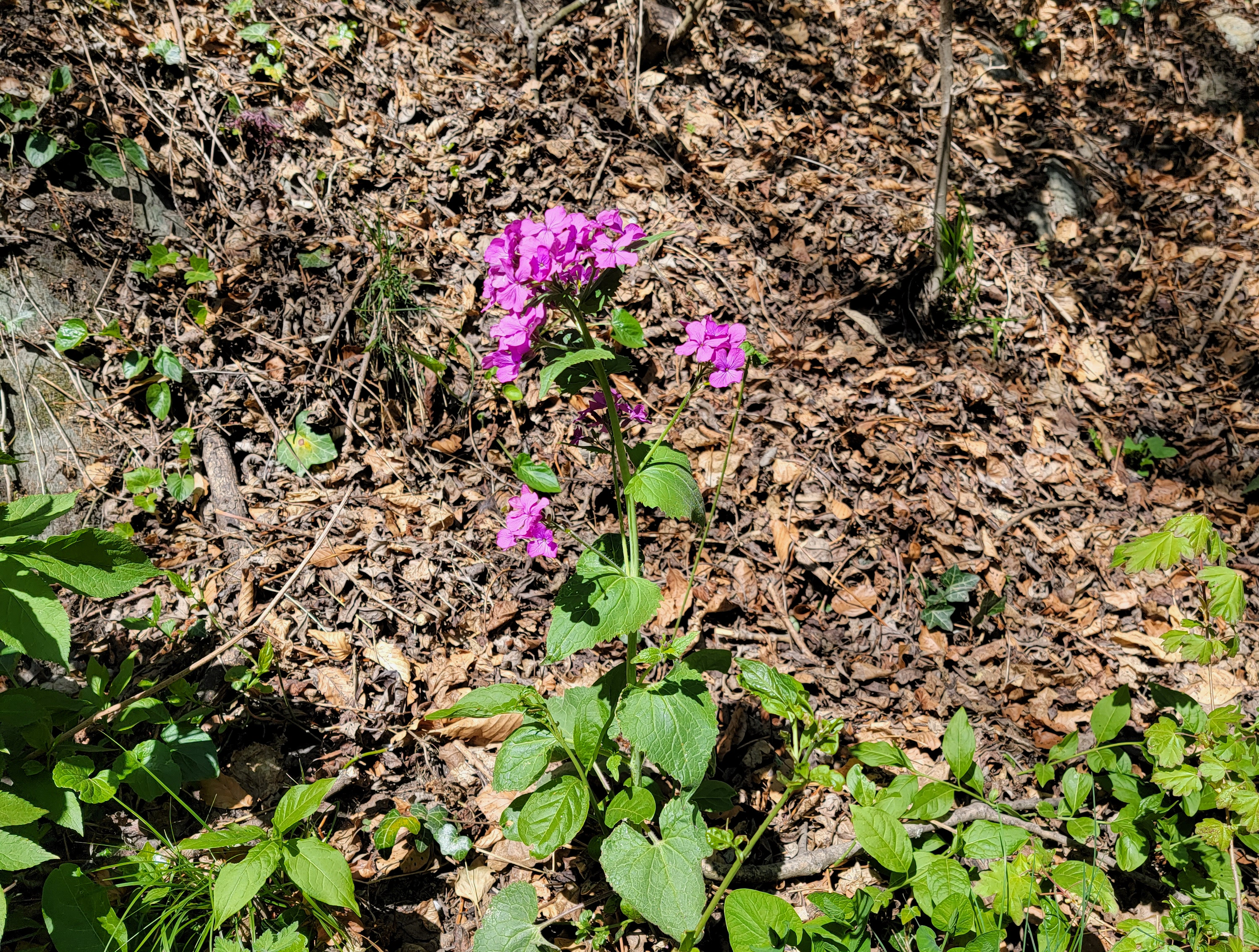
The flowers on the trail – Sentiero Trail 502
The flowers on the trail – Sentiero Trail 502
The flowers on the trail – Sentiero Trail 502
Coming to first ending of trail – Sentiero Trail 502
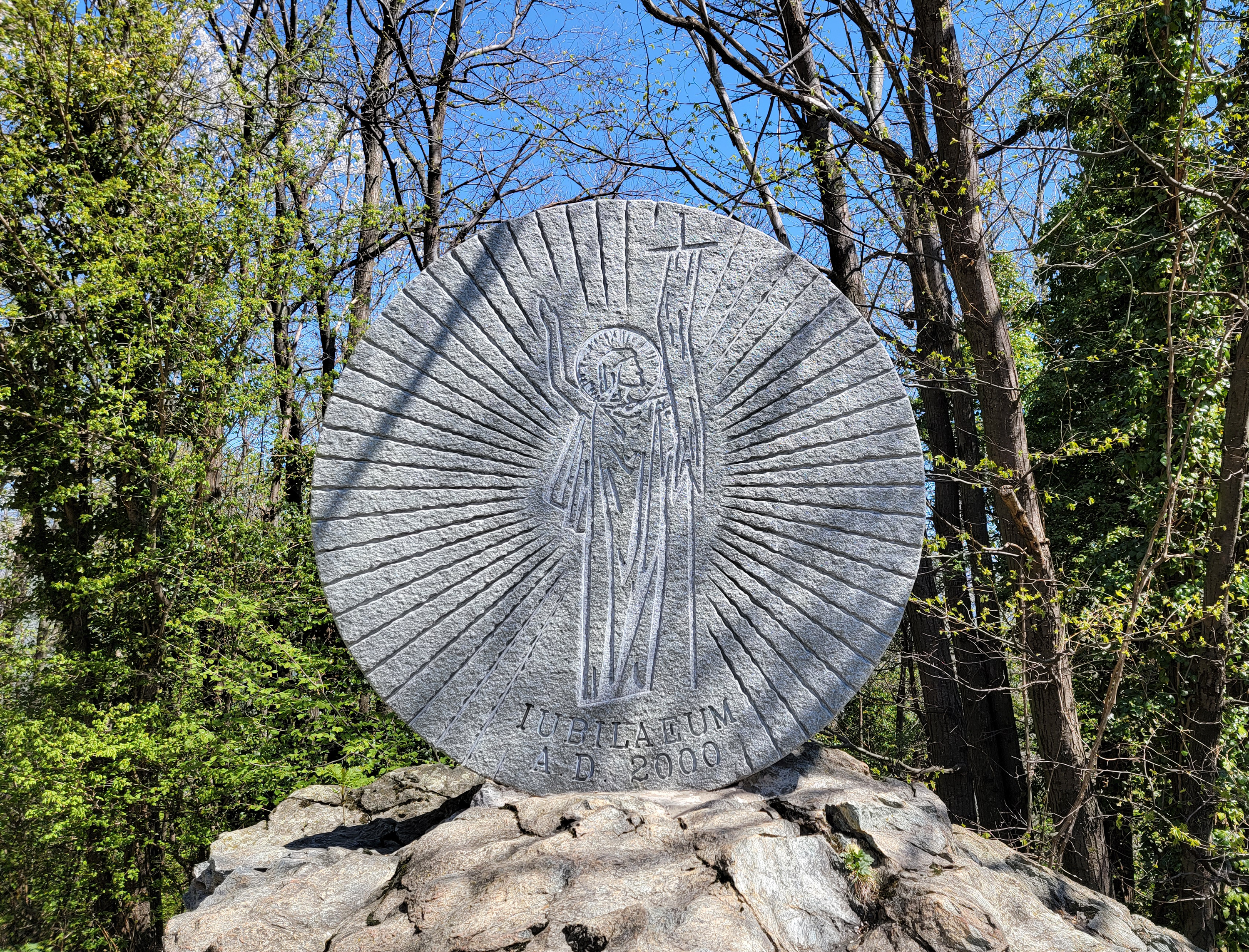
Upon exiting the trail at a collection of houses, and an interim point in the hike, you will find a large commemorative stone.
Commemoration Wheel 2000 – Sentiero Trail 502
Then you will make a hairpin turn and look up, only to see that your hike up is STILL NOT OVER!
Still a long way up to go – Sentiero Trail 502
Checking the signs indicate approximately another kilometer to hike, which took us about twenty minutes.
Trail Sign, another .8 km to go – Sentiero Trail 502
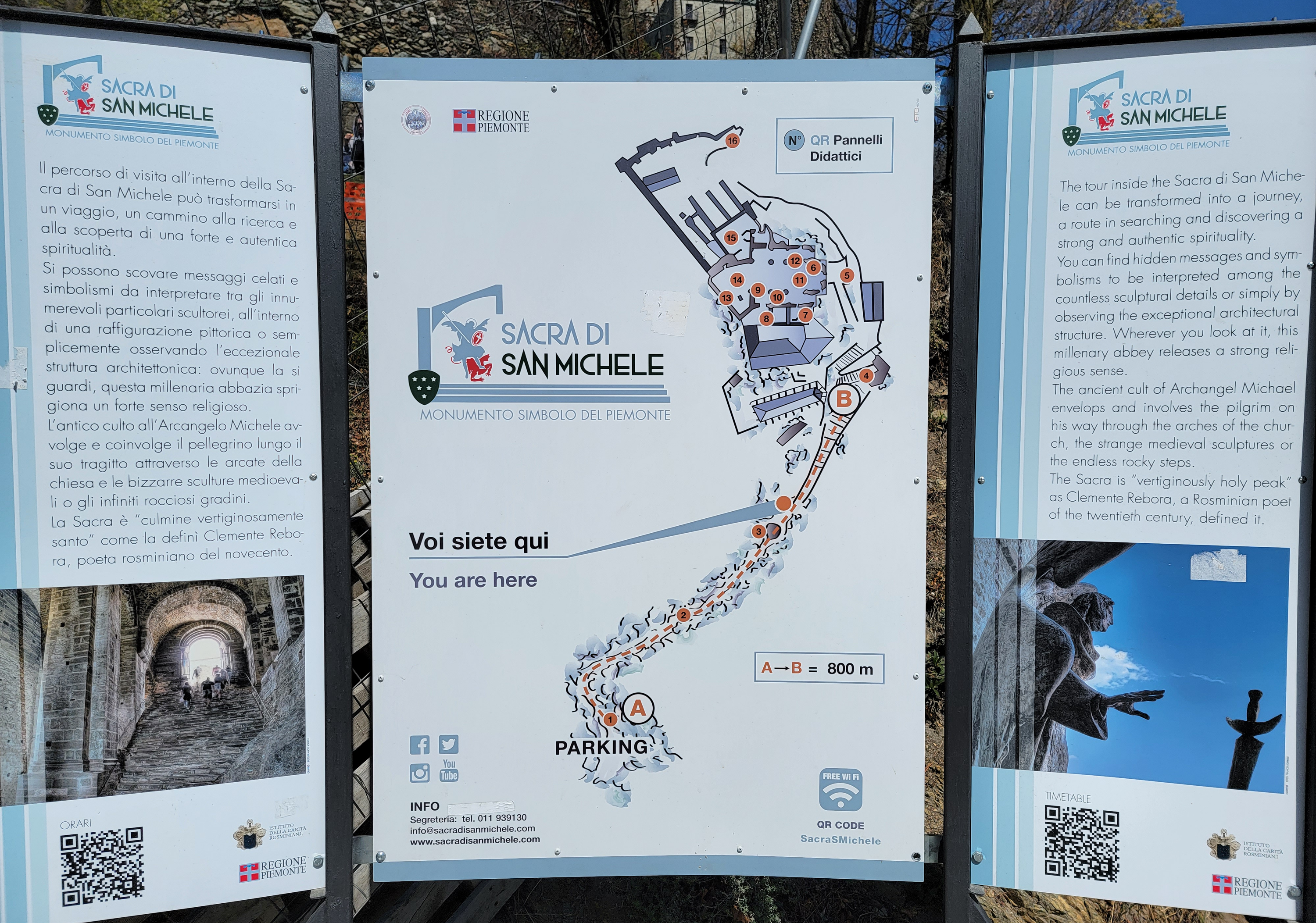
After the last more modest climb you will walk onto a road, where all the other tourists are walking into from the parking lot. The attraction has a large sign explaining the layout of the church and its grounds.
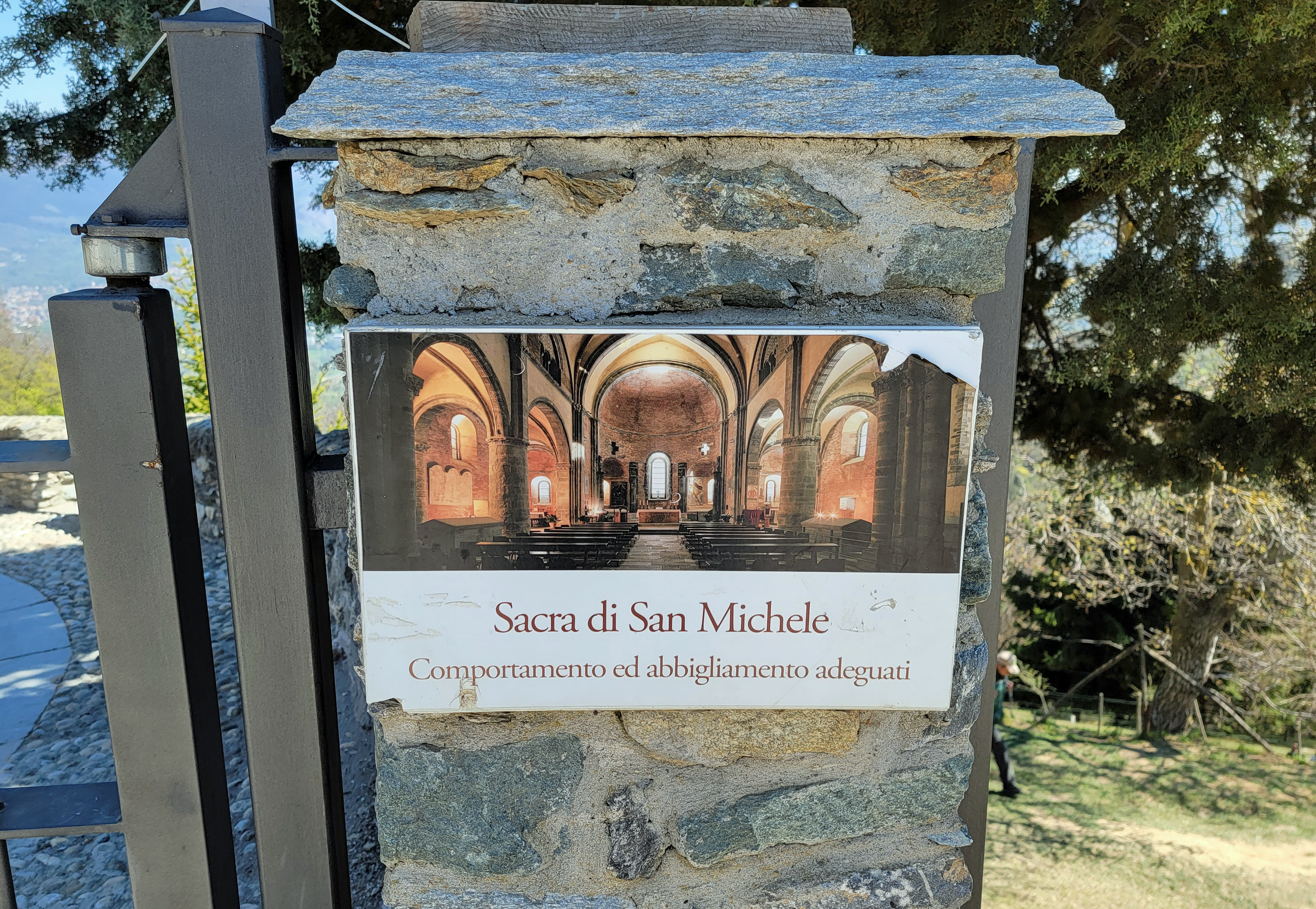
Sign at entry to Sacra di San Michele
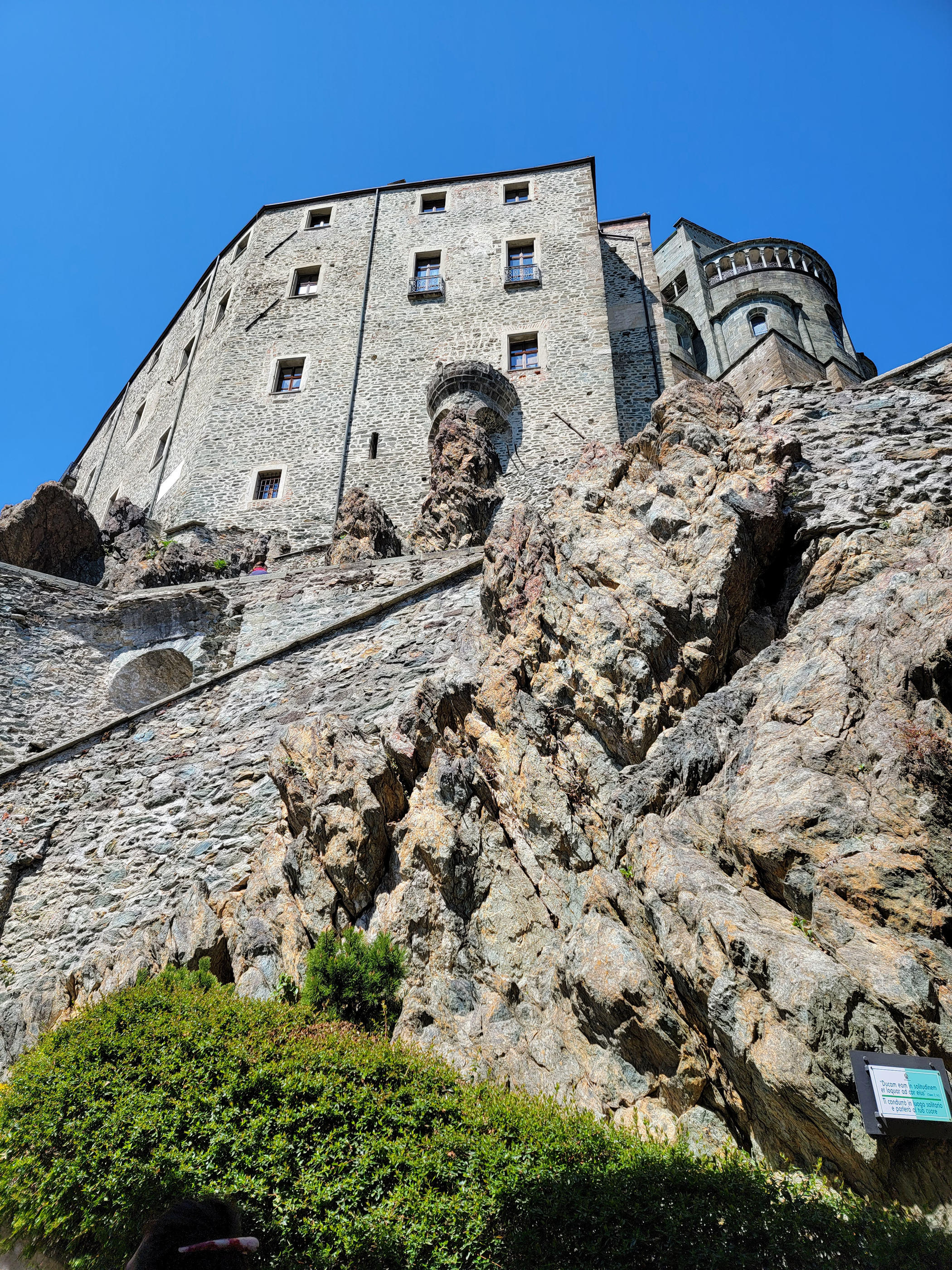
Sacra di San Michele
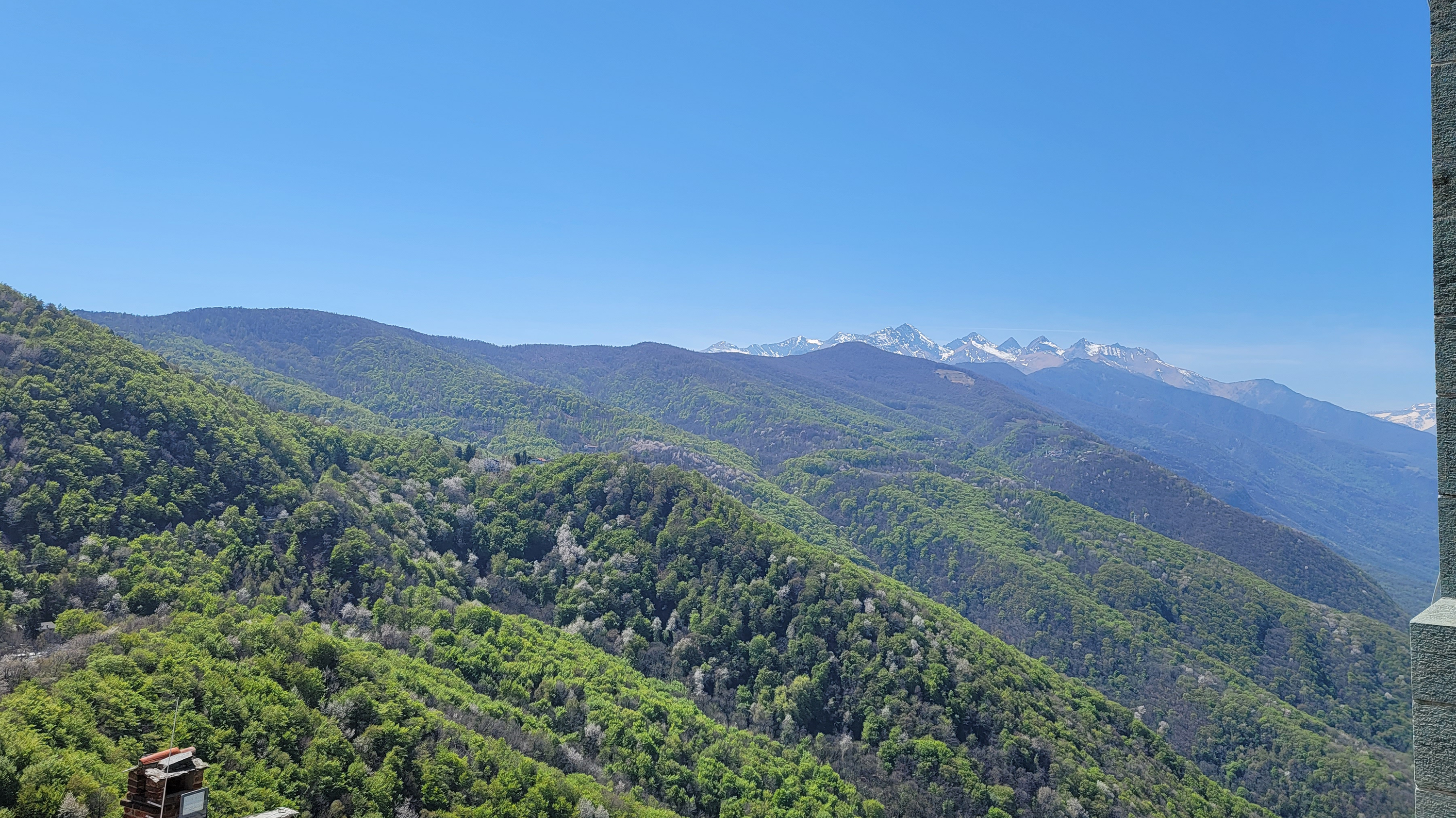
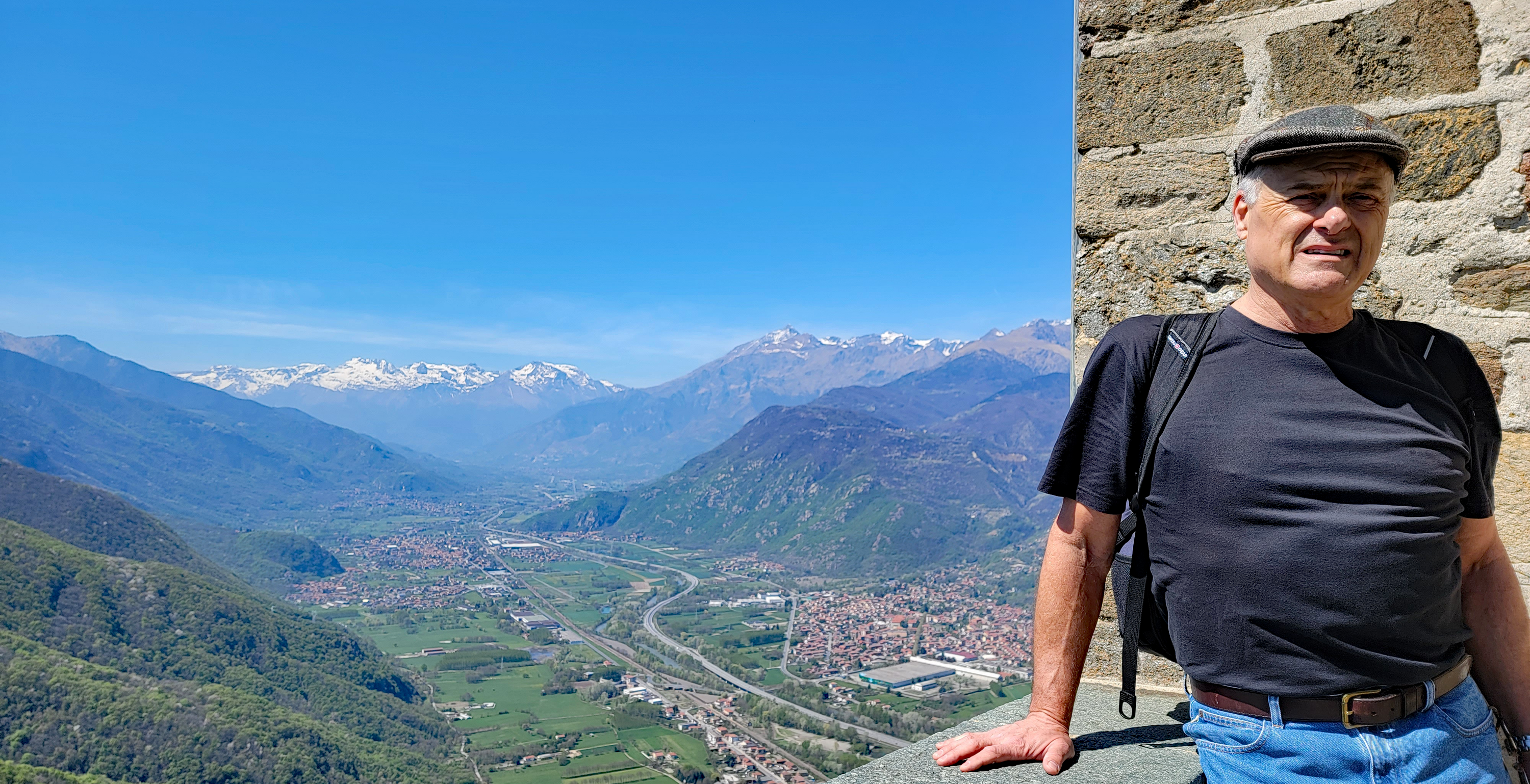
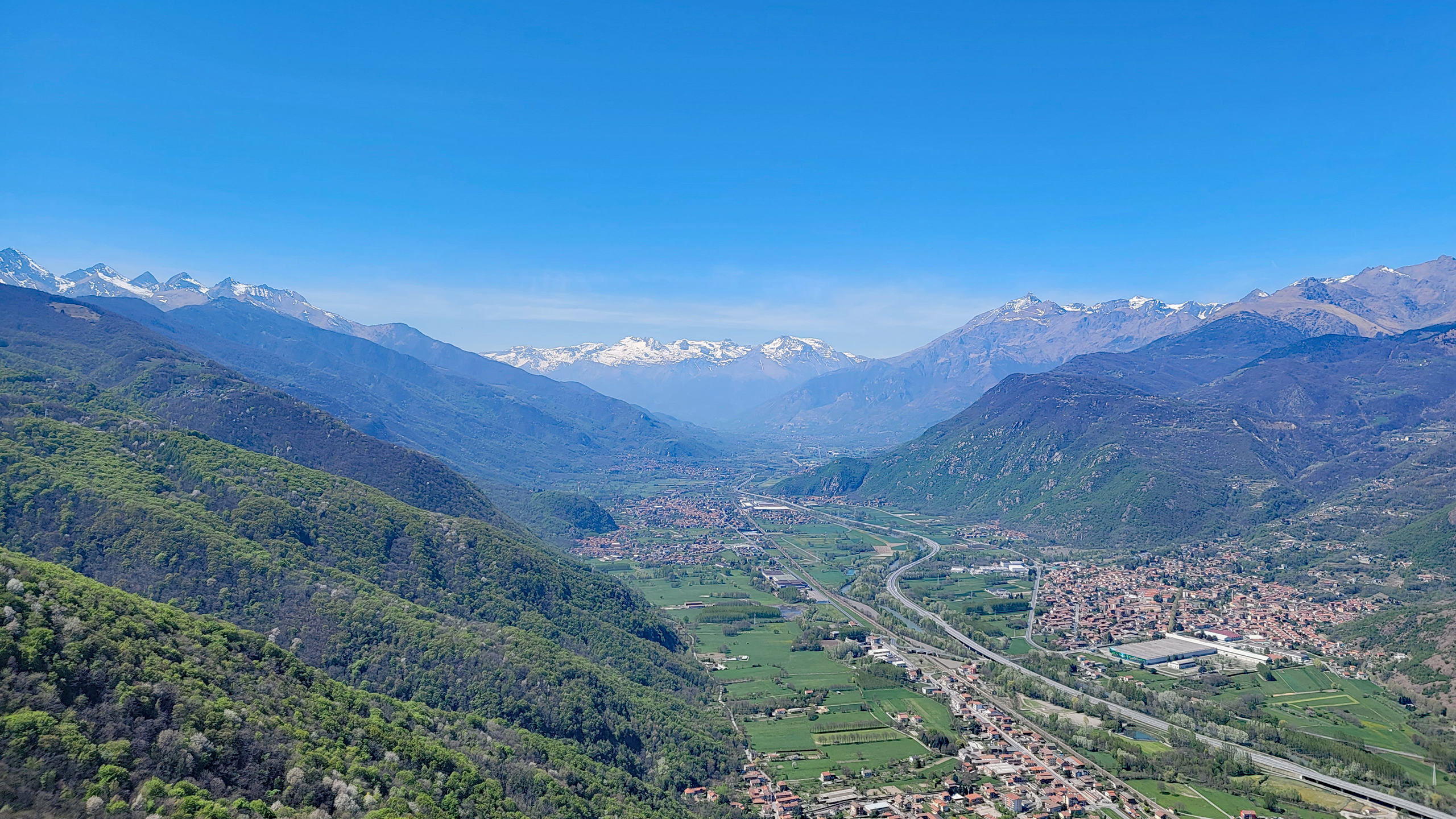
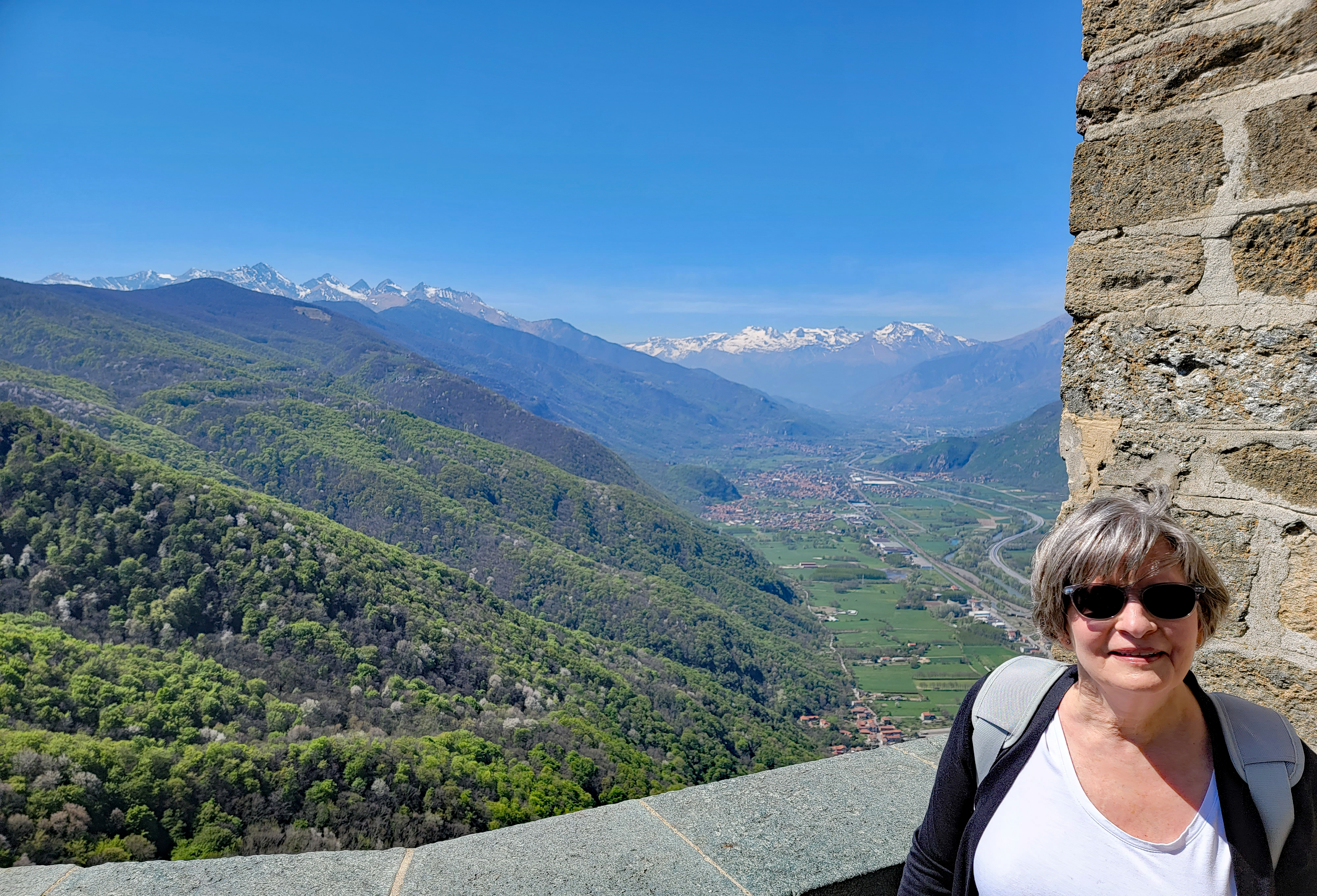
Once near the church of Sacra di San Michele, the magnificent views are apparent. With its perch high on a rocky crag, the church has a commanding view of the valley below.
Panorama before church at end of trail
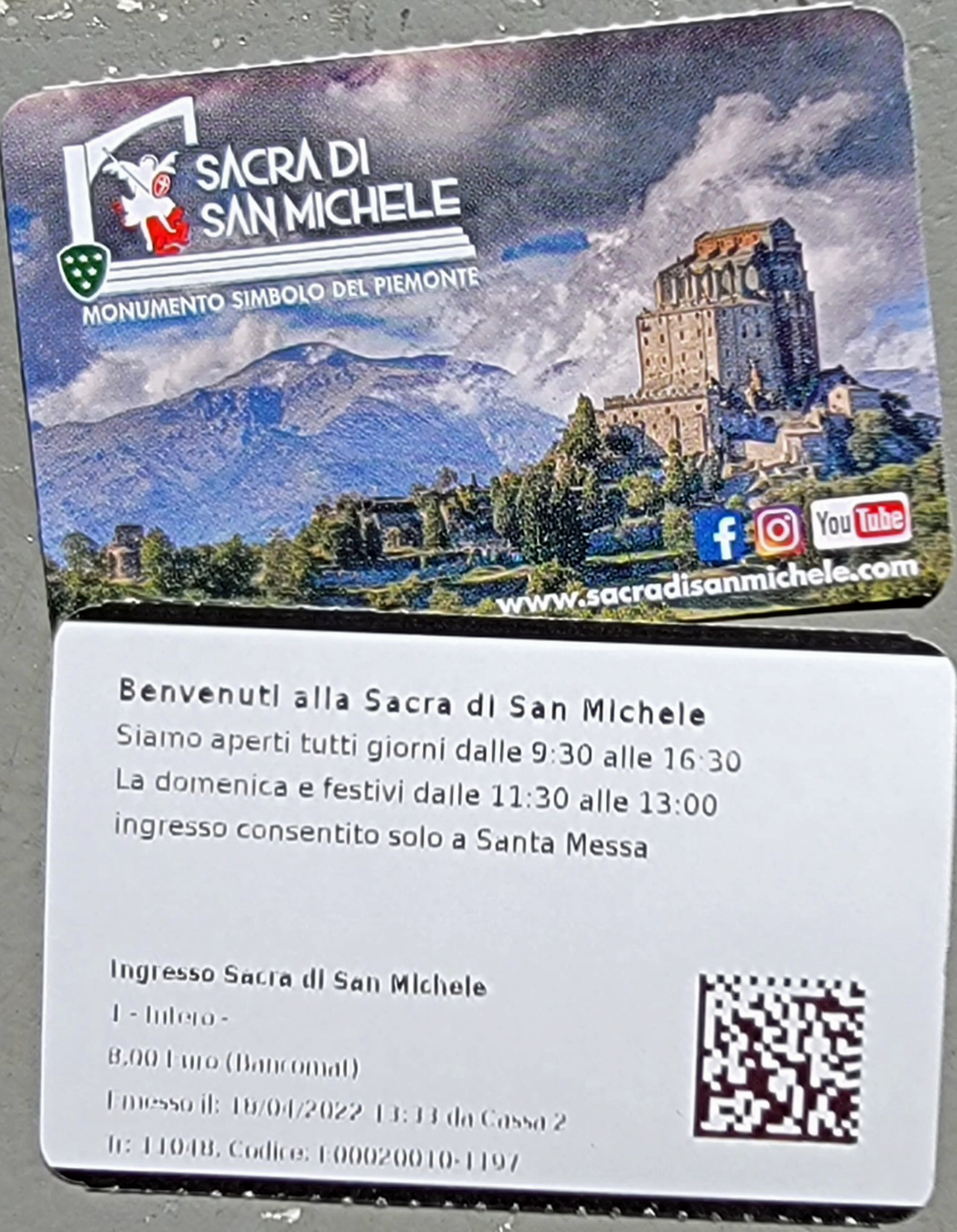
Walking up to the church you will find a small building to the right that sells postcards, other tourist paraphernalia and entrance tickets. Once purchased, a turnstile to the left has a QR code reader that will let you enter, then you must start climbing stairs, an unwelcome sign after our long journey.
Tickets for Two – Sacra di San Michele – Sant Ambrogio
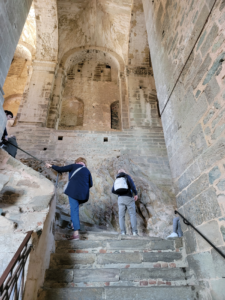
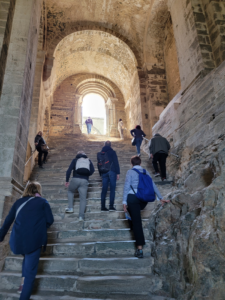
Stairs inside – Sacra di San Michele
More stairs – Sacra di San Michele
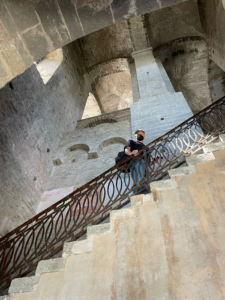
Erick with Covid mask on ascending more stairs – Sacra di San Michele
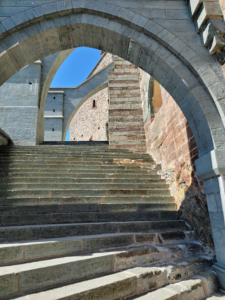
Again more stairs – Sacra di San Michele
The remainder of our visit consisted of just enjoying the church and the beautiful views. My wife chose this day because the weather promised to be wonderful, we were not disappointed, it was sunny and in the low 60°s Fahrenheit, perfect for hiking.
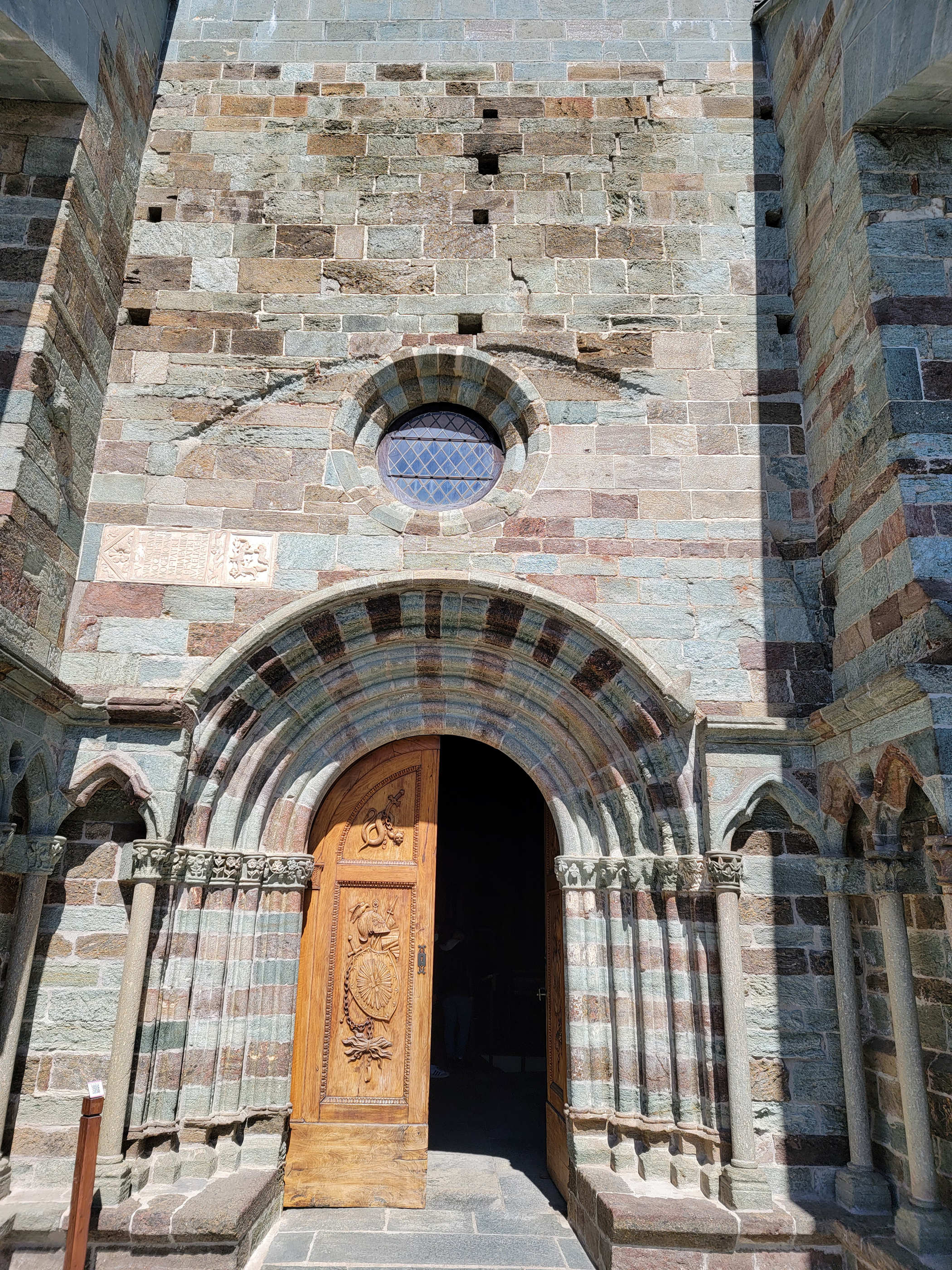
Finally, the entry – Sacra di San Michele
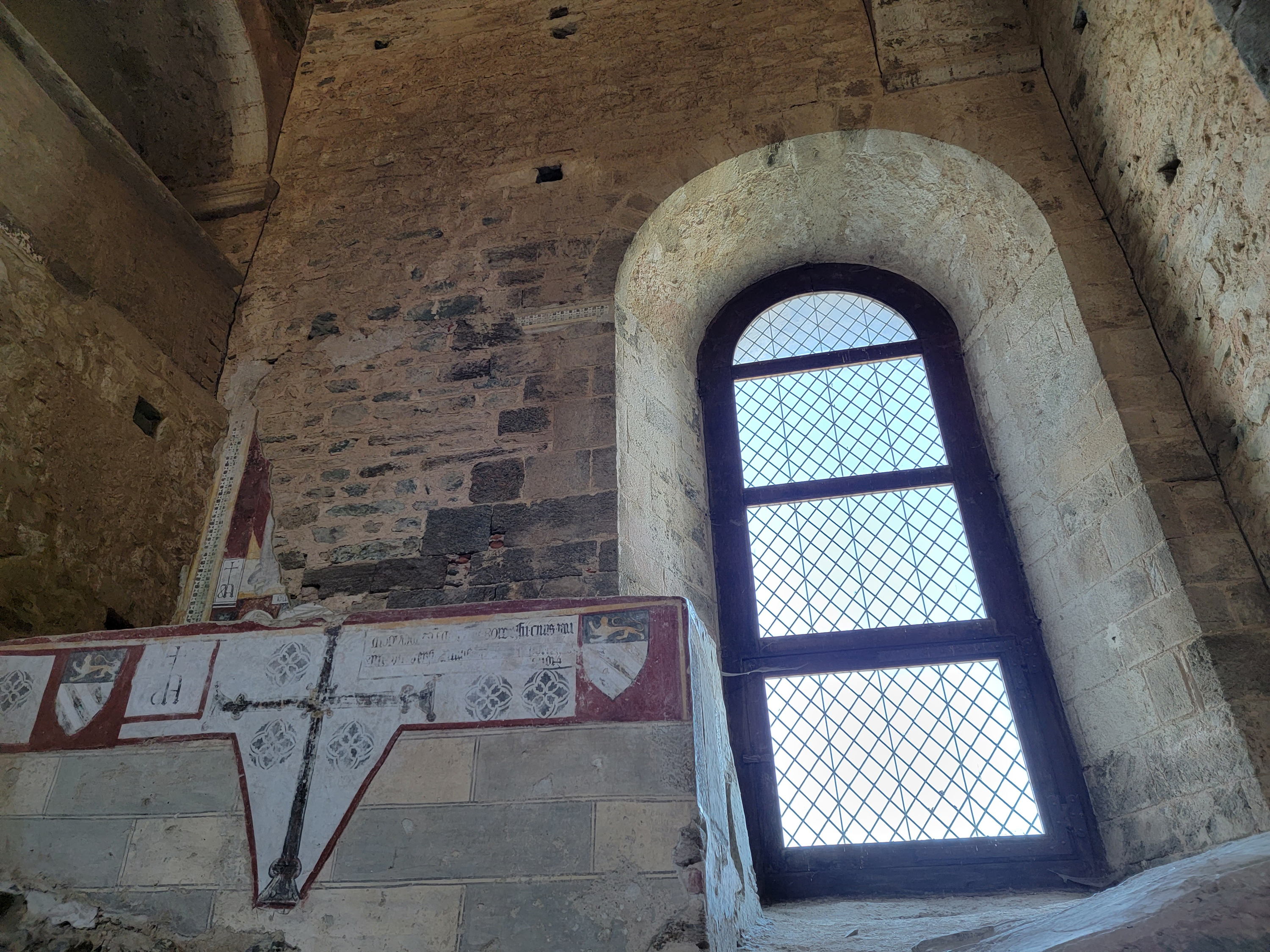
Mosaics on walls – Sacra di San Michele
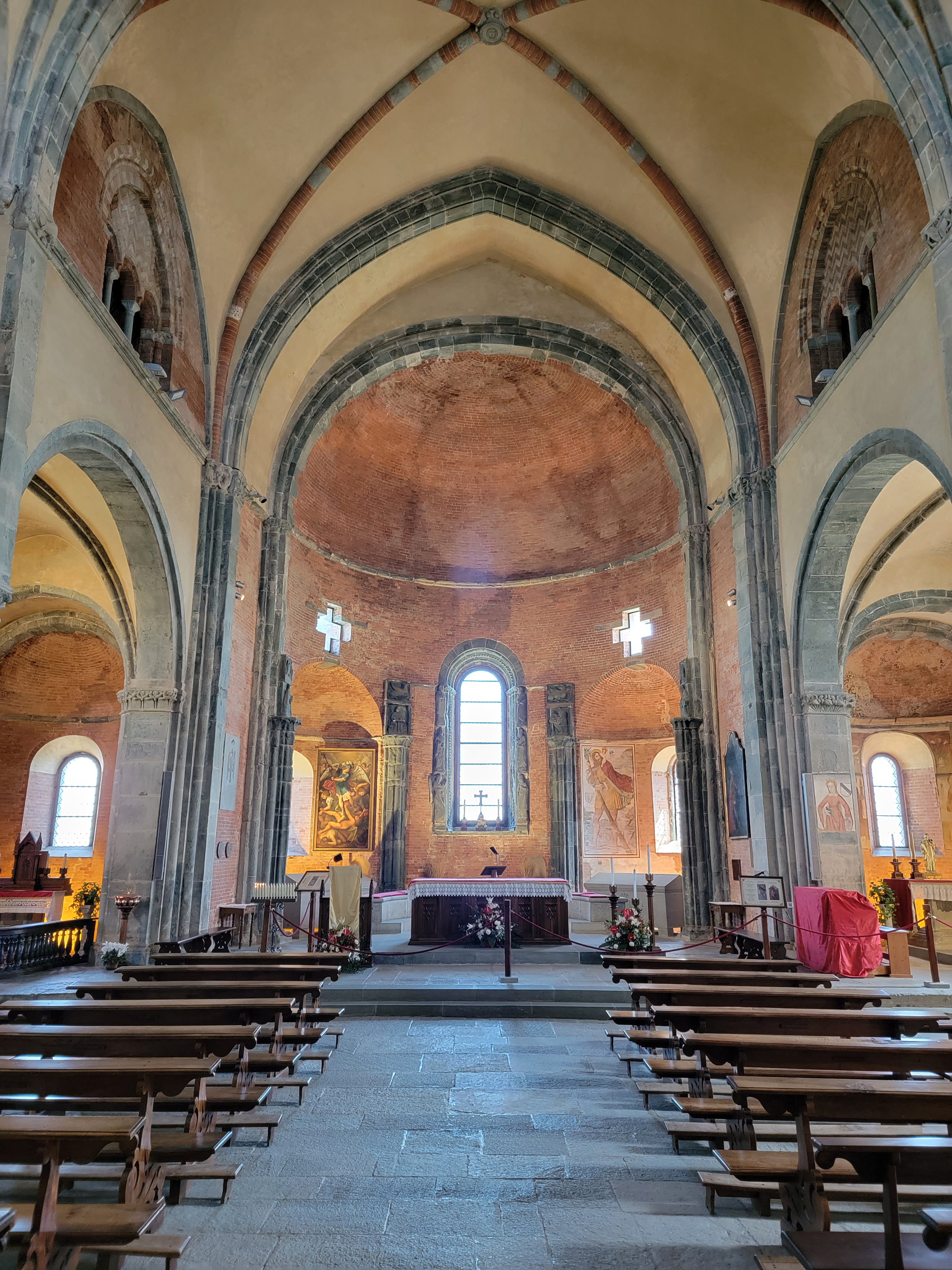
The main altar – Sacra di San Michele
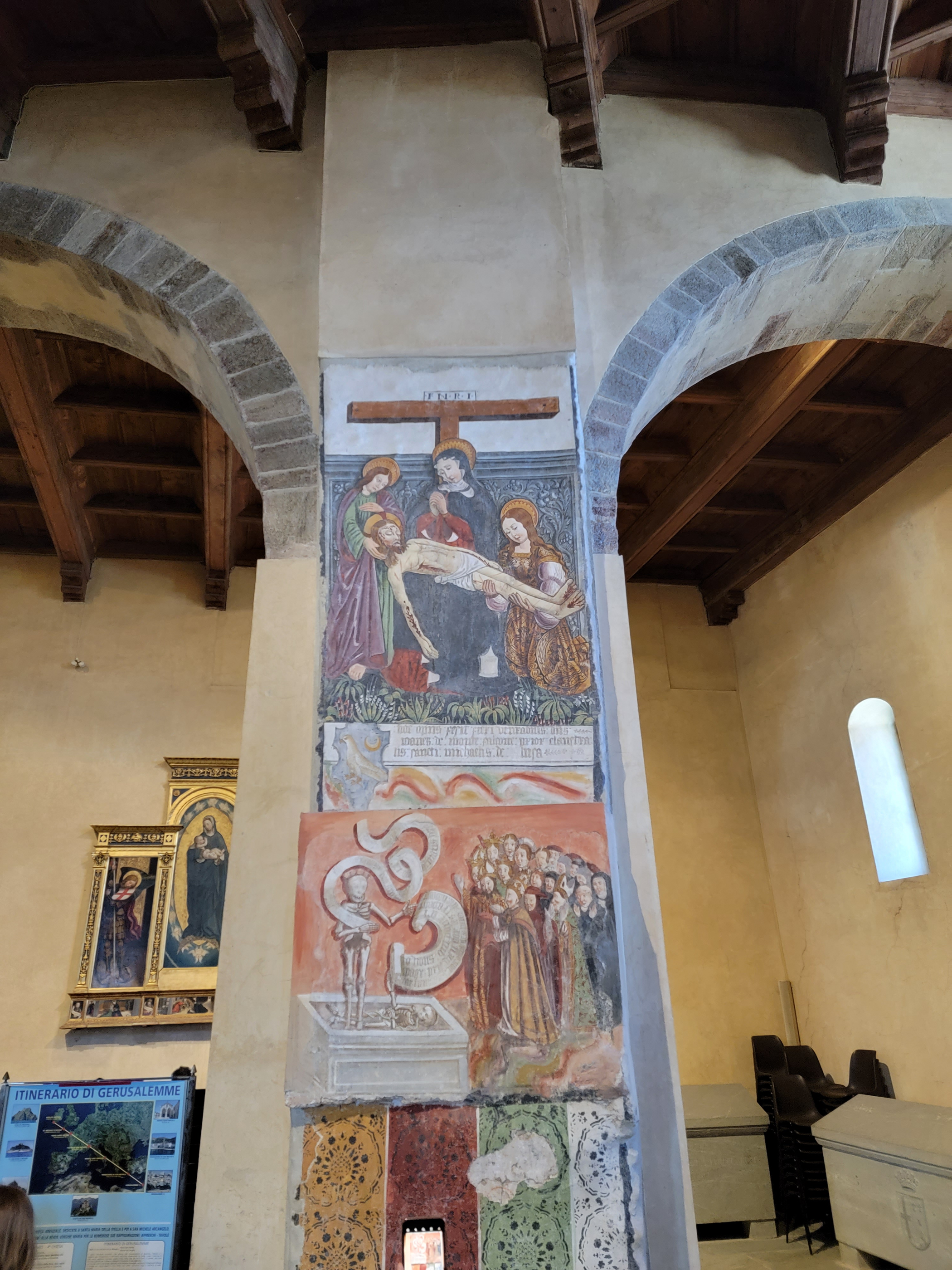
Commemoration of the Crucifixion – Sacra di San Michele
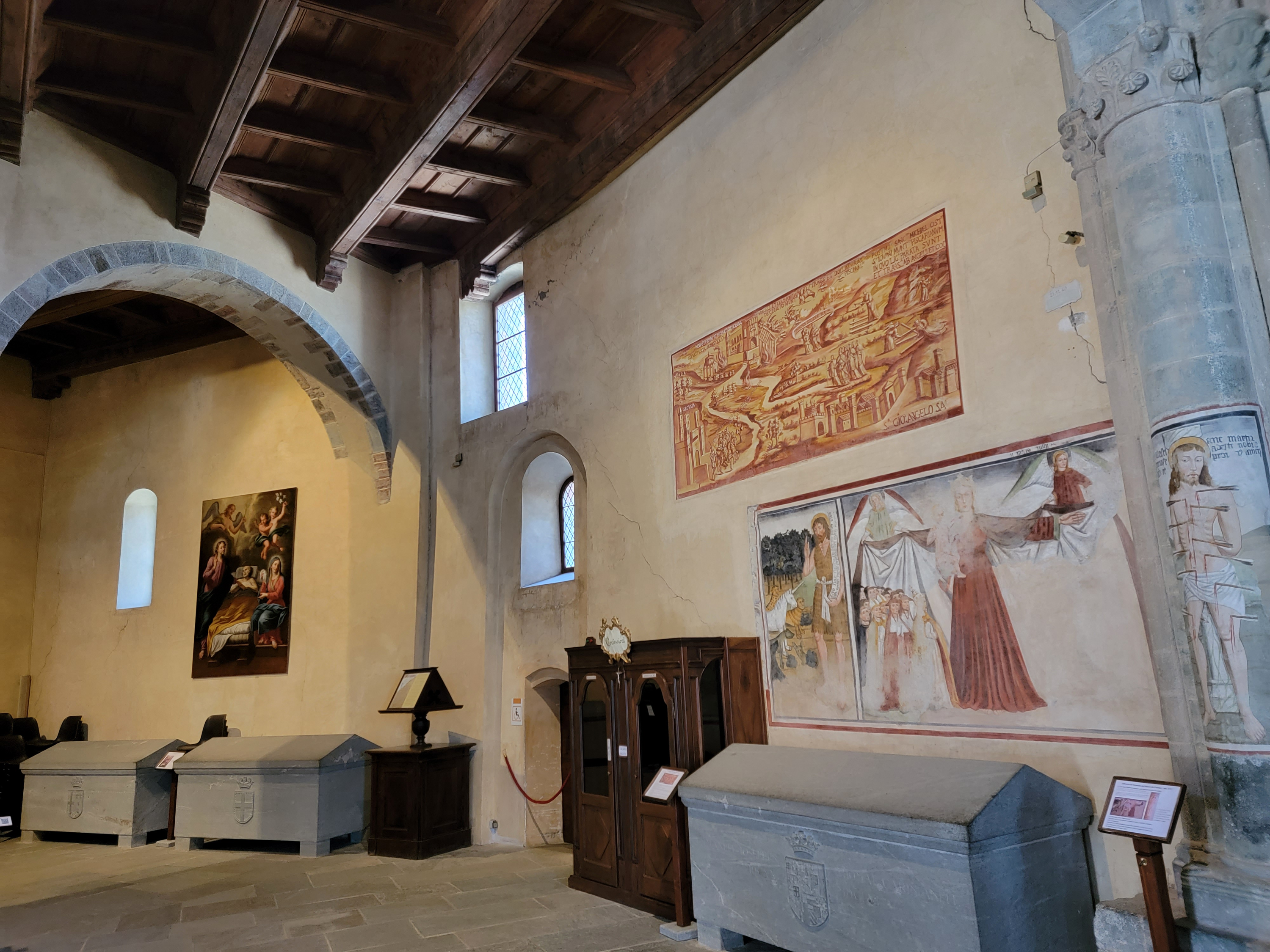
Inside the church – Sacra di San Michele
Portraits – Sacra di San Michele
Large Fresco – Sacra di San Michele
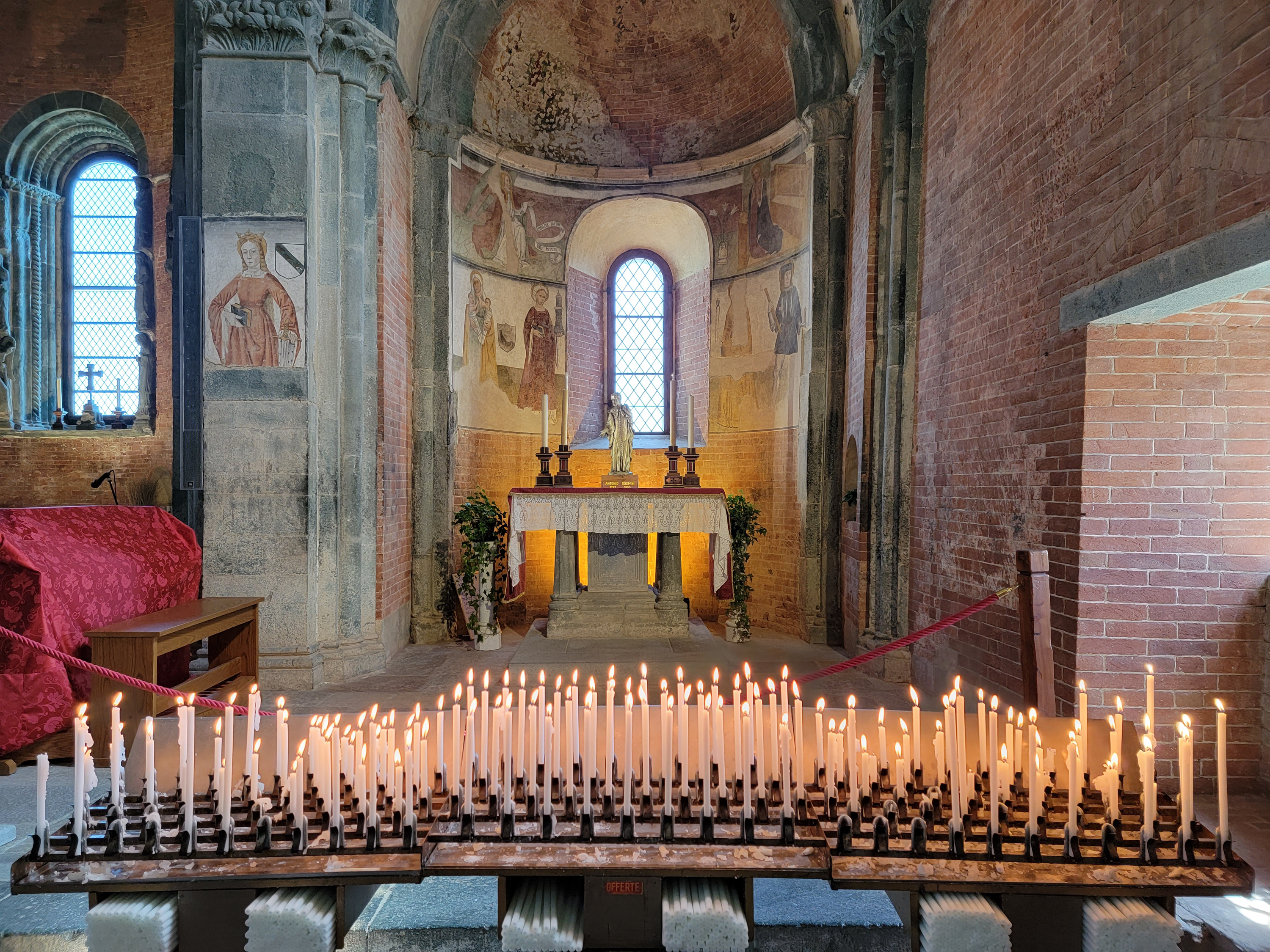
Altar – Sacra di San Michele
Spectacular views, by the entrance of the church doors – Sacra di San Michele
Erick and a view of the Cottian Alps by the church entrance – Sacra di San Michele
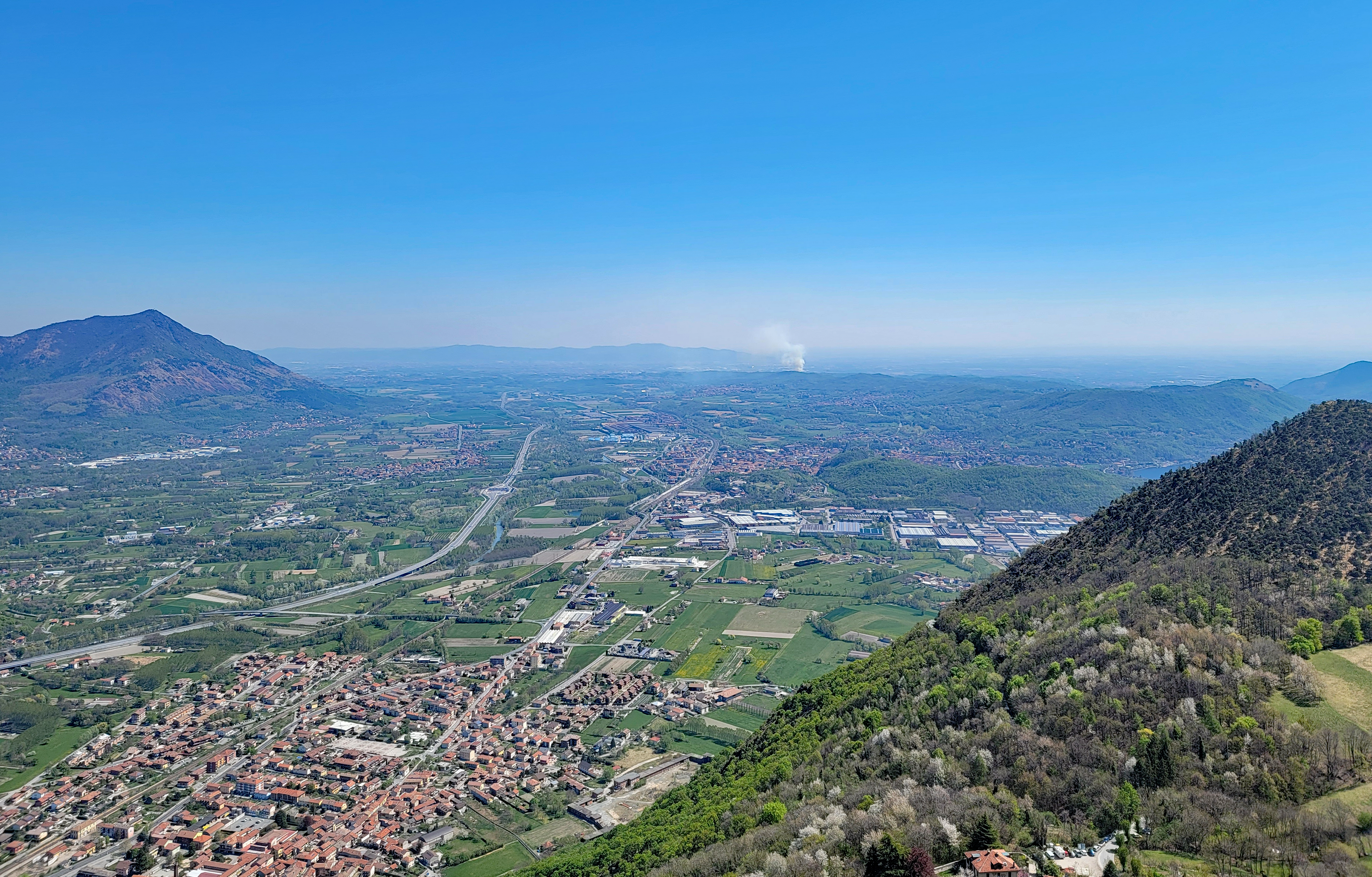
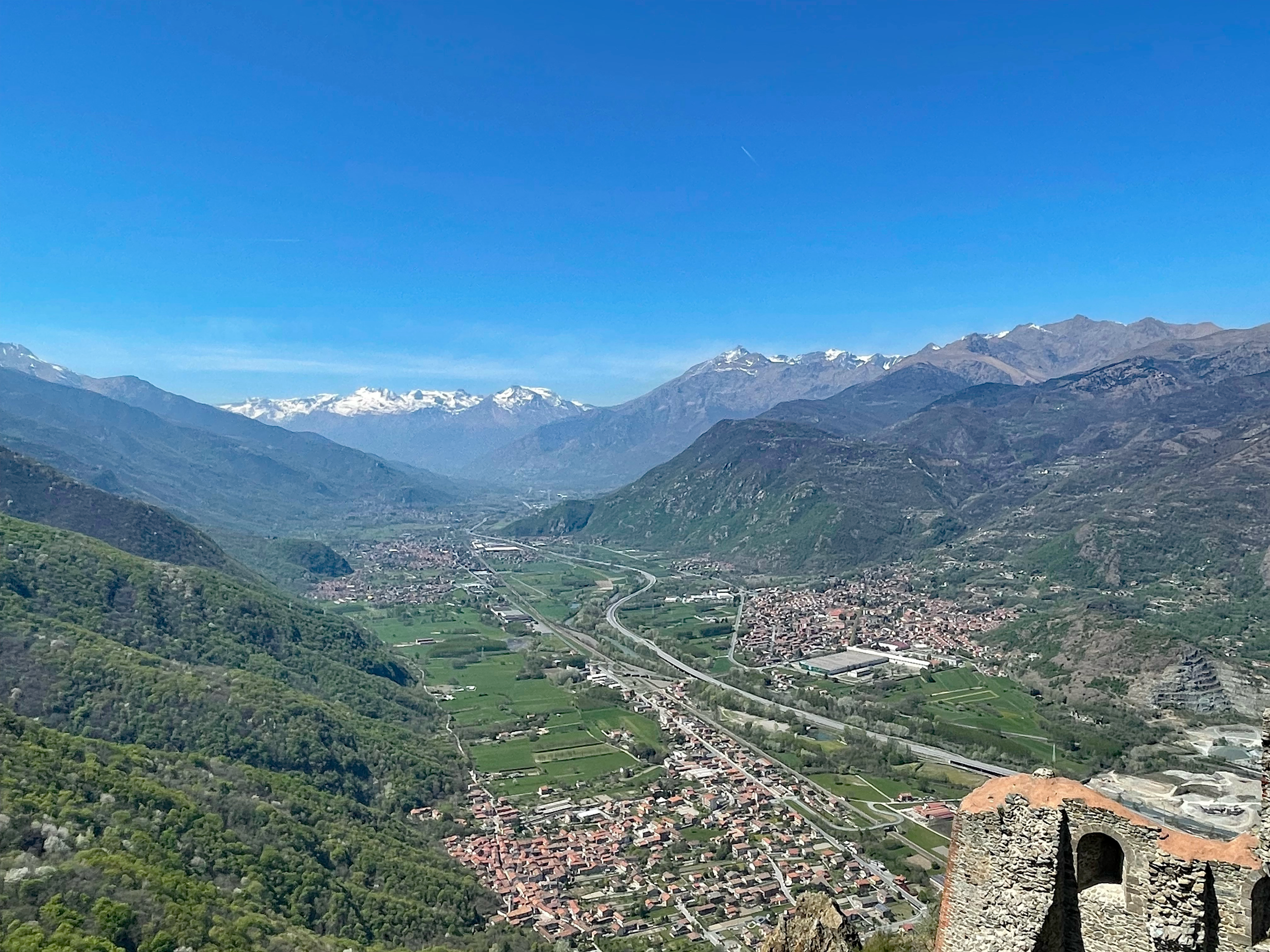
The end of the valley and a view toward Turin
The Cottian Alps and the valley floor looking towards Susa, taken by the church entrance – Sacra di San Michele
Patti and a view of the Cottian Alps by the church entrance – Sacra di San Michele
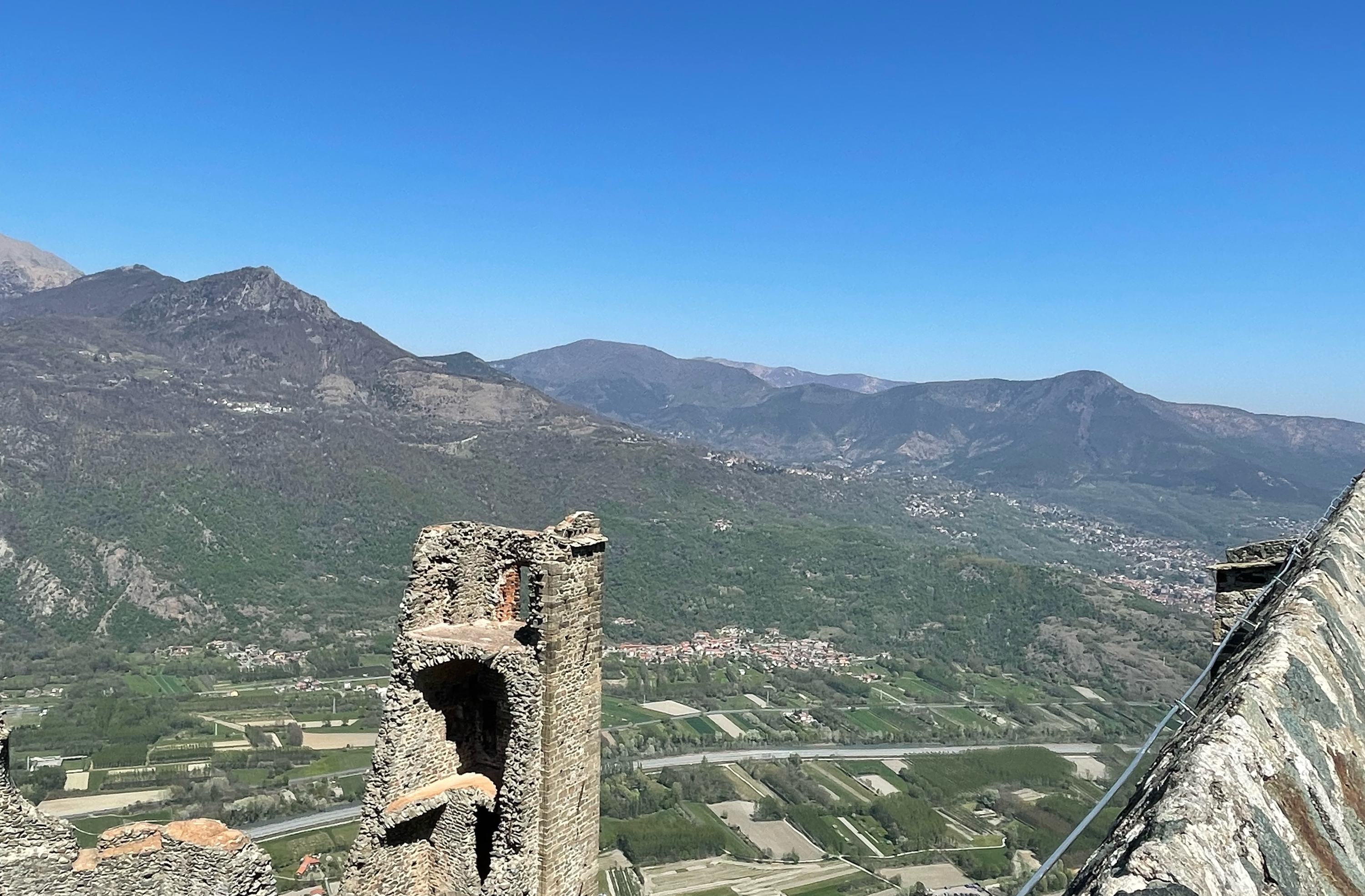
The Susa Valley and Cottian Alps from behind the church – Sacra di San Michele
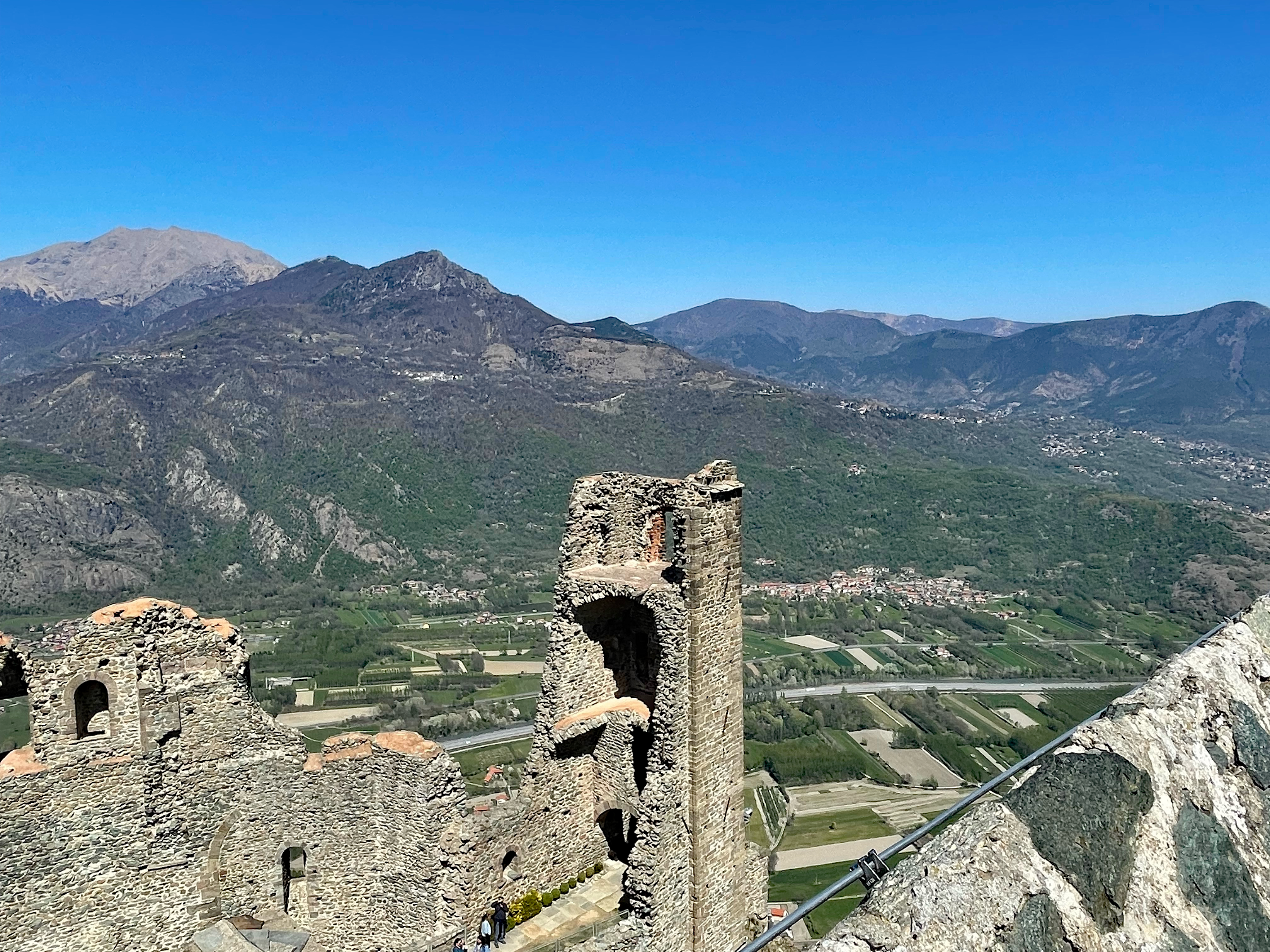
Looking across the valley from behind the church – Sacra di San Michele
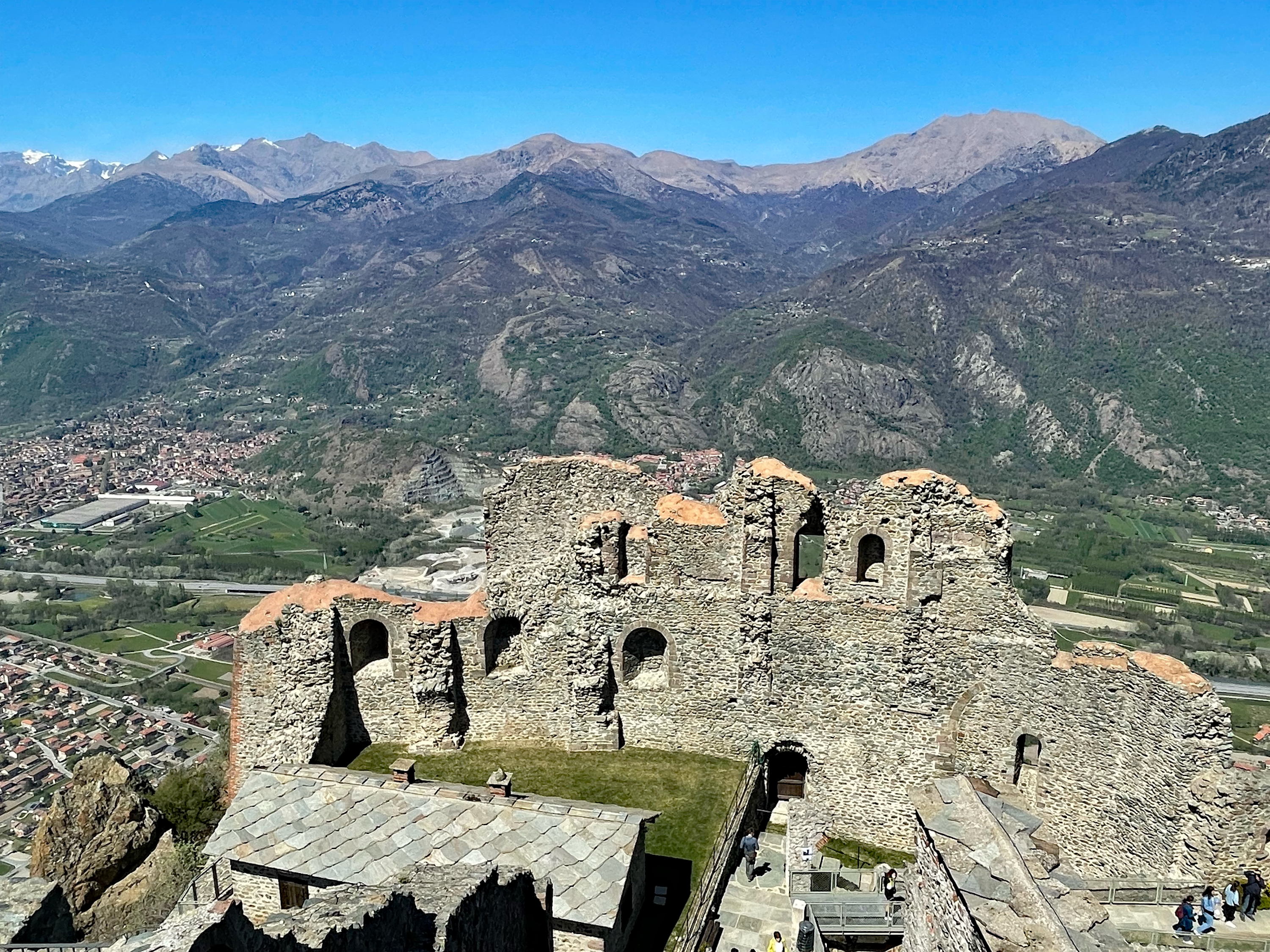
The ruins and Cottian Alps from behind the church – Sacra di San Michele
More ruins and alpine foothills from behind the church – Sacra di San Michele
Leaving we took our last look up at the great church and descended along the more difficult trail, due to its increase in steepness, it promised to cut some time off our descent, which it did.
Going down is a bit more treacherous and only 2.5 km, but still takes about 1 and a half hours to hike – Trail Map
However, the first part of this trail is VERY steep and not for anyone ill-prepared or wearing the wrong hiking apparel, so caution! We were actually having second thoughts until we realized it was more difficult to go back up, then to press on and continue downward.
A view of the church descending – Sacra di San Michele
We arrived back in Sant’ Ambrogio almost five hours later, hungry and fairly tired from our experience. Once on the train, we relaxed and started to compare which part of our legs hurt more. However, we were both happy we were able to meet our sacred vertical pilgrimage with a great sense of accomplishment. It was our first big hike of the season, hopefully not our last and if anyone is thinking of doing this or a similar hike, keep the following in mind, we will next time.
Prepare for your hike, research the route and understand how technical it is
Bring a water bottle, the trail has two or three places to refill, this is especially important
Bring lunch or something to eat, there is nothing above except some vending by the ticket counter, but do not count on that
Wear the correct clothing (light and layered) and shoes, hiking shoes would be preferred but thick soled tennis shoes or sneakers will do
Pace yourself, unless you are young be mindful of your body and do not over-exert, you do not want to get into medical trouble on that trail, it will take some time for them to get to you
Go in good weather, unless it’s your intent as an experienced hikers not to
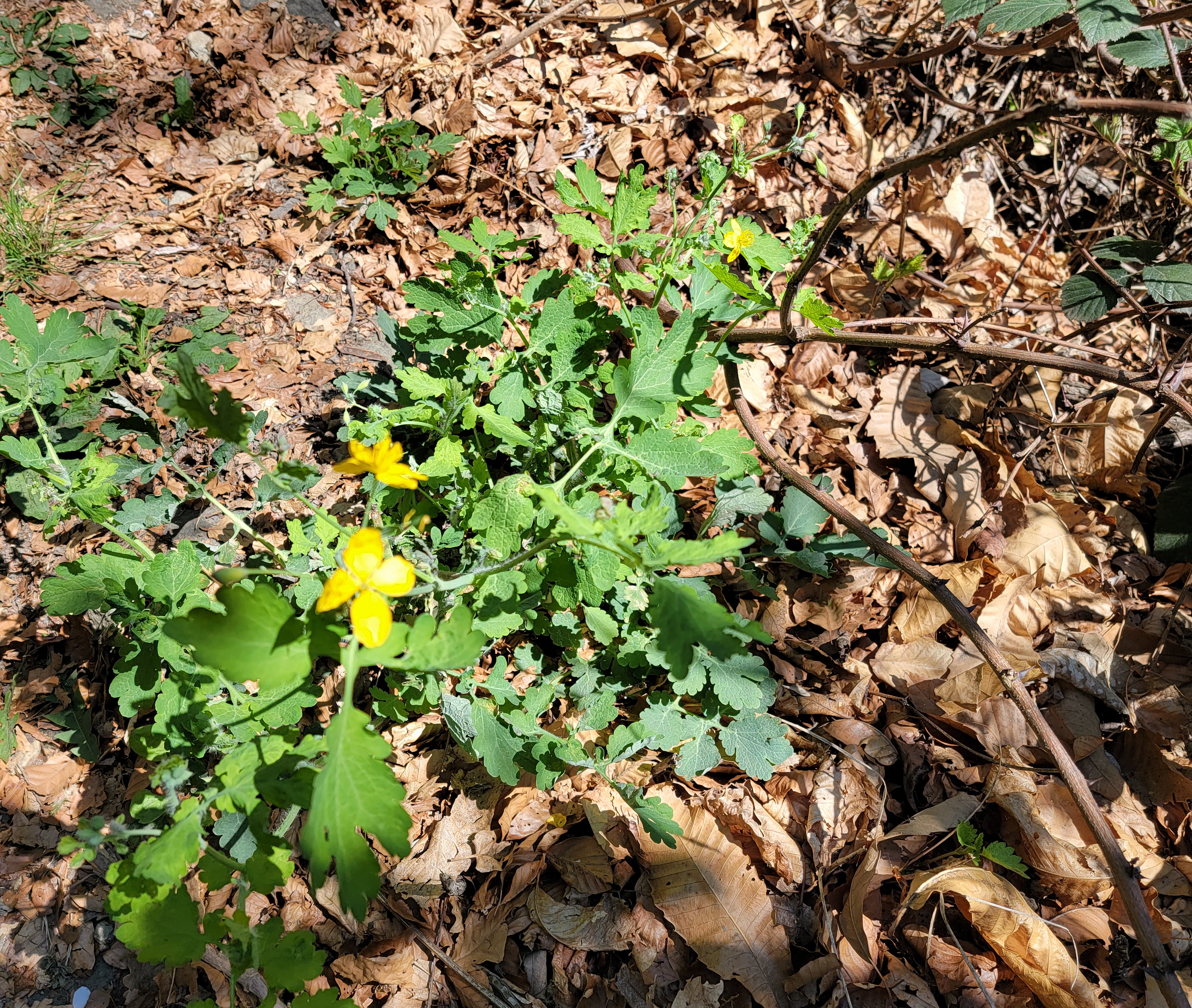
And last but not least.., enjoy yourself, there are amazing things to see and hear on the trail, the flowers and birds are in abundance.
Also called, Lunedì dell’ Angelo, which is meant to remember the women of the sepulcher, including Mary Magdalene, who were comforted by an angel when they returned to Jesus’ tomb and found it empty.
Tucked along the eastern bank of the River Po and within the confines of the Metropolitan City of Turin sits Moncalieri. No more than a fifteen minute bike ride for me down the Corso Moncalieri from our apartment in Turin, it took us a twenty minute walk to the train station, followed by a twenty-five minute train ride, with a change in Lingotto. Of course, there are other options, but none that we could take conveniently from where we live in Turin.
Tickets for Two – Moncalieri – Turin
Moncalieri – The Town
A quick hop off the train and you may bump into the weekly market, if you travel there on the weekend. This is the traditional market that most places in Italy entertain at least once a week, so that locals can buy everything from household goods, cheap everyday things like sponges, to more exotica like gold coins and older things, some would like to call antiques.
Train station – Moncalieri, Turin
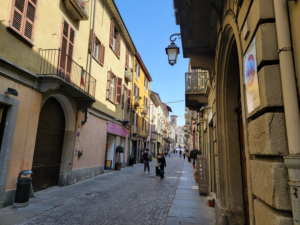
Once you have left the train station and navigated the small Borgo Navile, where the market is held, you will find the center of town by walking the via San Martino.
Municipal Building – Moncalieri, Turin
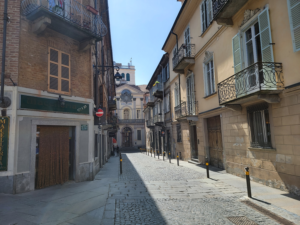
Via S. Martino – Moncalieri – Turin
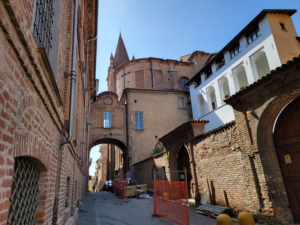
Church overpass of street – Moncalieri, Turin
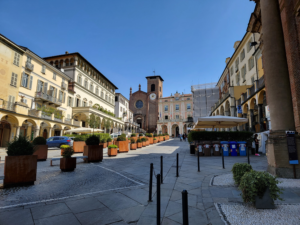
Piazza VIttorio Emanuele II – Moncalieri Center – Turin
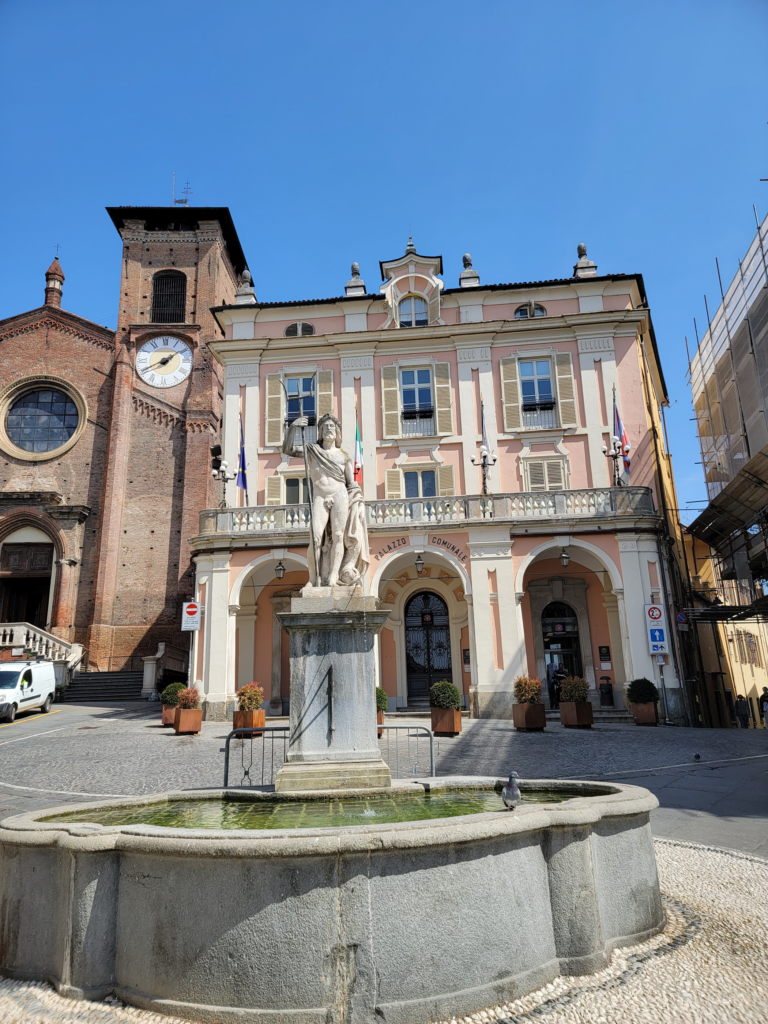
At the end of this short journey you will find the Piazza Vittorio Emanuele II[1]Named after the King of the same name, the castle of Moncalieri was his favorite summer retreat, the town’s main fountain and the Comune Building for Moncalieri. The significance of the Roman God Neptune is unclear, other than he was the Roman God of Fresh Water and the Sea, and that the fountain was most likely the main source of water before indoor plumbing for the town’s people.
Neptune Statue – Comune Building in Moncalieri Center – Turin
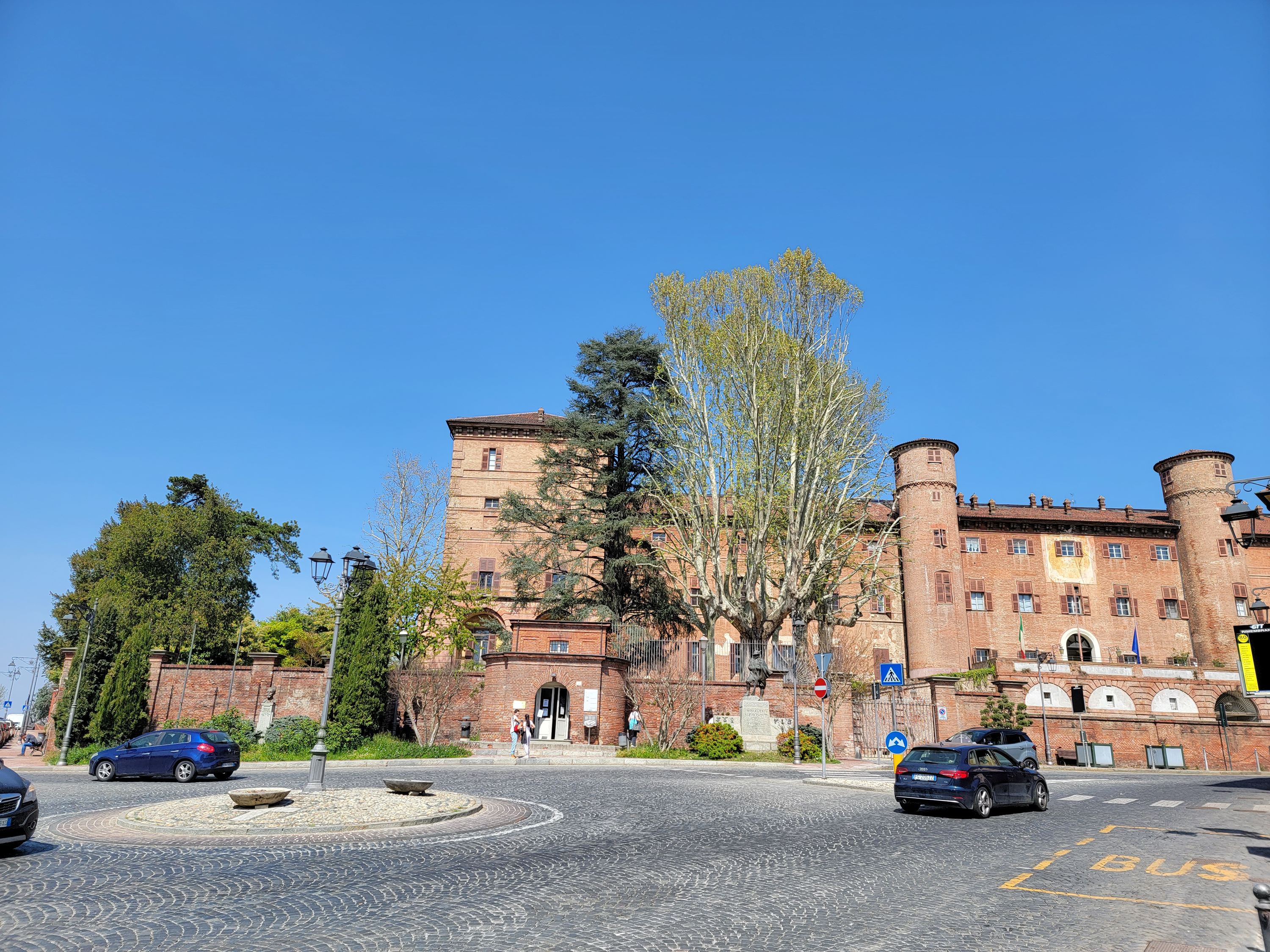
Castello Reale di Moncalieri
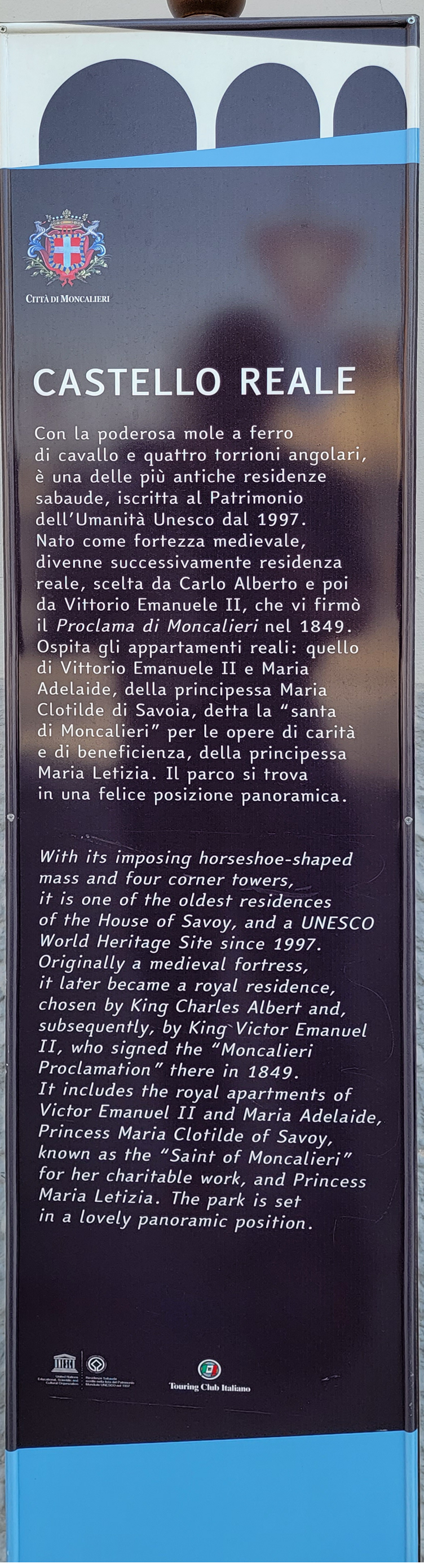
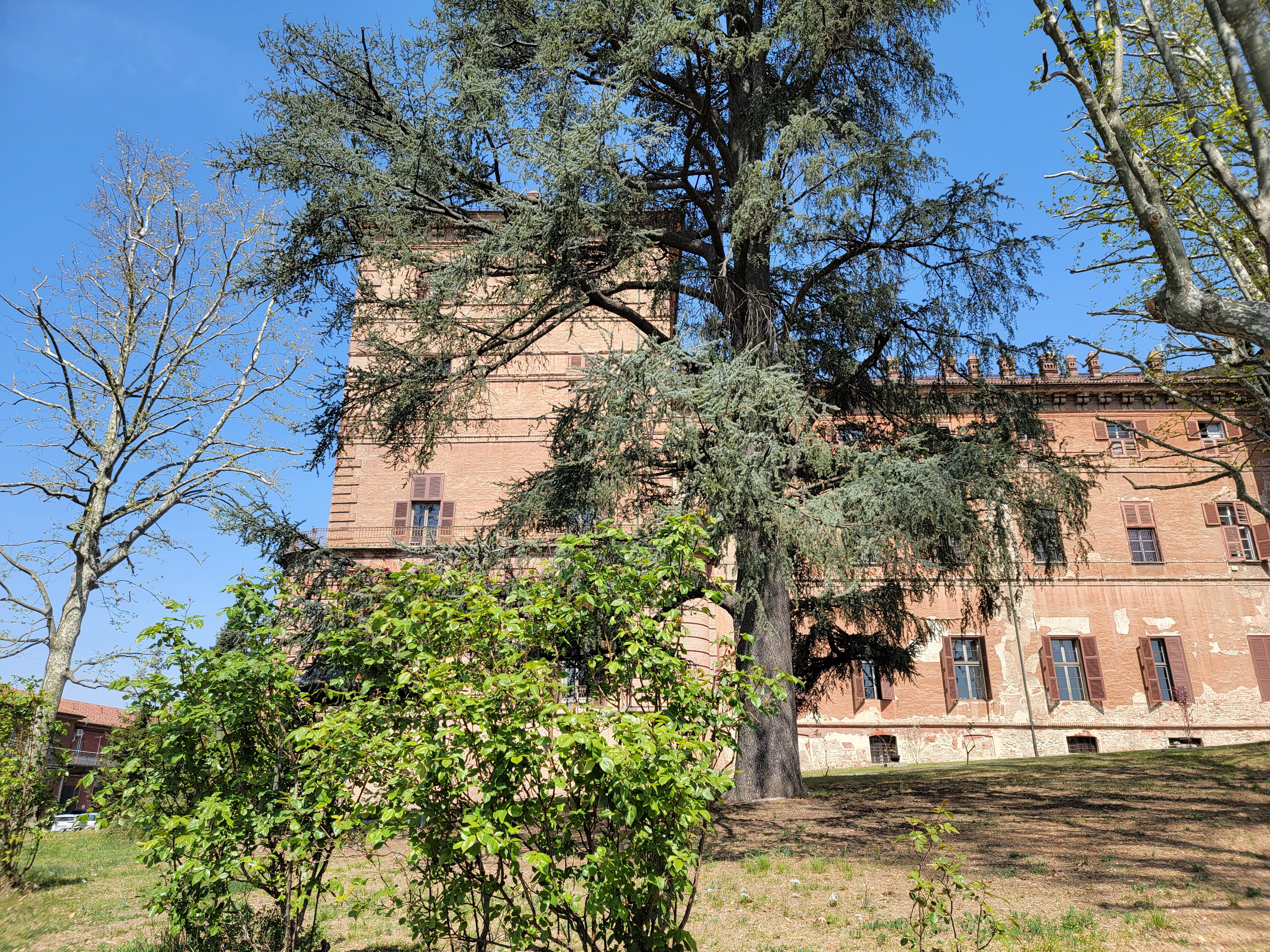
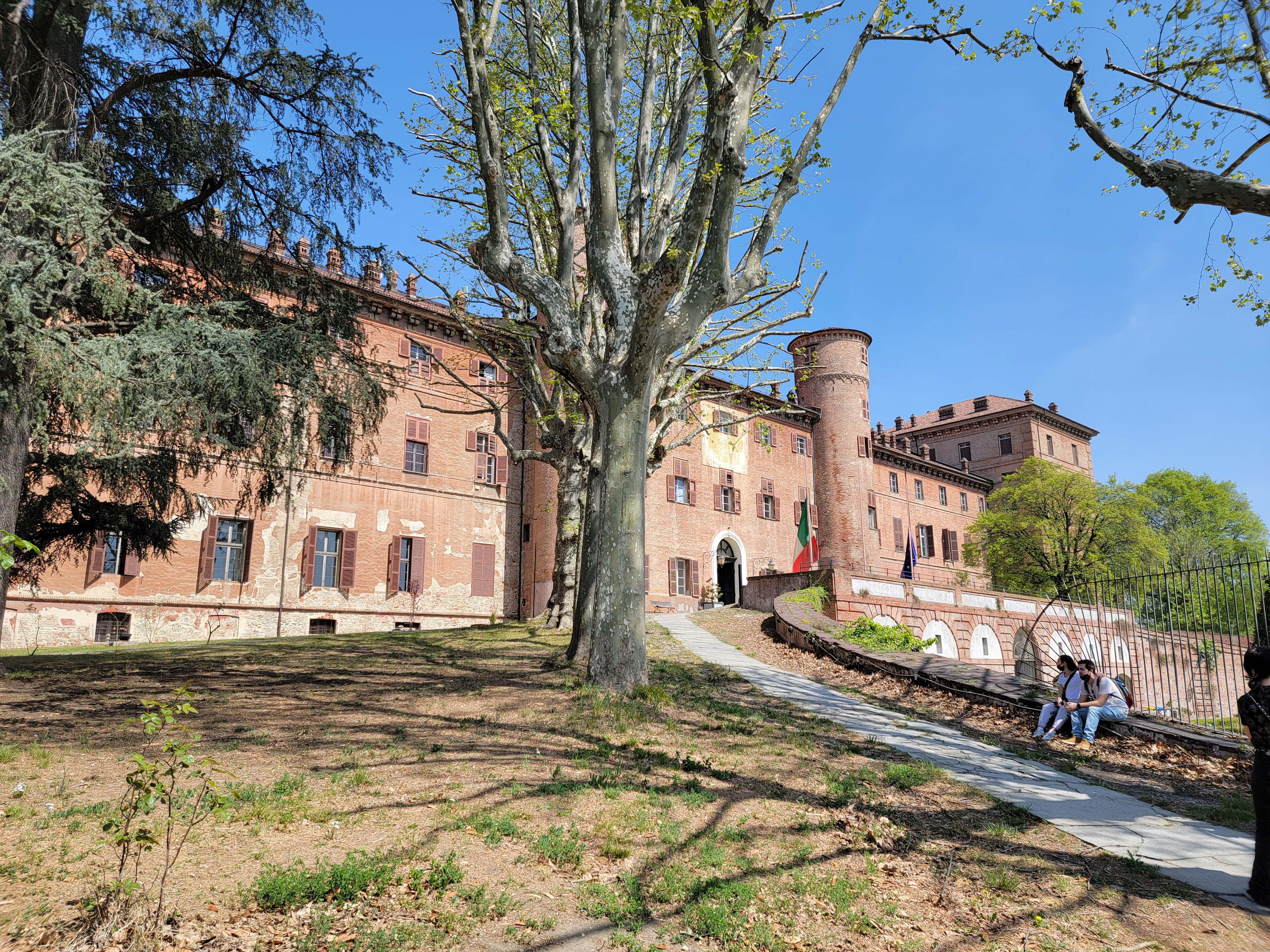
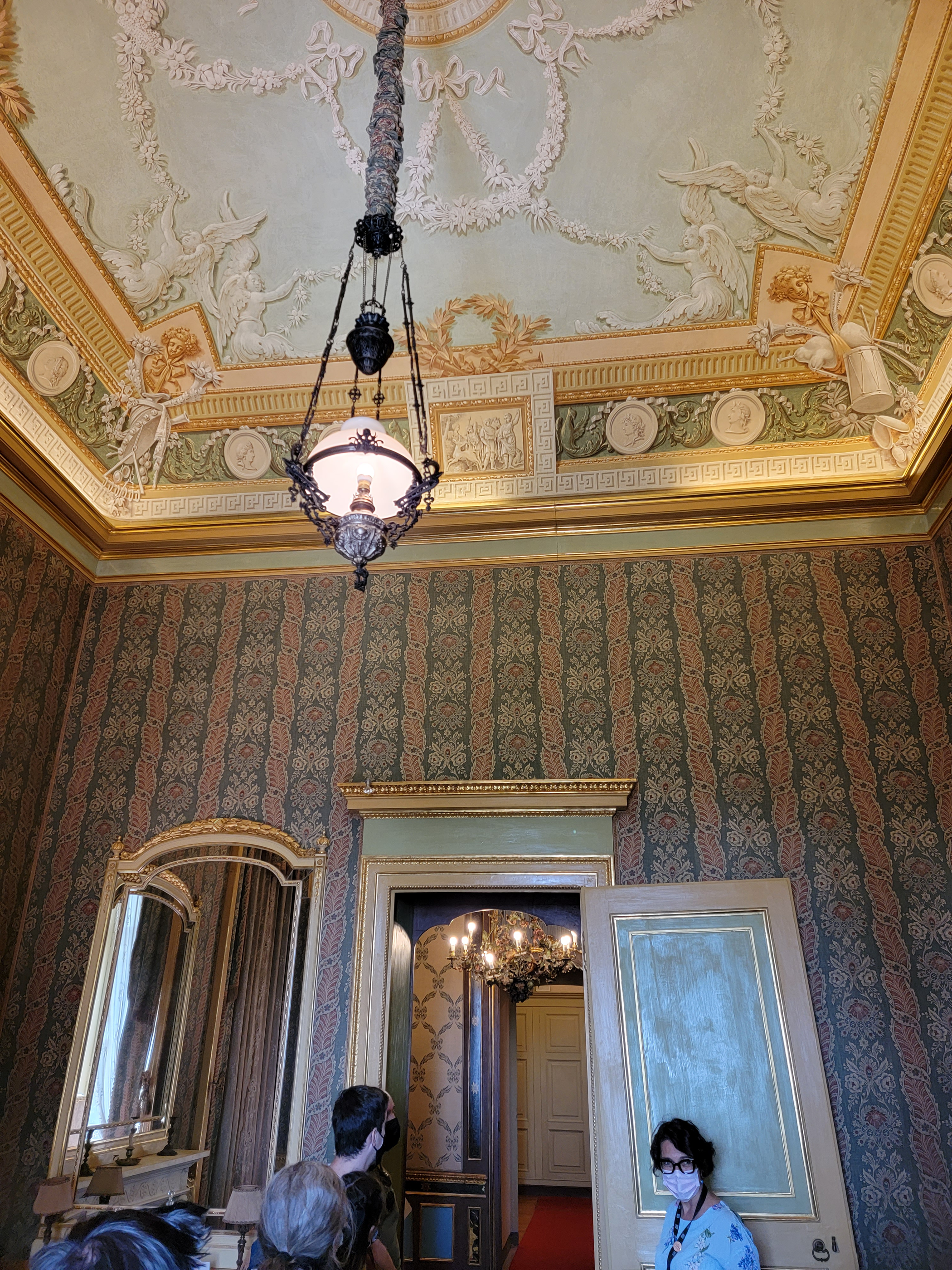
A must see when visiting here is the large and private Castle Real of Moncalieri. For a modest fee you can enter the castle, which experienced a fire in 2008[2]The fire destroyed several rooms on the upper floor and was contained, but most of the damaged was just contained and never renovated., and take the guided tour, which is only in Italian. Fear not, there are enough references in the story for most people to follow and our tour guide did speak english and filled us in while walking on the more important points.
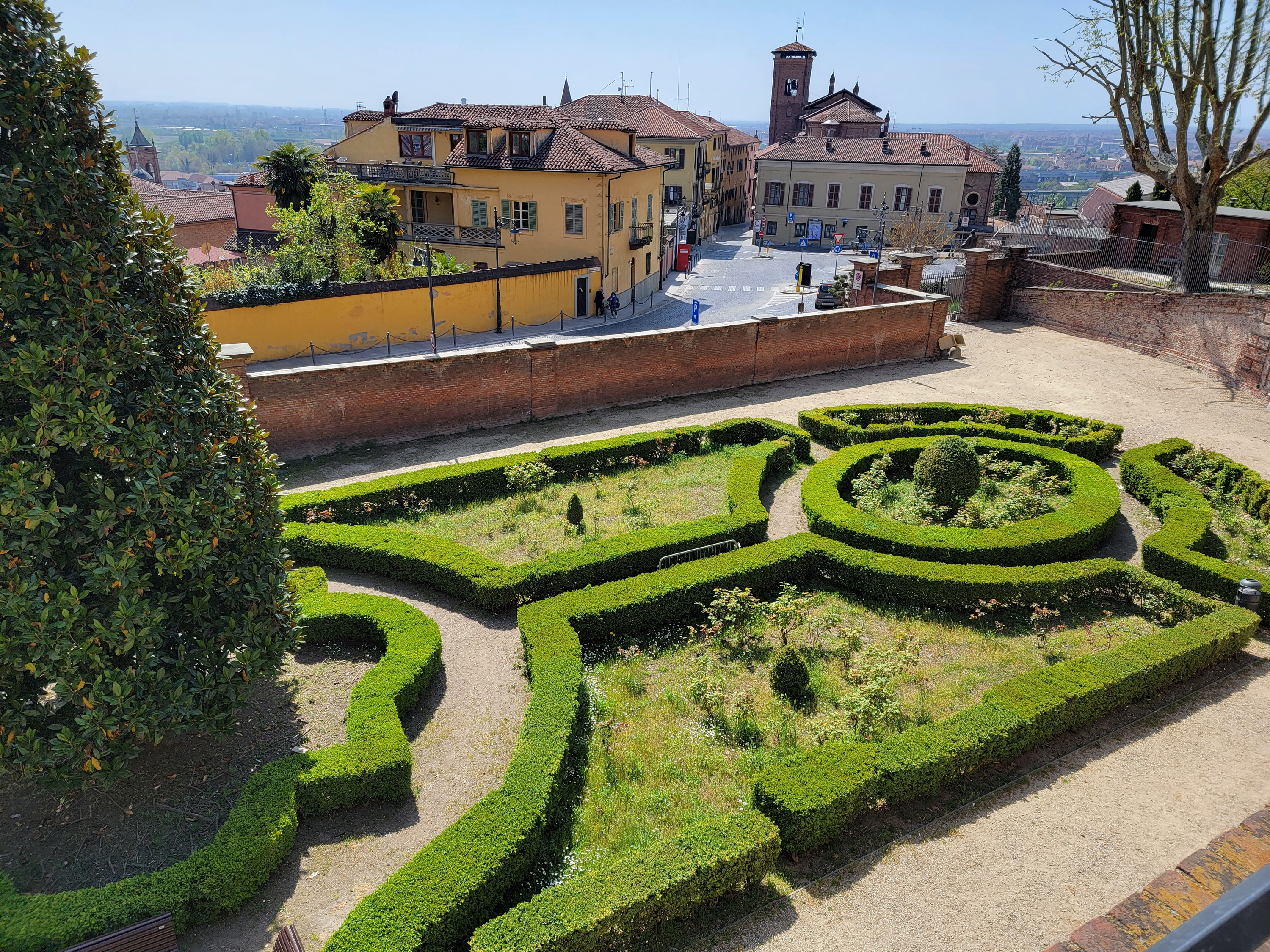
Garden and View – Castle of Moncalieri – Moncalieri, Turin
Garden – Castle of Moncaliere – Moncalieri, Turin
Castello Reale – Moncalieri, Turin
Restaurants
Osteria e Gastronomia
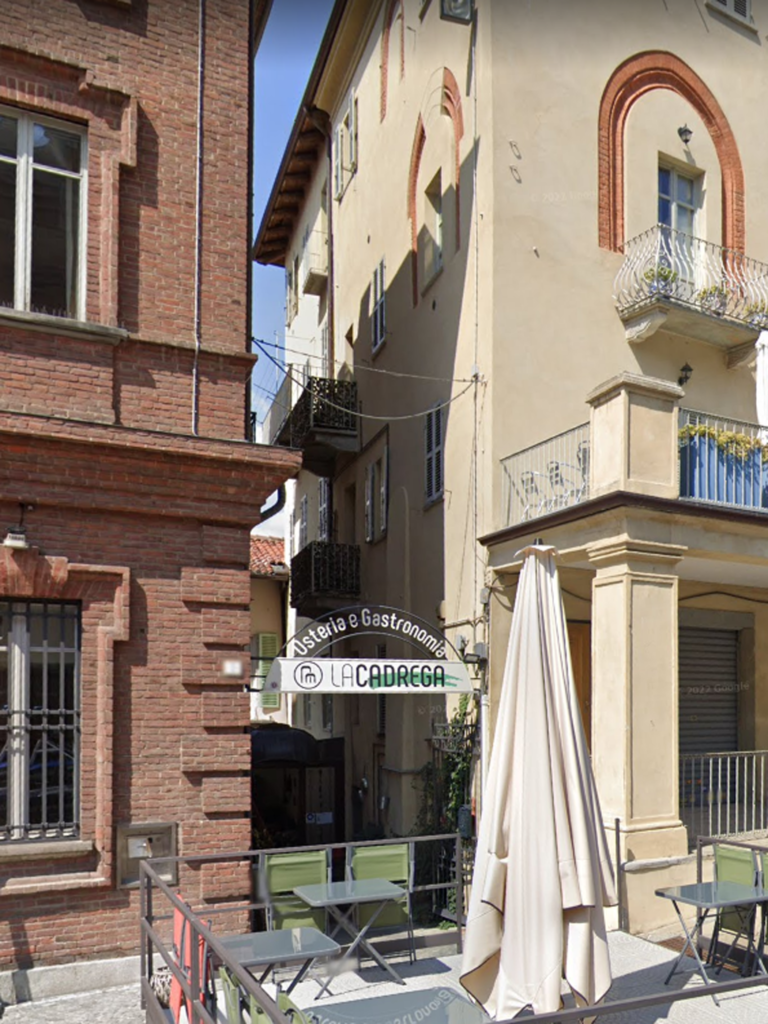
Tucked between the UniCredit Bank and an apartment building off the beginning of Piazza Vittorio Emanuele II is a very good restaurant, the Osteria e Gastronomia. It was already lunch time, so we grabbed a small two person table right in the alleyway and were immediately greated by our hosts. A quick view of the menu and we were ready for some delicious Piemontese food.
Osteria e Gastronomia – Moncalieri,Turin
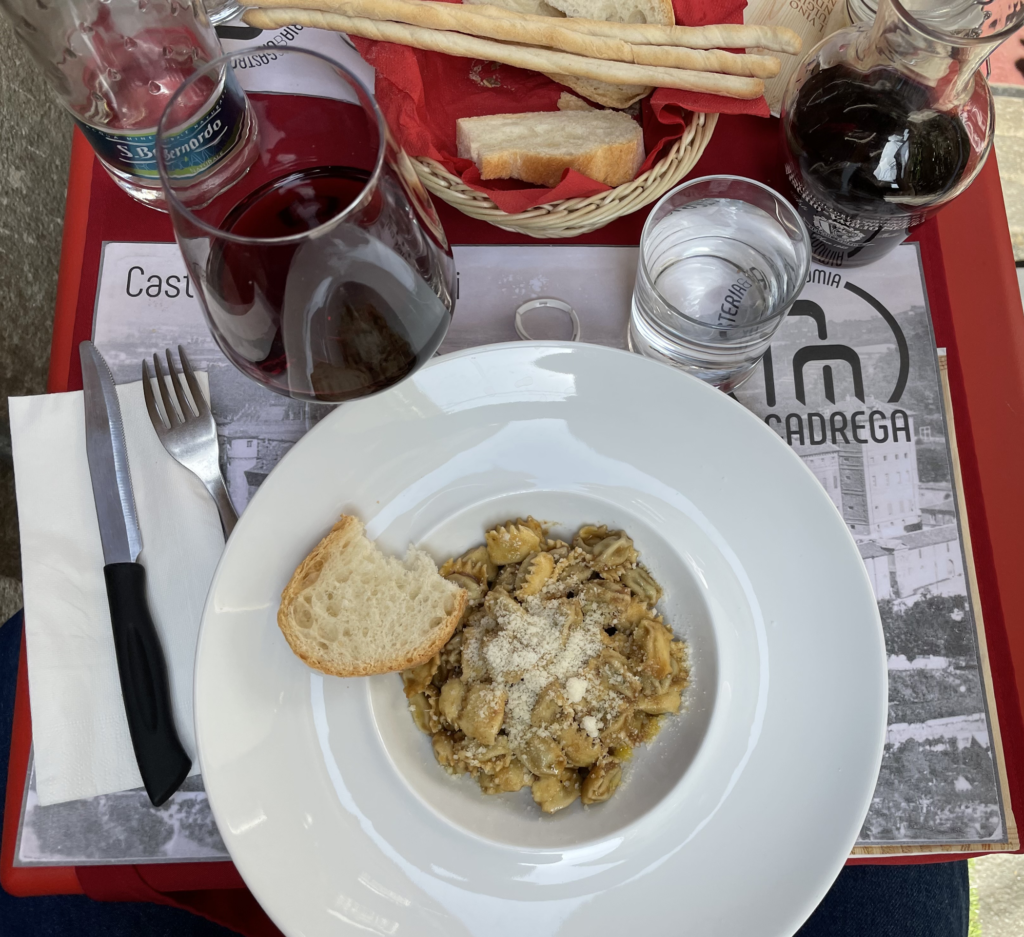
I ordered the Agnolotti del plin tradizionali con sugo d’arrosto, a typical Piedmont dish of very tiny ravioli stuffed with meat in a meat sauce, very tasty! It doesn’t look like much, but is actually very filling. Along with some bread, a glass of Nebbiollo alla spina, and water, how can you go wrong for lunch?
Agnolotti del plin tradizionali con sugo d’arrosto
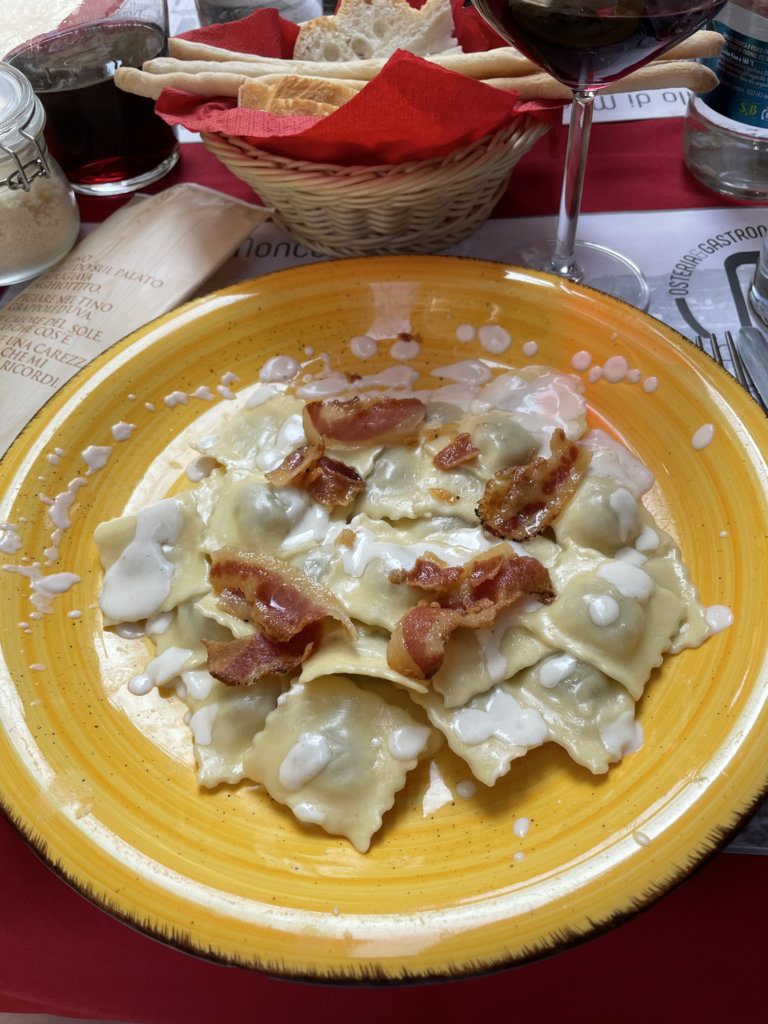
Patti ordered the Agnolotti con salsiccia di Bra e porri con crema di parmigiano e guanciale croccante, which are larger ravioli made with sausage from Bra and leeks, topped with Bacon. A little Parmesan and you have a great lunch.
Agnolotti con salsiccia di Bra e porri con crema di parmigiano e guanciale croccante
Well, we hope you enjoyed our adventure to Moncalieri, because we did and were actually surprised. Though it took longer to get there than we had originally hoped, it wasn’t all that bad and definitely worth the trip, if only for the food!
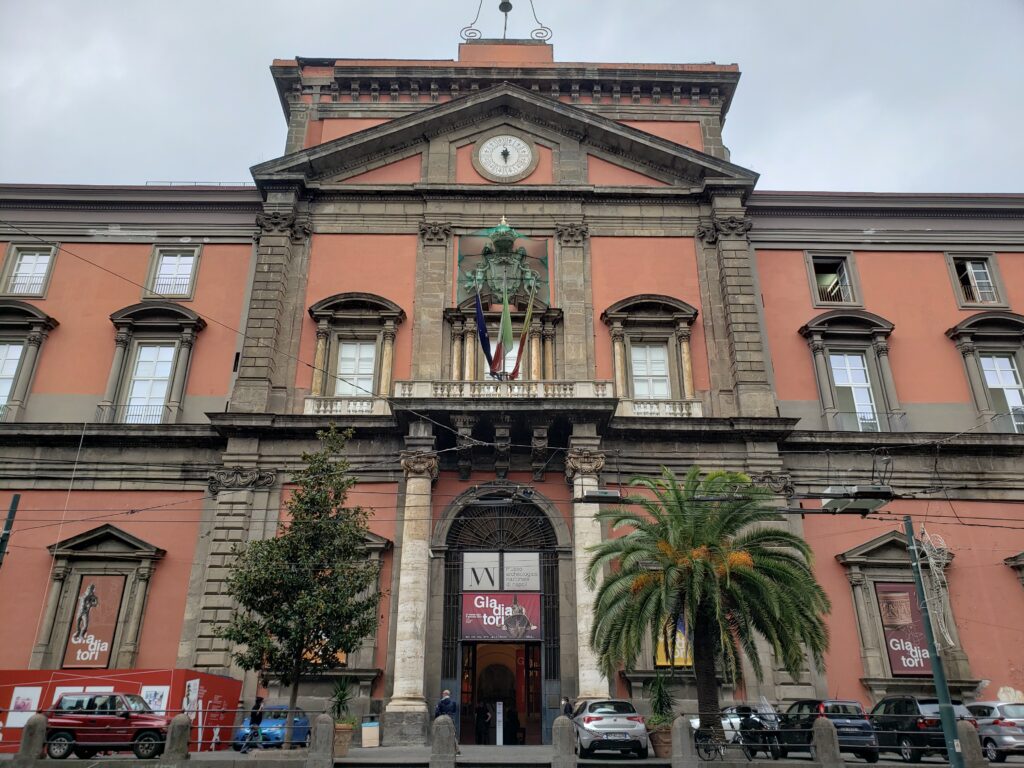
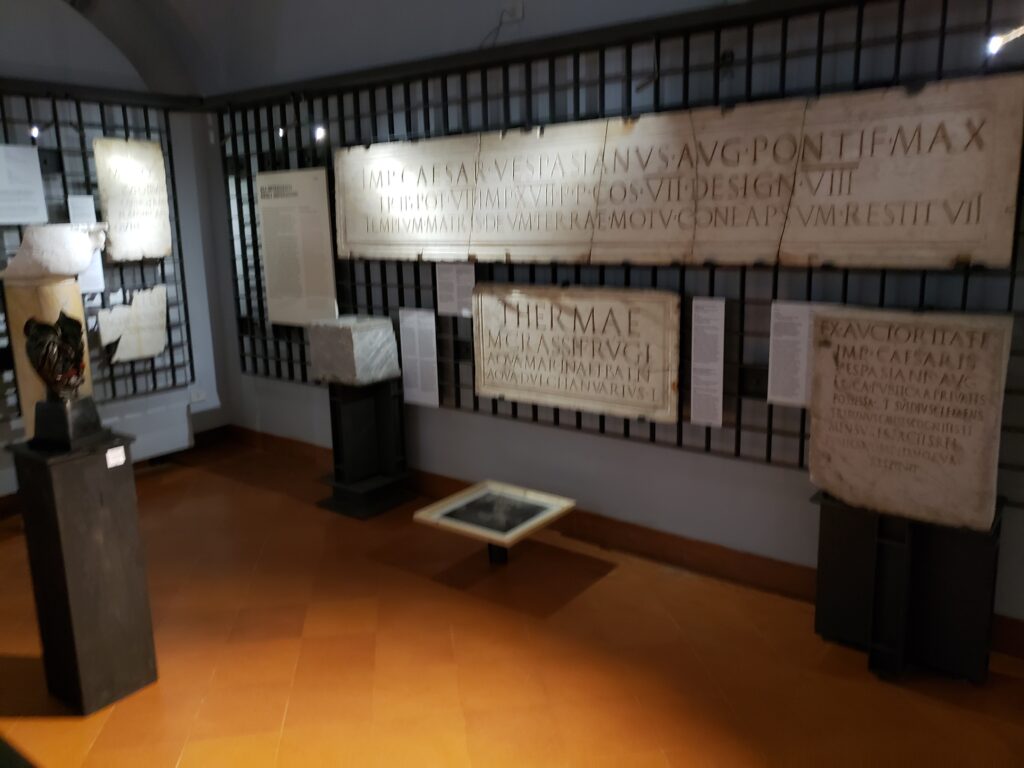
If you are an archaeological nut and ever have enough time to spend in Naples, you must visit the National Archaeological Museum. It houses an impressive collection from ancient Naples, from its ancient Greek roots through its Roman and Sicilian Empire phases, to the present. It also has a fabulous collection of artifacts from Pompeii and the Roman Period. It is found on the interesection of Piazza Cavour and Via Enrico Pessina. At the time of this writing, it can no longer be gotten to by the Museum Metro Stop, which has been closed for some time, but rather from the Piazza Cavour Metro Stop and then a short walk along that street.
National Archaeological Museum – Main Entrance
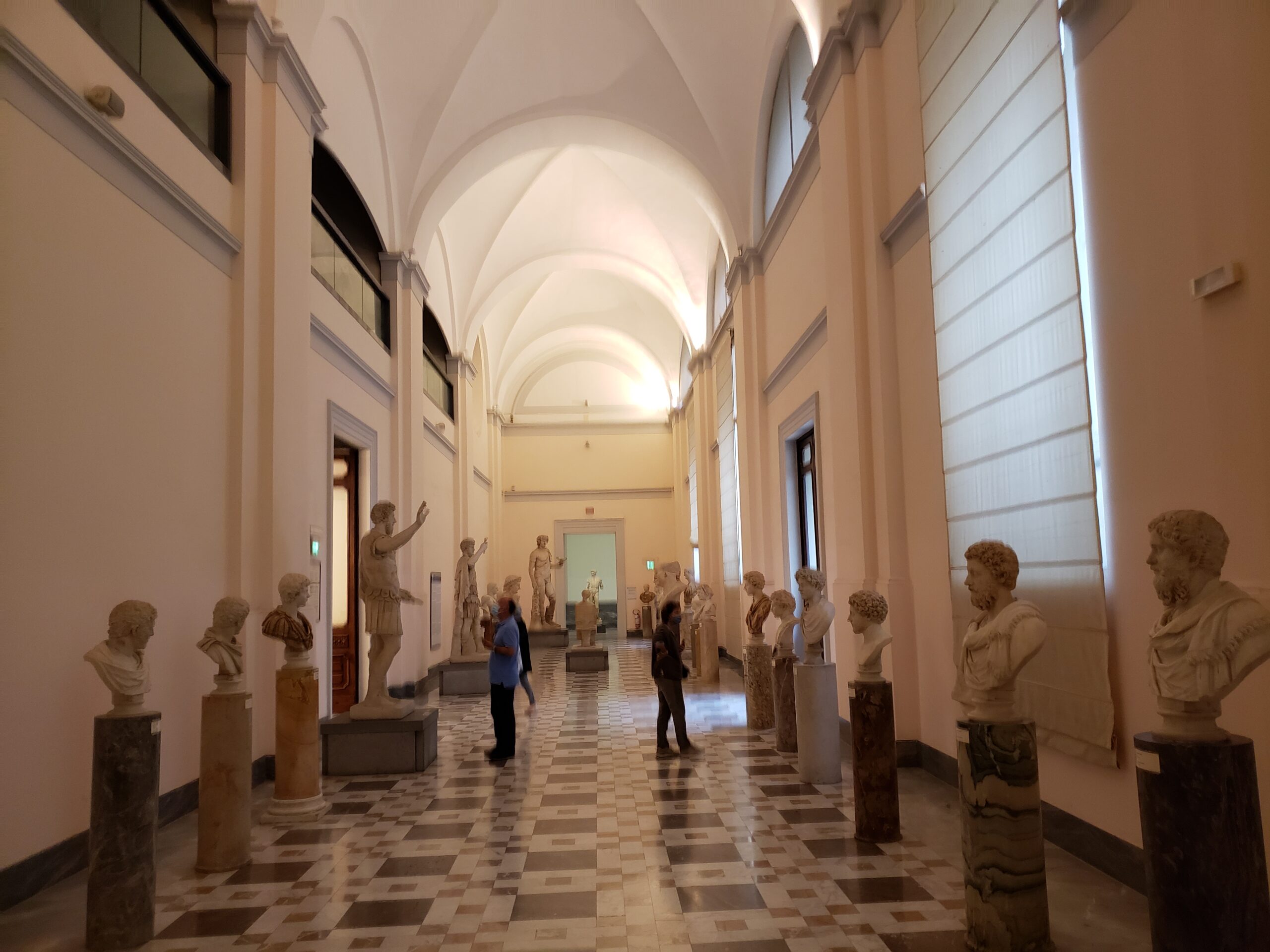
The Ground or First Floor – Main Gallery
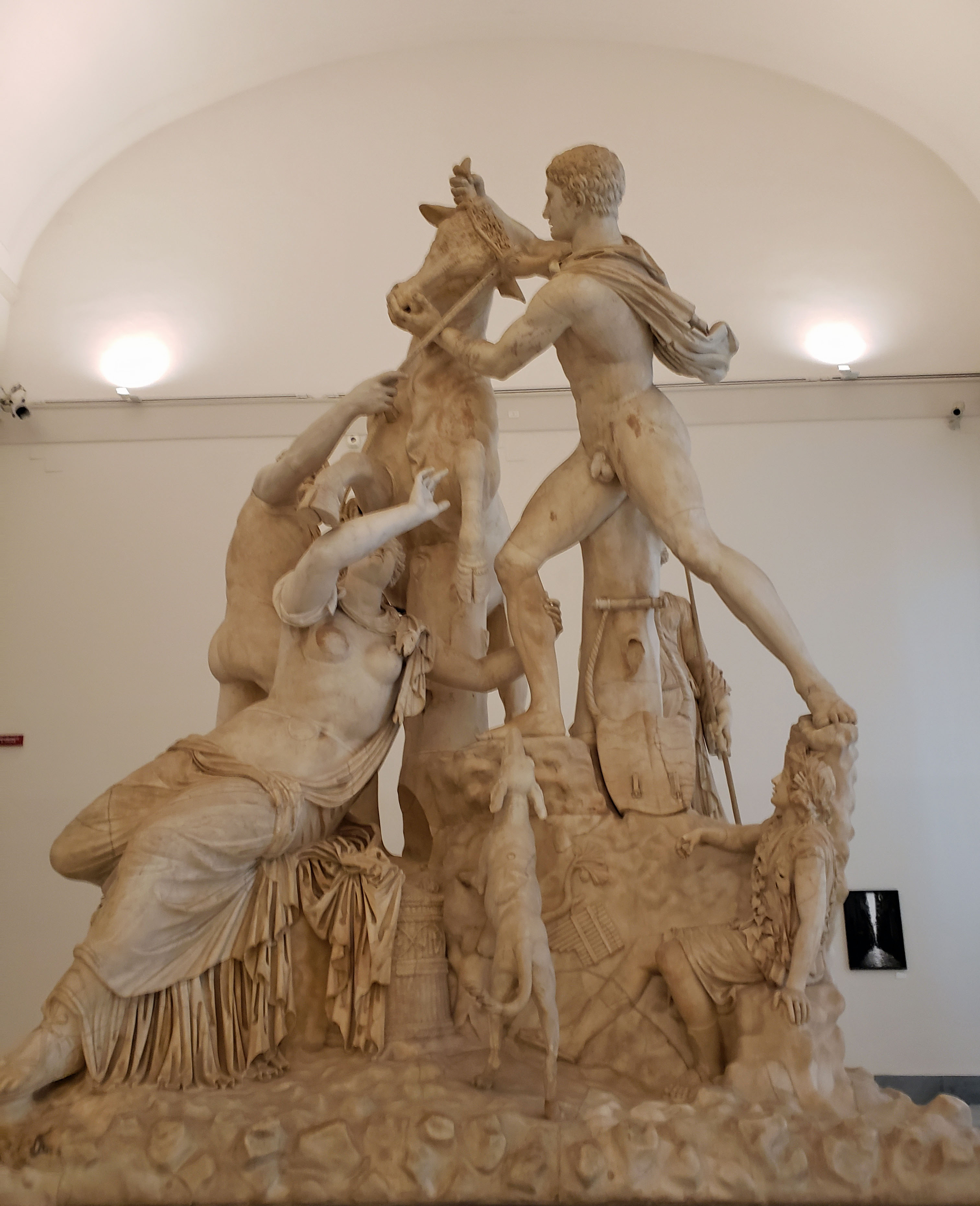
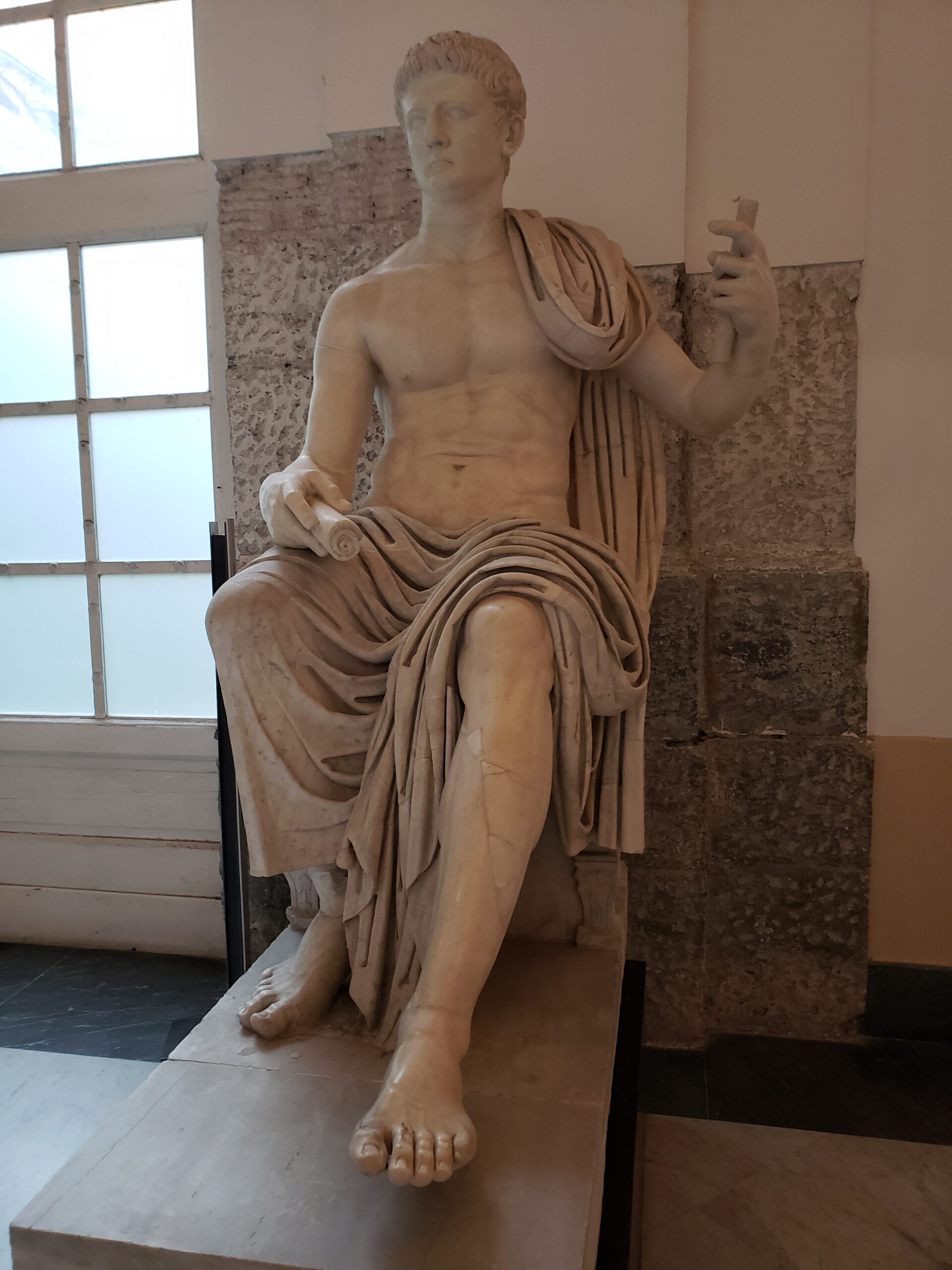
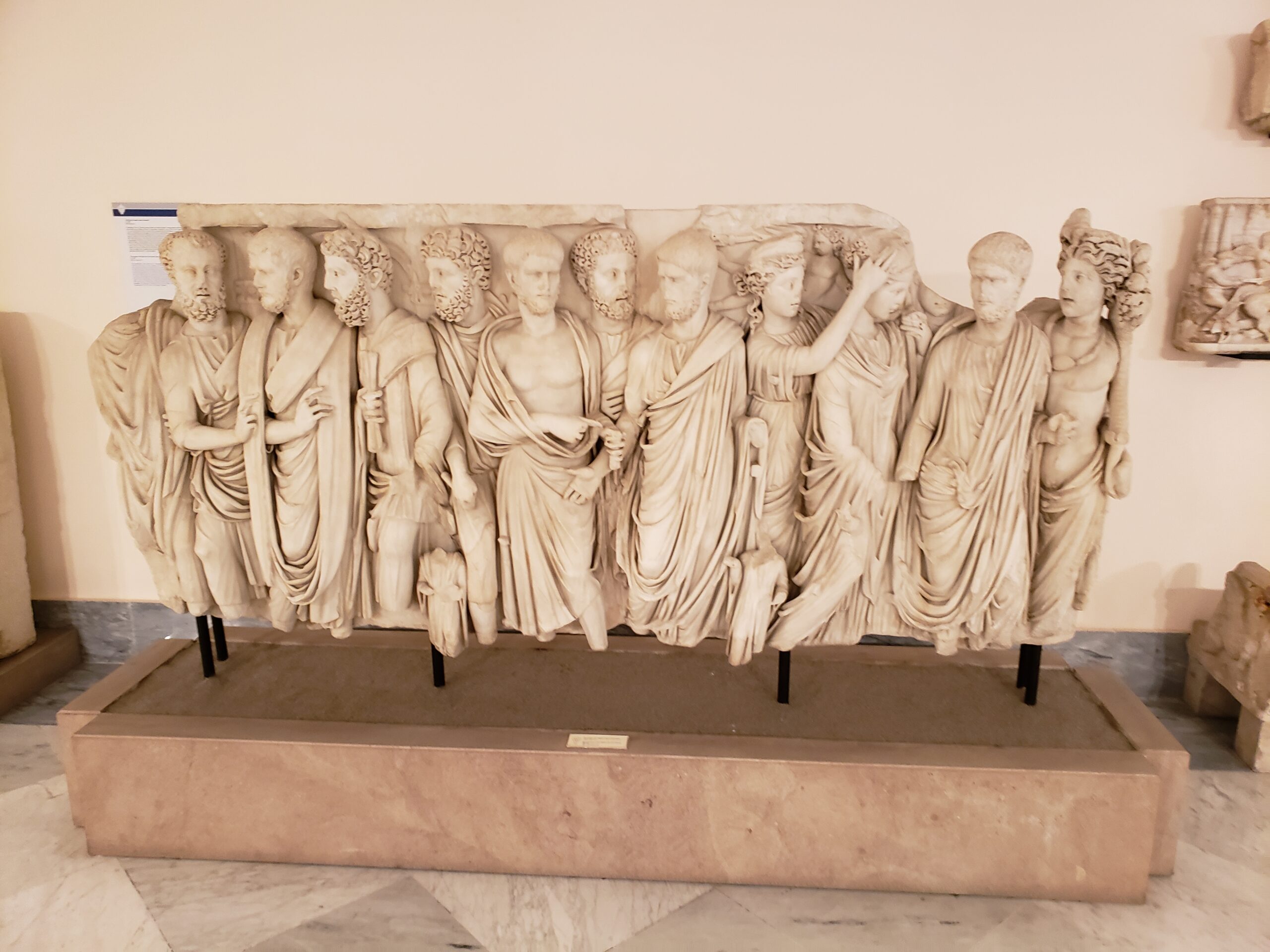
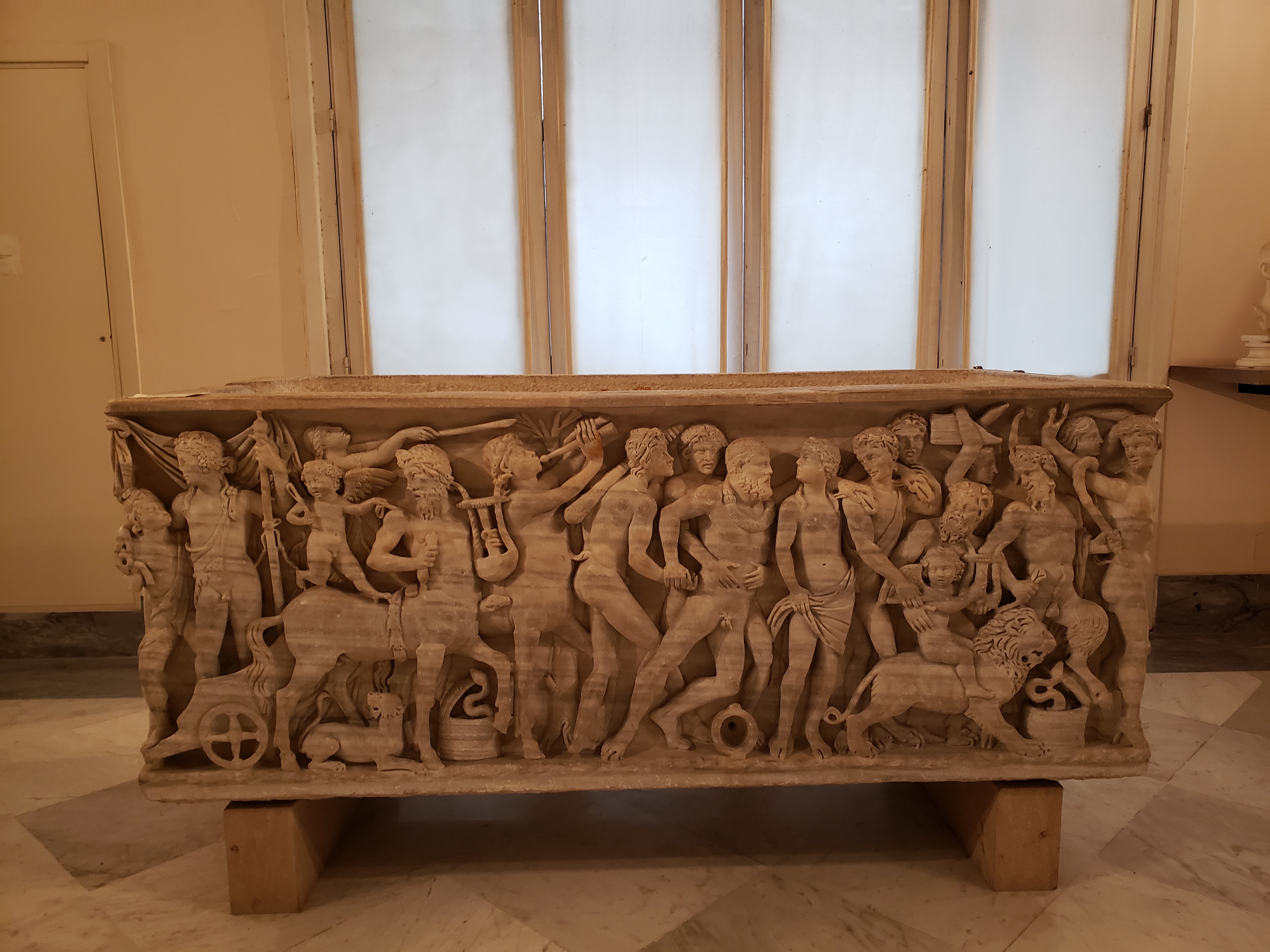
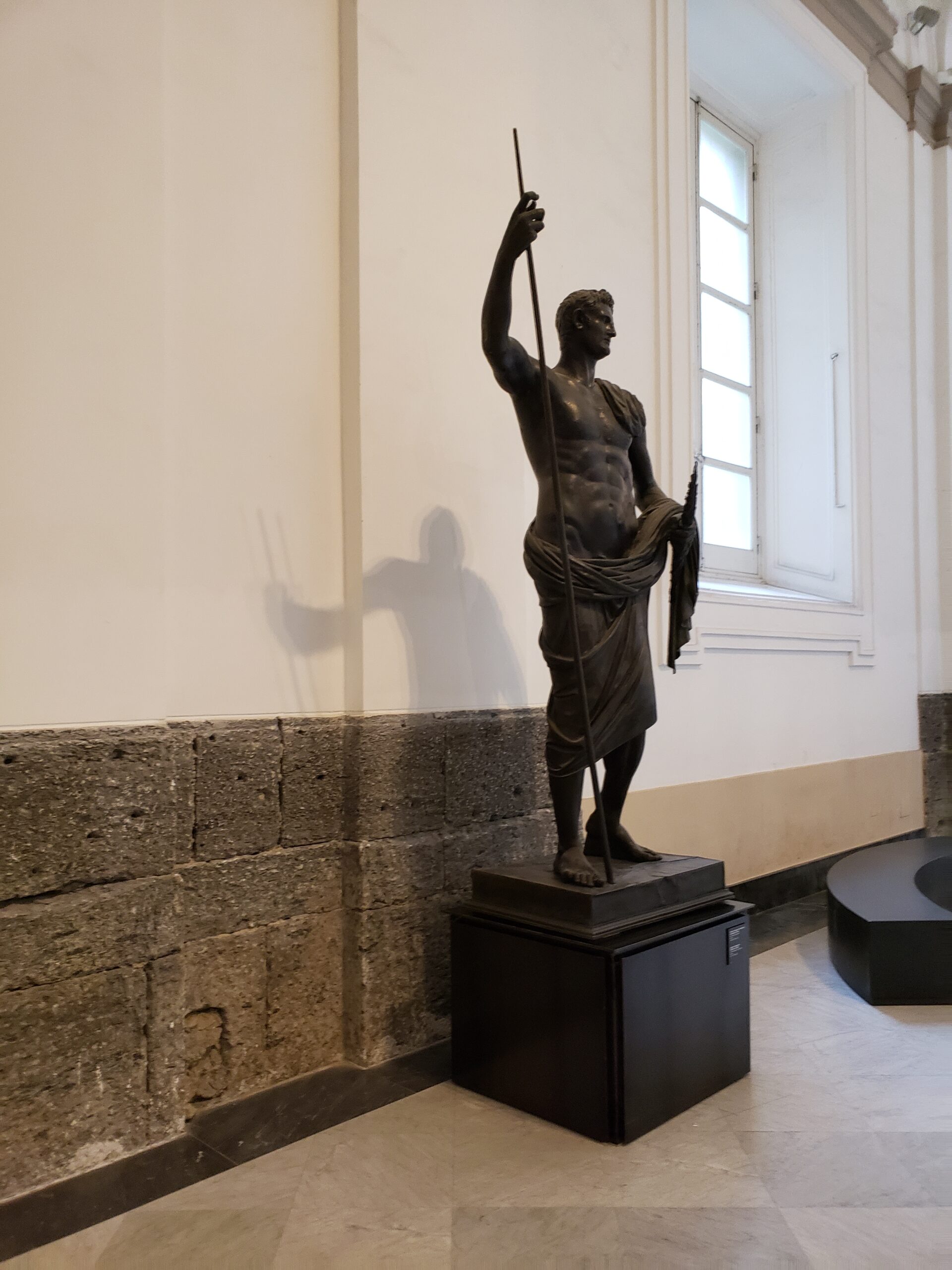
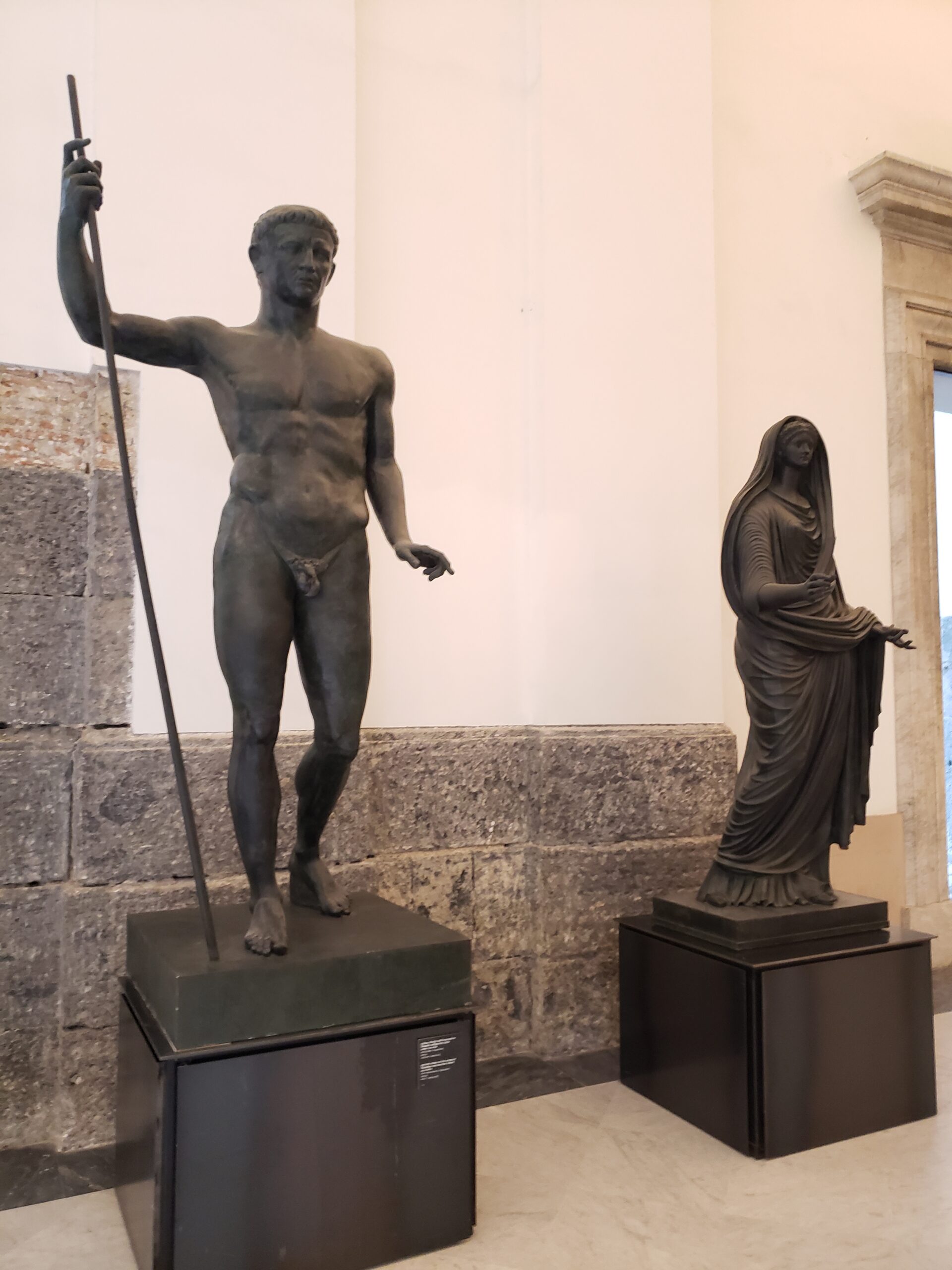
The main gallery on the ground floor has a unique and amazing collection of statues, mostly from the Roman Period, but there are also more ancient sculptures as well. It features in the back of the hall the Farnese Bull from Roman times.
National Archaeological Museum – Statue Hall – Bull – Farnese Collection – Largest Sculpture from Antiquity
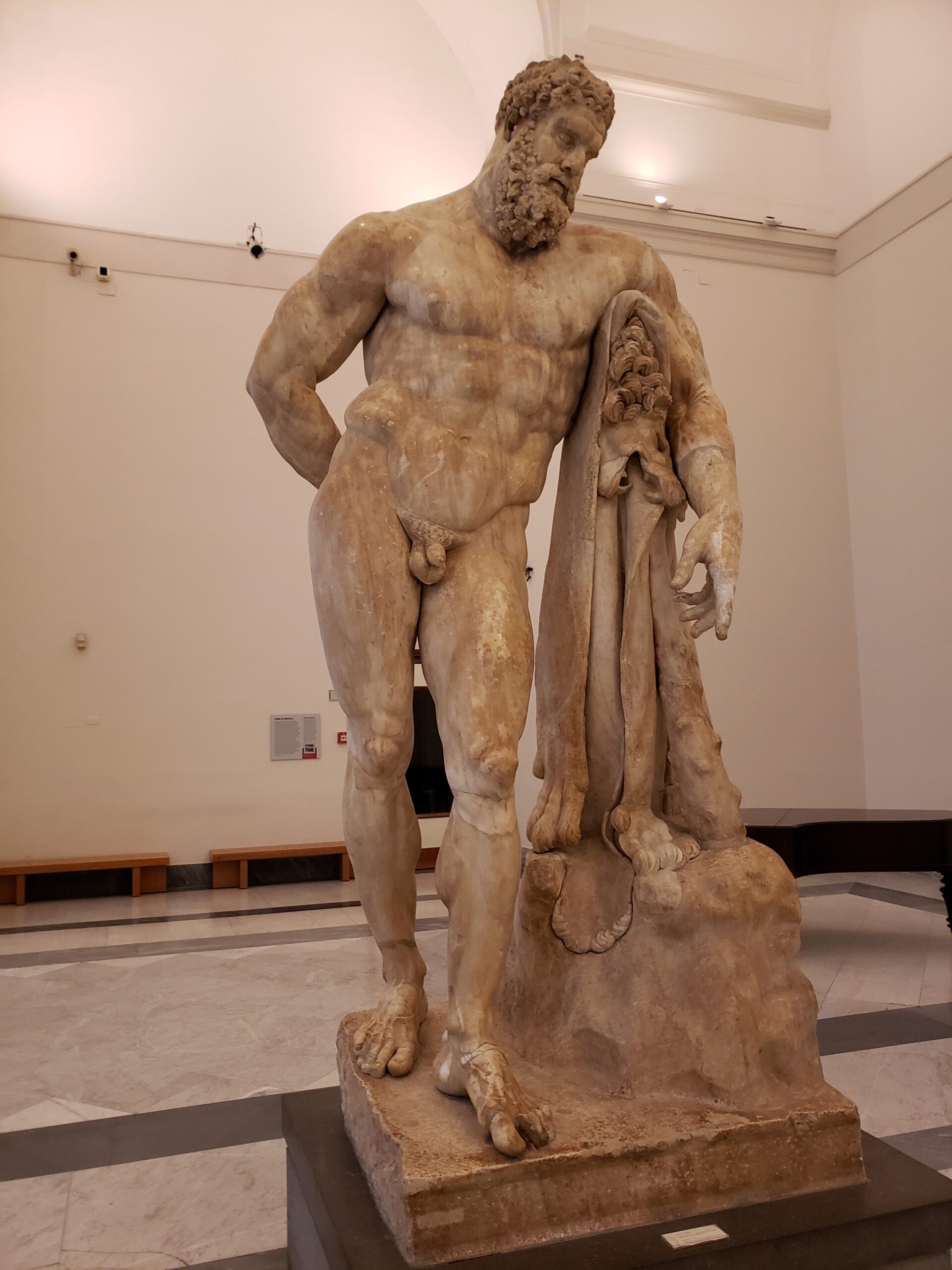
There are also a few other examples from the Farnese Collection, including Hercules and others. This section is definitely worth a quiet, long walk through with plenty of reading and afterthought. Examination of any one of these magnificent works reveal detail that someone in today’s day and age would think otherwise superfluous, and yet it would not be the work it is today without that fine attention to detail.
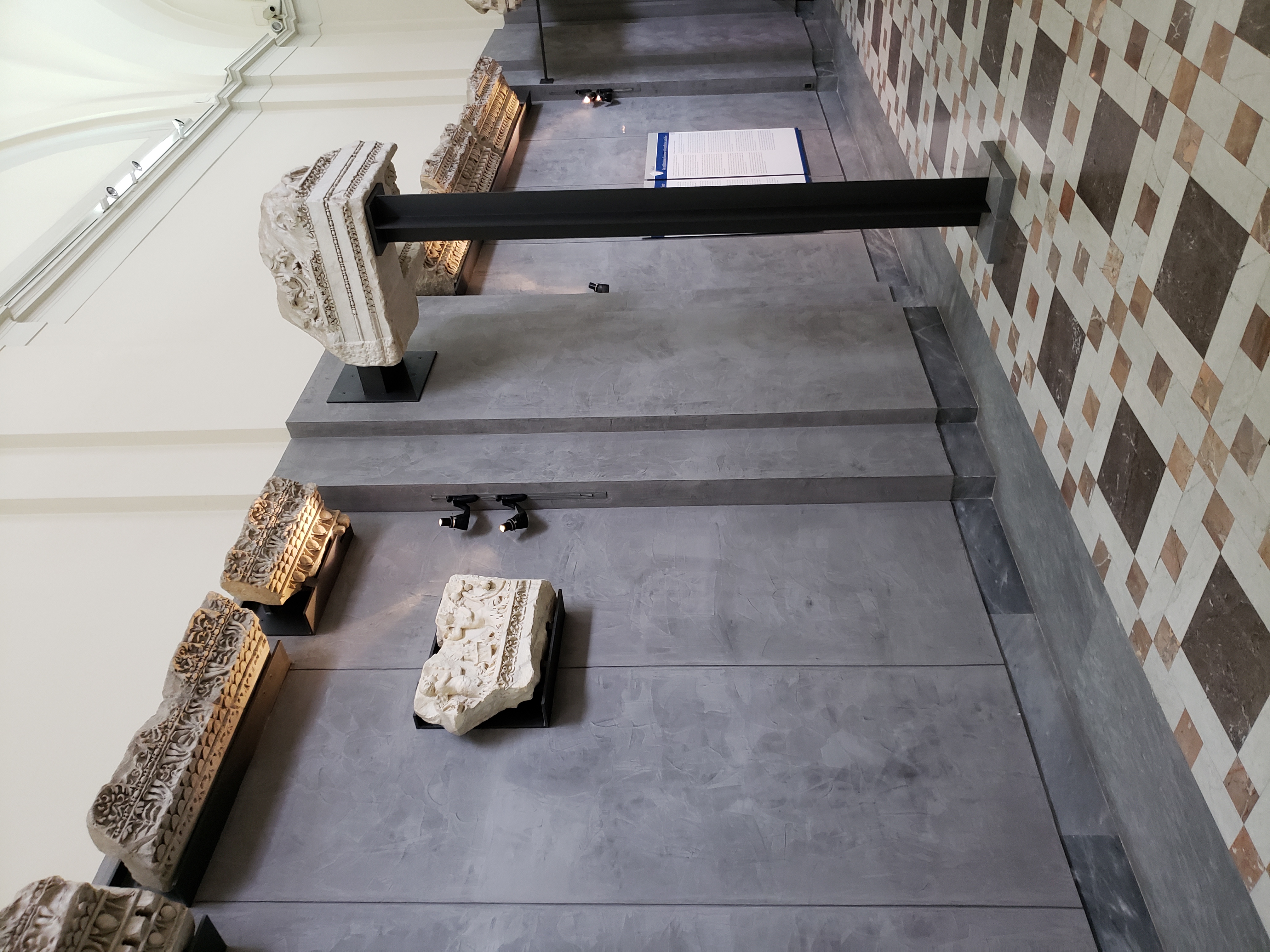
National Archaeological Museum – Statue Hall – Architectural Elements
National Archaeological Museum – Statue Hall – Large Statues – Roman
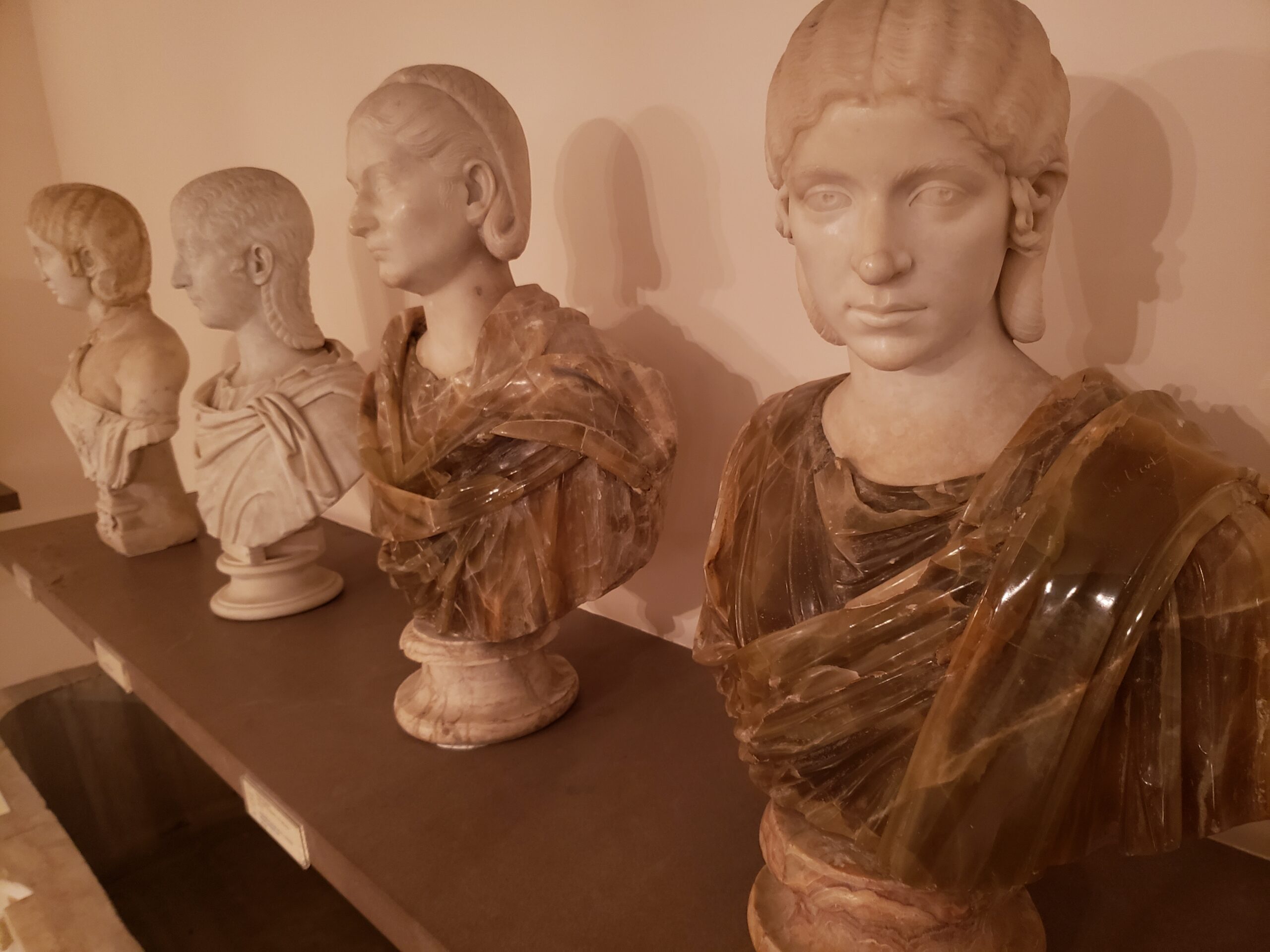
National Archaeological Museum – Statue Hall – Women Busts
National Archaeological Museum – Statue Hall – Hercules – Farnese Collection
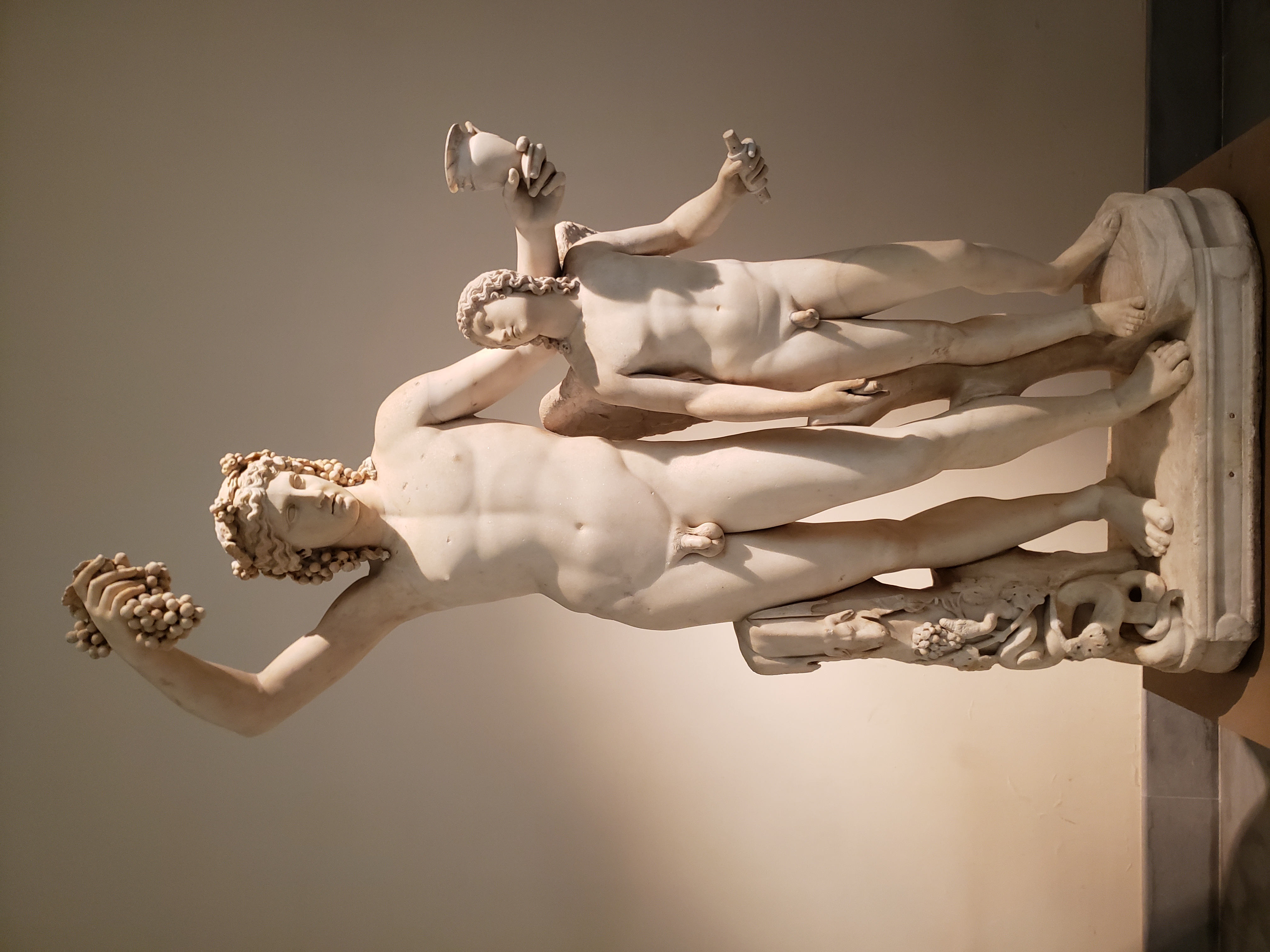
National Archaeological Museum – Statue Hall – Dionysus and Eros
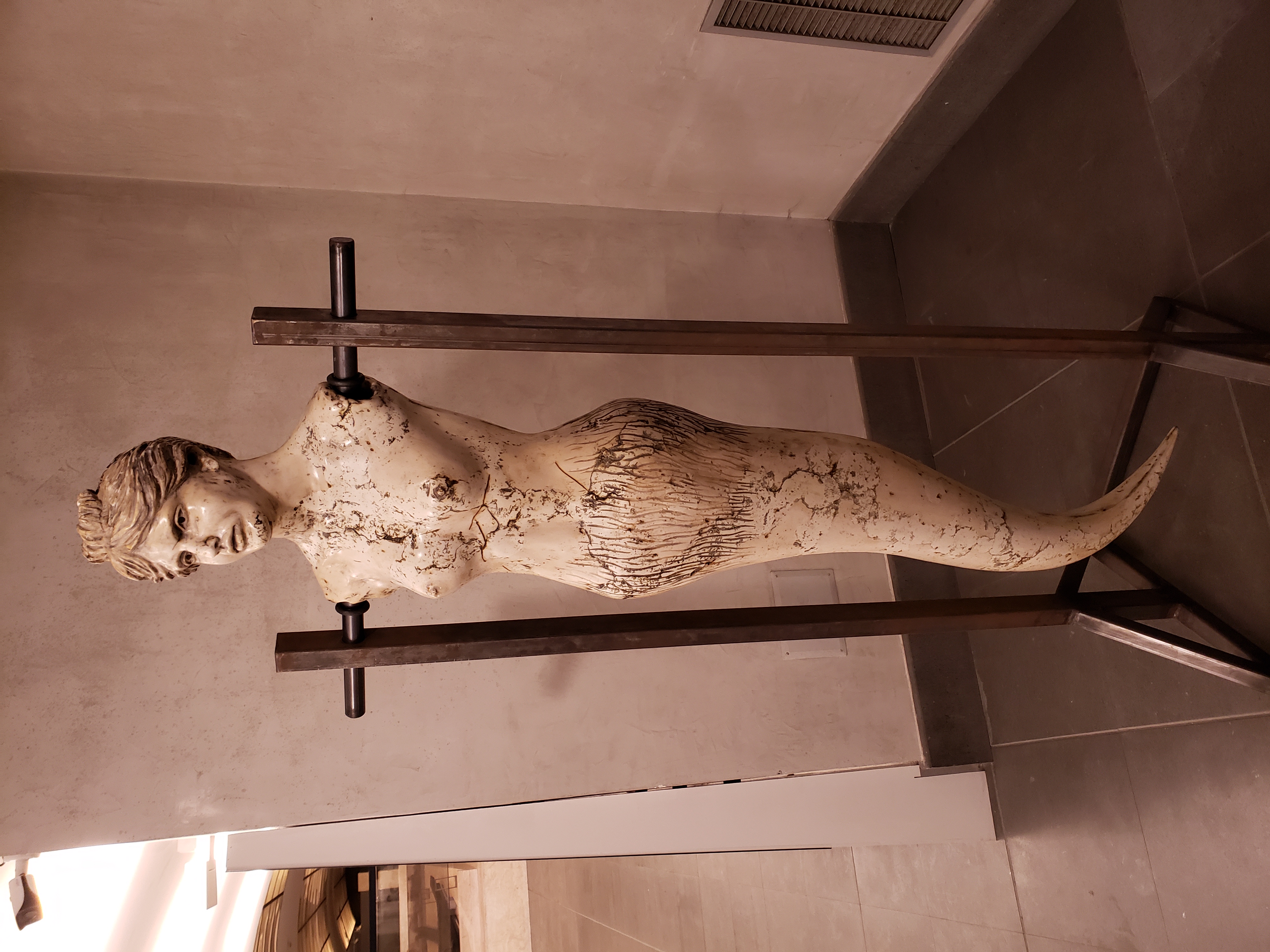
National Archaeological Museum – Statue Hall – Mermaid
National Archaeological Museum – Statue Hall – Busts of Leaders
National Archaeological Museum – Statue Hall – Relief
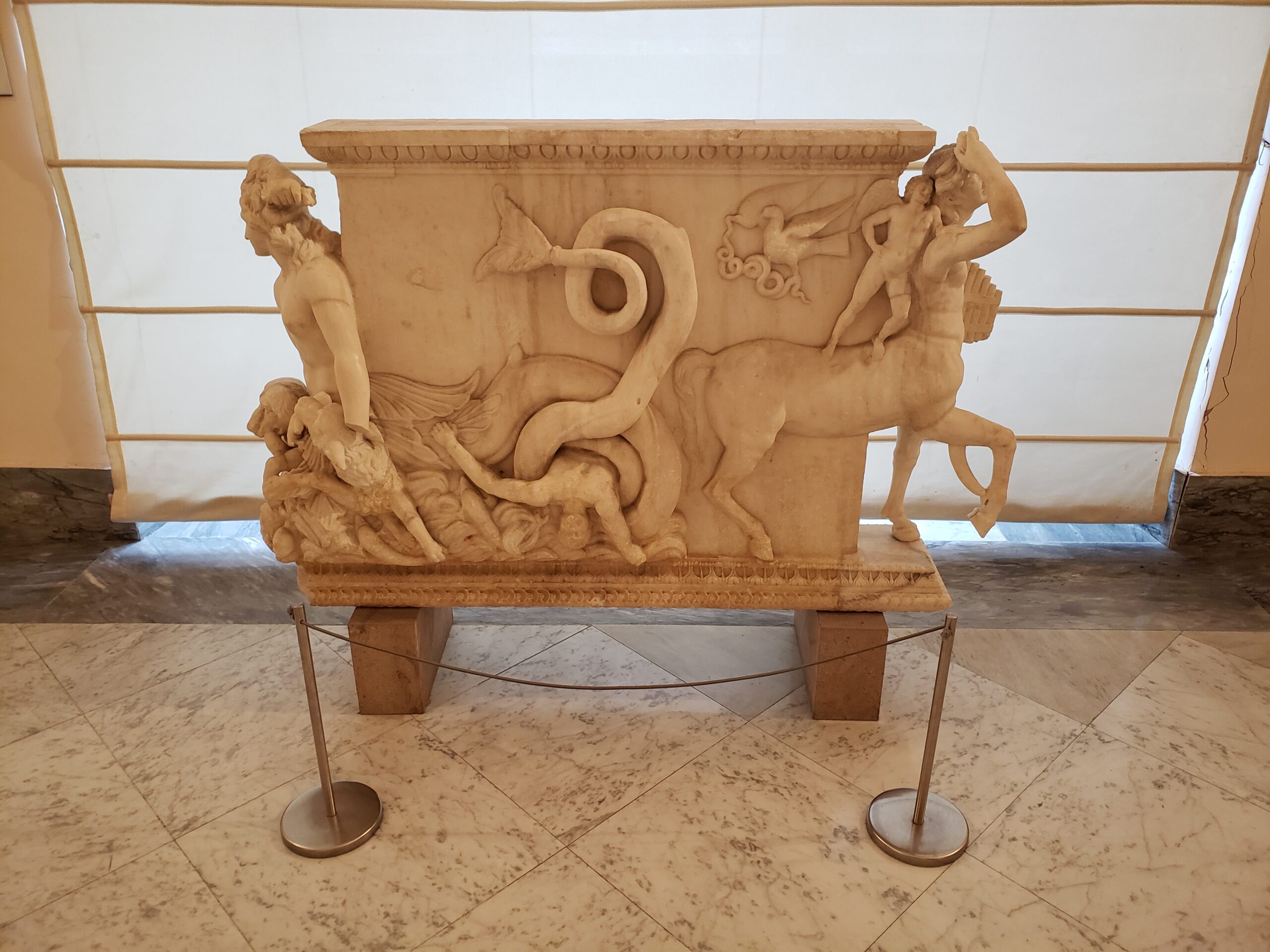
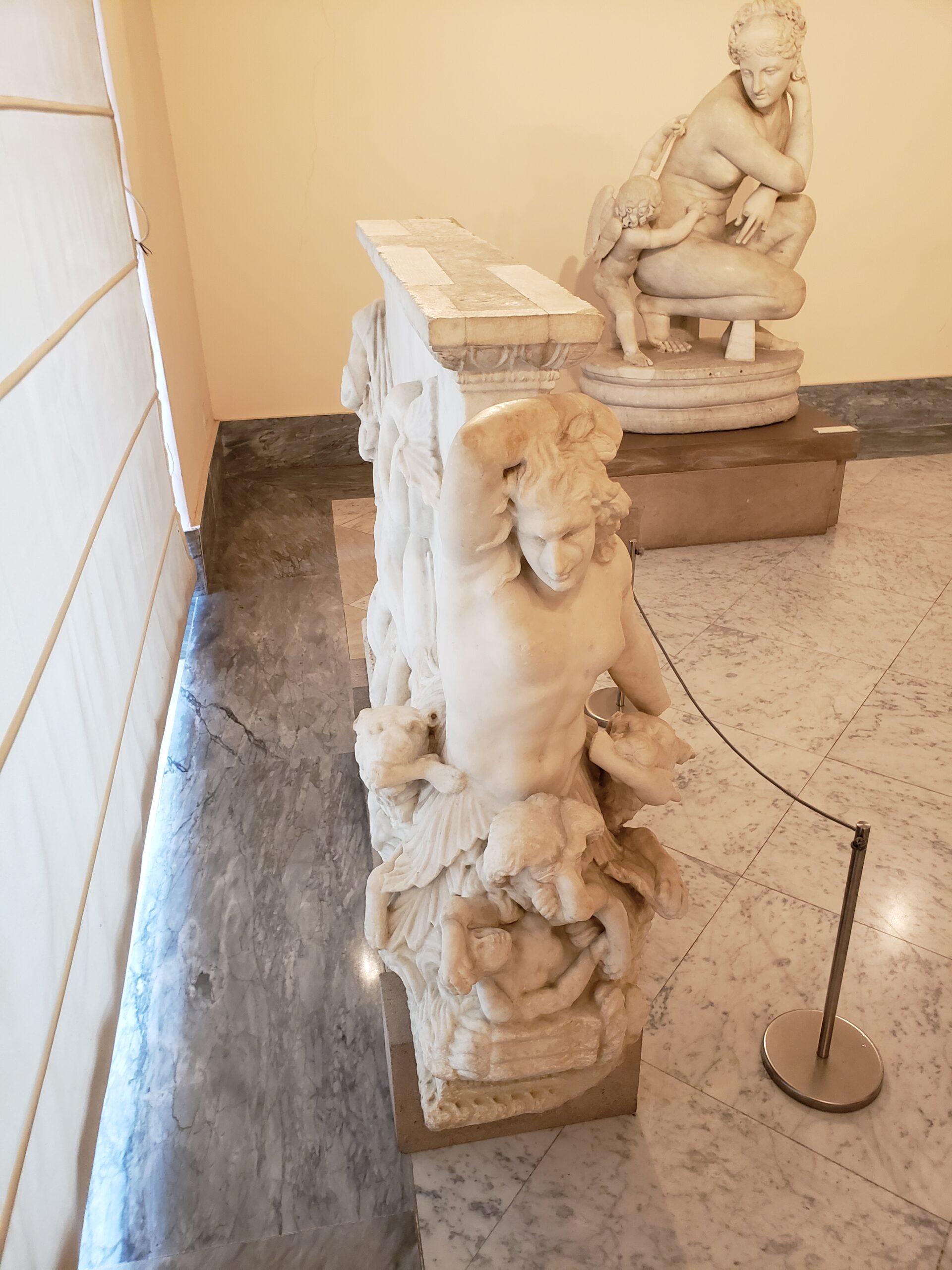
National Archaeological Museum – Statue Hall – Trapezium Table Support – Villa Madama – Homeric myth of Scylla gripping Ulysses’s sailors
National Archaeological Museum – Statue Hall – Relief
National Archaeological Museum – Statue Hall – Sarcophagus
National Archaeological Museum – Statue Hall – Large Statues
National Archaeological Museum – Statue Hall – Large Statues
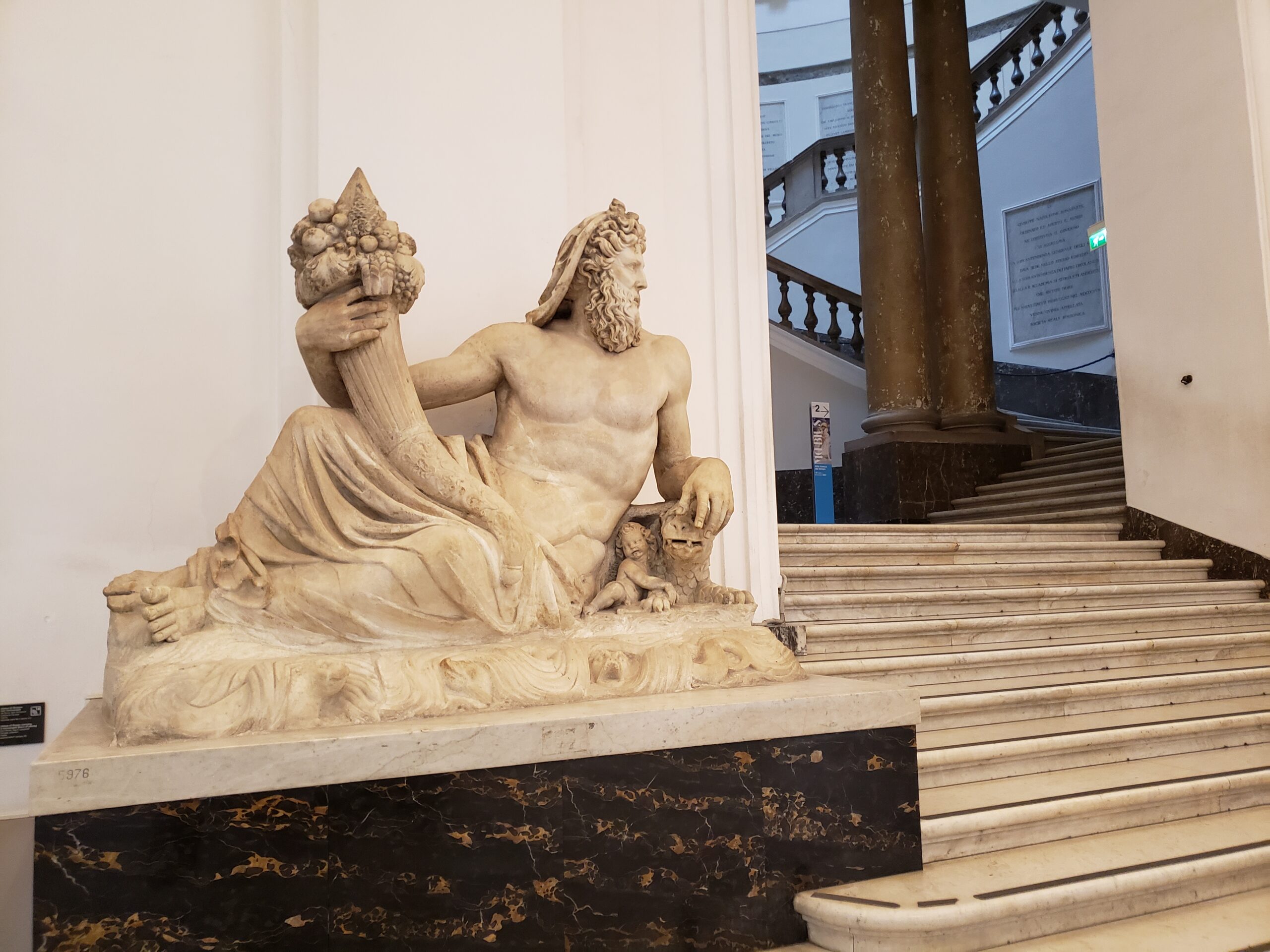
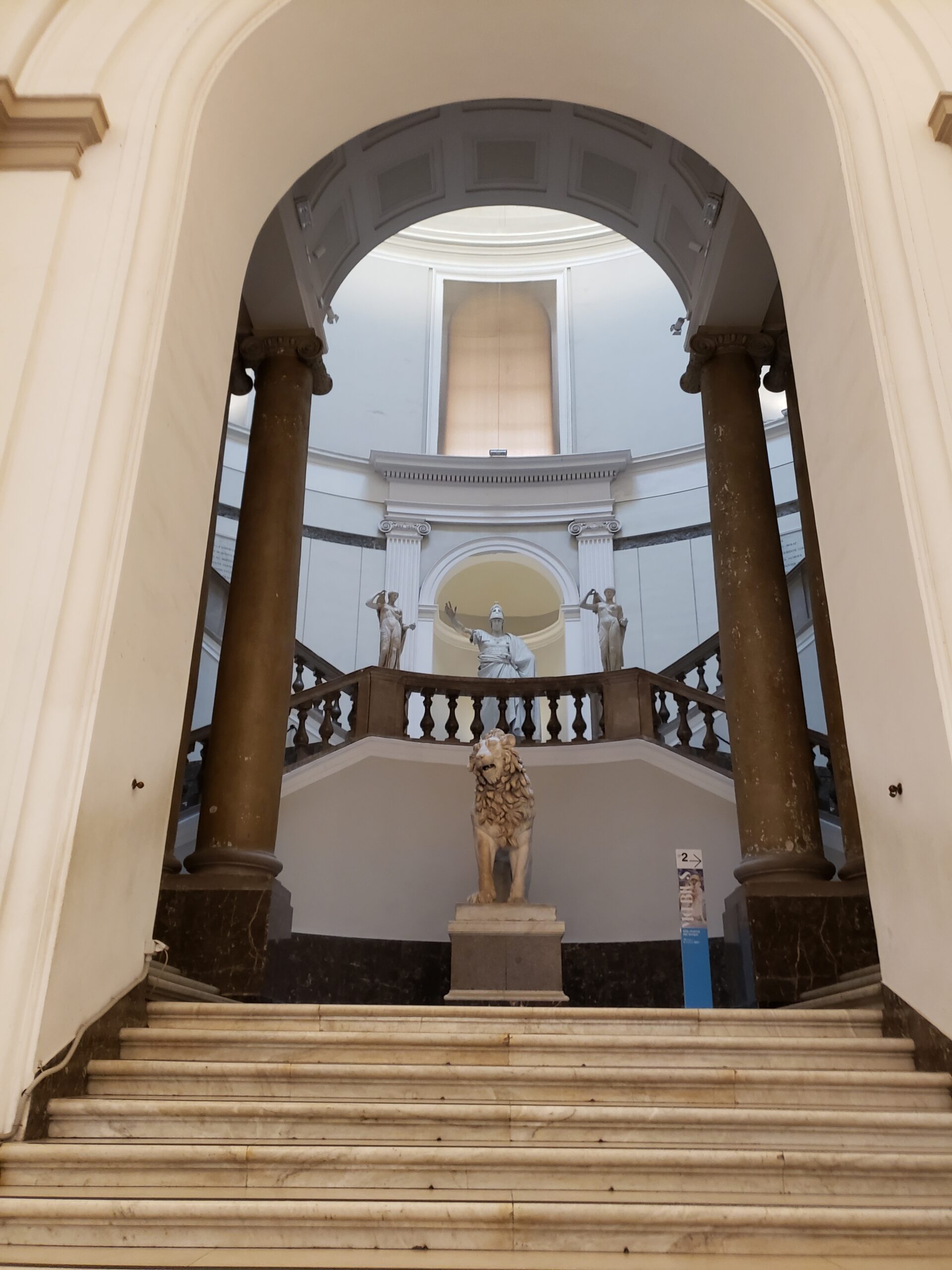
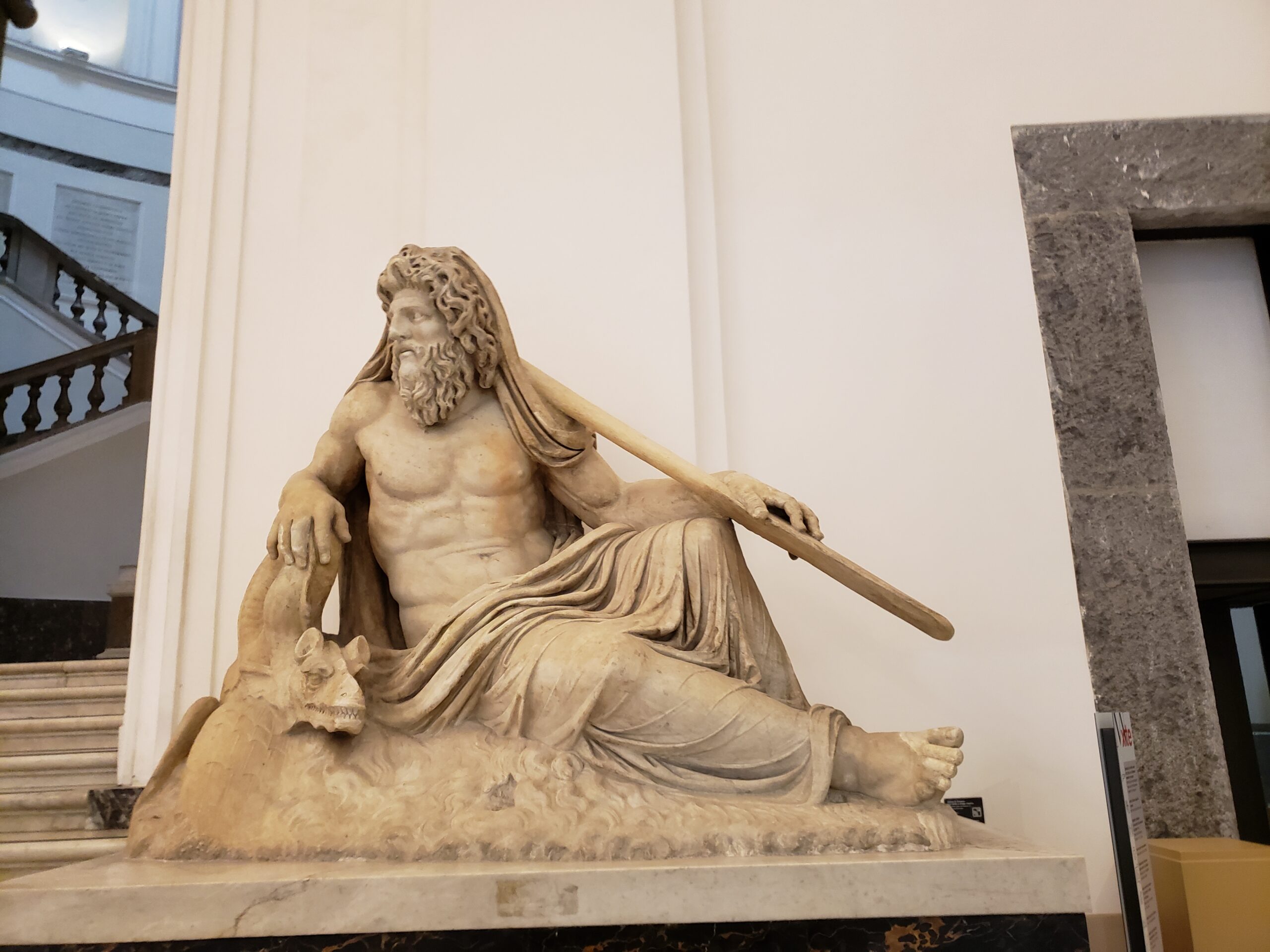
Leaving the main gallery and proceeding upstairs you pass the two dominant representations of Ocean or Oceanus, the god the ultimate river – the oceans. It is still not none precisely the etymology of this word and therefore it may not have any antecendents. However, one look at these two figures and you can tell that whomever this god represented, he was a very serious fellow, he had to be the dominate force for all water.
National Archaeological Museum – Statue Hall – Large Statue of Ocean holding a cornucopia – Entrance to Upstairs
National Archaeological Museum – Statue Hall – Entrance to Upstairs
National Archaeological Museum – Statue Hall – Large Statue of Ocean holding an Oar and a Sea Dragon – Entrance to Upstairs
The First Floor – The Mosaic Gallery
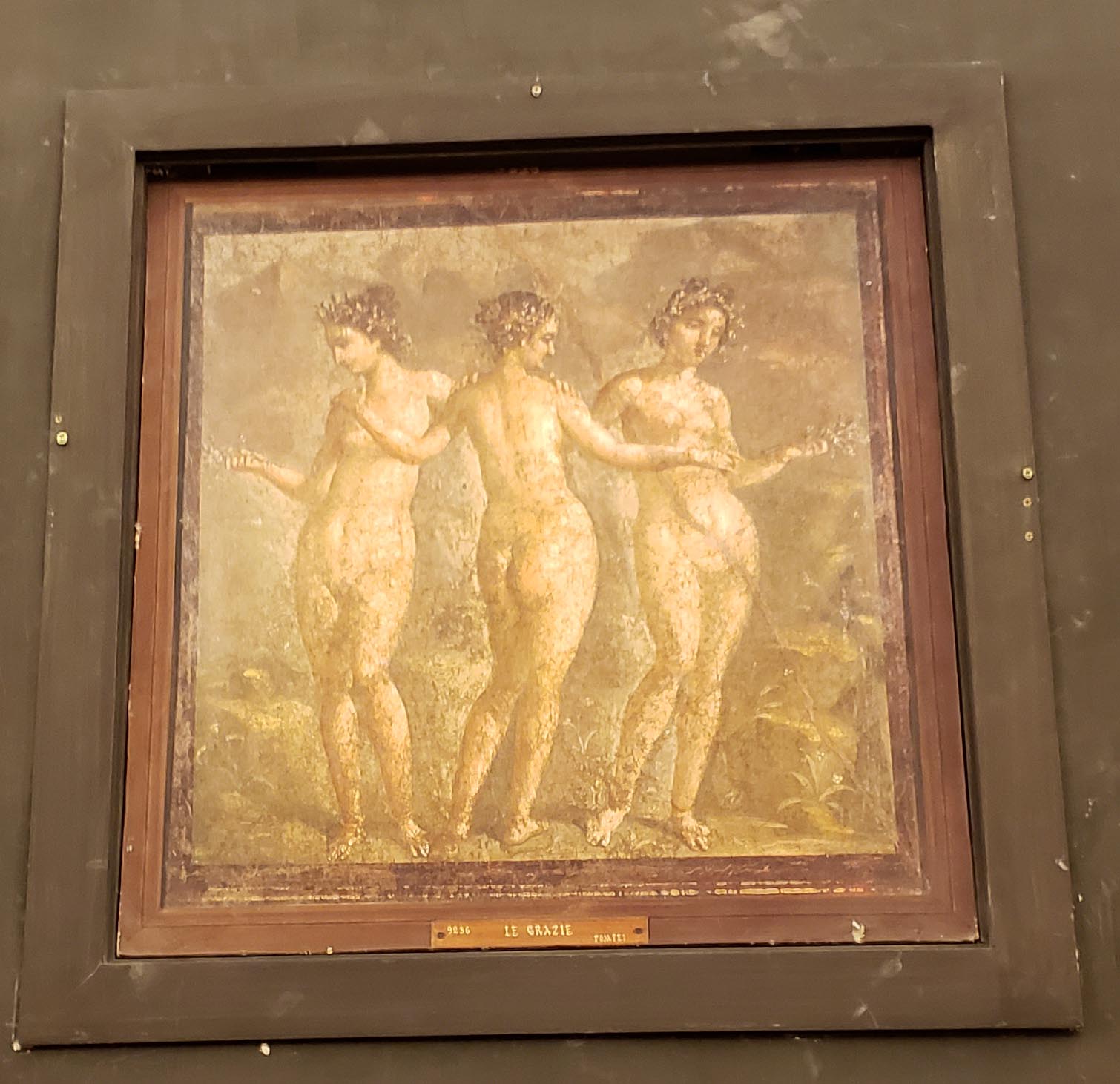
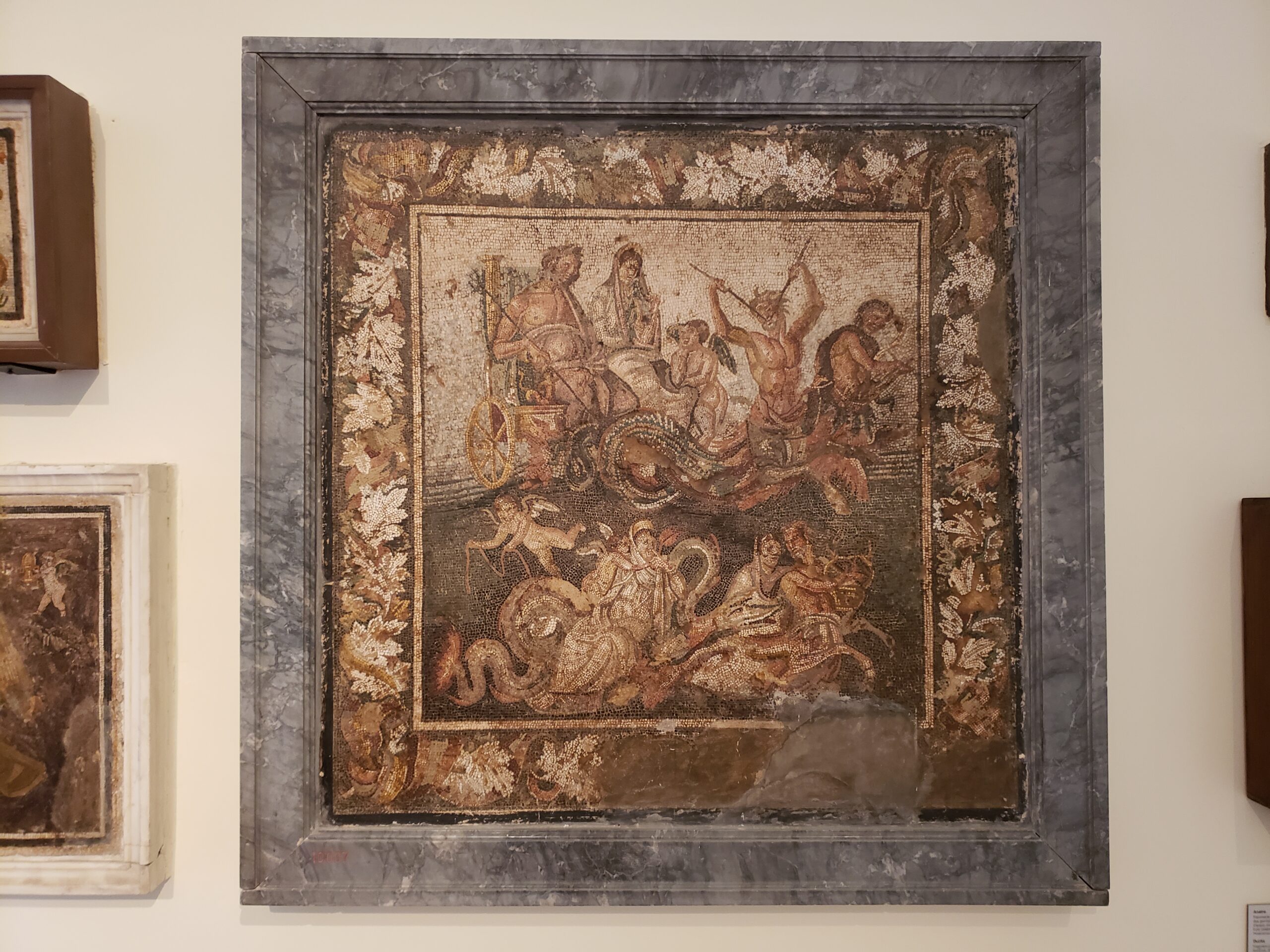
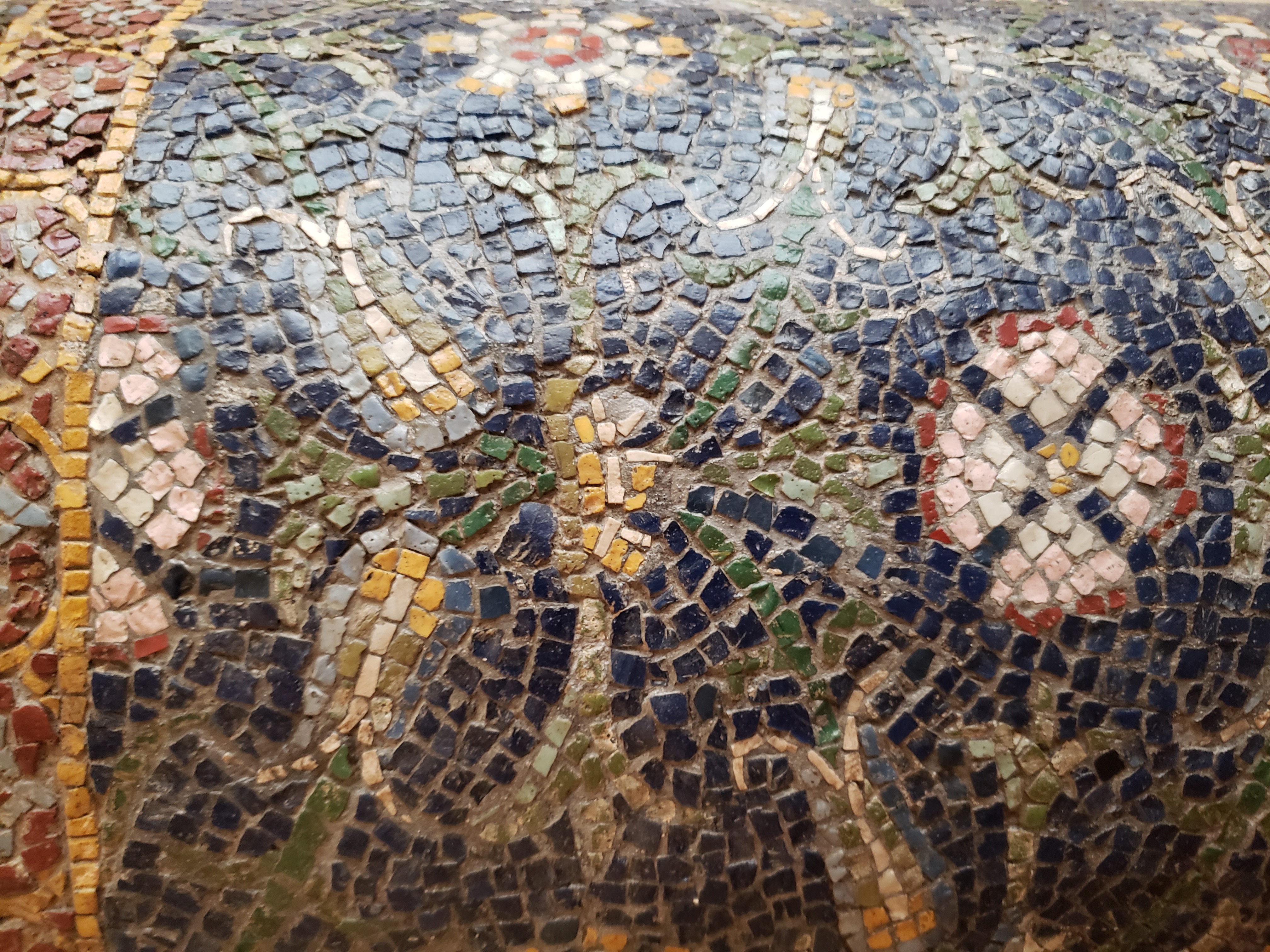
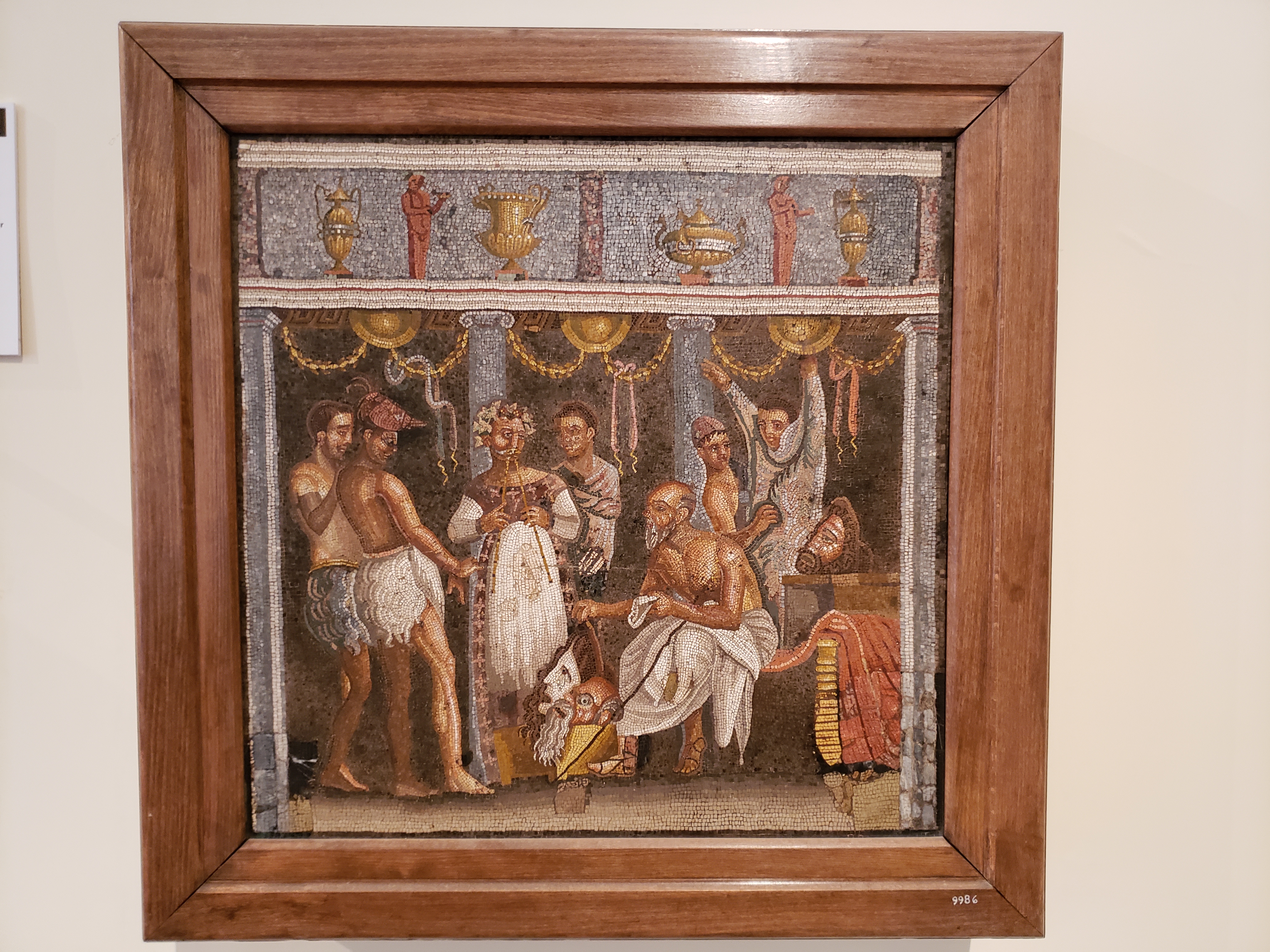
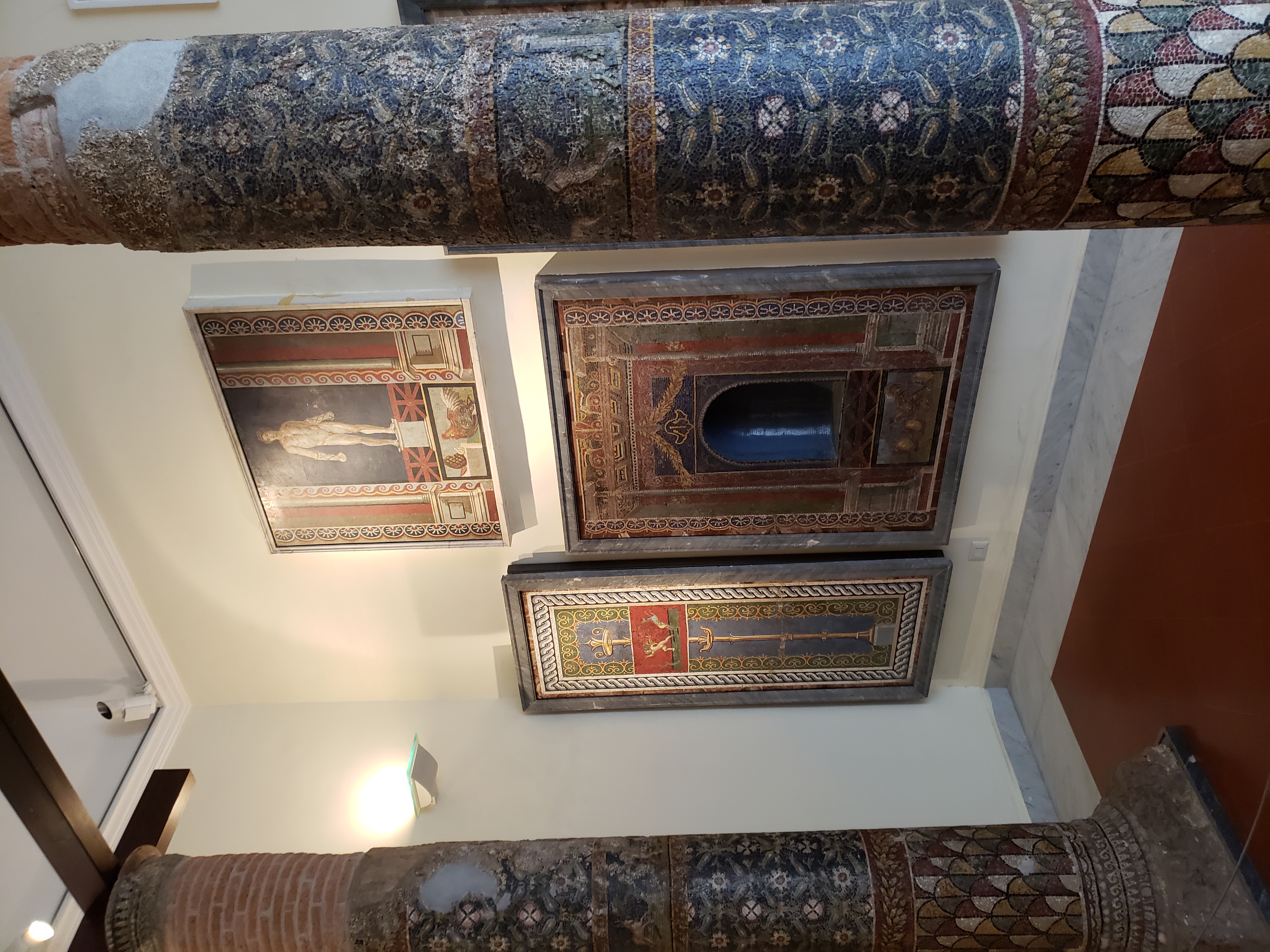
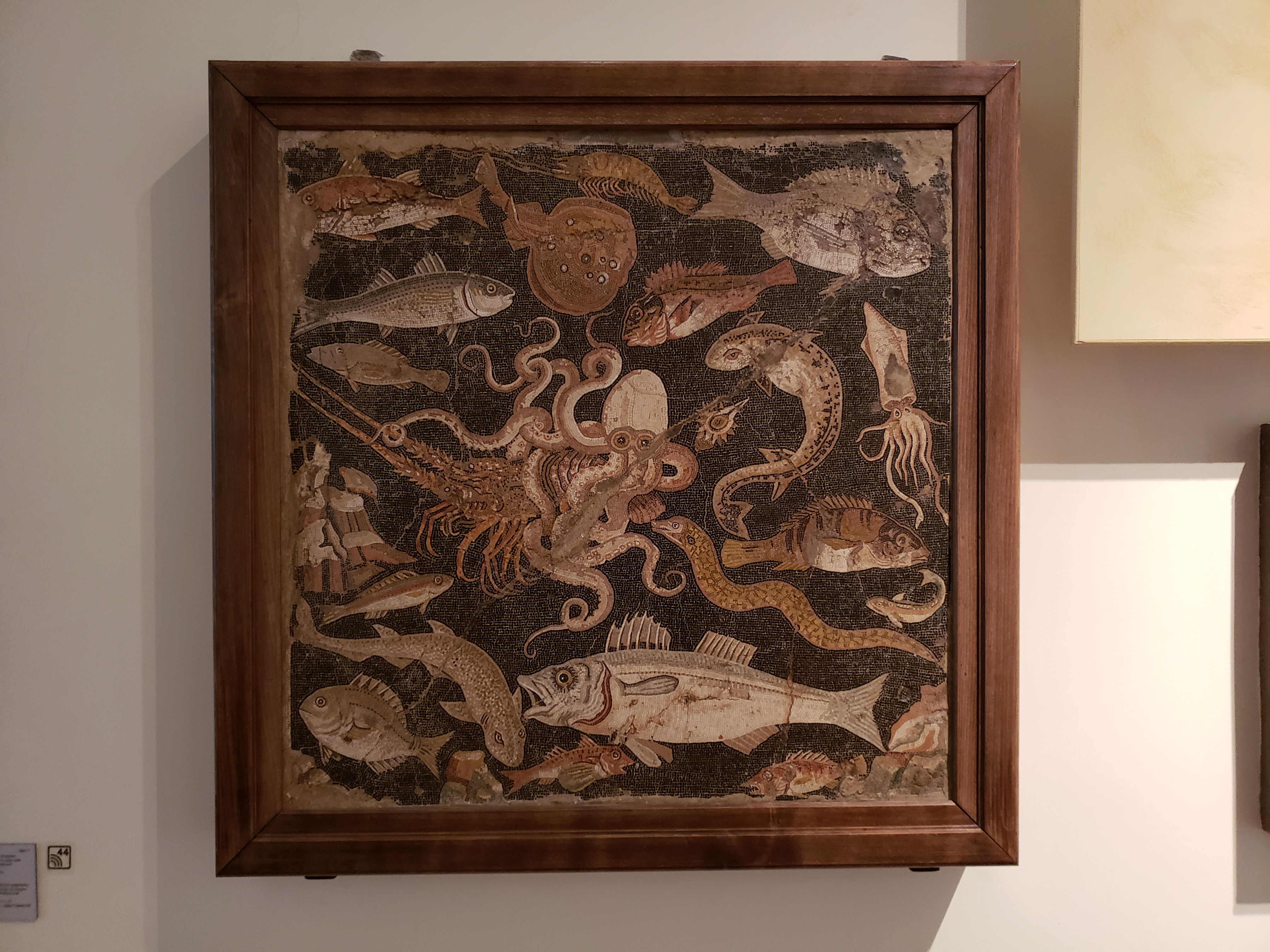
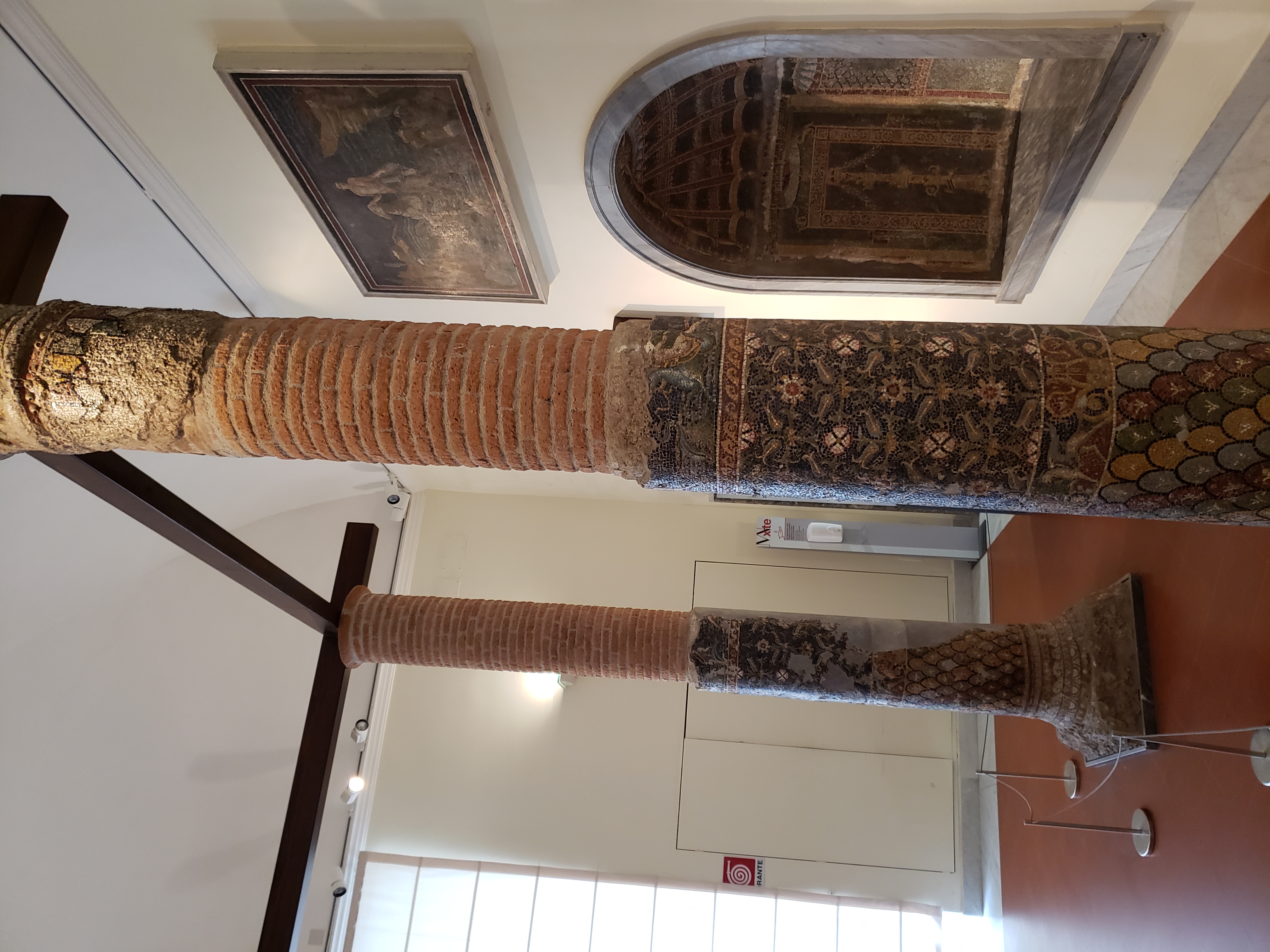
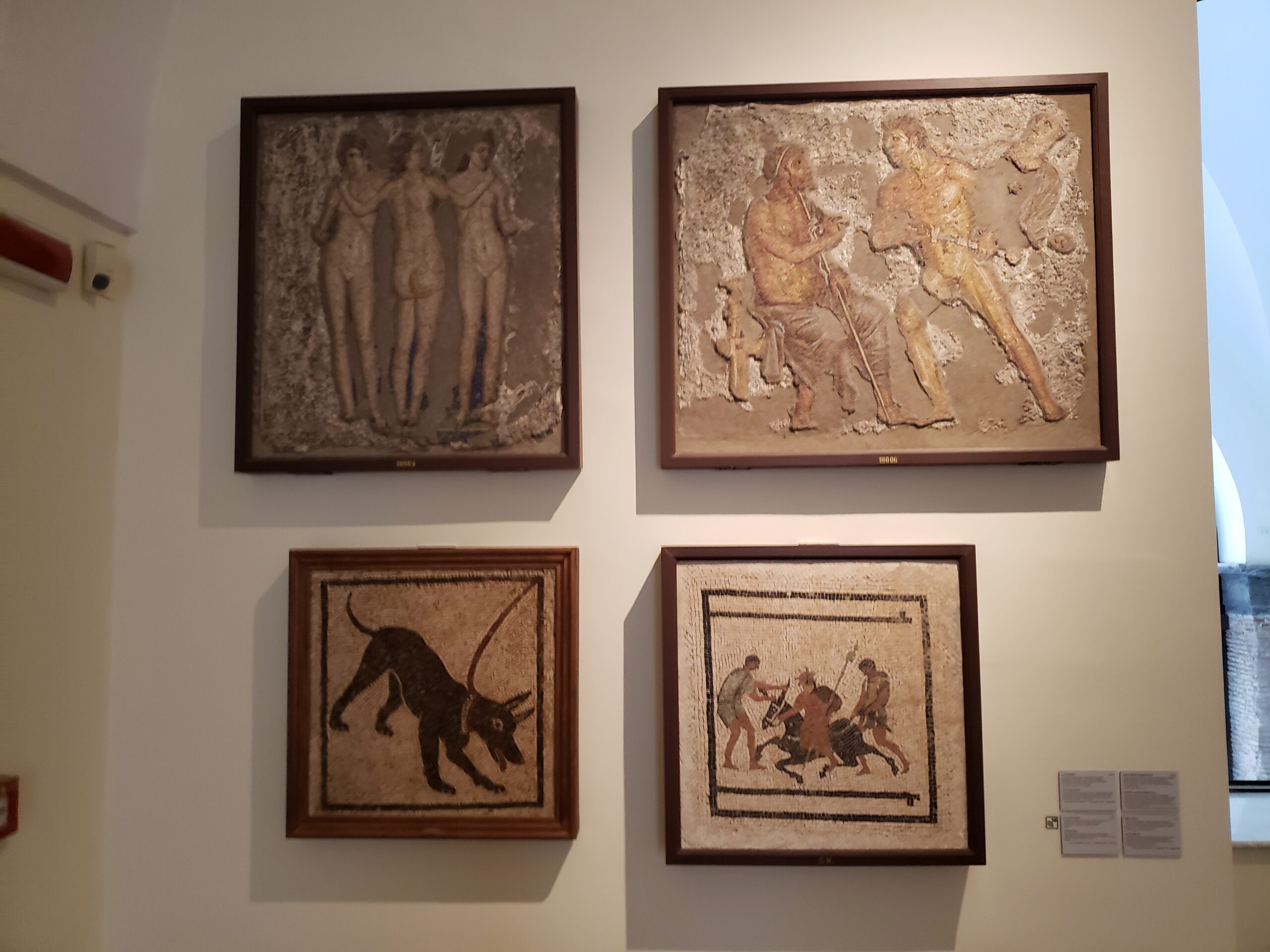
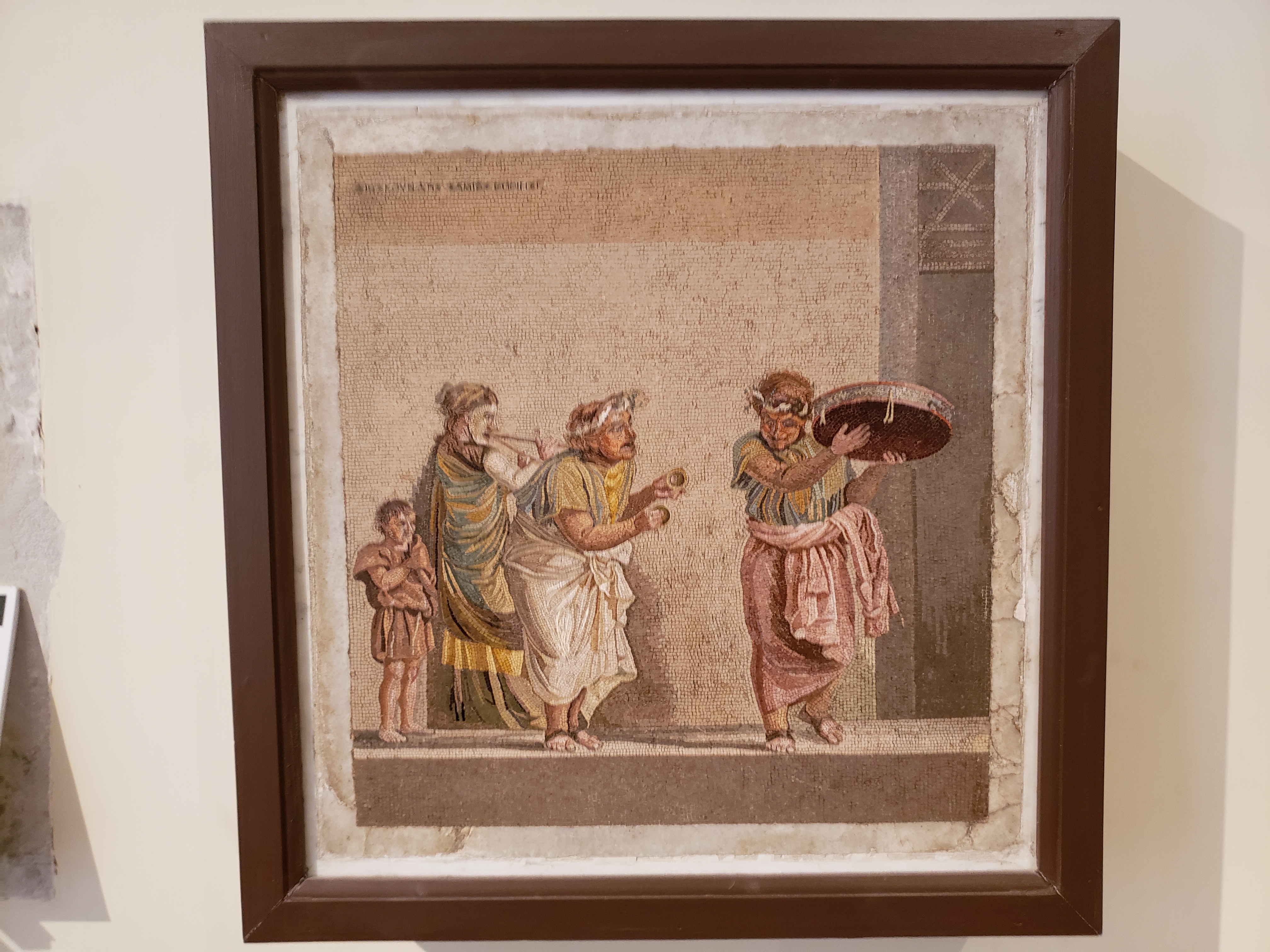
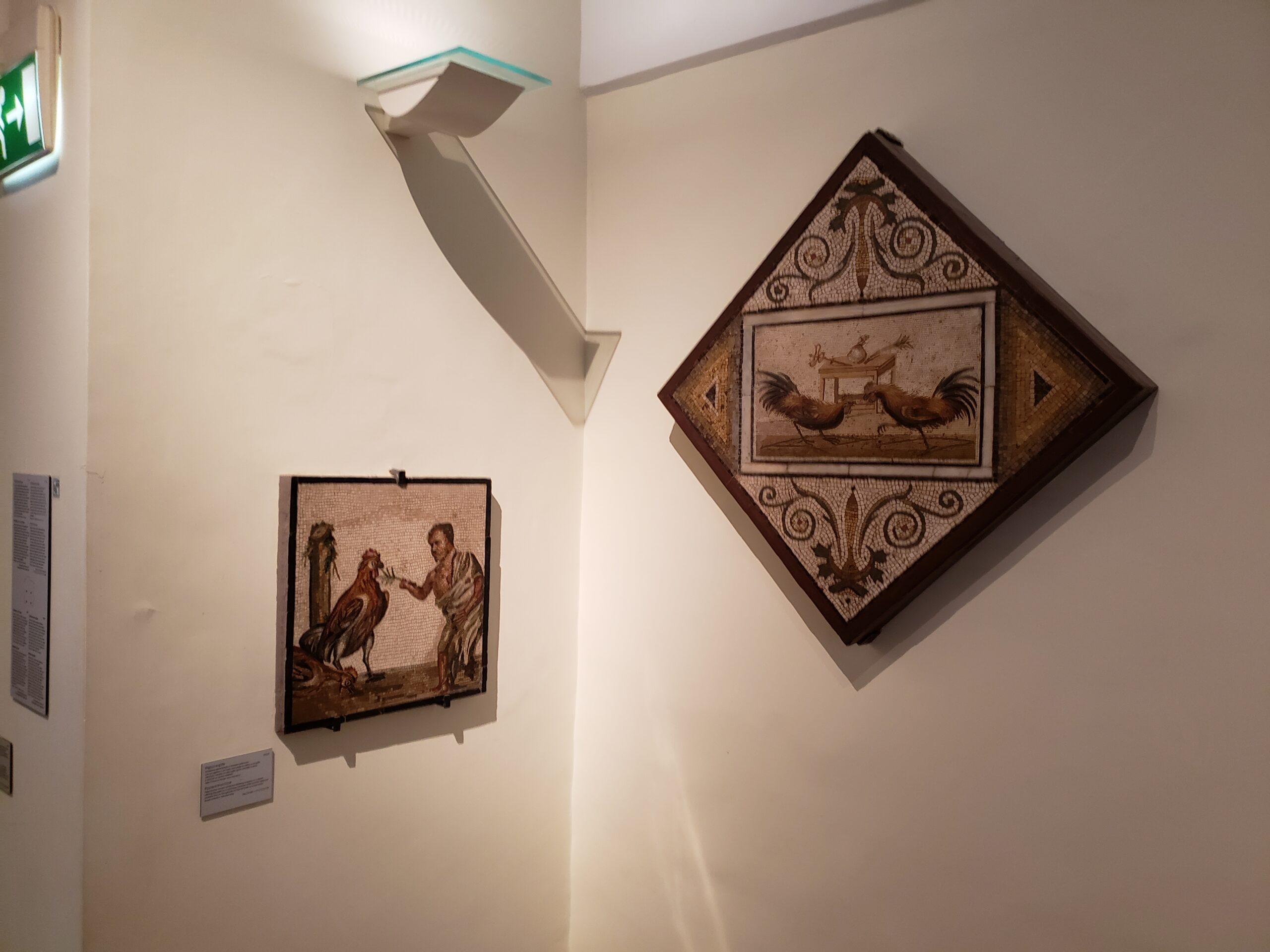
Here one can find all sorts of ancient mosaics, however most are from Pompeii. Made of paste and ceramic all are equisitely done in the form of a story to tell the onlooker.
National Archaeological Museum – Mosaic Hall – Mosaics made with Glass and Paste
National Archaeological Museum – Mosaic Hall
National Archaeological Museum – Mosaic Hall – Mosaics made with Glass and Paste
National Archaeological Museum – Mosaic Hall
National Archaeological Museum – Mosaic Hall – Mosaics made with Glass and Paste
National Archaeological Museum – Mosaic Hall
National Archaeological Museum – Mosaic Hall – Numerous Household Examples
National Archaeological Museum – Mosaic Hall – Mosaics made with Glass and Paste
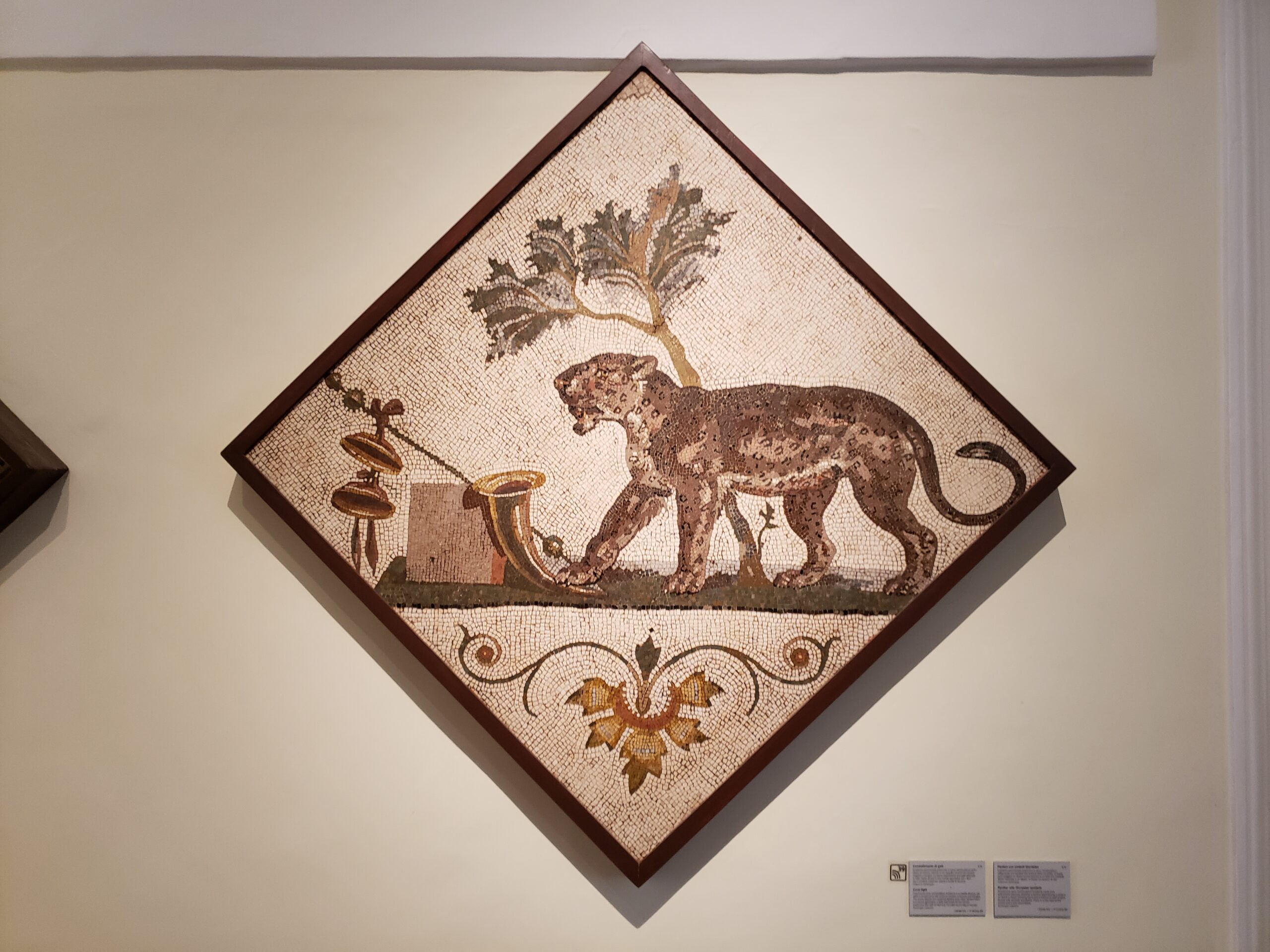
National Archaeological Museum – Mosaic Hall – Leopard
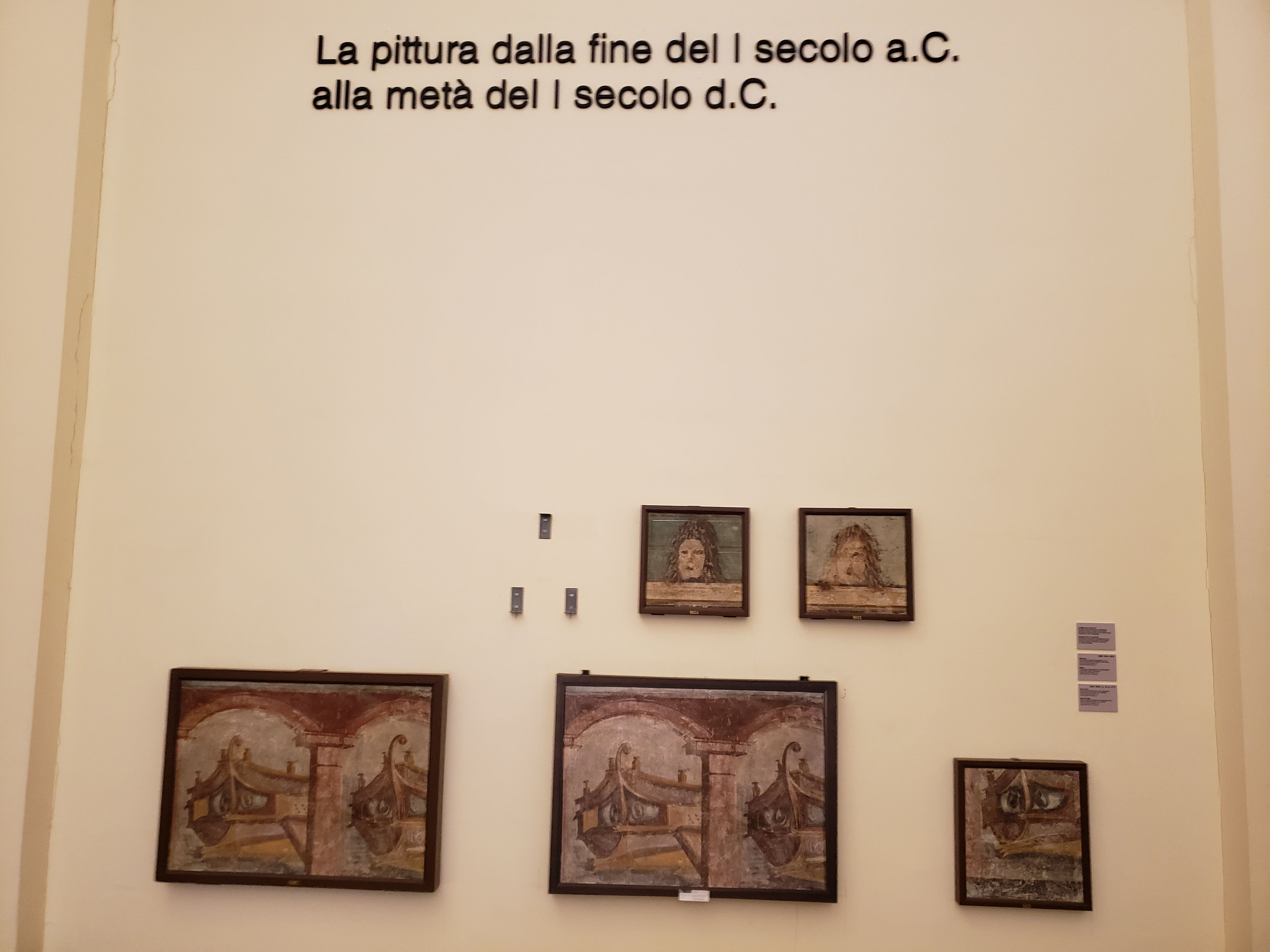
National Archaeological Museum – Mosaic Hall – From Houses
The Third Floor – The Glass Gallery
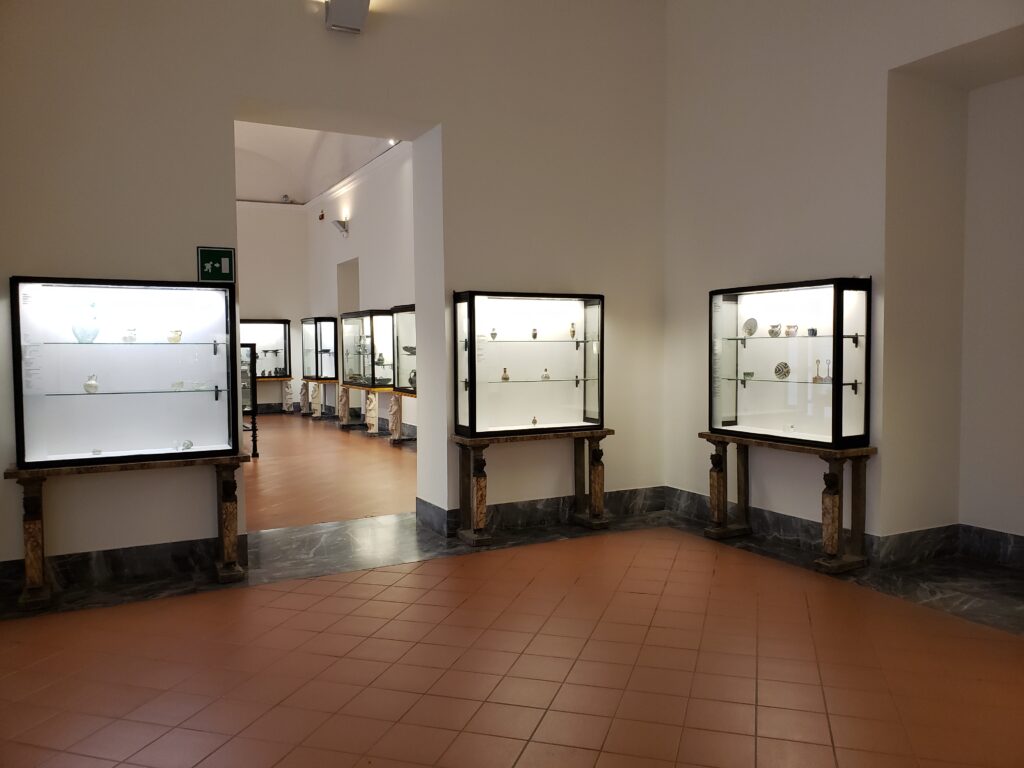
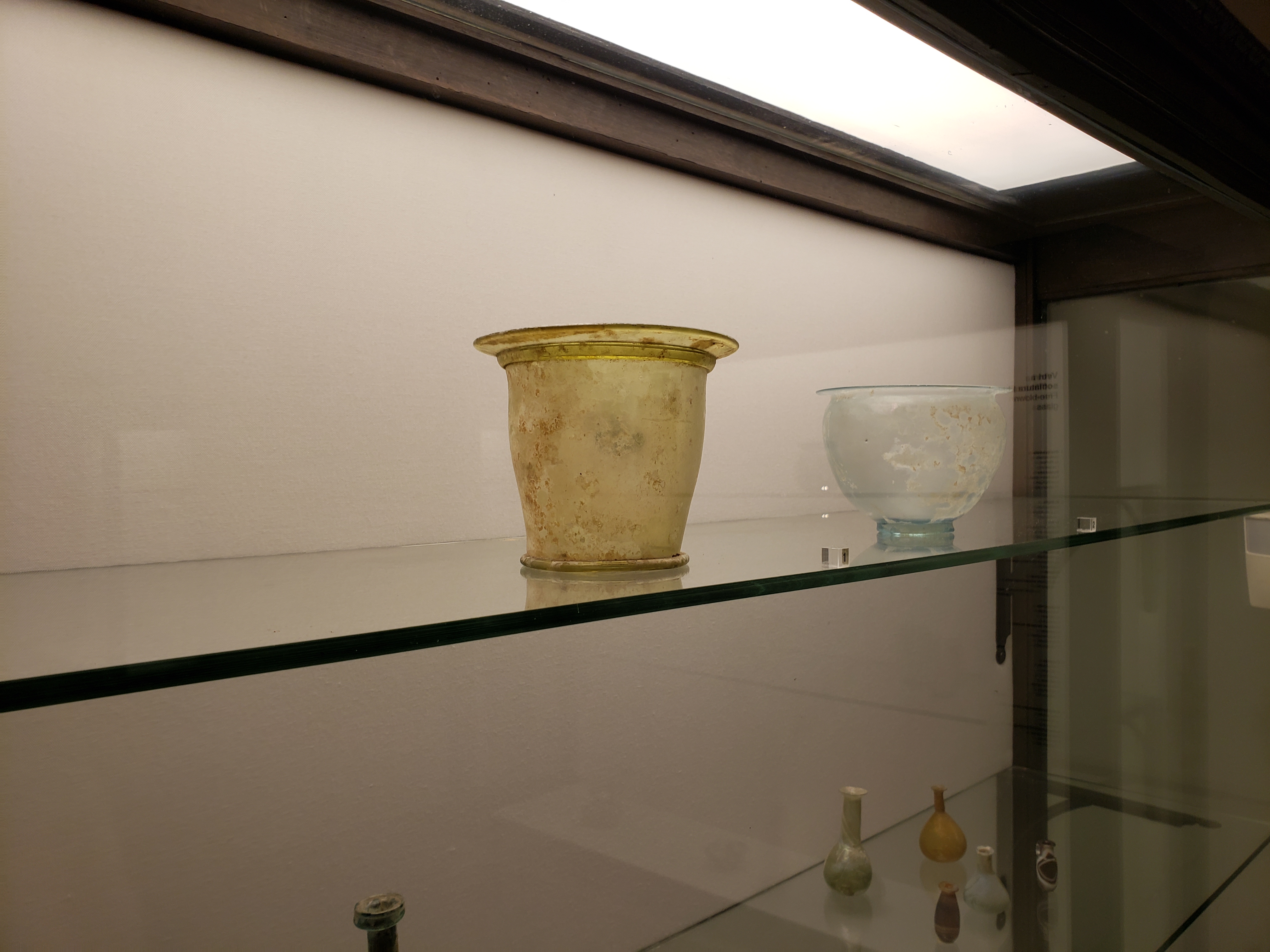
Has a small, succinct, but very important collection of ancient glass made during the Pompeiien and Roman periods. Some have handwork and detail that cannot be rivaled today.
National Archaeological Museum – Glass Gallery
National Archaeological Museum – Glass Gallery
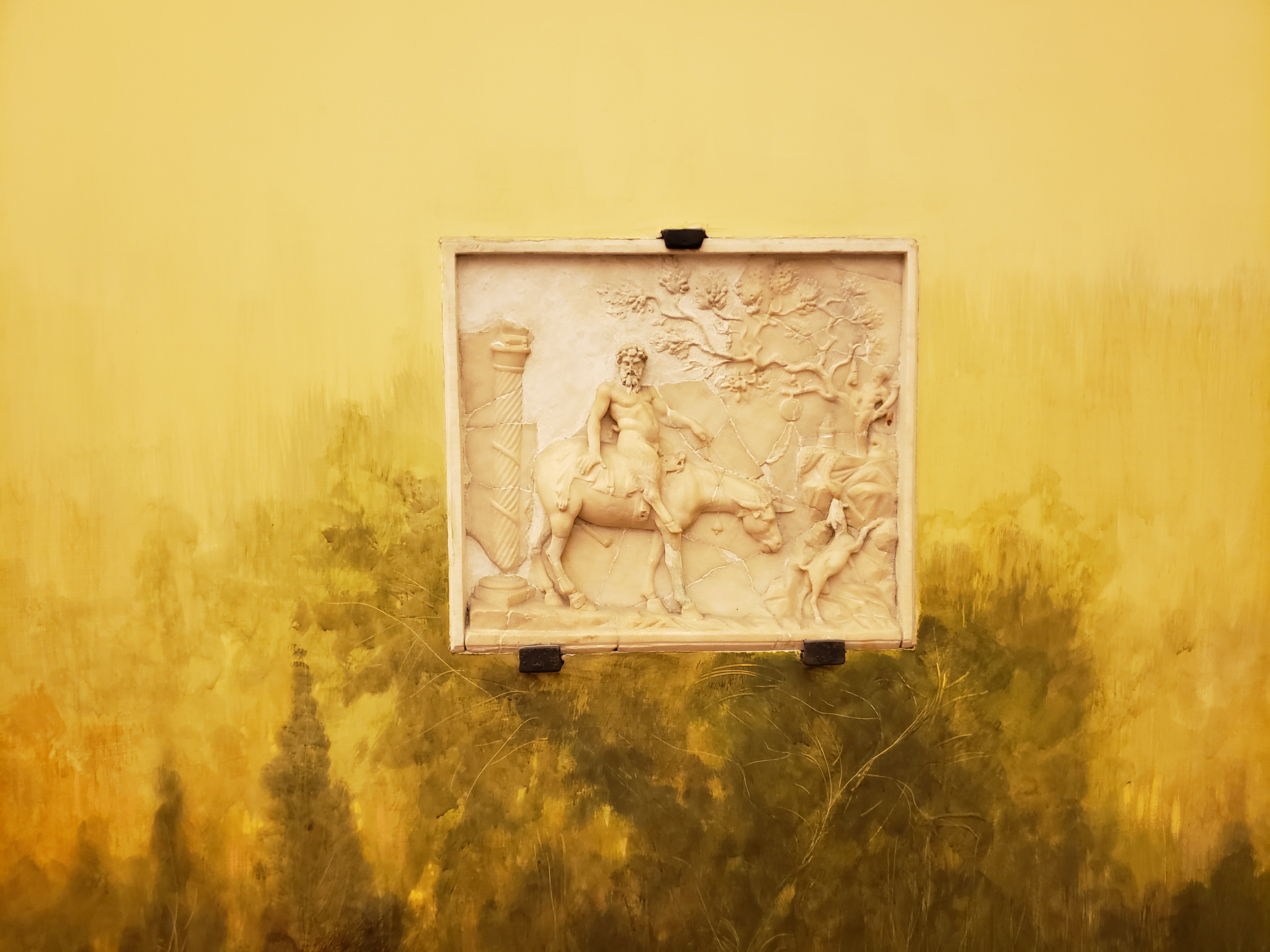
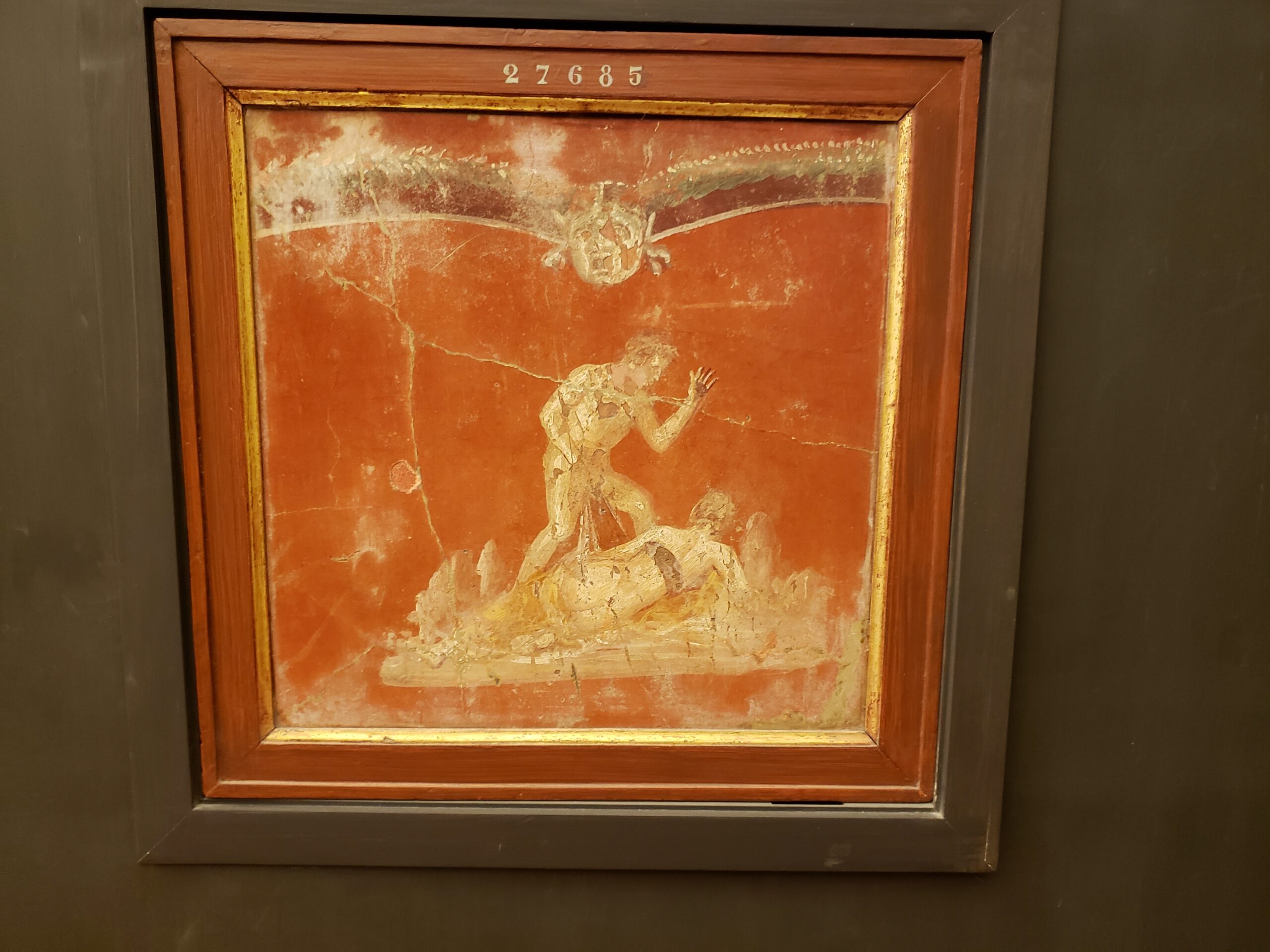
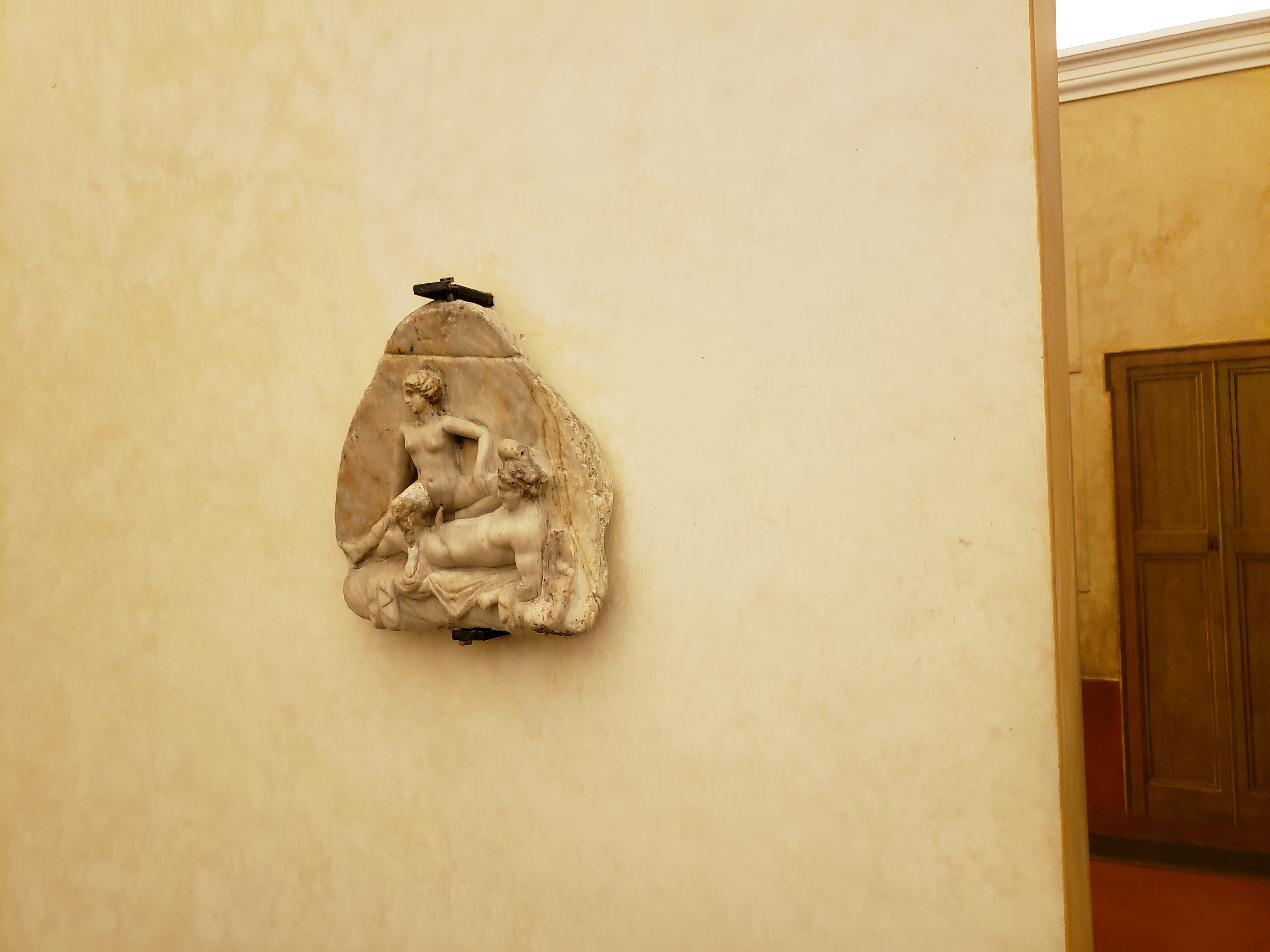
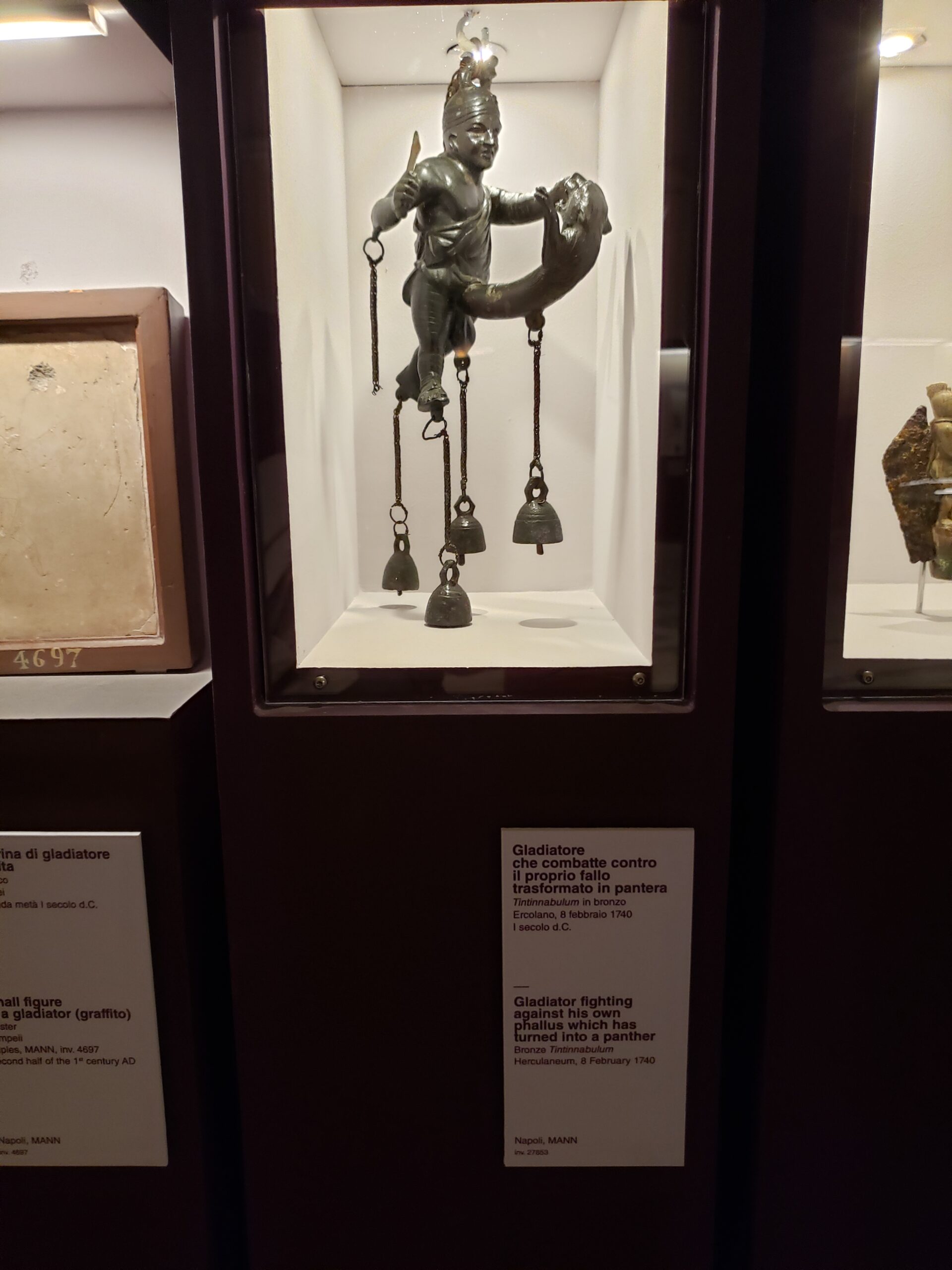
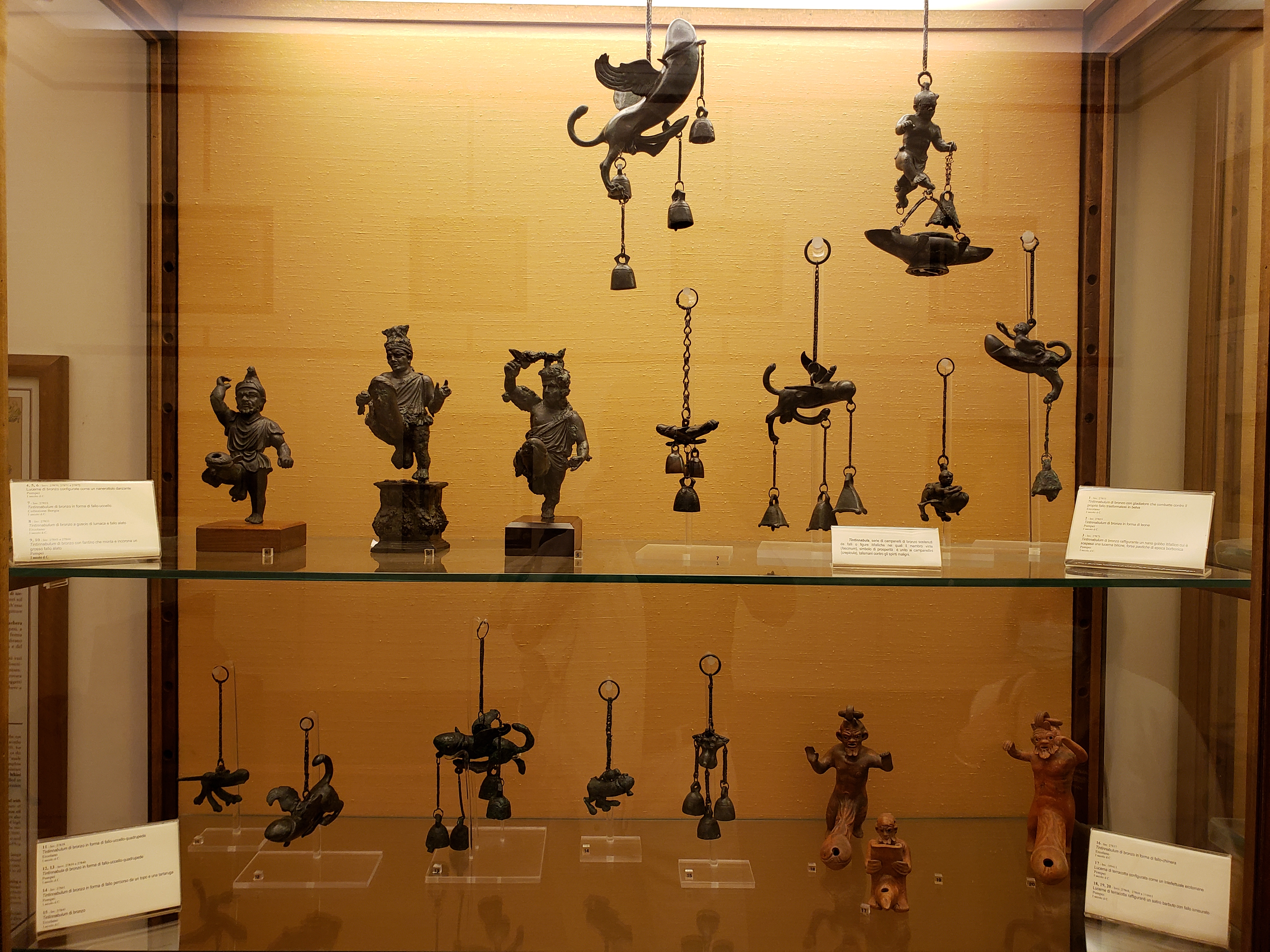
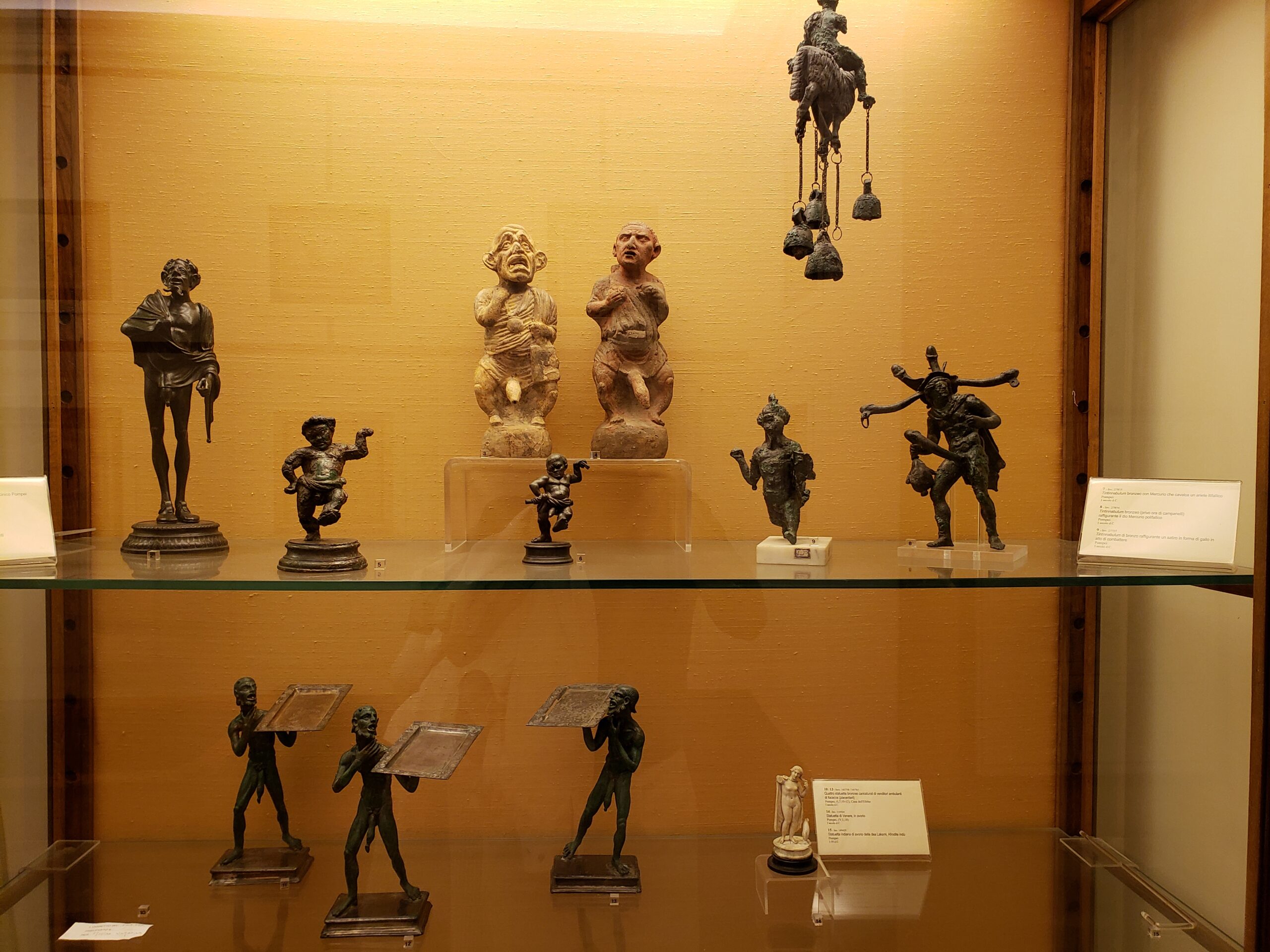
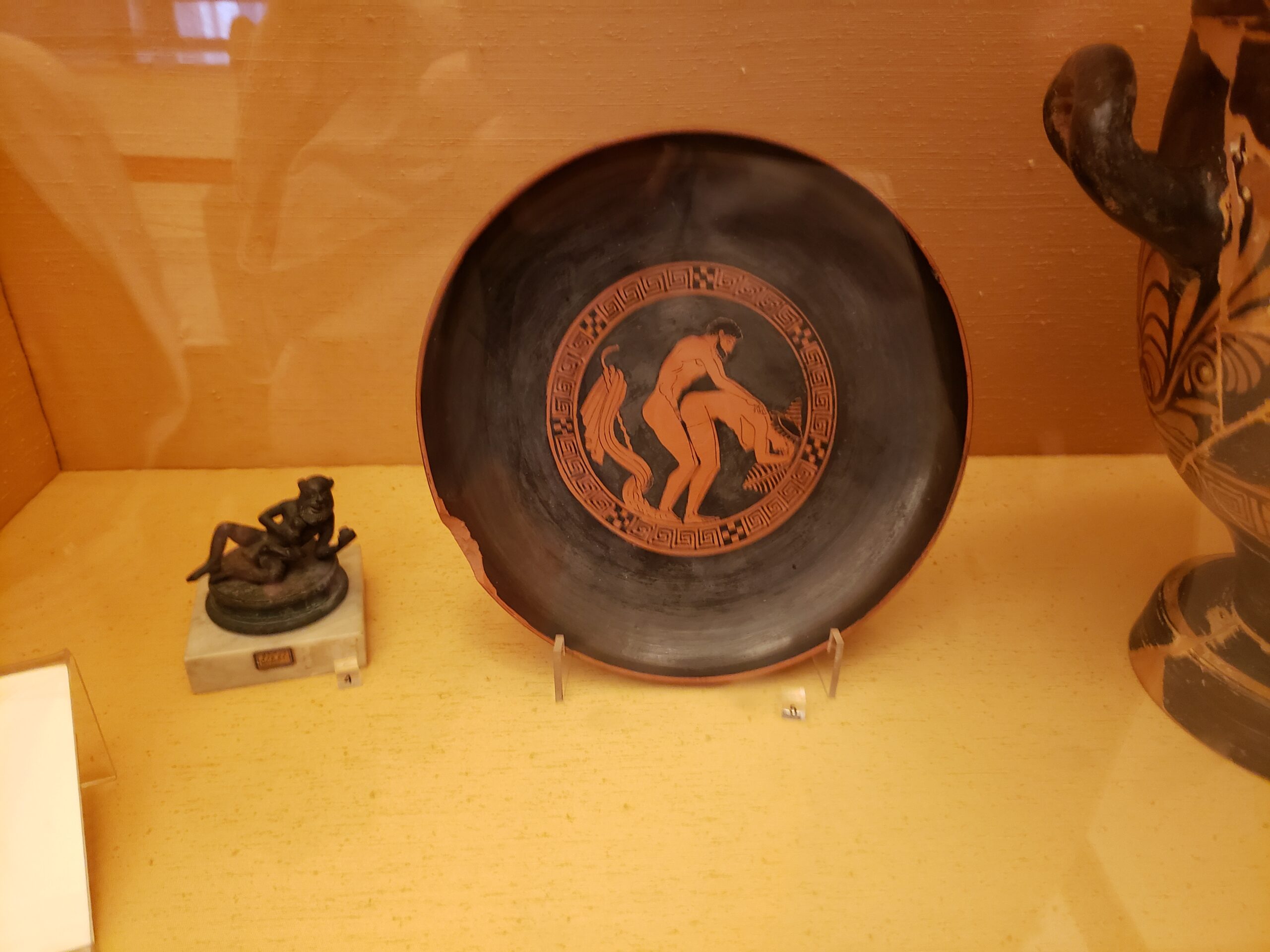
The Gallery of Pompeiien Erotica
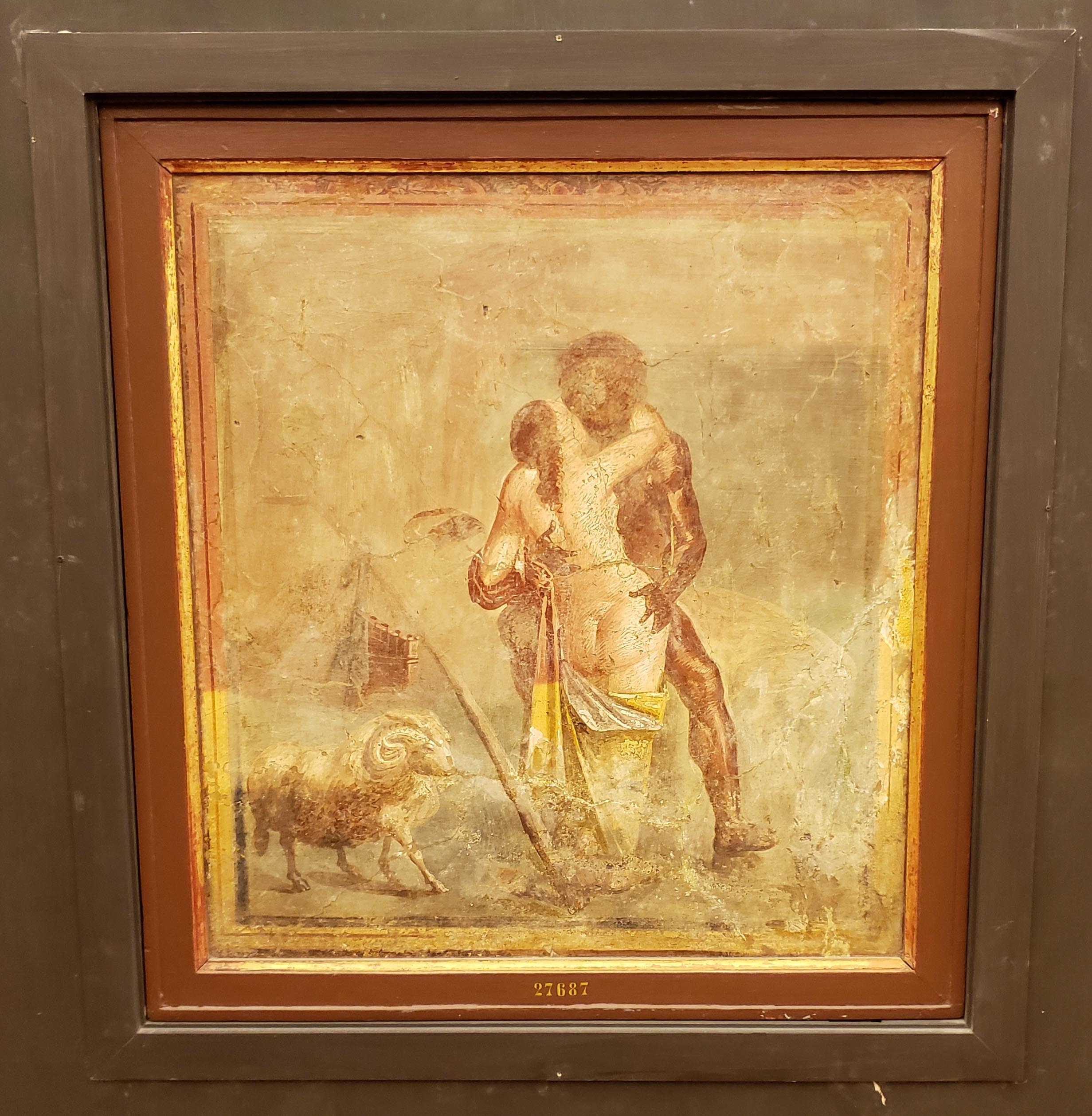
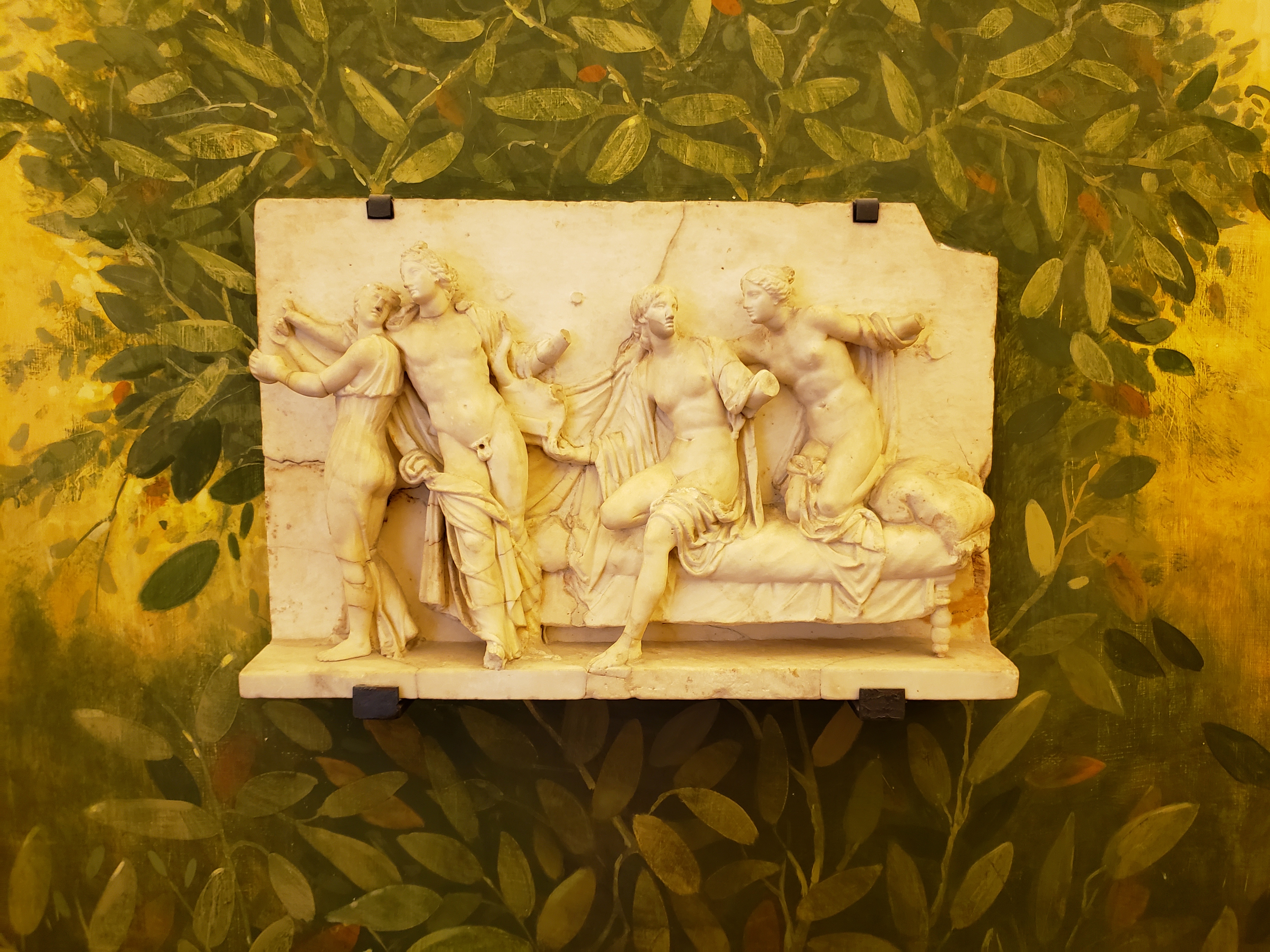
No visit would be complete without a visit to the erotic gallery, where all manner of erotica are on display from the dead city of Pompeii. The Quakers and the Puritans would have had a field day in this city at its peak. Not only was prostitution flaunted as an everday fact in everyone’s face, but the public had personal art created for display and enjoyment in their own houses. Without much else to say the following is shown as a slideshow, feel free to opt-out if you are not up to the intellectual and spiritual challenge.
National Archaeological Museum – Erotic Art
National Archaeological Museum – Erotic Art
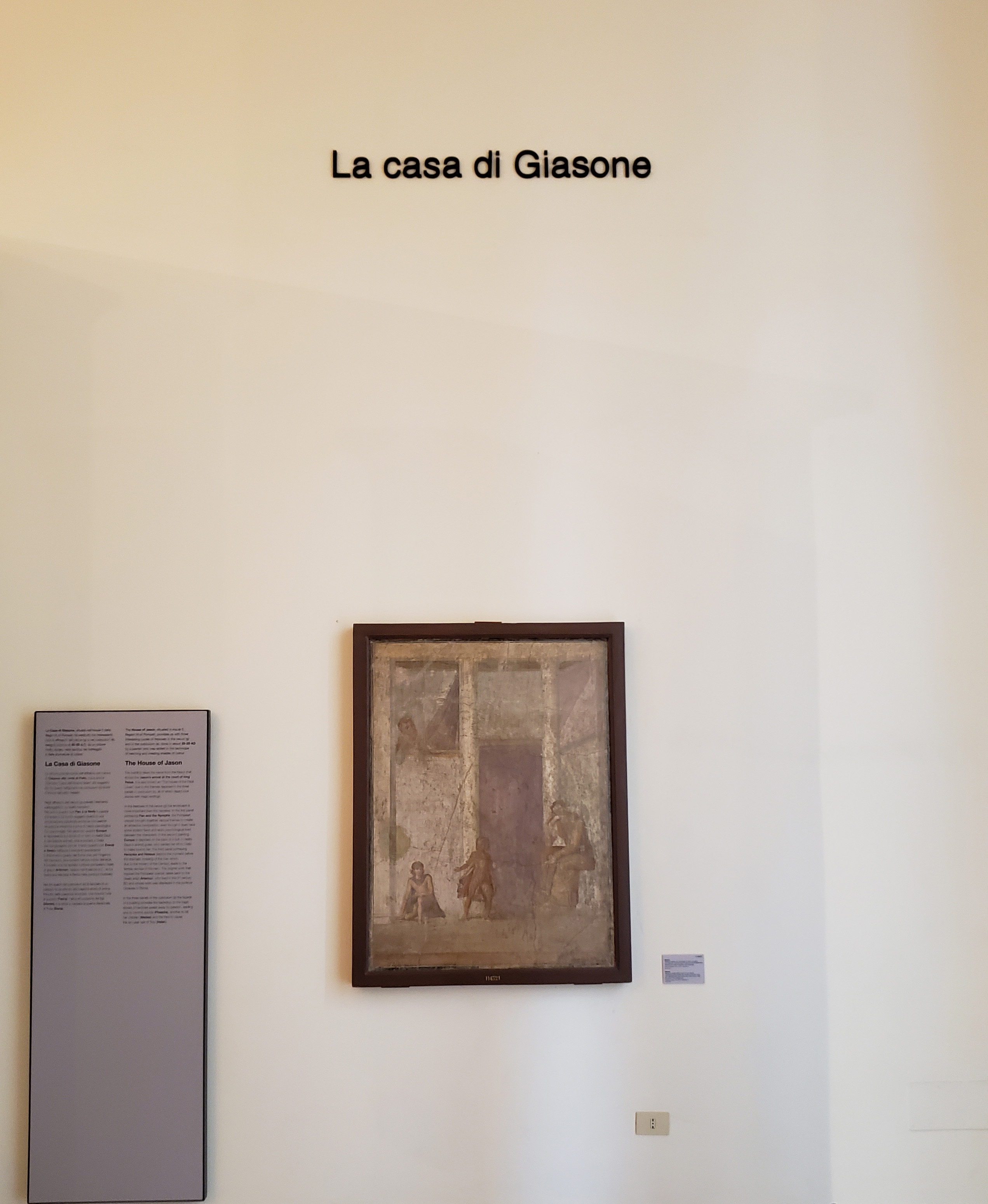
National Archaeological Museum – Erotic Mythological Paintings
National Archaeological Museum – Erotic Art – Household Items From Pompeii
National Archaeological Museum – Erotic Art – House Doorbells From Pompeii
National Archaeological Museum – Erotic Art – Household Items From Pompeii
National Archaeological Museum – Erotic Art – Household Items From Pompeii
National Archaeological Museum – Erotic Art – Dish and Small Bronze
The Basement Floor – The Maritime Archaeological Gallery
All things maritime are located in the basement floor. A wide collection of maritime artifacts and archaeological specific display can be found in this section. There are also displays from the escavations of Pompeii having to do with the city itself, including is ancient public plumbing.
National Archaeological Museum – Maritime Hall – Old Signs
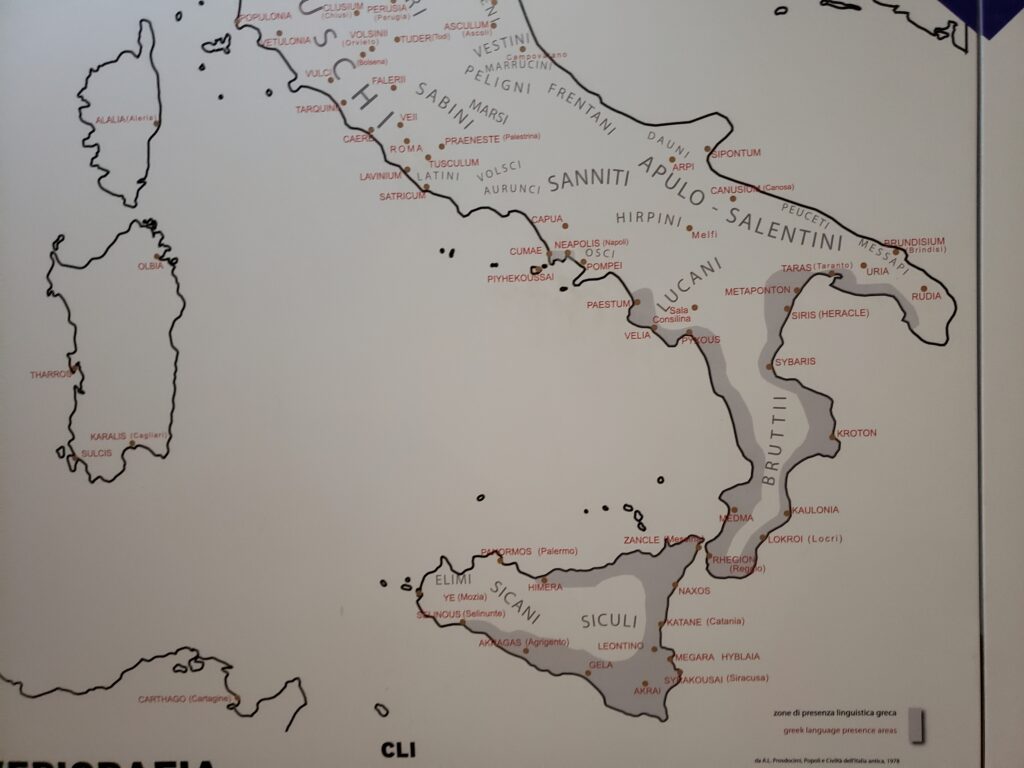
National Archaeological Museum – Maritime Hall – Ancient Trading Ports and Important Cities
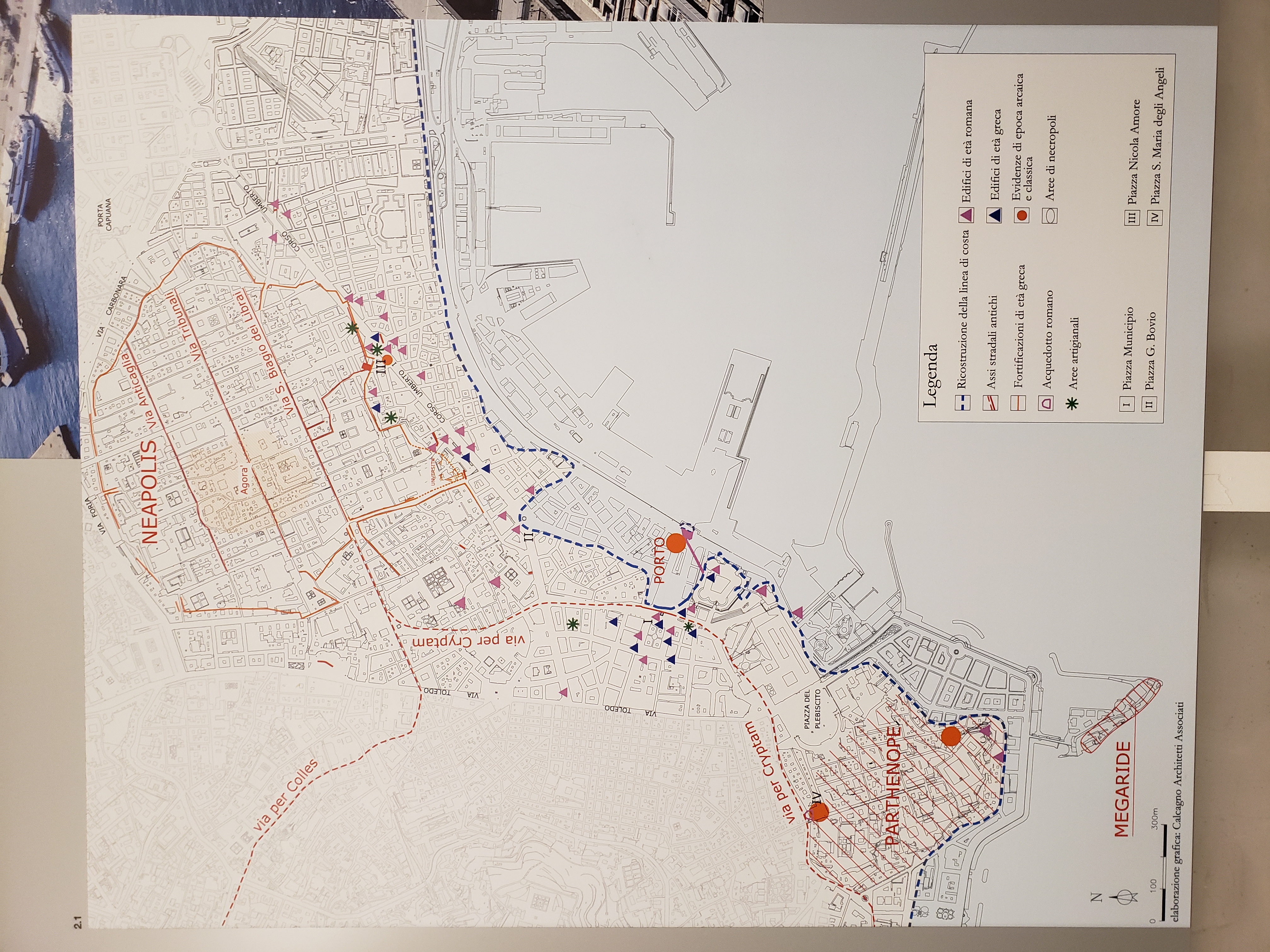
National Archaeological Museum – Maritime Hall – Archaeological Map of Parthenope
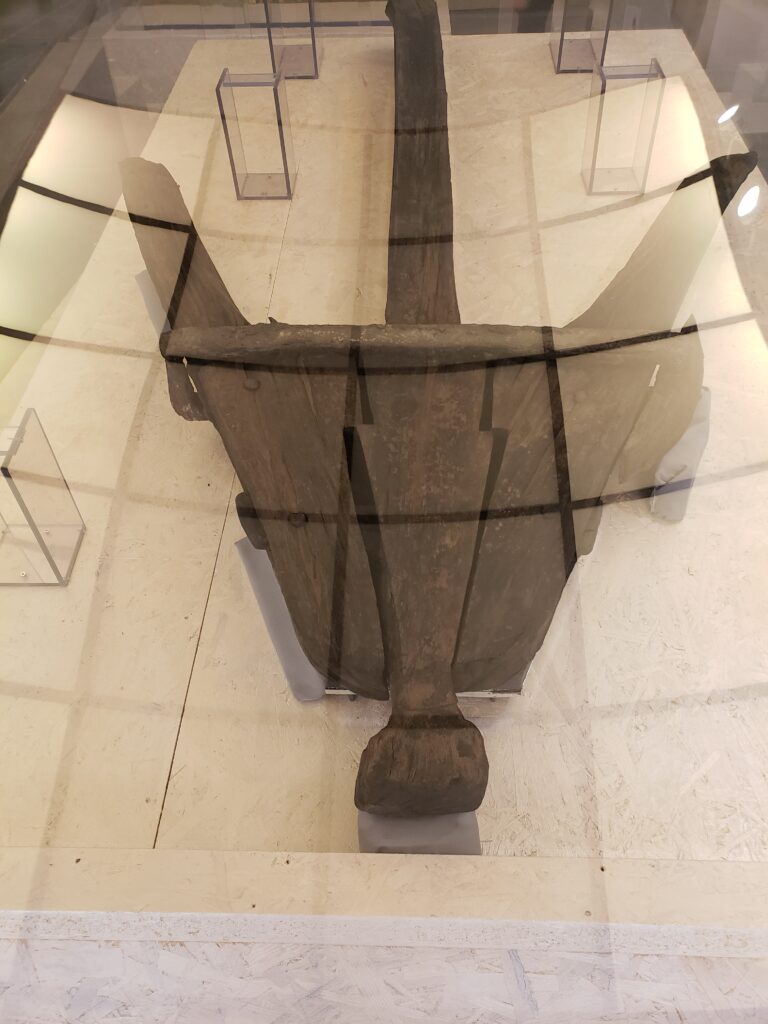
National Archaeological Museum – Maritime Hall – Large Anchor
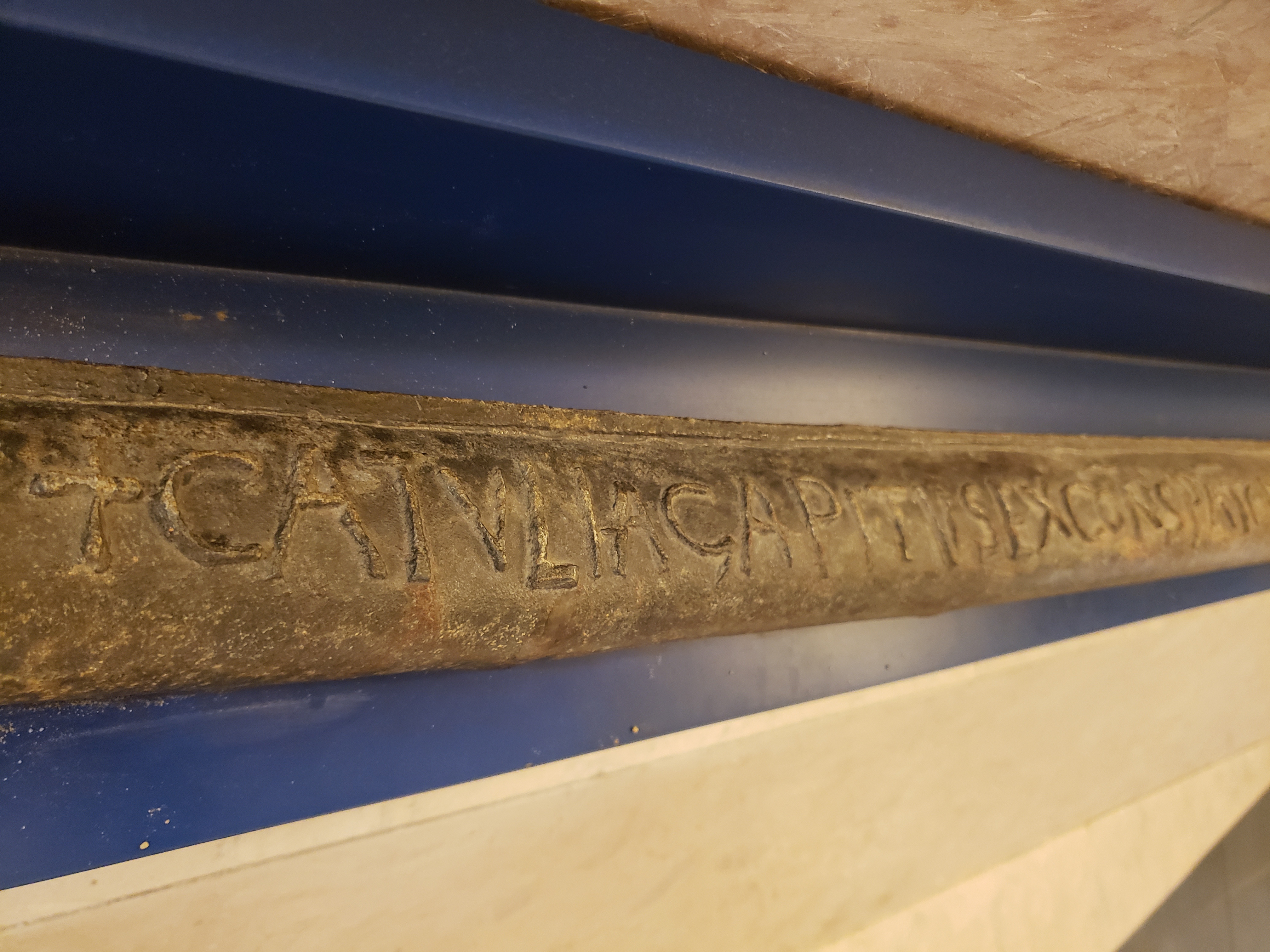
National Archaeological Museum – Maritime Hall – Old Lead Pipe
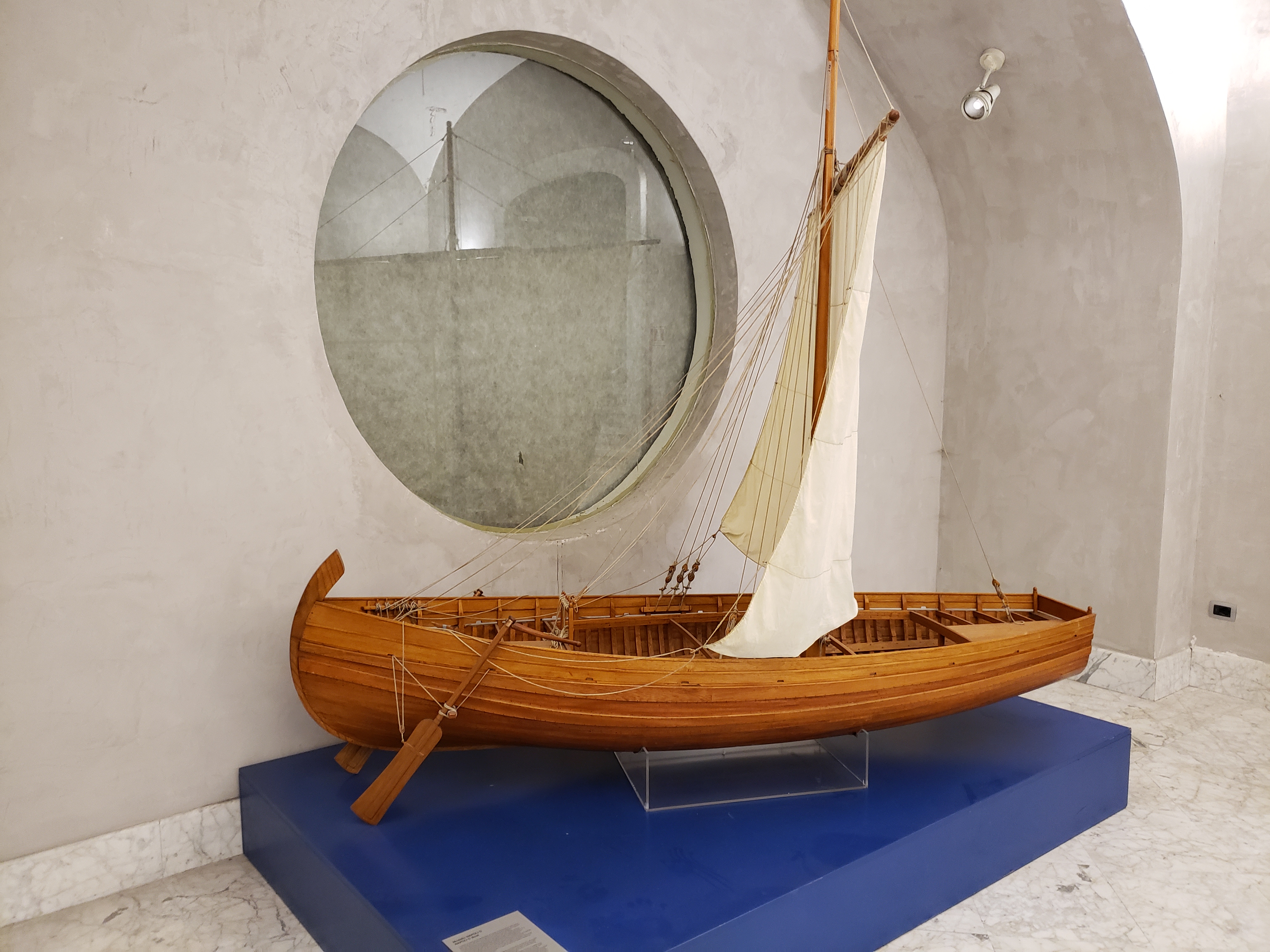
National Archaeological Museum – Maritime Hall – Reproduction of an Ancient Bark from Campania
Restaurants
Ristorante Demeter Ristotrattoria
A short fifteen minute walk away from the museum, down the Via Santa Maria di Costantinopoli, Via San Sebastiano and Via Santa Chiara (all the same street mind you), you will find Ristorante Demeter Ristotrattoria. Another exceptional place with homemade creations to tempt most palettes. We entered this restaurant just before it started raining and were not disappointed, a fine place to visit with nice staff that is definitely NOT a tourist trap.
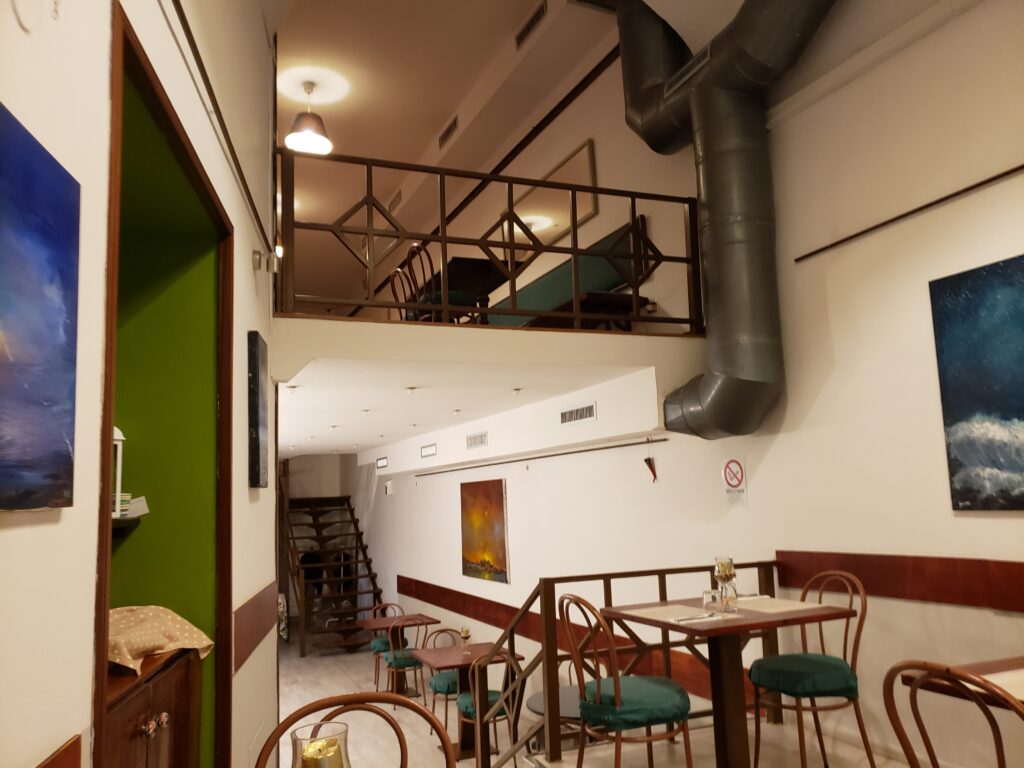
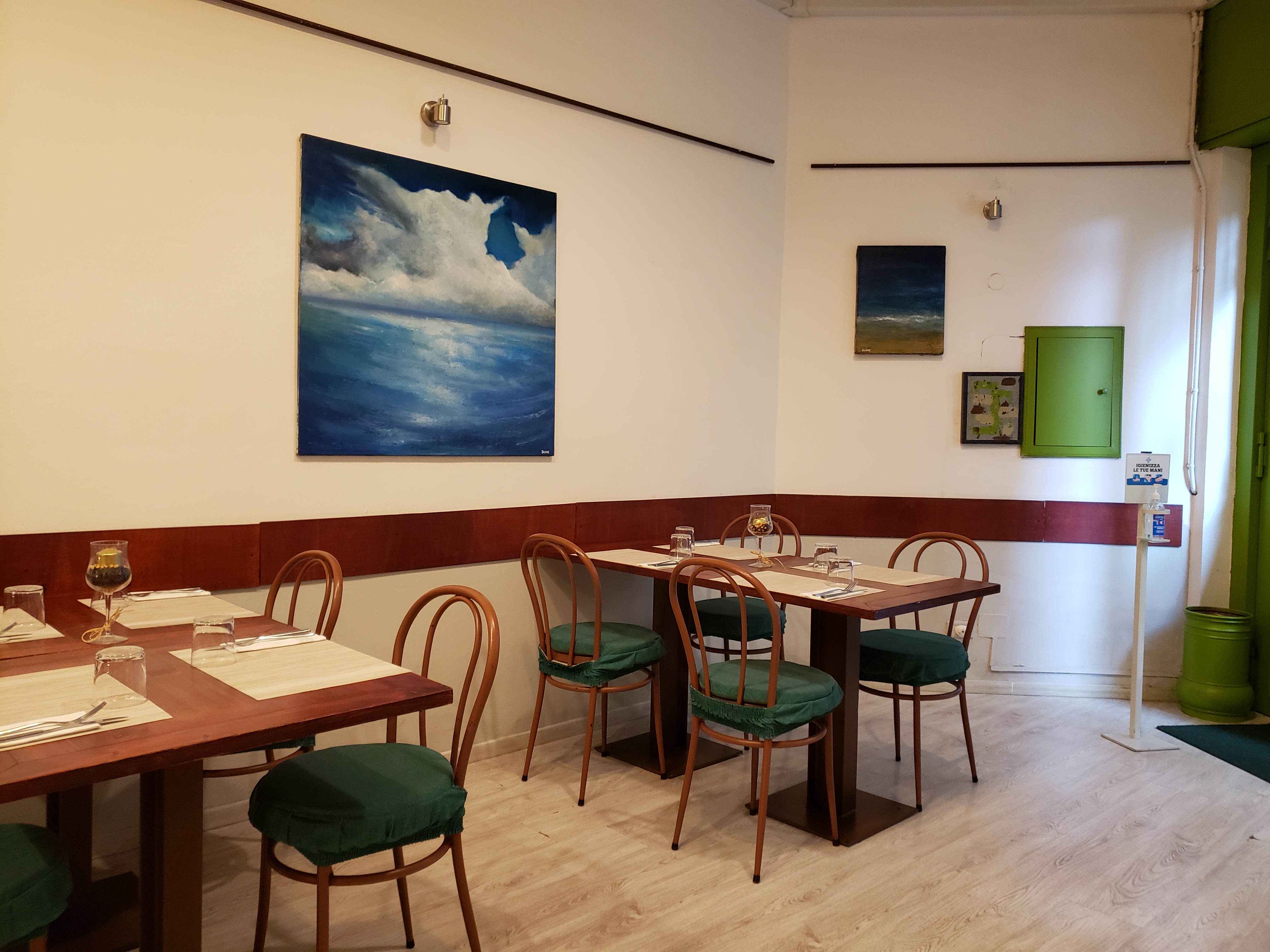
Naples, San Guiseppe – Ristorante Demeter Ristotrattoria – Inside
Naples, San Guiseppe – Ristorante Demeter Ristotrattoria – Inside
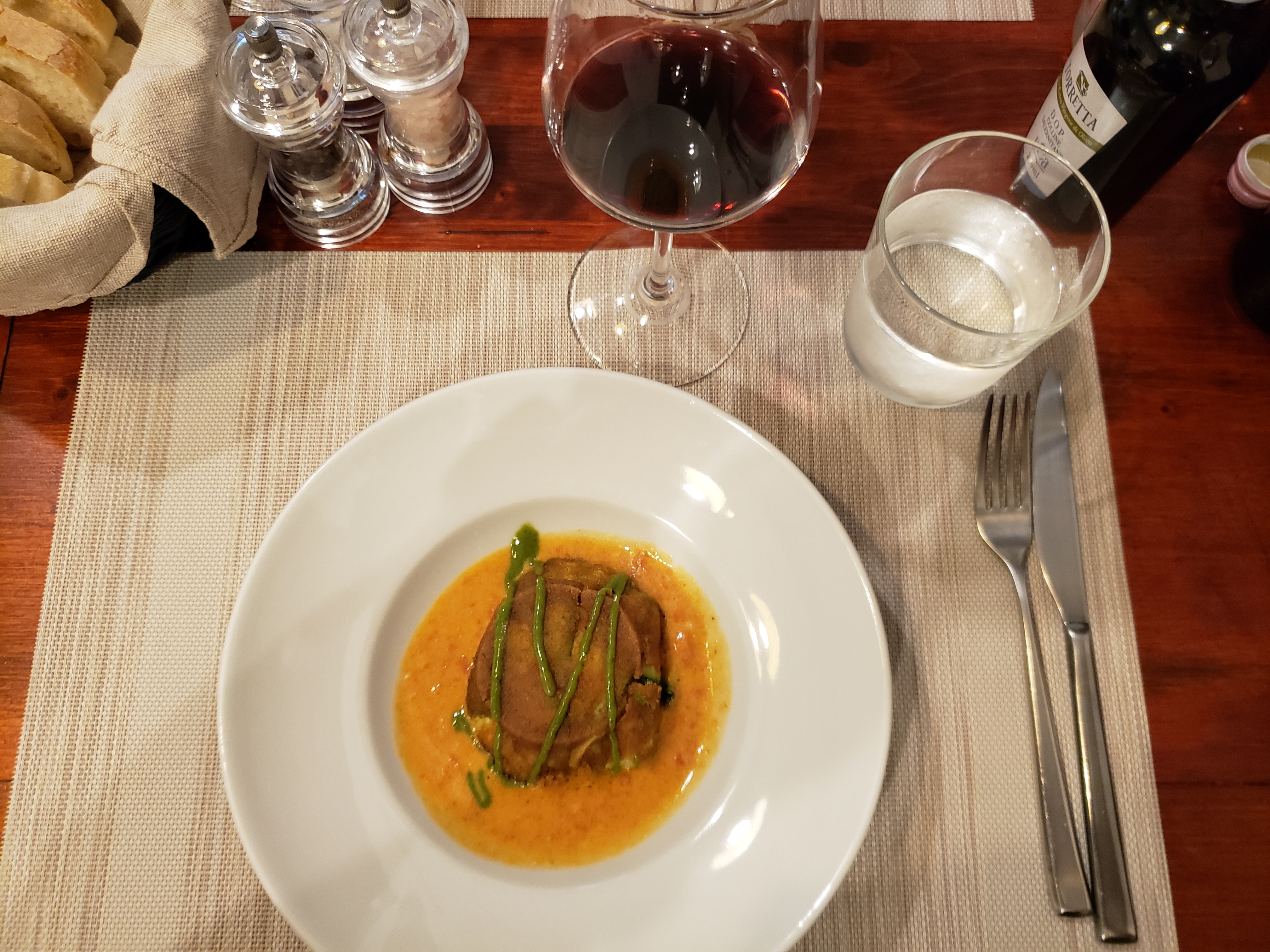
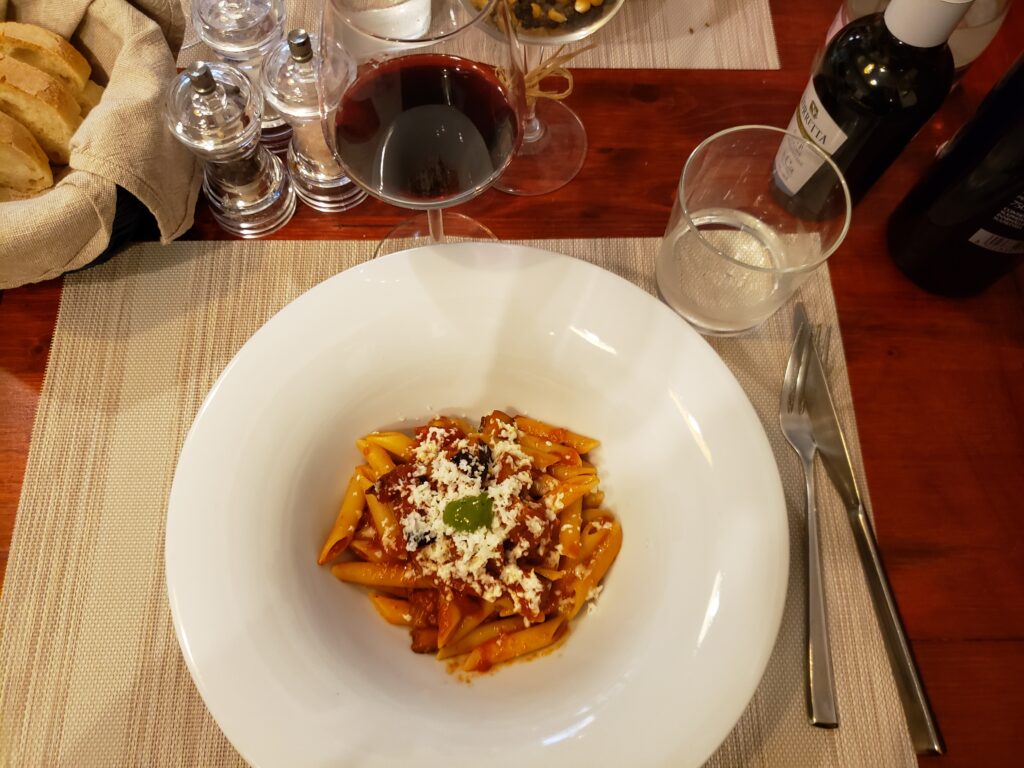
Naples, San Guiseppe – Ristorante Demeter Ristotrattoria – Fried Eggplant in a tomato reduction with pesto
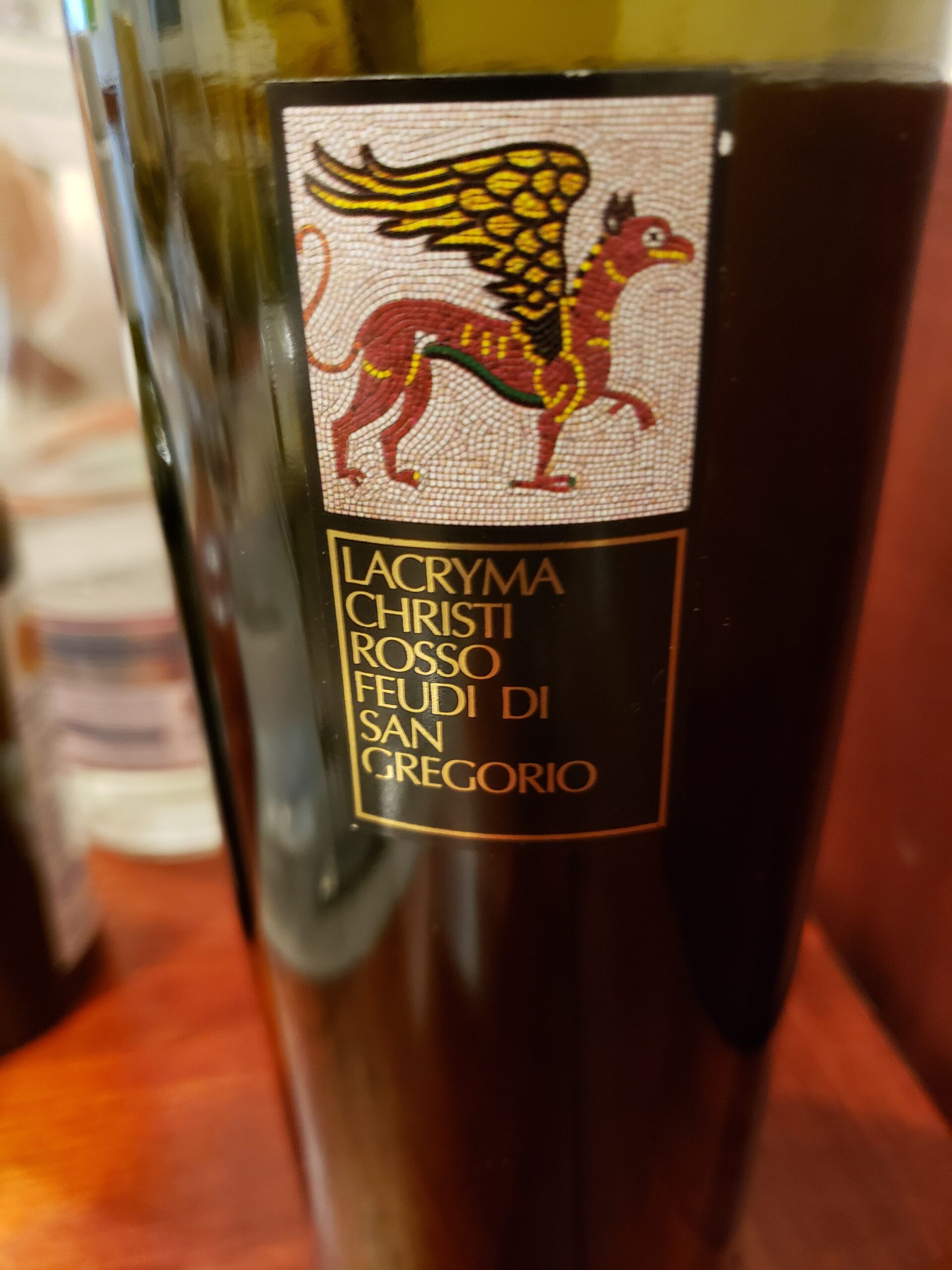
Naples, San Guiseppe – Ristorante Demeter Ristotrattoria – Lacryma Red
Naples, San Guiseppe – Ristorante Demeter Ristotrattoria – Pasta Norman
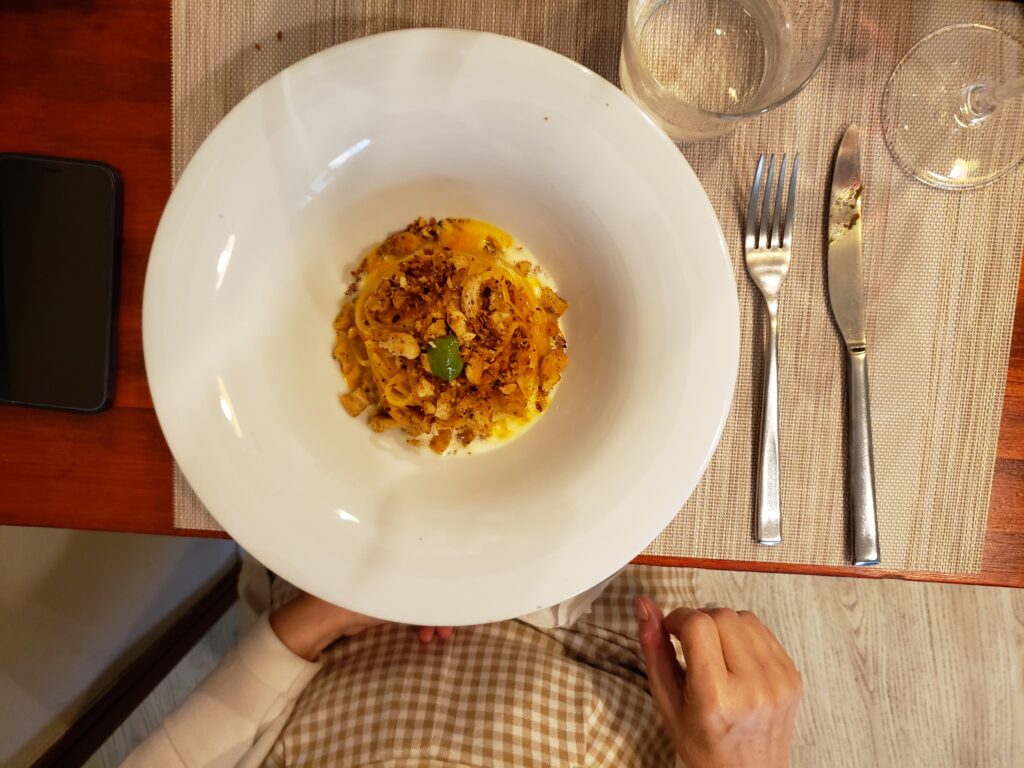
Naples, San Guiseppe – Ristorante Demeter Ristotrattoria – Pasta with Peppers and Taralli
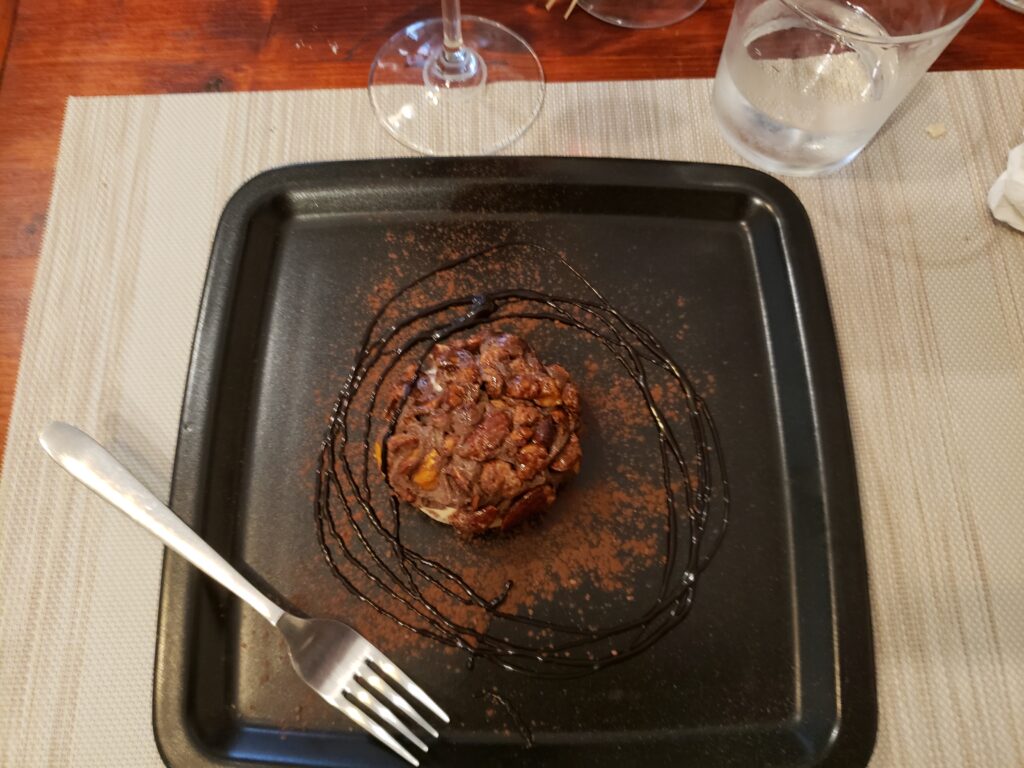
Naples, San Guiseppe – Ristorante Demeter Ristotrattoria – Tart with Pecans
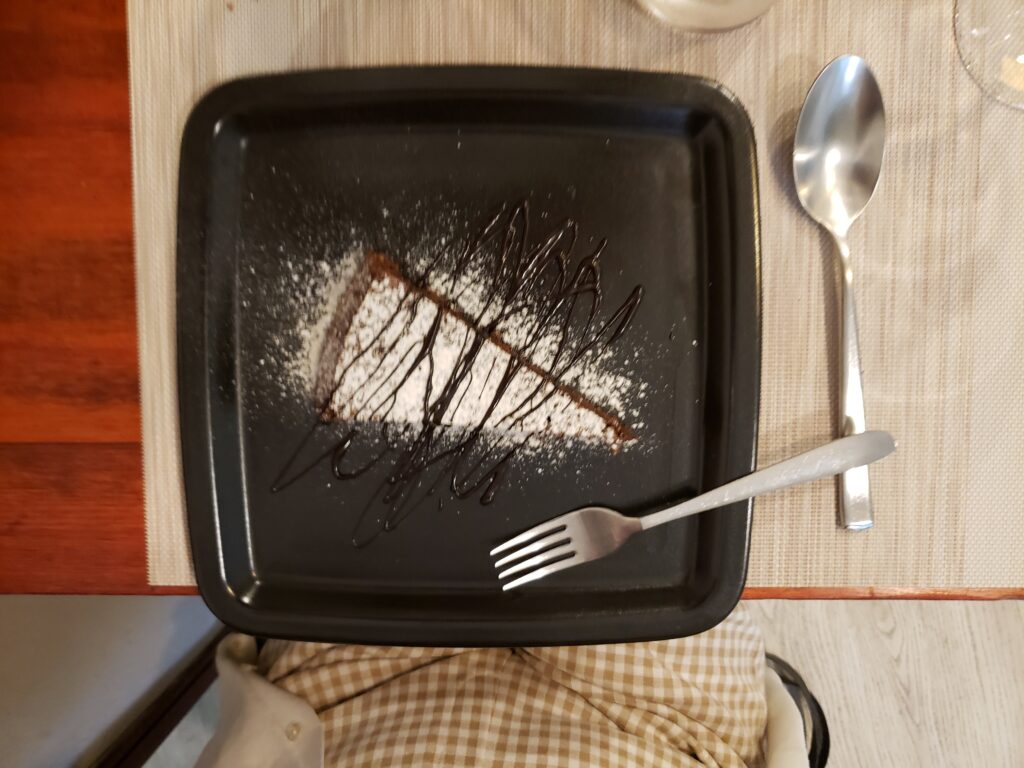
Naples, San Guiseppe – Ristorante Demeter Ristotrattoria – Chocolate Cake with powdered sugar
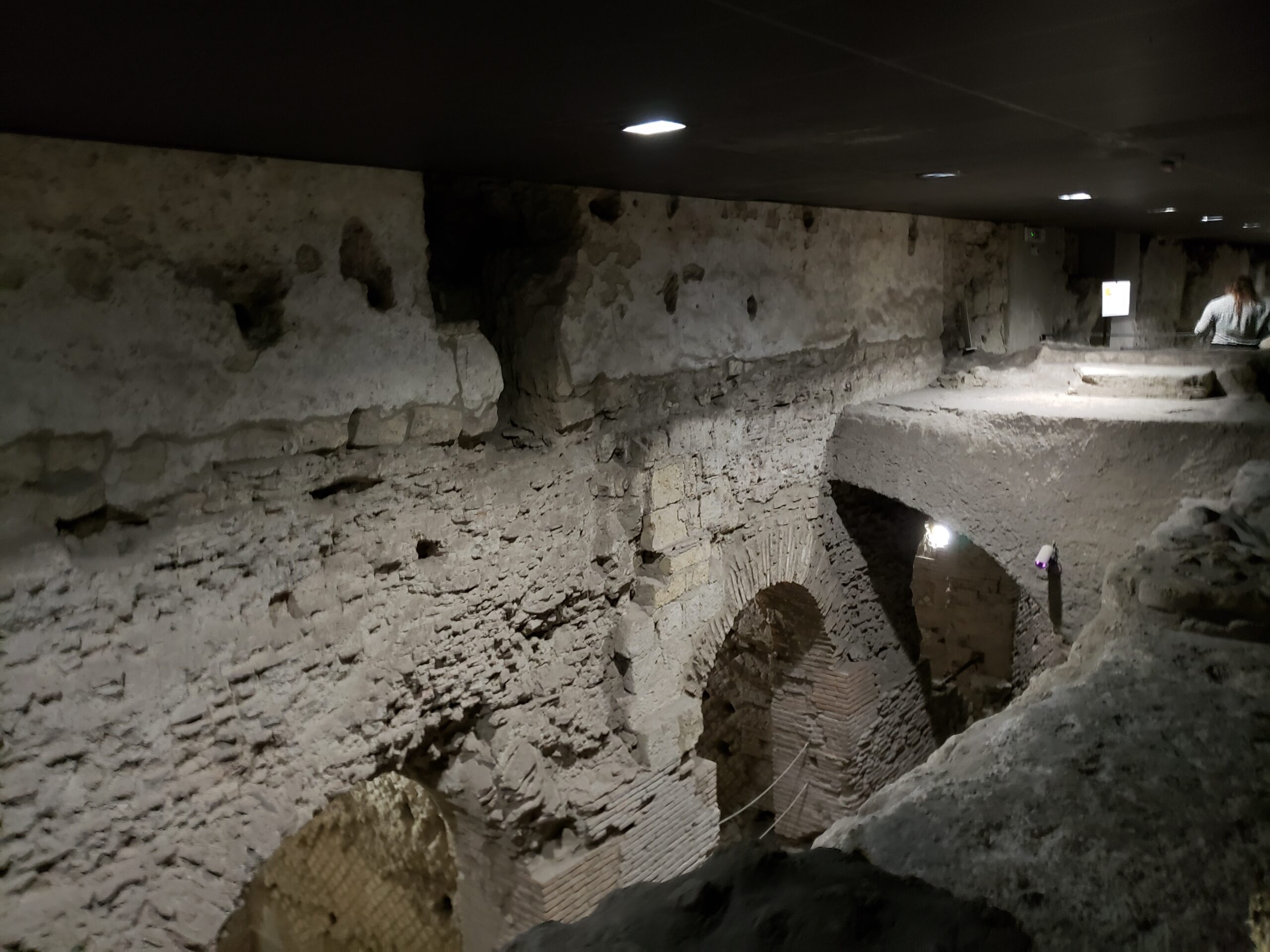
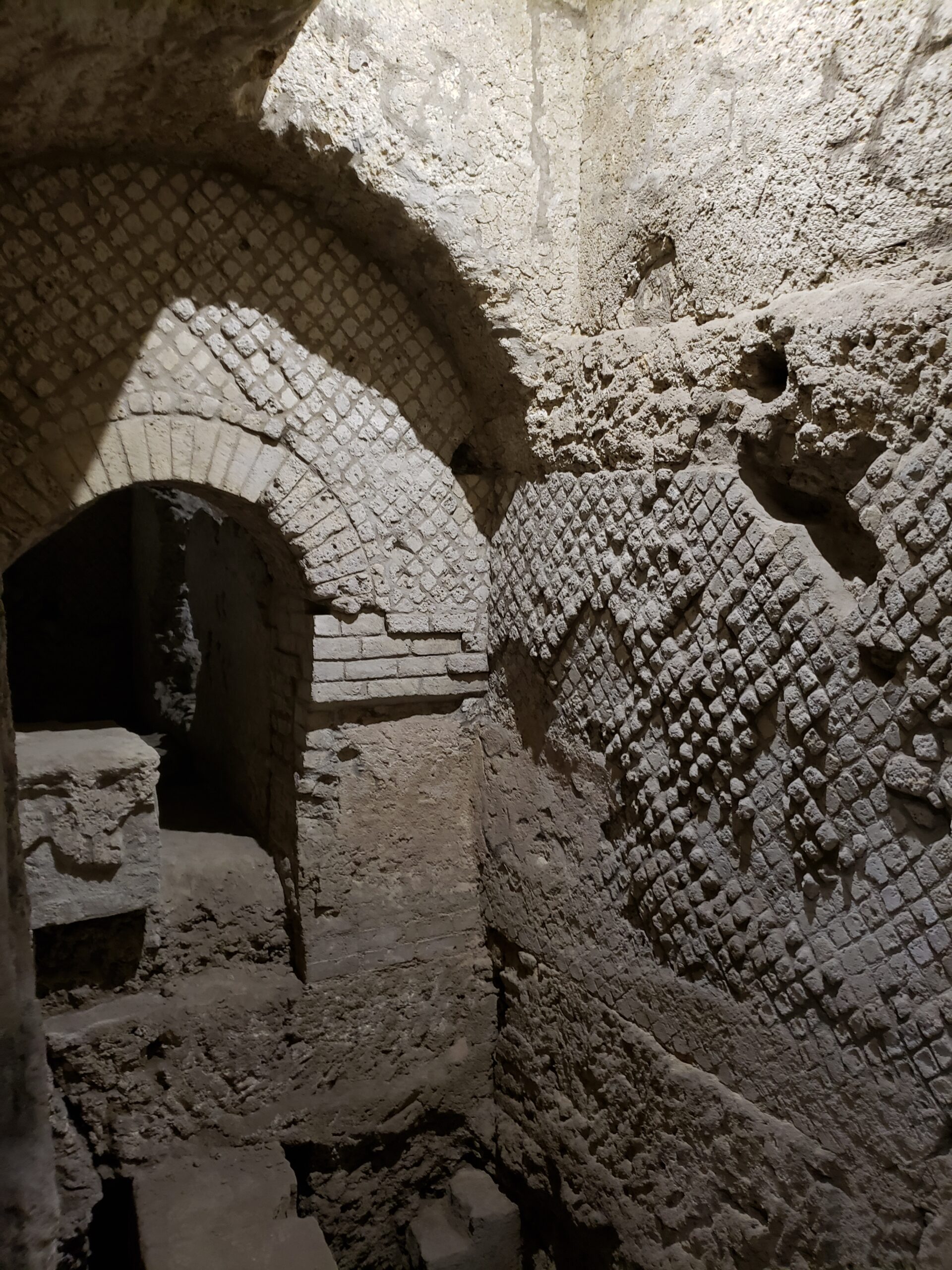
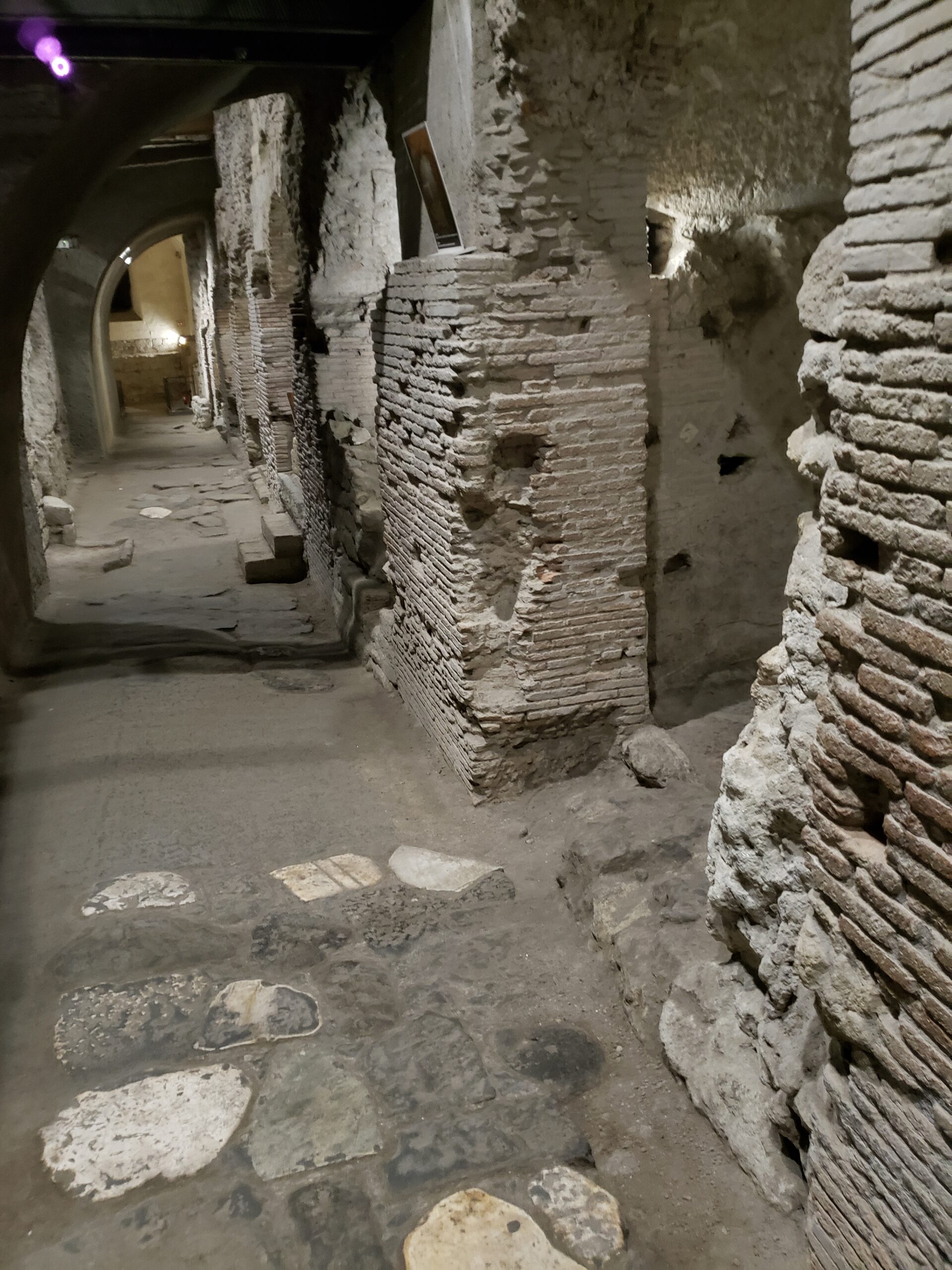
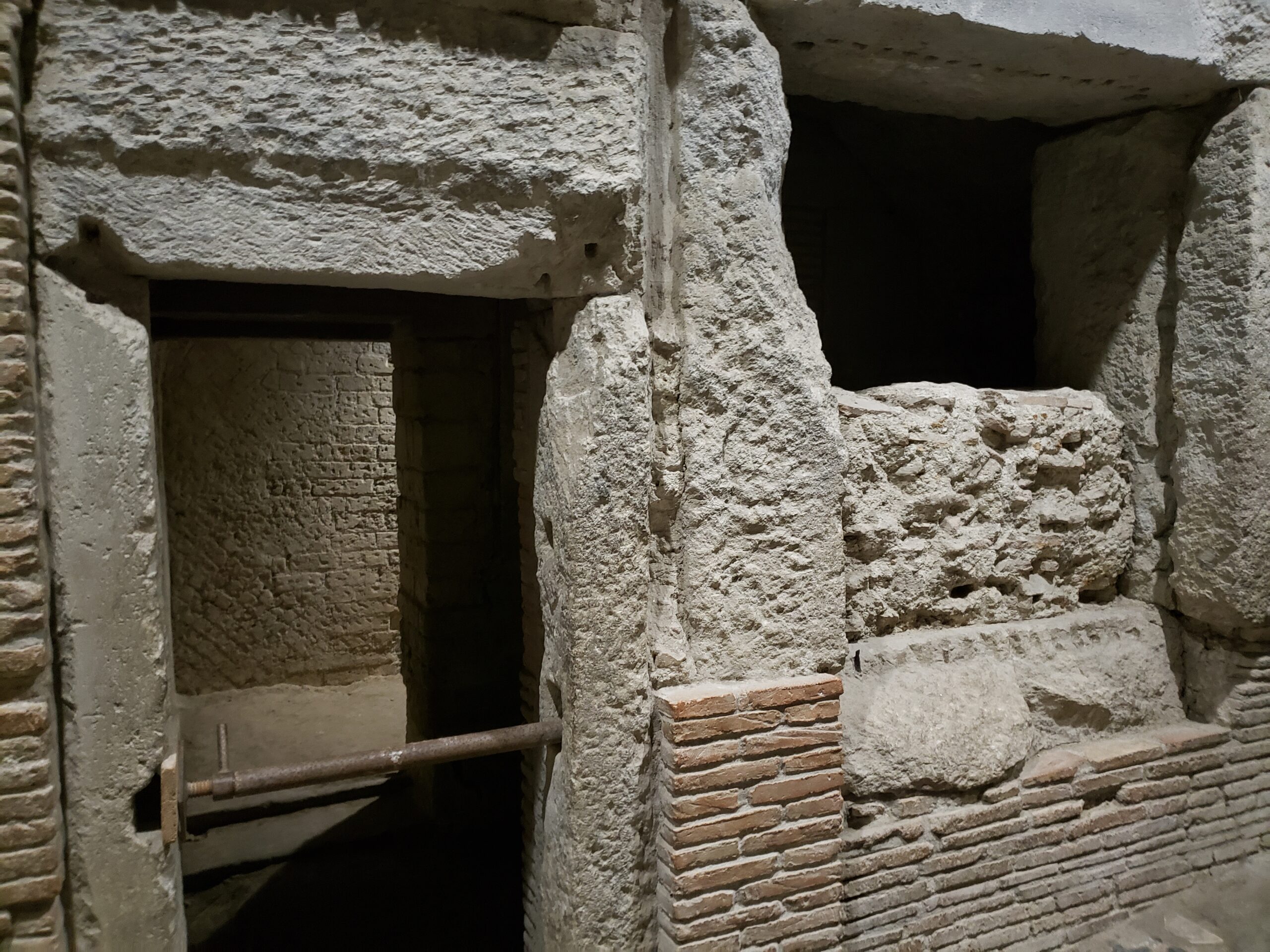
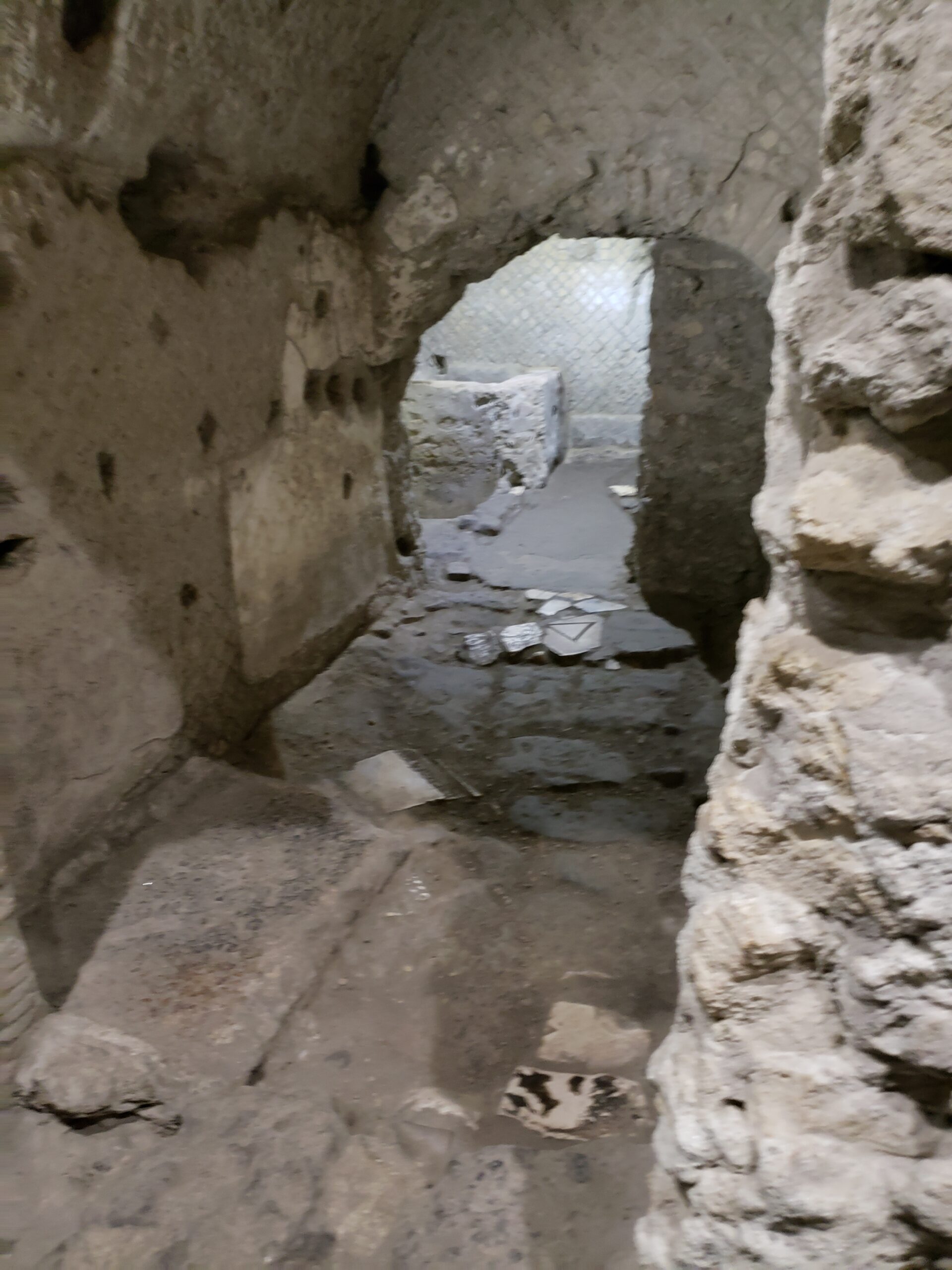
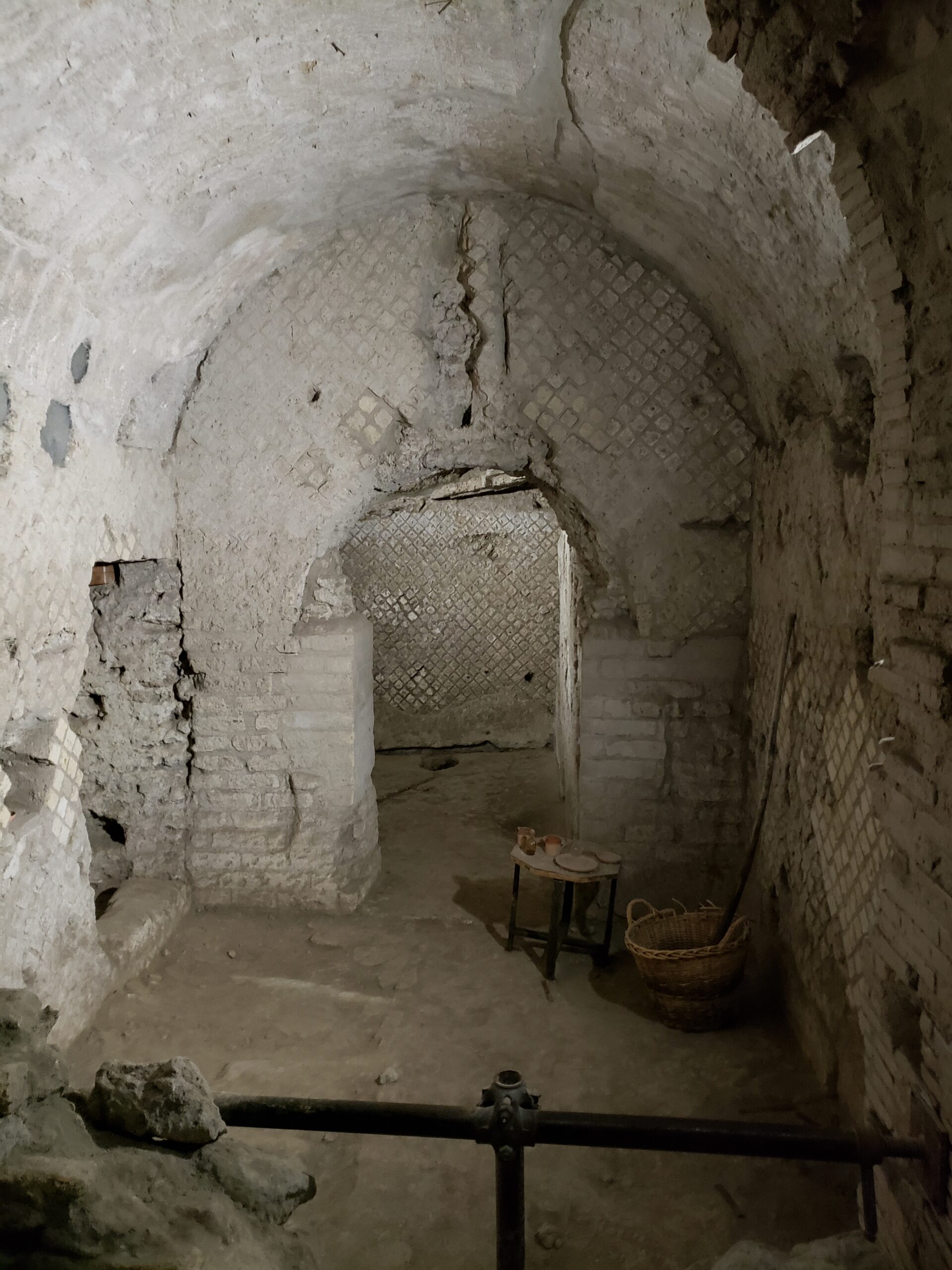
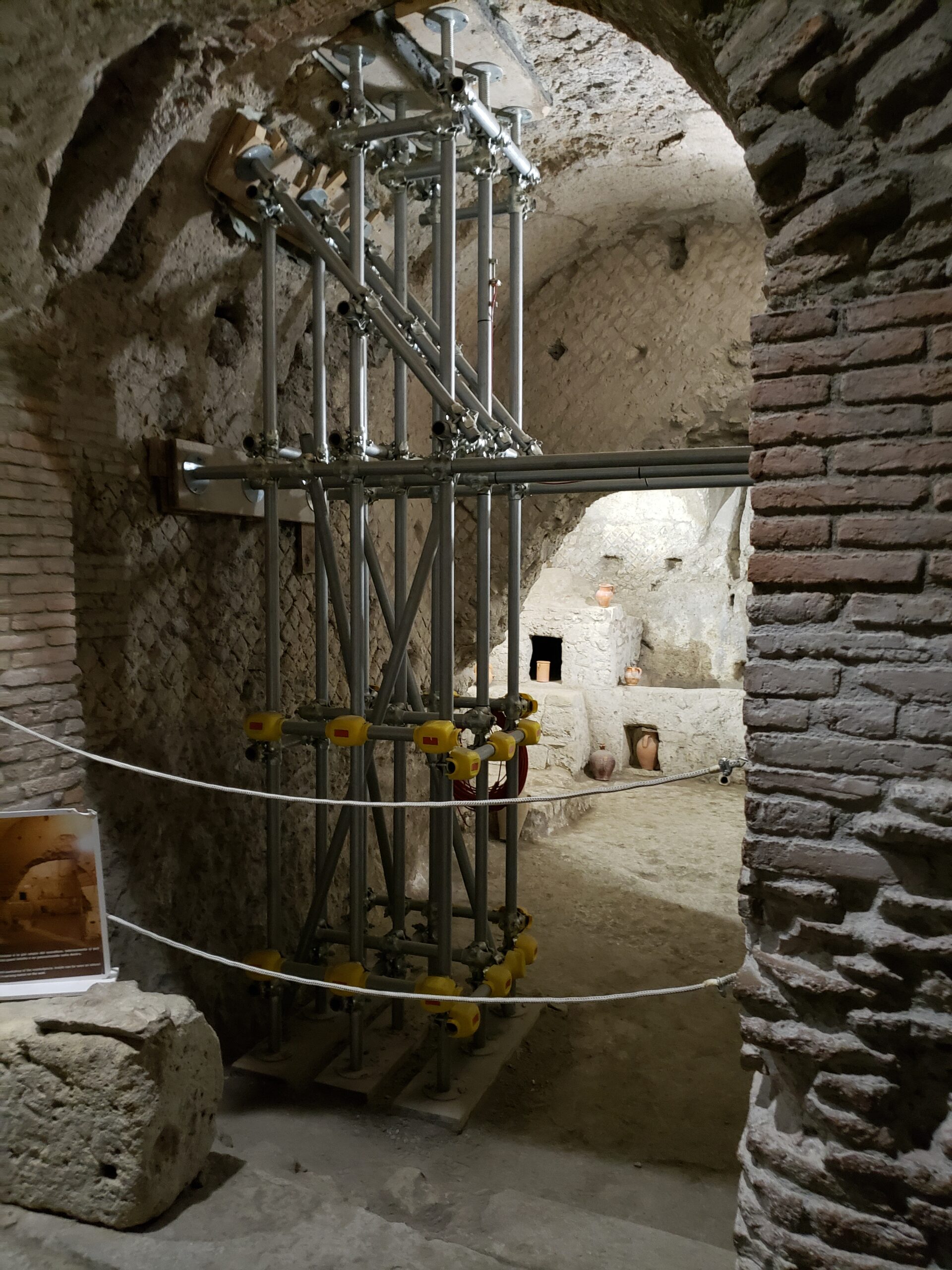
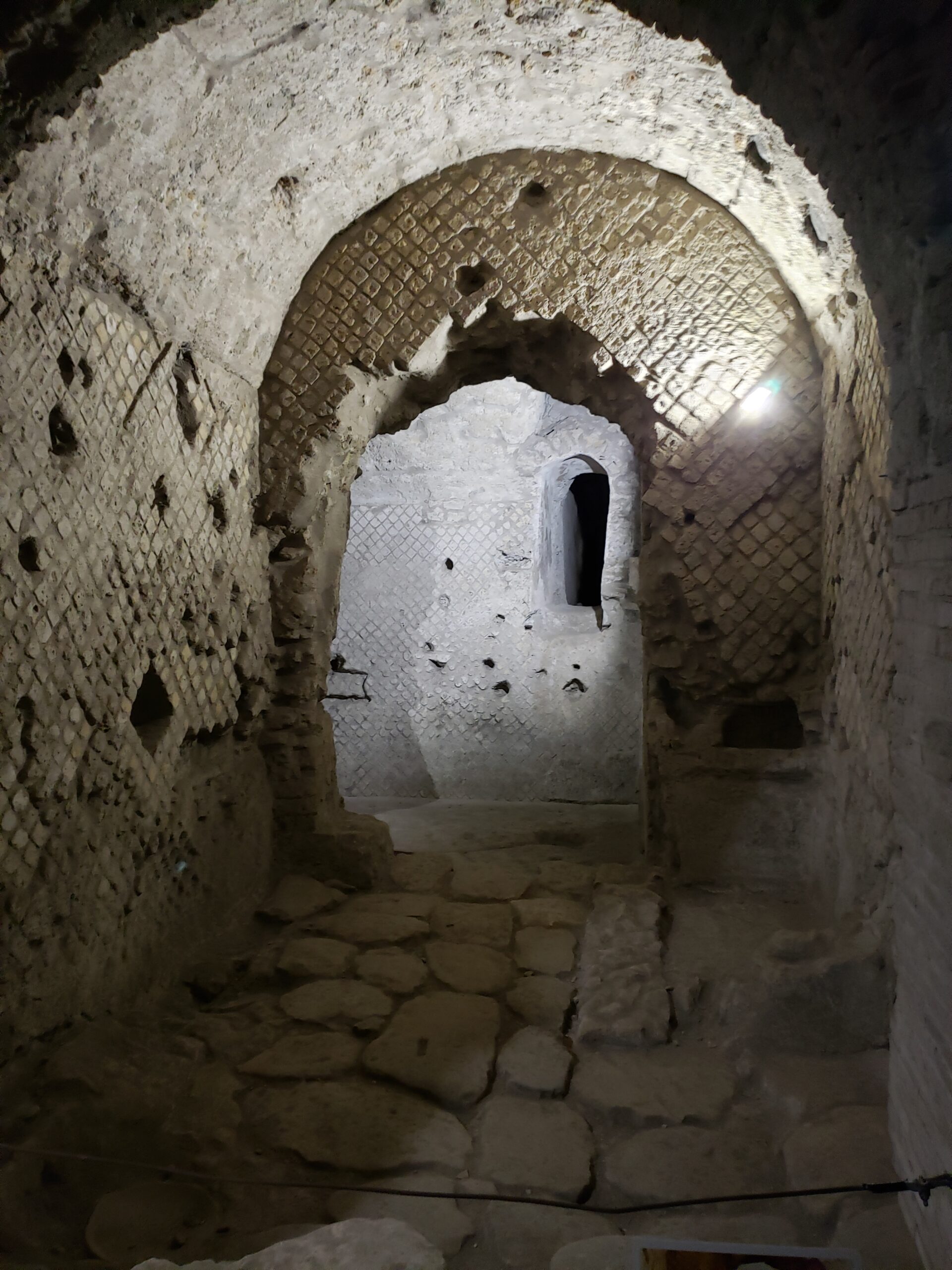
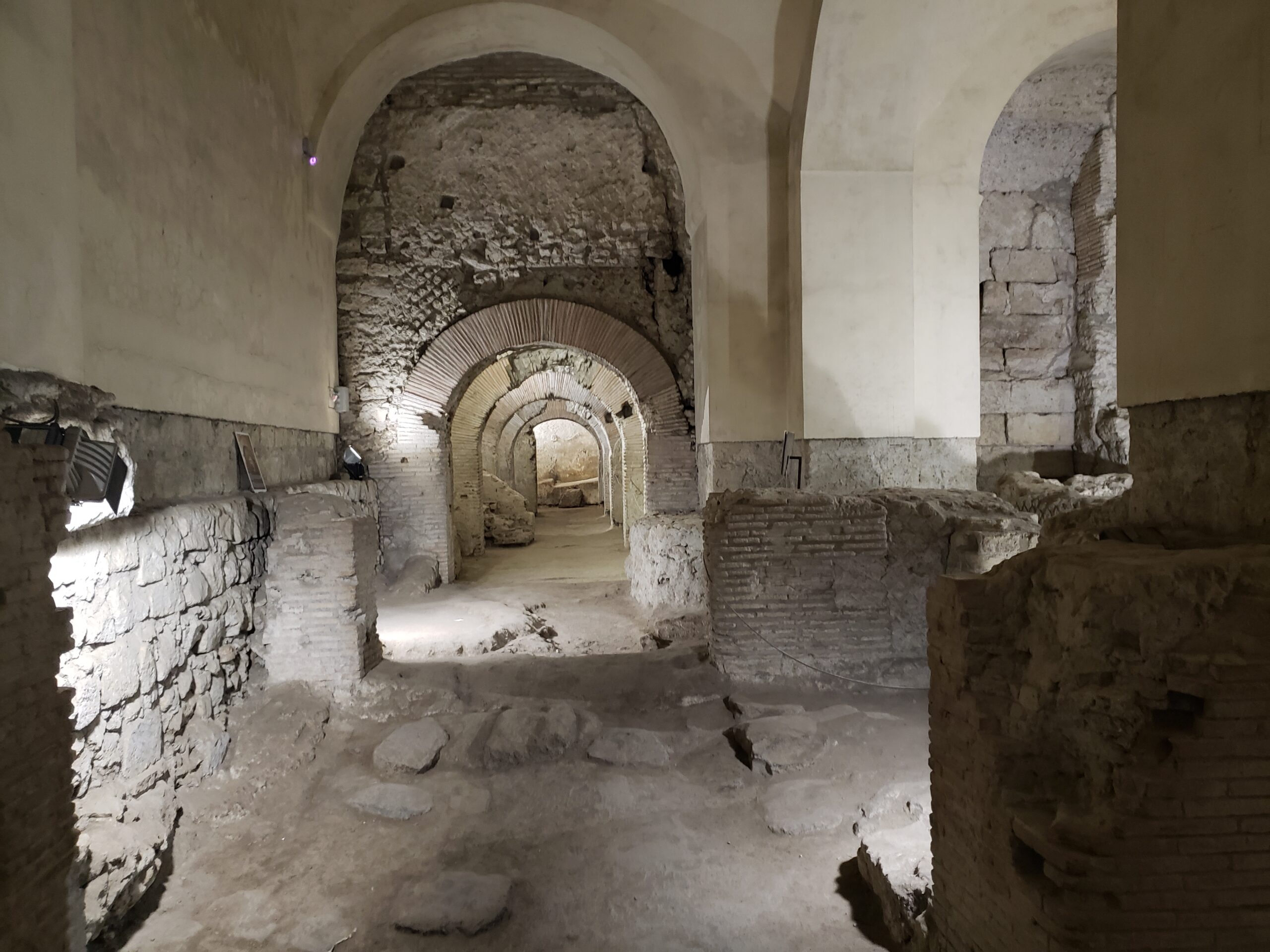
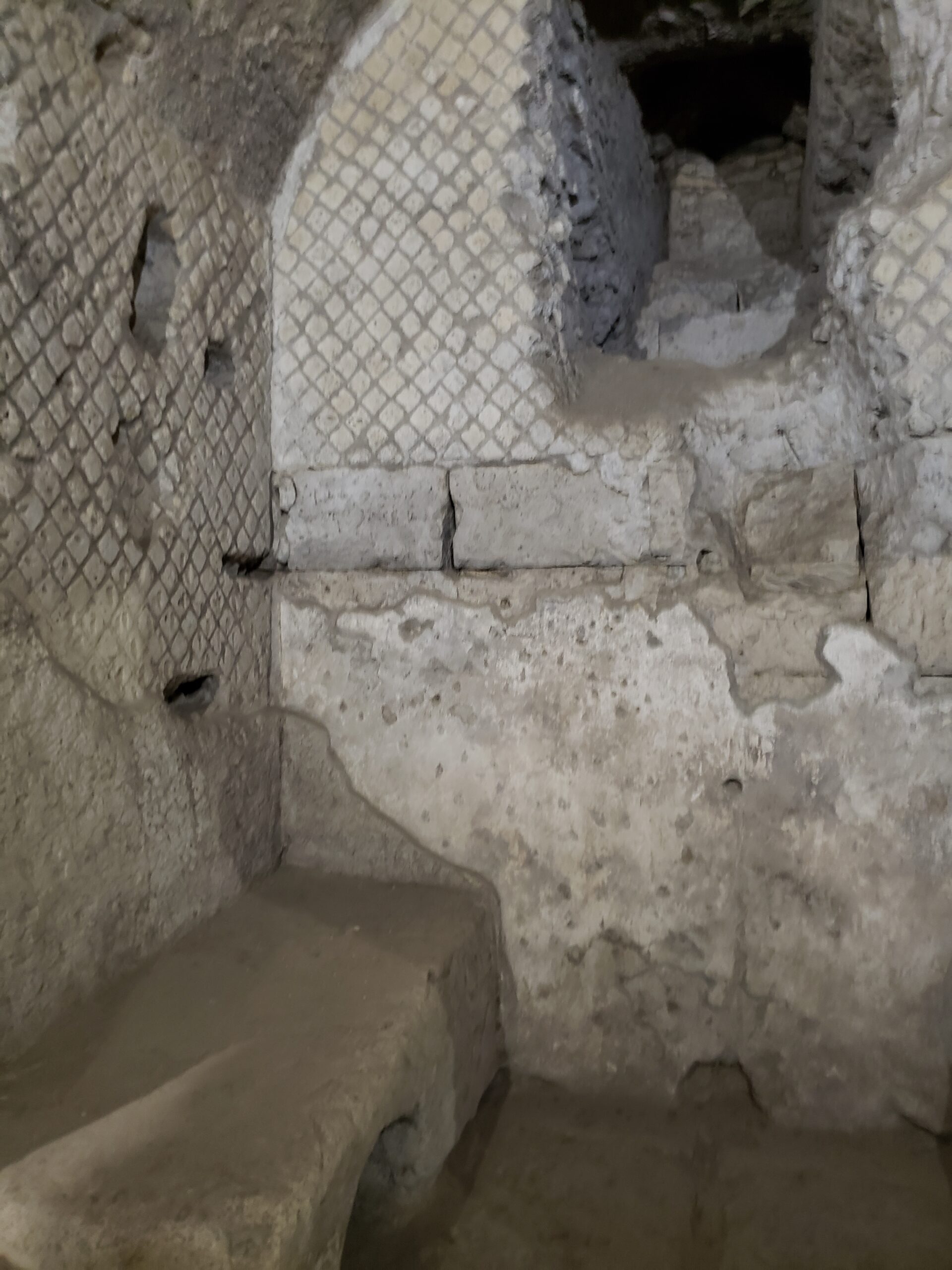
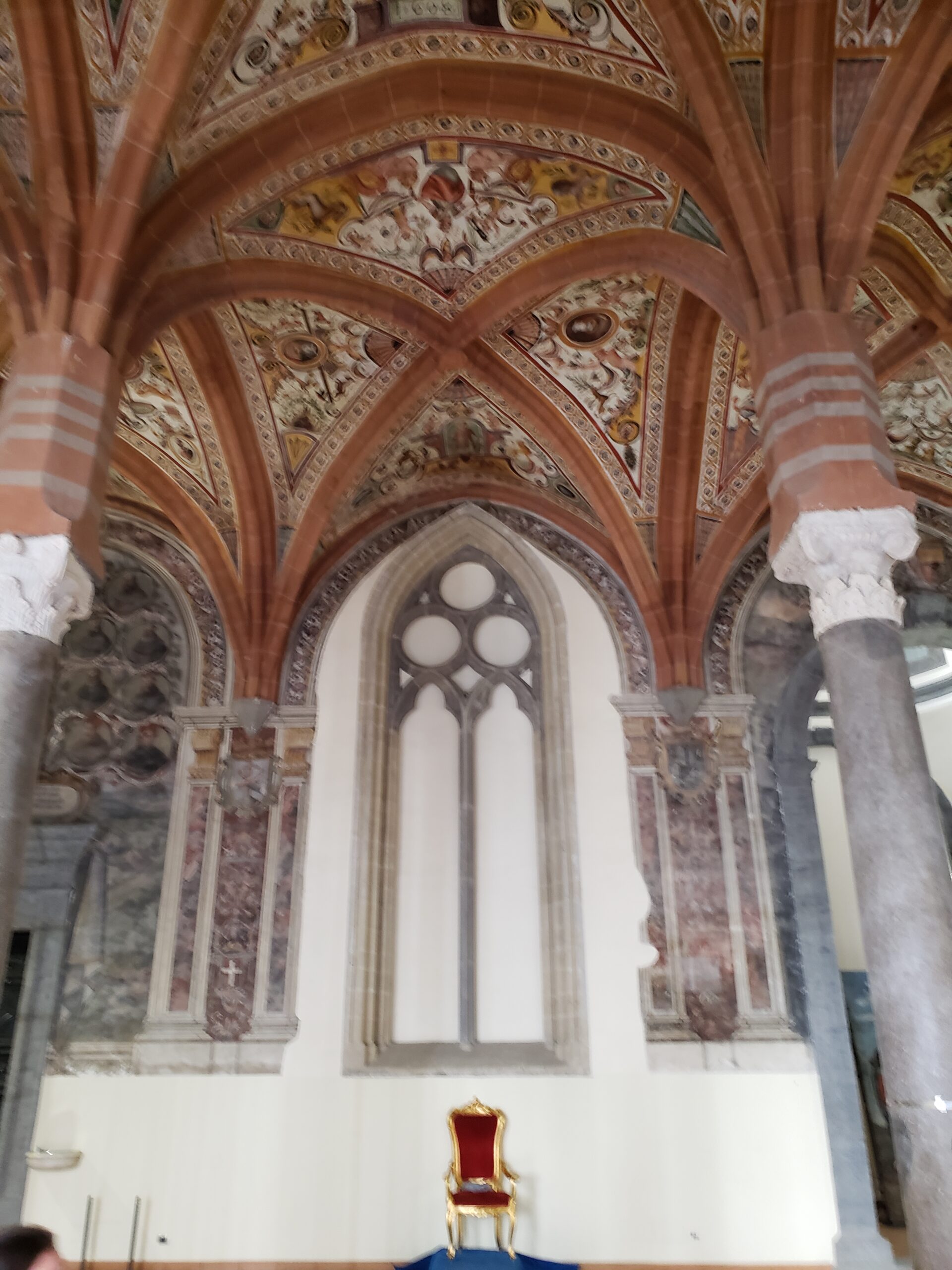
In the back of Piazza San Gaetano, alongside the tower, you will find the entry point to a very interesting treat, and a very historically important place for understanding Naples as a city, especially its age. Here you will find the La Neapolis Sotterrate, or the ancient underground marketplace.
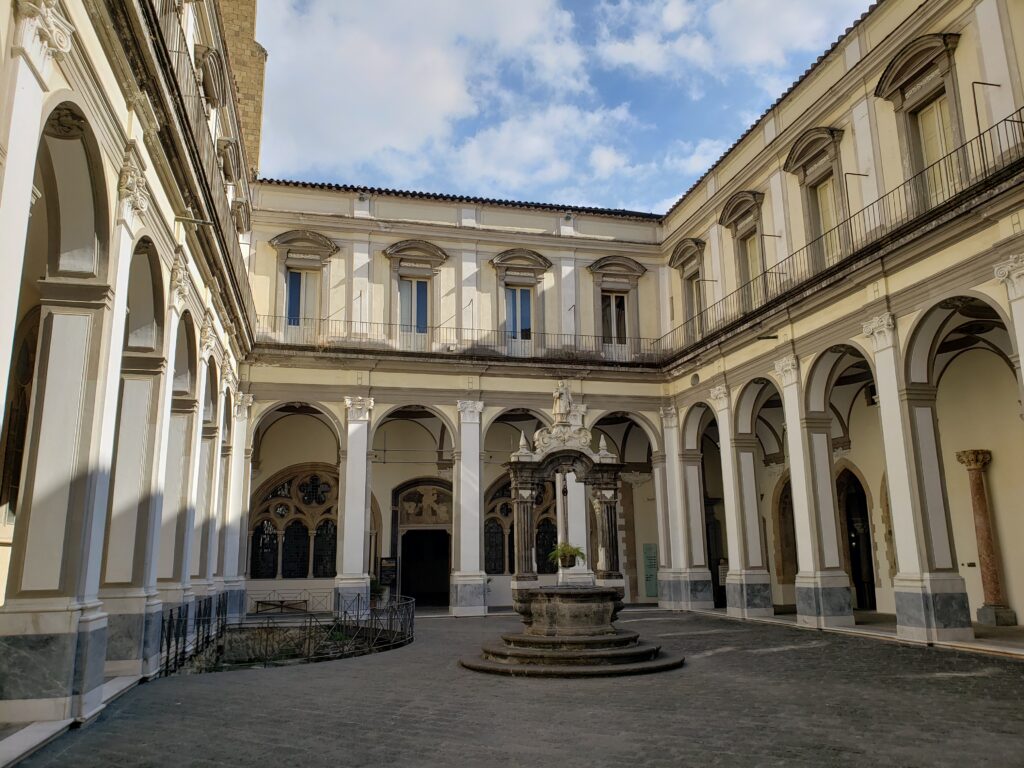
La Neapolis Sotterrata – Internal Palazzo with well
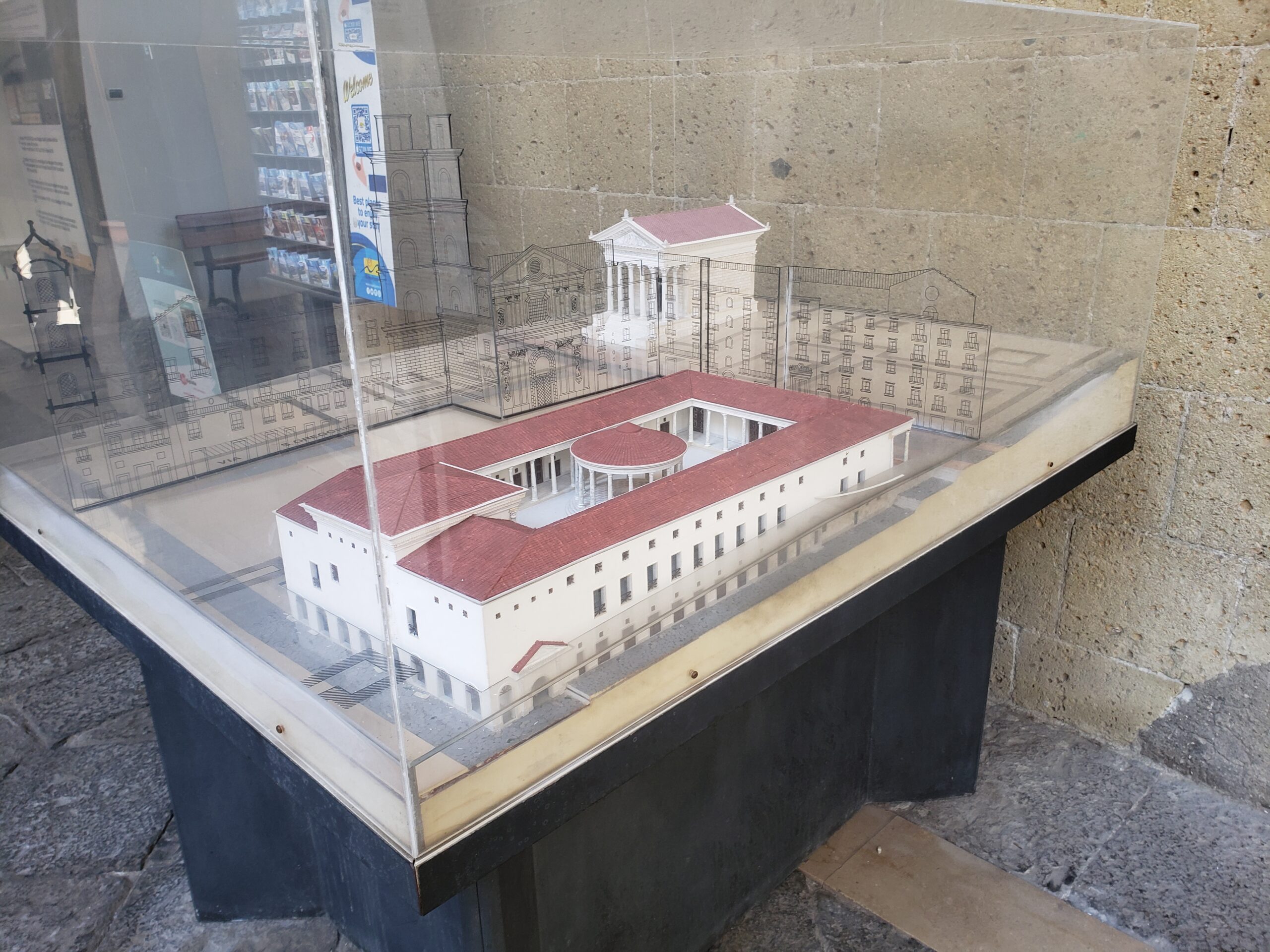
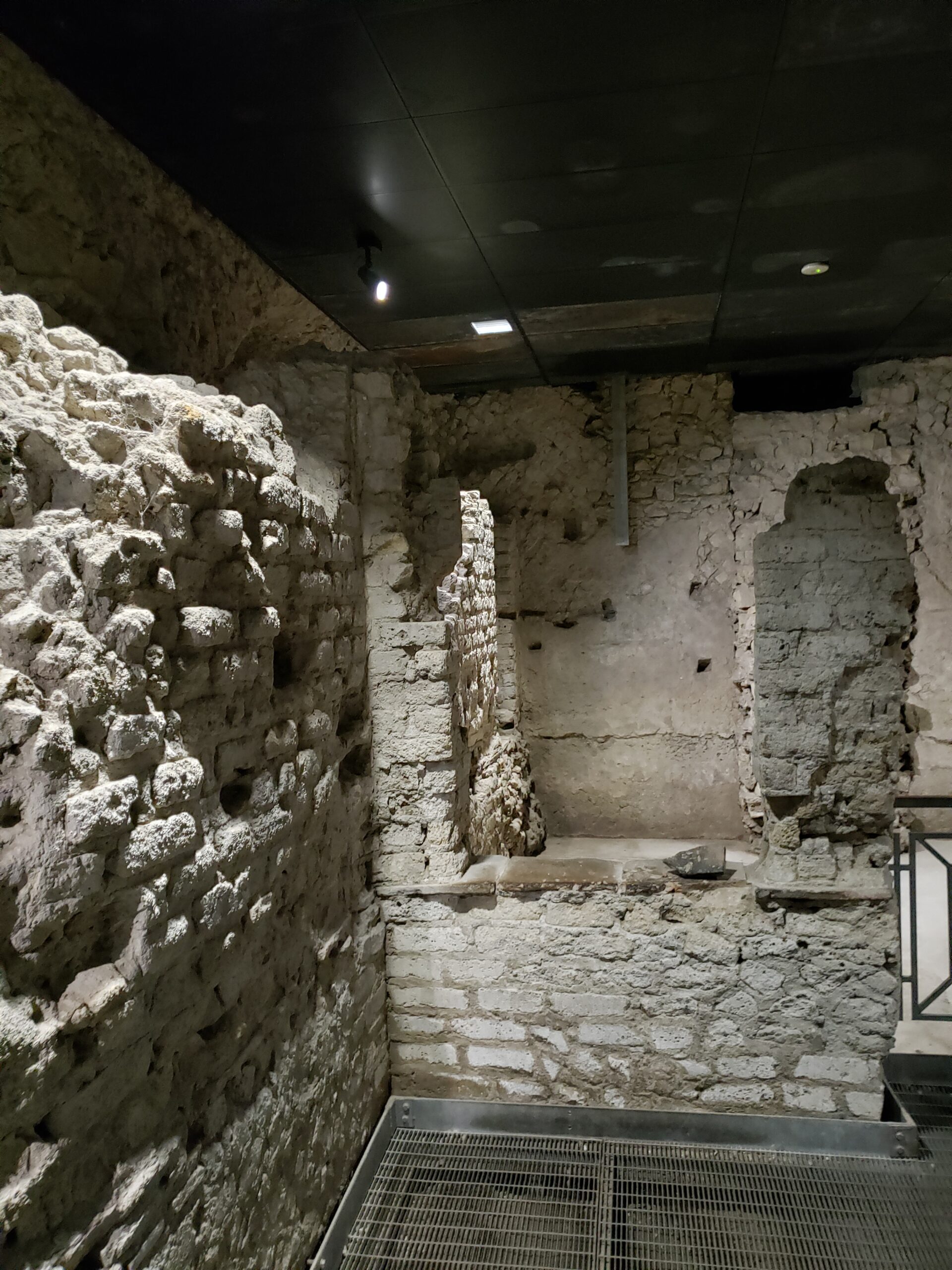
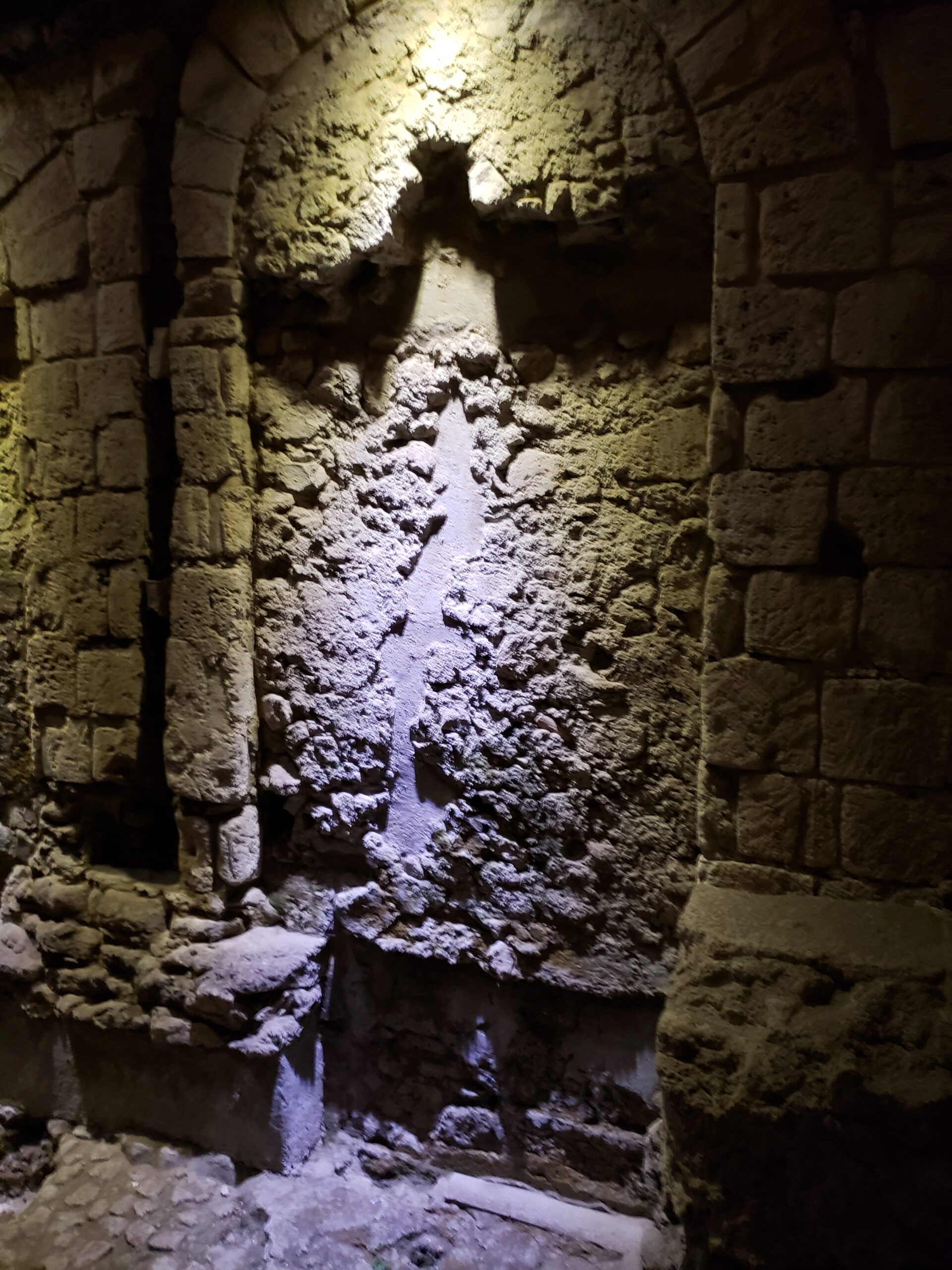
The Ancient Neapolis was founded back in the fifth century BCE by the Greeks. Many of the artifacts and architecture of this place date back to this time. The market, or Macellum, was a two story structure that ran along underneath the current structure of the convent which now stands over top of it. Many of the streets in this area start with Vico and not Via, indicating the ancient Greek origins (all streets that start with this have a corresponding ancient road structure beneath them).
The entry fee is minimal and they have guided tours available in English. We found the tour very informative and important in trying to appreciate the age of city of Naples. Here is a slide show with what you will see if you have time to consider this historical adventure.
La Neapolis Sotterrata – Model and Diorama
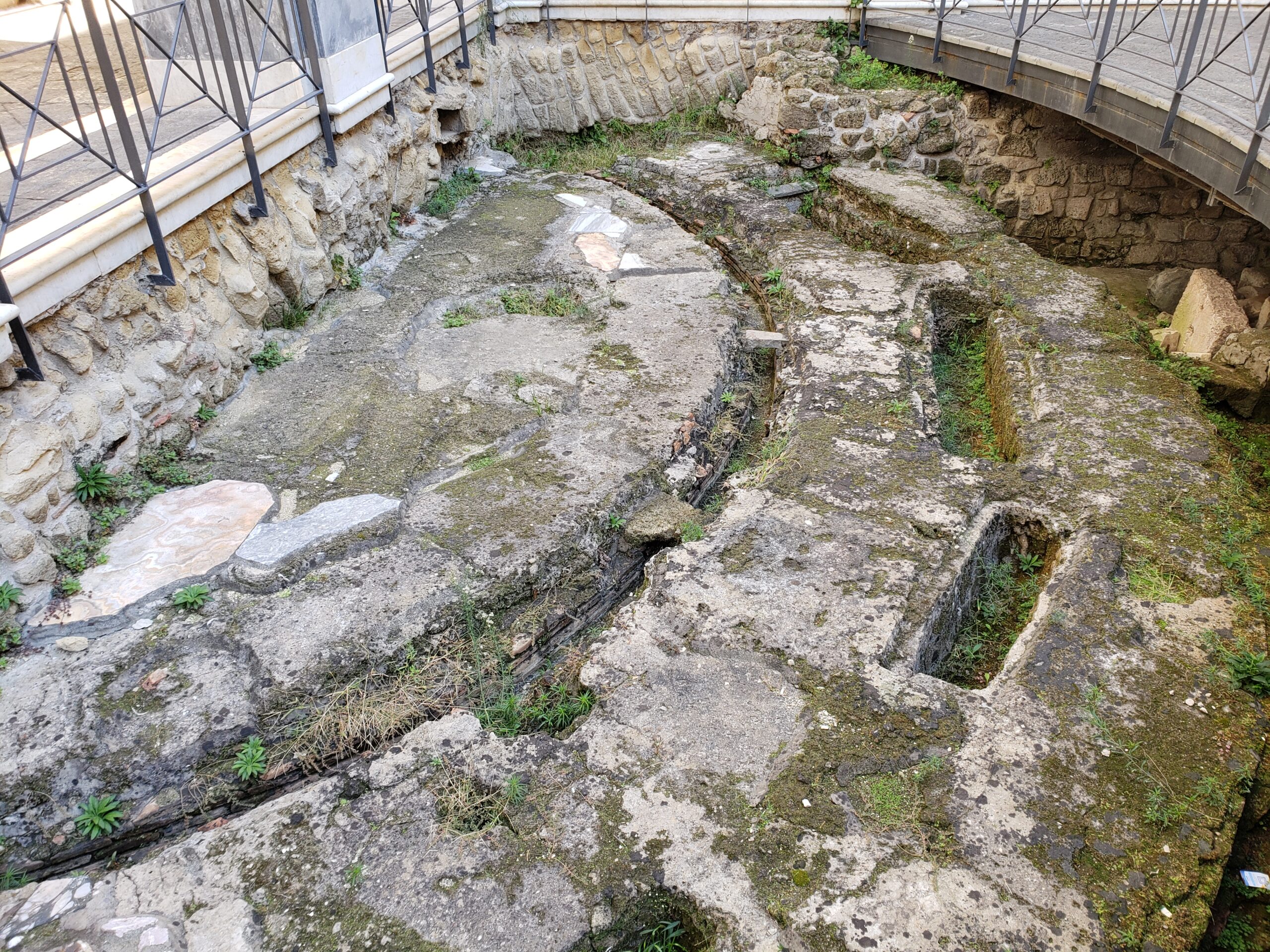
La Neapolis Sotterrata – Ancient Graves unearthed in the palazzo
La Neapolis Sotterrata – Entering Ancient Underground Marketplace
La Neapolis Sotterrata – Ancient Underground Marketplace – Detail of pyramidal bricks
La Neapolis Sotterrata – Ancient Underground Marketplace – Main Street or Vico
La Neapolis Sotterrata – Ancient Treasury
La Neapolis Sotterrata – Ancient Underground Marketplace – Laundry
La Neapolis Sotterrata – Ancient Underground Marketplace – Typical Two Room Store Layout
La Neapolis Sotterrata – Ancient Underground Marketplace – Ancient Store
La Neapolis Sotterrata – Ancient Underground Marketplace – Ancient Access Point
La Neapolis Sotterrata – Ancient Underground Marketplace – Side Cul du Sac
La Neapolis Sotterrata – Ancient Underground Marketplace – Ancient Bakery
La Neapolis Sotterrata – Ancient Underground Marketplace
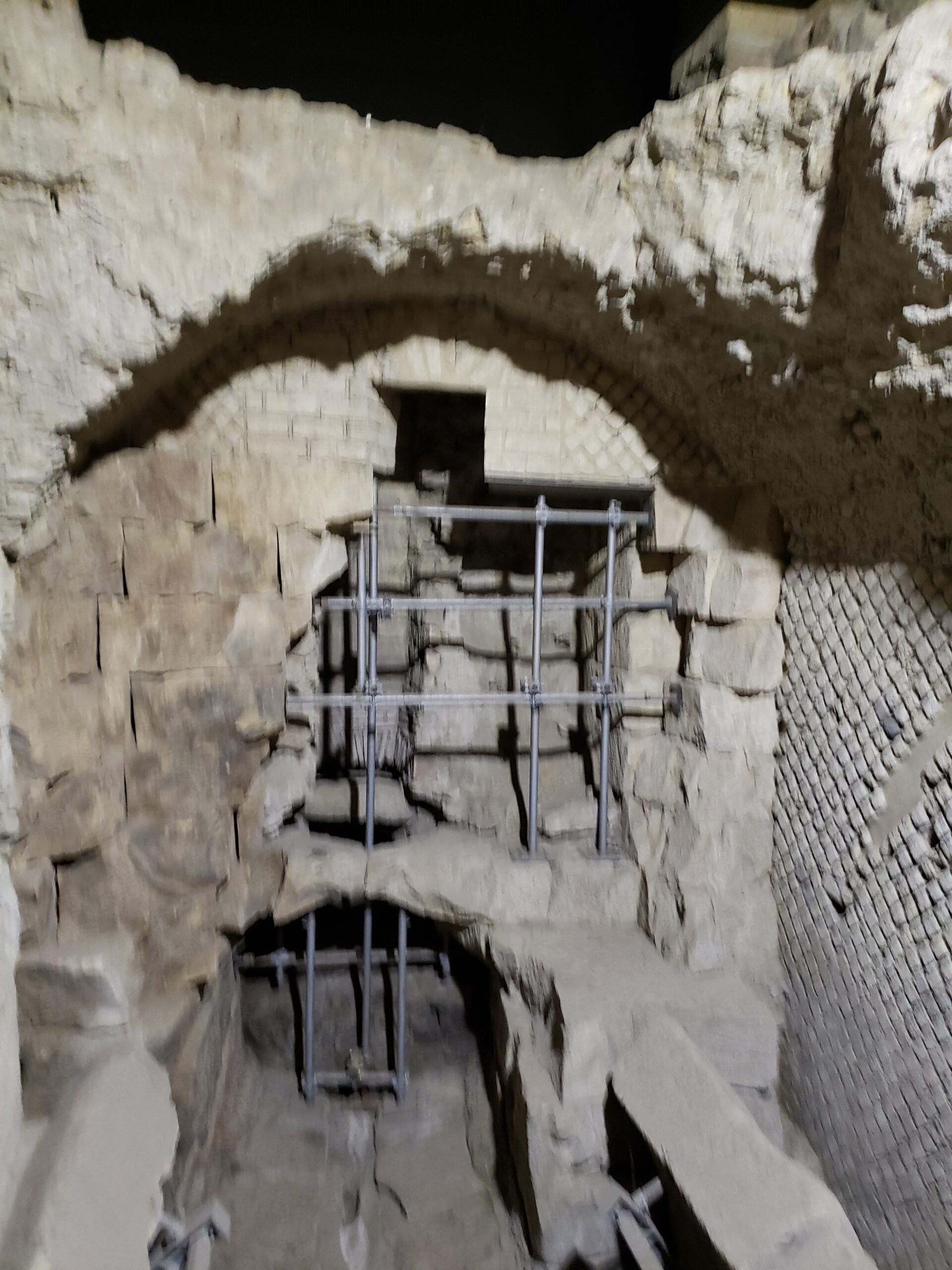
La Neapolis Sotterrata – Ancient Underground Marketplace – Current Escavations
La Neapolis Sotterrata – Ancient Underground Marketplace
La Neapolis Sotterrata – Ancient Underground Marketplace
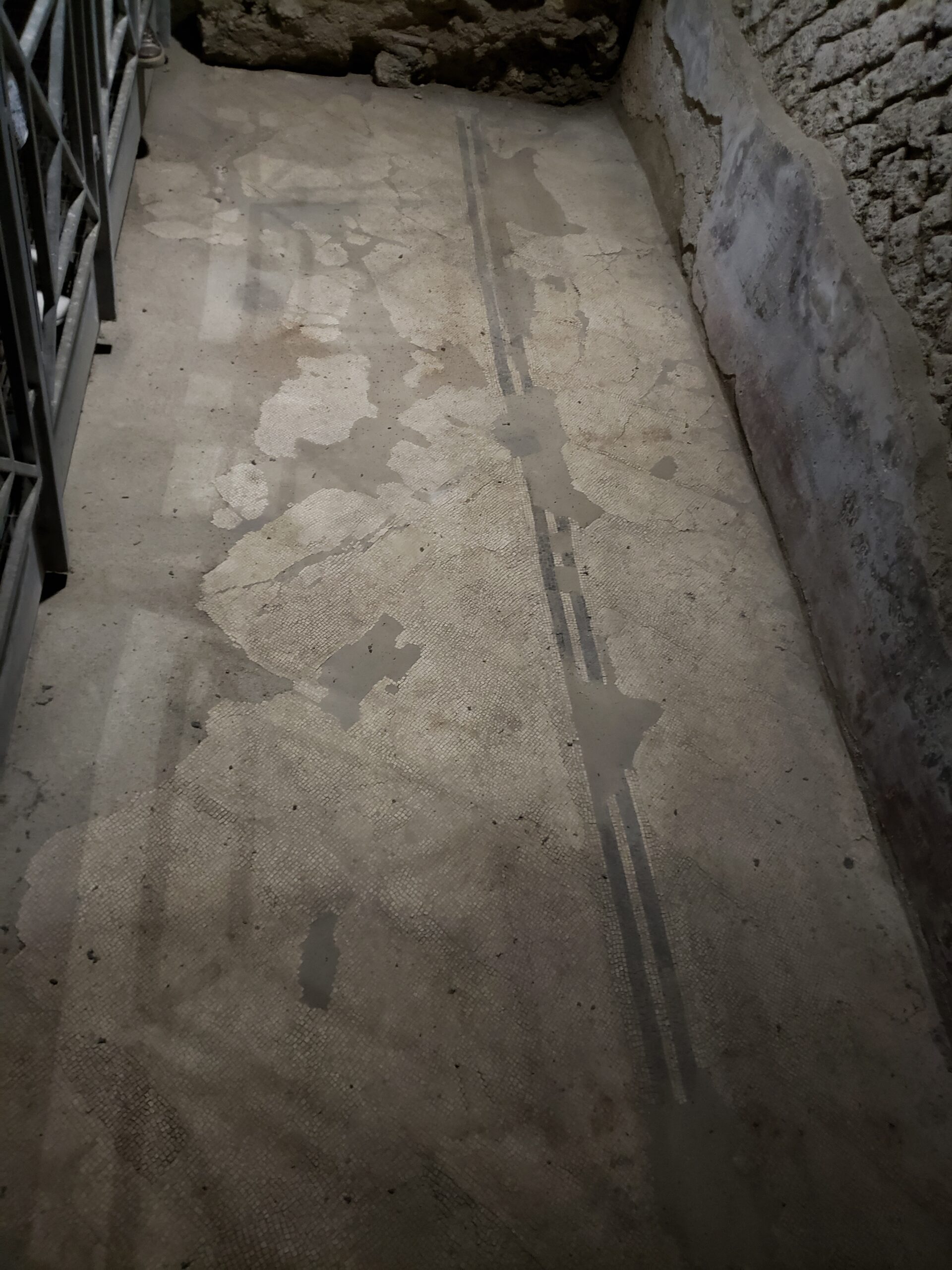
La Neapolis Sotterrata – Ancient Underground Marketplace – Old Mosaic Floor
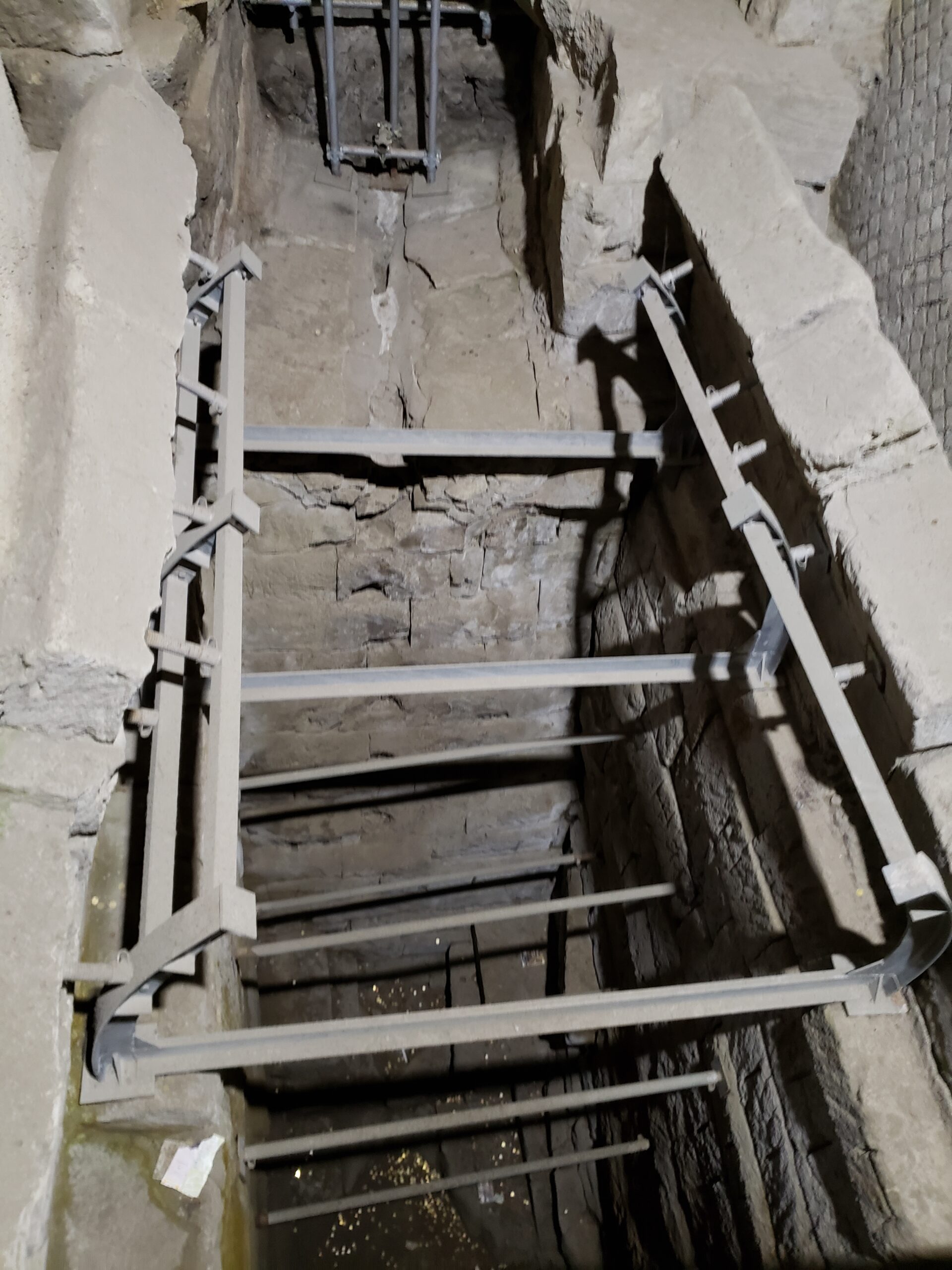
La Neapolis Sotterrata – Ancient Underground Marketplace – Aqueduct Entry Point
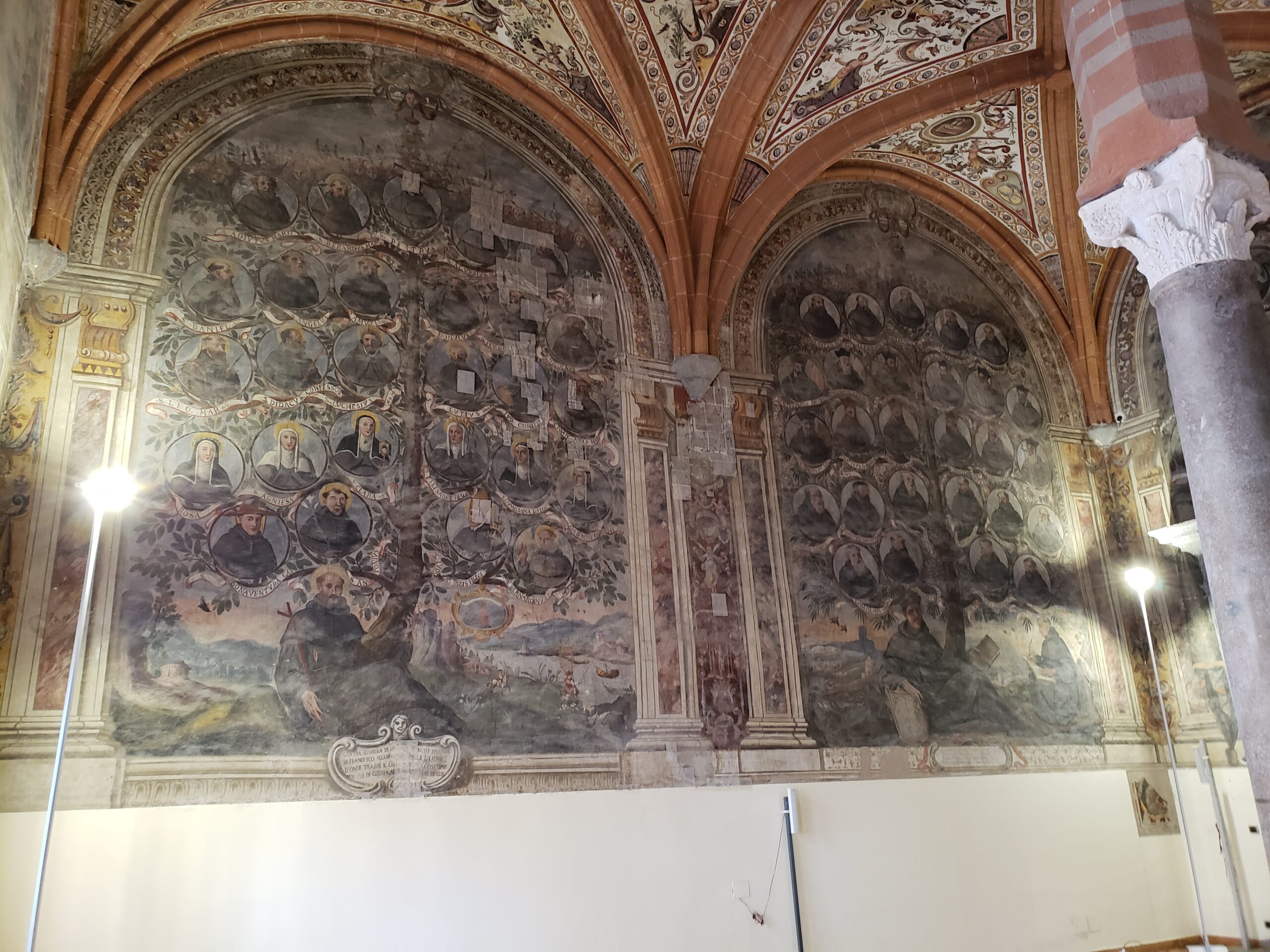
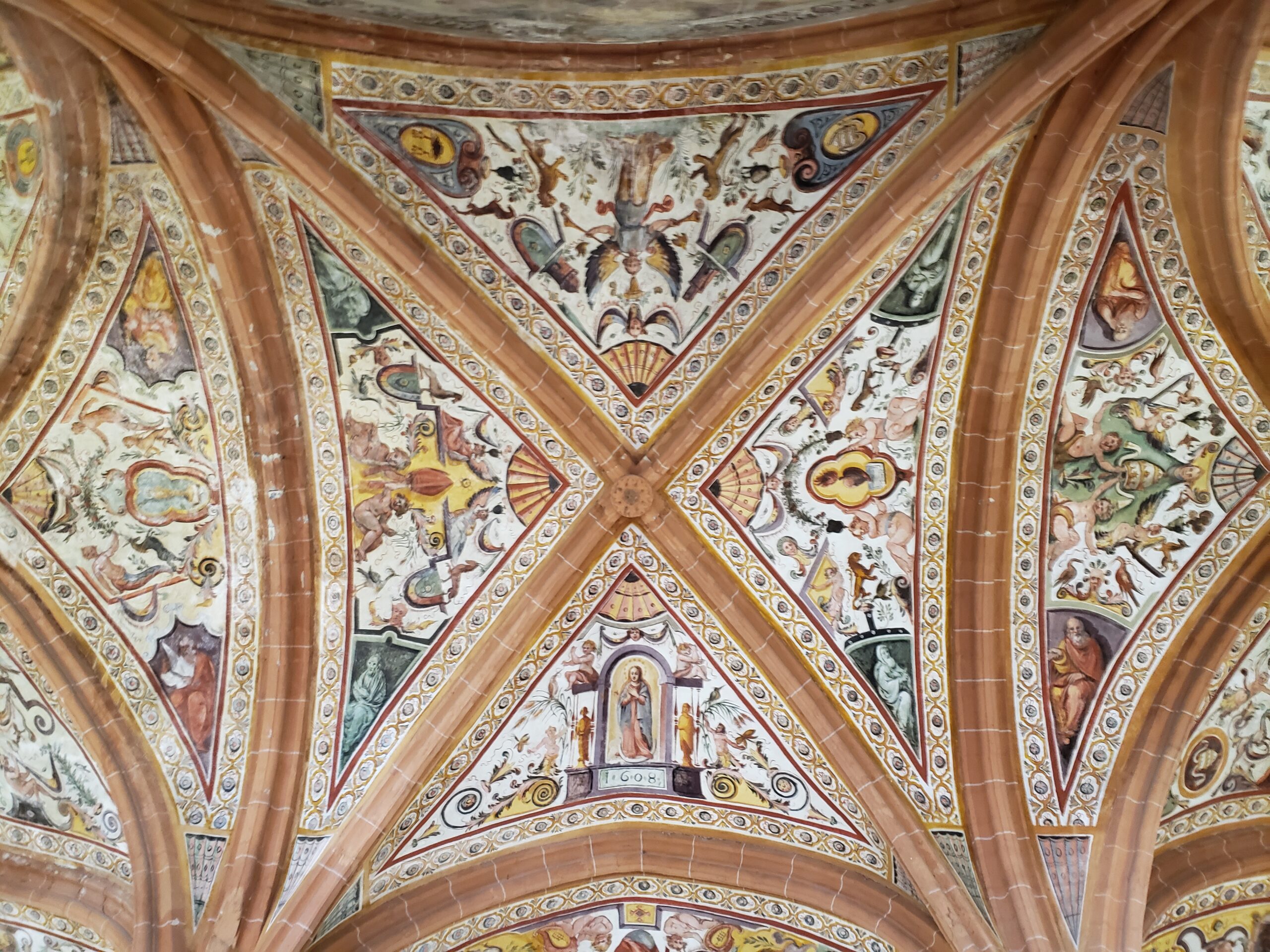
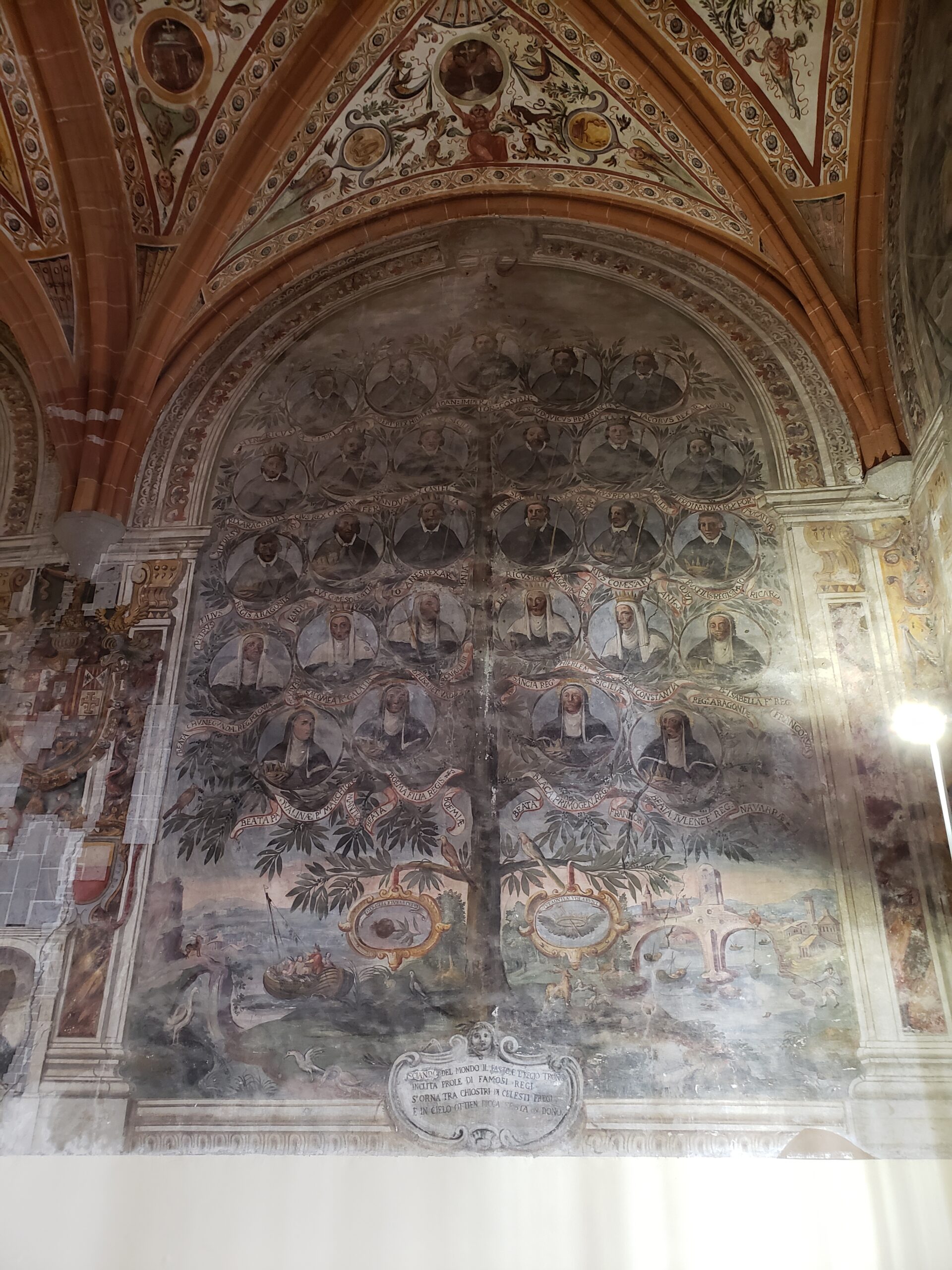
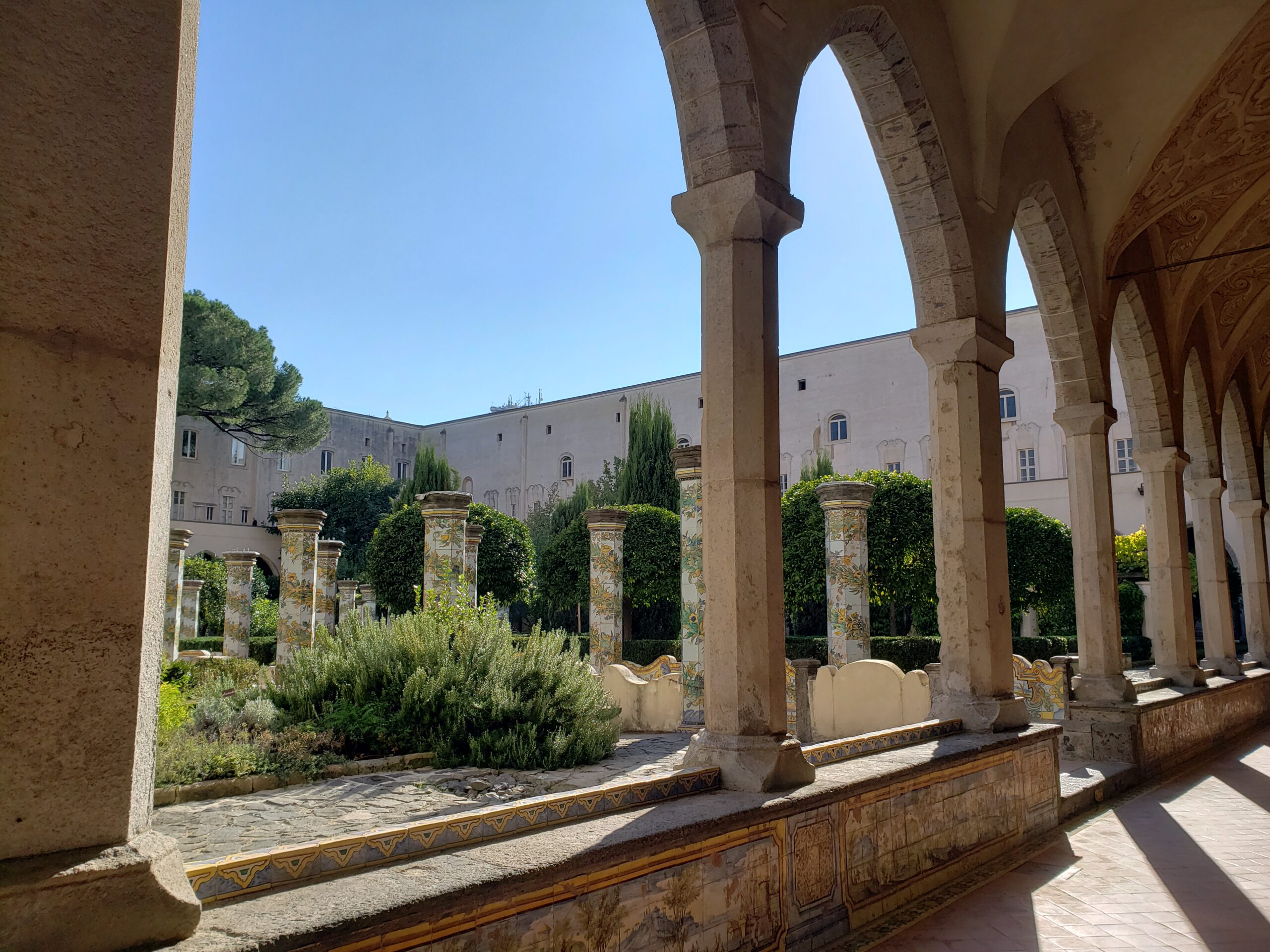
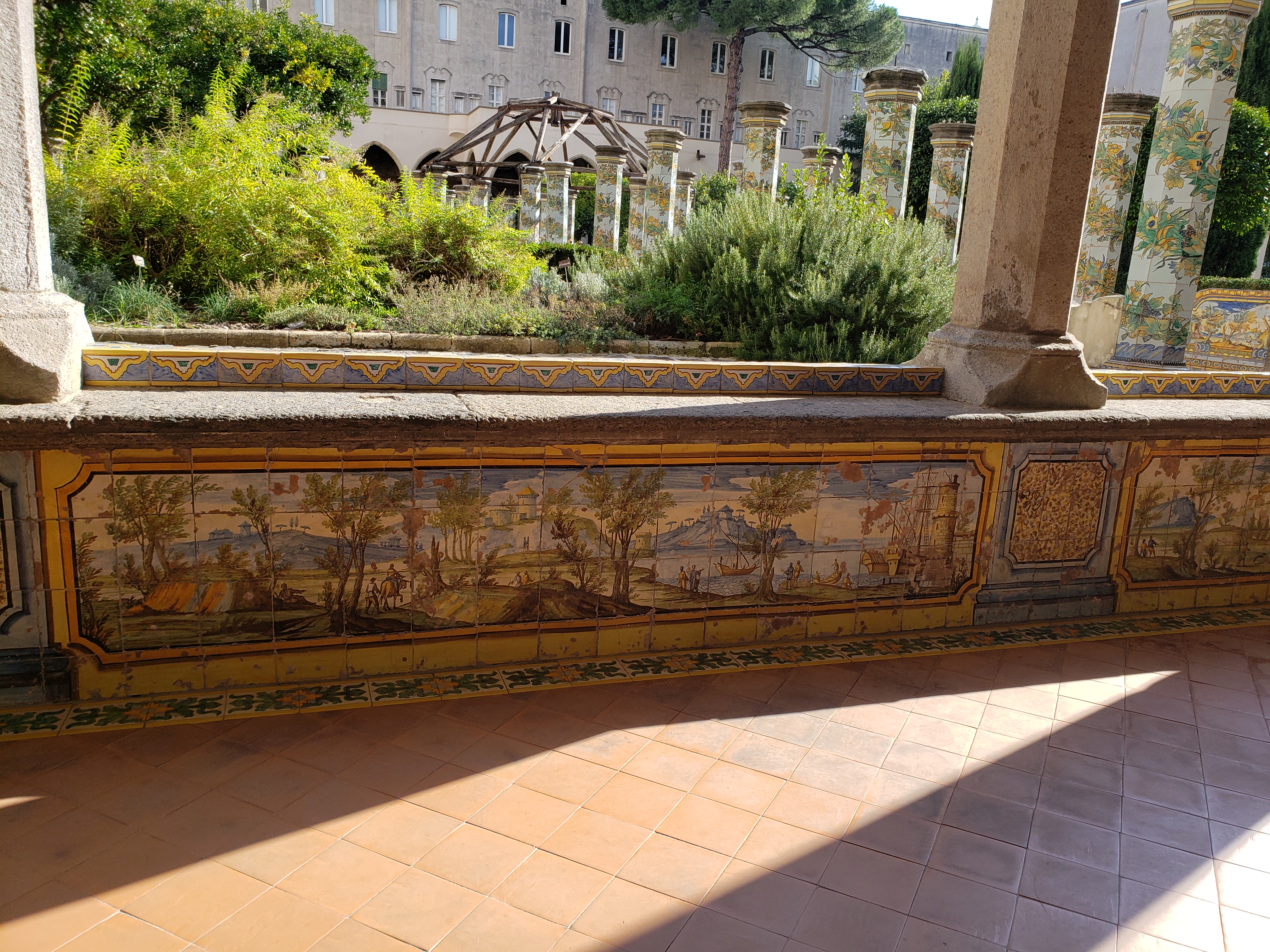
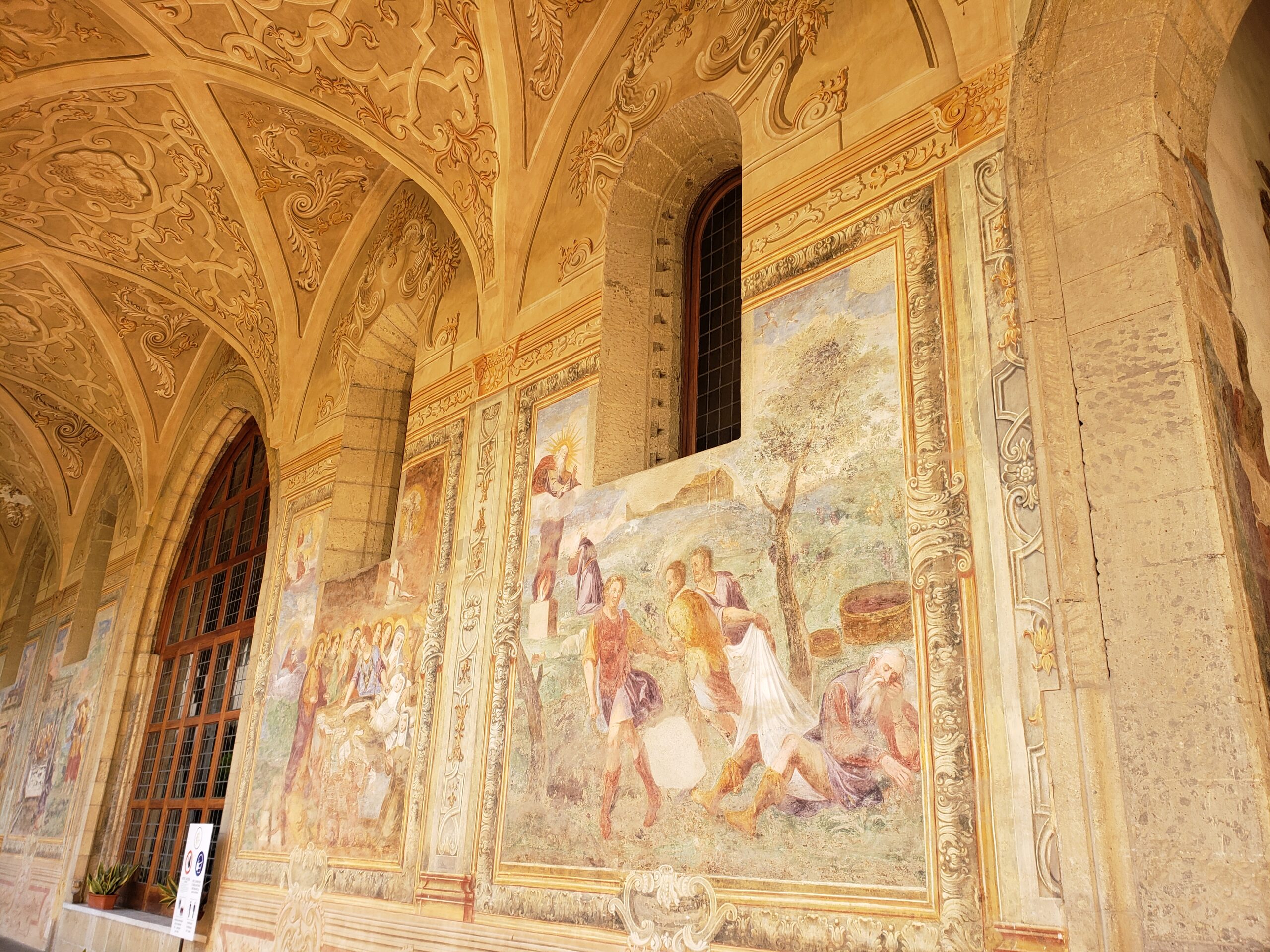
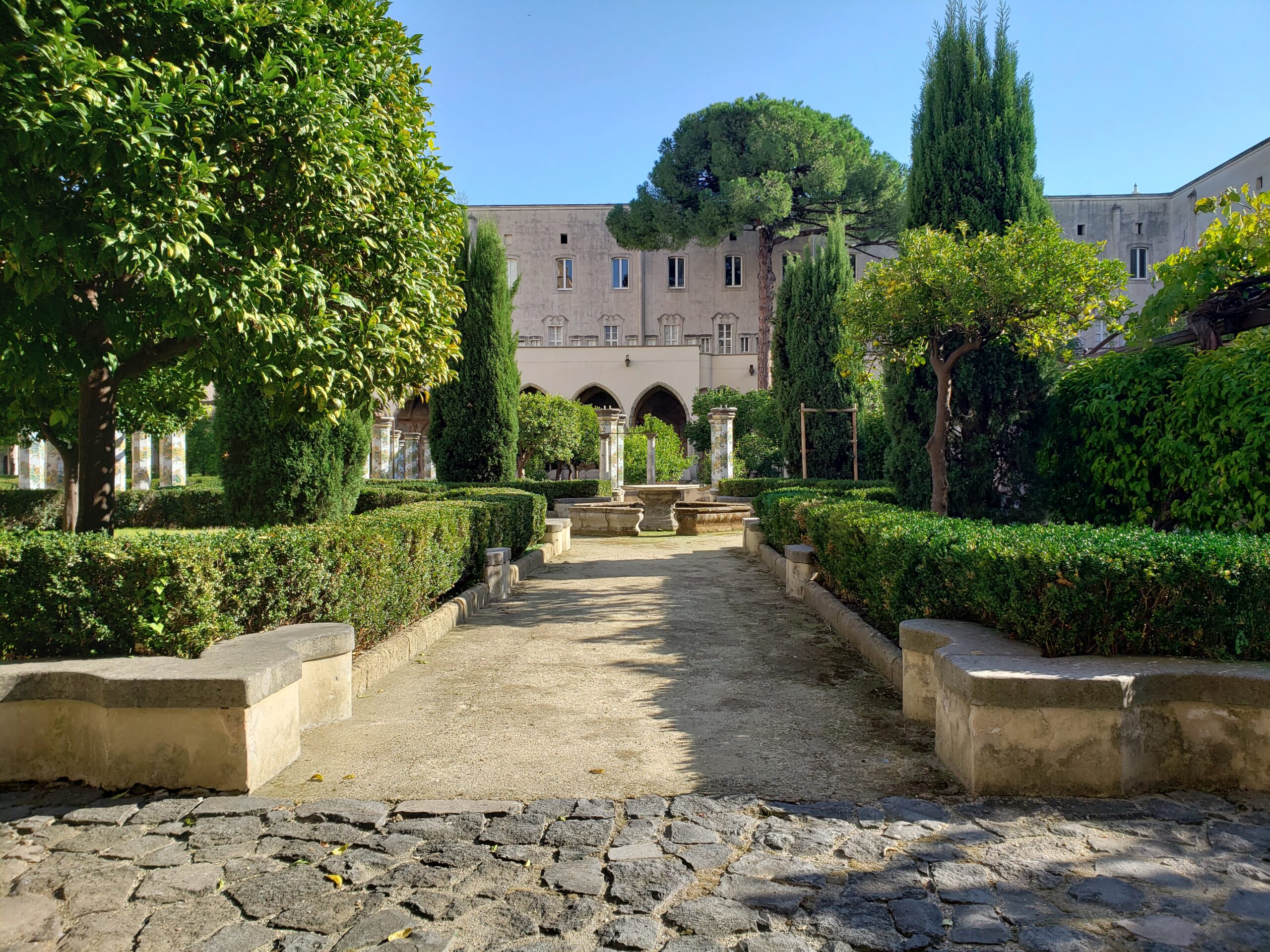
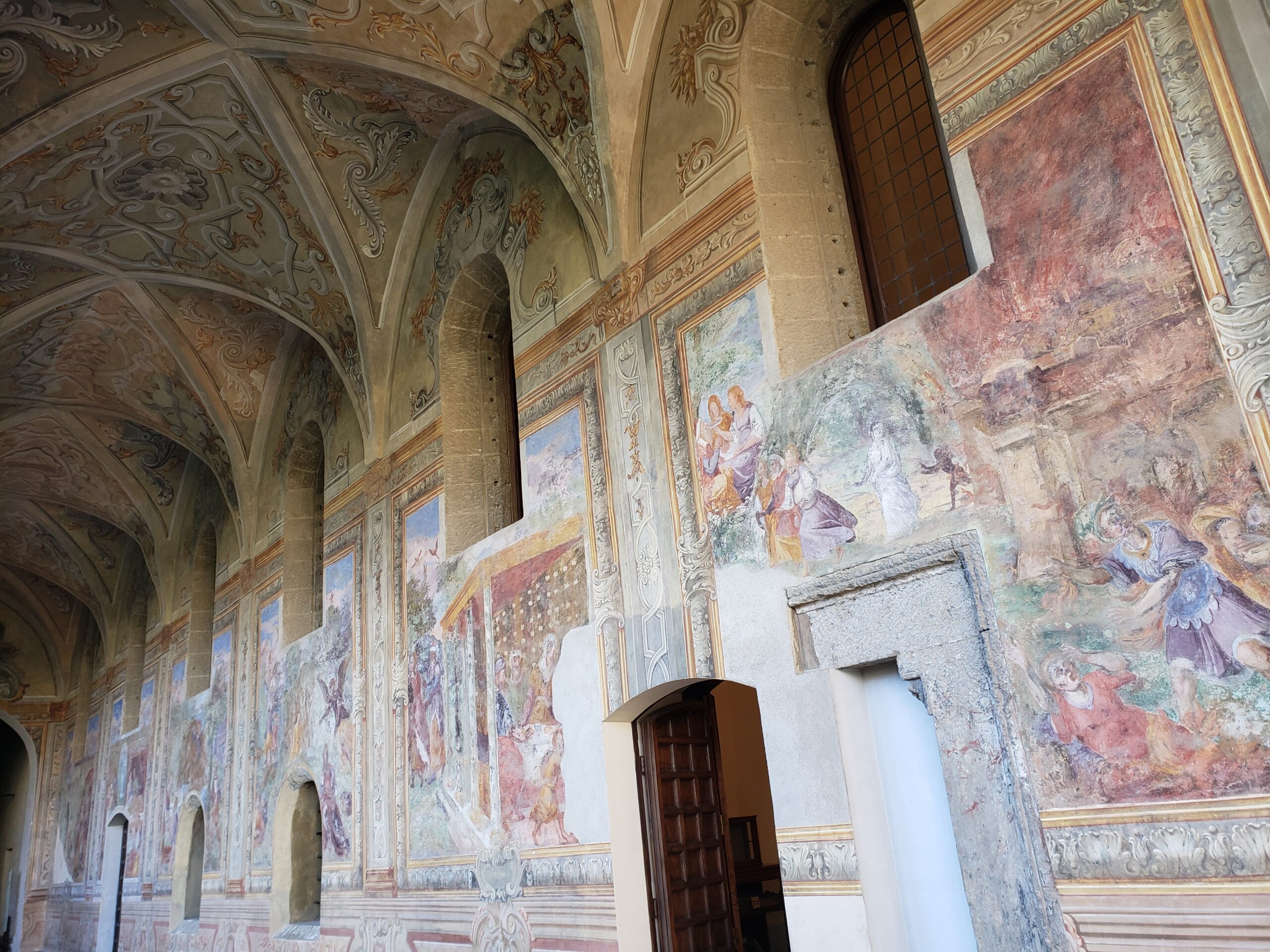
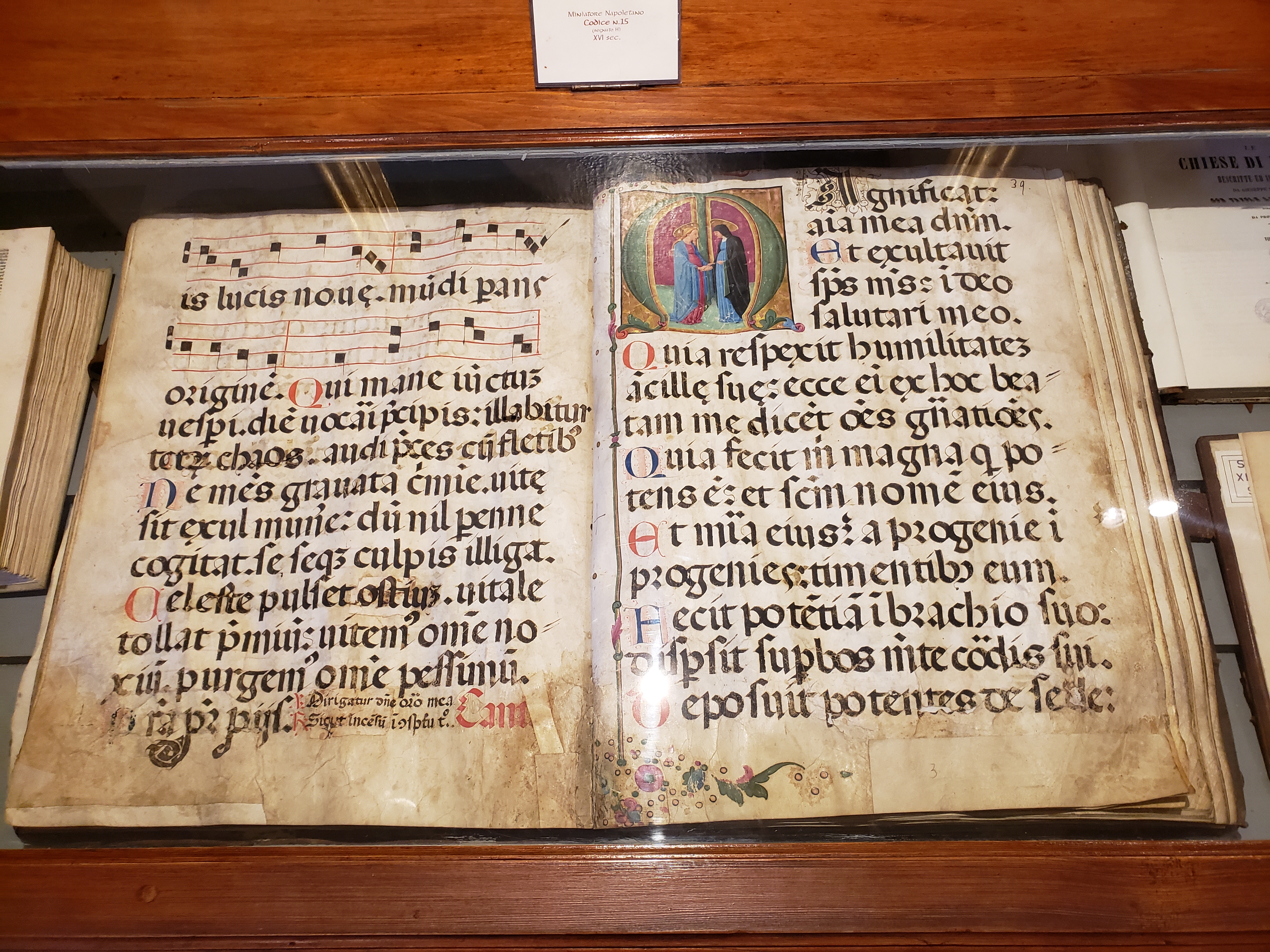
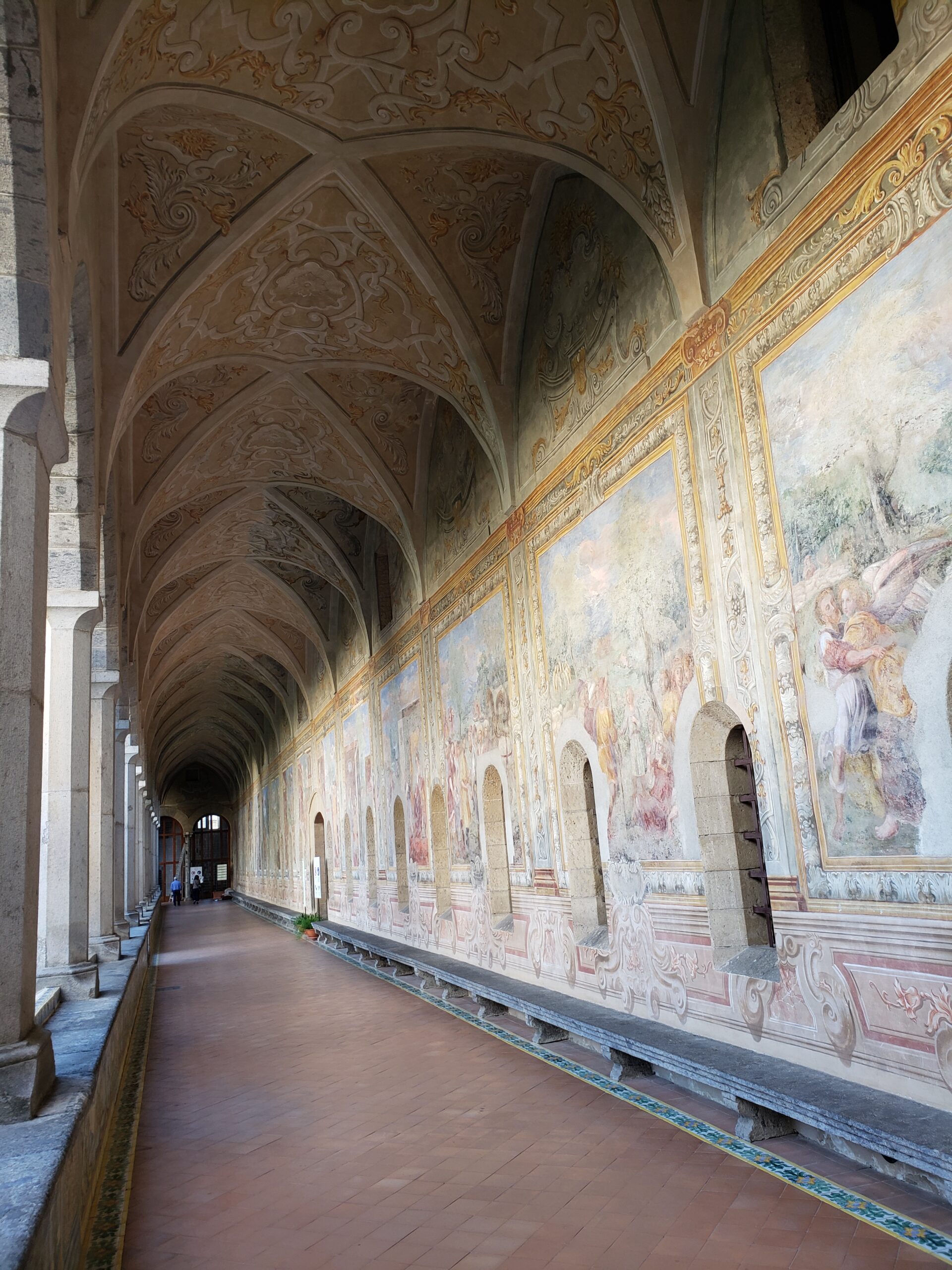
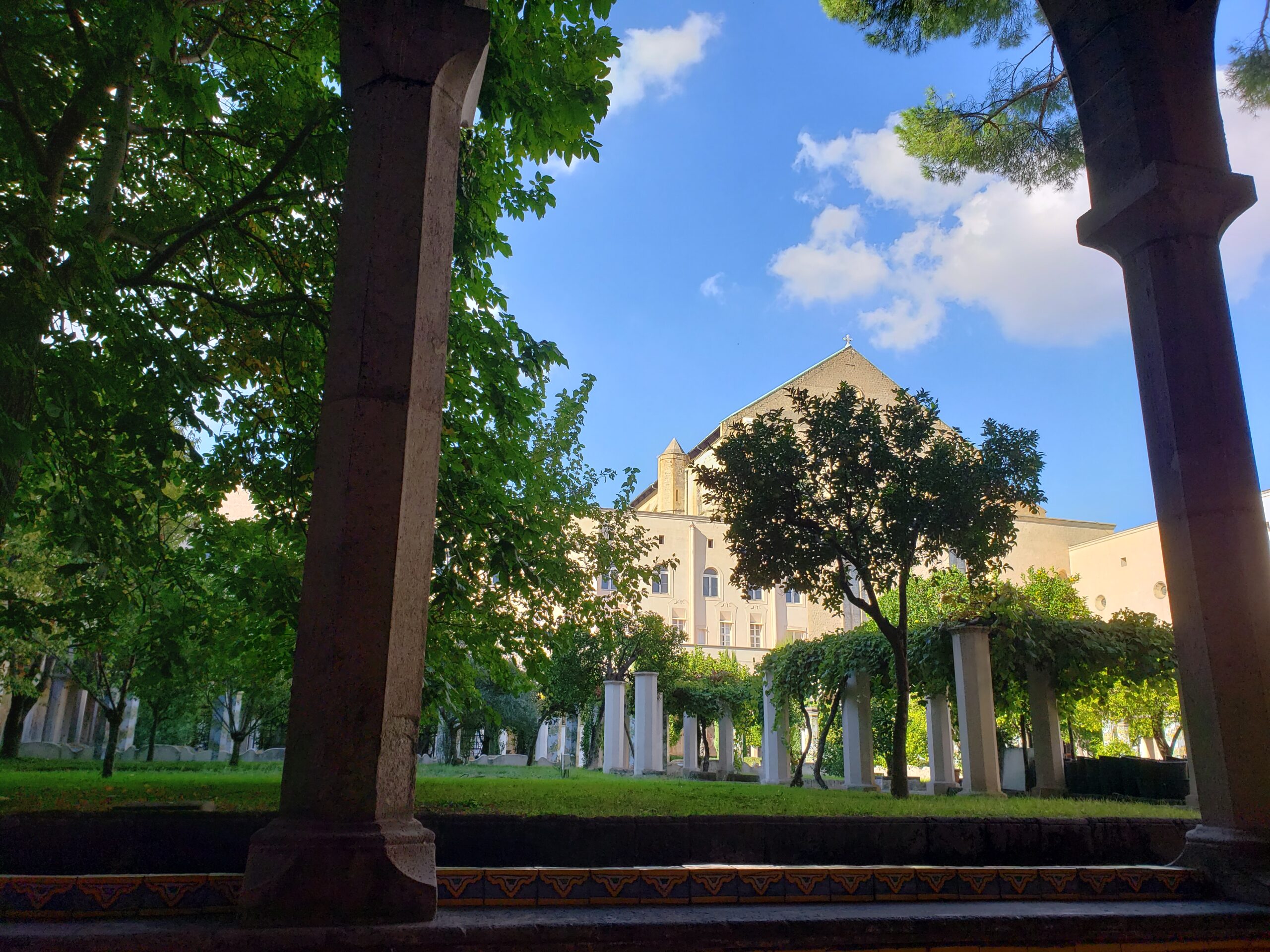
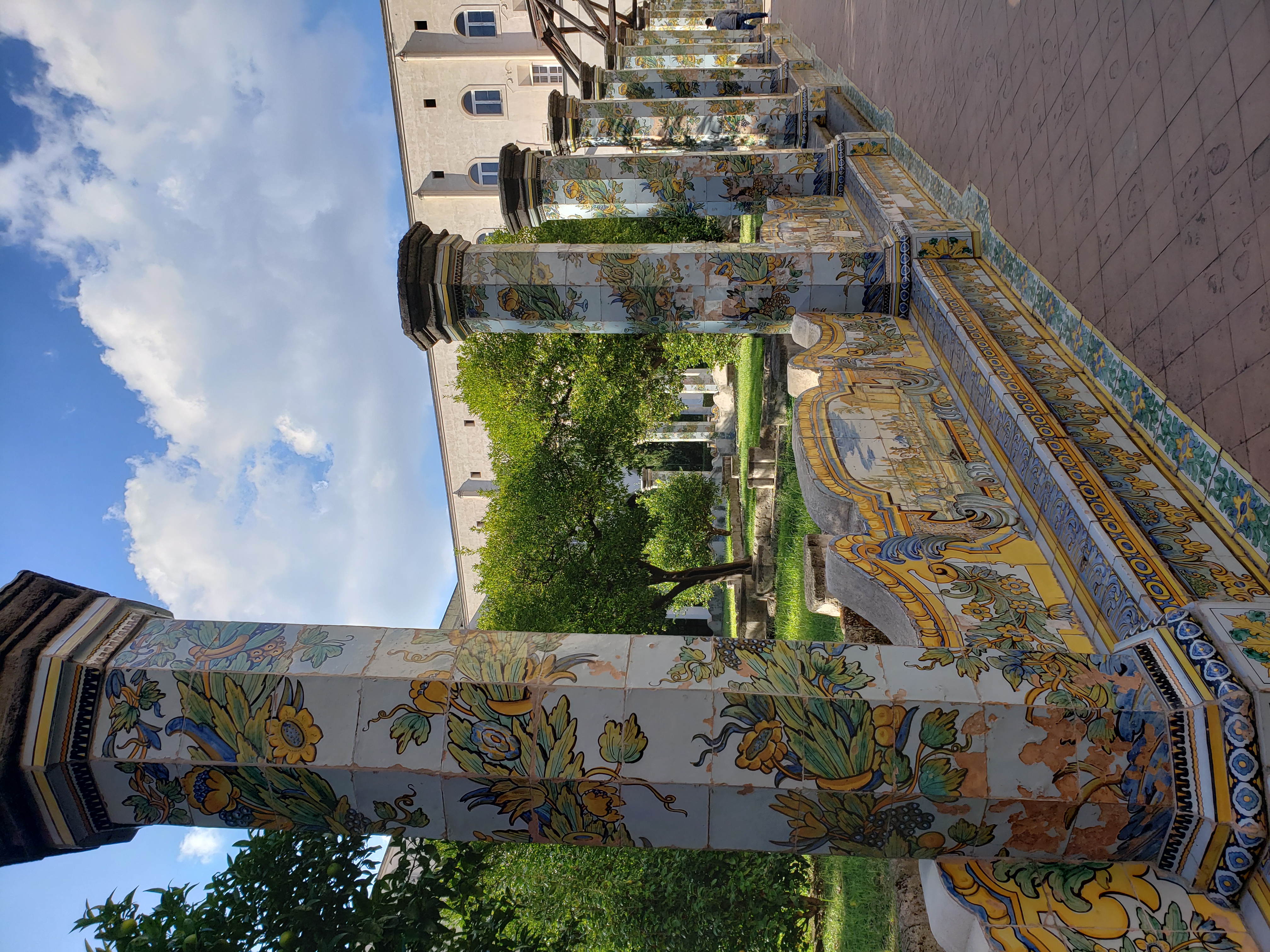
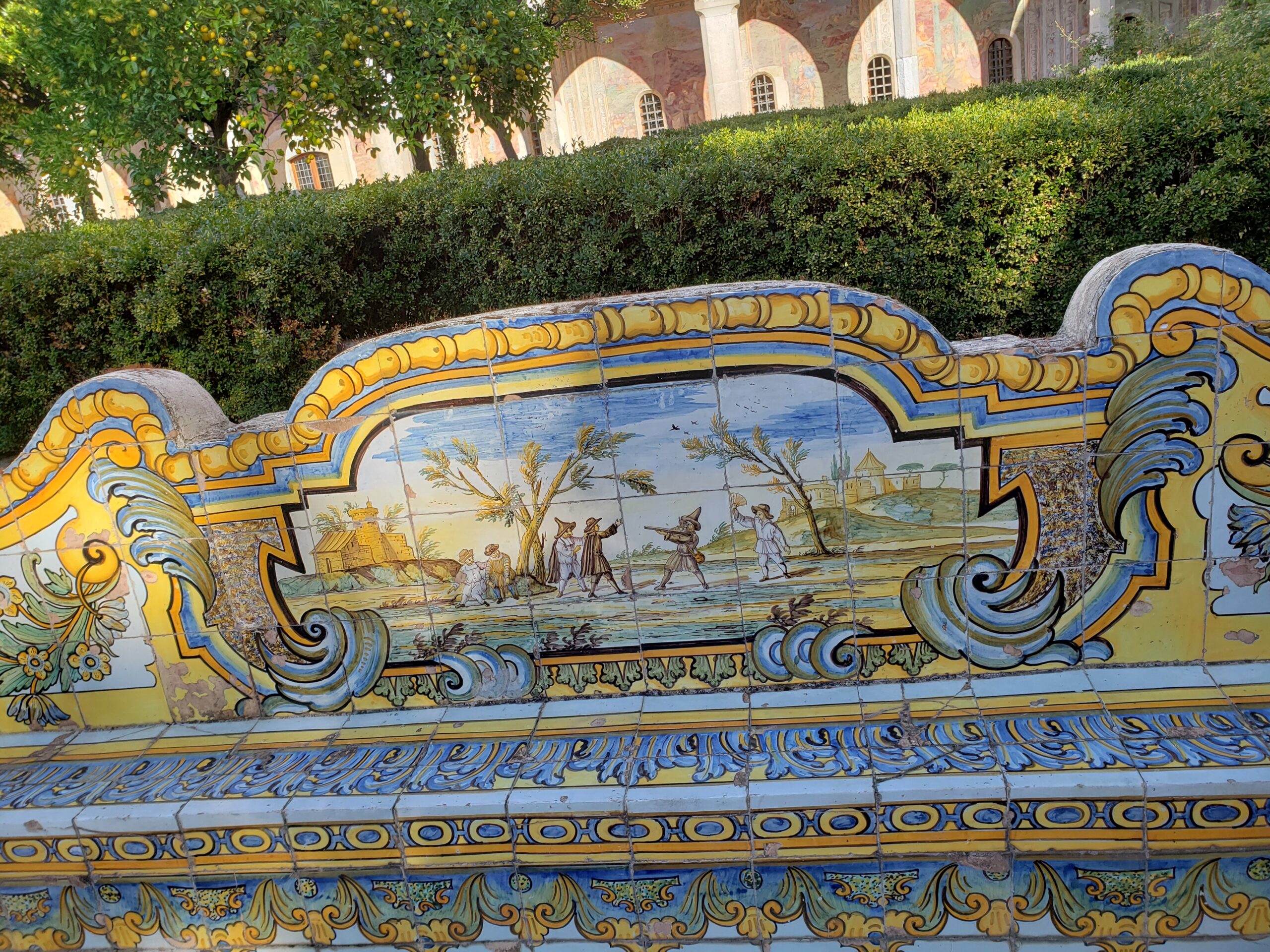
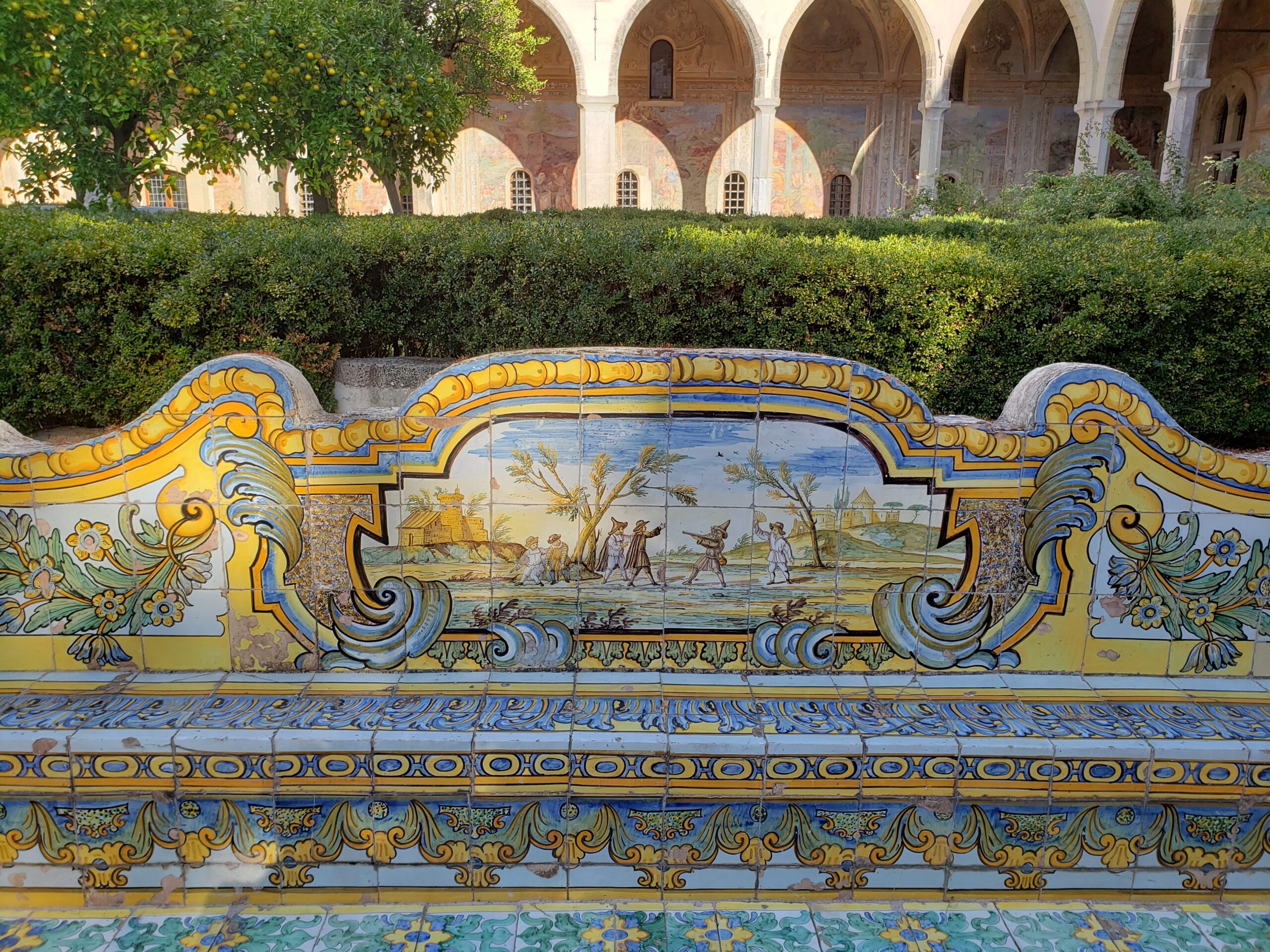
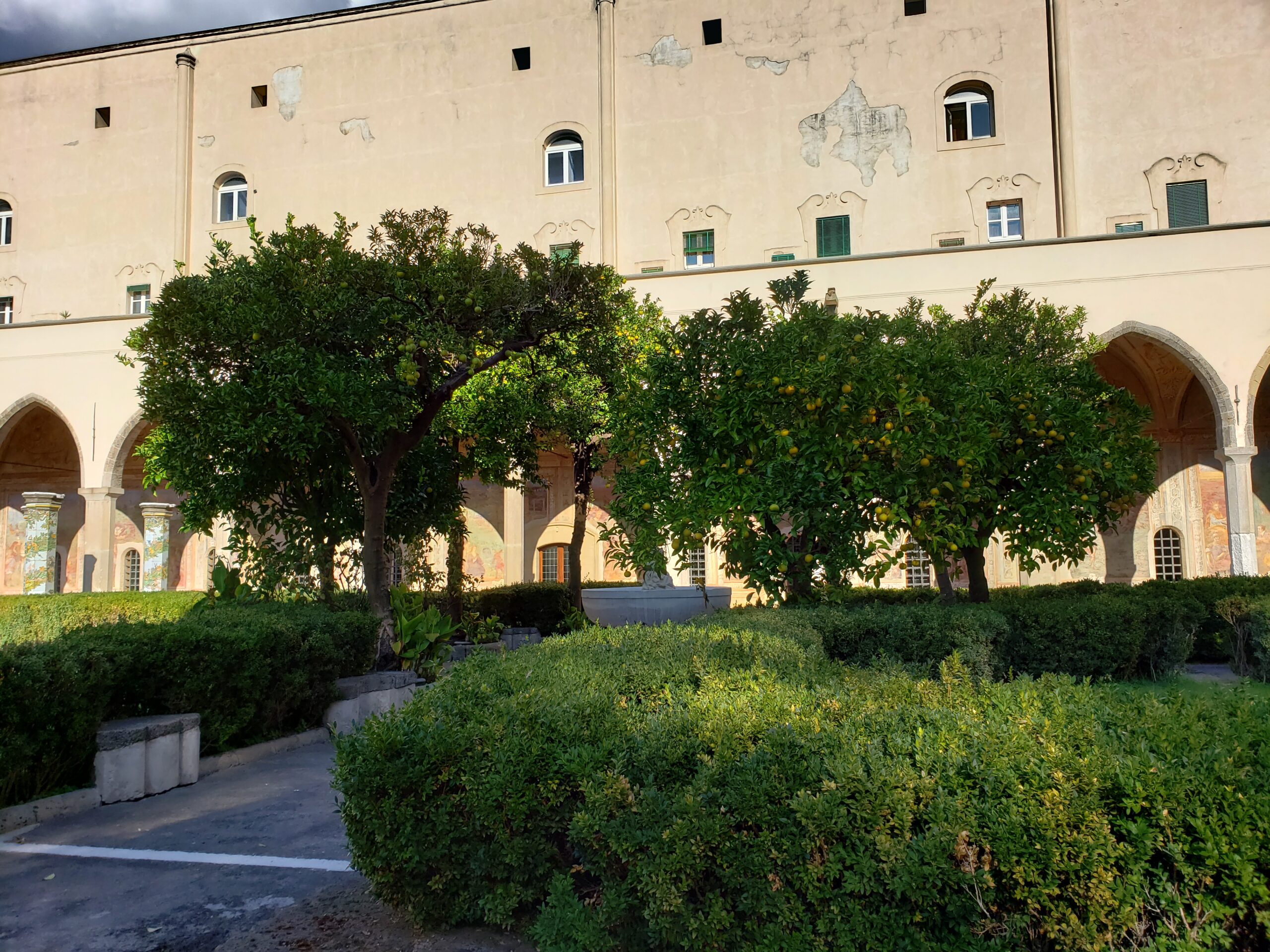
There are a few cloisters in Naples worth visiting, if you have the time and interest. Since it was at the end of our trip and we were lacking time, we chose the Cloister of Santa Chiara to visit, which sits right in the middle of the Historic Center and not far from all of the shopping, which we were interested in doing as well.
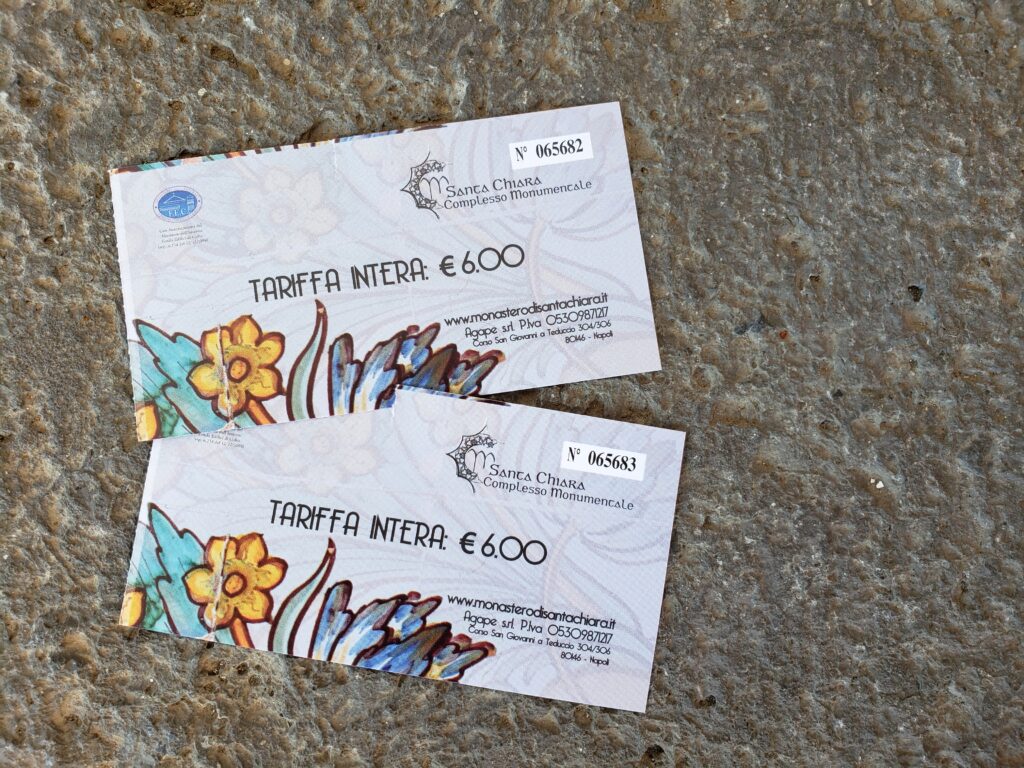
Cloister – Tickets For Two
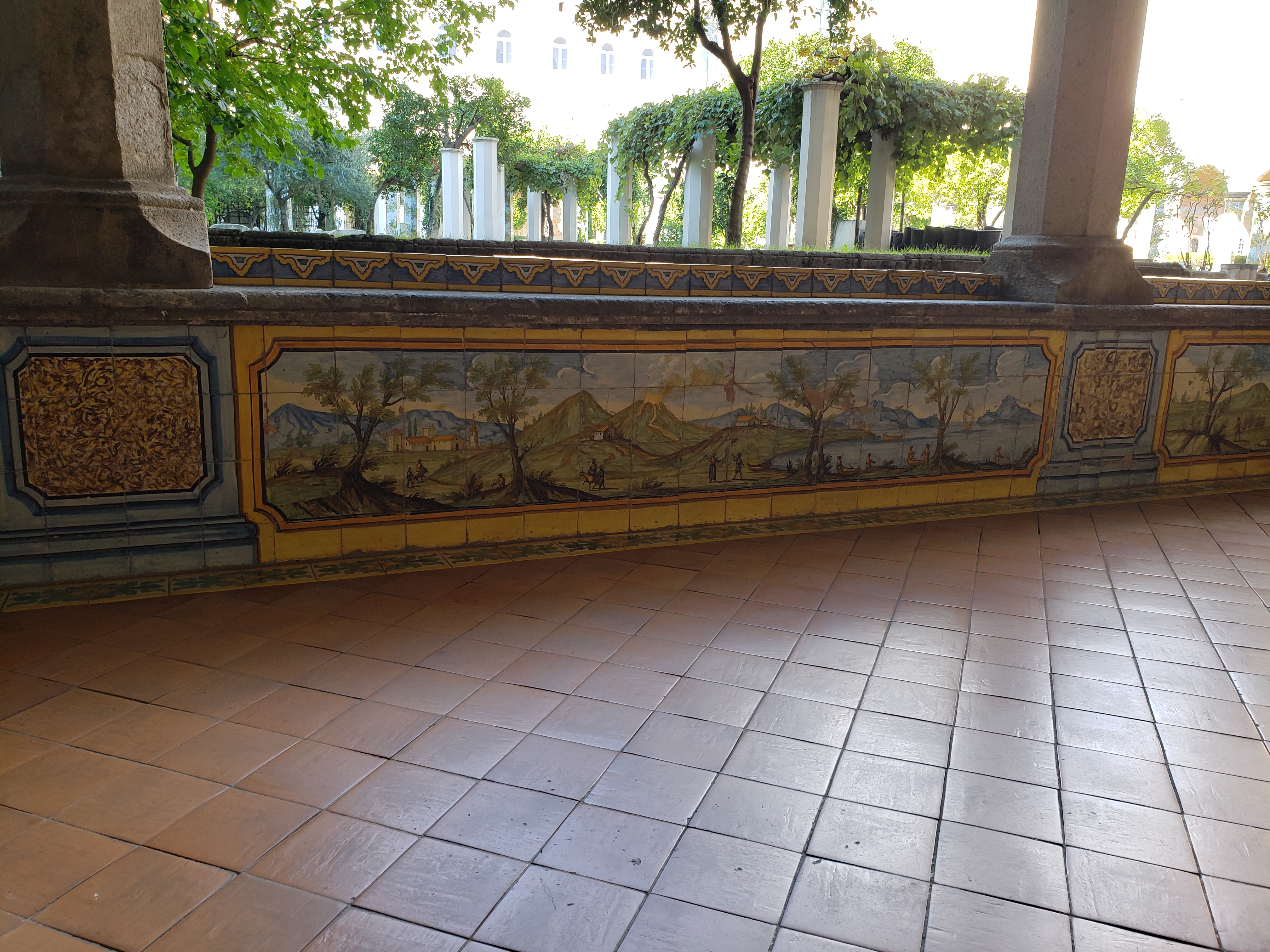
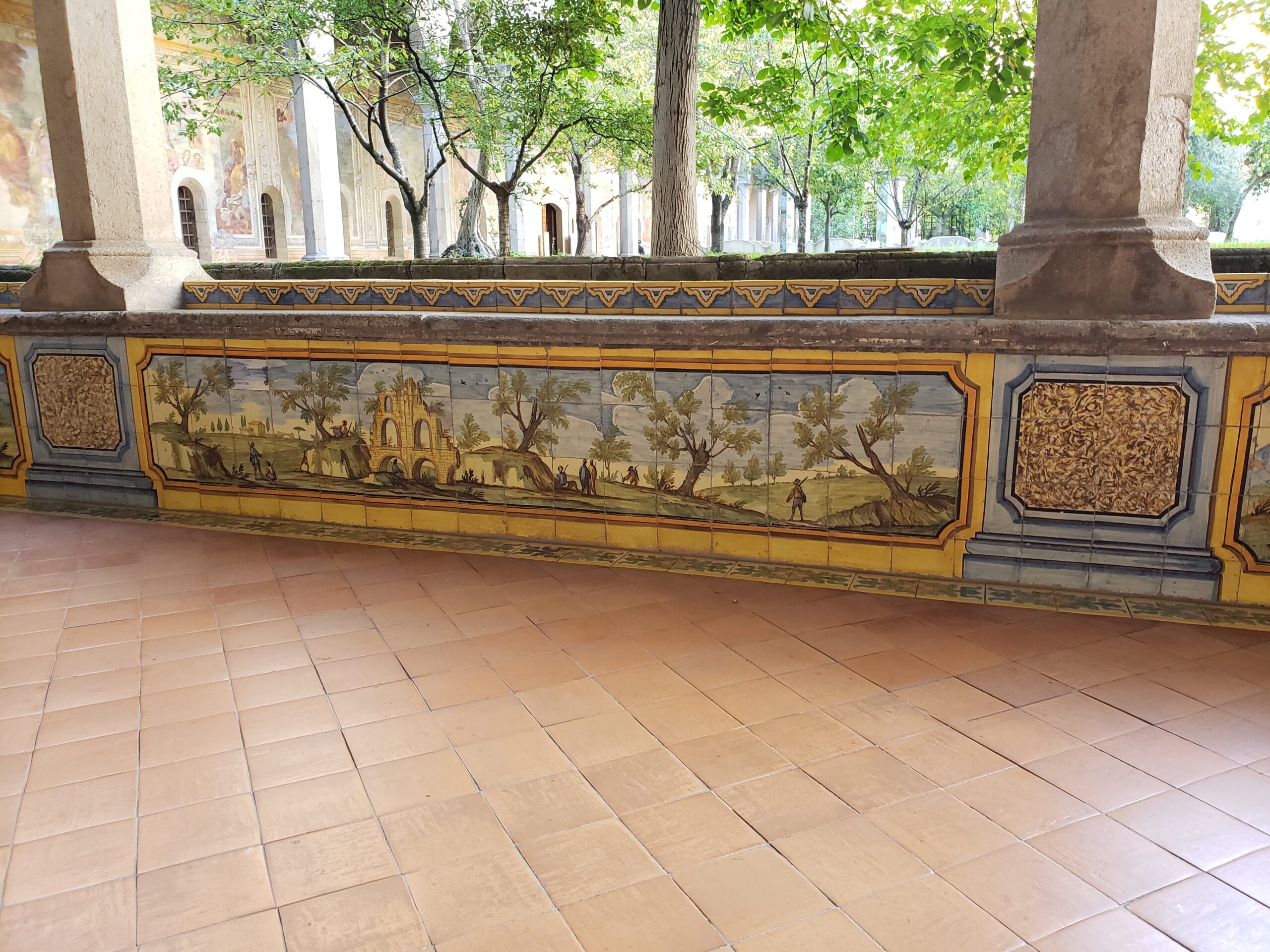
Chiostro di Santa Chiara
The cloister is behind a large church which suffered greatly during the allied bombings of Naples in the 1940s. Apparently the church took most of the damaged and the cloister was left, more of less, intact for us to enjoy today.
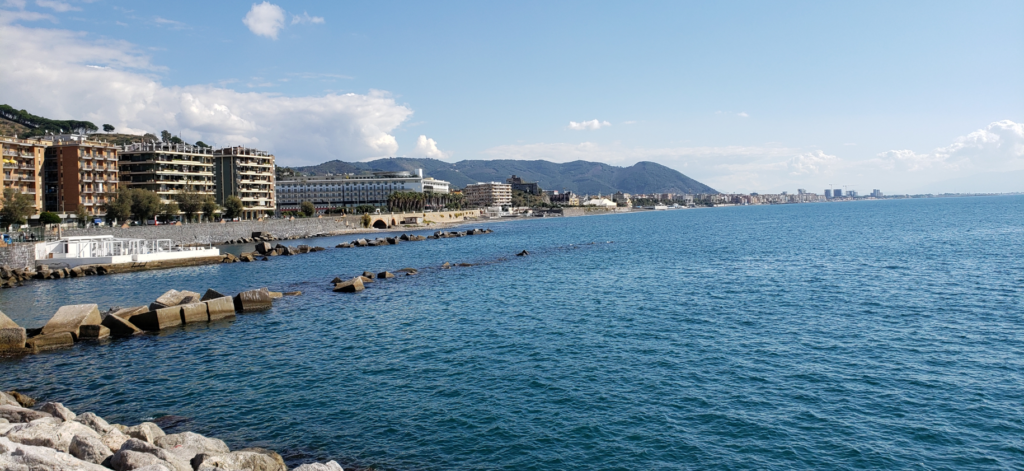
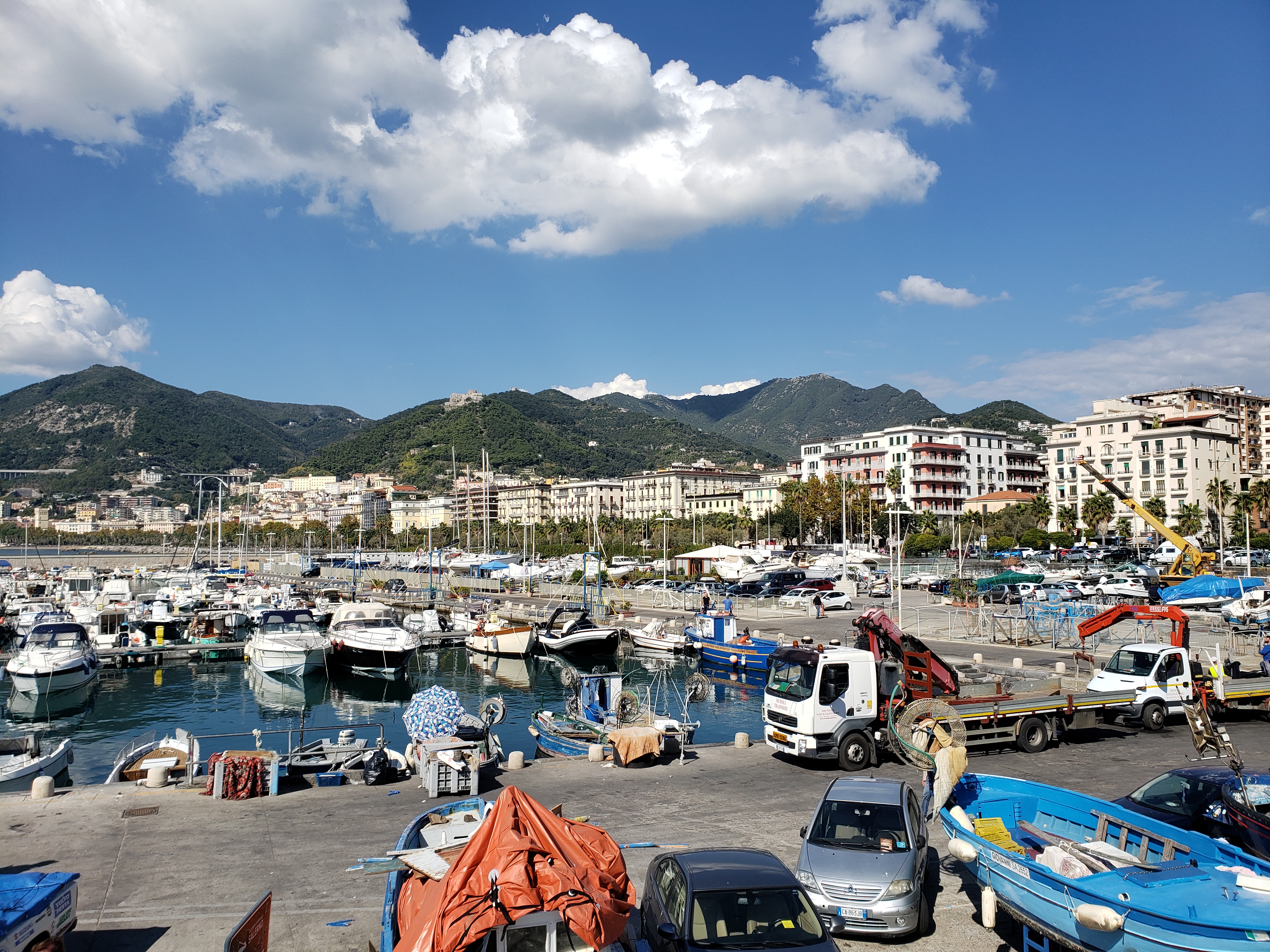
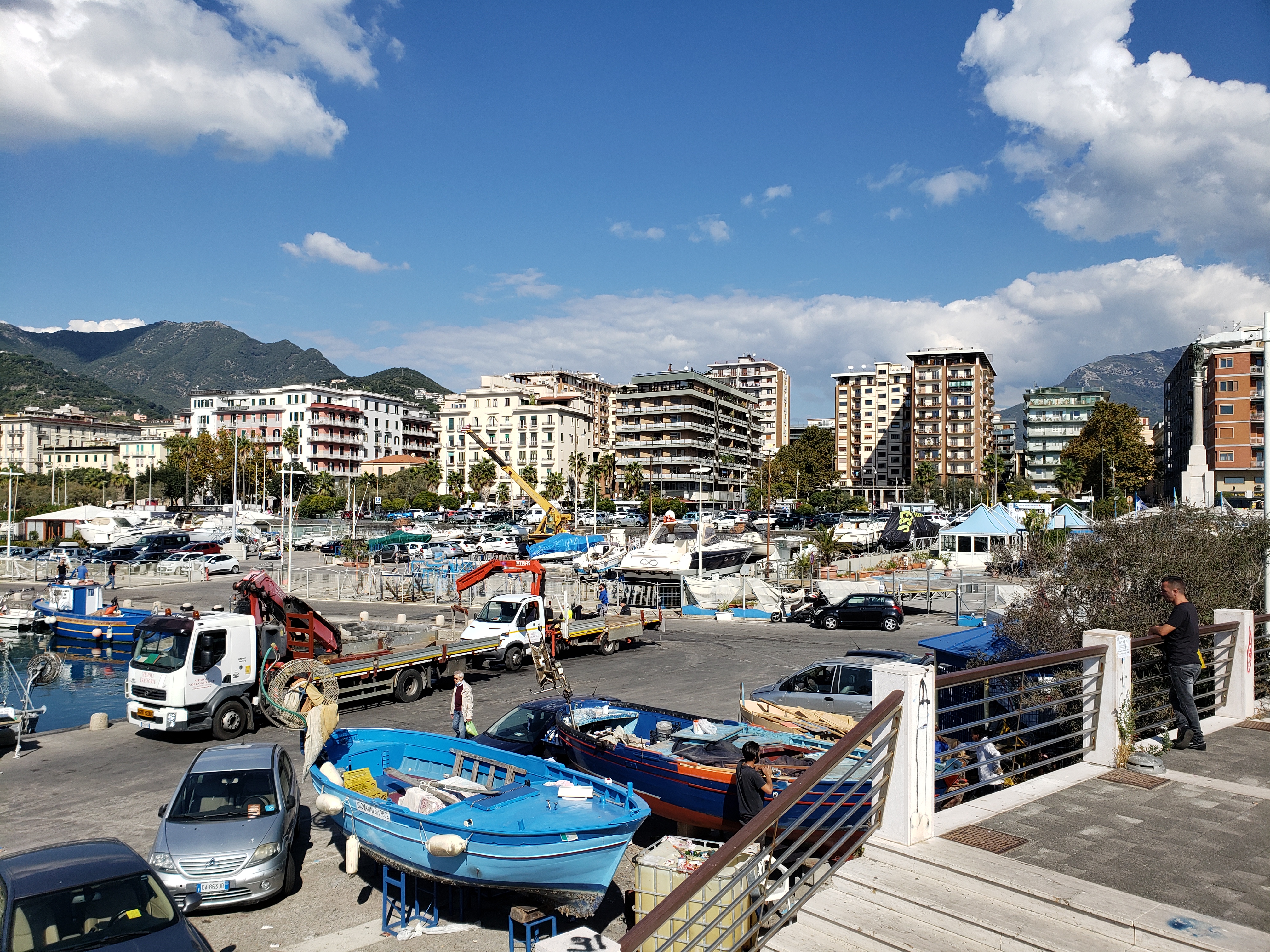
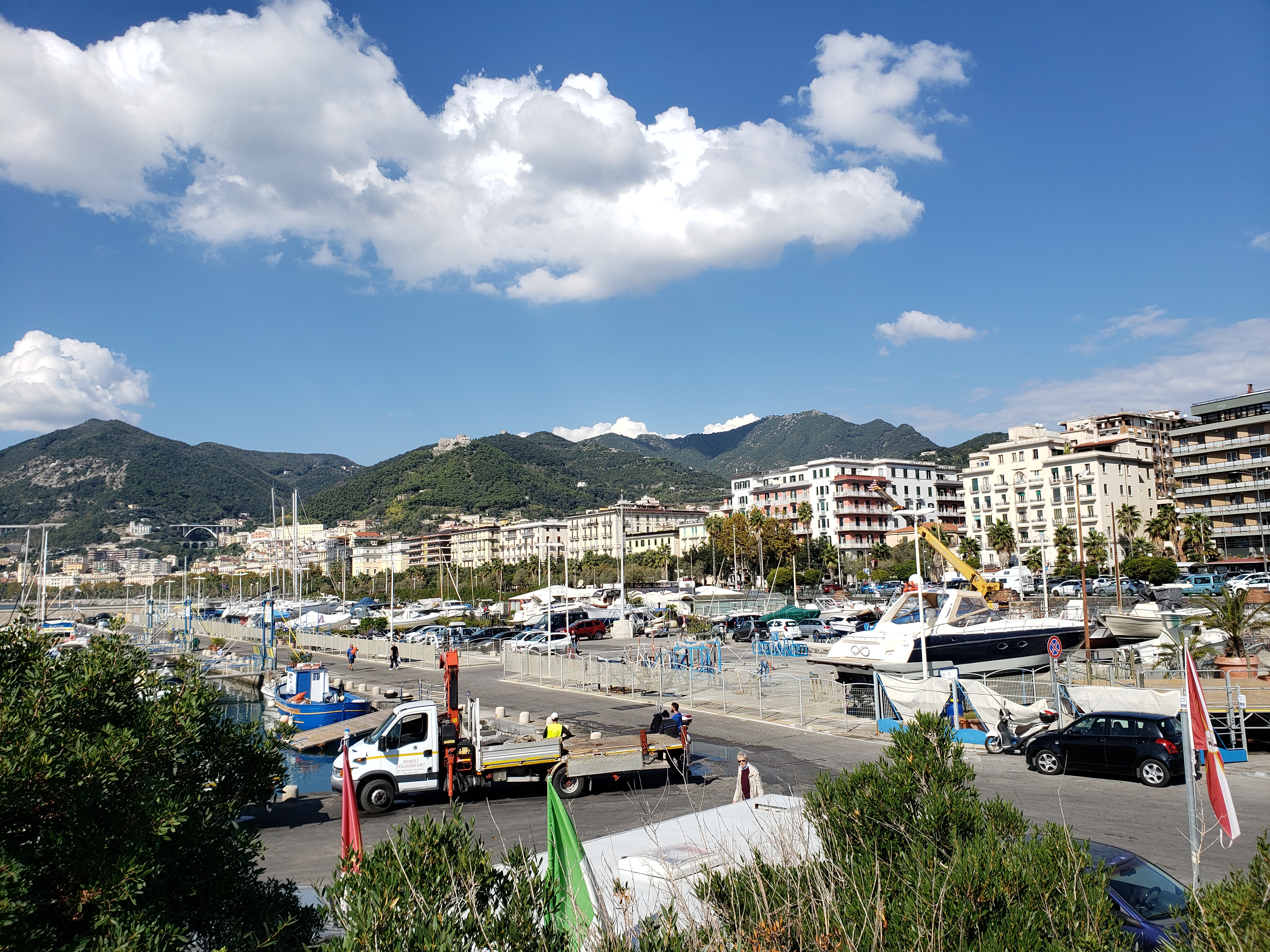
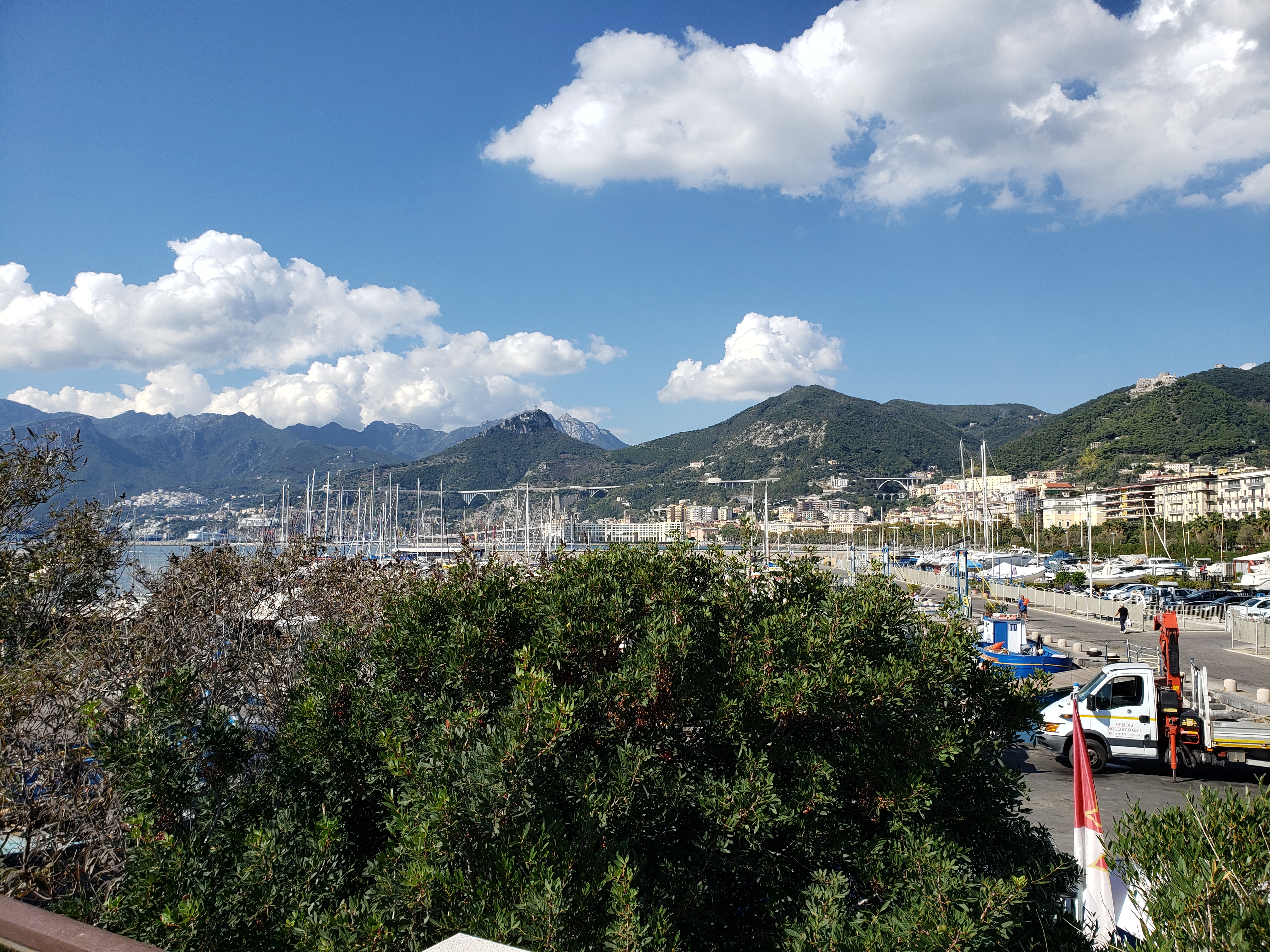
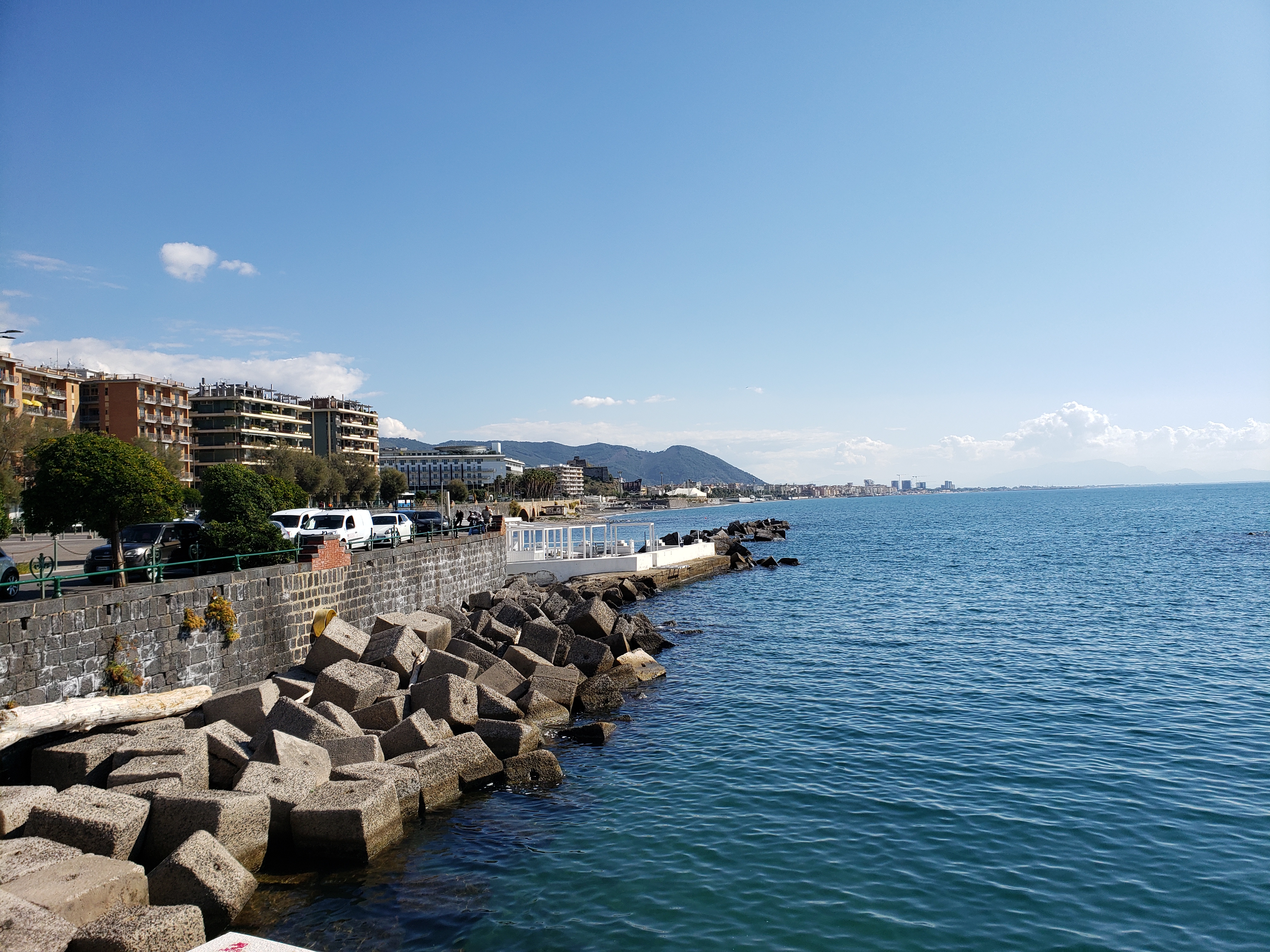
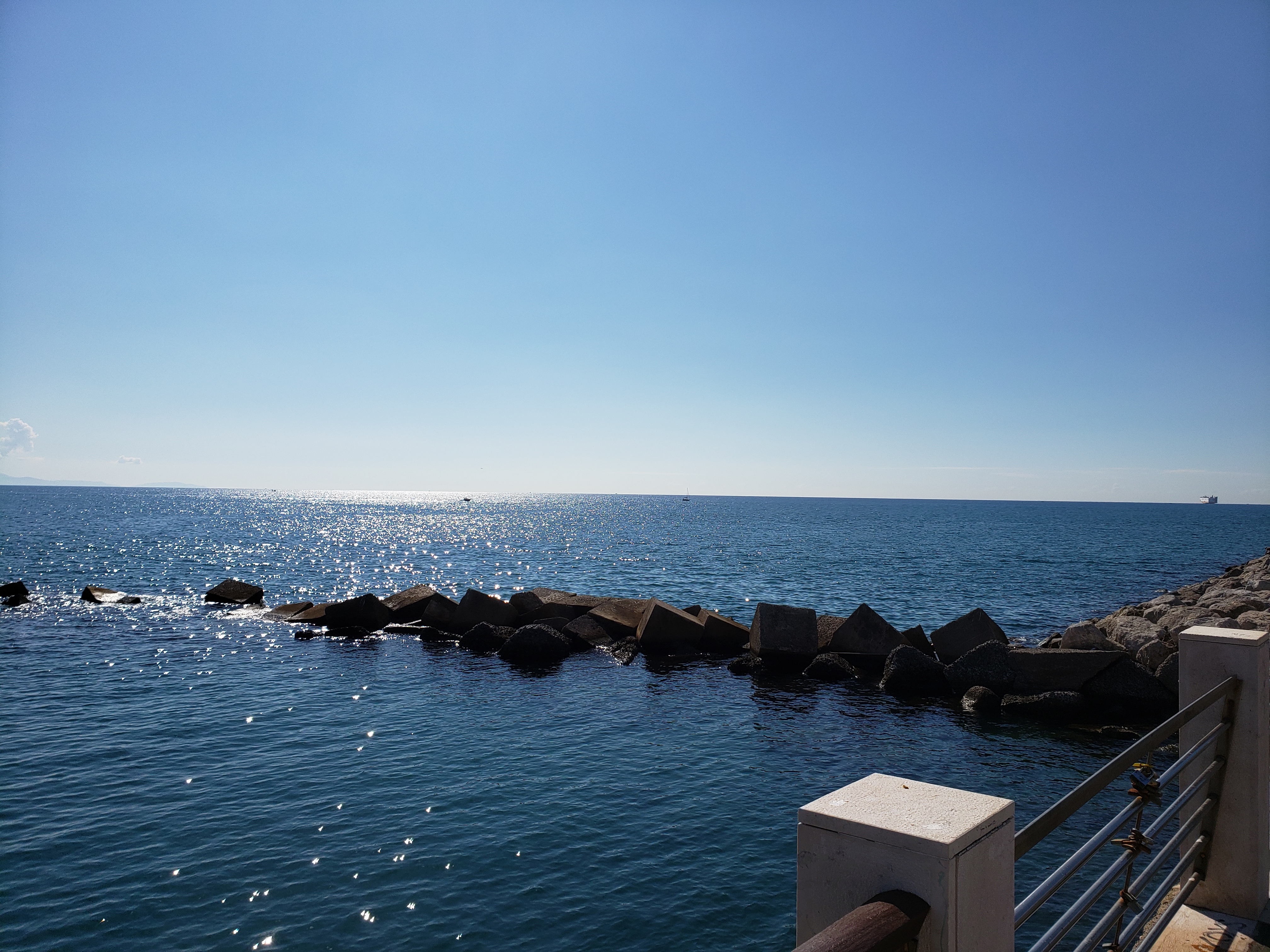
Needing to get out of Naples, if only for a day, we took the train south to Salerno in discovery of yet another ancient city along the Italian Mediterranean Sea. A short train ride of only a half an hour puts you there, three blocks in from from its coastal port and jetties that border the bright blue Tyrrhenian Sea.
Waterfront – Salerno, Italy
Waterfront – Salerno, Italy
Waterfront – Salerno, Italy
Waterfront – Salerno, Italy
Waterfront – Salerno, Italy
Waterfront – Salerno, Italy
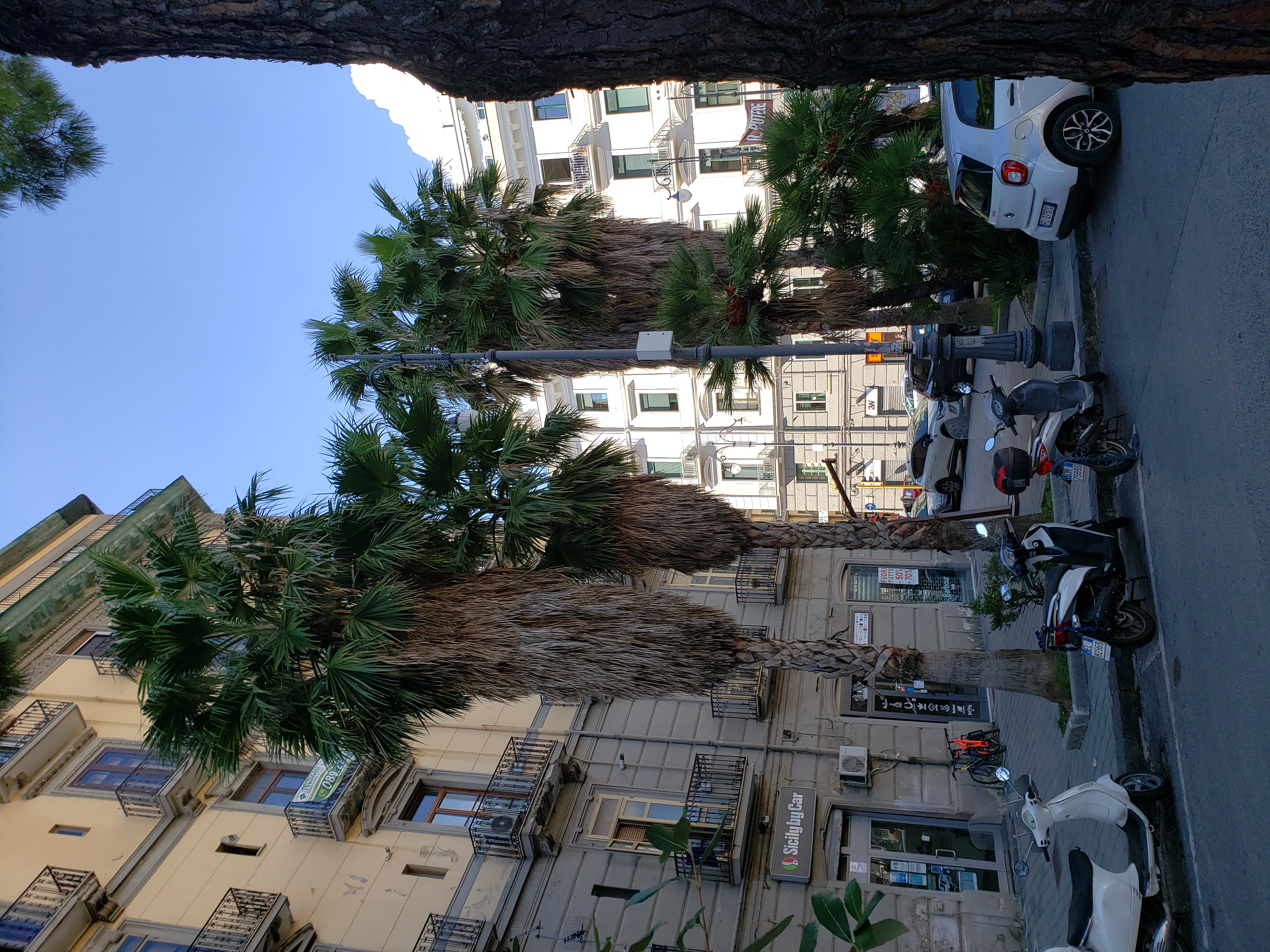
The City – Salerno, Italy
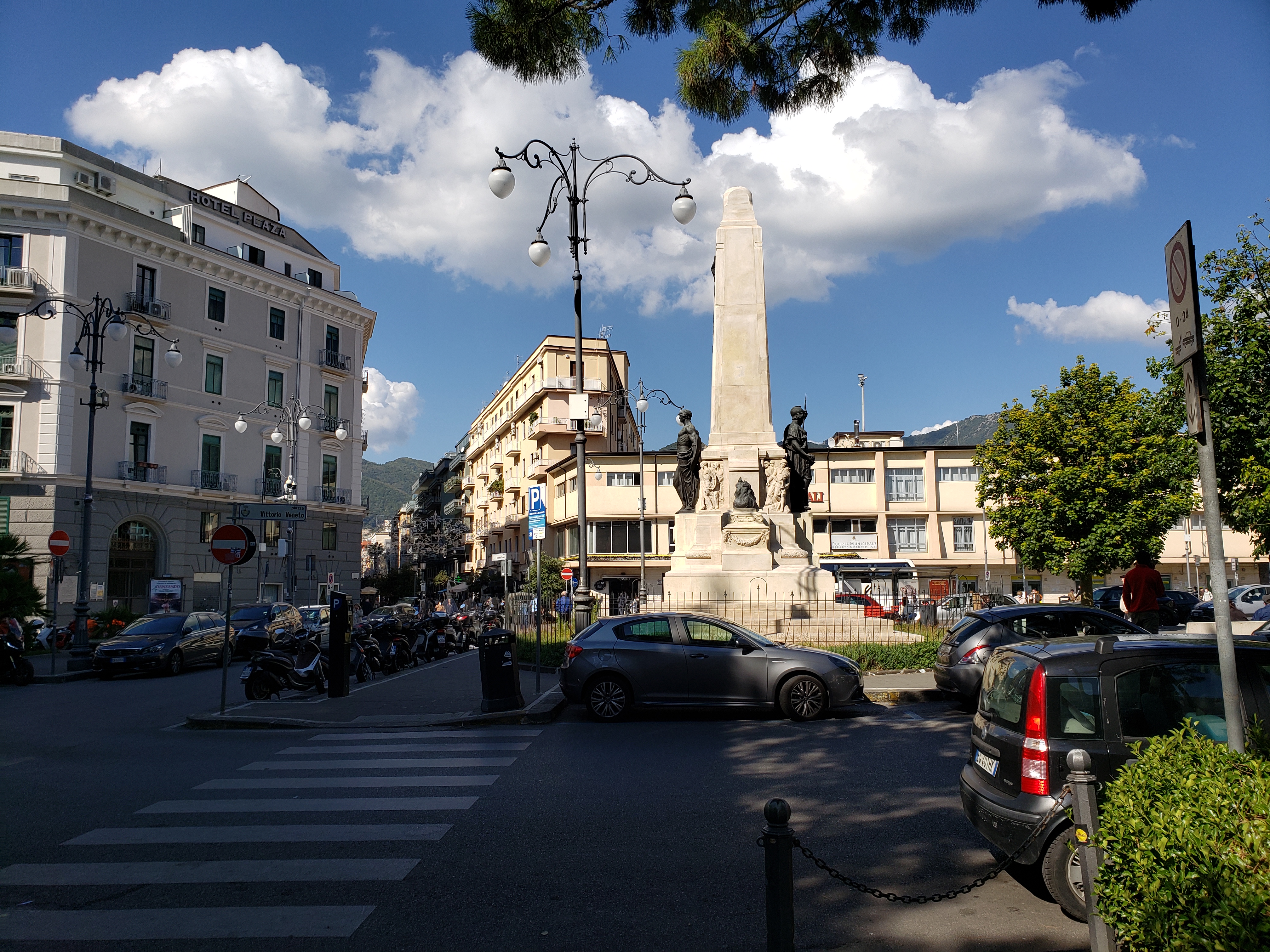
Piazza Vittorio Veneto – Salerno, Italy
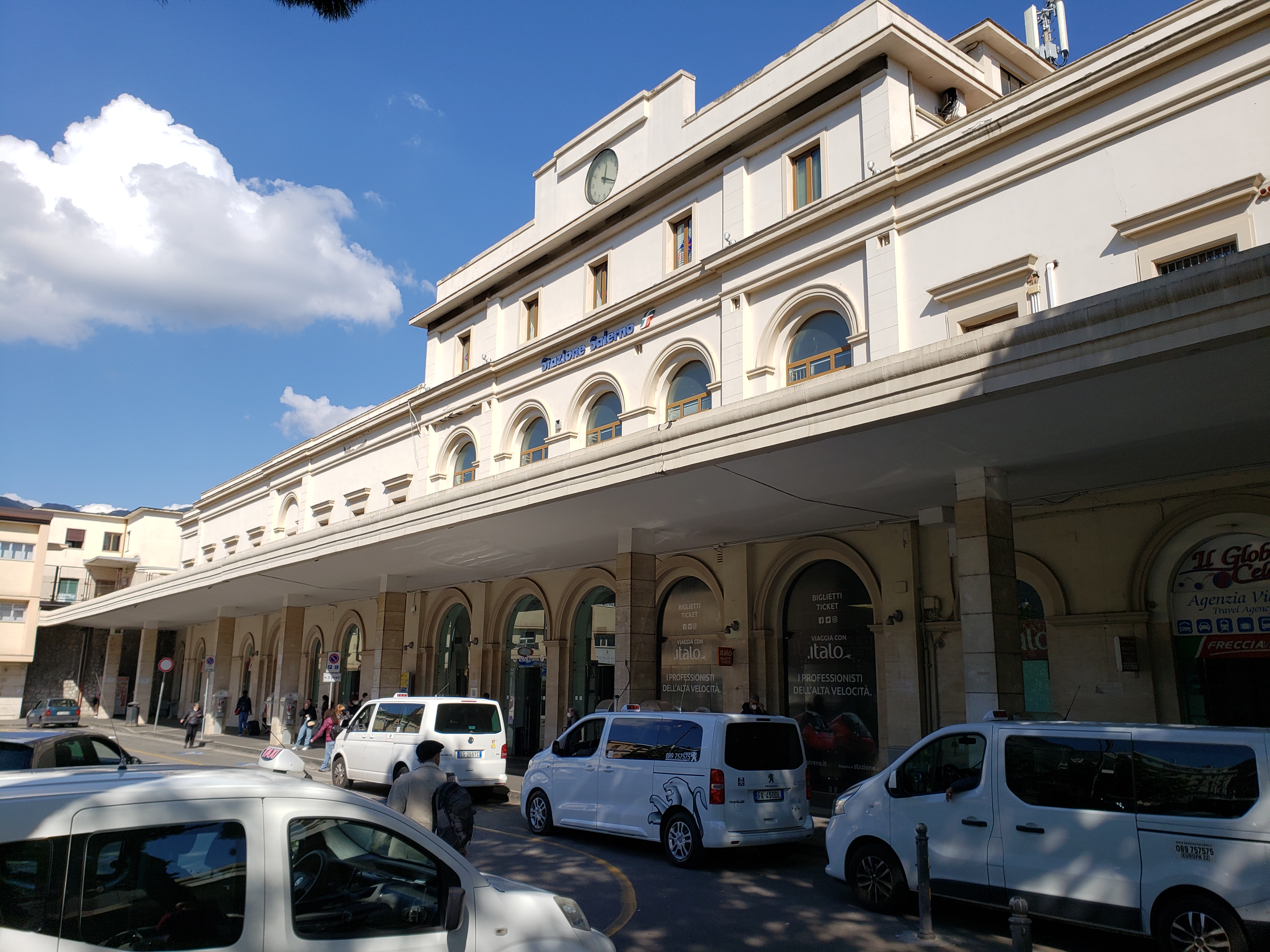
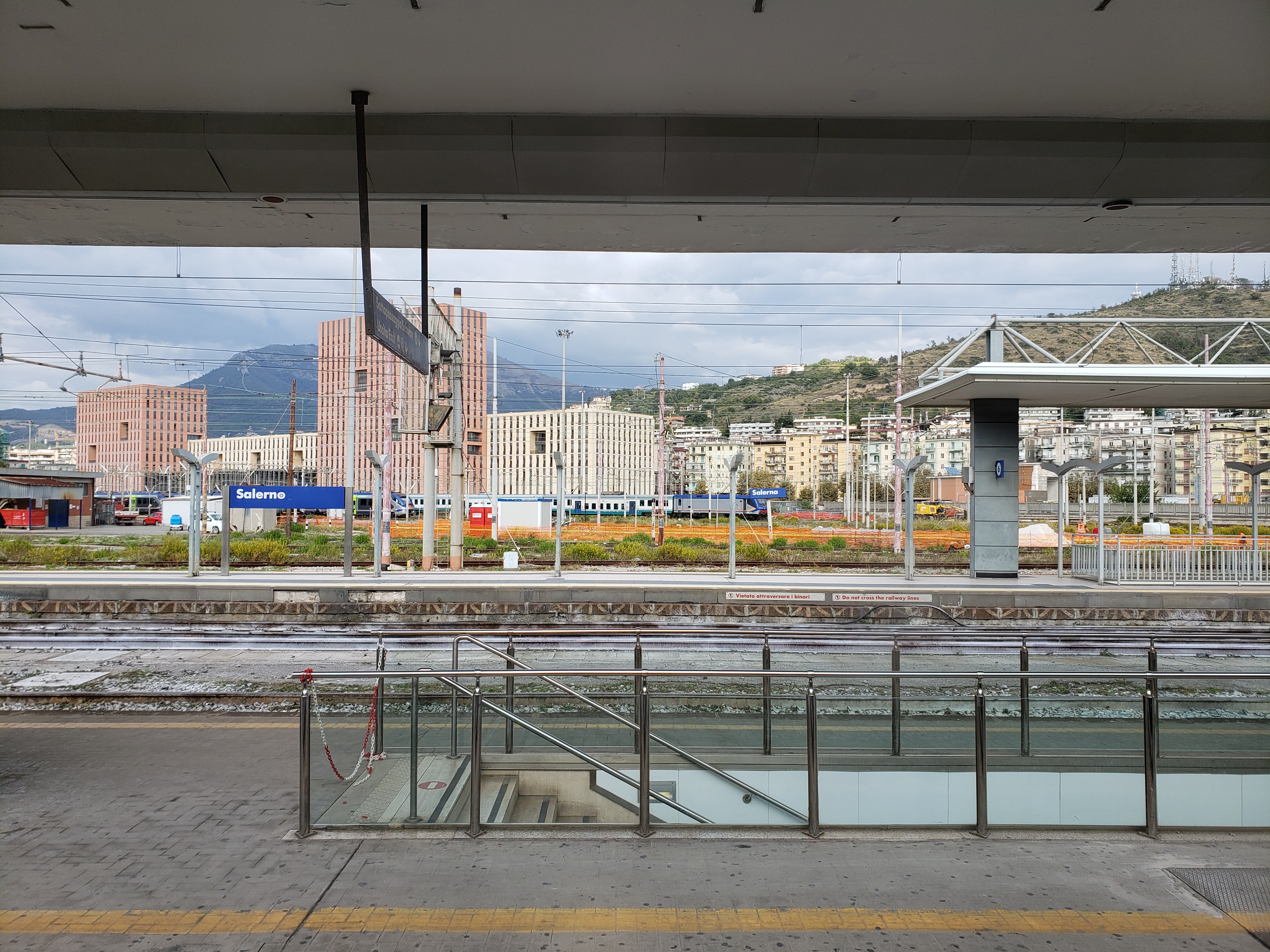
Train Station – Salerno, Italy
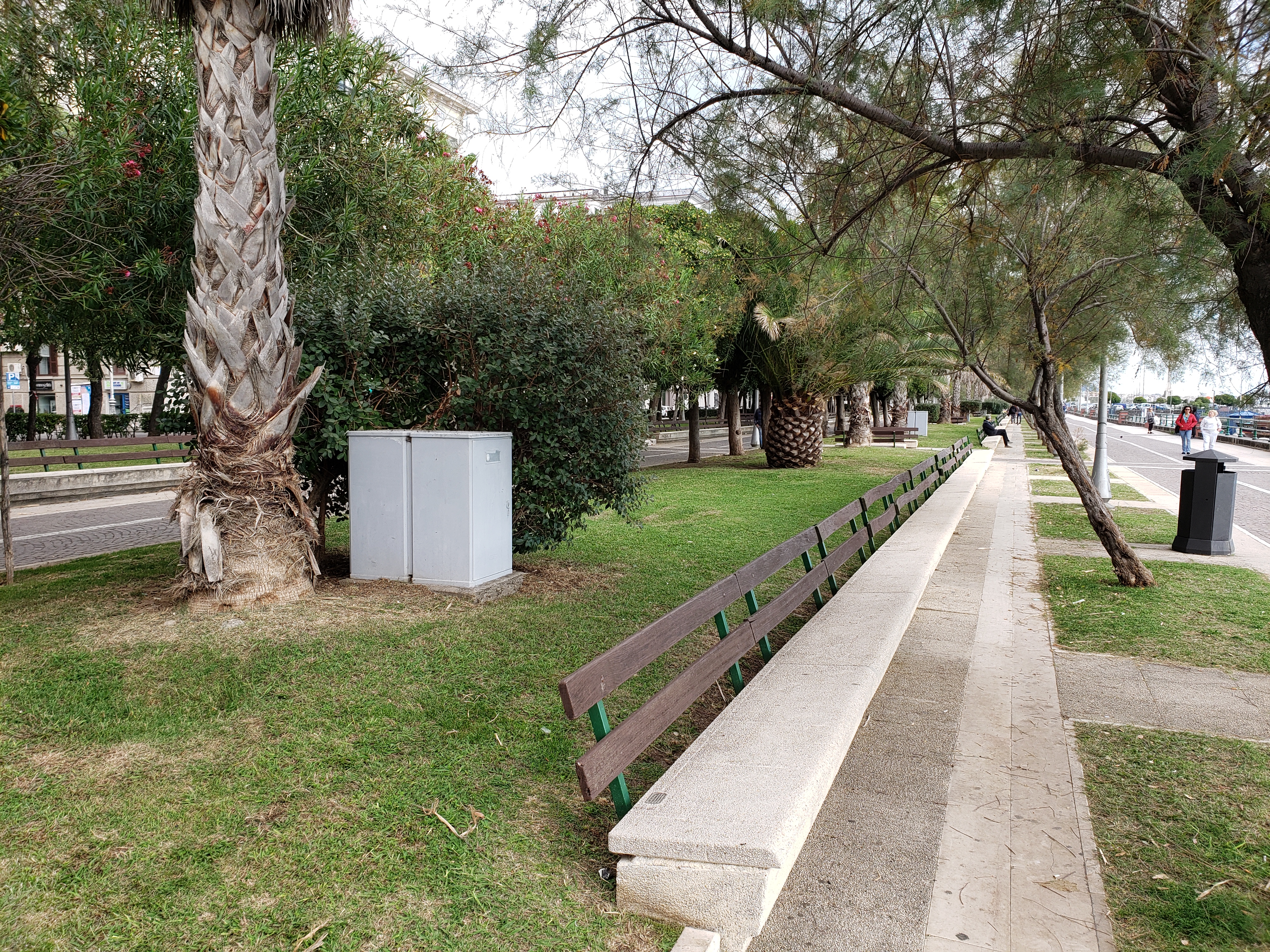
Lungomare – Salerno, Italy
We spent a leisurely Monday walking the streets of this nicely kept secret. It is definitely not a tourist destination and you will see few if any here, those preferring Capri, Almalfi Coast and other must-see places on someone else’s list.
Benedictine Aqueducts
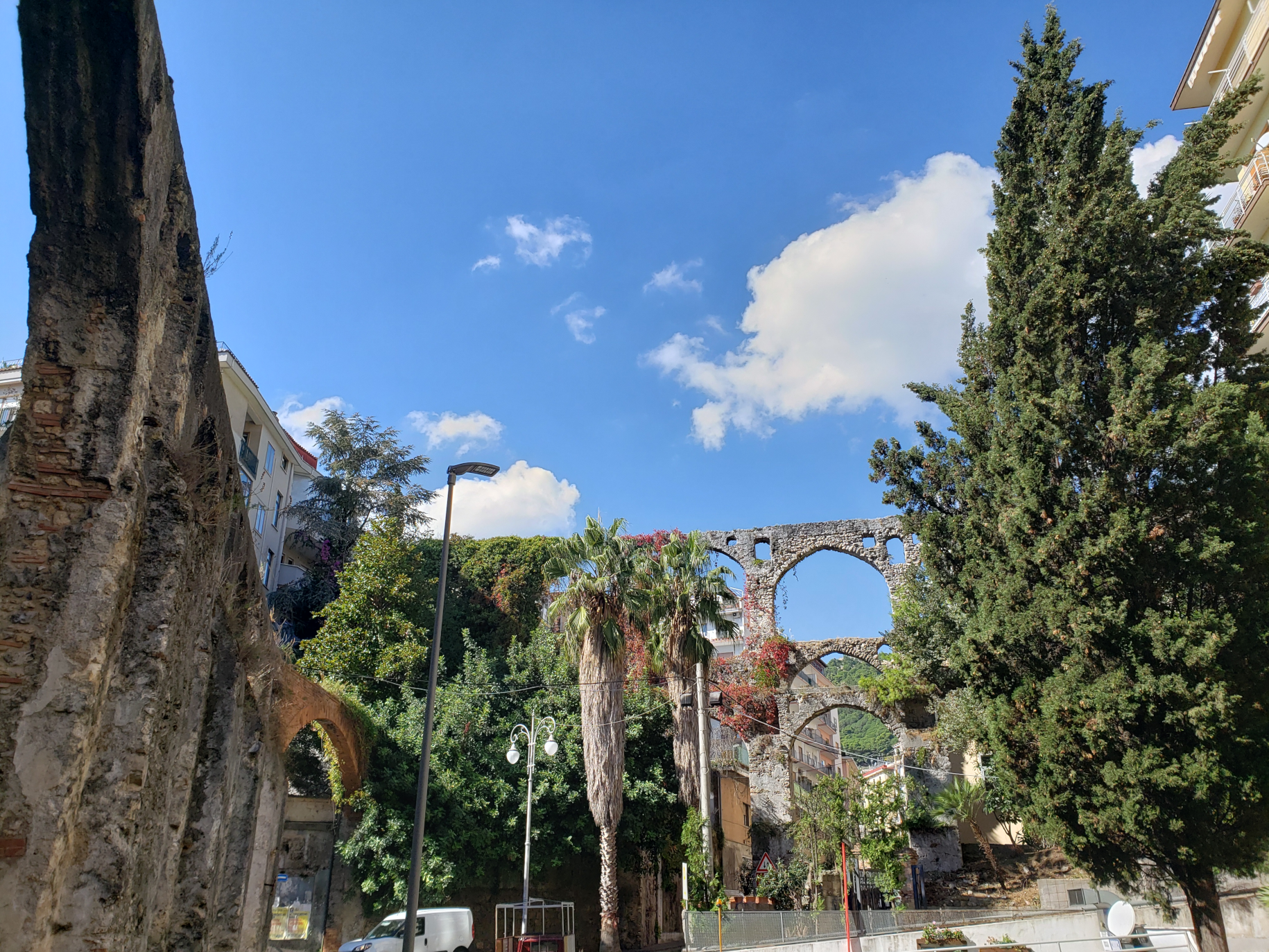
The city has one of the most impressive examples of the architecture of the Ogival Arch, which in the ninth century was innovative and rare. It was so uncommon, that superstition around the arches and their use built up over the years, to the point where the town’s people were convinced it was the work of the devil, or at the very least, demons from hell. In any case, the aqueducts were built by and supplied water to the local Benedictine Monastery, and later to a convent in Piantanova.
Benedictine Aqueducts – Salerno, Italy
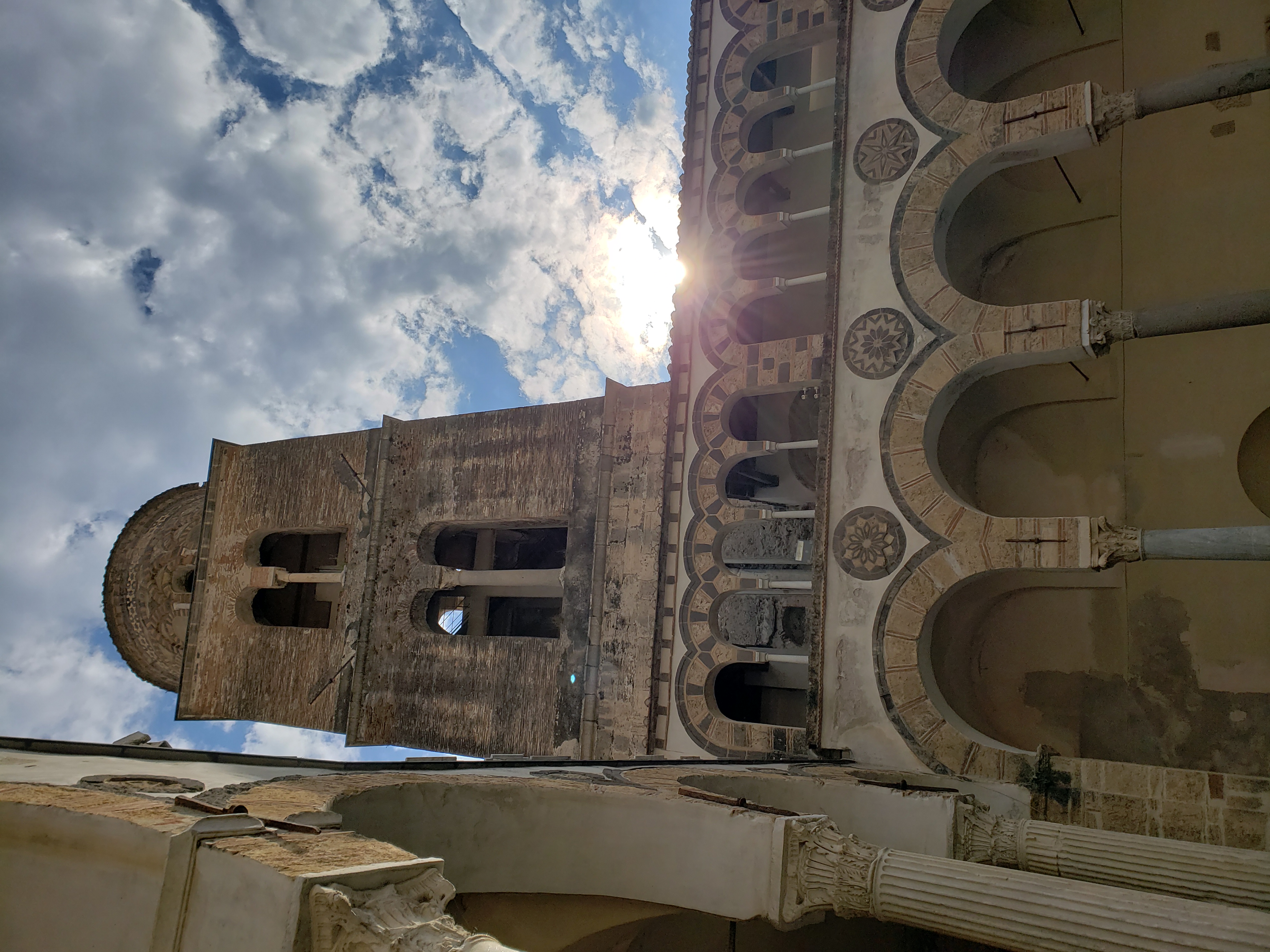
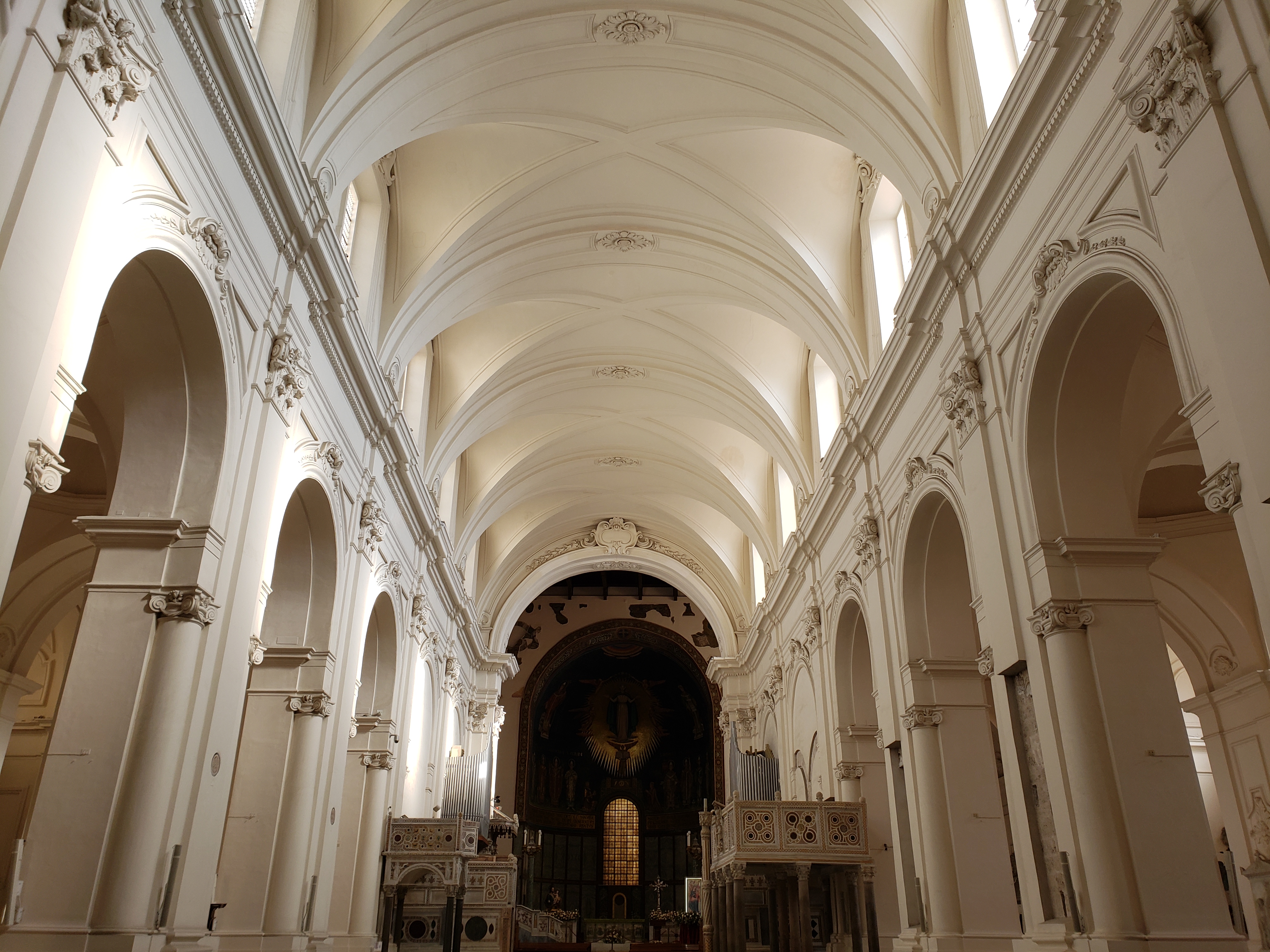
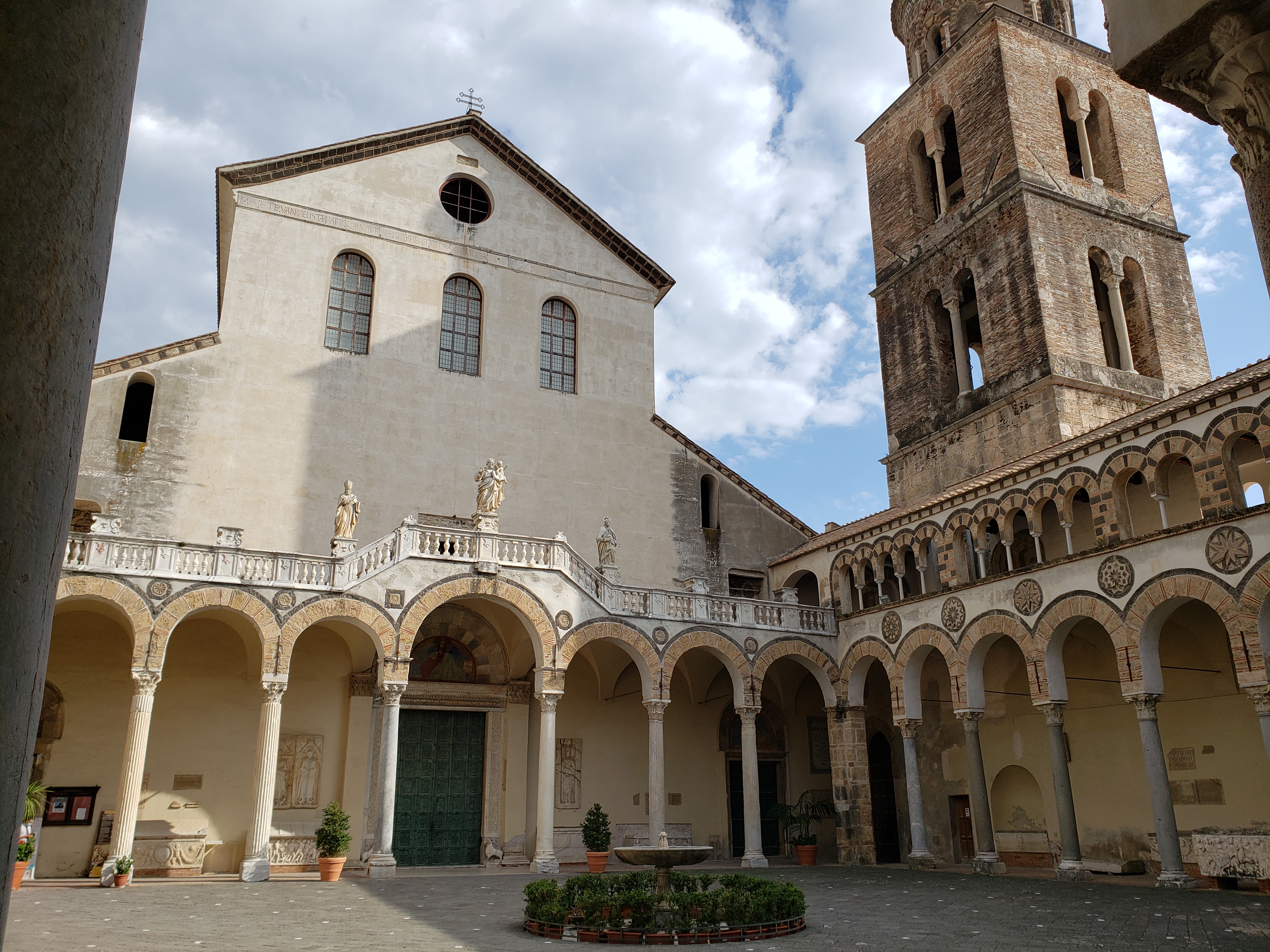
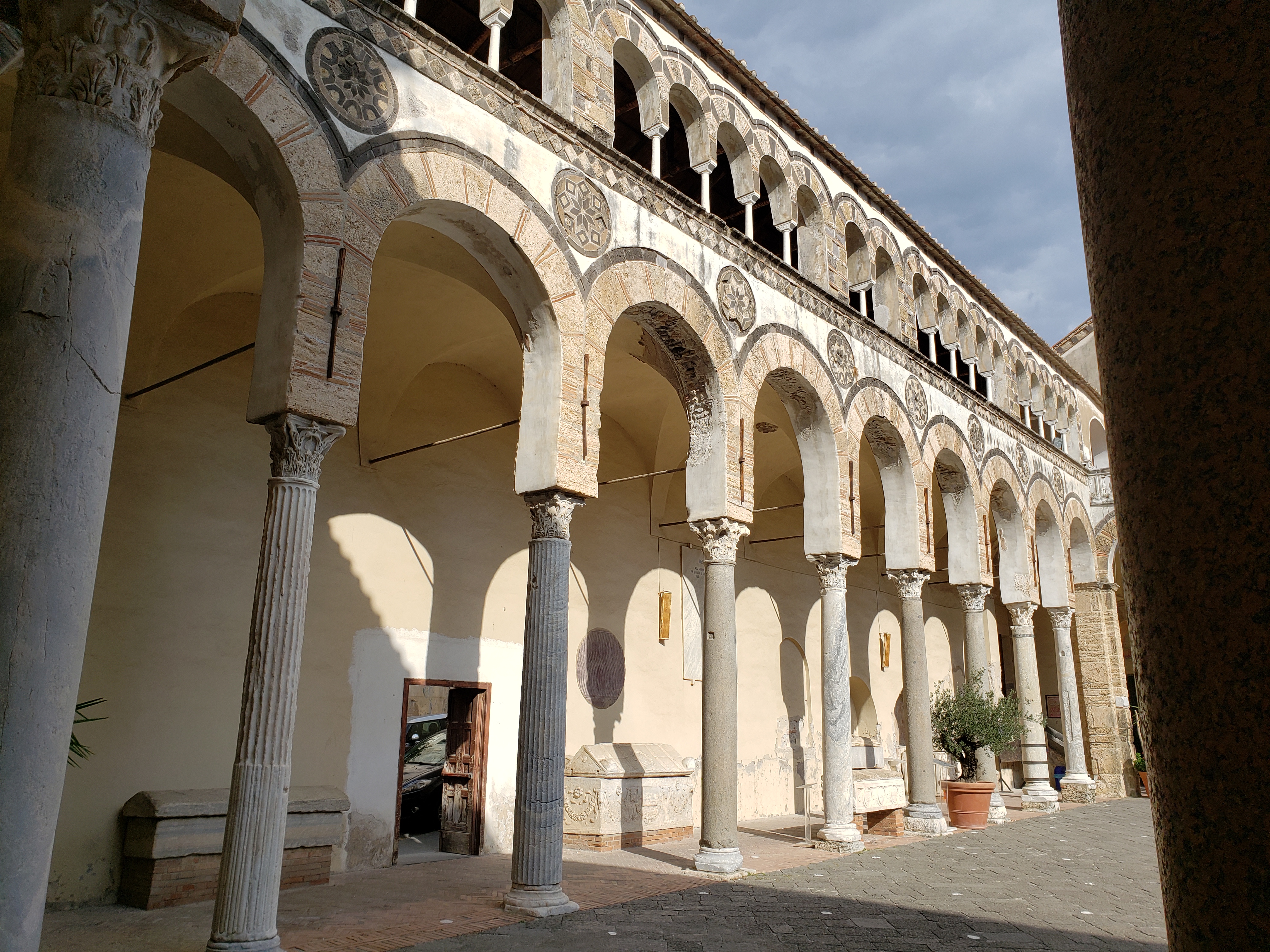
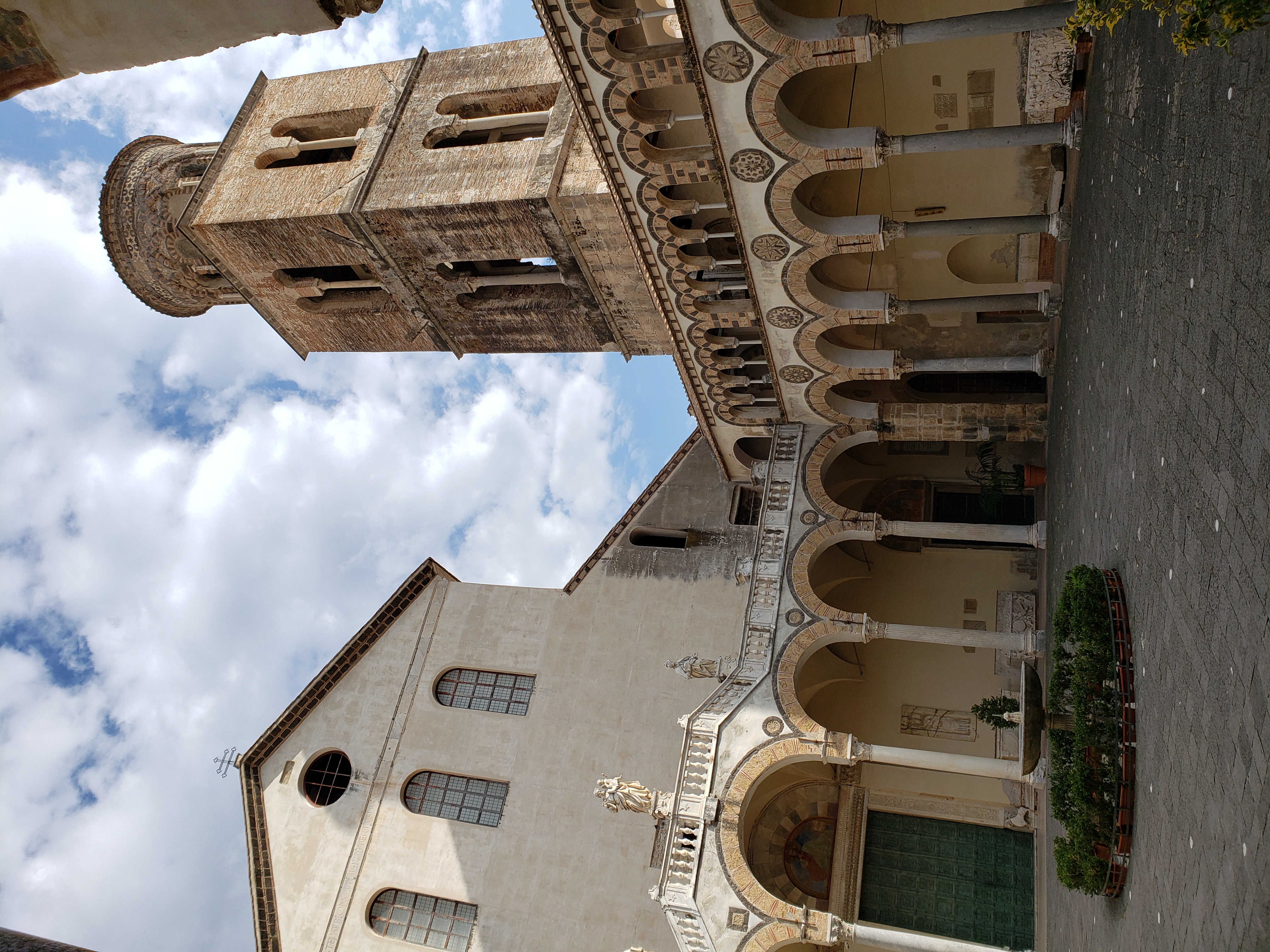
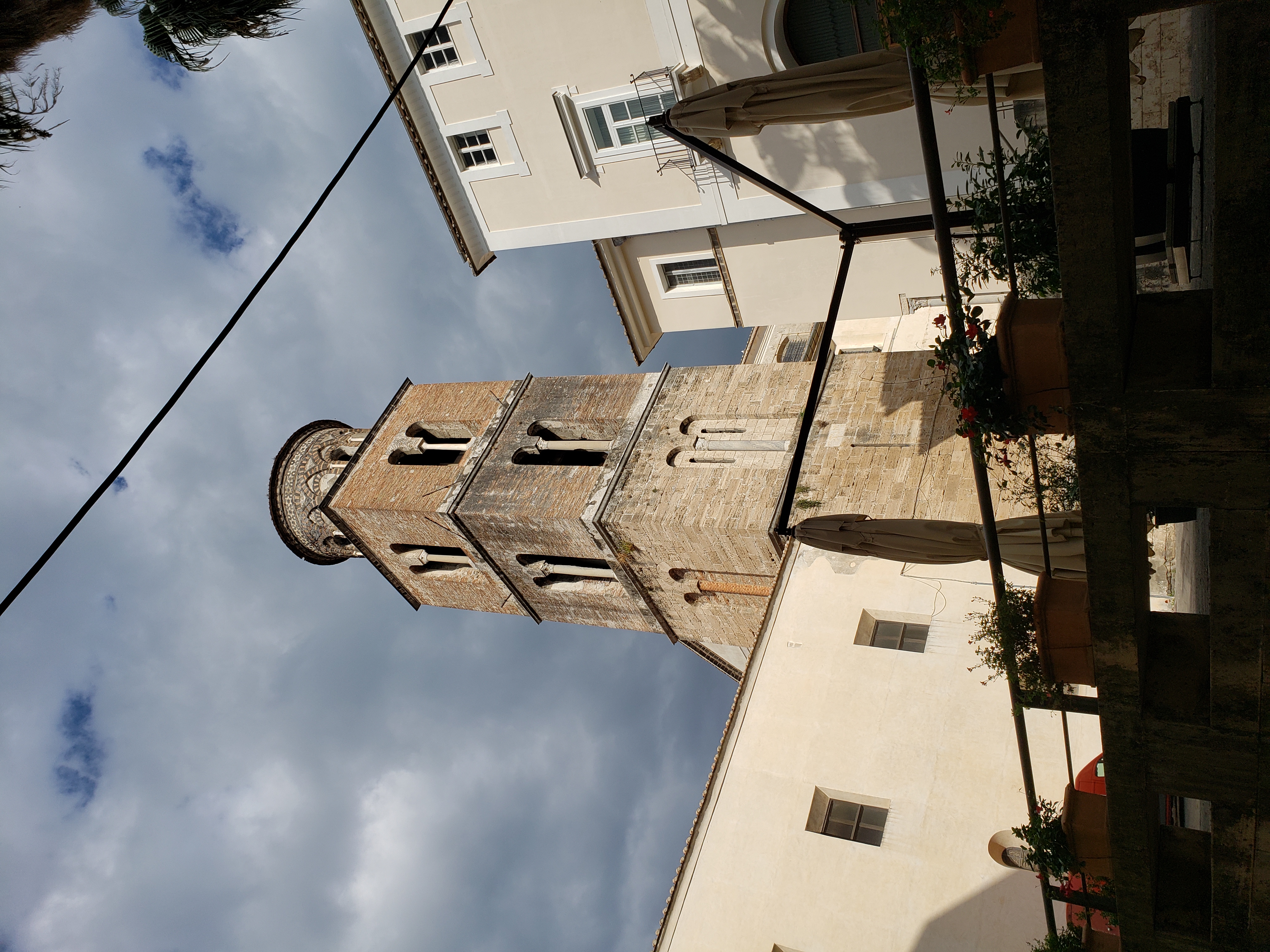
The Basilica of Salerno is not far from the aqueducts and the Benedictine Monastery. Its most striking feature is the tower, which was built in the Arab-Norman style. The palazzo inside contains a small fountain and its archways are reminiscent of the Florentine style.
Tower – Basilica of Salerno – Salerno, Italy
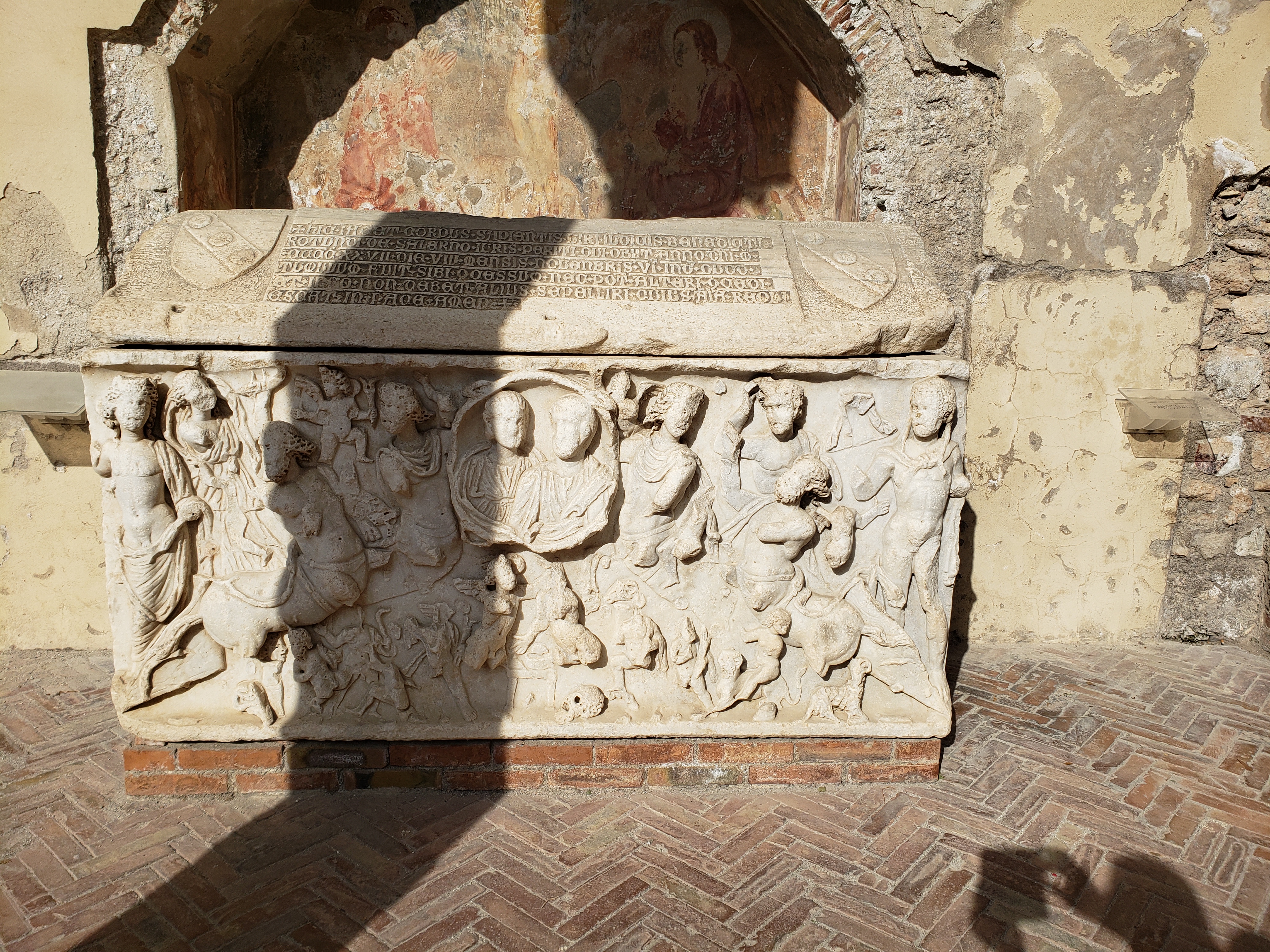
Basilica of Salerno – Salerno, Italy
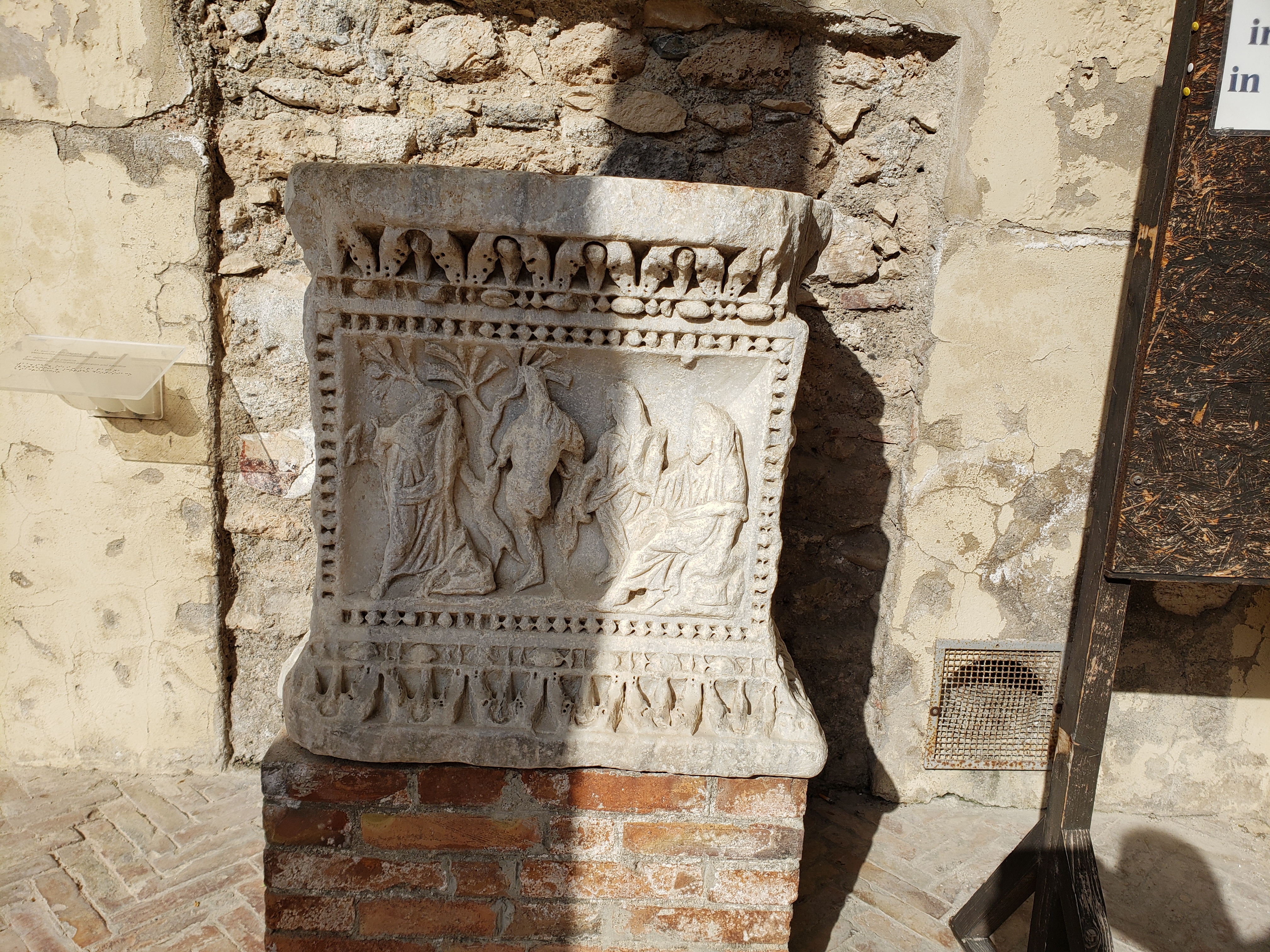
Basilica of Salerno – Salerno, Italy
Courtyard and Tower – Basilica of Salerno – Salerno, Italy
Basilica of Salerno – Salerno, Italy
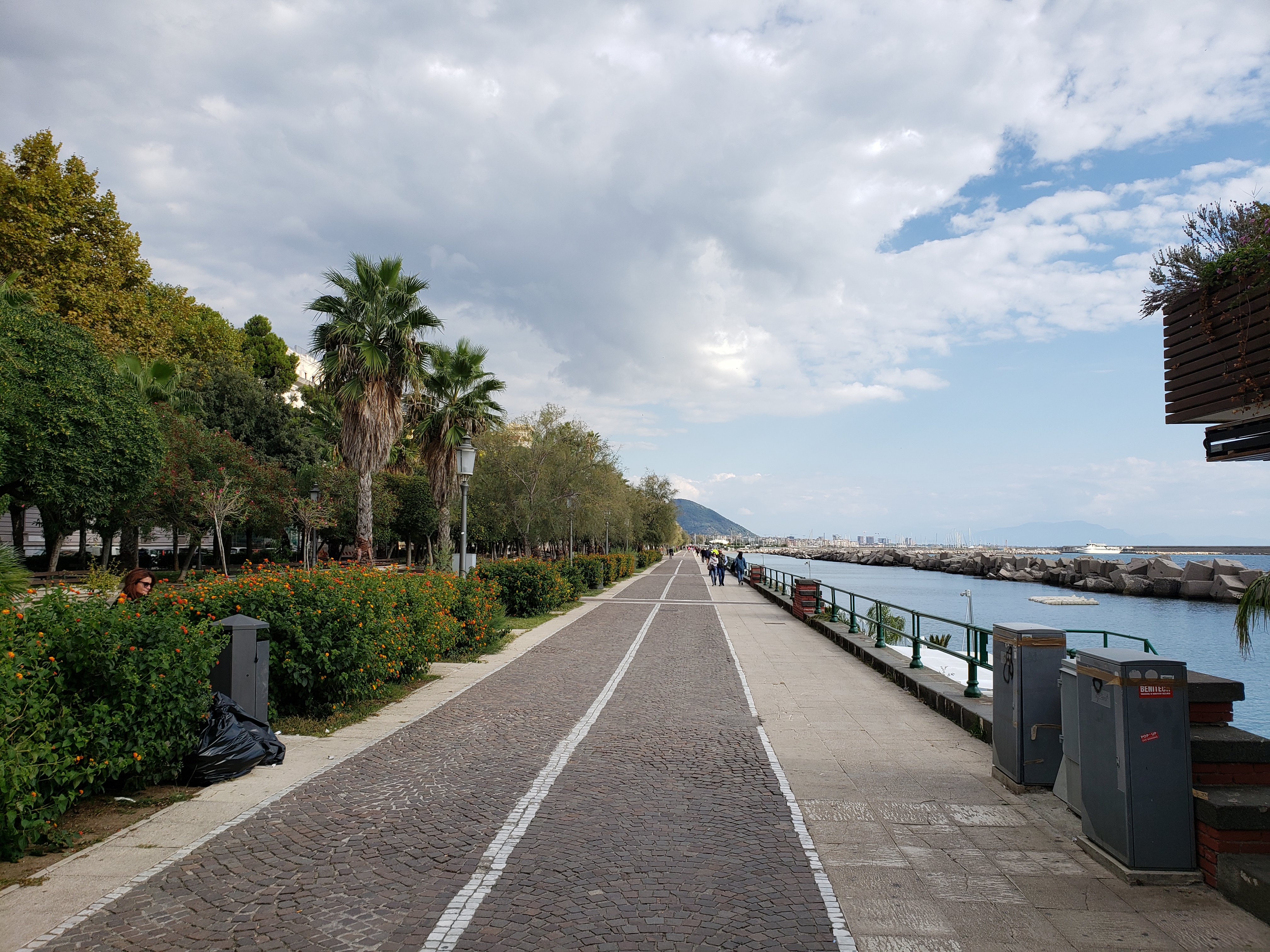
A quintessential thing to do, is to walk along Salerno’s Lungomare Trieste and enjoy the beautiful weather and seaside. This exceptional boardwalk continues straight for about five miles and has numerous places to sit and relax among the beautiful palm trees that were planted there long ago.
Lungomare – Salerno, Italy
Restaurants
Taverna Santa Maria De Domno
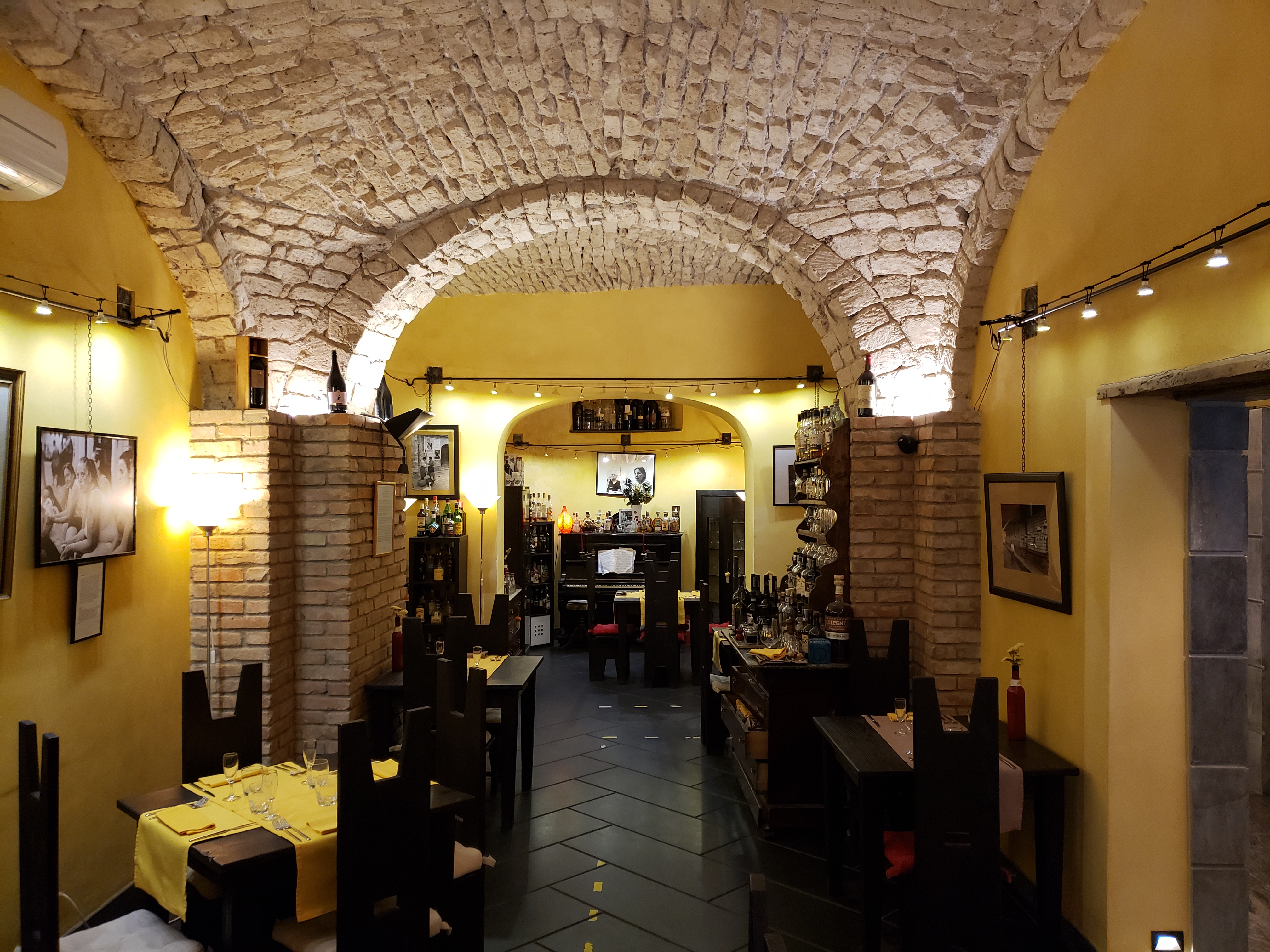
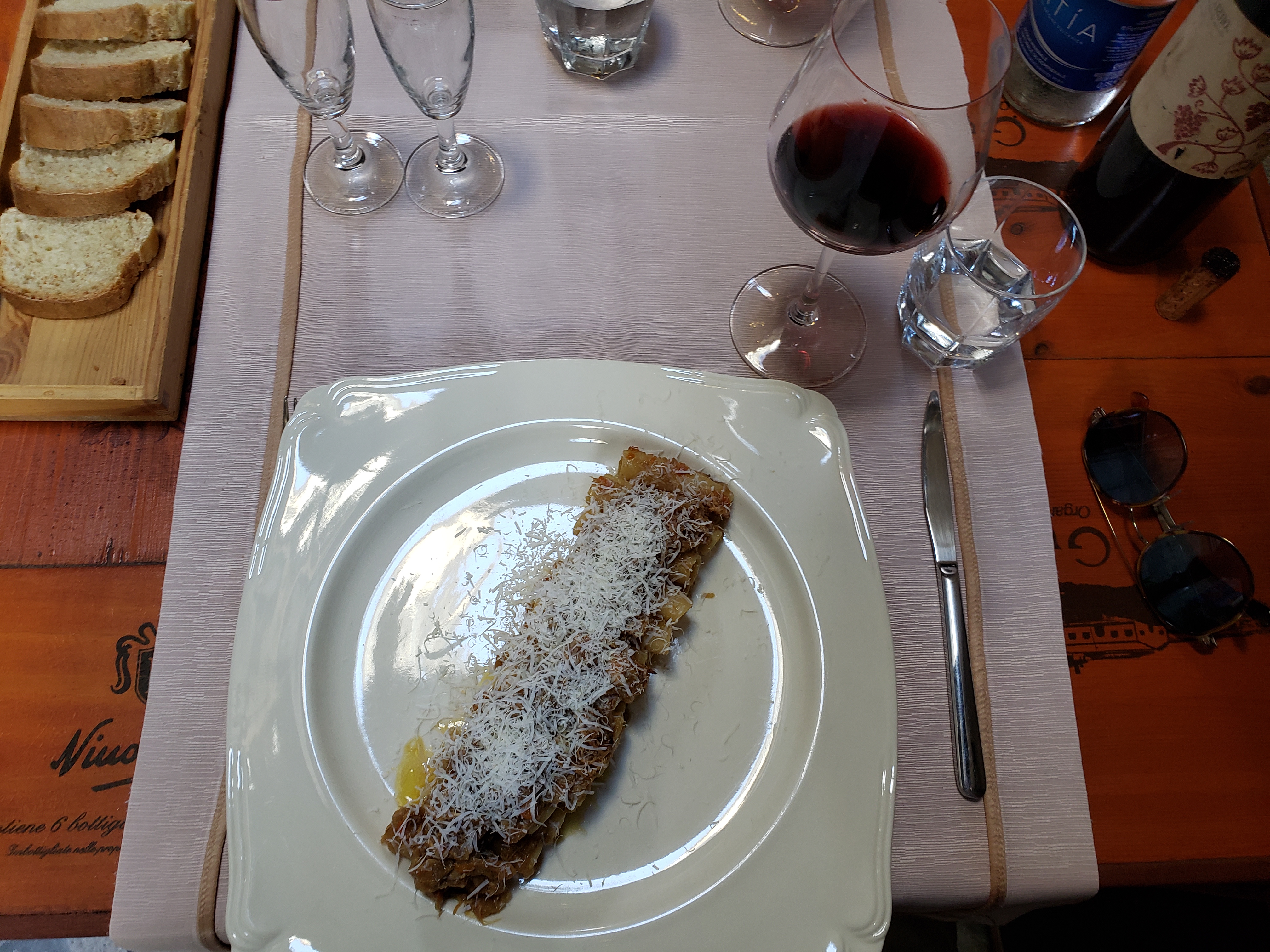
Perhaps one of the best places I have ever eaten. The Pasta Genovese here is absolutely to die for, I have found none better in Naples and the surrounding area, and I have tried many. The wine list is also very good and you will have no problem selecting a delicious local varietal that grows on the slopes of Vesuvius for your gastronomic pleasure.
Taverna Santa Maria De Domno
Inside – Taverna Santa Maria De Domno
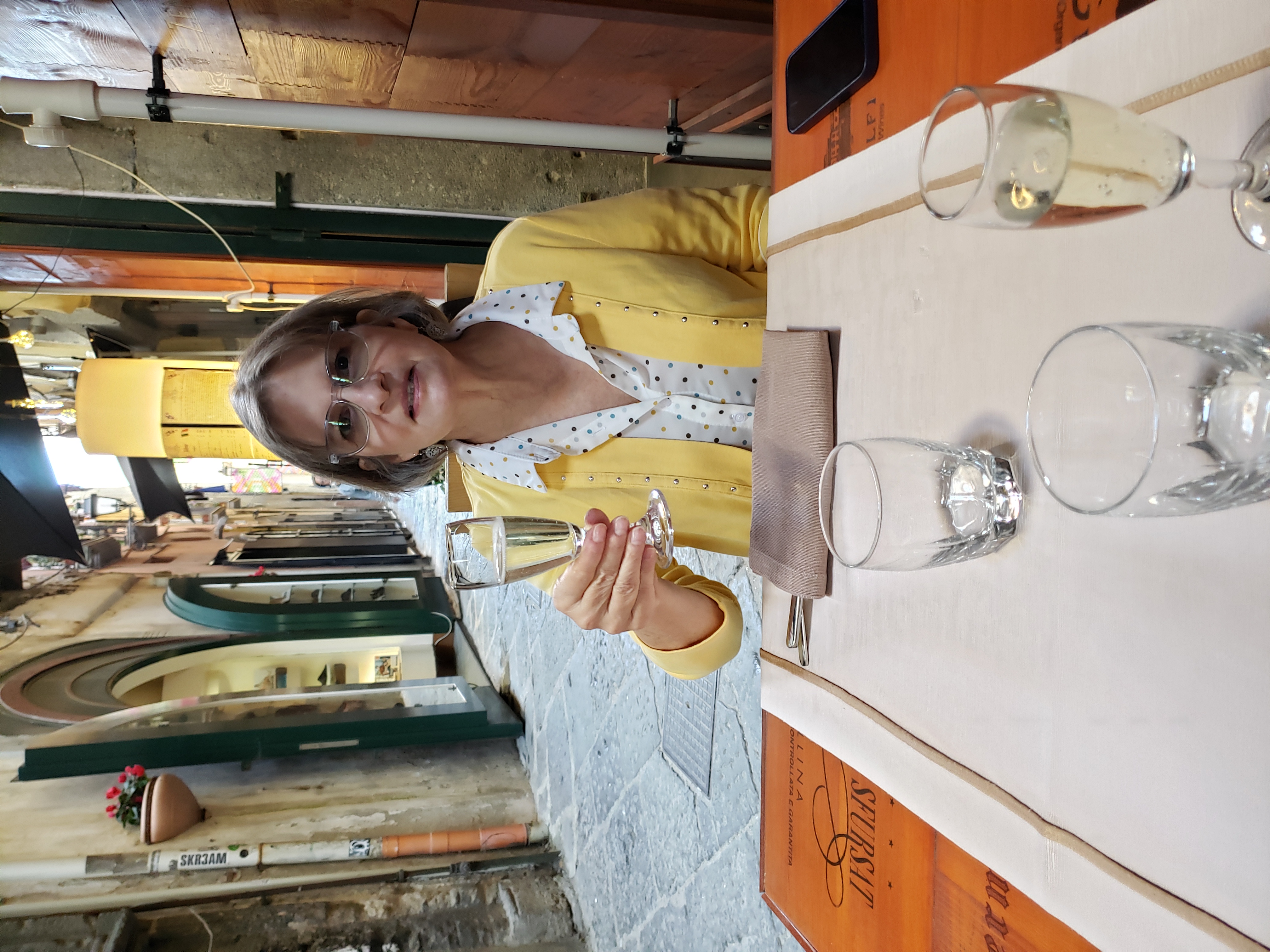
Patti at Taverna Santa Maria De Domno
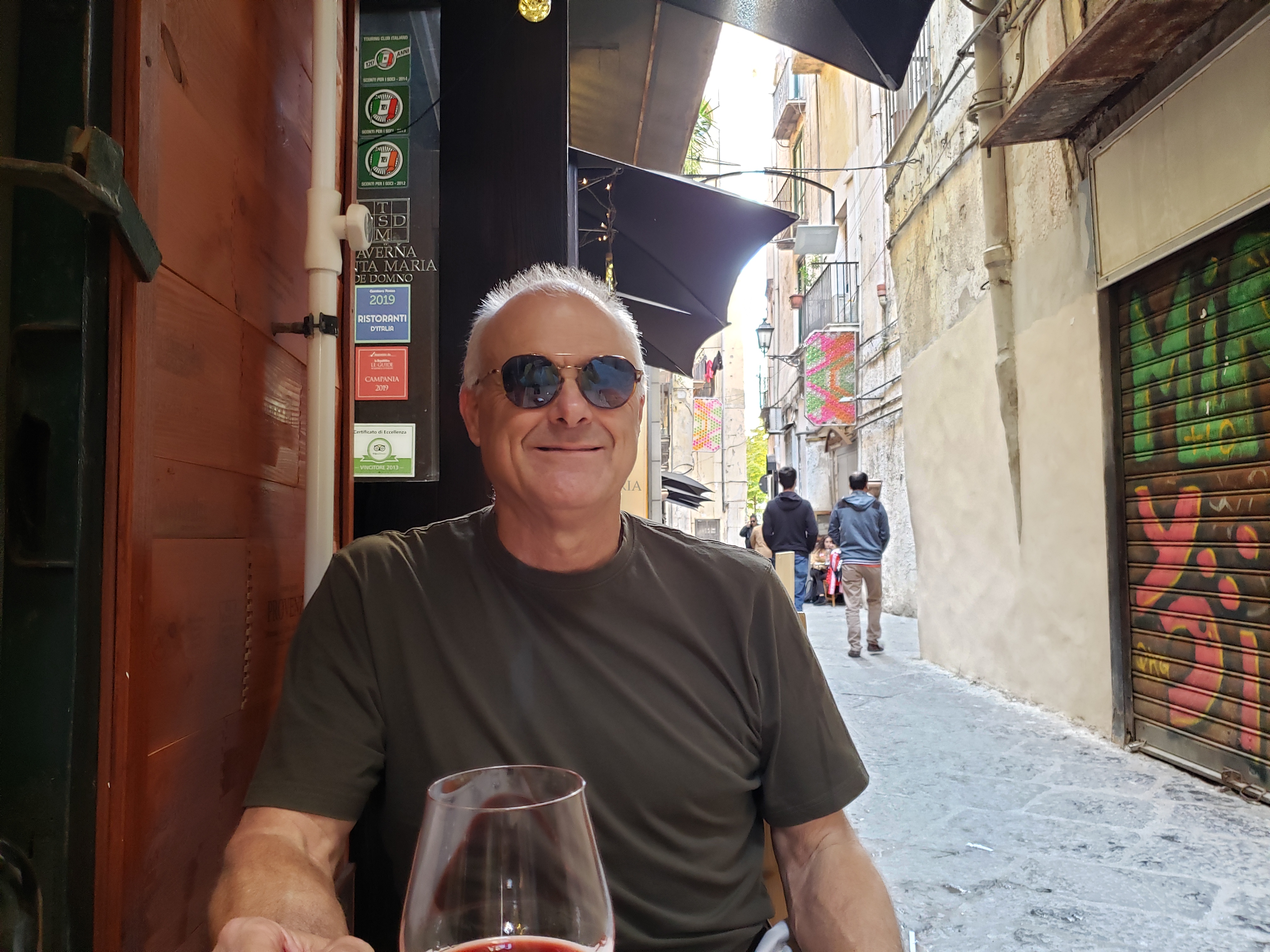
Erick at Taverna Santa Maria De Domno
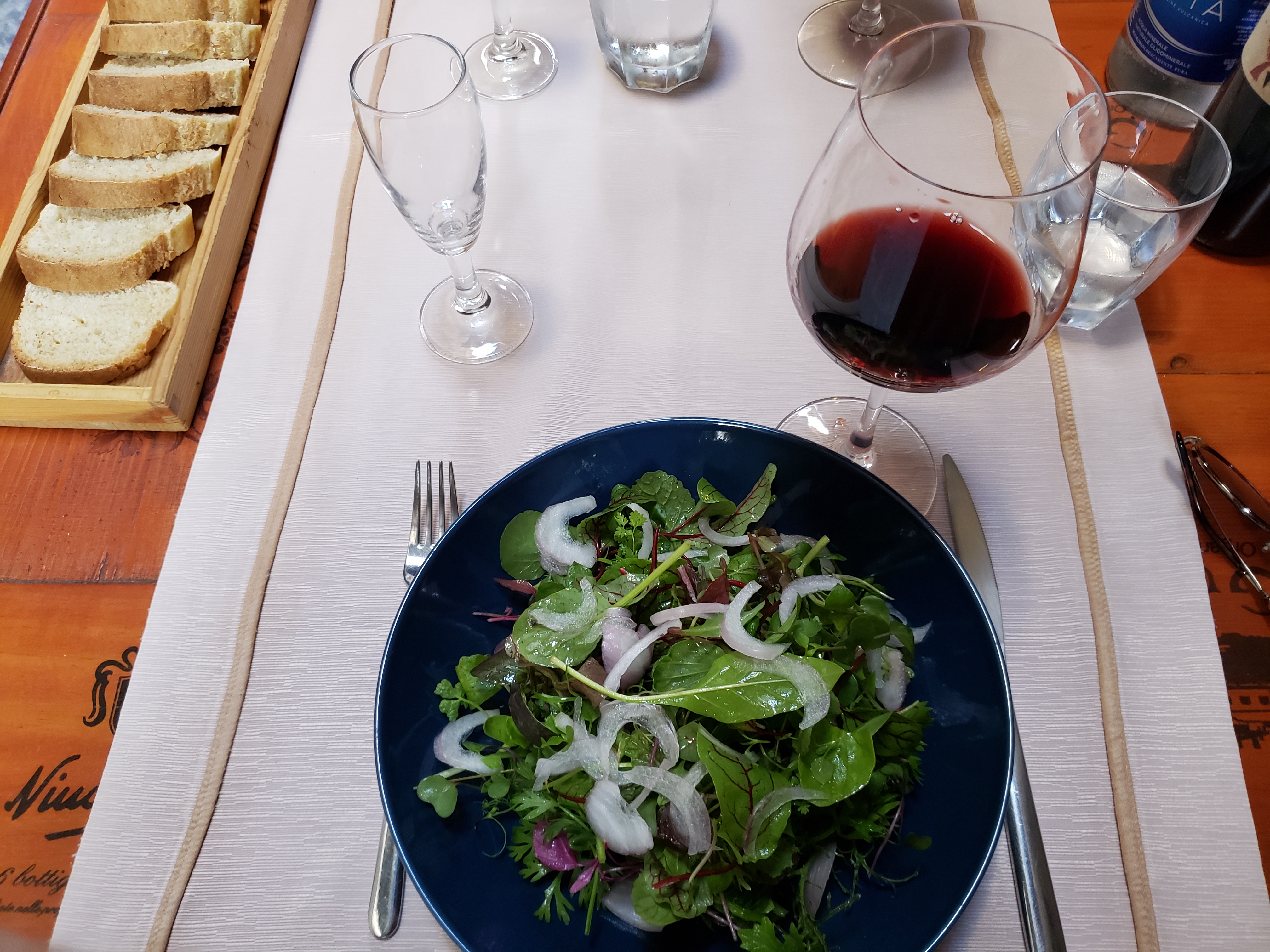
Insalata Mista – Taverna Santa Maria De Domno
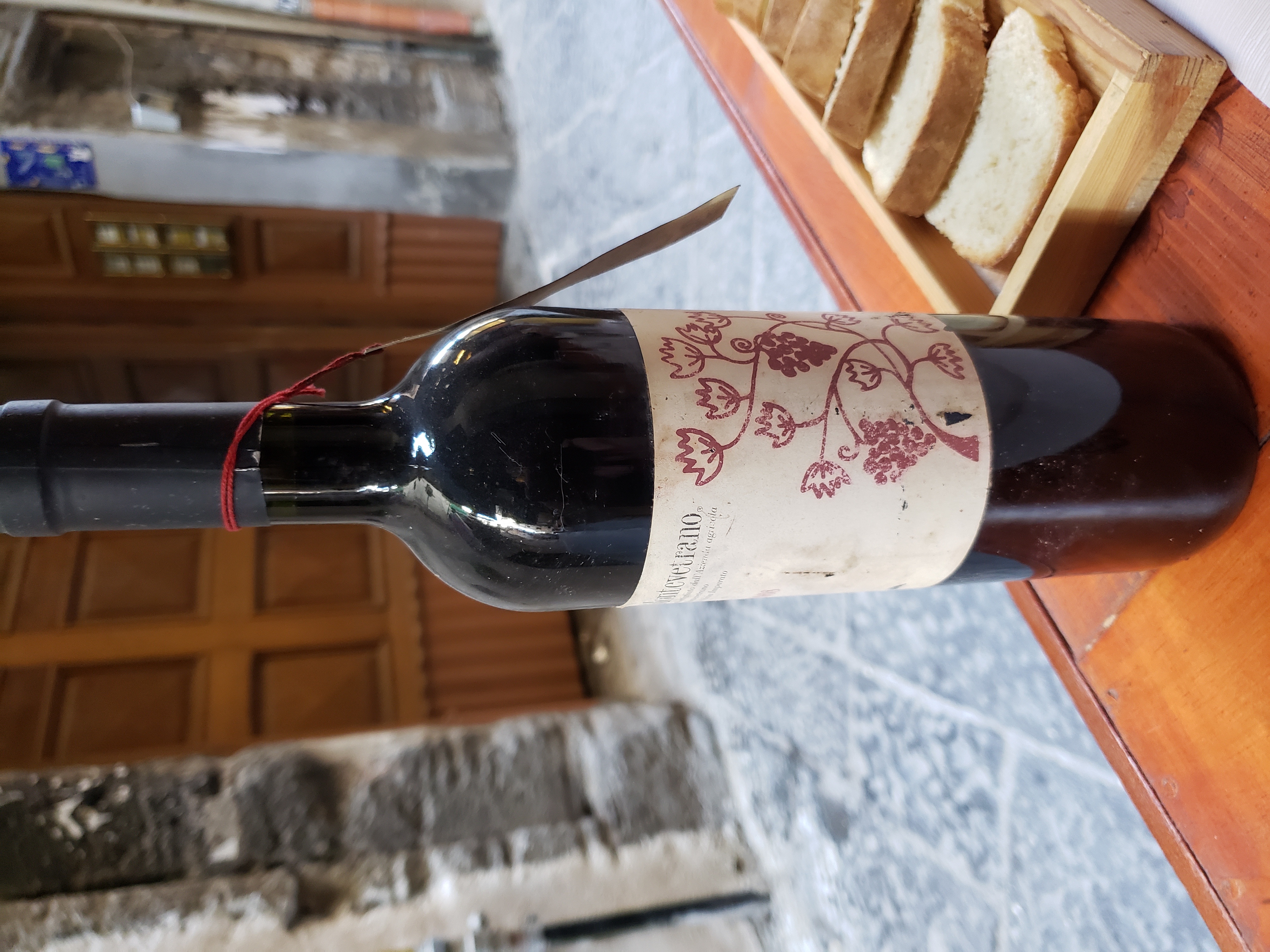
Montevetrano, Colli di Salerno, 2008 – Taverna Santa Maria De Domno
Pasta Genovese – Taverna Santa Maria De Domno
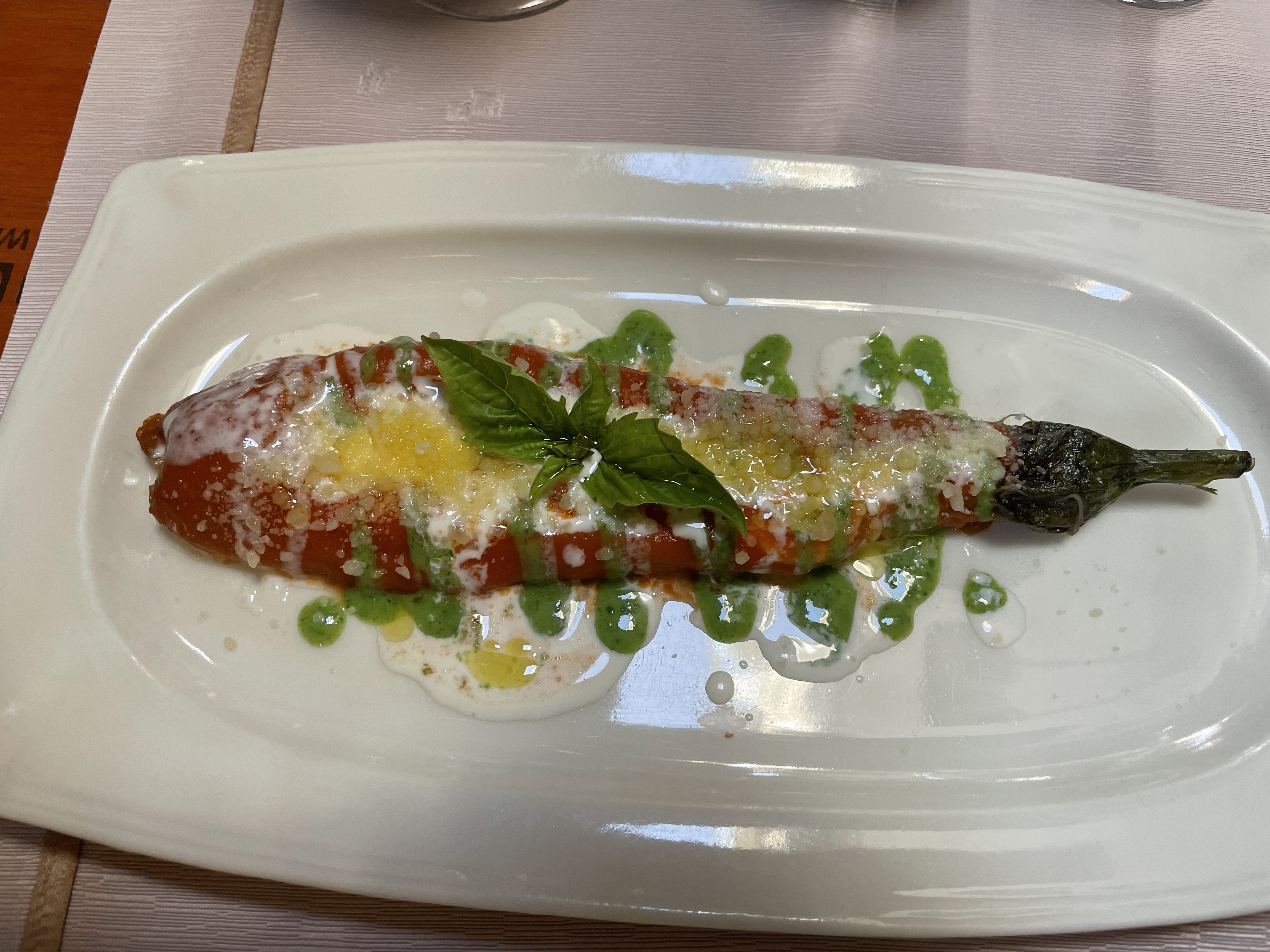
Eggplant in Sauce – Taverna Santa Maria De Domno
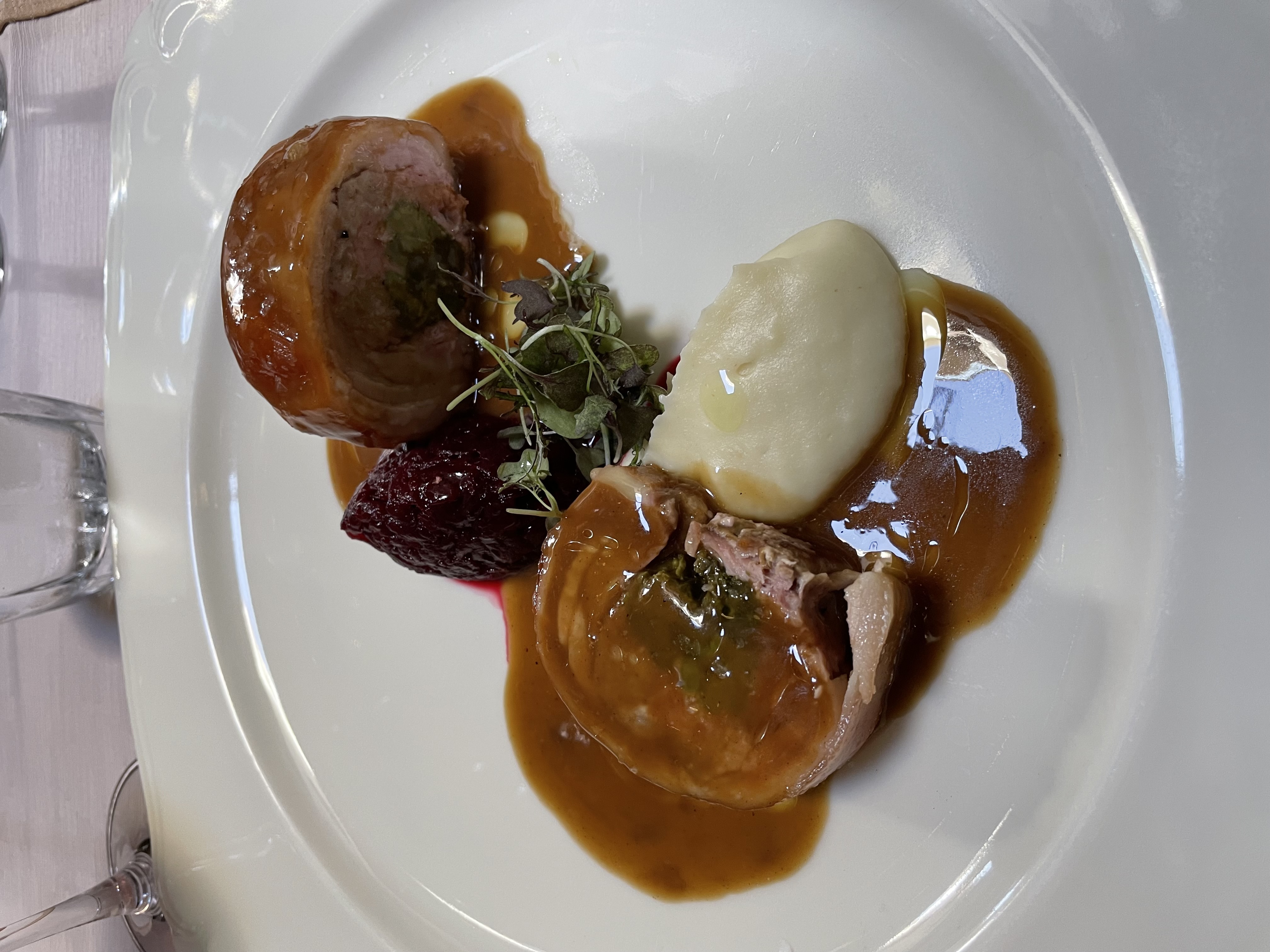
Suckling Pig, Mashed Potatoes and Beets – Taverna Santa Maria De Domno
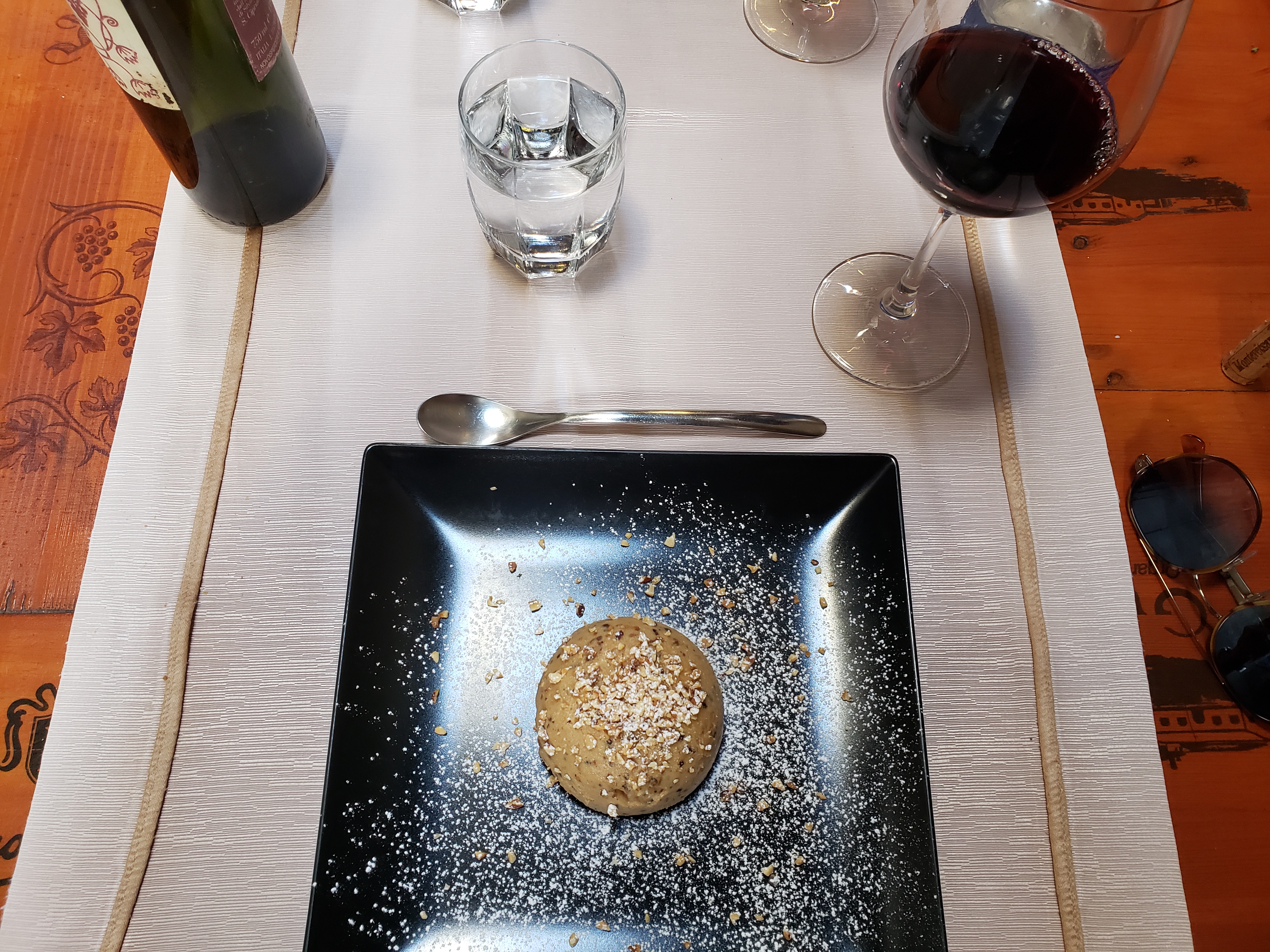
Hazelnut Semifreddo – Taverna Santa Maria De Domno
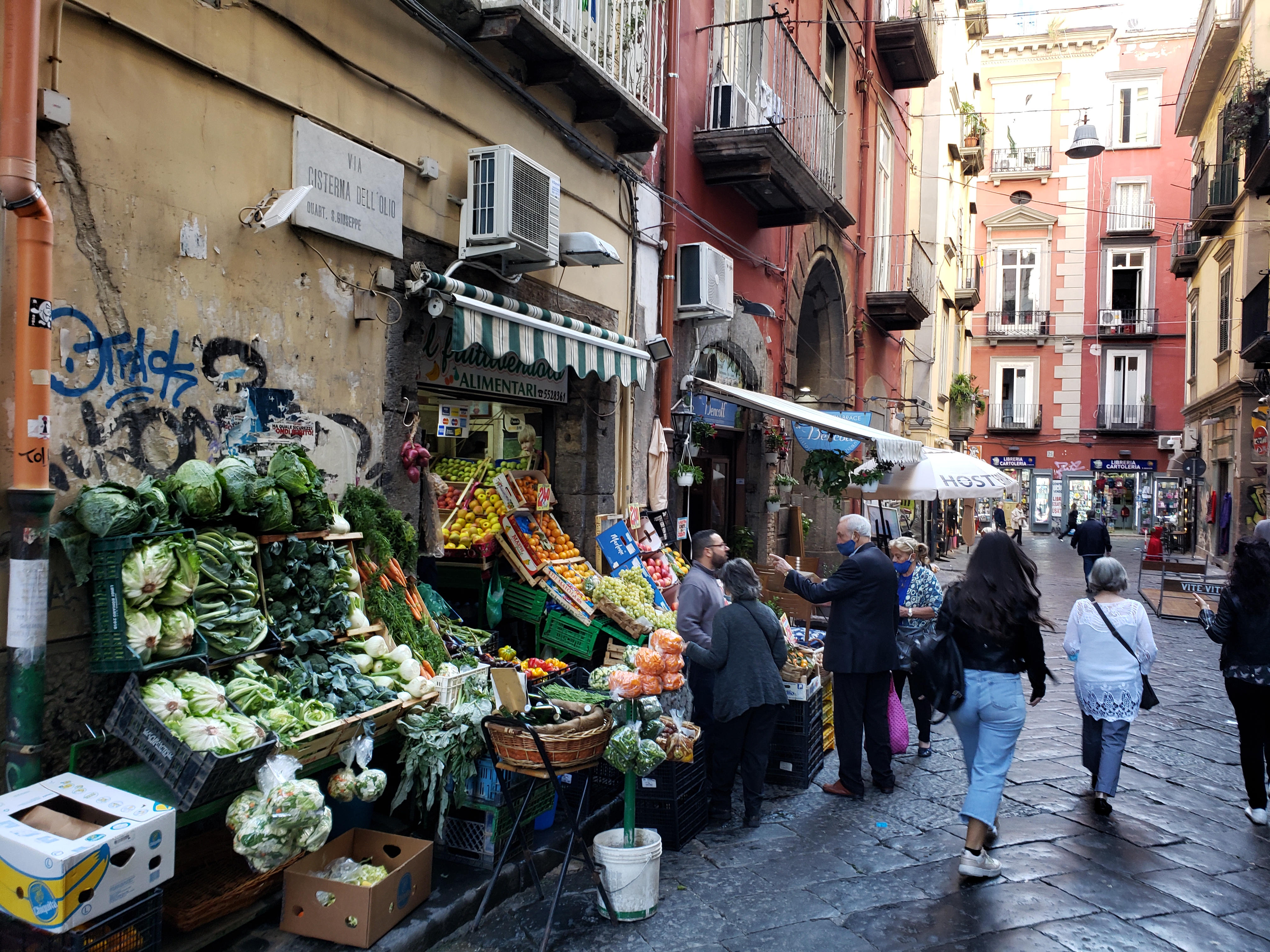
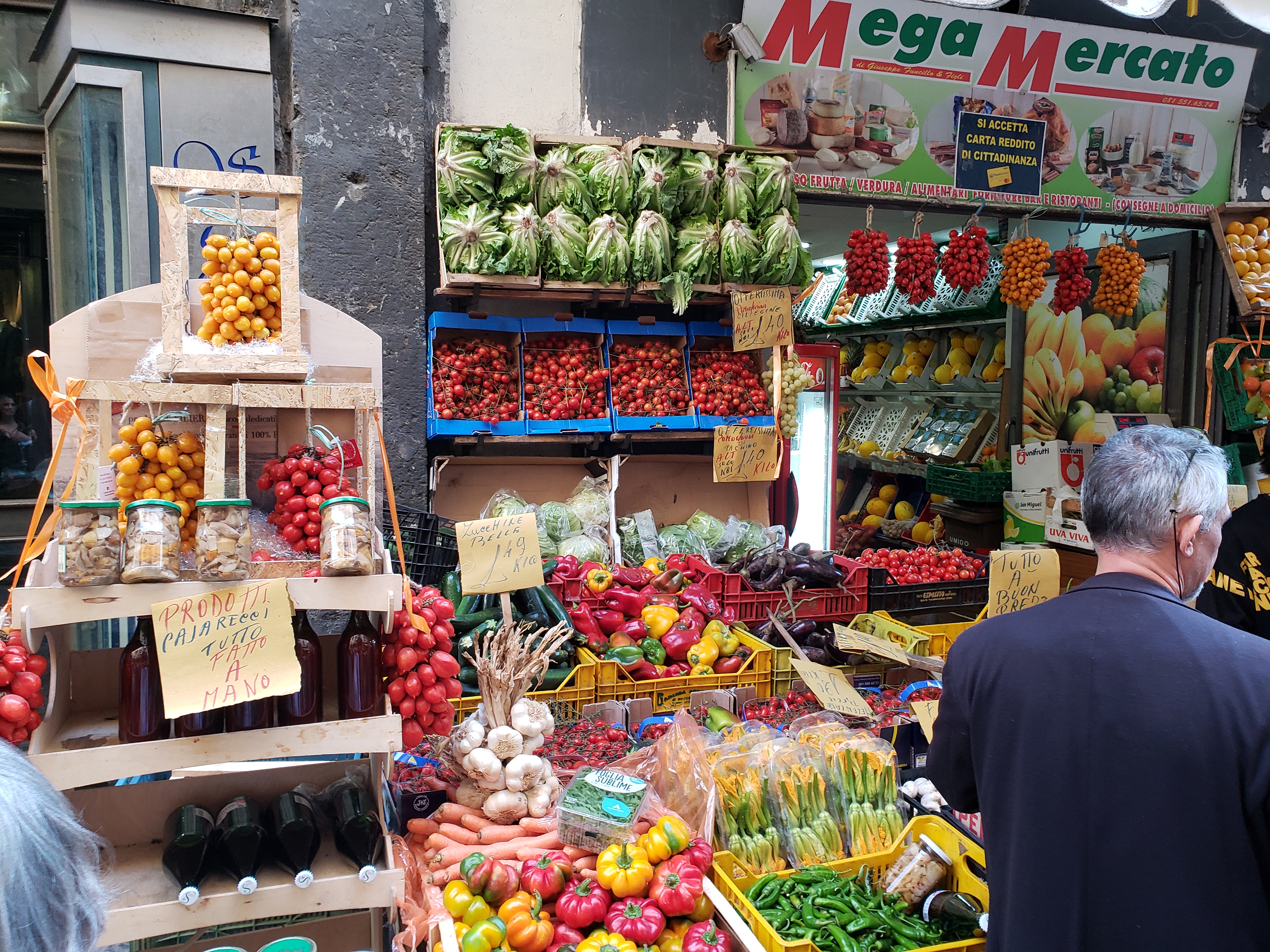
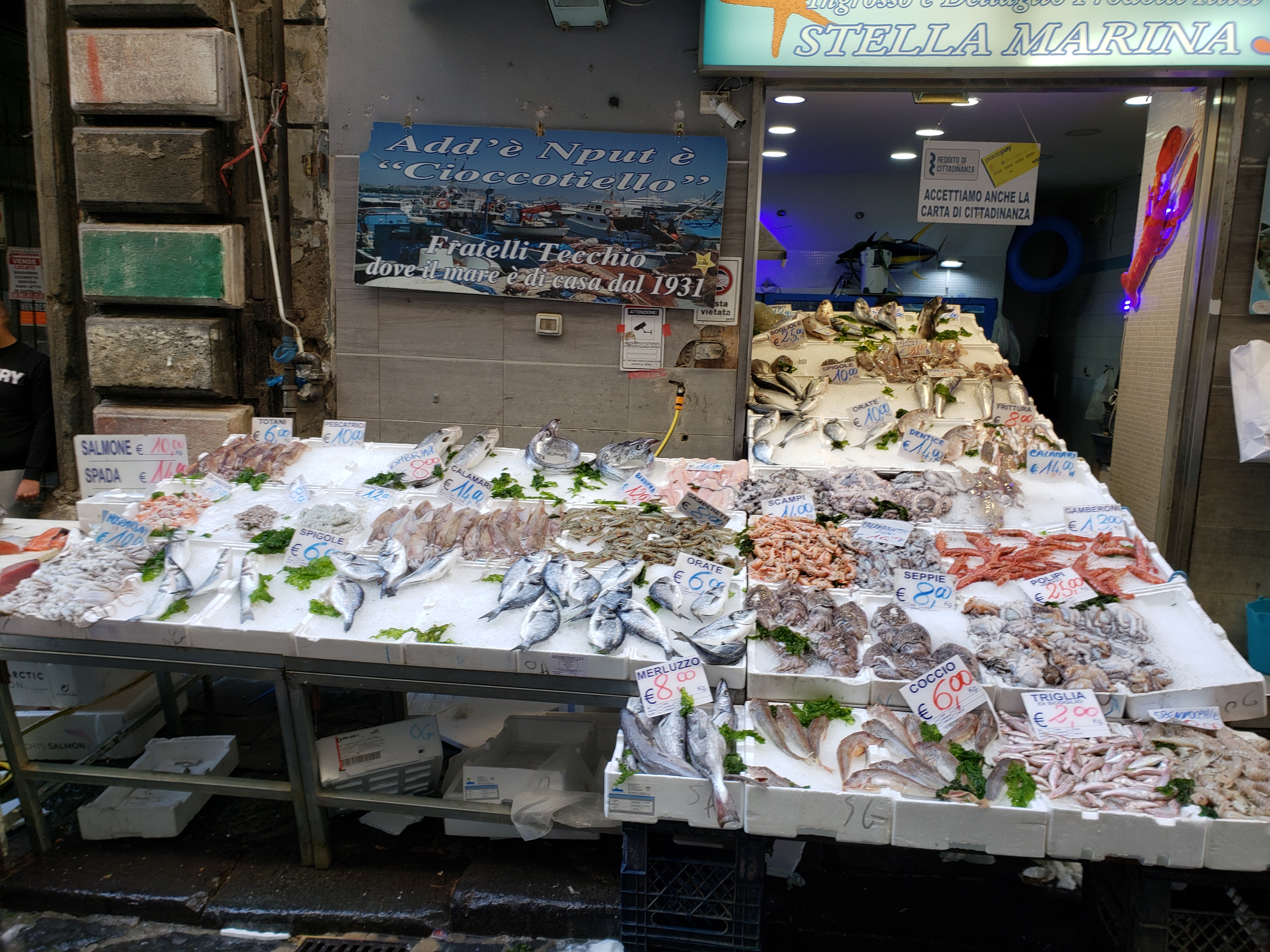
The streets of Naples are full of food. There are not only the typical butchers, bakers and even soap makers, but also cafes, ristorantes and all sorts of other odd types of shops (to Americans anyways) selling what I would call contemporary traditional or ancient traditional goods. For example, there is a coffee shop on one street in the historic center that brews coffee using the old, slow drip process – the typical way before World War II (in fact you cannot buy espresso there).
Typical Green Grocer – Naples
Another Grocer – Naples
Fish Monger – Naples
If you are not particular to just meat or seafood, you can also go to the local Tripperia where you may purchase animal organs. In the Market District there are several places to choose from and they sell everything from Tripe, to Stomach and Intestines, to Brains and other blood organs. The Tripe and Stomach display at Fiorenzano’s (like others) was especially interesting, since it had dripping water in the case while the butcher was slicing away at the stomachs and other organs people were ordering.
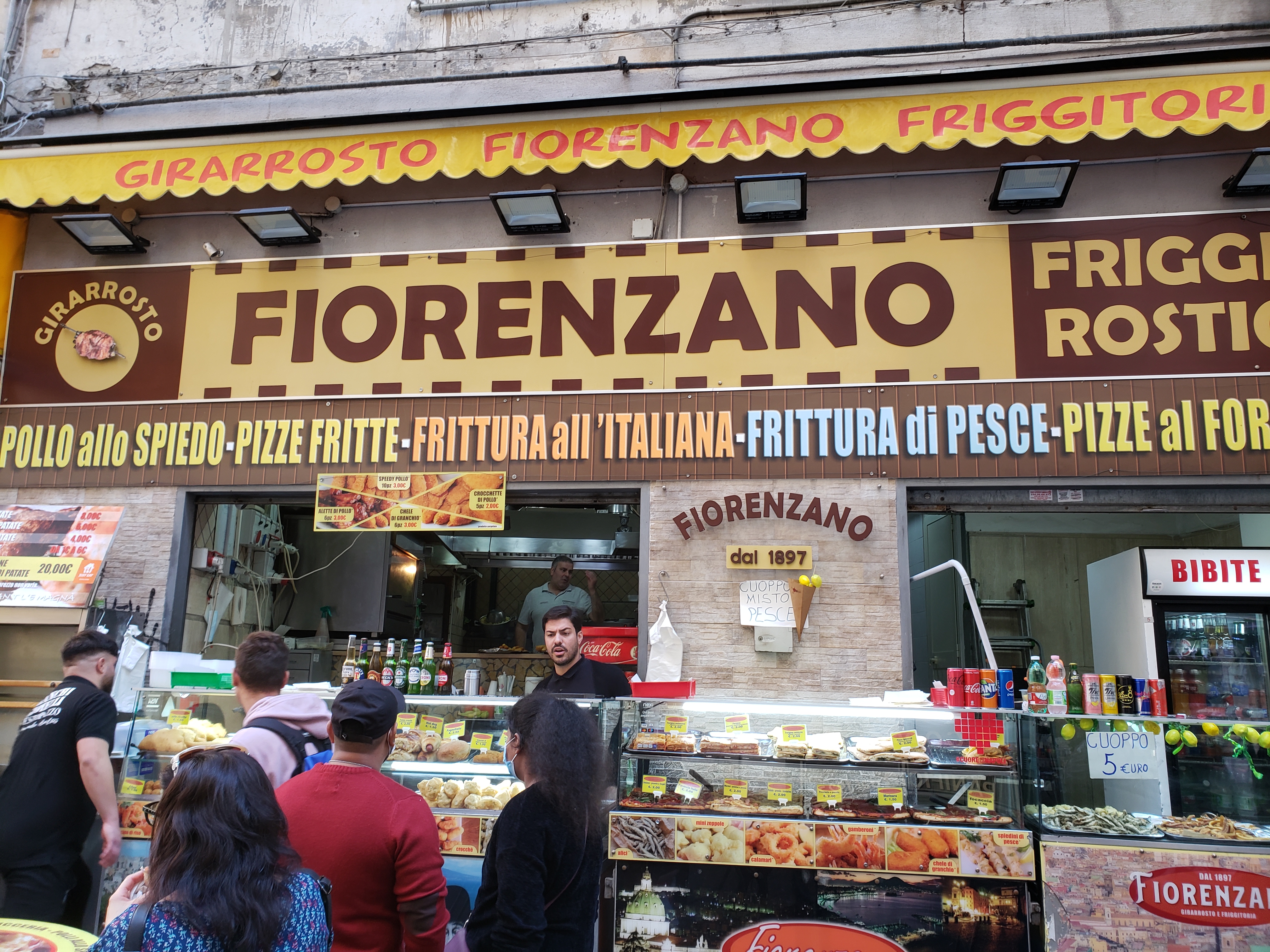
Fiorenzano’s also has a Friggitoria just down the street, where locals come to purchase quickly fried items that are choosen from the display case. This includes everything from potato fritter like delicacies, to pizza, focaccia and other Neapolitan favorites.
Fiorenzano’s Friggitoria
For one day we had a splendid tour of the historic center of Naples with our tour guide Federica. It was a walking tour of the city center that included strategic stops along the way to sample some of Naples’ street food. Some were easier to carry than others and we found ourselves, at least once, stopping to sit at a table to handle some of the more larger entrees we were offered.
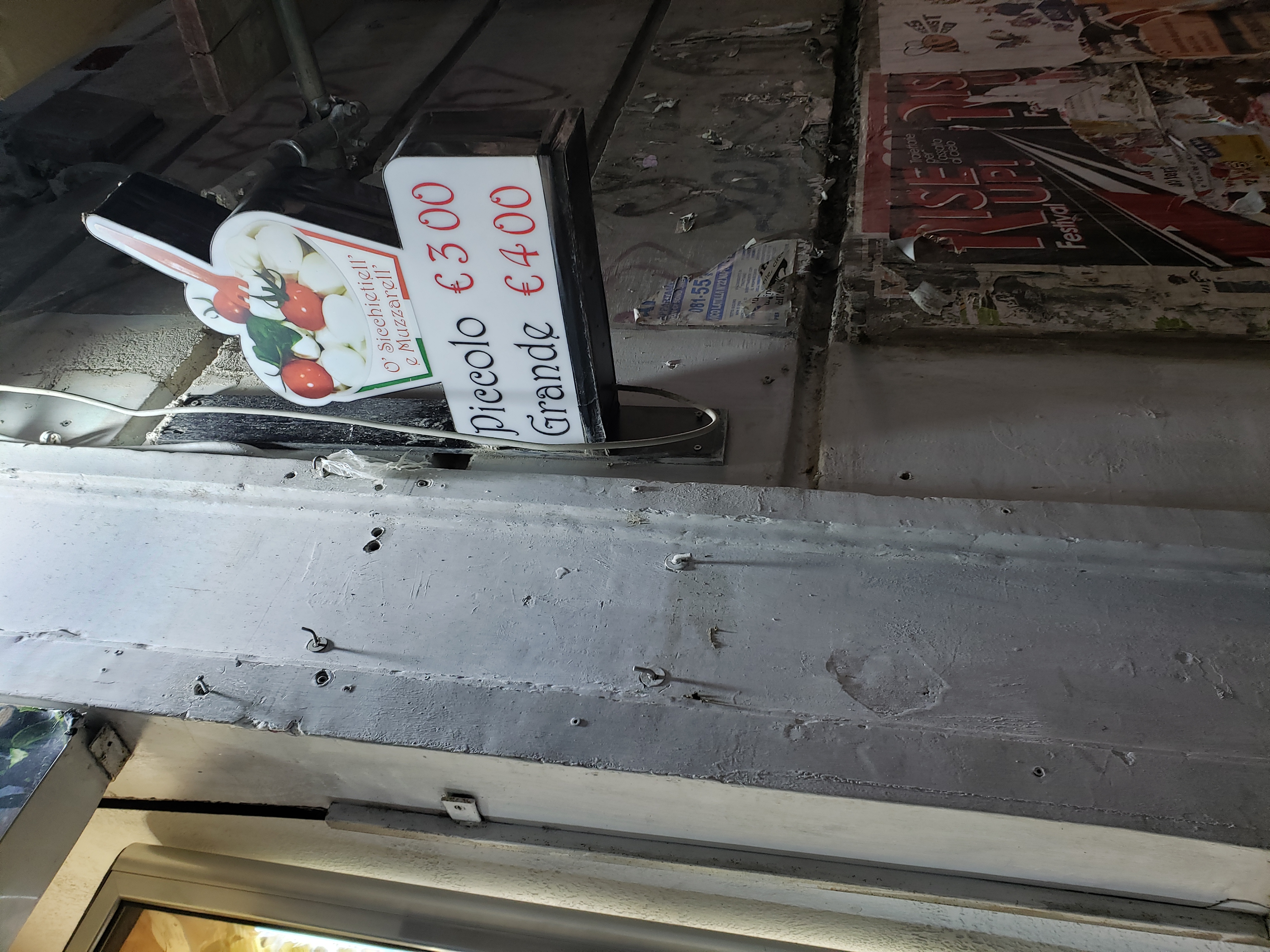
Cherry Tomatos and Mozzarella in a cup
In the historic streets of Naples you can walk the streets and find a store with a very common sign stating, “O’Sicchietiell e Muzzarell” in the Neapolitan language. Which is probably not far from the Italian for Ciliegini (shortened version of pomodoro ciliegini), or Cherry Tomatoes and Mozzarella. You may purchase a large or small cup, it comes with a small wooden fork, basilico and extra virgin olive oil and you can just eat them as you walk around.
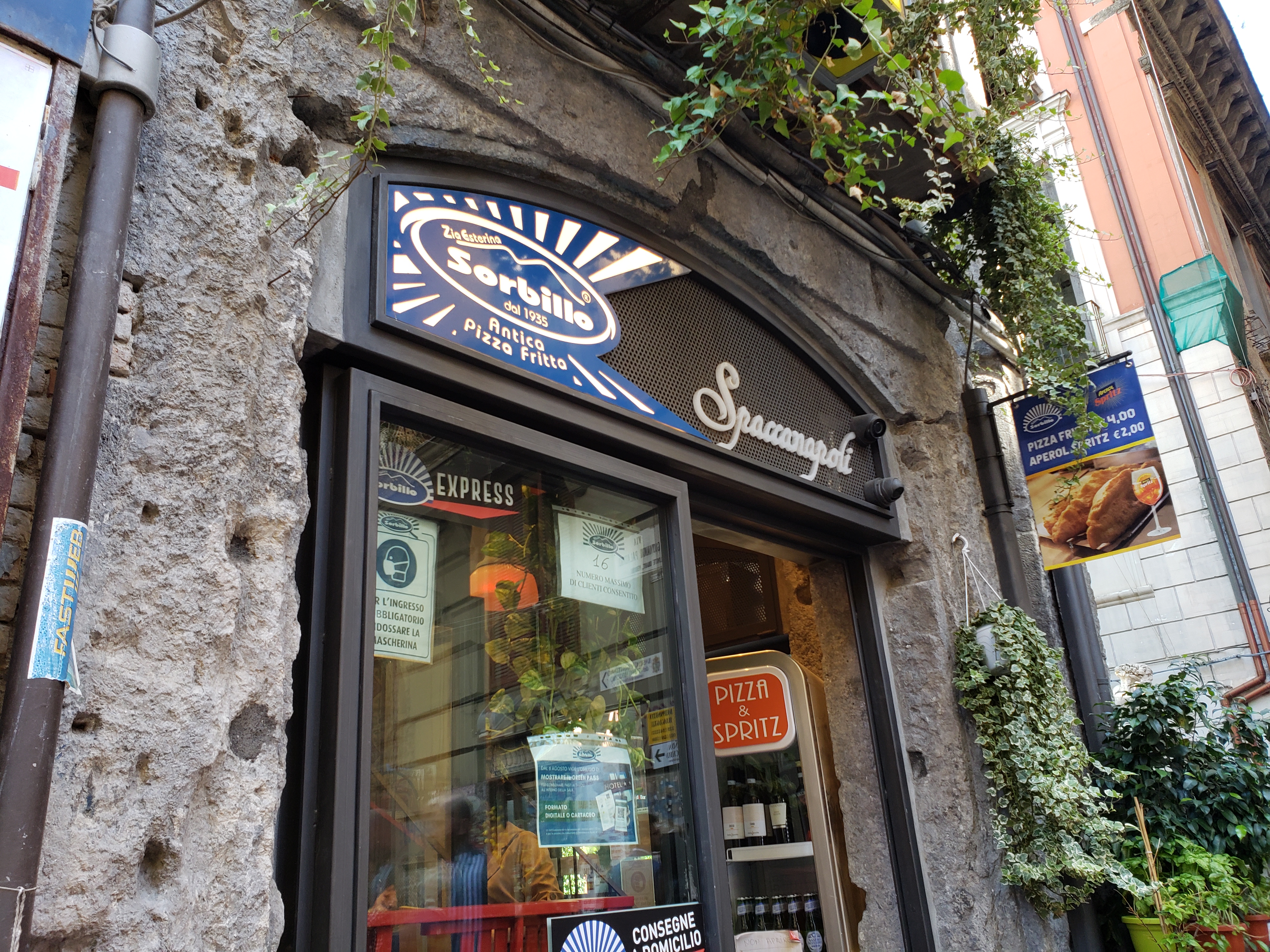
Sorbillo’s Pizza Fritta
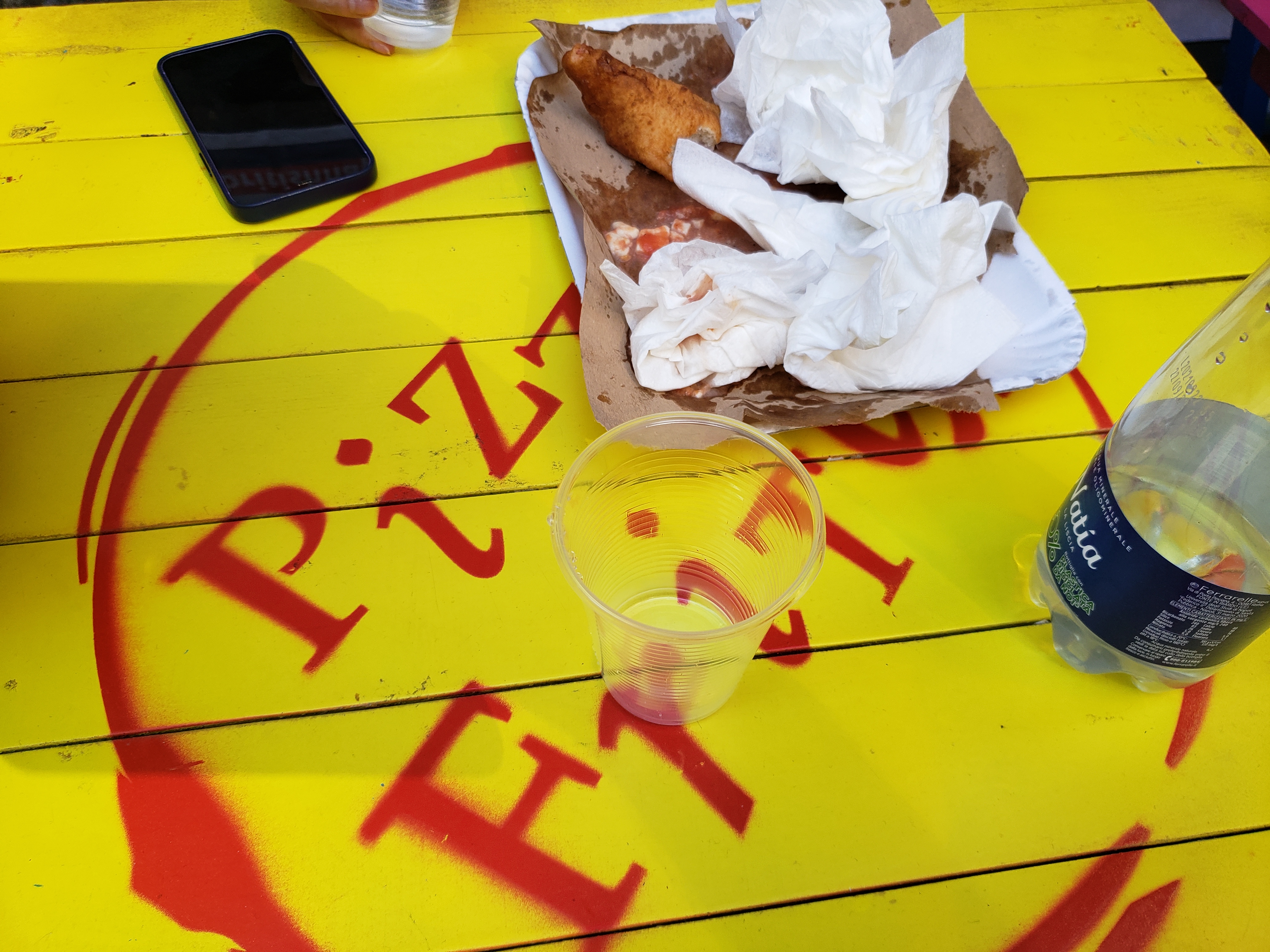
Sorbillo’s Pizza Fritta – They are quite large and very filling!
The famous Sorbillo’s Pizza has another store, which was founded in 1935, where you can purchase the traditional Pizza Fritta. This pizza is actually fried and not baked. It is made almost the same as traditional pizza up to the point – where they closed up all the sides, pinching them closed to ensure none of the ingredients can leak. Then they throw it in a very large frying pan with oil in it. It is served after it has turned a golden brown on brown piece of paper and can be sprinkled with salt or other spices. It is almost like a Calzone, but tastes completely different because of the frying process imparts a different taste to the dough. If you are a pizza lover, it is something you must try at least once.
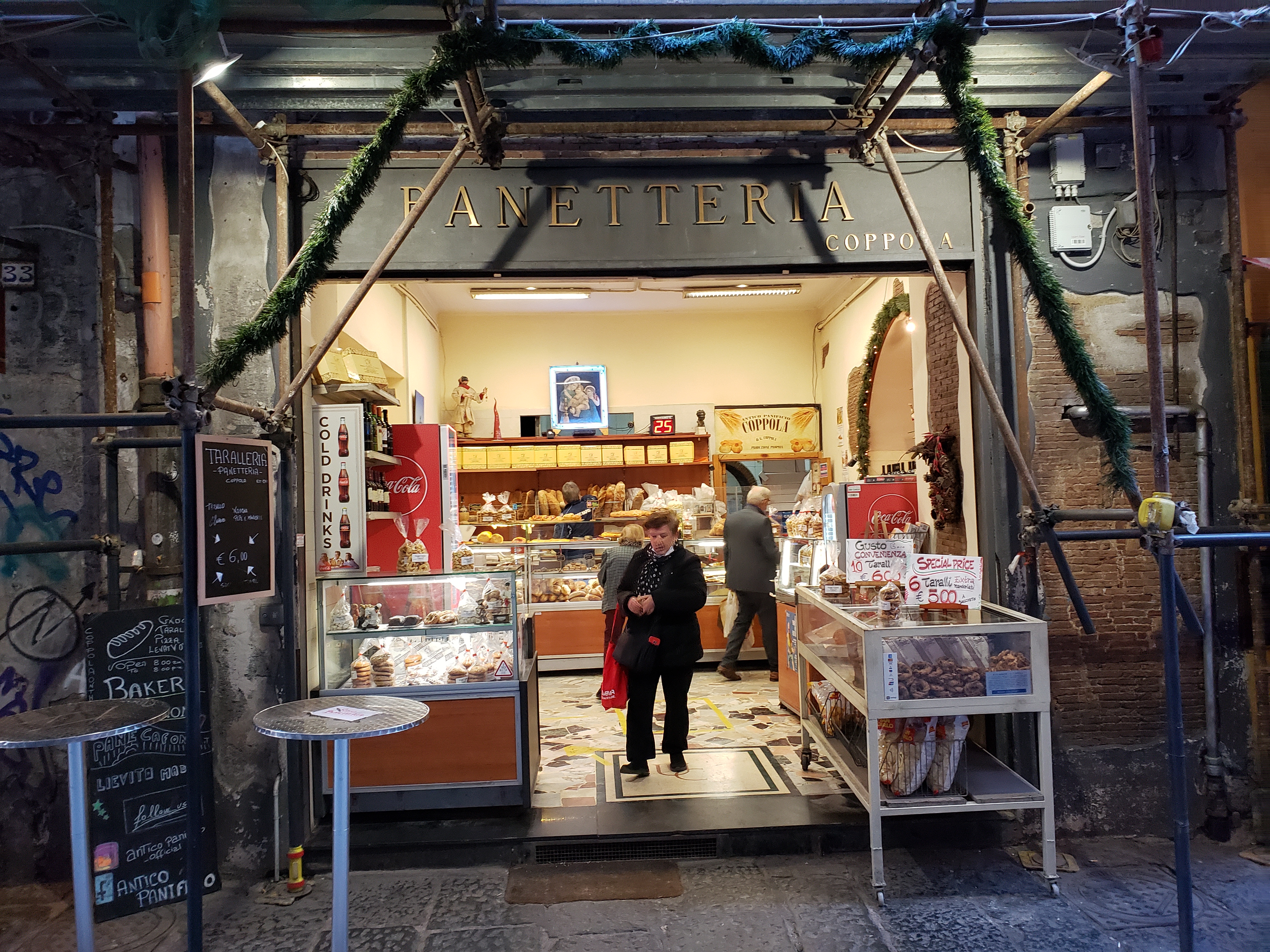
Coppola’s Penetteria – Taralli
Another great thing to snack on, either while you walk or to bring home in a bag, are Taralli. At Coppola’s you will find these traditional biscuits along with other great treats. Taralli are made with lard, or fat, and are traditionally spiced with pepper. However, today almost all of the stores add almonds to the mix, in order to impart some extra flavor to this Neapolitan staple. Since they are a bit savory, but usually not salty, the pepper and almond comes through rather nicely.
Traditional Sfogliatell
Sfogliatella, it conjures up thoughts of heavenly gastronomic bliss. We end with this amazing pastry since most people probably are not aware that there are actually two different types. There is the Riccia, which everyone knows and loves with its characteristic million folds of dough (almost like Phyllo dough) which is hard and rather crunchy, with a center of Ricotta Cheese filling. Then there is the Frolla, which is almost the same, except it does not have all the folds in its dough, is softer and has more of a shiny appearance. Both are delicious and it usually comes down to personal preference on which one you like better.
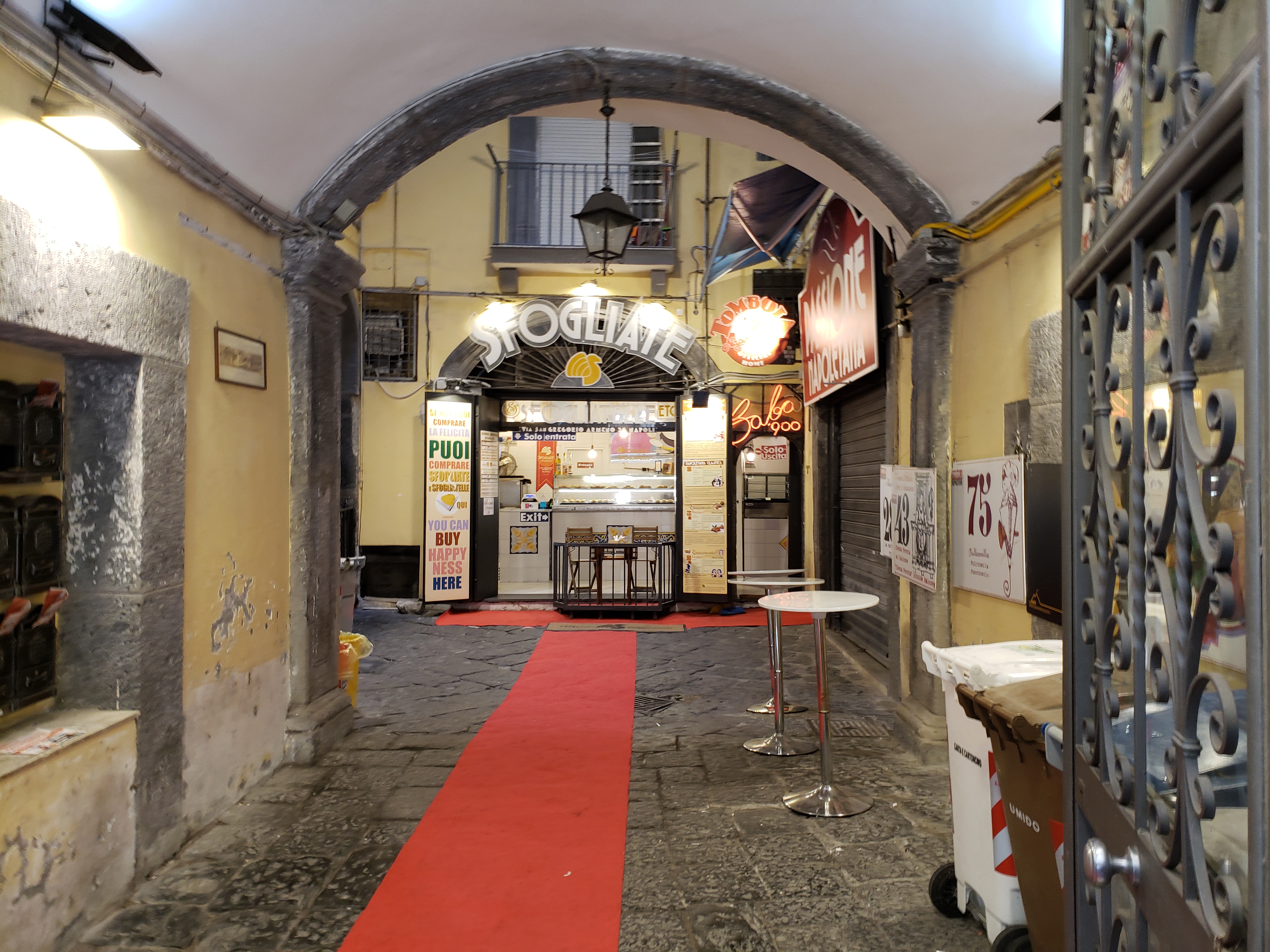
Sfolgliate – Traditional Sfogliatelli
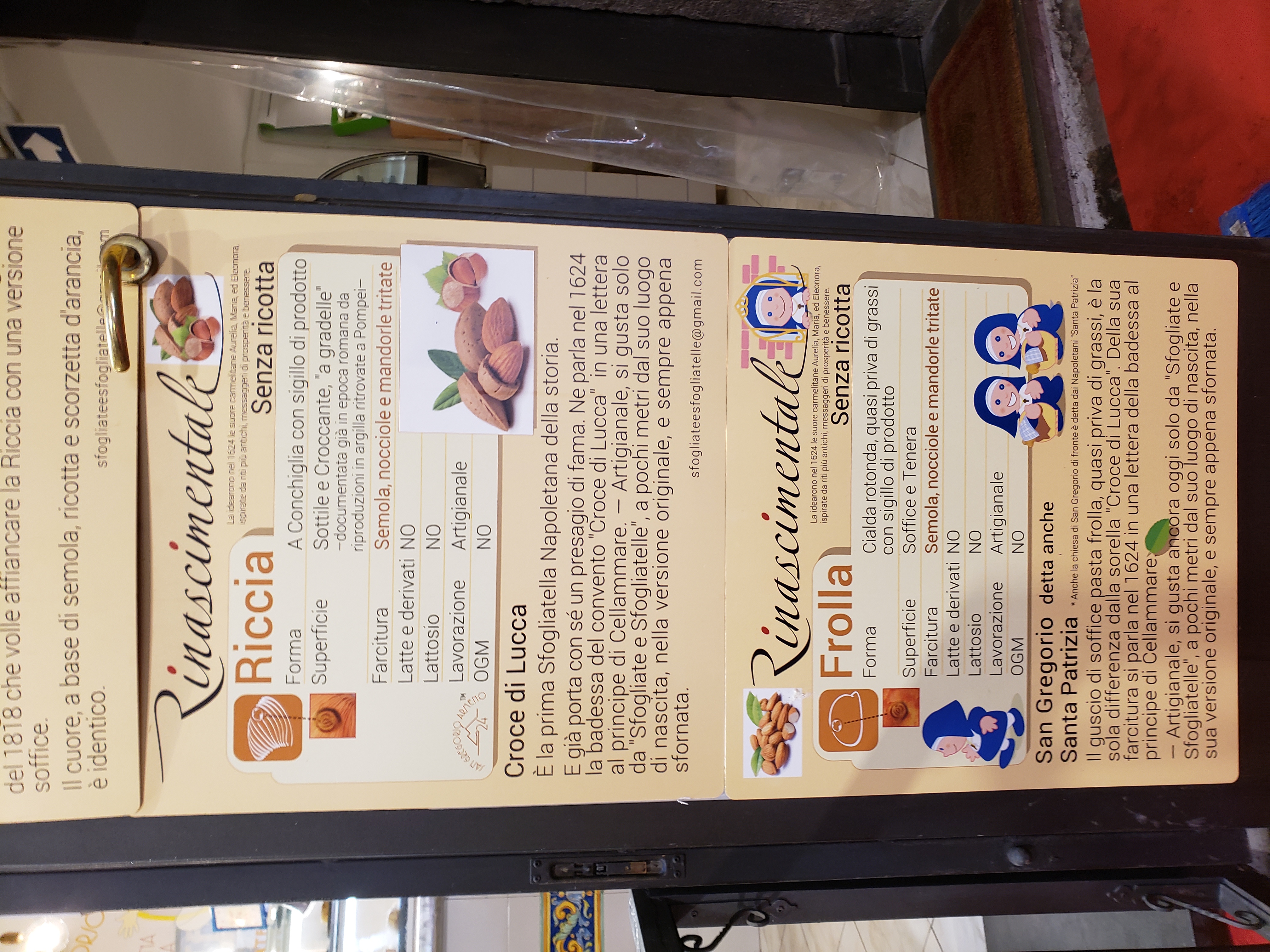
However, we must pause yet again, for most people are probably not aware that the original Sfogliatella did not have a Ricotta Cheese filling, but rather a blander and much easier to eat filling made of semolina dough and hazelnuts and/or almonds. At Sfolgliate you can find this traditional Sfogliatella made the way it was intended. It is, at this time, the only store in all of Naples that adheres to the old tradition. We tried the Riccia and must say, it was delicious!
That’s it for our food tour of historic Naples, hope you enjoyed it and learned something about the delicious food they have to offer but have not exported. I know, sad for us all, but definitely worth a try if you visit.