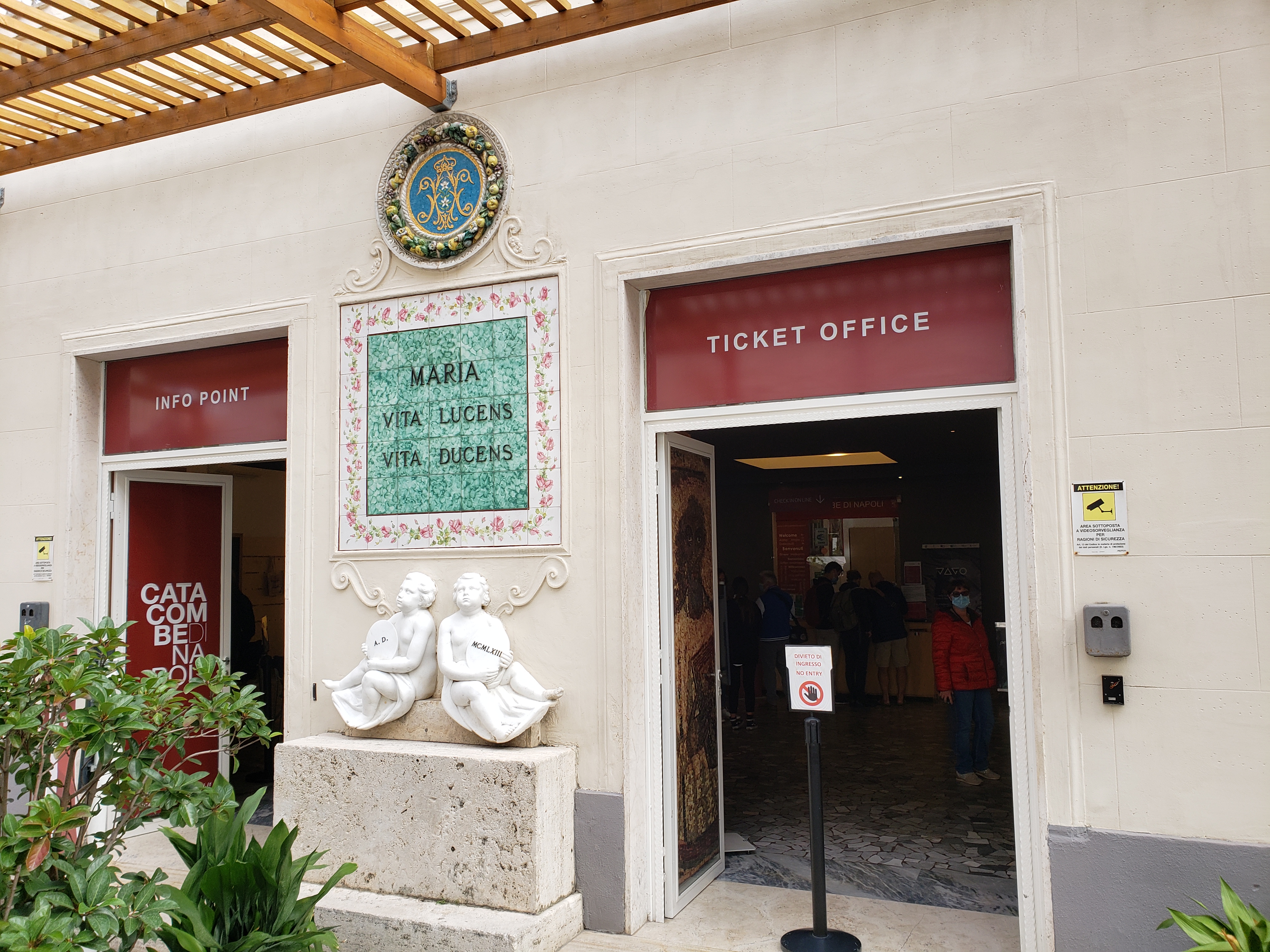
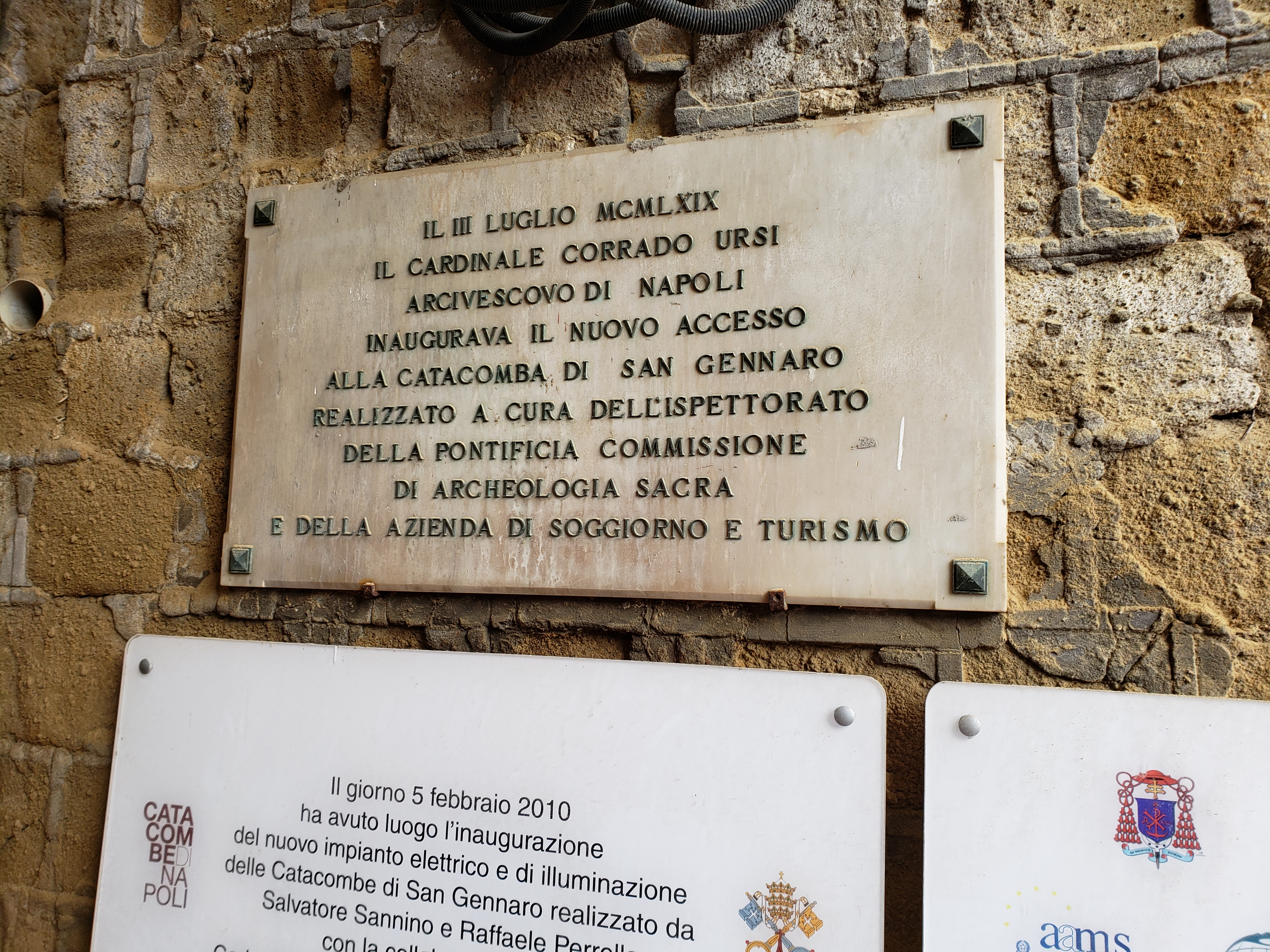
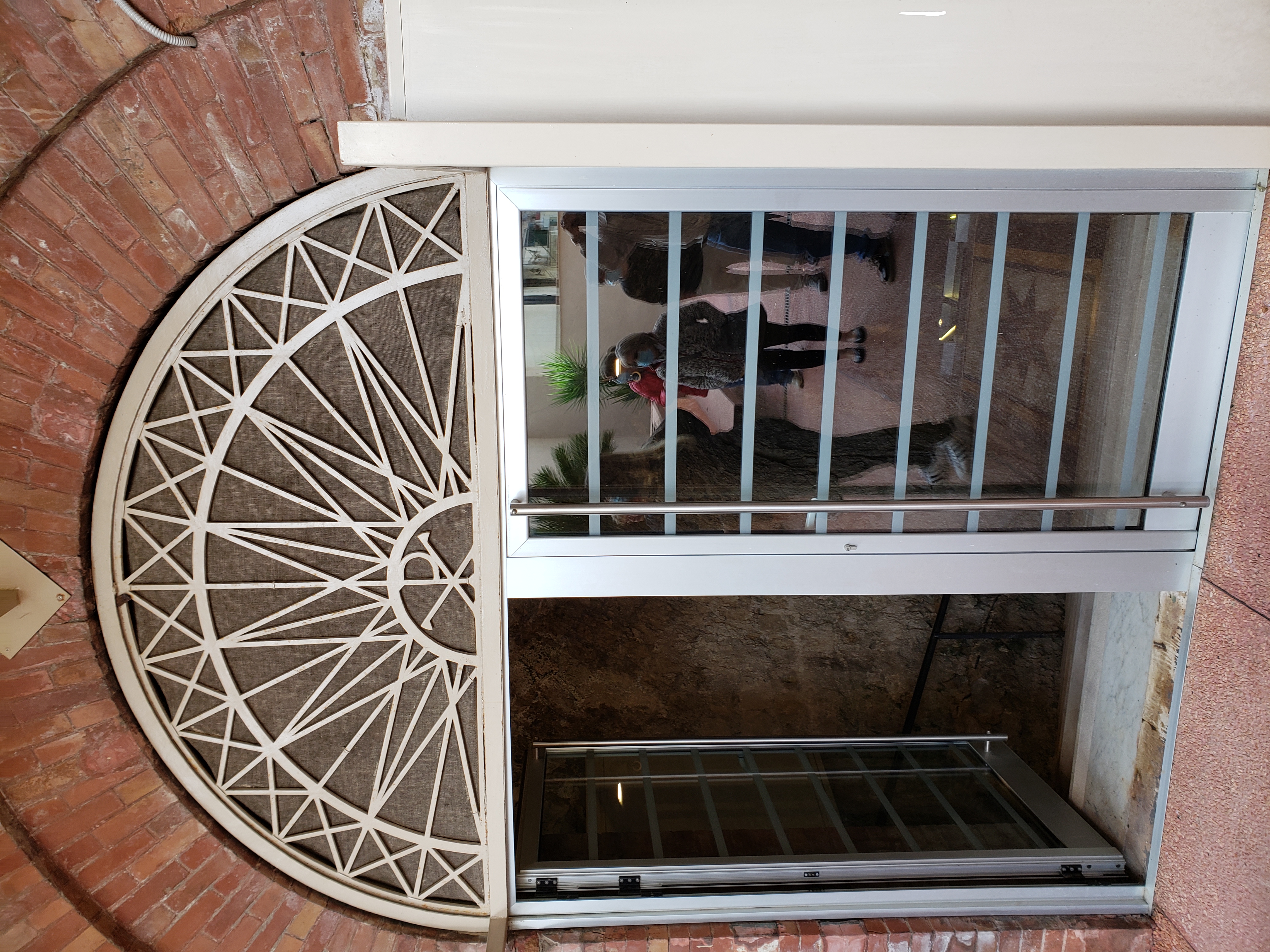
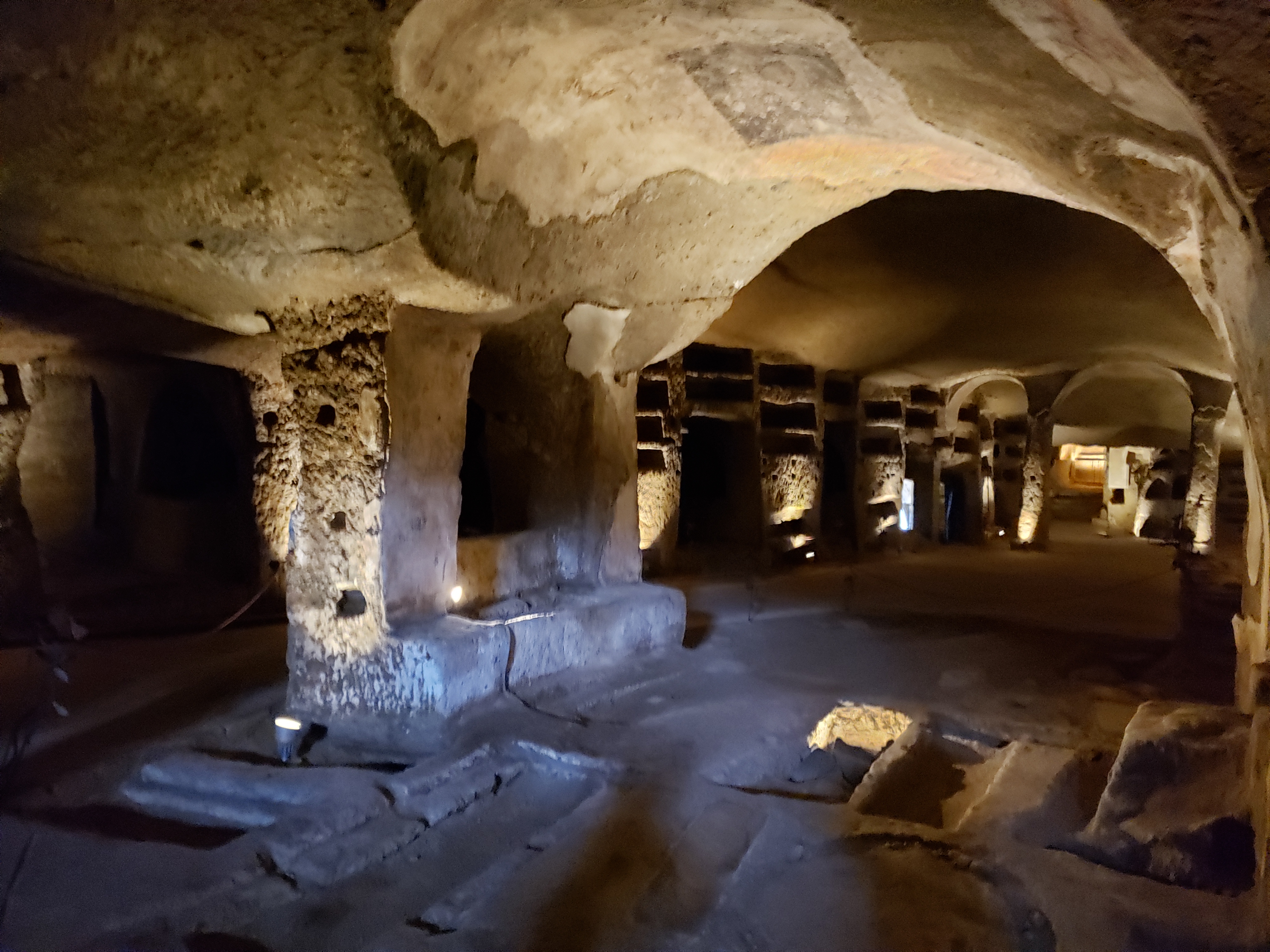
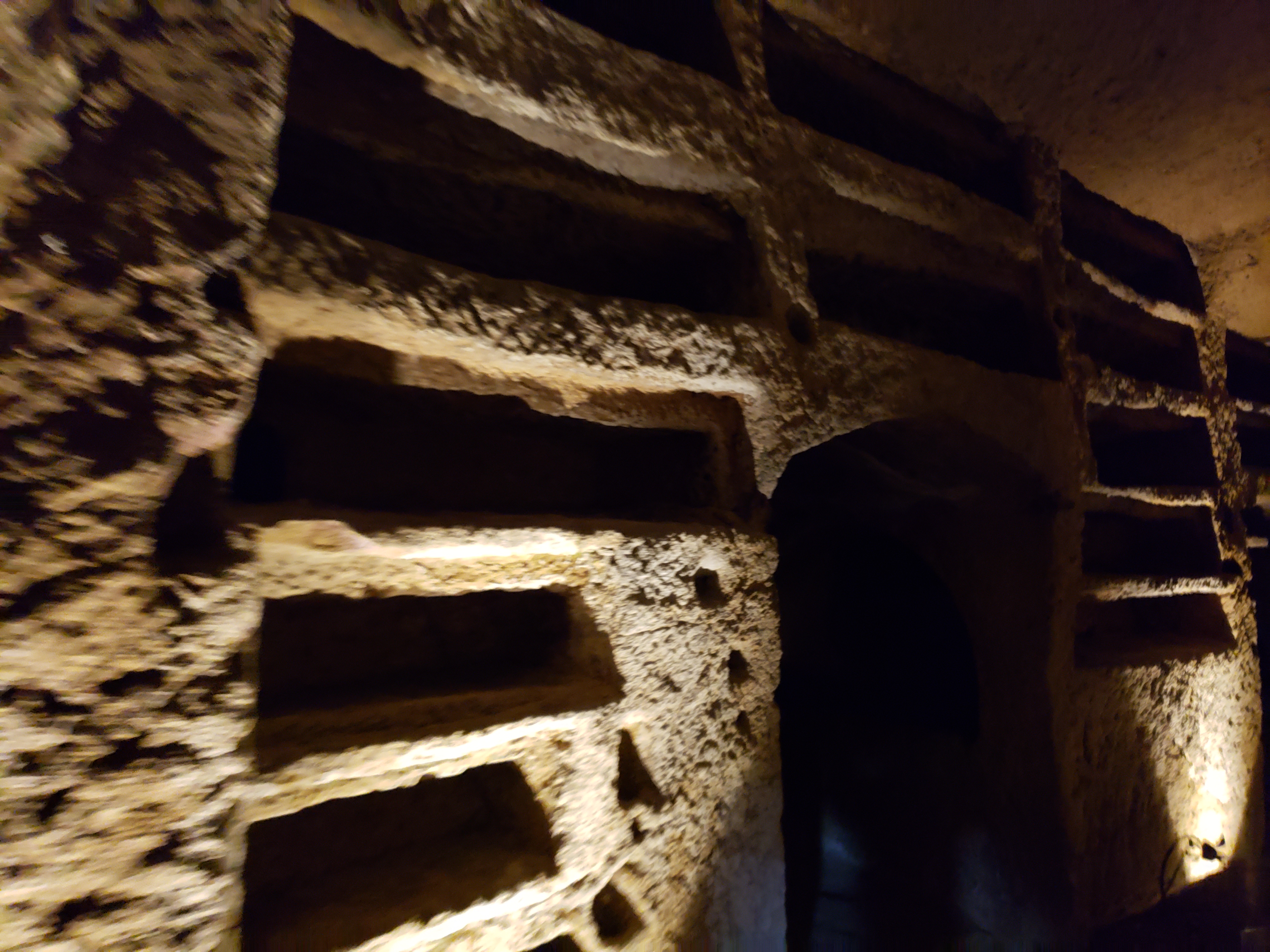
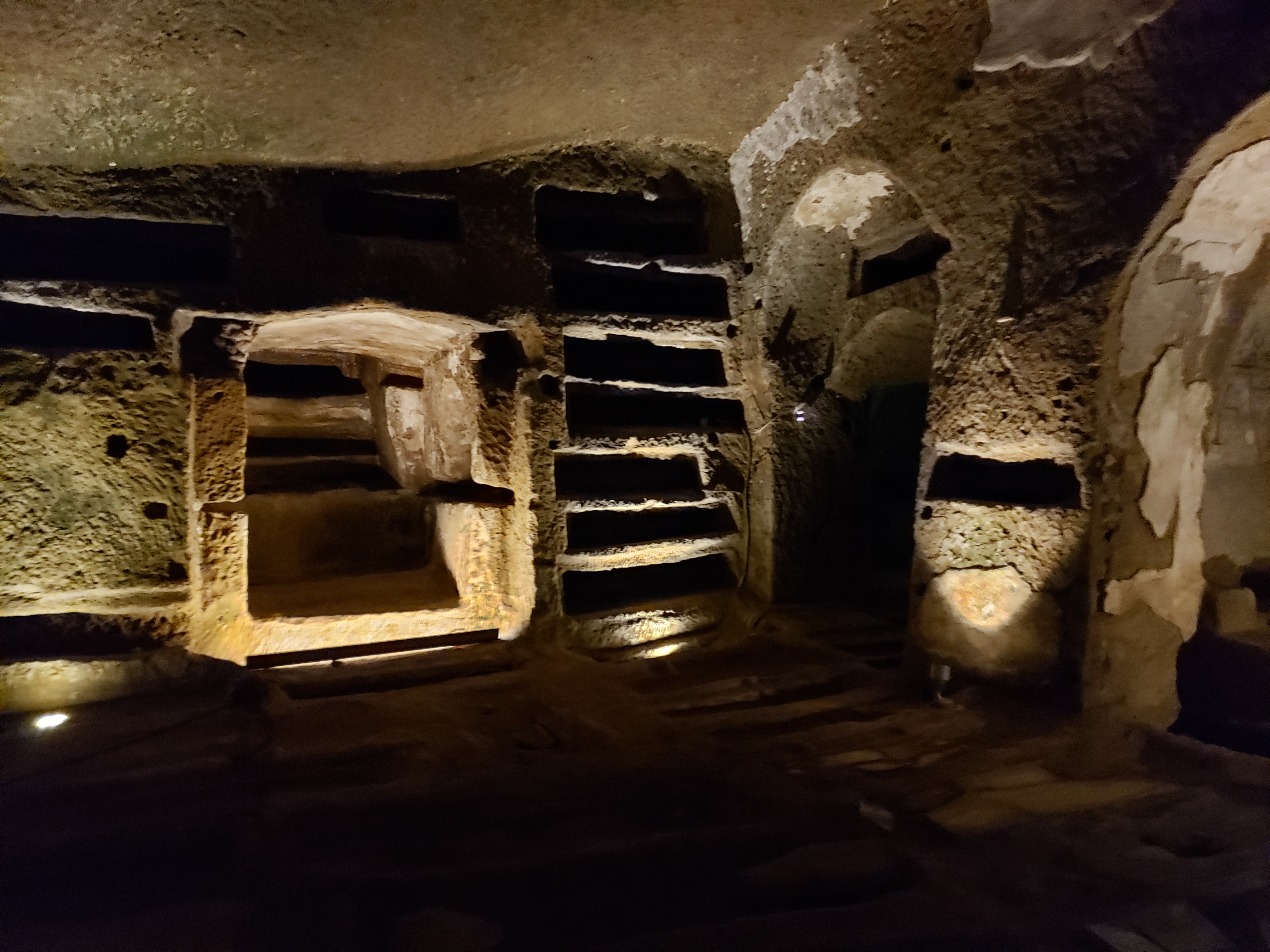
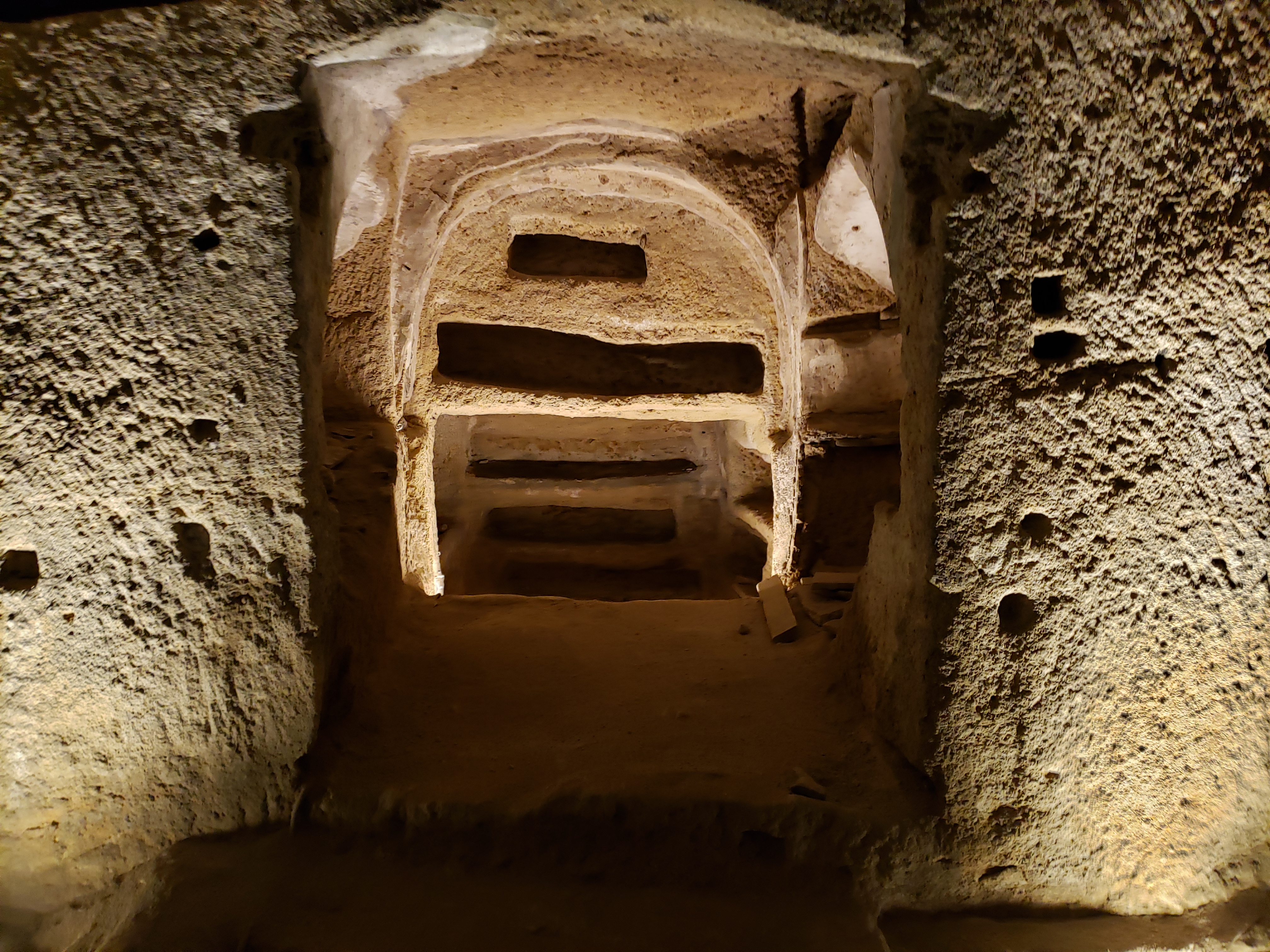
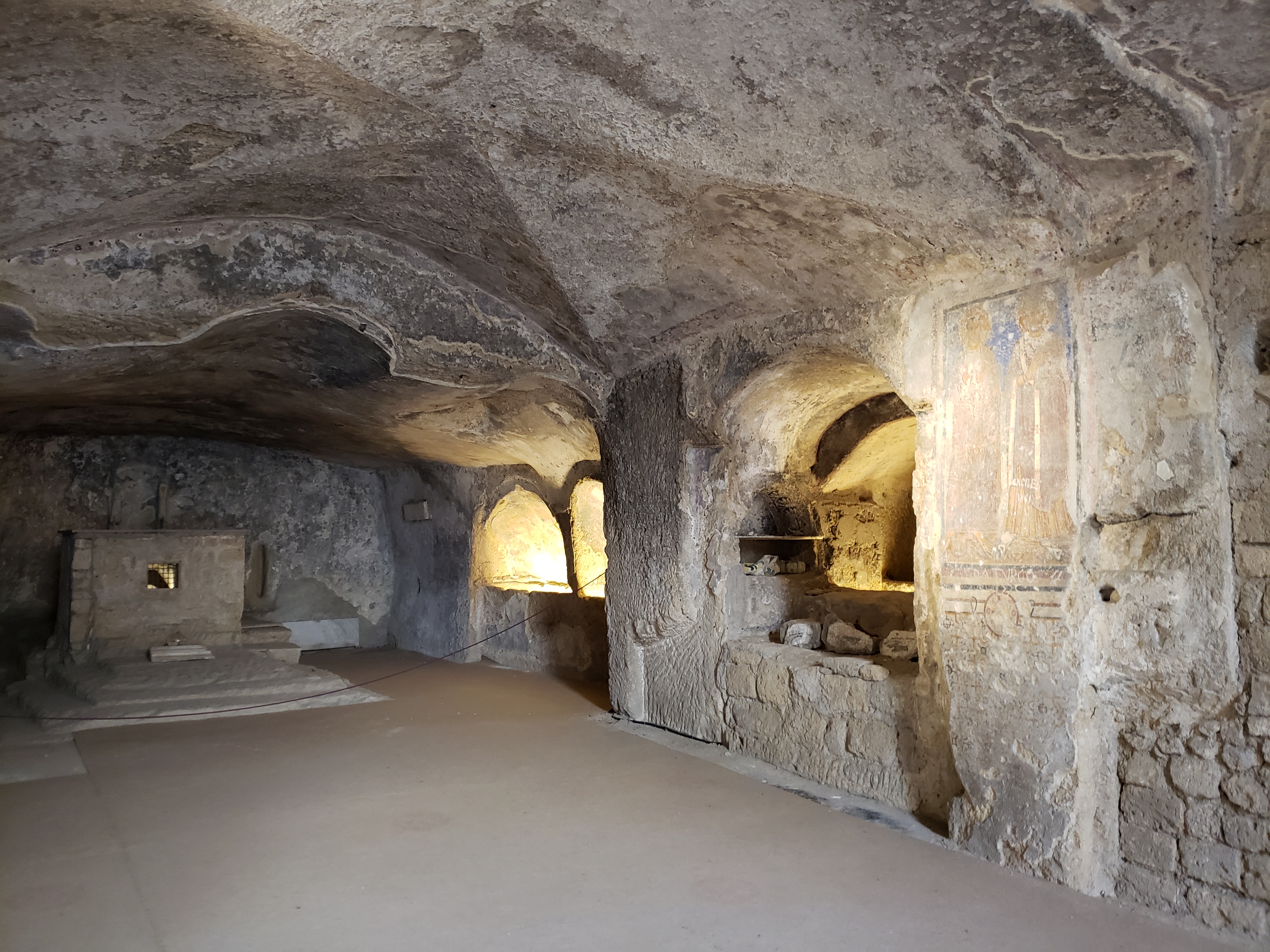
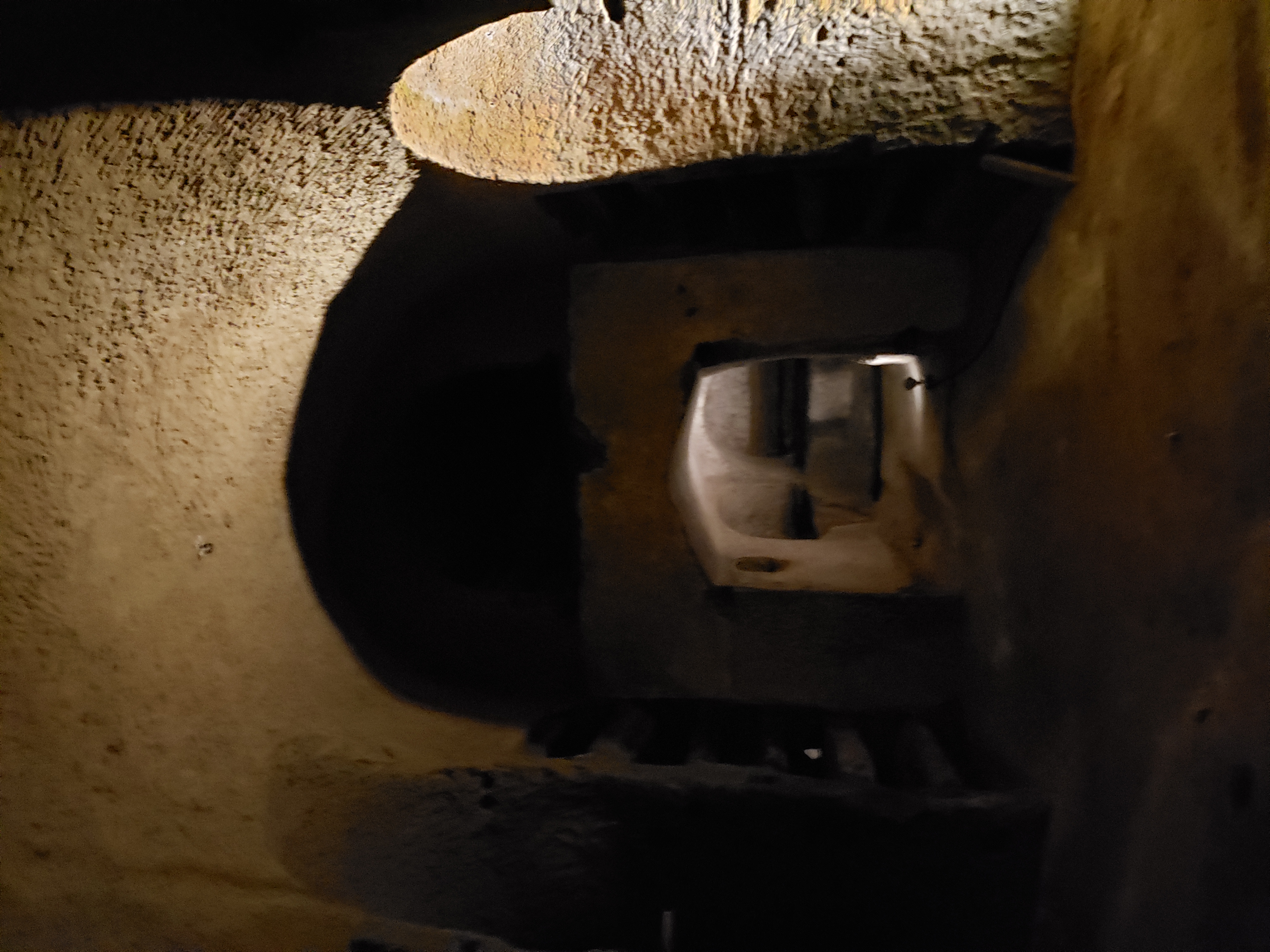
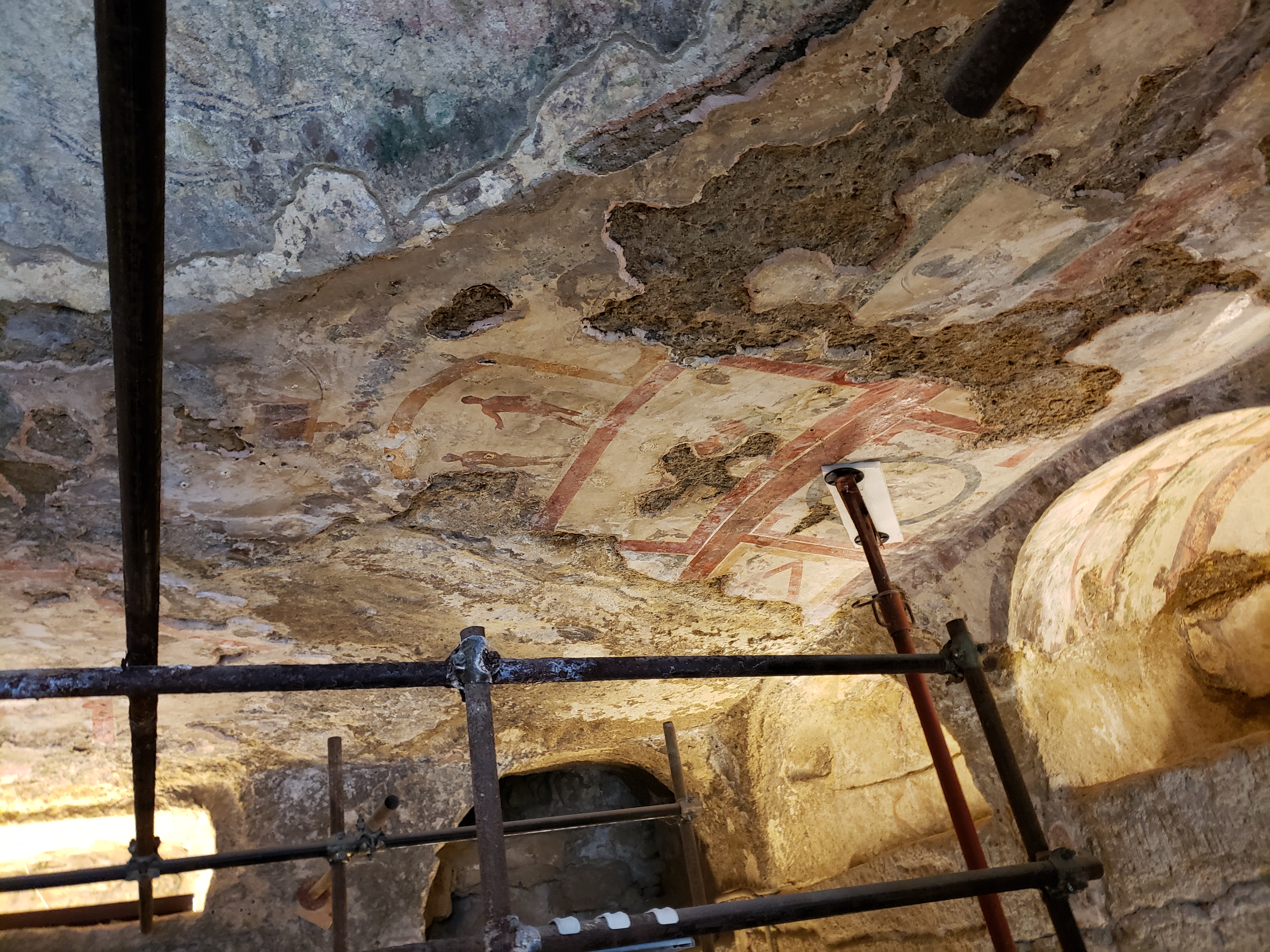
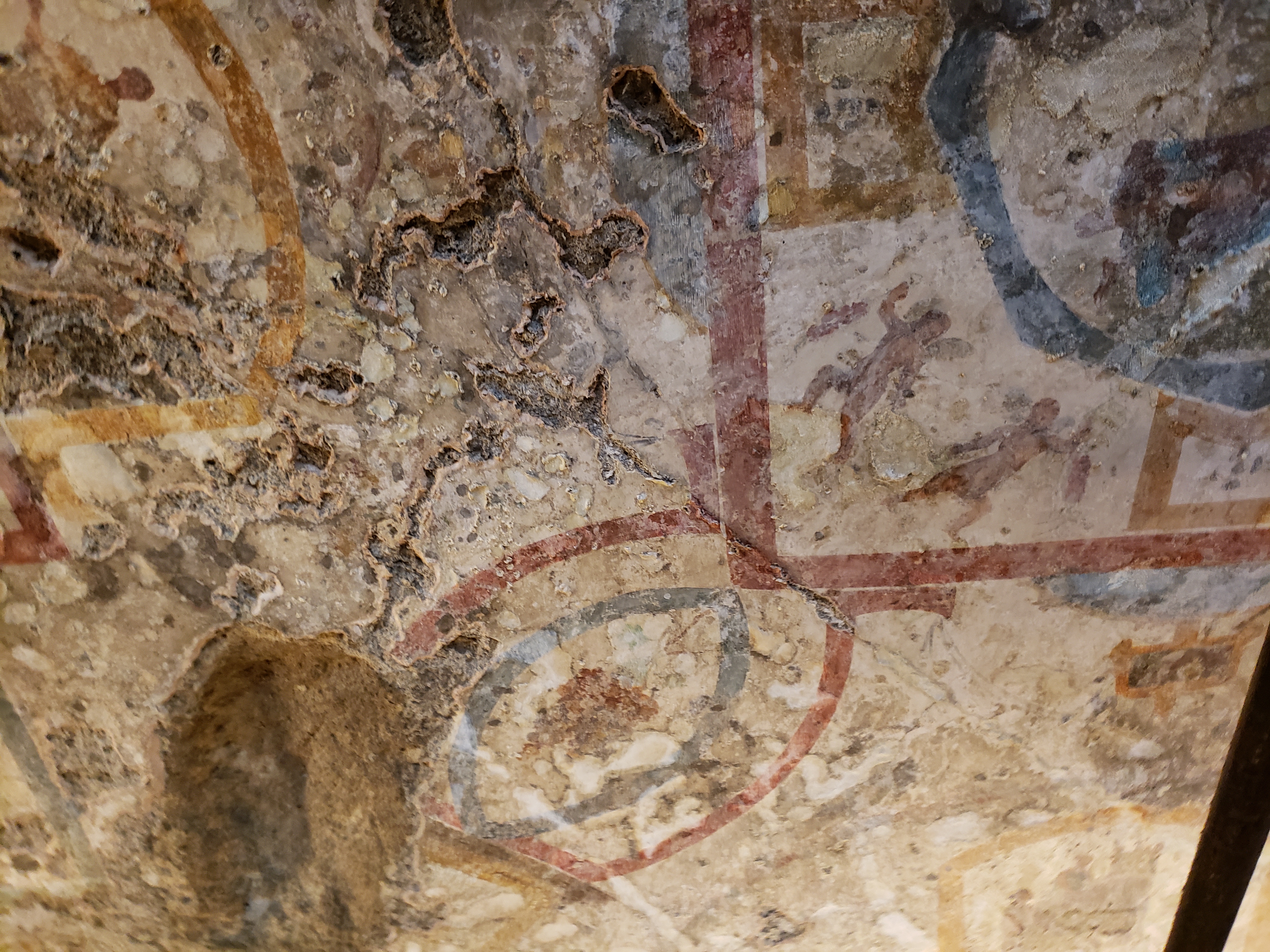
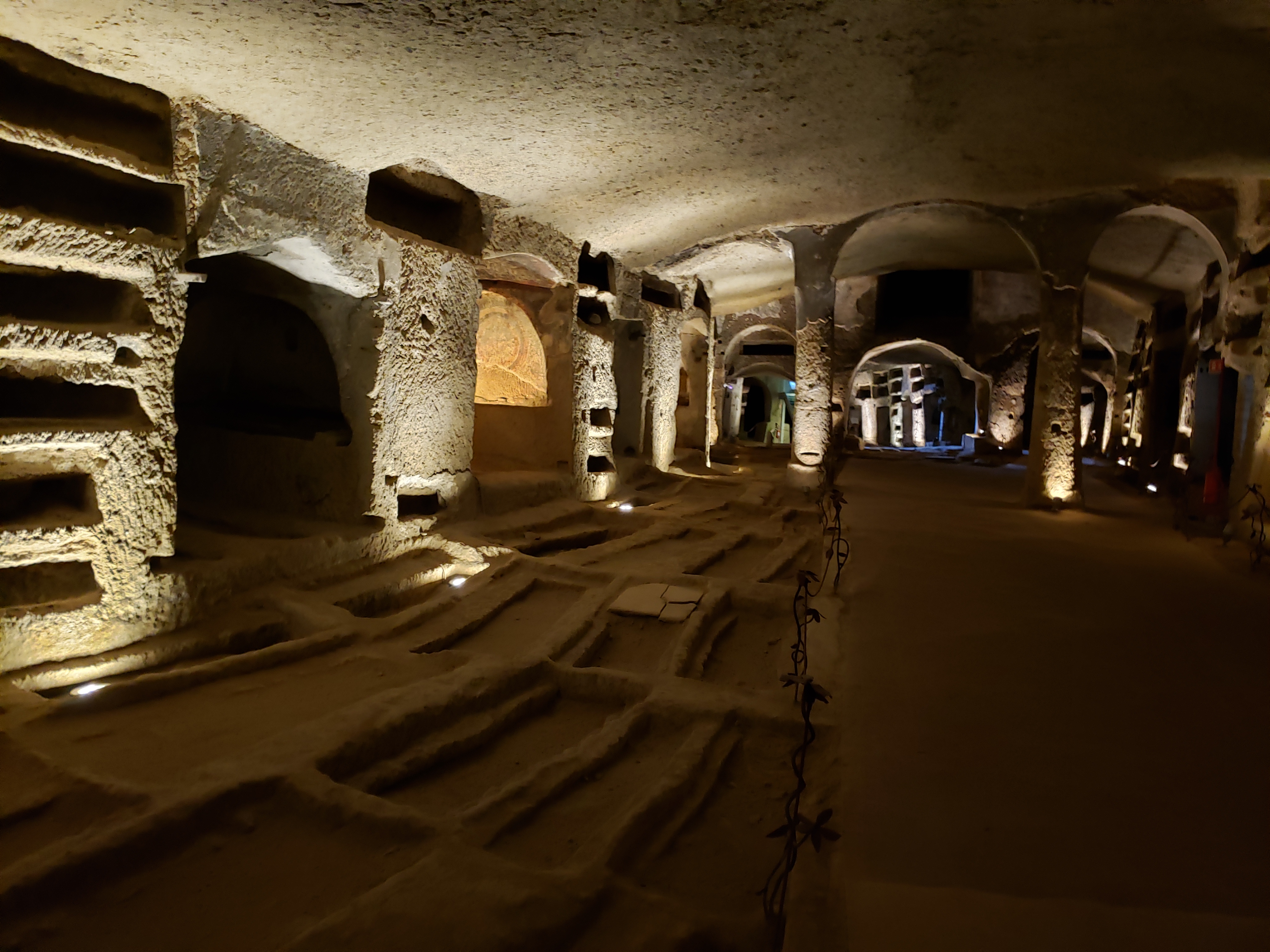
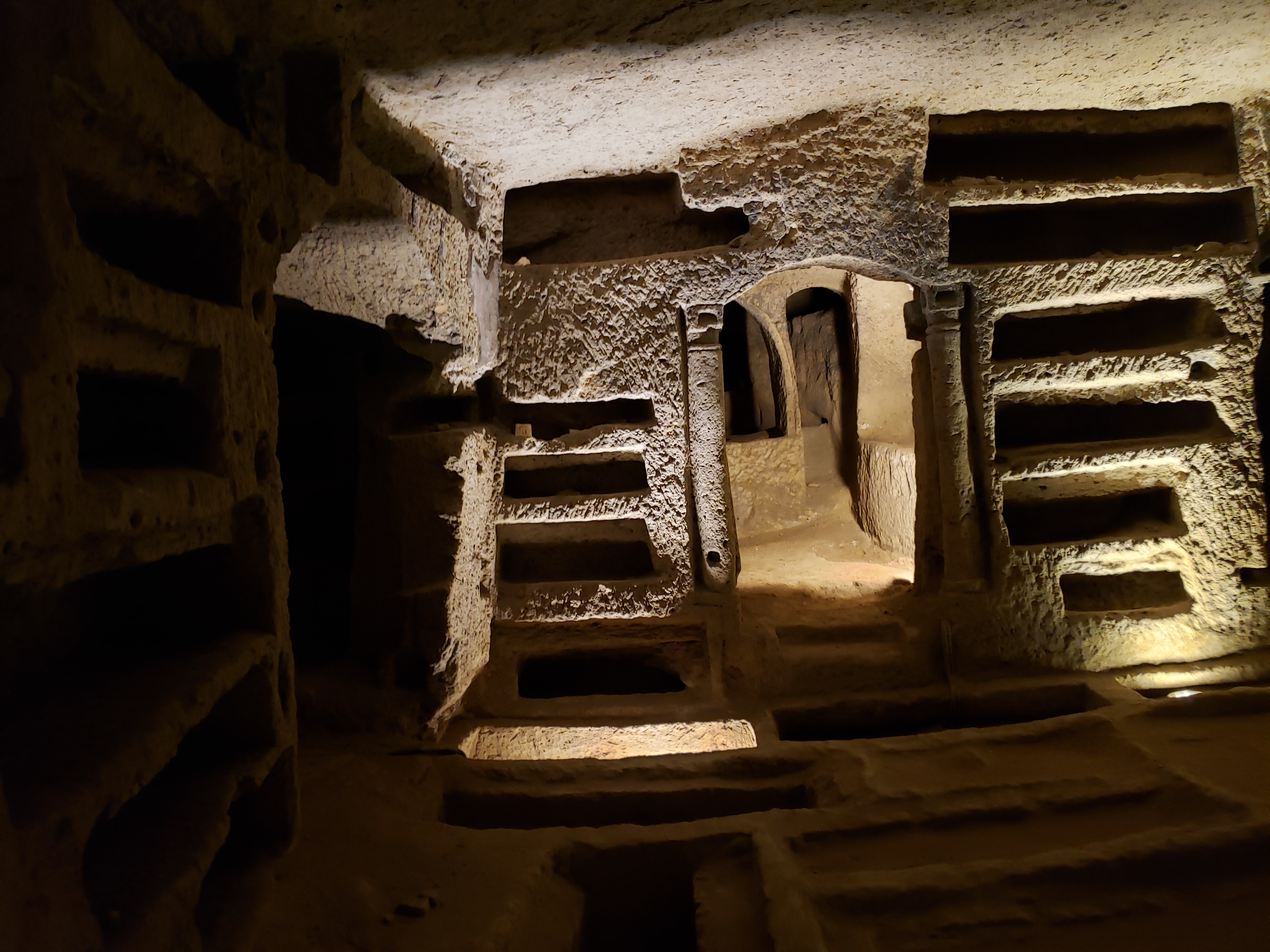
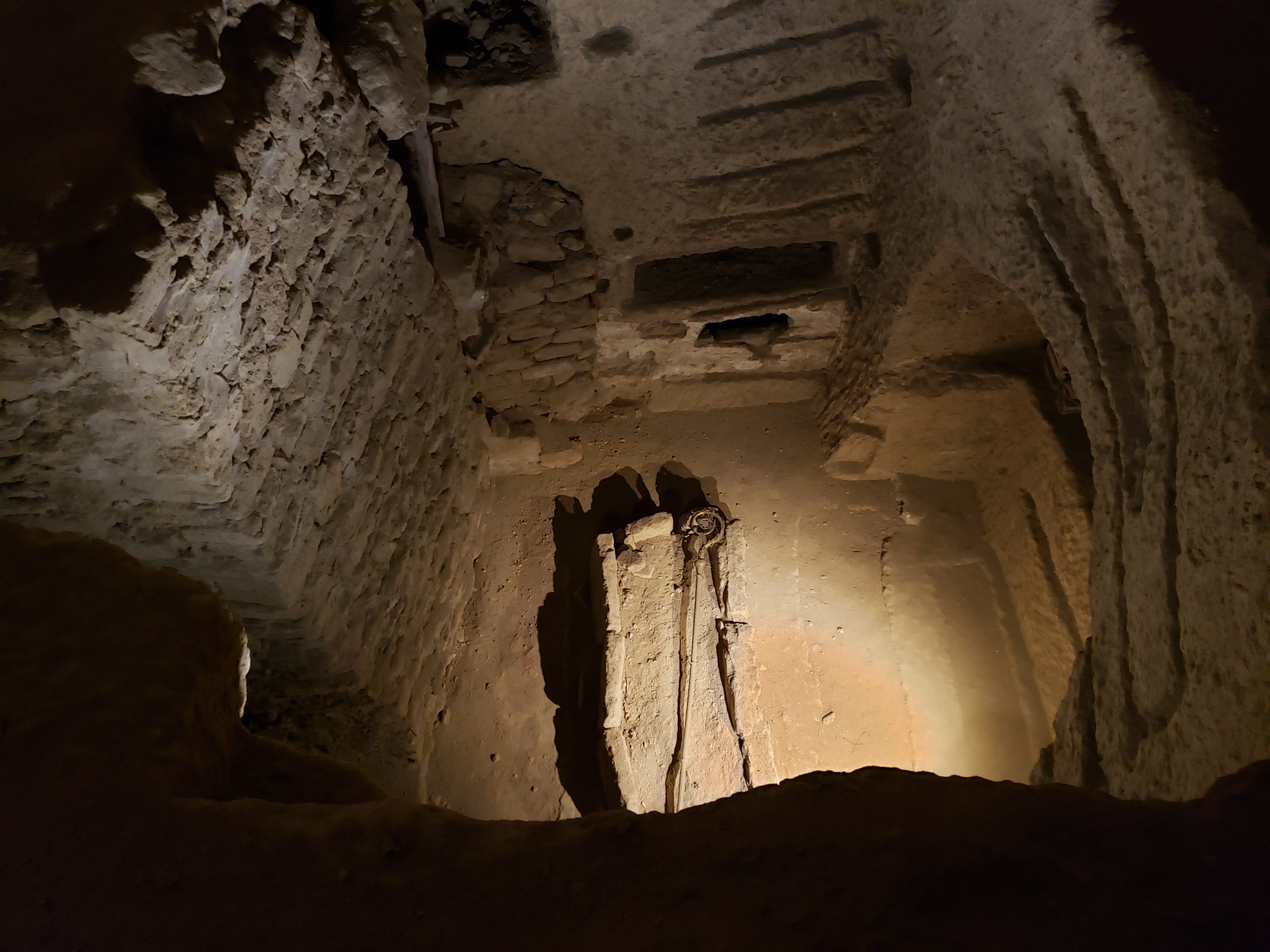
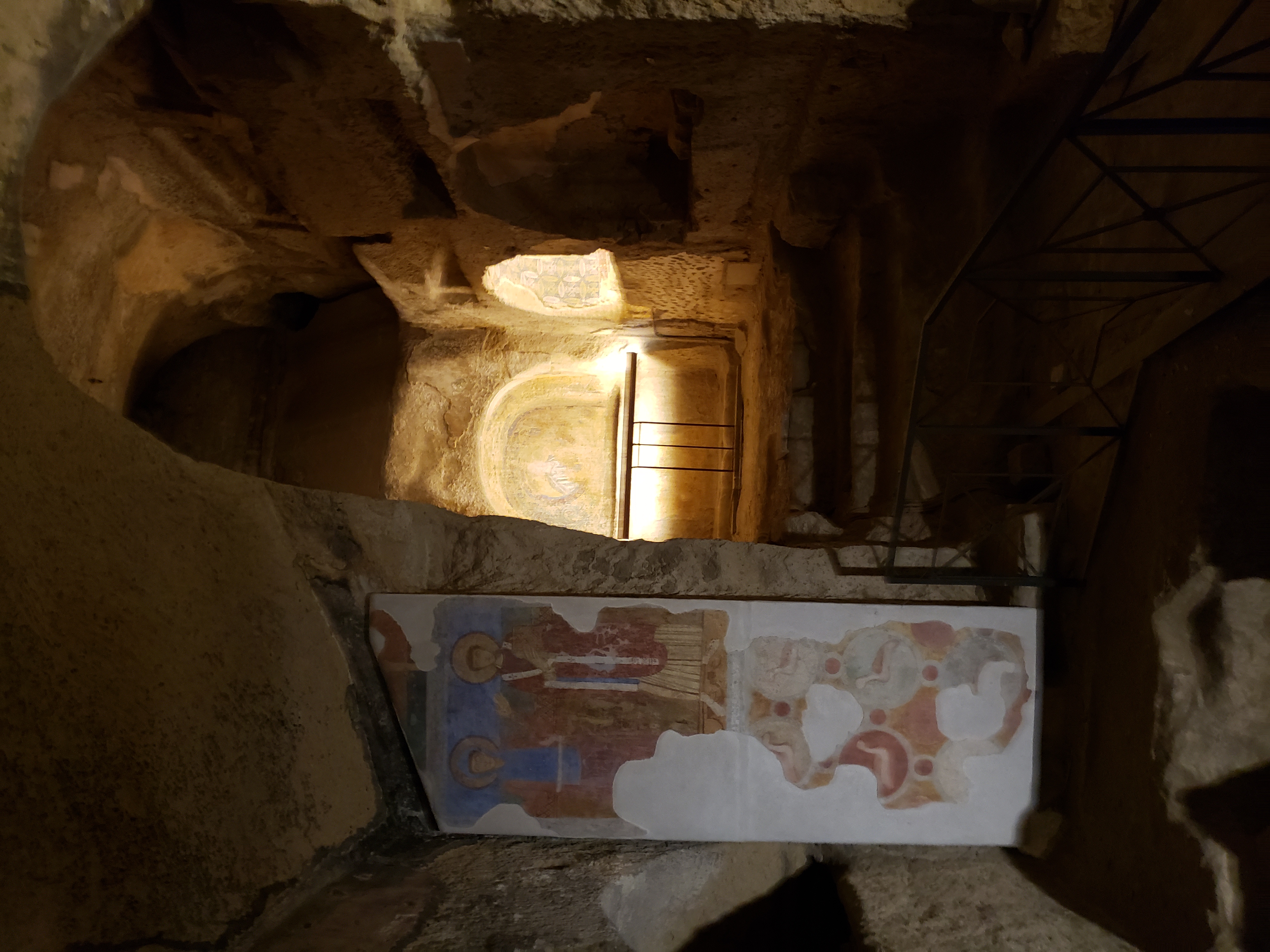
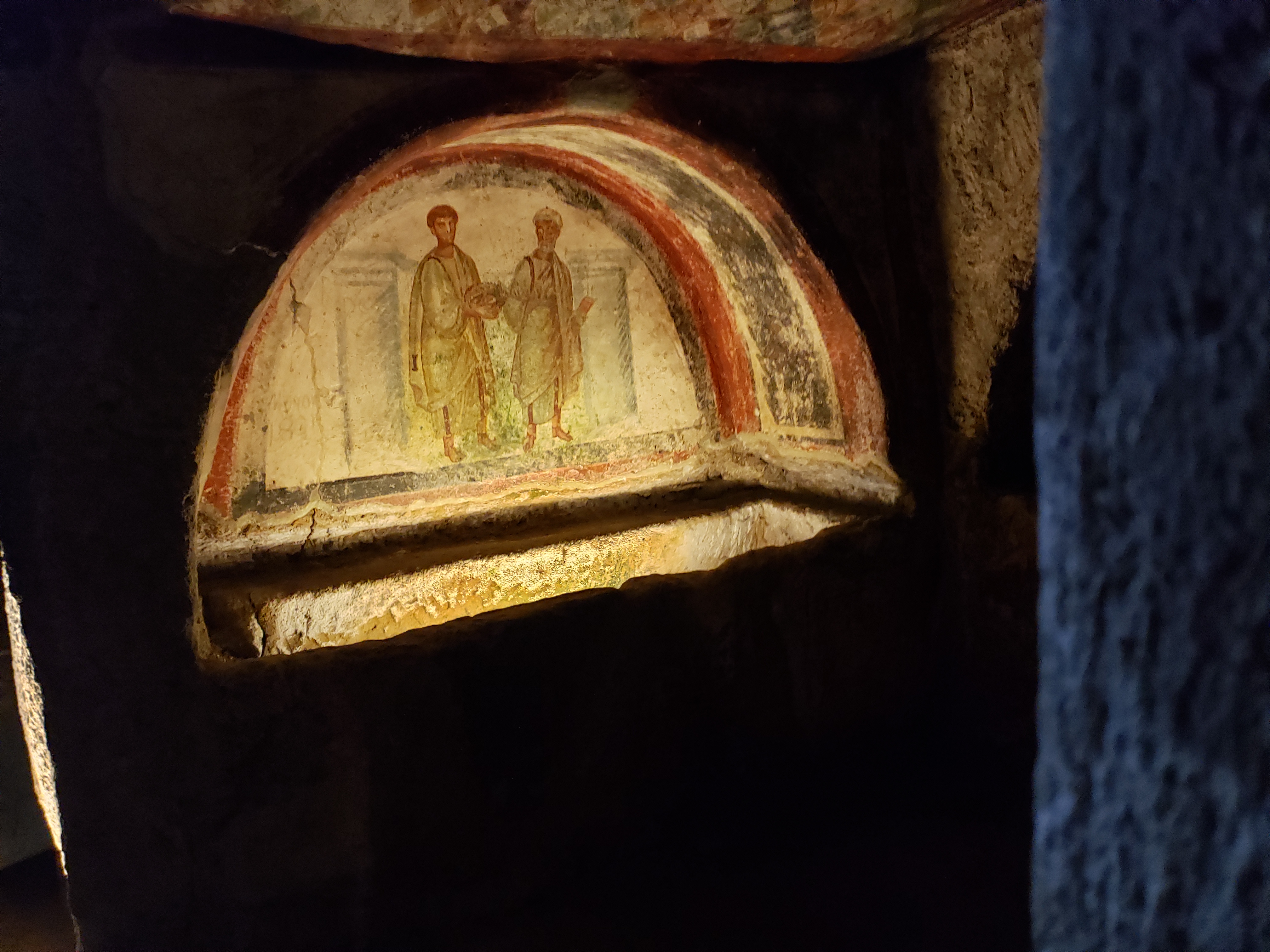
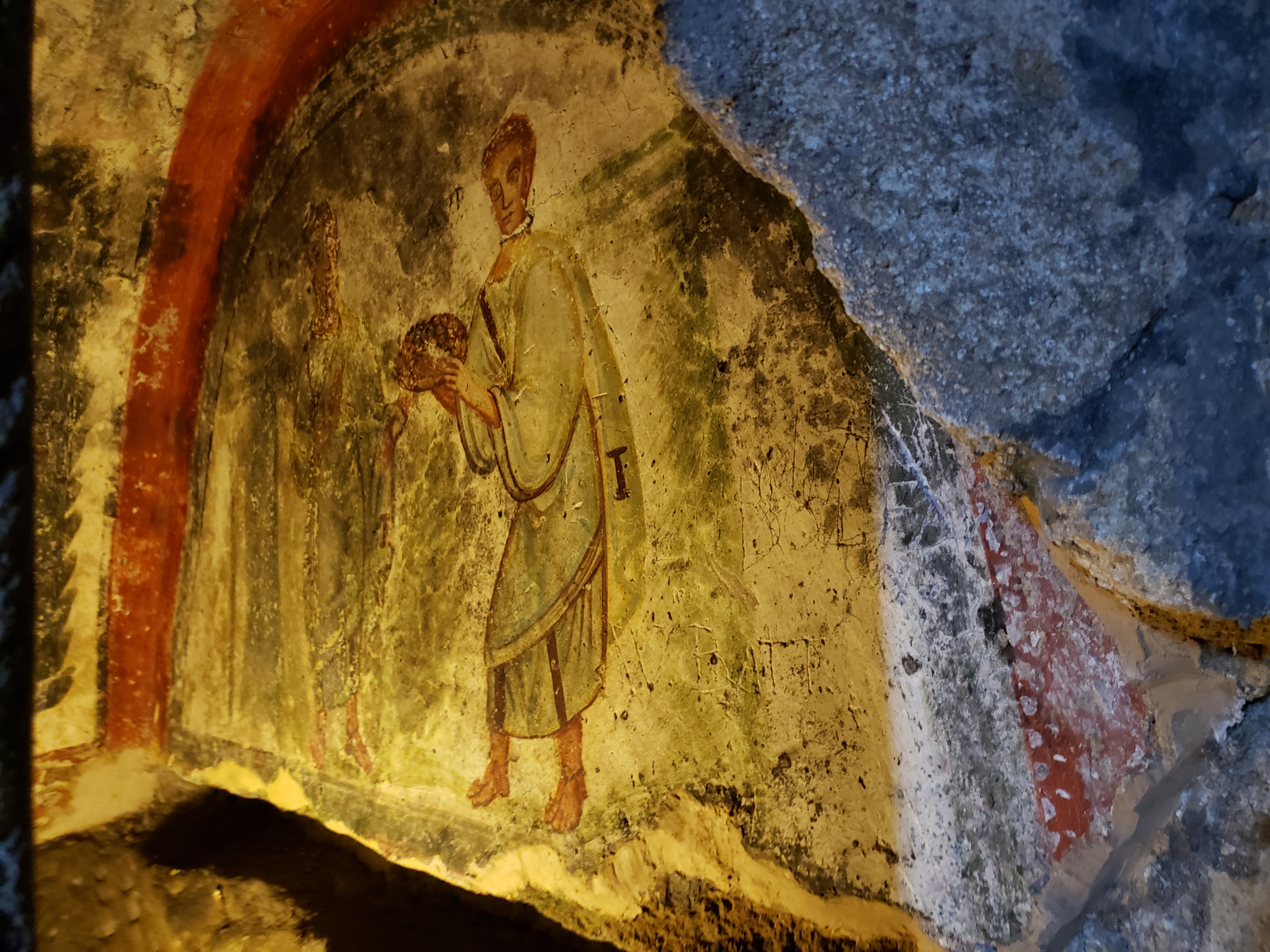
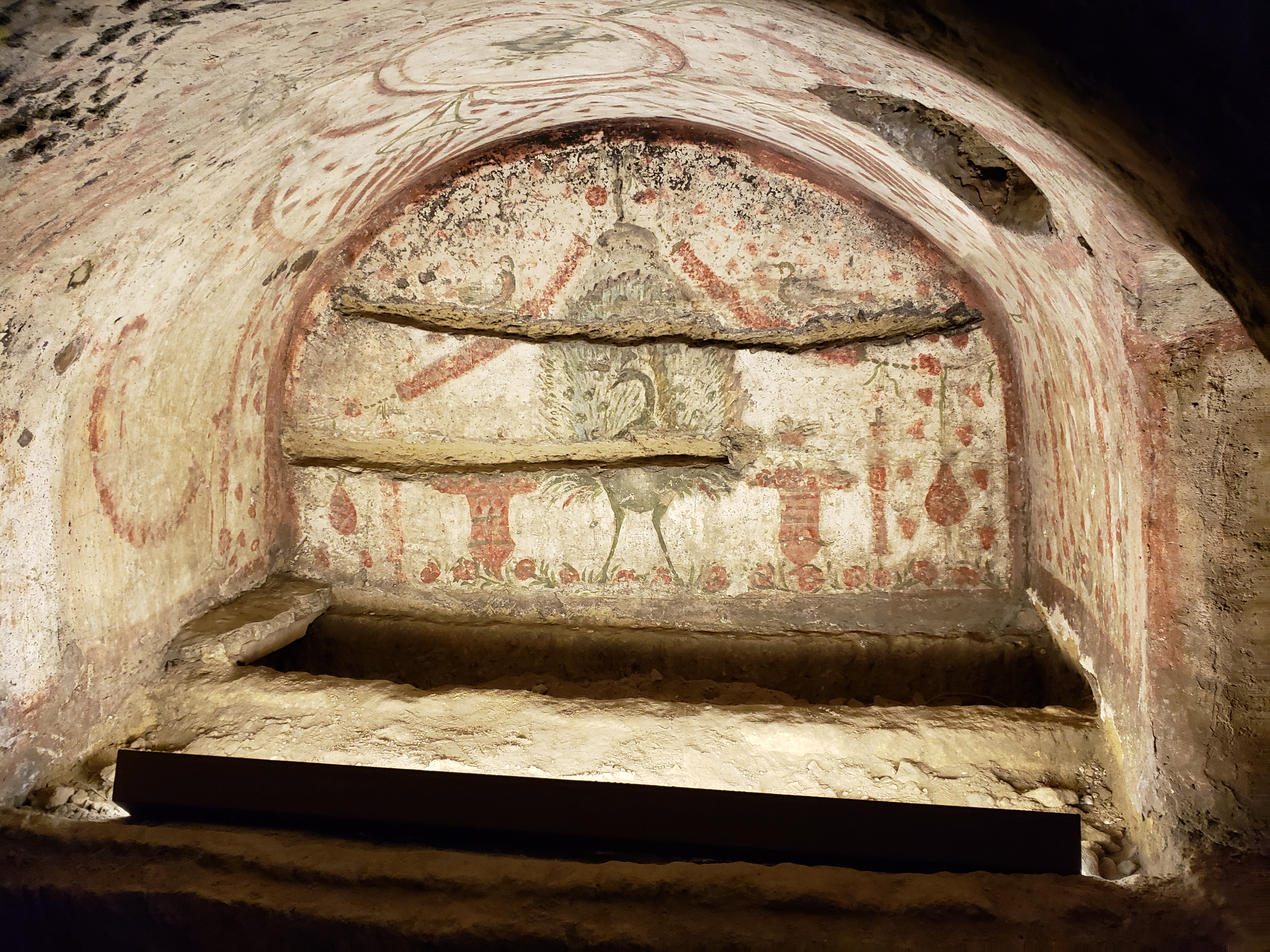
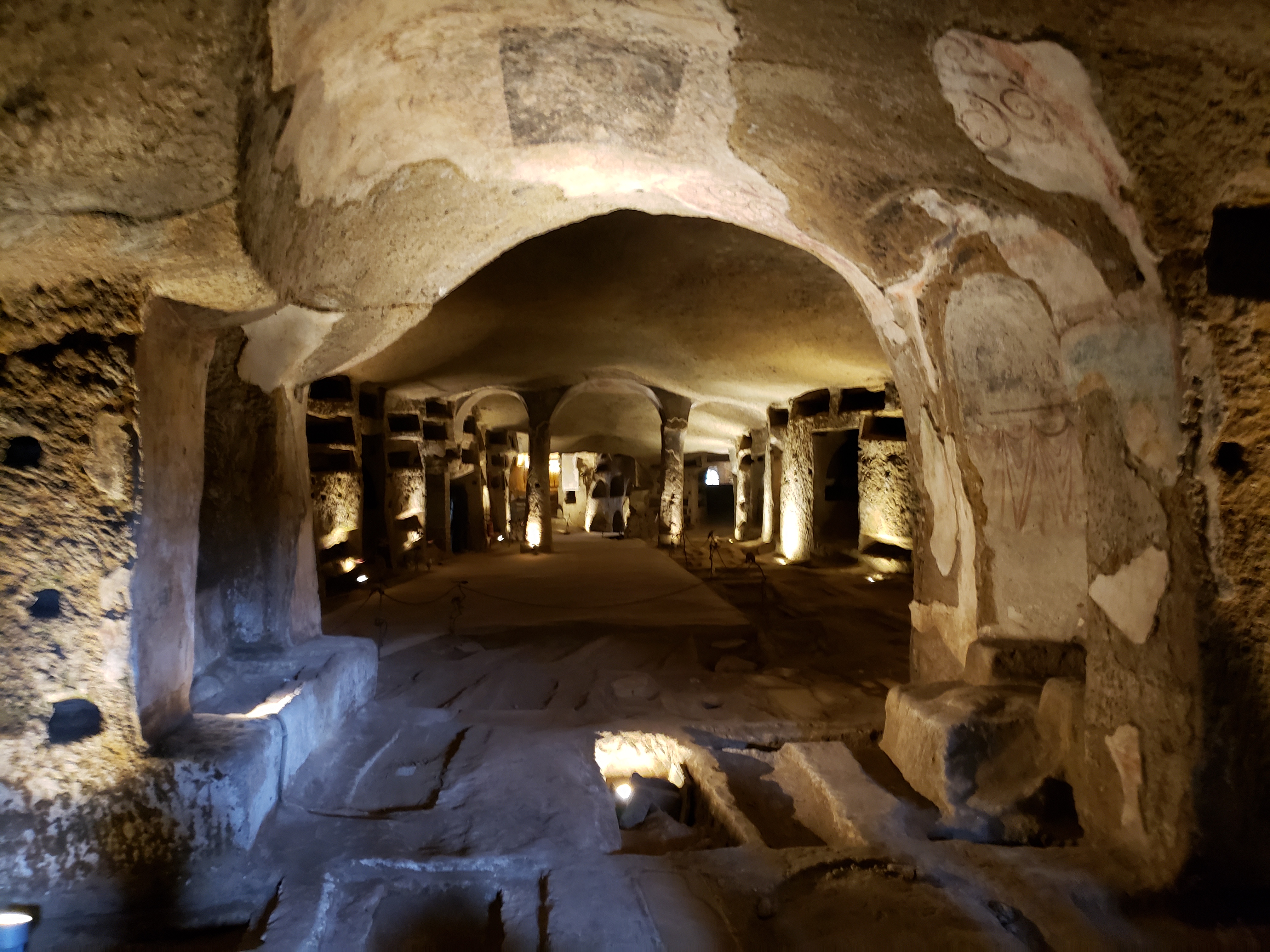
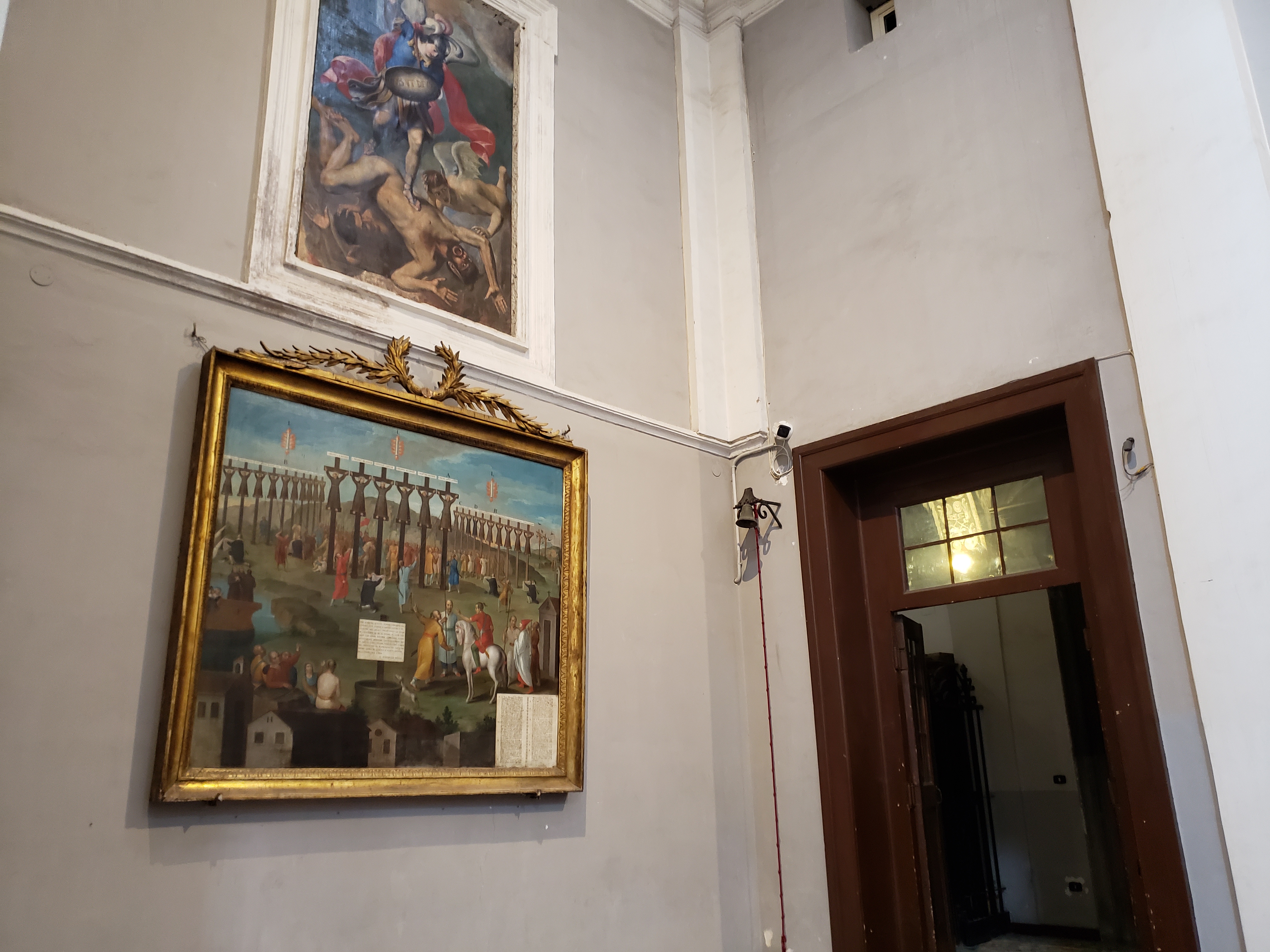
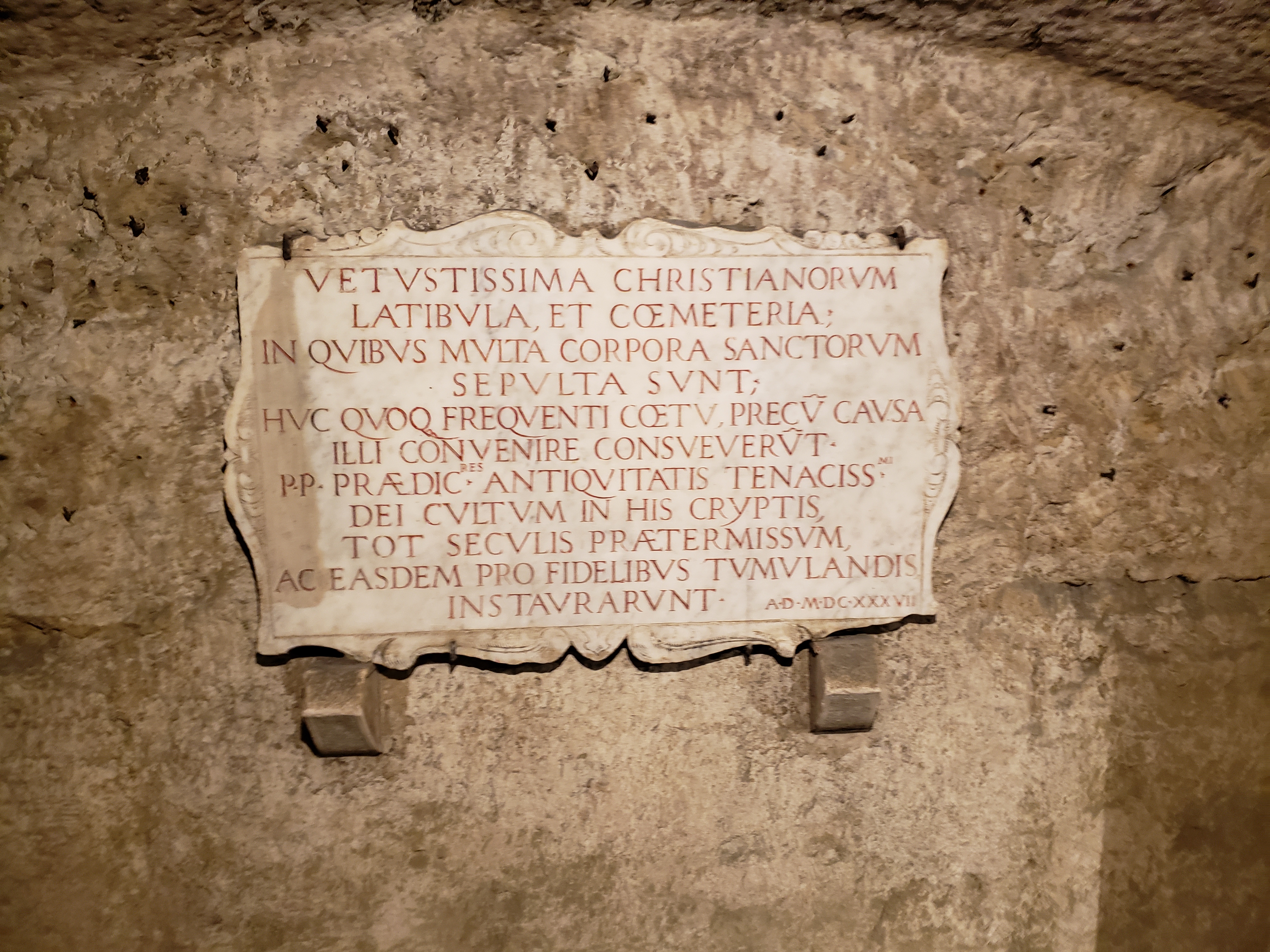
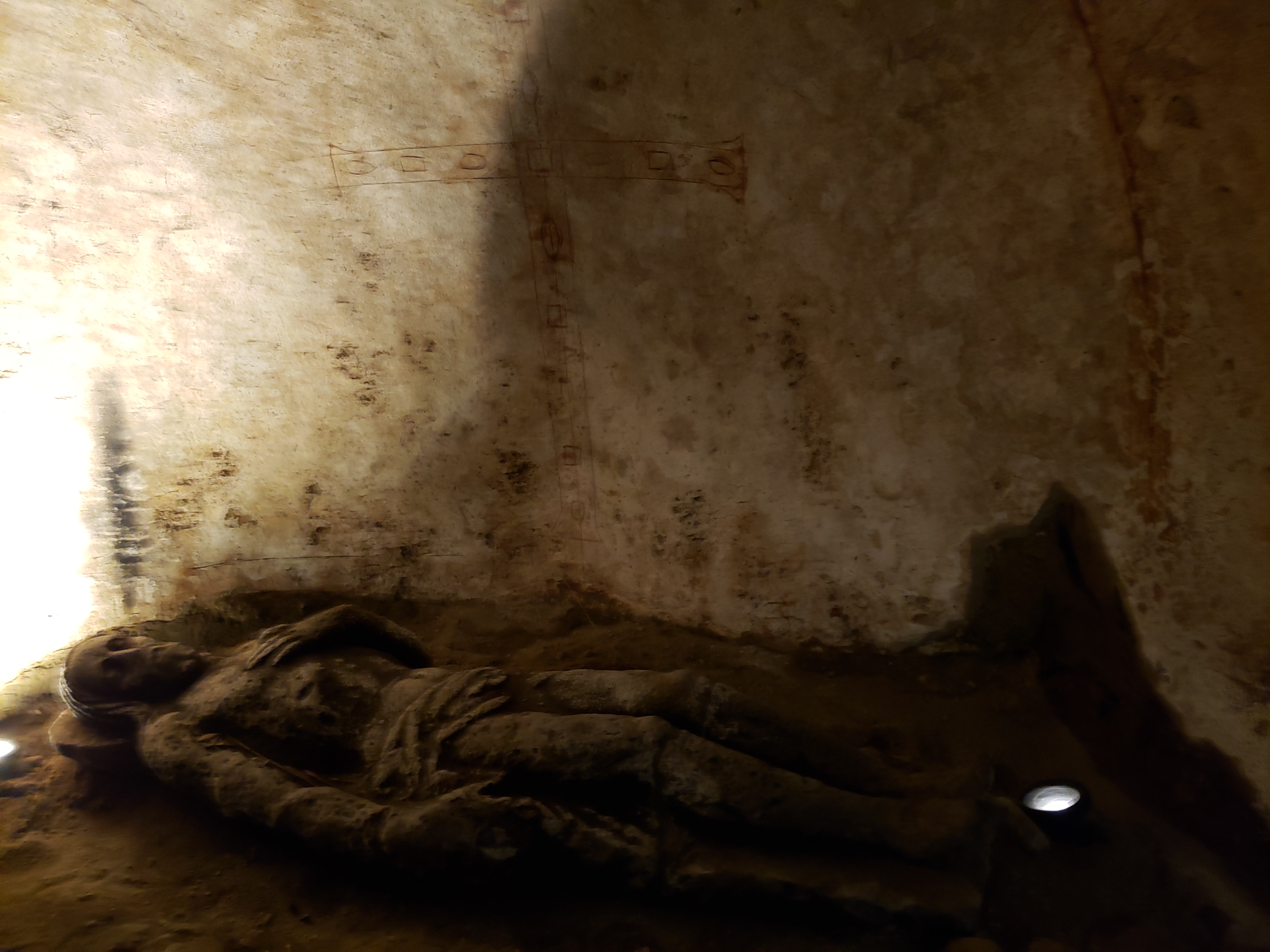
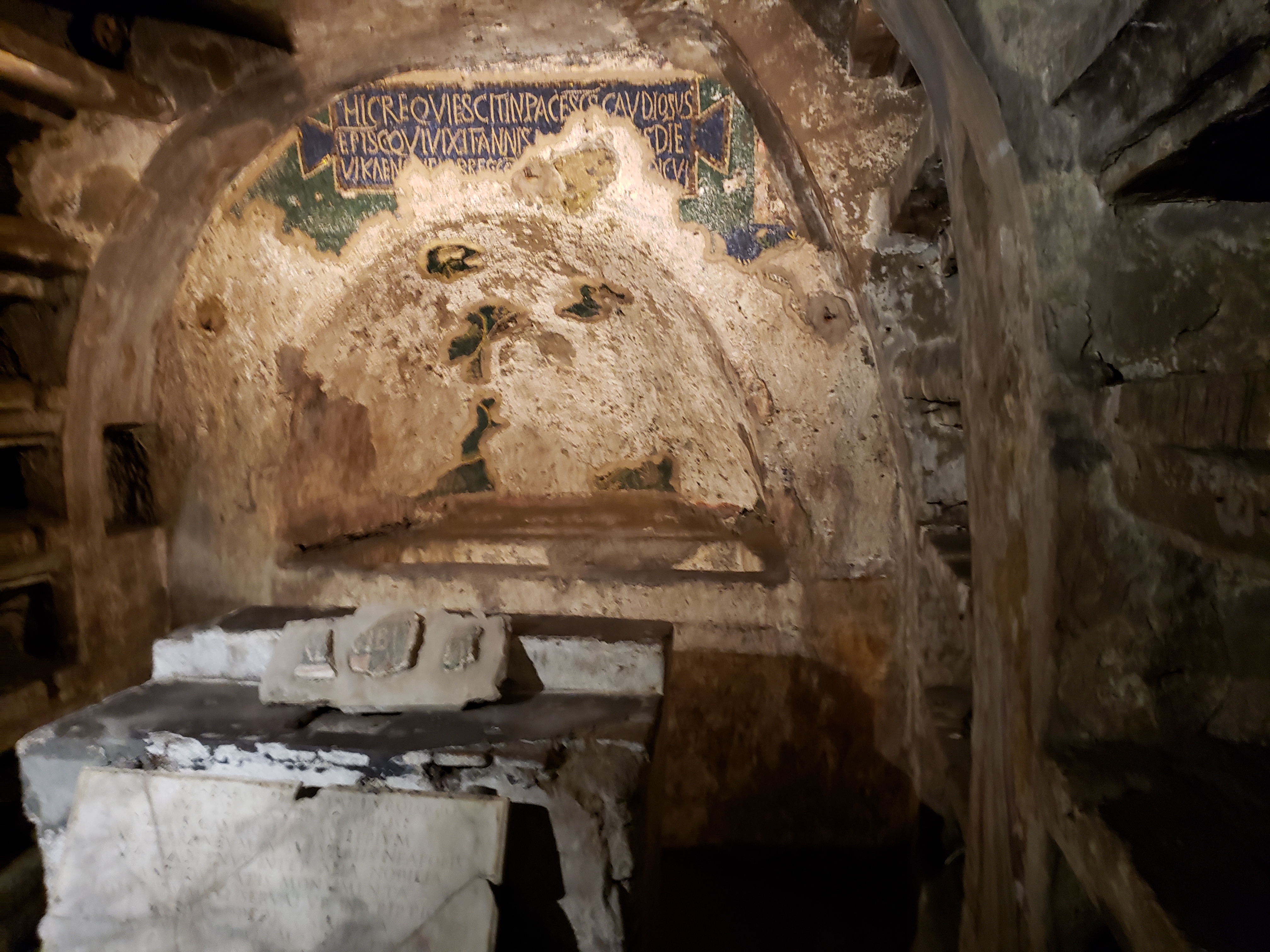
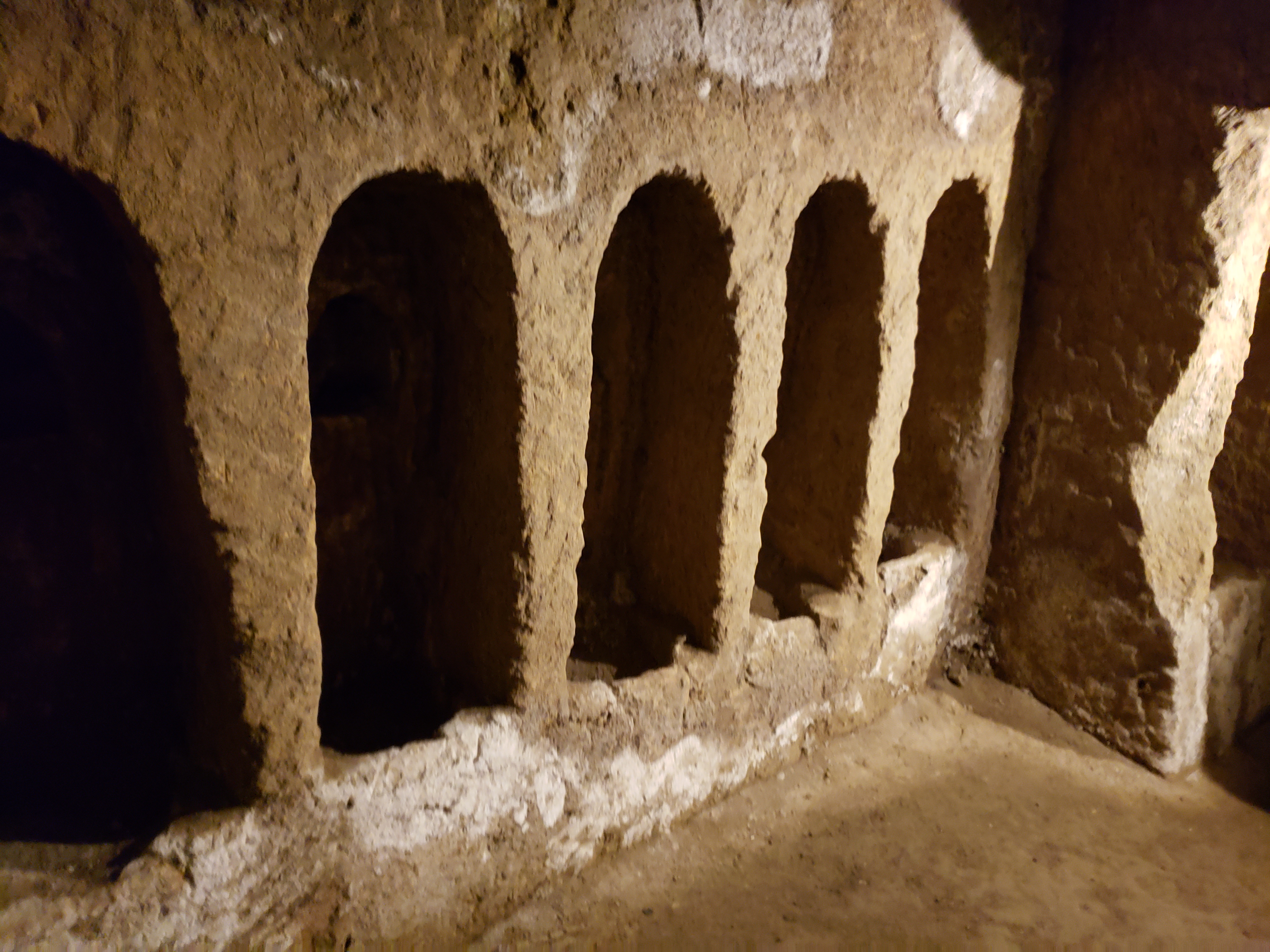
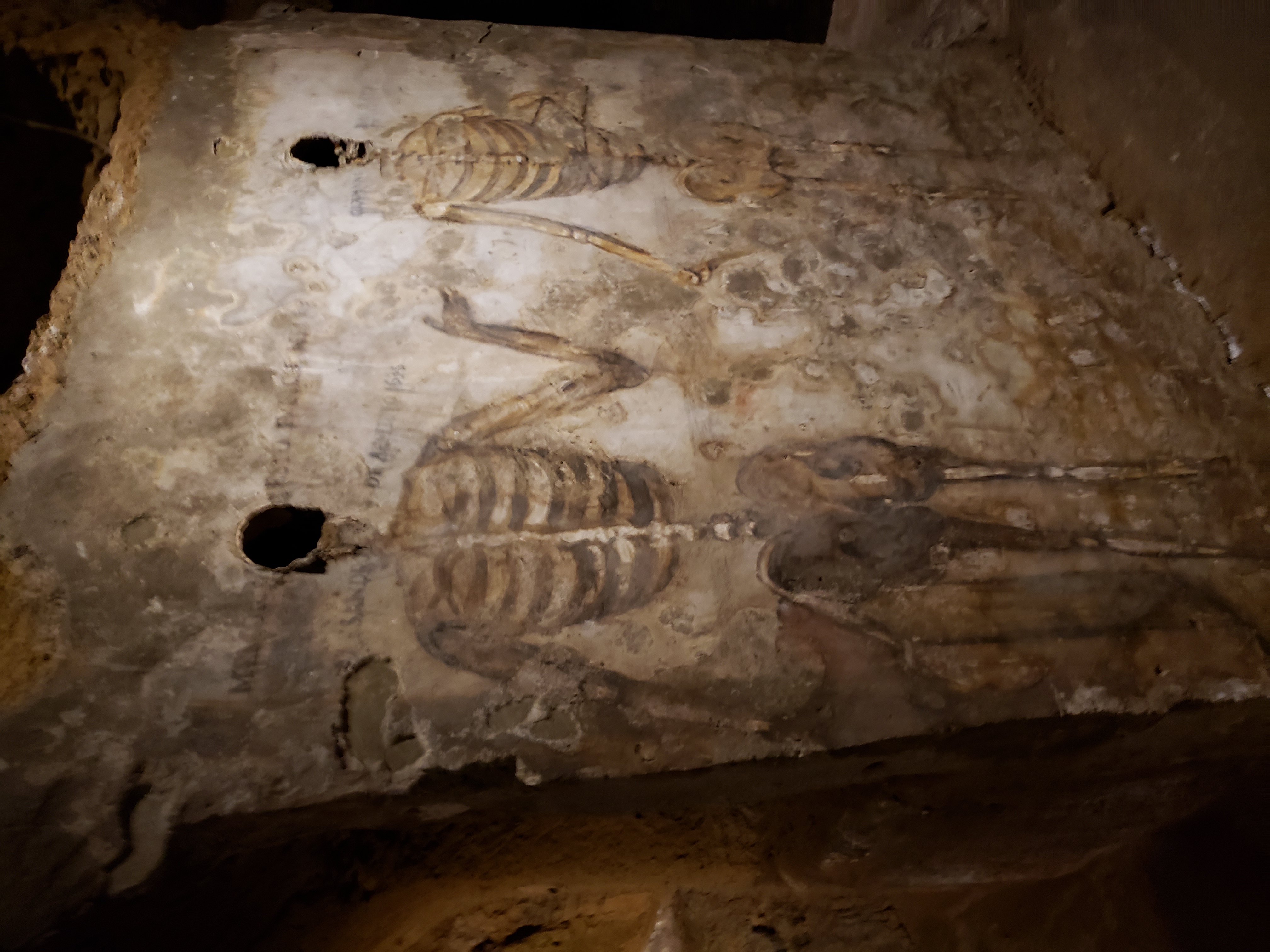
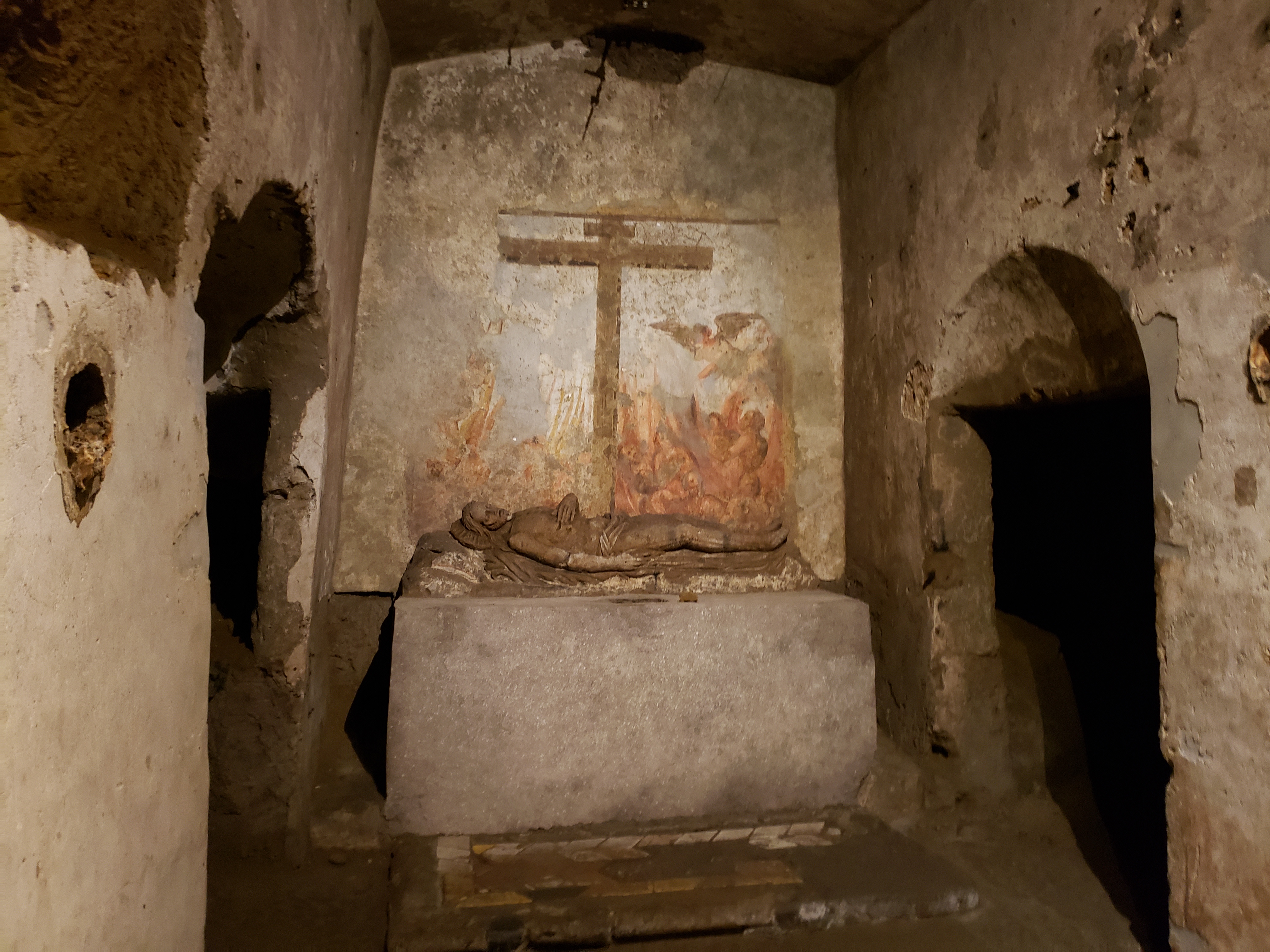
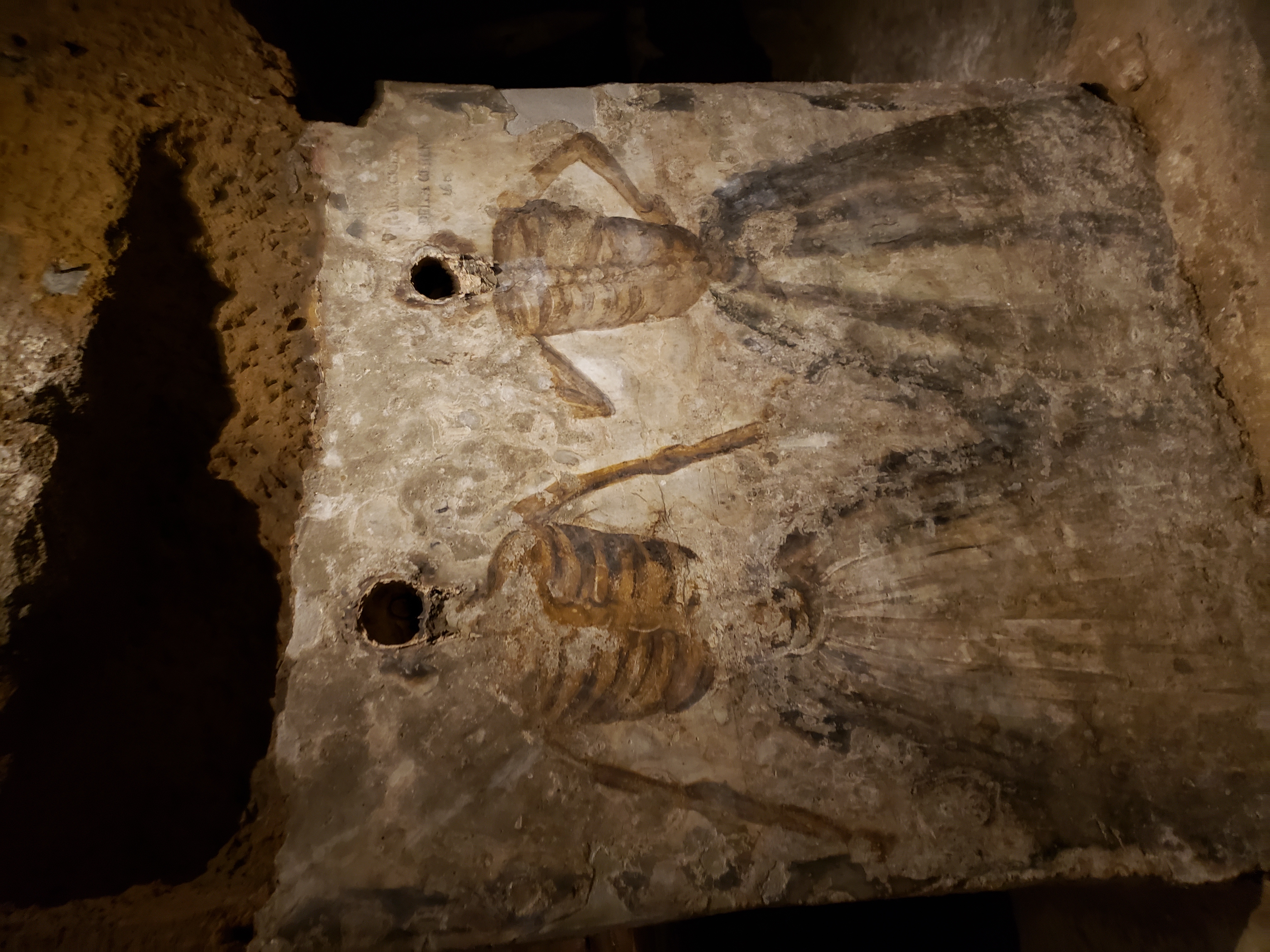
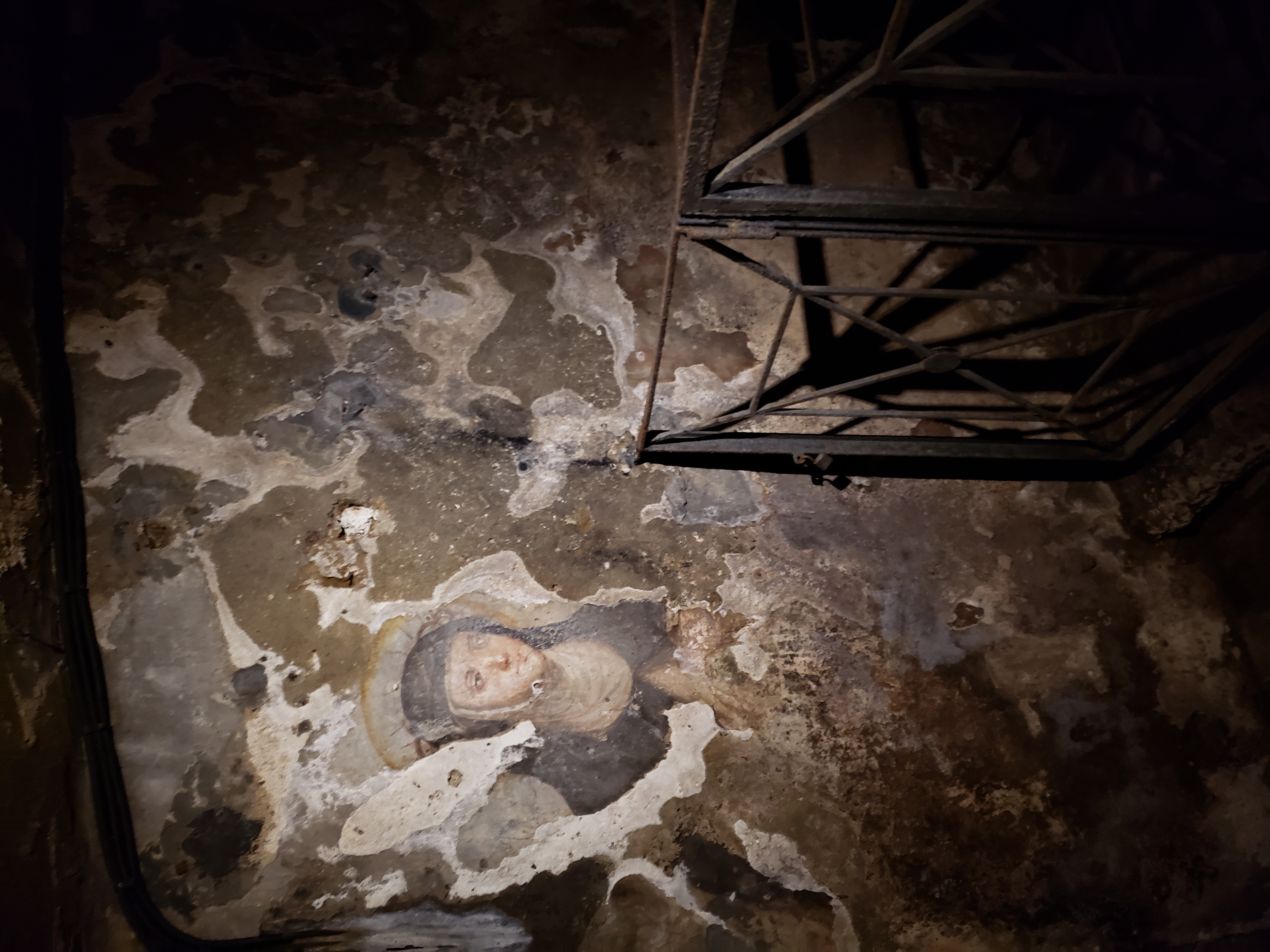
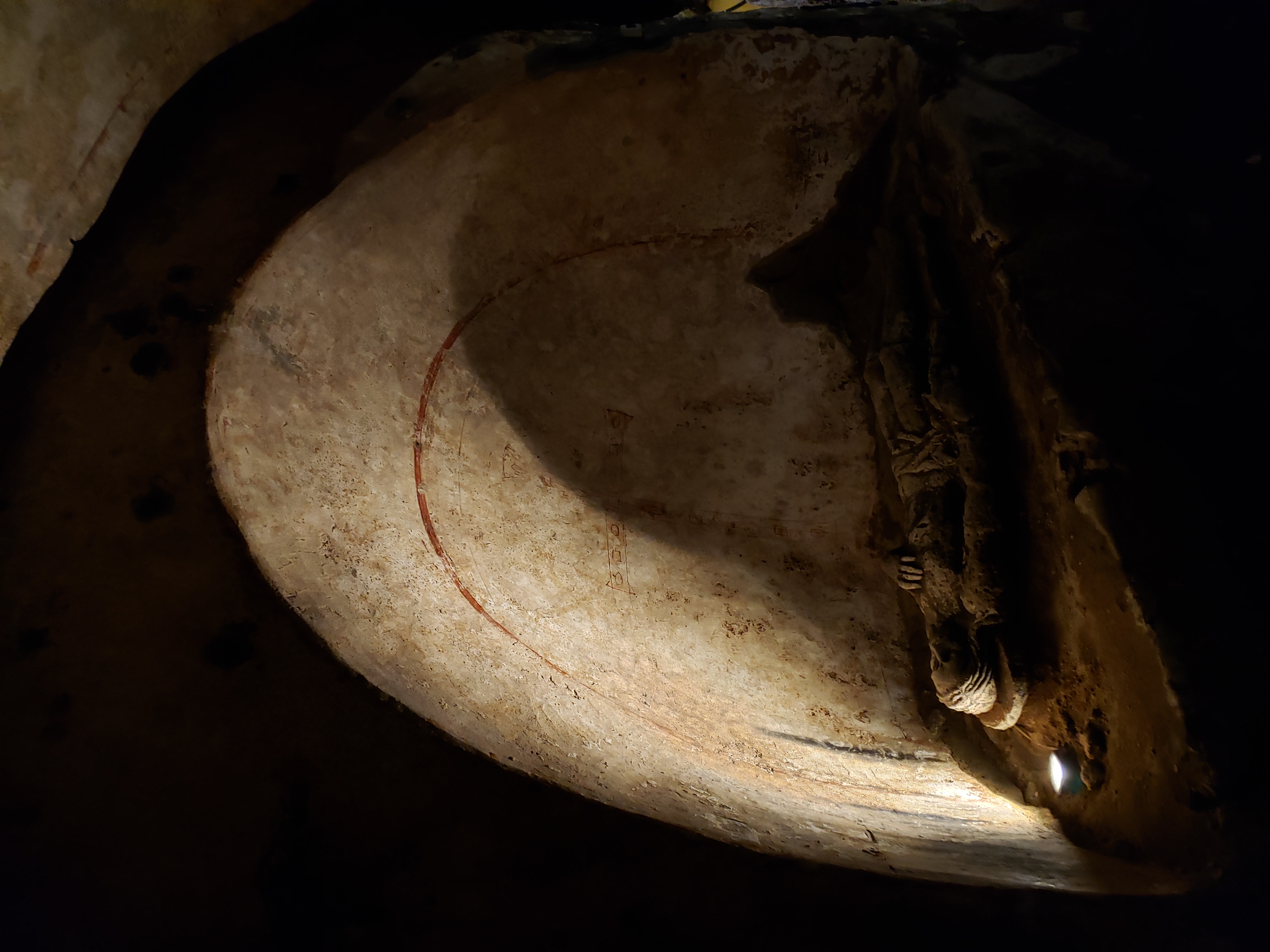
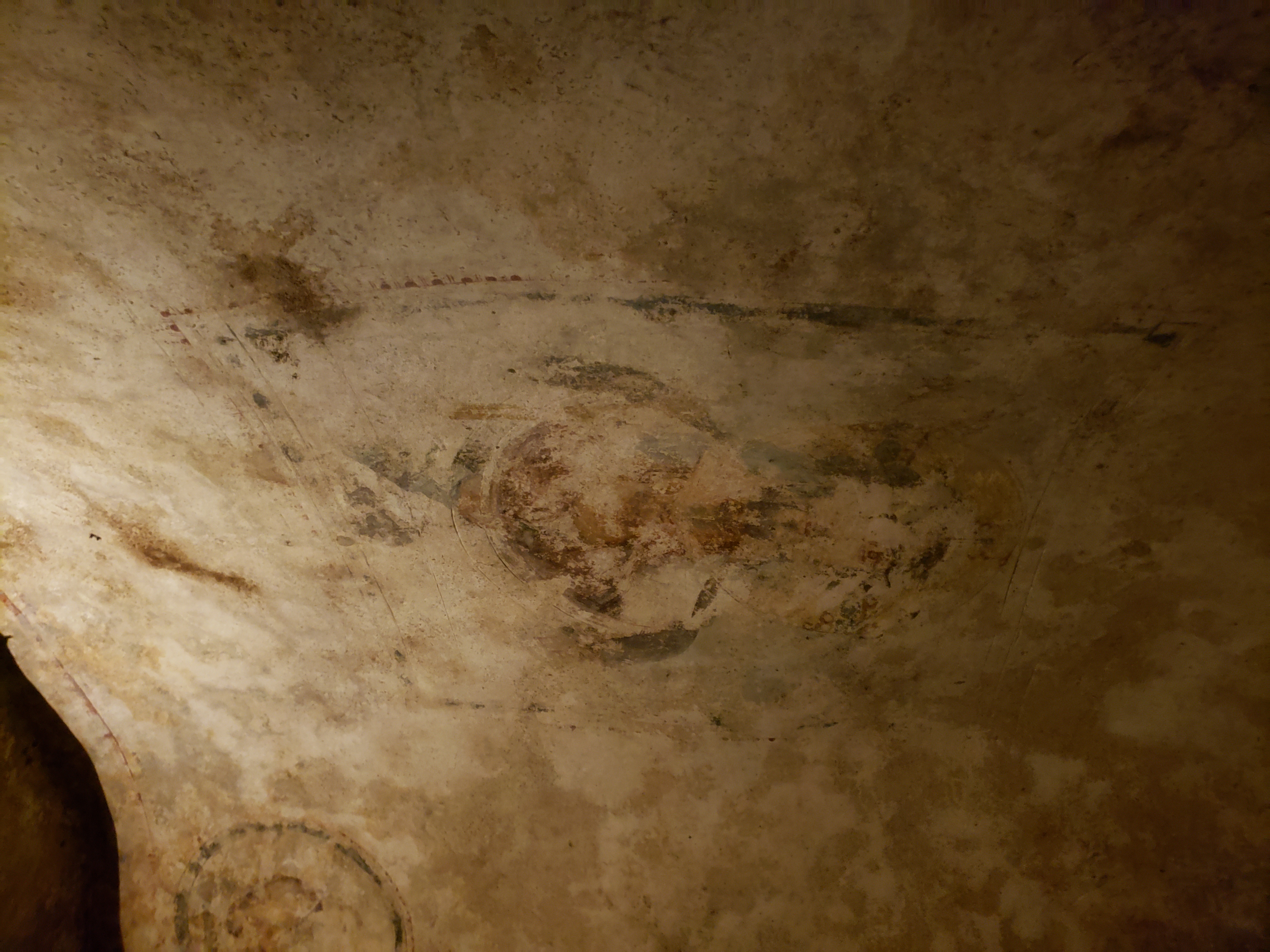
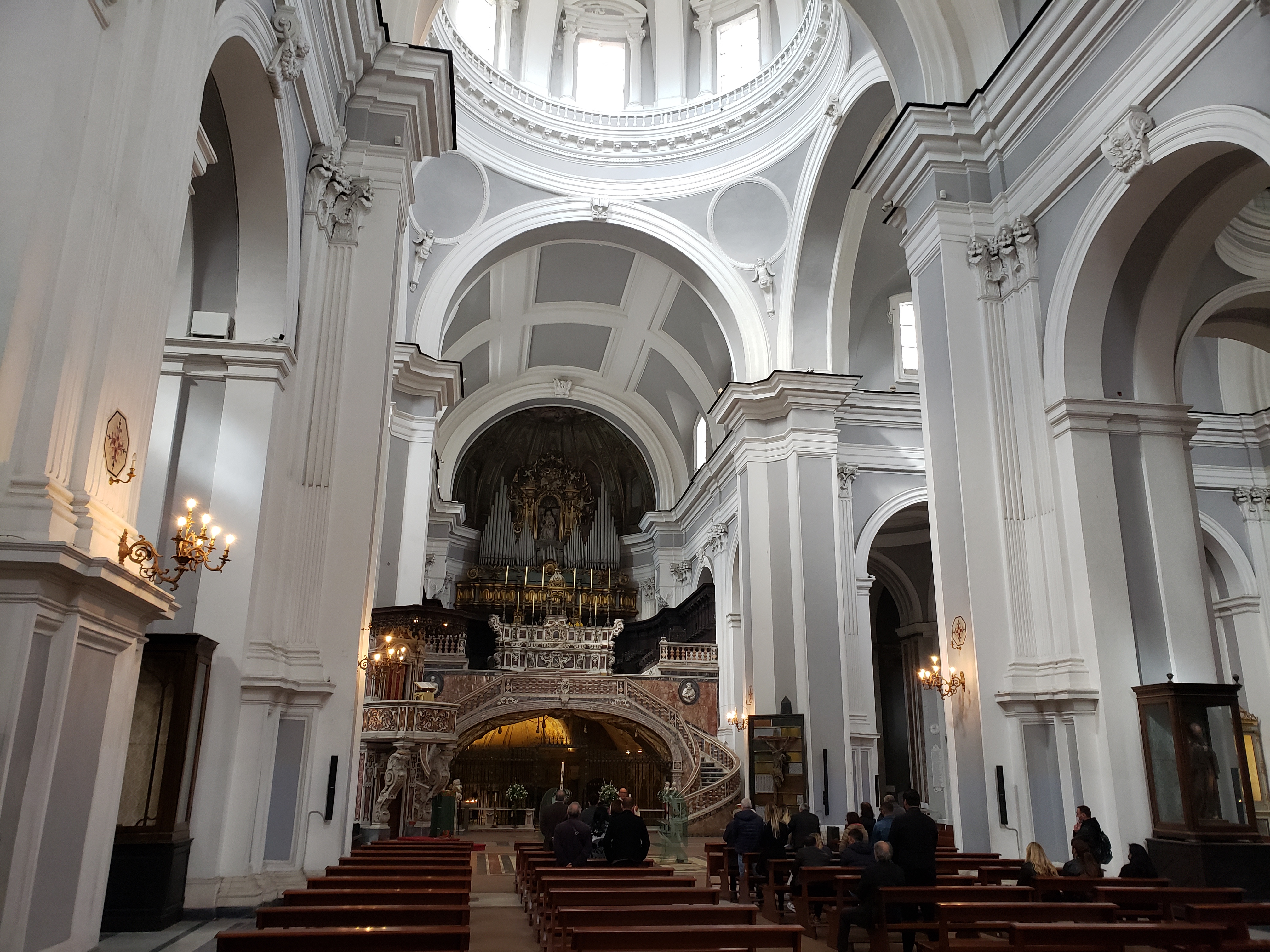
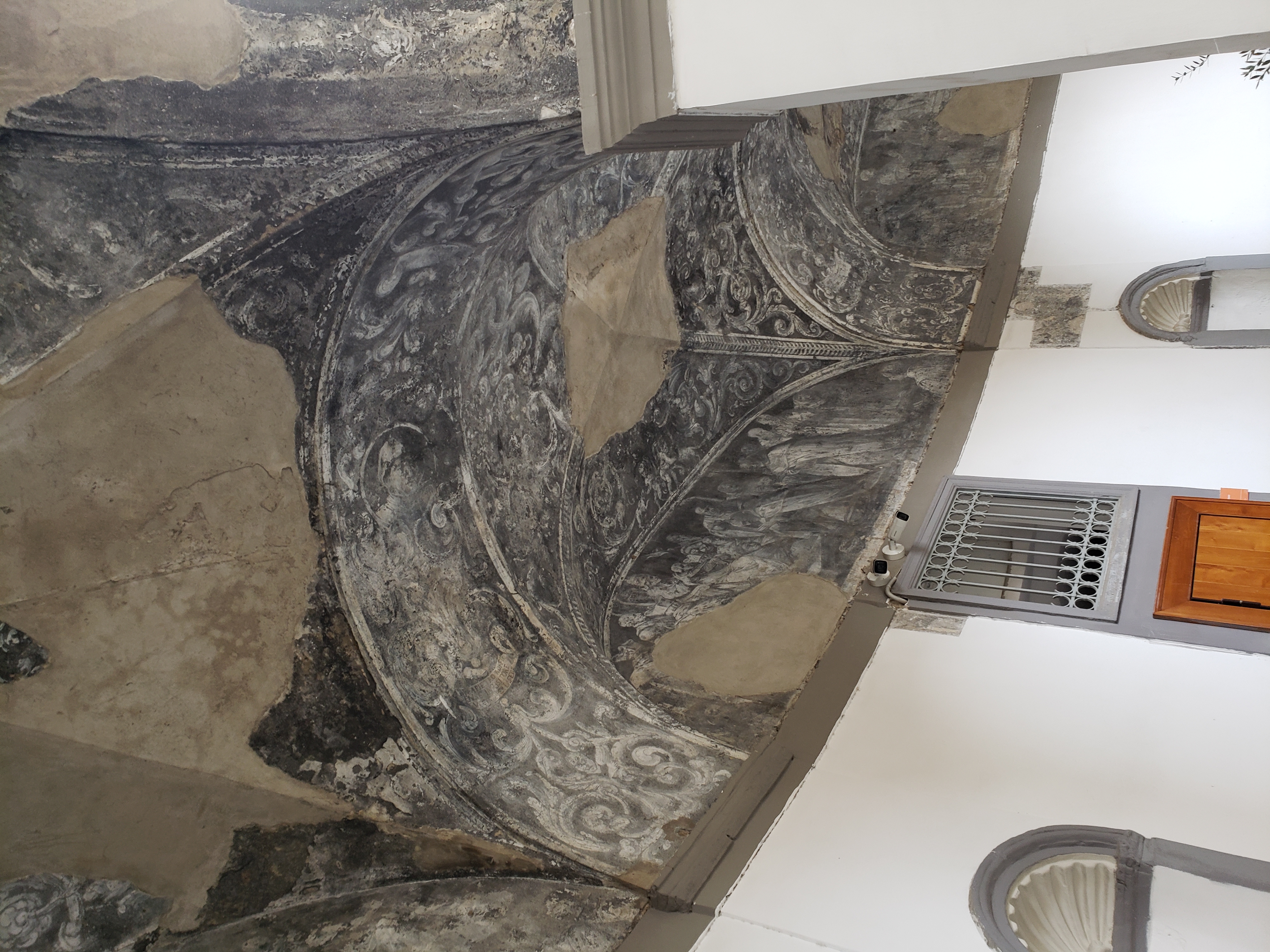
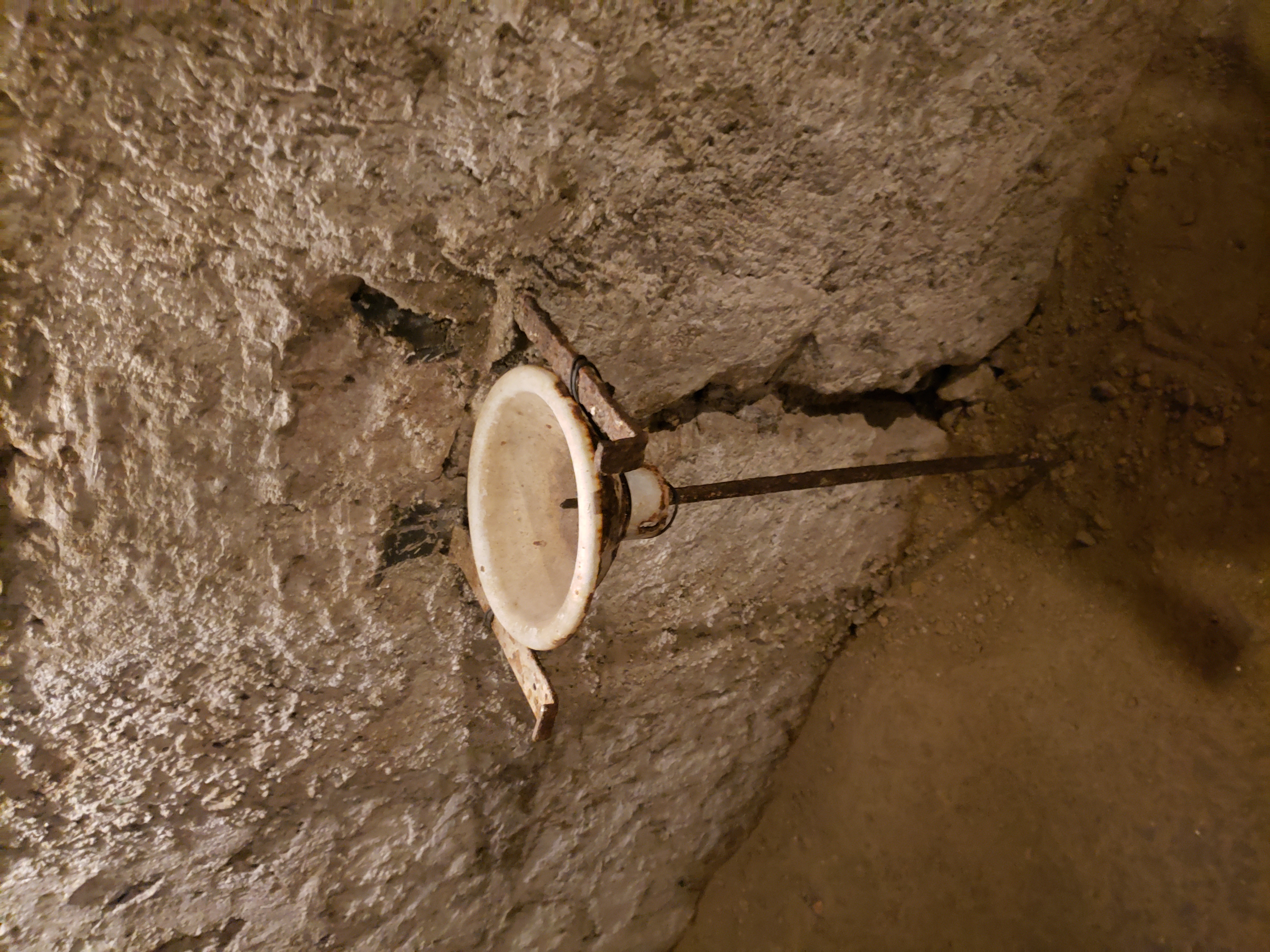
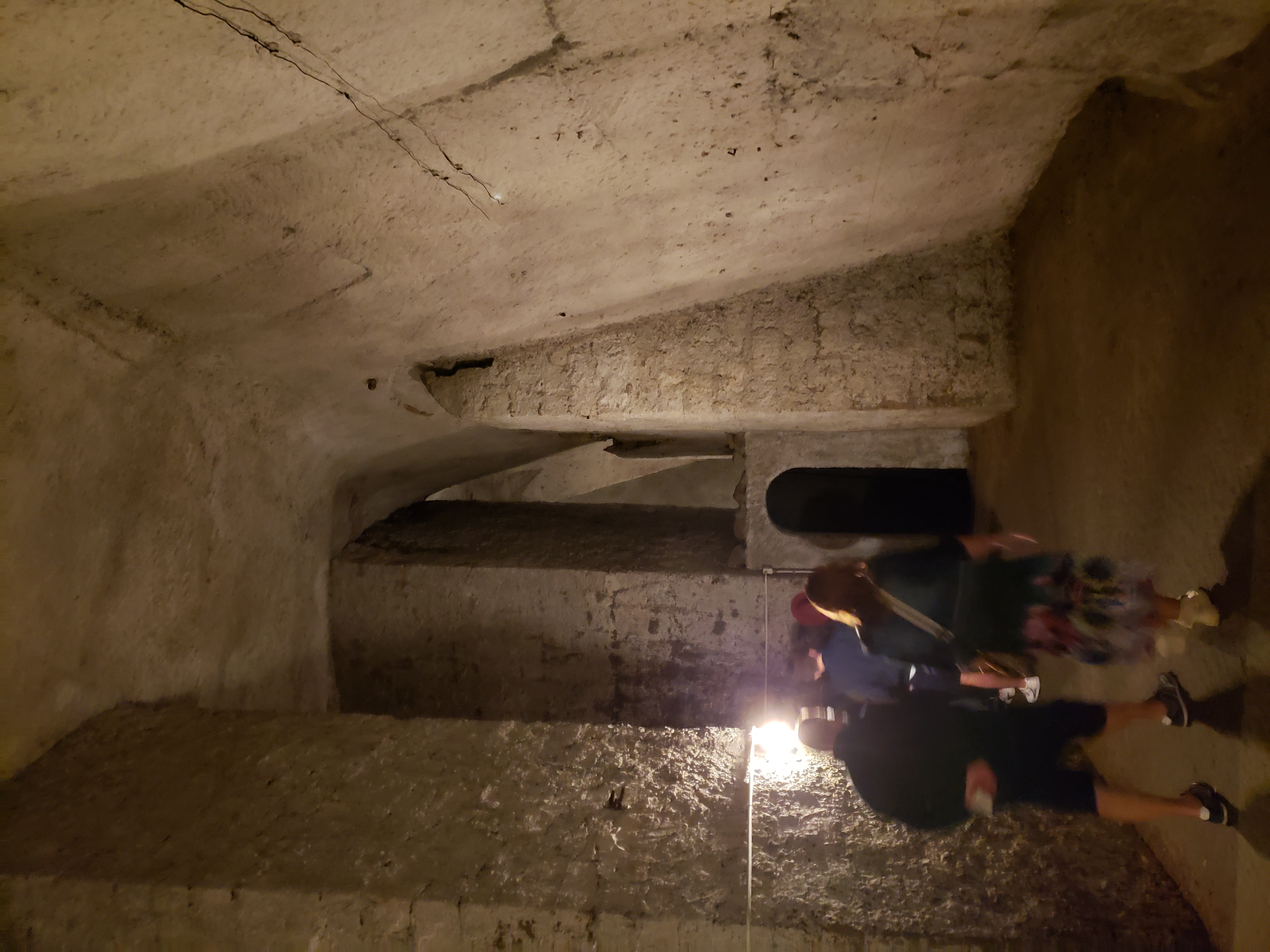
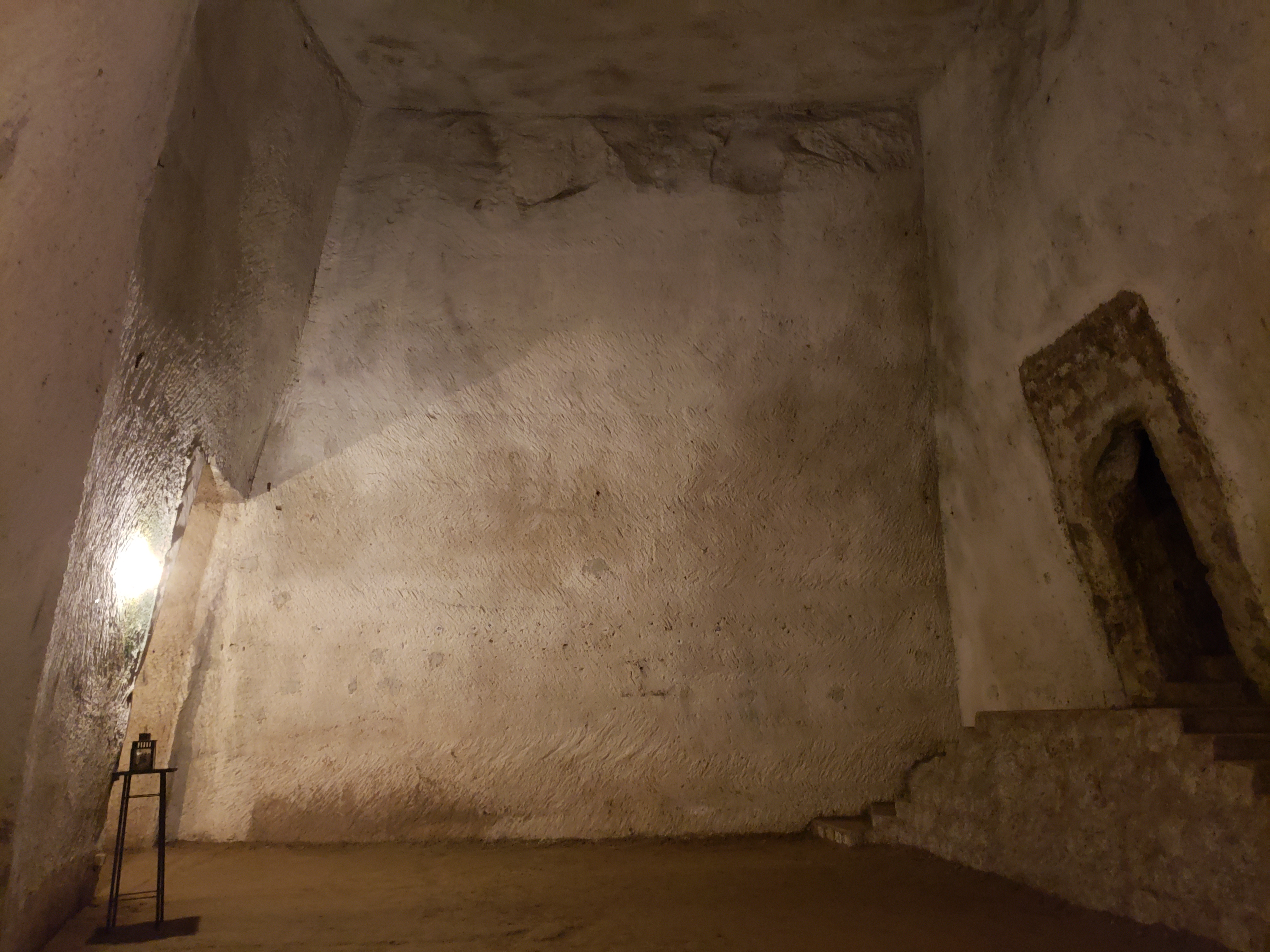
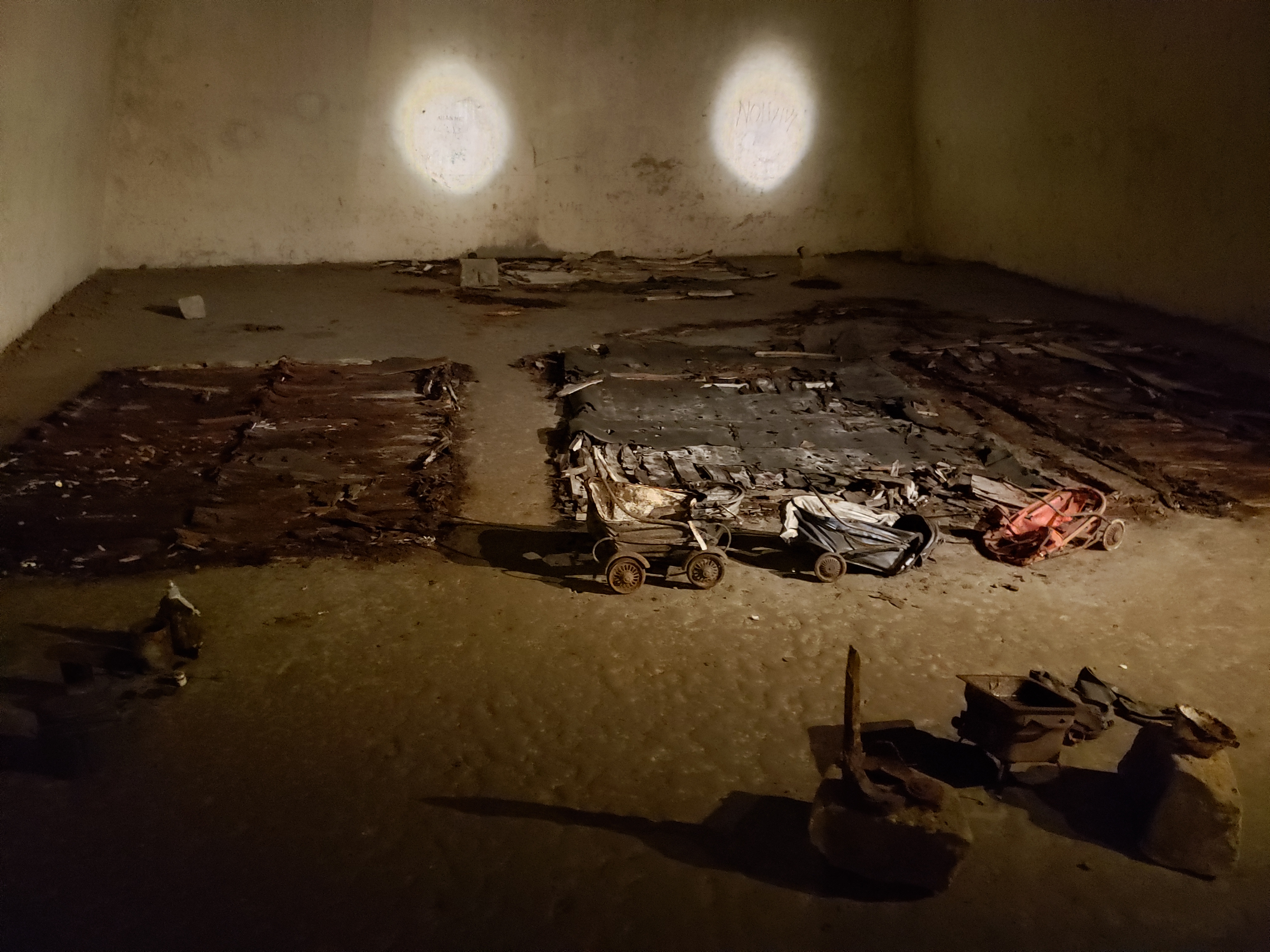
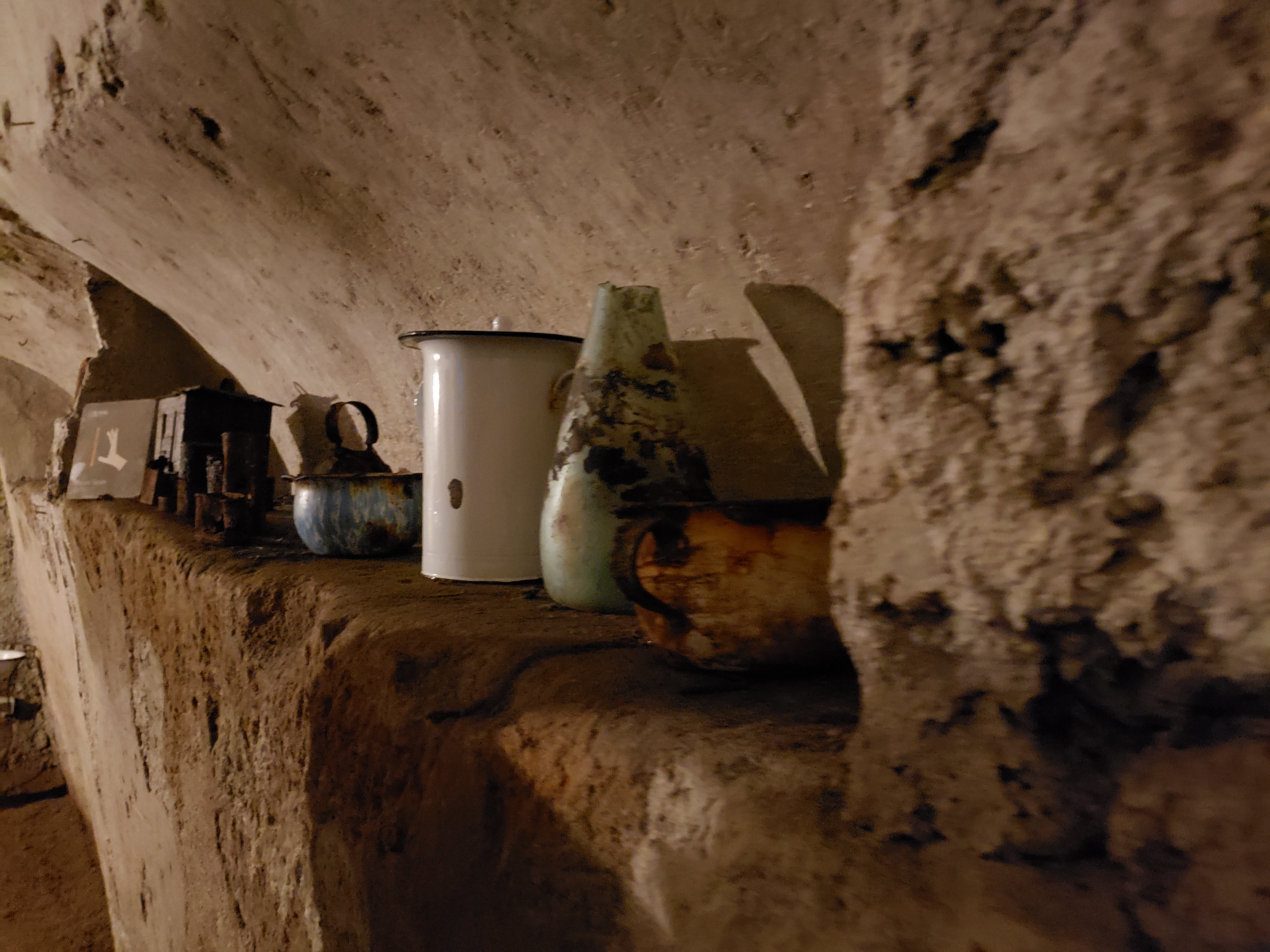
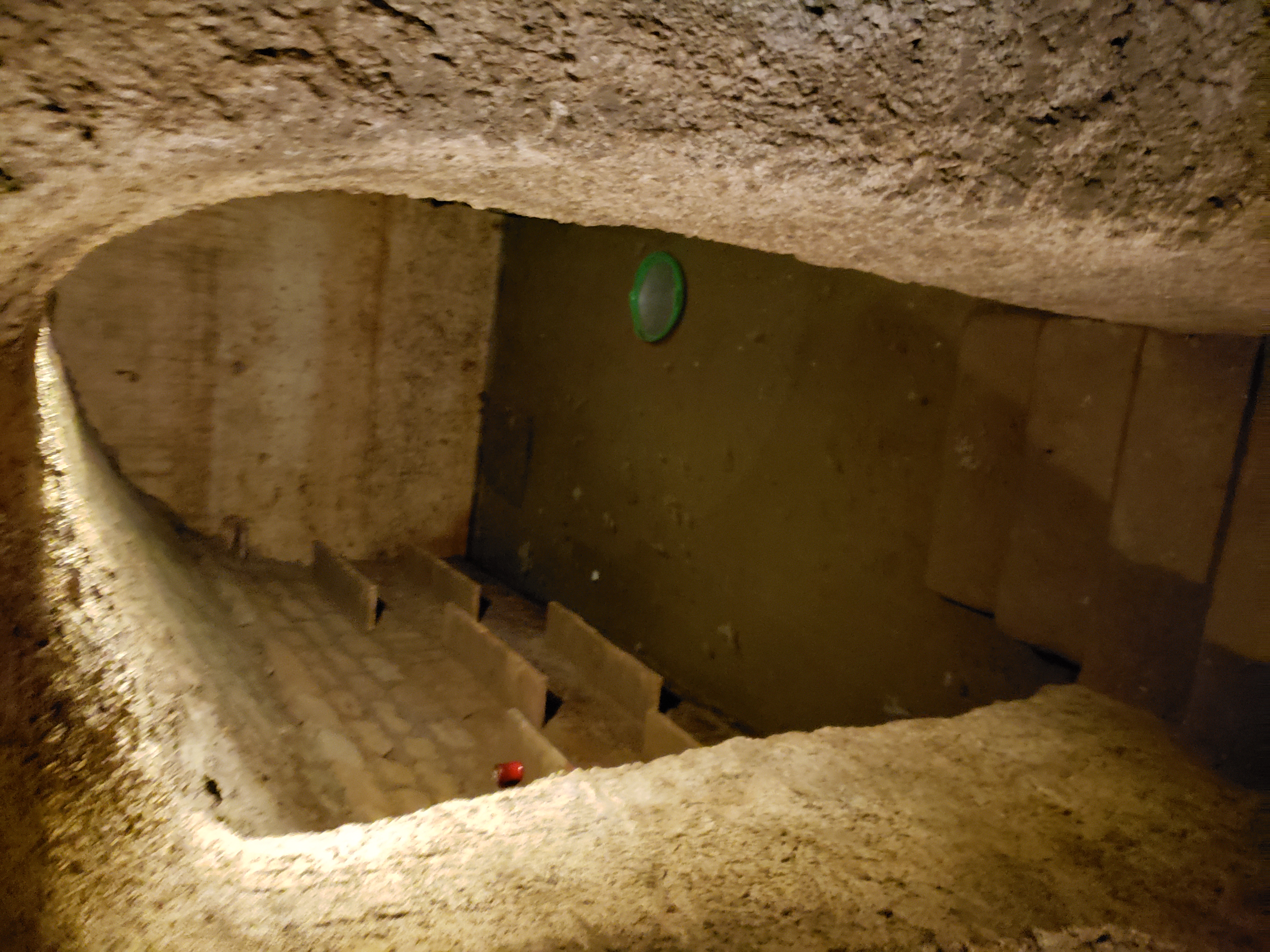
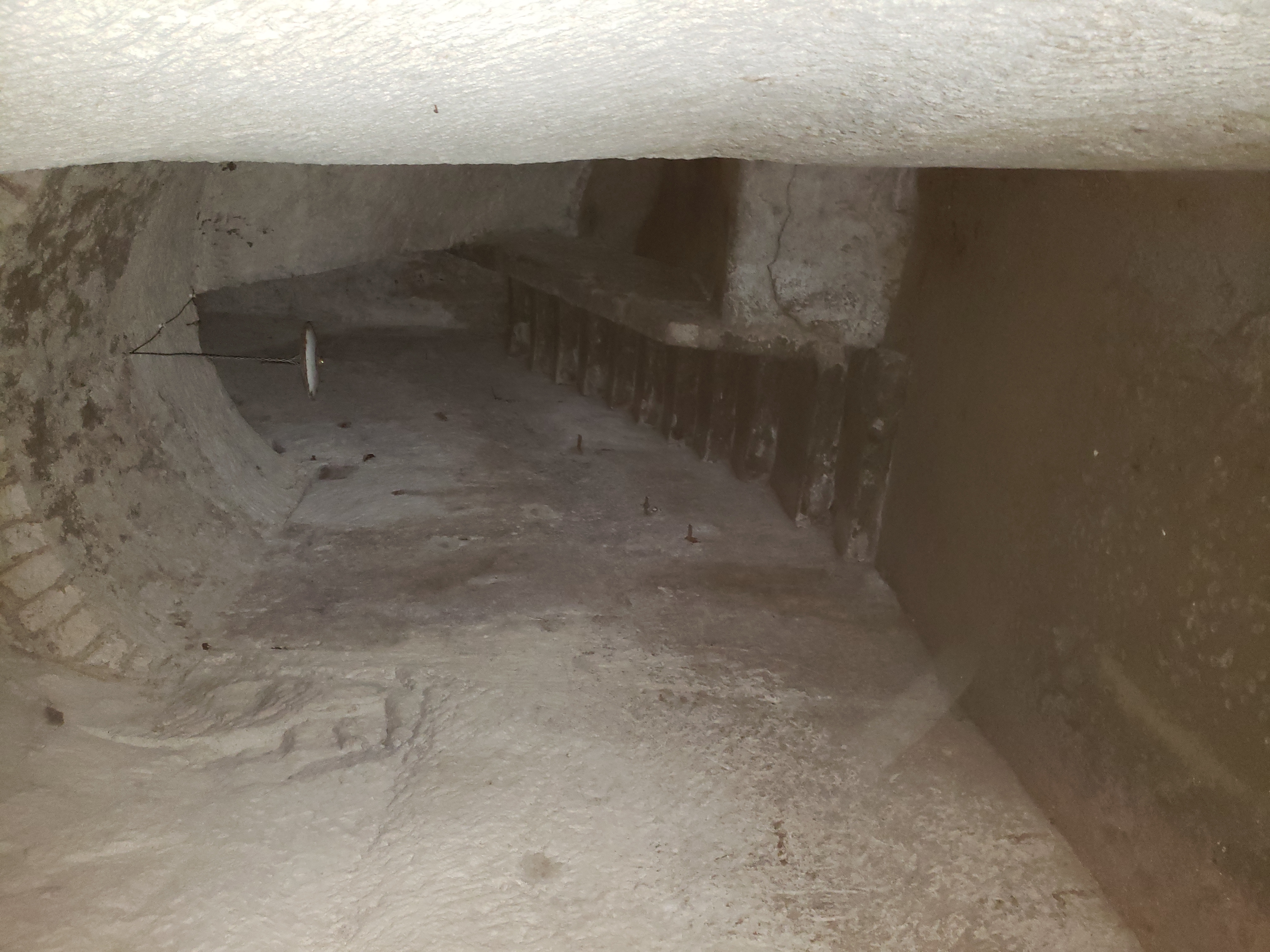
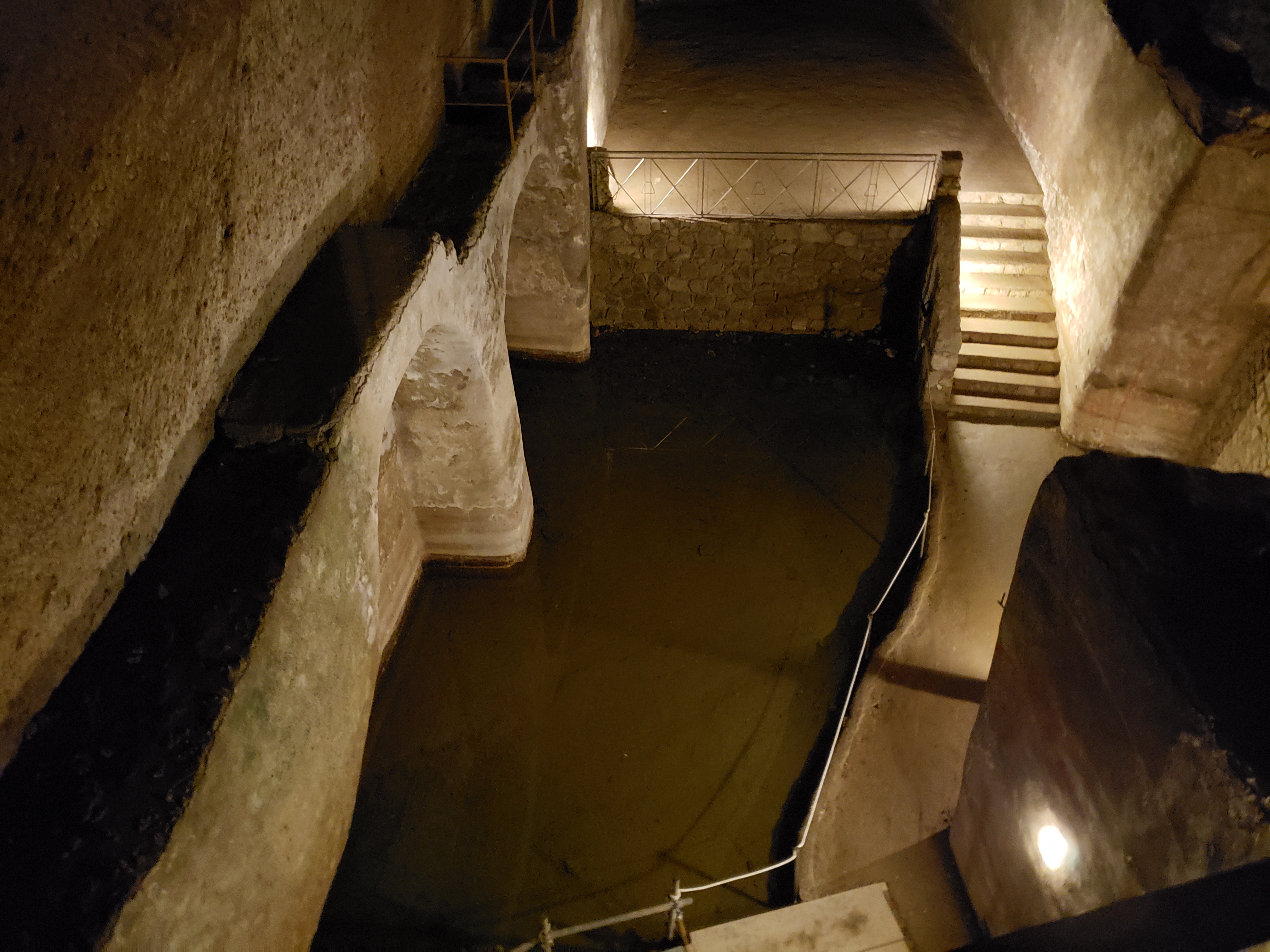
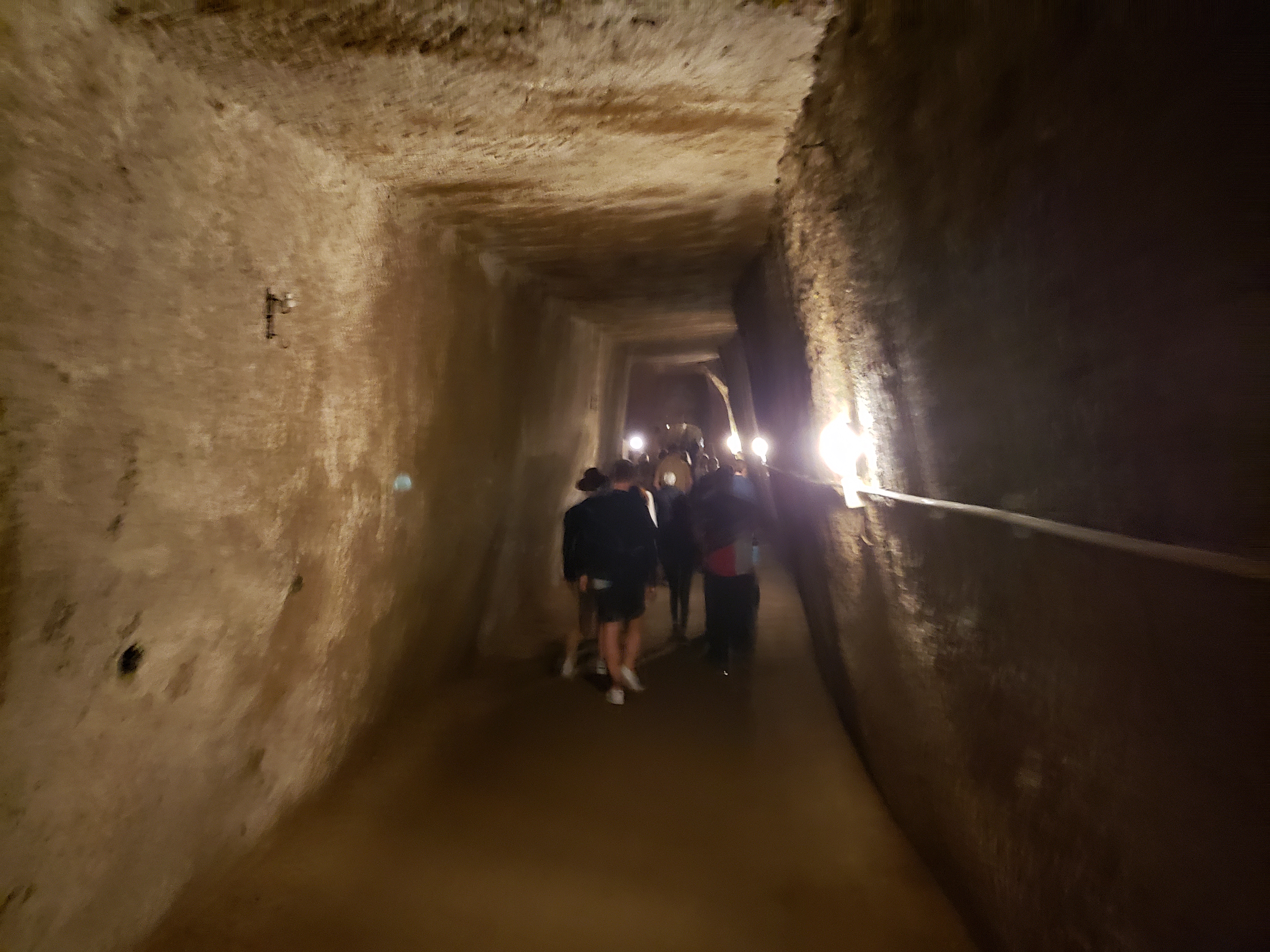
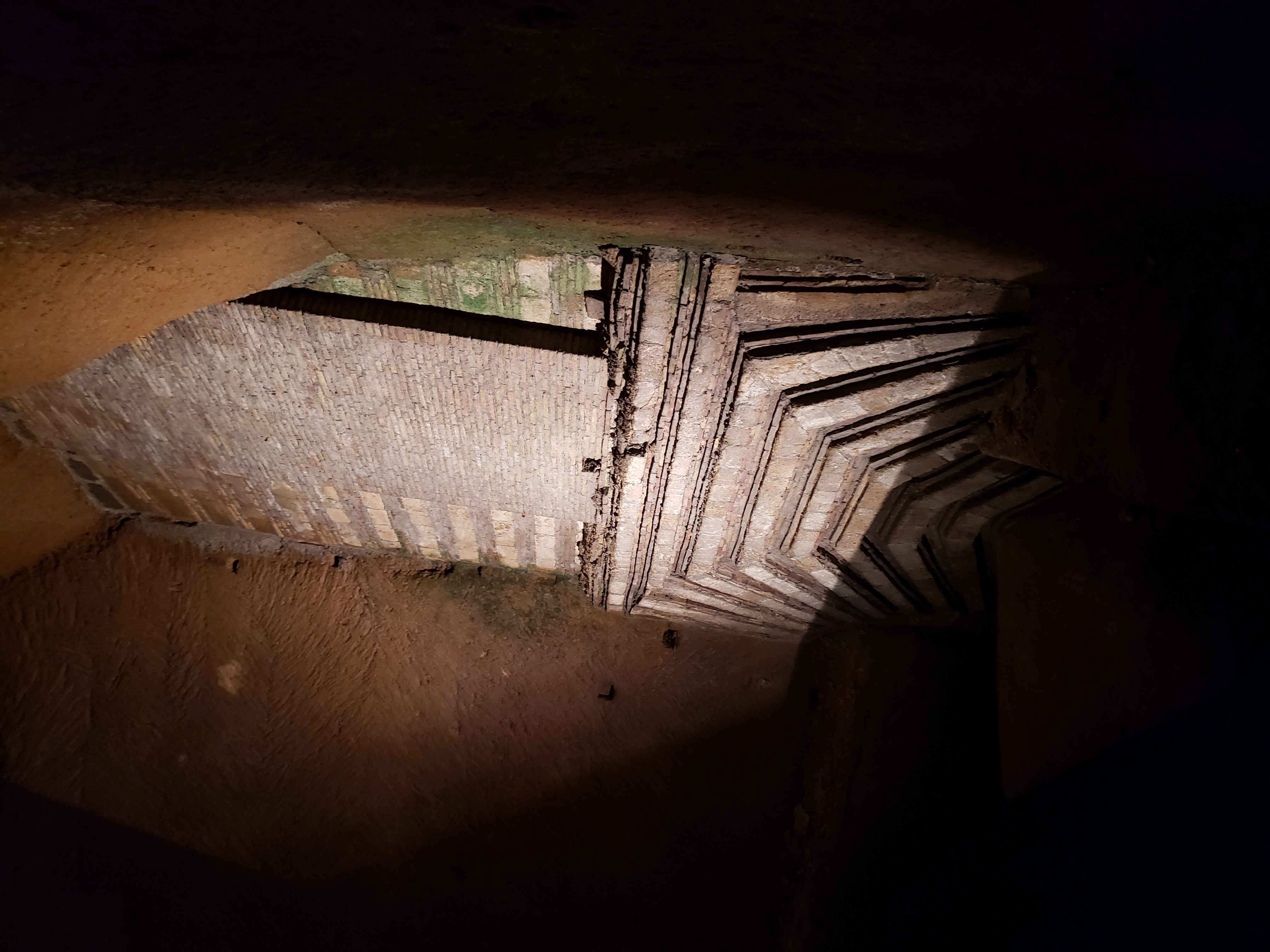
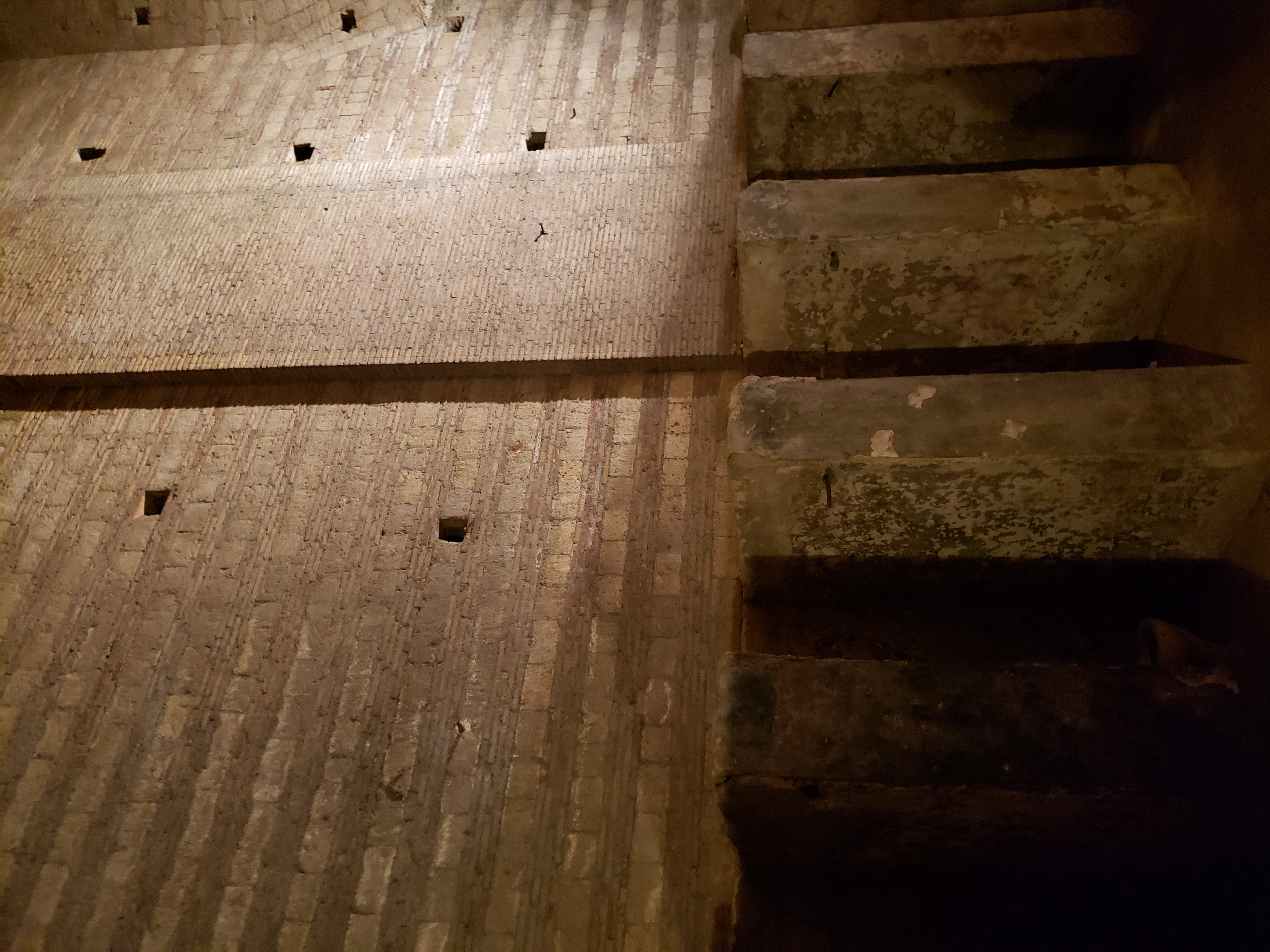
Outside the walls of Naples are the catacombs, the ancient burial grounds for the old Neapolis population. Neapolis is the ancient greek name for the city, which eventually morphed into Napoli, or Naples.
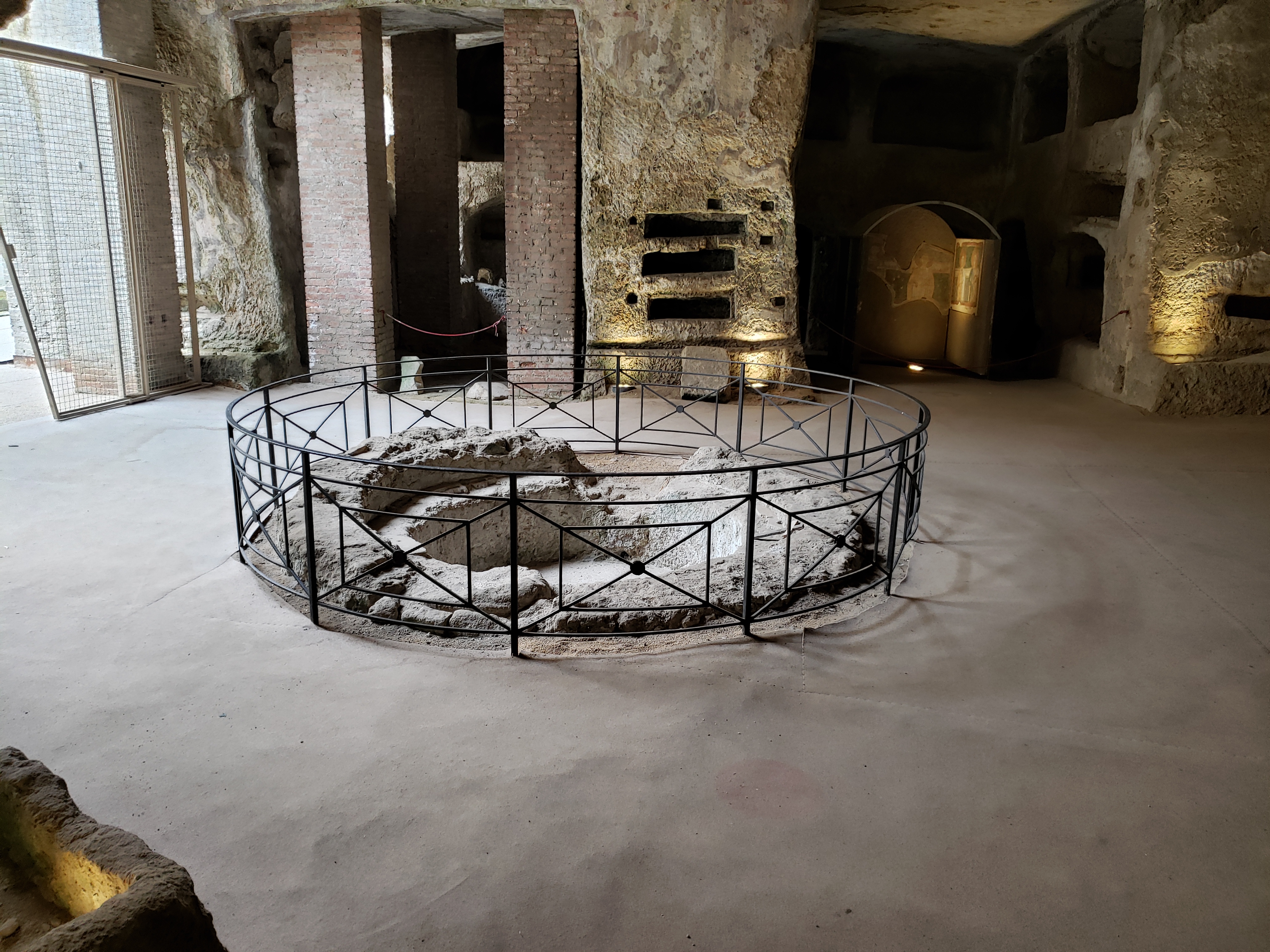
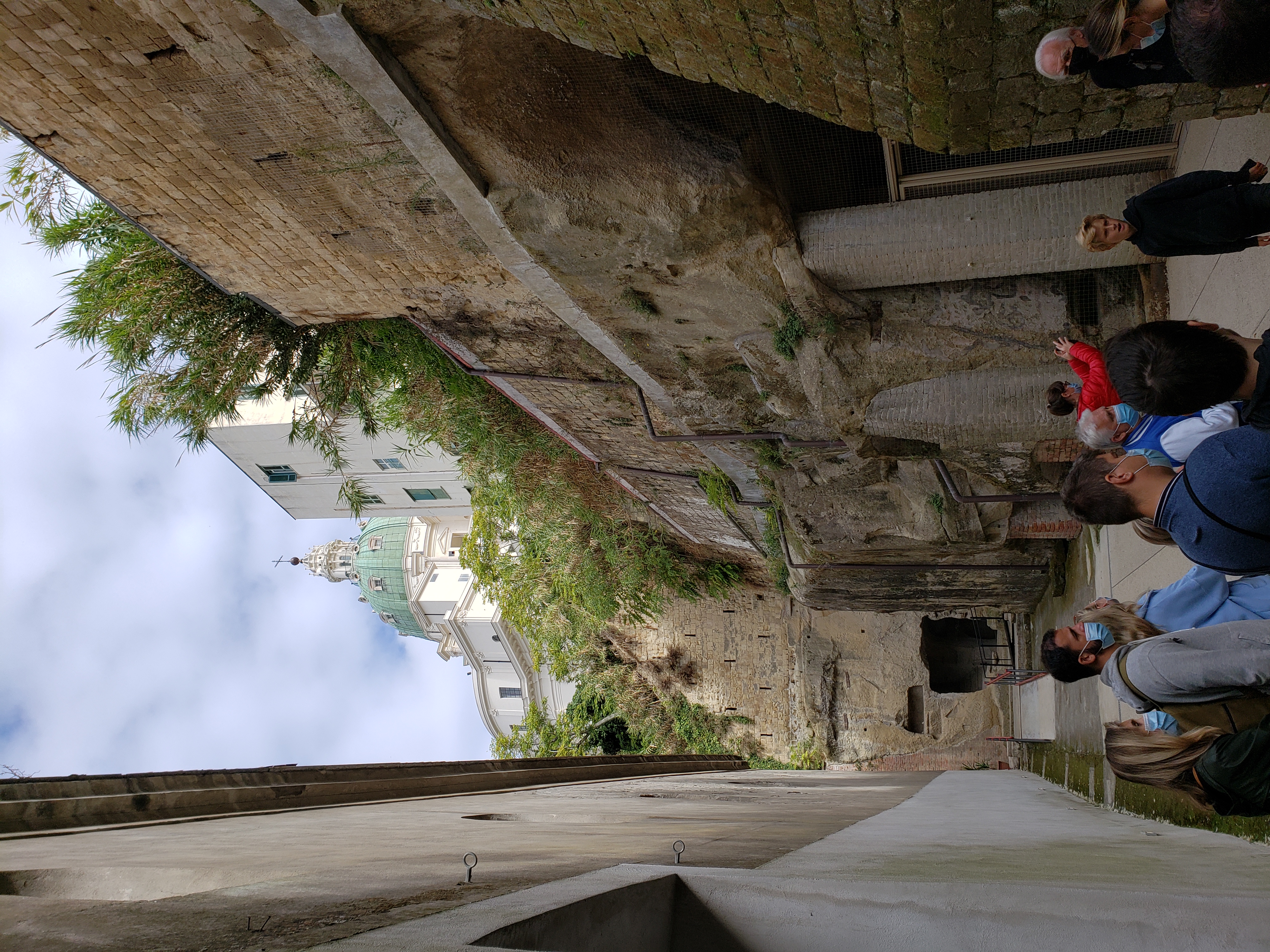
There are four known catacombs outside the city, two can be visited, the Catacombs of San Gennaro and the Catacombs of San Gaudioso. However, once you enter you quickly discover, that with some minor exceptions, there are no bodies here. In the former case they were exhumed by the French back in the 1700s and repatriated, in the latter they were moved to one of the other catacombs that currently cannot be visited.
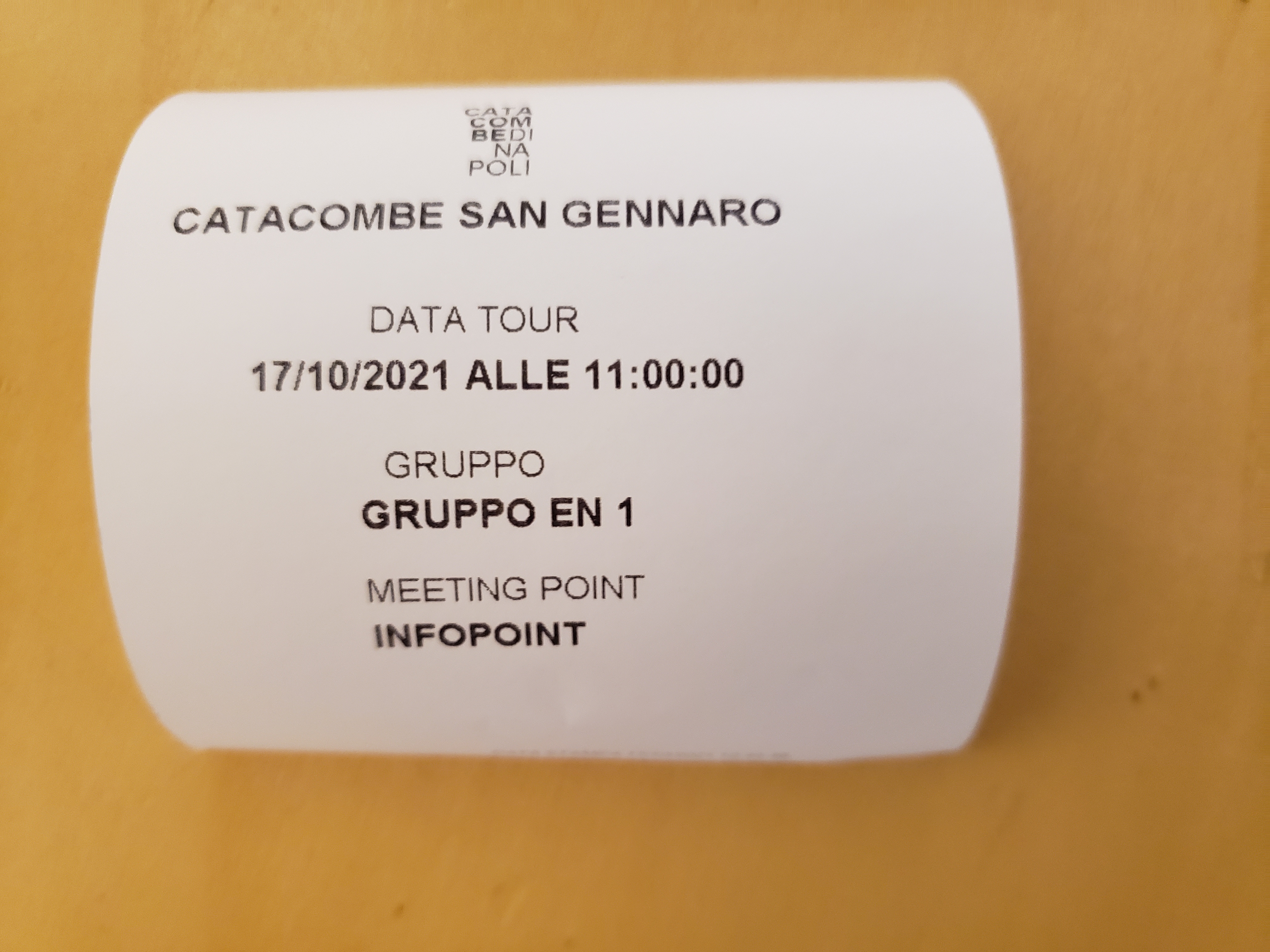
Tickets for Two – Catacombs San Gennaro
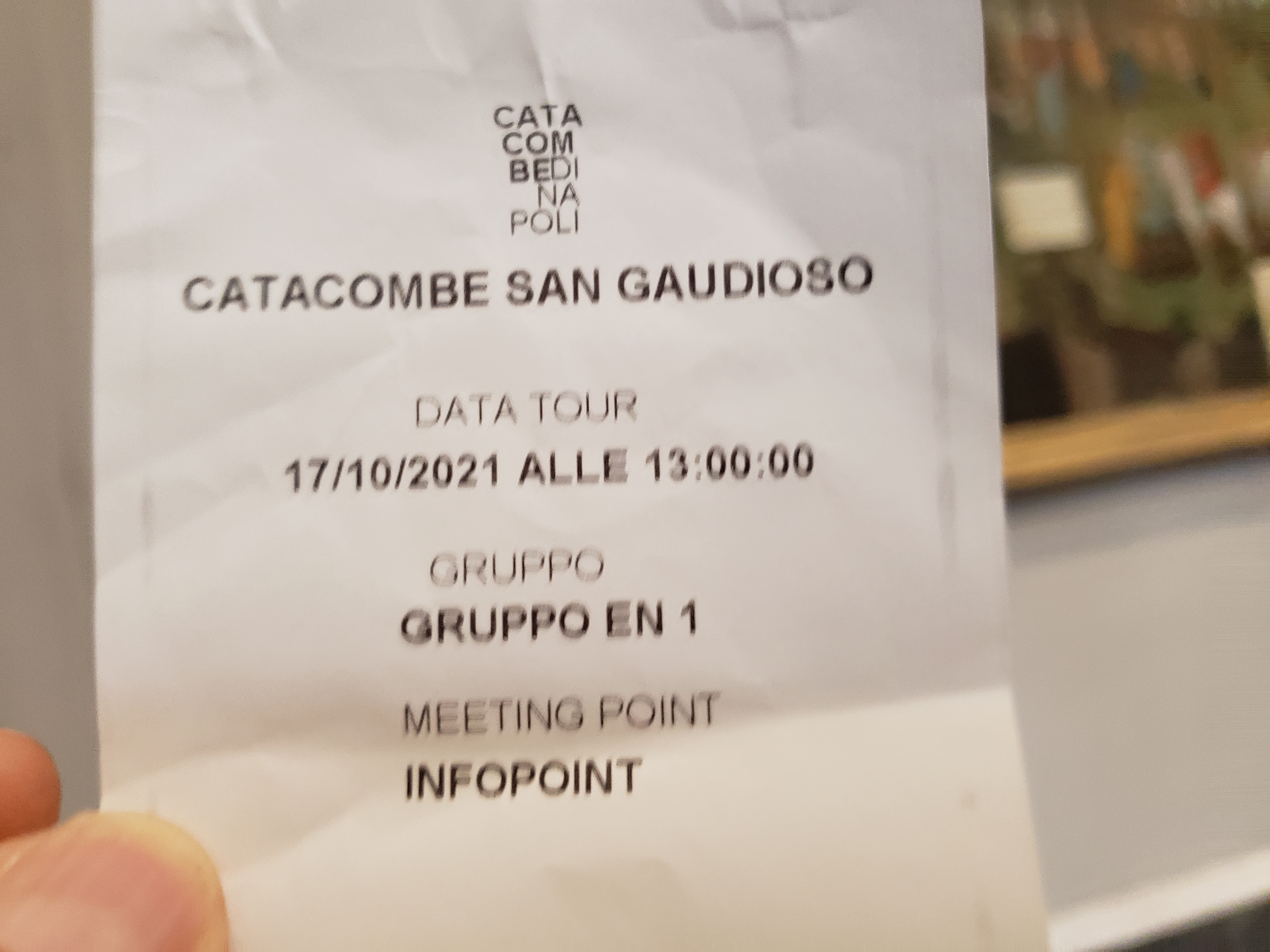
Tickets for Two – Catacombs San Gaudioso
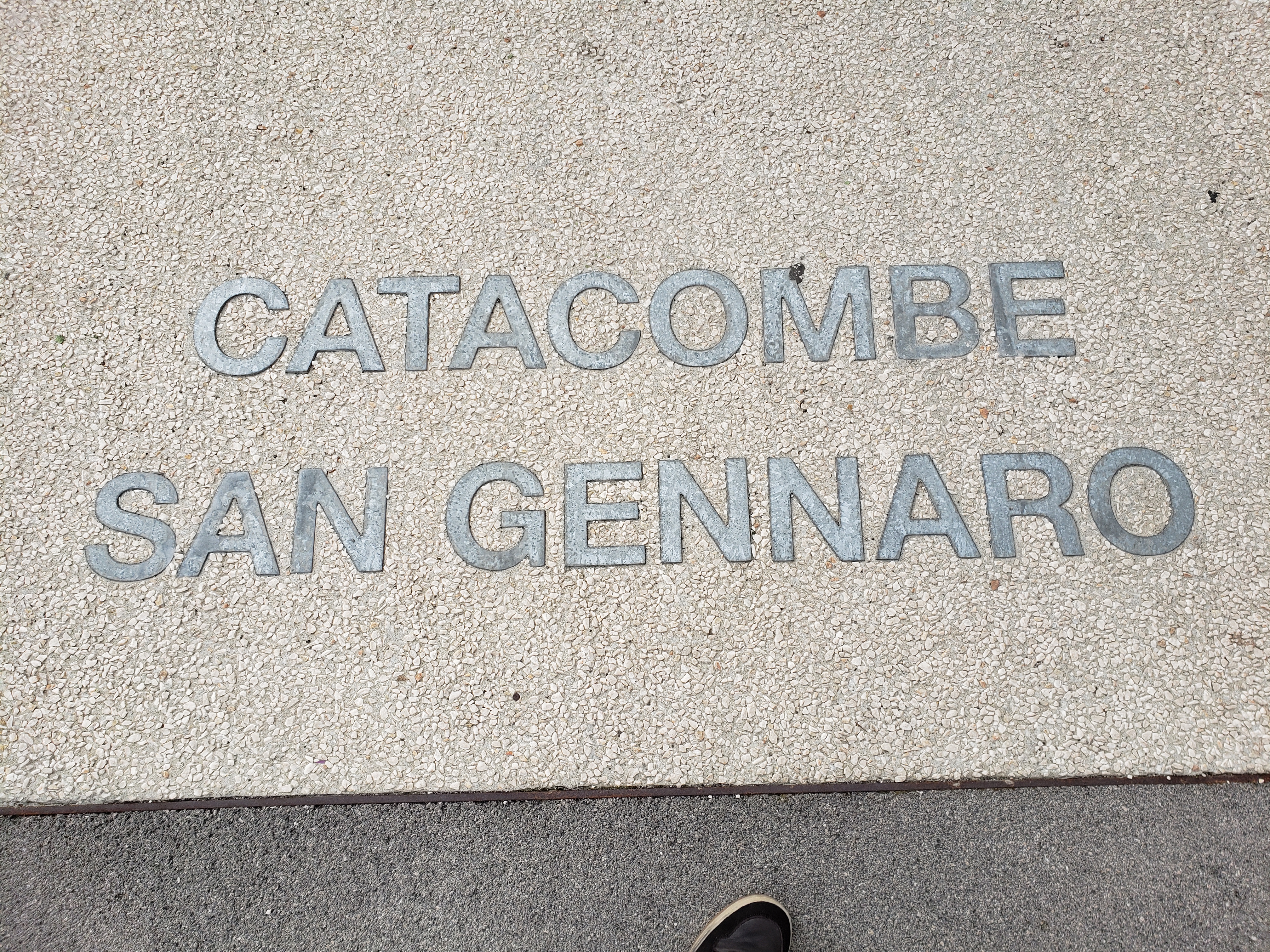
Catacombs of San Gennaro
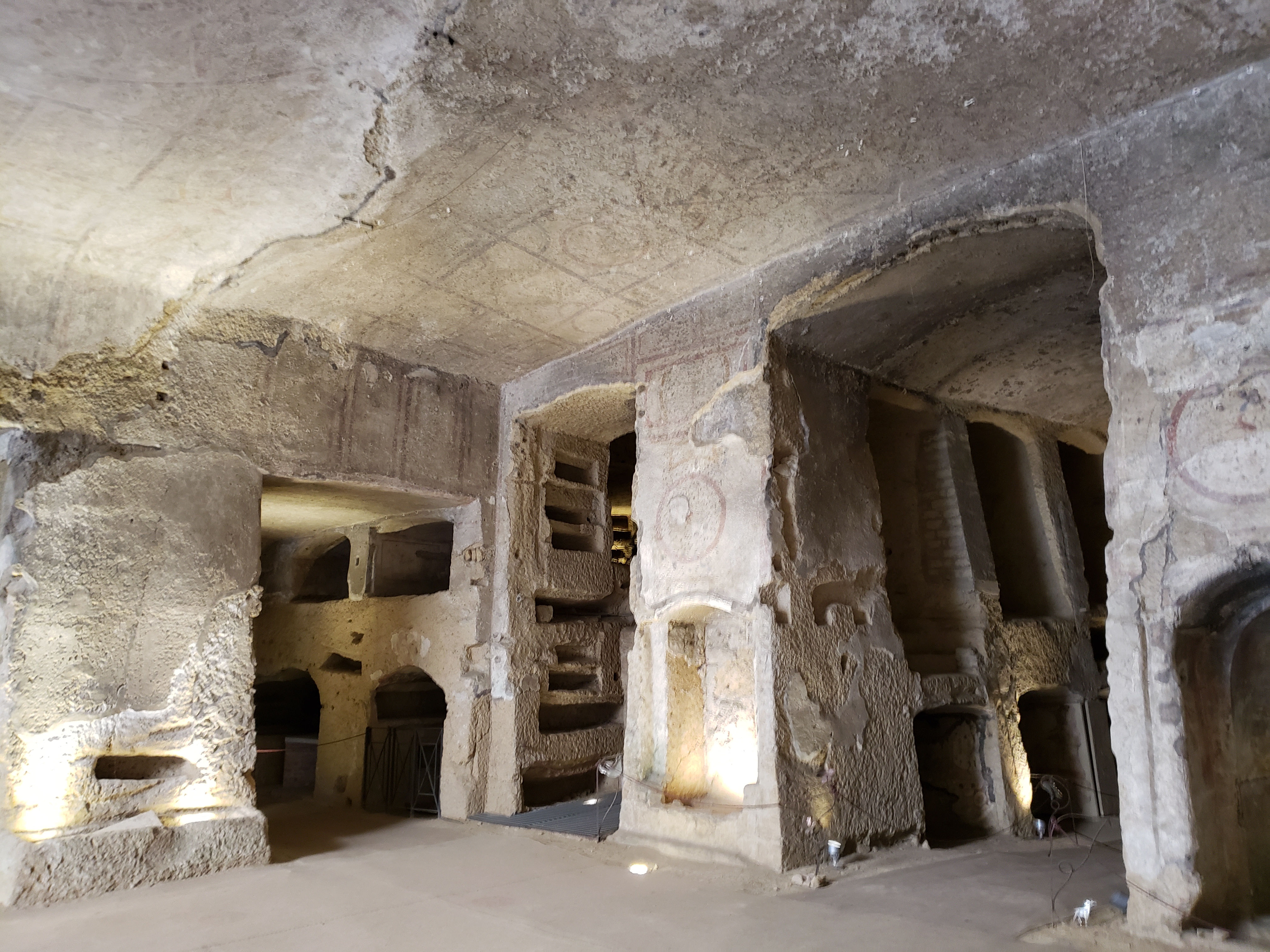
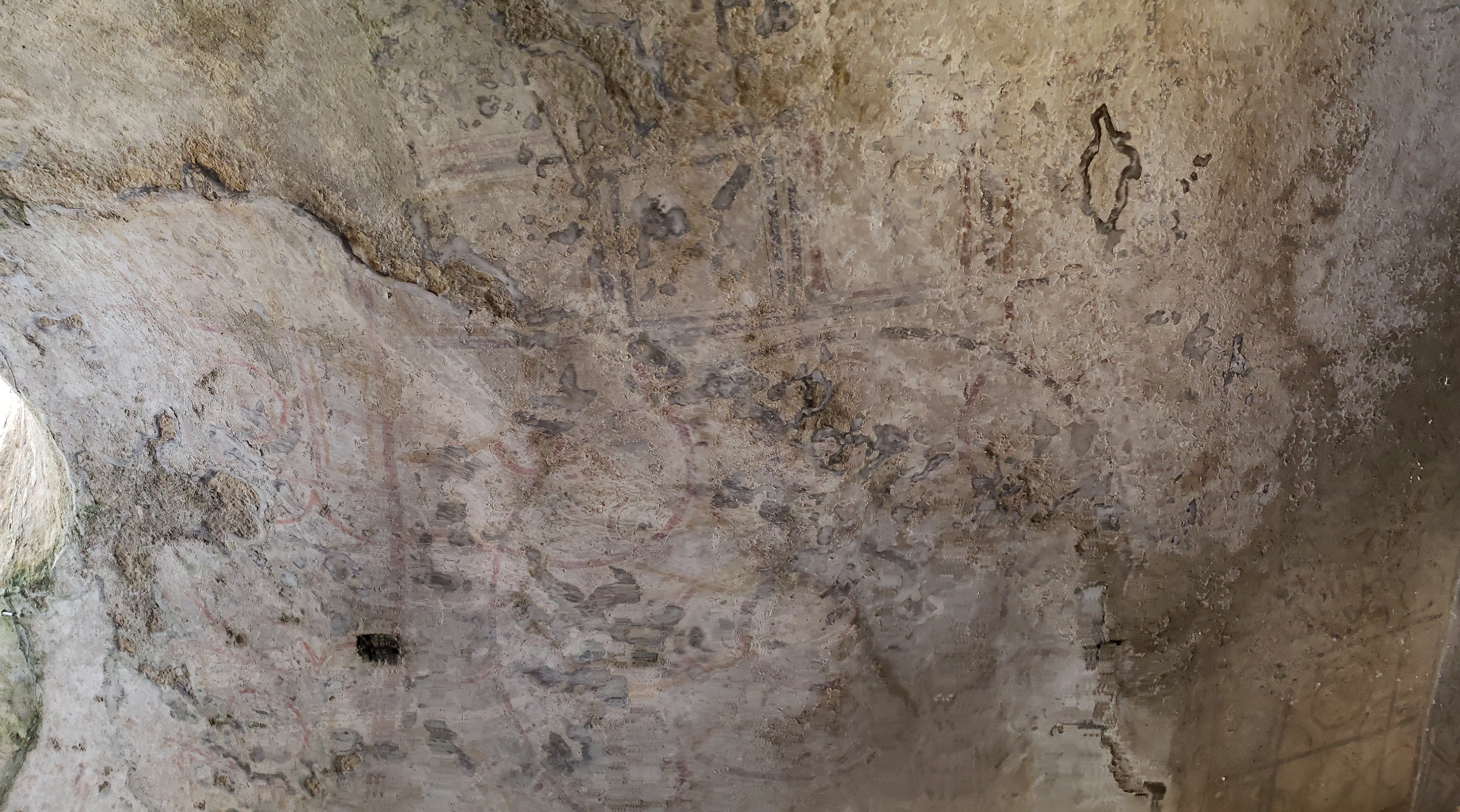
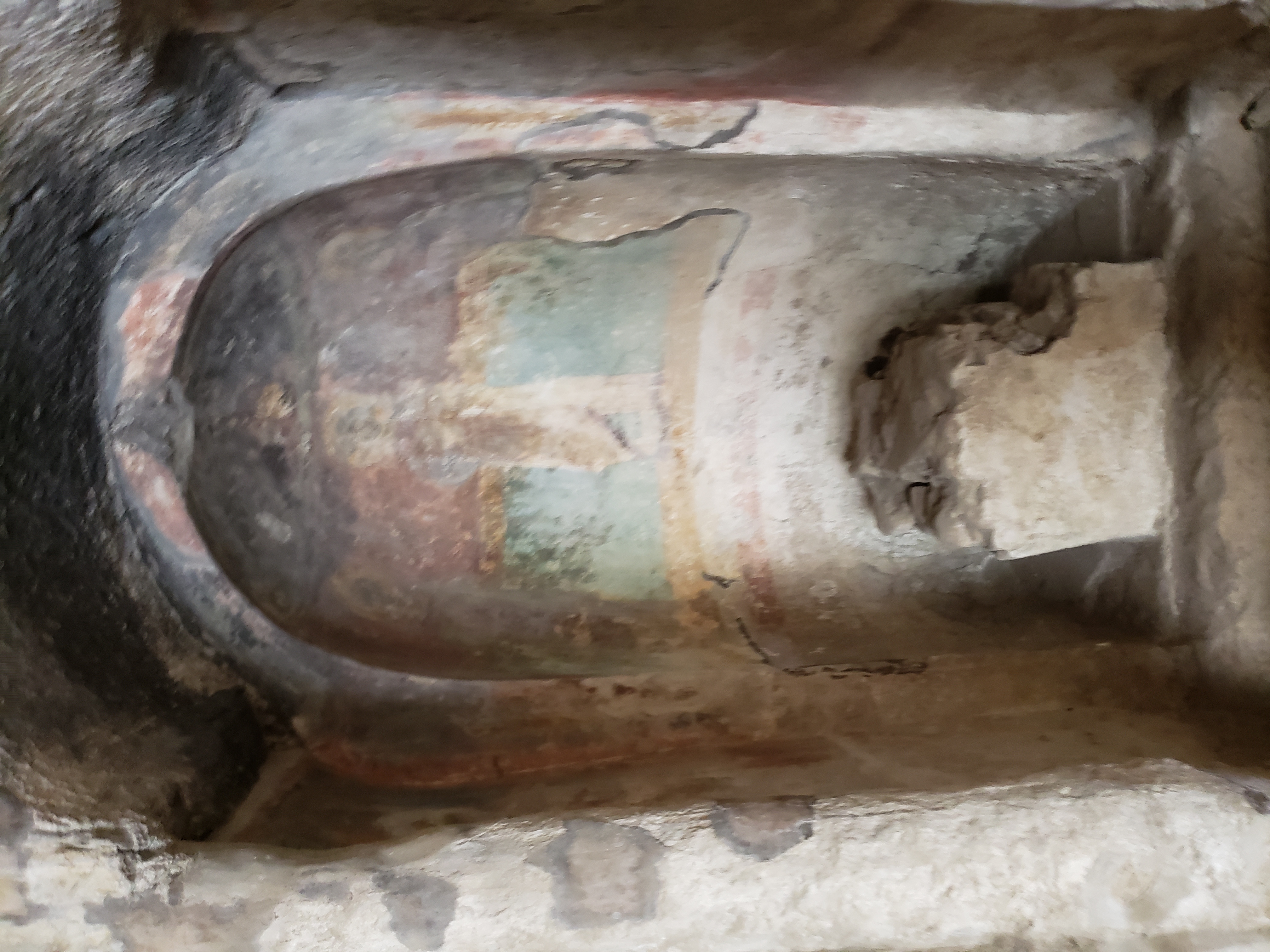
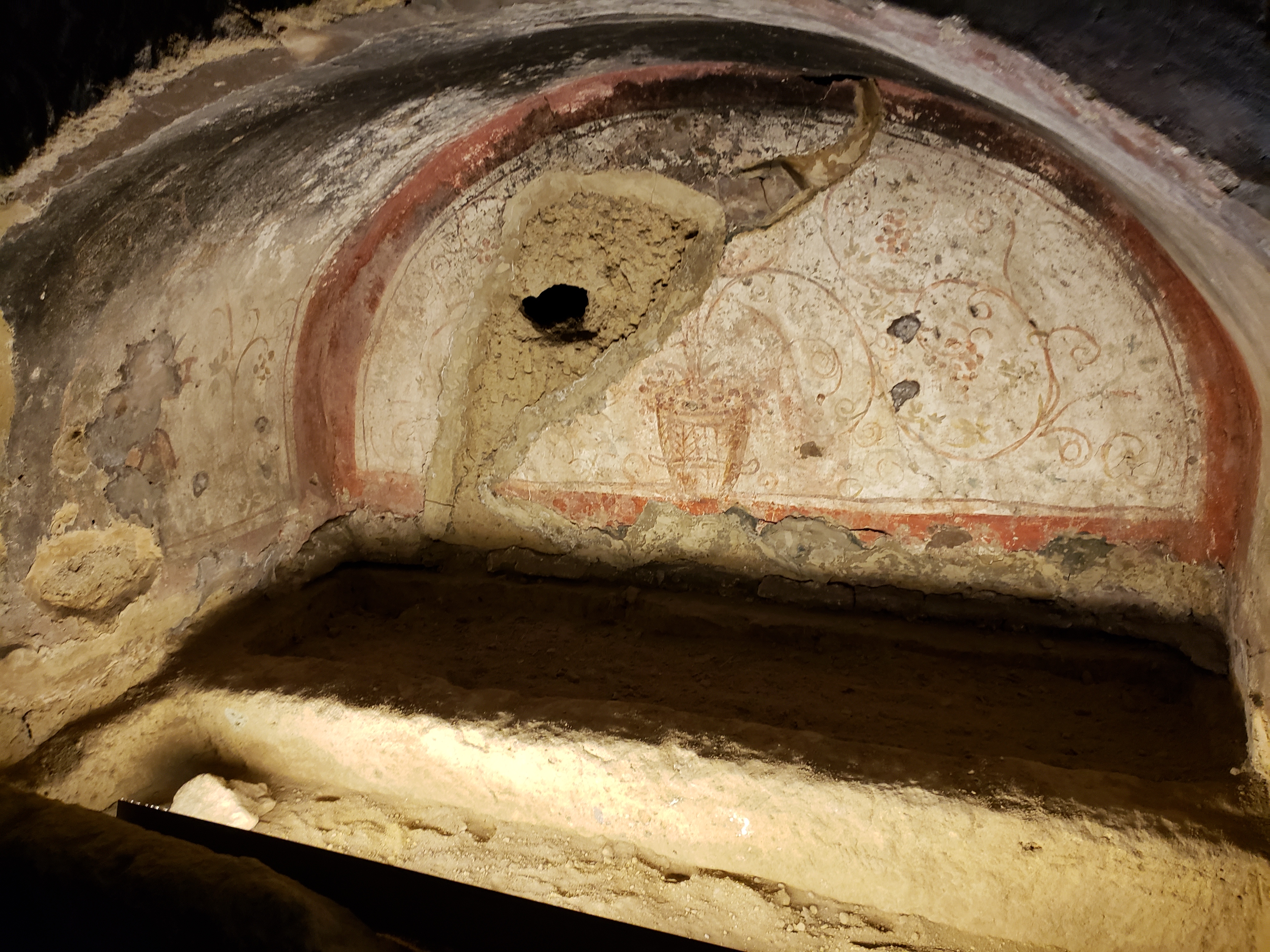
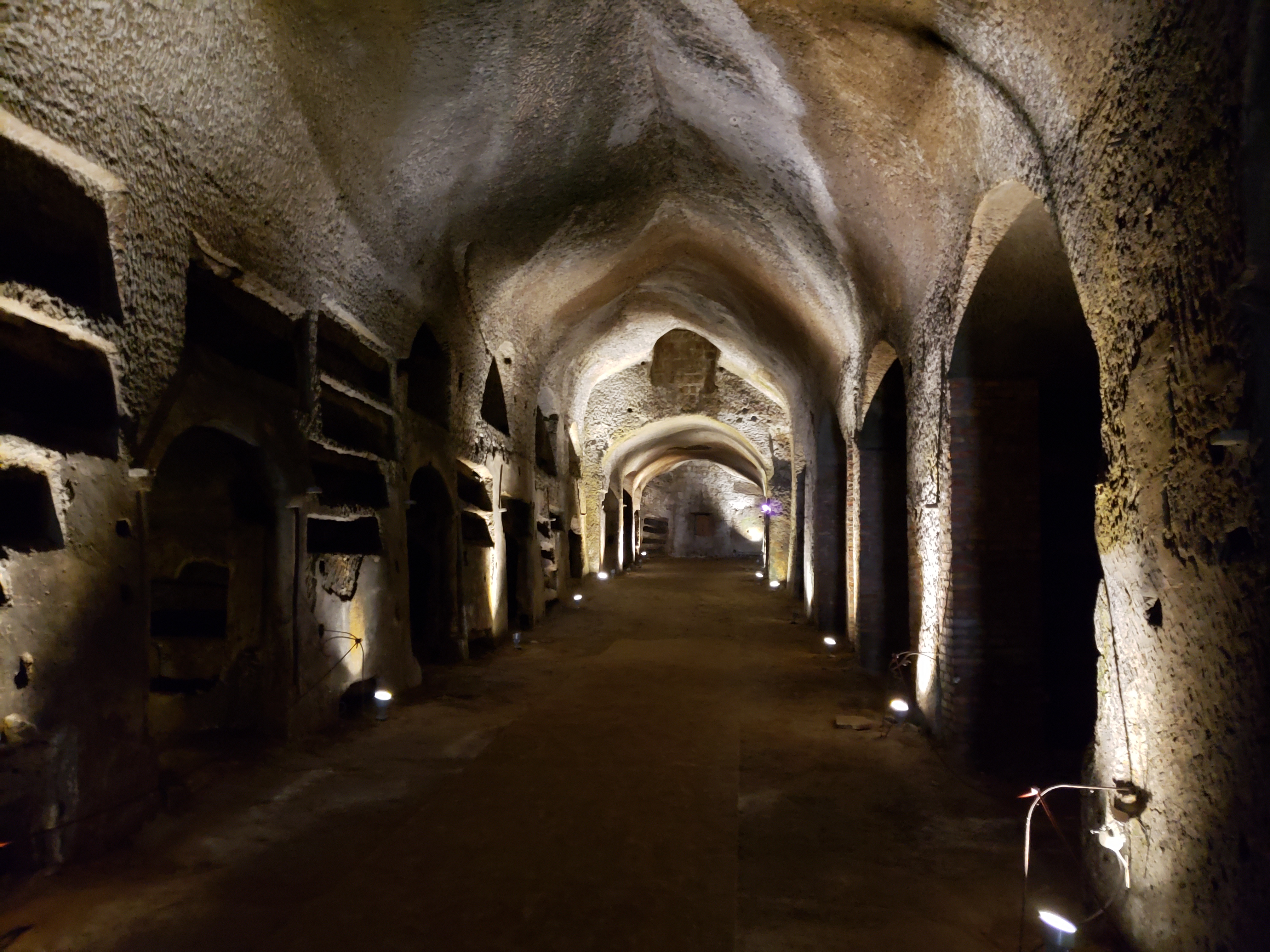
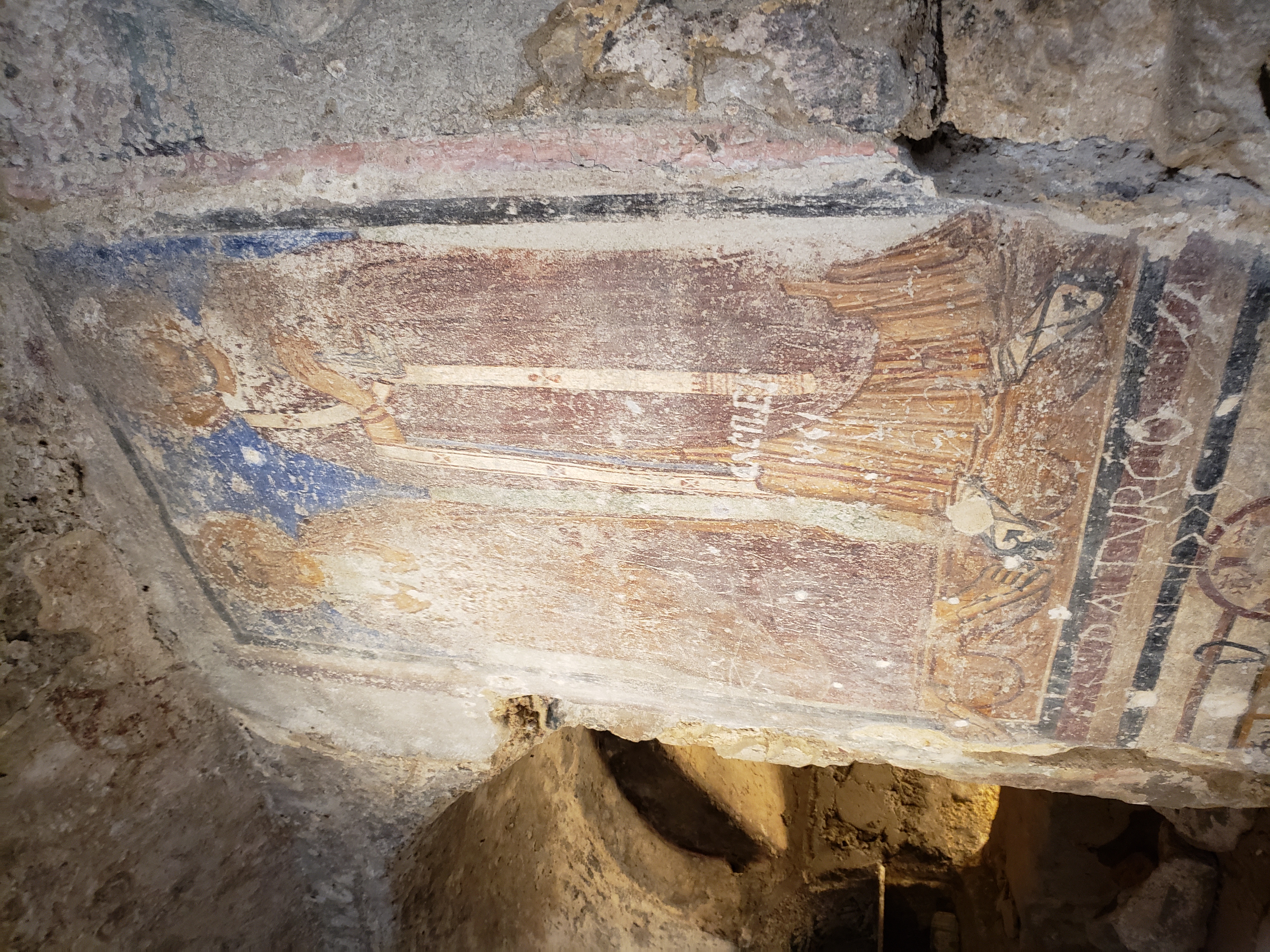
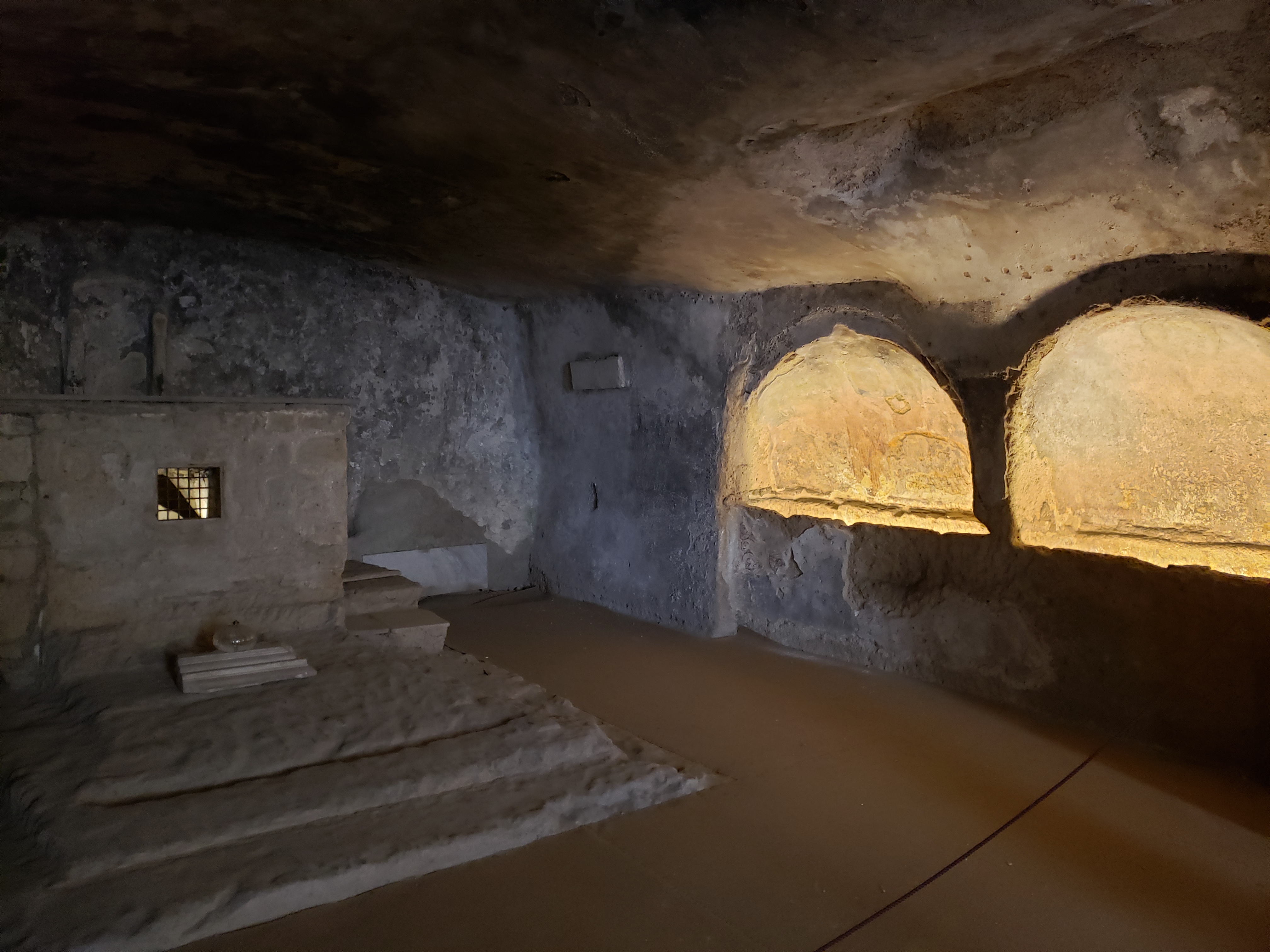
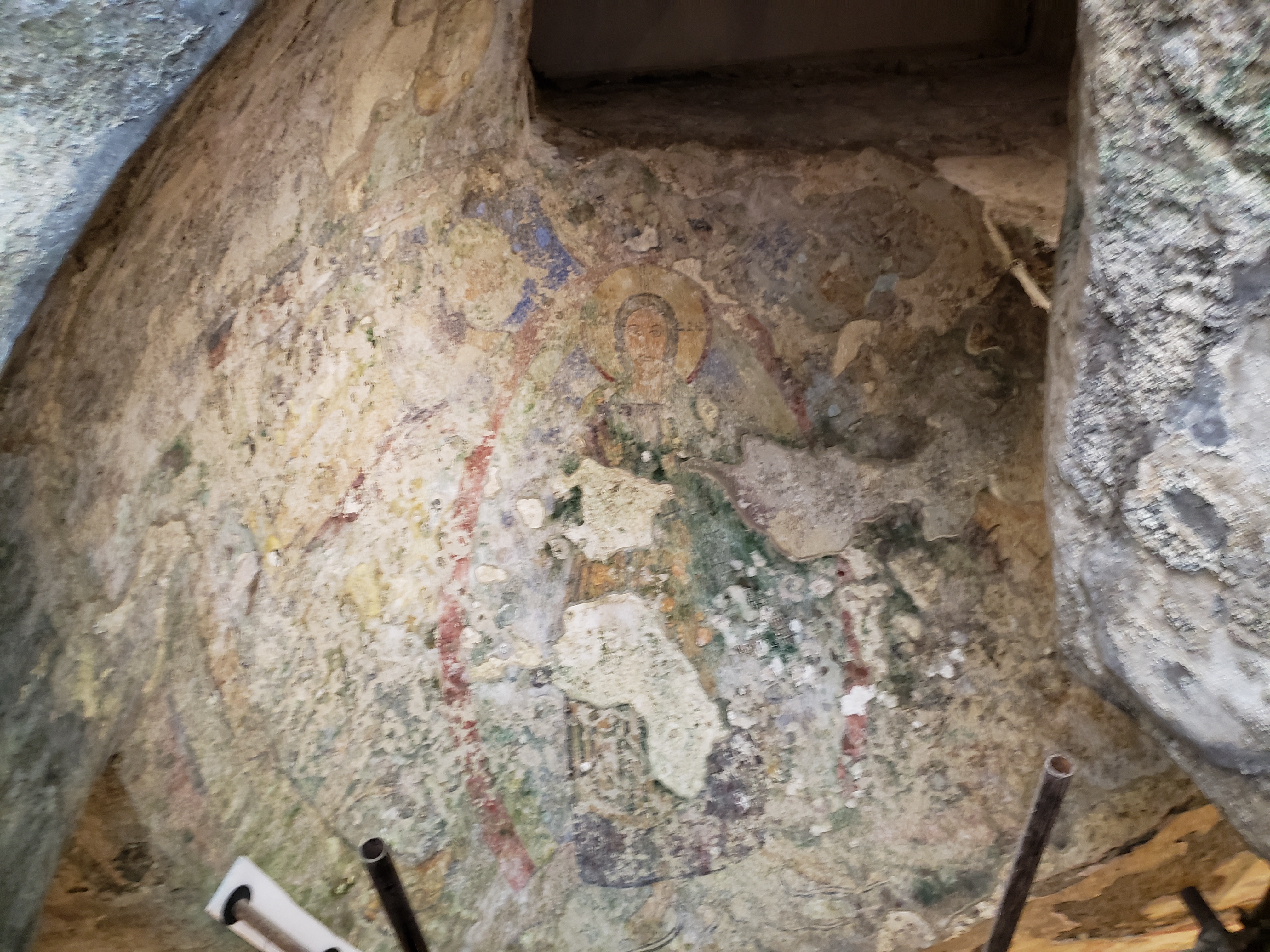
About a mile from the old historic district off the Corso Amedeo di Savoia are the Catacombs of San Gennaro. The largest and least morbid of the two, this catacomb has an expansive underground and very interesting history. Since a guided tour is the only option possible, you learn all the details of the historical past of this catacomb, and some of the more perculiar fact (if you are willing to ask, e.g. where did all the bodies go – back to France). Since all catacombs, more or less look the same, here is a slide show.
Catacombs San Gennaro
Catacombs San Gennaro
Catacombs San Gennaro
Catacombs San Gennaro
Catacombs San Gennaro
Catacombs San Gennaro
Catacombs San Gennaro
Catacombs San Gennaro
Catacombs San Gennaro
Catacombs San Gennaro
Catacombs San Gennaro
Catacombs San Gennaro
Catacombs San Gennaro
Catacombs San Gennaro
Catacombs San Gennaro
Catacombs San Gennaro
Baptismal Font – Catacombs San Gennaro
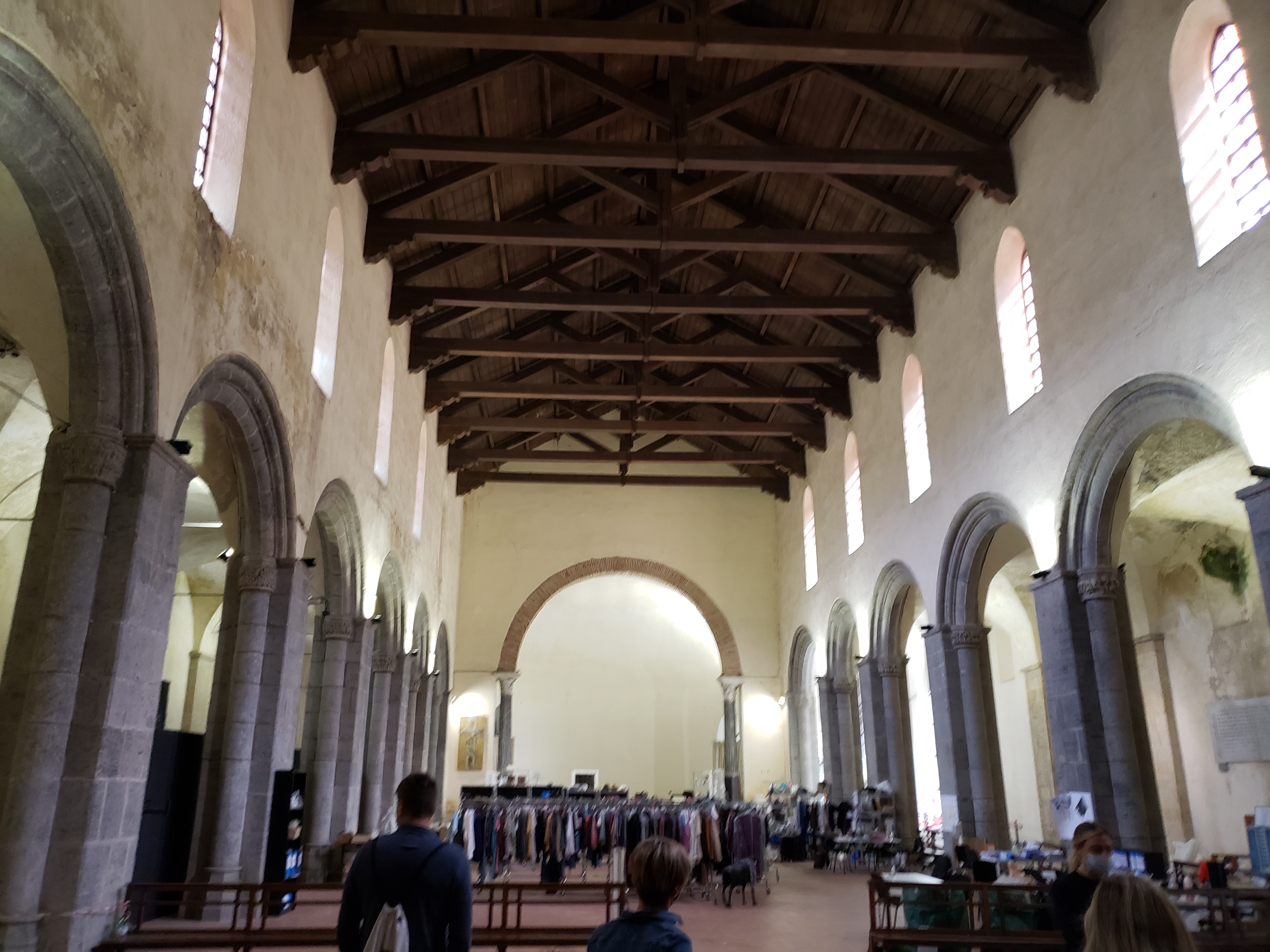
Church of San Gennaro
Catacombs San Gennaro
Catacombs San Gennaro
Catacombs San Gennaro
Tickets for Two – Catacombs San Gennaro
Catacombs San Gennaro
Catacombs San Gennaro
Catacombs San Gennaro
Catacombs San Gennaro
Catacombs San Gennaro
Catacombs San Gennaro
Catacombs San Gennaro
Catacombs San Gennaro
Catacombs San Gennaro
Catacombs of San Gaudioso
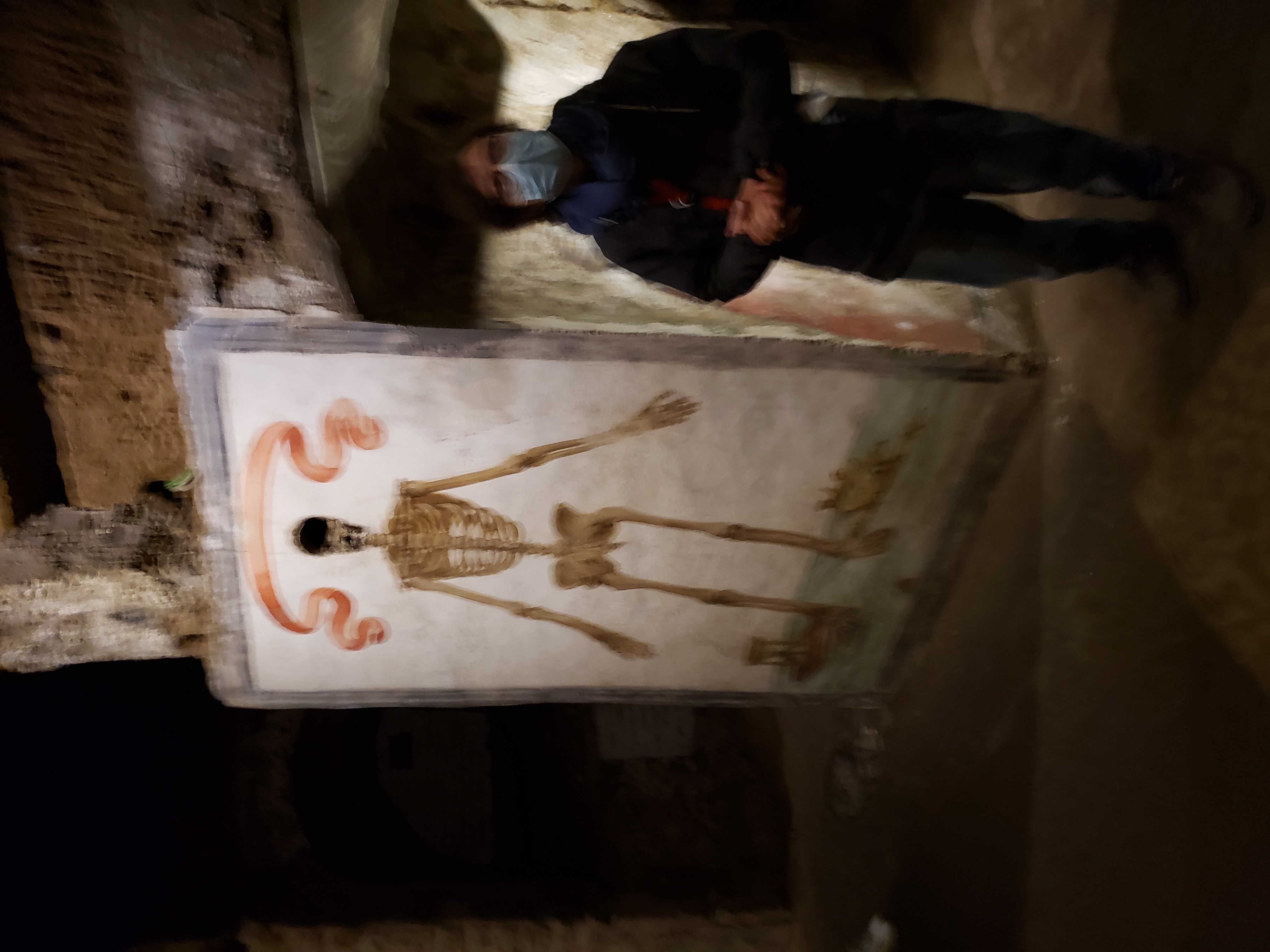
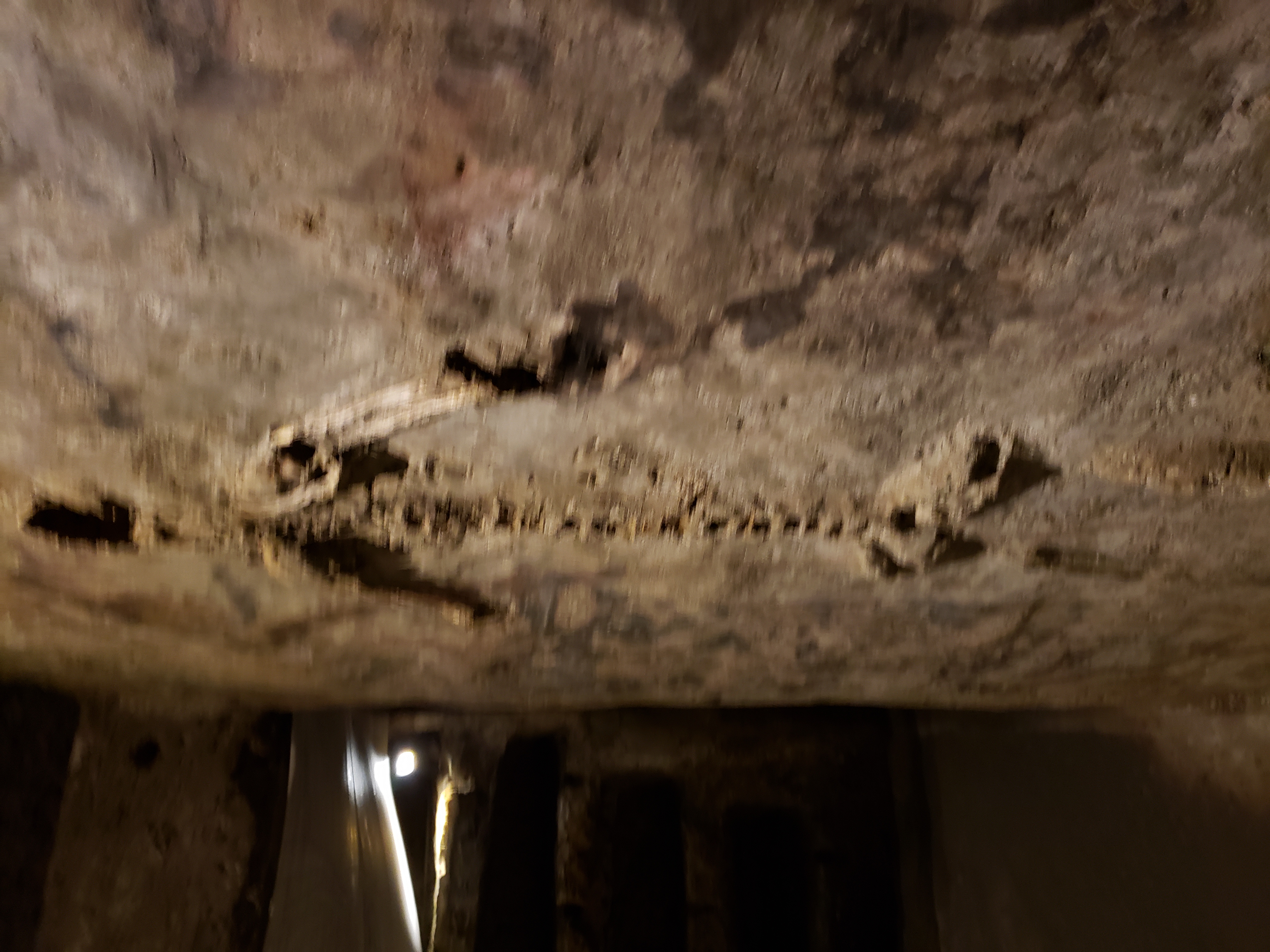
Along the same road, about a fifteen minute walk back toward the city center, are the catacombs of San Gaudioso. These are underneath the Basilica di Santa Maria della Sanità and its entrance is actually in the Basilica. This tour actually contains skeletons, bones and sarcophagi buried in the walls, plastered over with their skulls sticking out and broken off (see show for examples).
Basilica di Santa Maria della Sanità – Catacombs San Gaudioso
Basilica di Santa Maria della Sanità – Catacombs San Gaudioso
Basilica di Santa Maria della Sanità – Ticket Office for the Catacombs San Gaudioso
Catacombs San Gaudioso – Patti descending
Catacombs San Gaudioso
Catacombs San Gaudioso
Catacombs San Gaudioso
Catacombs San Gaudioso
Catacombs San Gaudioso
Catacombs San Gaudioso
Dead People buried in wall, skull without faces – Catacombs San Gaudioso
Dead People buried in wall, skull without faces – Catacombs San Gaudioso
Catacombs San Gaudioso
Dead People buried in wall, skull without faces – Catacombs San Gaudioso
After a thorough introduction to Naples, we decided it was time to see some things we had shoved to one side until we got time.
Castle dell’Ovo
Castle dell’Ovo
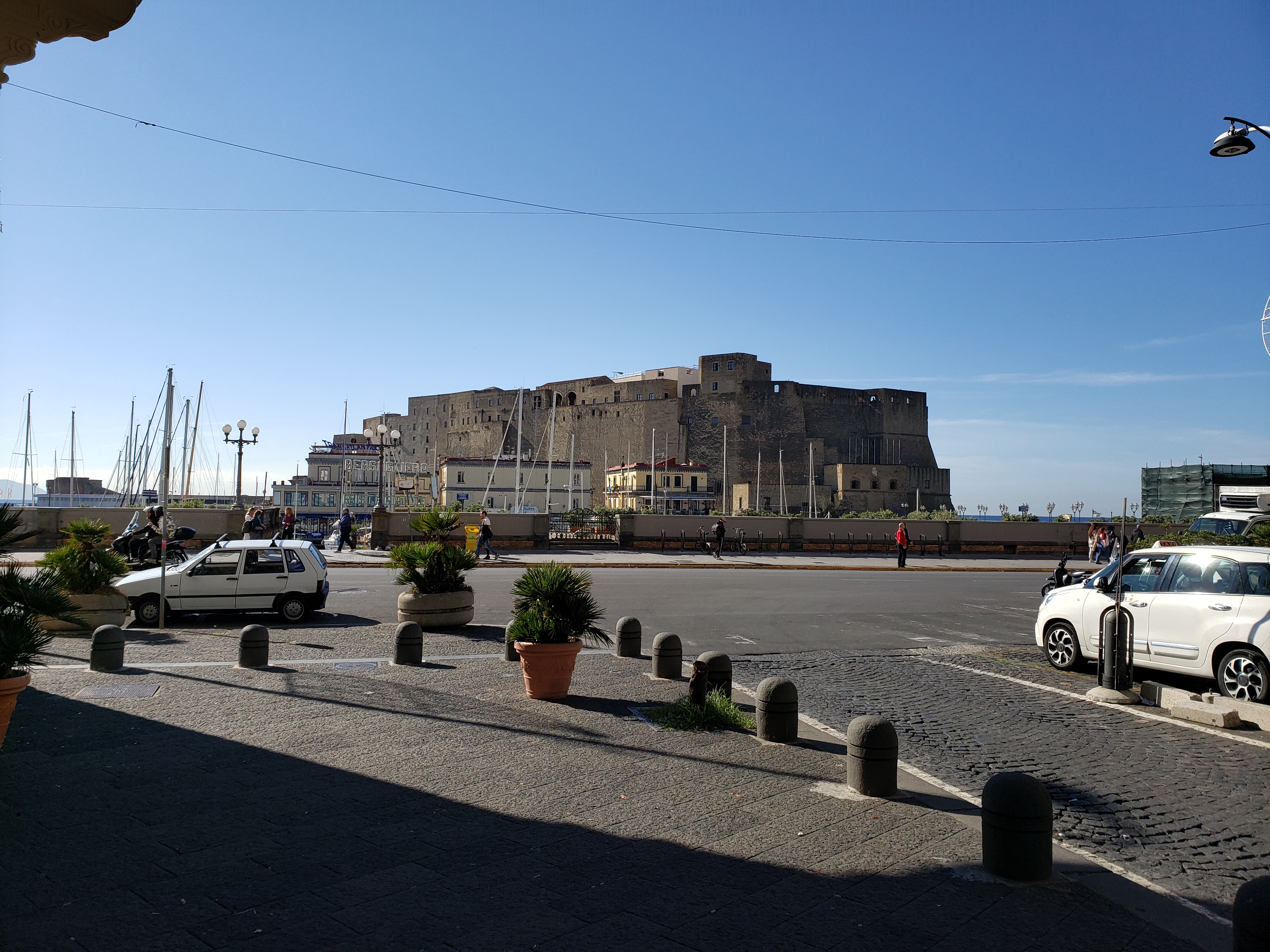
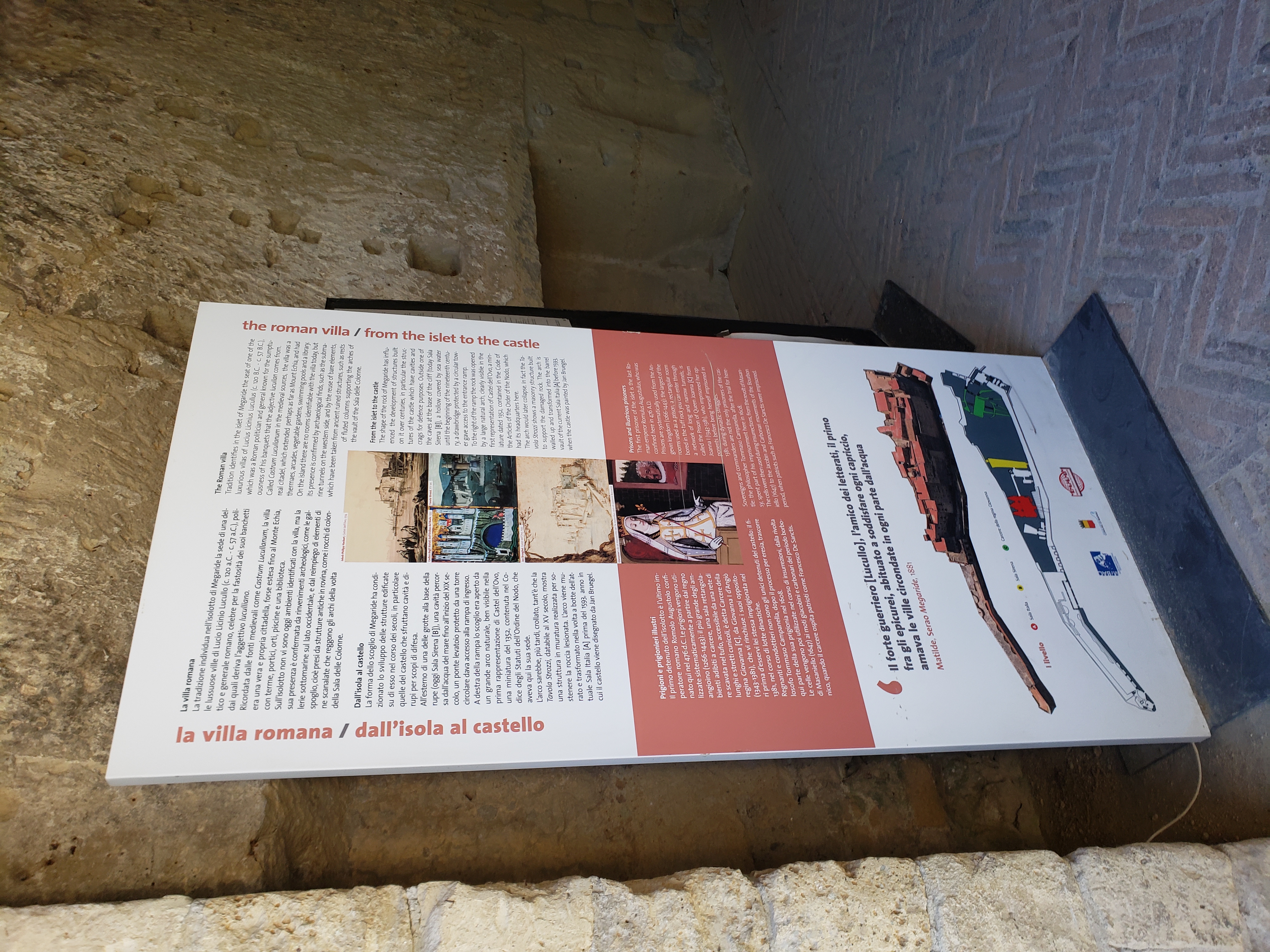
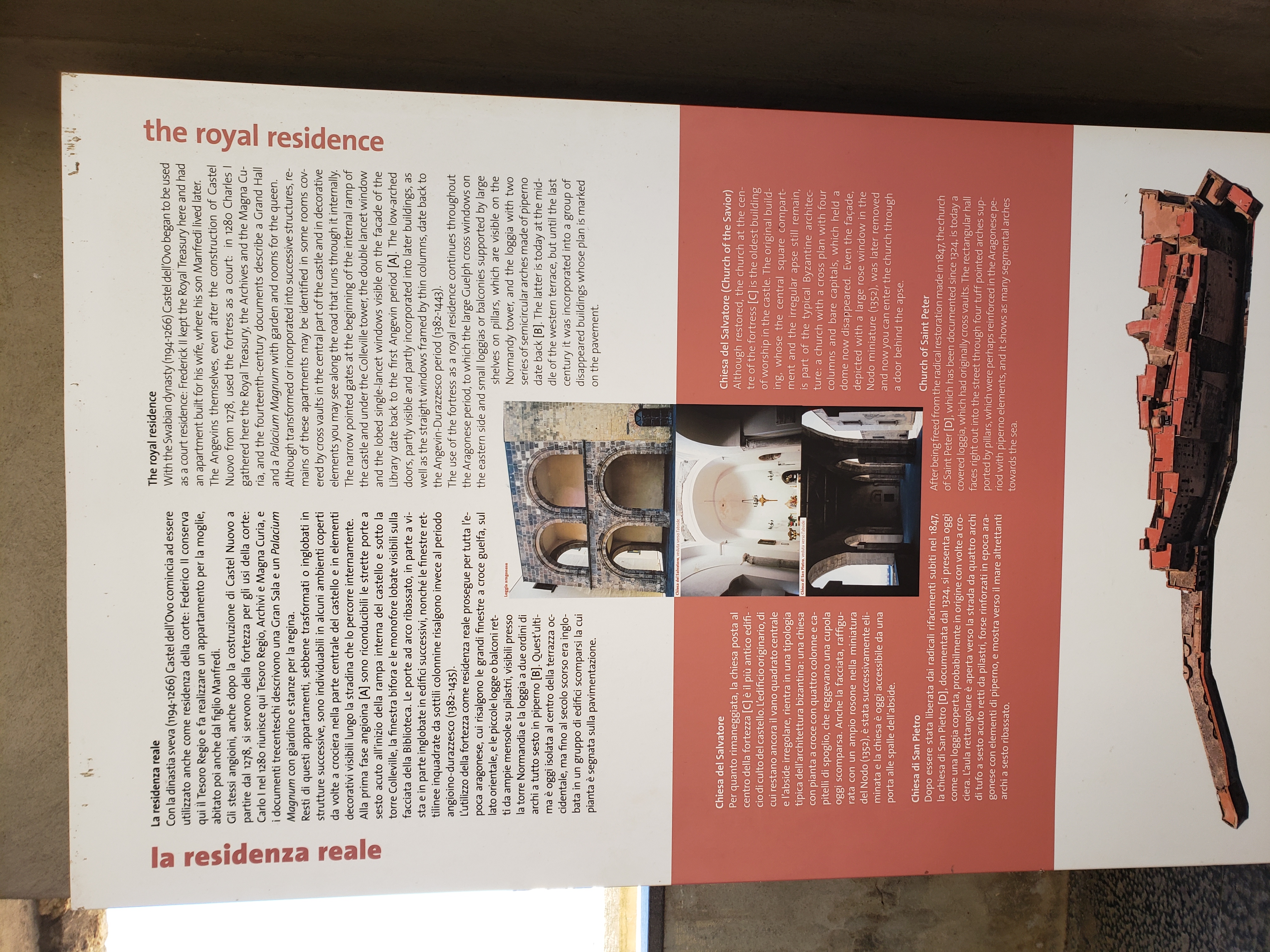
Castel dell’Ovo, also known as The Egg or the Egg Castle is situated in the Bay of Naples. It used to be a small island, but was attached some time ago to make it more accessible. Entrance is free, even though you do have to schedule your attendance online. However, aside from the views, there truly is not much to see. It appears to have been reused for administration and other city or port related uses.
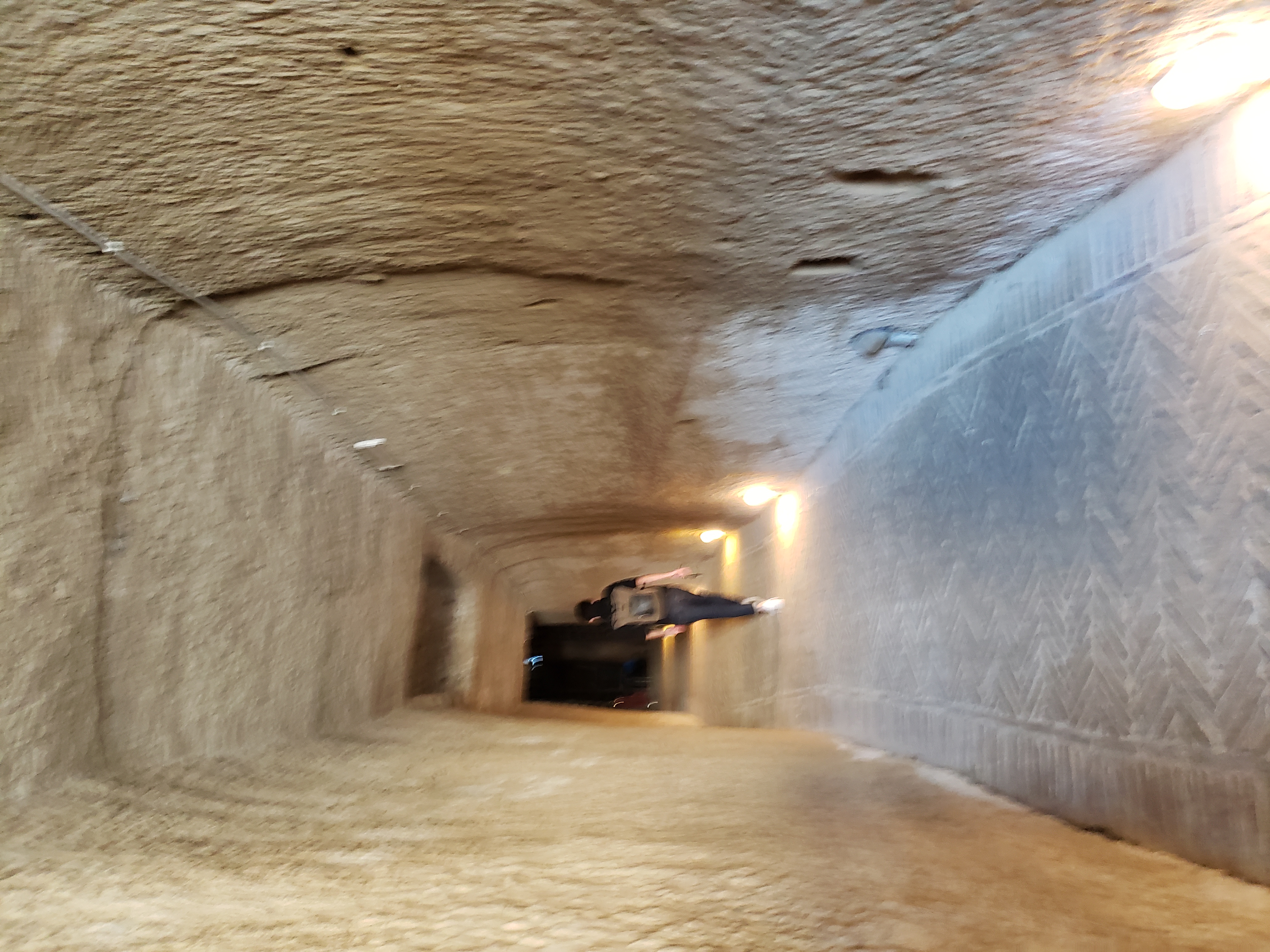
Hallway to art exhibit
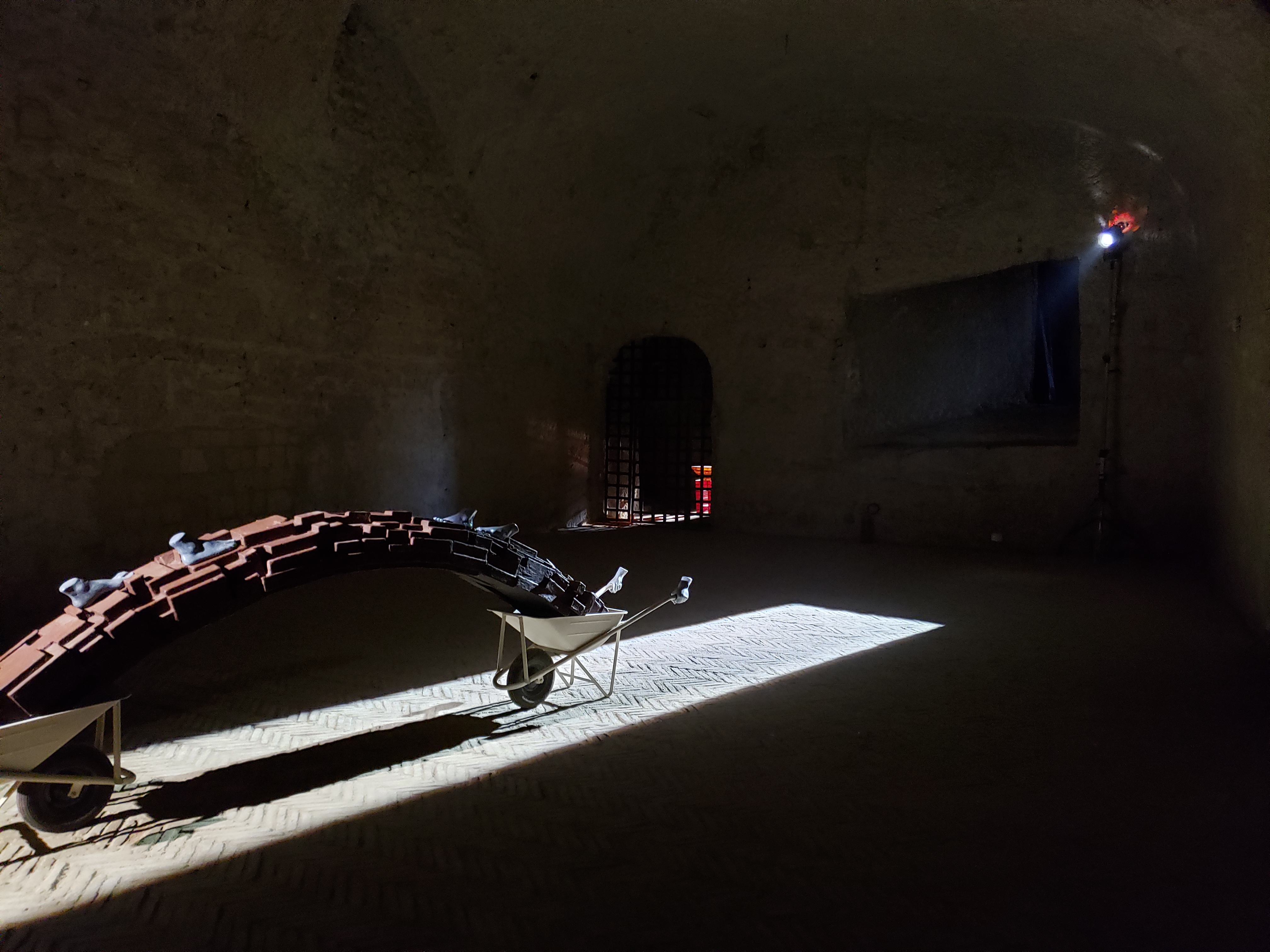
Art exhibit
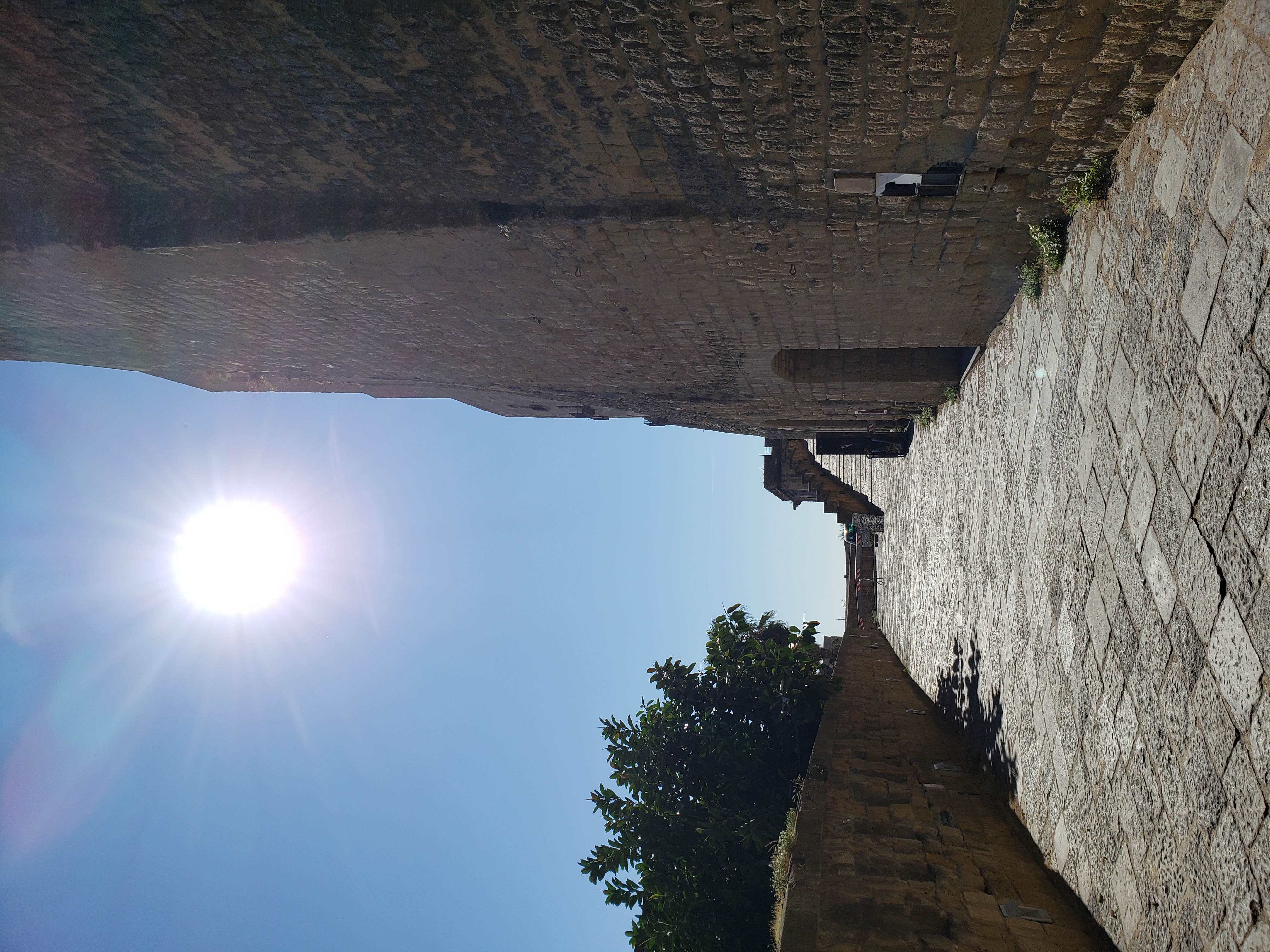
Along the parapets
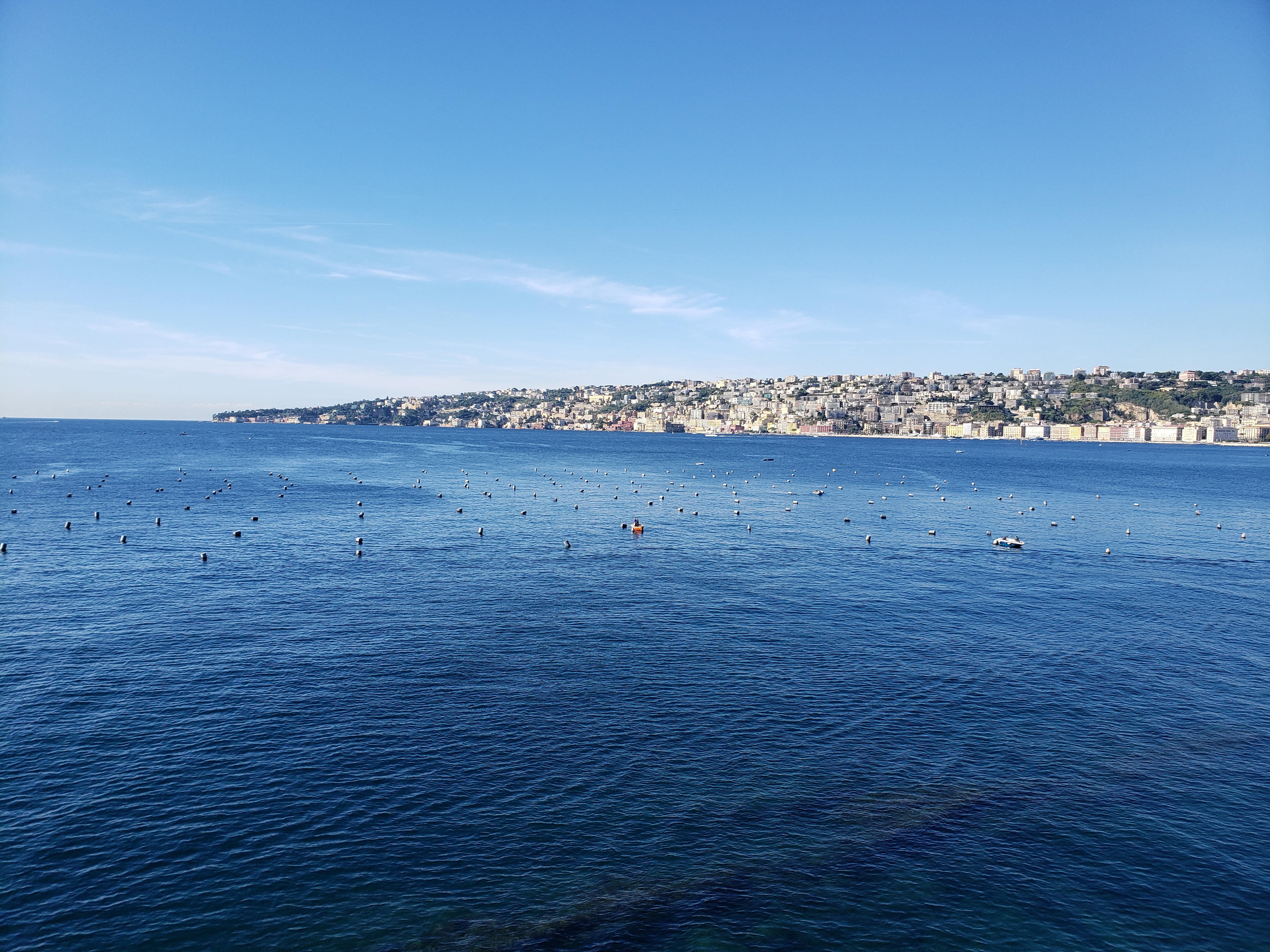
Chiaia, Naples from the castle
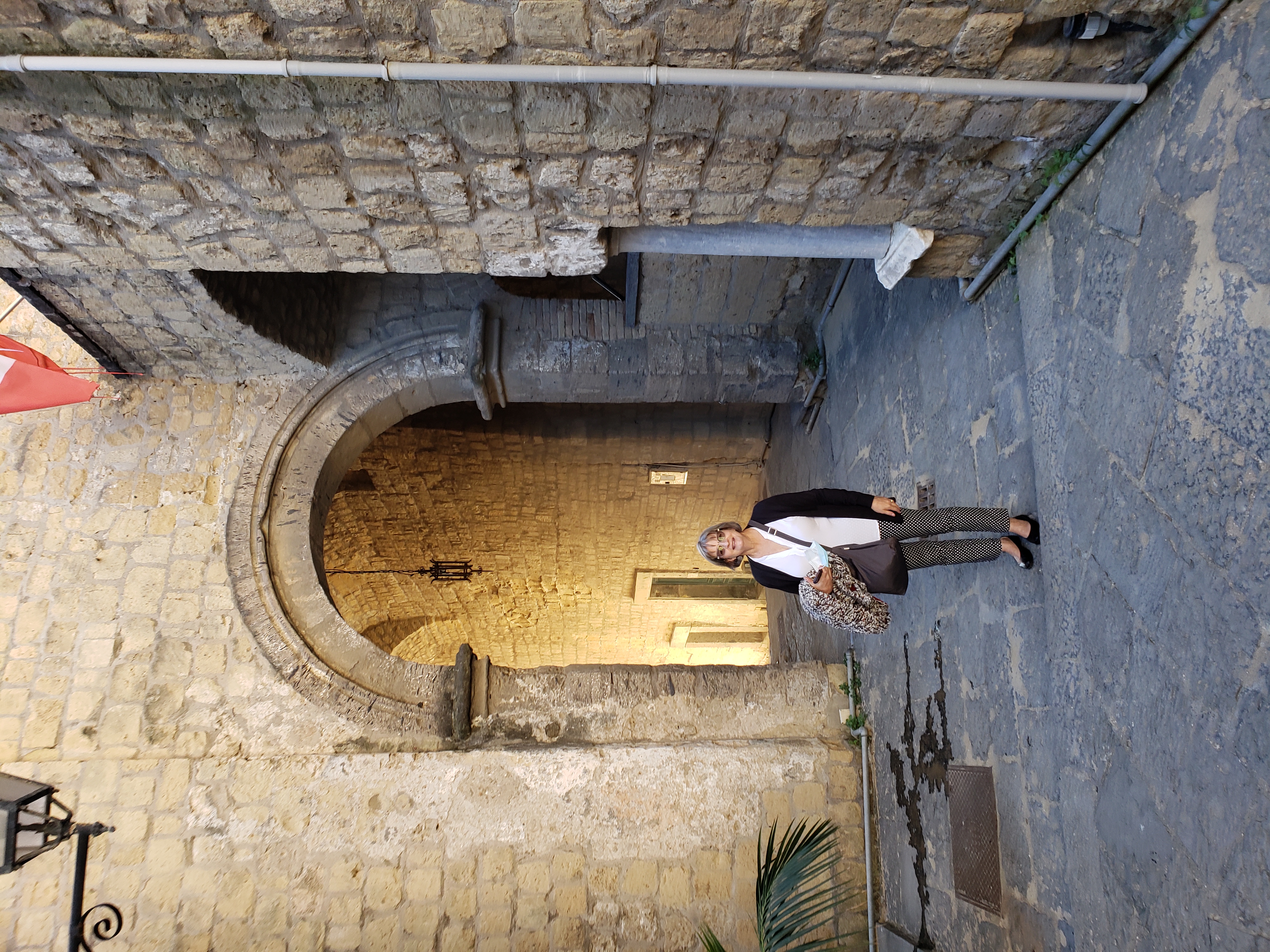
Patti at the Castle
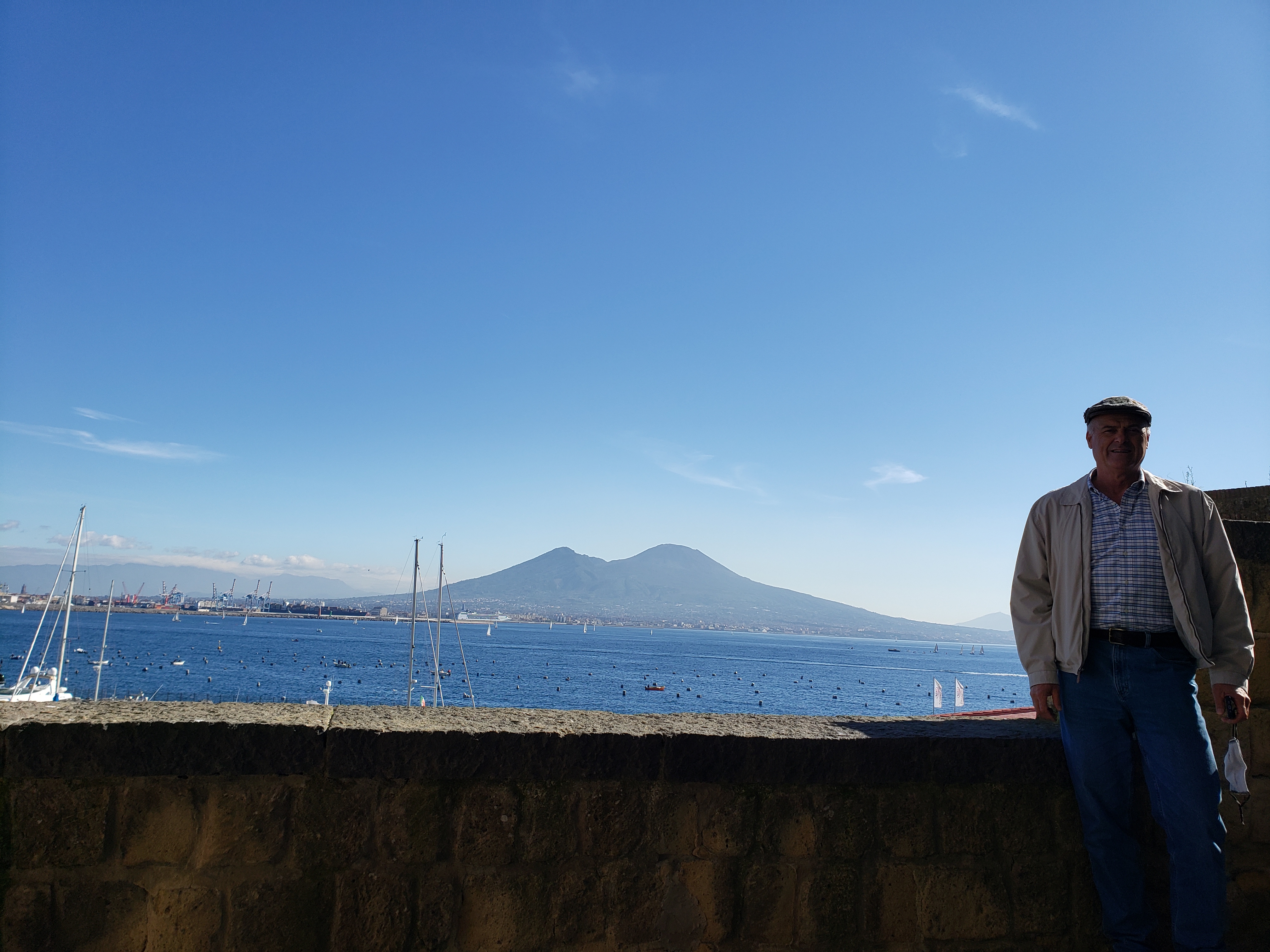
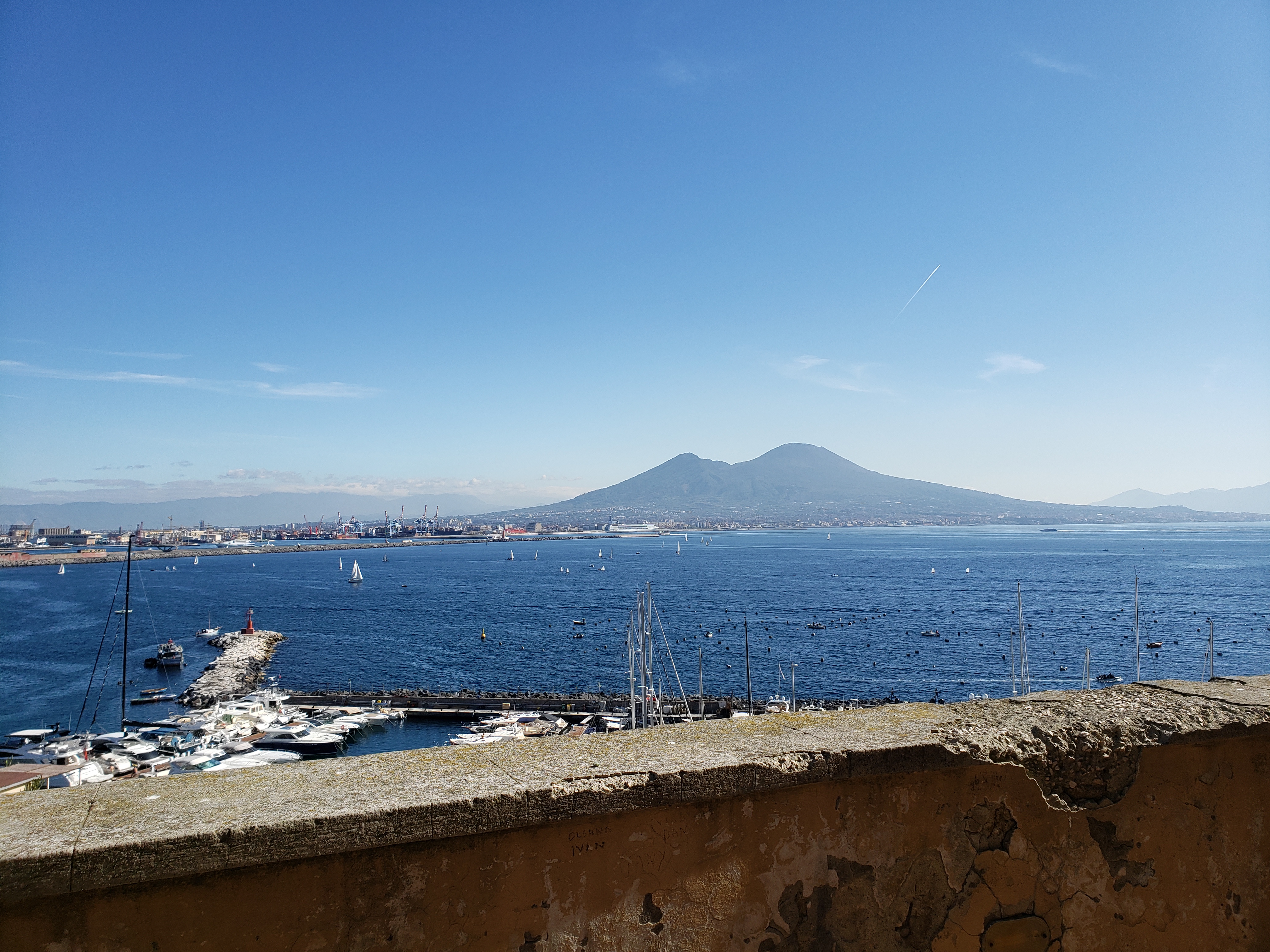
Vesuvius
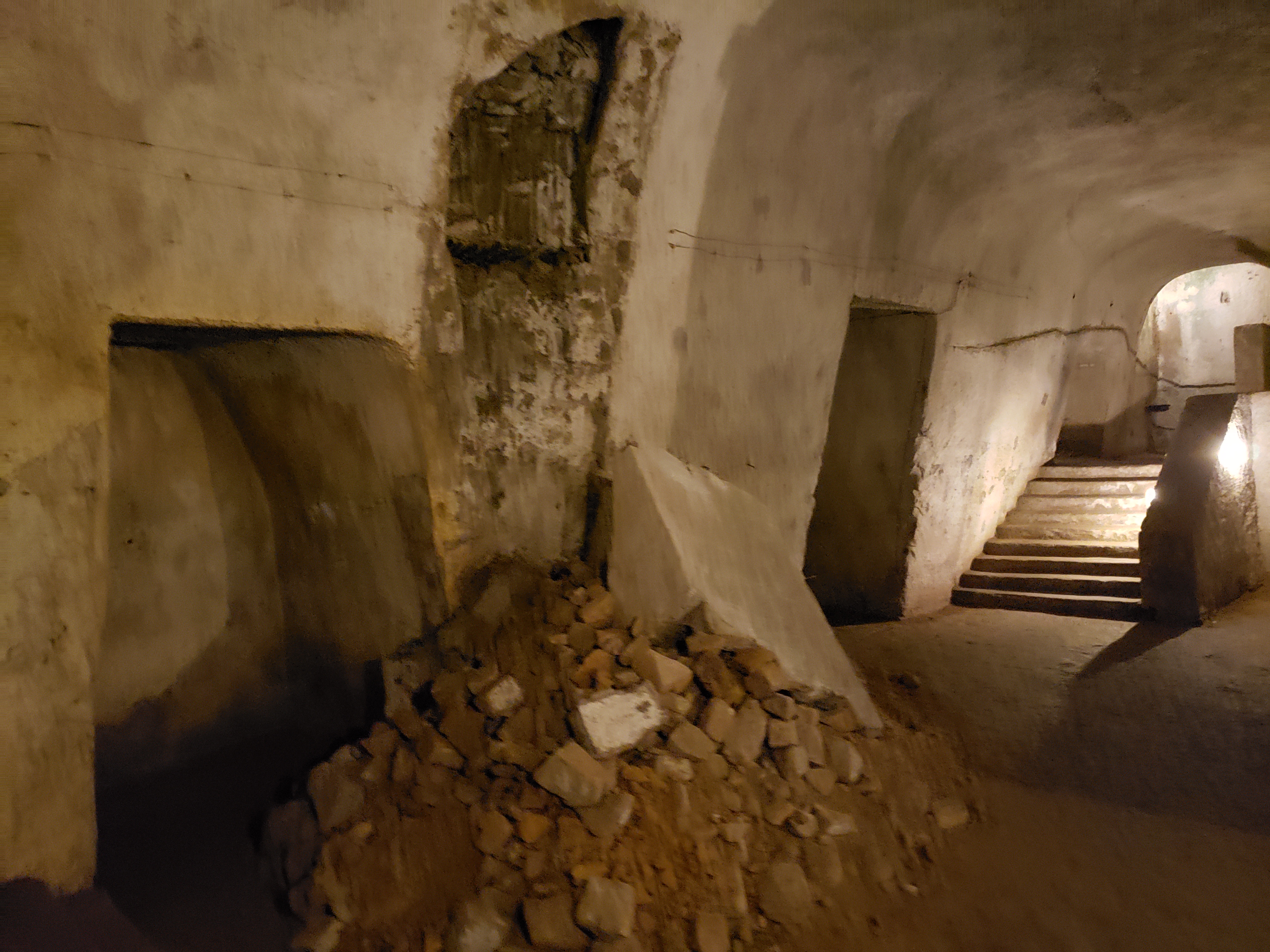
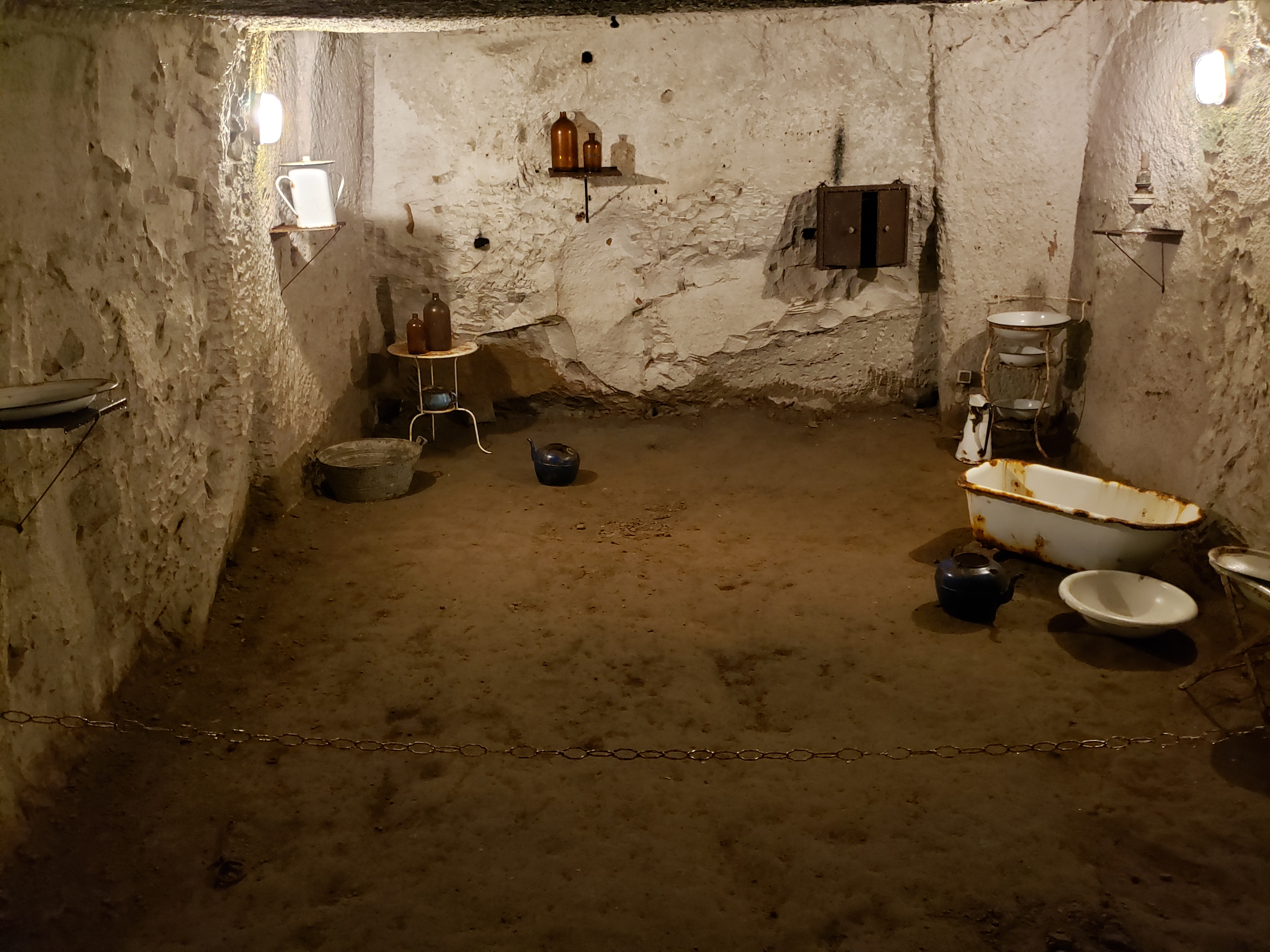
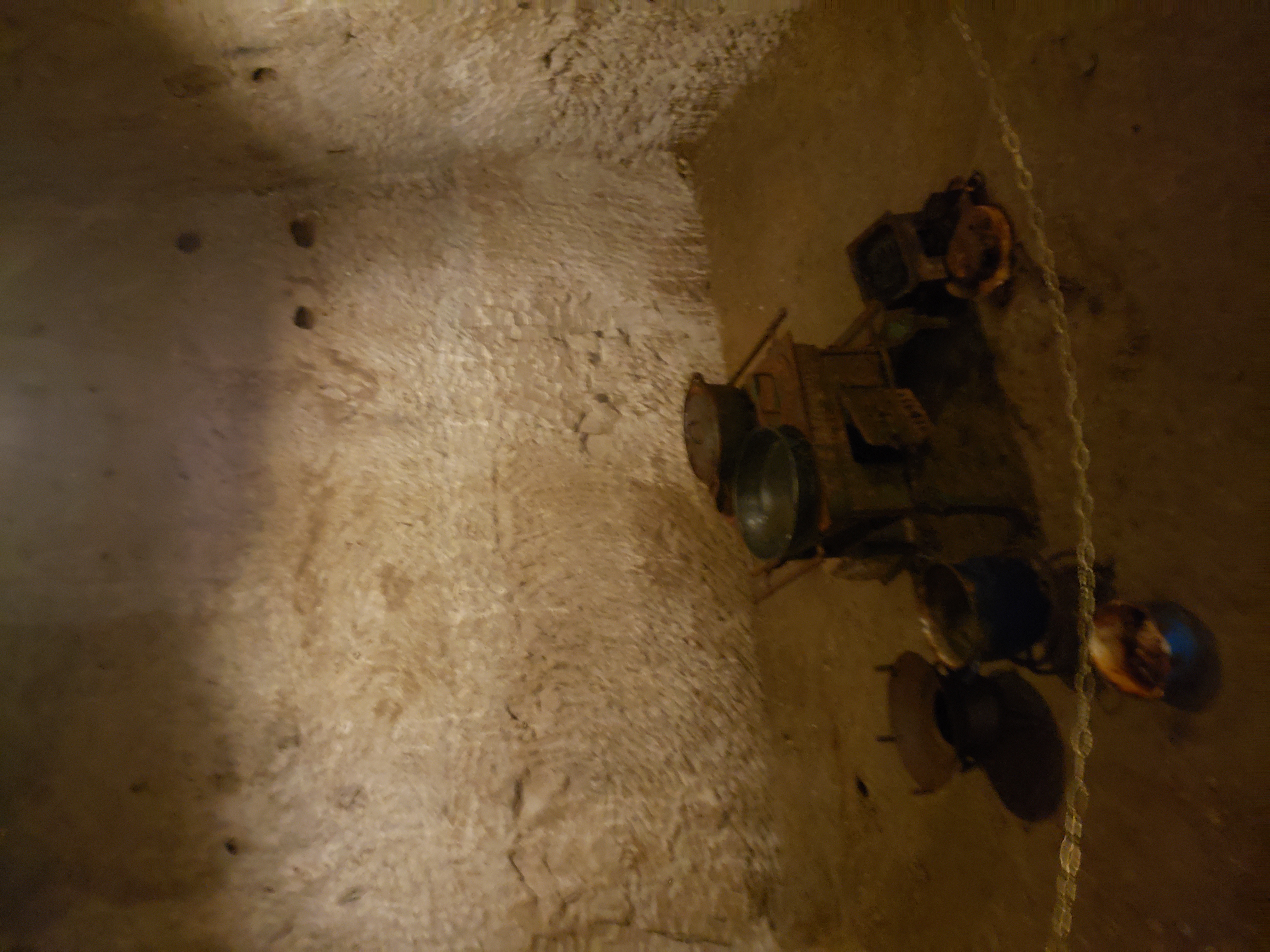
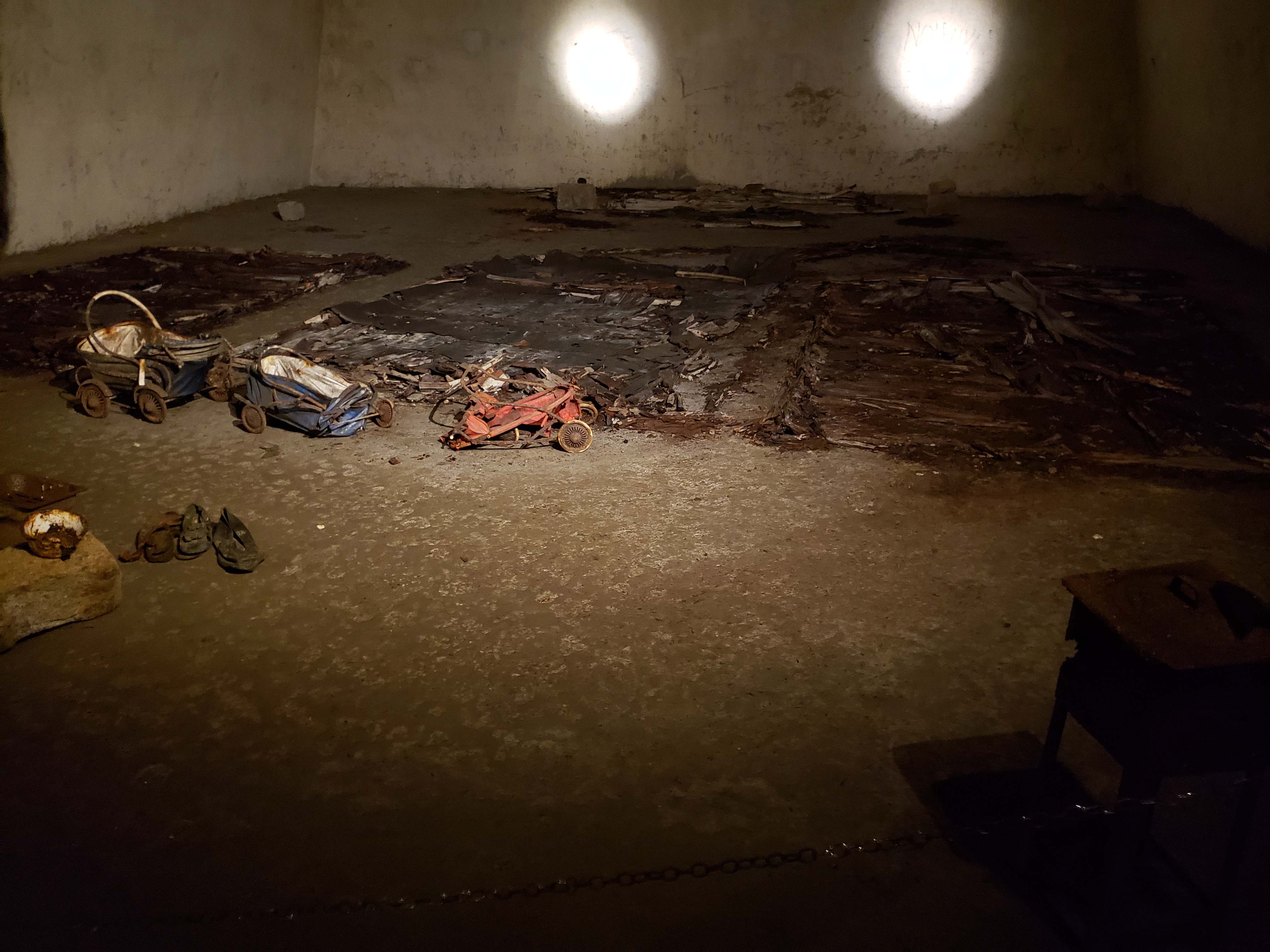
The Bourbon Tunnels
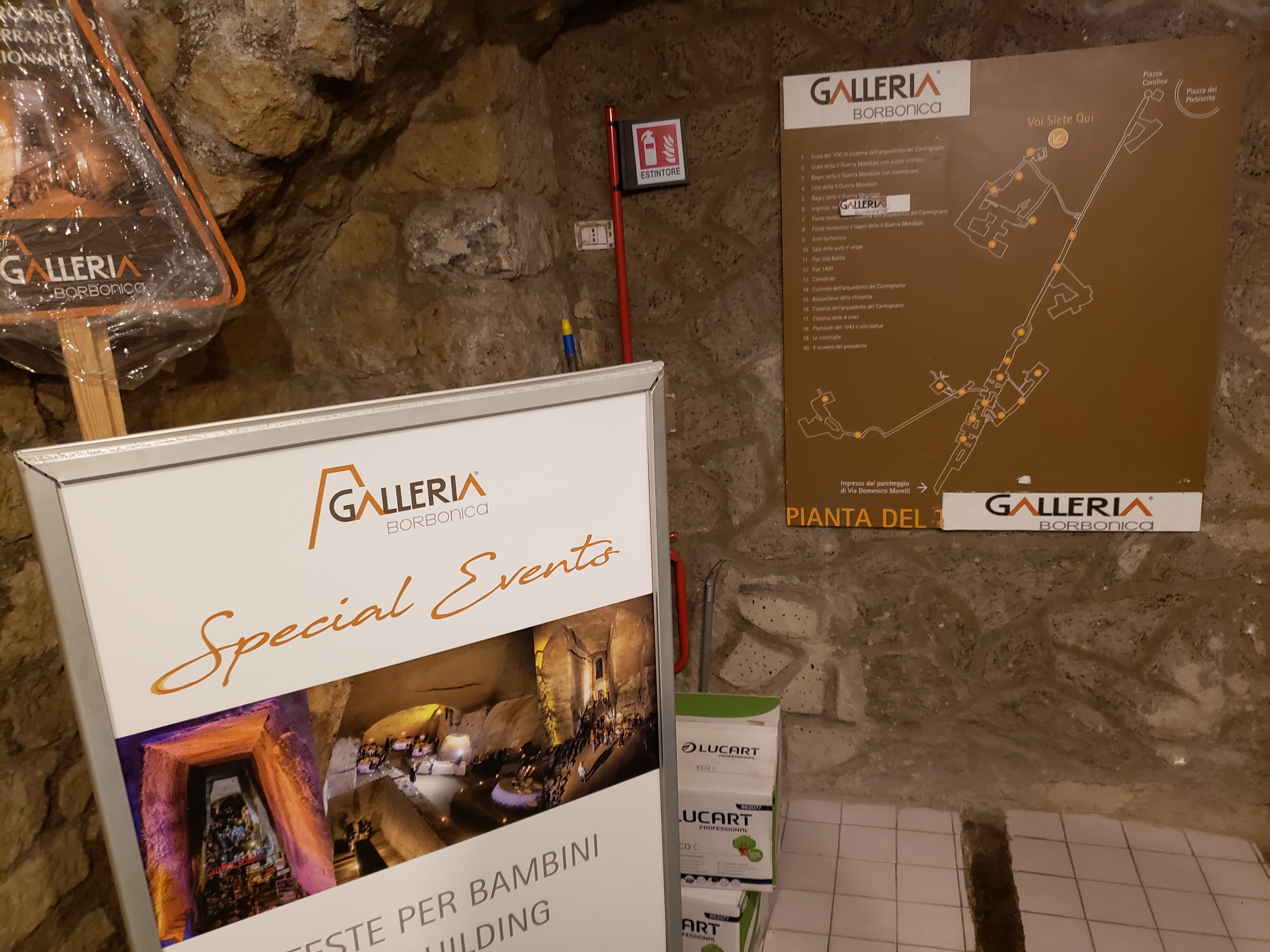
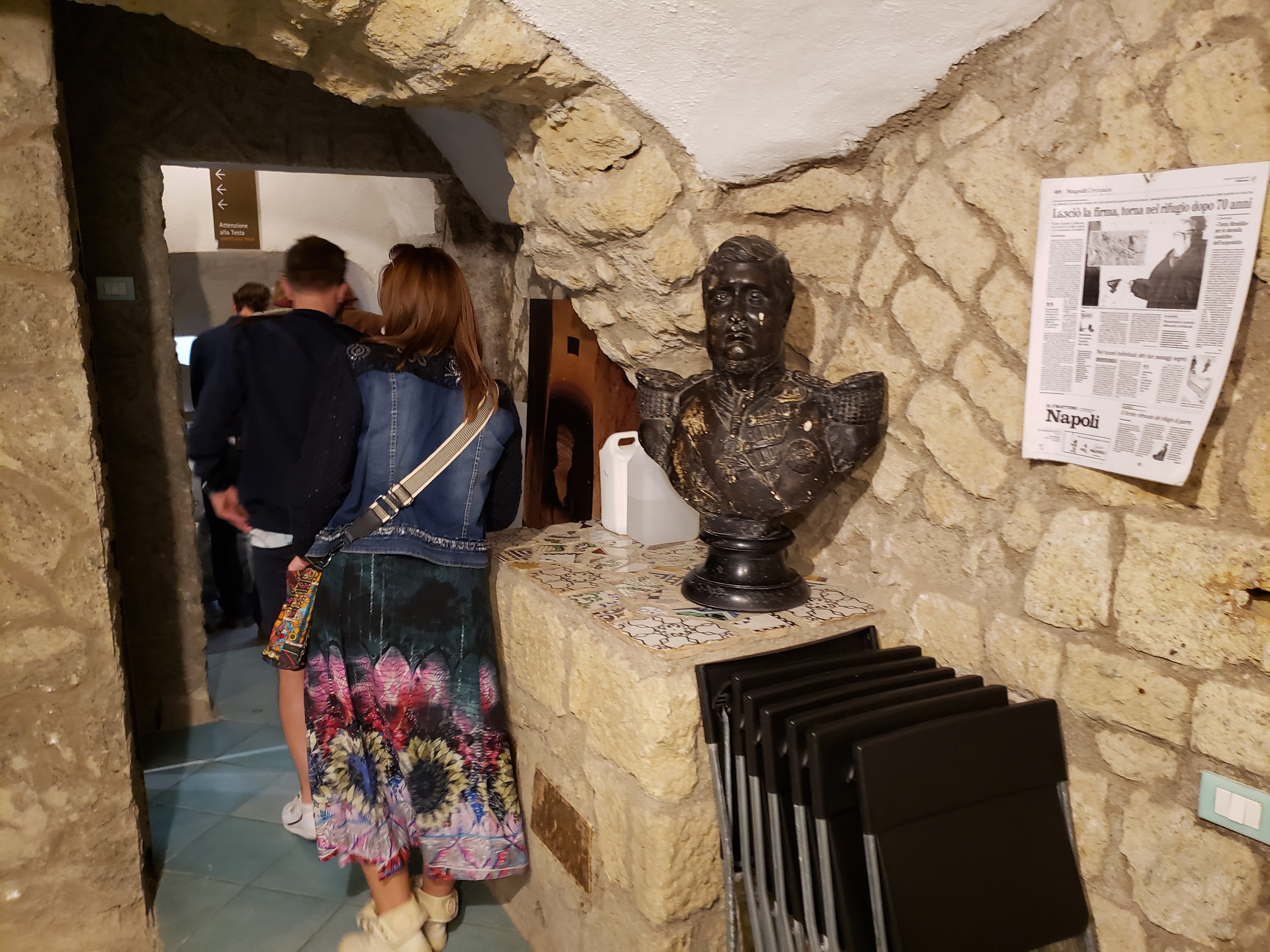
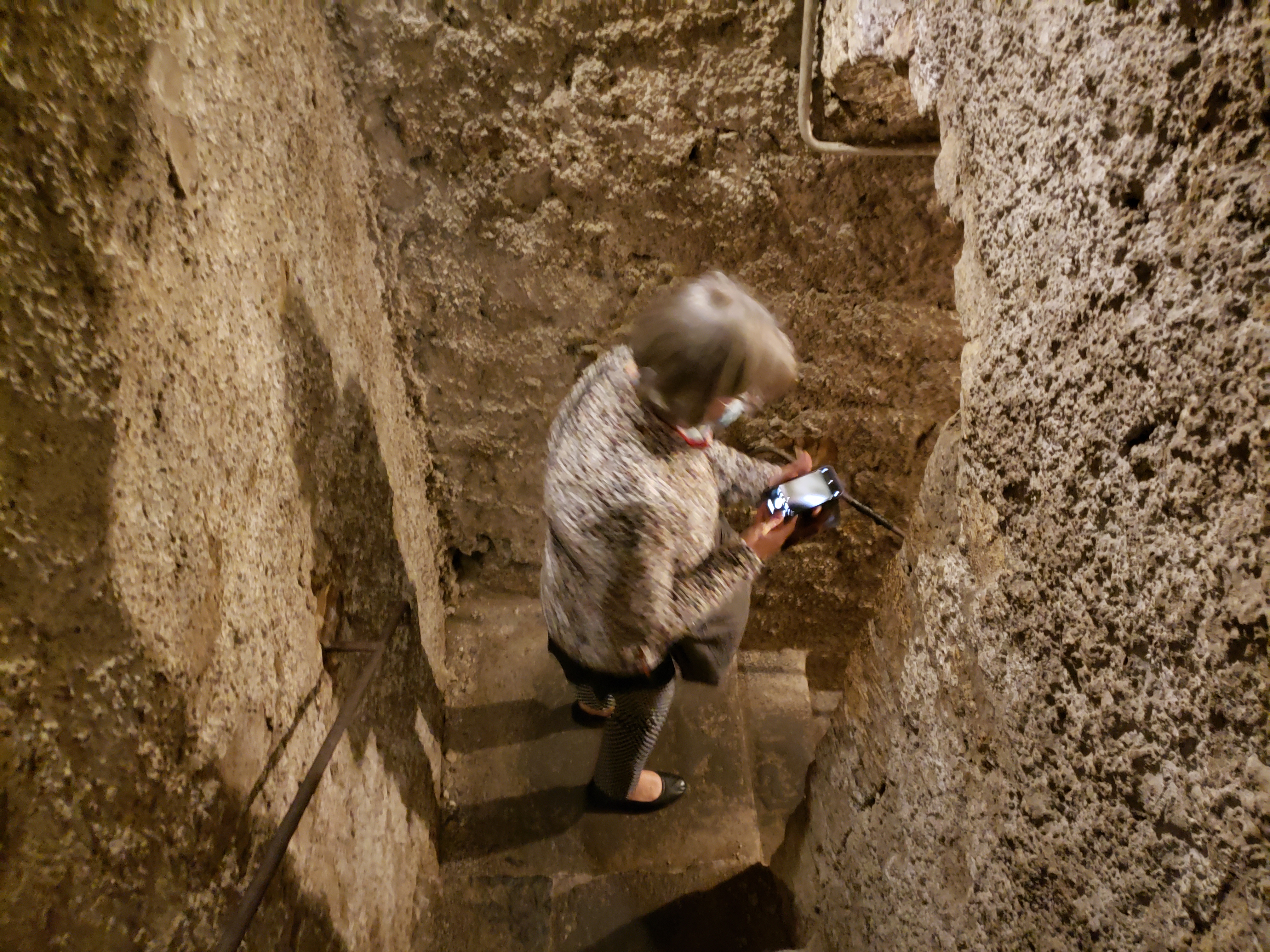
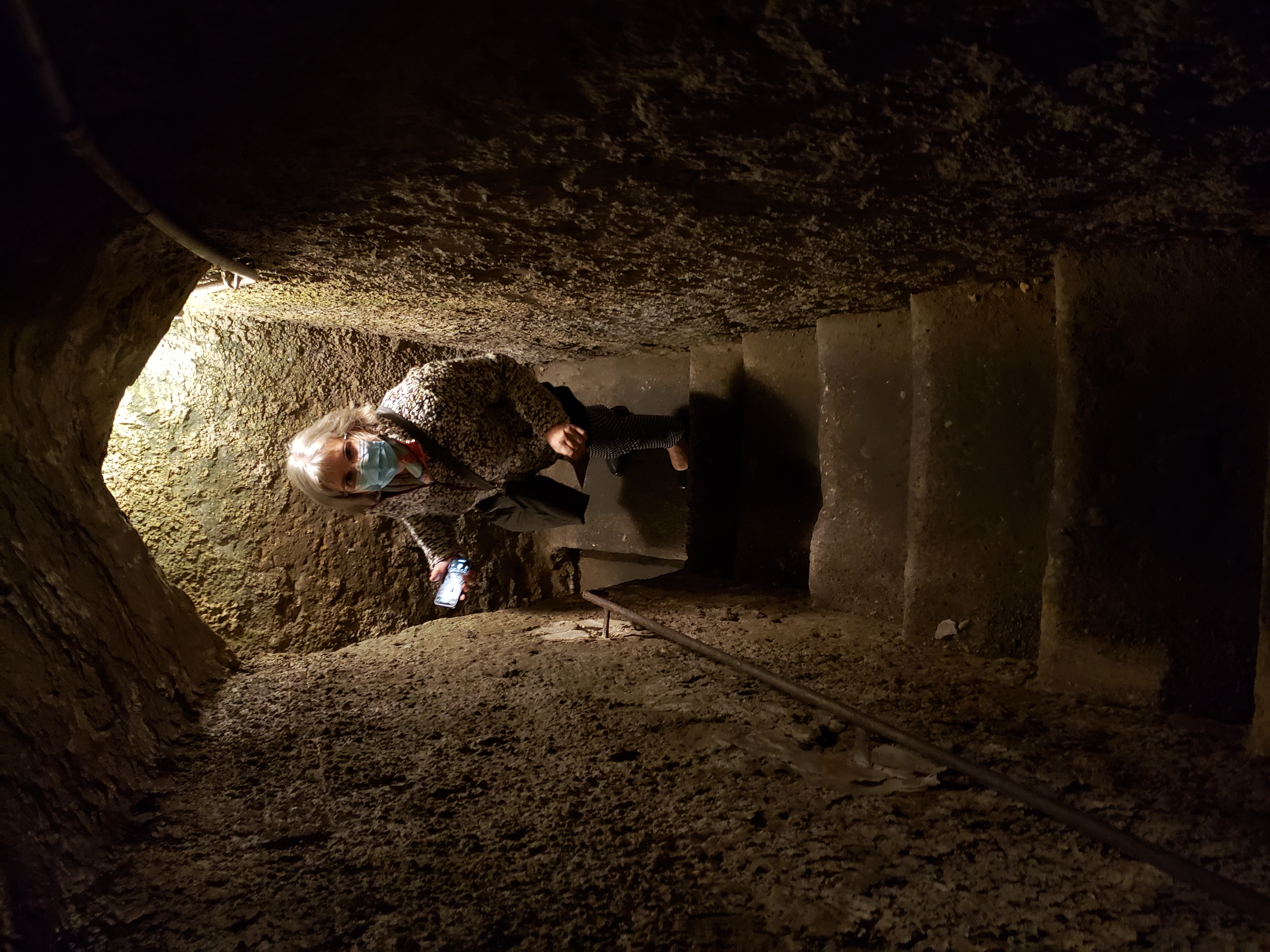
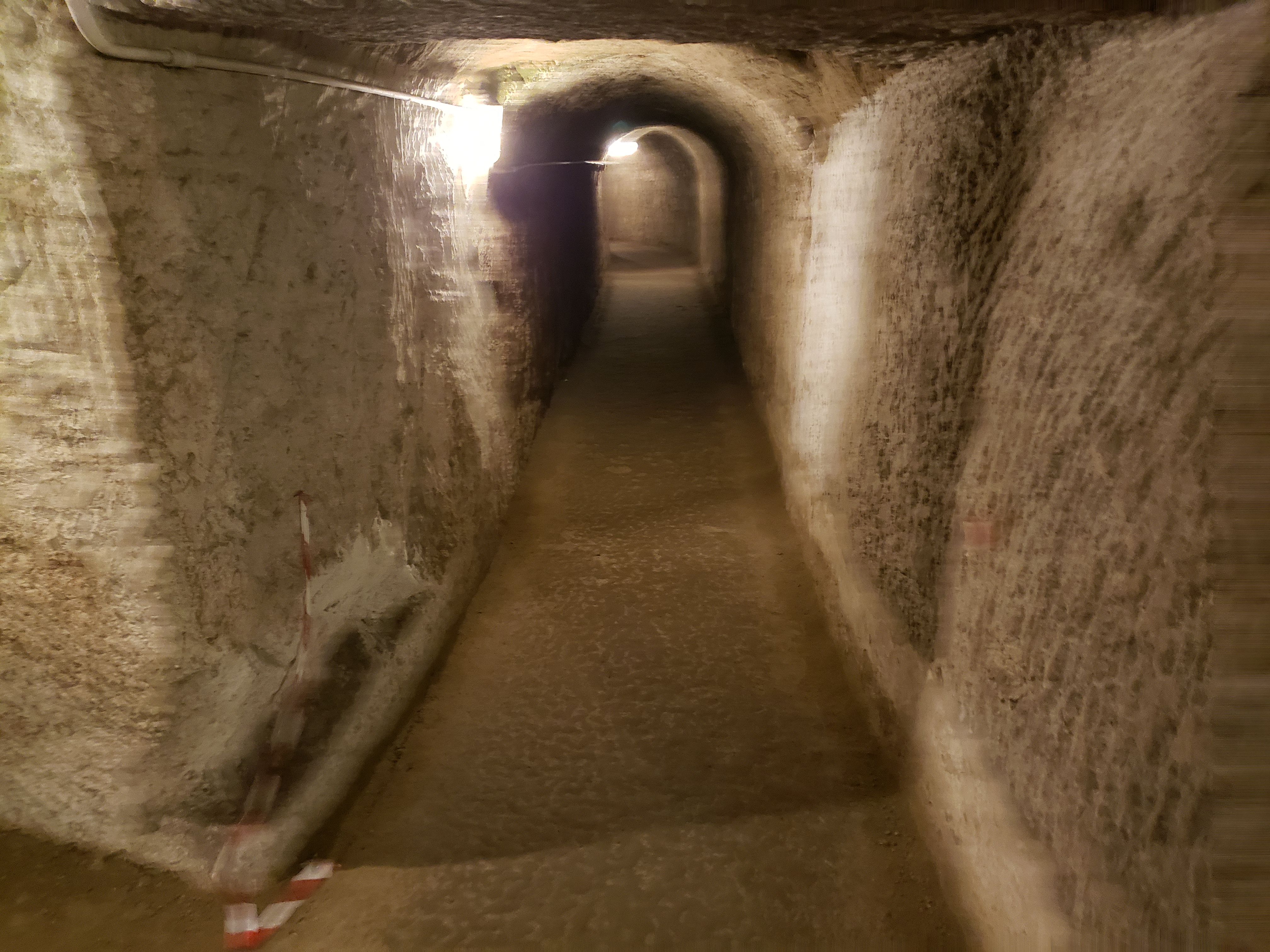
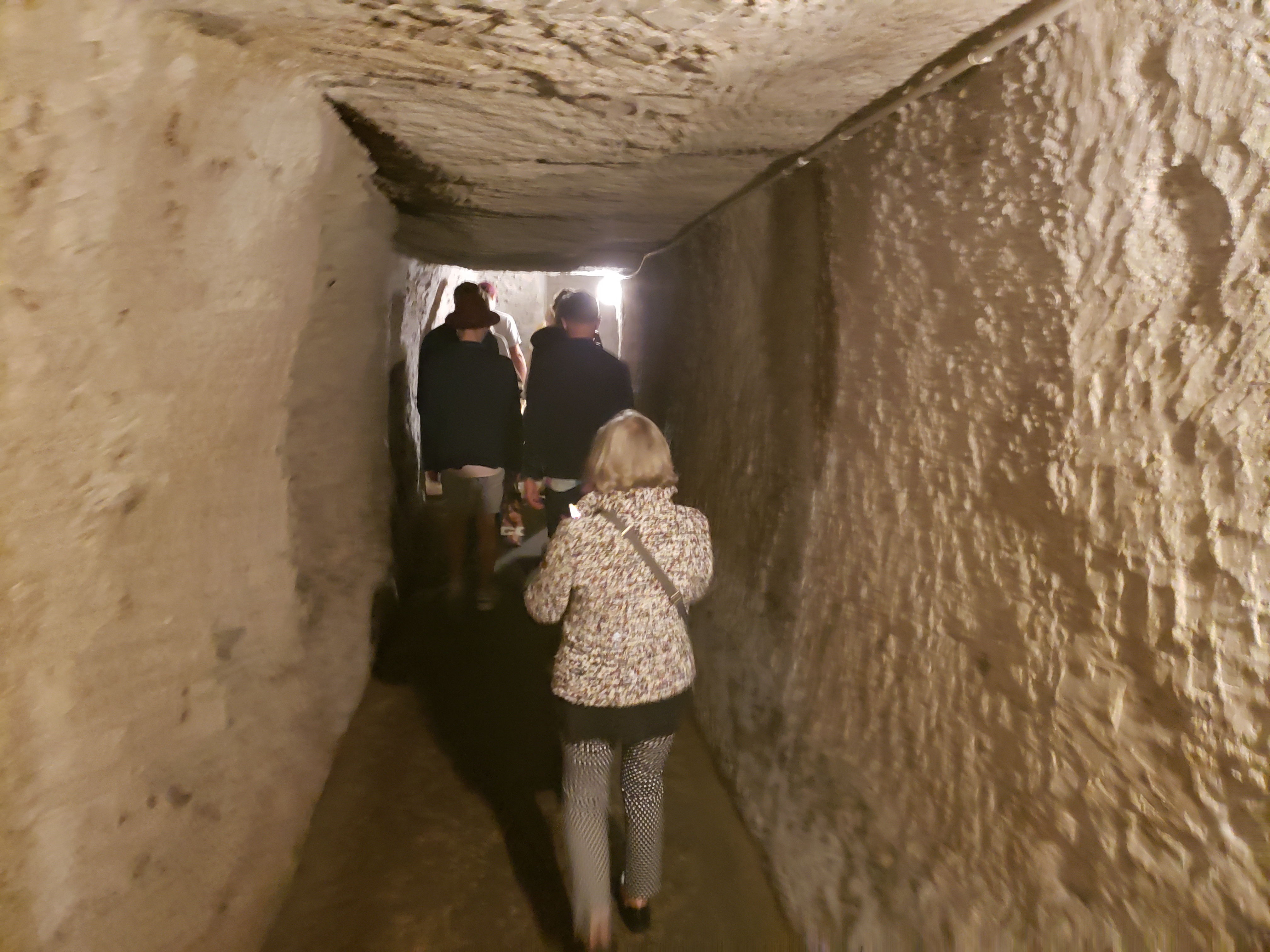
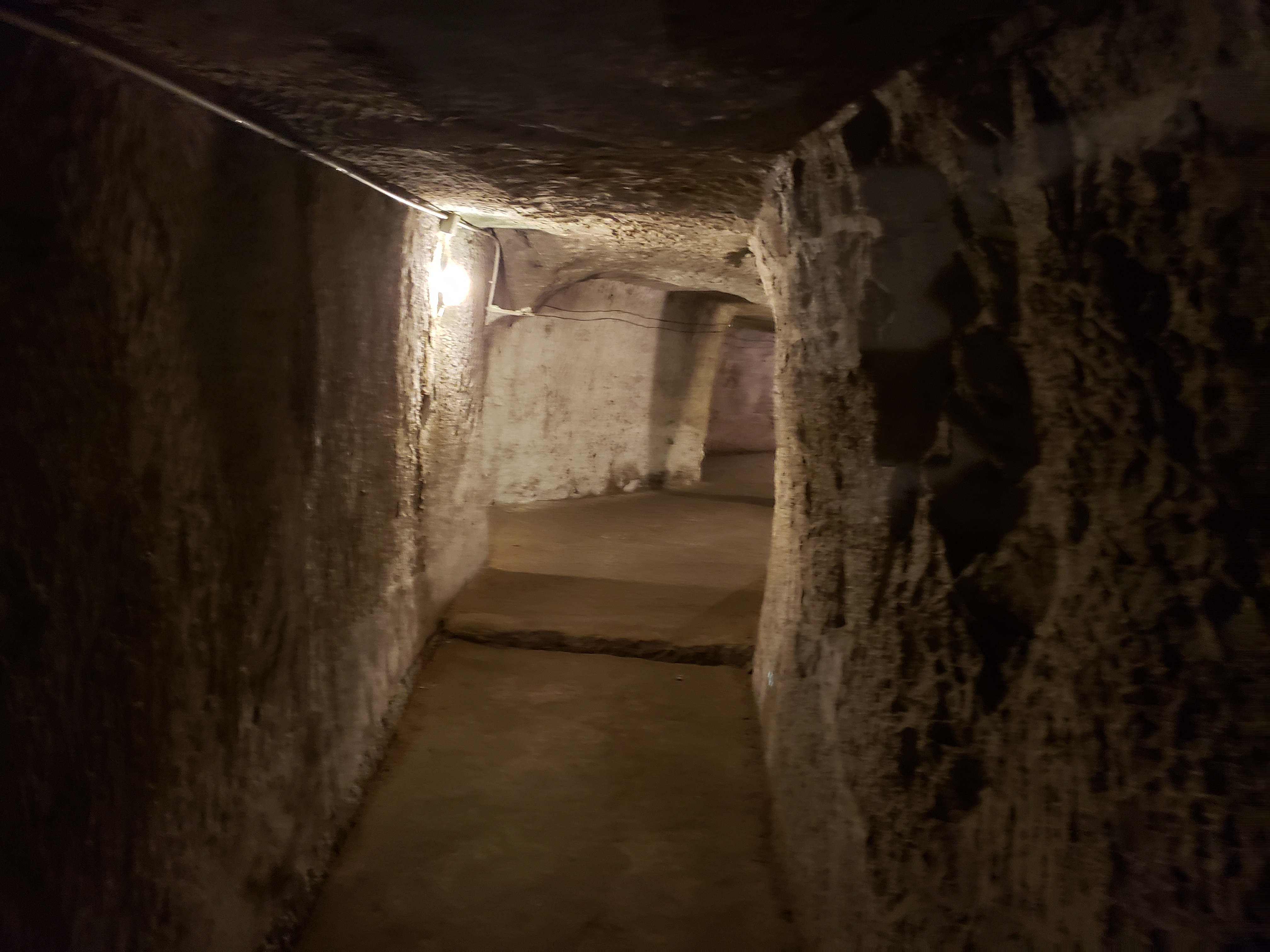
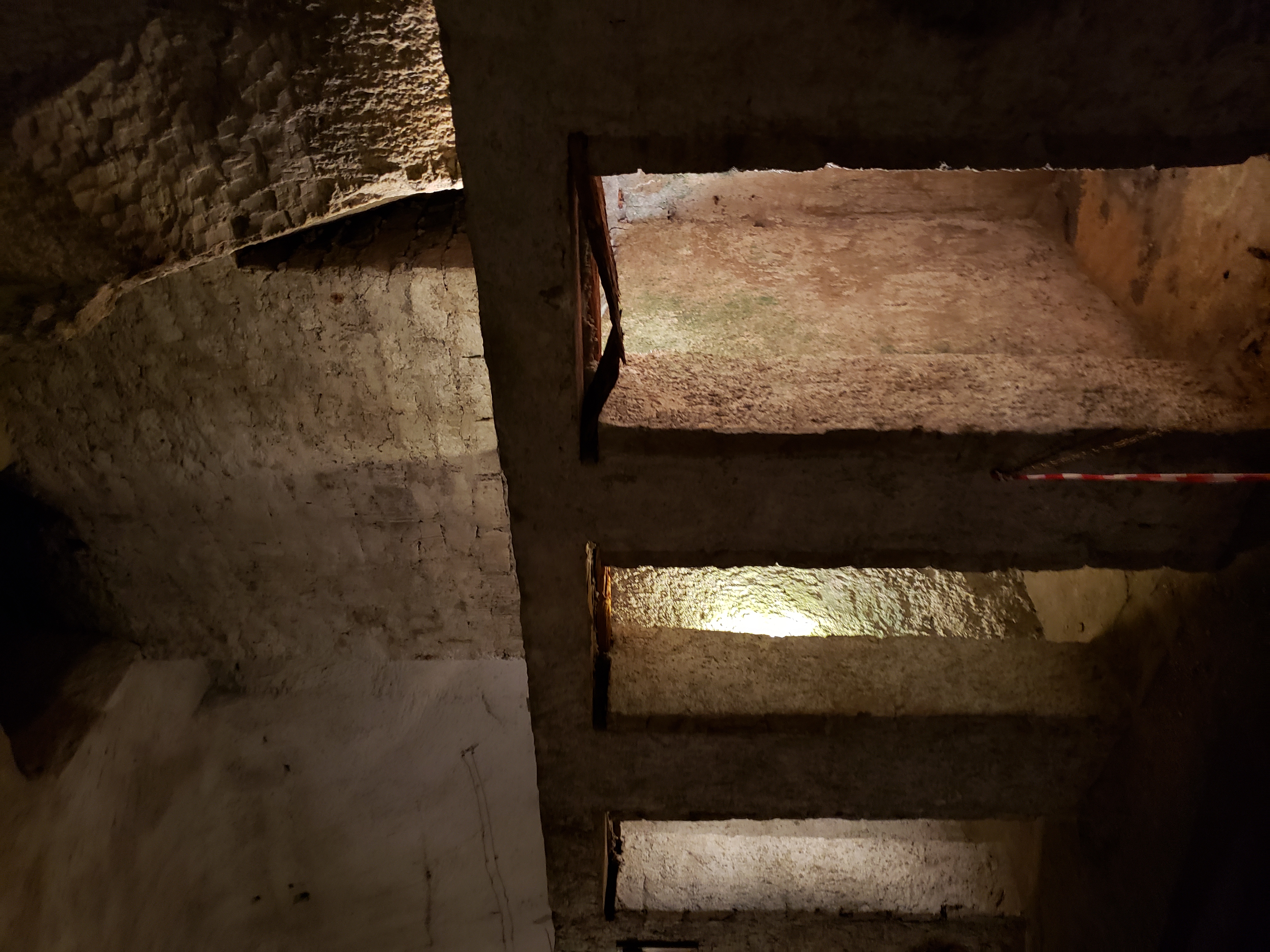
There are tunnels, aqueducts and other underground features all throughout Naples. None has probably had more contemporary use than the Bourbon Tunnels, which were converted and used during World War II as bomb shelters and storage. There are two entrances to this underground museum, for scheduling reason we had to enter Vico del Grottone, the same street that our restaurant below for lunch was on, so very convenient.
Tickets for Two – Bourbon Tunnels
The following of our tour is provided uncaptioned, there is more information in the above internet link.
Patti descending
Patti
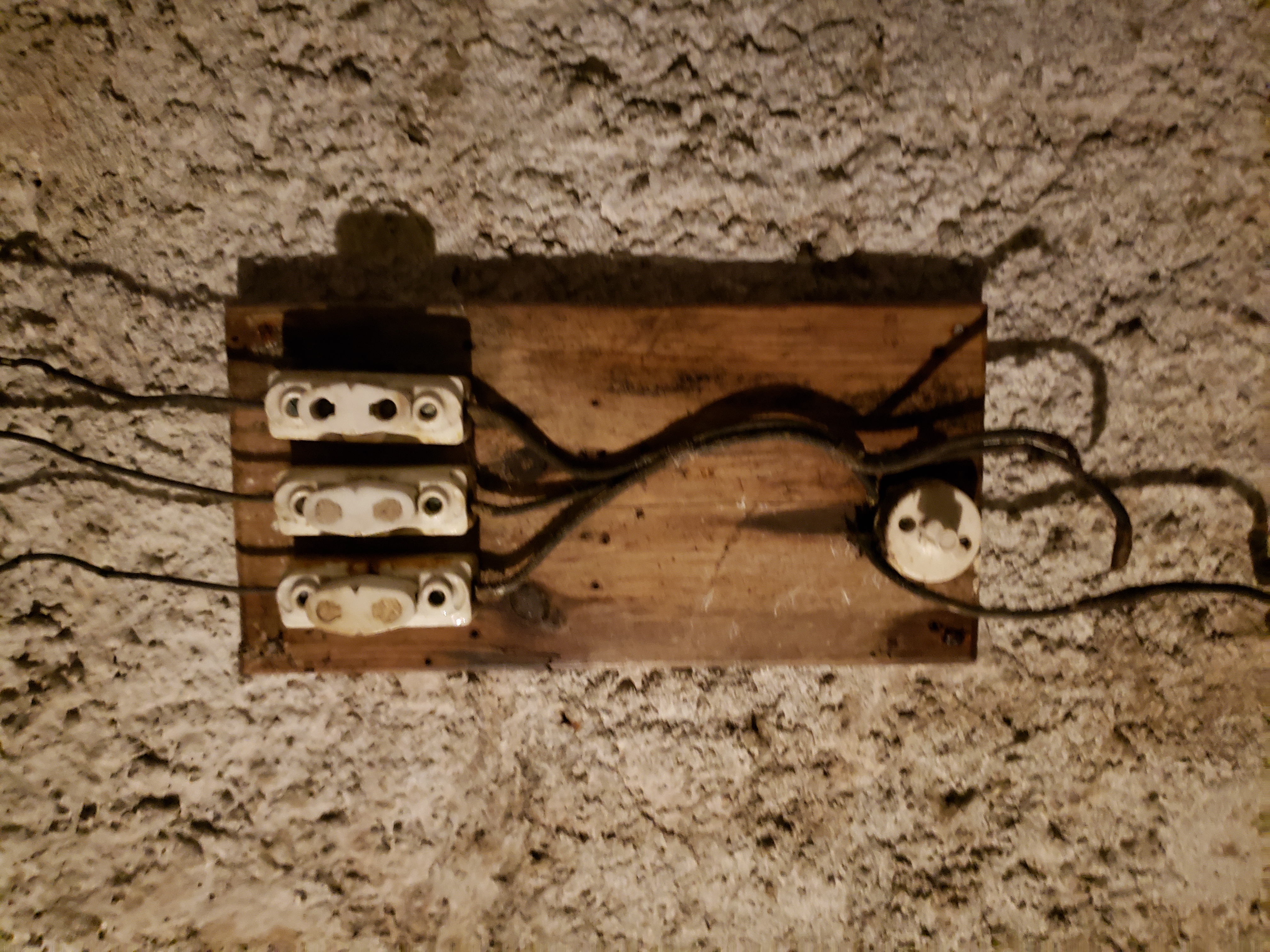
WW II electricity installlation
Restaurants
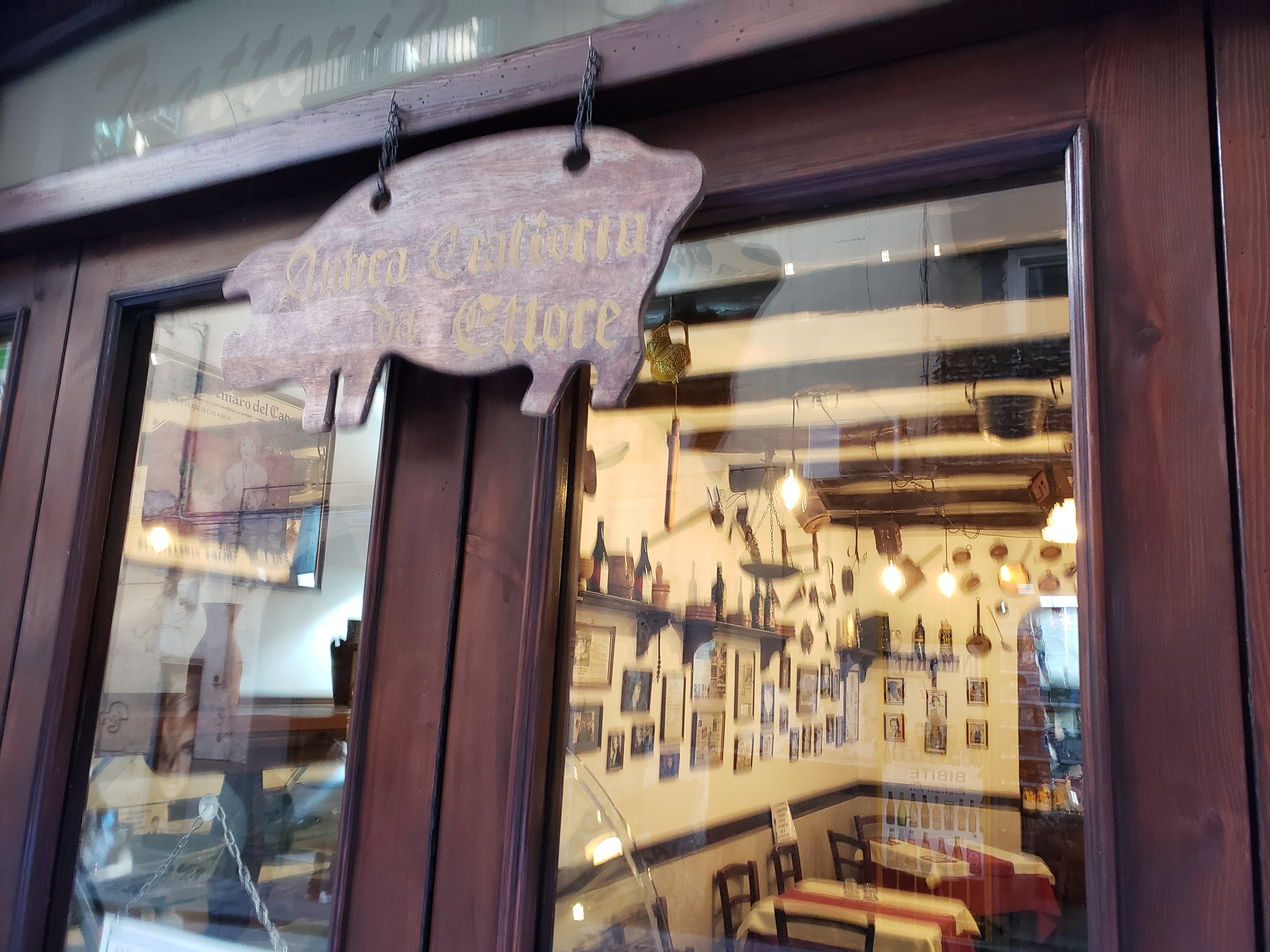
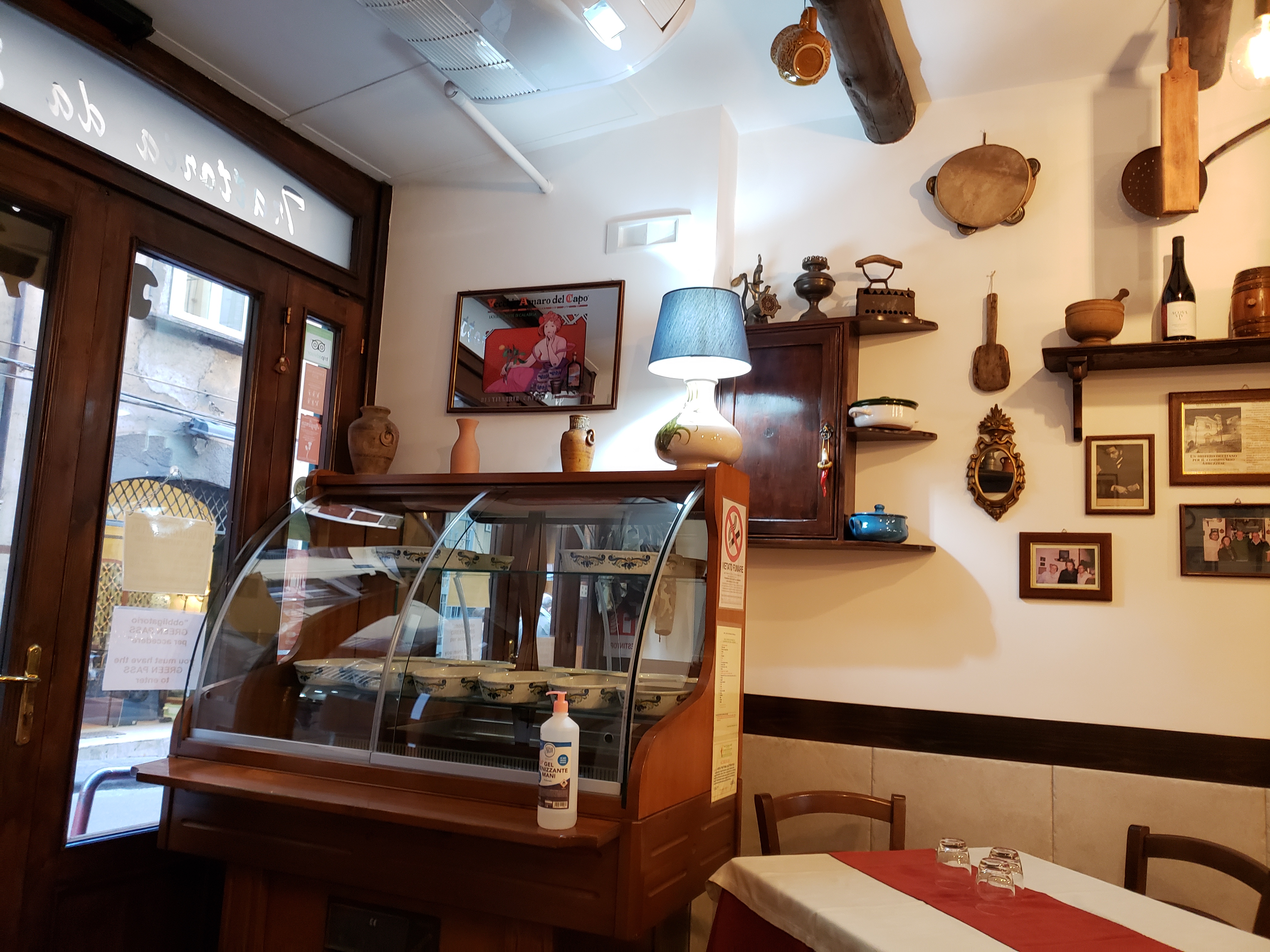
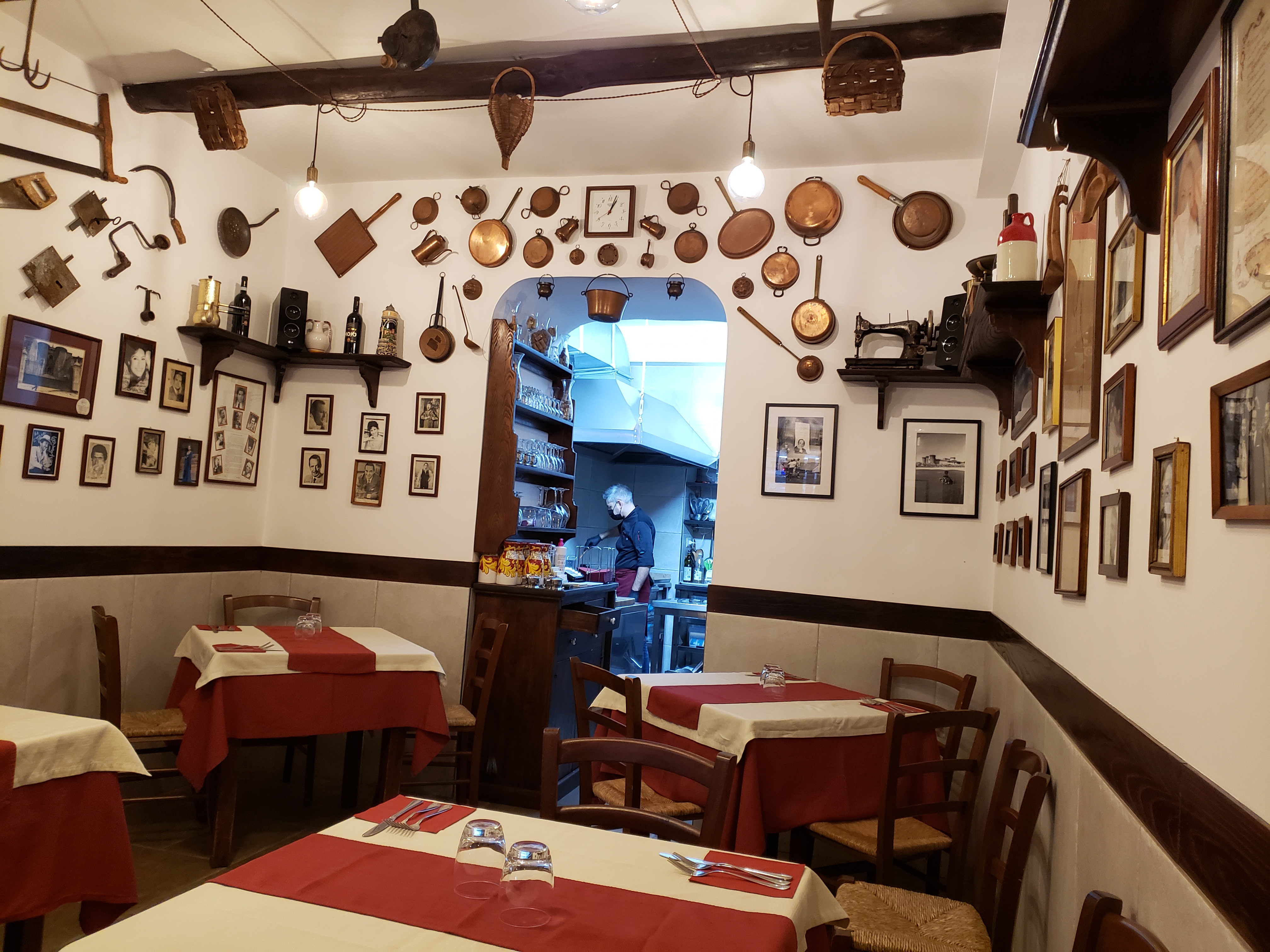
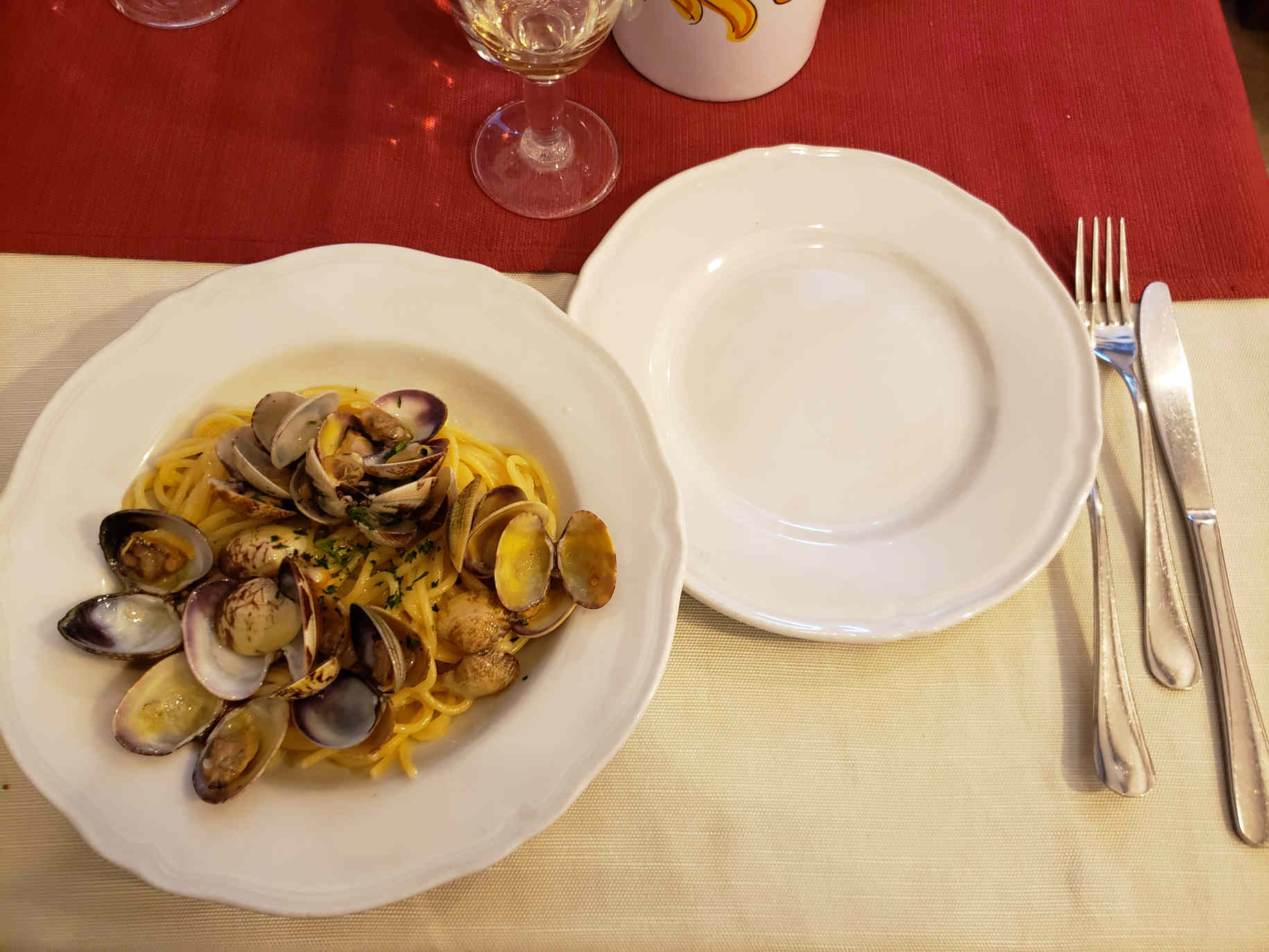
Trattoria da Ettore
This trattoria, as many others outside of the touristy areas, is an excellent little mom and pop restaurant. It has only six tables and when they are full for lunch, you are turned away (the same is true for dinner and probably for most restaurants in Italy, when they are full, they are full, so get there early). It is located on Vico del Grottone and it is figuratively speaking a hole in the wall.
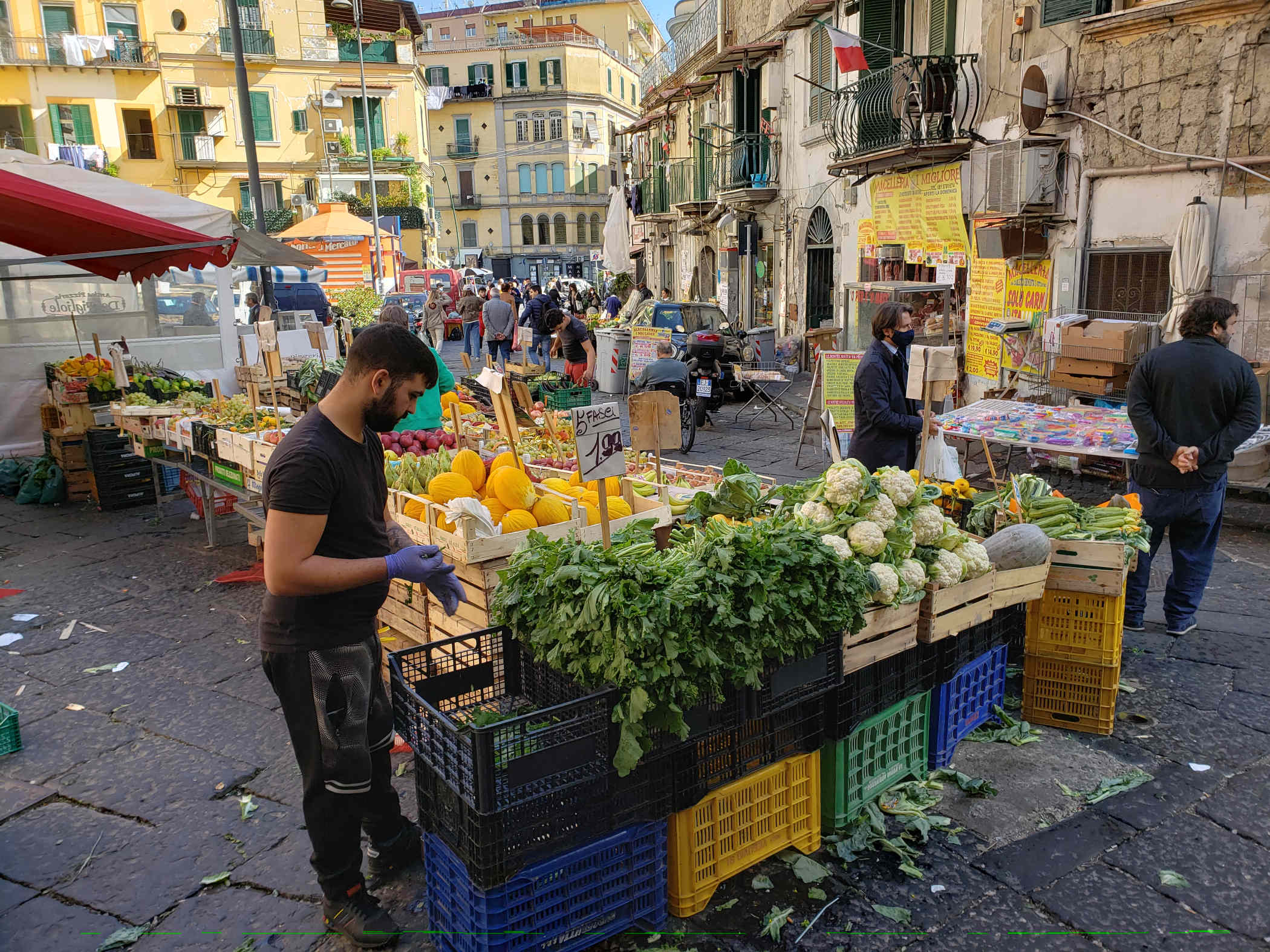
After a few days traveling through the city we are beginning to get a better feel for this vibrant town. Divided into quarters or sections, but not along any obvious lines, there is reason to question where exactly you are at any given time. But one thing is for sure, you will find some uniqueness between them all. This is why its so important on spending some time in a large city such as Naples, which has over two million residents. Otherwise, there is no real way to get the actual vibe or quidditas of a place. I for one think it’s a great city and the Neapolitans are fantastic people.
A man working at a market stand – Vomero, Naples
After a few days traveling through the city we are beginning to get a better feel for this vibrant town. Divided into quarters or sections, but not along any obvious lines, there is reason to question at any given time where exactly your are, but one thing is for sure you will find some uniqueness. This is why its so important on spending some time in a large city such as Naples, which has over two million residents. Otherwise, there is no real way to get the actual vibe or quidditas of a place.
The real hard core vibe of Naples is the juxtaposition of the Centro Storico, or the historic center – with its throngs of tourists, against the backdrop and grittiness of The Spanish Quarter, the pandemonium of San Frenando, Porto and Mercato; and the quiet calm of Vomero and Chiaia. If you are looking for a city with stark contrasts, Naples is the city for you.
Naples – The Spanish Quarter
The Spanish Quarter
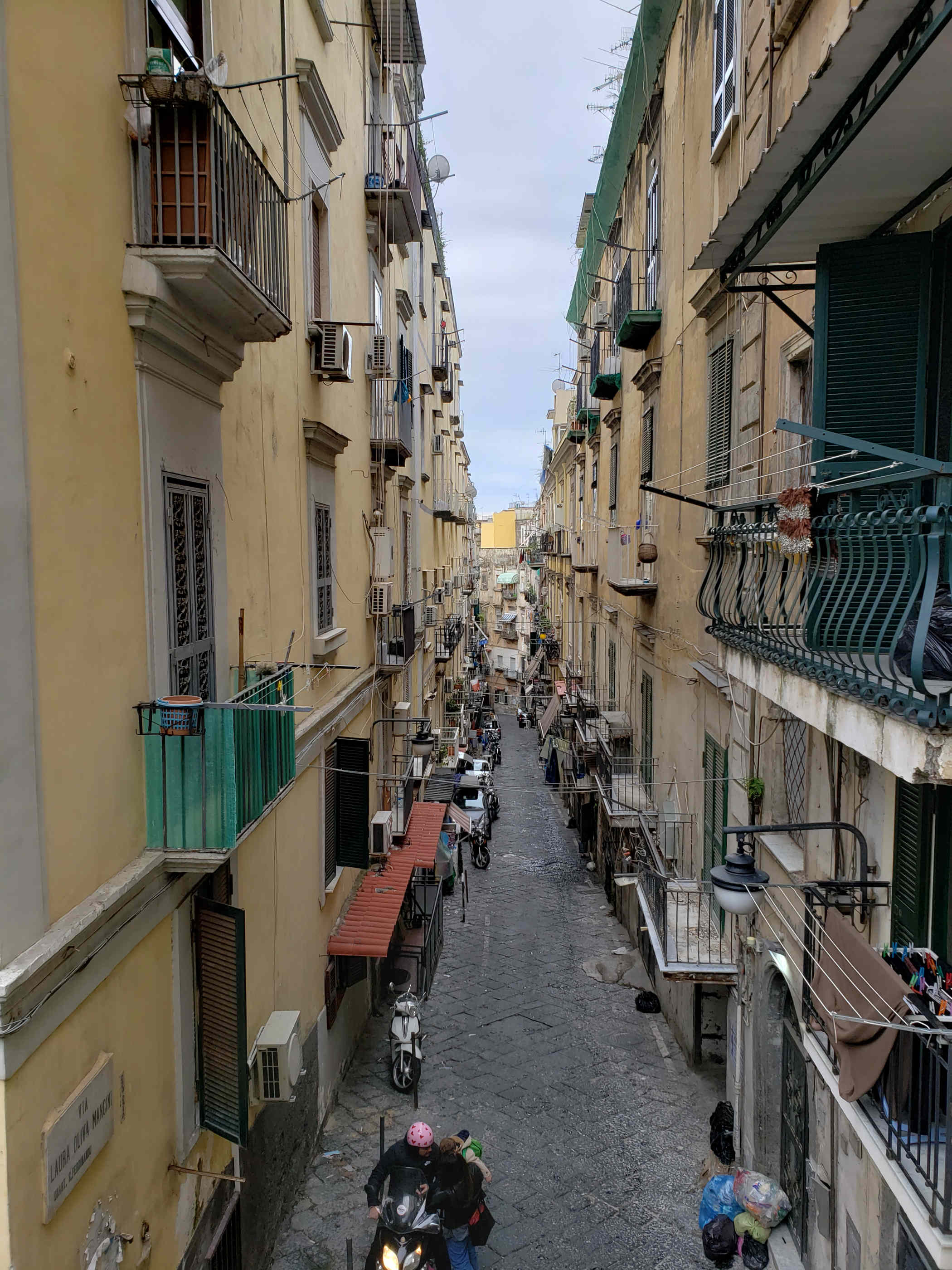
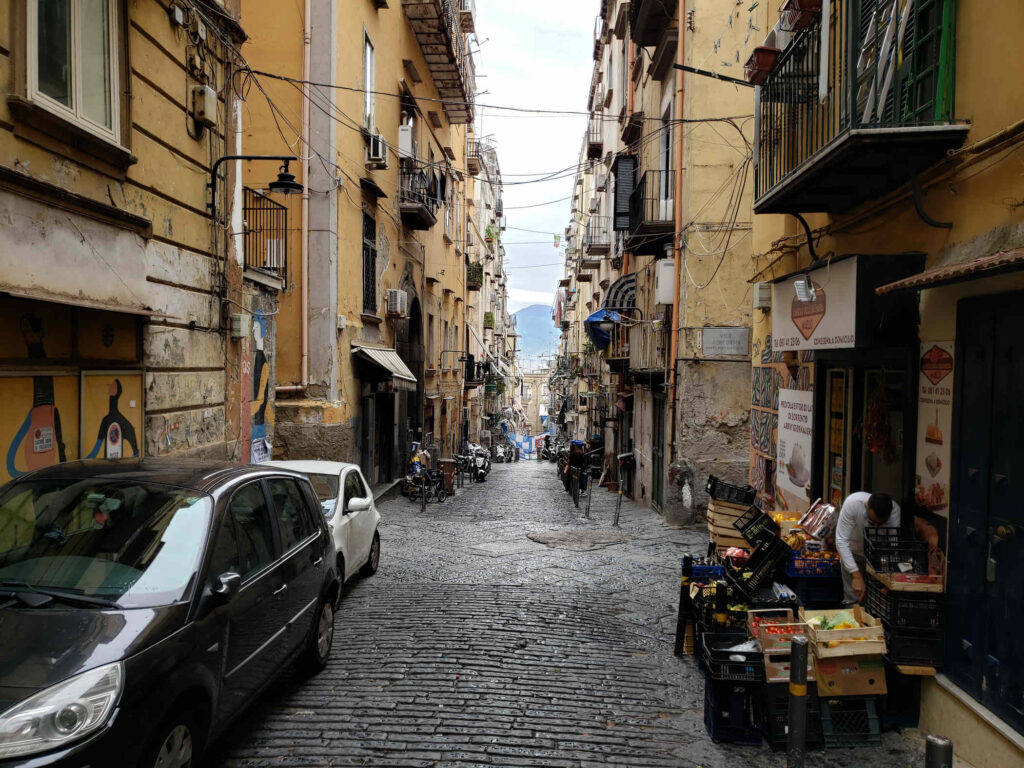
The Spanish Quarter obtained its name from the garrison of Spanish that were housed here and given the job to keep order throughout the city. It is entirely made up of narrow streets, passages, stairs and back alleyways that knit this complex community together. Directly alongside the Historic Center on one side and the hill of Vomero, it is quite self contained and apparently, from the looks of things, not very open to change, since from the looks of things nothing apparently has since they arrived.
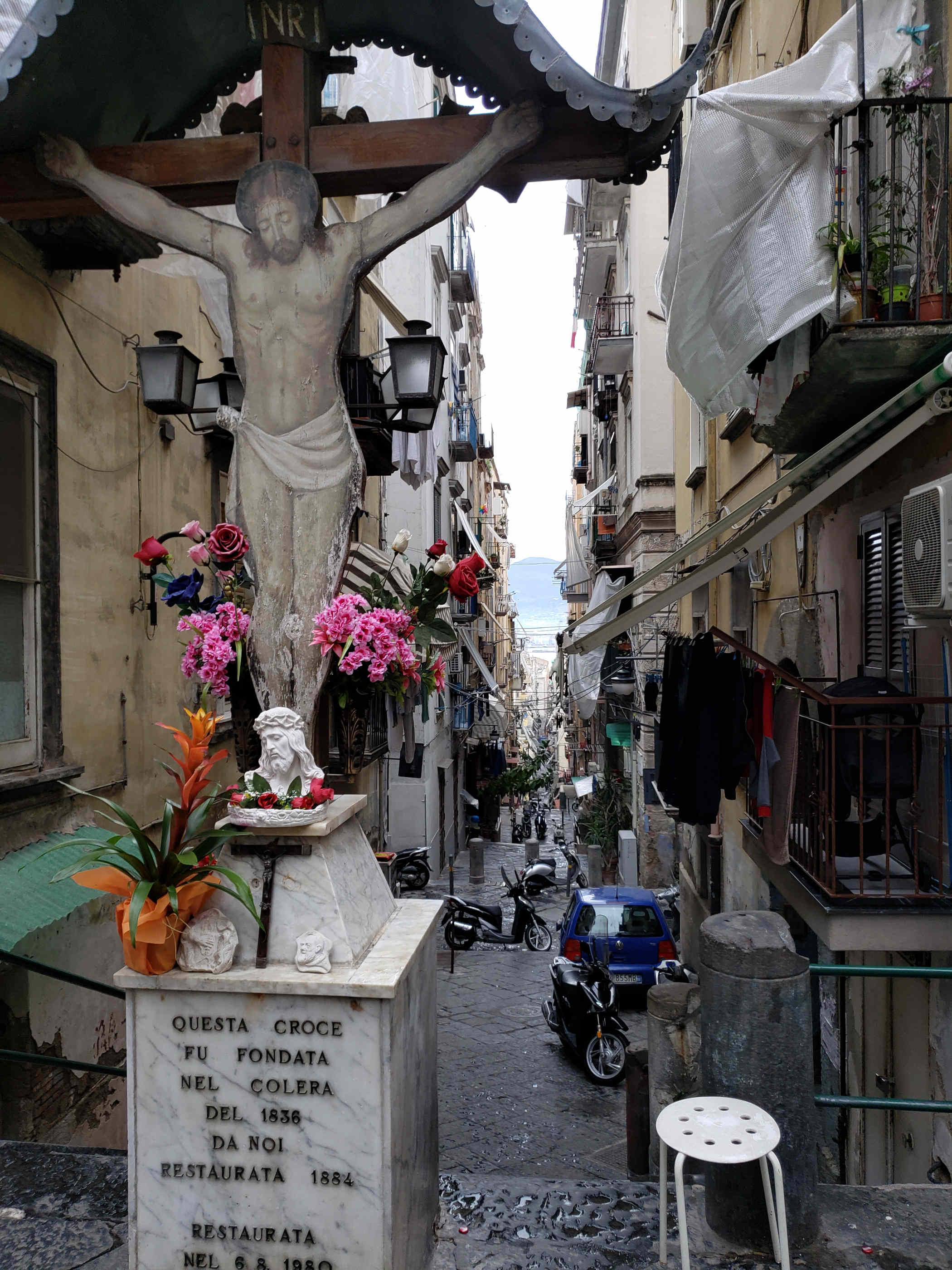
Naples – Cruxifix and Cholera Memorial – The Spanish Quarter
The Spanish Quarter – Naples
The Spanish Quarter – Naples
With dirt and filth comes disease. As the photograph attests to a dramatic outbreak of cholera that swept through this part of the city in the 1800s, leaving behind devastation and death. Even today it is still actively adorned with flowers and other bits of memorabilia for protection, partly due to faith and partly due to superstition. Though all educated people know, it is easily combated with cleanliness and hygiene.
Centro Storico
The old part of the city has the most historical artifacts, churches and other points of interest. It is infested with tourists though, so planning is key. It is best to keep an eye on the number of cruise ships at dock (at any time there can be up to five very large ships docked) and then take your chances that you will have a minimal crowd.
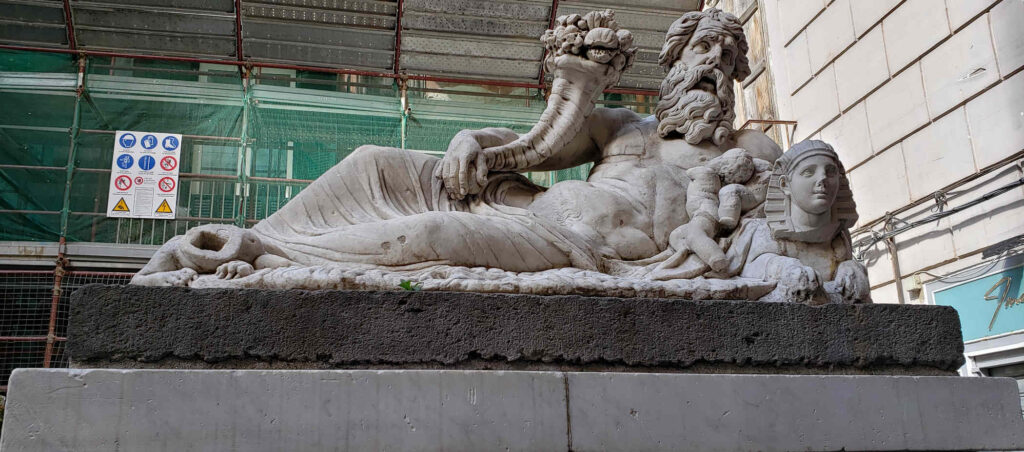
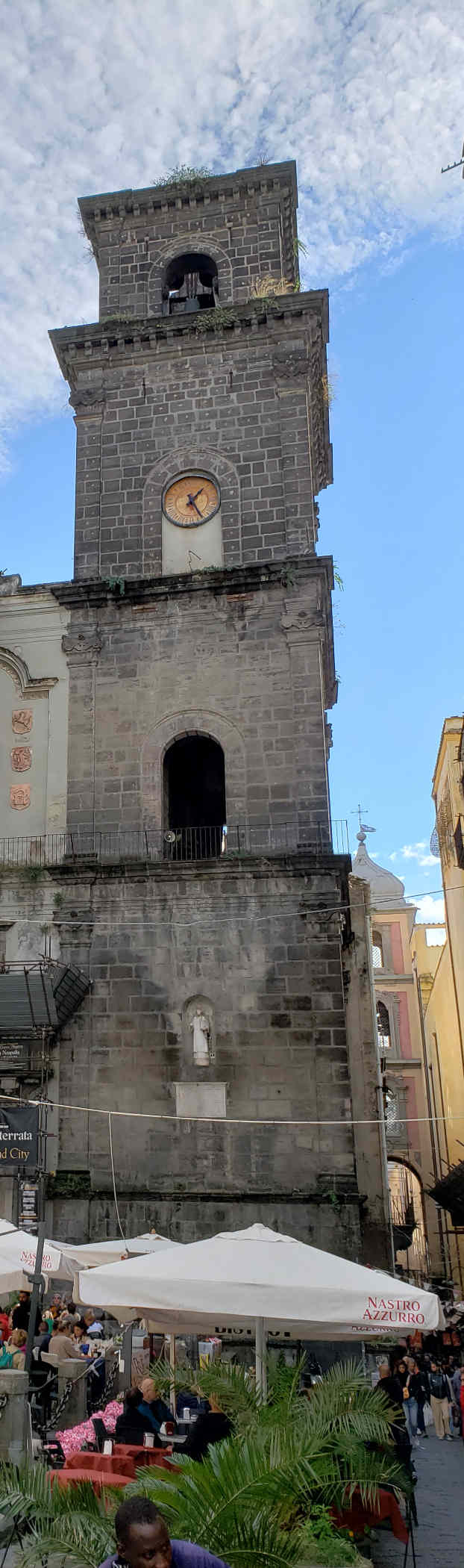
Naples – Statue del Dio Nilo – San Lorenzo
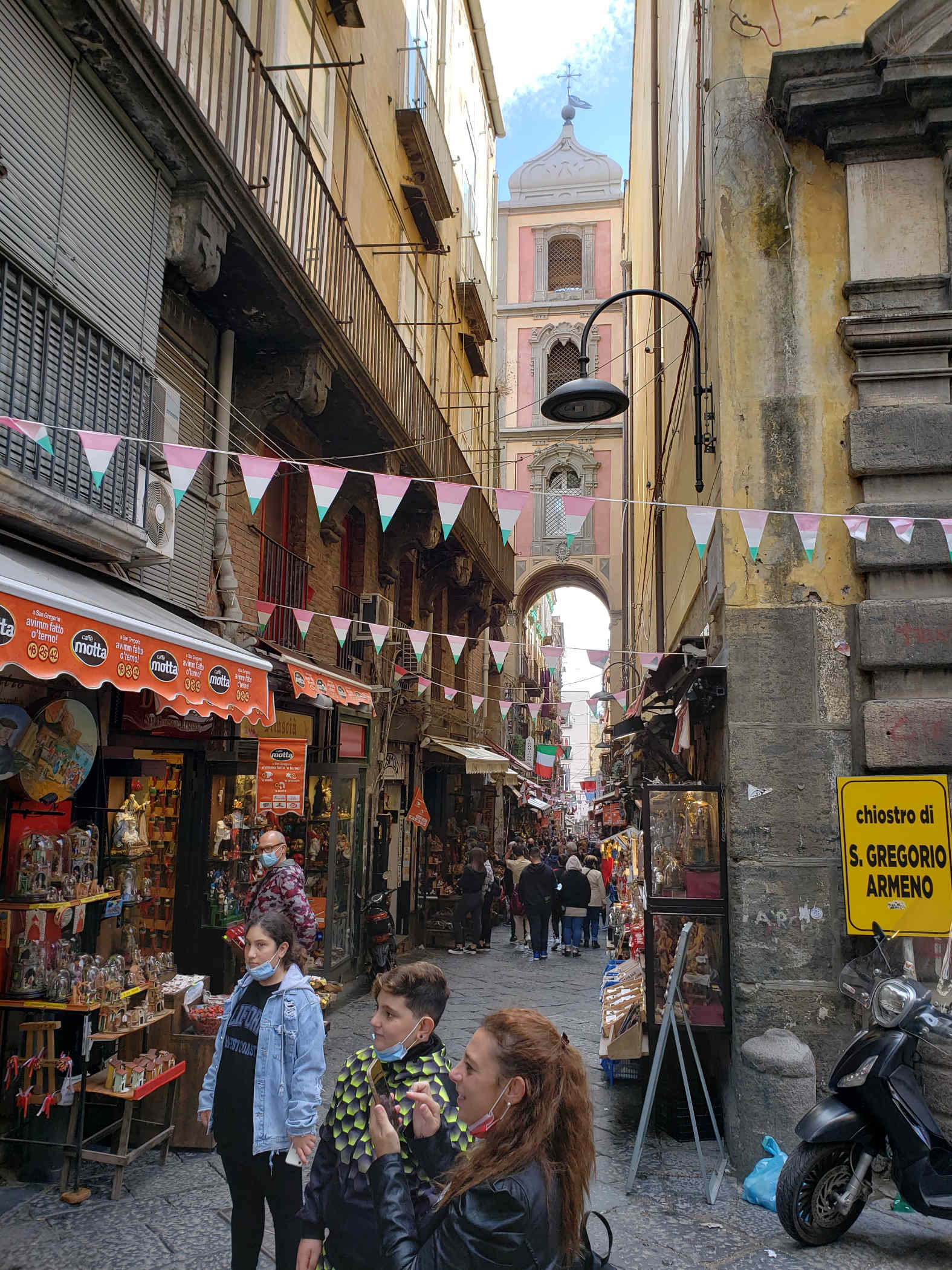
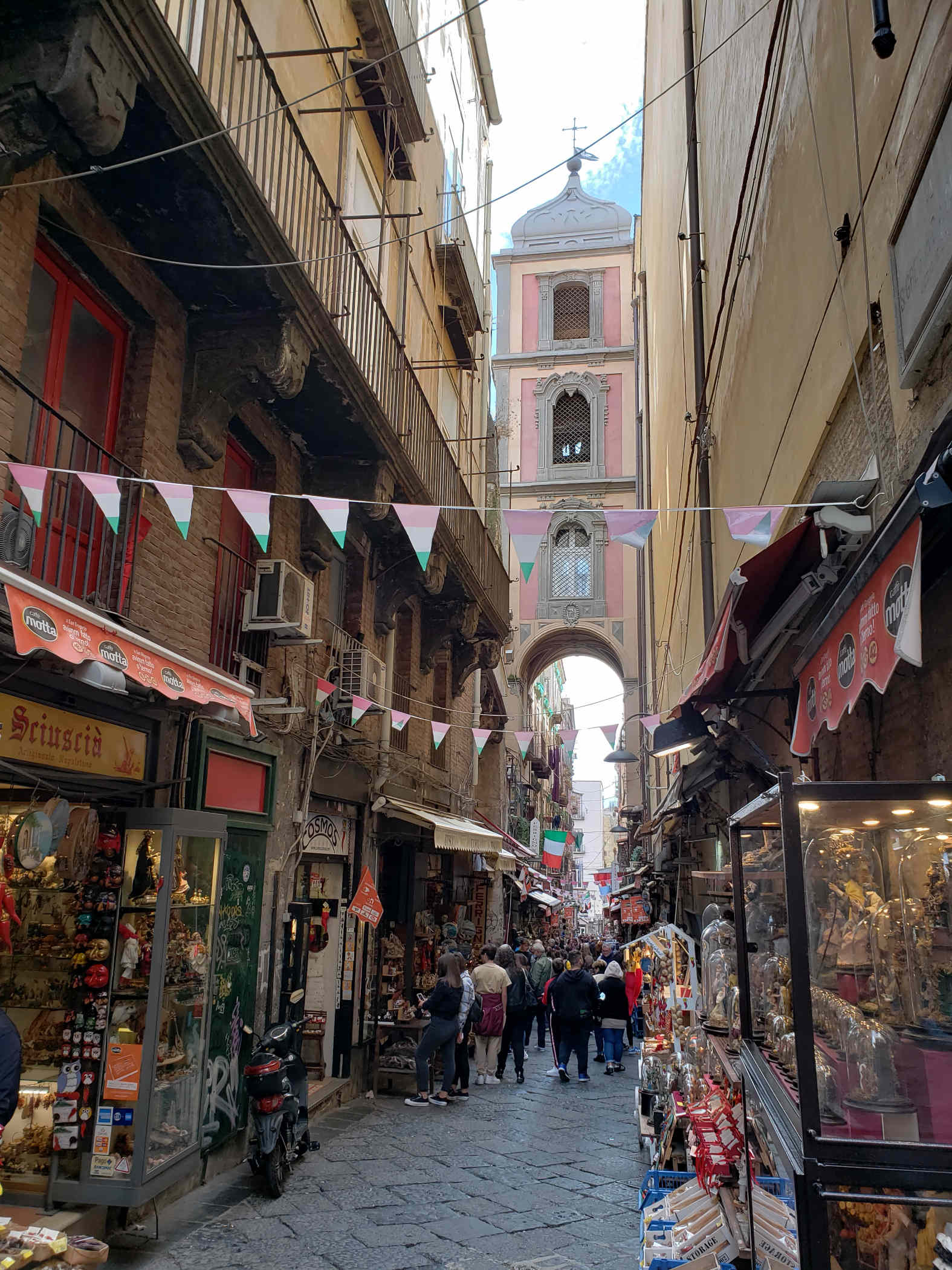
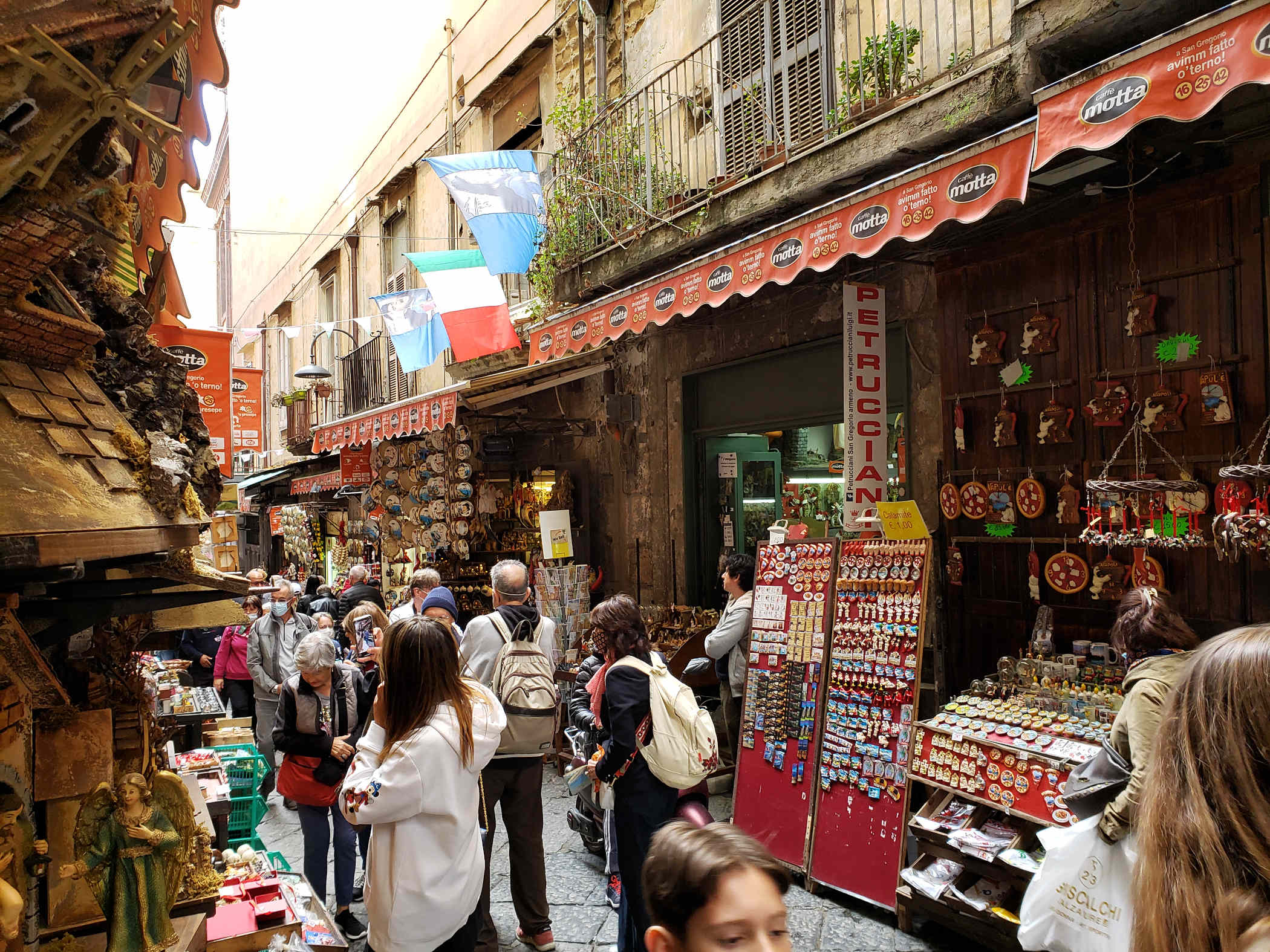
As can be imagined there are a myriad of shops, cafes and restaurants in this area, which is comprised of the San Lorenzo Quarter. It is world famous for its Christmas Alley of Armeno, which is officially known as via San Gregorio Armeno.
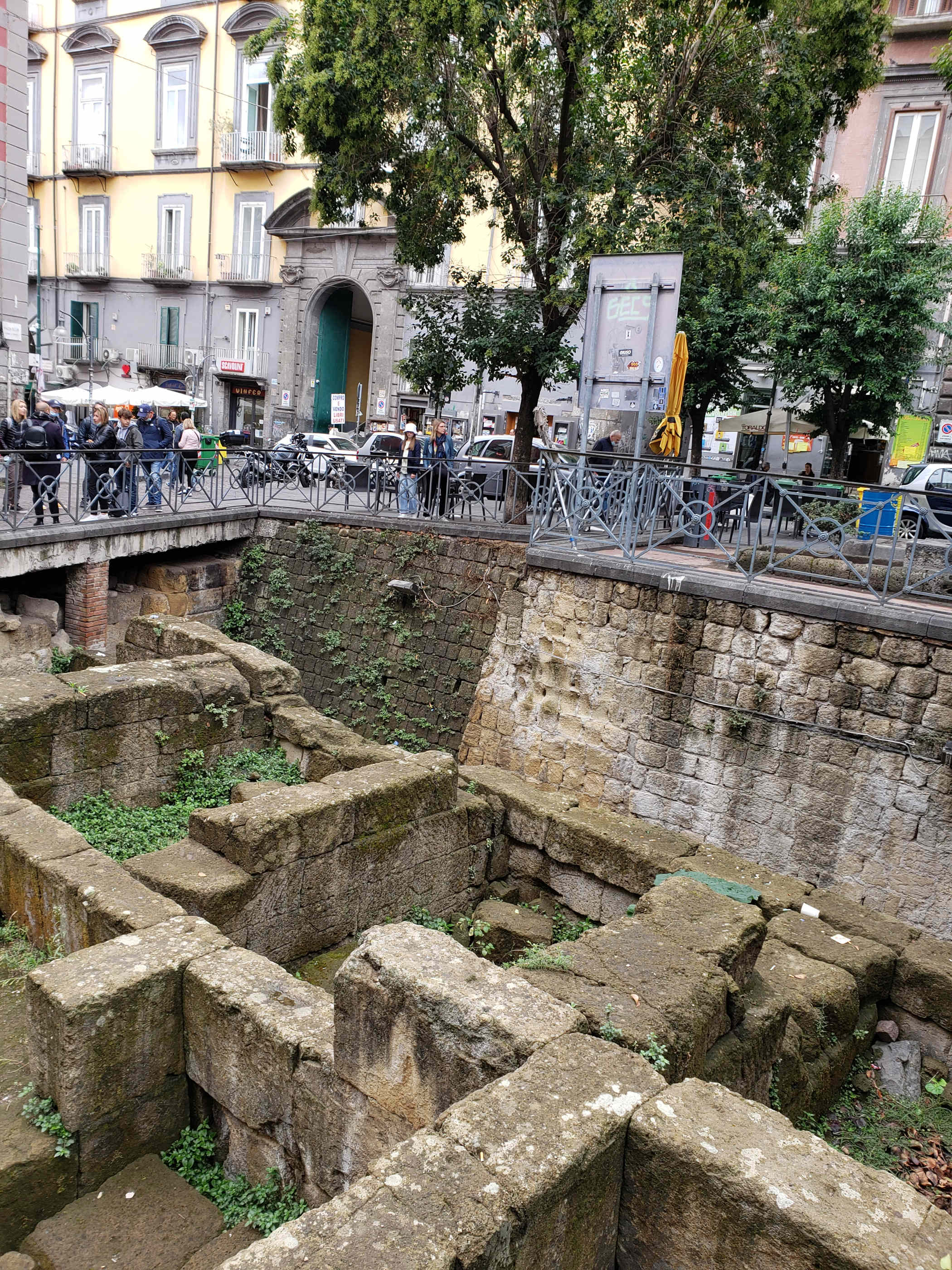
Piazza Vincenzo Bellini – Roman Ruins – Naples – Centro Storico
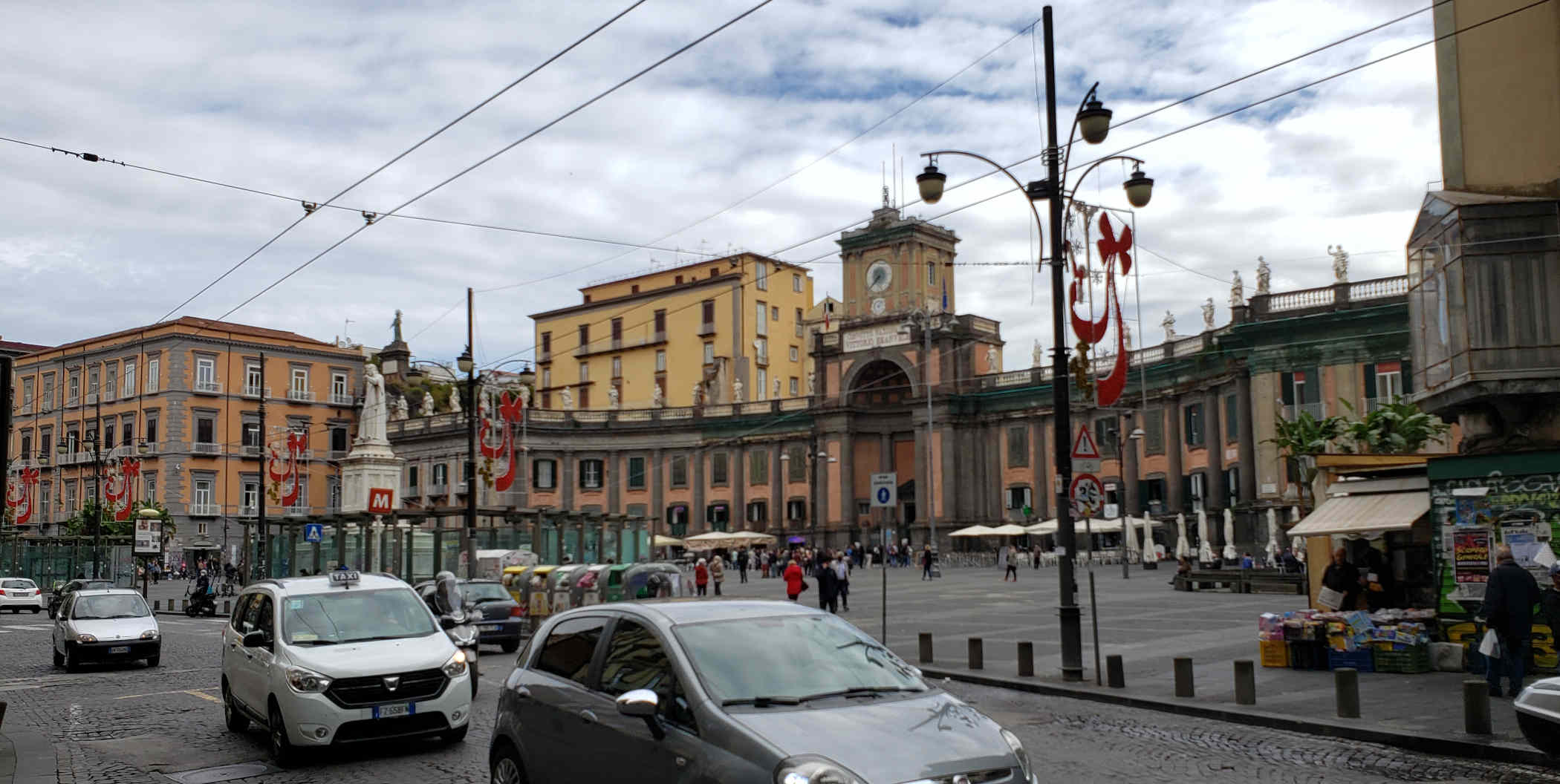
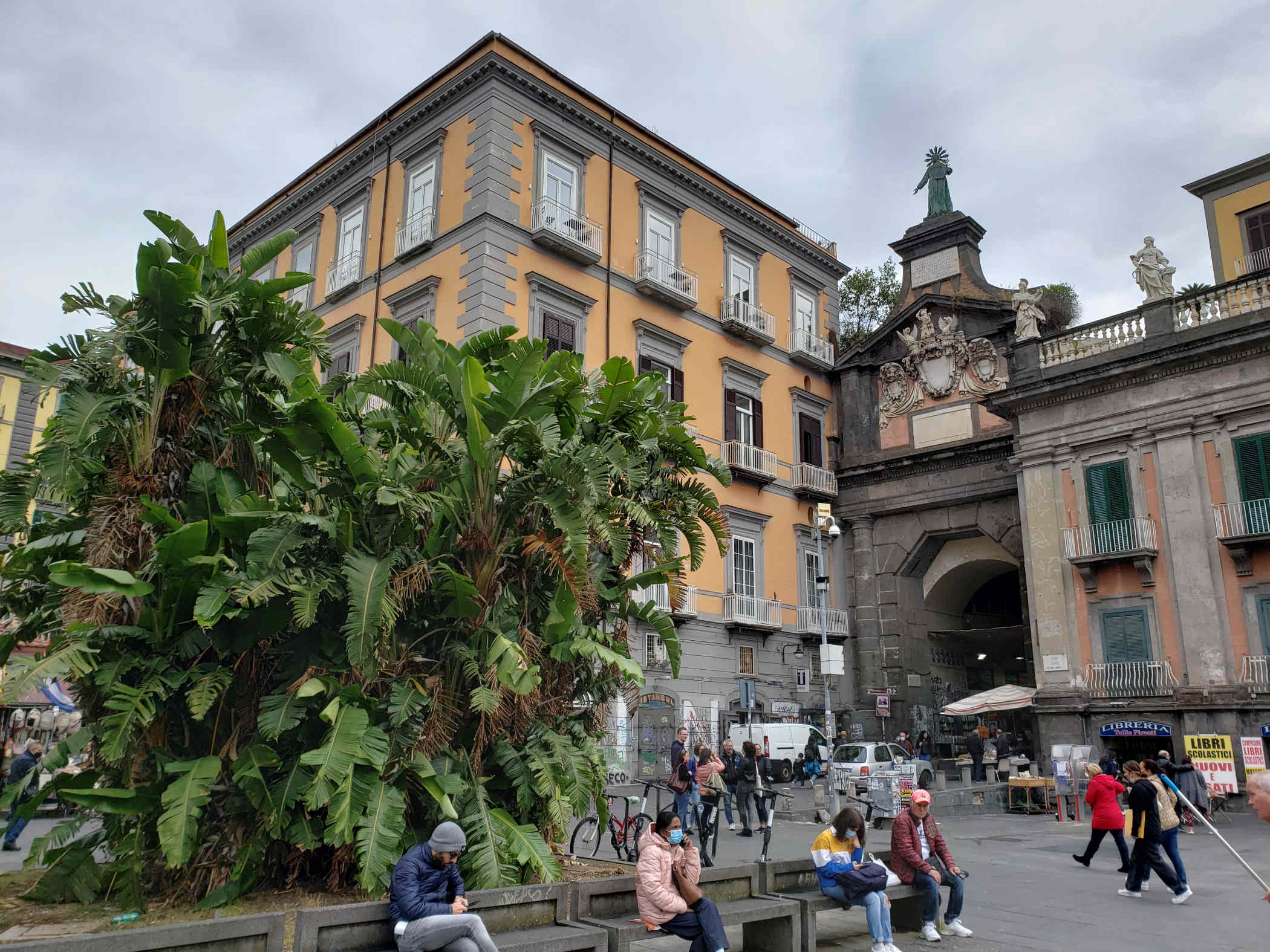
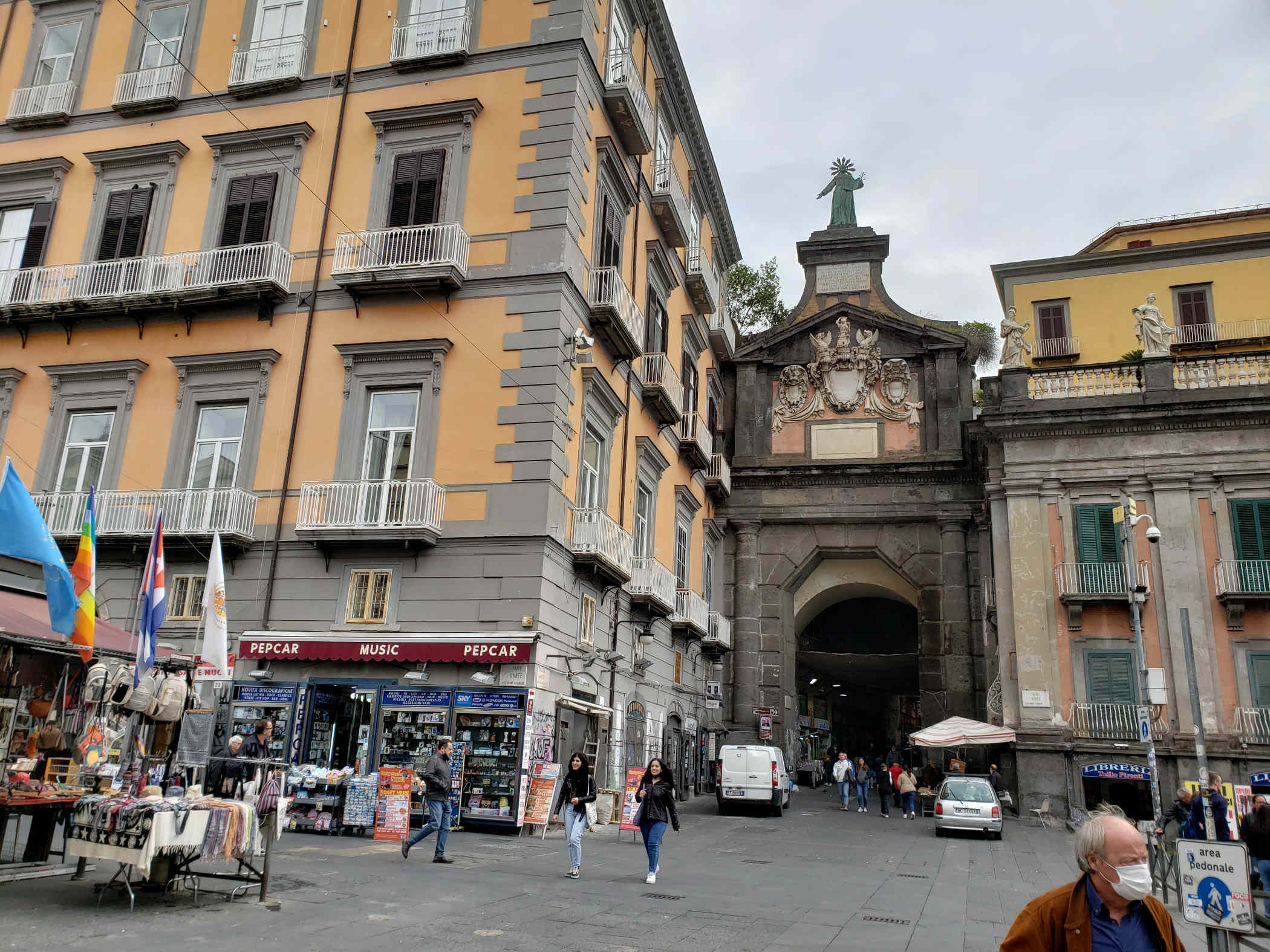
Piazza Dante – via Port d’Alba – Centro Storico
Piazza Dante – Centro Storico
Piazza Dante – Centro Storico
Piazza Dante – Centro Storico
Armeno – Naples Christmas Alley
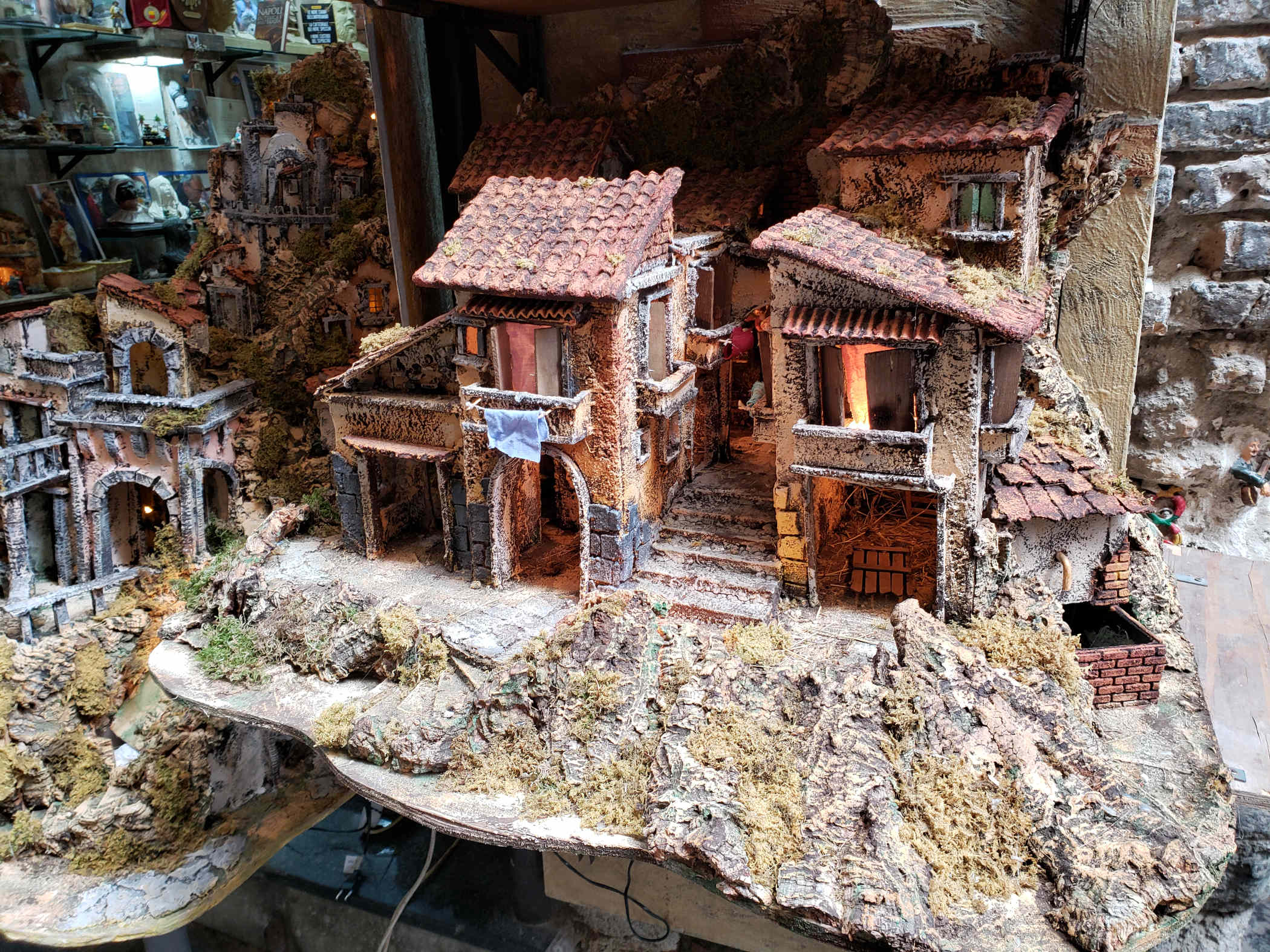
Deep in the heart of the historic center is a street that is known as Christmas Alley. It does not pay to explain, except through pictures.
Via San Gregorio Armeno – Christmas Alley – San Lorenzo Quarter
Via San Gregorio Armeno – Christmas Alley – San Lorenzo Quarter
Shops – Via San Gregorio Armeno – Christmas Alley – San Lorenzo Quarter
Vomero
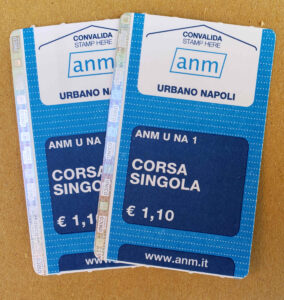
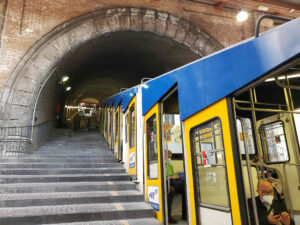
Located on the hill adjacent to Chiaia and the Spanish Quarter is Vomero. Easily reached by taking one of the Funicular Trains from one of three places, Funicular Park in Chiaia, Augusteo in San Ferdinando or Montesanto in the Spanish Quarter. For a reasonable 1.10€ you can ascend to Vomero to visit the sights that it has to offer and enjoy its fine restaurants.
Tickets For Two – Funicular C.V. Emanuele
Funicular To Vomero
Funicular To Vomero
Funicular To Vomero
Funicular To Vomero
Funicular To Vomero
Castle Sant Elmo
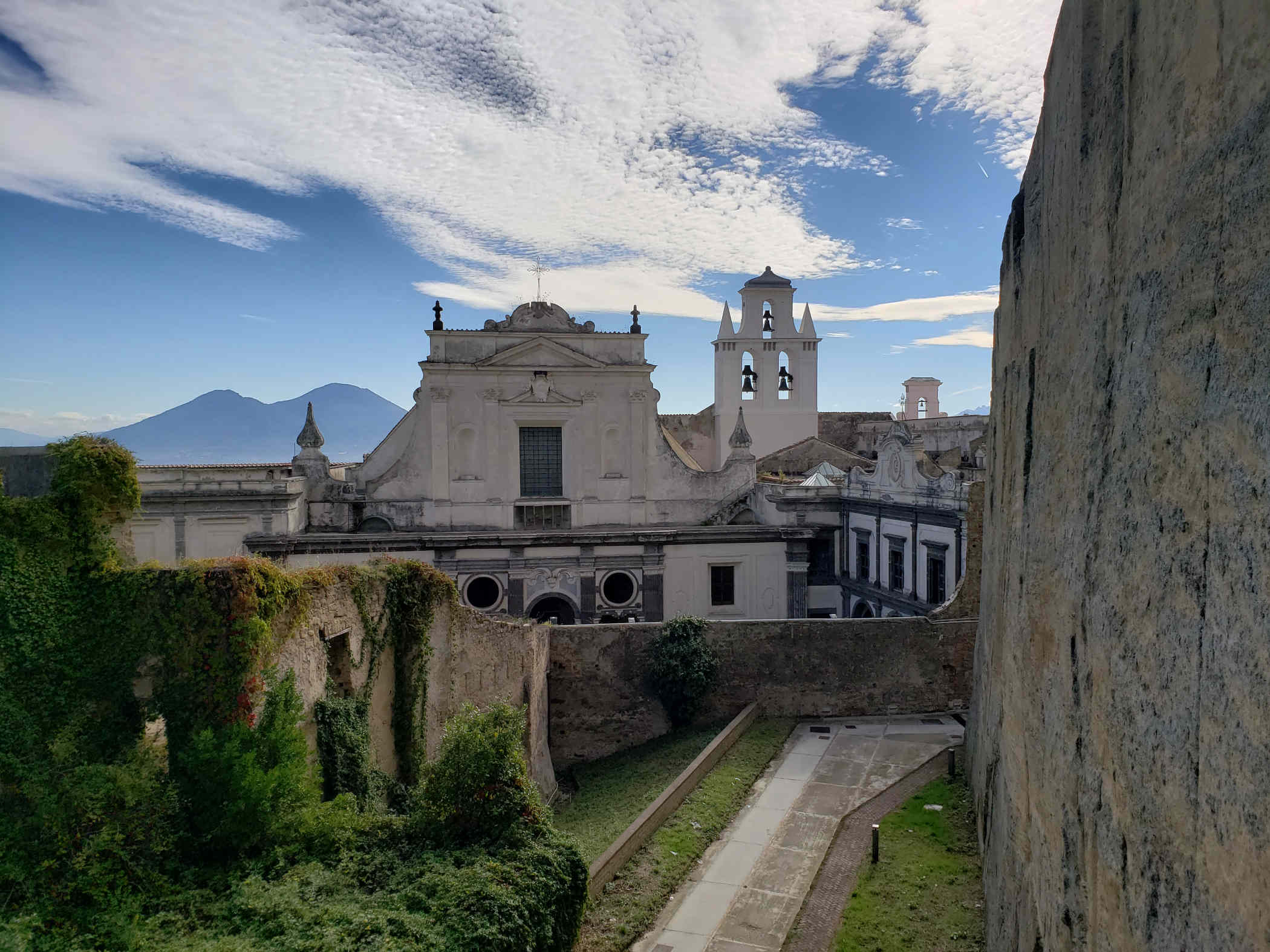
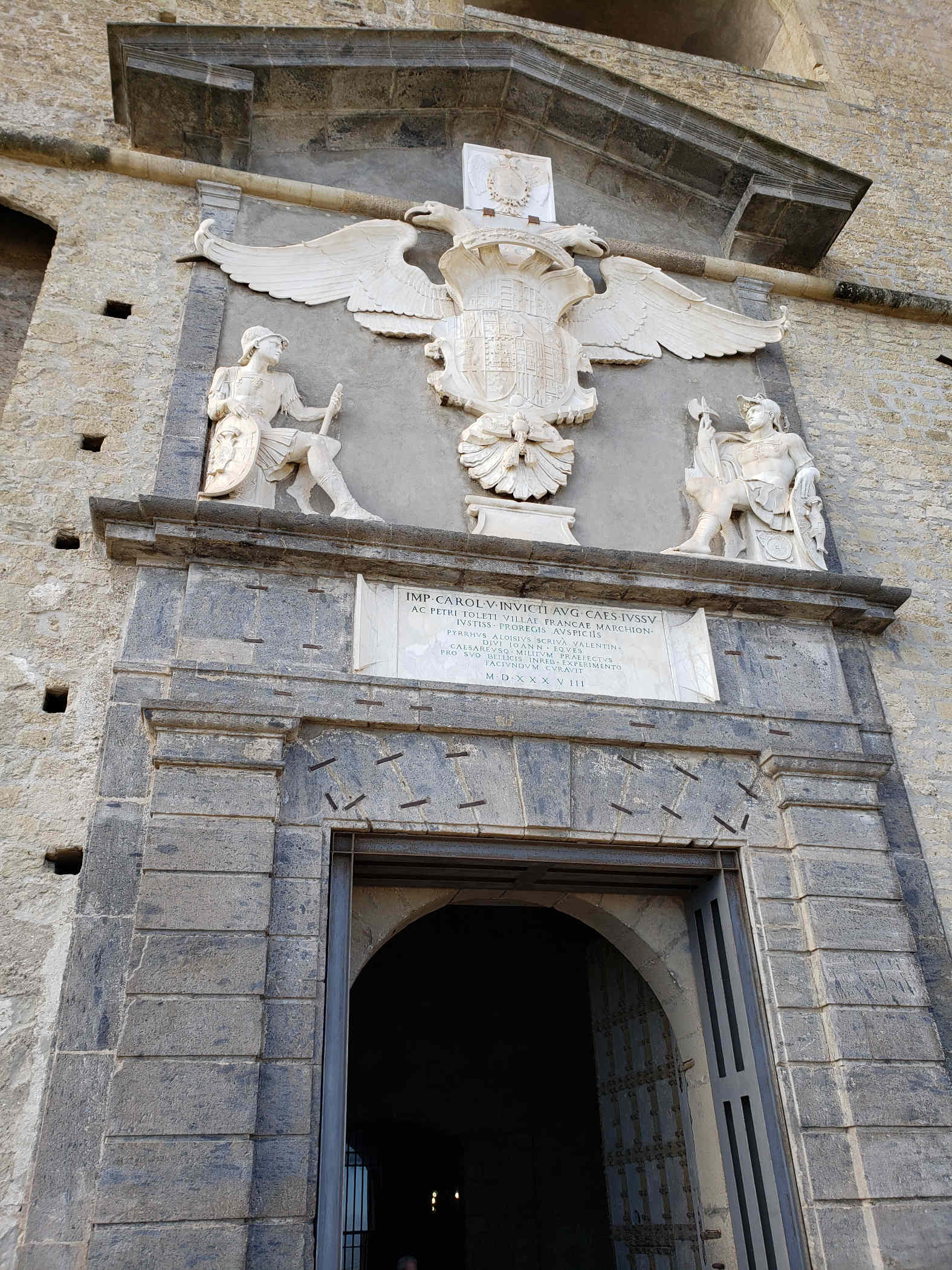
In Vomero the Castle of Sant Elmo stands ever watchful over Naples. Known initially as Belforte, it was built sometime in the thirteenth century.
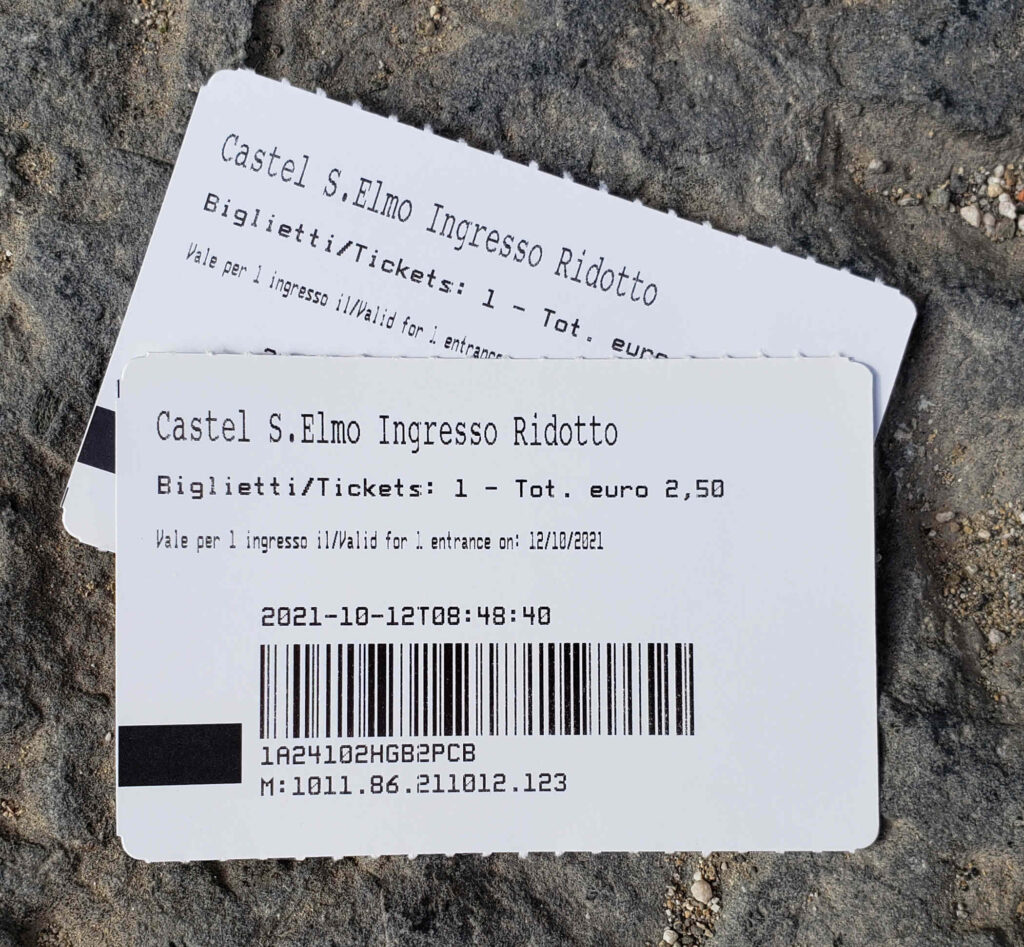
Tickets For Two – Sant Elmo Castle – Vomero
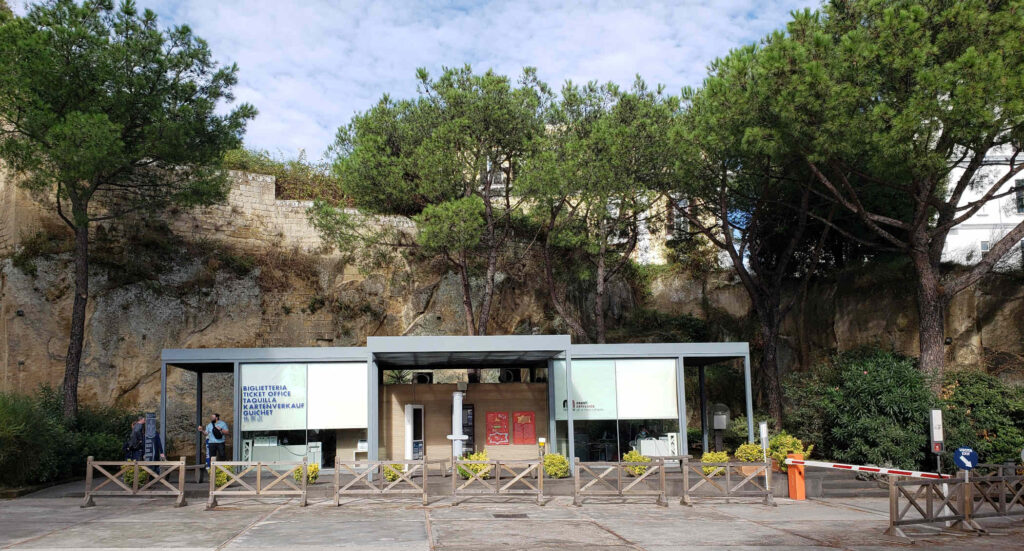
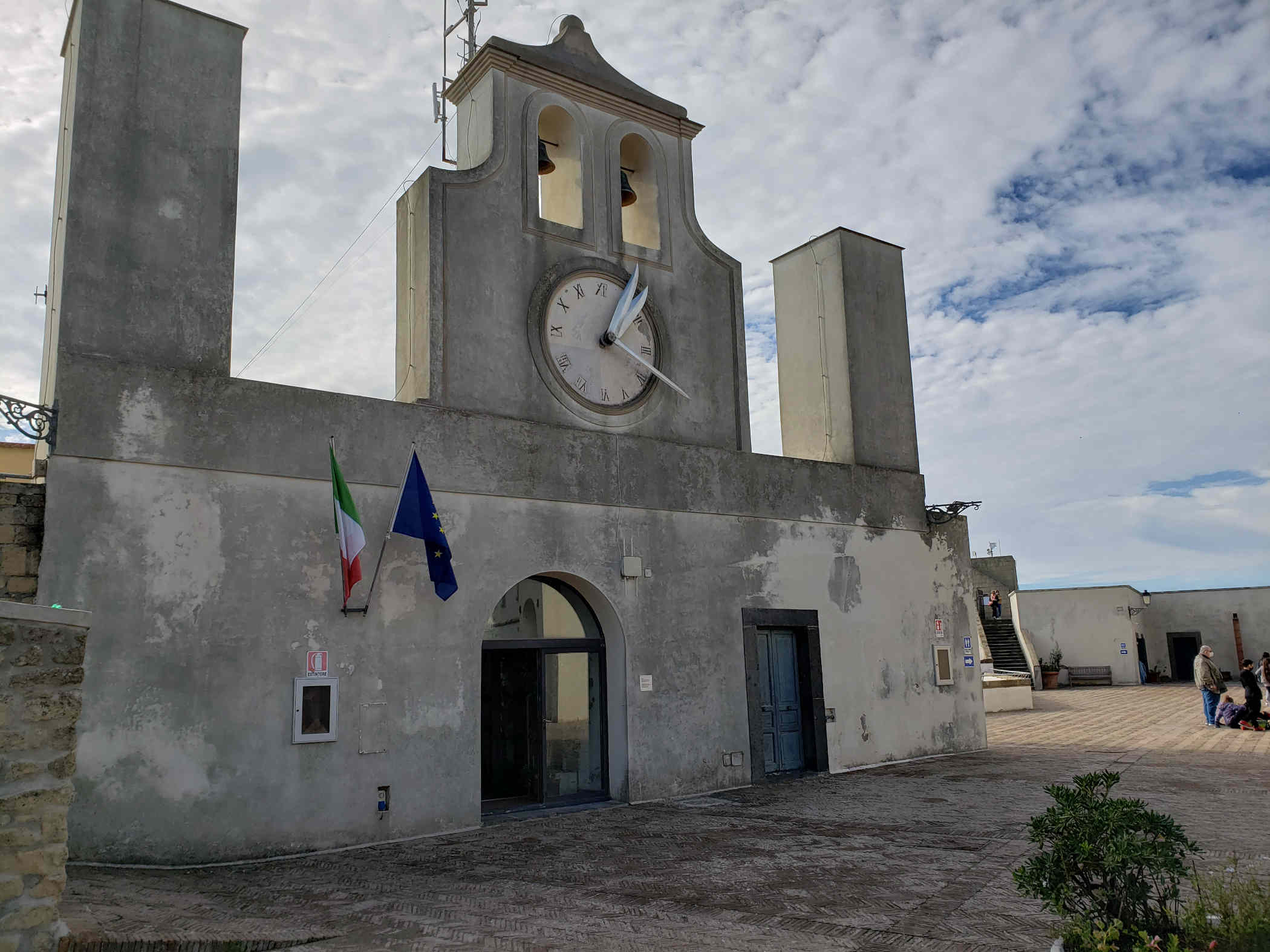
Entrance Sant Elmo Castle – Vomero
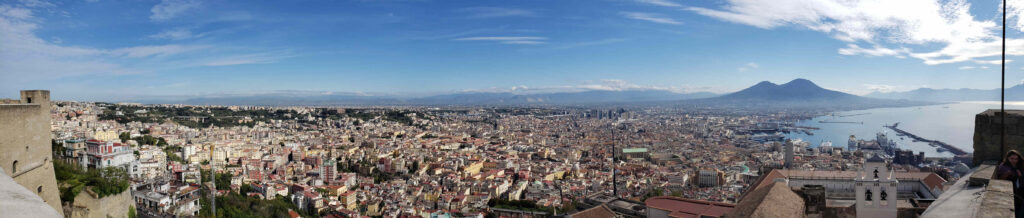
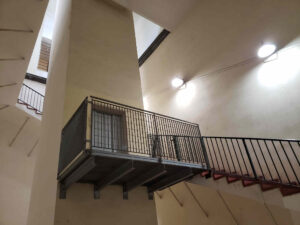
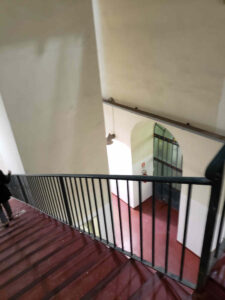
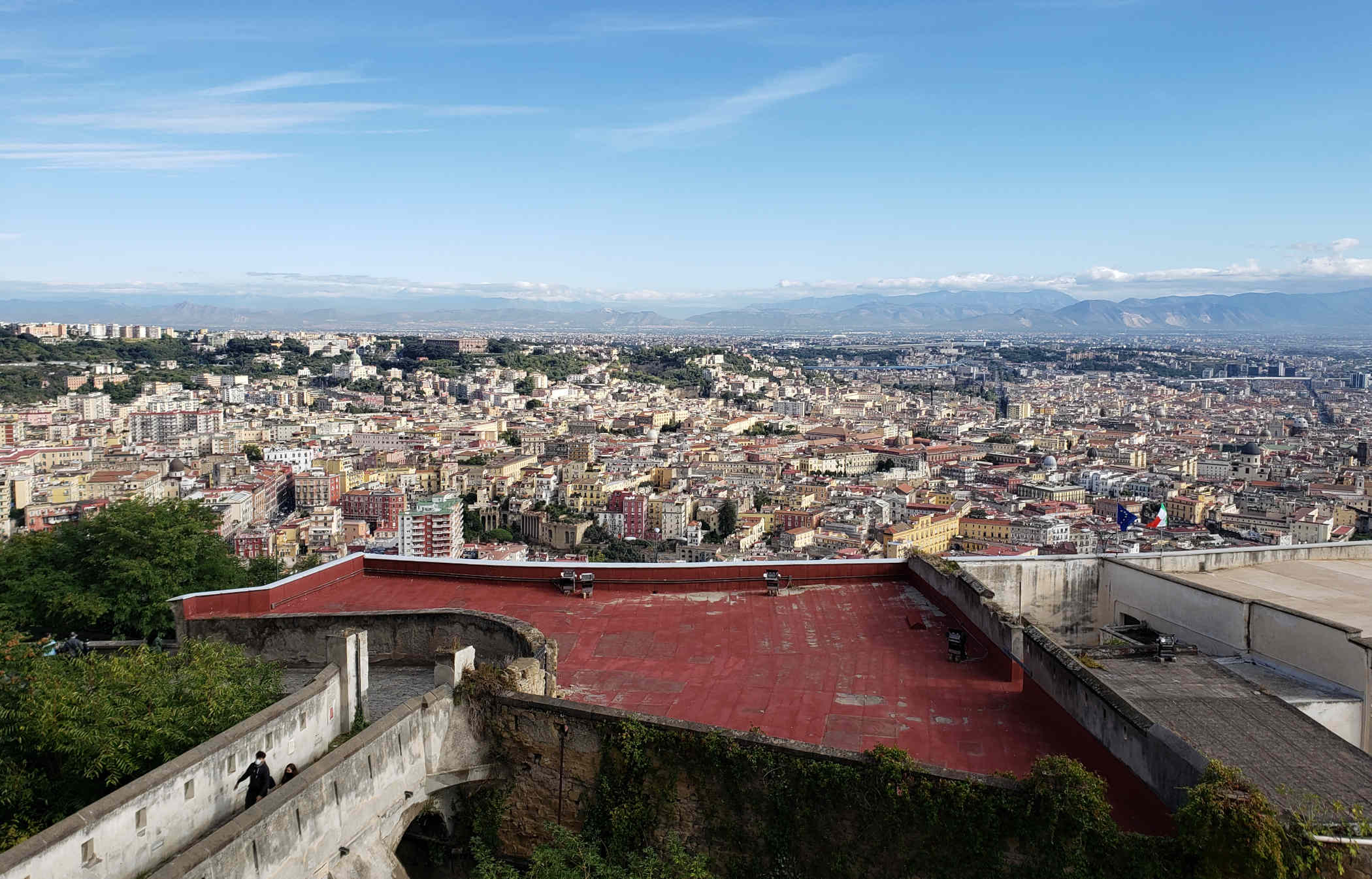
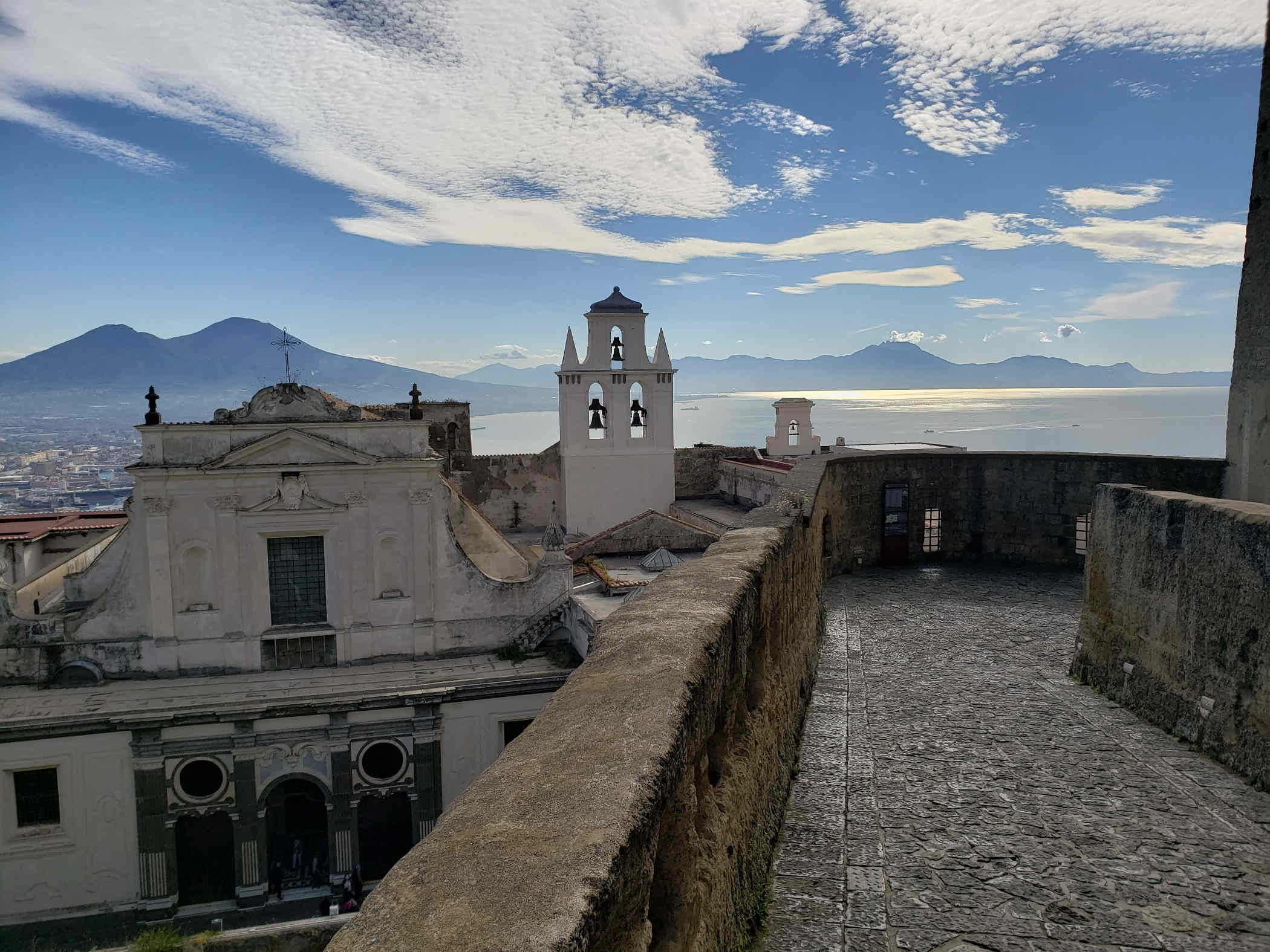
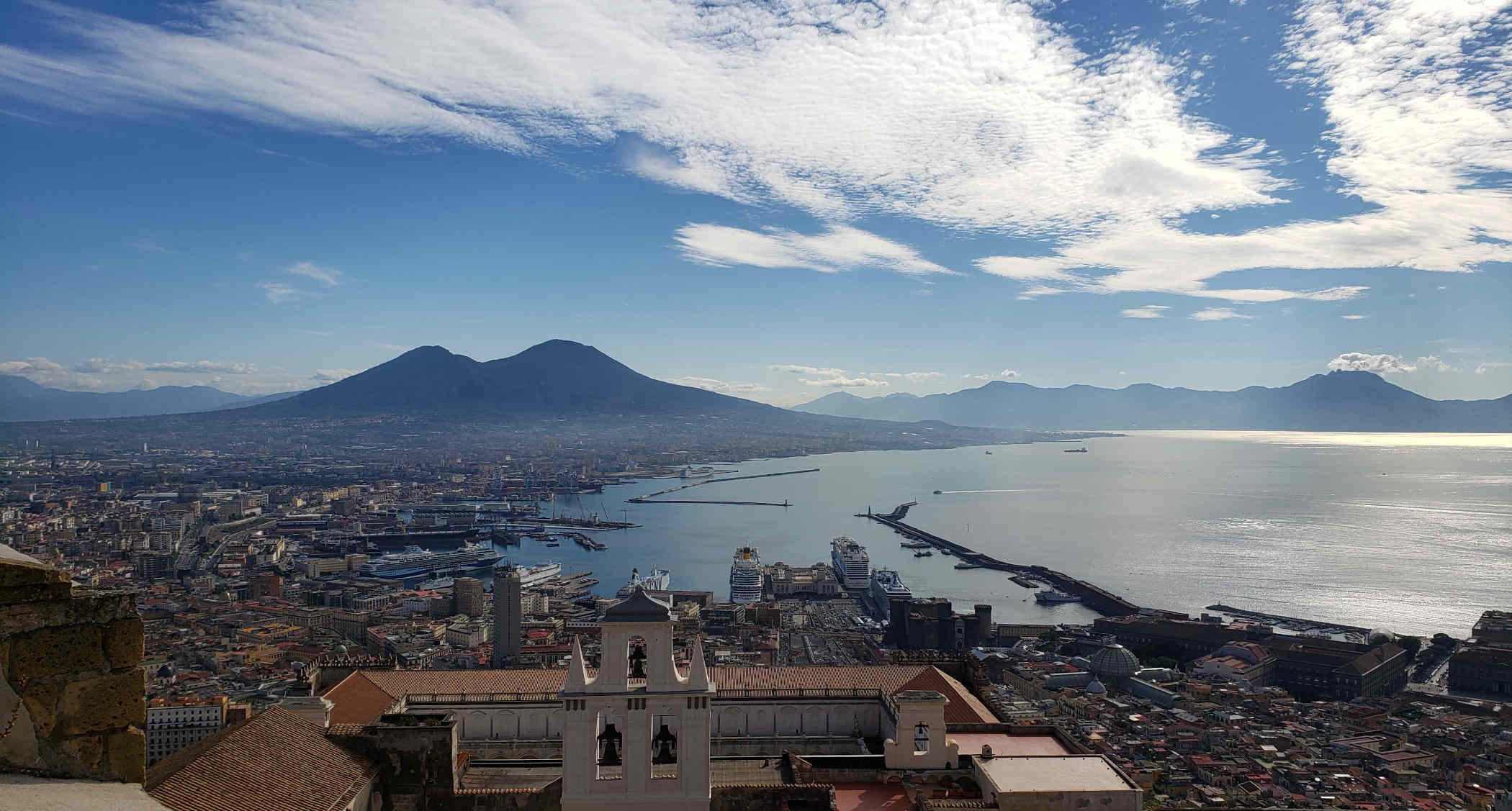
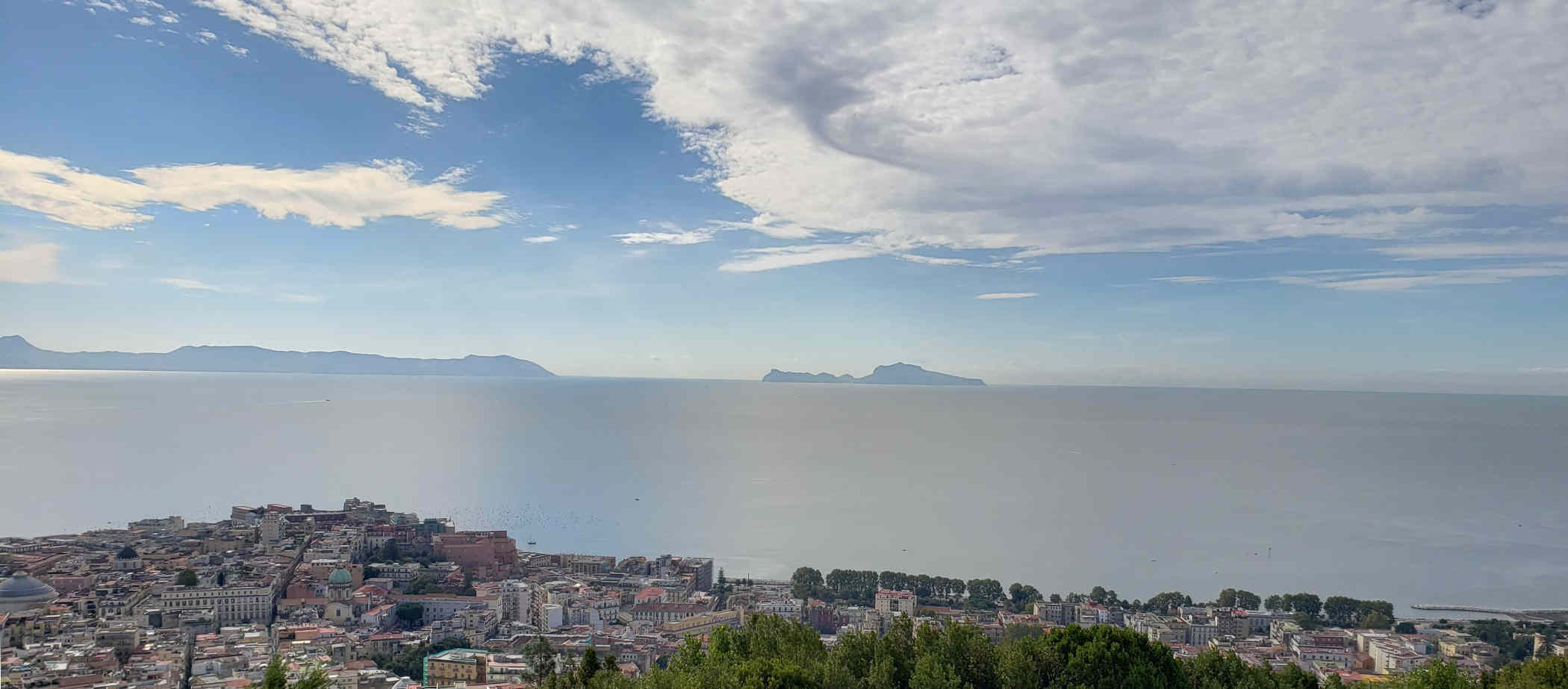
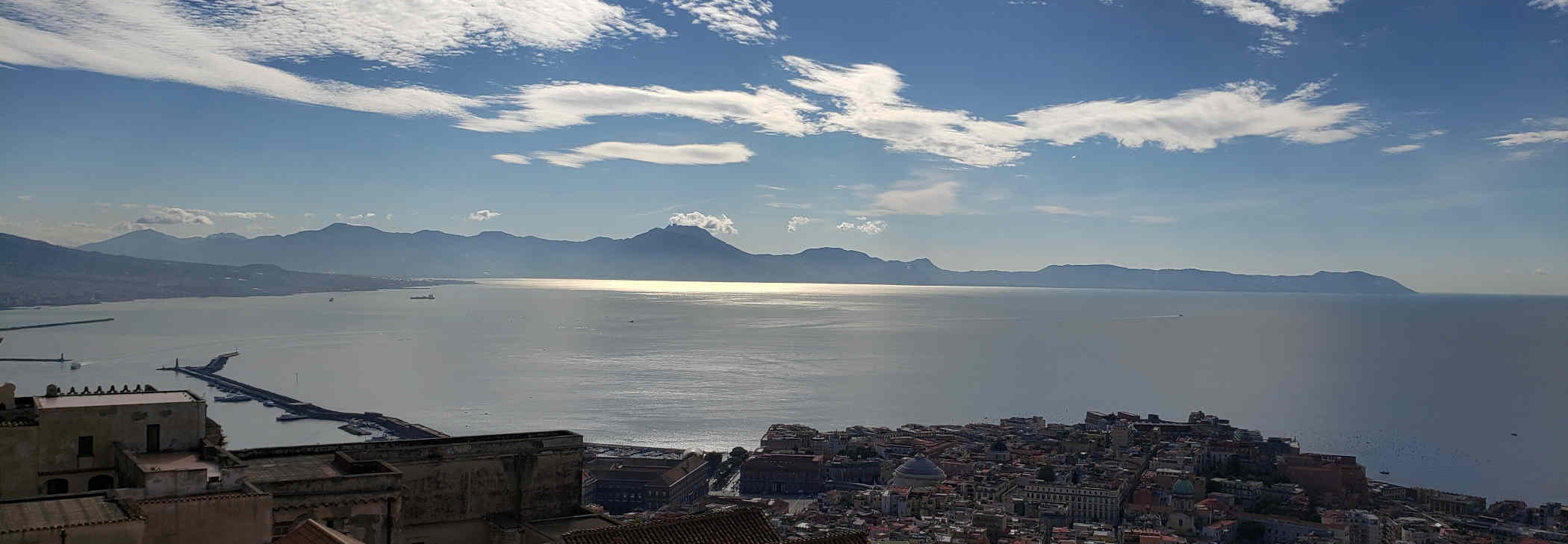
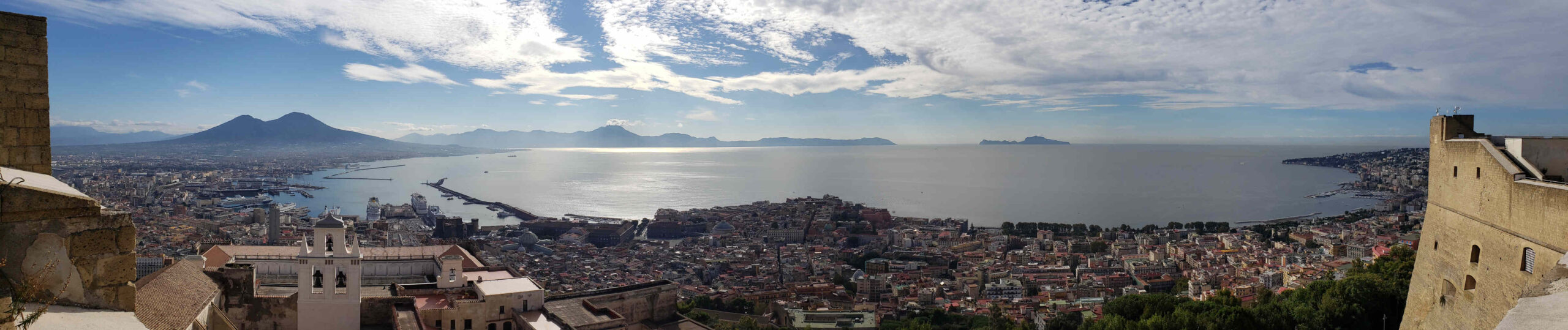
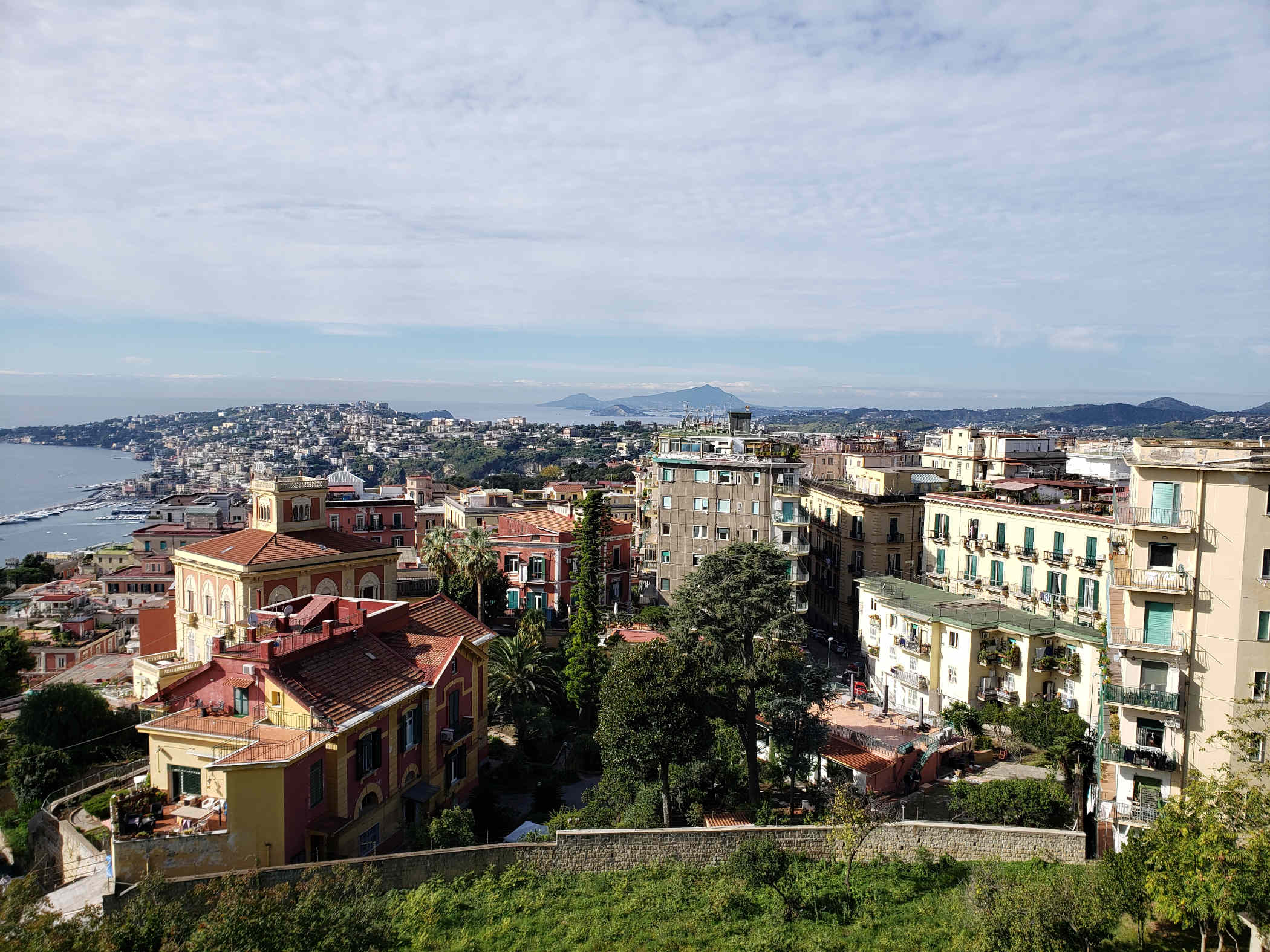
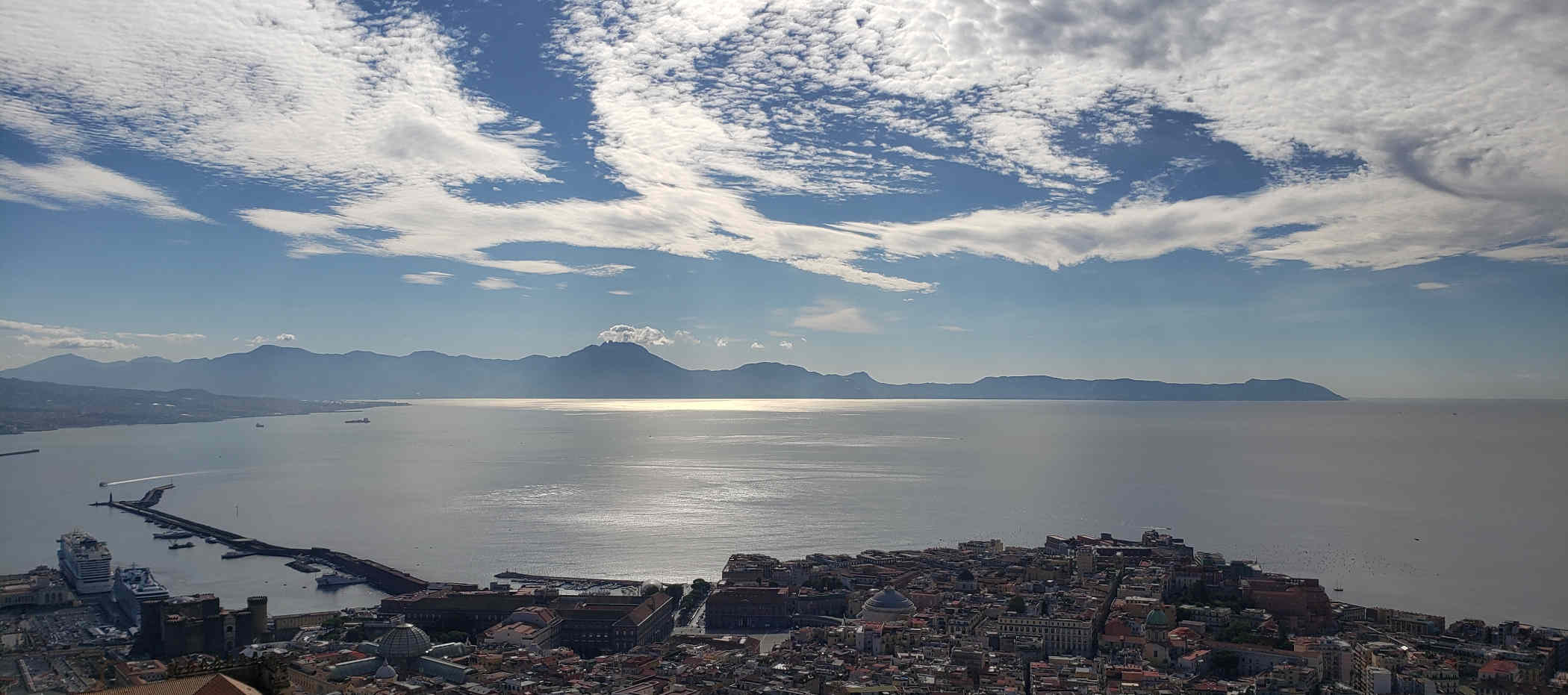
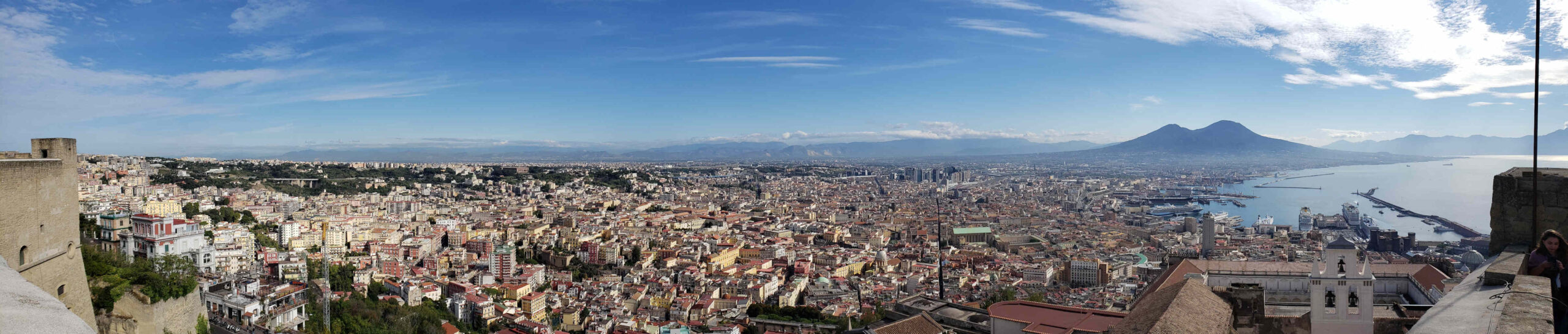
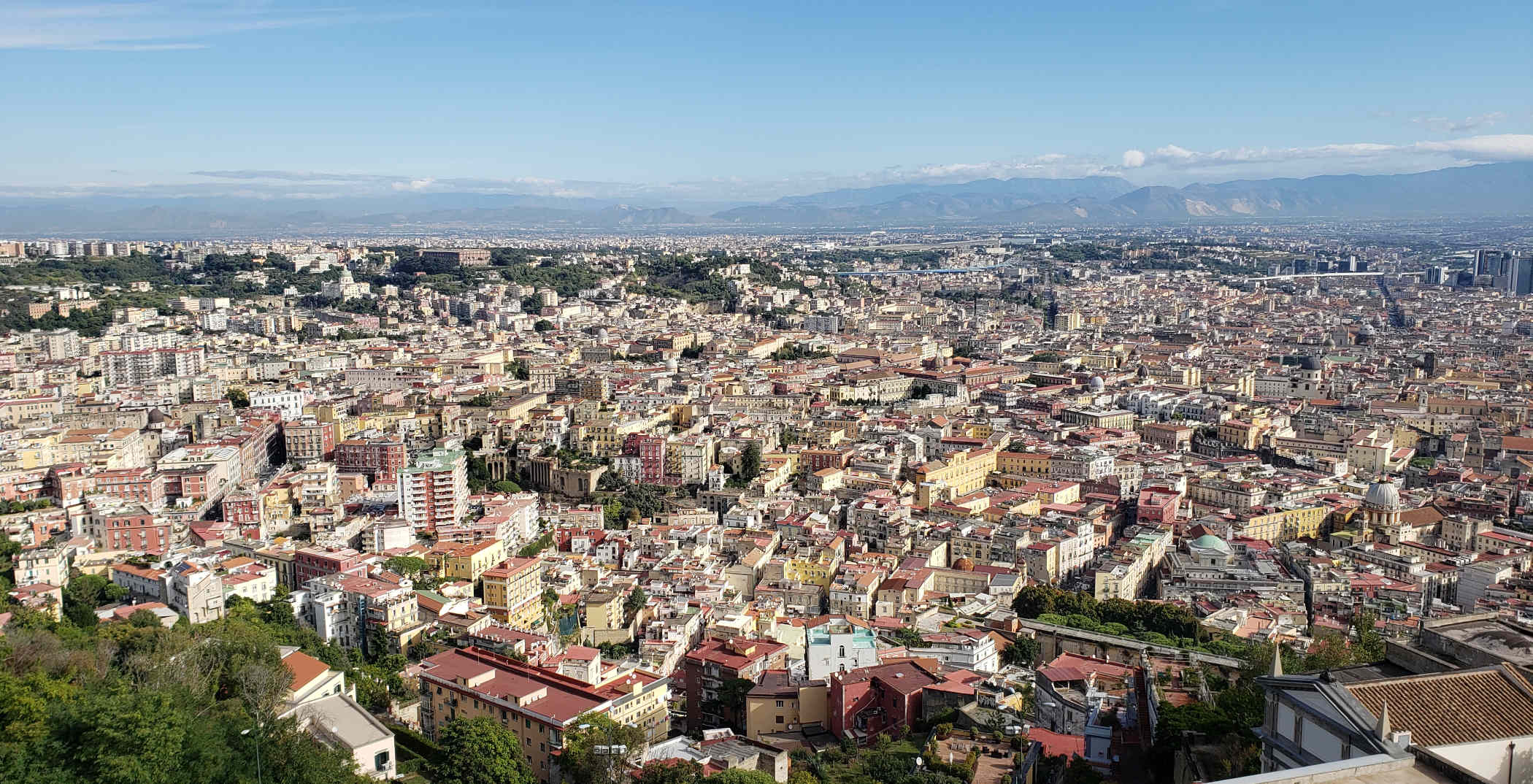
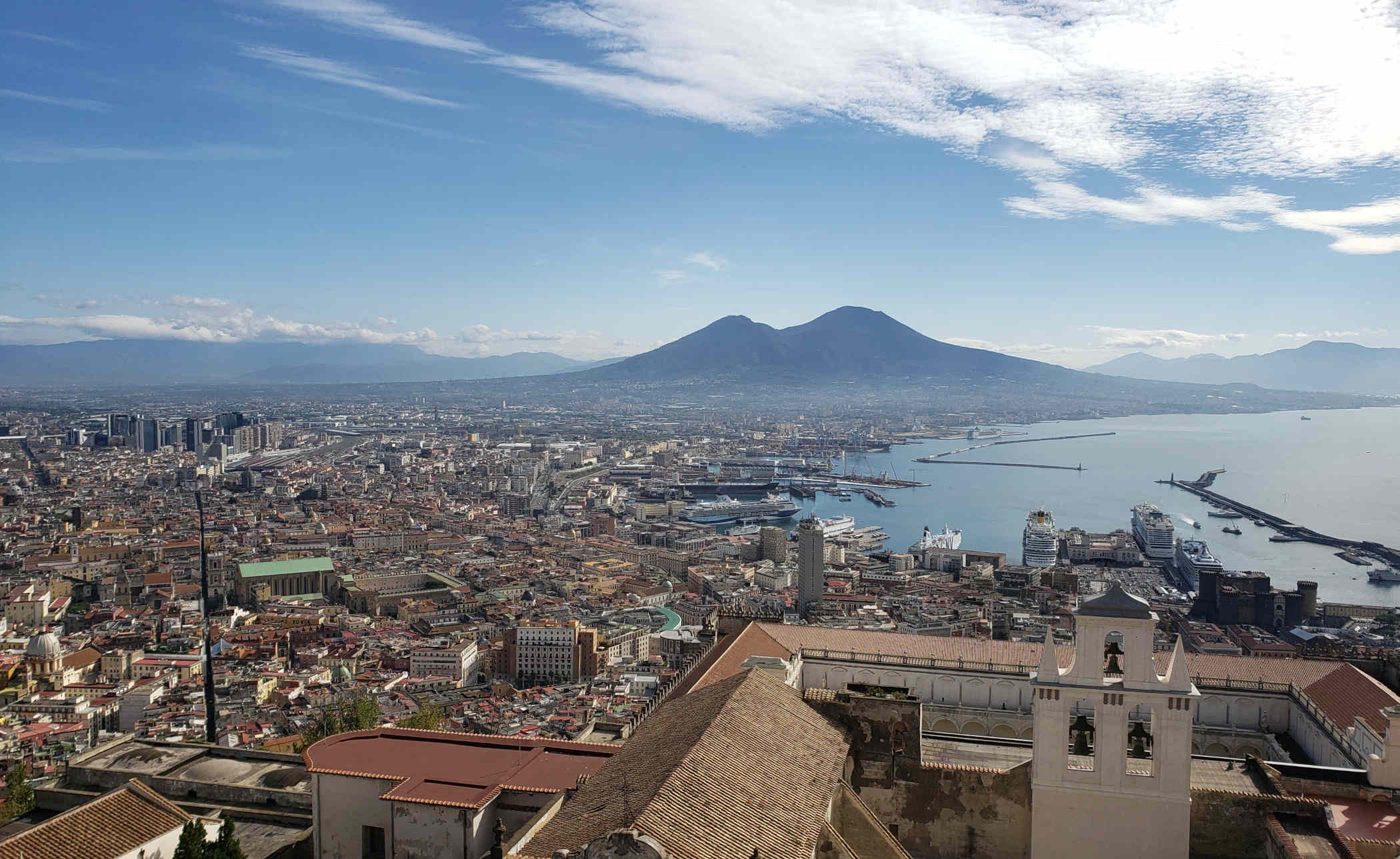
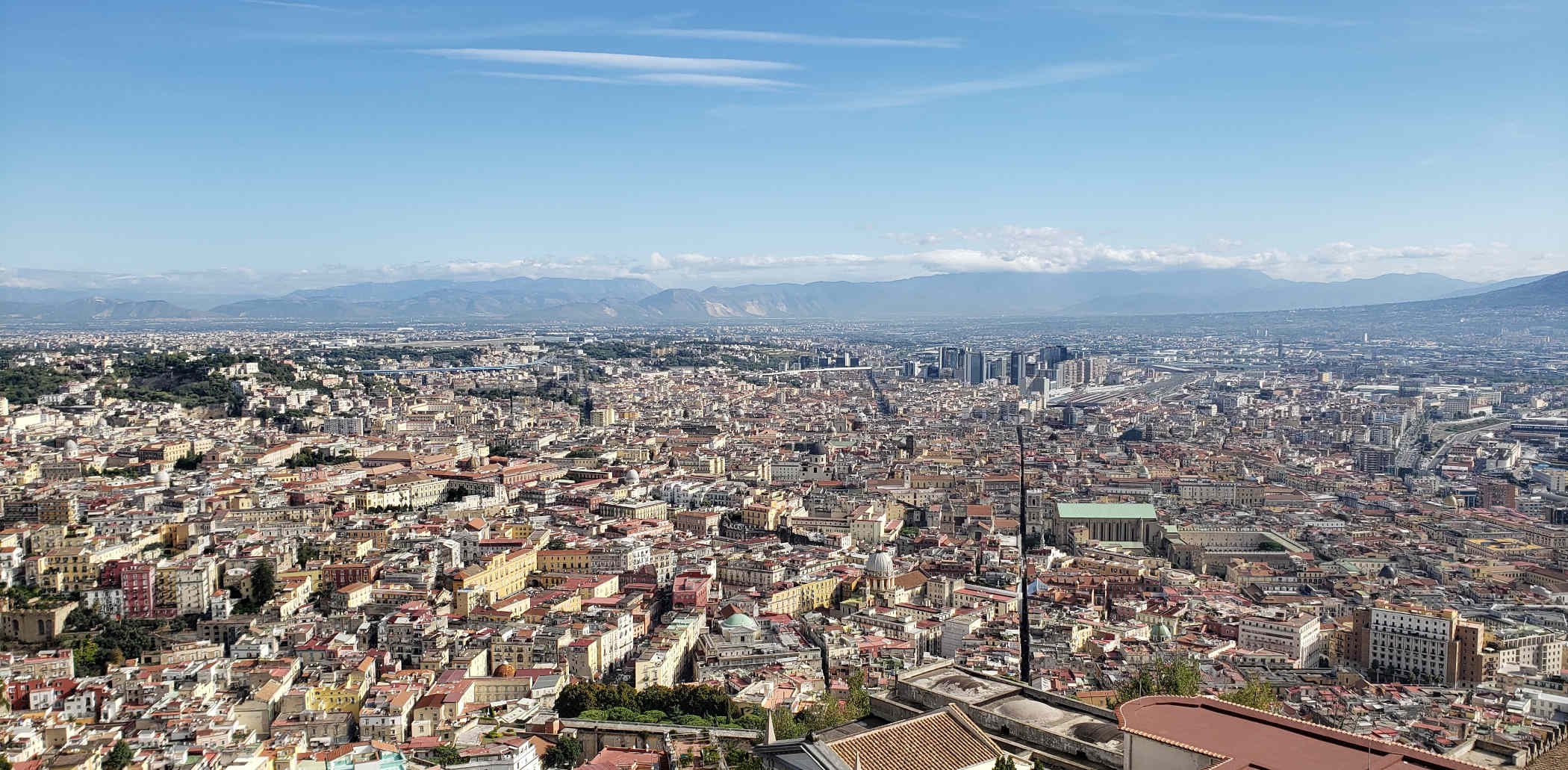
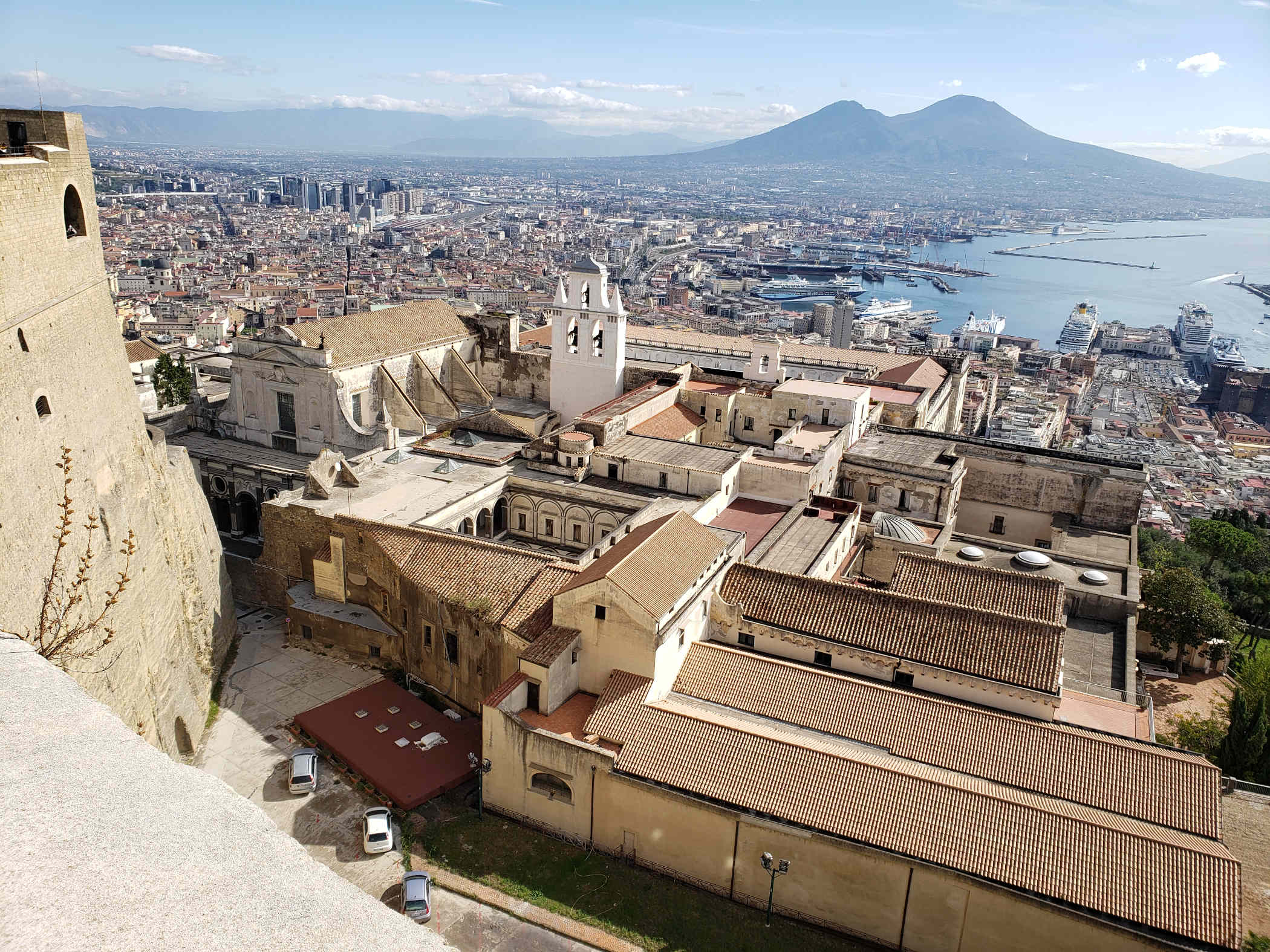
The castle is a sprawling edifice atop the hill commanding a view of all of Naples, including the hills behind it and the entire Gulf of Naples. Fitted previously with large guns, it must have been a formidable deterrent at one time. Visitors can walk the entirety of its parapets with all of its amazing views of the city, the gulf and surrounding islands.
Sant Elmo Castle – Vomero
Naples from Sant Elmo Castle – Vomero
View of the Parapets – Sant Elmo Castle – Vomero
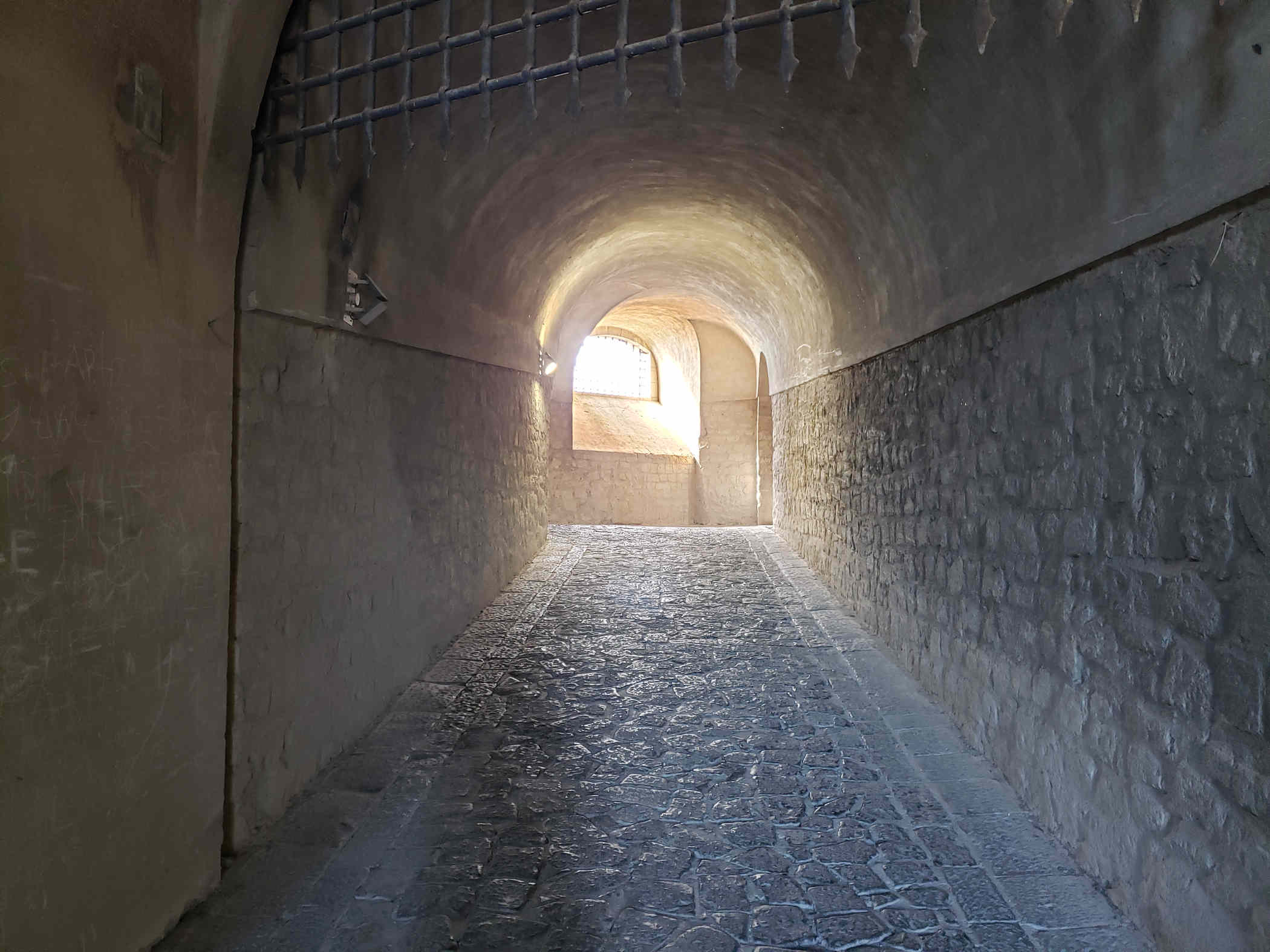
Old Entrance – Sant Elmo Castle – Vomero
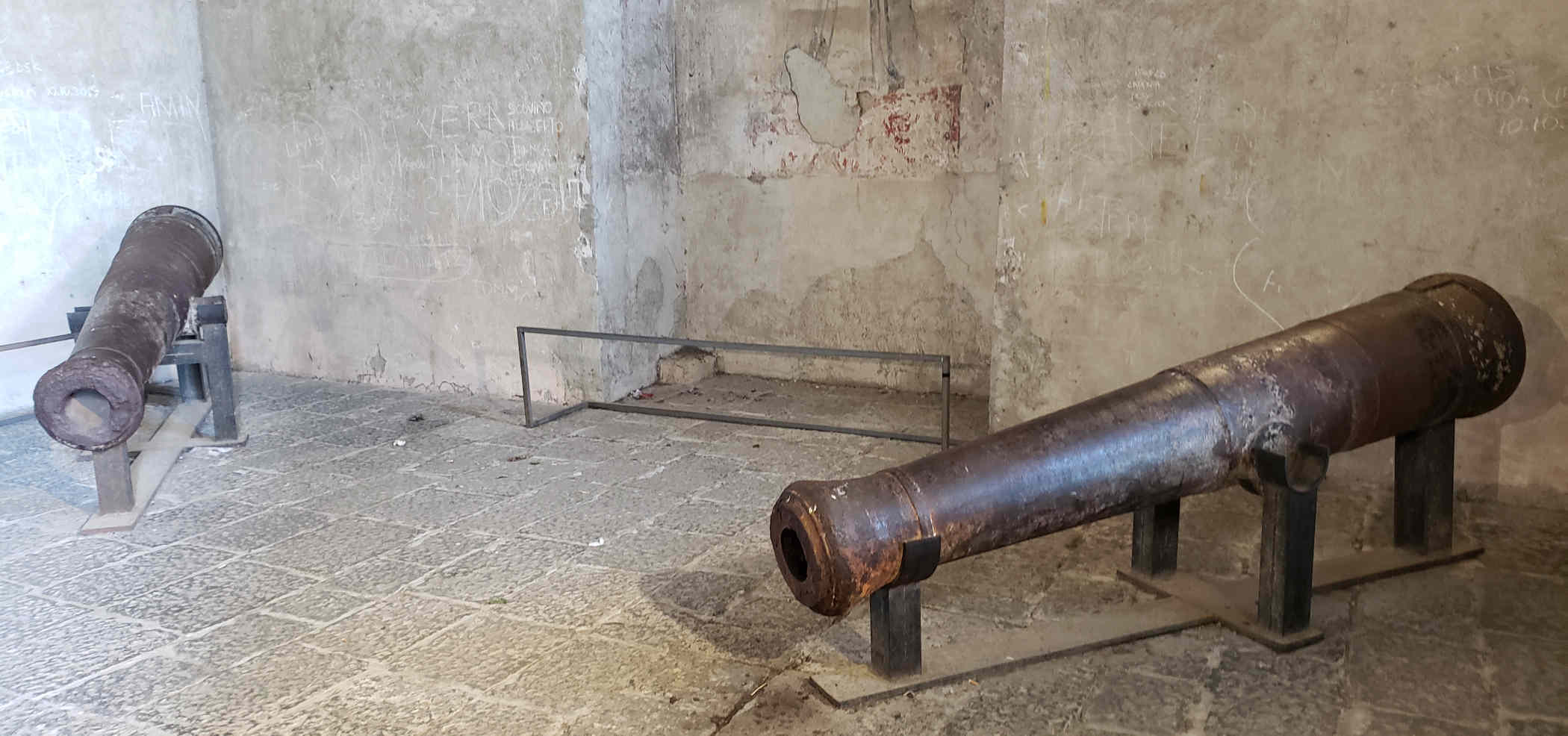
Old Cannon – Sant Elmo Castle – Vomero
Vesuvius and Bay of Naples from Sant Elmo Castle – Vomero
Sant Elmo Castle – Vomero
Bay of Naples – Sant Elmo Castle – Vomero
Bay of Naples – Sant Elmo Castle – Vomero
Watch Tower – Sant Elmo Castle – Vomero
Bay of Naples – Sant Elmo Castle – Vomero
Naples – Sant Elmo Castle – Vomero
Bay of Naples – Sant Elmo Castle – Vomero
Panorama of Naples and Vesuvius from Sant Elmo
Naples – Sant Elmo Castle – Vomero
Mount Vesuvius – Sant Elmo Castle – Vomero
“See Naples and Die”
“See Naples and Die”
Cloister di San Martino
Cloister of San Martino – Vomero
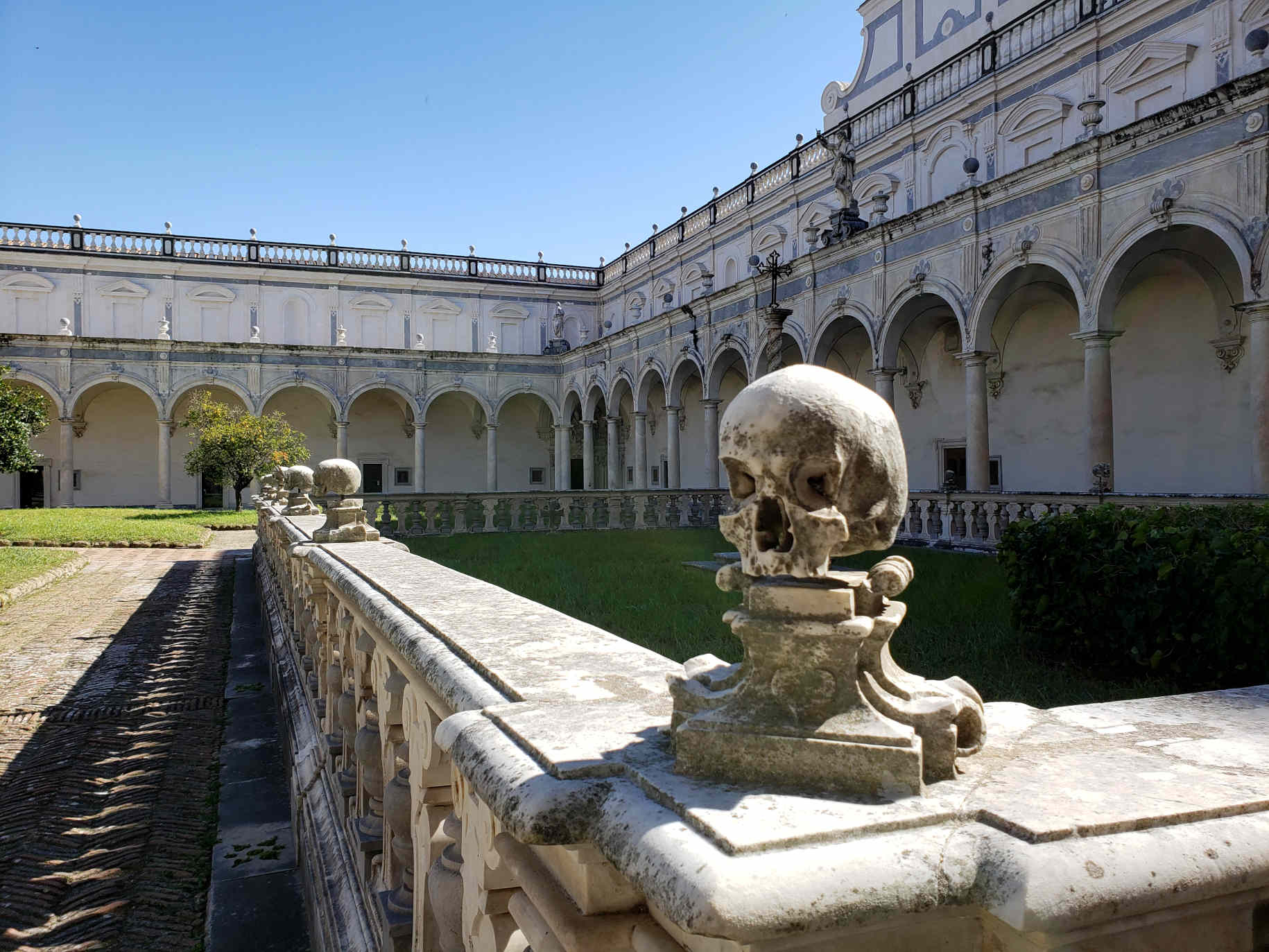
Just below the Castle of Sant Elmo sits the monastery and cloister of San Martino. Converted into a museum, it too commands a view of the Gulf of Naples.
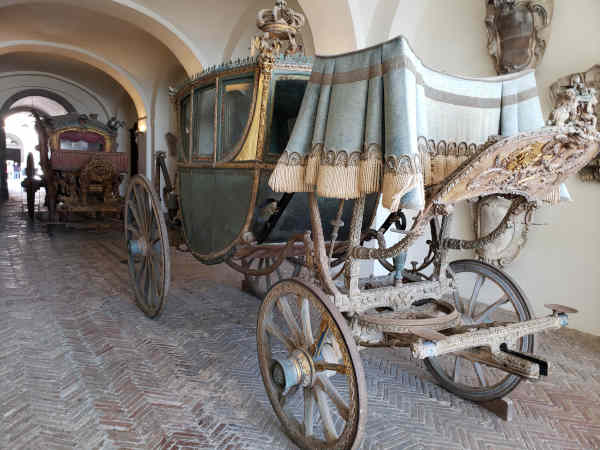
Royal and Religious Carriages
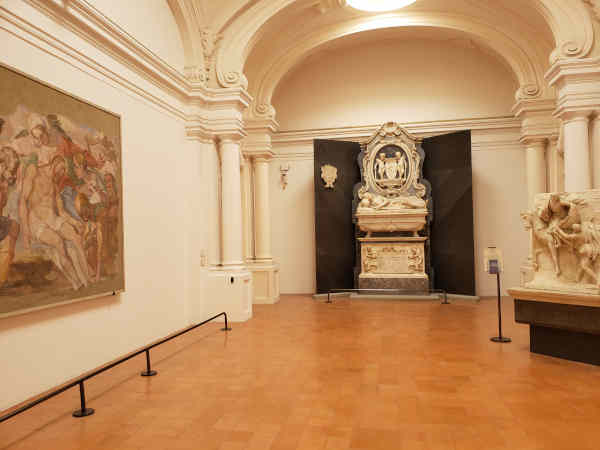
Hall with Religious Artwork
Collection of Artifacts
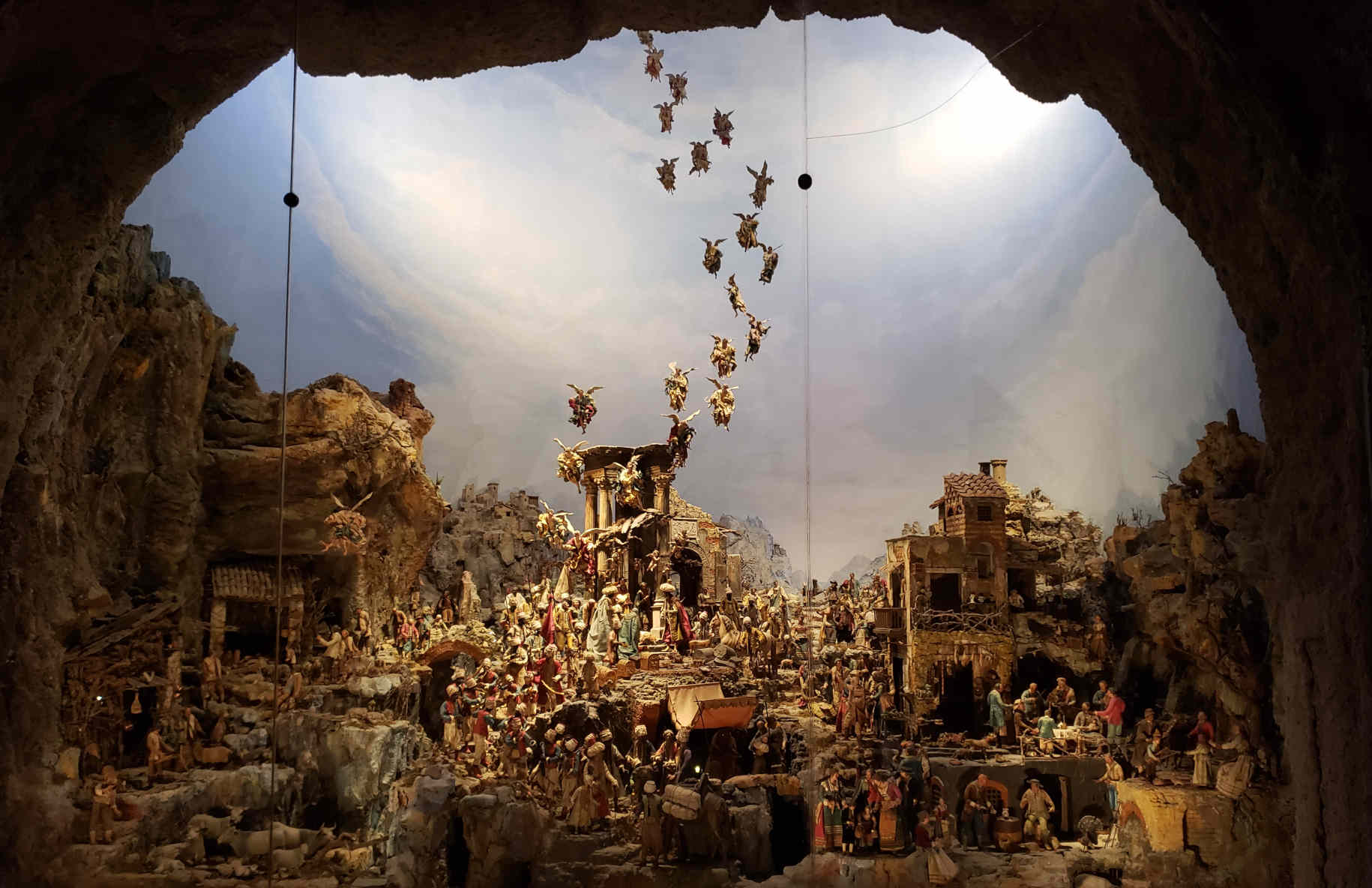
Creche dioramas on display
The museum has a selection of old royal carriages and artifacts from the late Renaissance. From old frescoes, paintings and church memorabilia it houses many religious antiquities from famous Napoletano church leaders. Then there are the creches of Christ’s birth, which are extremely detailed and draw your attention to every little thing that each one of the small characters is modeled to portray.
Restaurants
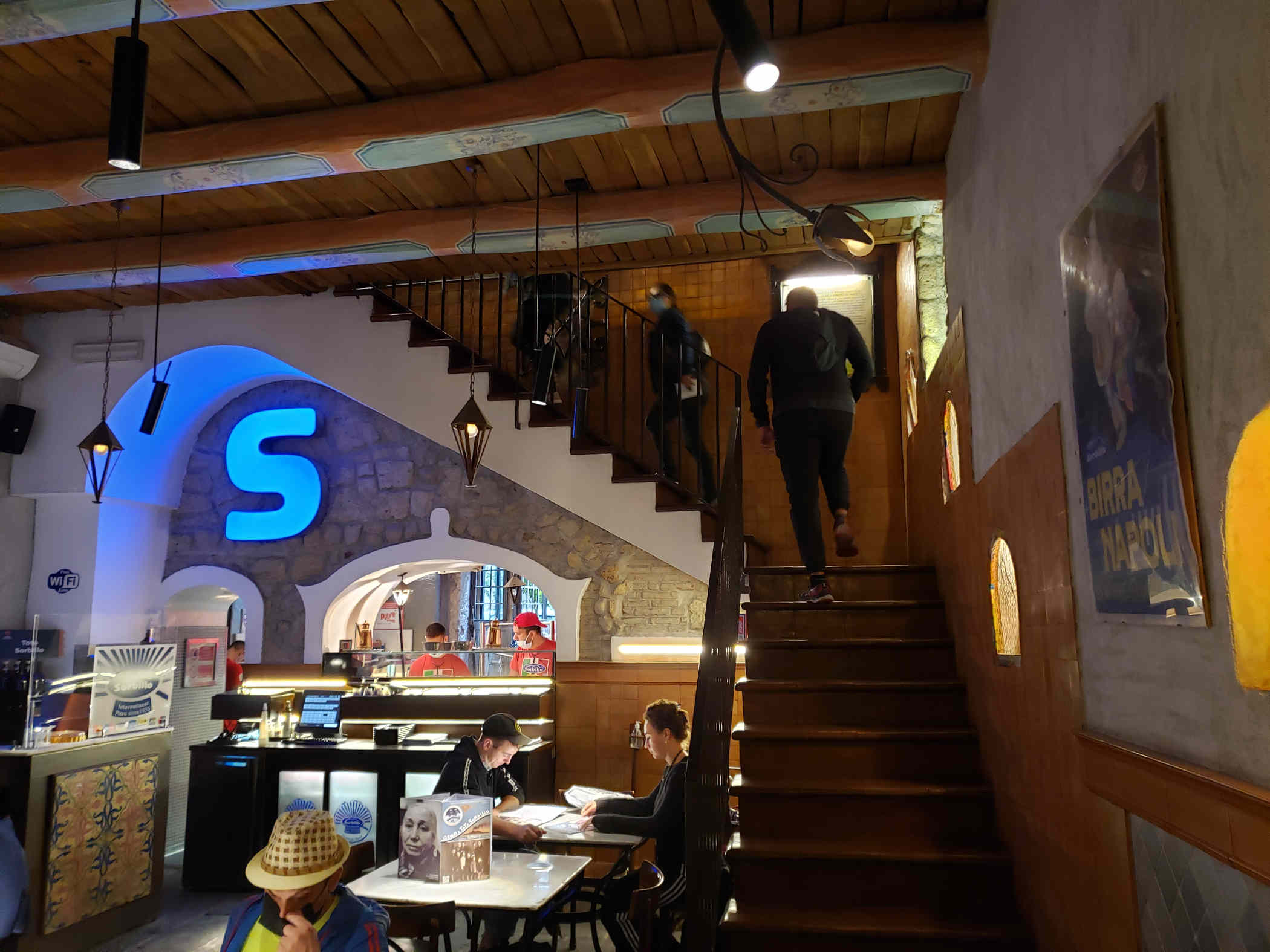
Gino e Toto Sorbillo Pizzeria
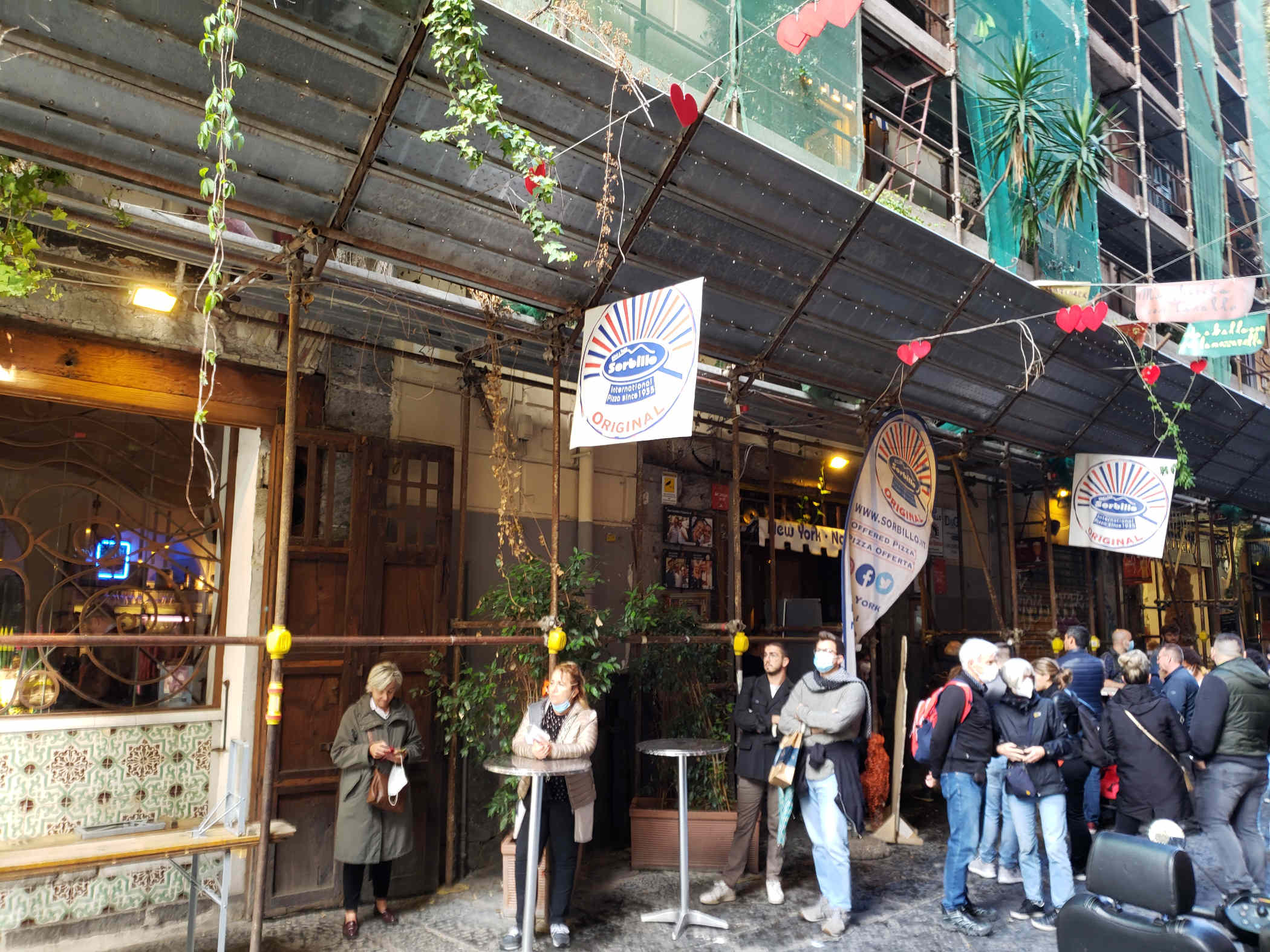
One of the place to go apparently in Naples is Gino e Toto Sorbillo’s Pizzeria. Located on via dei Tribunali it gathers a crowd early, so getting there a half an hour or so ahead of time would reduce your wait. During normal times it may even be wiser to queue up earlier. We happen to go during a day when only one cruise ship arrived and got there twenty minutes early and we were about fourth in line. The place is rather large, but by the time we were finished people were waiting outside for some time.
Gino e Toto Sorbillo Pizzeria – Store Front – San Lorenzo, Naples
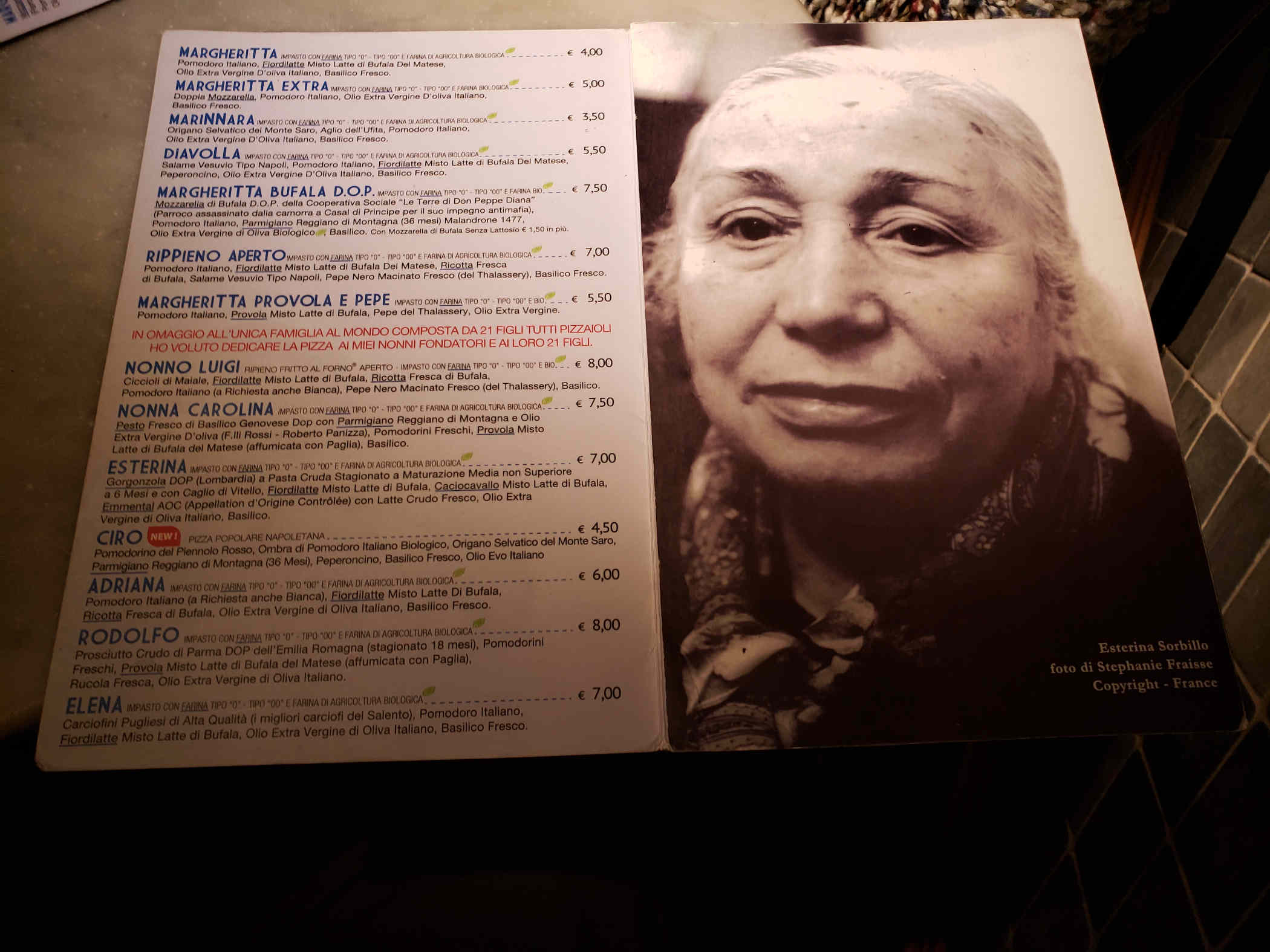
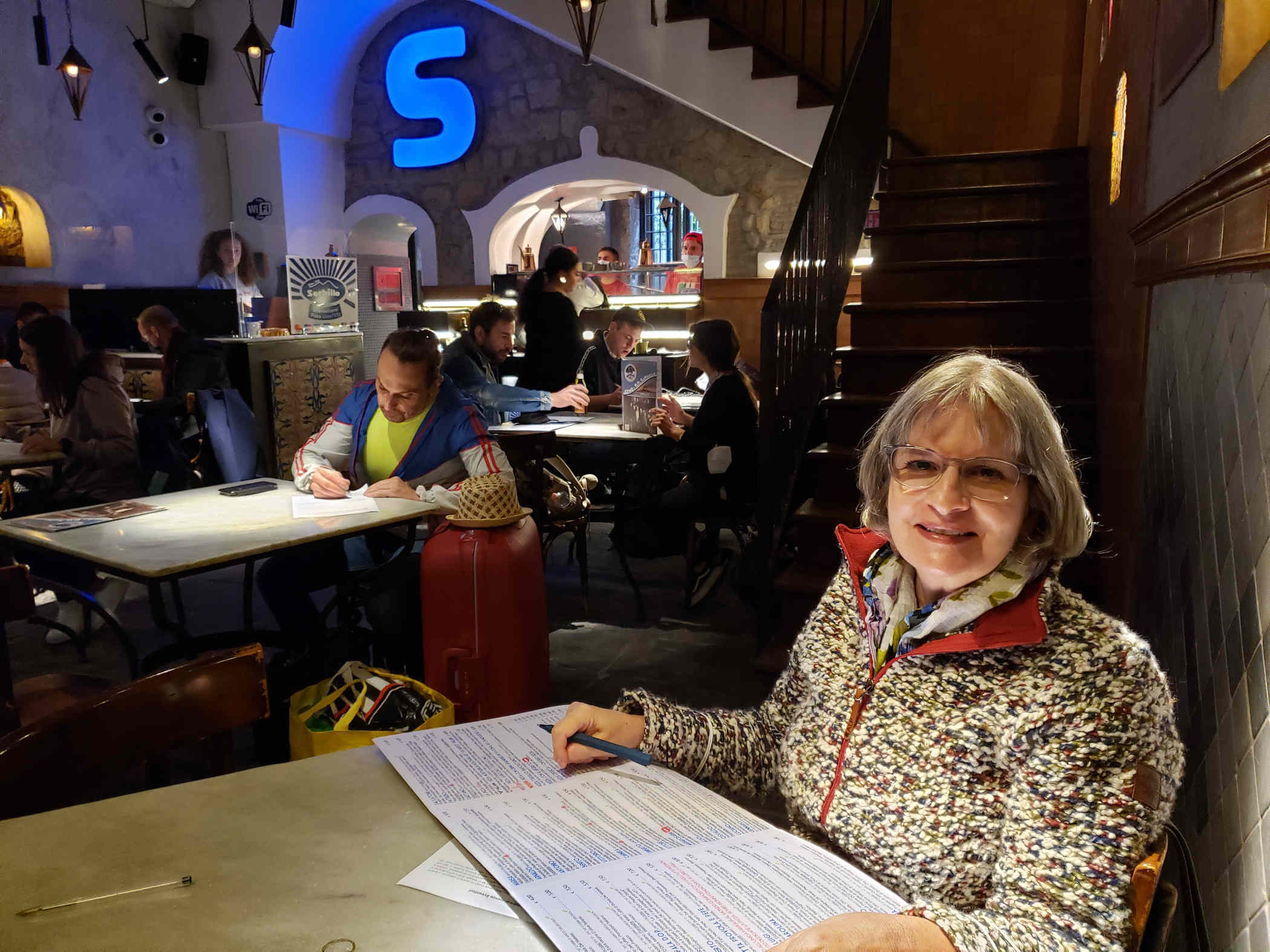
Gino e Toto Sorbillo Pizzeria – Menu – San Lorenzo, Naples
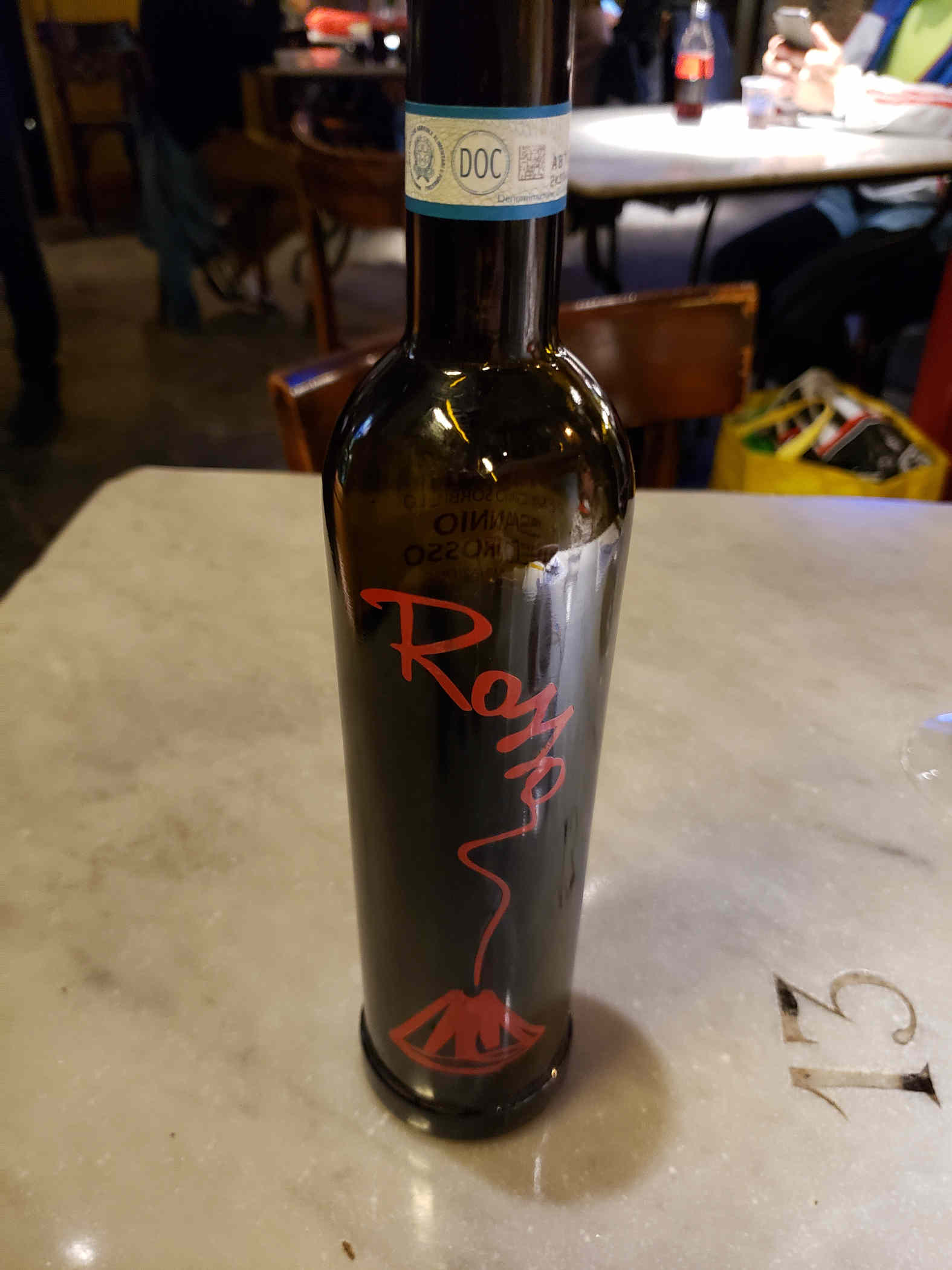
Gino e Toto Sorbillo Pizzeria – Own Wine Label – San Lorenzo, Naples
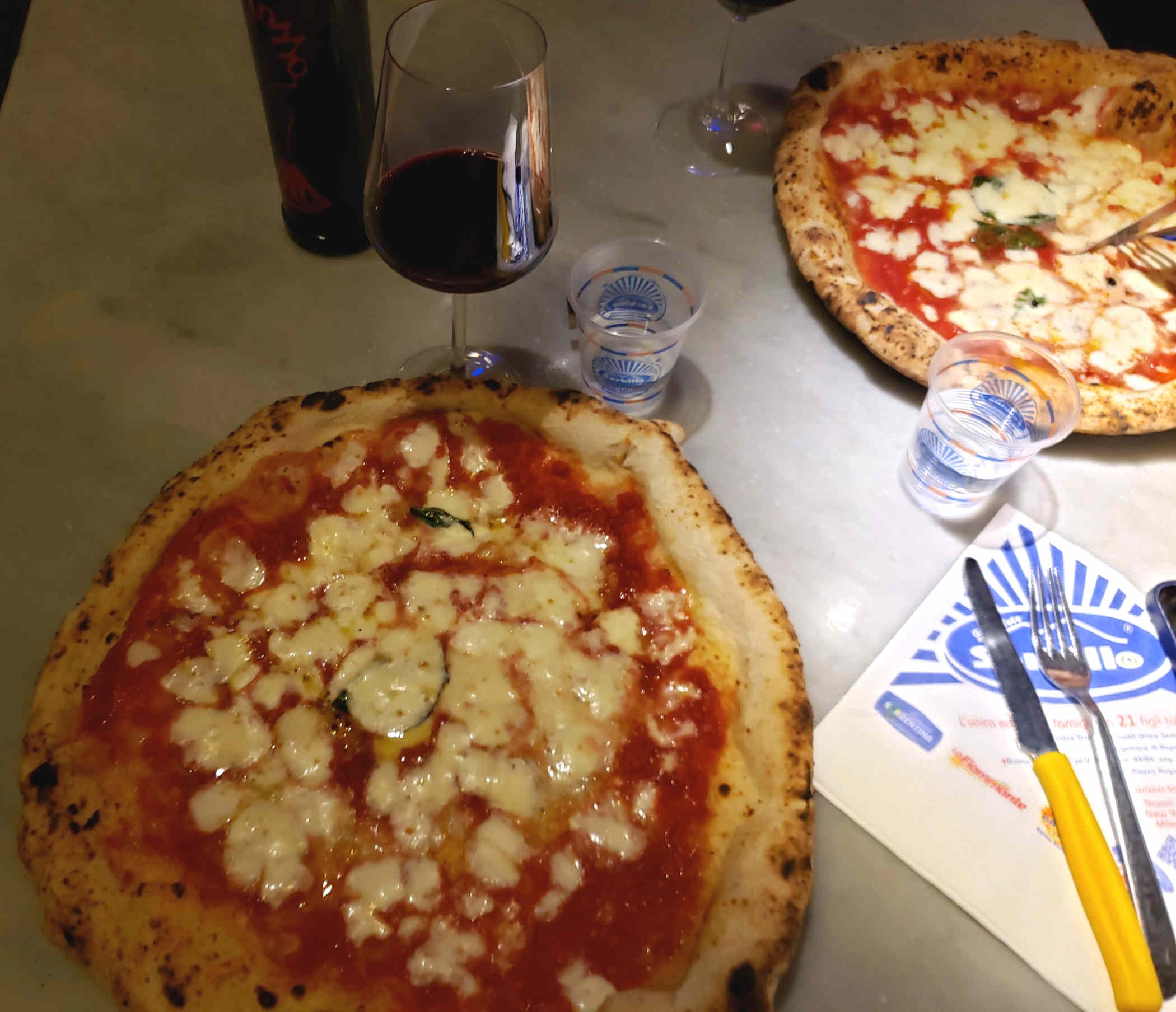
Gino e Toto Sorbillo Pizzeria – Classic Margherita – San Lorenzo, Naples
Gino e Toto Sorbillo Pizzeria – Patti ready to eat – San Lorenzo, Naples
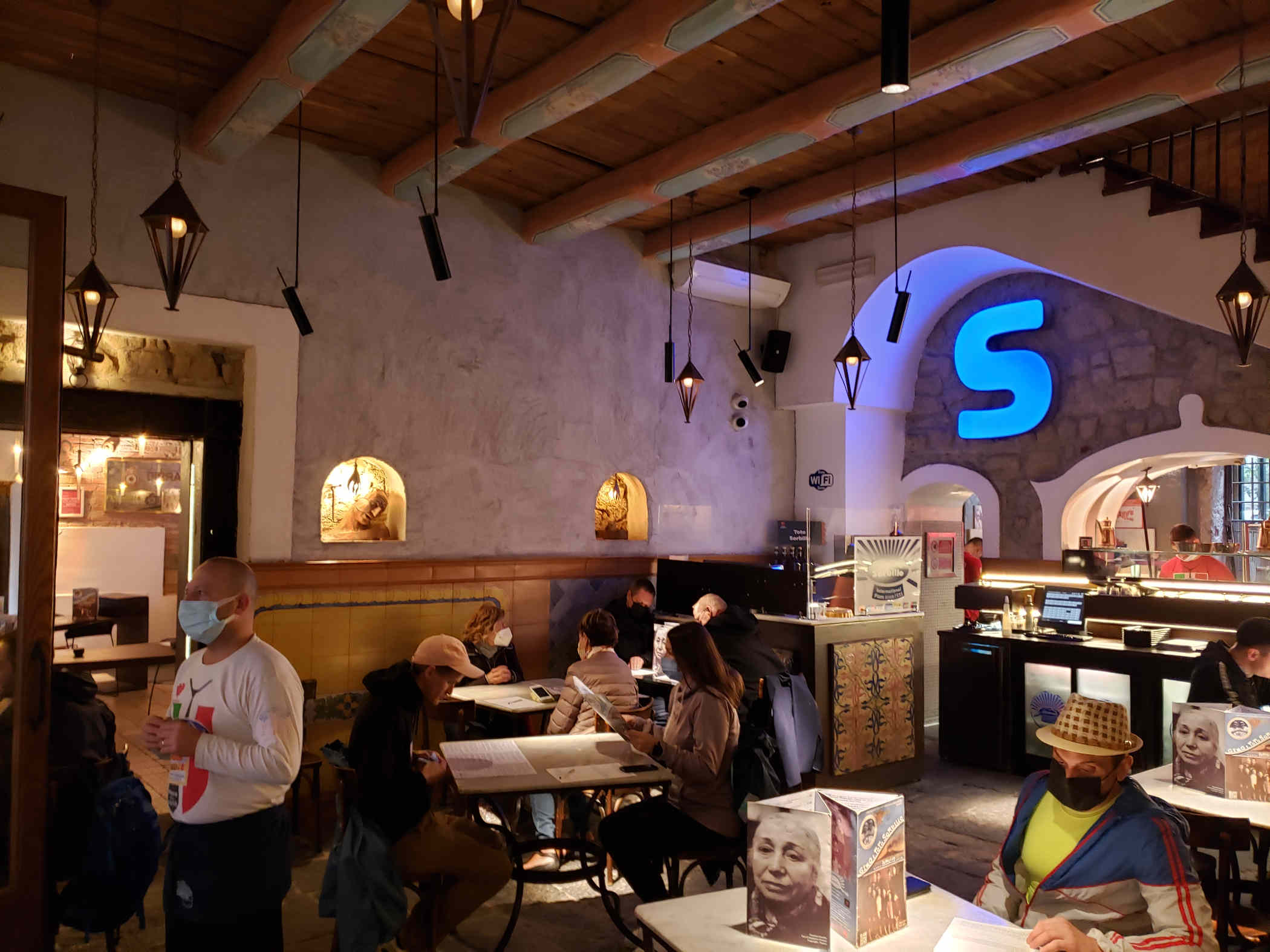
Gino e Toto Sorbillo Pizzeria – Inside – San Lorenzo, Naples
Gino e Toto Sorbillo Pizzeria – Inside – San Lorenzo, Naples
The pizza is simple but amazing. Having never eaten here before, we ordered the recommended Pizza Margherita. With a half bottle of their own red wine and some water we were quite full and happy when we left.
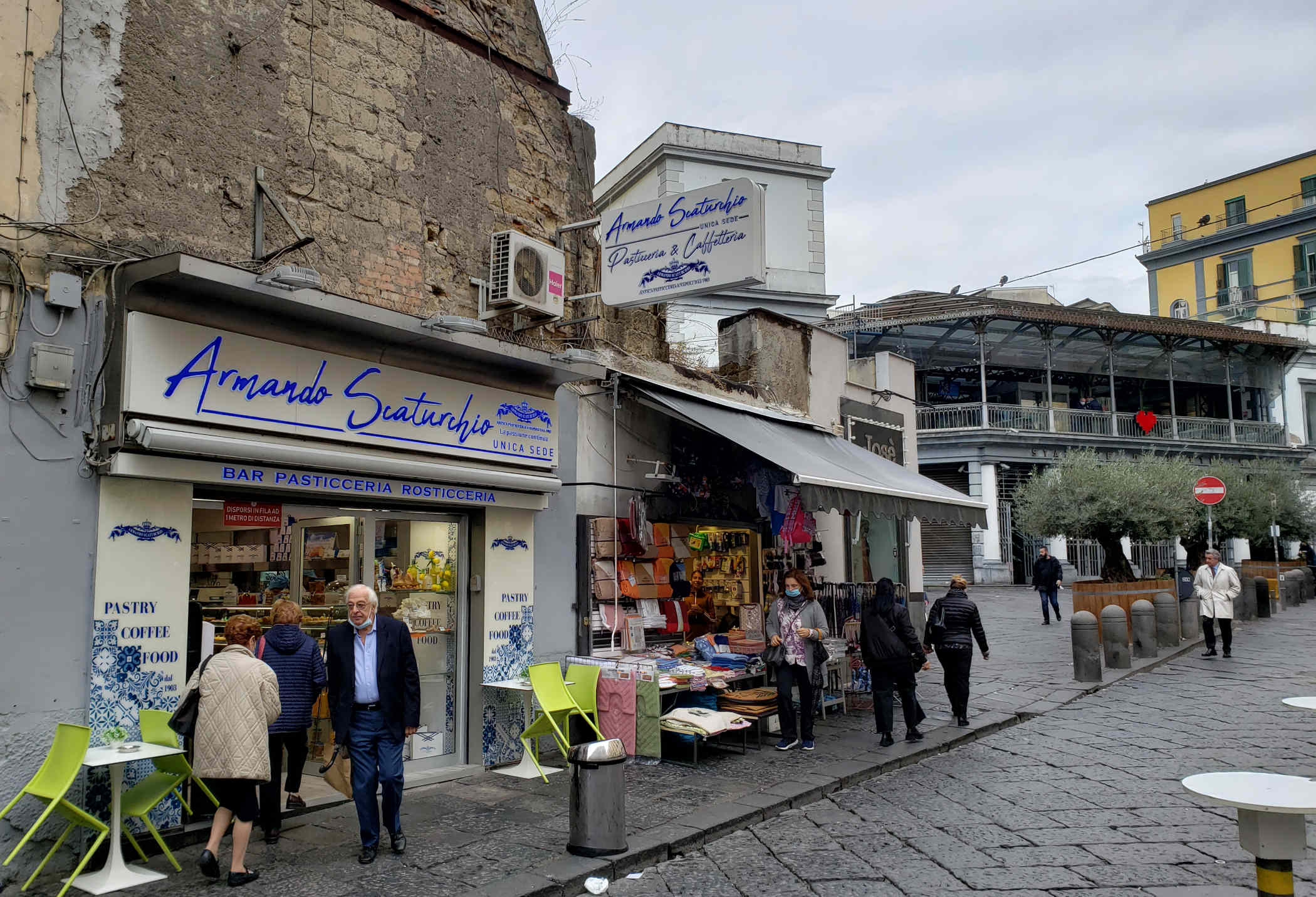
Armando Scartuchio
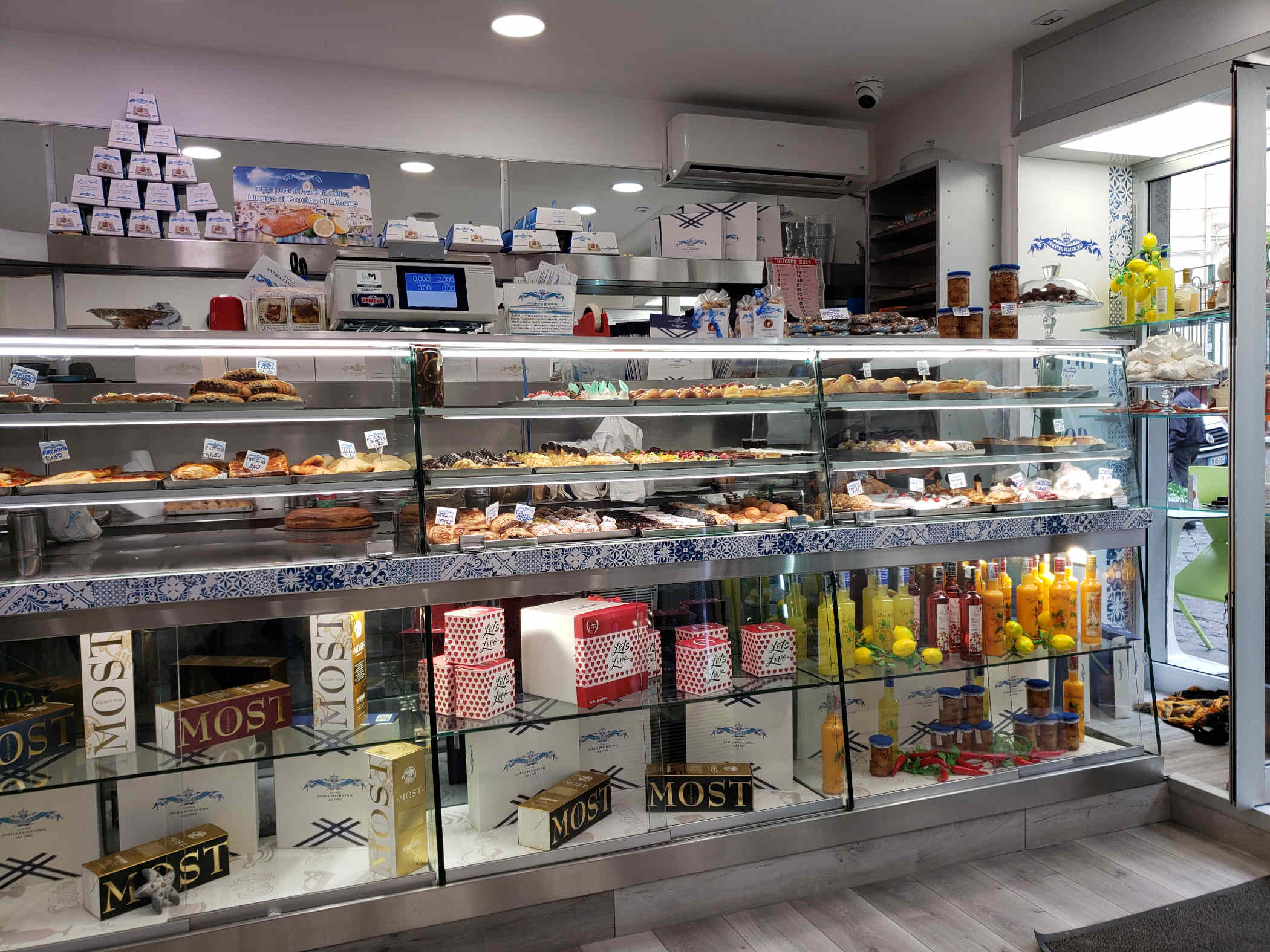
Armando Scartuchio is a chain of cafes with a rich history and several stores sprinkled throughout the city and a must place to stop. Though we only stopped at one, it must hold mostly true that any pastries made by this company taste more a less the same, no matter where you eat them. We found ours just outside the Spanish Quarter in Montecalvario.
Armando Scartuchio – Montecalvario, Naples
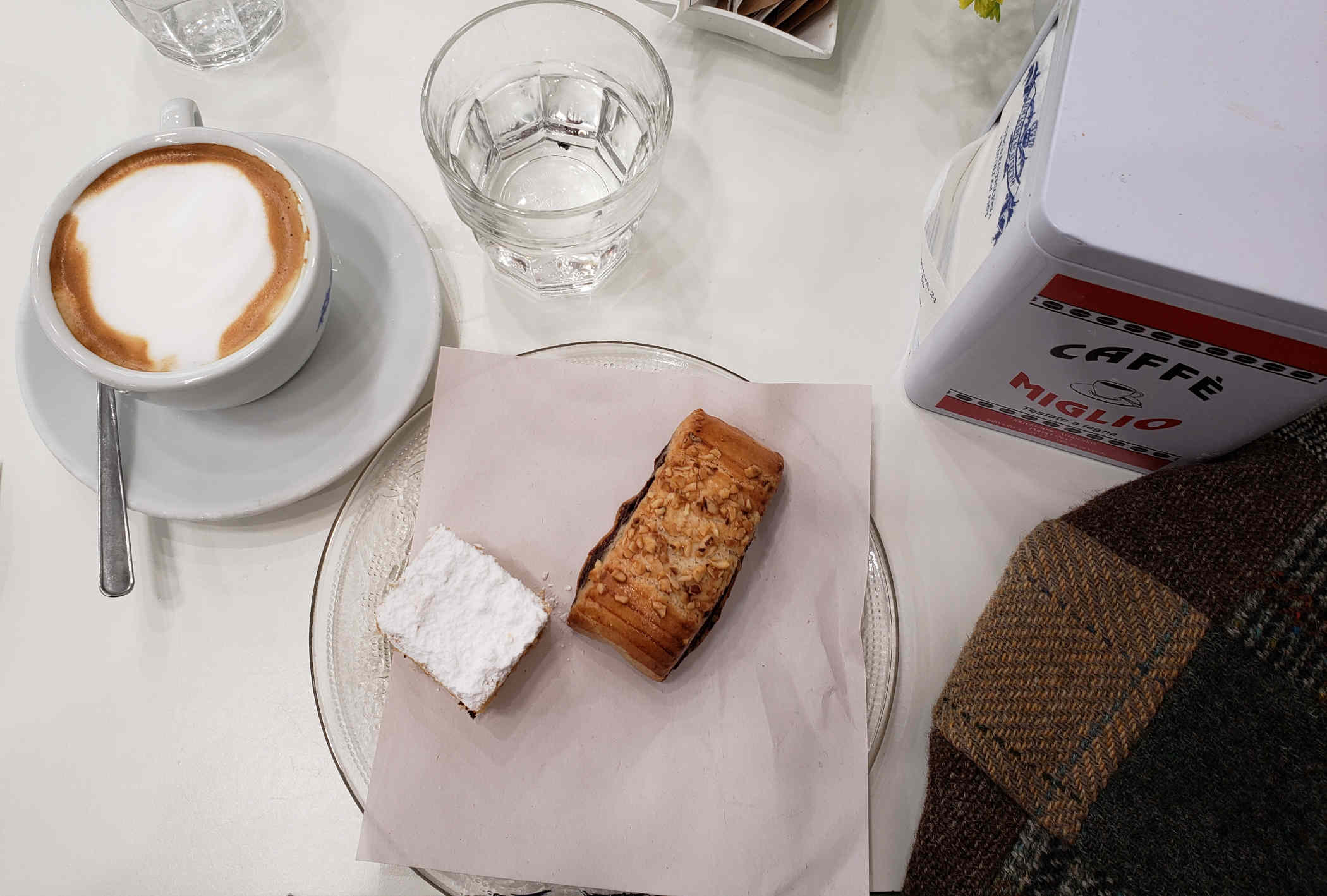
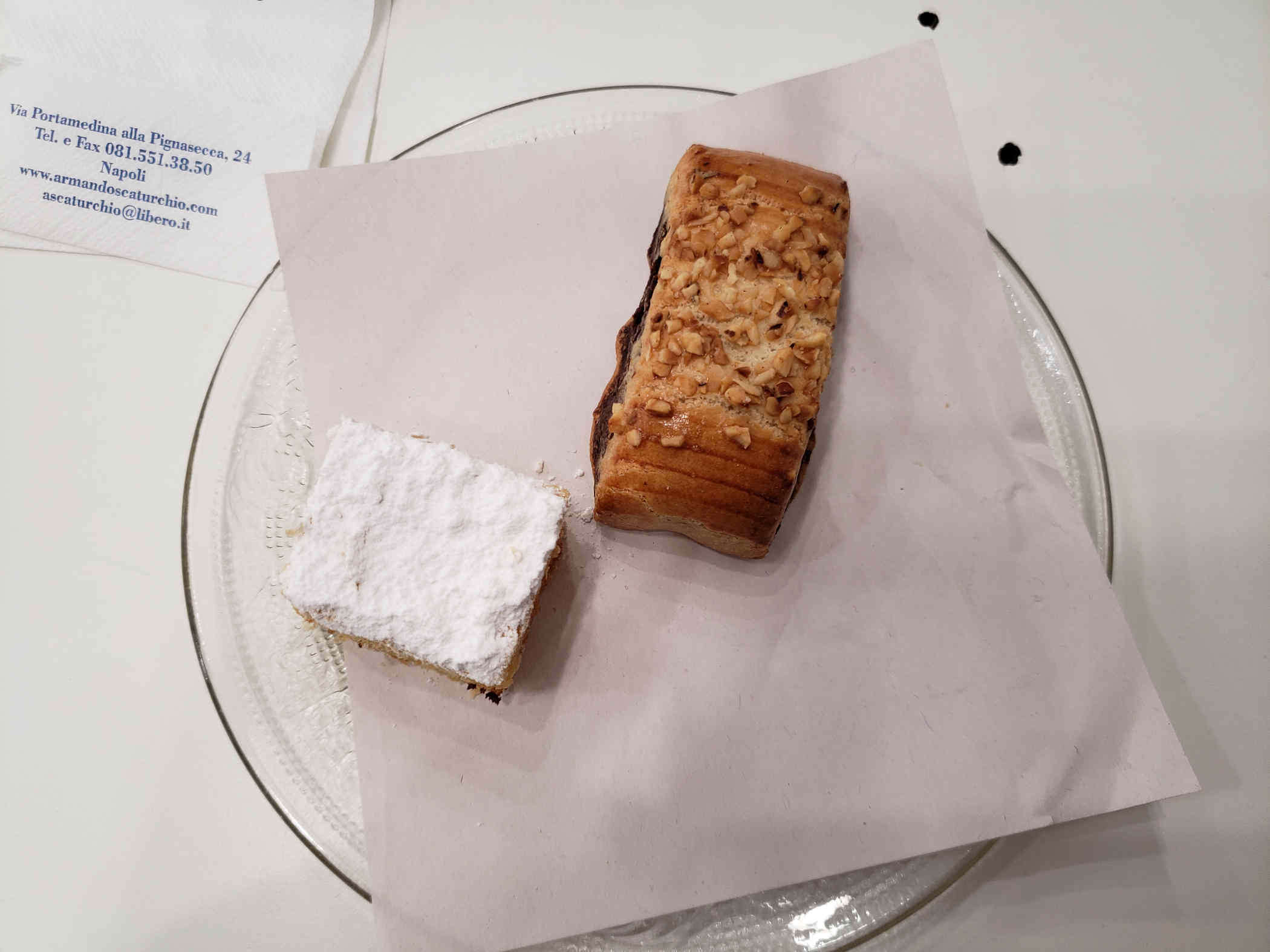
While staying in Naples it is an absolute necessity to stop each day around eleven o’clock or so to have coffee and a bite to eat. This is an excellent place to recharge your morning battery. Still early enough to order two Cappuccino and some very good baked goods, an excuse to drink, eat and further discuss the plans of the day. We ordered a few very interest things we thought we just had to taste.
Capucino, Lemon Tort and Chocolate Nut Cake
Lemon Tort and Chocolate Nut Cake
Pistachio Creme Cake
Display Case – Armando Scartuchio – Montecalvario, Naples
TrattoriaMalinconico
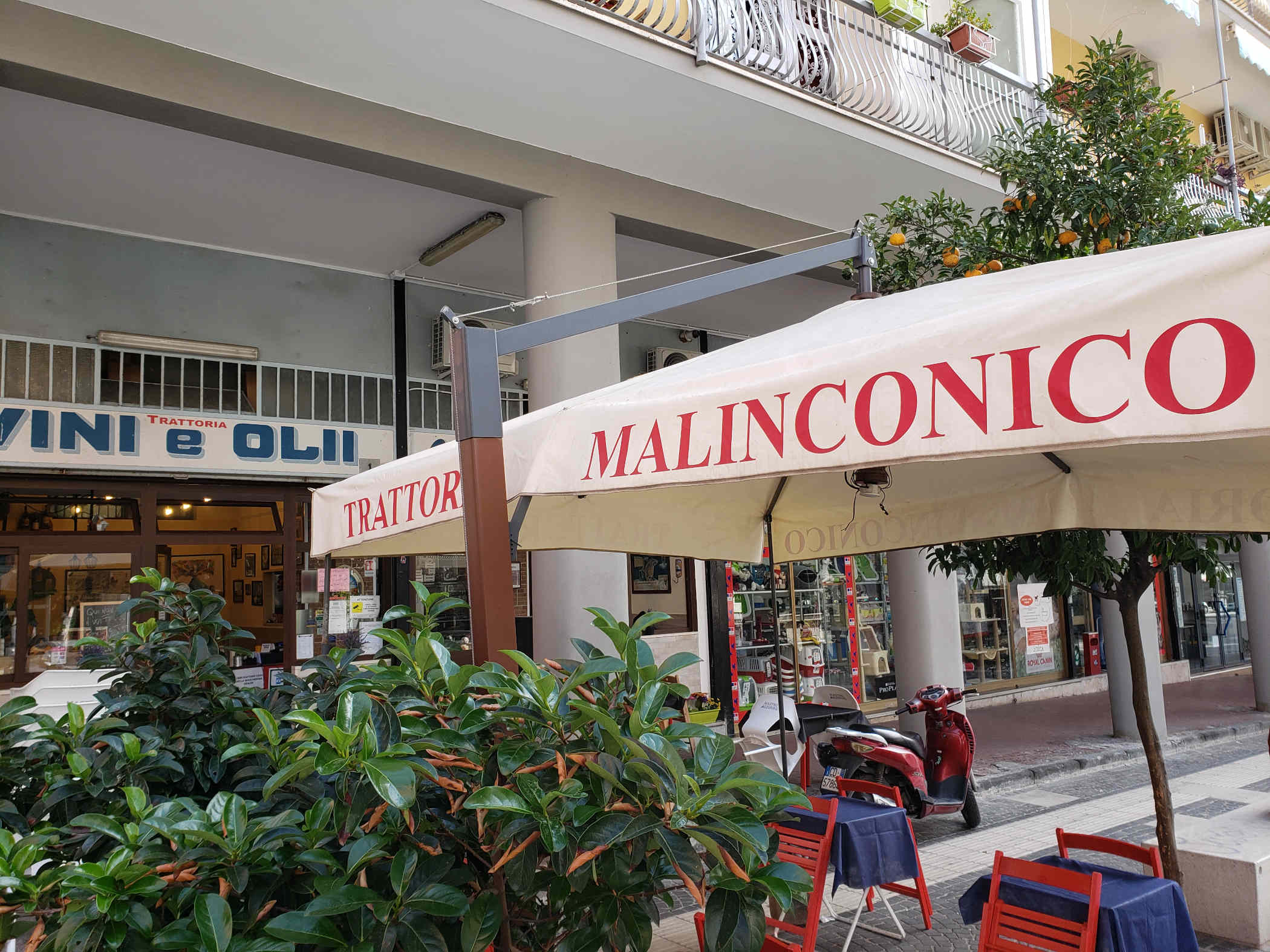
Situated well out of the way is Trattoria Malinconico. A place not often, if ever, visited by tourists, so they were quite interested and curious when we stopped for lunch.
Trattoria Malinconico – Vomero
For starters, this Trattoria is in Vomero, which is on top of the hill. Therefore you must either take one of the three funiculars to get there or climb a very large and then still walk a kilometer or so before reaching it. Even then, it is kind of hidden around the corner from the well established market street on the end of a dead end street in a sort of strip mall.
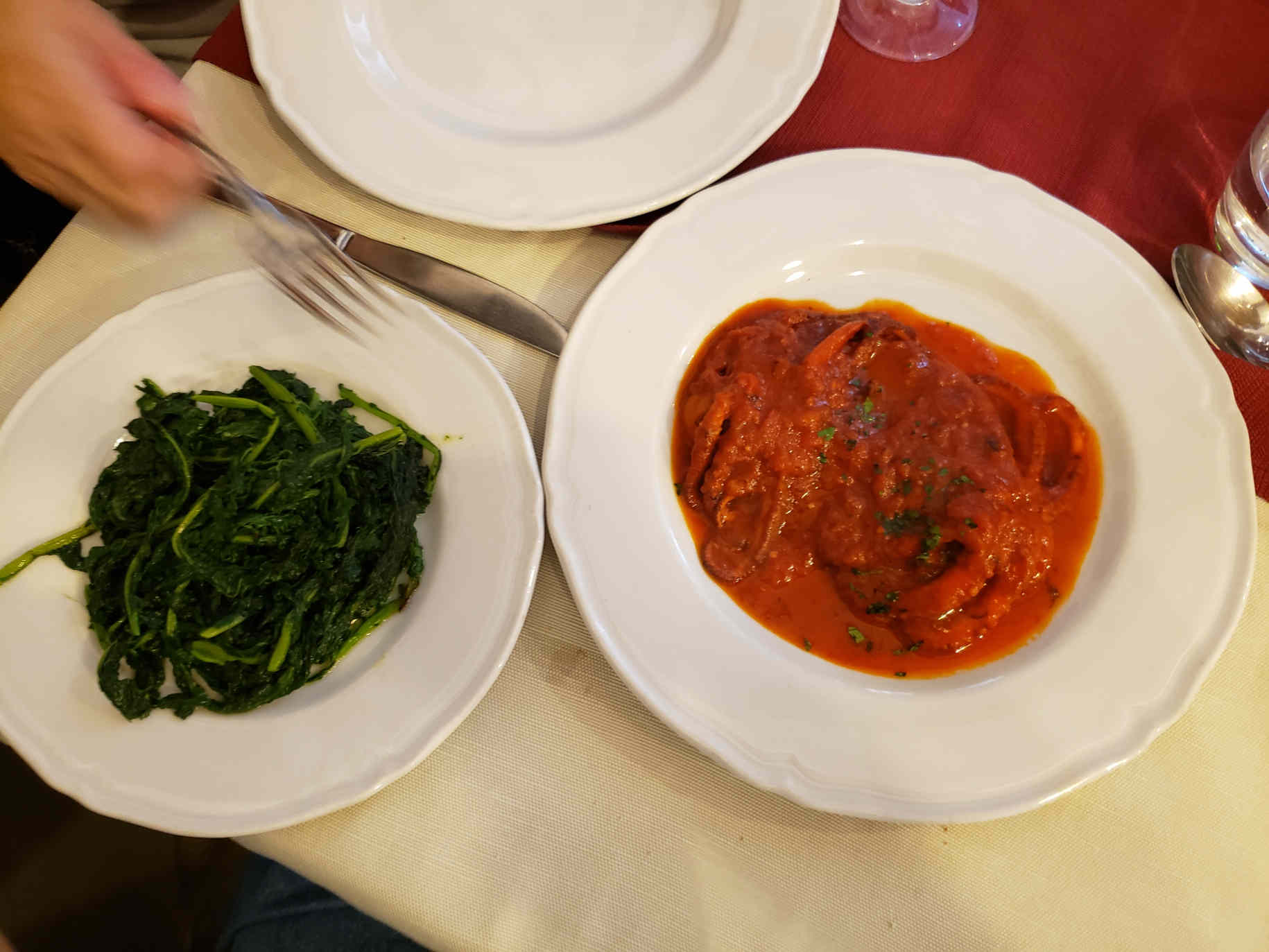
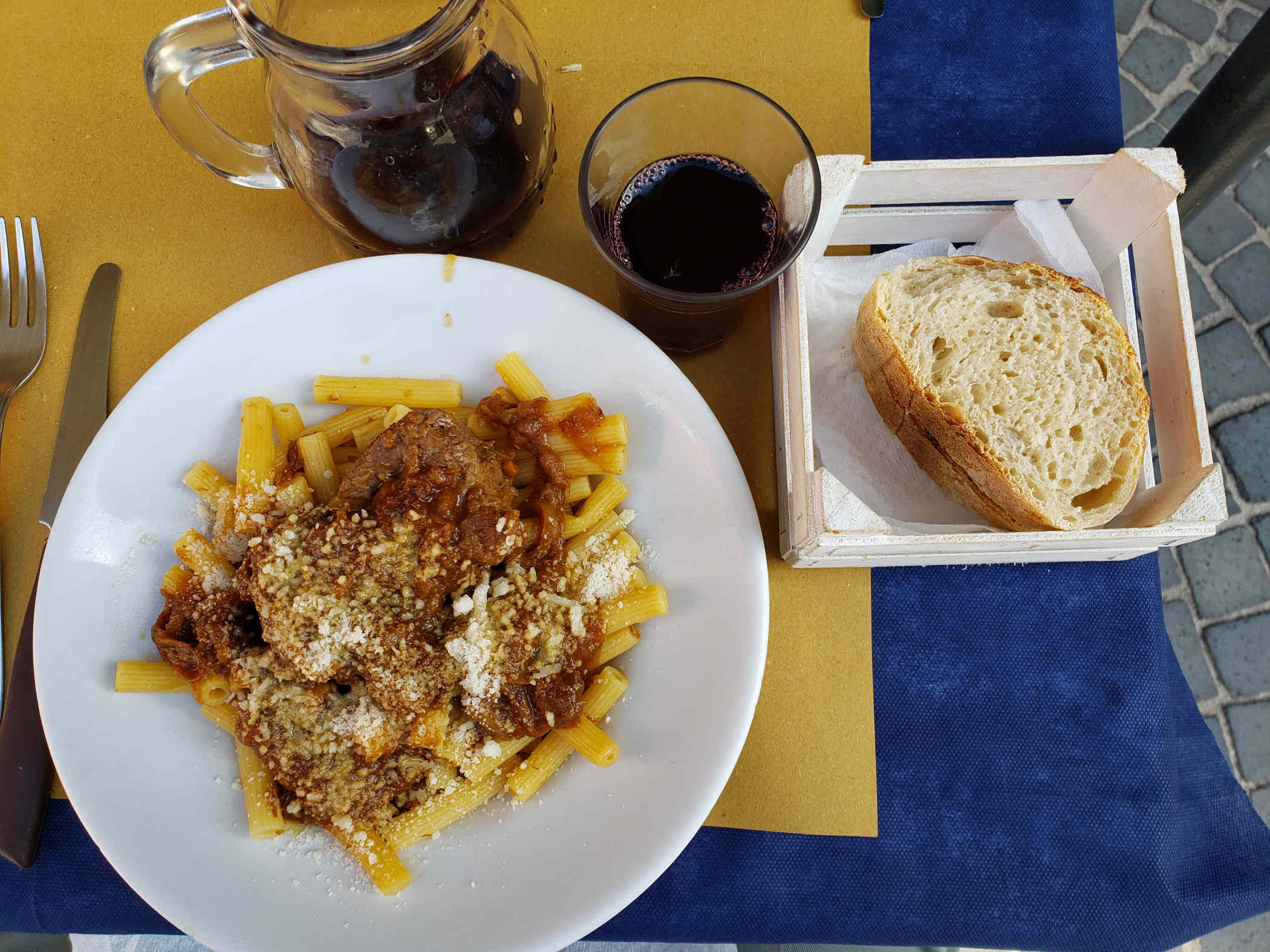
Beef Genovese with Pasta and Bread – Trattoria Malinconico – Vomero, Naples
In any case, the food is excellent and home cooked. Our interest was is getting the most authentic tasting Beef Genovese that we could find and our searches ended us up at this small but excellent establishment. What we found on the menu was actually that, but it was called Pasta Genovese with Meat, also known as Genovese Completa. It didn’t matter, for 8€ we ordered it with a mezzo litro of red wine and ate our hearts out.
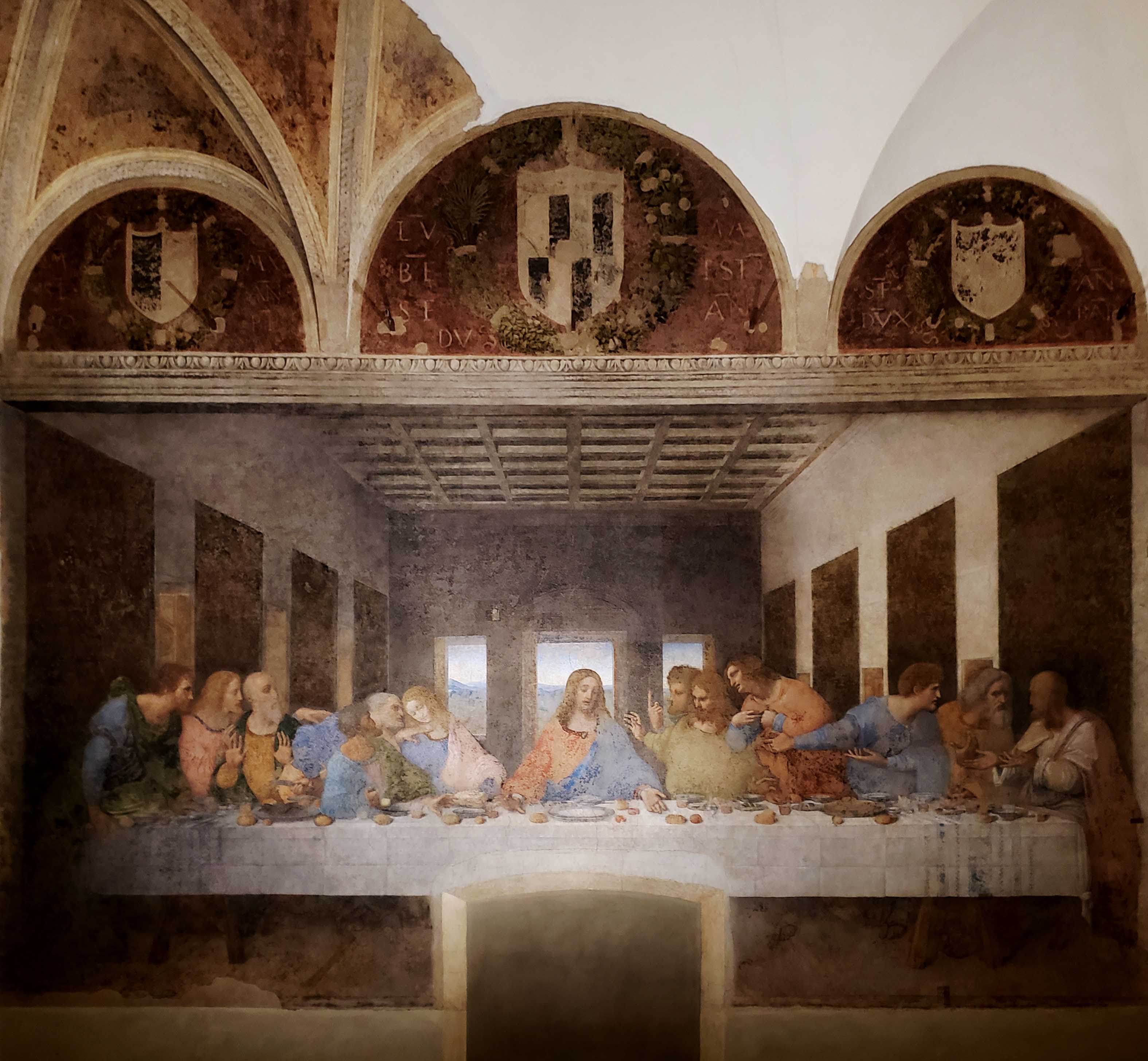
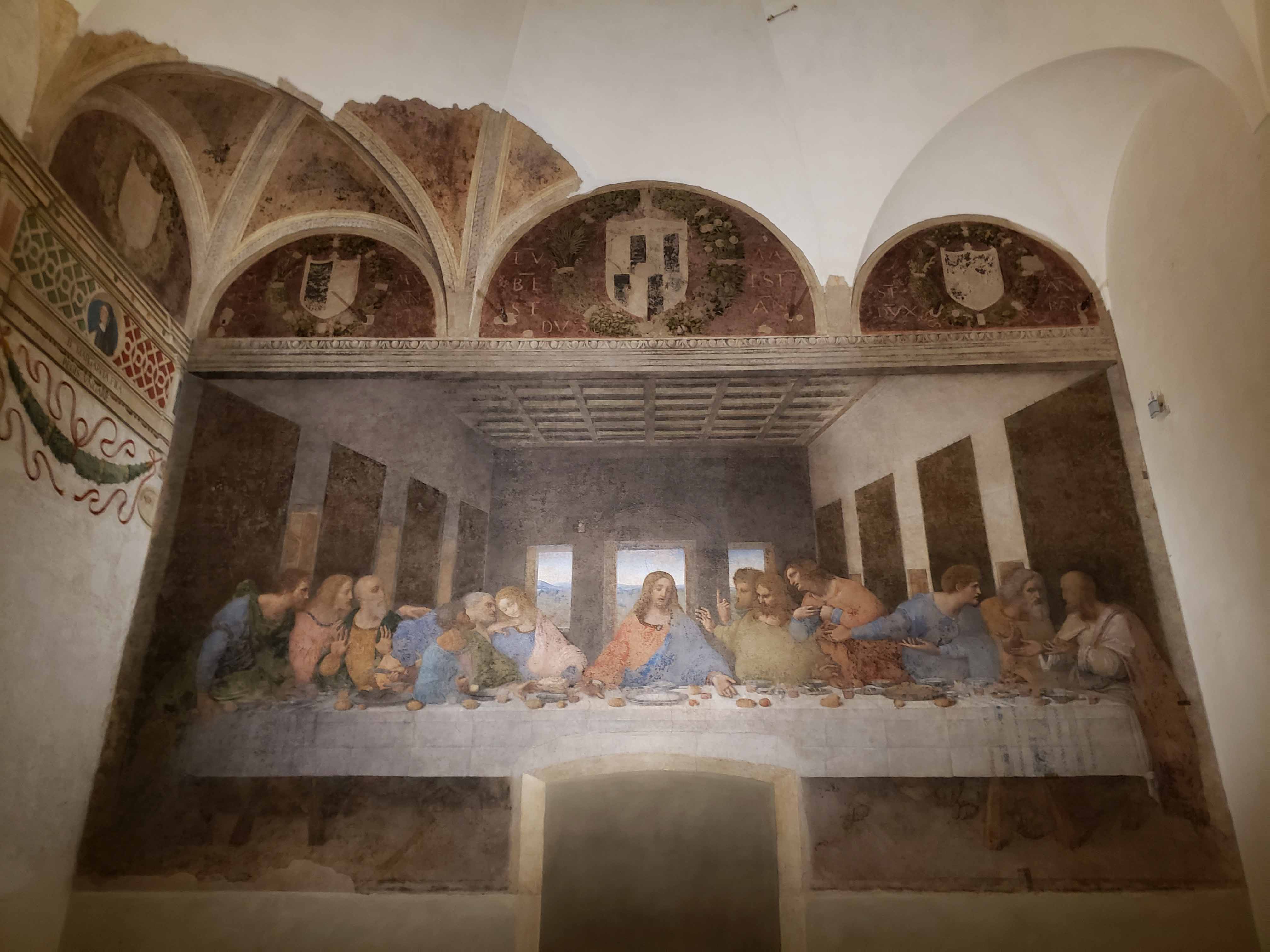
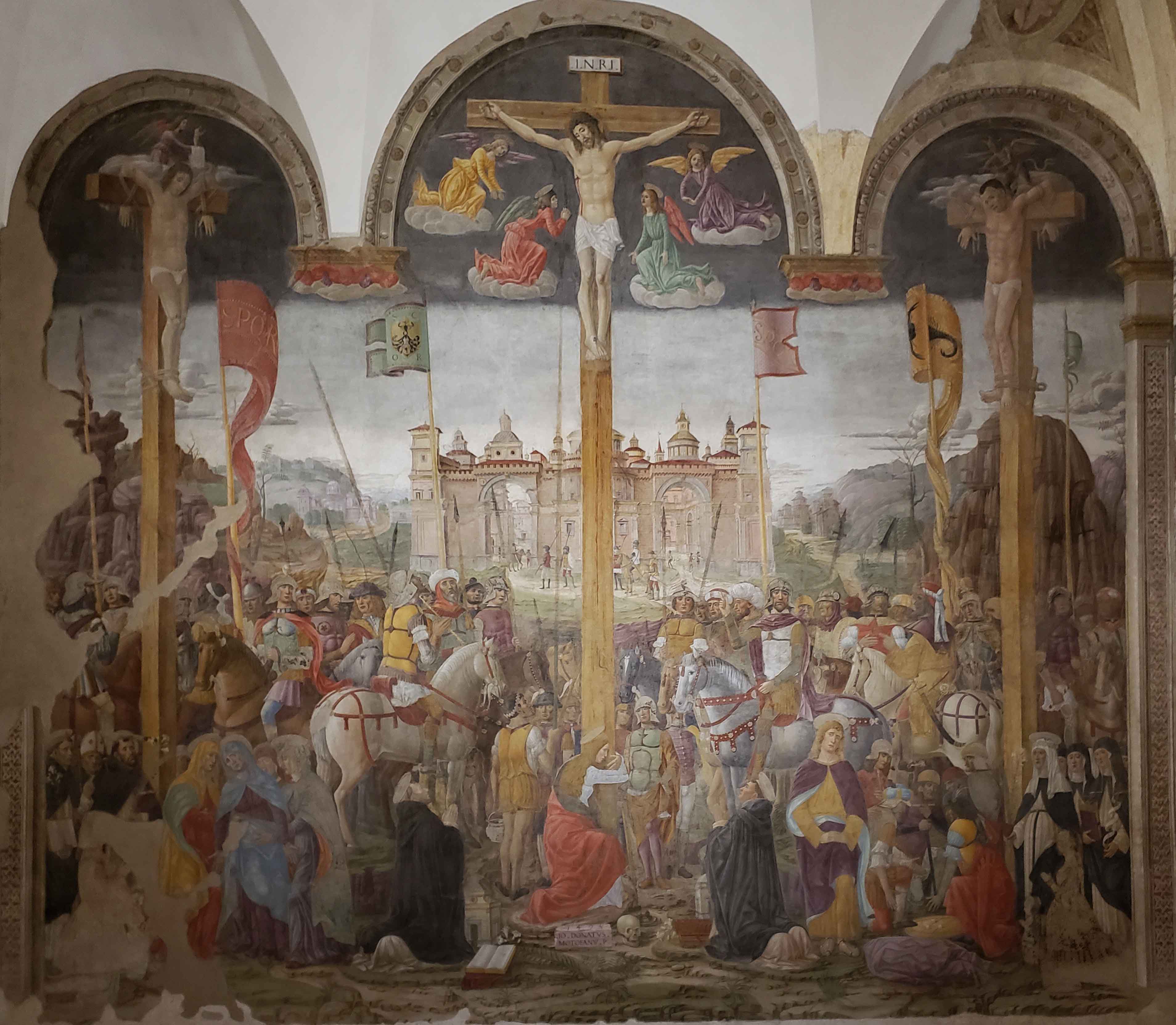
On our return trip from Romania, we took a few days from the 22nd to the 24th of September, to stay in Milan with our sons. The point was to relax a bit, before they took their return flight from Malpensa Airport back to the States, and to see a few of the sights. We were lucky enough this time to have had the luxury of purchasing tickets. That is, within six months of their use, in order to visit Da Vinci’s Last Supper and Crucifixion, two works by him that are the most difficult to see. Luckily, few people for various reasons are able to travel or visit these works now, making access to them more readily available. So we jumped at that chance when we saw tickets were in fact available.
Milan – Museum Cenacolo Vinciano – Tickets For Two
I am not going to comment on Da Vinci’s work, but let his masterpieces speak for themselves.
Hotel Manzoni
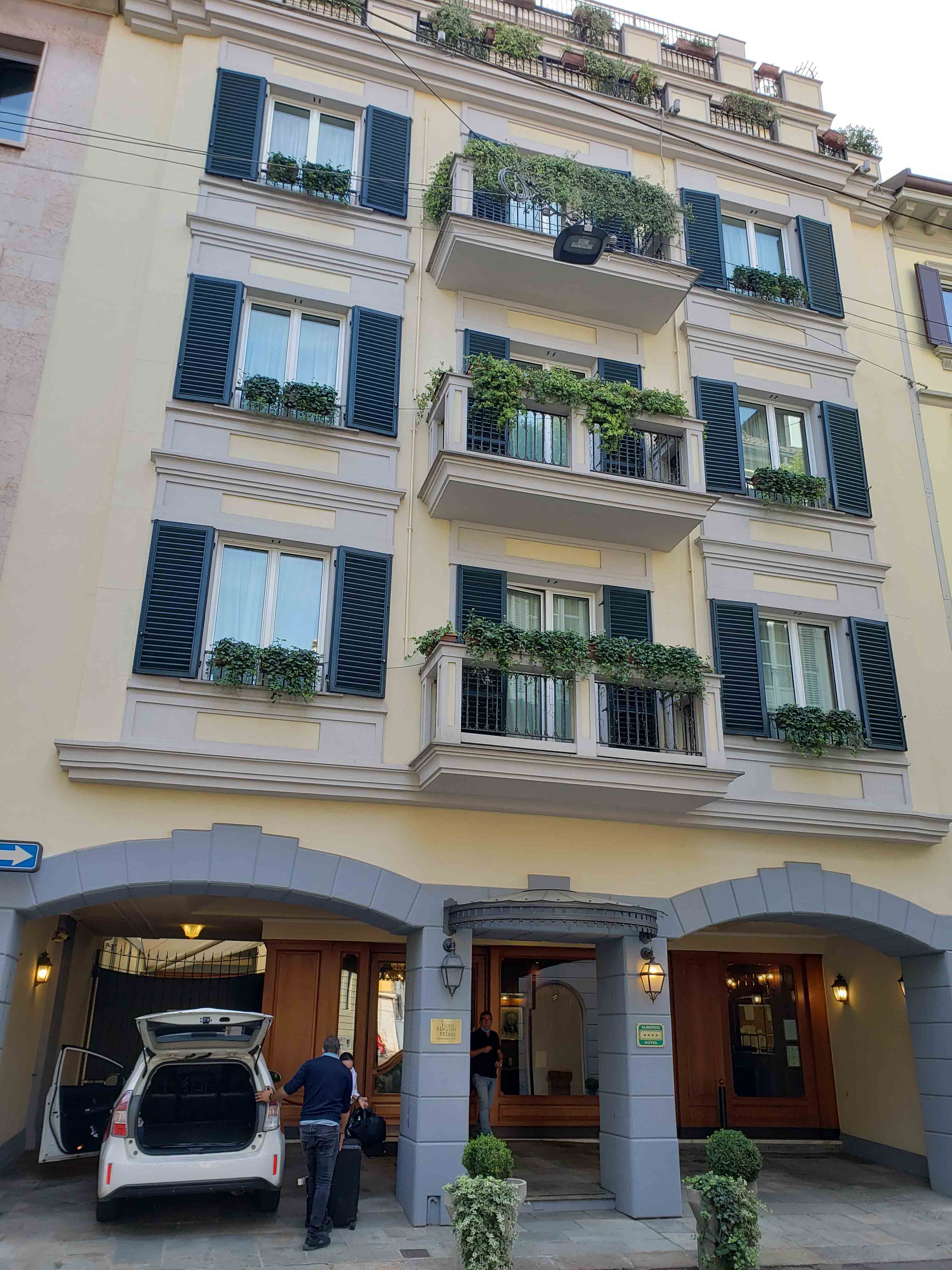
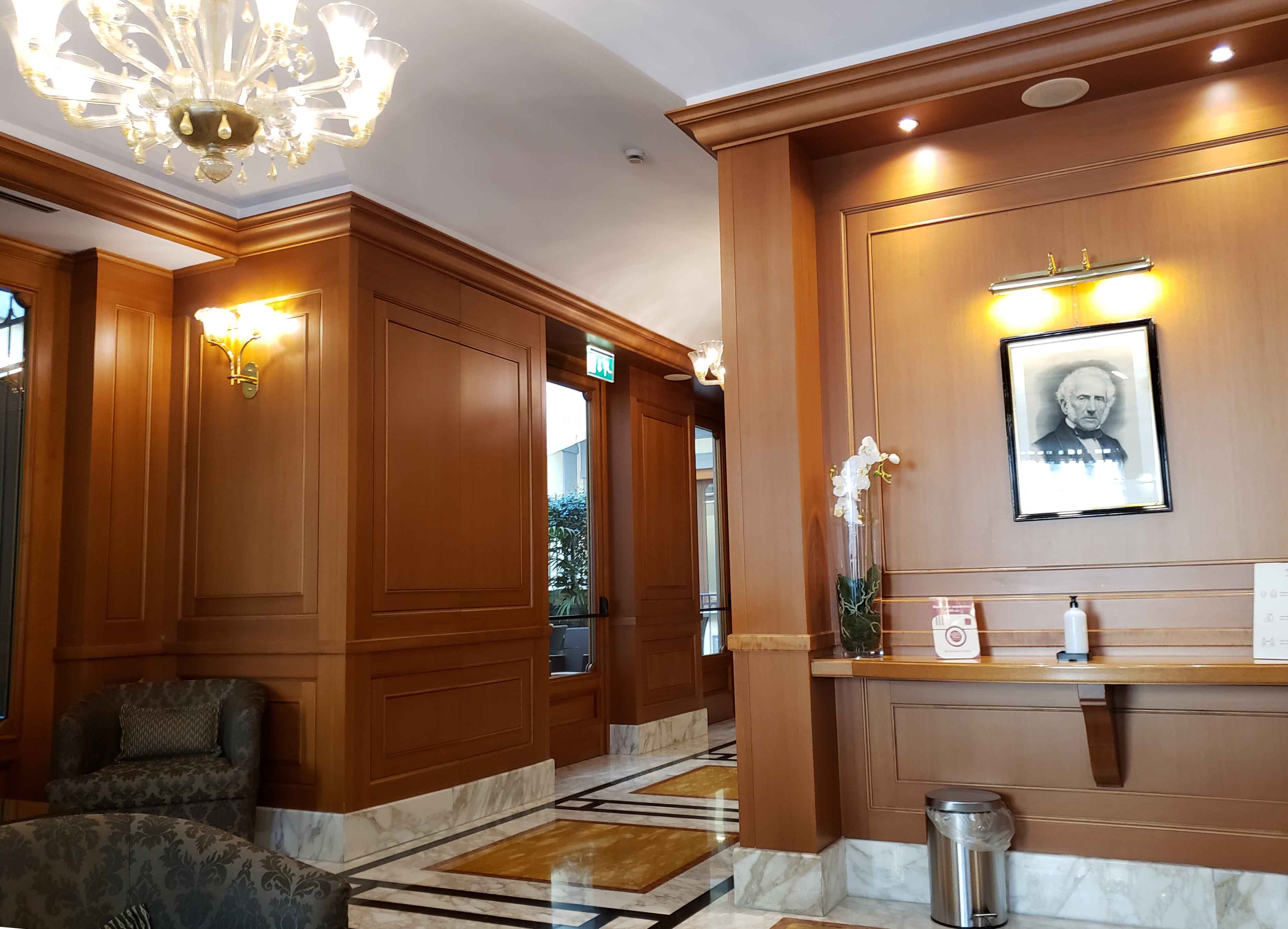
Located in Milan’s Quadrilatero Della Moda section, this four star hotel can be found on Via Santo Spirito. Both outside and inside are quite compact and very well kept. There is a bellman to help with luggage and front desk that is occupied around the clock.
Milan – Hotel Manzoni
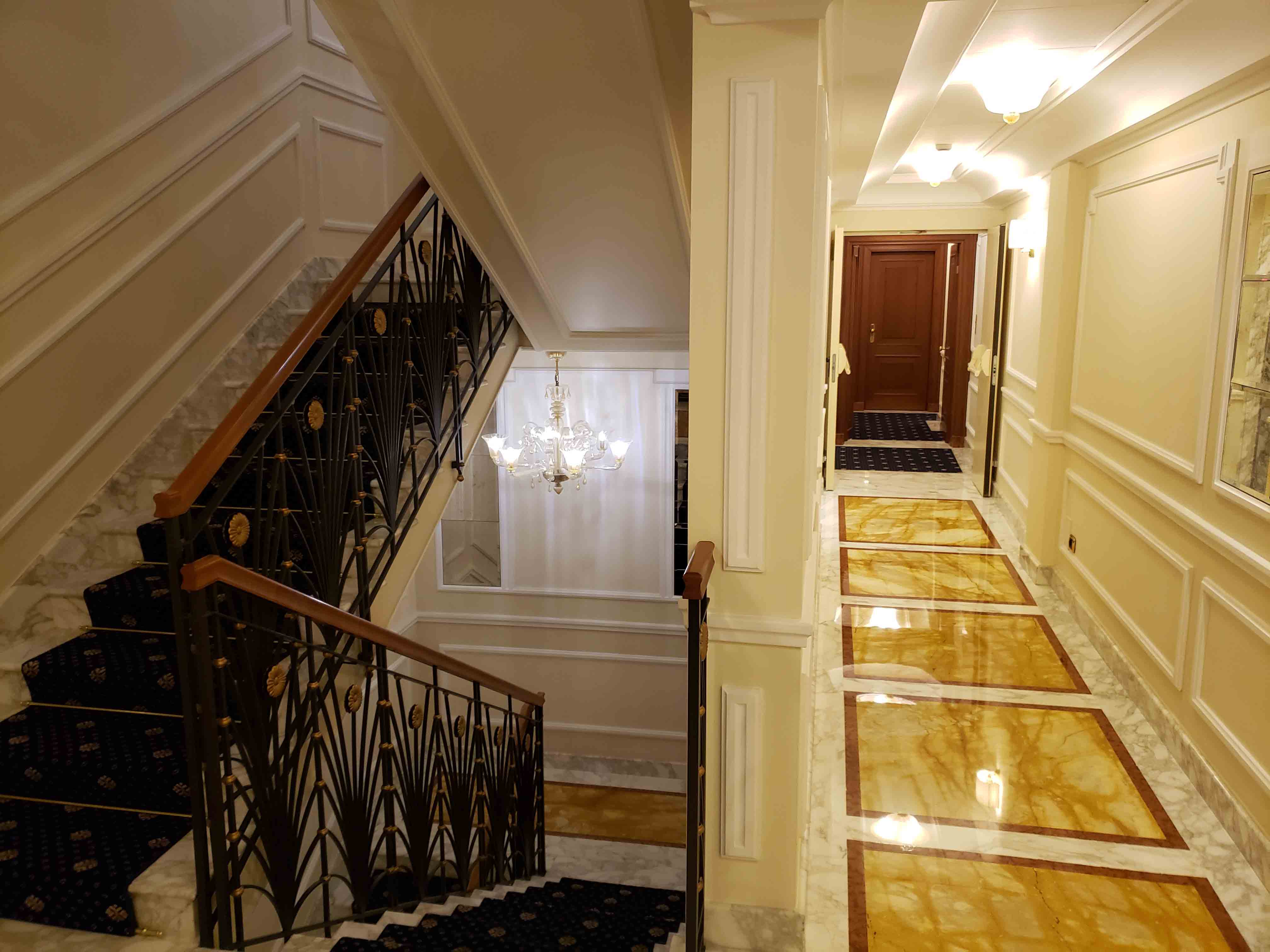
Our rooms were suites and rather spacious for being in the historic part of Milan. Most floors are decorated in marble with tastefully chosen chandeliers, some of which are from Murano.
Milan – Hotel Manzoni – Floors
Milan – Hotel Manzoni – Lobby
Museum Cenacolo Vinciano
The museum is located in Piazza di Santa Marie della Grazie and contains the works of Leonardo Da Vinci’s Last Supper and Crucifixion.
Da Vinci’s The Last Supper and Crucifixion – Viewing Area
Da Vinci’s Last Supper
Da Vinci’s The Last Supper
Da Vinci’s The Last Supper – Original Shot
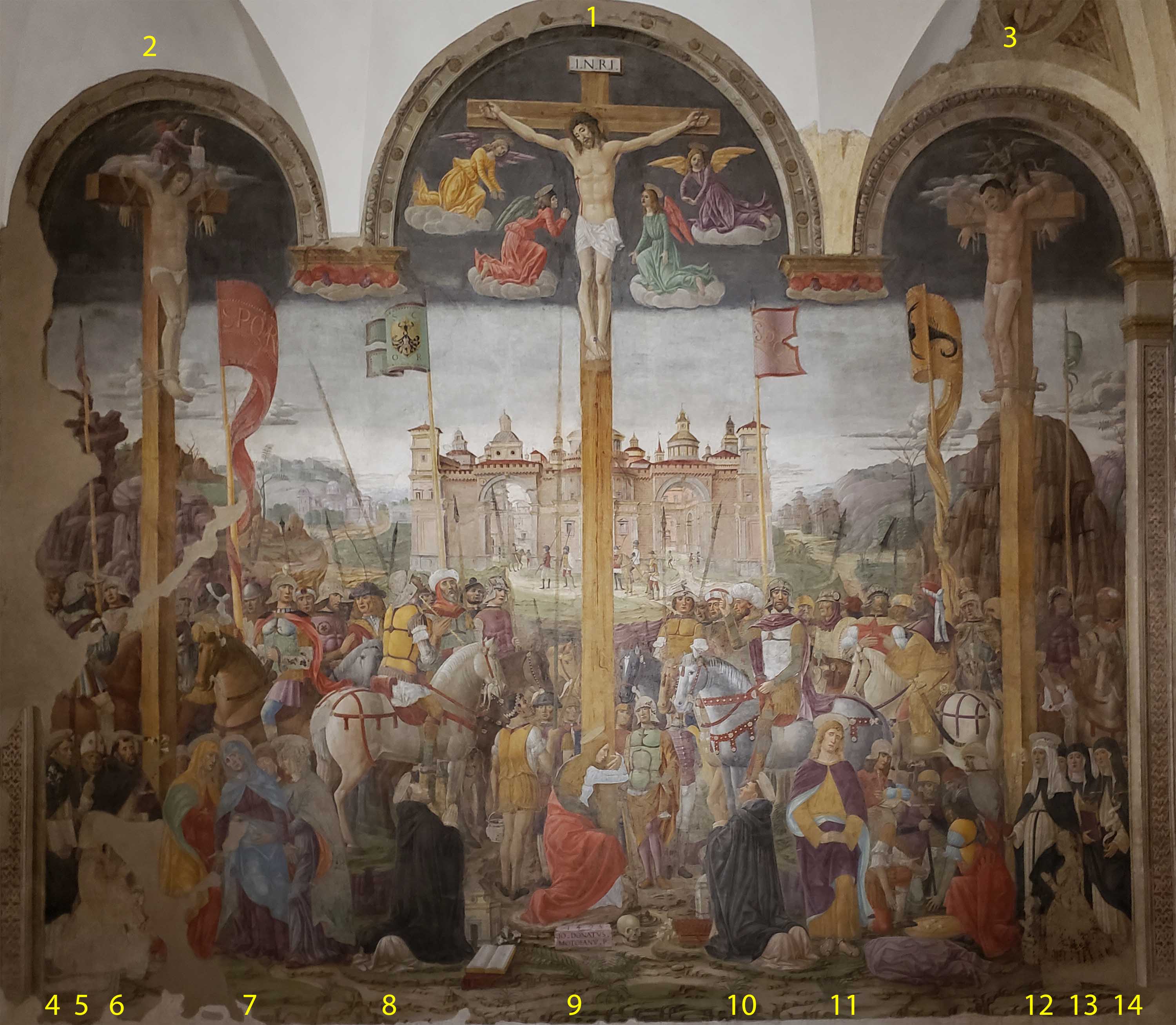
Da Vinci’s Crucifixion
Da Vinci’s Last Supper
Da Vinci’s Last Supper – Details
Legend:
Christ
Tito
Dimaco
St. Vincent Ferrer
Ludovico il Moro
St. Peter Martyr
Virgin Mary
St. Dominic
Mary Magdalene
St. Thomas Aquinas
St. John
St. Catherin of Siena
Beatrice d’Este
St. Maragaret of Hungary
Restaurants
Near Hotel Manzoni are several very good restaurants, as is per usual in most Quadrilateral sections of Italian cities. Since we did not have a lot of time to spend in Milan, the below two were identified and chosen based on customer reviews and not necessarily the most common ones used on the internet. Anyone visiting should expect the prices to reflect the food and the historic area they are in. Complaining about prices, when you probably should be eating street pizza, is just a waste of your time and money.
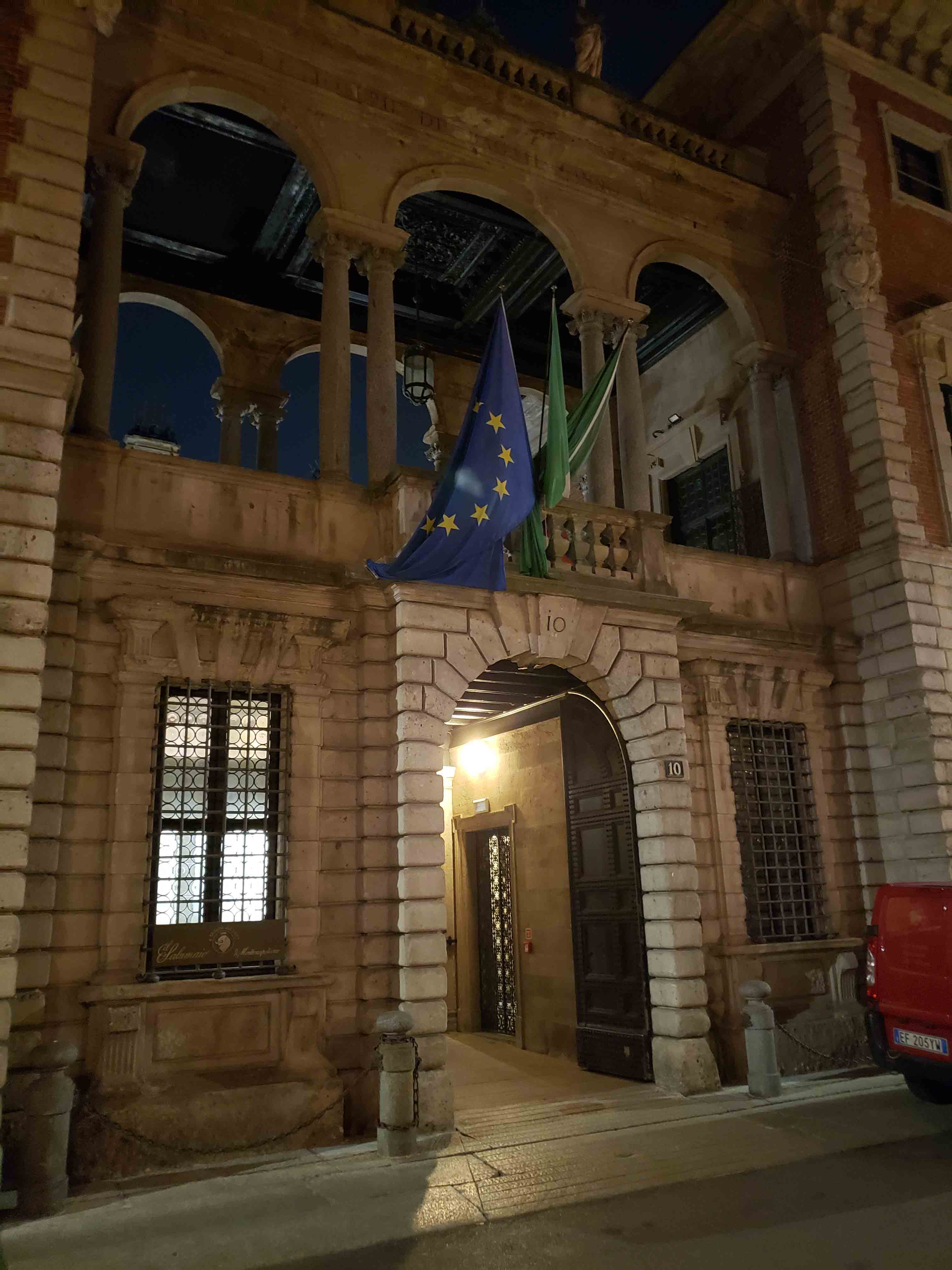
Il Salumaio Di Montenapoleone
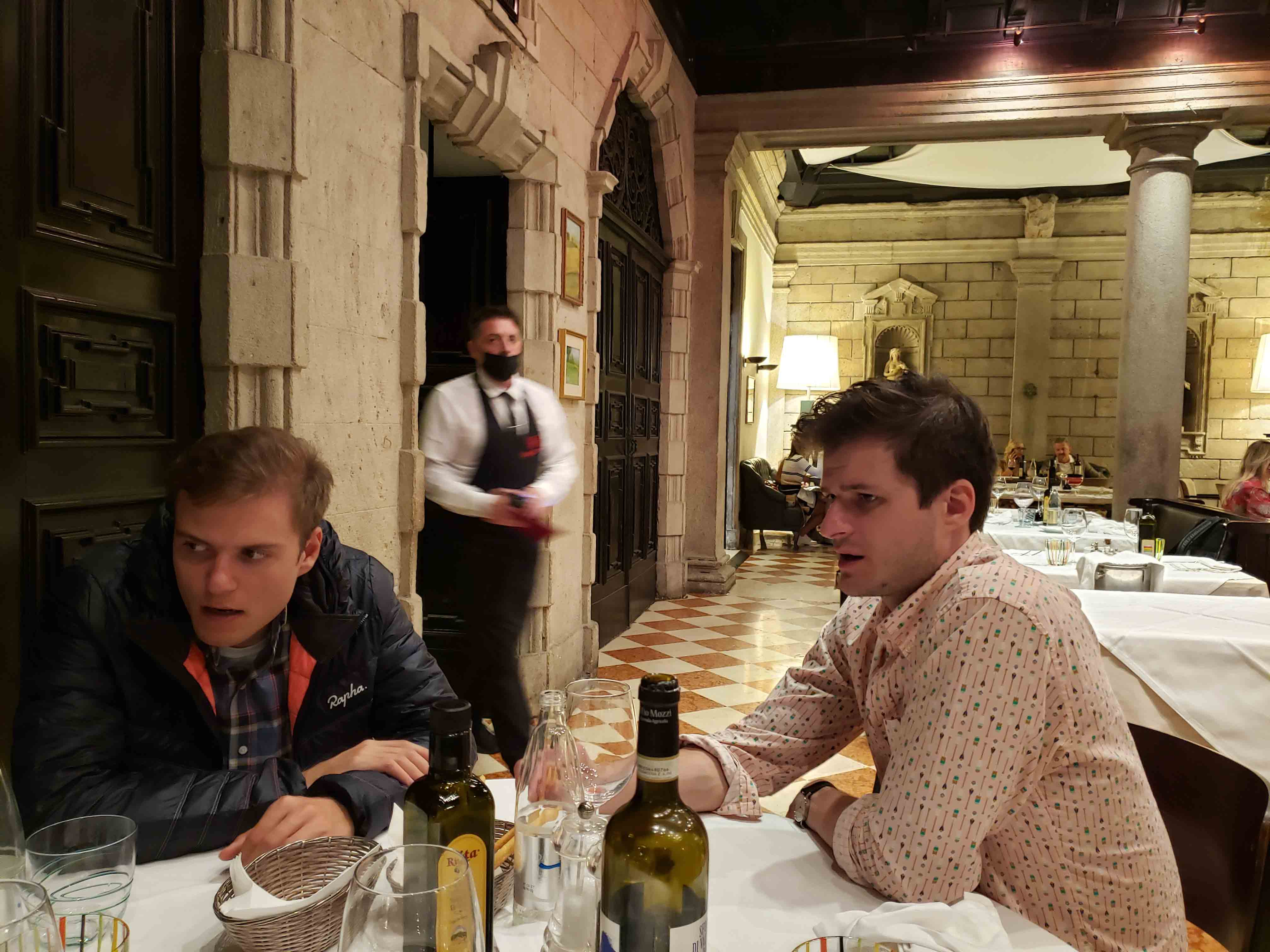
Though it receives only a mid four star rating on one site in the internet, that should not deter anyone from visiting. Keep in mind, that if you are from a country like the U.S. or one similar to it from Europe, service times are not the same in Italy and may not match your expectations. Service usually takes around two hours, especially if you order wine and any other extras, but it is first rate. Dress is casual and the food and service are excellent.
Milan – Ristorante Il Salumaio Di Montenapoleone
Milan – Ristorante Il Salumaio Di Montenapoleone – Tristan and Dana
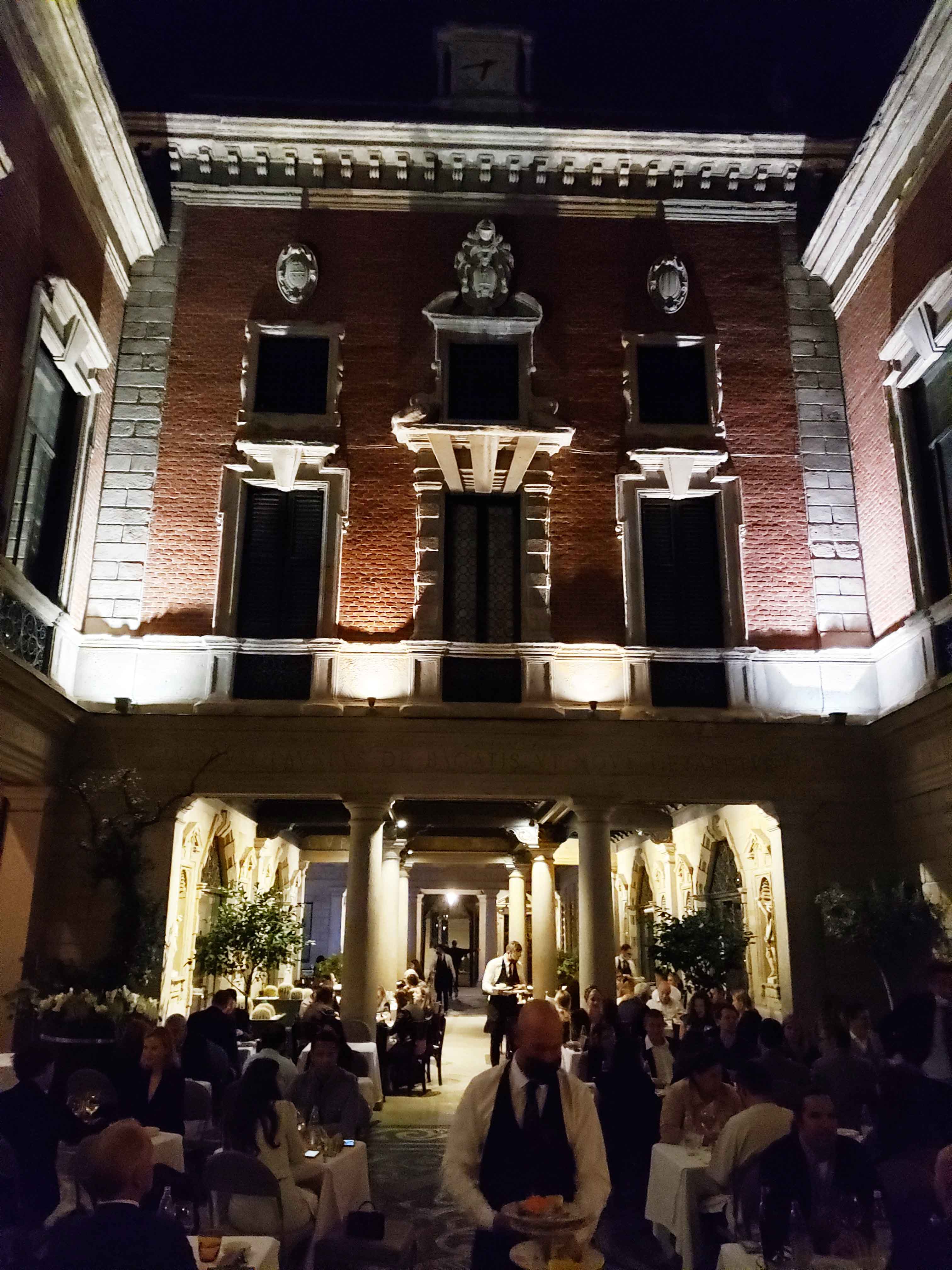
Milan – Ristorante Il Salumaio Di Montenapoleone – Courtyard
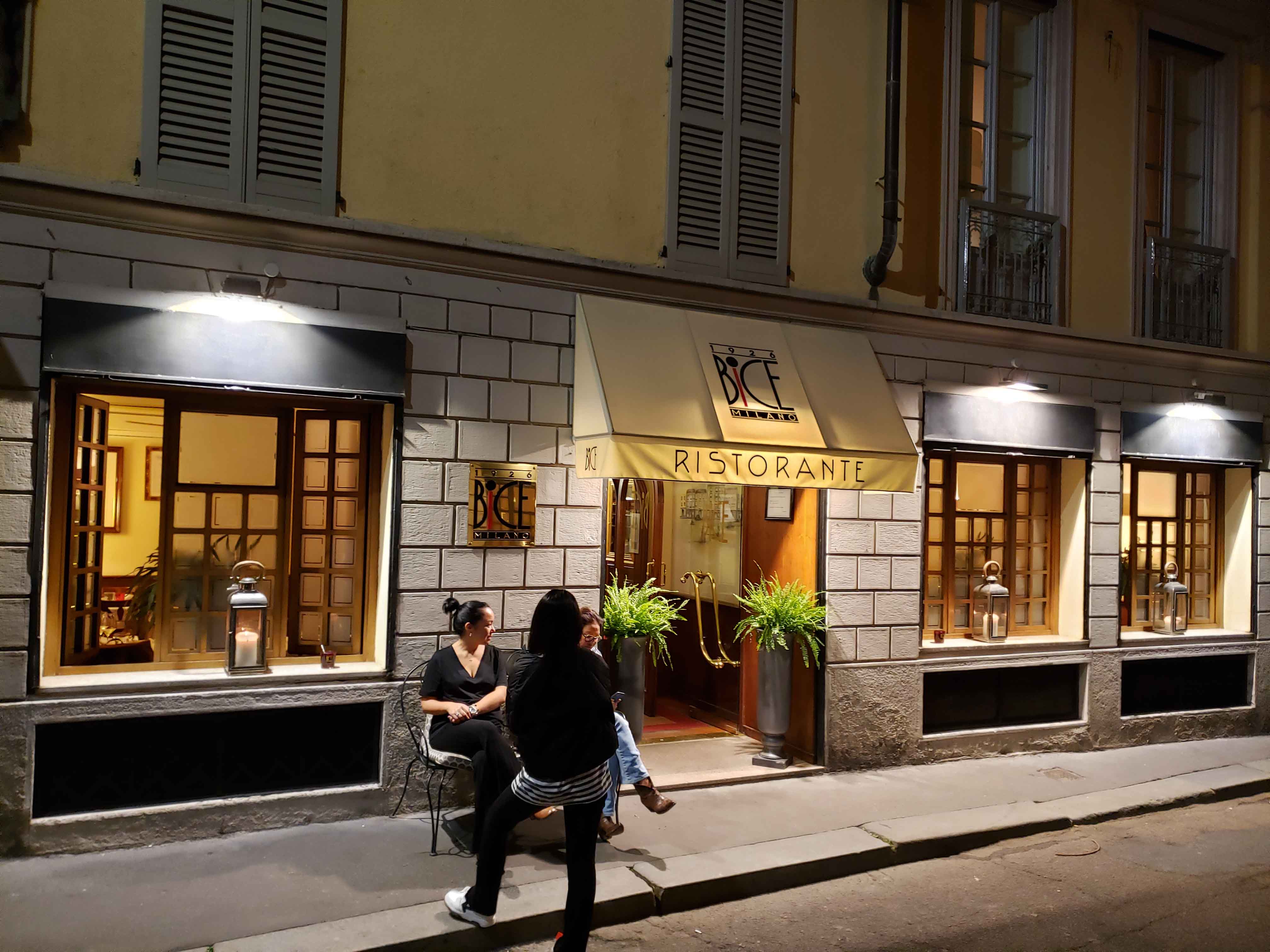
Ristorante Bice
Also known as Da Gino e Bice (from Gino and Beatrice) or just Bice, this Tuscan inspired restaurant has been a mainstay of Milan cuisine for more than a century. The restaurant’s upscale interior matches its food. It is also situated in Montanapoleone on Via Borgospesso and a short walk from our hotel.
Milan – Ristorante Bice
Milan – Ristorante Bice – Tristan and Patti
Milan – Ristorante Bice – Dana and Tristan
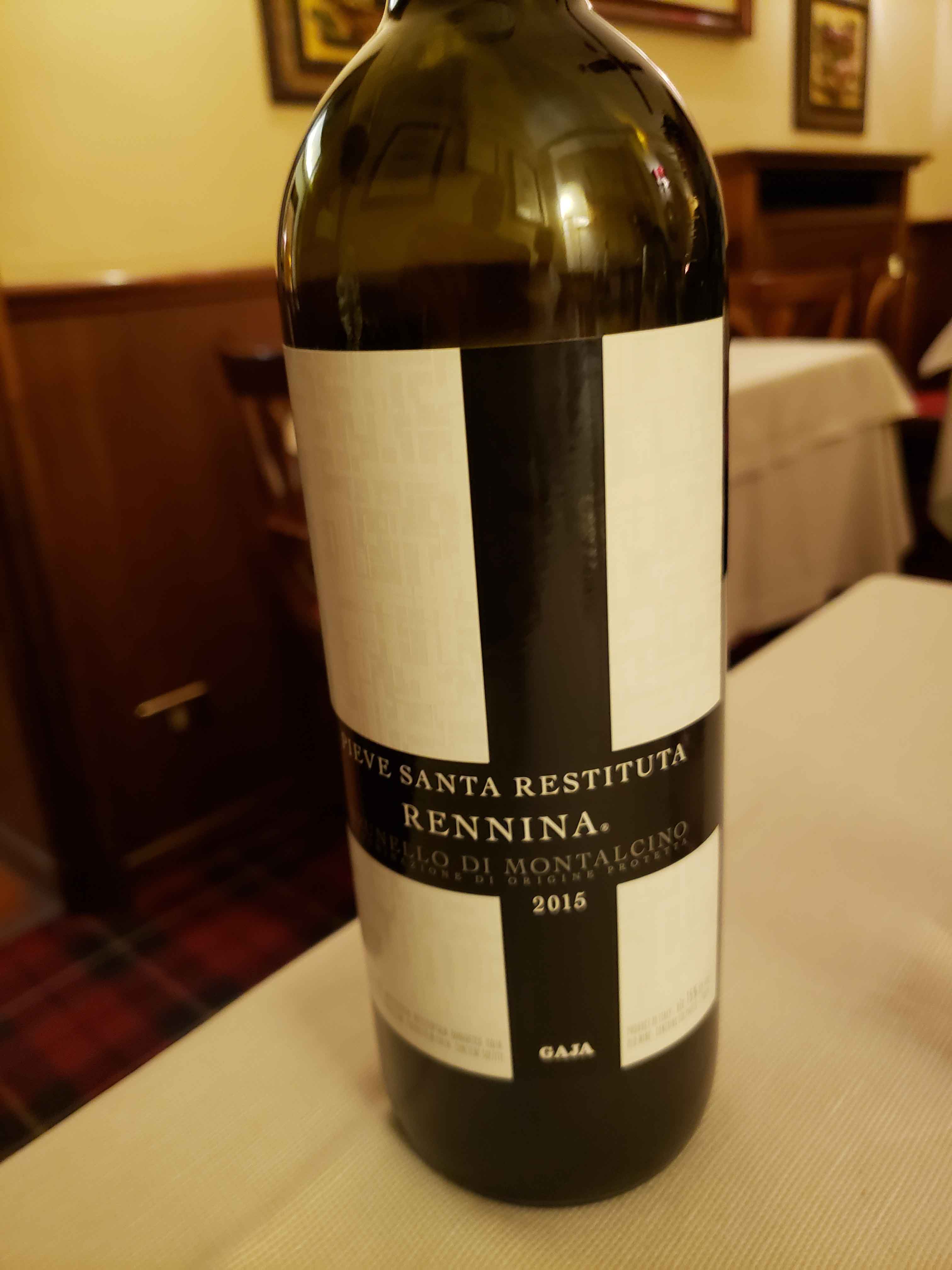
Milan – Ristorante Bice – A Very Good Gaja from Montalcino
This restaurant has an excellent menu and wine list, though upon further inspection I found the wine list needing a bit of an update in the Barolo section. But we found an acceptable one nonetheless. Again, being in a very trendy area where Fendi, Prada and other stores are located, the prices reflect the location and the menu’s quality.
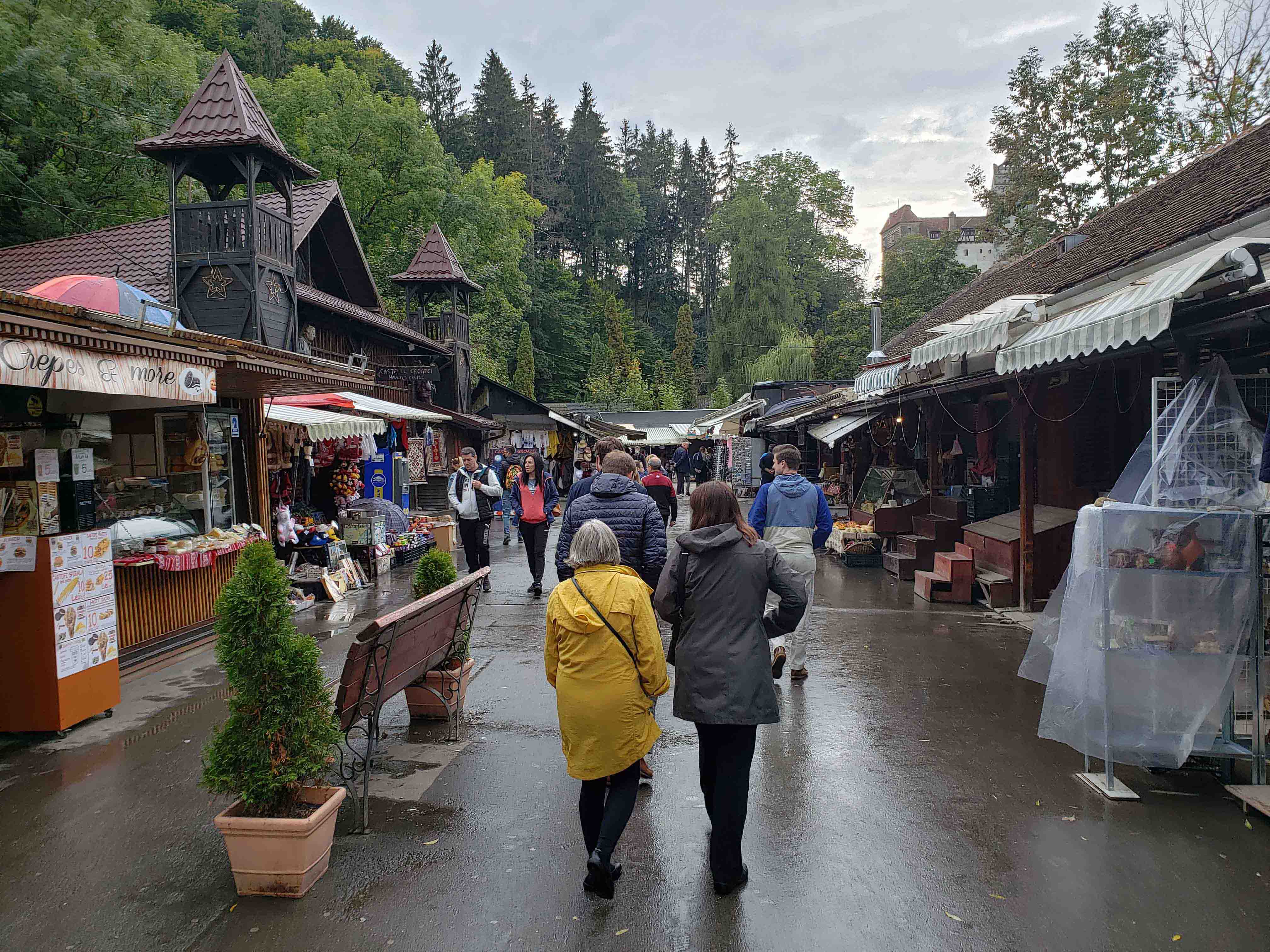
A drive of some distance from Buşteni lies the town of Bran. Somewhat nondescript, but having all the trappings of a typical tourist area, it is for sure a more relaxed atmosphere than the Prahova Valley.
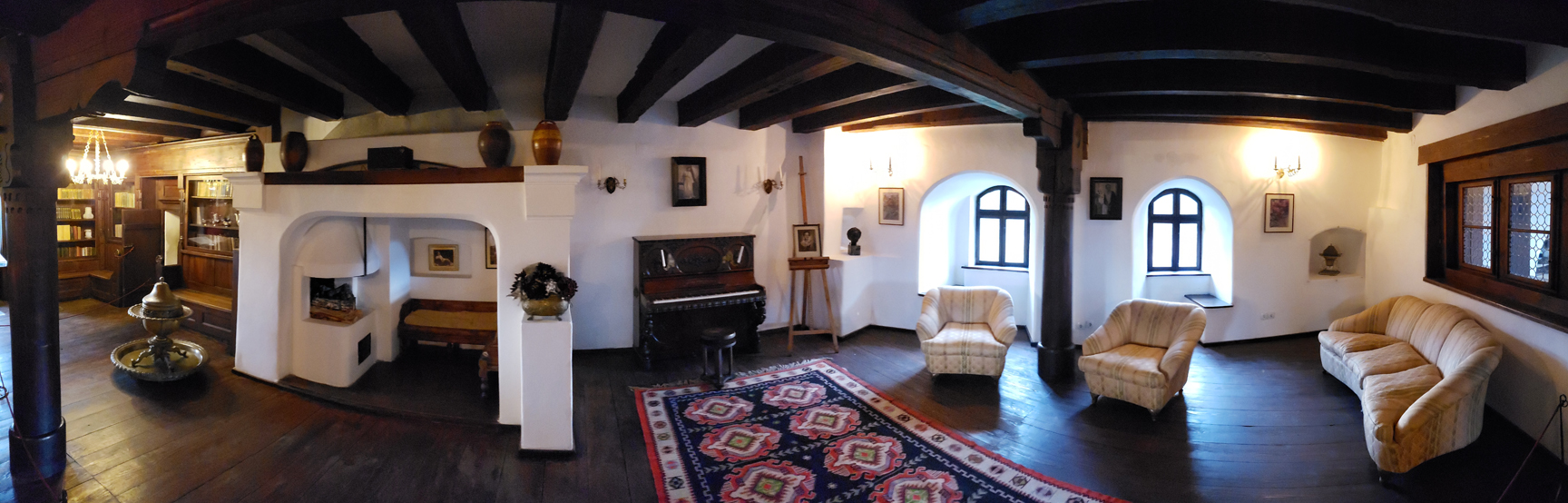
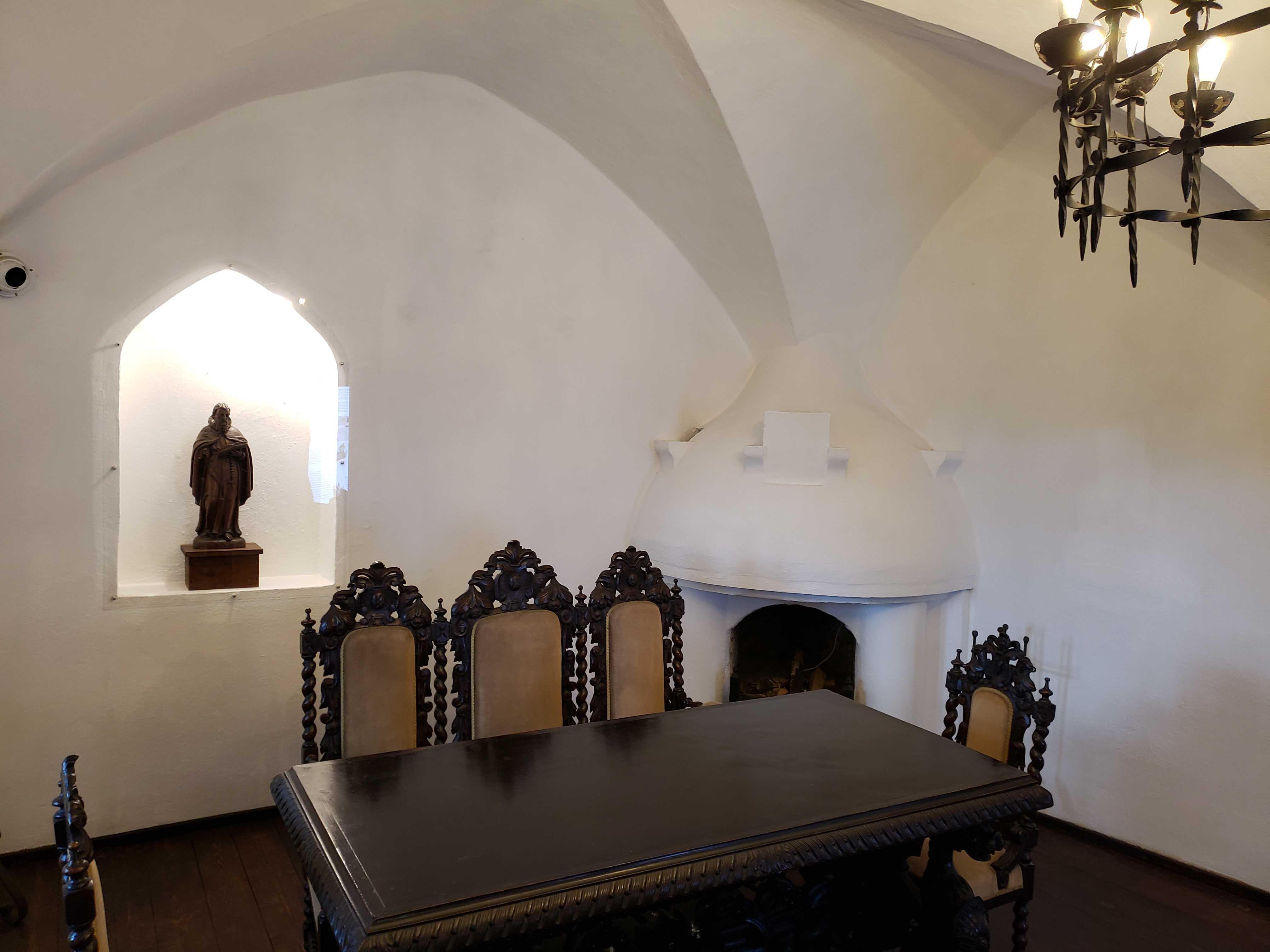
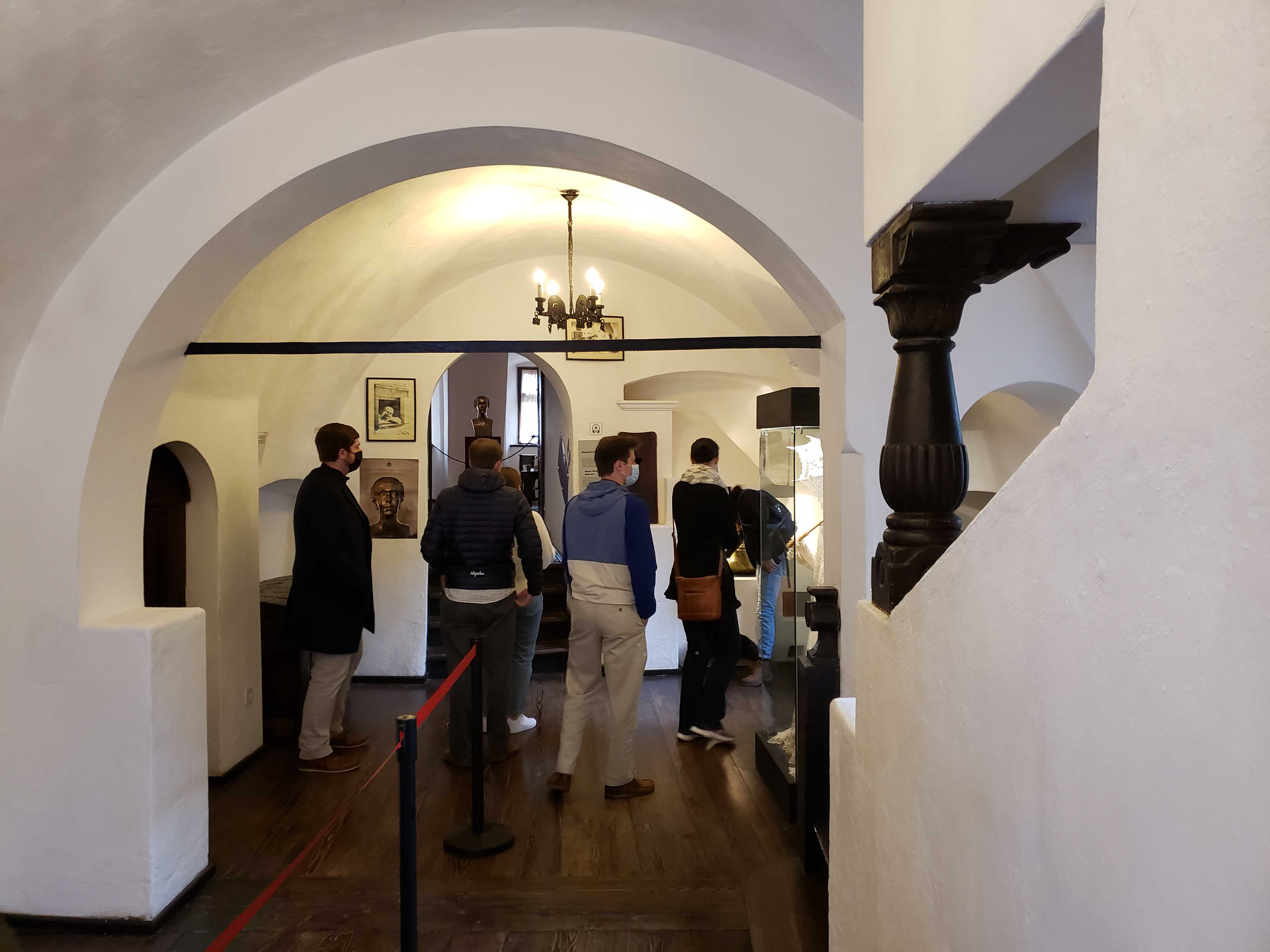
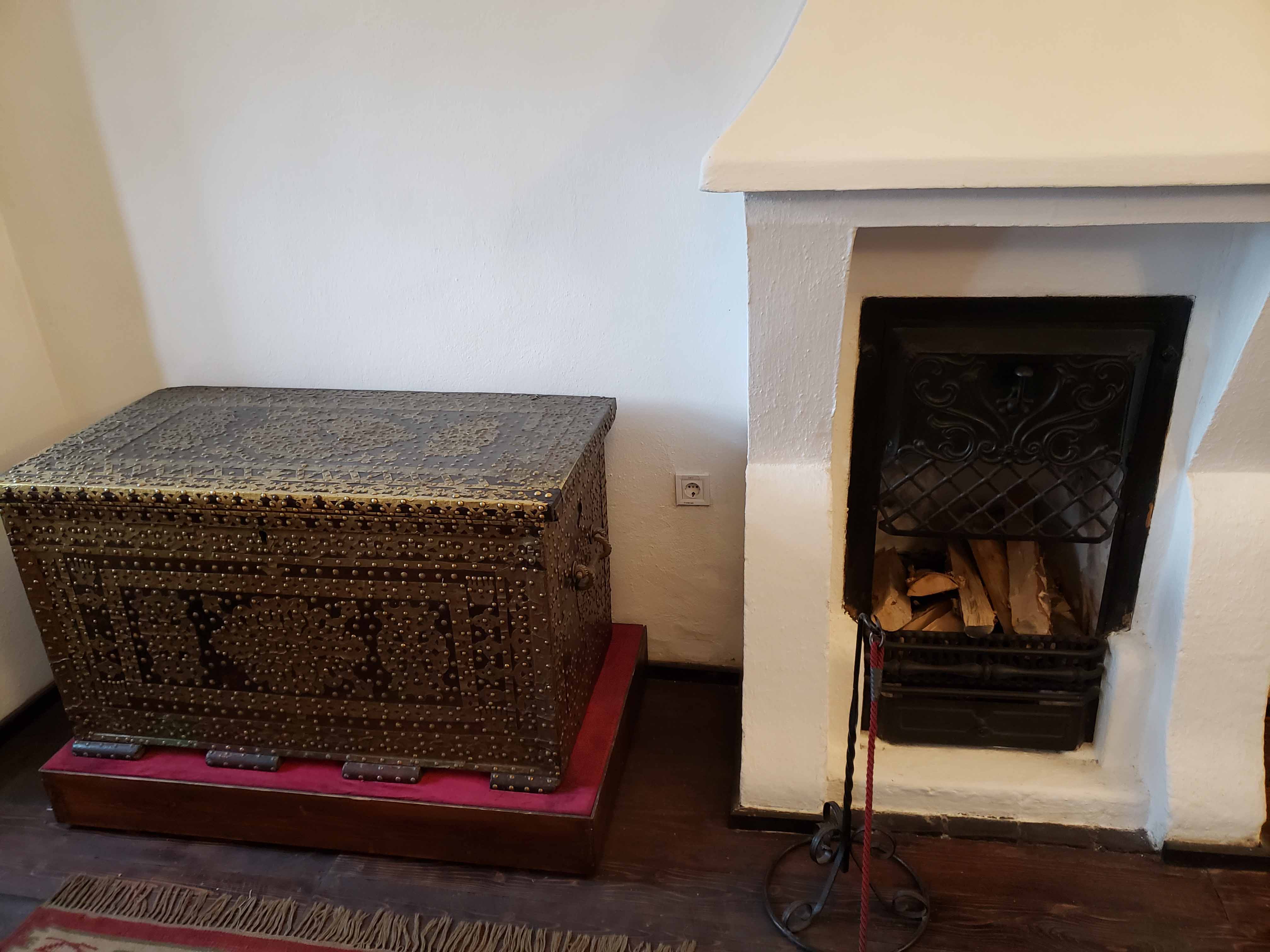
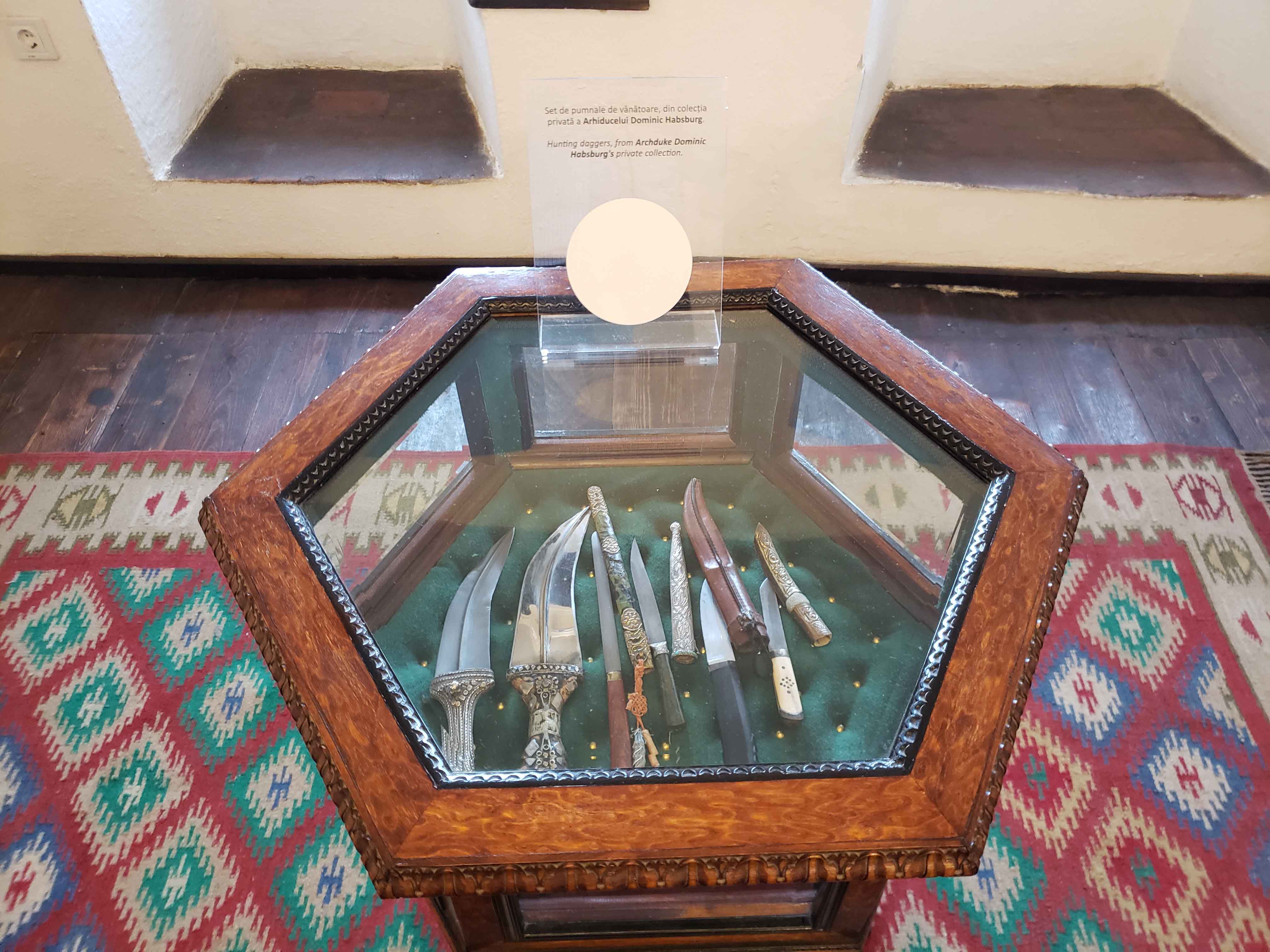
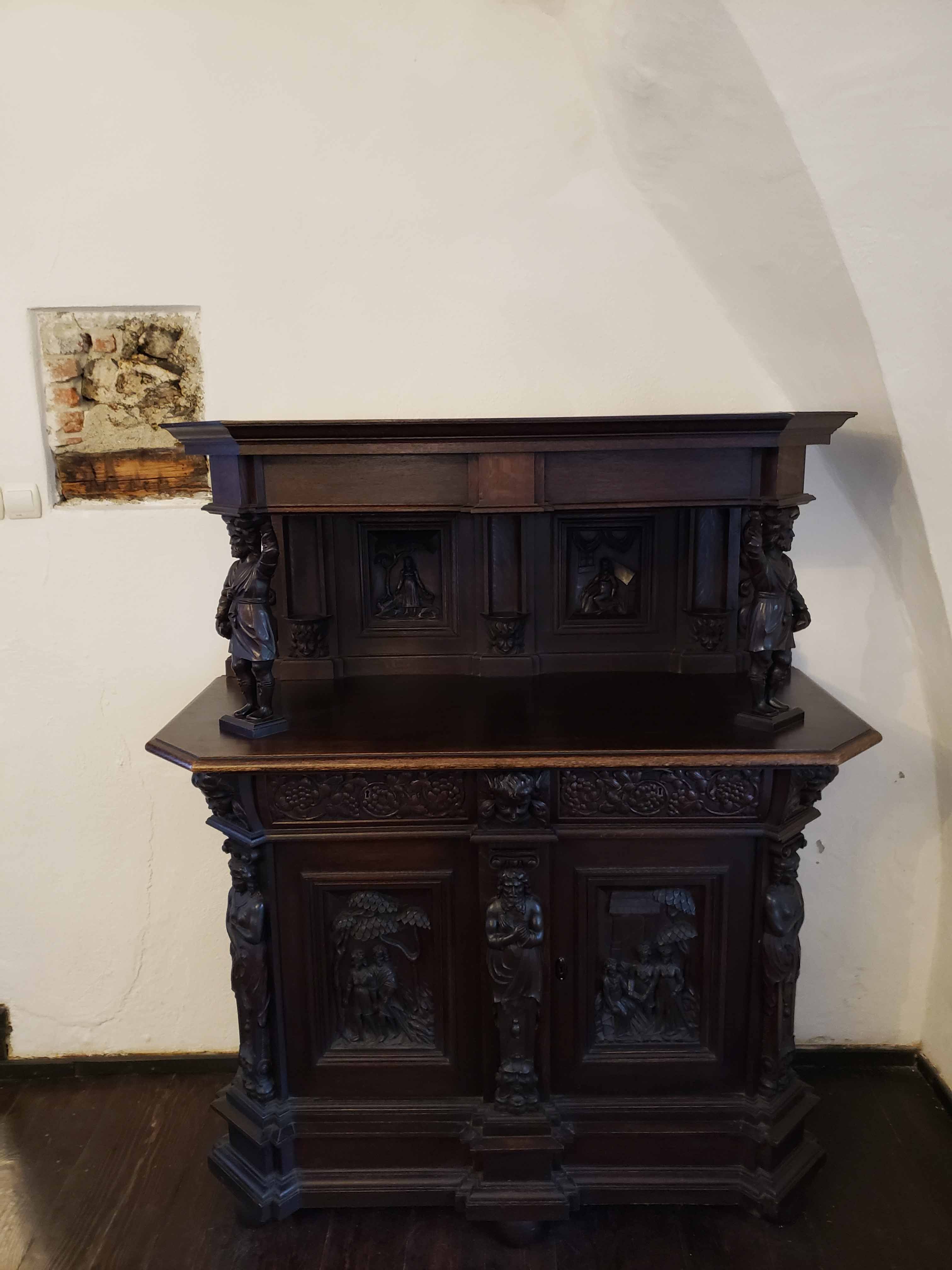
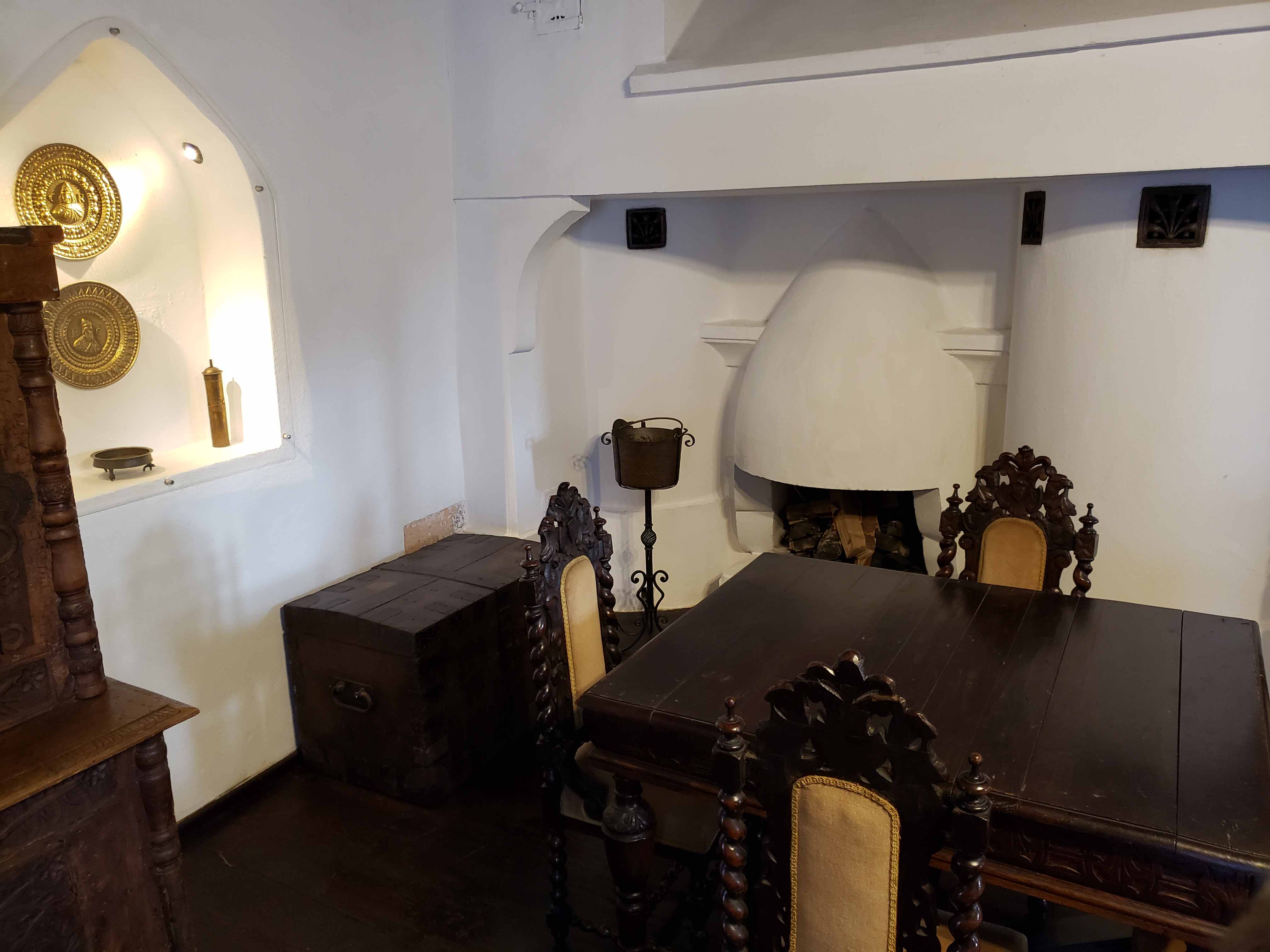
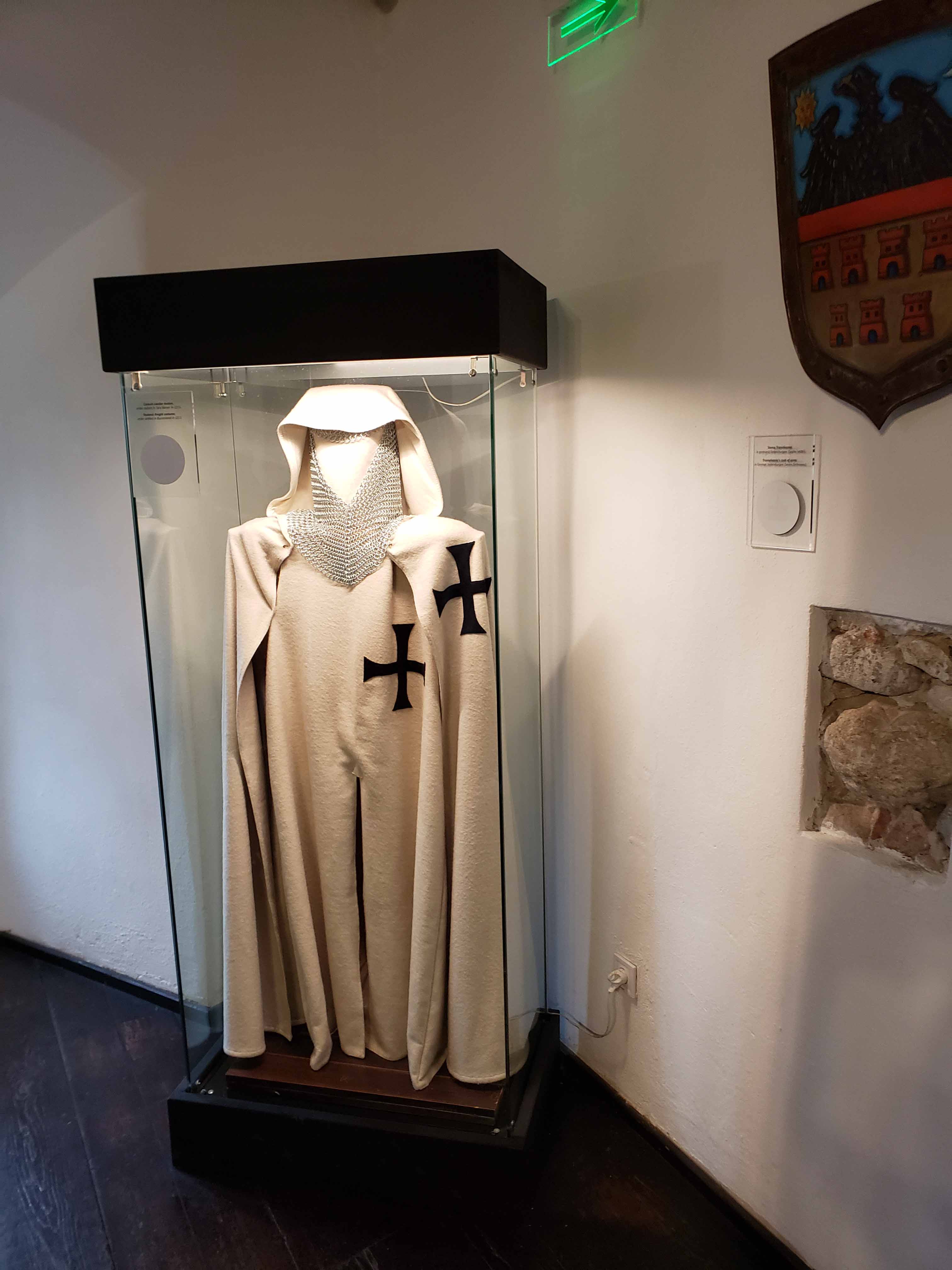
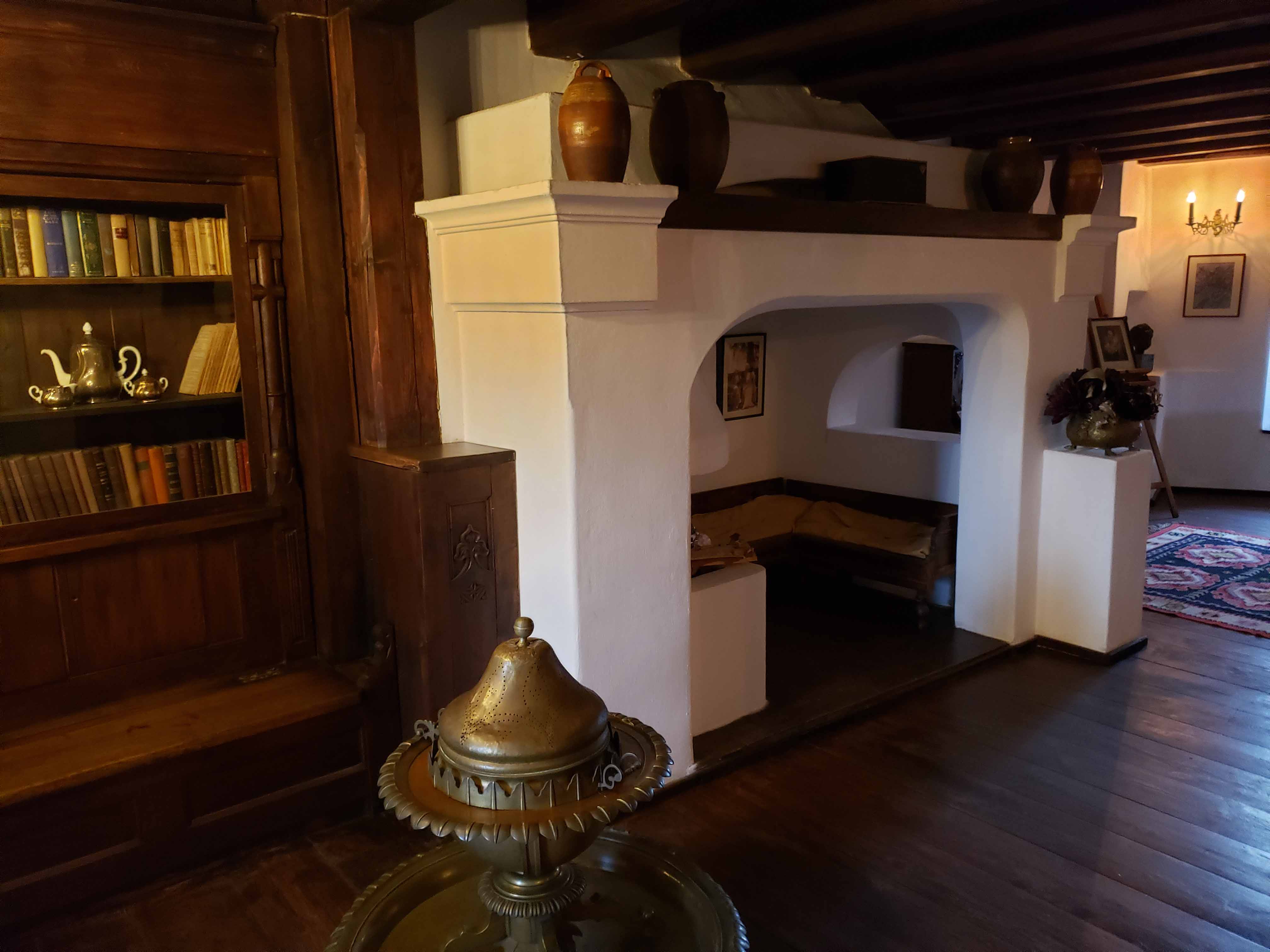
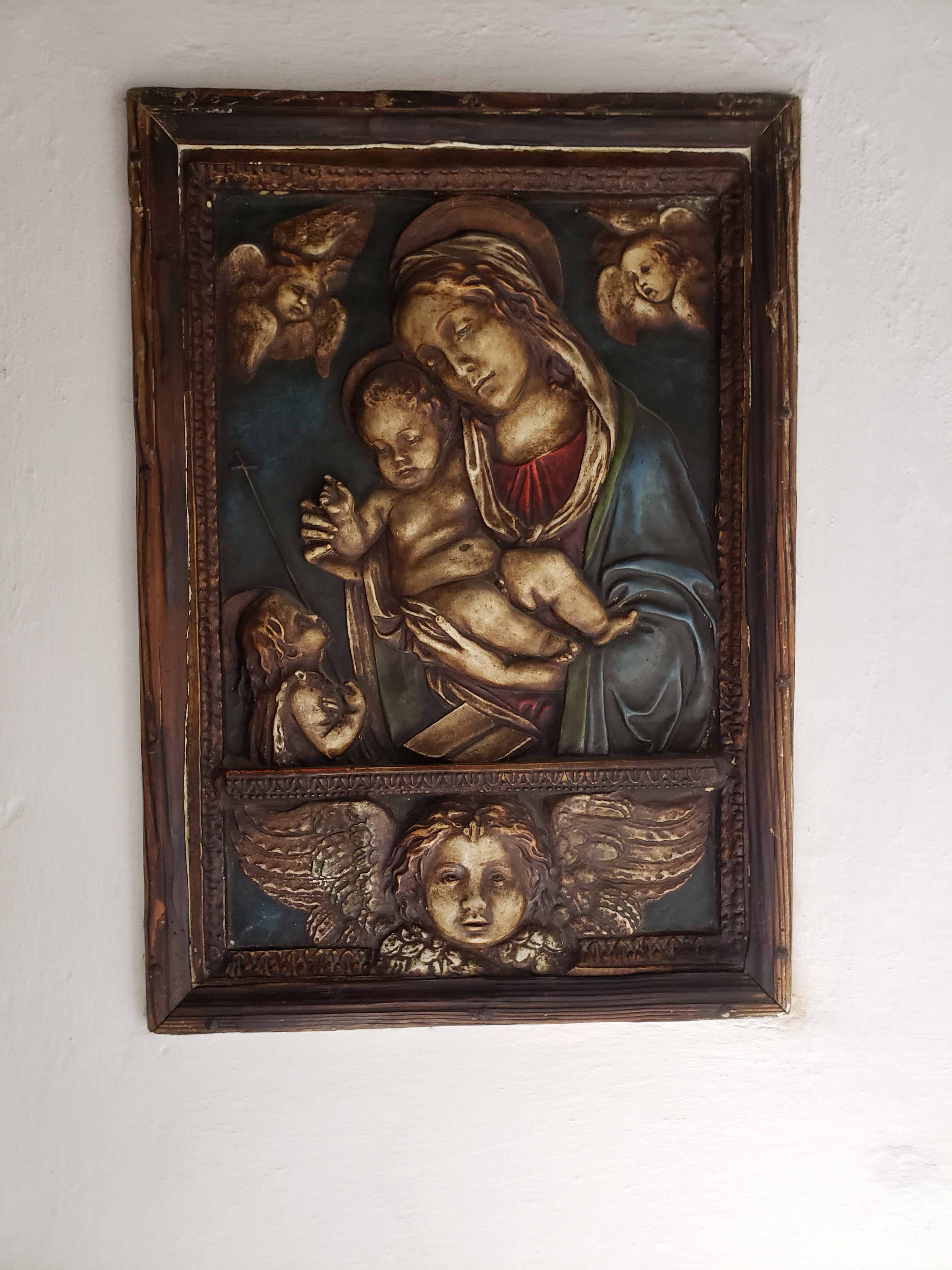
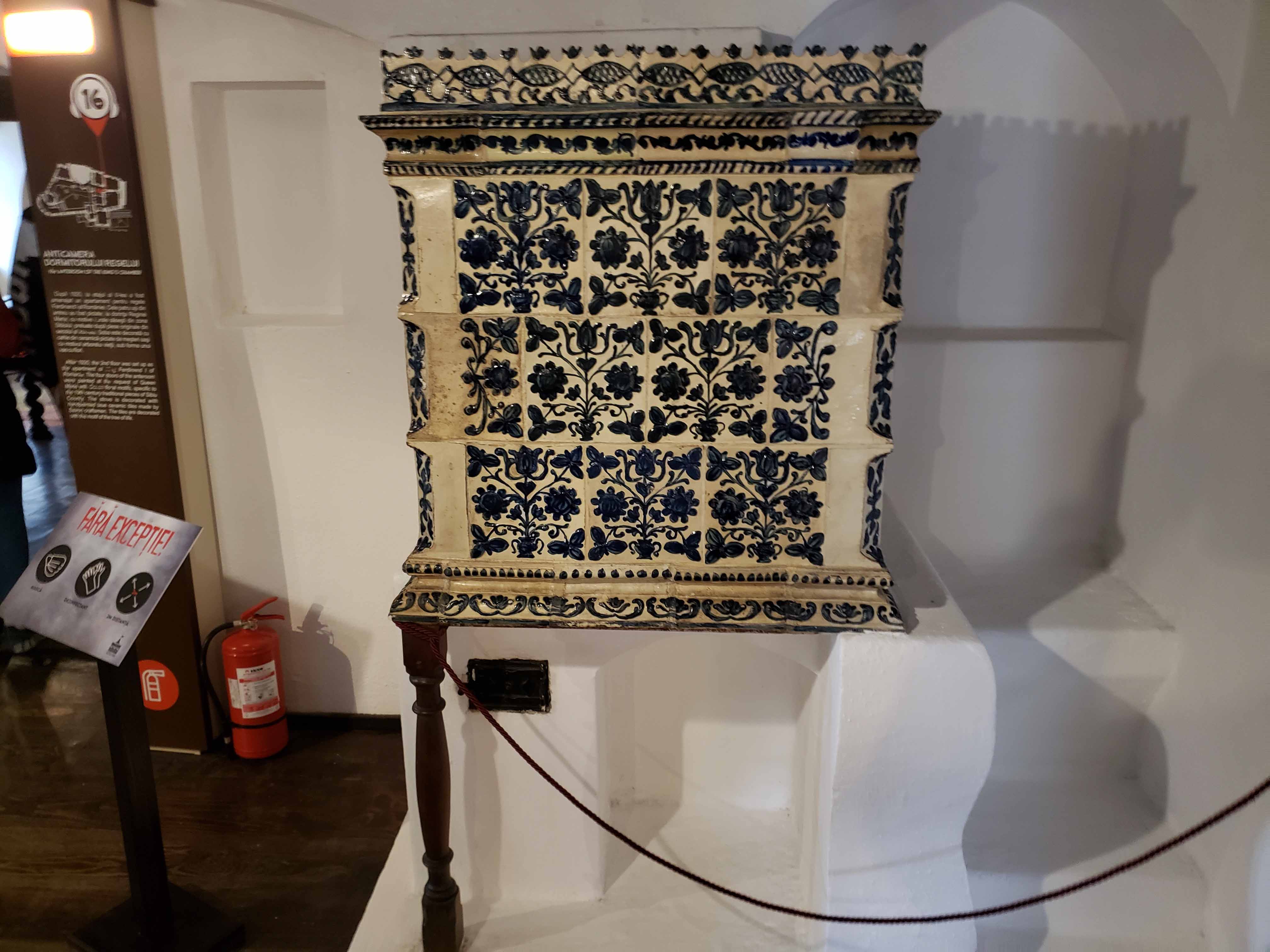
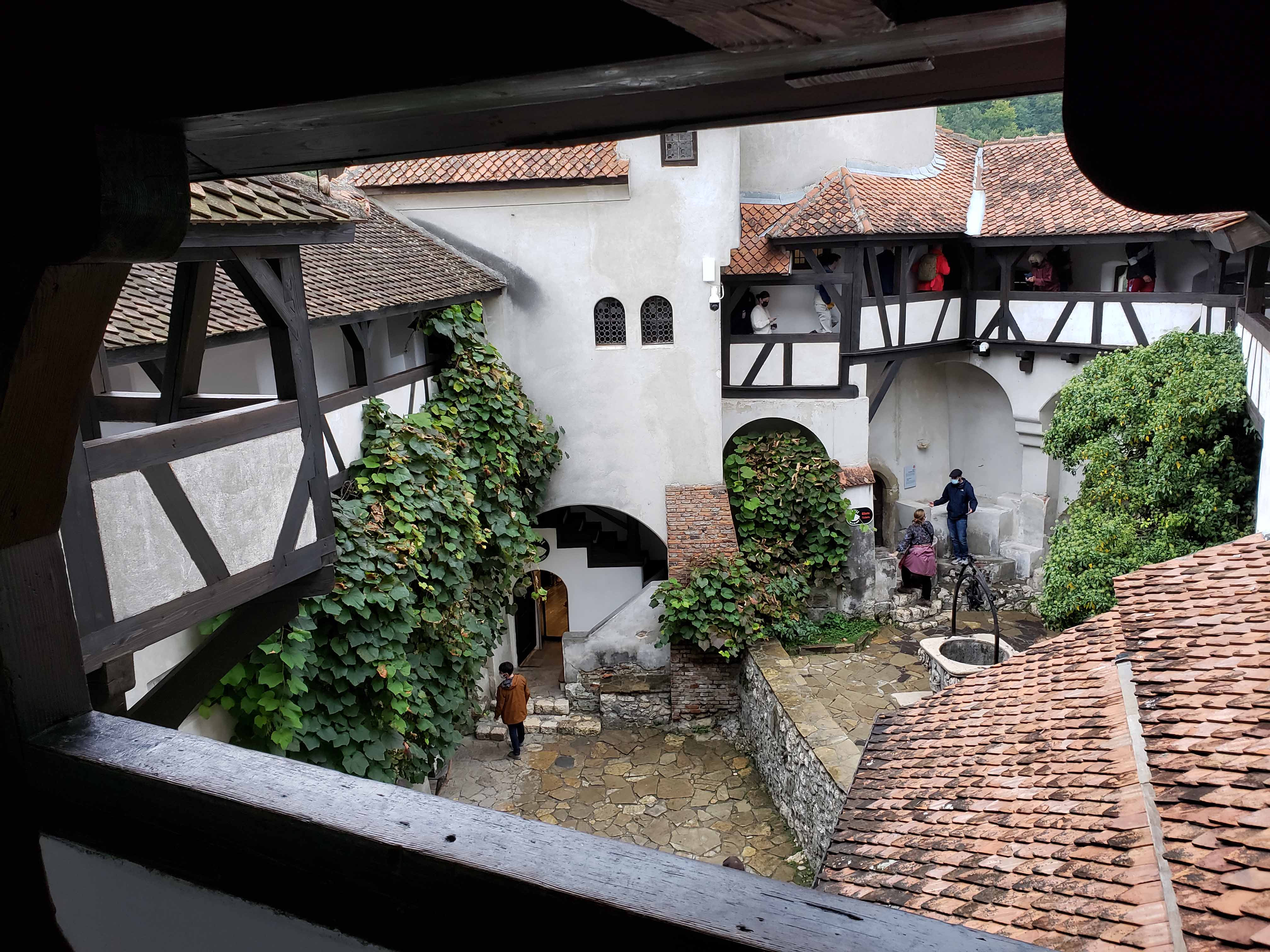
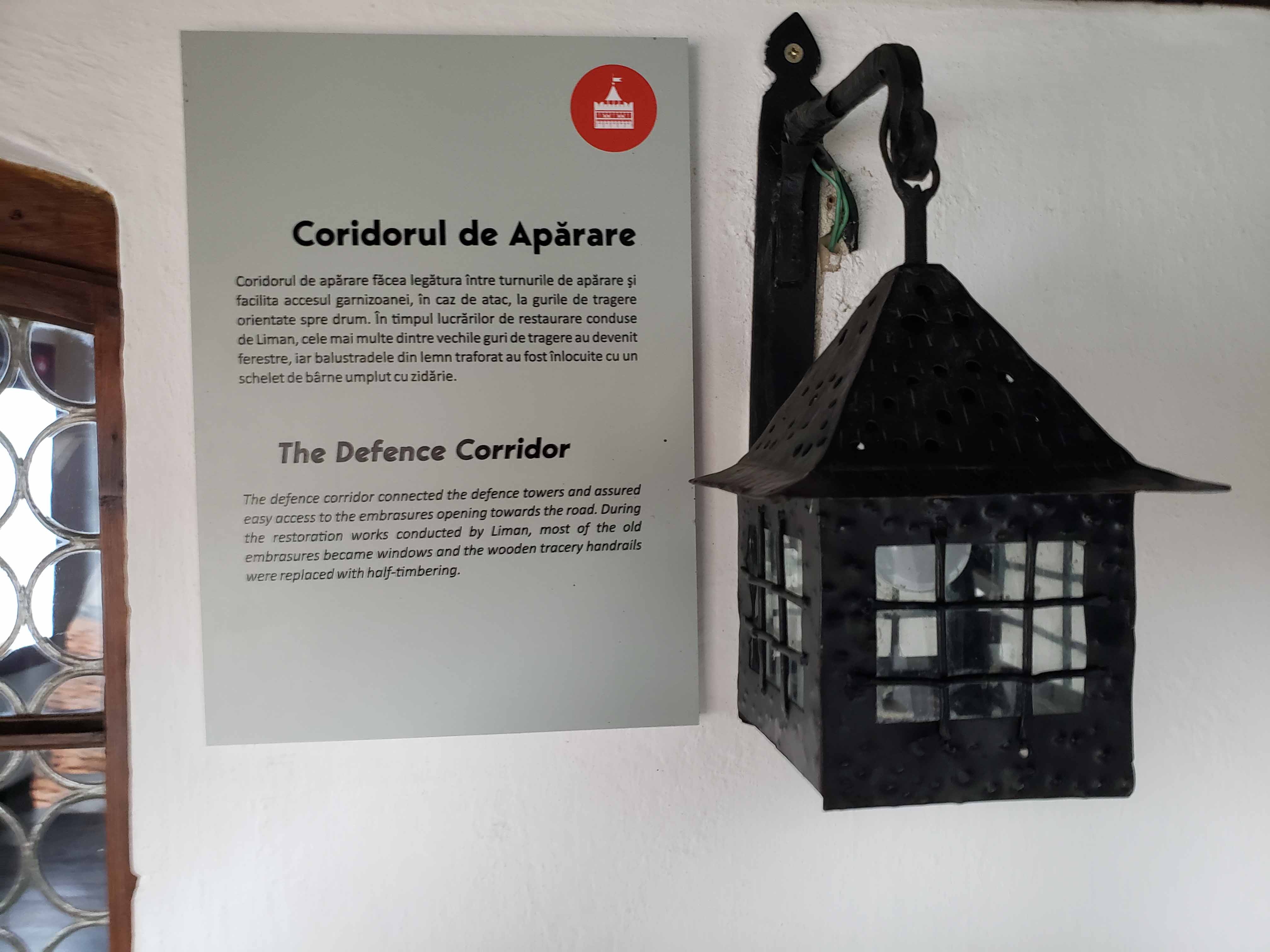
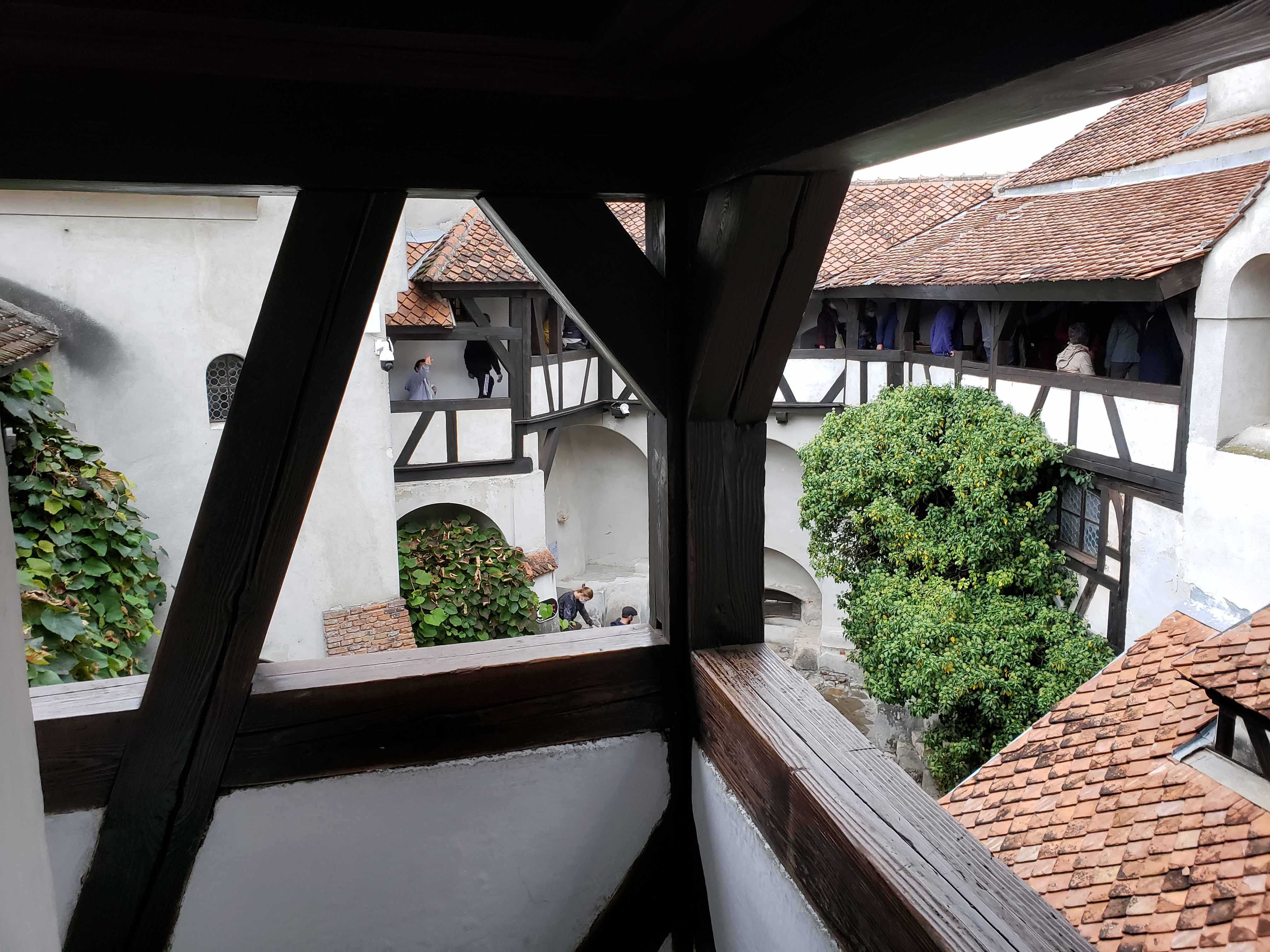
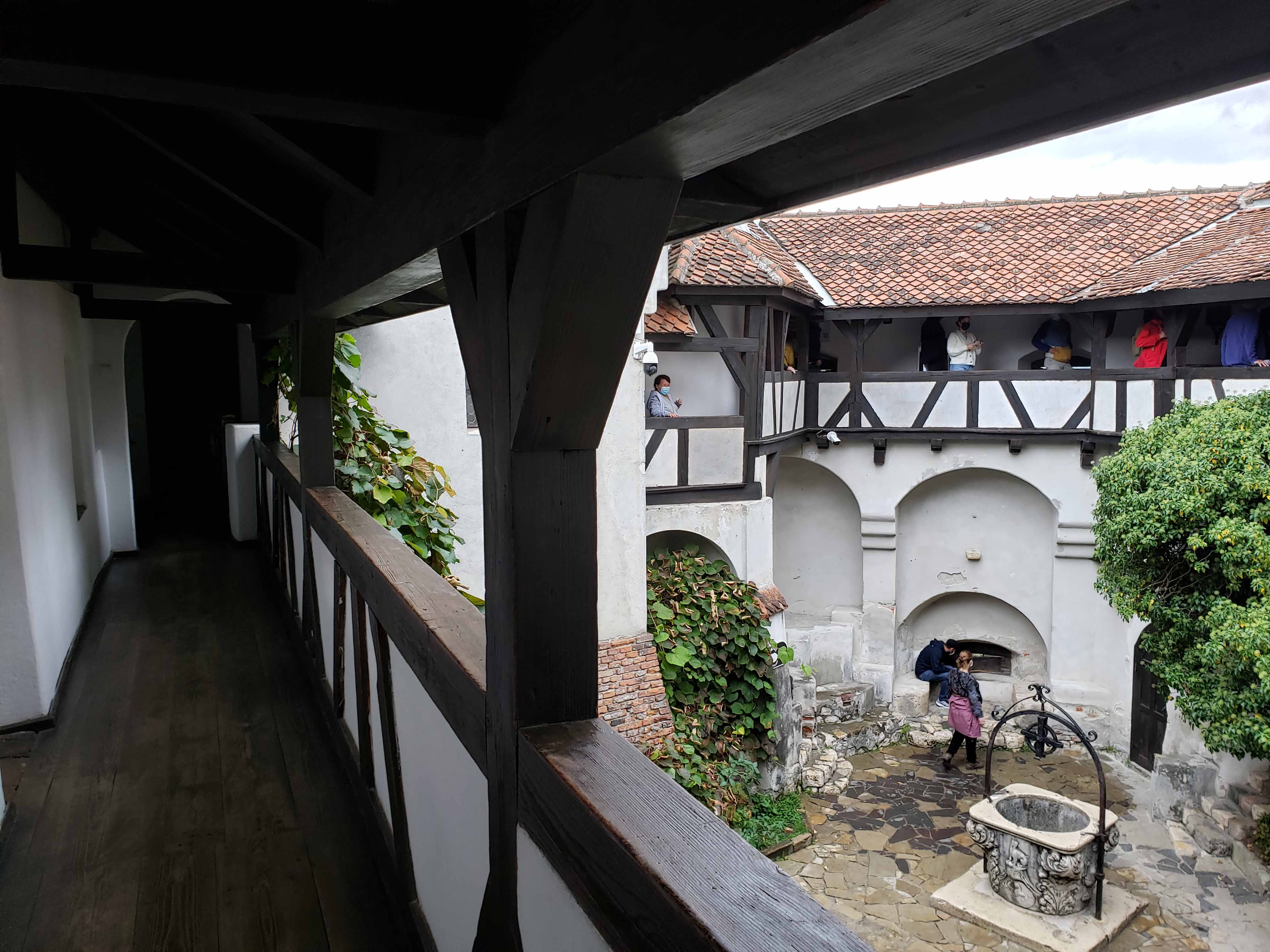
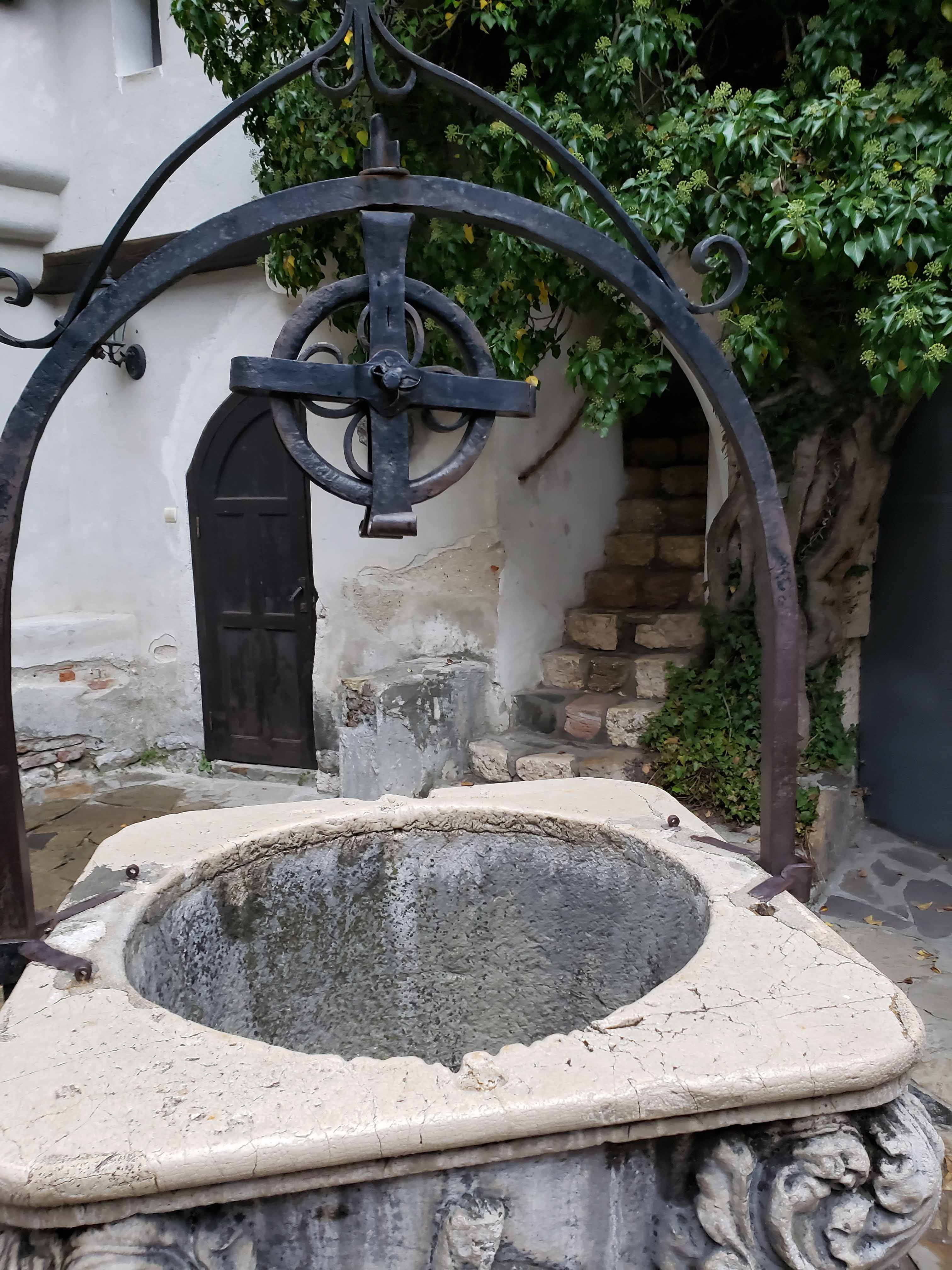
Bran Castle – Interior
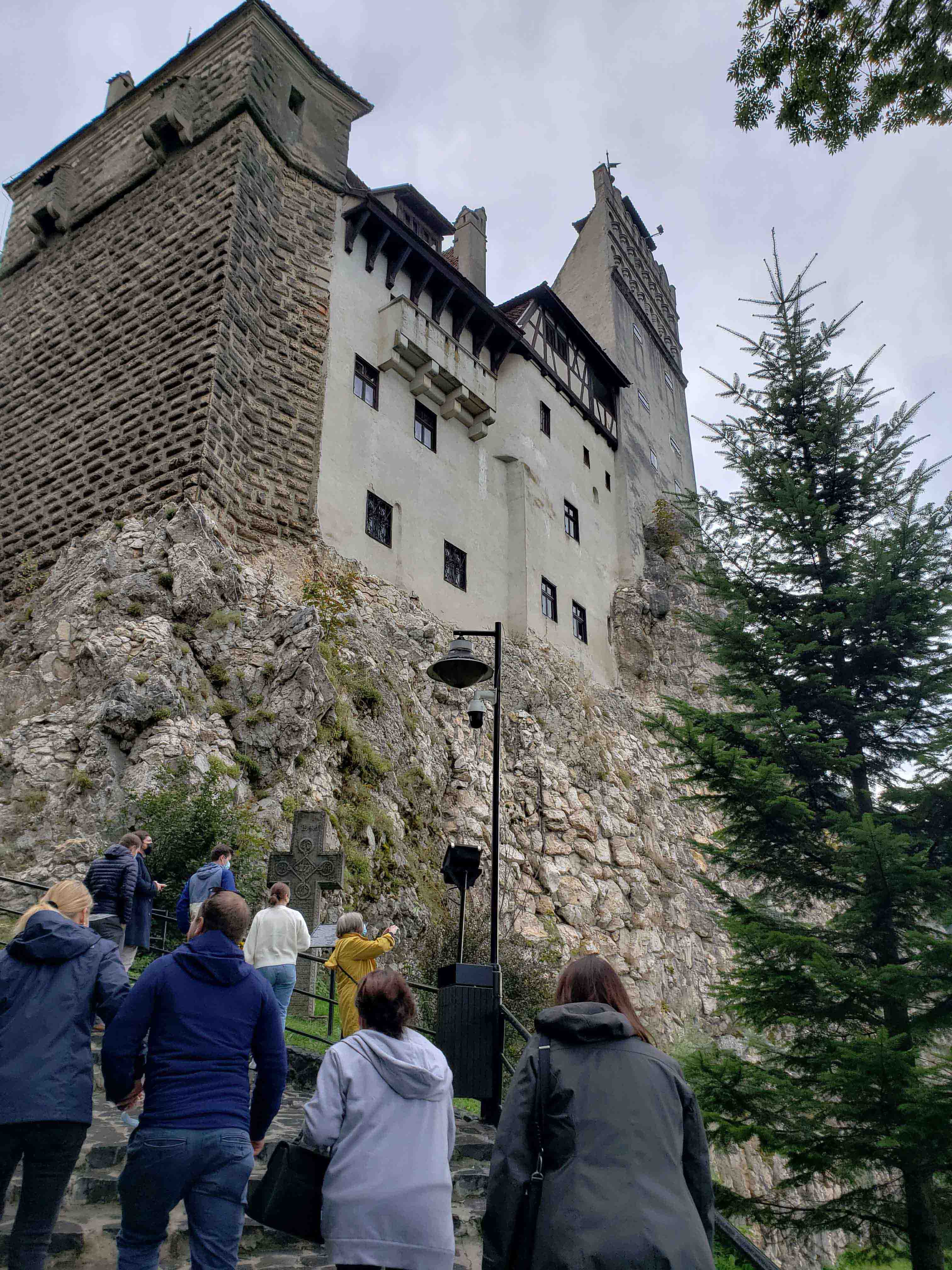
Its claim to fame is of course Castle Bran, the so called home of Vampires, Count Dracula and other Penny Dreadful, that Bram Stoker made so famous. It neither has the feel nor unearthly aura of a place where so many horrors could have ostensibly been committed by Vlad Tepes, or more noteworthy, Vlad the Impaler, as current folklore would have it. Overall, it was an interesting day trip, warranted by the excellent restaurant we ate at, and to finally put to rest in our own minds exactly what all the vampire fuss is about. Others will probably have similar epiphanies if they visit, just as I did.
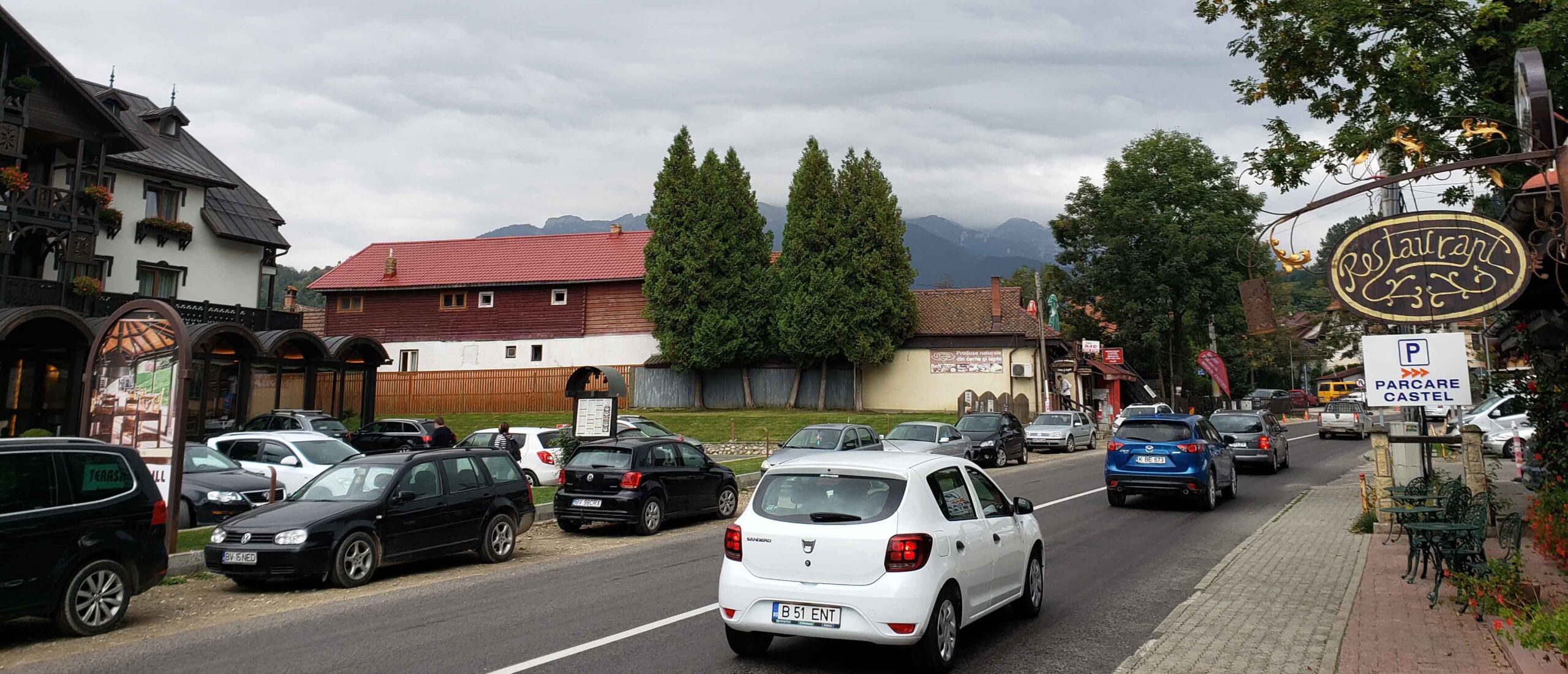
Parking on E574 – Castle Bran
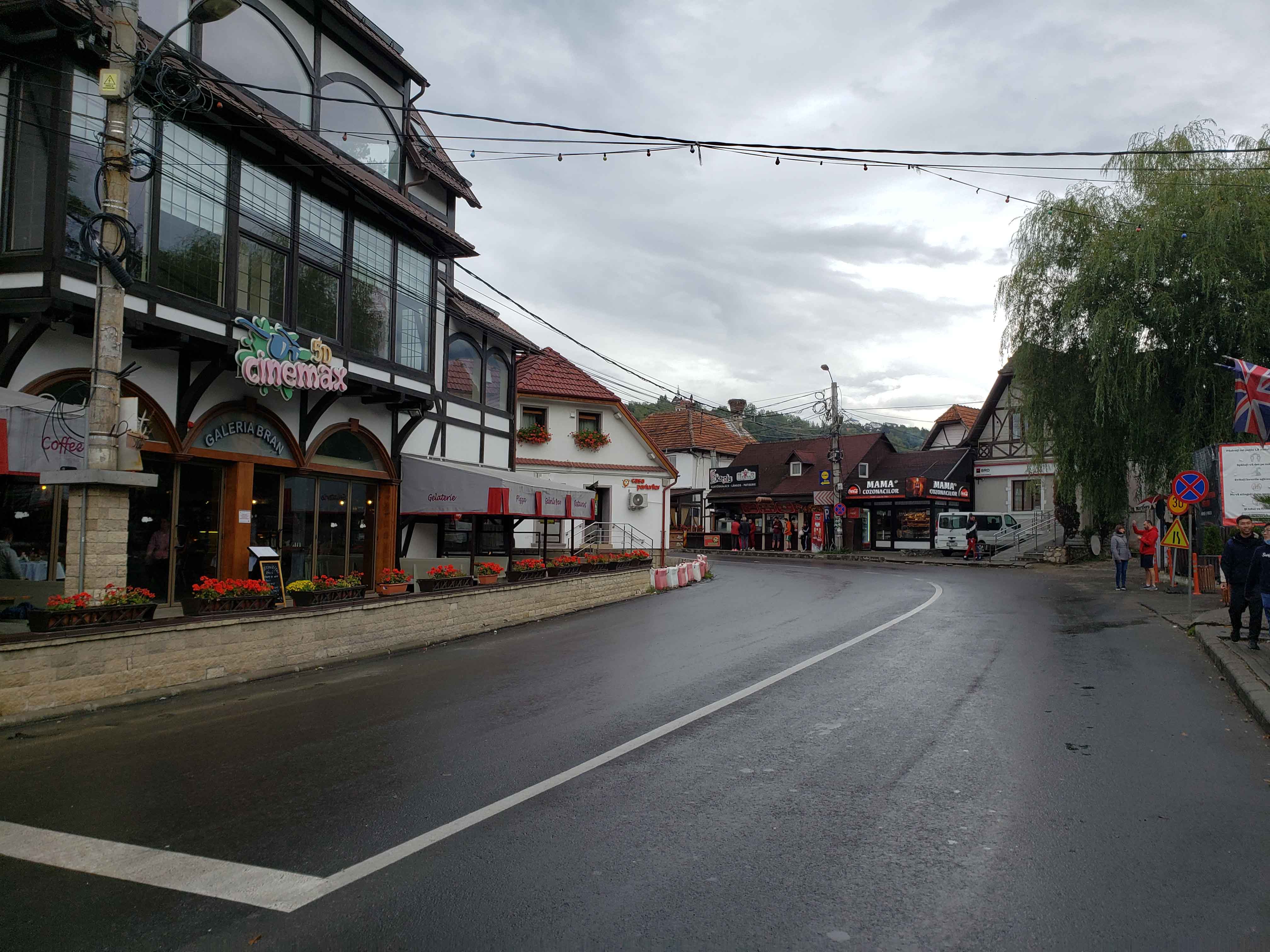
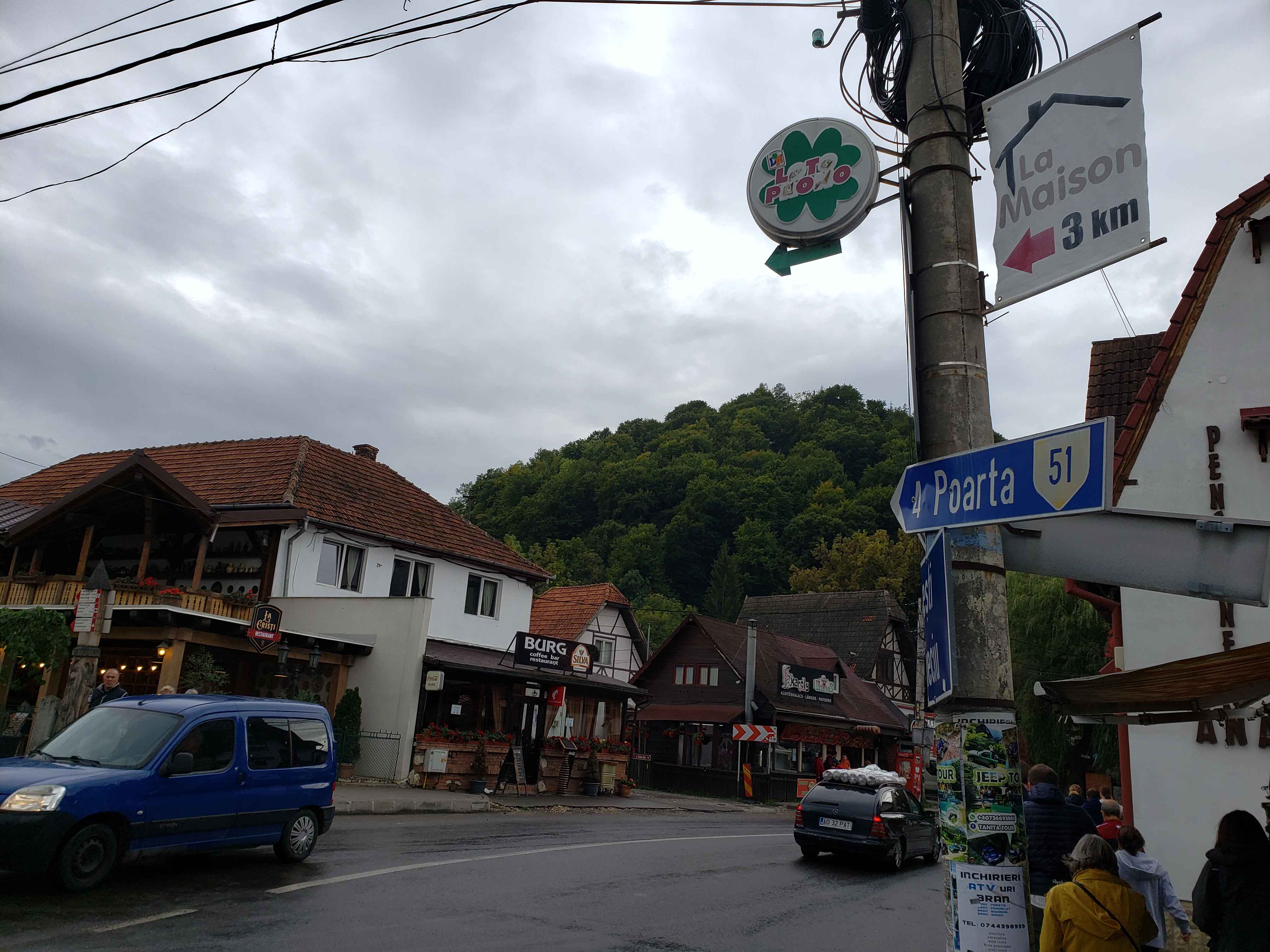
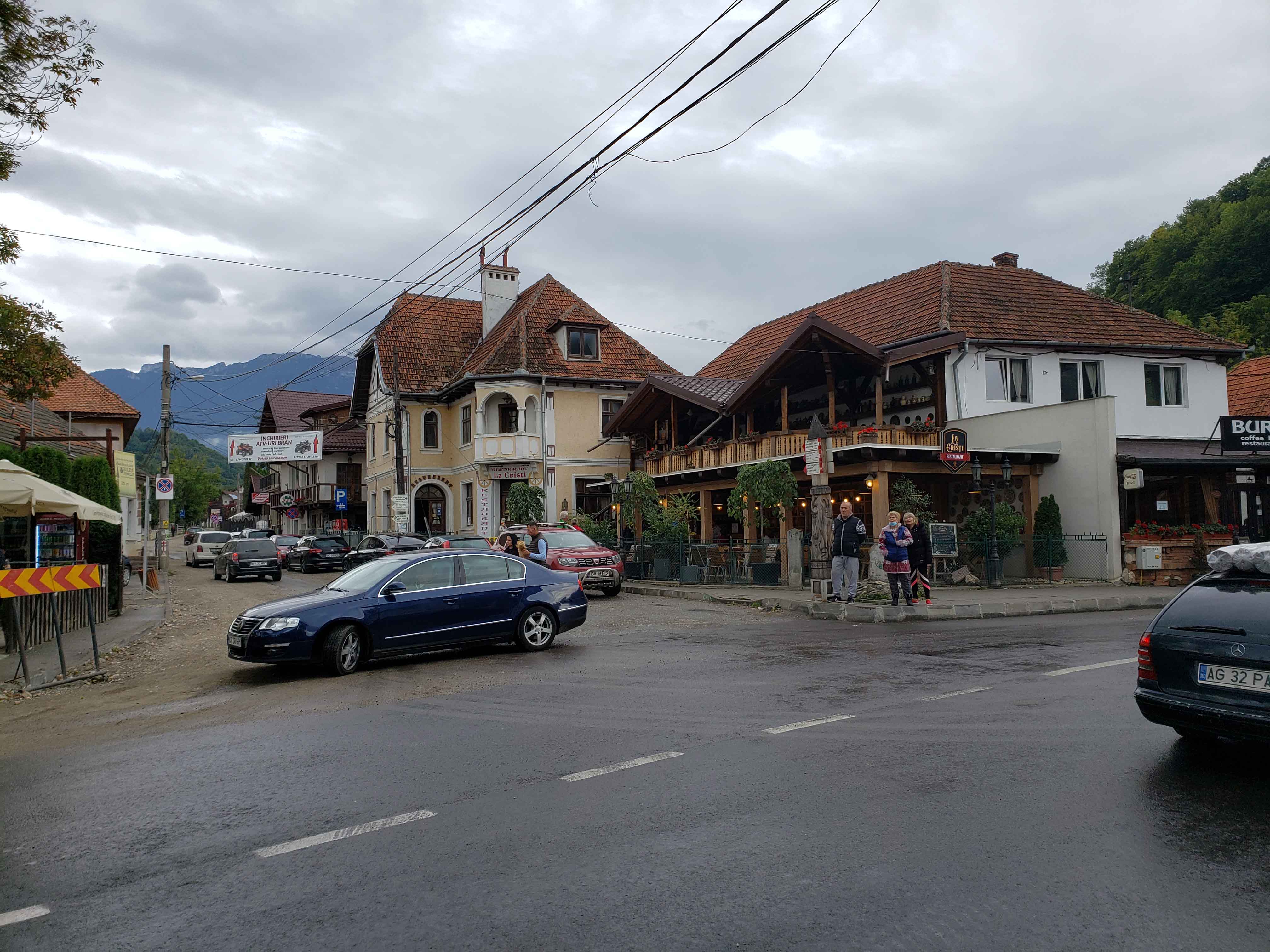
Bran – The Town
Bran is an out of the way town which seems to enjoy some tourist traffic, but only because of its namesake. It lies on E574, which is on the west side of the Bucegi Range of the Southern Carpathian Mountains and about an hour’s ride from Buşteni, that is in good weather and when there is no bridge or road construction (something we were unfortunate enough to experience on our return to Buşteni).
Bran – E574
Bran – E574 – The Town
Bran – E574 – Walking To The Castle
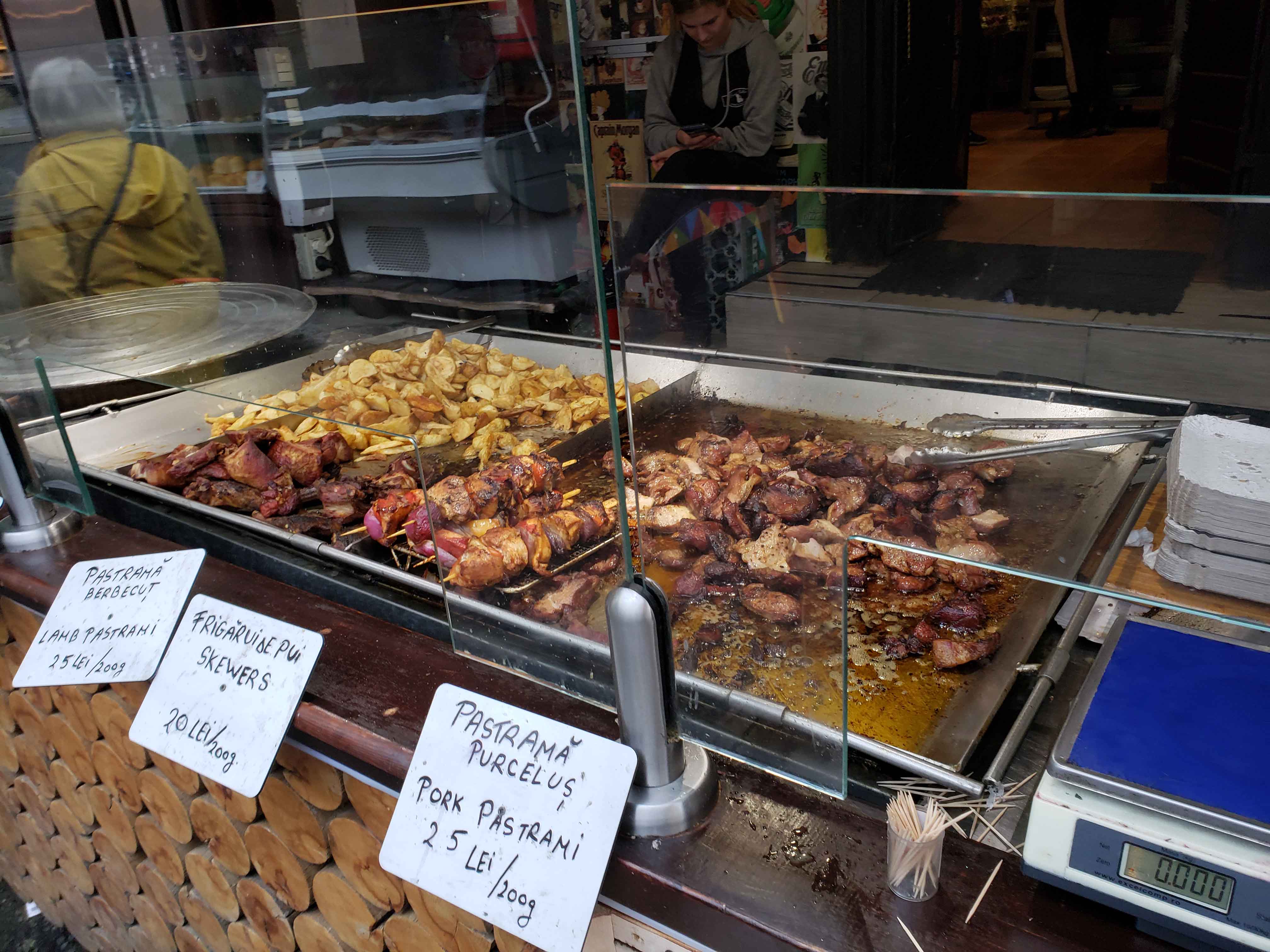
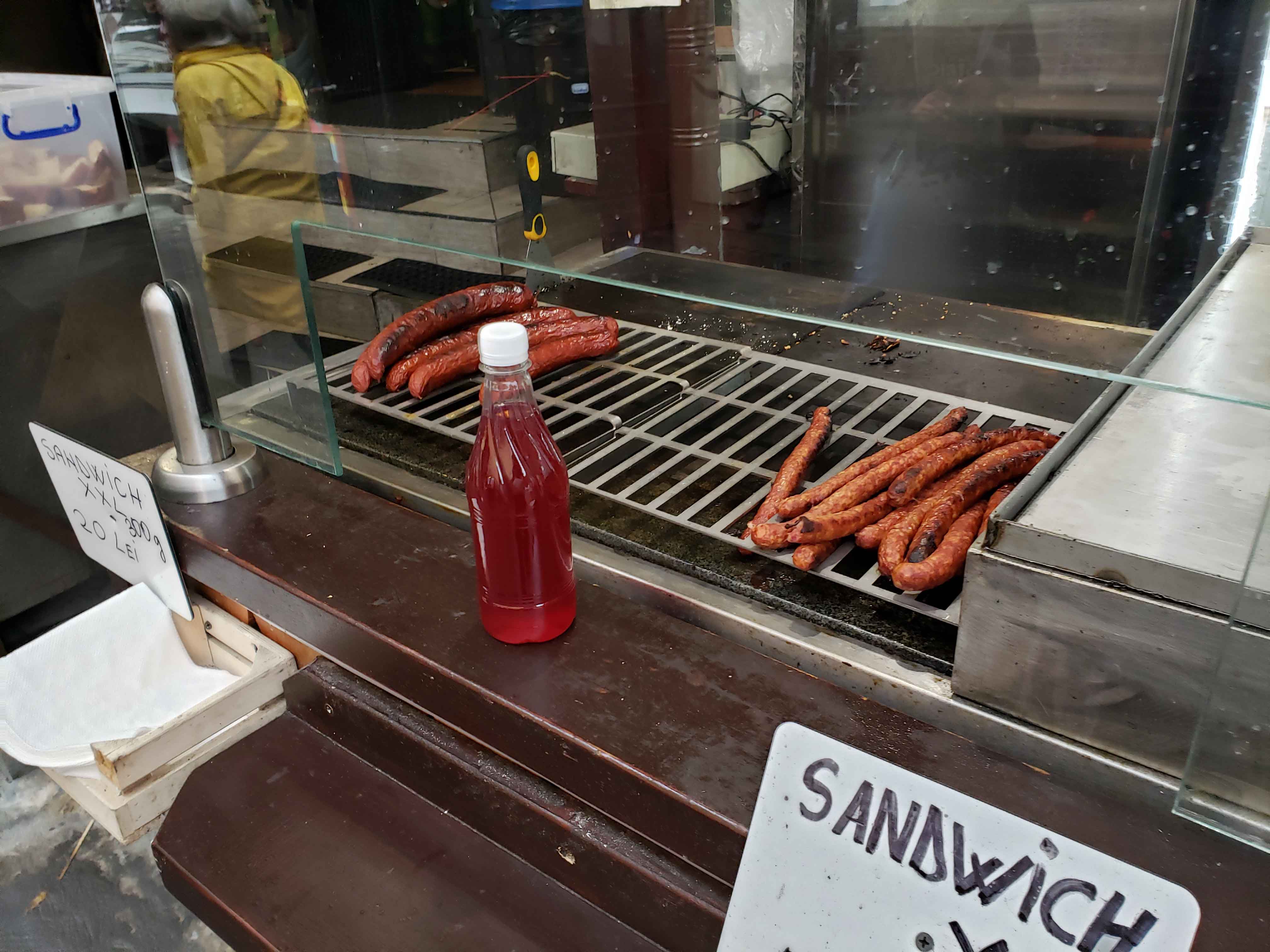
Bran – E574 – Street Vendors
Bran – E574 – Street Vendors
Bran – Vendors Along Bran Castle Entrance
Bran – Along Bran Castle Entrance
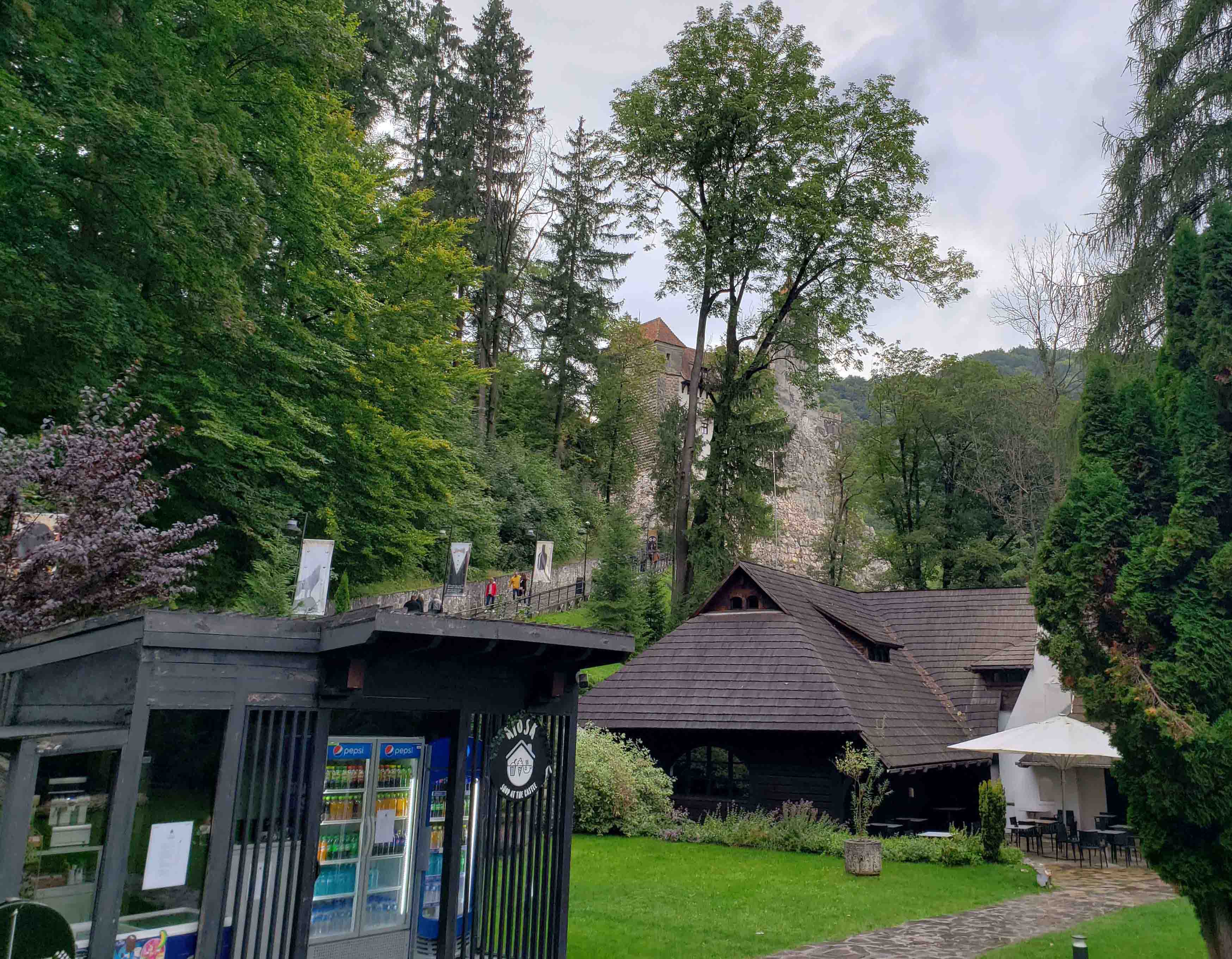
The rivers Poarta and Turcul run through the town, but they are hardly noticed due to their diminutive sizes. There are several places to park, a very large overflow parking area may be found on Strada Doctor Aurel Stoian, when the tourist season is in full gear. We parked in the Castel Parking place off of E574, right next to the restaurant we visited for lunch.
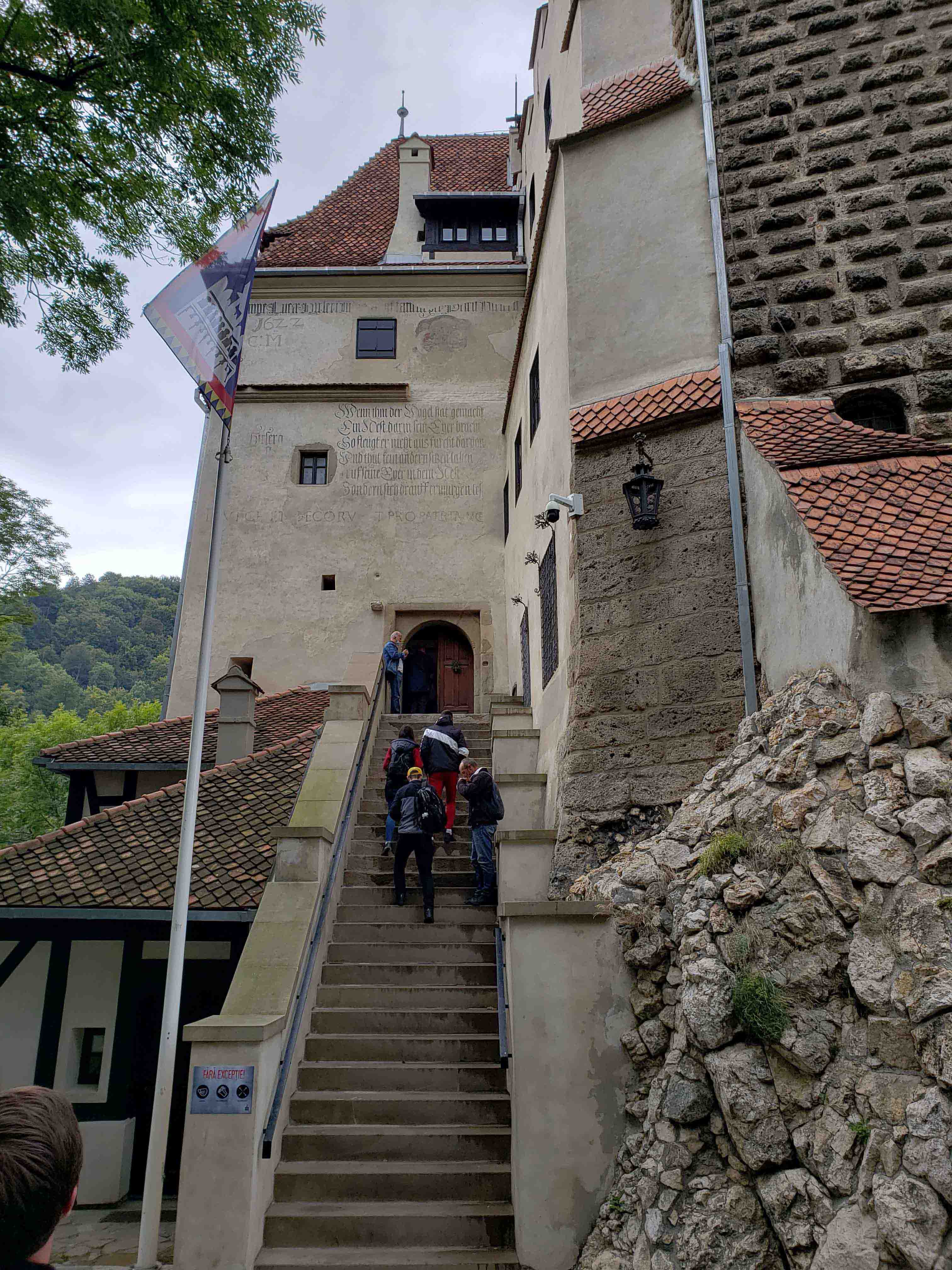
Bran – Bran Castle Entrance
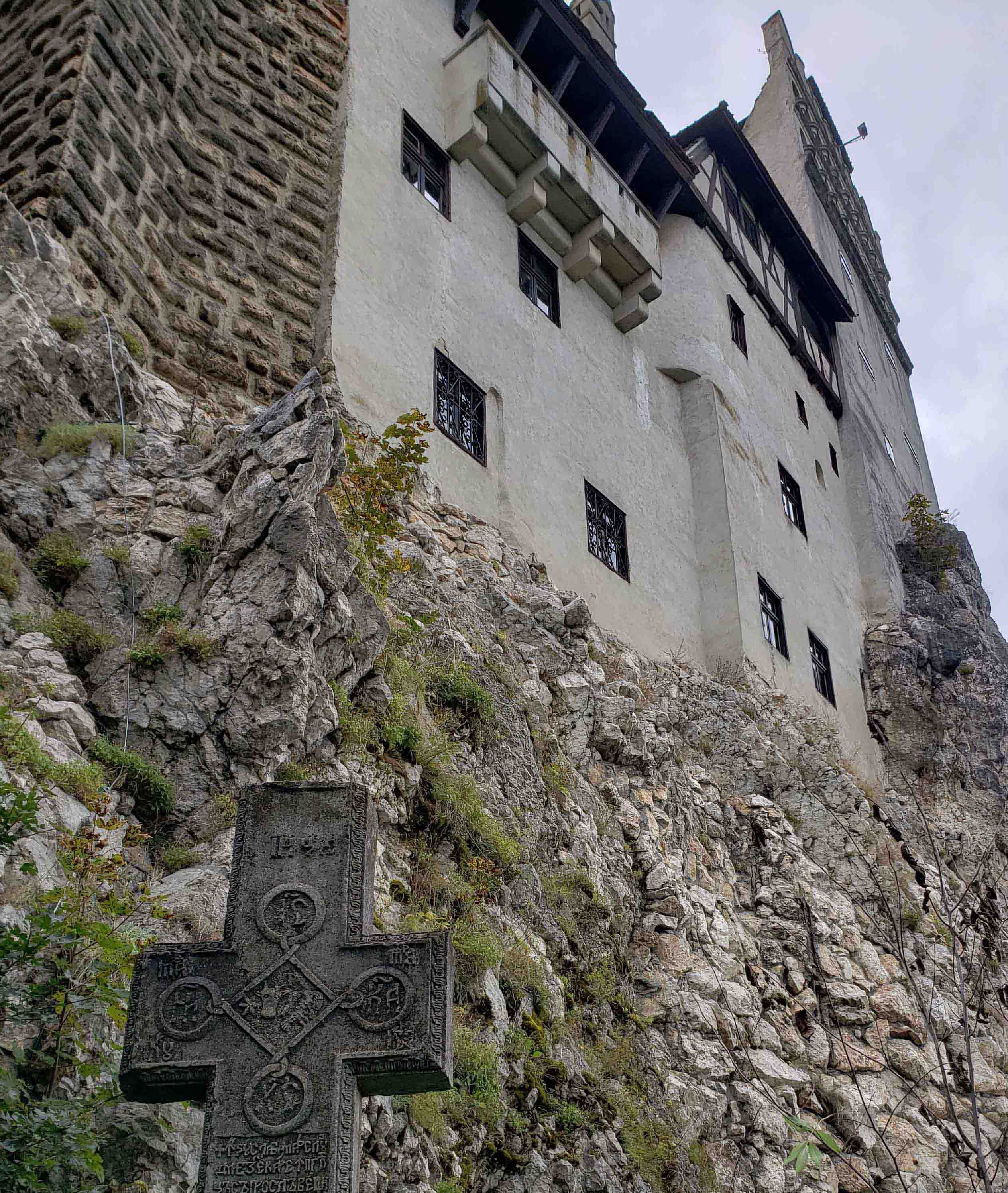
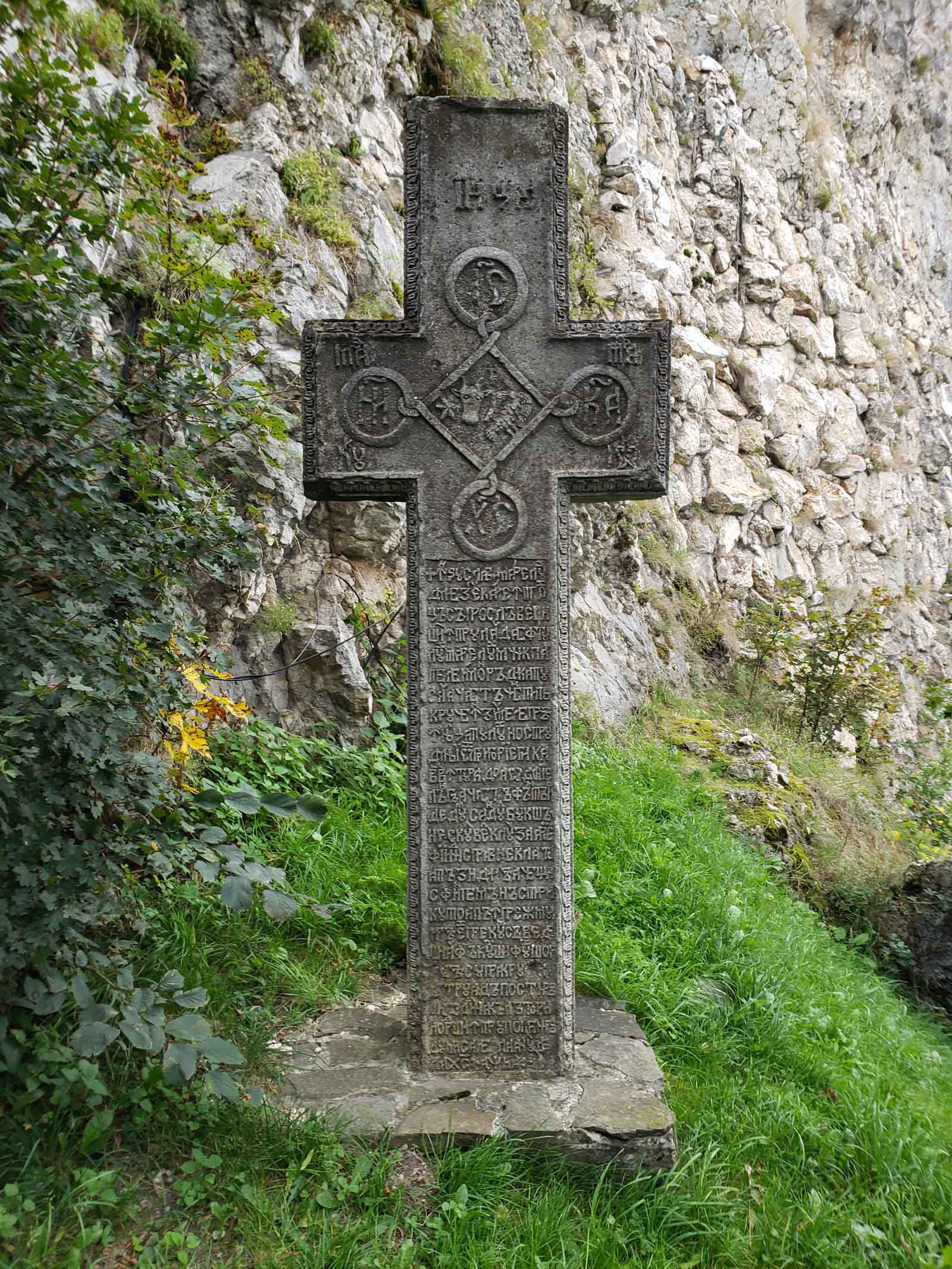
Bran – Bran Castle Entrance with Celtic Cross with Romanian Cyrillic characters.
Bran – Bran Castle Entrance
Castle Bran
The castle is perched on the side of a hill of the western Bucegi Range and commands a view of the entire countryside, as well as the valley below through which the river Turcul runs. One can hardly doubt that it is fixed to its position with the help of an outcropping of rock, for which Bram Stoker used against it to steal its reference from an illustrative book. It is of course a misrepresentation and artistic license that allowed him to do this, though some in this area would detail occurrences of Strigoi, evil spirits who wander the night between the hours of midnight and daybreak, in his defense. But one should not think them related to the castle, nor Vlad the Impaler, who, as evidence would suggest, has become a victim of his own success to levy tariffs and taxes on the German merchants who did not want to pay. The idea of money representing blood, blood money, etc., is not without parallel in our own history.
Celtic Cross – Romanian Cyrillic Characters
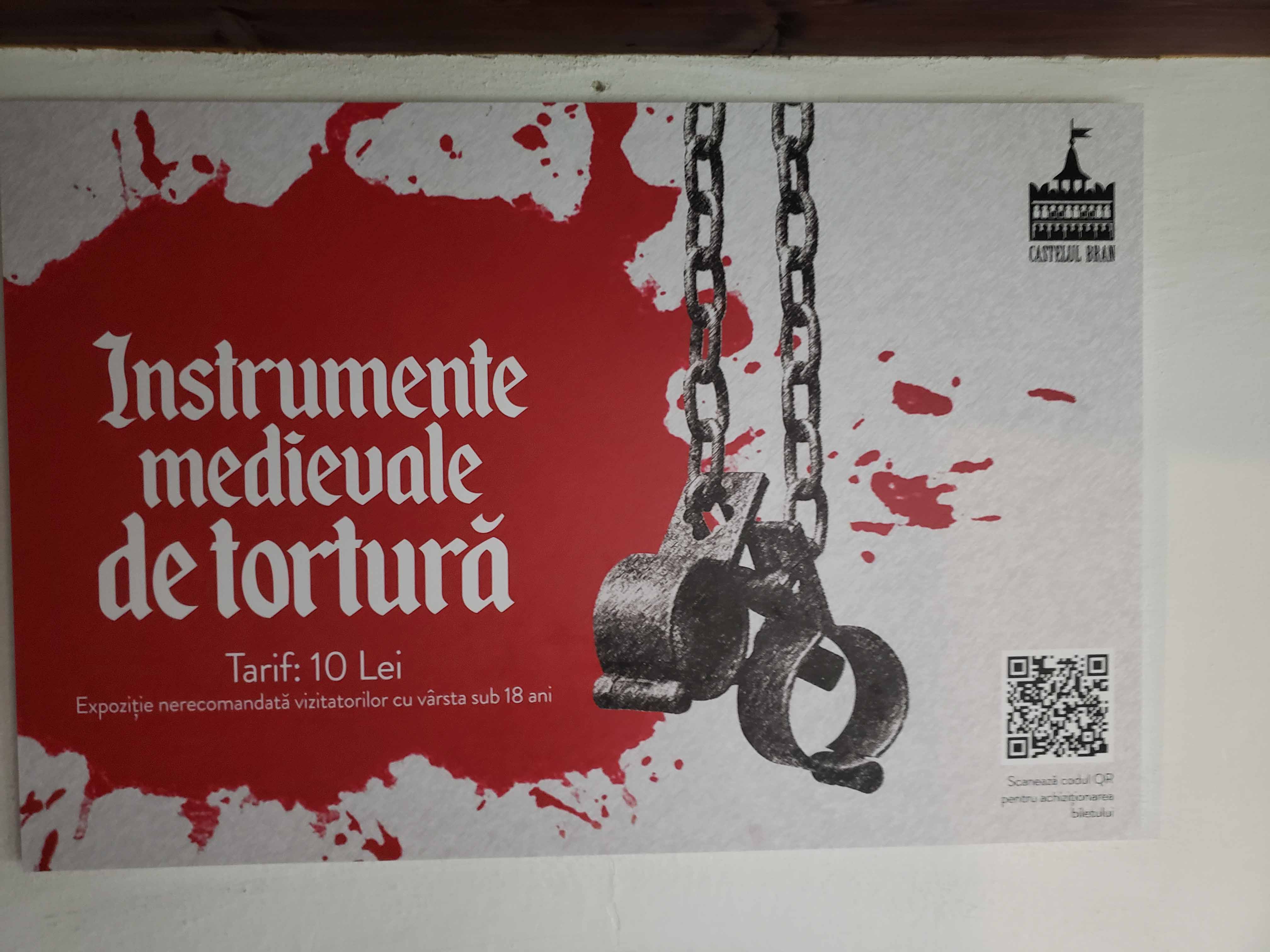
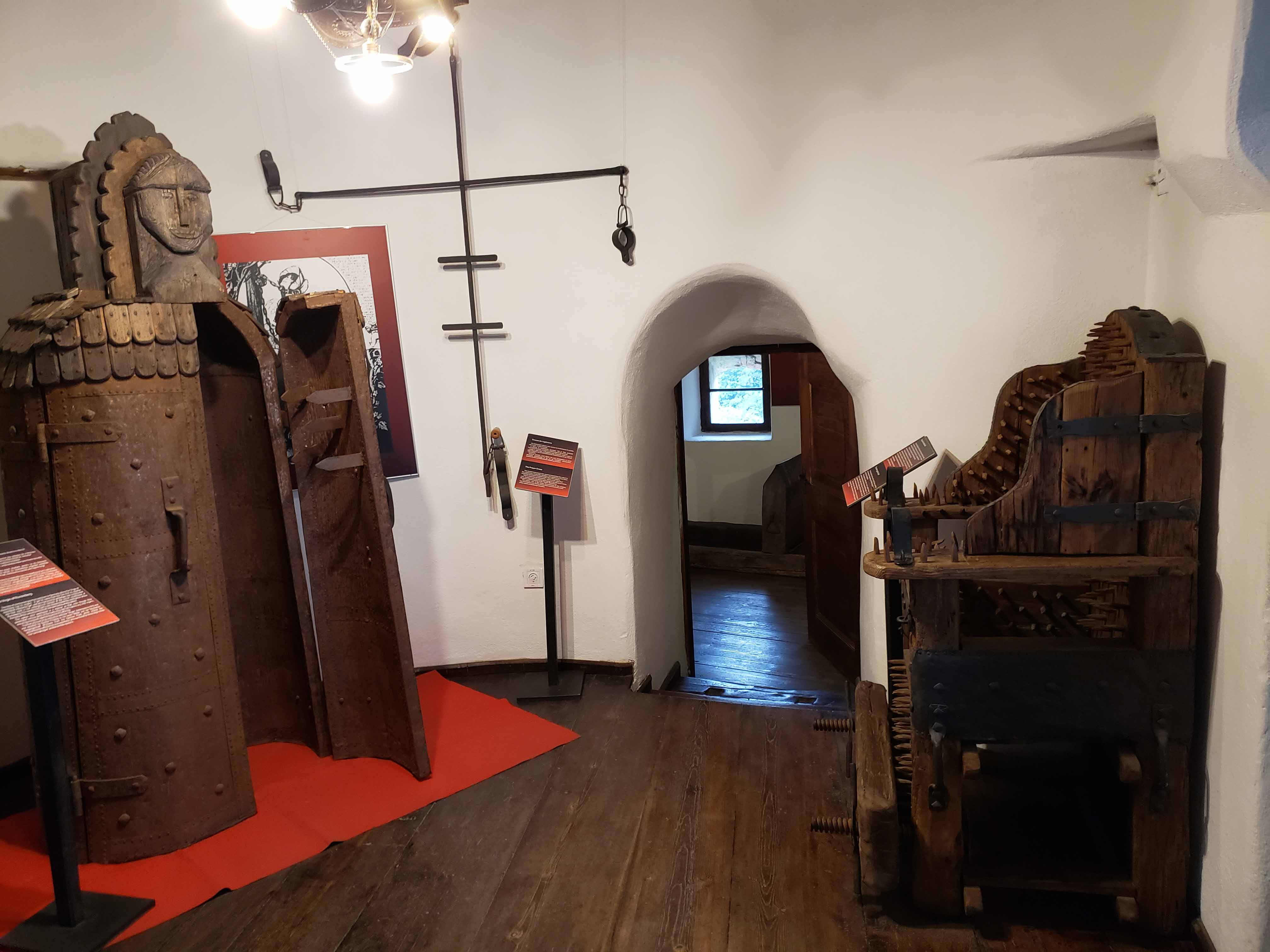
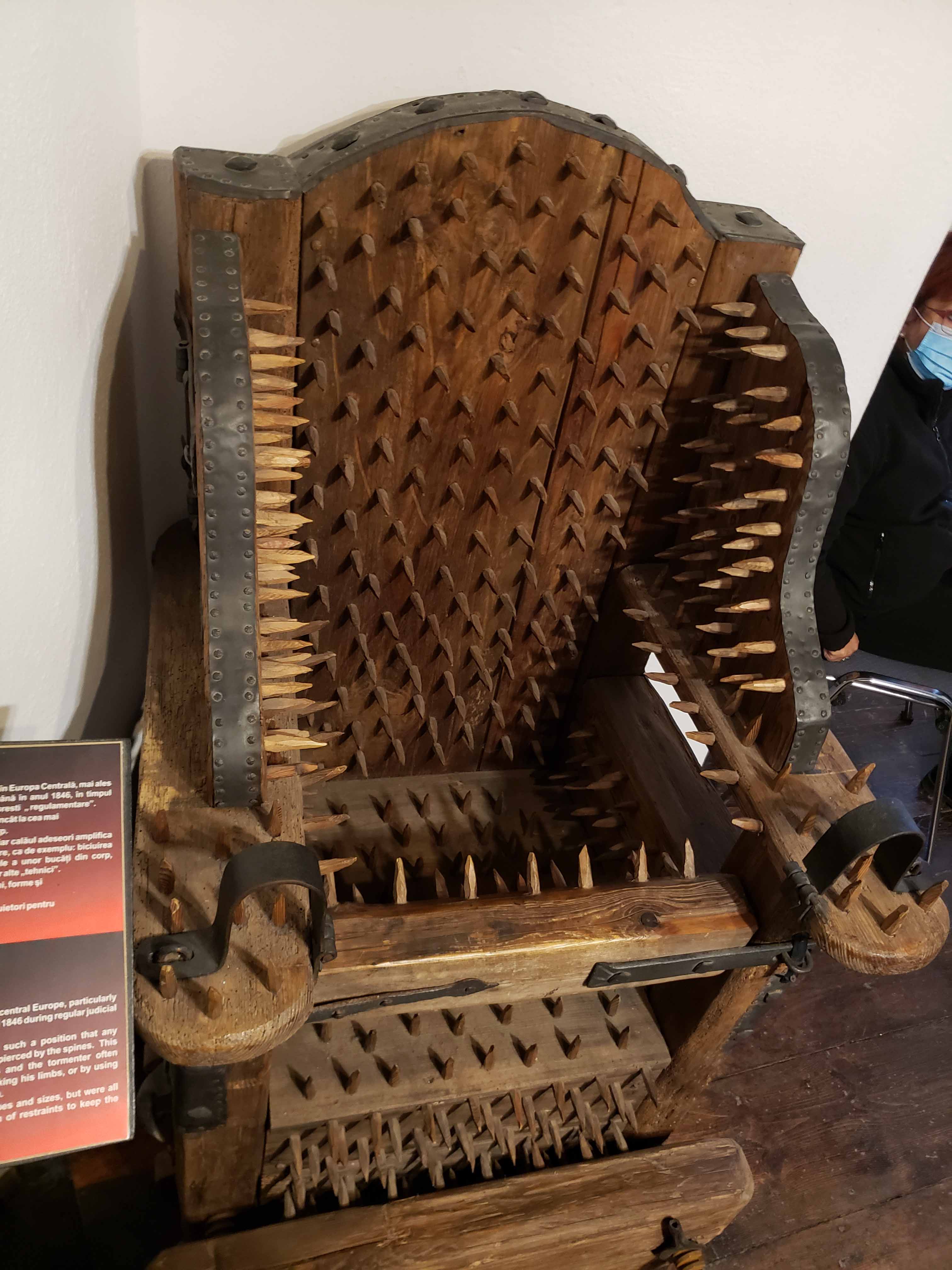
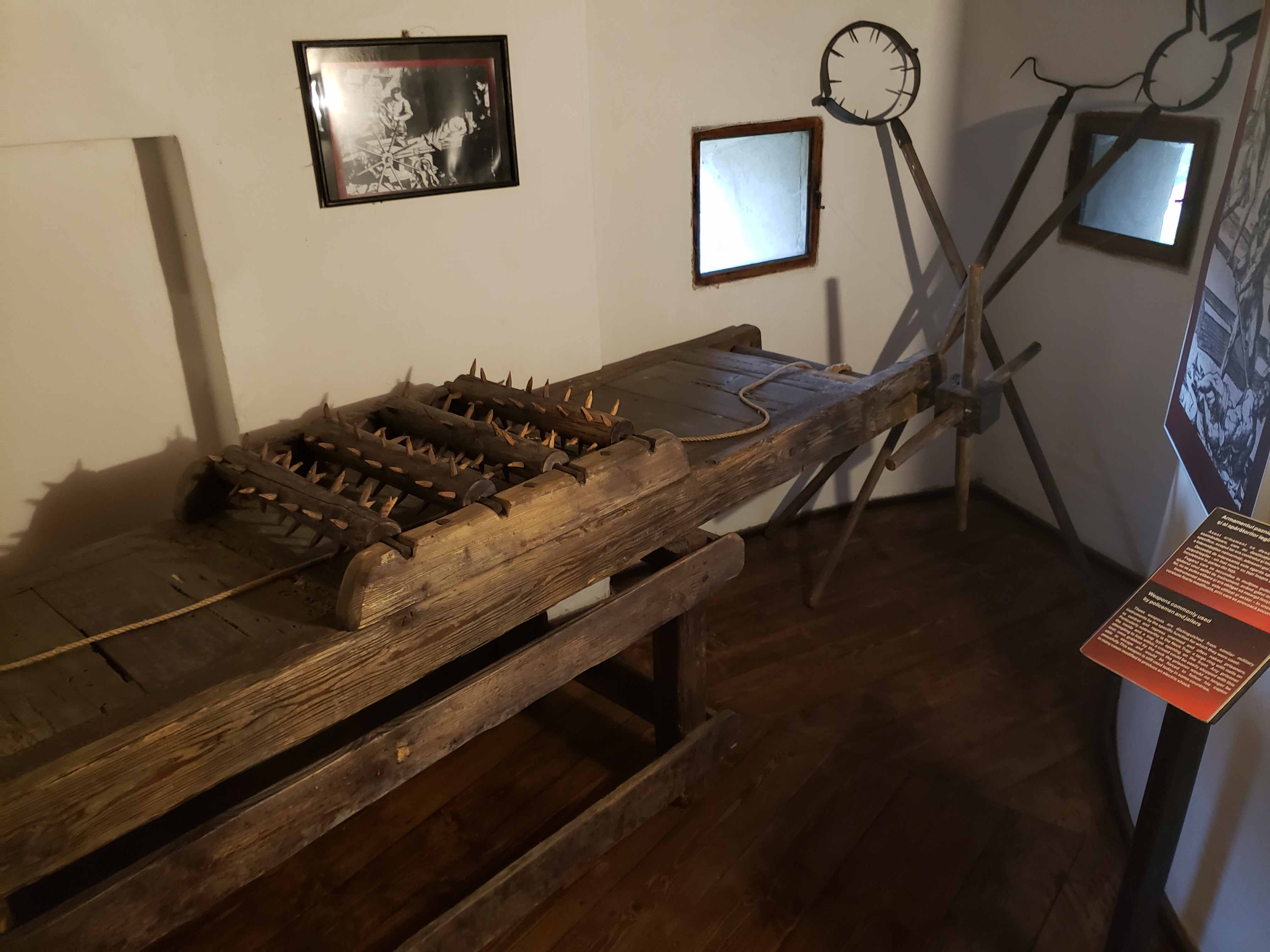
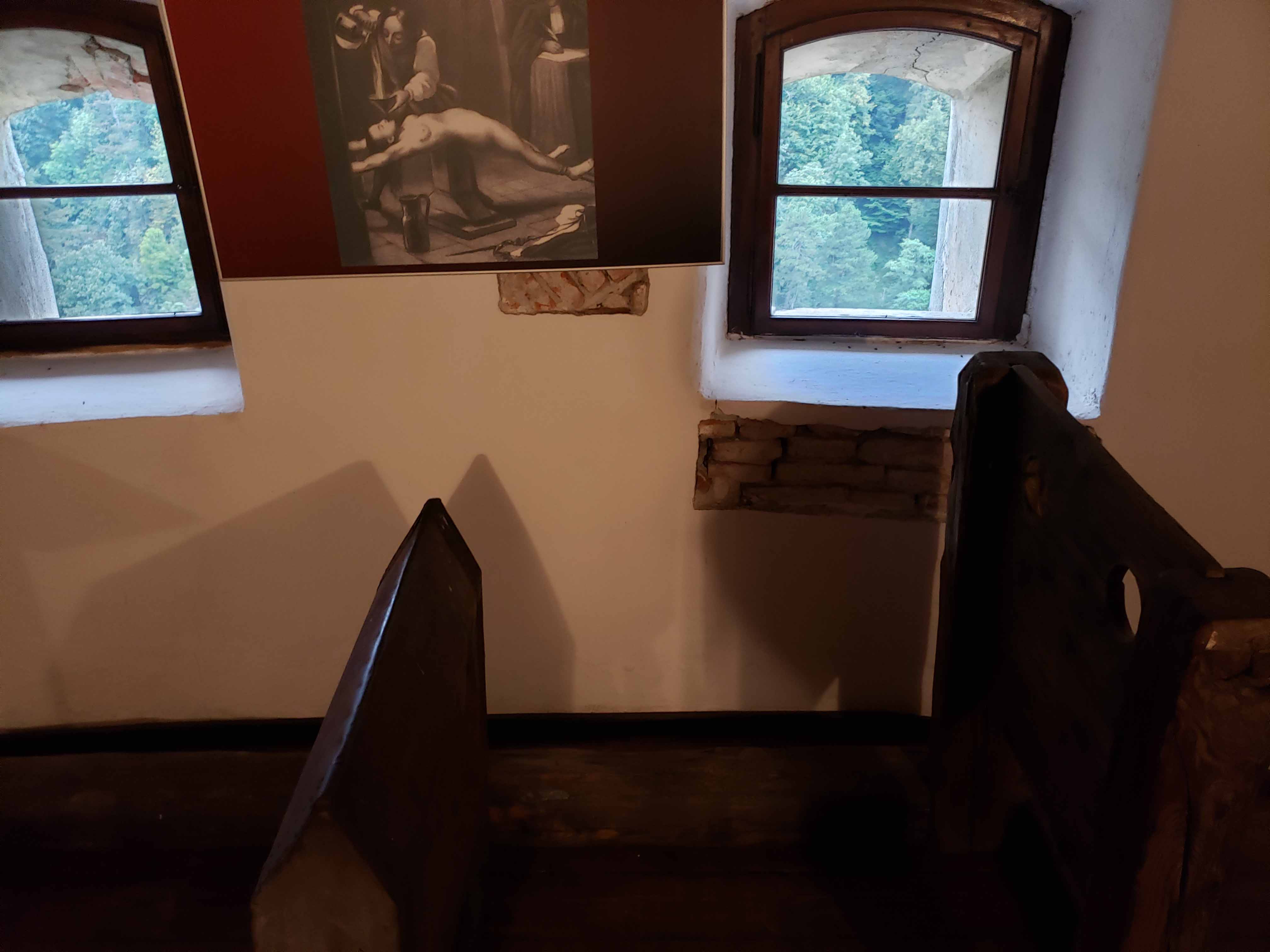
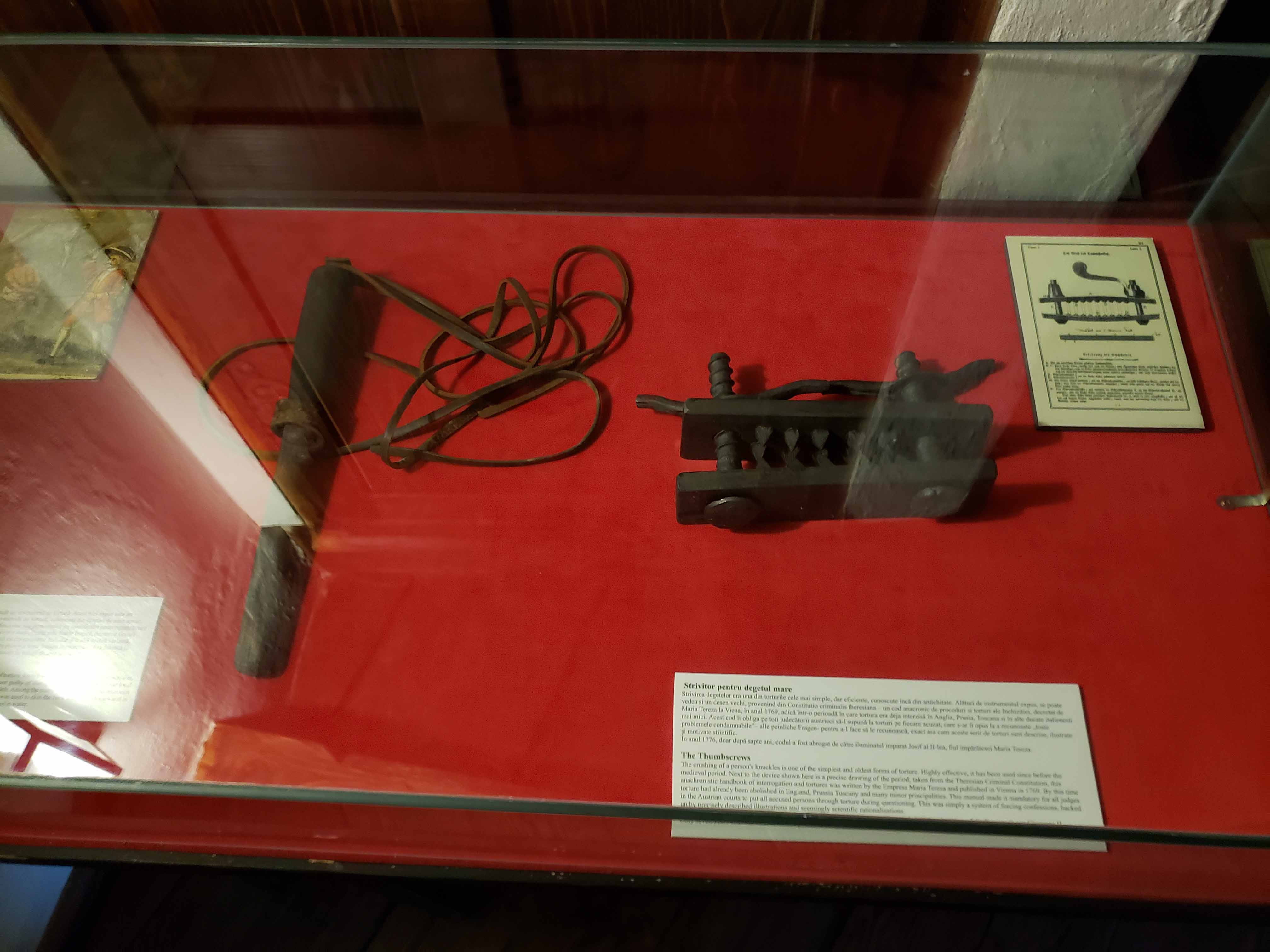
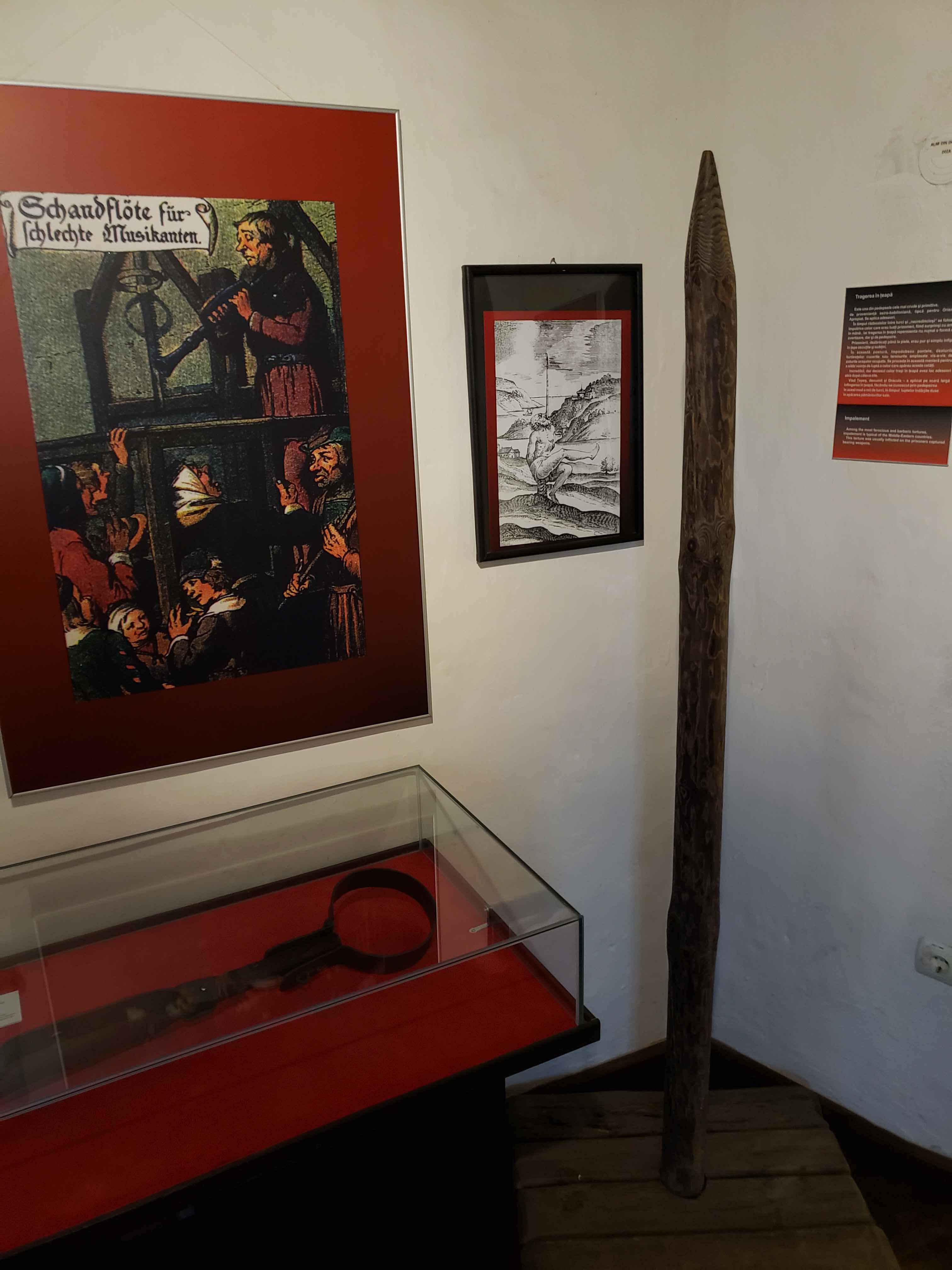
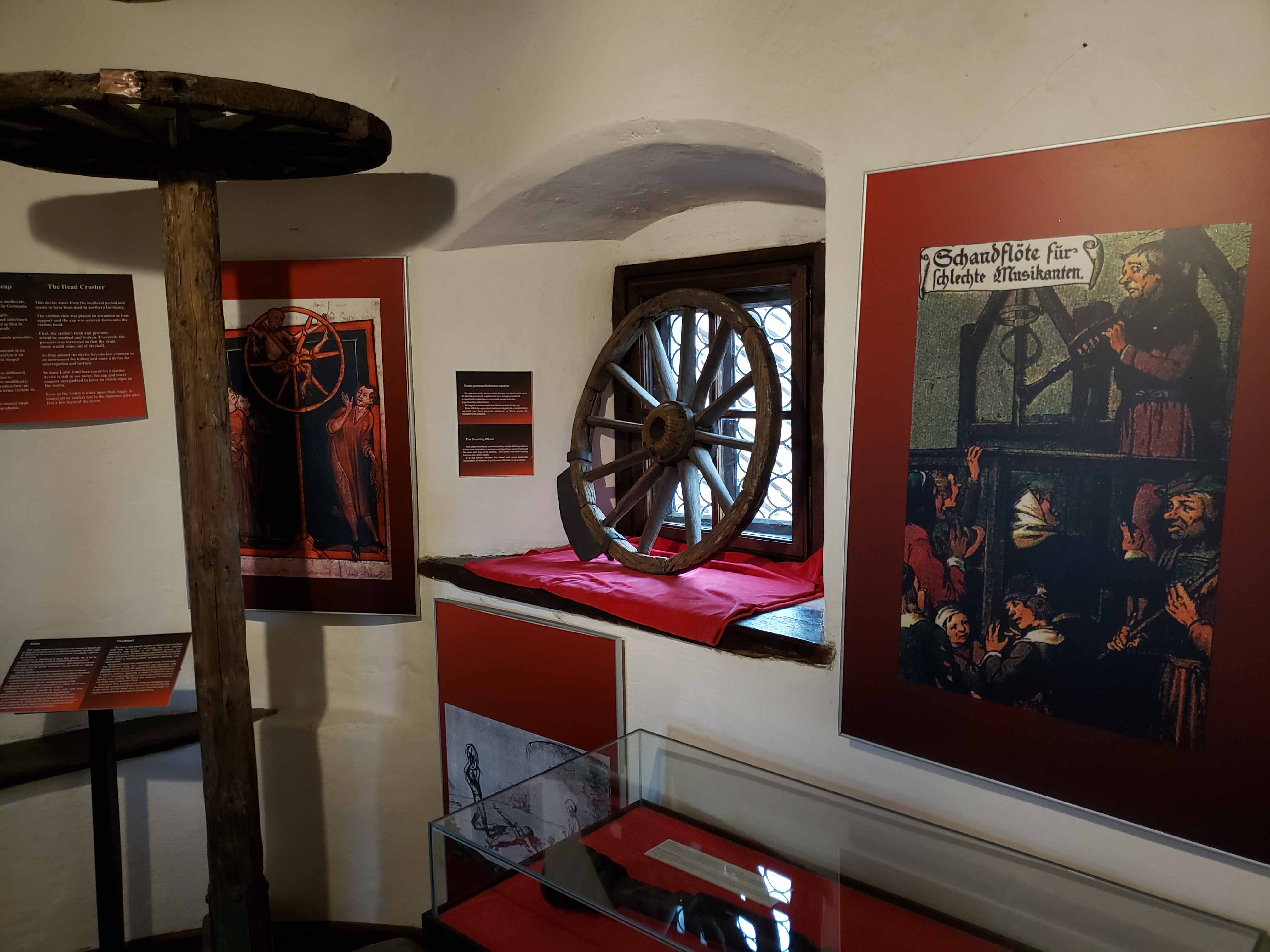
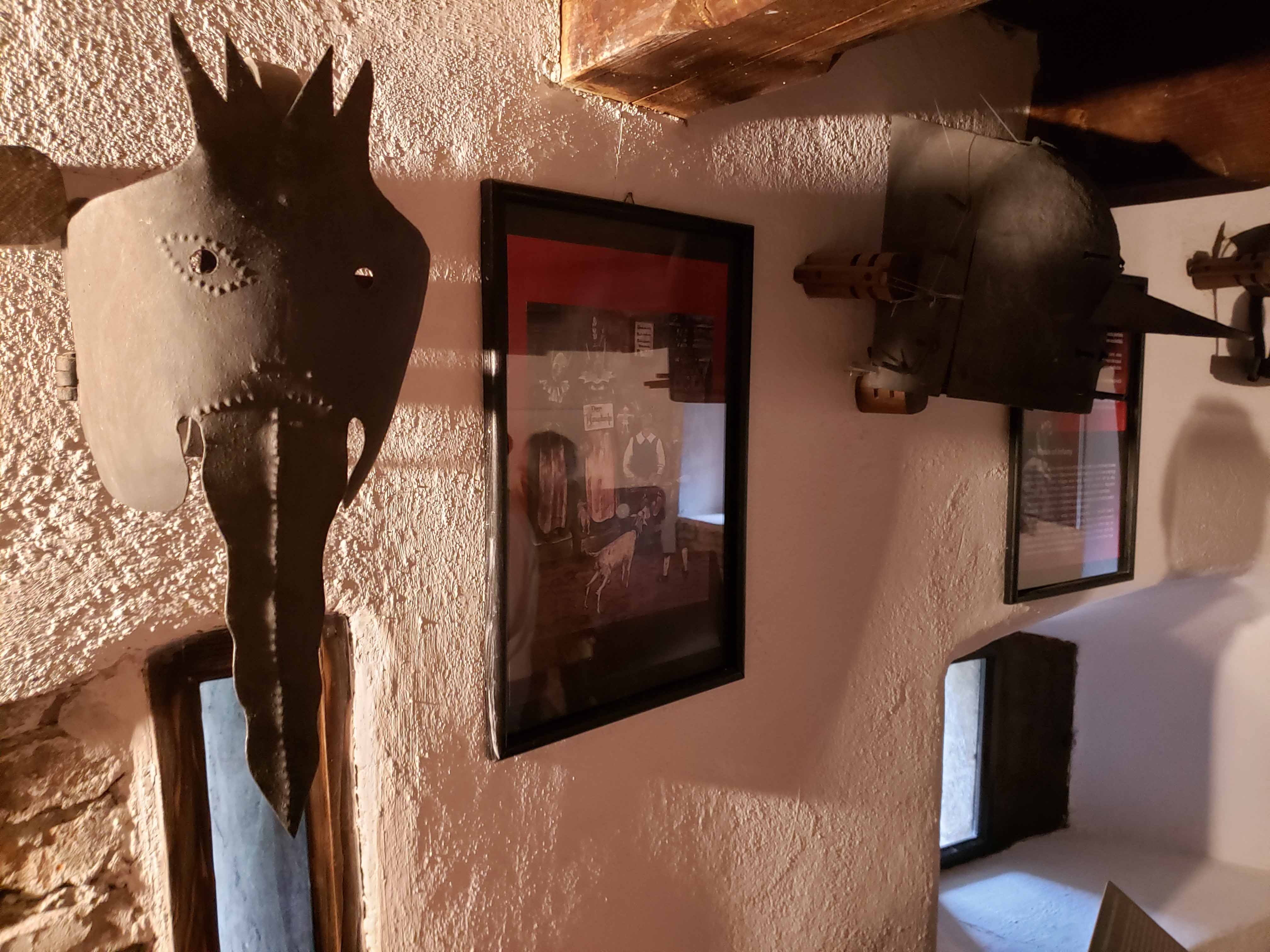
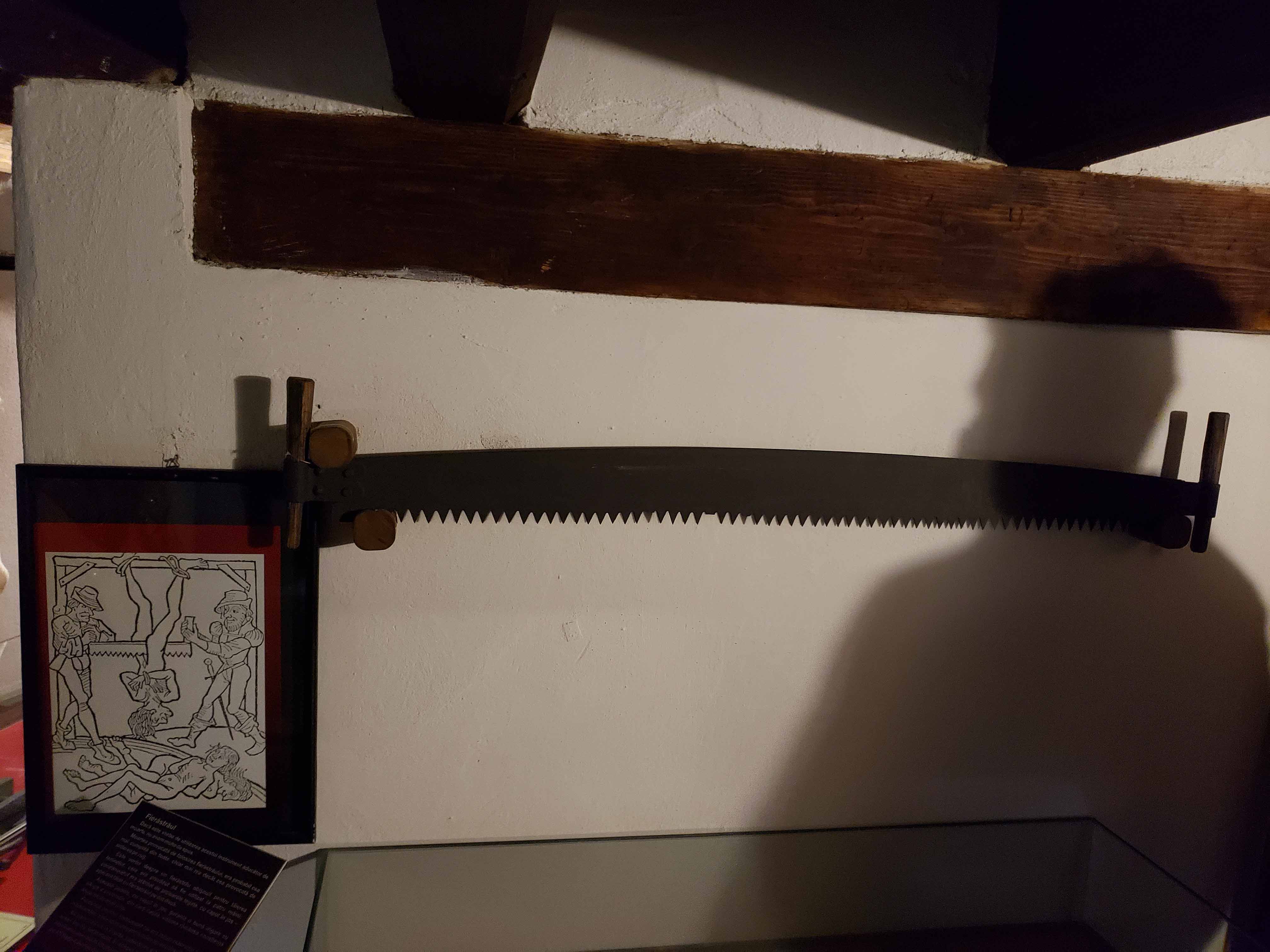
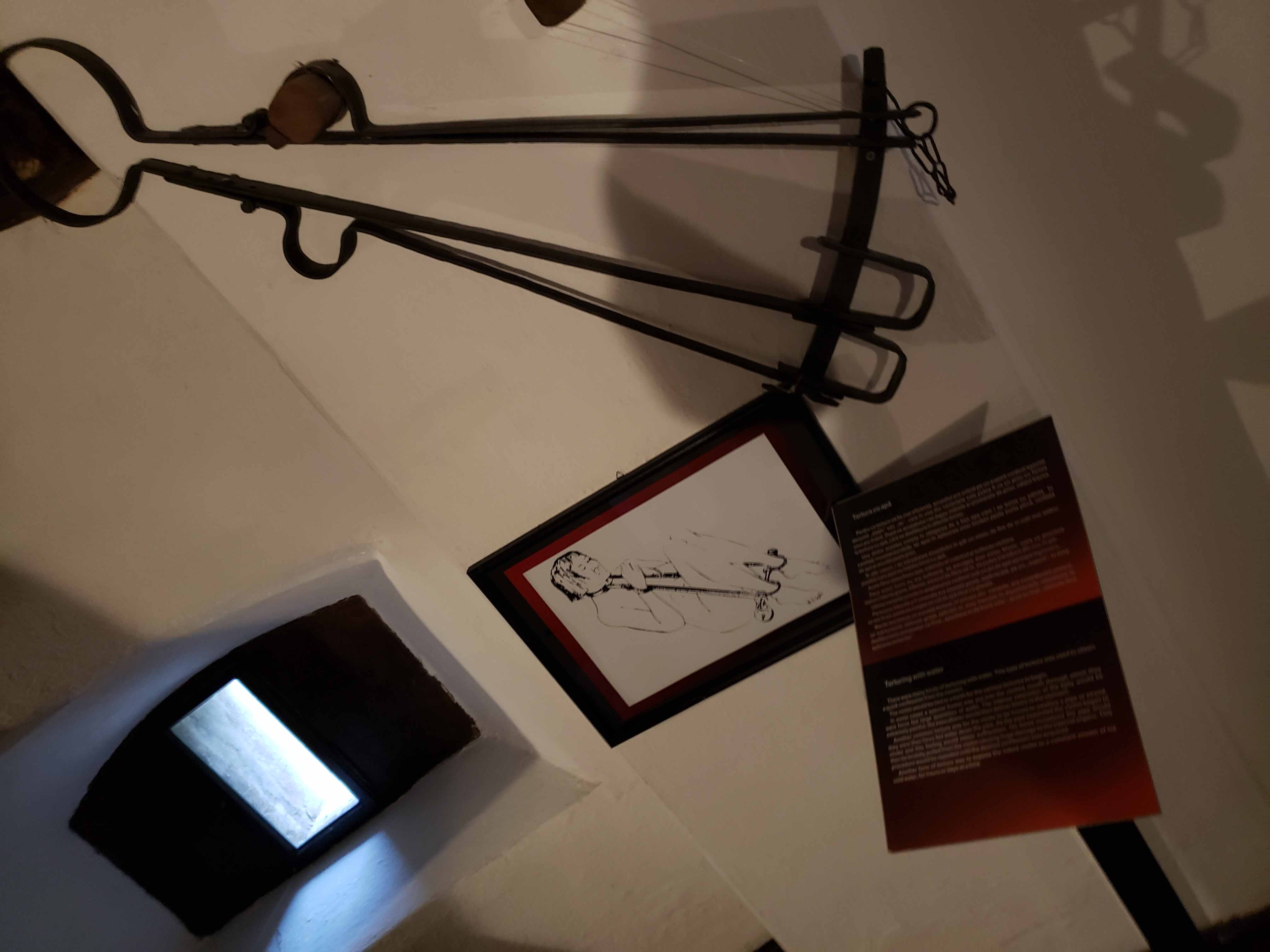
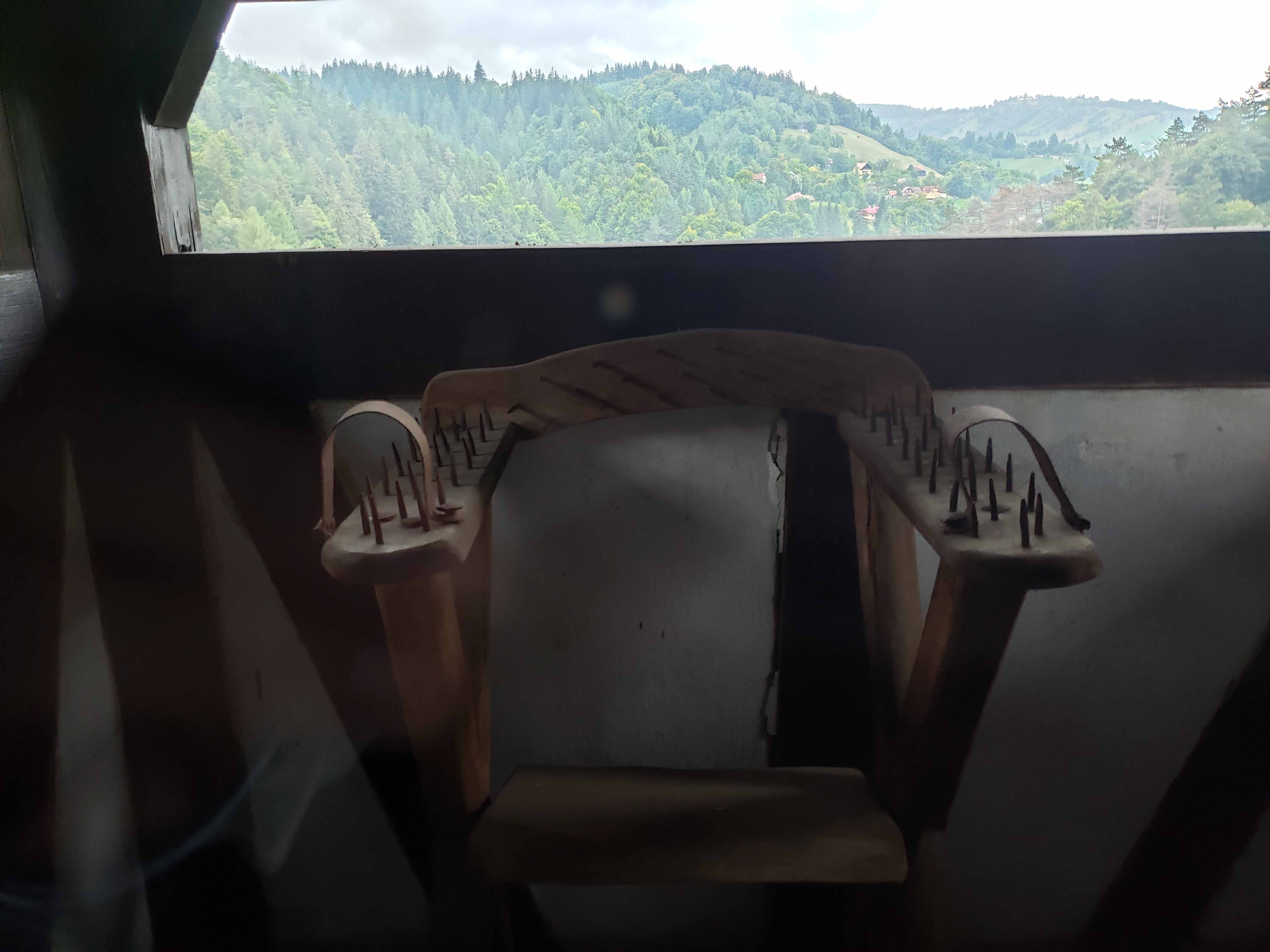
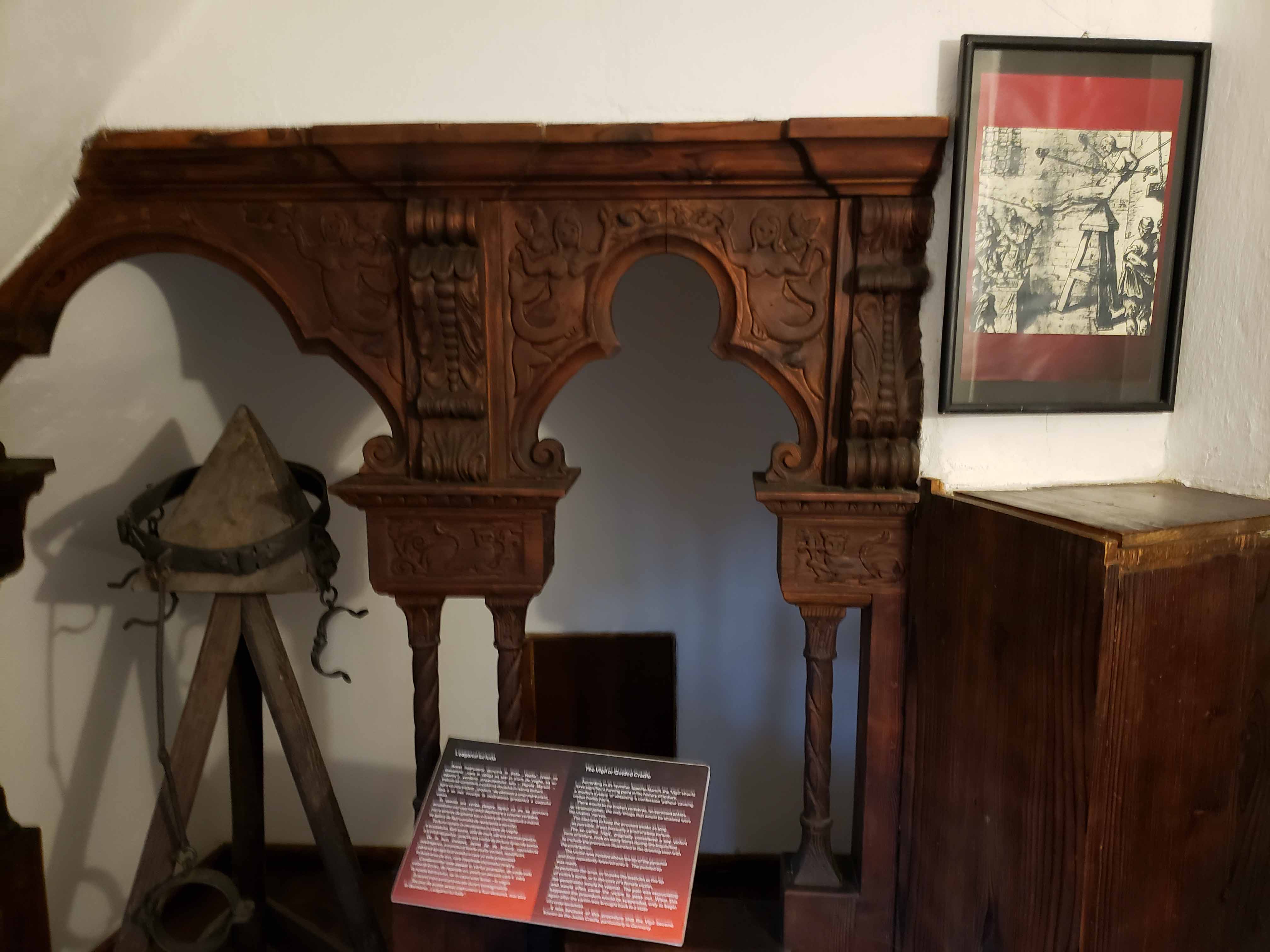
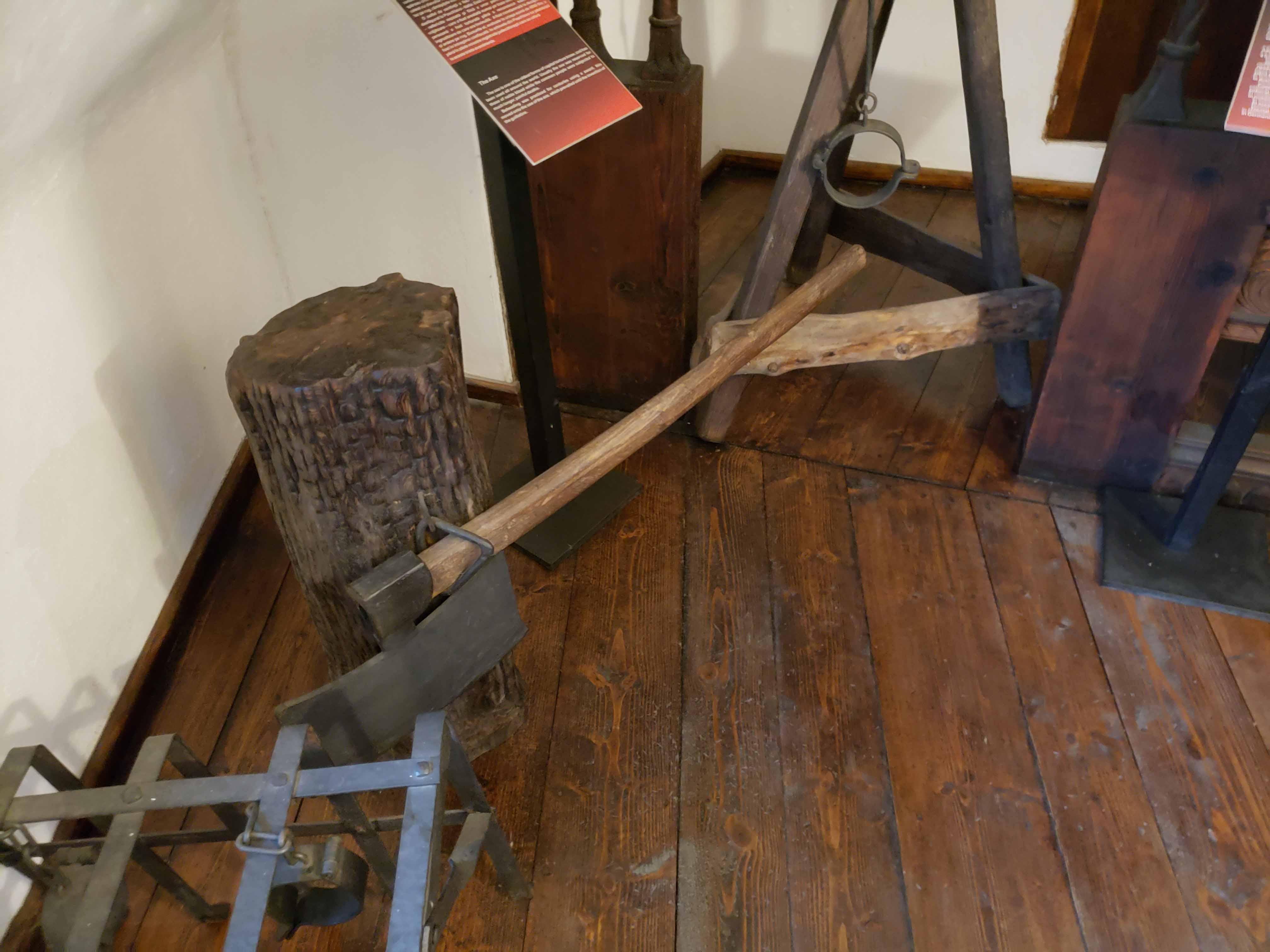
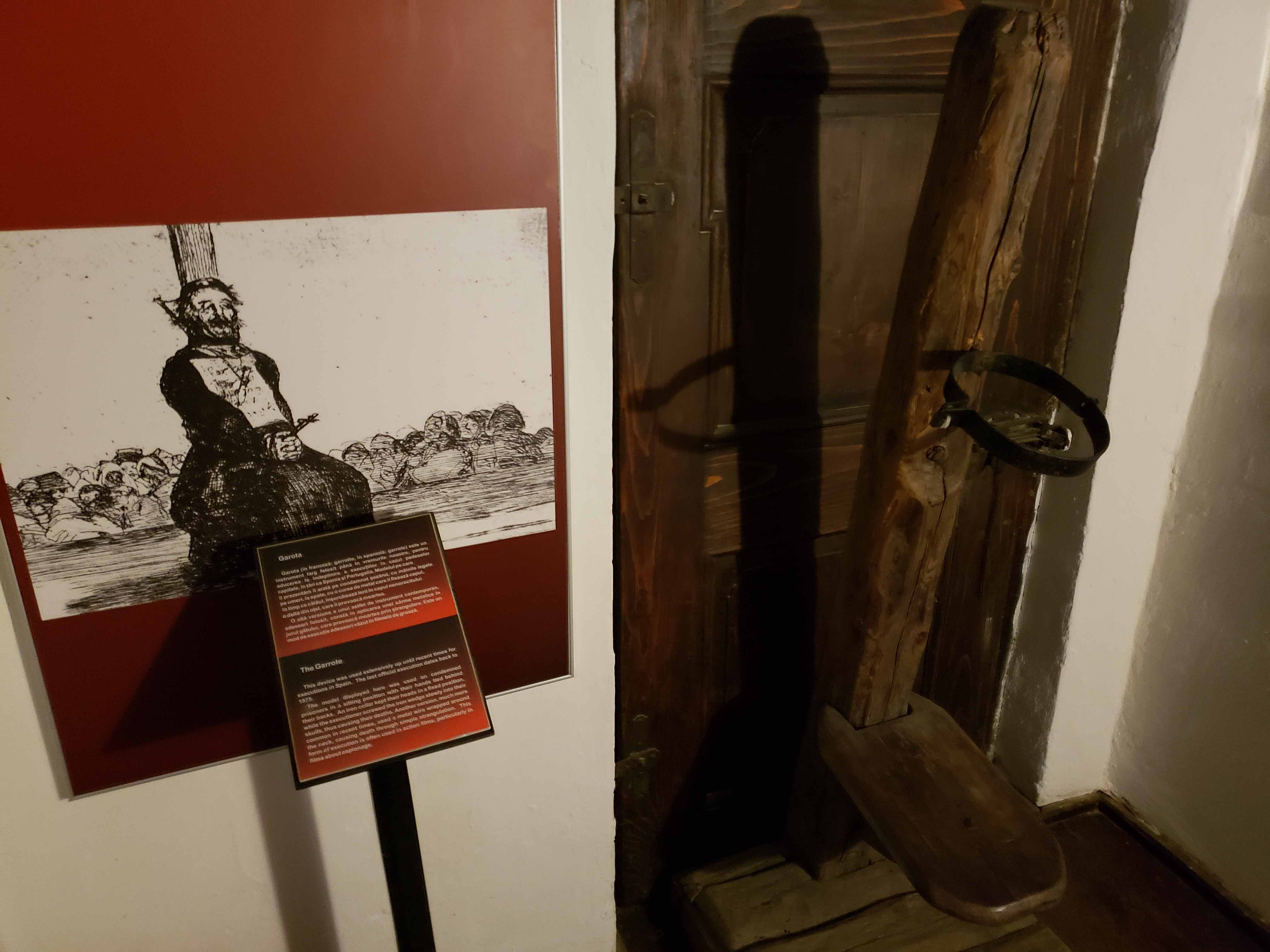
The castle has no doubt cashed in on the mythology of Dracula or Count Dracul, however, they are careful not to inflame any details regarding this myth. There are little to no reference to Count Dracula nor Vlad as an Impaler. However, there is a very good Torture museum on the grounds, which for about 10€ more will gain you entrance.
Bran – Bran Castle – Torture Museum
Bran – Bran Castle – Torture Museum
Bran – Bran Castle – Torture Museum
Bran – Bran Castle – Torture Museum
Bran – Bran Castle – Torture Museum
Bran – Bran Castle – Torture Museum
Bran – Bran Castle – Torture Museum
Bran – Bran Castle – Torture Museum
Bran – Bran Castle – Torture Museum
Bran – Bran Castle – Torture Museum
Bran – Bran Castle – Torture Museum
Bran – Bran Castle – Torture Museum
Bran – Bran Castle – Torture Museum
Bran – Bran Castle – Torture Museum
Bran – Bran Castle – Torture Museum
Bran – Bran Castle – Torture Museum
The character of Dracula is often confused with Vlad Tepes, also known as Vlad Dracul, who was a Walachian Prince who lived in Bran Castle. It is the only castle in all of Transylvania that can possibly fit Bram Stoker’s description of the castle that Dracula in his book lived in; hence, it is now known throughout the world as Dracula’s Castle. His novel described the castle as,
. . . on the very edge of a terrific precipice . . . with occasionally a deep rift where there is a chasm [of] silver threads where the rivers winds in deep gorges through the forests.
Bram Stoker obviously stole the appellation from an illustrated book that showed Bran Castle and then took it as his fictitious abode for Count Dracula. He used rather straightforward references to imply the he meant none other than Vlad Tepes, who was the Wallachian Rules from 1456 until 1467, and who, for political reasons, was labeled as a blood thirsty tyrant, as has already been previously mentioned.
Nonetheless, in Bran and the villages nearby, one can still find the belief in the existence of evil spirits called Strigoi. There was and still a belief that there exist certain living people, or Strigoi, who lead an abnormal life at night, when during sleep, their souls leave their bodies and haunt the village tormenting people while they sleep. These evil spirits supposedly haunt their prey from midnight until dawn, when sunlight appears to affect their powers and their potential to do harm fades. The character of Dracula derives no doubt most of its power from these local myths, there is no other explanation for its endurance. Its power has however faded over time, that is, when exposed to the corrosive of the sunlight of education and scientific scrutiny, as most other things preternatural.
Bran Castle – Tickets For Two
In the Fall of 1462, thirty years before Columbus visited the New World, an army of the Hungarian King Matei Corvin captured Vlad Tepes near Rucar. He was taken to Bran Castle and imprisoned there for at least two months. This could quite possibly be his one and only association with the castle. Where others have tried to fabricate, inveigle or obfuscate the narrative of Count Dracula from the Stoker book, history reveals the truth. Sleep well.
Restaurants
There are many restaurants in Bran, the most convenient one that we found was directly next to the parking lot we used. However there are several others that are without a doubt very convenient and good to use as well.
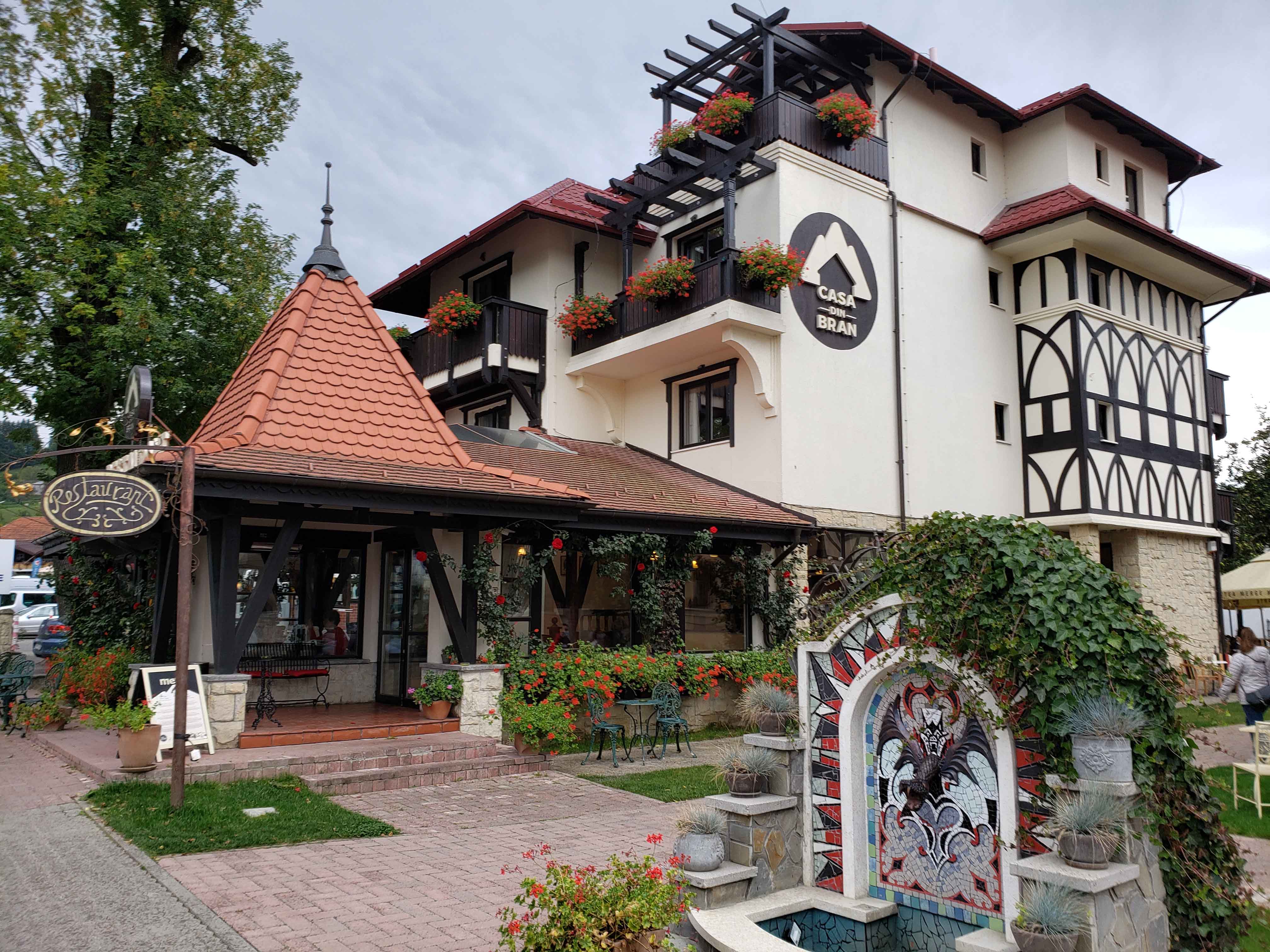
Bran – Casa di Bran
Casa di Bran
This restaurant offered a very cosmopolitan and Romanian based menu, one for which anyone could order something to please them.
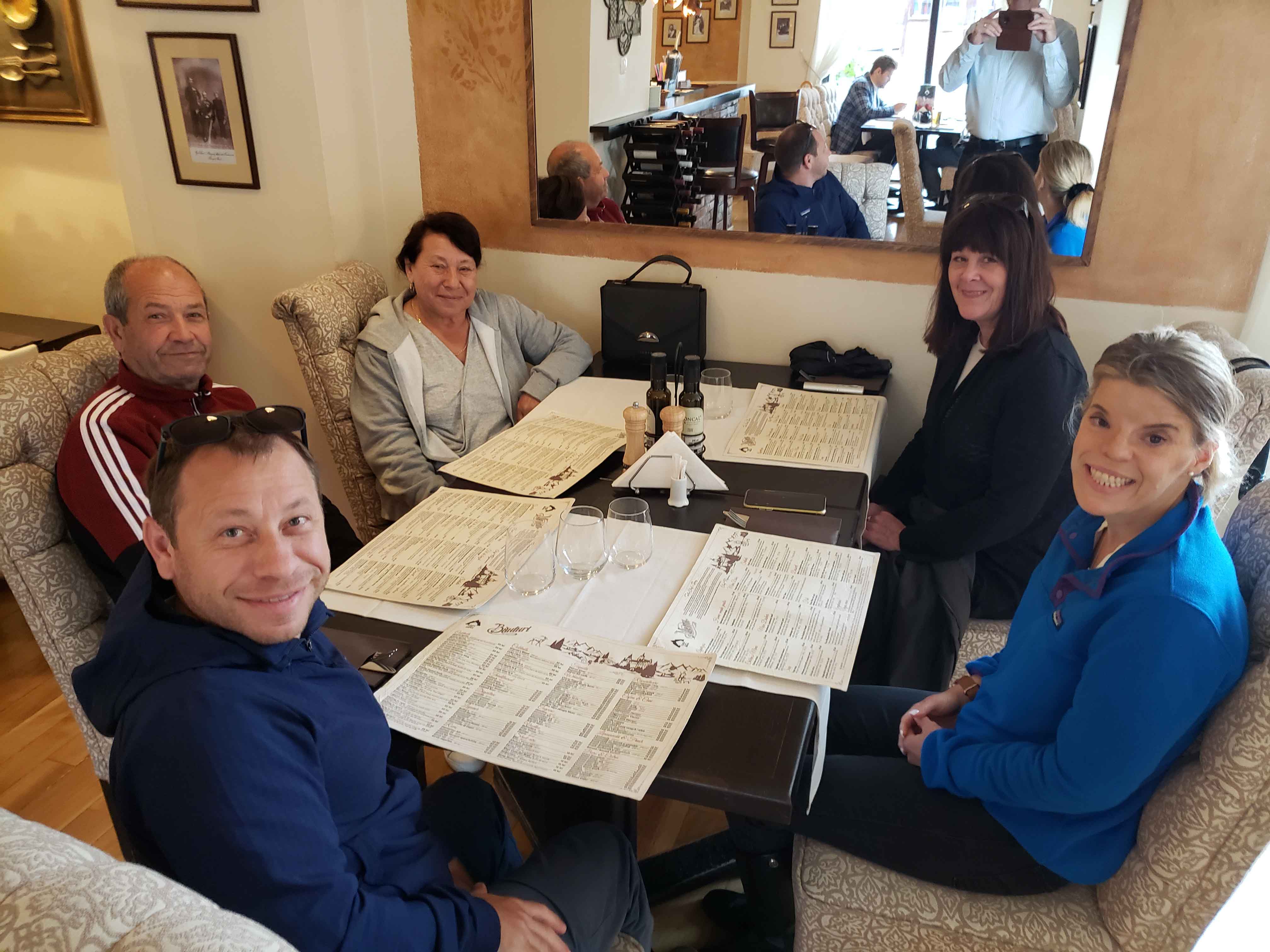
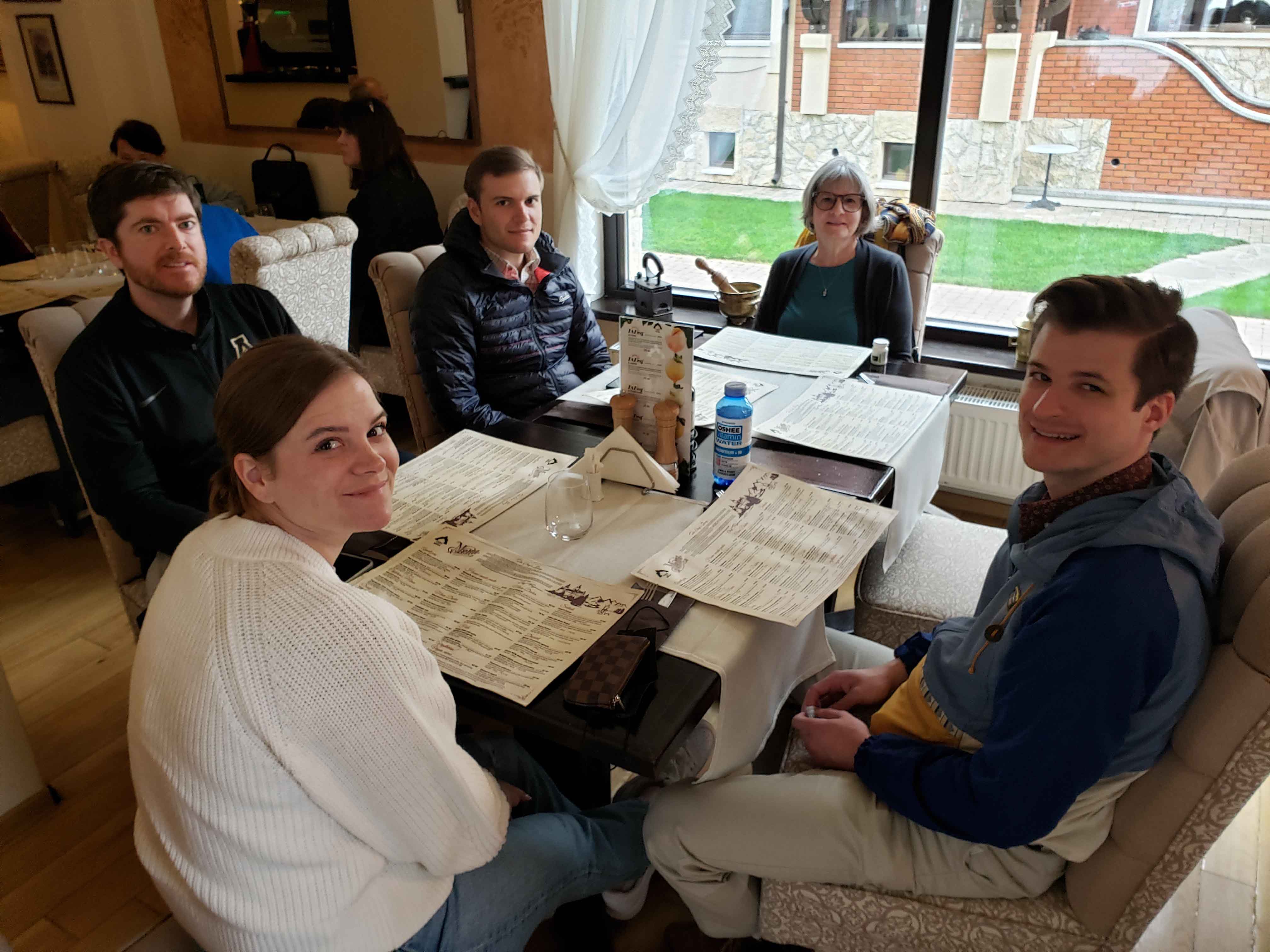
Bran – Casa di Bran – Dobre, Gabi, Ioana Secara, Theresa Griffin and Ericka (née Griffin) Secara
Bran – Casa di Bran – Jason and Meagan Reinfried, Tristan, Patti and Dana Griffin – Case di Bran
Above are my choices for lunch which included wine, coffee and dessert, though all were served à la carte.
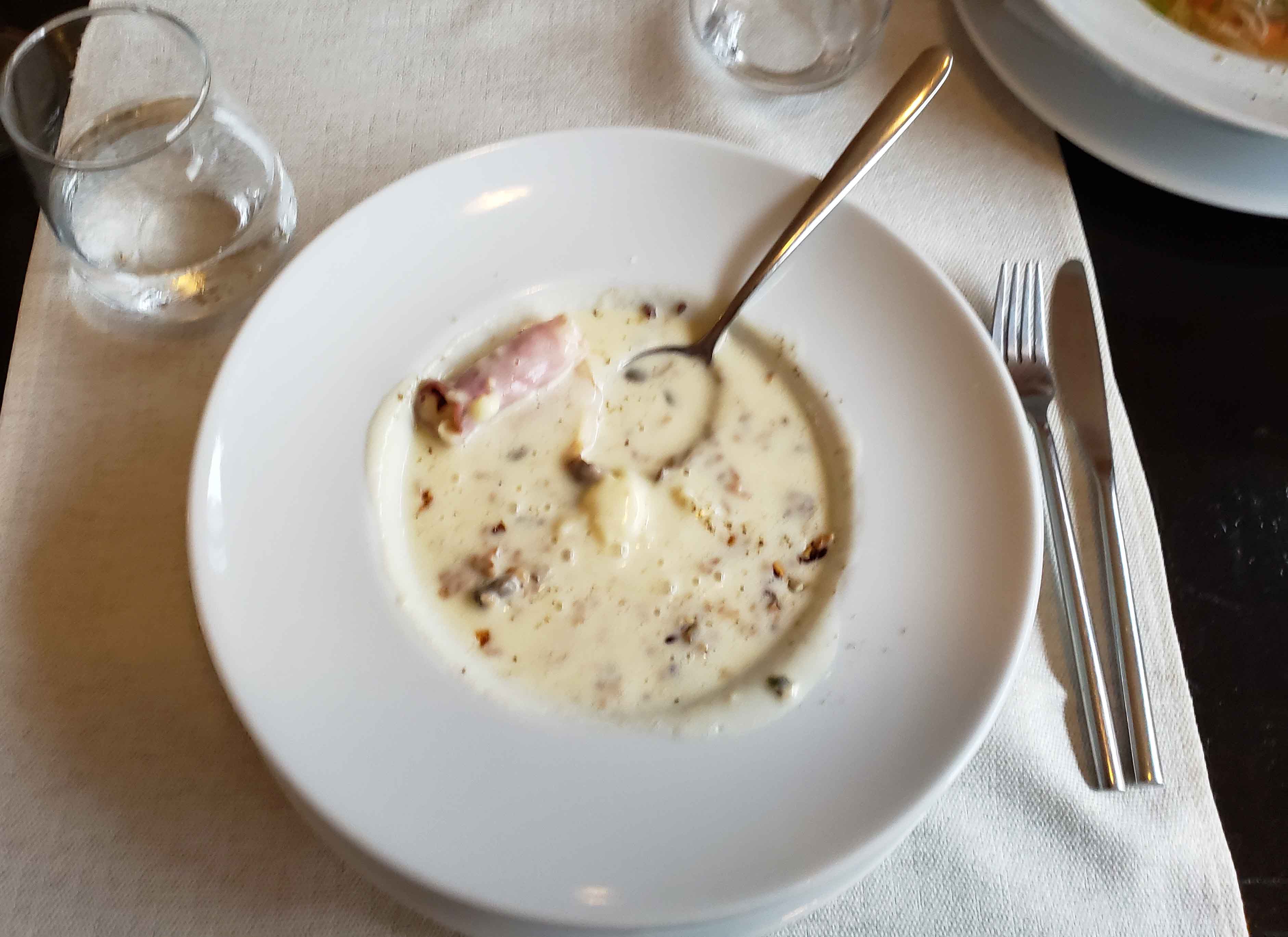
Potato Soup – Mistranslated as Vegetable Soup
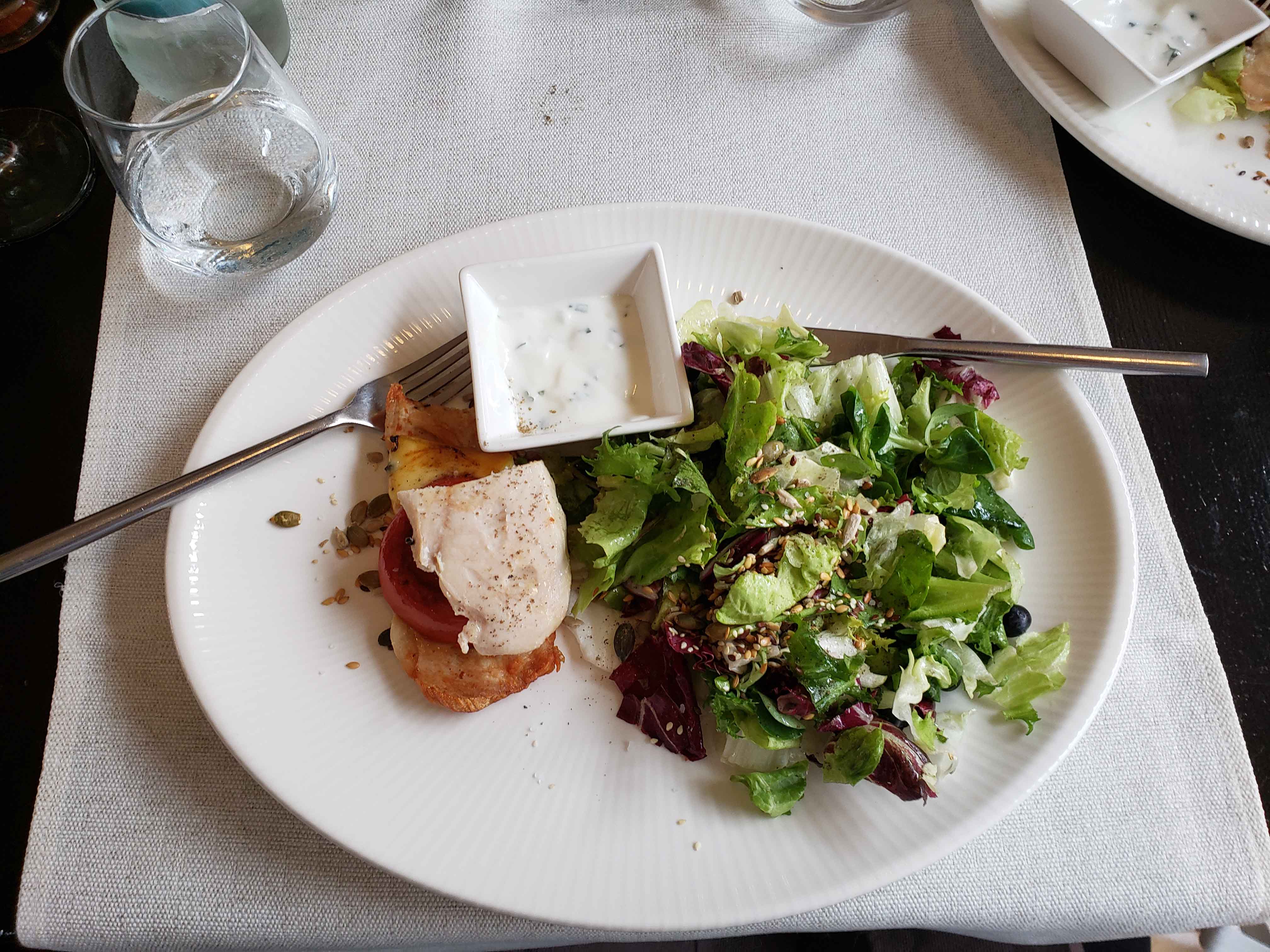
Braised Chicken with Salad
Our family had a very good lunch, while it rained for a while outside. Good timing before our visit to the castle.
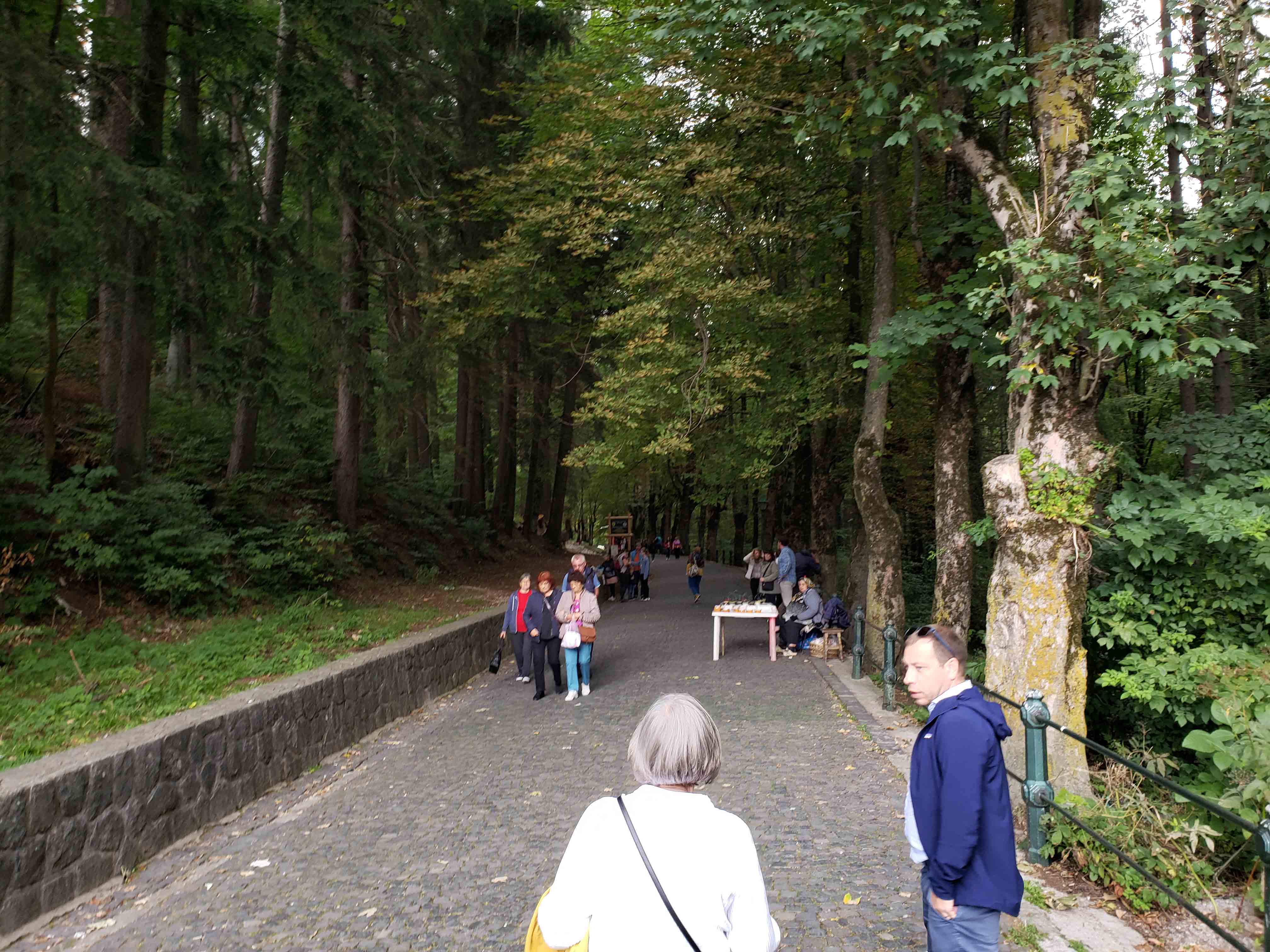
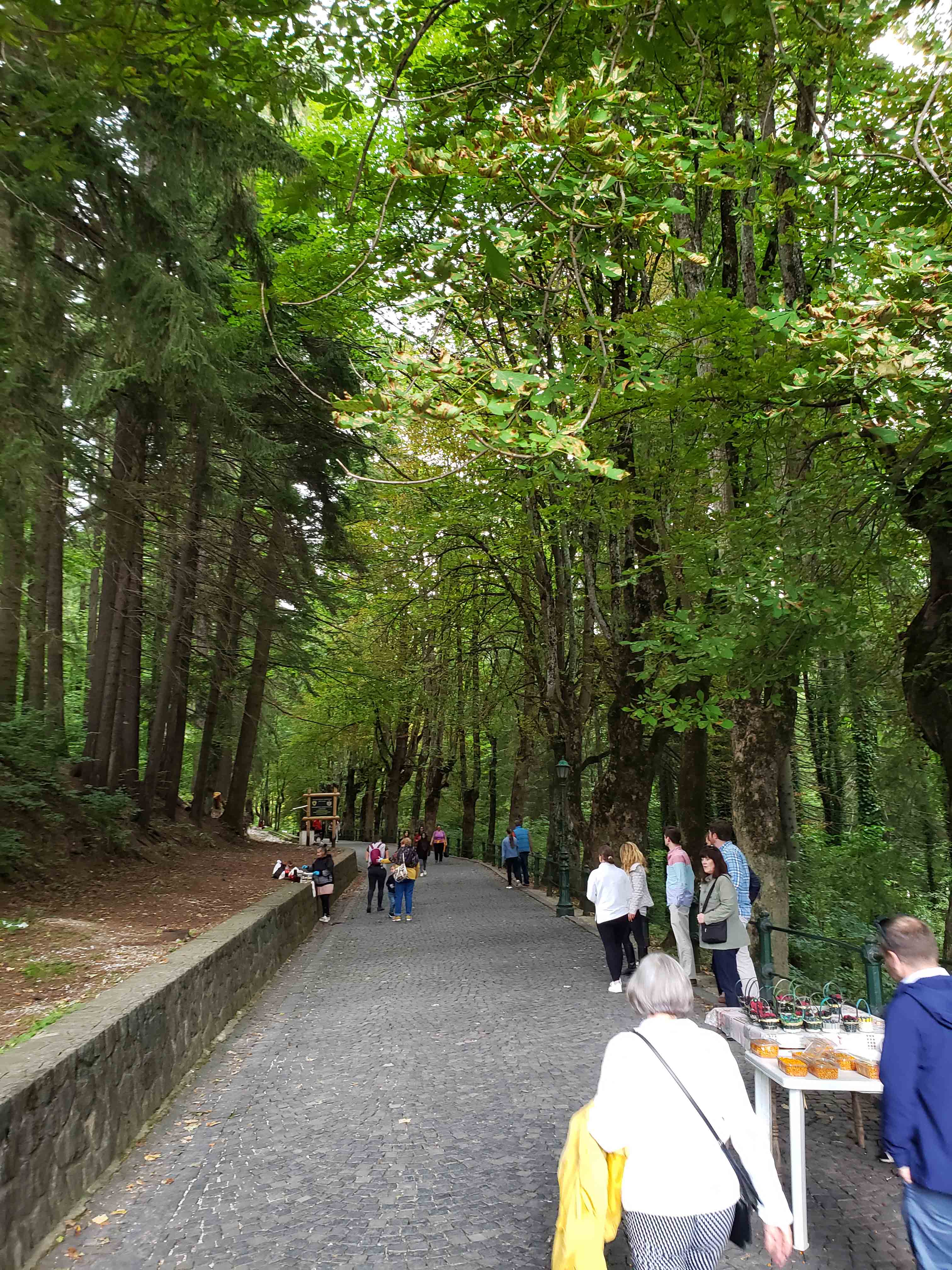
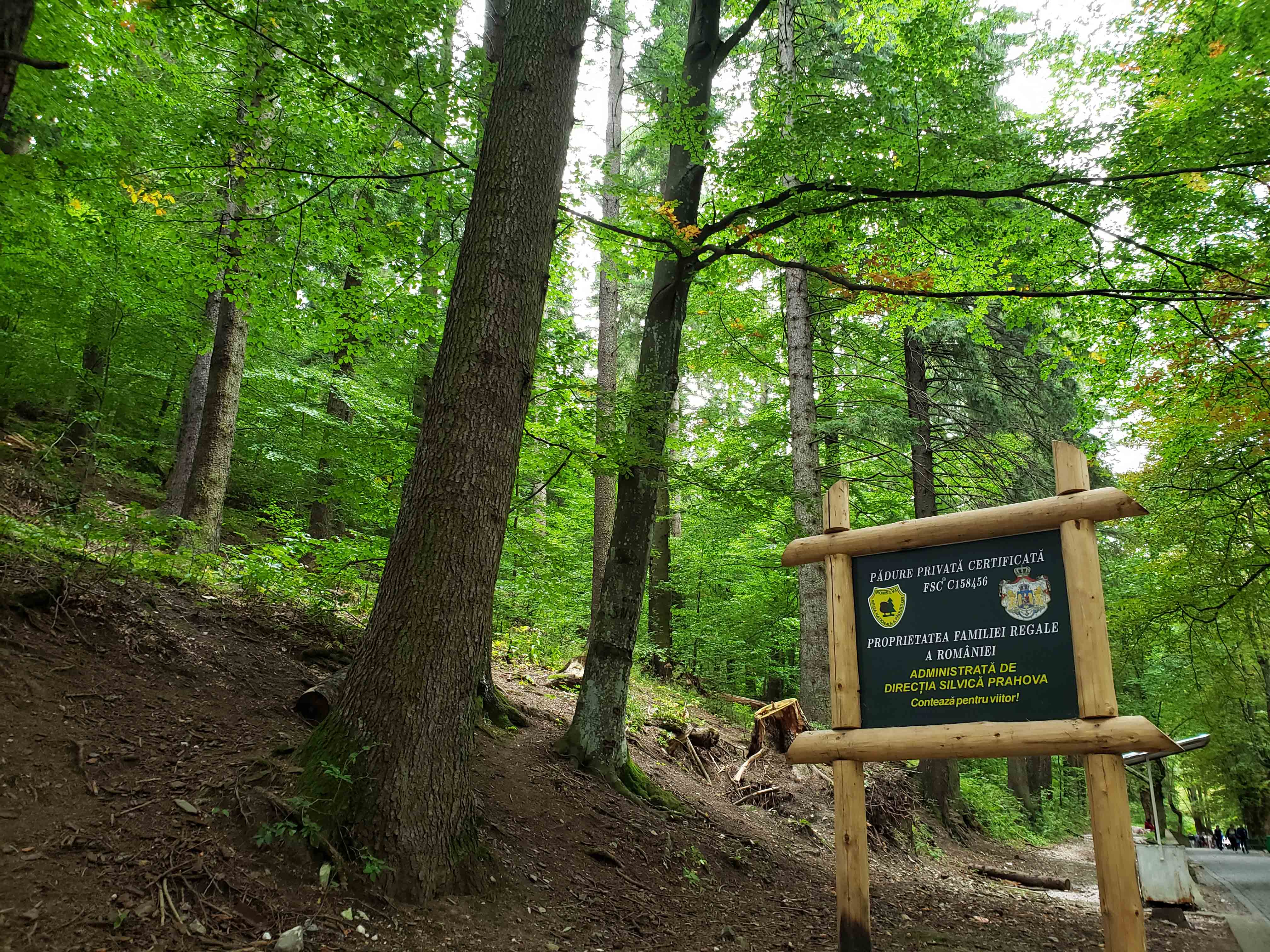
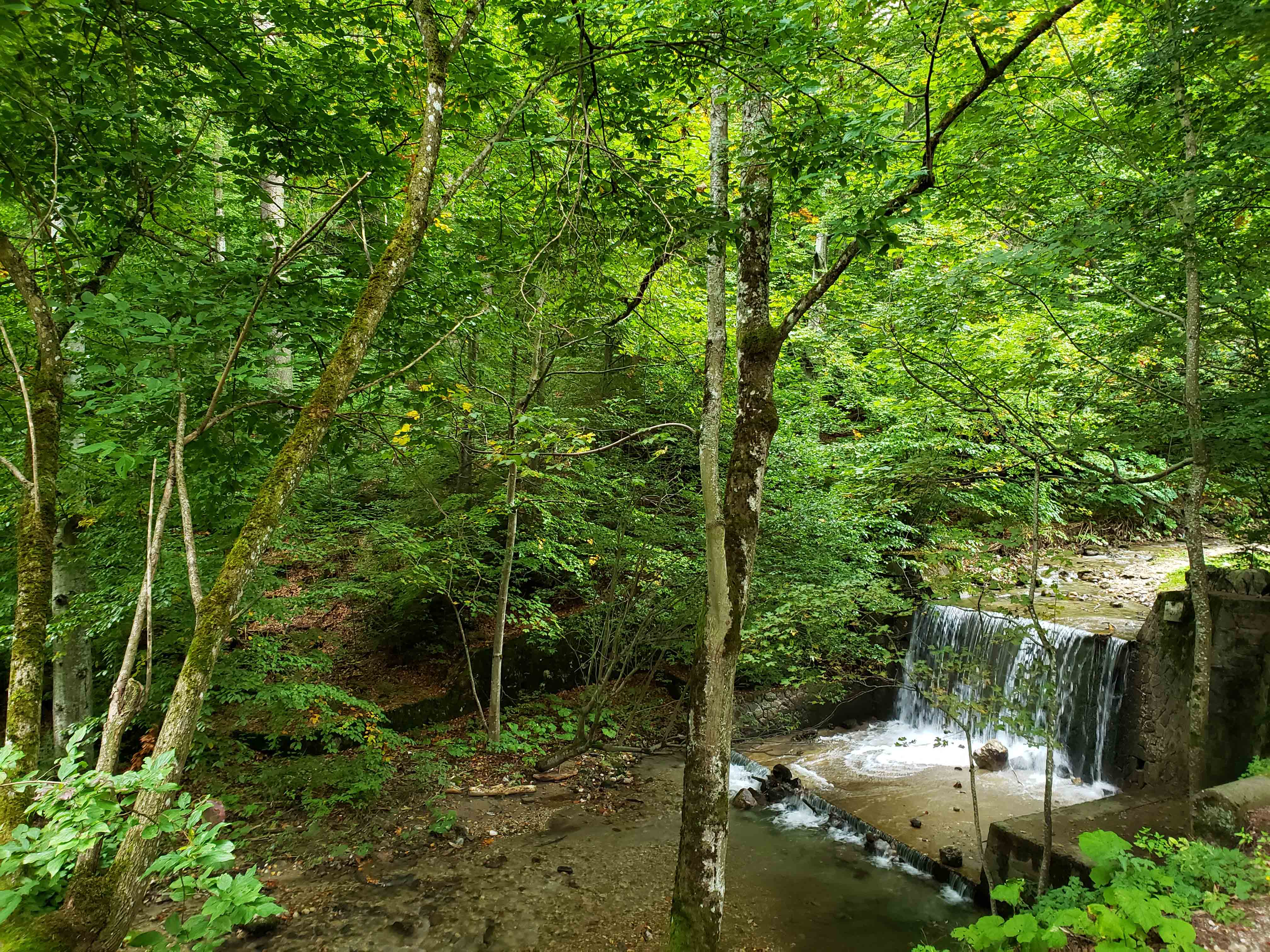
Another small town quaintly tucked under the ever watchful eye of Mount Furnica of the Bucegi Range is Sinaia. Out of sight of N60 and tucked away under this hill is a real star town, replete with many large hotels and even a casino for anyone wishing to try their luck in a Romanian tourist location.
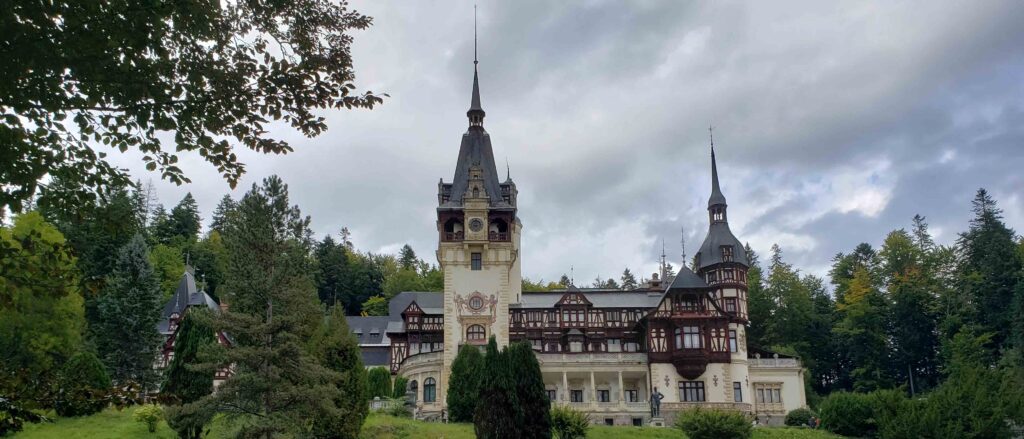
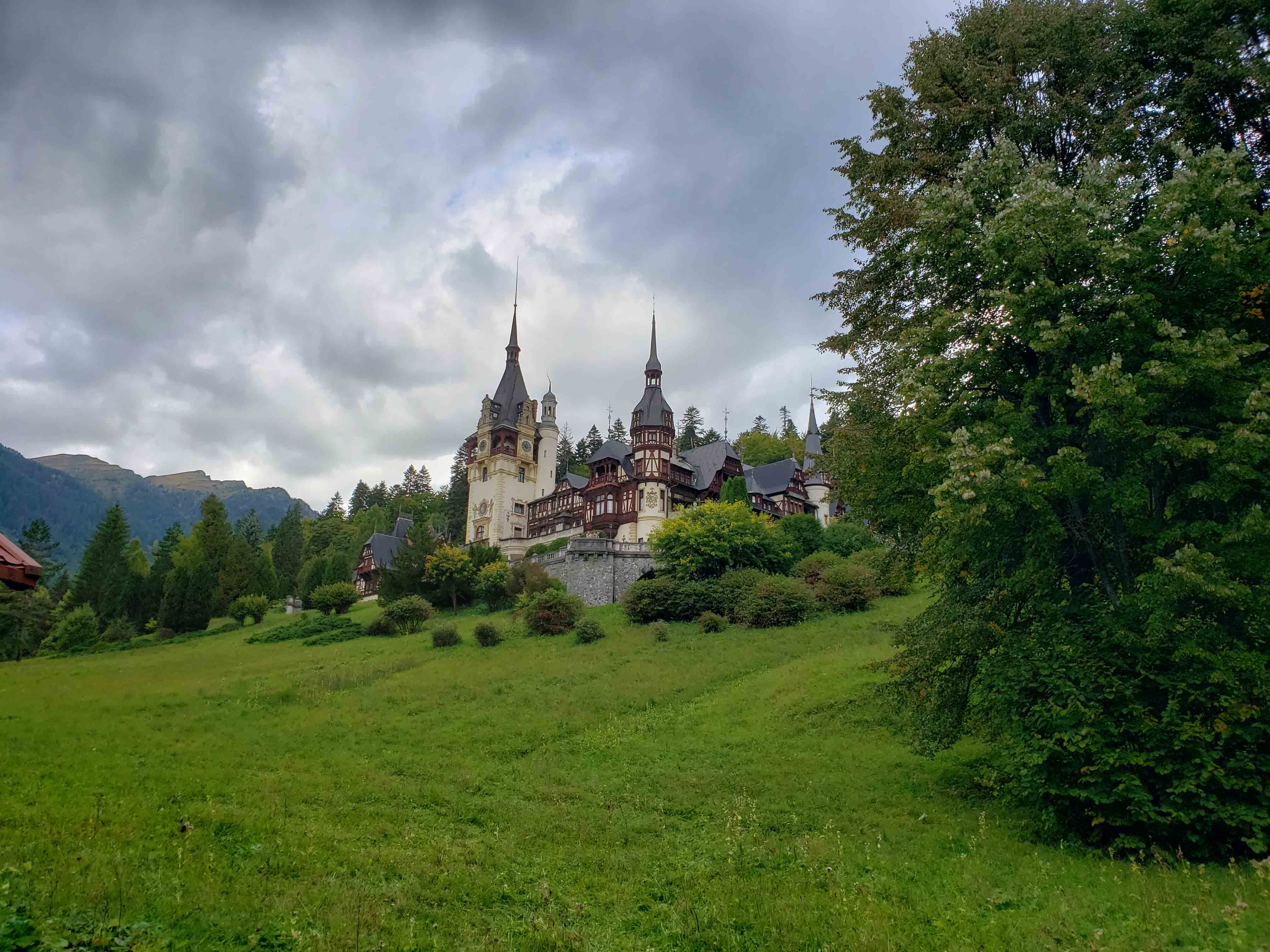
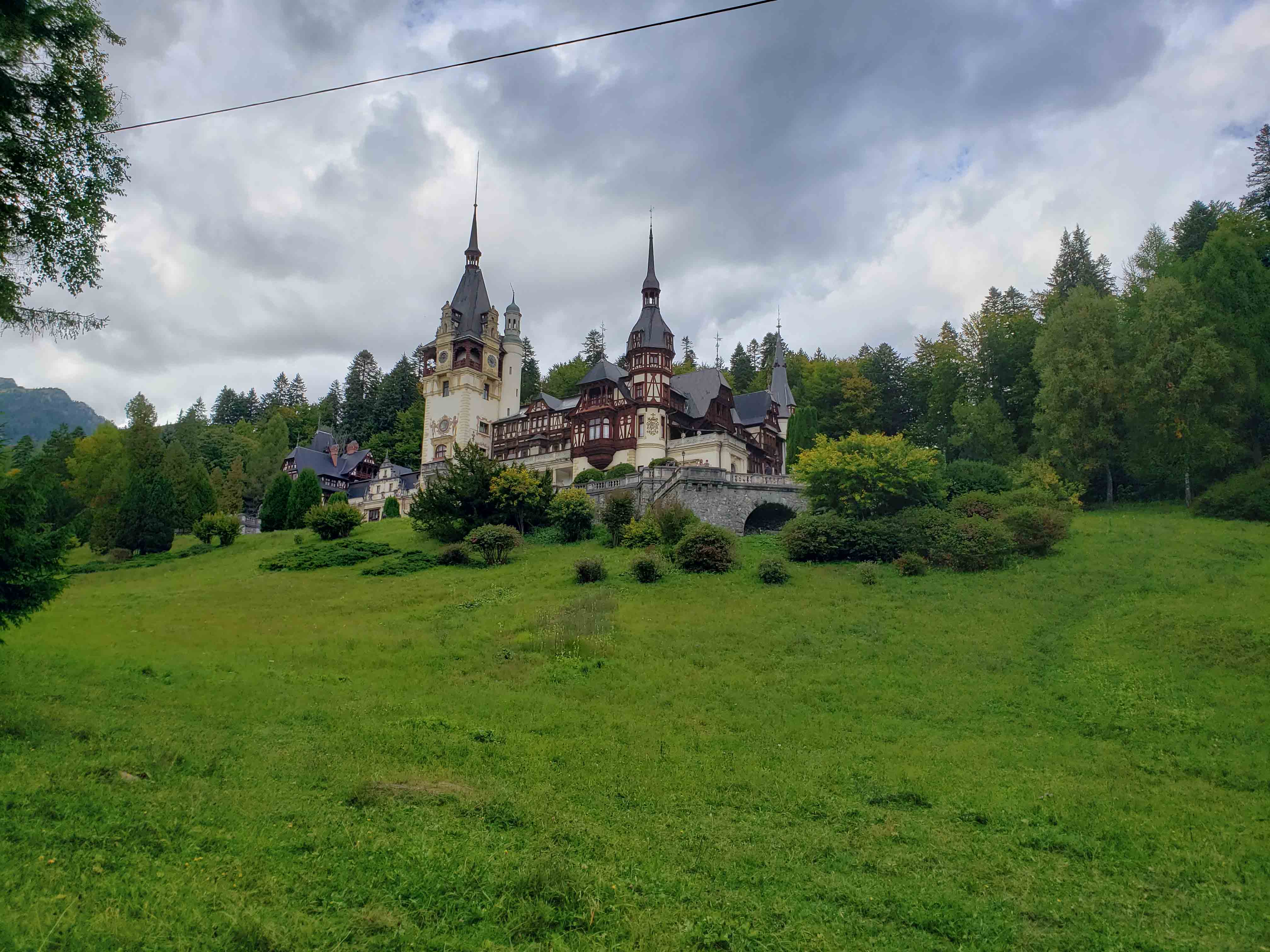
Sinaia – Peleş Castle – At the foot of the Bucegi Range – 19th of September, 2021
On the 19th of September we ventured down to this town which sits just below Buşteni, in order to enjoy lunch, the town and to visit Castle Peleş.
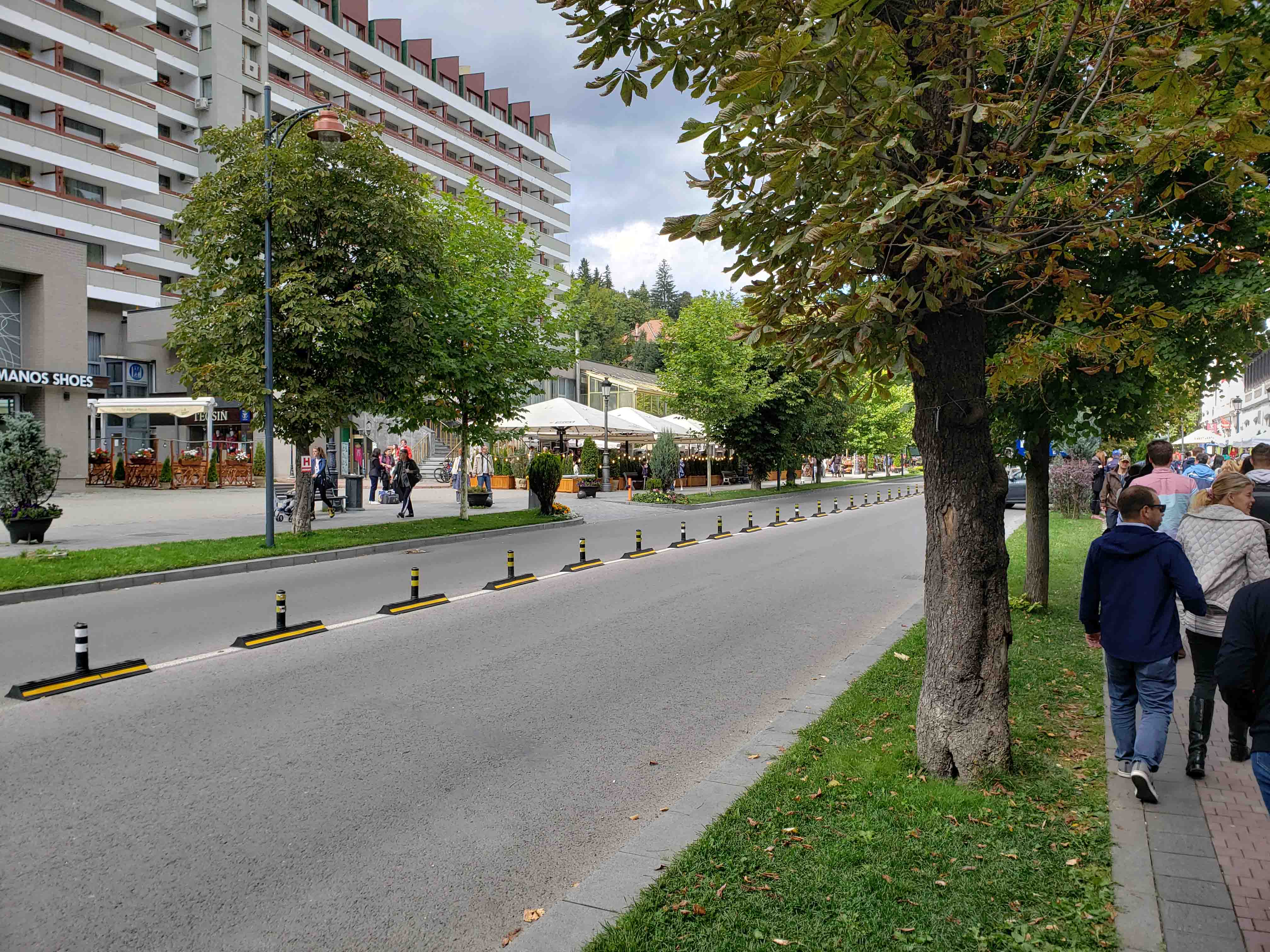
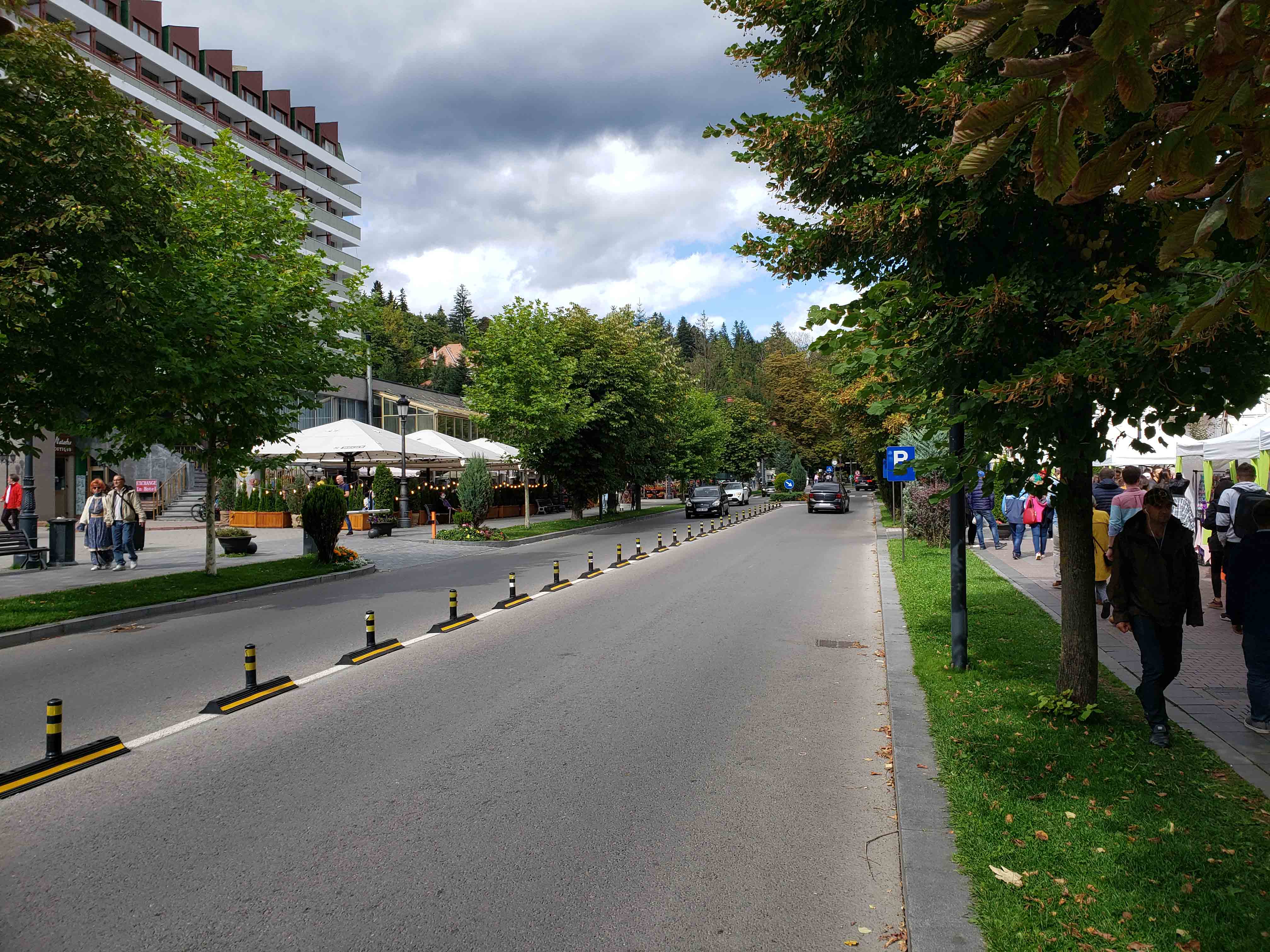
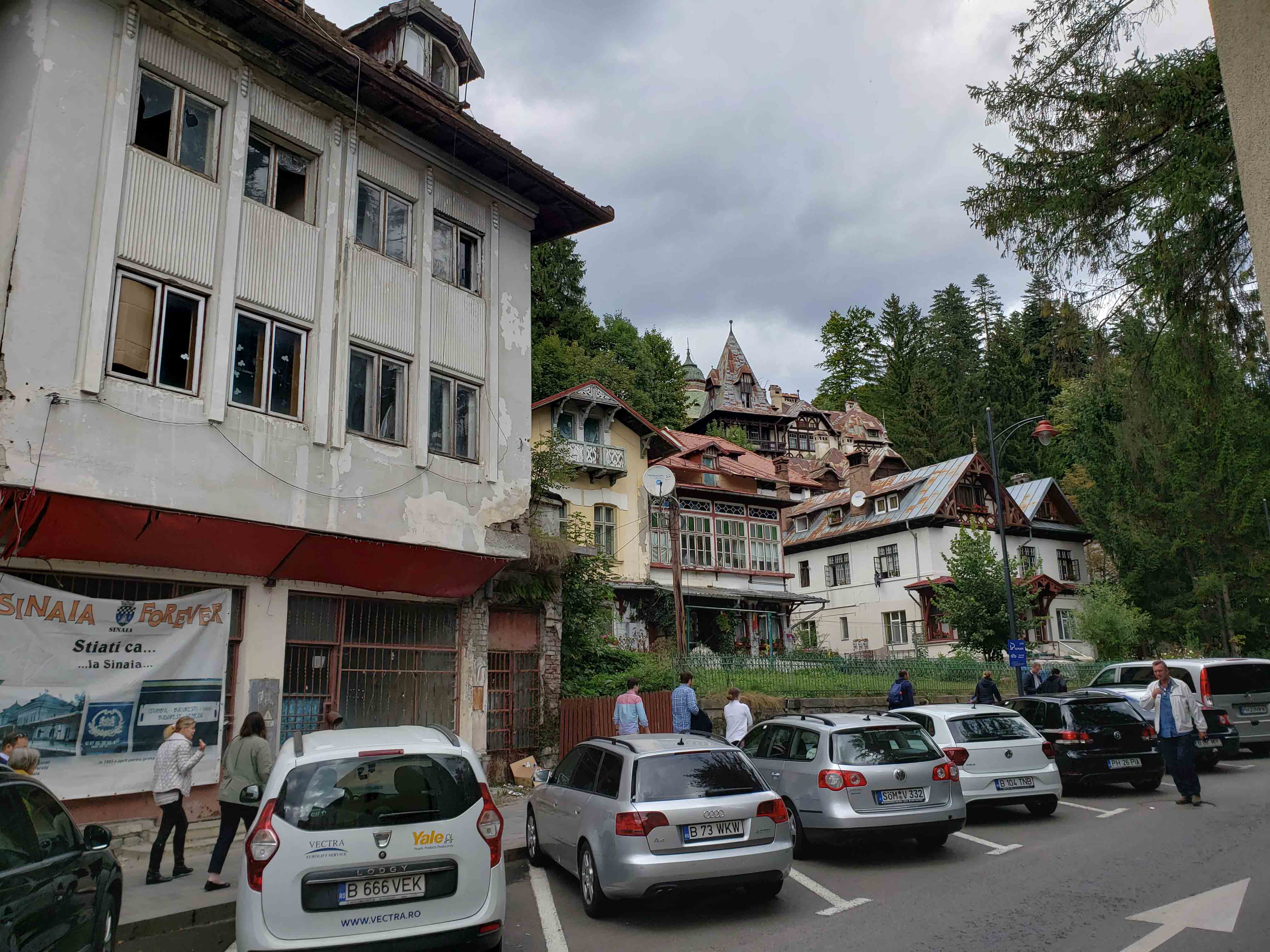
Sinaia – The Town
This town is much like Buşteni, aside from the fact that it appears to have more money and is well maintained; no doubt due to the large hotels and the casino that are part of it. It lies on the same strip of N60 which runs north to south its neighbor to the north.
Sinaia – Boulevard Carol I – 19th of September, 2021
Sinaia – Boulevard Carol I – 19th of September, 2021
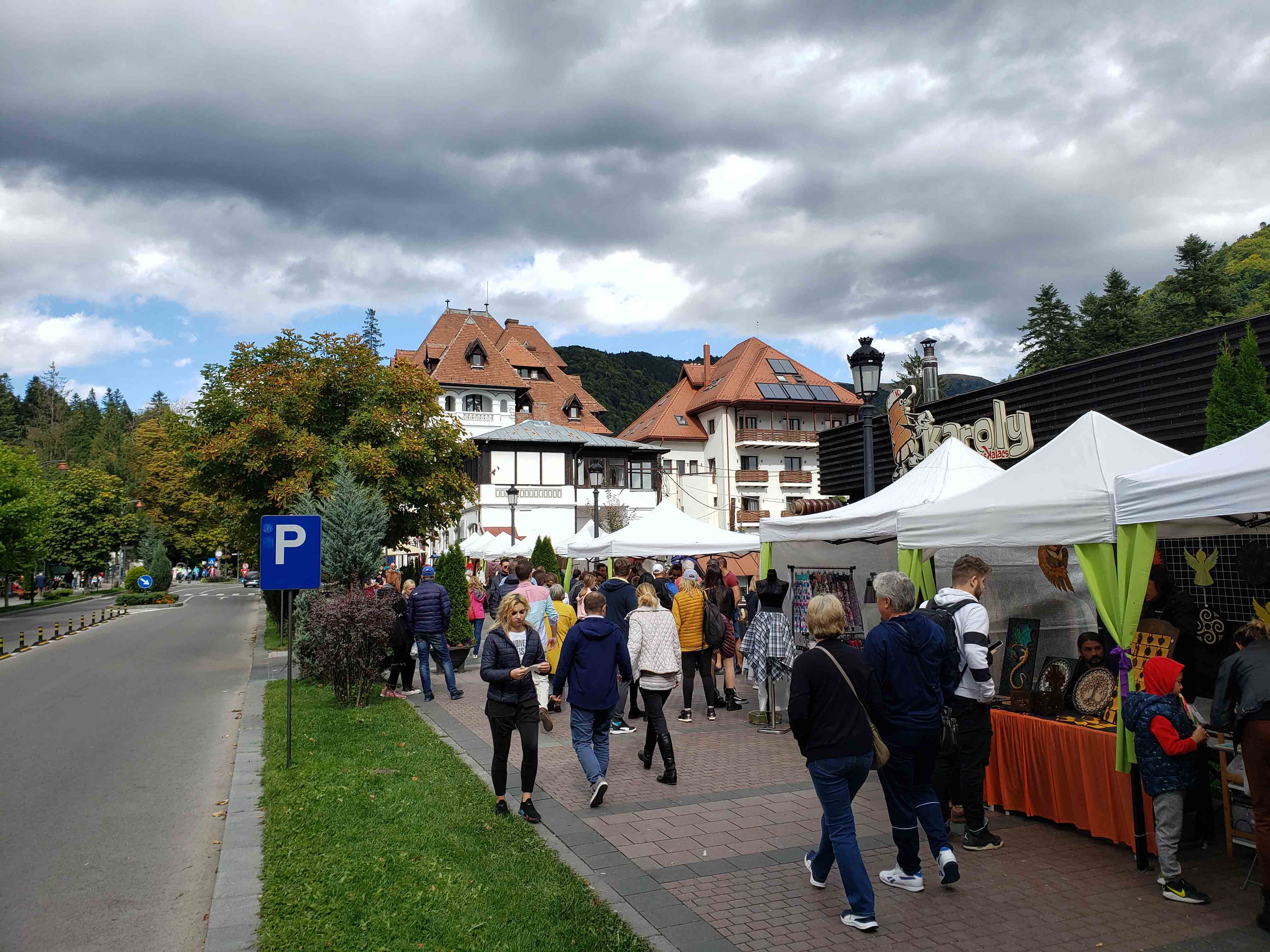
Sinaia – Boulevard Carol I Market – 19th of September, 2021
The Prahova River runs alongside the town, as well as a line of the Romanian Railroad; but unlike Buşteni, the railroad does not interfere with this town at all. Traffic however can still be problematic at times, just because of the nature of N60 being the only straight road in these parts, especially during rush hour times. The good news though is, once off of N60, traffic in and through the town seems well controlled by a series of traffic circles and other parallel streets. While we were there they were having an outside market, which apparently drew a lot of locals.
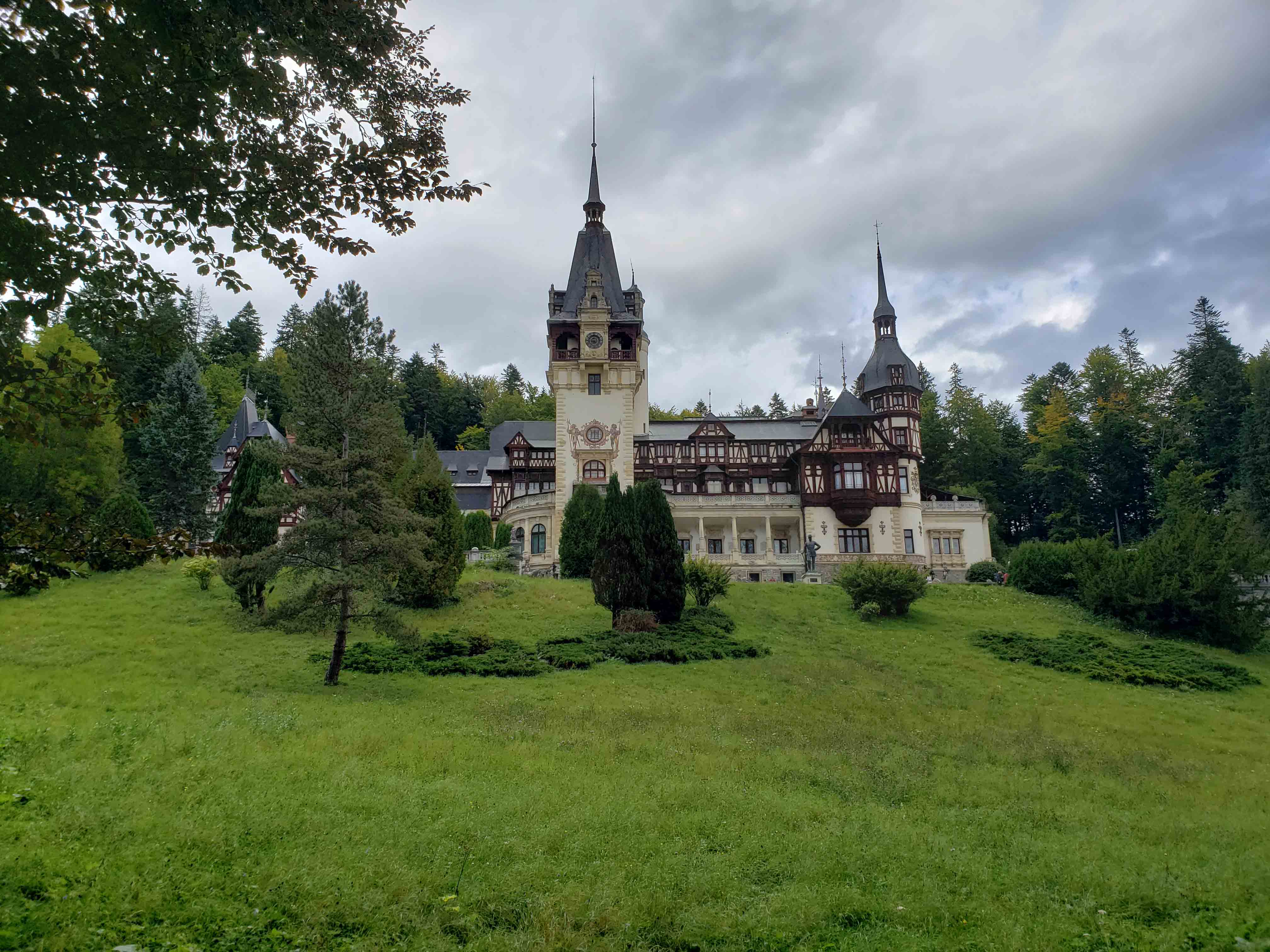
Castle Peles
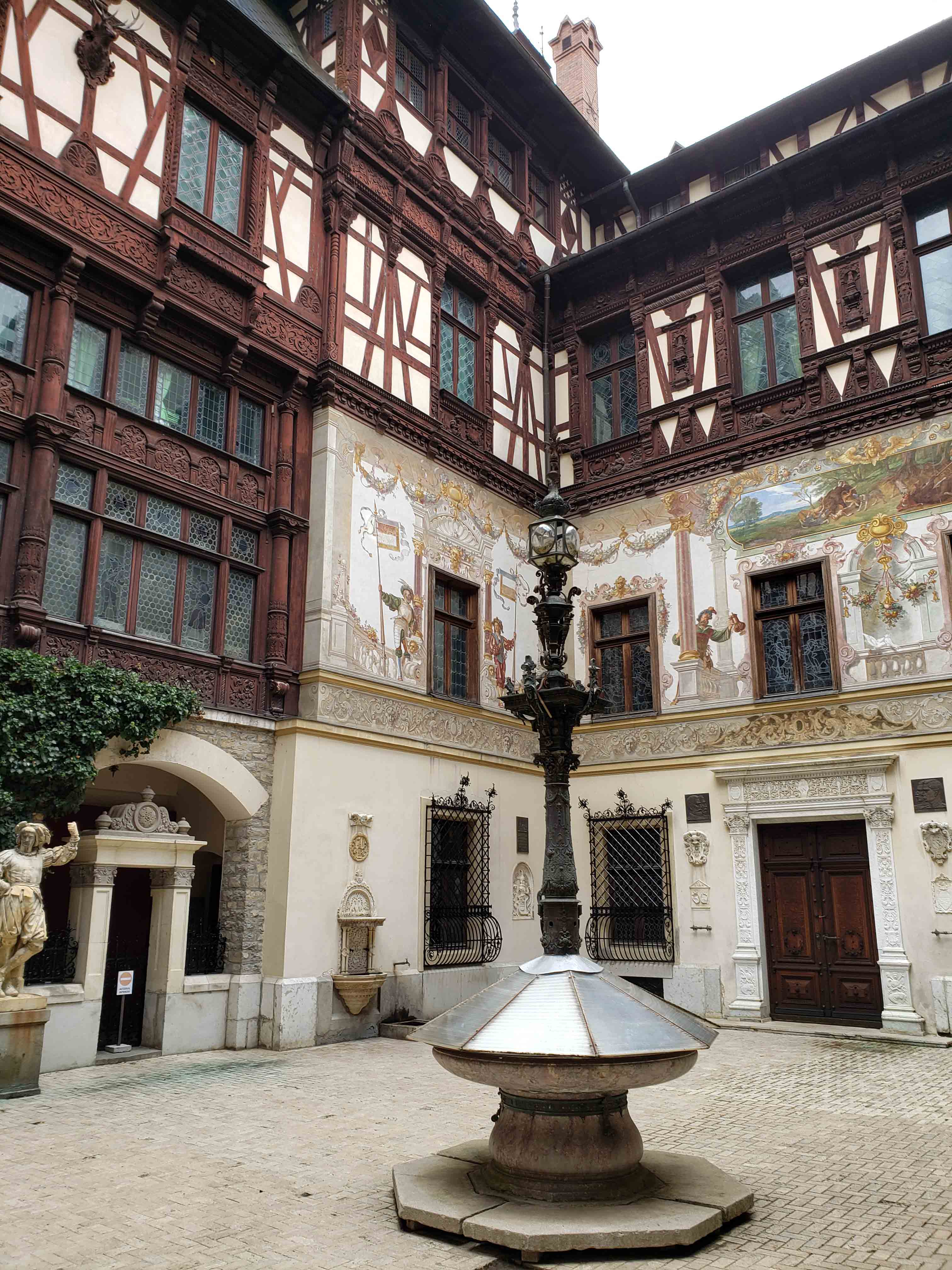
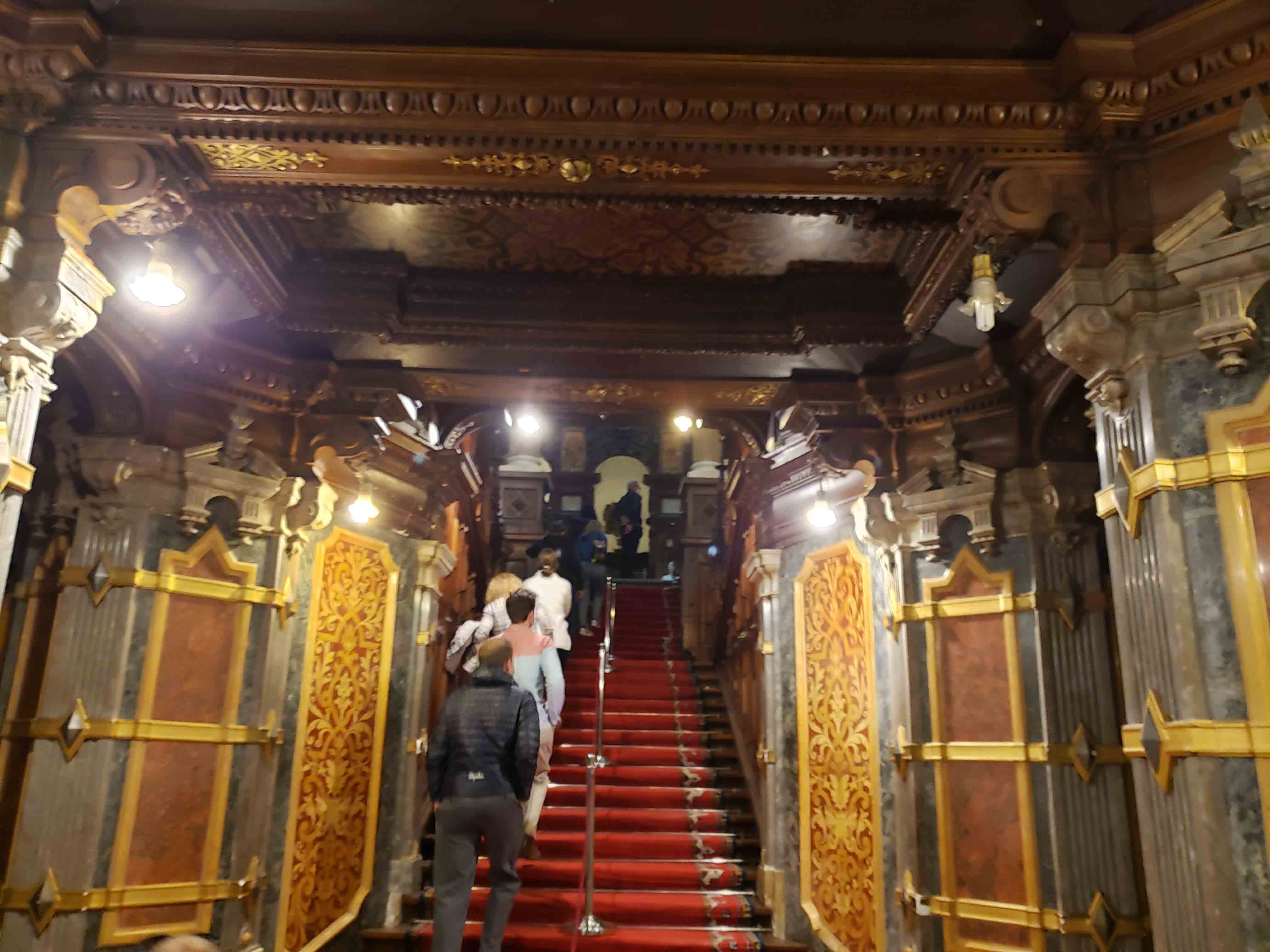
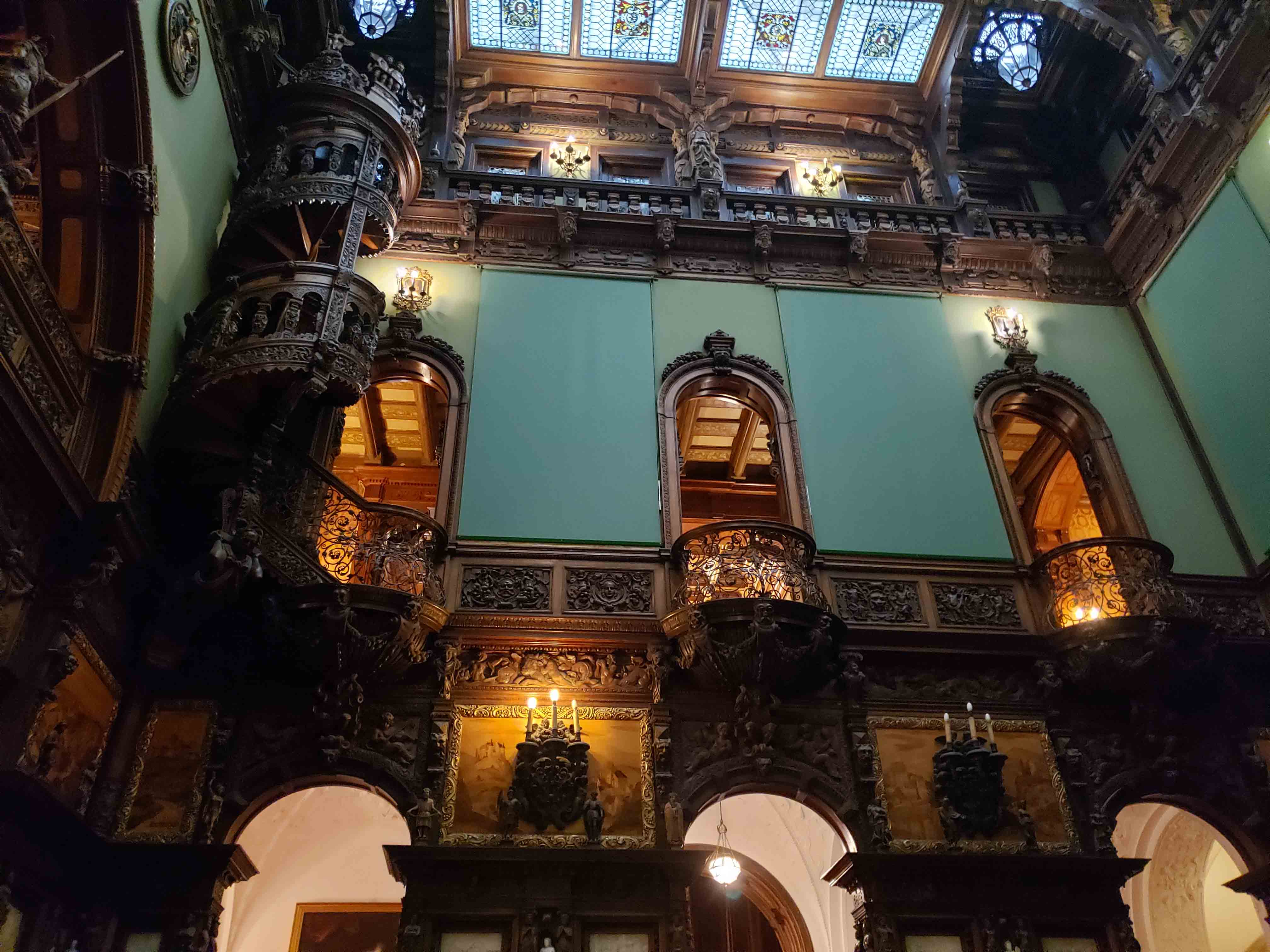
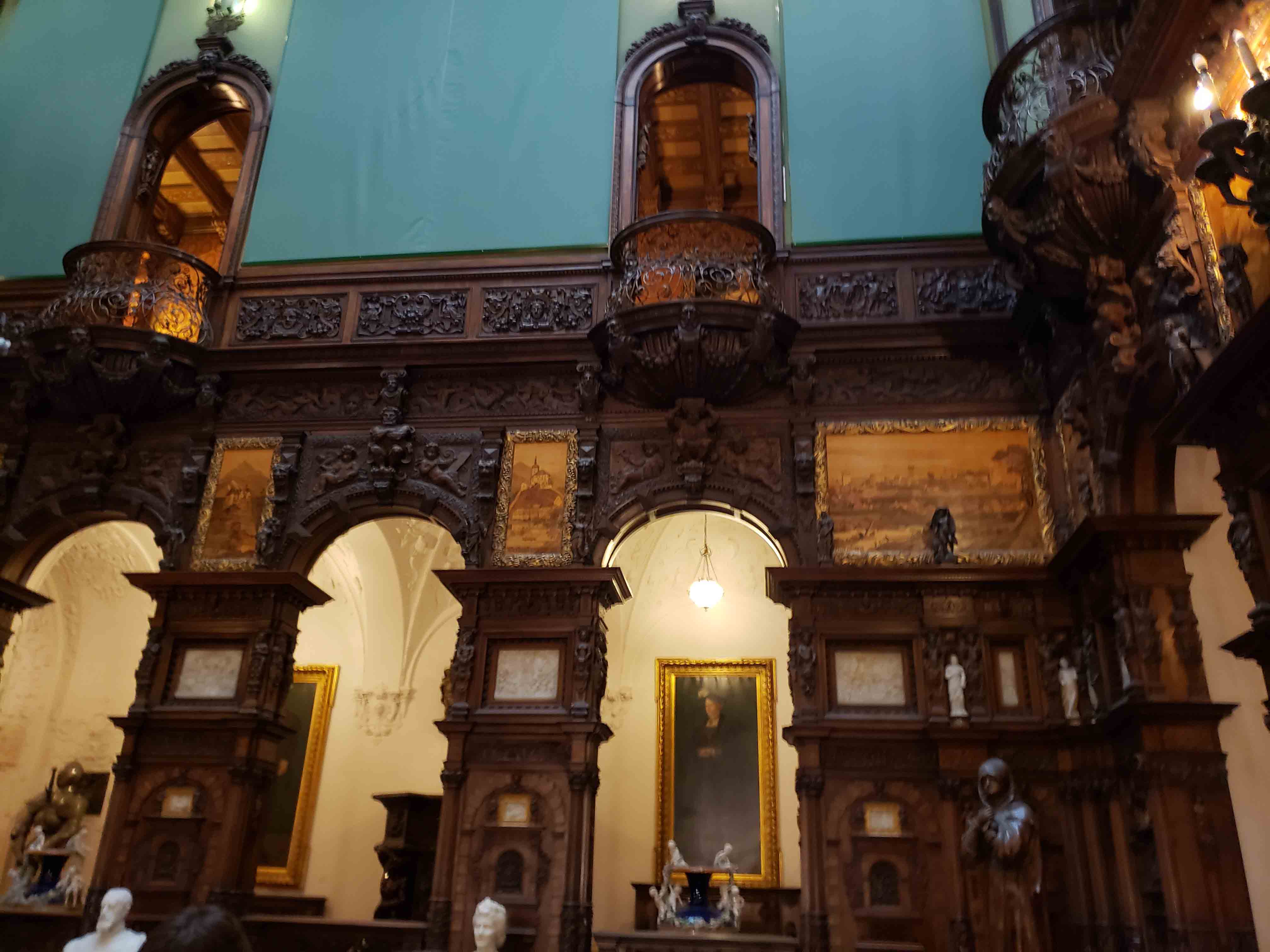
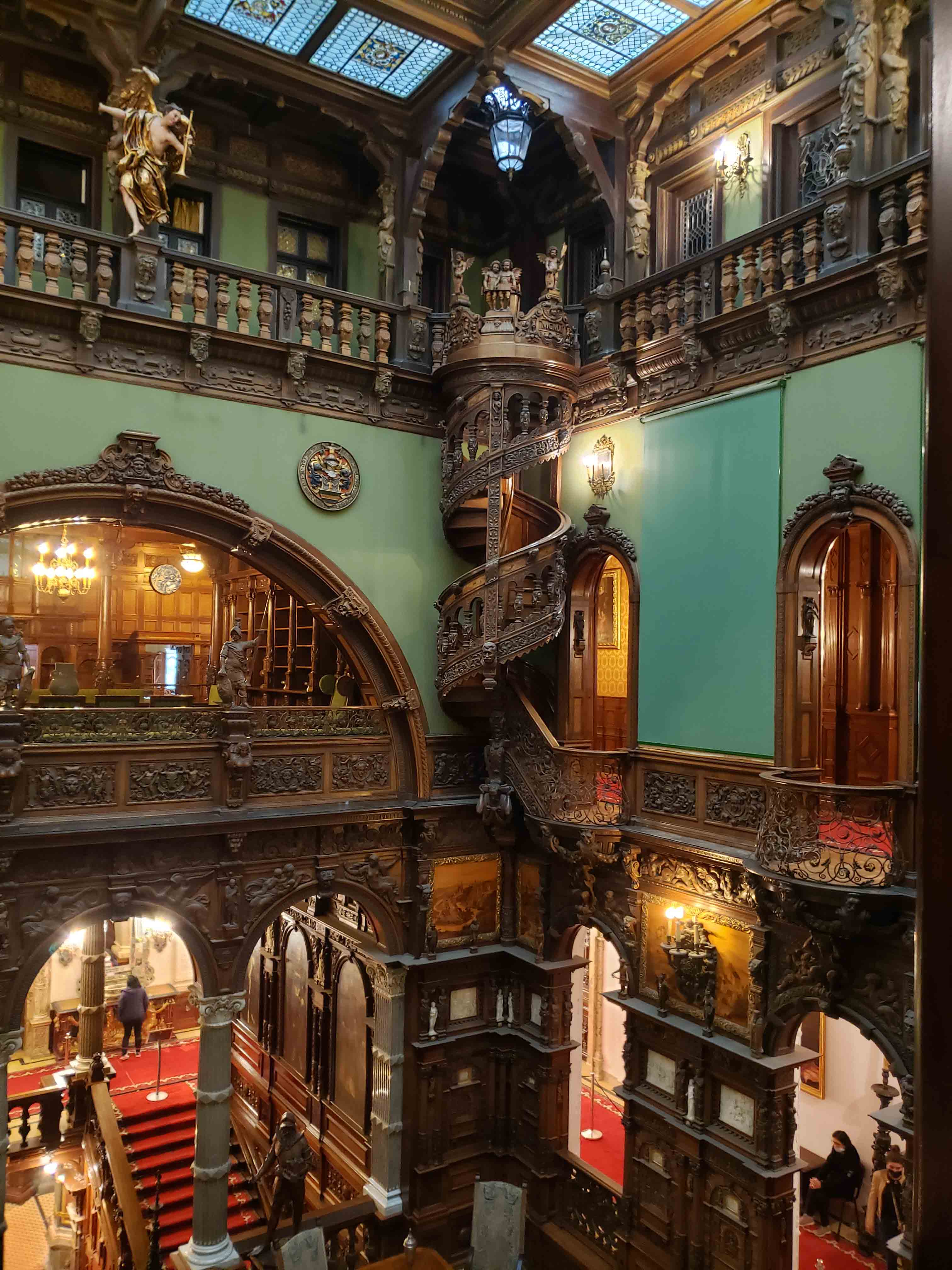
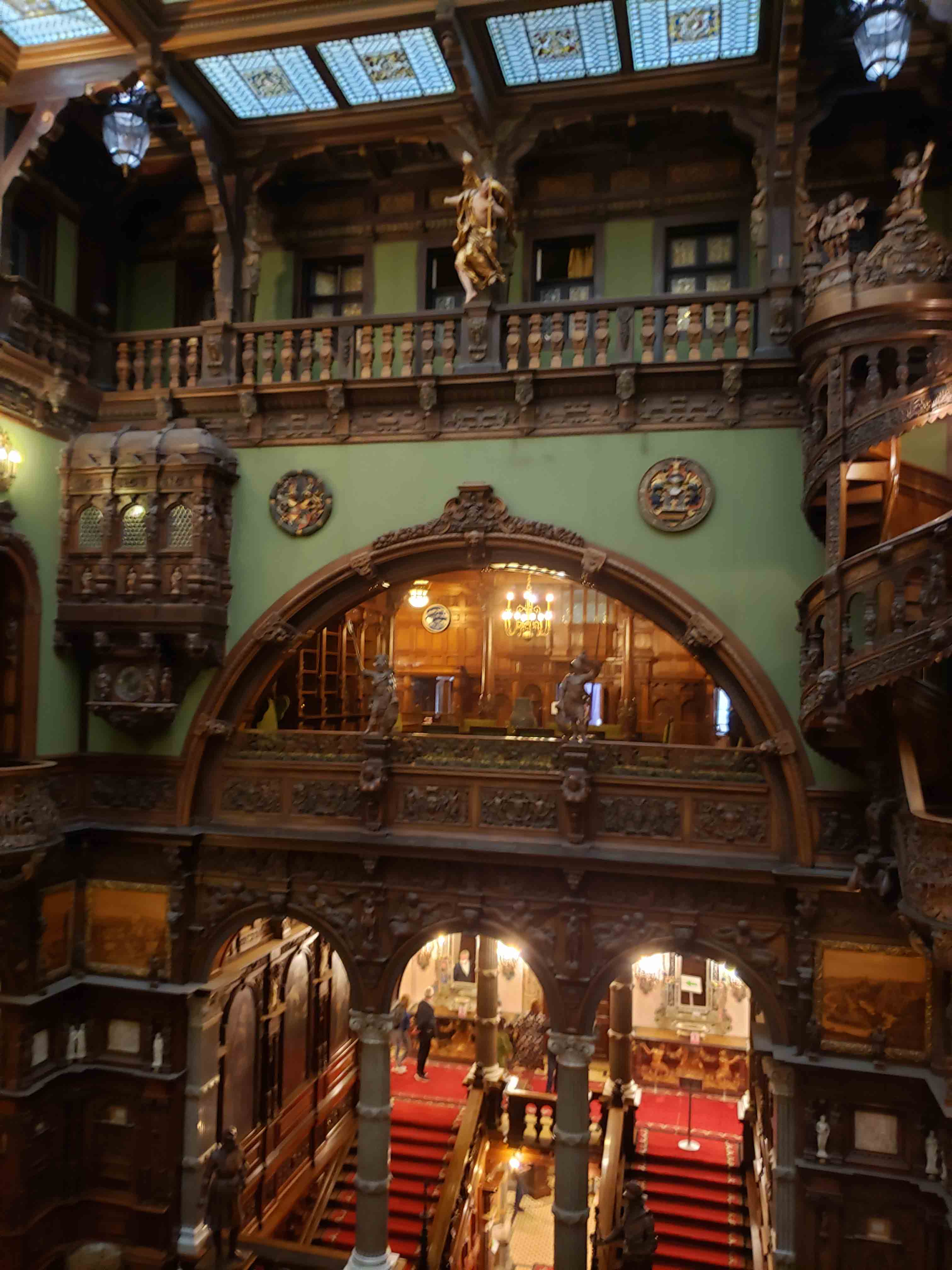
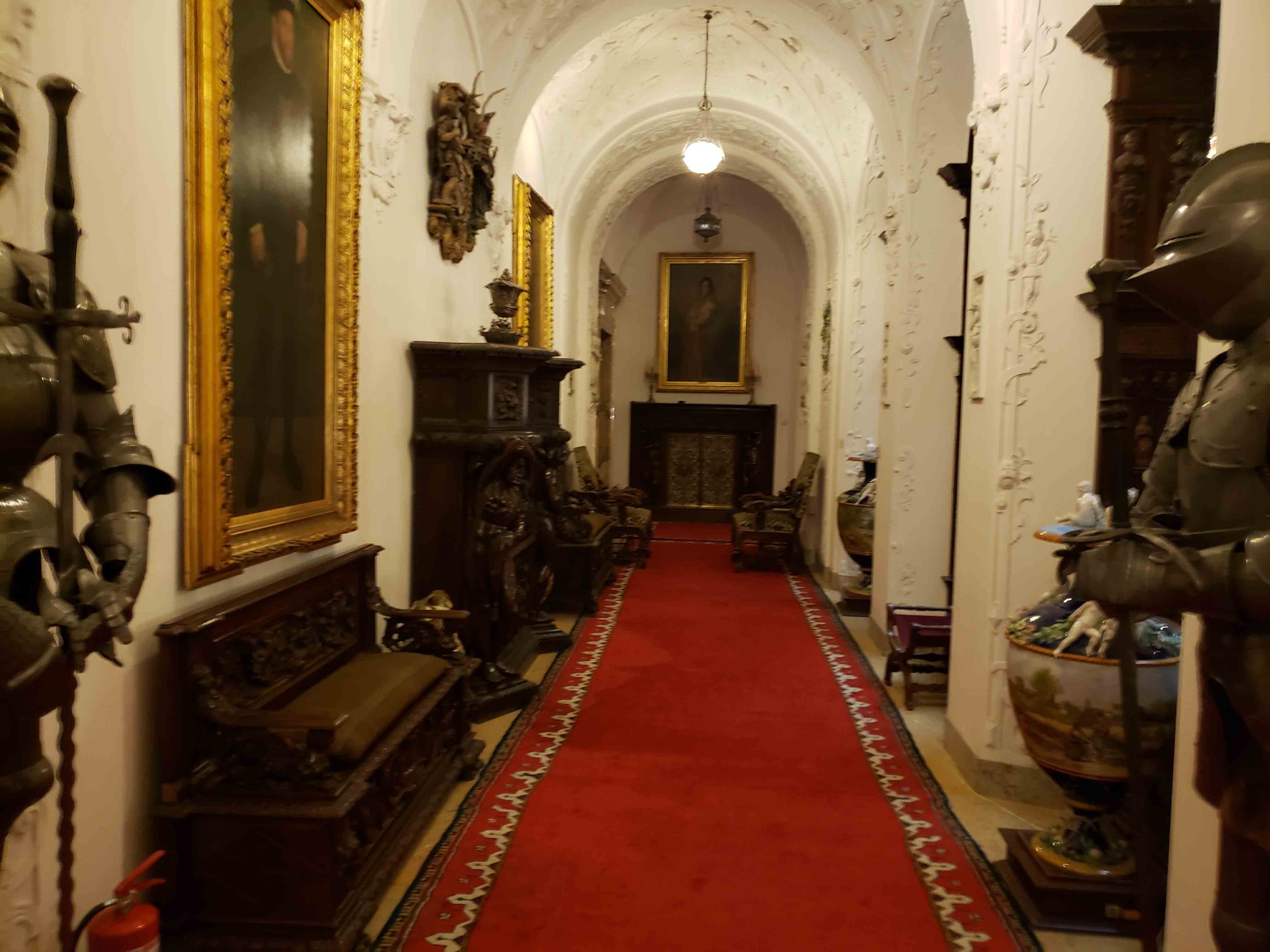
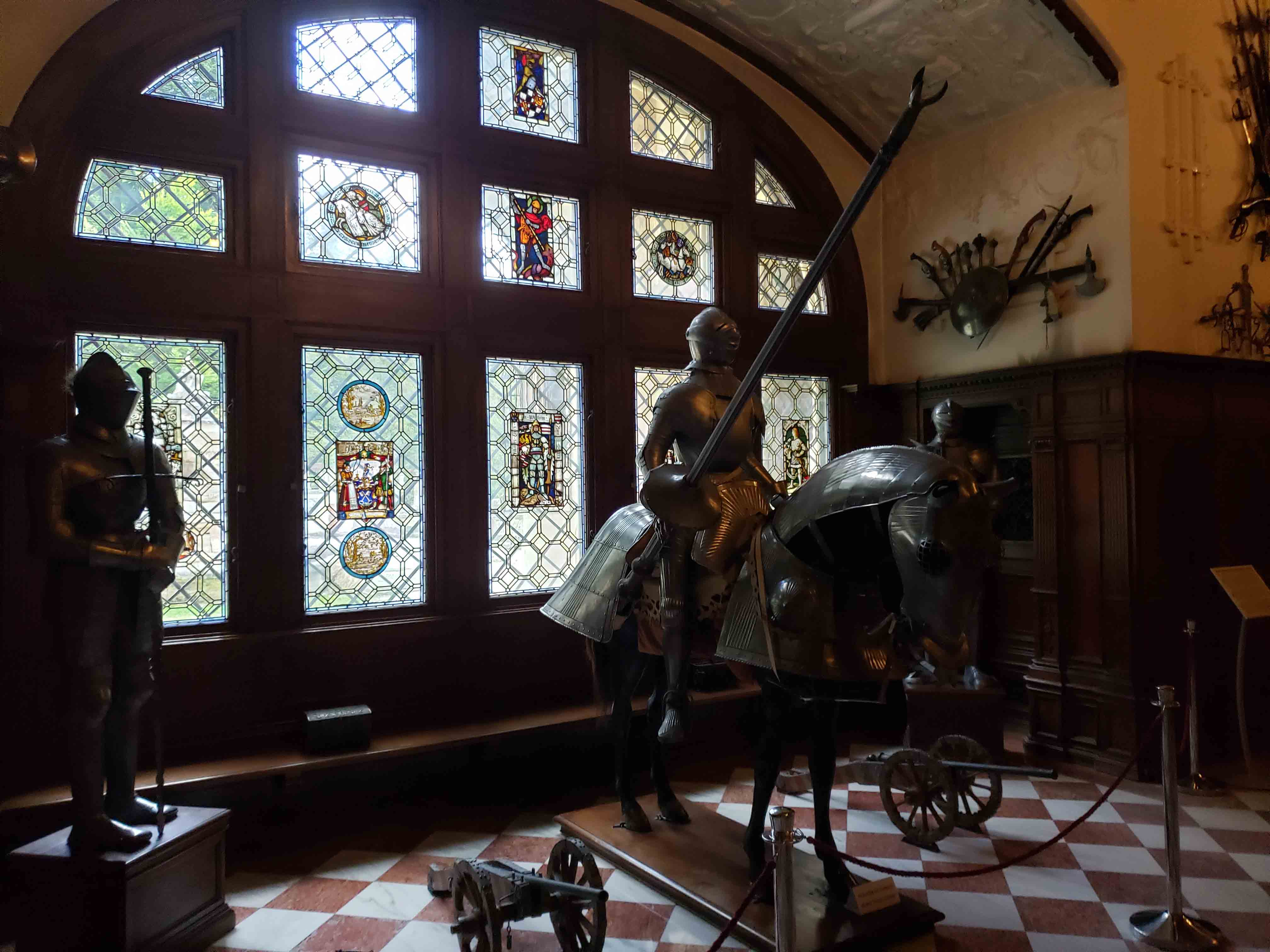
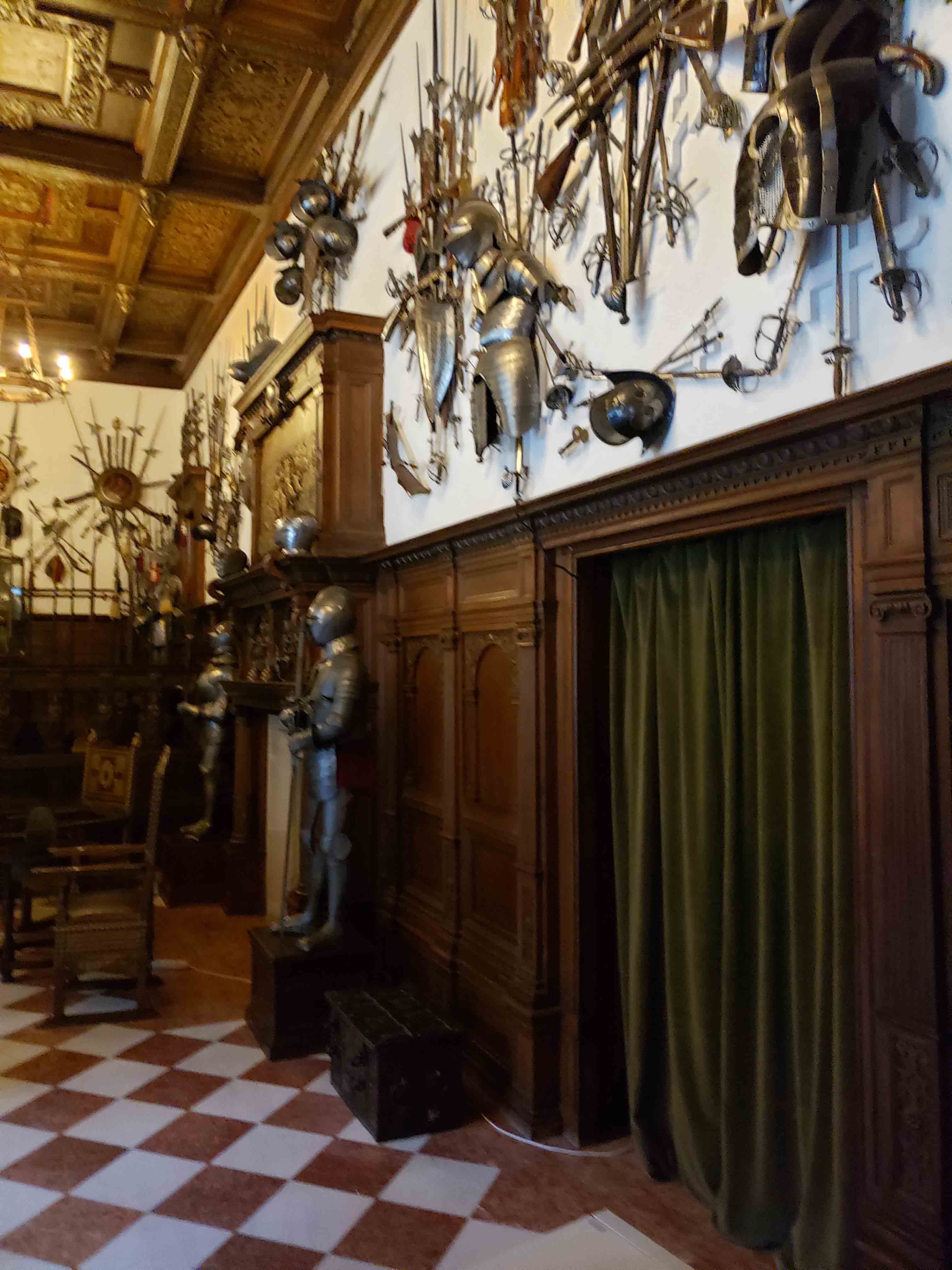
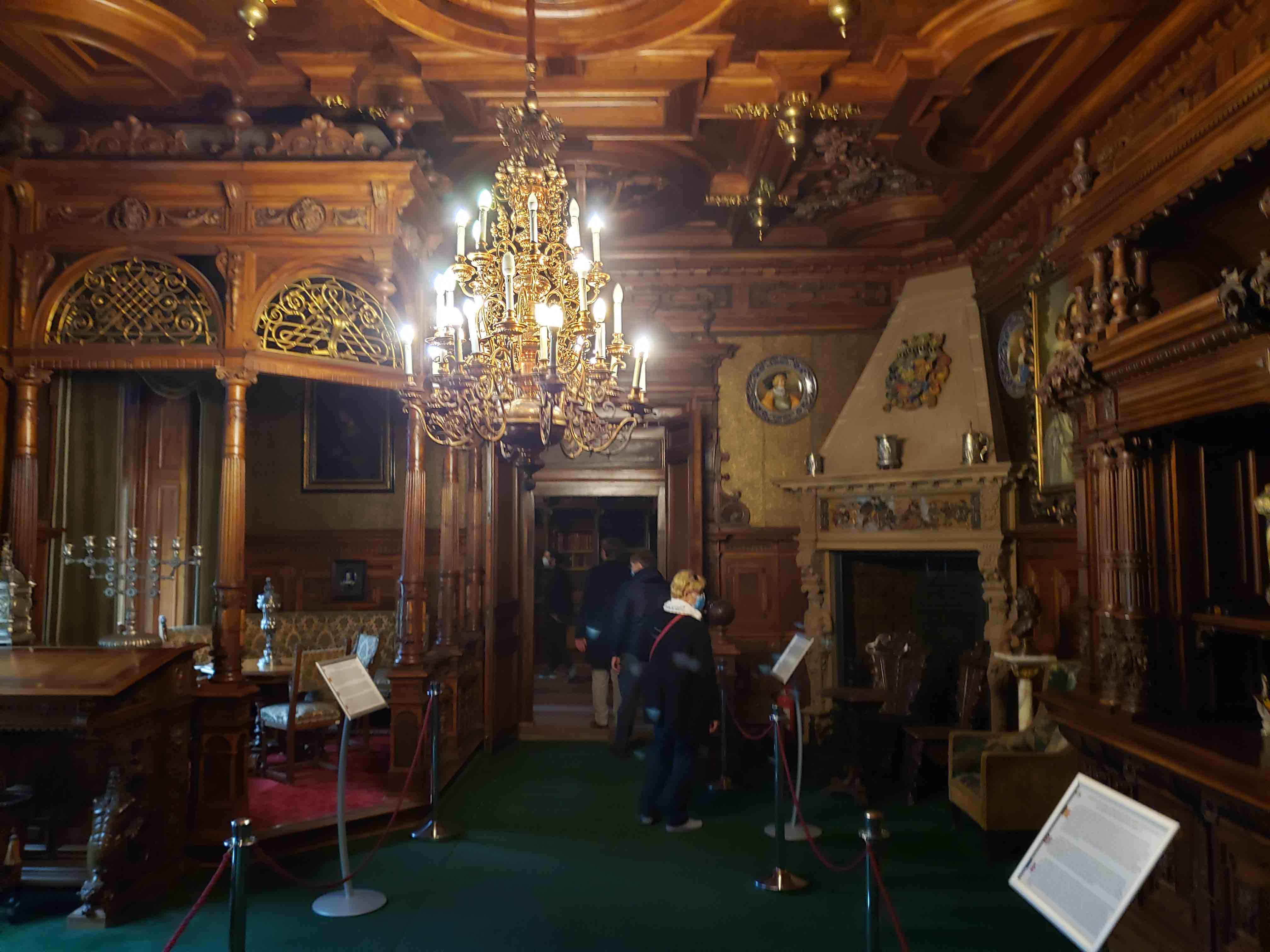
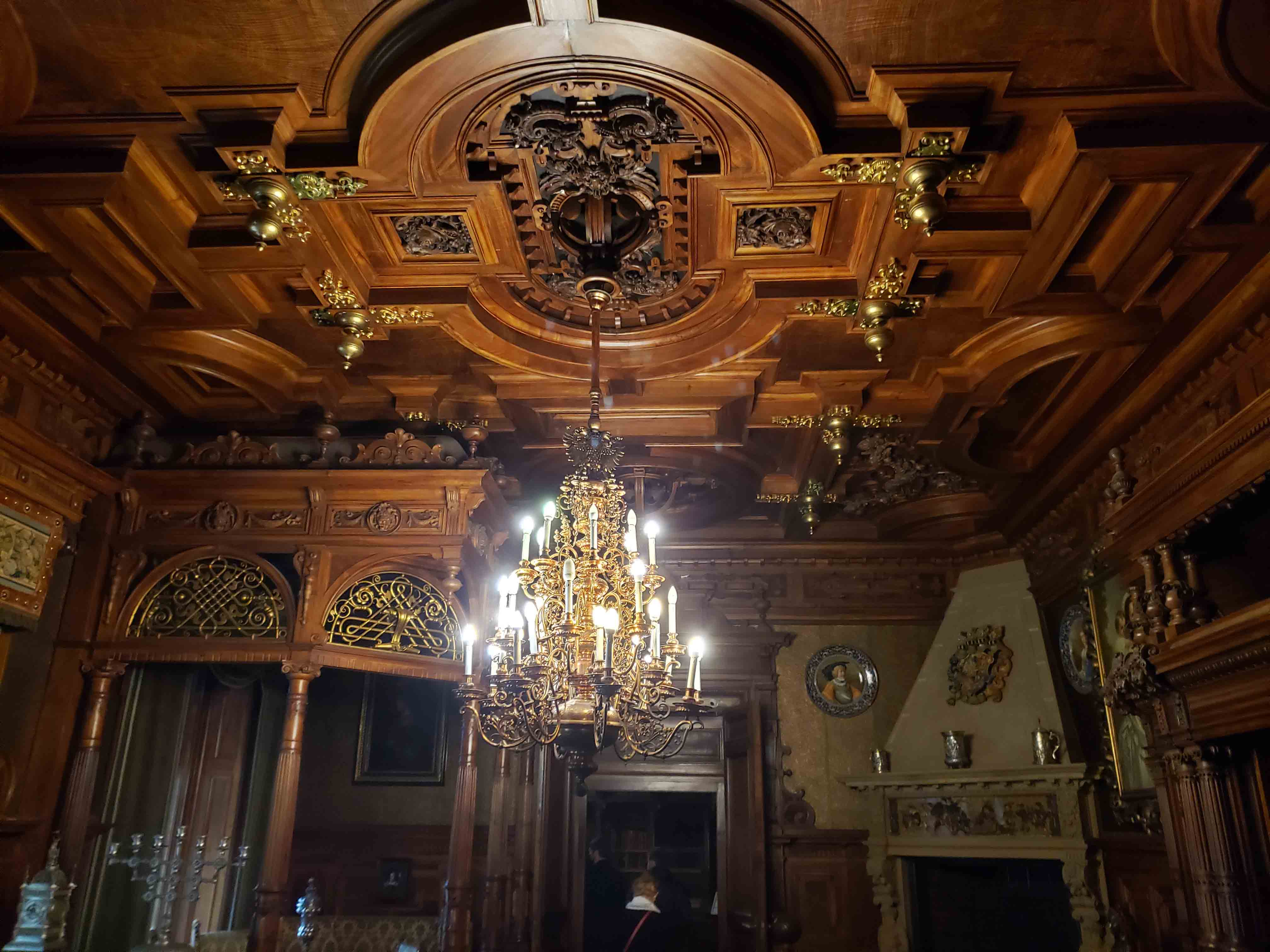
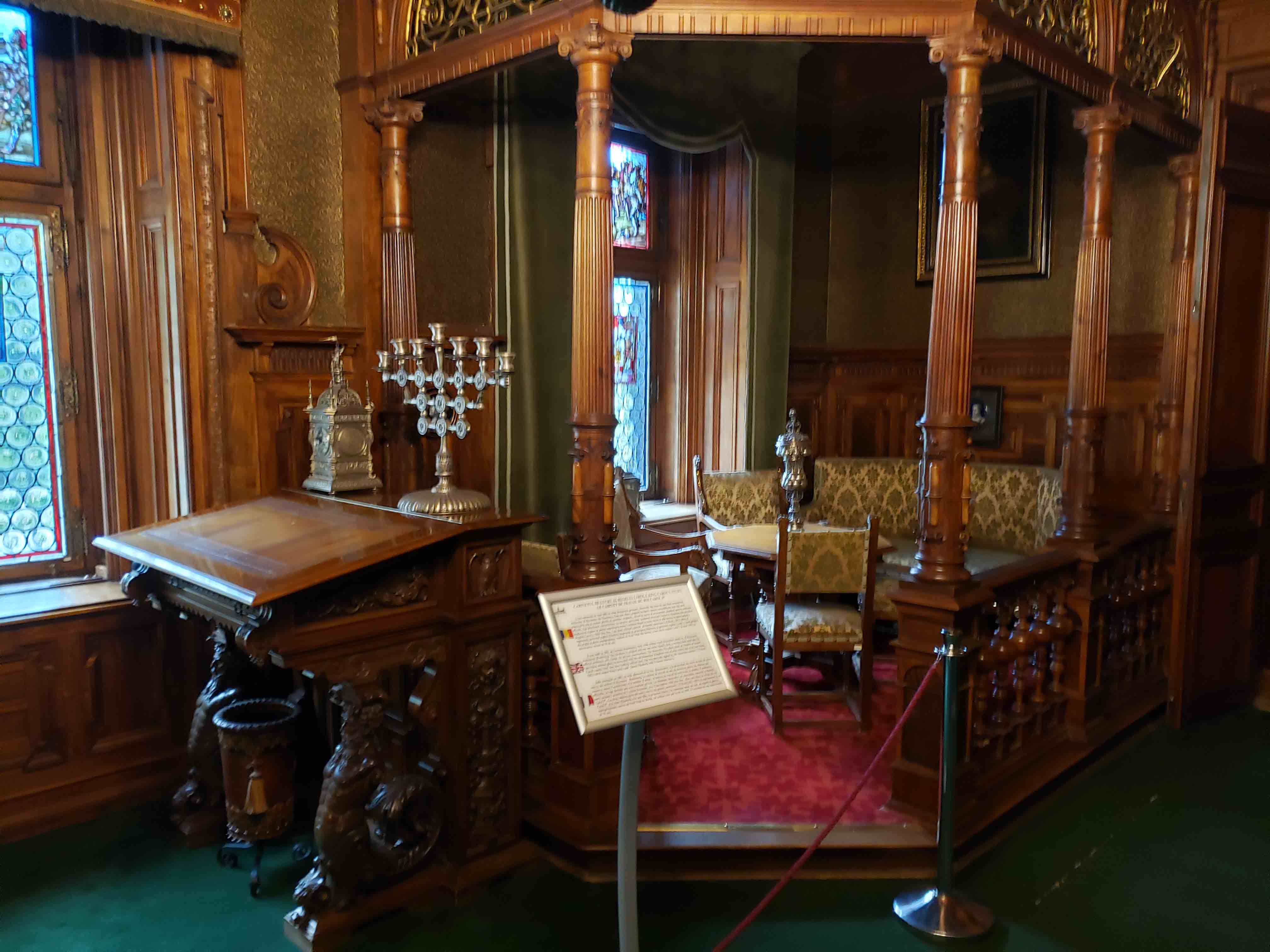
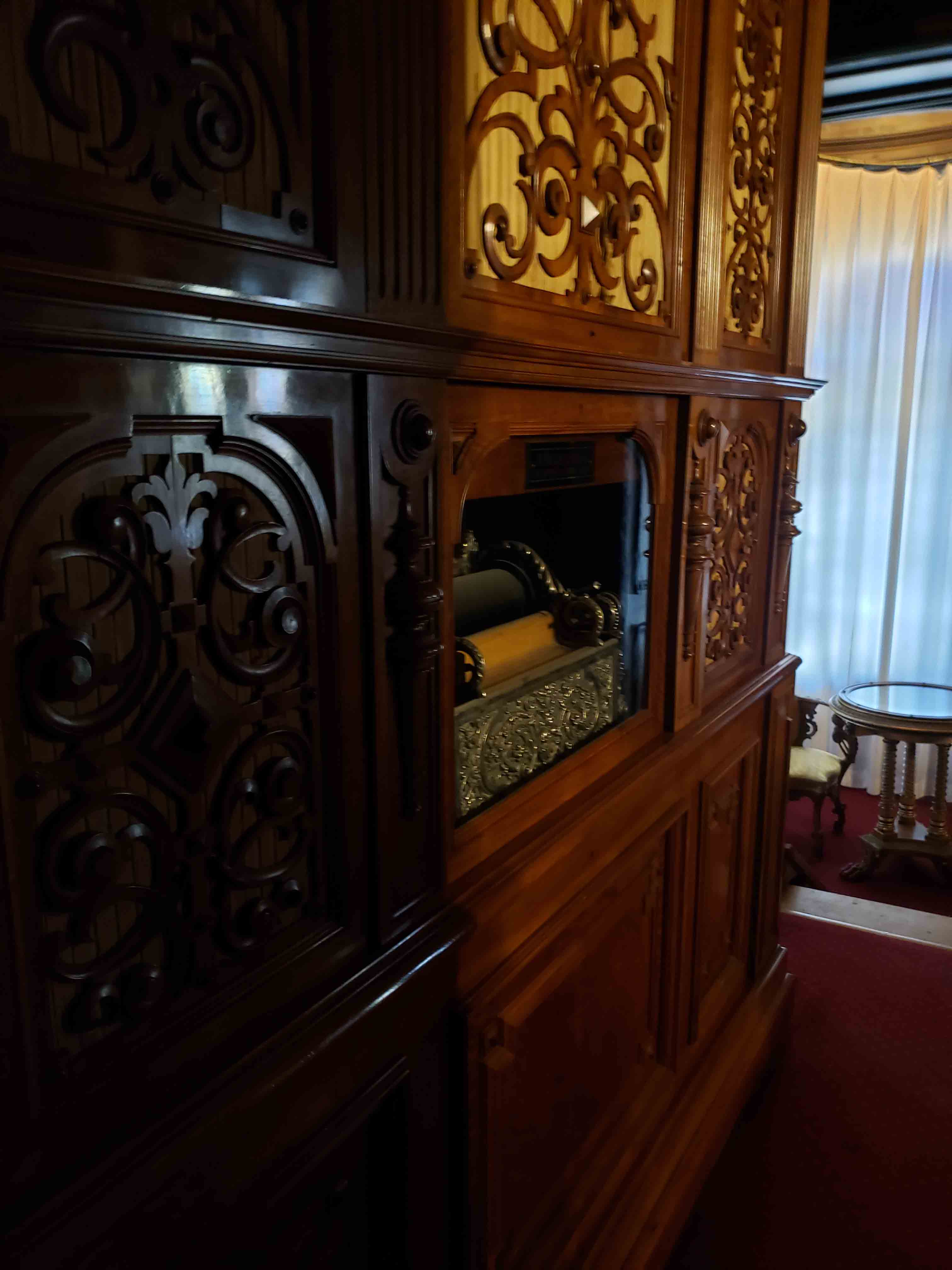
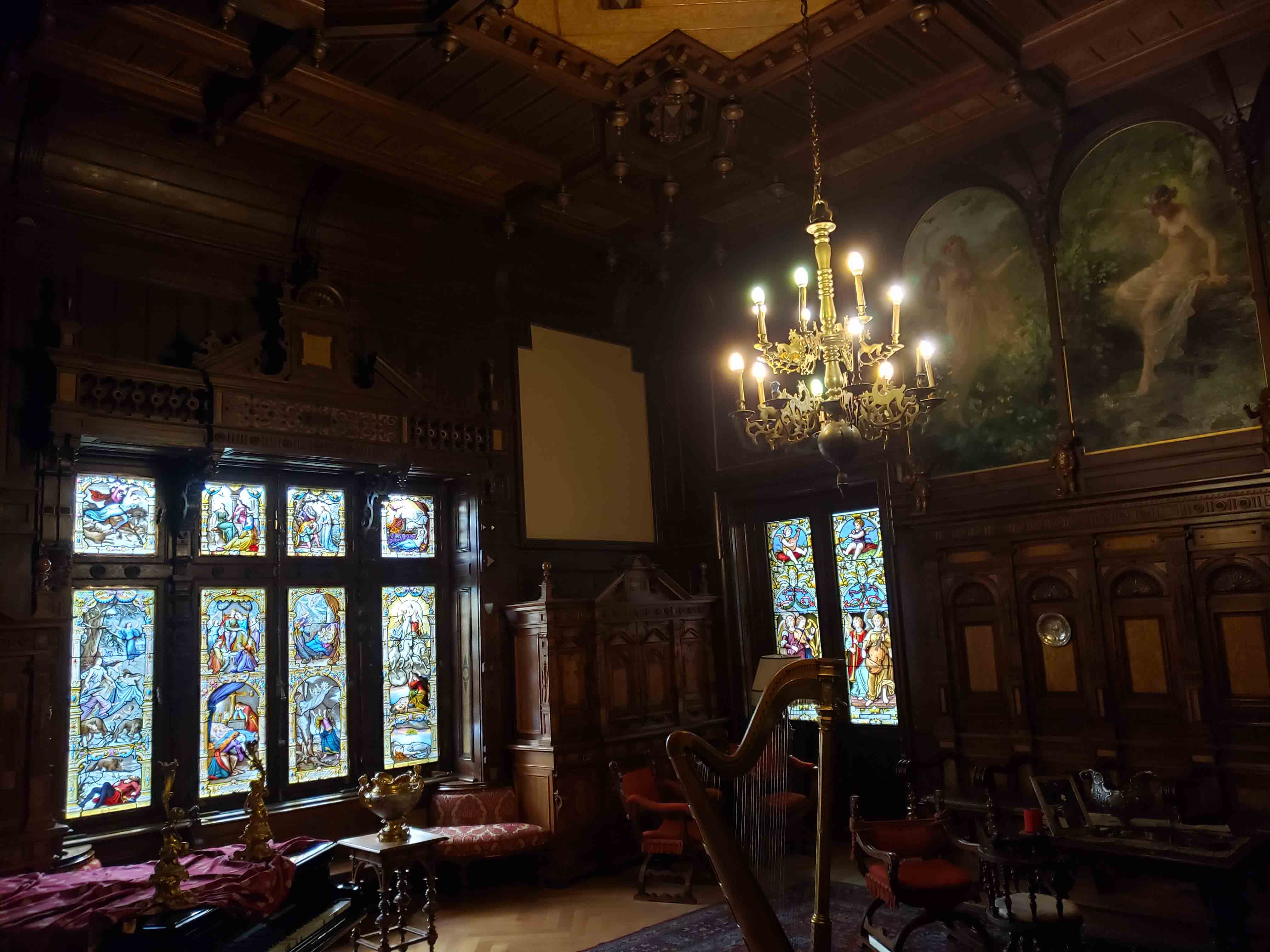
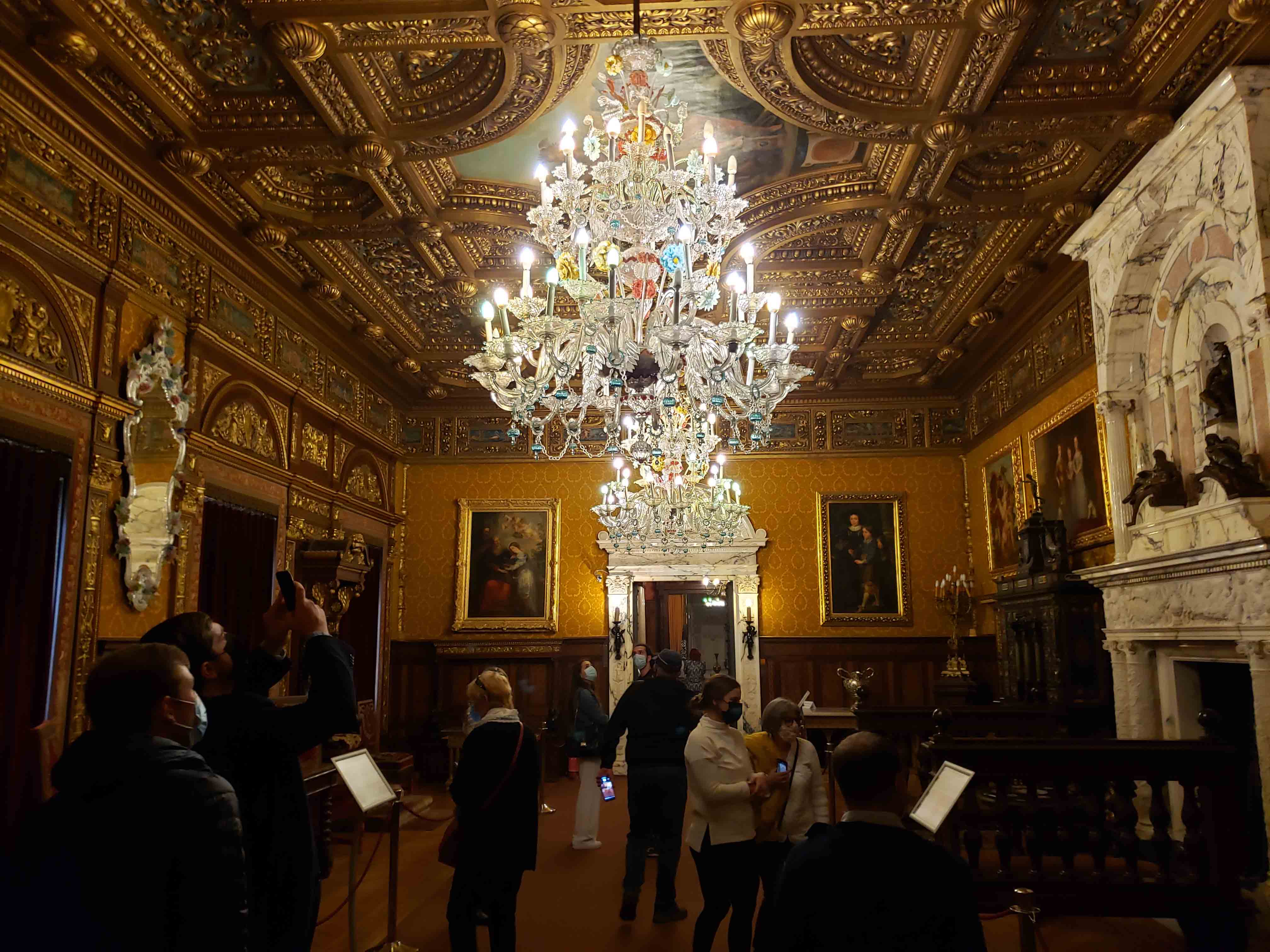
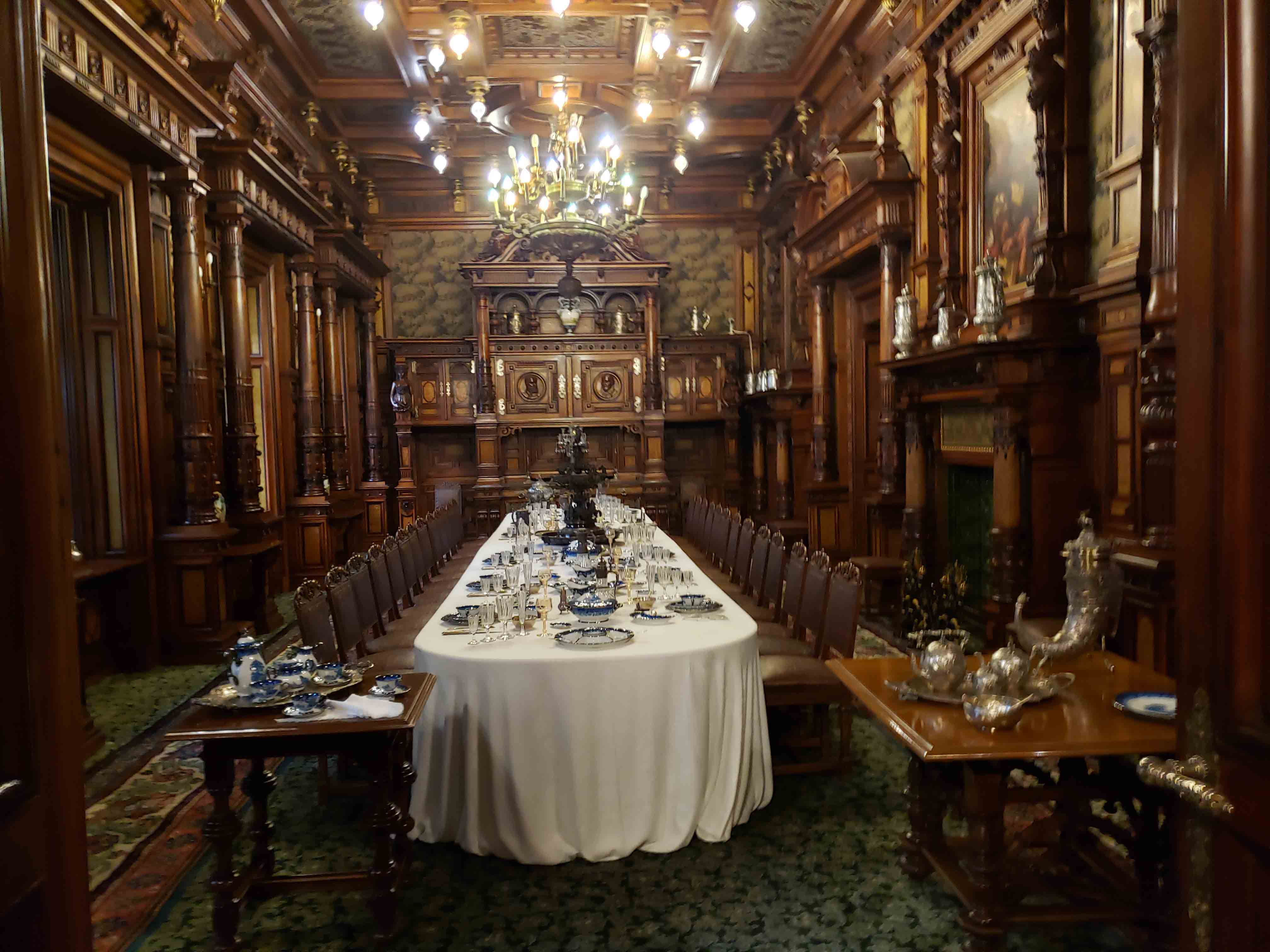
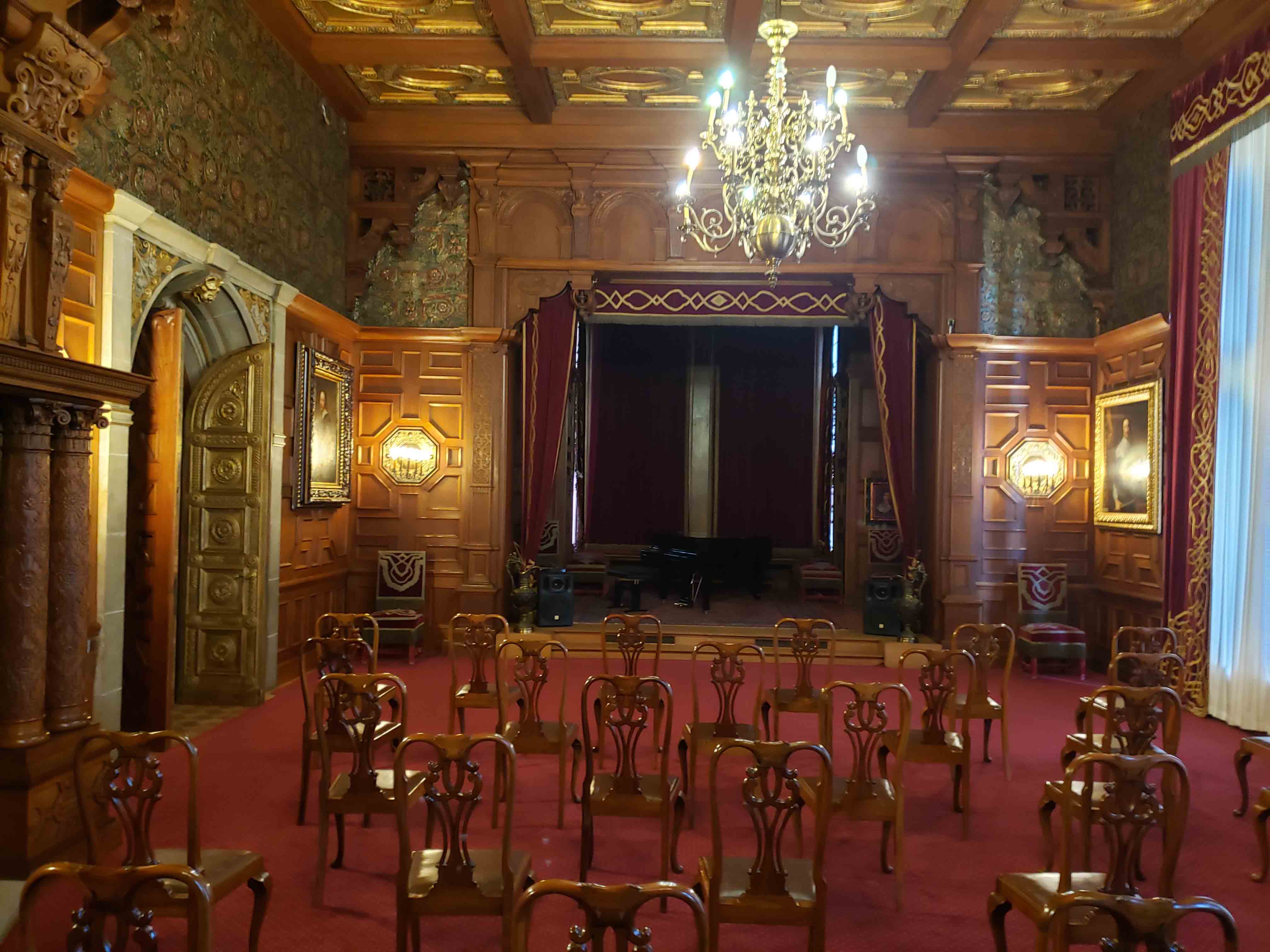
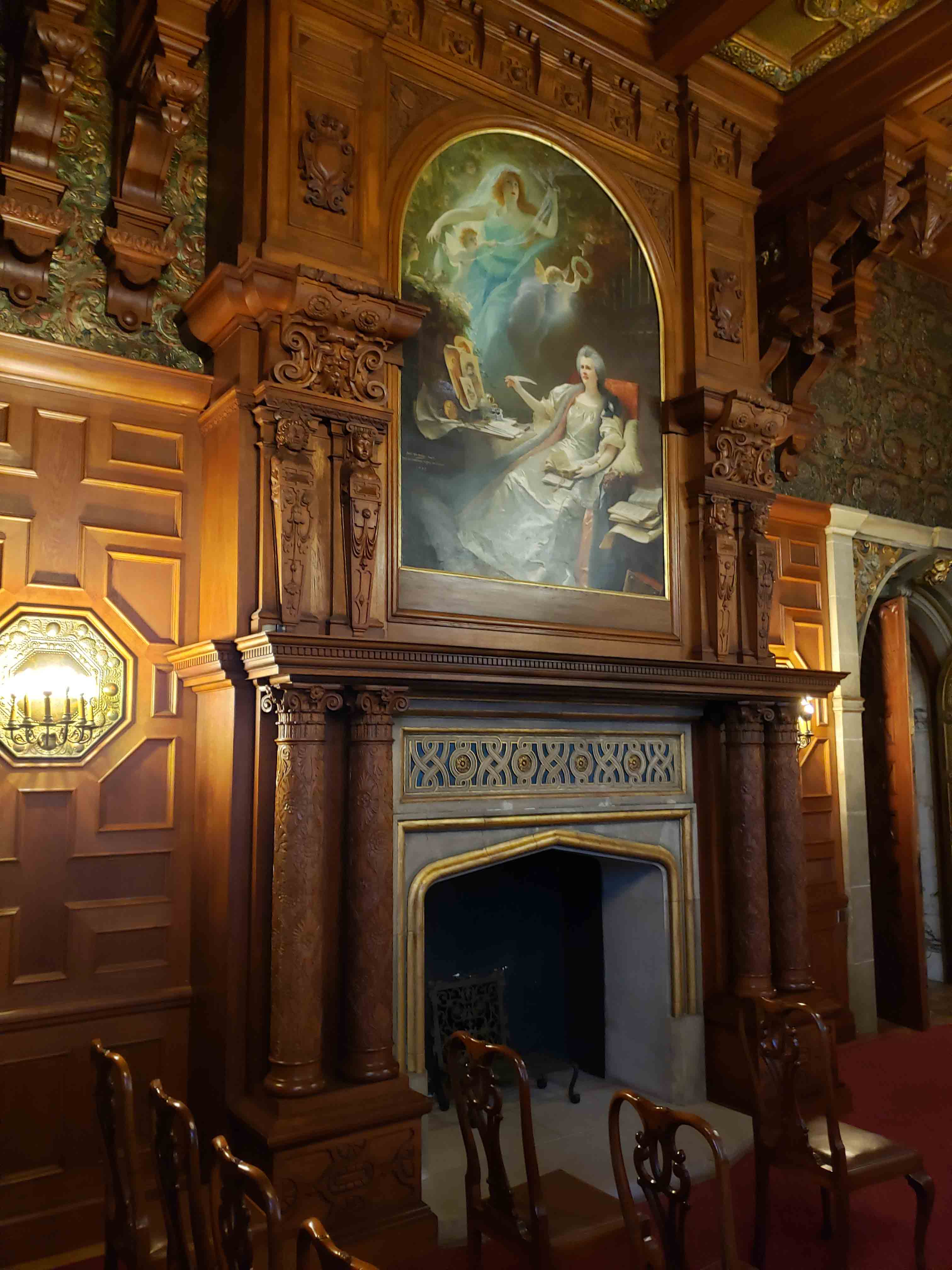
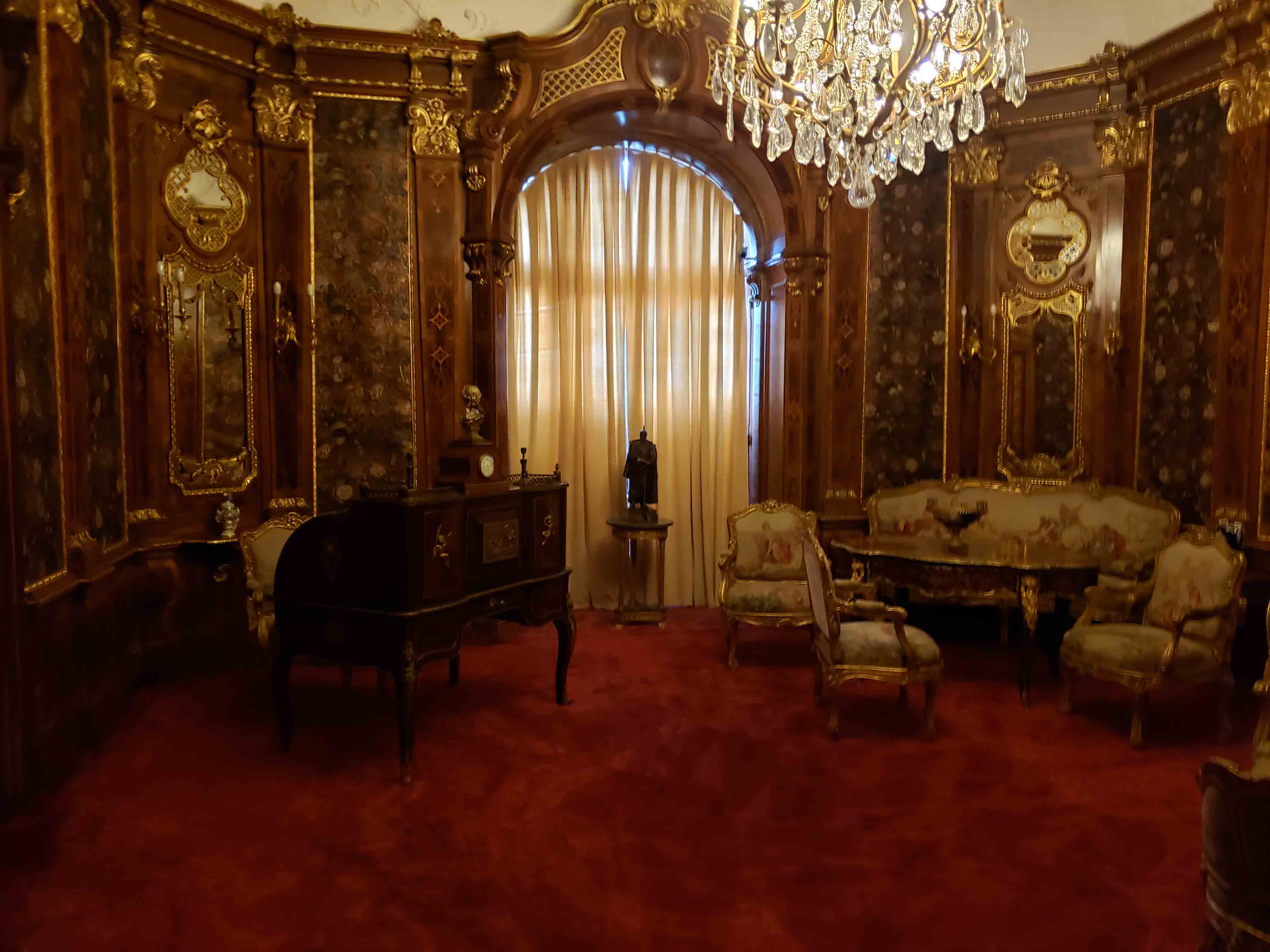
The Castle Peleş is more or less renovated and is a government run venue hosting tours, both self-pacing and private. It is rather large and consists of many separate rooms that are rather elaborate, including an arms room, study, reception, large dining hall, library and a grand hall that has a most unique wooden spiral staircase with an electrically operated roof that opens fully (though no proof or demonstrations were offered nor provided).
Sinaia – Castle Peleş – Tickets For Two – 19th of September, 2021
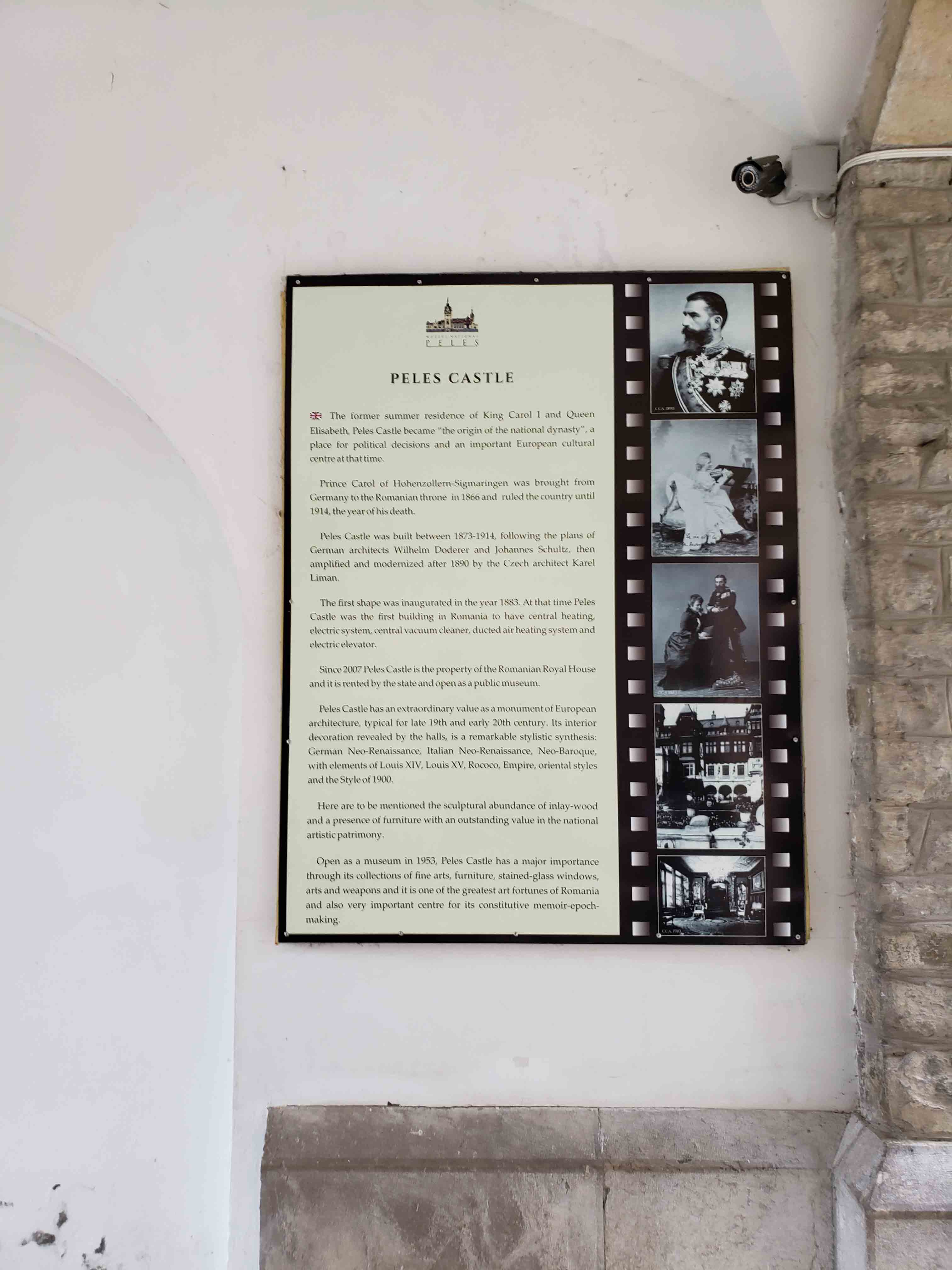
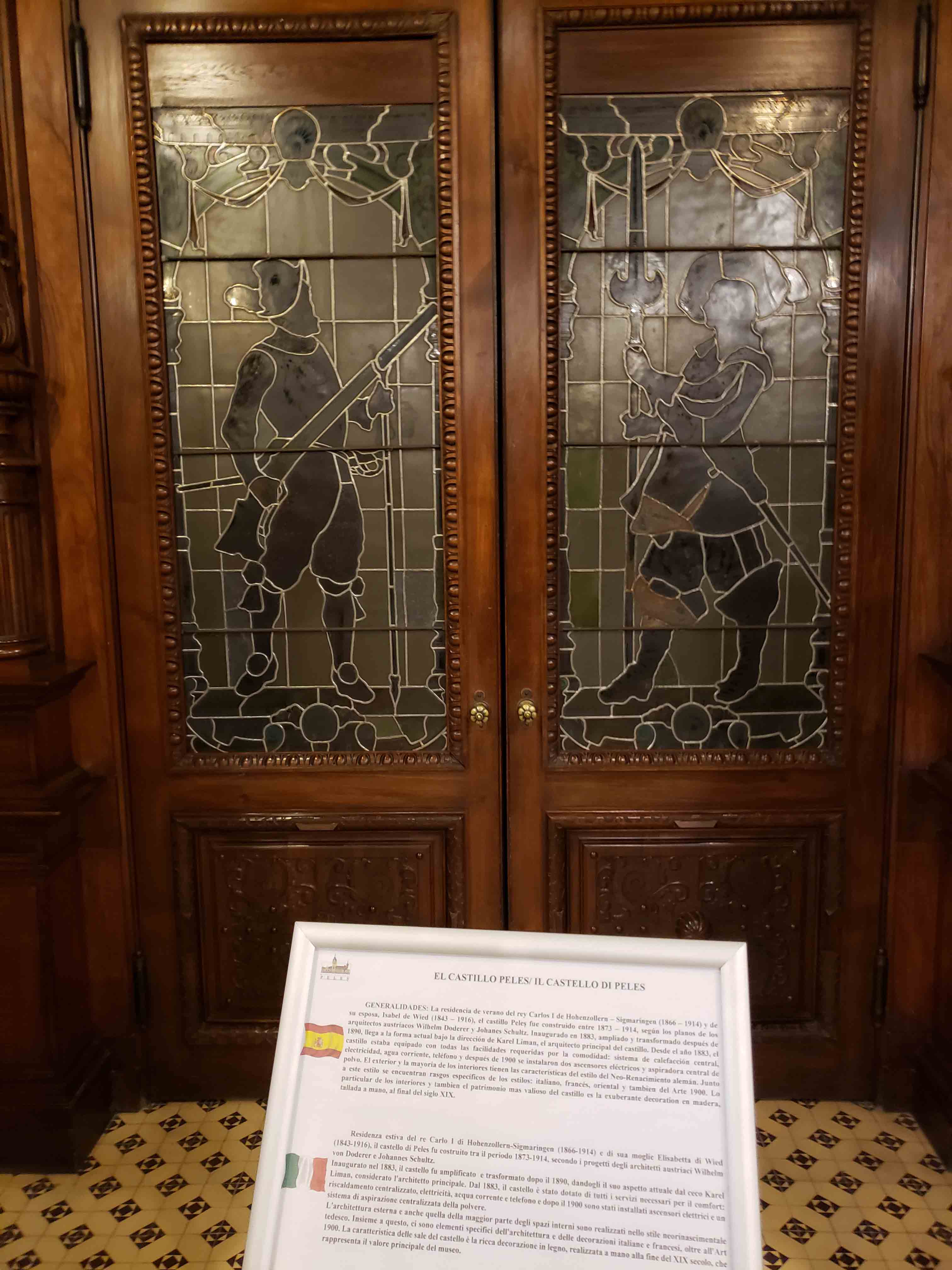
The castle was built sometime between 1873 and 1914, based on the architects Wilhelm Doderer and Johannes Schultz, both of which were German. The structure was later modernized by the Czech architect Karel Liman. And though some on the internet would suggest or assert it has anything to do with Count Dracula (Vlad the Impaler), it does NOT. That sole claim belongs to Bran Castle to the west.
Sinaia – Strada Actavia Goga to Castle Peleş – 19th of September, 2021
Sinaia – Allee Carmen Sylva to Castle Peleş – 19th of September, 2021
Sinaia – Allee Carmen Sylva to Castle Peleş – 19th of September, 2021
Sinaia – Allee Carmen Sylva to Castle Peleş – 19th of September, 2021
Sinaia – Allee Carmen Sylva to Castle Peleş – 19th of September, 2021
Sinaia – Castle Peleş – 19th of September, 2021
Sinaia – Castle Peleş – 19th of September, 2021
Sinaia – Castle Peleş – 19th of September, 2021
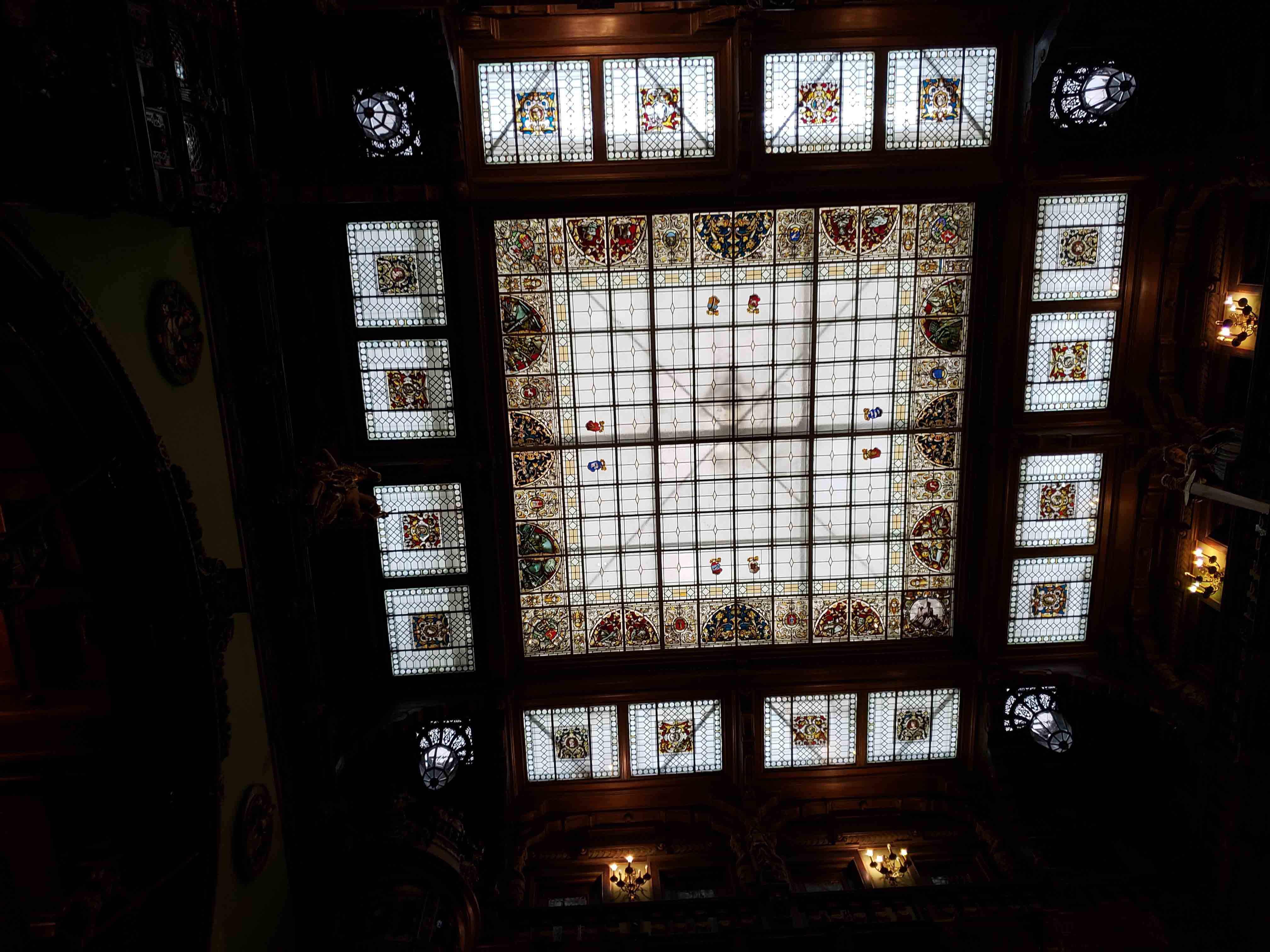
The first inauguration of the building occurred in 1883 and introduced central heating to Romania, as well as an electric system that operated the large glass roof enclosure. It also had a vacuum cleaner, air ducts for heating and an electric elevator.
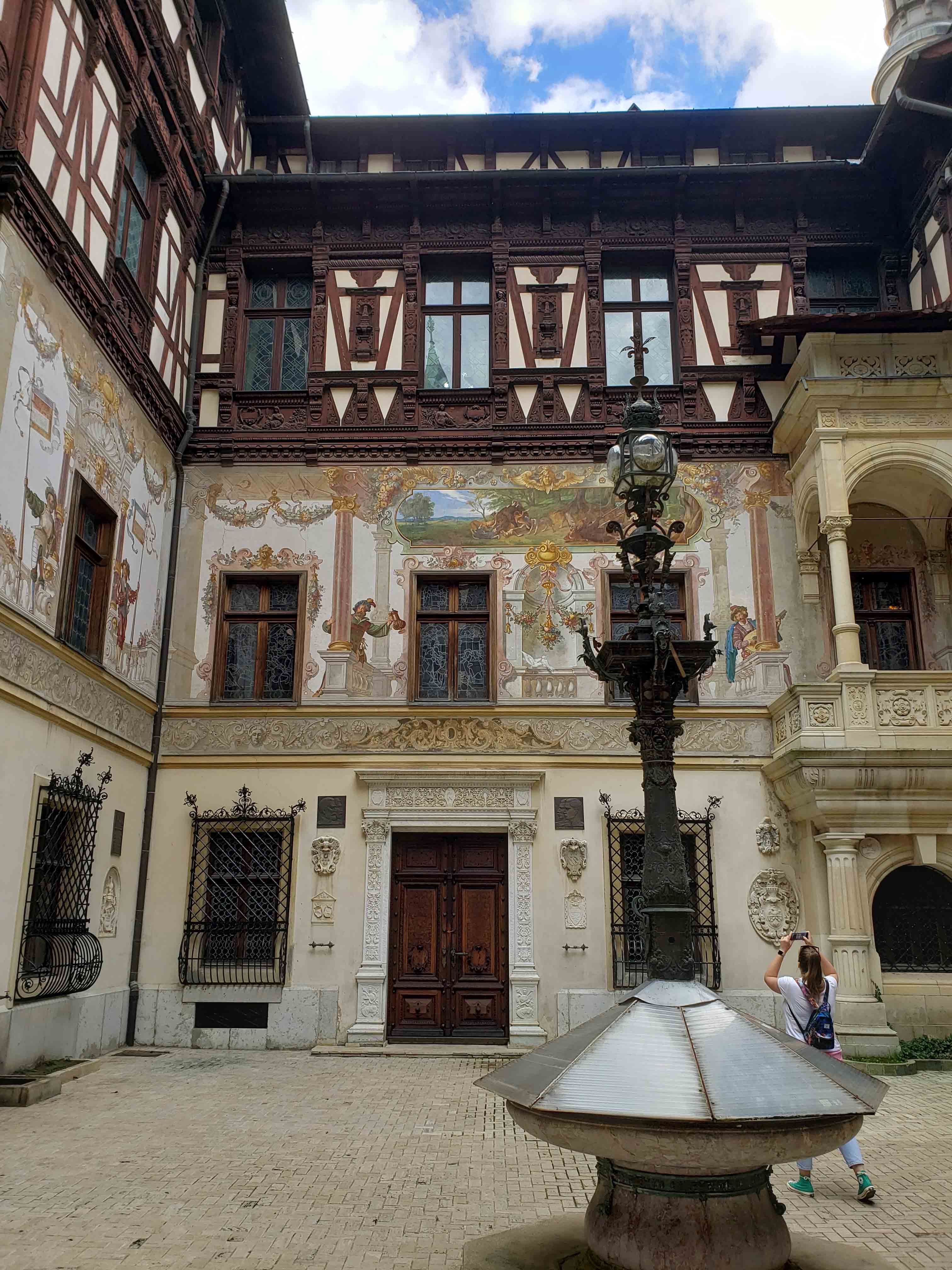
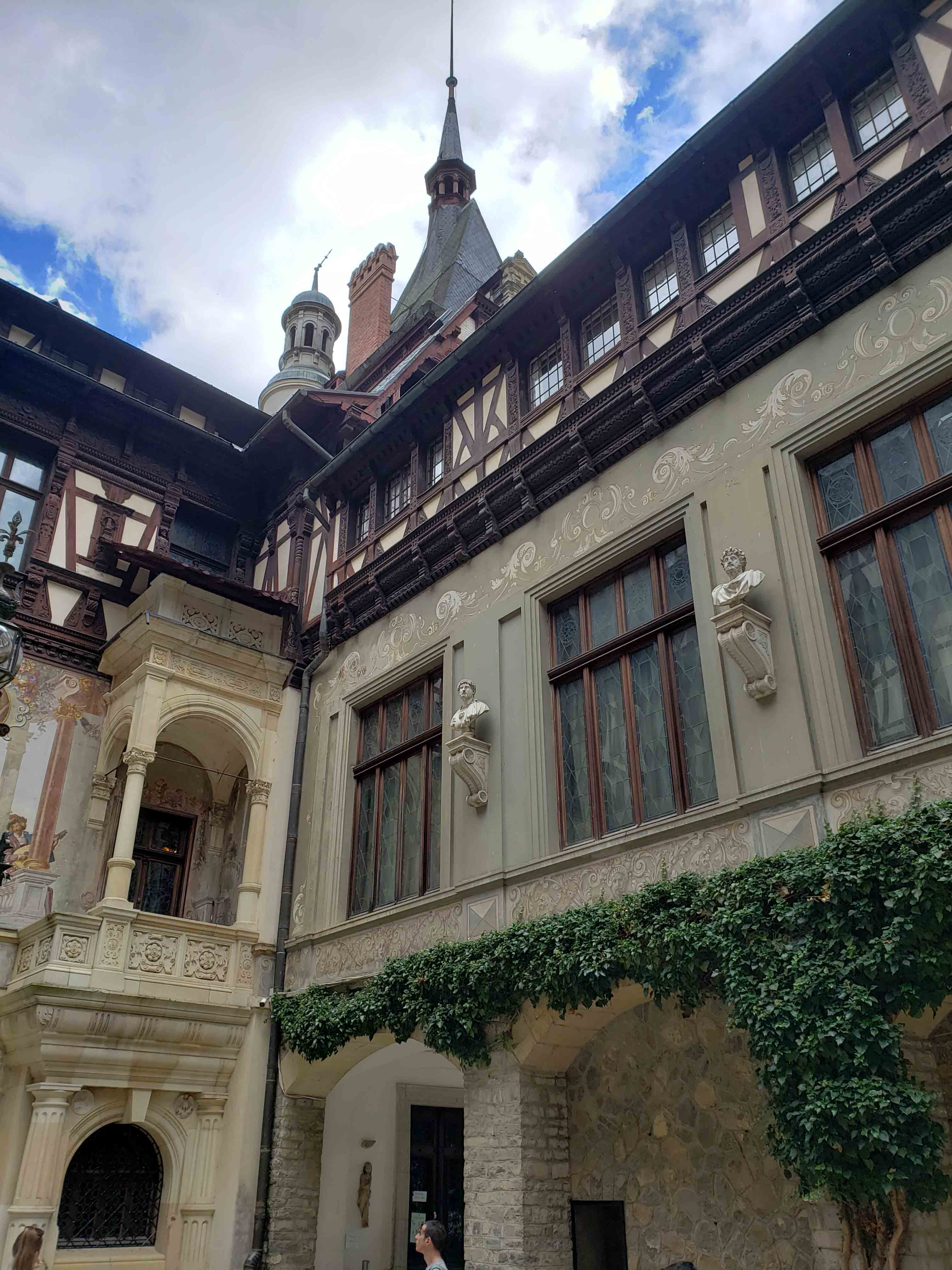
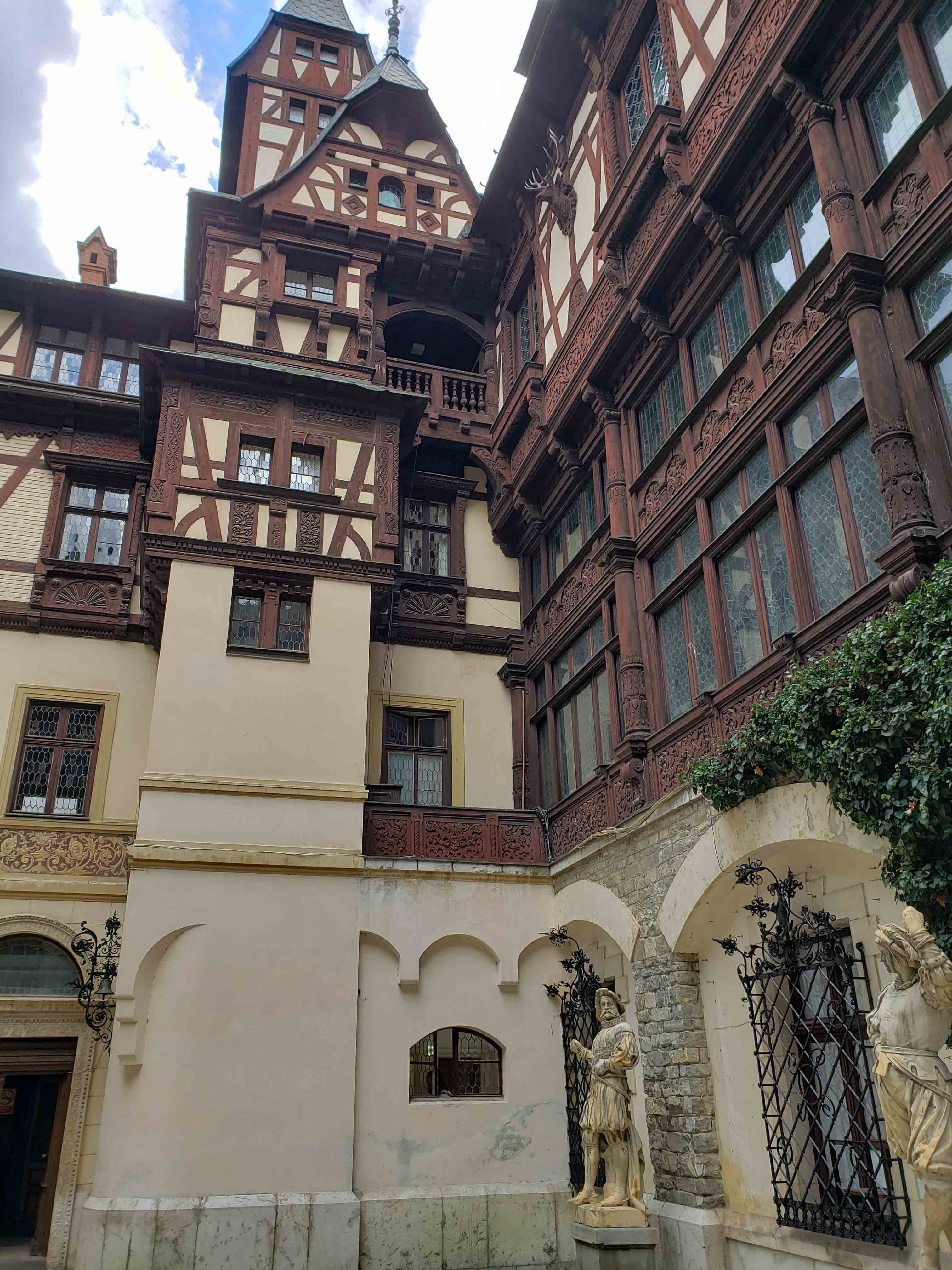
Sinaia – Courtyard Castle Peleş – 19th of September, 2021
Sinaia – Courtyard Castle Peleş – 19th of September, 2021
Sinaia – Courtyard Castle Peleş – 19th of September, 2021
Sinaia – Courtyard Castle Peleş – 19th of September, 2021
Sinaia – Courtyard Castle Peleş – 19th of September, 2021
The castle is the former summer residence of King Carole I and Queen Elisabeth. It was used as part of the Romanian National Dynasty and often used for important political and other European cultural decisions at the turn of the century. It incorporates a synthesis of Neo-Renaissance (both German and Italian), Neo-Baroque, Rococo as well as French and Oriental styles.
The Monastery
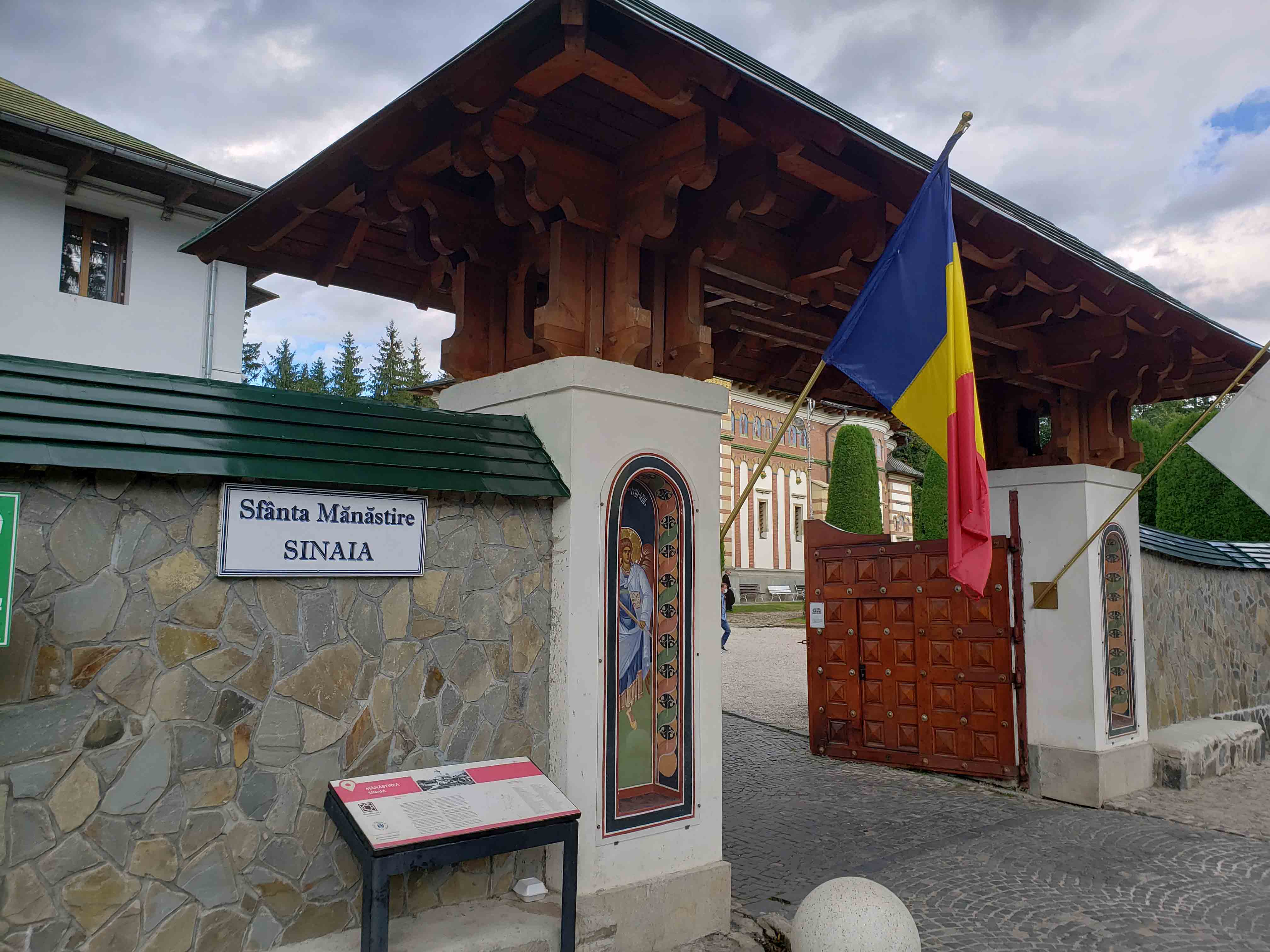
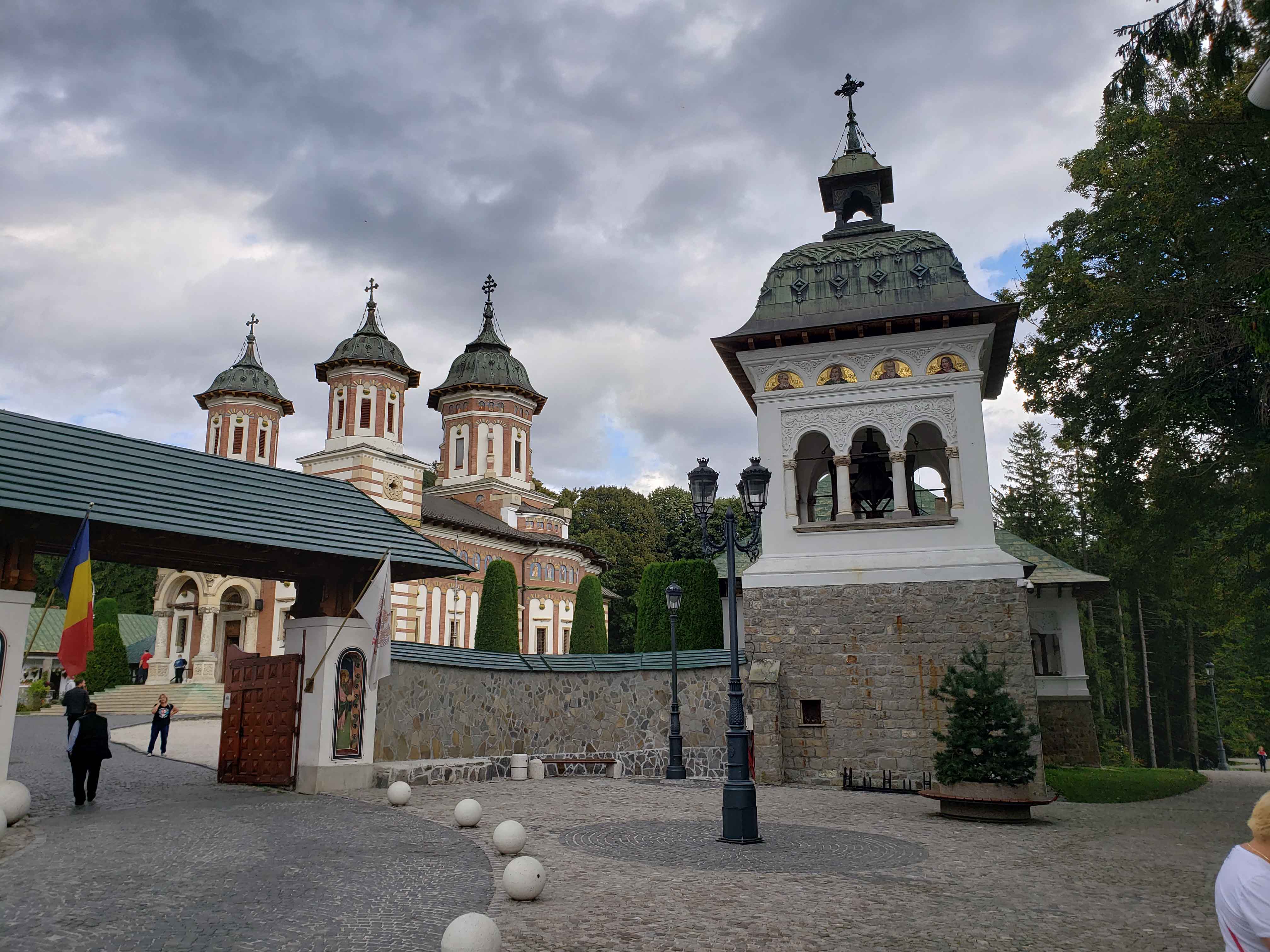
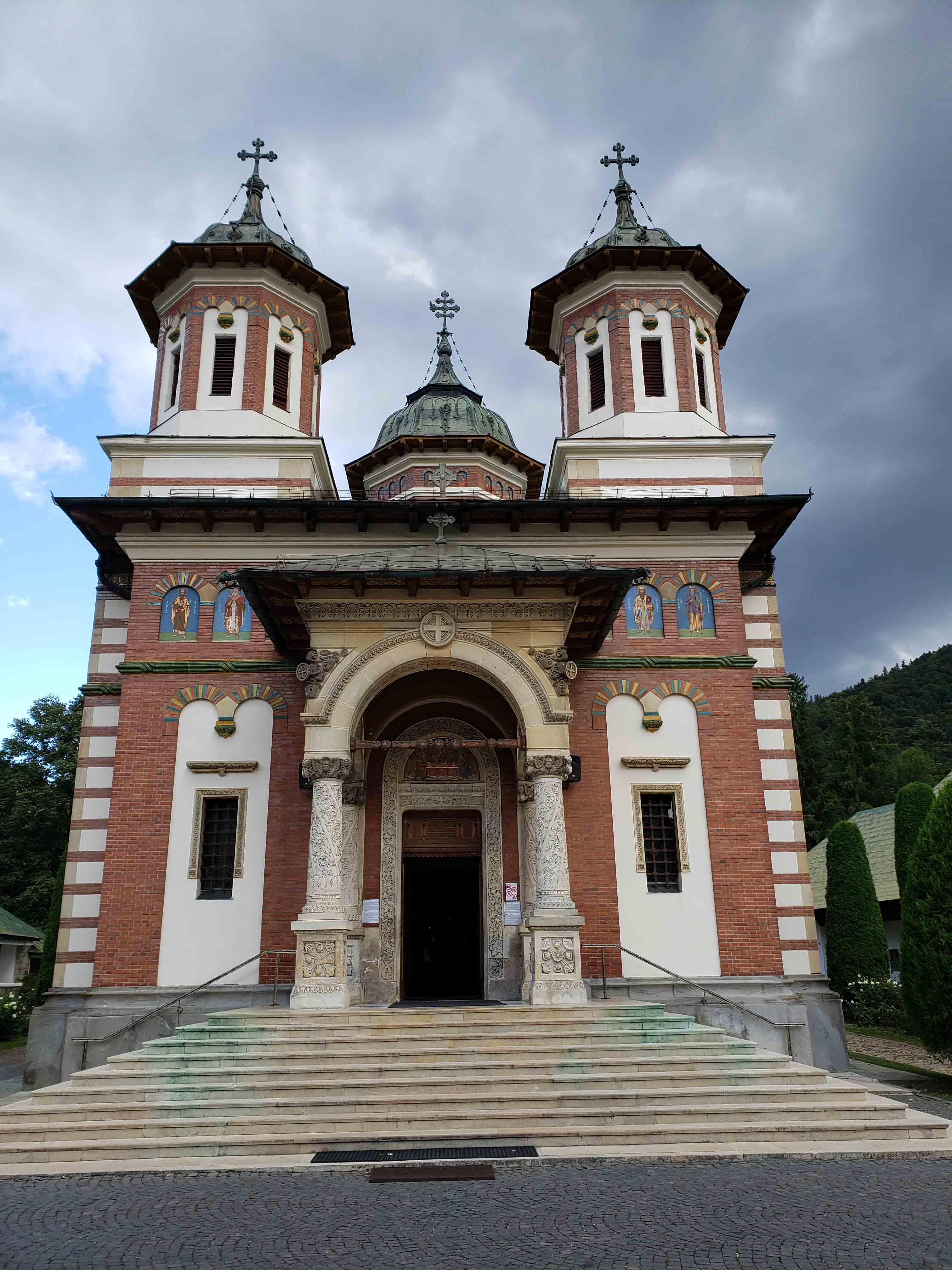
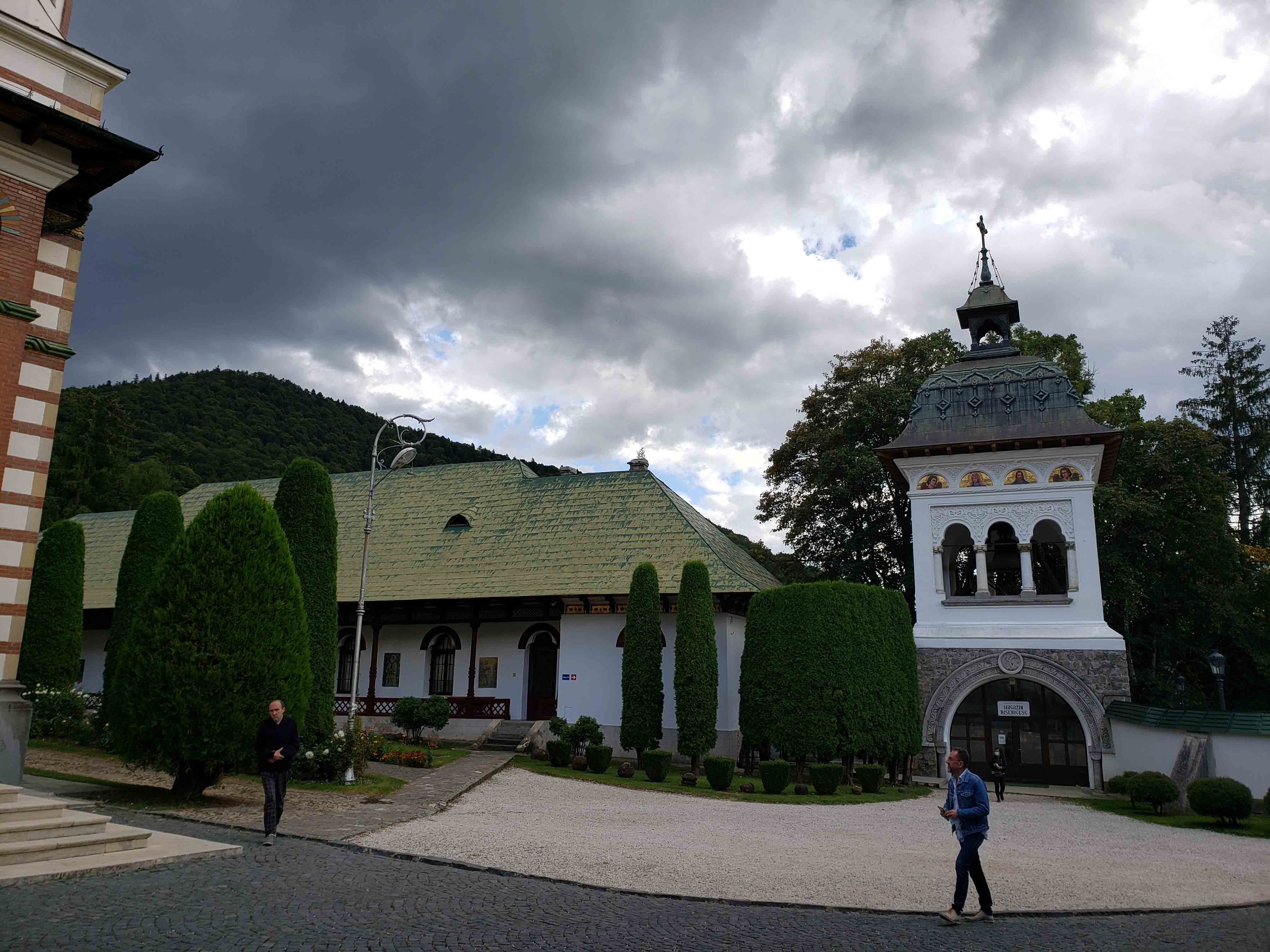
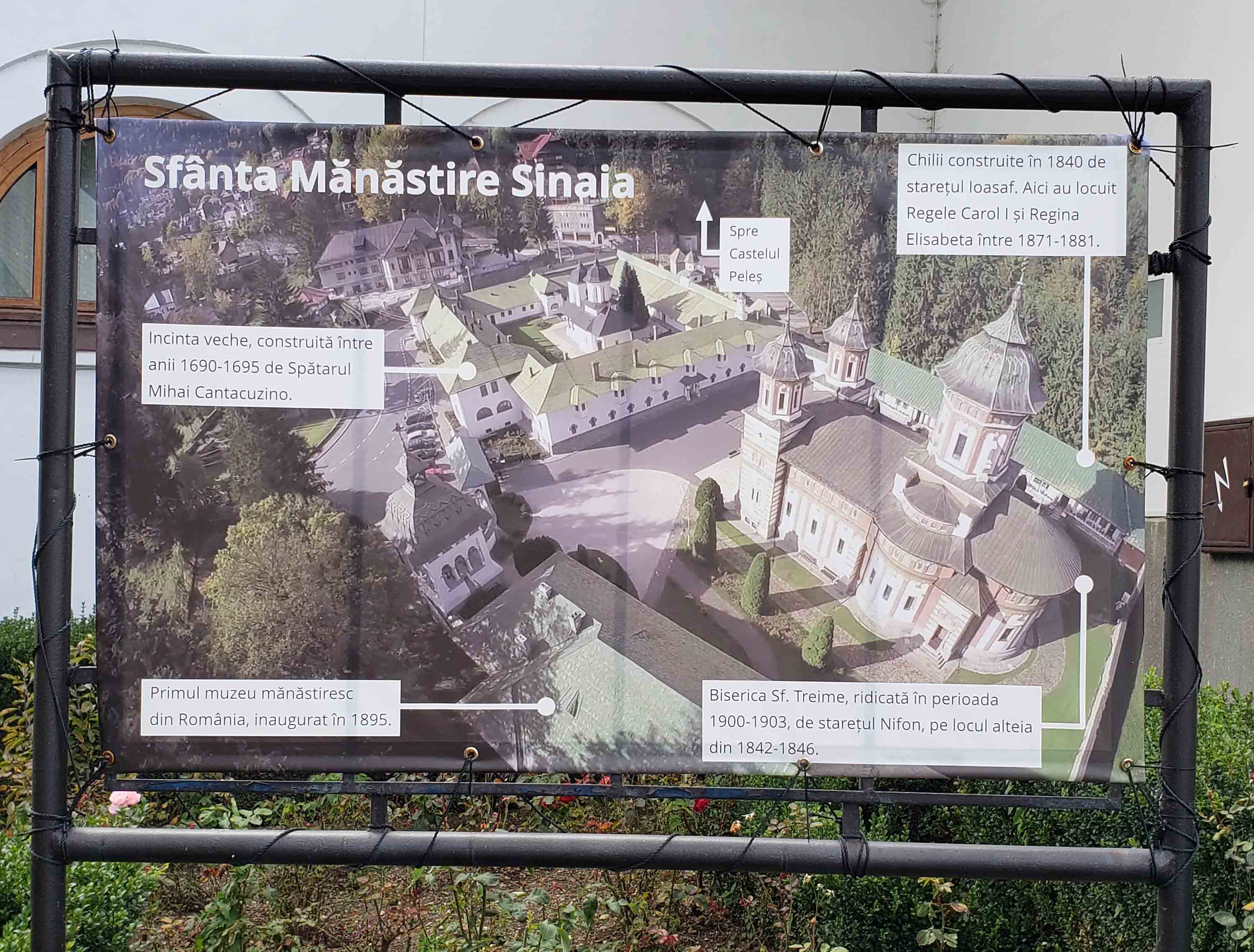
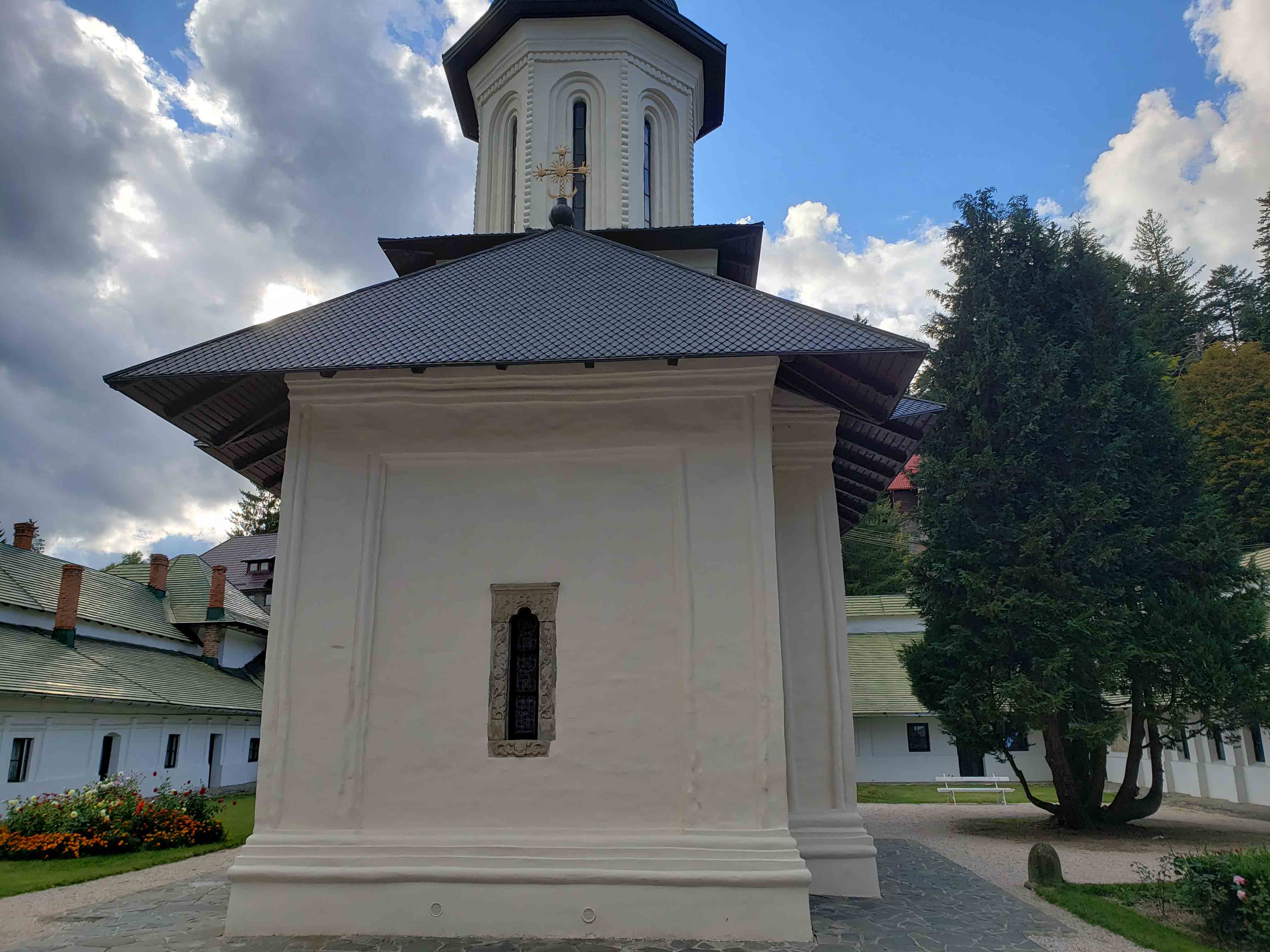
On the way down from Castle Peleş is the Sinaia Monastery. It consists of three parts, the monastery proper (a set of buildings that surround the old chapel), the old chapel or church and the great church.
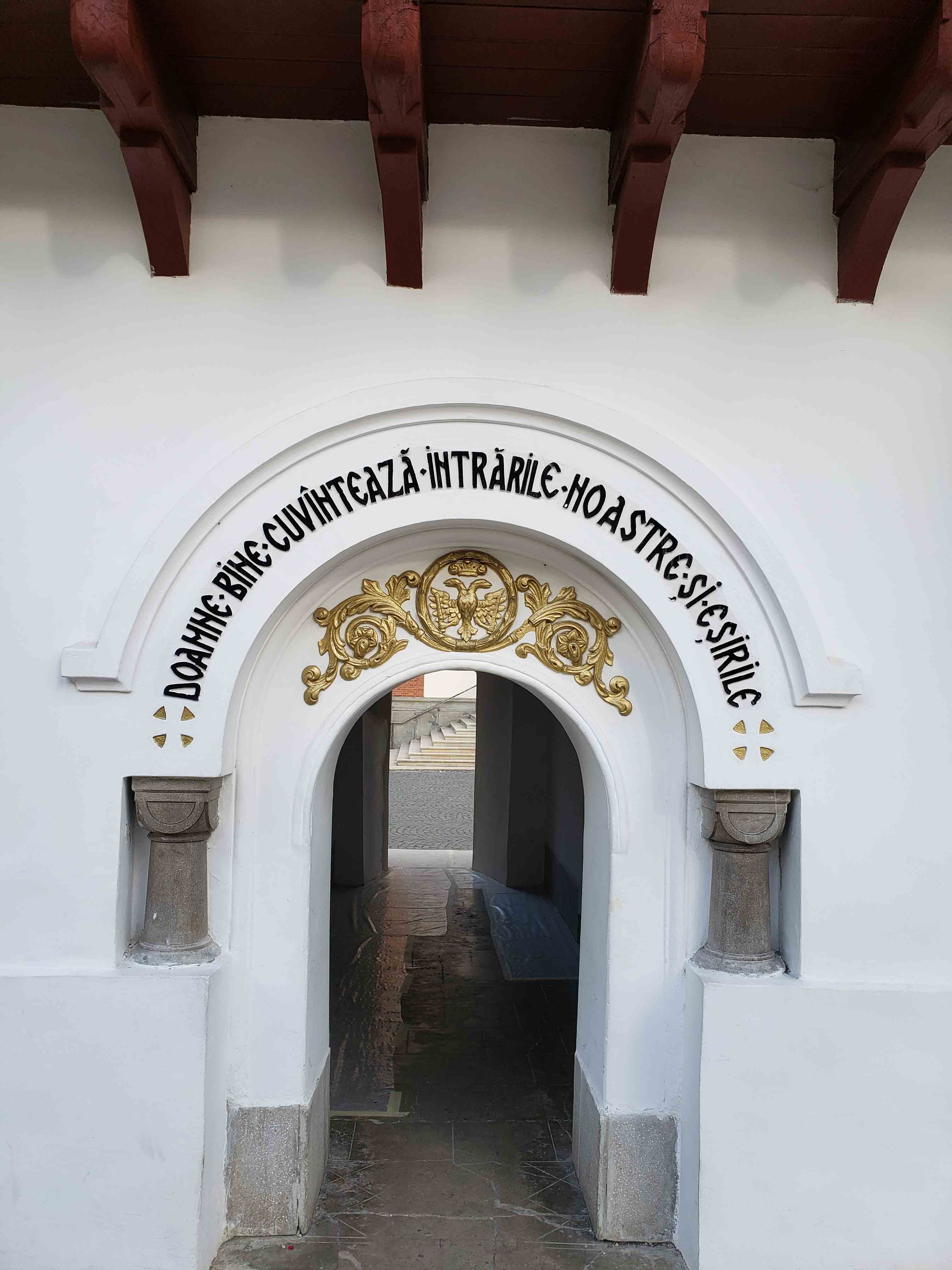
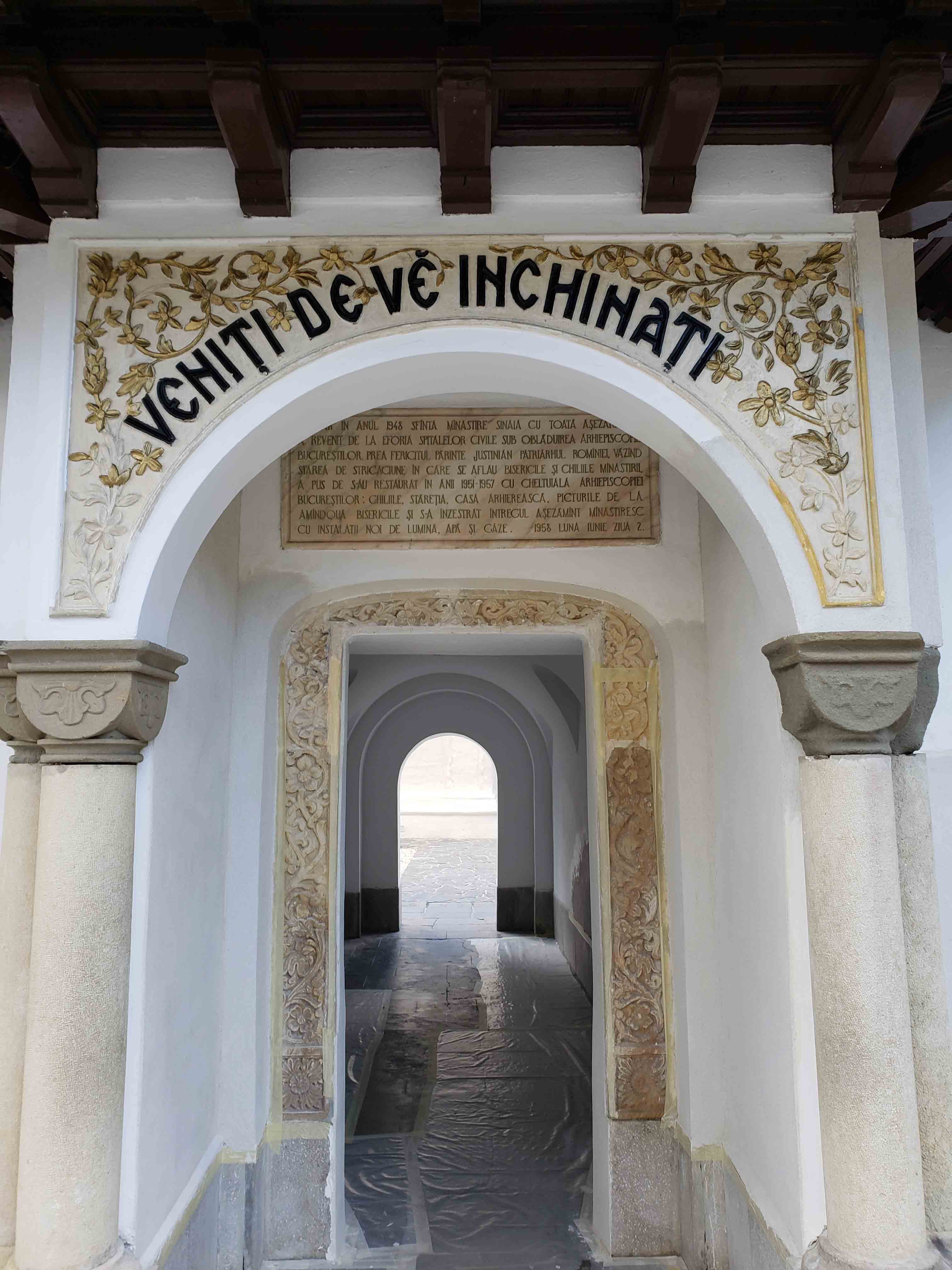
Sinaia Monastery – Entrance – 19th of September, 2021
Sinaia Monastery – Entrance – 19th of September, 2021
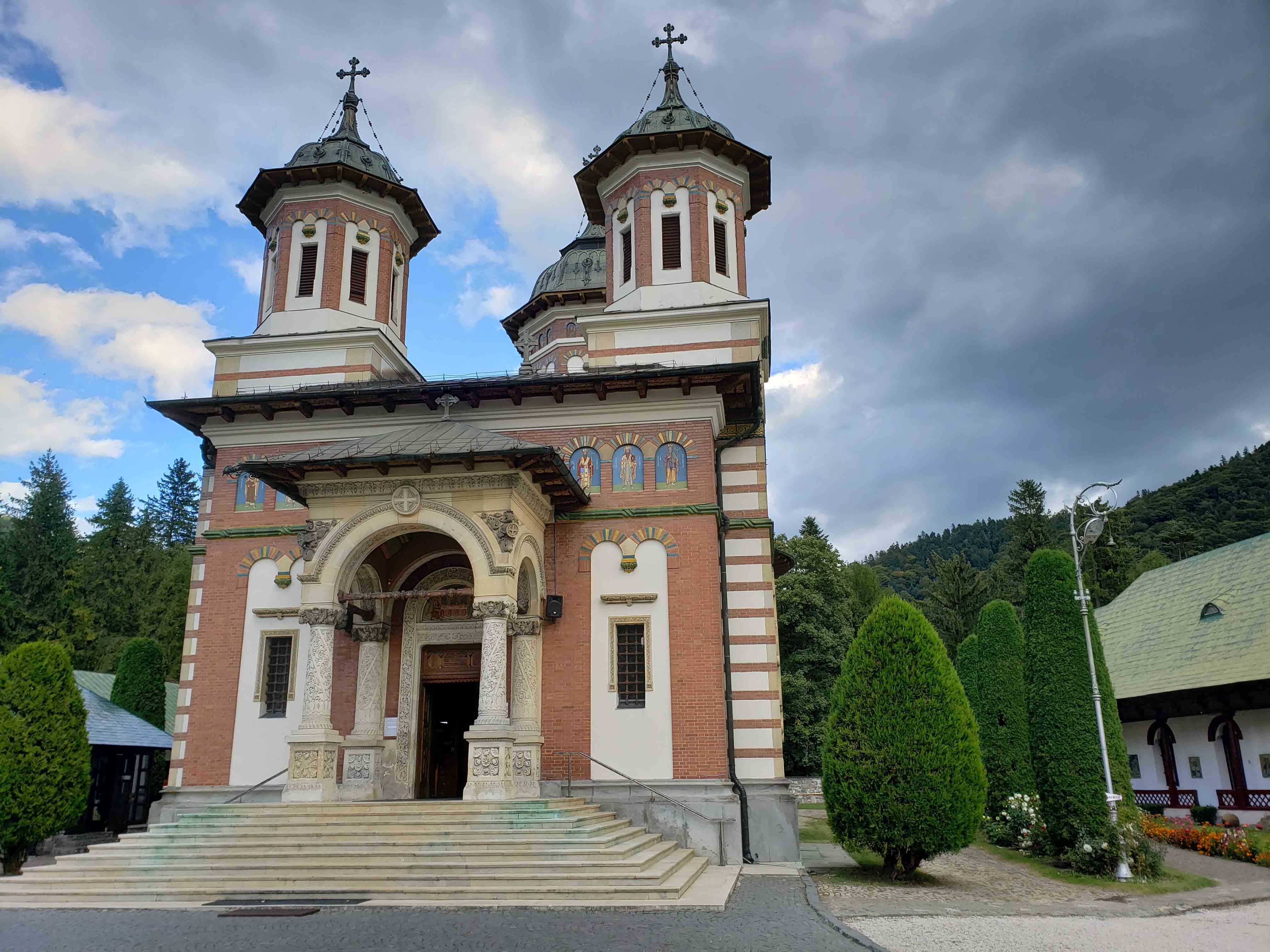
The original monastery was built in the late 1600s by Mihail Cantacuzino. Construction was due in part by a promise he made to the monks of Saint Anne and Nicholas, which lived at the time in nearby hermitages. He subsequently gave it the name, The Dormition of the Holy Virgin Mary, in memory of a pilgrimage he had taken at one time to the Holy Land.
Sinaia Monastery – Great Church – 19th of September, 2021
Sinaia Monastery – Great Church – 19th of September, 2021
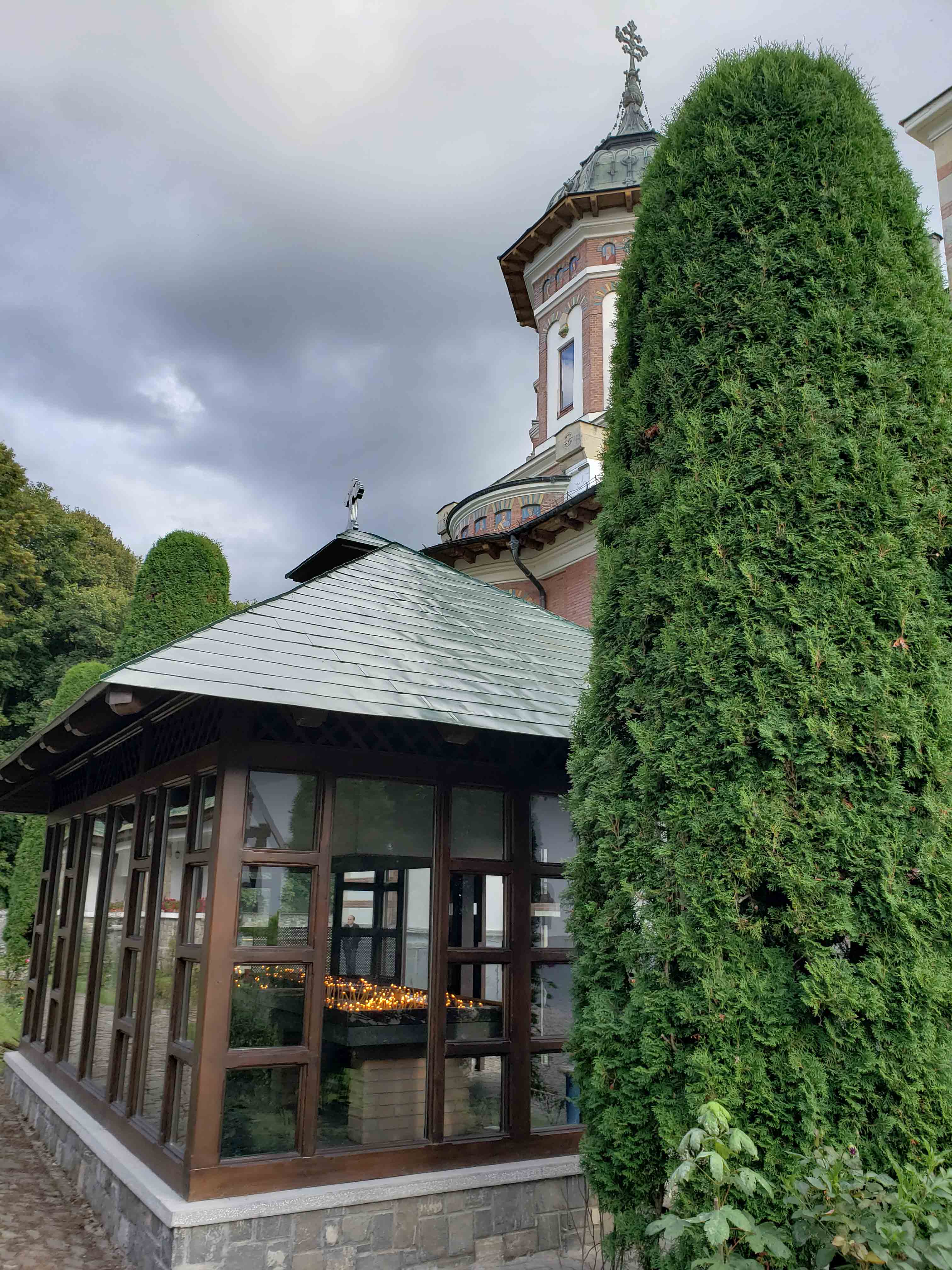
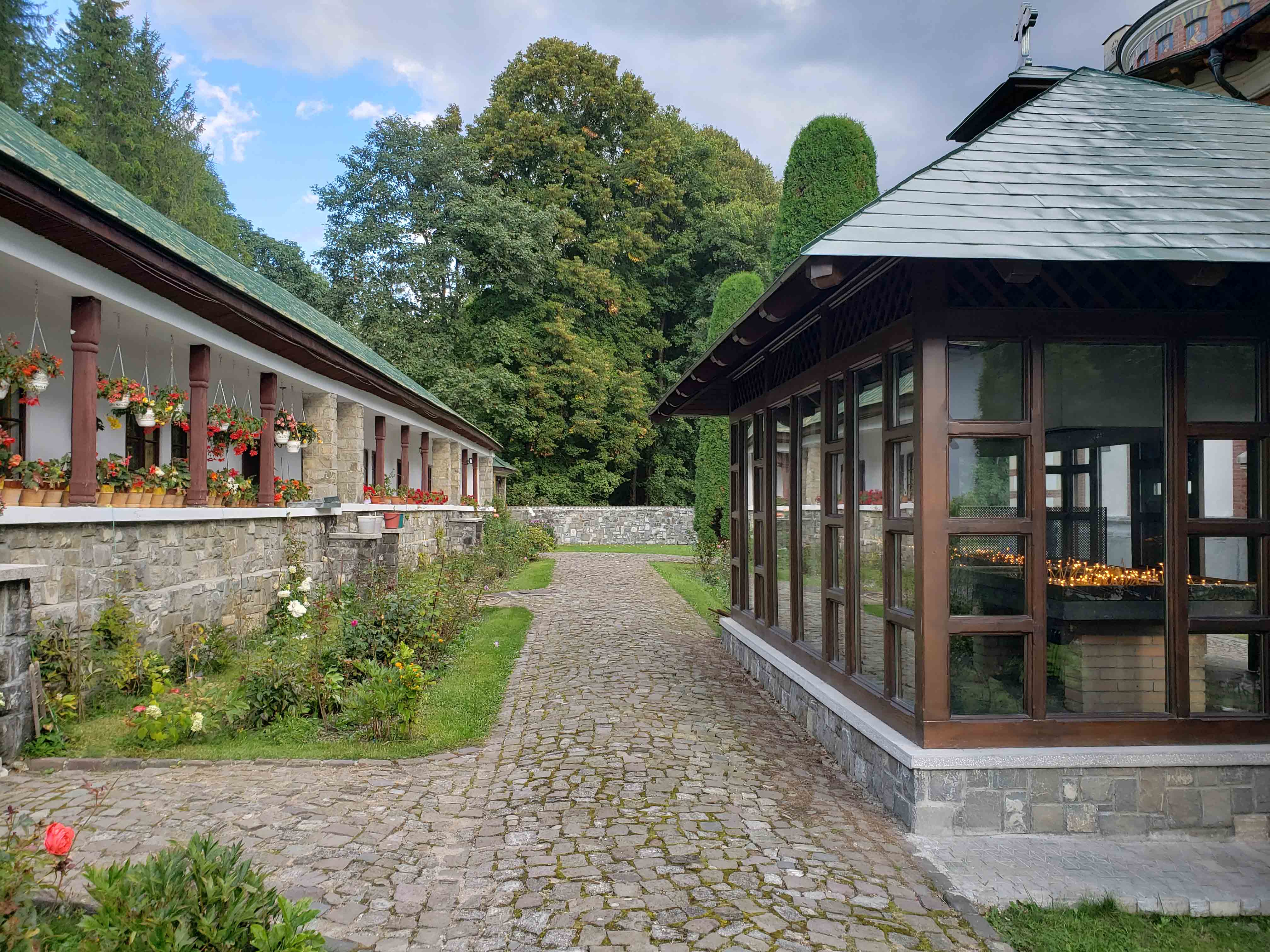
Sinaia Monastery – Grounds – 19th of September, 2021
Sinaia Monastery – Grounds – 19th of September, 2021
Sinaia Monastery – Grounds – 19th of September, 2021
It is quite unique in Romania since it forms a Latin cross, unlike the more traditional Orthodox styles, giving it the origins of the later Walachian and Brancoveanu styles. The churches profiles are very different from other forms in Romania since they replaced the traditional cornices with red brick dents; the facade frames are rectangular and painted with frescos, as well as the absence of the traditional belt.
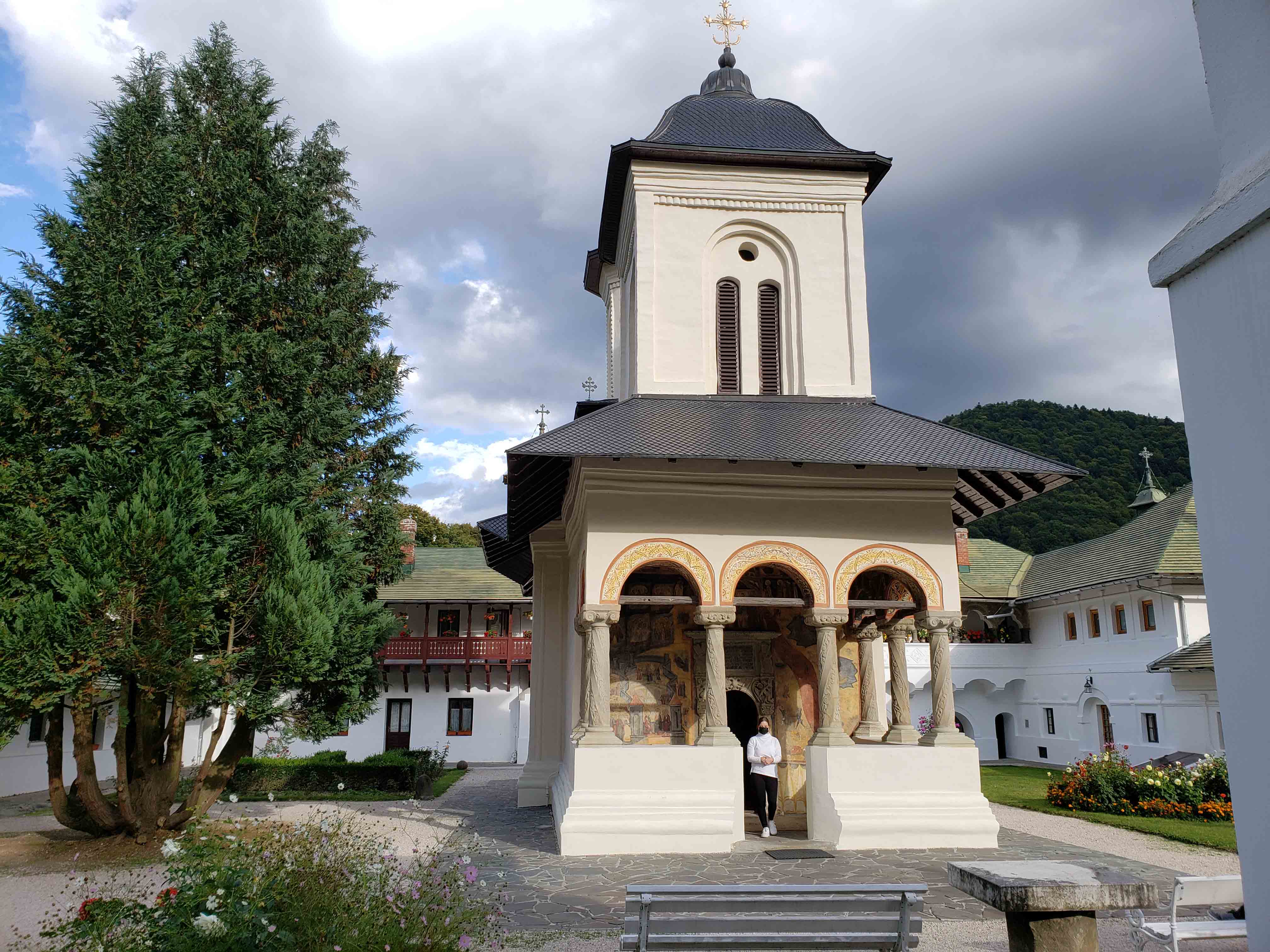
Sinaia Monastery – Entrance Old Chapel – 19th of September, 2021
Sinaia Monastery – Entrance Old Chapel – 19th of September, 2021
Sinaia Monastery – Old Chapel – 19th of September, 2021
Sinaia Monastery – Back of Old Chapel – 19th of September, 2021
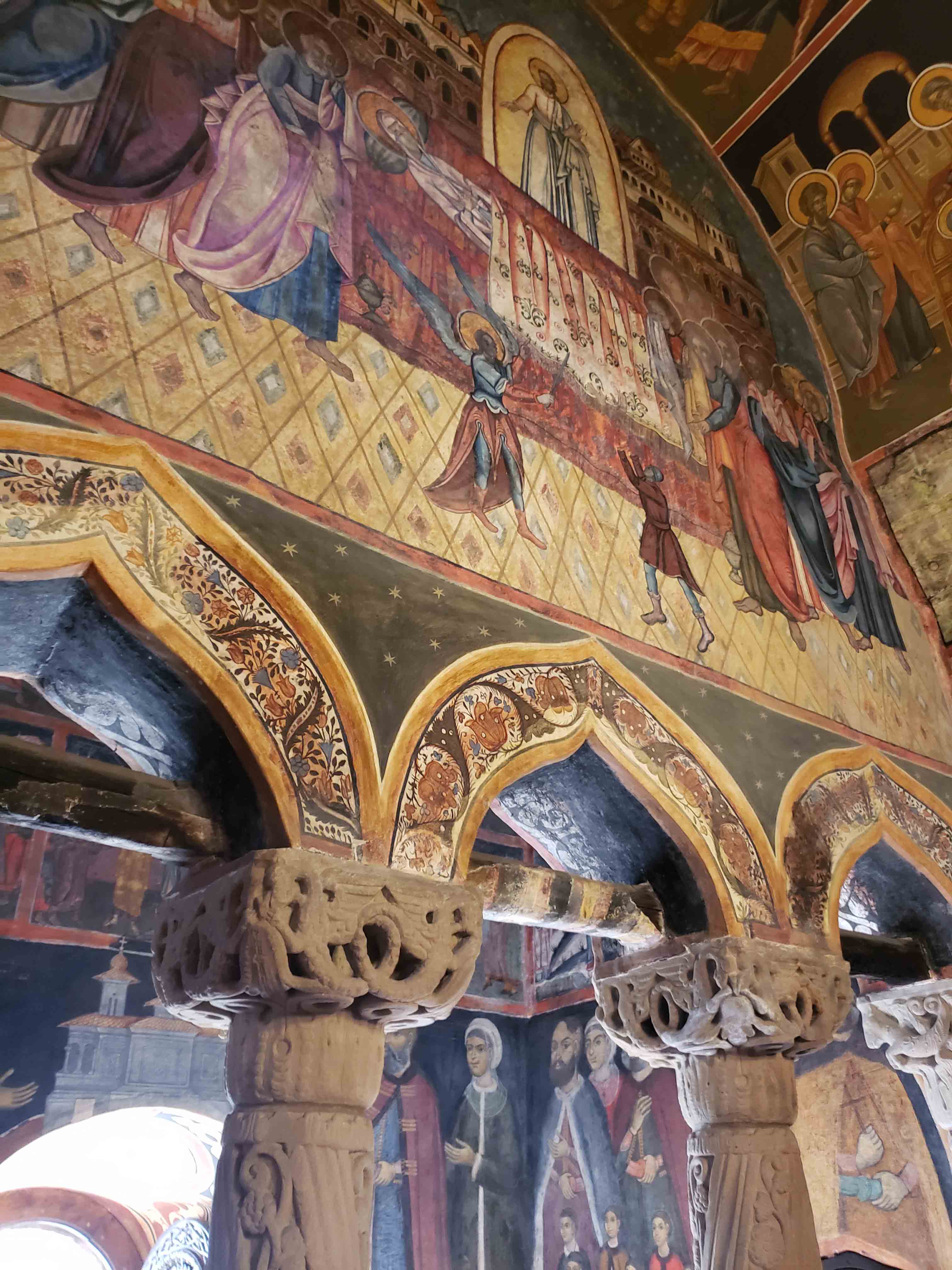
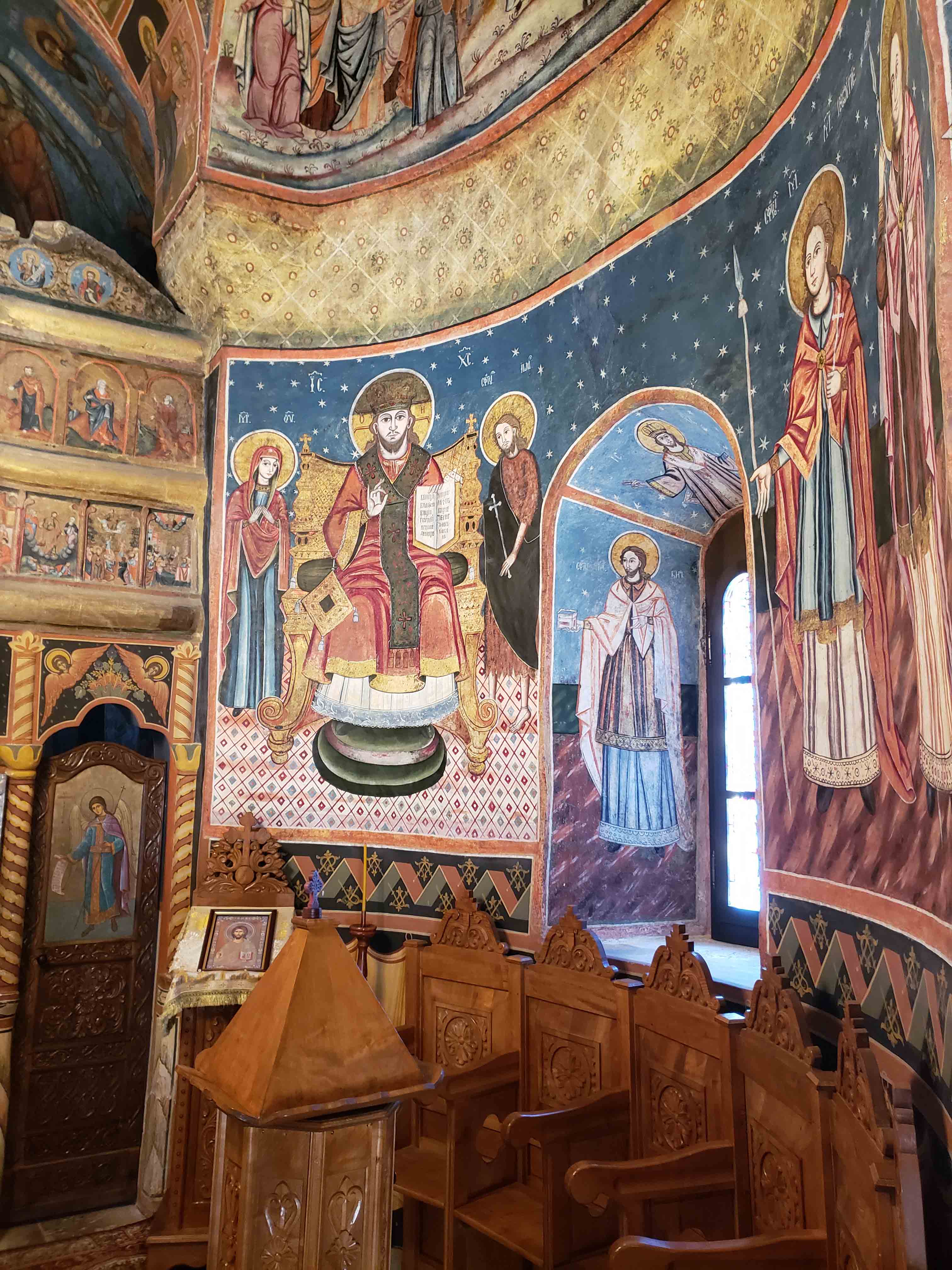
The old chapel was burned in 1791 during the Russian-Austrian-Turkish war and restored somewhat in 1795 by the same painters who had decorated the chapel. The paintings on the porch are all original and present scenes from the life of Saint Catherine (the protector of the monastery), Saint George (protector of soldiers and Moldavia) and Saint Demetrios (protector of Walachia). Important scenes from both Heaven and Hell frame the entrance to the church.
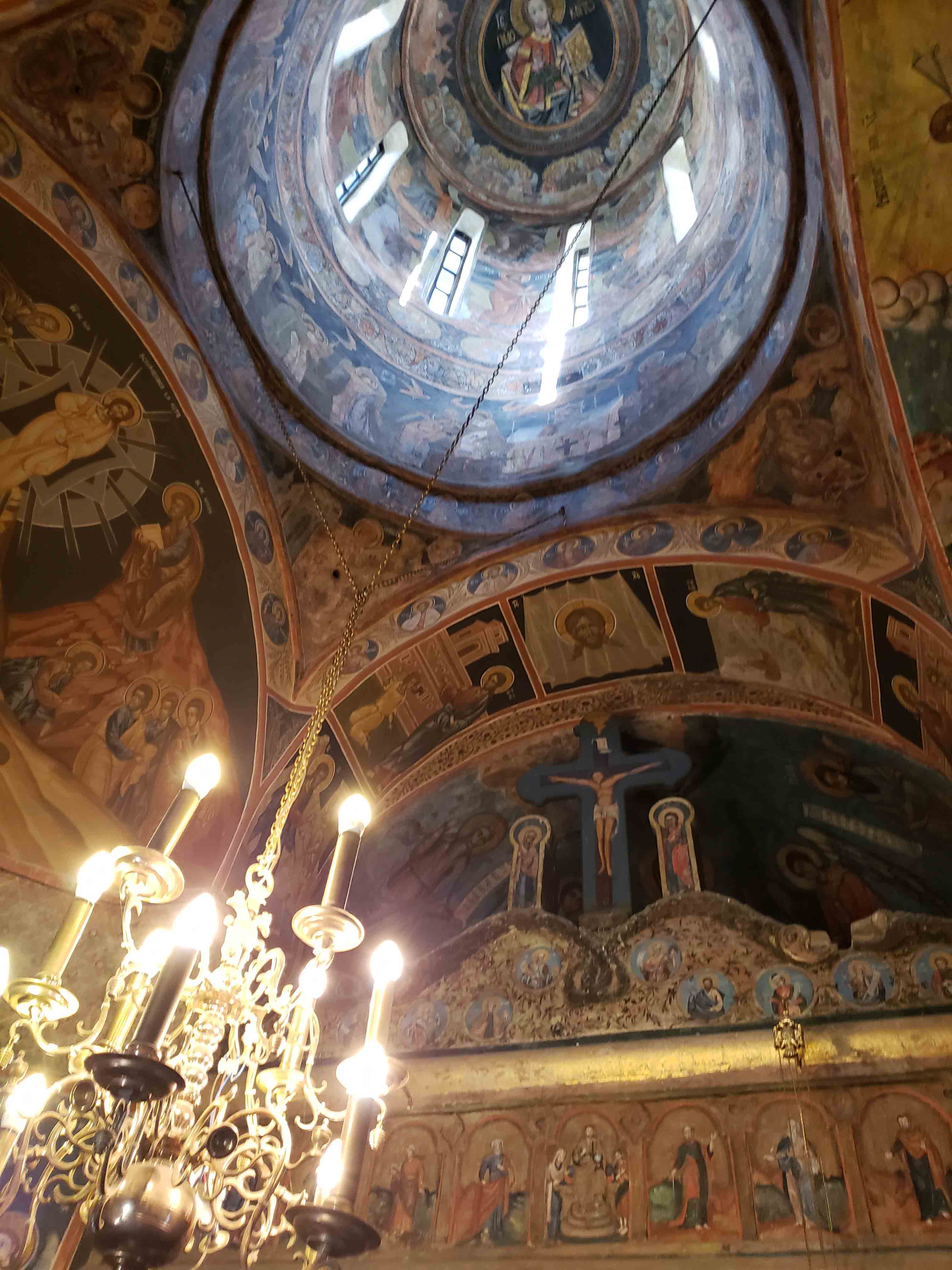
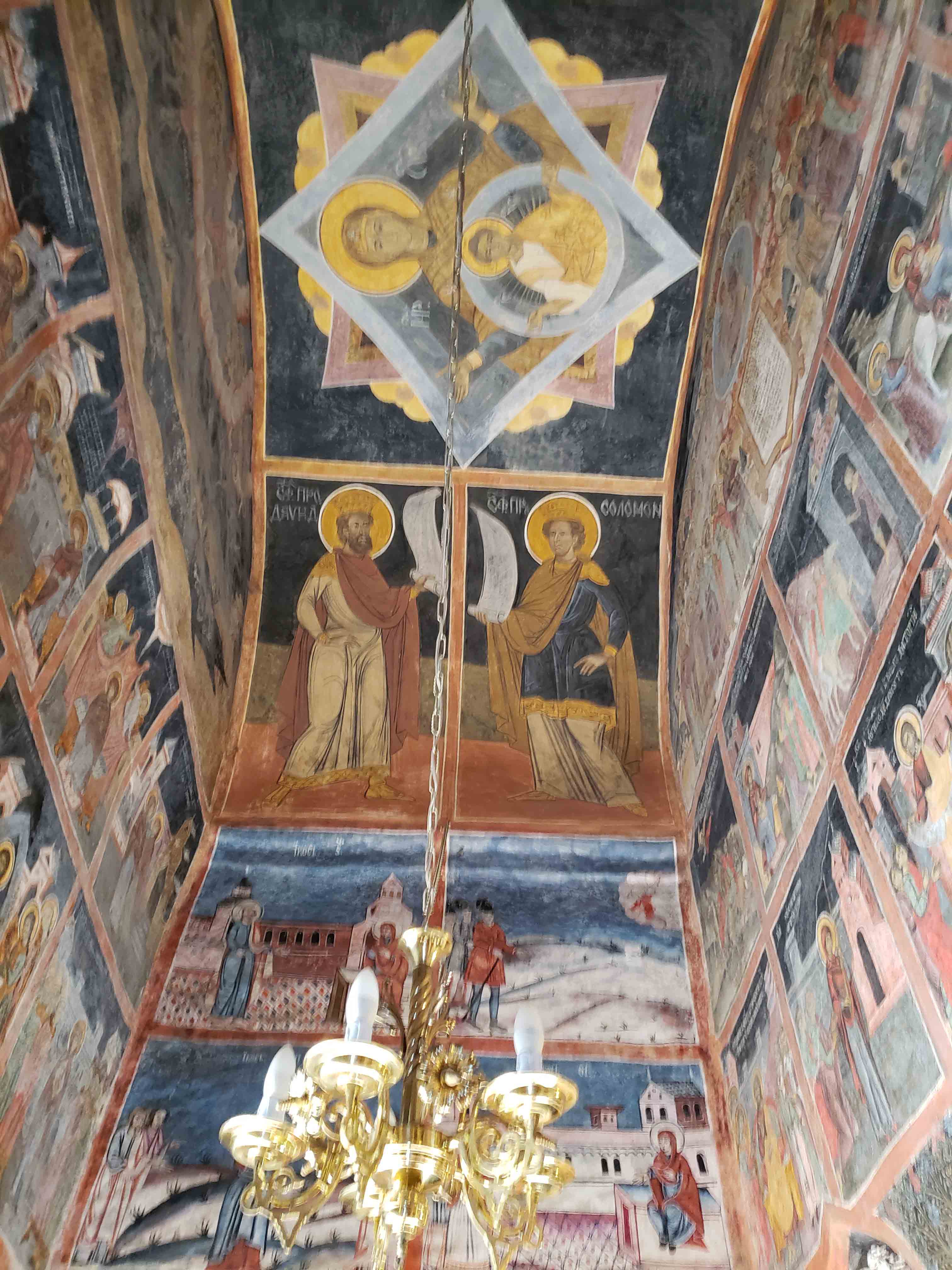
Sinaia Monastery – Old Chapel Interior – 19th of September, 2021
Sinaia Monastery – Old Chapel Interior – 19th of September, 2021
Sinaia Monastery – Old Chapel Interior – 19th of September, 2021
Sinaia Monastery – Old Chapel Interior – 19th of September, 2021
Sinaia Monastery – Old Chapel Interior – 19th of September, 2021
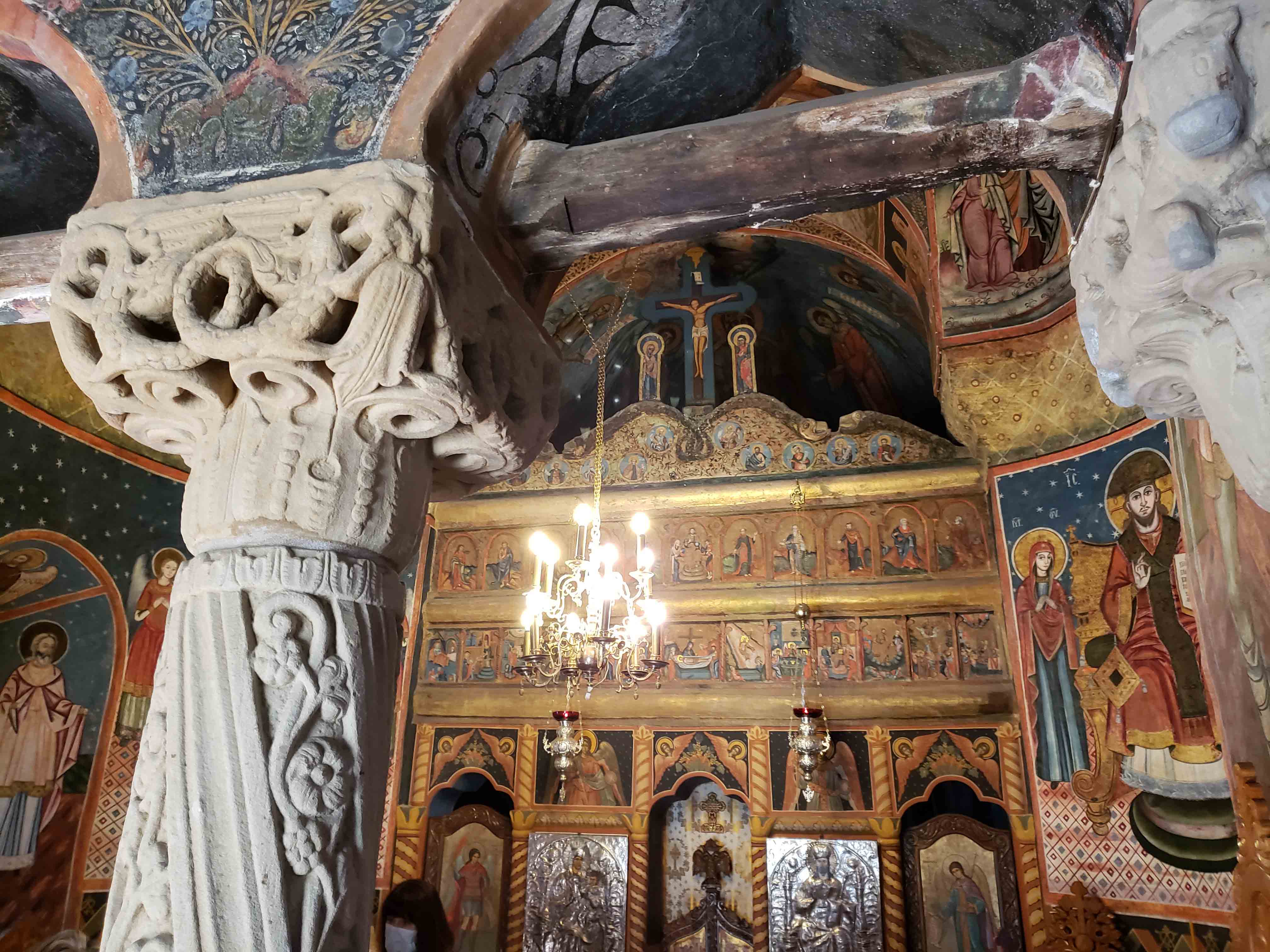
The entrance represents Moses and his brother Aaron and are built in carved stone. The nave of the church depicts the Ascension and Transfiguration, related to the secret nature of praying rightly to the divine or also known as hesychasm.
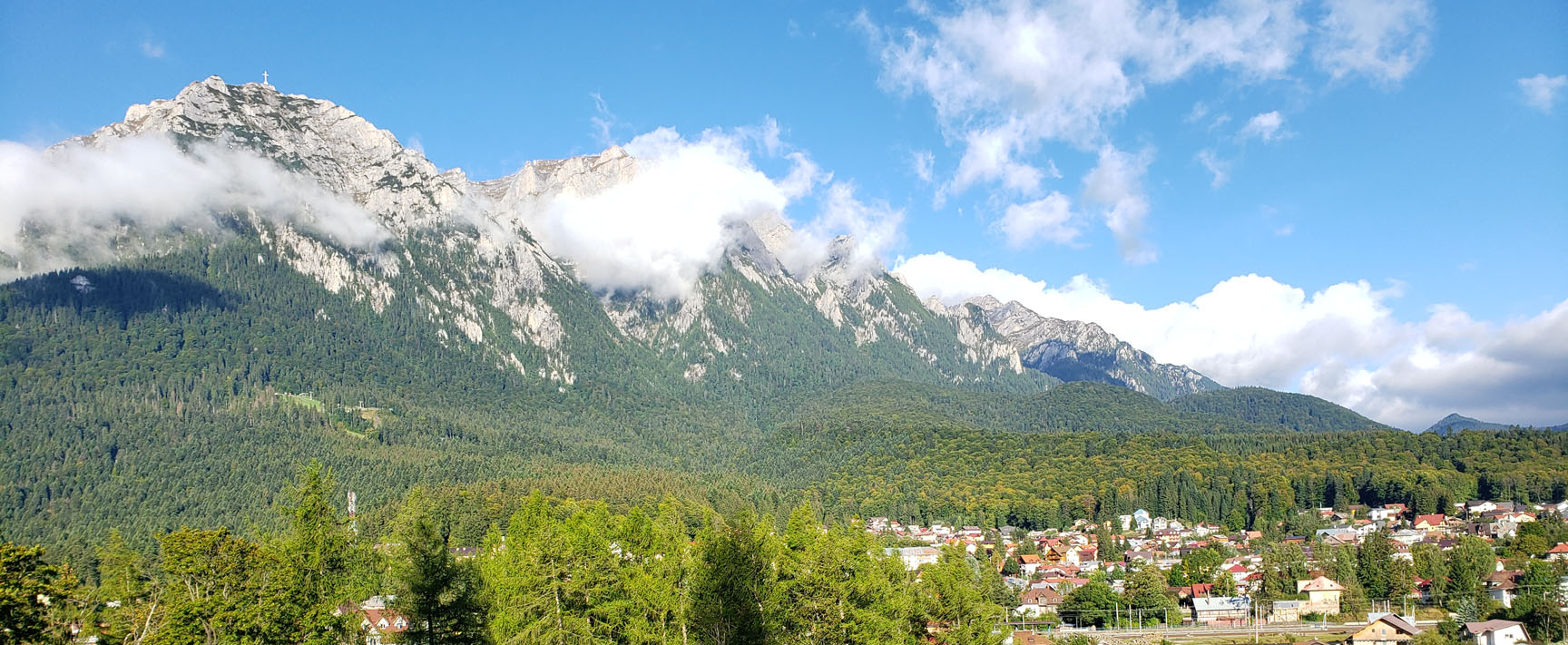
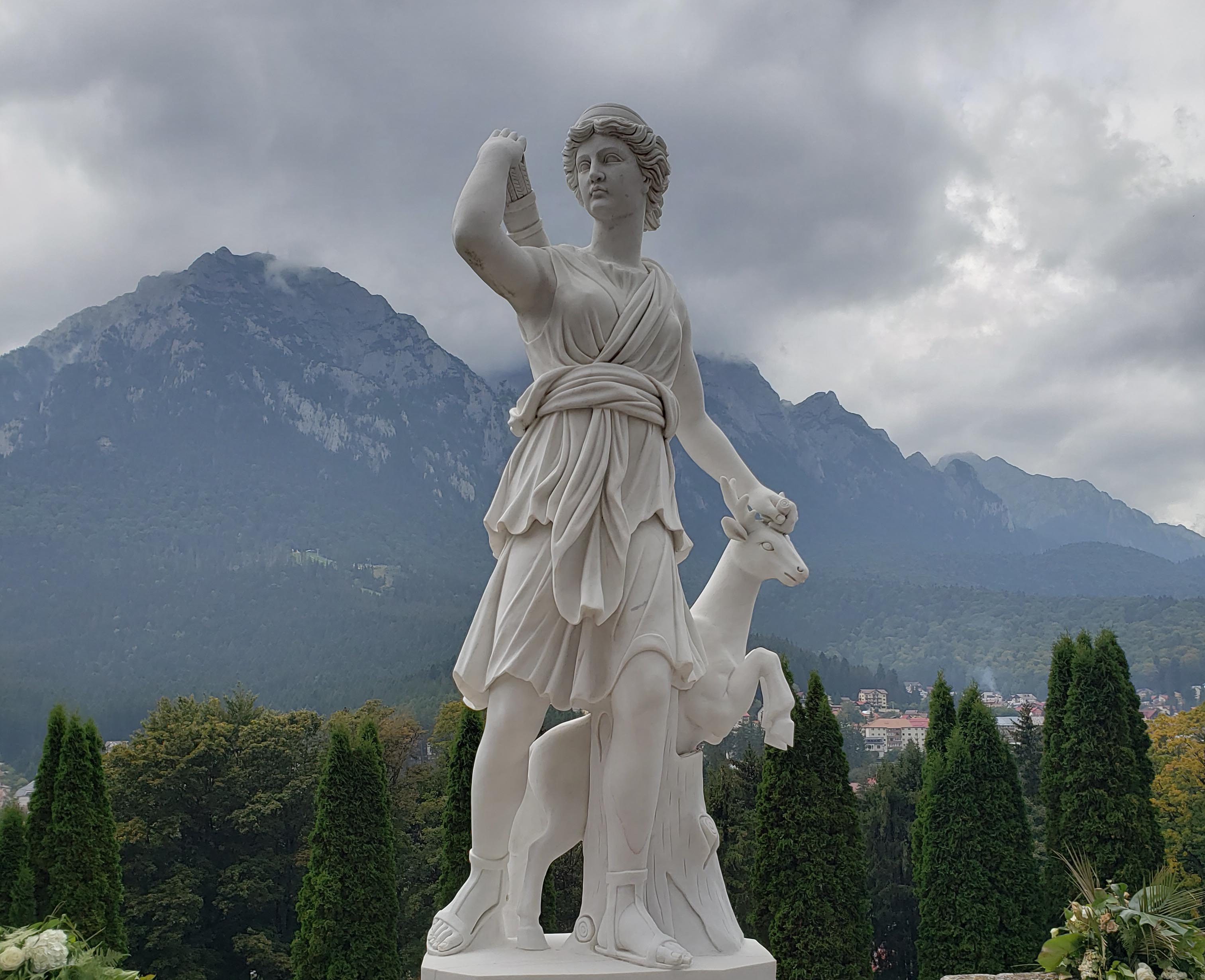
Buşteni, a small town nestled in the virtual center of Romania, sits below the Bucegi Range on the edge of the Carpathian Mountains and therefore enjoys the cool fresh air of the north, unlike the towns and cities south of it.
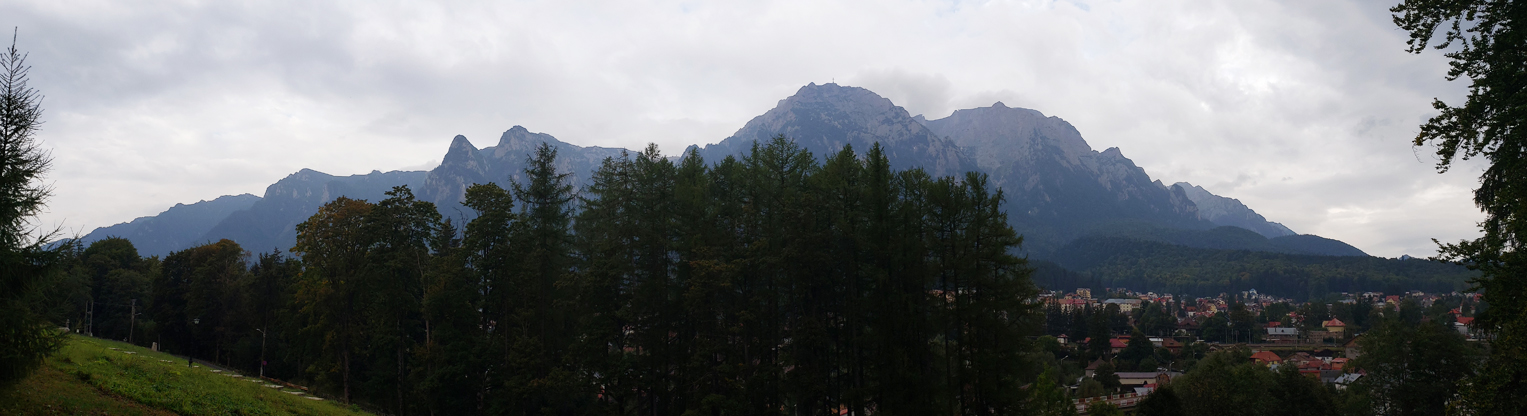
Buşteni – Bucegi Range Of The Carpathian Mountains – 17th of September, 2021
On the day we arrived in preparation for our daughter’s wedding, it was a bit cloudy and sprinkled a bit. We totally ignored this in the hope that the weather would improve and she would have a nice wedding day, a hope that would turn out to be very prescient.
The above photograph was taken on the 17th of September, the day of our arrival to the castle.
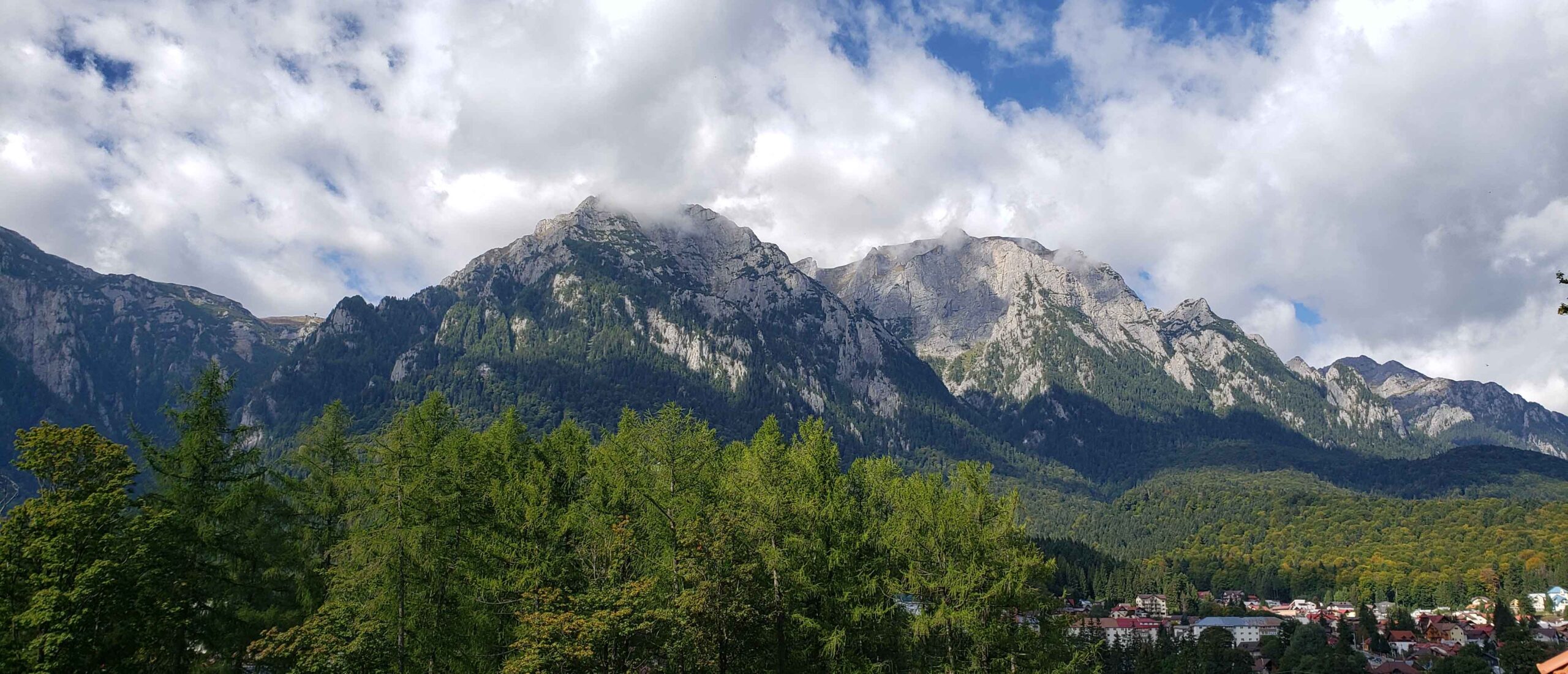
Buşteni – Bucegi Range Of The Carpathian Mountains – 19th of September, 2021
Buşteni is located in Prahova county, Romania; named after the local industry in which tree logs are harvested for the timber industry. Until recently, this was the only industry in this particular town, until several ski resorts were built and some of the local castles were restored. It is now a very active tourist destination, having many points of interests to warrant travel all year round.
Buşteni – Bucegi Range Of The Carpathian Mountains – 20th of September, 2021
The mountain range is on the southern most tip of the Carpathian Range and the tallest peak, Mount Caraiman, is in excess of seven thousand feet.
The Bucegi Range – Carpathian Mountains – Buşteni – Panorama
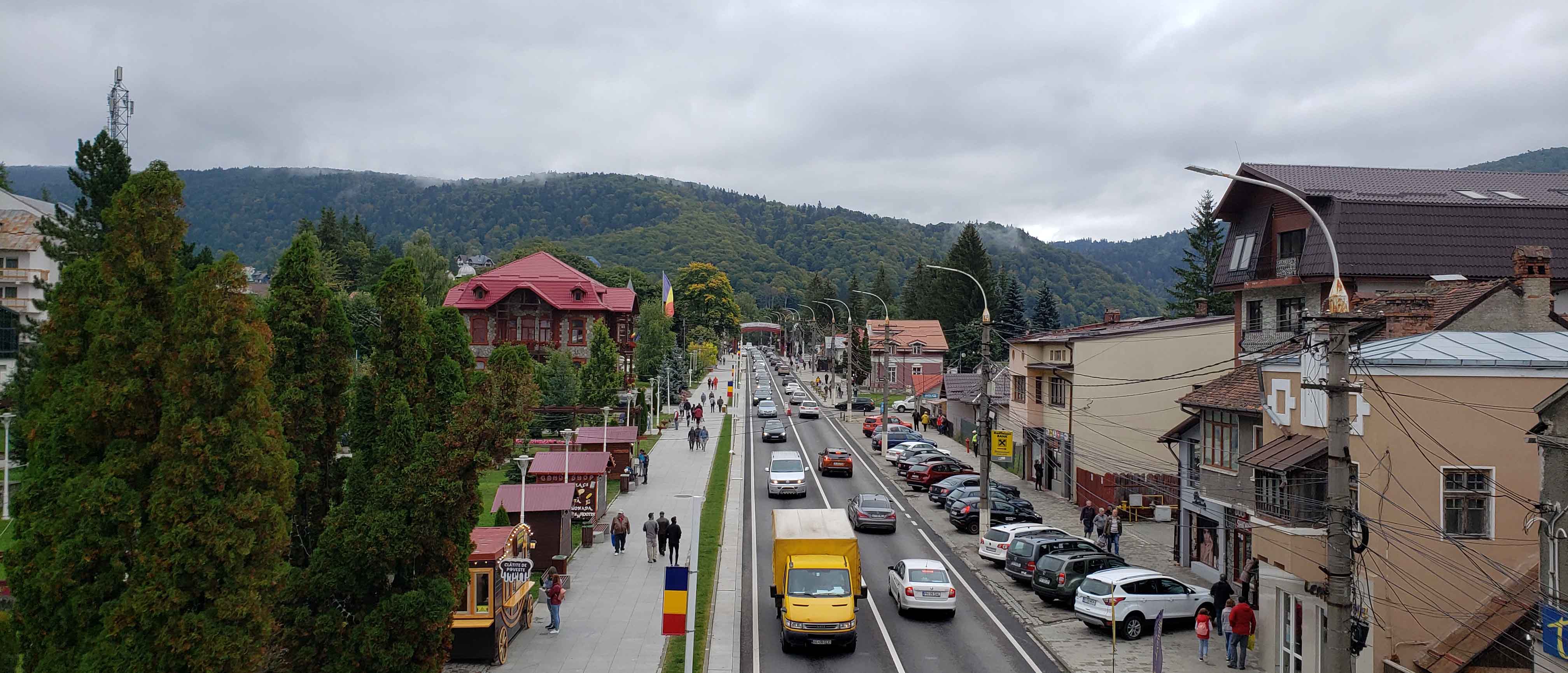
Buşteni – The Town
There is actually not much to the town itself, aside from a strip of N60 which runs north to south directly through it. This is the same road which takes you south to Bucharest and Otopeni Airport.
Buşteni – Main Street N60 – Looking South – 19th of September, 2021
The Prahova River runs alongside the town as well as a line of the Romanian Railroad. Since any traffic is restricted to the N60 running north to south, traffic can be problematic at times, especially during rush hour. This can be exacerbated by construction and the occasional train coming through town.
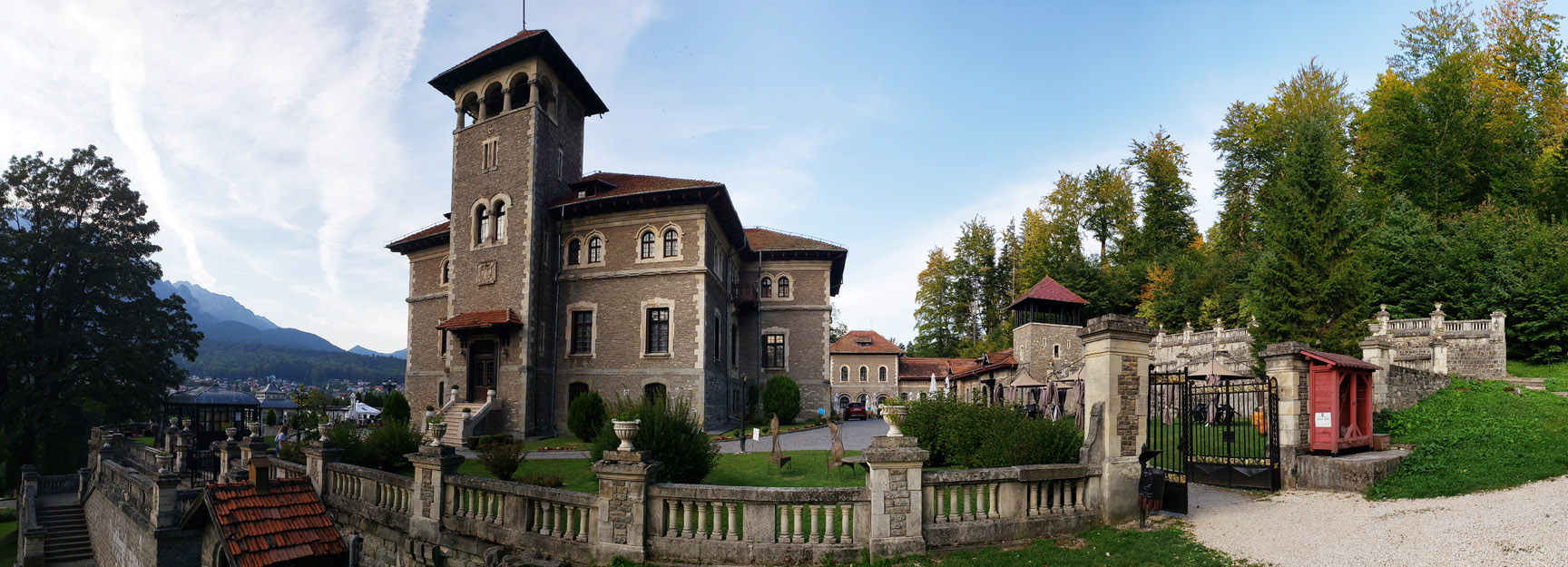
Castle Cantacuzino
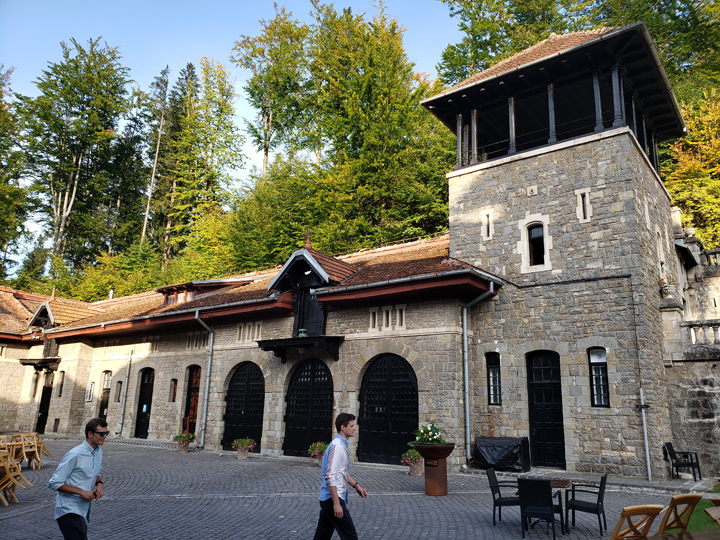
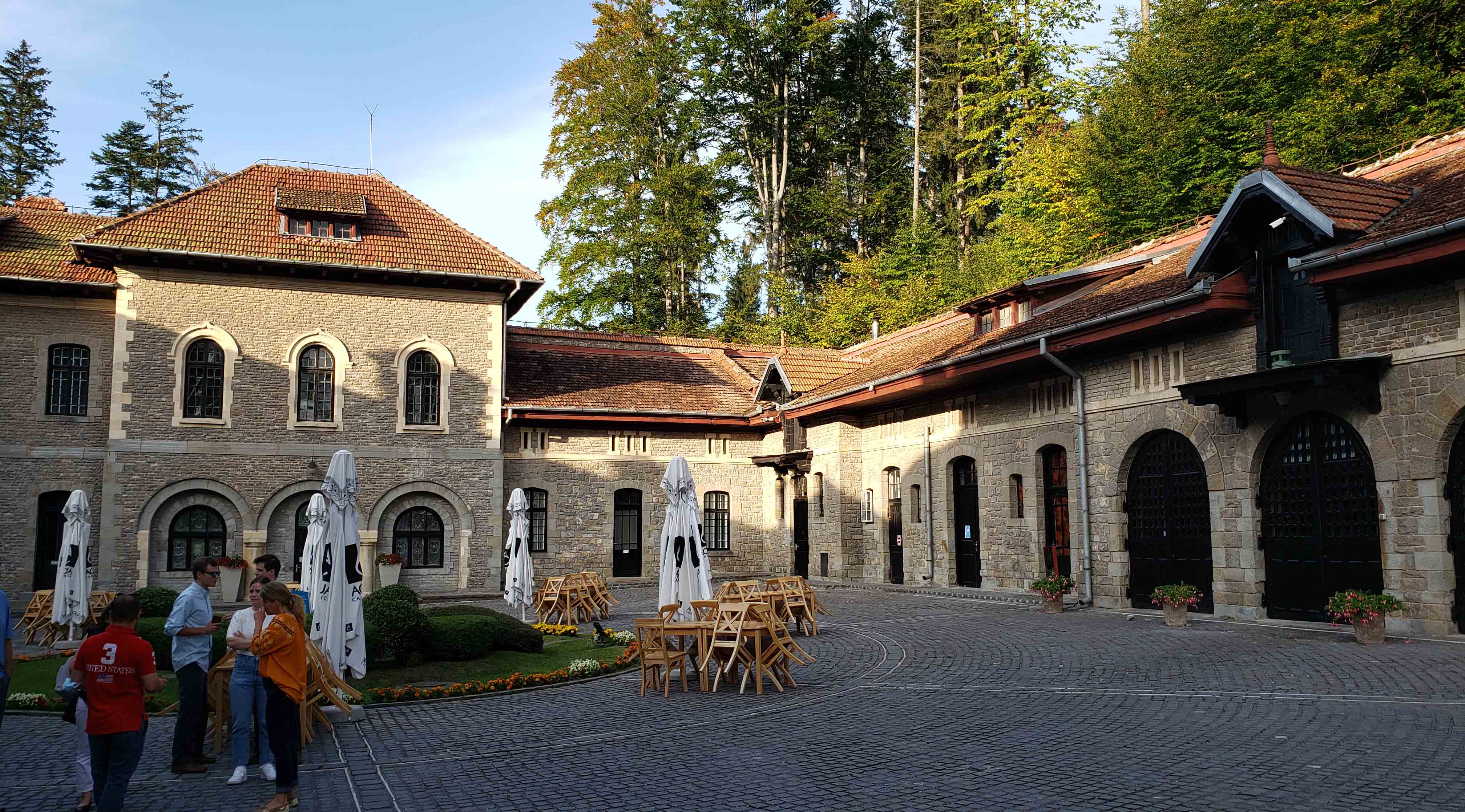
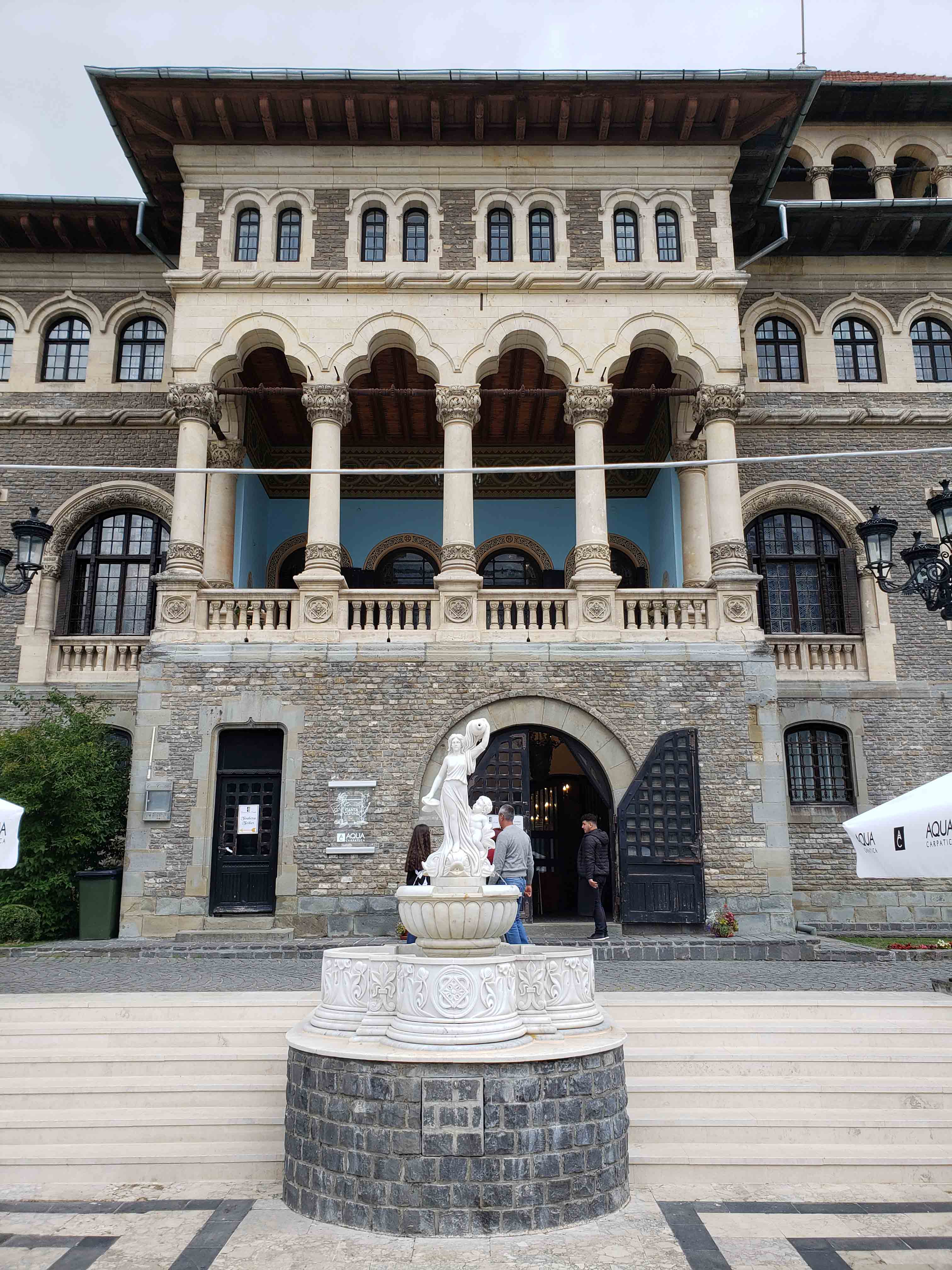
The castle is a fully renovated and a privately run venue that hosts weddings and other large occasions. It is able to provide these functions with a villa, a small lodge (known as the Hunter’s Lodge) and a very good restaurant and bistro.
The Castle Cantacuzino – Buşteni – Side View
The Castle Cantacuzino – Buşteni – Tristan And Dana
Buşteni – Castle Cantacuzino – Front View – 19th of September, 2021
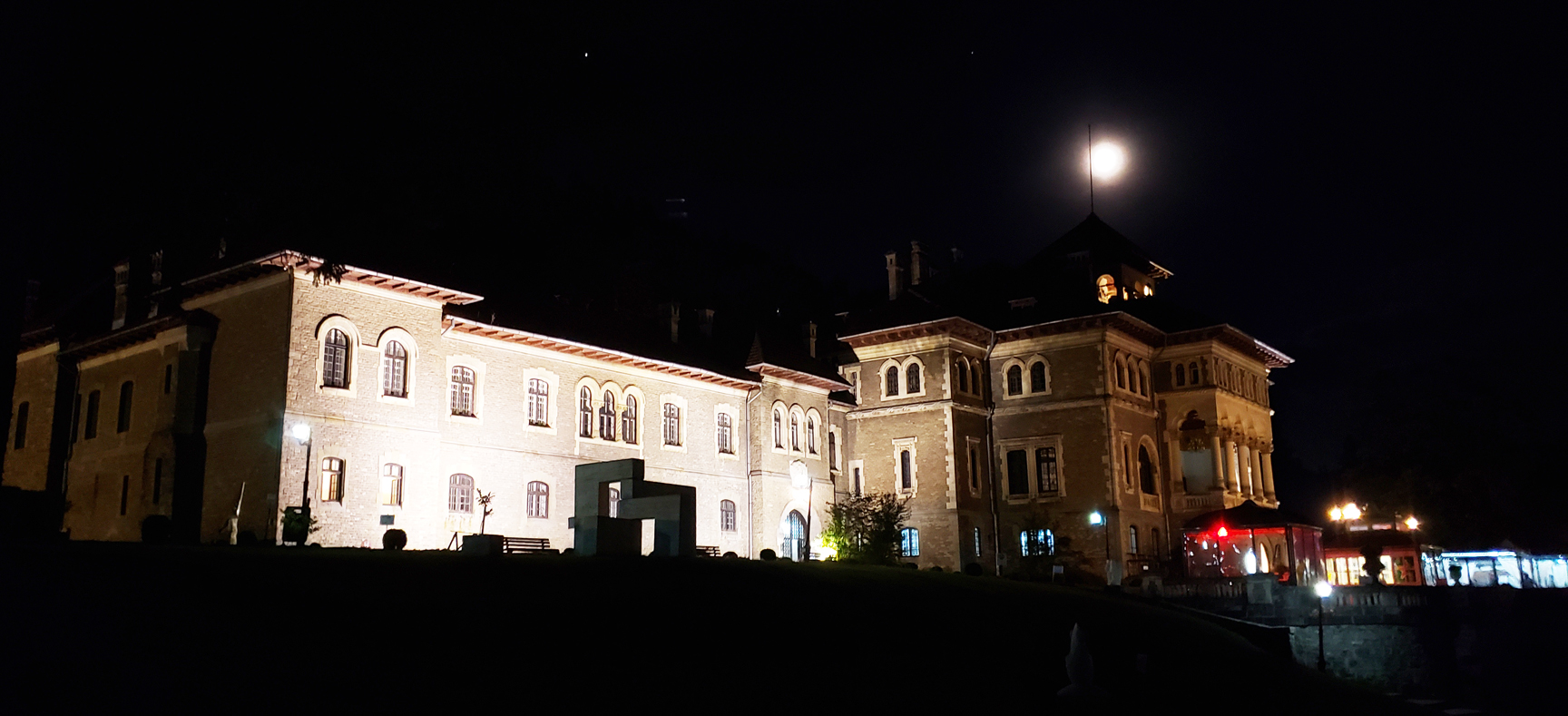
The Castle Cantacuzino – Buşteni – At Night
The villa is integrated into the castle proper and has immediate access to the grounds, castle and restaurant. Ericka and Gabi chose this as their apartment during the wedding, which made all the arrangements and coordination much easier; more on their wedding in the next edition of this blog.
Restaurants
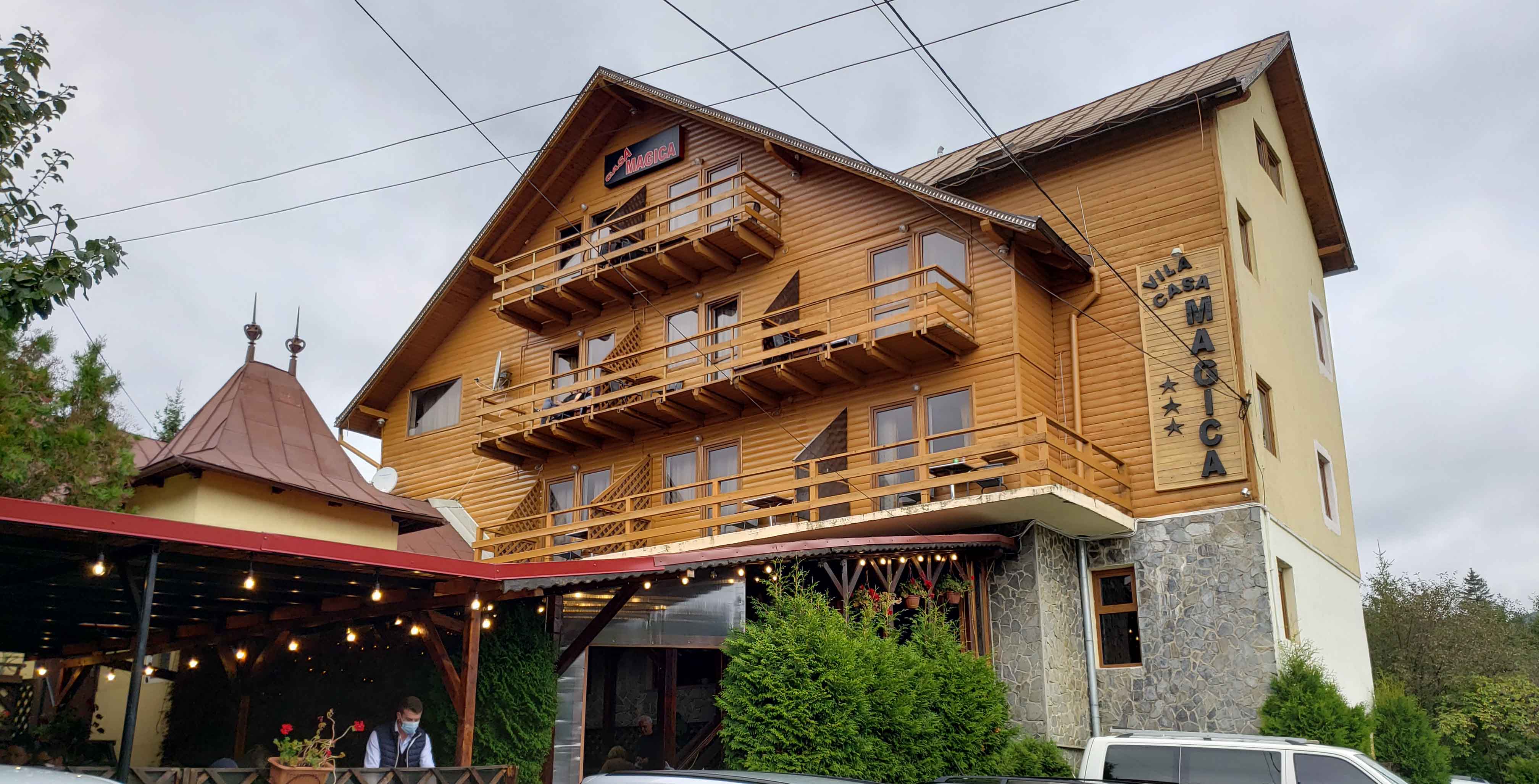
Casa Magica
A Romanian restaurant hidden on the back streets of Buşteni which has good food is Casa Magica. It is frequented by locals and Romanian tourist who obviously seek it out. Gabi and his brother–in–law were able to pick this establishment out while investigating places to eat in this area. It has a good variety of food at very reasonable prices.
This is actually a missing post from our travels in Germany while we were visiting our daughter and her fiancée in August. As we were driving back from our visit in Kronberg im Taunus, we stopped here to visit the wonderful park and spa.
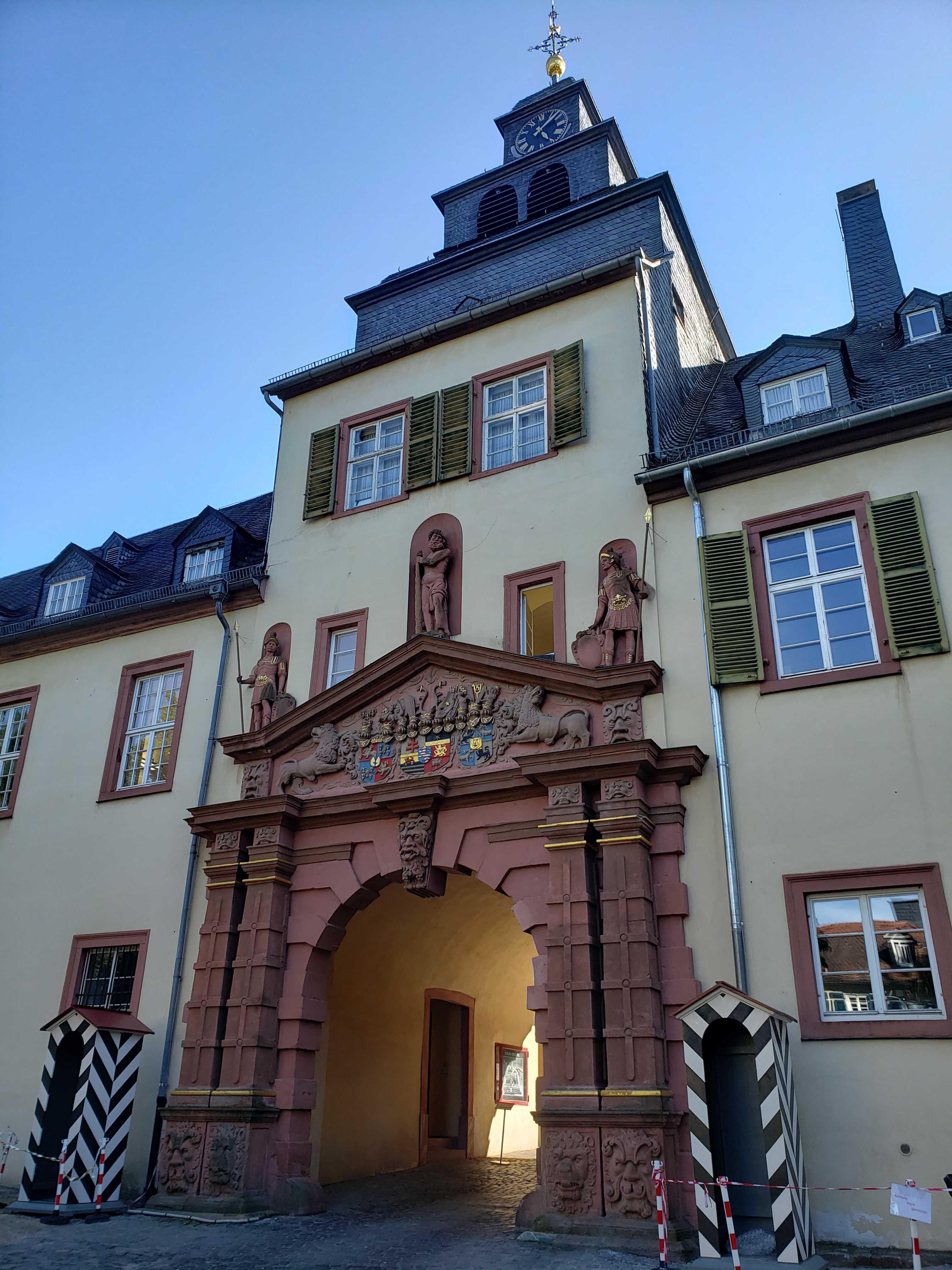
Schloß Bad Homburg
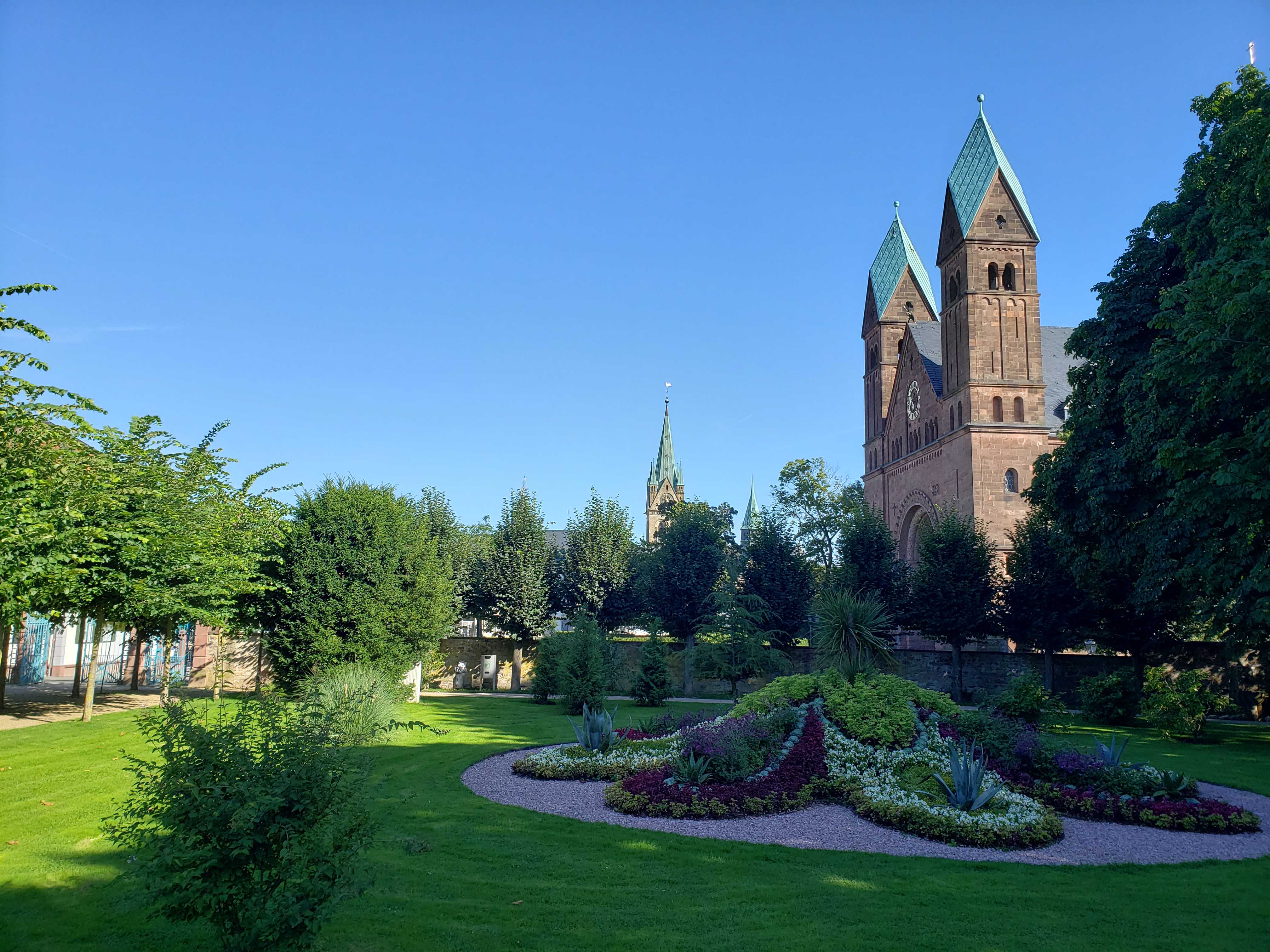
Bad Homburg vor der Höhe, or Bad Homburg before the Taunus, was originally settled in 1180. Until recently in the late 1800s it became widely known as Kaiser Wilhelm II’s summer residence. Wilhelm later erected the spa and built the Erlöserkirche, or Church of the Redeemer for which the place is now recognized.
Erlöserkirche Schloßpark – Bad Homburg – 25th of August 2021
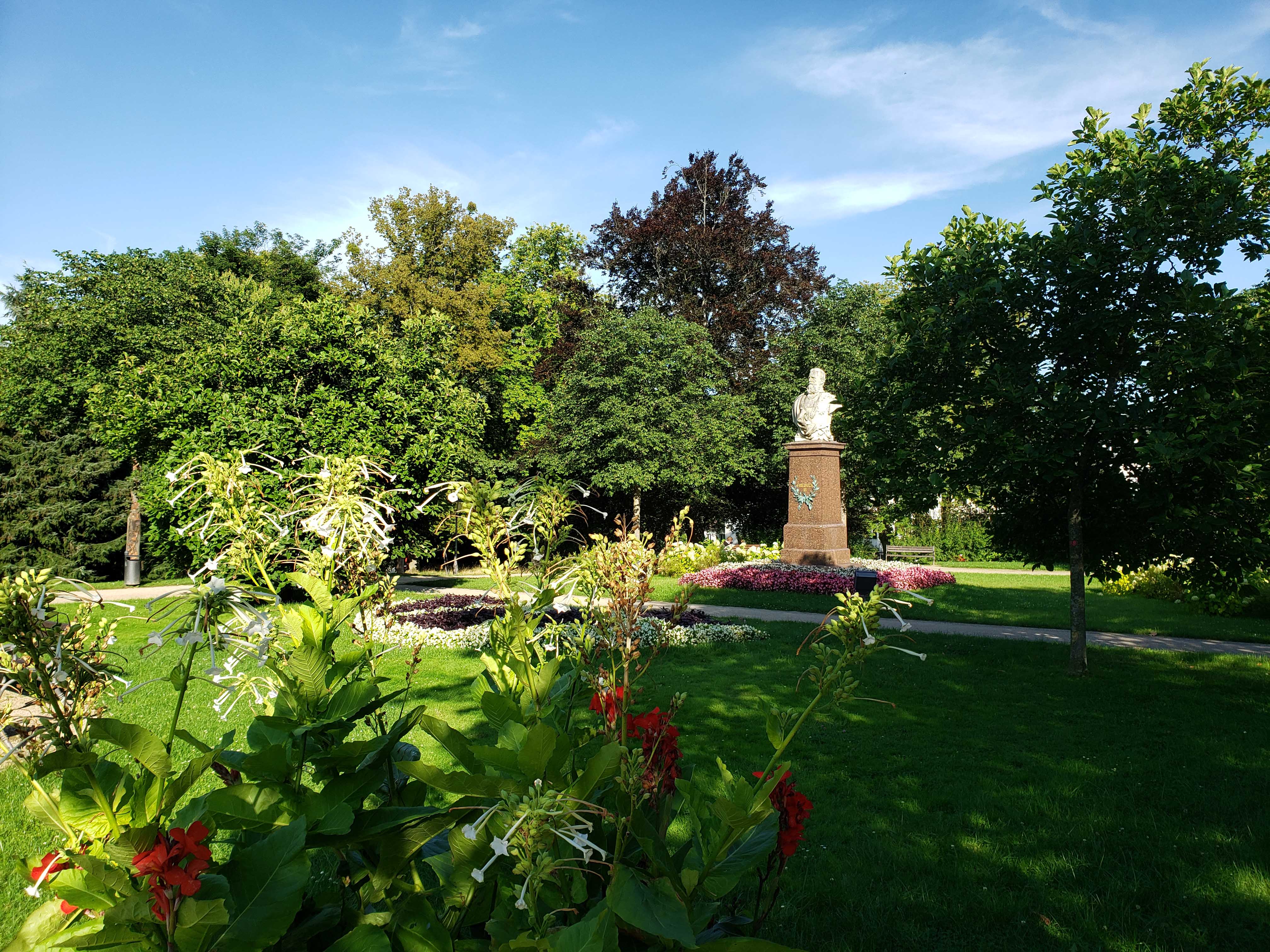
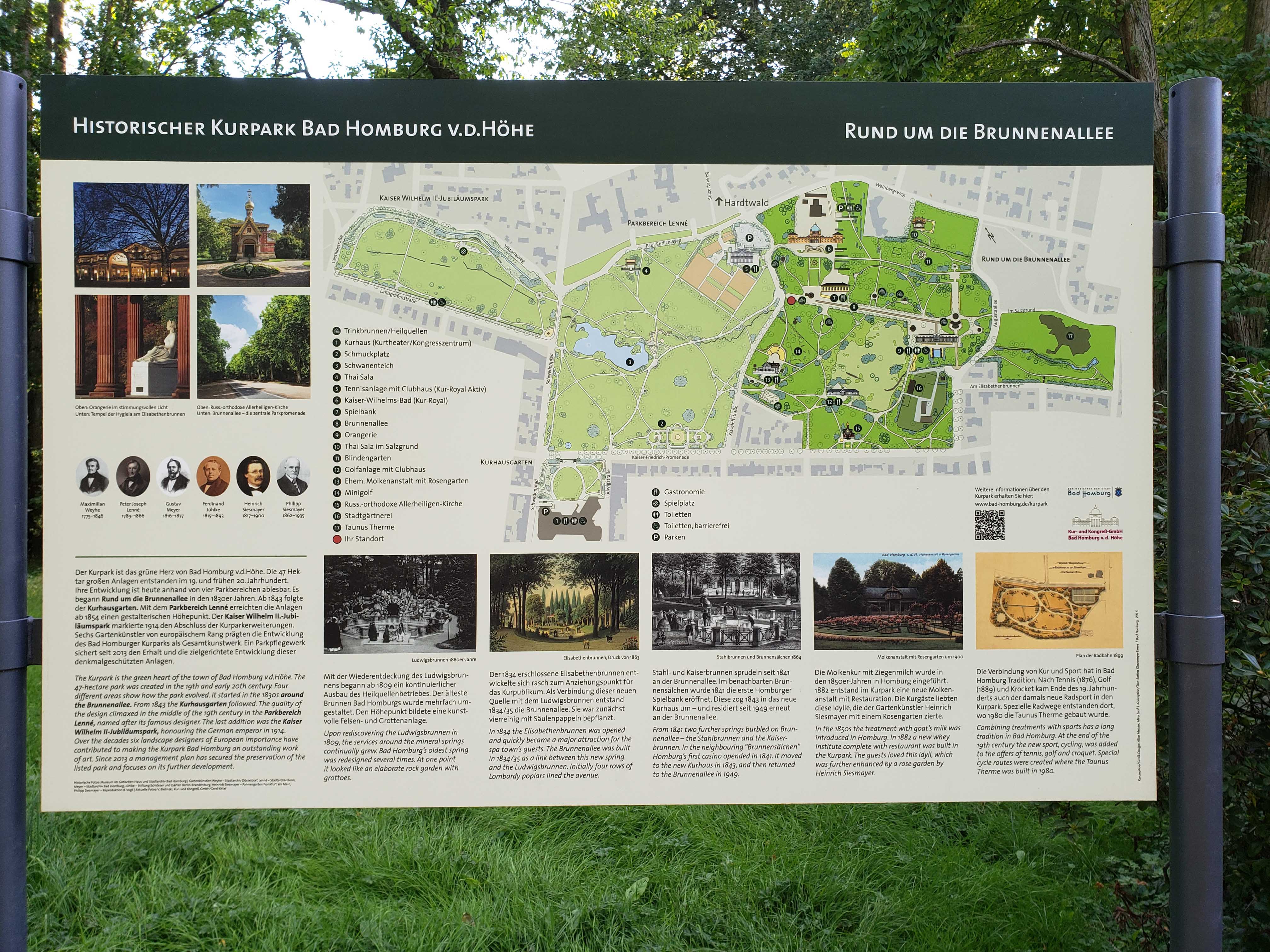
We divided our time between the Schloßpark and the Kurpark, which features numerous fountains where people collect and drink the local water.
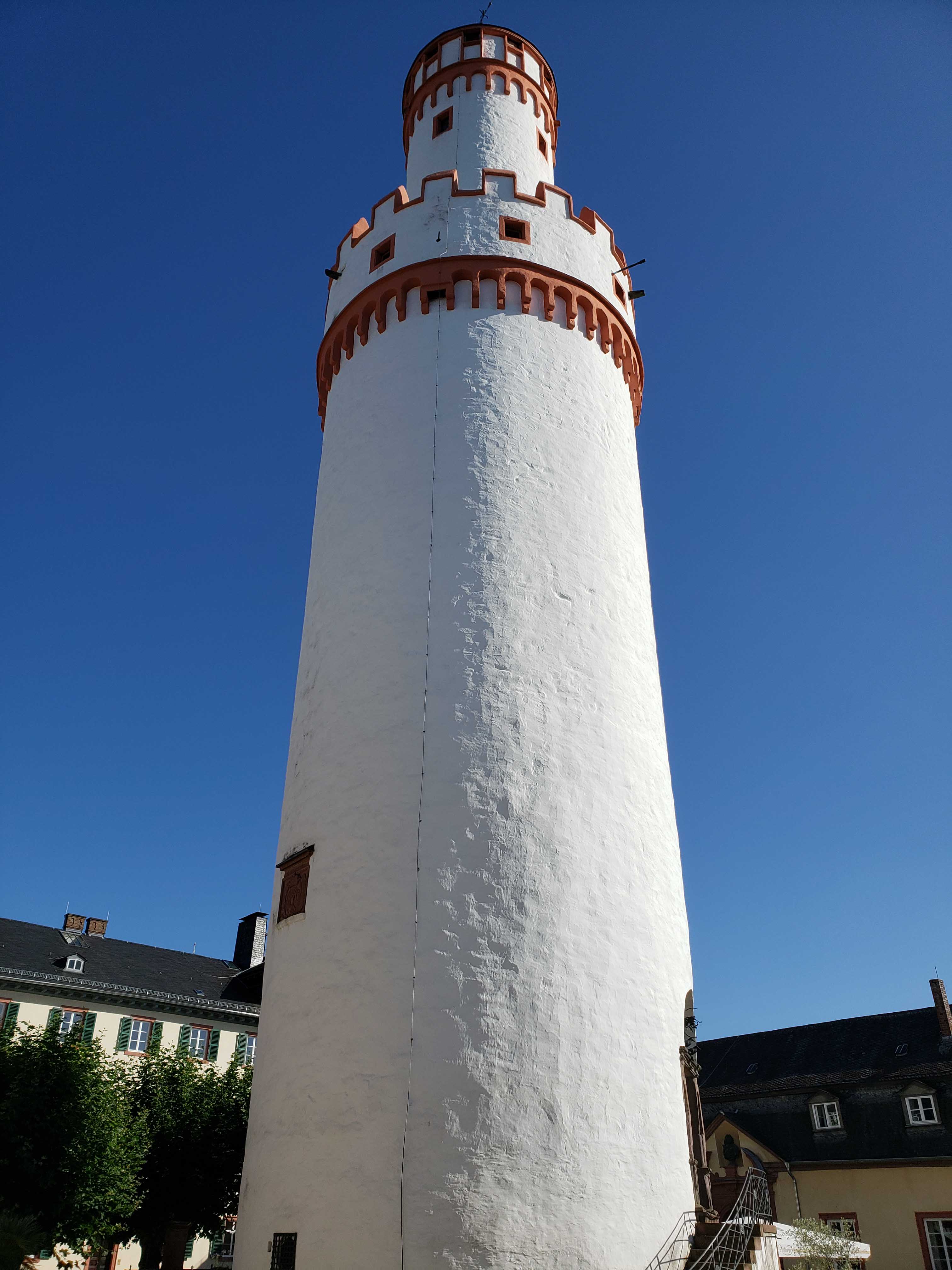
Schloßpark And The White Tower
The Schloßpark, or Castle Gardens, contains many fine flower beds and examples of exotic flora. There is also a large lake that can be enjoyed while taking a leisurely walk around the grounds. The main attraction here is the castle with its white tower and overlook of the grounds and lake. At the time of our visit the tower was closed and we were not able to ascend to see any views of the surrounding town.
Schloß Gardens – Bad Homburg – 25th of August 2021
The White Tower – Bad Homburg – 25th of August 2021
The Kurpark
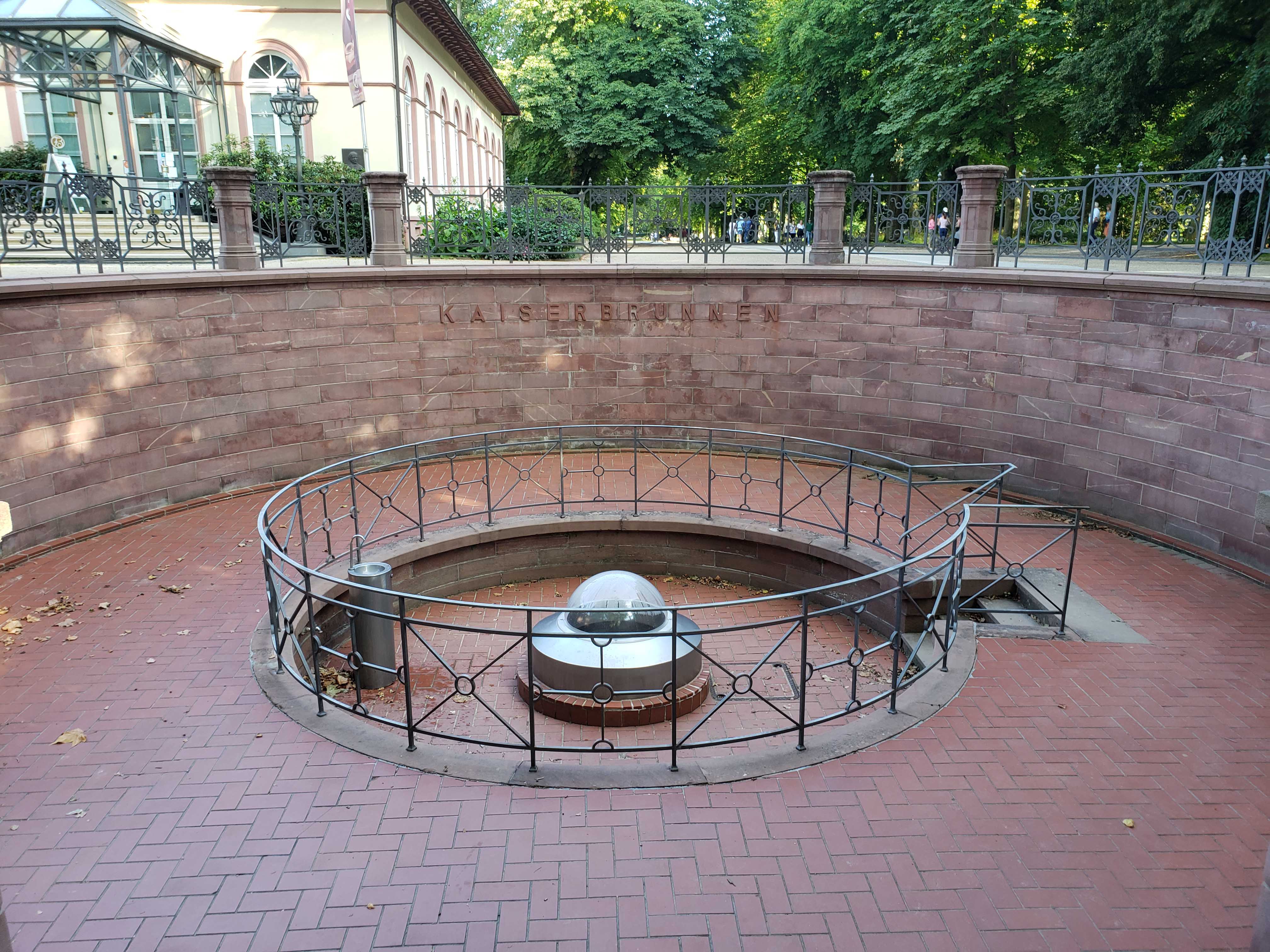
The water here is documented to contain a myriad of basic elements, minerals and other health regenerative ingredients that are ostensibly good for your health. I tasted a few, with my fingers crossed that I wouldn’t get sick (which I didn’t), and can say that the overwhelming tastes are of sulfur dioxide and metallic, most likely from manganese. Though drinking it often could cause issues, depending upon the mineral exposures, an occasional drink now and then probably has no negative impact to the body and may even help in some cases.
Kaiserbrunnen, Kurpark – Bad Homburg – 25th of August, 2021
The Kurpark, or Spa Park or Garden, has many cafes and paths that one may stroll and enjoy during fine weather. There is a Swan Pond and a stream that runs through the park along which one may find numerous benches were one can stop, sit and just enjoy nature.
A small town in the Taunus Mountains north of Frankfurt mixes old and new in a quaint little package. Its main attraction, the Kronberg Castle, selfishly occupies the only hill in town. This town offers enough for a great day trip or even an afternoon getaway.
Kronberg Im Taunus – A Panorama – August 2021
Though there is not much to see from the high perch of the Kronberg Castle, the town below actually has several points of interest. There are of course several places to eat in the historic part of town, most serving the typical German food for this area, though Chinese and other cuisine can be found. Aside from its overlook of the countryside, here is a real overlook of what you will find inside the town.
The Town
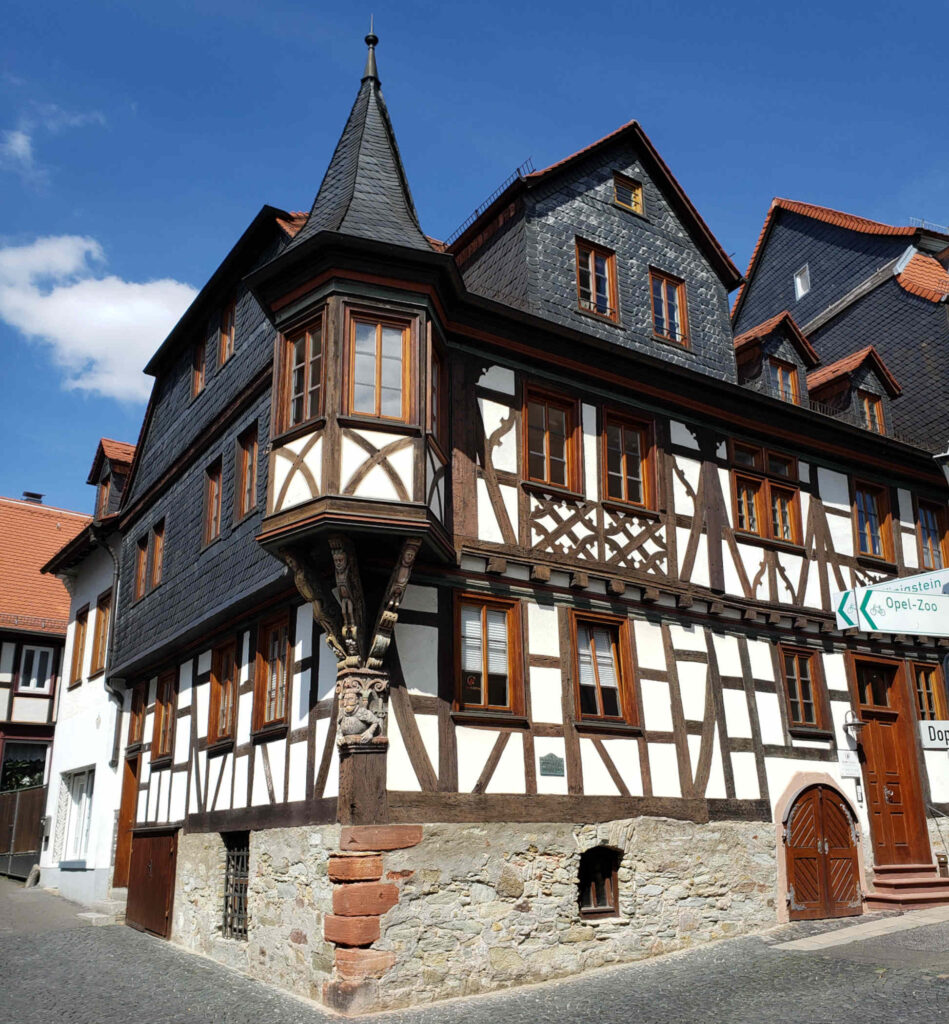
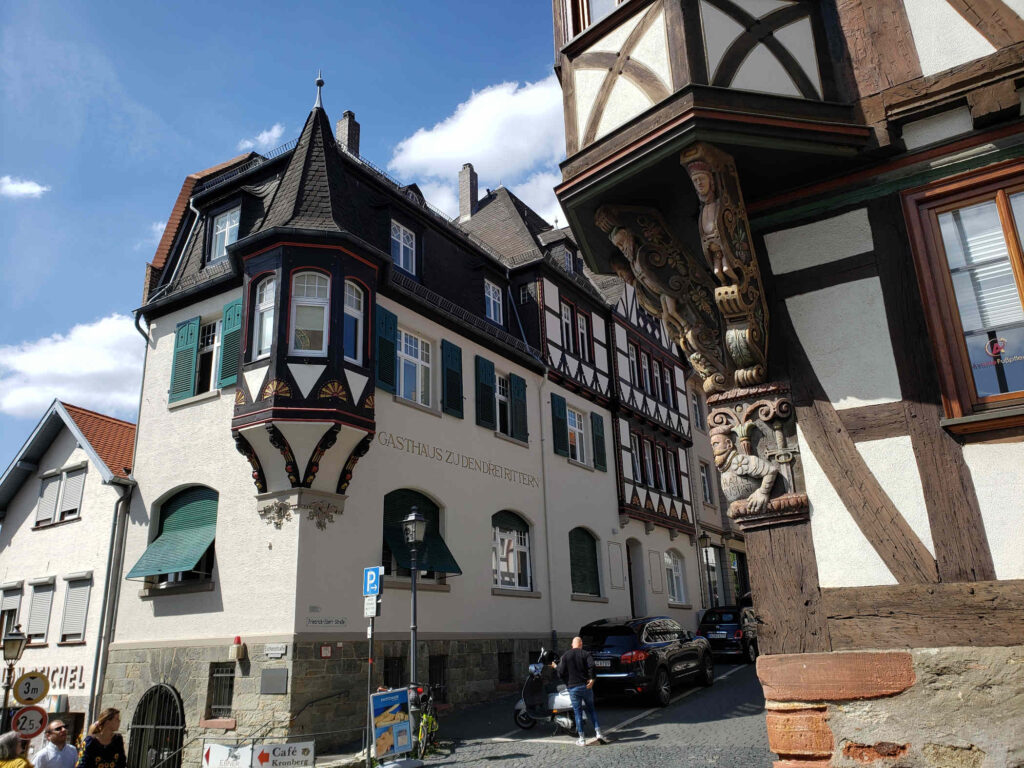
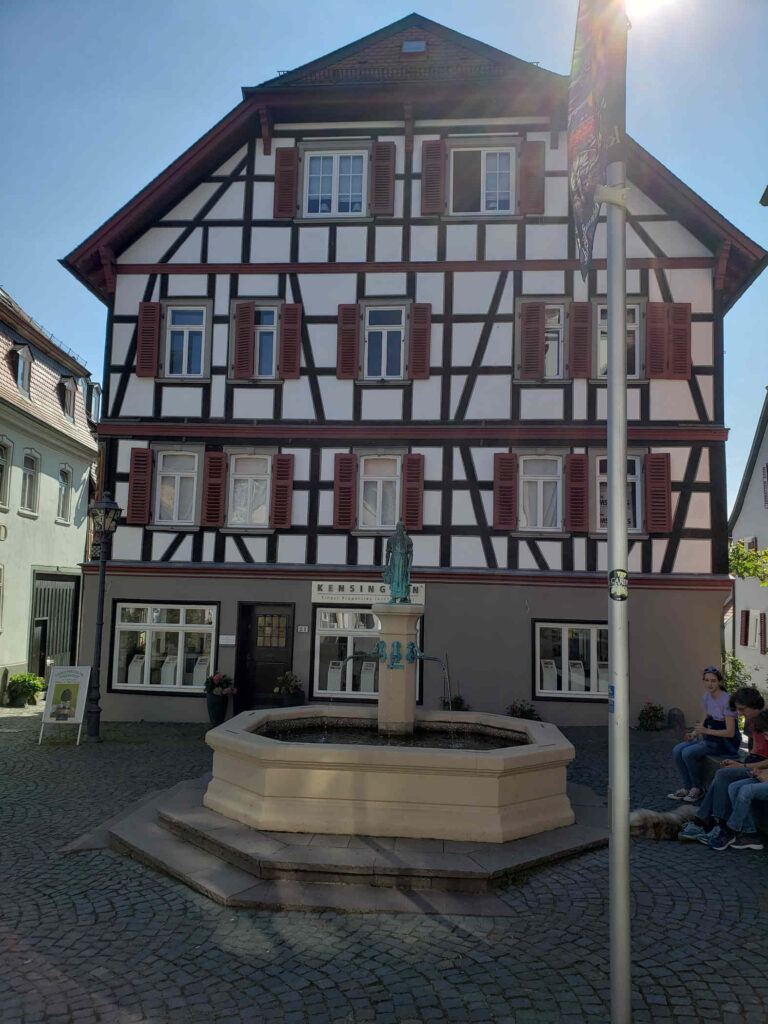
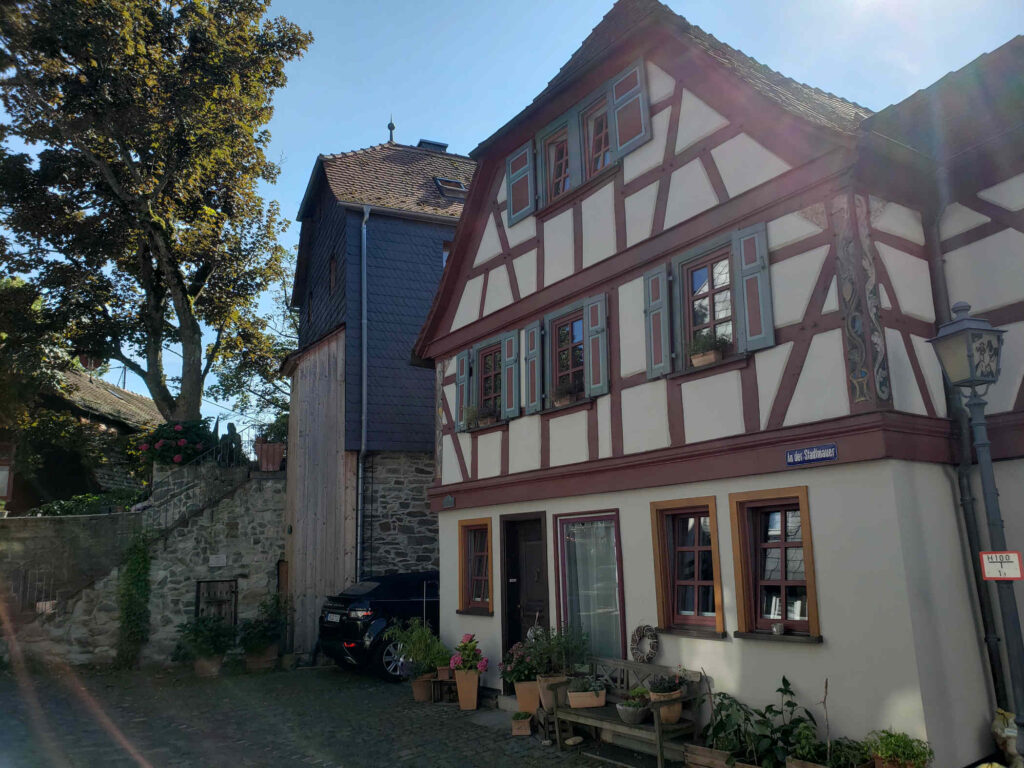
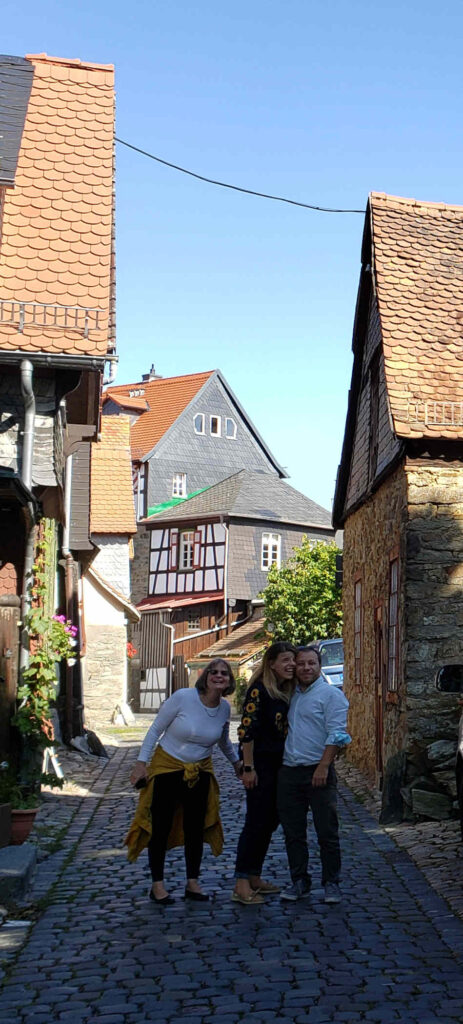
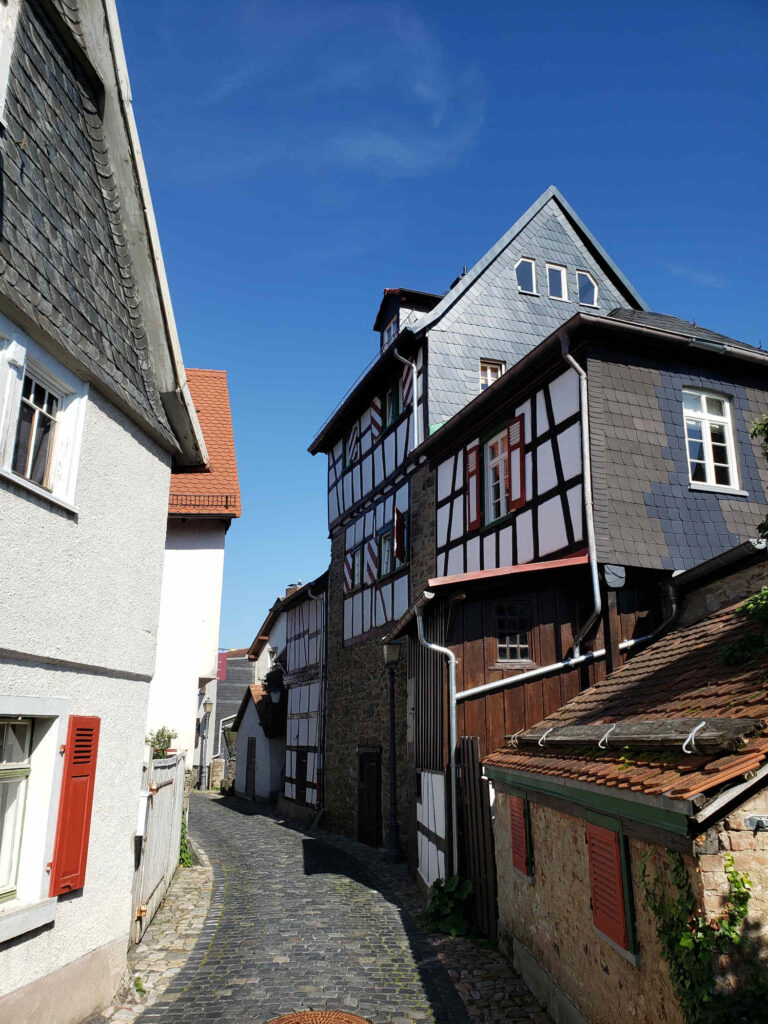
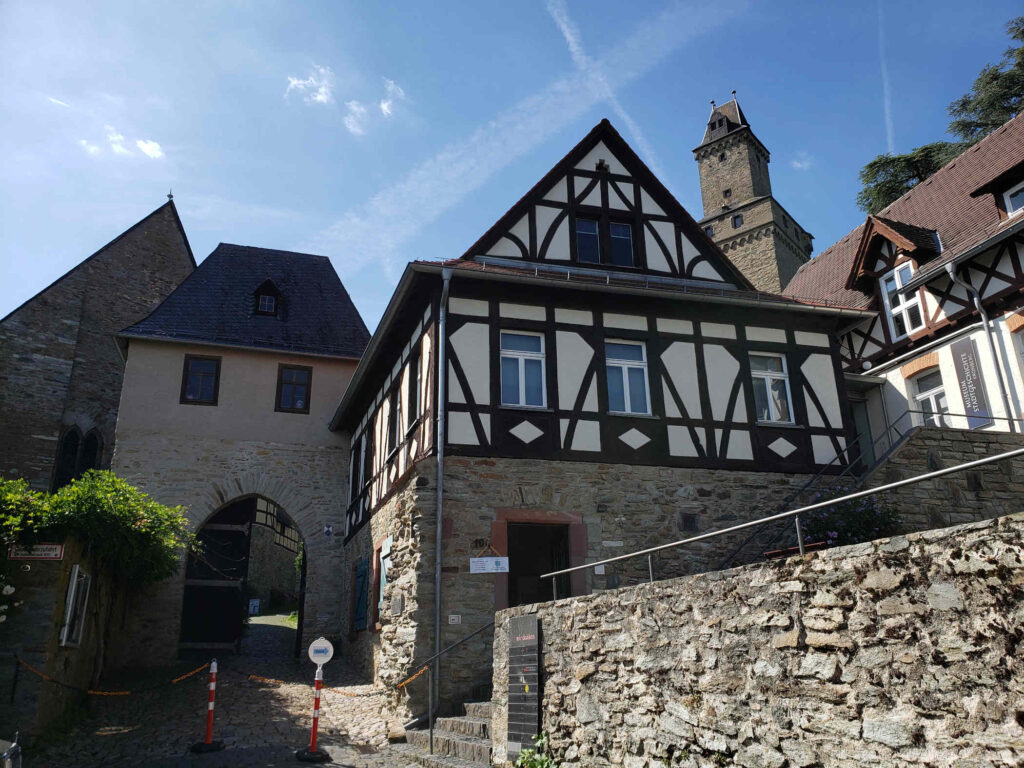
The historic town is strangely laid out, but practical, given that there is a castle and a wall surrounding it. Many of the streets are typical for a hillside town and are paved in the Sampietrini or larger cobble stone. Many of the houses are built in the Fachwerk style and are hundreds of years old. Below are some of the sights to see ambling the streets.
Fachwerk House – Kronberg im Taunus
Fachwerk House – Kronberg im Taunus
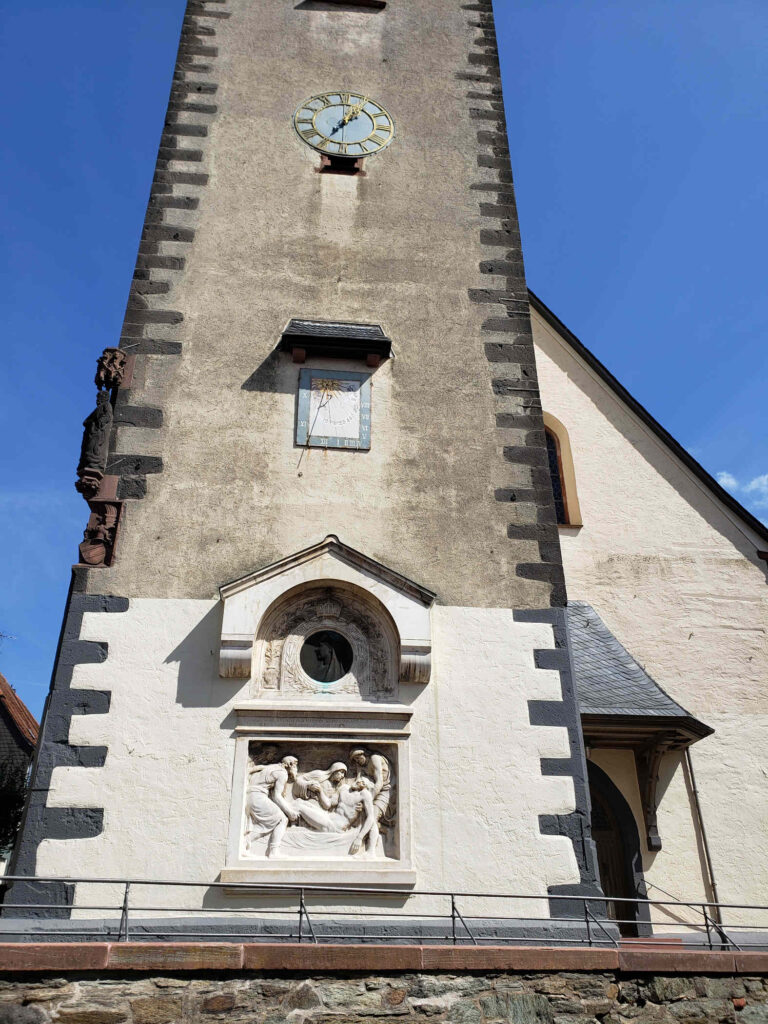
Saint Johann – Kronberg im Taunus
Fachwerk House – Kronberg im Taunus
Fachwerk House – Kronberg im Taunus
Patti, Ericka and Gabi – Kronberg
Fachwerk House By Ringwall – Kronberg im Taunus
There is a modern part of the city as well and it actually represent the modern face of Germany. The houses, apartments and stores have a neat modern appeal to them and ample parking. Anyone wishing to visit these areas only walk as near the closest wall opening, where they may descend into another time in the same place.
The town is at the foot of the Taunus Mountains, which occupy this part of Germany. The mountains are just north of Frankfurt and lie in the state of Hesse.
The Hellhof
The Hellhof was a noble seat built by the Kronberg Knights in the fifteenth century. It now stands as part of a gallery, which was at the time of our visit, closed.
The Hellhof – Kronberg im Taunus
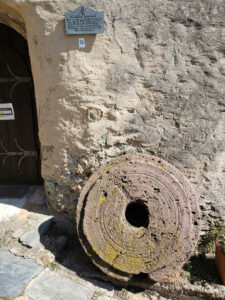
Griststone – The Hellhof – Kronberg im Taunus
The knights were part of the Teutonic Order and belonged to a rather poor family associated with Walter von Cronberg, a Grand Master and resident of the castle and held the title from 1525, until his death in 1543. Since the building is intimately intertwined with the events and family of the castle, it makes sense that it can be found sitting just beneath a rather steep incline to it. There is a substantial Roman style paved road that one can imagine connected the two at one time.
The Castle
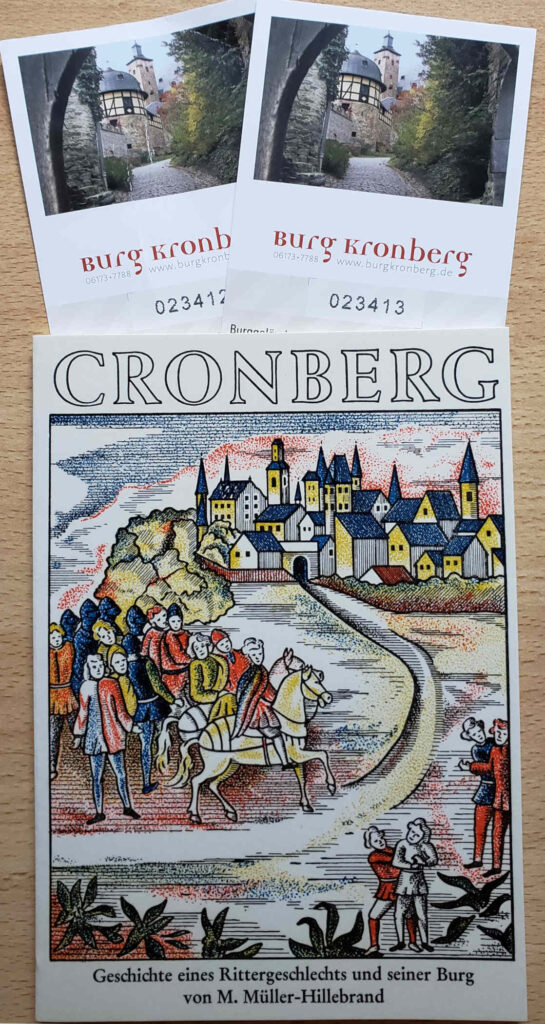
Tickets For Two – Kronberg Castle
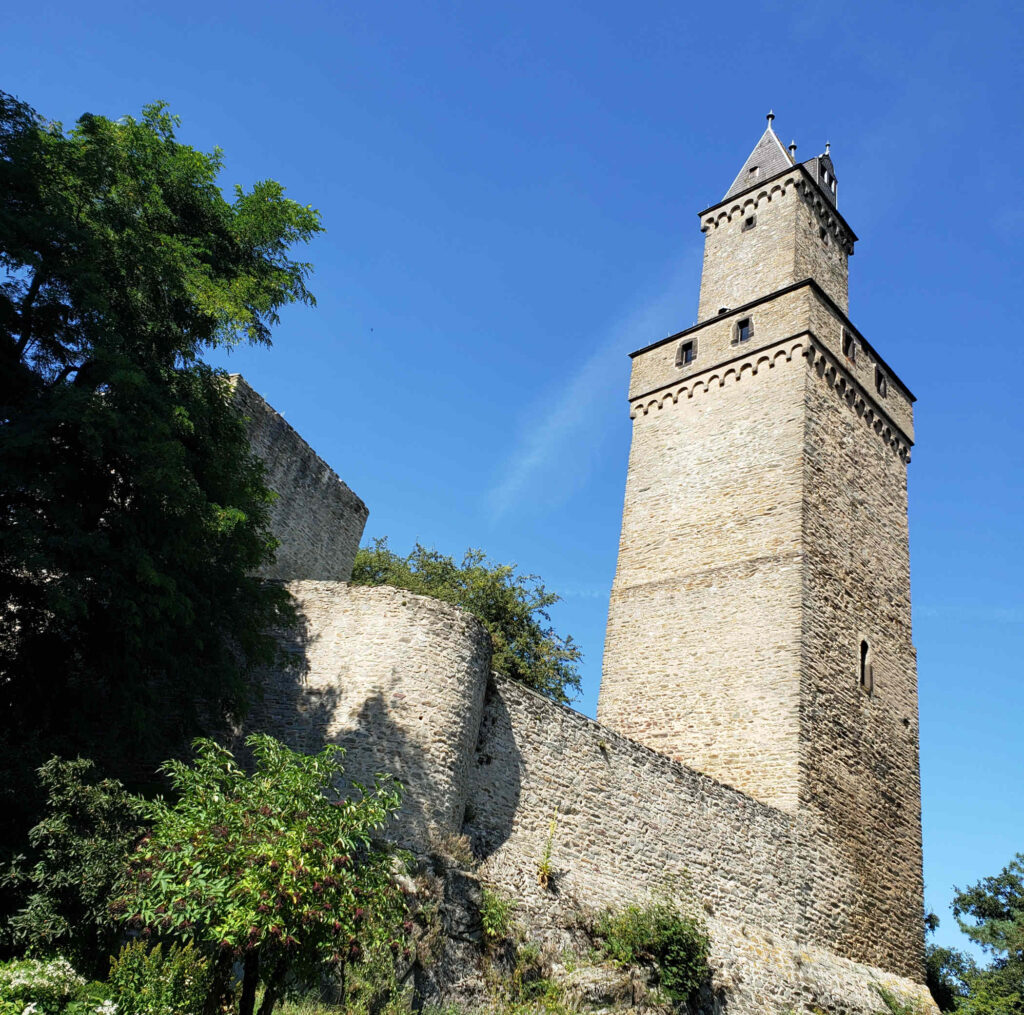
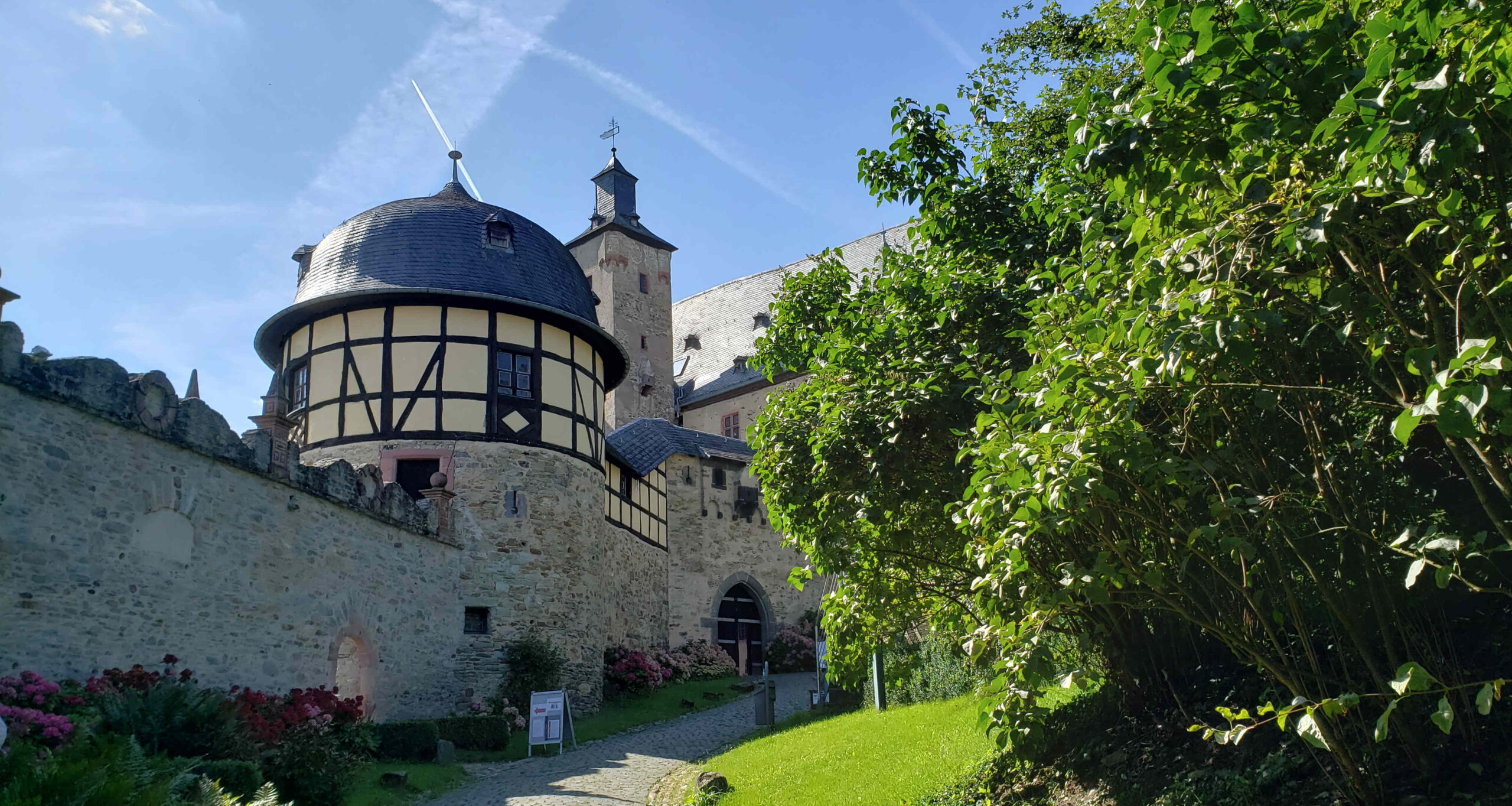
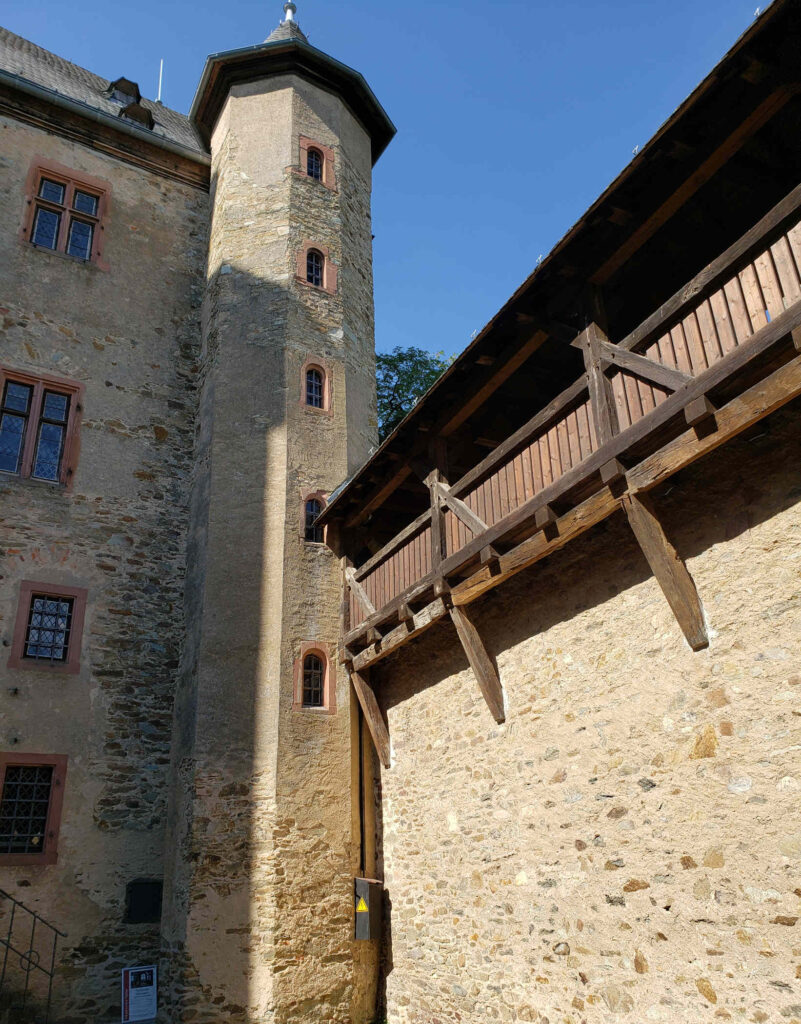
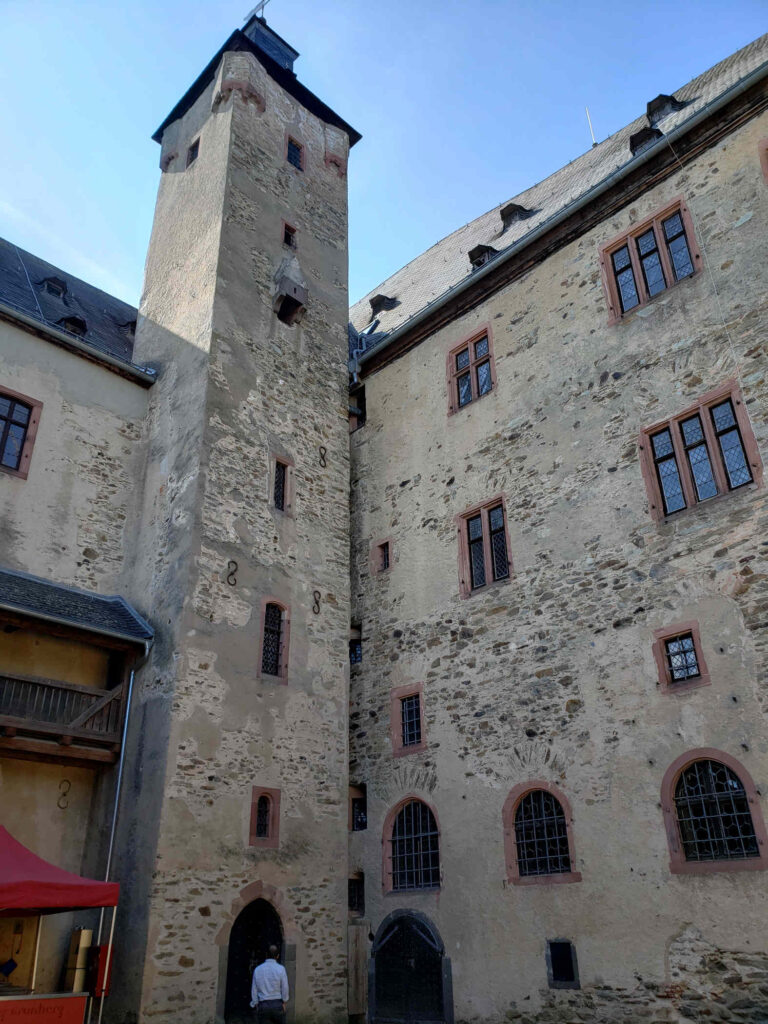
Built around 1220, the castle sits atop the rocky hill of historic Kronberg im Taunus. It has a large main building, a tower and several chambers scattered around on the ground floor that must have served several purposes.
Kronberg Castle
The castle has a commanding view of the town and the countryside. It can also be seen quite clearly by its higher castle neighbors in the Taunus Mountains and also from the Main Valley below.
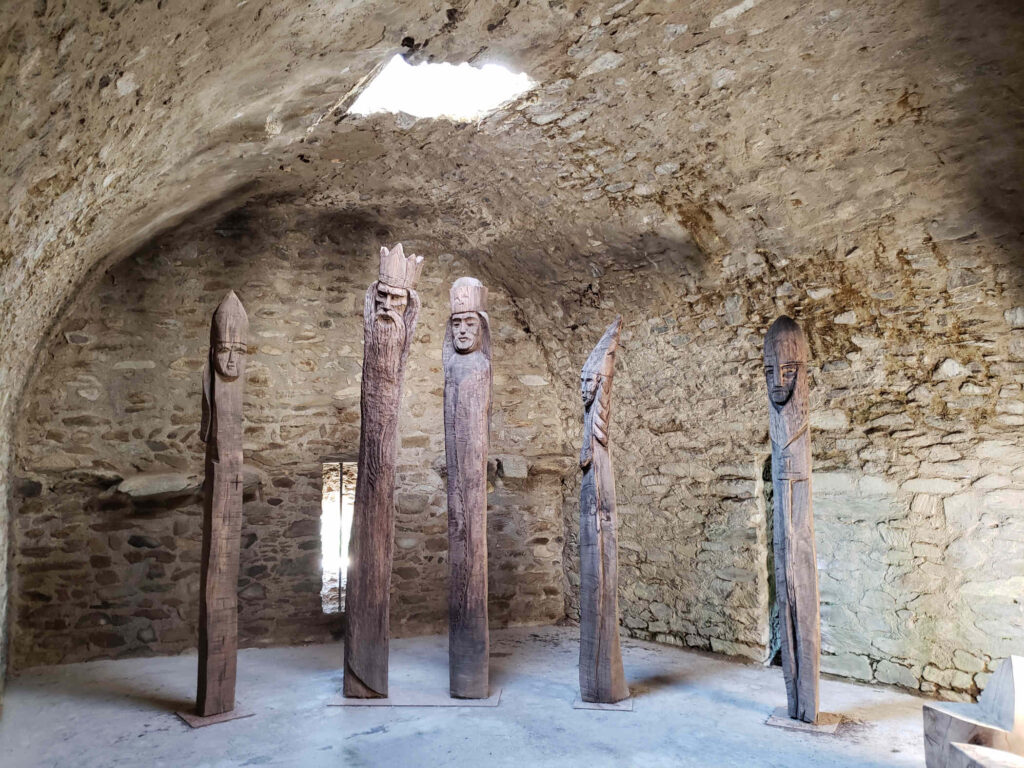
Die Aufrechten – Matthias Schmidt – 2018
In the ground floor of the Fünfeckturn, or five cornered tower, stand five wooden steles carved from a storm fallen 150 year old Beech tree called The Uprights. They were carved by Matthais Schmidt in 2018 to symbolize the knights and kings from the history of this old castle. For more on the history of this castle, visit https://www.burgkronberg.de/die-burg/geschichte.
I am ending this blog post with some additional, non-captioned photographs of the castle.
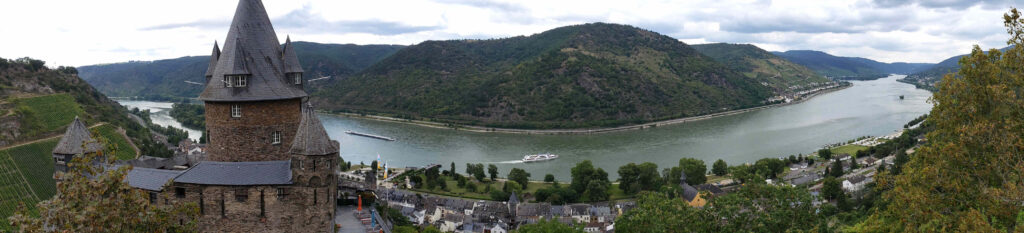
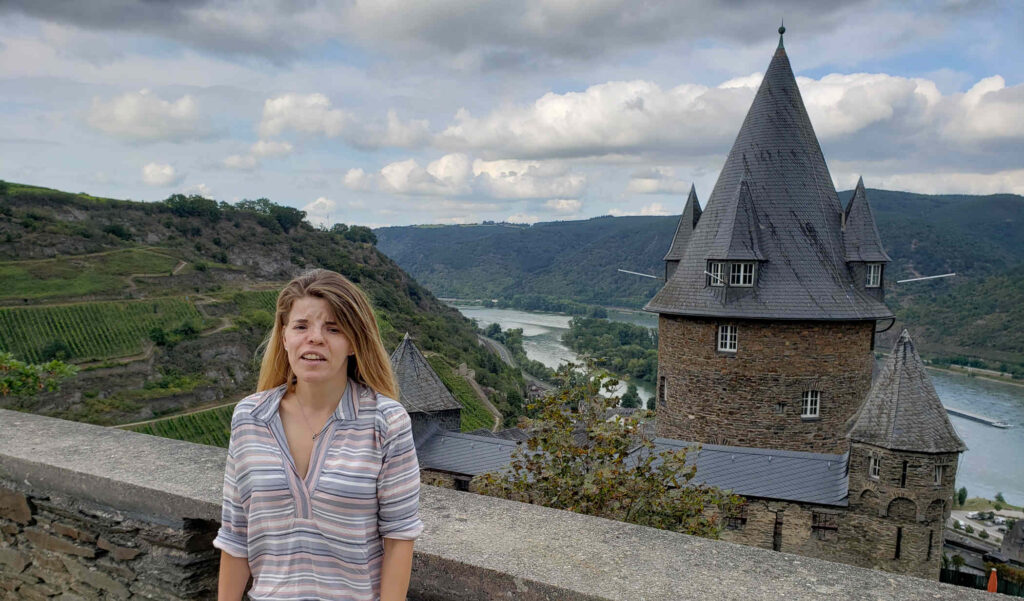
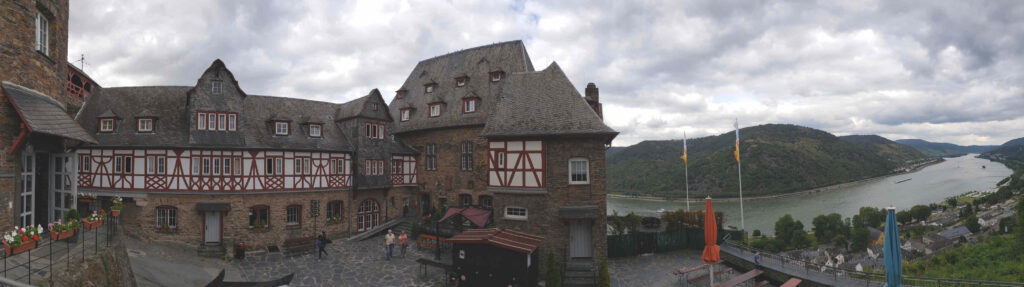
On a bend of the Rhine River above Mainz sits the small town of Bacharach. Nestled among the varied and many castles of the west bank, its row of buildings and high walls demonstrate historically how important this part of the Rhine was in the Middle Ages.
Bacharach – Above Burg Stahleck – August 2021
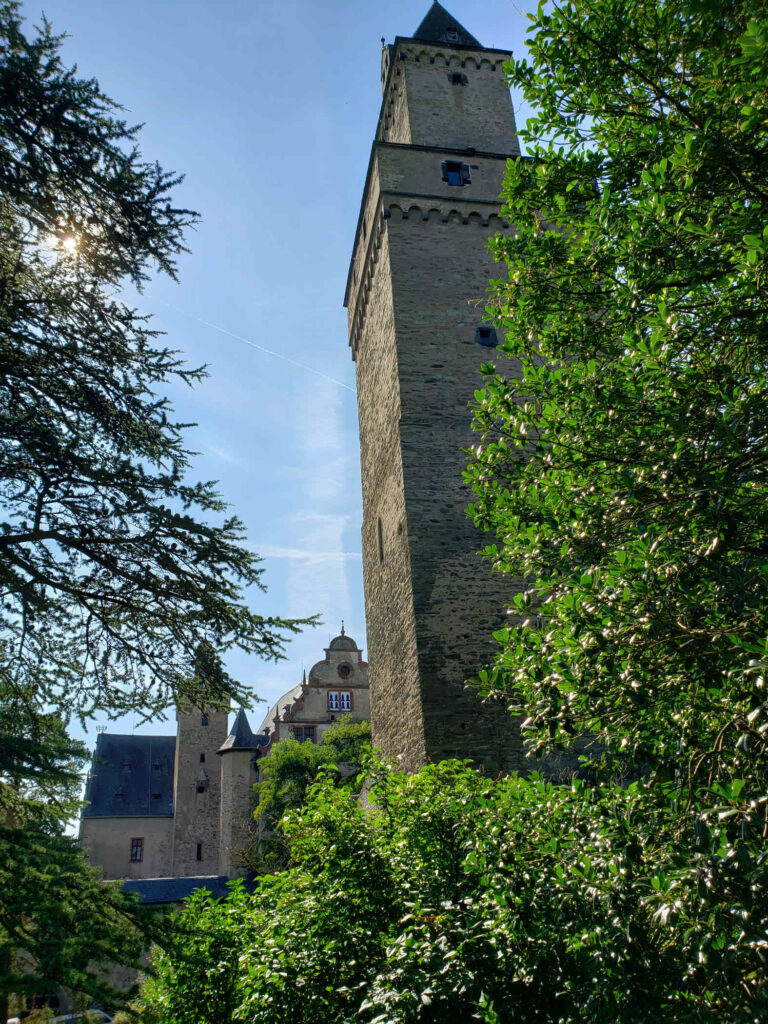
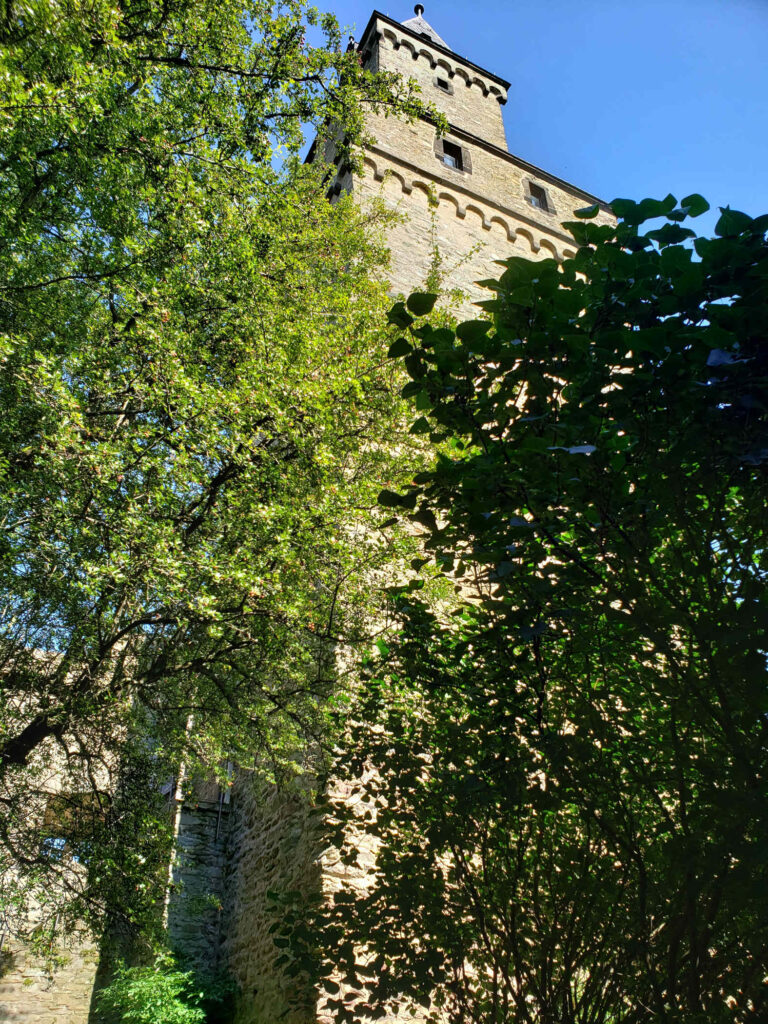
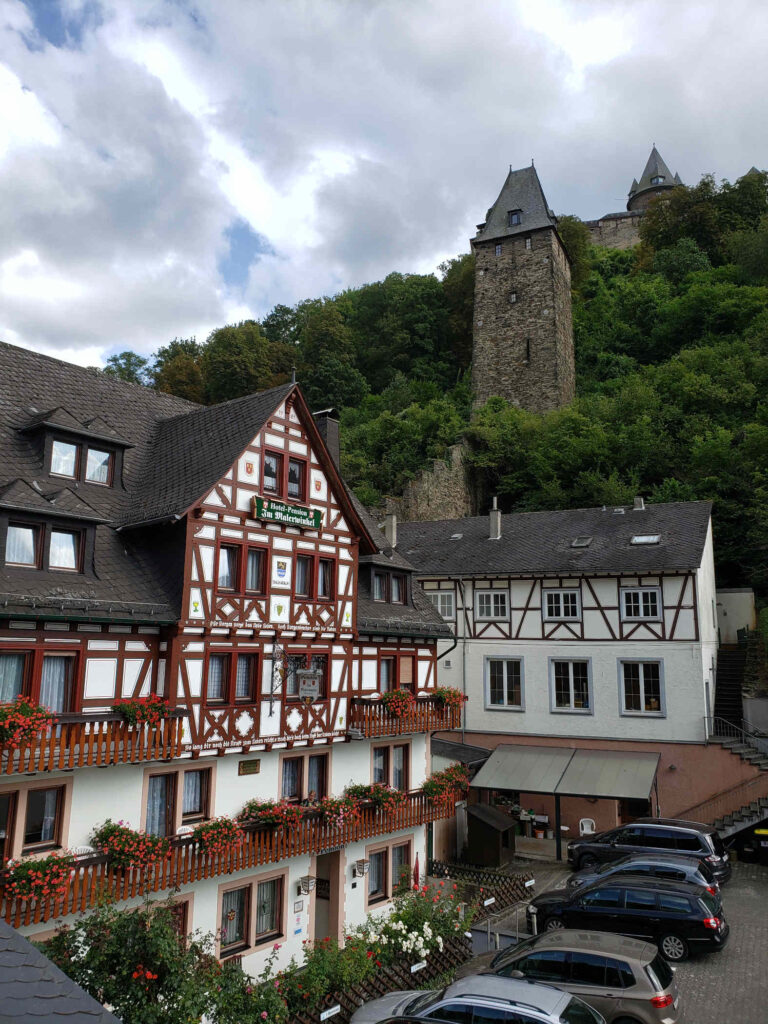
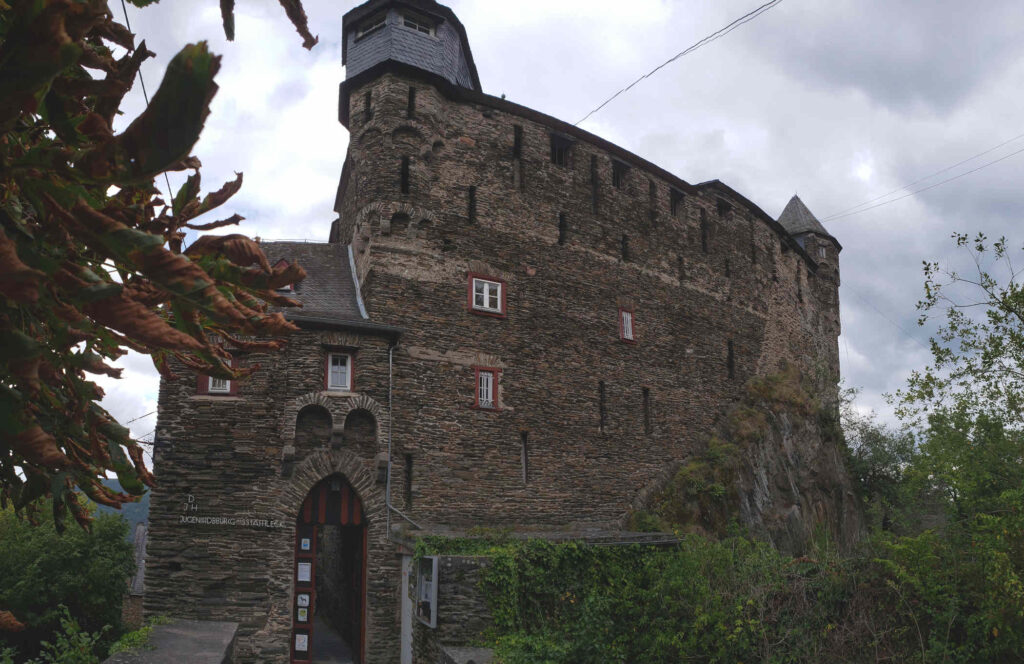
The walls of the Rhine River valley provide an ample perch for the many castles and fortresses that were built to protect the towns along its banks. The Stahleck Castle sits above this small town and extends it length of walls, turrets and towers around the small community like a net from above. The curtain of walls is formidable in both height and width, being its strongest at river level, where perhaps most of the attacks (if any) would probably originate.
The Town
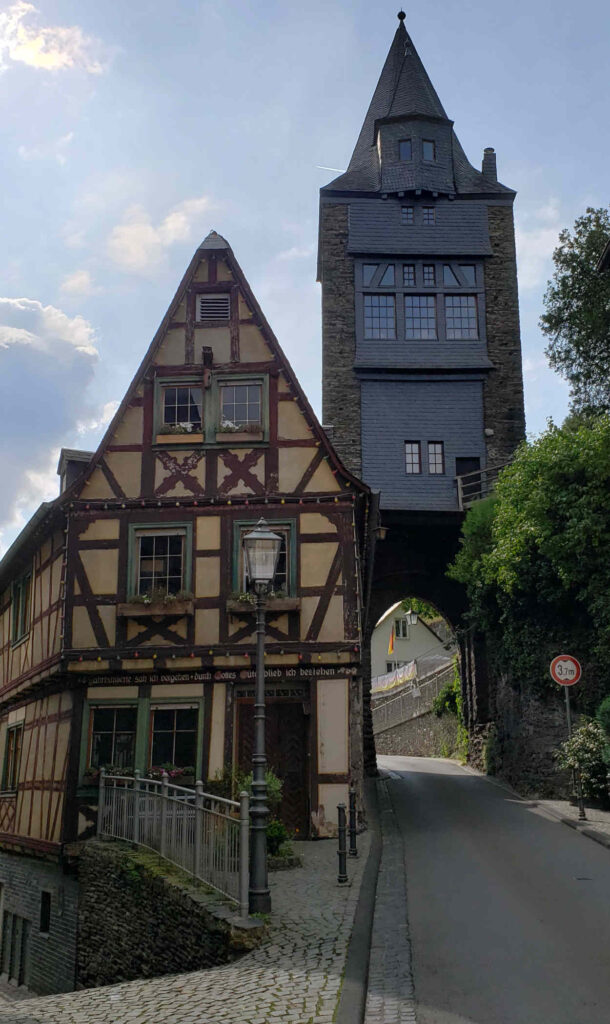
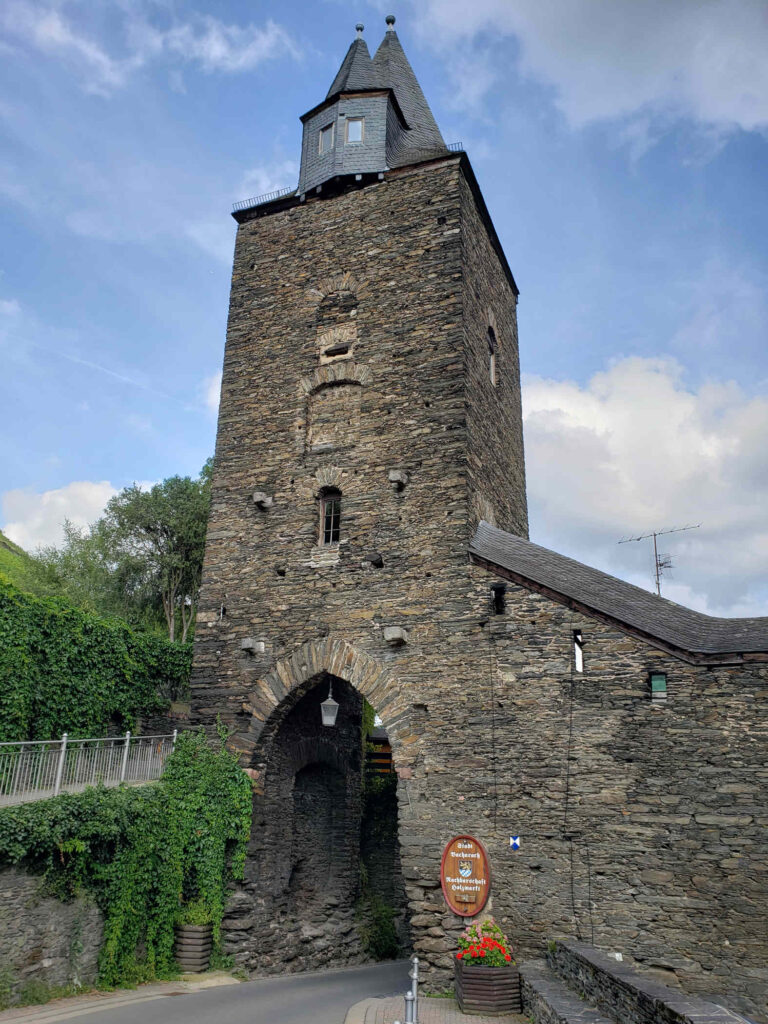
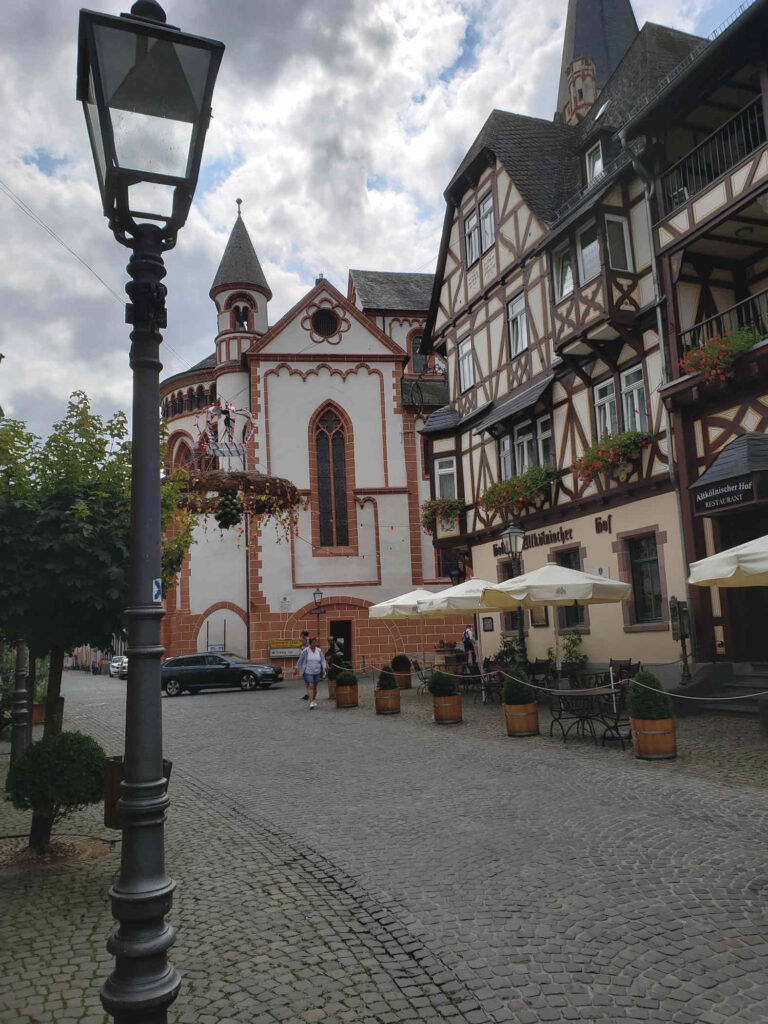
There is no real center of town, since it is more of a stretch of houses and building along the Rhine. Points of interest include the main street called Mainzerstraße, where all of the shops are located, Blücherstraße which starts at Saint Peter’s church and continues up through the Steeger Tor, a smaller street called the Langestraße which parallels the main street and the beautiful park along the banks of the Rhine.
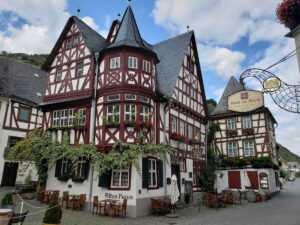
Altes Haus – Bacharach
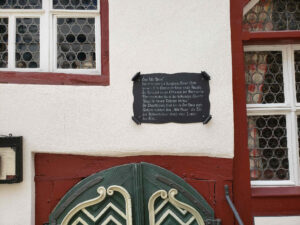
Altes Haus History – Bacharach
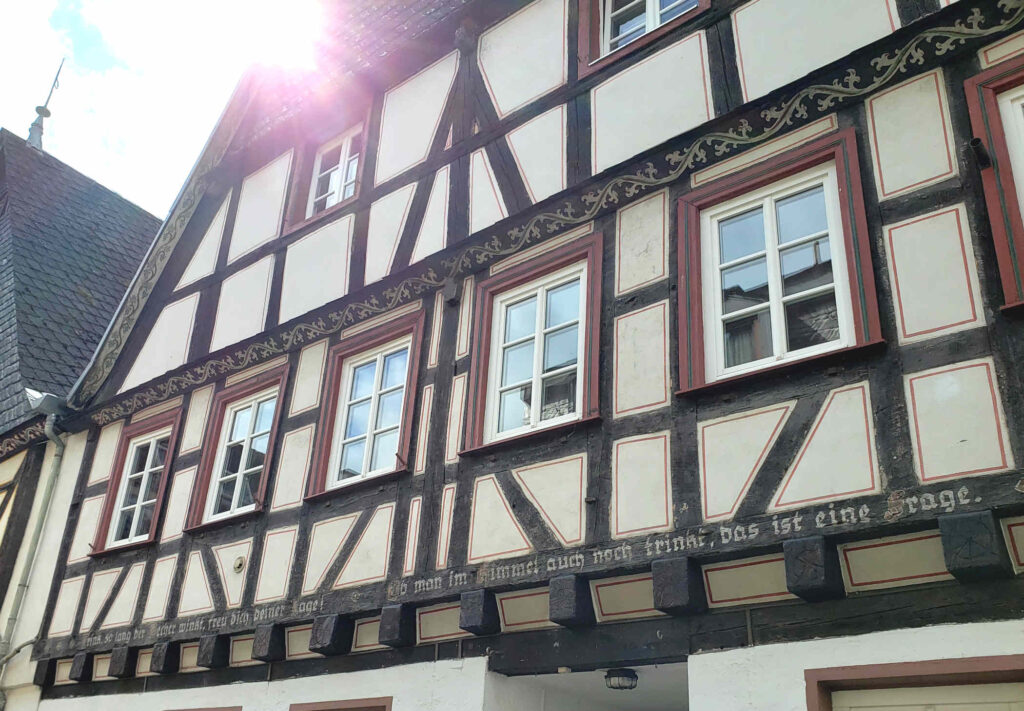
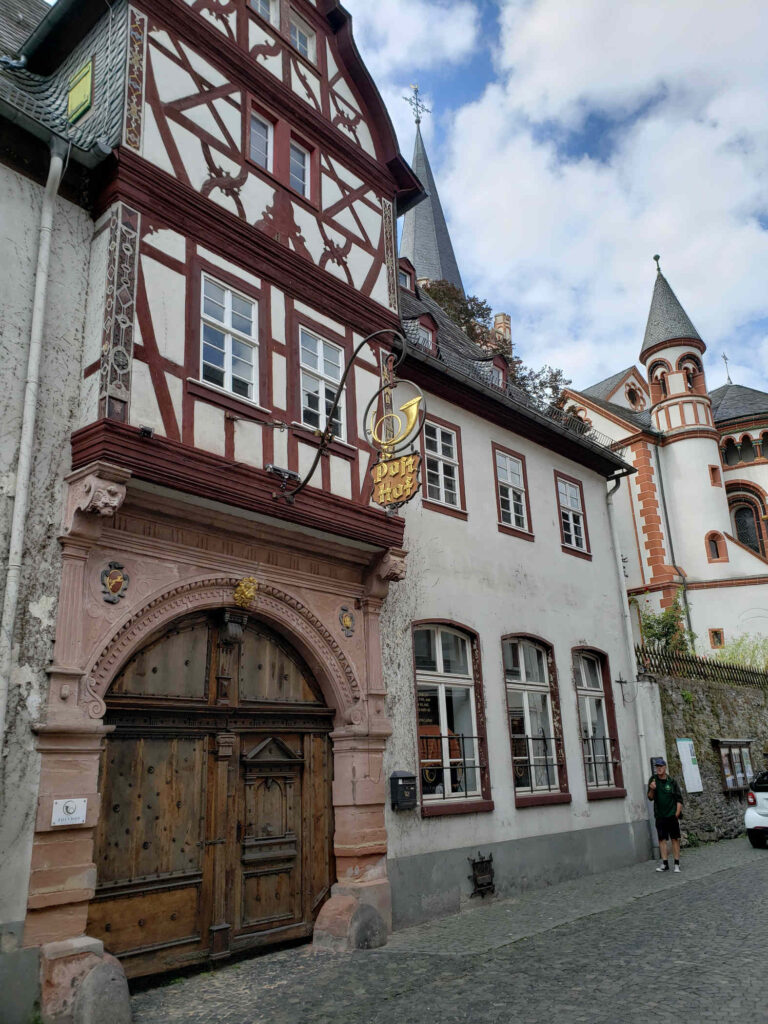
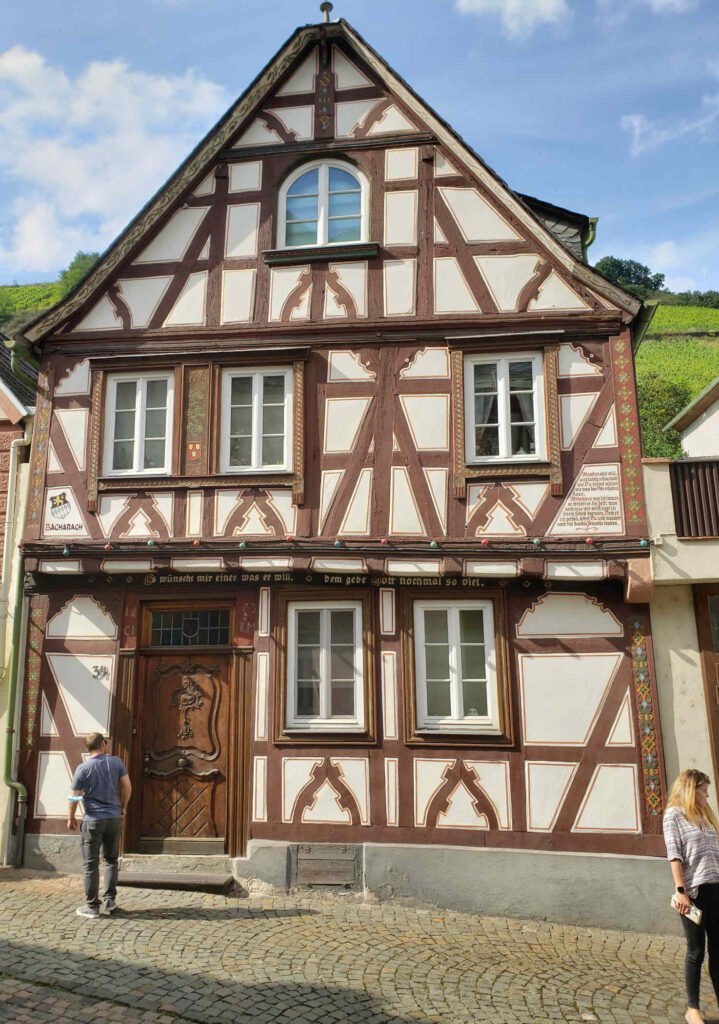
A main attraction here is the beautifully preserved Altes Haus. It is here where Robert Stolz wrote his operetta Wenn die kleinen Veilchen blühen, or “When the little violets bloom”, which was eventually performed in the Haag in 1932. Aside from that, it is an excellent example of Half-Timber, or Fachwerk framing.
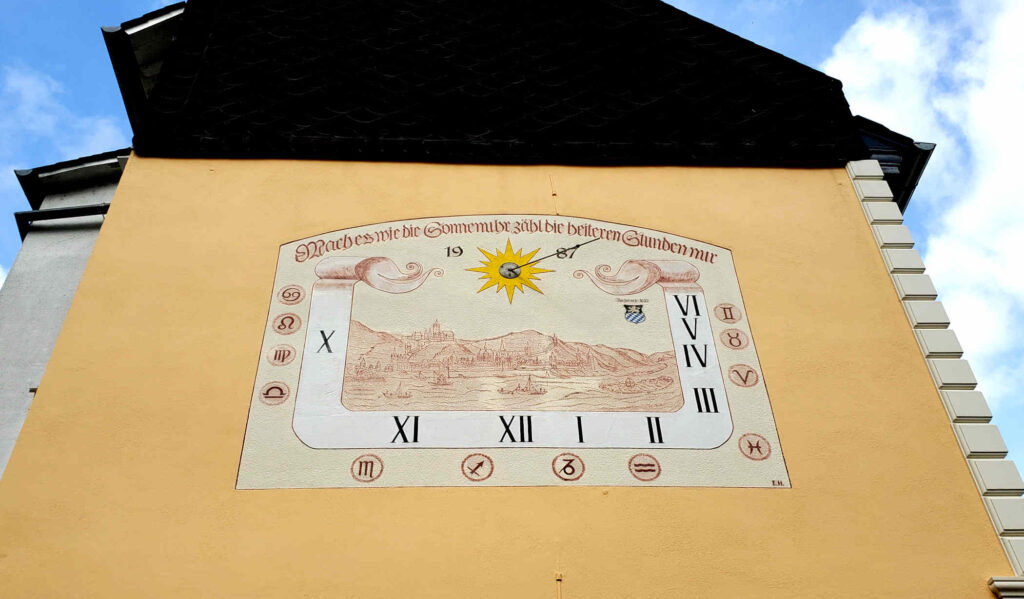
Sundial
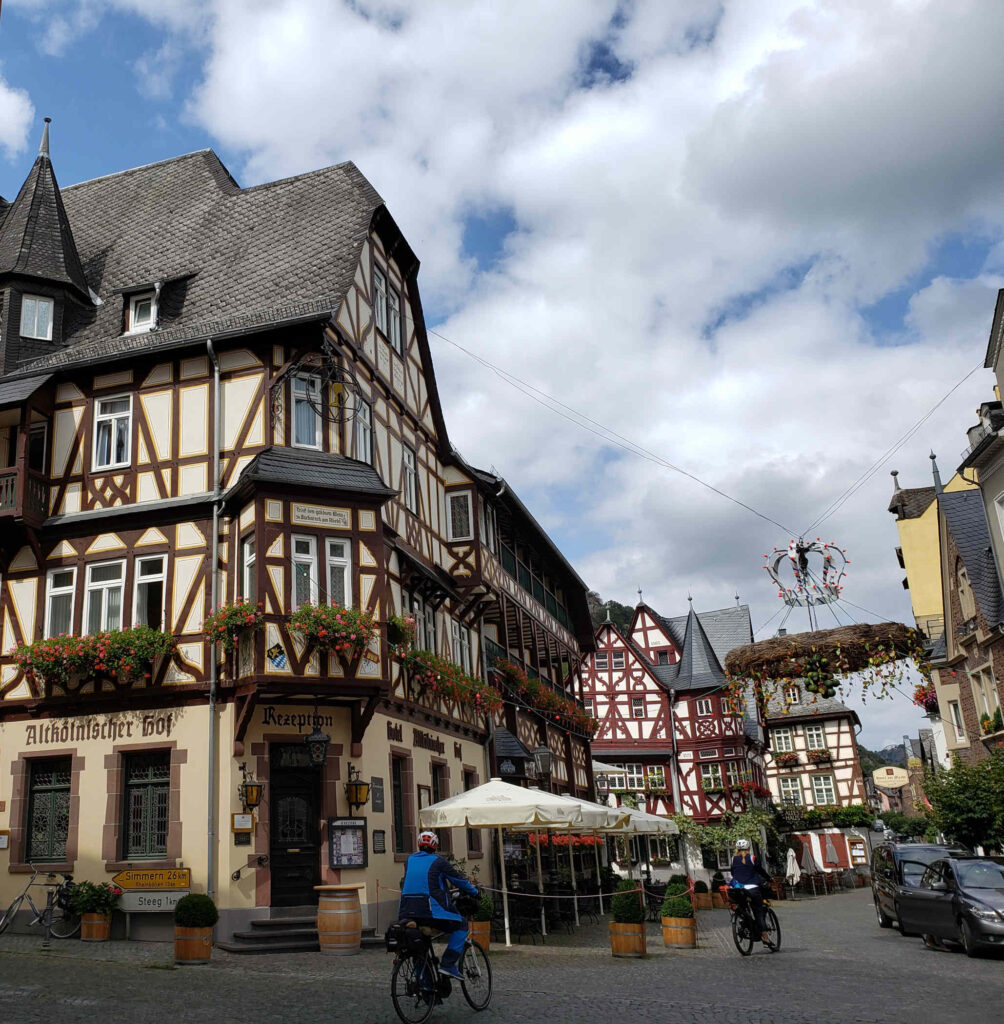
Mainzerstraße Another View – Bacharach
Half Timber Building
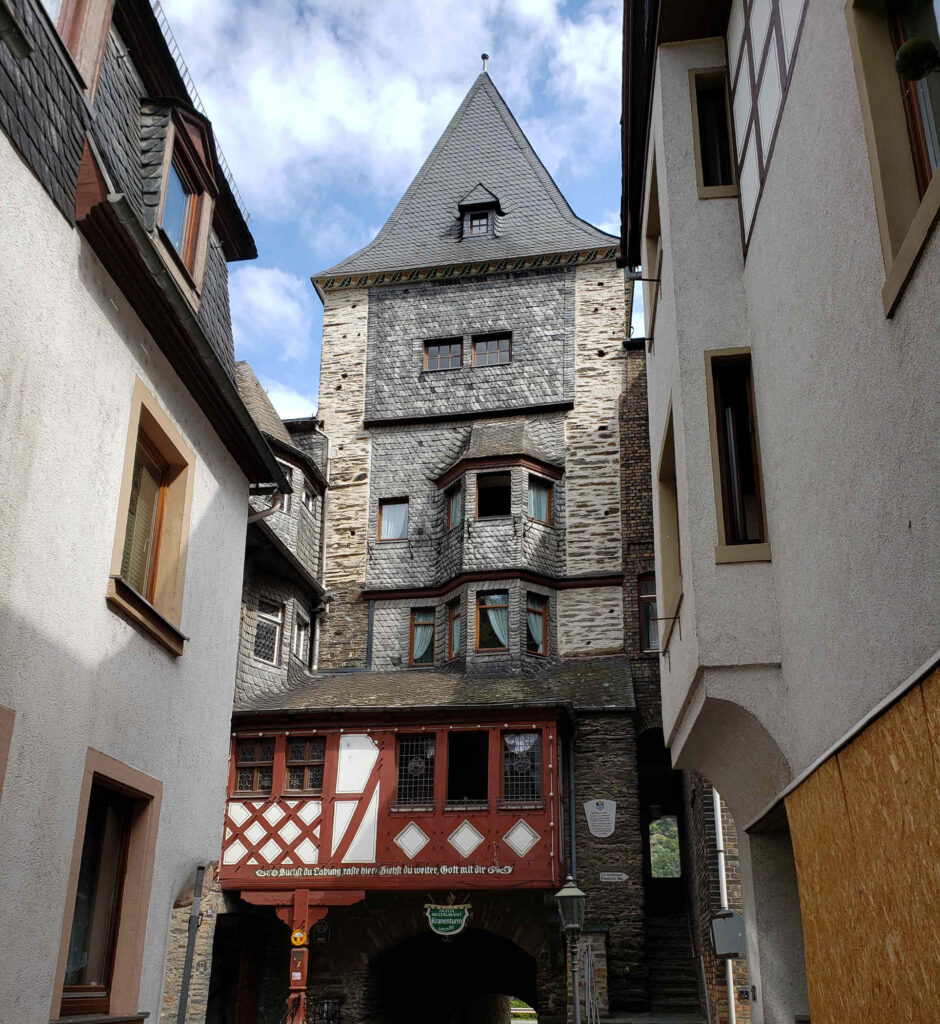
View Of Wall And Towers From Steegertor – Bacharach
Steegertor – Bacharach
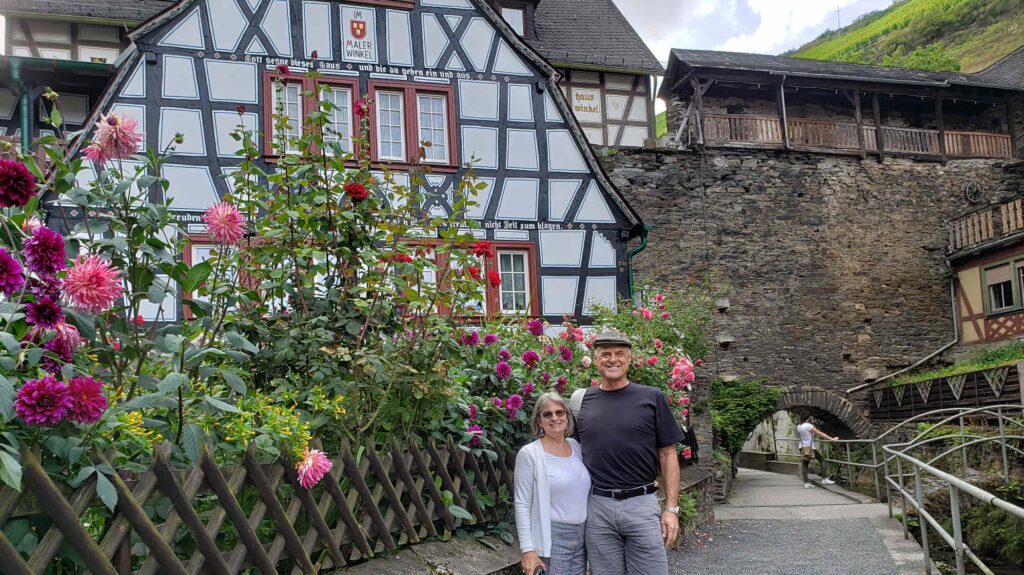
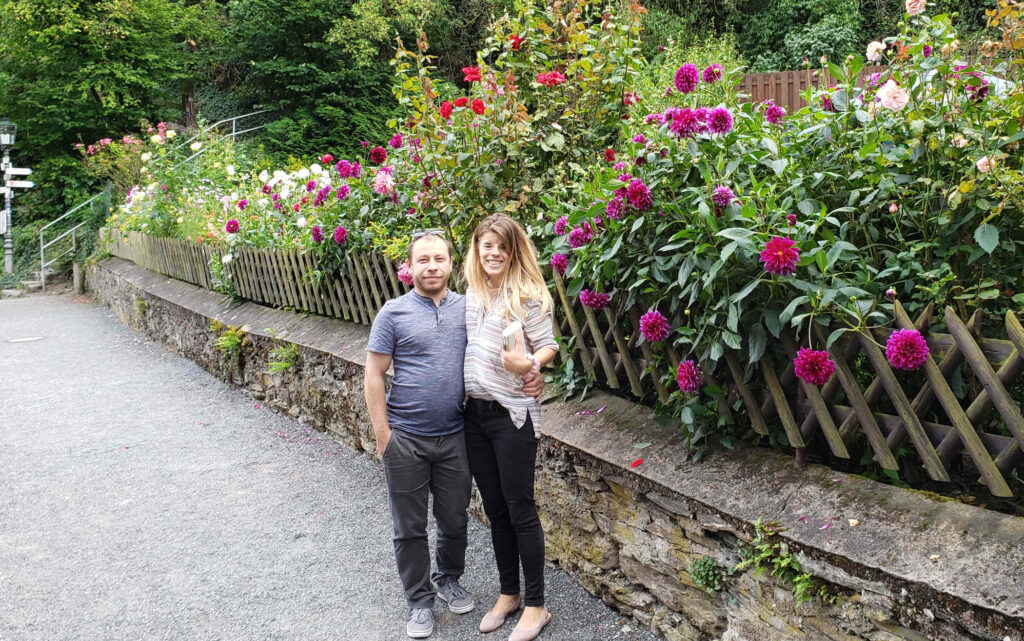
Patti and Erick – Bacharach
Ericka – The Rhine And Castle Stahleck
View Of Castle Stahleck
Steegertor From Outside The Wall – Bacharach
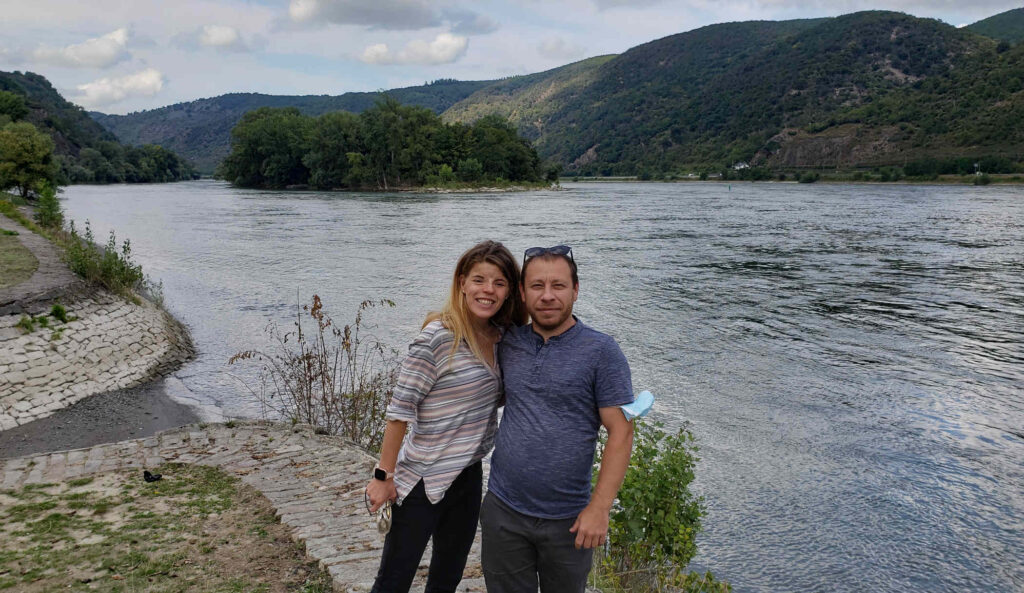
Ericka and Gabi – Rhine
Old House And Turret In Back – Mainzerstraße – Bacharach
Gabi And Ericka – Bacharach
Turret on Langestraße – Bacharach
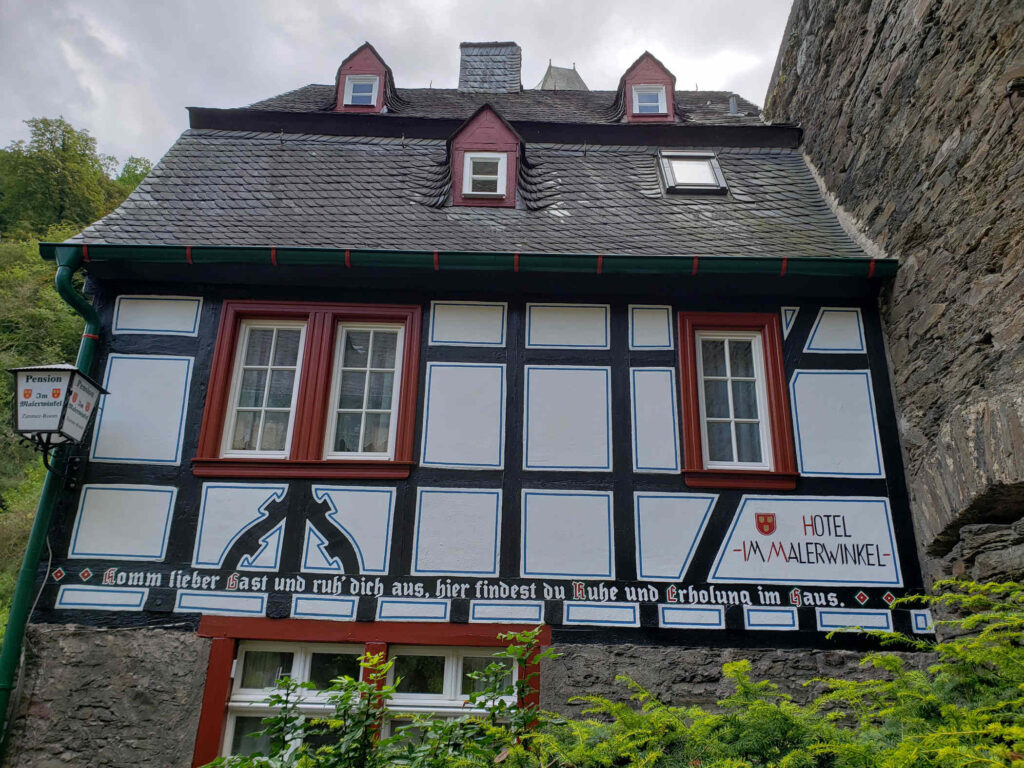
Hotel In The Wall – Bacharach
Castle Stahleck
Inscriptions And Designs On House – Bacharach
Mainzerstraße – Bacharach
The hillsides in this area are dominated by vineyards, the area being a major wine producer for Germany. There are many Vintners here and many, if not all, sell directly to the public. Unfortunately after taking so long to eat, we were not predisposed to try and visit any of them.
Restaurants
There are several restaurants in town to choose from, all of which appear to serve a mixture of traditional German fare and some Mediterranean. It is probably preferable to find something on one of the side streets, since traffic is still allowed through the main thoroughfare.
Restaurant Burg Stahleck
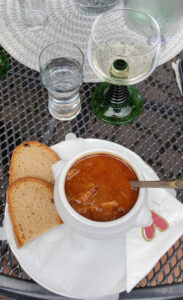
We choose this restaurant based on its menu and amount of outside seating. Plus we were just lucky to get the last table with its advantage at being in a very strategic corner, in order to view the goings on in town.
Gulaschsuppe And Bread
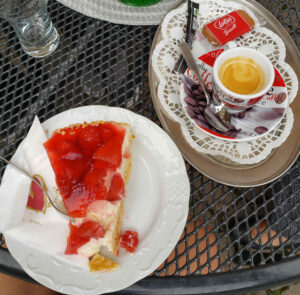
Cream Cheese Torte With Strawberries And Espresso
Bacharach is indeed a great place to spend a day or afternoon. The combination of the town, the banks of the Rhine and Castle above it provide more than enough to do for anyone in the area looking for a day trip.