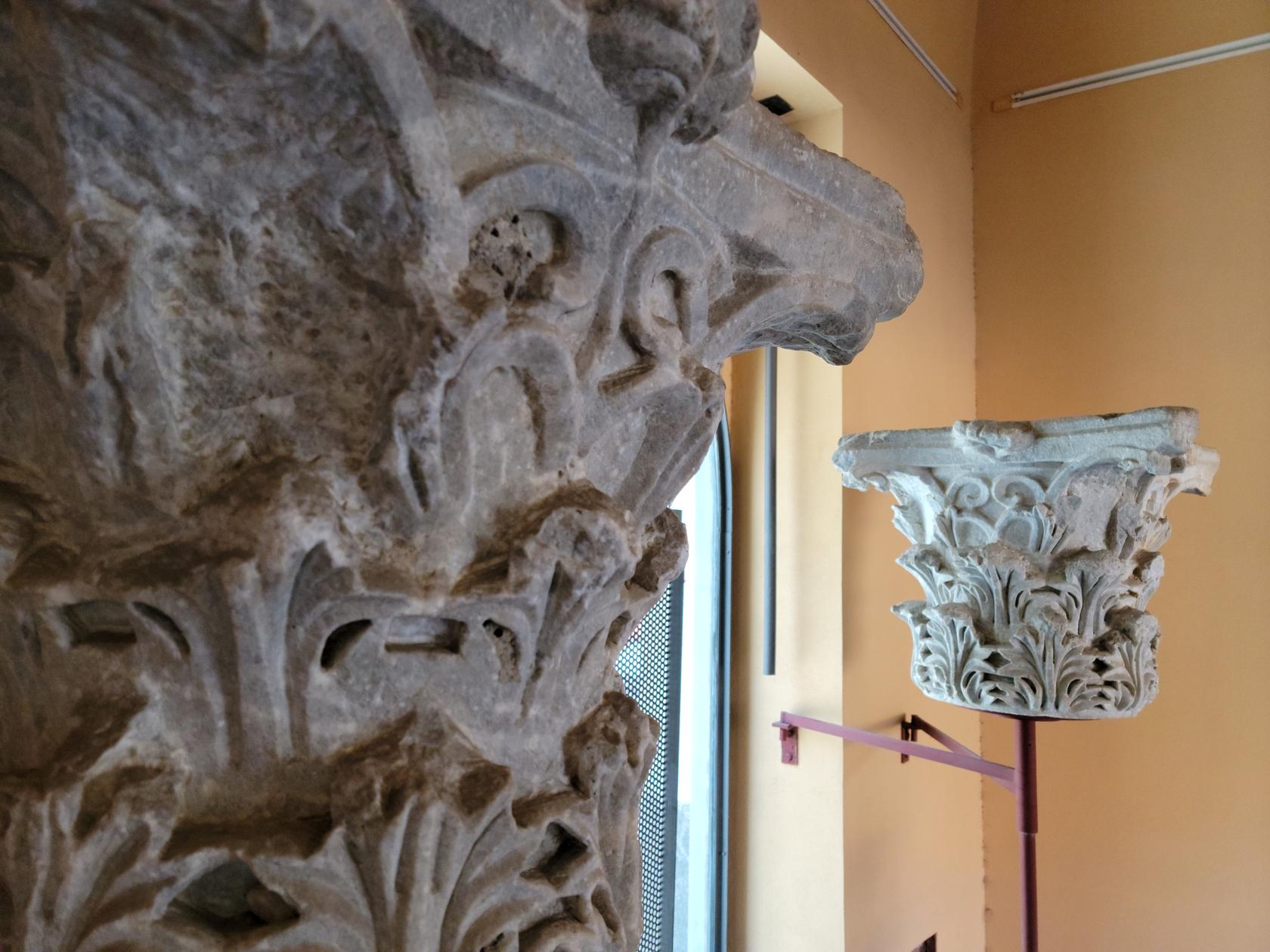
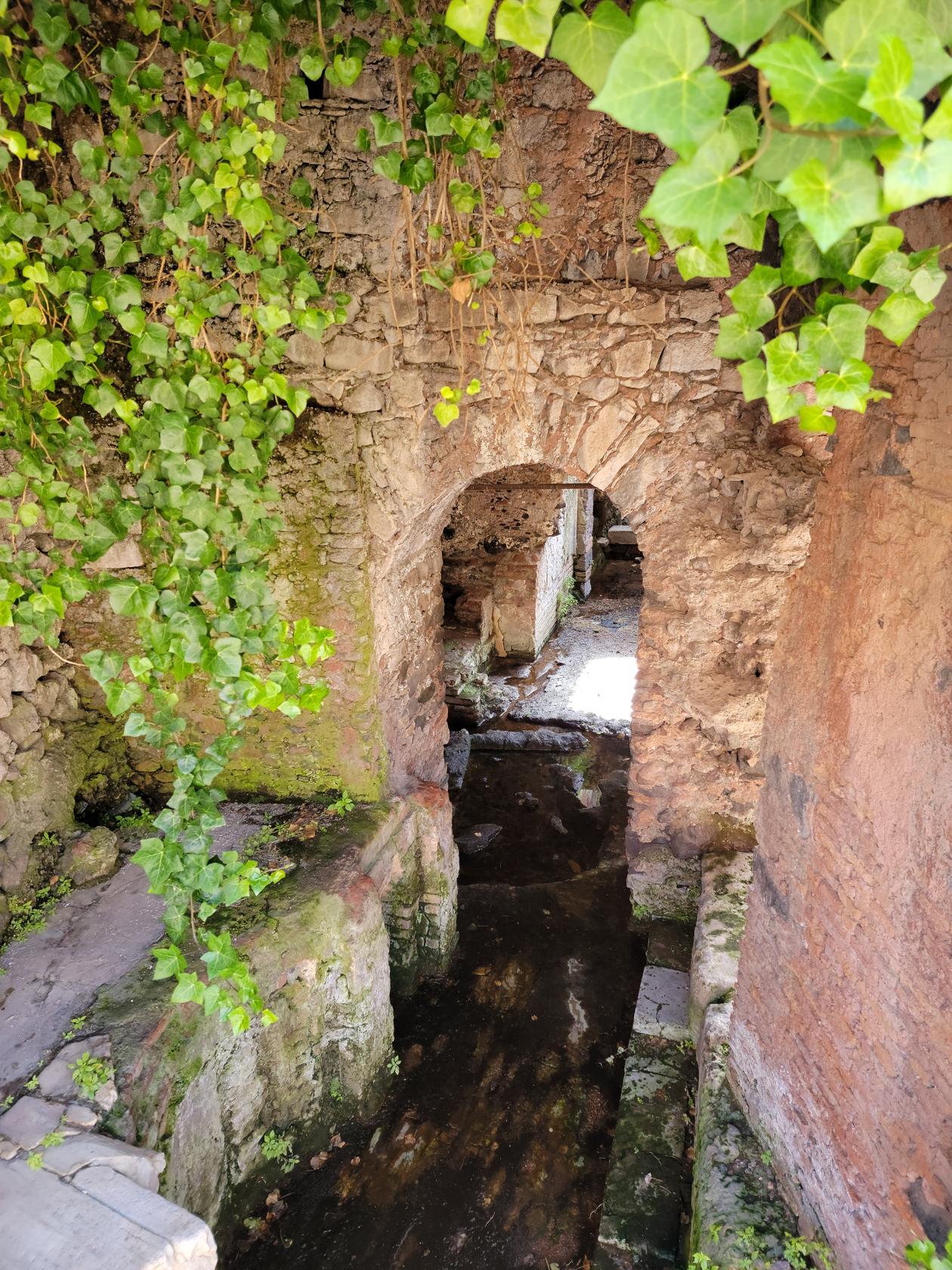
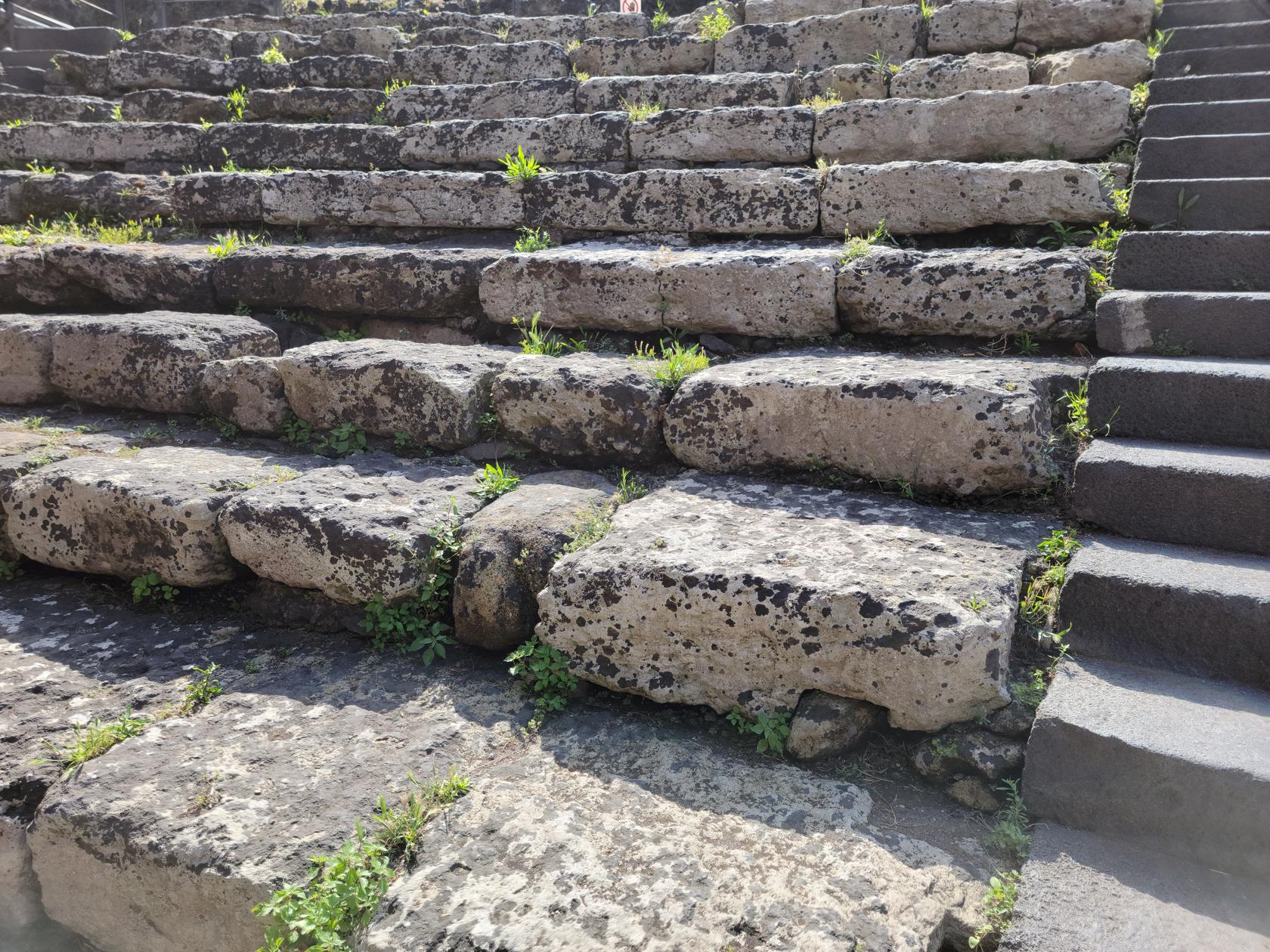
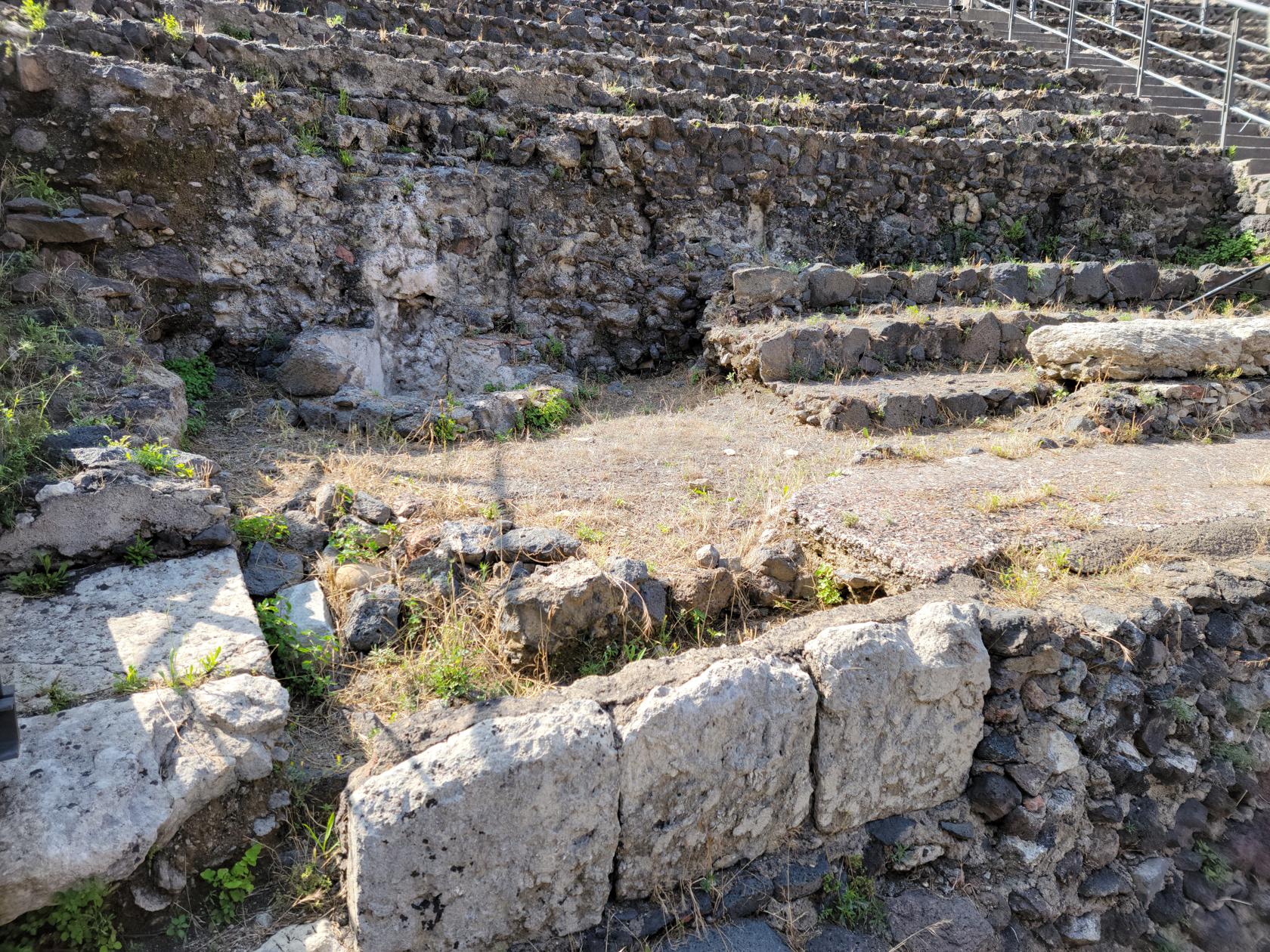
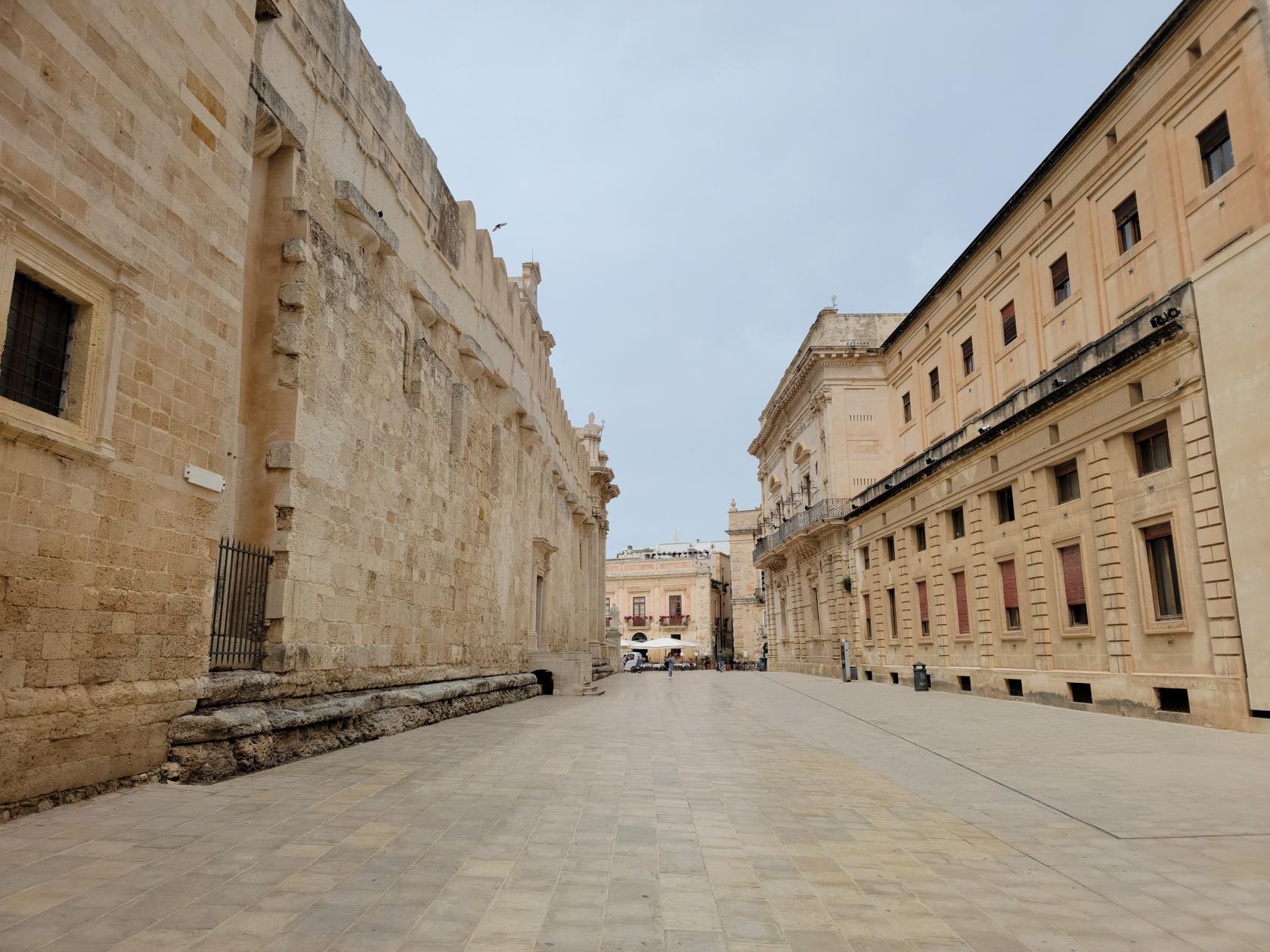
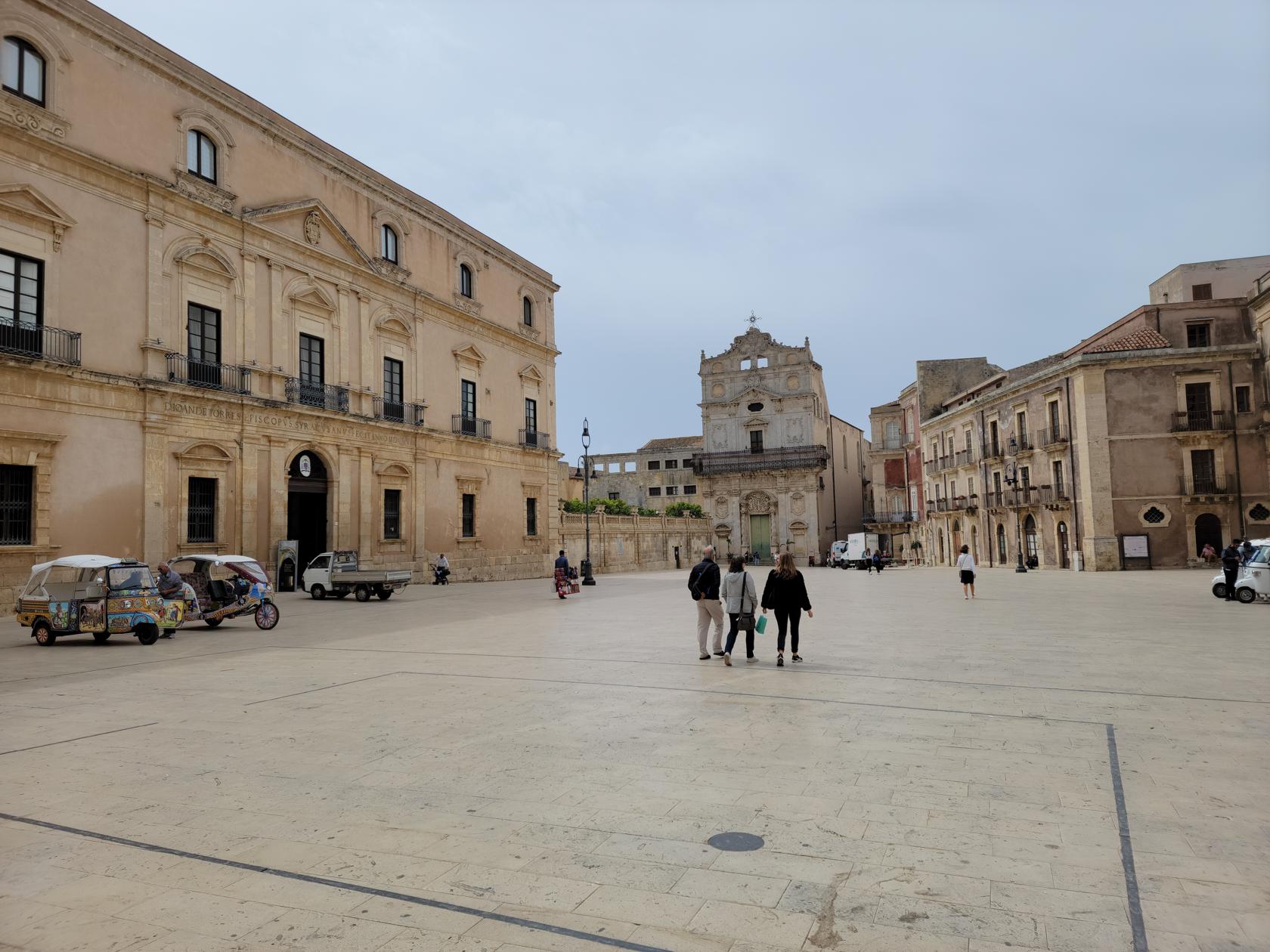
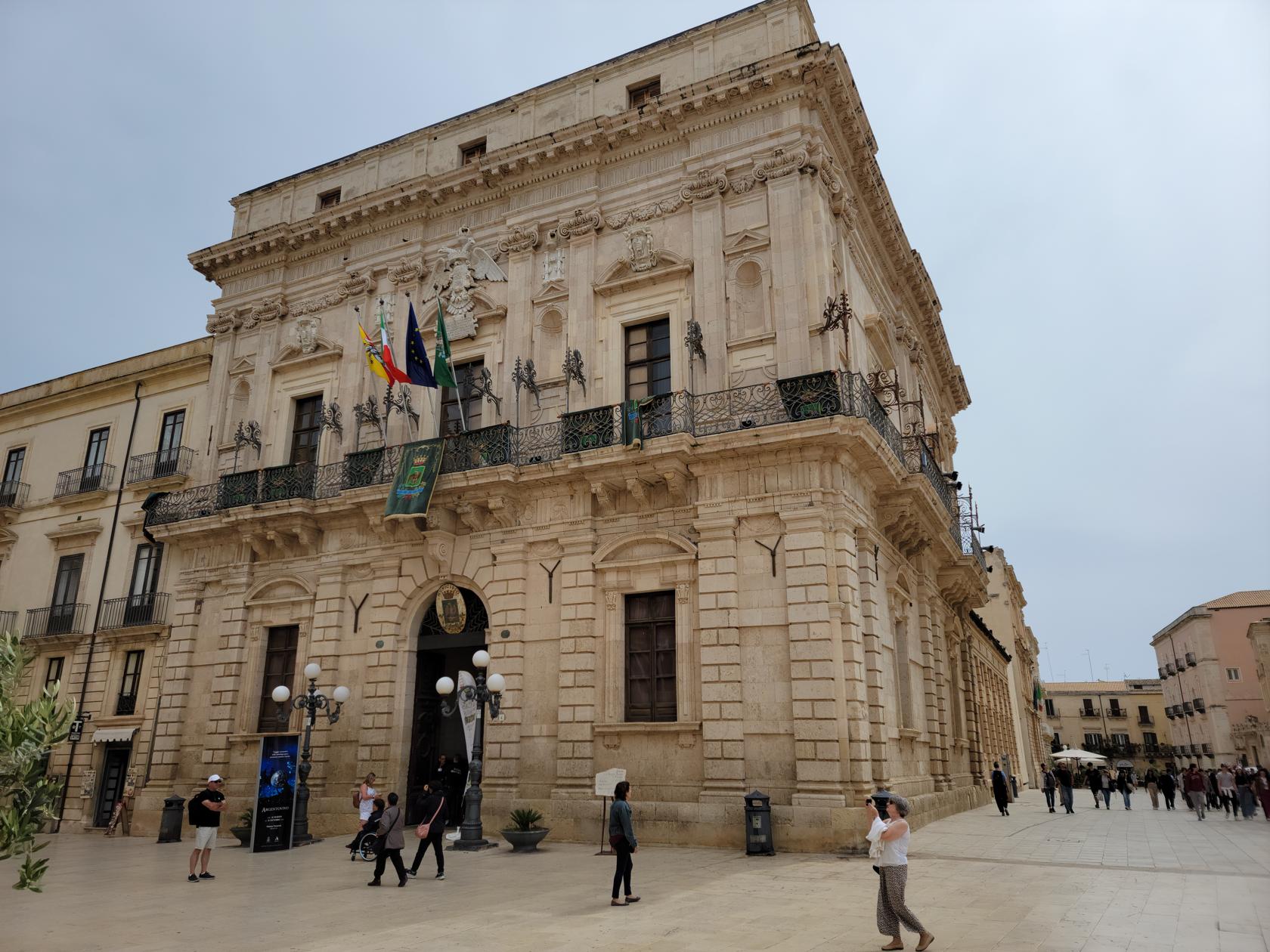
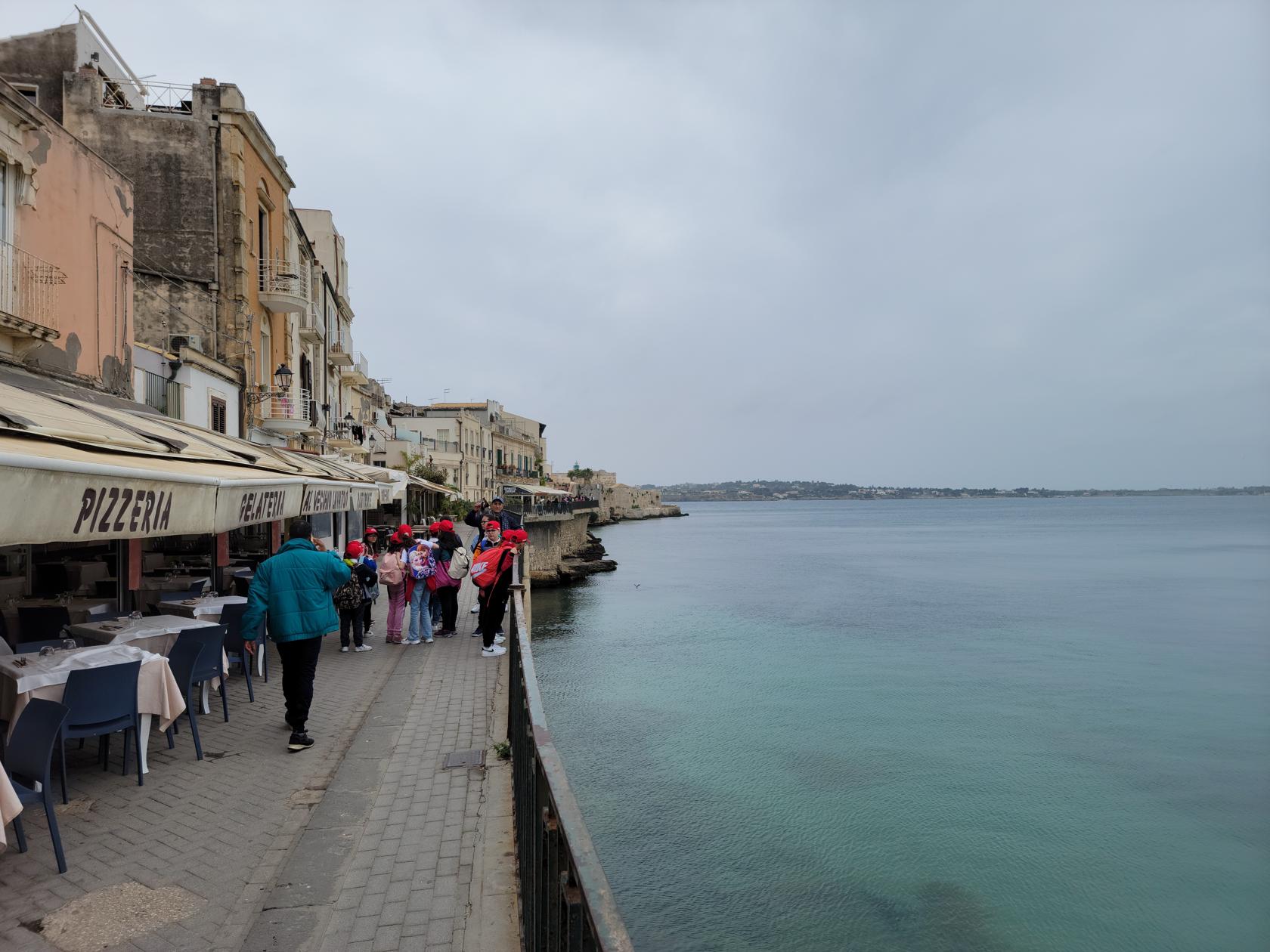
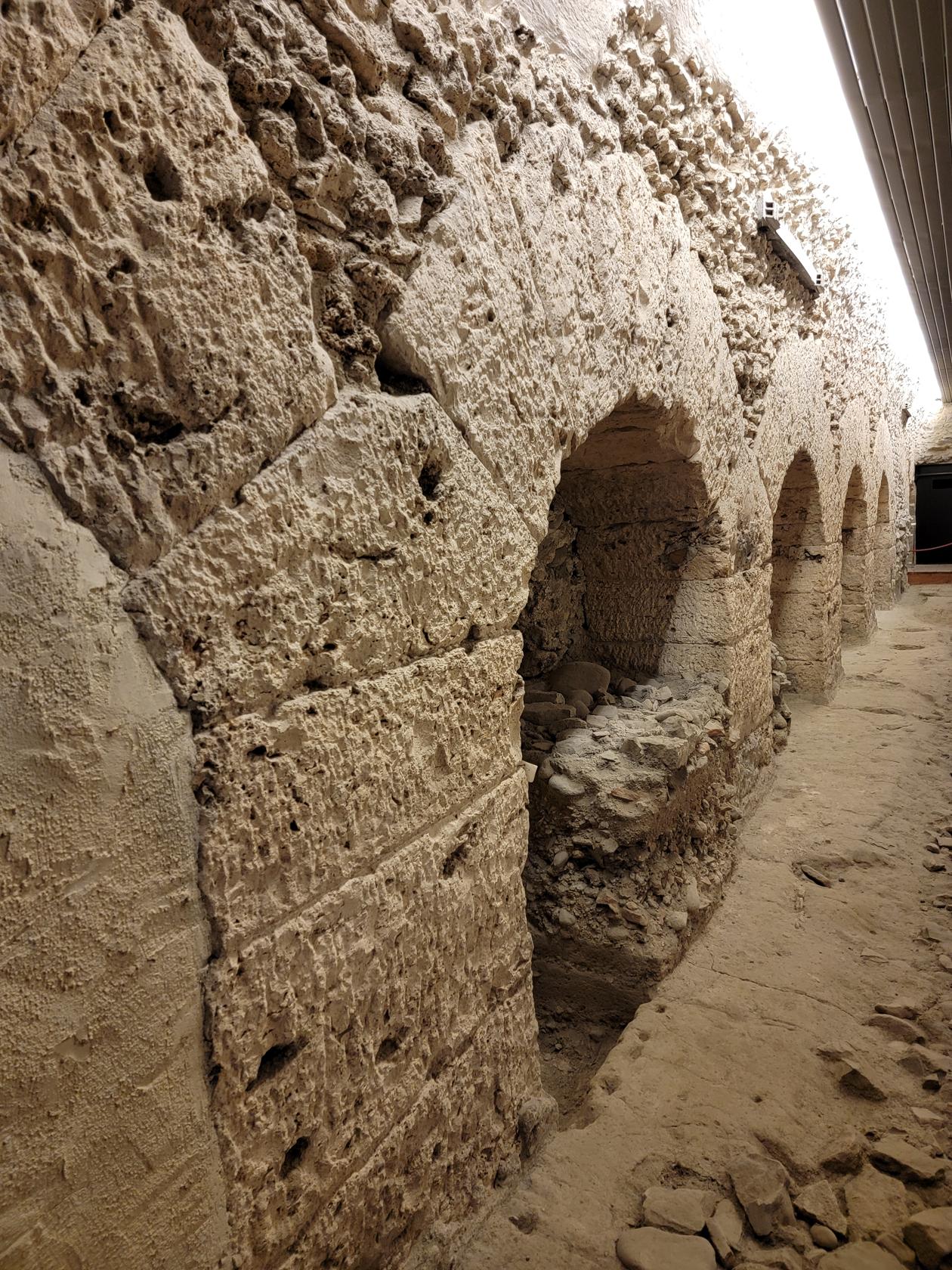
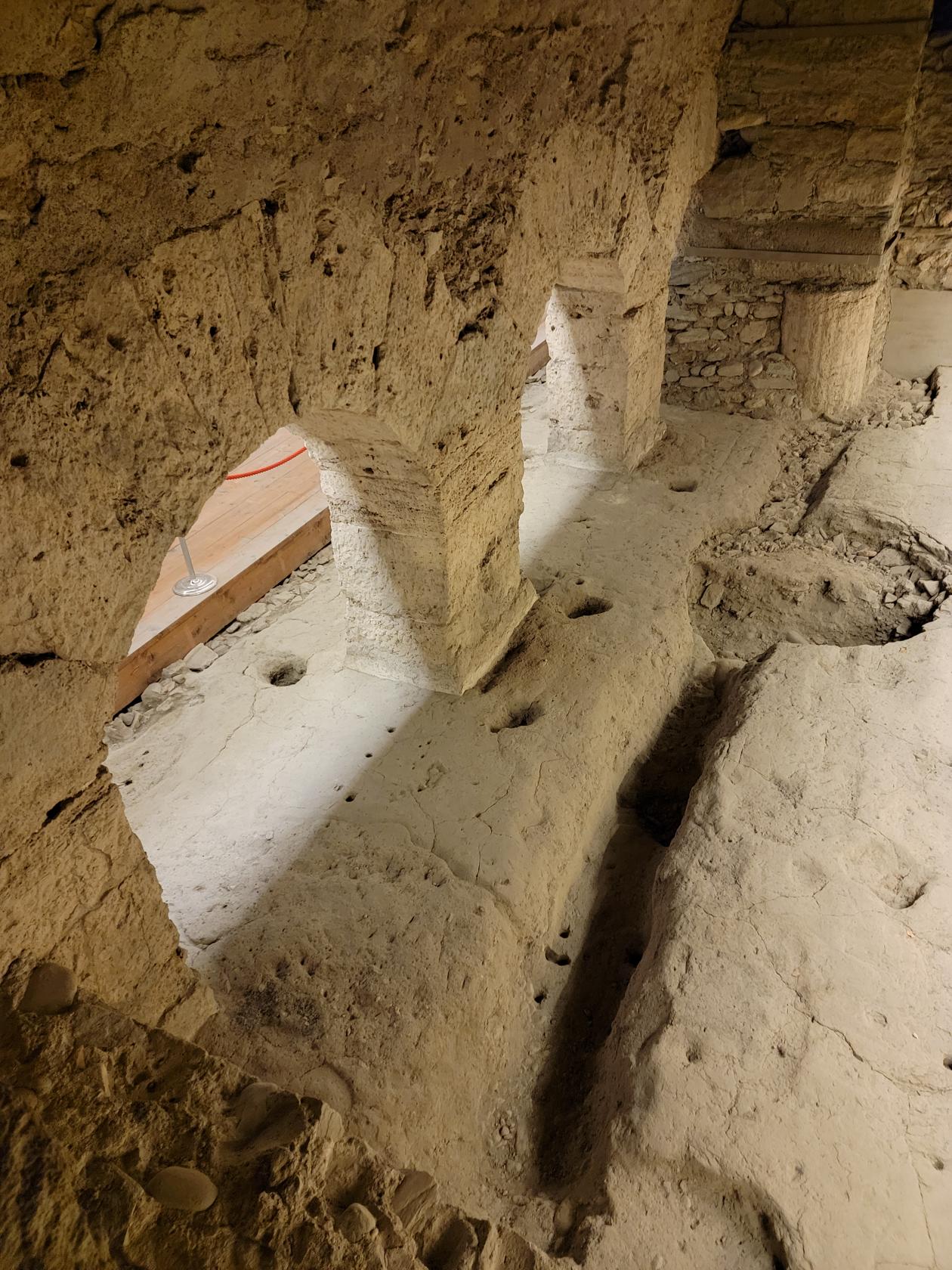
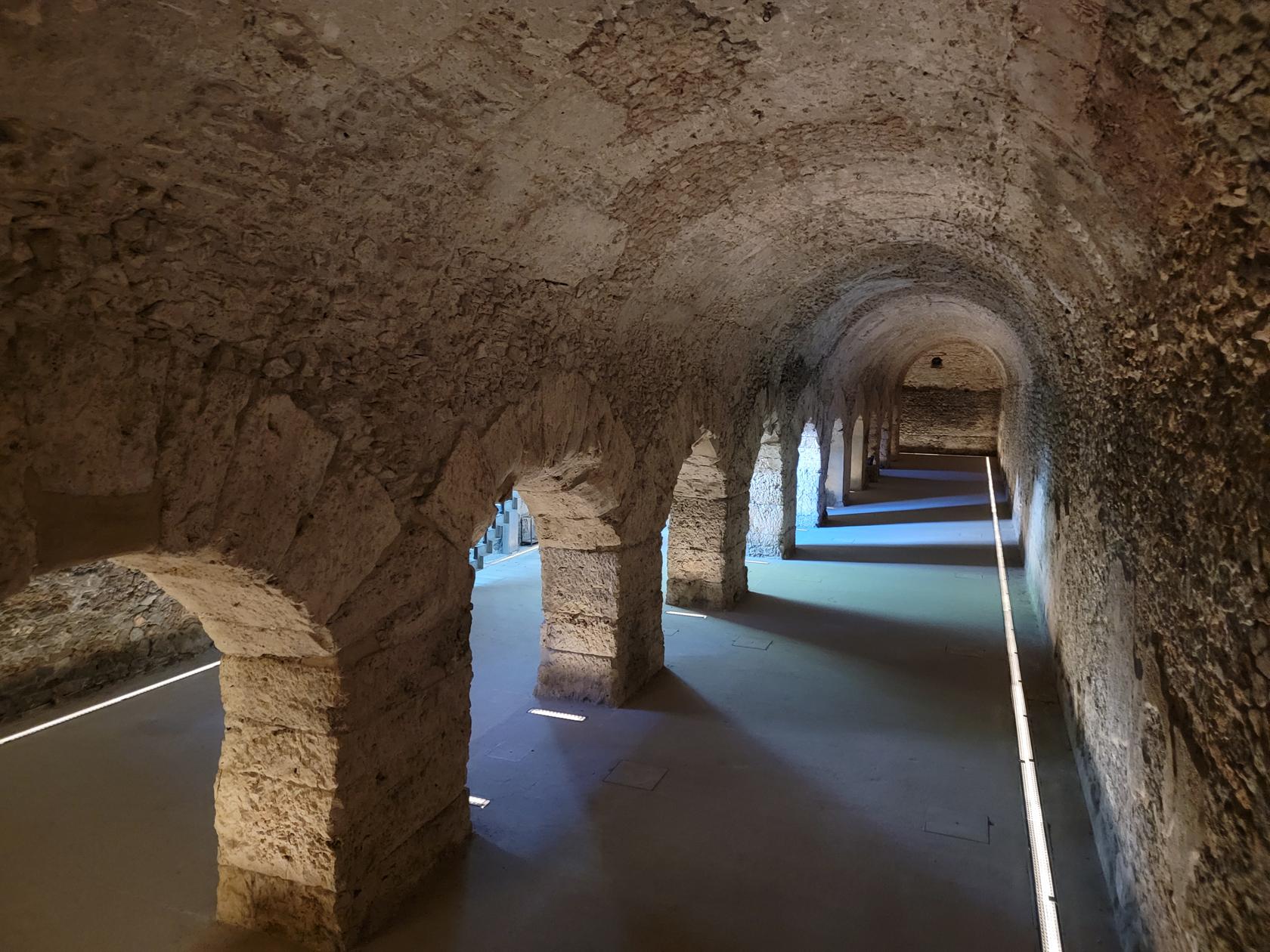
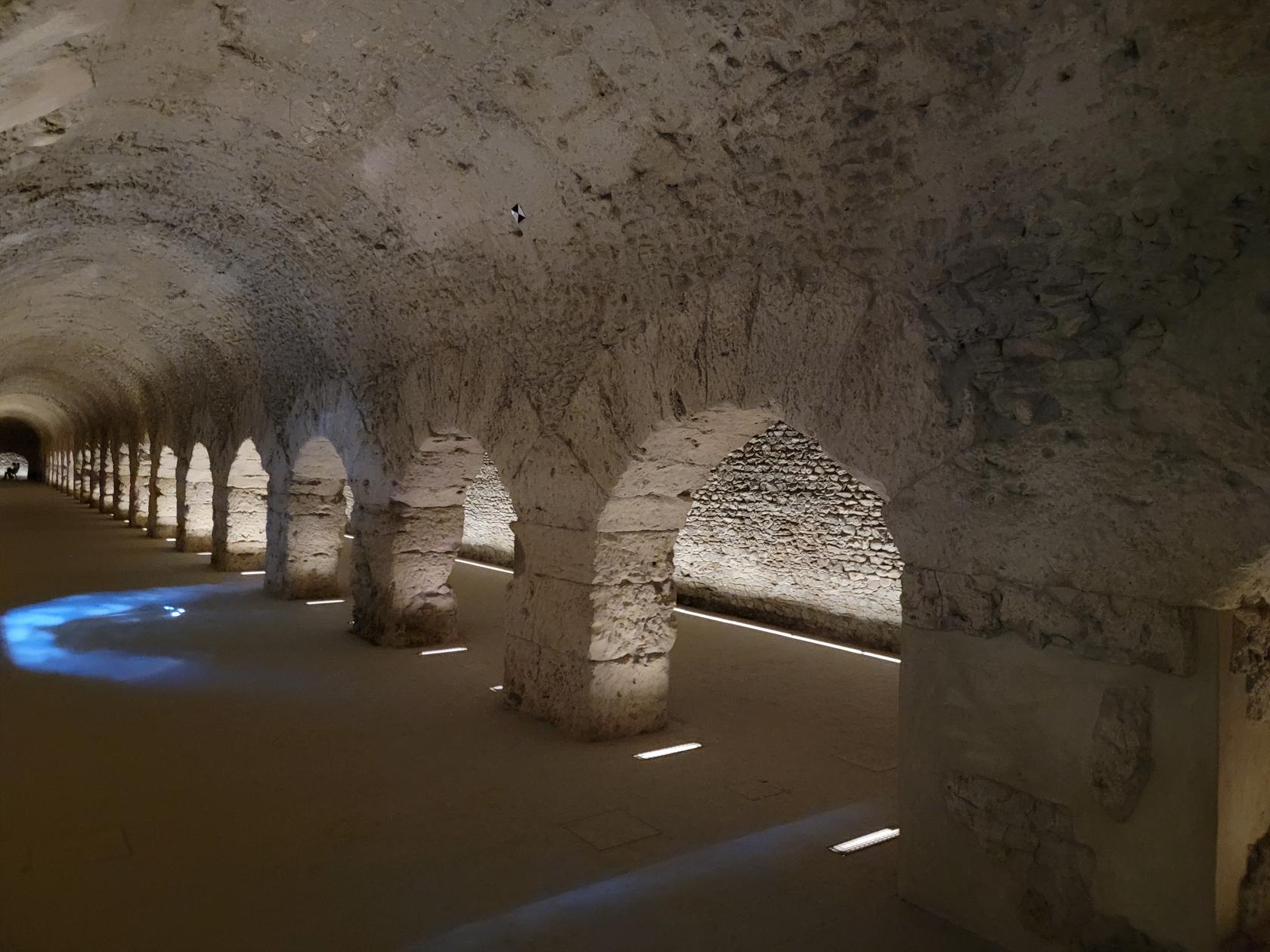
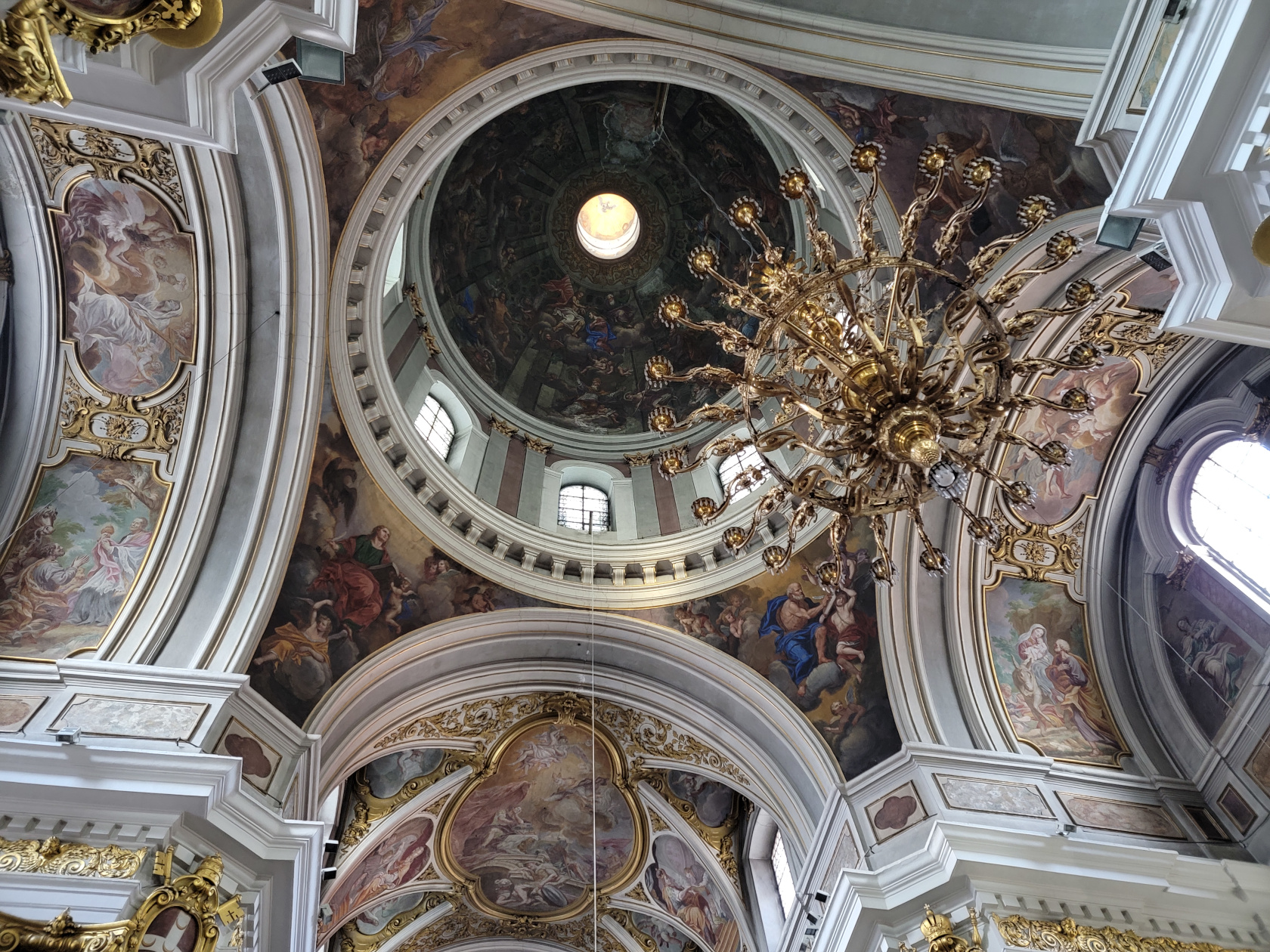
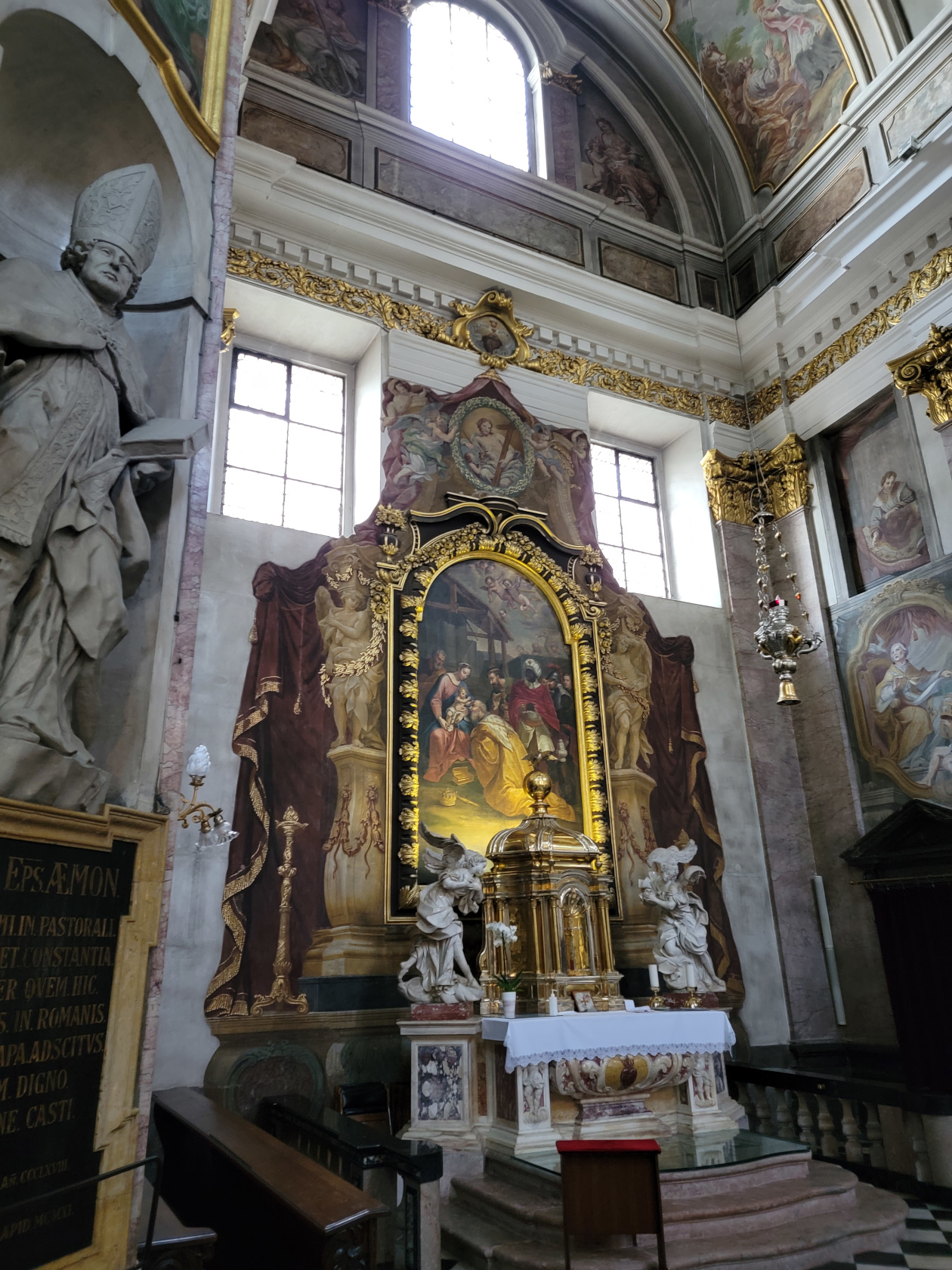
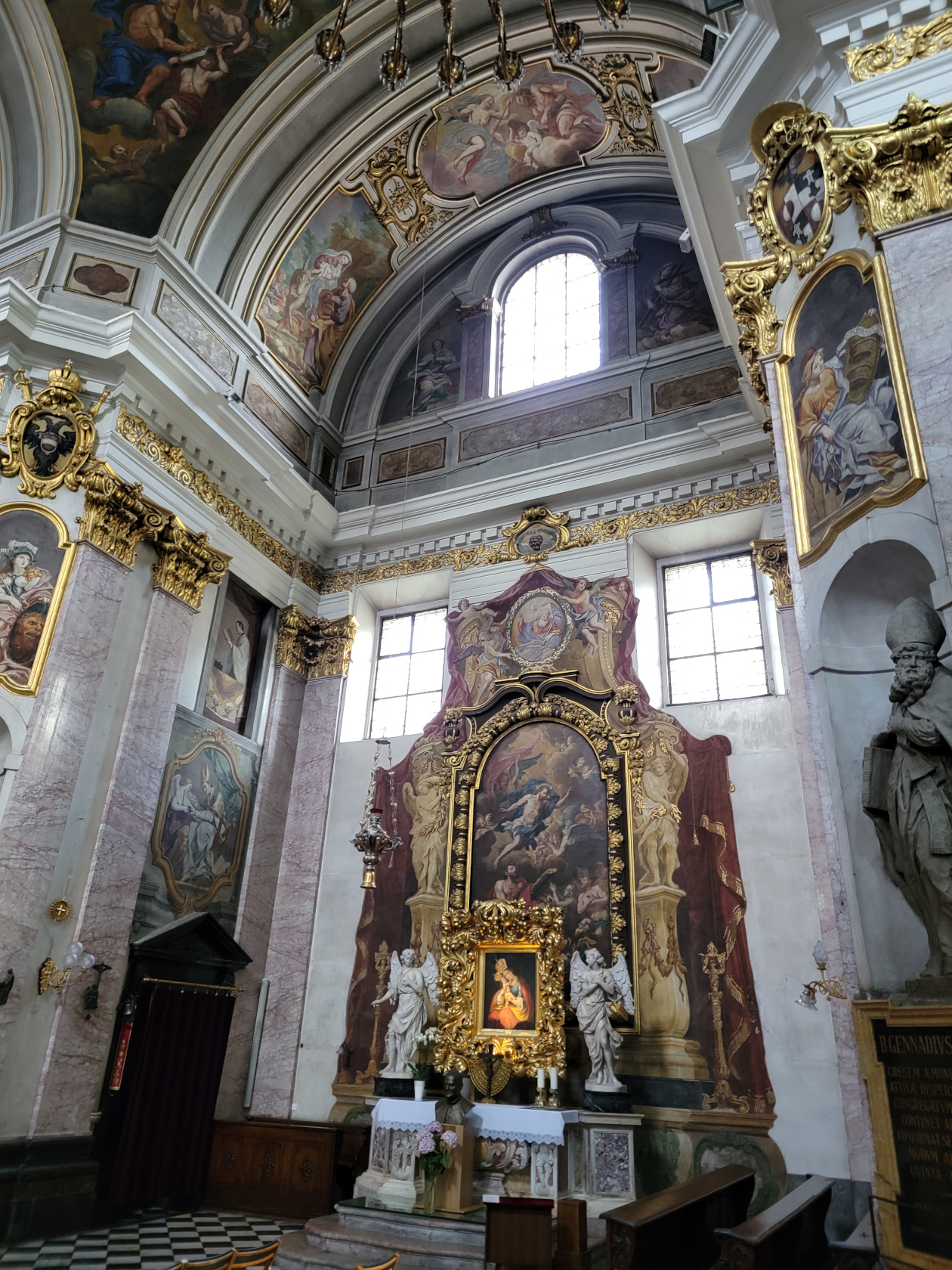
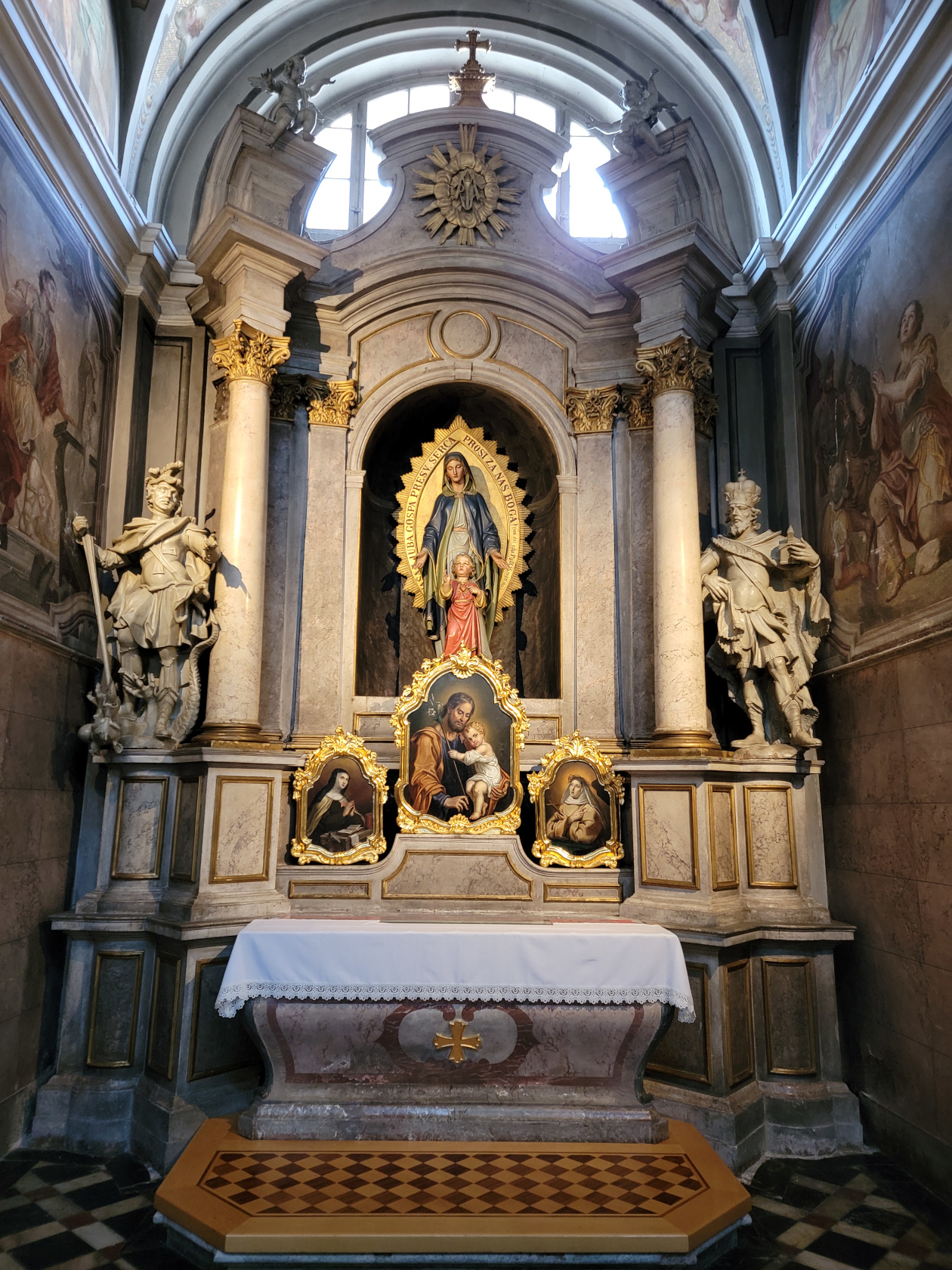
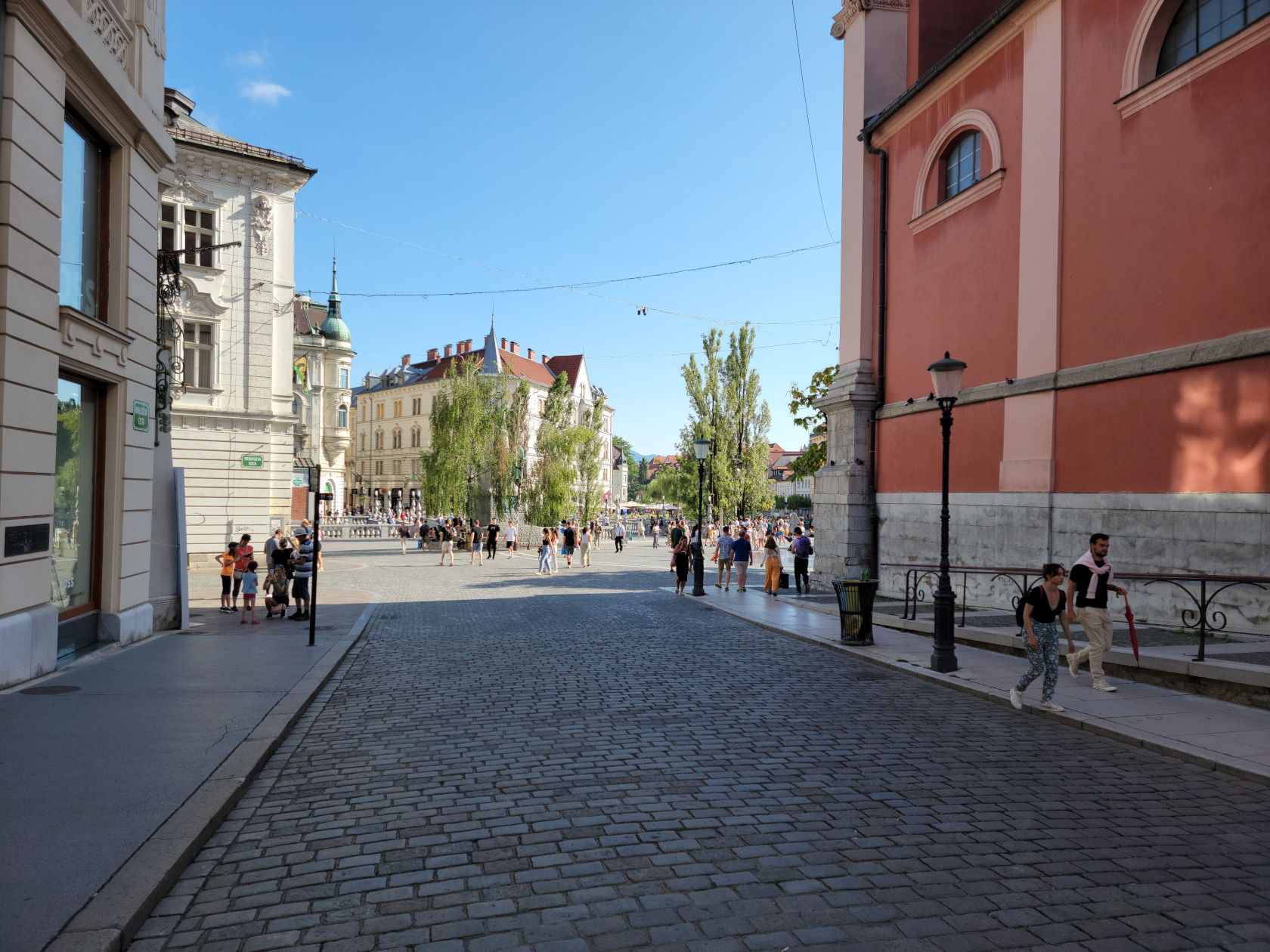
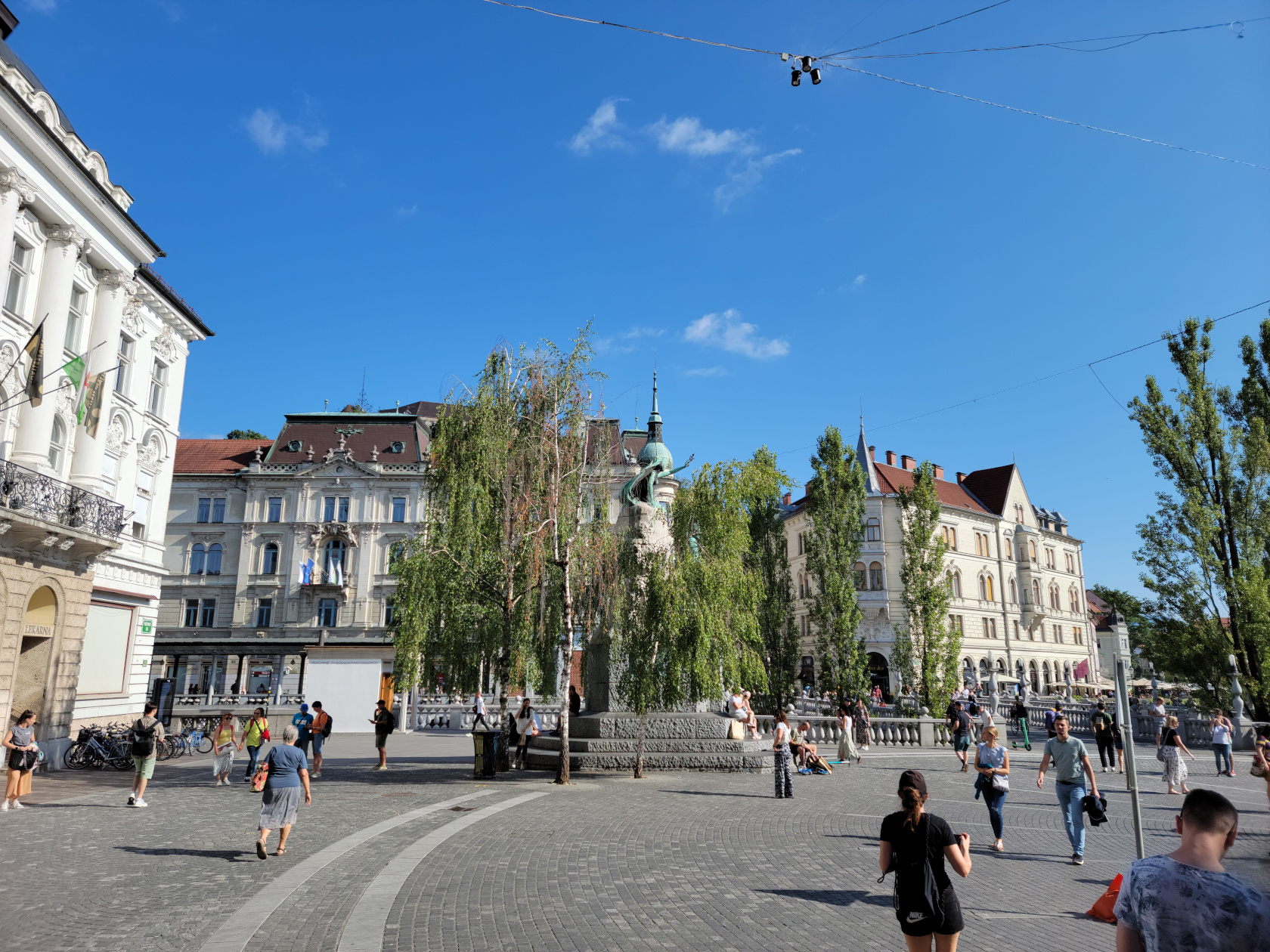
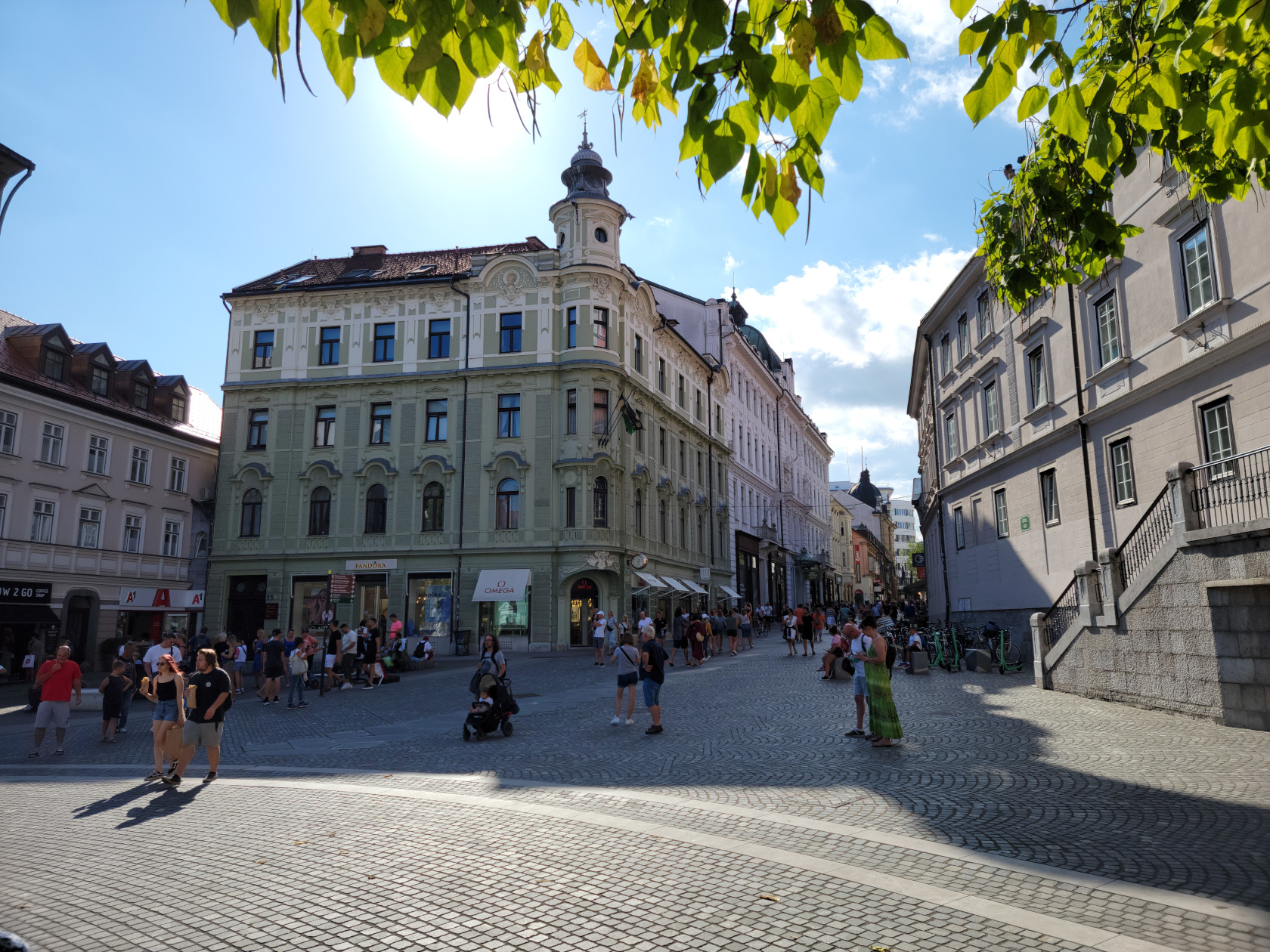
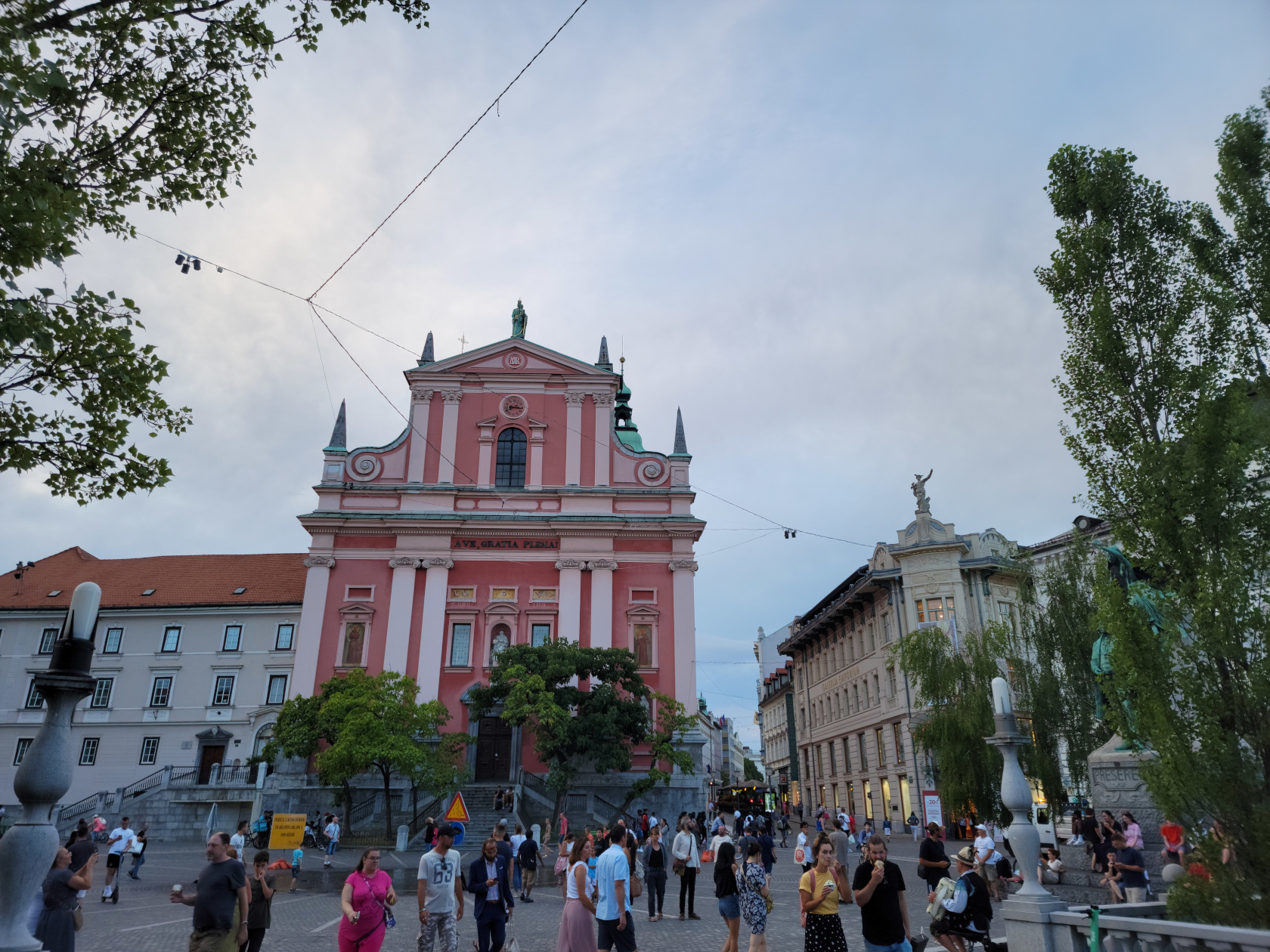
Though we have been in Mainz at least several times, it was before the beginning of this blog. Therefore, after a brief visit to the city to meet our friends and have a walk or stroll throughout the city (also known as a Stadtbummel), a quick mention here seemed almost required.
Day Trip To Mainz
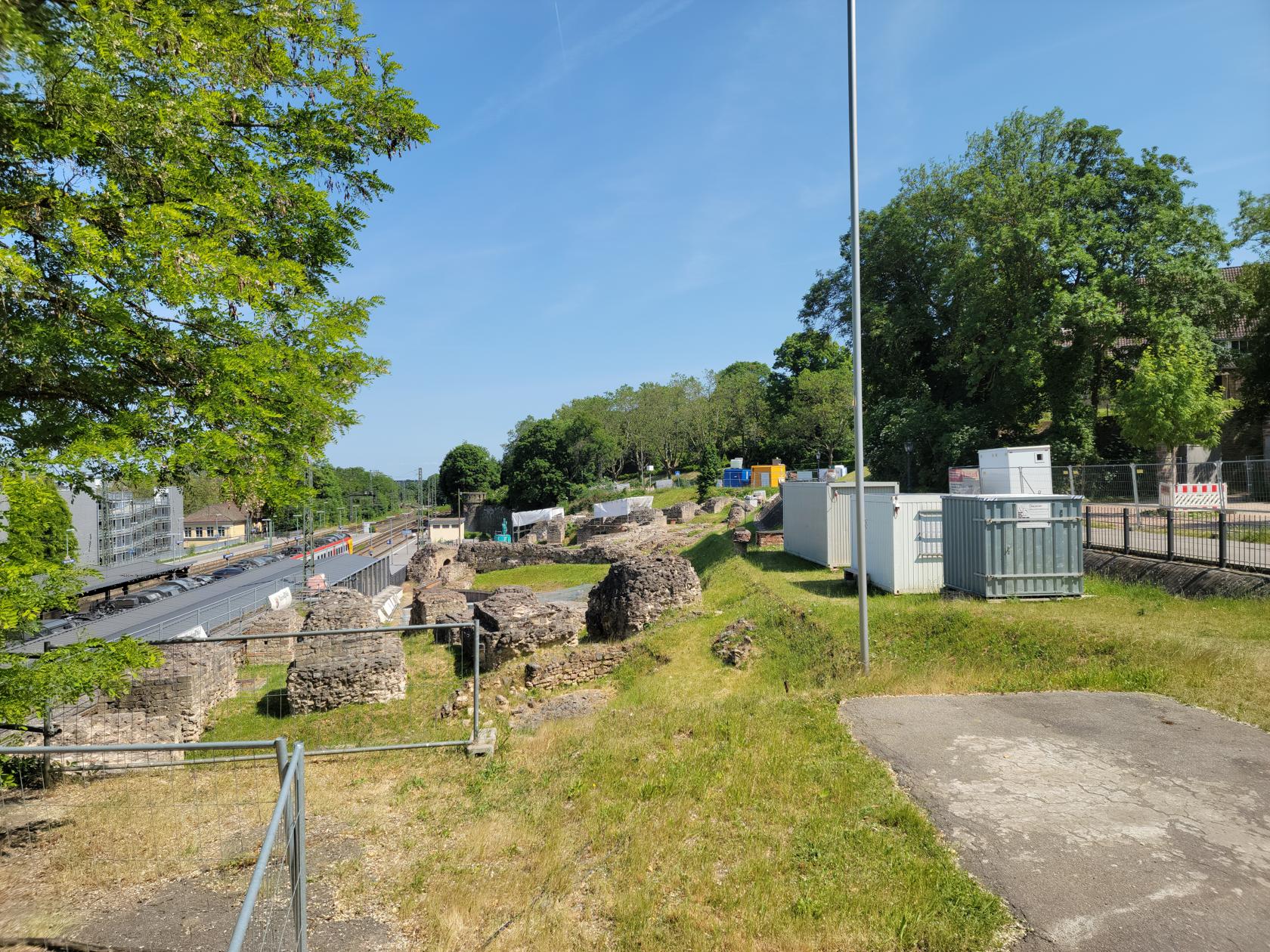
This week we met our good and long time friends Karl Heinz and Isolde in Mainz for lunch and a customary Stadtbummel, if only to see some of the sights Patti has never seen.
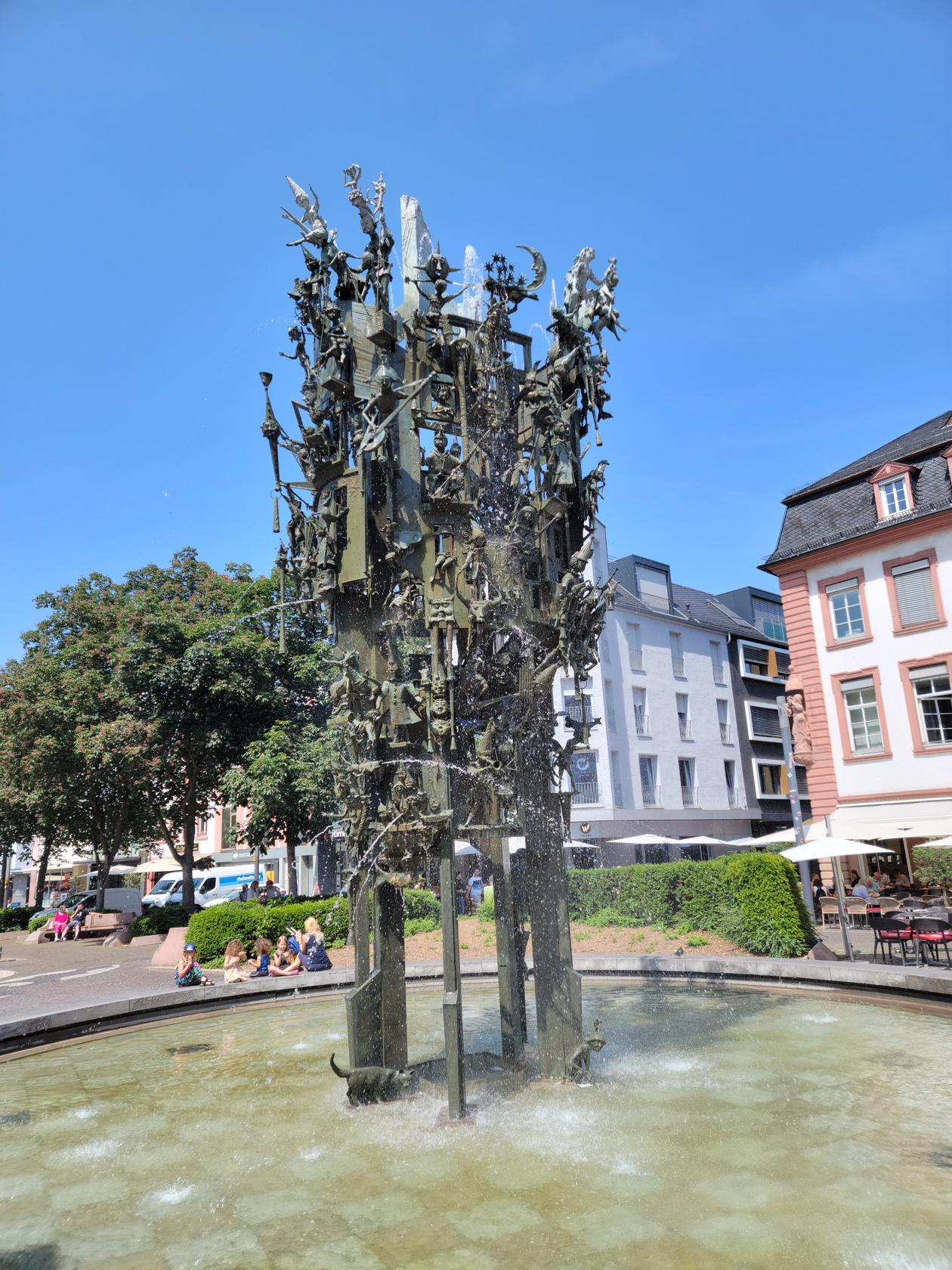
Fastnachtsbrunnen – Mainz, Germany
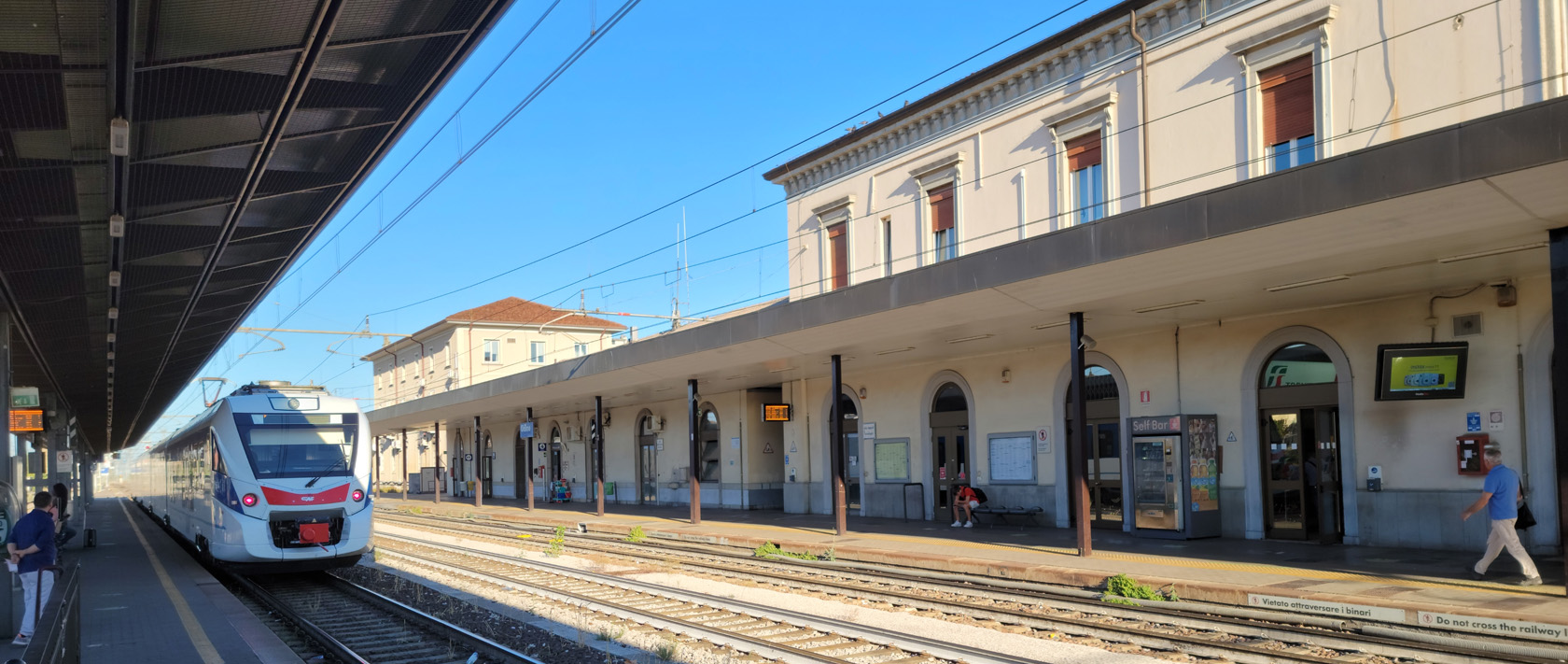
To get there, we had to take the RMV S8 line from the Marktplatz in Offenbach to the Römisches Theater in Mainz. Unfortunately for us, there a typical issue which held the train up for forty-five minutes after we boarded and only went for two stops. Apparently something fell onto the tracks and tripped the signal on the line.
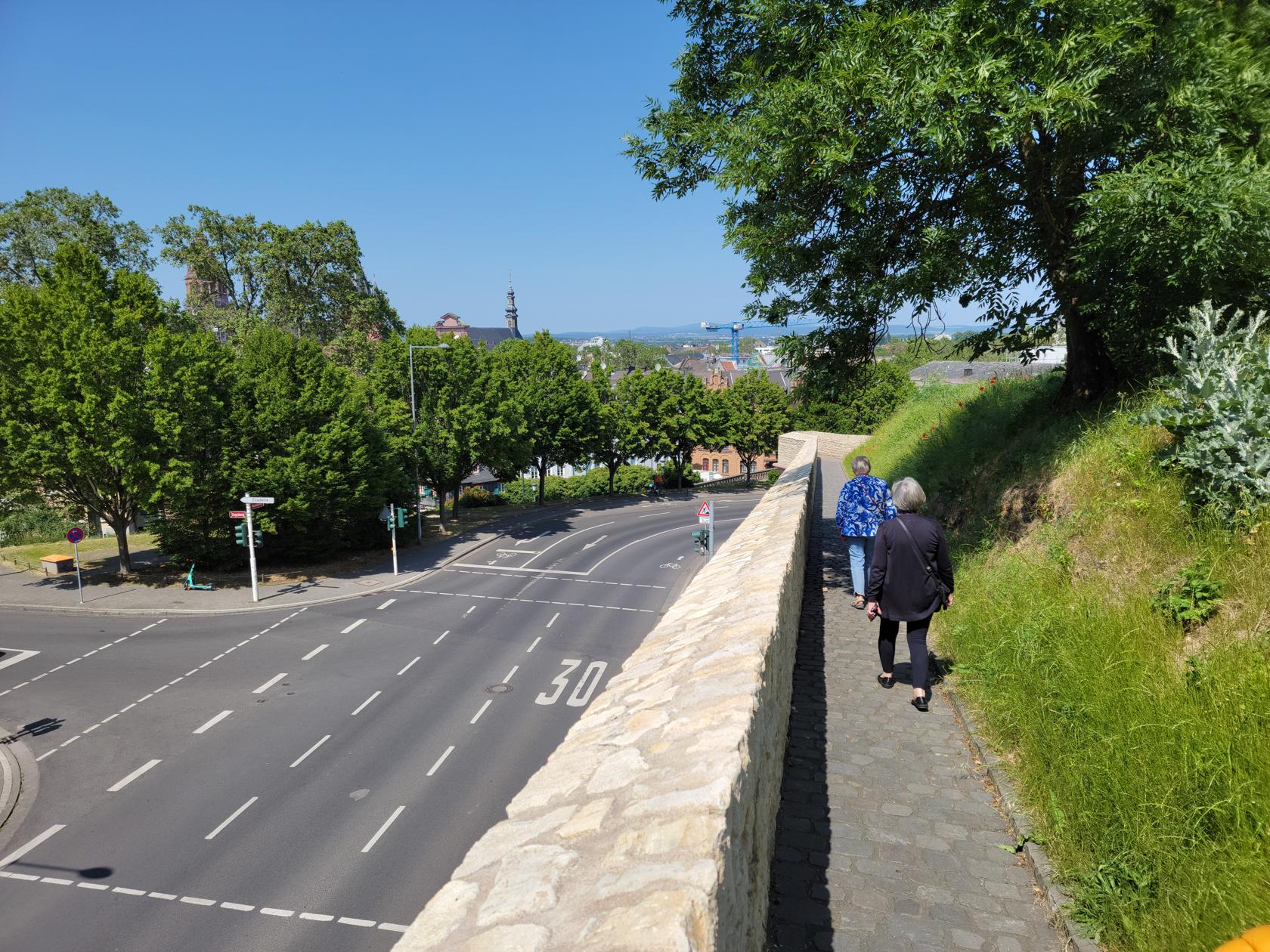
17th Century Fortress – Zitadelle – Mainz, Germany
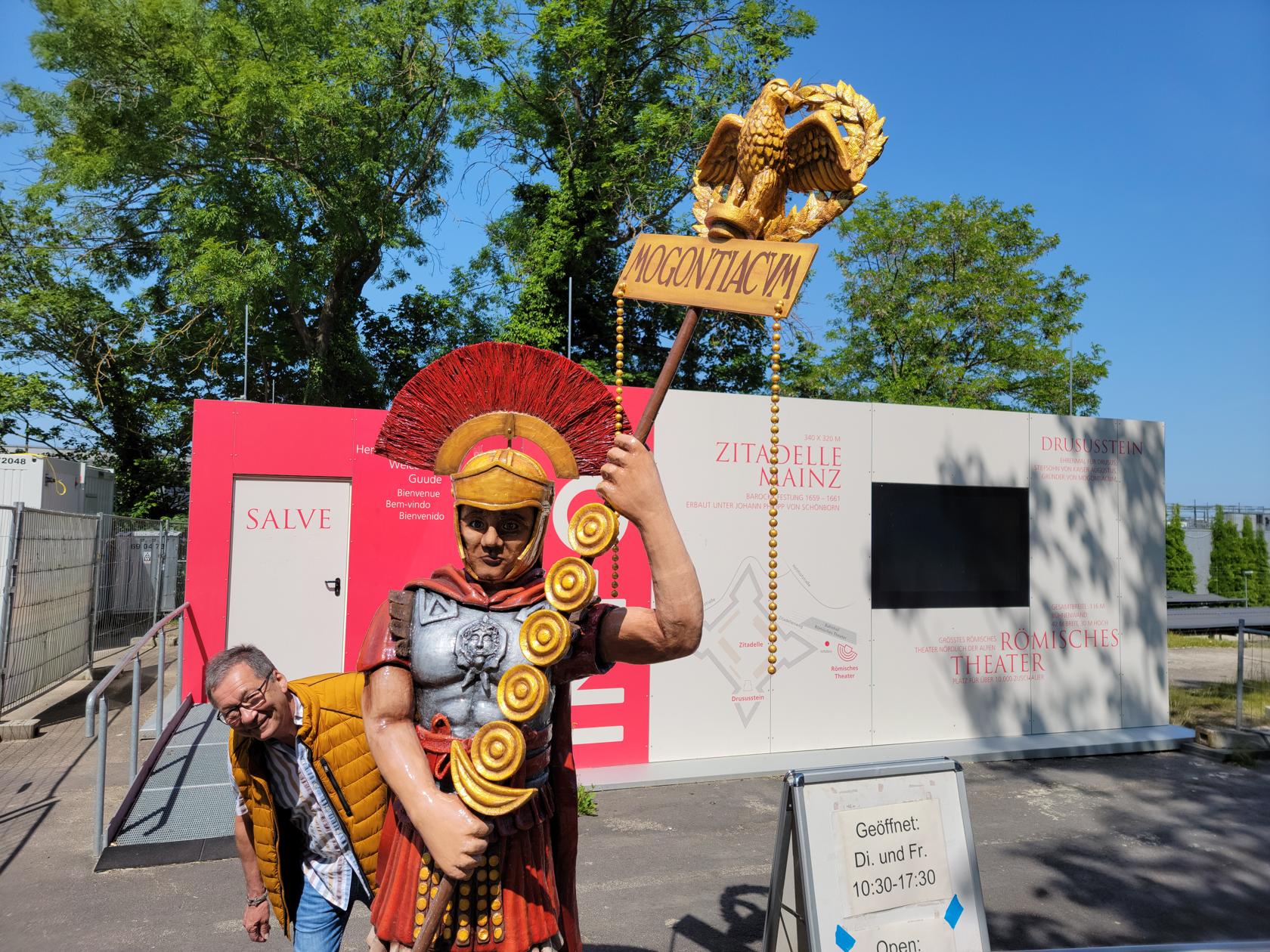
Karl Heinz – Römisches Theater – Zitadelle – Mainz, Germany
Römisches Theater – Zitadelle – Mainz, Germany
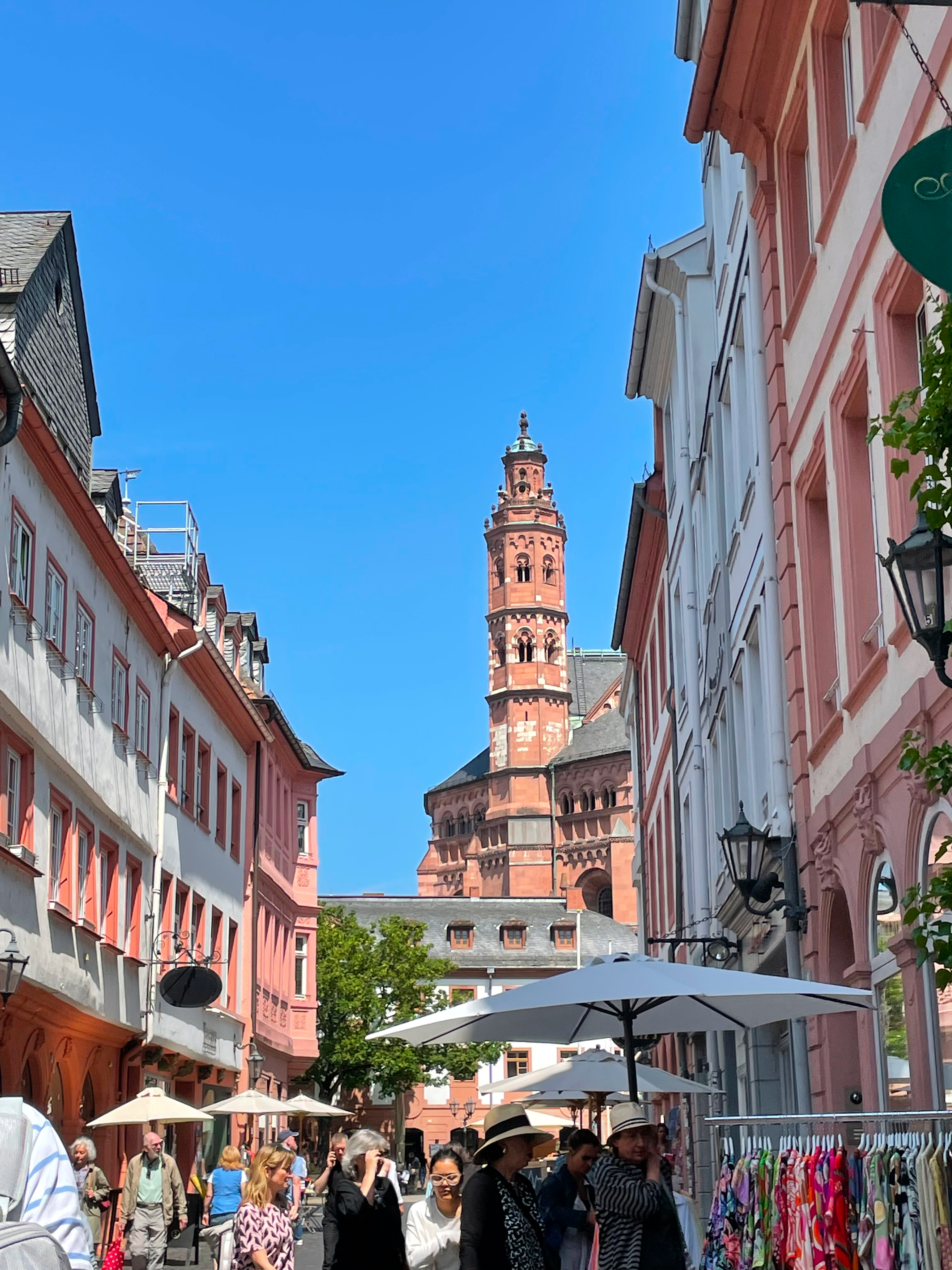
Mainzer Dom
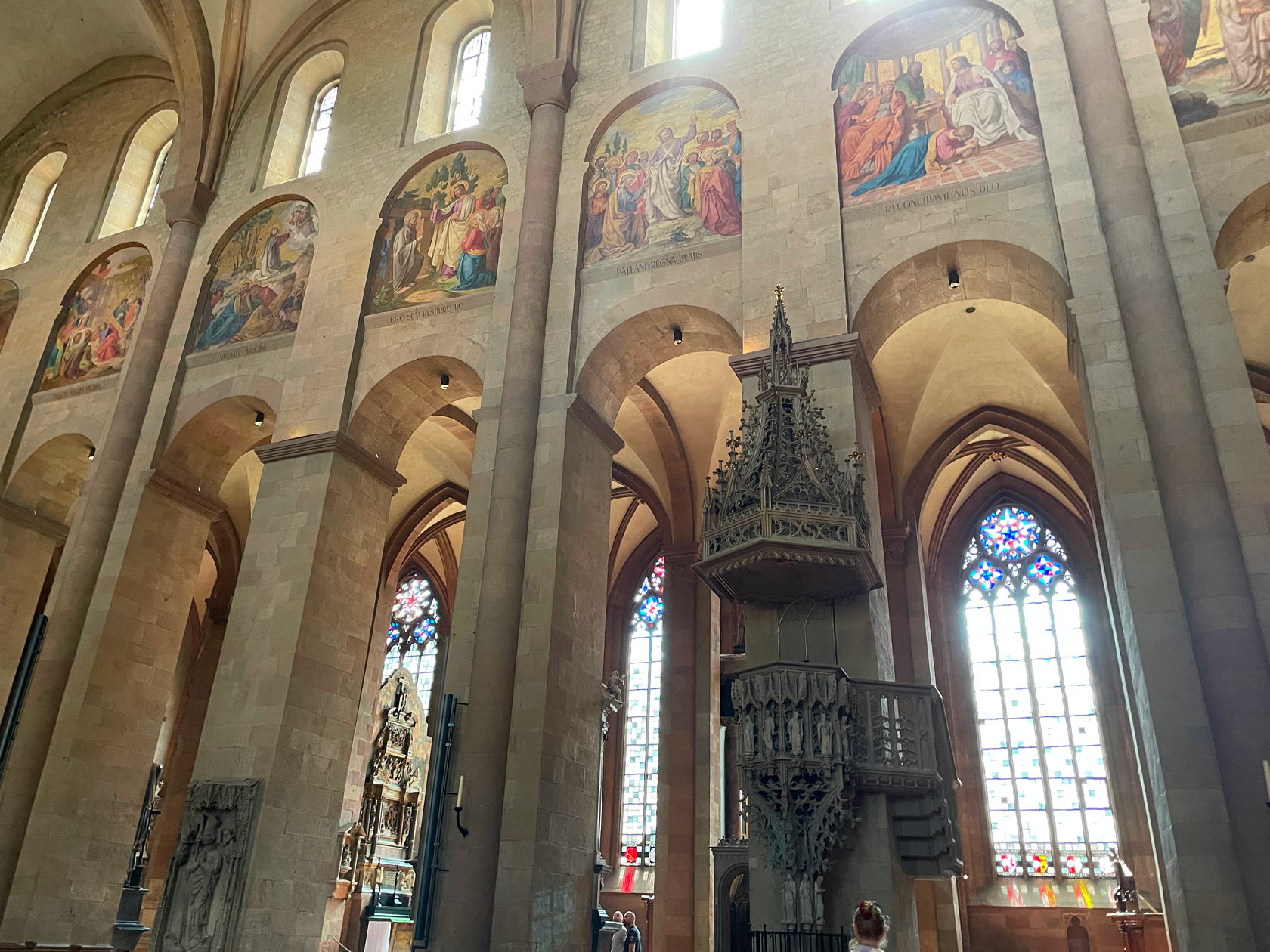
Once the item was removed from the tracks, there were no further difficulties and we reached Mainz with plenty of time before lunch. We toured the Mainzer Dom and the Marktplatz, which are side by side, while we enjoyed the exceptional weather we were having for Germany.
Mainzer Dom – Mainz, Germany
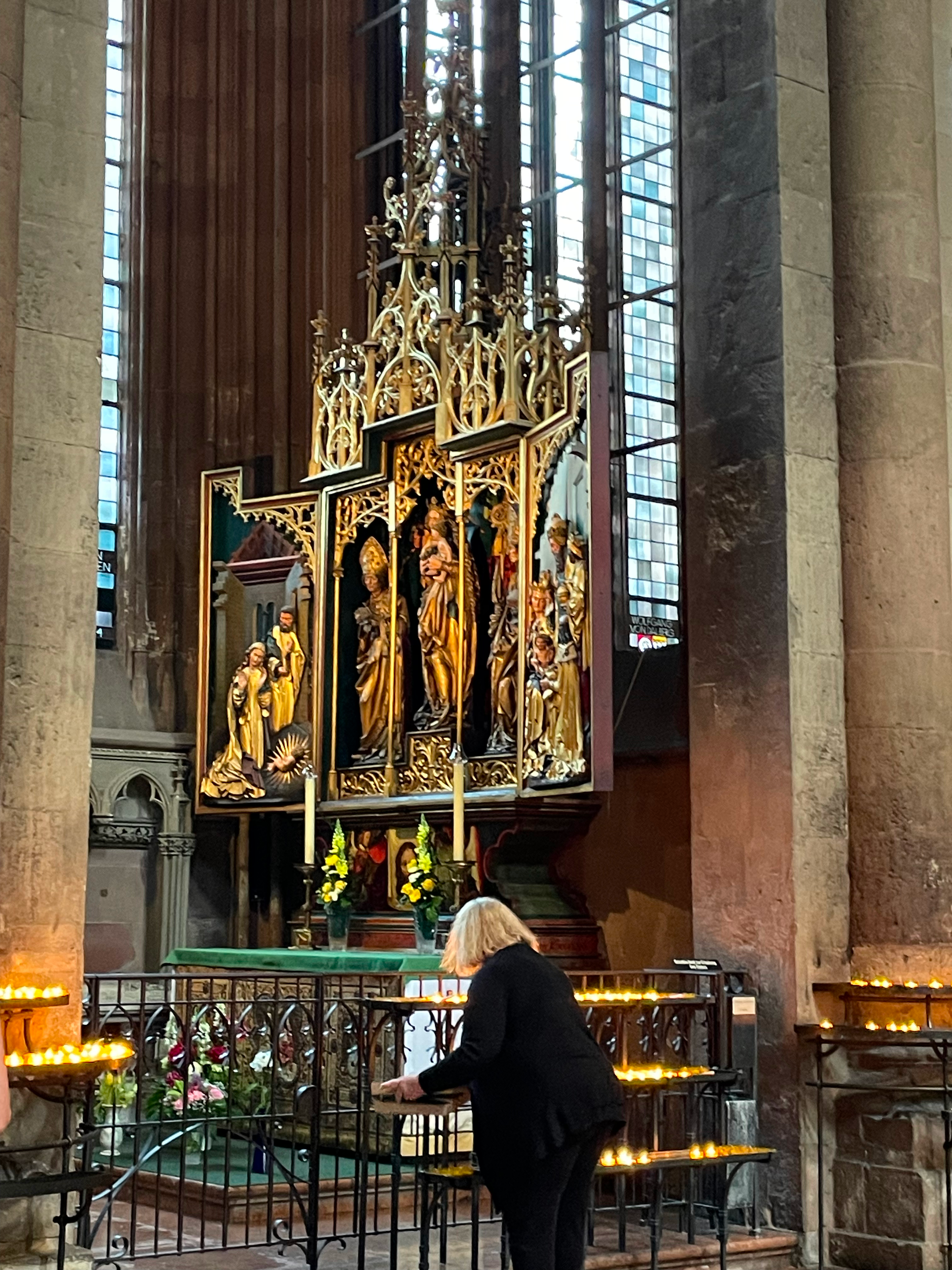
Altar – Mainzer Dom – Mainz, Germany
Side Altar – Mainzer Dom – Mainz, Germany
Saint Ignatius Church
One of the more colorful churches inside is Saint Ignatius church. Though rather plain from outside the inside is definitely worth a look. The baroque style and paintings are impressive.
Saint Ignatius Church – Mainz, Germany
Saint Stephan’s Church
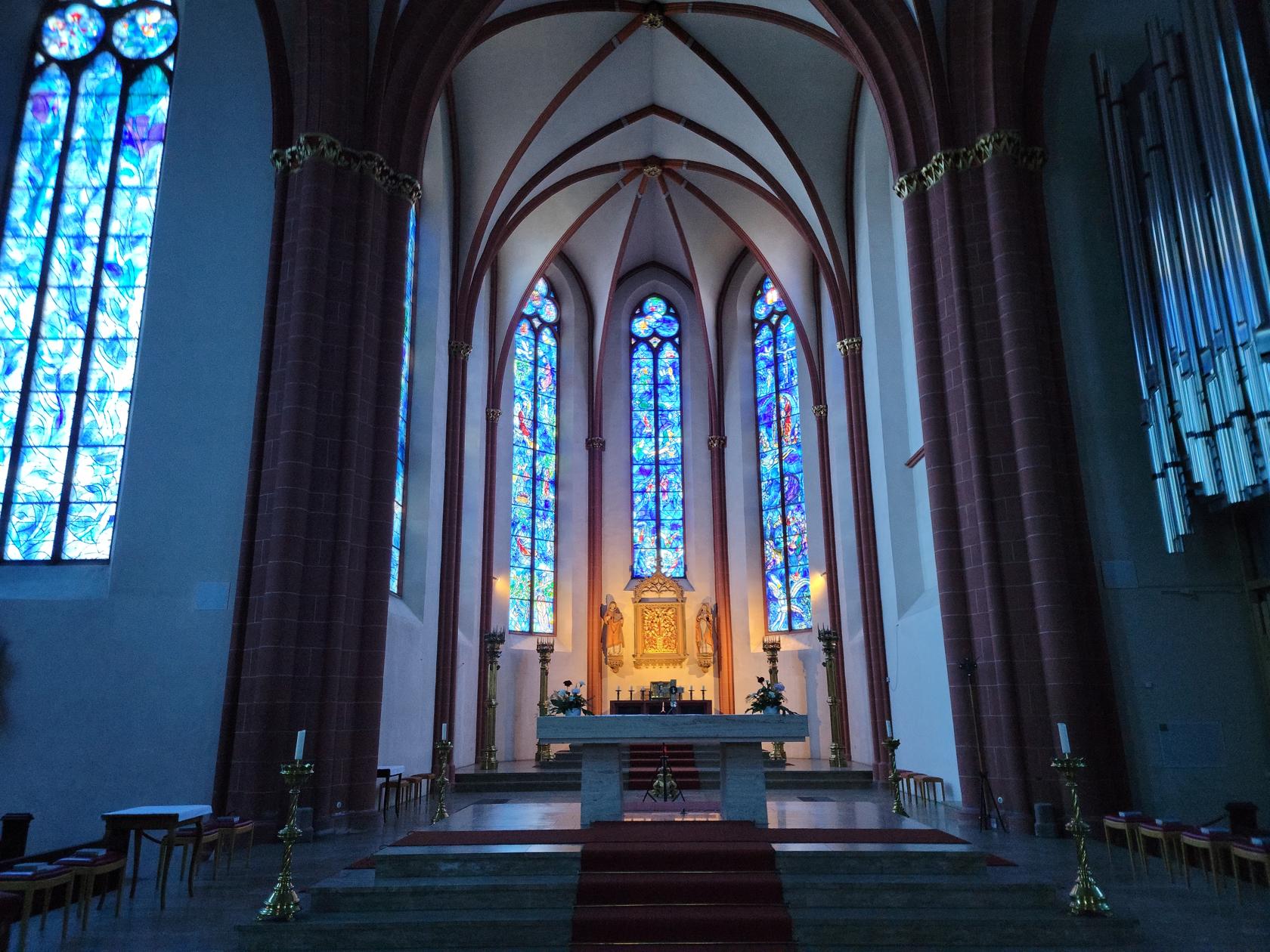
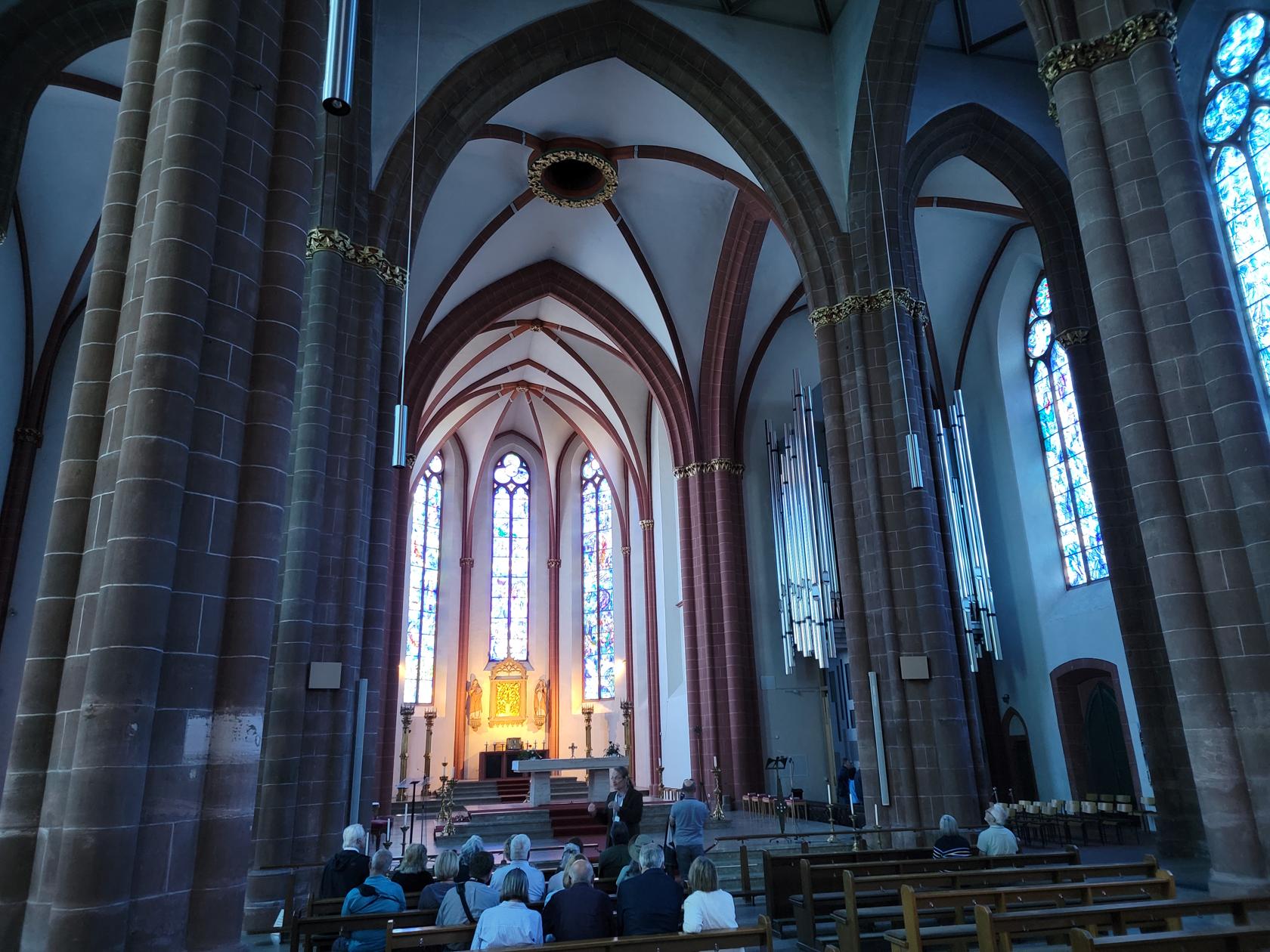
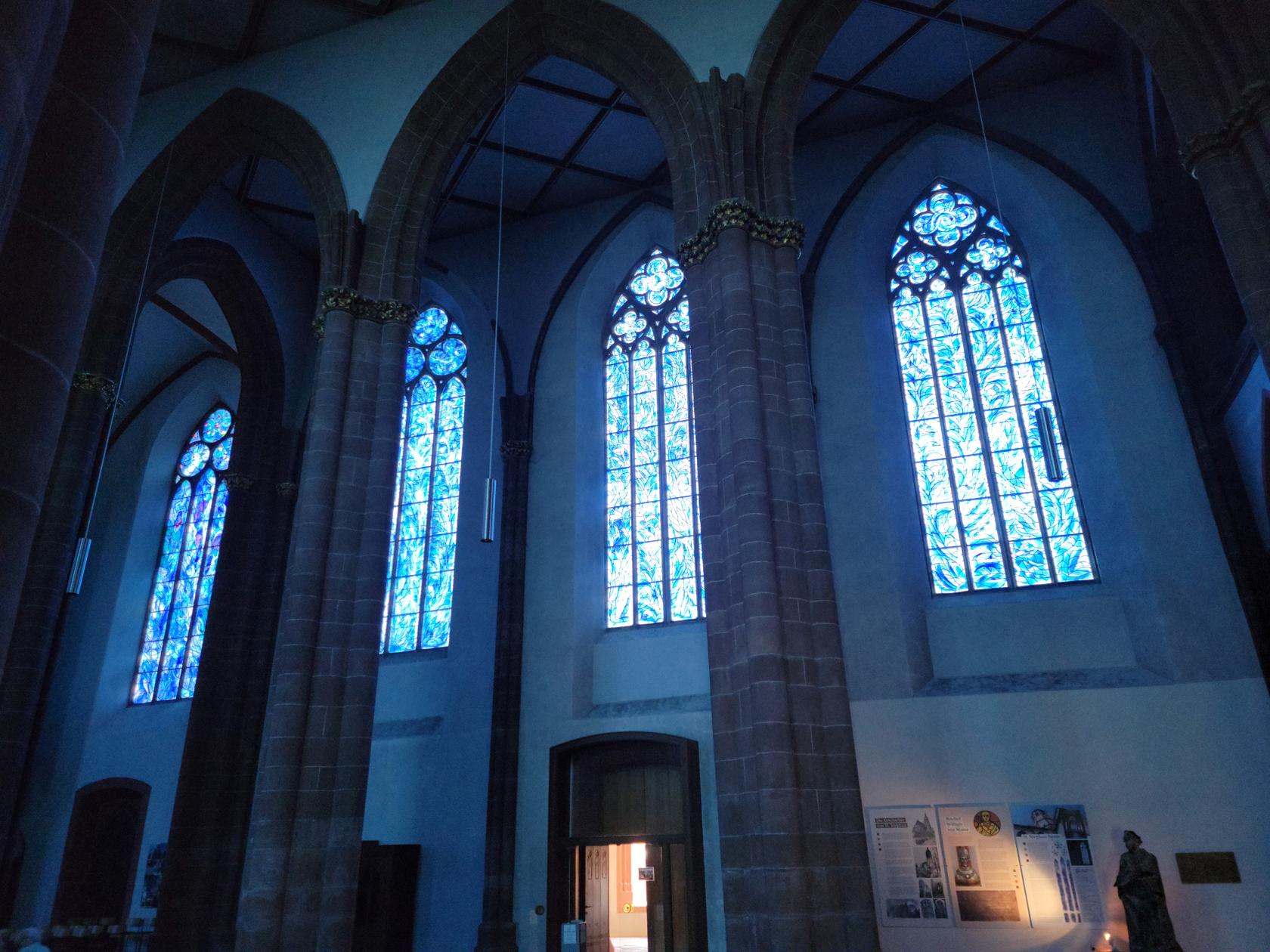
A must stop is Saint Stephan’s church, if only to see the famous church windows designed by Marc Chagall. Once inside, the eerie blue glow that occurs inside a bright sunny day is indeed a treat for the eyes.
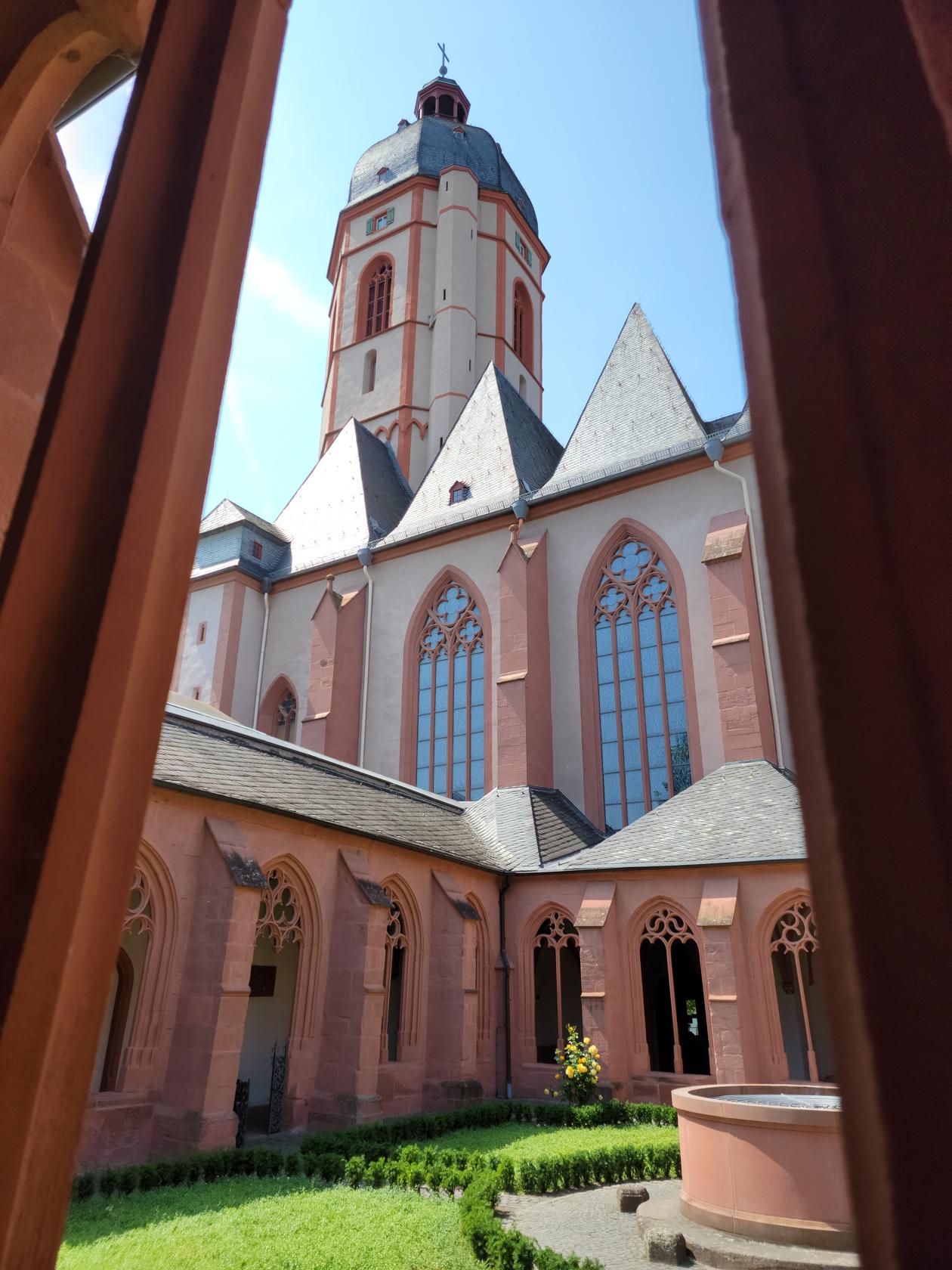
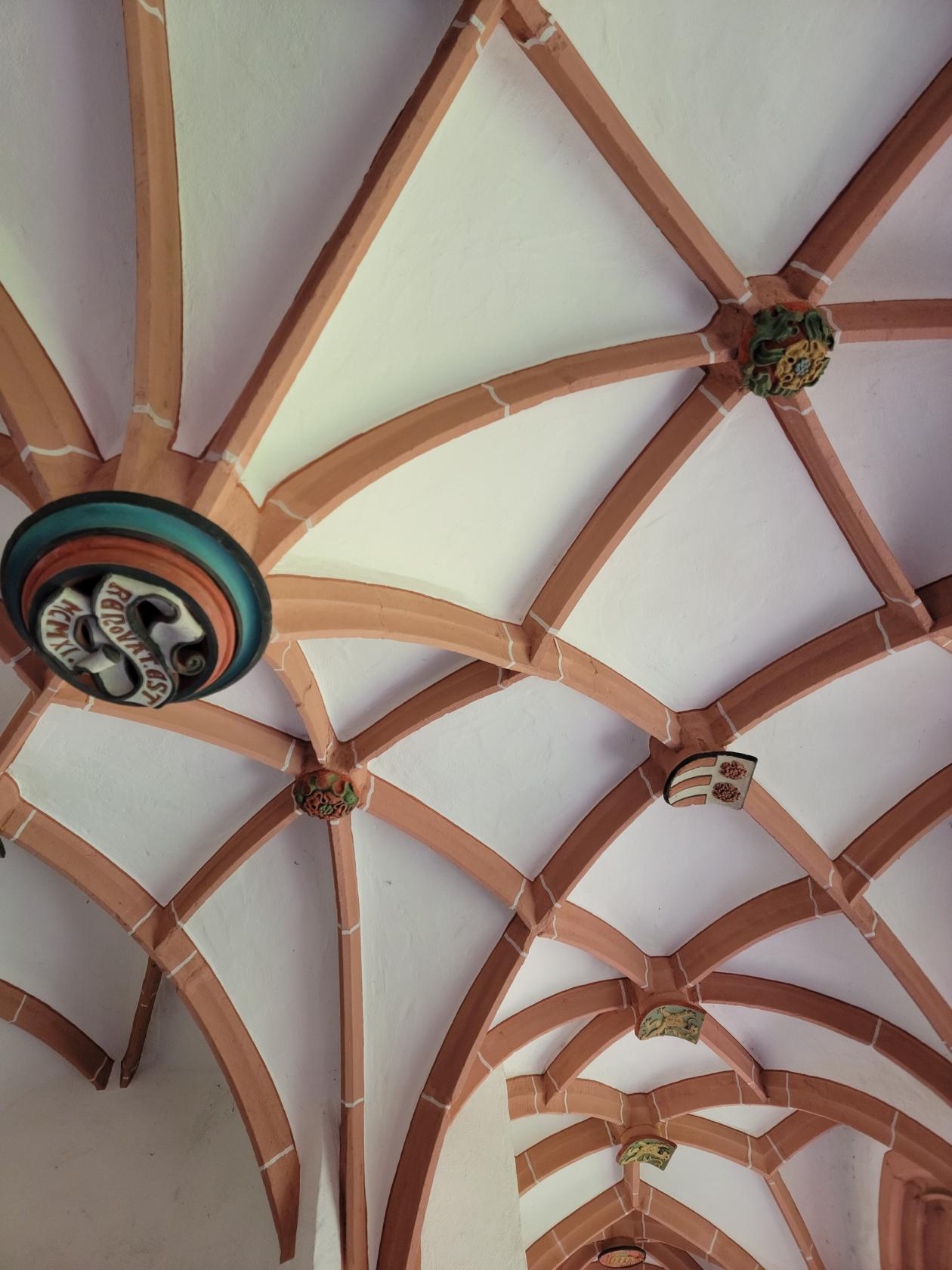
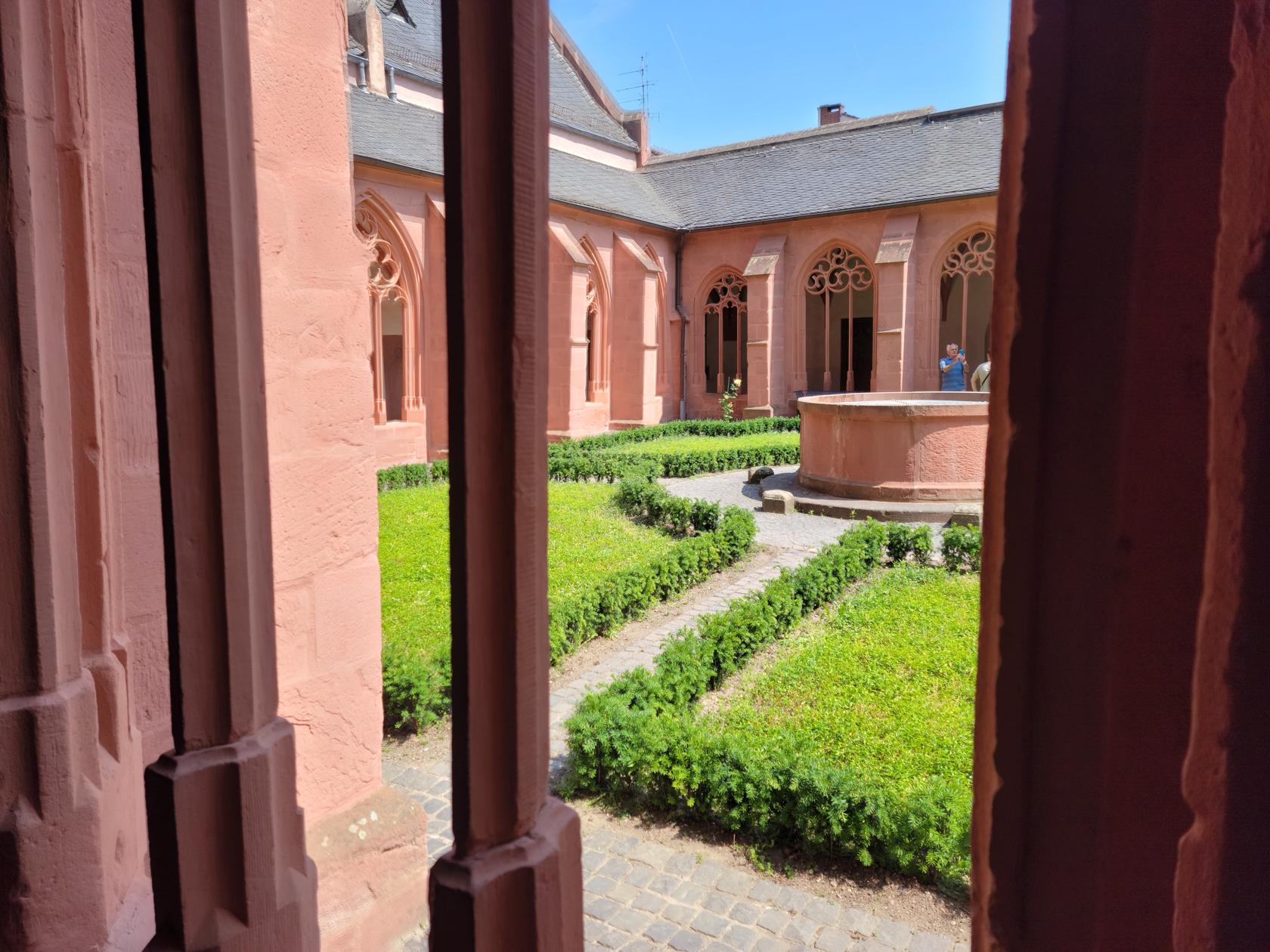
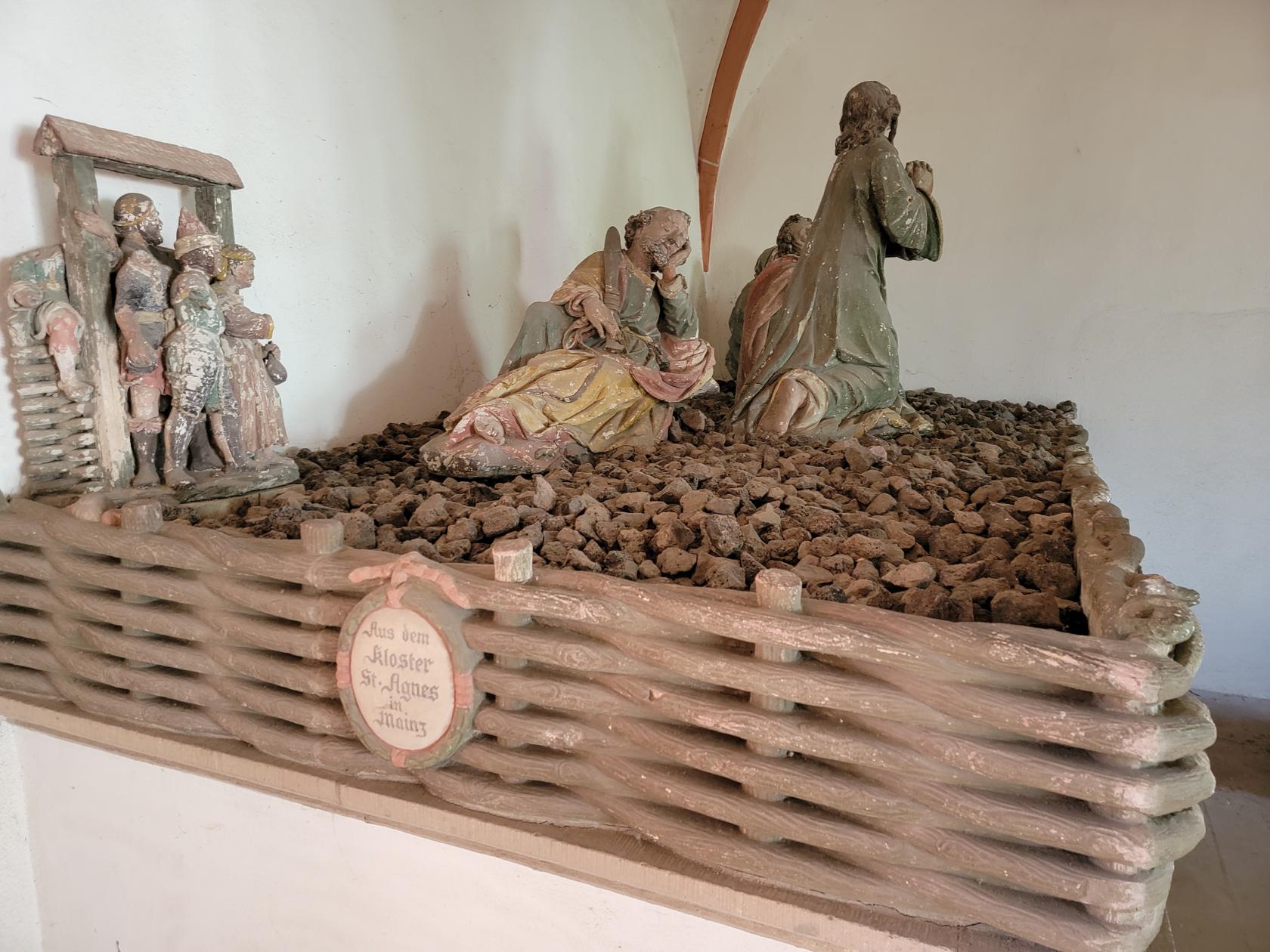
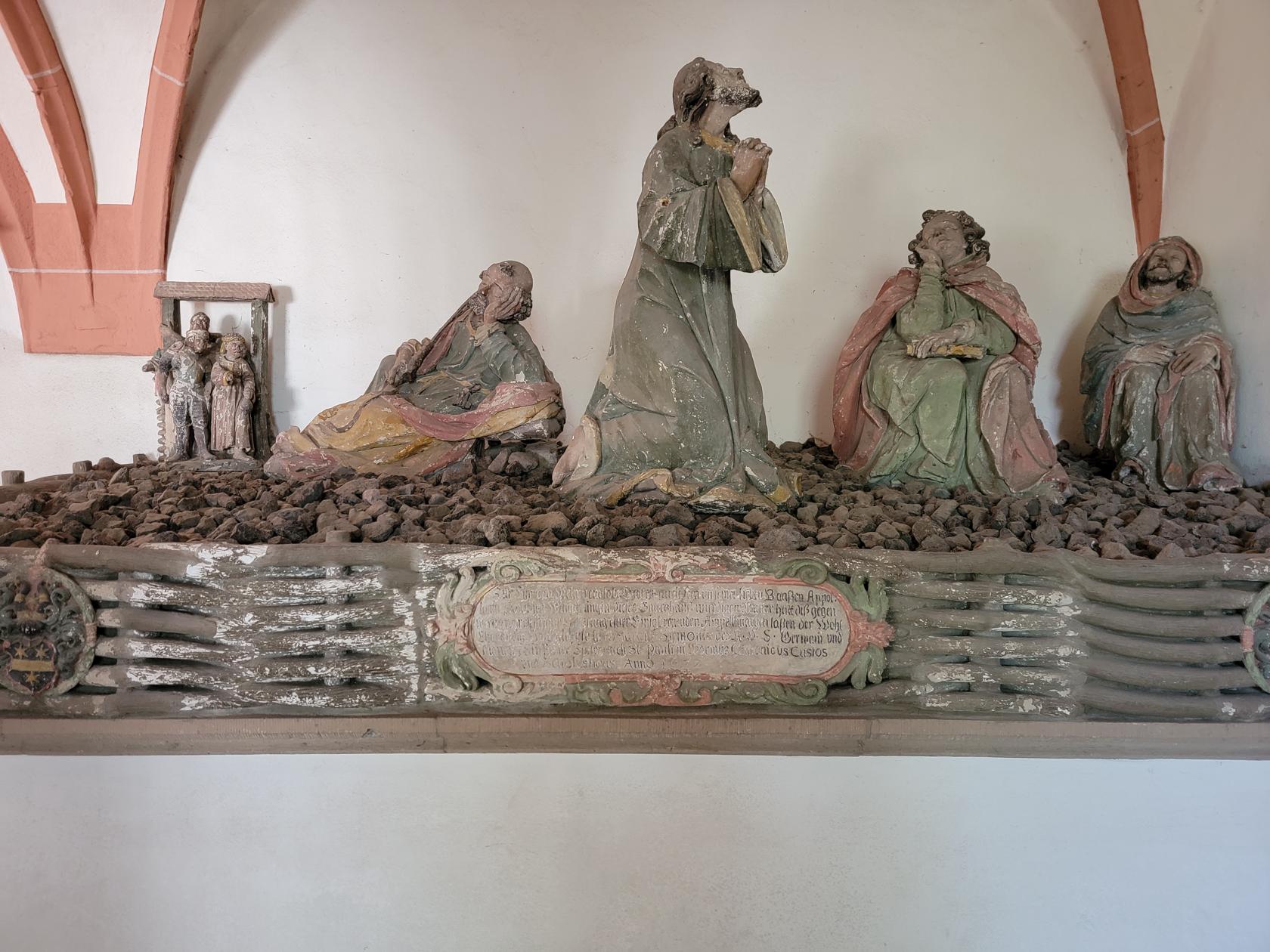
Courtyard and St. Agnes Denkmal – Saint Stephan’s Church – Mainz, Germany
Courtyard and St. Agnes Denkmal – Saint Stephan’s Church – Mainz, Germany
Courtyard and St. Agnes Denkmal – Saint Stephan’s Church – Mainz, Germany
Courtyard and St. Agnes Denkmal – Saint Stephan’s Church – Mainz, Germany
Almost totally destroyed during World War II along with the rest of Mainz, the church was rebuilt in the late 1950s. Marc Chargall created a number of stained glass windows from 1978 and 1985 depicting scenes from the Bible.
Chagall Windows – Saint Stephan’s Church – Mainz, Germany
Chagall Windows – Saint Stephan’s Church – Mainz, Germany
Chagall Windows – Saint Stephan’s Church – Mainz, Germany
Restaurants
Since we did not actually stay in the city we only had time with our friends to try the following restaurant for lunch.
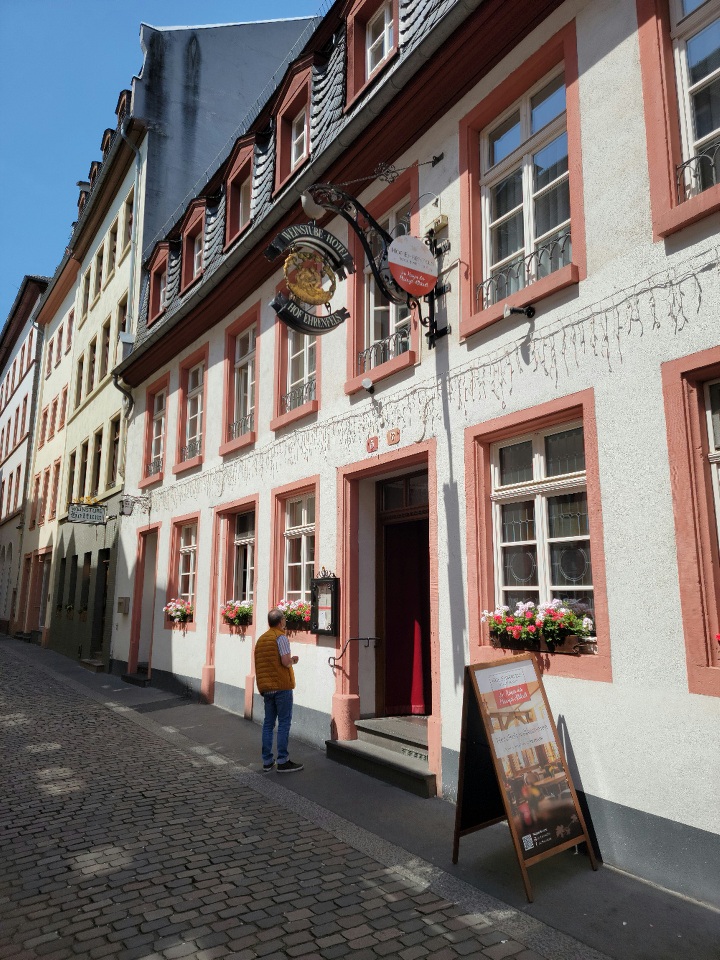
Hof Ehrenfels – Mainz, Germany
Hof Ehrenfels
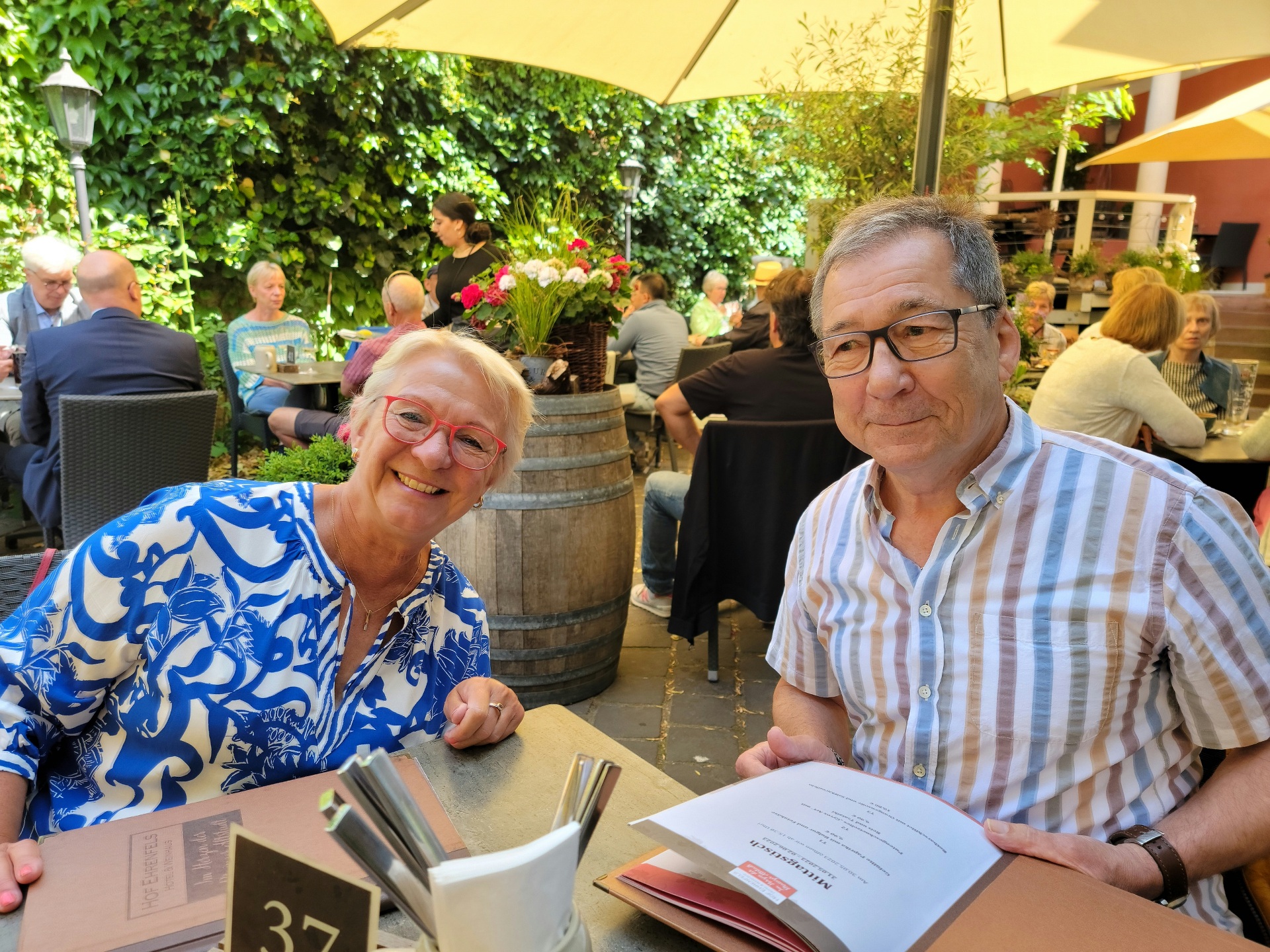
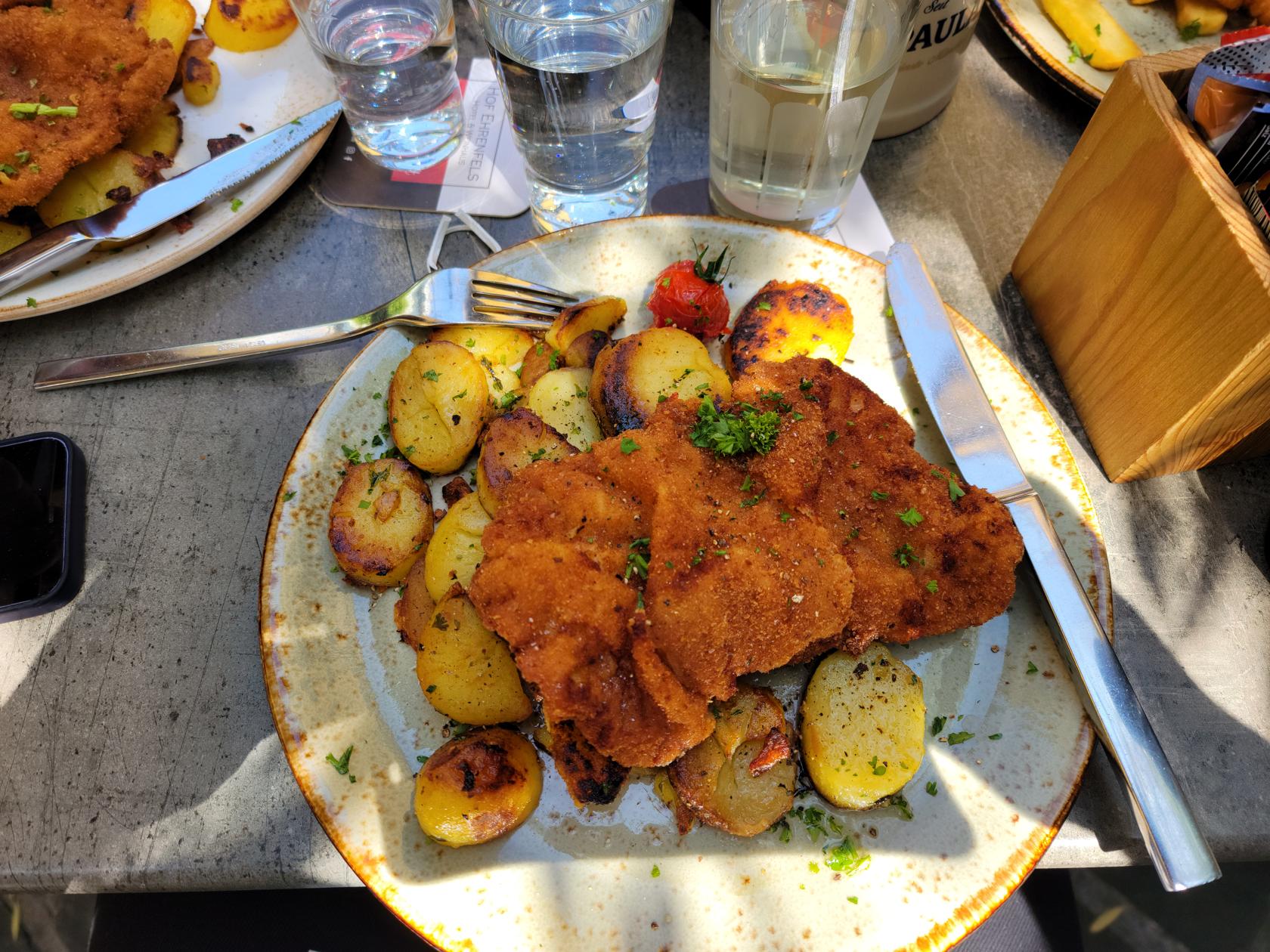
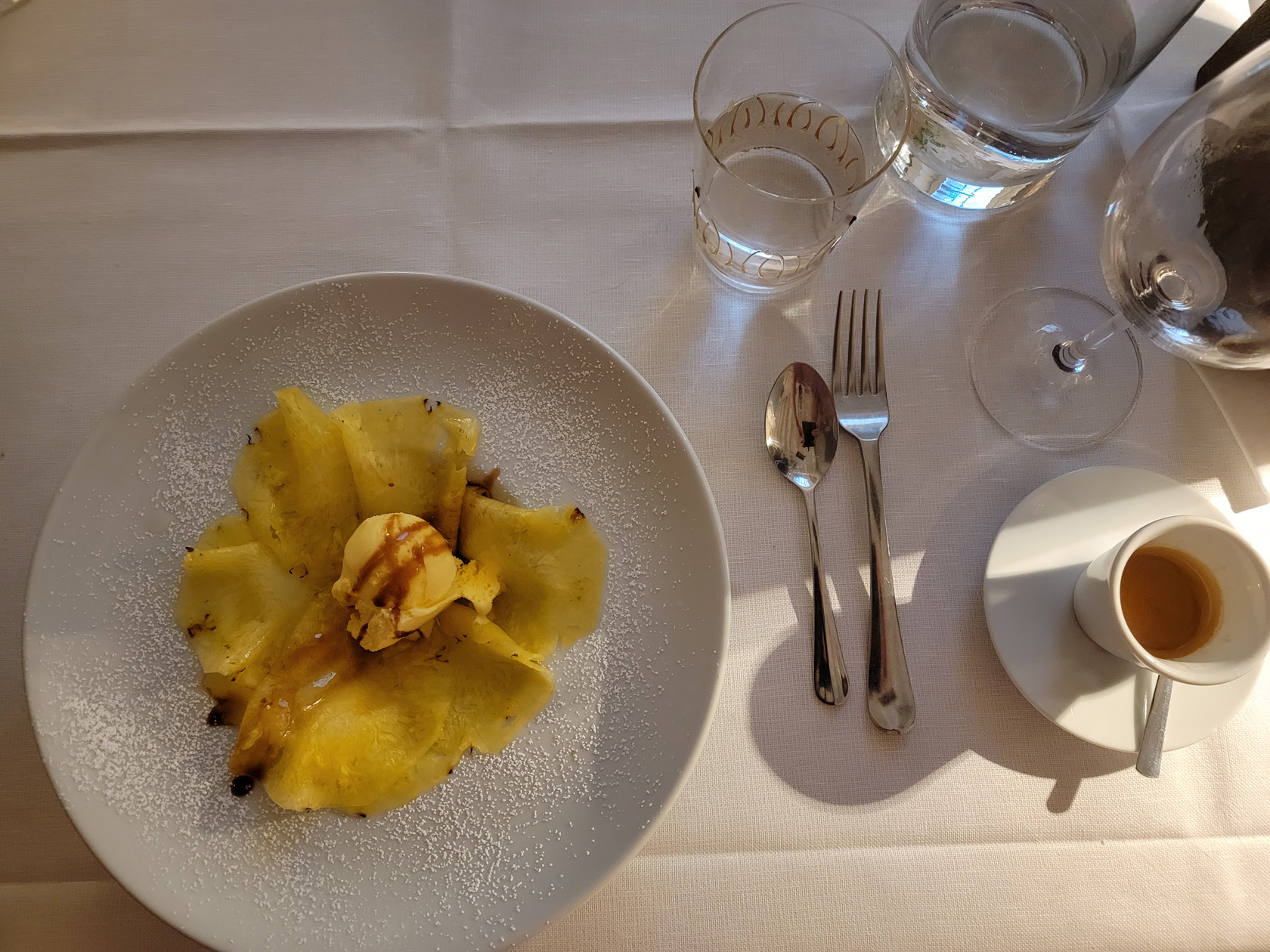
For lunch we ate at Hof Ehrenfels, a stone’s throw away from the Mainzer Dom on Greberstraße. It is actually a three star hotel that also has a very good restaurant with a garden. The four of us ate outside in garden and had Wiener Schnitzel.
Continuing our journeys on the eastern coast of Sicily, we arrived at Catania. A port city and working town that believe it or not, is even grittier than Naples.
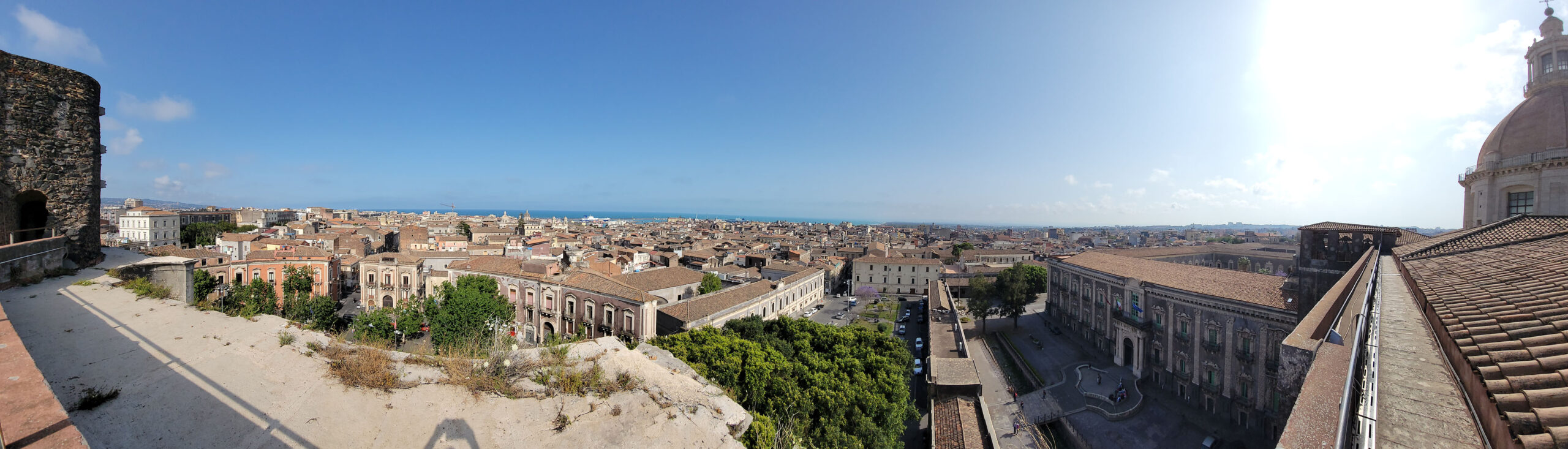
Catania, a panorama – San Nicolo L’Arena Church – Catania, Sicily
Catania
Existing in the shadow of a large, ever erupting volcano, would seem like a fool’s errand. But the people of Catania do it everyday and only give it a second thought. Luckily, the volcano has not had a major eruption in some time, and since it’s monitored continuously, most people try to ignore it.
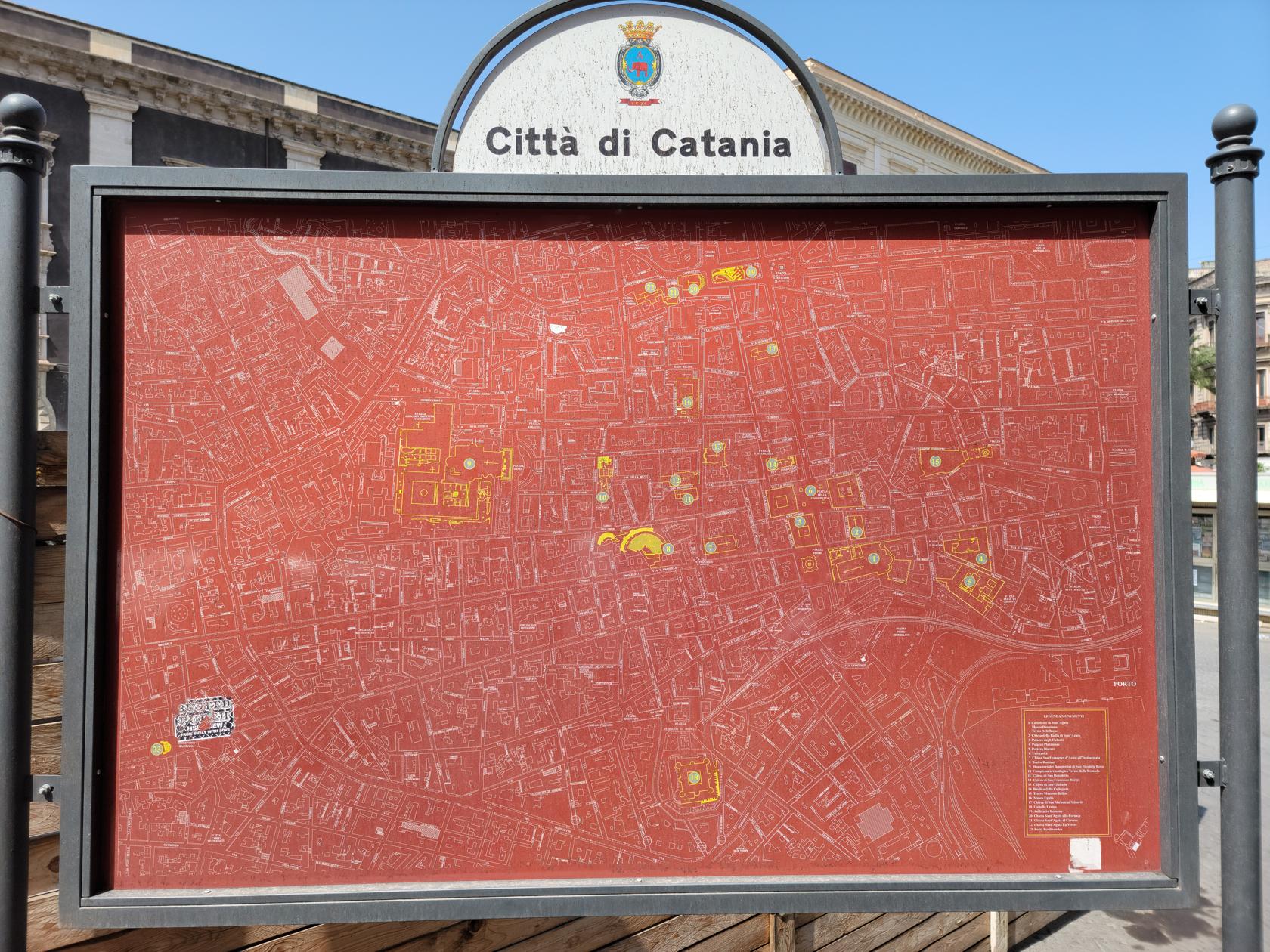
Map of Catania – Catania, Sicily
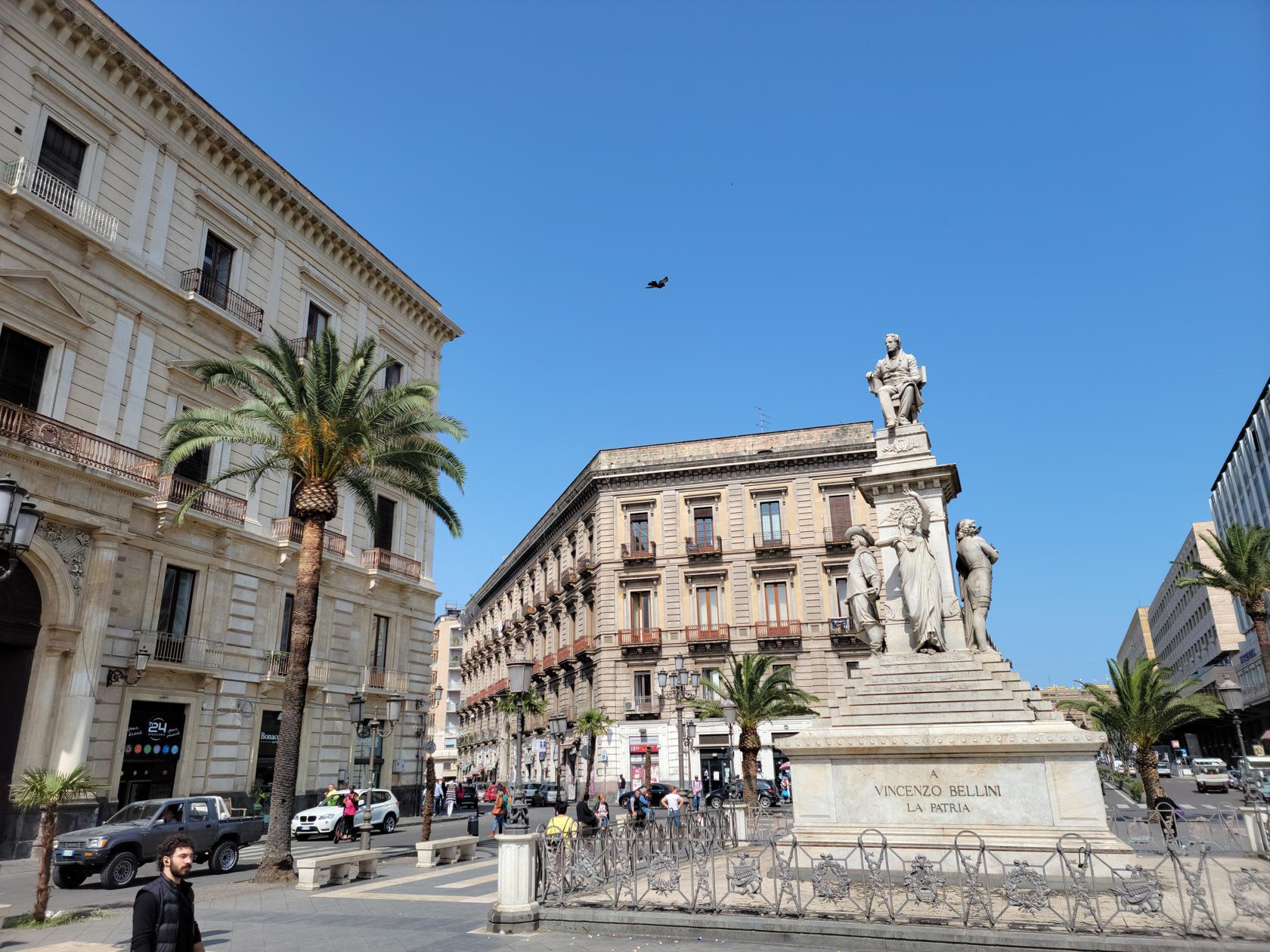
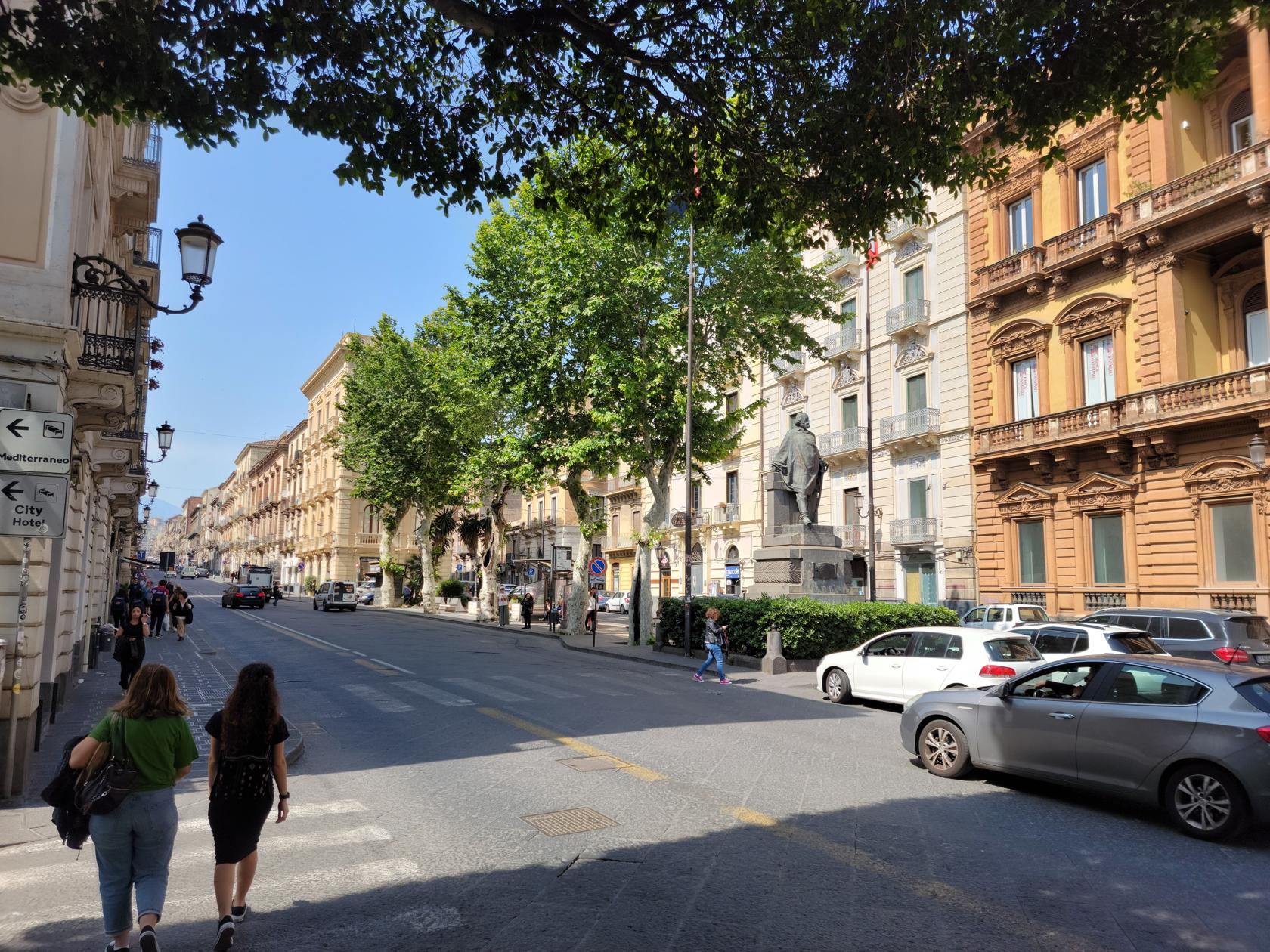
Via Etnae – Catania, Sicily
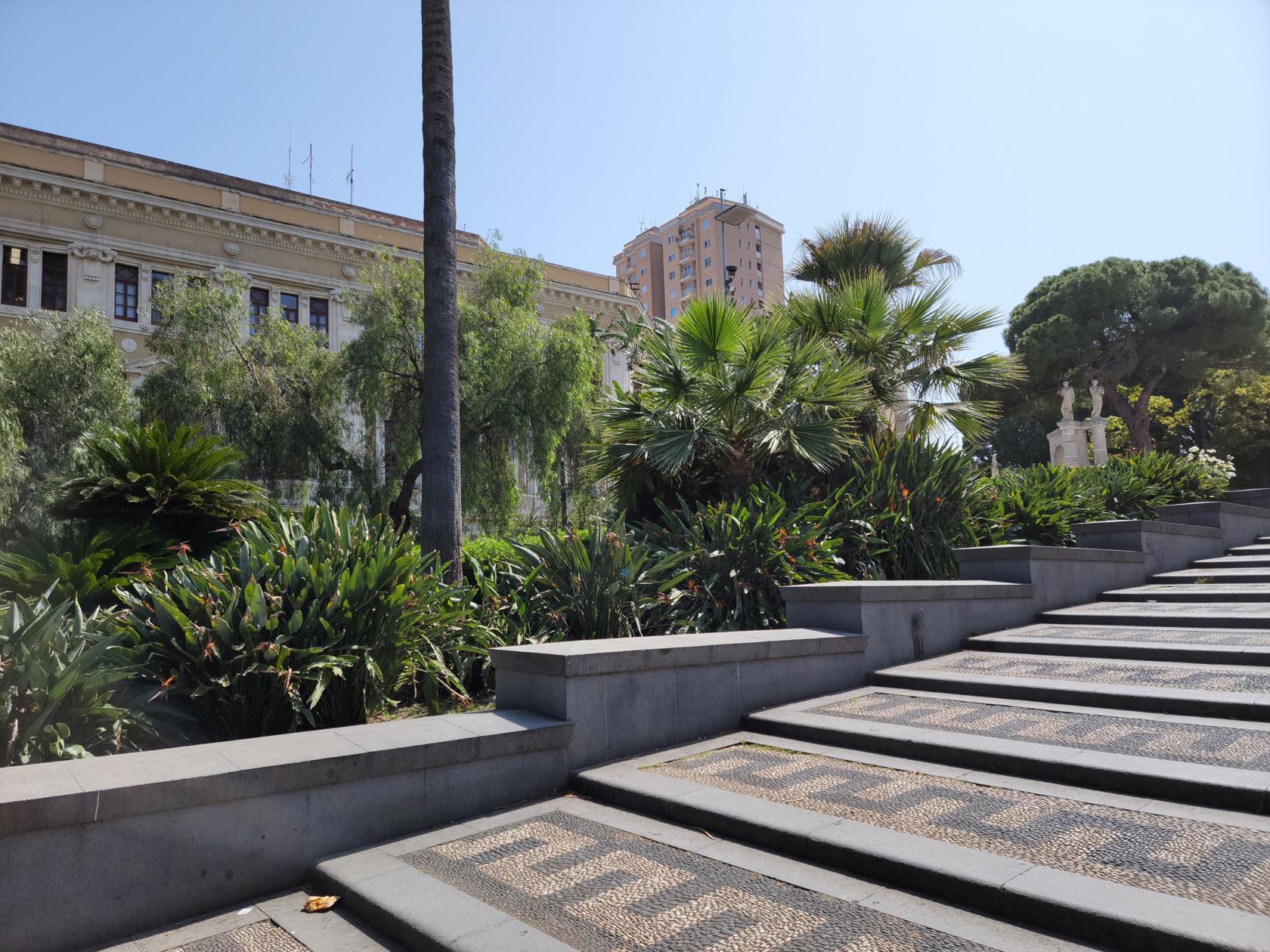
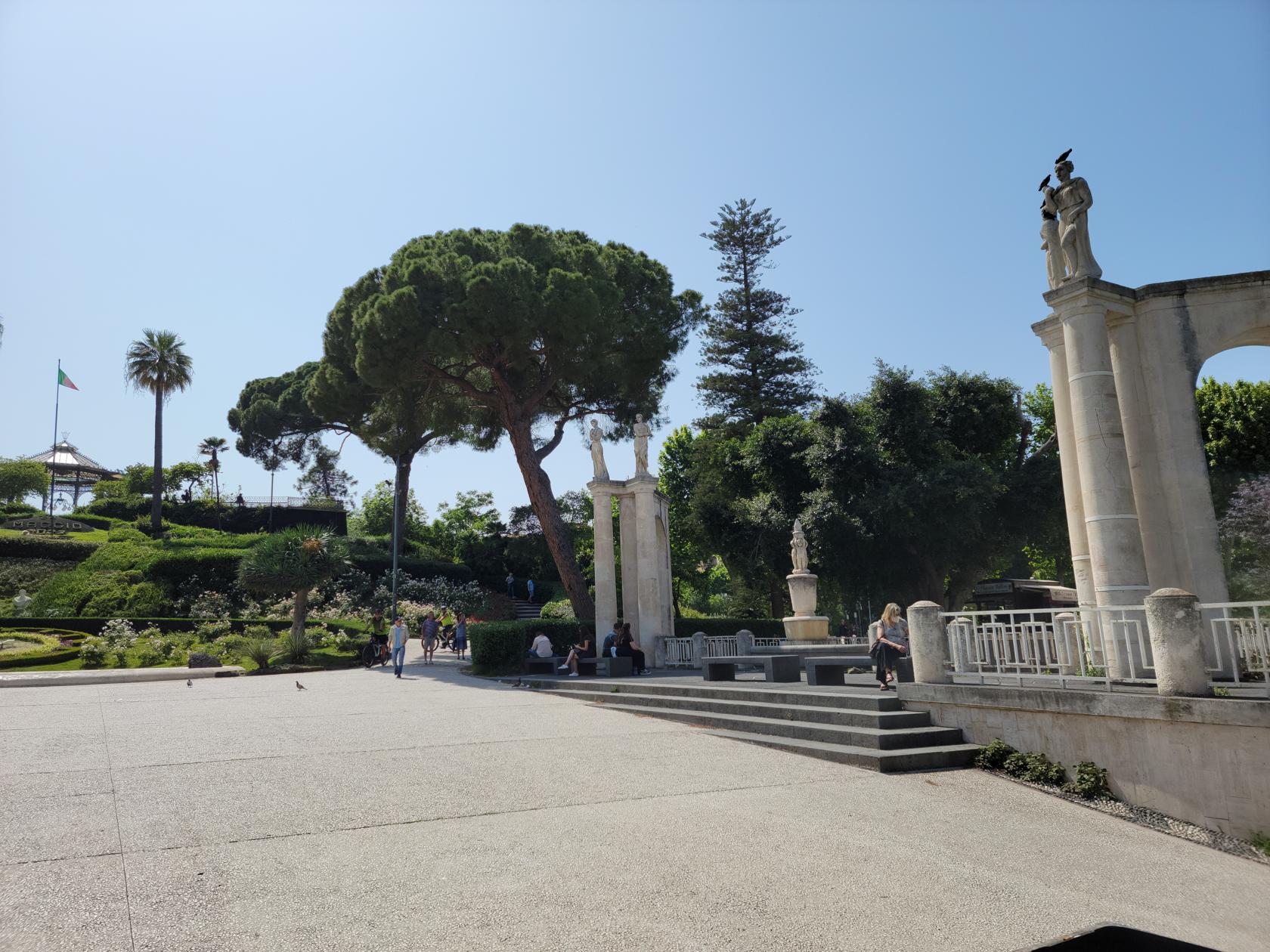
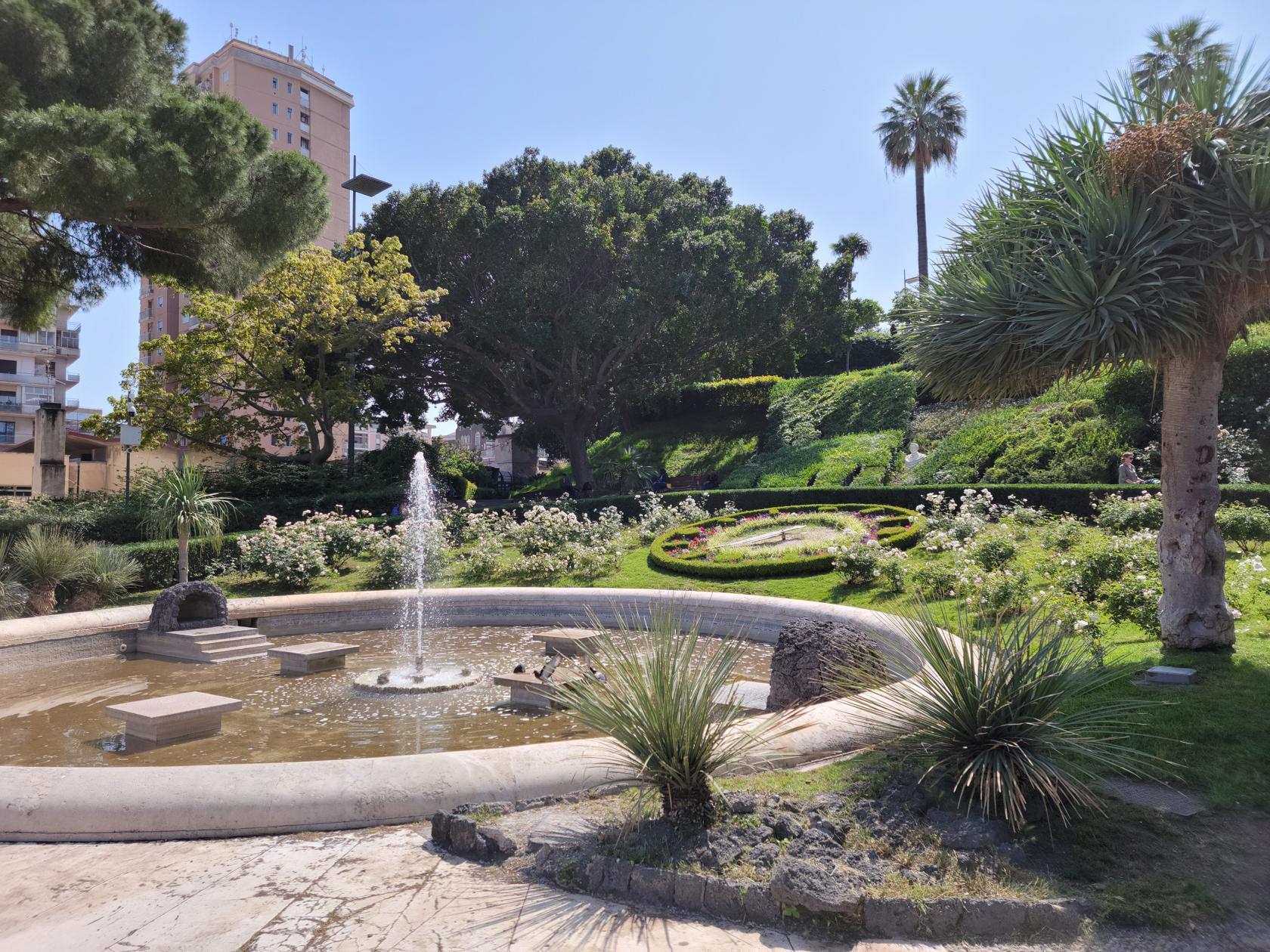
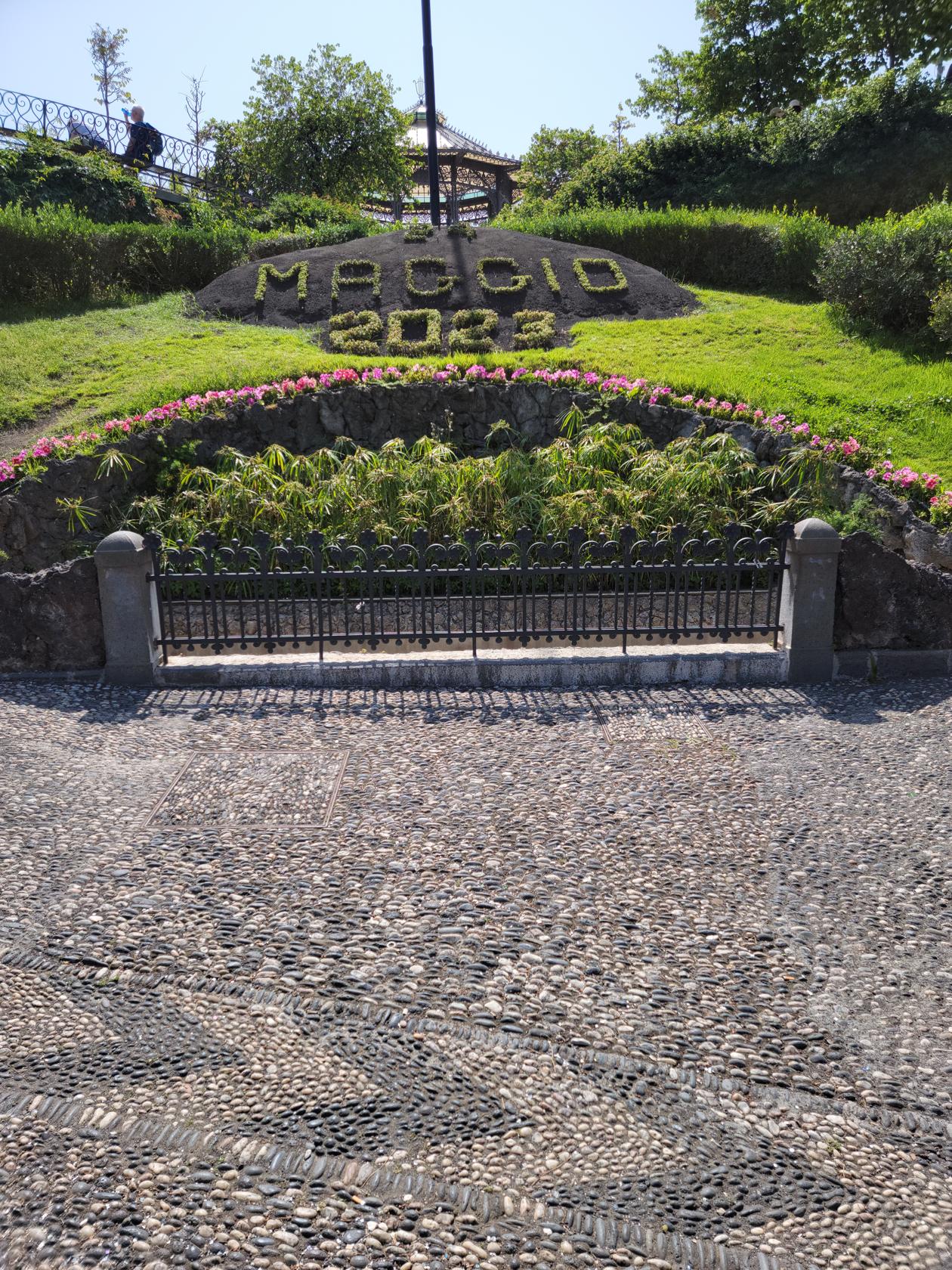
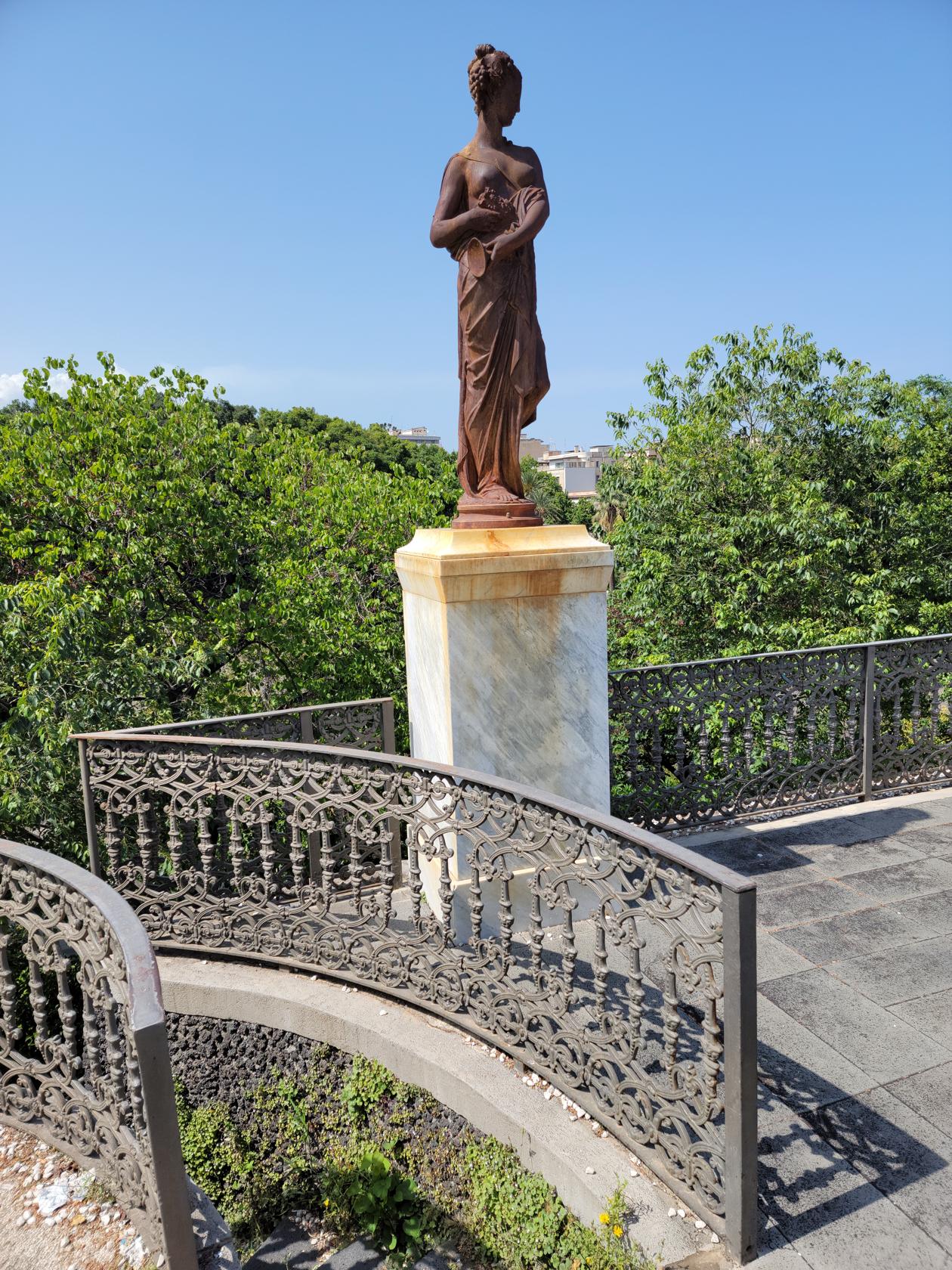
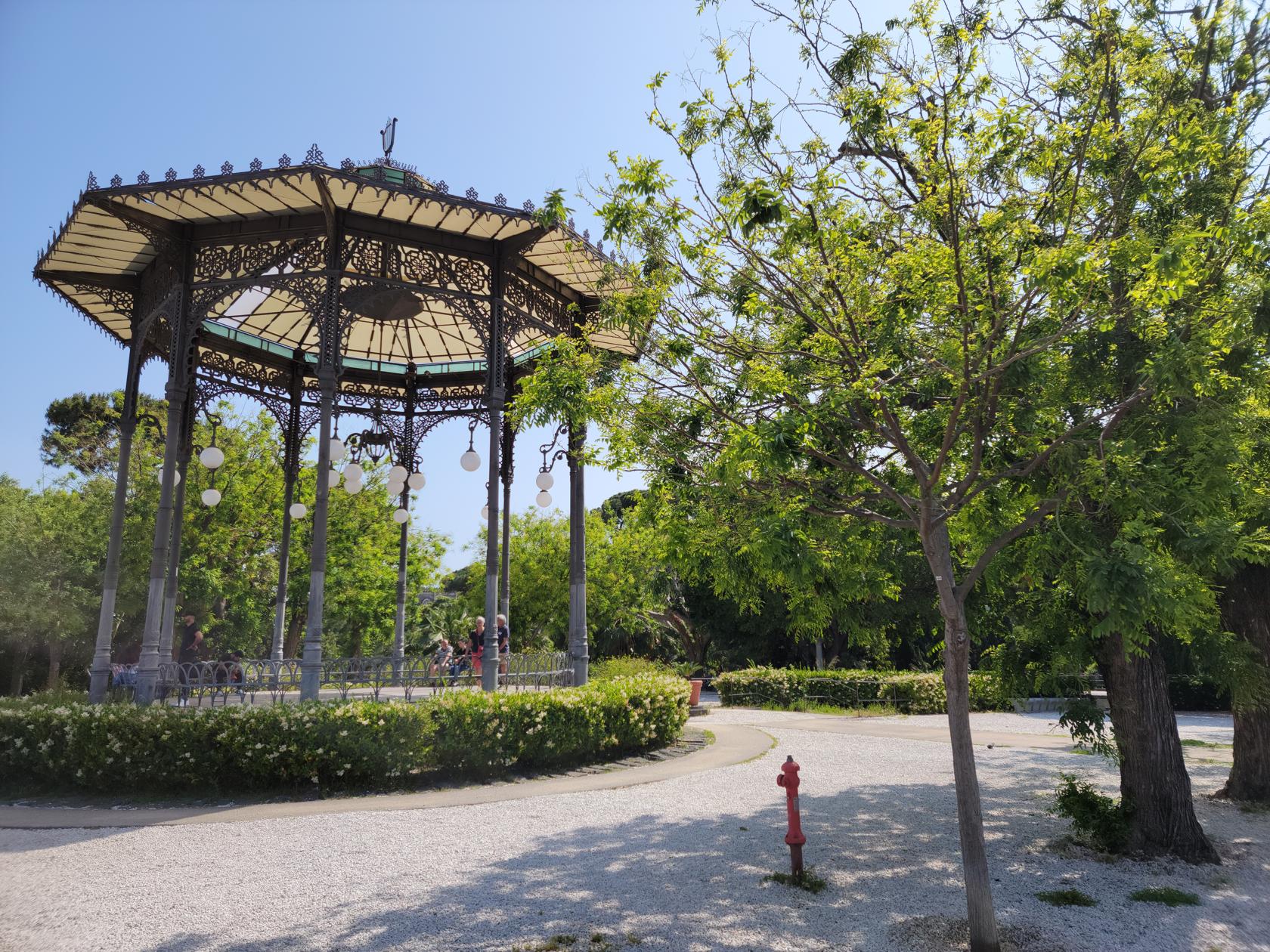
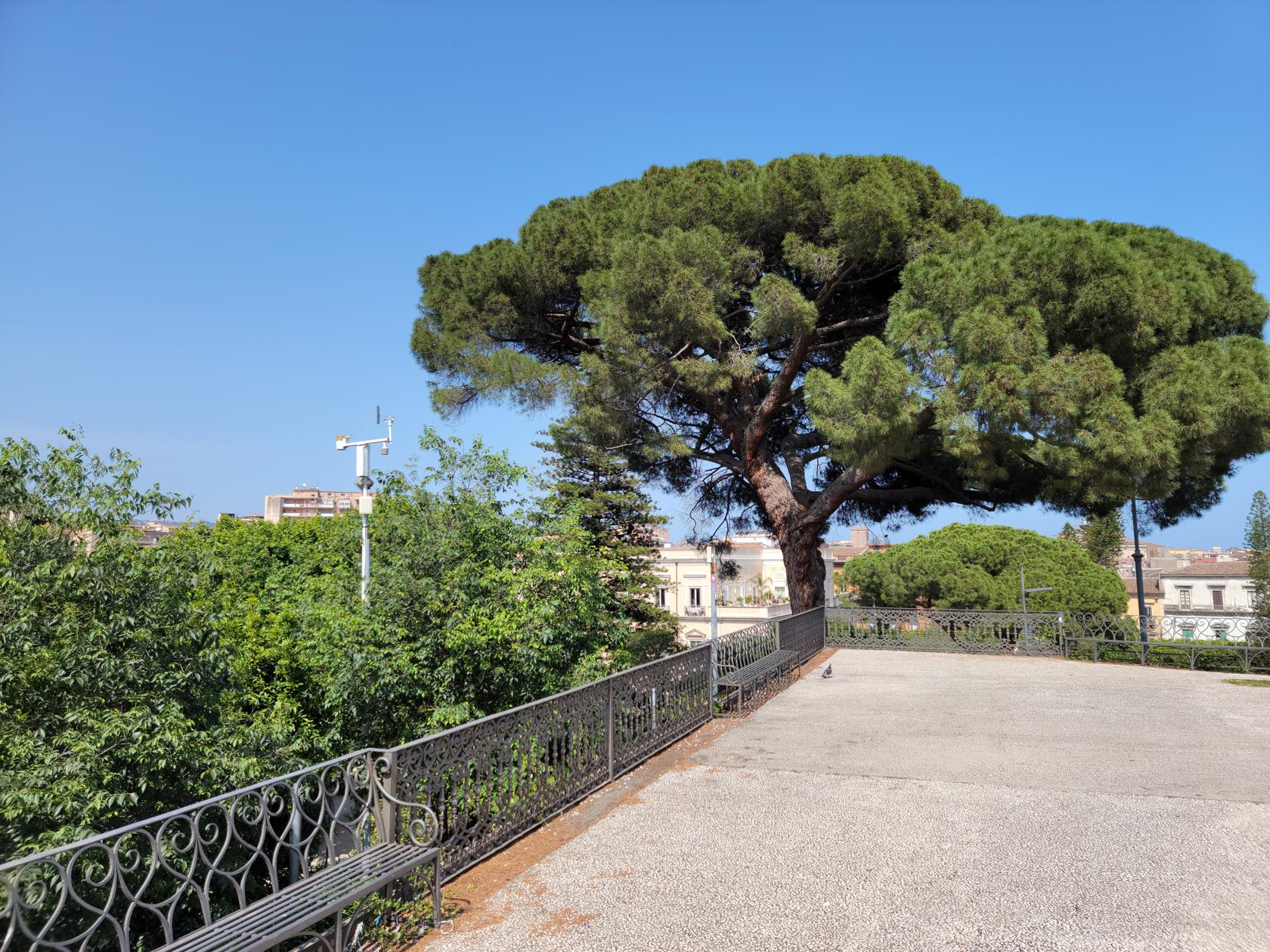
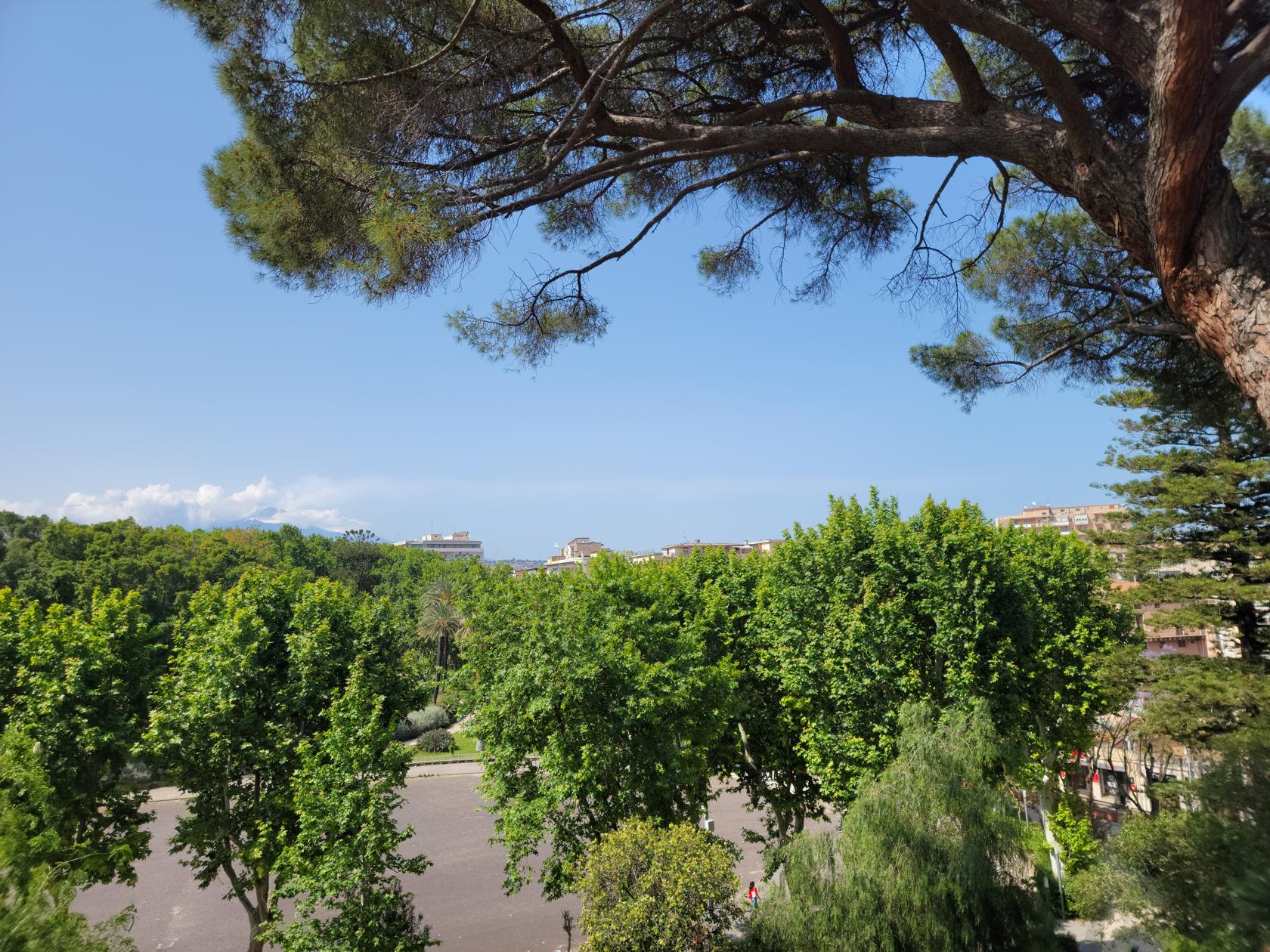
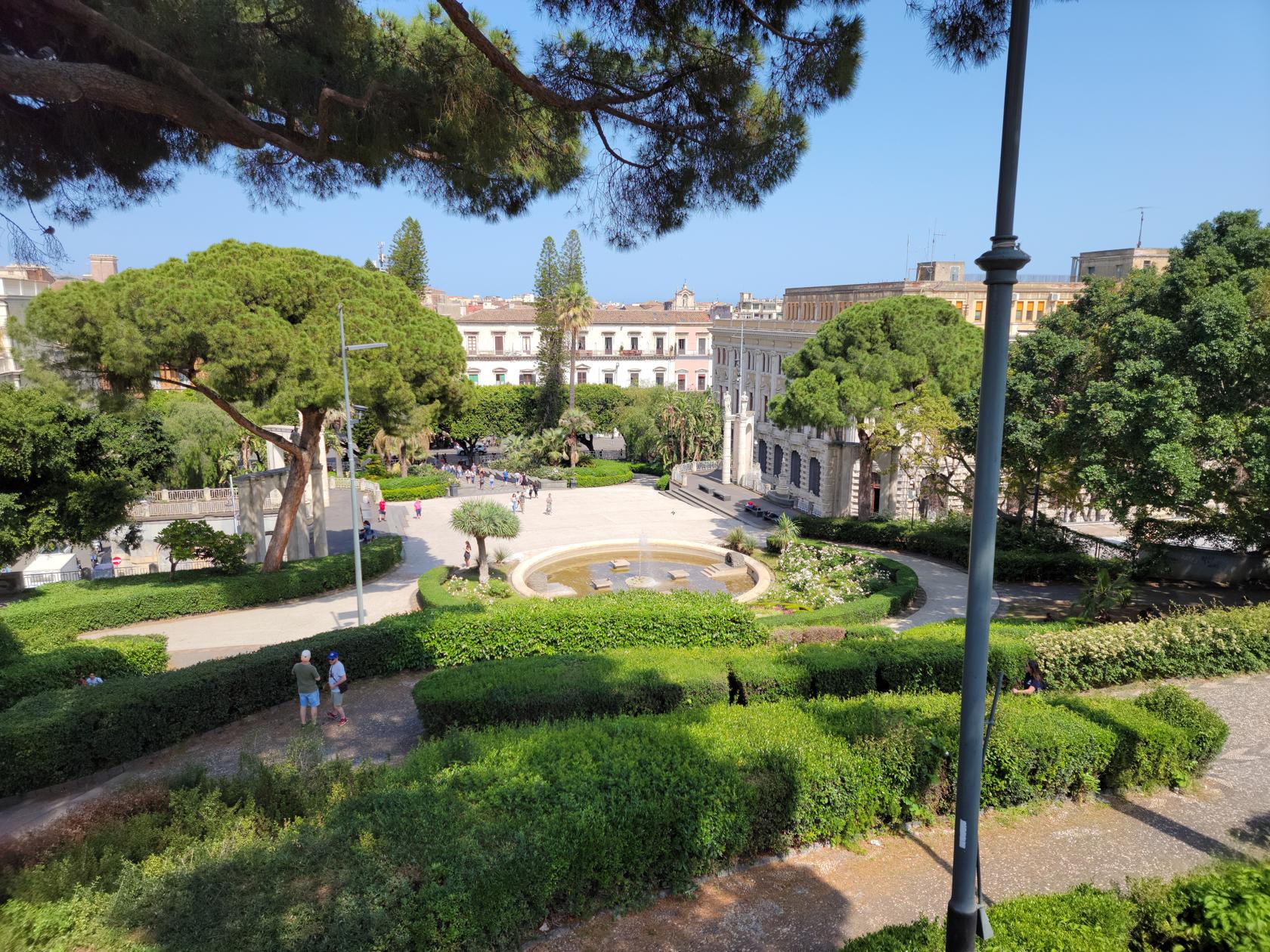
The city has at least one good park near the city center that is easy to visit. The Villa Bellini and Park Maestranze is right off of Via Etnea and has some great views of the volcano and a very quiet place to visit.
Villa Bellini – Park Maestranza – Catania, Sicily
Villa Bellini – Park Maestranza – Catania, Sicily
Villa Bellini – Park Maestranza – Catania, Sicily
Villa Bellini – Park Maestranza – Catania, Sicily
Villa Bellini – Park Maestranza – Catania, Sicily
Villa Bellini – Park Maestranza – Catania, Sicily
Villa Bellini – Park Maestranza – Catania, Sicily
Villa Bellini – Park Maestranza – Catania, Sicily
Villa Bellini – Park Maestranza – Catania, Sicily
Via Etnae – Catania, Sicily
Mount Etna
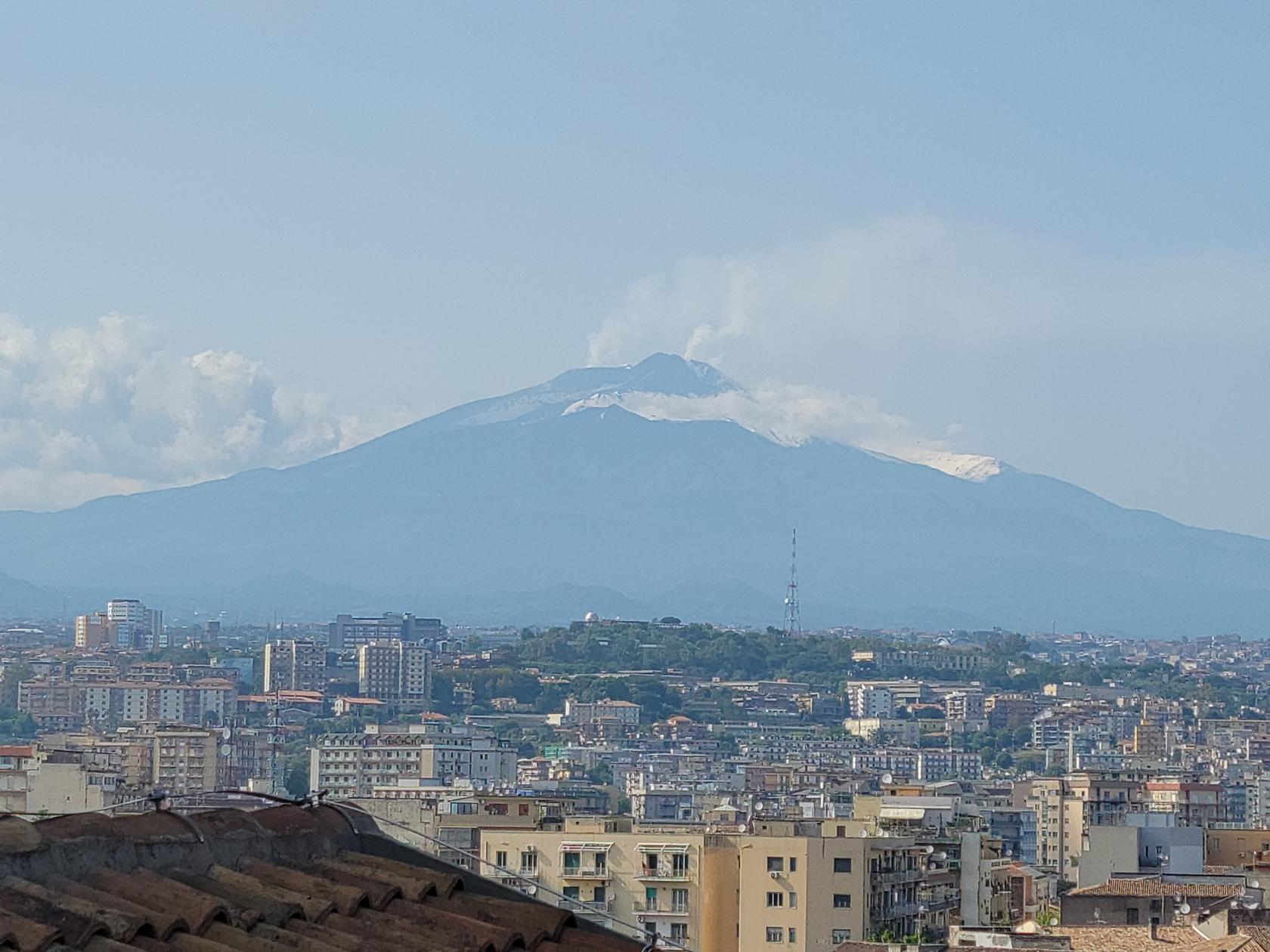
The presence of Etna is felt everywhere, from the architecture, to the items some of the shops sell, to the very grit you grind under your feet as you walk. Even though as you walk the streets and cannot see it, it will rear its ugly snow-capped head as you round a corner, or ascend some lookout in the city.
A view of Mount Etna from the roof – San Nicolo L’Arena Church – Catania, Sicily
Theaters and Baths
Many of the ruins in and around Catania contain theaters and baths from the Greek and Roman periods.
The Roman Amphitheater
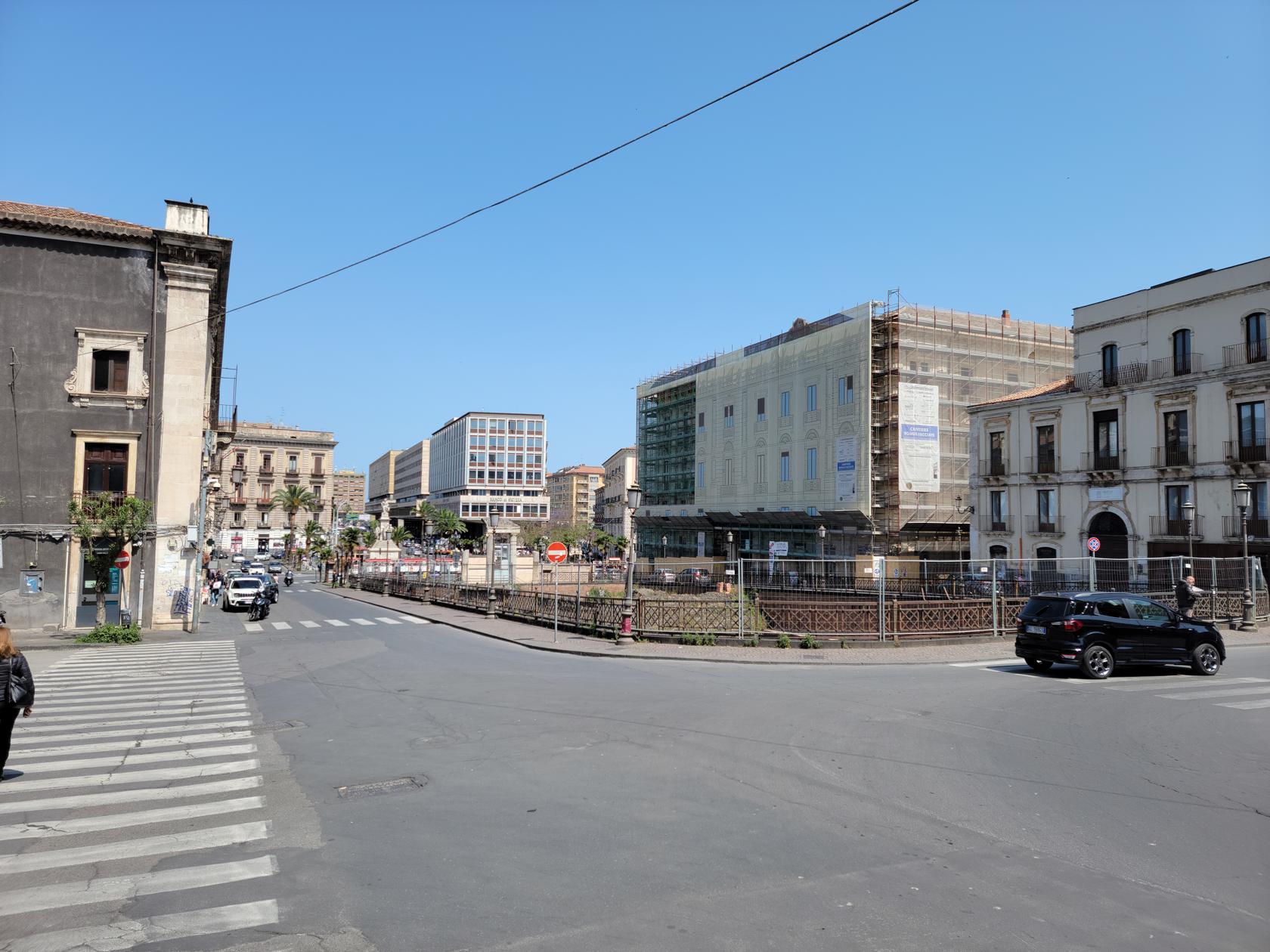
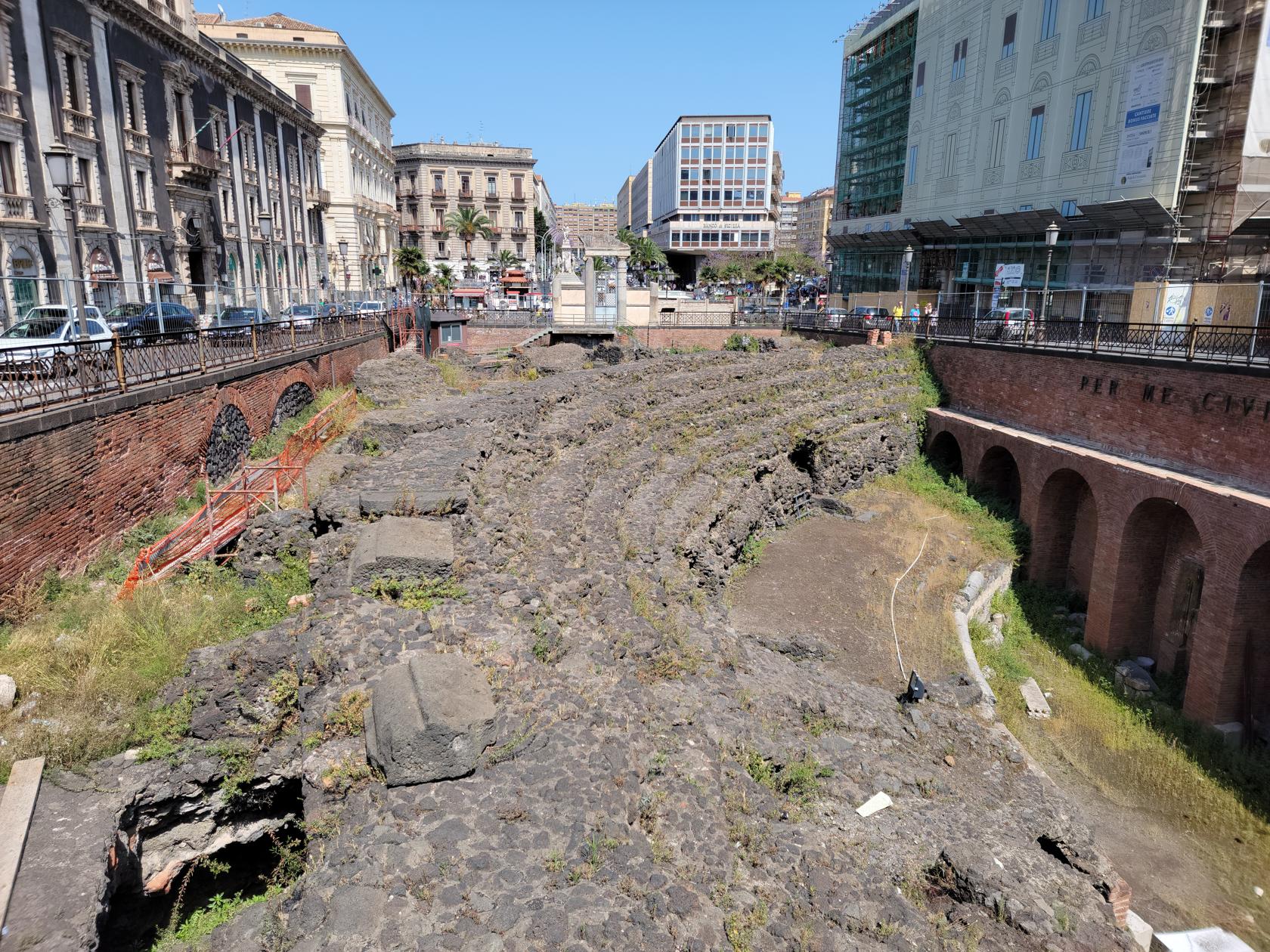
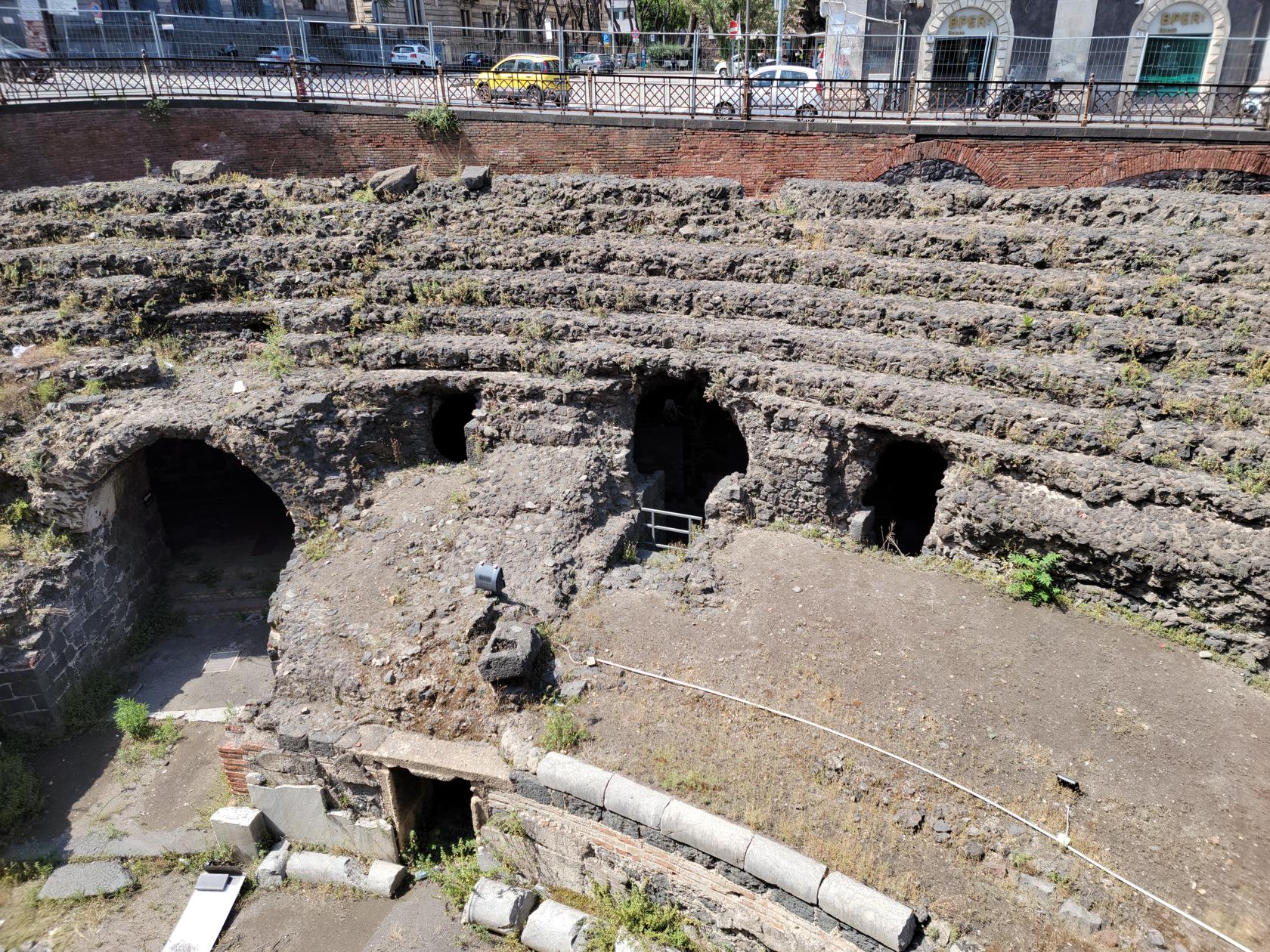
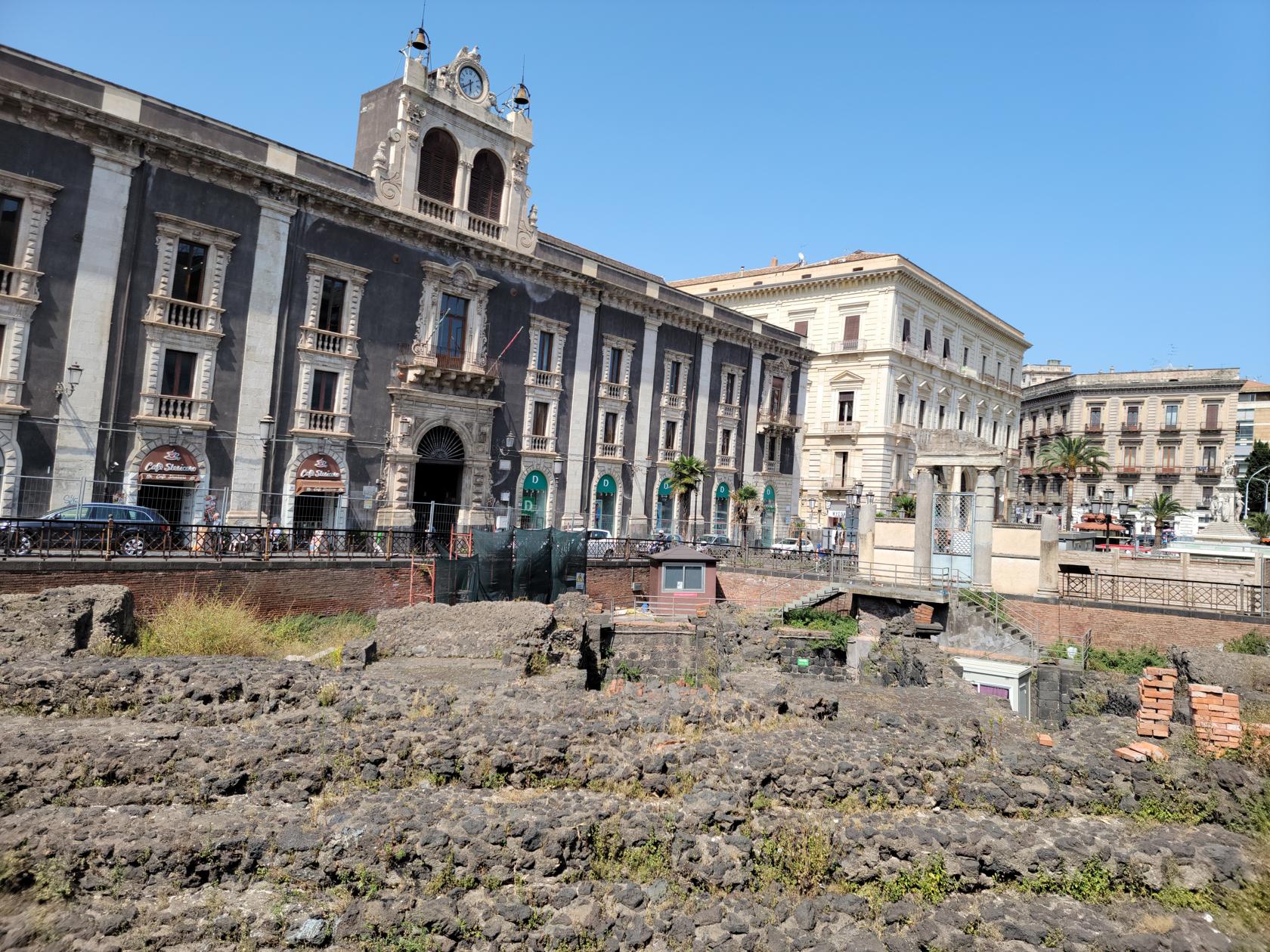
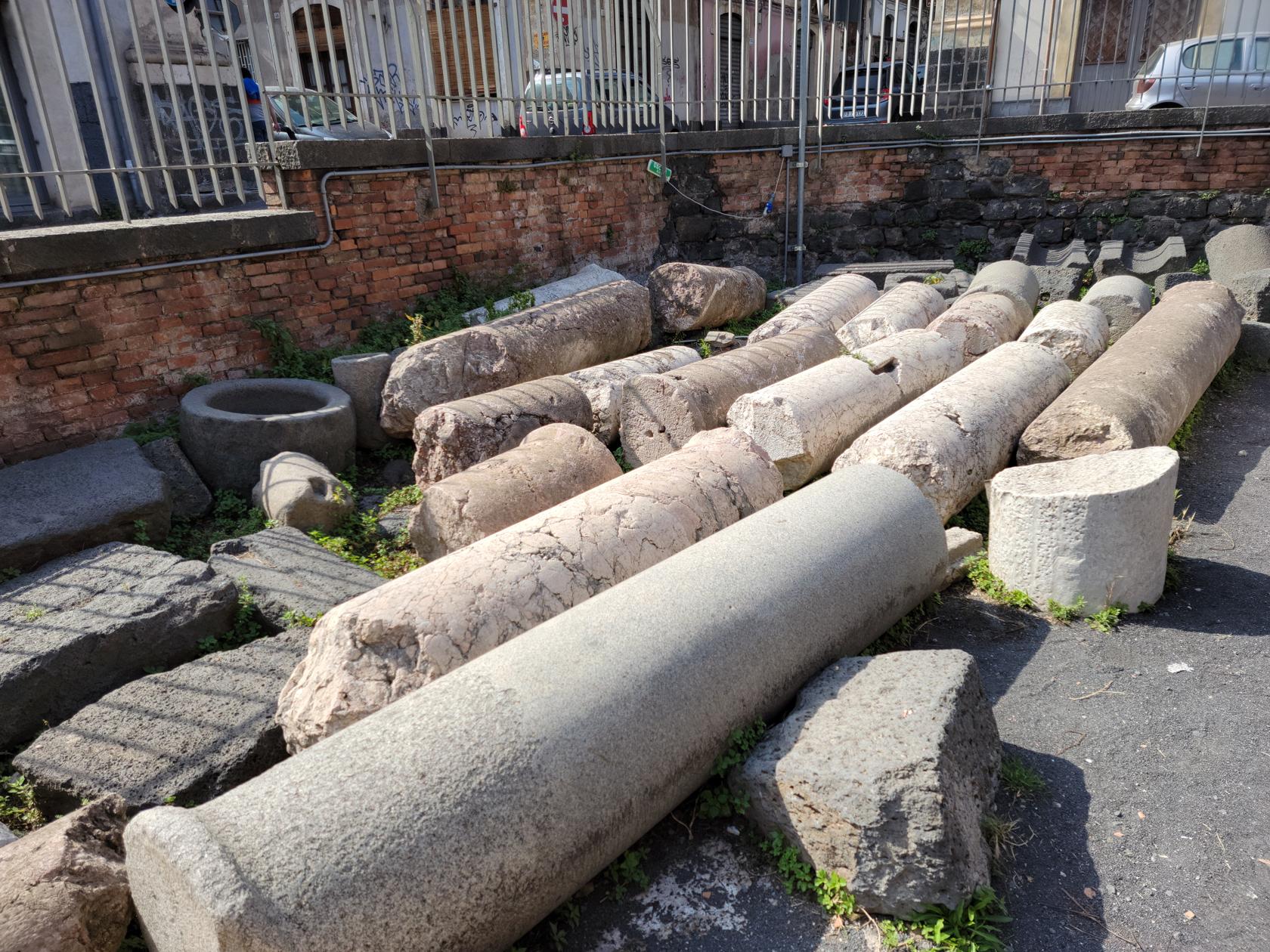
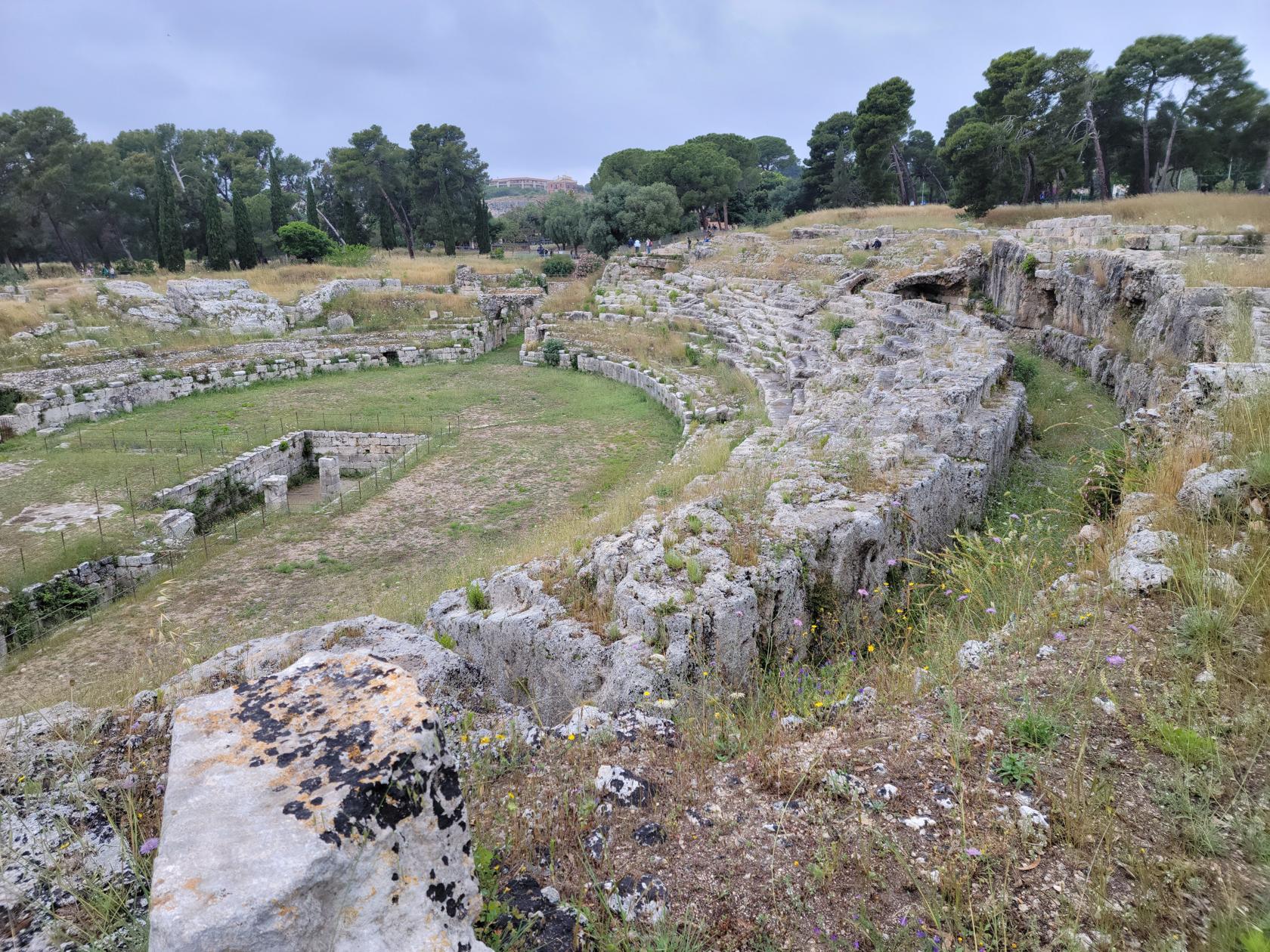
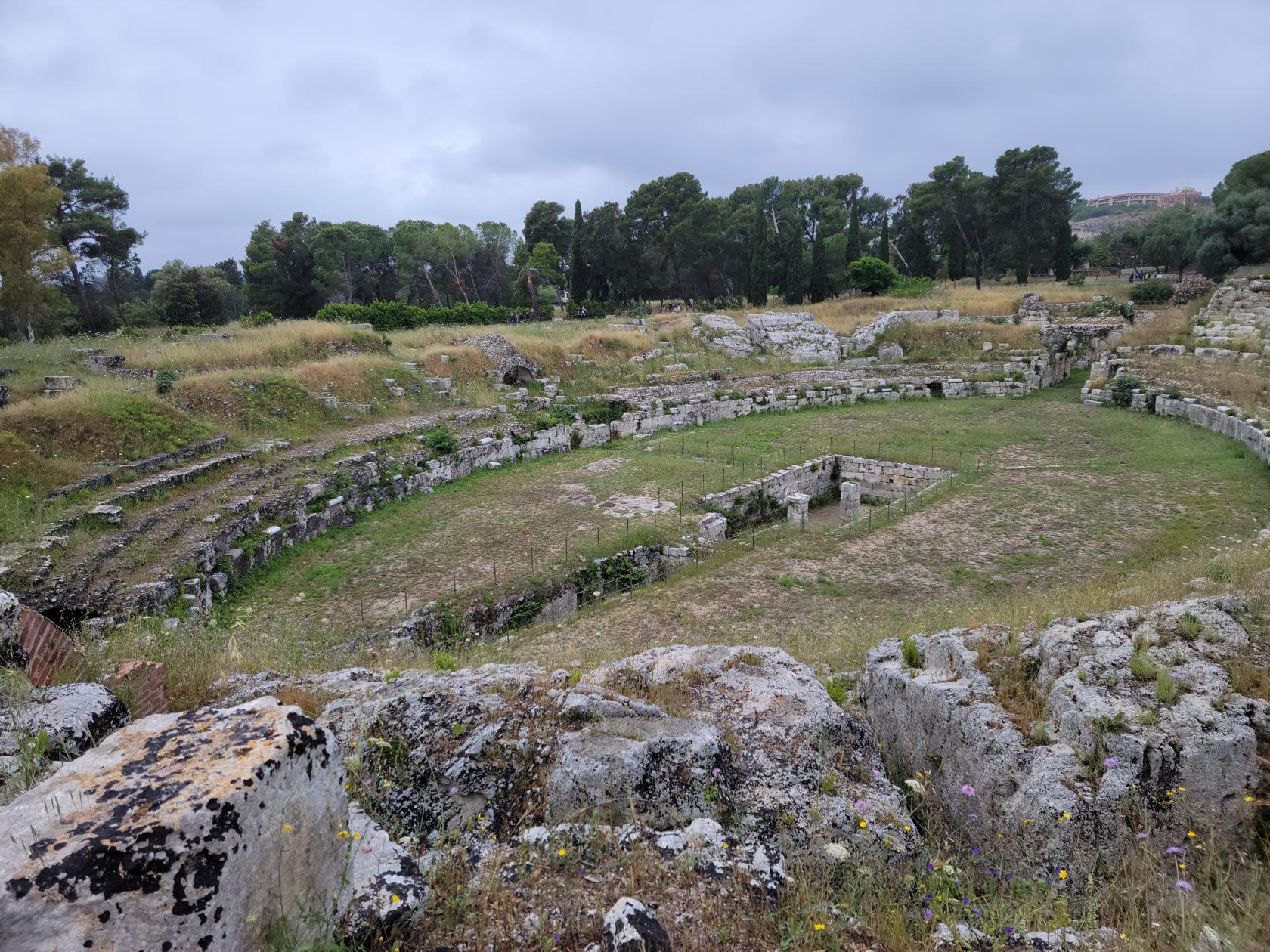
A stone’s throw away from our hotel the amphitheater forces all the traffic to go around it. There is not much story behind the amphitheater other than in the fourth century the town’s people had started robbing it stones for building material. Later it was almost completely covered up by a building project in the eighteenth century. It was later rediscovered and preserved as part of an urban archeological site.
Roman Amphitheater – Catania, Sicily
Roman Amphitheater – Catania, Sicily
Roman Amphitheater – Catania, Sicily
Roman Amphitheater – Catania, Sicily
The Roman Baths
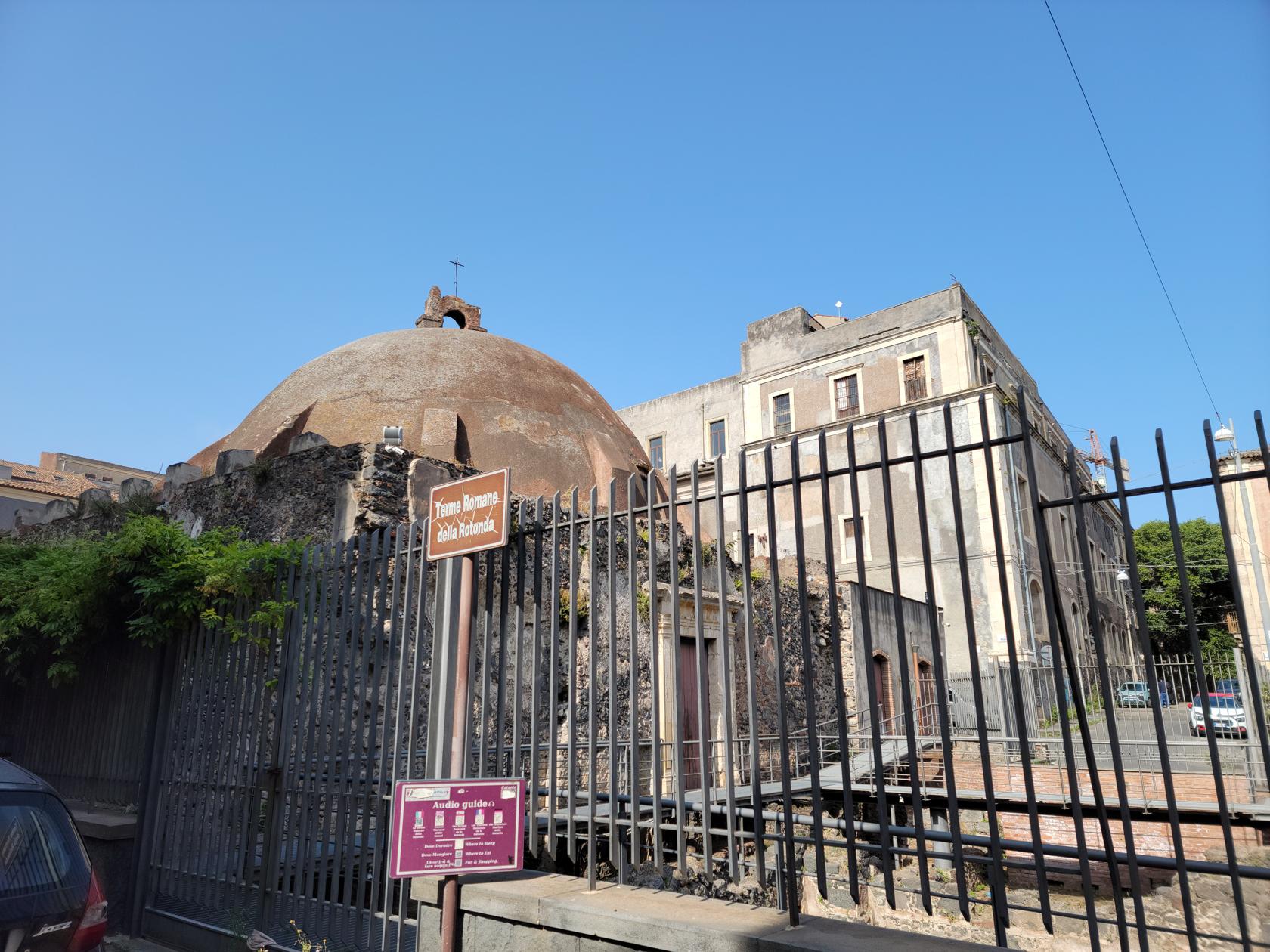
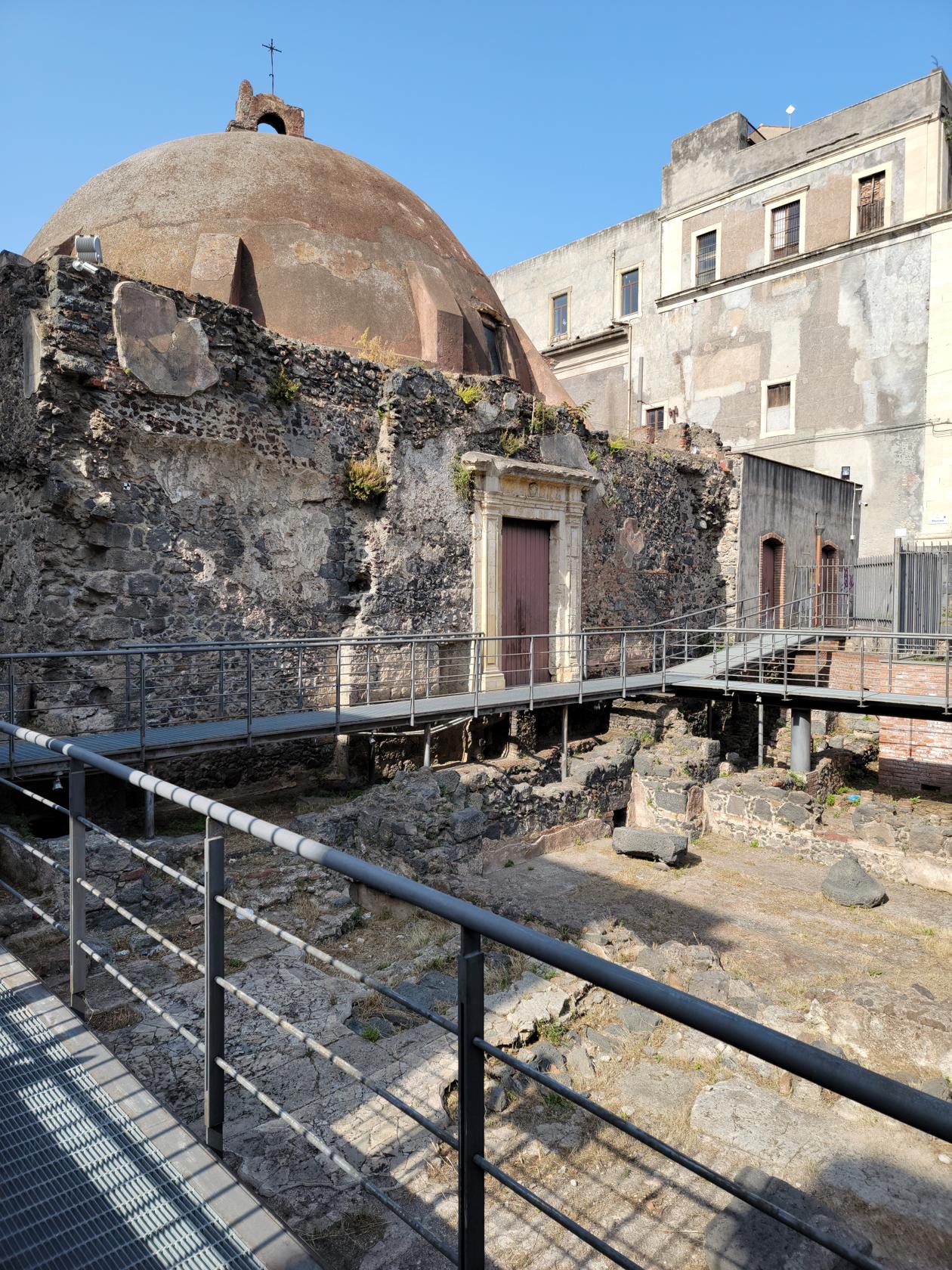
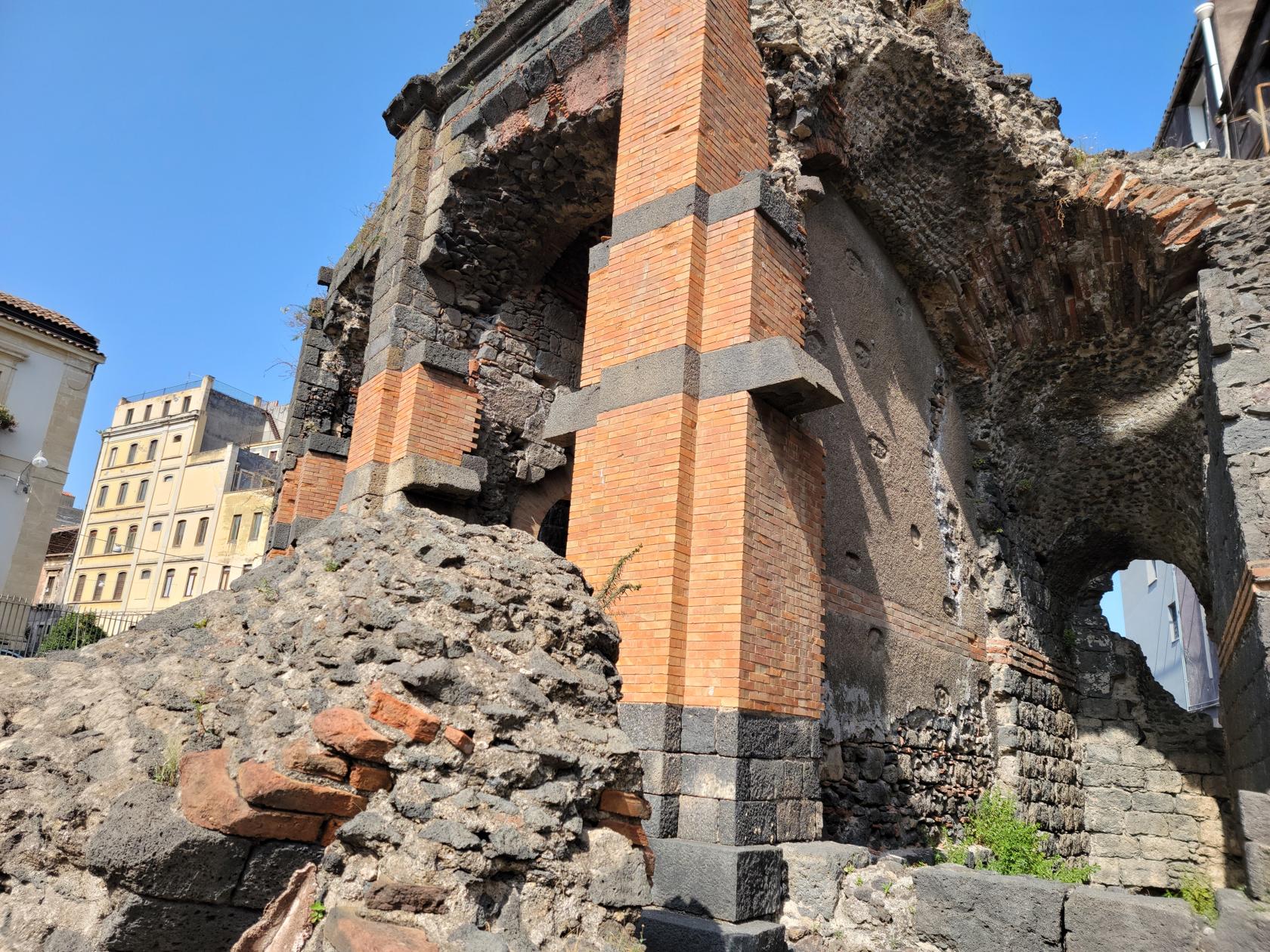
Very close to the Greek and Roman Theater are the Roman Baths. They appear to be part of a city walking audio tour, but since we did not visit the information center, we have no other details on the site.
Roman Baths of the Rotunda – Catania, Sicily
Roman Baths of the Rotunda – Catania, Sicily
The Greek and Roman Theater
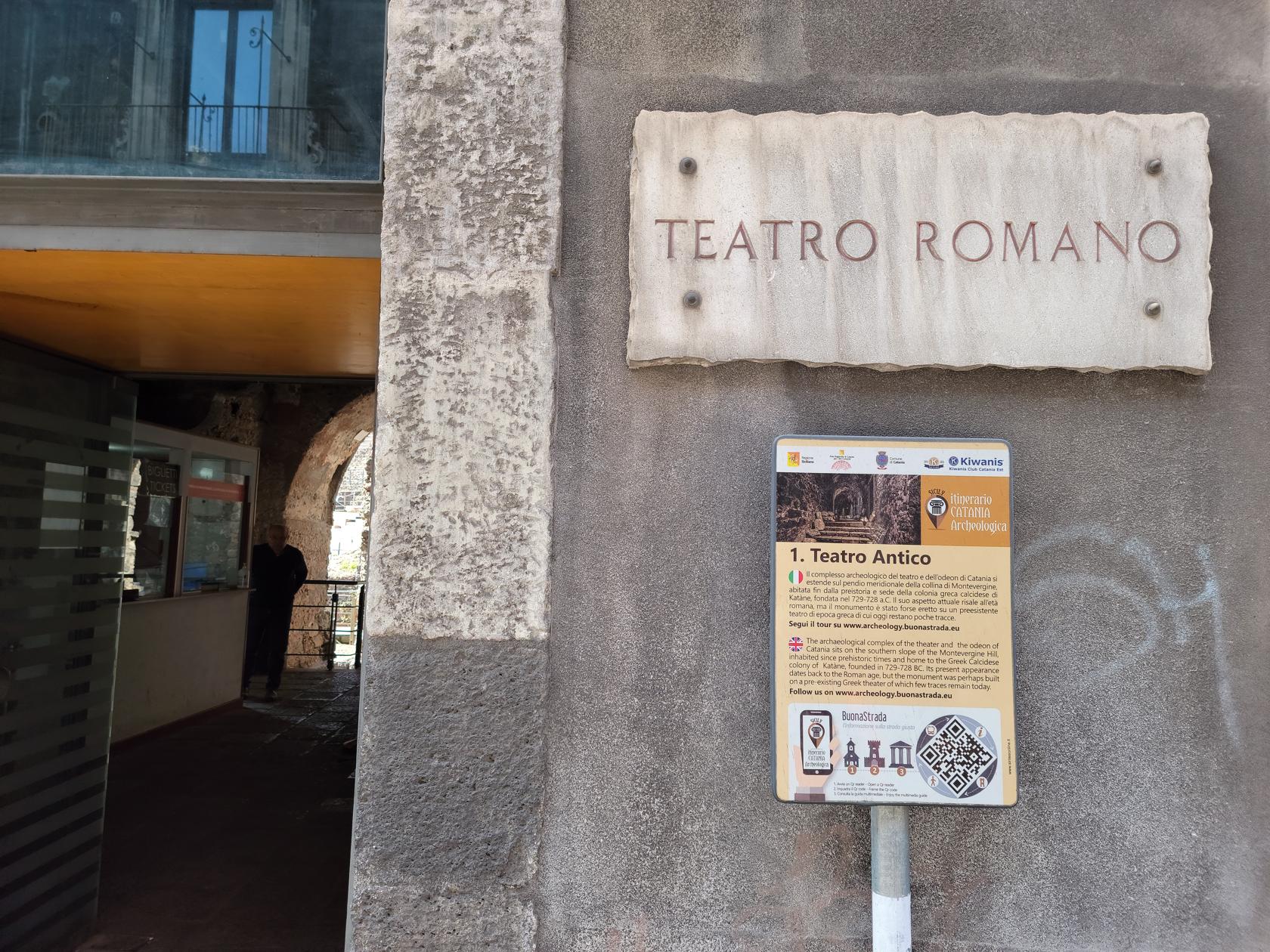
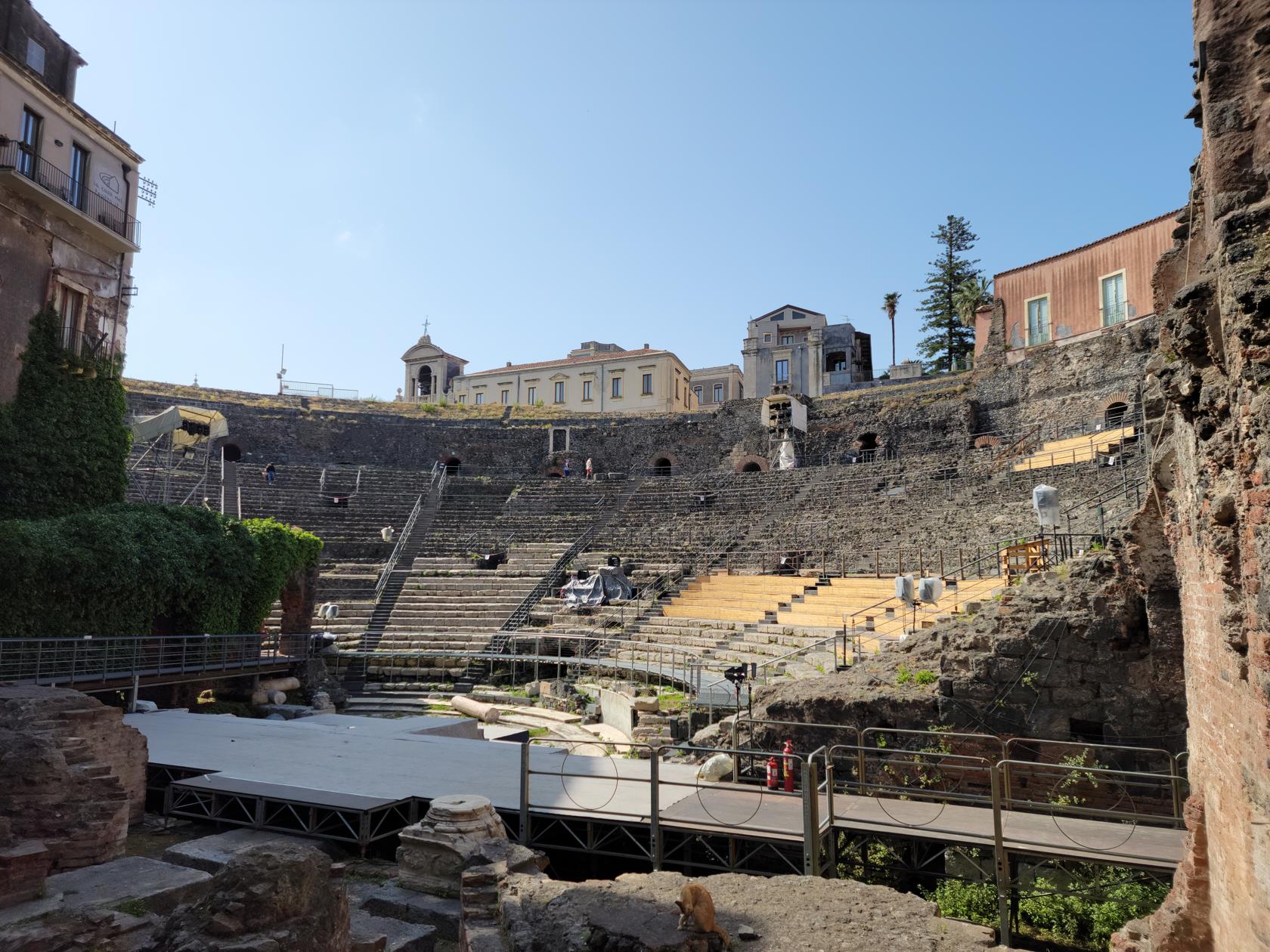
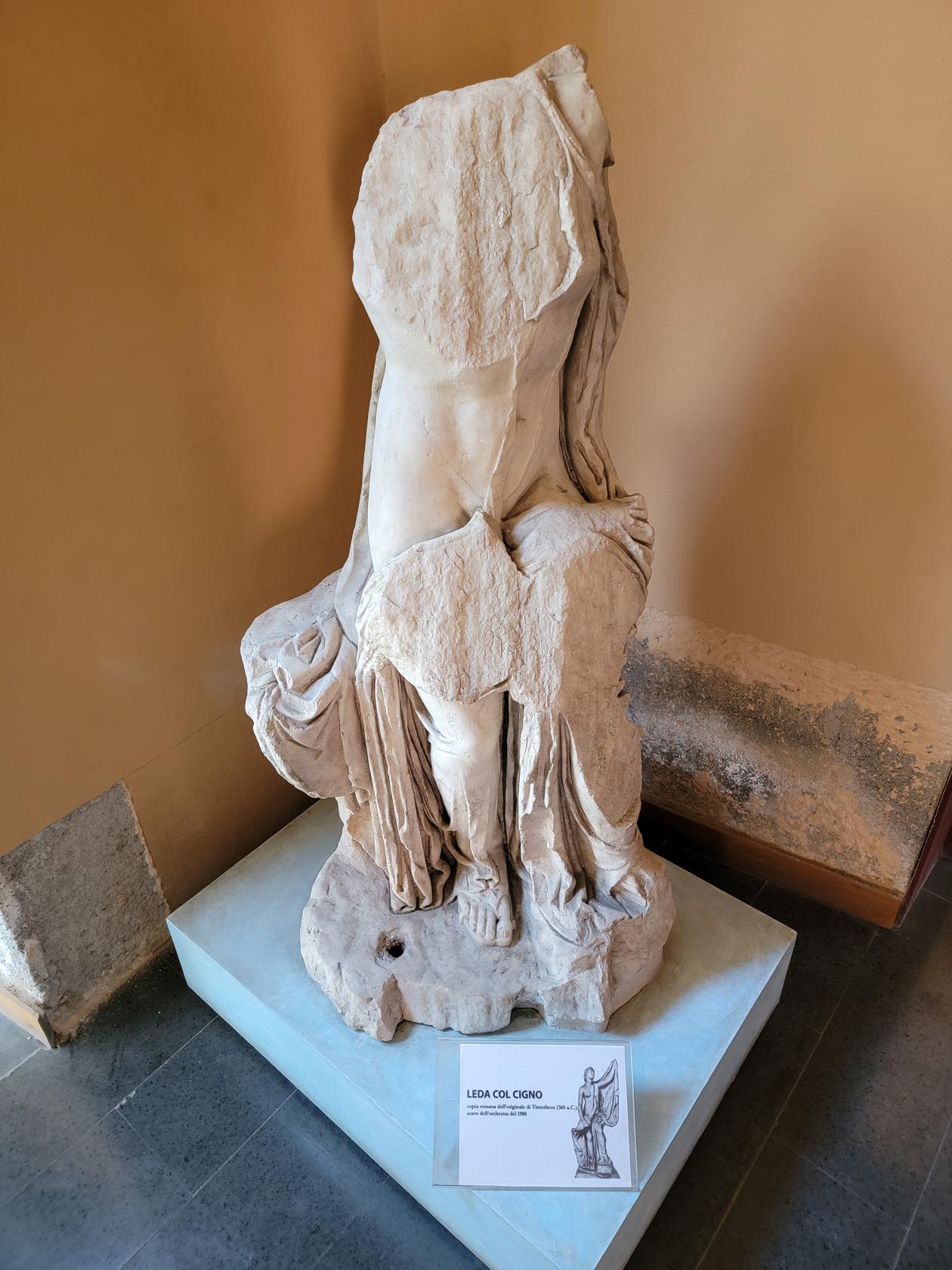
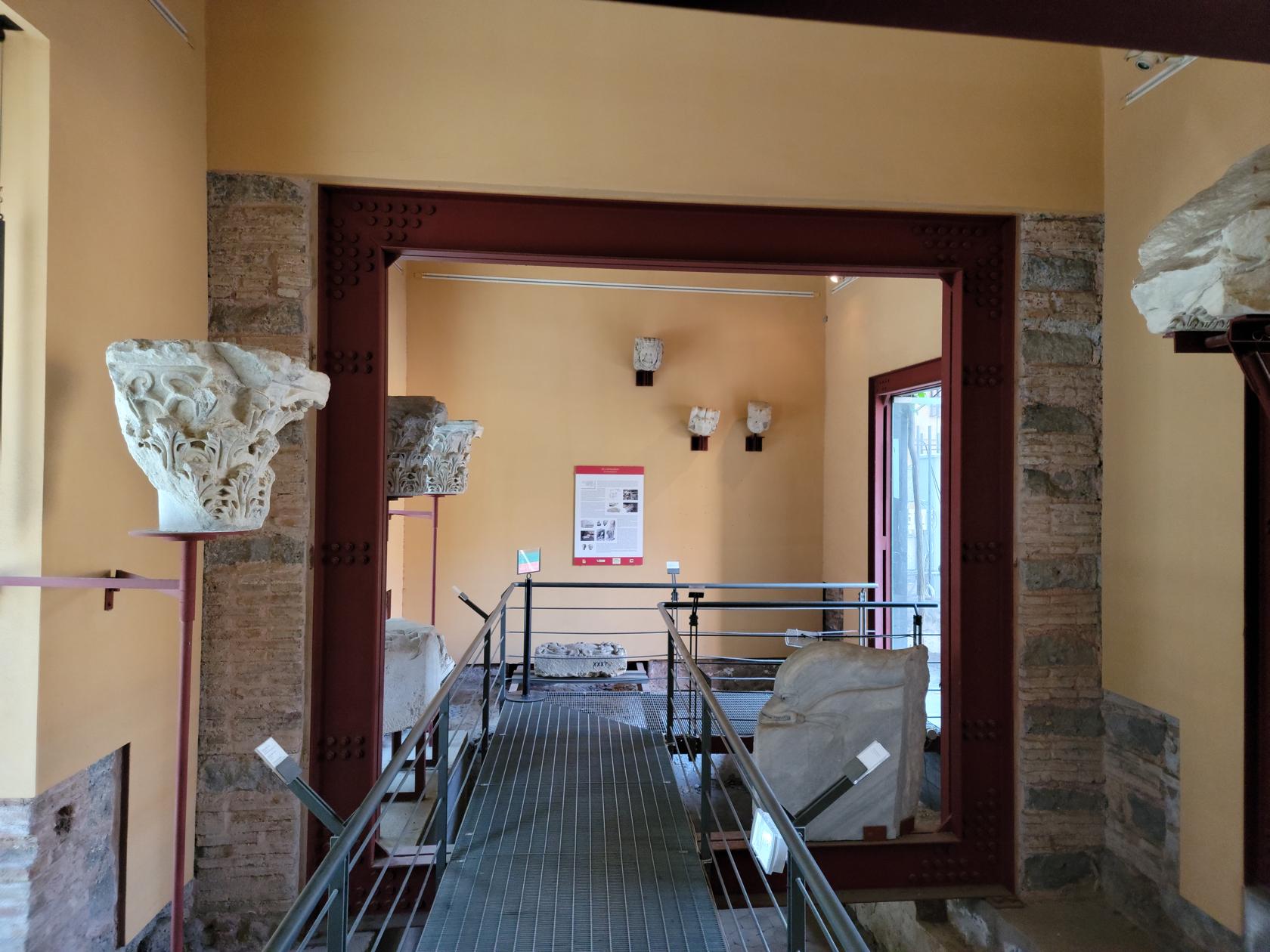
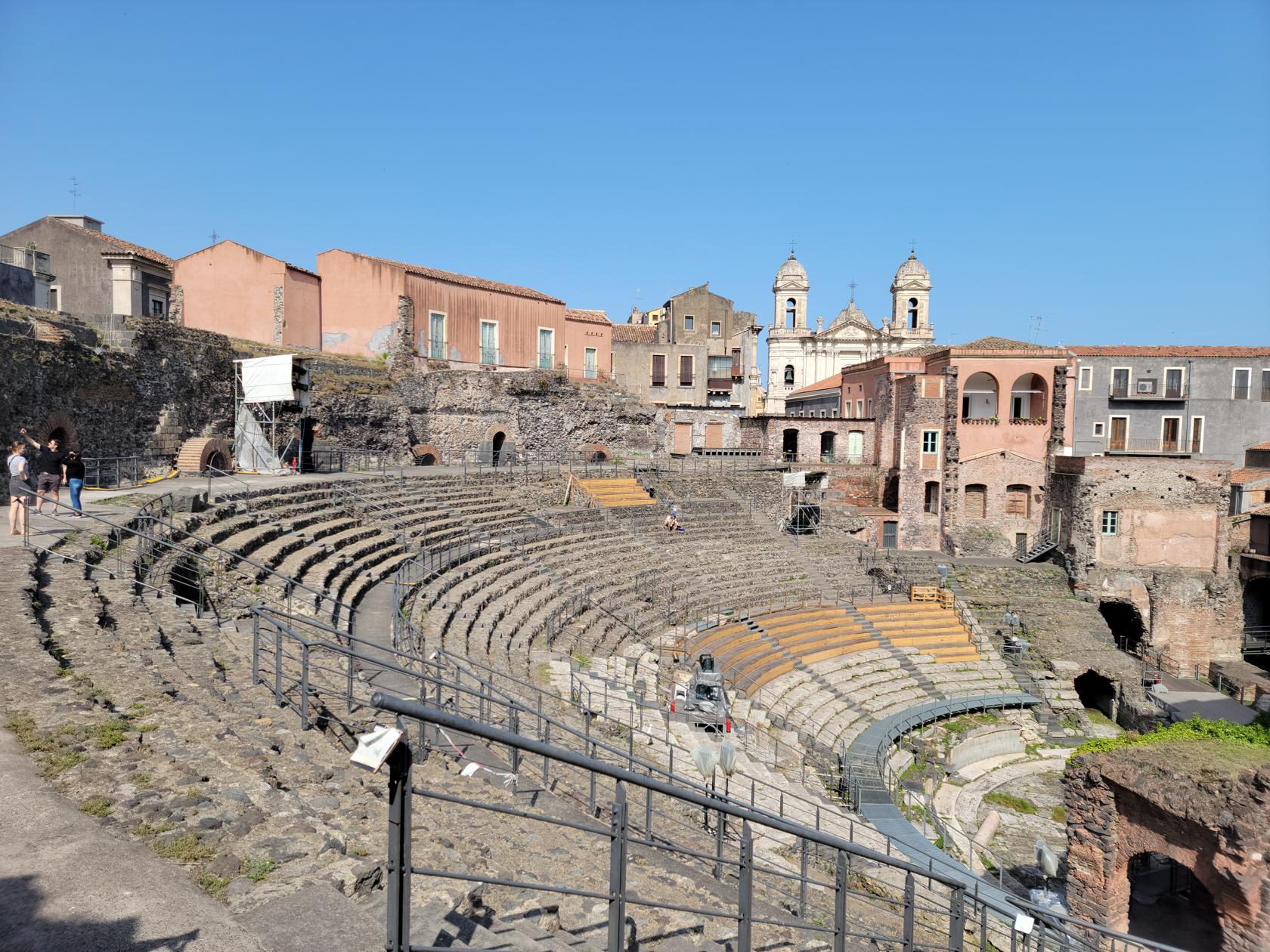
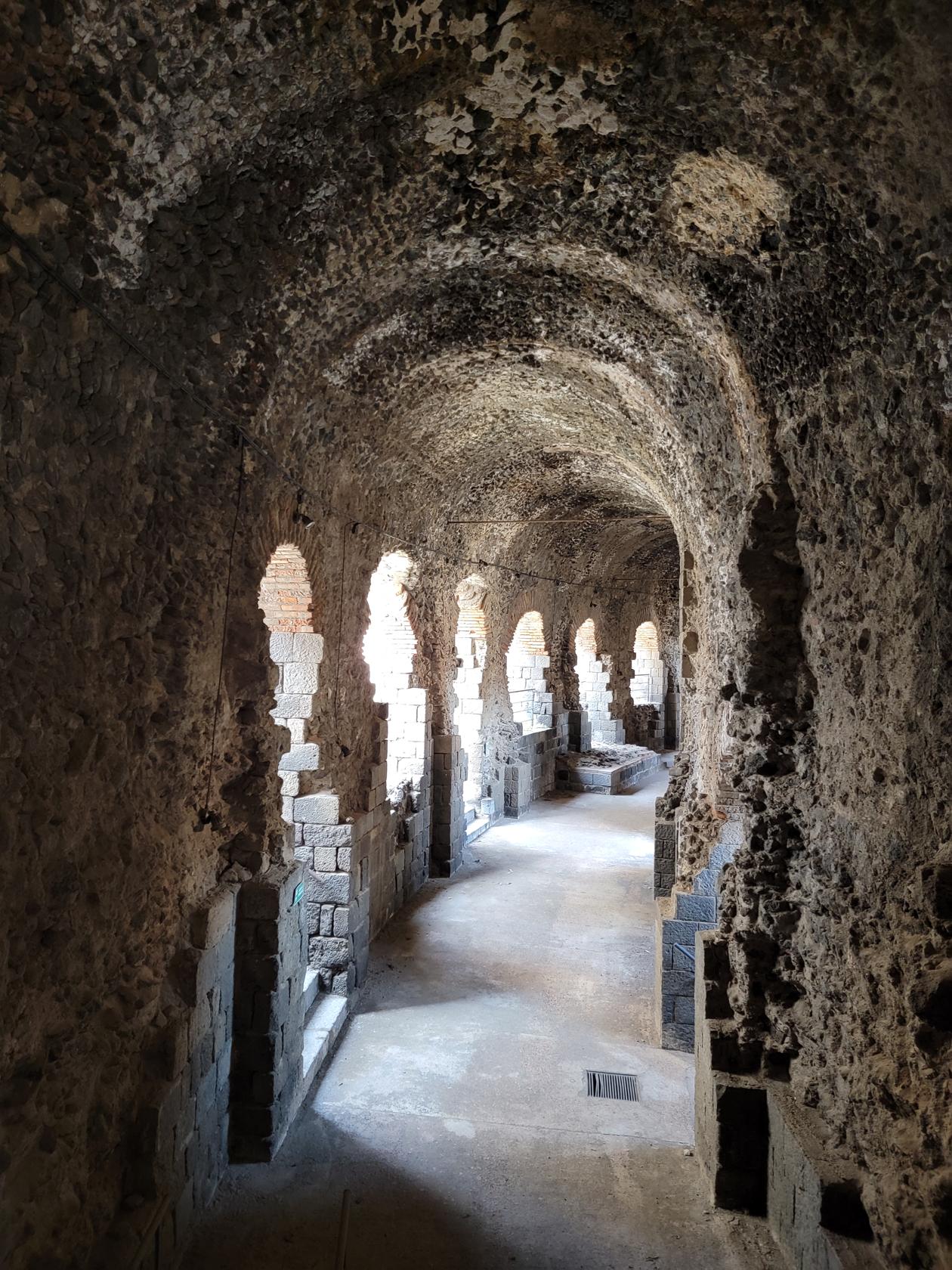
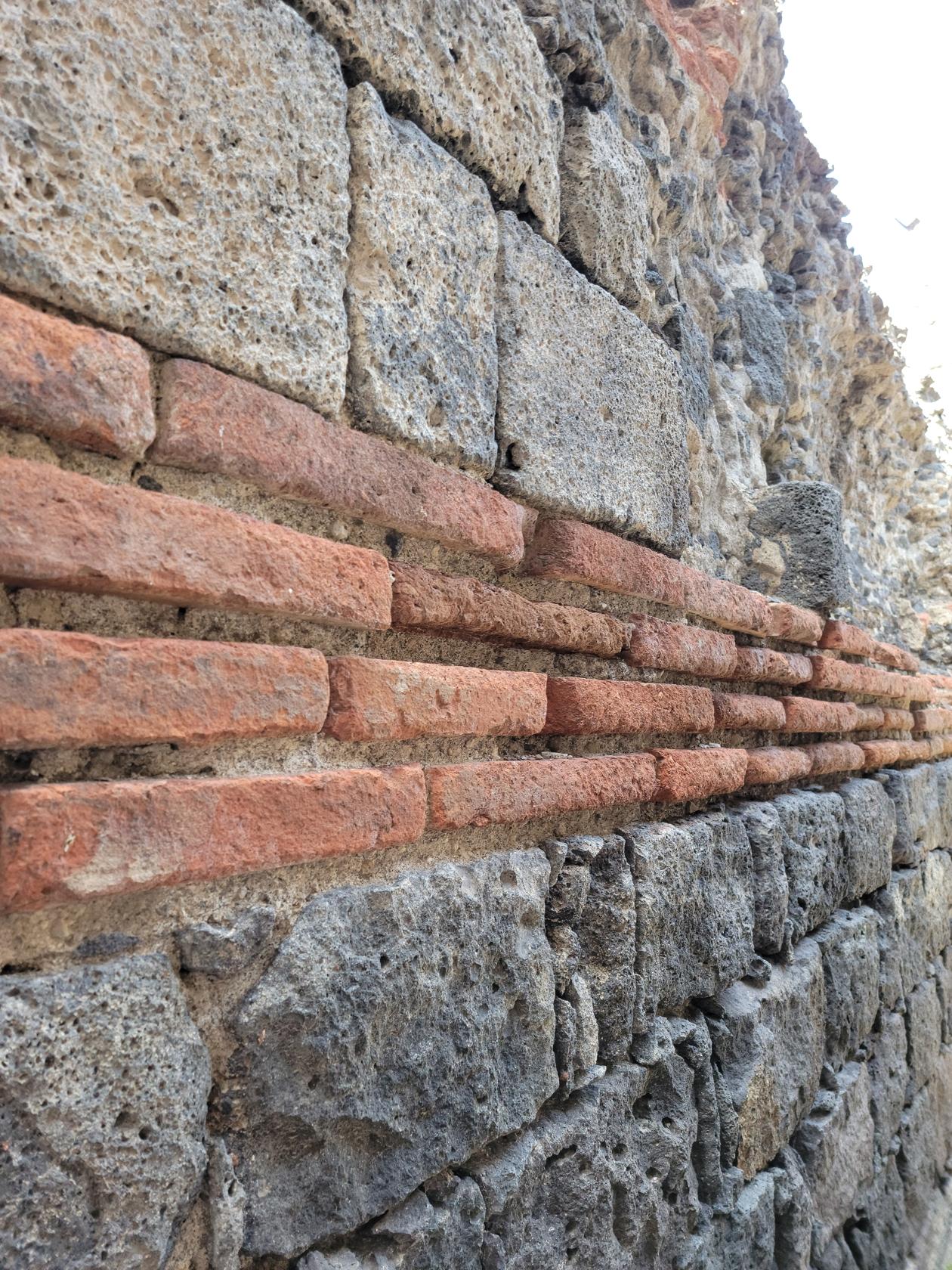
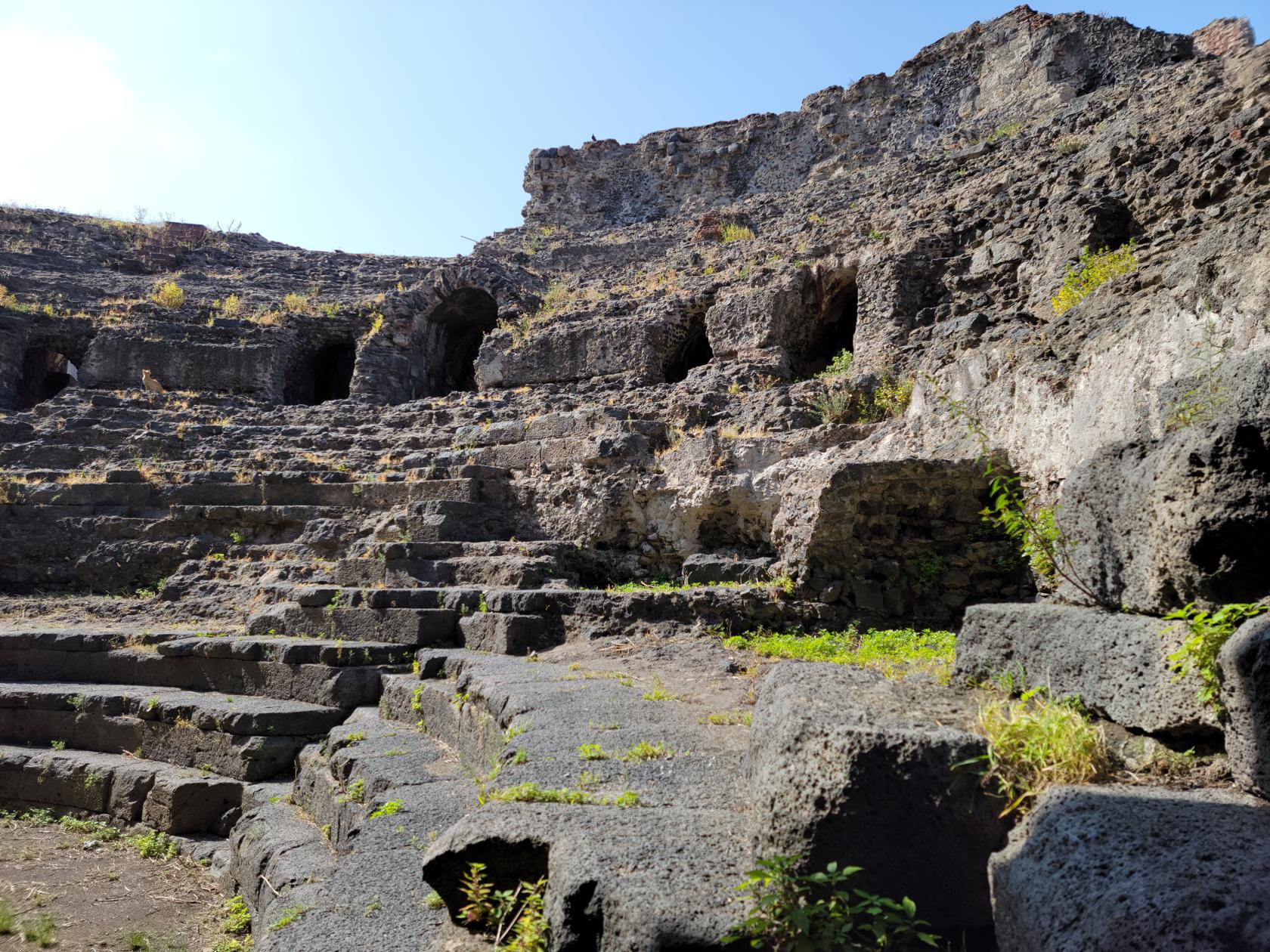
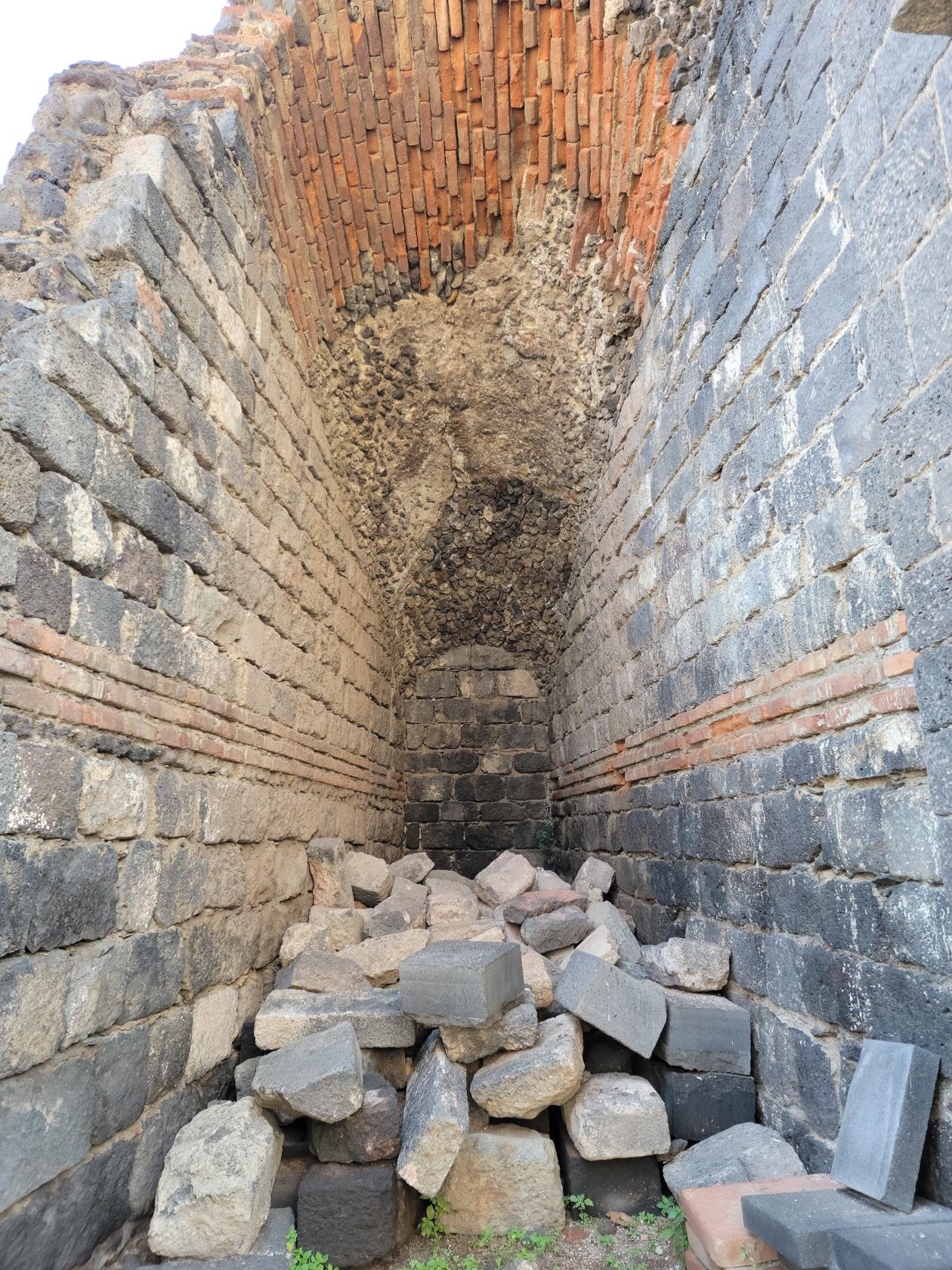
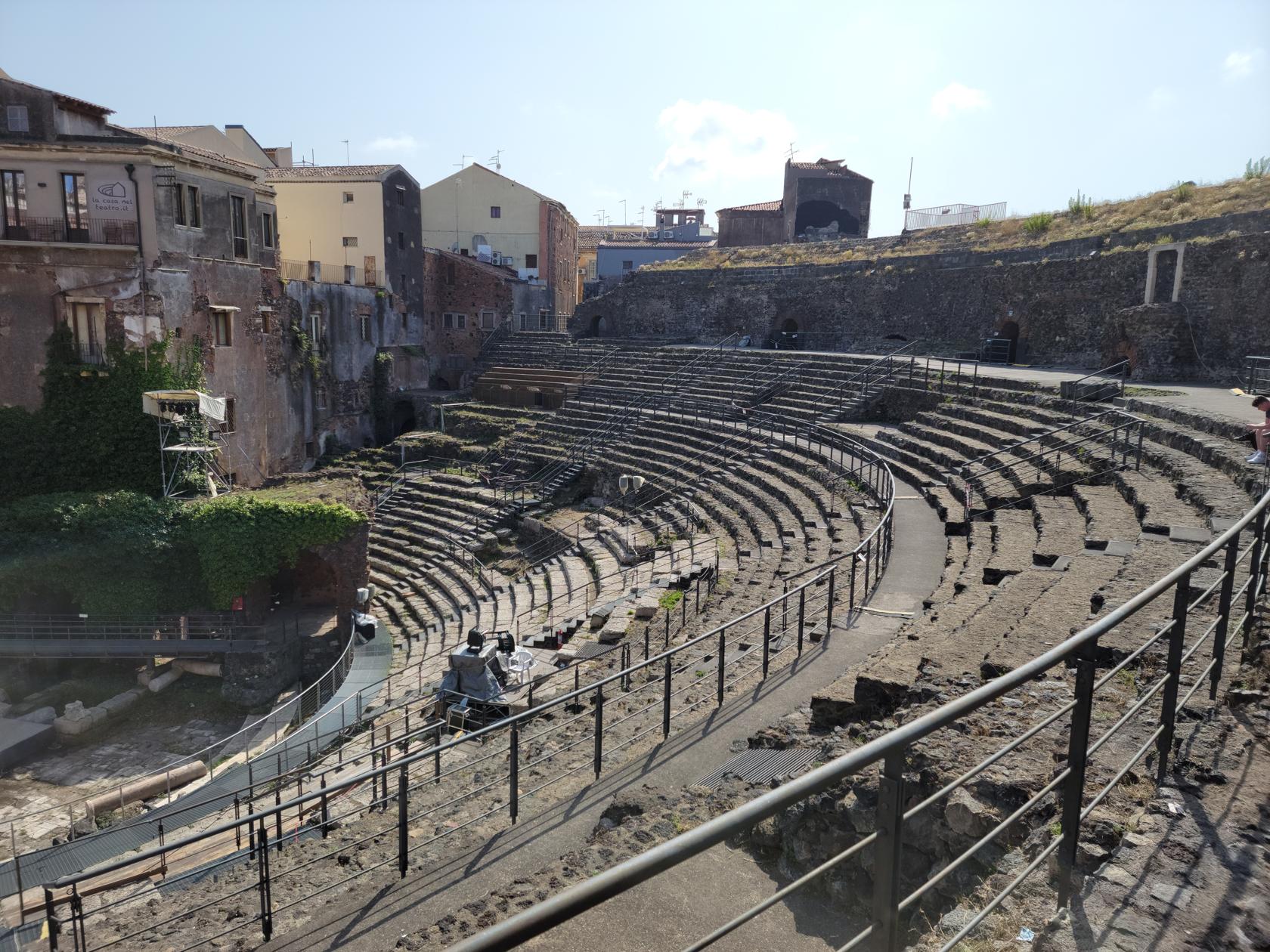
Labeled the Roman Theater, it was actually established by the Greeks and later rebuilt as a Roman Theater. There is an entrance fee for this exhibit, which again seems to be repurposed for shows. Though there is ample space to take photographs to get a good idea of how it used to look.
The Greek-Roman Theater – Catania, Sicily
The Greek-Roman Theater – Catania, Sicily
The Greek-Roman Theater – Catania, Sicily
The Greek-Roman Theater – Catania, Sicily
The Greek-Roman Theater – Catania, Sicily
The Greek-Roman Theater – Catania, Sicily
The Greek-Roman Theater – Catania, Sicily
The Greek-Roman Theater – Catania, Sicily
The Greek-Roman Theater – Catania, Sicily
The Greek-Roman Theater – Catania, Sicily
The Greek-Roman Theater – Catania, Sicily
The Greek-Roman Theater – Catania, Sicily
The Greek-Roman Theater – Catania, Sicily
The Greek-Roman Theater – Catania, Sicily
The Greek-Roman Theater – Catania, Sicily
The Greek-Roman Theater – Catania, Sicily
Churches, Cathedral and Basilicas
There are numerous churches and other religious structures of note all throughout Catania. The most noteworthy one is the Cathedral of Catania.
Church of San Nicolò l’Arena
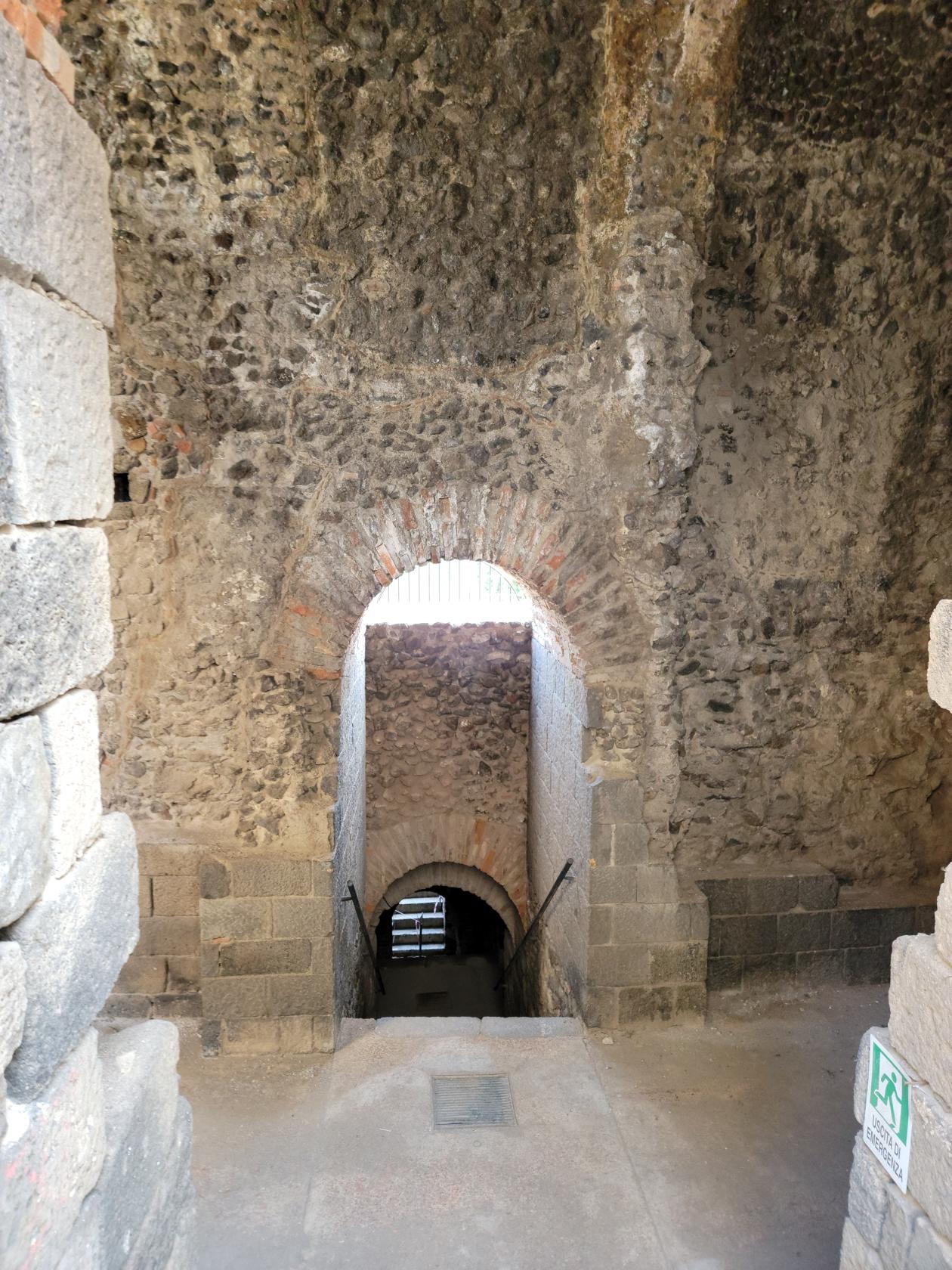
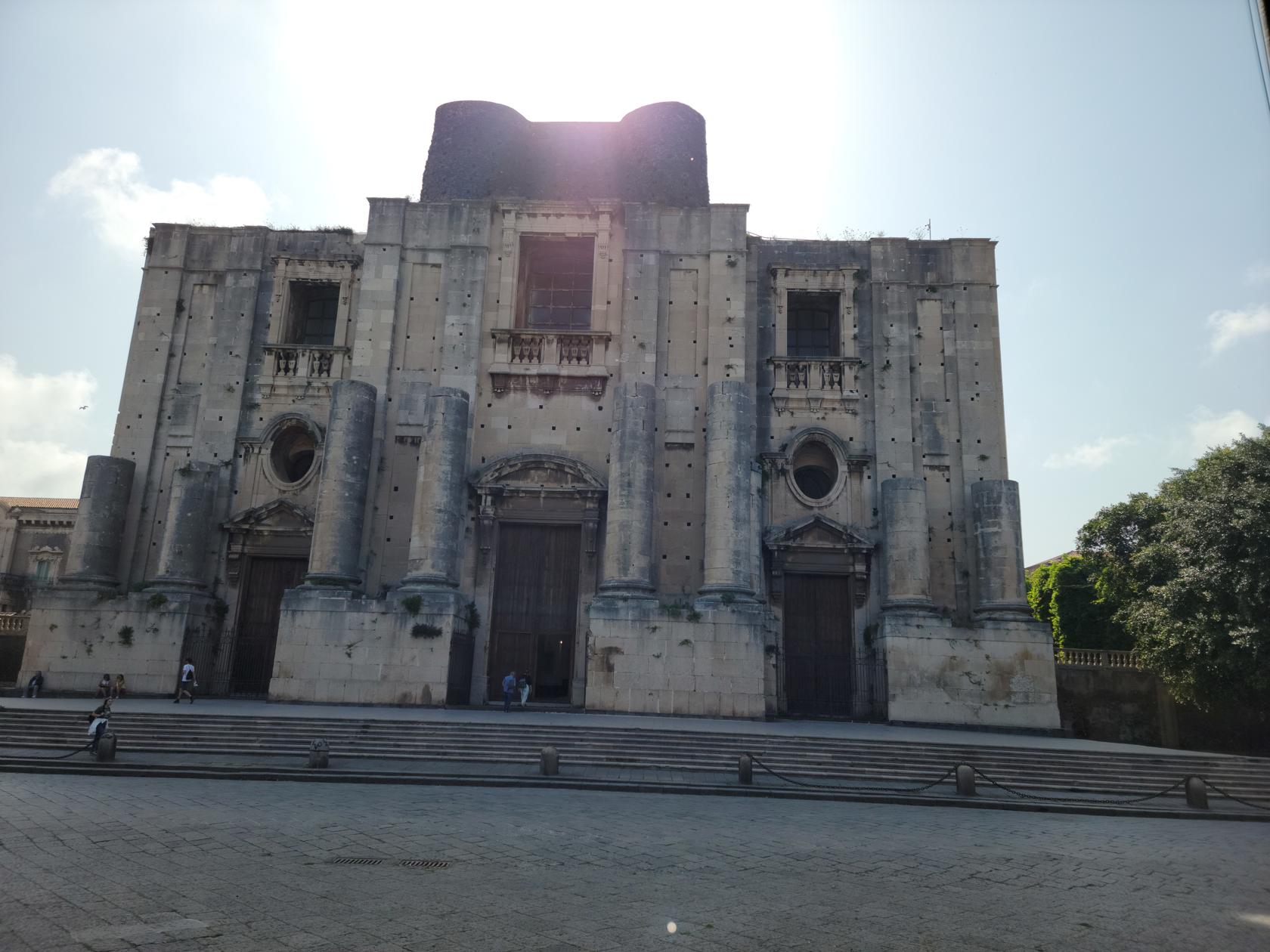
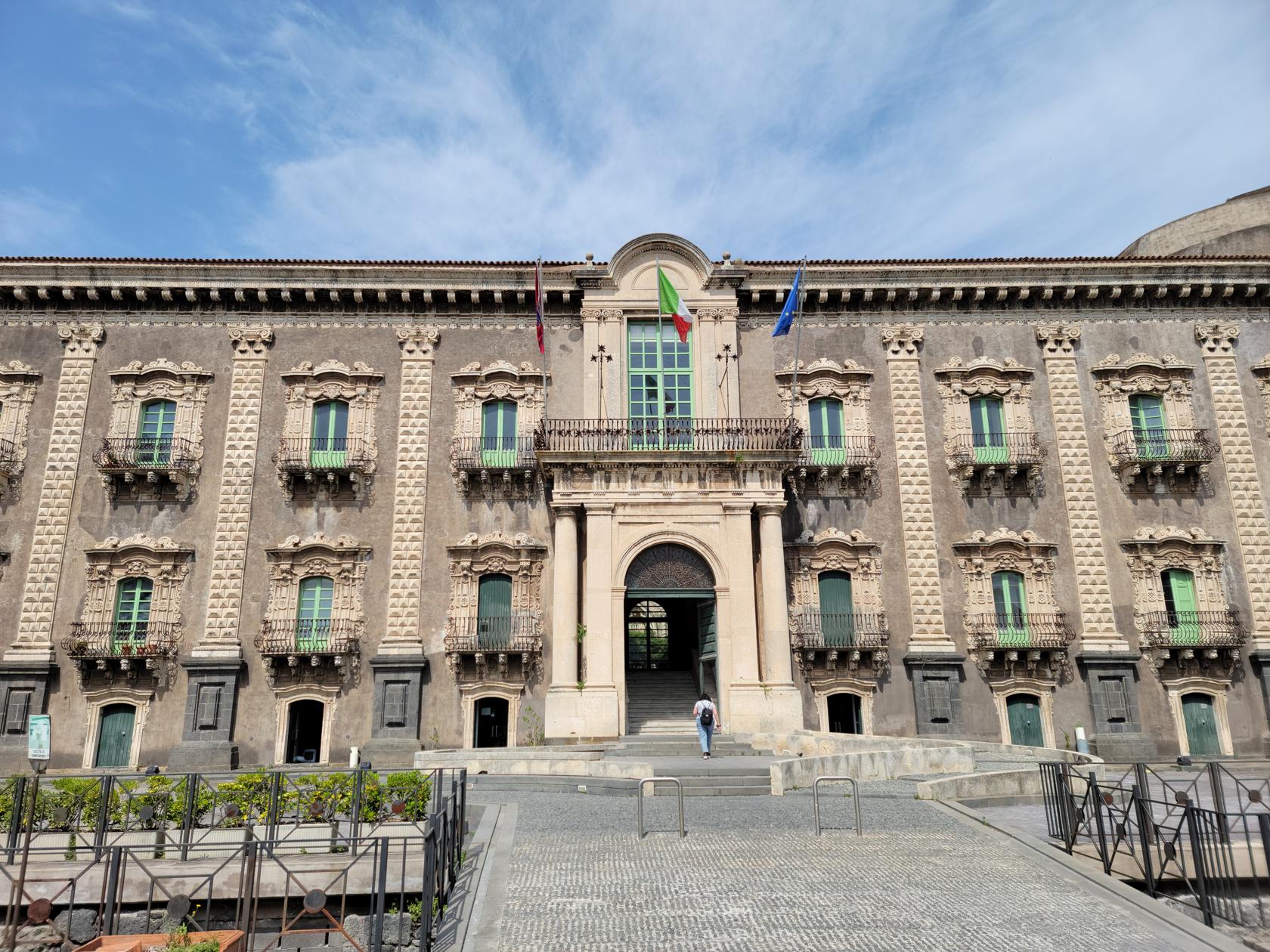
A large unfinished artifice is the Church of San Nicolò l’Arena. It was started in the late 17th century and interrupted by the large earthquake of 1693. The dome and inside were later completed, but the facade remains unfinished sadly even to this day.
San Nicolo L’Arena Church – Catania, Sicily
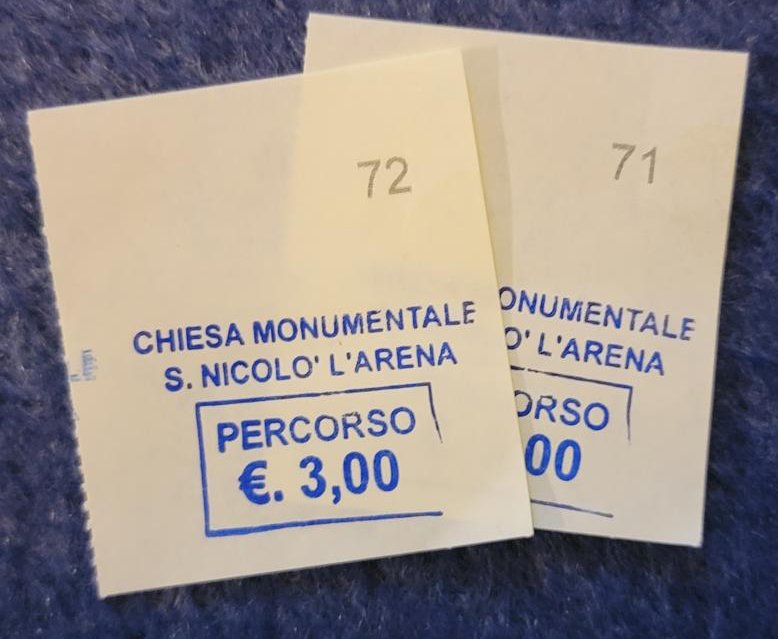
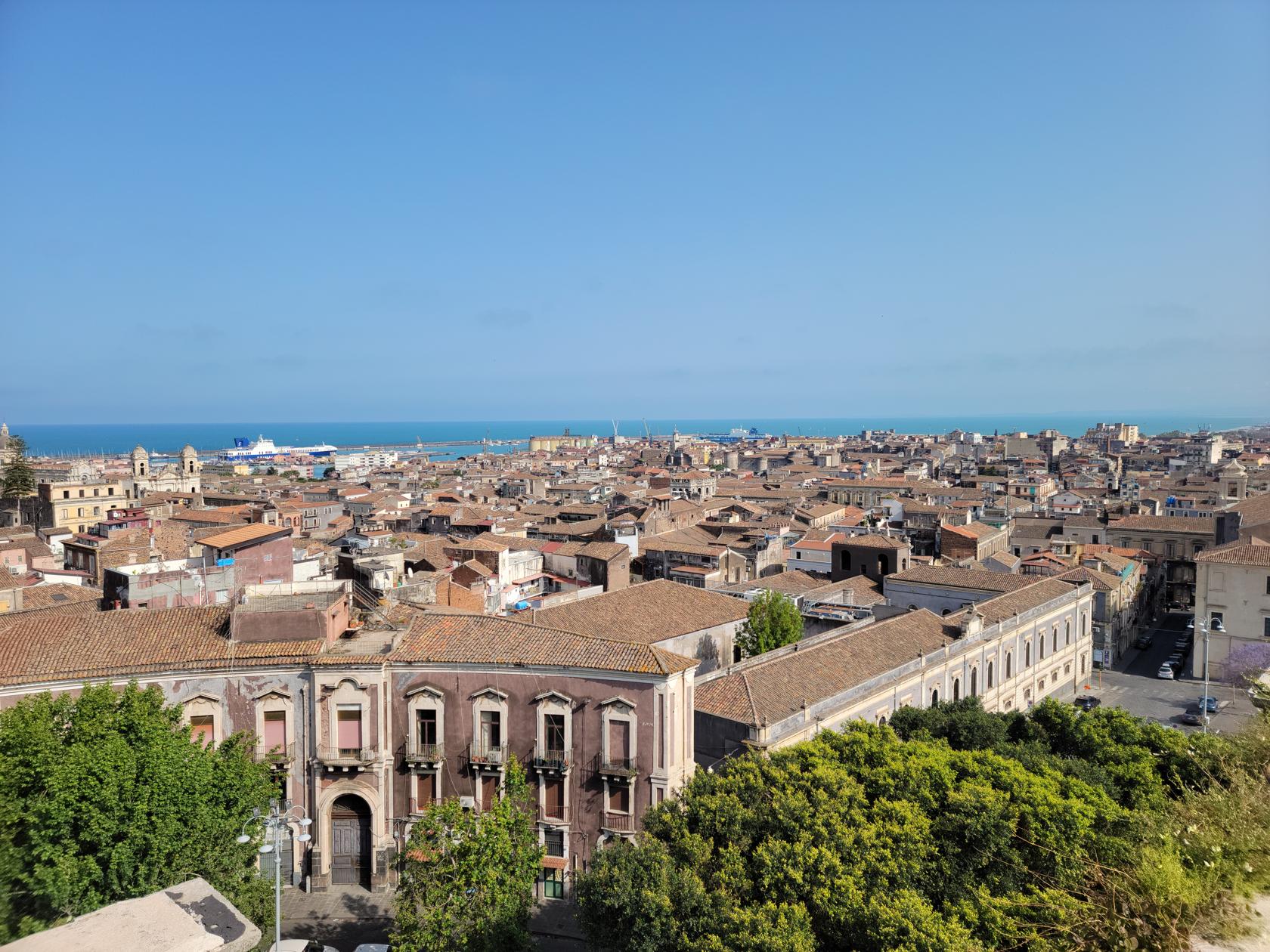
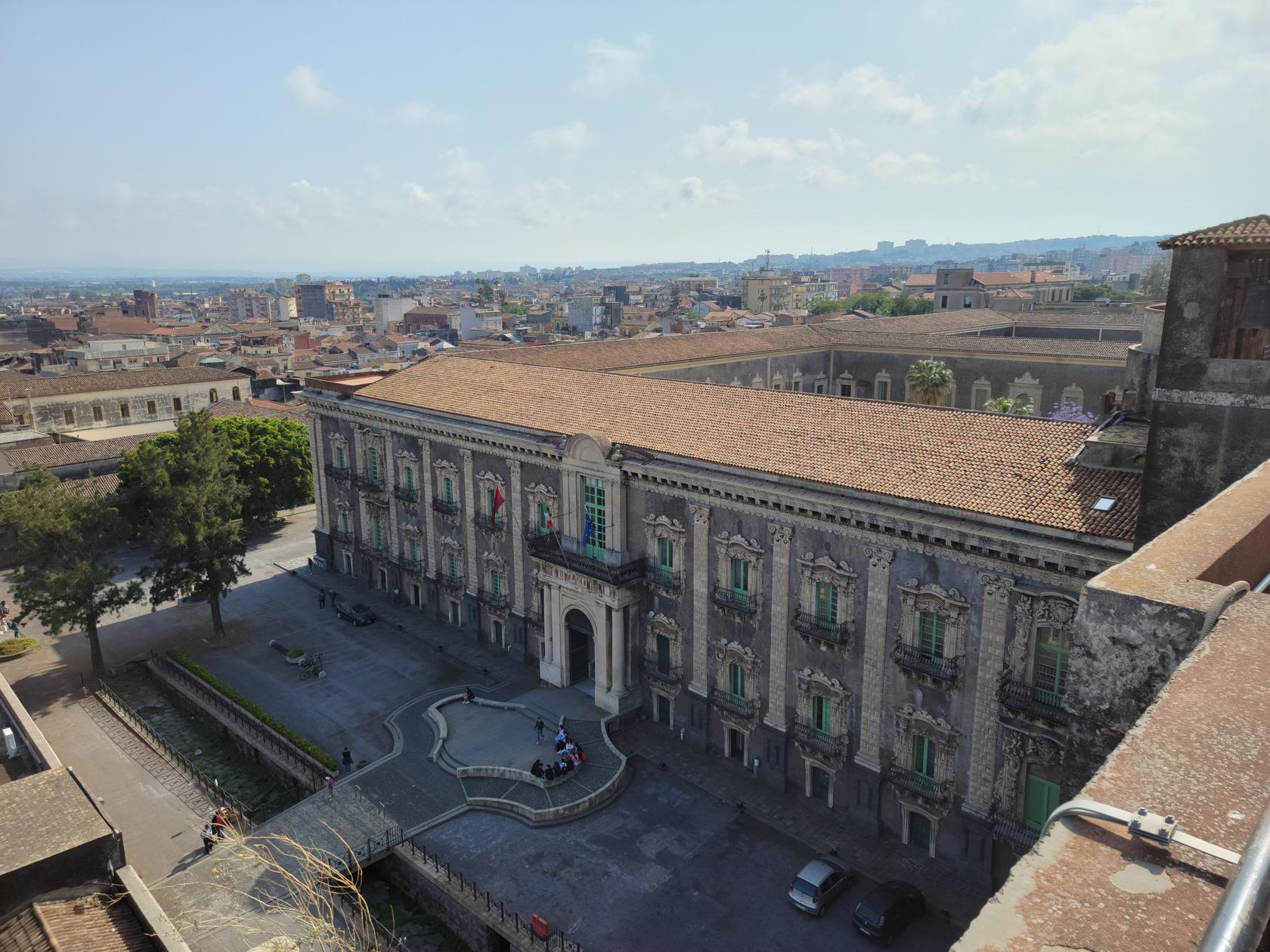
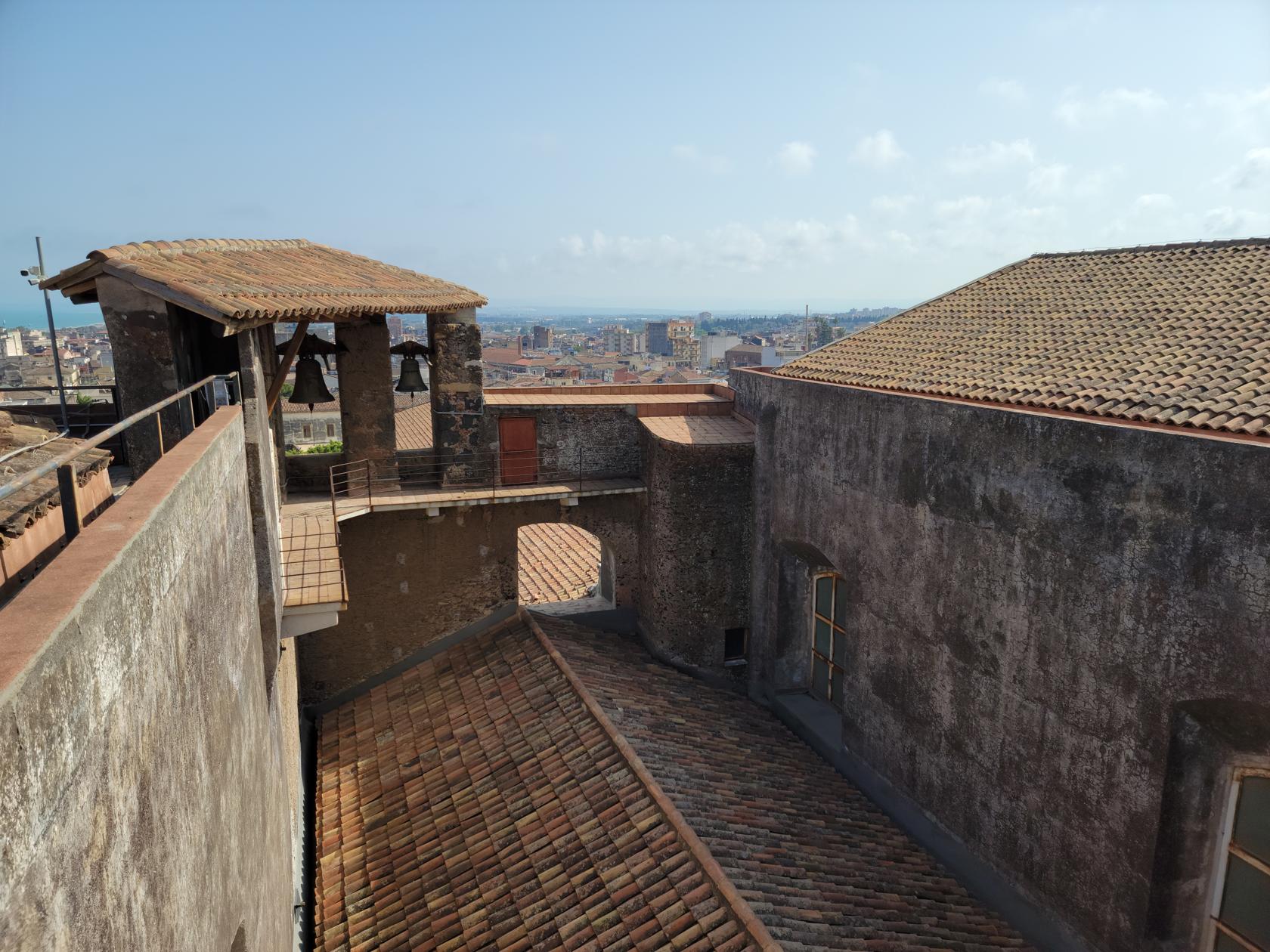
This church has a secret though, for small fee you may ascend its narrow spiral staircase to the roof for its impressive view of the city.
Tickets For Two – San Nicolo L’Arena Church – Catania, Sicily
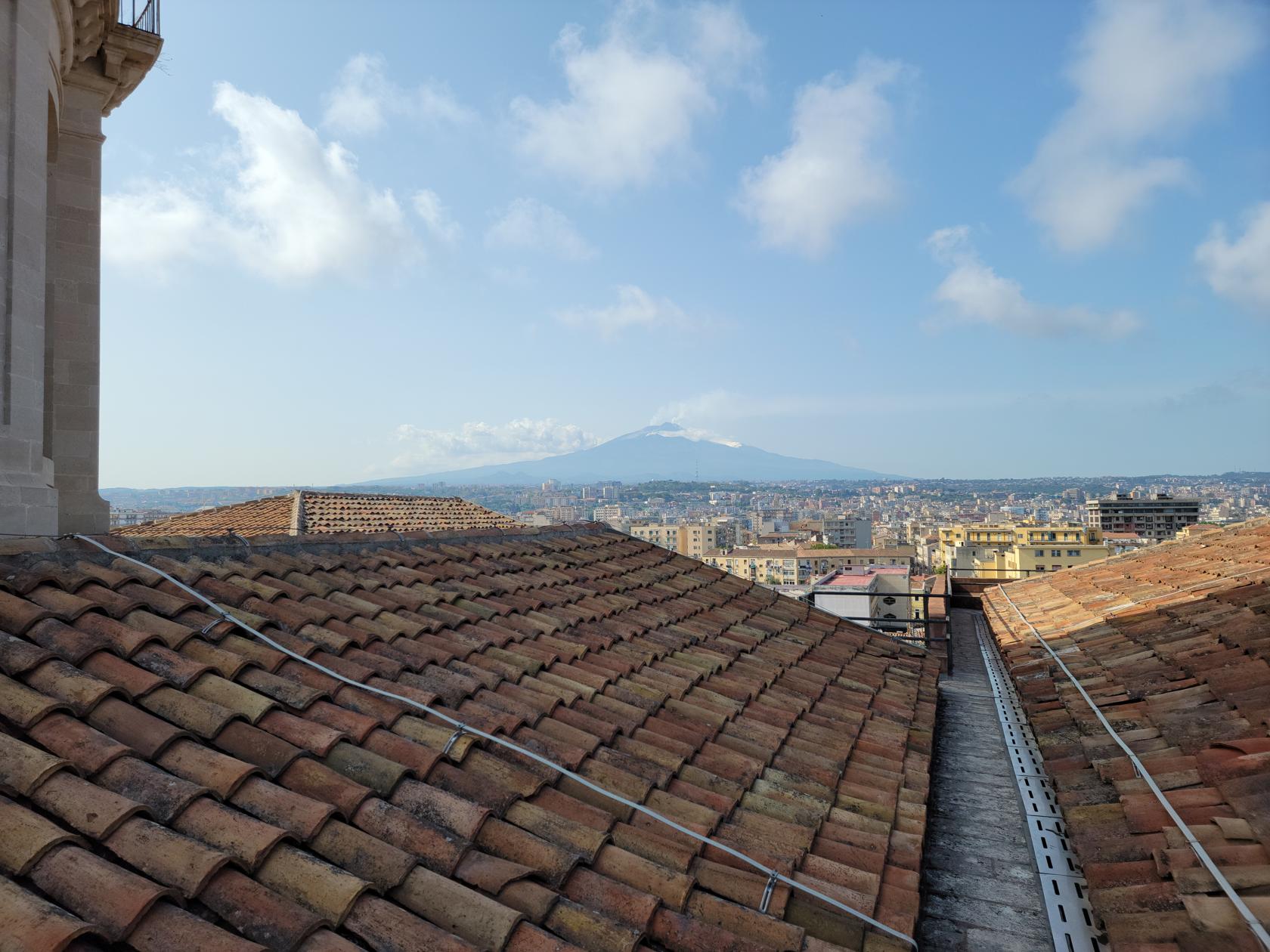
From this perch you can also get an amazing shot at Mount Etna.
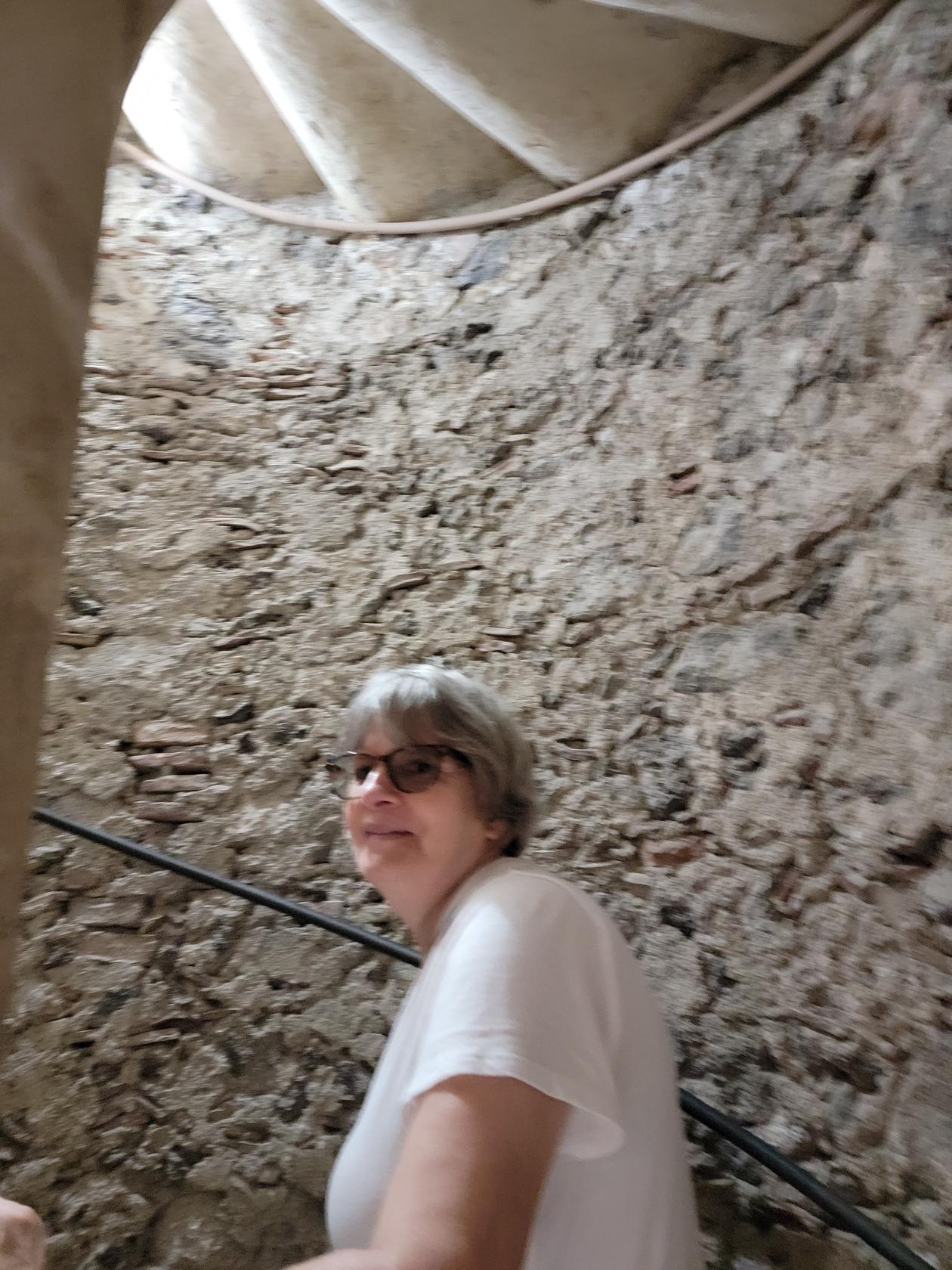
Climbing the stairs to the roof – San Nicolo L’Arena Church – Catania, Sicily
View of Catania Bay from the roof – San Nicolo L’Arena Church – Catania, Sicily
View from roof – San Nicolo L’Arena Church – Catania, Sicily
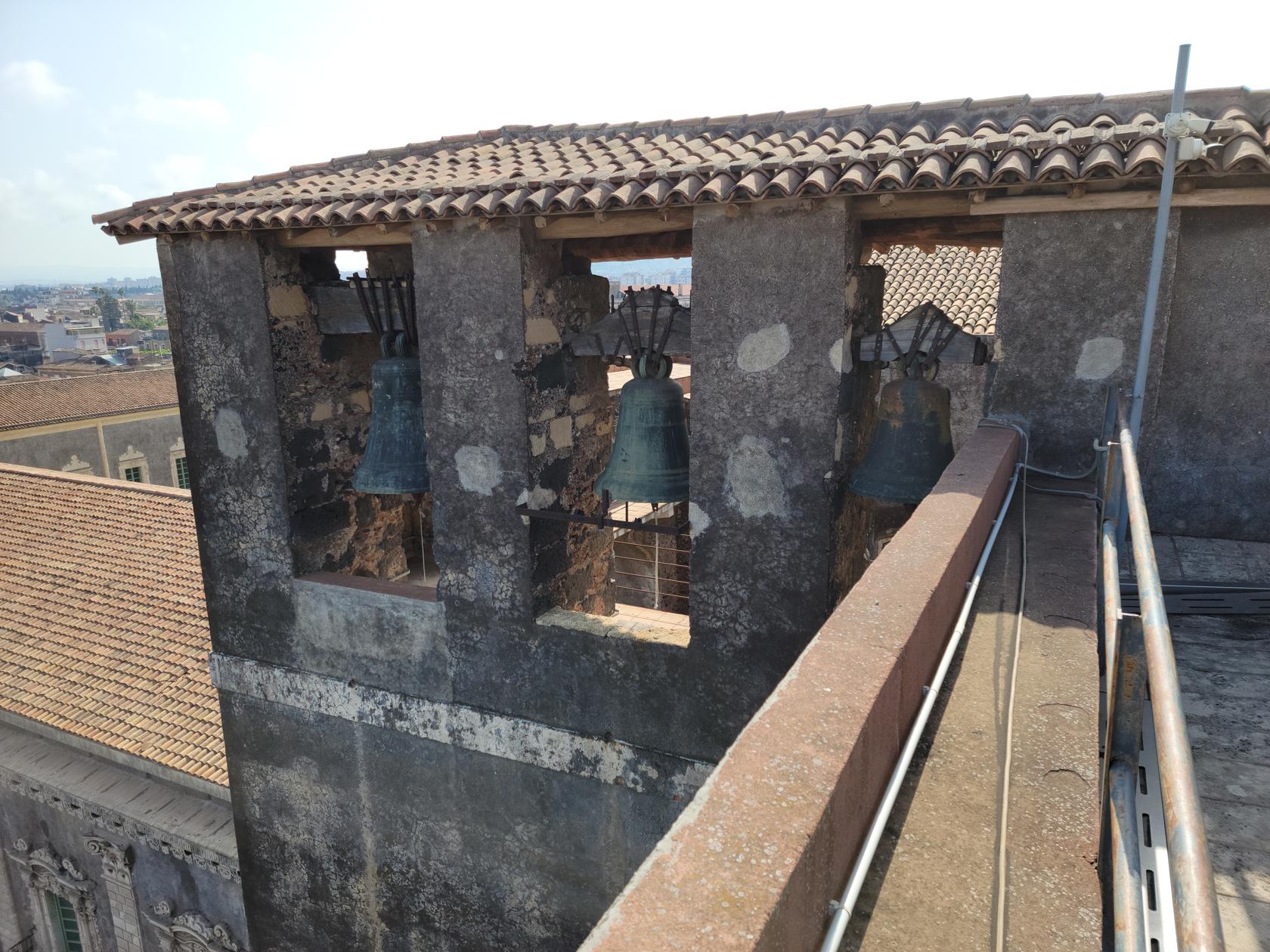
The belfry tower – San Nicolo L’Arena Church – Catania, Sicily
The roof – San Nicolo L’Arena Church – Catania, Sicily
A view of Mount Etna from the roof – San Nicolo L’Arena Church – Catania, Sicily
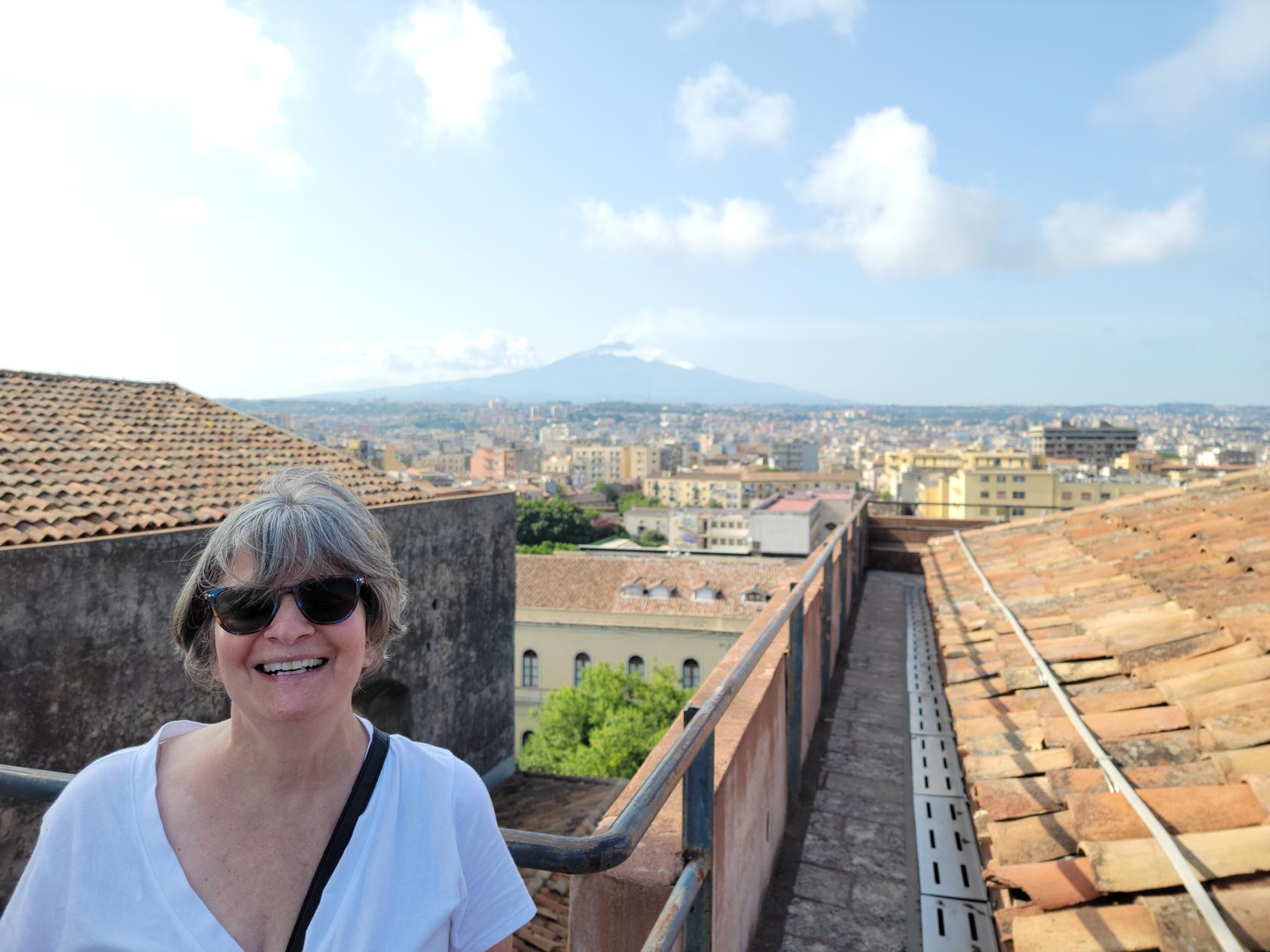
A view of Mount Etna and Patti from the roof – San Nicolo L’Arena Church – Catania, Sicily
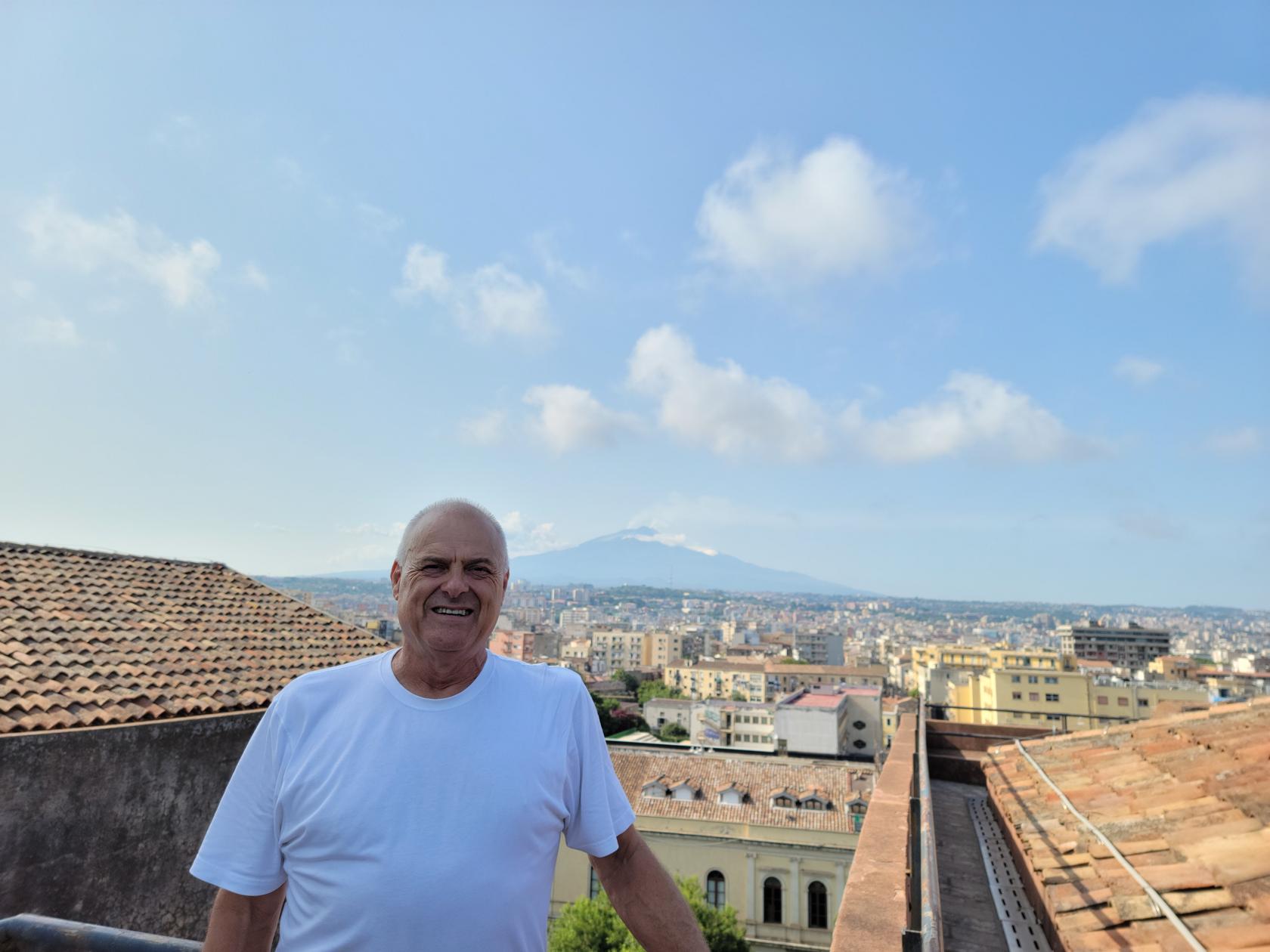
A view of Mount Etna and Erick from the roof – San Nicolo L’Arena Church – Catania, Sicily
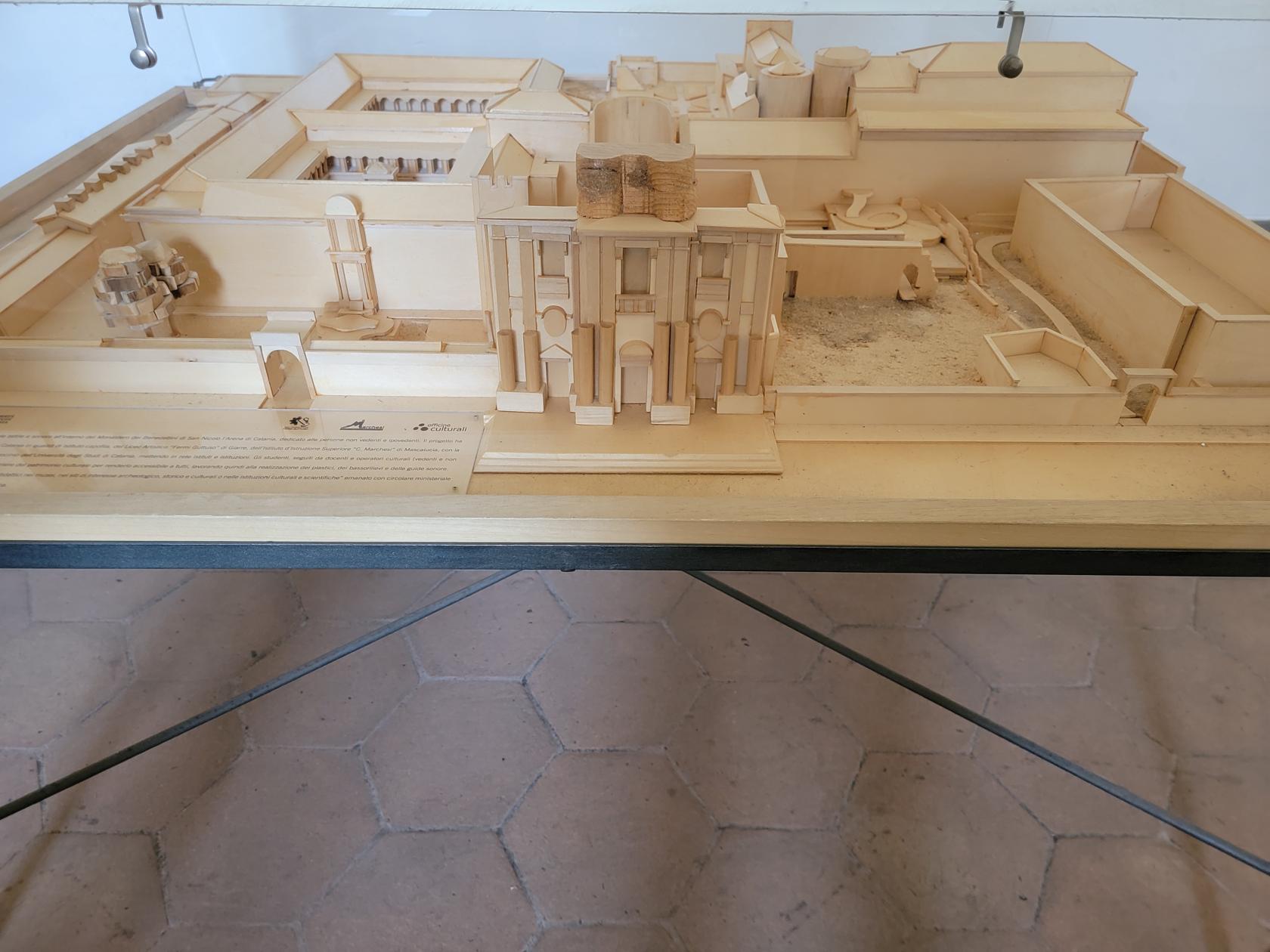
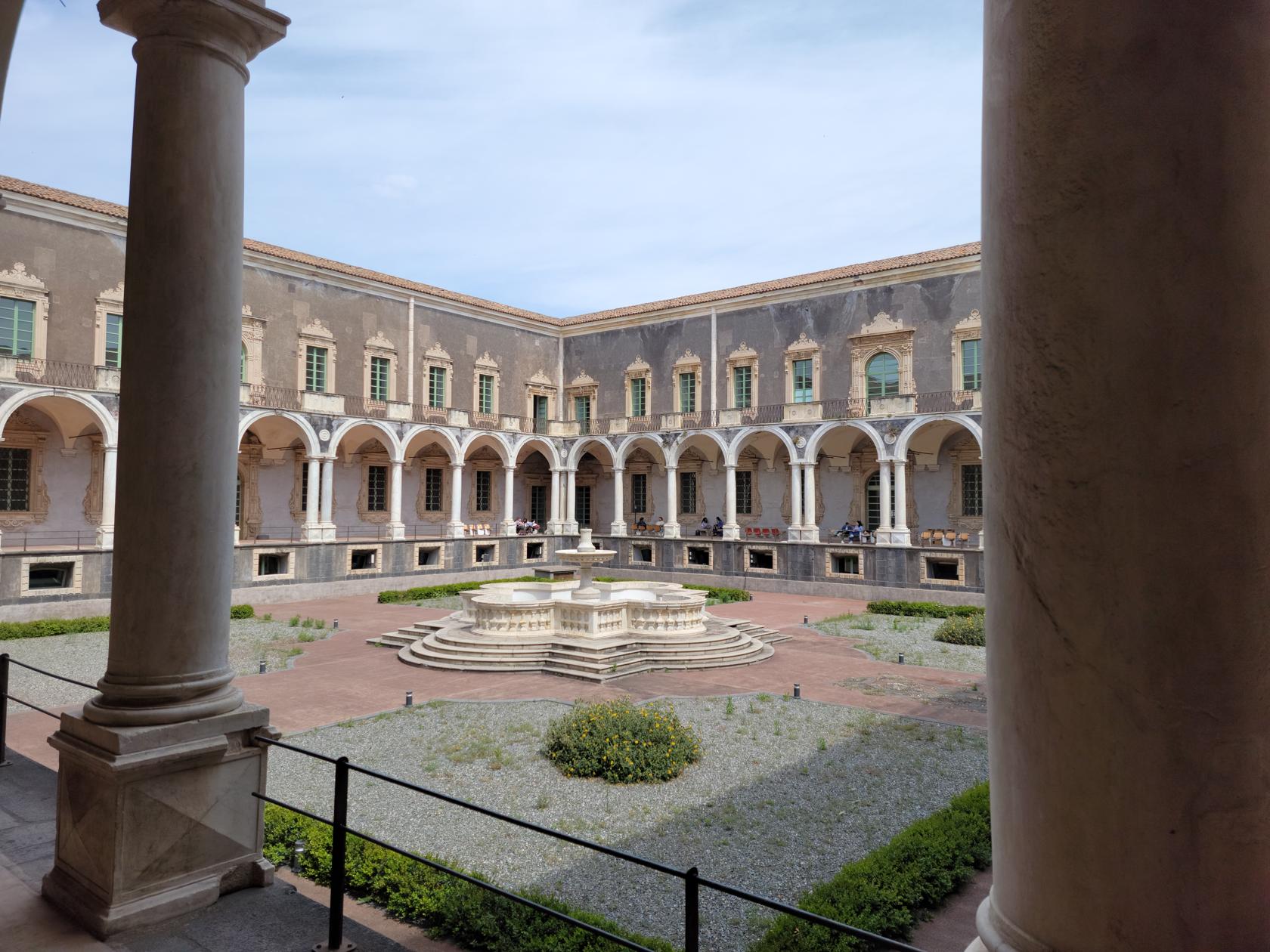
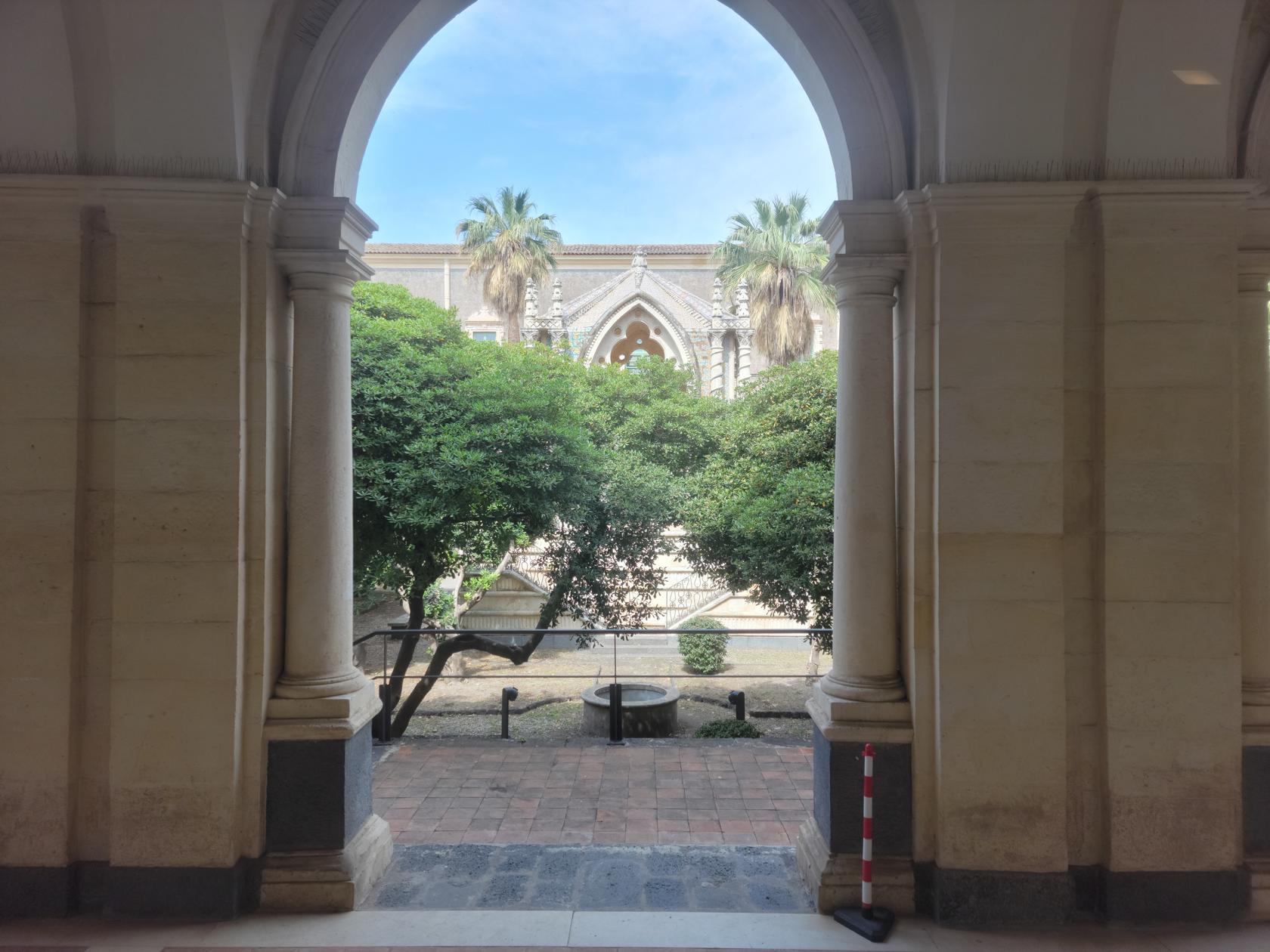
A diorama of the Benedictine Monastery – Catania, Sicily
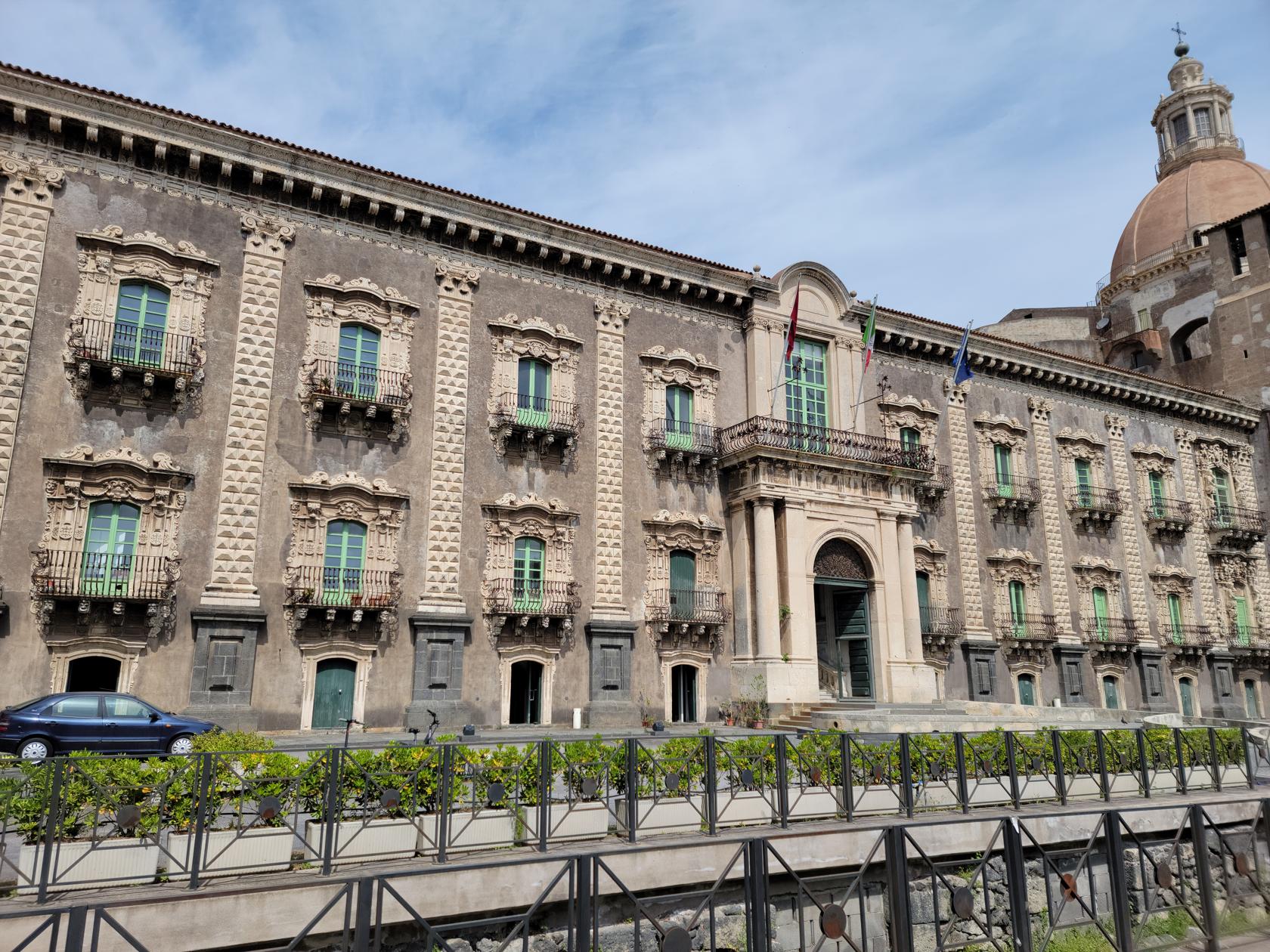
Benedictine Monastery – Catania, Sicily
Benedictine Monastery – Catania, Sicily
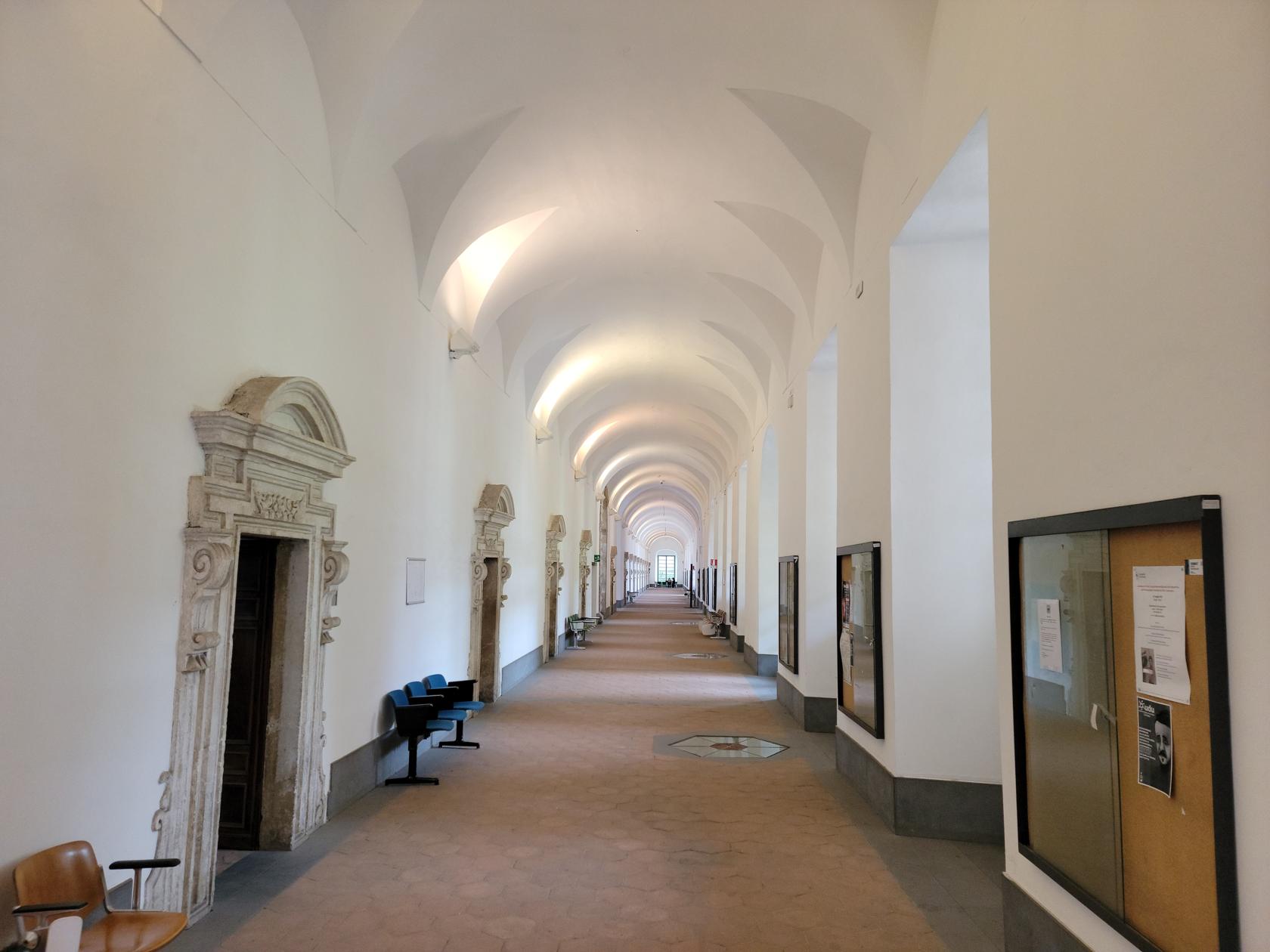
it is only open for guided tours and they were completely booked up when we inquired with school groups and other tour groups. We were lucky however to get a glimpse of some of the grounds which is also used as part of the university, which holds lectures on philosophy and other classical topics.
Basilica of Saint Agatha
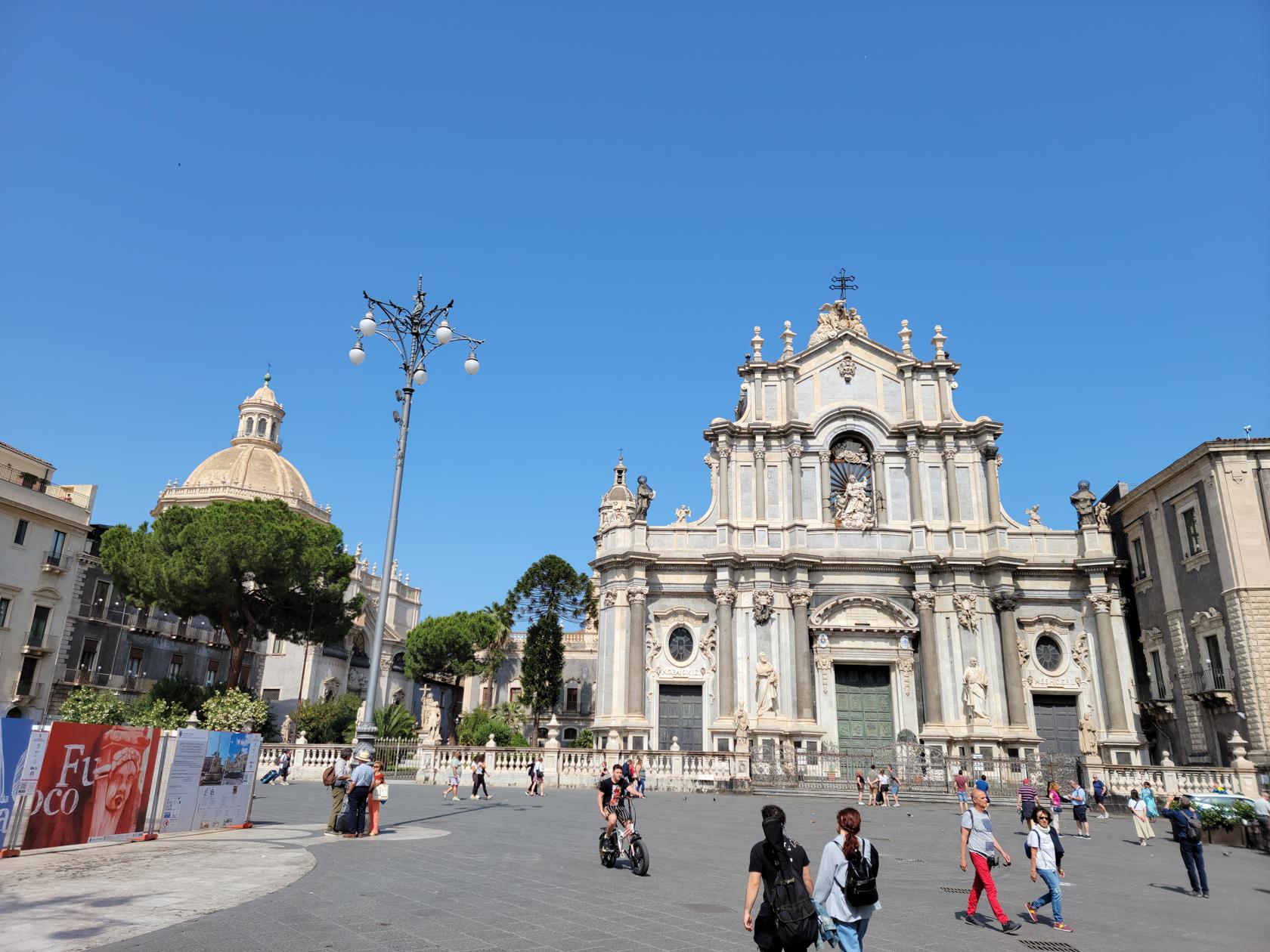
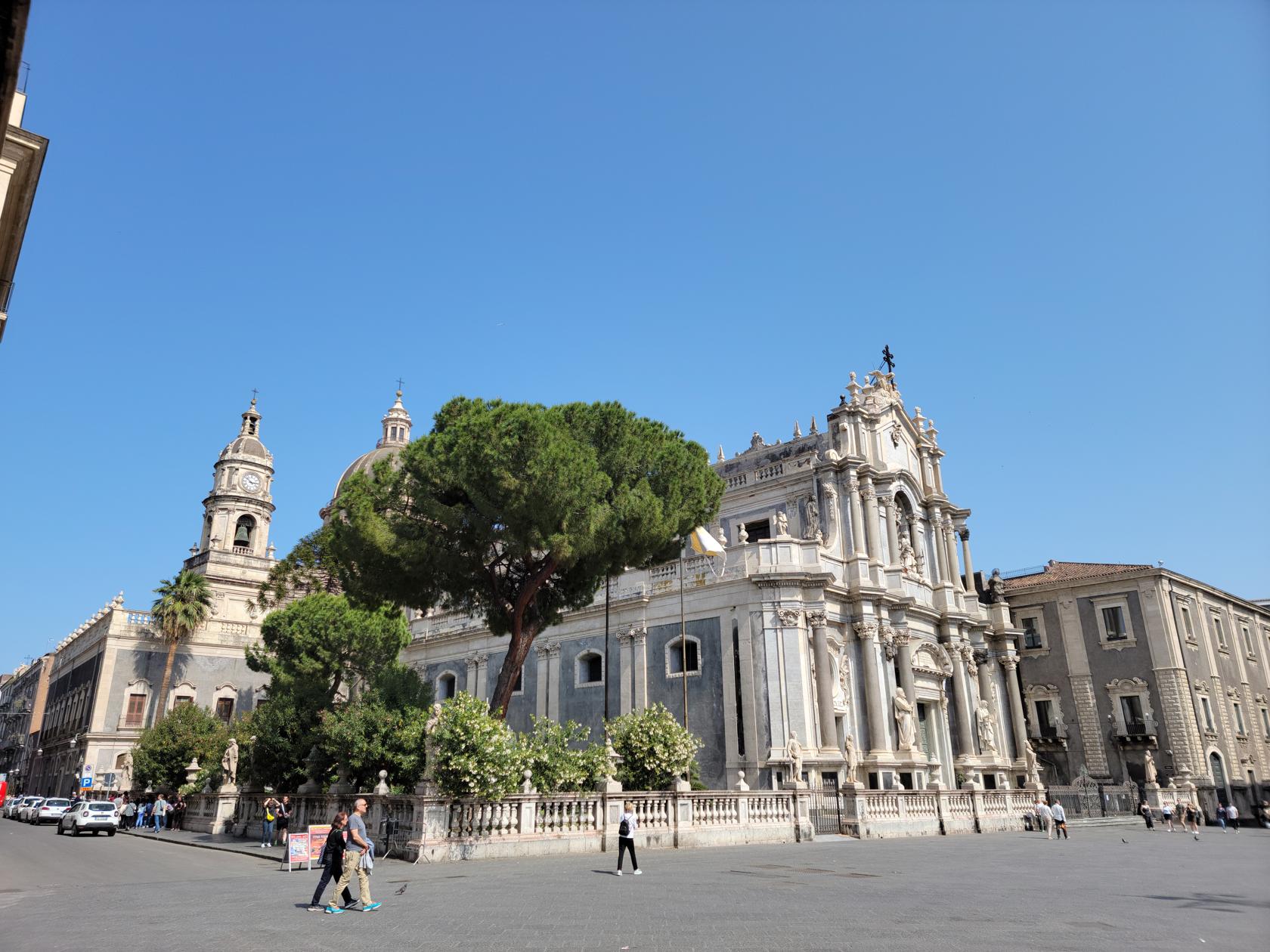
This basilica has a Sicilian Baroque facade that was designed by Vaccarini in the early 18th century. It has a clock tower and a large piazza outside it to support its impressive entrance.
Basilica Cathedral of Saint Agatha – Catania, Sicily
Basilica Cathedral of Saint Agatha – Catania, Sicily
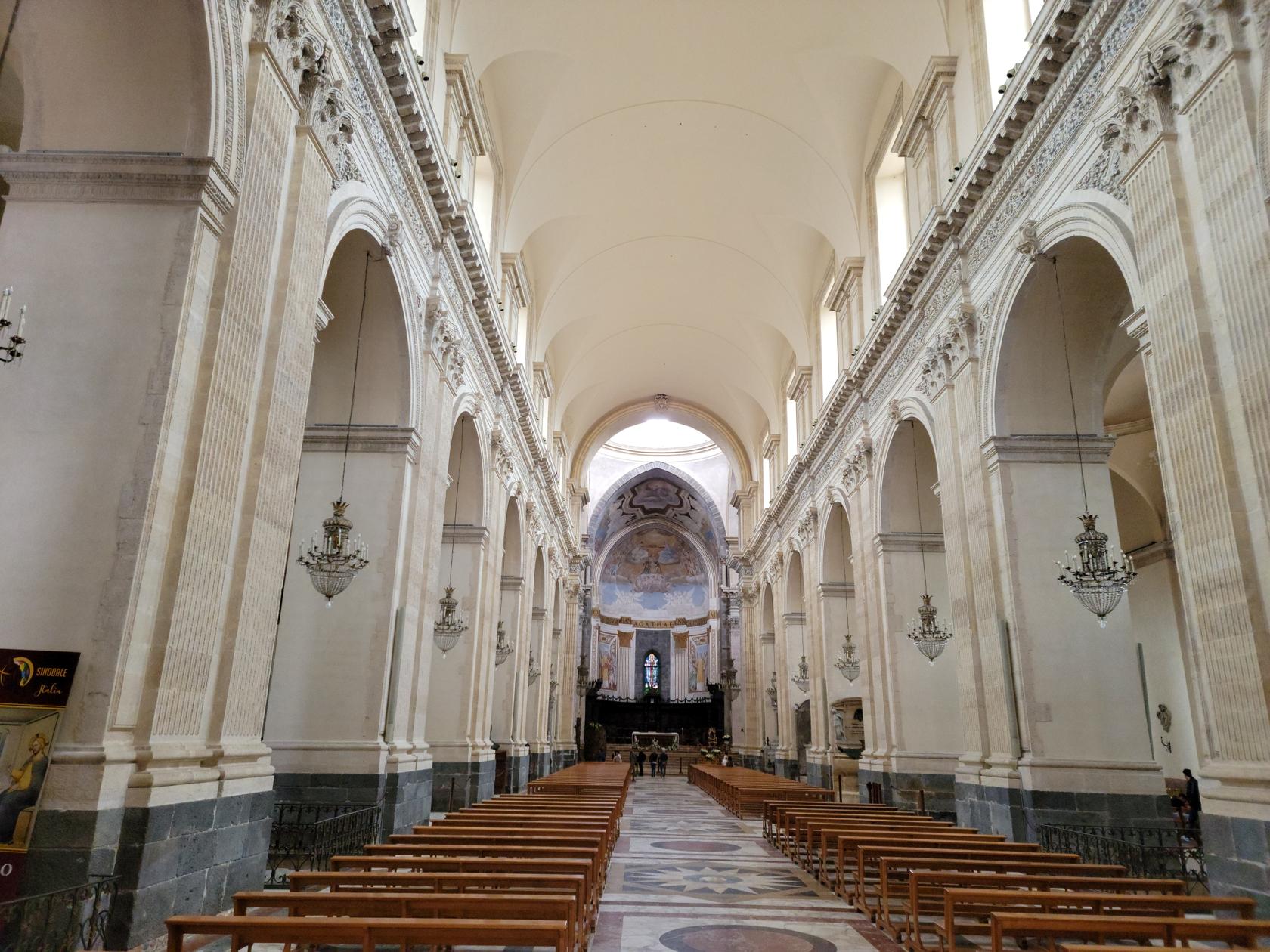
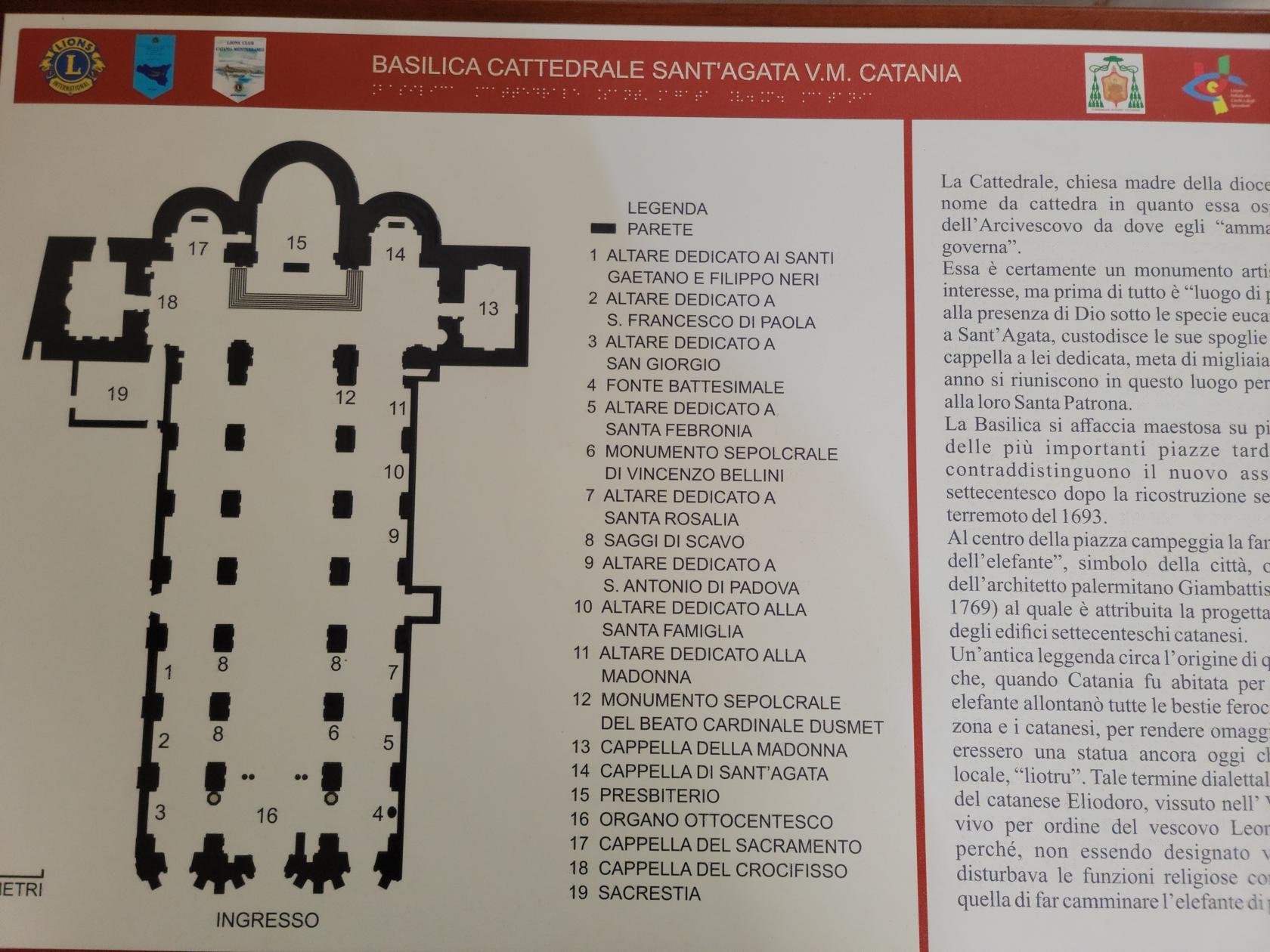
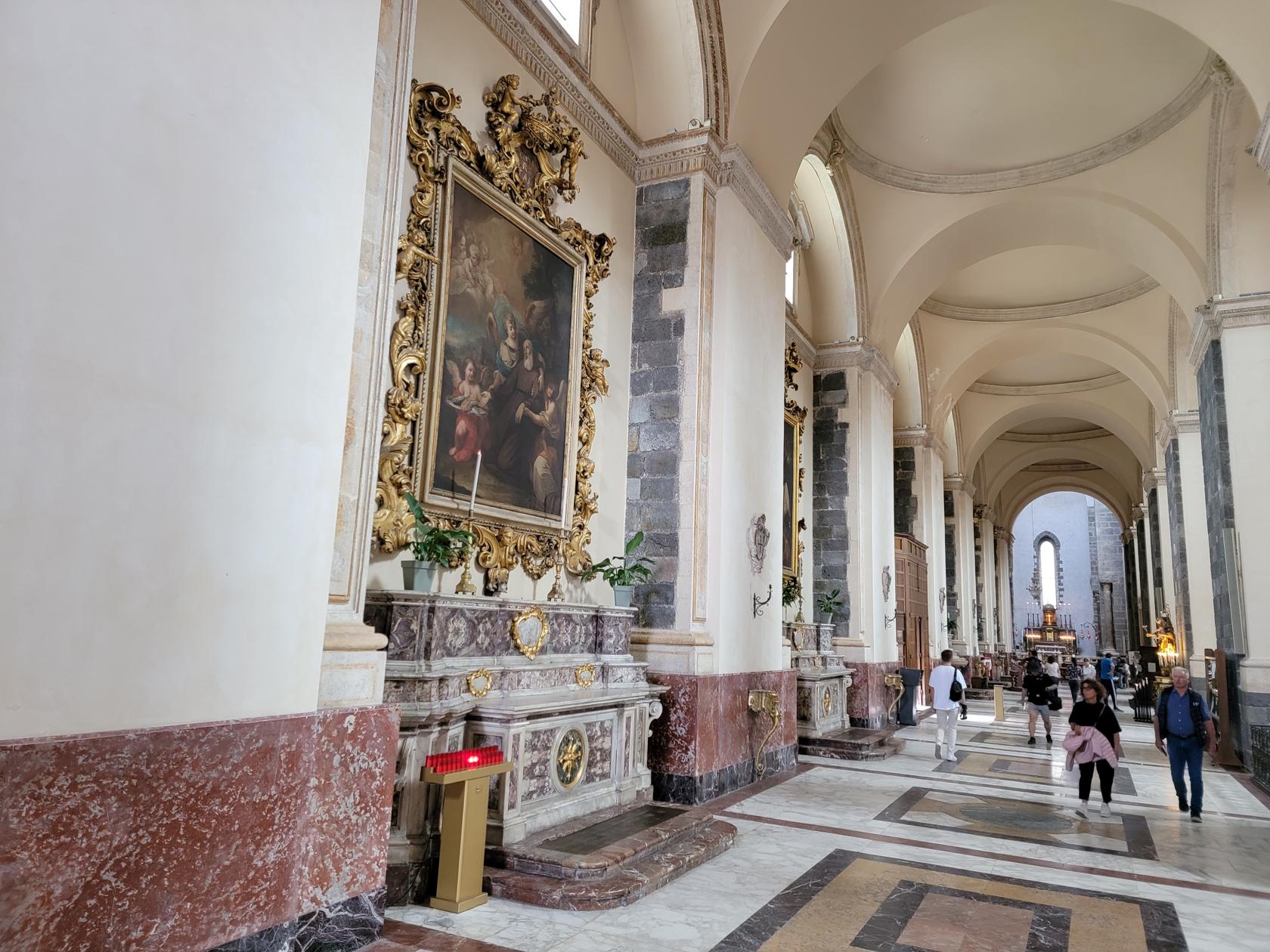
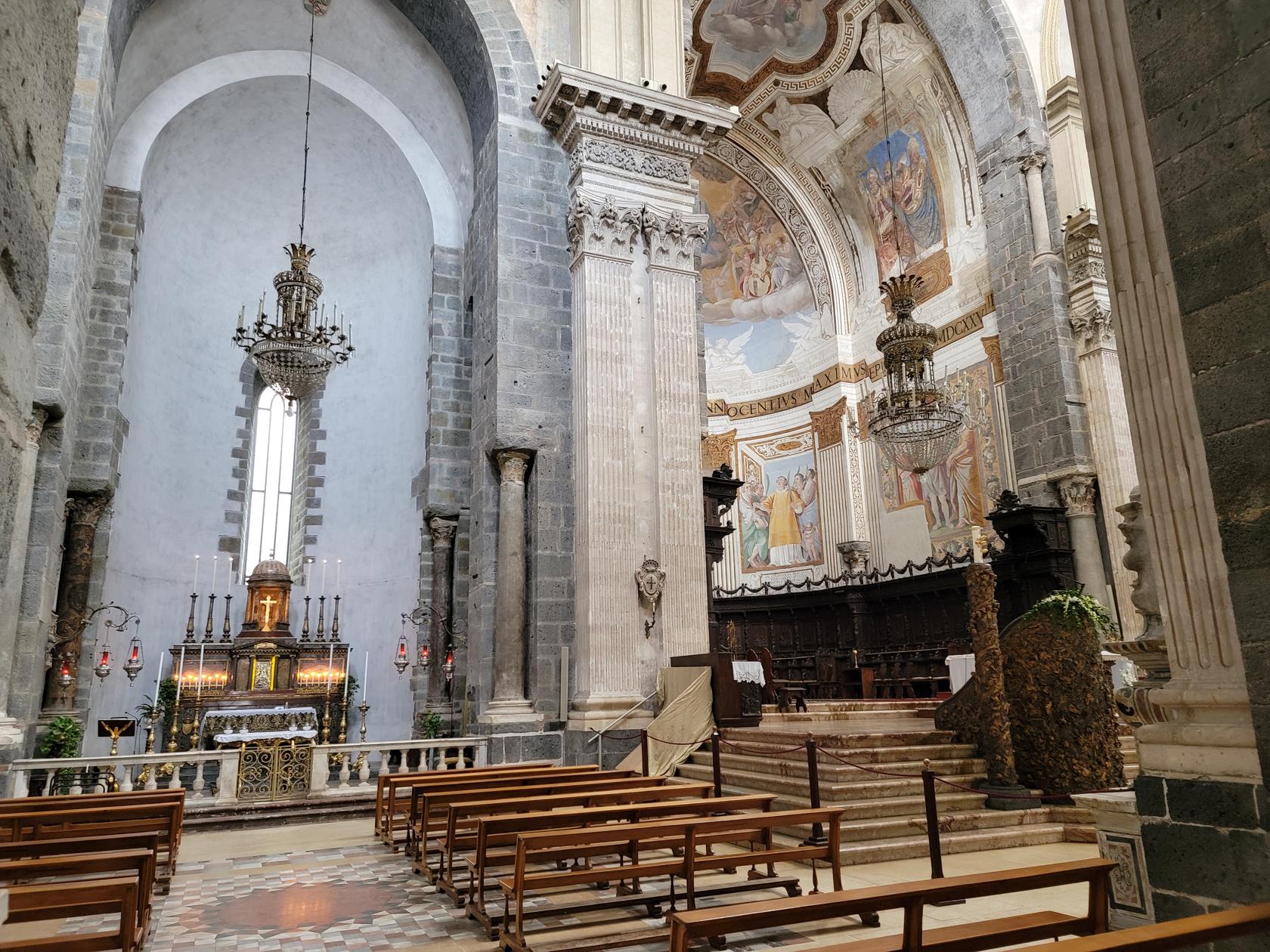
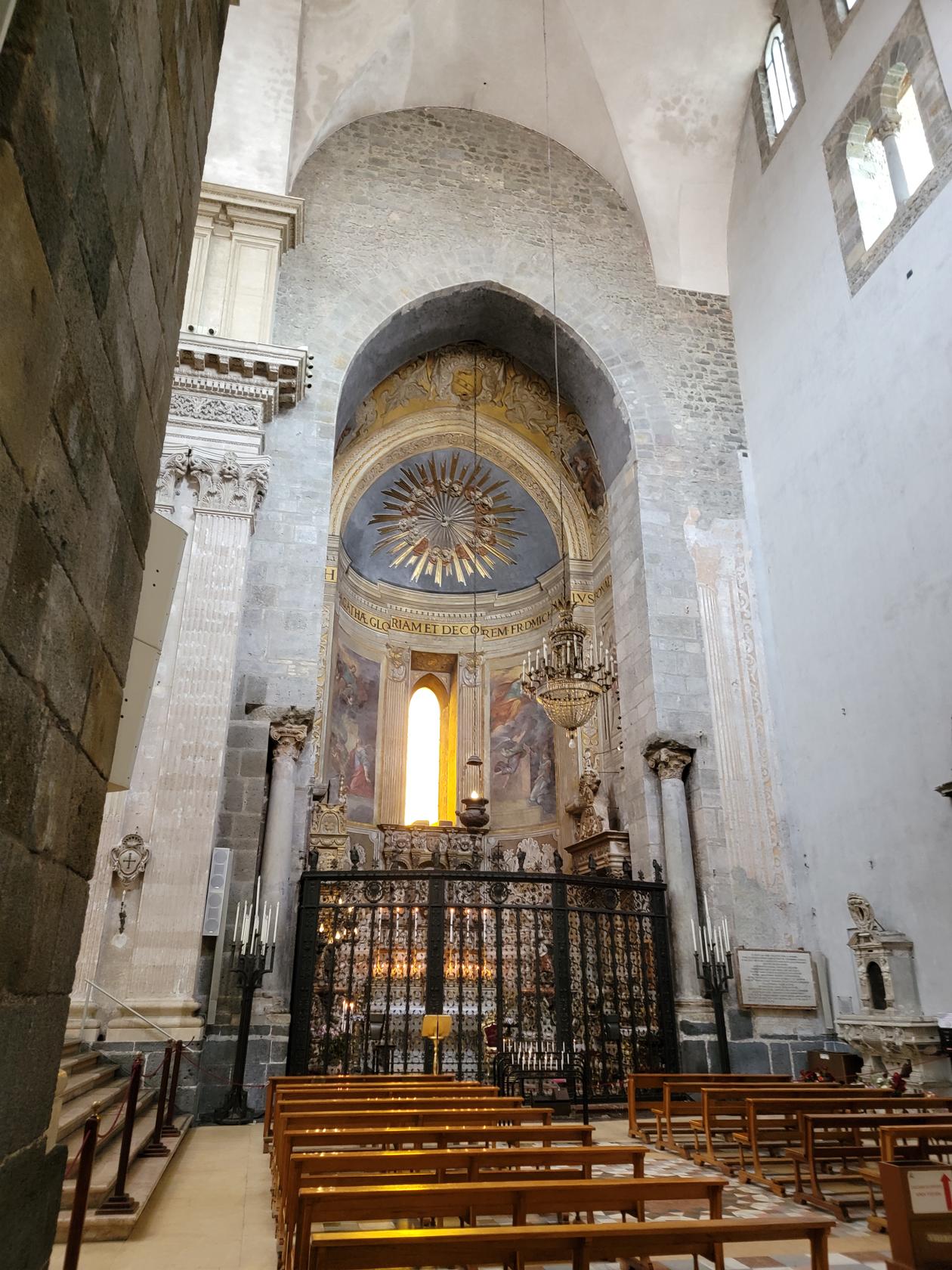
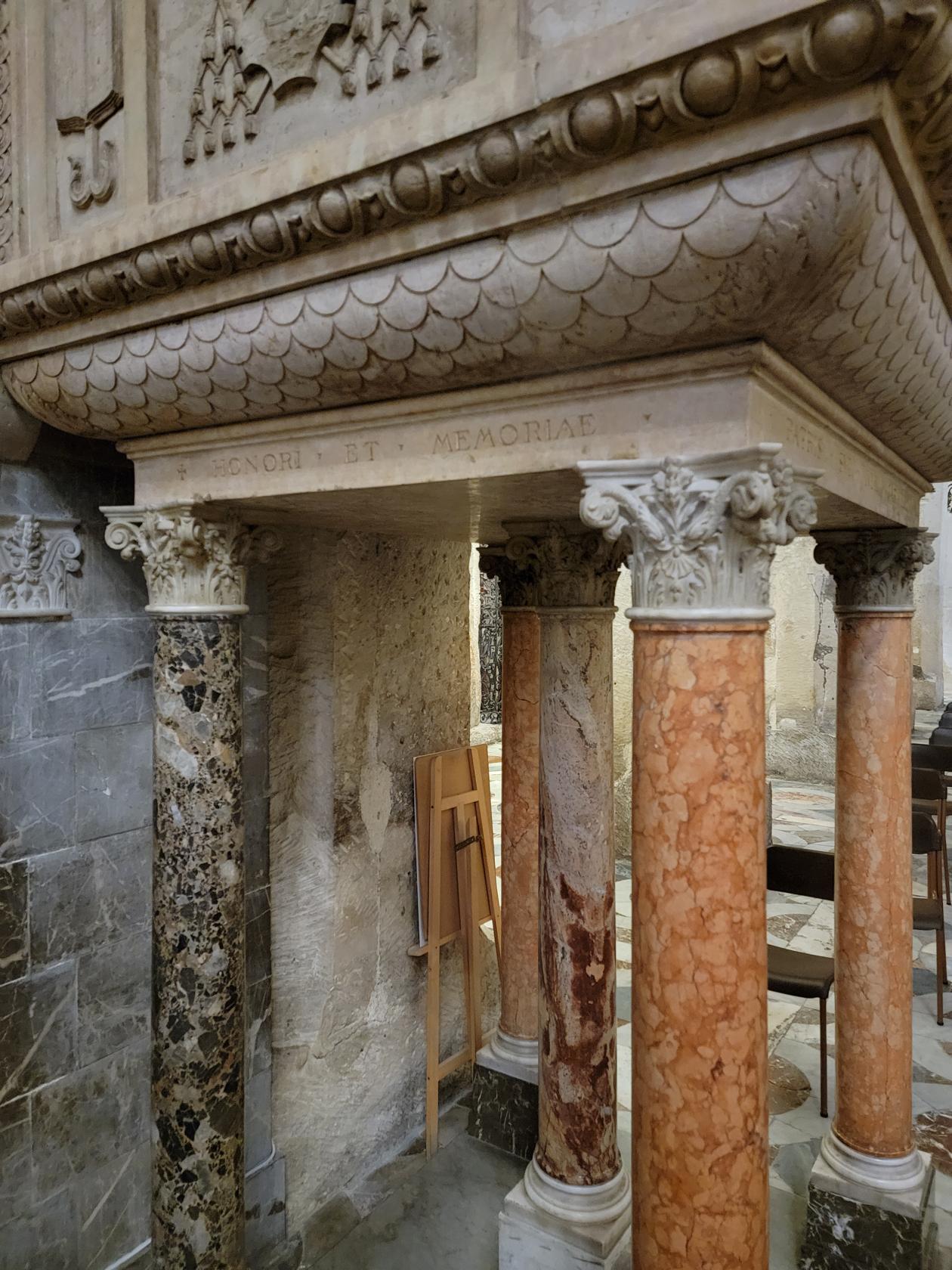
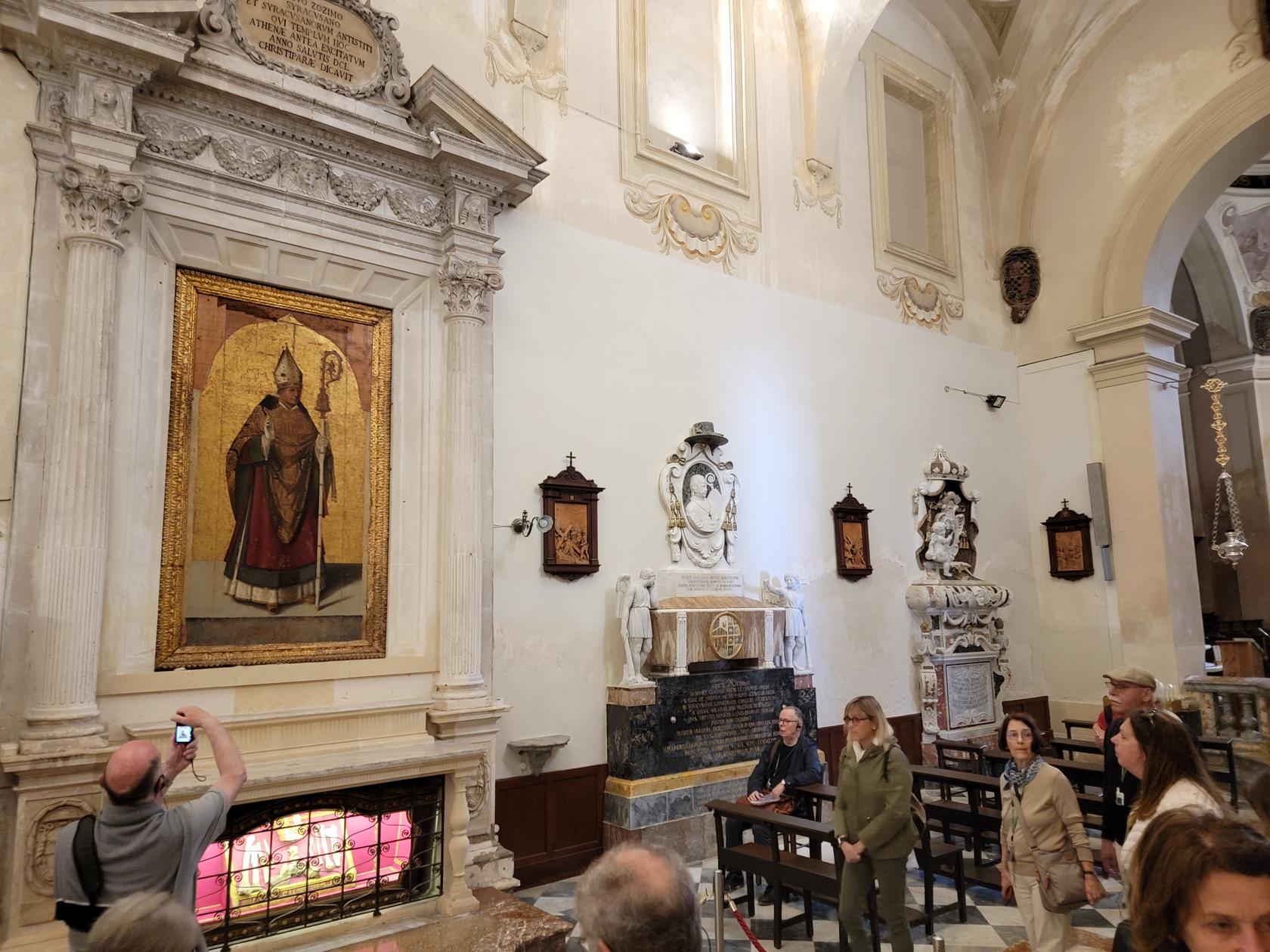
The interior is very large and has ten or twelve sub-chapels along its walls. There are three main altars, the two are the sides appear to be lit at all times, while the main alter, along with its wooden pulpit is probably only used to special occasions.
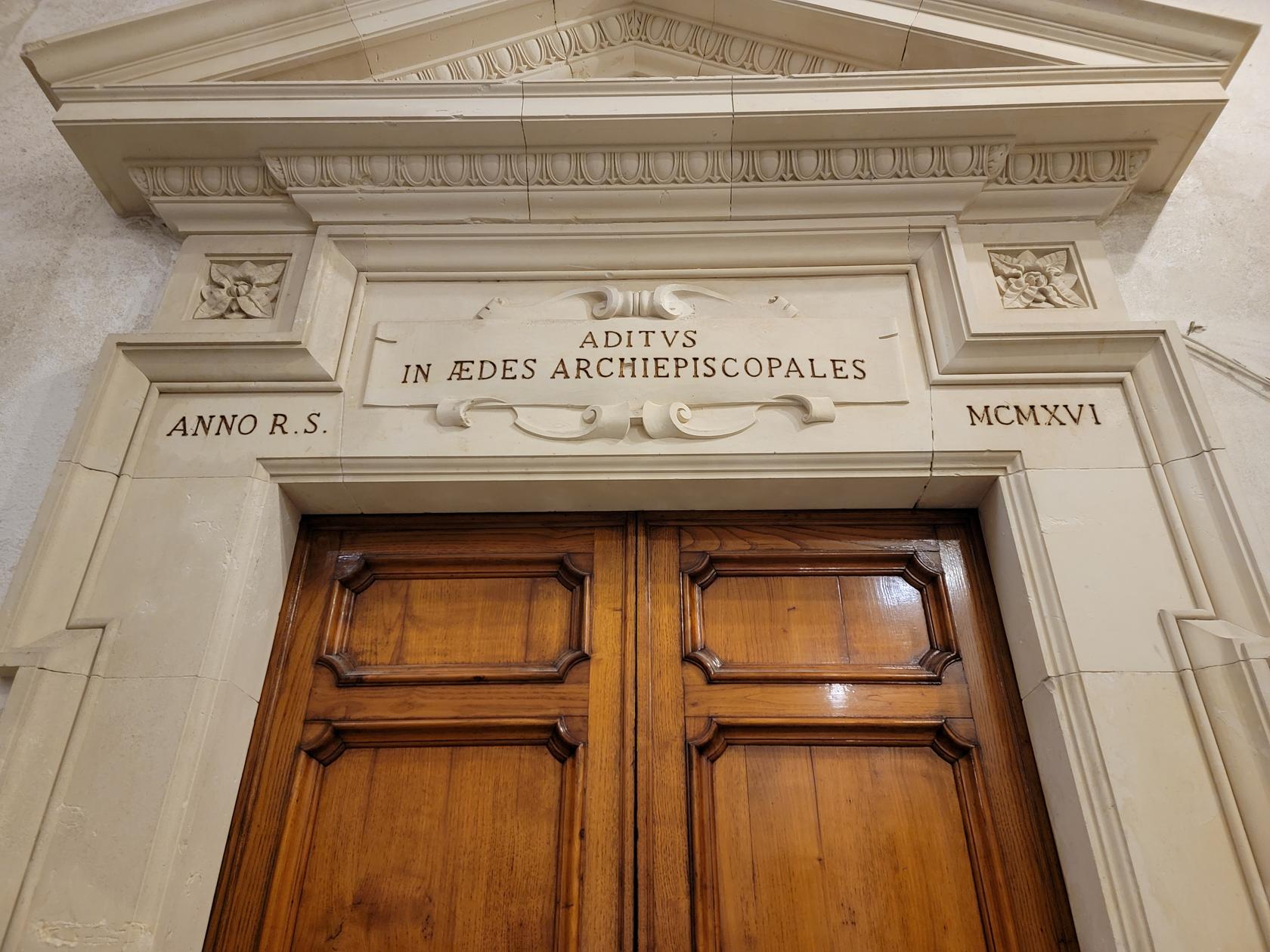
Cathedral of Saint Agatha – Catania, Sicily
Cathedral of Saint Agatha – Catania, Sicily
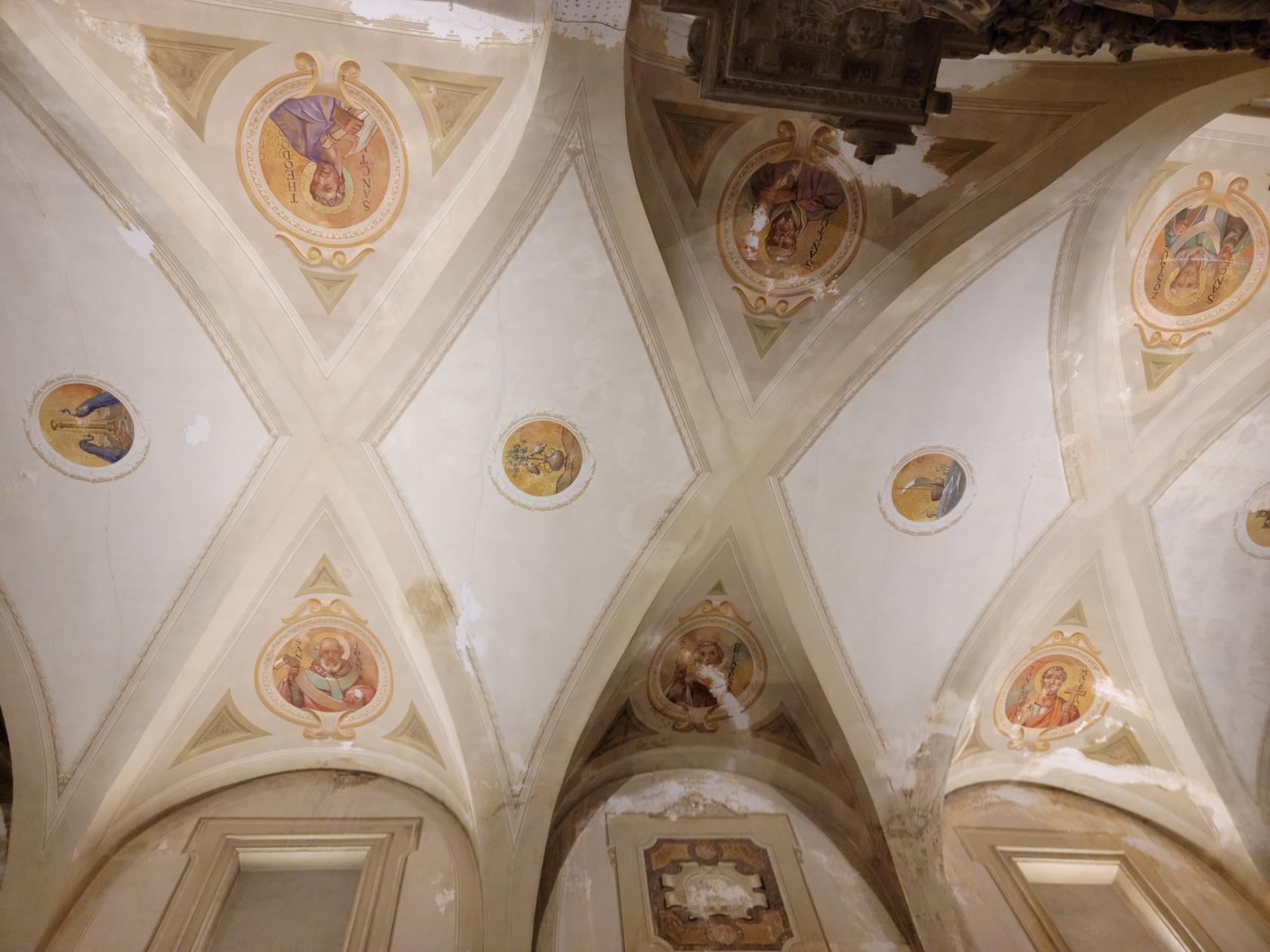
Cathedral of Saint Agatha – Catania, Sicily
Cathedral of Saint Agatha – Catania, Sicily
Our Hotel – Hotel Liberty
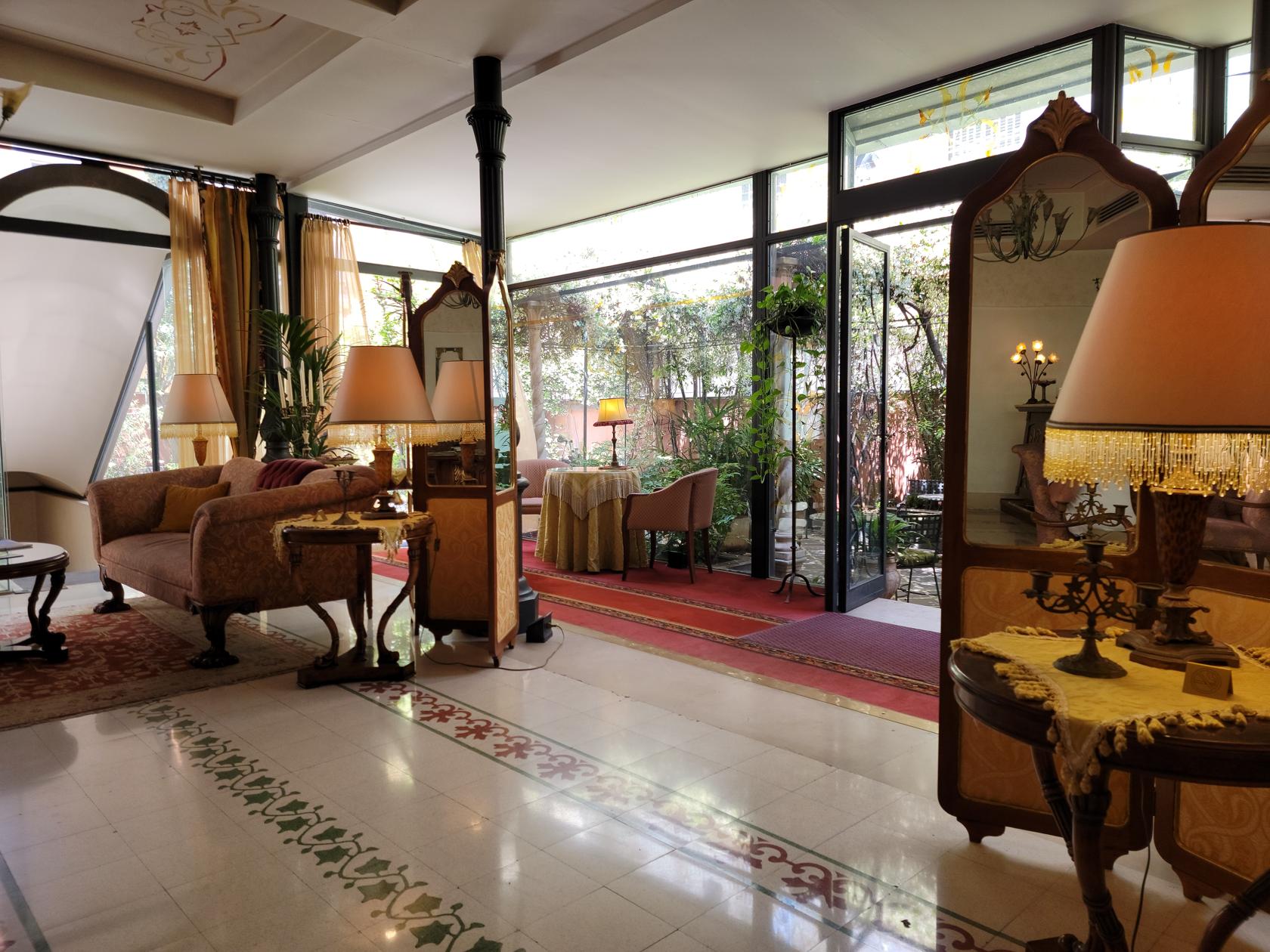
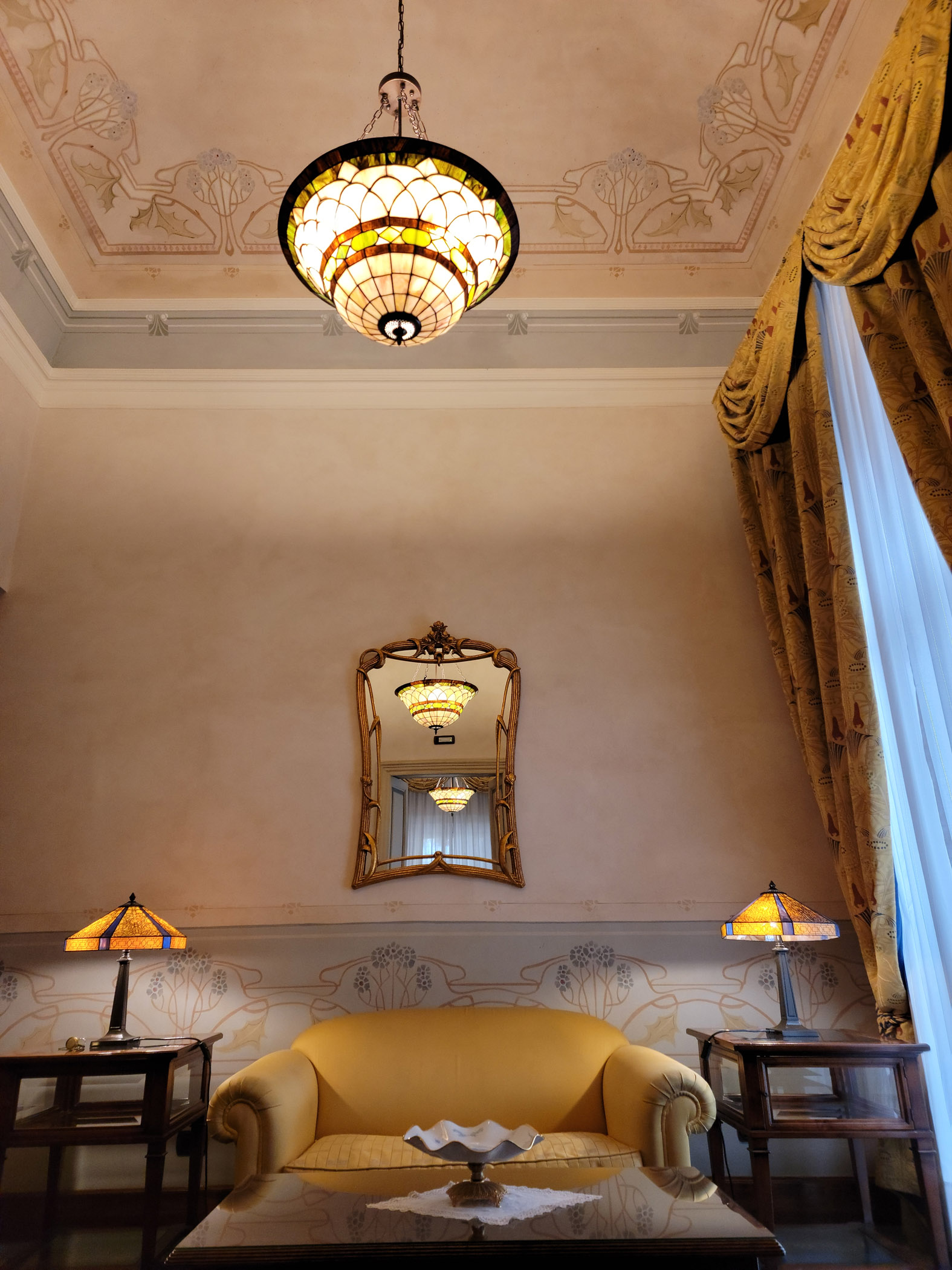
This hotel is situated above the main thoroughfare of Via Etnea (Etna) and just outside what would be perceived as the nice part of the city. It is most likely, the nice part of town has moved over time and now it finds itself a bit on the margins; but it is a great four-star hotel and the rooms are really great. The staff is very courteous and knowledgeable. Irons are not in the rooms but are available for those seeking to touch up their clothes after a hard travel.
Hotel Liberty Lobby – Catania, Sicily
Hotel Liberty Bar – Catania, Sicily
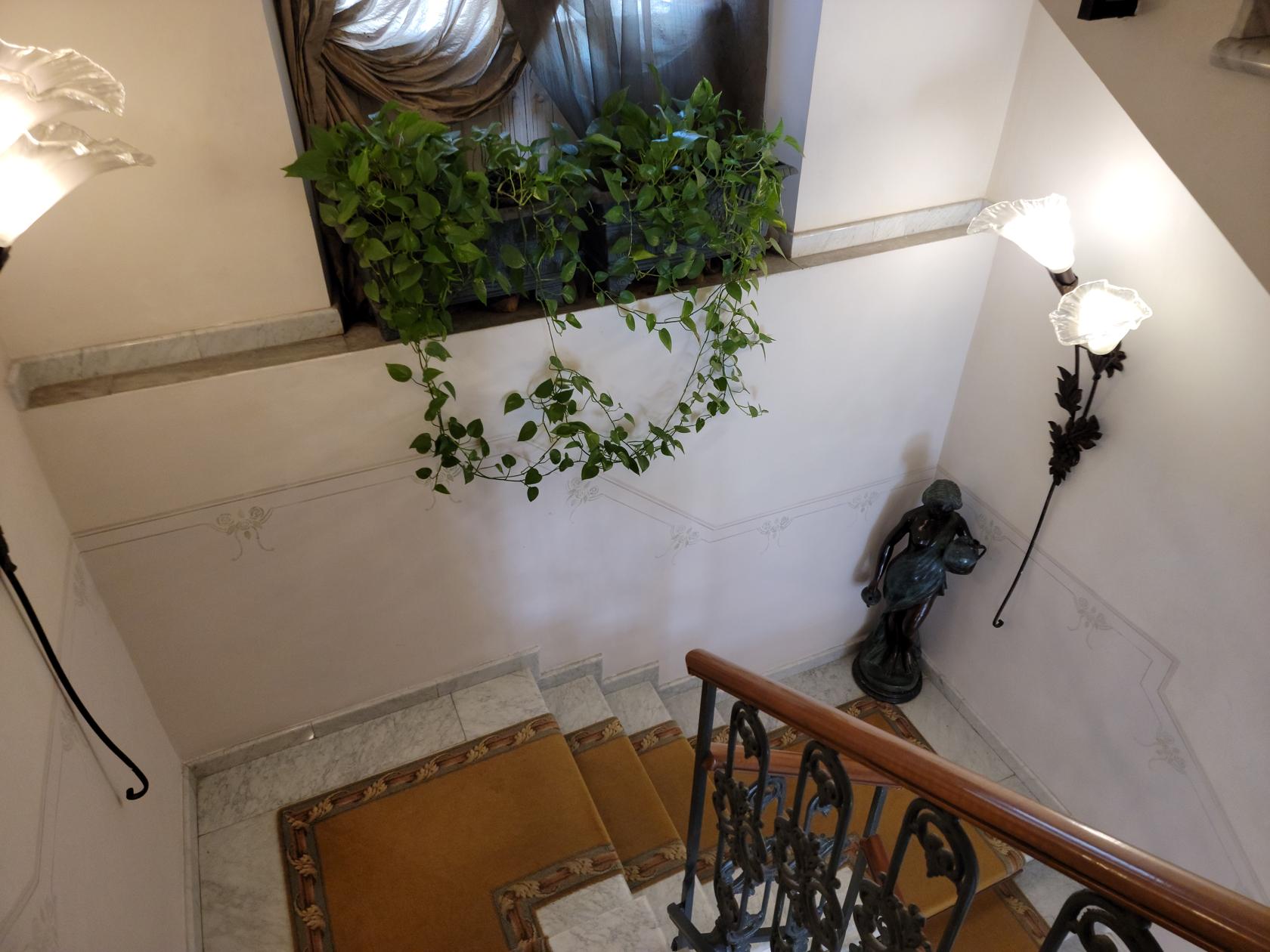
Main stairwell – Hotel Liberty – Catania, Sicily
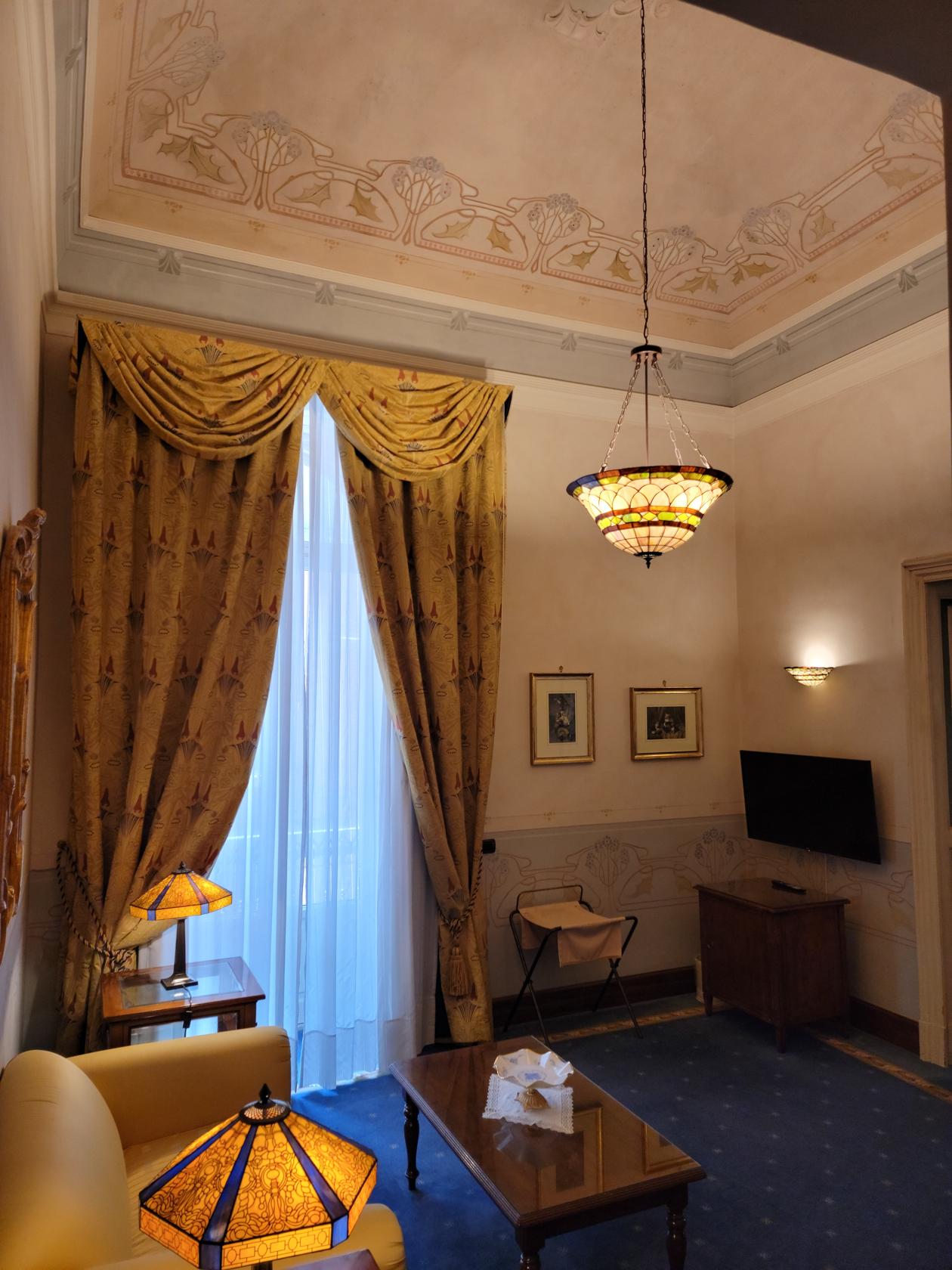
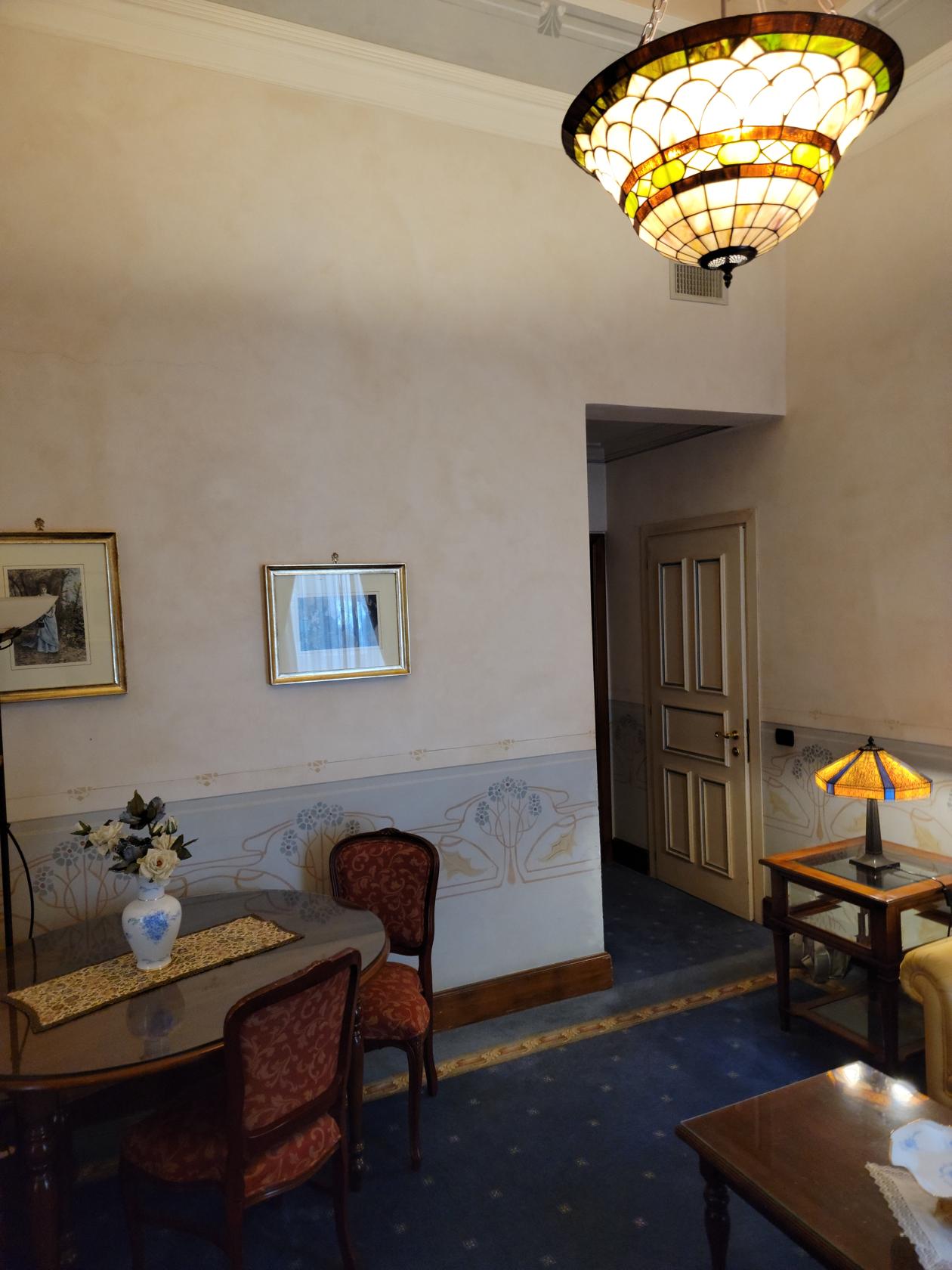
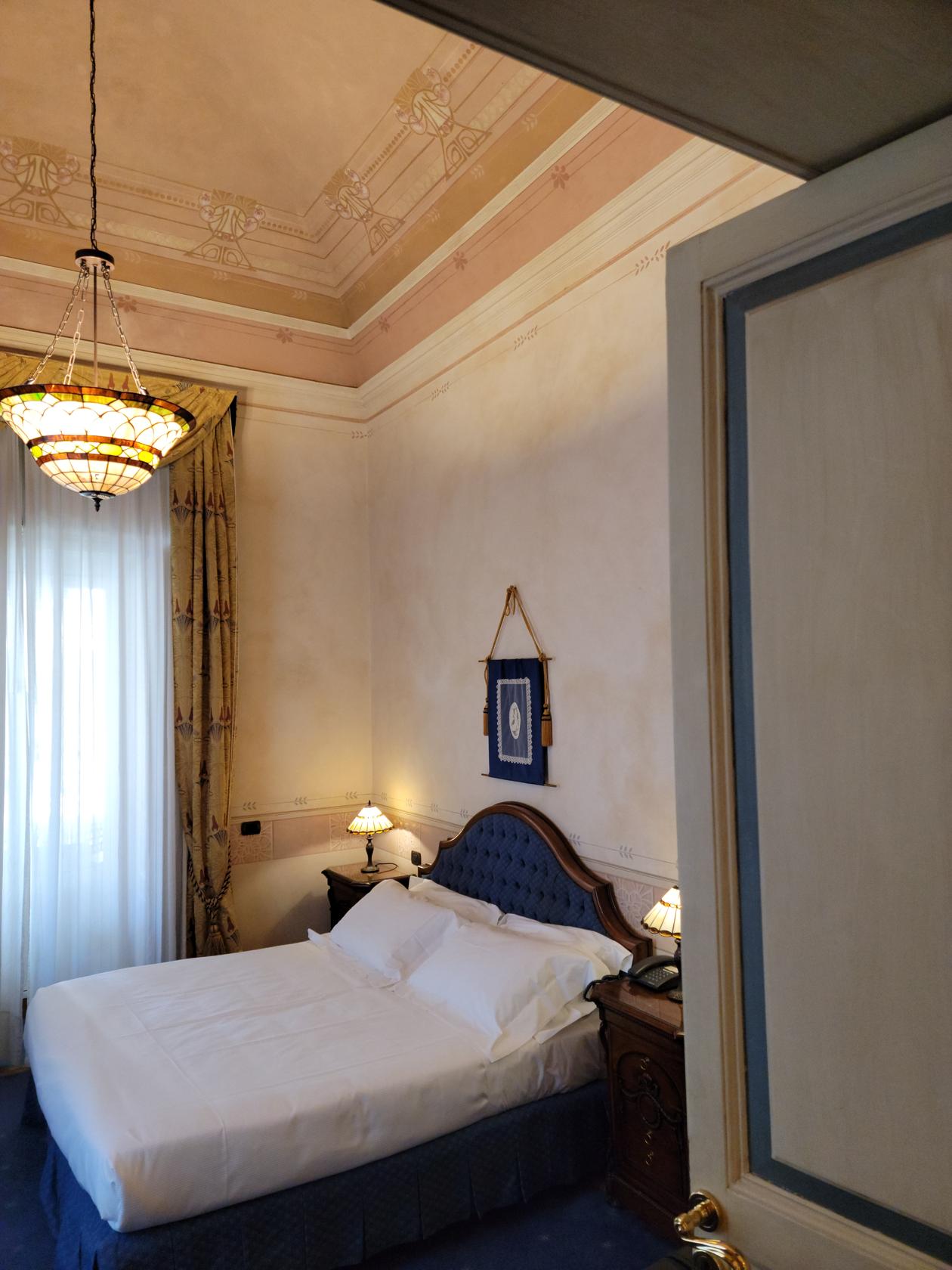
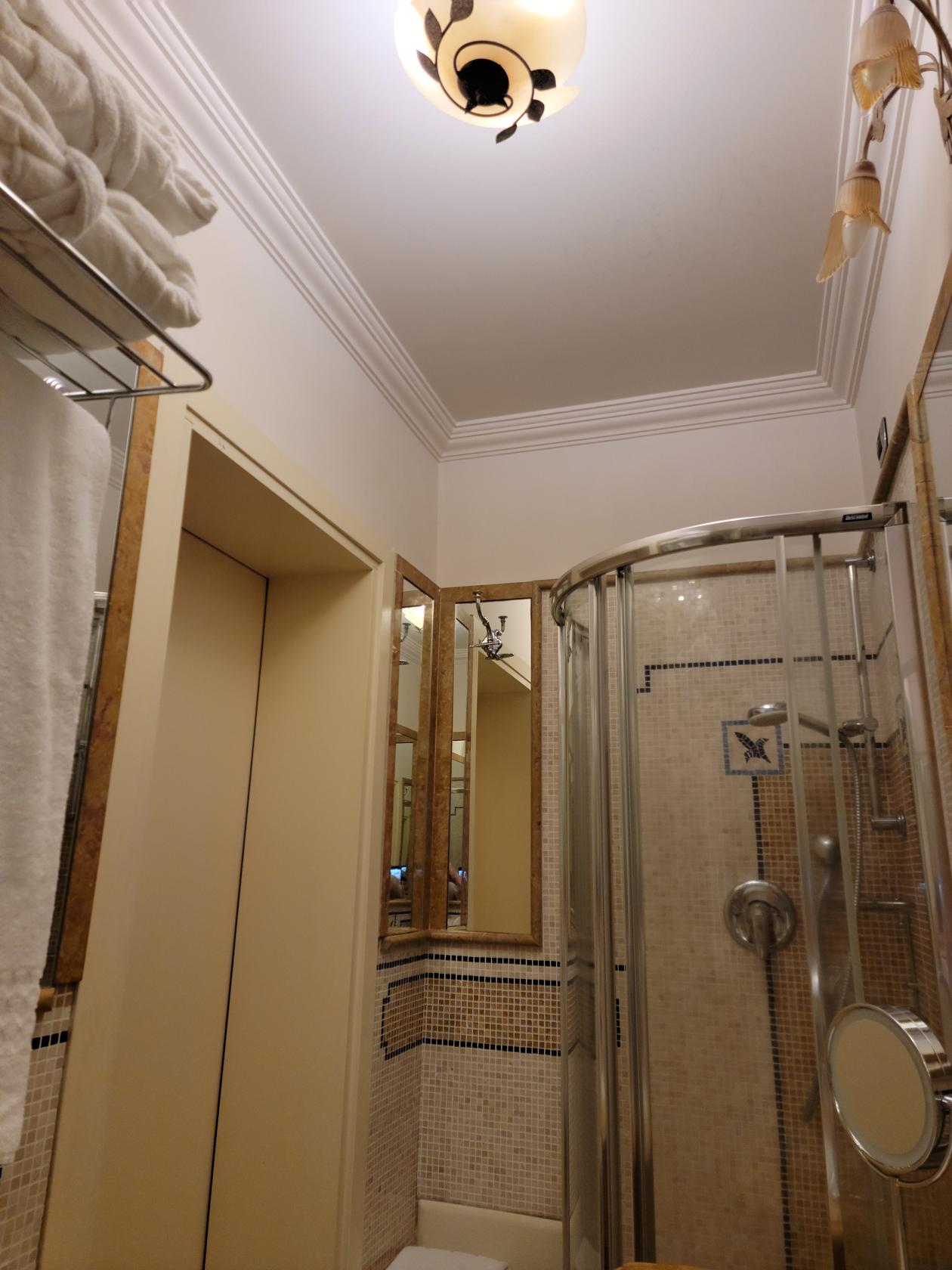
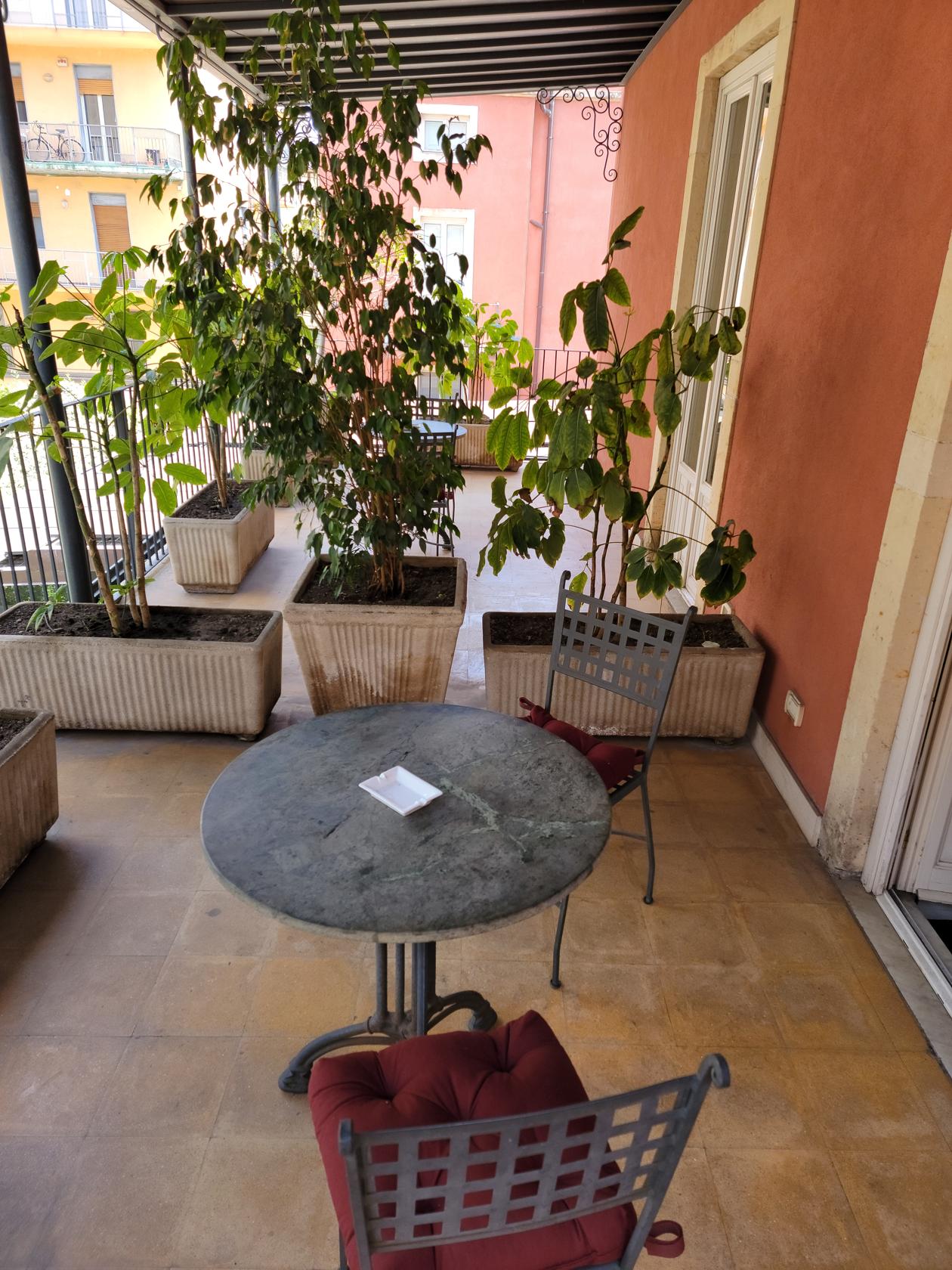
We were booked into a luxury room and upgraded to the Estasi suite, it was almost as big as our entire apartment in Turin!
Our rooms – Hotel Liberty – Catania, Sicily
Our rooms – Hotel Liberty – Catania, Sicily
Our rooms – Hotel Liberty – Catania, Sicily
Our rooms – Hotel Liberty – Catania, Sicily
Our rooms – Hotel Liberty – Catania, Sicily
Our rooms – Hotel Liberty – Catania, Sicily
Restaurants
Like any large city, Catania has a variety of restaurants to choose from, including Asian and other cuisines. Since our stay was so short we stuck with the local favorites and something new as well.
La Taverna Del Grande Albergo
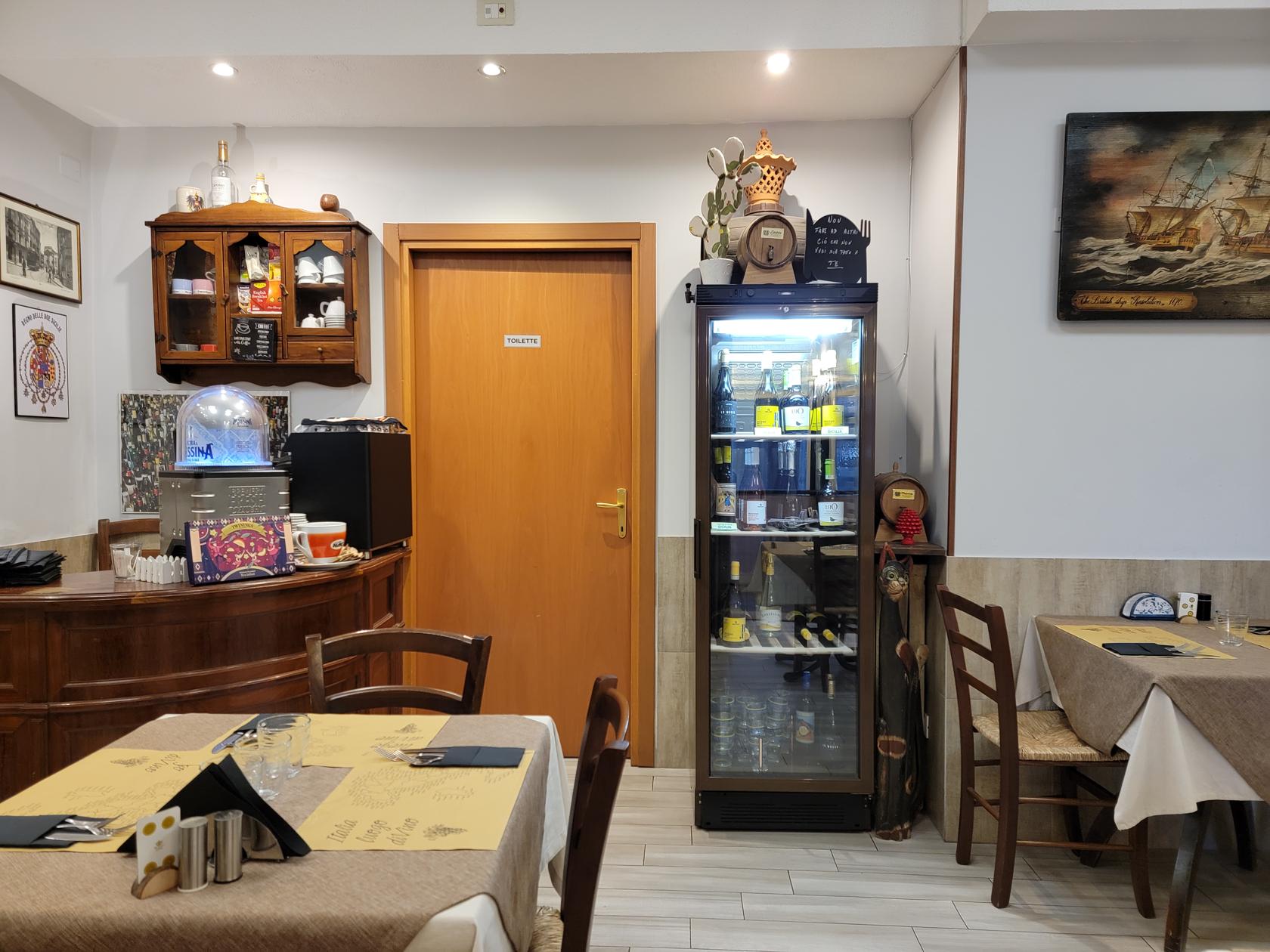
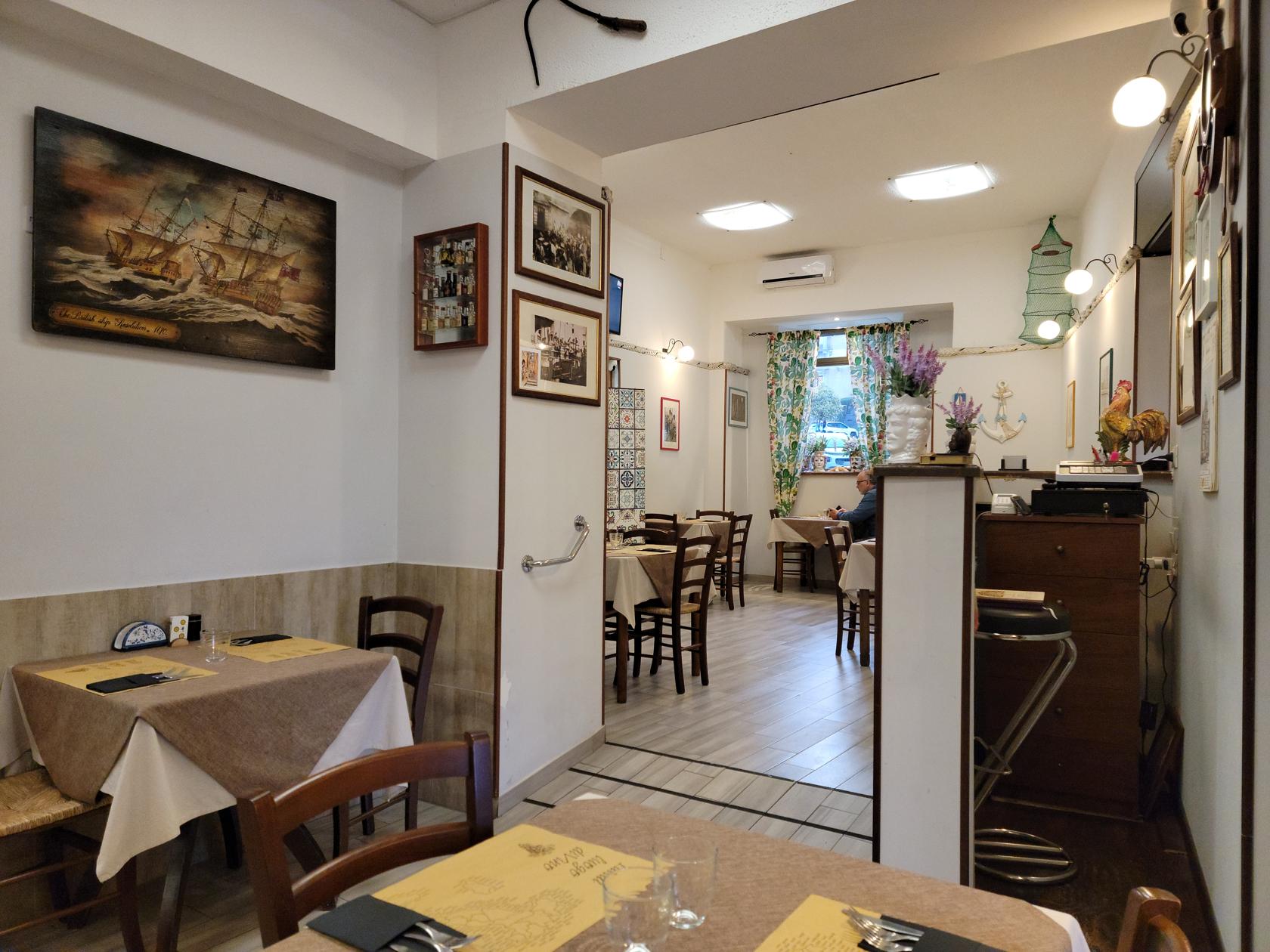
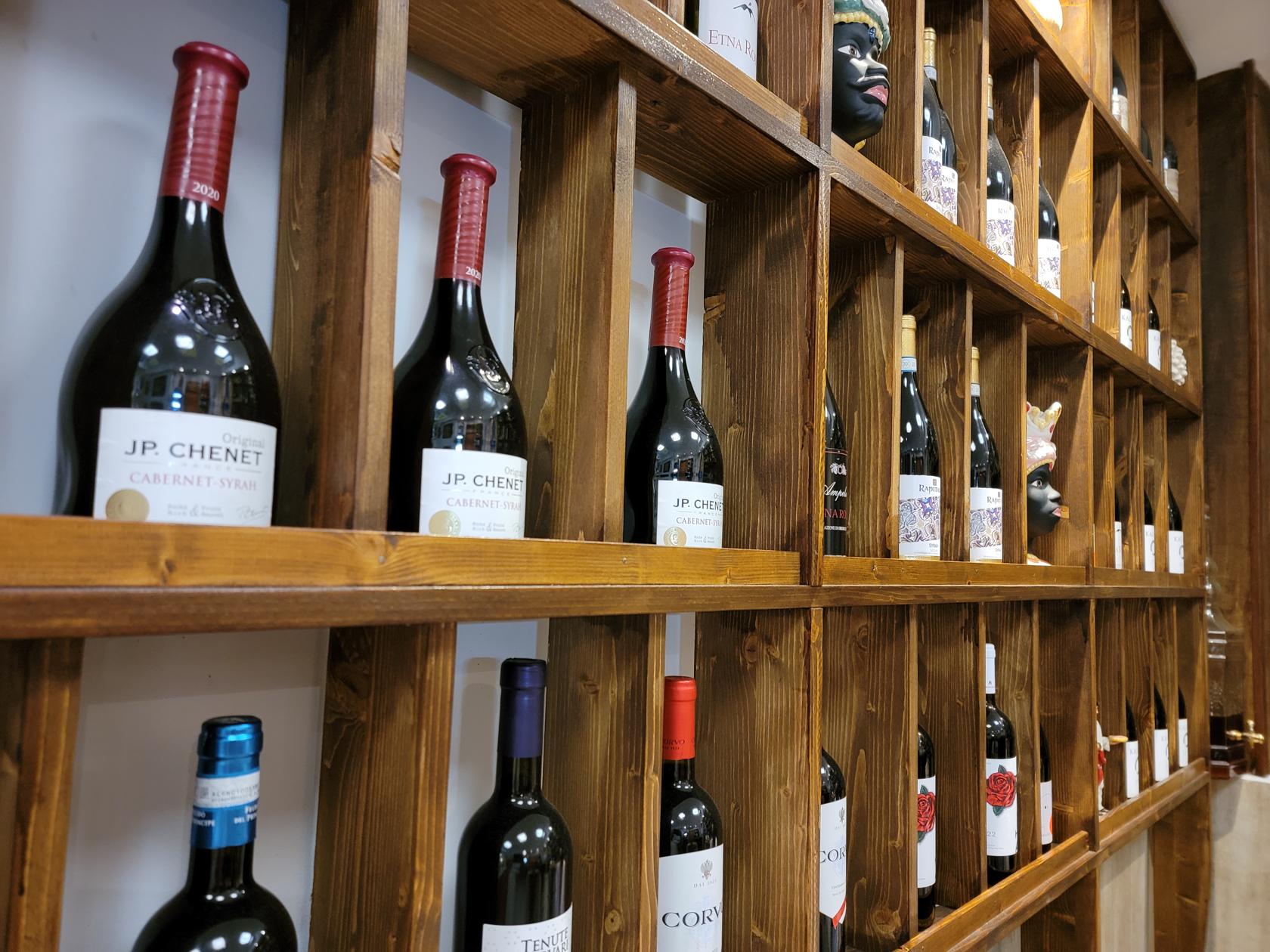
This is a very good restaurant with excellent typical Sicilian food. It has a limited menu, but that’s what makes it so great. What ever is on the menu is delicious. It was so good in fact, we ate here both evenings.
Inside – La Taverna Del Grande Albergo Ristorante – Catania, Sicily
Inside – La Taverna Del Grande Albergo Ristorante – Catania, Sicily
La Taverna Del Grande Albergo Ristorante – Catania, Sicily
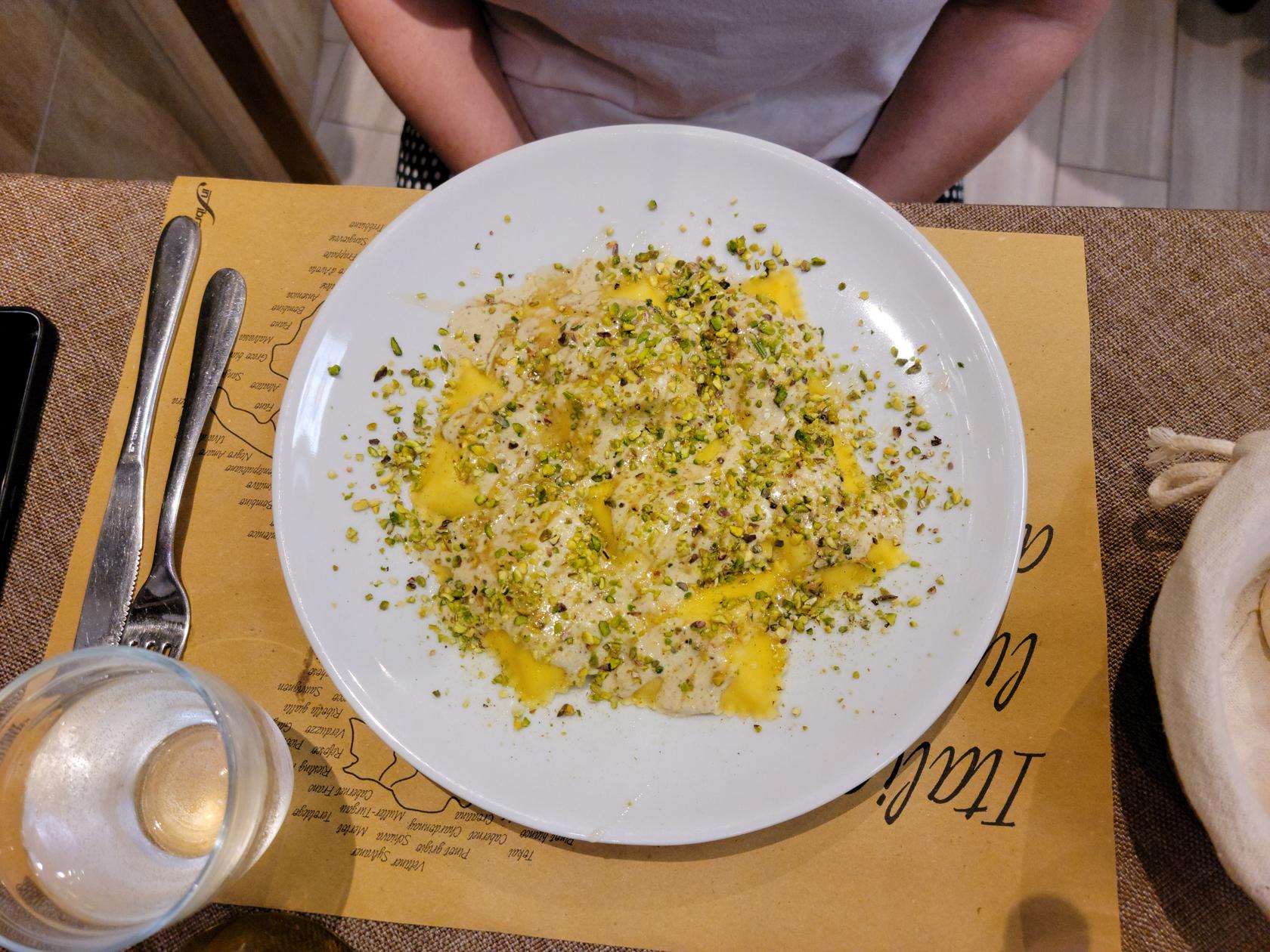
Ravioli stuffed with ricotta cheese, honey and pistachios – La Taverna Del Grande Albergo Ristorante – Catania, Sicily
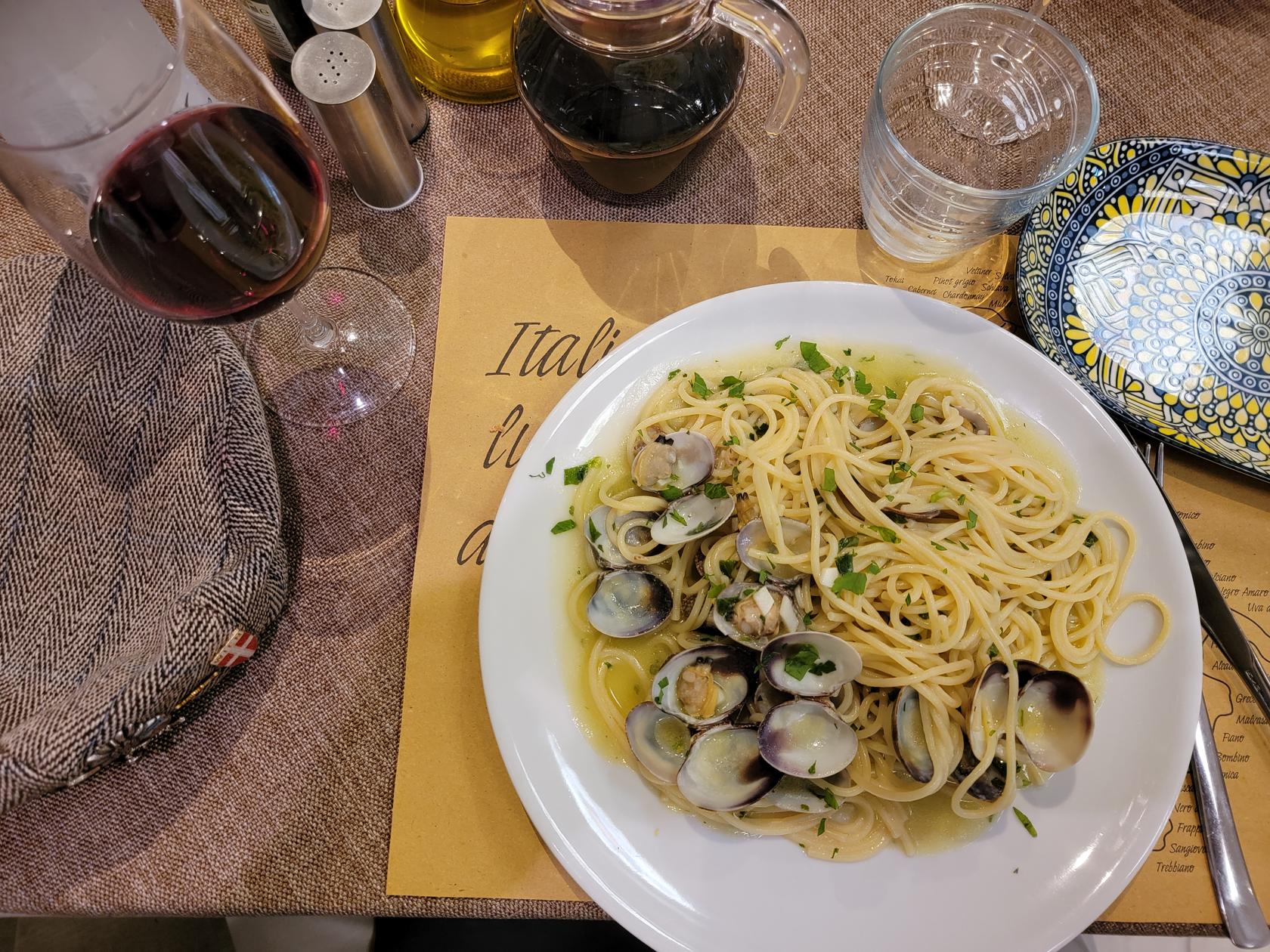
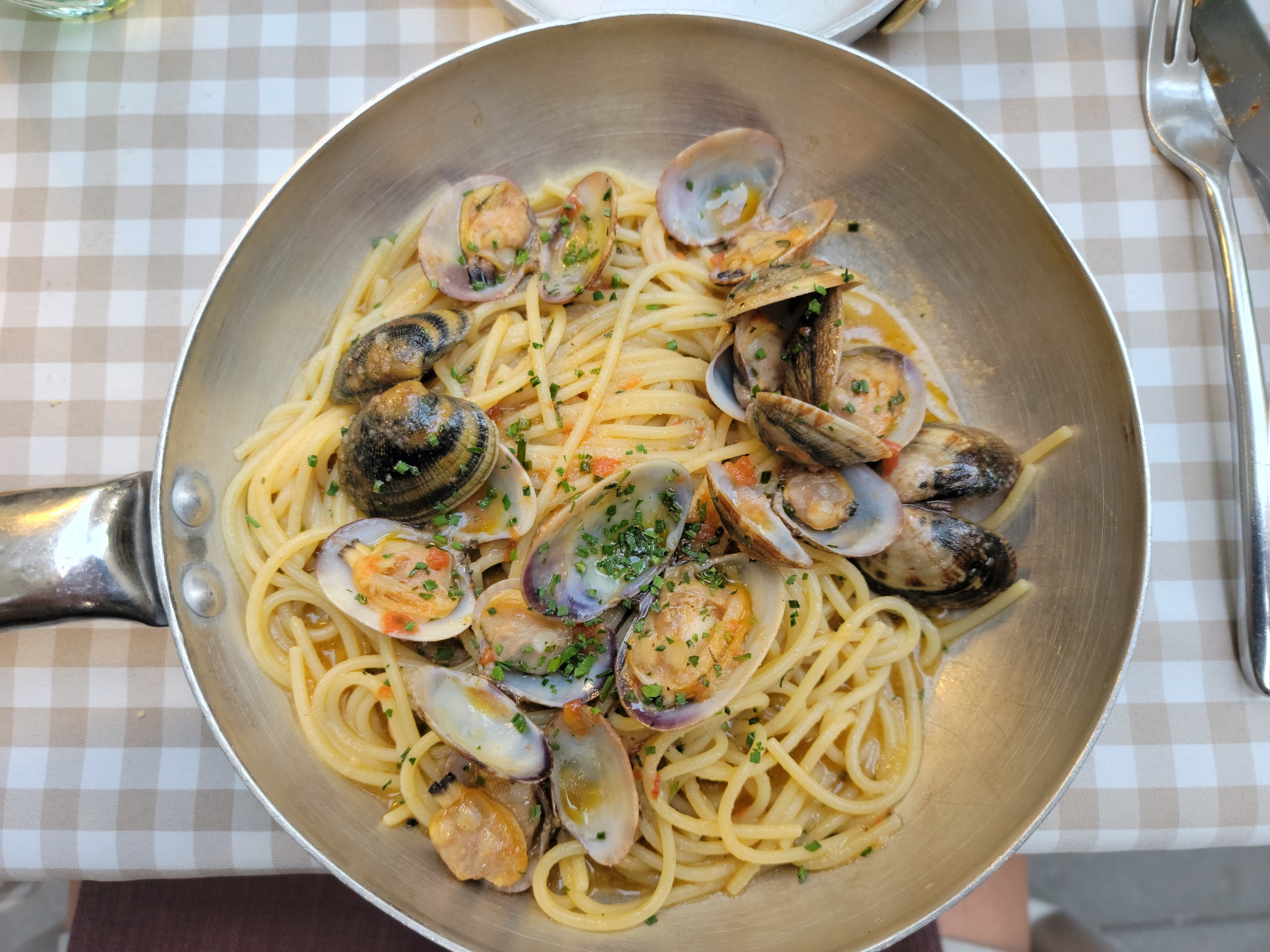
Spaghetti with clams – La Taverna Del Grande Albergo Ristorante – Catania, Sicily
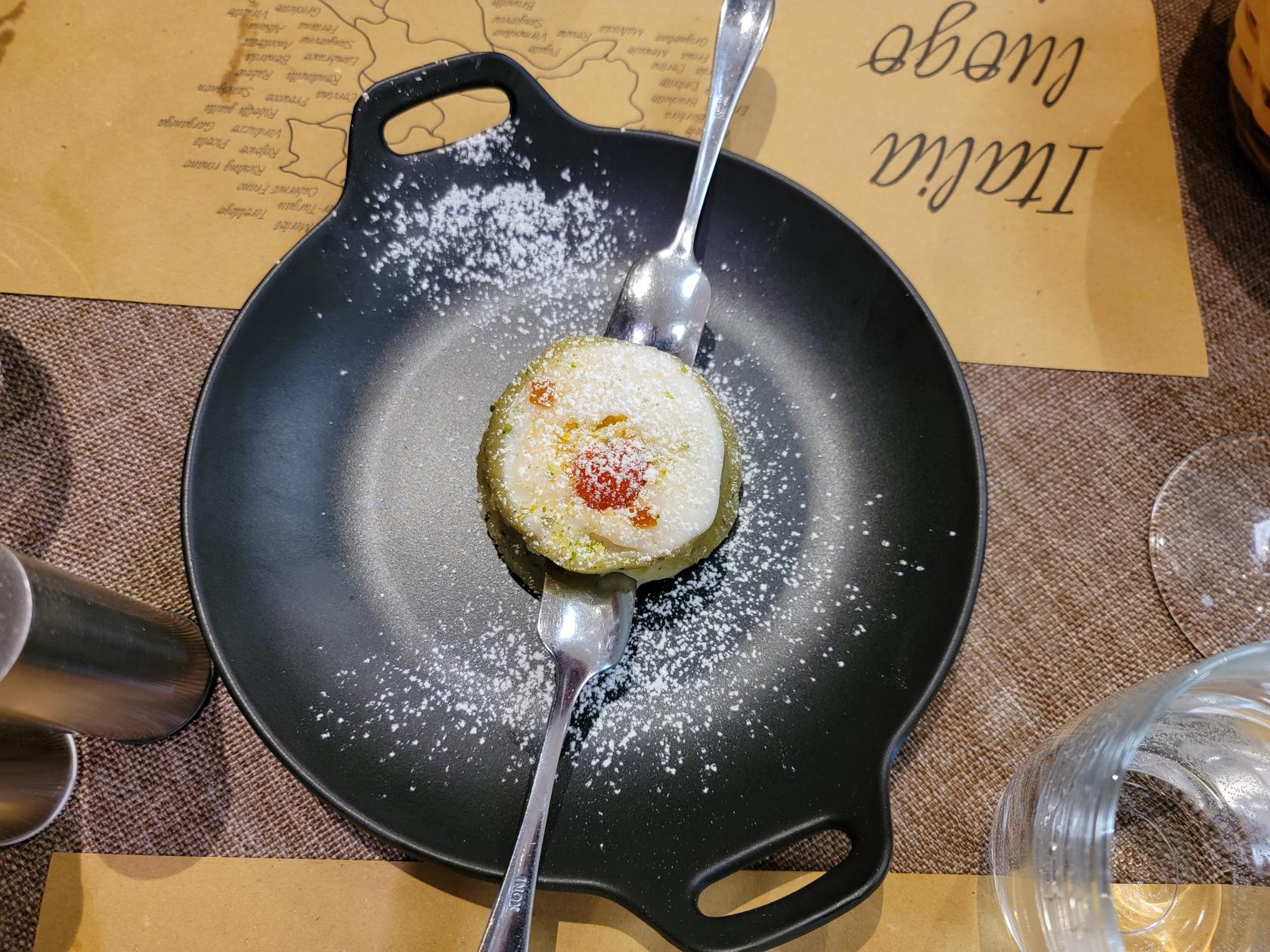
Casatta – La Taverna Del Grande Albergo Ristorante – Catania, Sicily
Forma Ristorante
A new kind of boutique restaurant, it has a select menu of typical dishes created with some style. The outside seating is under a very large tree where you can enjoy your food and the great weather. The staff is fairly energetic and responds quickly if you require any assistance or your bill. As with most establishments in Italy, you pay inside at the cashier.
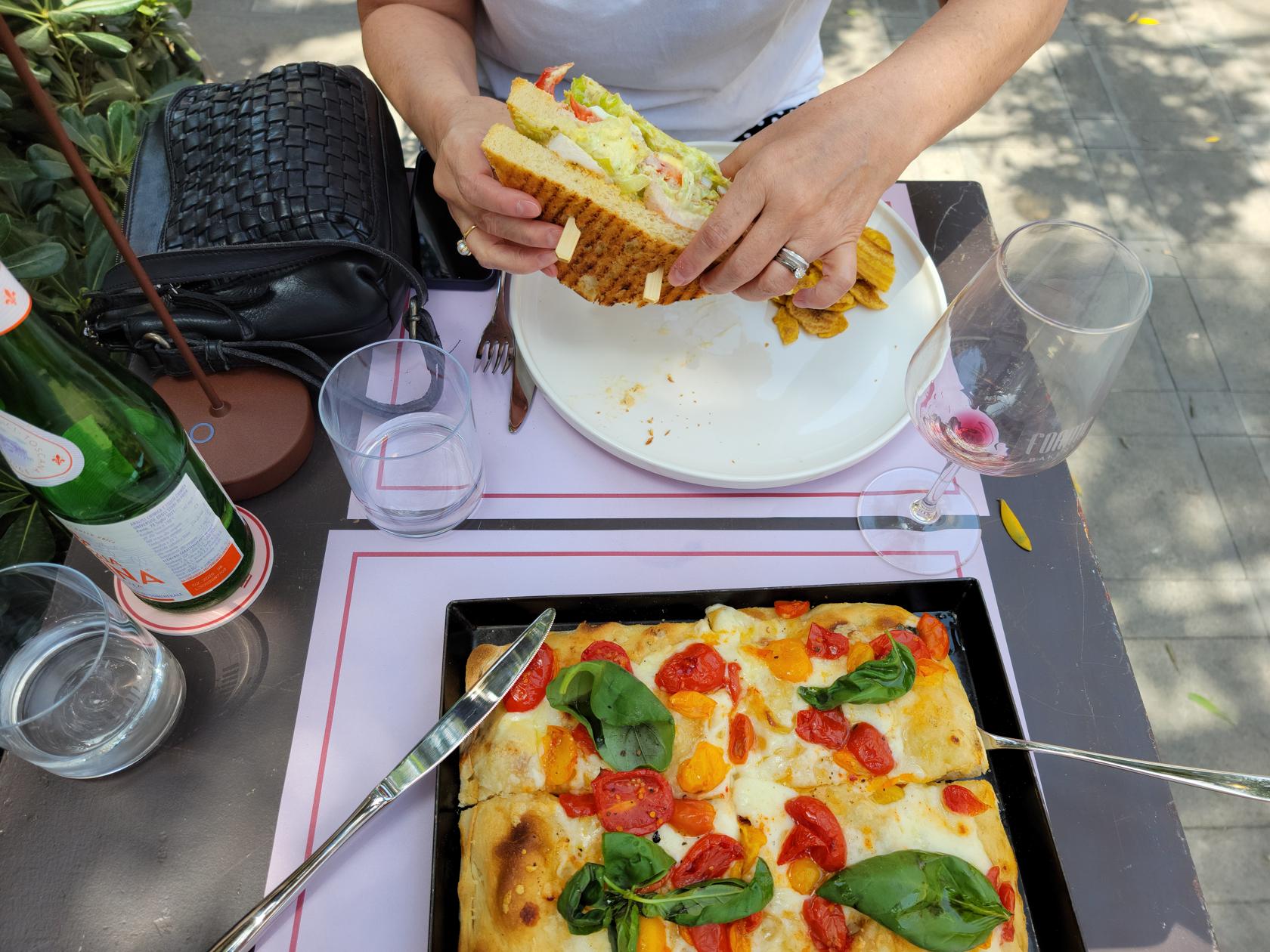
Pizza Margherita and Chicken Club – Forma Ristorante – Catania, Sicily
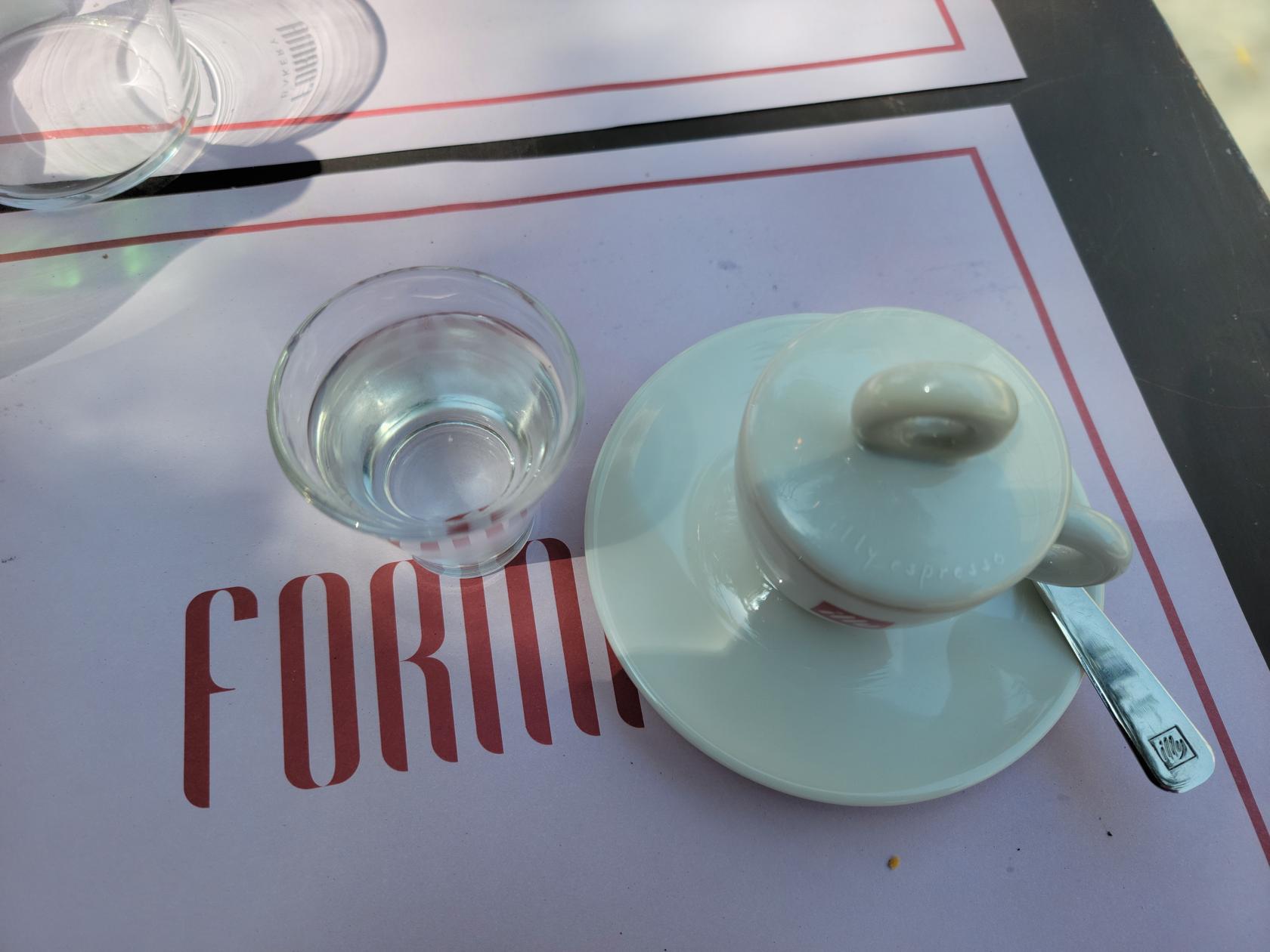
Espresso and Sambuca – Forma Ristorante – Catania, Sicily
Syracuse, or Siracusa as you will find it readily marked throughout the island, is one of the first places of historic significance within Italy. It was inhabited in ancient times and finally settled by the Greeks in the early eight century BCE.
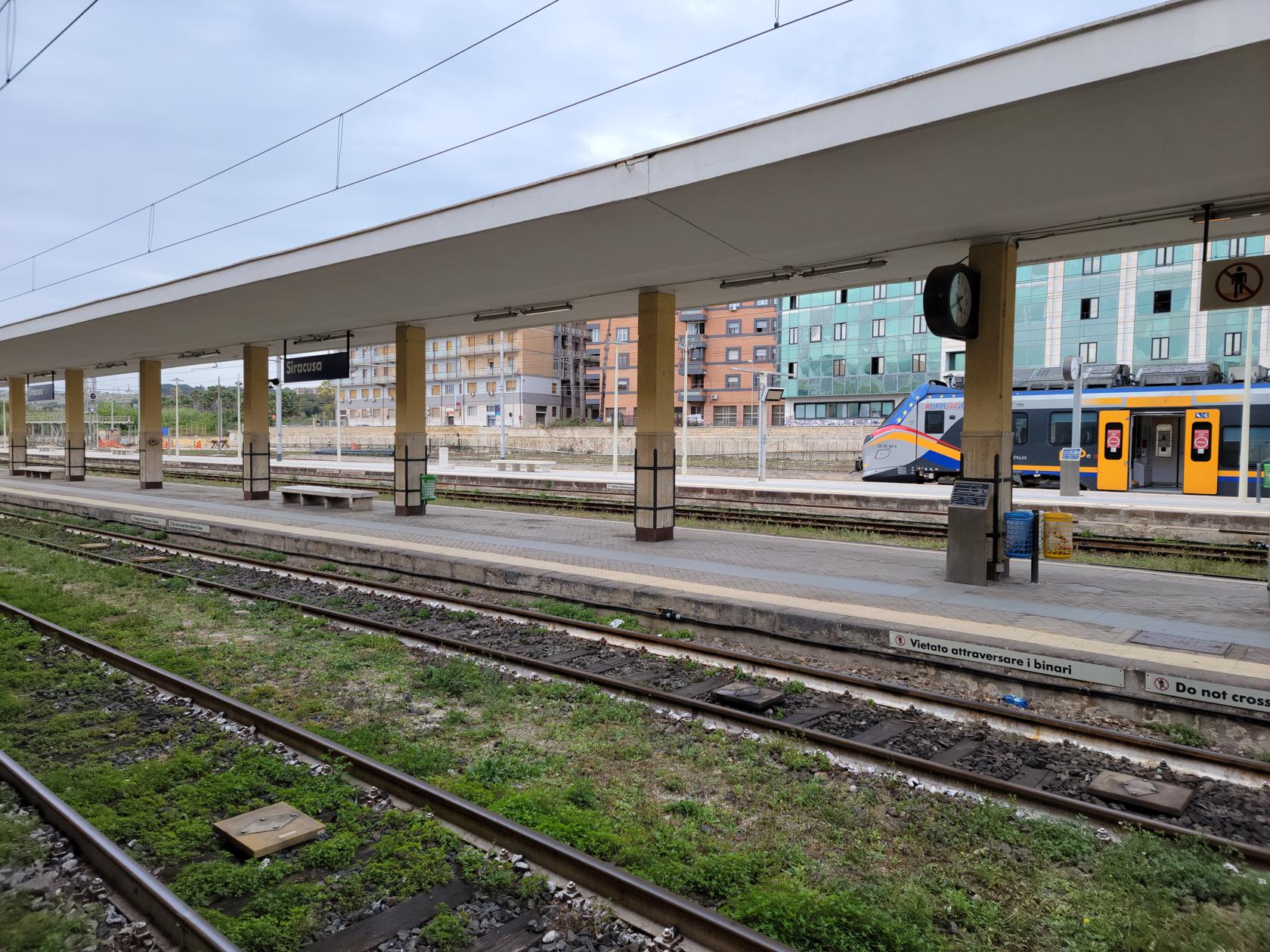
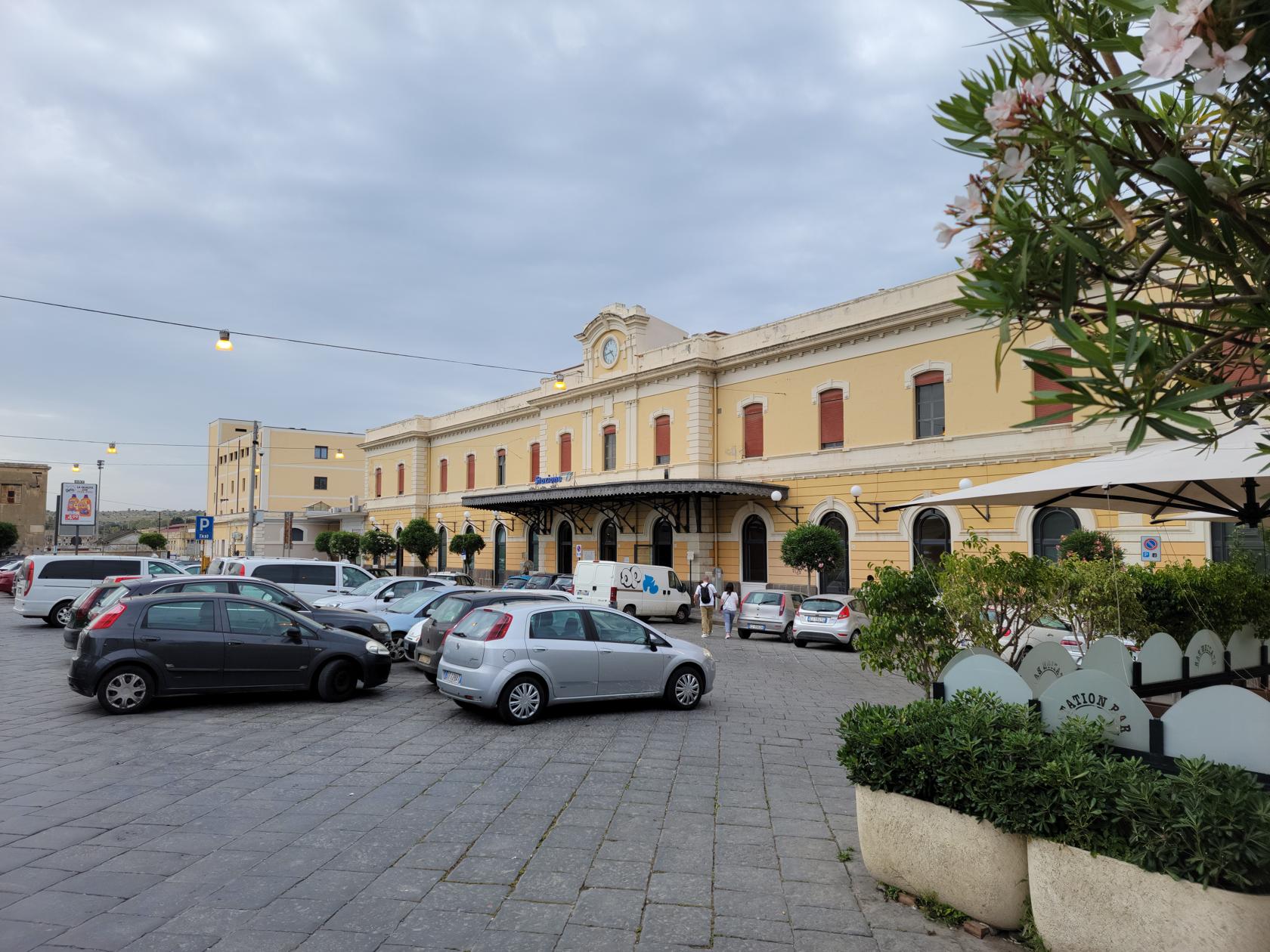
Siracusa Centrale – Siracusa, Sicily
Siracusa Centrale – Siracusa, Sicily
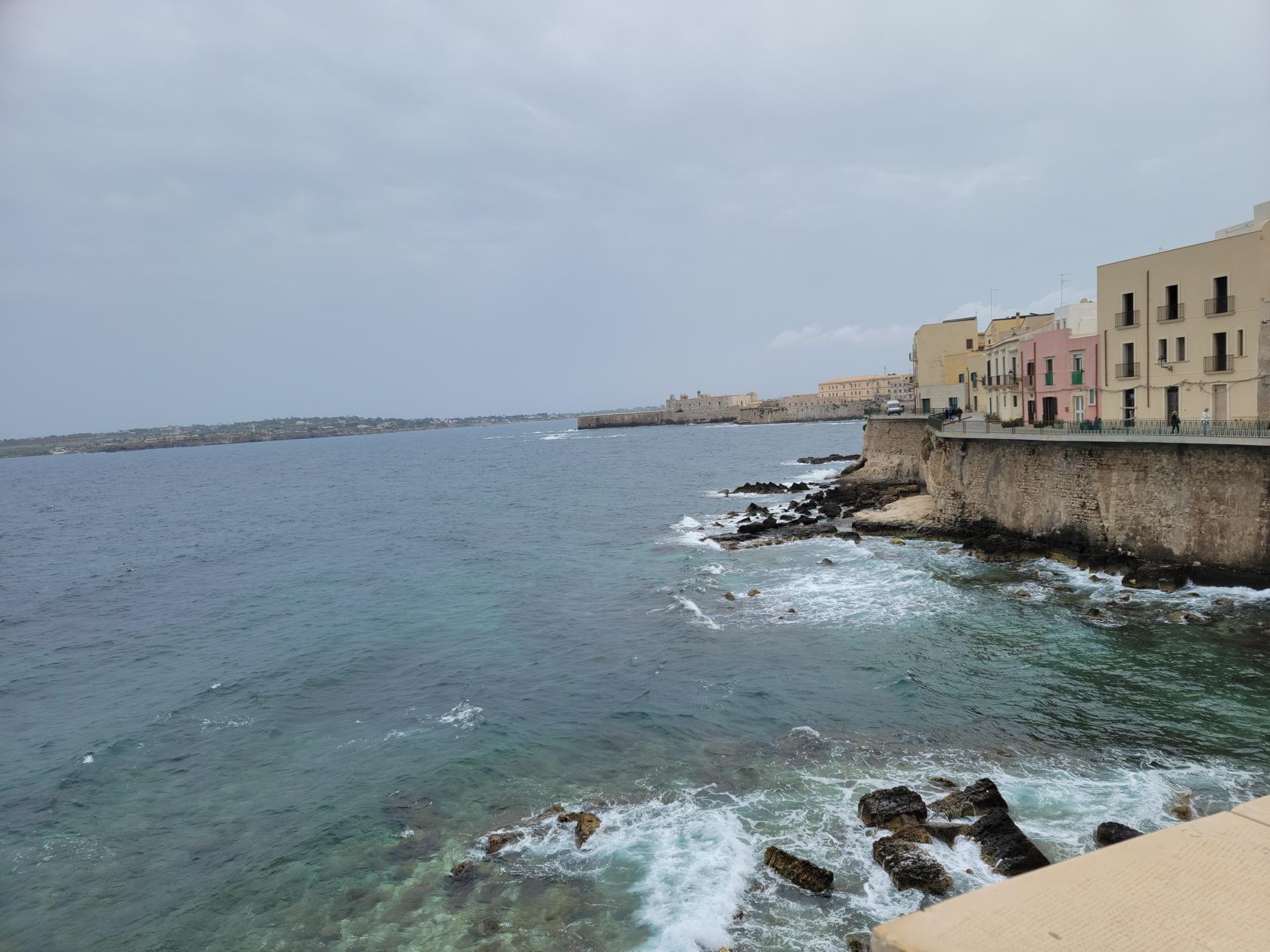
The original settlement of the Greeks was on the small island of Ortigia, which still contains several historical and archaeological artifacts from the Greek and Roman periods. See the Ortigia section below for more on that part of the commune and city.
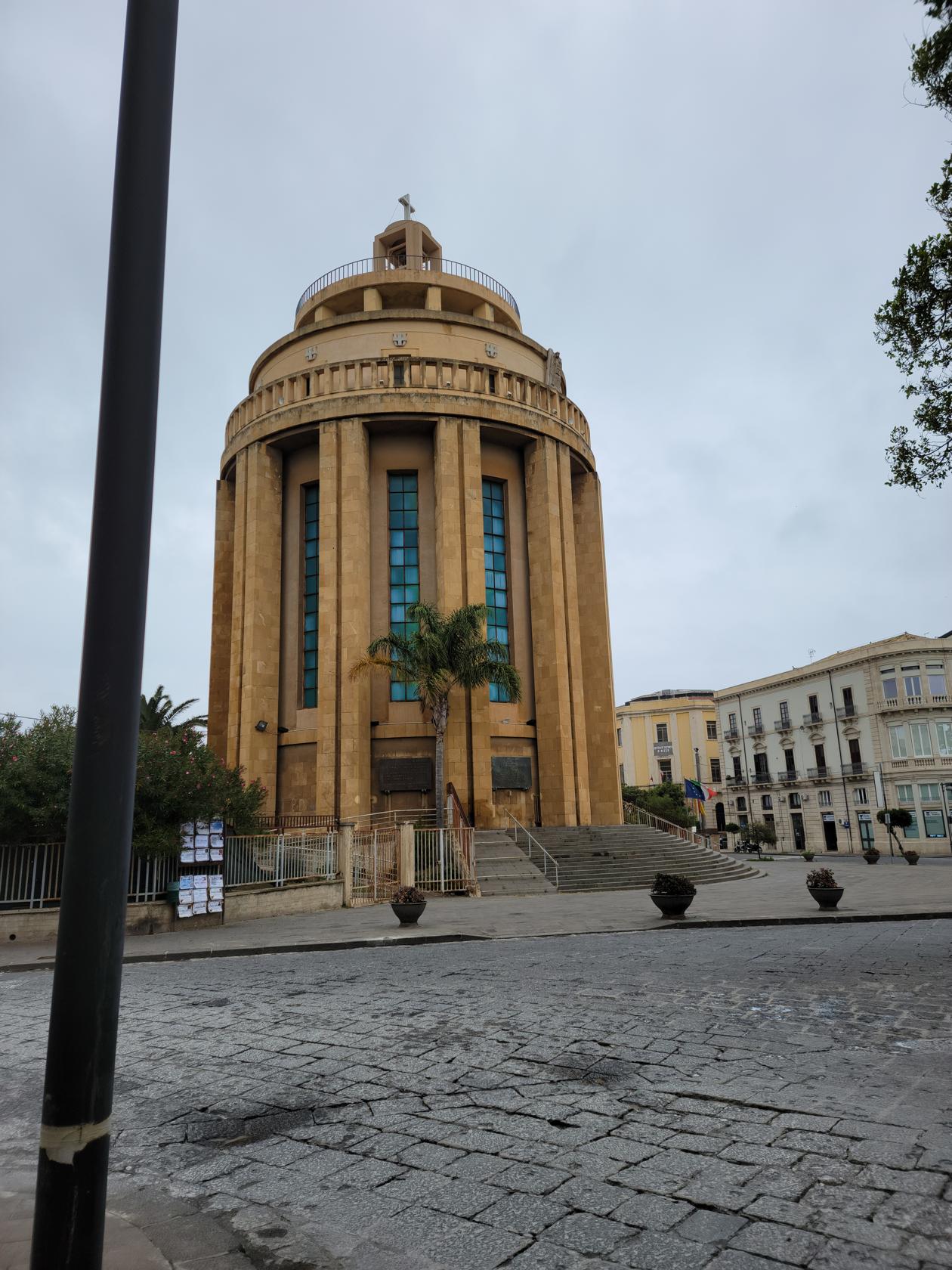
Church of San Tommaso at the Pantheon – Siracuse, Sicily
Santa Lucia Seplicur – Siracuse, Sicily
Santa Lucia Seplicur – Siracuse, Sicily
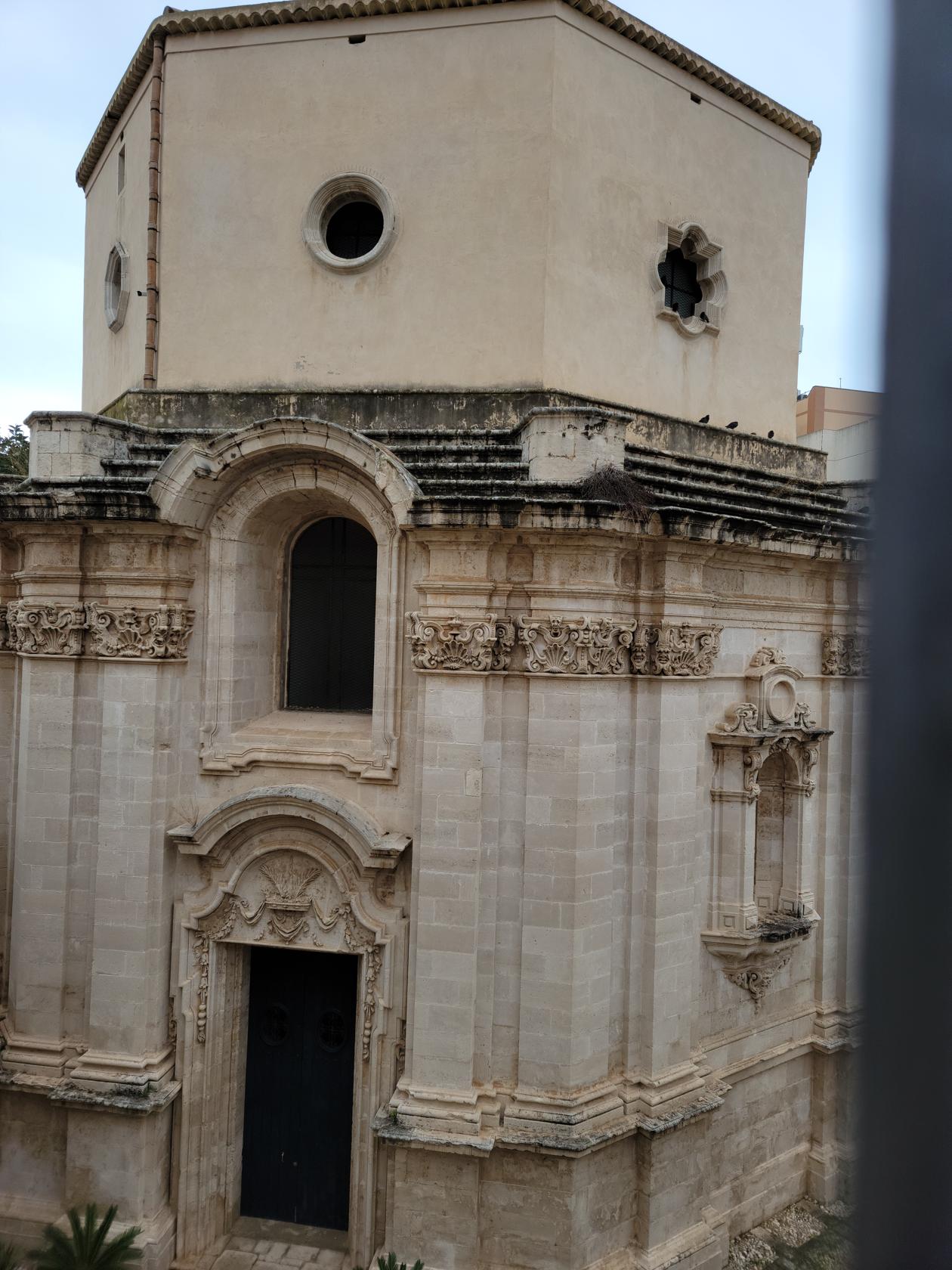
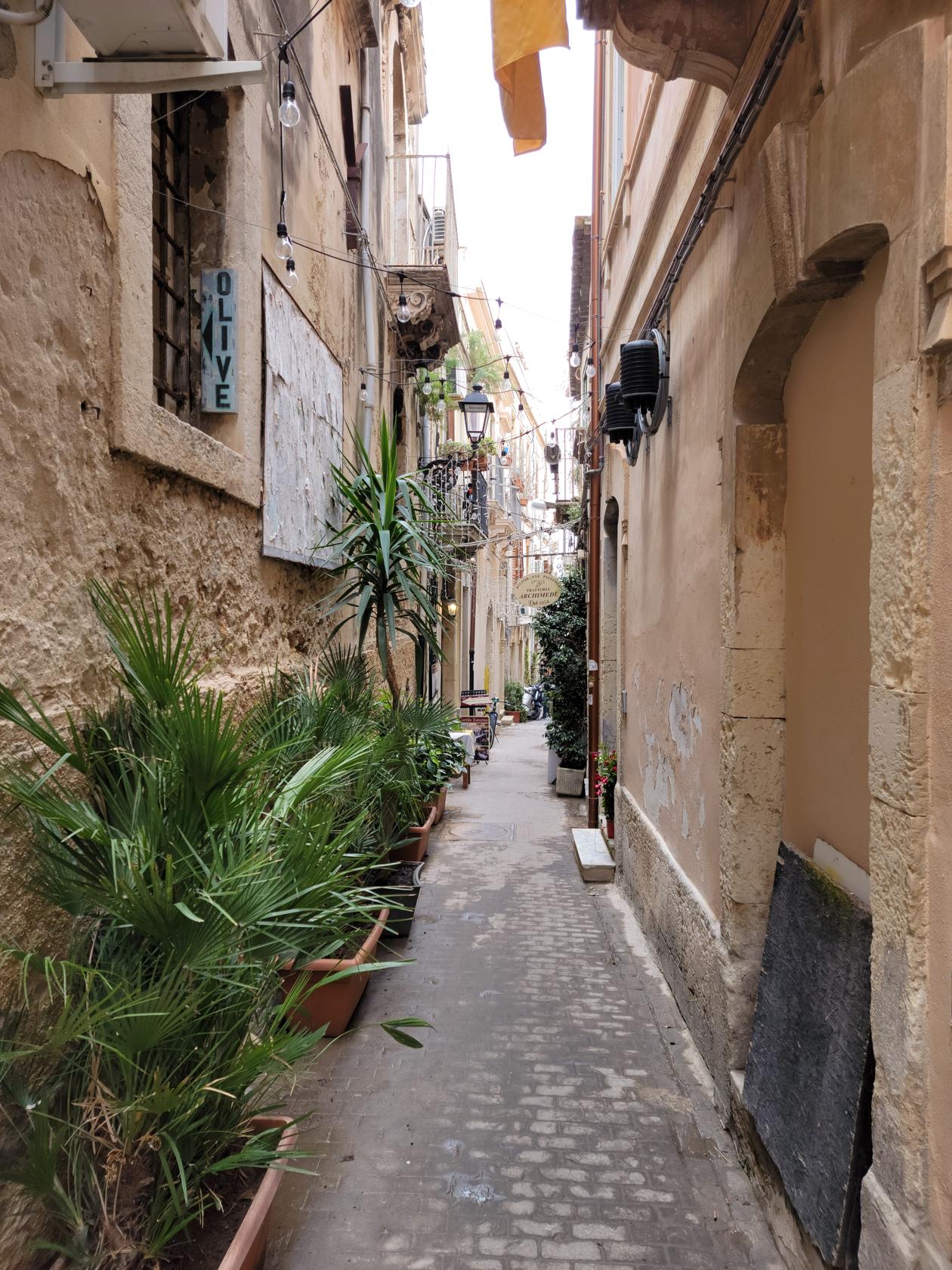
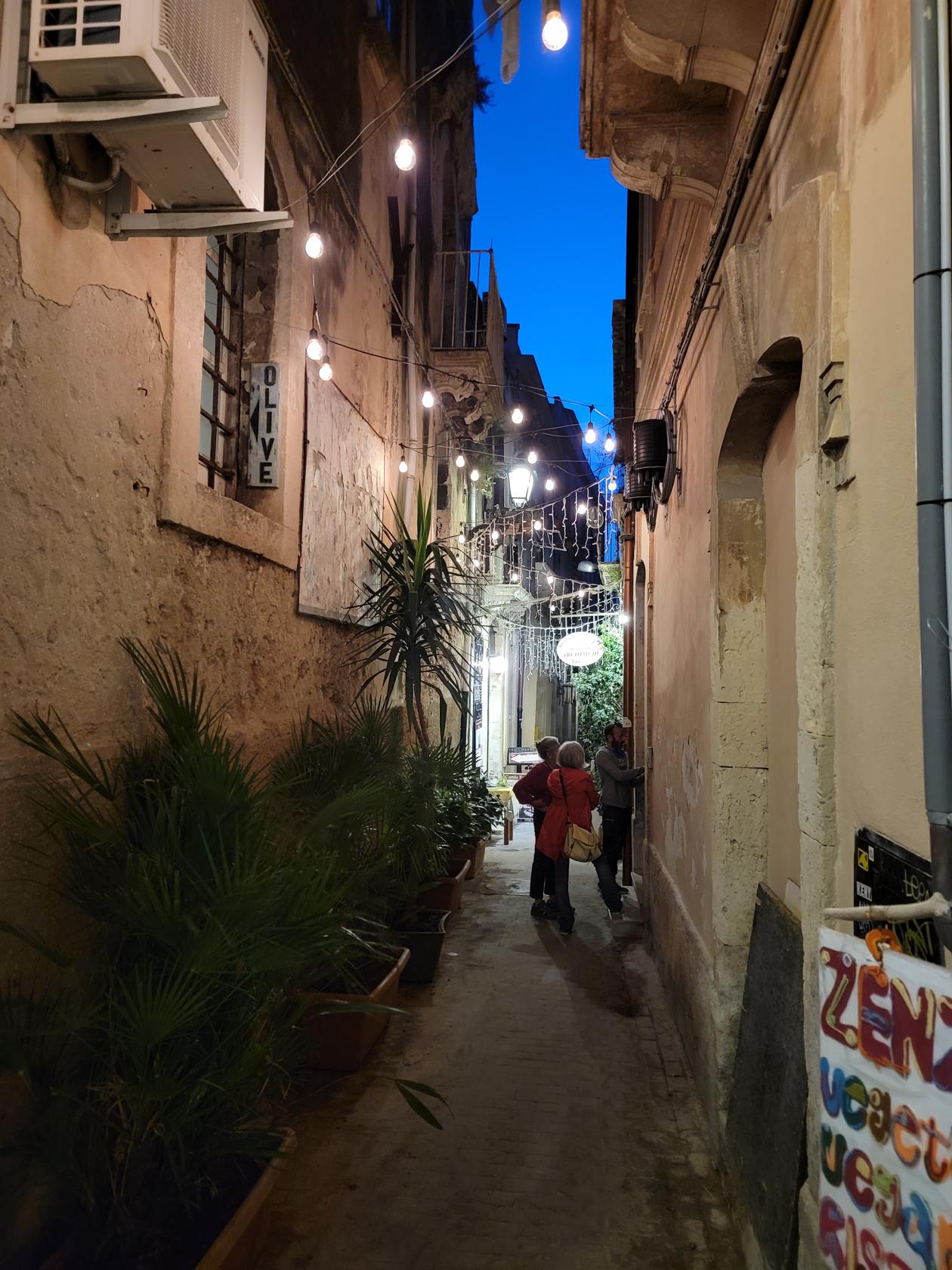
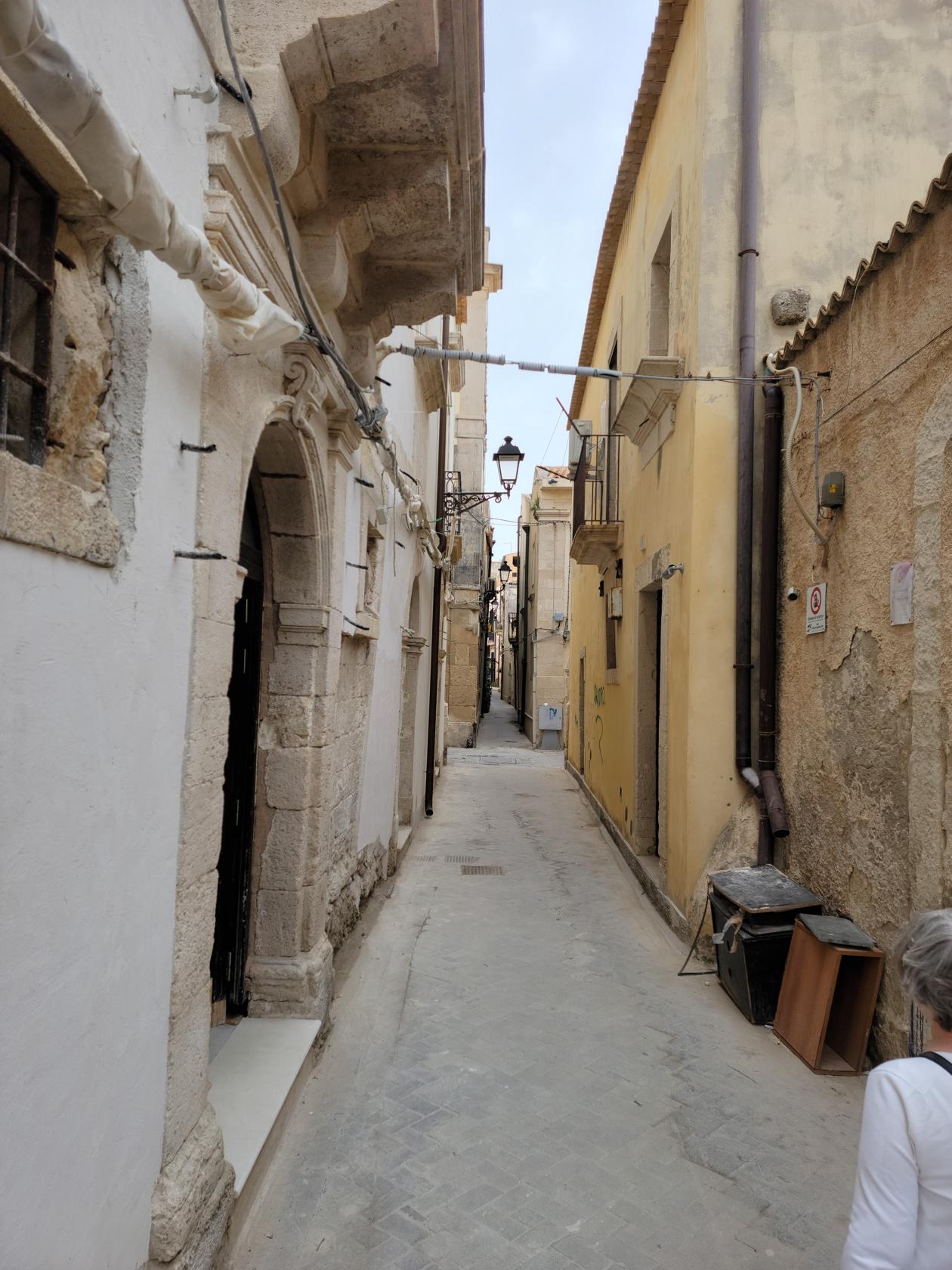
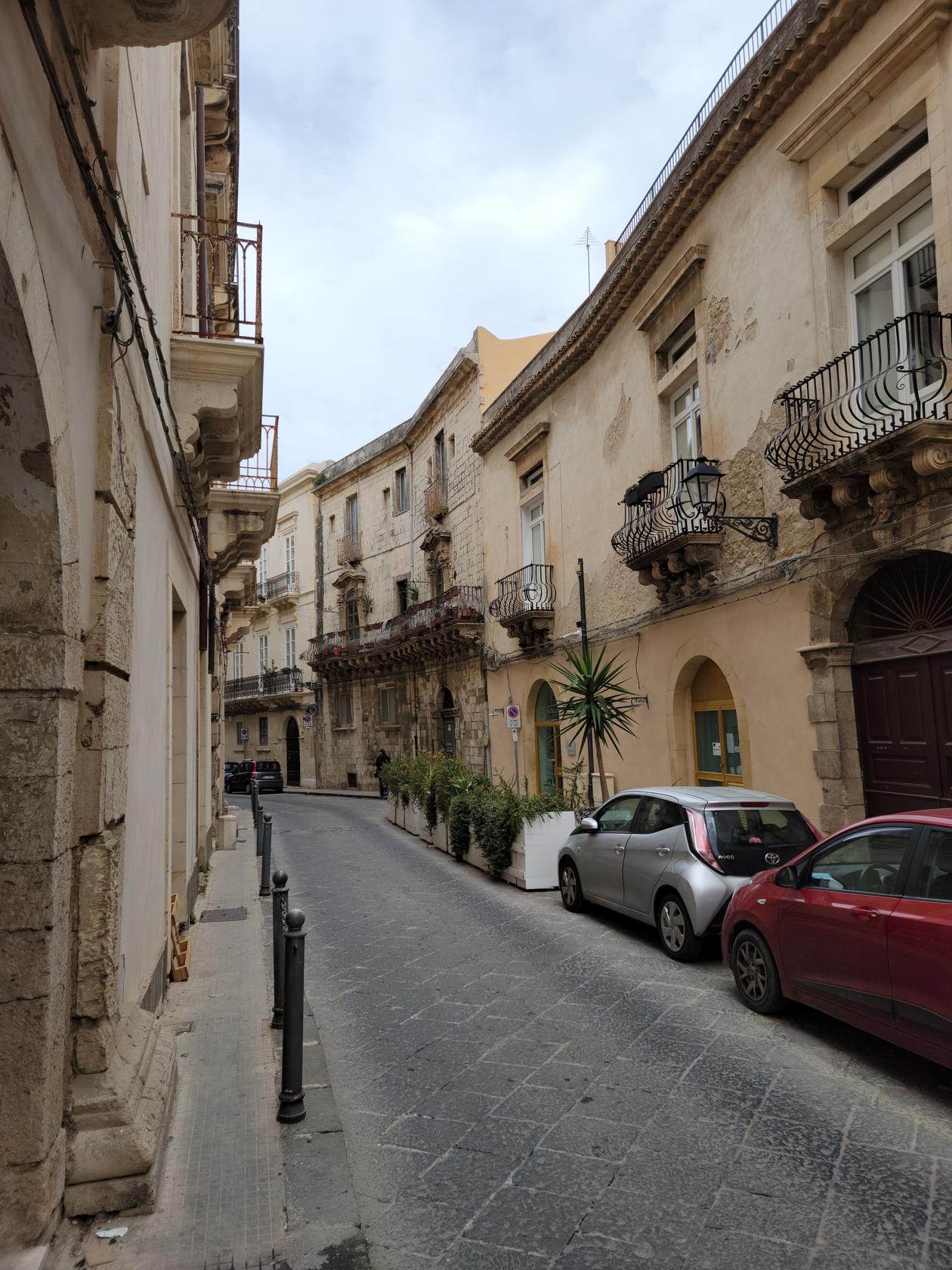
Alley – Ortigia – Siracusa, Sicily
Via Dei Candelai – Ortigia – Siracusa, Sicily
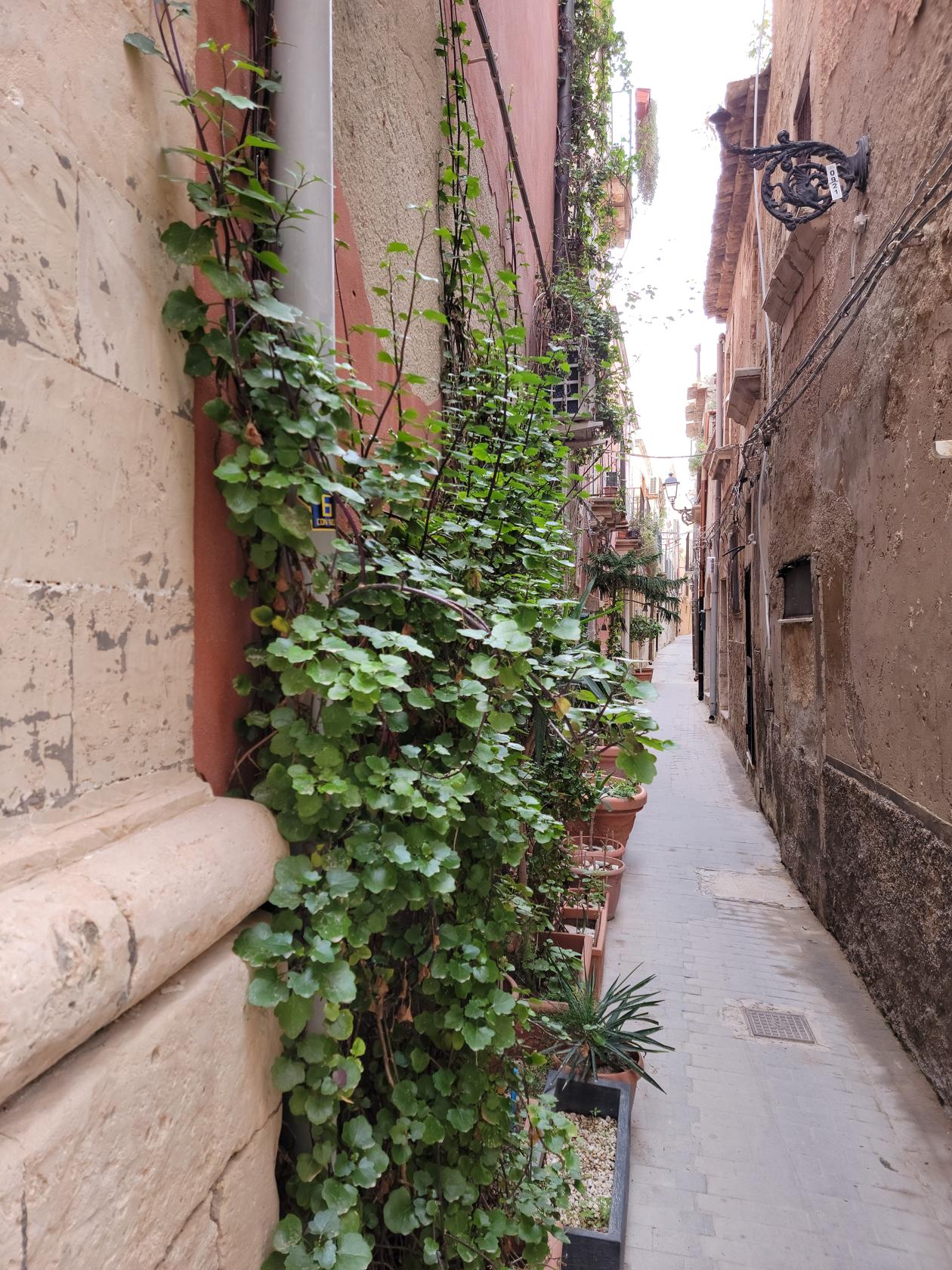
Narrow alley – Siracusa, Sicily
Side street – Siracusa, Sicily
Syracuse is divided into three main parts, Ortigia the island and original Greek settlement, Santa Lucia along the coast and the location of our hotel, and the Neapolis the location of the major Greek and Roman ruins .
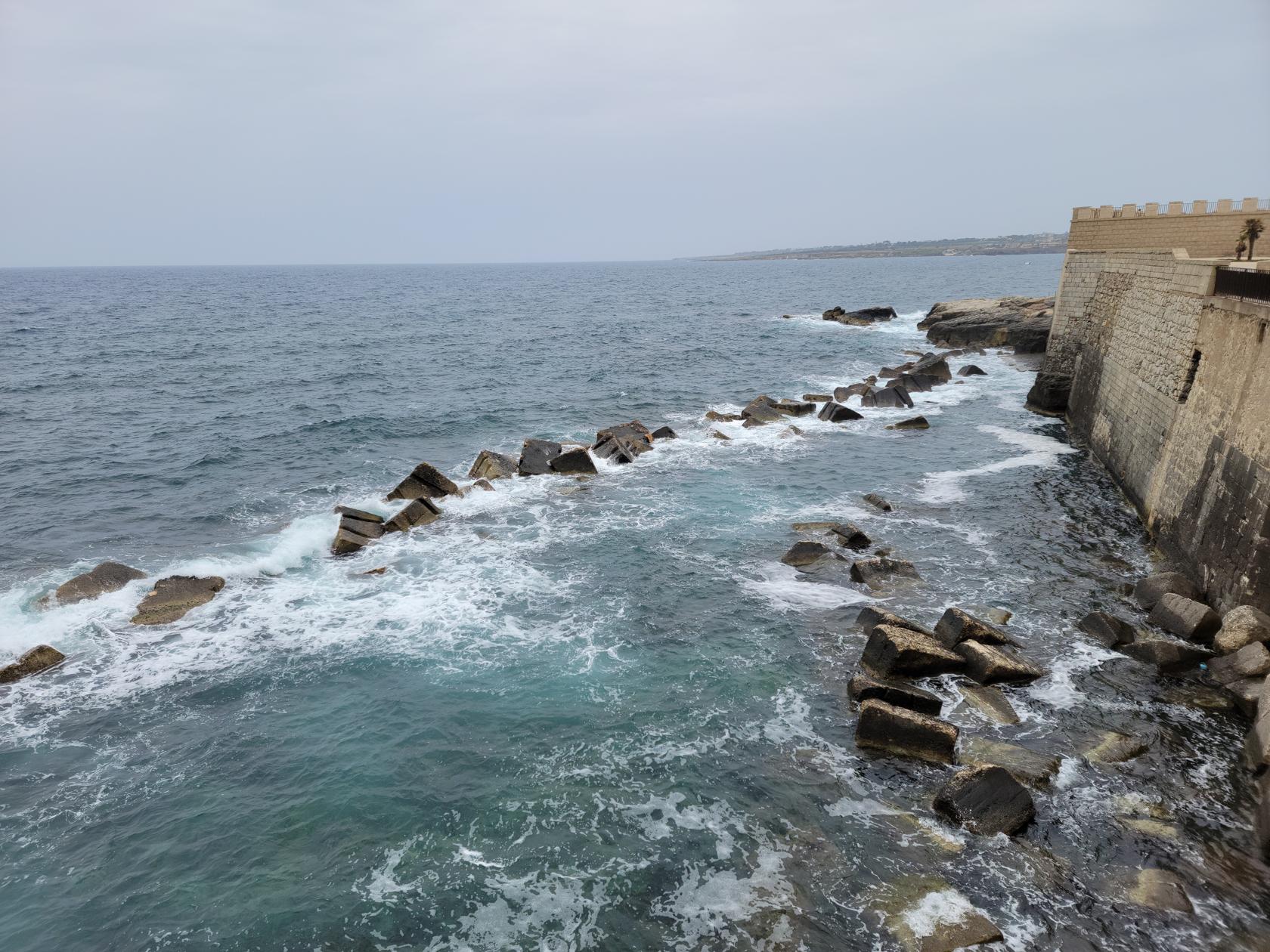
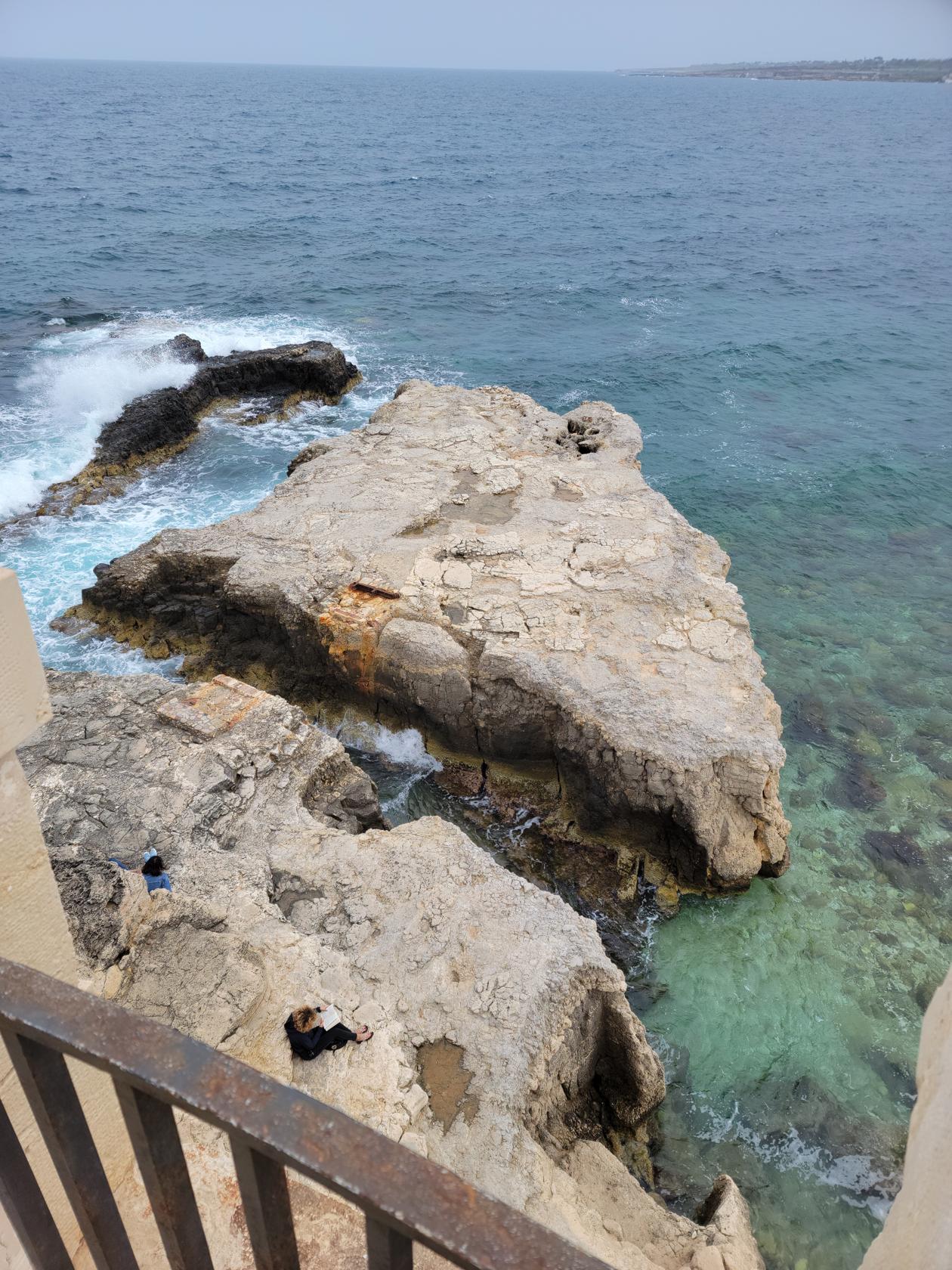
Ionian Sea – Siracusa, Sicily
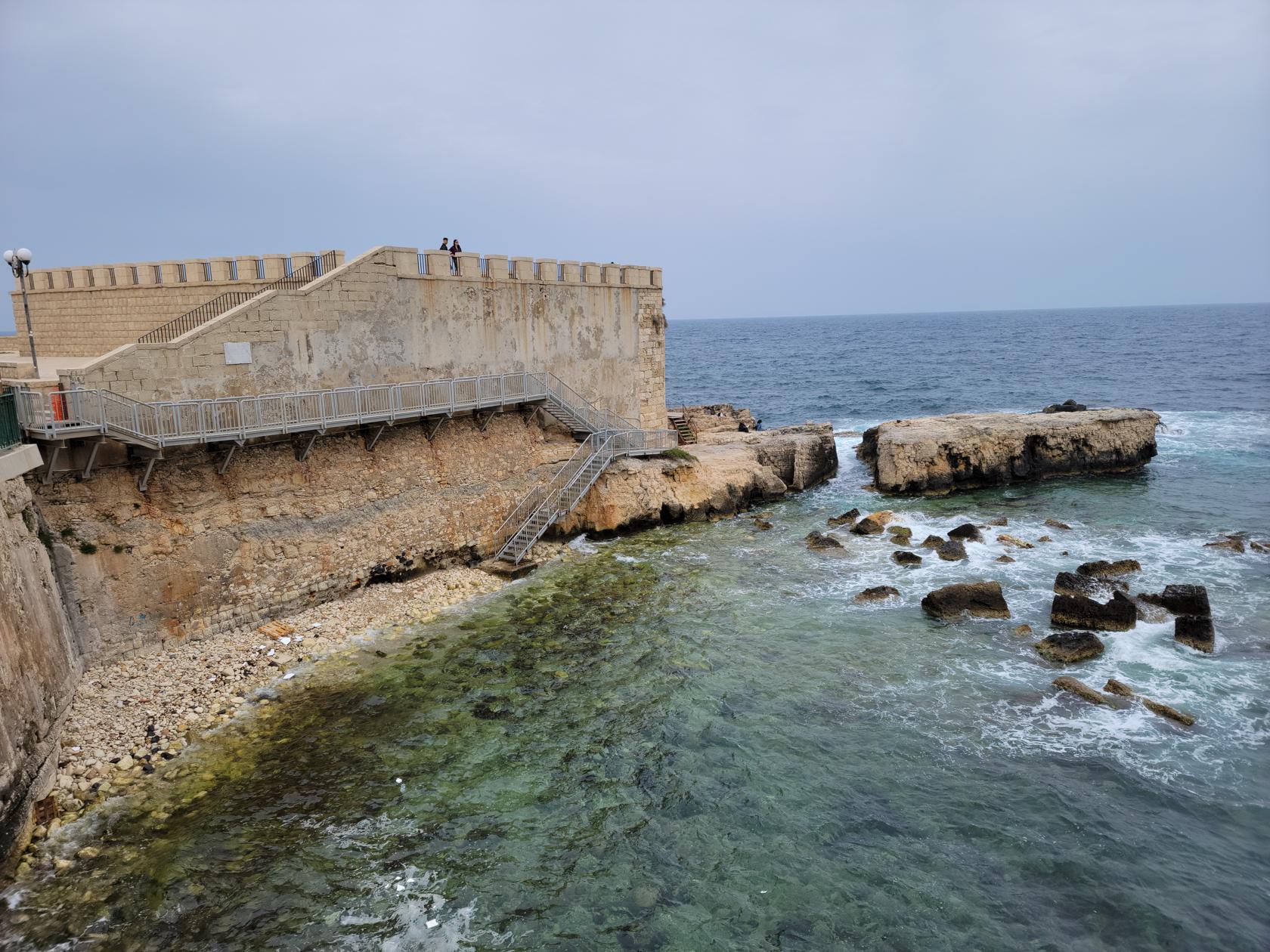
Fort Vigliena – Siracusa, Sicily
Fort Vigliena – Siracusa, Sicily
Fort Vigliena – Siracusa, Sicily
If you are at this point wondering what ash and puppets have to do with Sicily, and in particular Syracuse, read further. Otherwise, just rest assured it has everything to do with being on this quaint and wonderful island.
Note: Purchase the Museum and Park Combination Ticket at 18€. If you purchase them separately, it will cost you an extra 8€. The combination ticket will get you into both, with money left over for a light lunch.
Archaeological Museum
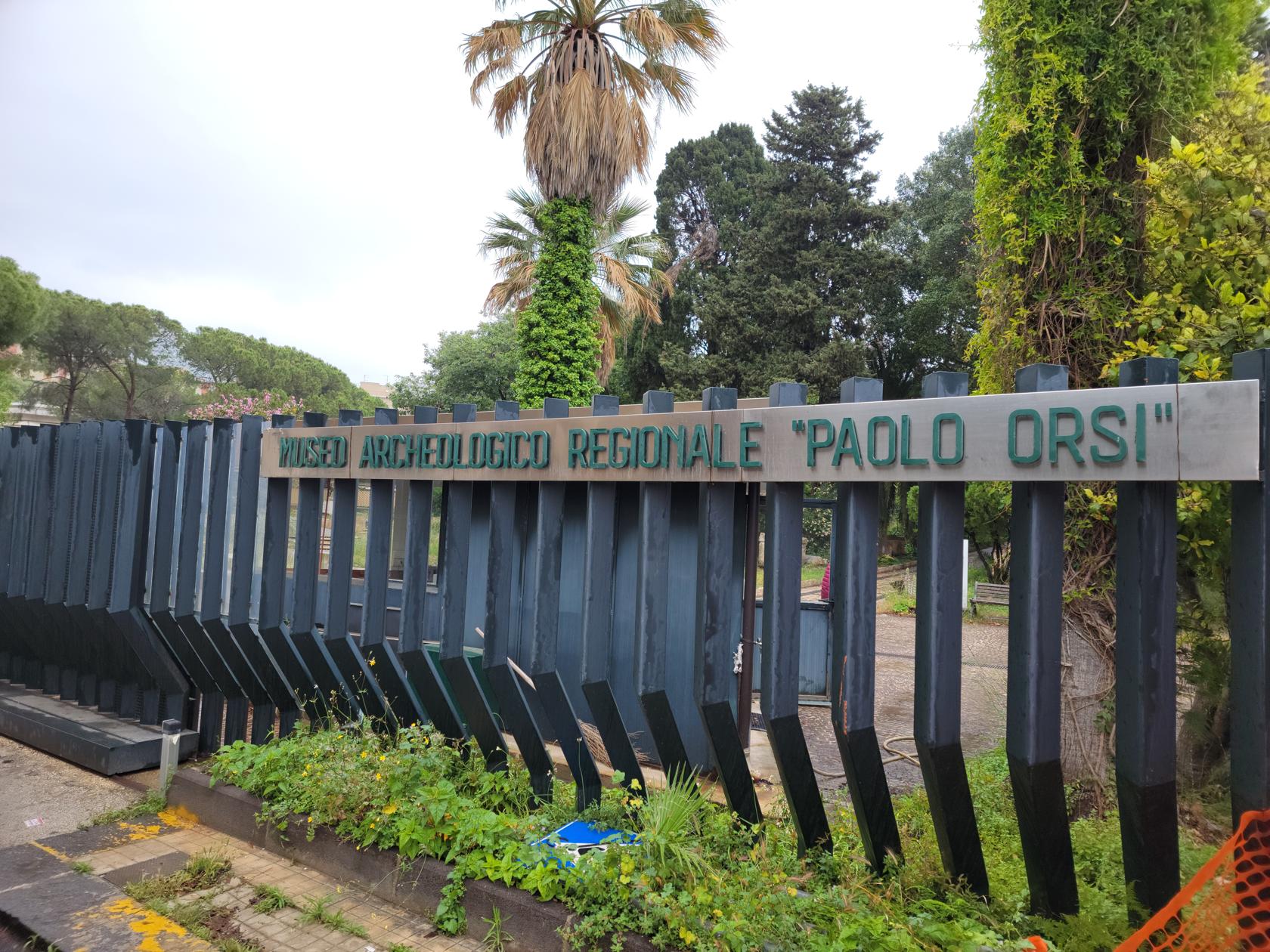
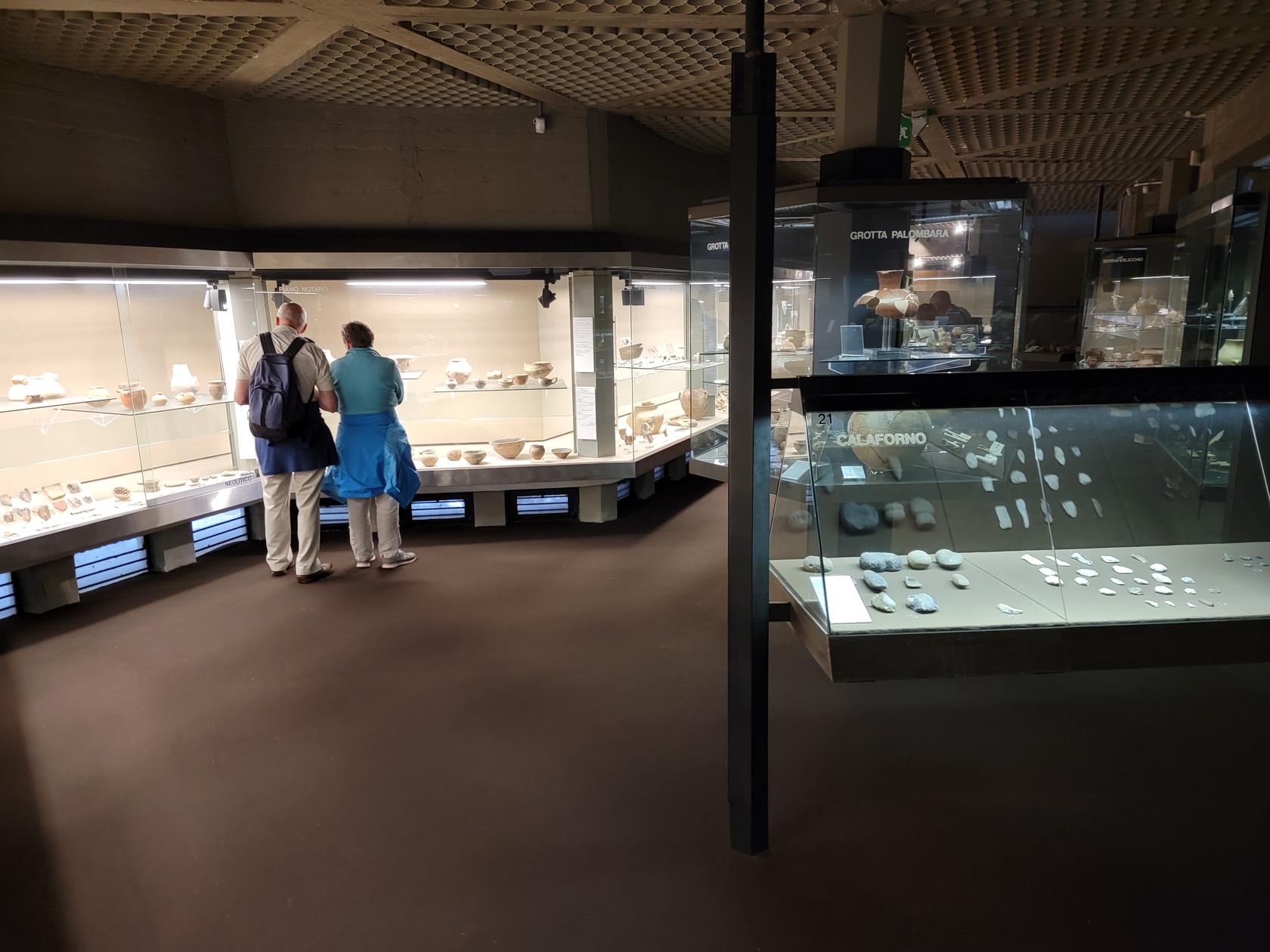
The Archaeological Museum is an impressive collection of ancient, Greek and Roman artifacts dating back to the seventh and eighth centuries.
Entrance – Archaeological Museum Paolo Orsi – Siracuse, Sicily
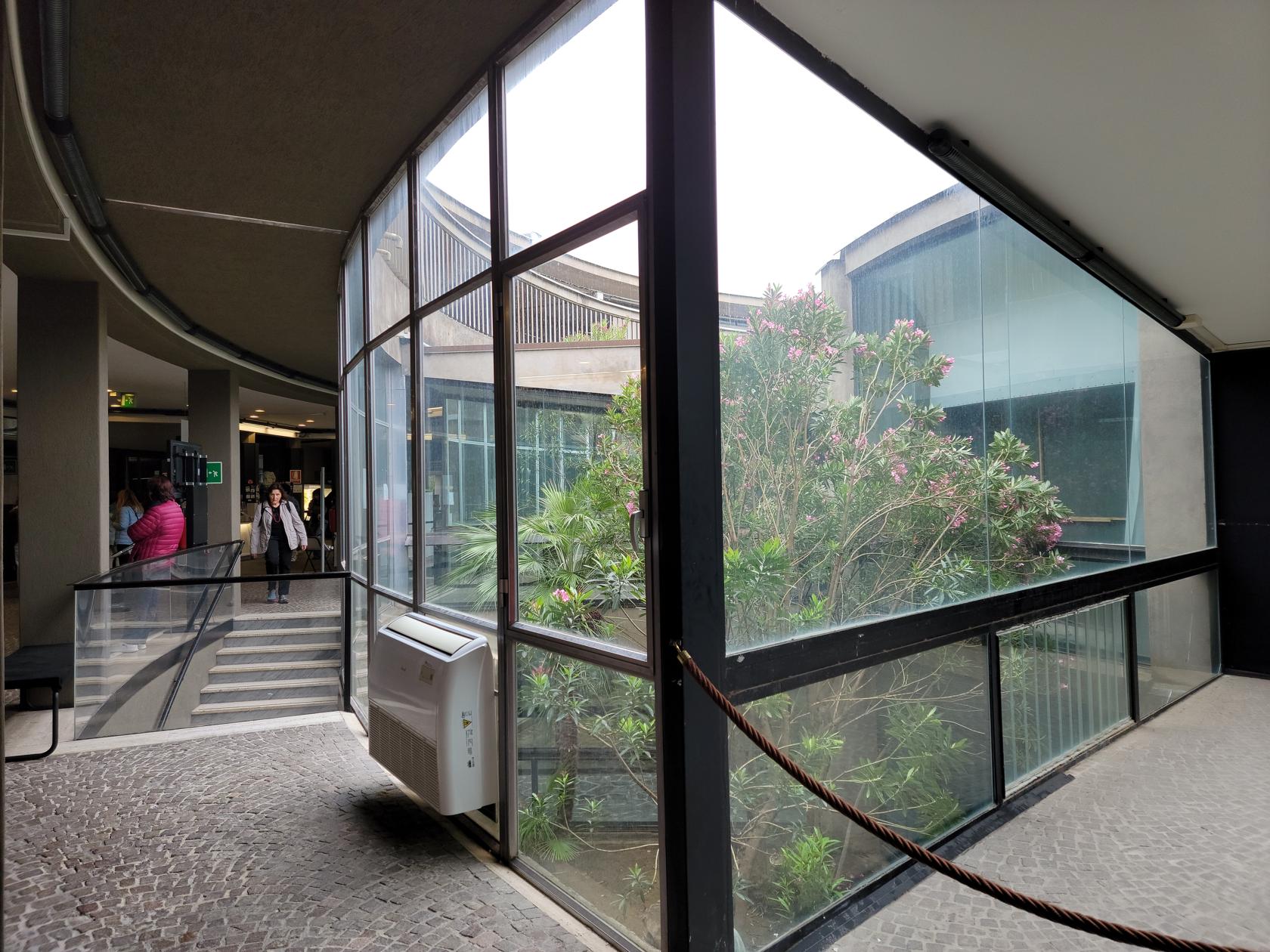
The museum’s interior – Archaeological Museum Paolo Orsi – Siracuse, Sicily
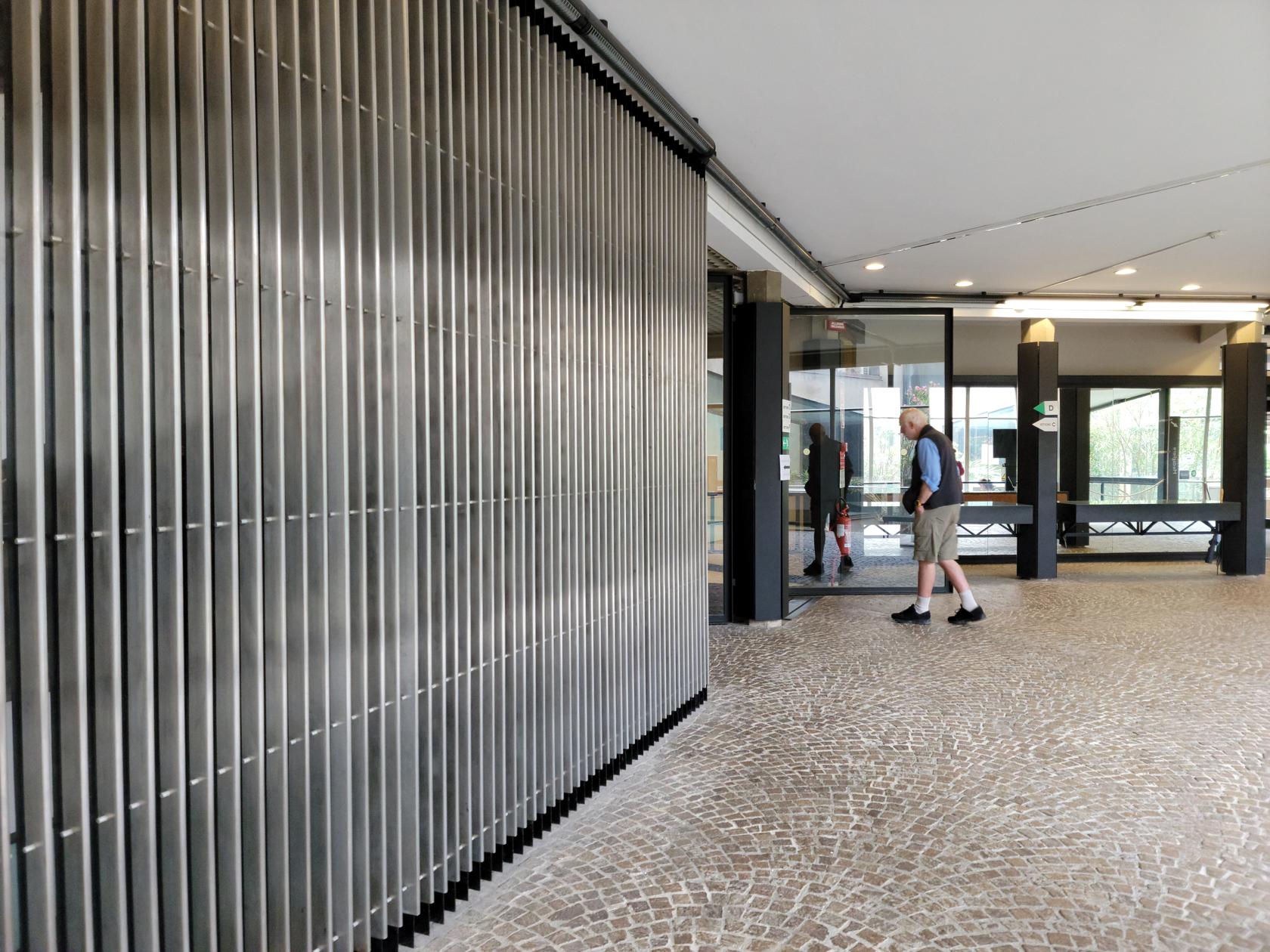
Entrance to one of its sections – Archaeological Museum Paolo Orsi – Siracuse, Sicily
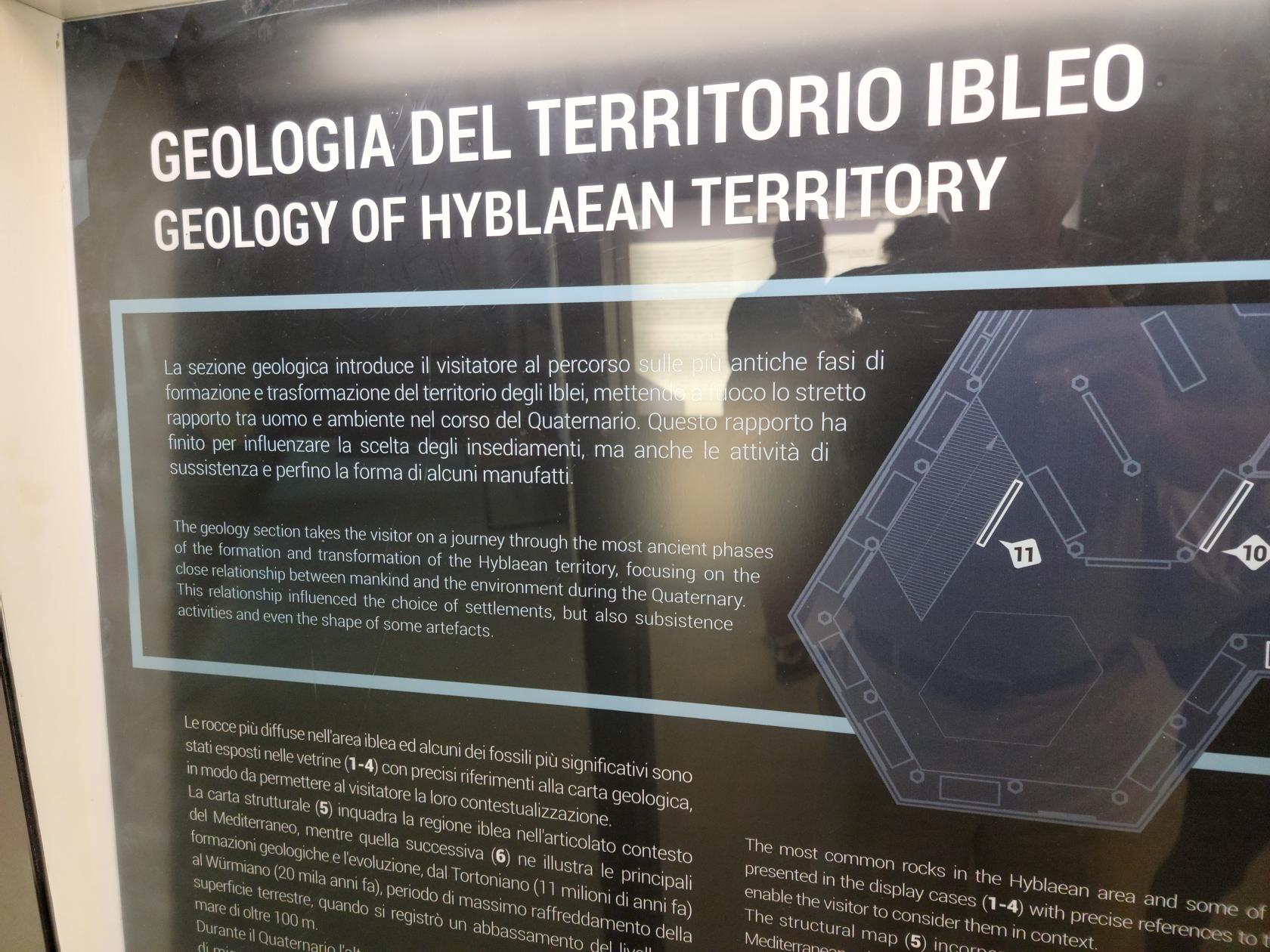
Geology – Archaeological Museum Paolo Orsi – Siracuse, Sicily
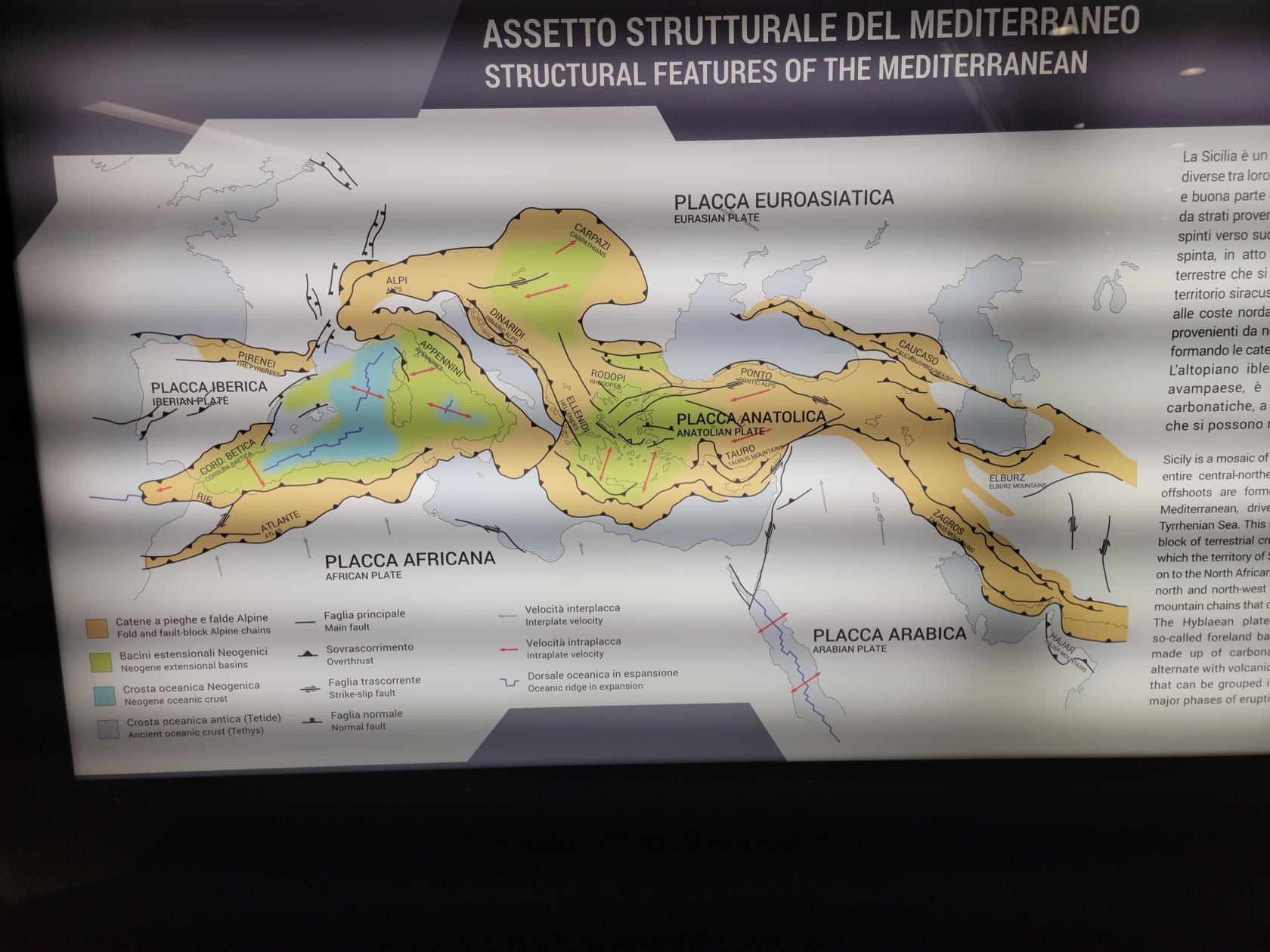
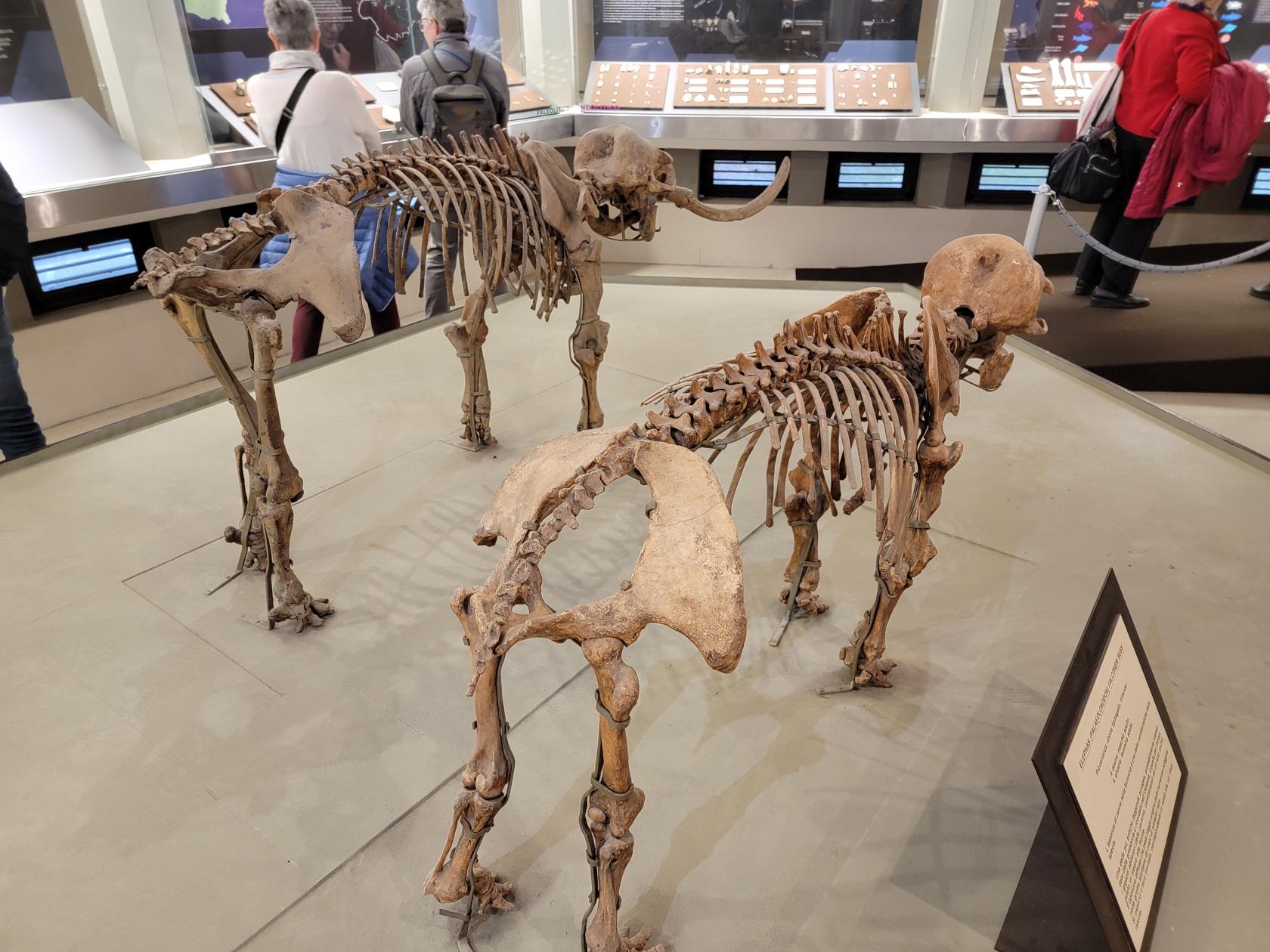
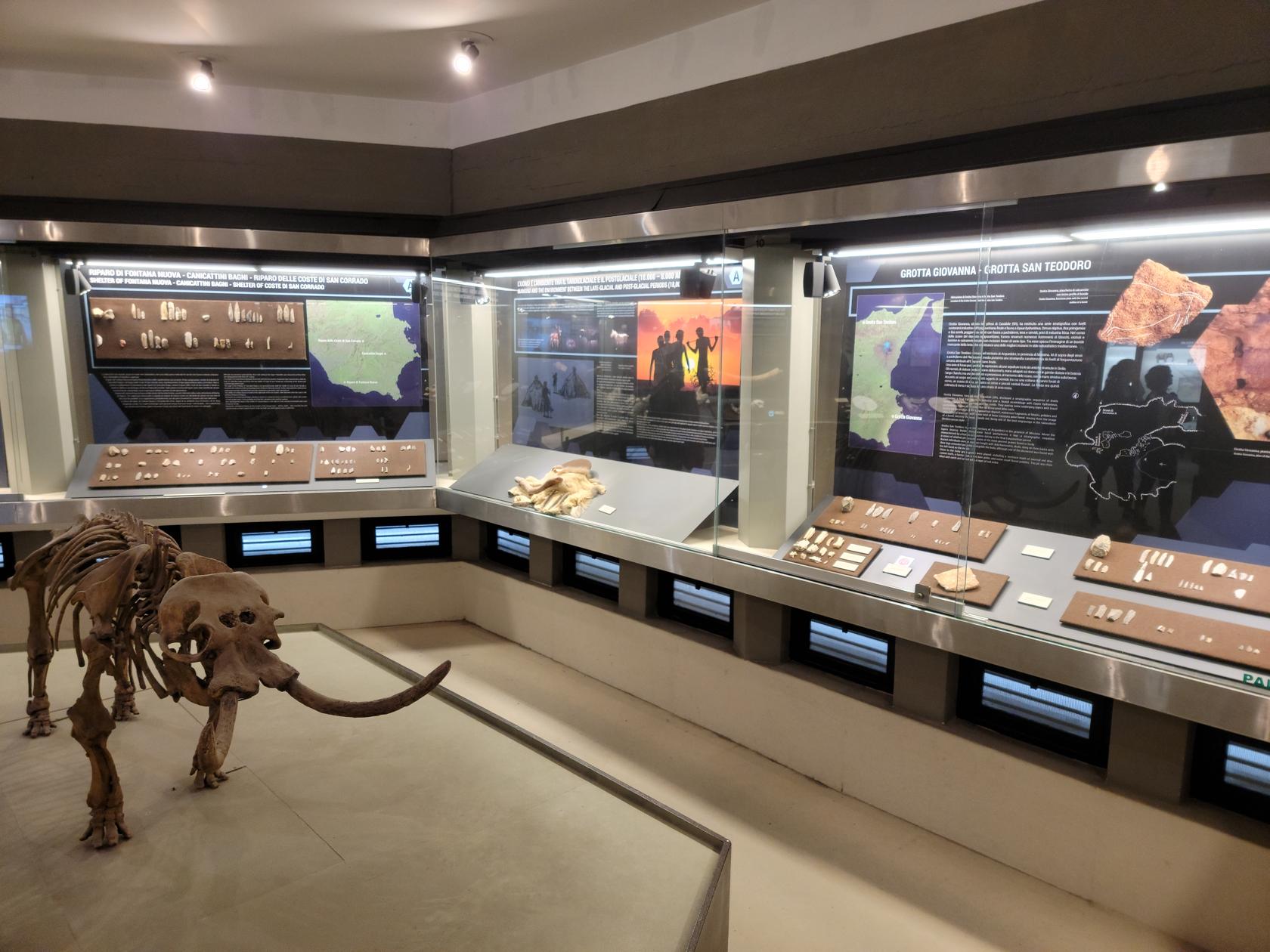
The museum handles each time period in a sequential fashion, starting with the ancient period of the pre-historic animals and tectonic changes to the area, all the way to the arrival of the Greeks and other colonial powers.
Tectonic plates of Italy – Archaeological Museum Paolo Orsi – Siracuse, Sicily
Pygmied elephant and hippopotamus – Archaeological Museum Paolo Orsi – Siracuse, Sicily
Fossils – Archaeological Museum Paolo Orsi – Siracuse, Sicily
Fossil section – Archaeological Museum Paolo Orsi – Siracuse, Sicily
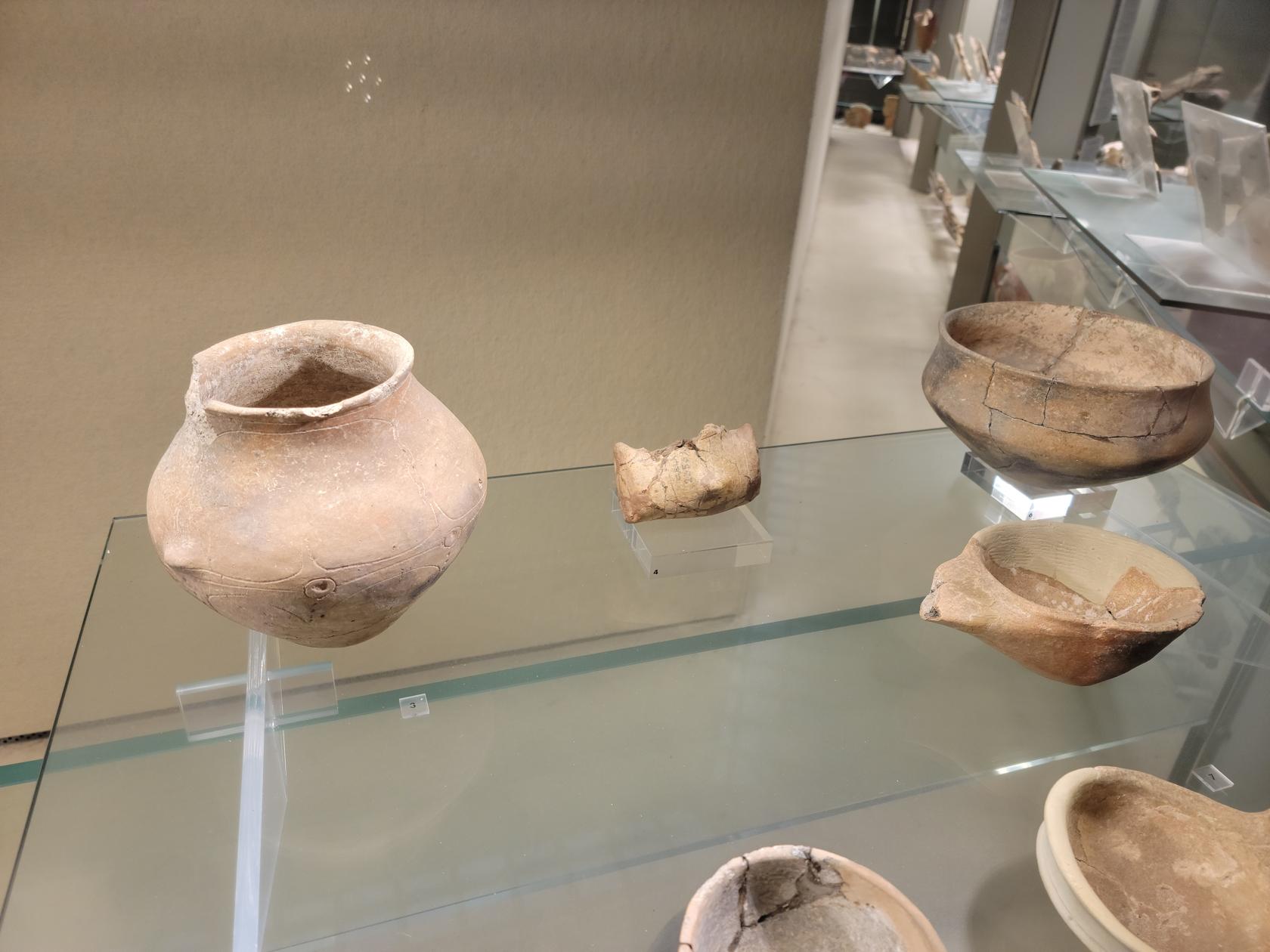
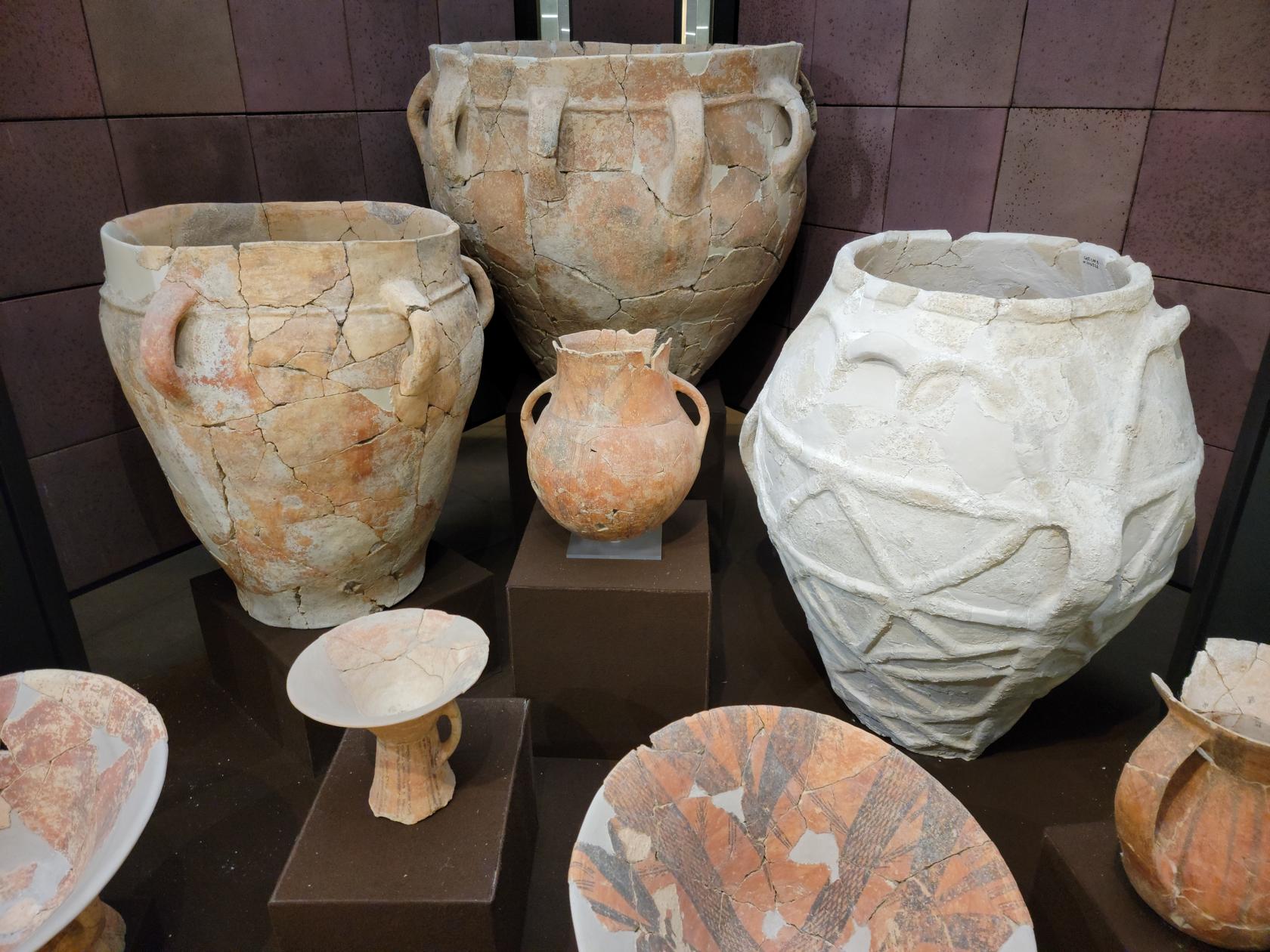
Prehistoric inhabitants jars – Archaeological Museum Paolo Orsi – Siracuse, Sicily
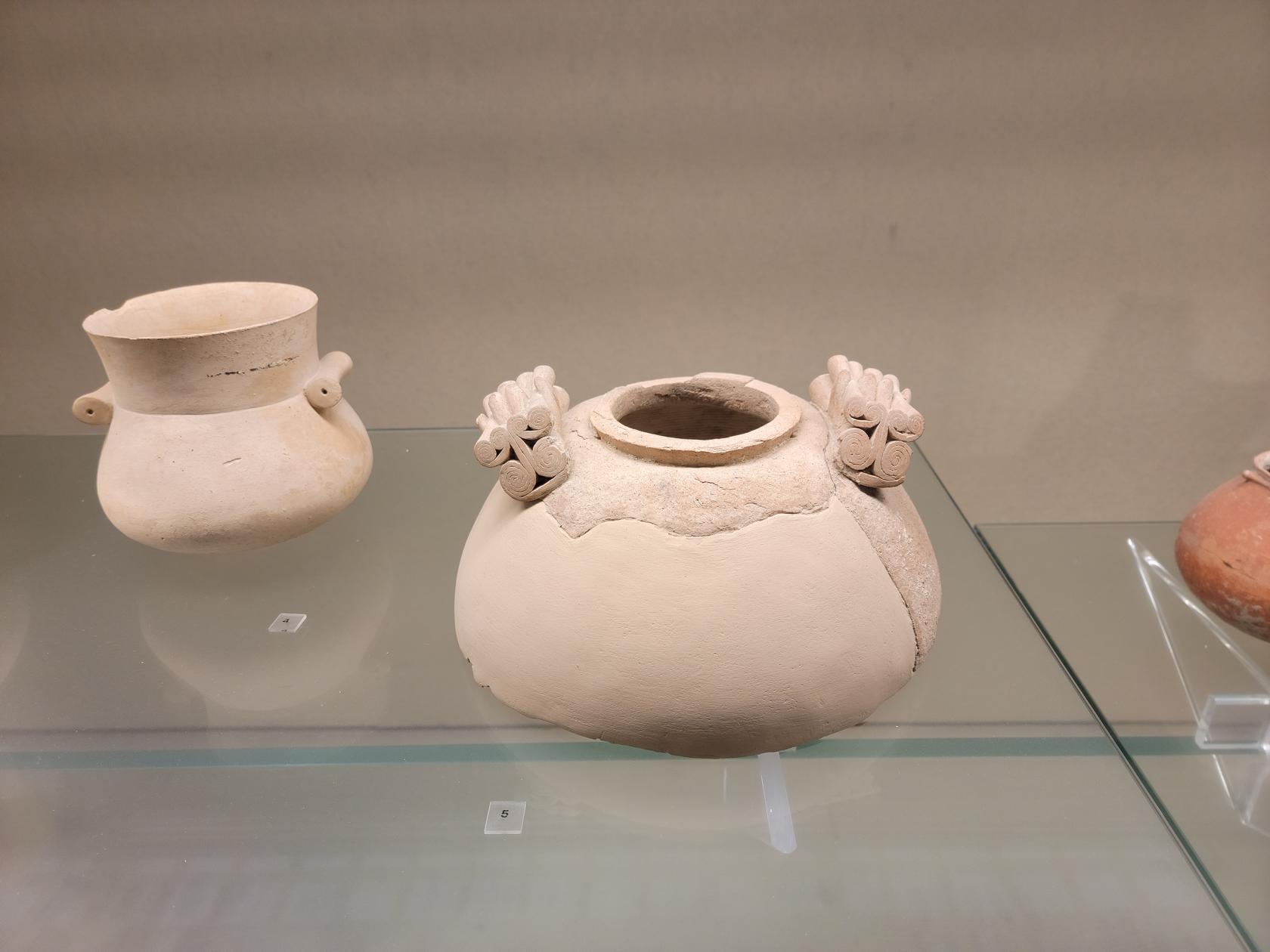
Old vases – Archaeological Museum Paolo Orsi – Siracuse, Sicily
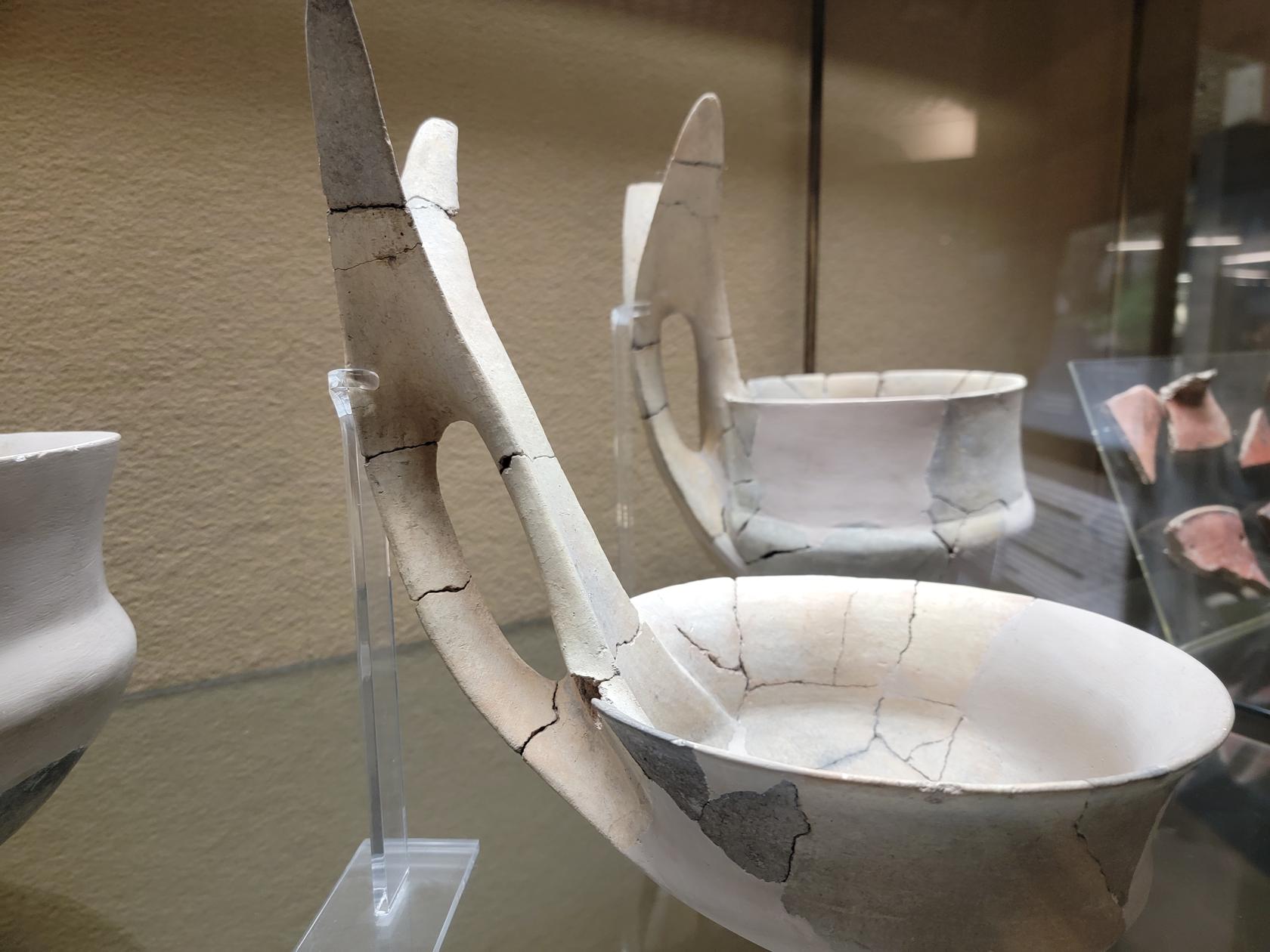
Dipping bowls – Archaeological Museum Paolo Orsi – Siracuse, Sicily
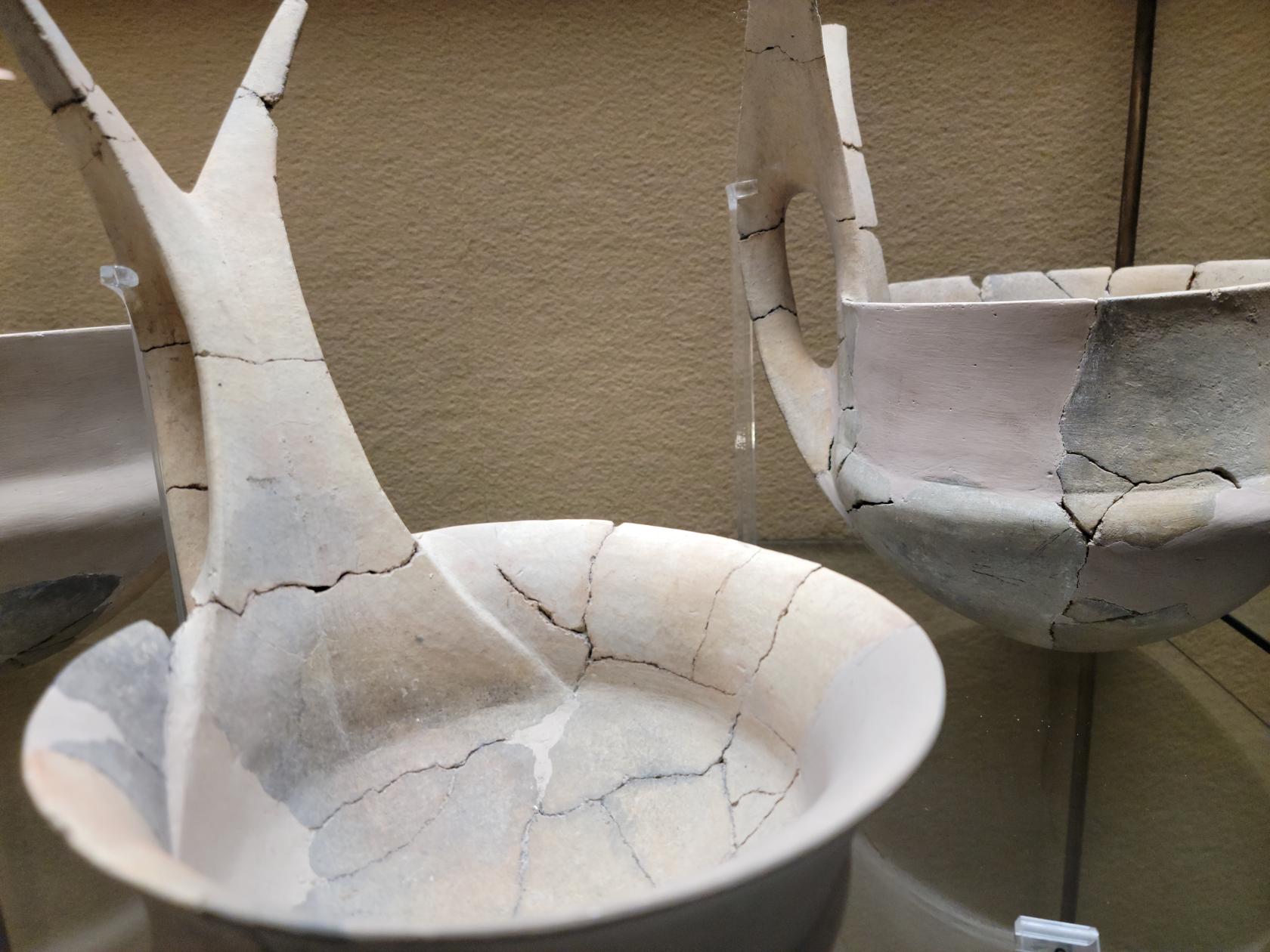
Dipping bowls with stemmed handles – Archaeological Museum Paolo Orsi – Siracuse, Sicily
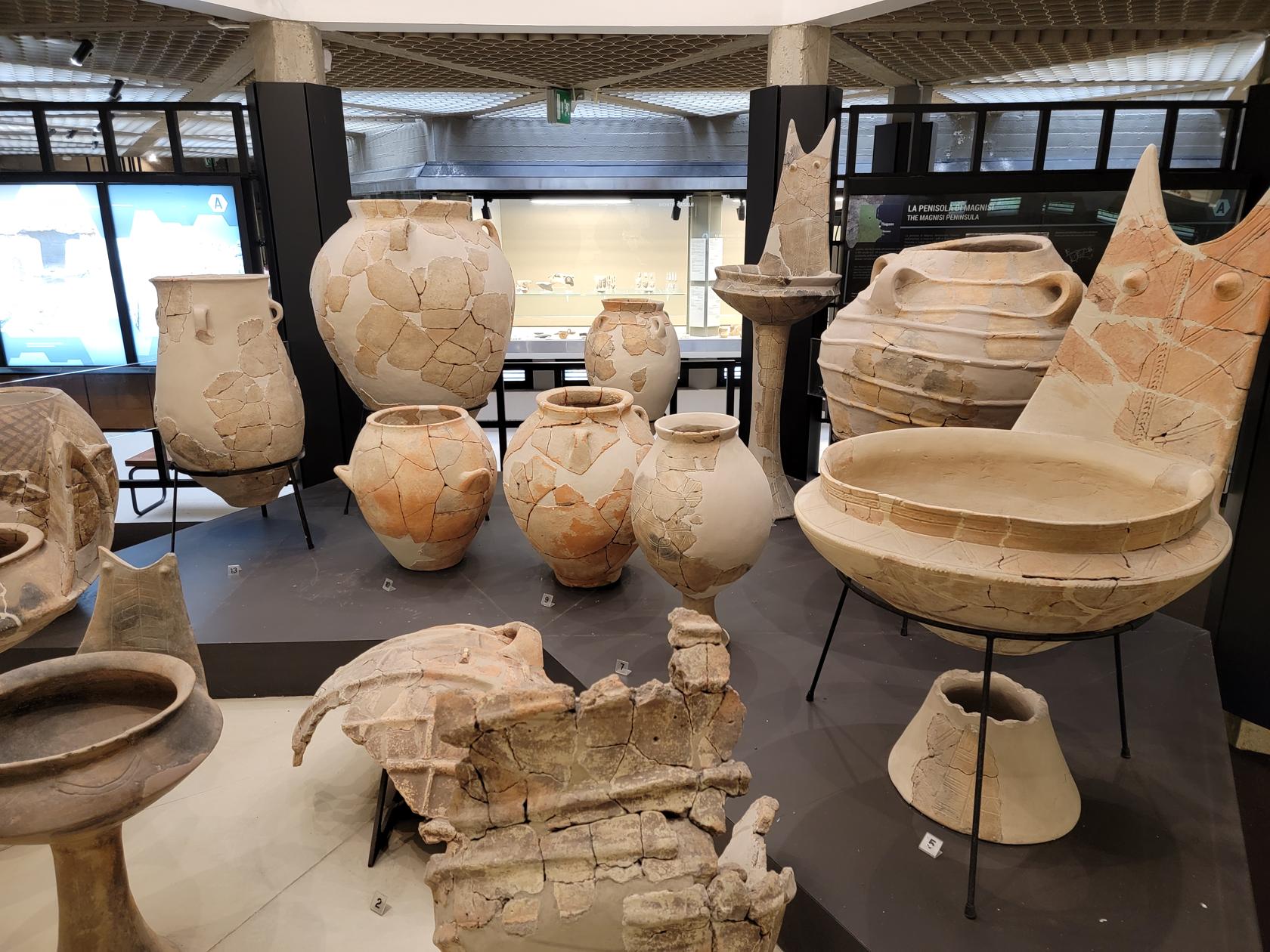
Intricate vases and vessels – Archaeological Museum Paolo Orsi – Siracuse, Sicily
Urns and other vessels – Archaeological Museum Paolo Orsi – Siracuse, Sicily
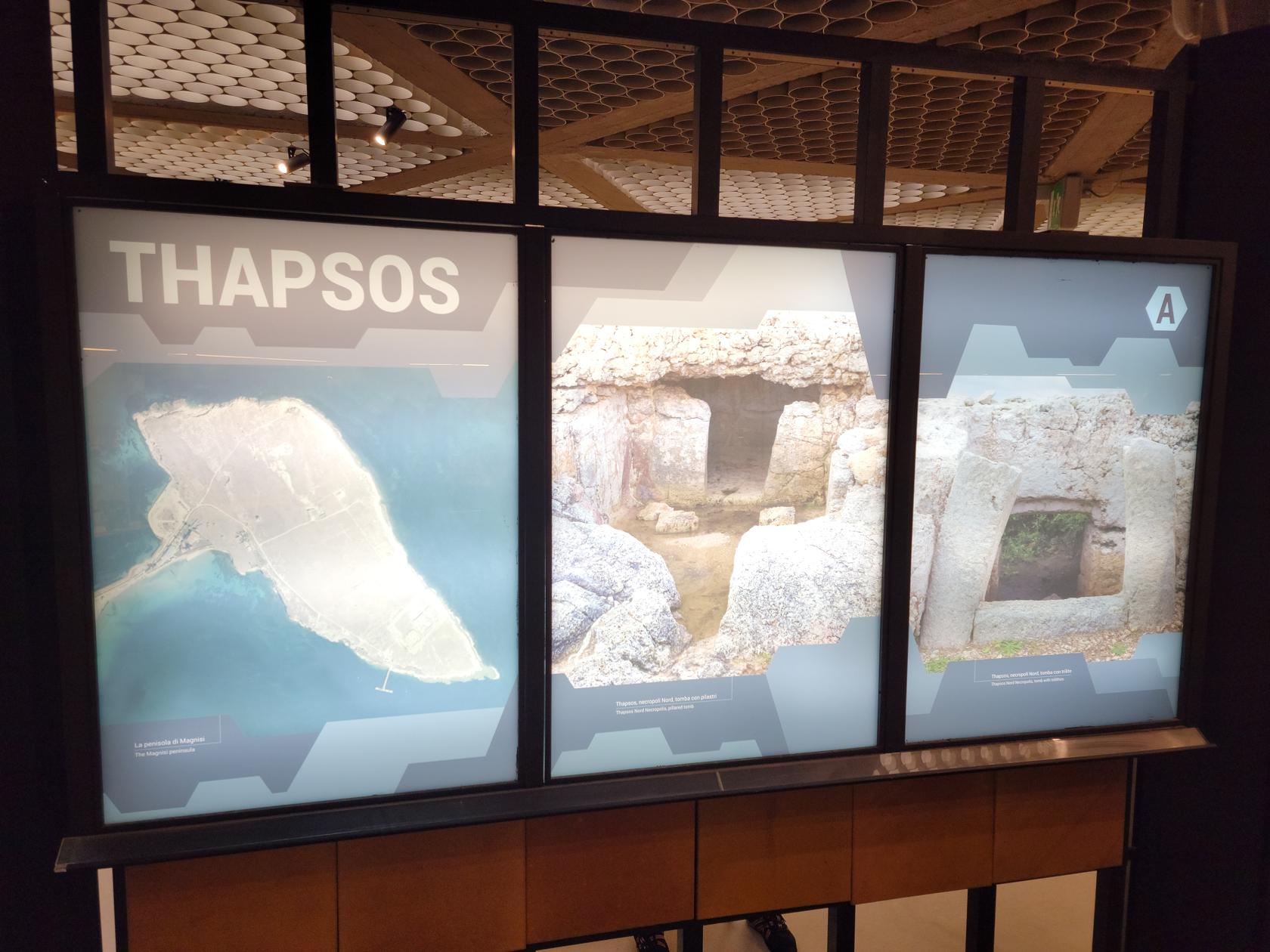
Thapsos collection – Archaeological Museum Paolo Orsi – Siracuse, Sicily
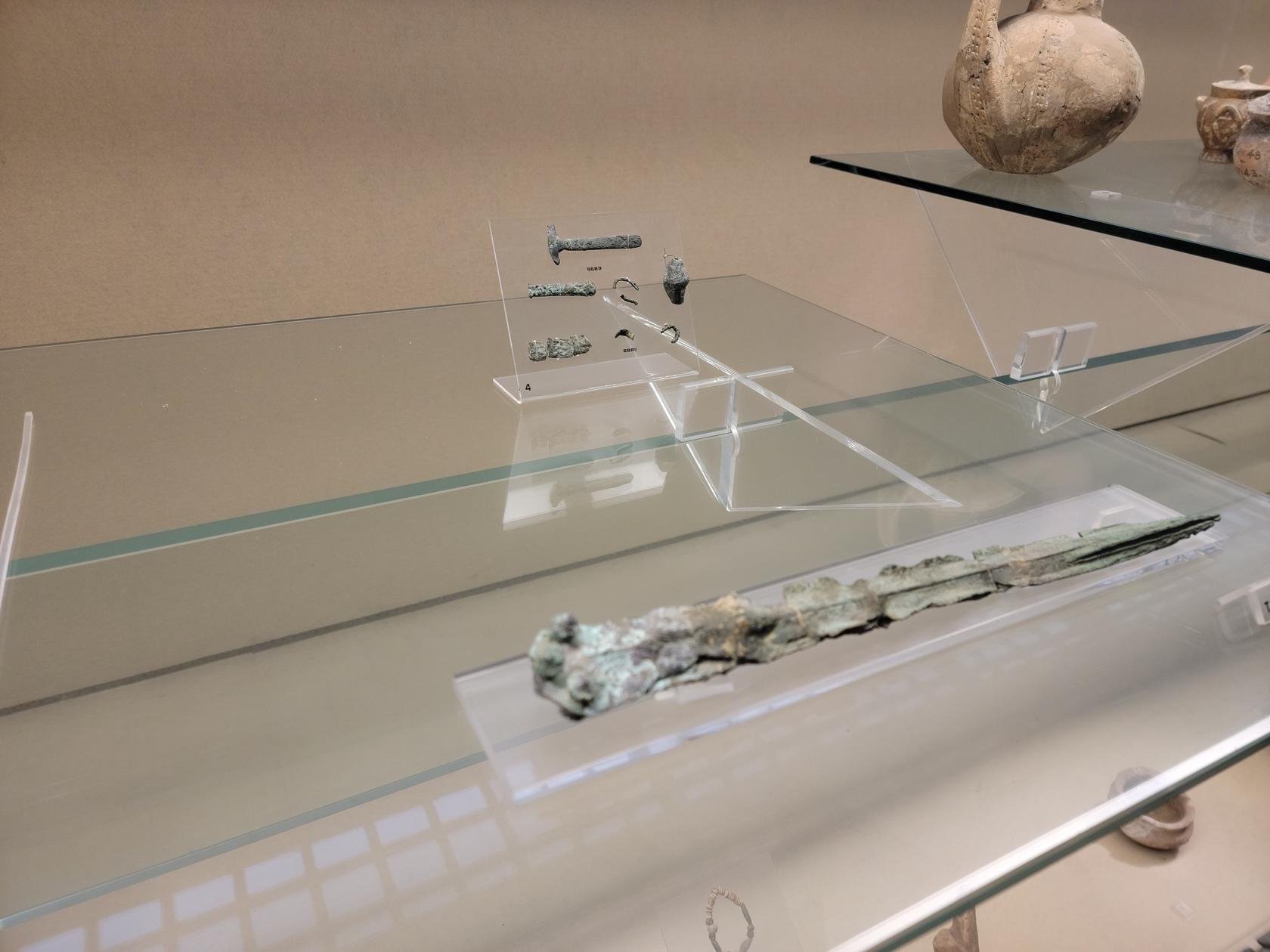
Bronze dagger – Archaeological Museum Paolo Orsi – Siracuse, Sicily
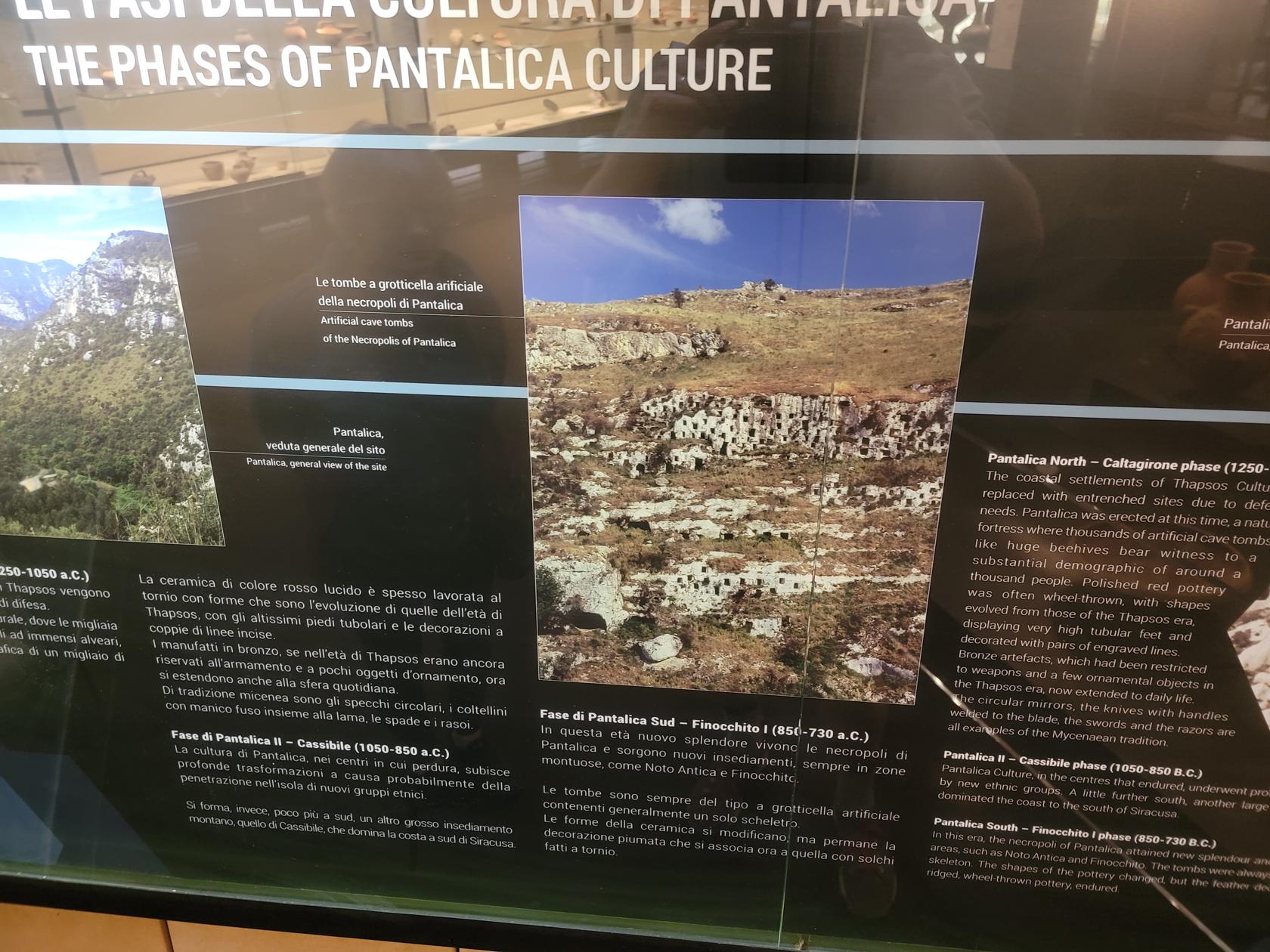
The burial sites of Pantalica – Archaeological Museum Paolo Orsi – Siracuse, Sicily
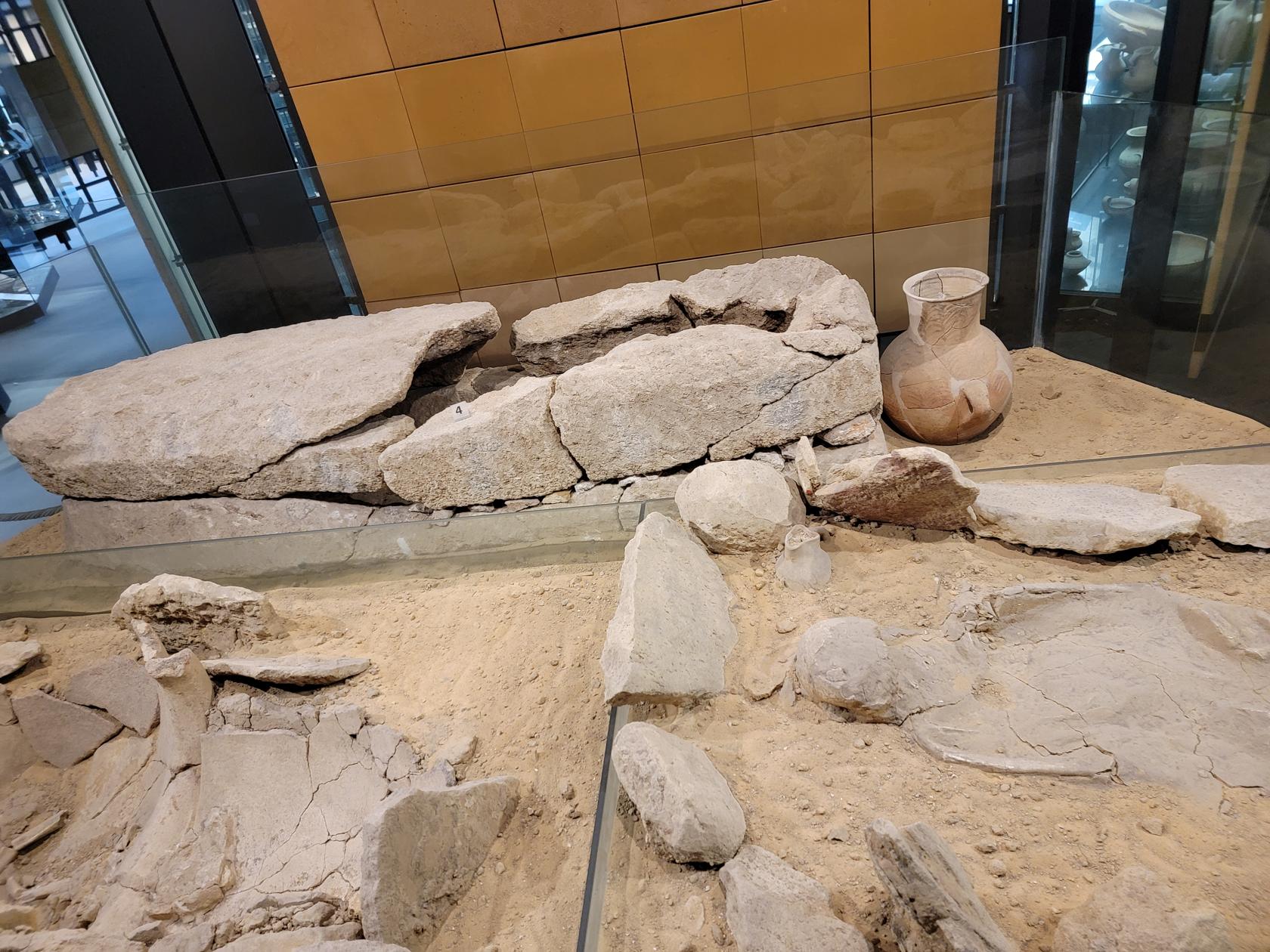
Exhibit of a typical burial – Archaeological Museum Paolo Orsi – Siracuse, Sicily
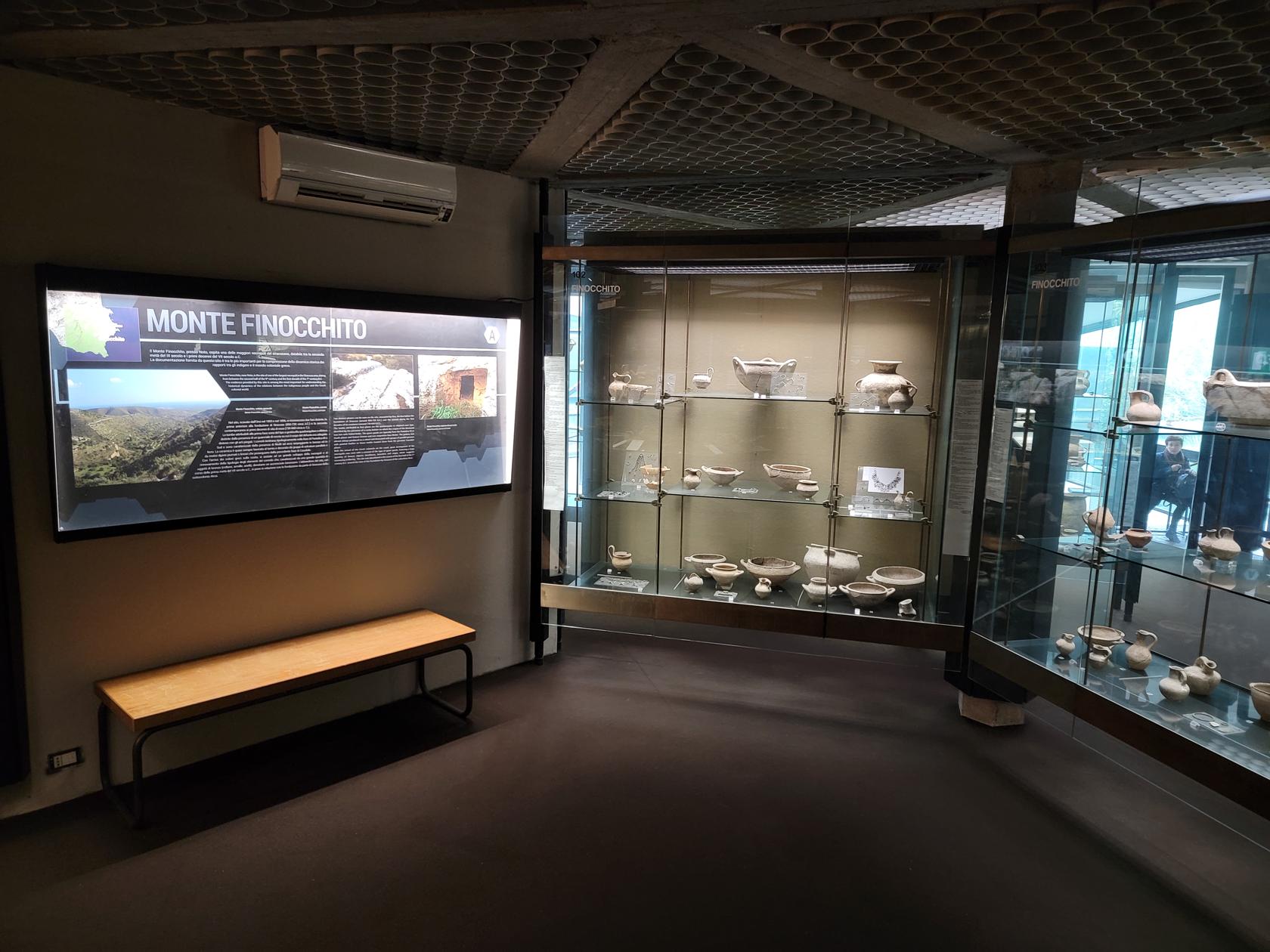
Monte Finocchio – Archaeological Museum Paolo Orsi – Siracuse, Sicily
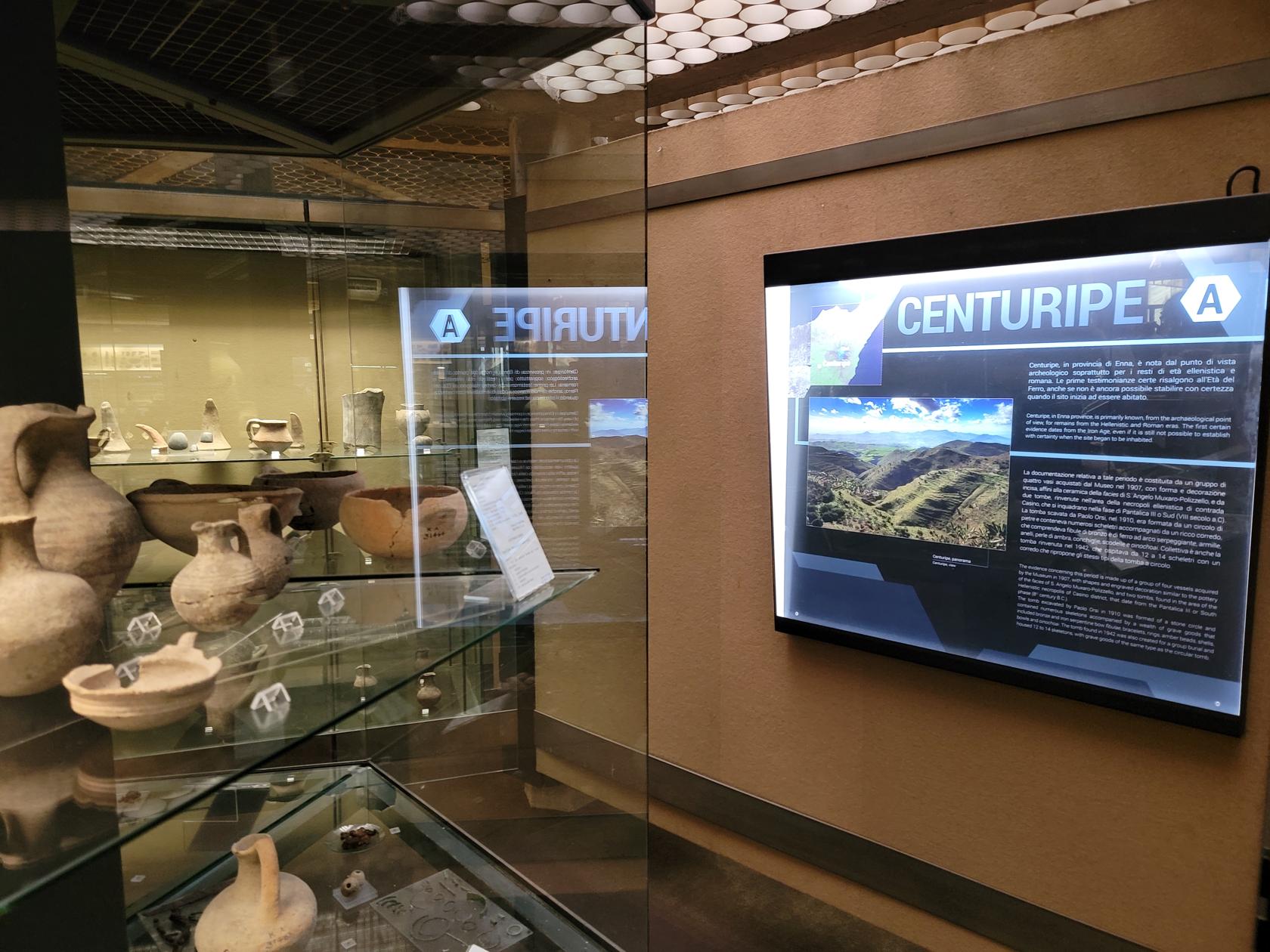
Centuripe exhibit – Archaeological Museum Paolo Orsi – Siracuse, Sicily
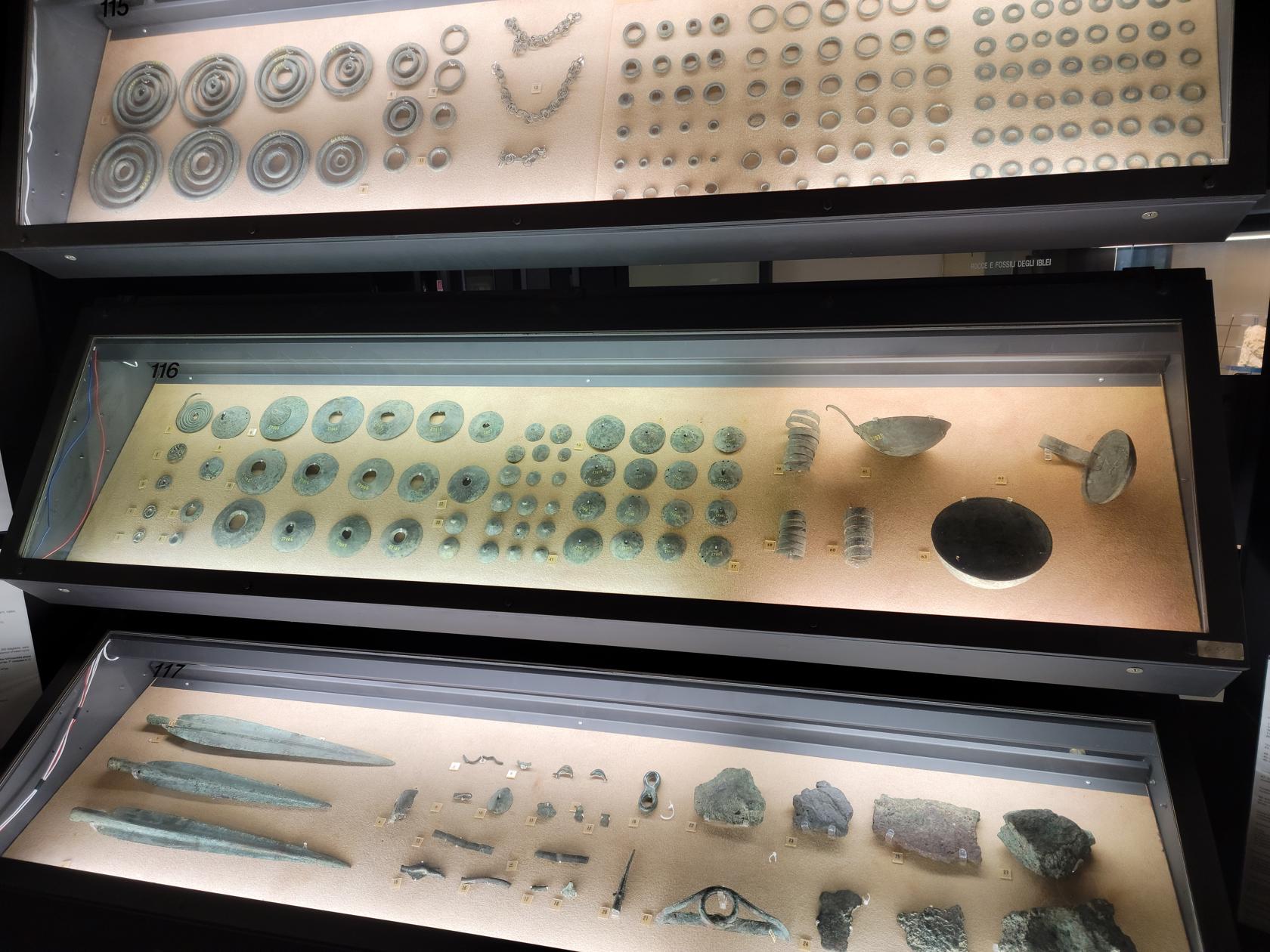
Bronze spear points, buttons and other artifacts – Archaeological Museum Paolo Orsi – Siracuse, Sicily
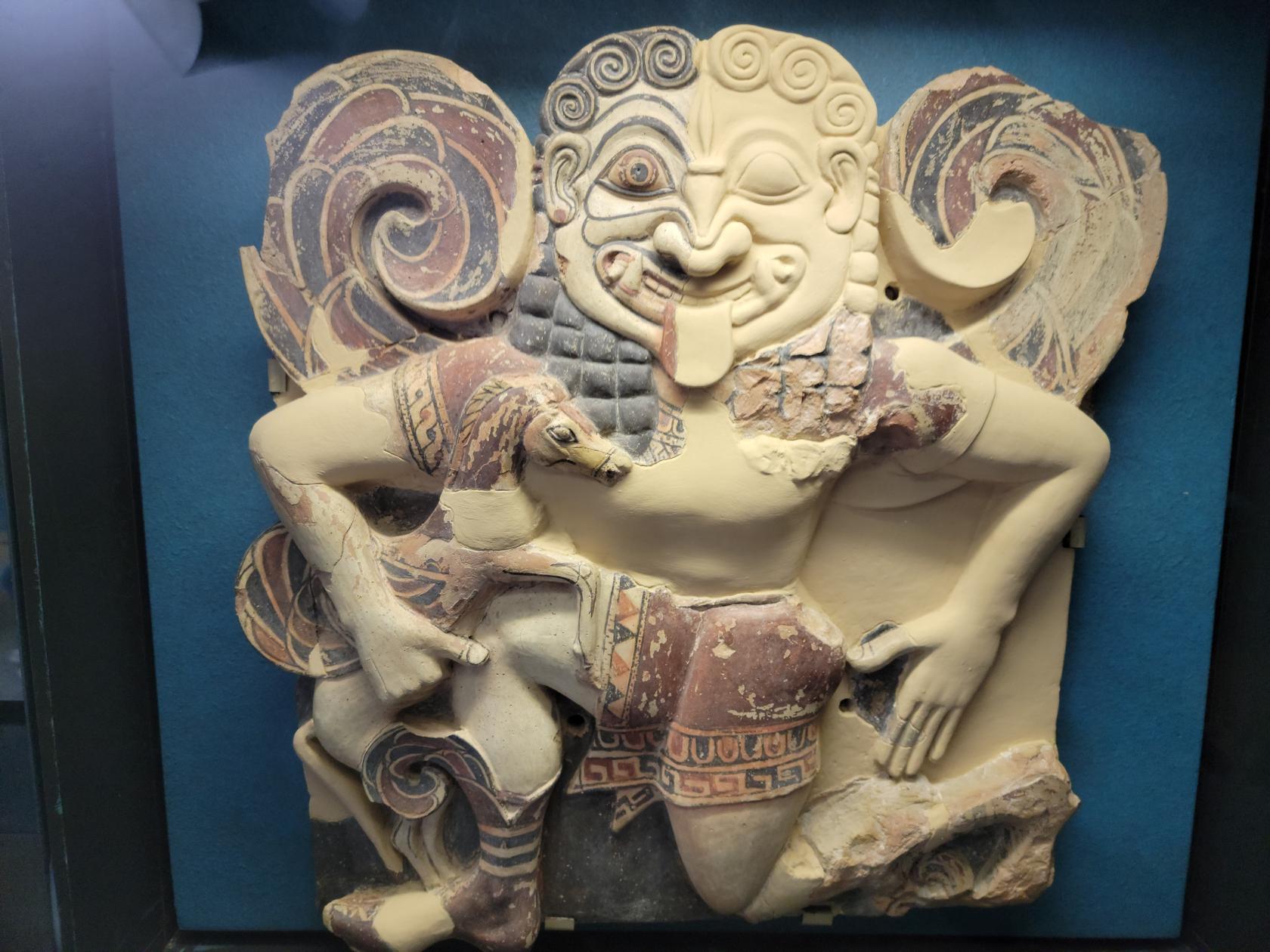
The Gorgone – Archaeological Museum Paolo Orsi – Siracuse, Sicily
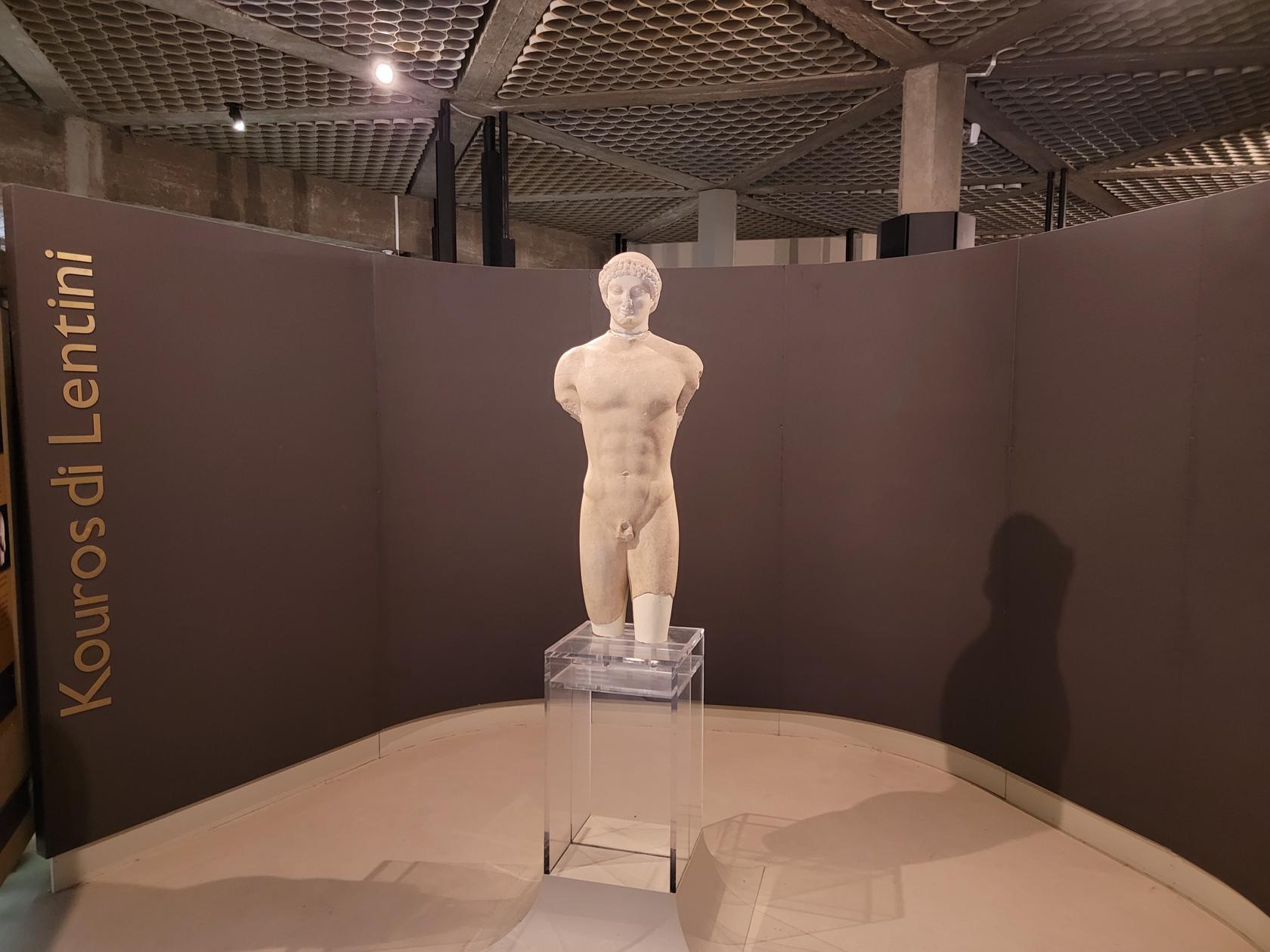
A Greek Kouros – Archaeological Museum Paolo Orsi – Siracuse, Sicily
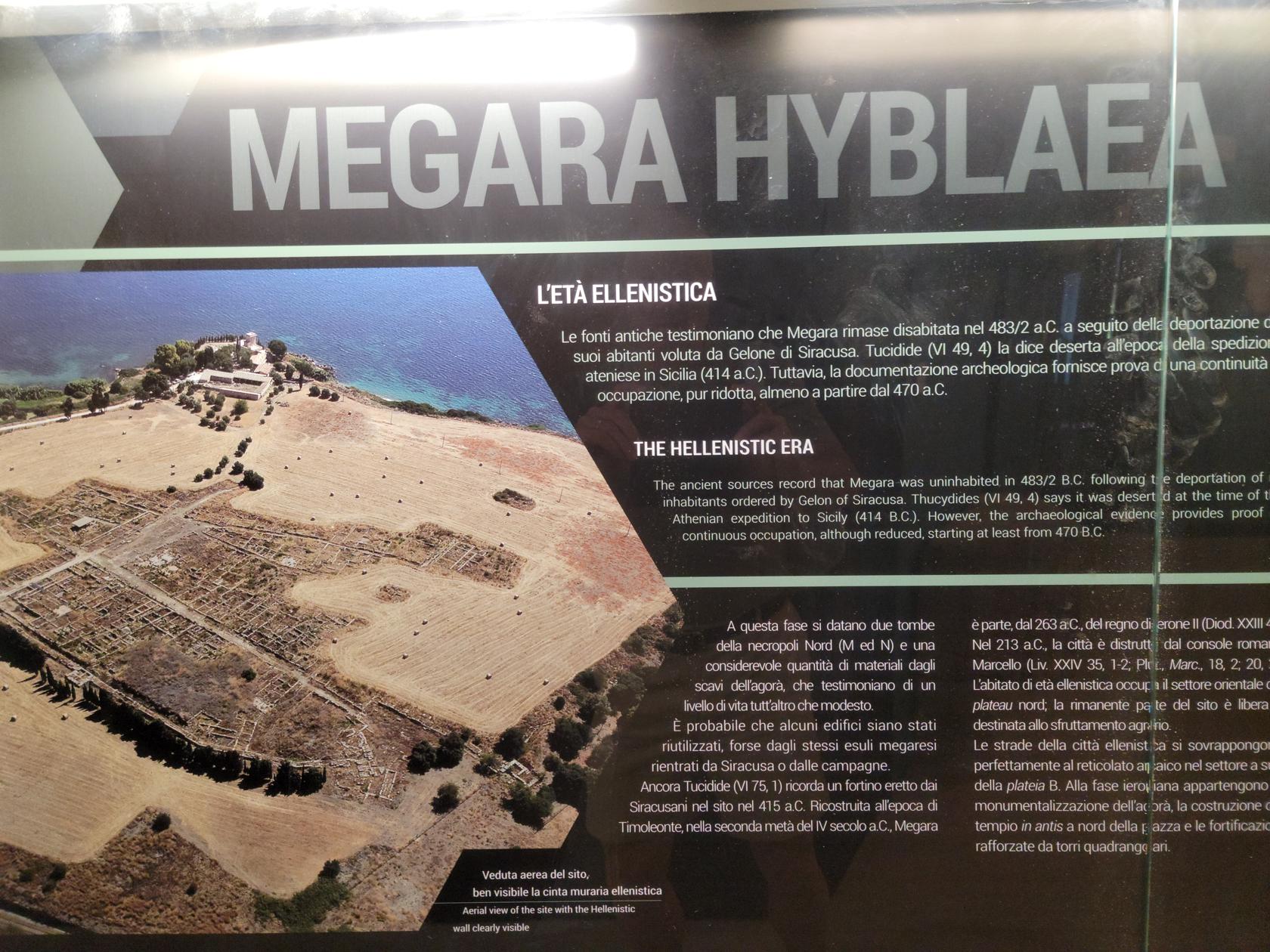
Megara Hyblaea exhibit – Archaeological Museum Paolo Orsi – Siracuse, Sicily
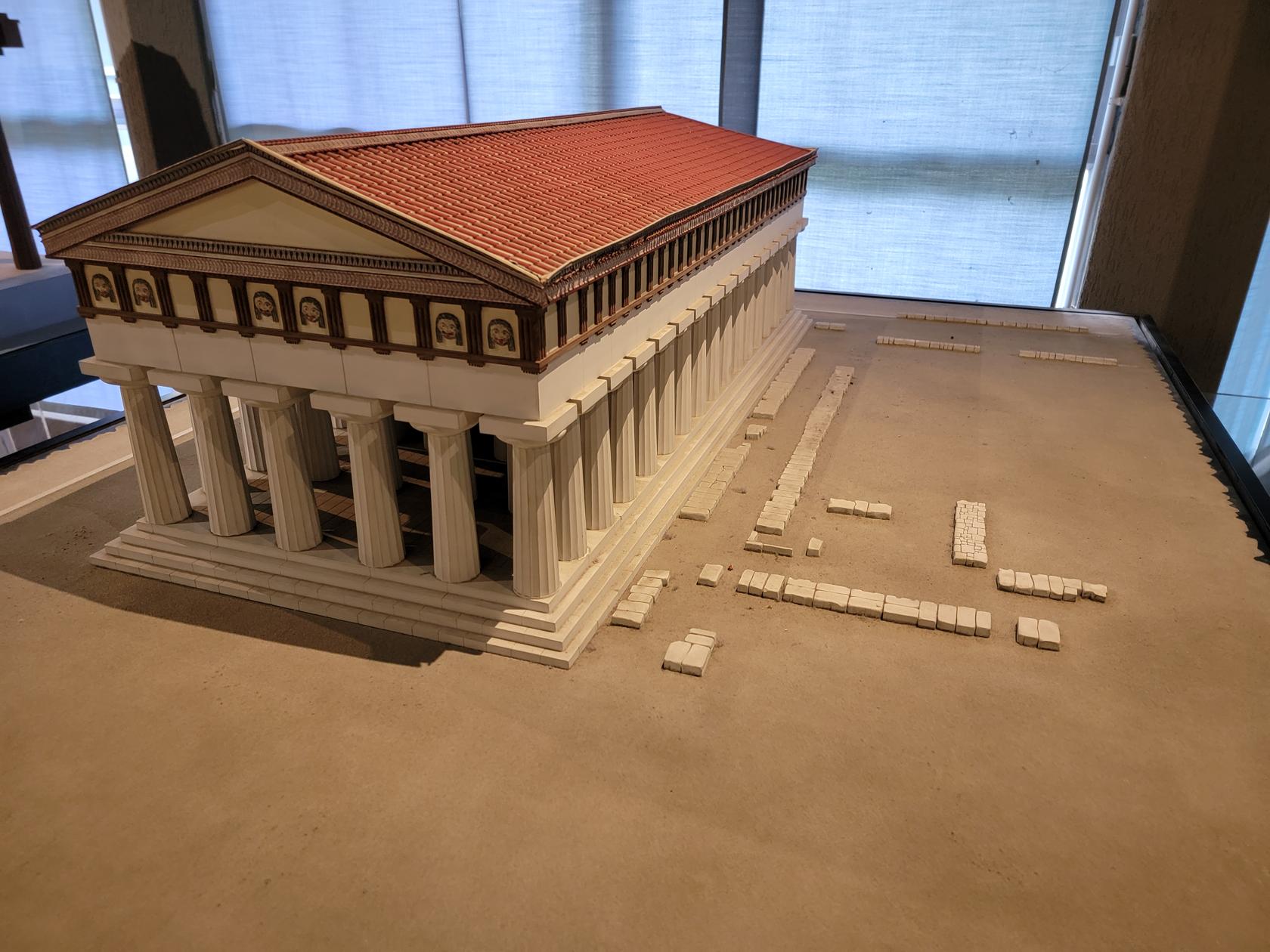
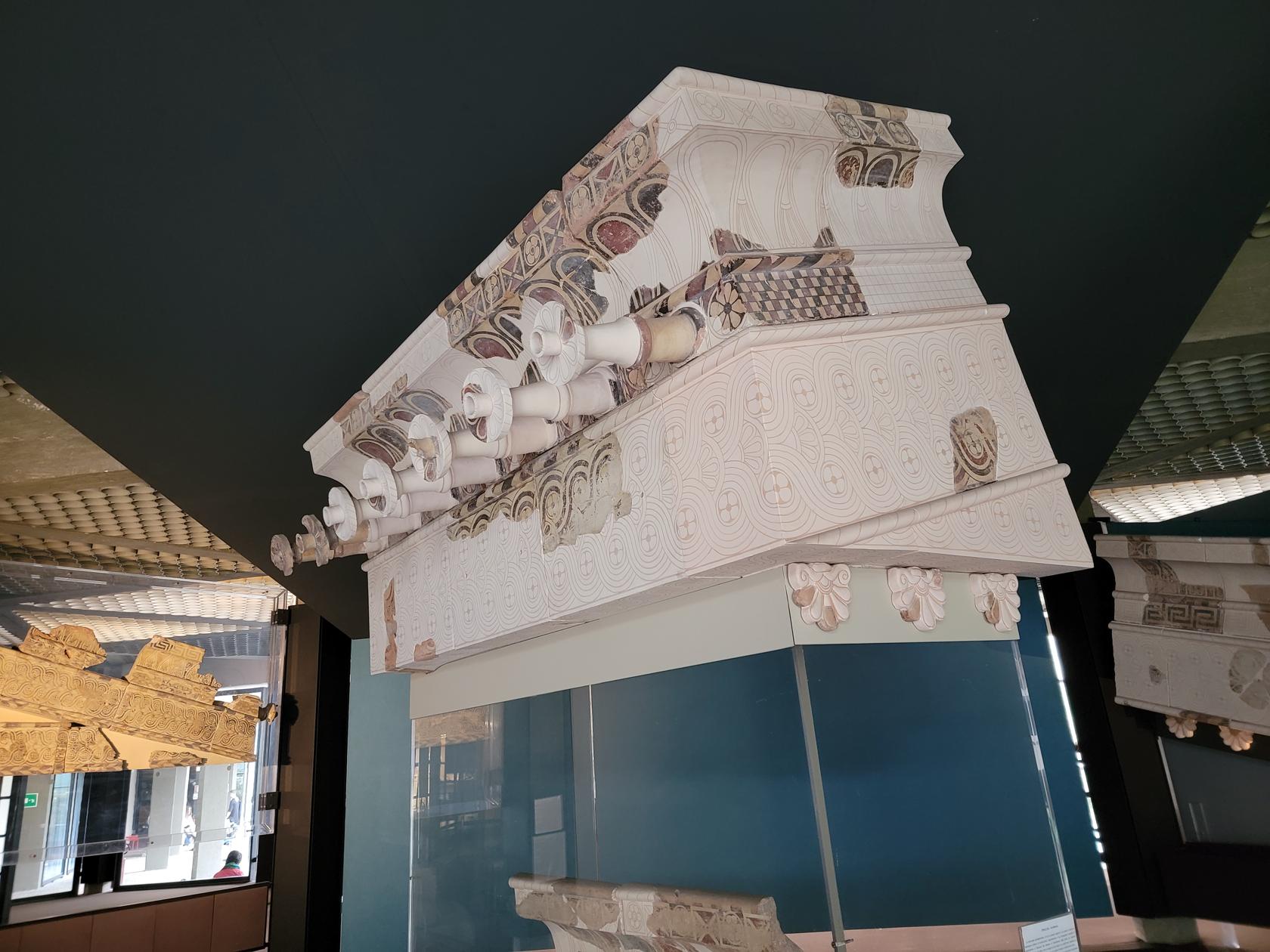
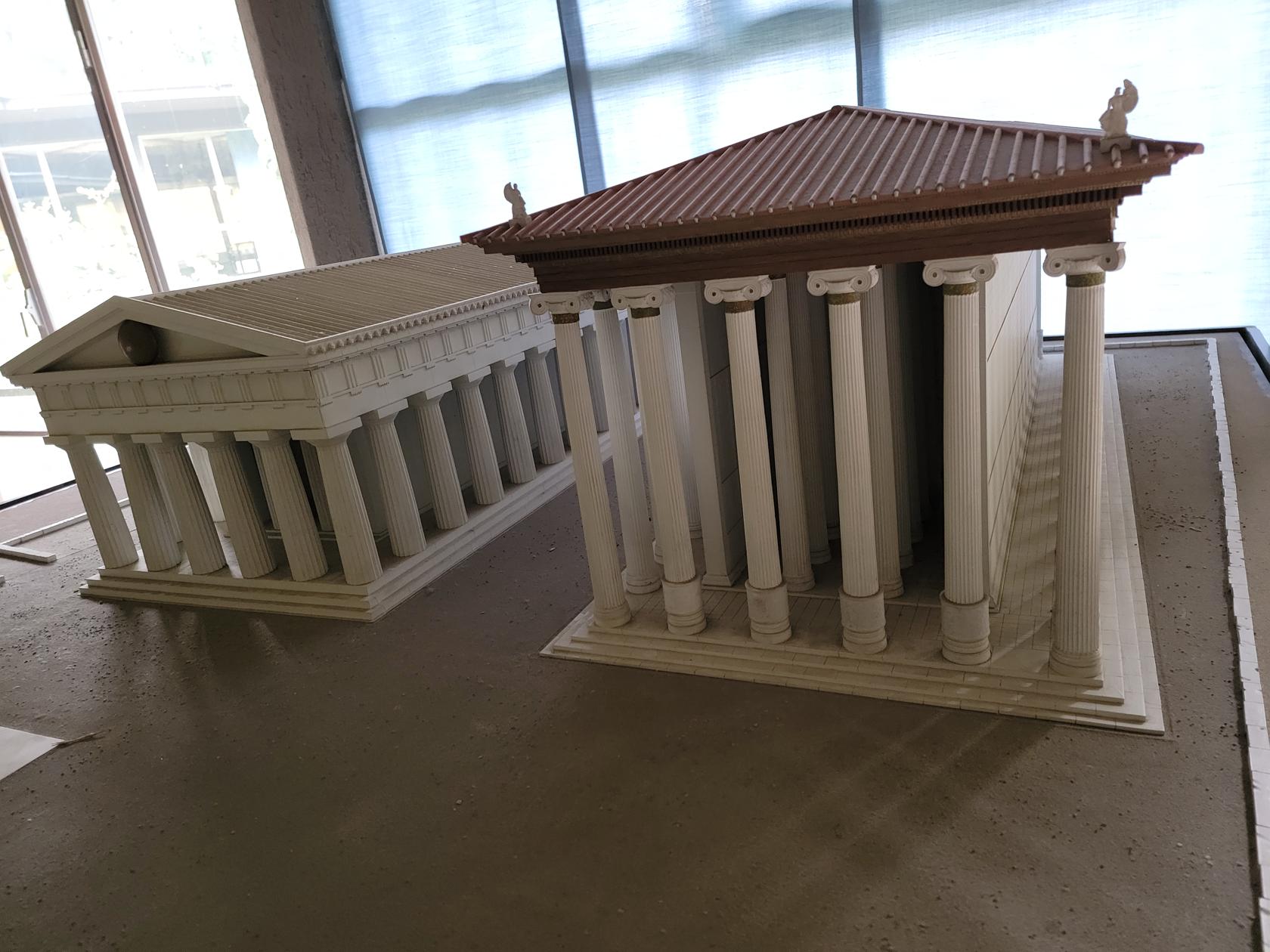
Dioramas of Greek architecture found throughout Sicily – Archaeological Museum Paolo Orsi – Siracuse, Sicily
Exhibit of unusual antiquated gutter system – Archaeological Museum Paolo Orsi – Siracuse, Sicily
Dioramas of ancient Greek Structures on Sicily – Archaeological Museum Paolo Orsi – Siracuse, Sicily
More than one area within the south-eastern coast of Sicily is addressed, as well as other major areas to the north and in the center. In all, the museum provides an excellent historical picture of the island of Sicily.
Archaeological Park
The Archaeological Park, also known as the Neapolis Archaelogical Park of Syracuse, is situated about two and a half kilometers from the island of Ortigia. However, a brisk walk can get you there in about twenty or so minutes.
Entrance walkway – The Neapolis – Archaeological Park – Siracuse, Sicily
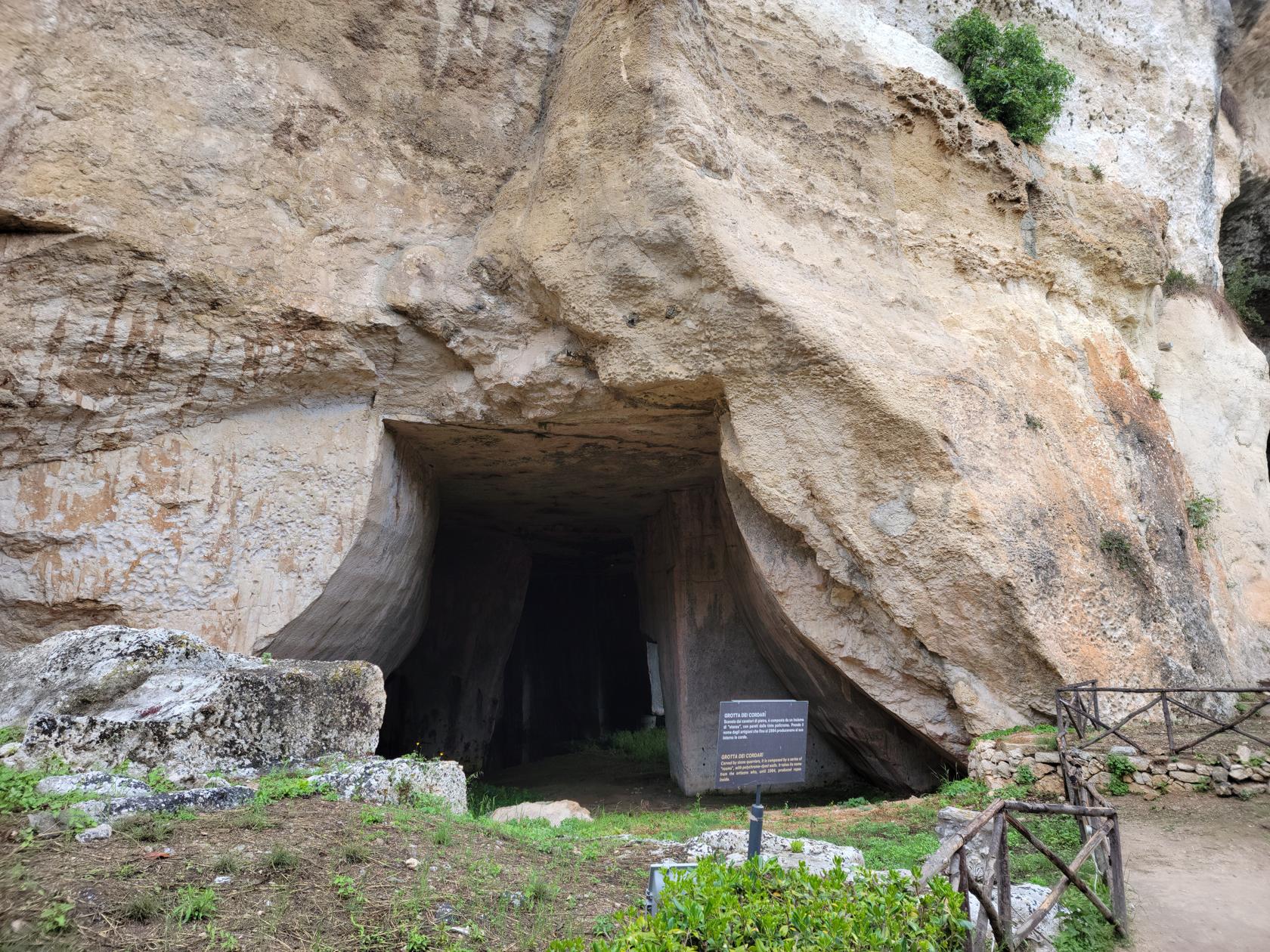
The Grotto caverns – The Neapolis – Archaeological Park – Siracuse, Sicily
Tickets may be purchased at the gate, now across the newly blue painted intersection.
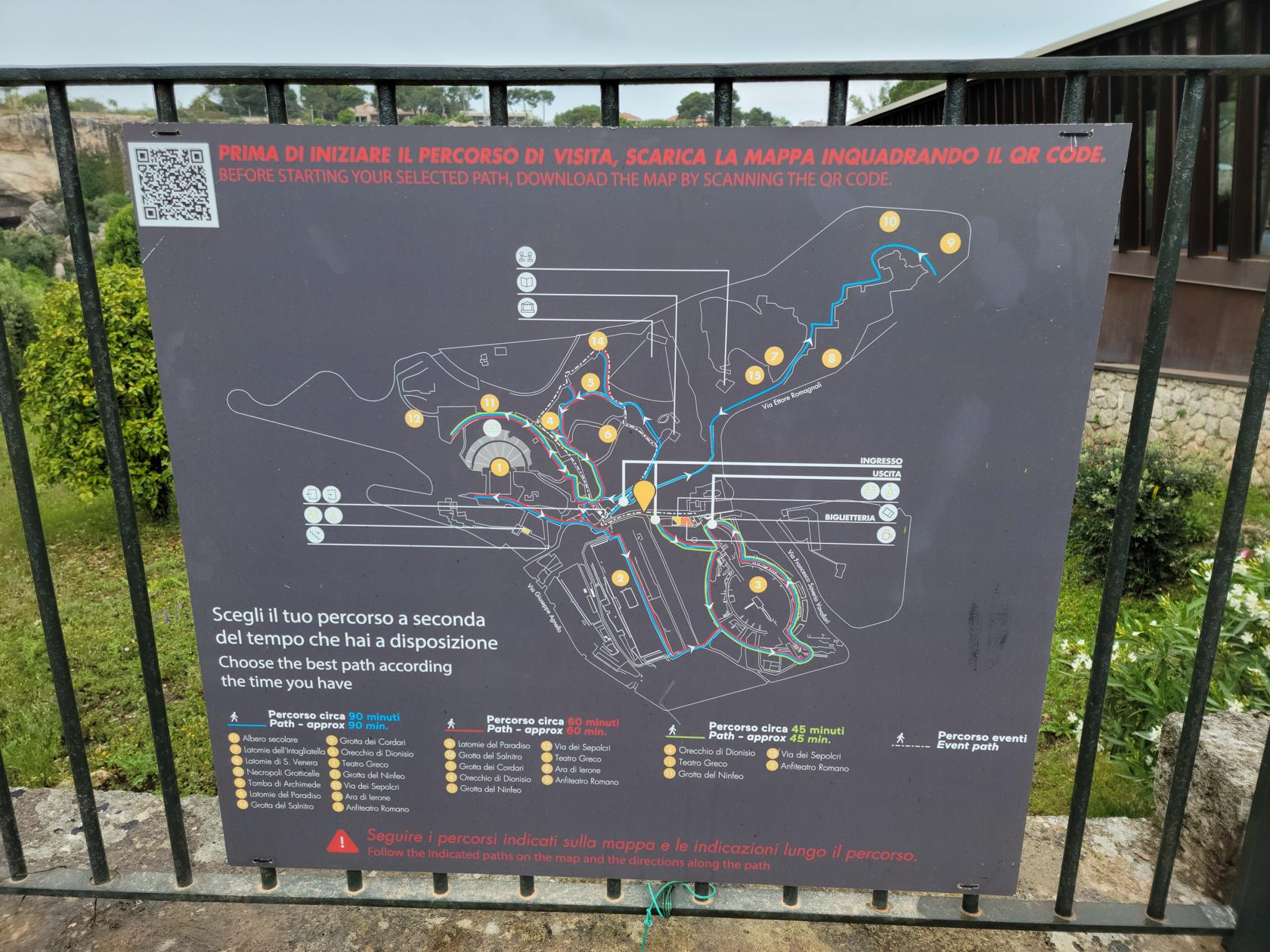
The Neapolis – Archaeological Park – Siracuse, Sicily
If you follow the signs, like we did, you will be taken to group ticket sales, which will still sell you tickets, but its out of the way and you will have to walk through a path of vendors before actually finding the ticket booth.
Latomia or Grottos
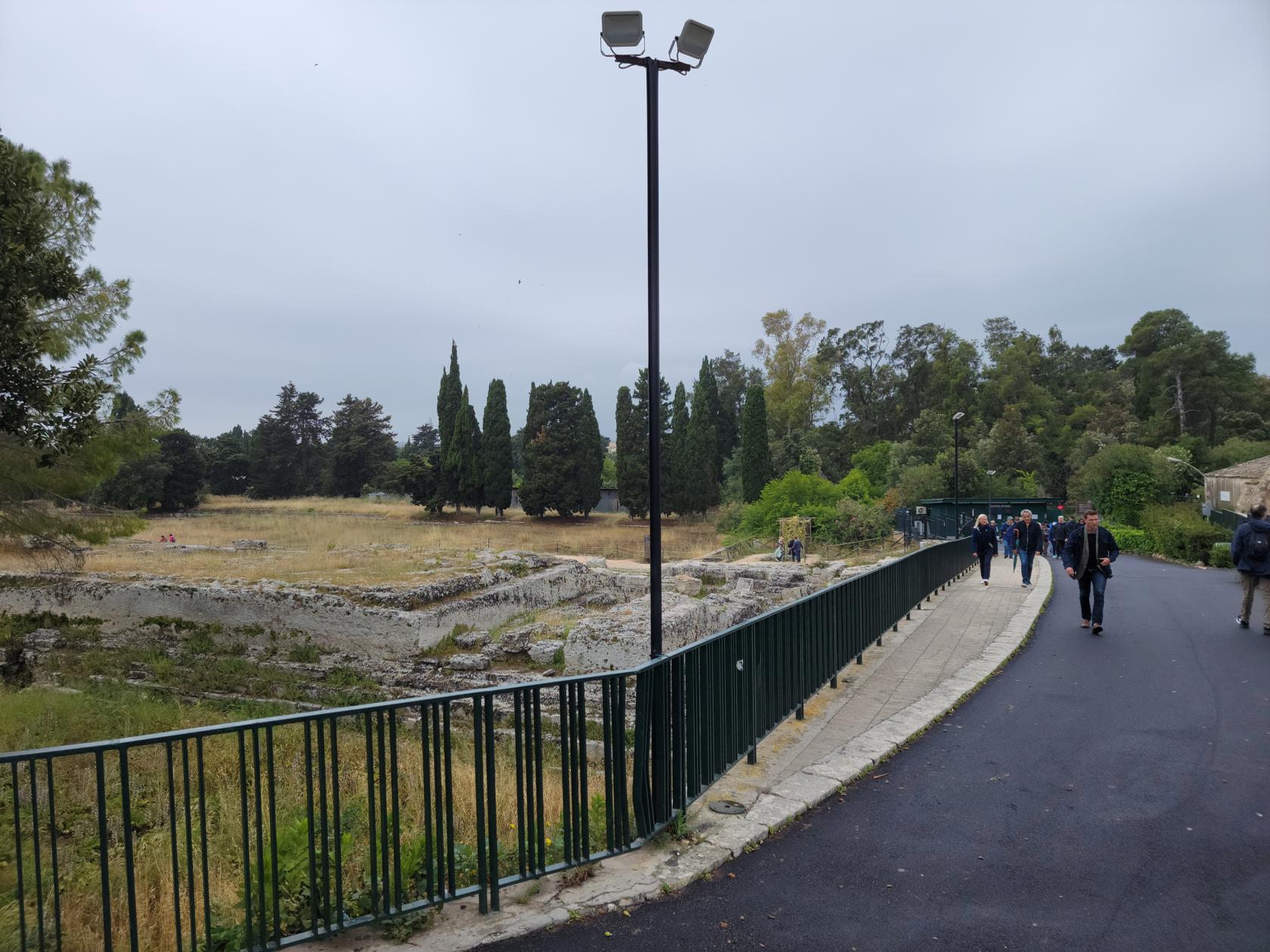
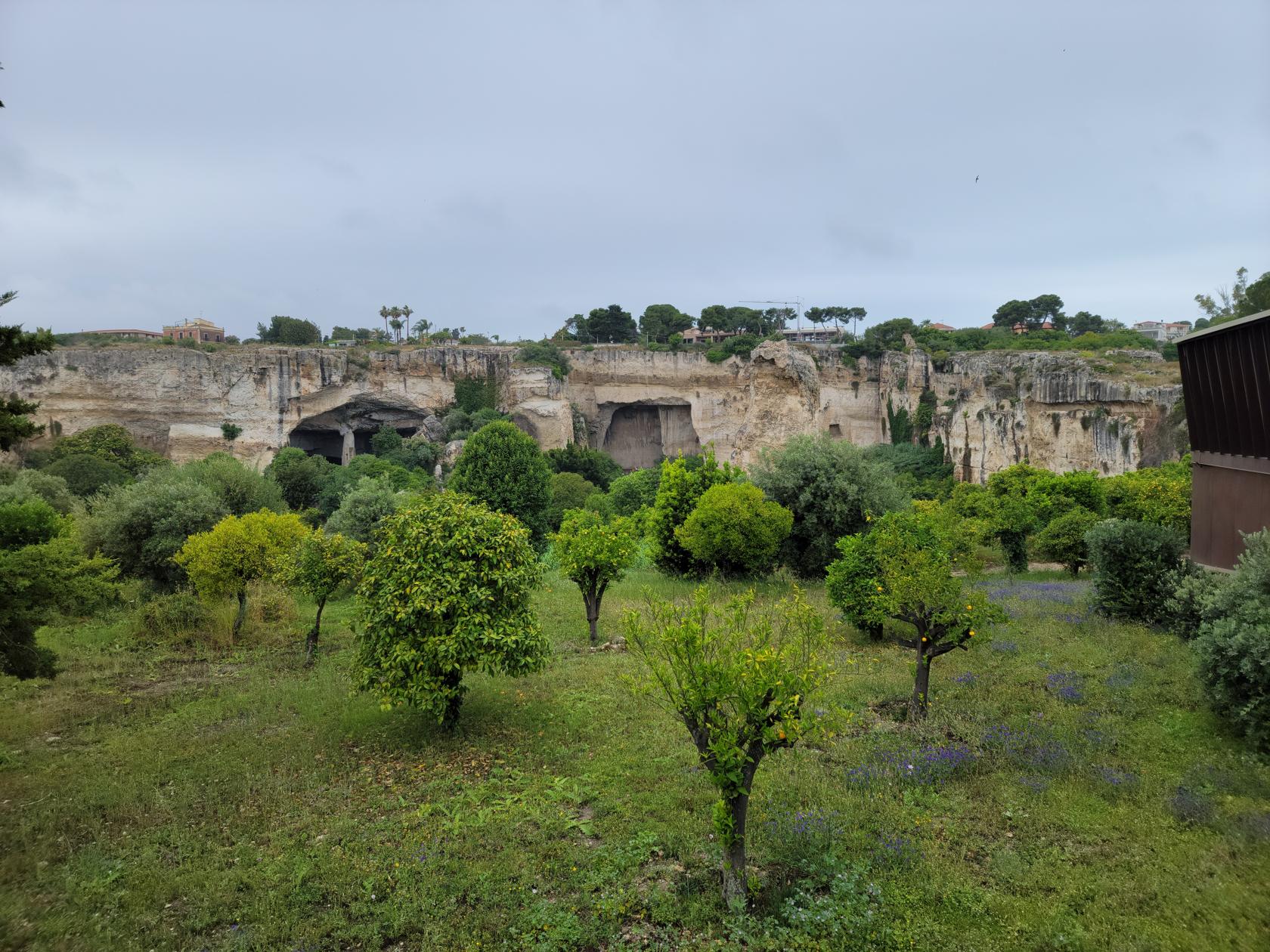
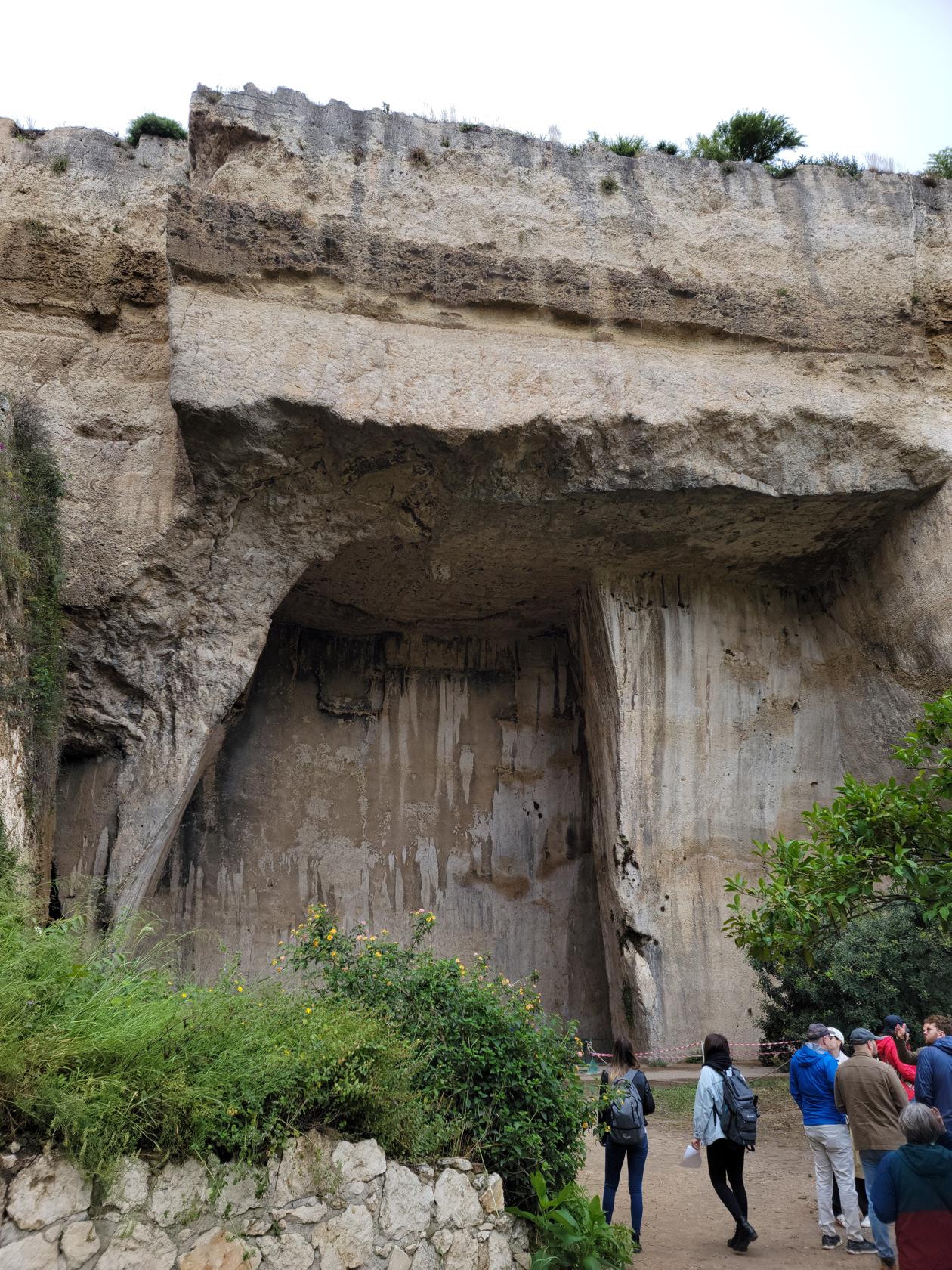
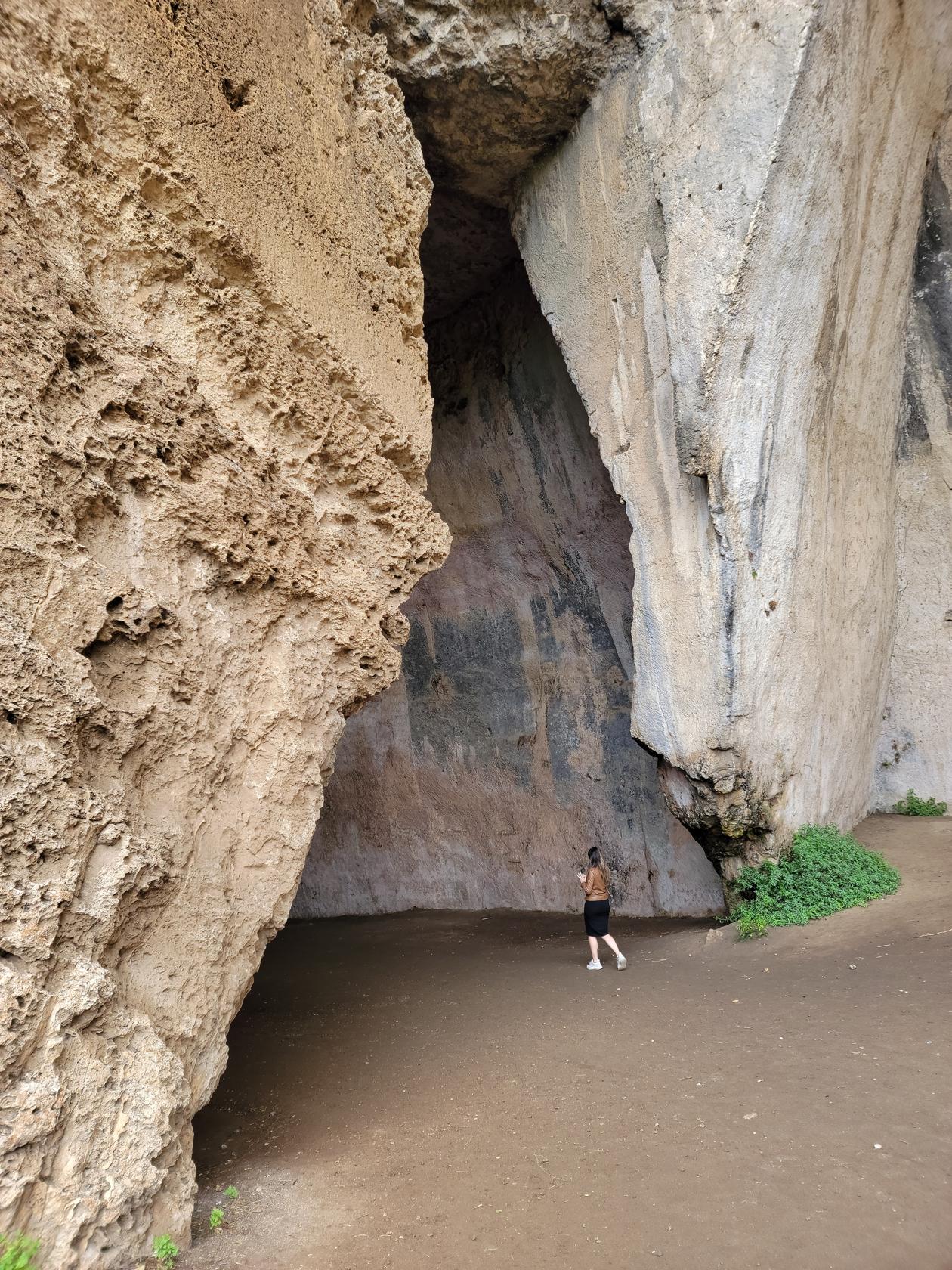
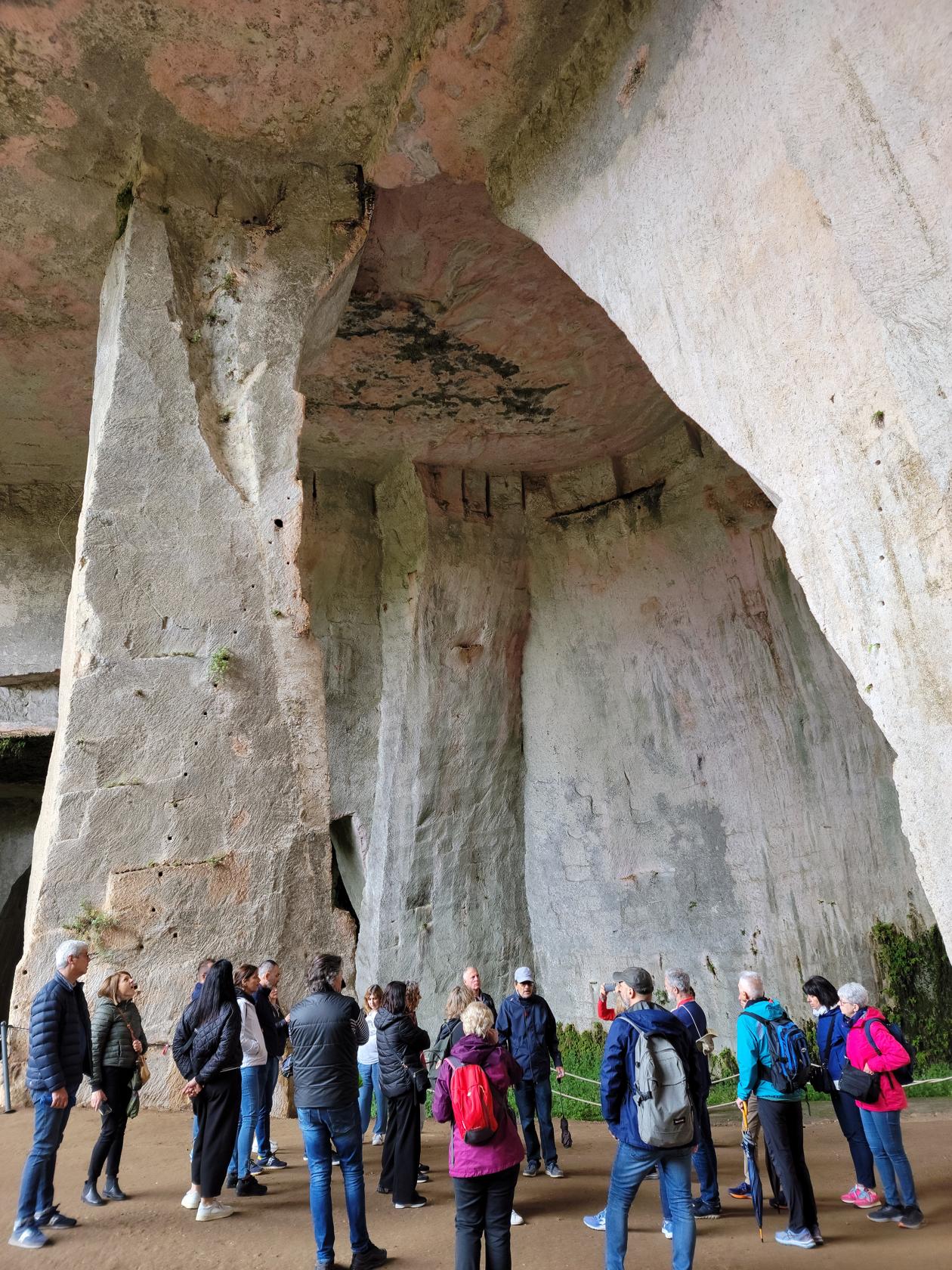
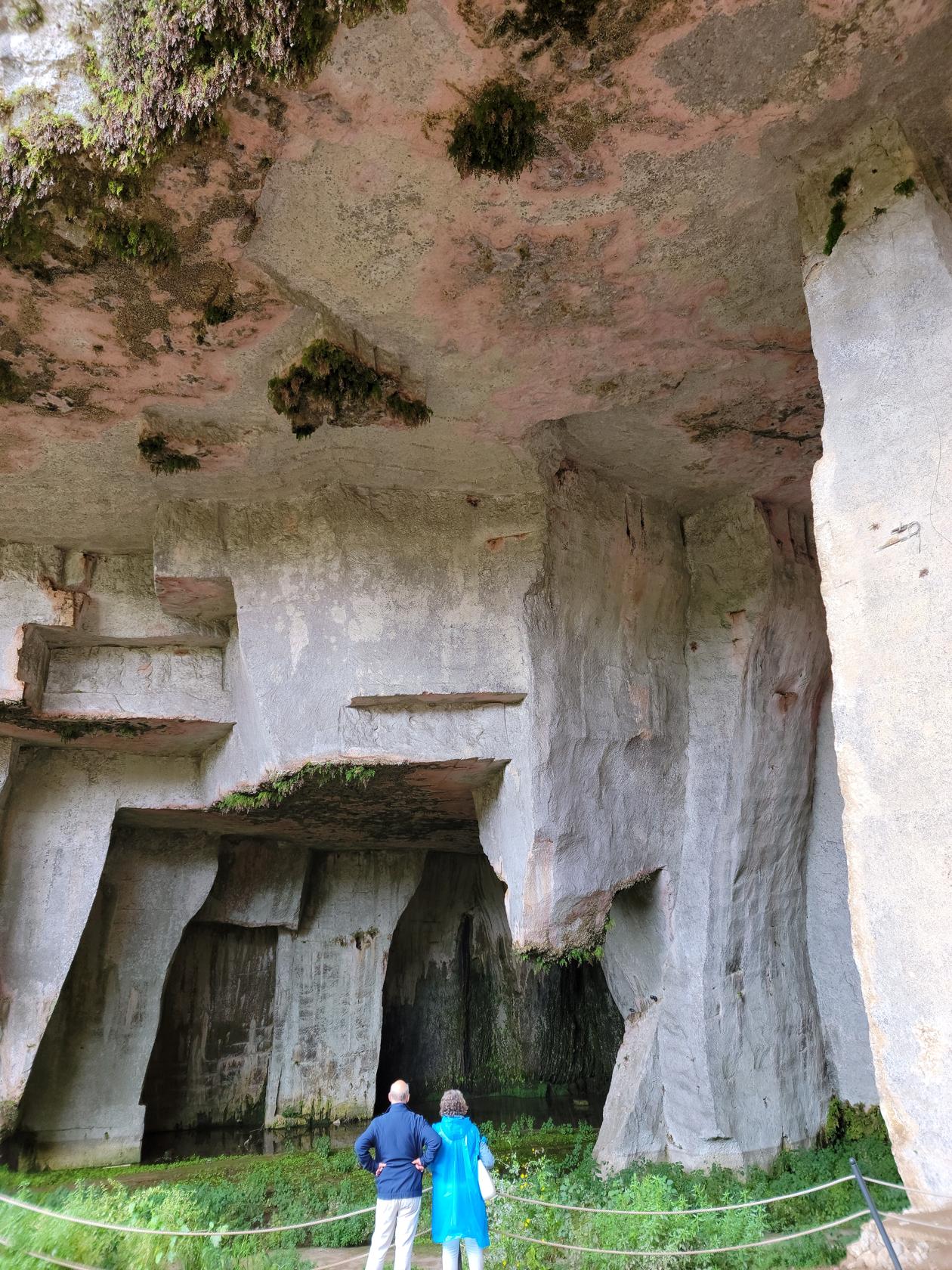
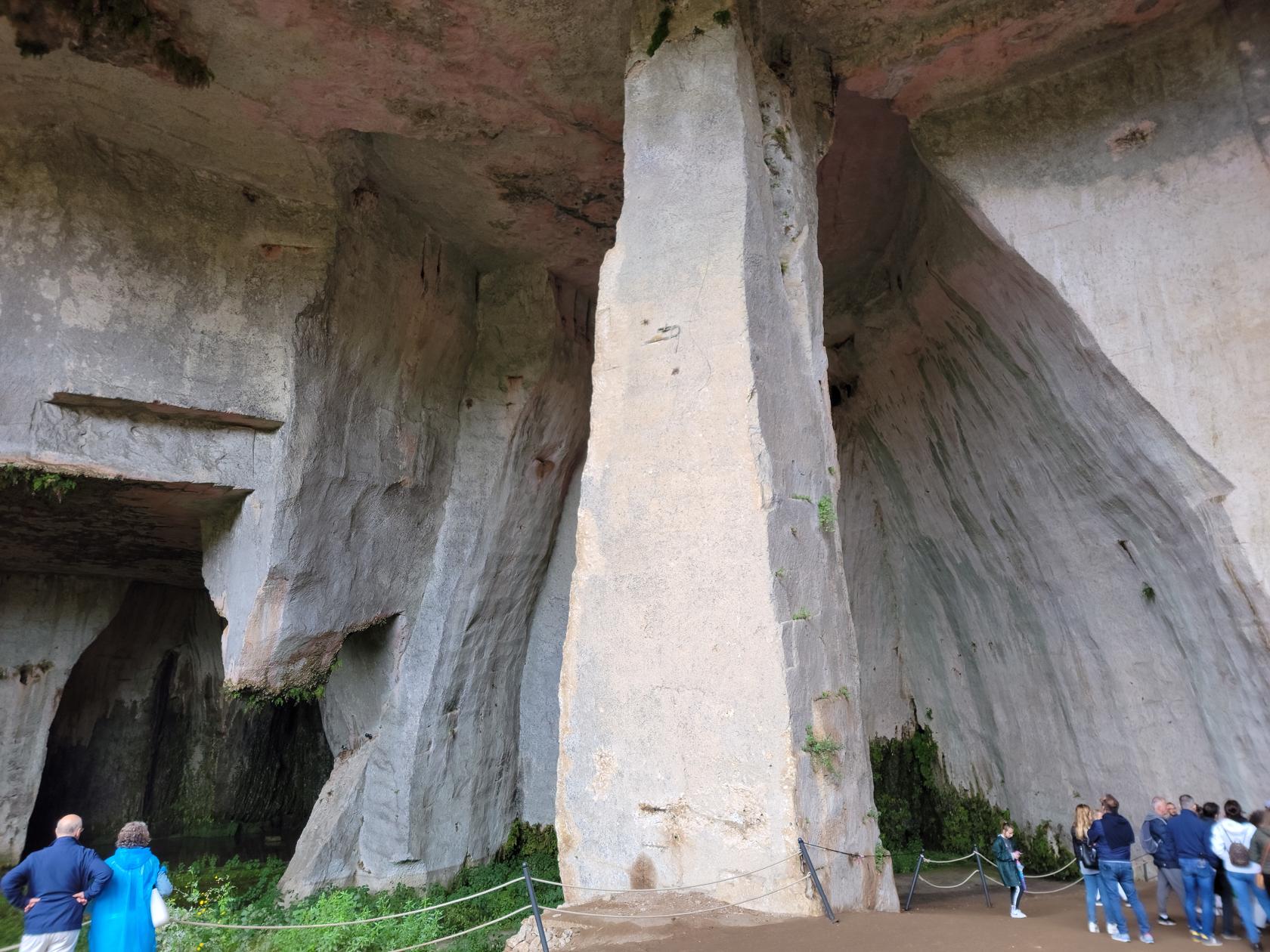
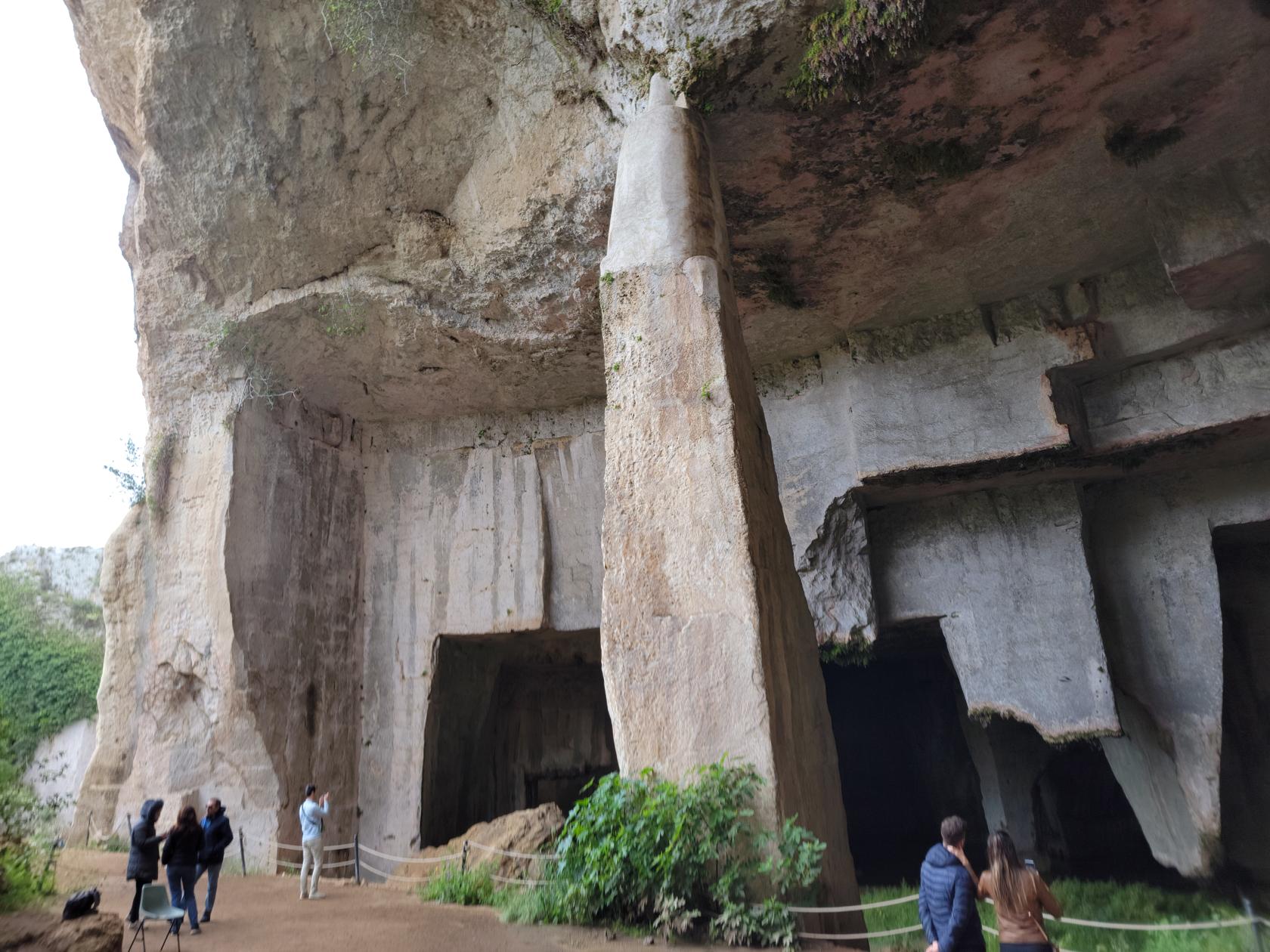
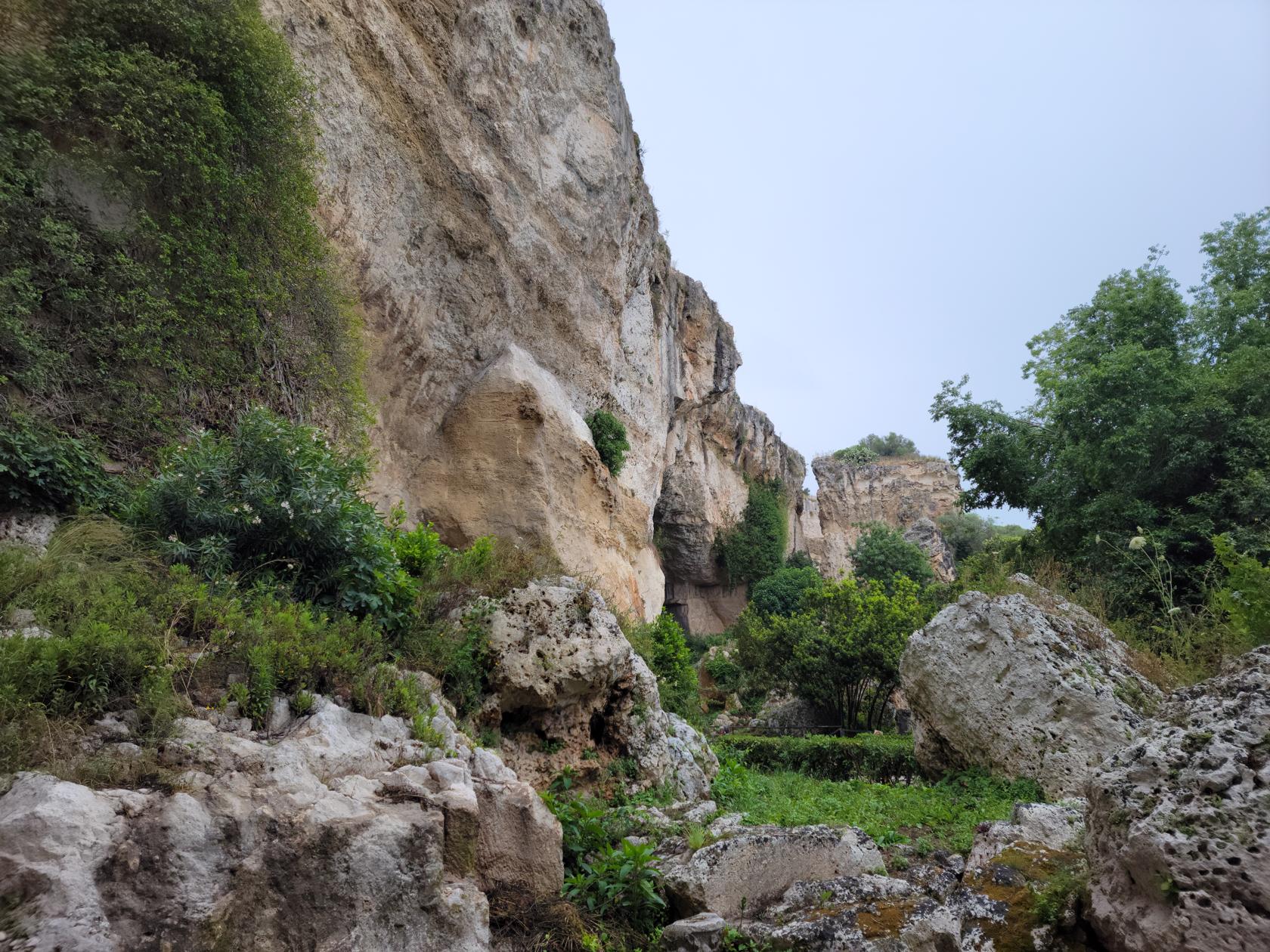
When you enter the Neapolis the first thing to visit is the Grotto, or the large quarry where they used to mine stone for building. This is a huge cutout in the surrounding rock face which is about fifty or so meters in height.
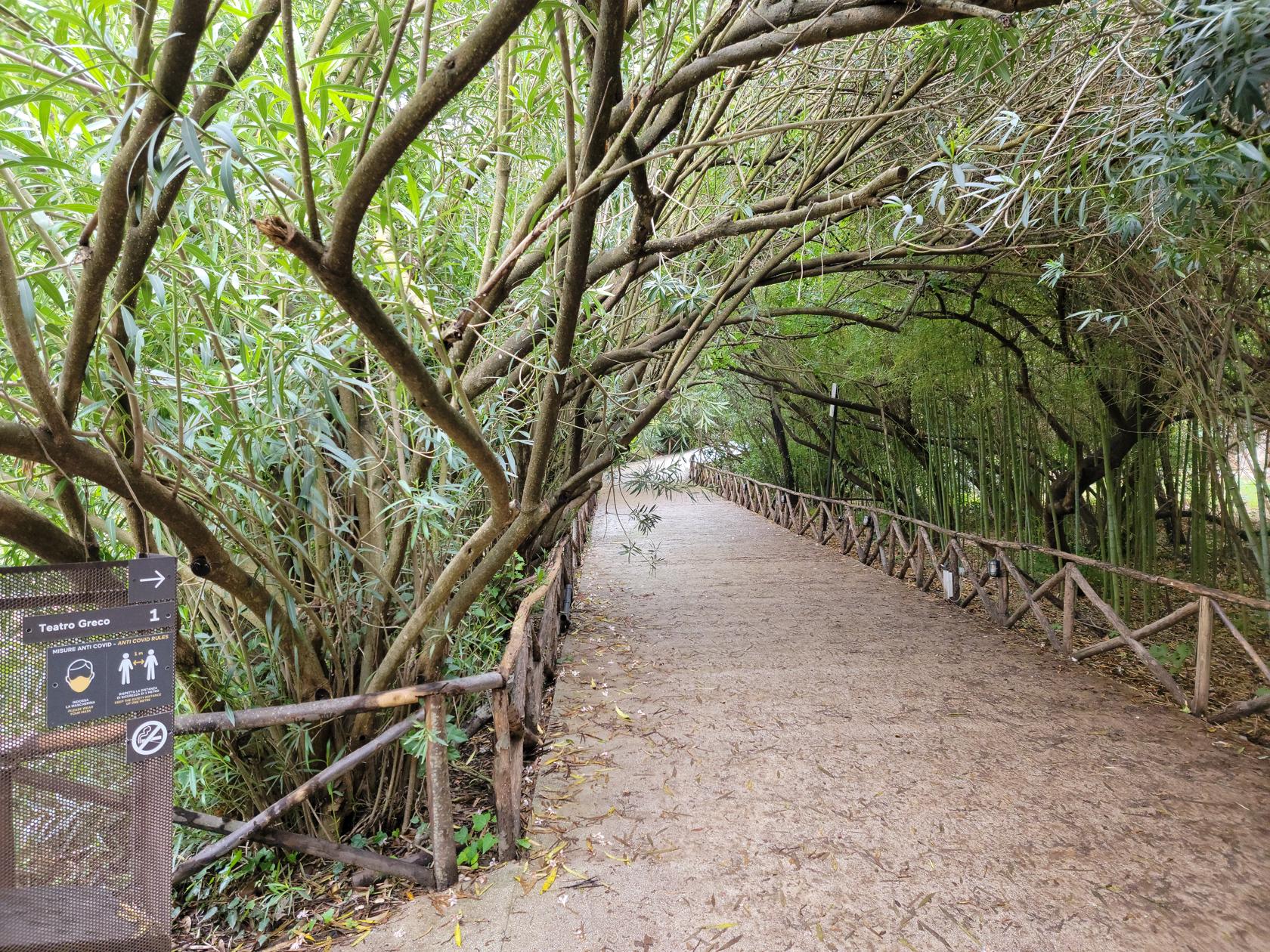
A walk to the Greek Theater – The Neapolis – Archaeological Park – Siracuse, Sicily
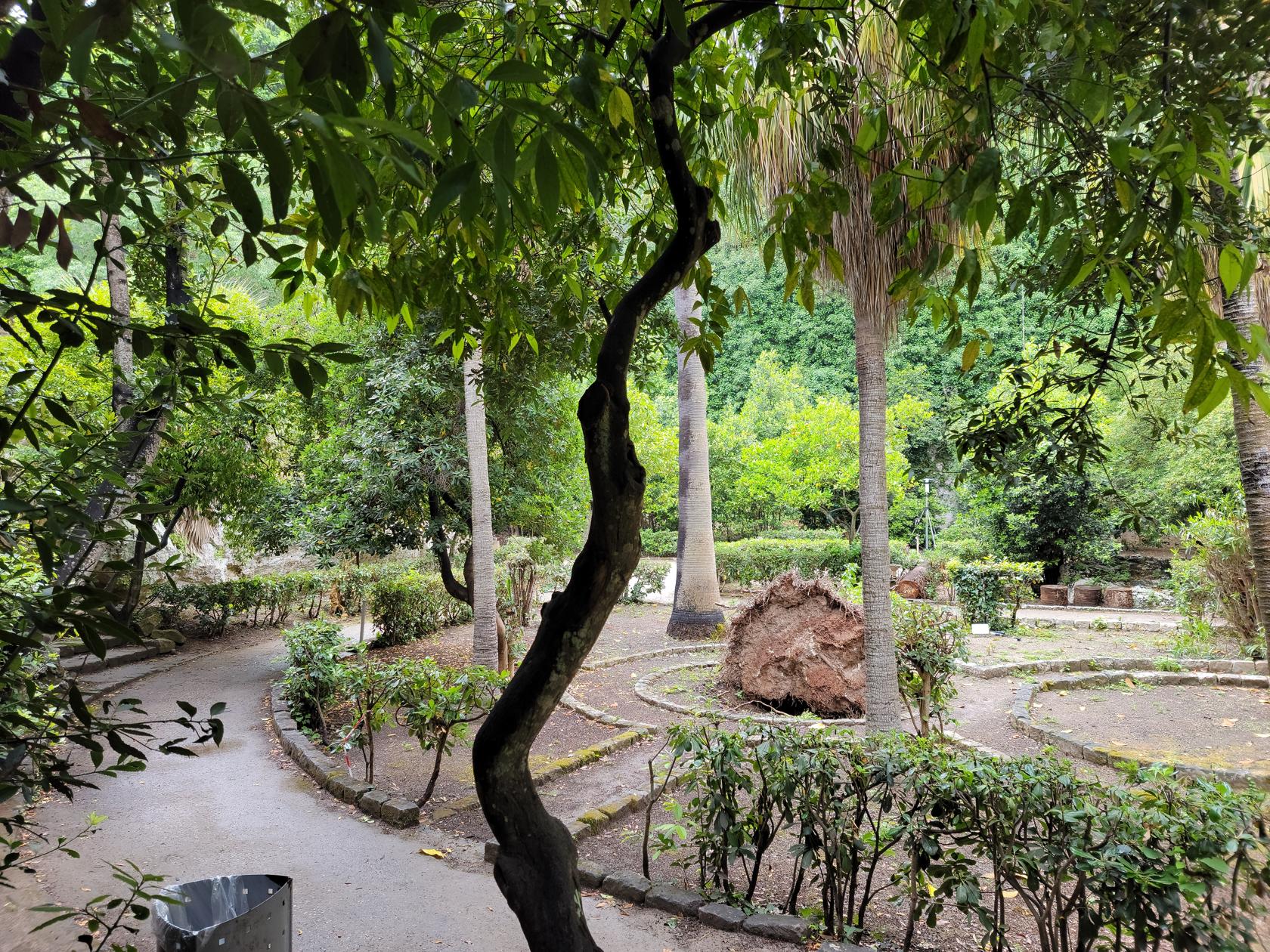
Small park area – The Neapolis – Archaeological Park – Siracuse, Sicily
Small park area – The Neapolis – Archaeological Park – Siracuse, Sicily
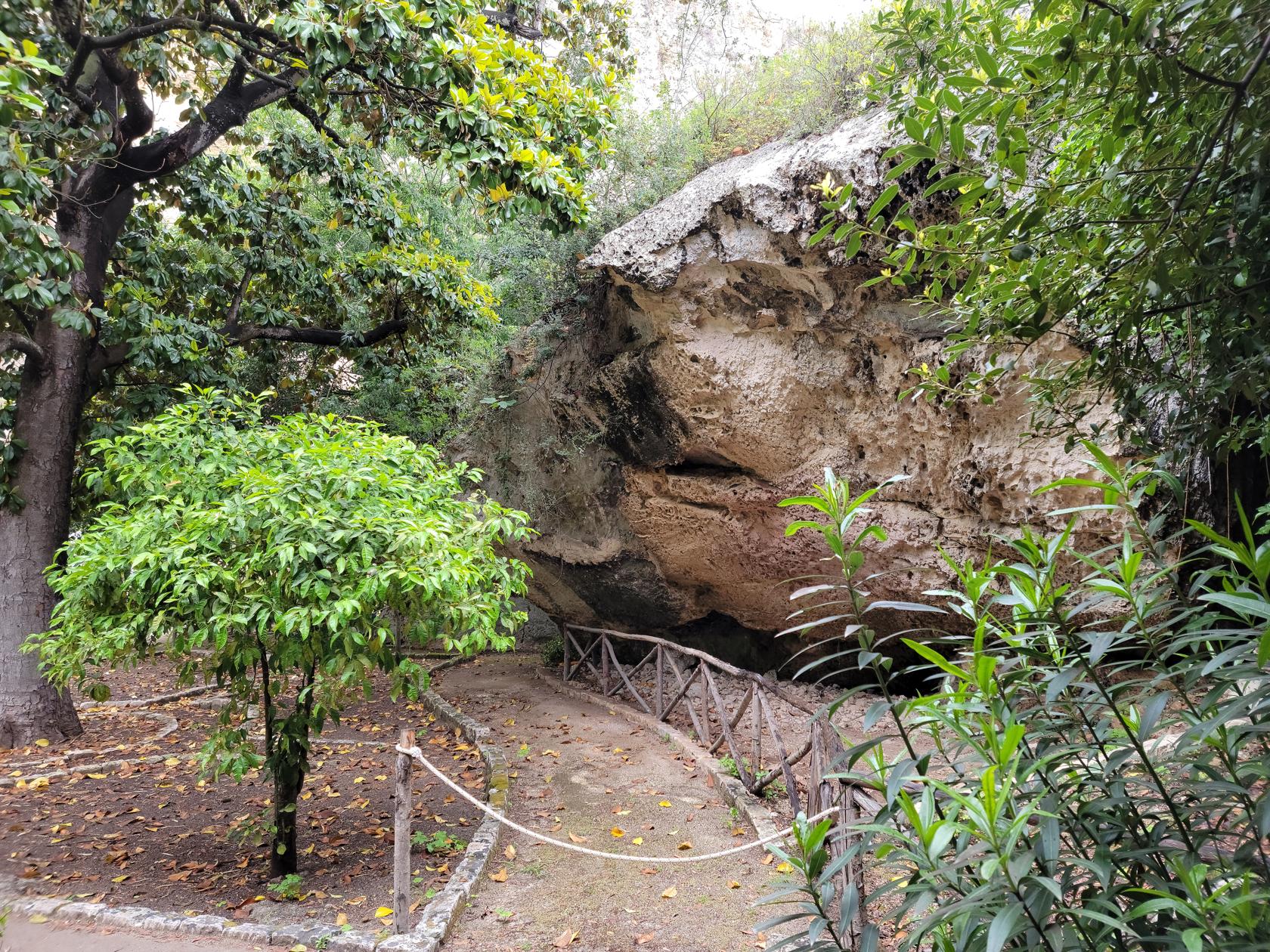
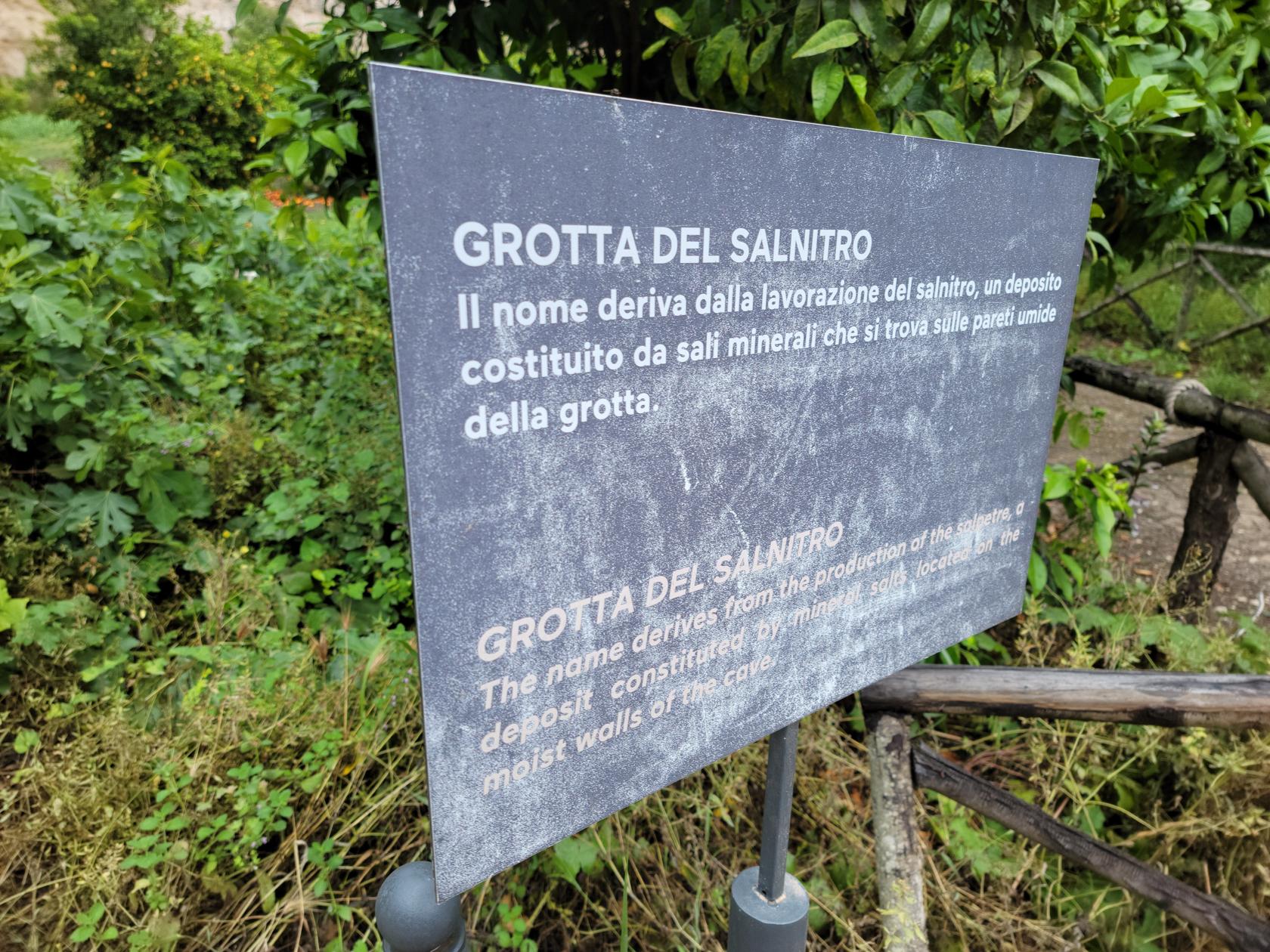
Grotto of Salnitro – The Neapolis – Archaeological Park – Siracuse, Sicily
Grotto of Salnitro – The Neapolis – Archaeological Park – Siracuse, Sicily
Grotto of Salnitro – The Neapolis – Archaeological Park – Siracuse, Sicily
Grotto of Salnitro – The Neapolis – Archaeological Park – Siracuse, Sicily
Grotto of Salnitro – The Neapolis – Archaeological Park – Siracuse, Sicily
Grotto of Salnitro – The Neapolis – Archaeological Park – Siracuse, Sicily
Grotto of Salnitro – The Neapolis – Archaeological Park – Siracuse, Sicily
Grotto of Salnitro – The Neapolis – Archaeological Park – Siracuse, Sicily
Grotto of Salnitro – The Neapolis – Archaeological Park – Siracuse, Sicily
Grotto of Salnitro – The Neapolis – Archaeological Park – Siracuse, Sicily
Grotto of Salnitro – The Neapolis – Archaeological Park – Siracuse, Sicily
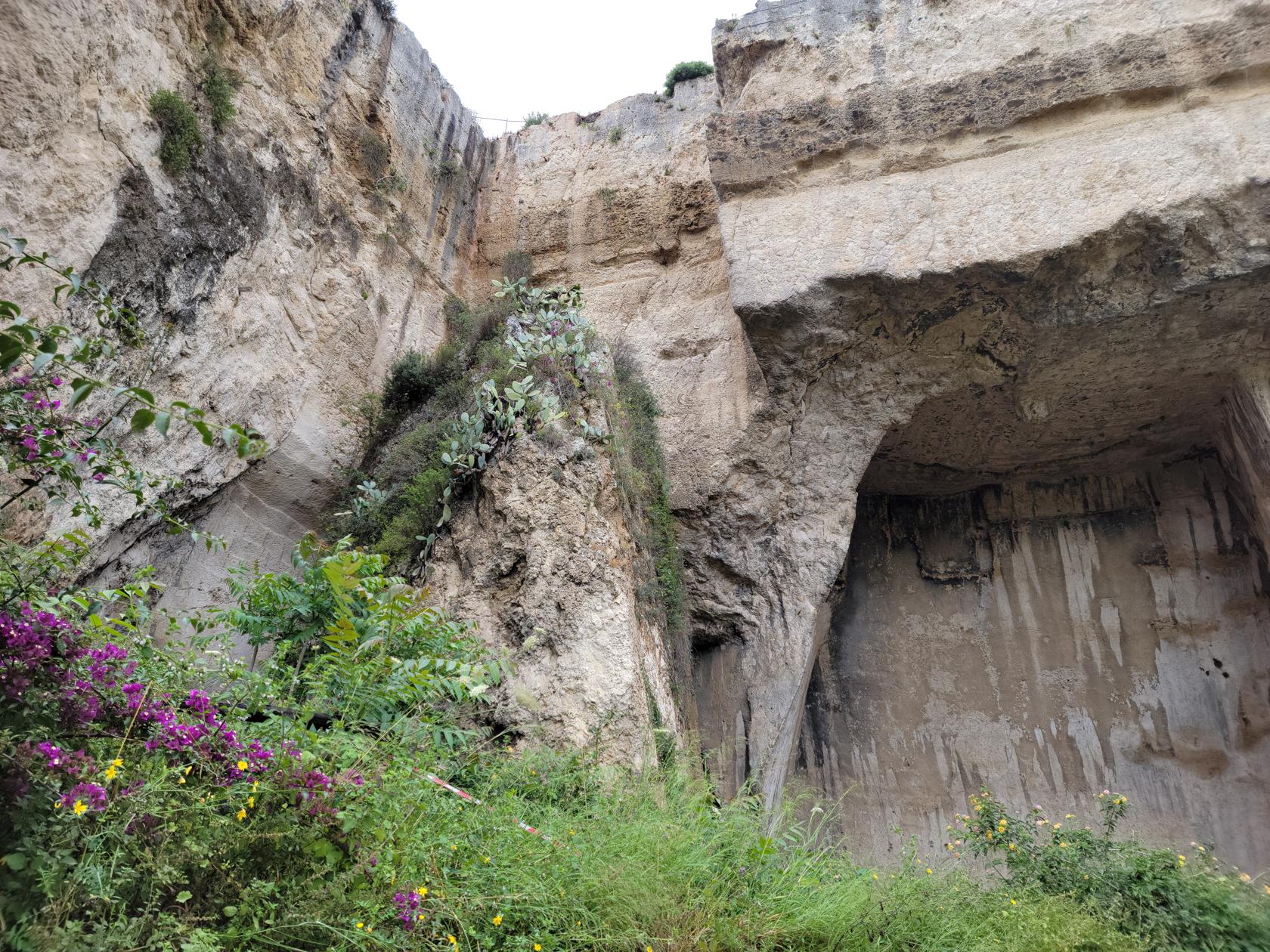
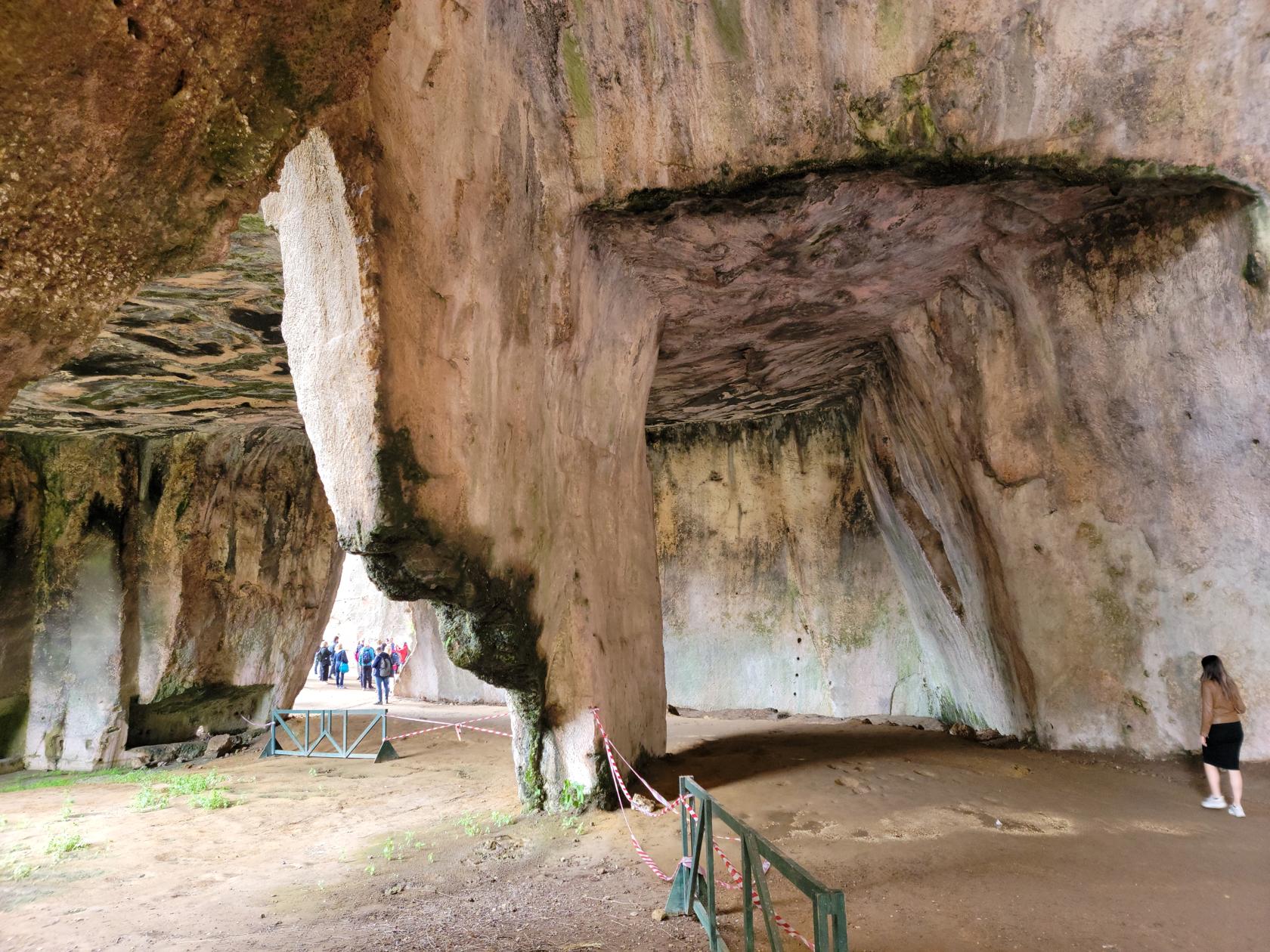
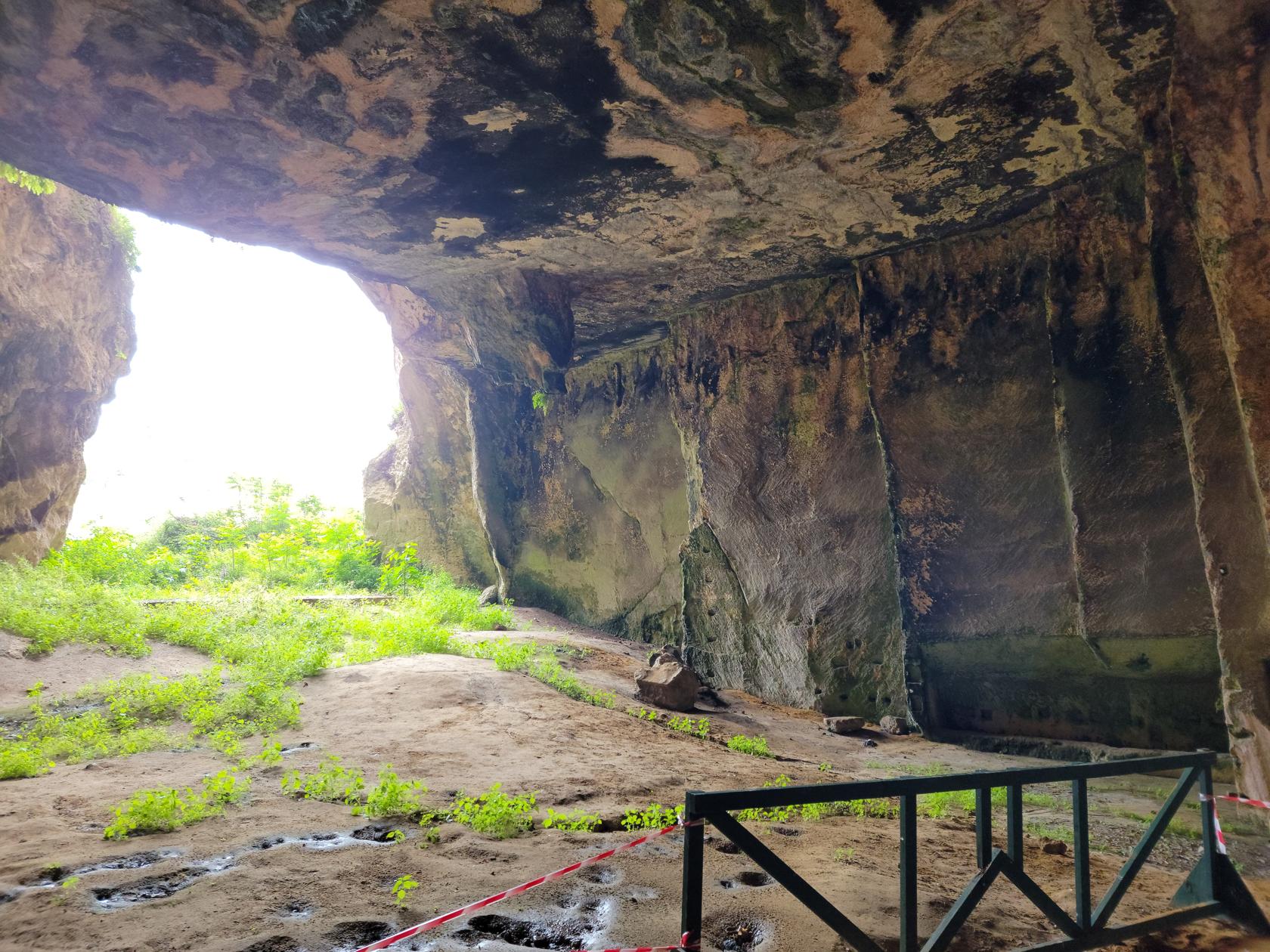
It appears to have had several cave-ins in the past, which probably occurred as they were mining the stone. There is evidence of the former inhabitants leaving large columns behind in an attempt to prevent additional cave-ins from occurring. Whether they were successful or not, it is not known, there are no information signs or other historical information provided at the site.
Another section of the Grotto – The Neapolis – Archaeological Park – Siracuse, Sicily
The Grotto entrance – The Neapolis – Archaeological Park – Siracuse, Sicily
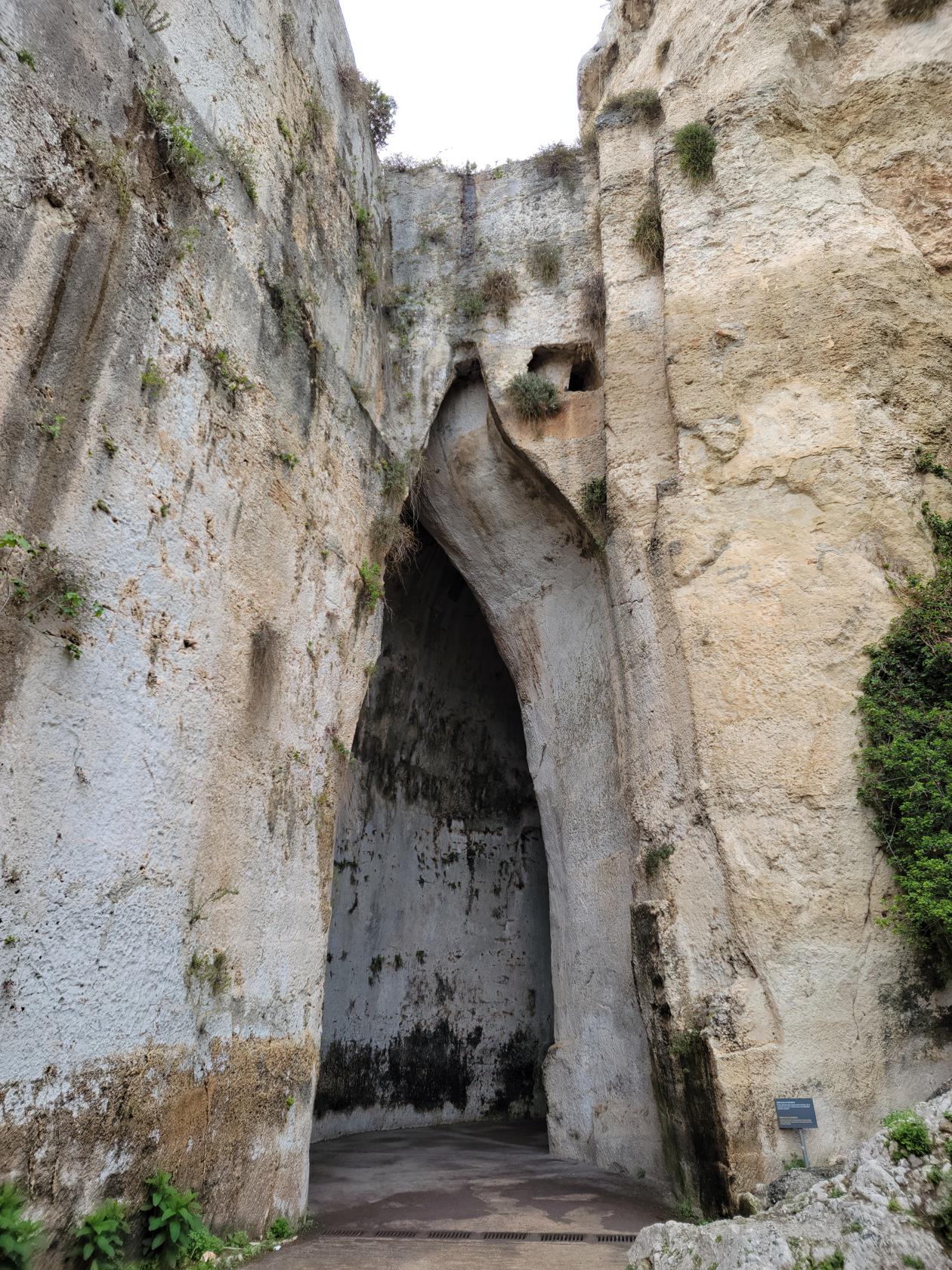
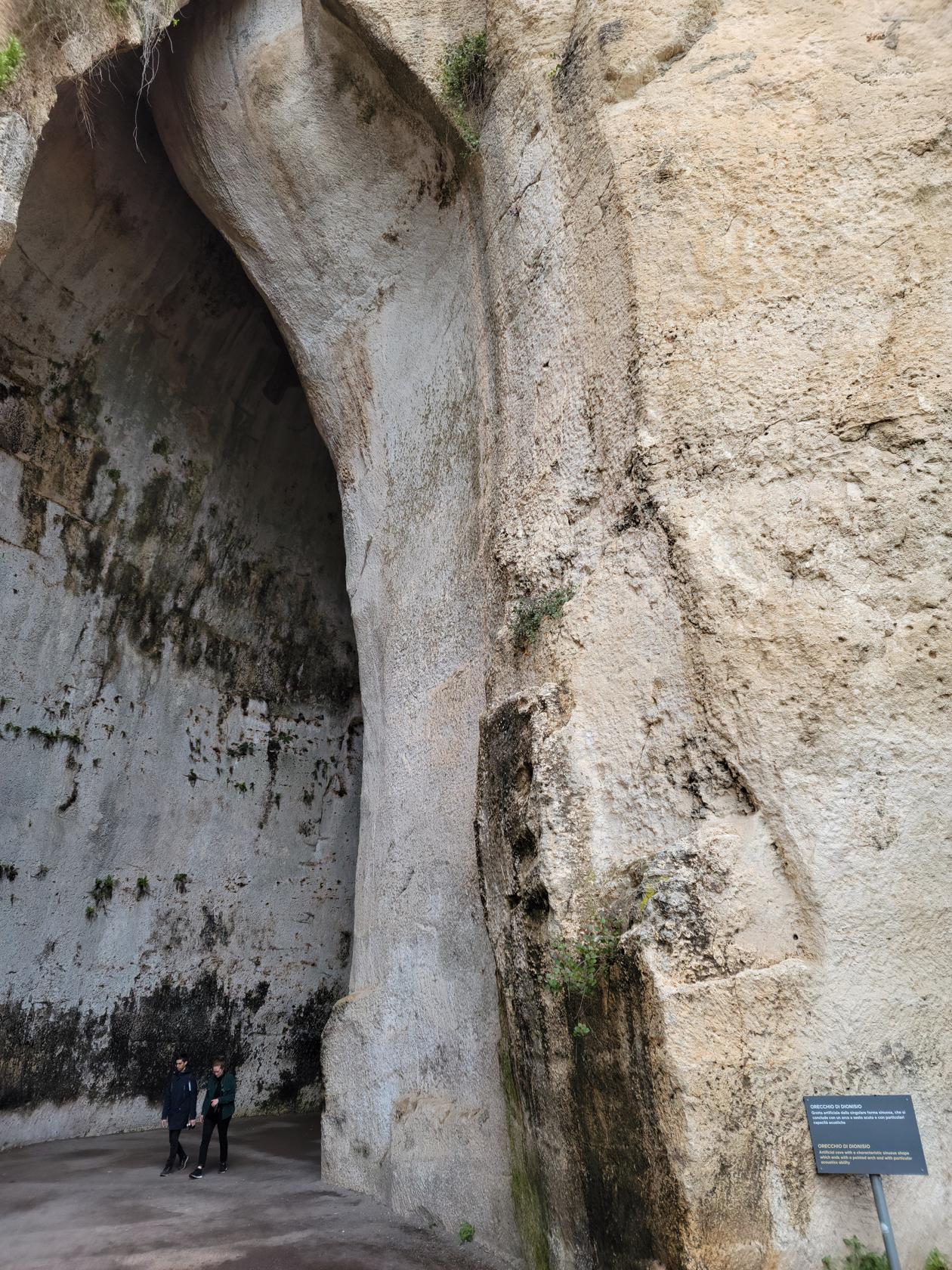
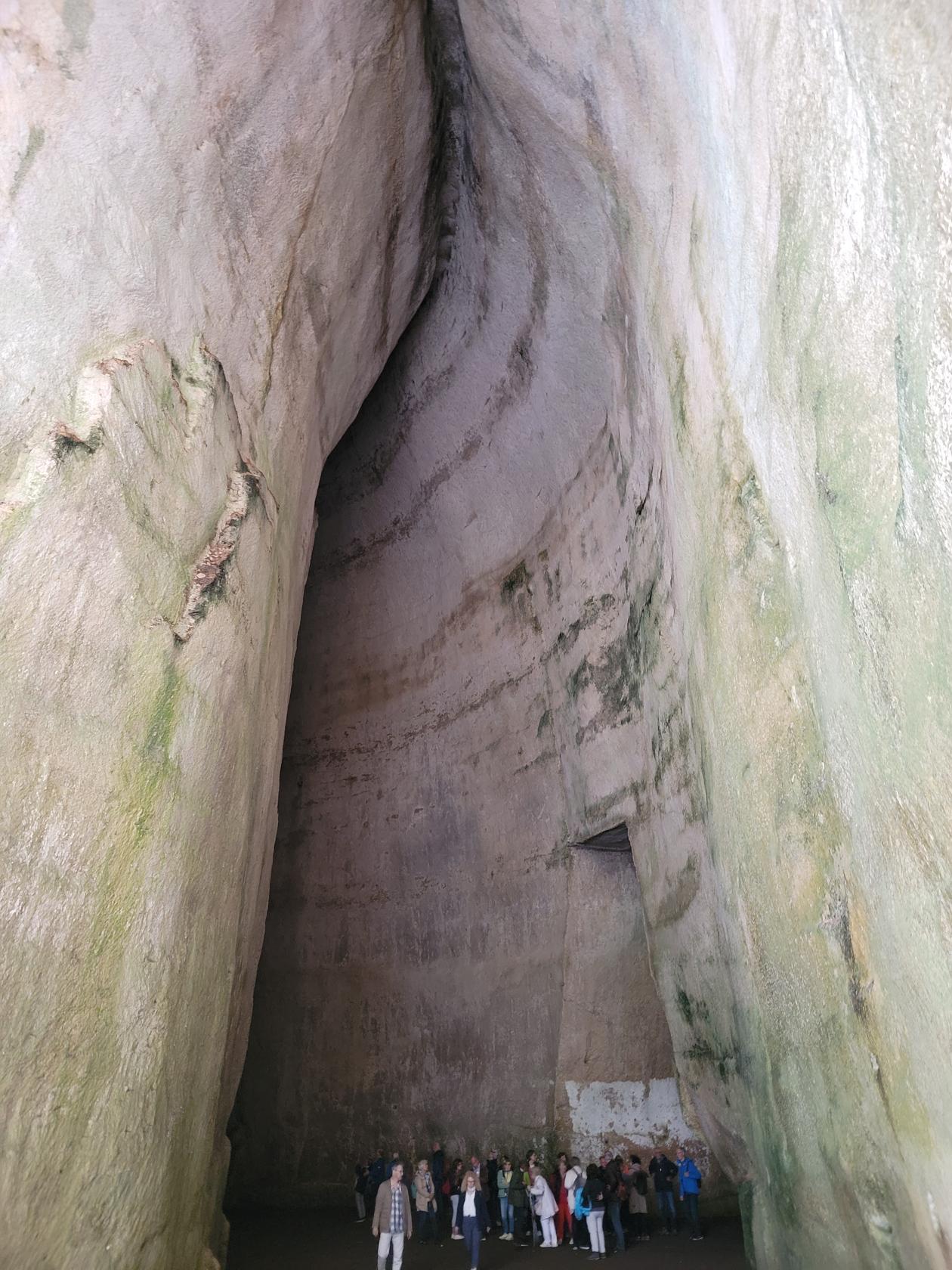
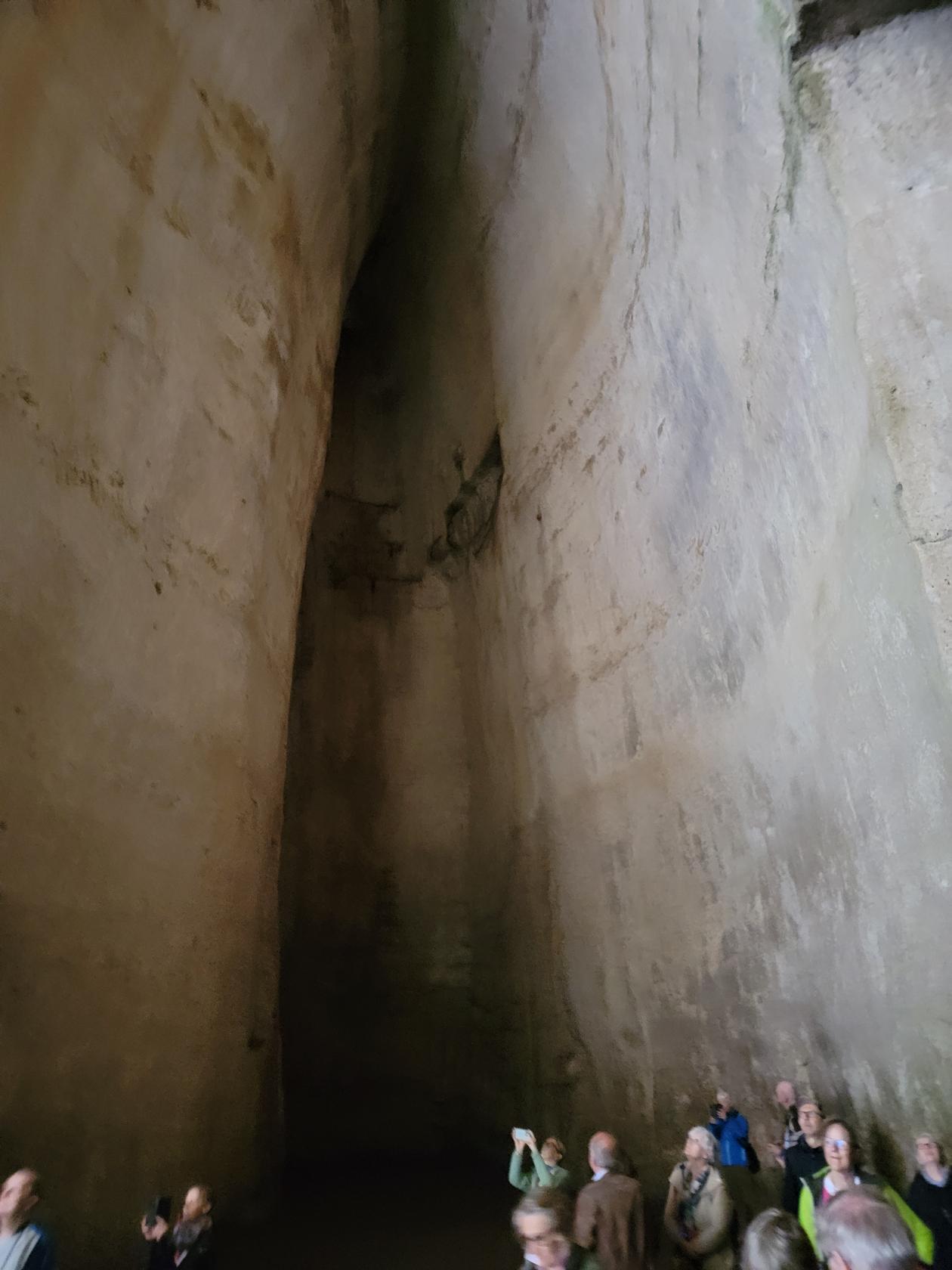
The Ear of Dionysus Grotto – The Neapolis – Archaeological Park – Siracuse, Sicily
The Ear of Dionysus Grotto – The Neapolis – Archaeological Park – Siracuse, Sicily
The Ear of Dionysus Grotto – The Neapolis – Archaeological Park – Siracuse, Sicily
The Ear of Dionysus Grotto – The Neapolis – Archaeological Park – Siracuse, Sicily
The Greek Theater
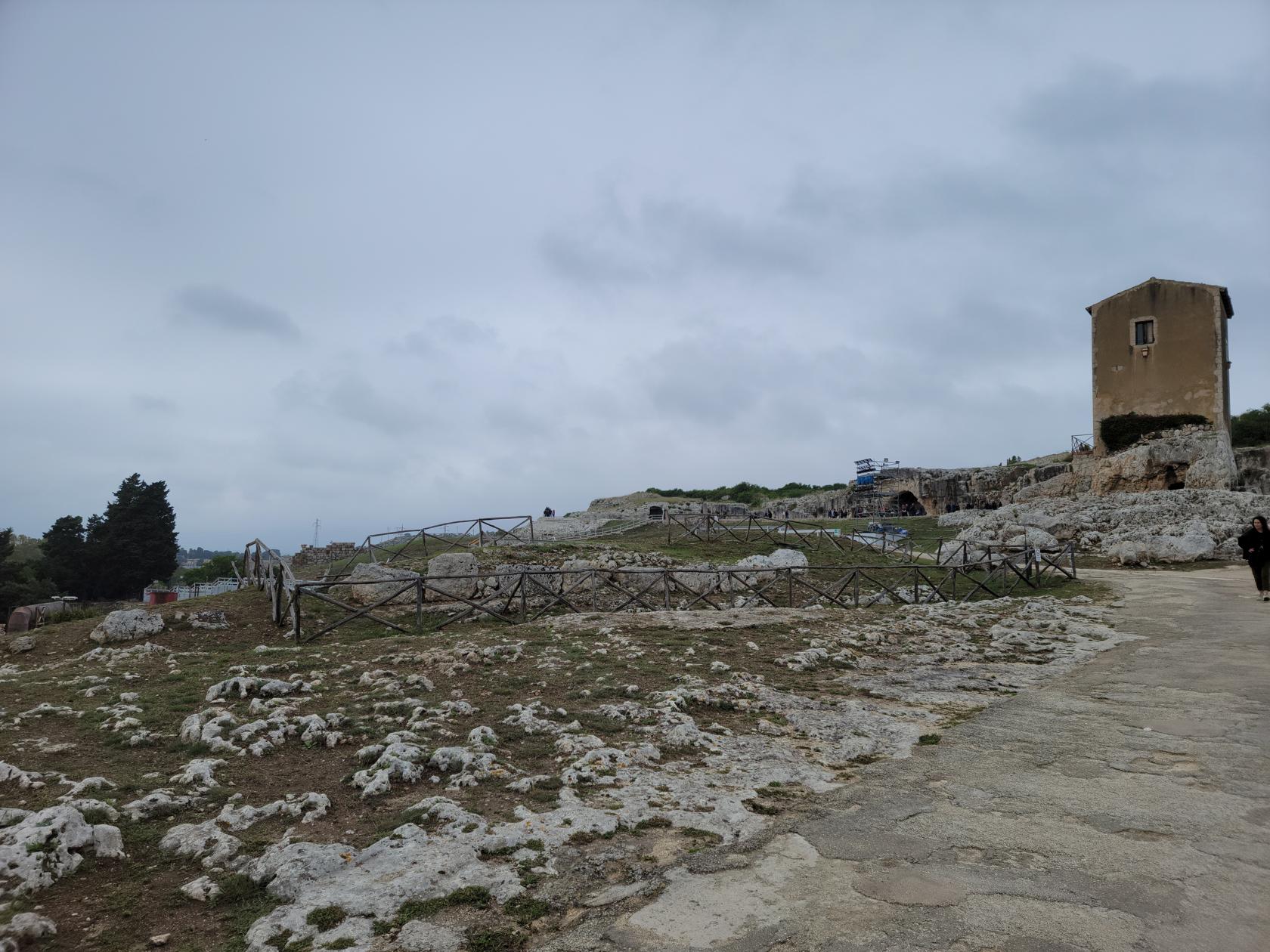
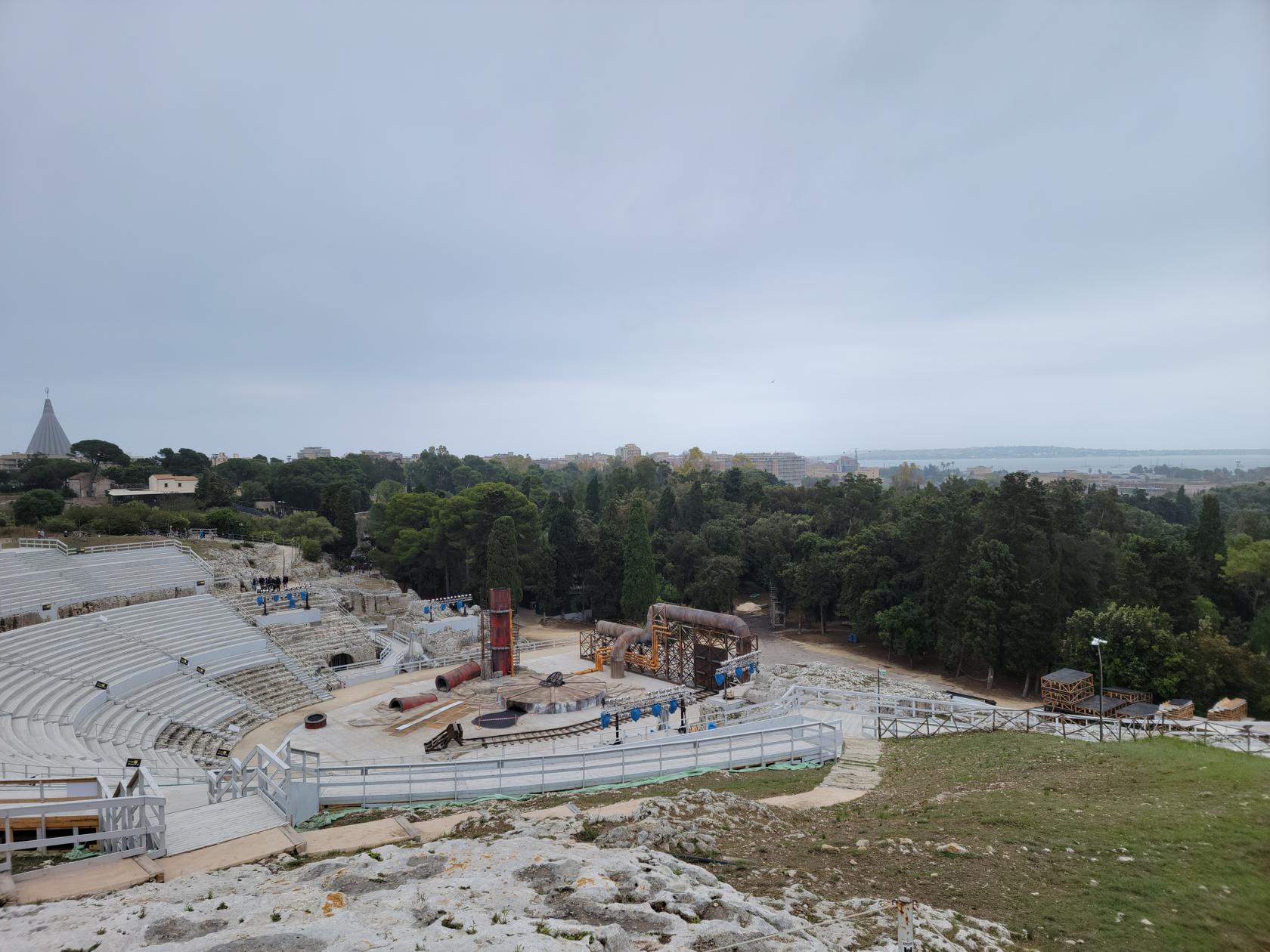
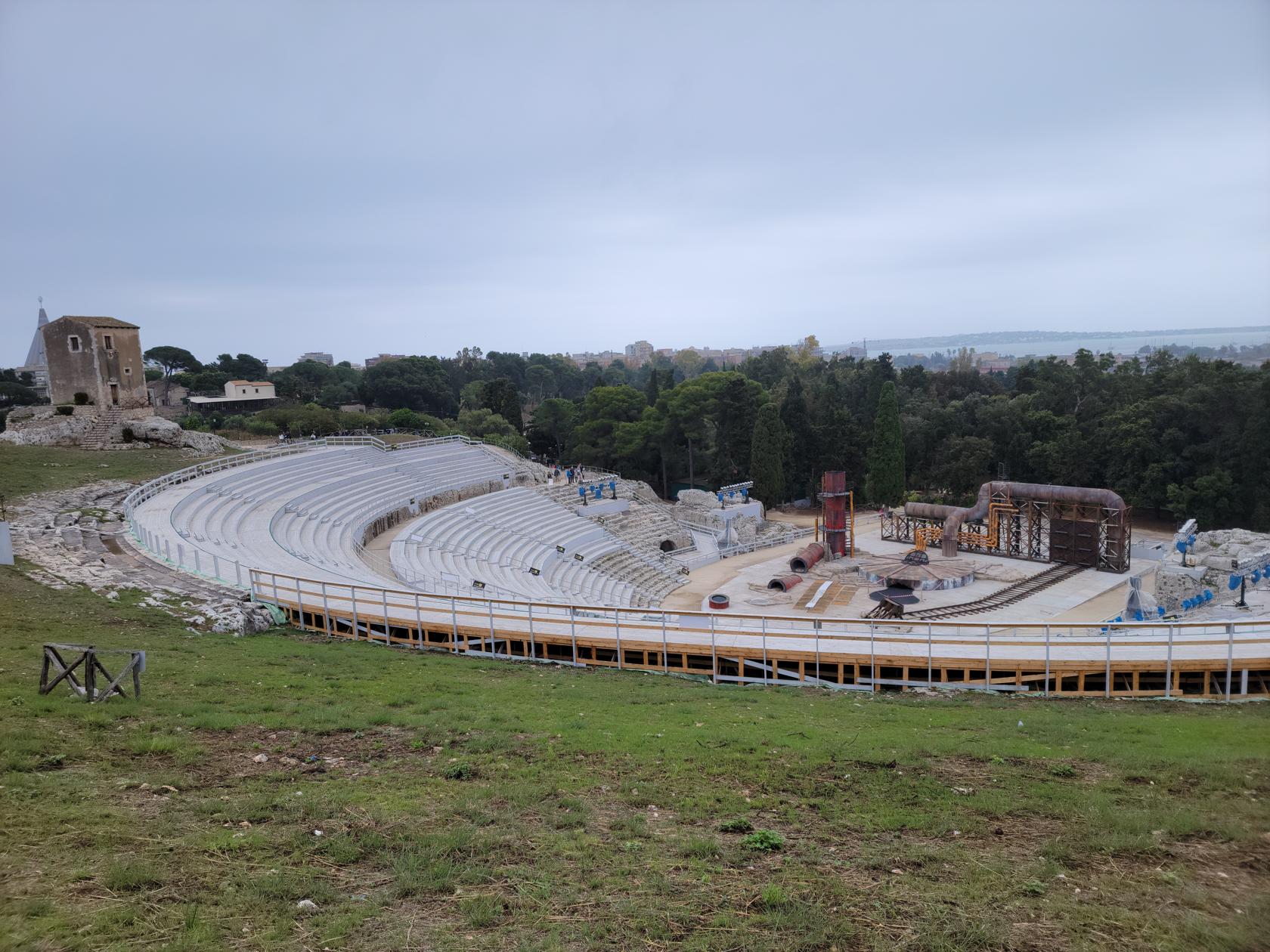
Built into the side of the hill, the Greek Theater was originally constructed in the fifth century BCE and later re-constructed several times, including by the Romans. Currently it has been further modified by the contemporary Syracusians for use as a theater again, building a scaffold like theater on top of the pre-existing Greek Theater, in order to have out-door performances and other events.
A walk to the Greek Theater – The Neapolis – Archaeological Park – Siracuse, Sicily
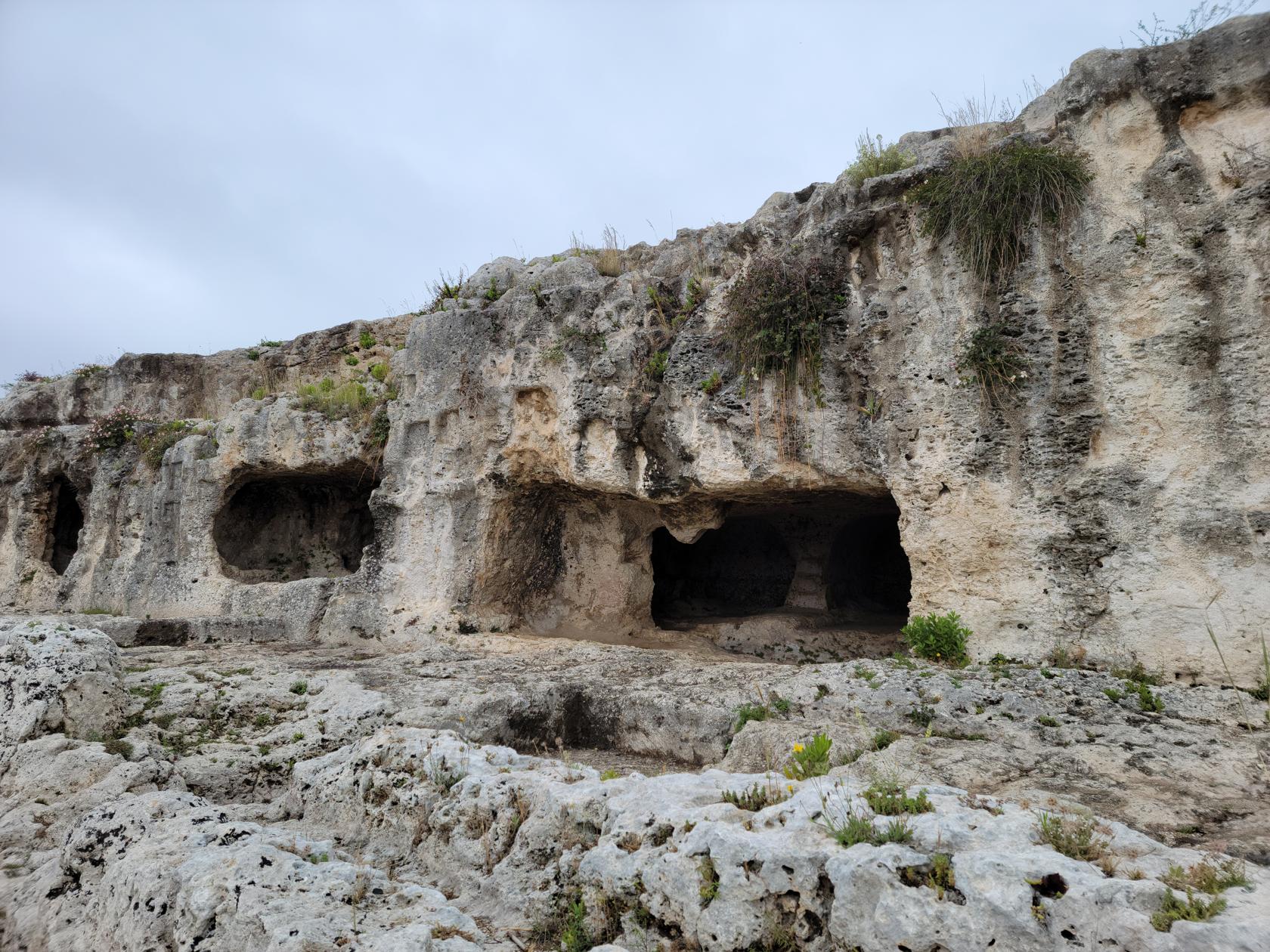
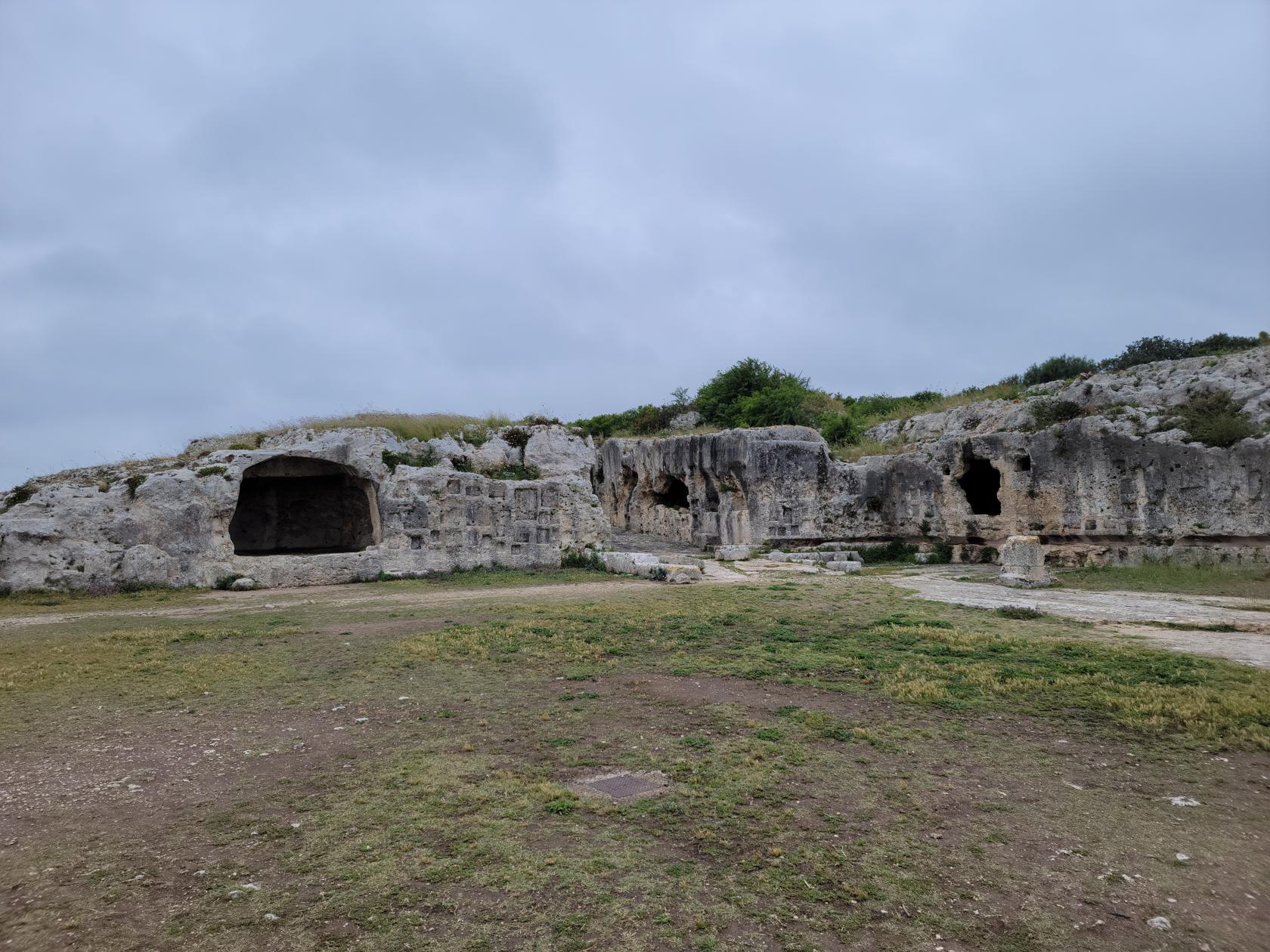
The necropolis near the Greek Theater – The Neapolis – Archaeological Park – Siracuse, Sicily
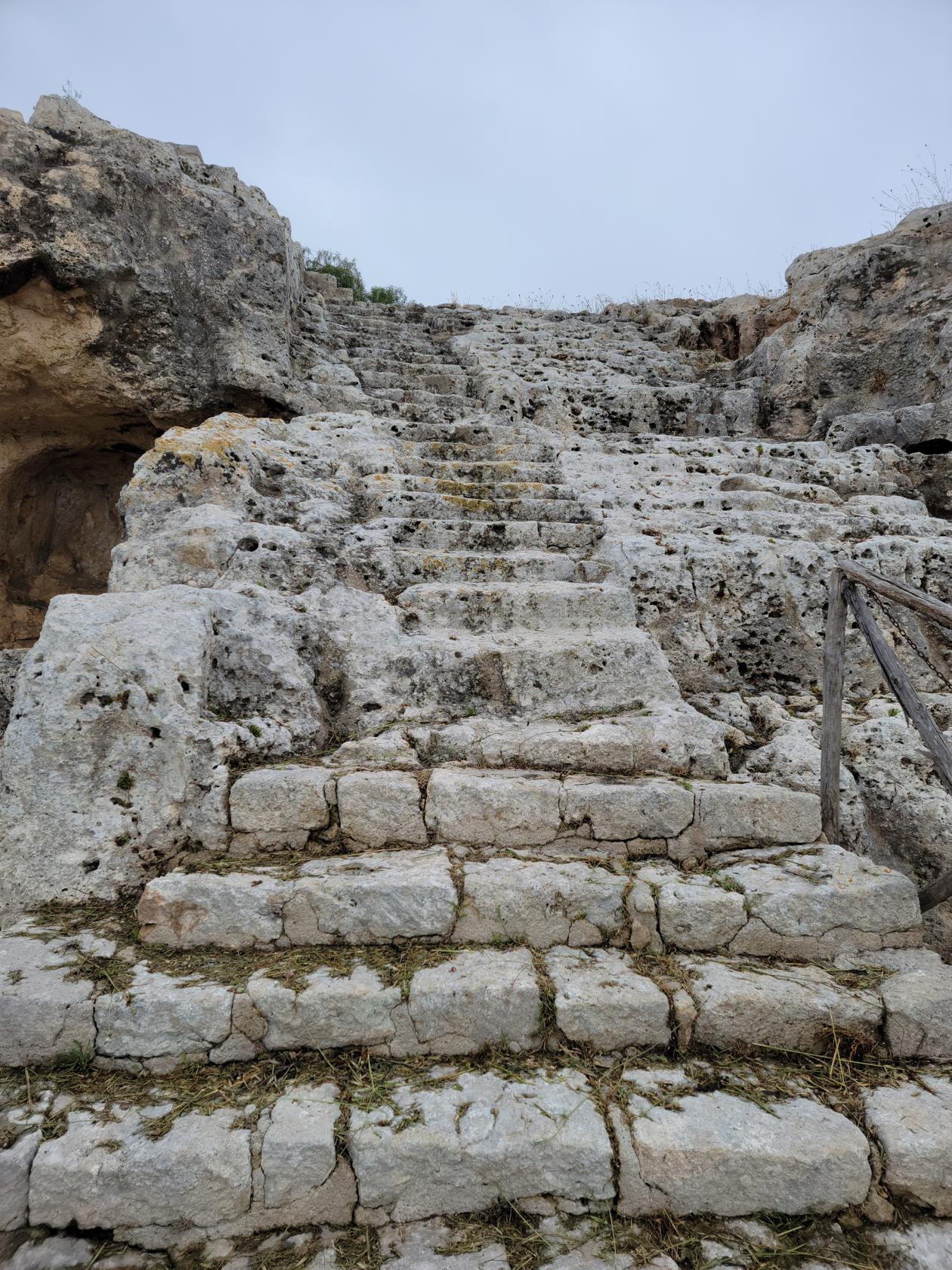
Ancient stone stairway of the Greek Theater – The Neapolis – Archaeological Park – Siracuse, Sicily
The Necropolis – The Neapolis – Archaeological Park – Siracuse, Sicily
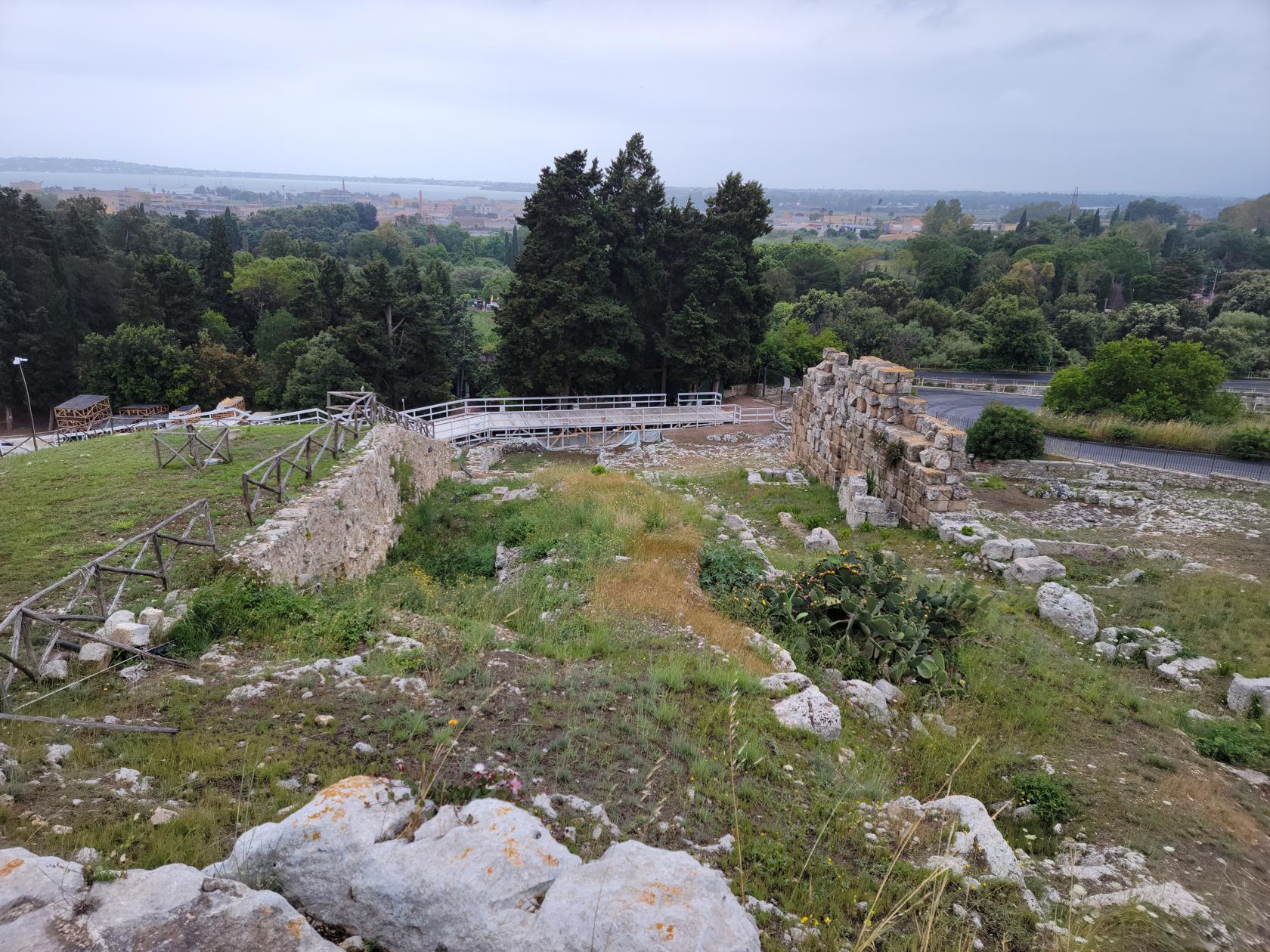
Area around the Greek Theater – The Neapolis – Archaeological Park – Siracuse, Sicily
The renovated Greek Theater – The Neapolis – Archaeological Park – Siracuse, Sicily
The renovated Greek Theater – The Neapolis – Archaeological Park – Siracuse, Sicily
Behind the theater is a necropolis and grotto, both of which may be visited while visiting the structure.
The Roman Theater
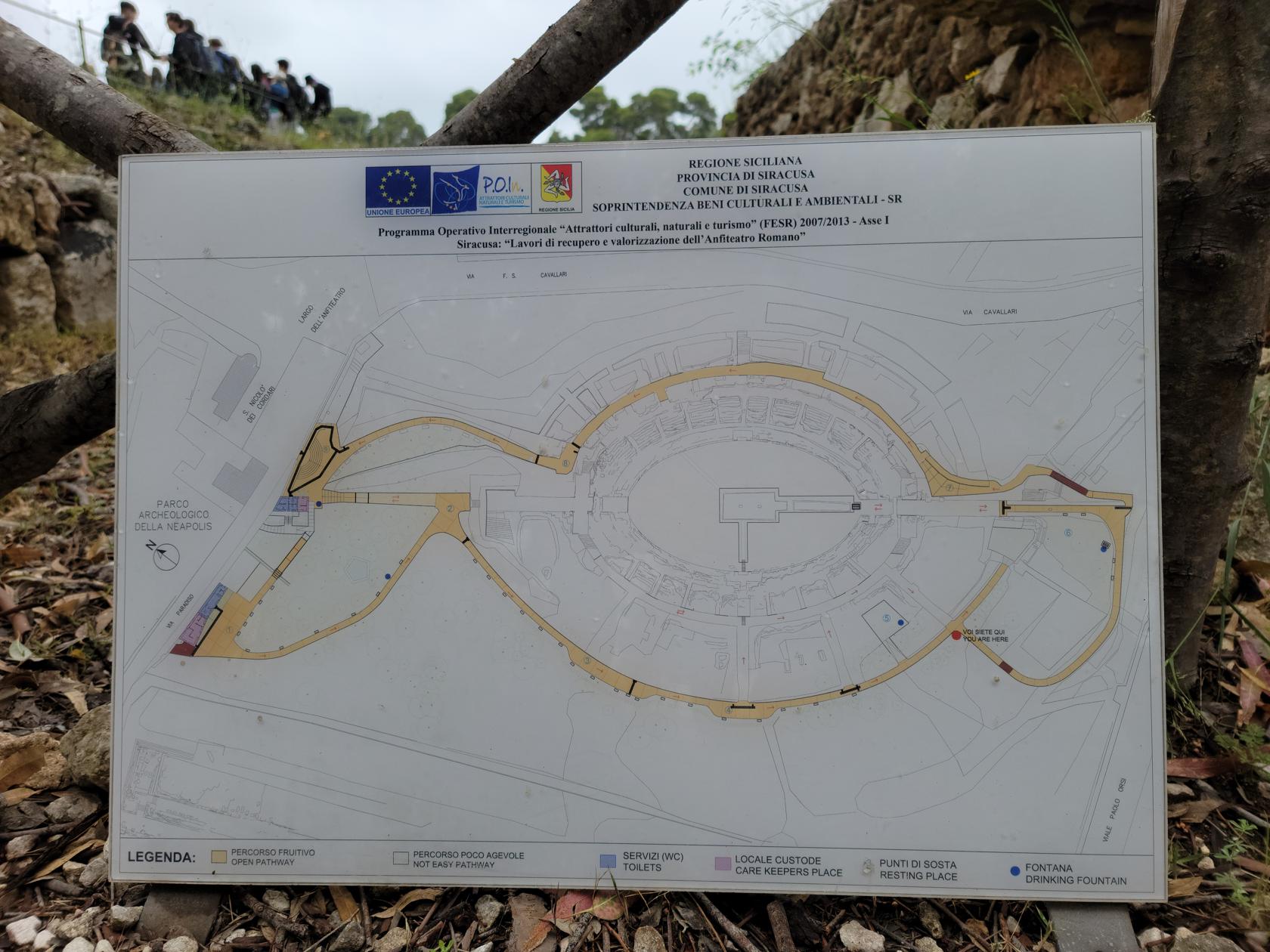
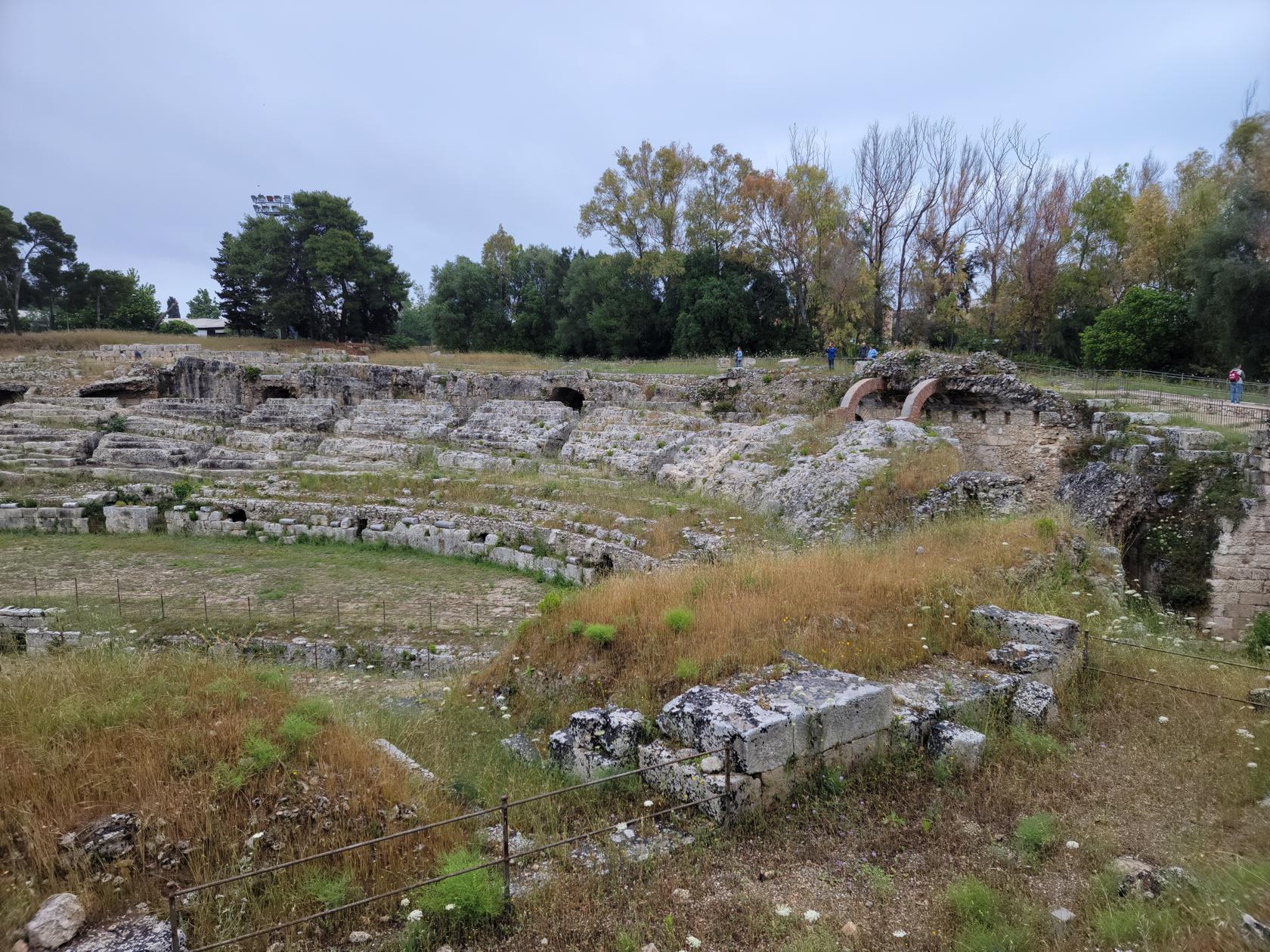
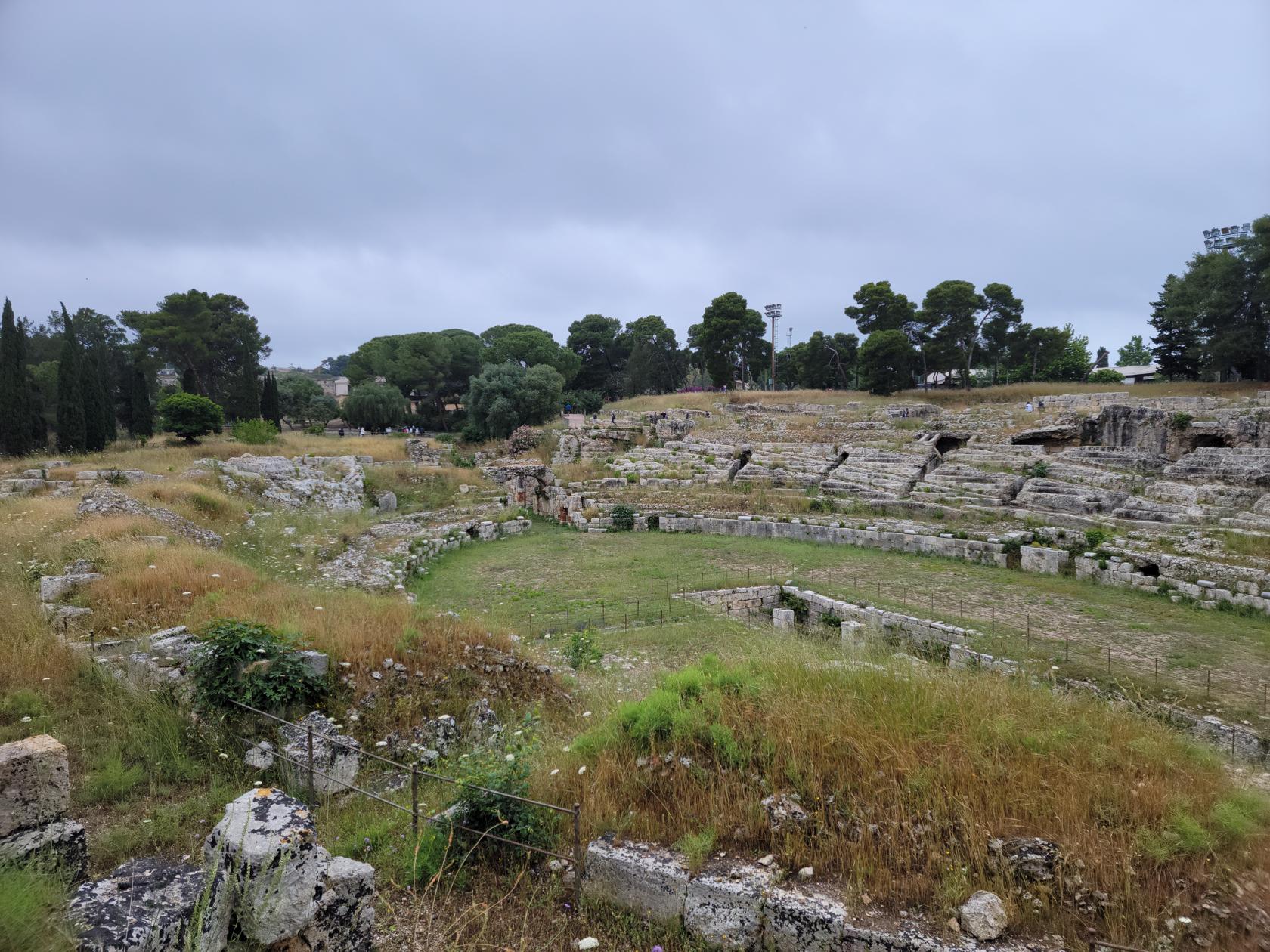
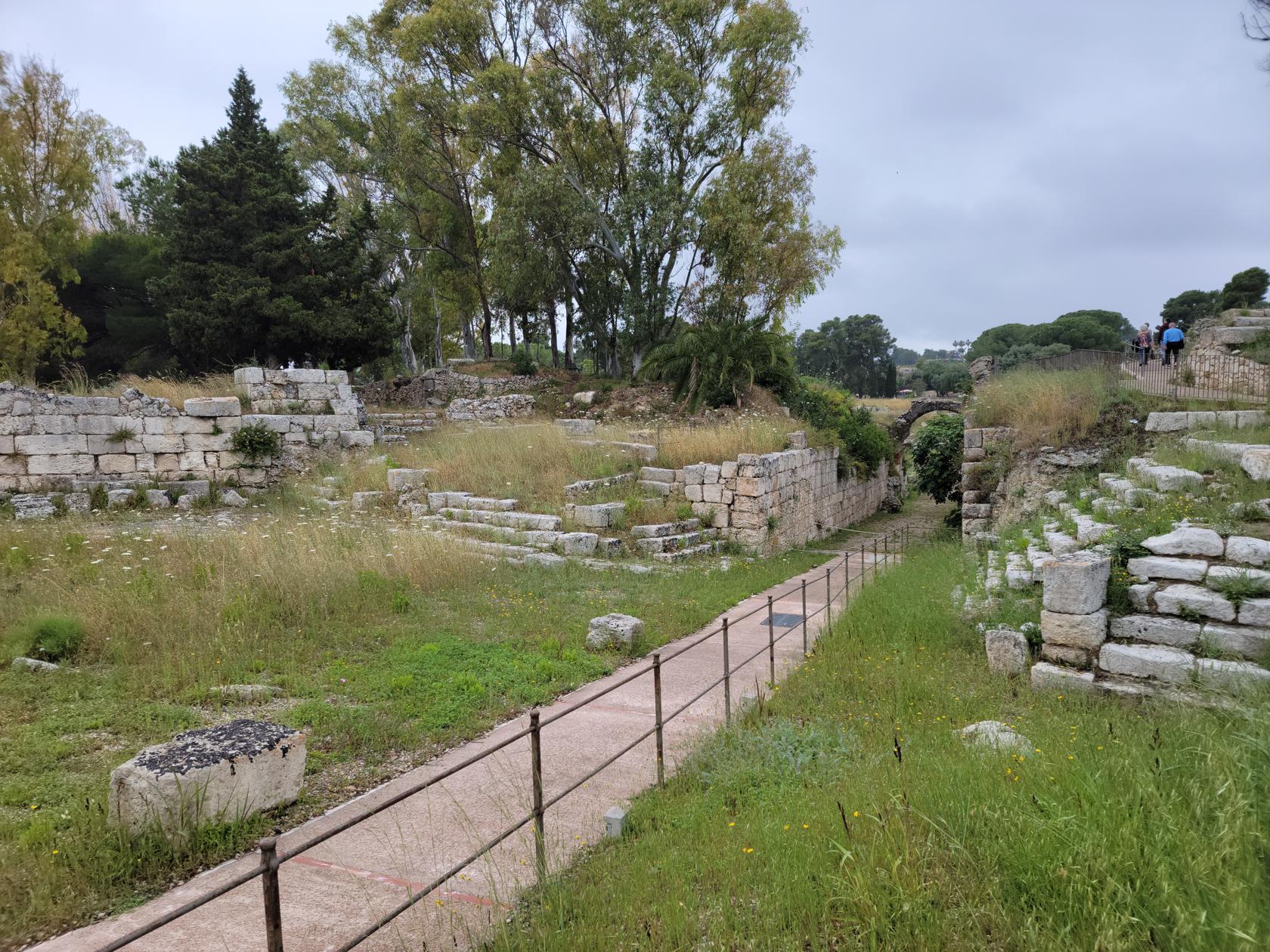
The Roman Theater is found on the way out of the park complex and extends to the exit for some way.
A map of the Roman Theater – The Neapolis – Archaeological Park – Siracuse, Sicily
The Roman Theater – The Neapolis – Archaeological Park – Siracuse, Sicily
The Roman Theater – The Neapolis – Archaeological Park – Siracuse, Sicily
Entryway to the Roman Theater – The Neapolis – Archaeological Park – Siracuse, Sicily
The Roman Theater – The Neapolis – Archaeological Park – Siracuse, Sicily
The Roman Theater – The Neapolis – Archaeological Park – Siracuse, Sicily
Island Of Ortigia
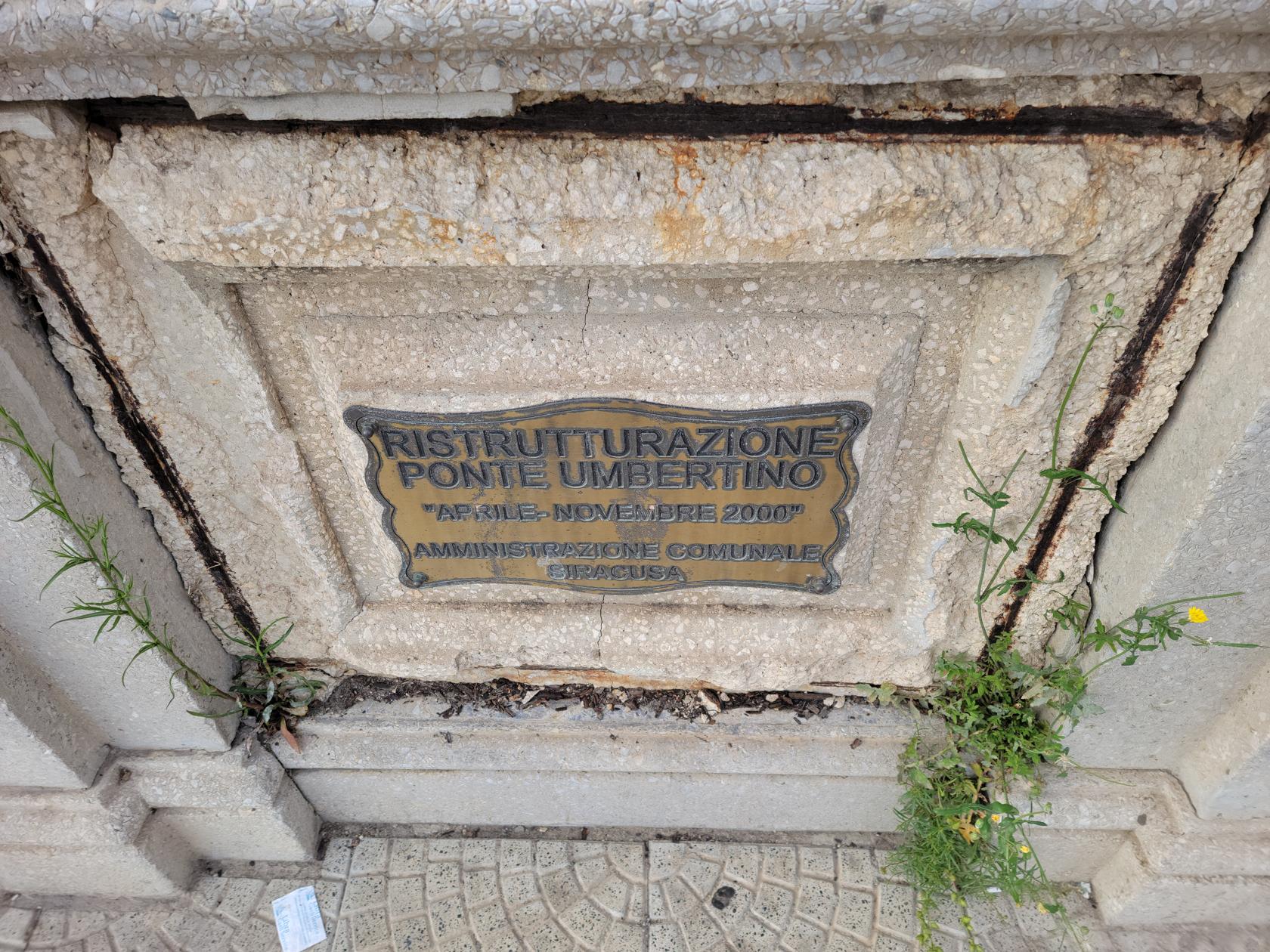
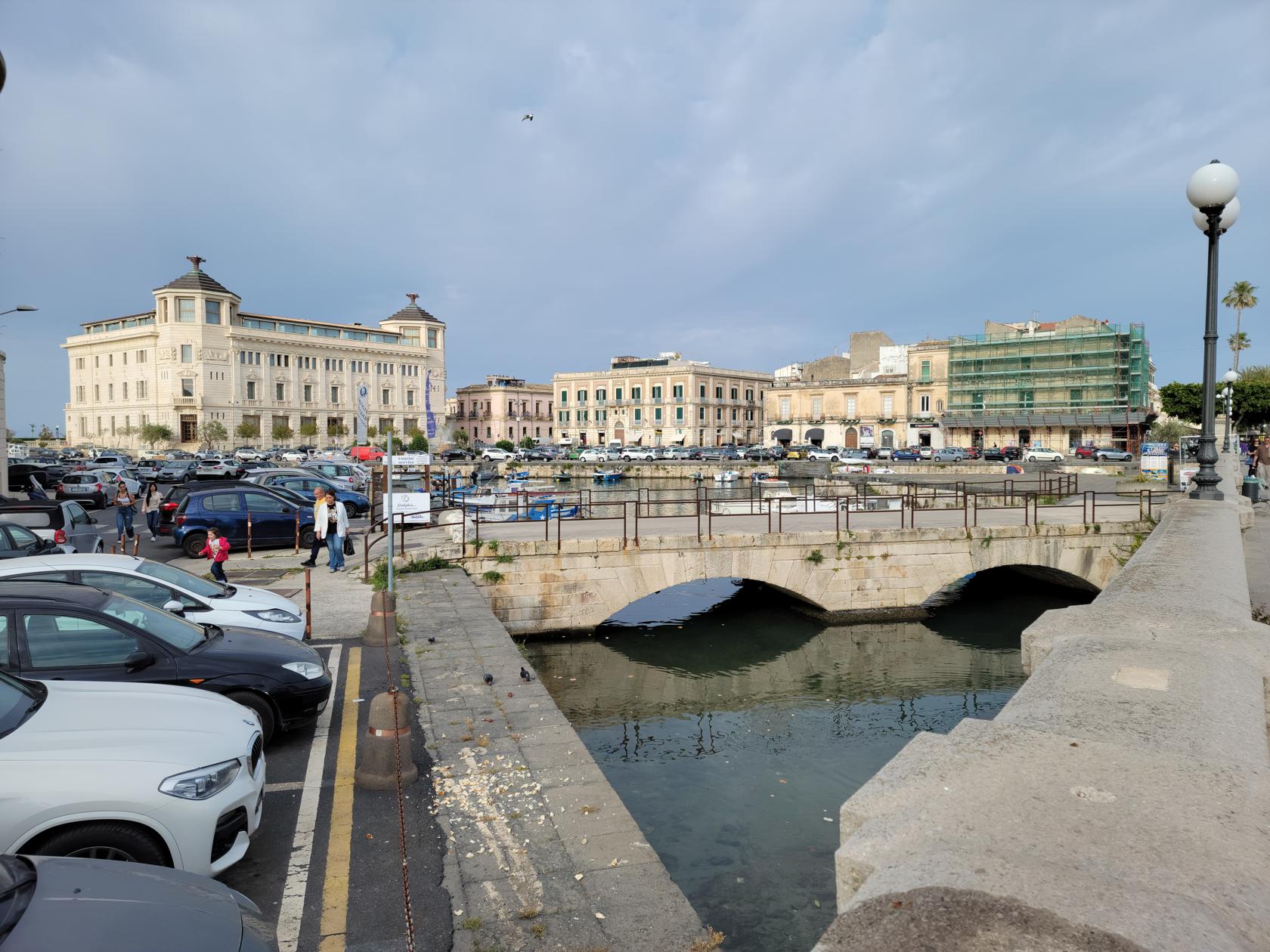
Ortigia, also known as Ortygia or Citta Vecchia (old city), is an island within the city of Syracuse. It is connected to the mainland and the rest of Syracuse by two bridges, the Umbertino Bridge and the Bridge of Santa Lucia.
Umbertino Bridge – Siracusa, Sicily
Umbertino Bridge – Siracusa, Sicily
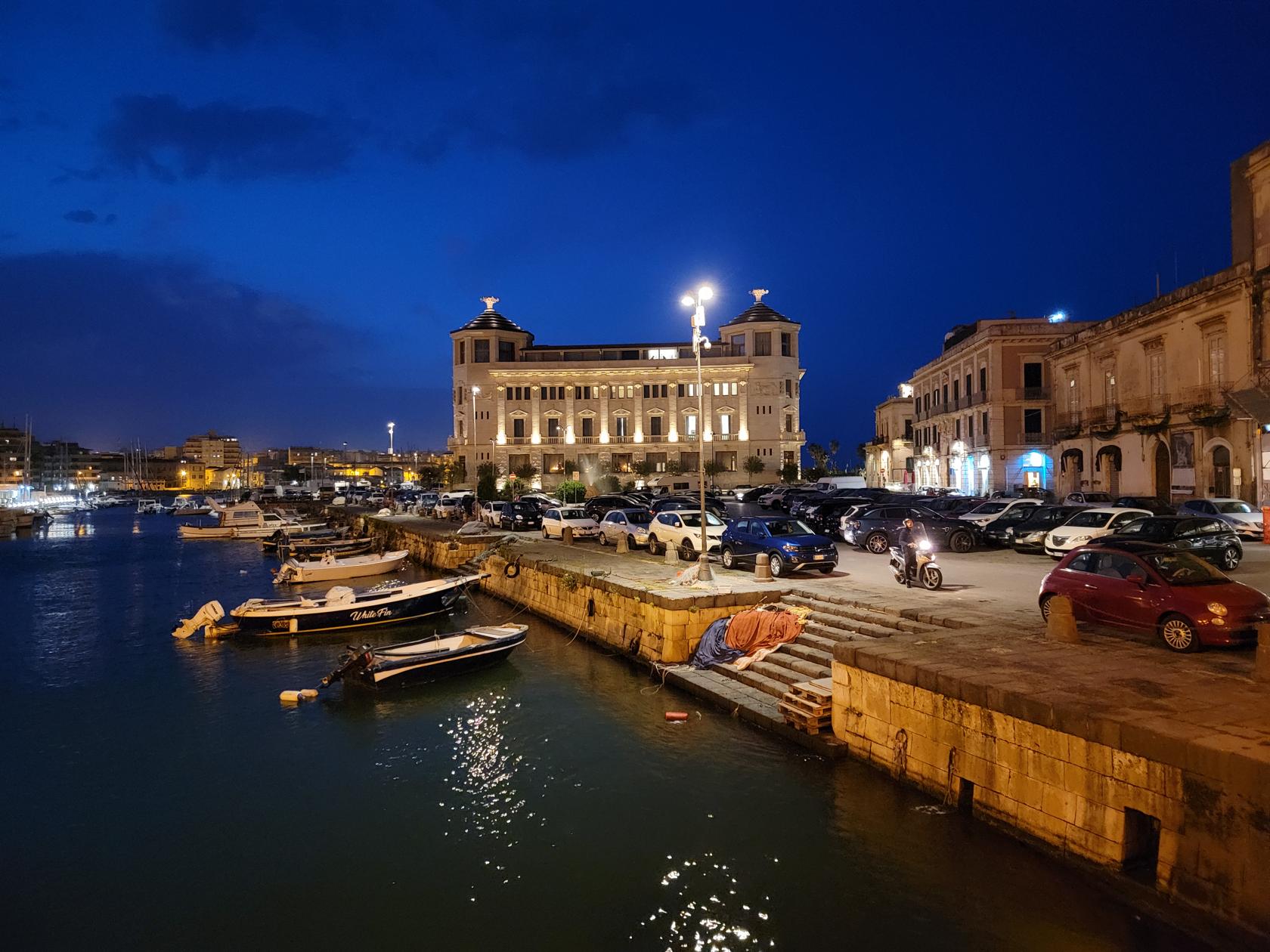
Ortea Palace Hotel at night – Siracusa, Sicily
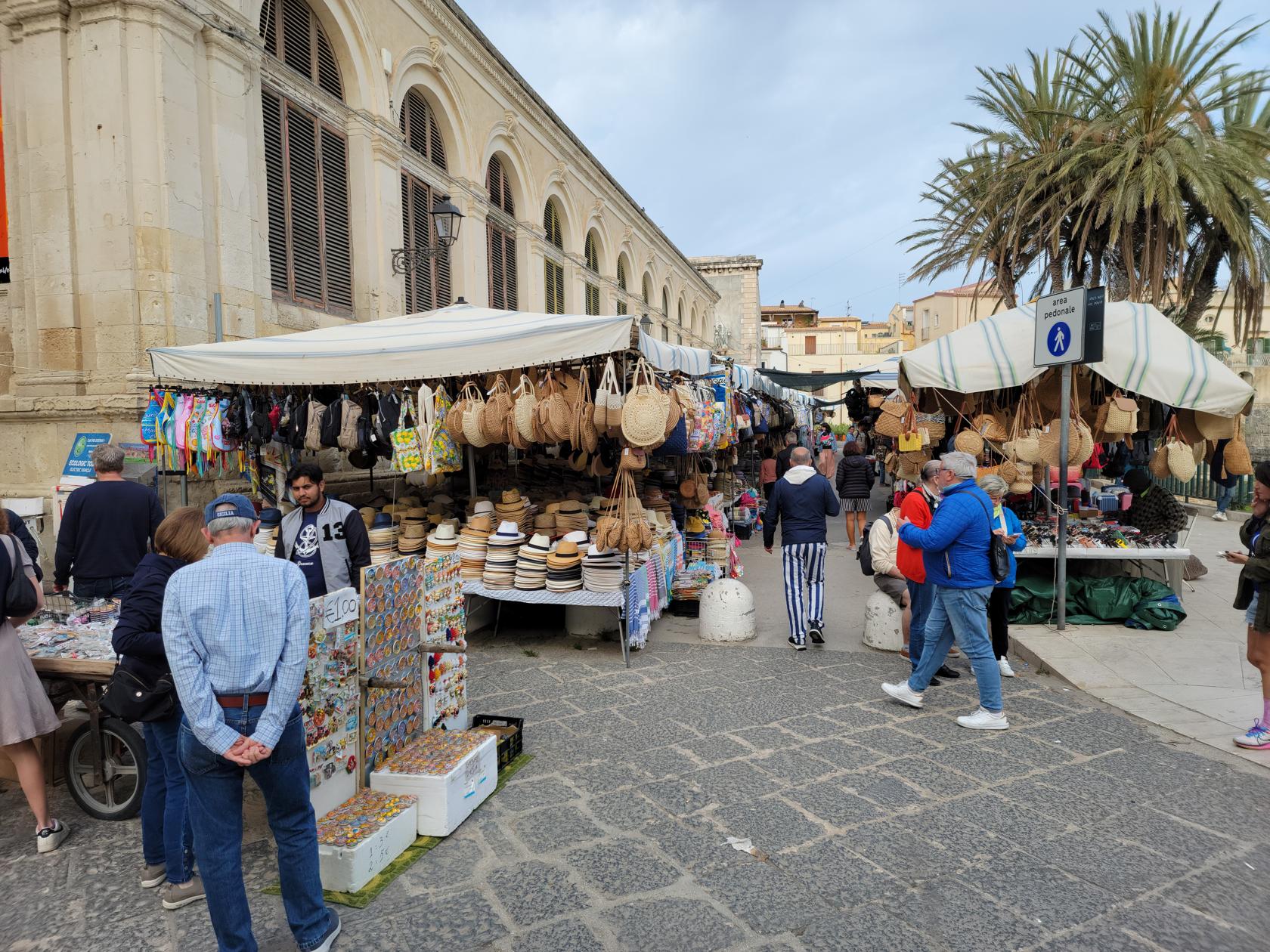
The old market place – Via Emmanuele de Benedictus – Siracusa, Sicily
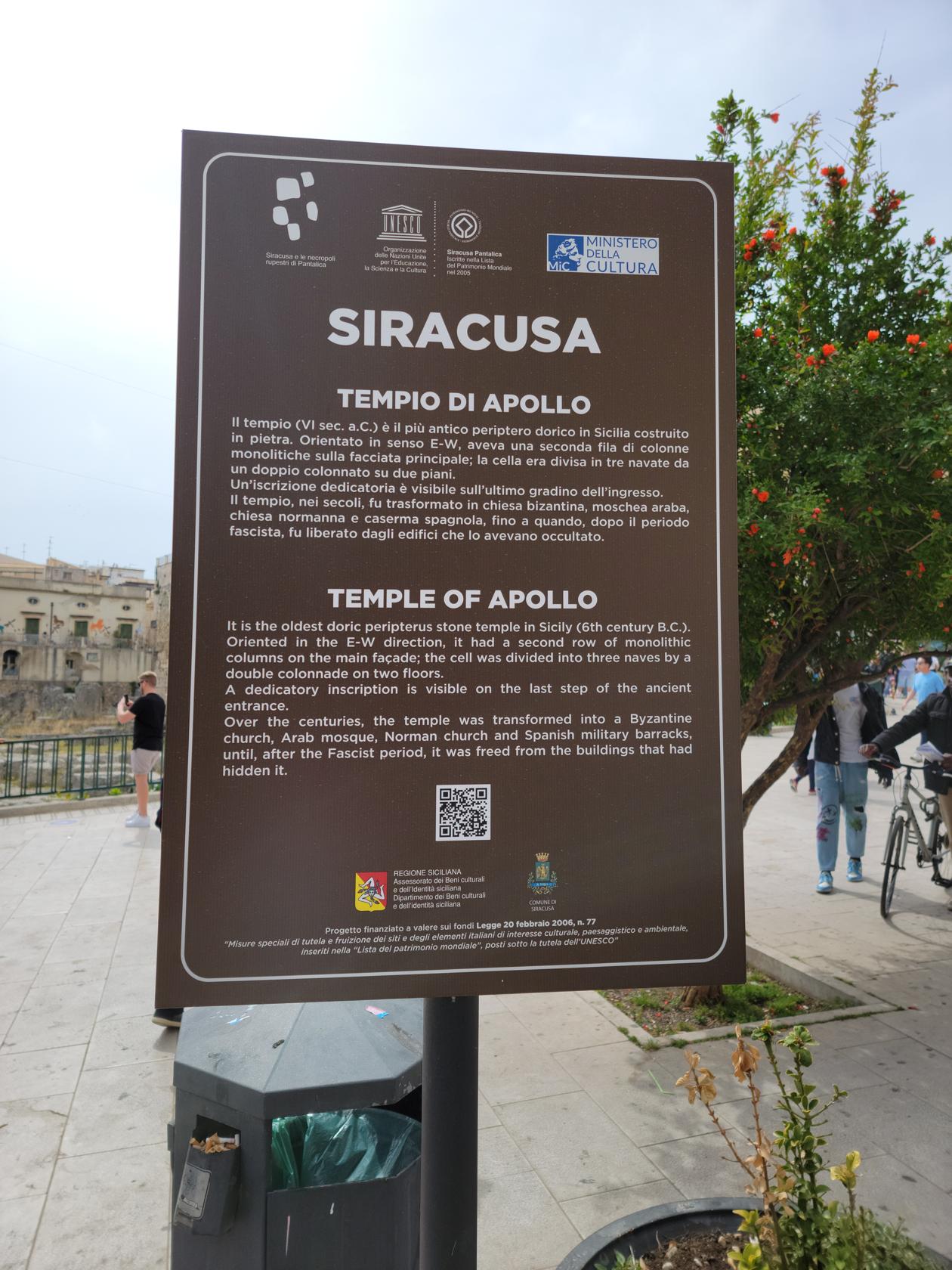
At the entrance of the ancient city is the Temple of Apollo. This is the first site anyone will see upon entering the city. Continuing around the temple visitors will automatically ascend the Corso Giacomo Matteotti, or the main street. This is the main shopping street, containing all contemporary brands and shops and will lead one to the Fountain of Diana.
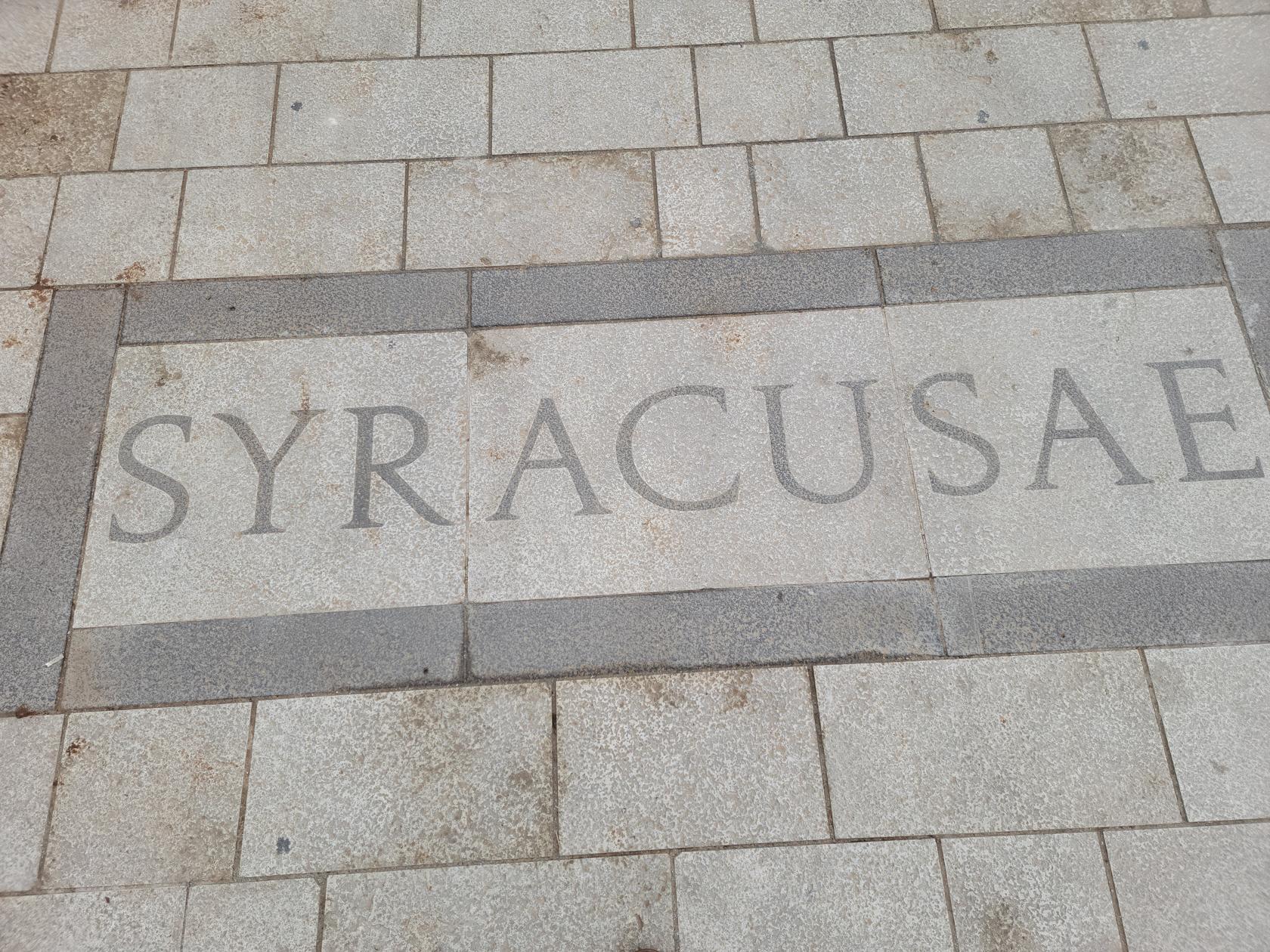
Syracusae boardwalk – Ortigia – Siracuse, Sicily
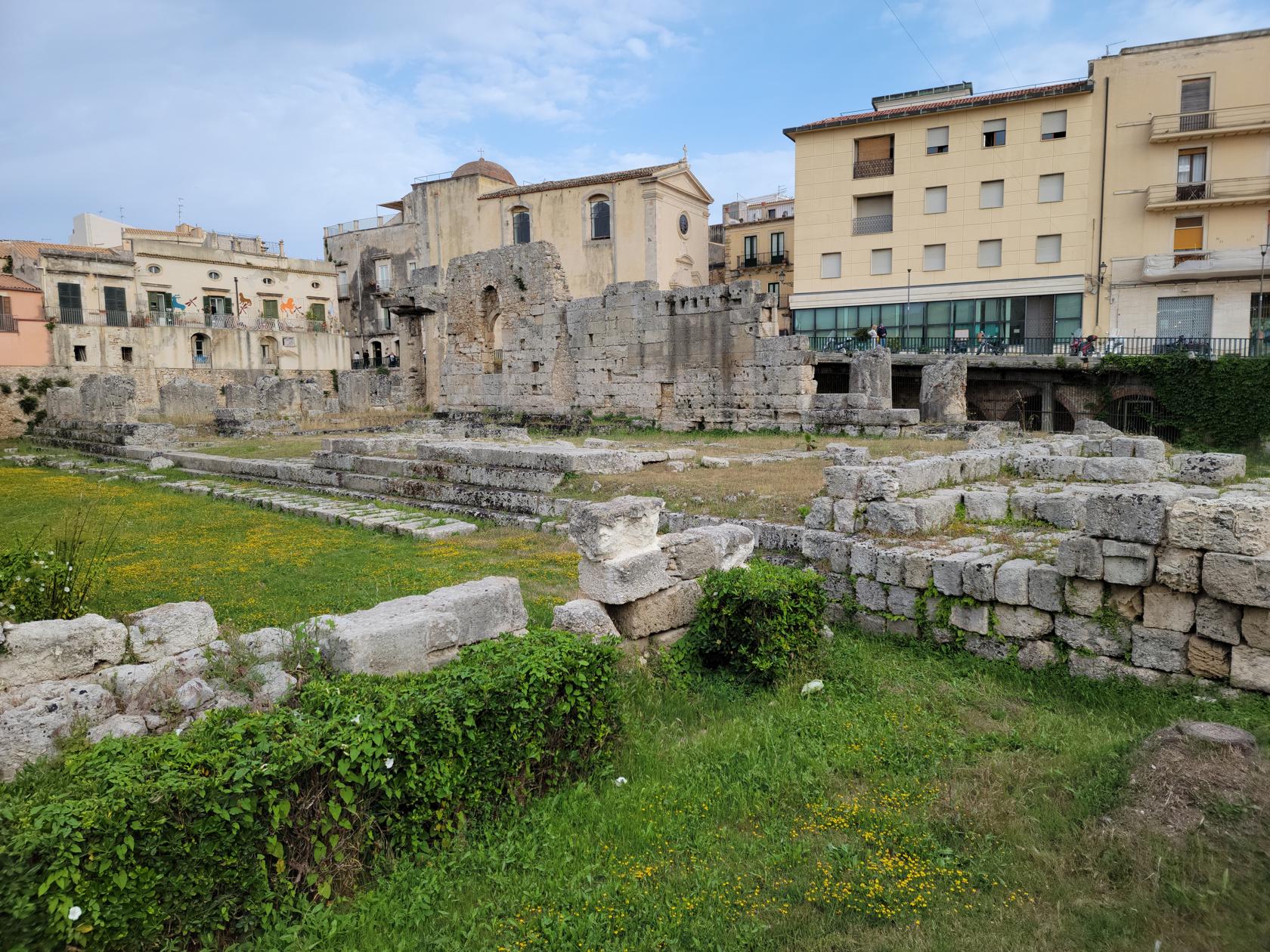
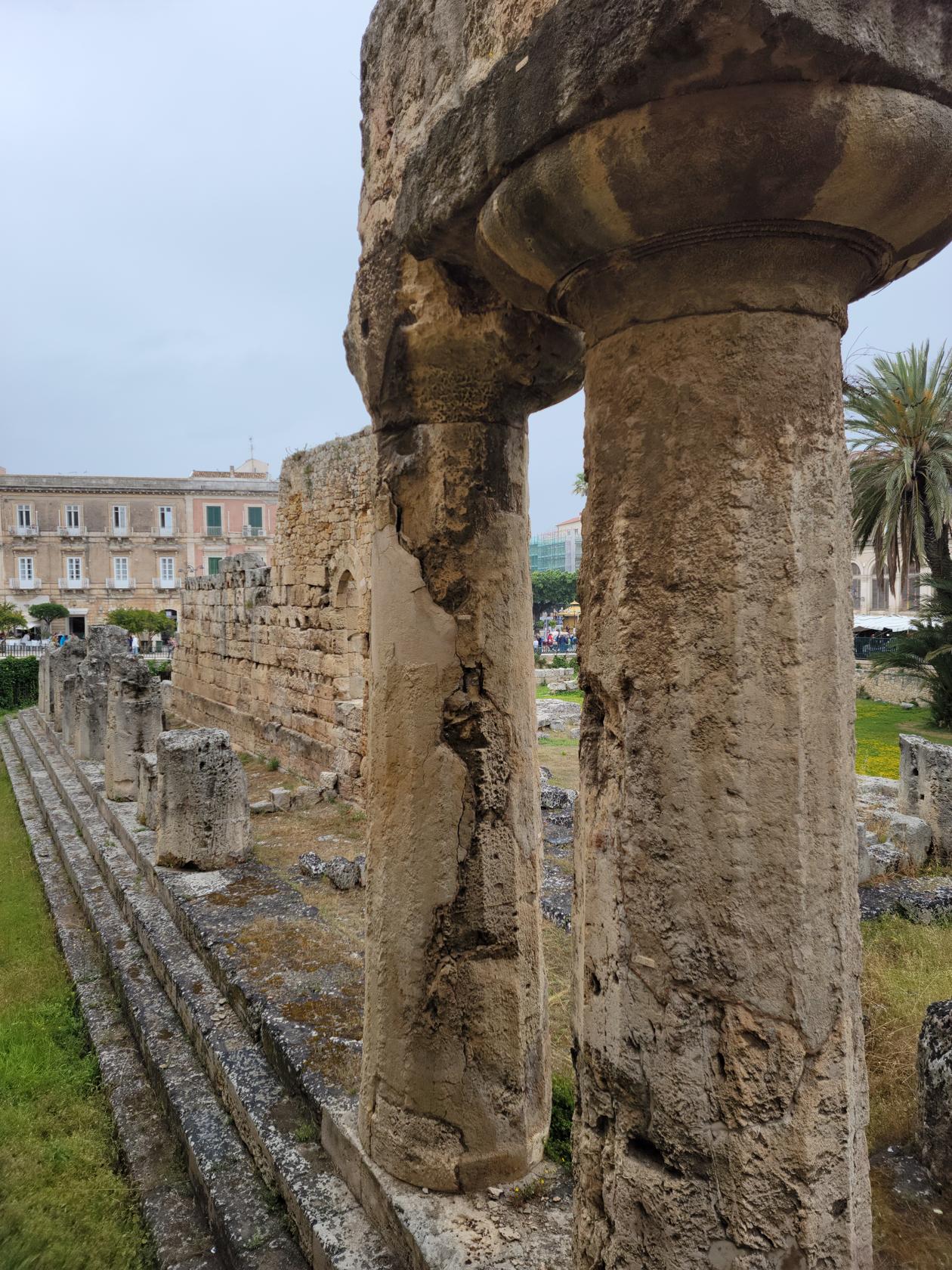
Temple of Apollo – Siracusa, Sicily
Statue of Archimedes – Umbertino Bridge – Siracuse, Sicily
Temple of Apollo – Ortigia – Siracuse, Sicily
From this traffic-circle; going to the left will take one to the Puppet museum and theater, and the eastern part of the island; going right will take one to the Piazza Duomo and the tourist shopping street, which will also take you to the Syracuse Cathedral.
Temple of Apollo – Siracusa, Sicily
Fountain of Diana – Siracusa, Sicily
Info Center – Siracusa, Sicily
Piazza Minerva – Siracusa, Sicily
Piazza Duomo – Siracusa, Sicily
Santa Lucia Church – Piazza Duomo – Siracusa, Sicily
Lungomare Alfeo – Siracusa, Sicily
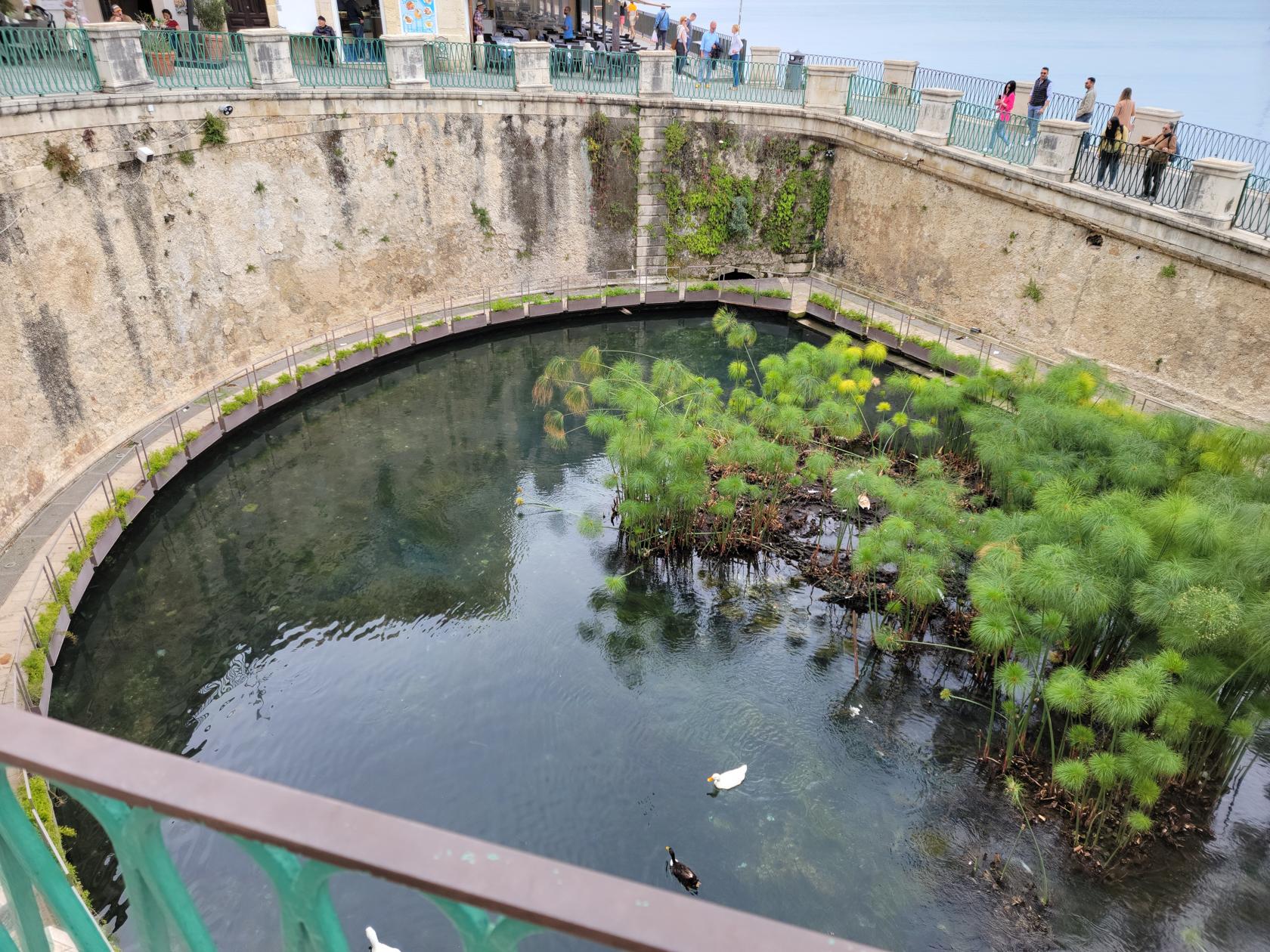
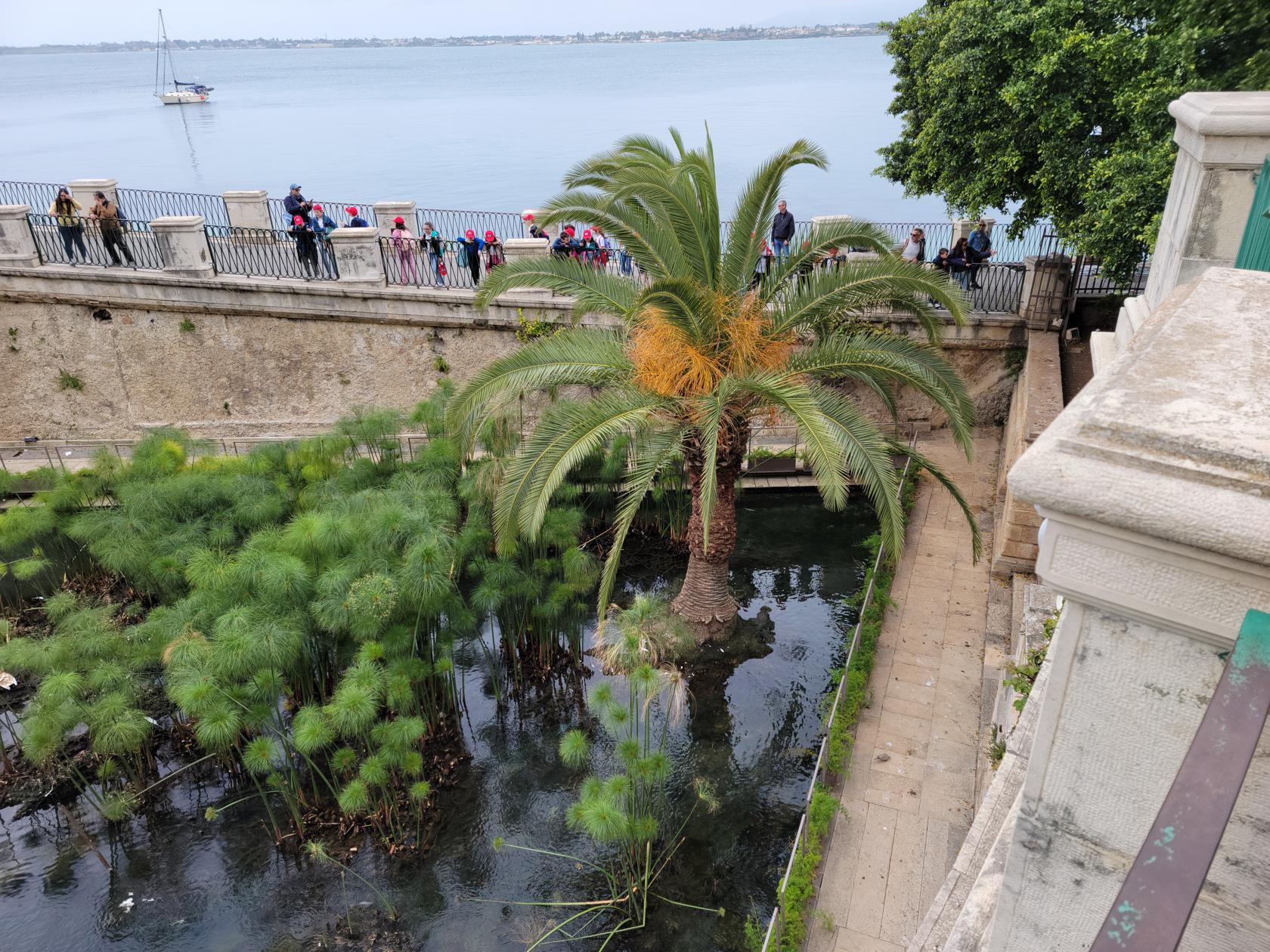
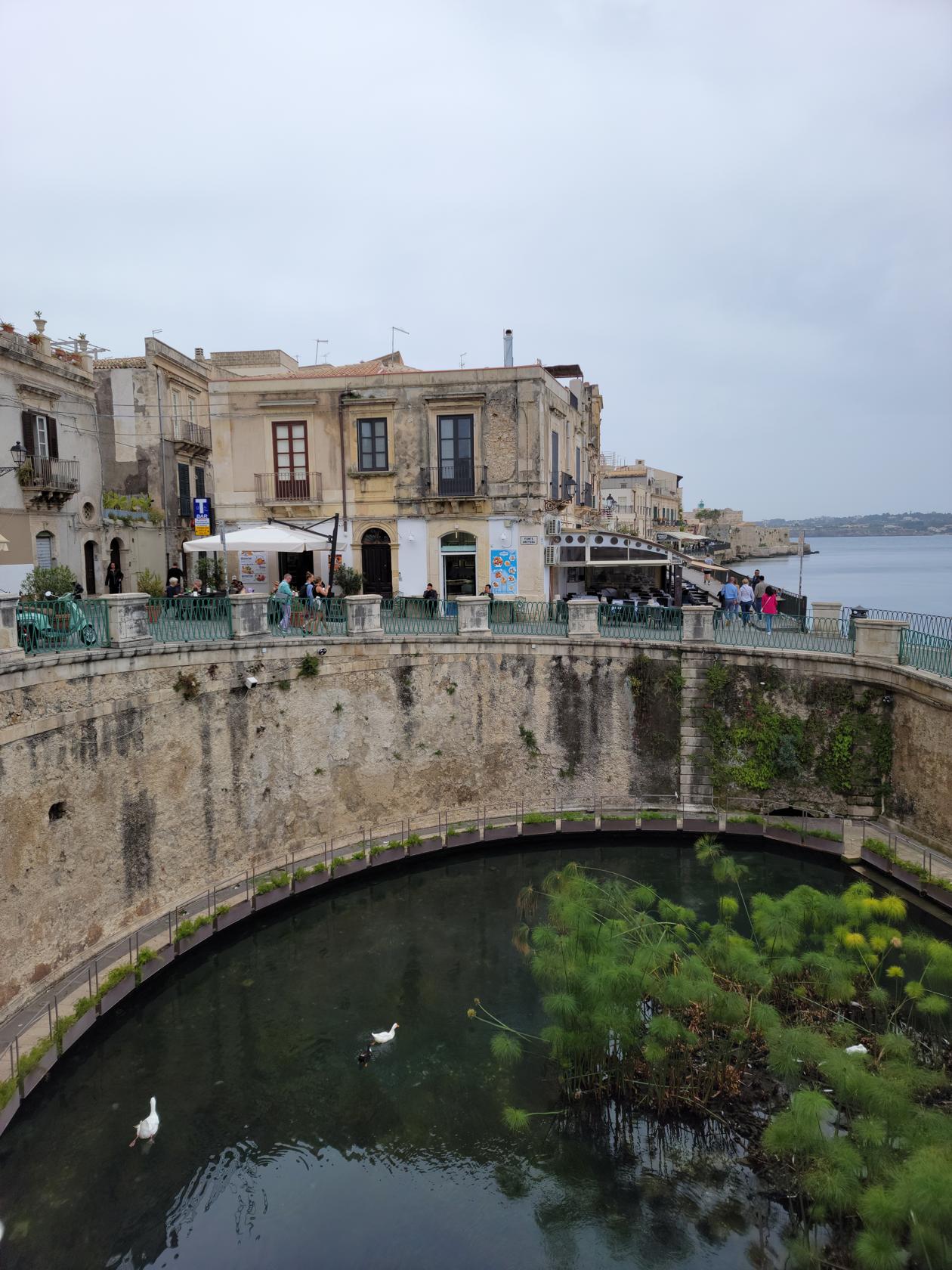
Arethuse Spring – Siracusa, Sicily
Papyrus Grotto – Arethuse Spring – Siracusa, Sicily
Papyrus Grotto – Arethuse Spring – Siracusa, Sicily
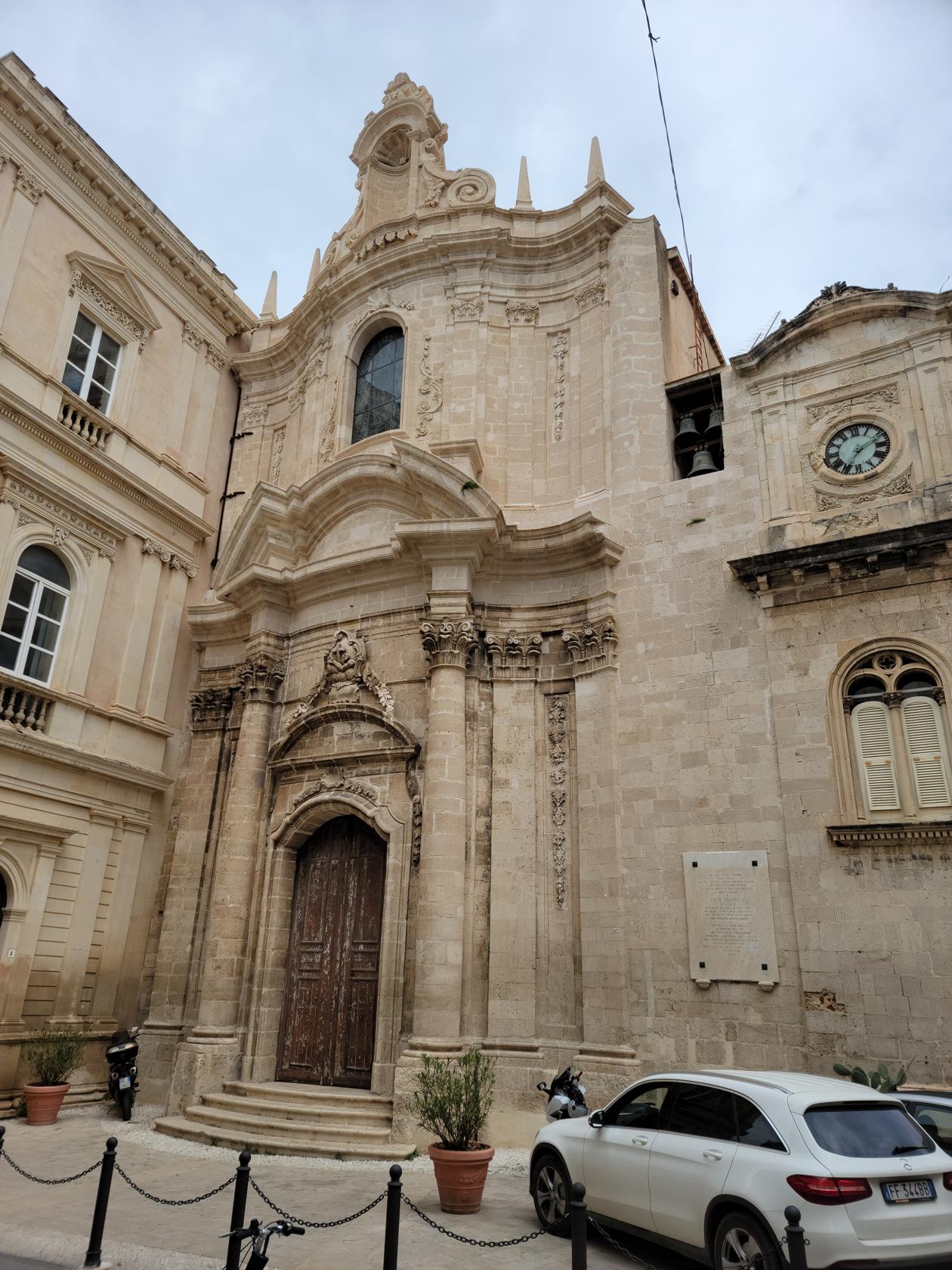
Church – Siracusa, Sicily
Side street – Siracusa, Sicily
Puppet Museum
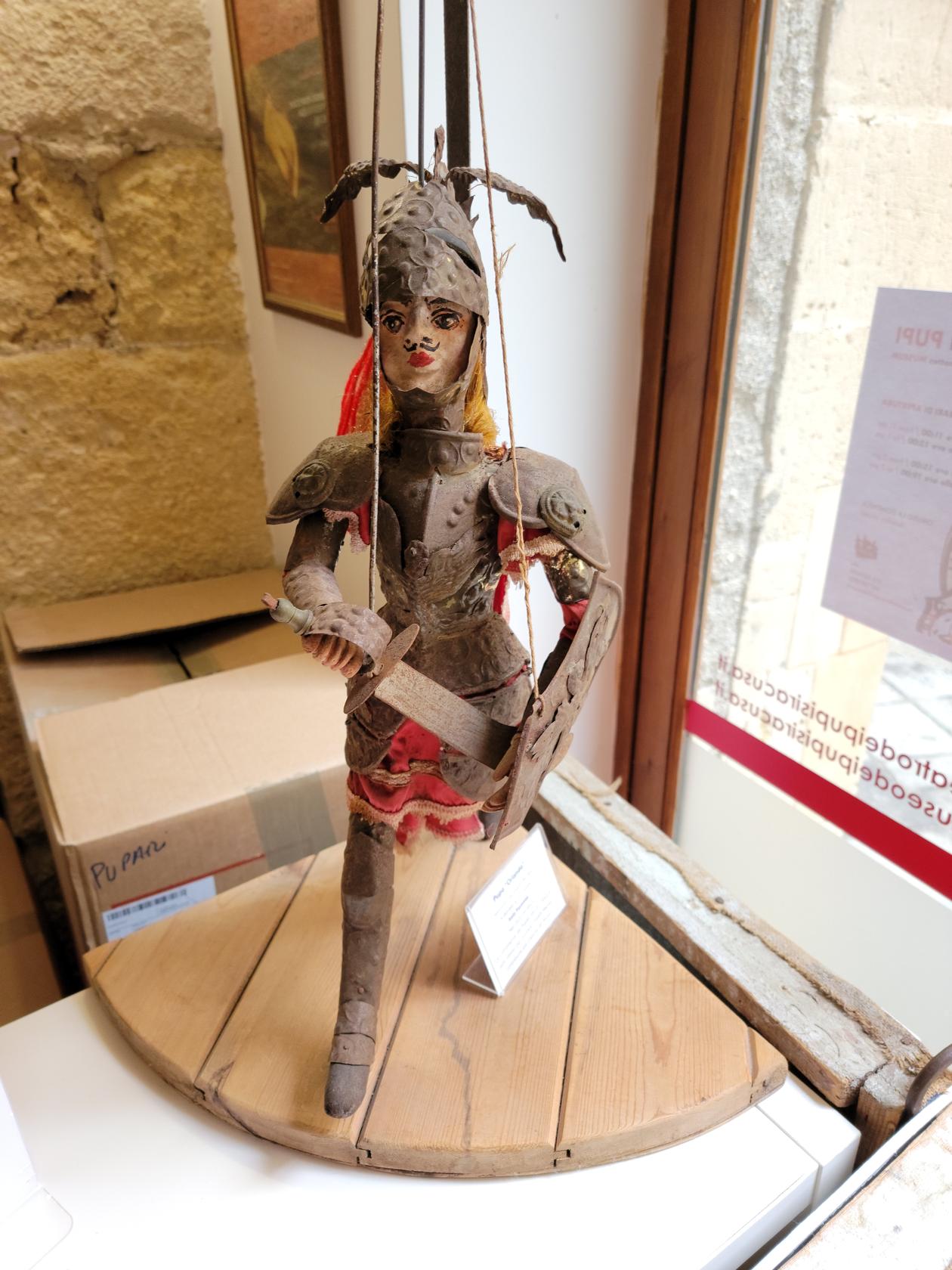
This is an interesting little museum covering the history of a specific heritage of puppet making on the island of Ortigia. Therefore, the puppets are specifically built around tales and folklore of the people of Sicily.
Puppet Museum – Ortigia – Siracuse, Sicily
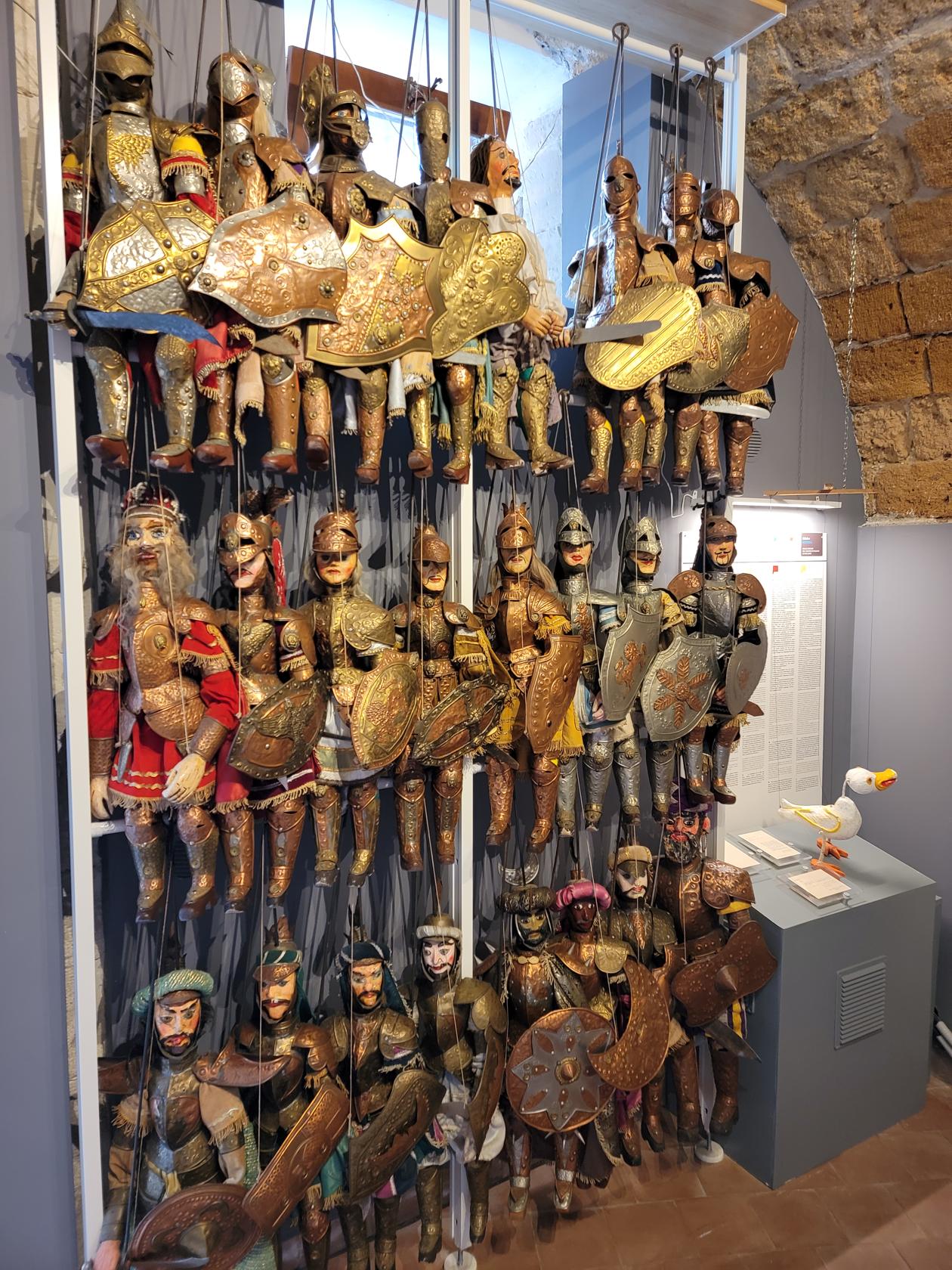
The puppets range in size from small (approx. 20cm in height), all the way to life size. There are many examples of finished products and some of contemporary origin. One display also shows the progression of making a puppet, from the carving stage through final assembly. All very instructive.
Assortment of small puppets – Puppet Museum – Ortigia – Siracuse, Sicily
Assortment of knight puppets – Puppet Museum – Ortigia – Siracuse, Sicily
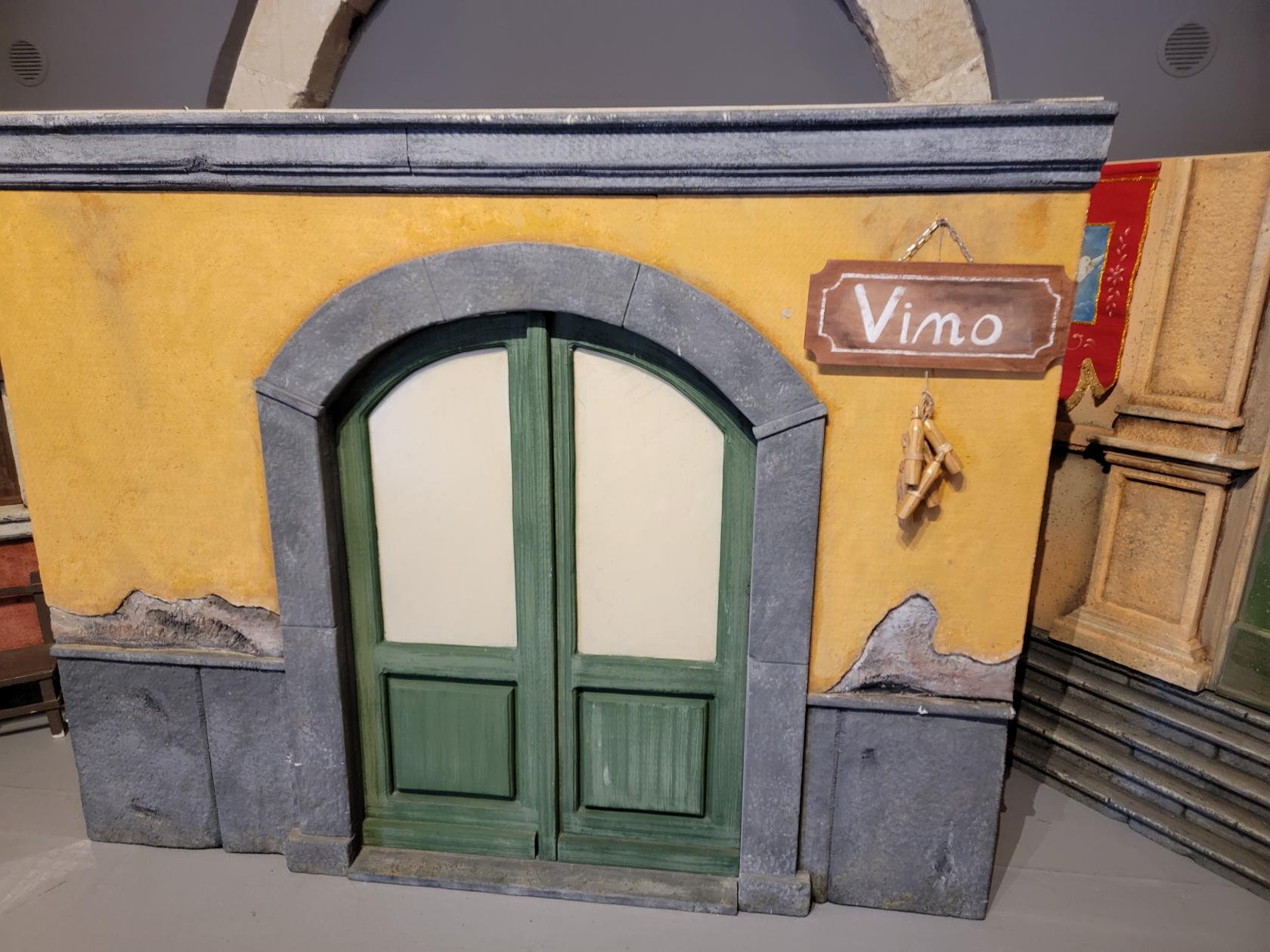
Small store front to scale – Puppet Museum – Ortigia – Siracuse, Sicily
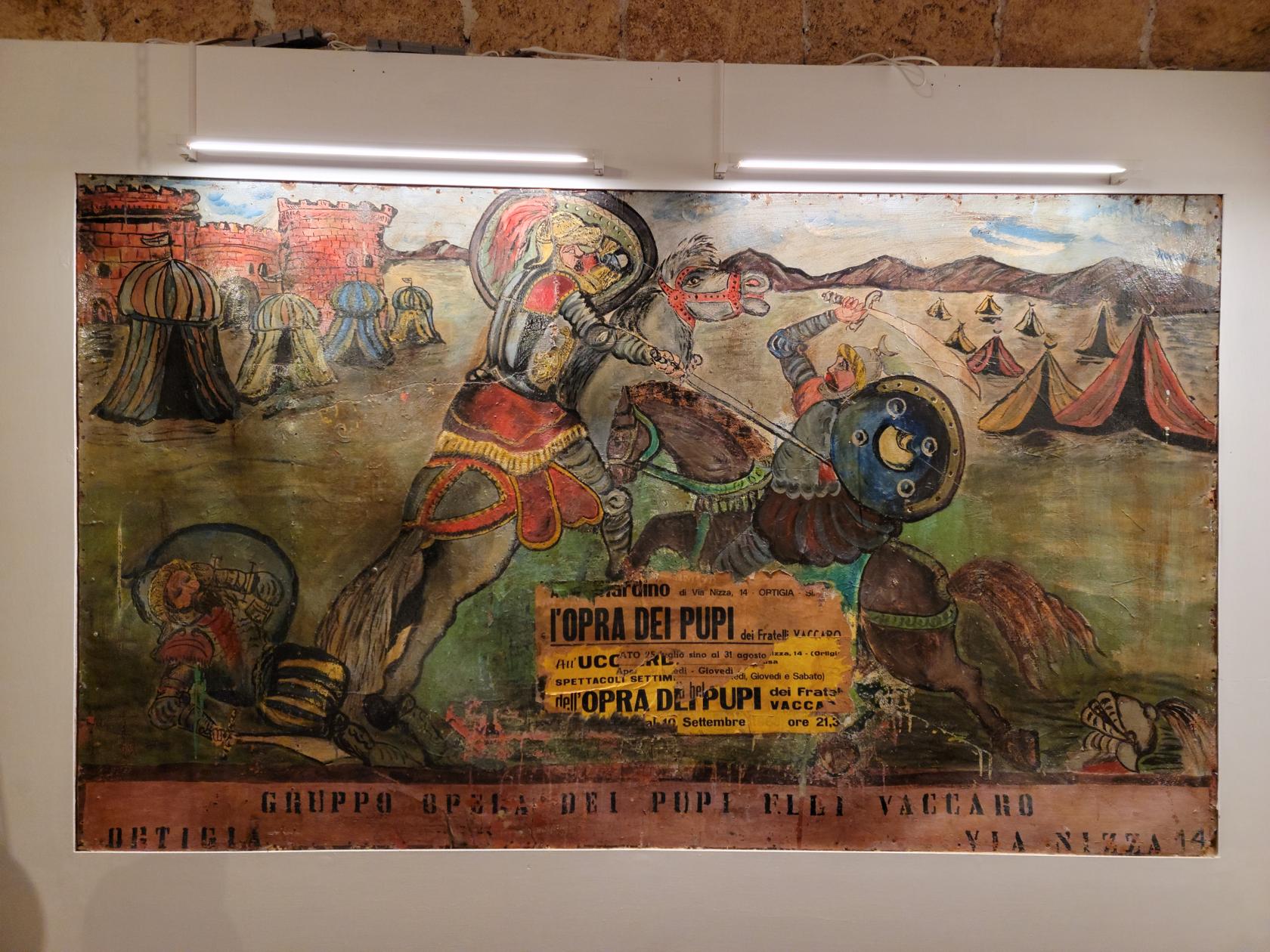
Old advertisement sign – Puppet Museum – Ortigia – Siracuse, Sicily
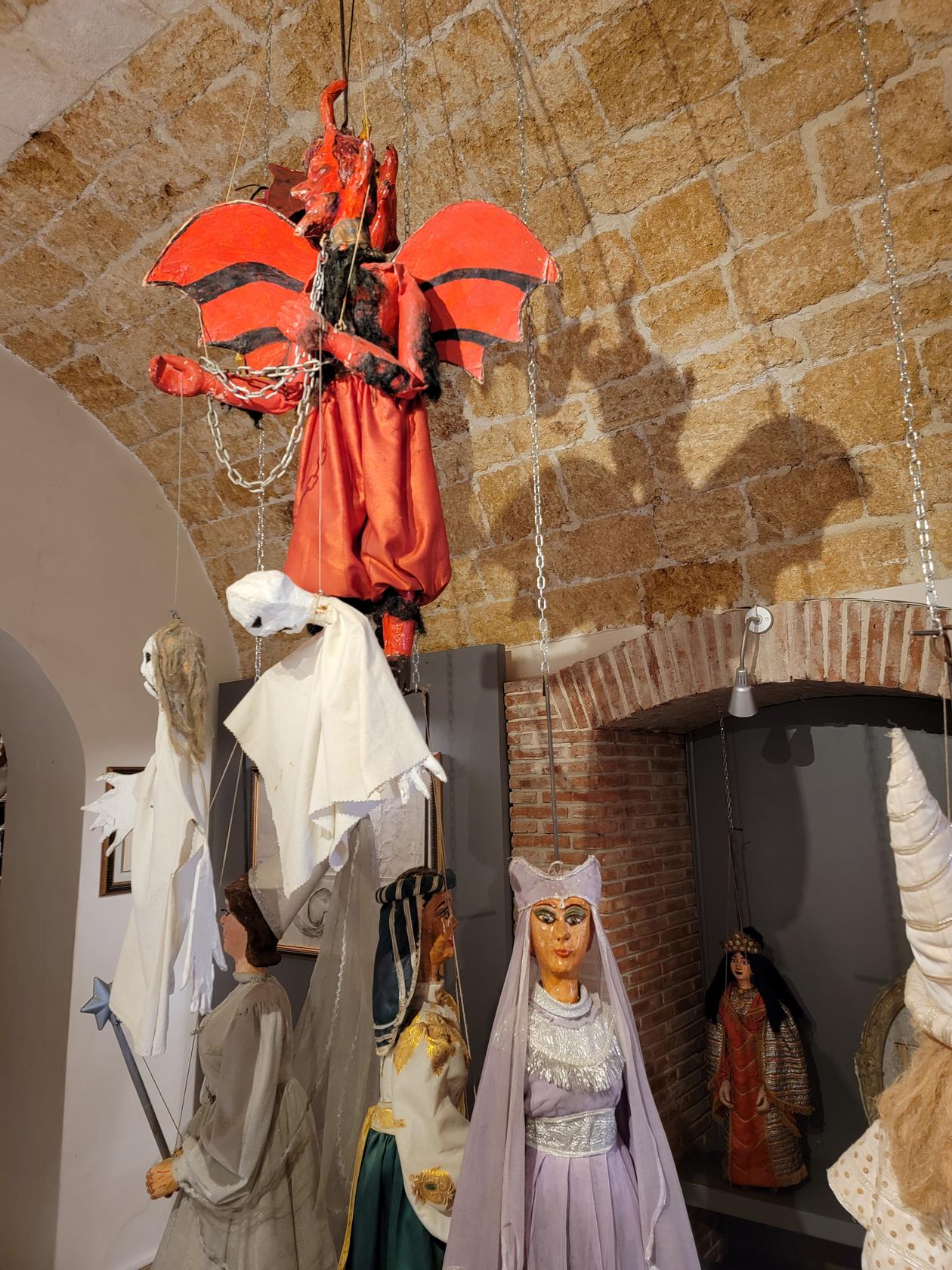
A favorite puppet antagonist – The devil – Puppet Museum – Ortigia – Siracuse, Sicily
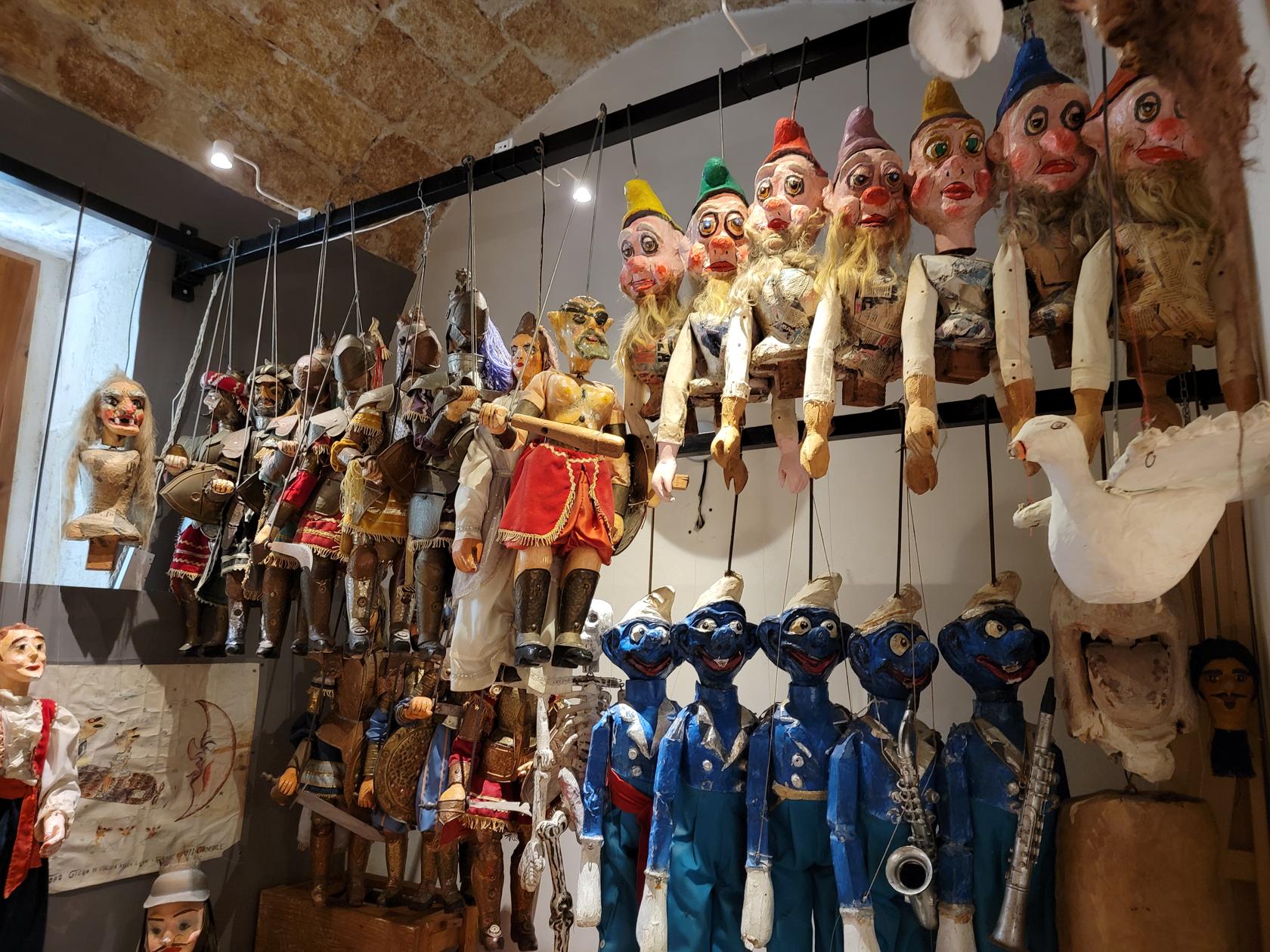
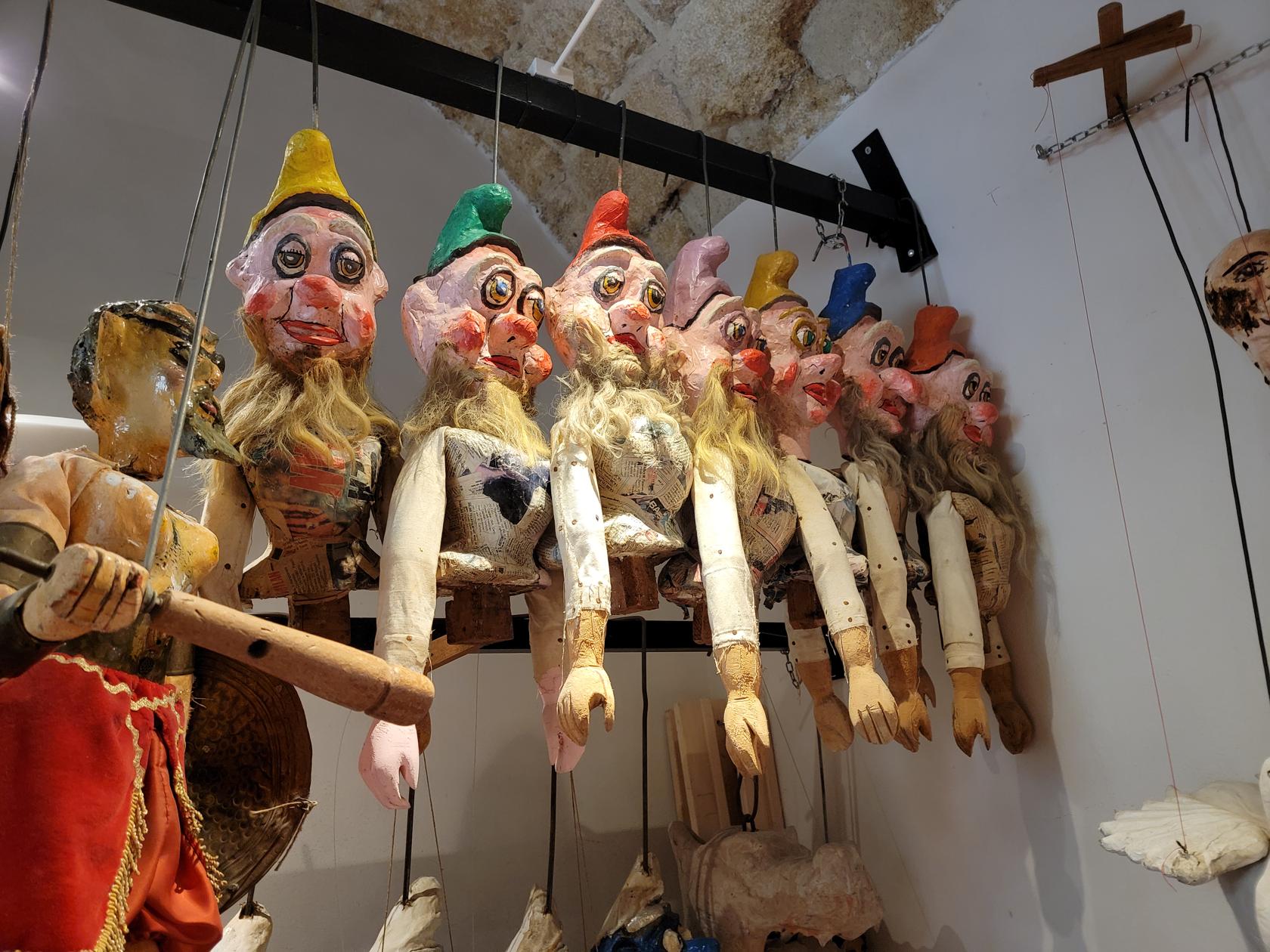
The dwarves, smurfs and others – Puppet Museum – Ortigia – Siracuse, Sicily
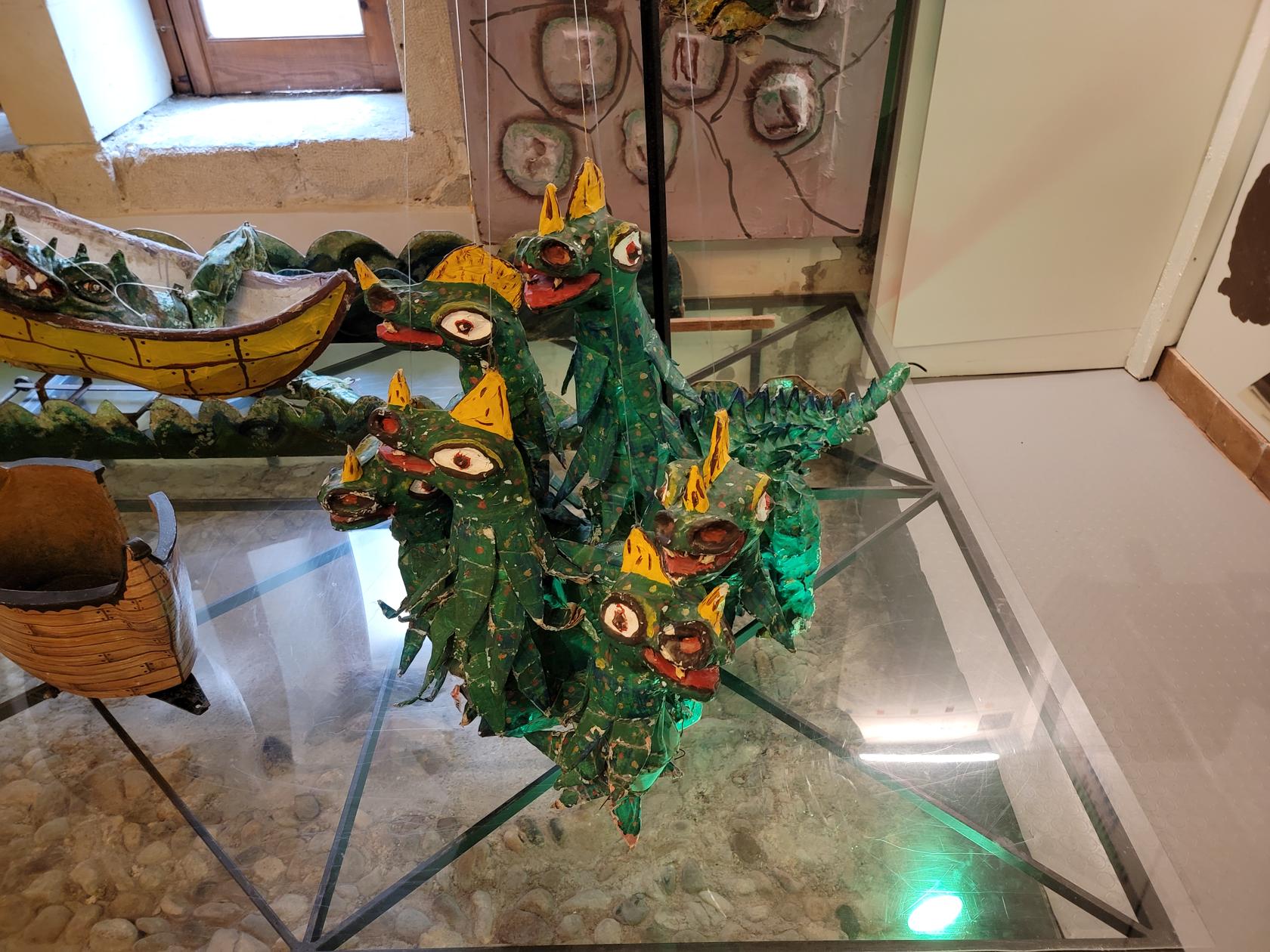
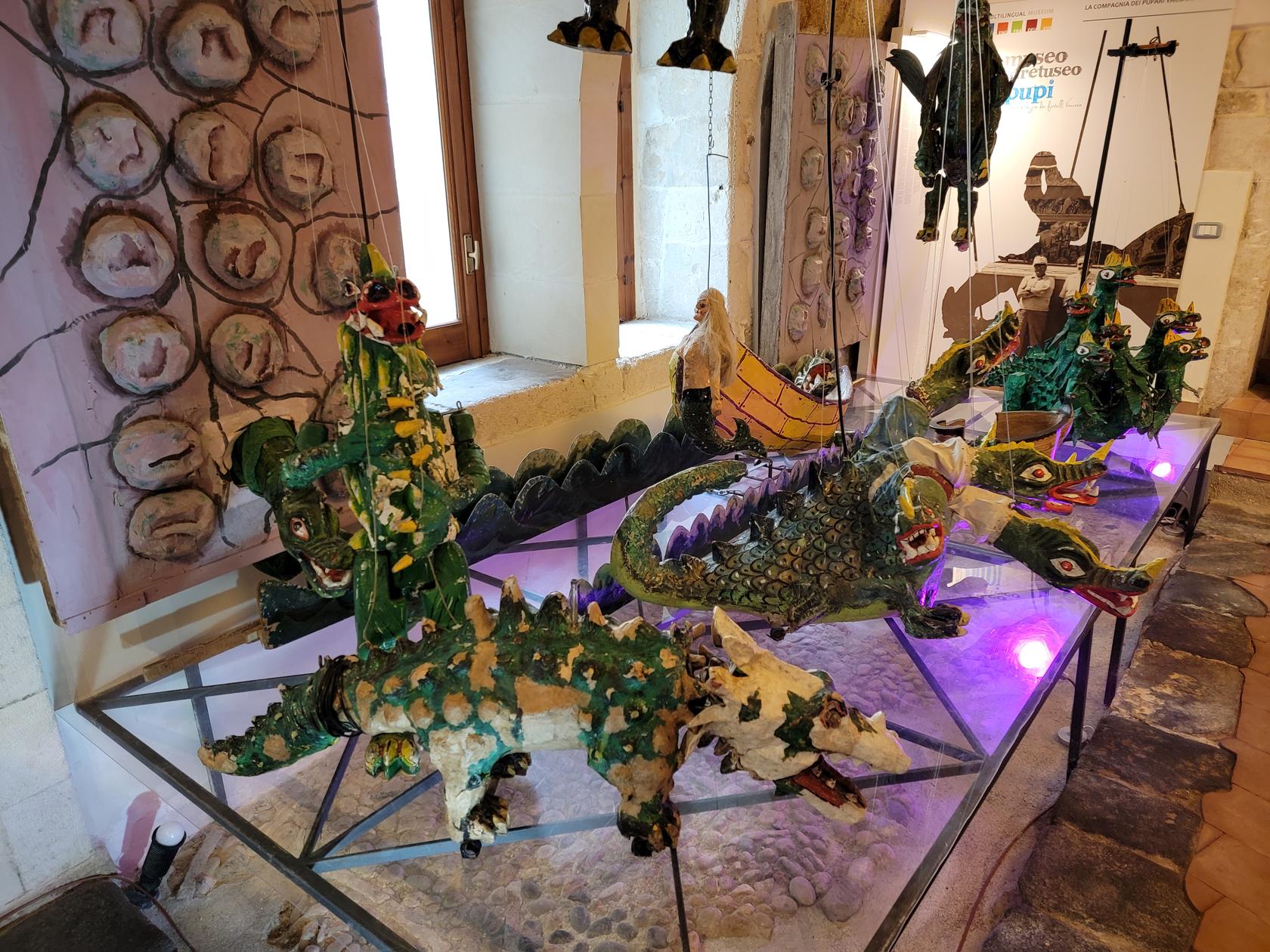
The six headed beast – Puppet Museum – Ortigia – Siracuse, Sicily
Dragons – Puppet Museum – Ortigia – Siracuse, Sicily
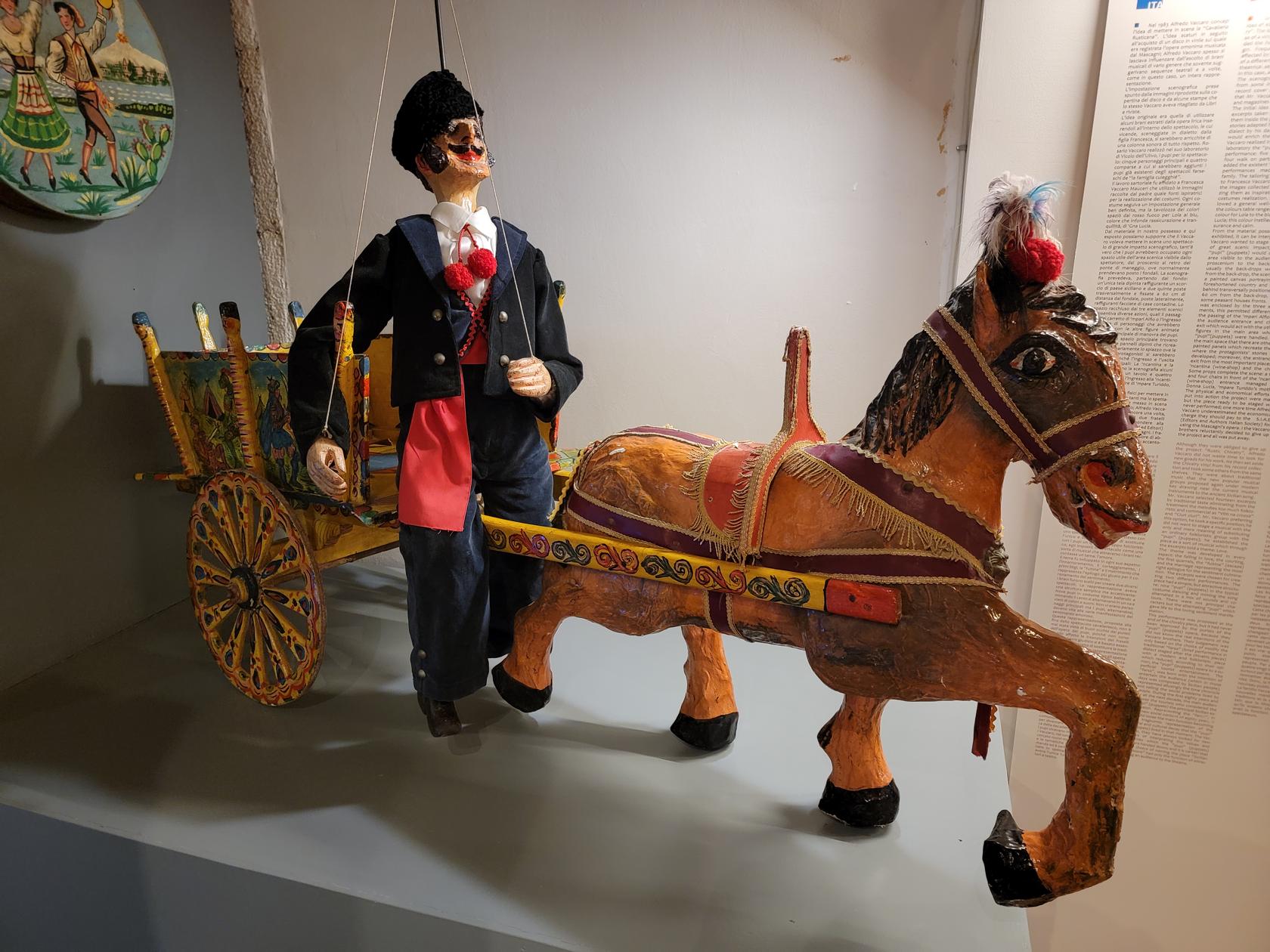
Horse drawn wagon and driver puppet – Puppet Museum – Ortigia – Siracuse, Sicily
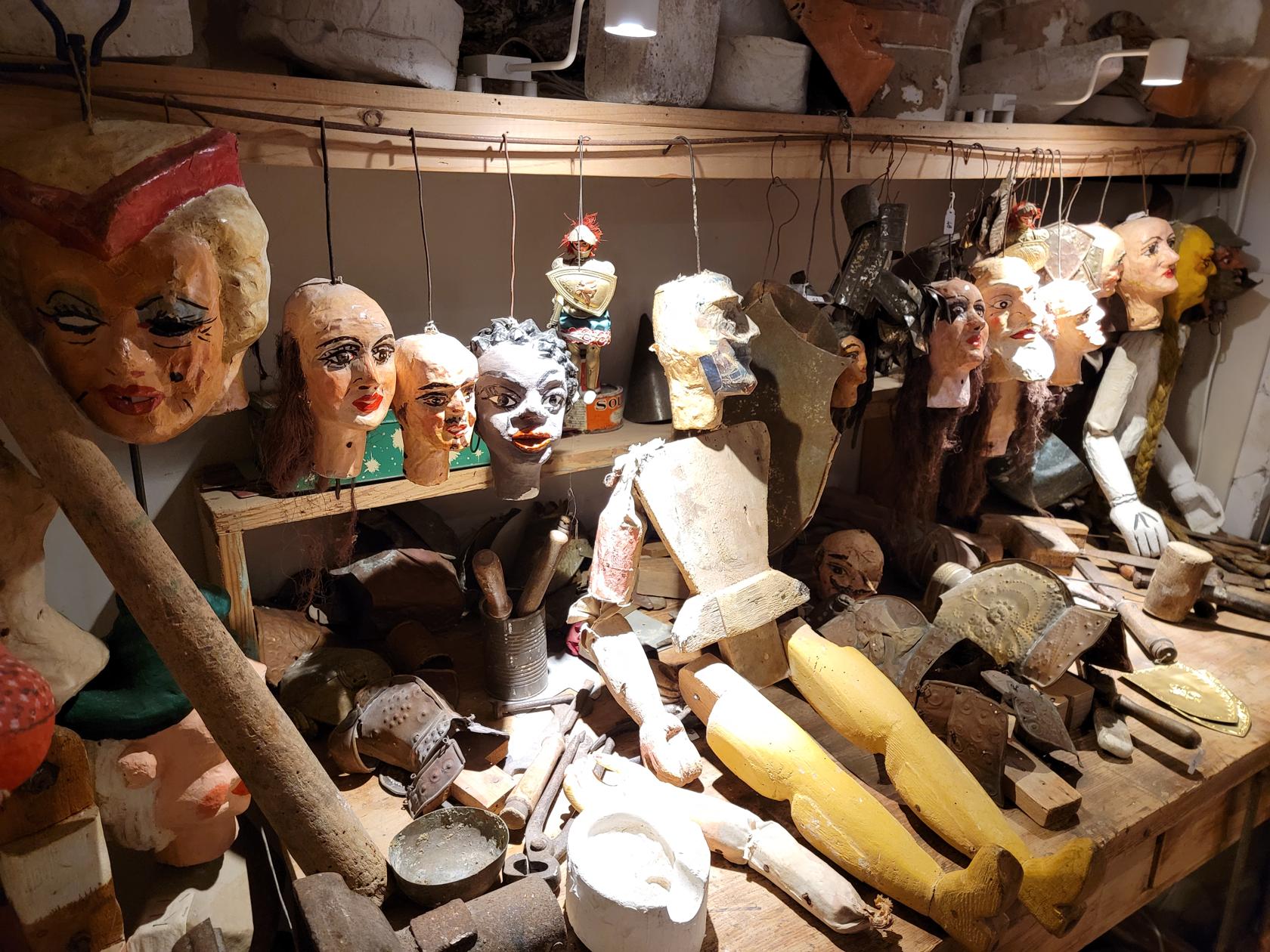
Workshop puppets at different stages of finishing – Puppet Museum – Ortigia – Siracuse, Sicily
Puppet Theater
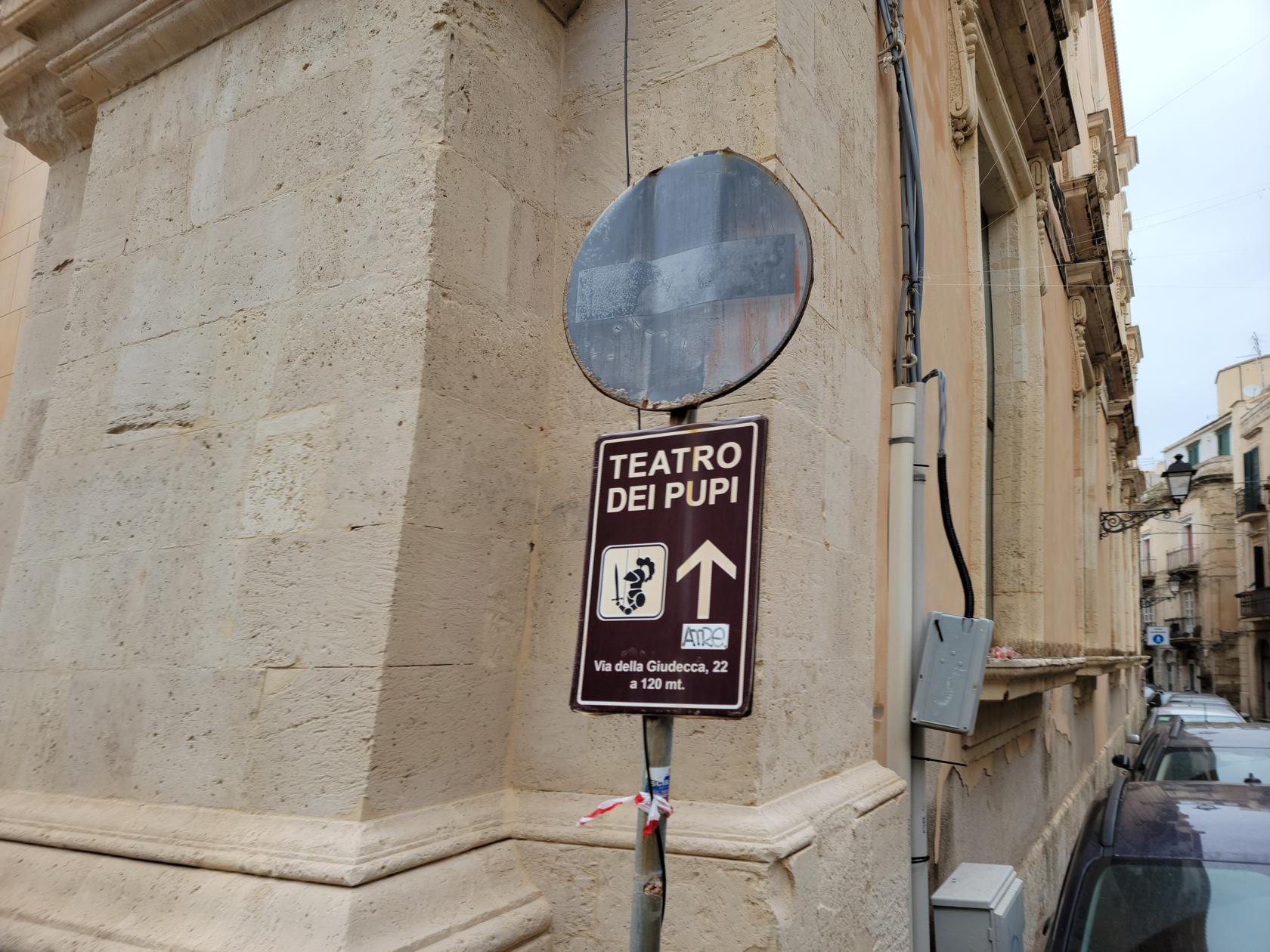
Street sign – The Puppet Theater – Ortigia – Siracuse, Sicily
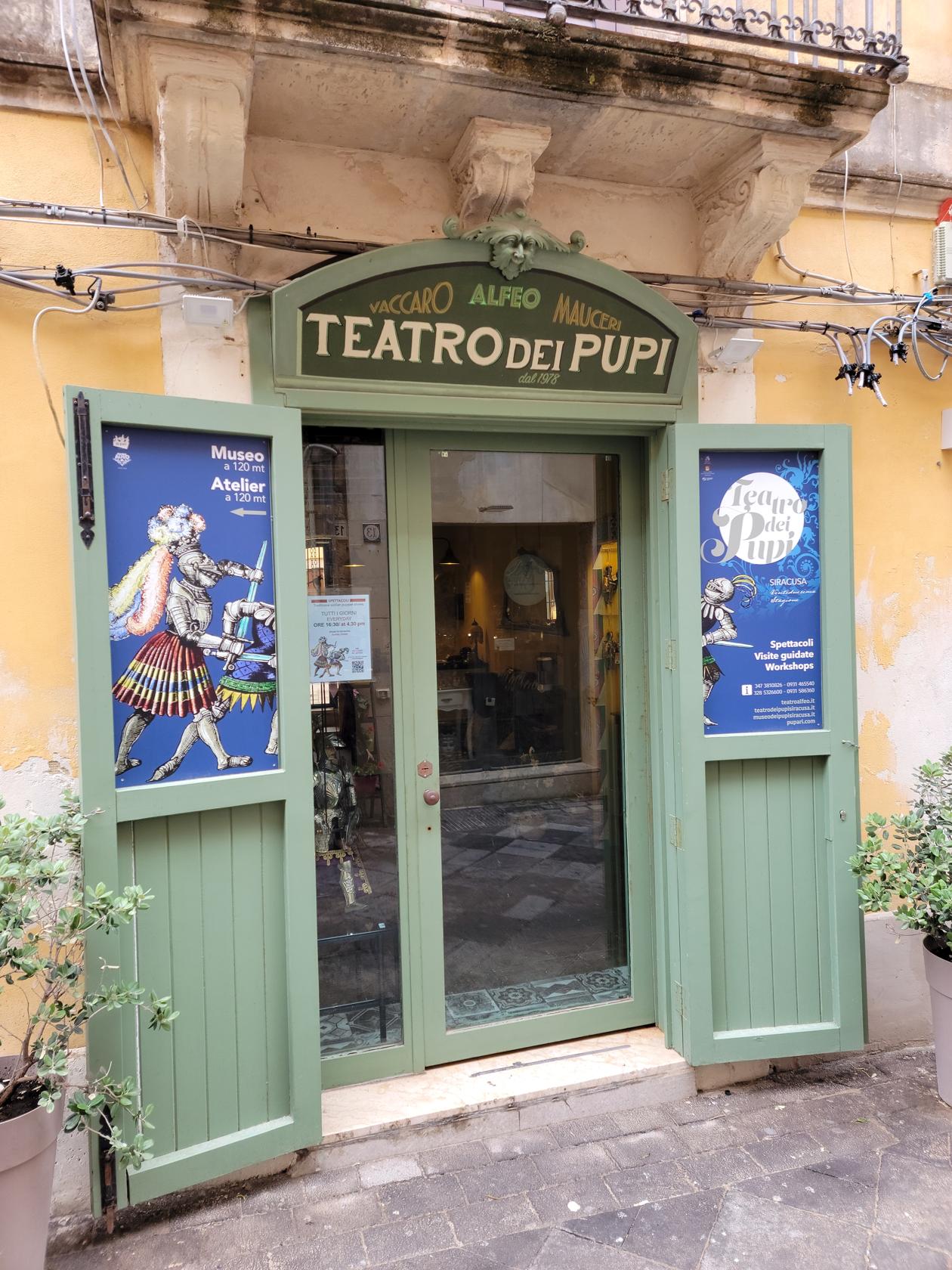
Entrance – The Puppet Theater – Ortigia – Siracuse, Sicily
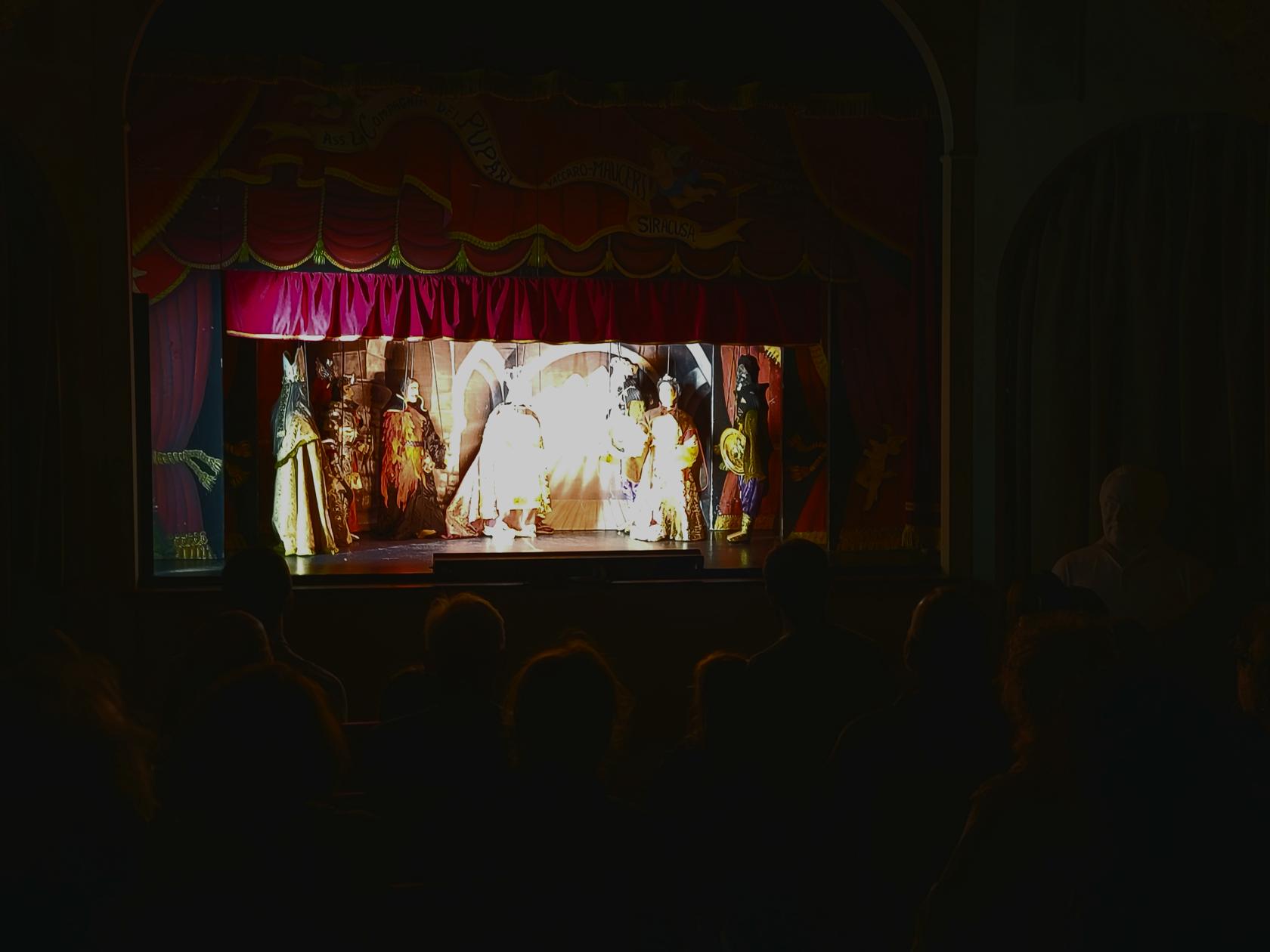
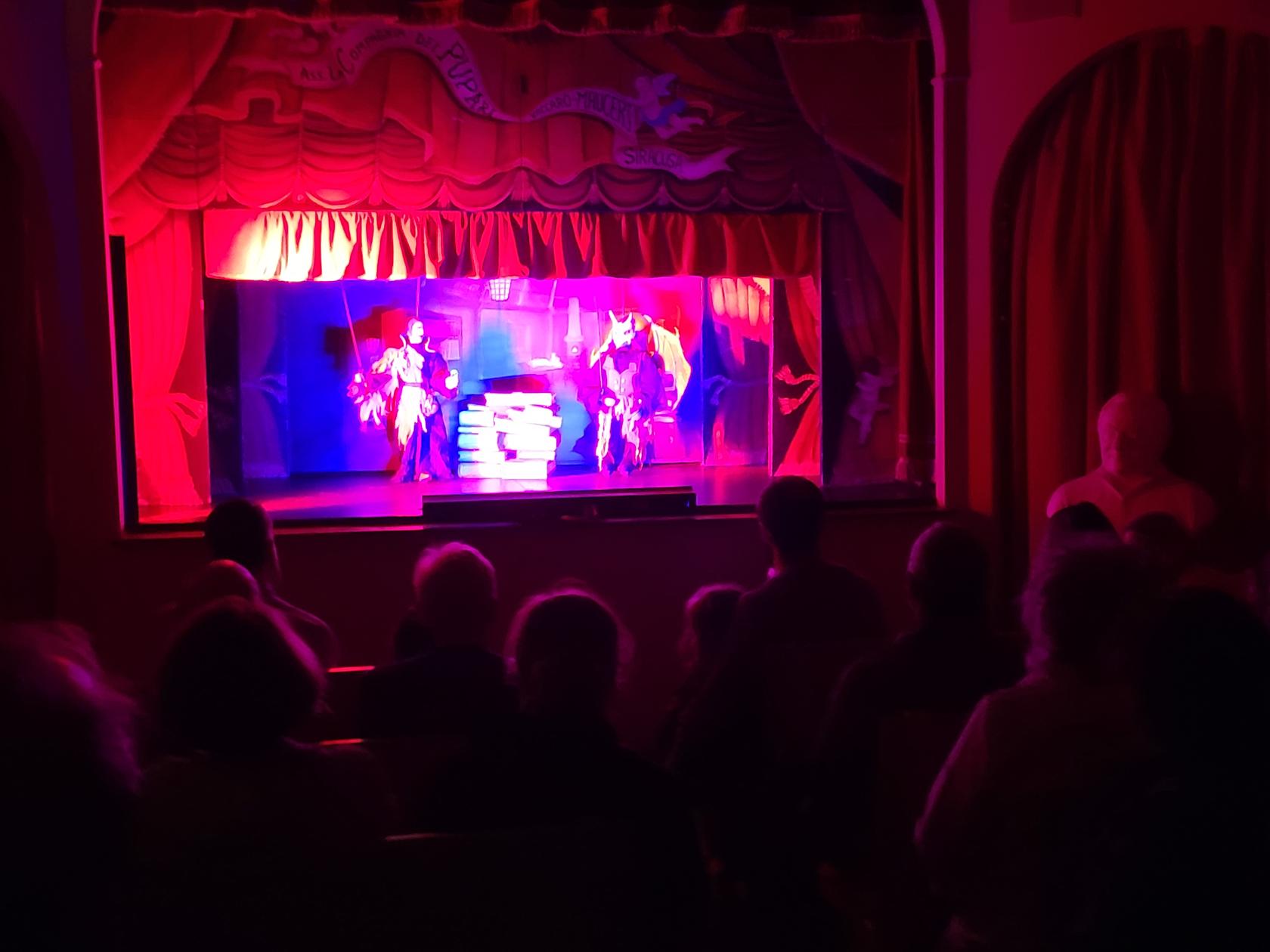
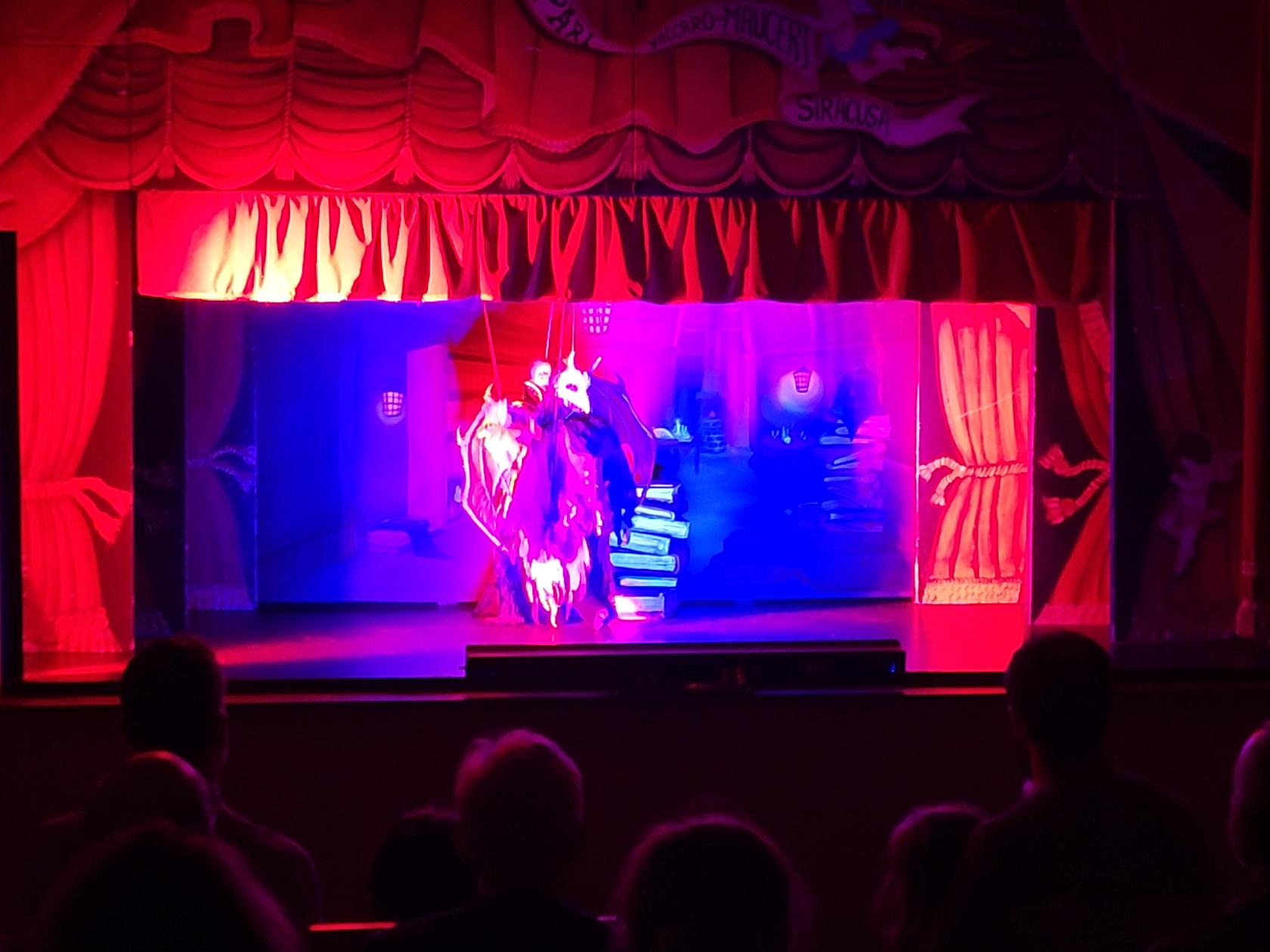
I was originally hesitant to go the Puppet Theater. But after attending a show, I am glad I had. Not only does the host explain the tale in great detail in English, before it is performed. But the actually acting and enactment of the tale was so compelling, I was captivated, even though I had no idea what was being said at many points during the performance.
Tickets for Two – The Puppet Theater – Ortigia – Siracuse, Sicily
Tickets for Two – The Puppet Theater – Ortigia – Siracuse, Sicily
The theater space is very personal, with only enough room for about 50-60 people, and they will seat others if needed in the aisle (on the steps). Therefore, if you need to take any medically necessary precautions in cramped quarters, be prepared before you arrive.
The stage in action – The Puppet Theater – Ortigia – Siracuse, Sicily
An ancient Sicilian tale – The Puppet Theater – Ortigia – Siracuse, Sicily
A demon is always close by – The Puppet Theater – Ortigia – Siracuse, Sicily
Maniace Castle
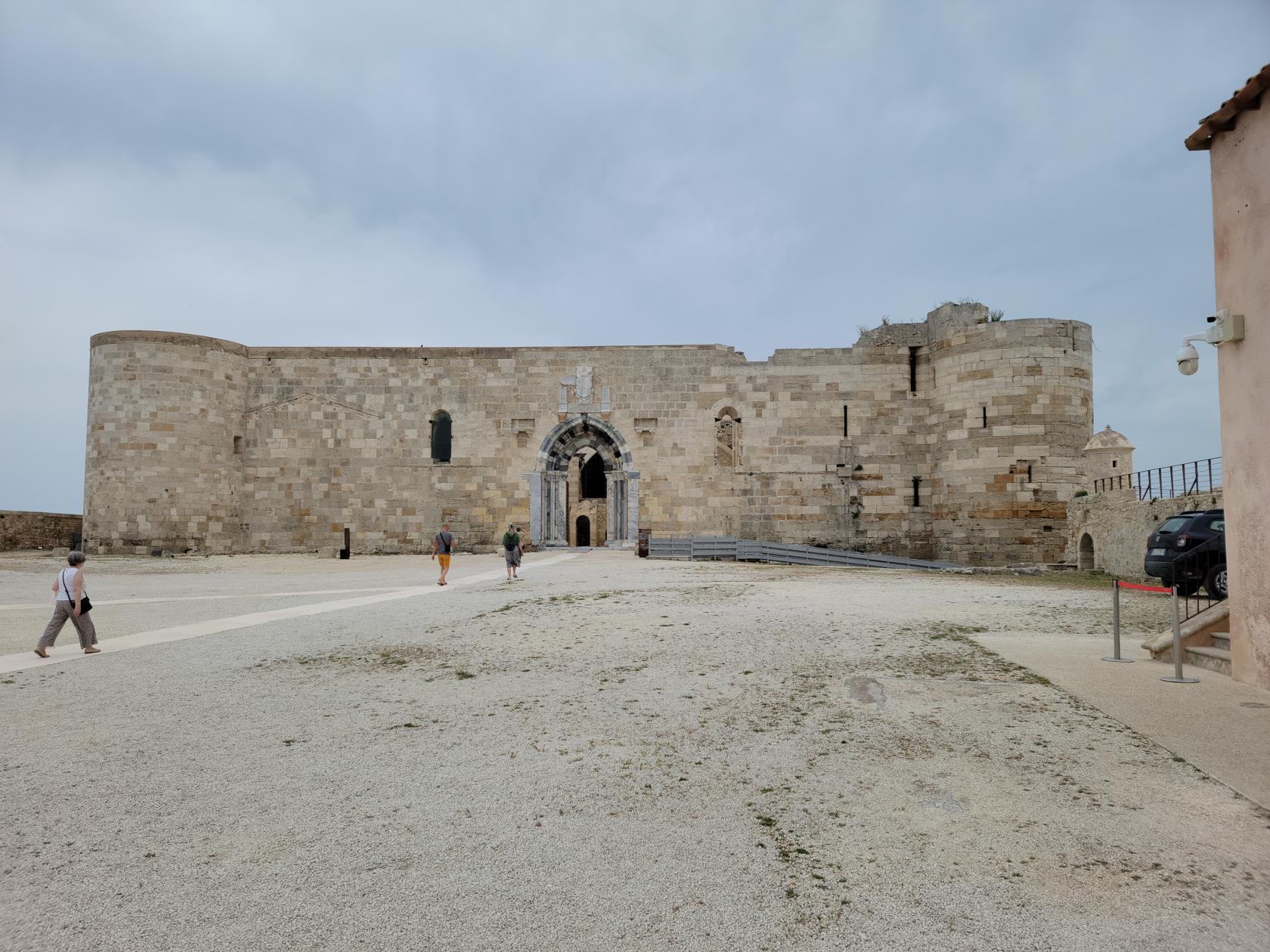
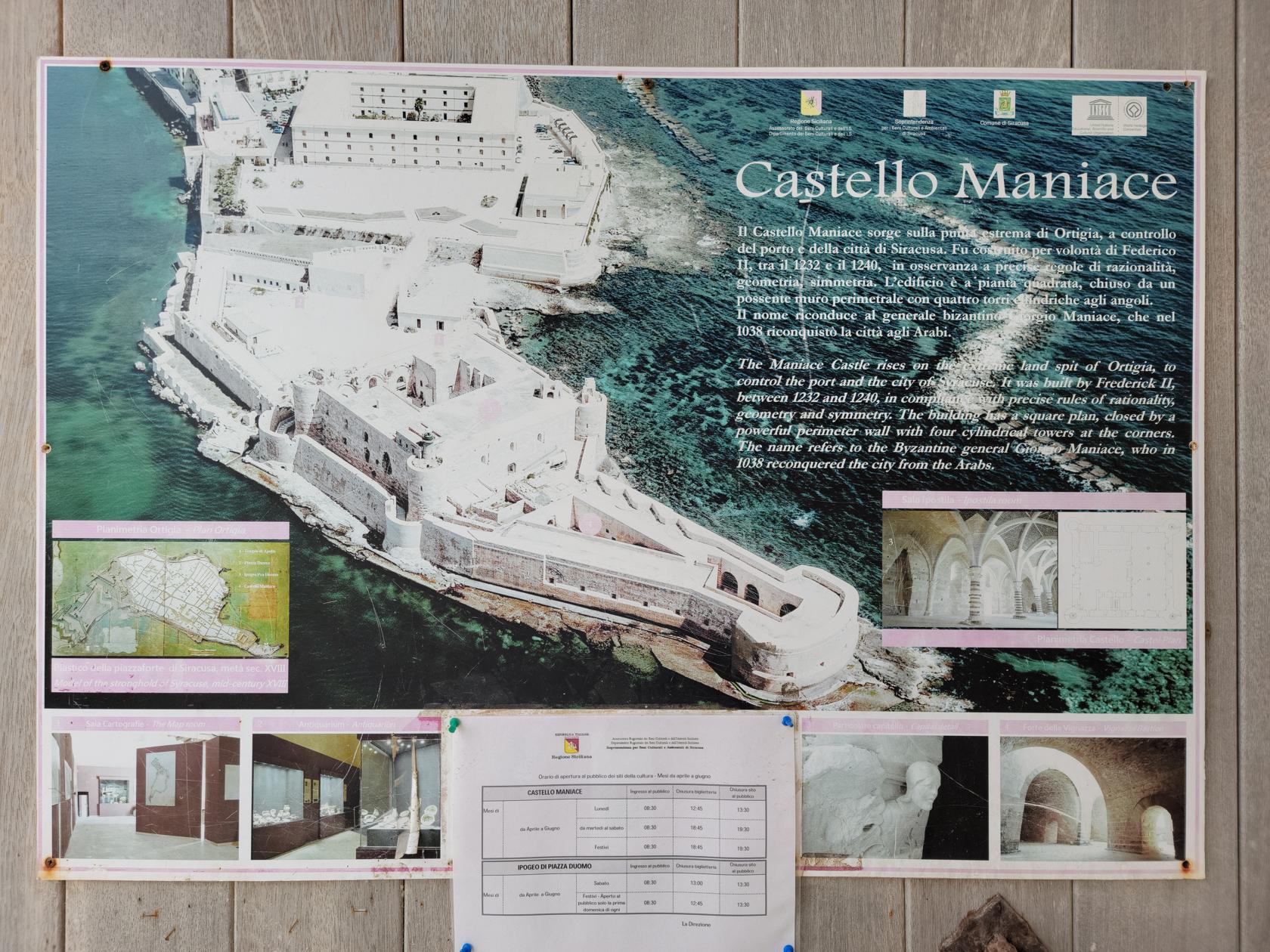
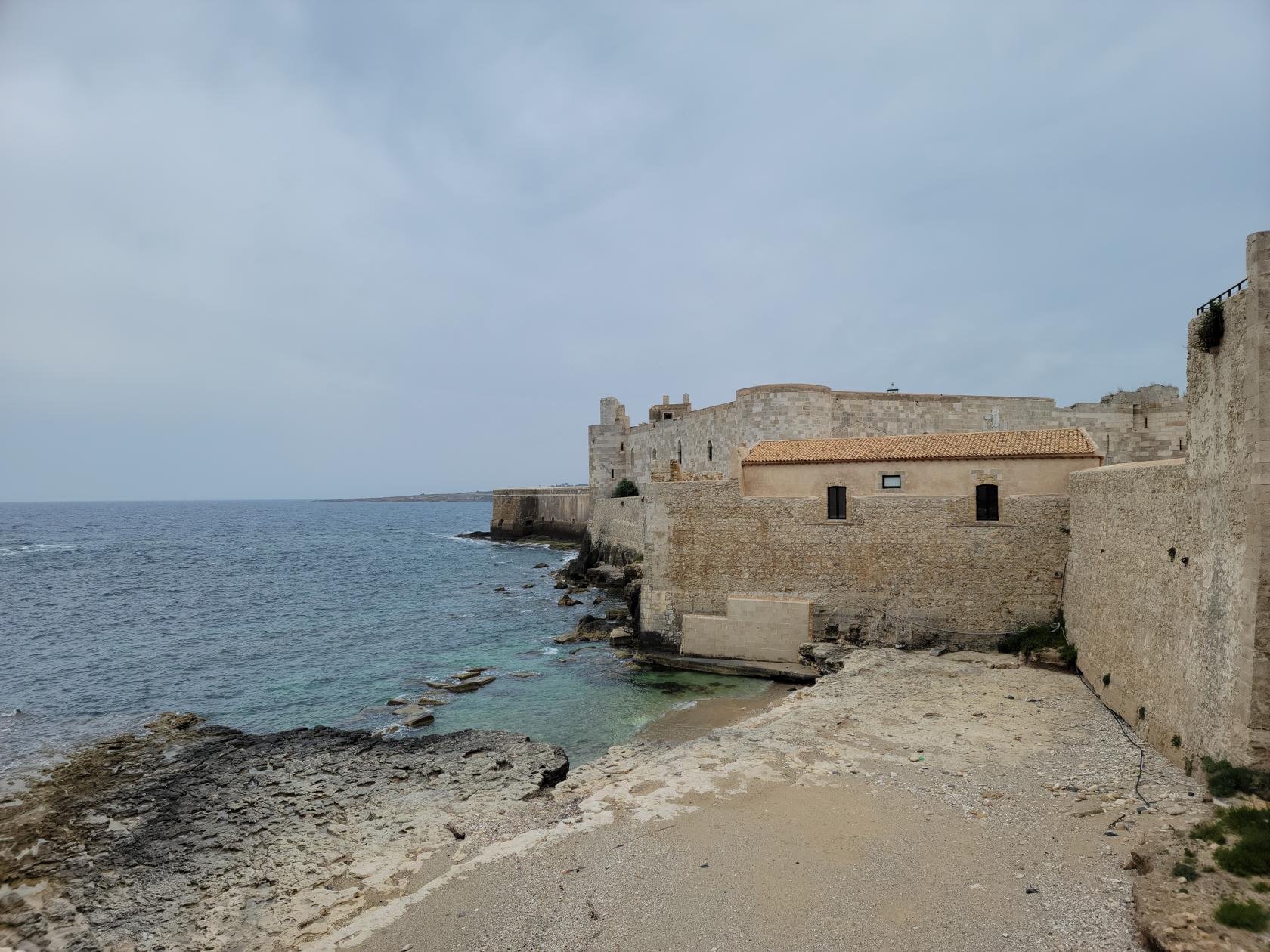
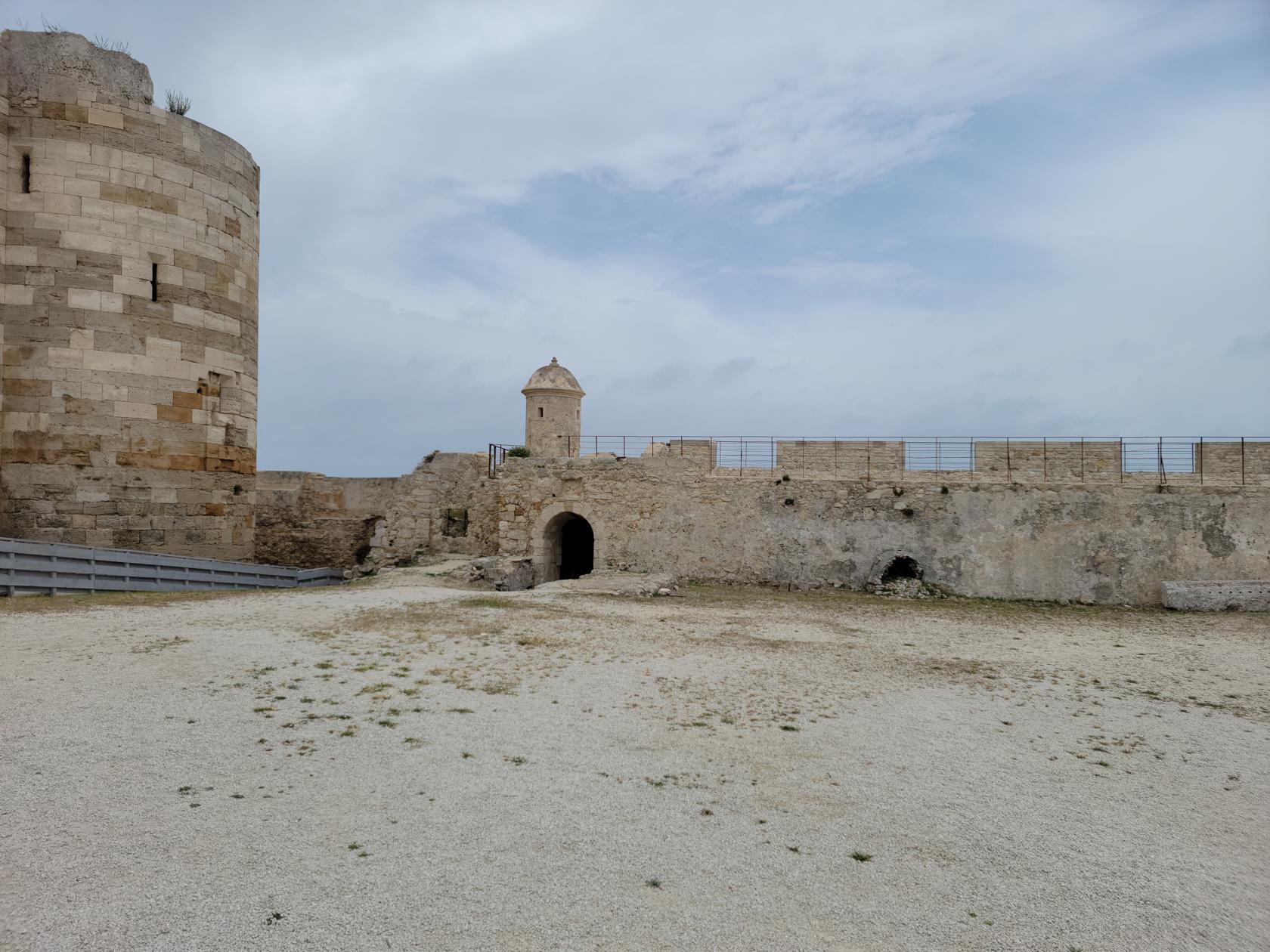
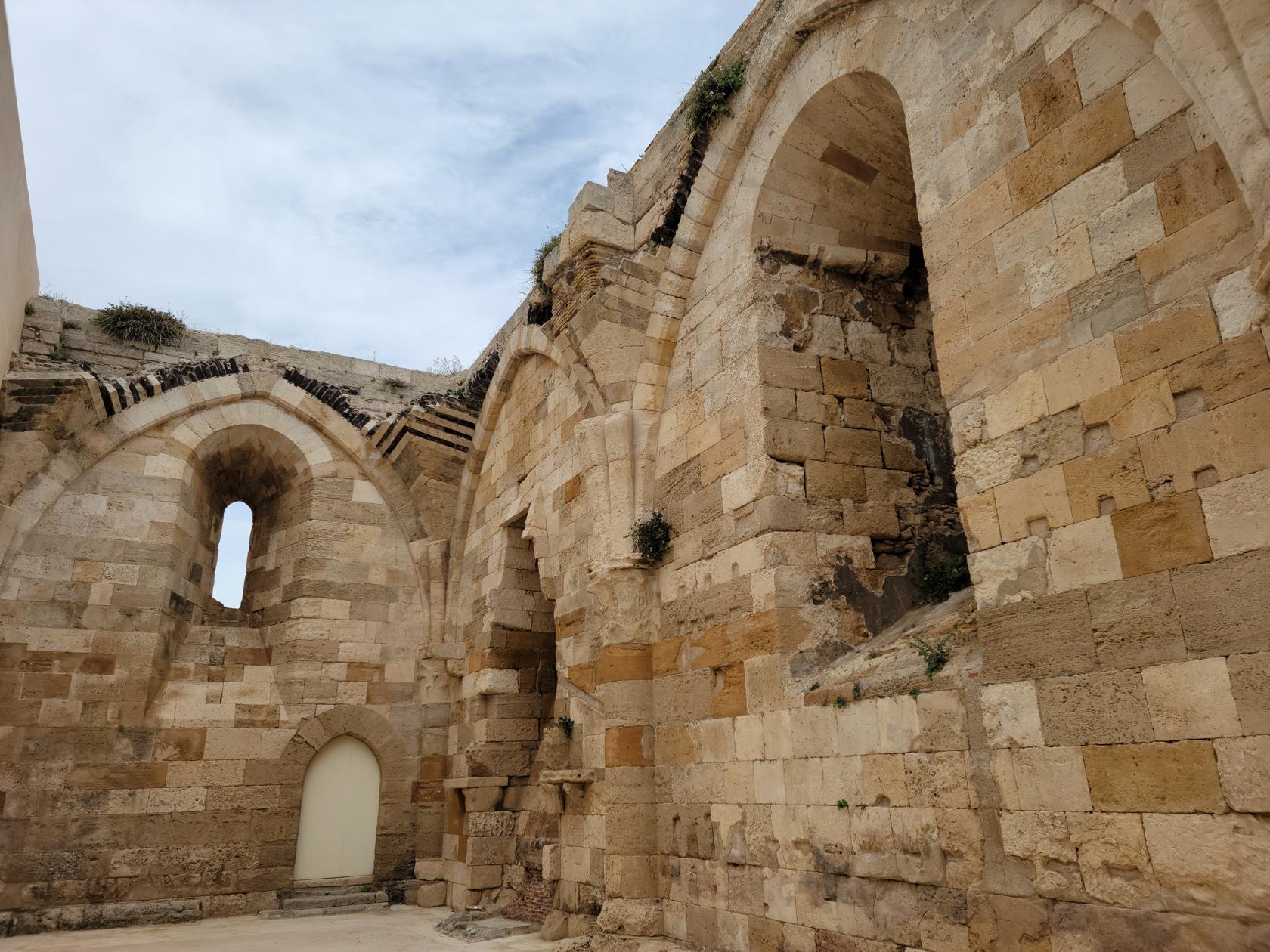
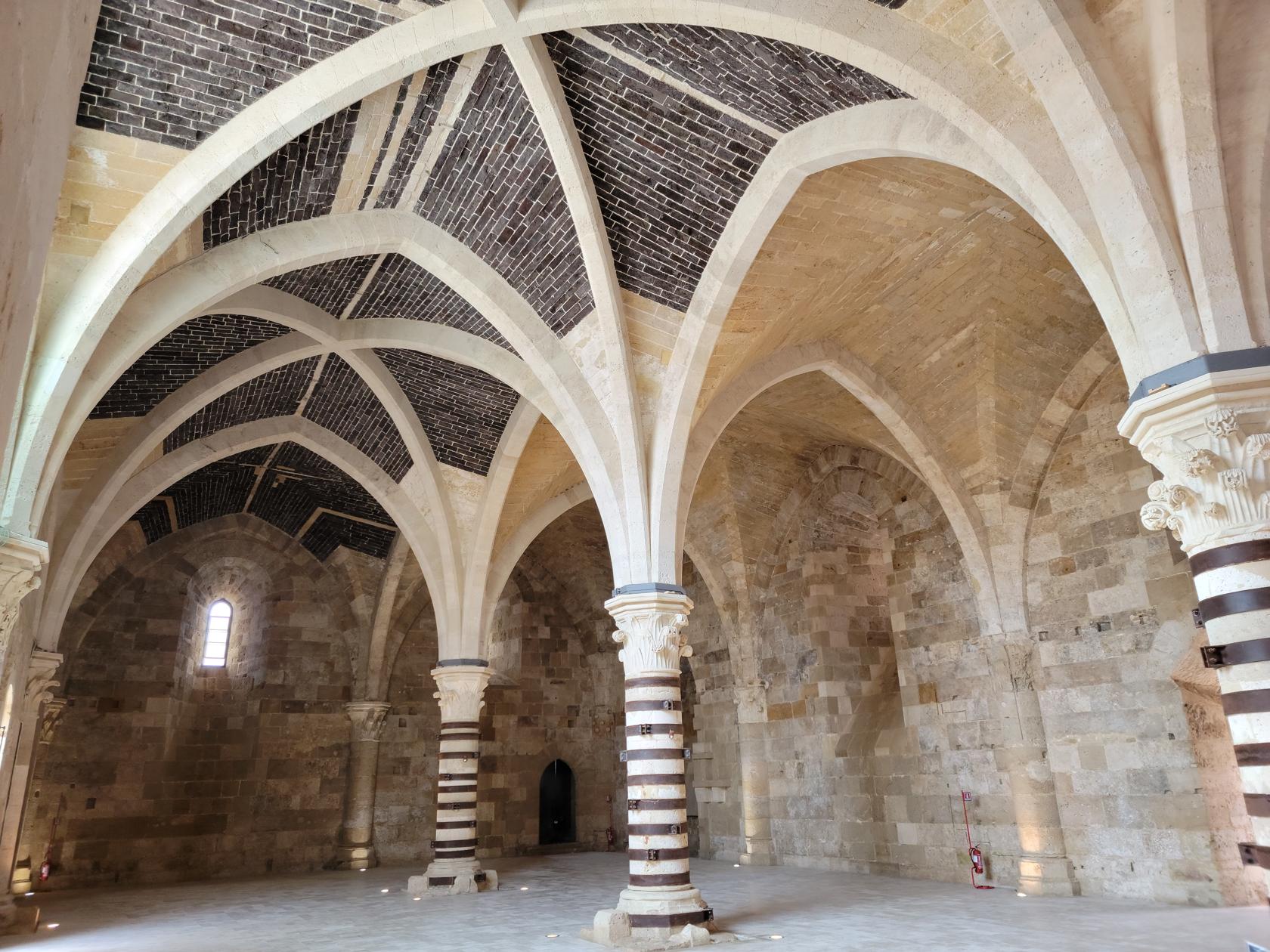
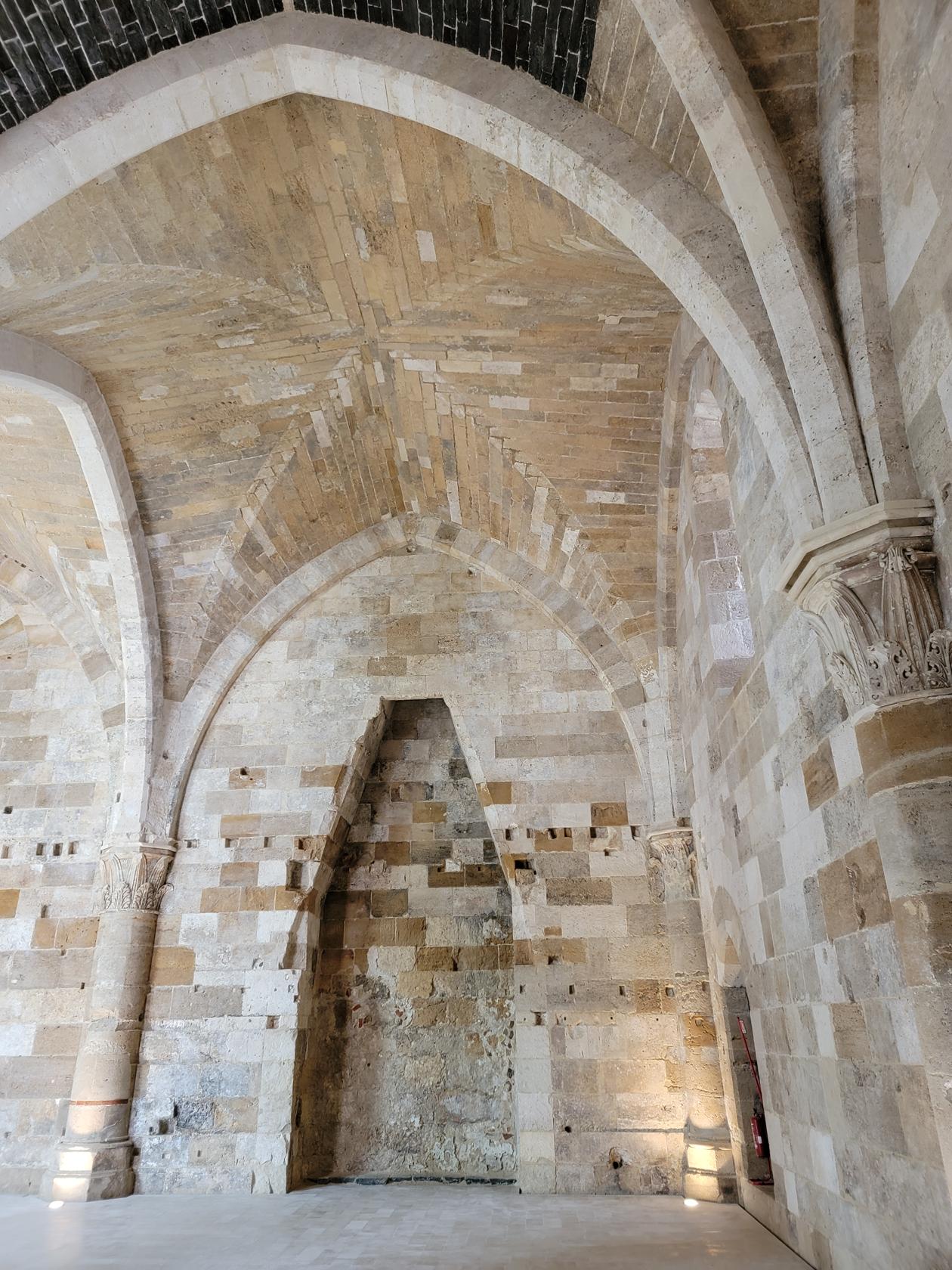
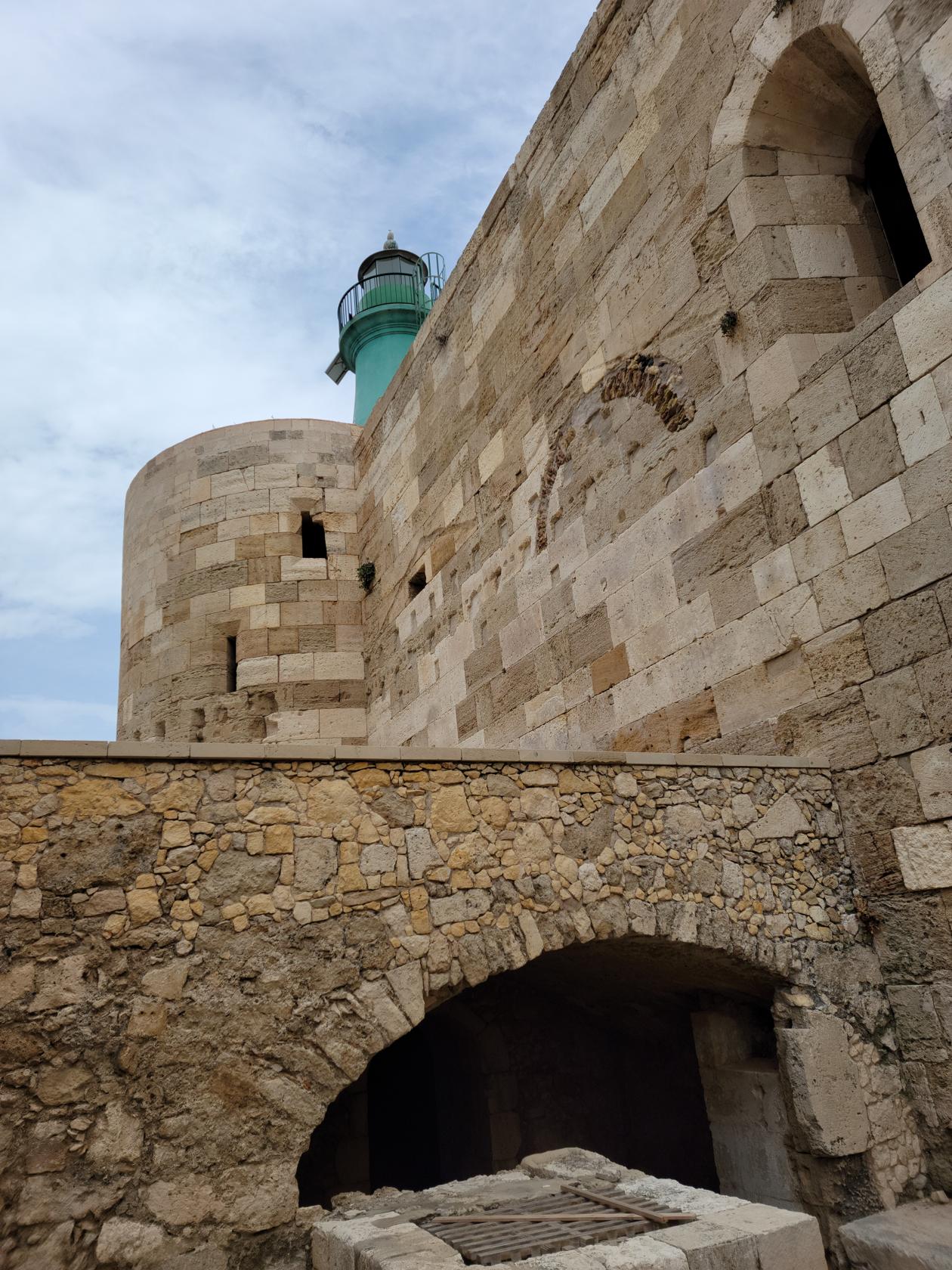
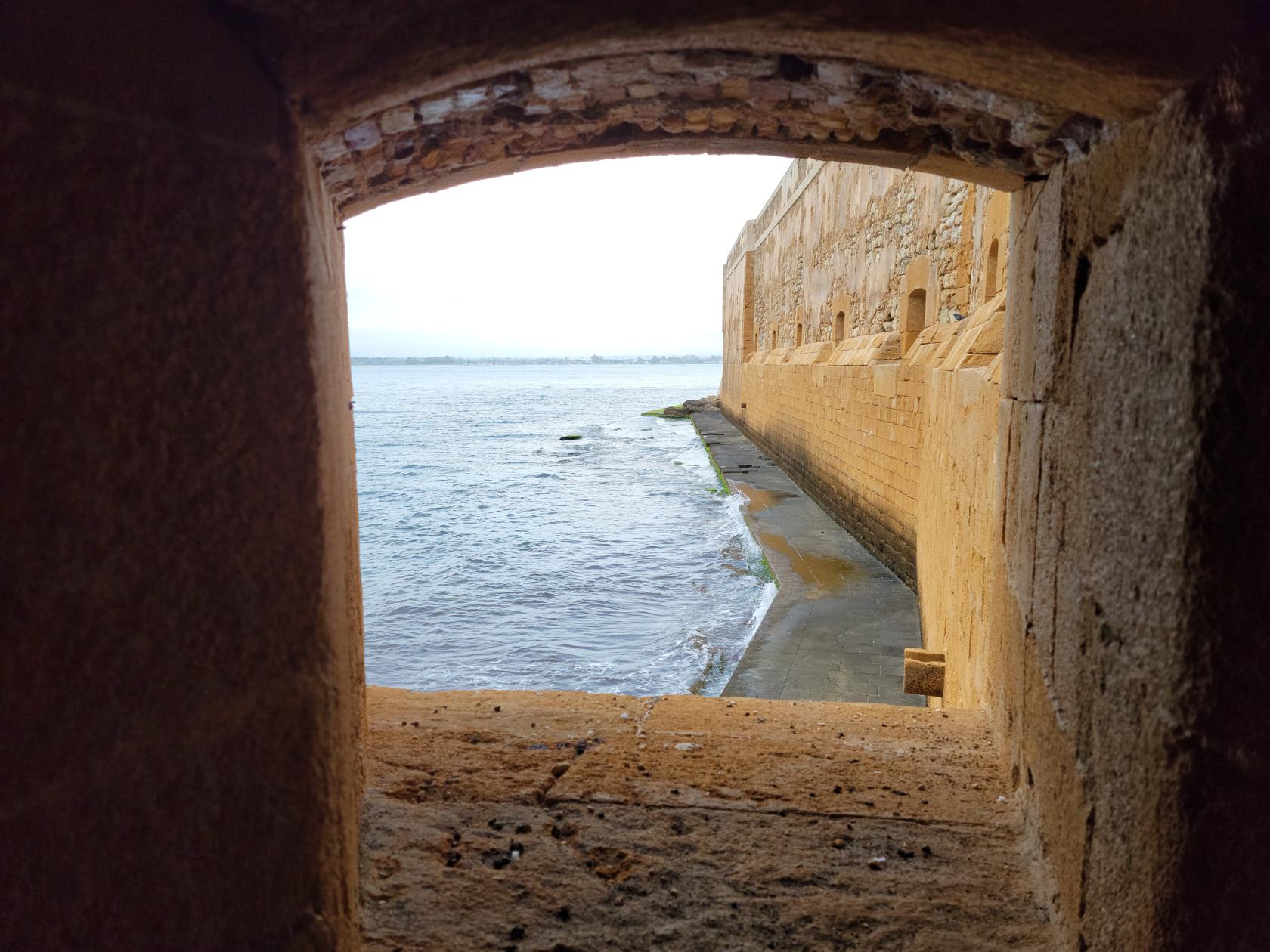
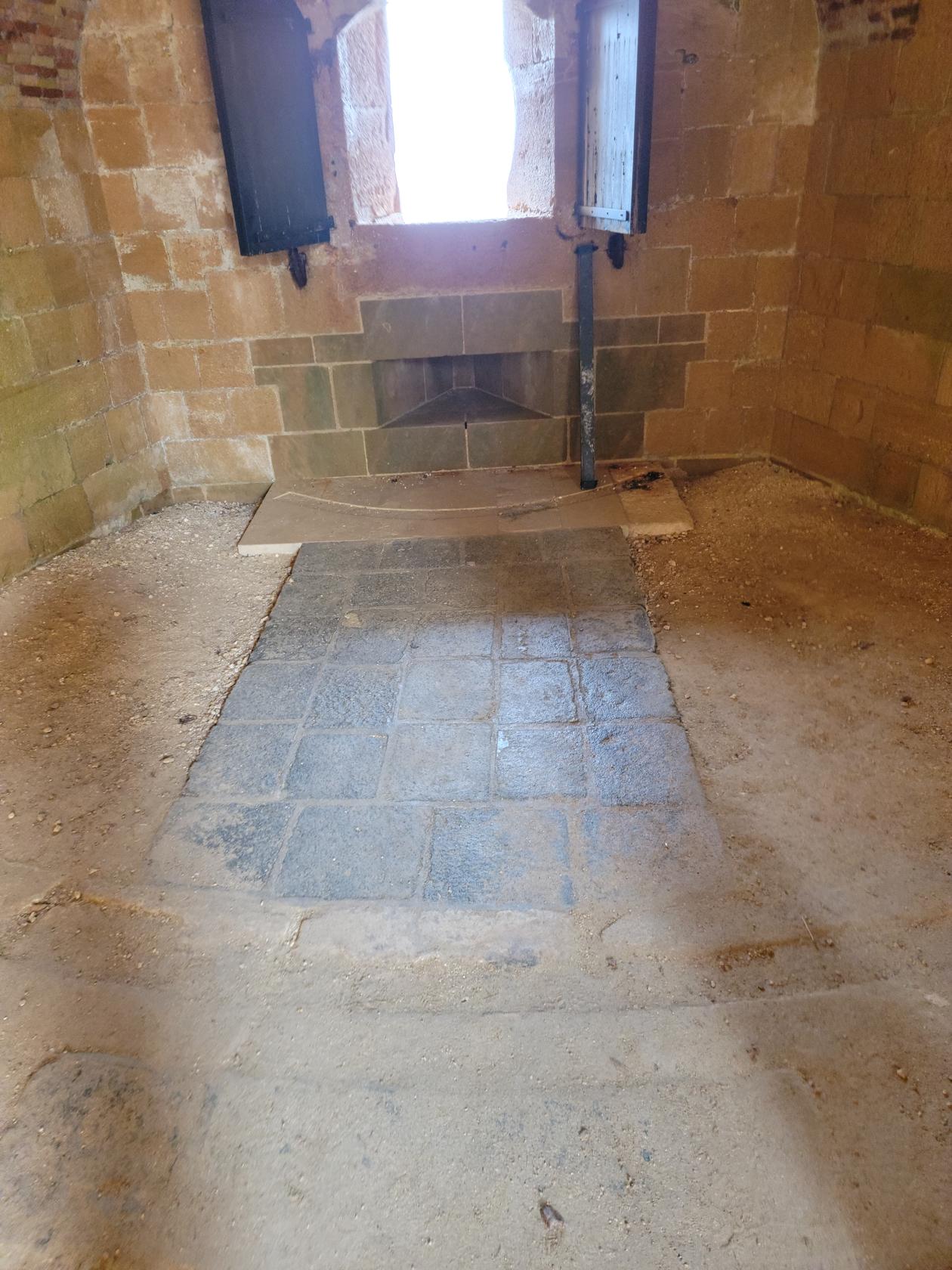
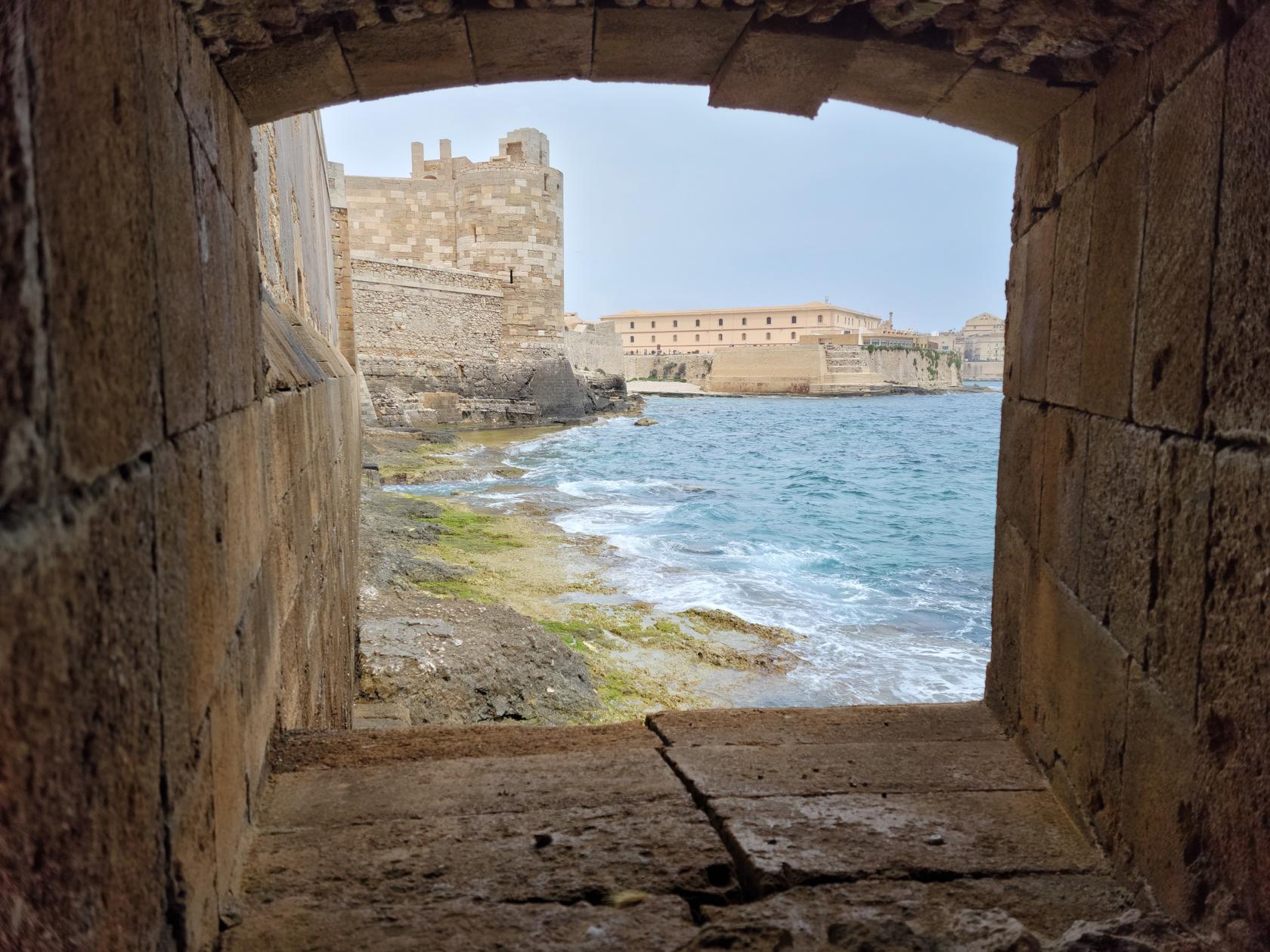
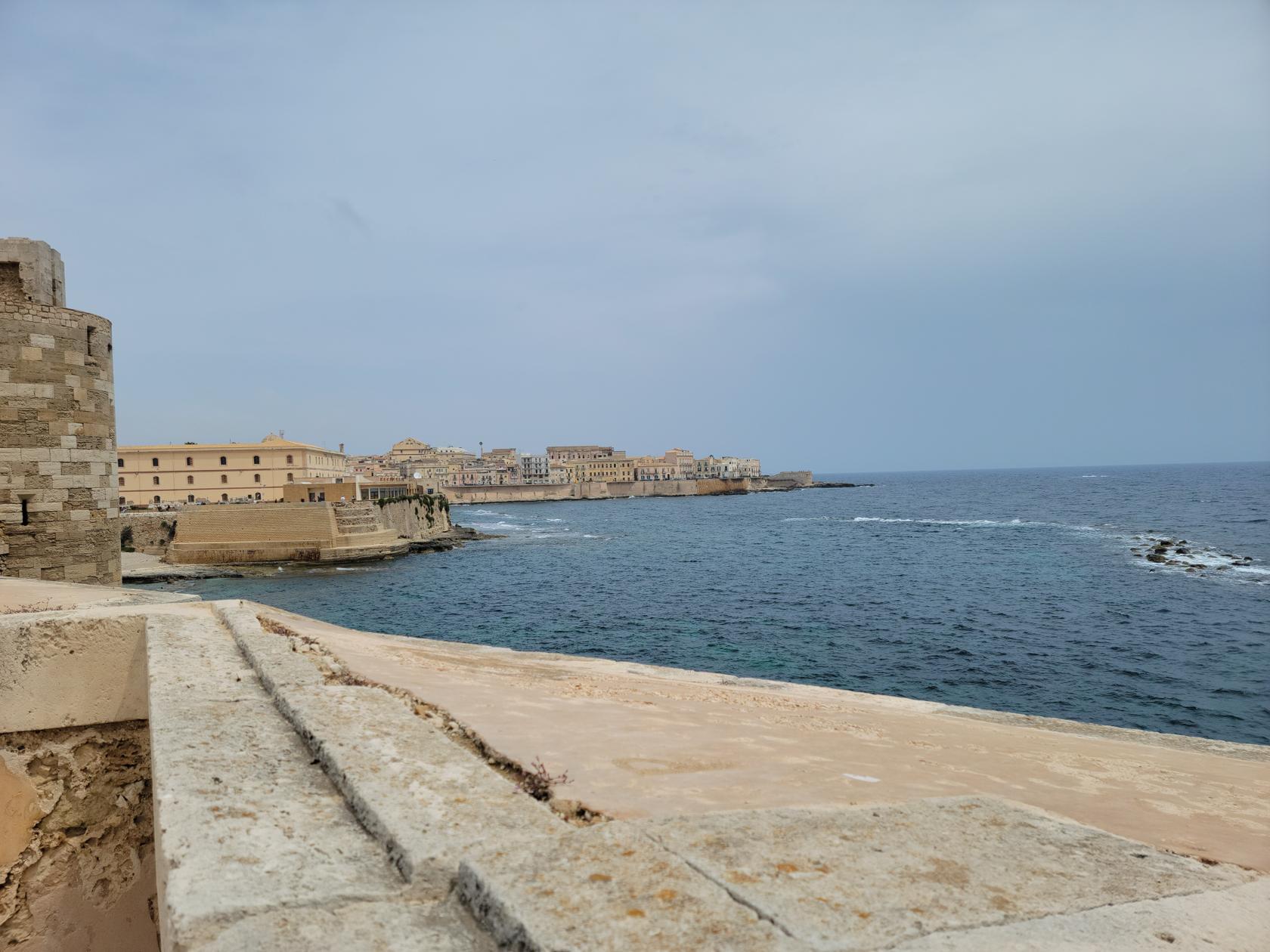
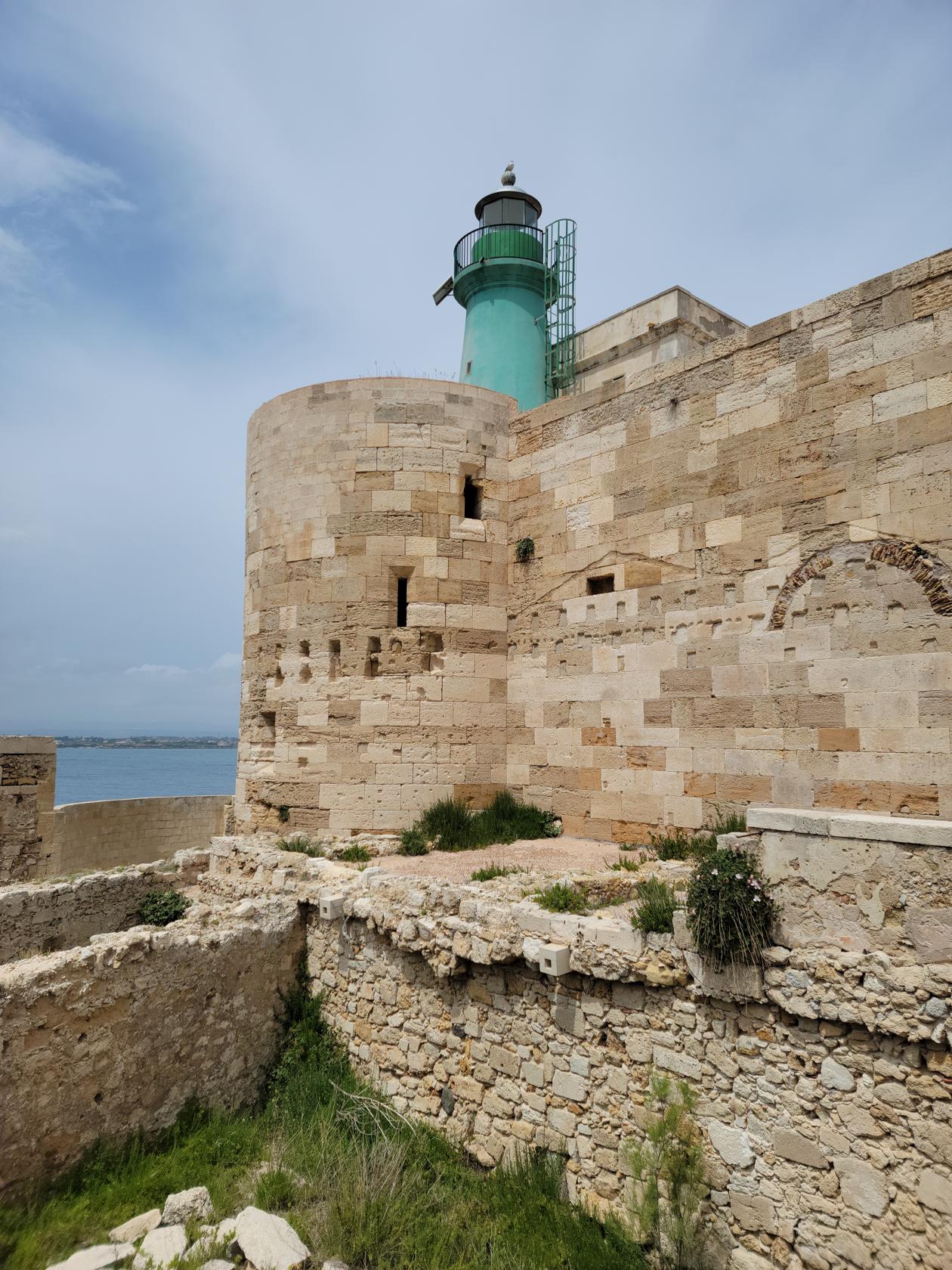
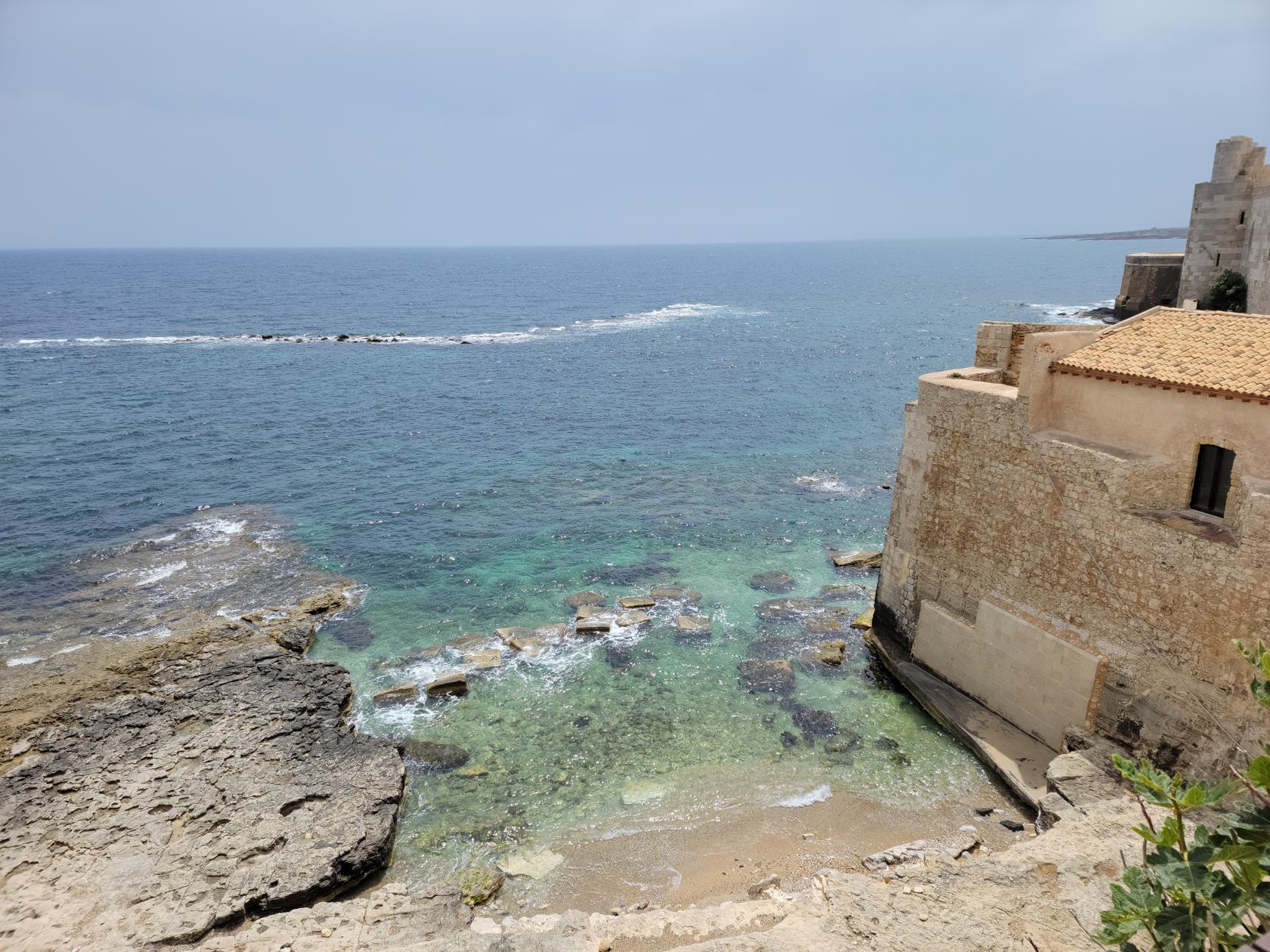
The Maniace Castle sits at the tip of Ortigia and commands an open view of the Ionian Sea. It is a rather simple structure in function and betrays itself to its many uses down through the ages by its many apparent modifications, including the installation of the lighthouse.
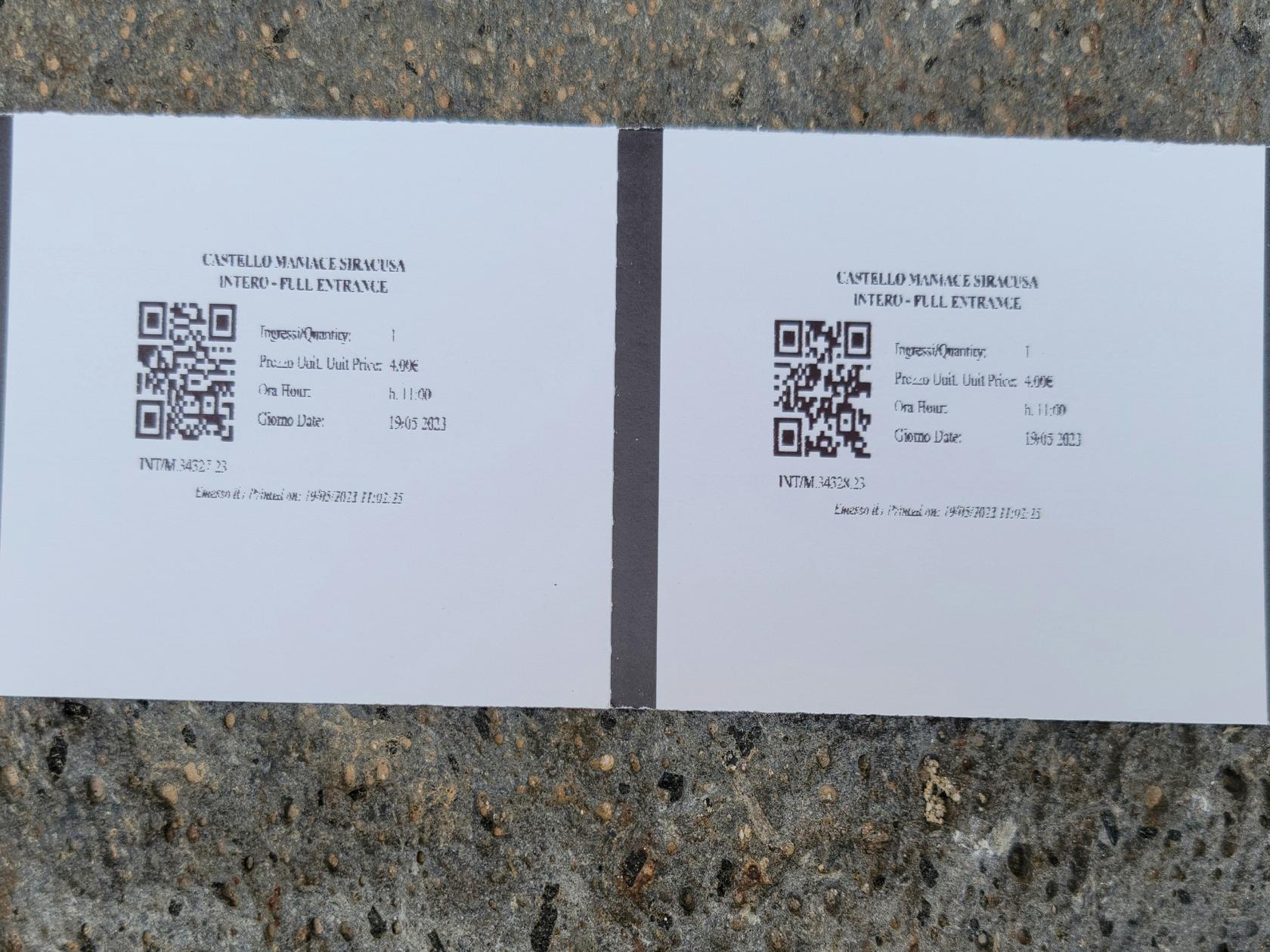
Tickets of Two – Castle Maniace – Siracusa, Sicily
Entrance – Castle Maniace – Siracusa, Sicily
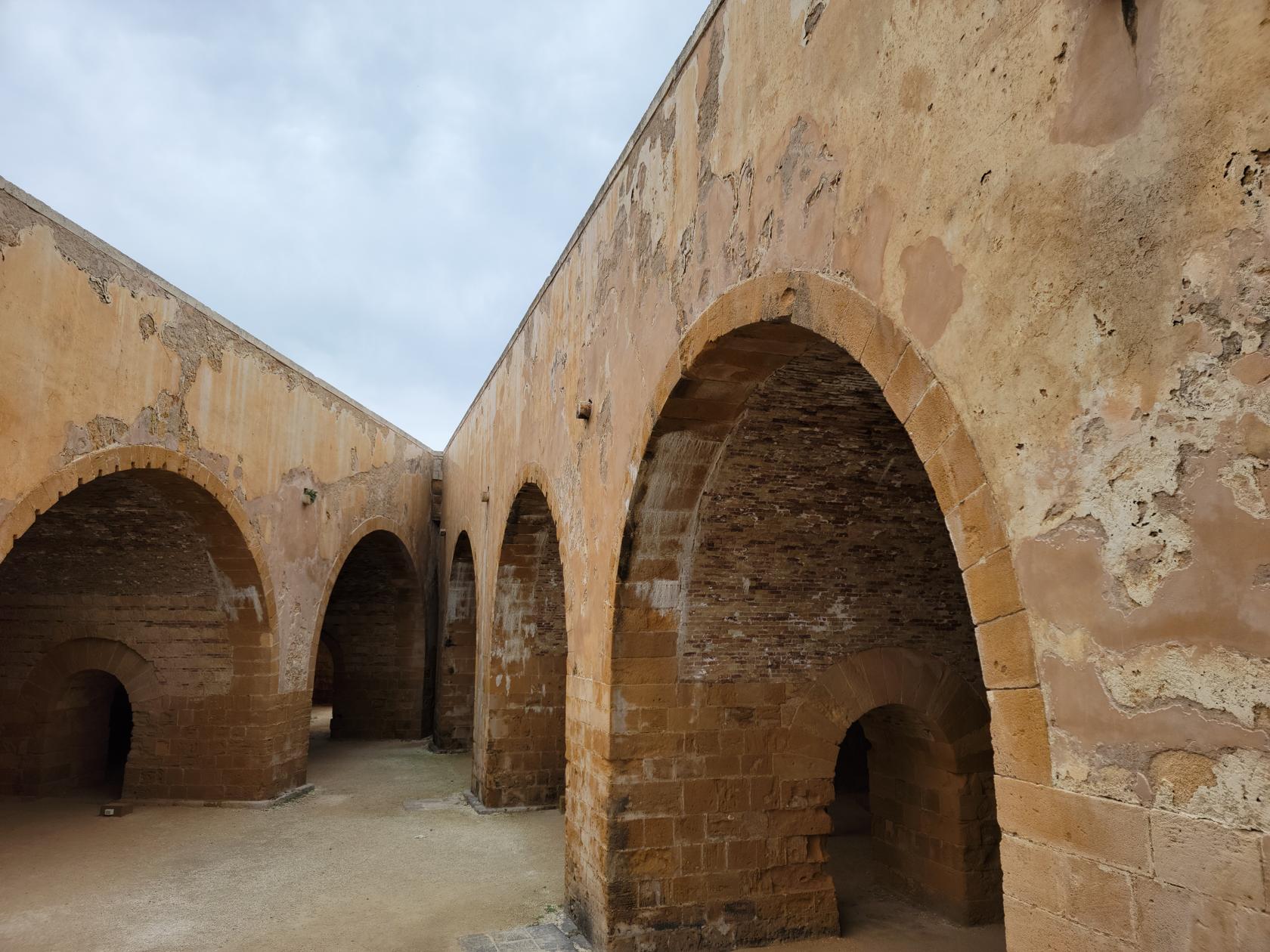
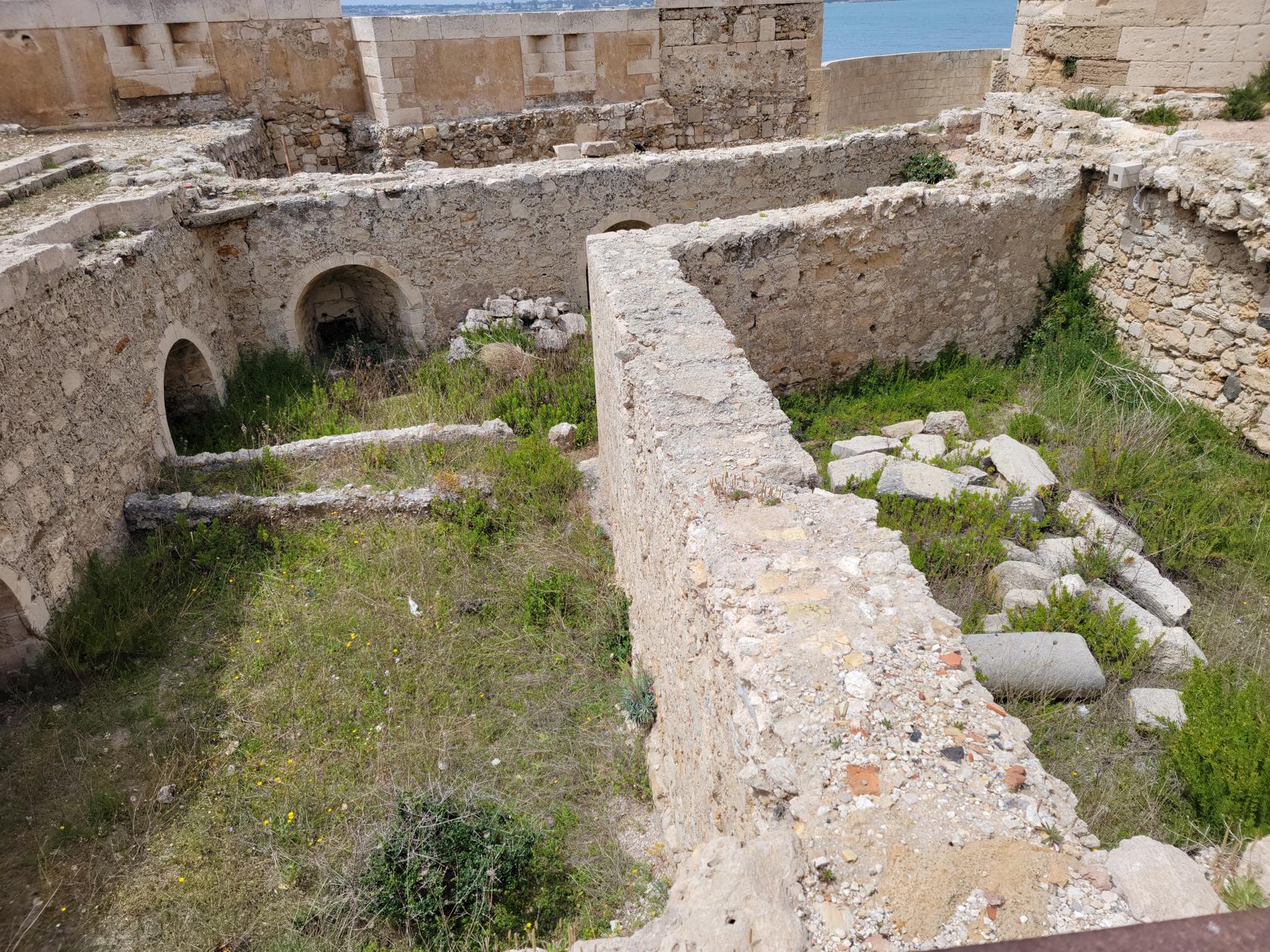
It is however complete with a moat, or in this case, a large drained sunken area where you can wander and only guess what it used to be like back in the day.
Layout – Castle Maniace – Siracusa, Sicily
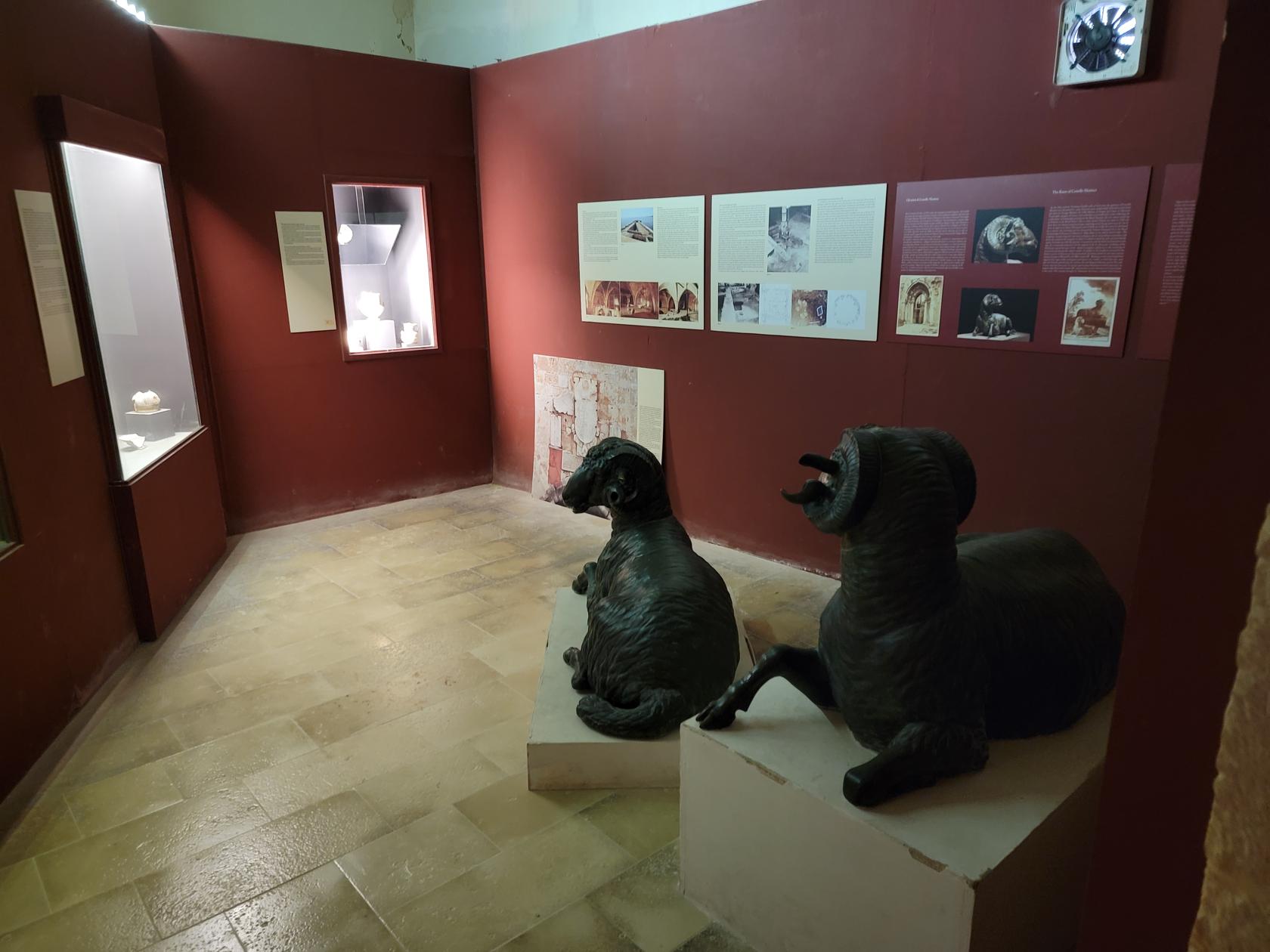
Museum – Castle Maniace – Siracusa, Sicily
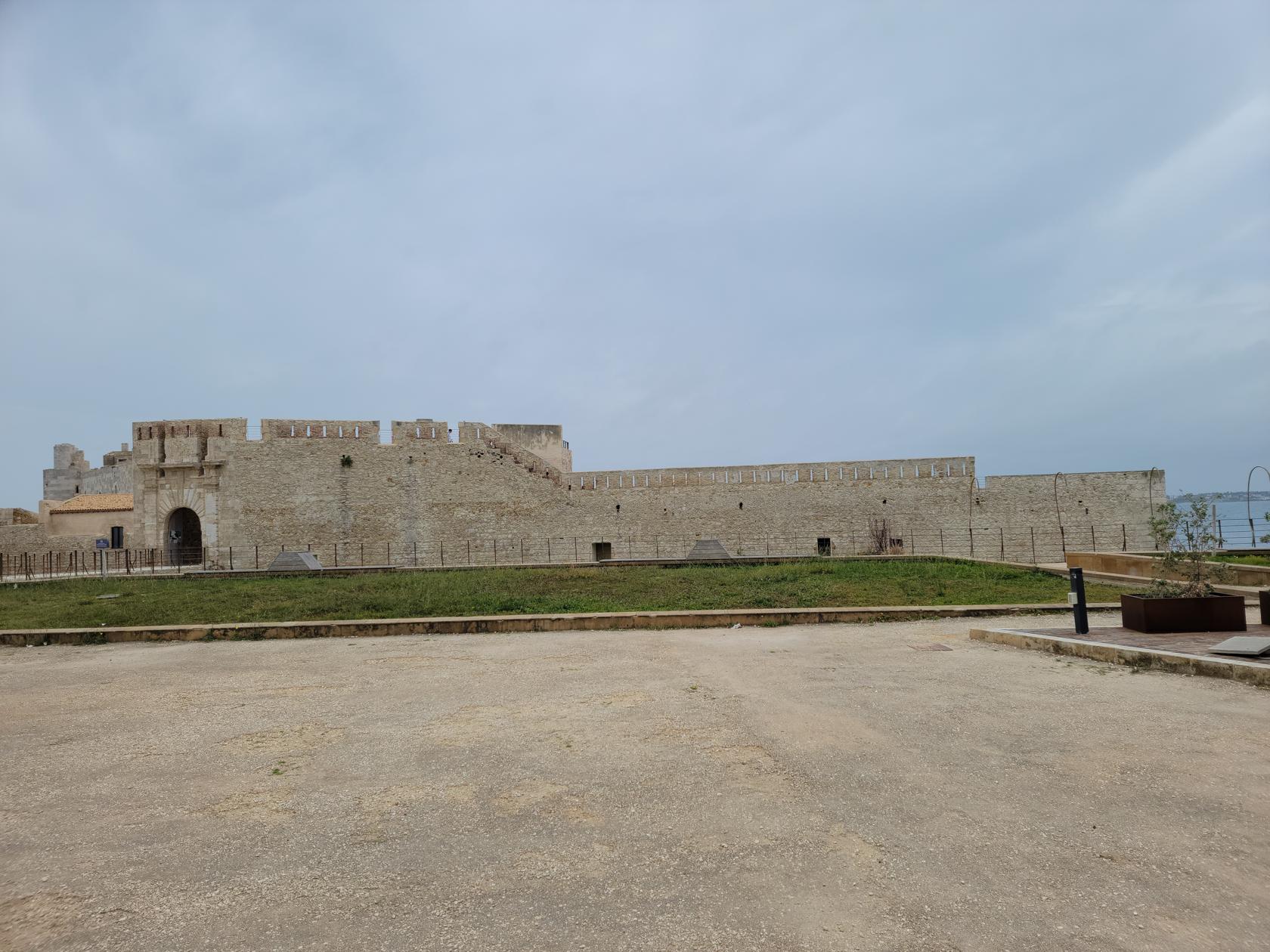
From a distance – Castle Maniace – Siracusa, Sicily
The outside walls – Castle Maniace – Siracusa, Sicily
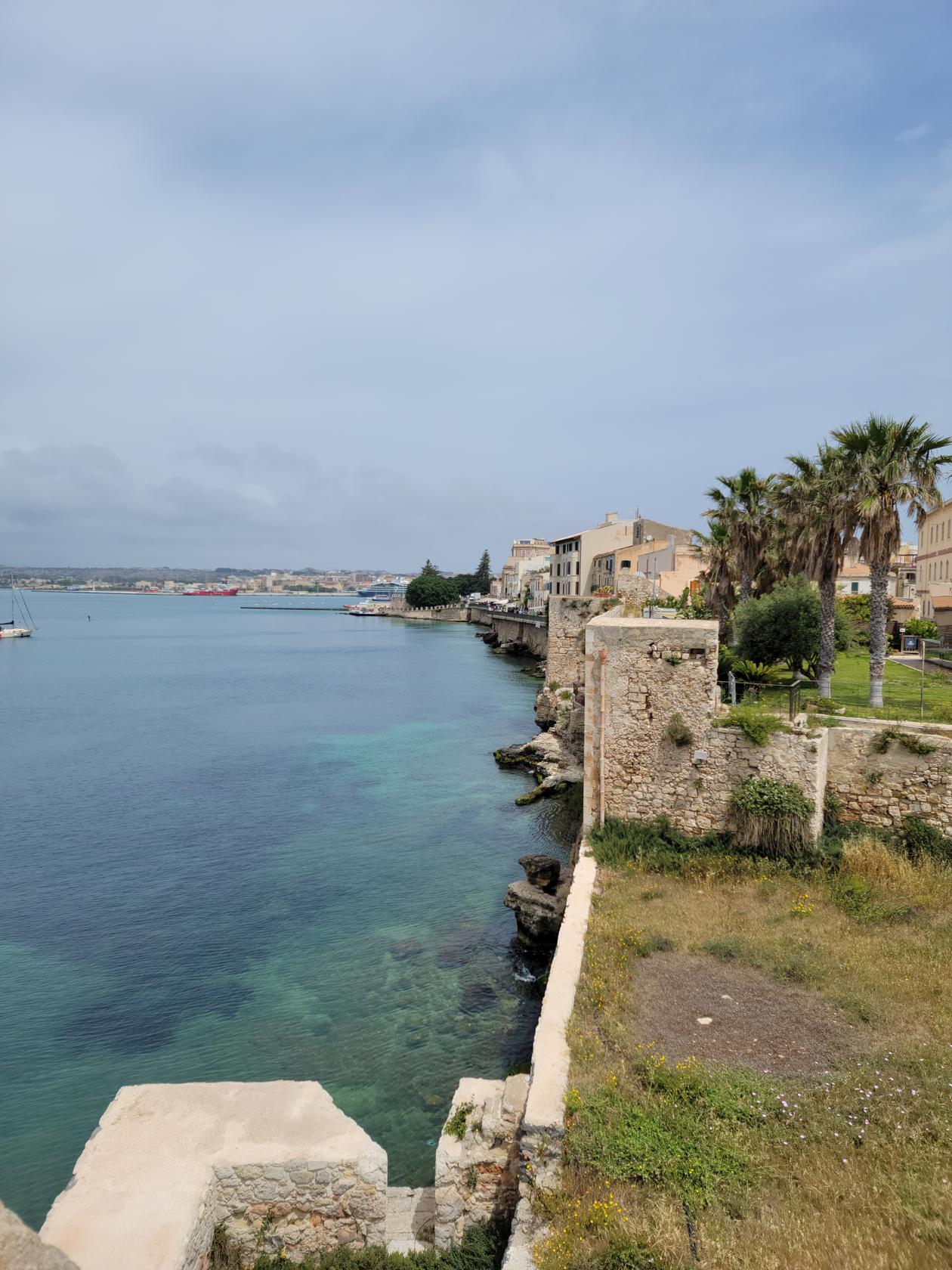
Bay of Ortigia – Castle Maniace – Siracusa, Sicily
Ionian Sea – Castle Maniace – Siracusa, Sicily
Cathedral Of Syracuse
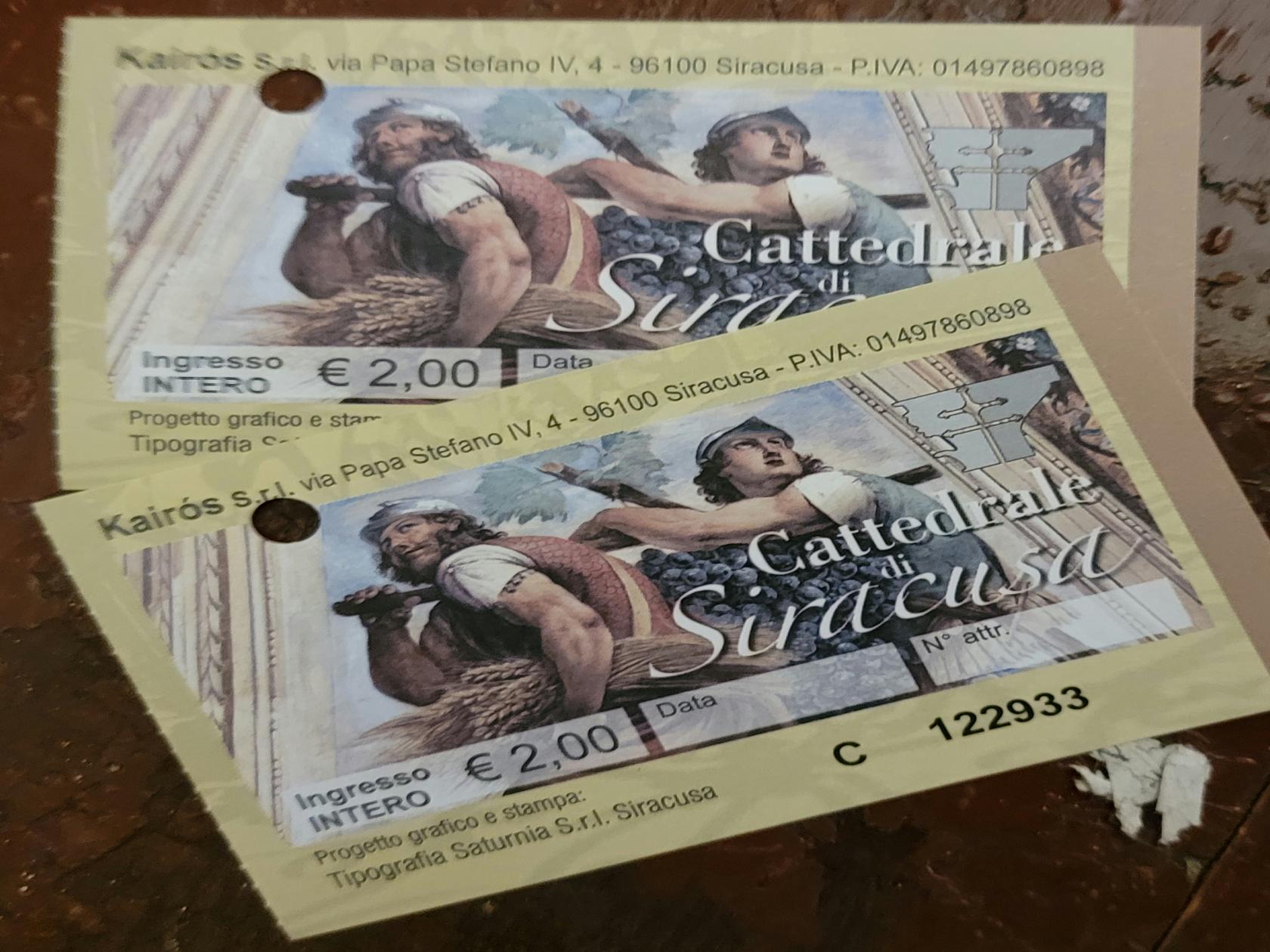
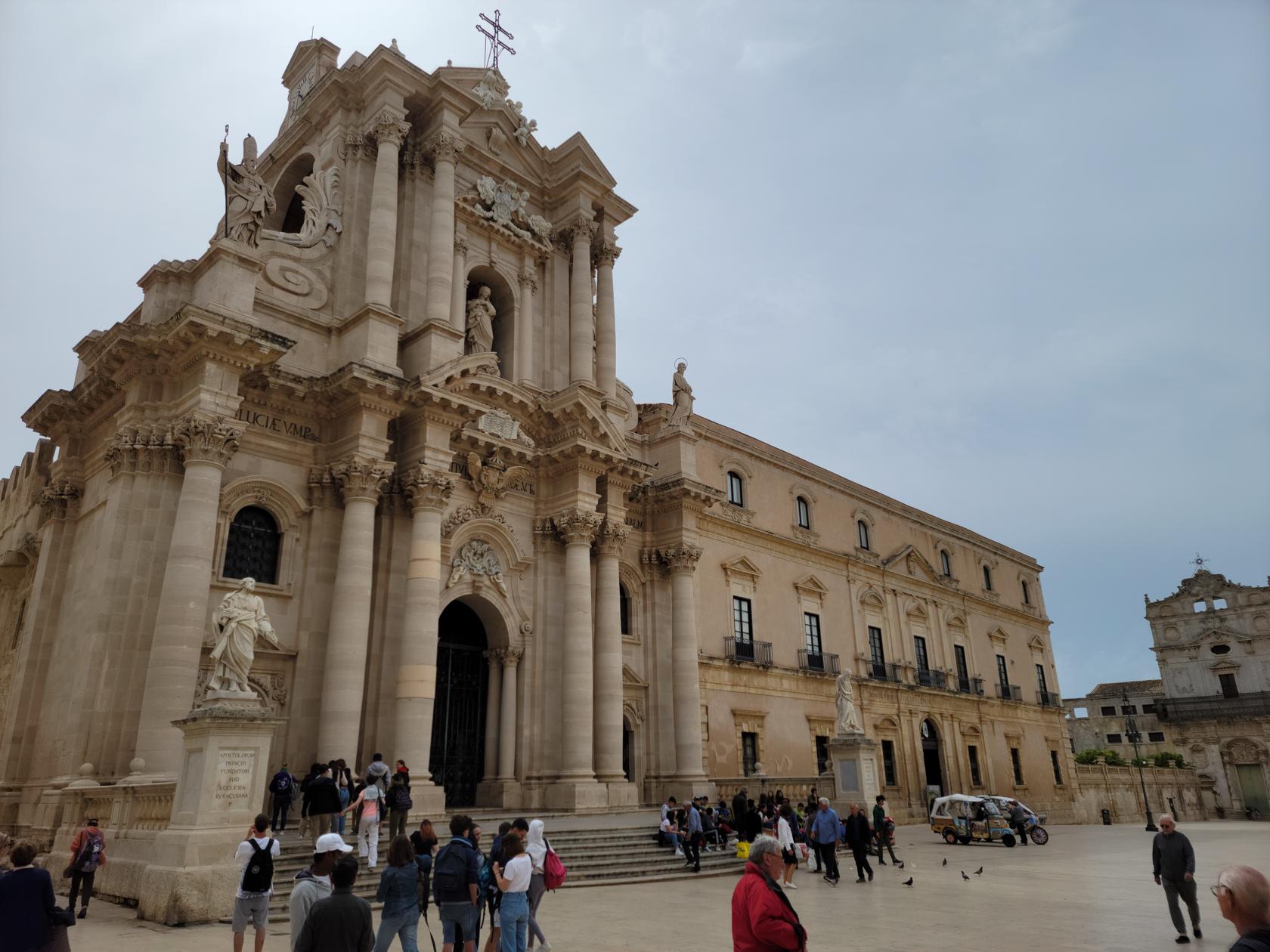
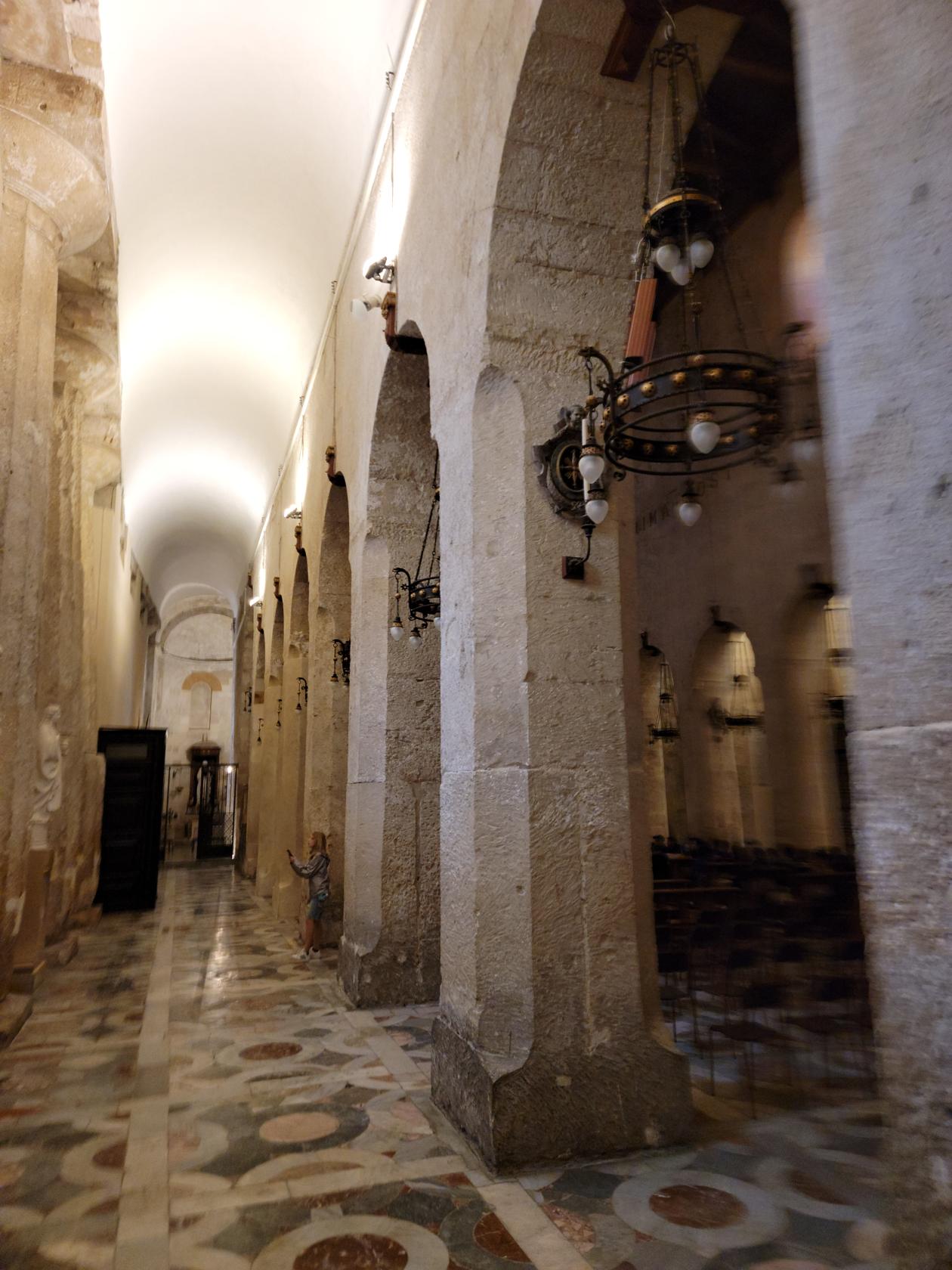
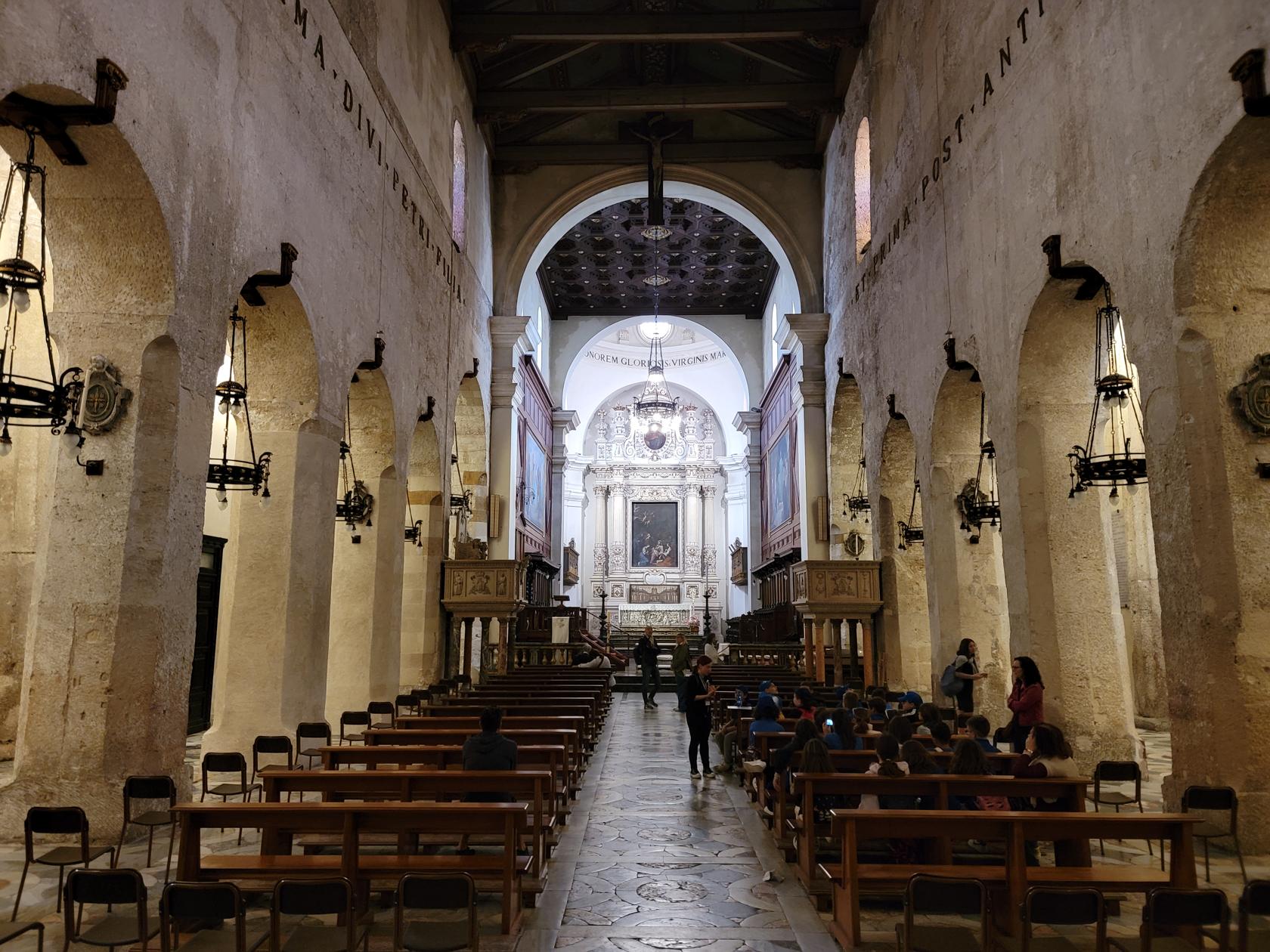
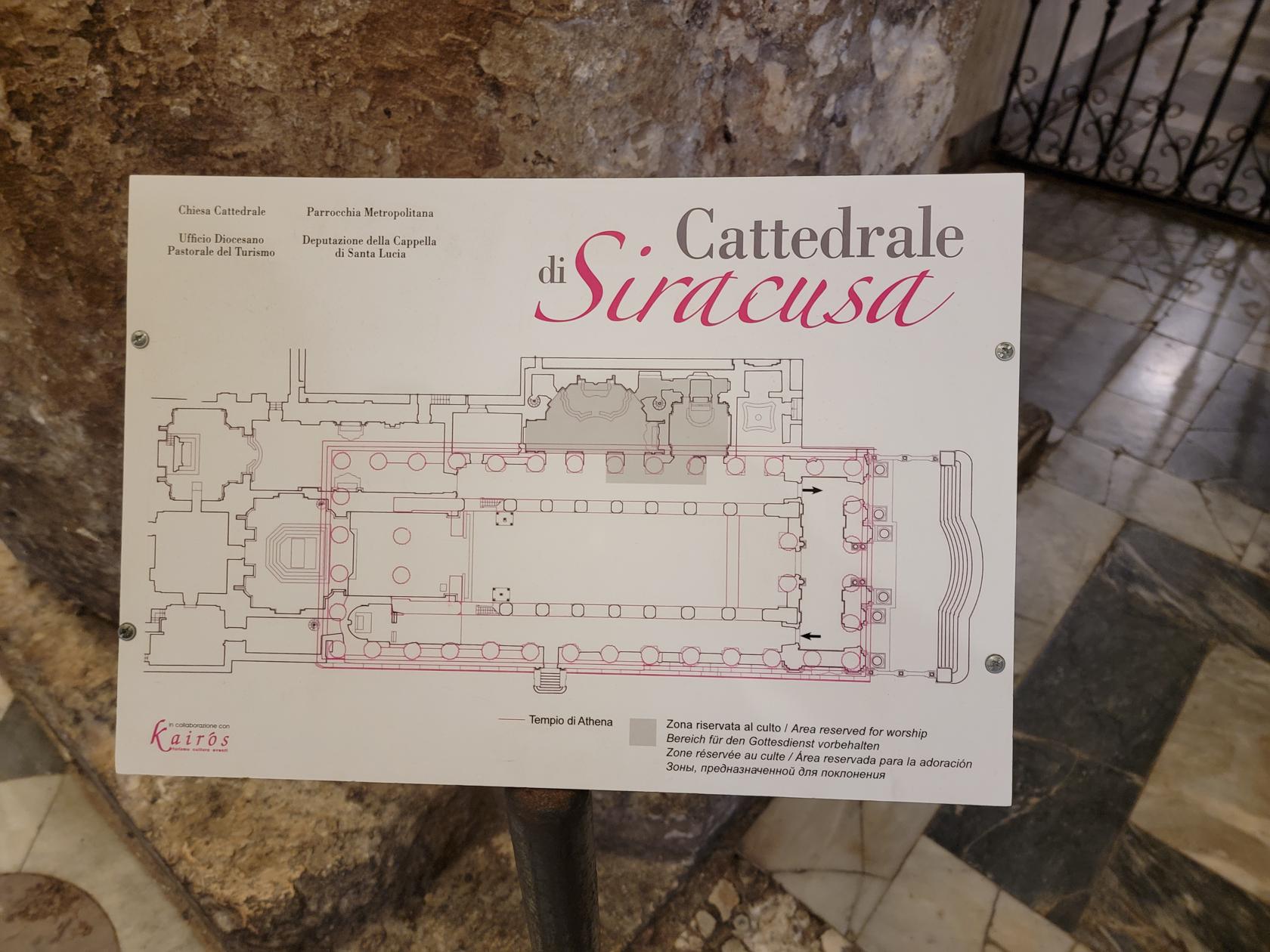
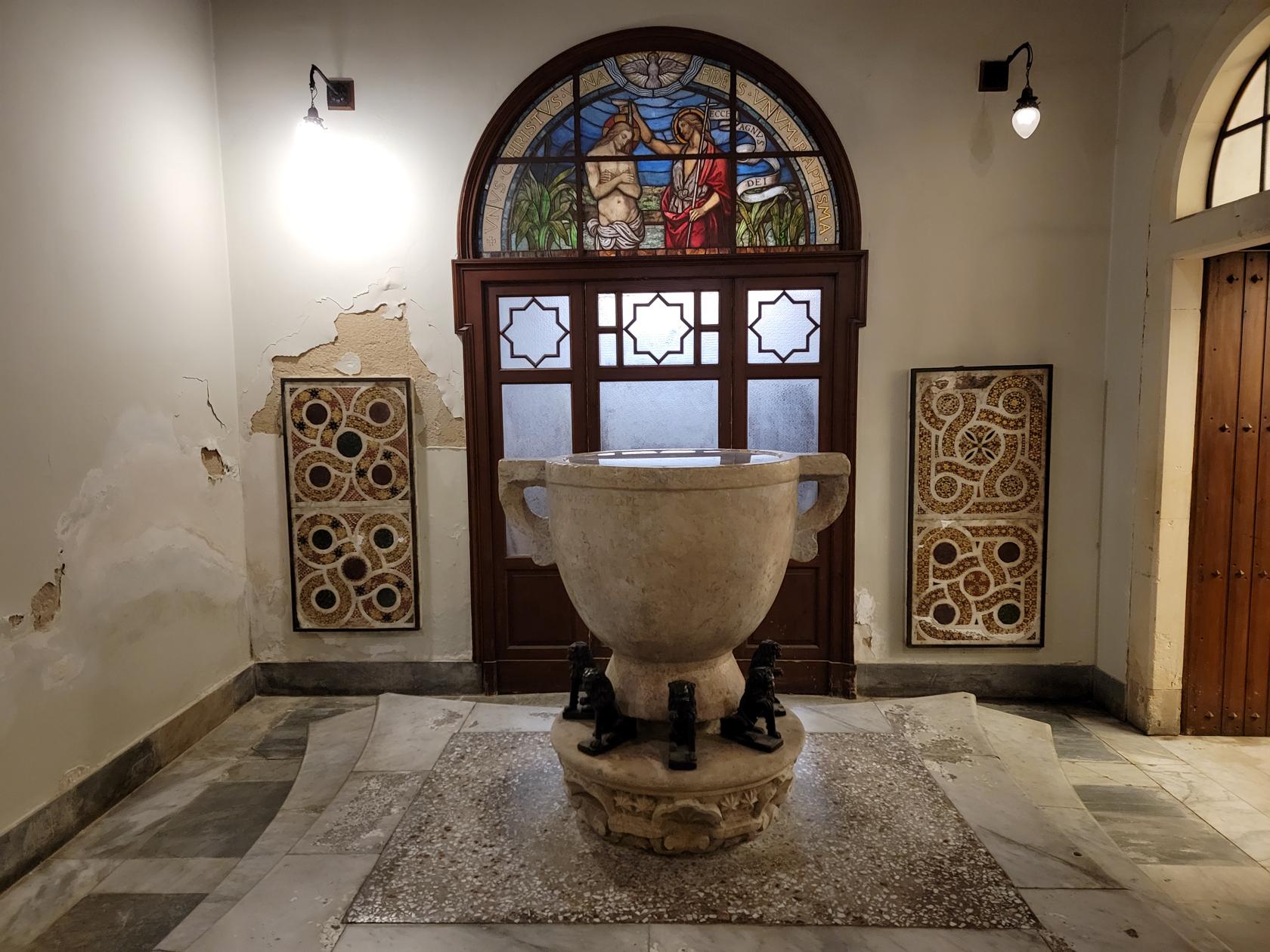
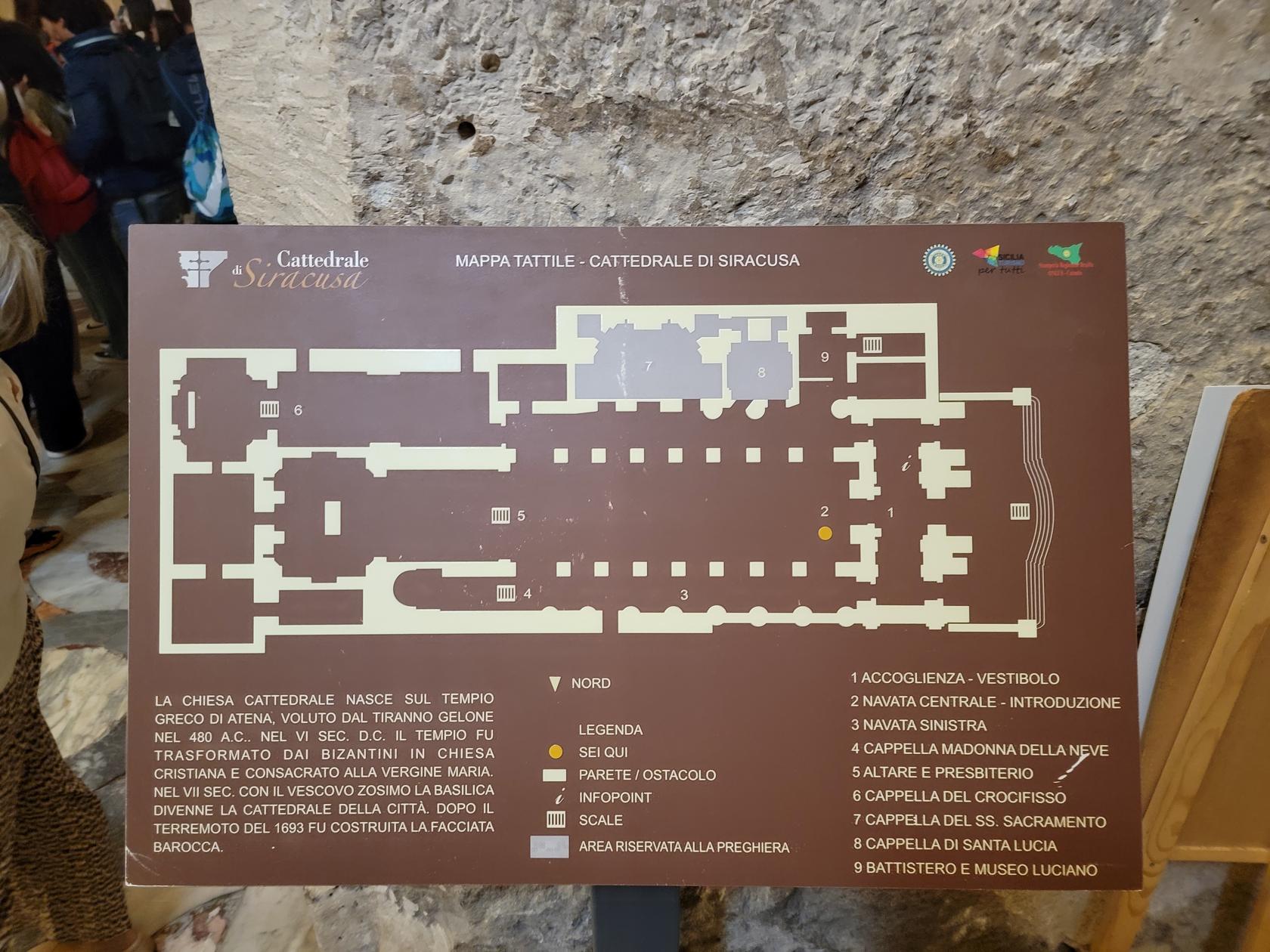
In the center of Ortigia sits the Cathedral of Syracuse, a large and fairly simple structure as cathedrals go, having no real apse, but only central and left naves.
Tickets for Two – Cathedral of Syracuse – Piazza Duomo – Siracusa, Sicily
Cathedral of Syracuse – Piazza Duomo – Siracusa, Sicily
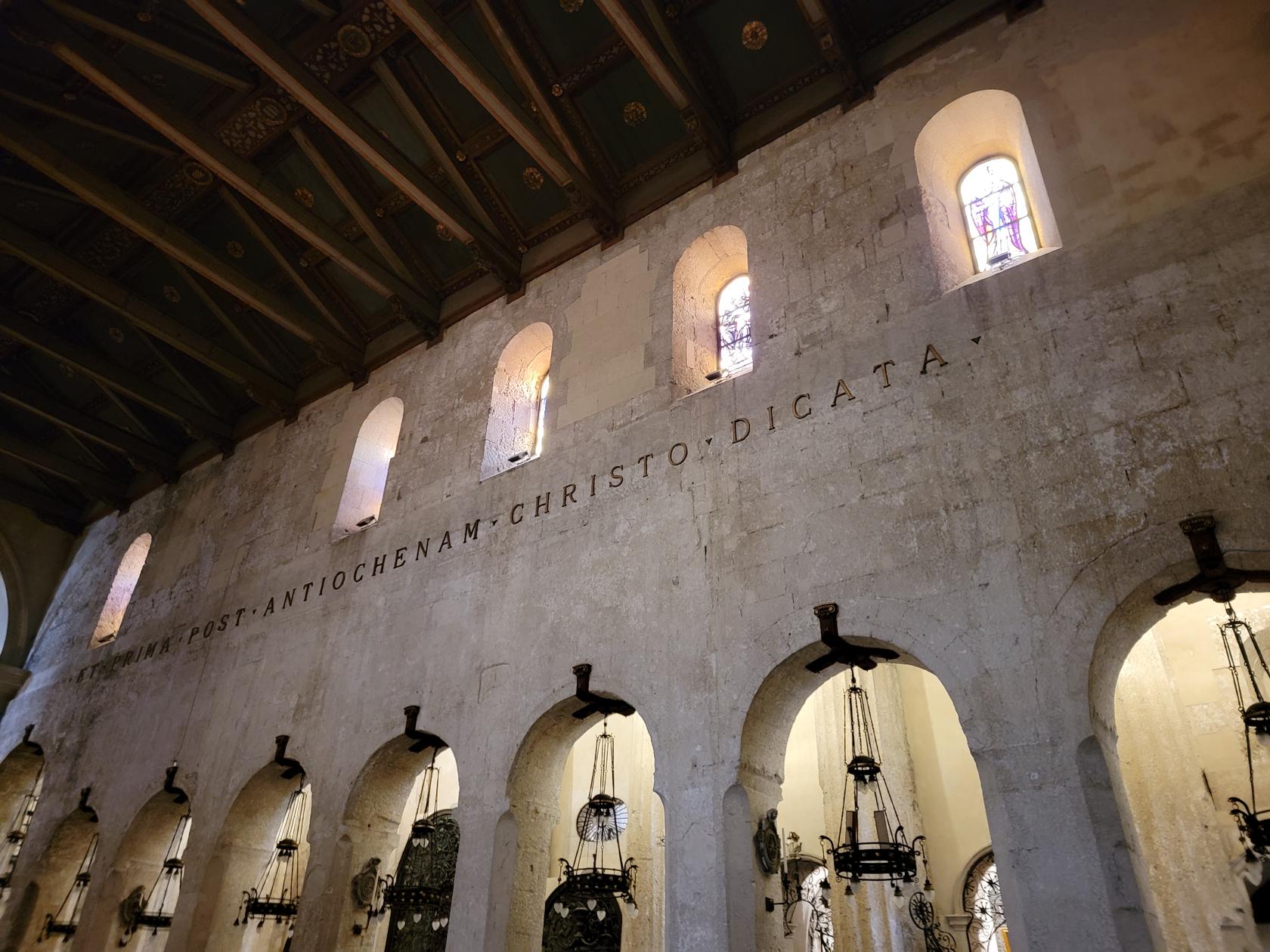
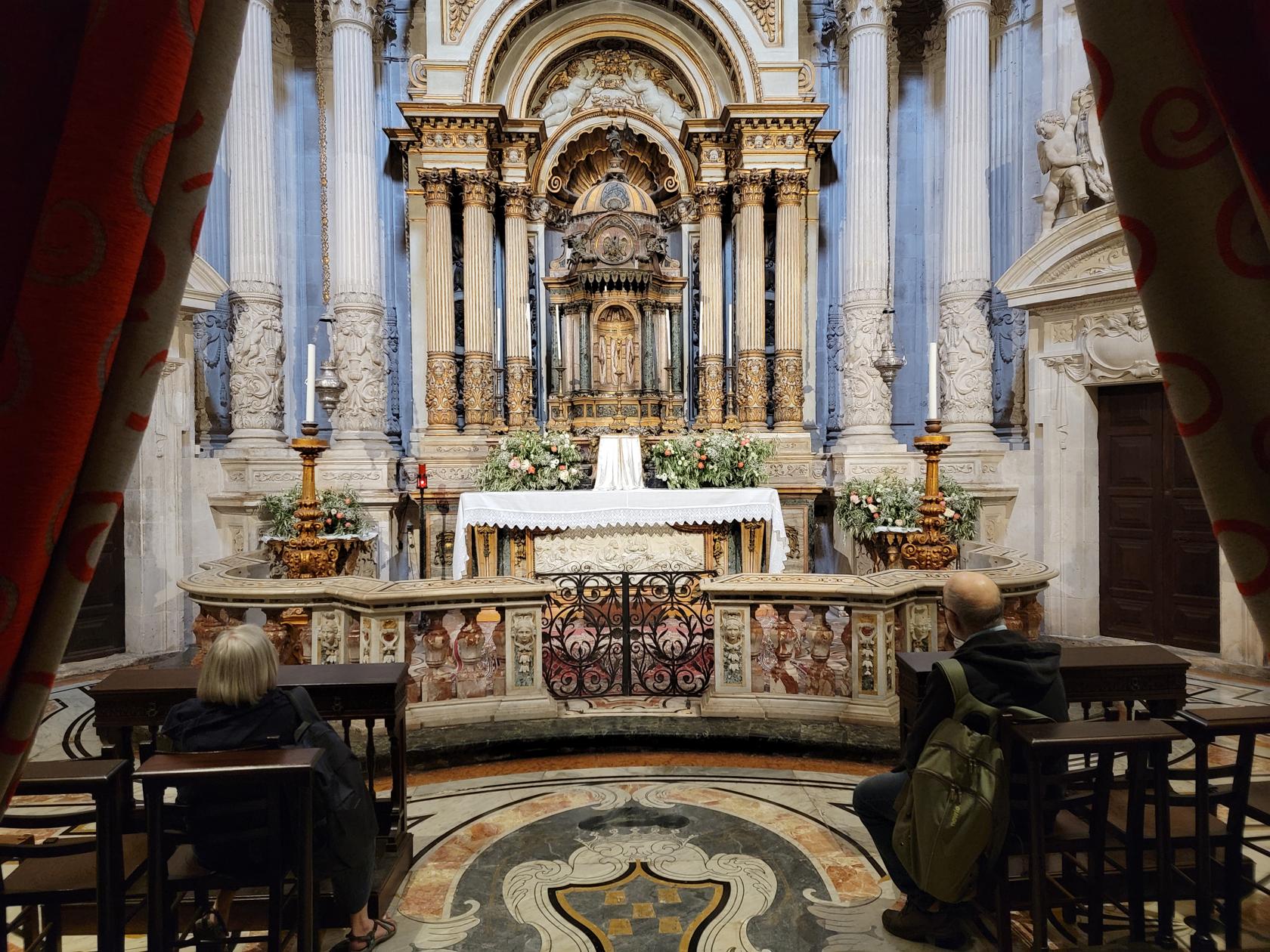
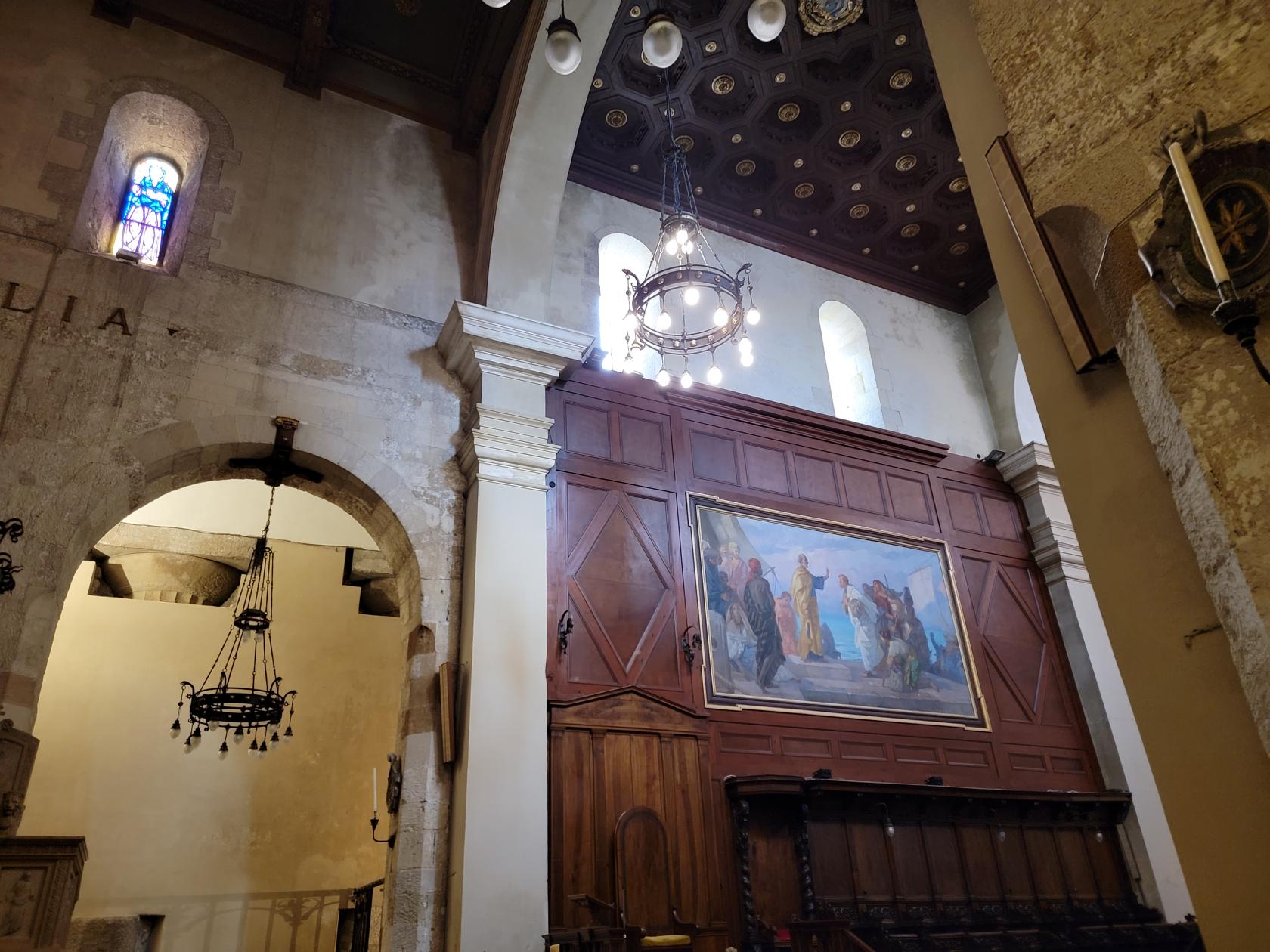
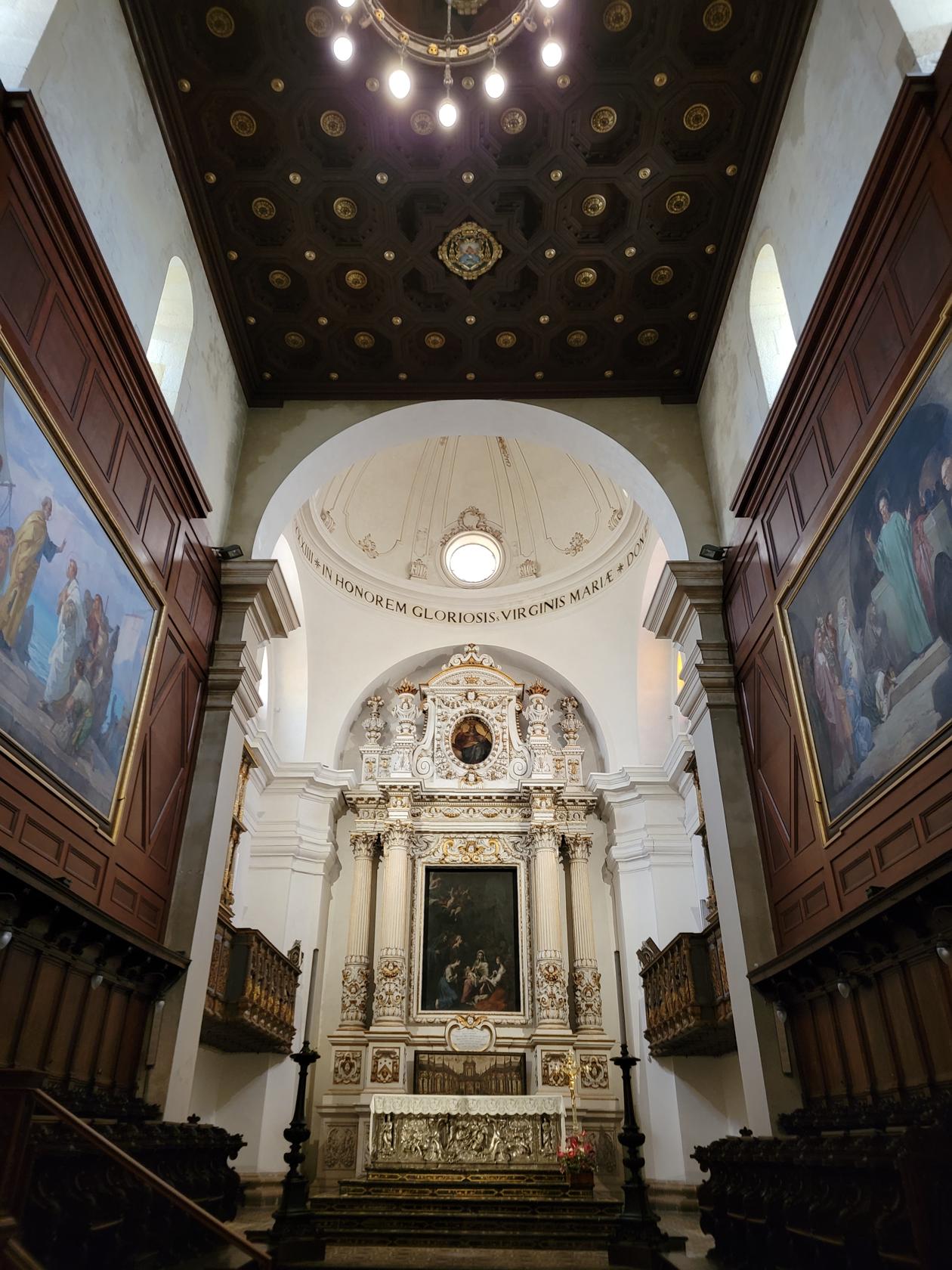
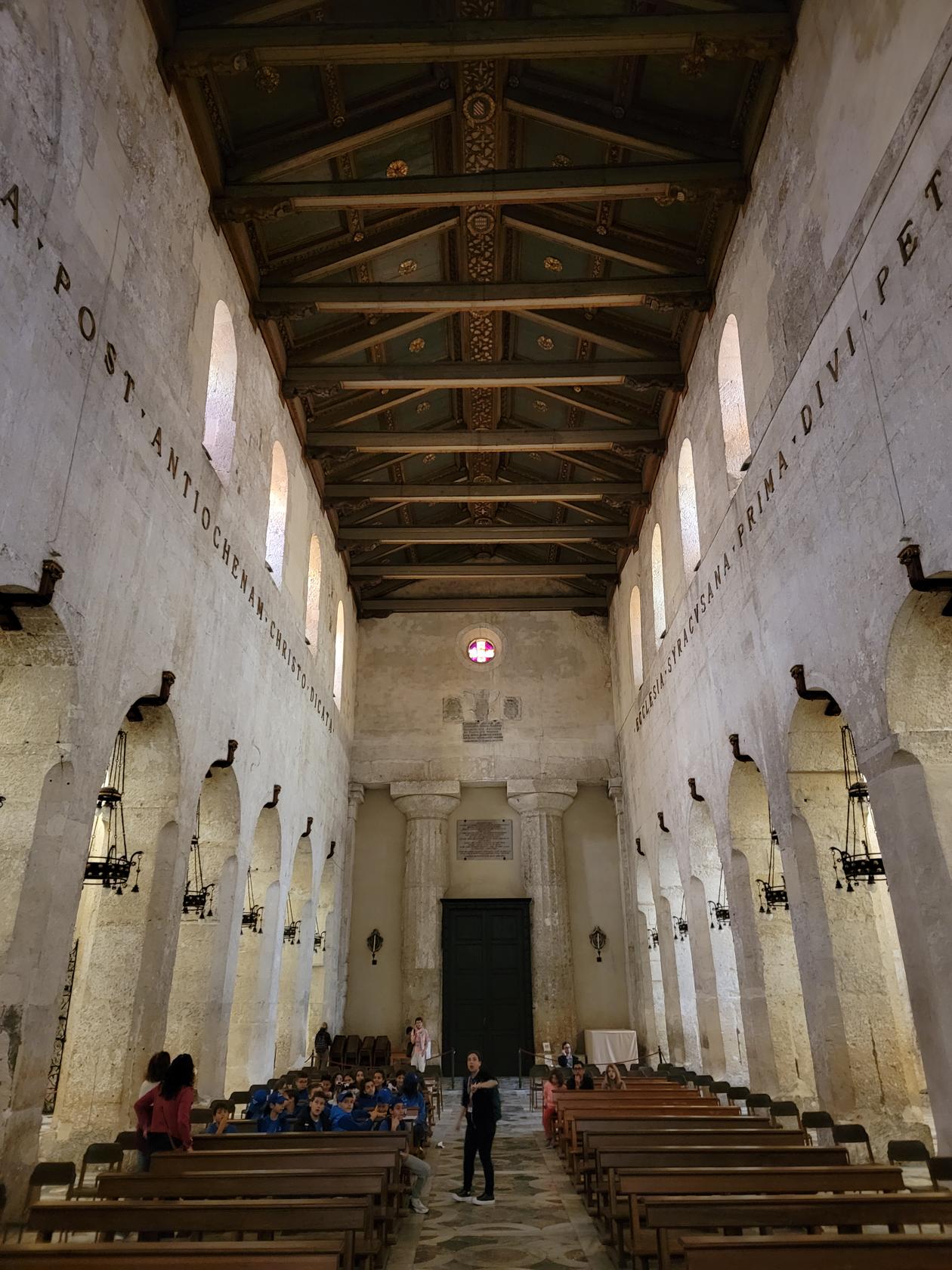
The inside however is impressive and elegant and worth a visit. The outside of the cathedral displays Doric columns of the original Temple of Athena, which stood on this site prior to the building of the edifice.
Cathedral of Syracuse – Piazza Duomo – Siracusa, Sicily
Cathedral of Syracuse – Piazza Duomo – Siracusa, Sicily
Cathedral of Syracuse – Piazza Duomo – Siracusa, Sicily
Cathedral of Syracuse – Piazza Duomo – Siracusa, Sicily
Cathedral of Syracuse – Piazza Duomo – Siracusa, Sicily
Cathedral of Syracuse – Piazza Duomo – Siracusa, Sicily
Cathedral of Syracuse – Piazza Duomo – Siracusa, Sicily
Cathedral of Syracuse – Piazza Duomo – Siracusa, Sicily
Cathedral of Syracuse – Piazza Duomo – Siracusa, Sicily
Cathedral of Syracuse – Piazza Duomo – Siracusa, Sicily
Cathedral of Syracuse – Piazza Duomo – Siracusa, Sicily
Cathedral of Syracuse – Piazza Duomo – Siracusa, Sicily
Cathedral of Syracuse – Piazza Duomo – Siracusa, Sicily
Cathedral of Syracuse – Piazza Duomo – Siracusa, Sicily
Our Hotel
Hotel Musciara Resort
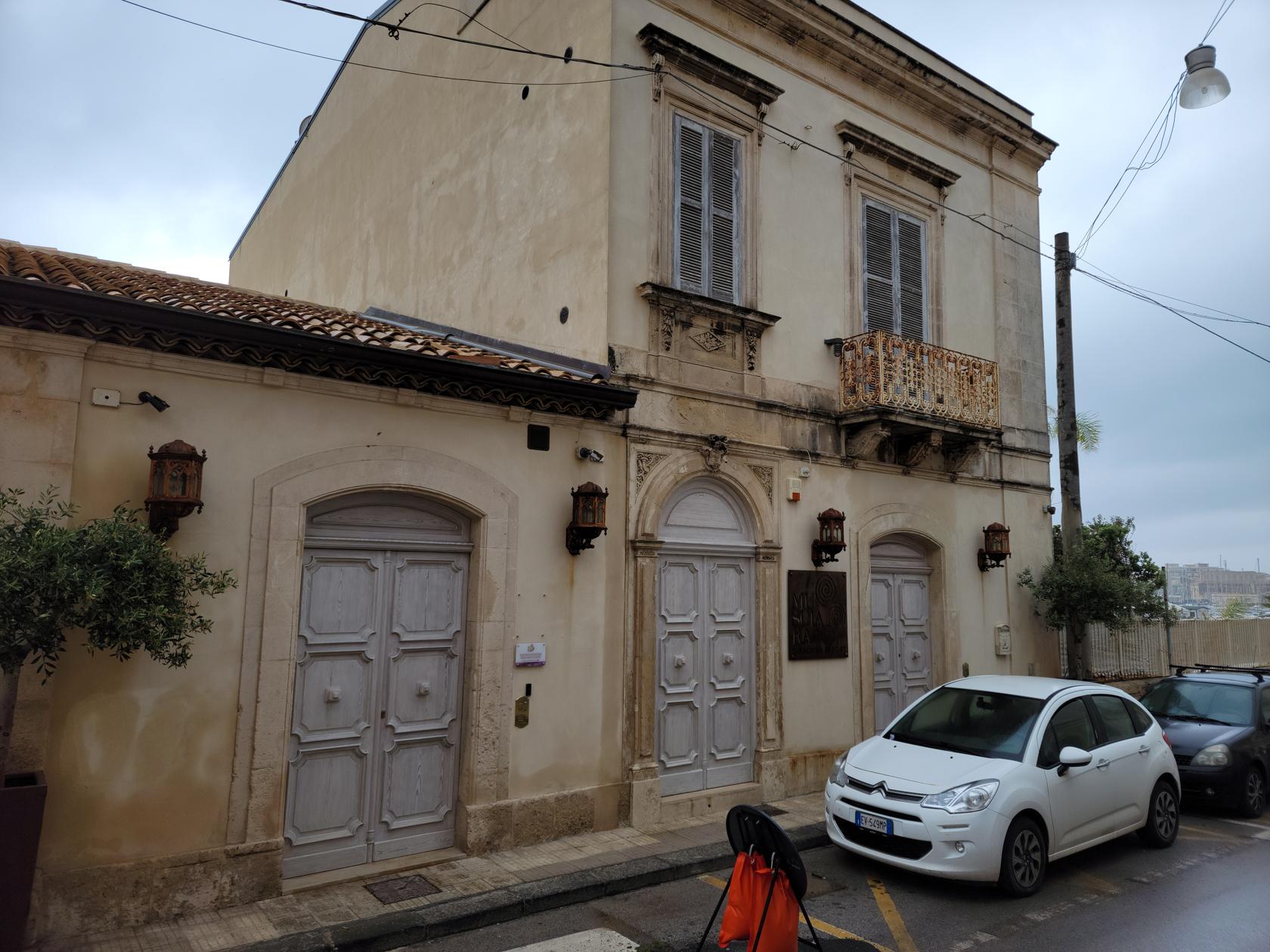
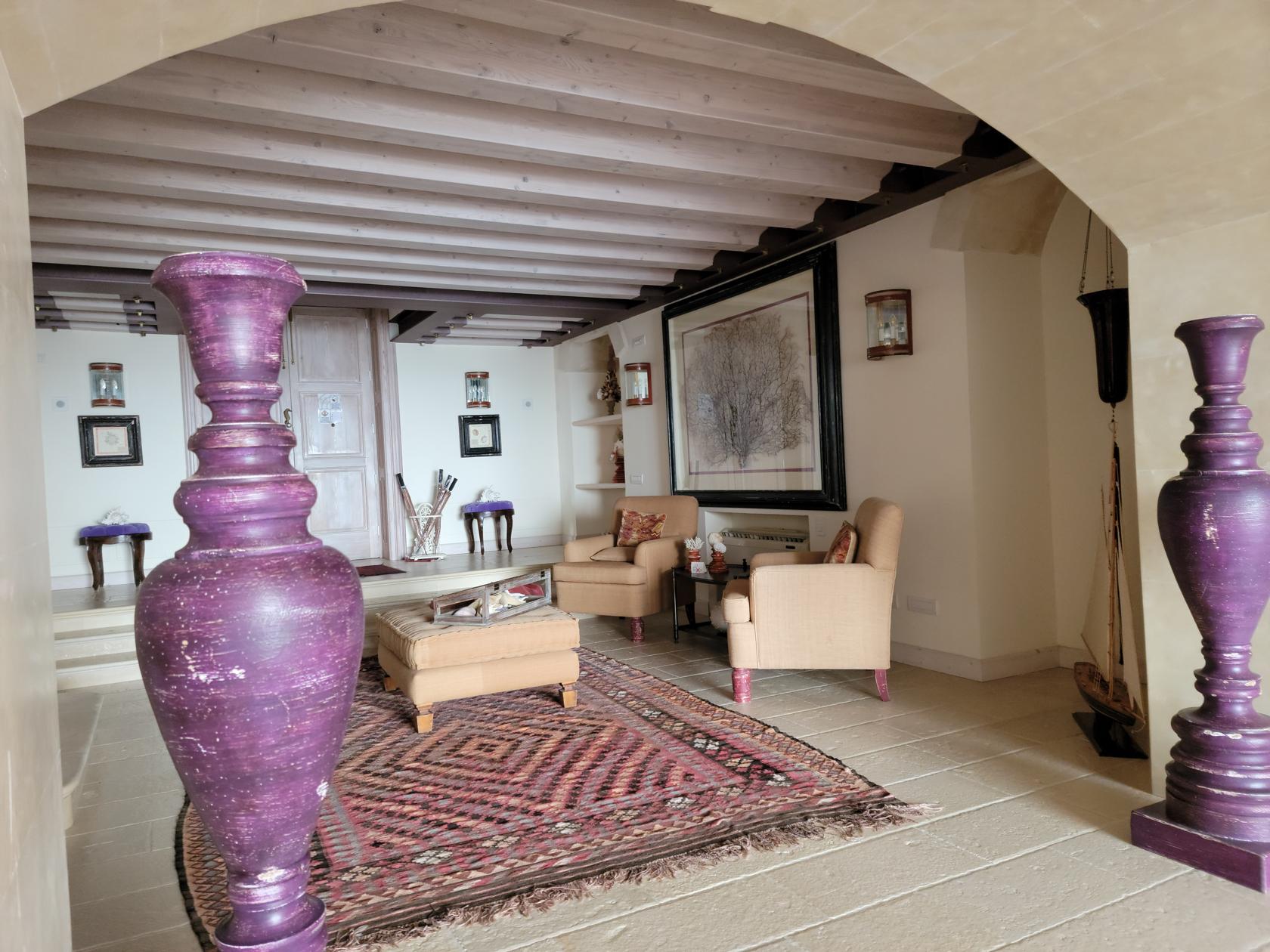
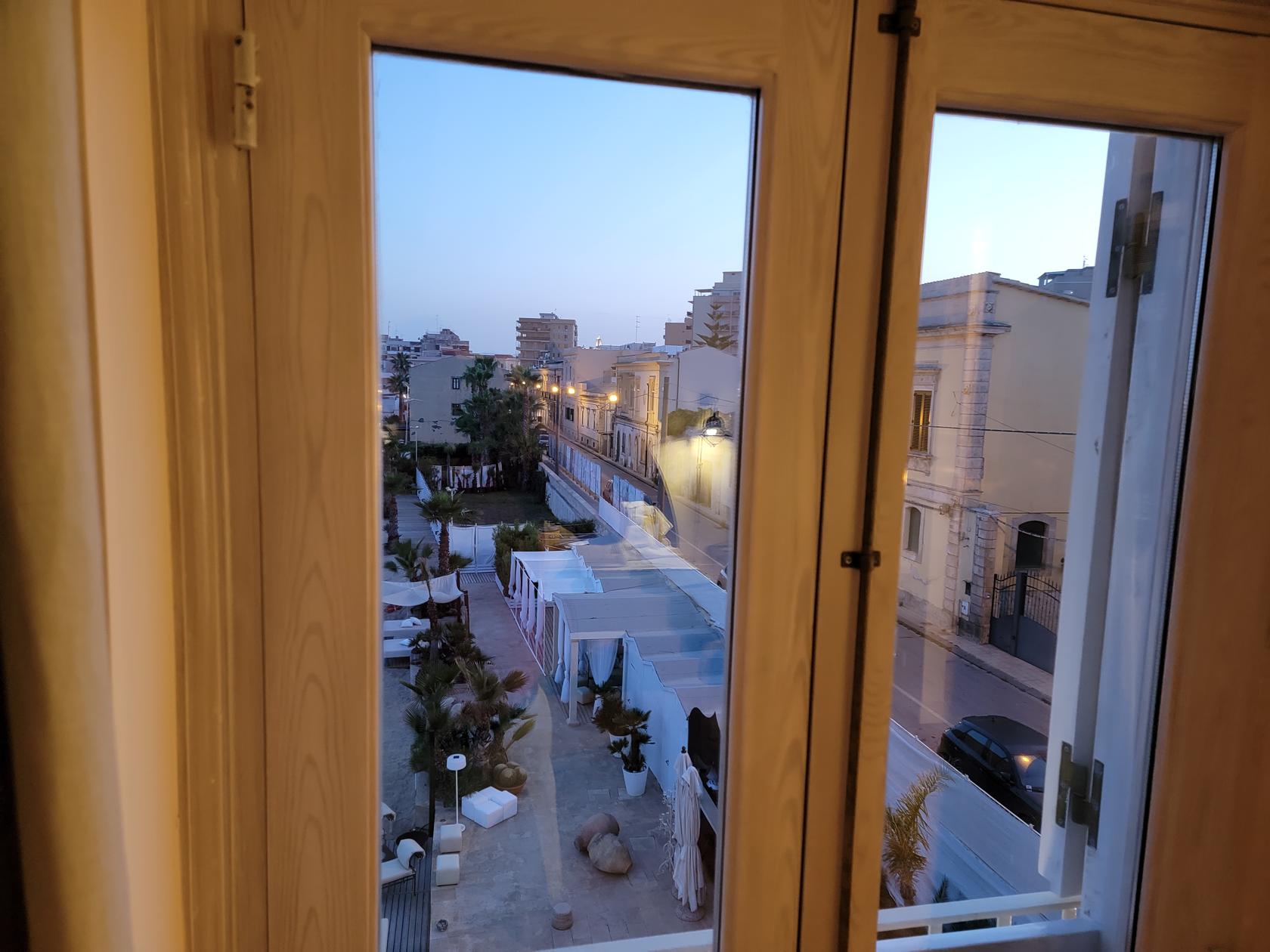
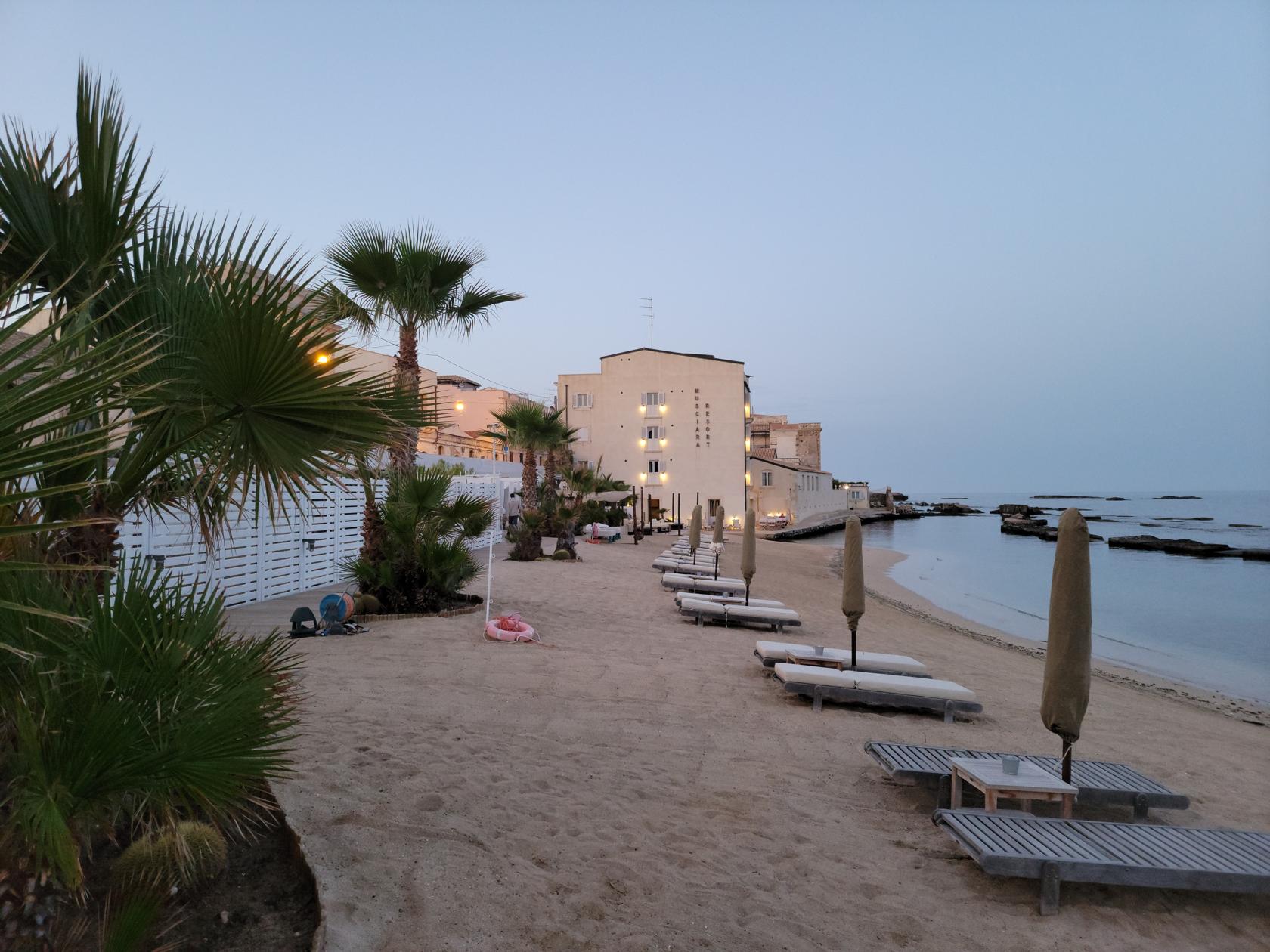
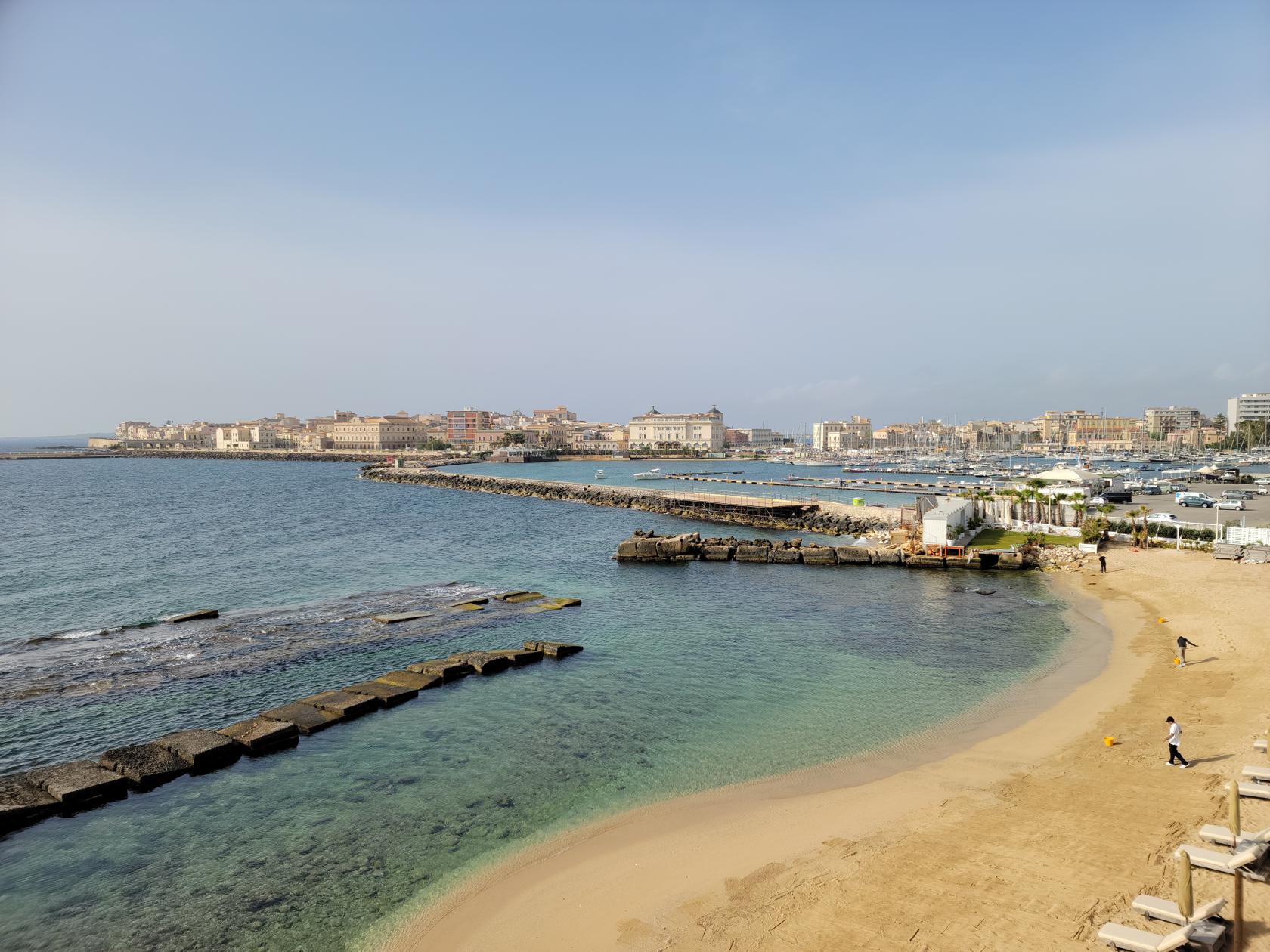
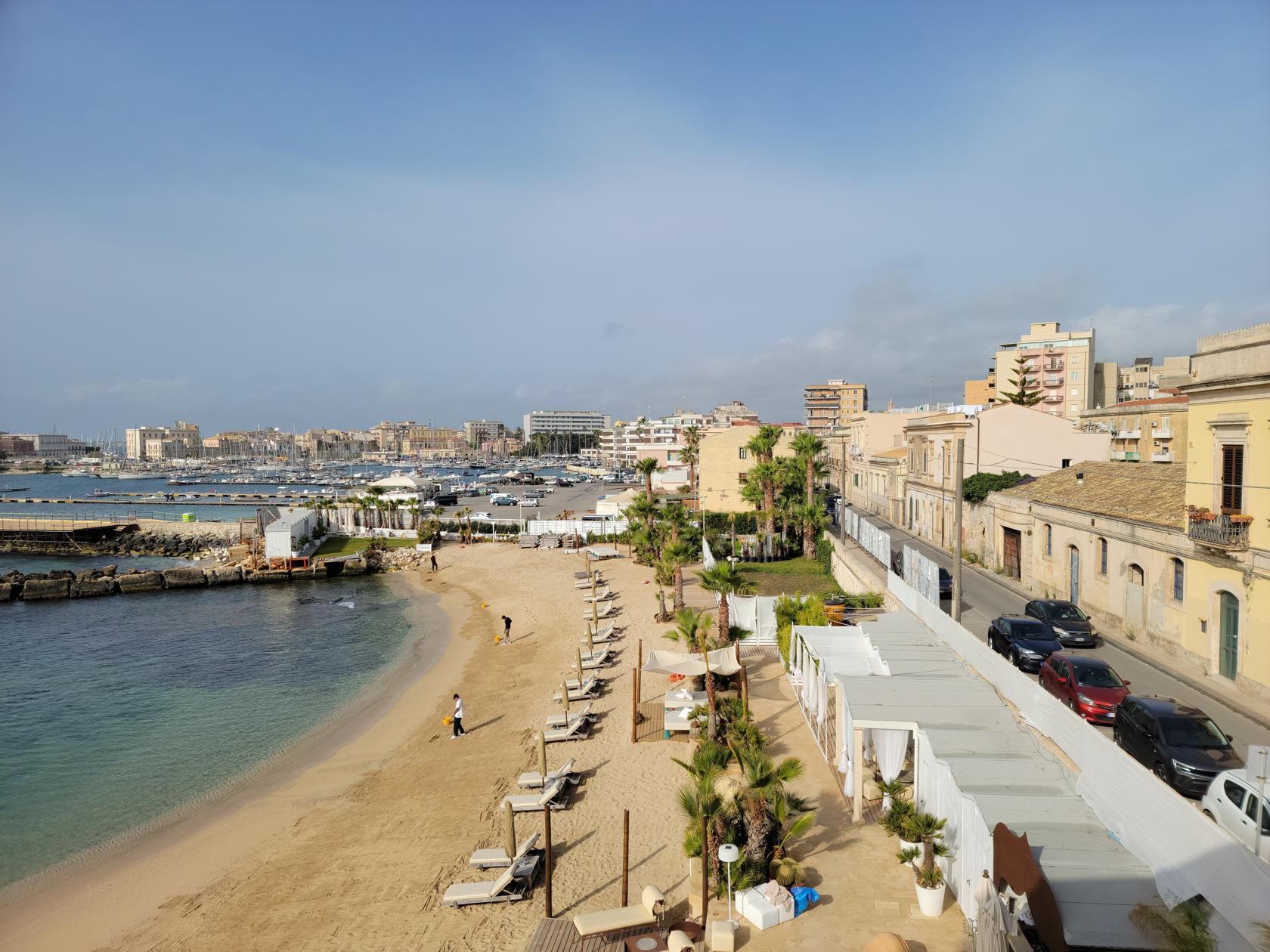
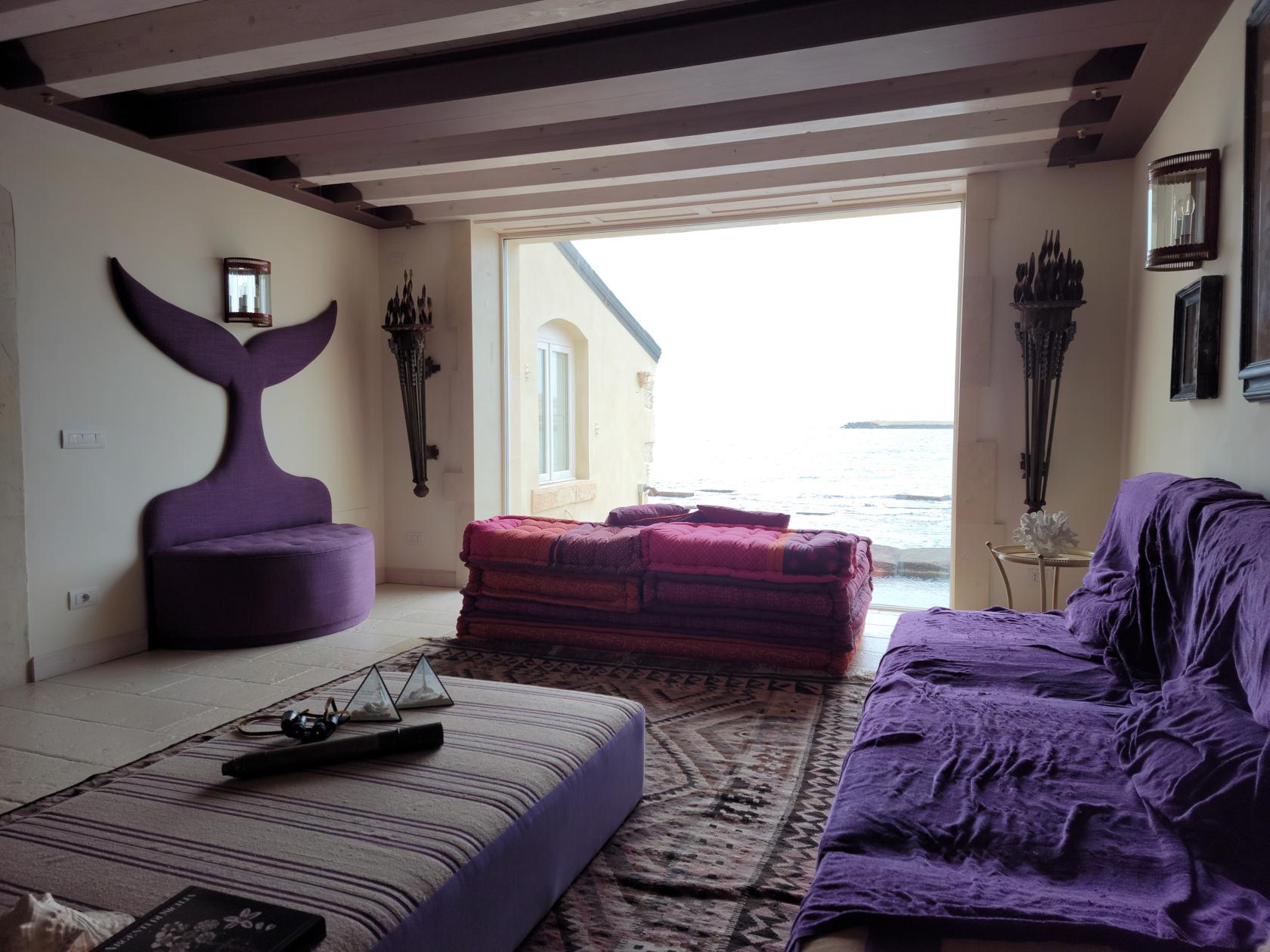
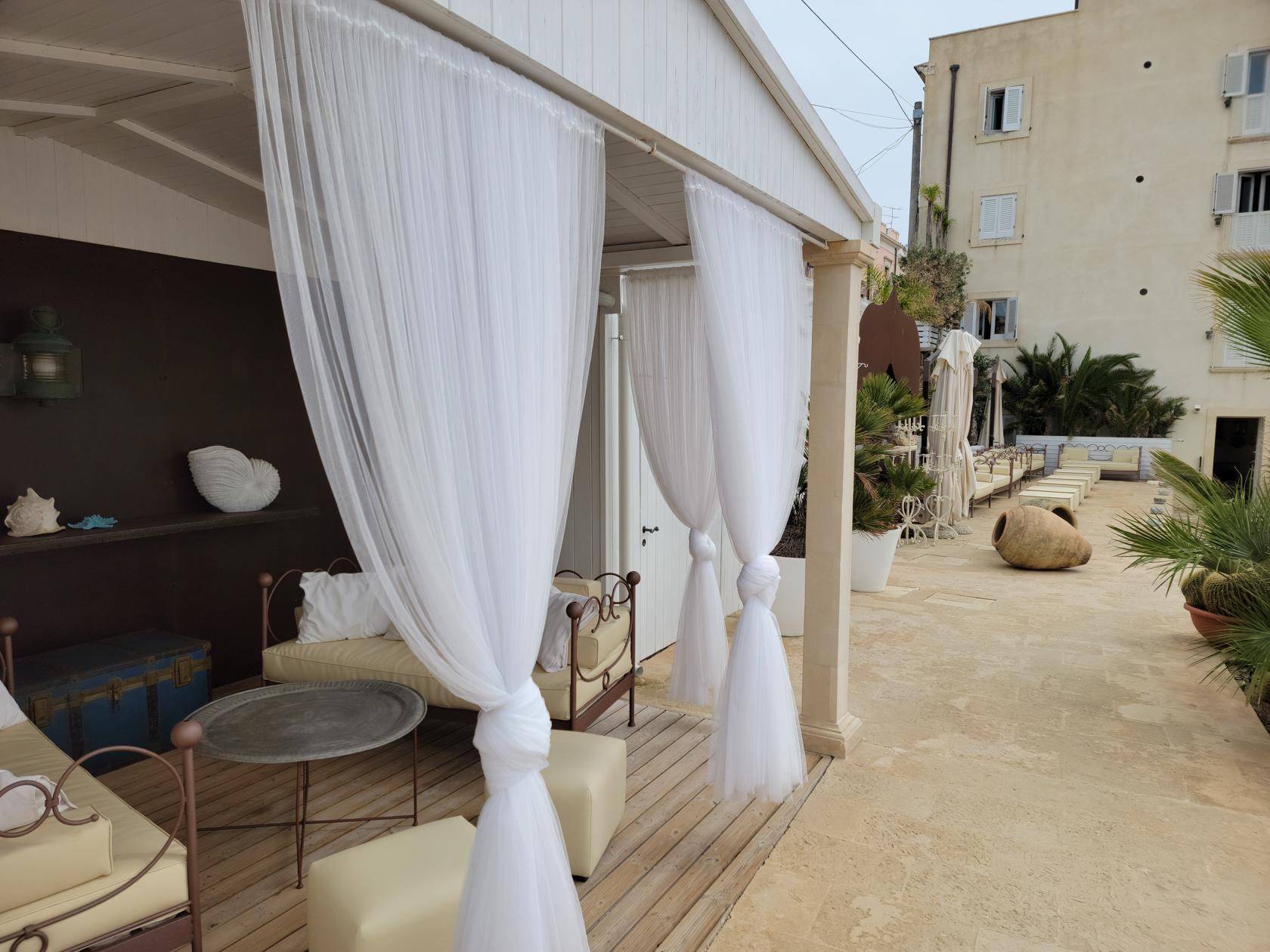
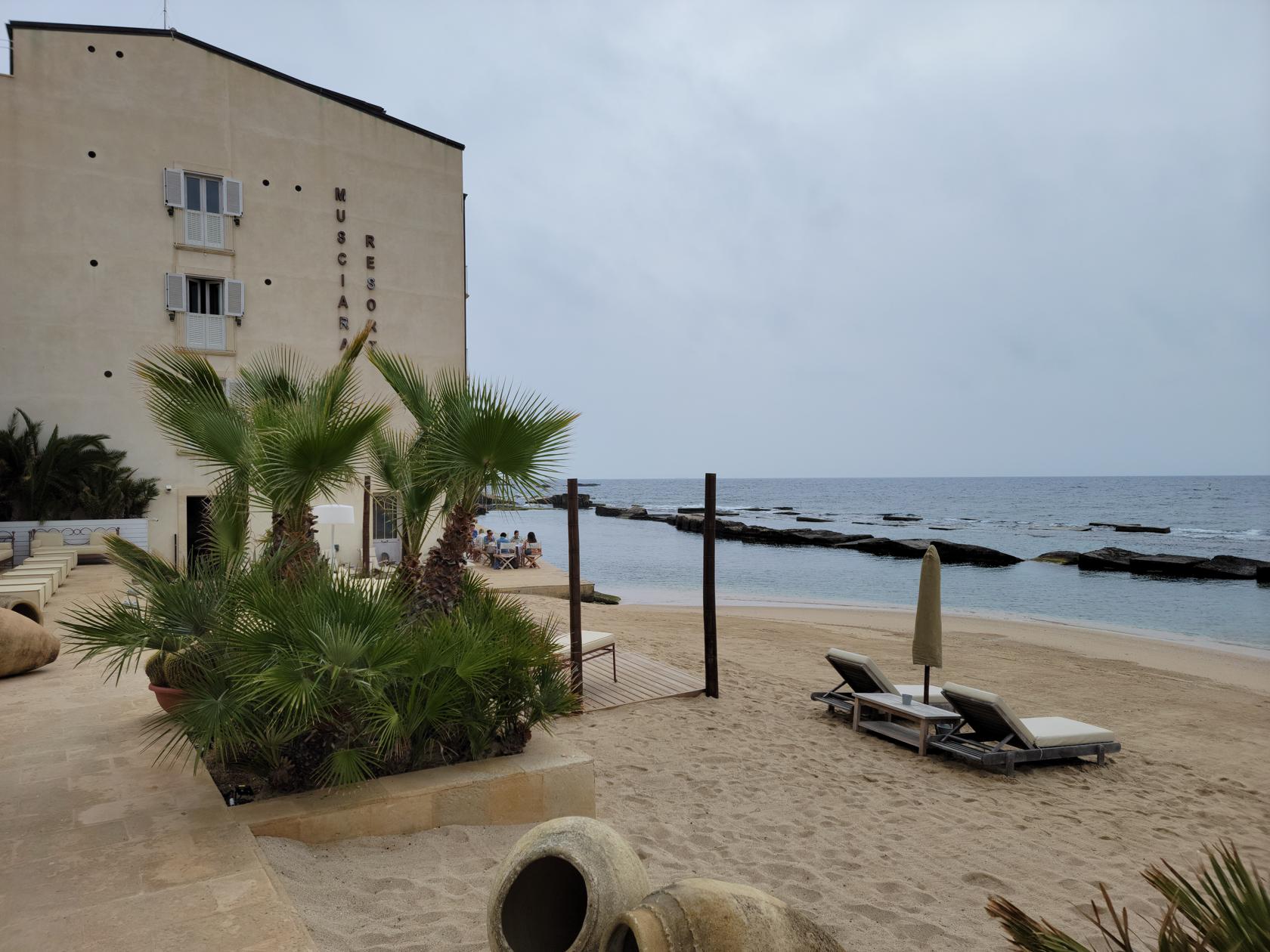
For the six nights we stayed in Syracuse, we stayed at the Musciara Resort. This boutique resort is located about a 15 minute walk from Ortigia Island and has its own beach. It is a three-star hotel, but it is expertly appointed and maintained. There are only about a dozen or so rooms, so book early if interested. It is a on the pricey side, so if you are able, use points.
Entrance – Hotel Musciara Resort – Siracuse, Sicily
Lobby – Musciara Resort – Siracusa, Sicily
Though we did not use the beach at them, since there was a severe upper level low causing rain for many days, we know a set of two lounge chairs and table will cost 110€/day for those wishing to enjoy the water or work on that tan.
The cuisine of Syracuse is of course based mainly on the sea, so people who love fish will definitely enjoy themselves. There are myriads of fish to choose from, as well as octopus, squid, cuttlefish and assorted shell fish.
Trattoria Archimede
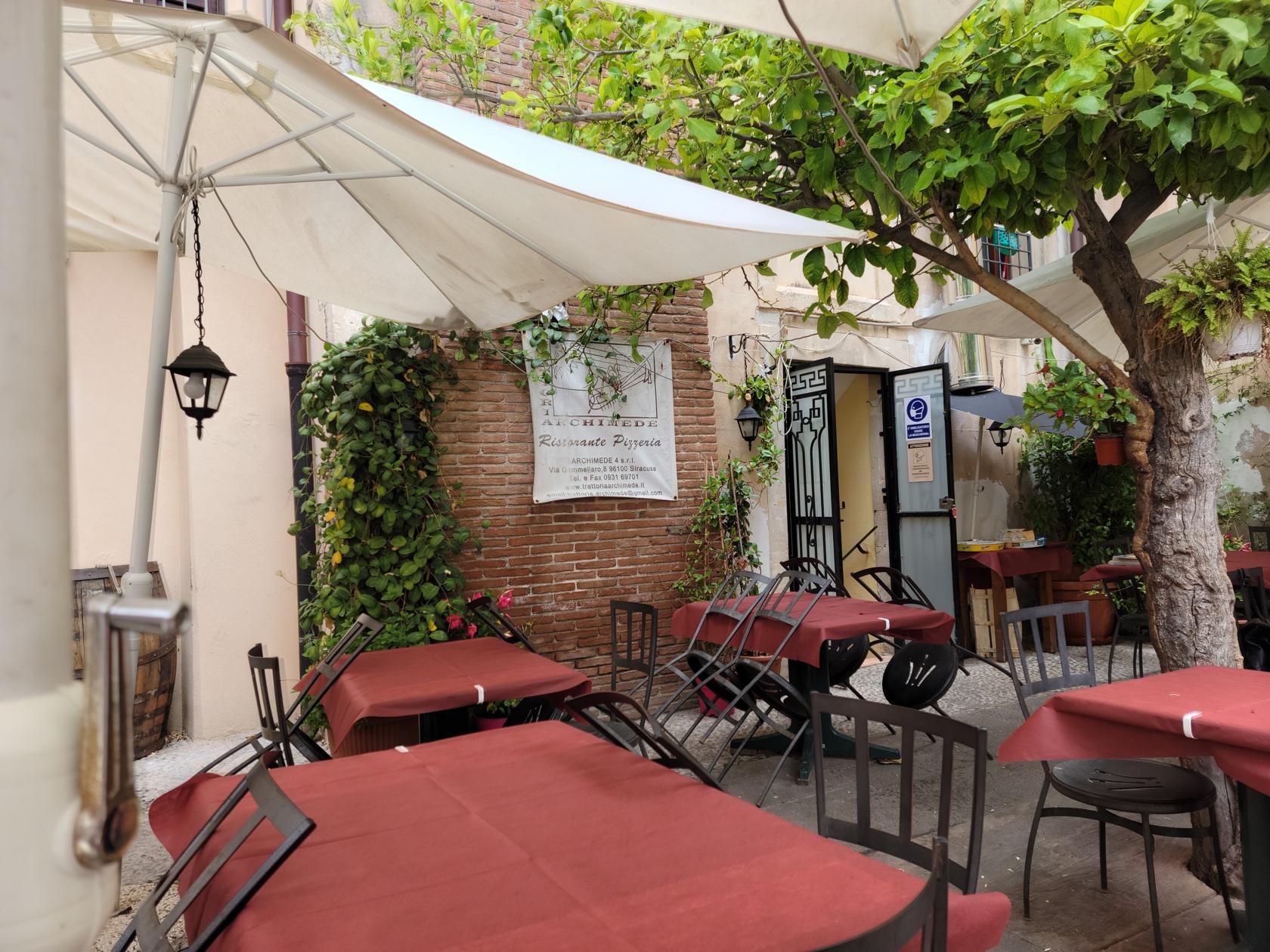
We ate lunch here and thoroughly enjoyed ourselves. They have a nice garden where one can enjoy an relaxes lunch away from the hustle and bustle of Piazza Duomo.
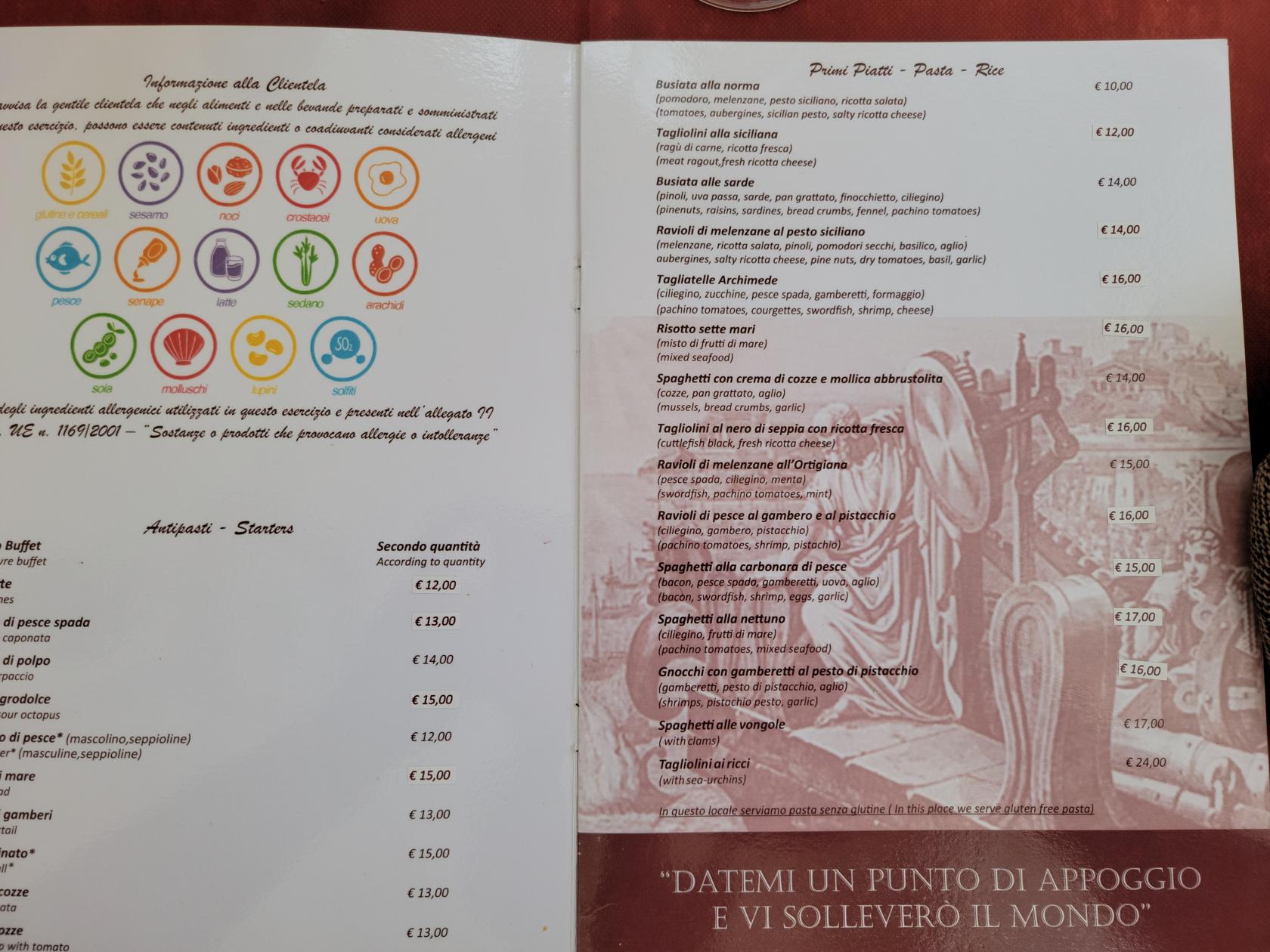
Menu – Trattoria Archimede – Siracusa, Sicily
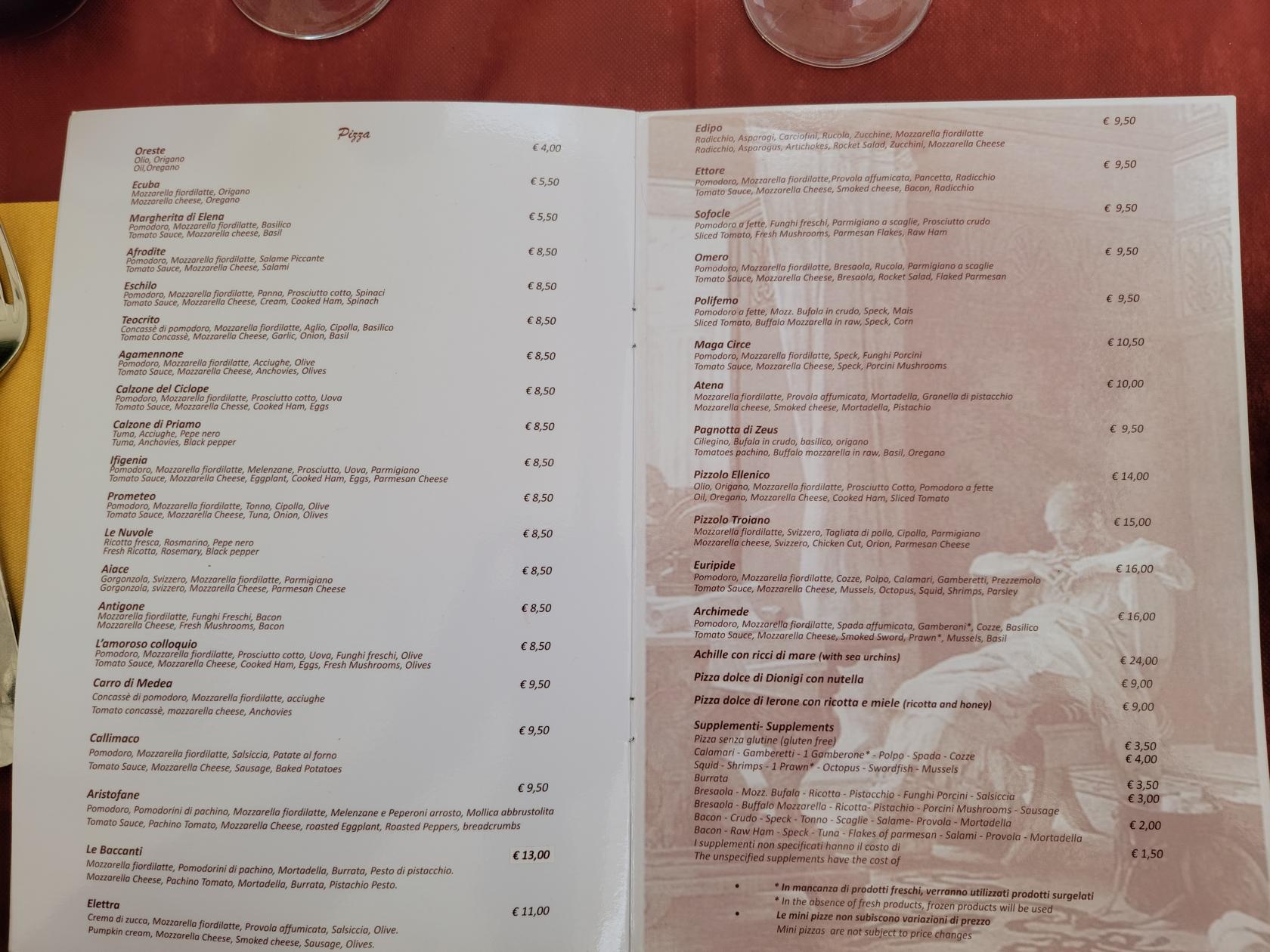
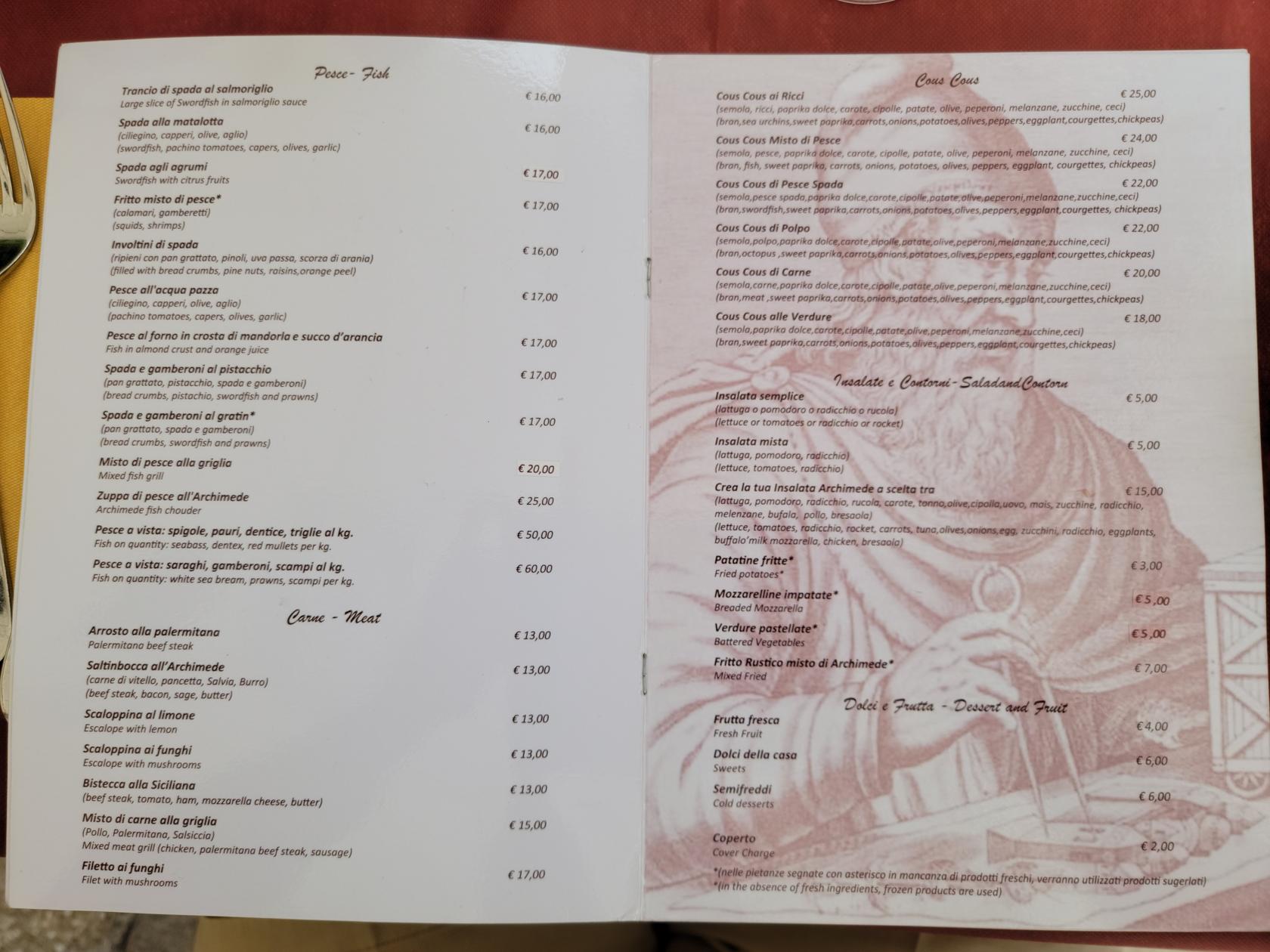
Menu – Trattoria Archimede – Siracusa, Sicily
Menu – Trattoria Archimede – Siracusa, Sicily
Menu – Trattoria Archimede – Siracusa, Sicily
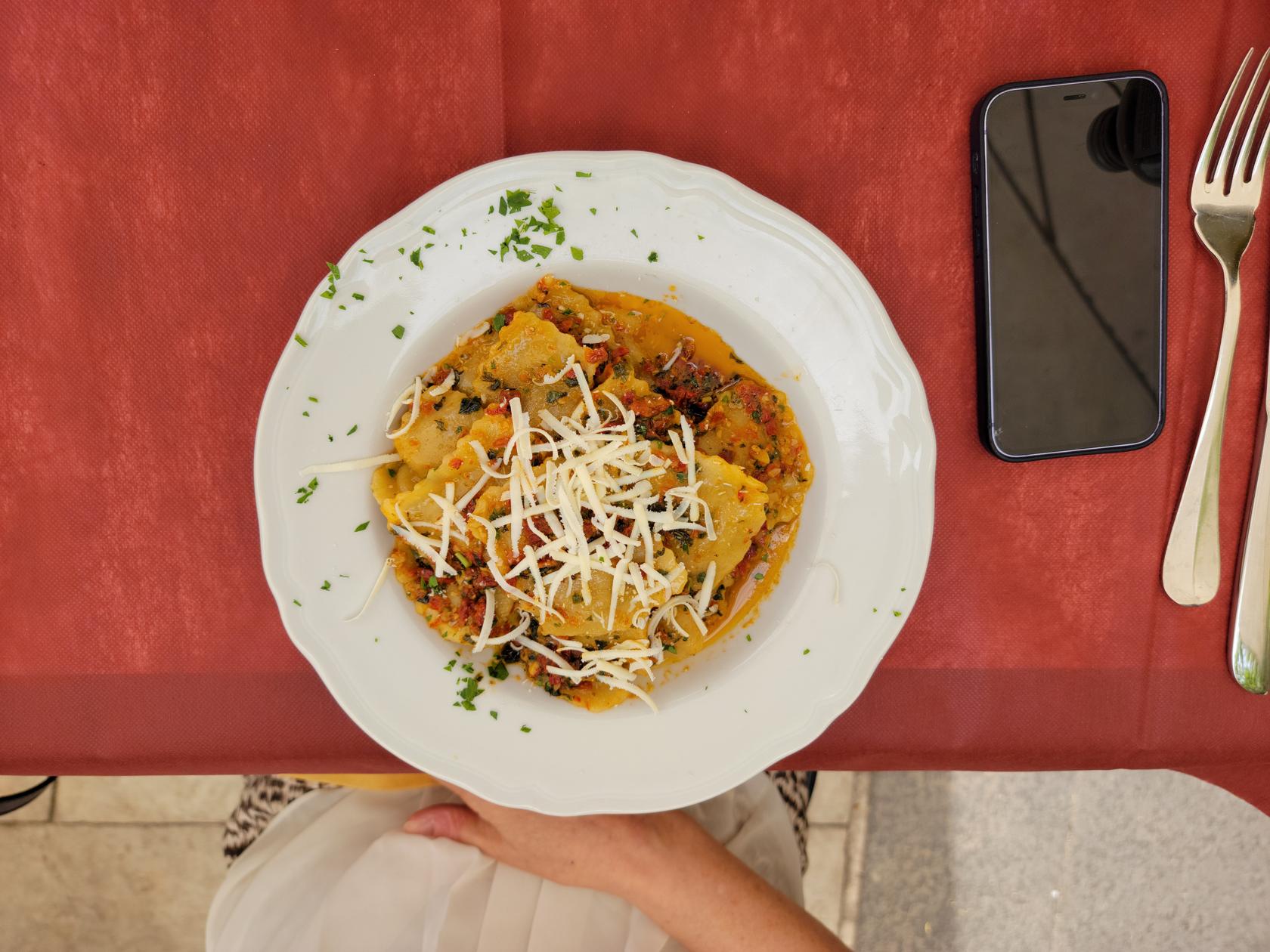
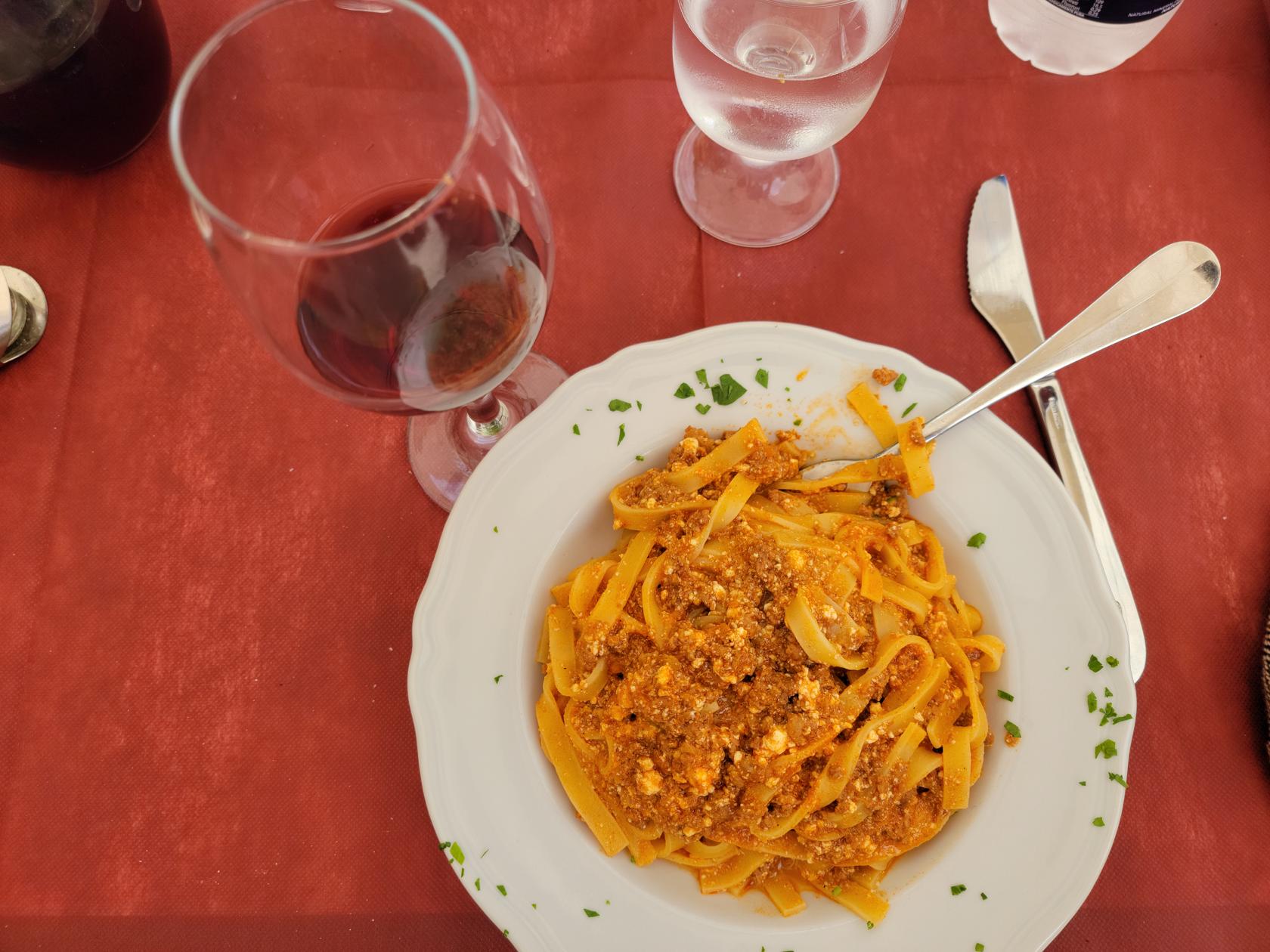
The food is typical and simple for Sicilian cuisine. We picked basic items, along with the house wine and had a very nice lunch. The staff were attentive and had a very good grasp of English, so communicating in my broken Italian, although appreciated, was not totally necessary, our waiter spoke and understood Italian, English, French and German.
Garden – Trattoria Archimede – Siracusa, Sicily
Ravioli – Trattoria Archimede – Siracusa, Sicily
Taglierini e Ragu – Trattoria Archimede – Siracusa, Sicily
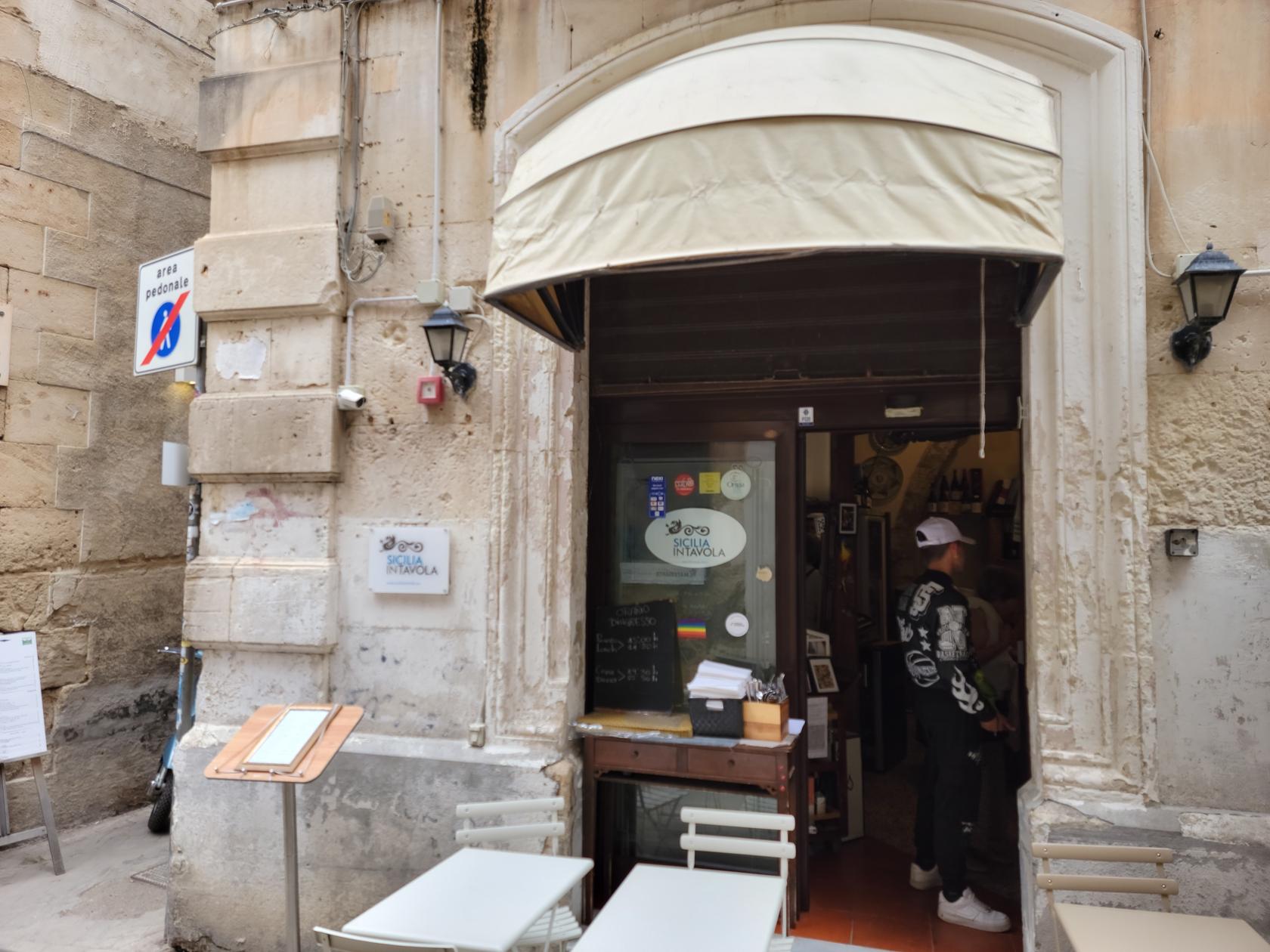
Ristorante Sicilia In Tavola
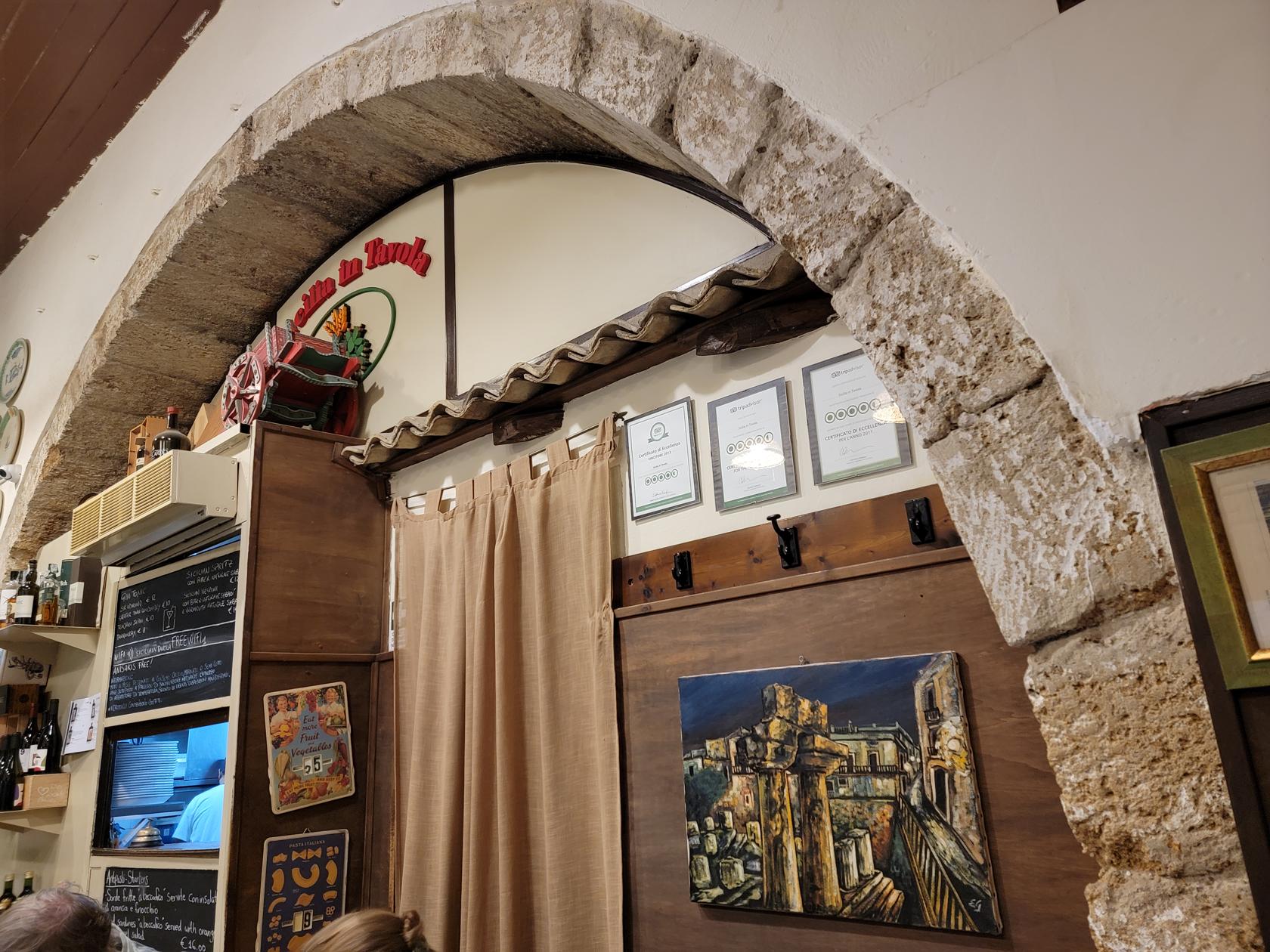
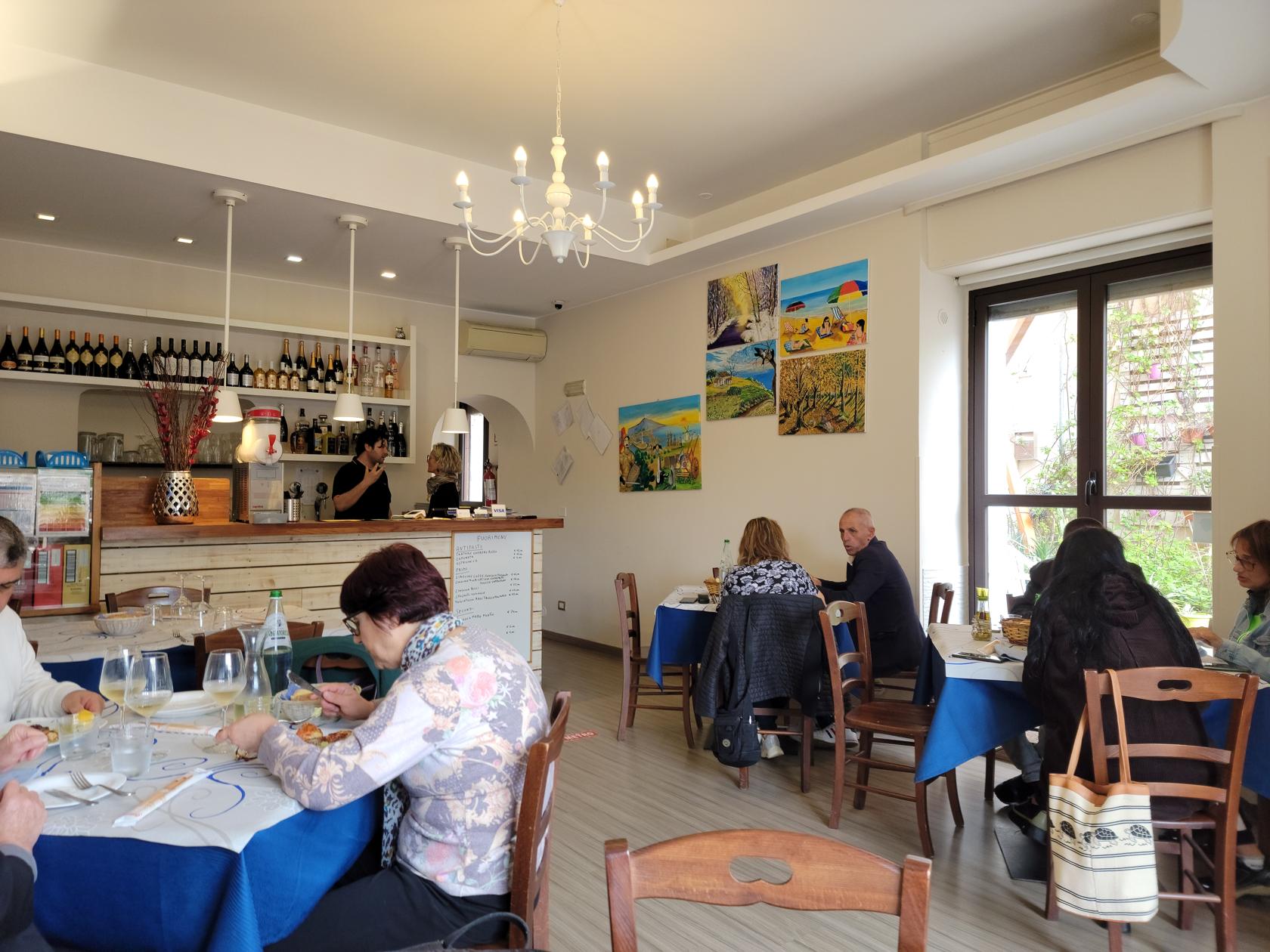
A gastronomic pleasure with an unpretentious interior is Ortigia’s In Tavola Ristorante.
Ristorante Sicilian In Tavola – Ortigia – Siracusa, Sicily
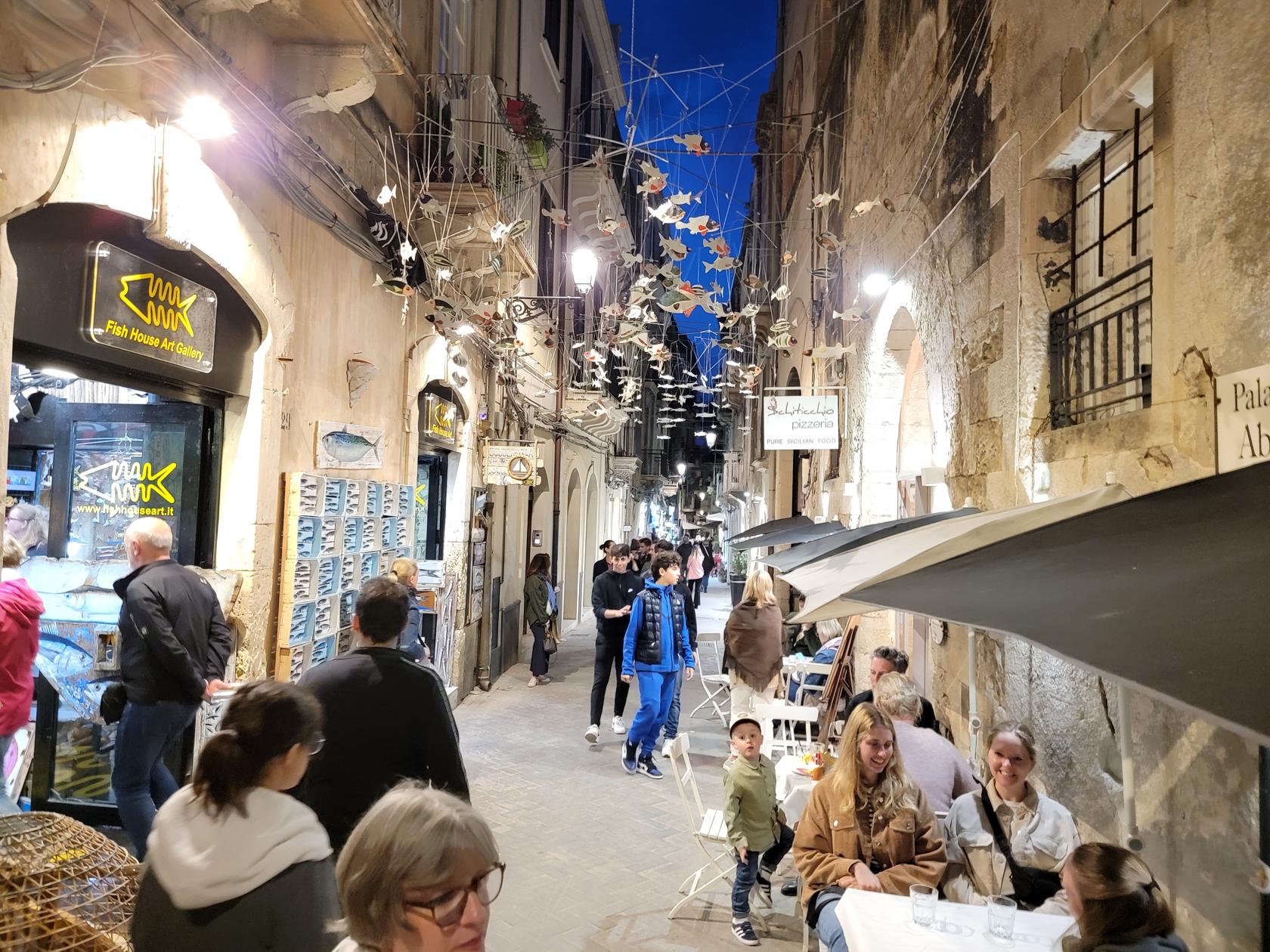
Via Cavour – Ortigia – Siracusa, Sicily
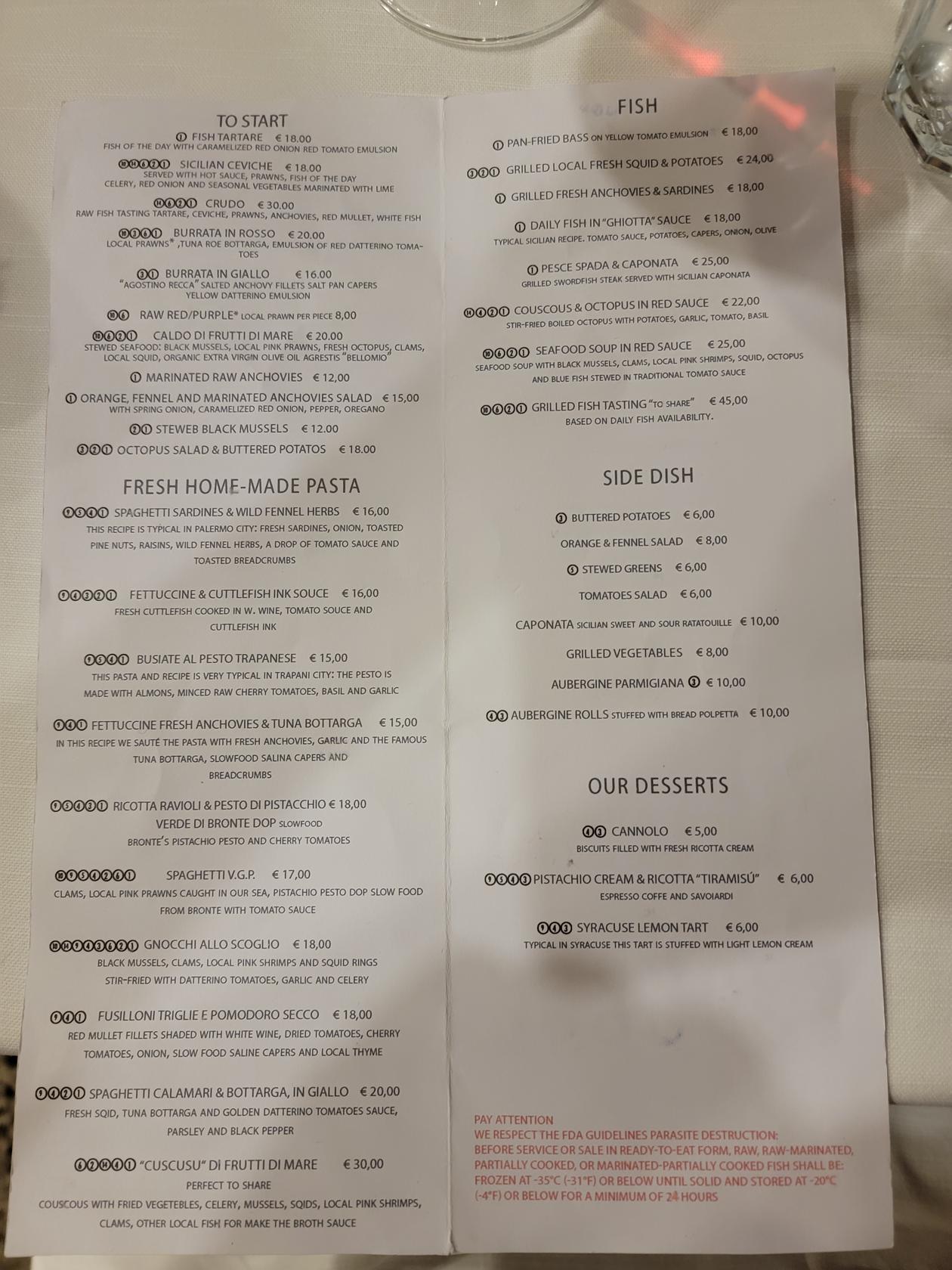
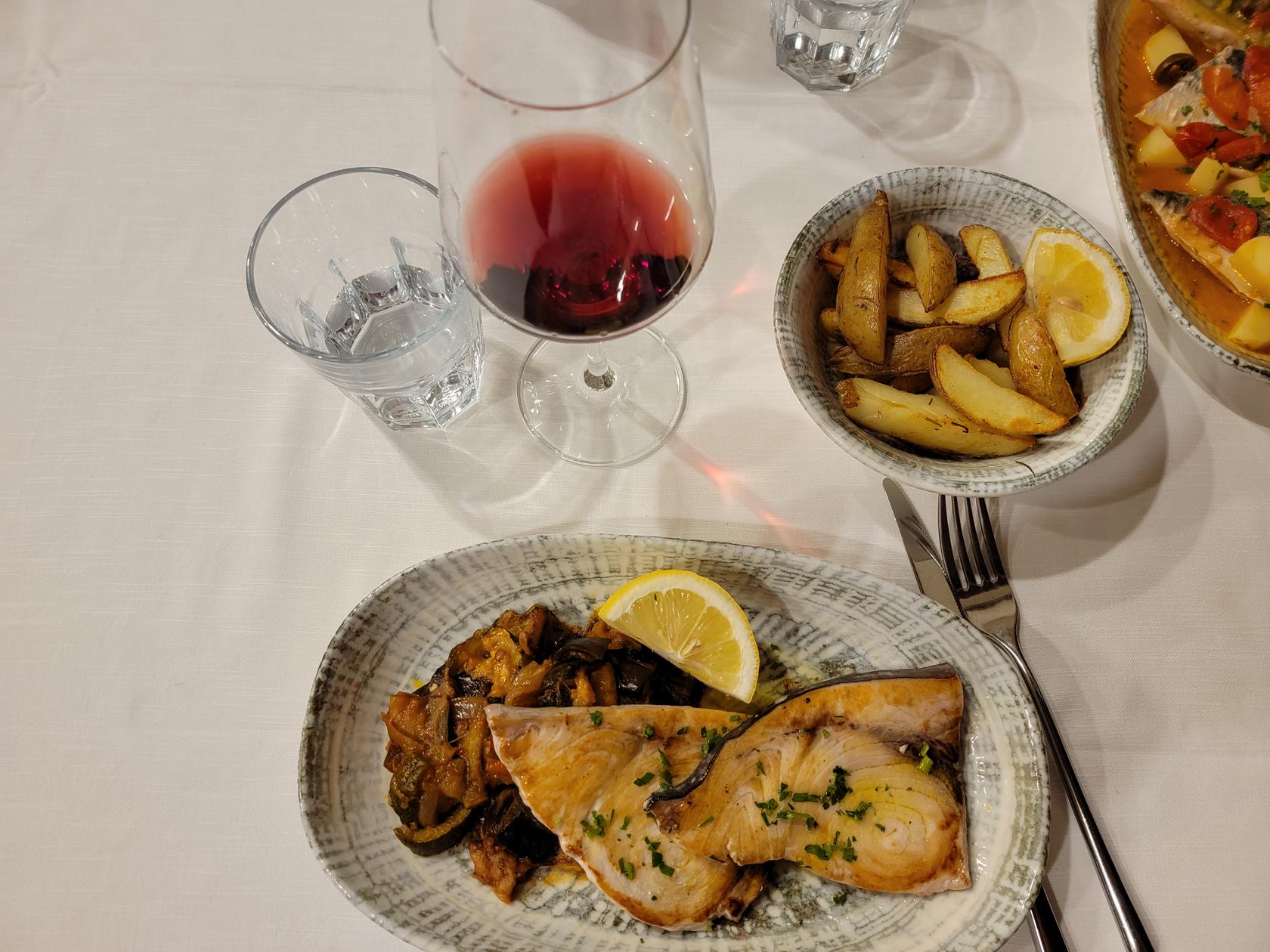
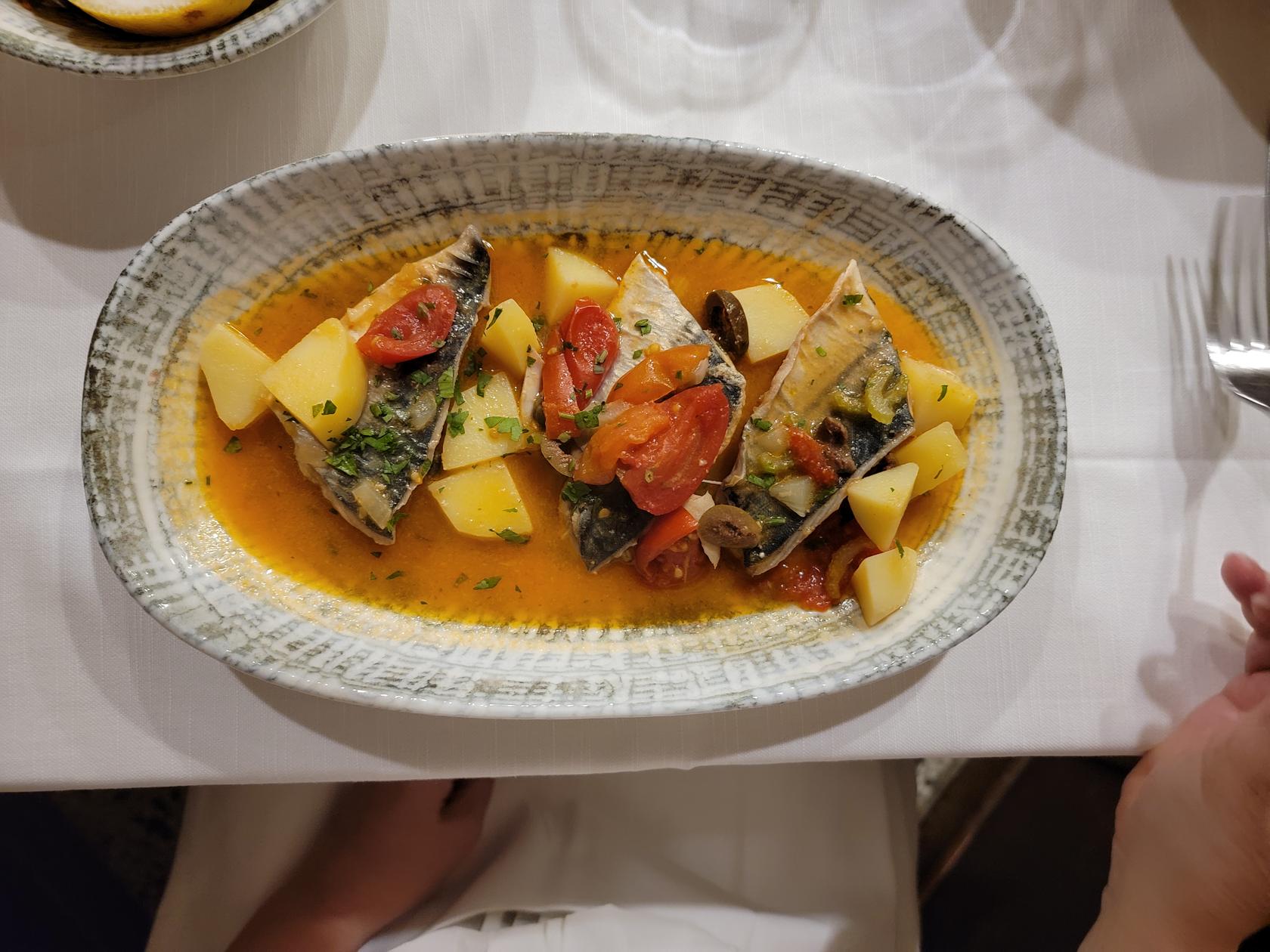
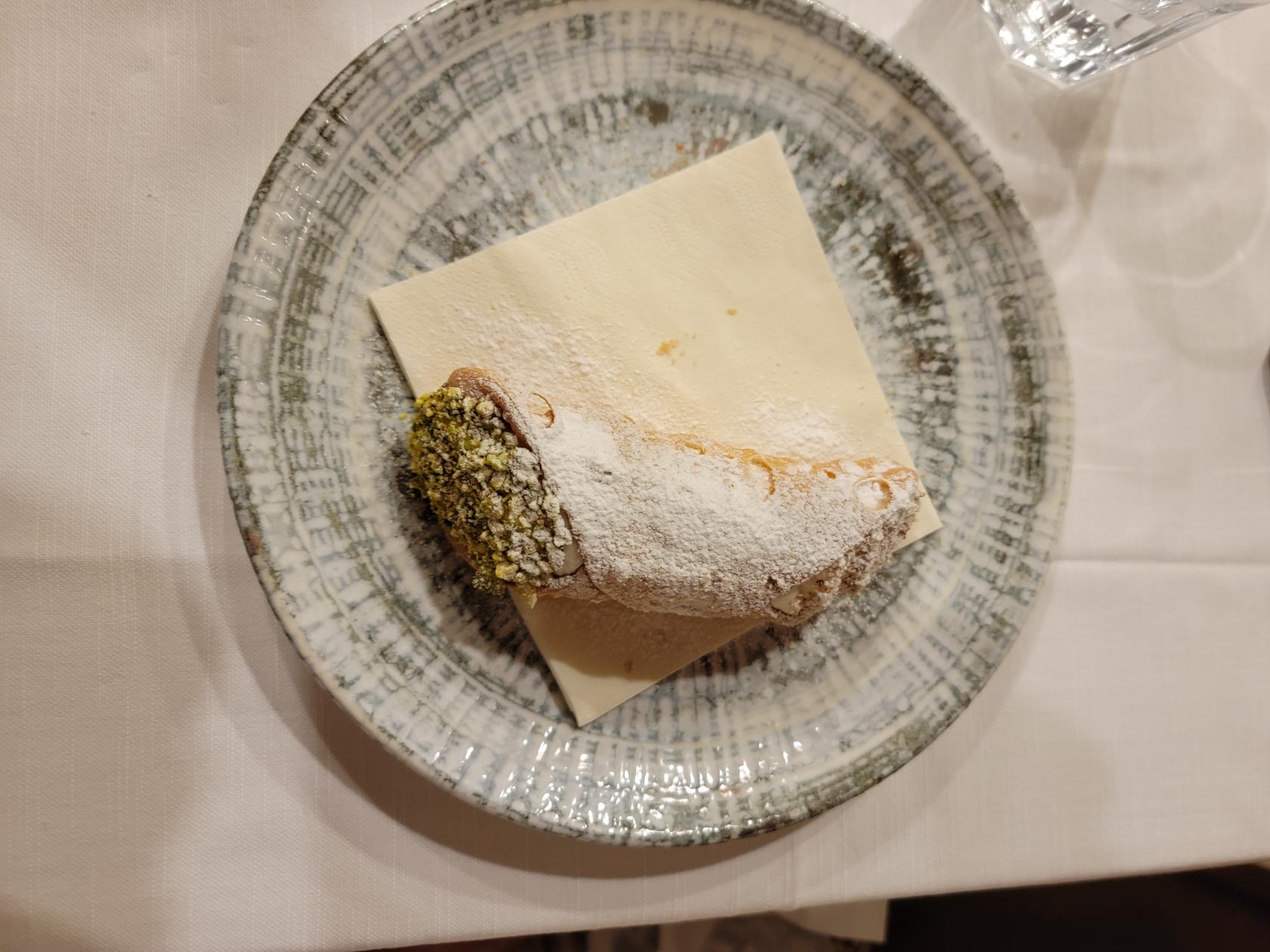
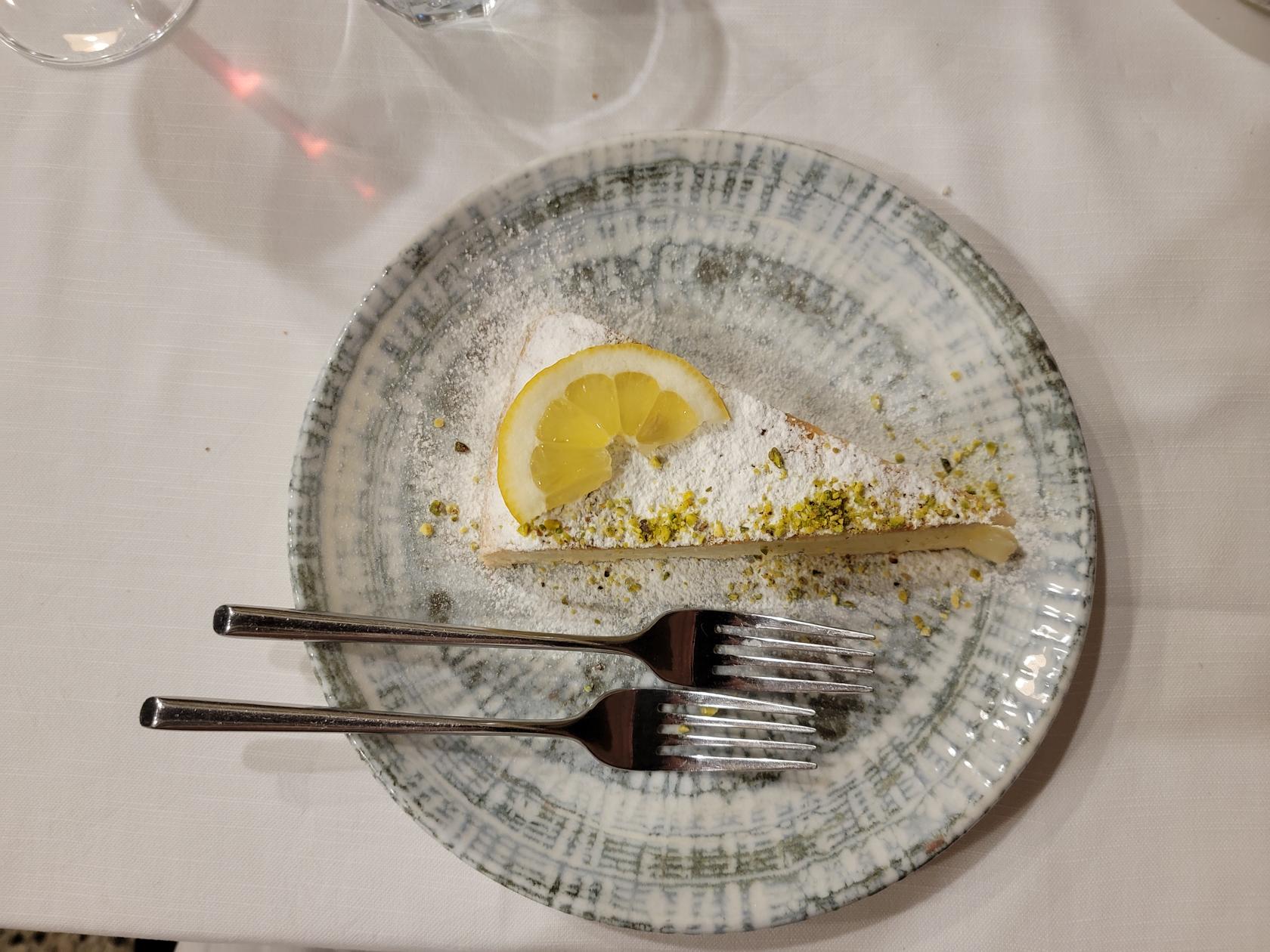
Here, as with many other place, they have home-made pasta and spaghetti. However, we ordered fish, swordfish for me and mackerel for Patti. For dessert we had lemon pie and a cannolo, along with an coffee and an aperitif, the a Sicilian Amaro, for 77€ for two people.
Ristorante Sicilian In Tavola – Ortigia – Siracusa, Sicily
Ristorante Sicilian In Tavola – Ortigia – Siracusa, Sicily
Ristorante Sicilian In Tavola – Ortigia – Siracusa, Sicily
Grilled Swordfish and Componata with roasted potatoes – Ristorante Sicilian In Tavola – Ortigia – Siracusa, Sicily
Mackerel with potatoes and tomatoes – Ristorante Sicilian In Tavola – Ortigia – Siracusa, Sicily
Cannolo with pistachio – Ristorante Sicilian In Tavola – Ortigia – Siracusa, Sicily
Lemon Pie – Ristorante Sicilian In Tavola – Ortigia – Siracusa, Sicily
Ristorante Cine
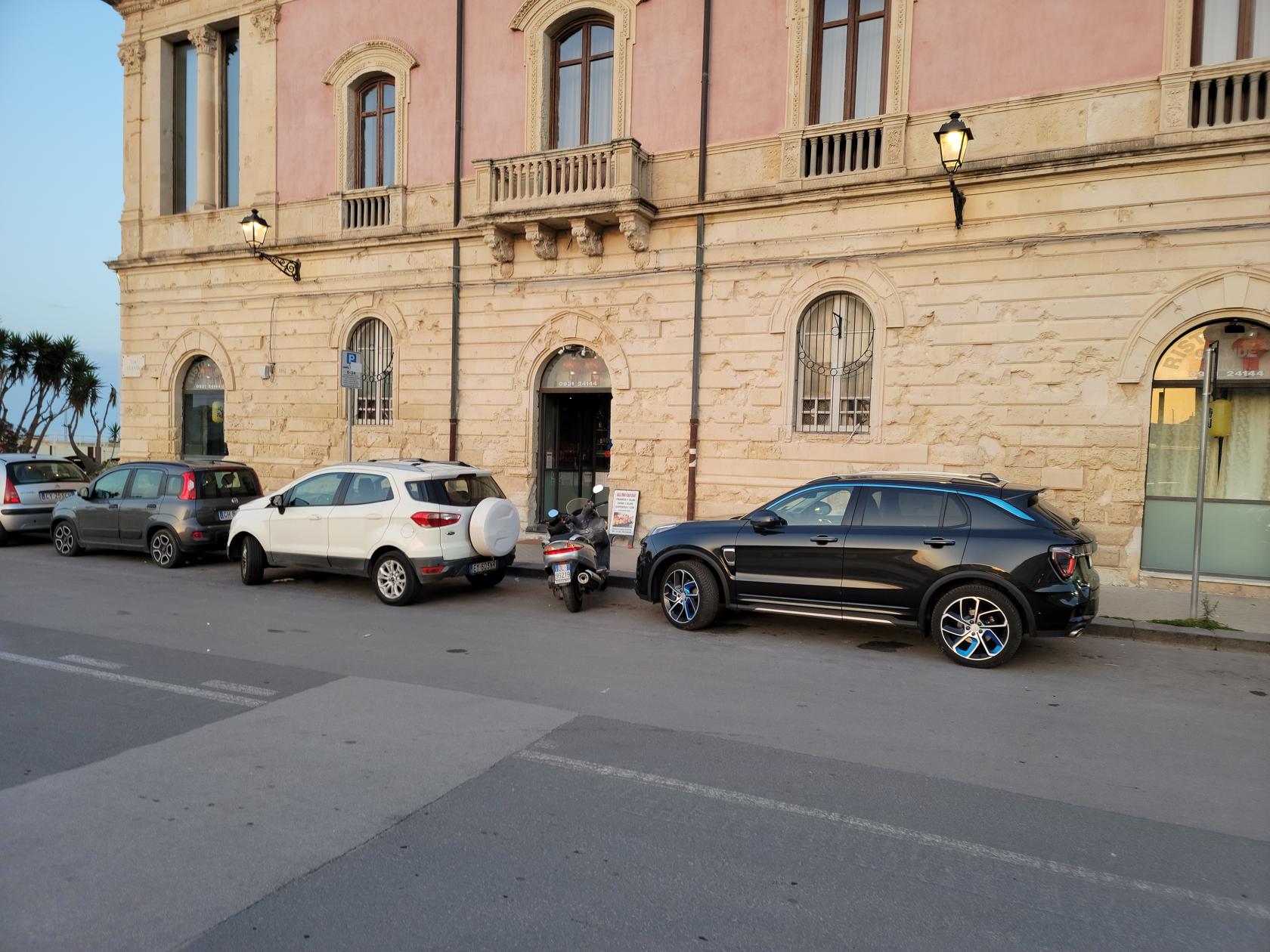
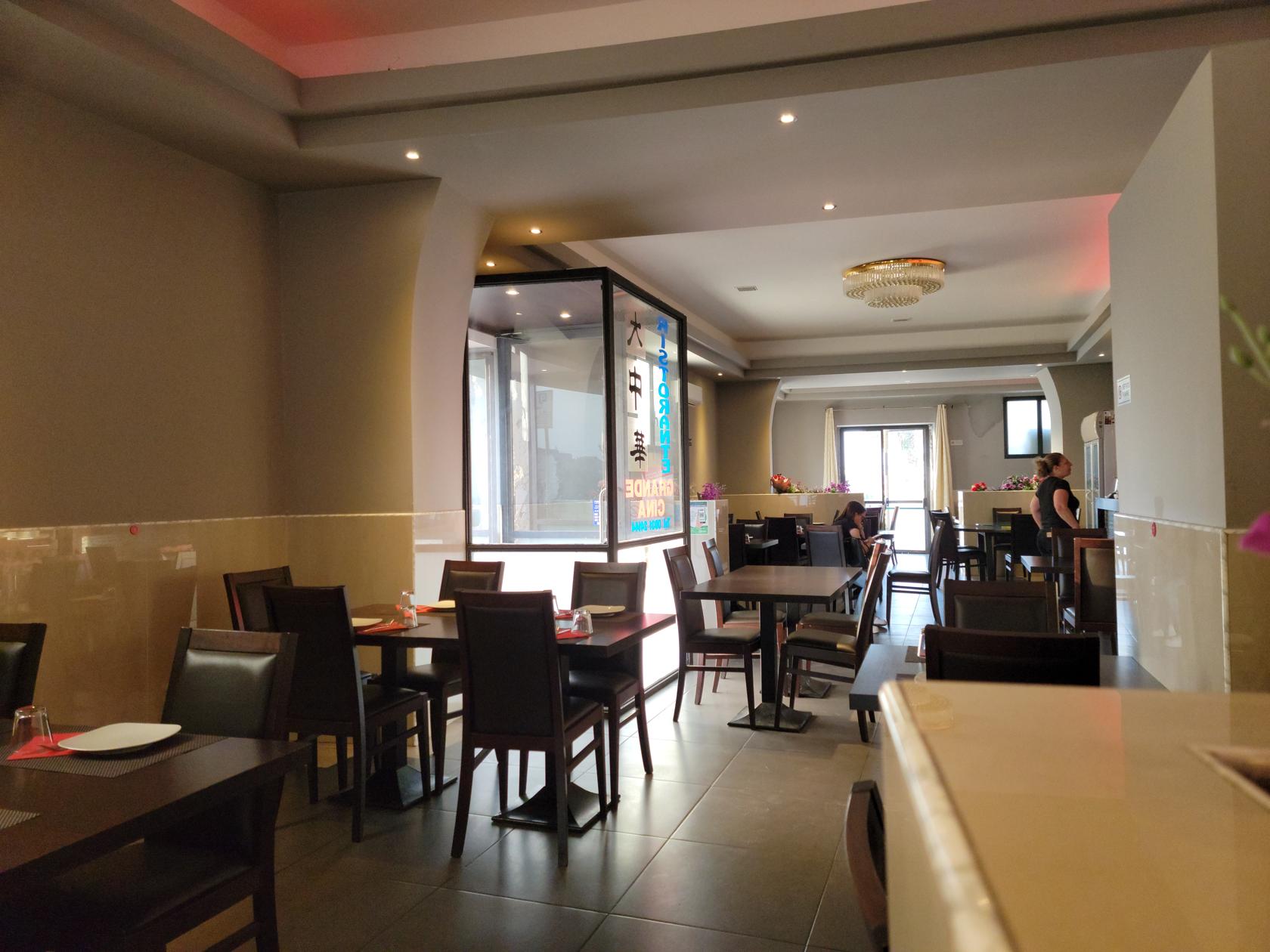
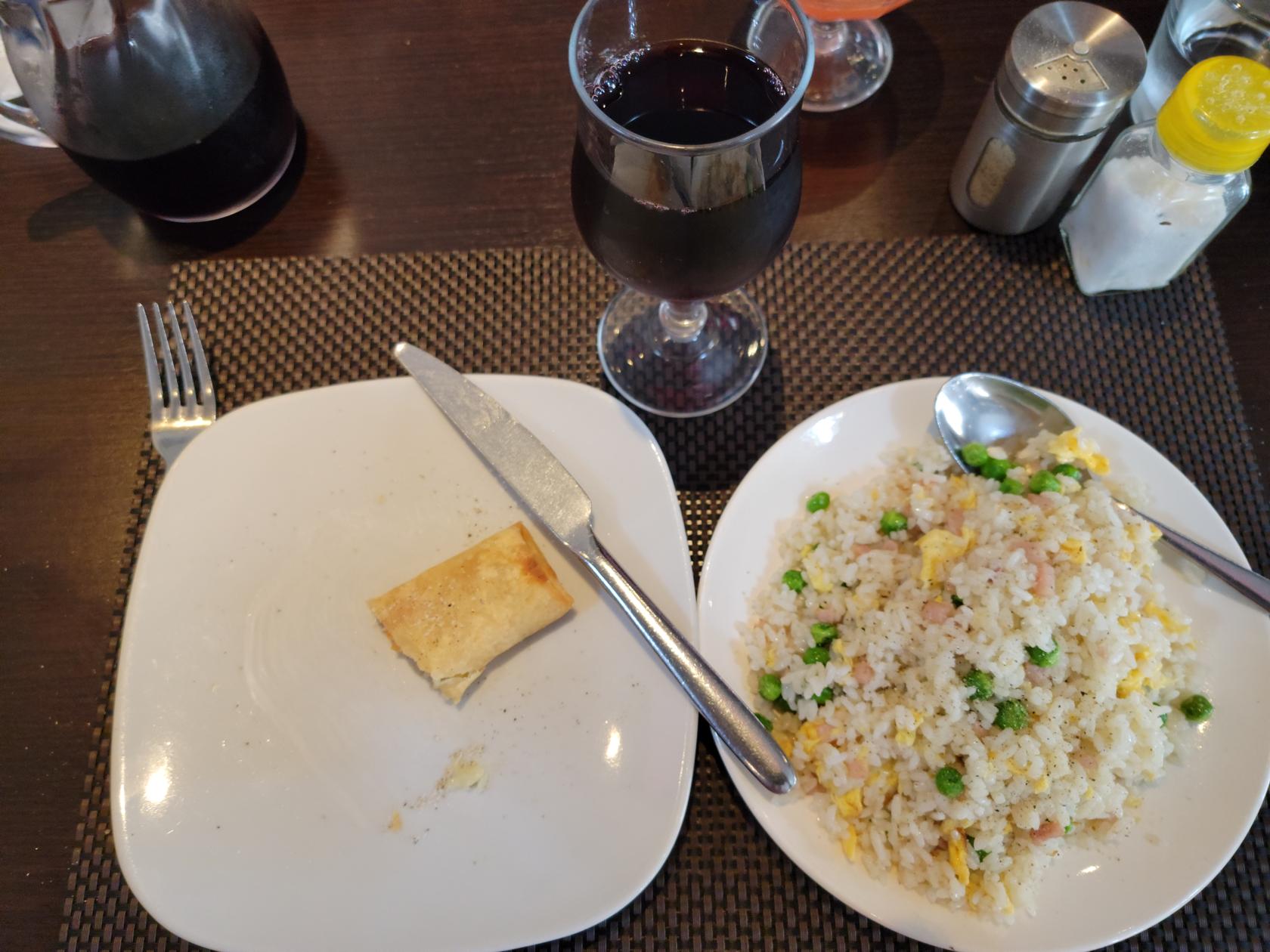
Having been eating Italian and SIcilian food for too long, we tried RIstorante Cine and really like it. Though the ingredients are different from what we are used to in Turin and the States (though not unusual), the owner was more than happy to alter any dishes to our tastes. We only ate lunch here and for two, we were able to order an appetizer, primi (vegetable rice) and secondi (chicken or pork or vegetables in white sauce), along with a half carafe of red wine, water, coffee and sambuca for under 30€! It is hard to beat that in a tourist area.
Ristorante Cine – Chinese restaurant – Siracusa, Sicily
Ristorante Cine – Chinese restaurant – Siracusa, Sicily
Involtino and Rice Cantonese – Ristorante Cine – Ortigia – Siracuse, Sicily
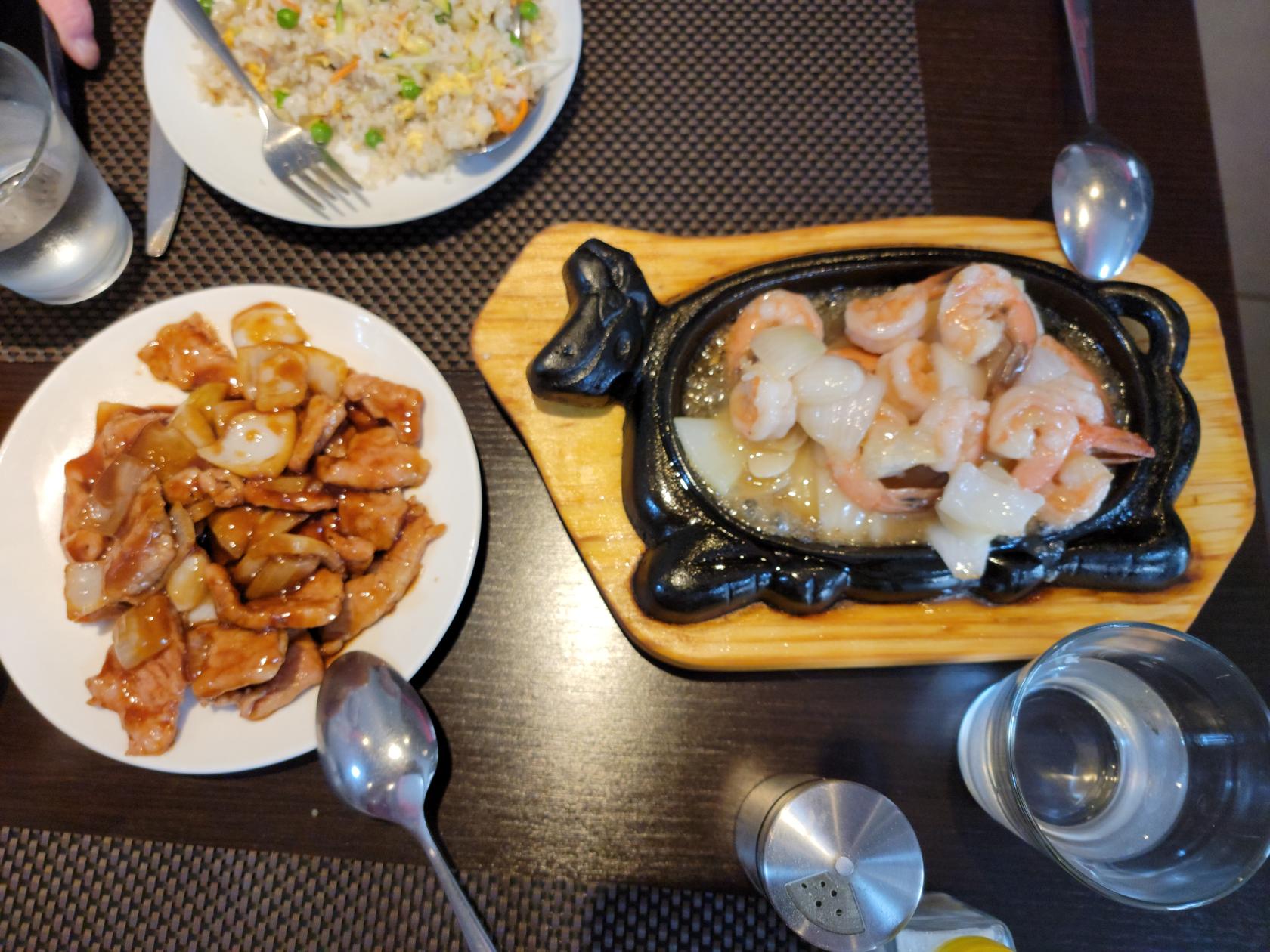
Pork and onions in brown sauce, Shrimp and onion in white sauce – Ristorante Cine – Ortigia – Siracuse, Sicily
La Tavernetta Da Piero Fuori Ortigia
We ate lunch here on Sunday, the 21st of May, 2023, after visiting the Archaeological Park and when unbeknownst to us Mount Etna was erupting.
La Tavernetta Da Piero Fuori Ortigia Ristoranta – Ortigia – Siracuse, Sicily
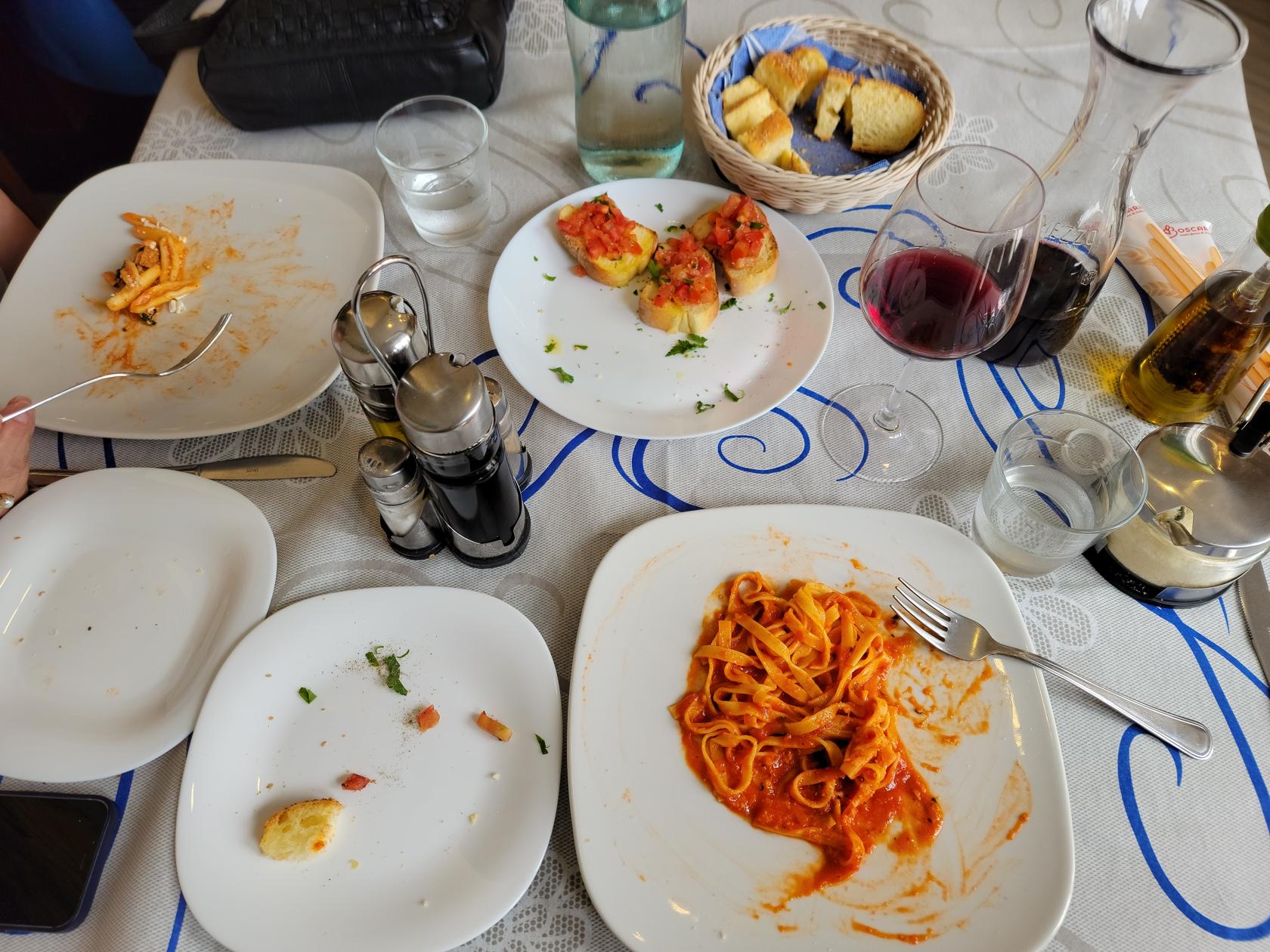
Tagliatella alla pomodoro, bruschetta – La Tavernetta Da Piero Fuori Ortigia Ristoranta – Ortigia – Siracuse, Sicily
After we finished and began walking back to the hotel, we noticed dust getting in our eyes. At the time we had no idea why and surmised that the recent bad storm had brought in dust from Africa, which can occasionally happen. When we read the next day that the Catania Airport had closed due to ash if finally dawned on us that it had been the ash from the volcano all those miles away that was the cause.
Gelateria
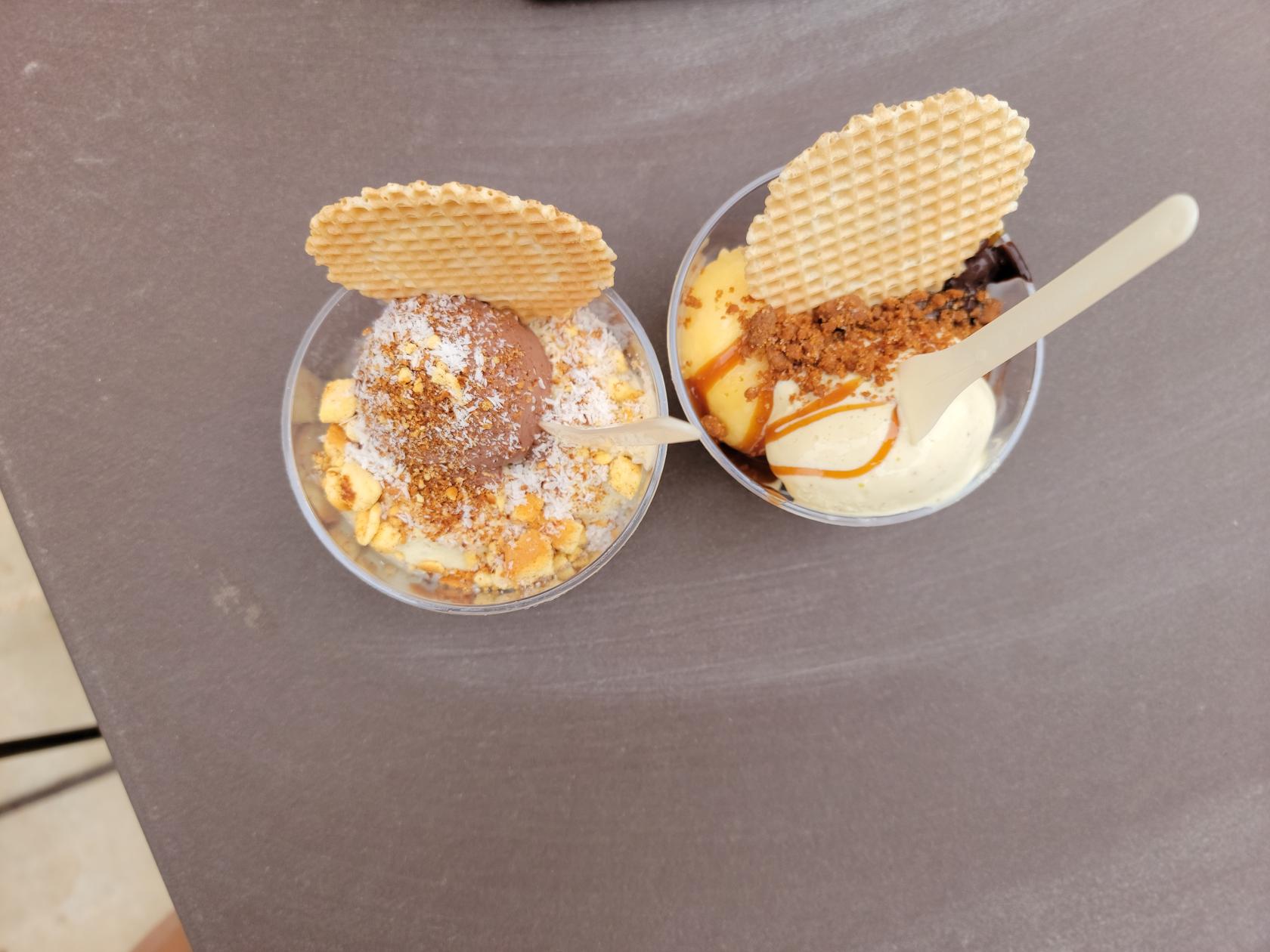
If you are looking for gelati in Sicily, do not buy the brightly colored ones, usually they are made of inferior ingredients. Instead, look for the Artiginale label. Though you will pay more for a cone of cup of this, it will be far more worth your while in taste later.
Levante Gelateria
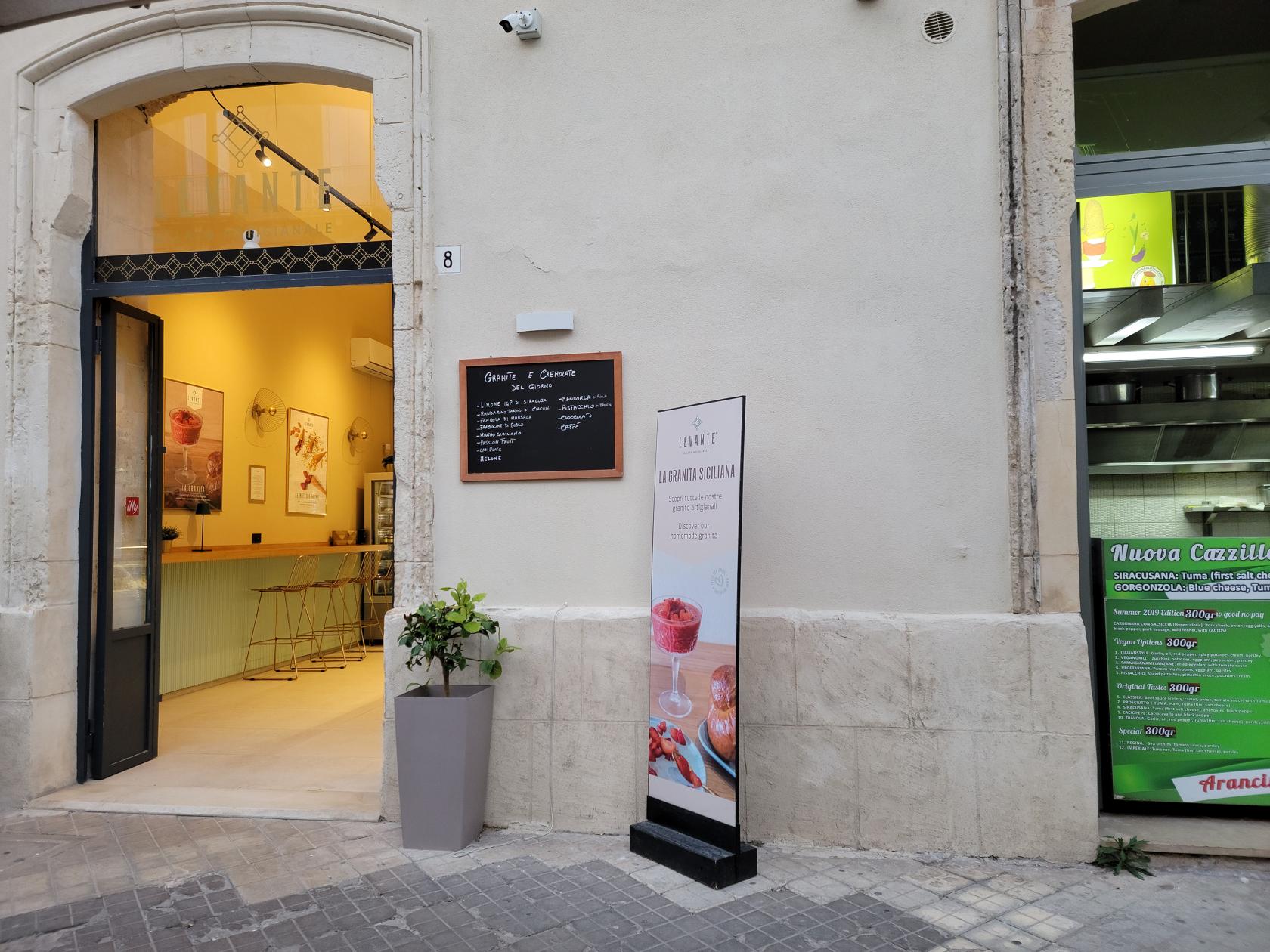
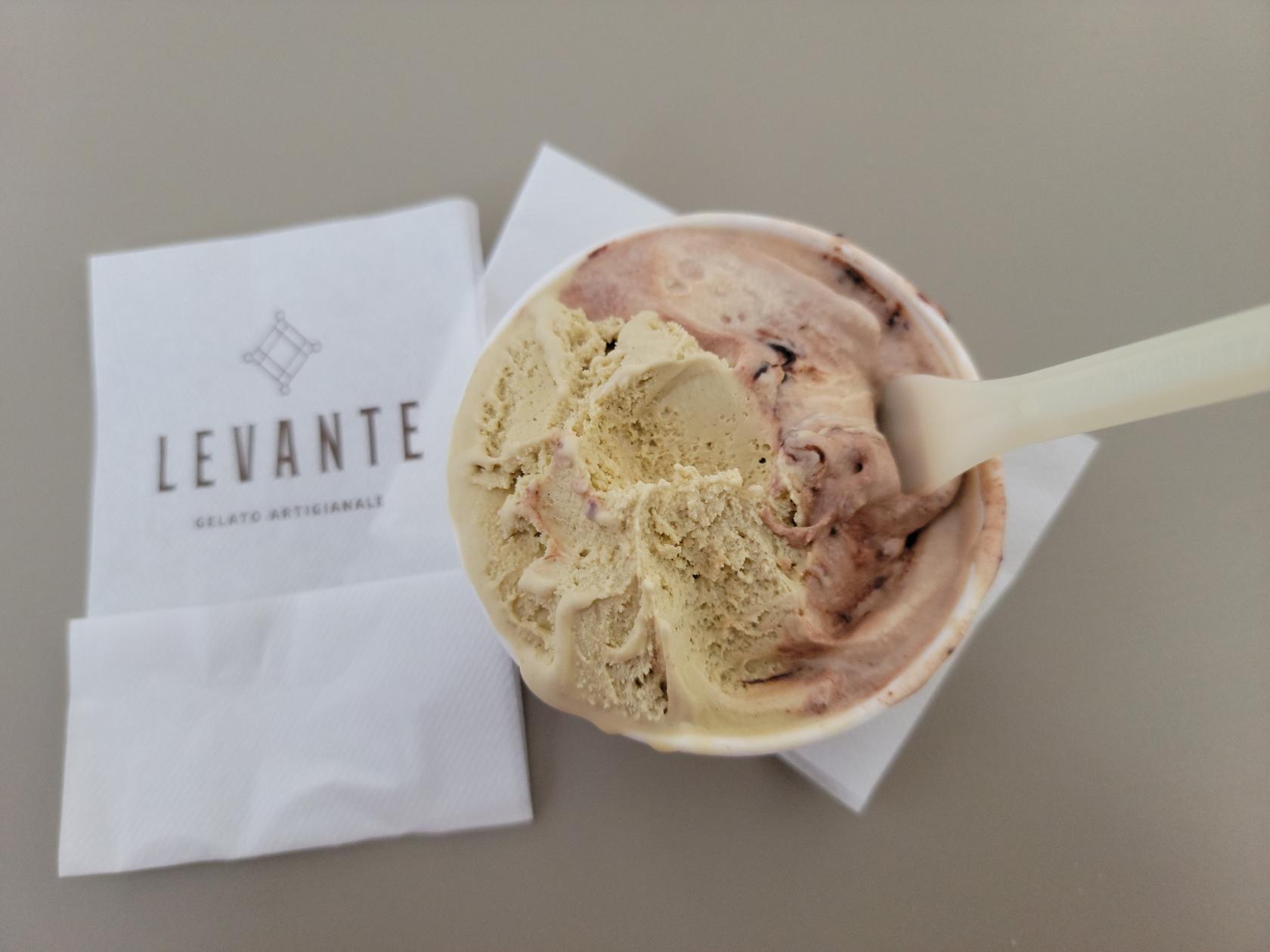
Another good Gelateria, providing excellent artisanal gelati. I was particularly fond of their Amerano and Pistachio flavors.
Levante Gelateria – Siracusa, Sicily
Levante Gelati Artiginale – Pistachio and Amorano – Siracusa, Sicily
Fior Di Latte Gelati
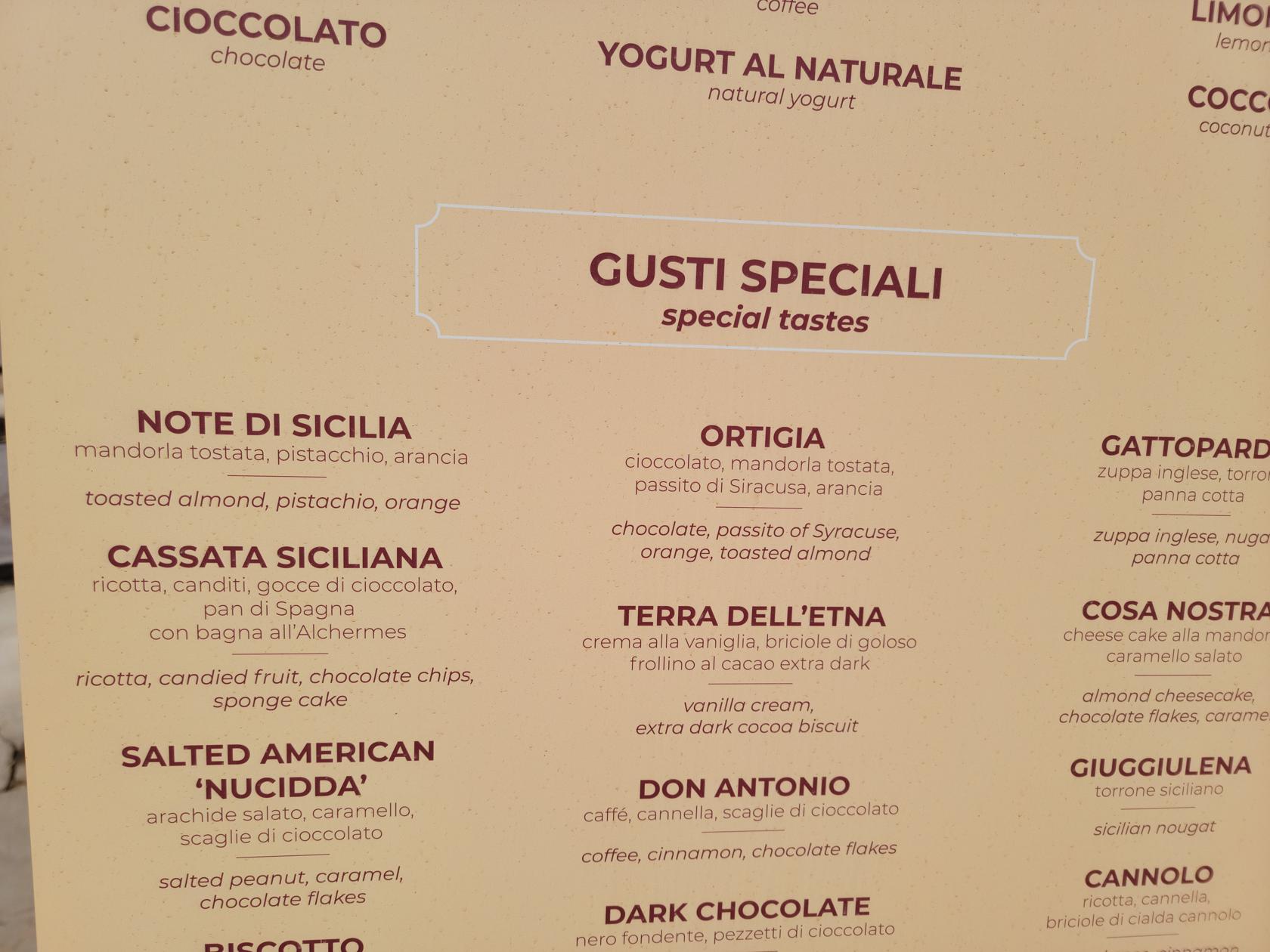
Finding very good gelati anywhere in Italy is not a difficult task, here is no exception. It has great artiginale (artisanal) flavors, I ordered the Ortigia and Note Di Sicilia, and Patti ordered the Note Di Sicilia, Mandarin Orange and Dark Chocolate with a hint of orange.
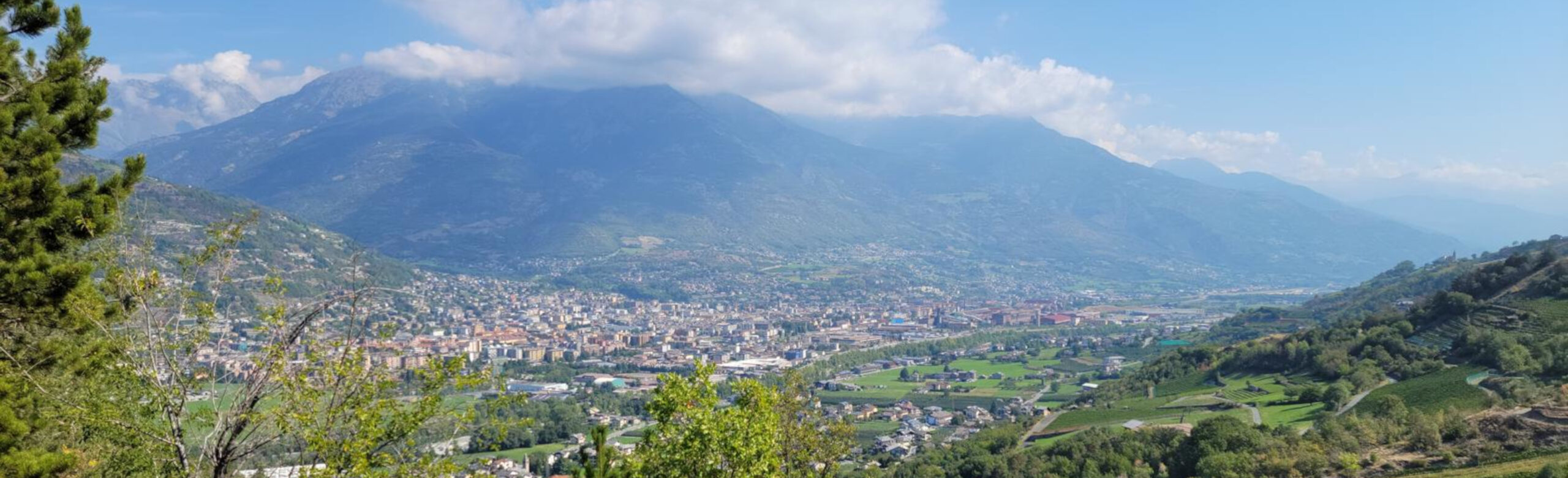
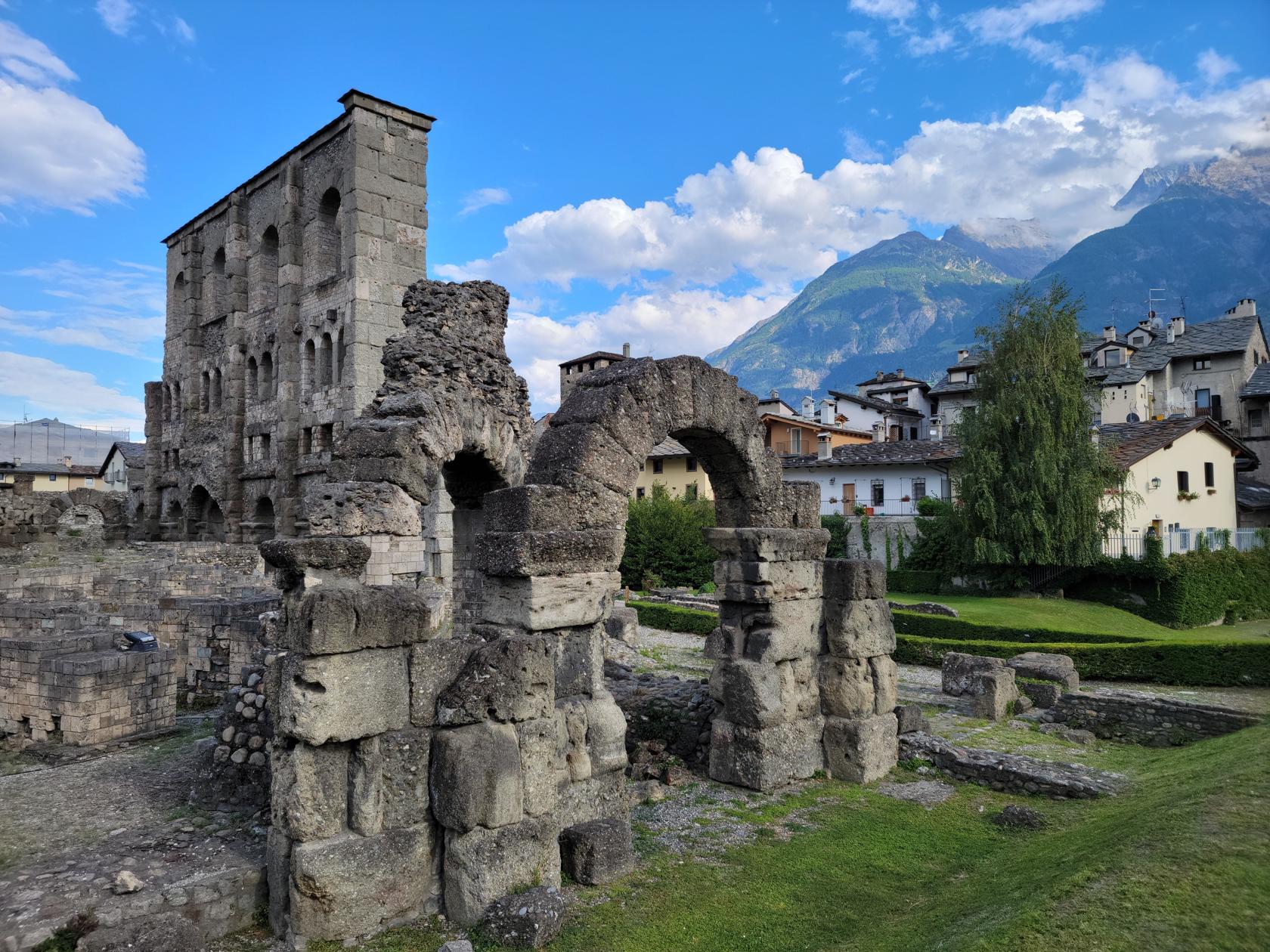
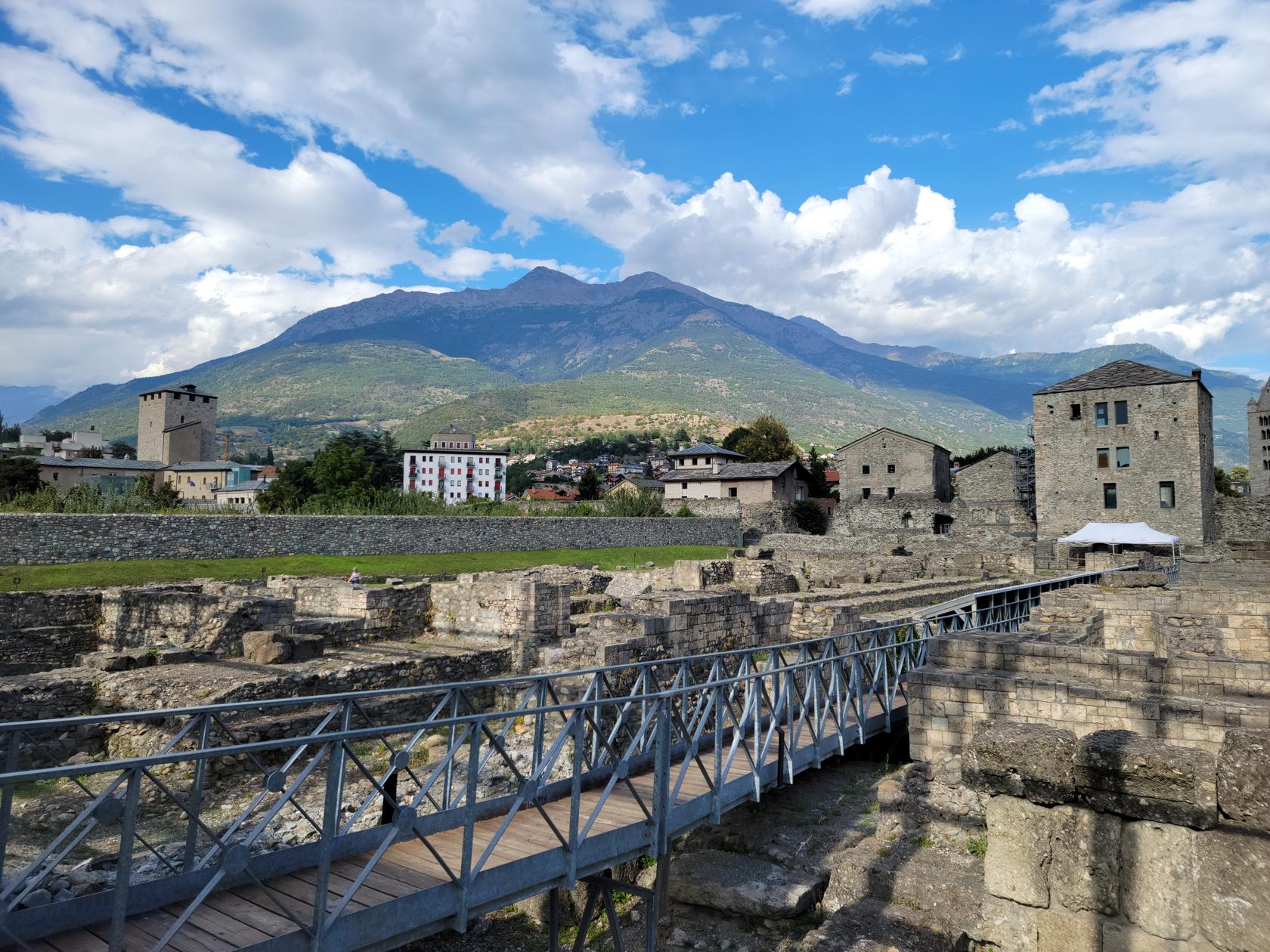
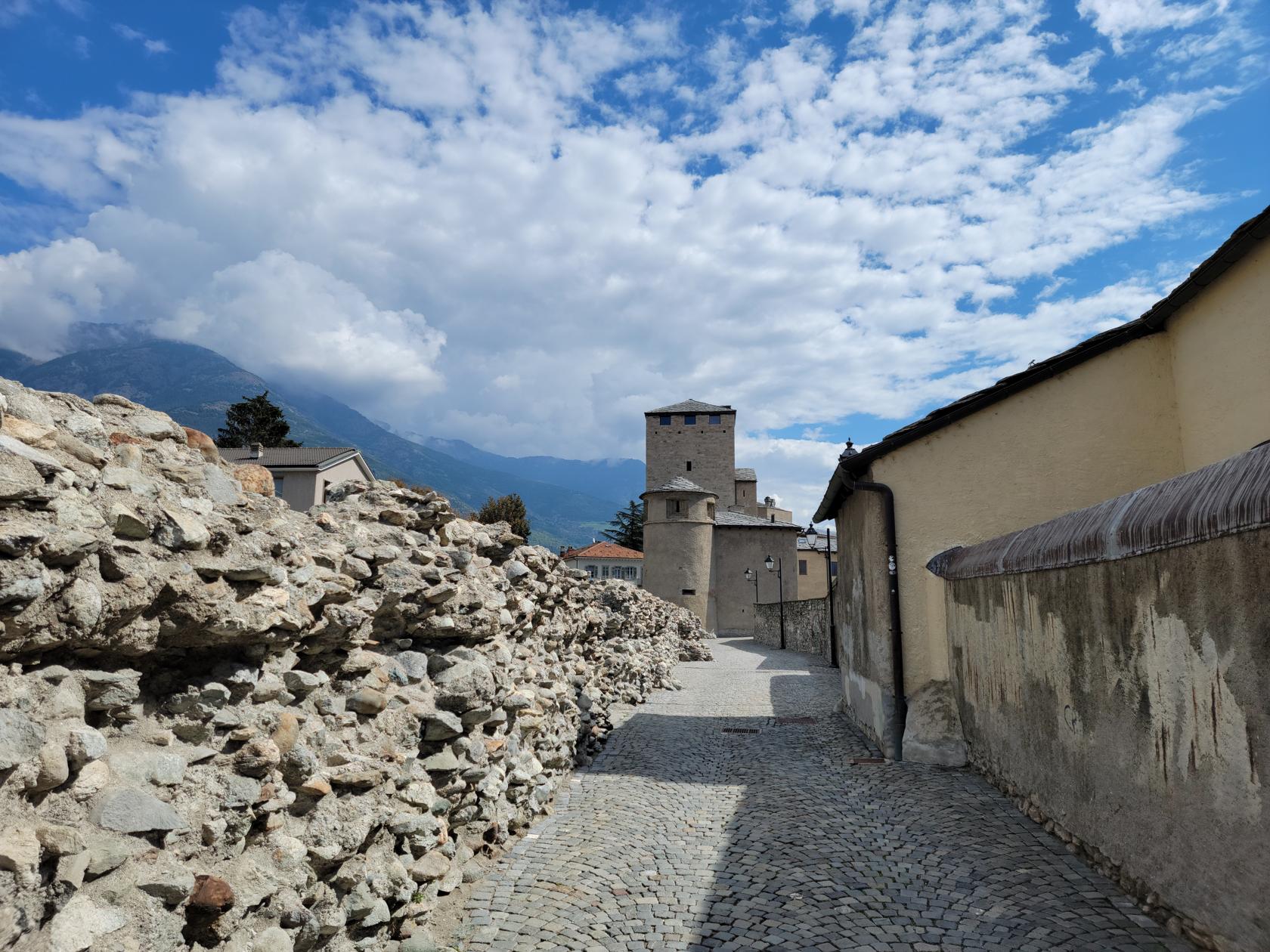
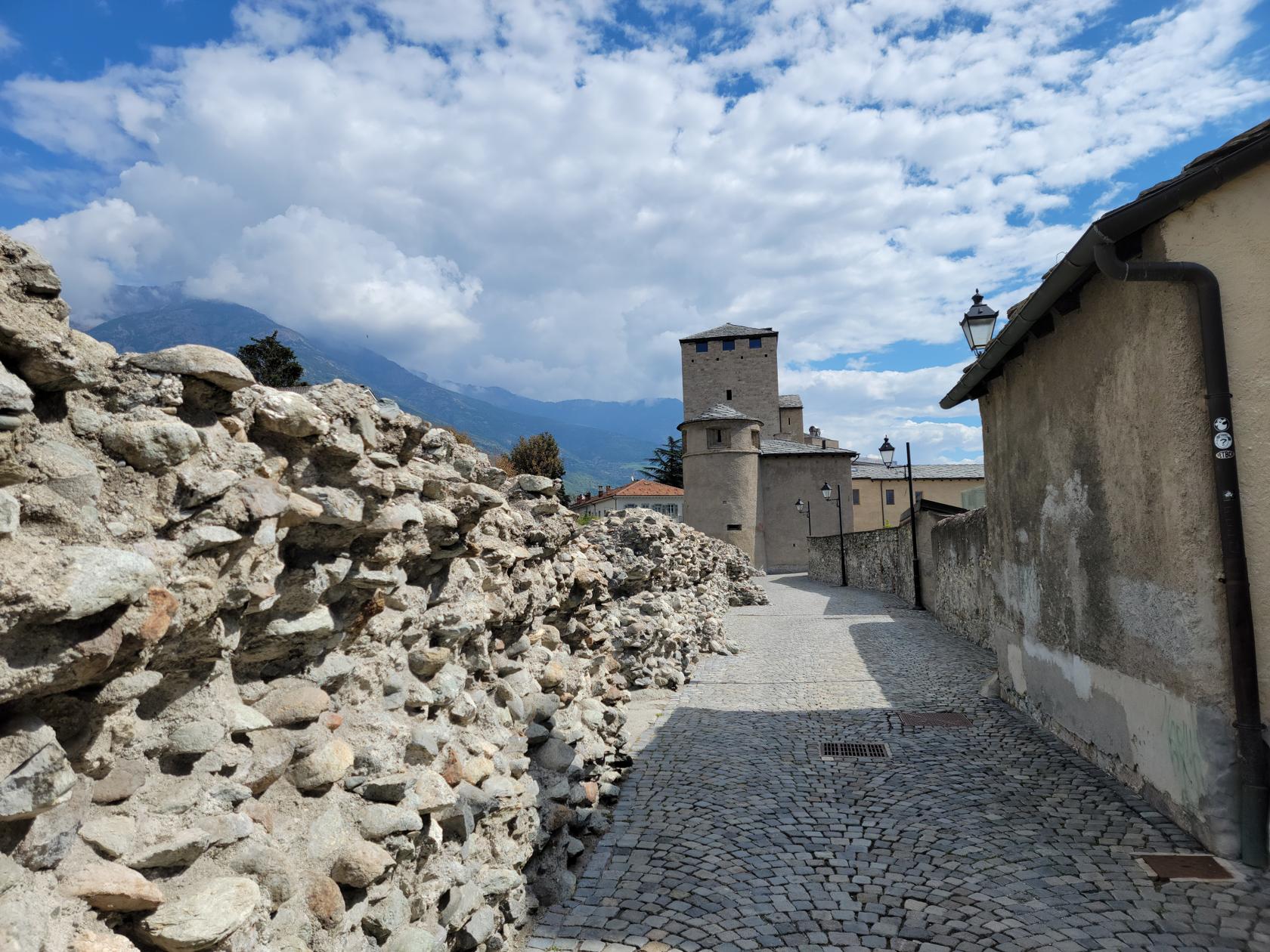
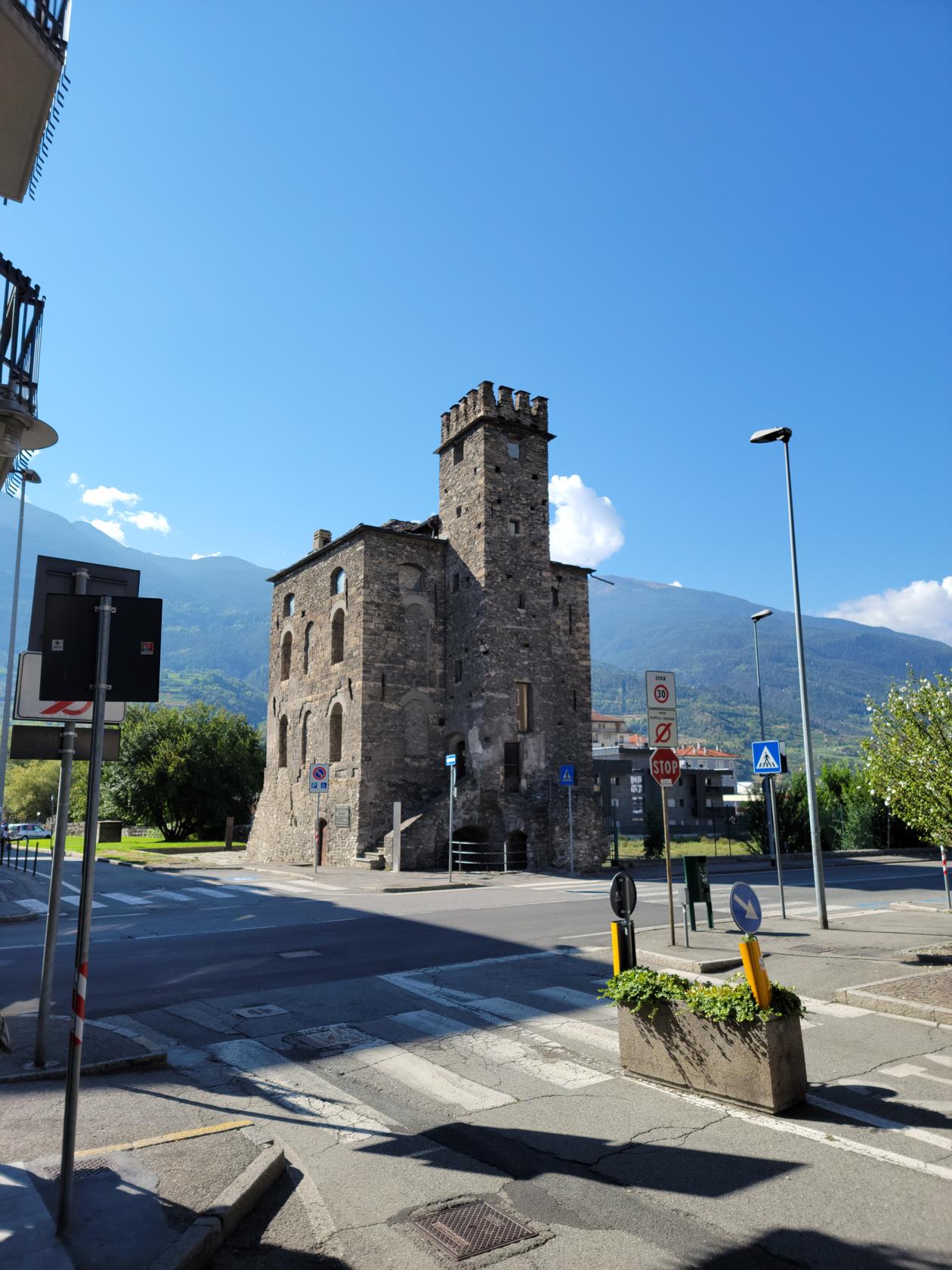
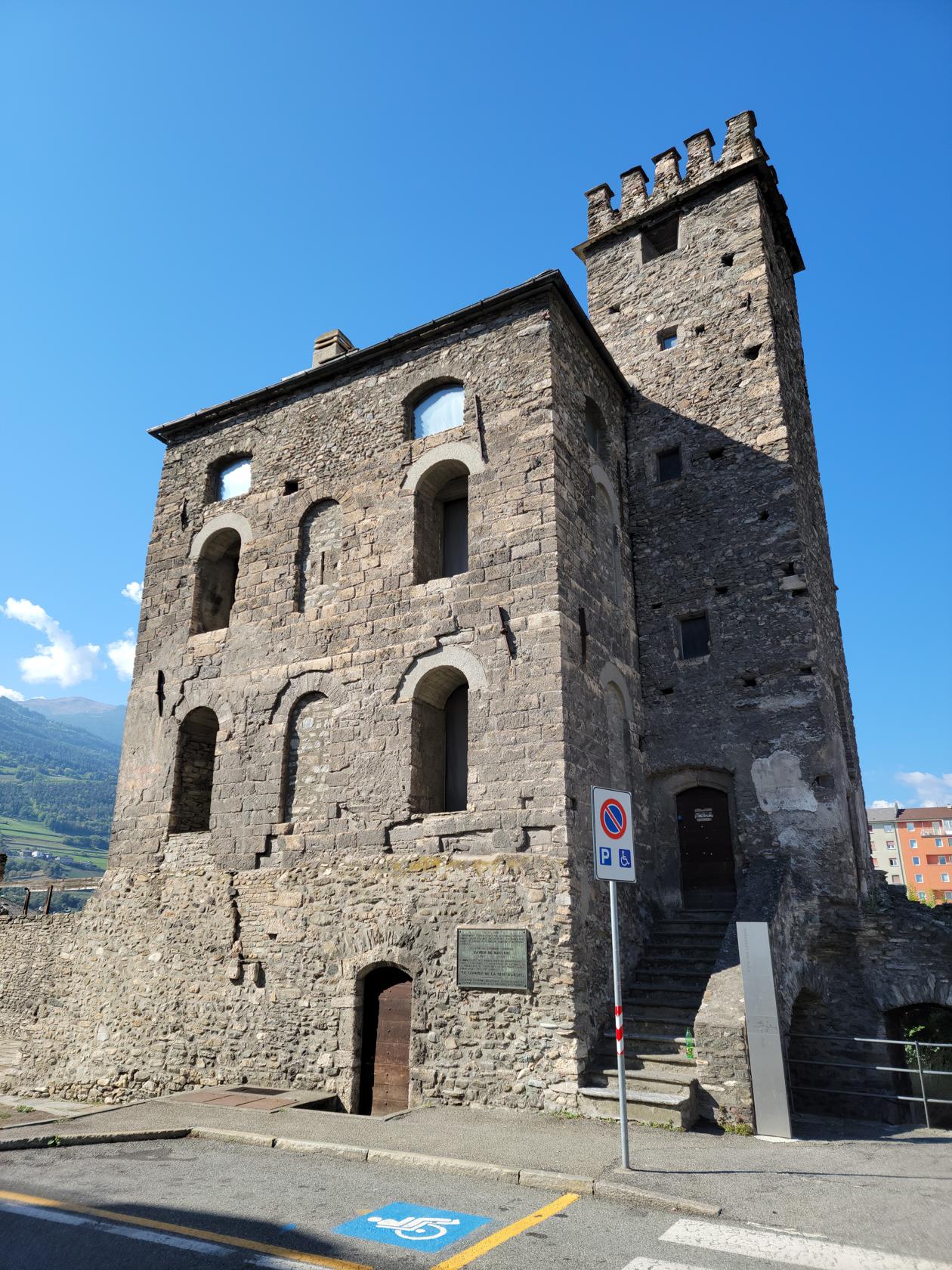
Located about two hours north of Turin by train and down a very large valley, is the small city of Aosta (pronounced: Ahh’osta). It is a cute little city of about thirty-five thousands inhabitants and a former ancient Roman military outpost.
Aosta – From Gargantua
We had planned a short trip for Aosta some time ago, hoping to go there during the hot summer month of July, but we were busy. So, we adjusted our plans to September and glad we did. The valley can be as hot as the Po Valley in summer and can also have wild swings in weather. So, along with the fact that we had additional plans for Mont Blanc, we prepared both ways, and perhaps in the end packed a bit too heavily.
The Valley
It is located in the Aosta Valley of the same name and is the capital of one of the autonomous regions in Italy. It can be found at the confluence of the rivers Dora Baltea, which starts at the foot of Mont Blanc, and the Buthier, which starts at the foot of the Grandes Murailles glacier and the Valpelline valley.
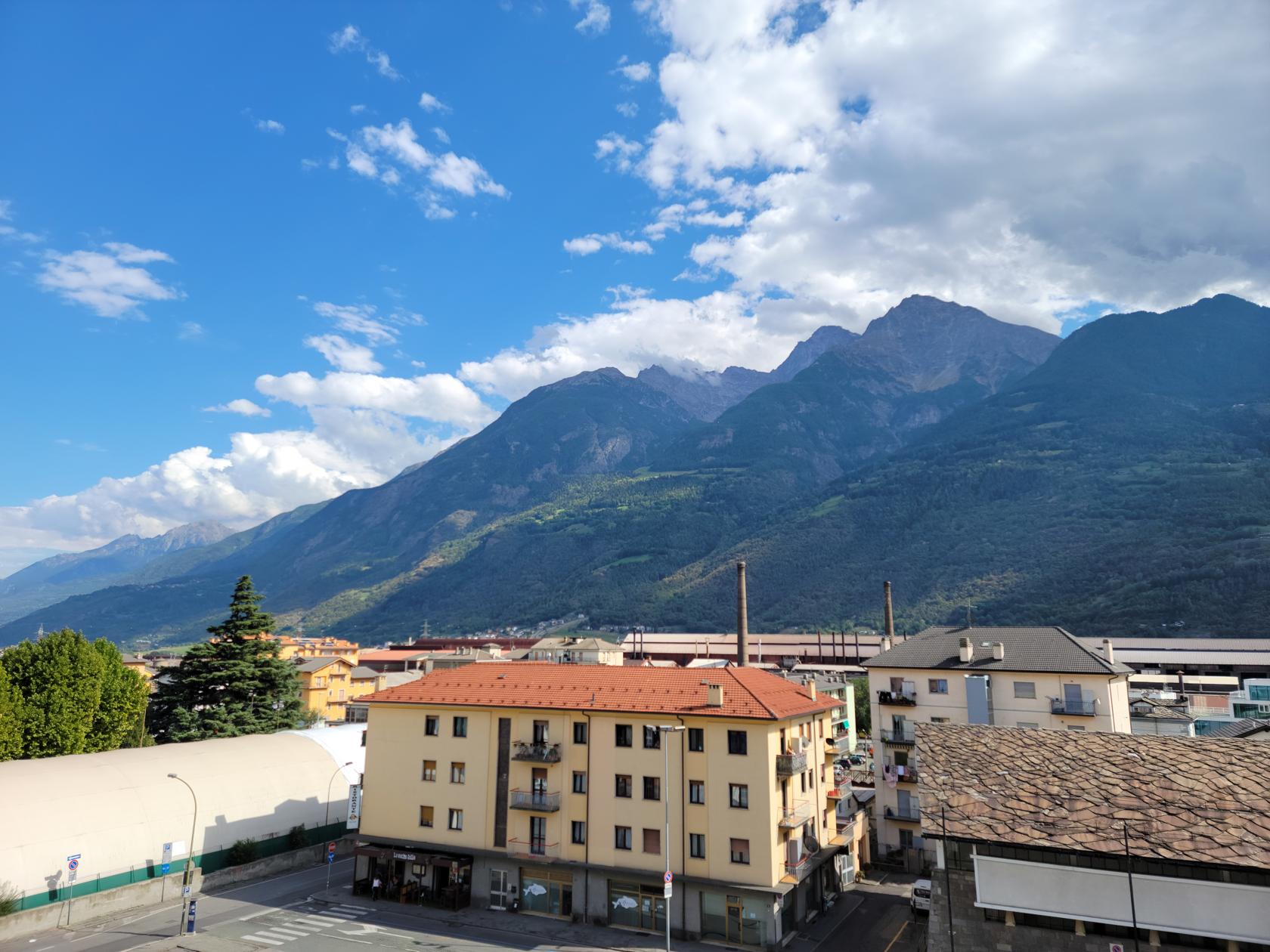
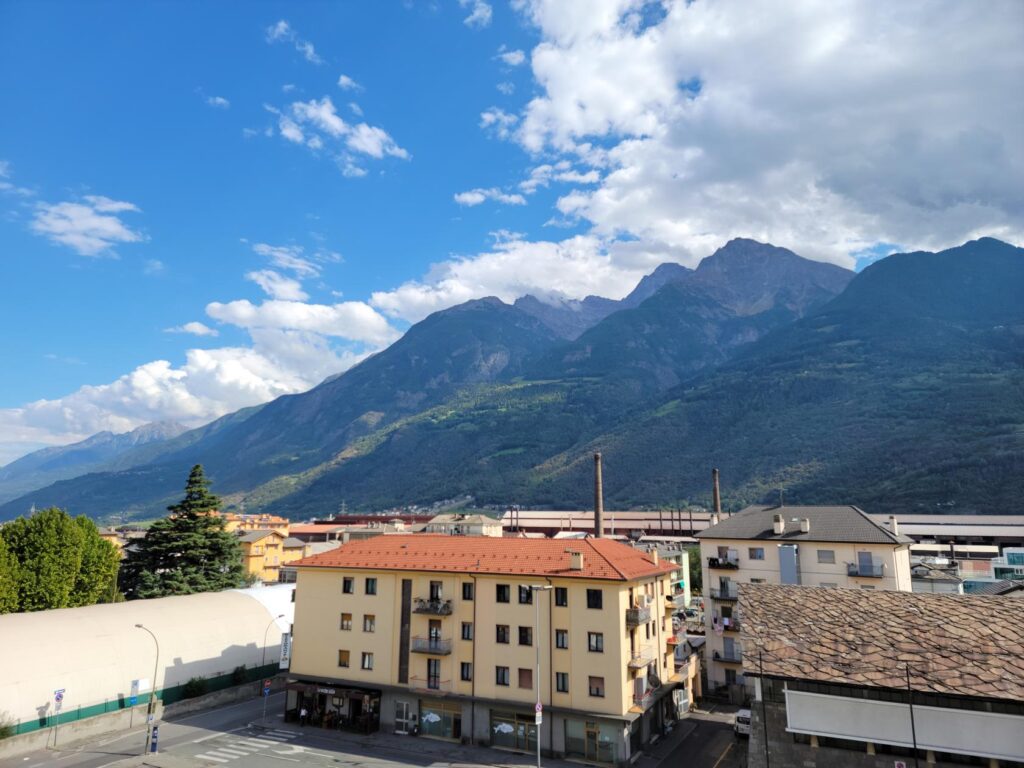
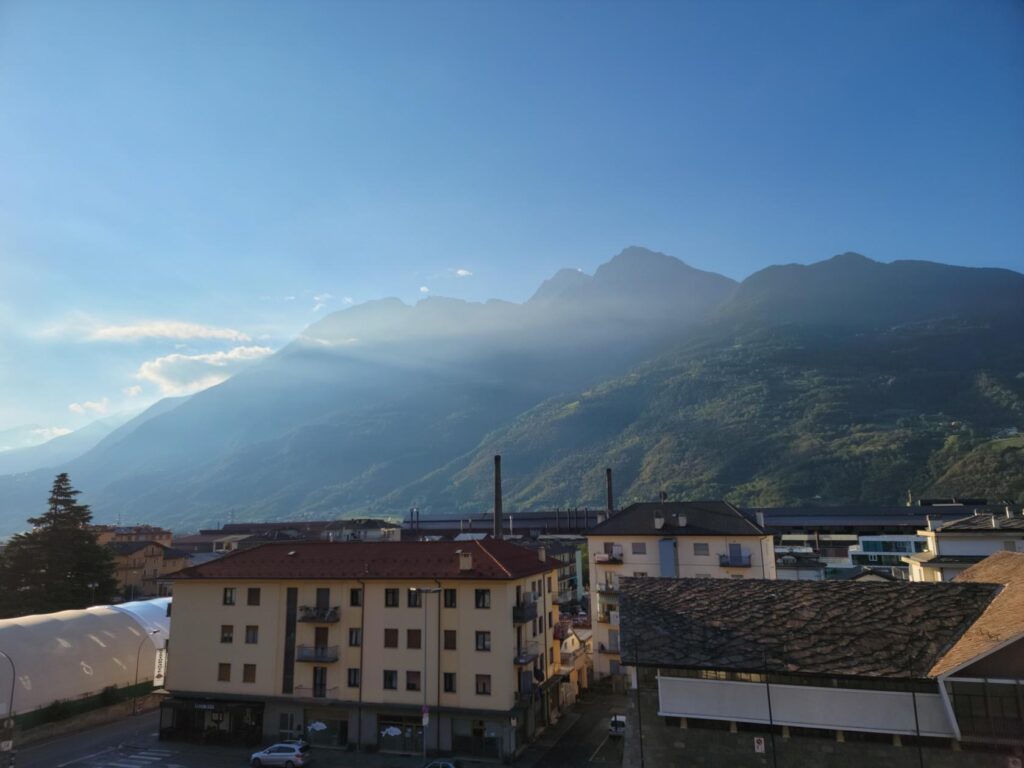
Aosta – Looking Southeast from Omama hotel
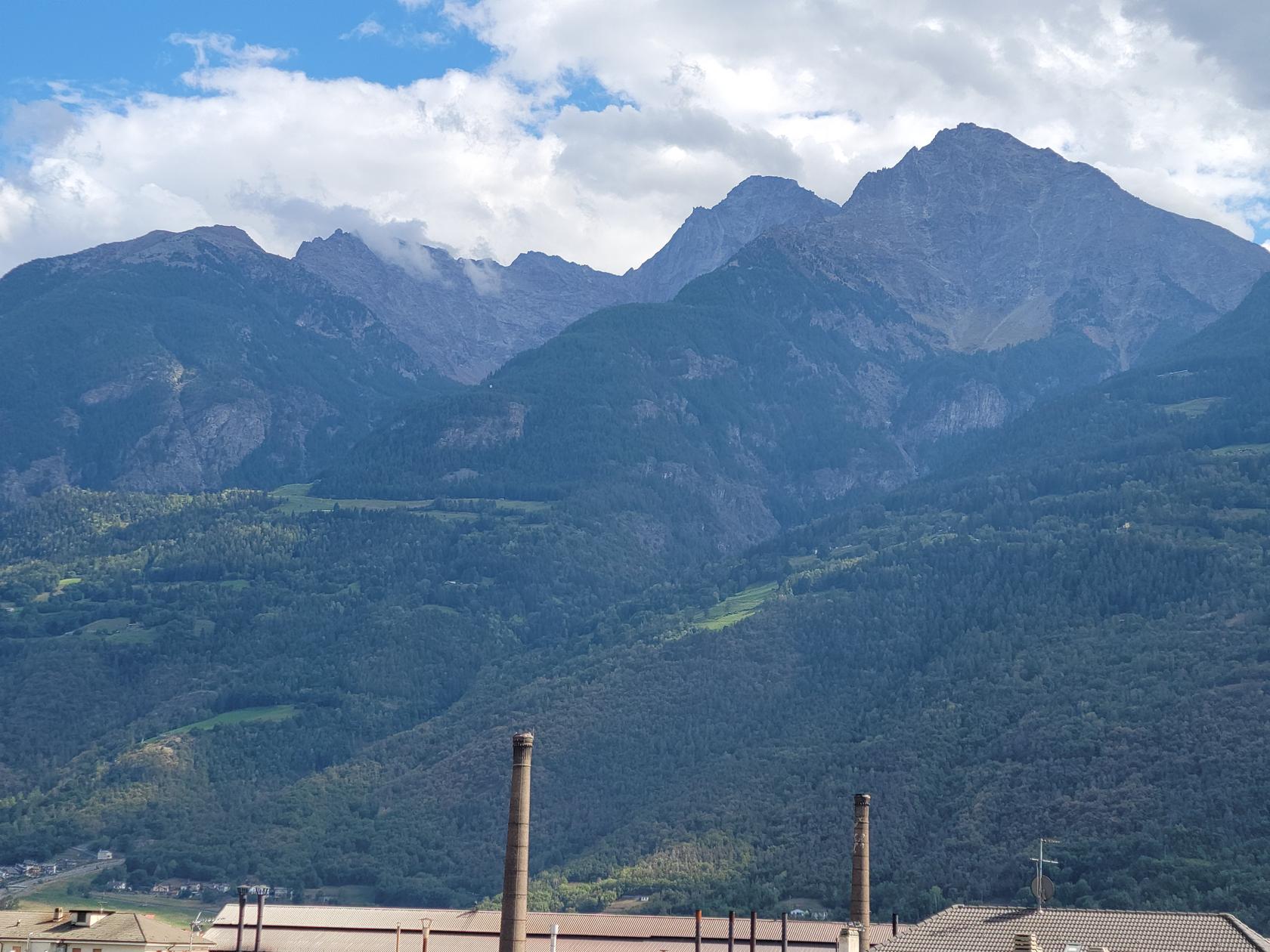
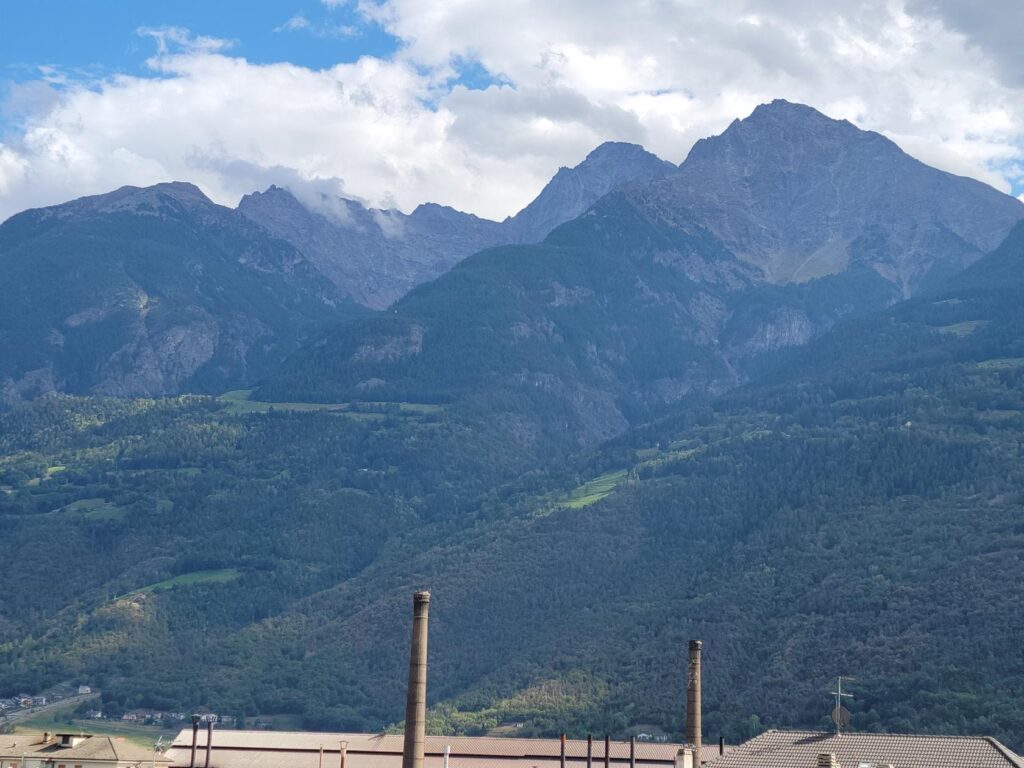
Aosta – Looking South and Mount Garin
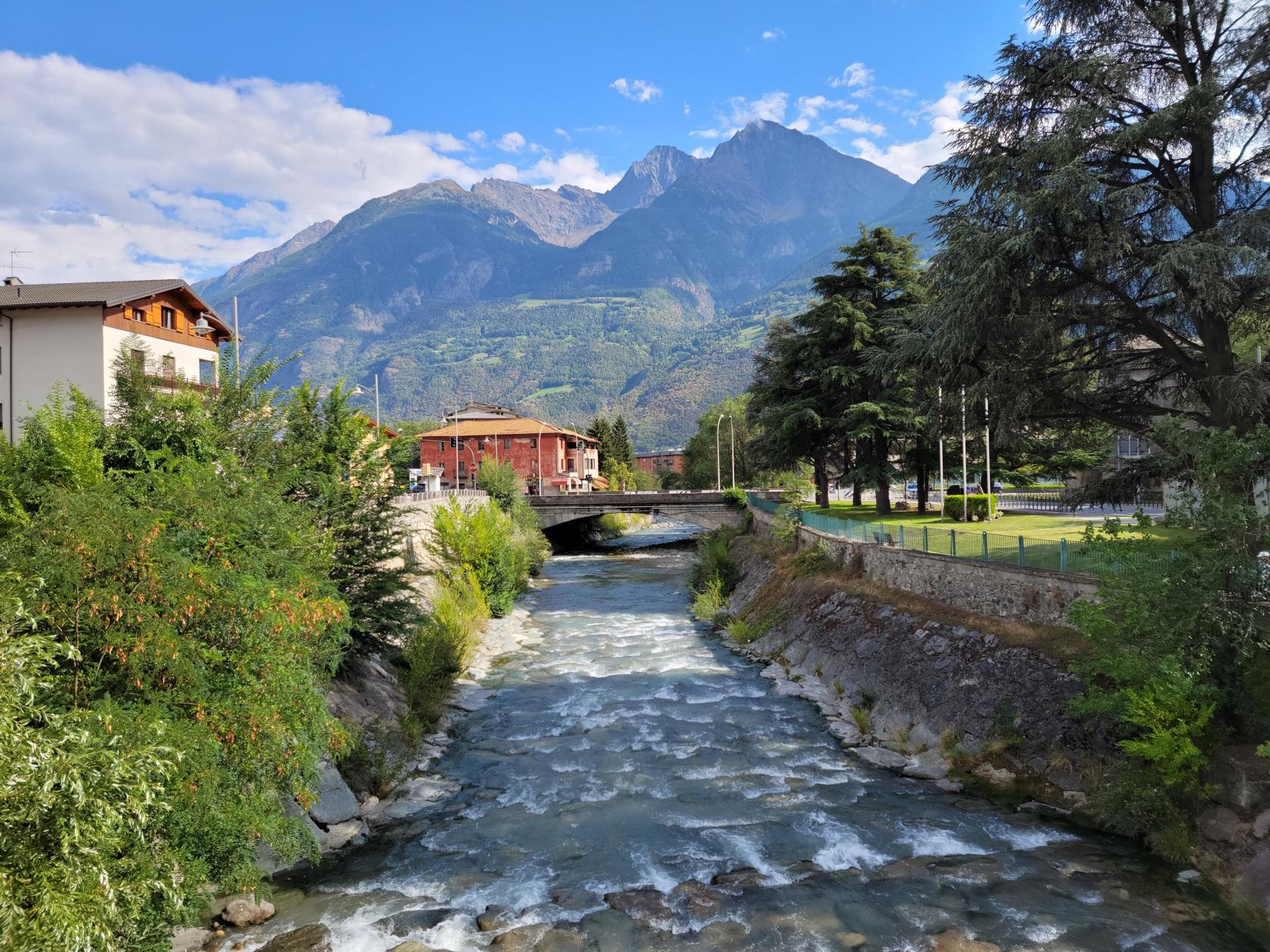
Aosta – The Buthier river
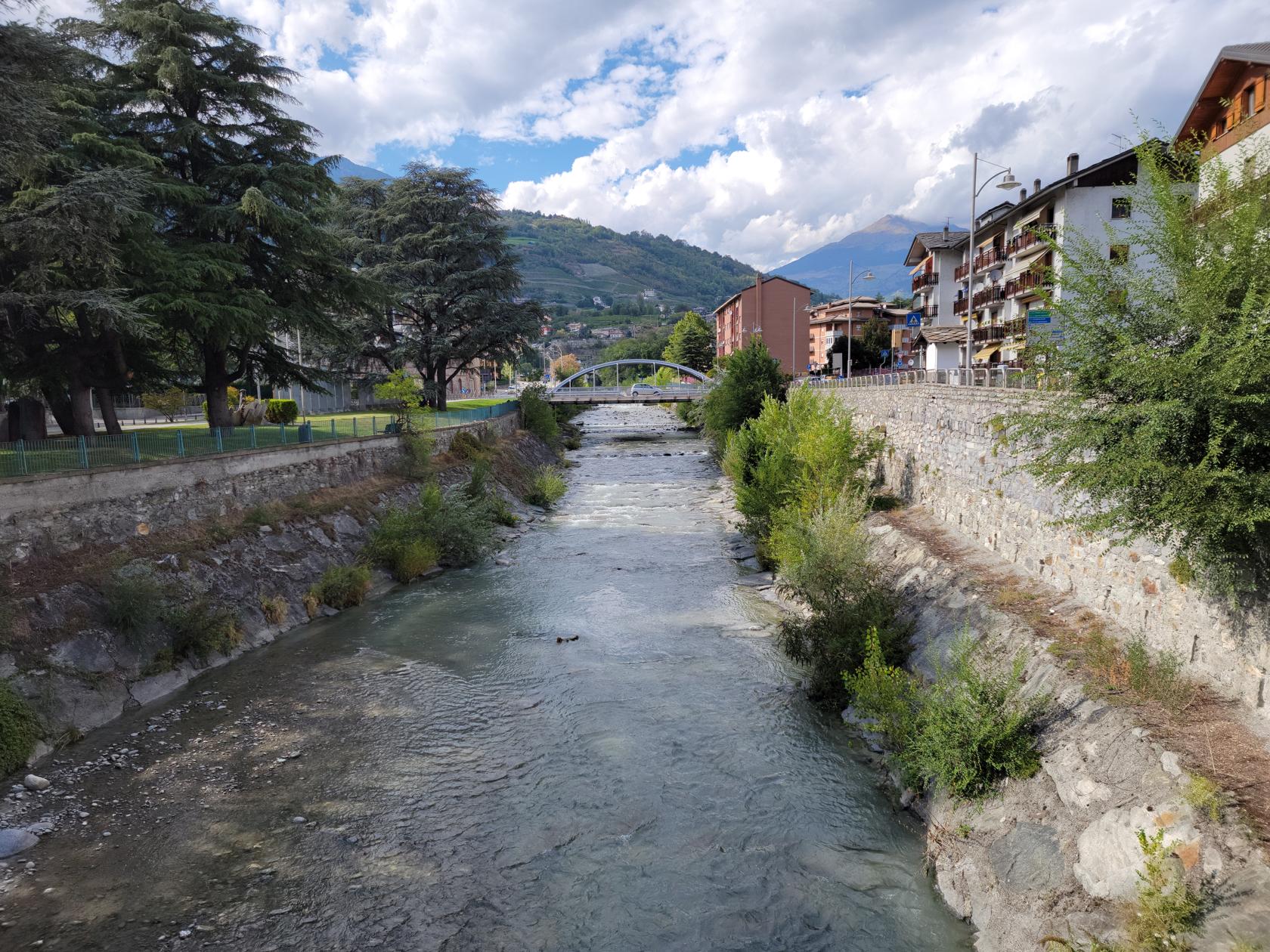
Aosta – The Buthier river
The City
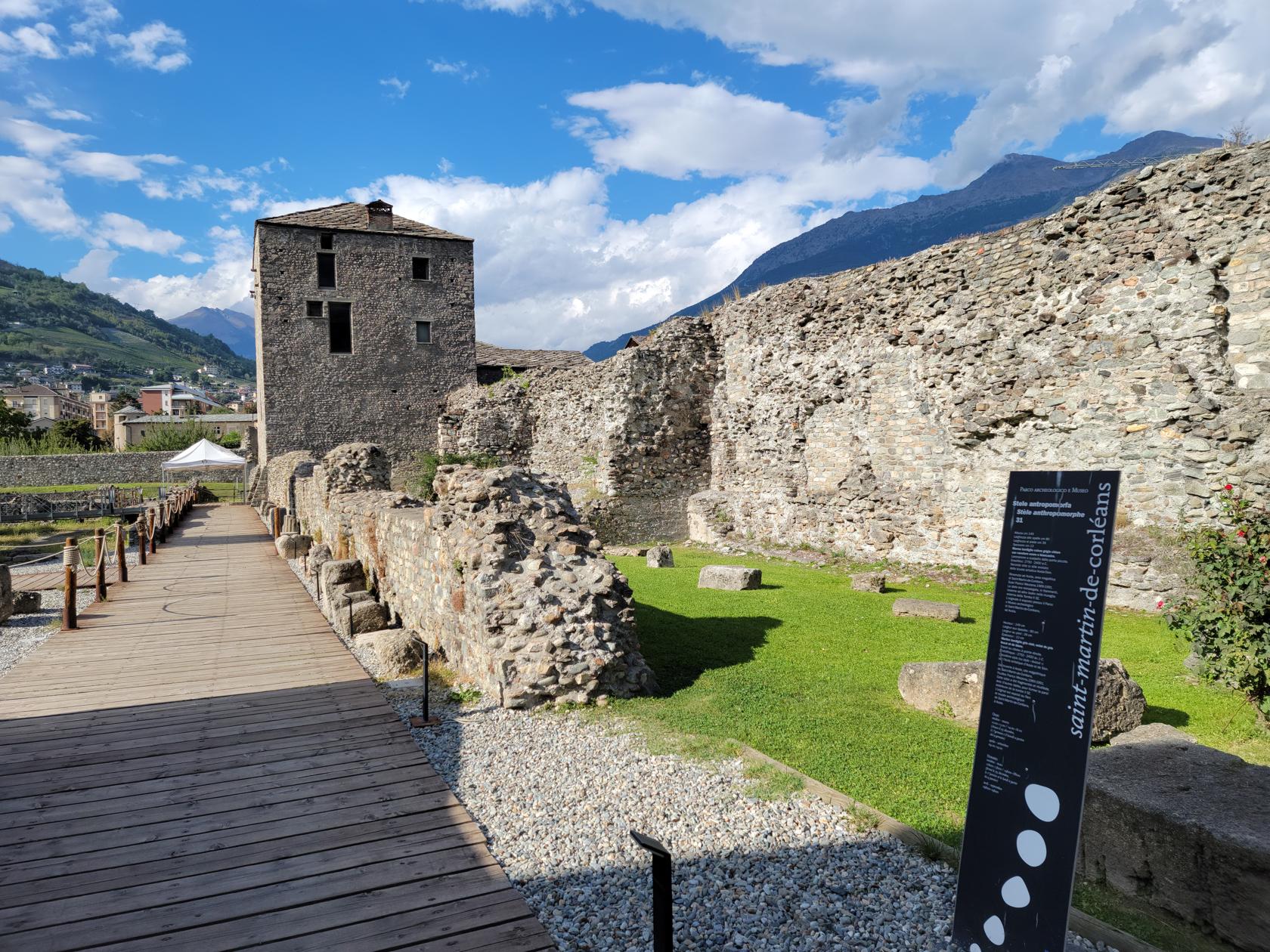
The city is an ancient Roman enclave and military output, that was supported by the Roman Empire and an important Roman presences in the first century, guarding the northern pass from barbarians. Augustus Caesar is displayed throughout the city in many bronzes and other forms of statue.
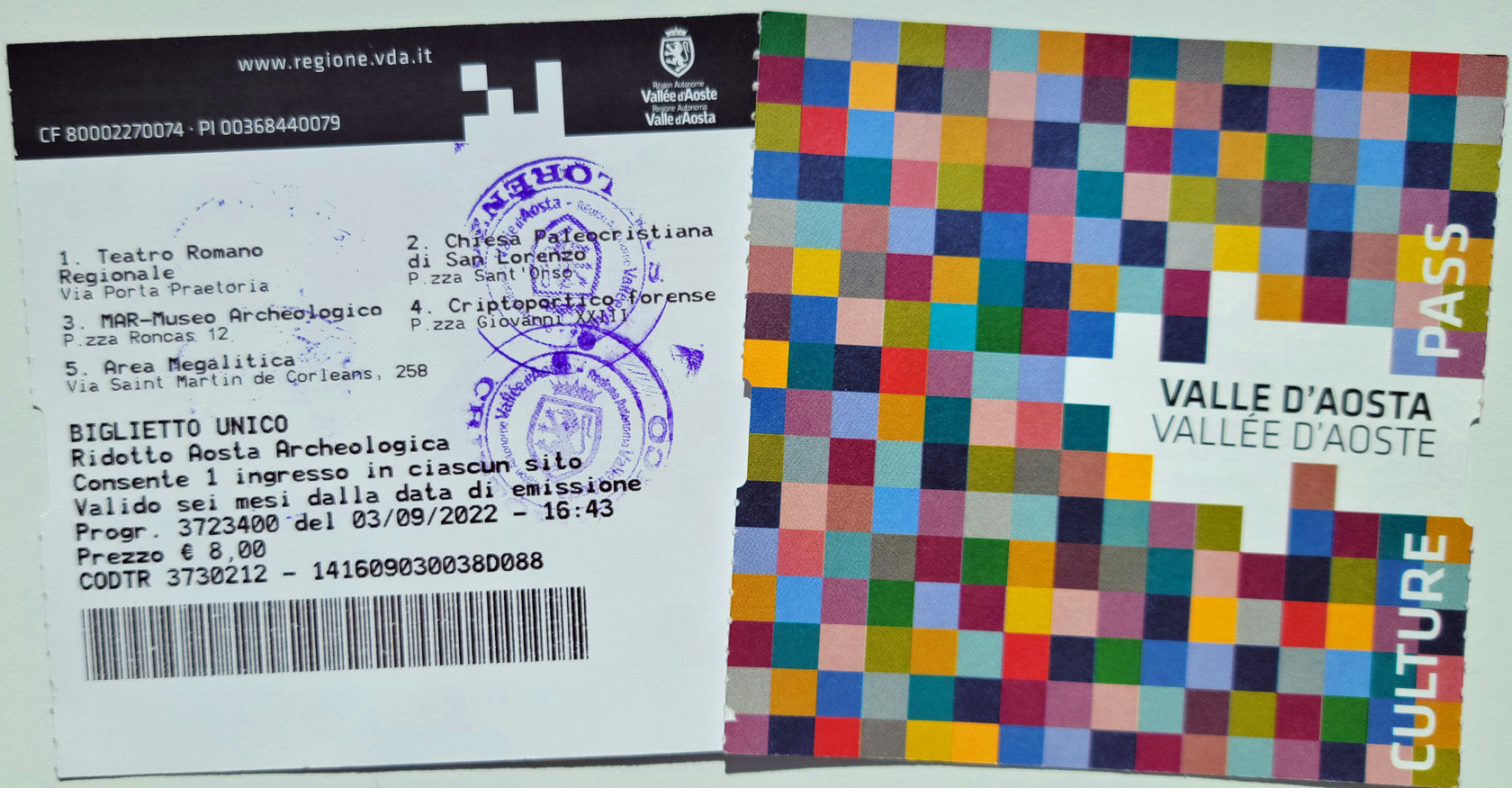
Aosta – Tickets For Two – Archeological Sites Aosta
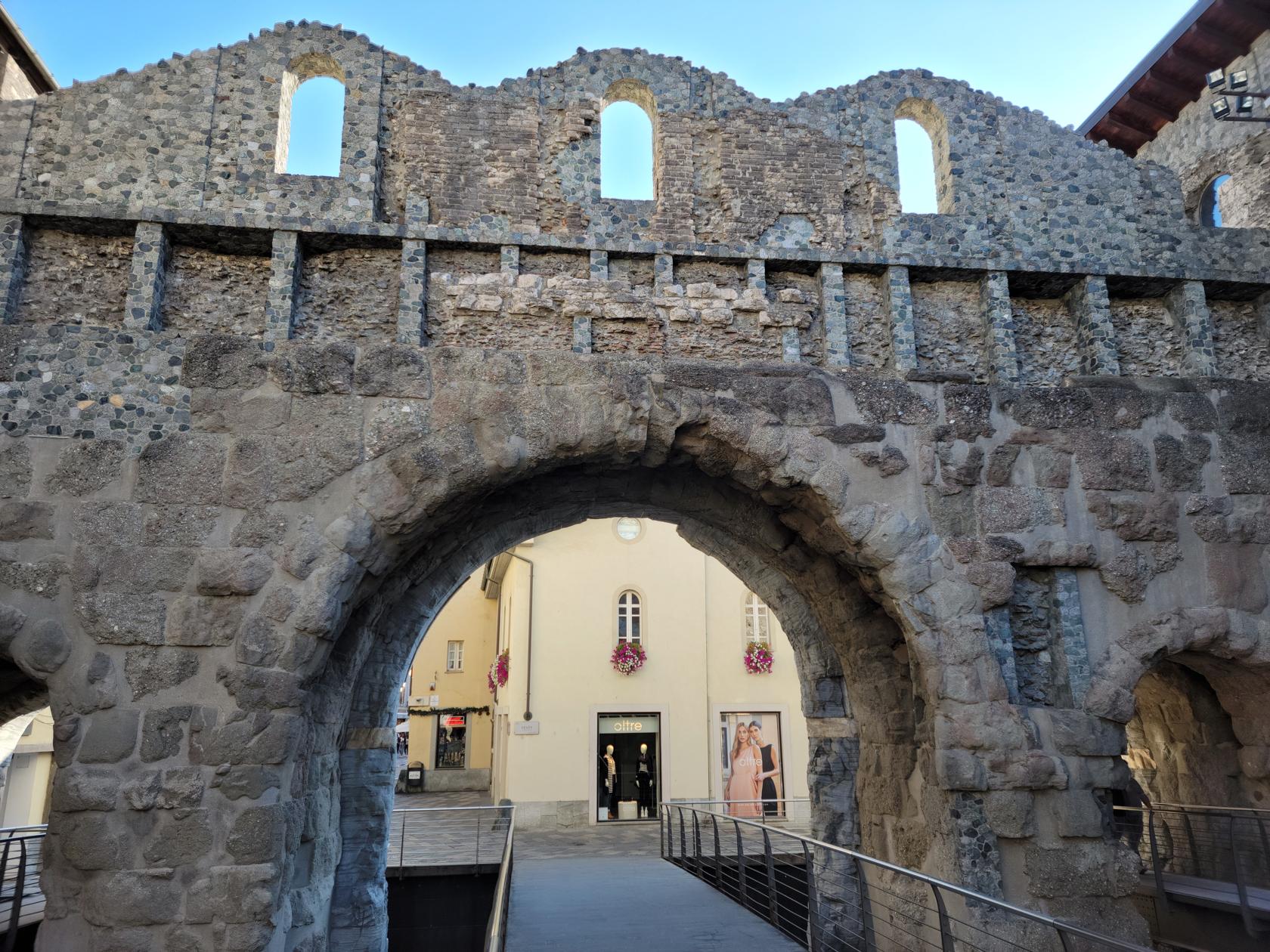
If you are going to do any meaningful investigation of this city, you must enjoy its many archeological sites. In order to do so, a visit to the information center is needed, its by the Praetorian Gate (or triple bridge), and for a modest 8€/person, you can purchase tickets to all of the important venues in town.
Aosta – Looking Southeast from Omama hotel
Aosta – Looking South and Mount Garin
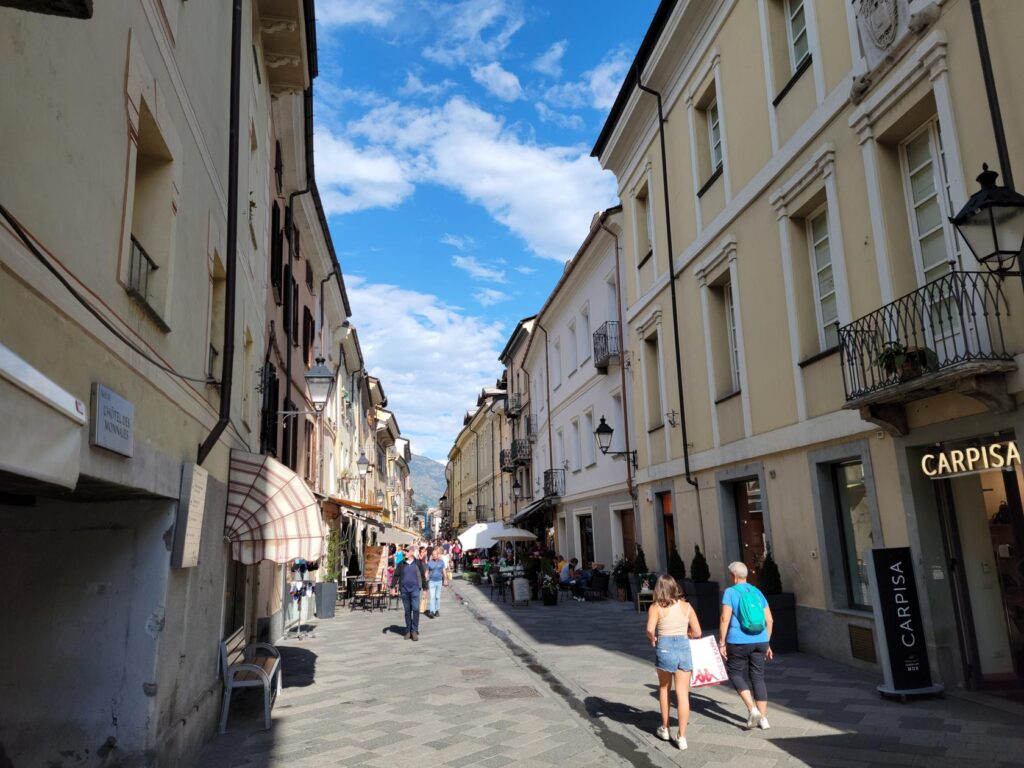
Aosta – via Torino
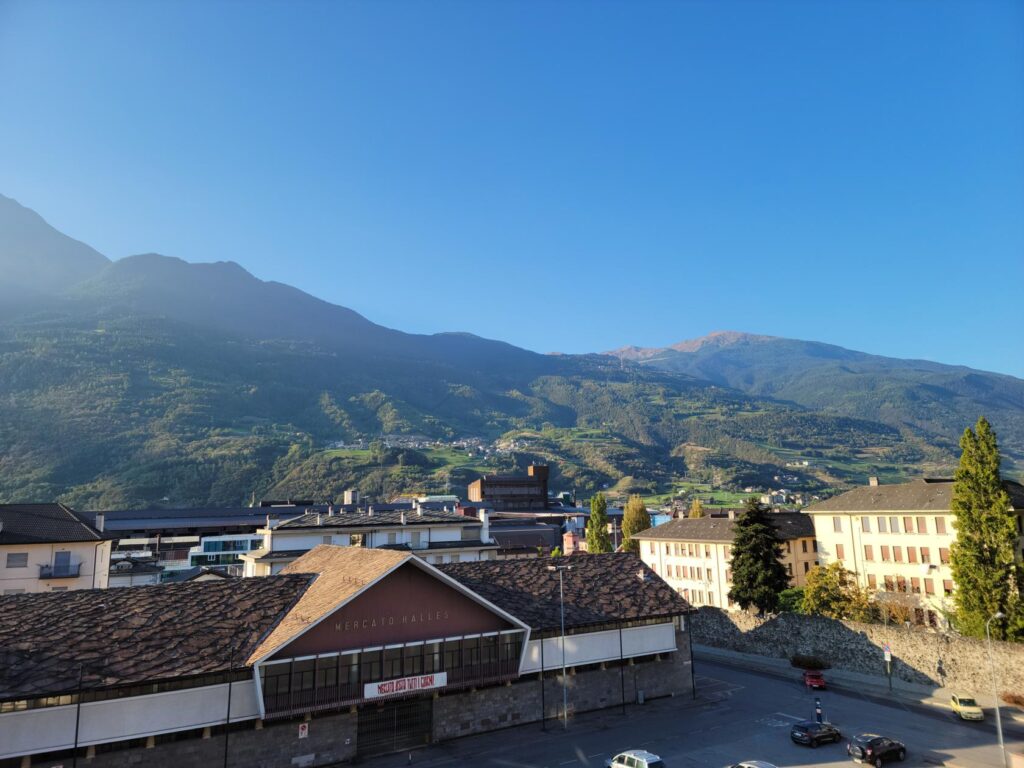
Aosta – Early Morning View from Hotel Room
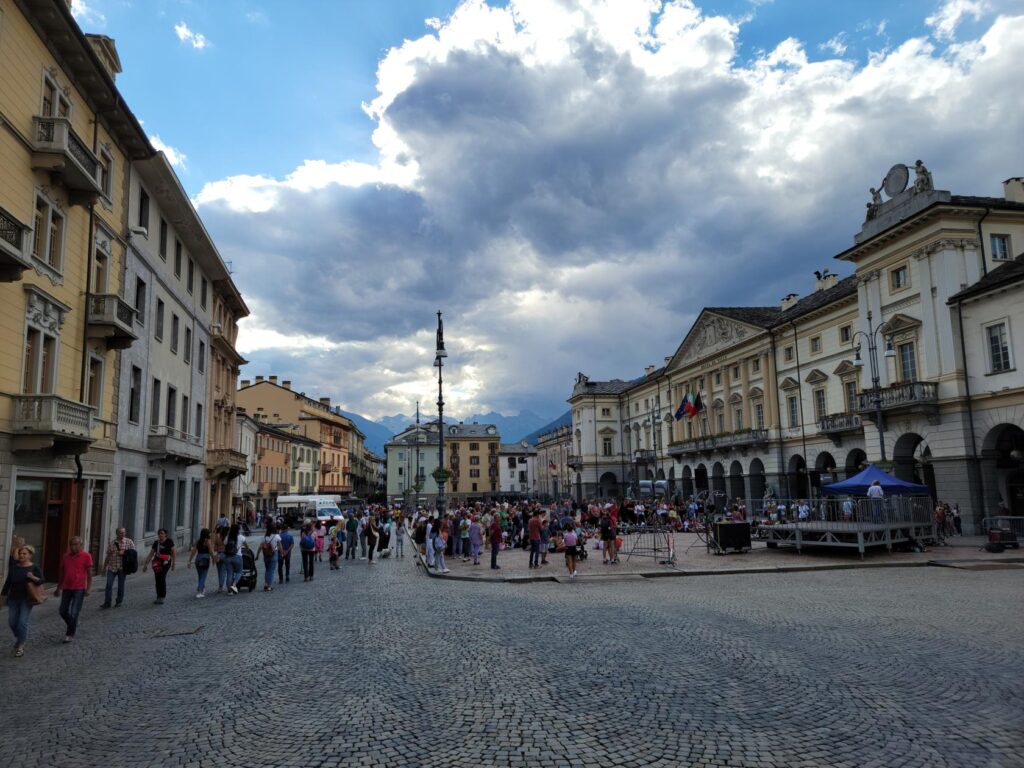
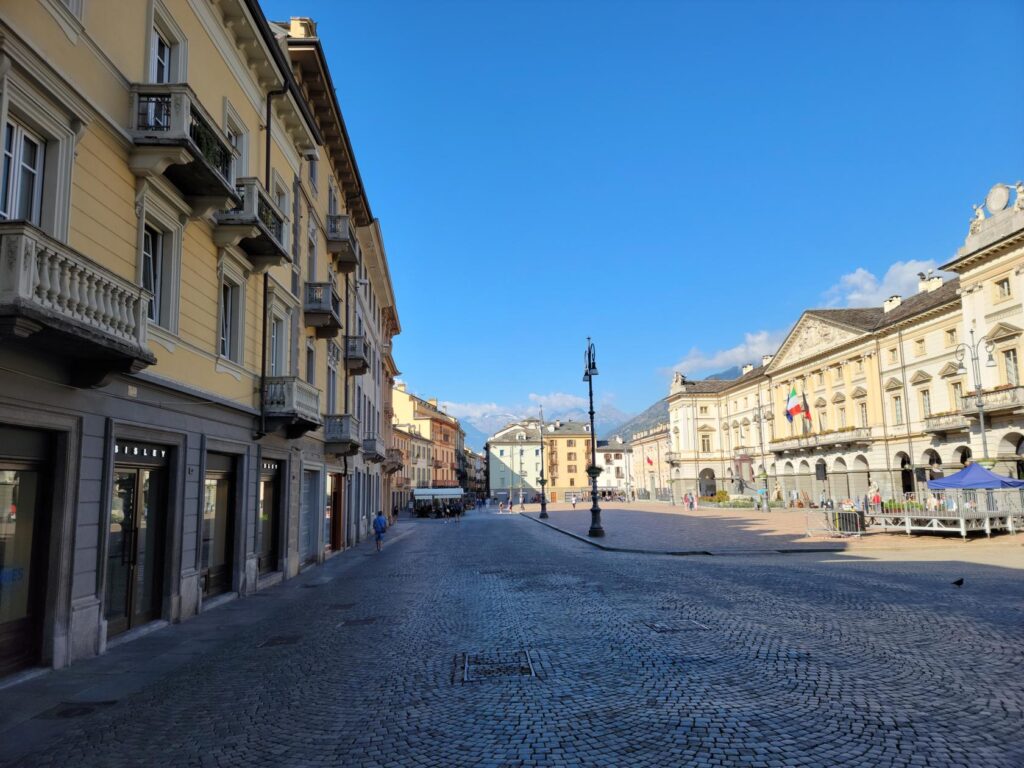
Aosta – Piazza Émile Chanoux
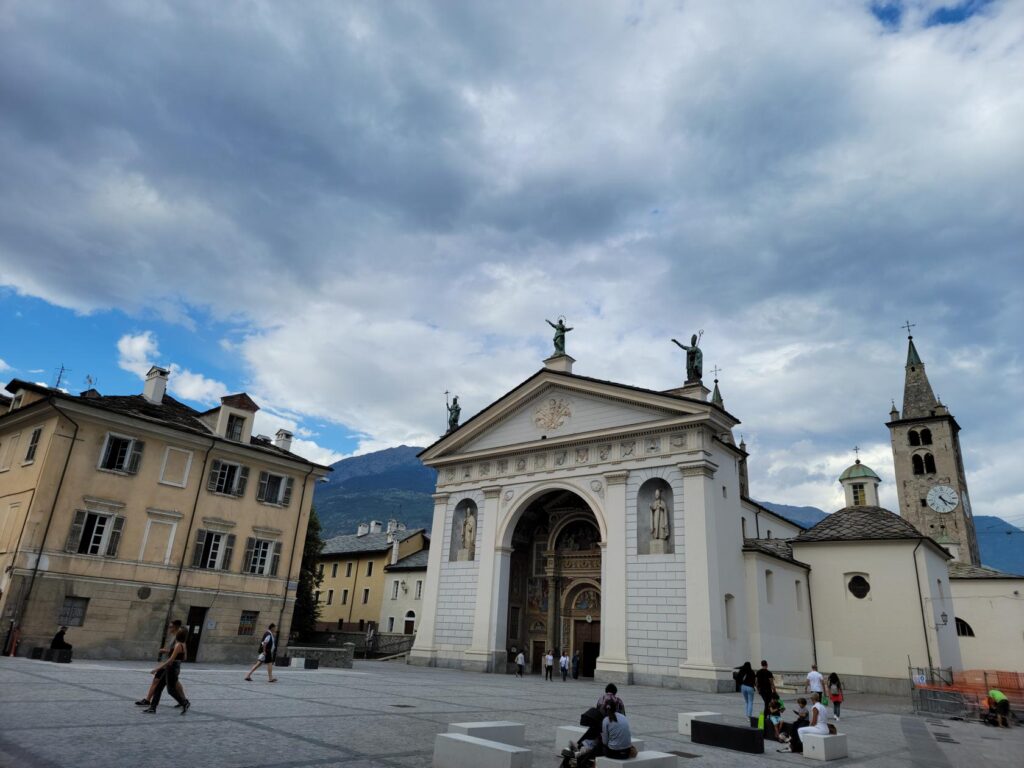
Aosta – Aosta Cathedral
Aosta – Early Morning View from Hotel Room
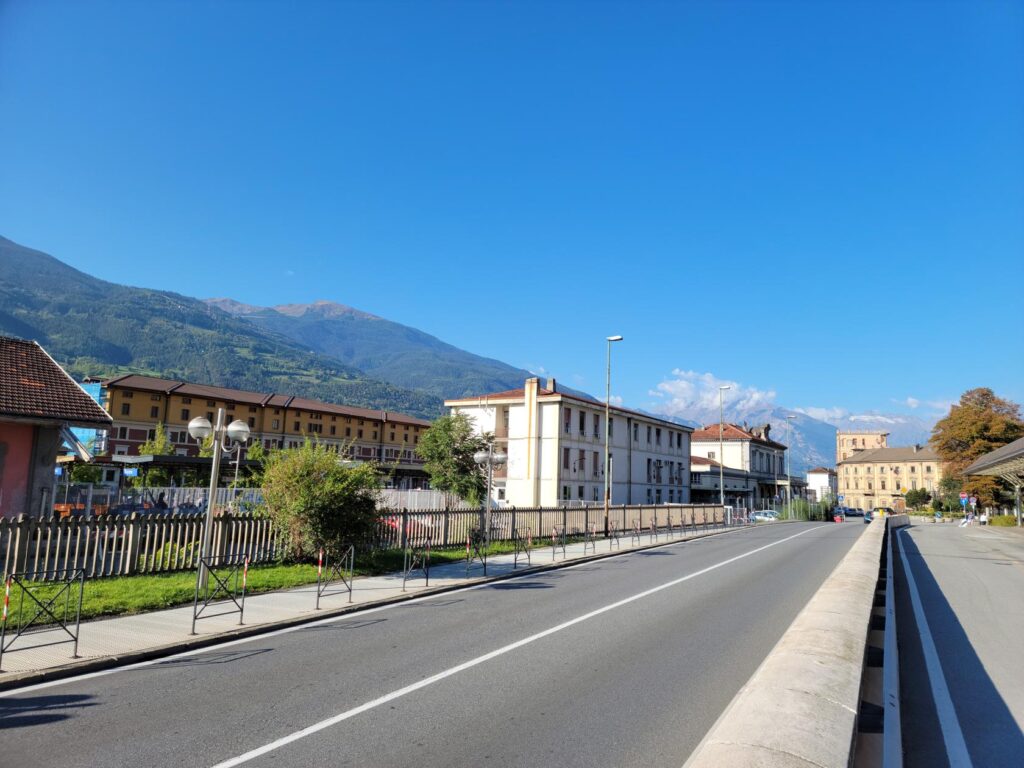
Aosta – Main Train Station
Aosta – Piazza Emile Chanoux
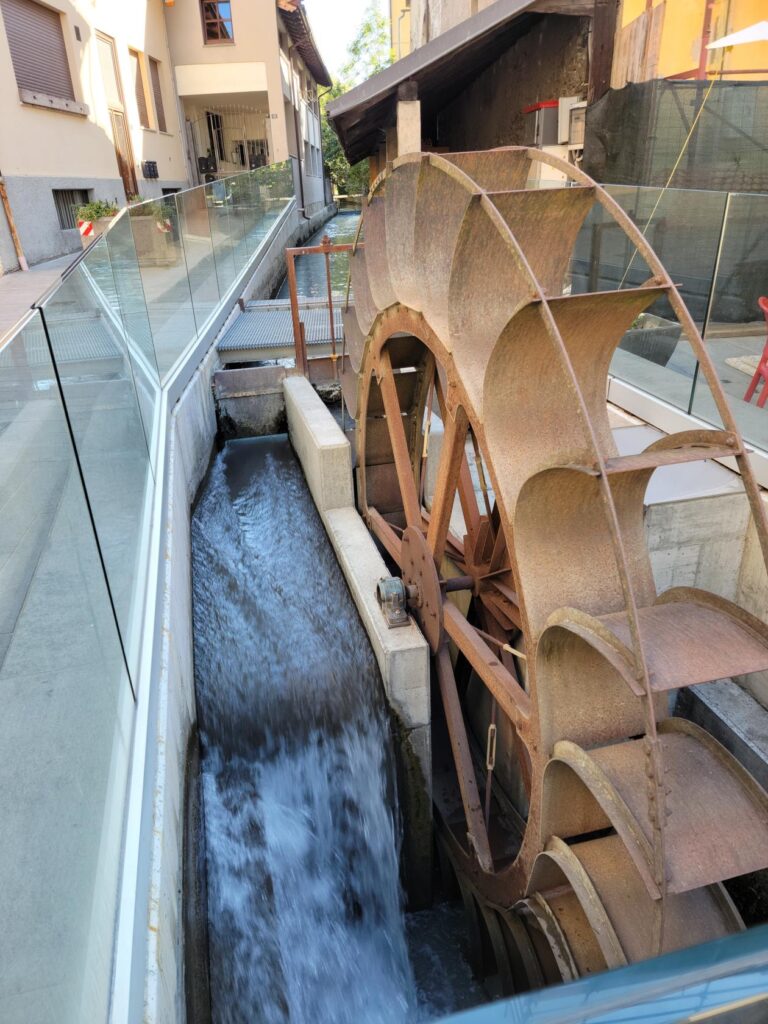
Aosta – Water Wheel
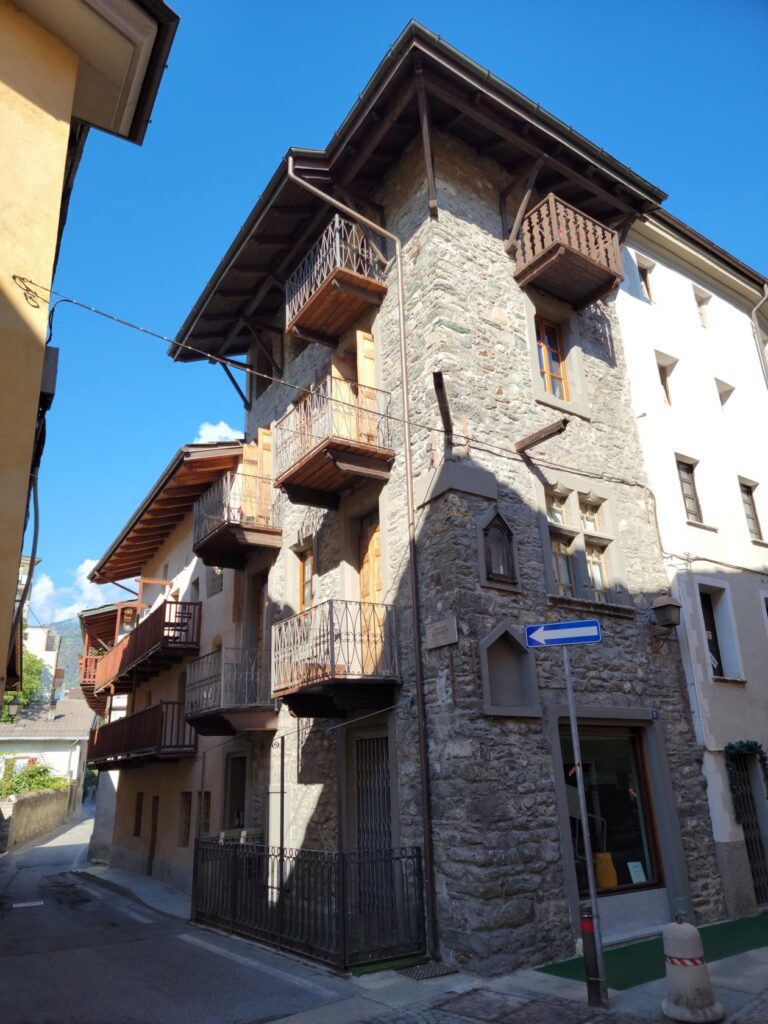
Aosta – Ancient House
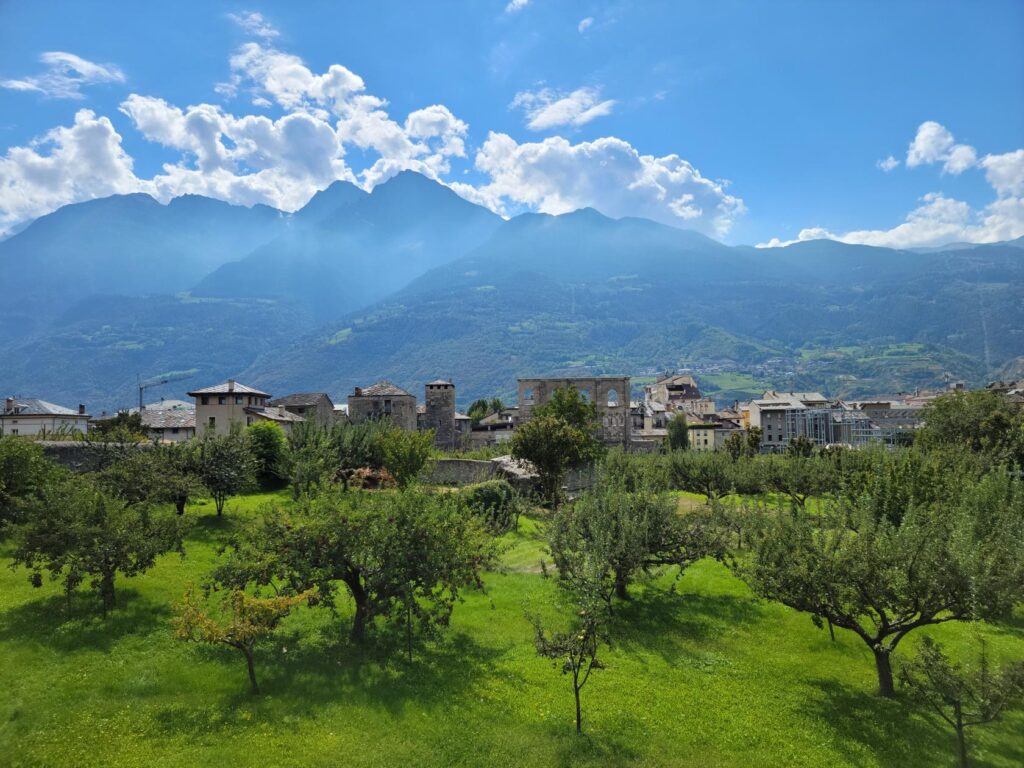
Aosta – Orchard in front of the Roman Theater
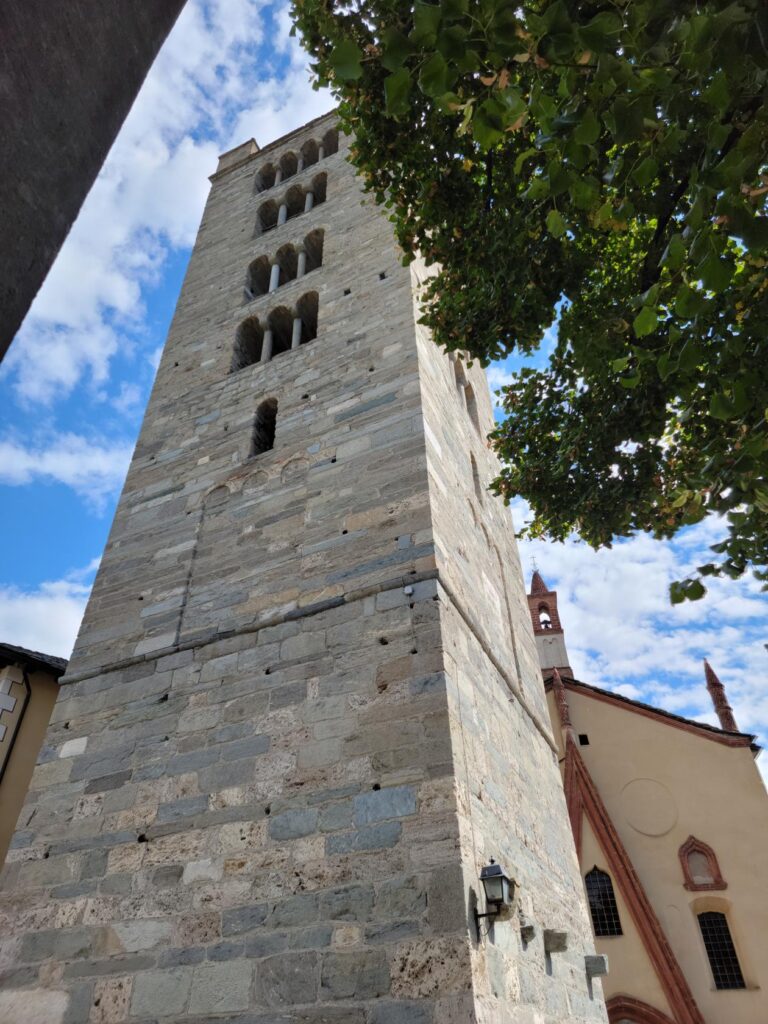
Aosta – Bell Tower of the Church of Sant Orso
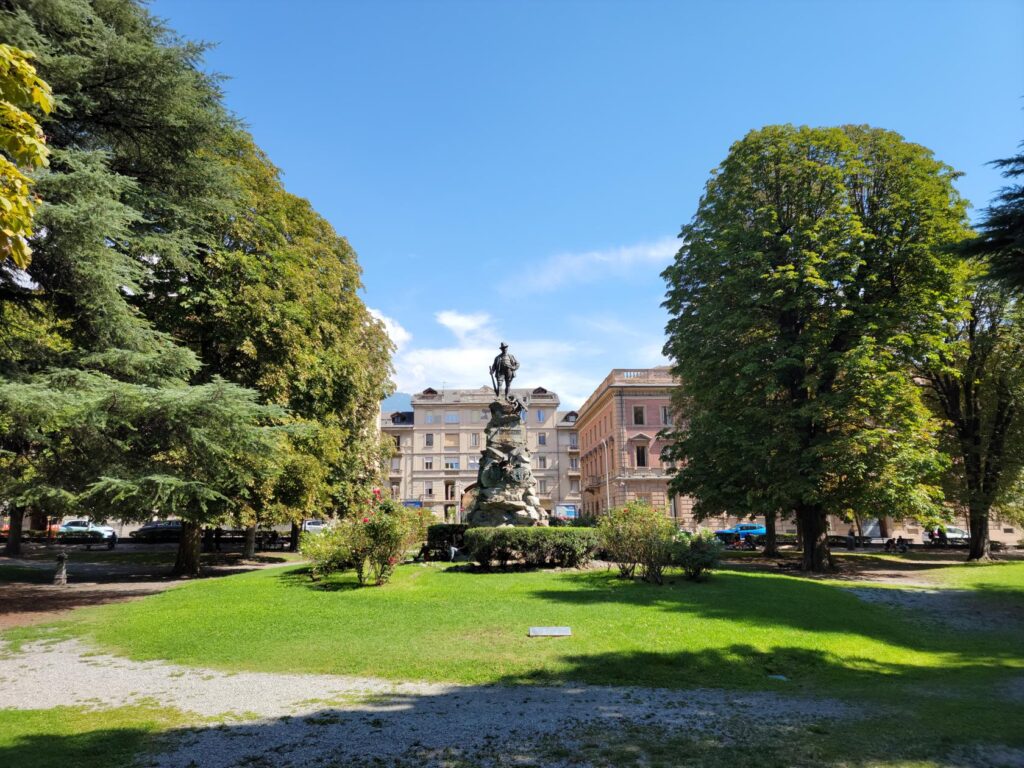
Aosta – Giardini Pubblici Emilio Lussu
Roman Arch Of Augustus
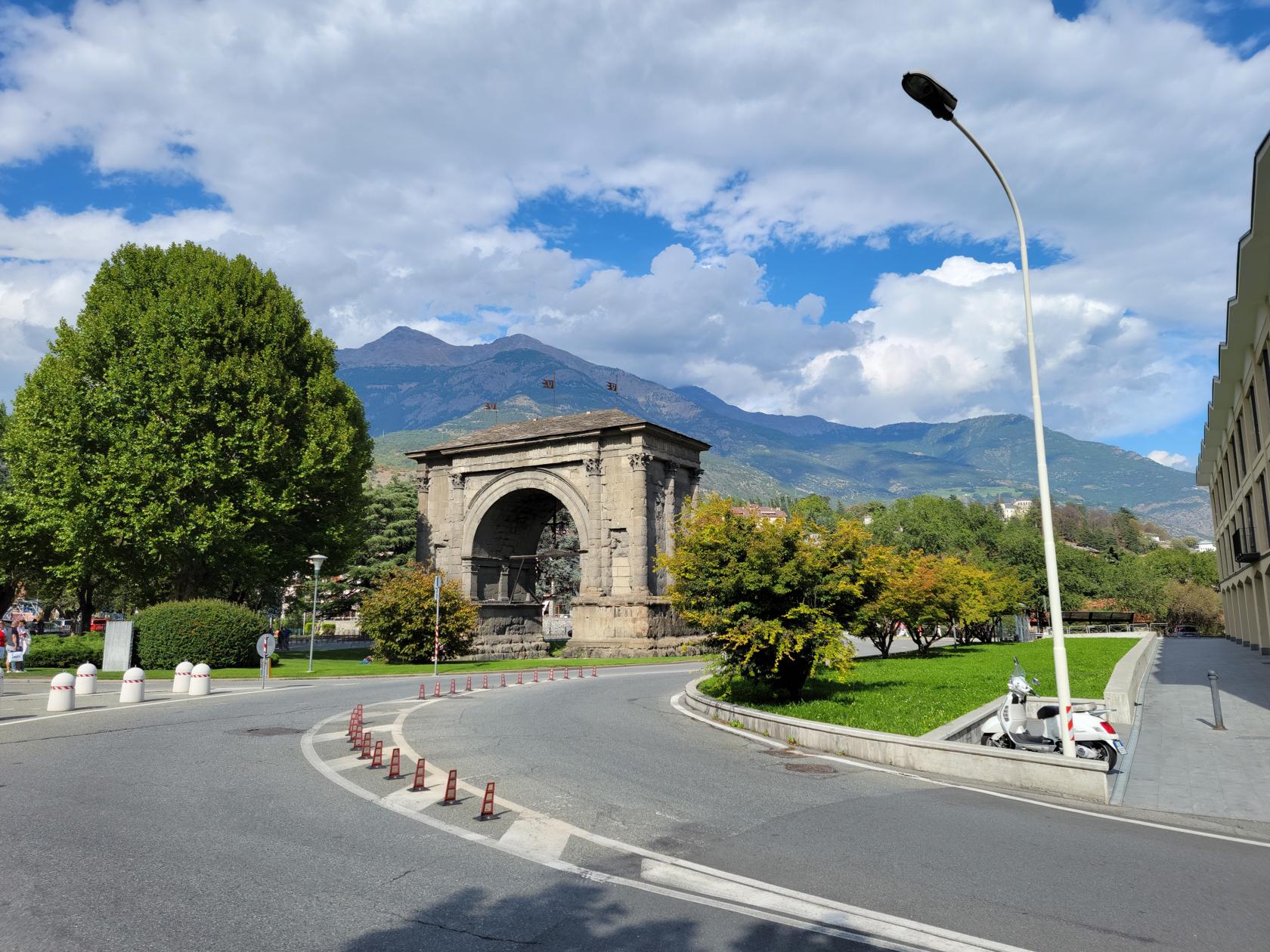
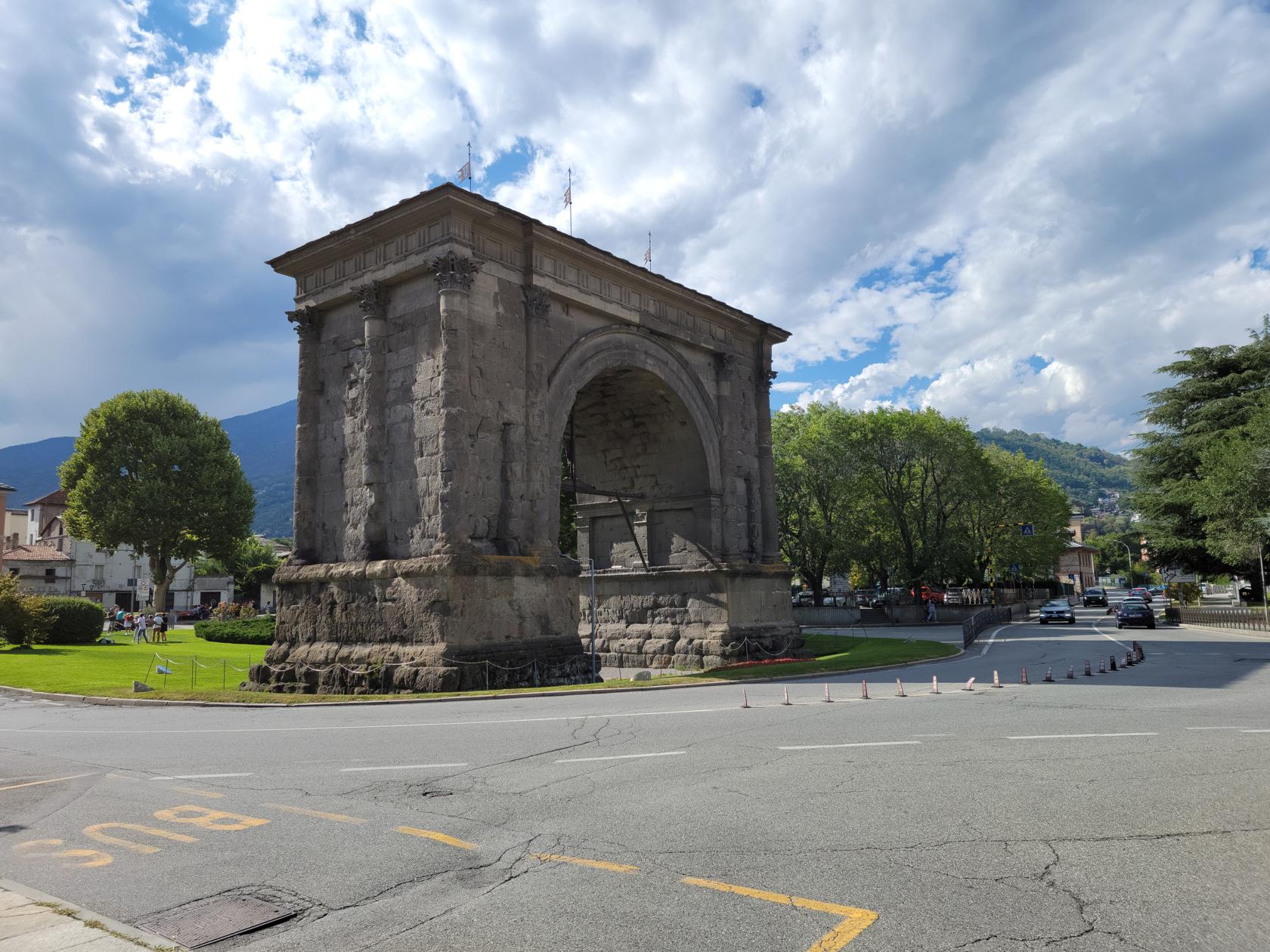
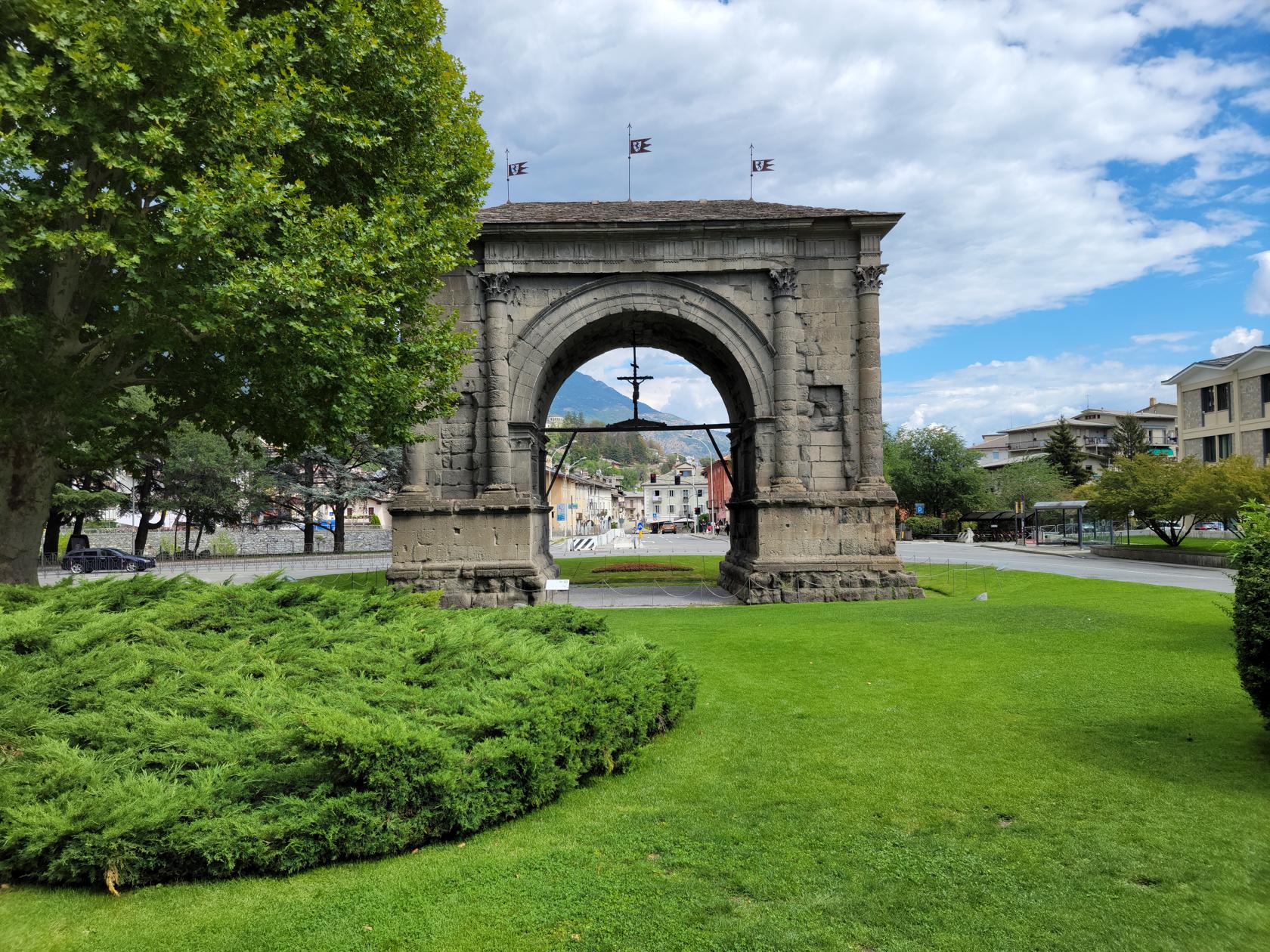
The enormous Arch of Augustus was built in 25 BCE to commemorate Augustus Caesar’s victory over the Salassis.
Aosta – Roman Gate of Augustus Ceasar
Aosta – Roman Gate of Augustus Ceasar
Located by the Pietra di Aosta bridge, which goes over the Buthier river, it is a large arch that contains a cross inside.
The Roman Theater
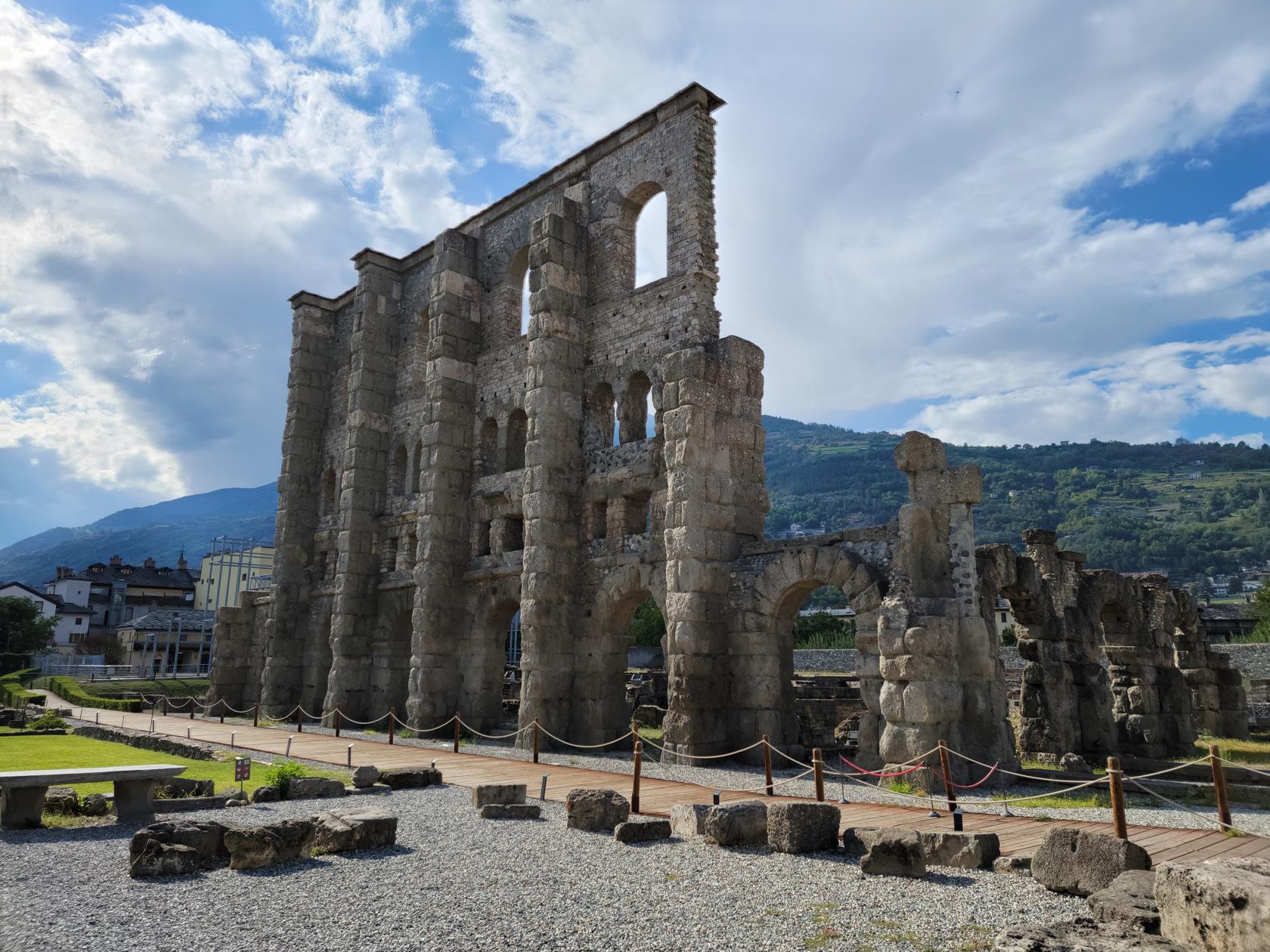
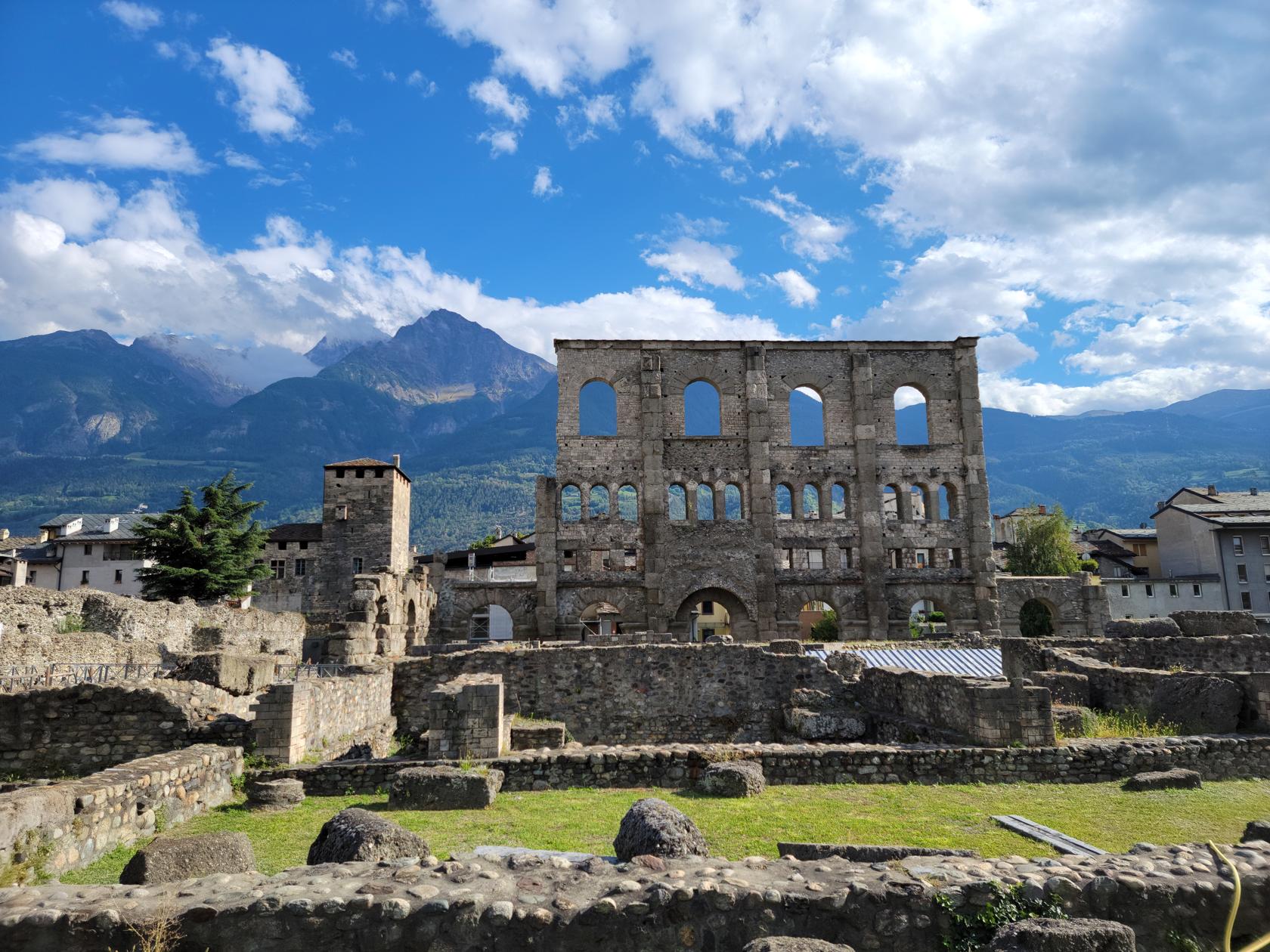
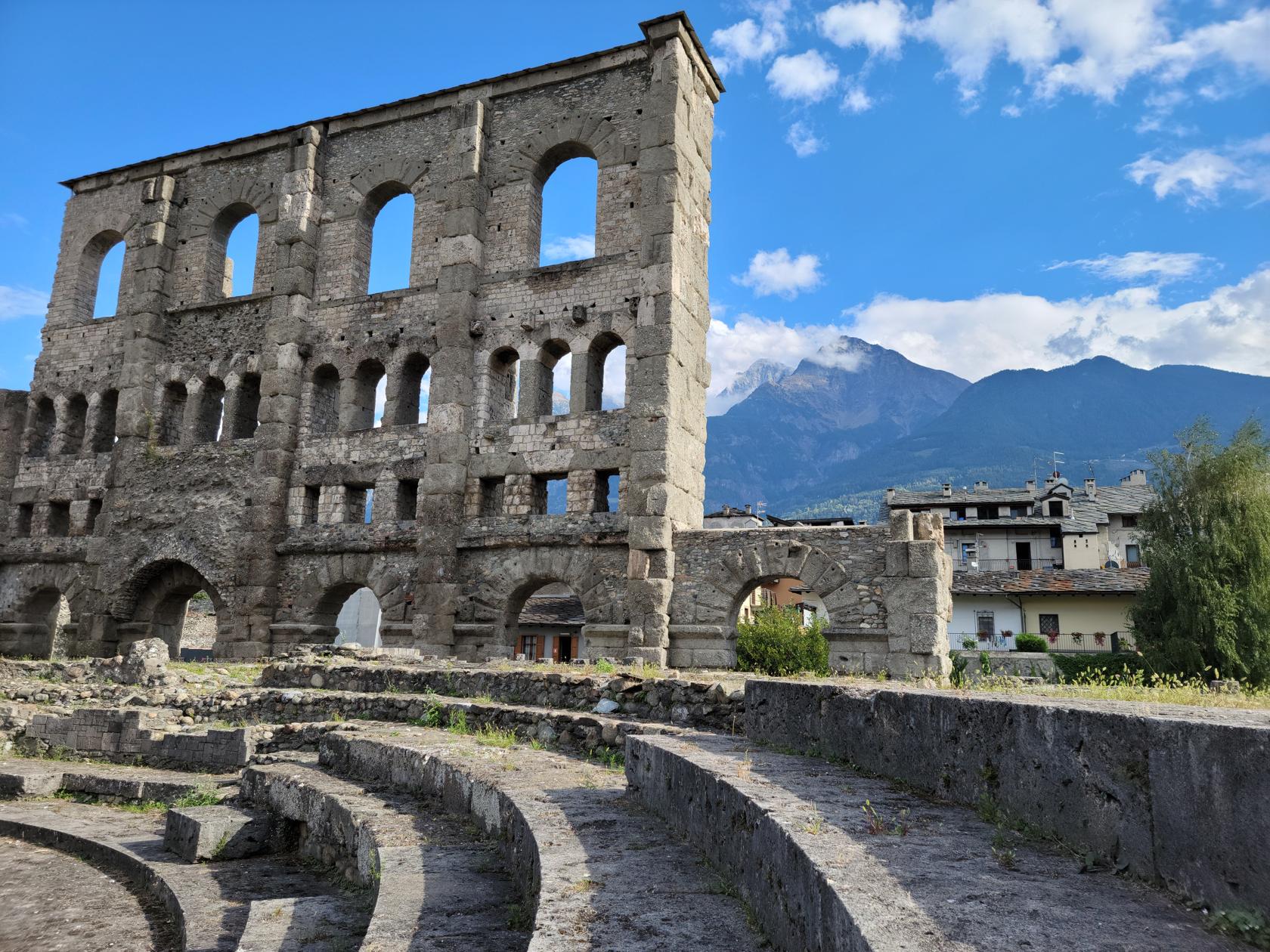
Another important site is the Roman Theater. Apparently in the early 1900s there were several structures built against the entrance, using it as one wall in their buildings. When the government decided that it was an important archeological site, these buildings were raised to prepare the site for excavations.
Aosta – Roman Theater
Aosta – Roman Theater
Aosta – Roman Theater
Aosta – Roman Theater
Aosta – Roman Theater
Aosta – Roman Theater – Section of Theater
The Roman Wall and Towers
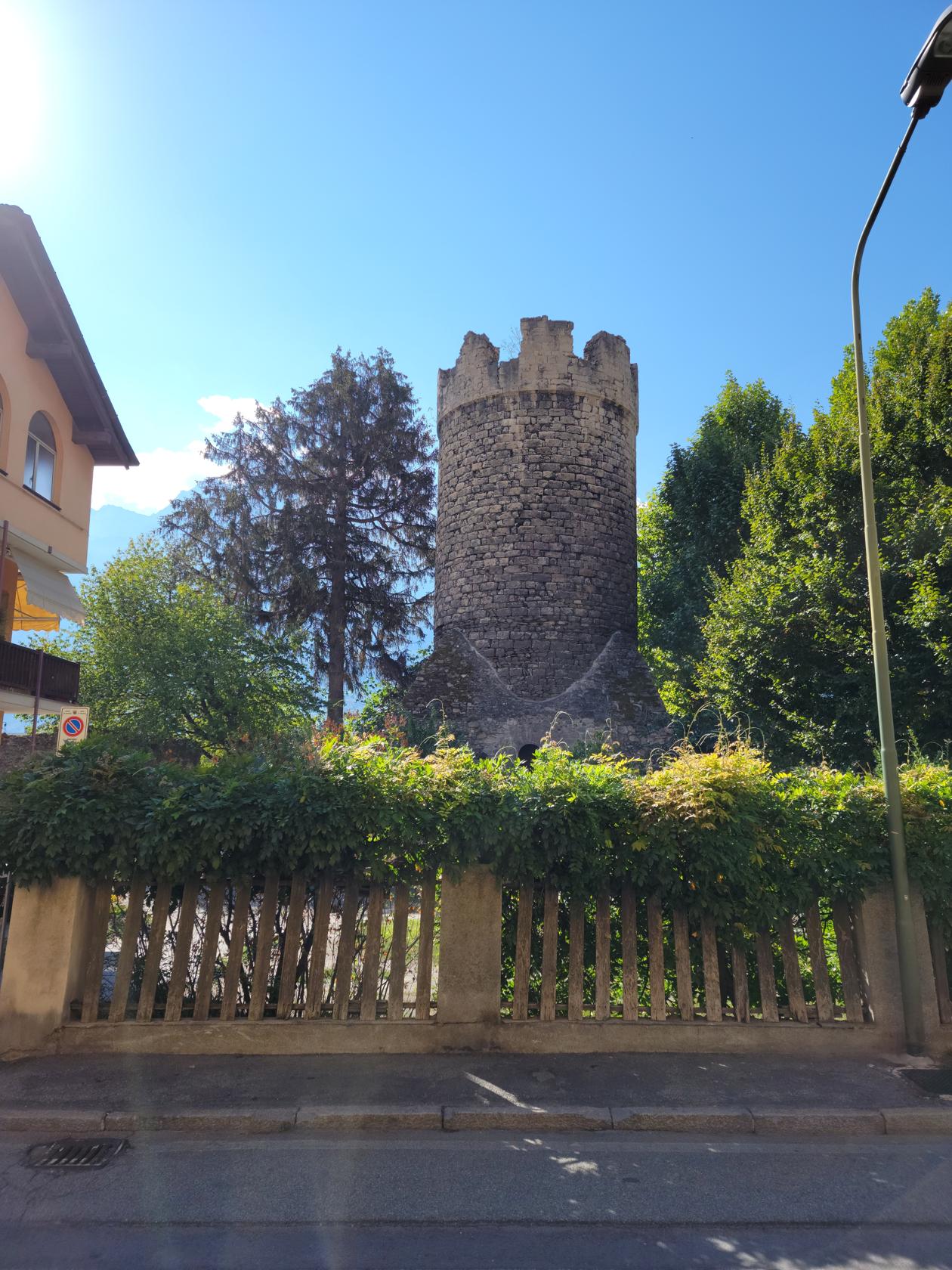
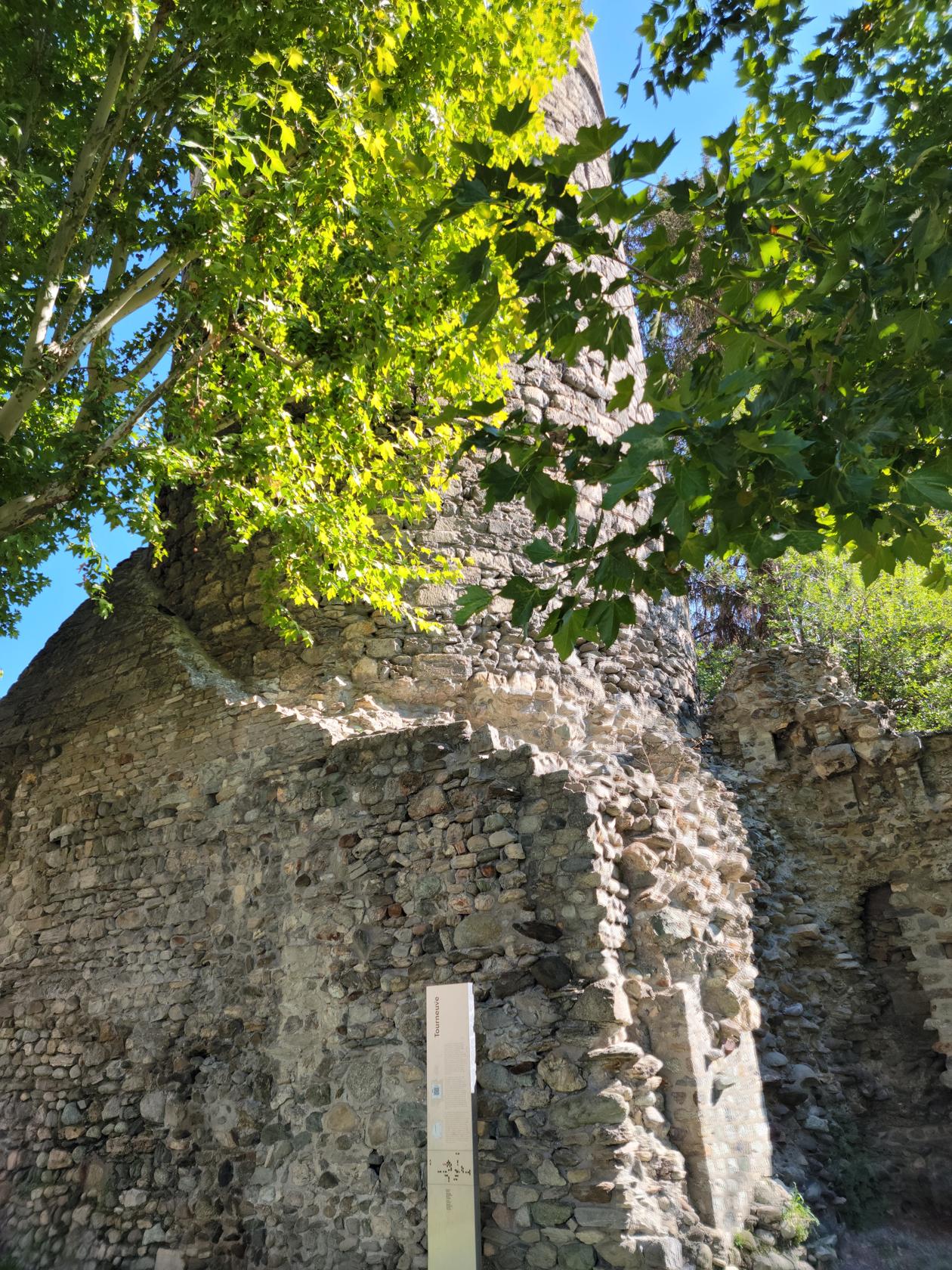
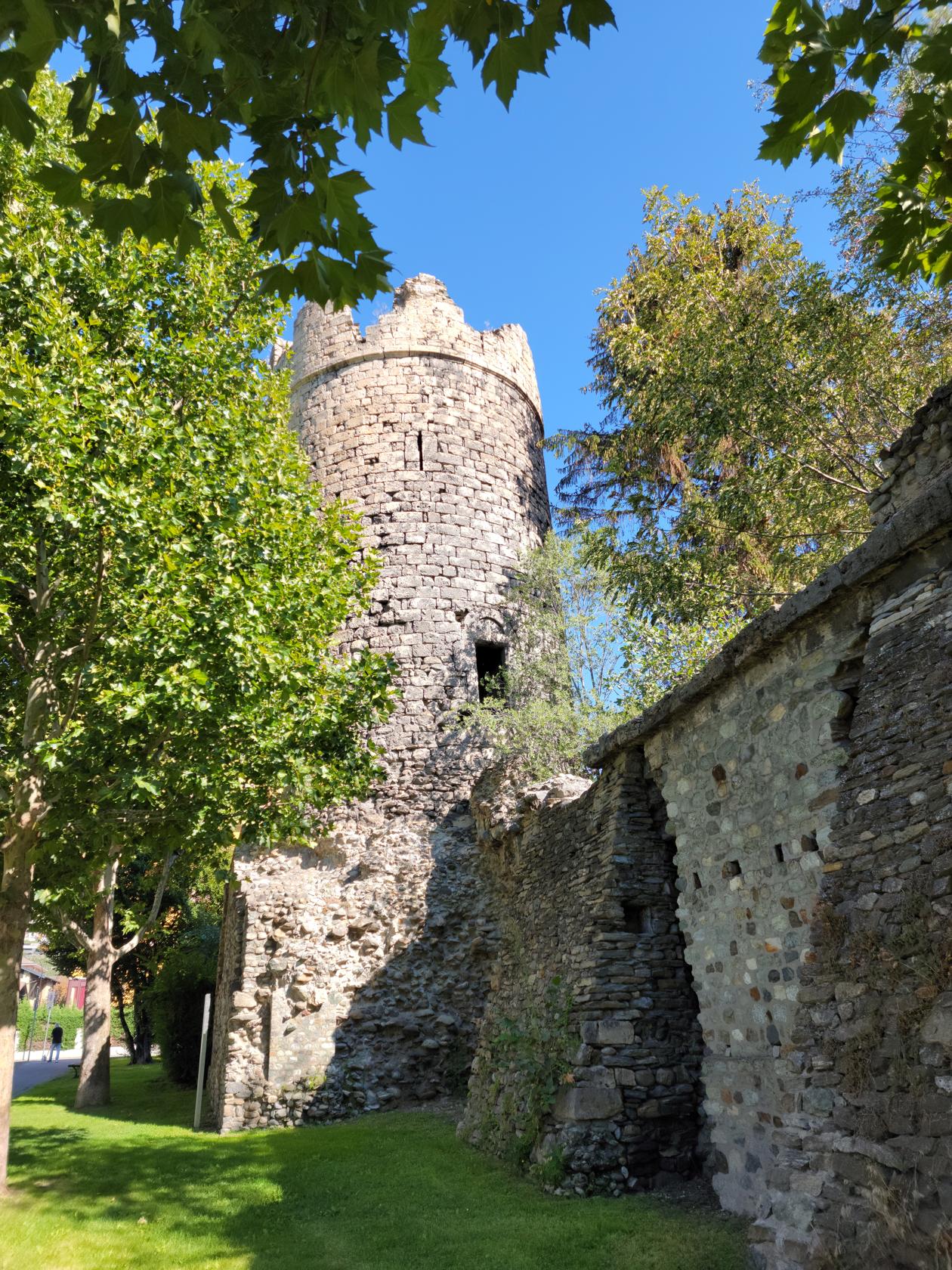
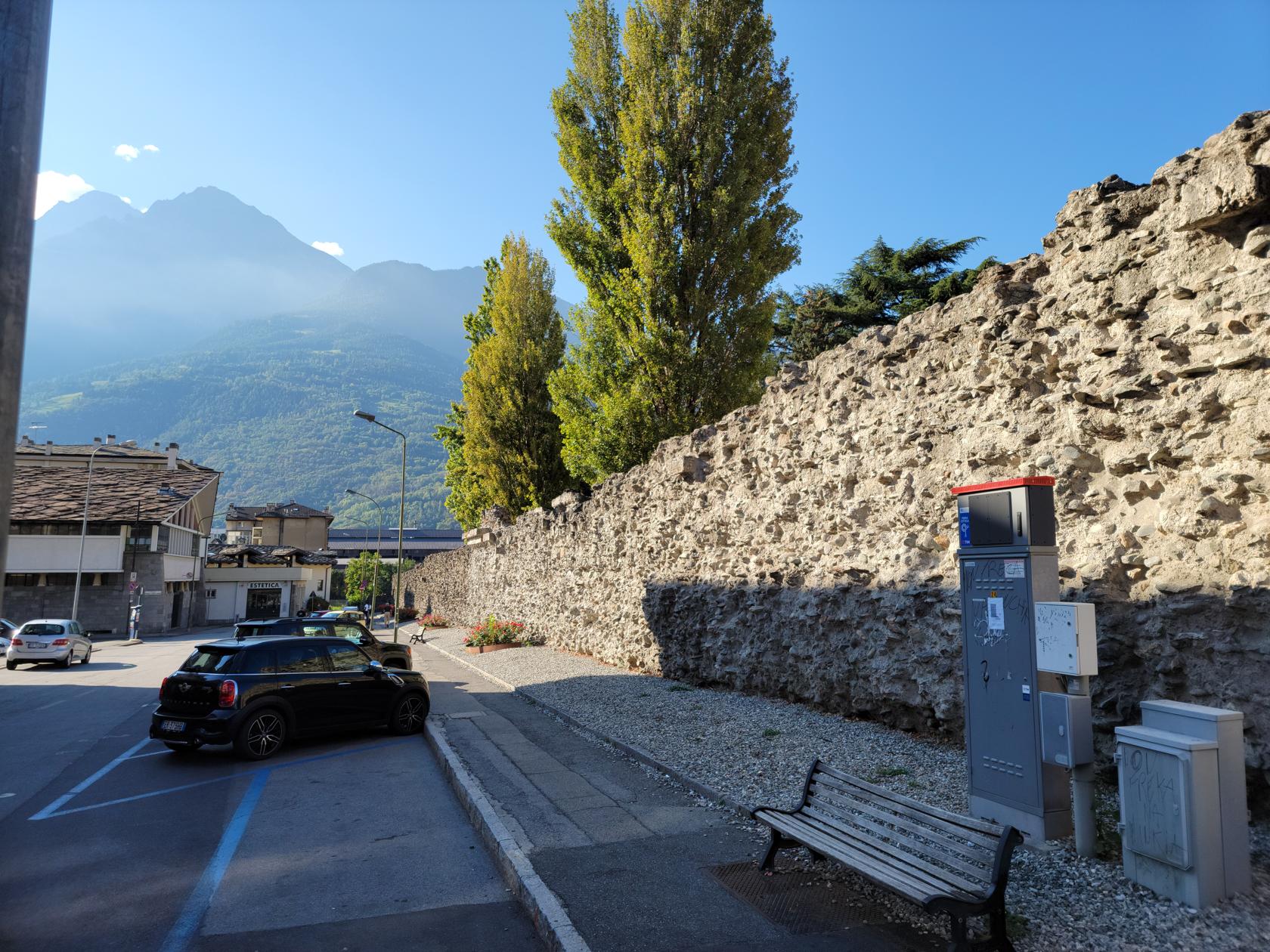
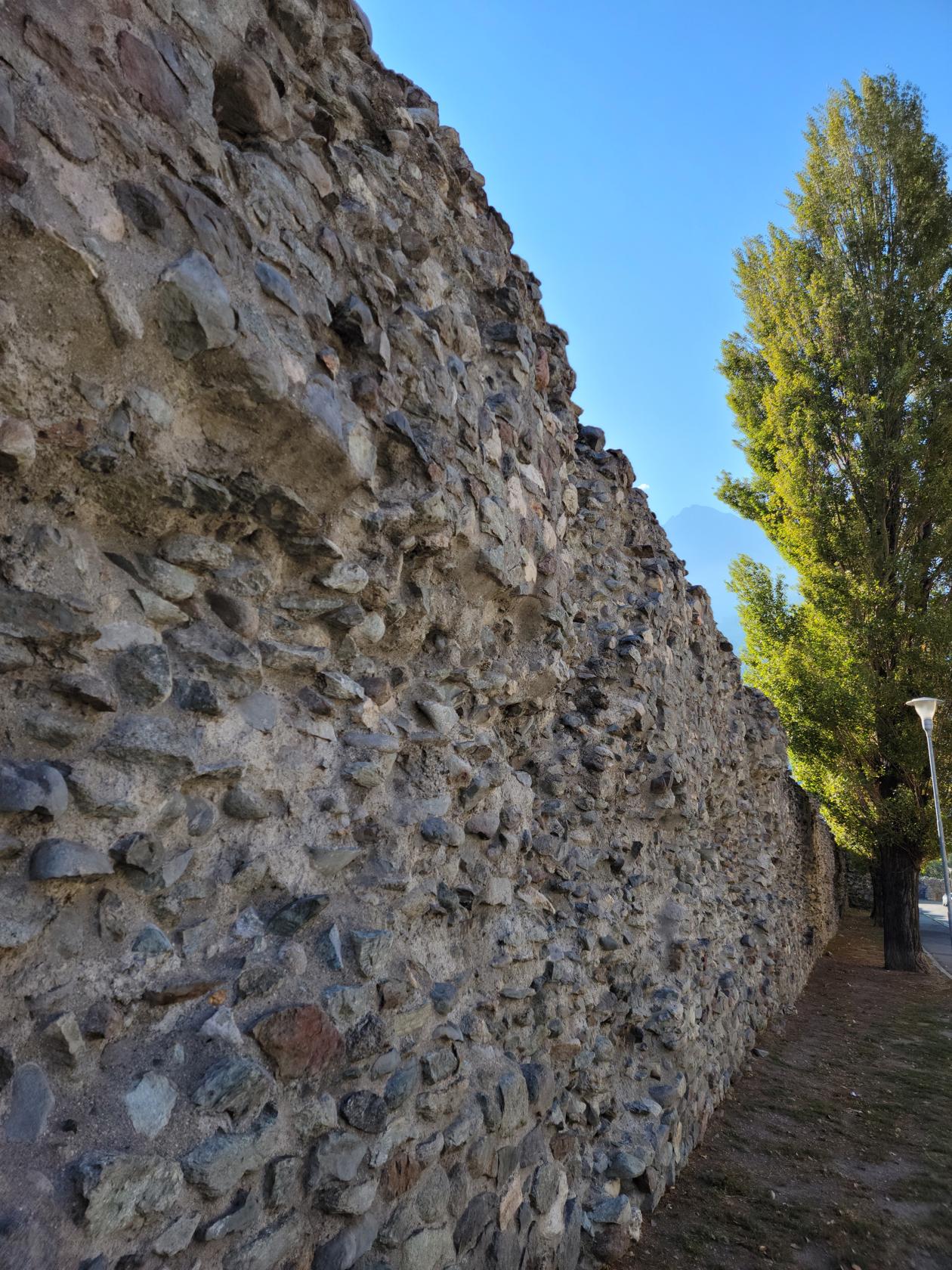
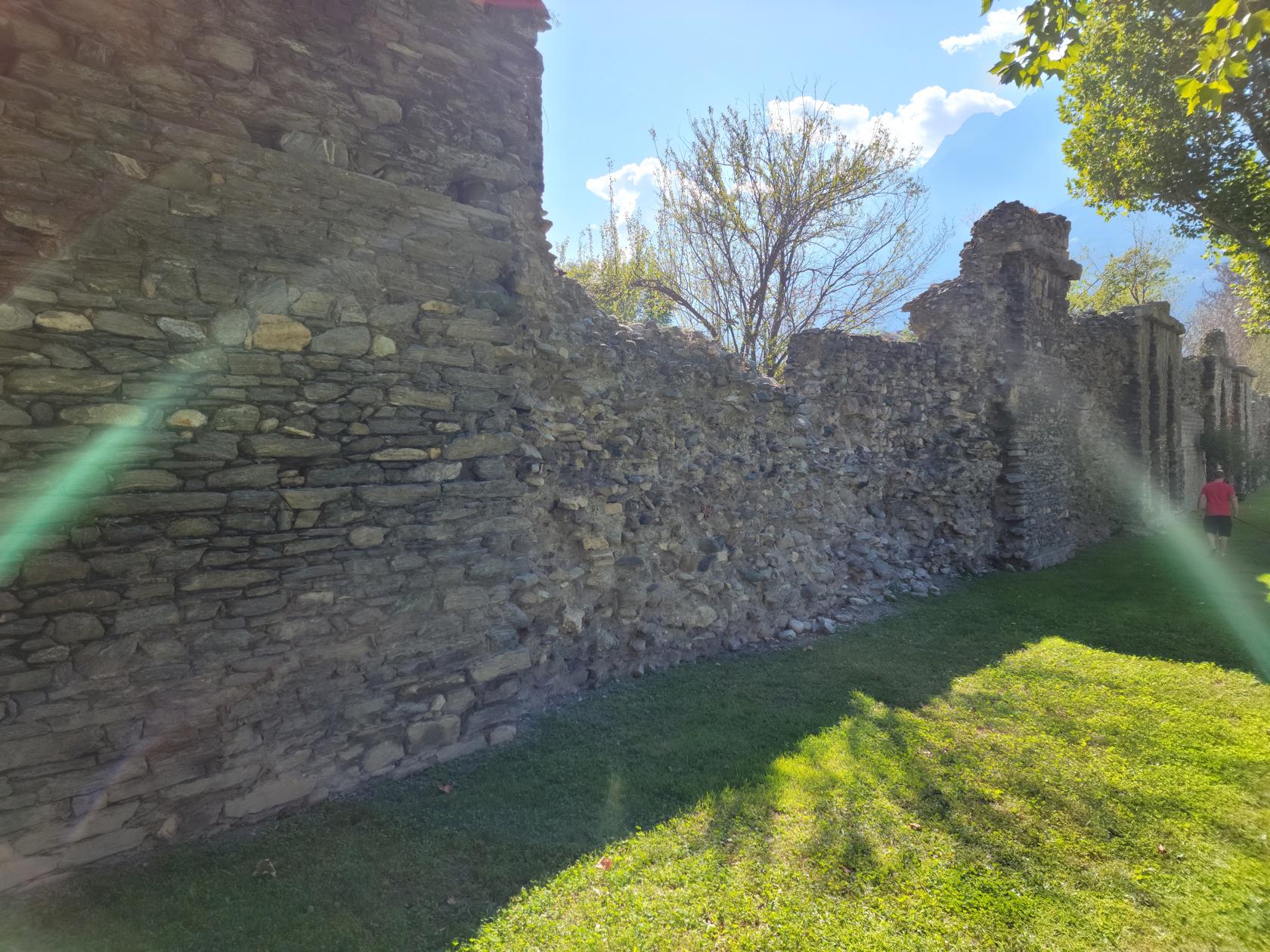
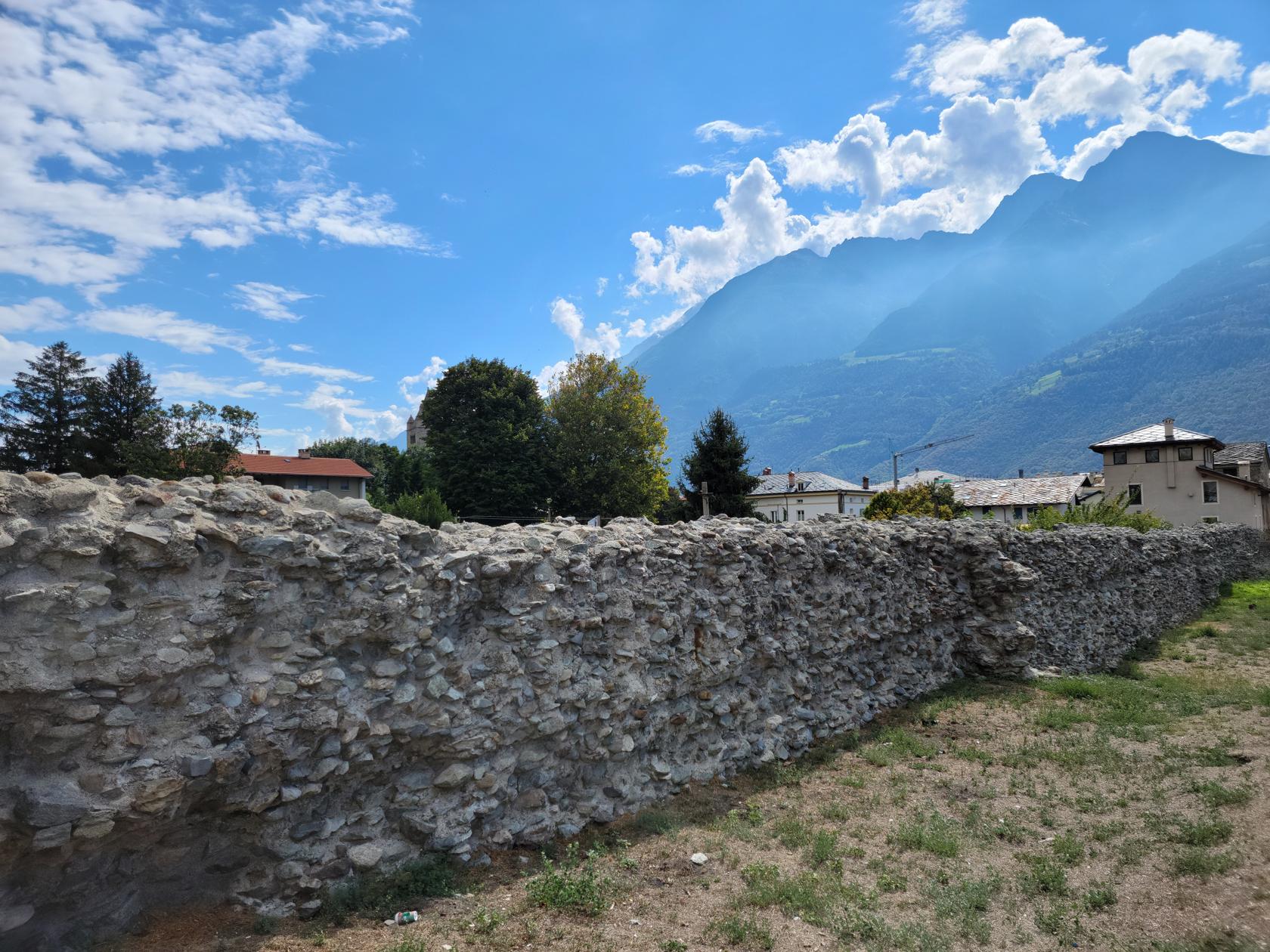
The city is encircled by a Roman Wall and several towers, four of which mark each corner of the rectangle that is made by the walls.
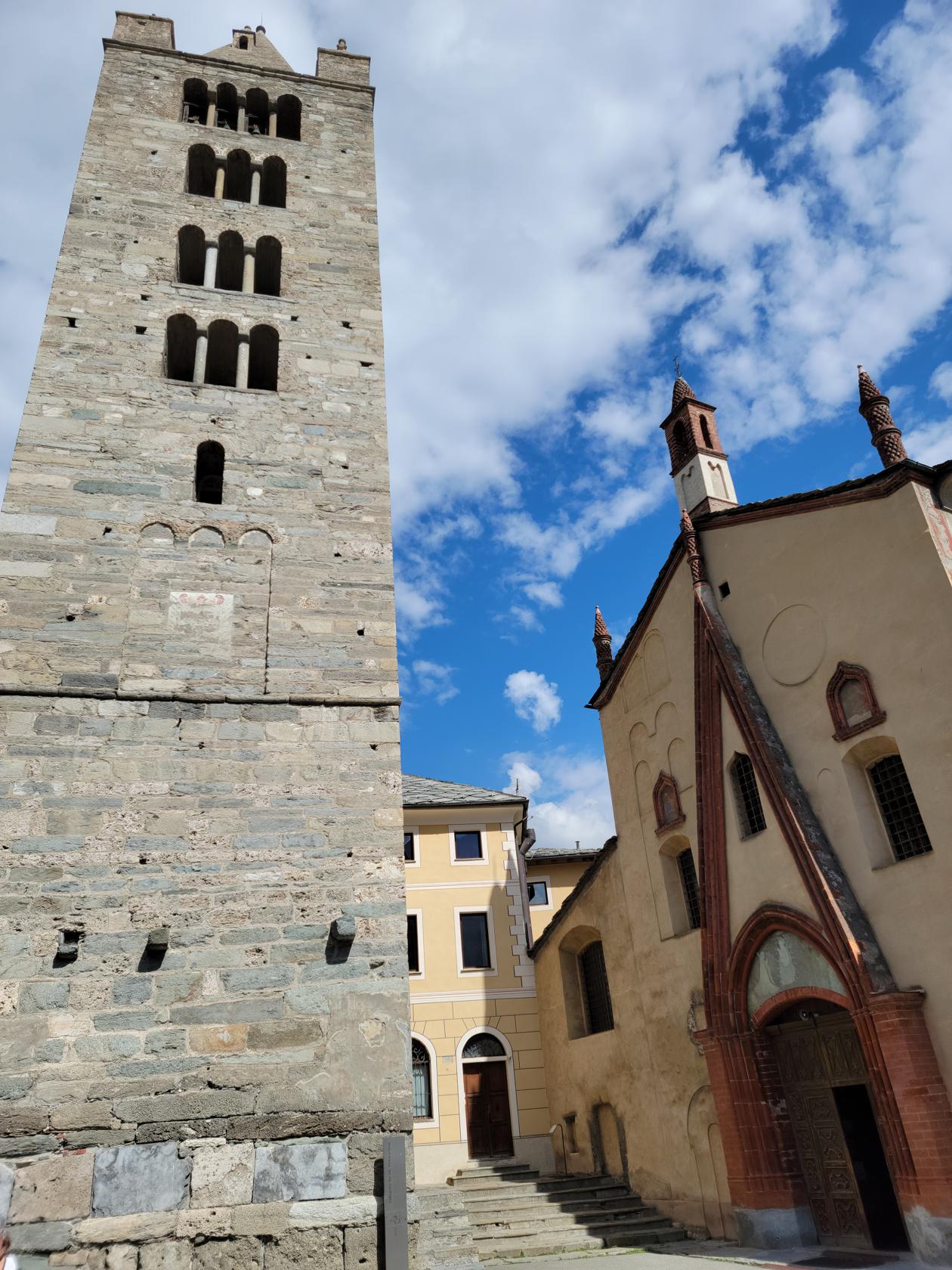
Aosta – Bell Tower and front of the Church of Sant Orso
Romanesque Cloister of Sant-Orso
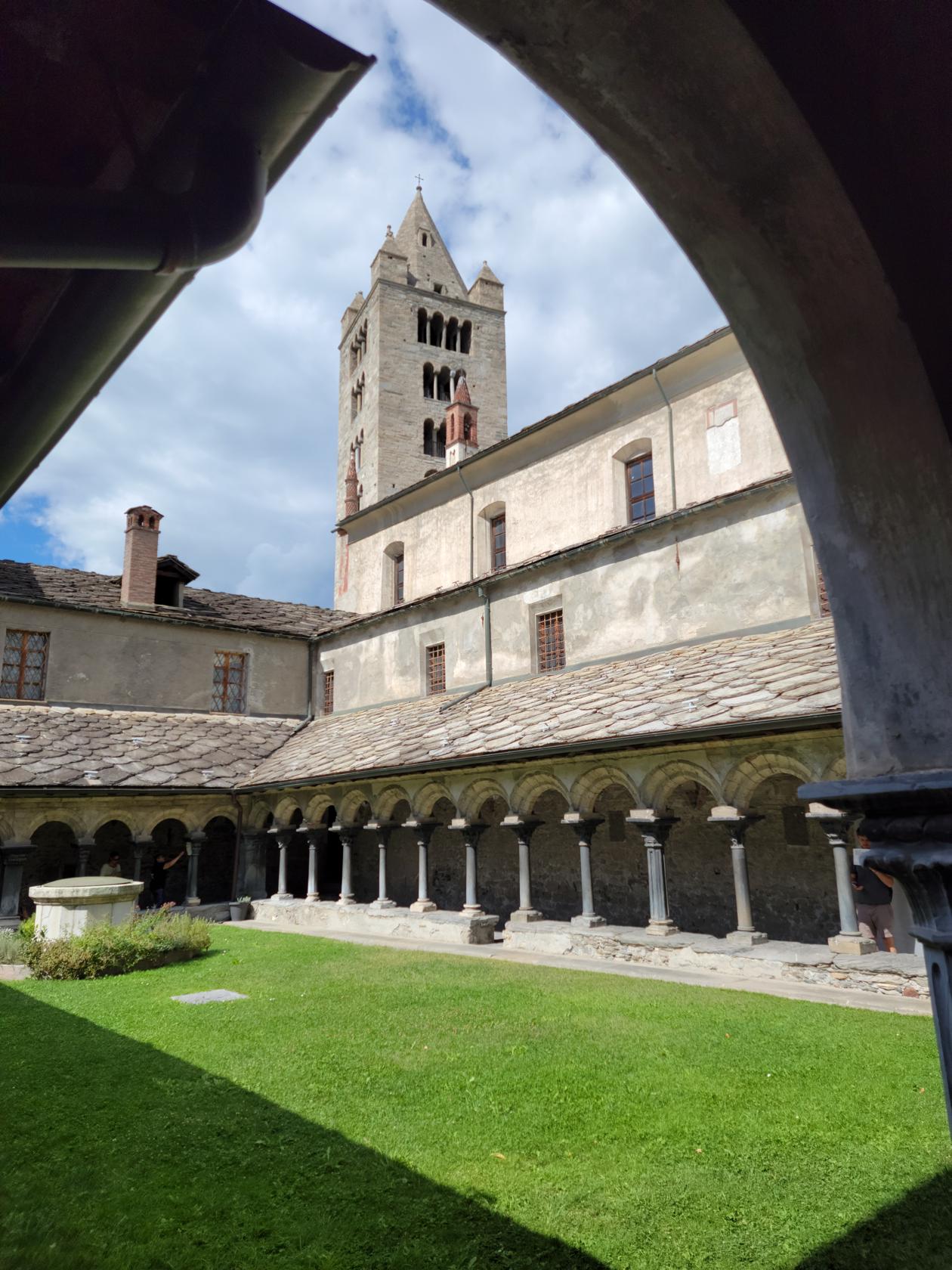
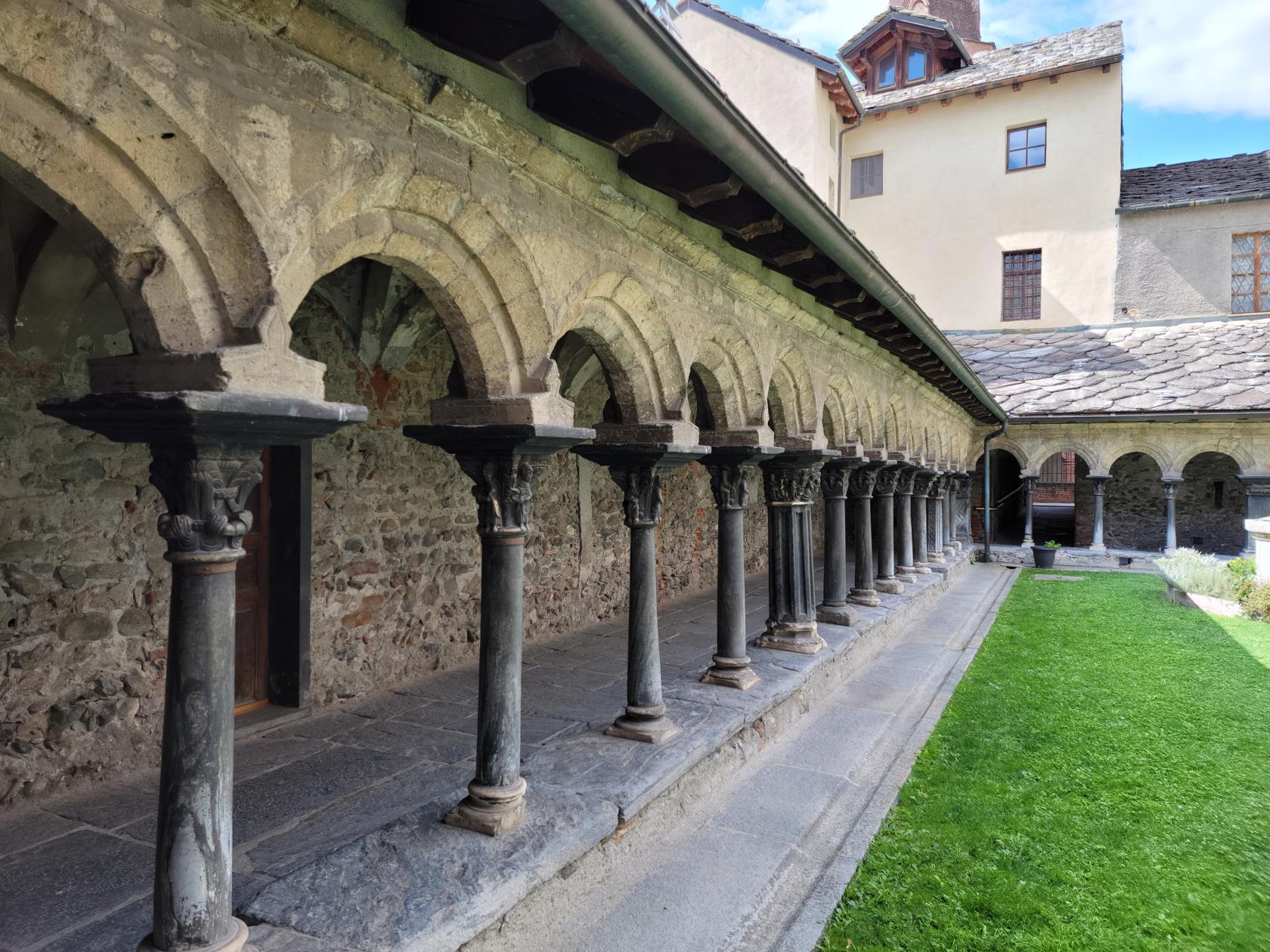
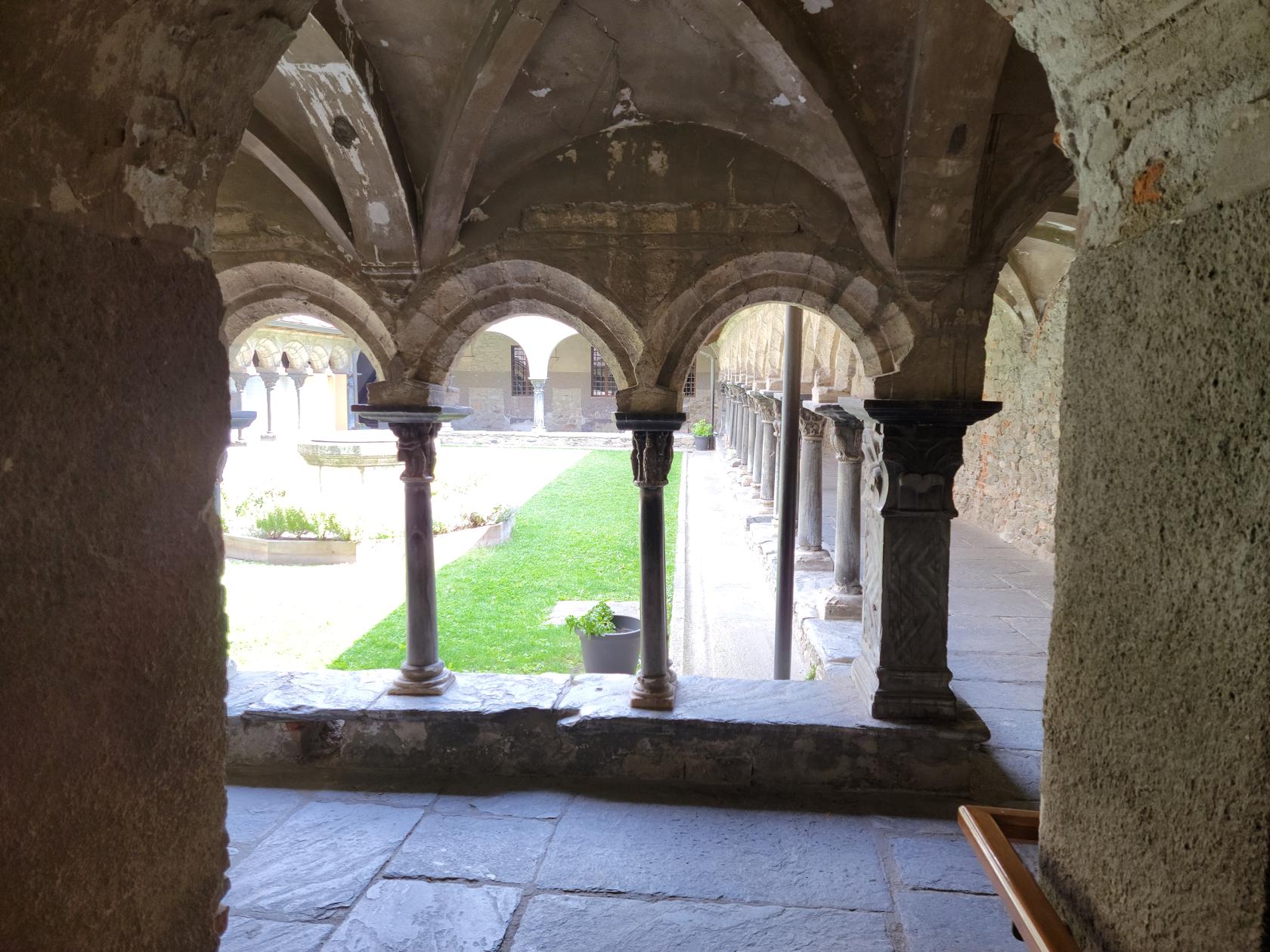
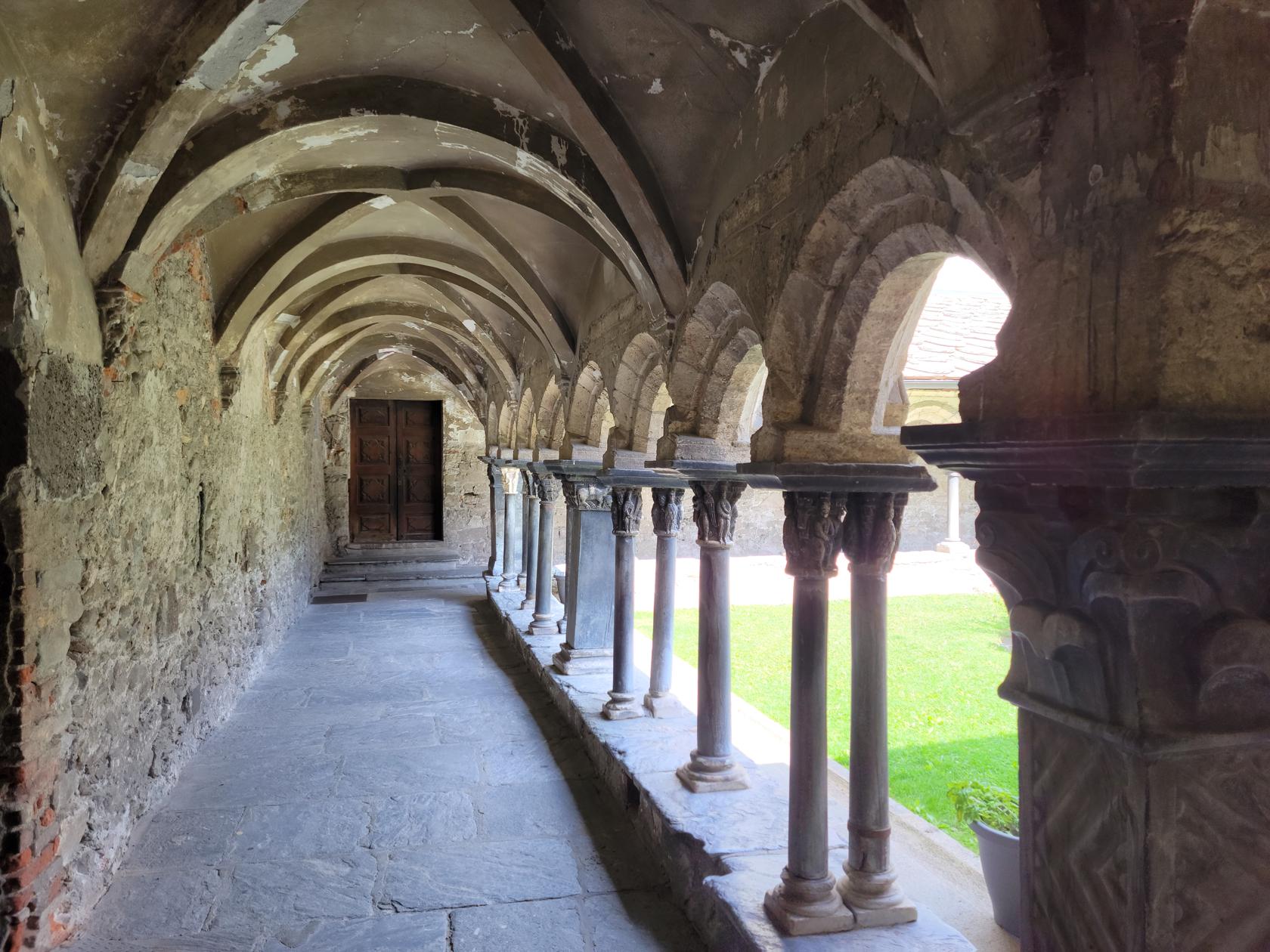
A fine example of Romanesque art and cloister architecture the Cloister of Saint Orso.
Aosta – Arches and Columns inside of the Cloister of Sant Orso
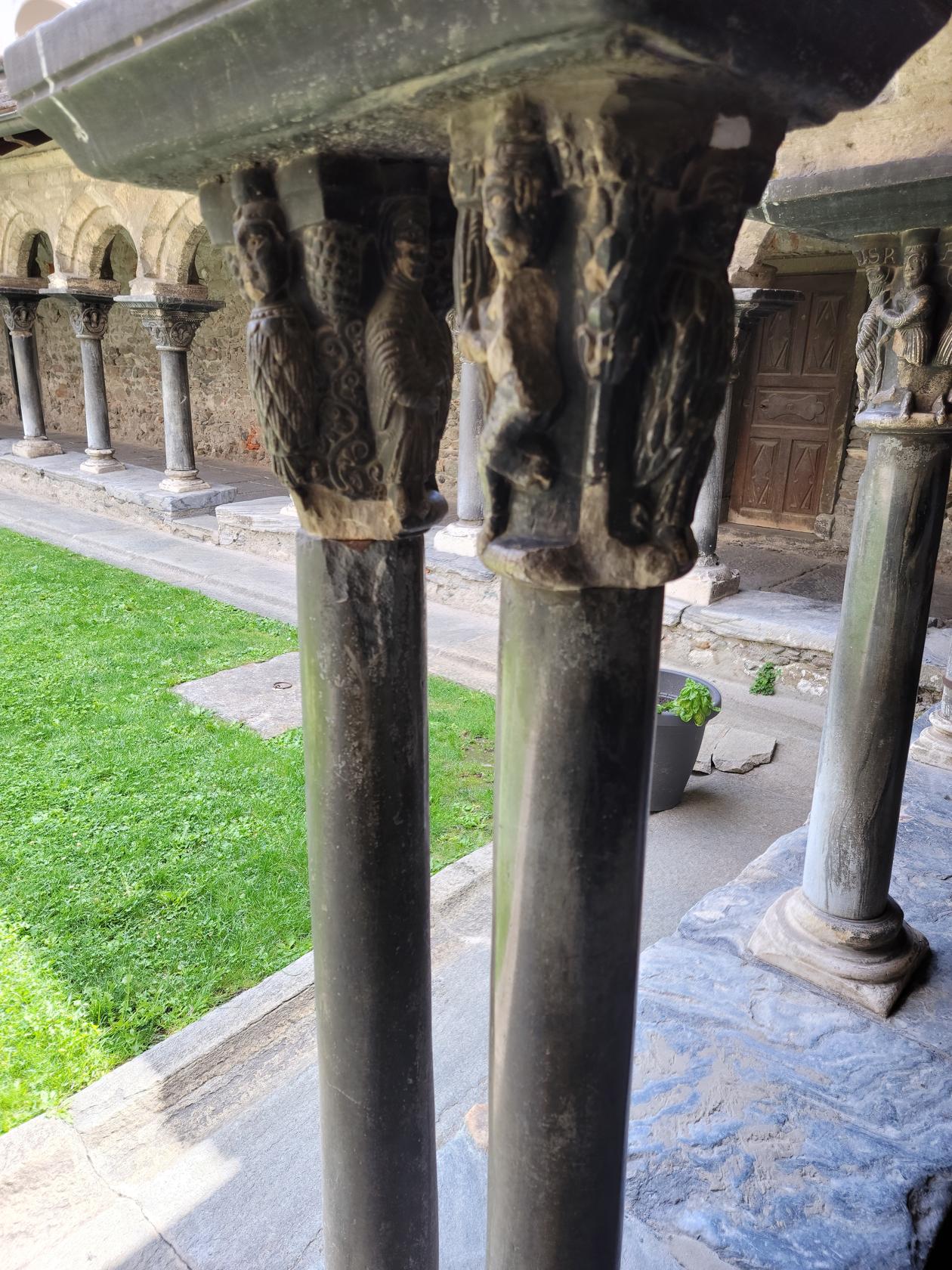
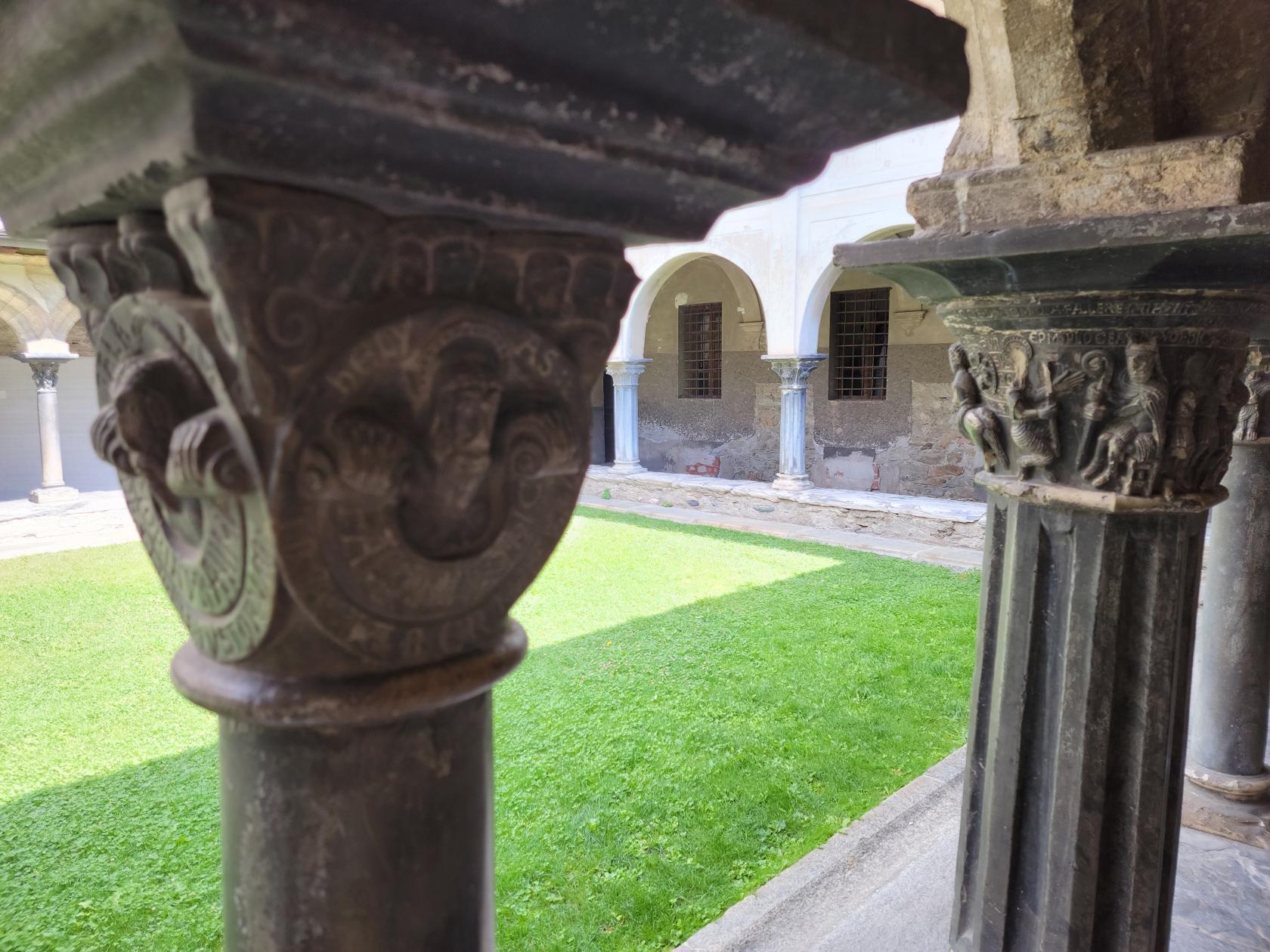
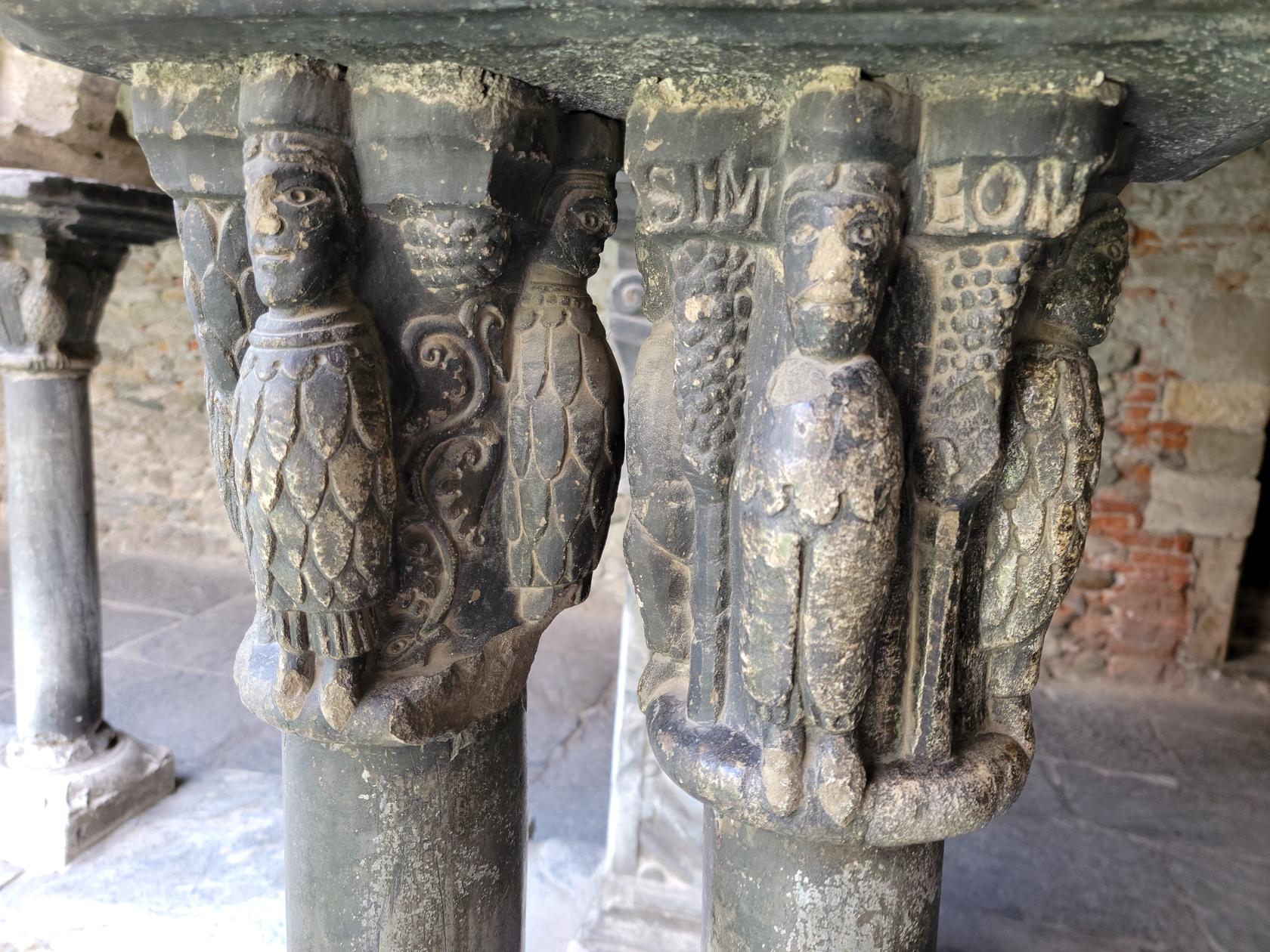
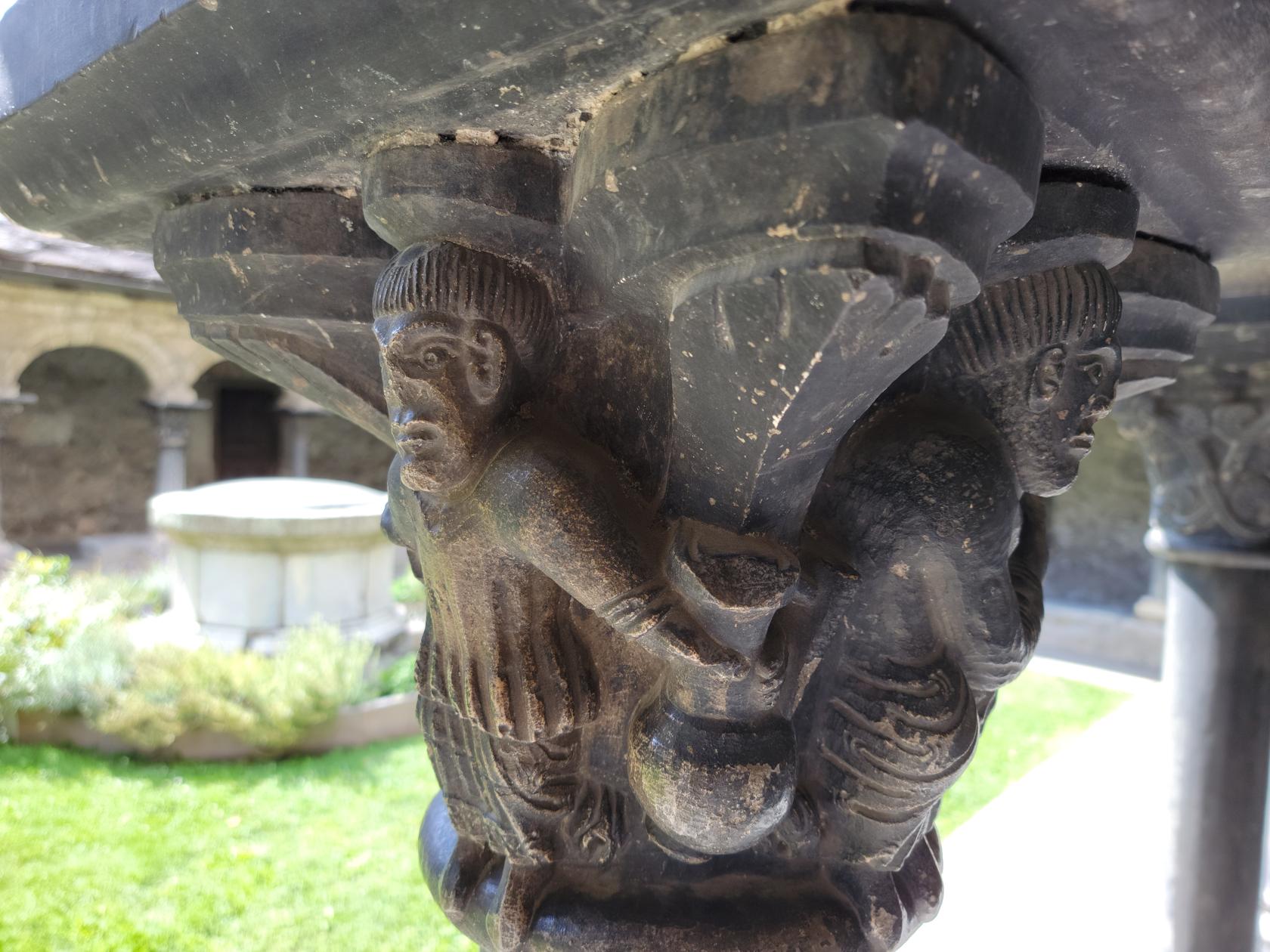
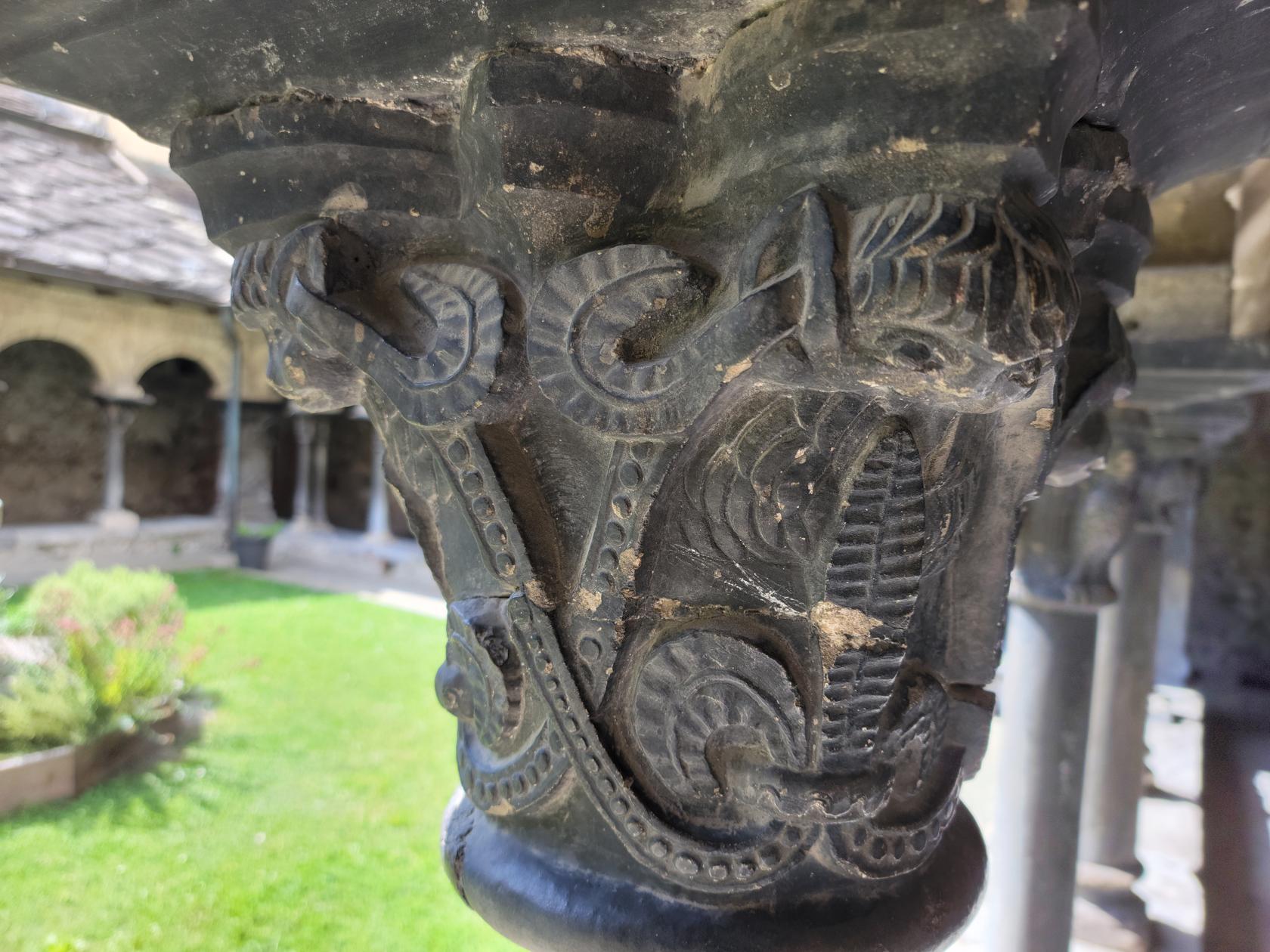
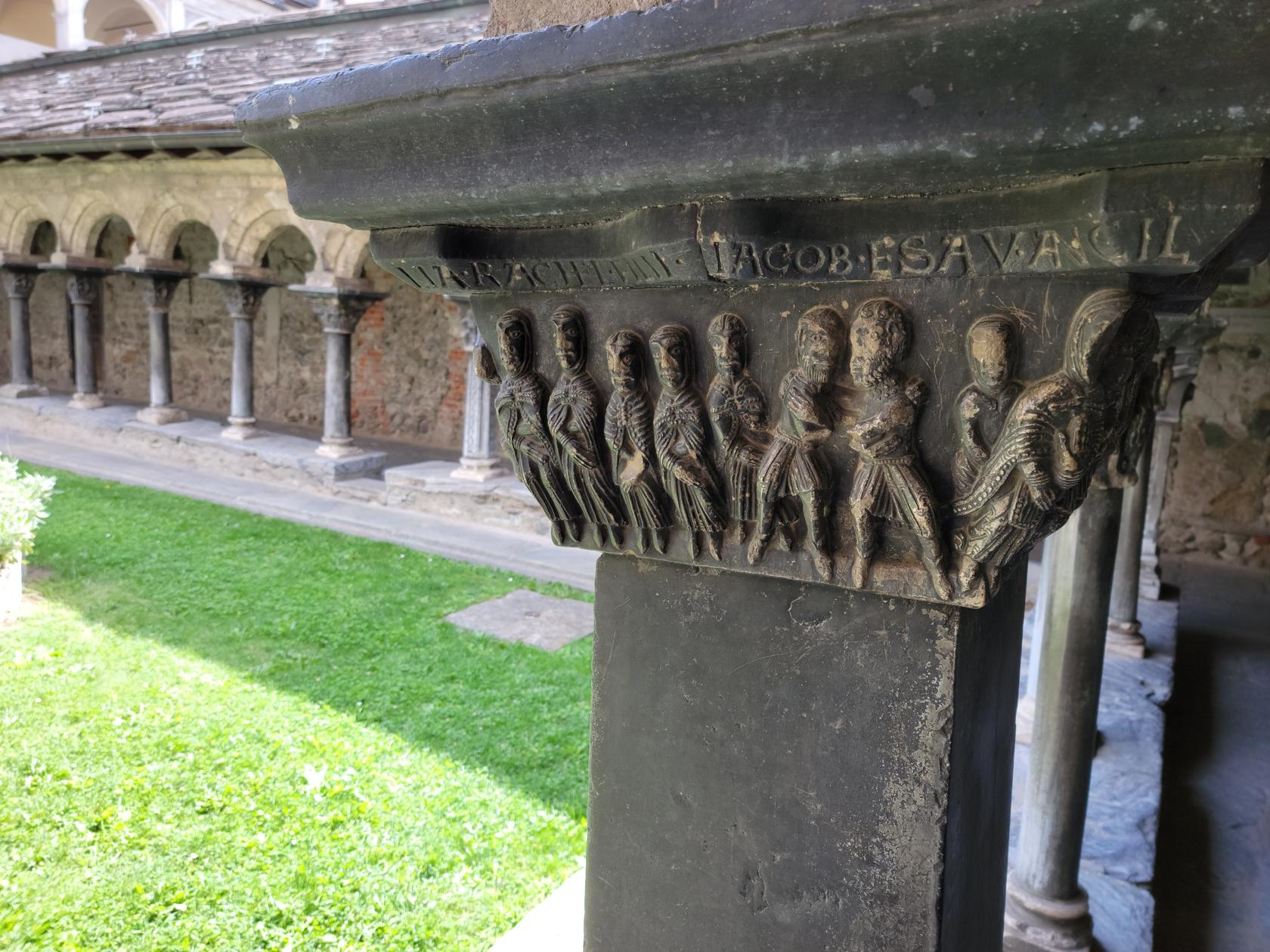
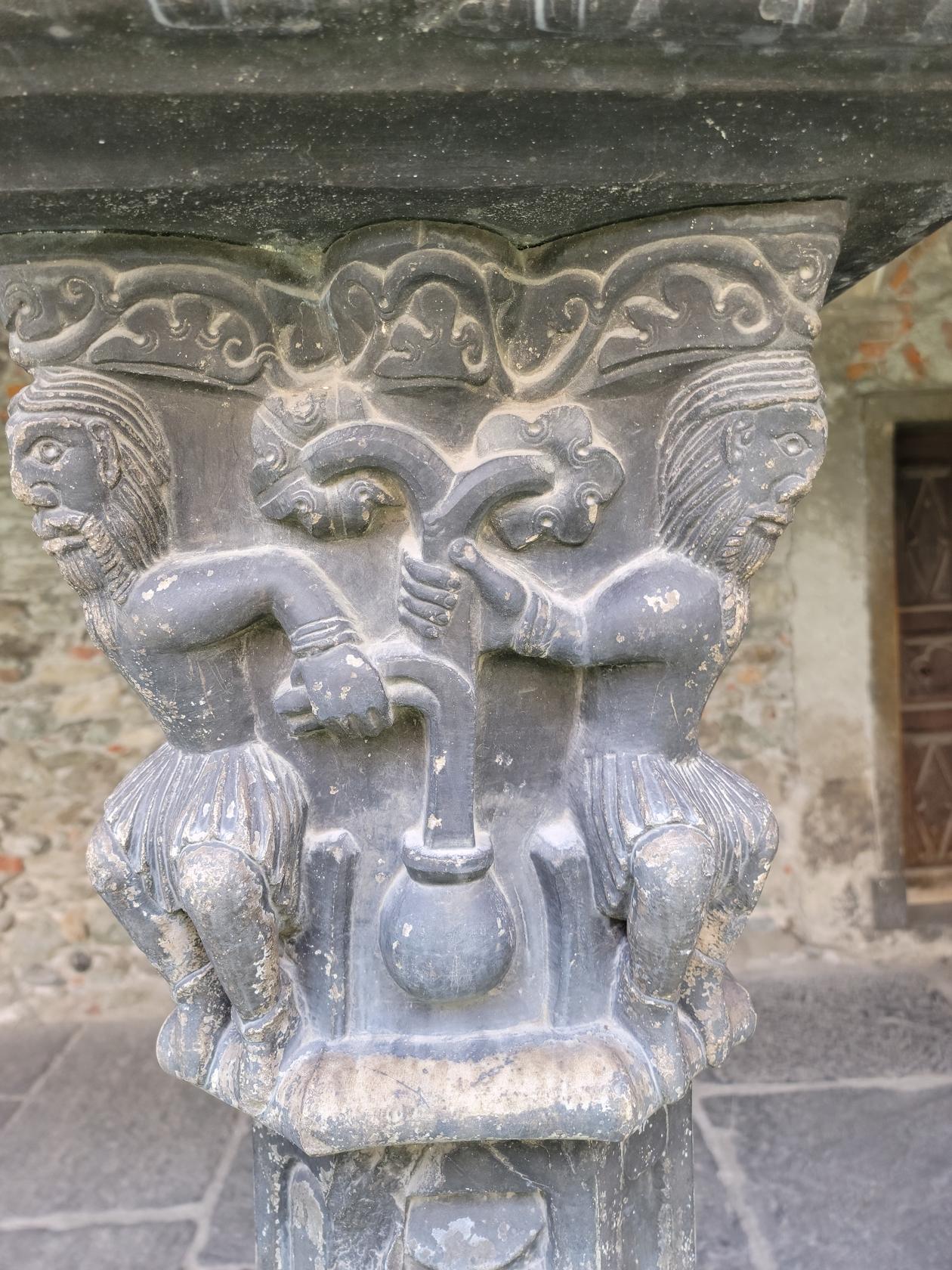
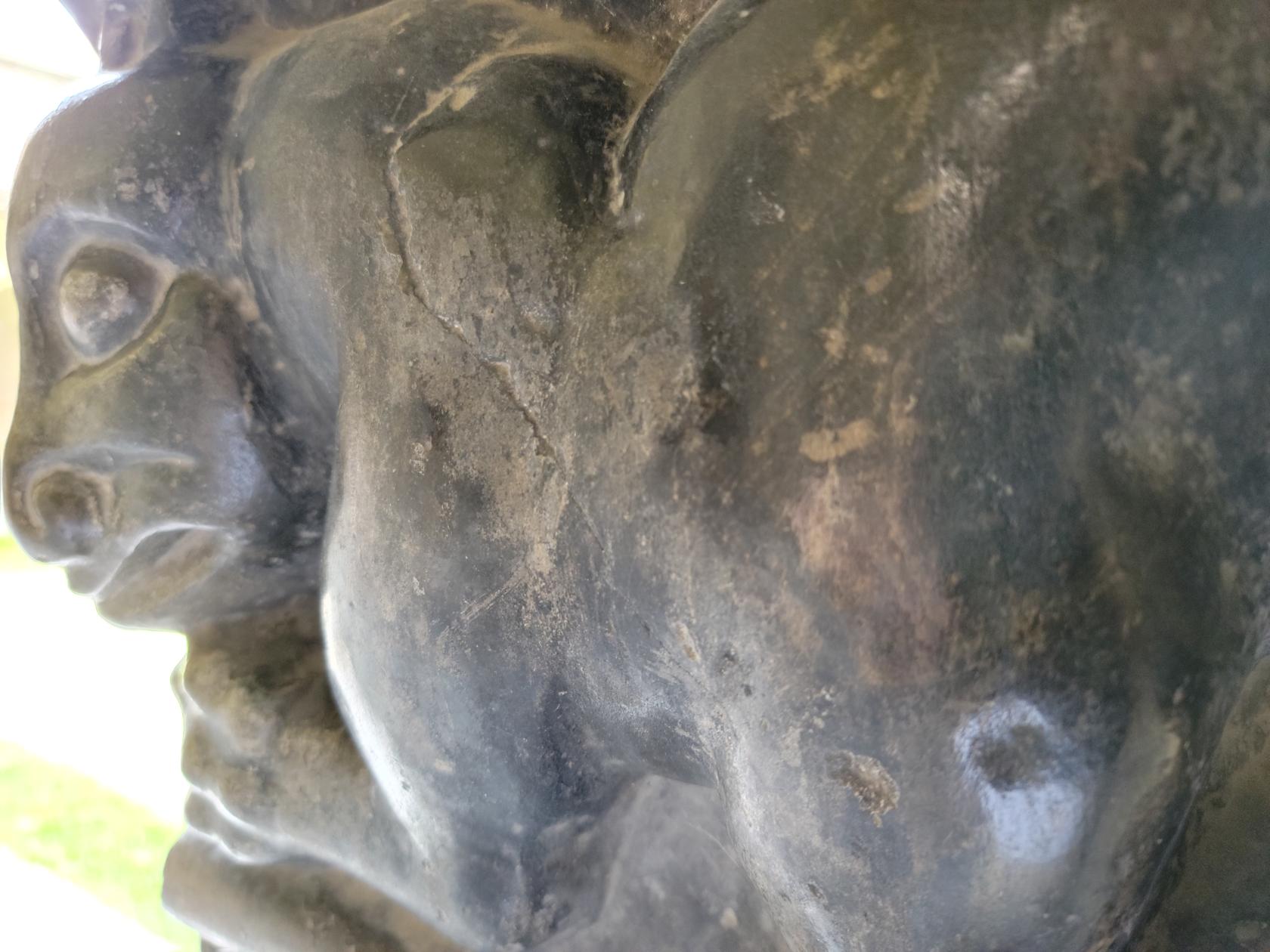
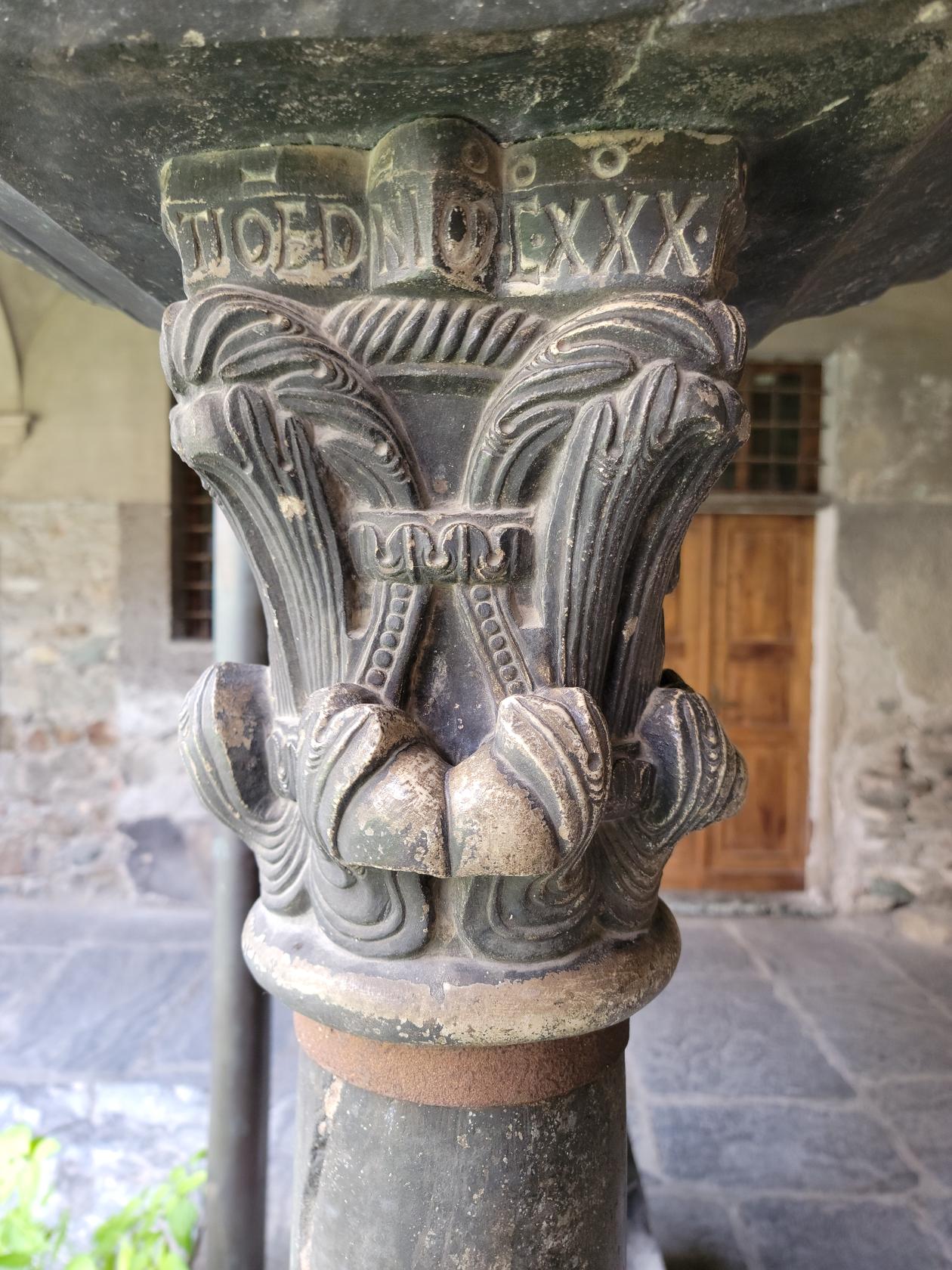
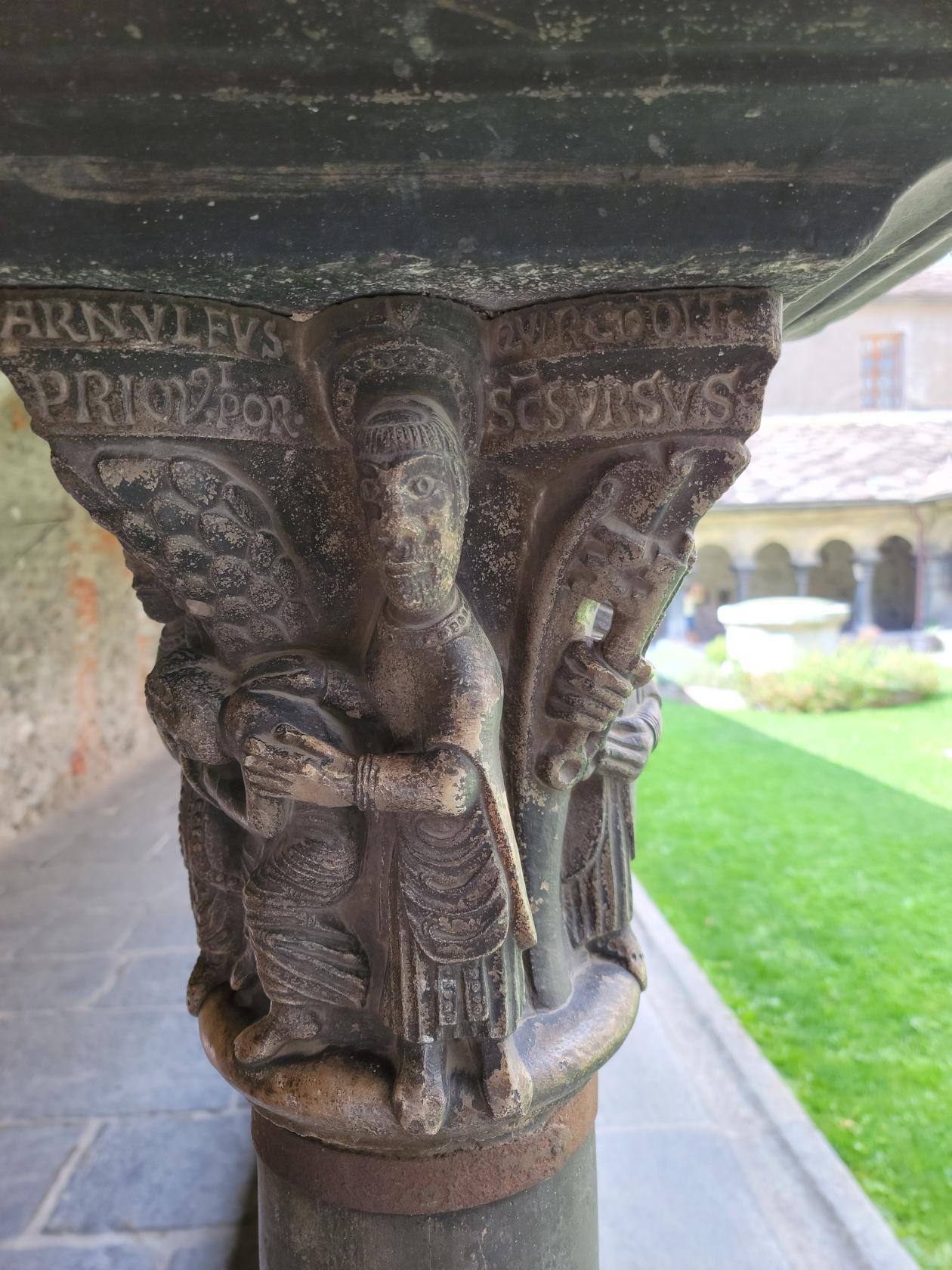
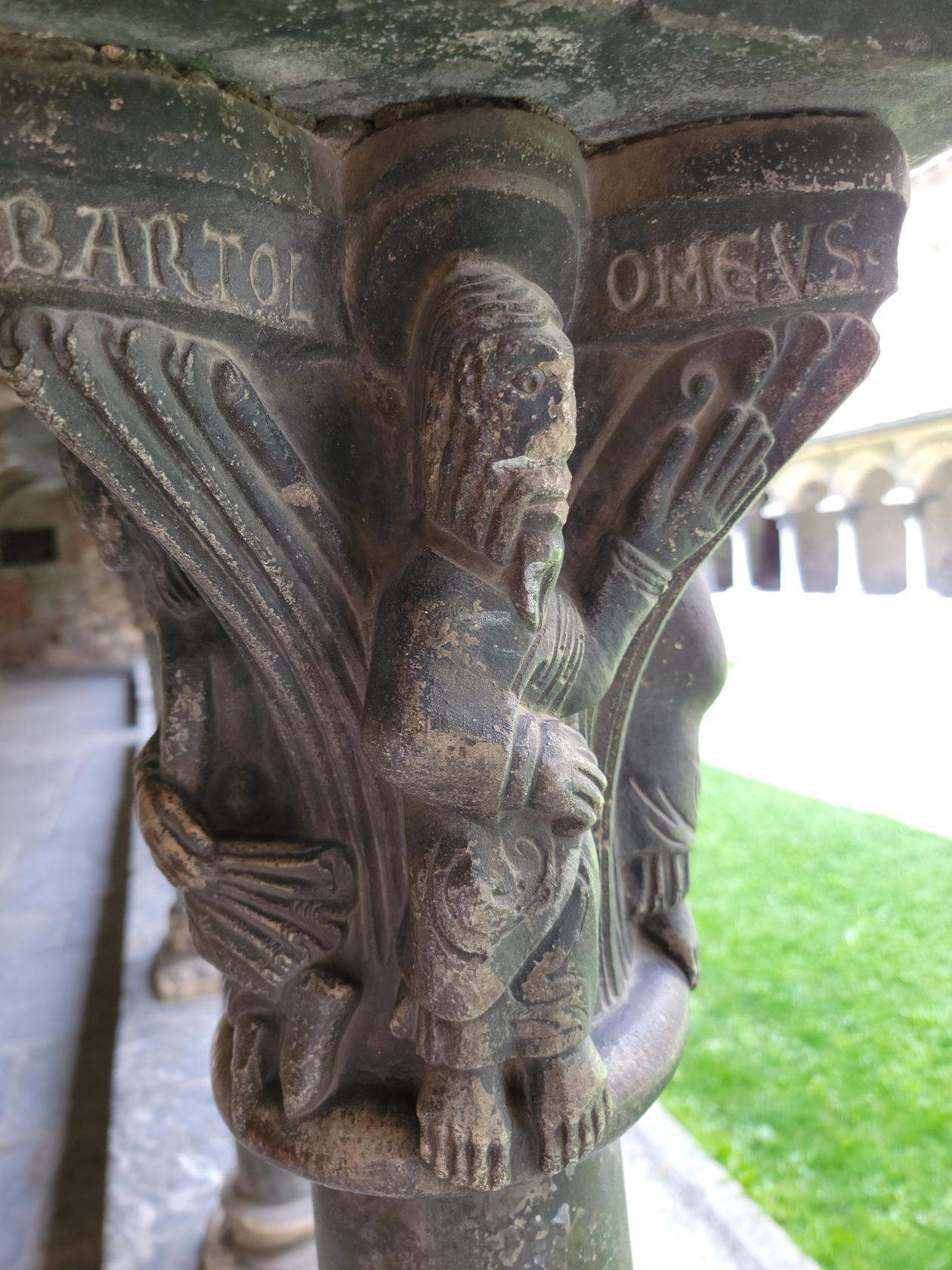
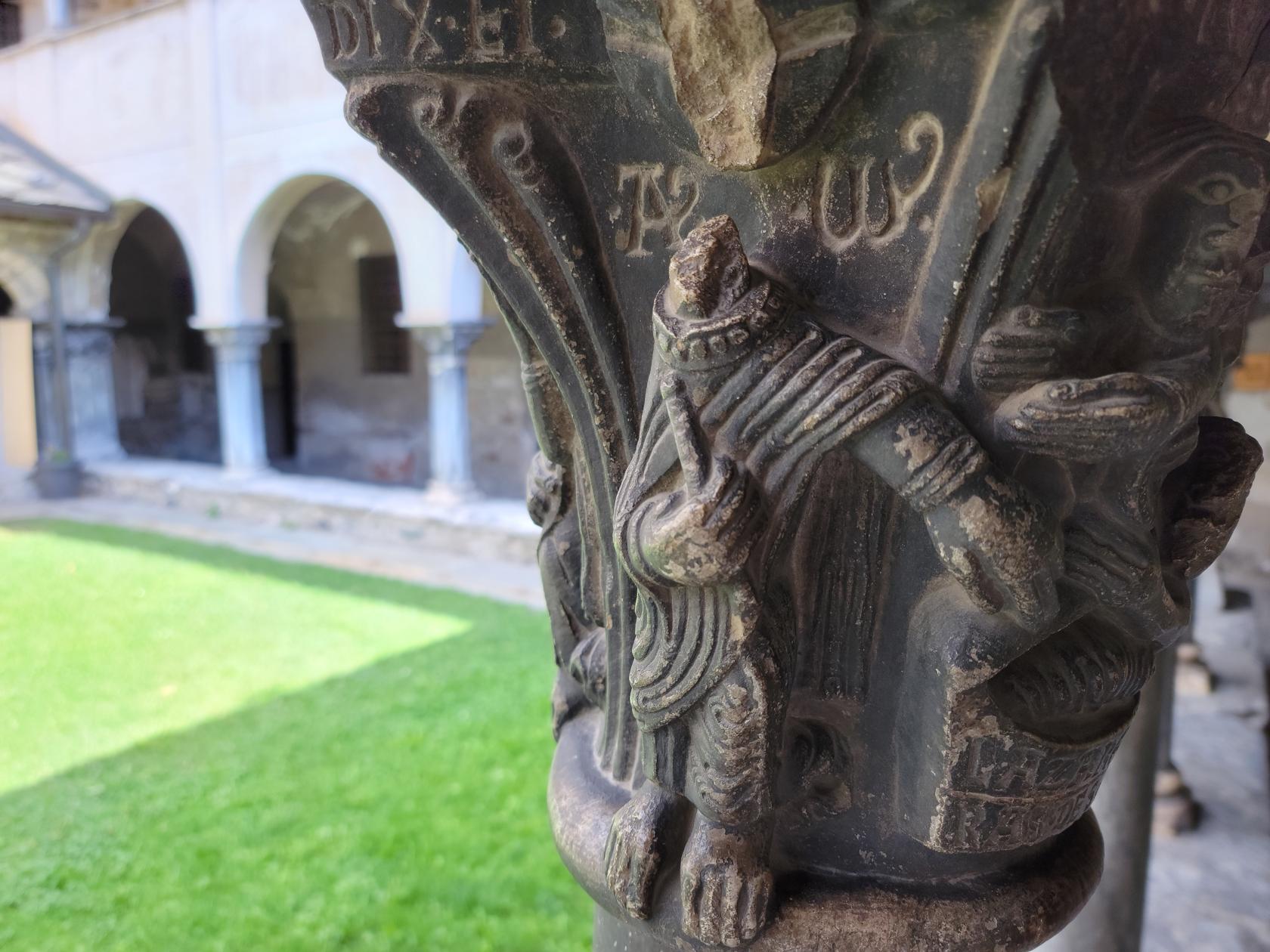
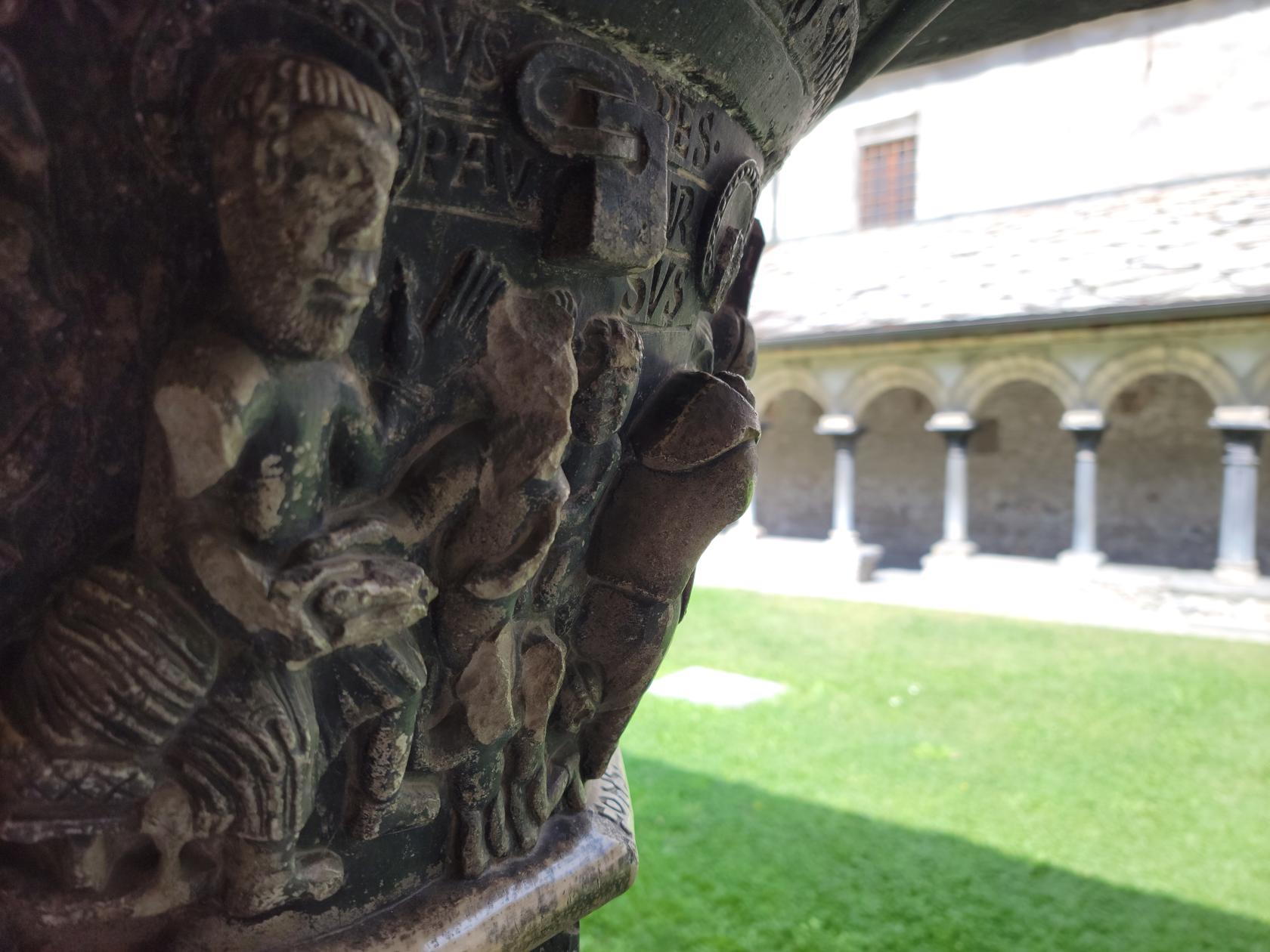
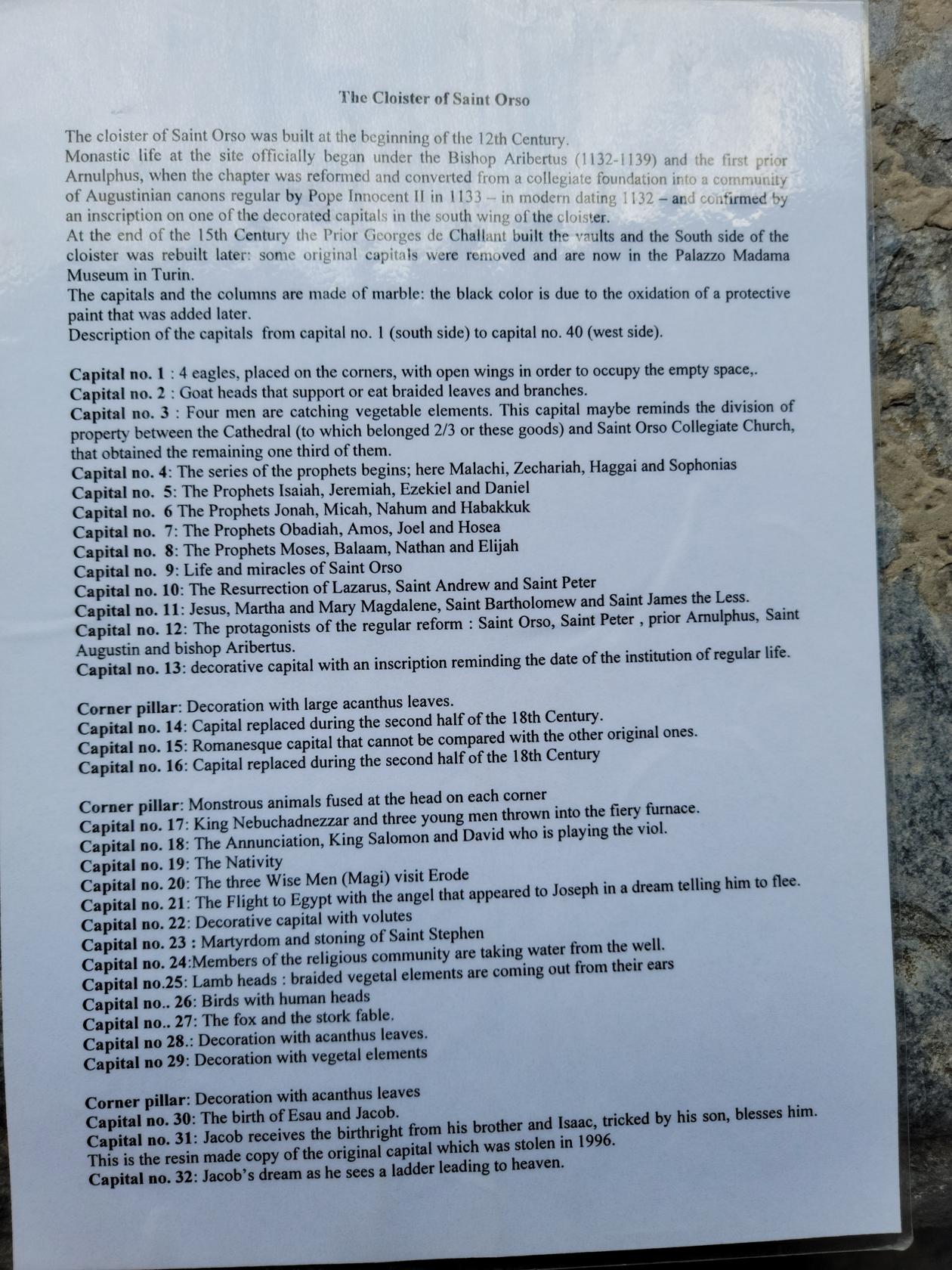
Almost every column lining the portico inside the cloister has a unique sculpted capital, depicting strange images of times forgotten. Some of the columns have multiple pillars abutting their capitals, making them even stranger and perhaps more difficult to understand by researchers.
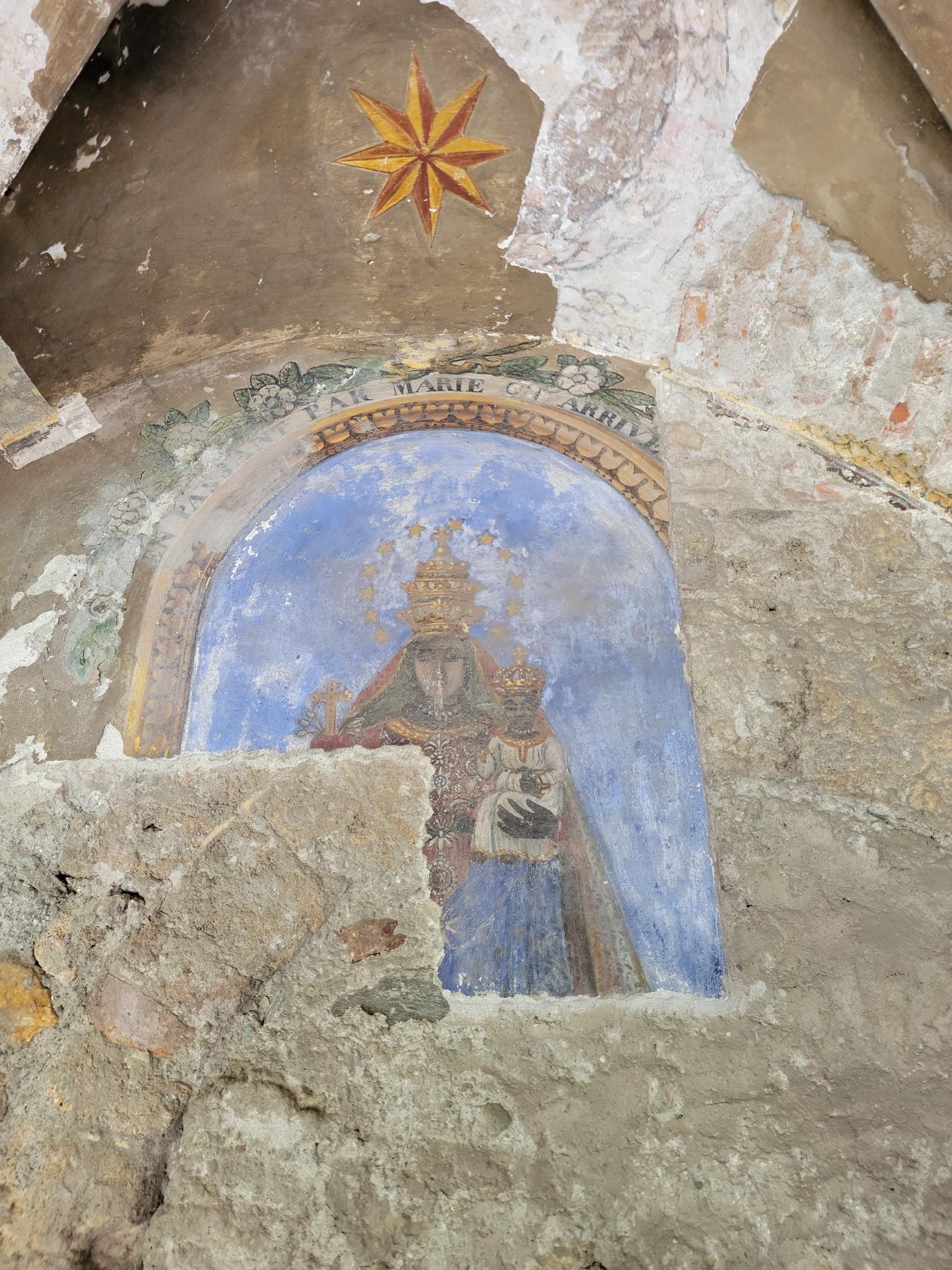
Aosta – Fresco inside of the Cloister of Sant Orso
Aosta – Arches and Columns inside of the Cloister of Sant Orso
Aosta – Arches and Columns inside of the Cloister of Sant Orso
Aosta – Interesting Double-Columns inside of the Cloister of Sant Orso
Aosta – Unique Column Capitals – Cloister of Sant Orso
Aosta – Unique Column Capitals – Cloister of Sant Orso
Aosta – Unique Column Capitals – Cloister of Sant Orso
Aosta – Unique Column Capitals – Cloister of Sant Orso
Aosta – Unique Column Capitals – Cloister of Sant Orso
Aosta – Unique Column Capitals – Cloister of Sant Orso
Aosta – Unique Column Capitals – Cloister of Sant Orso
Aosta – Unique Column Capitals – Cloister of Sant Orso
Aosta – Unique Column Capitals – Cloister of Sant Orso
Aosta – Unique Column Capitals – Cloister of Sant Orso
Aosta – Unique Column Capitals – Cloister of Sant Orso
Aosta – Unique Column Capitals – Cloister of Sant Orso
Aosta – Unique Column Capitals – Cloister of Sant Orso
Aosta – Unique Column Capitals Legend – Cloister of Sant Orso
Paleo-Christian Church Of Sant Lorenzo
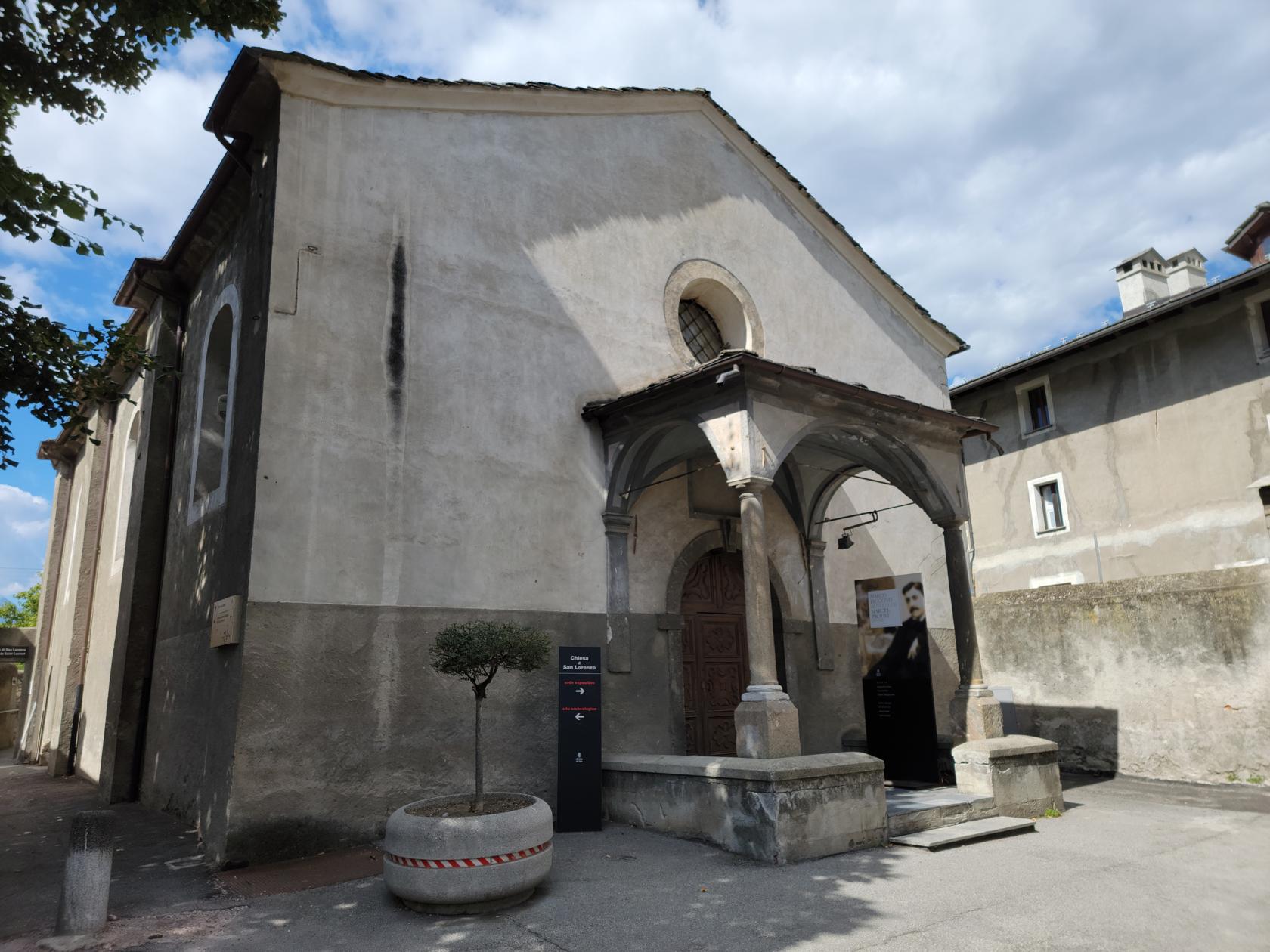
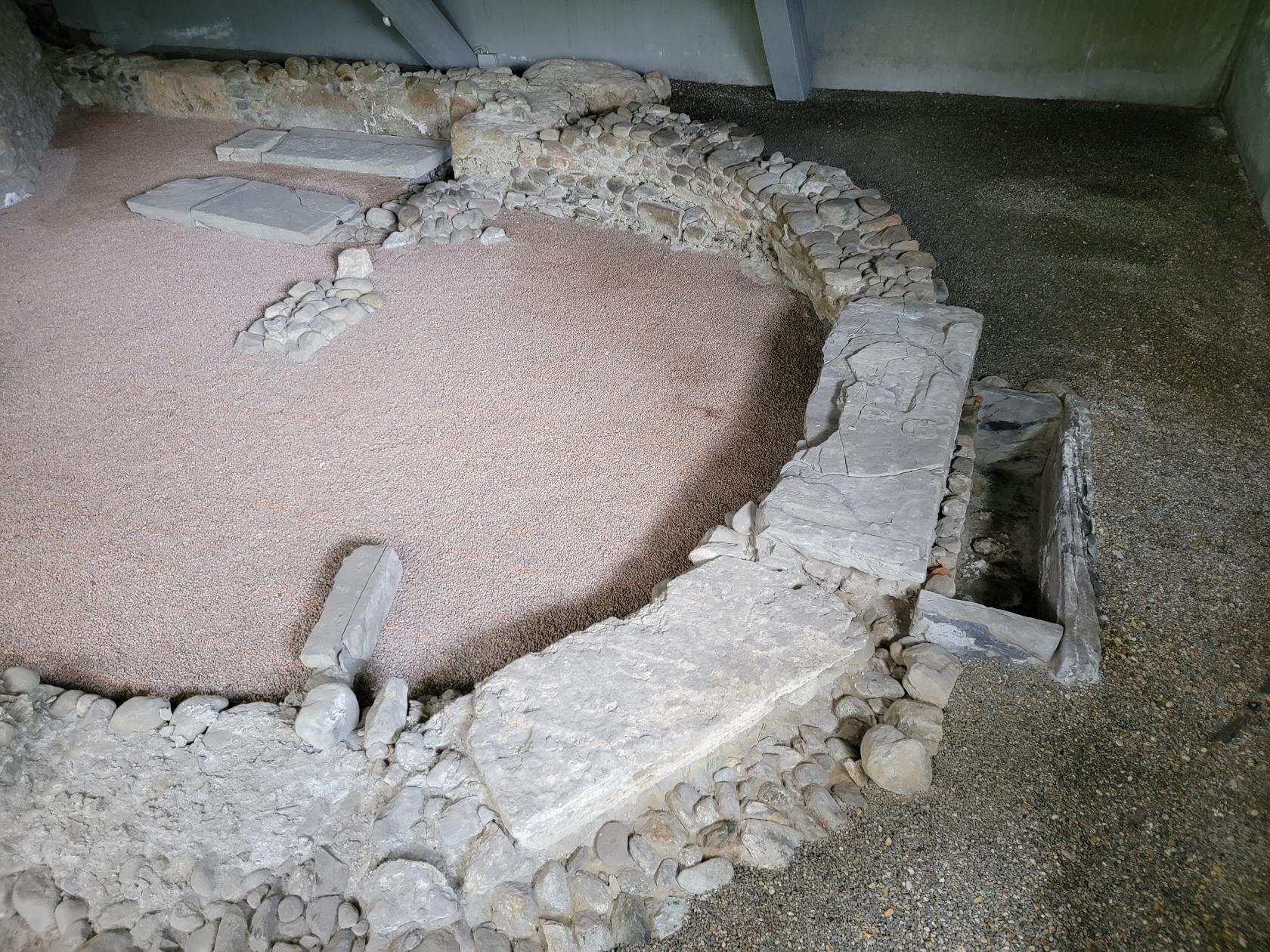
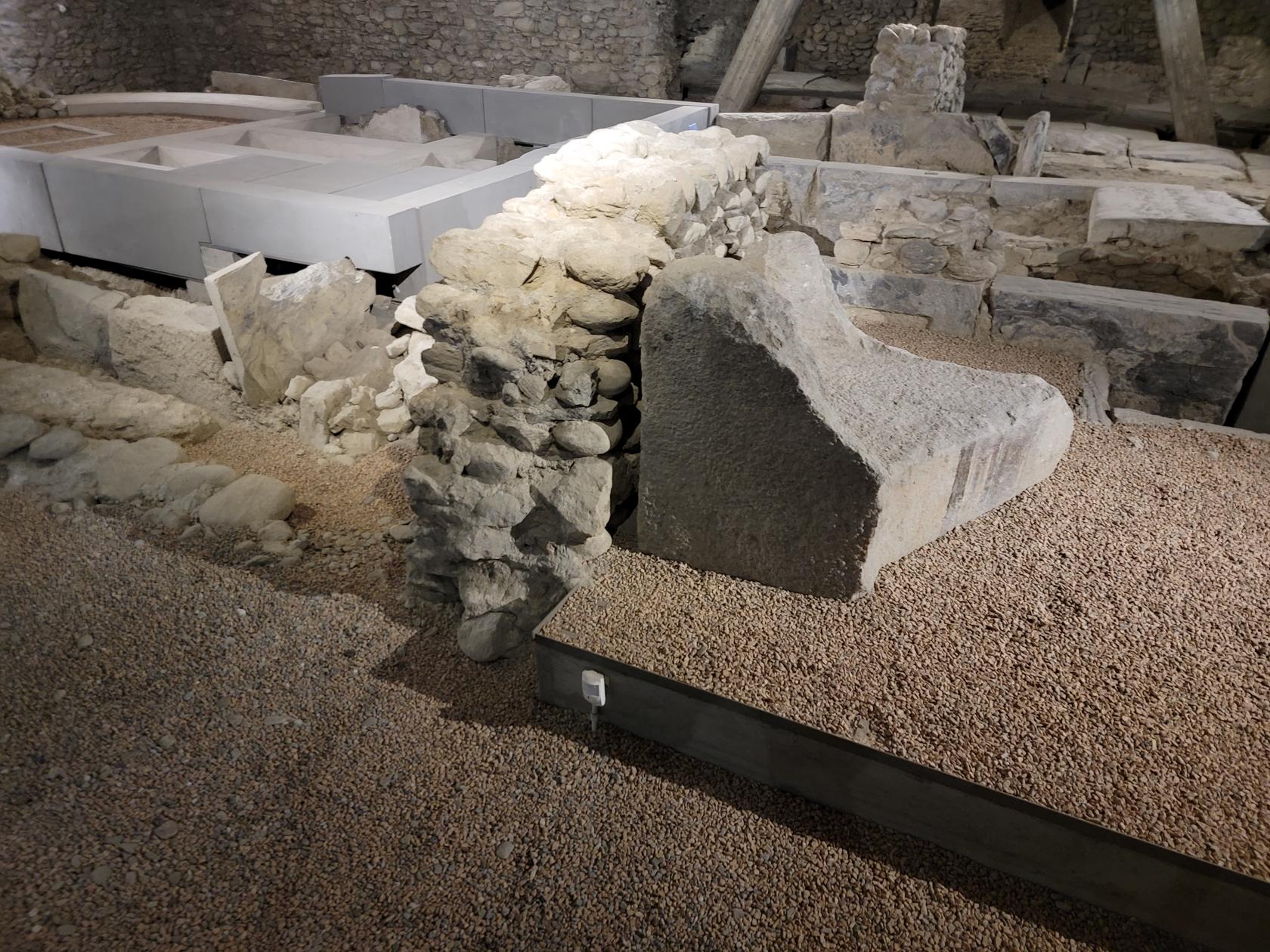
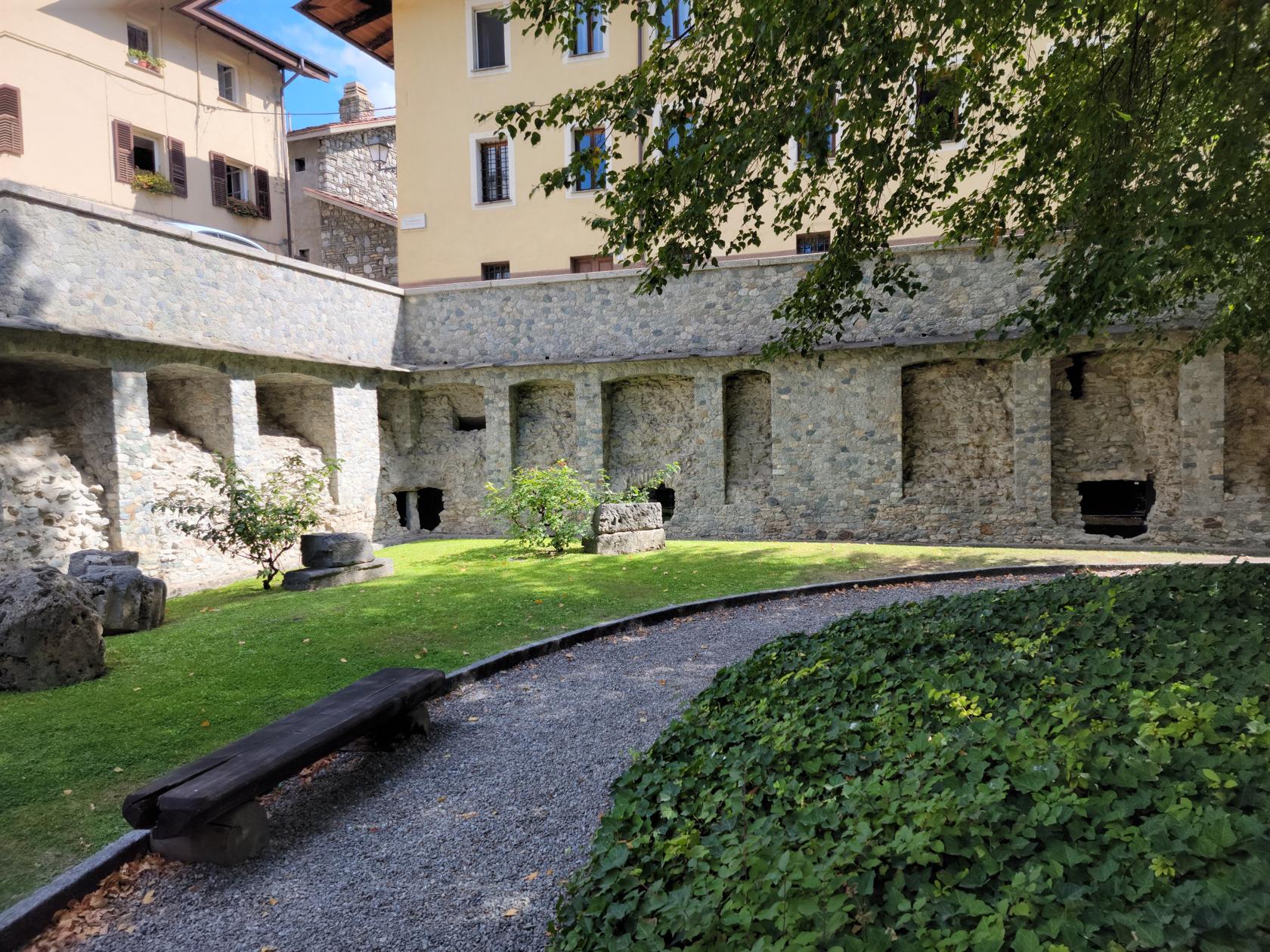
Of special interest is the small, paleo-christian Church of Saint Lorenzo. An archeological site in its own right, the old church has actually been excavate underneath the existing church of the same name, Church of Sant Lorenzo.
Aosta – The Paleo-Christian Church of Sant Lorenzo
Aosta – The Paleo-Christian Church of Sant Lorenzo
Aosta – The Paleo-Christian Church of Sant Lorenzo
Aosta – The Paleo-Christian Church of Sant Lorenzo
The Cryptoportico
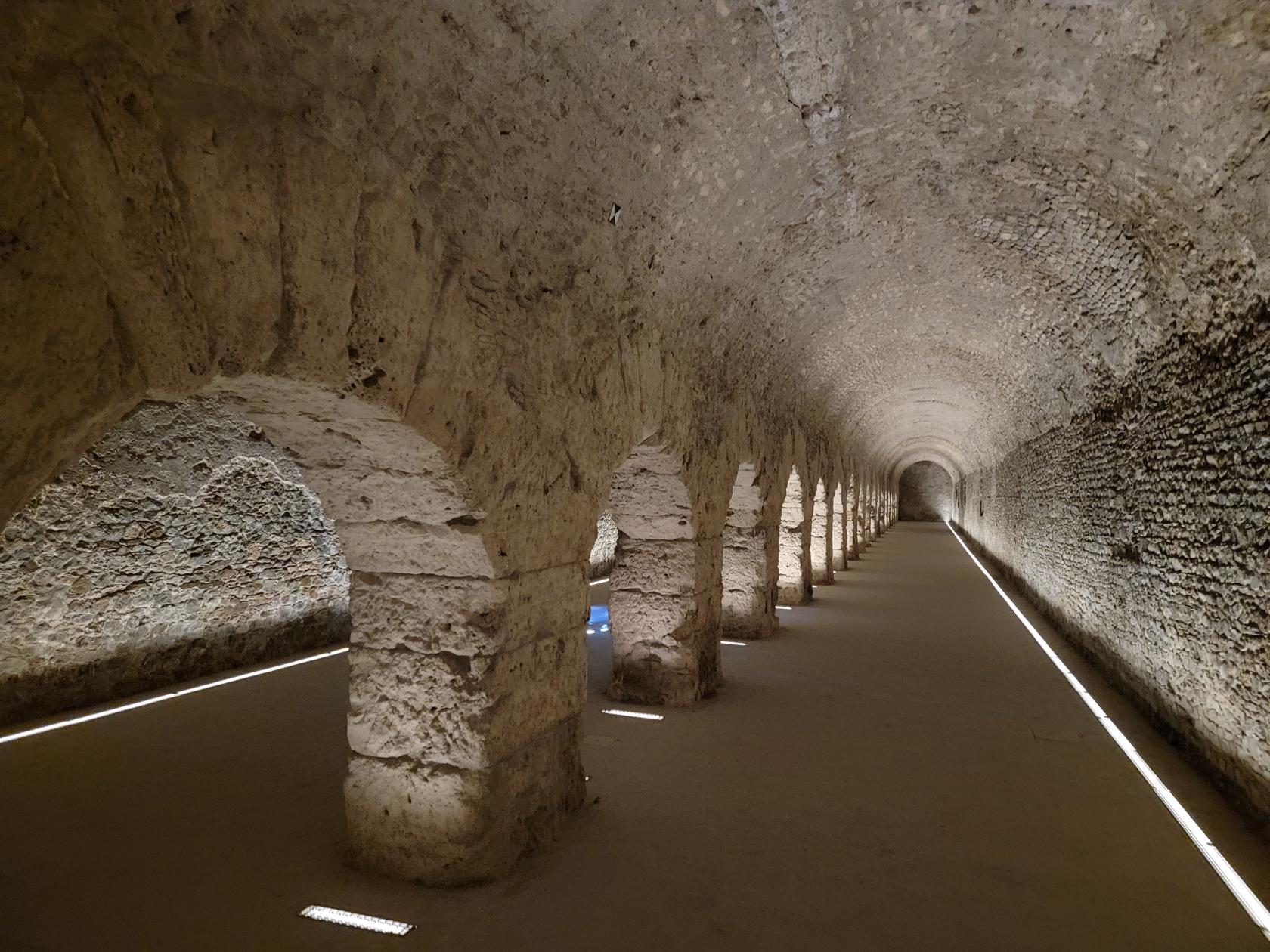
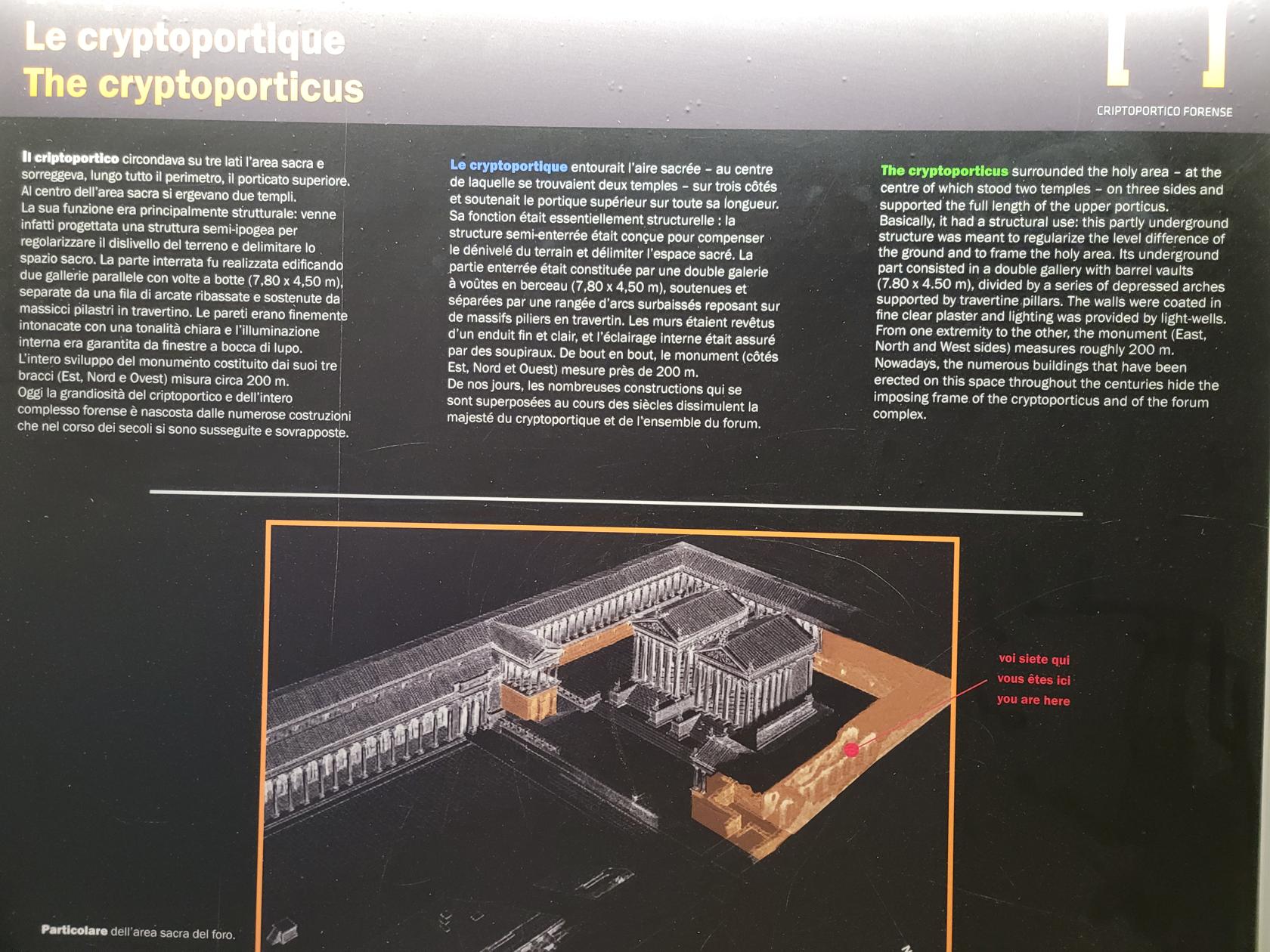
No one actually knows what the Cryptoportico was used for, it is only known that it was a large rectangular structure with a corresponding lighted basement. It has been conjectured that the layout hints at its use as a marketplace and the cellar as a storage place for grain and other commodities. Unfortunately the slide show provided in the cellar is provided only in Italian, but that appears to only have explained the archeological details of the excavation and not necessarily its intended use.
Aosta – Cryptoporticus Museum
Aosta – Cryptoporticus Museum – Barrel Arches
Aosta – Cryptoporticus Museum – Barrel Arches excavations
Aosta – Cryptoporticus Museum – Barrel Arches
Aosta – Cryptoporticus Museum – Barrel Arches
Aosta – Cryptoporticus Museum – Barrel Arches
Restaurants
Caffe Nazionale
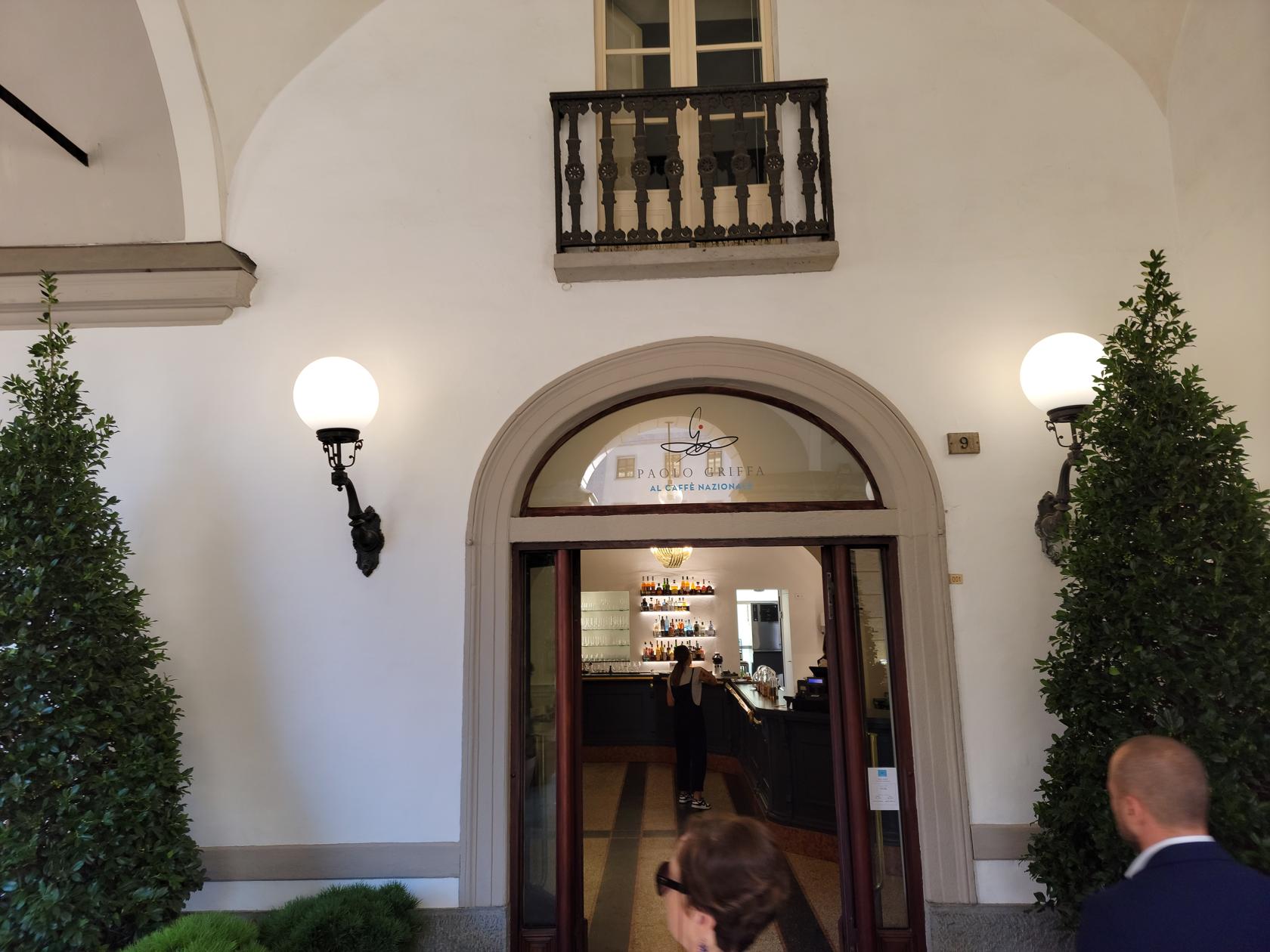
Its claim to fame ostensibly is that it’s the oldest cafe in Aosta. Aside from its coffee being overpriced, its outside seating suffering from the hot sun (no umbrellas) and it only having one staff member taking orders, its coffee and brioche are good. However, when I can purchase two Capucinos and two Brioches of the same or better quality right next to my hotel at half the price, it is definitely not worth it! However, if you want a seat in the Piazza Emile Chanoux to eat breakfast, then it is perhaps one of your only options.
Aosta – Caffe Nazionale – Piazza Emile Chanoux
Ristorante Aldente
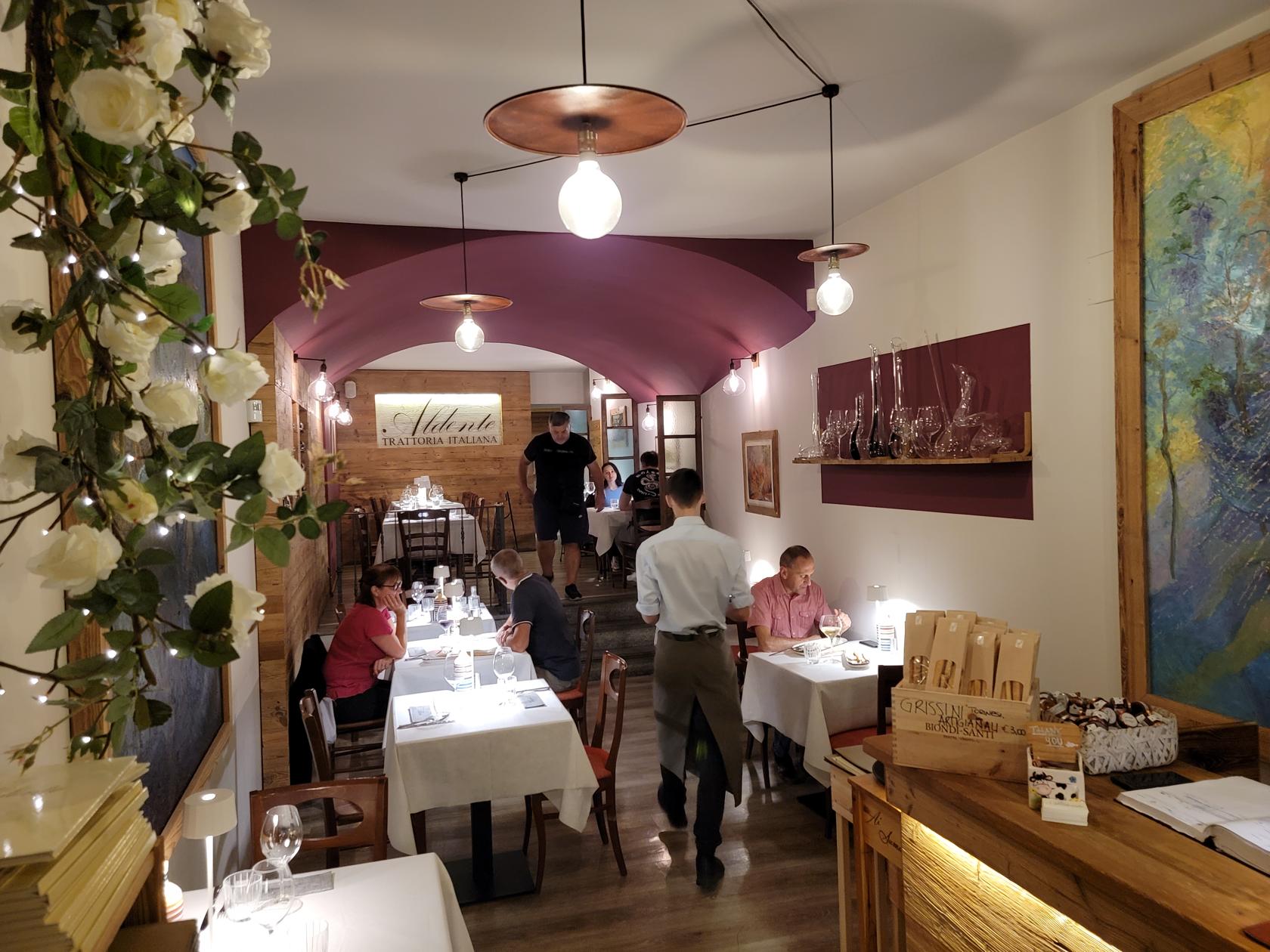
A very good restaurant, offering both inside and outside seating, is Aldente.
Aosta – Ristorante Aldente
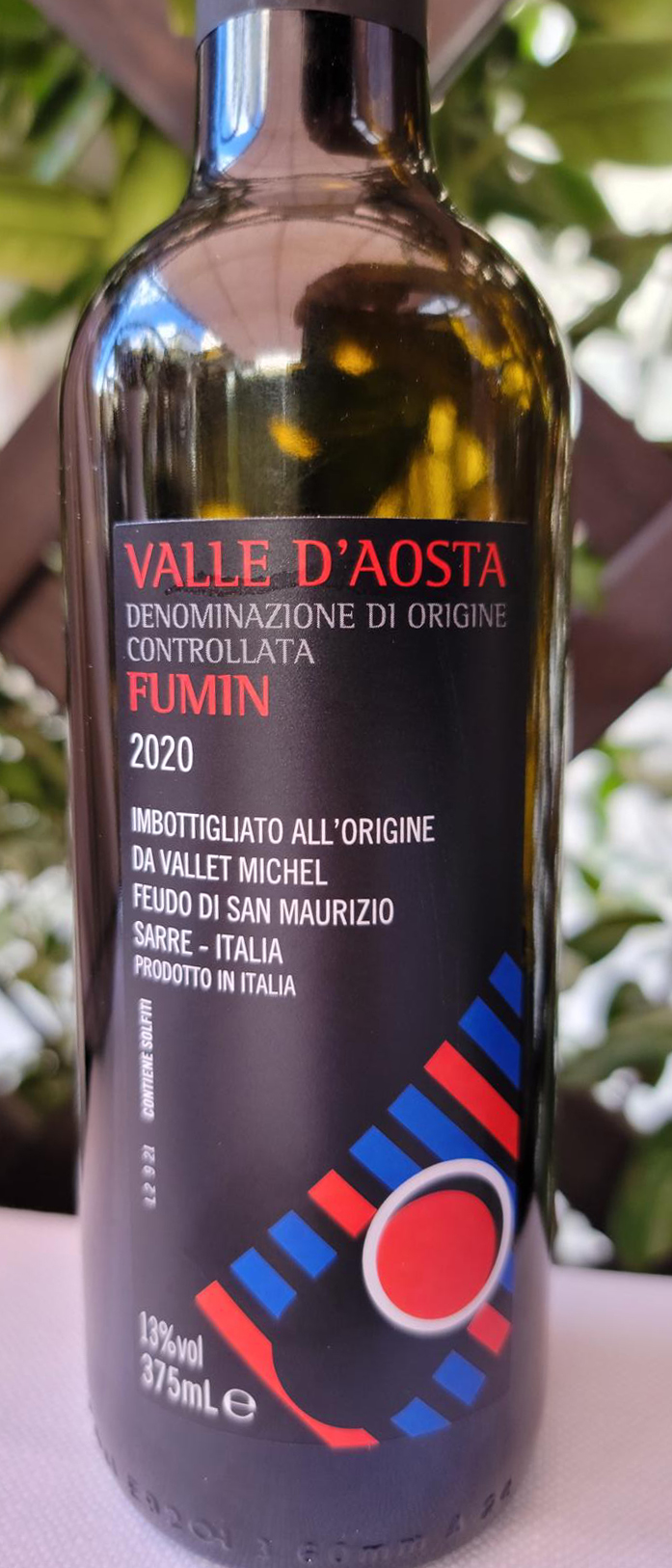
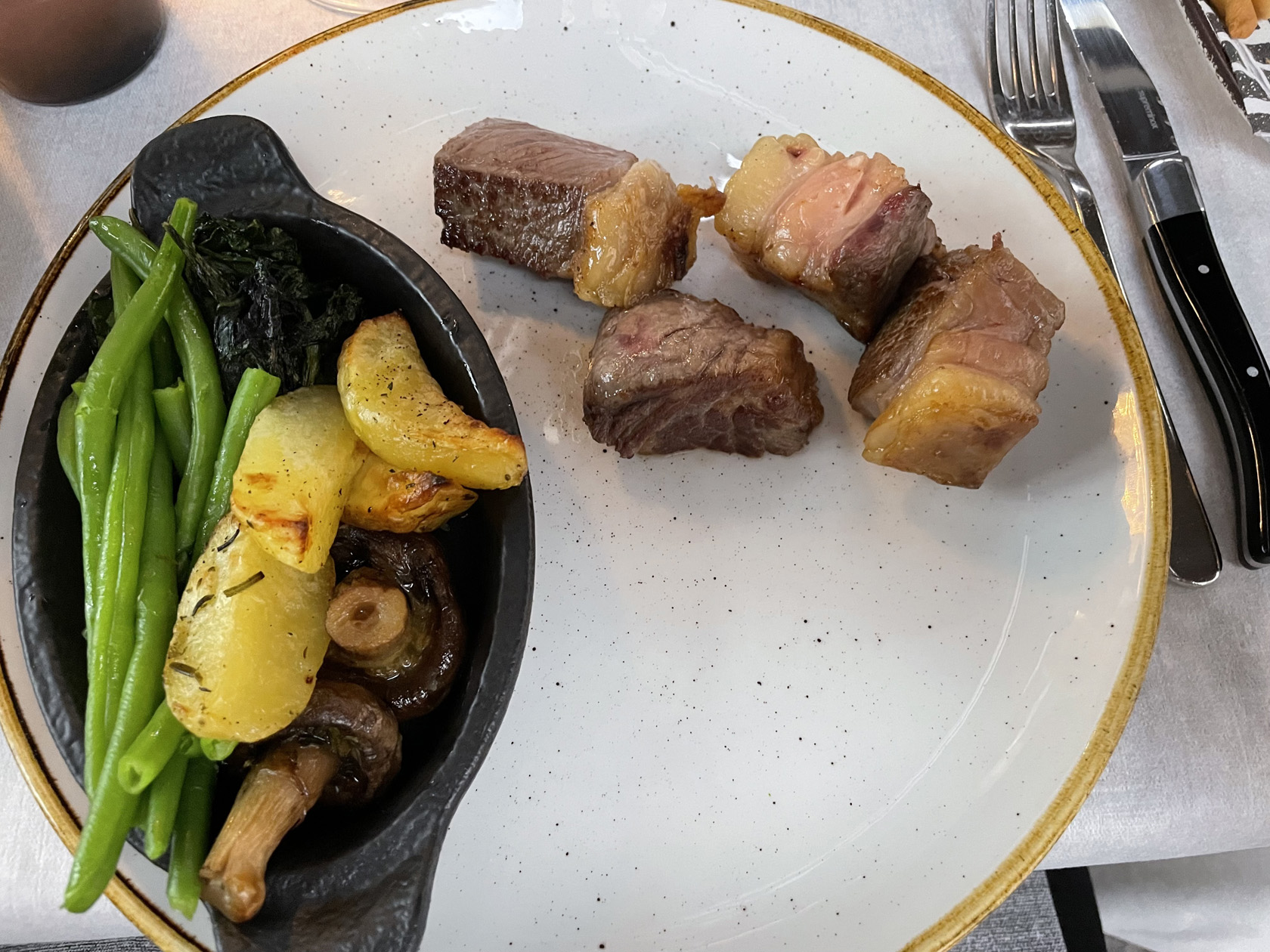
They have a full wine list, with a concentration on local and regional wines, so a great place to try something new. The menu has all the local favorites, consisting of a blend of Italian and French cuisines. A great place to eat for a special evening, or just to relax and enjoy great food.
Aosta – Ristorante Aldente – Fumin Wine – Valle D’Aosta
Aosta – Ristorante Aldente – Braised Veal with Vegetables
House O Break
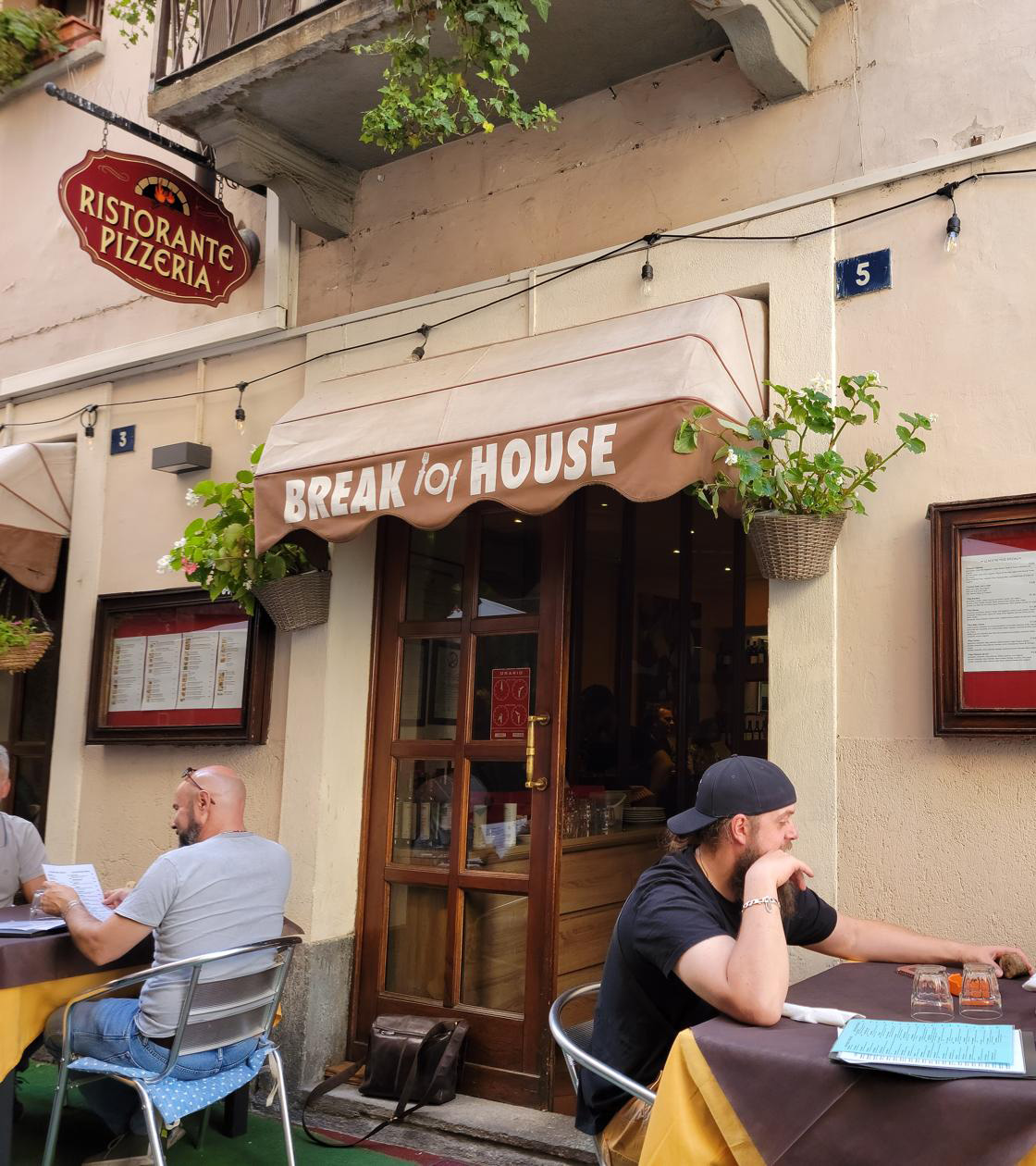
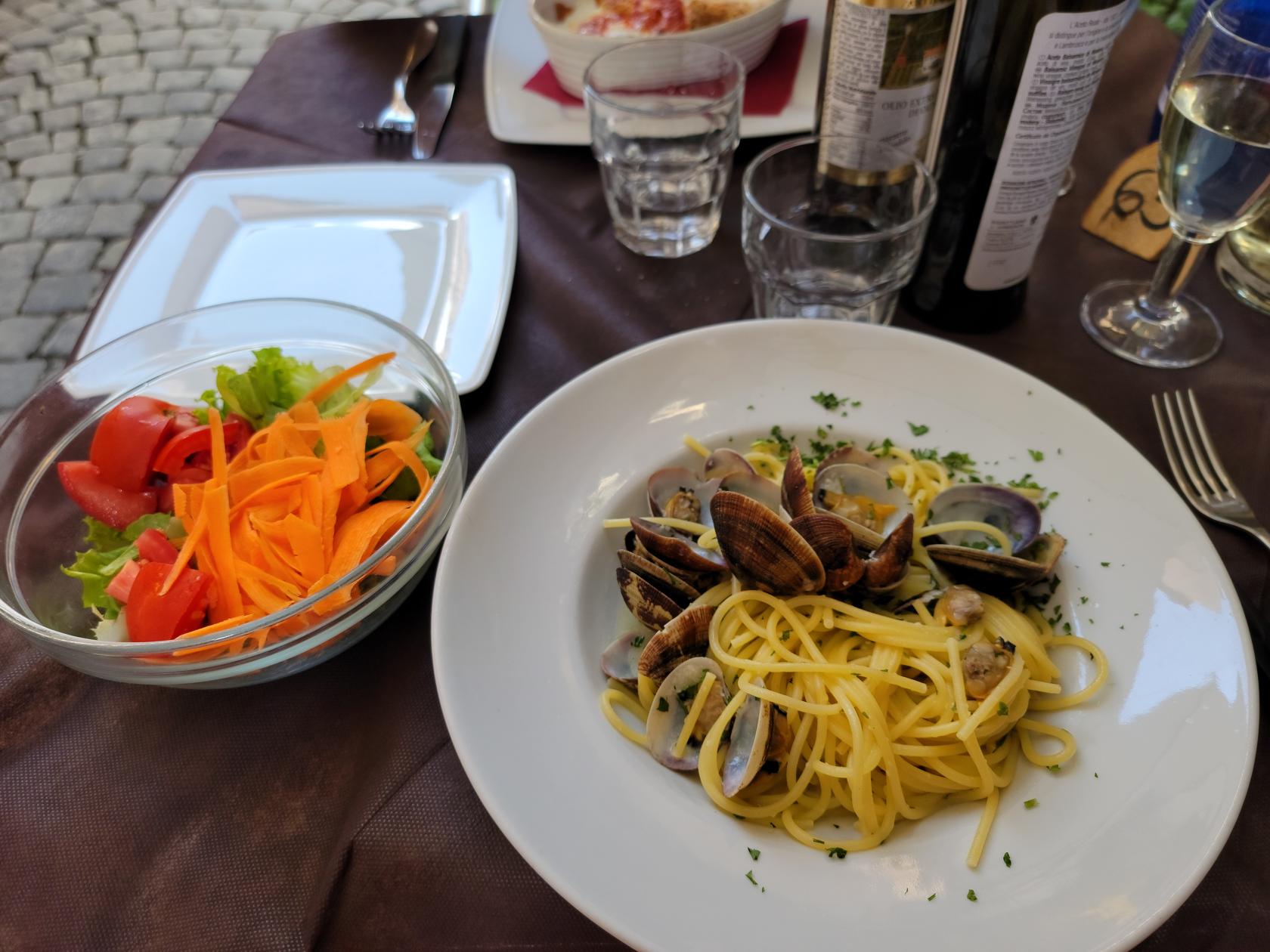
A fantastic place for lunch or dinner. We ate here twice, since they have a varied menu with many local specialties at very good prices.
Aosta – Break O House – Front
Aosta – Break O House – Spaghetti e Vongole
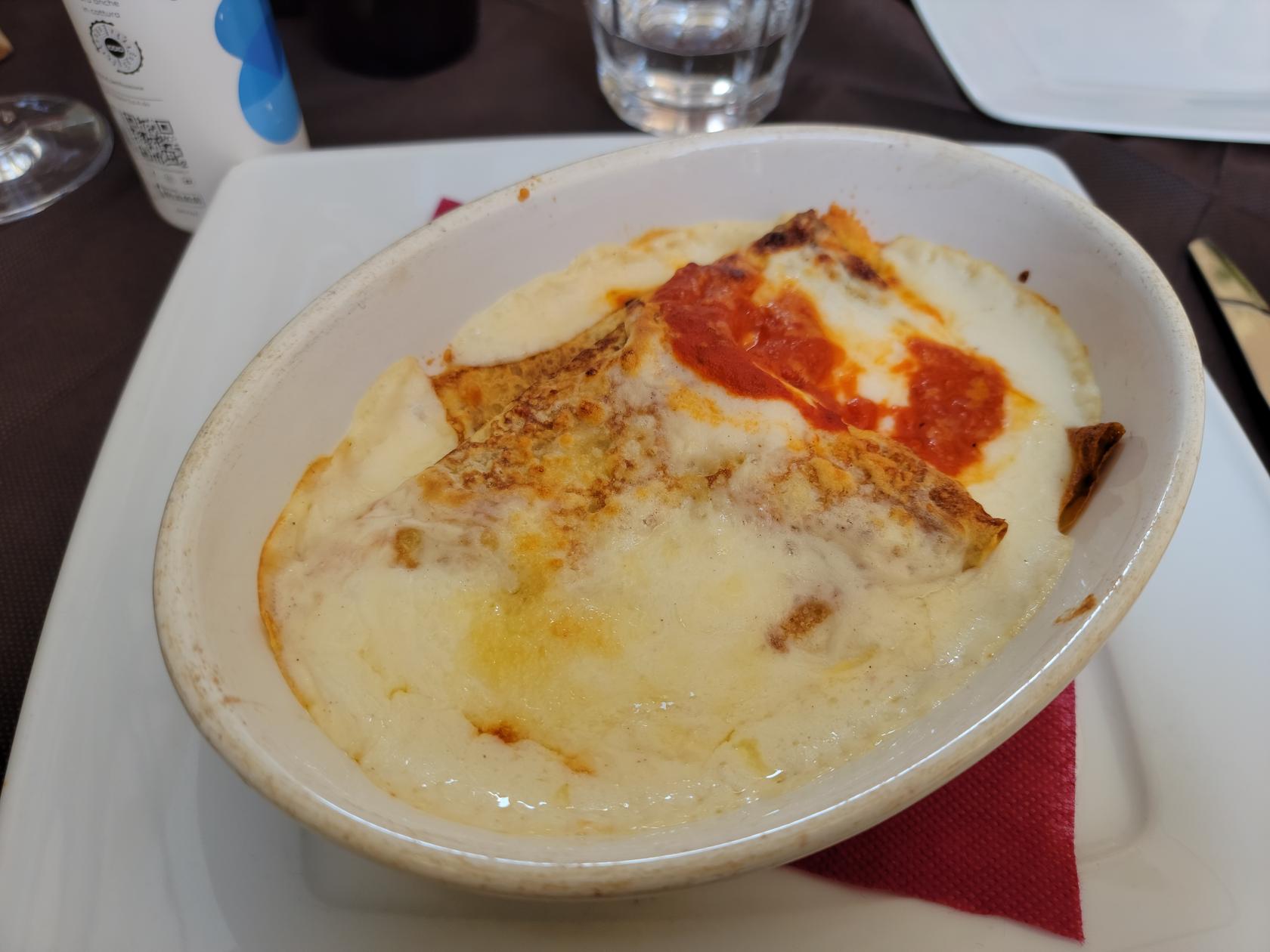
Aosta – Break O House – Crepe with Fontina Cheese and Béchamel
PubBurger
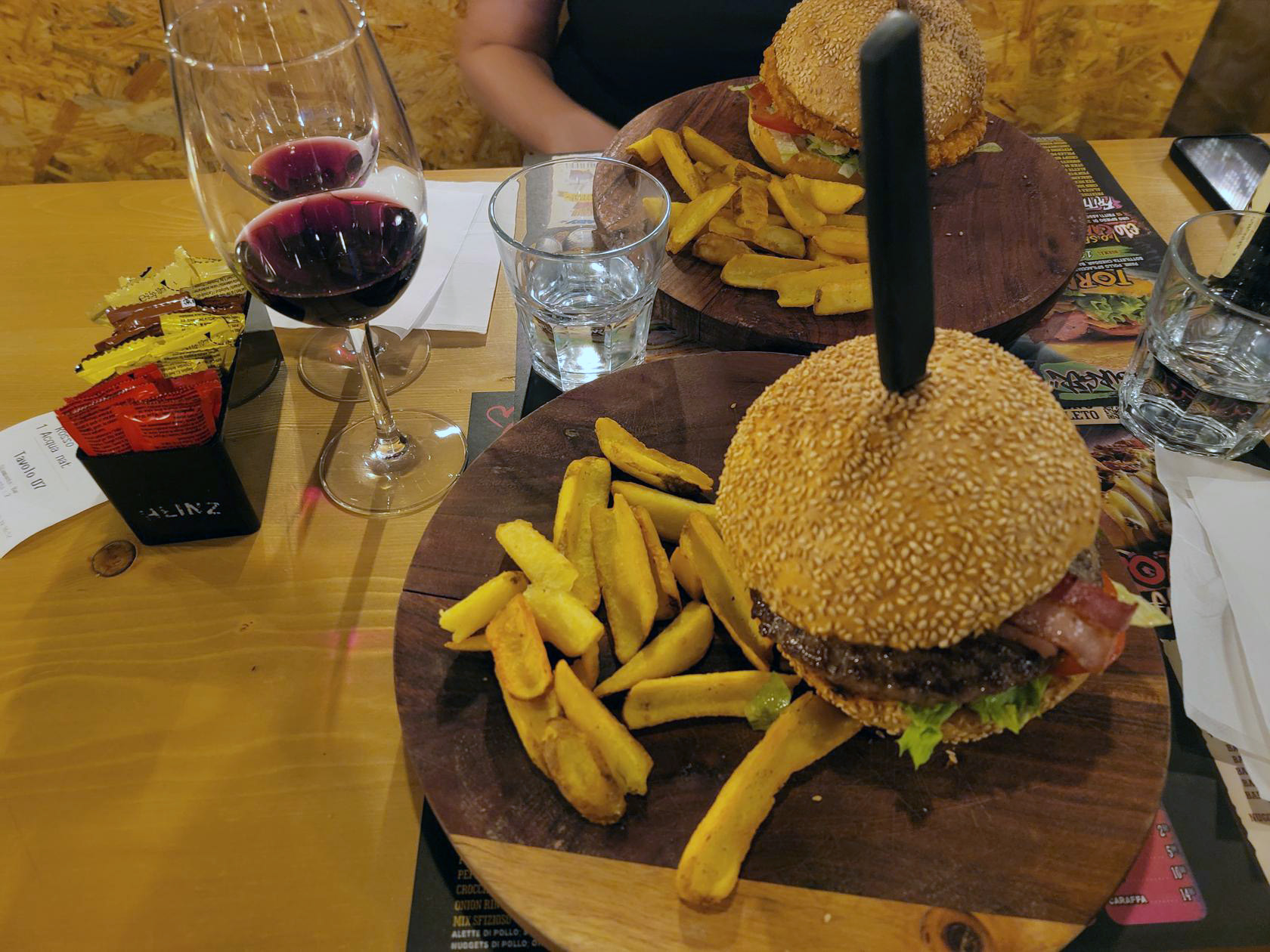
Nothing special, but dying for something different we went to a burger chain here called PubBurger. The burgers are actually pretty good, but the buns are a bit hard, unlike the ones in the States. The quantity of French Fries too was a bit on the small side, considering it is a burger place, but I didn’t complain because the size of the burger was HUGE!
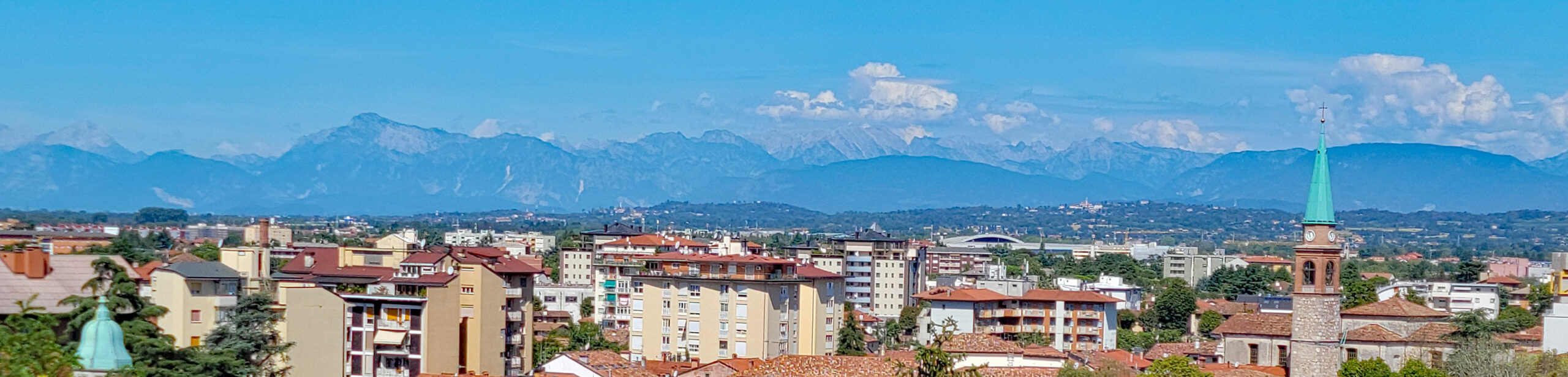
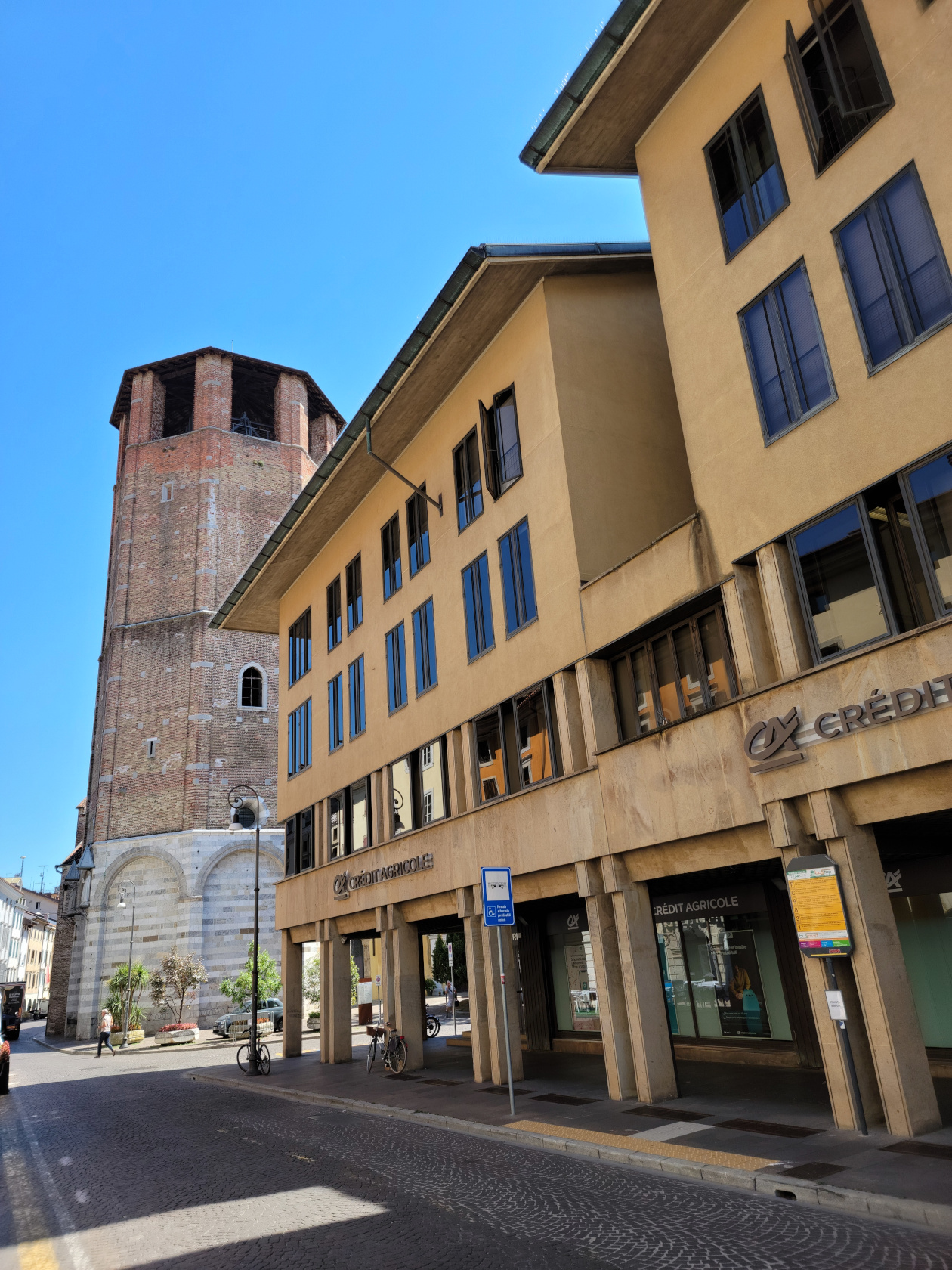
Somewhere in the northeast of Italy, north and east of even Venice, is the small city of Udine. The largest city before you enter Slovenia to the east and Austria to the north. From here you can see the Austrian and Julian Alps.
Udine – Alps panorama
From Ljubljana we took an Austrian train to Villach and then over to Udine. Along the way were able to enjoy sights of the Julian Alps out our window and just relax.
Probably one of the most underrated and unlikely places we have been this year is Udine. Unlikely, because it is usually not on anyone’s radar, though we met numerous French and German tourists enjoying it. Underrated, because we think it has some things to offer, that others might not find in the exact same way elsewhere.
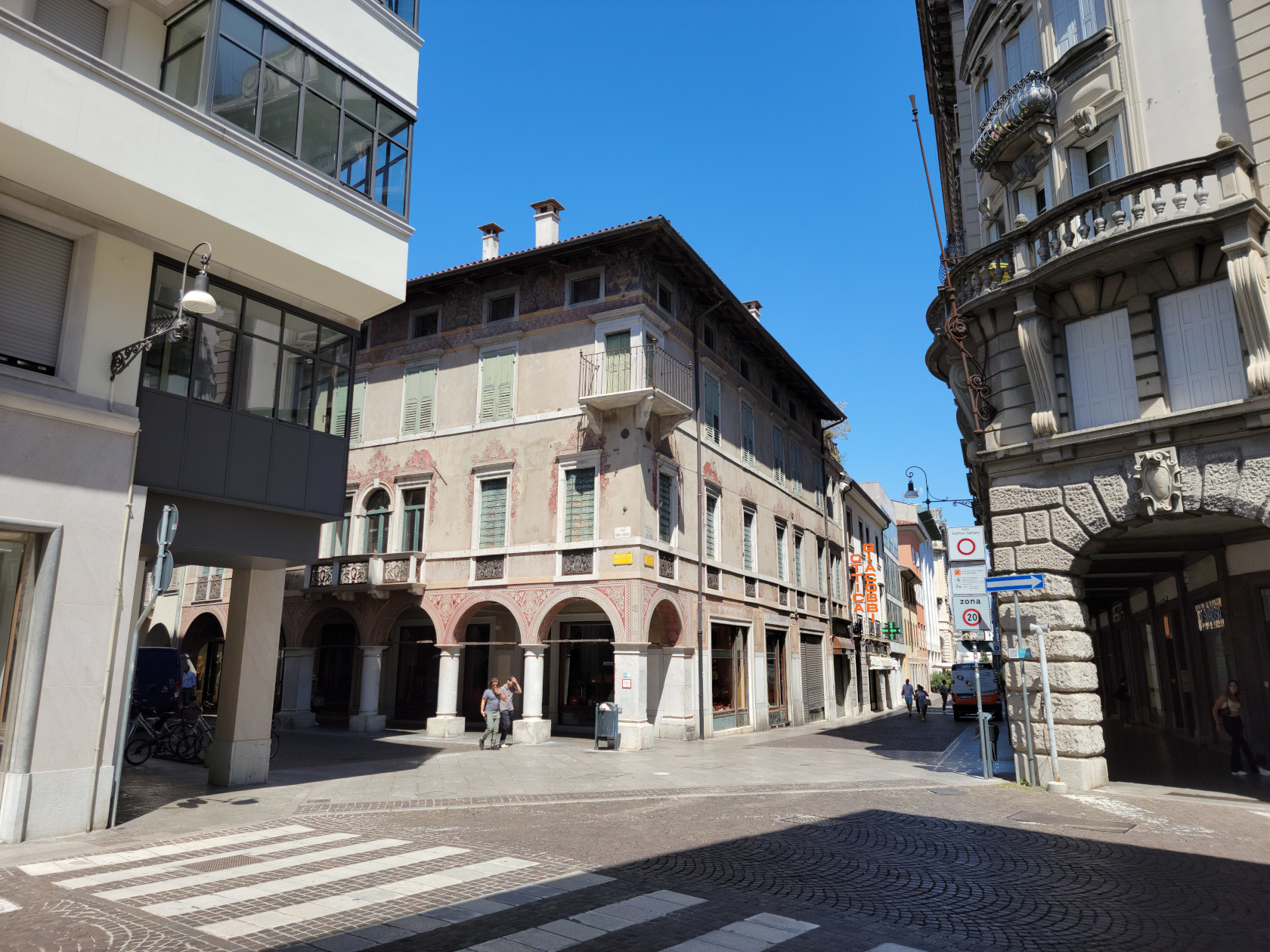
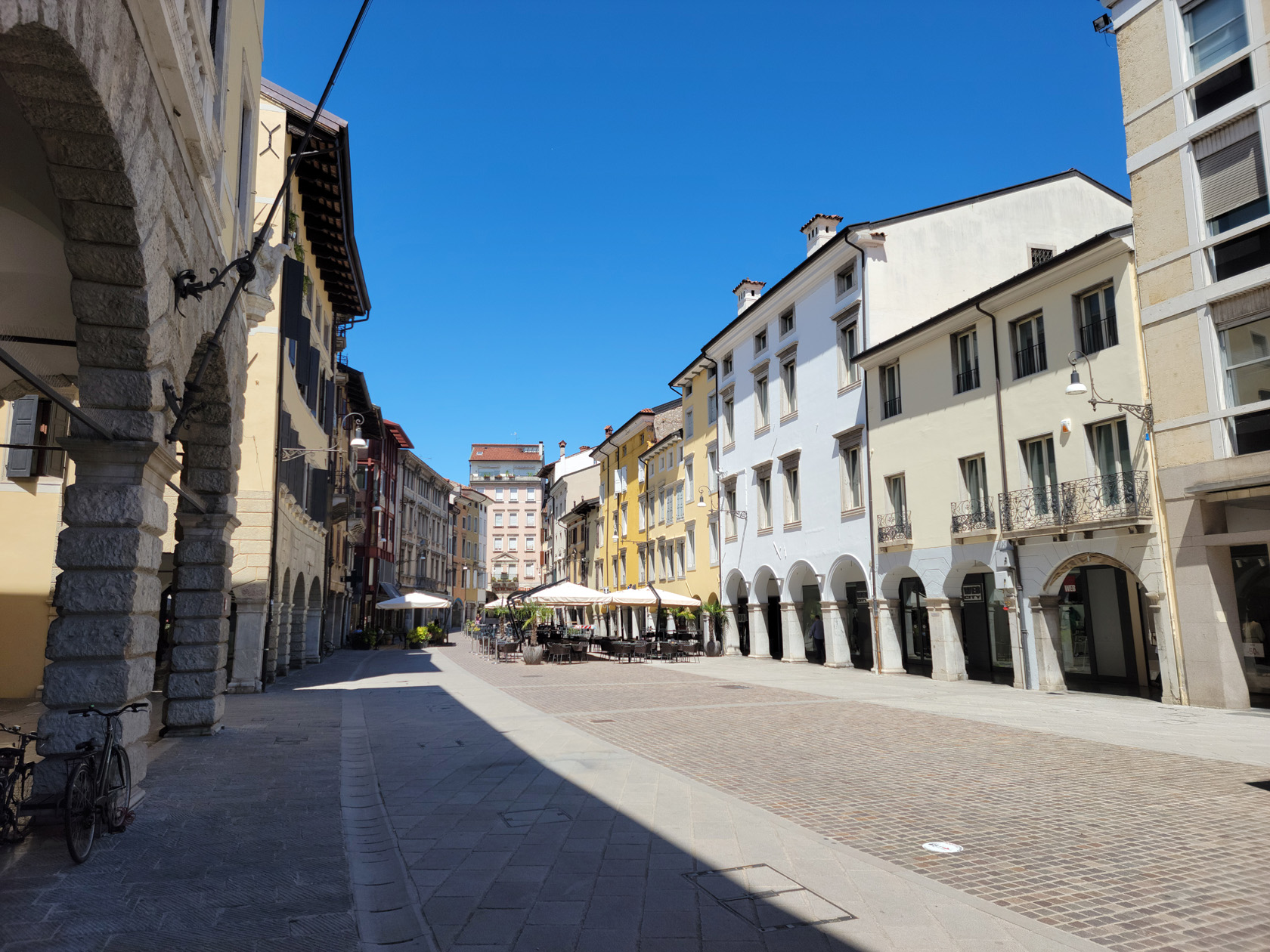
Udine – The City
Udine – Near Porto Manin
The people in Udine are very urbane and really enjoy tourist in their small city. They make an extra effort to speak and understand English, where you may not find such proclivities in other Italian cities and towns.
Udine – The City
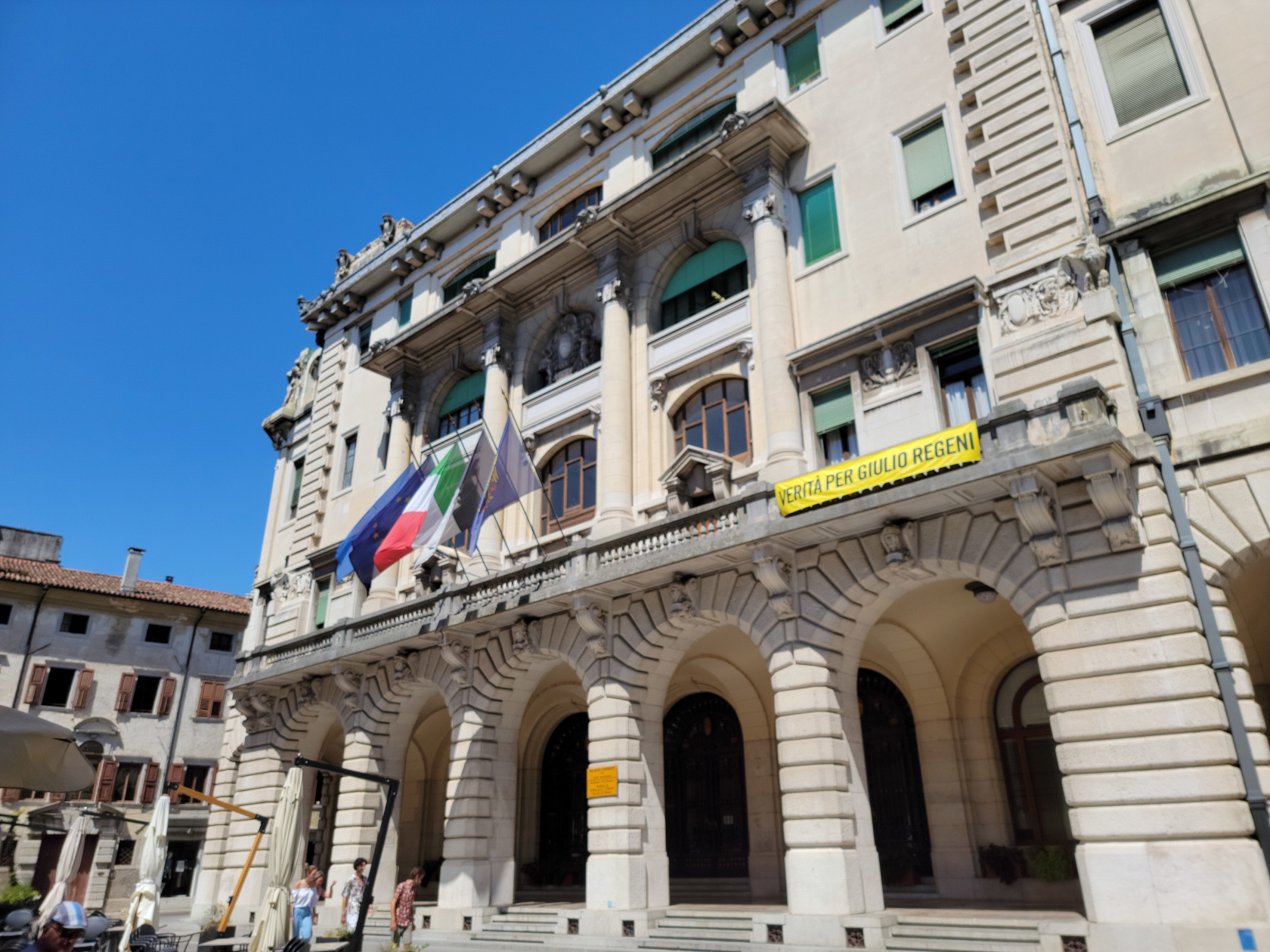
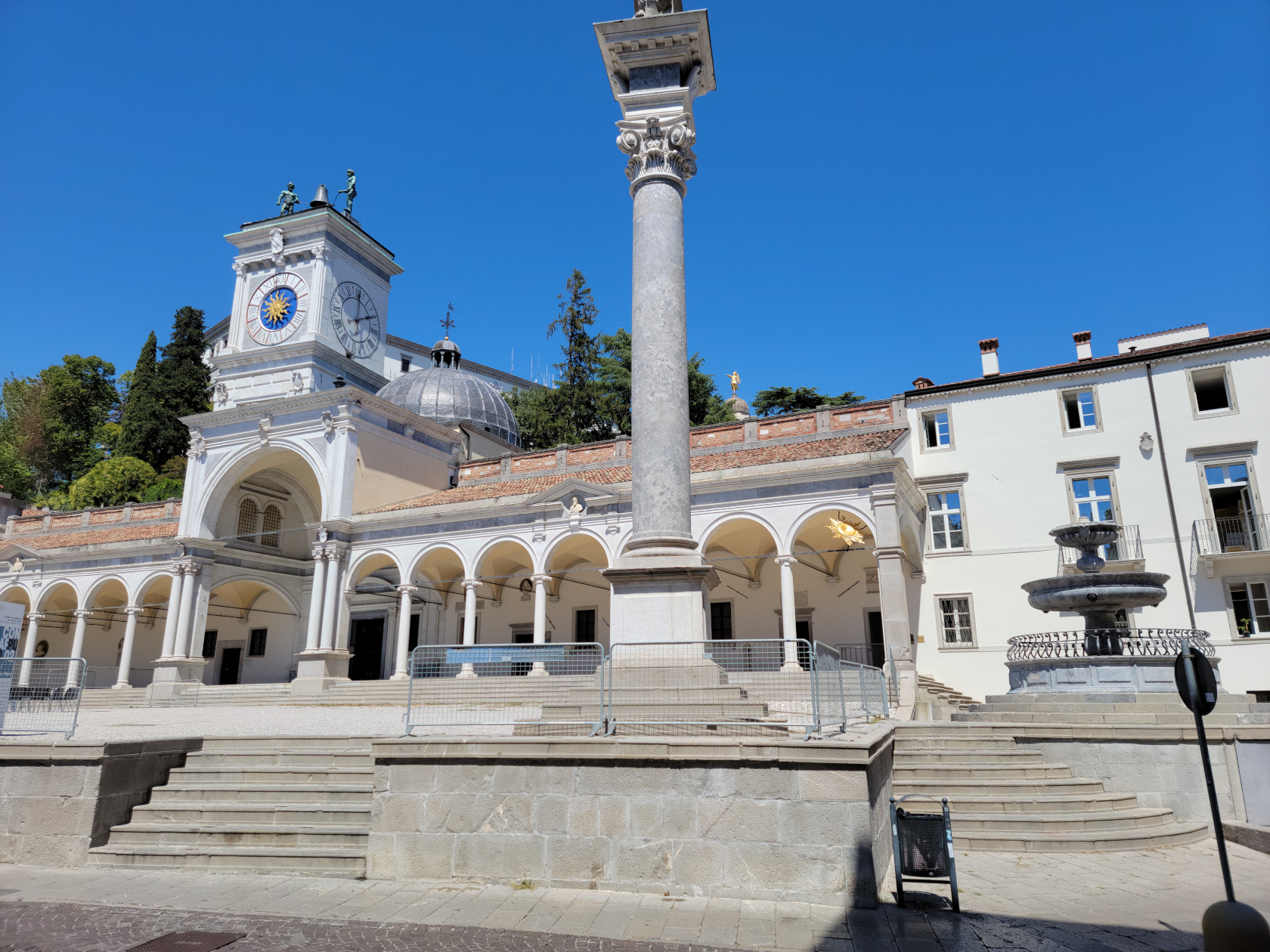
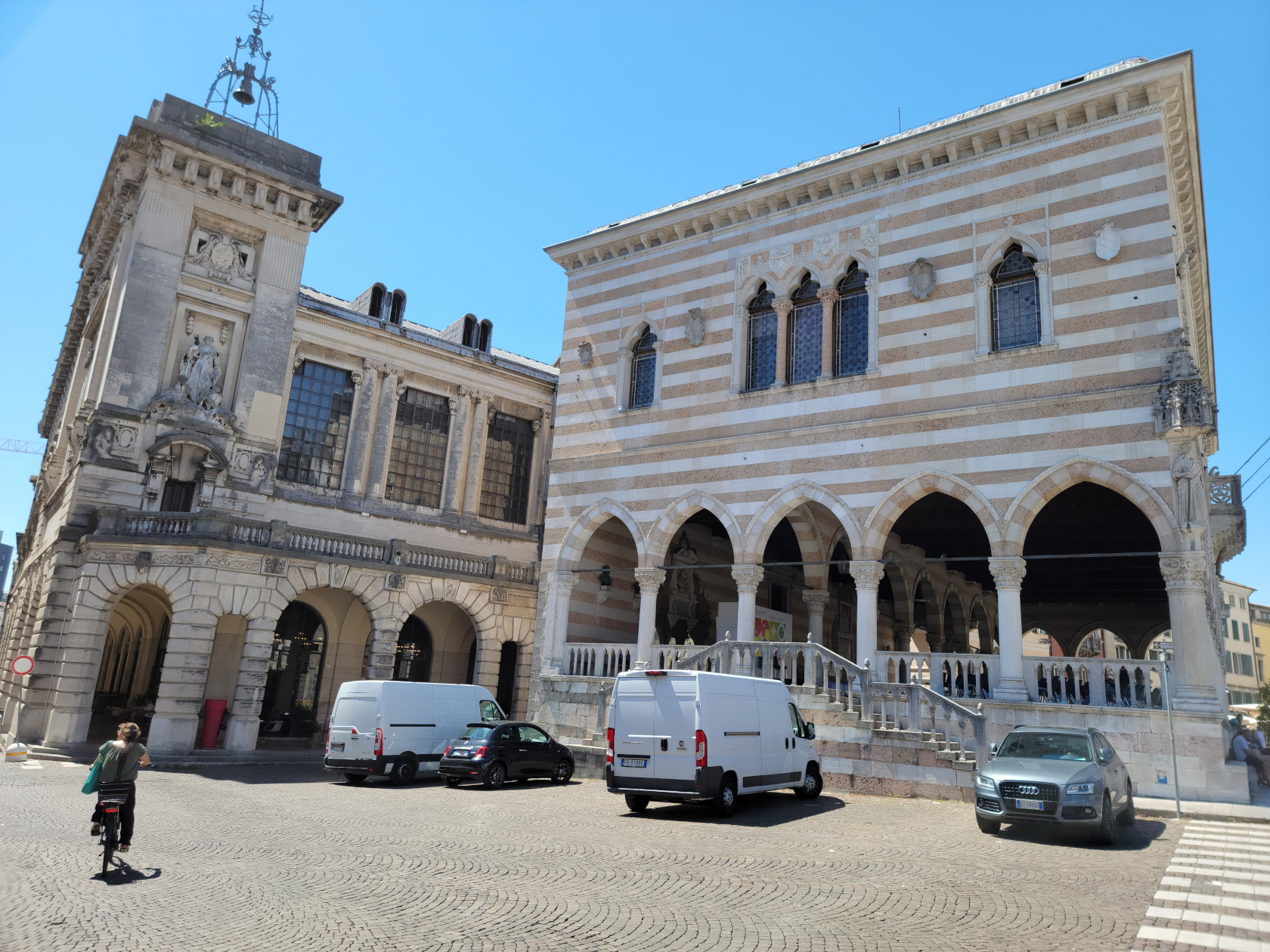
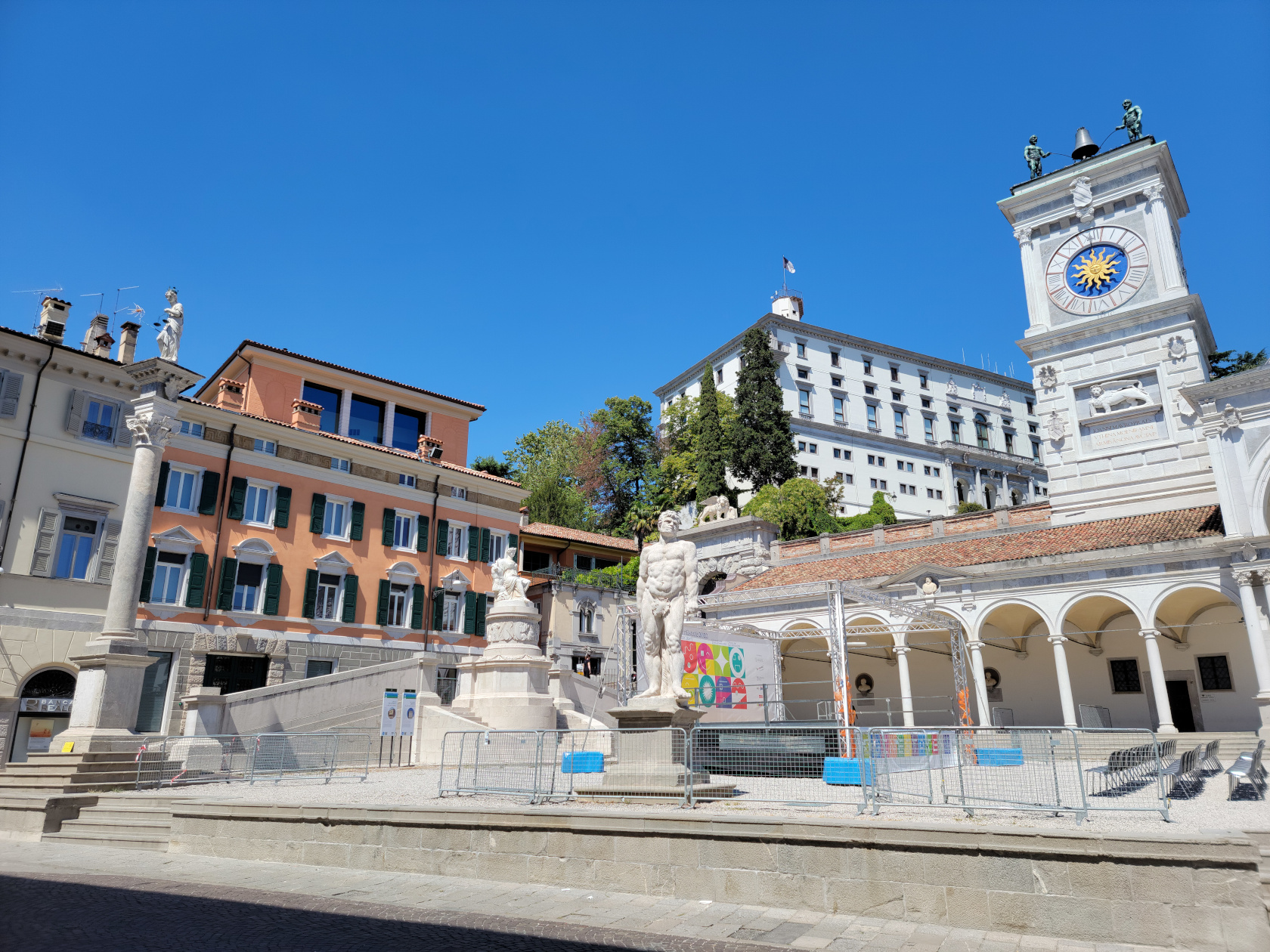
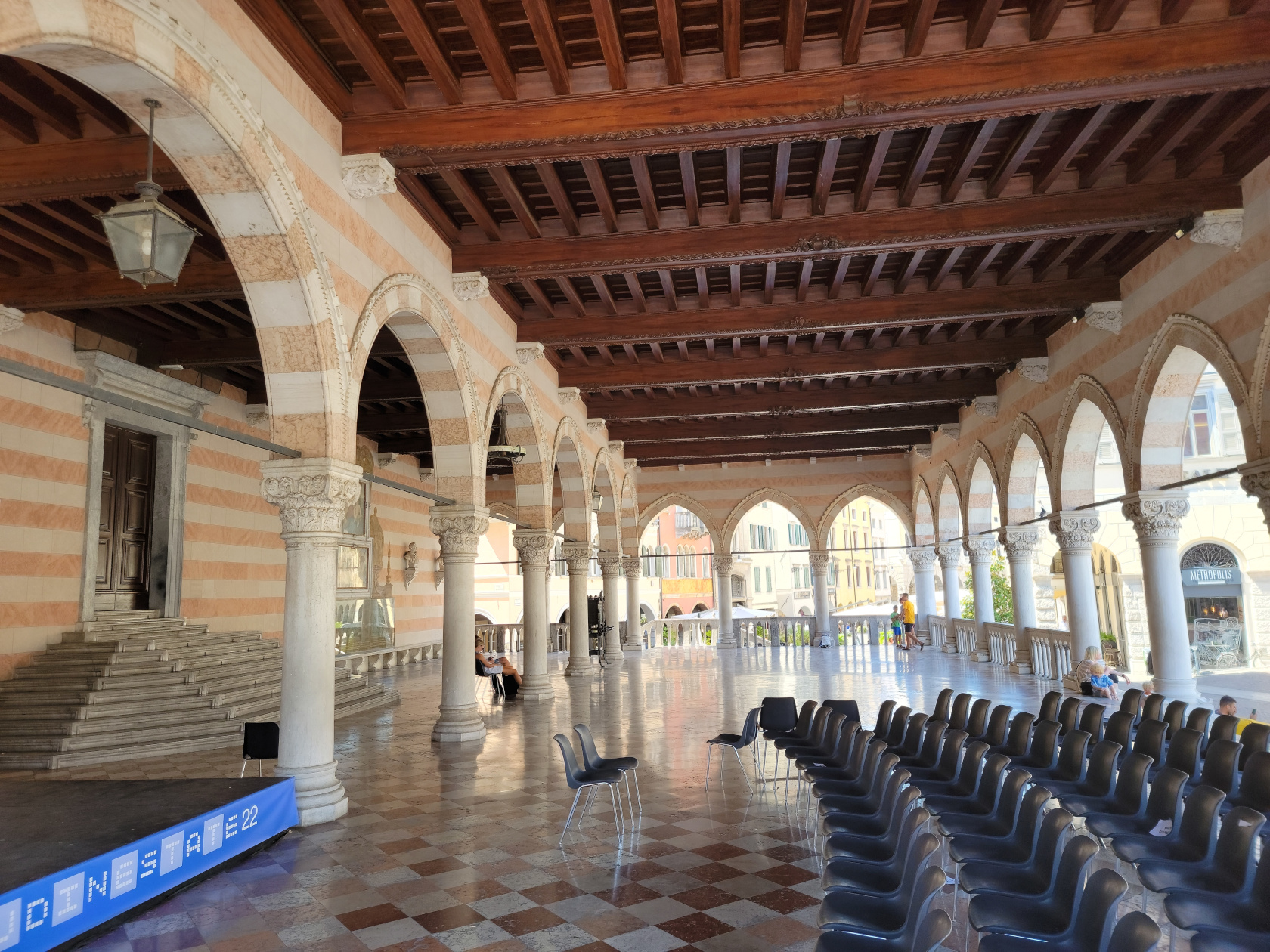
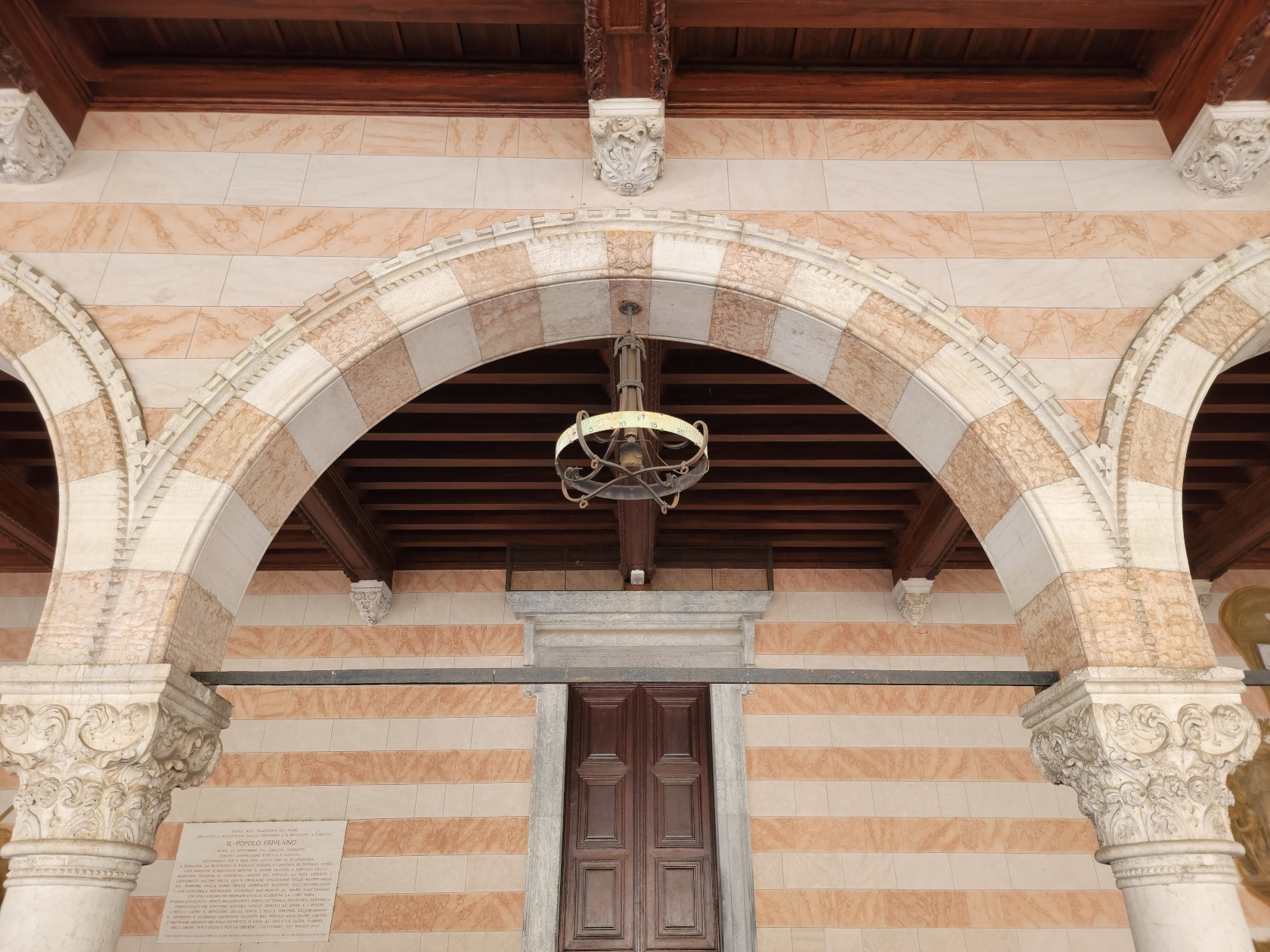
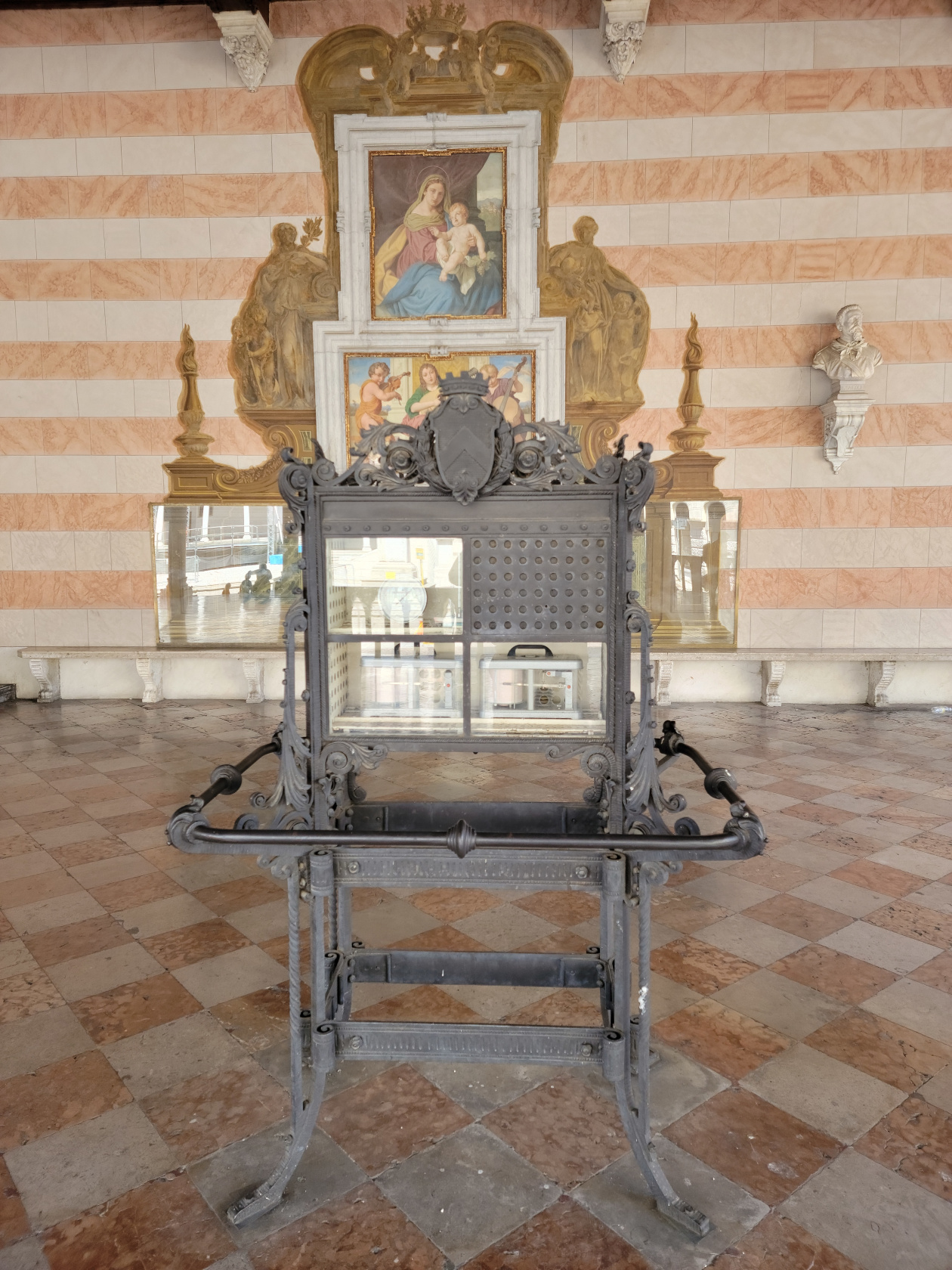
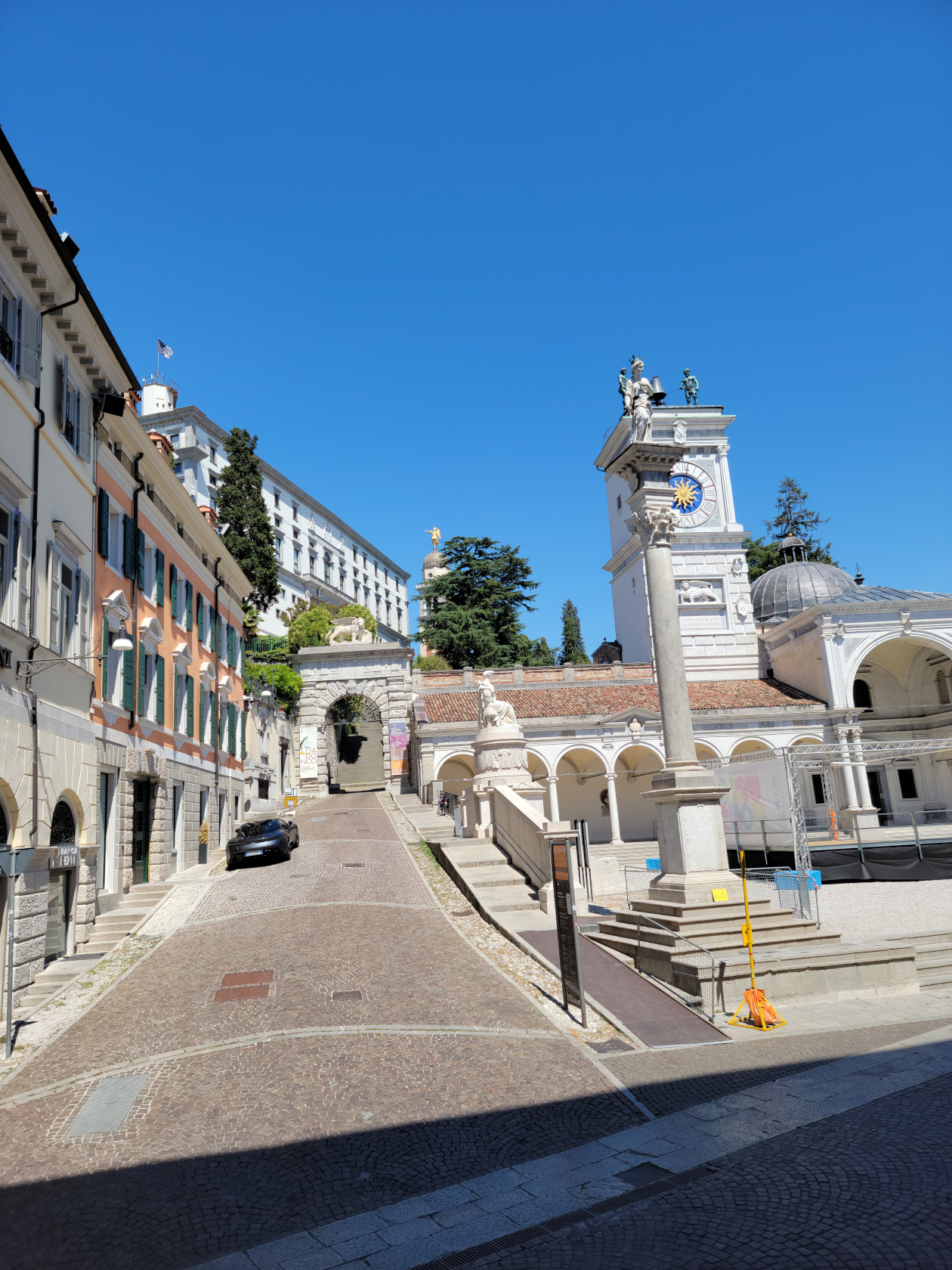
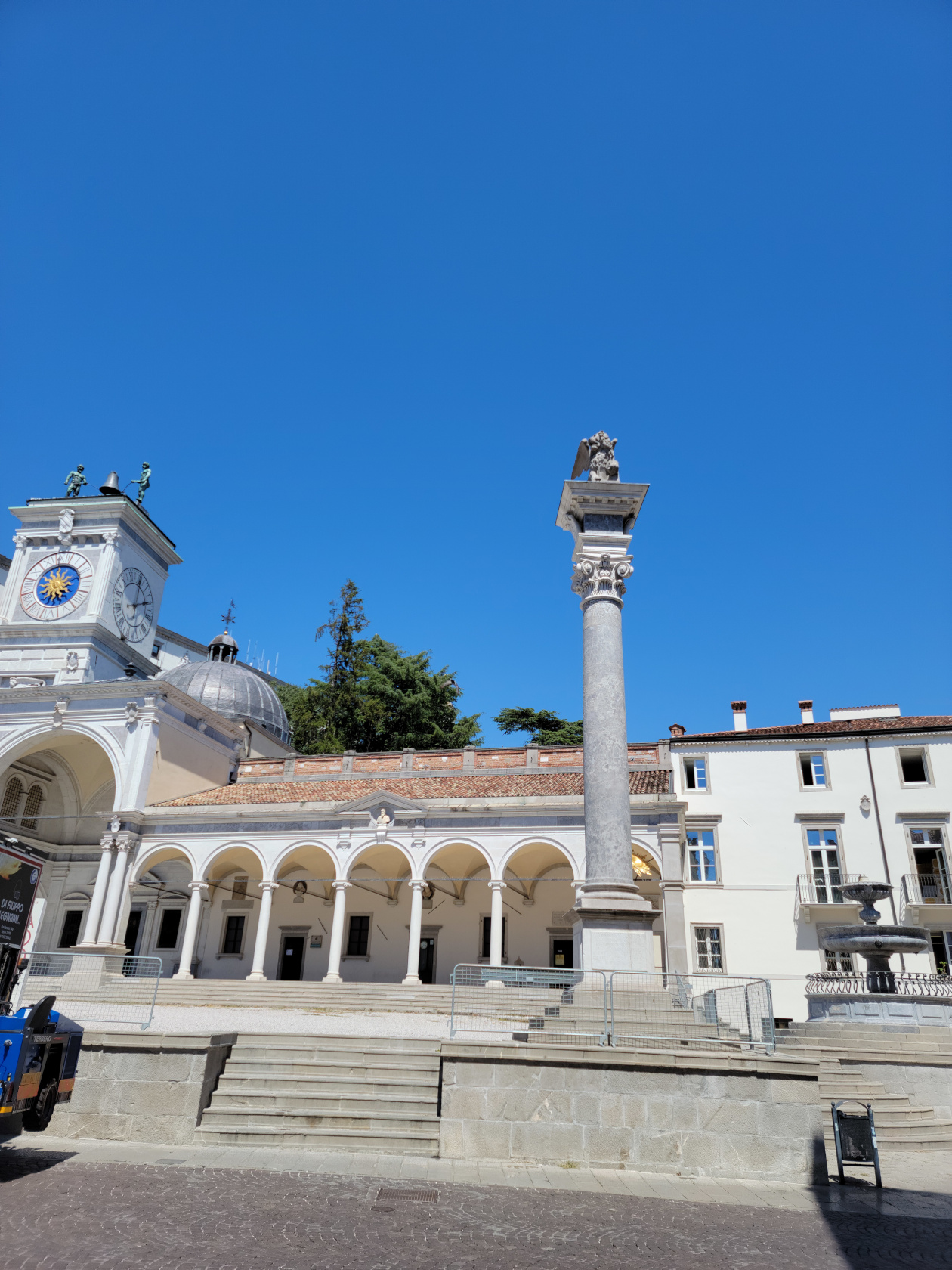
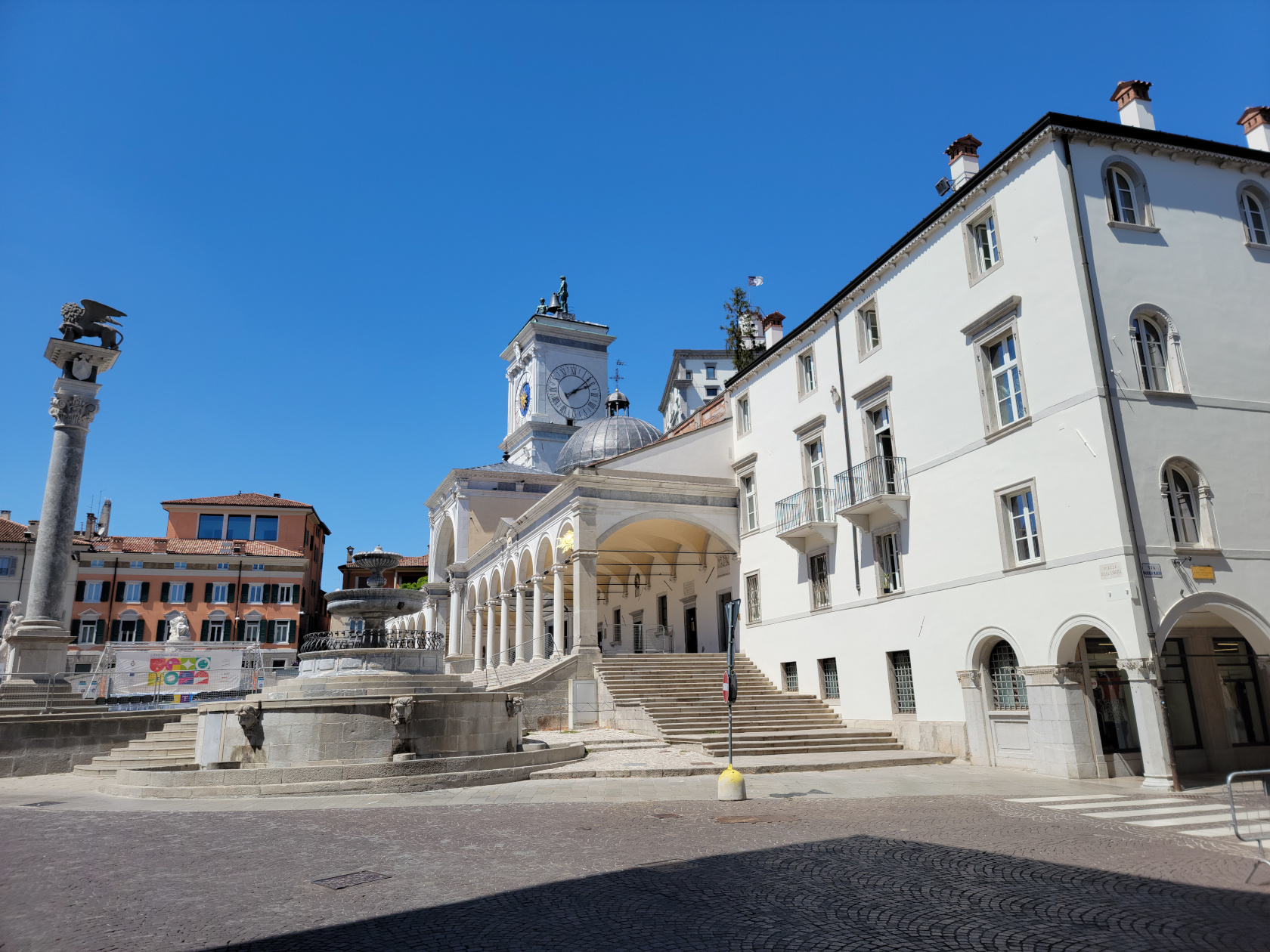
Udine – Piazza XX Septembre
Udine – Piazza della Liberte
Udine – Piazza della Liberte
Udine – Piazza della Liberte
Udine – Piazza della Liberte
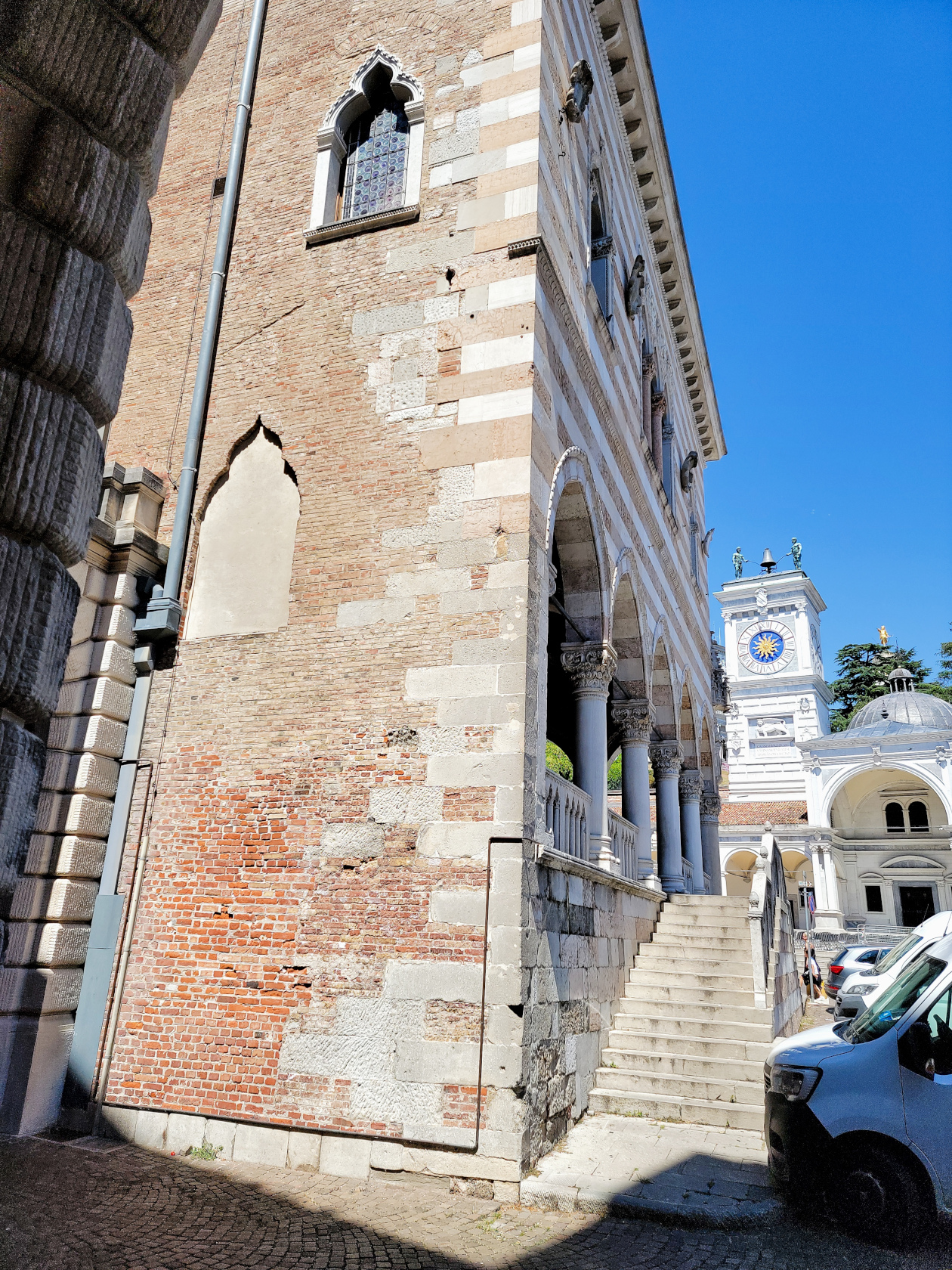
Udine – Piazza della Liberte – Loggia del Lionel
Udine – Piazza della Liberte – Loggia di San Giovanni
Udine – Piazza della Liberte – Loggia del Lionel
Udine – Piazza della Liberte – Loggia del Lionel
Udine – Piazza della Liberte – Loggia di San Giovanni
Udine – Piazza della Liberte – Loggia di San Giovanni
Udine – Piazza della Liberte – Loggia di San Giovanni
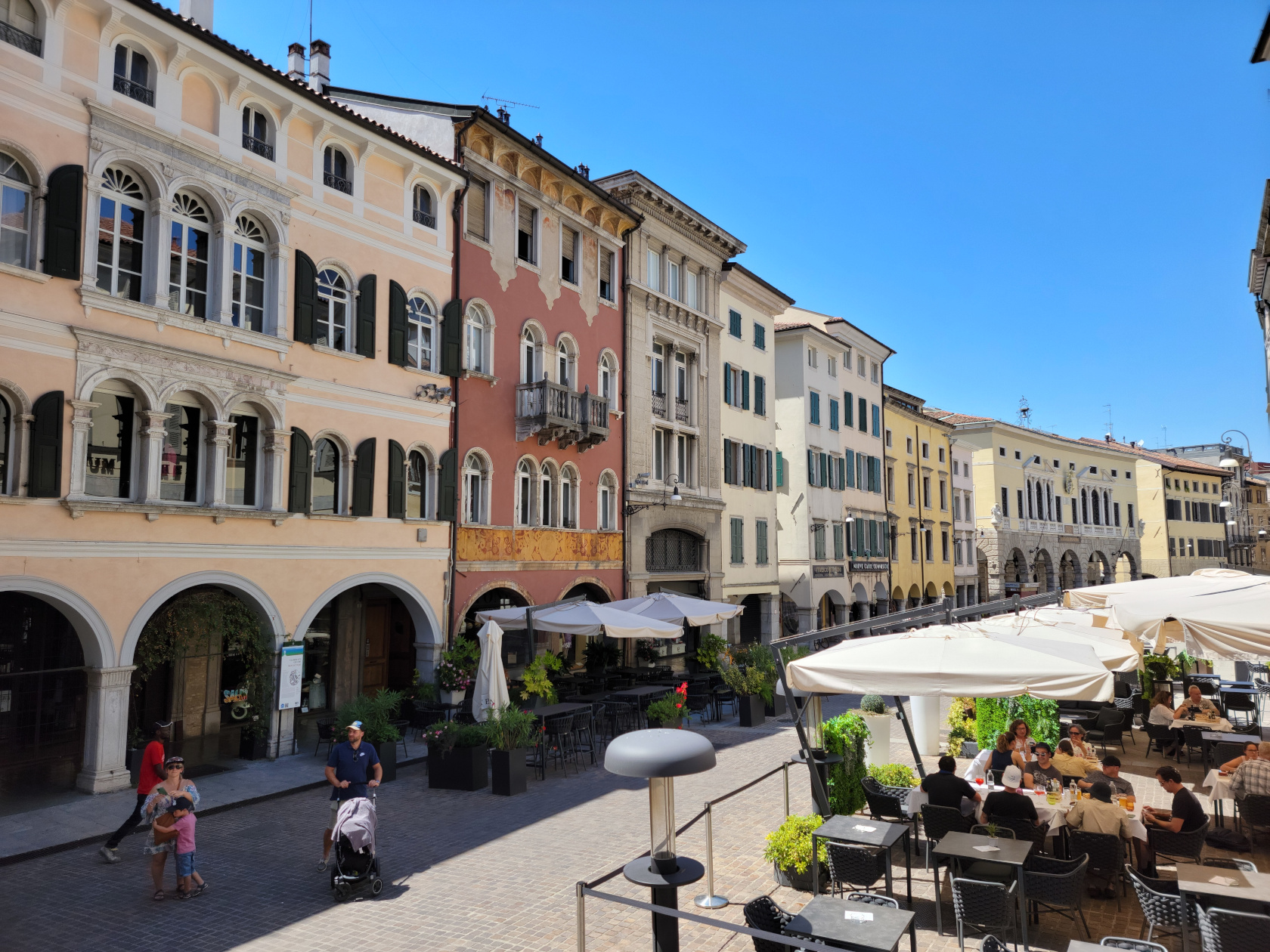
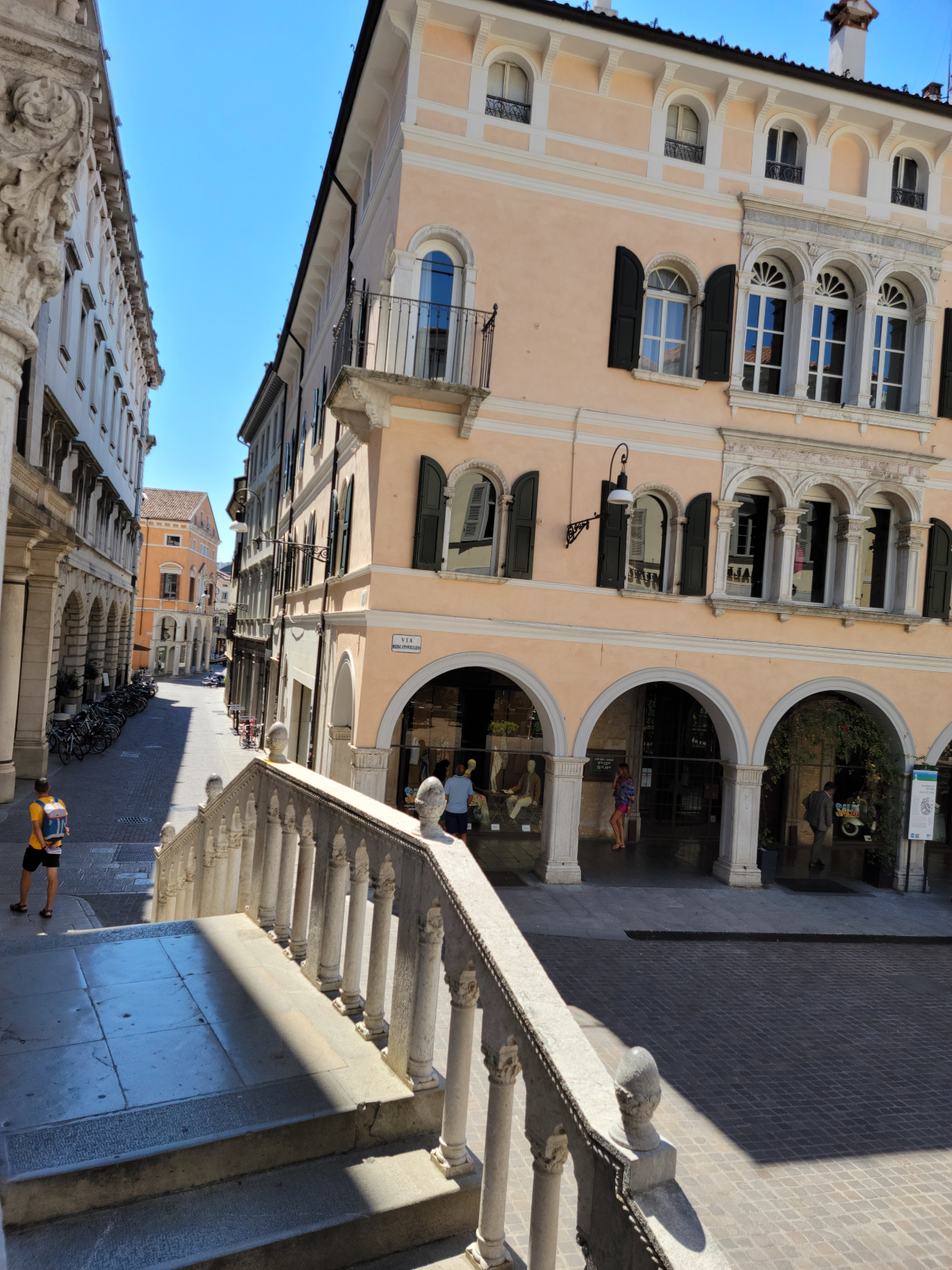
Udine – via Mercatovecchio
Udine – Porticos
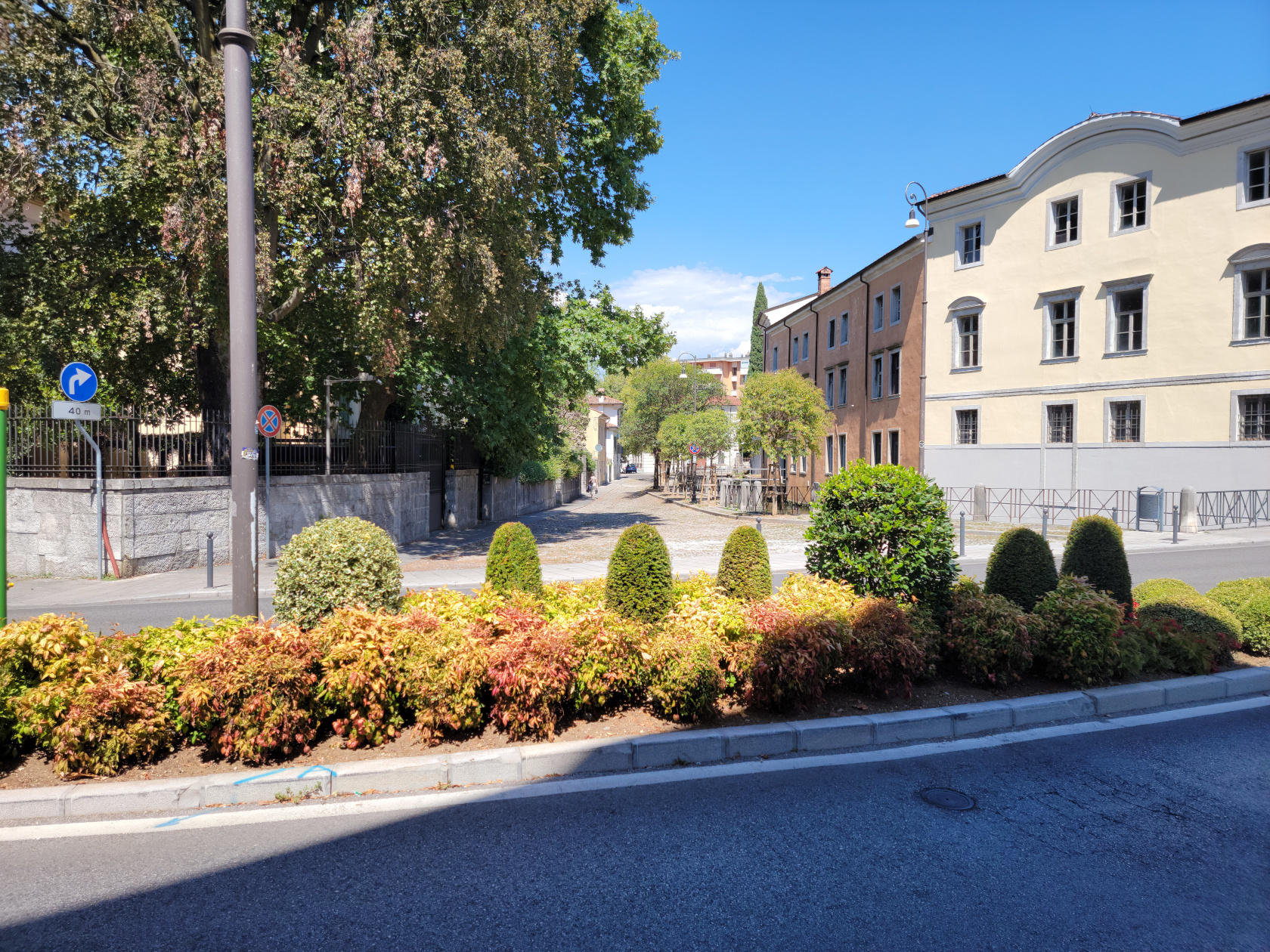
Udine – The City
Udine – Grand Garden Park
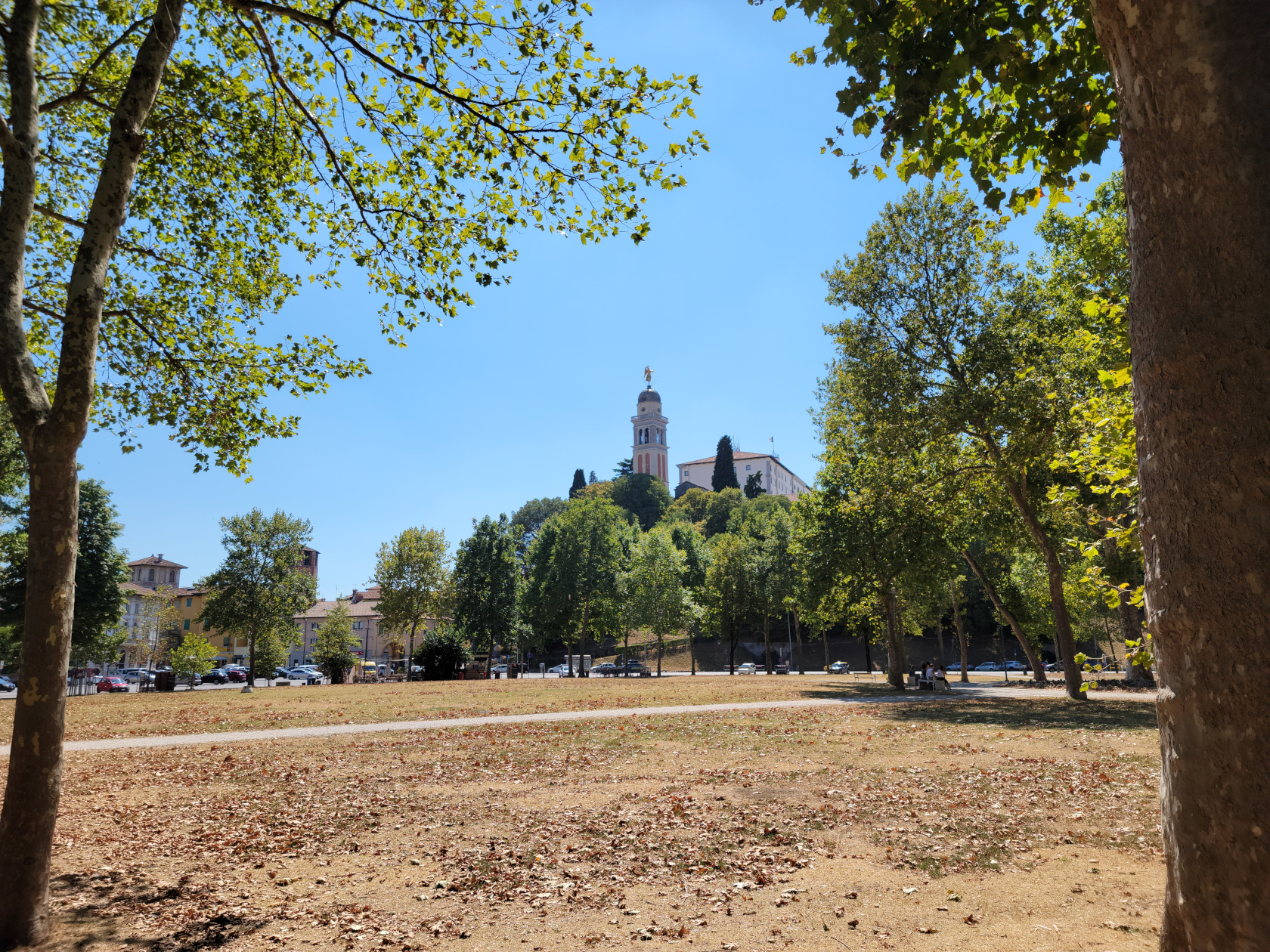
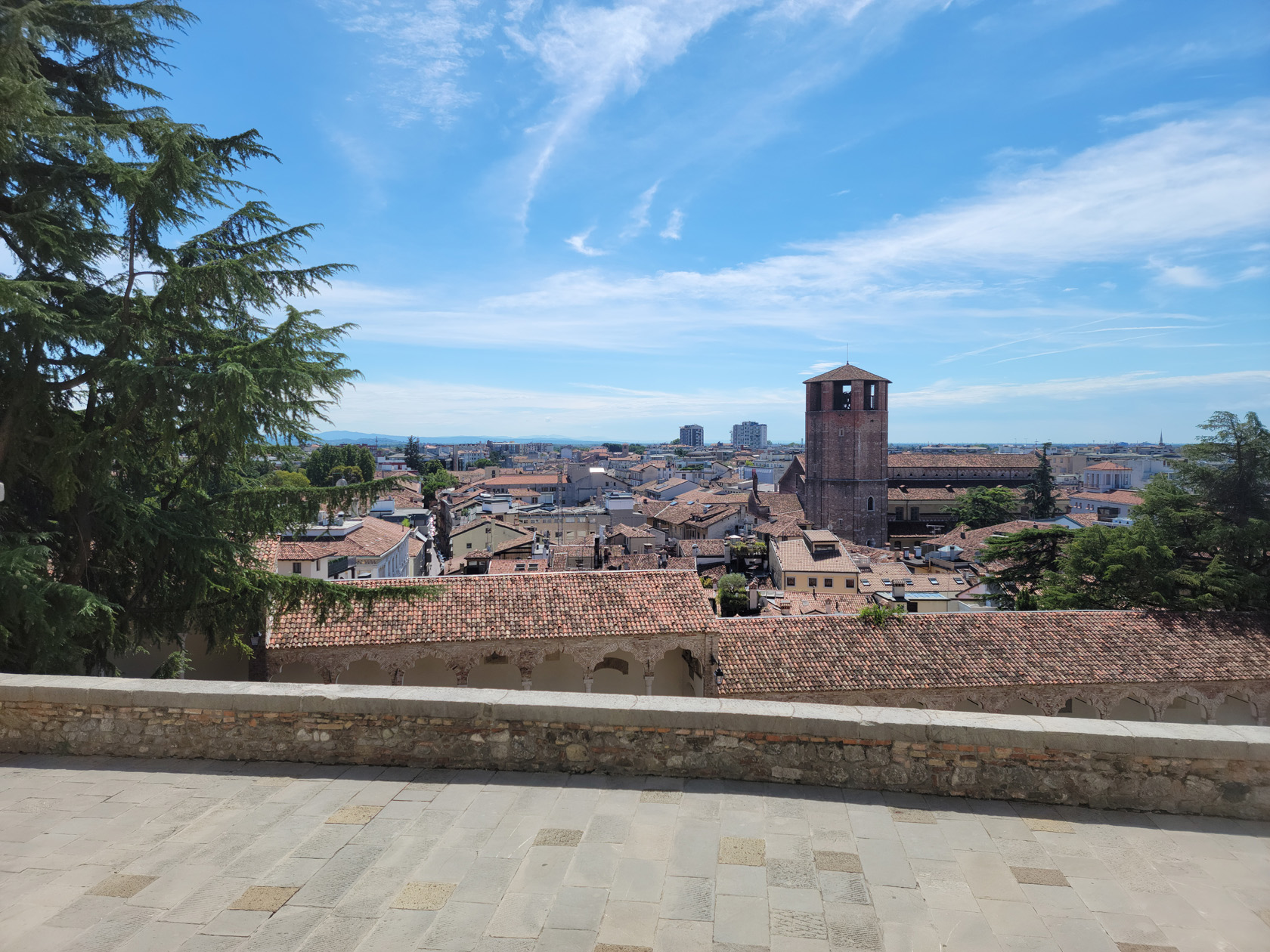
Udine – Udine Castle Museum – View of Udine
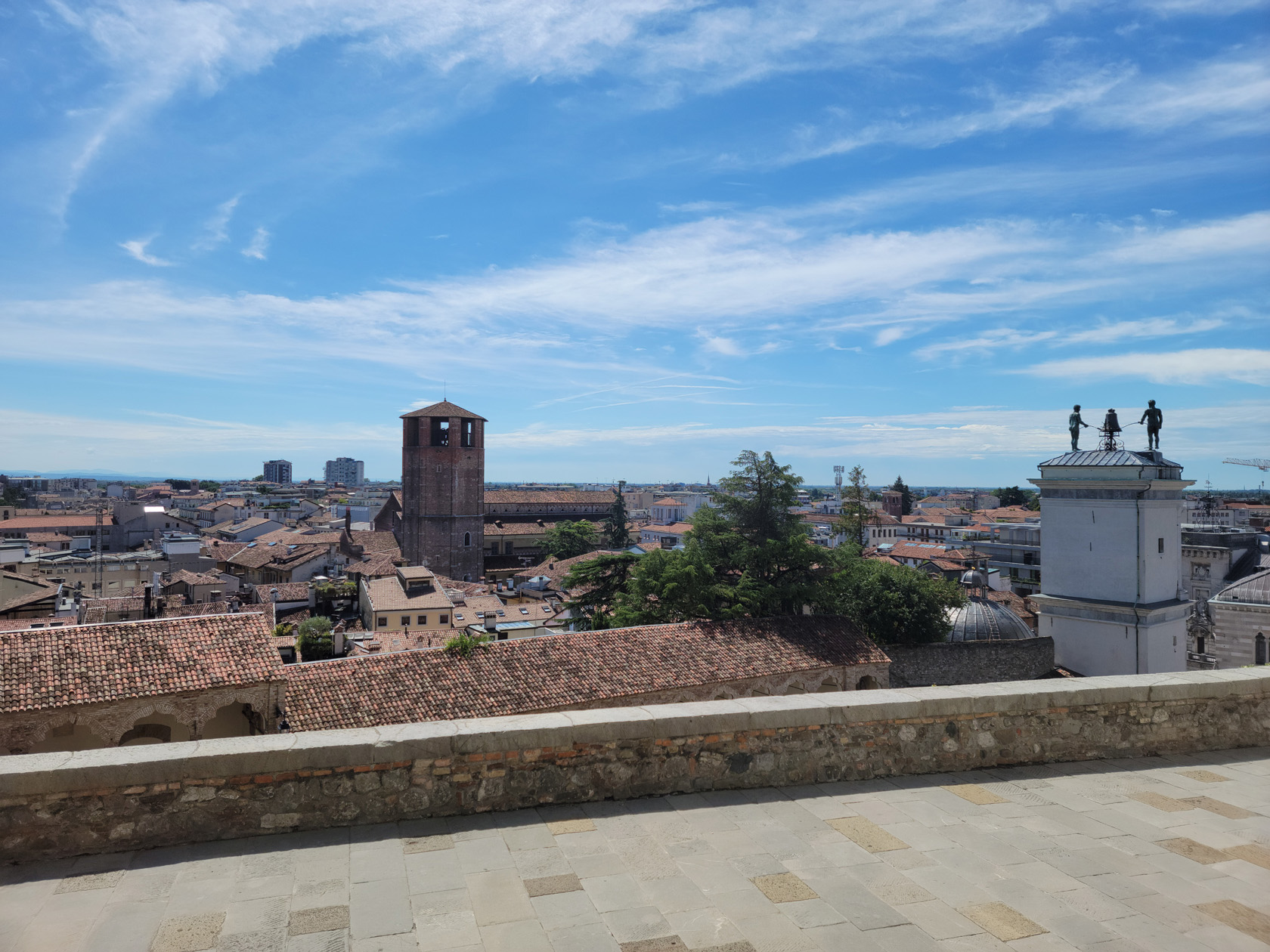
Udine – Udine Castle Museum – View of Udine – Loggia di San Giovanni Top of Clock Tower
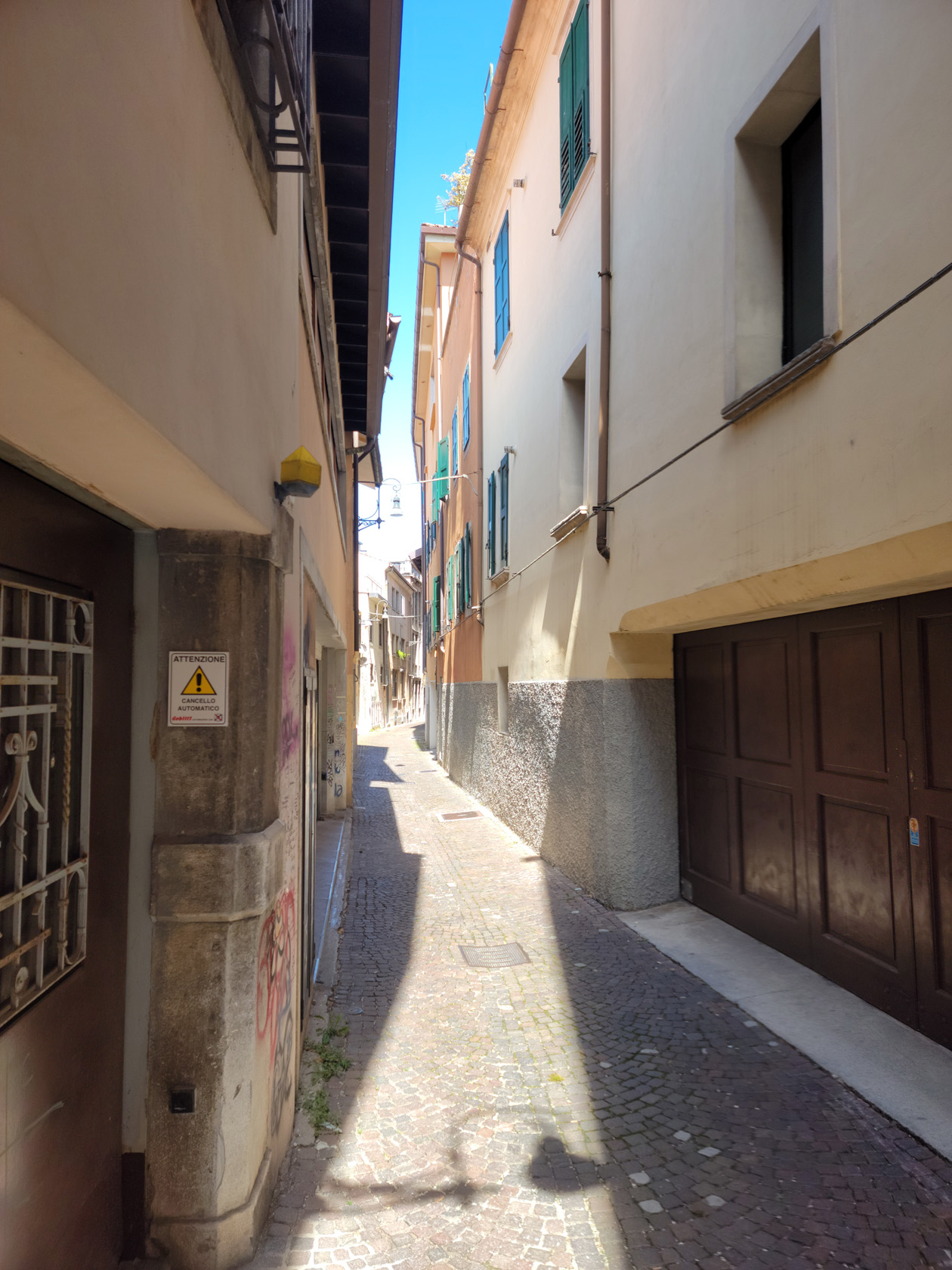
Udine – Narrow City Streets
Udine – via Mercatovecchio
Udine Castle
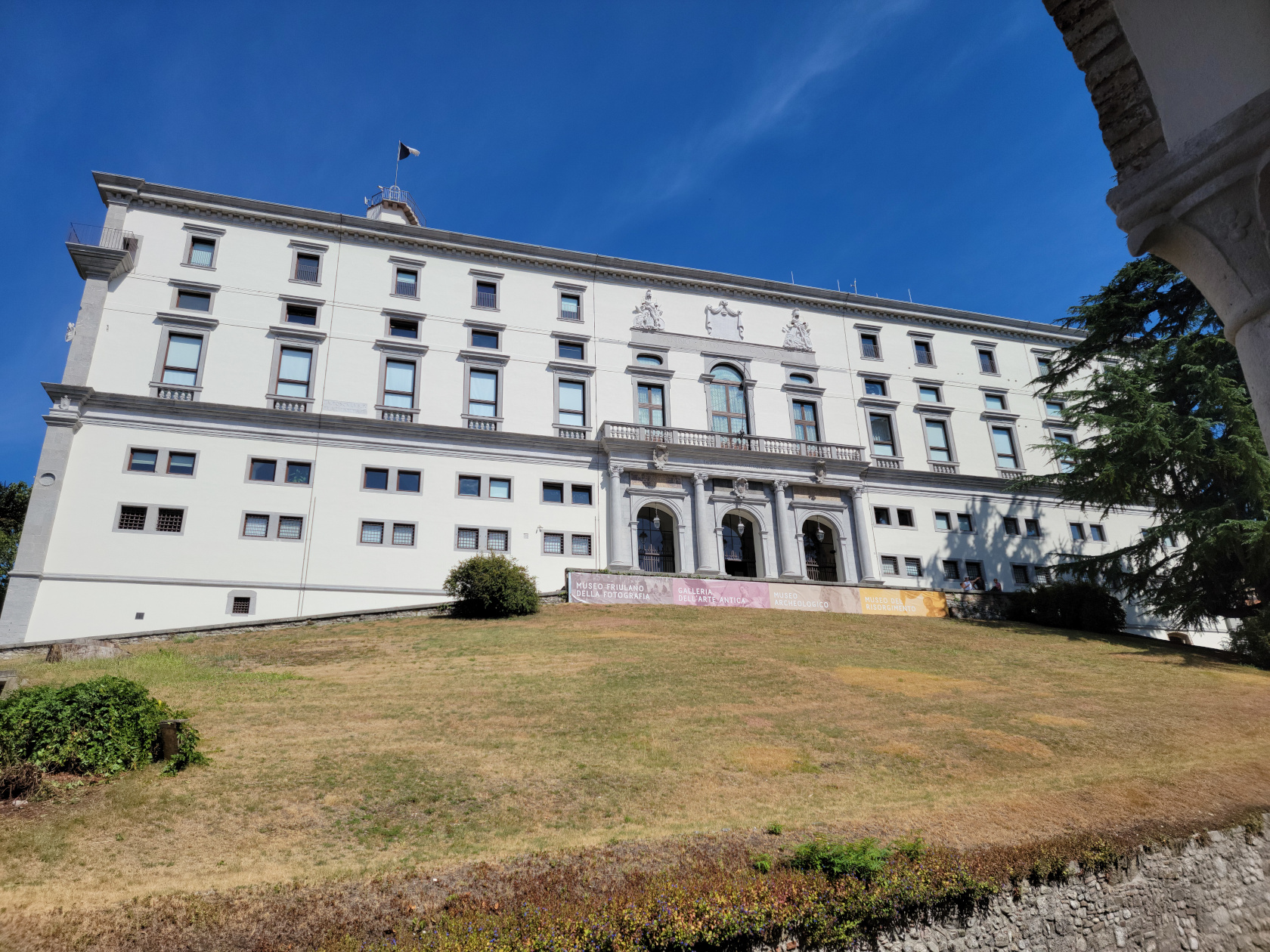
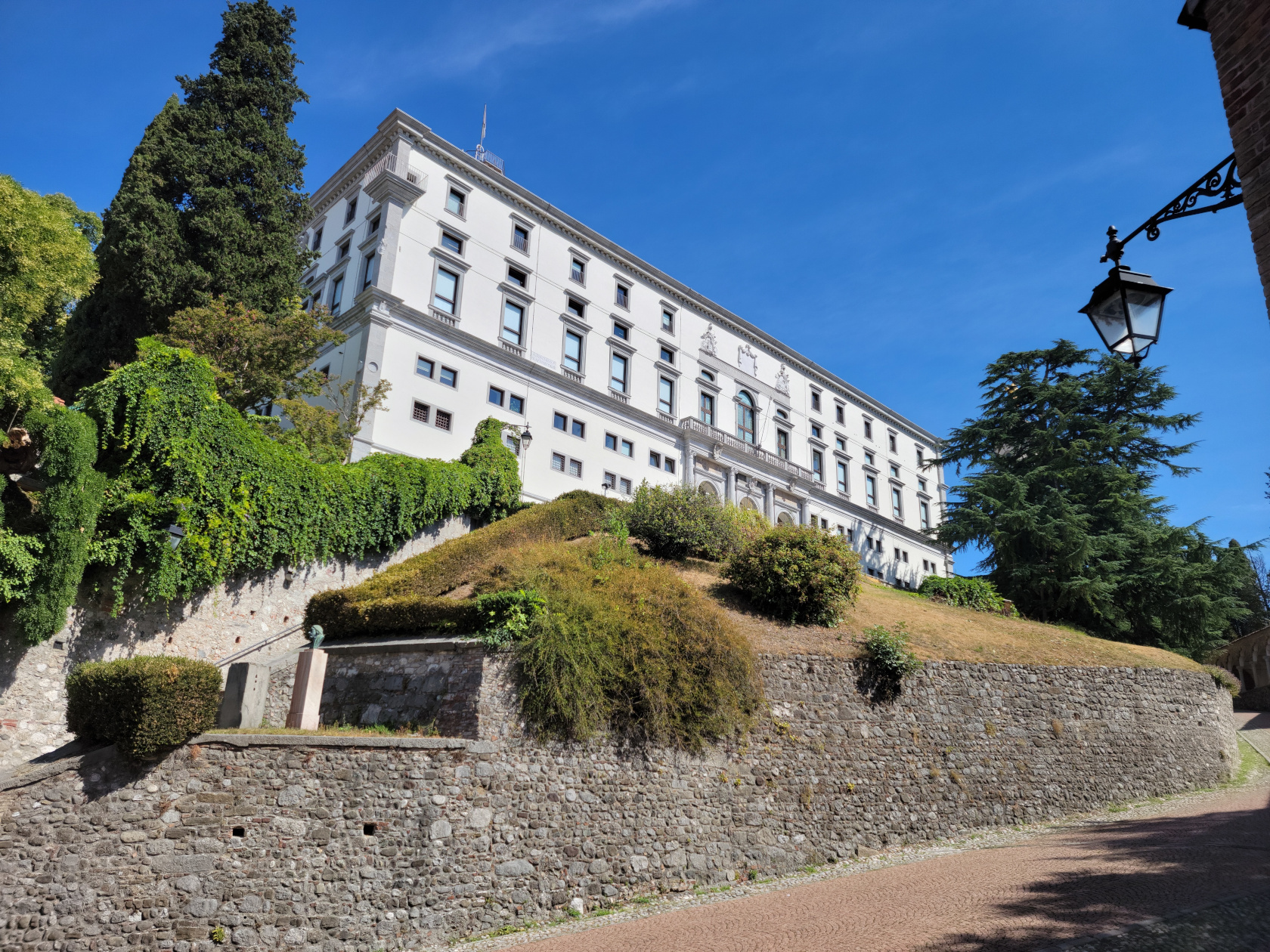
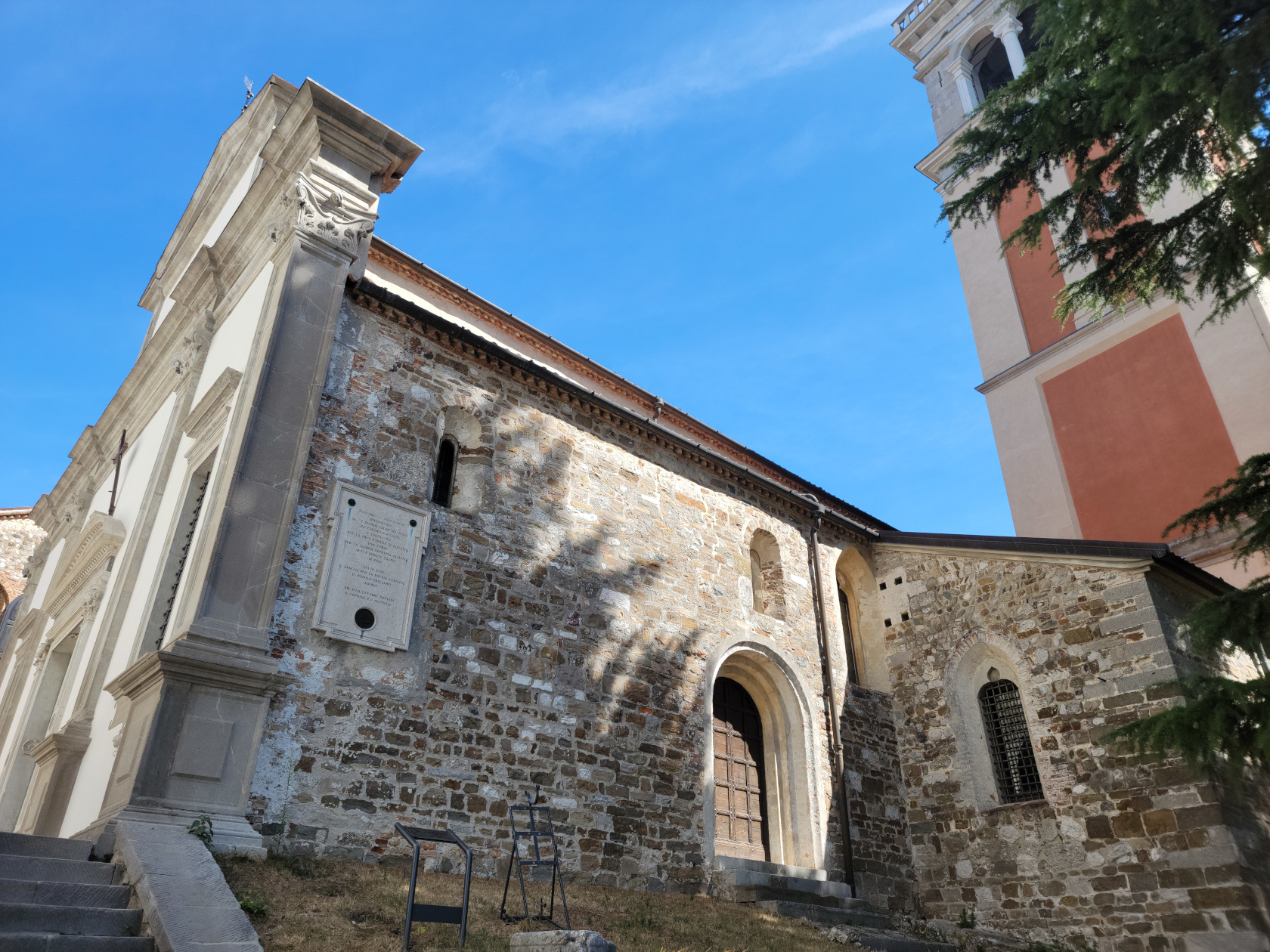
Destroyed in the sixteenth century by a violent earthquake, the Udine Castle was rebuilt soon afterwards and stands today housing several museums. It actually sits atop an artificial hill, by all accounts ancient and predating Rome in nature, and is the highest and largest artificial hill in Europe.
Udine – Udine Castle
Udine – Udine Castle
The Civic Museum of the Risorgimento
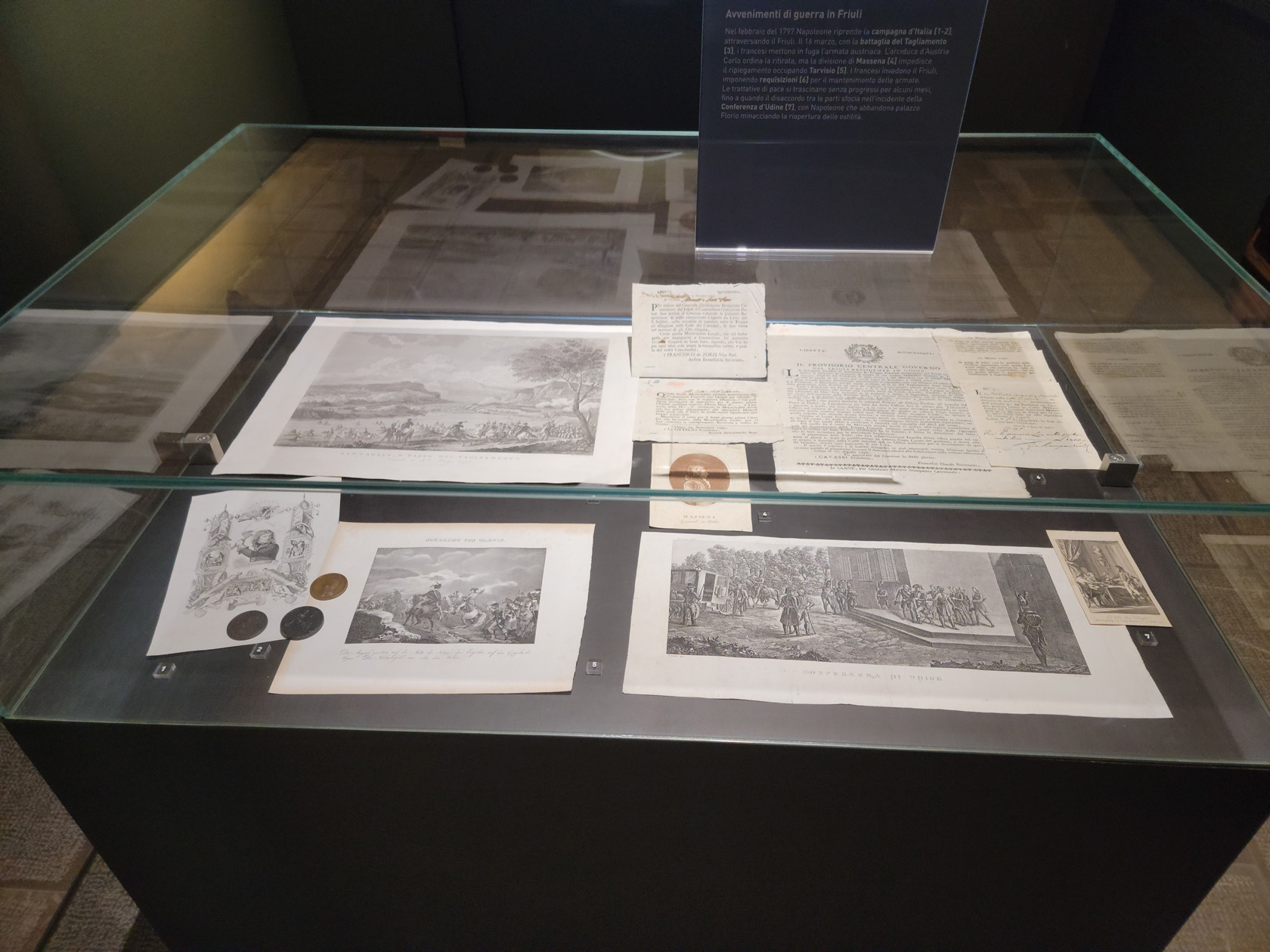
This museum has artifacts from local historic events following the fall of Venice, up to the time of the mid 1800s. Including documents and written accounts of the annexation of Friuli to the Kingdom of Italy in 1866.
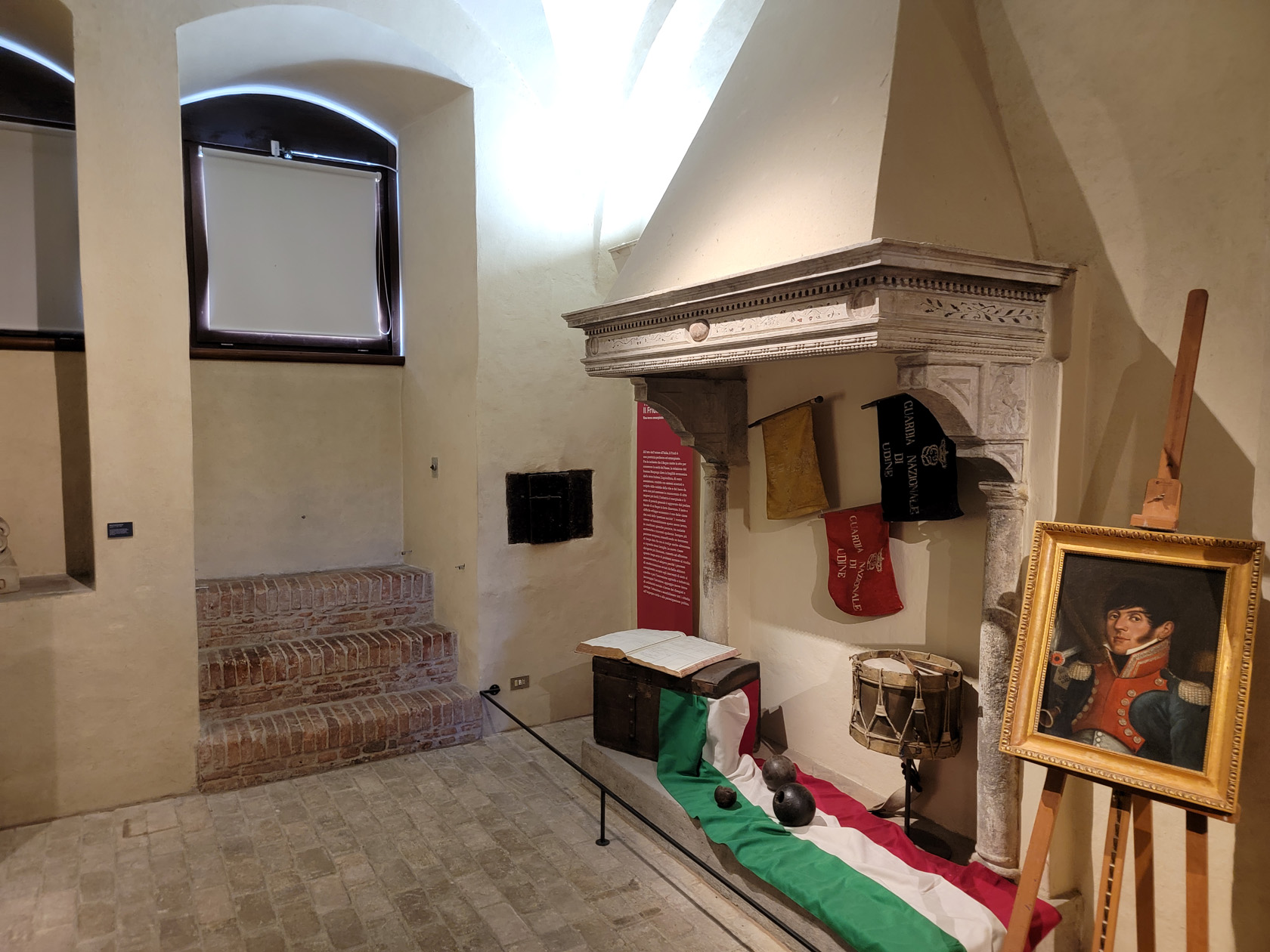
Udine – Udine Castle Museum – Friulian Artifacts
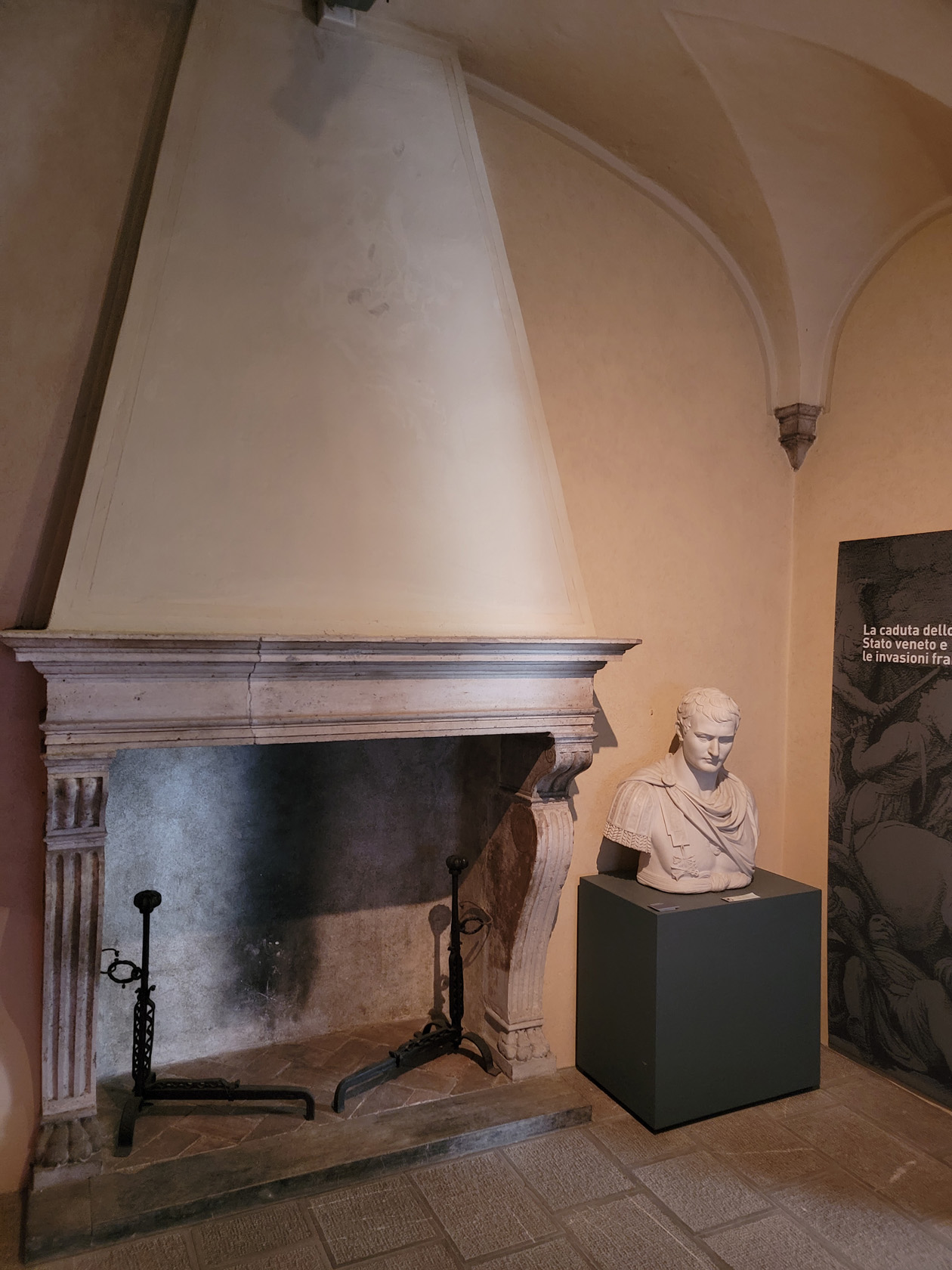
Udine – Udine Castle Museum – Old Fireplace
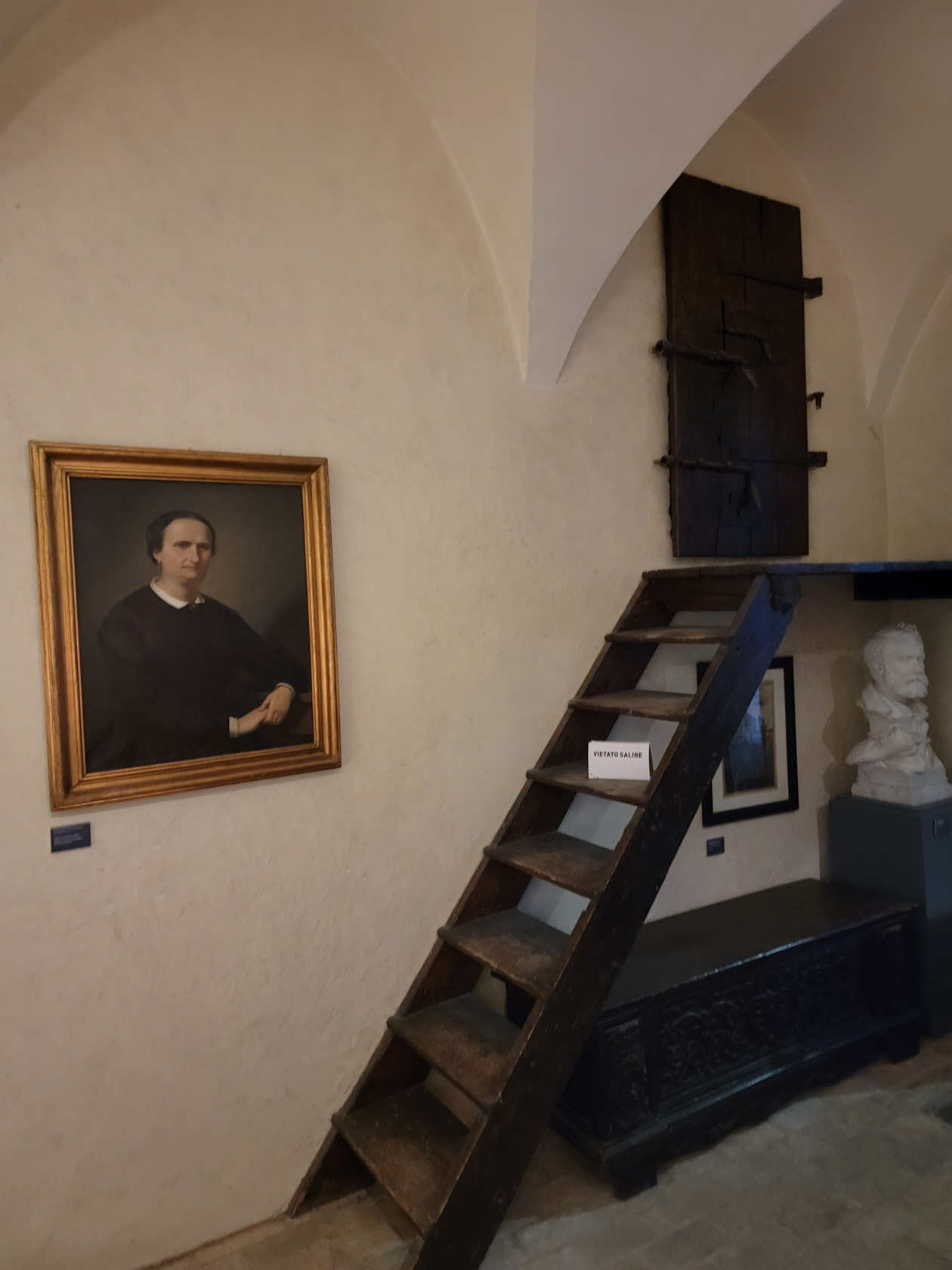
Udine – Udine Castle Museum – Storage Closet
Udine – Udine Castle Museum – Display
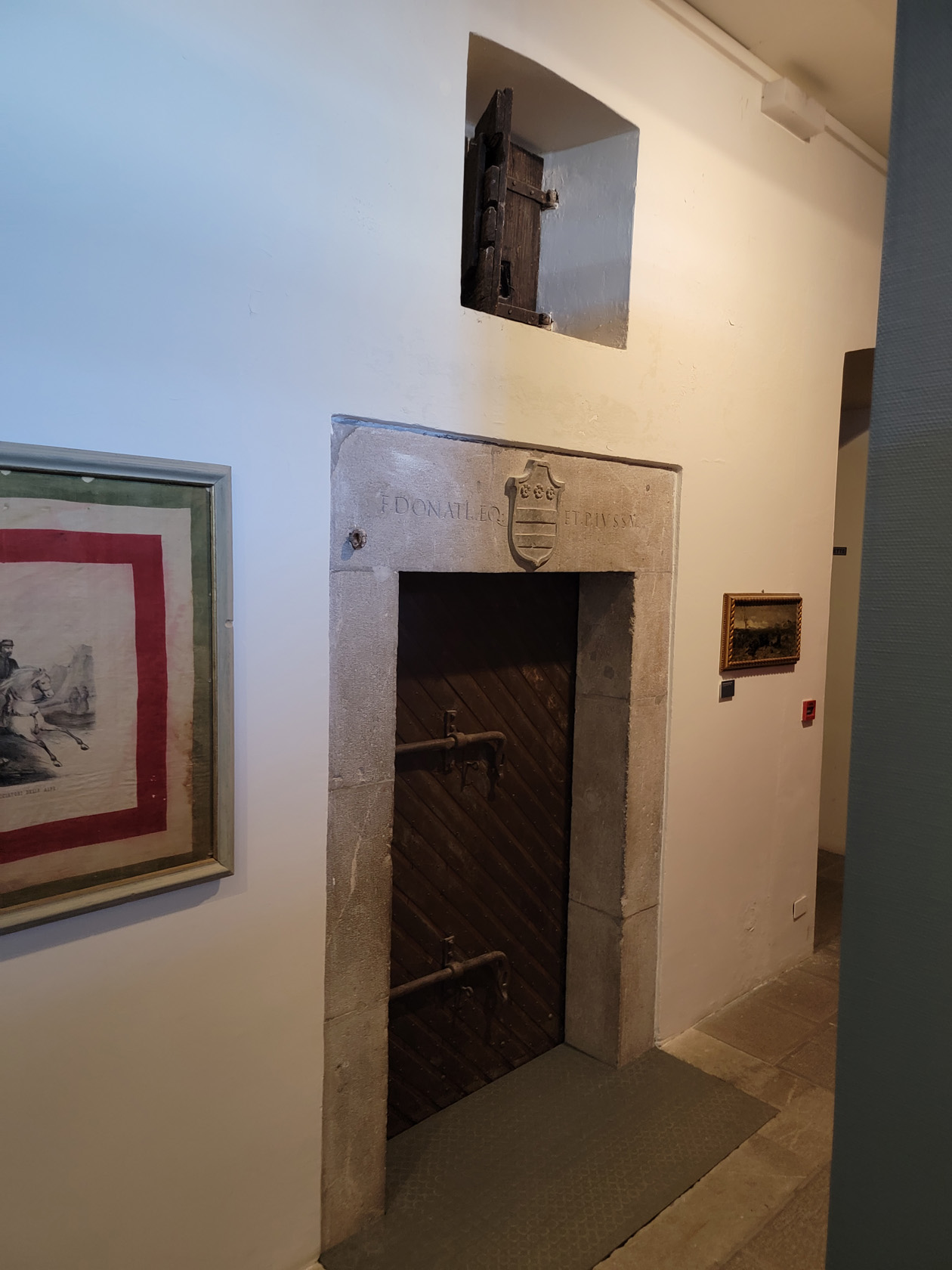
Udine – Udine Castle Museum – Unusual Doors
The Archaeological Museum
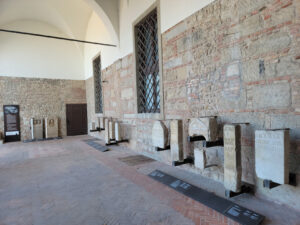
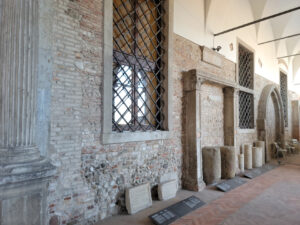
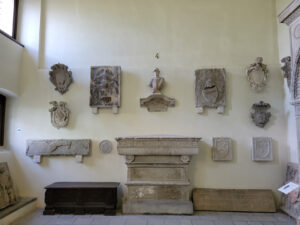
This museum contains an impressive ancient coin collection and other artifacts from ancient and Roman times. Including amphorae, old oil lamps and other funerary objects. Though a small collection, it was rather interesting to learn where each was found locally and their relative histories.
Udine – Udine Castle Museum – Roman Stones
Udine – Udine Castle Museum – Roman Artifacts
Udine – Udine Castle Museum – Another Exhibit
Gallery of Ancient Art
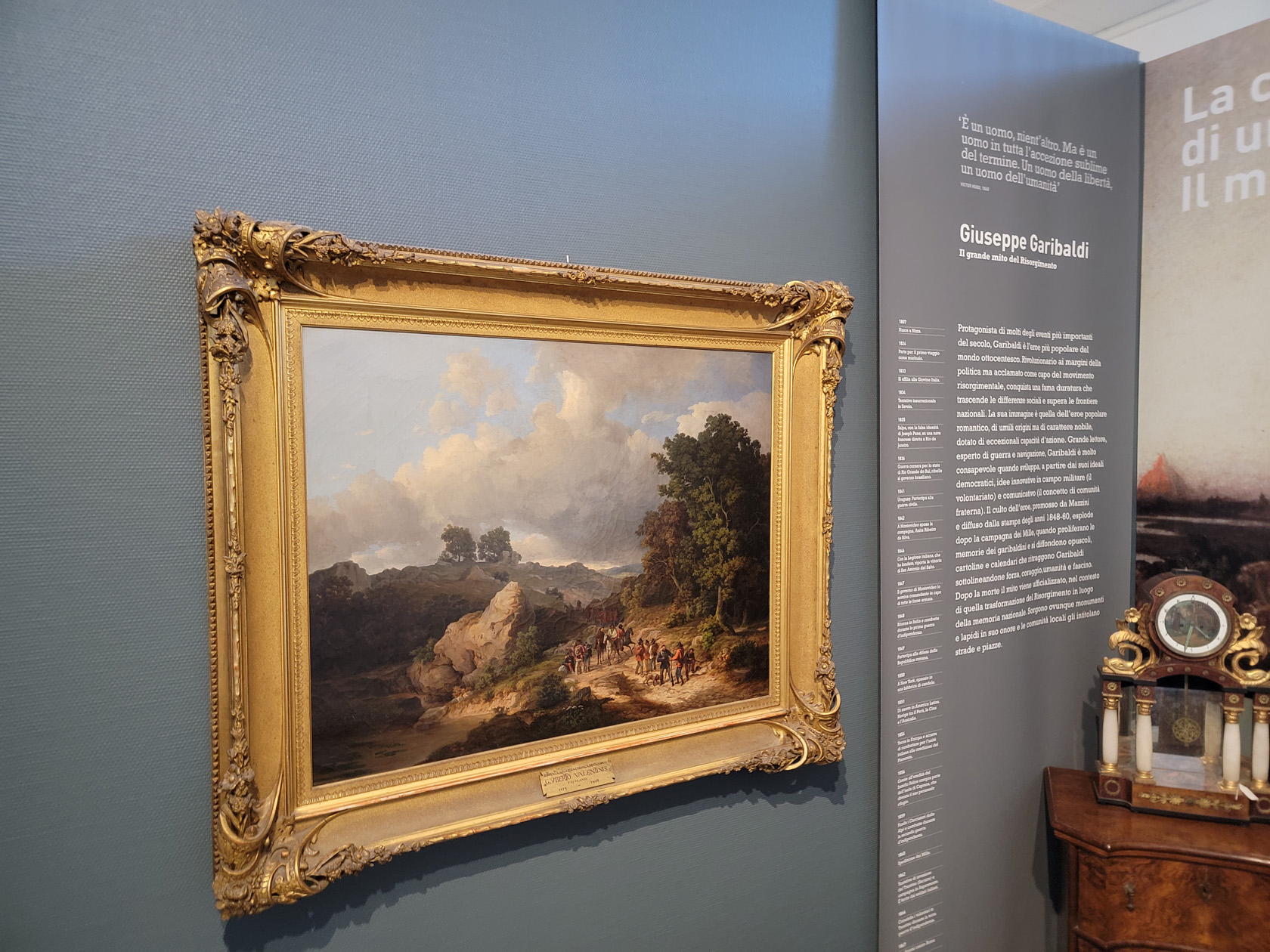
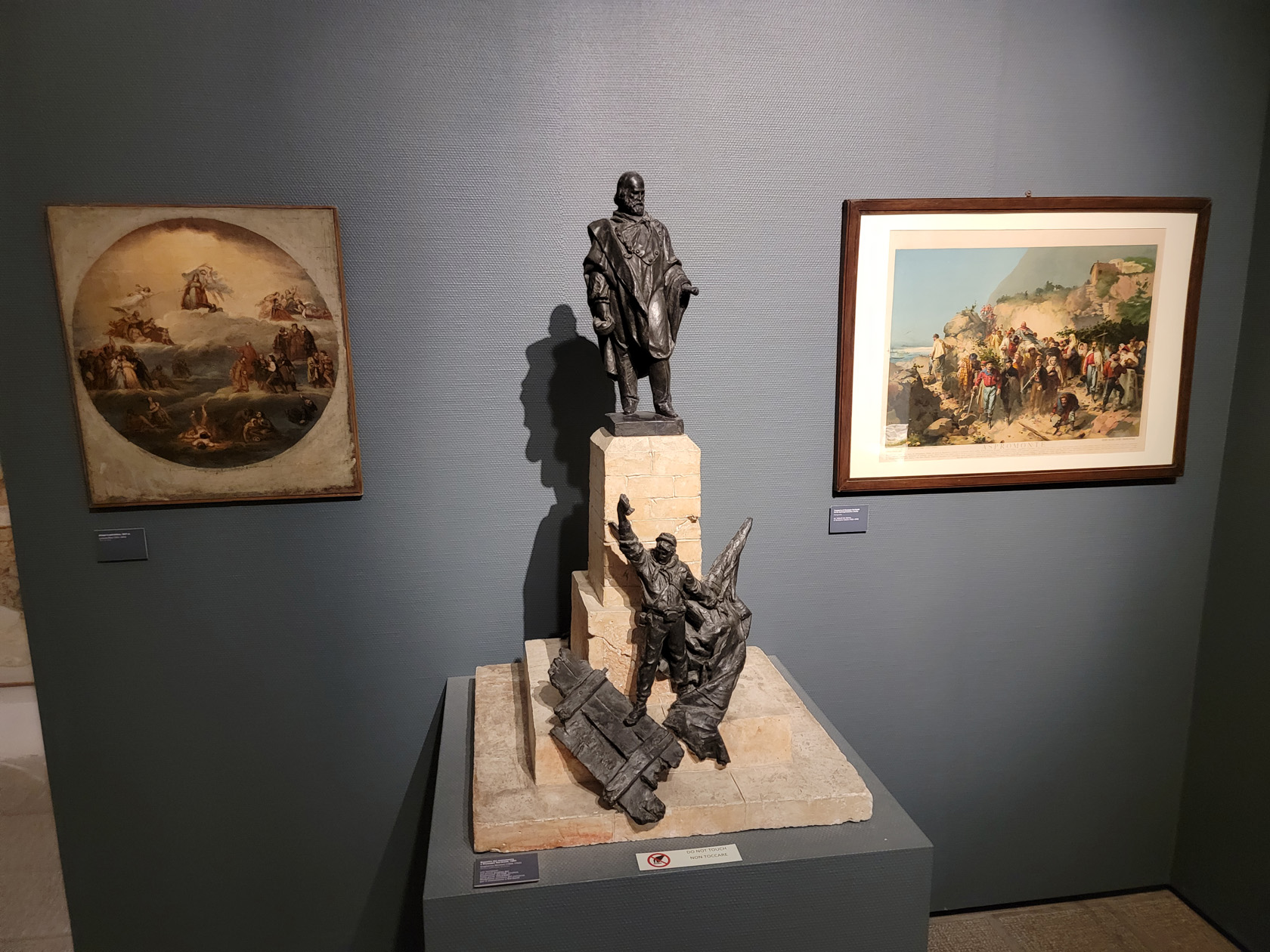
A gallery of art comprising works of local artists from the fourteenth to the nineteenth centuries. Most of the work appear religious in nature. Some of those that caught my eye in particular are the following.
Udine – Udine Castle Museum – Painting – Giuseppe Garibaldi
Udine – Udine Castle Museum – Bronze of Soldiers
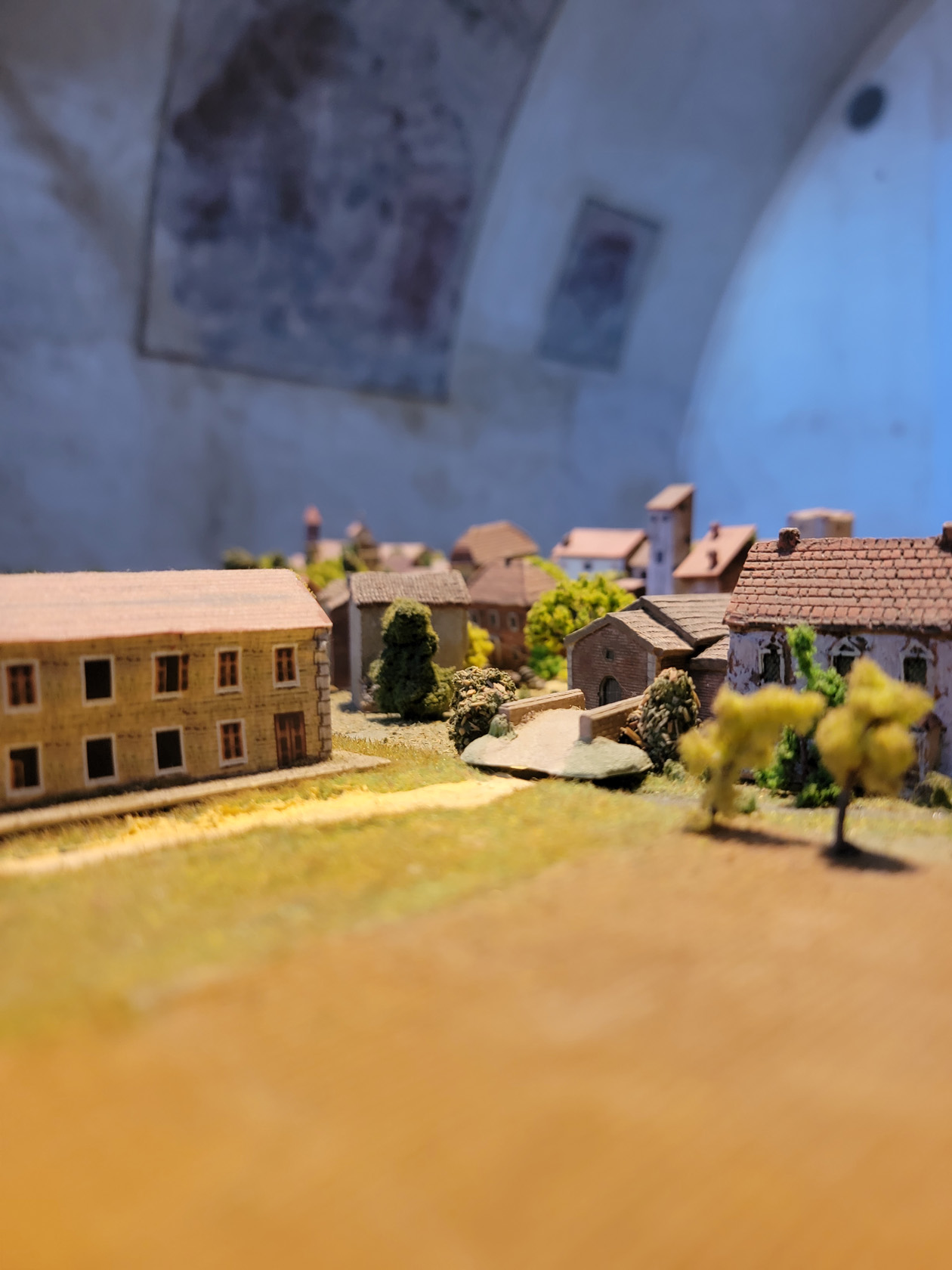
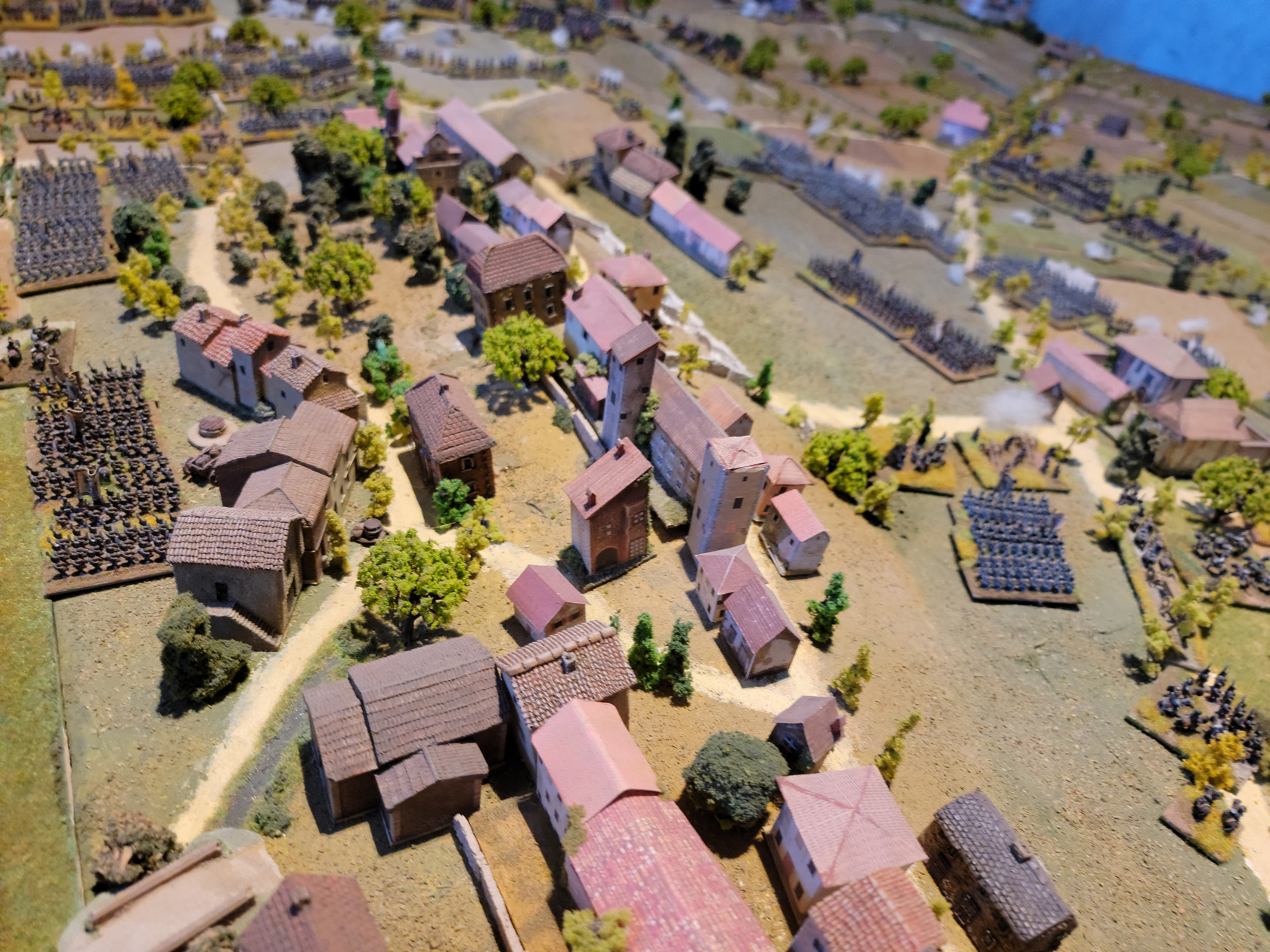
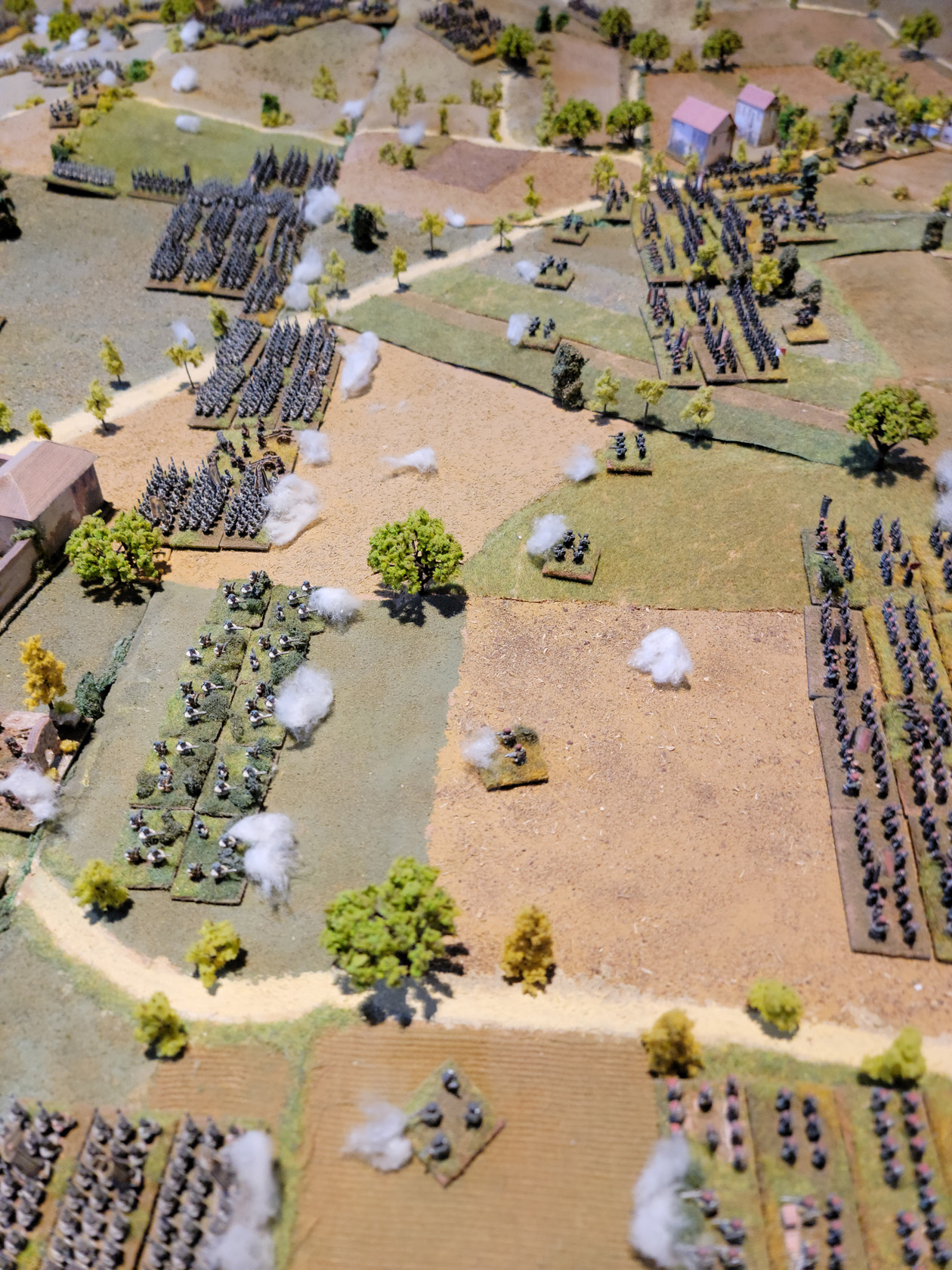
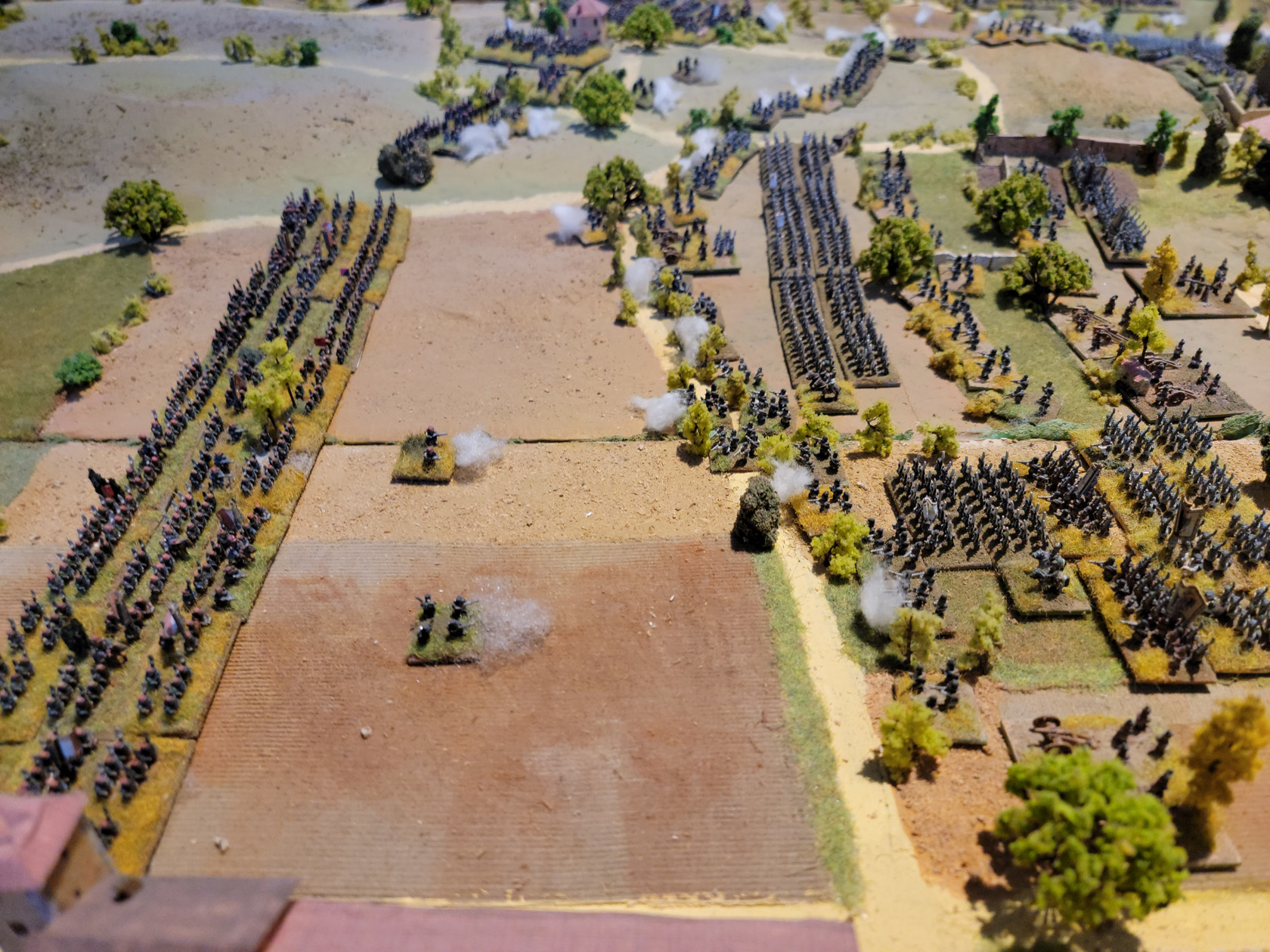
Diorama of the Battle of Montebello
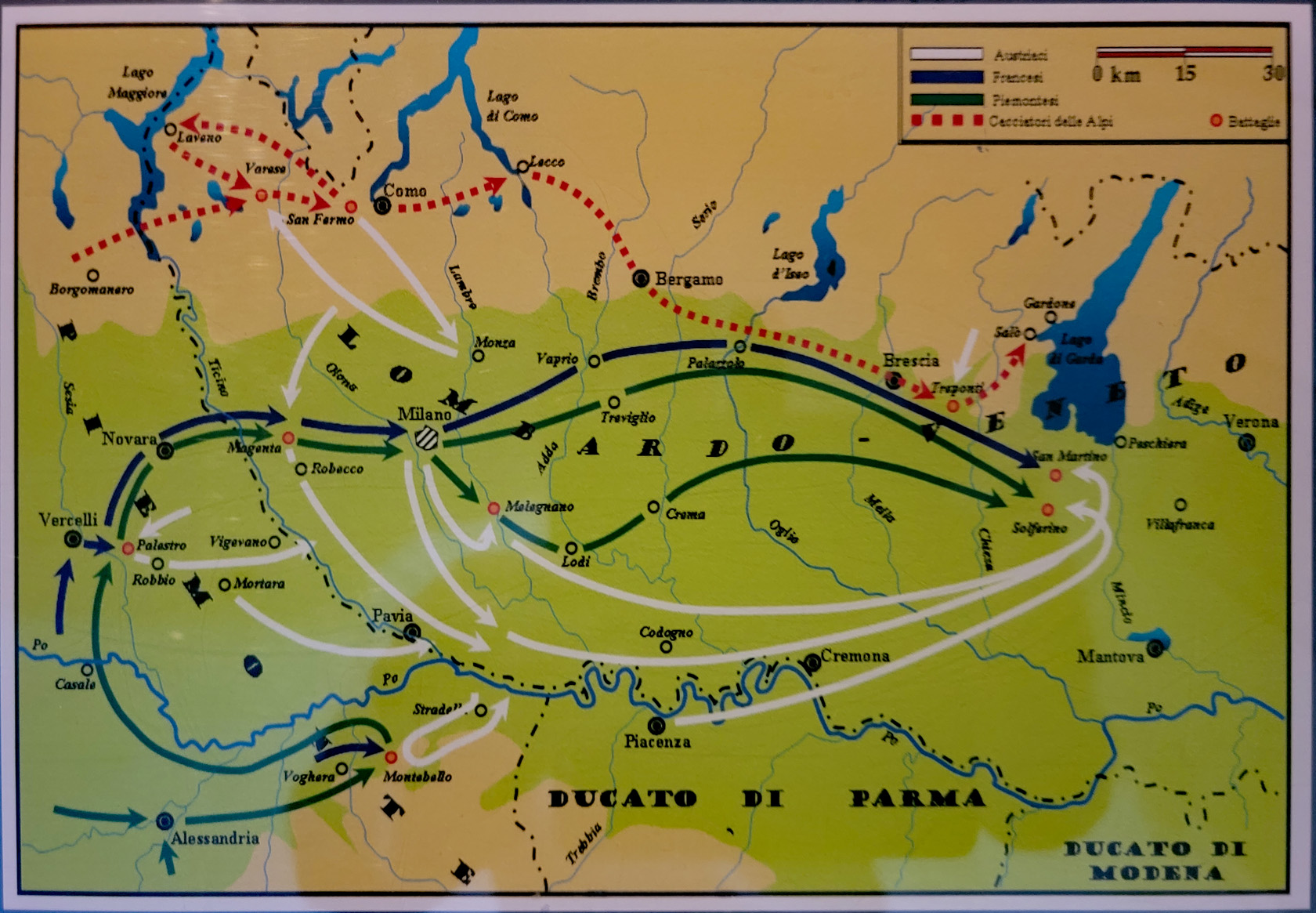
Complete with a map showing the order of battle, this diorama clicks all the right boxes for the model builder at heart.
Udine – Udine Castle Museum – Diorama – Order of the Battle of Montebello
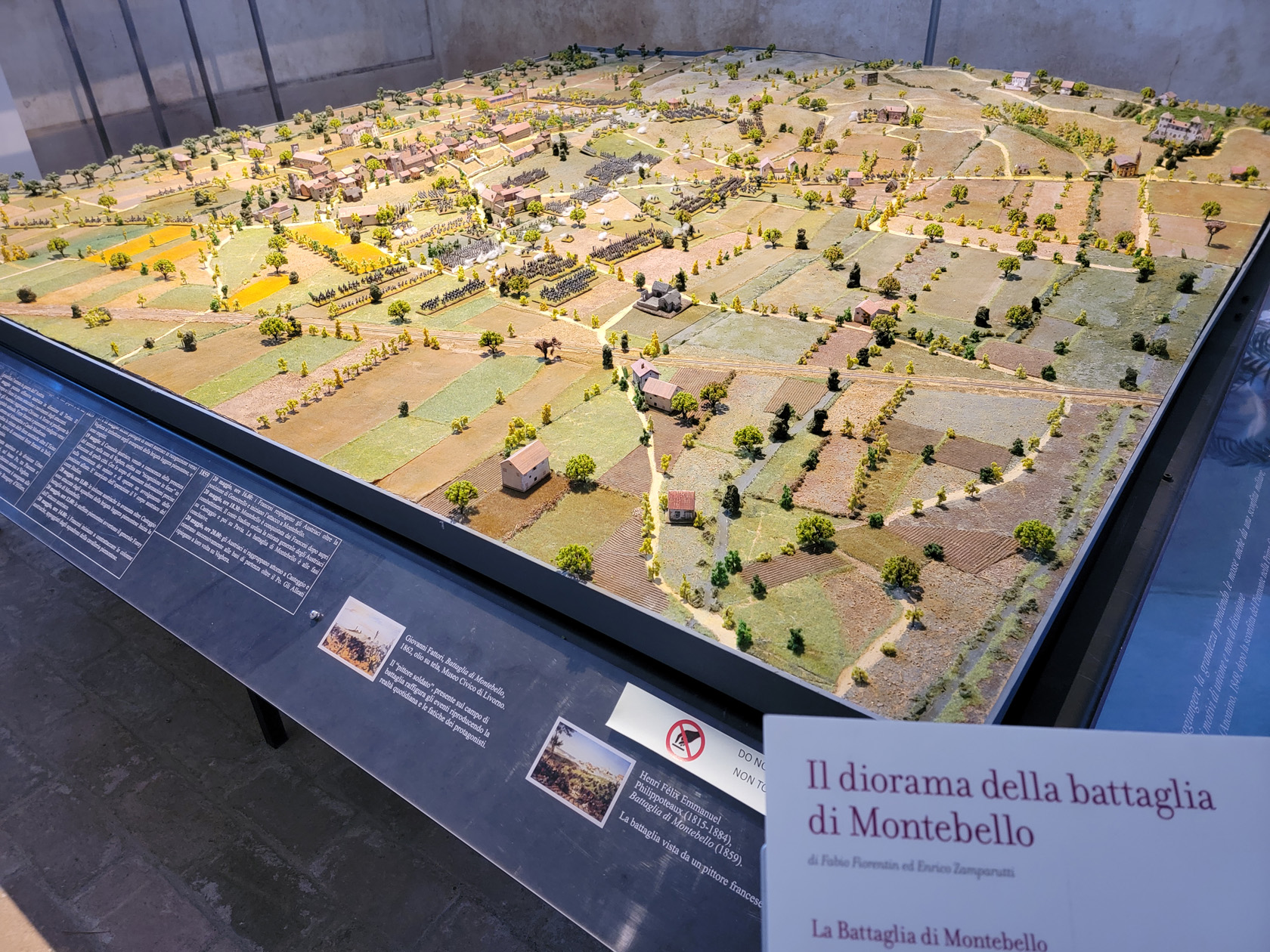
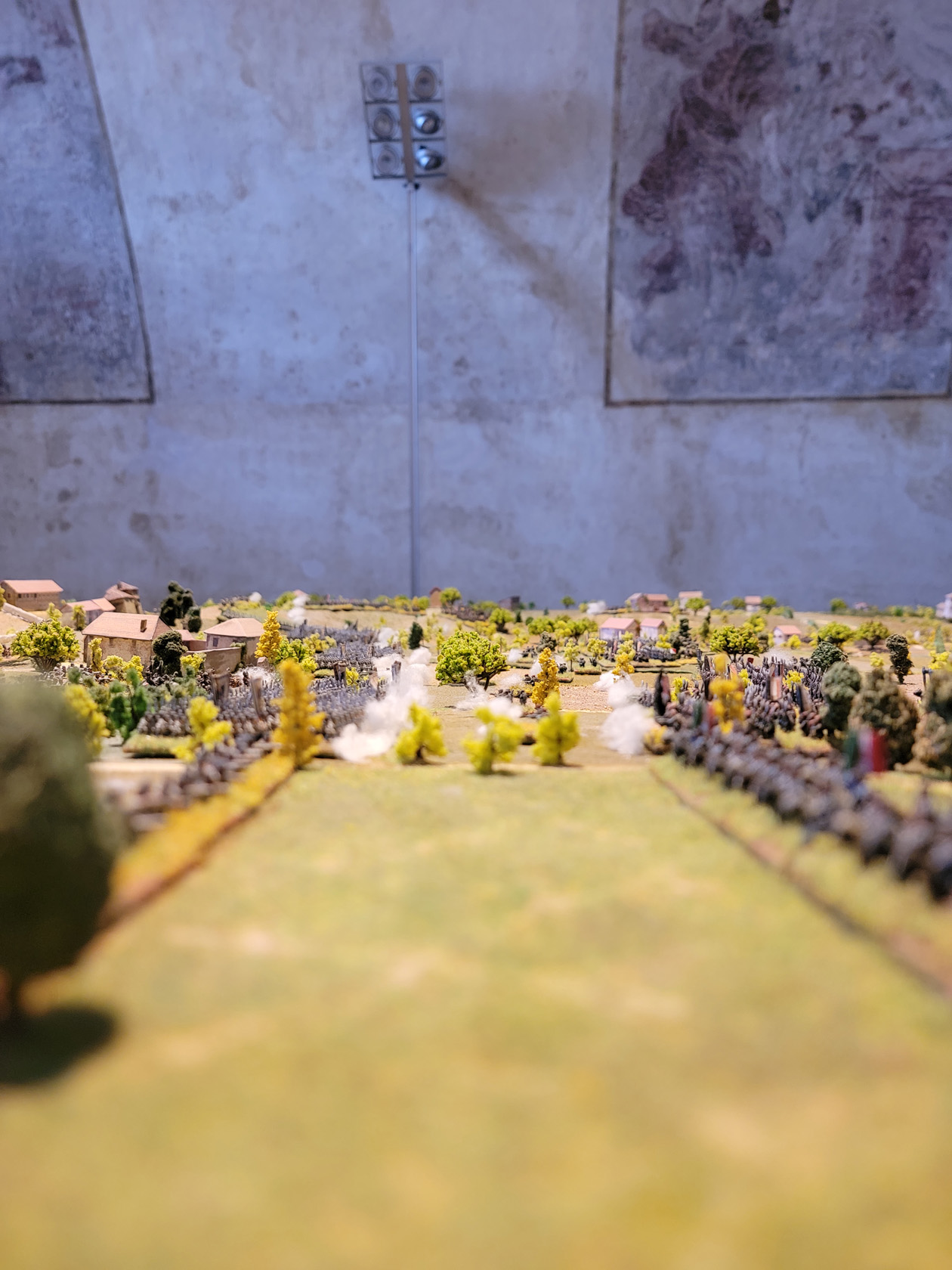
The museum has an extraordinary diorama of the Battle of Montebello. For anyone that is or was a model builder, or a warfare historian, one can stand and just marvel at it for some time.
Udine – Udine Castle Museum – Diorama – Battle of Montebello
Udine – Udine Castle Museum – Diorama – Battle of Montebello
Udine – Udine Castle Museum – Diorama – Battle of Montebello
Udine – Udine Castle Museum – Diorama – Battle of Montebello
Udine – Udine Castle Museum – Diorama – Battle of Montebello
Udine – Udine Castle Museum – Diorama – Battle of Montebello
Udine – Udine Castle Museum – Diorama – Battle of Montebello
Churches
There are several noteworthy churches in the area, though we were not actually able to visit all of them inside.
Chapel of Palazzo del Monte di Pietà
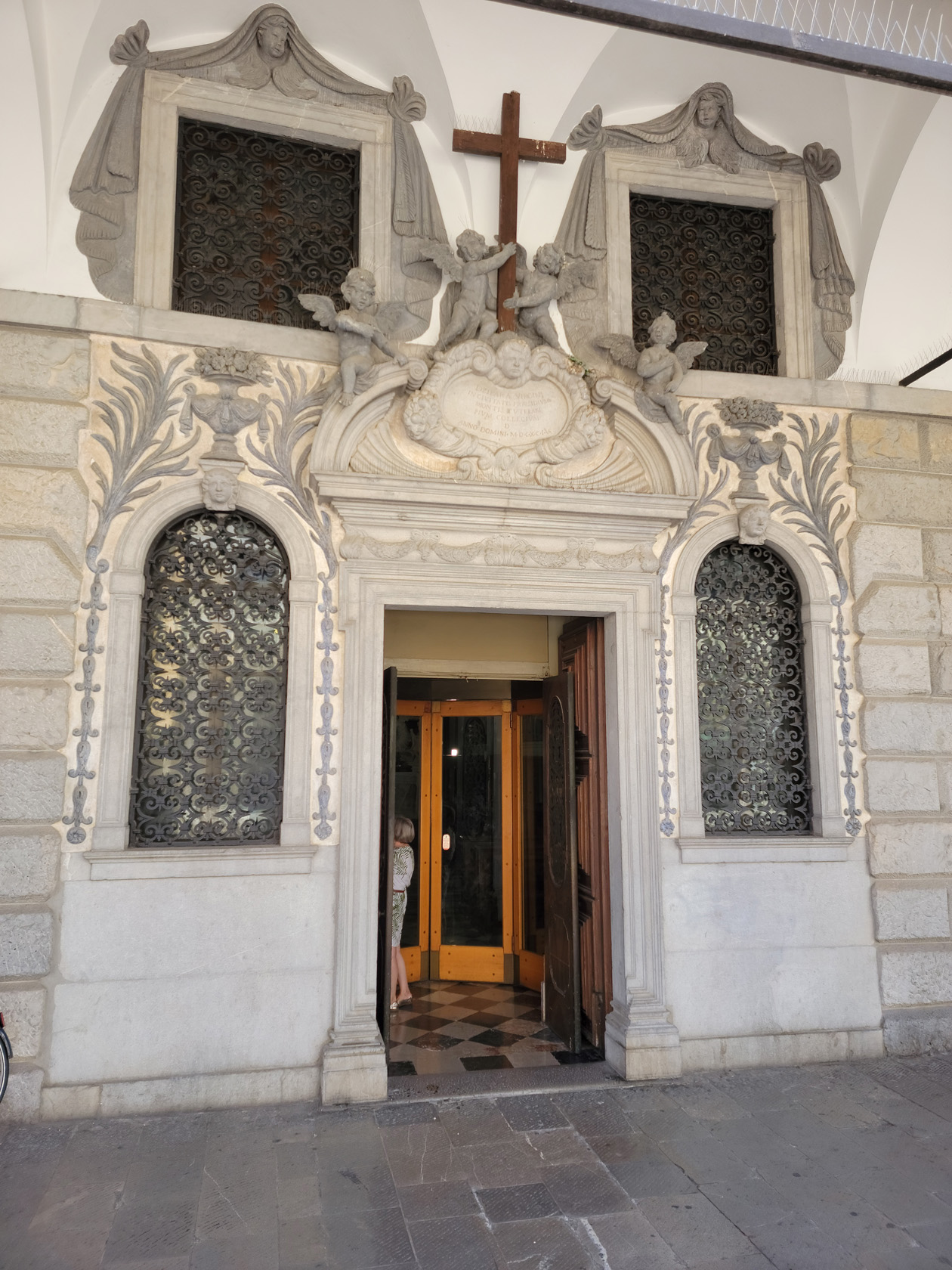
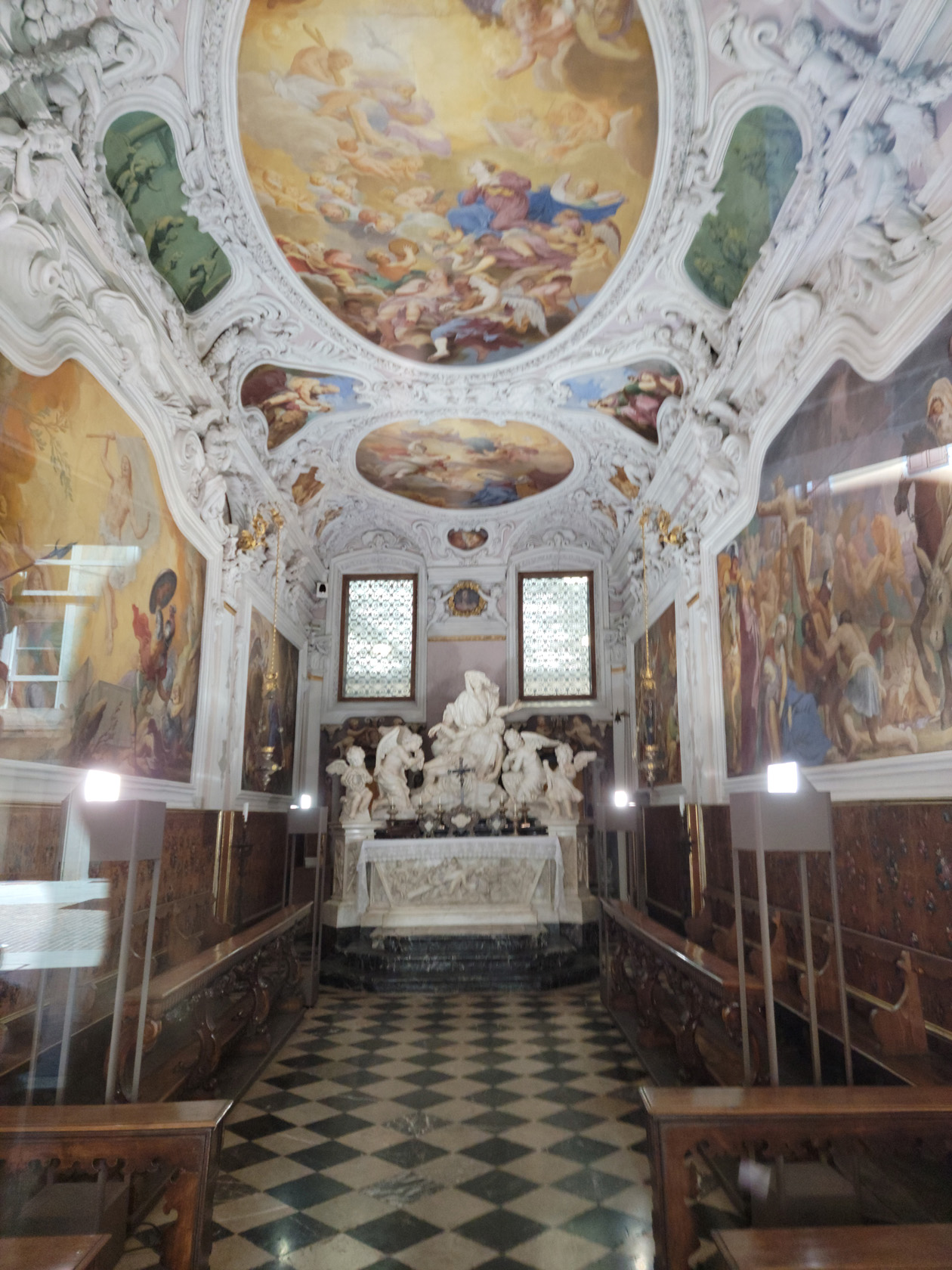
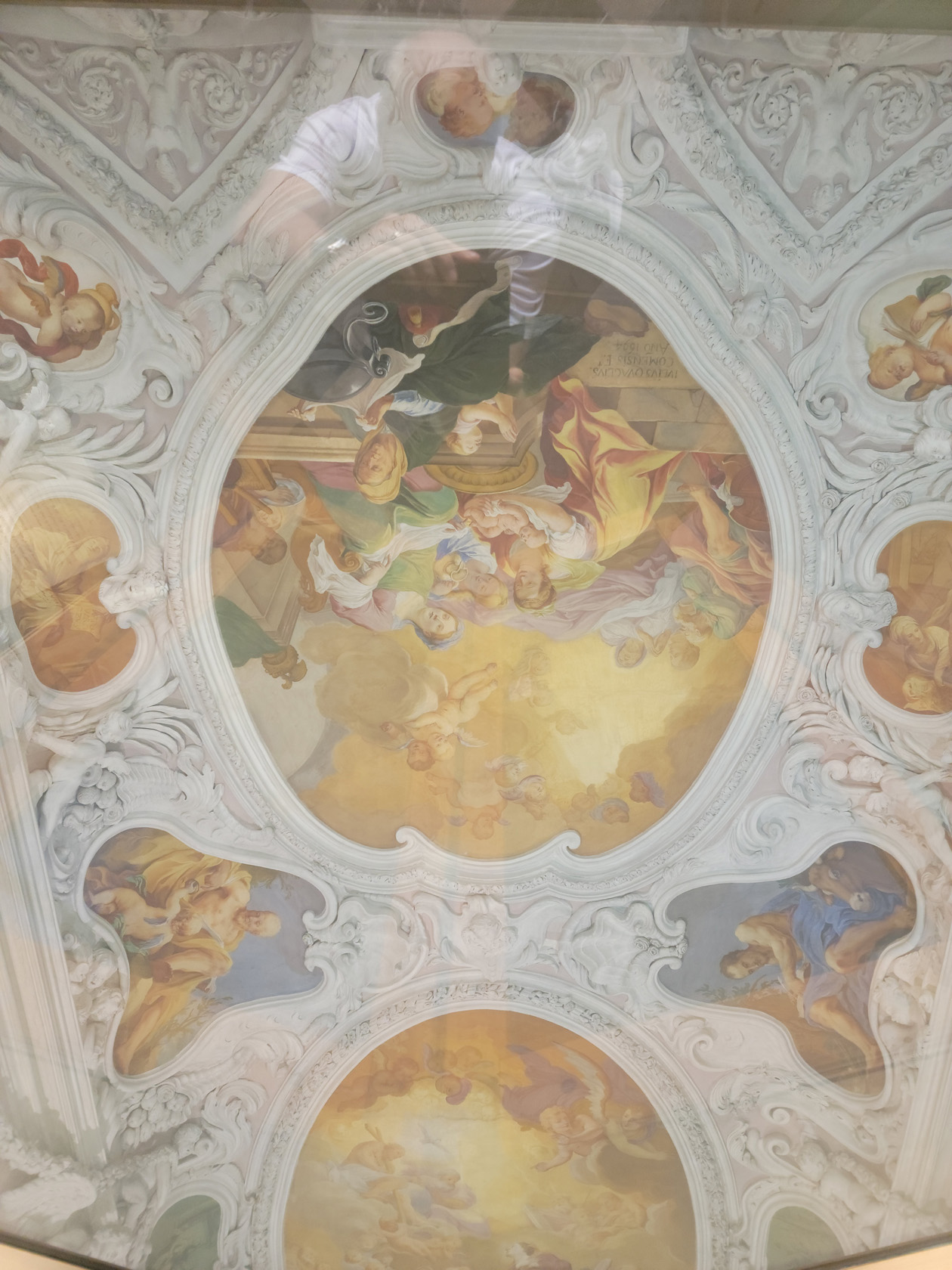
A chapel, which has beautiful frescoes and is now actually part of the bank Intesa Sanpaolo, is in the Palazzo del Monte di Pietà. Often walked right by tourists, if they are not paying attention, this chapel is a gem, see for yourself.
Udine – Palazzo del Monte di Pieta – Doorway
Udine – Palazzo del Monte di Pieta – Altar of the Pieta
Udine – Palazzo del Monte di Pieta – Ceiling
Church of Saint Maria di Castello
A church that is at the top of the hill and adjacent to the Castel is the Saint Maria di Castello. Complete with bell tower, a remarkable example
Udine – Church of Saint Maria
Cathedral Santa Maria Annuziata
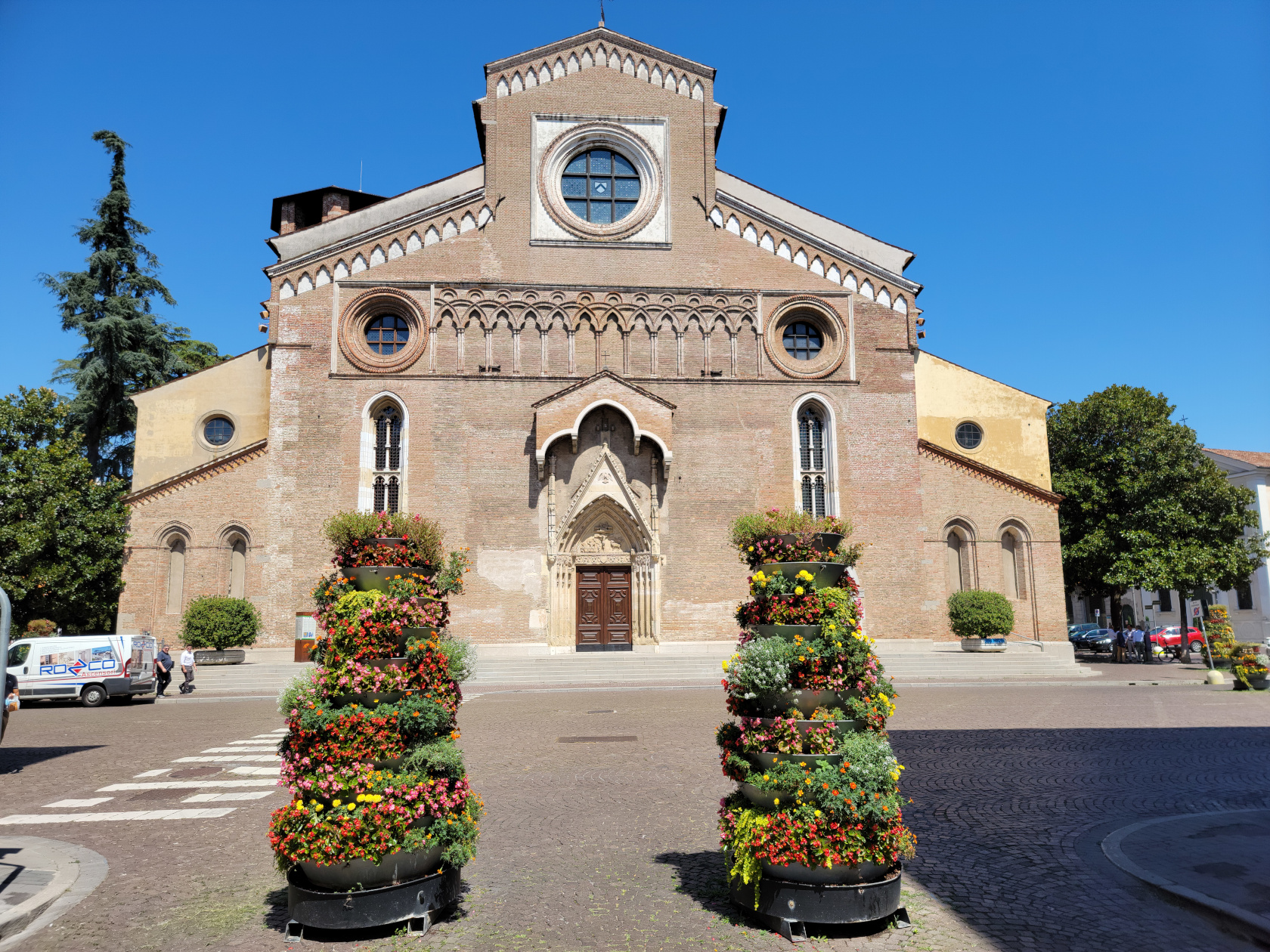
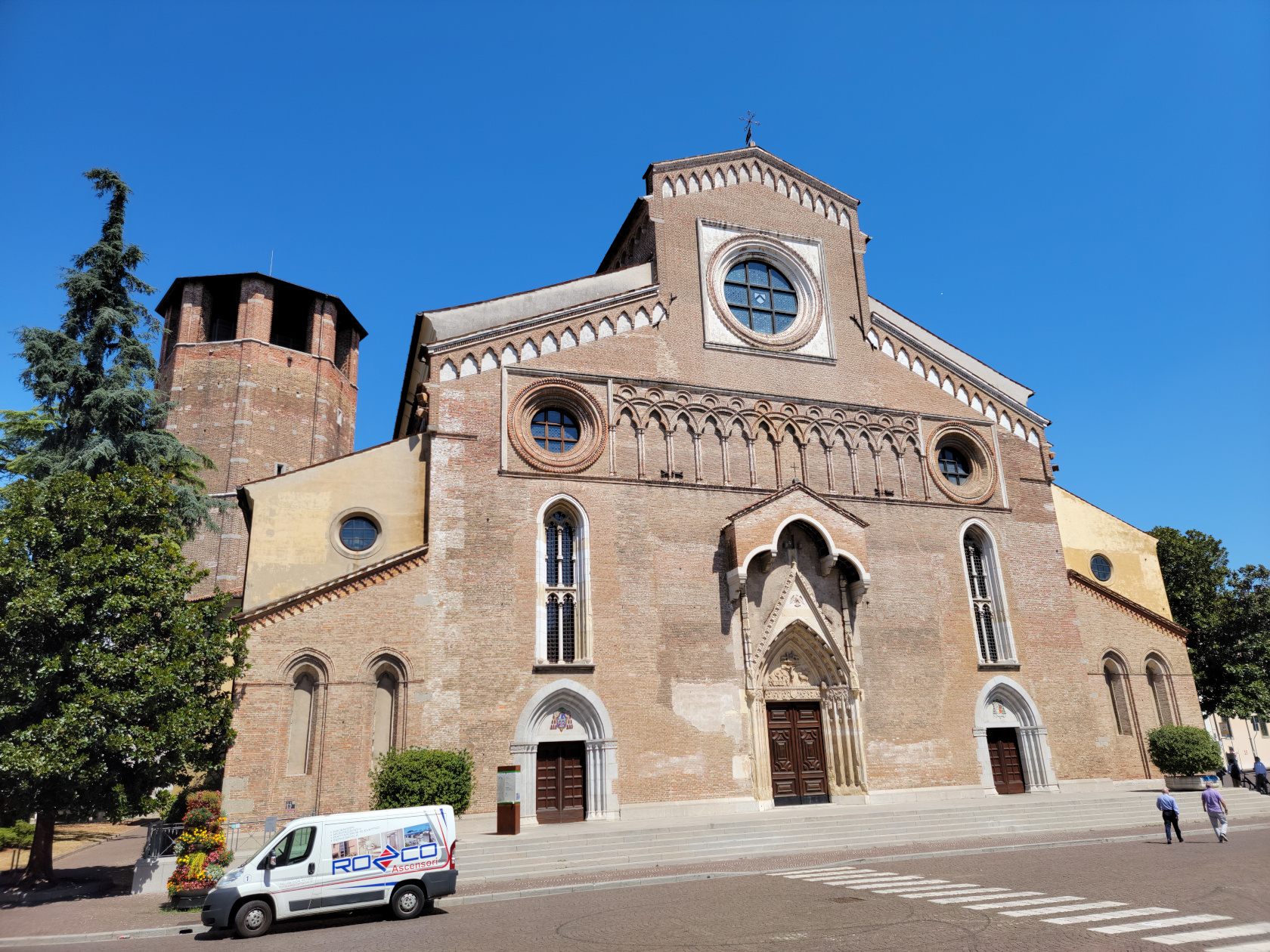
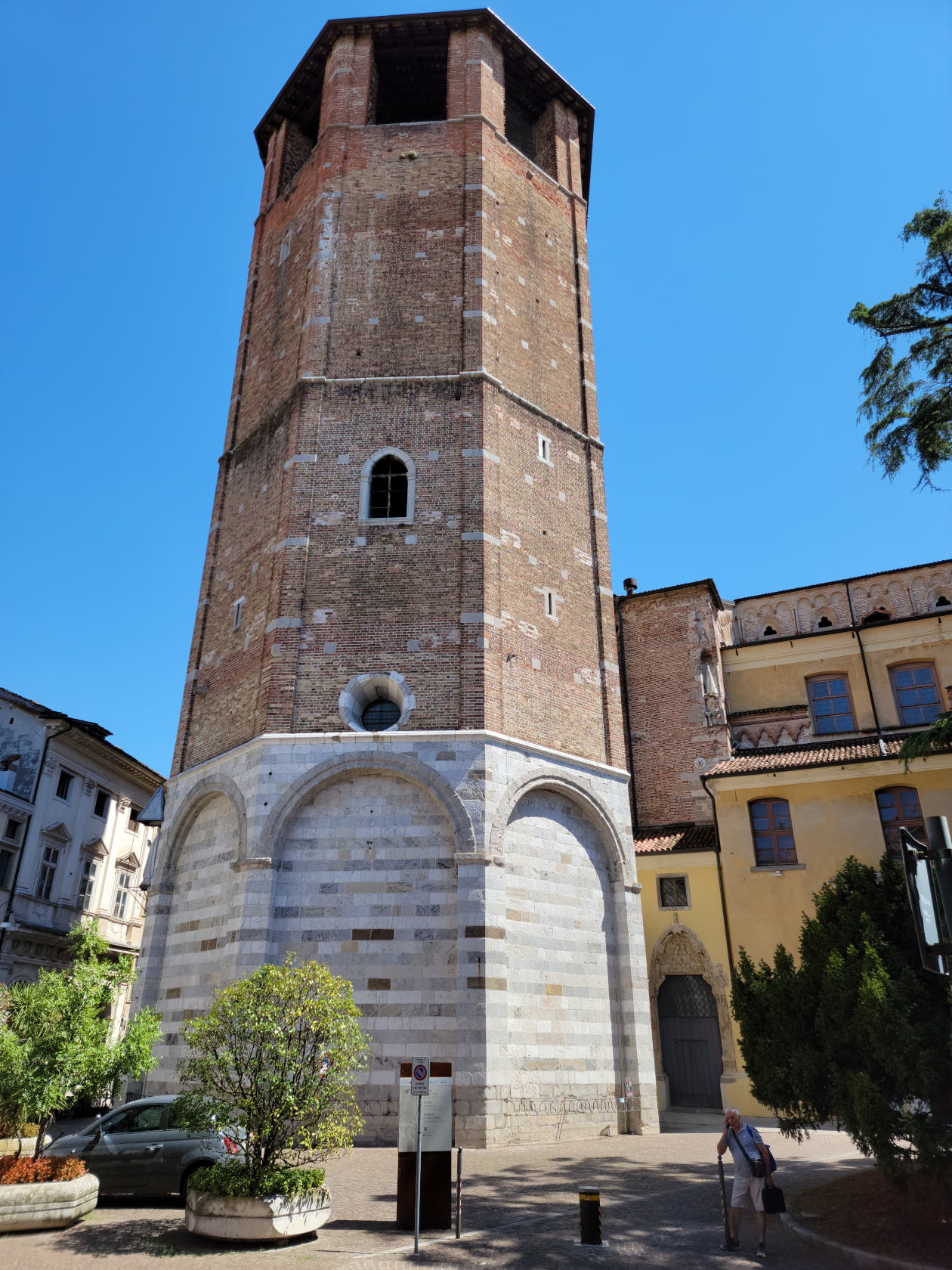
The Cathedral of Santa Maria Annuziata is known for its octagonal bell tower. It can be seen from the castle hill, along with the church which is a major landmark in the city. Formerly consecrated as the Cathedral of Santa Maria Maggiore in 1335, it has three naves and chapels along the sides. Since it was not open at the time, we were only able to get some photographs of the outside.
Udine – Cathedral Santa Maria Annunziata
Udine – Cathedral Santa Maria Annunziata
Udine – Cathedral Santa Maria Annunziata
Udine – Cathedral Santa Maria Annunziata
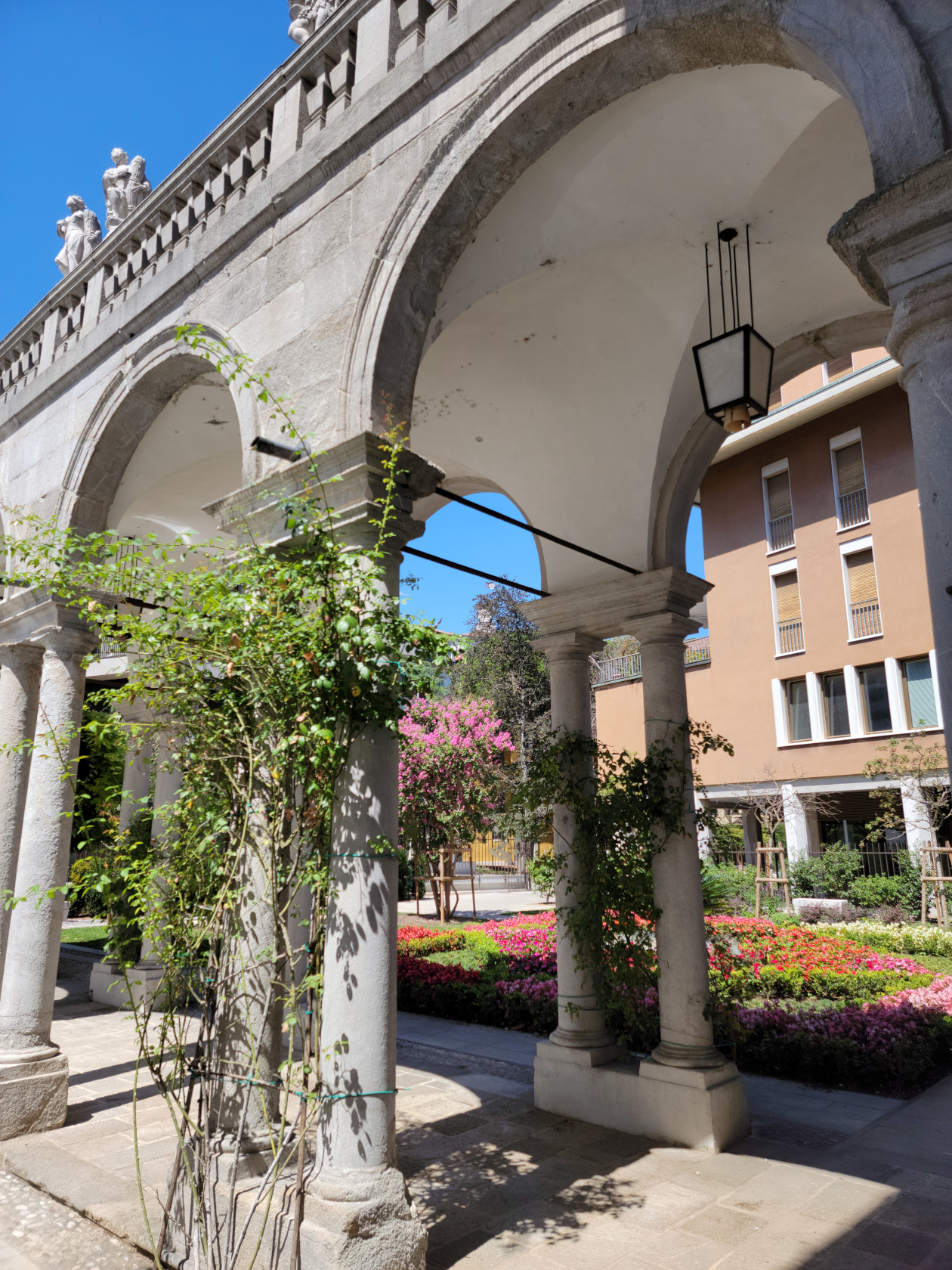
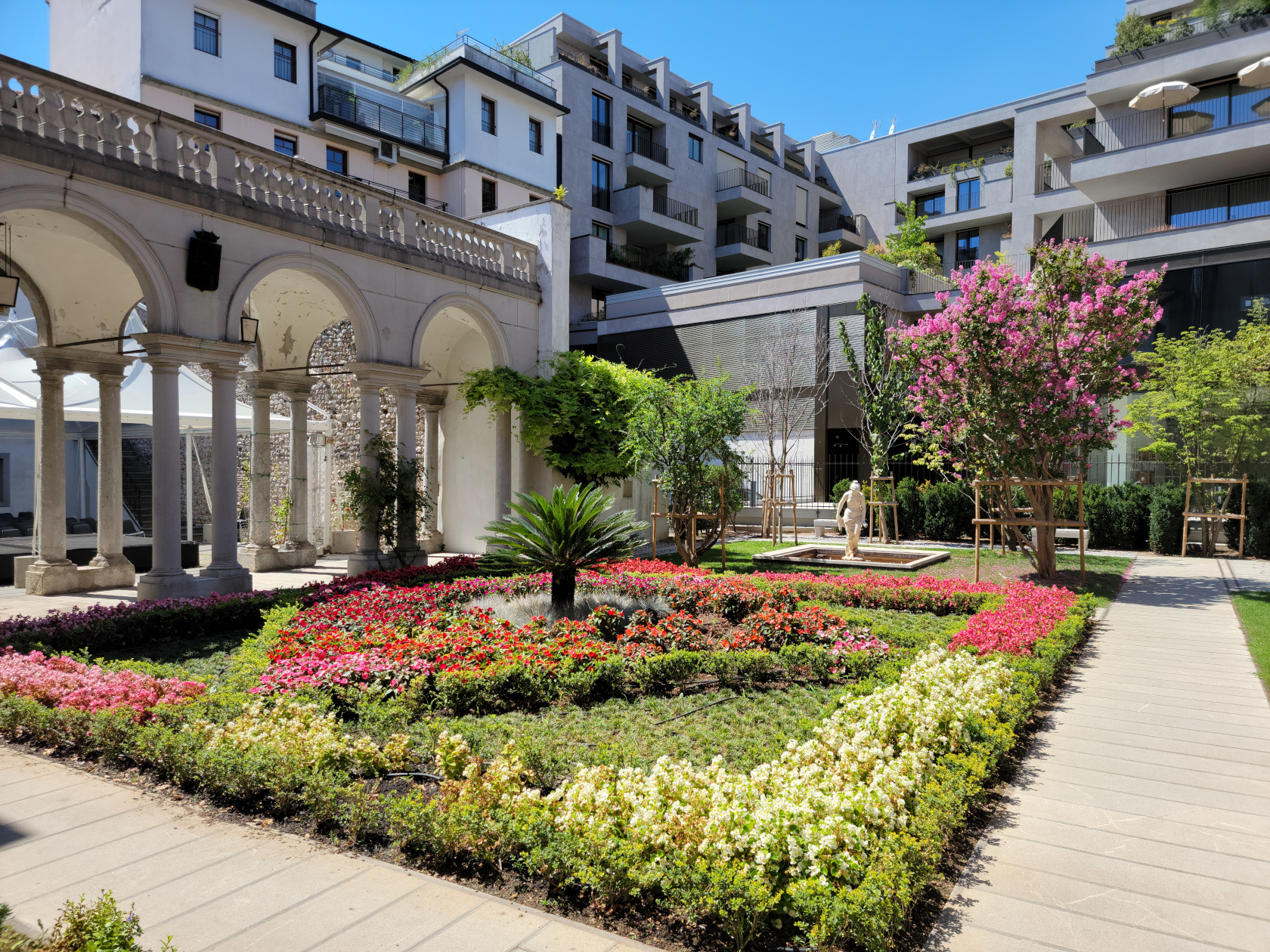
The Corte di Palazzo Morpurgo is also close by the front of the cathedral, so just wandering across the street from the front of the church should bring you there.
Udine – Corte di Palazzo Morpurgo
Udine – Corte di Palazzo Morpurgo
Hotels
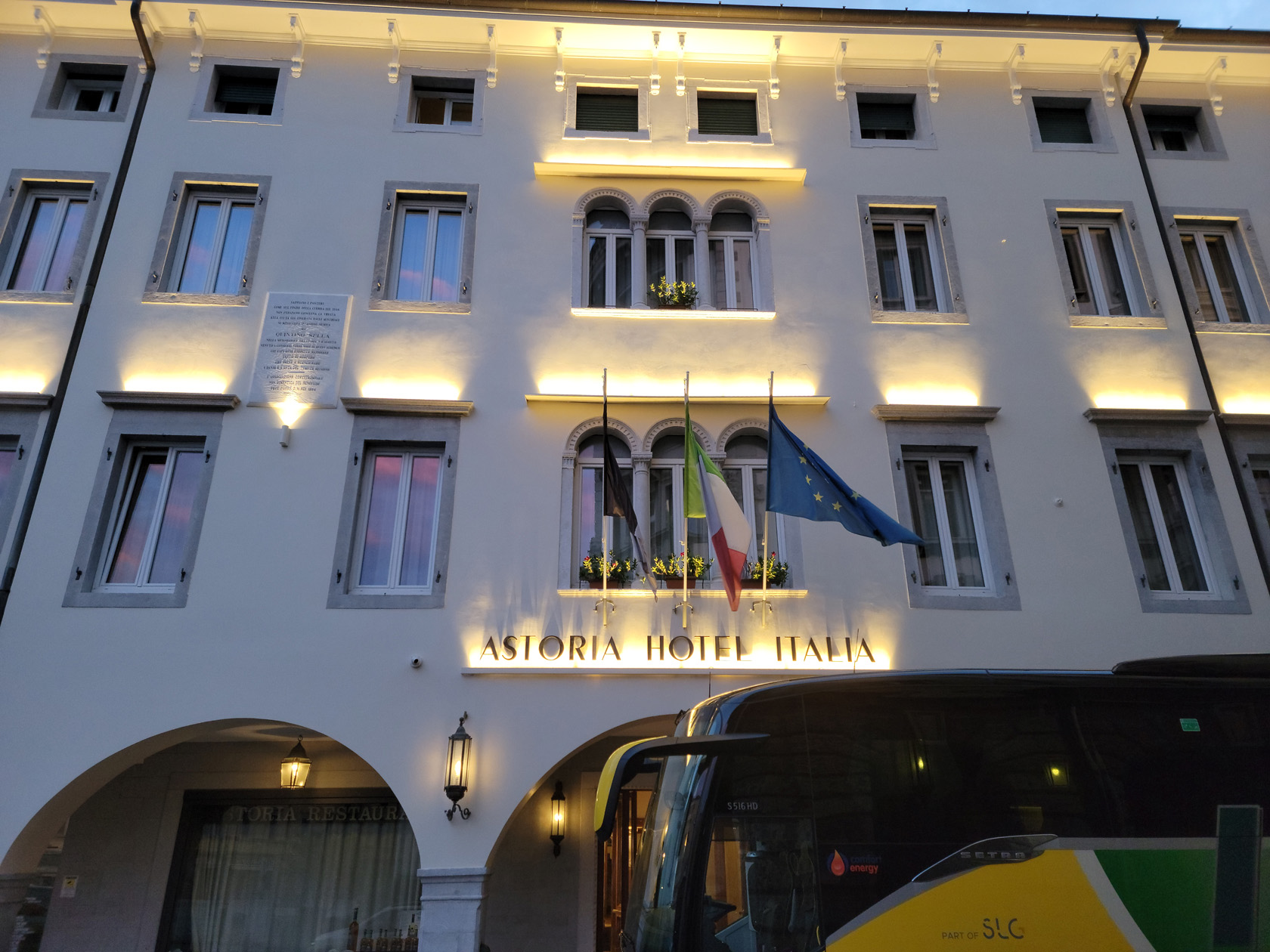
We chose the Astoria Hotel Italia for its old world charm, eschewing some of the more contemporary offers that were available. When we travel, it’s one of those things that can set off one place from another.
The Astoria Hotel Italia
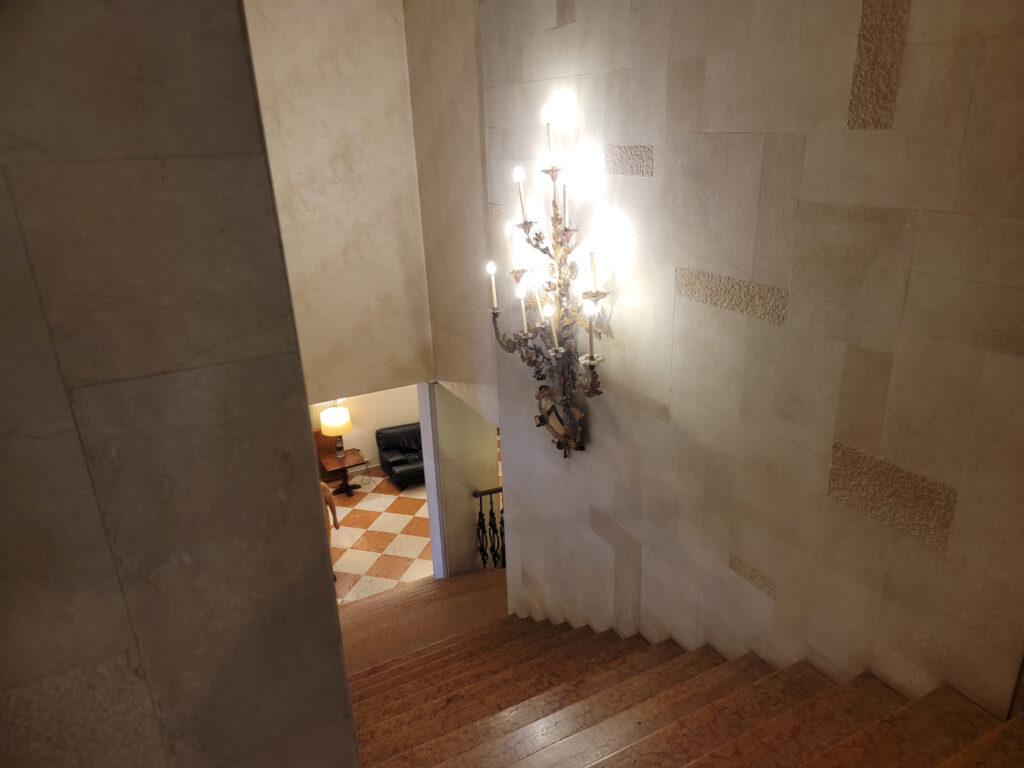
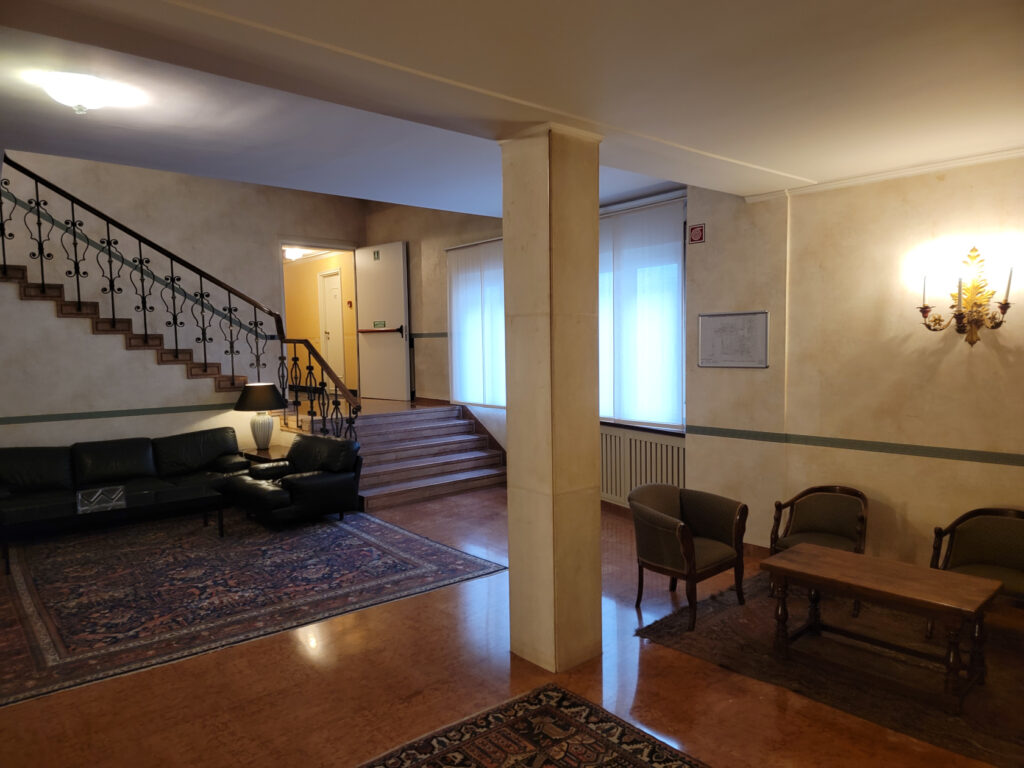
The hotel Astoria Italia has maintained itself as though it fits into the landscape. It sports new amenities, like contemporary and renovated bathrooms (a must), while keeping some of that old world charm. I disagree with putting contemporary style beds in such old rooms, which they clearly want to preserve, but I am probably in the minority (I rather prefer, if its old keep old, like it came out of the nineteenth century, then you get that step-back-in-time feel).
Udine – Astoria Hotel
In any case, our hotel was great and provided a very central place from which to explore the rest of the old city.
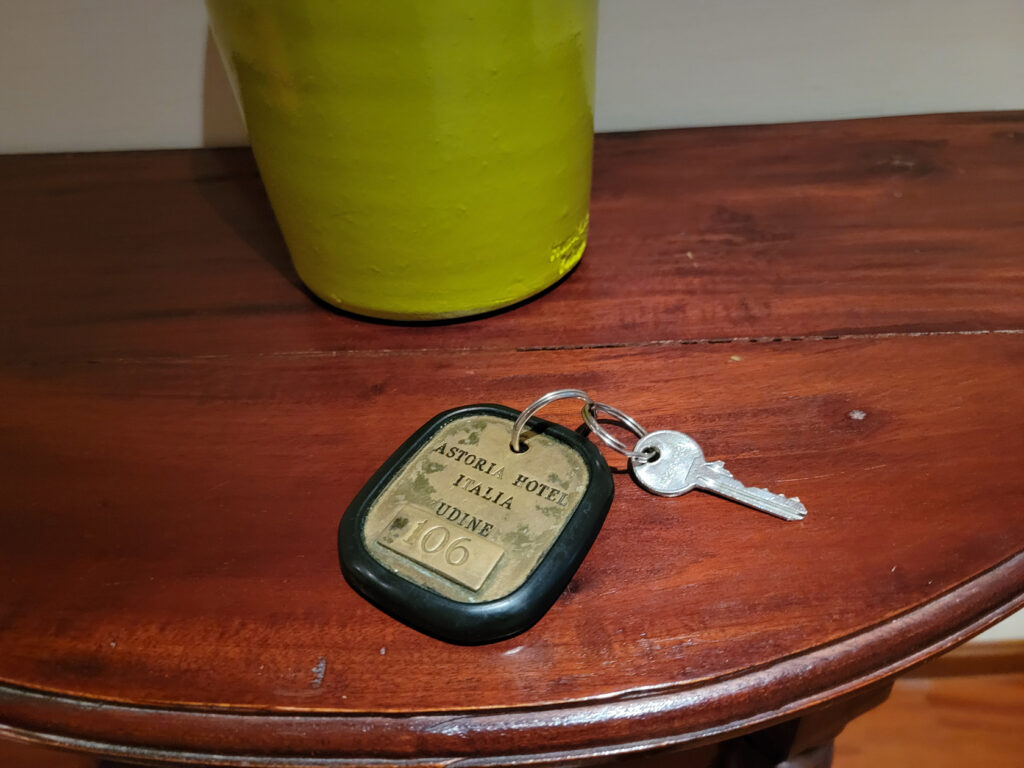
Udine – Astoria Hotel – Old Room Keys – The Old Fashioned Way
Udine – Astoria Hotel Italia
Udine – Astoria Hotel Italia
Udine – Astoria Hotel Italia
Restaurants
The restaurants in Udine serve typical northern Italian fare, with some twists for Tyrolean and other close neighbors. It is a fairly cosmopolitan city and one can find Sushi and other worldly franchise food here, so selecting a place to eat should not be an issue.
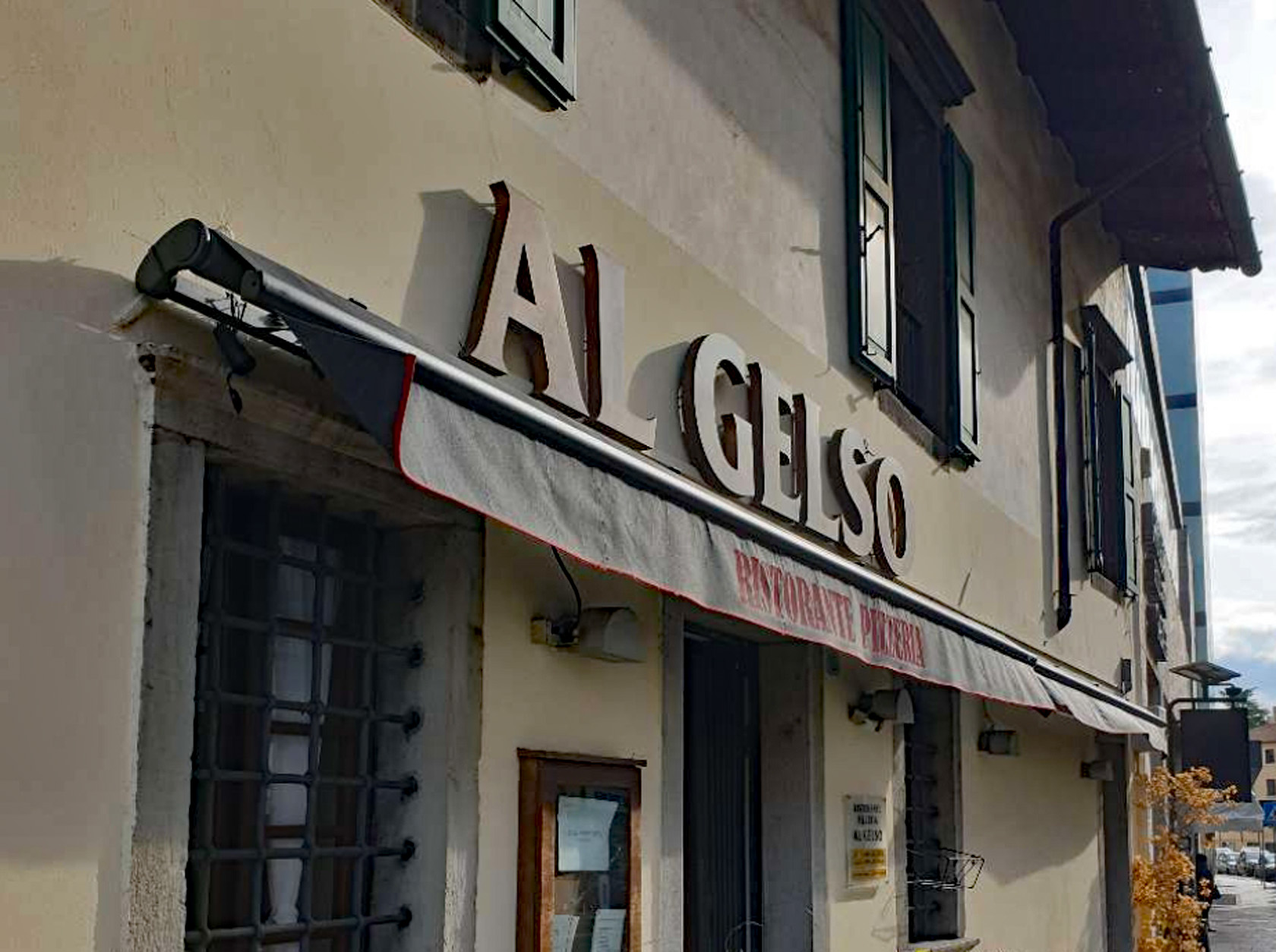
Ristorante Pizzeria Al Gelso
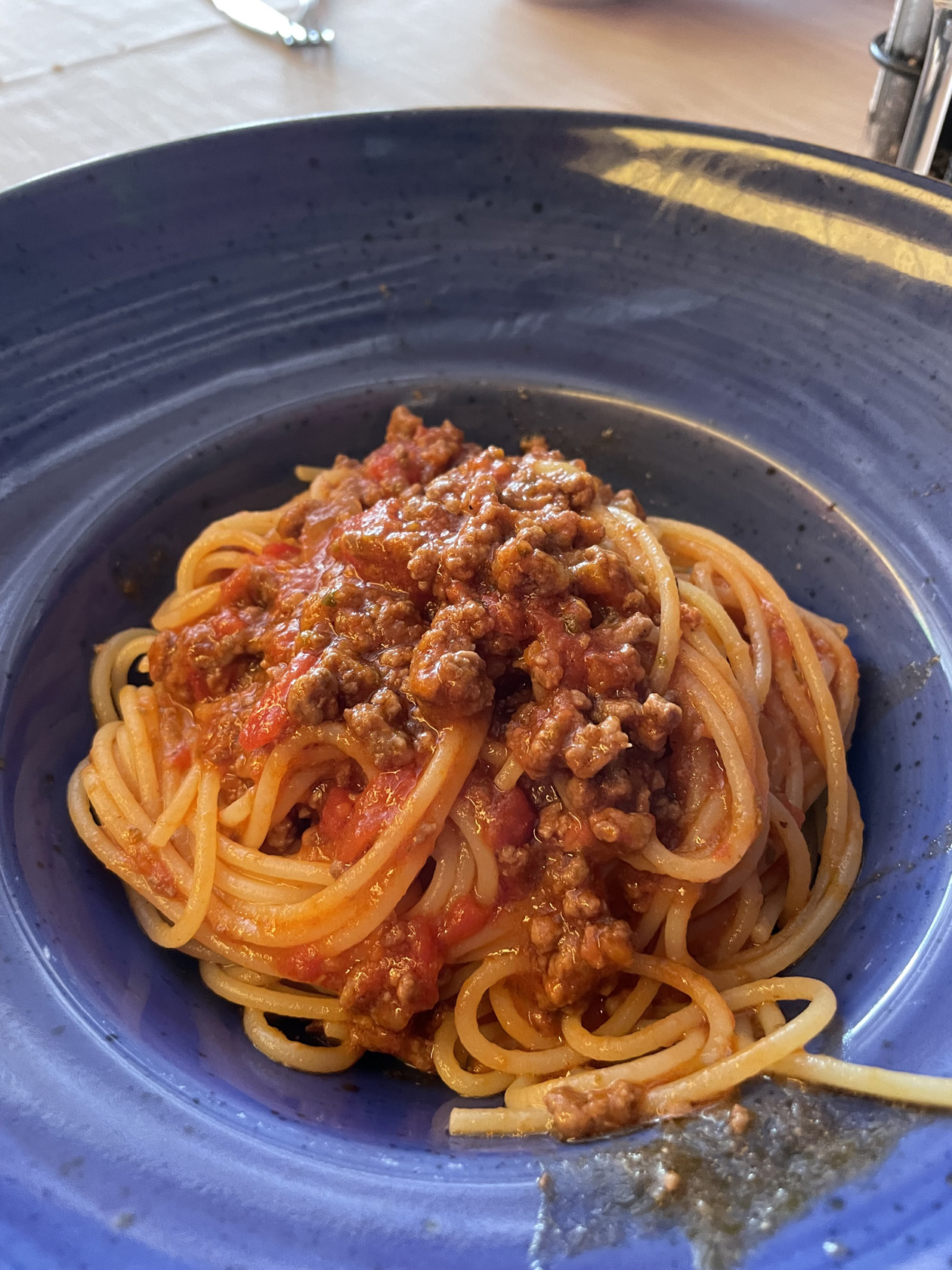
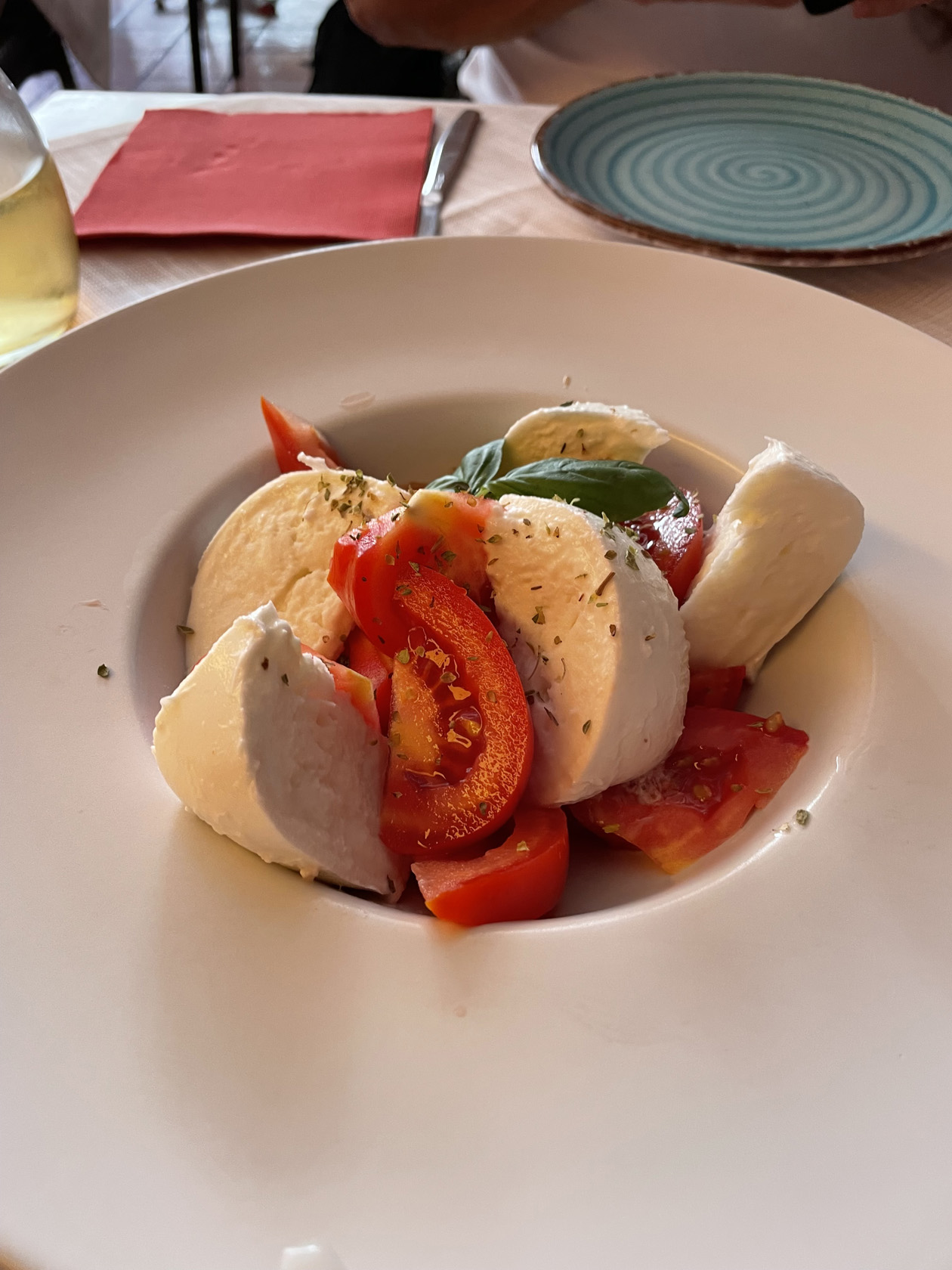
This restaurant was right around the corner from our hotel, in fact, it is actually adjacent to it (without us knowing). We walked around the corner anyways and entered it from the garden seating direction each time, even though there was a main entrance on the main street. The food is excellent, all with that home-cooked taste, and there’s pizza for those who are unsure what they want, everyone likes pizza!
Ristorante Pizzeria Al Gelso – Front
Ristorante Pizzeria Al Gelso – Spaghetti al Ragu
Ristorante Pizzeria Al Gelso – Caprese Salad
Osteria Alla Ghiacciaia
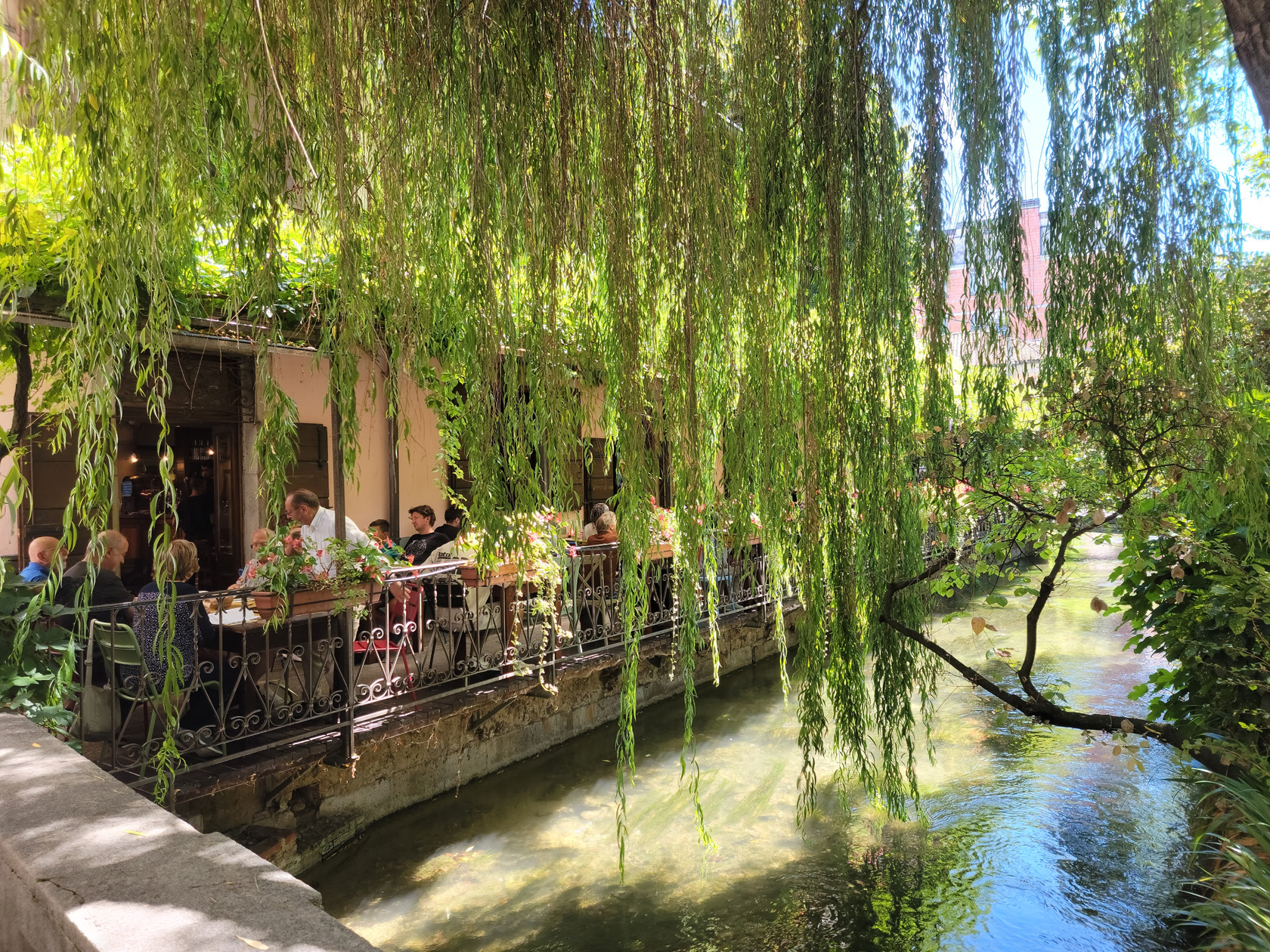
A lazy and very relaxing restaurant right next to the canal, a perfect place for lunch or dinner.
Udine – Osteria Alla Ghiacciaia – Seating by the canal
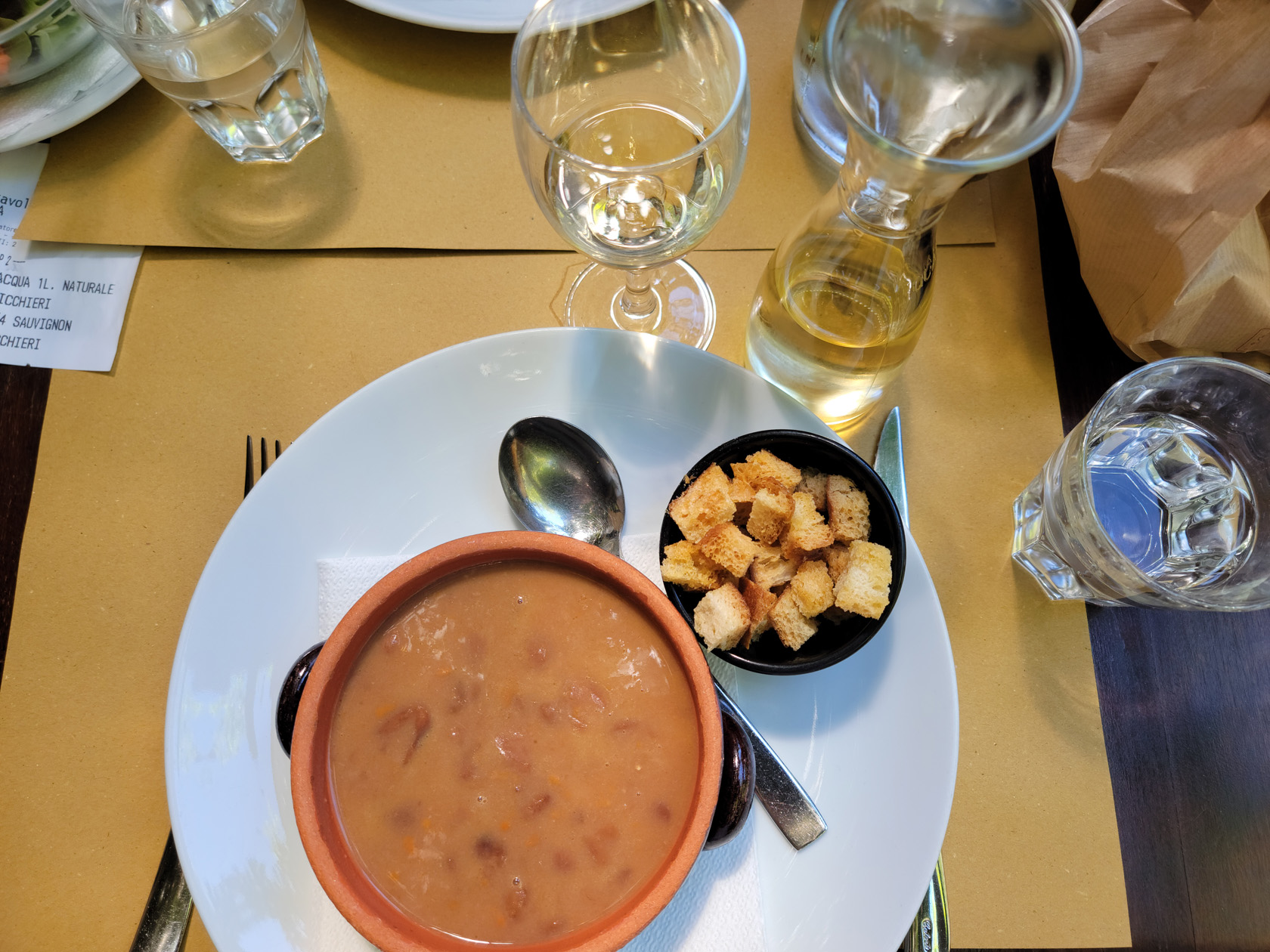
We really enjoyed our lunch here, watching the darning-needles, or dragon-flies, flit back and forth over the stream. Although this restaurant becomes very busy for lunch, the service was especially good and punctual, so anyone having problems waiting (which is most common in Italy), it might be a place to visit. The food is very good, fresh and delicately spiced. We kept it simple, bean soup for a started, followed by salads, just to keep things a bit light.
Udine – Osteria Alla Ghiacciaia – Bean Soup
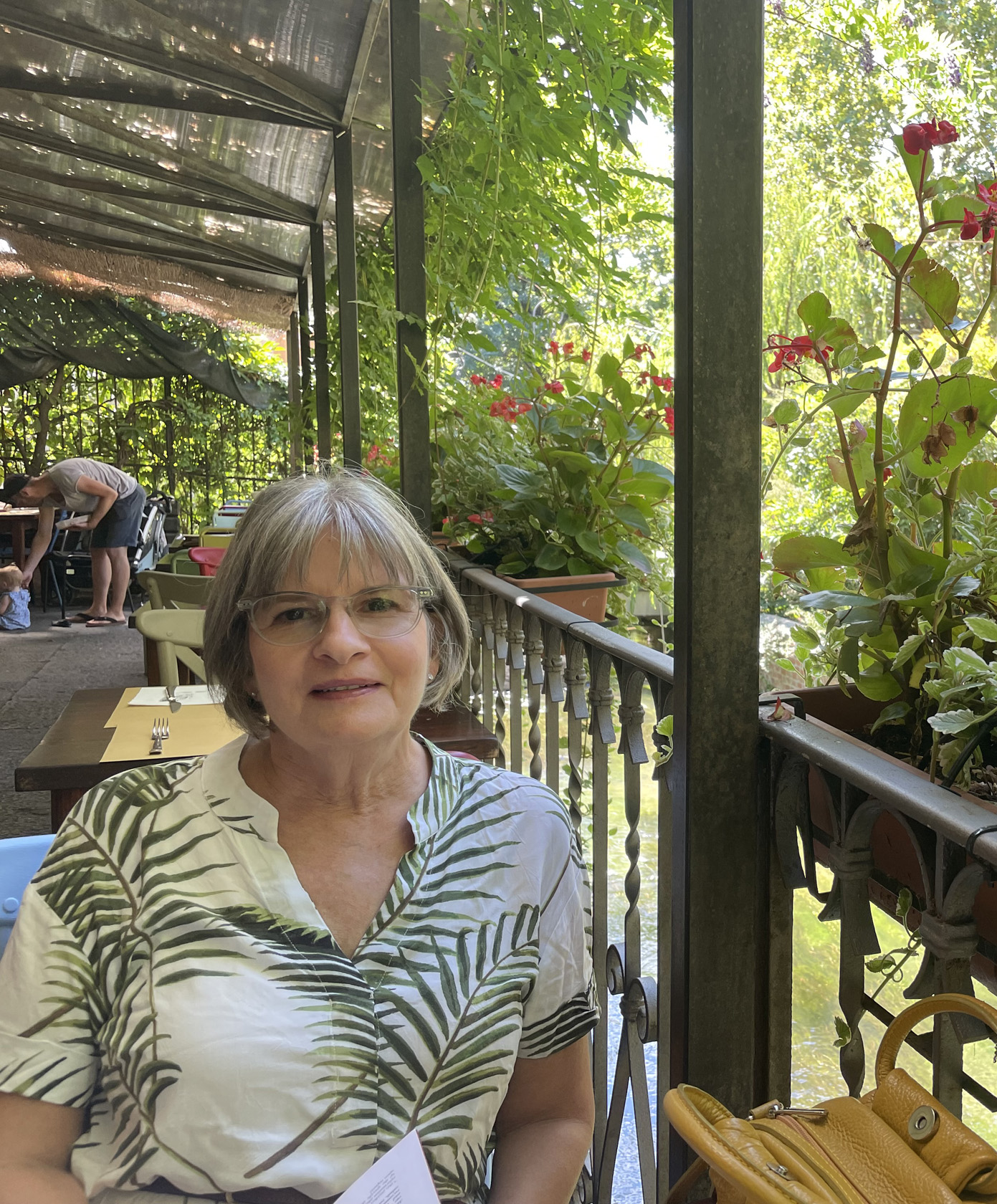
Udine – Osteria Alla Ghiacciaia – Patti
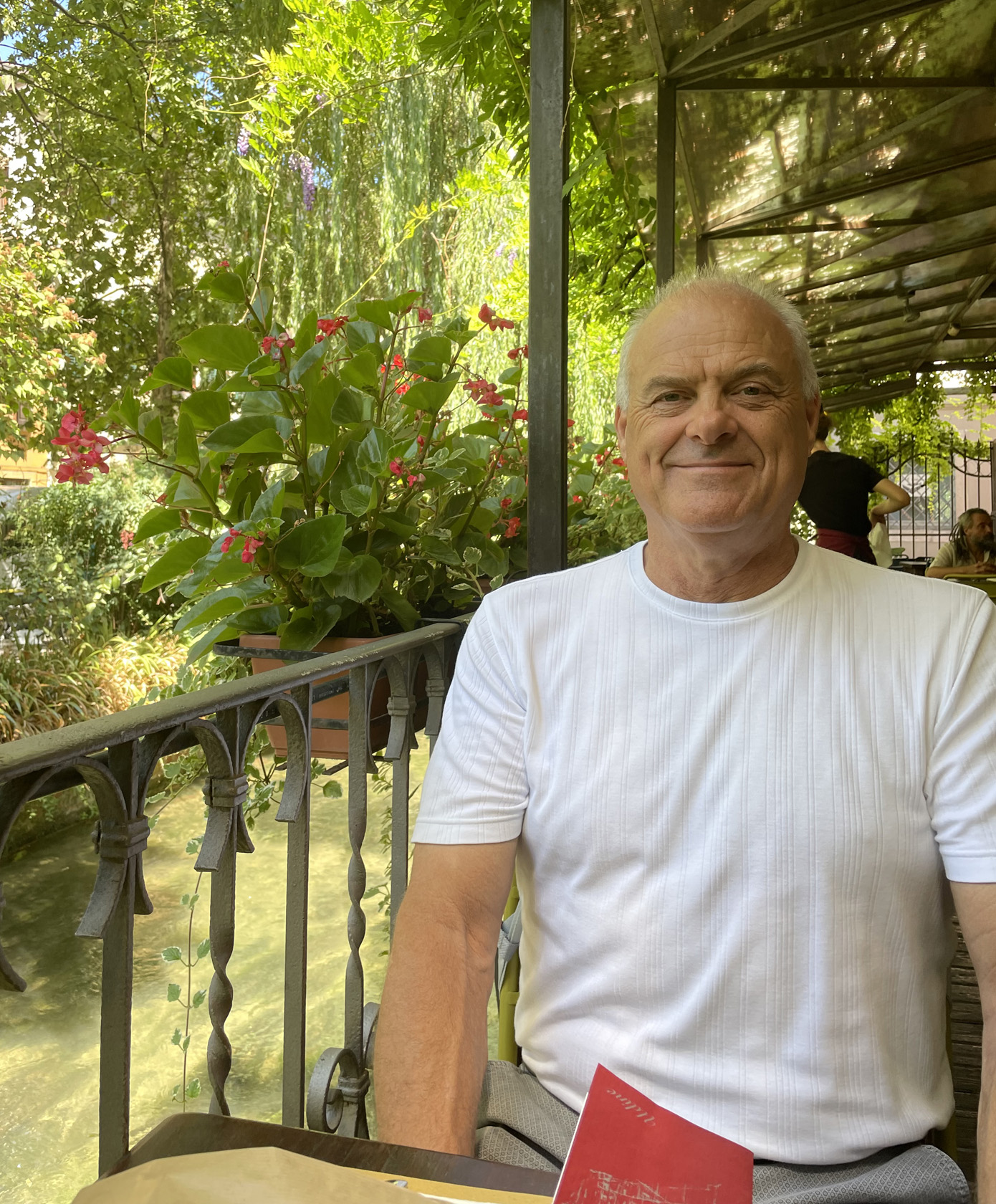
Udine – Osteria Alla Ghiacciaia – Erick
Trattoria Antica Maddalena
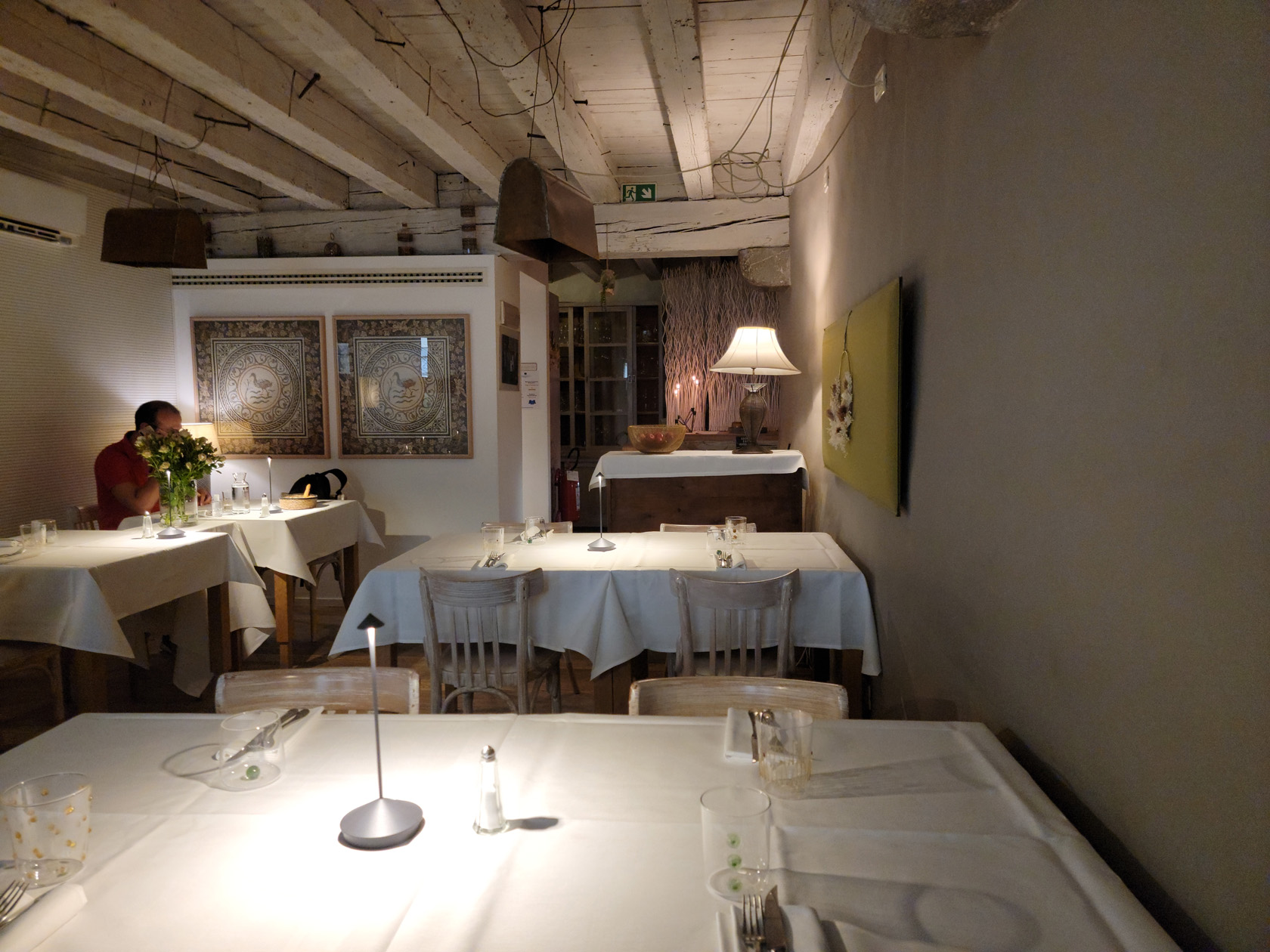
This trattoria has a bit of an upscale palette, with a menu and prices to match. As our last evening in Udine, we chose it for its high ratings and interesting looking menu. Unfortunately I forgot to take a photograph of the outside of the establishment, but have a few of the upstairs. You may want to book reservations if you want to sit outside, when we arrived the outside and downstairs seating were completely booked. So act early, if you want to enjoy this restaurant and its food with a street view!
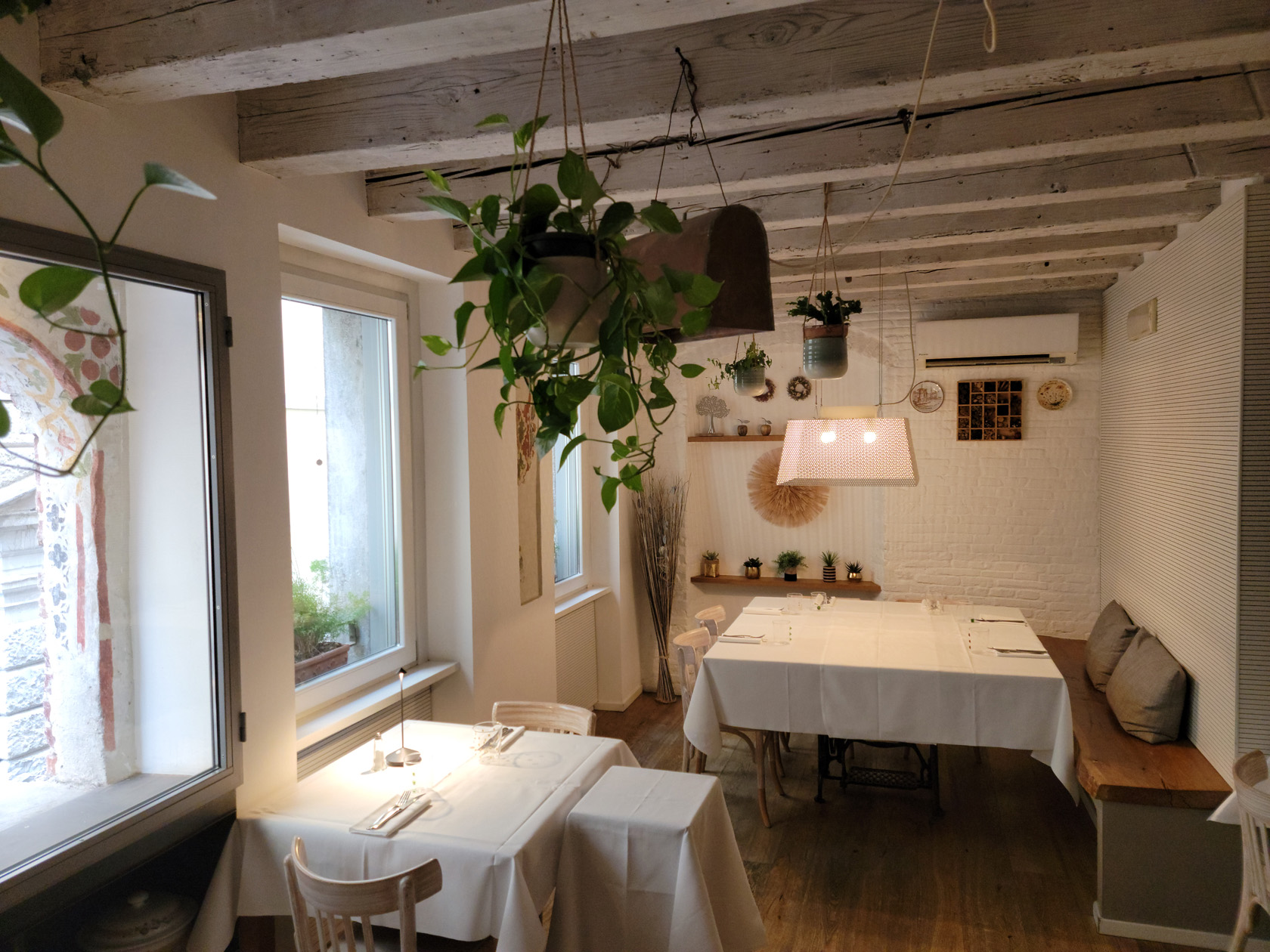
Udine – Trattoria Antica Maddalena – Inside
Udine – Trattoria Antica Maddalena – Inside
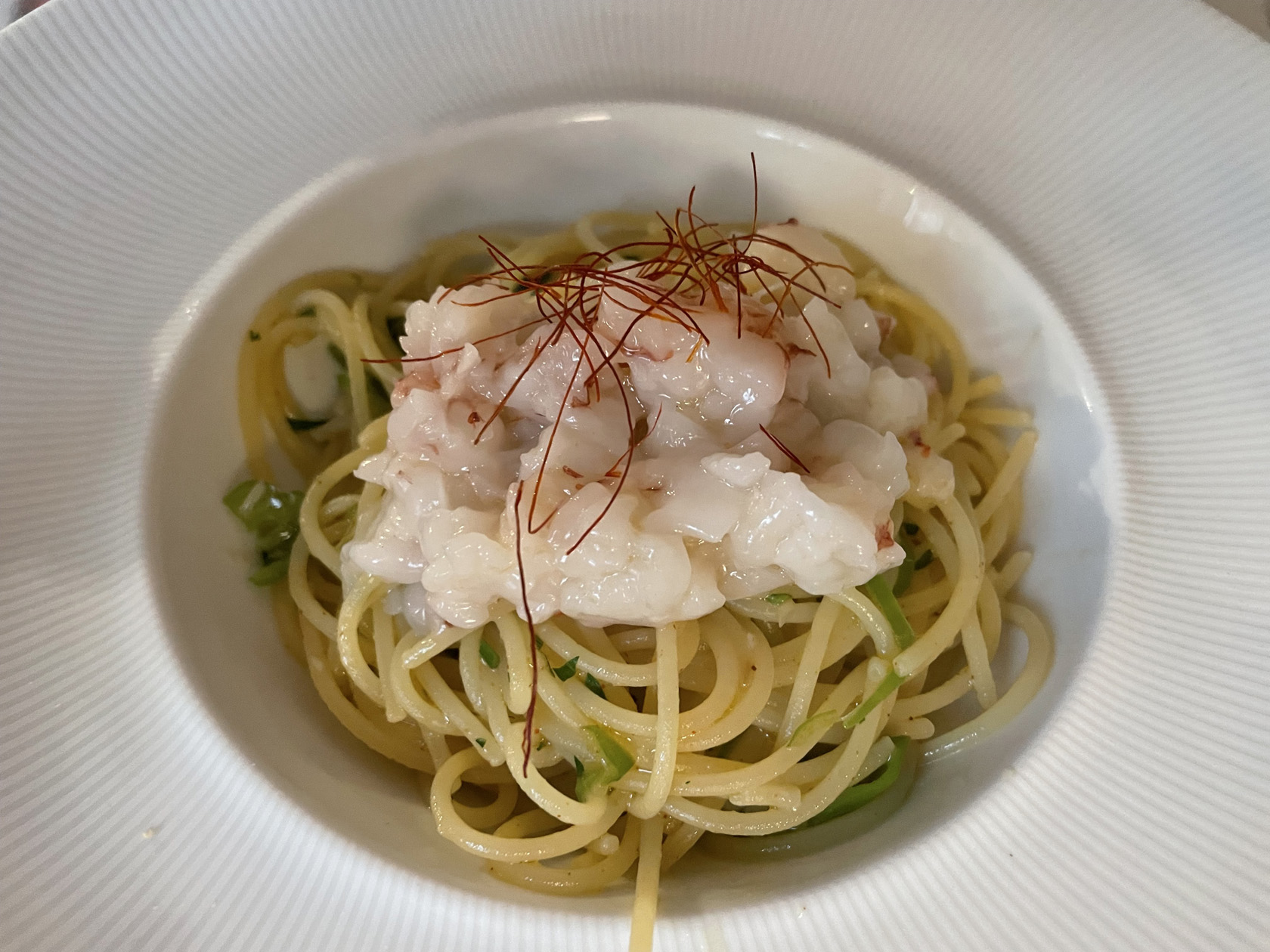
Udine – Trattoria Antica Maddalena – Spaghetti with Garlic Cream Sauce, Peppers and Shrimp Tartare
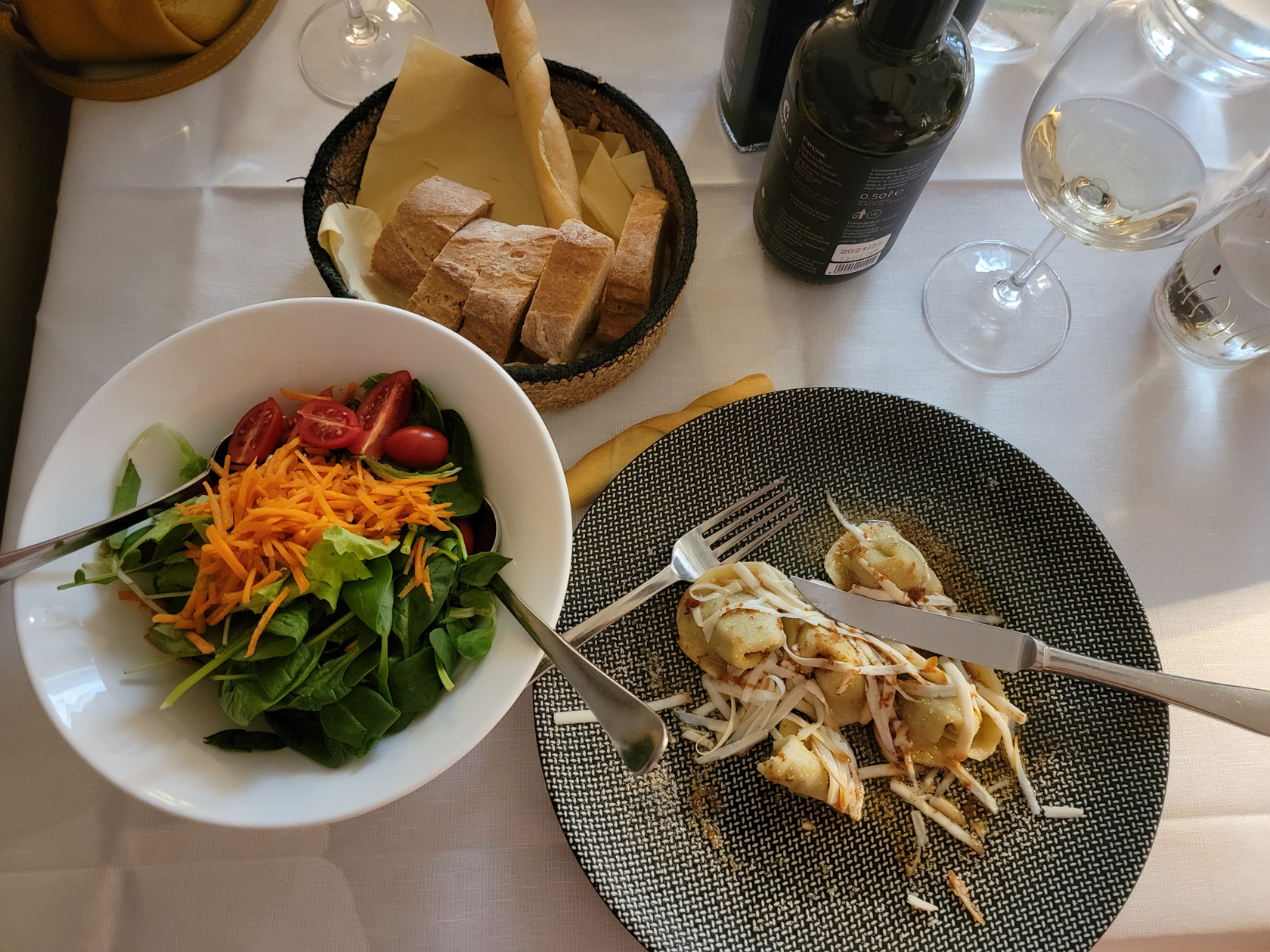
Udine – Trattoria Antica Maddalena – Cheese, Eggplant and Spices Ravioli with Insalata Mista
We leave Udine as the endpoint in our latest trip, which has taken us from one part of Italy – Trieste, through Slovenia and a little bit of Austria, back to Italy and underrated Udine. Though we both ate too much, we really enjoyed this trip and had several surprises along the way, which made it all that more memorable.
Udine – Main Train Station
So, if you are ever on a train traveling east from Milan, perhaps to Venice, Austria or Slovenia, you may want to stop at Udine to see what it has to offer. We stopped on our way back and were not disappointed, we think you wont be either. Happy travels!
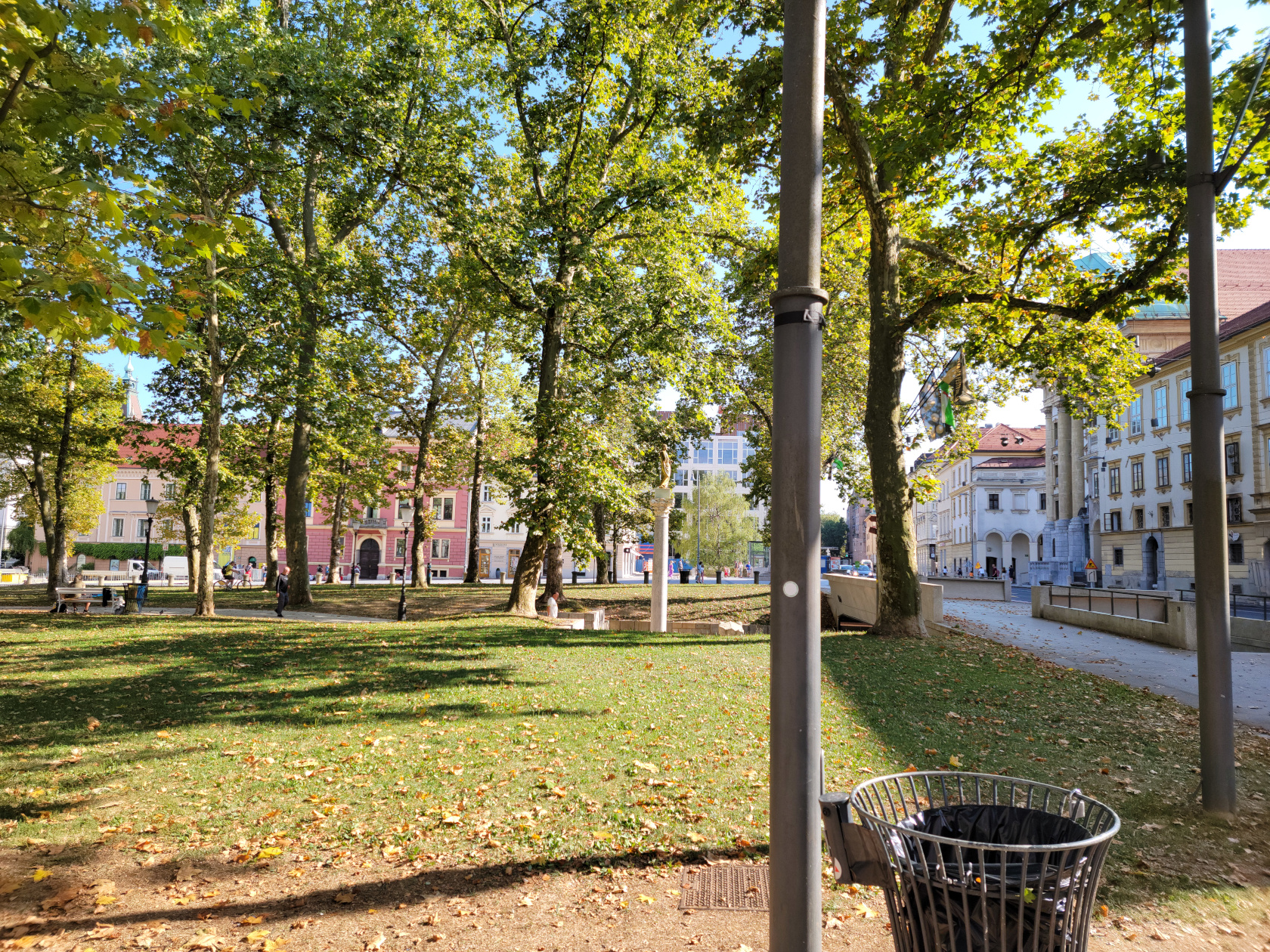
We had little slated for our last full day in Ljubljana, but we did want to see the cathedral and Tivoli Park, both of which we had missed in our former romps around town. I guess that is all that remains of our stay here, which we thoroughly and unexpectedly enjoyed.
The Roman Wall
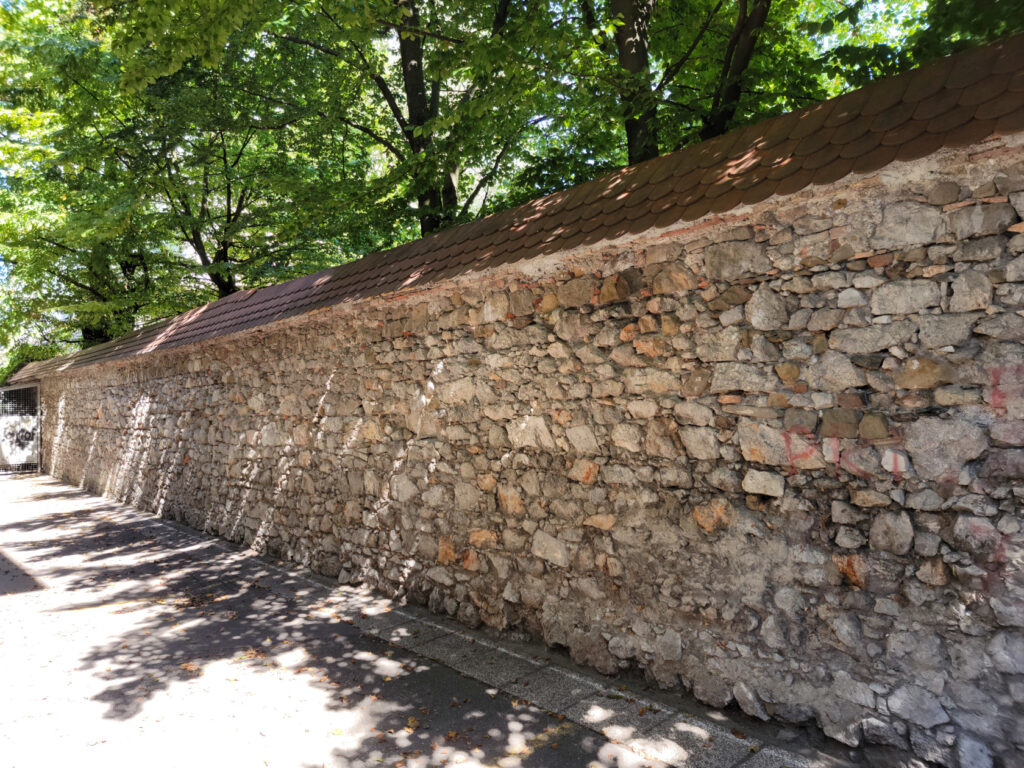
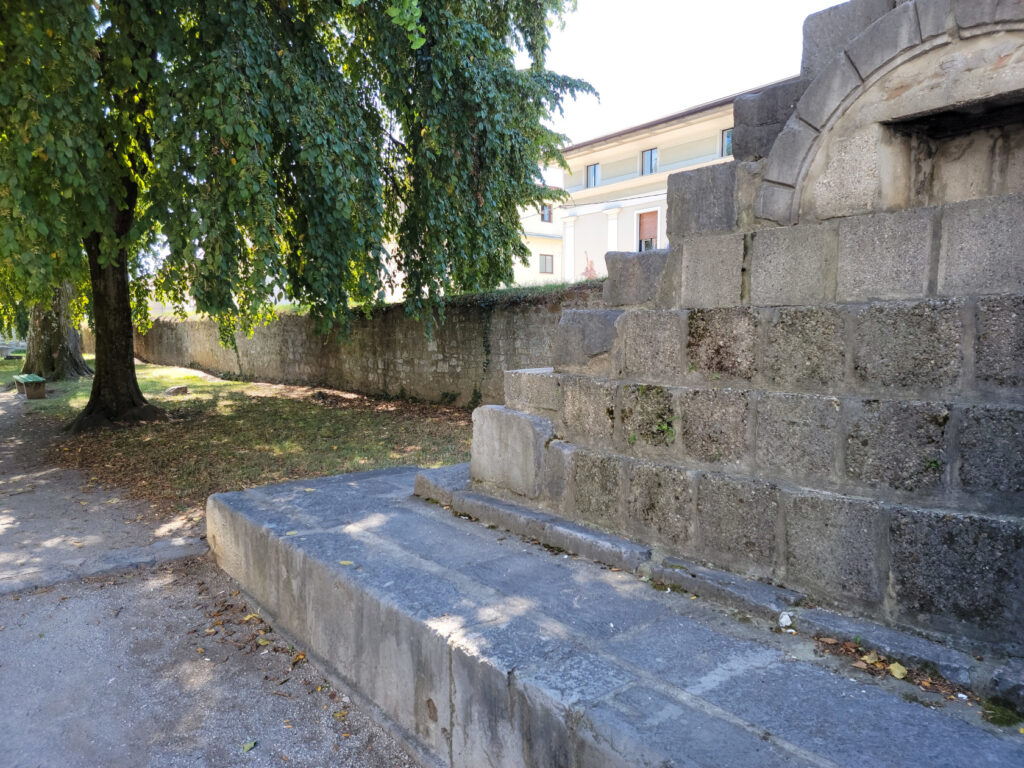
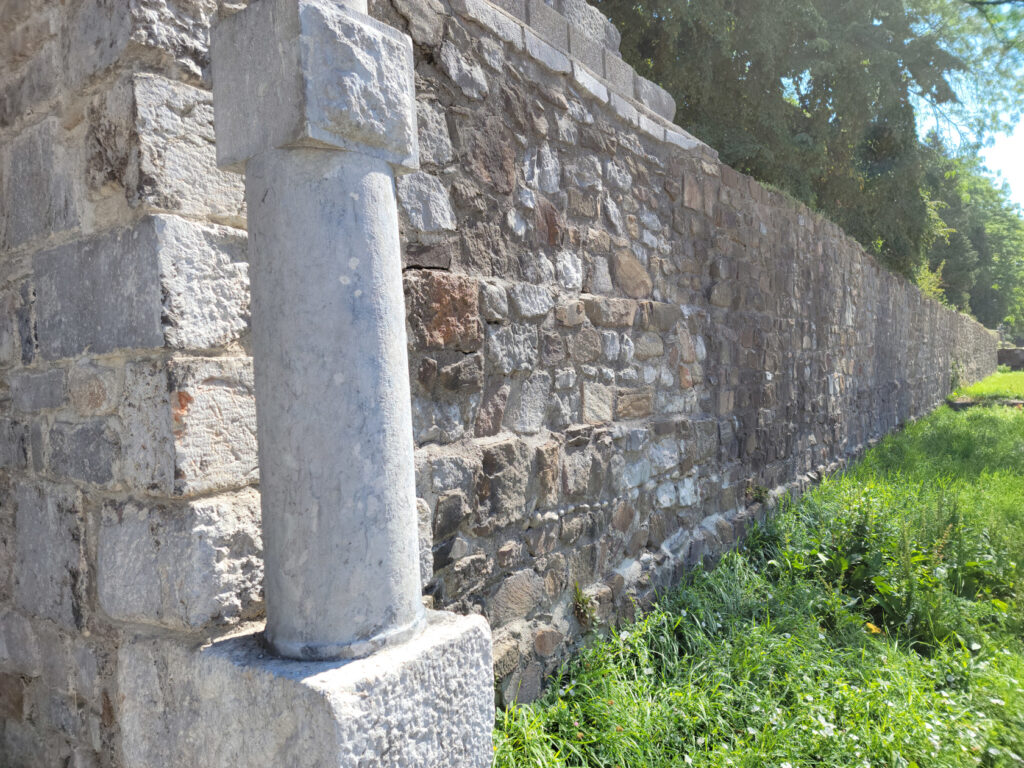
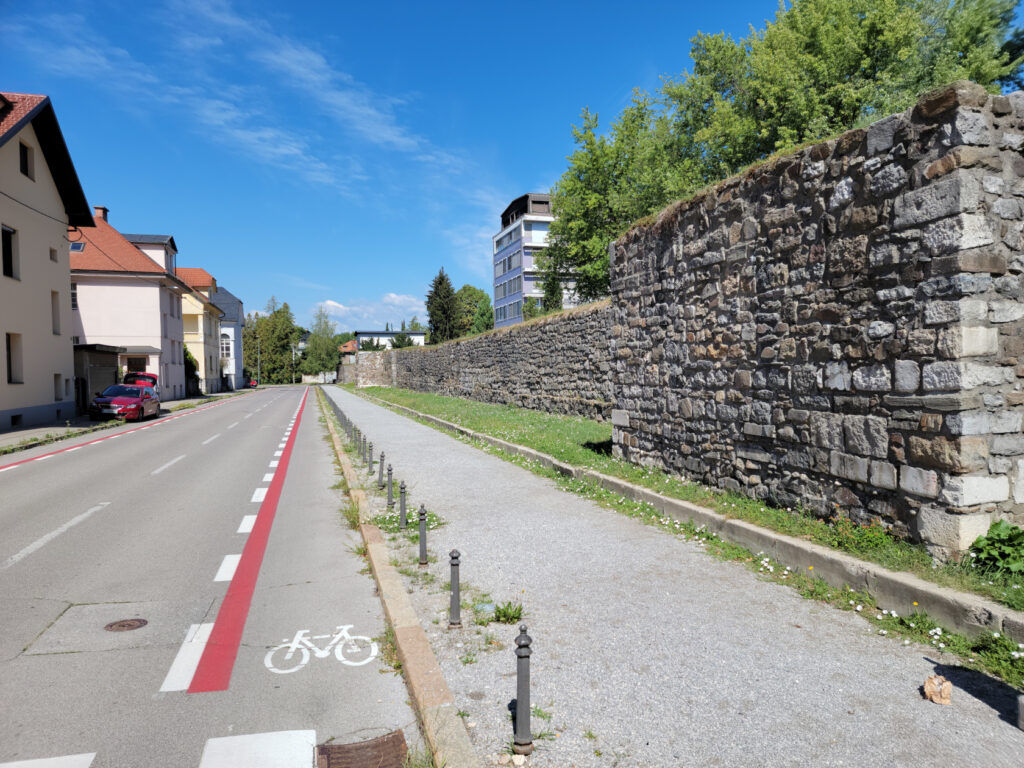
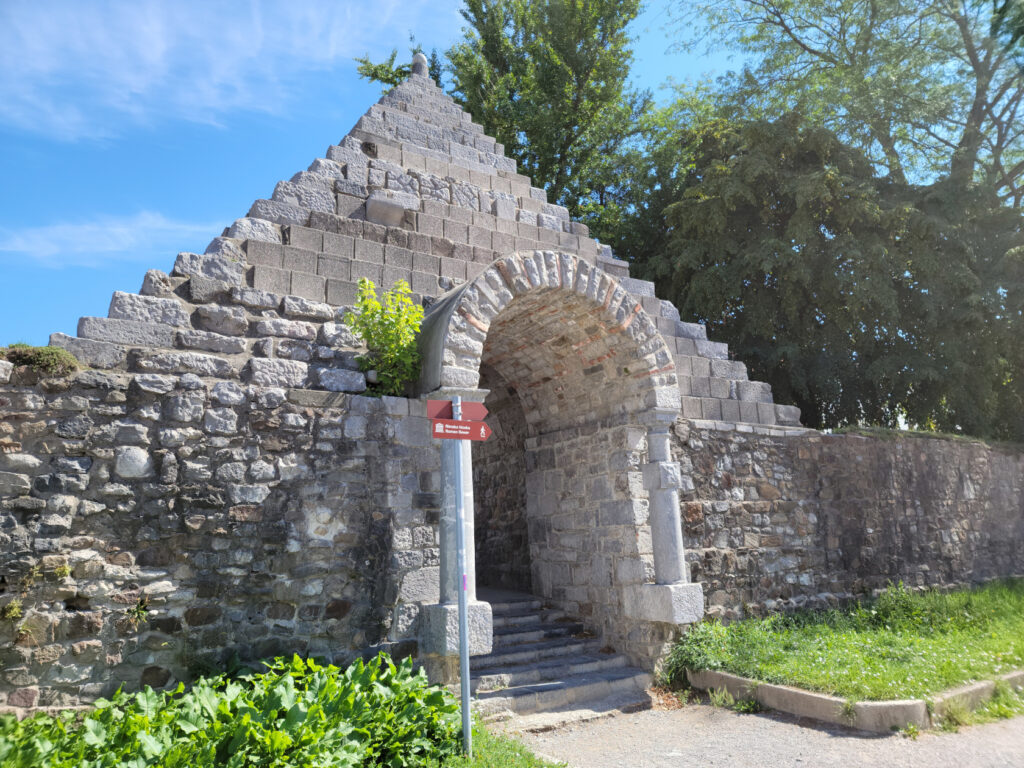
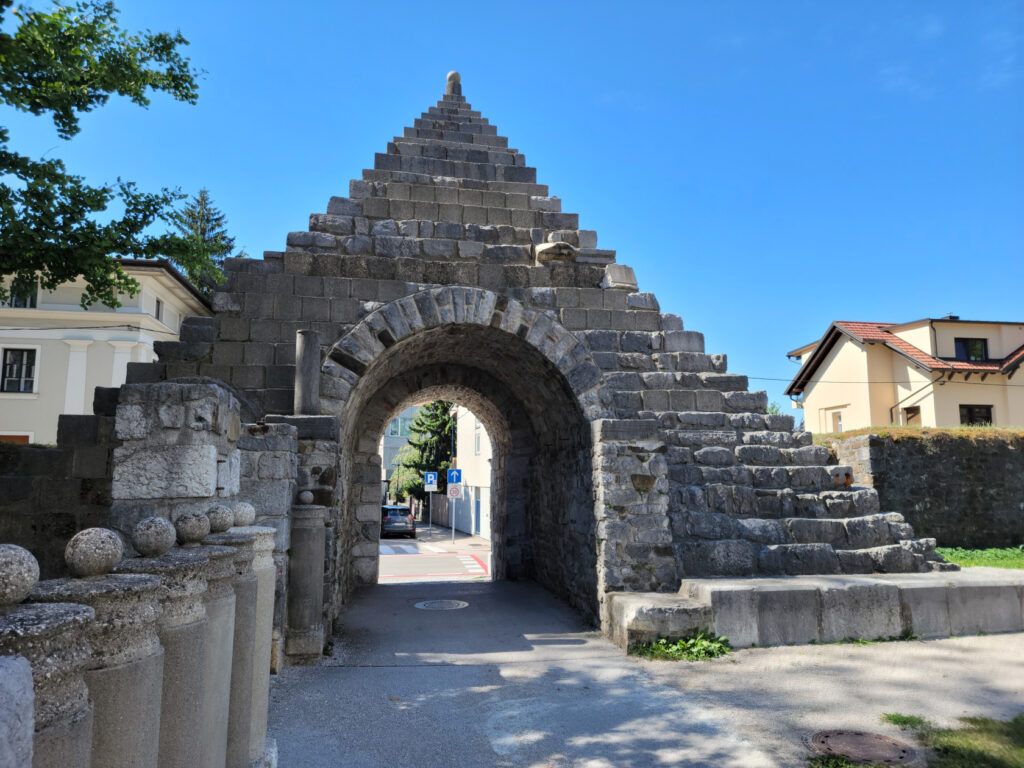
Back in Roman times the settlement which became this city was called Emona. In order to protect Emona, the Romans built a wall around it, like most other Roman towns of that era.
Ljubljana – Park near Roman Wall
Ljubljana – Old Roman or Emona Wall
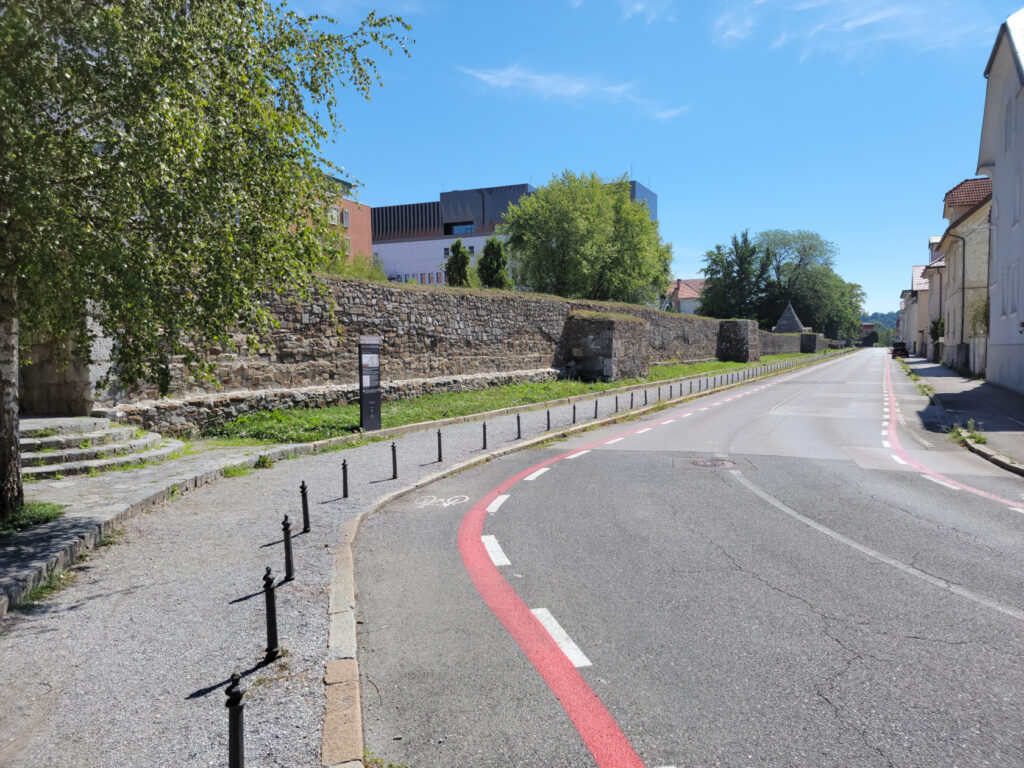
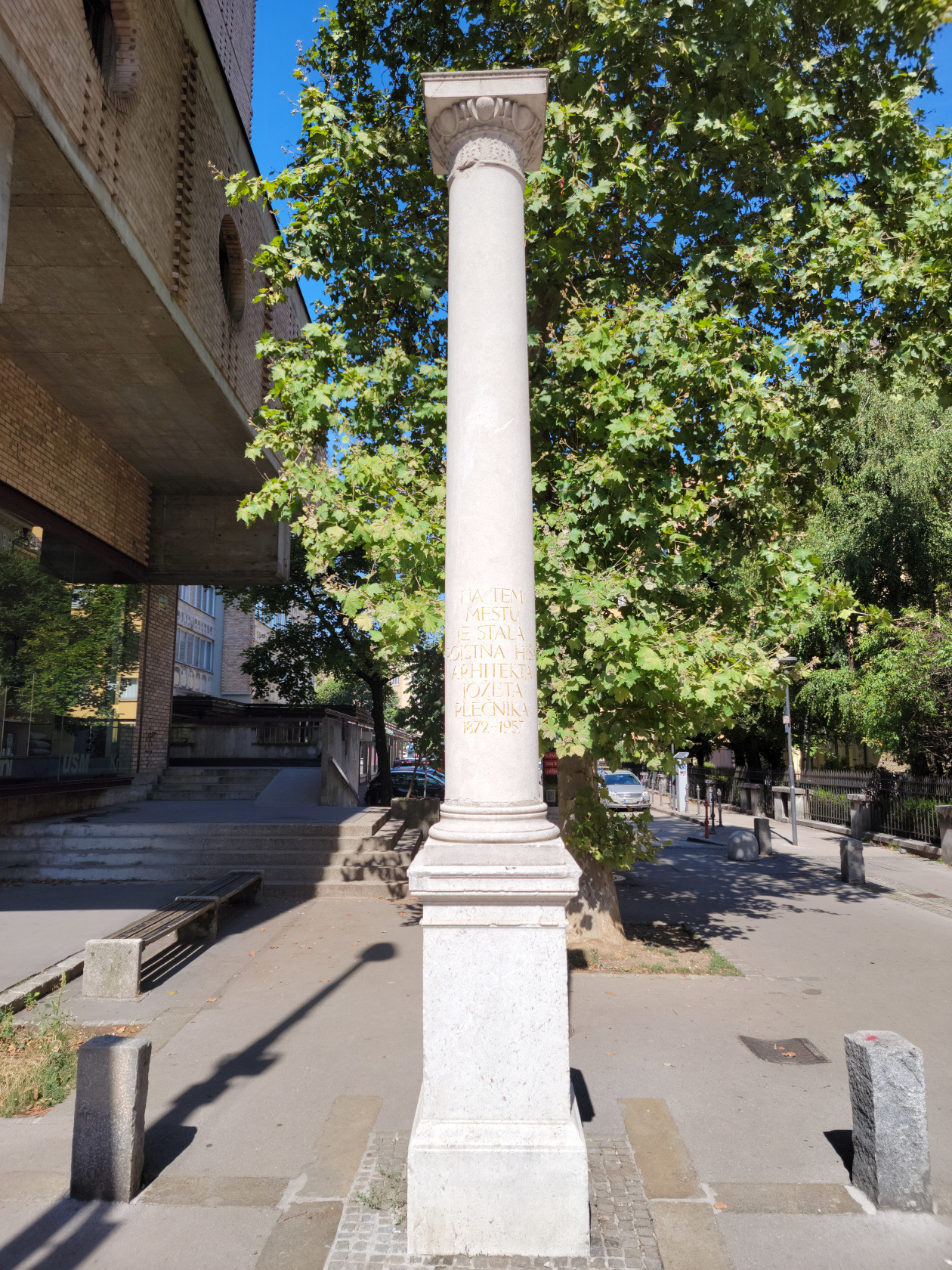
Ljubljana – Old Roman Wall and Plecnik’s 1938 Pyramid
Ljubljana – Old Roman Wall
Ljubljana – Old Roman Wall
Ljubljana – Old Roman Wall
This wall was reconstructed in the early nineteenth century, along with a pyramidal feature for one of its gates.
Ljubljana – Old Roman Wall and Plecnik’s 1938 Pyramid
Ljubljana – Old Roman Wall and Plecnik’s 1938 Pyramid
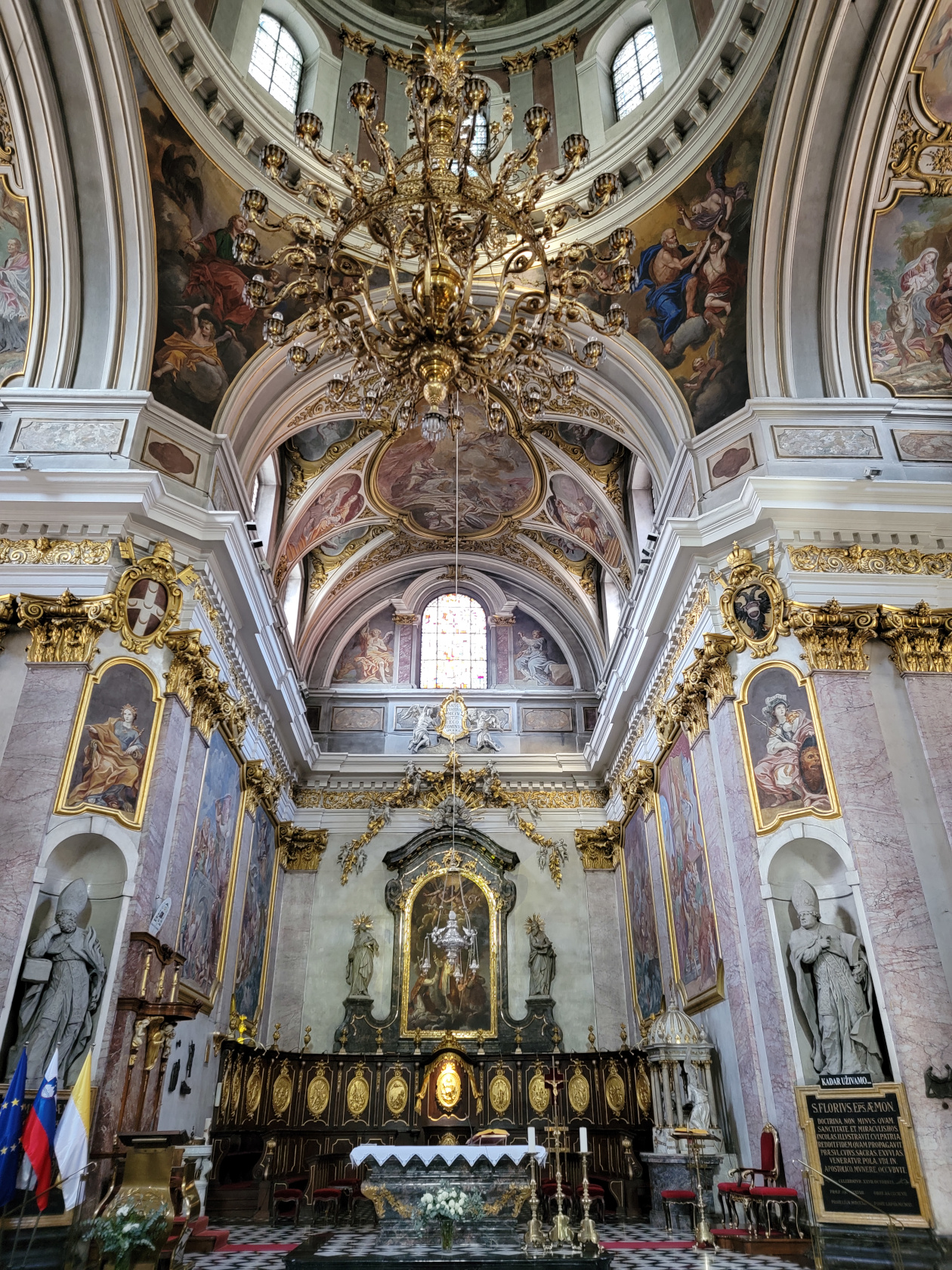
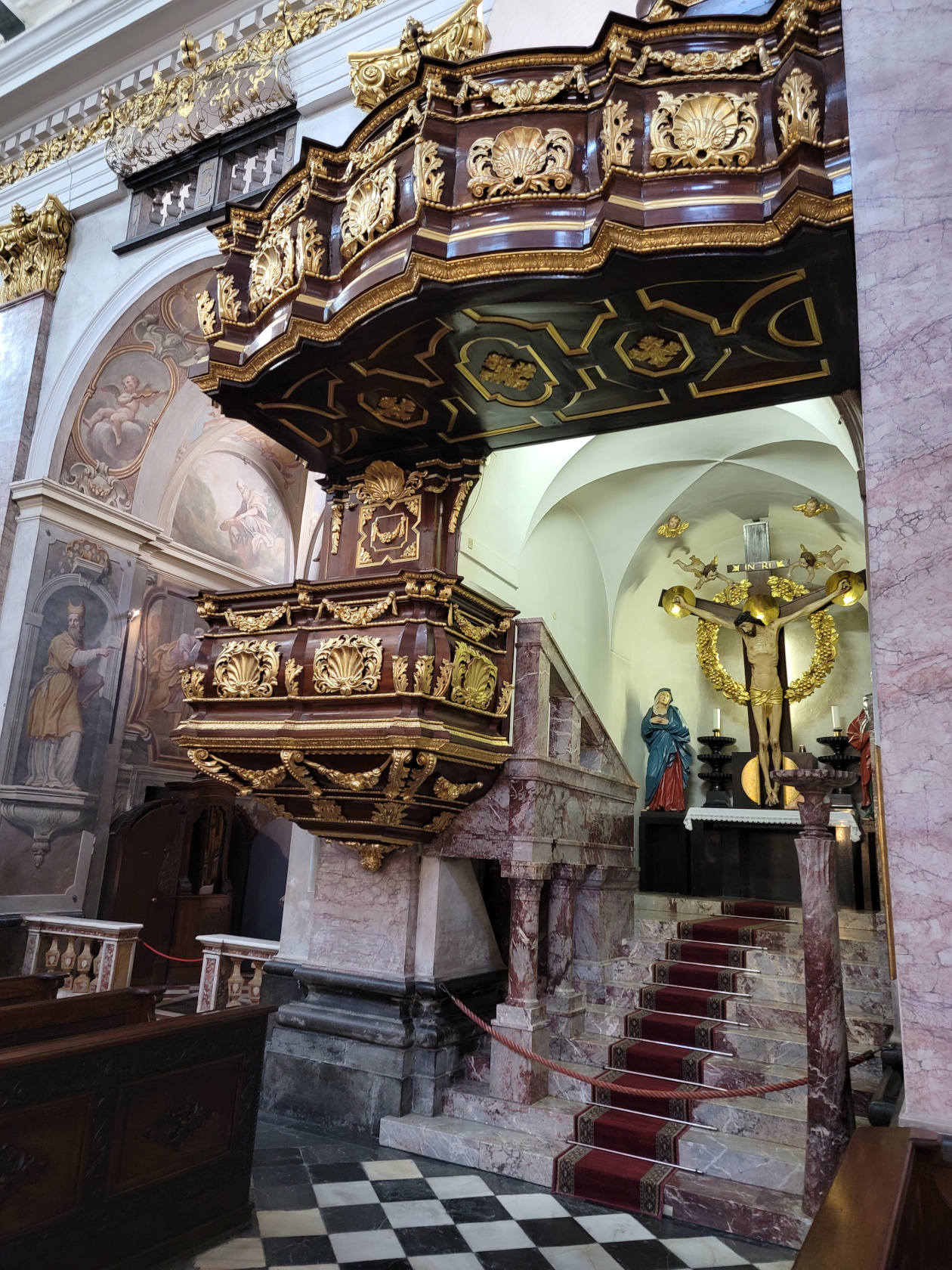
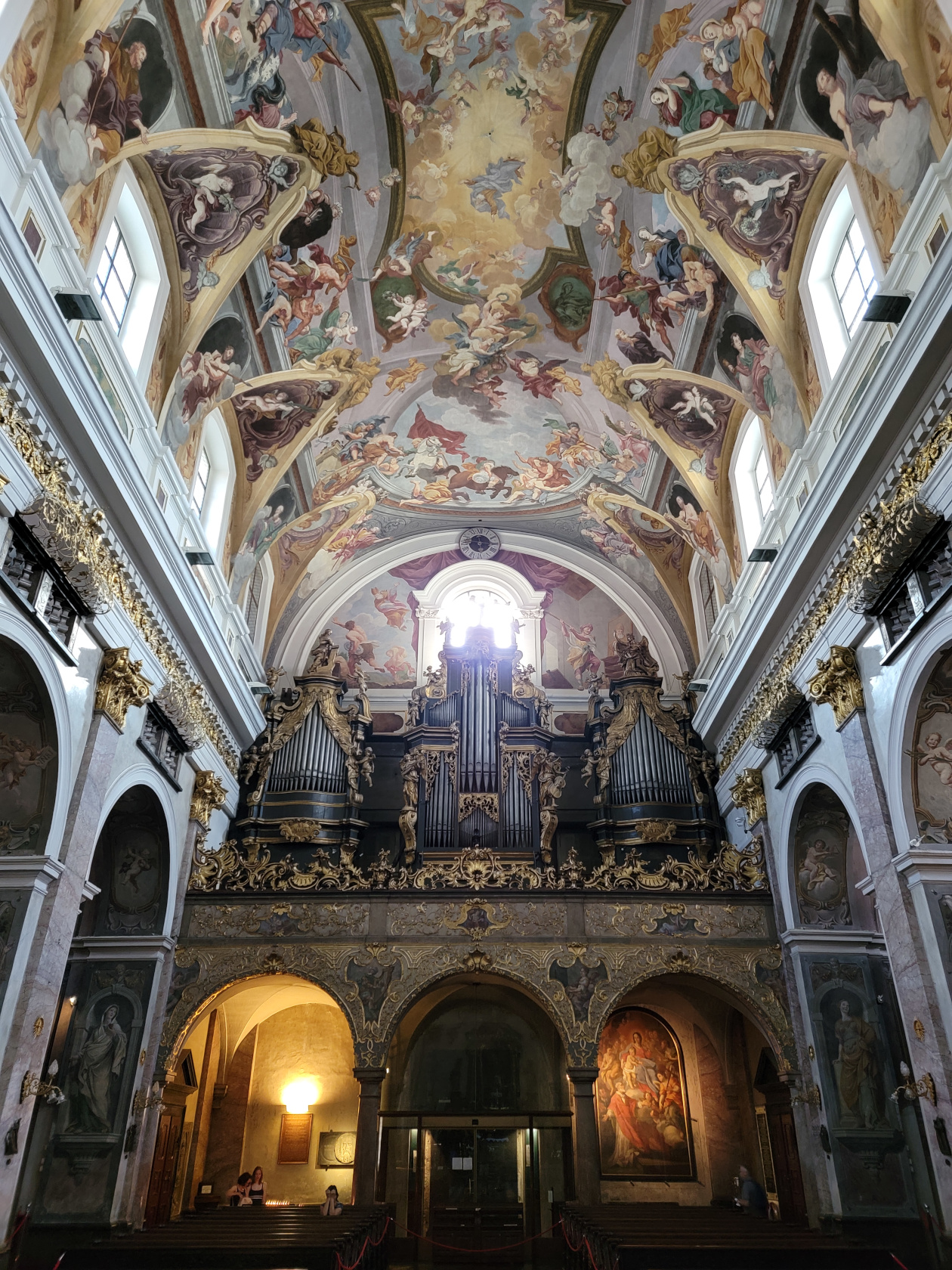
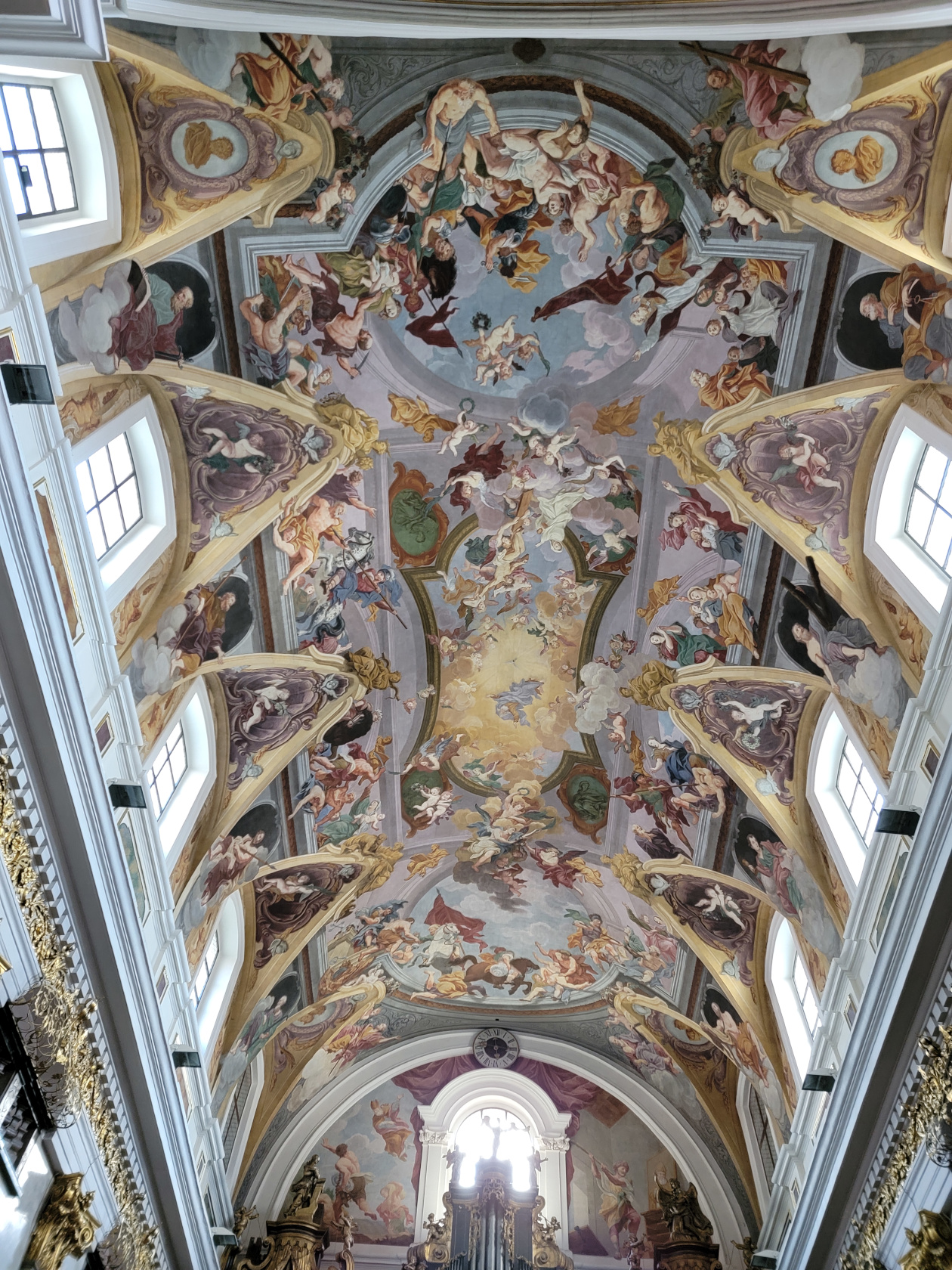
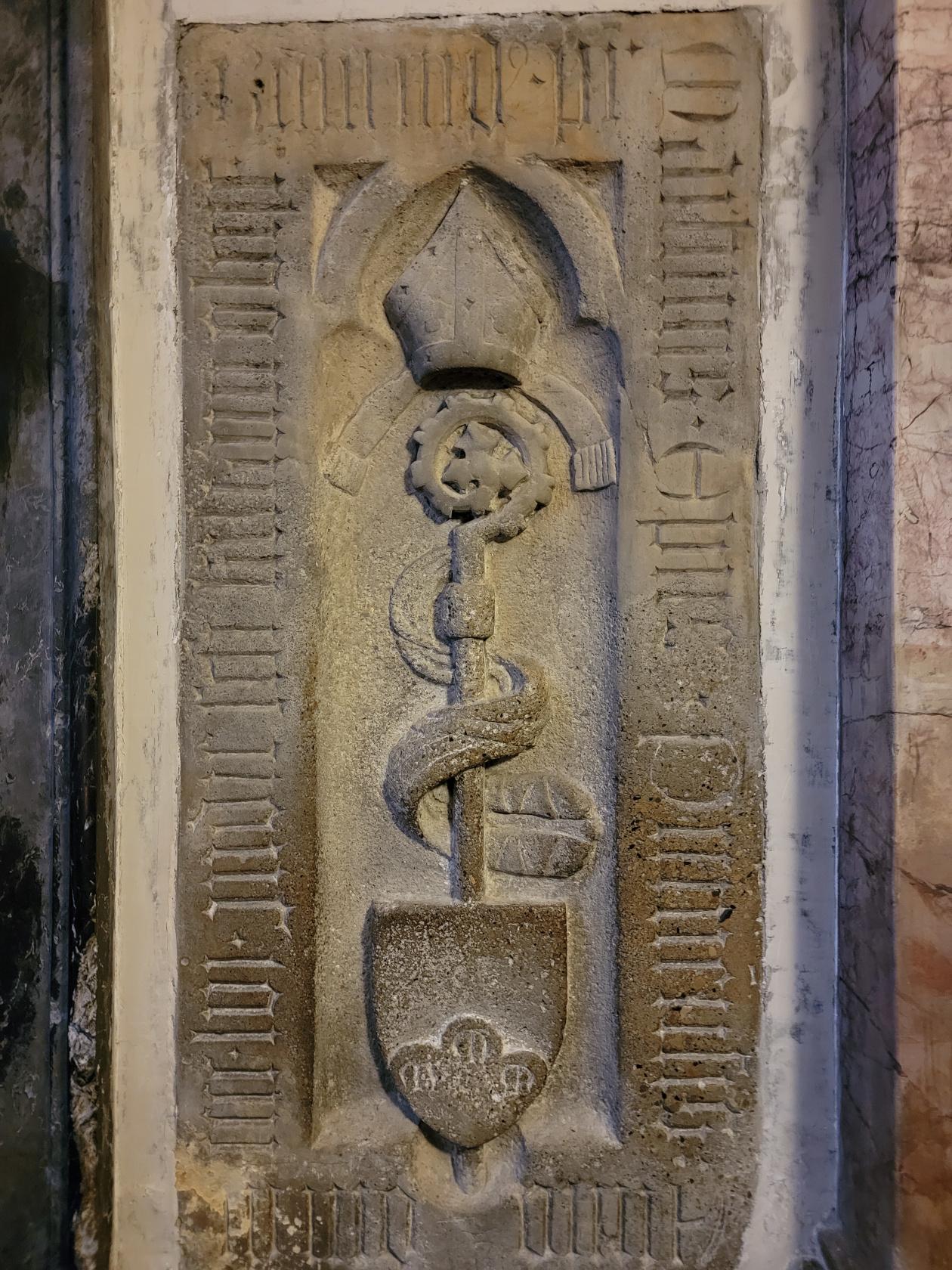
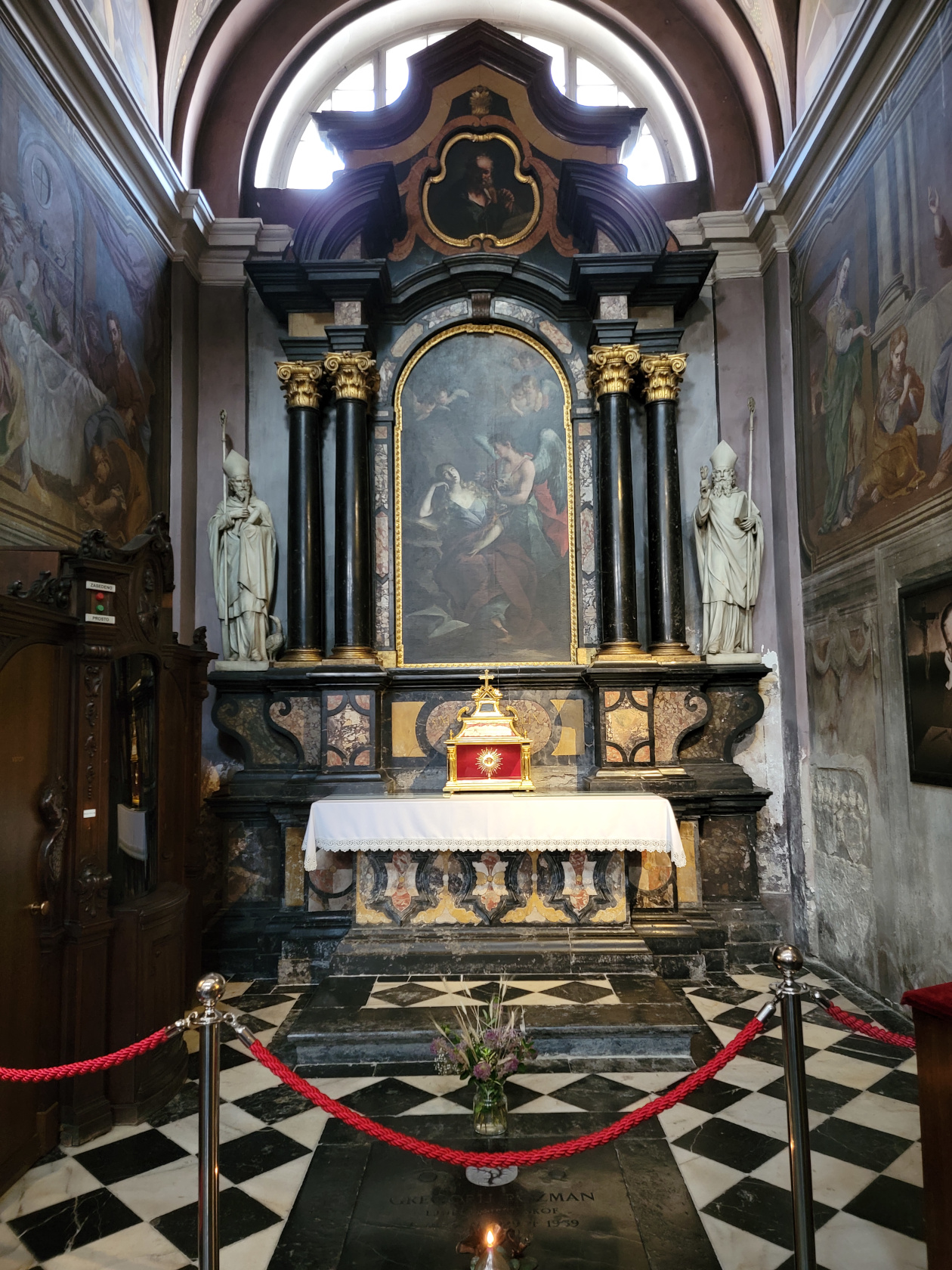
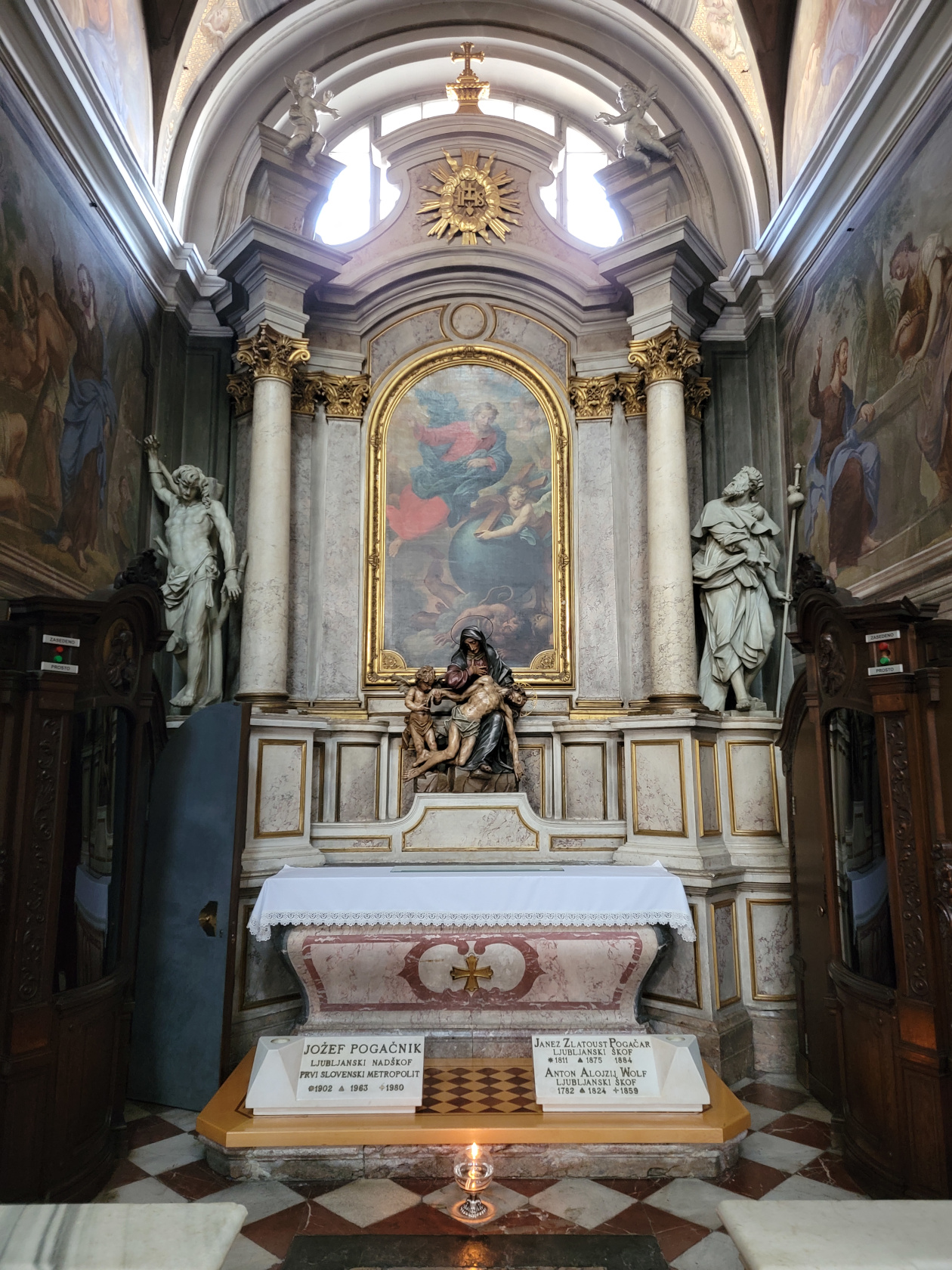
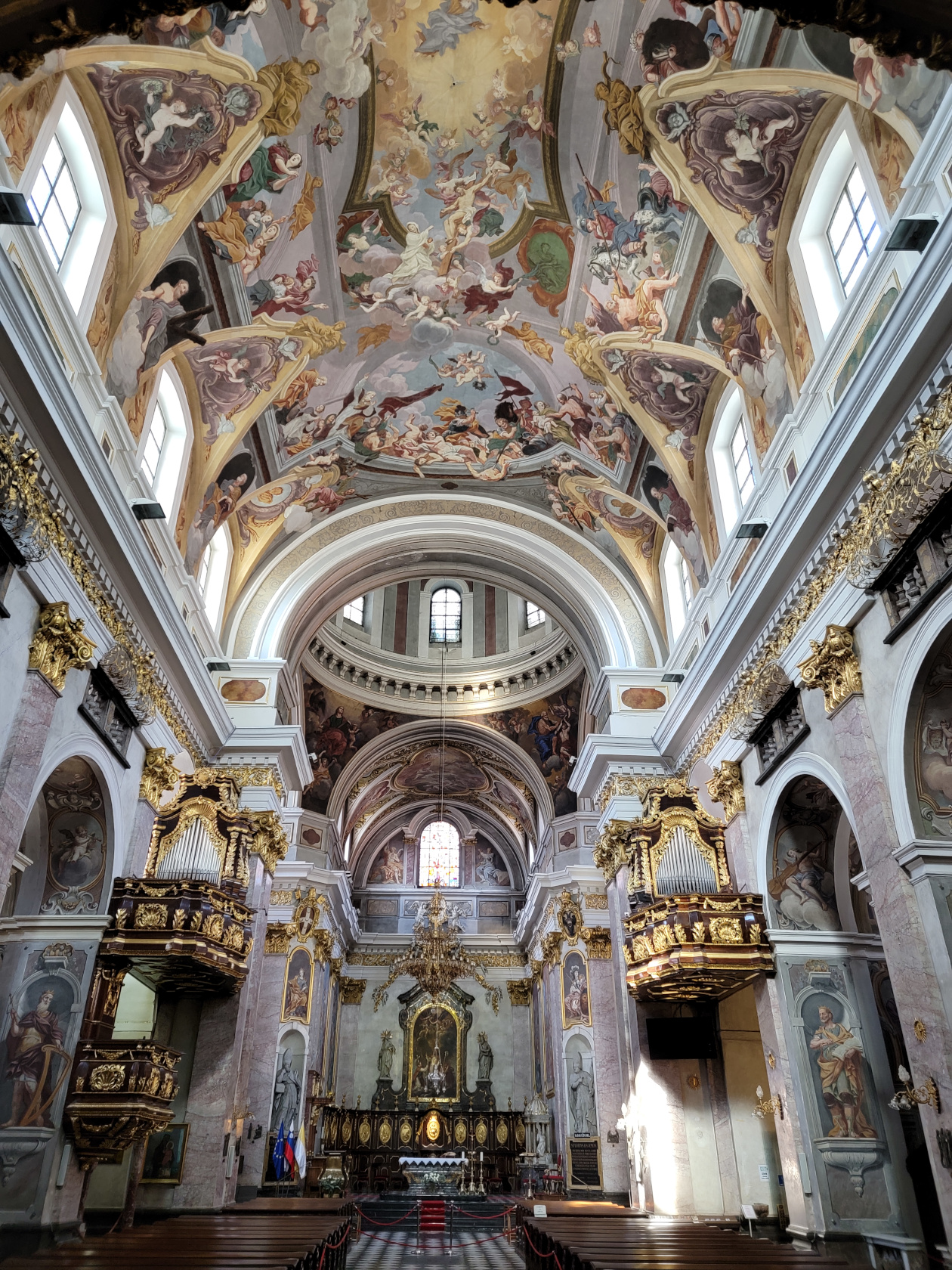
The Ljubljana Cathedral
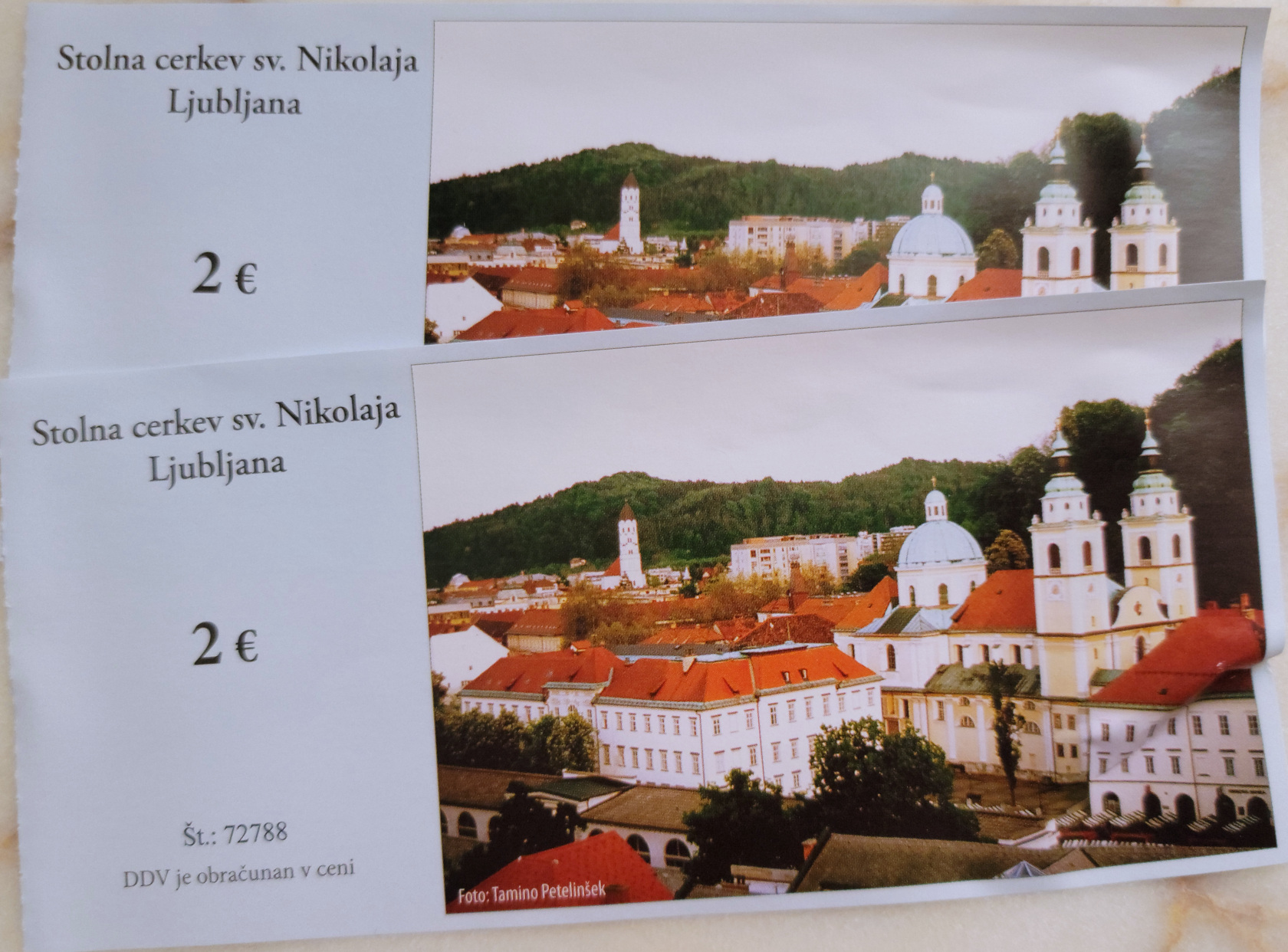
Ljubljana – Ljubljana Cathedral – Tickets For Two
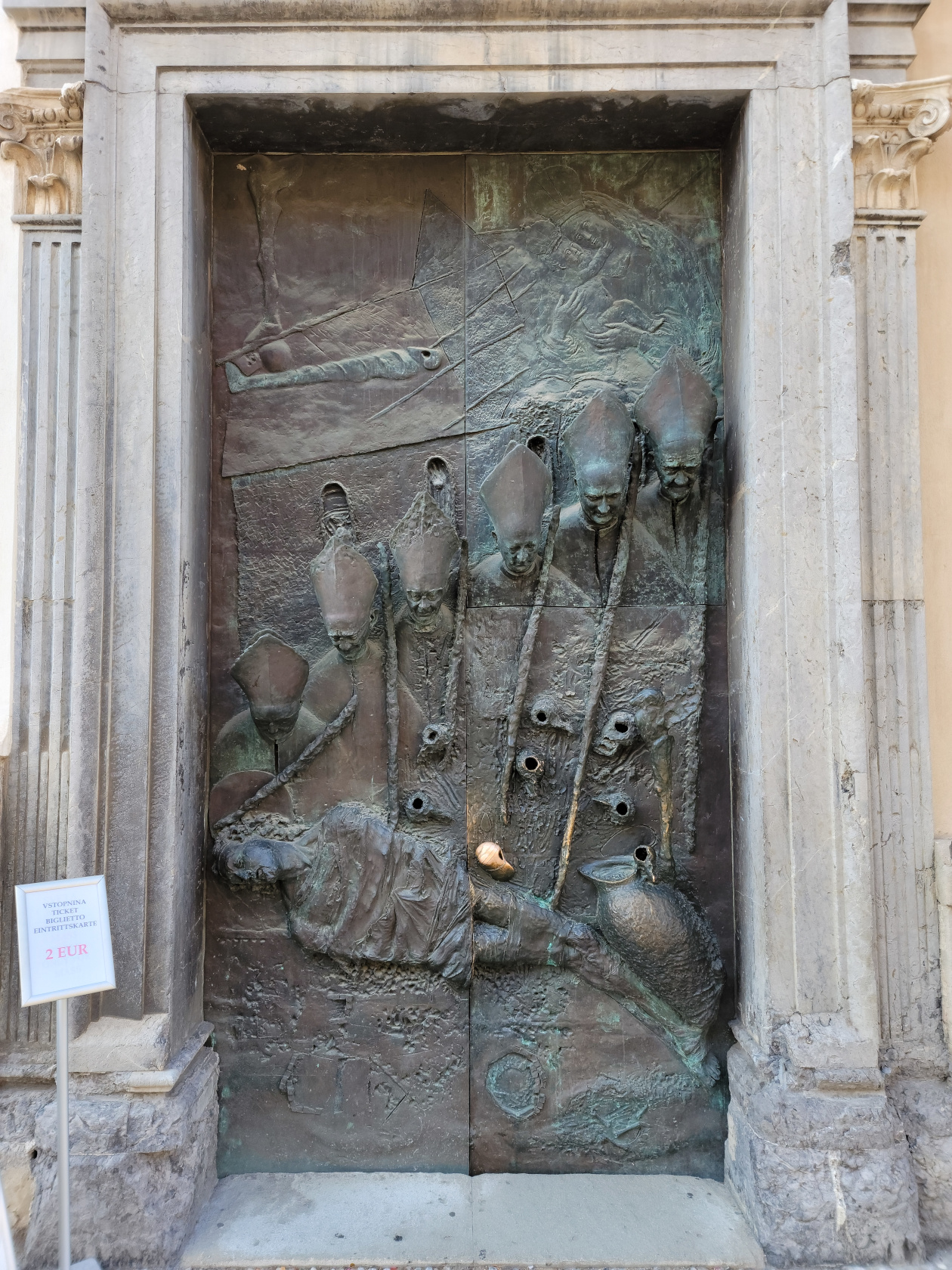
The Ljubljana Cathedral is not always open to the public, so you have to check the side door for the times. There is a 2€ fee per person to see the cathedral, so be prepared pay, if you want a peek.
Ljubljana – Ljubljana Cathedral – Bronze Door
Ljubljana – Ljubljana Cathedral
Ljubljana – Ljubljana Cathedral
Ljubljana – Ljubljana Cathedral
Ljubljana – Ljubljana Cathedral
Ljubljana – Ljubljana Cathedral
Ljubljana – Ljubljana Cathedral
Ljubljana – Ljubljana Cathedral
Ljubljana – Ljubljana Cathedral
Ljubljana – Ljubljana Cathedral – Old Papel Seal
Ljubljana – Ljubljana Cathedral
Ljubljana – Ljubljana Cathedral
Ljubljana – Ljubljana Cathedral
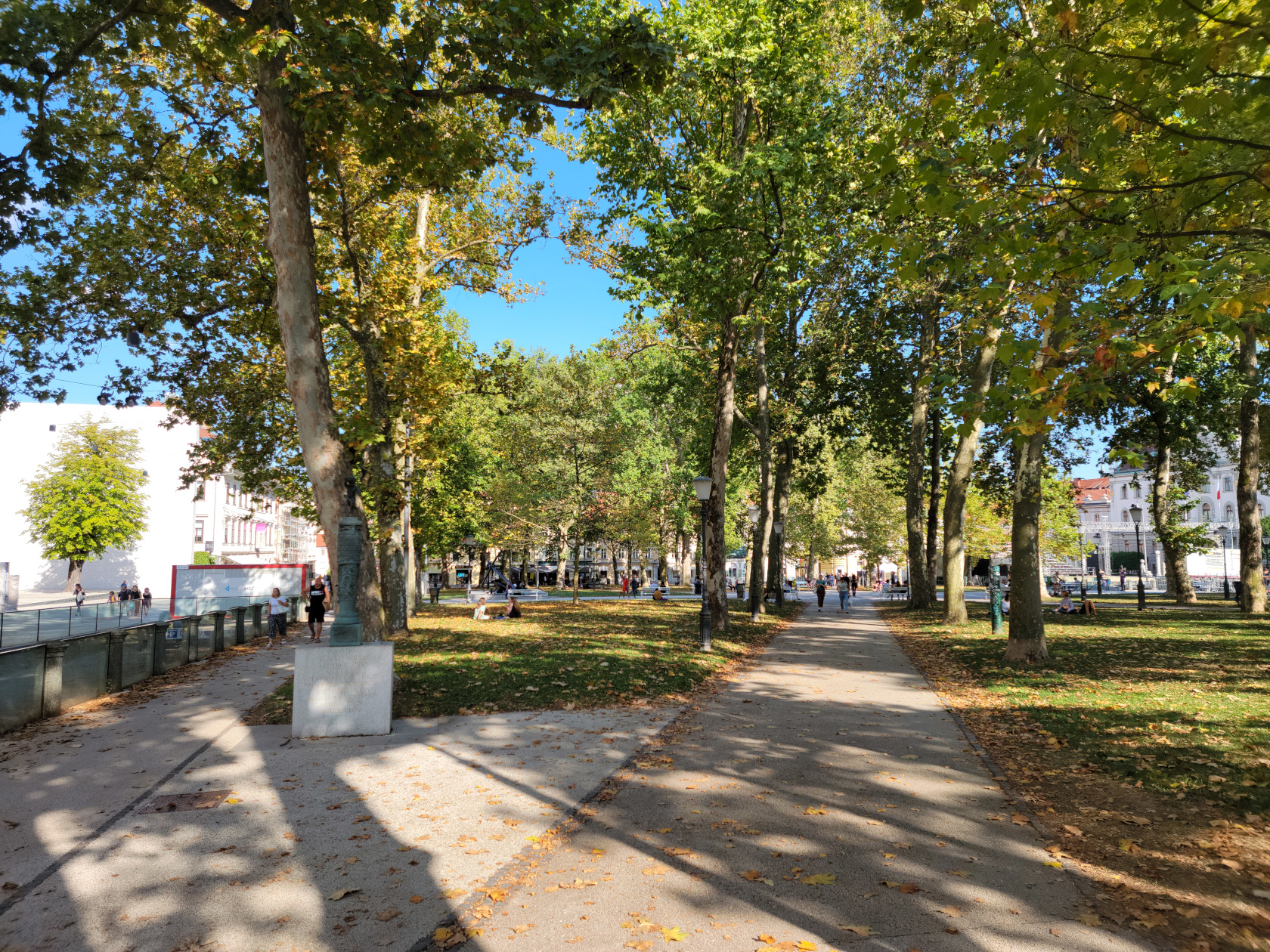
Tivoli Park
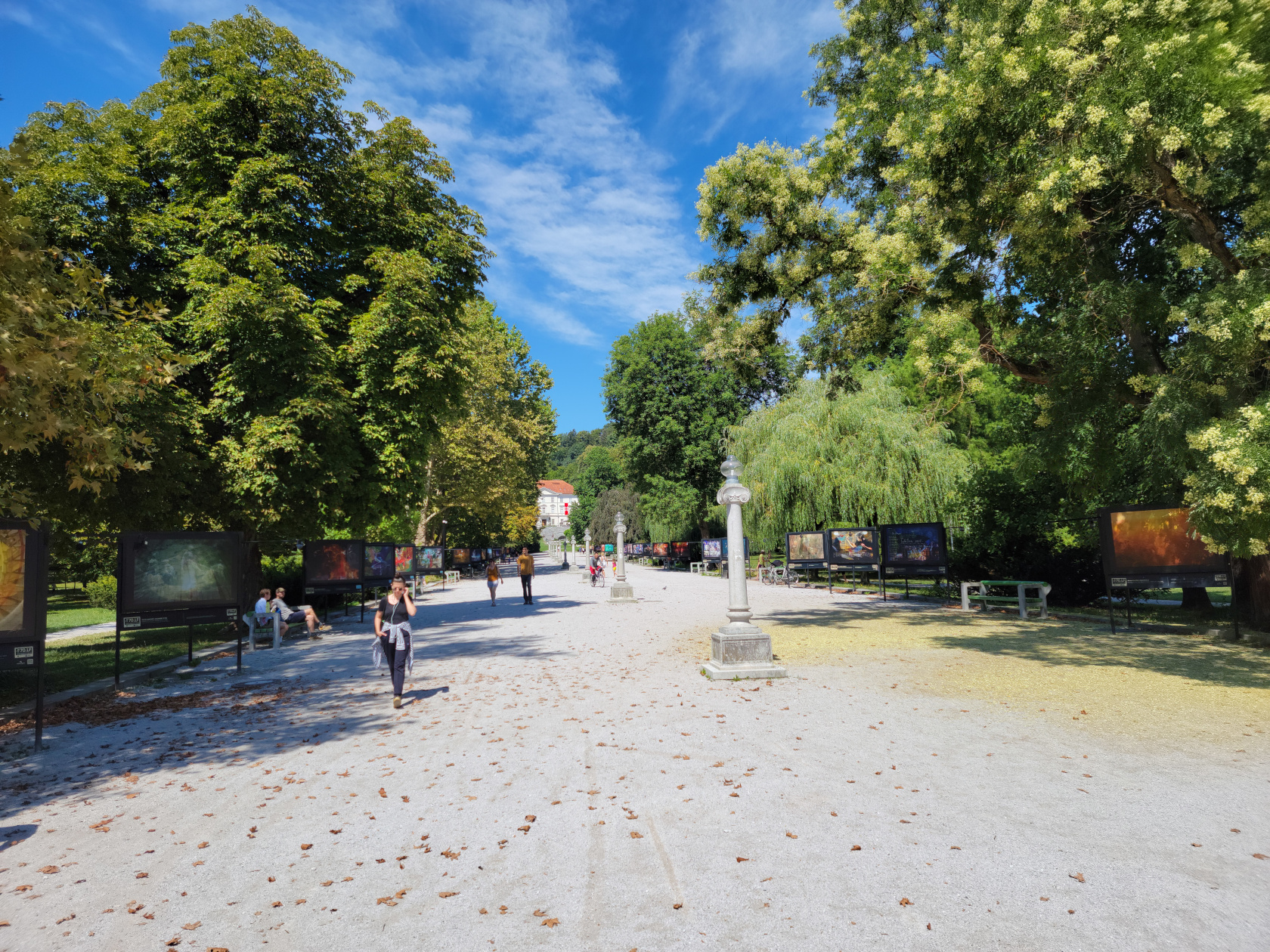
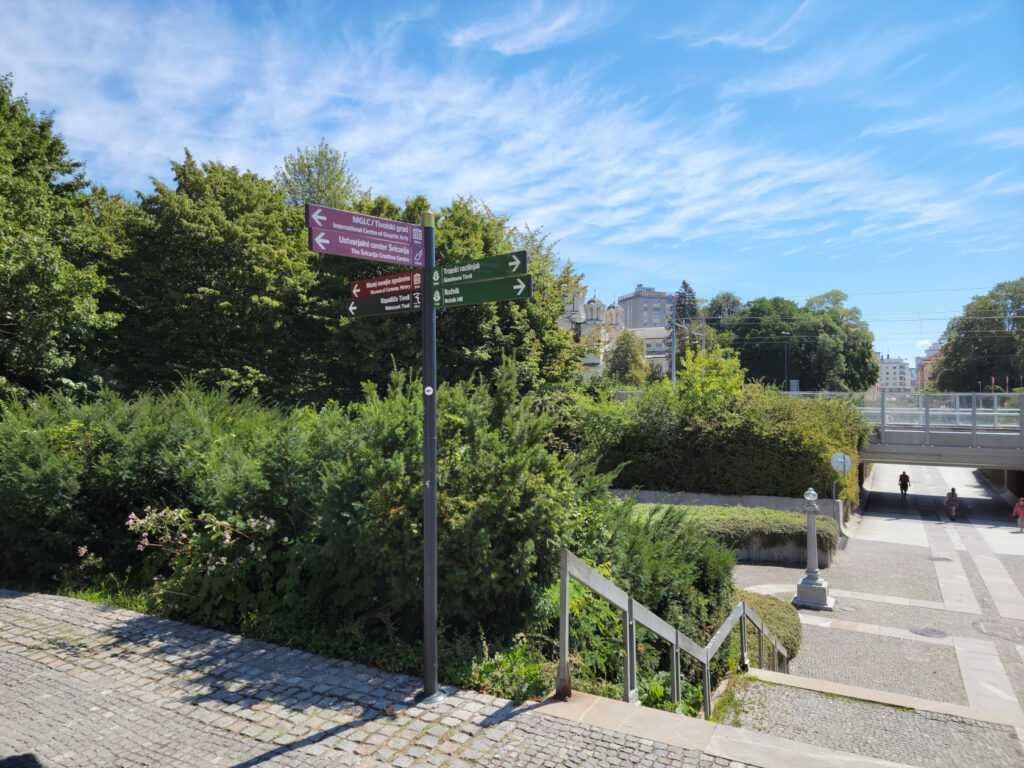
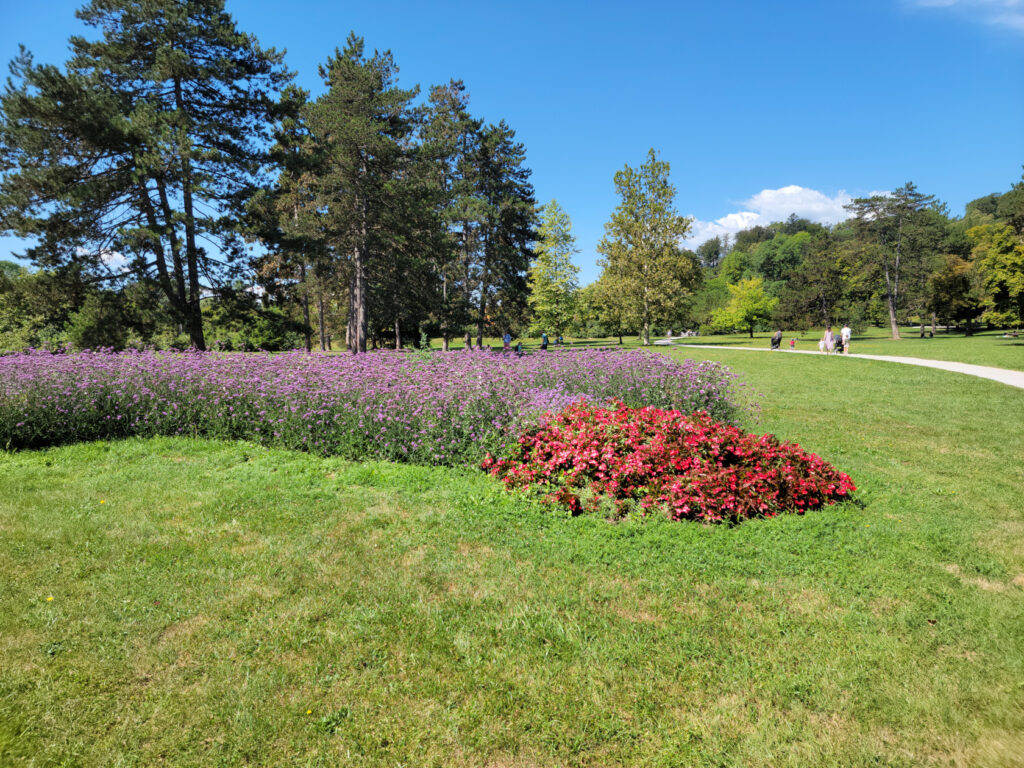
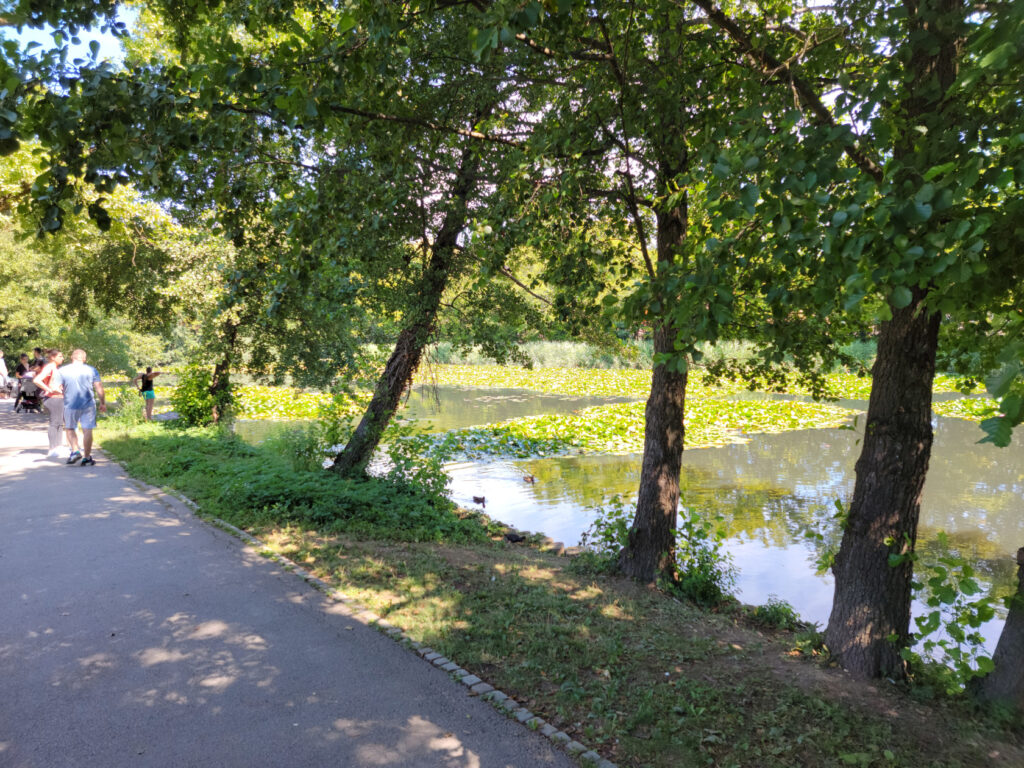
Tivoli Park, also known as Tivoli City Park, is pretty large and covers a huge hill that is some four hundred meters in height, so be prepared for some serious walking. For the less ambitious, you may walk around its edges and have just as much fun, without getting tired or sweaty.
Ljubljana – Tivoli Park
We went on a Sunday, so it was pretty busy with native Ljubljanians and Sloveniens enjoying the cafes and park facilities.
Ljubljana – Tivoli Park Entrance
Ljubljana – Tivoli Park
Ljubljana – Tivoli Park
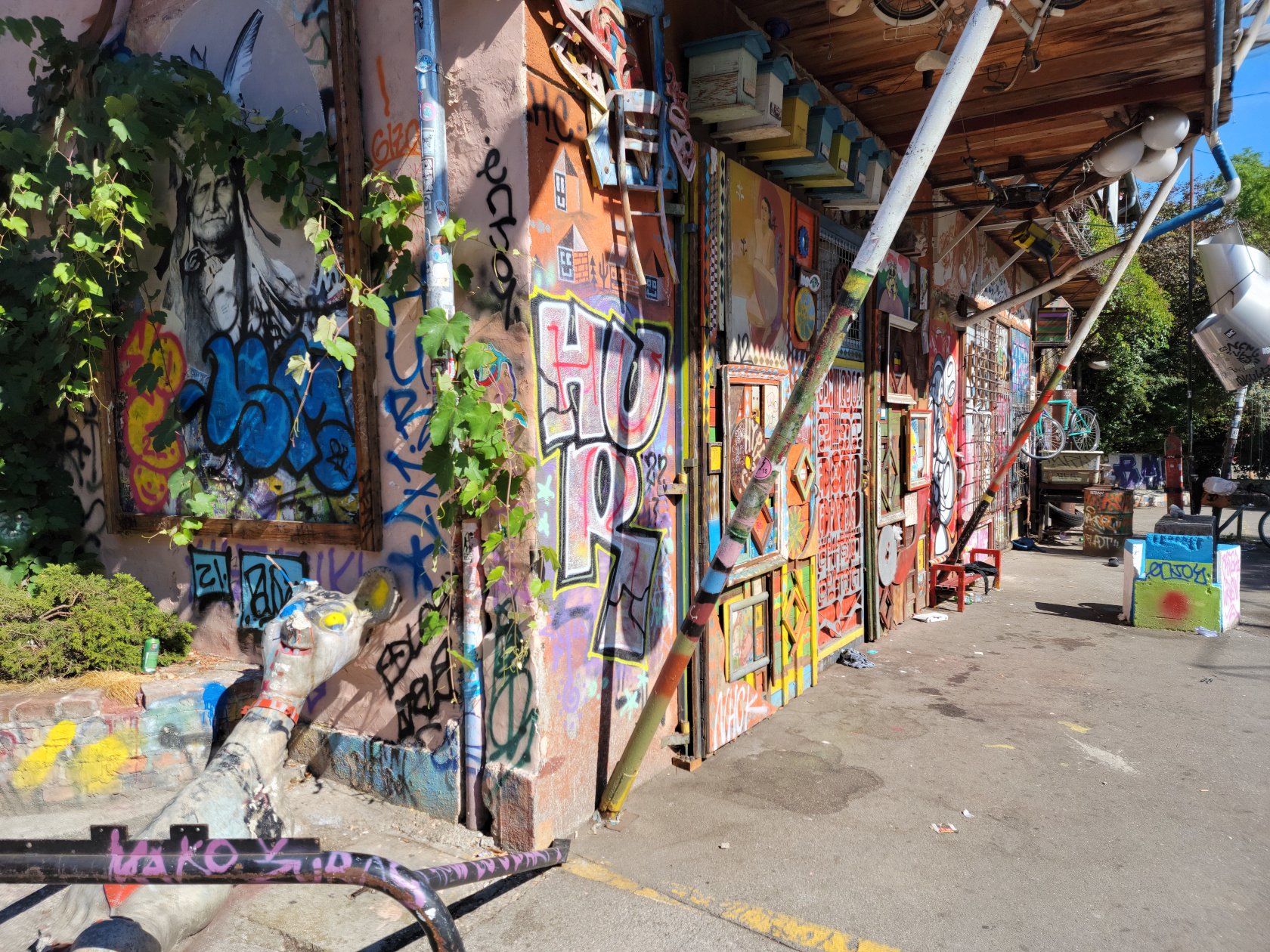
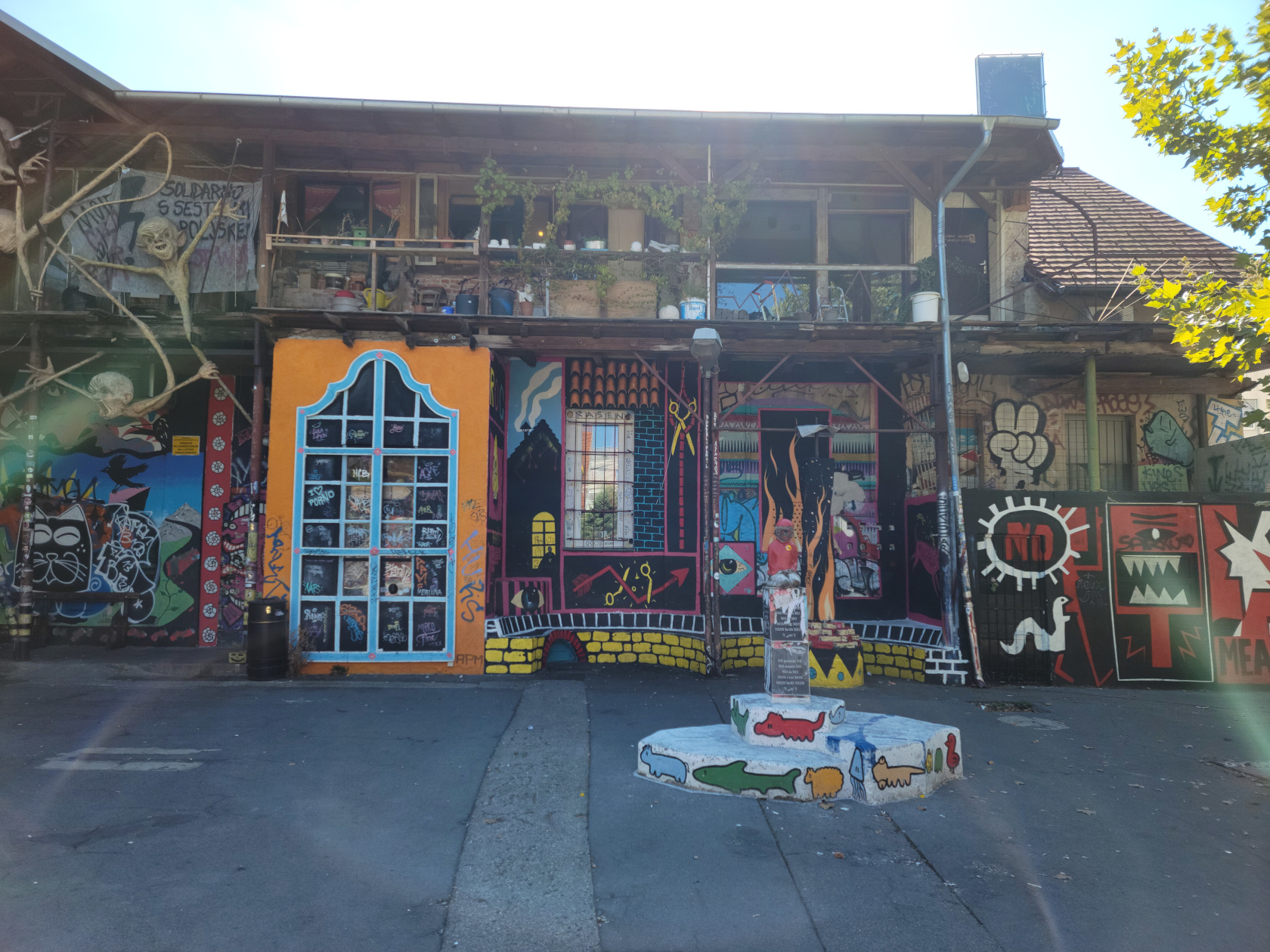
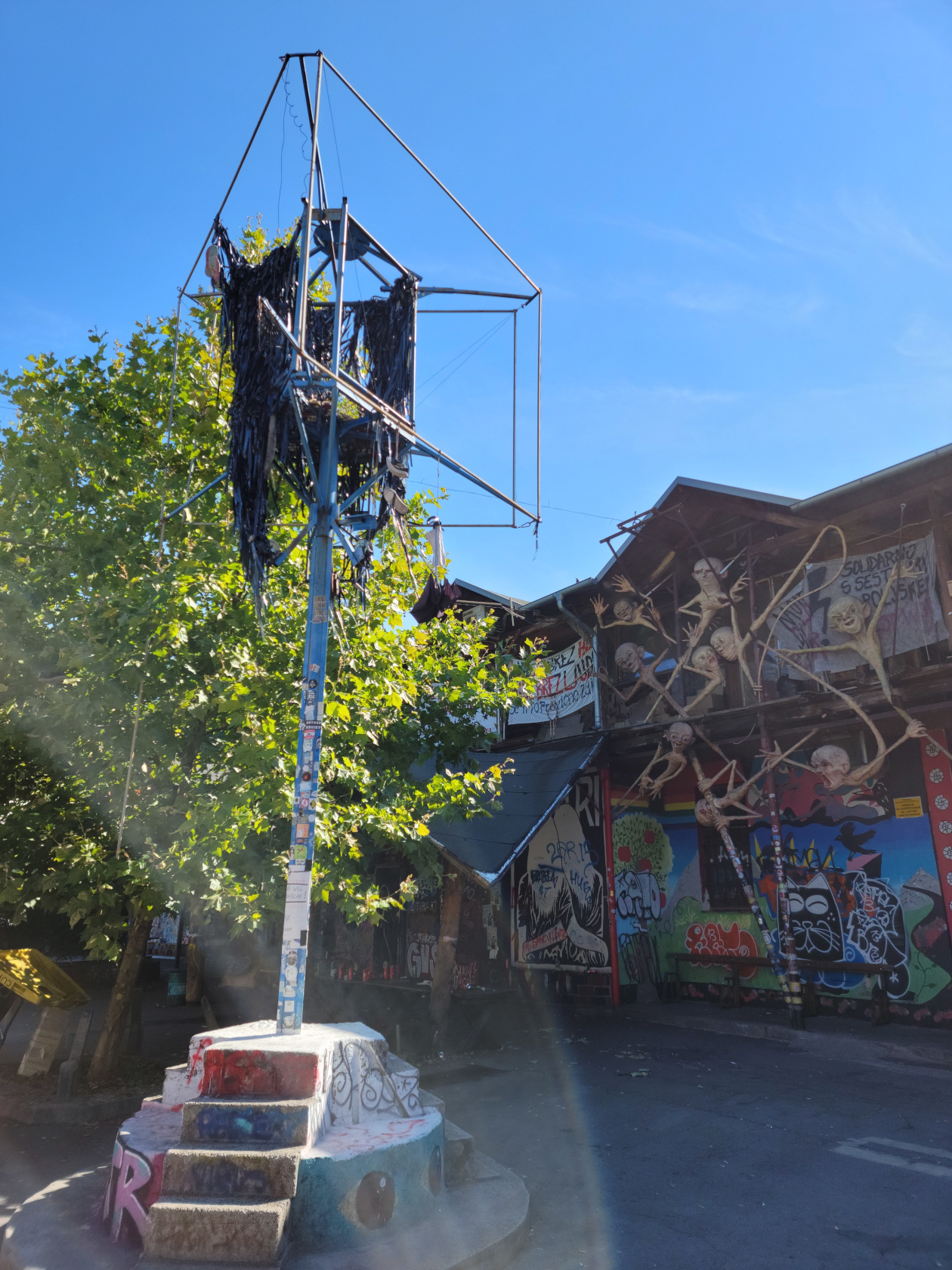
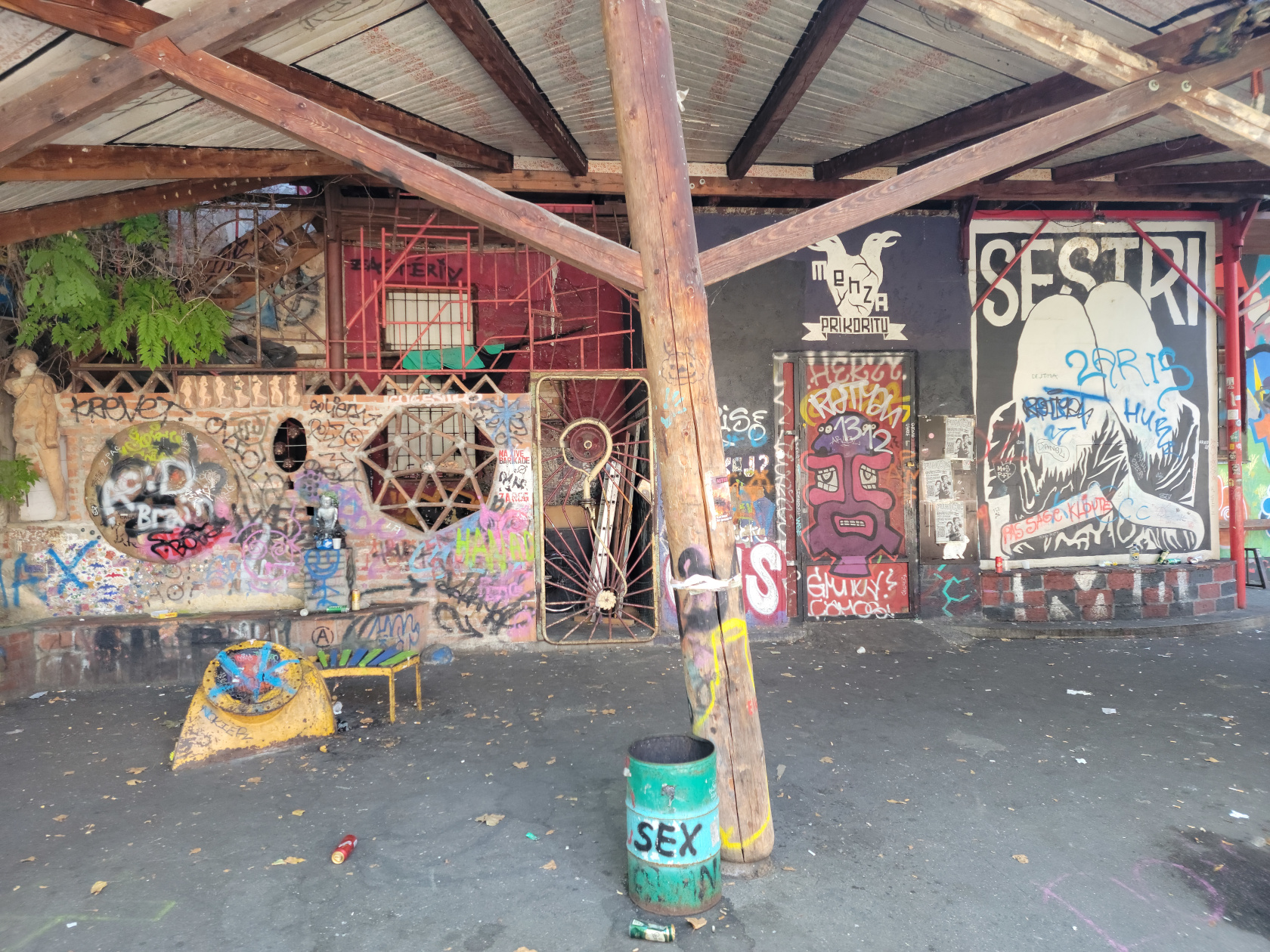
Graffiti Block
Ljubljana – Graffiti Block
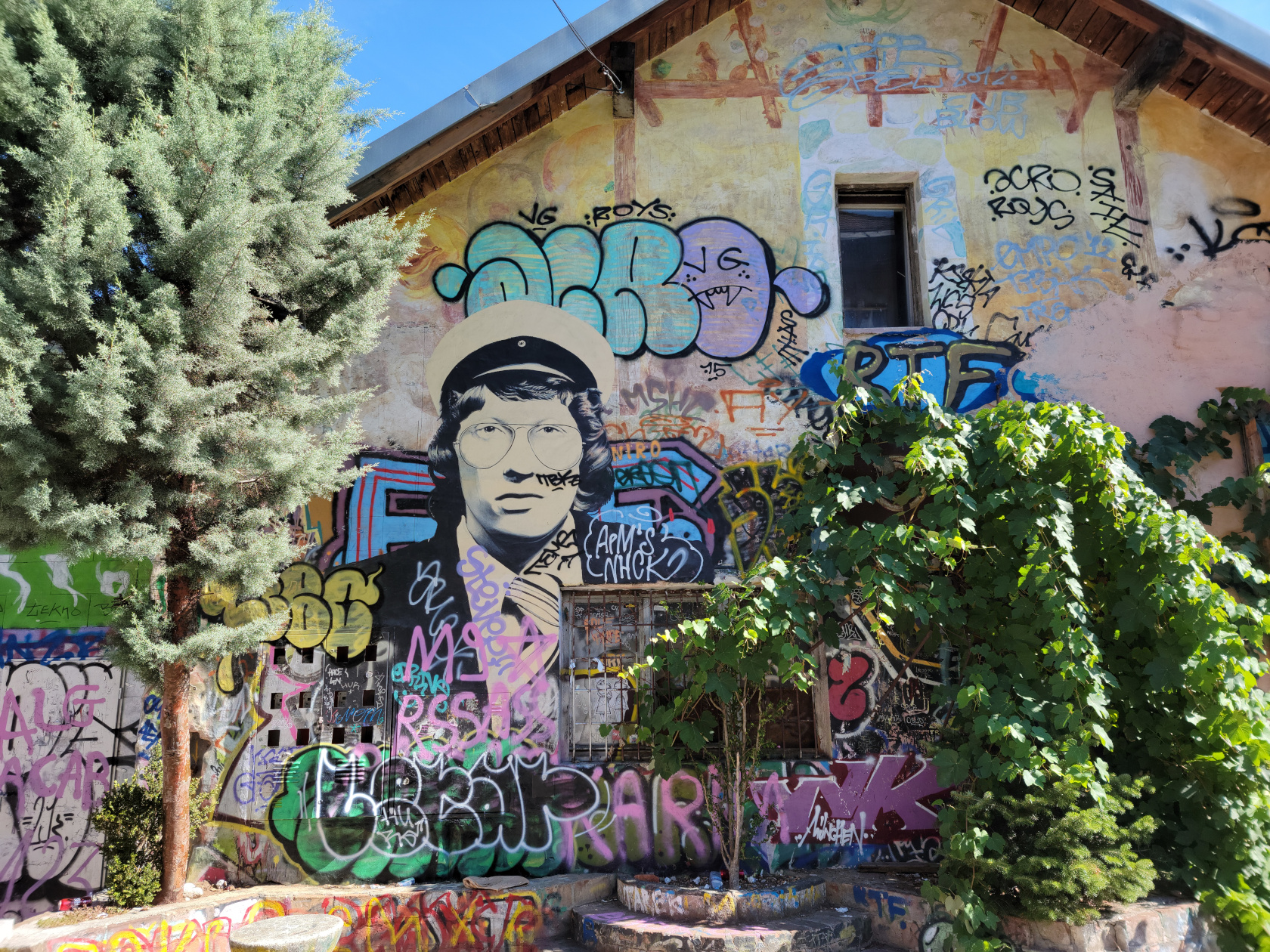
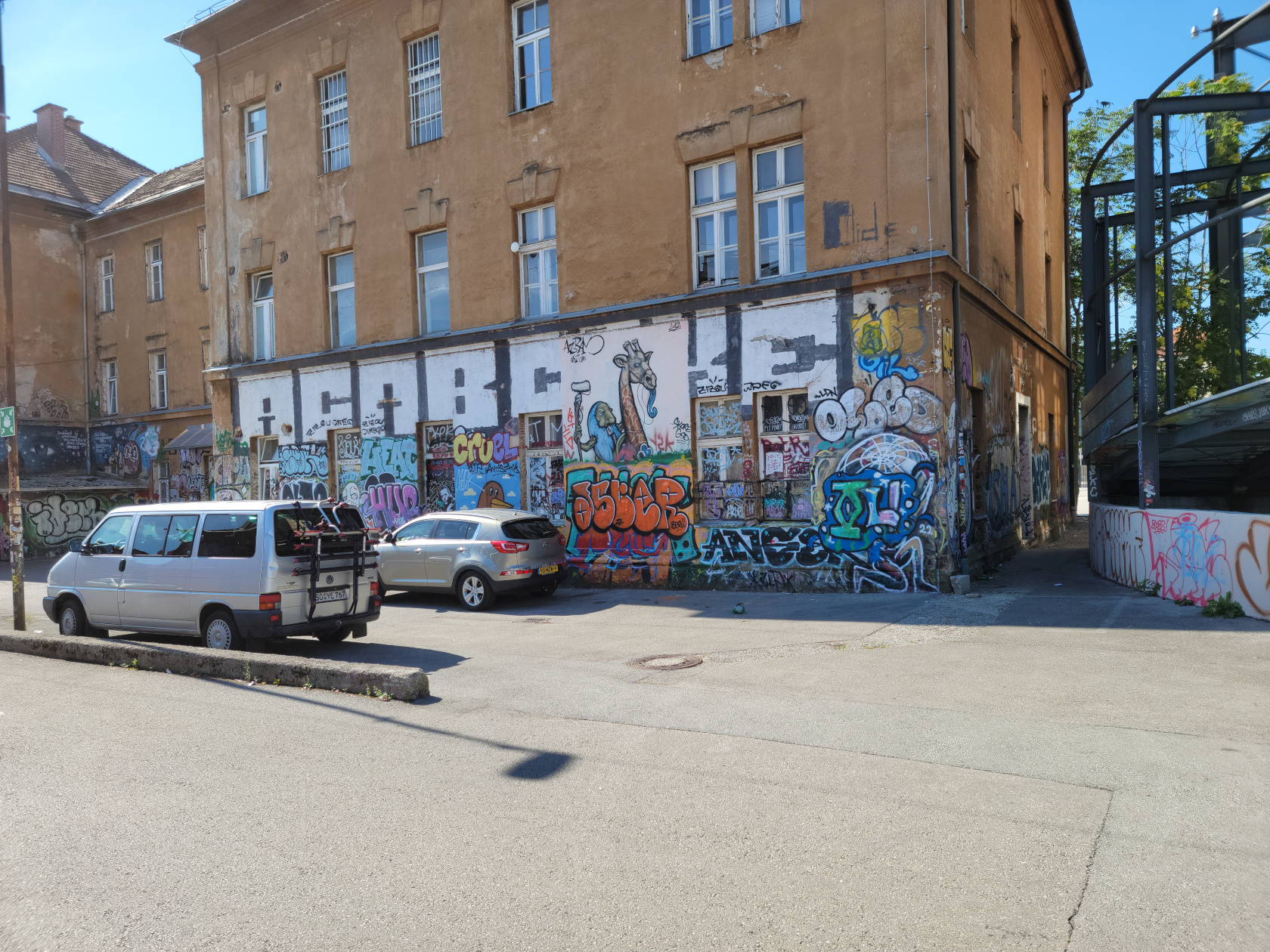
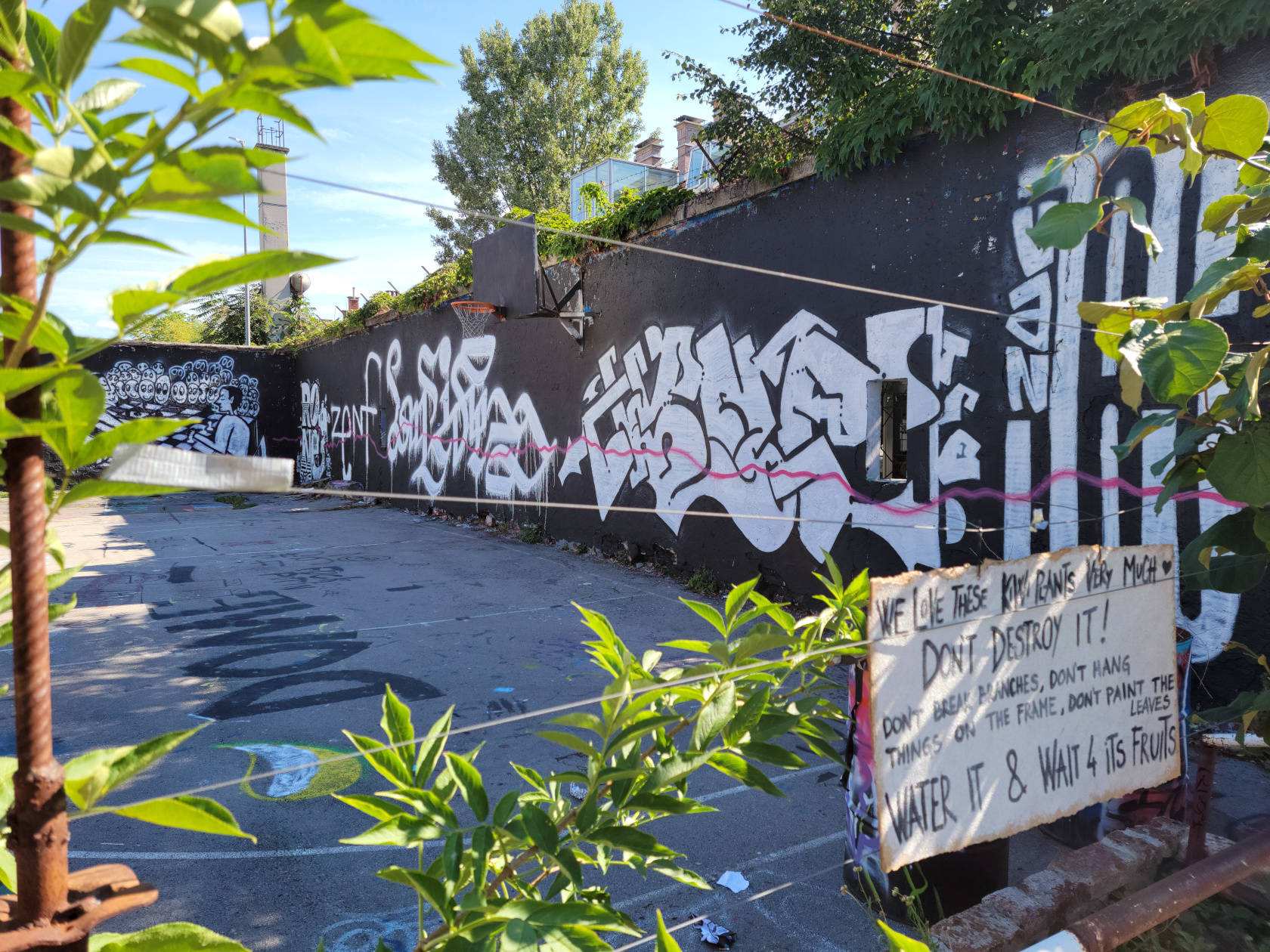
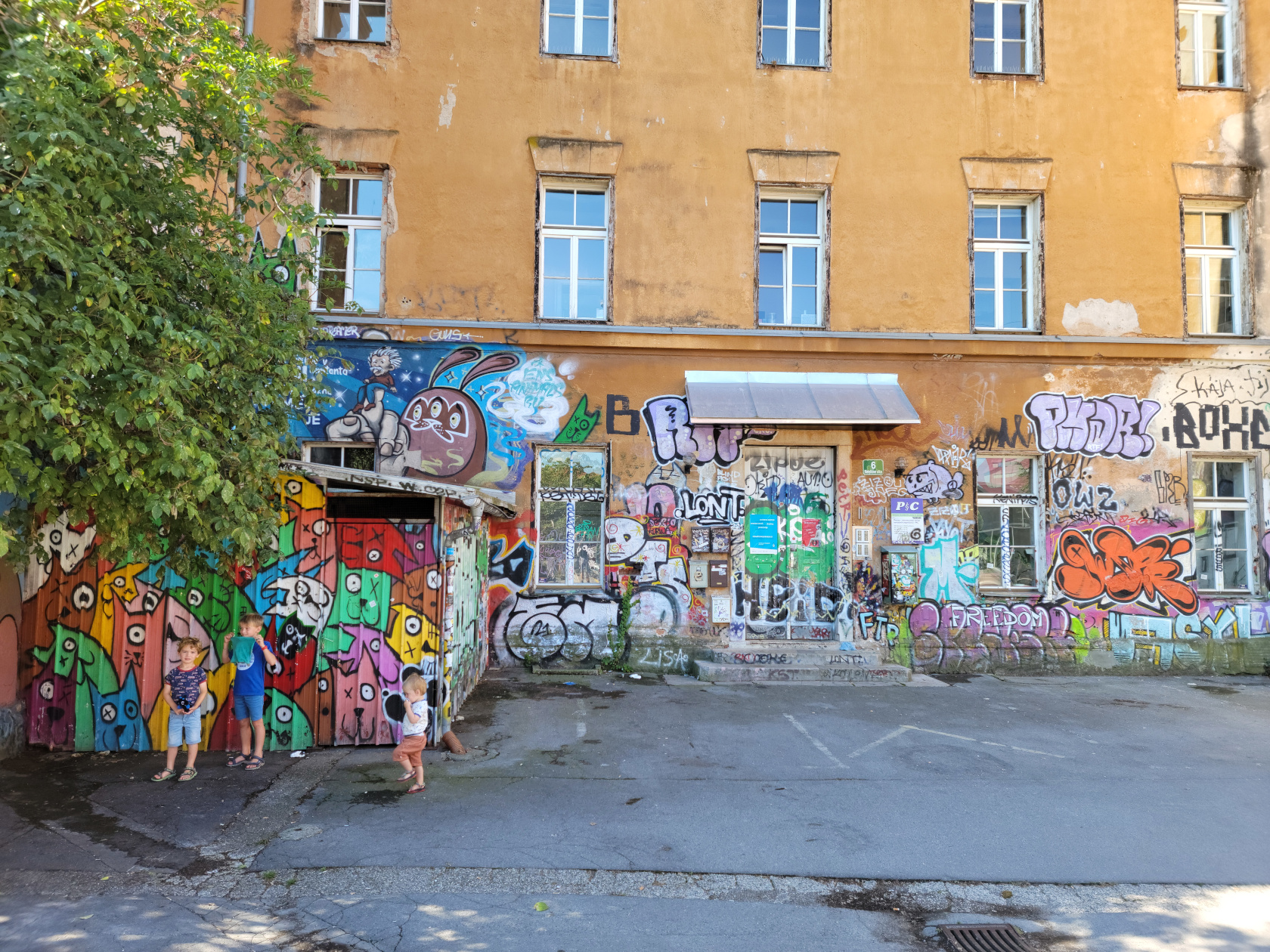
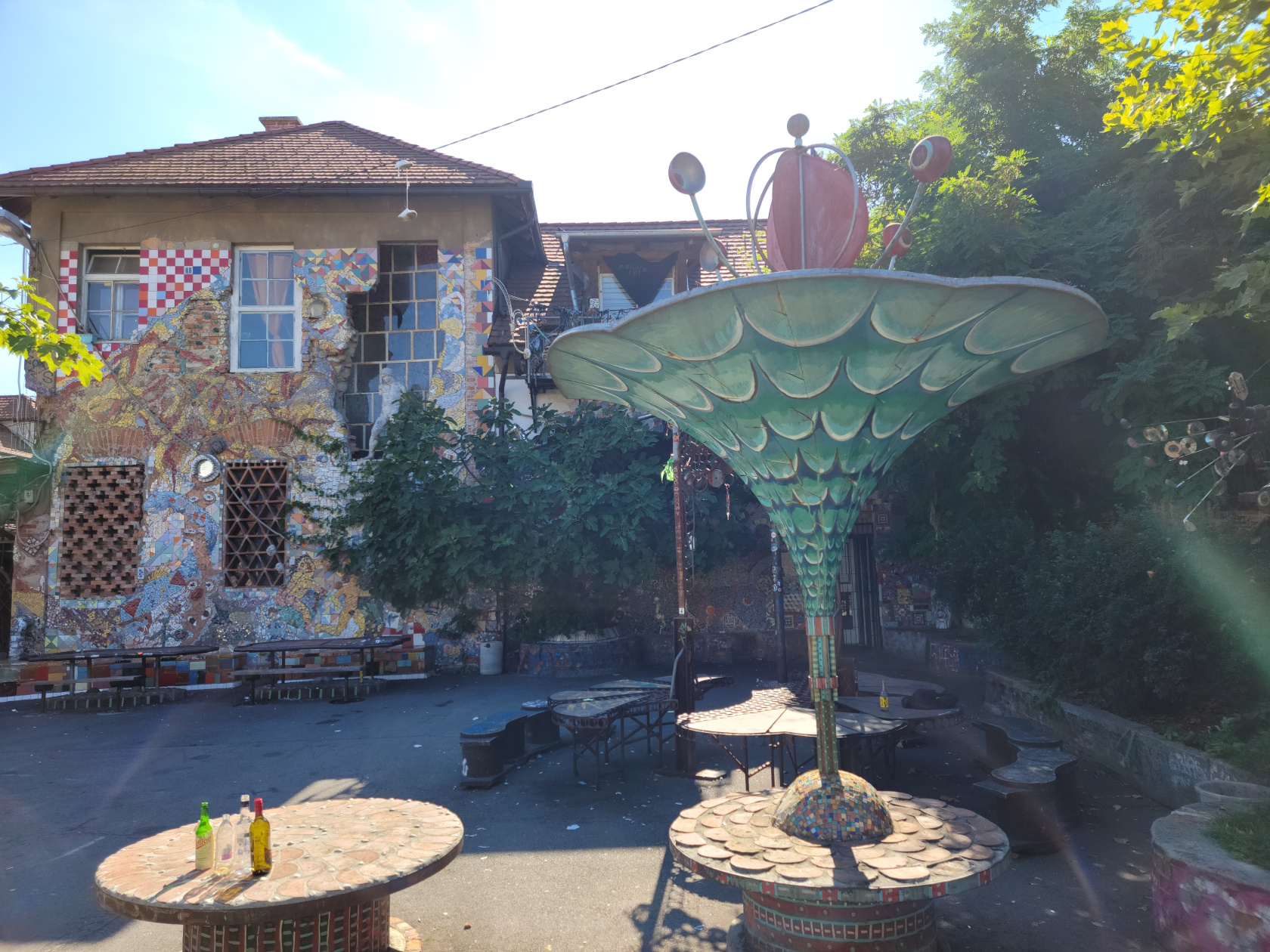
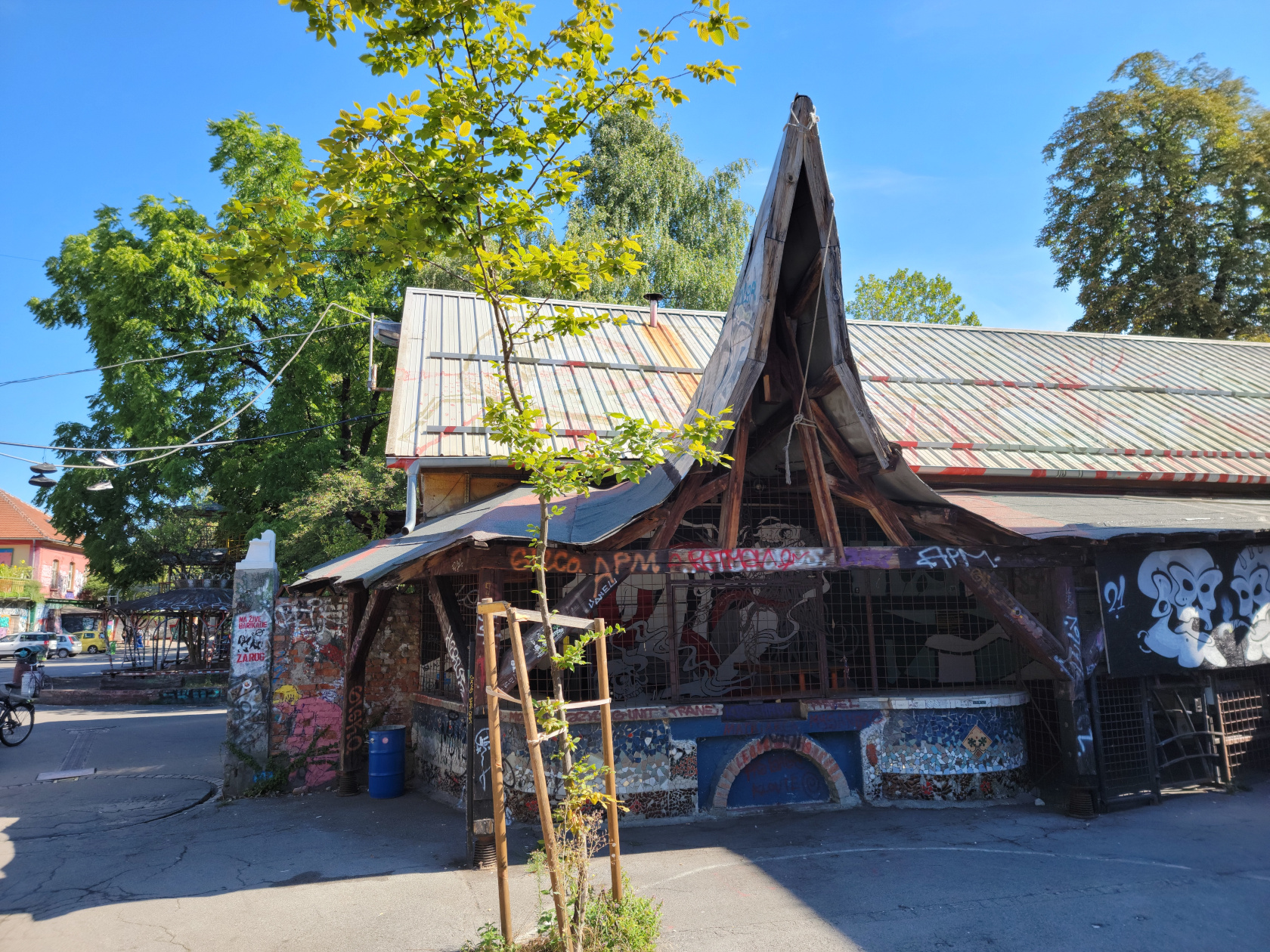
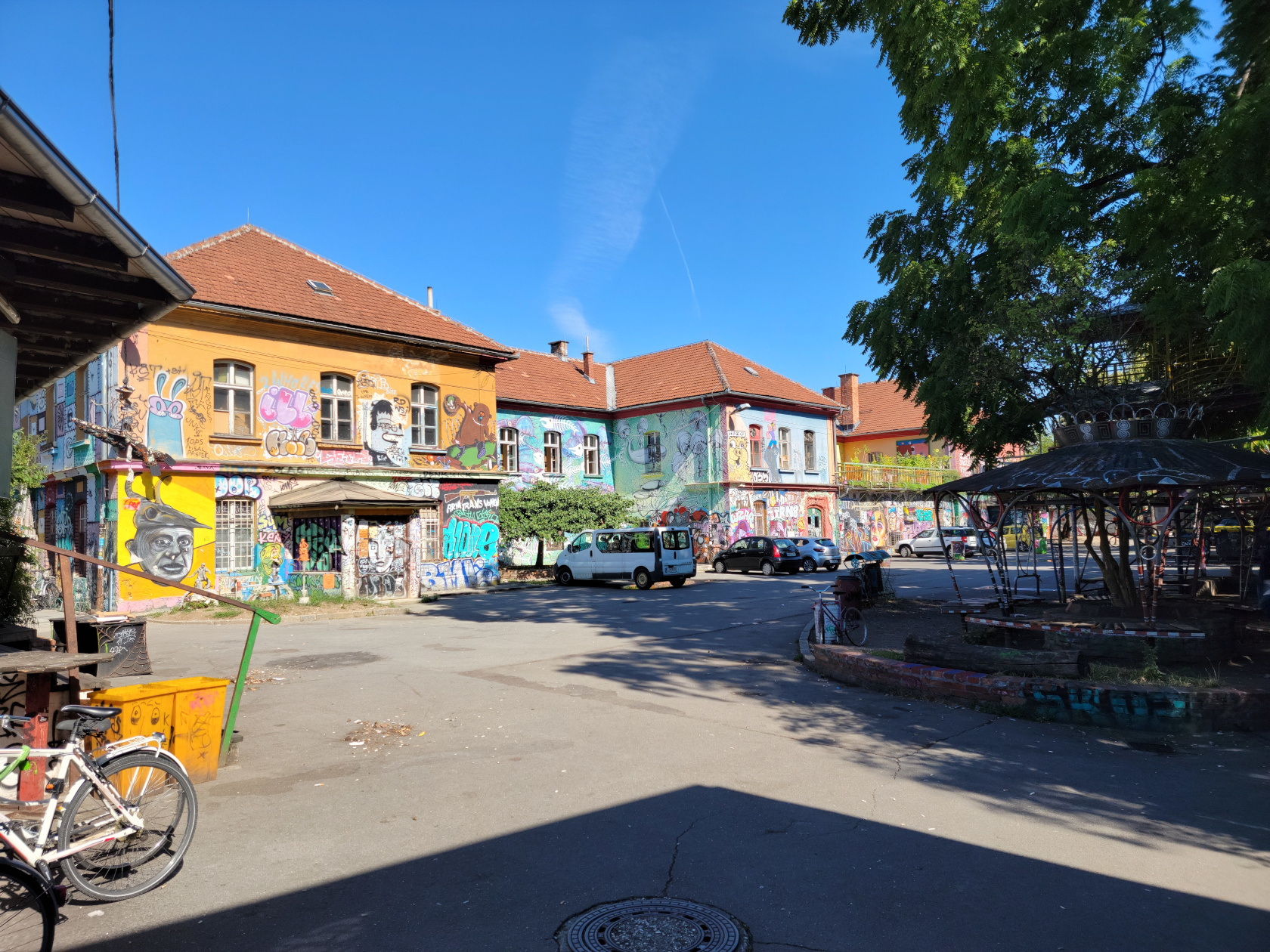
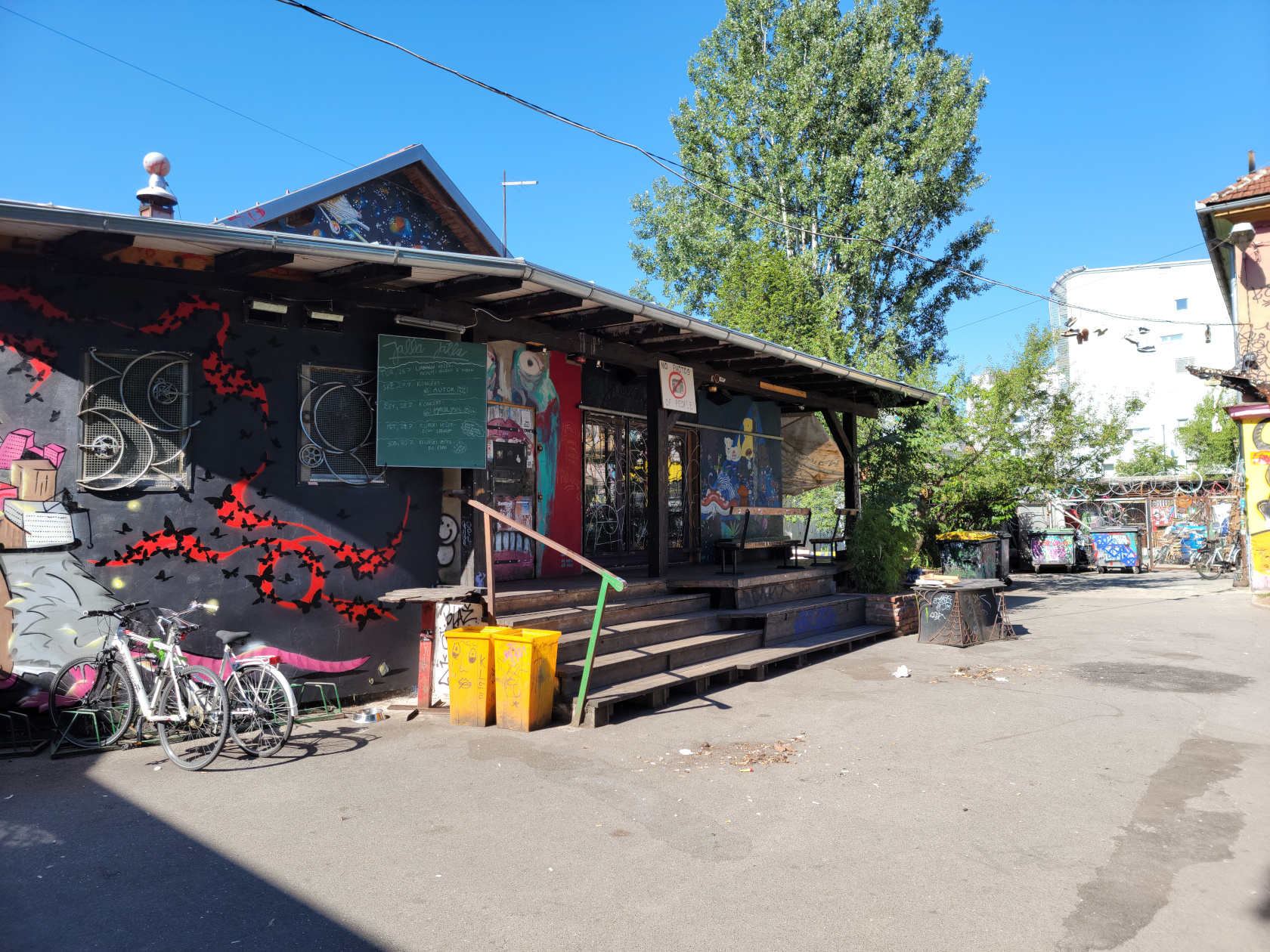
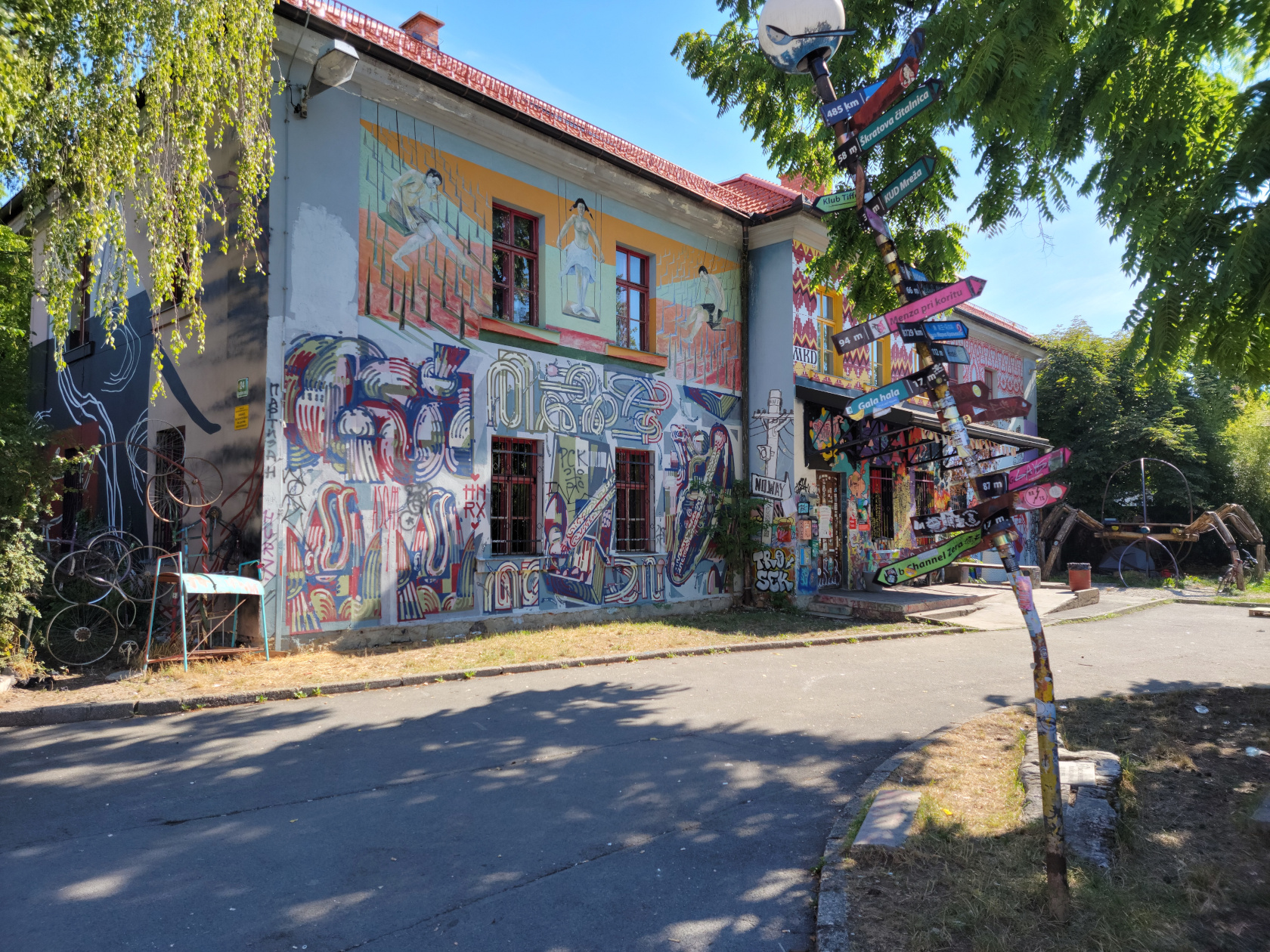
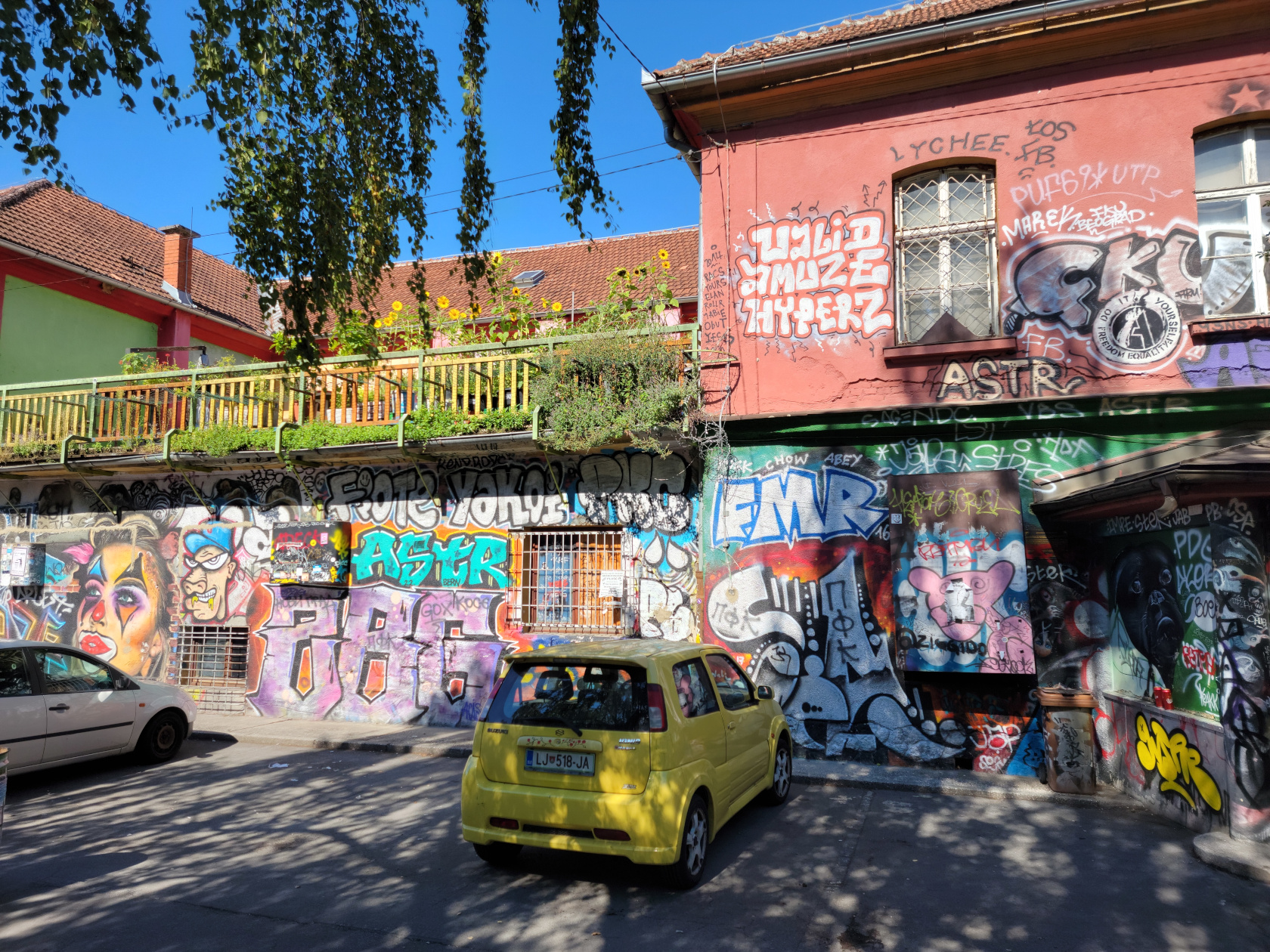
Graffiti Block, also known as the Metelkova Art Museum, is about a block housing a collection of graffiti and alternative art works for public viewing. Since, “A picture is worth a thousand words“, I will let my photographs speak for themselves.
Ljubljana – Graffiti Block
Ljubljana – Graffiti Block
Ljubljana – Graffiti Block
Ljubljana – Graffiti Block
Ljubljana – Graffiti Block
Ljubljana – Graffiti Block
Ljubljana – Graffiti Block
Ljubljana – Graffiti Block
Ljubljana – Graffiti Block
Ljubljana – Graffiti Block
Ljubljana – Graffiti Block
Ljubljana – Graffiti Block
Ljubljana – Graffiti Block
Restaurants
Foculus Restaurant
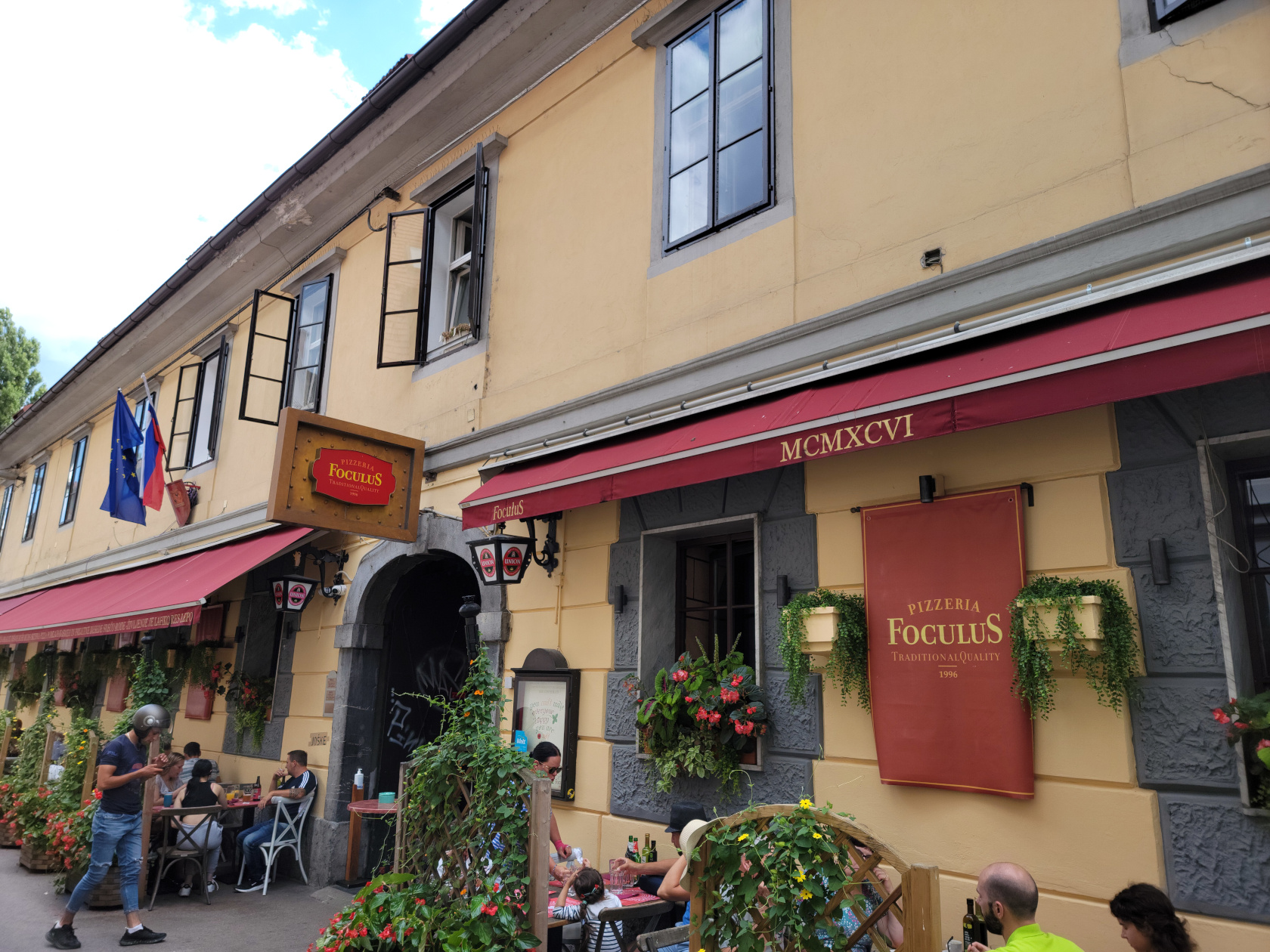
Ljubljana – Foculus Restaurant
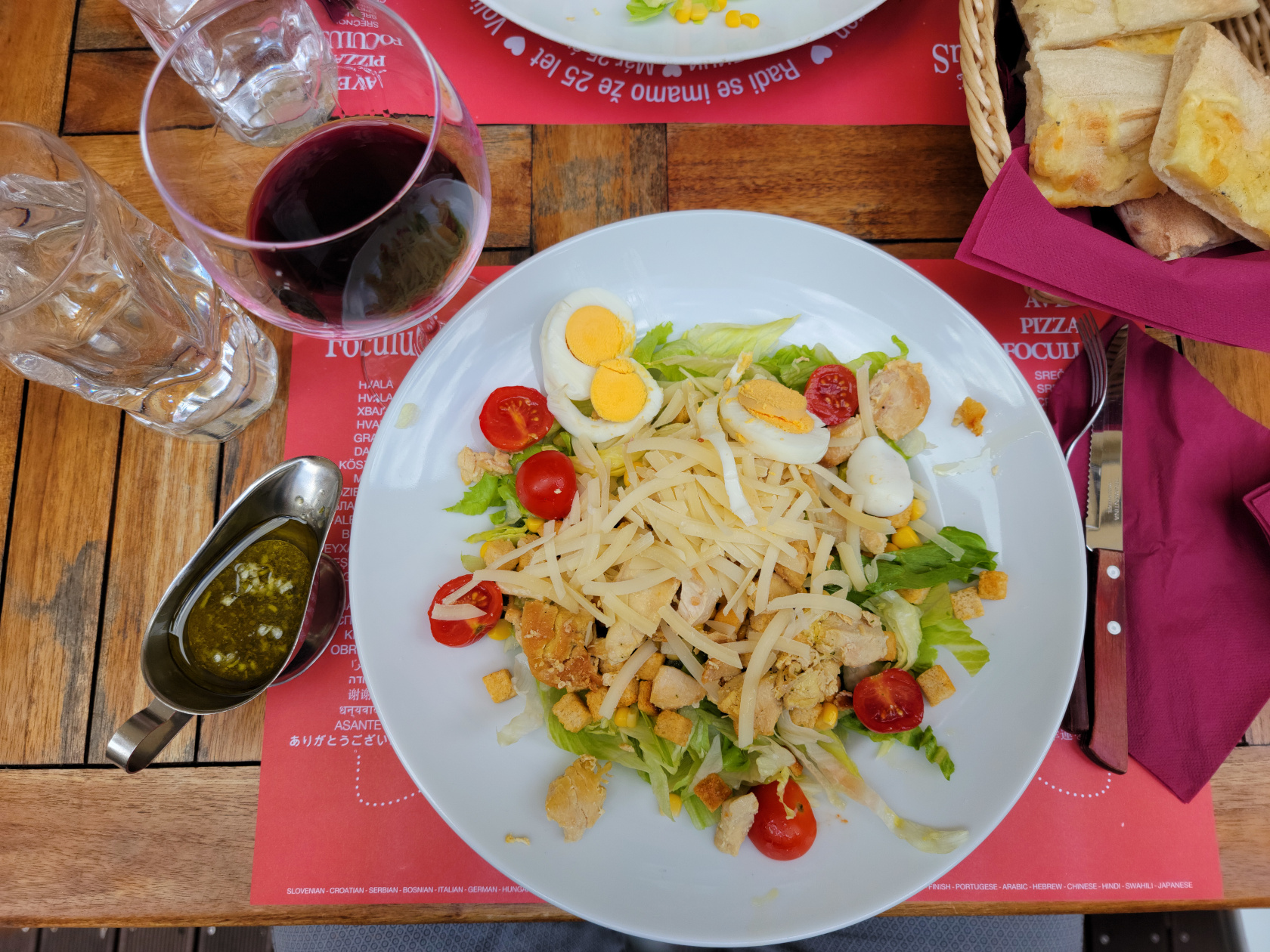
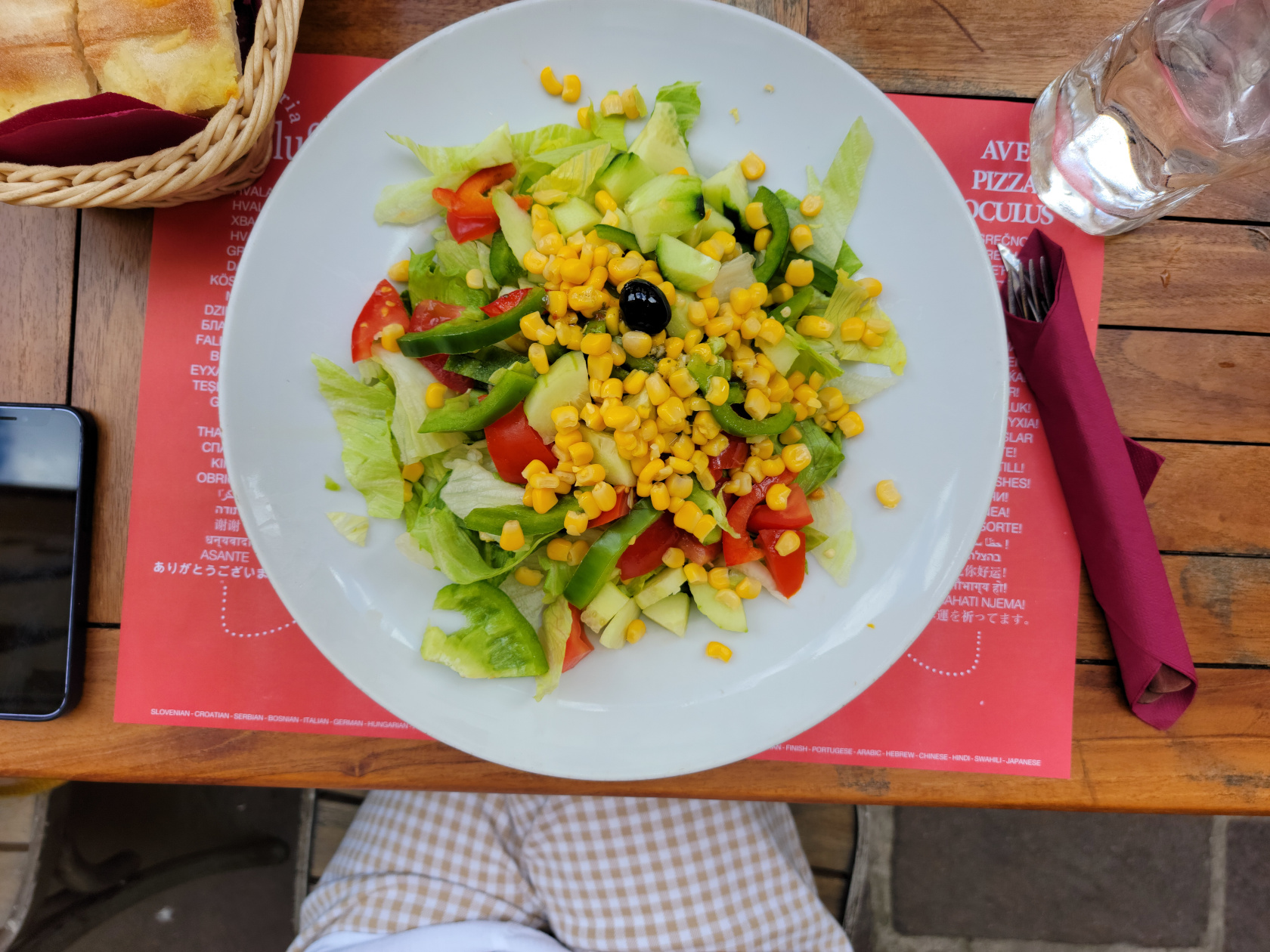
Apparently a trendy little pizzeria on the edge of the city not far from the park, but far enough from the center and river so that it is not much affected by all the crowds. We stopped for lunch and something light, so we both ordered salads, which were very good. The prices were very reasonable too!
Ljubljana – Foculus Restaurant – Chicken Salad
Ljubljana – Foculus Restaurant – Mixed Salad
Epilog
Well that was our trip to Slovenia. I admitted to my wife many times that I didn’t expect much, but was very pleasantly surprised. If you ever get a chance to go, please do so. The people in the city are very nice and almost all speak English very well, so don’t let your lack of language skills deter you, go!
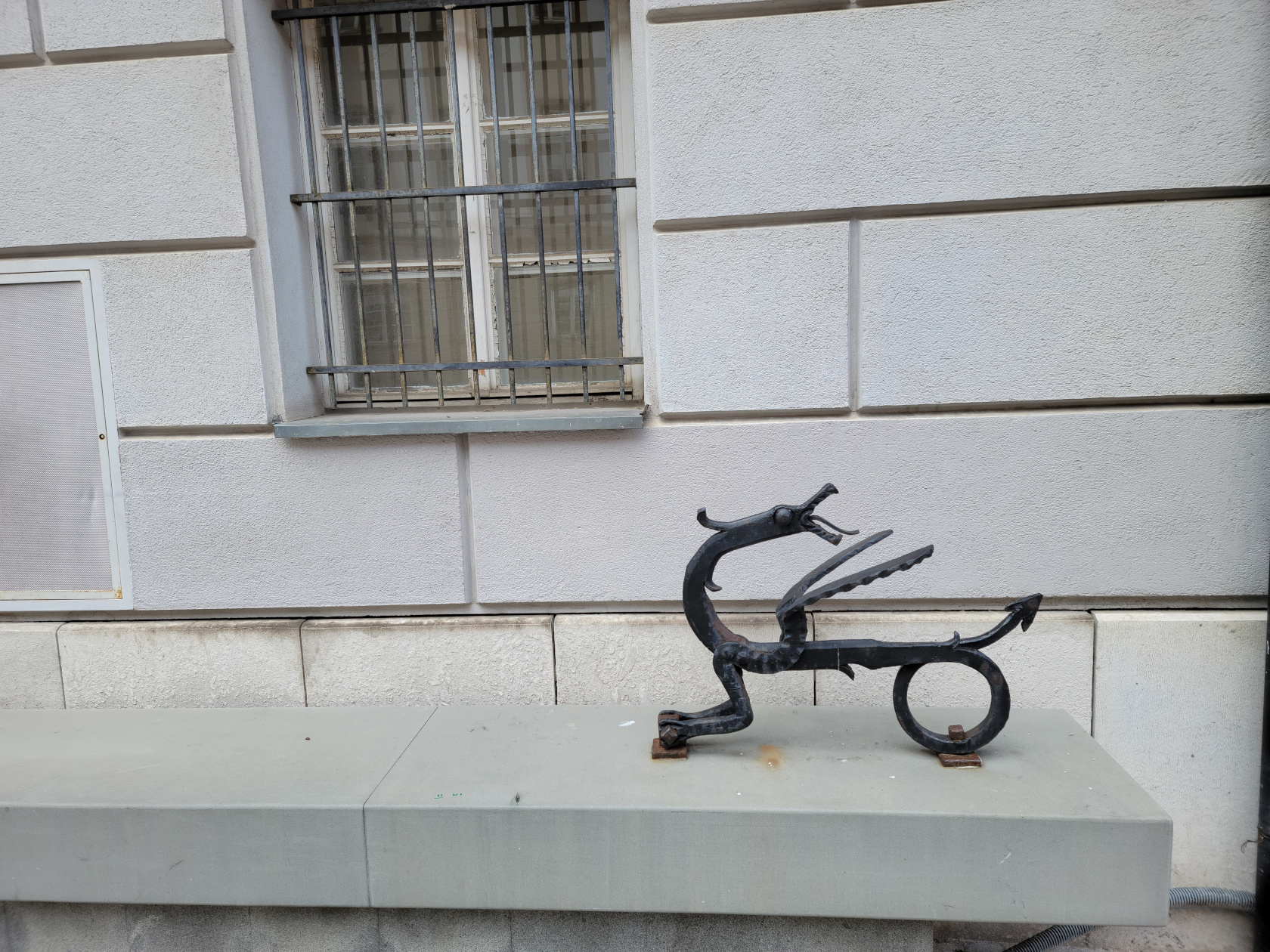
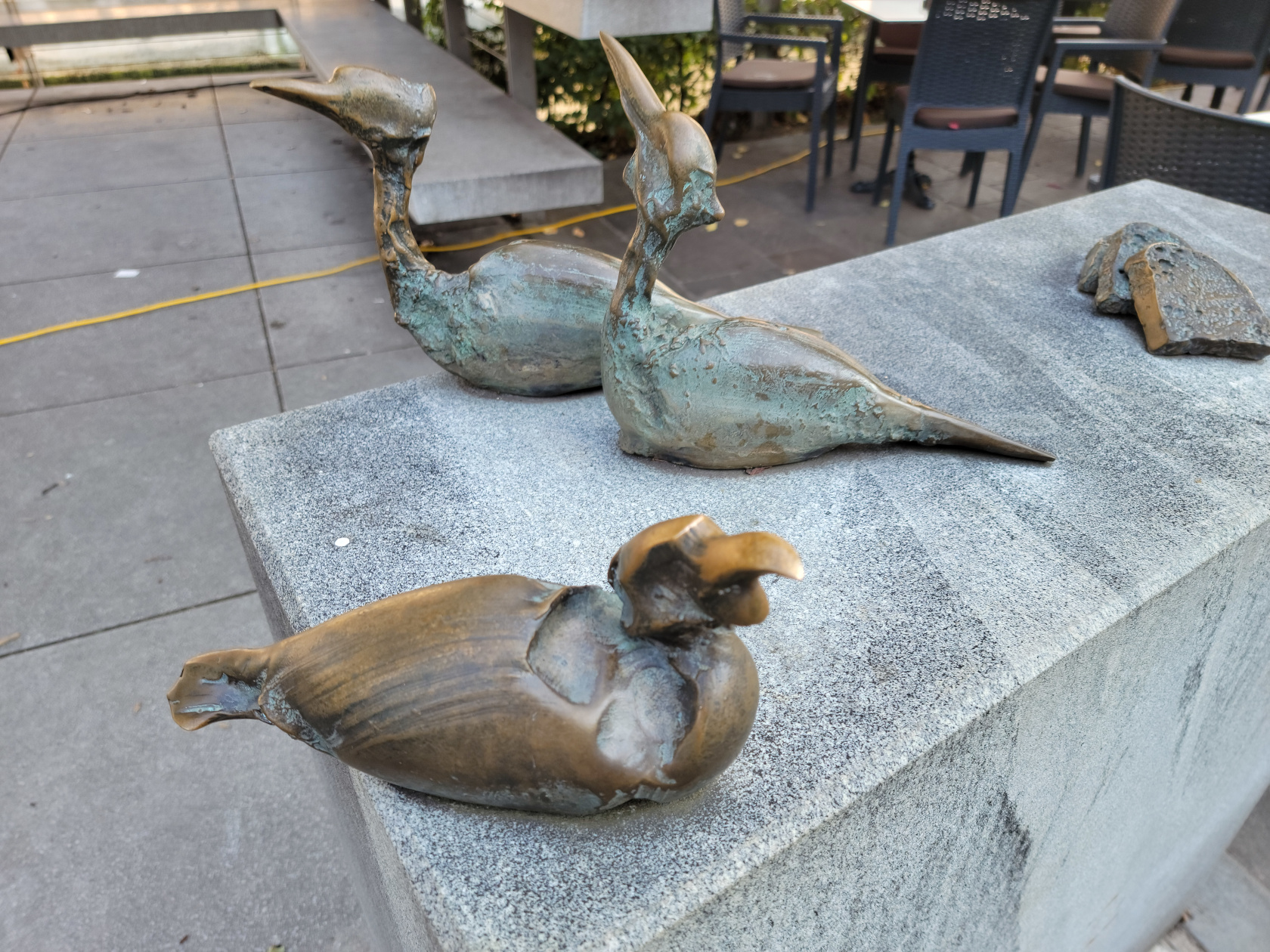
Ljubljana – Mini Dragon – Try and find them all
Some remaining photographs of this great city, enjoy…
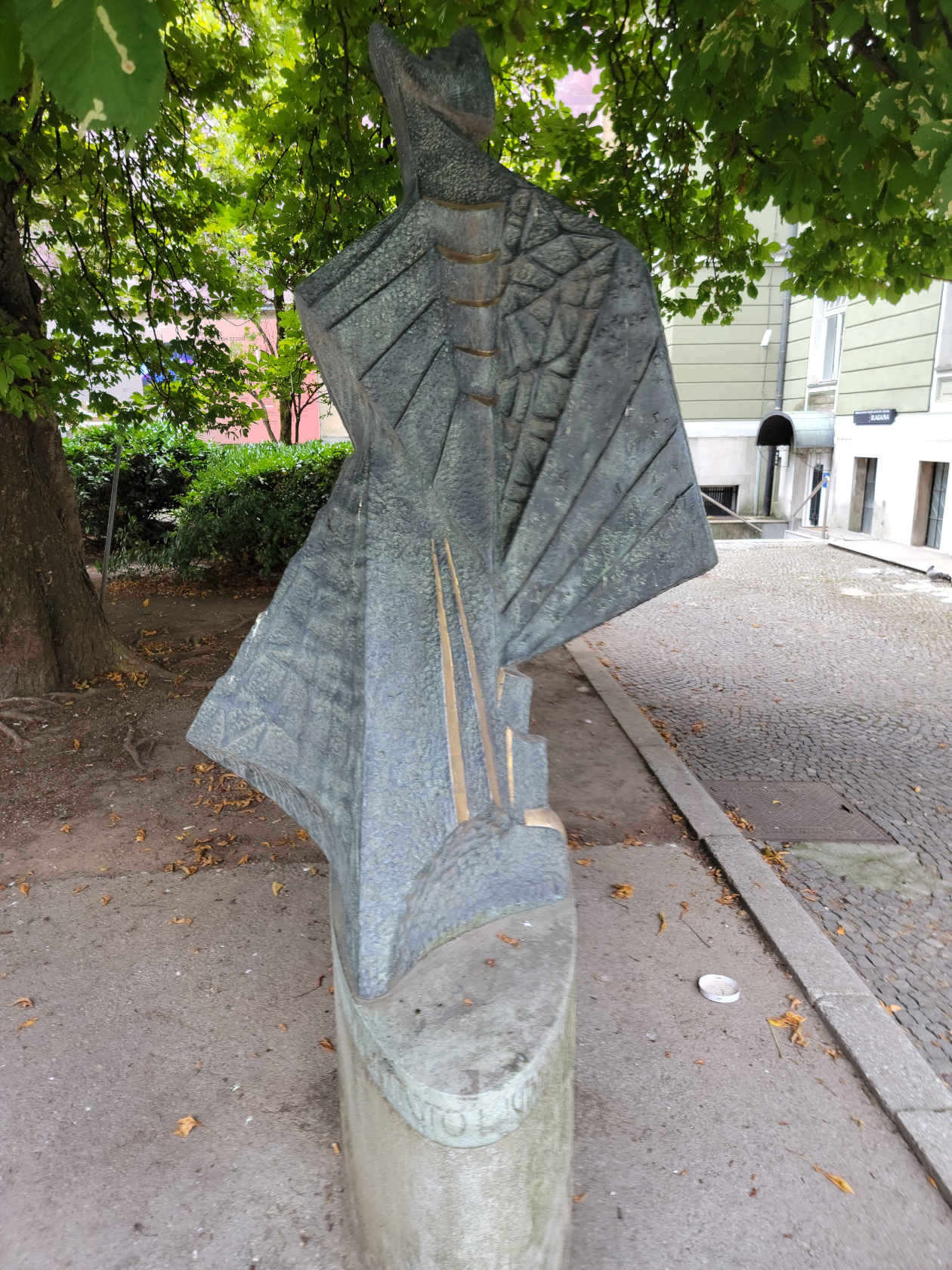
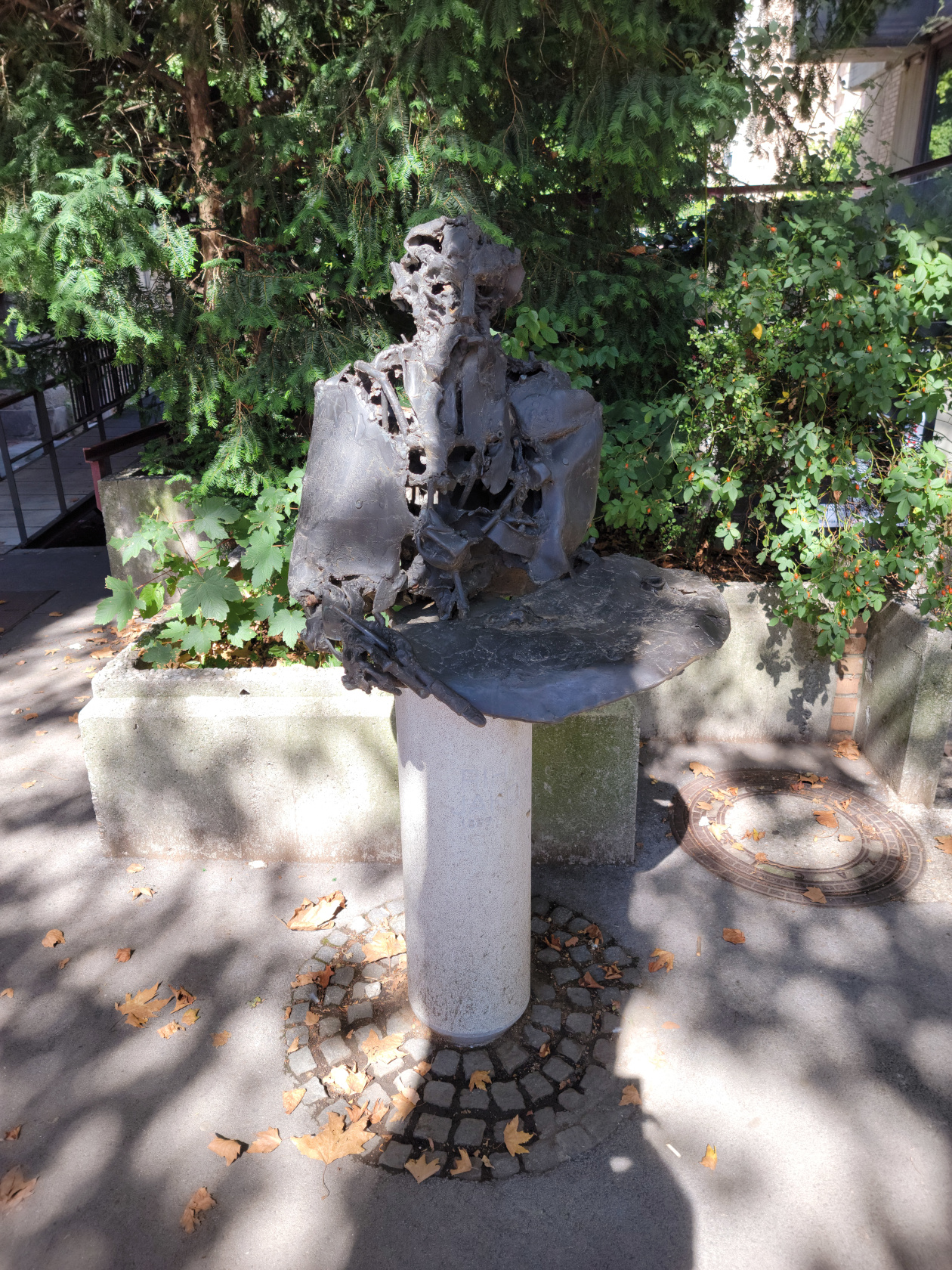
Ljubljana – Another Bronze
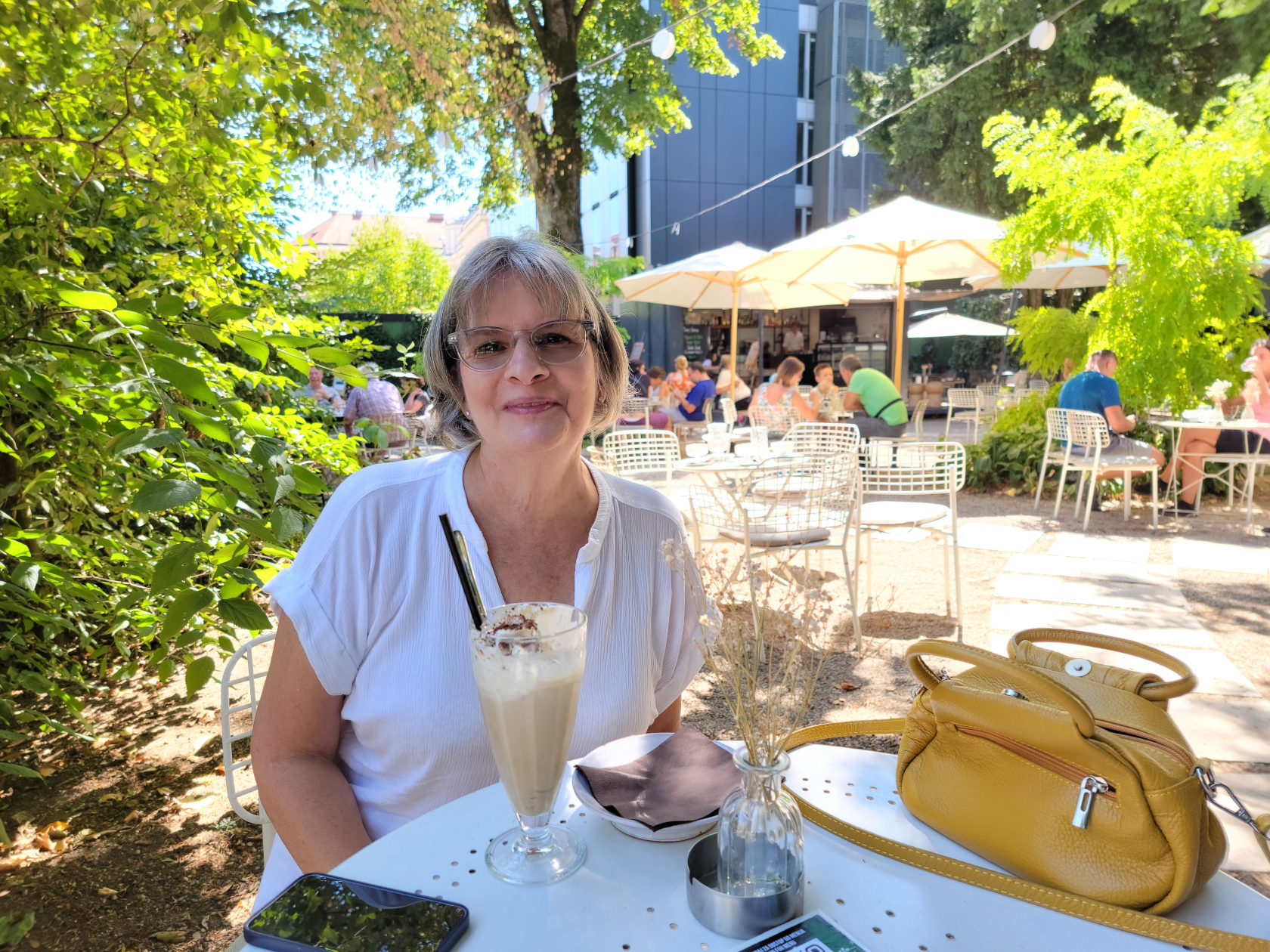
Ljubljana – Patti enjoying an iced coffee
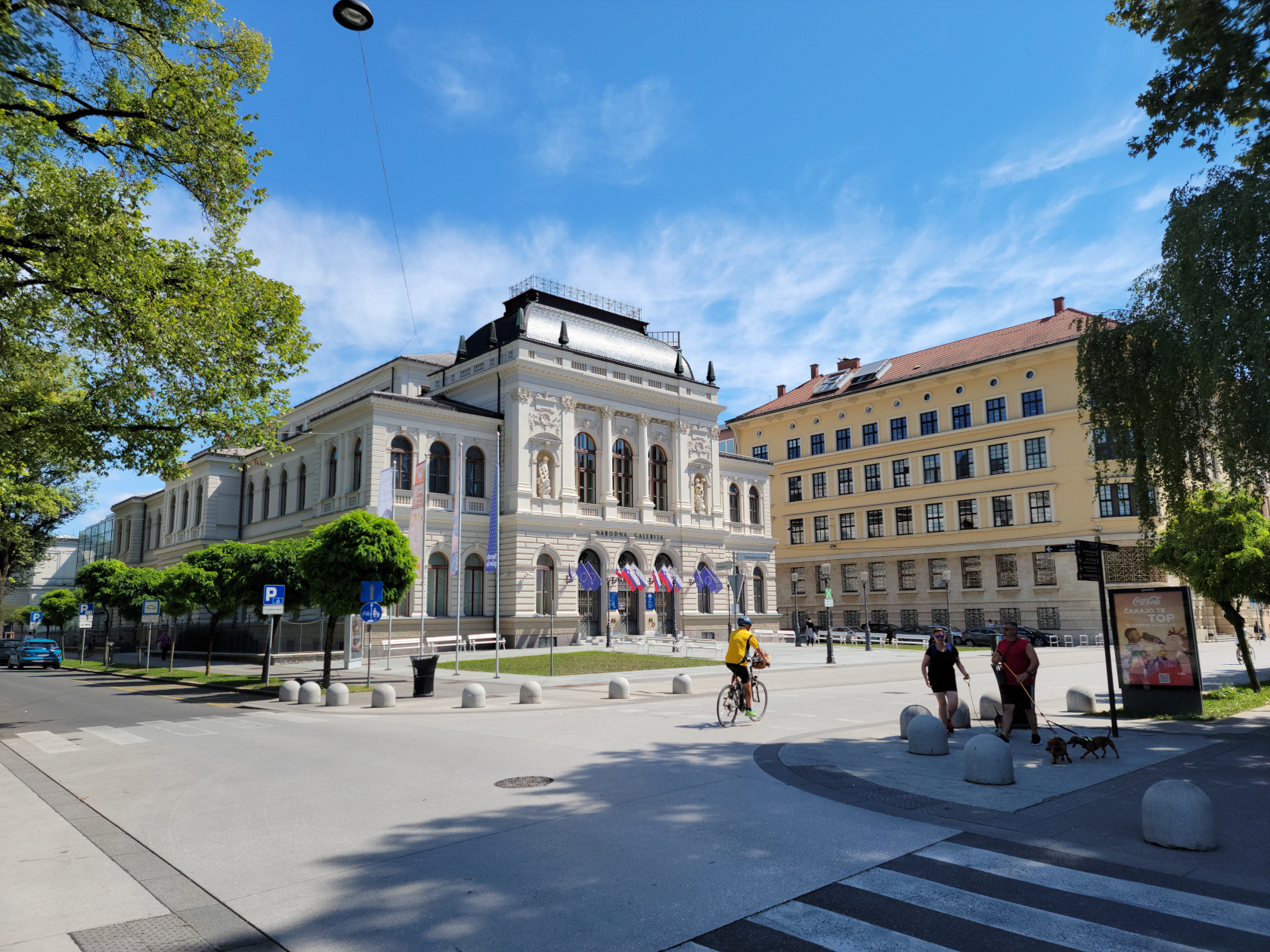
Ljubljana – Galleria Building
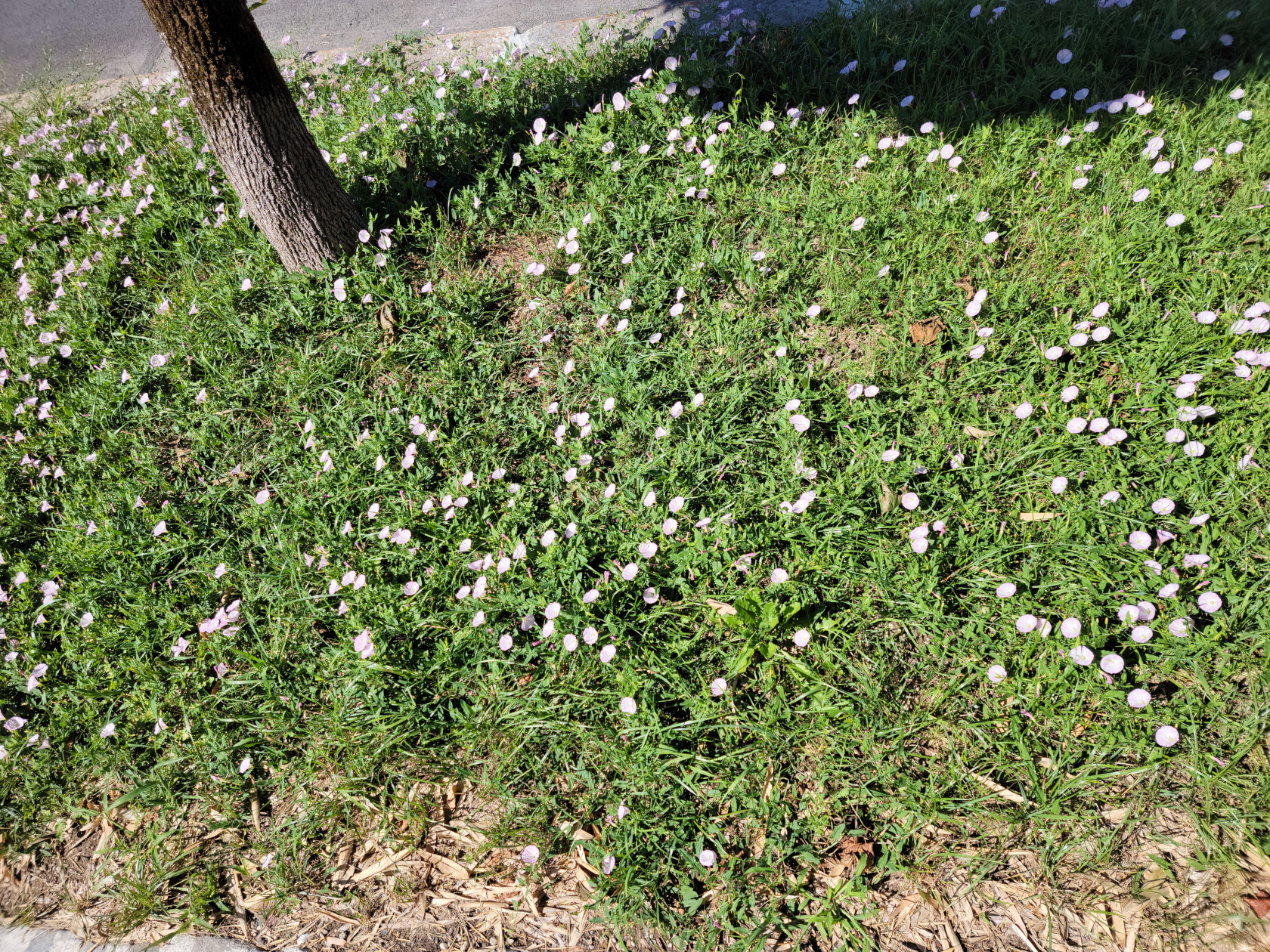
Ljubljana – City Flowers in the Grass – No Herbicides Here!
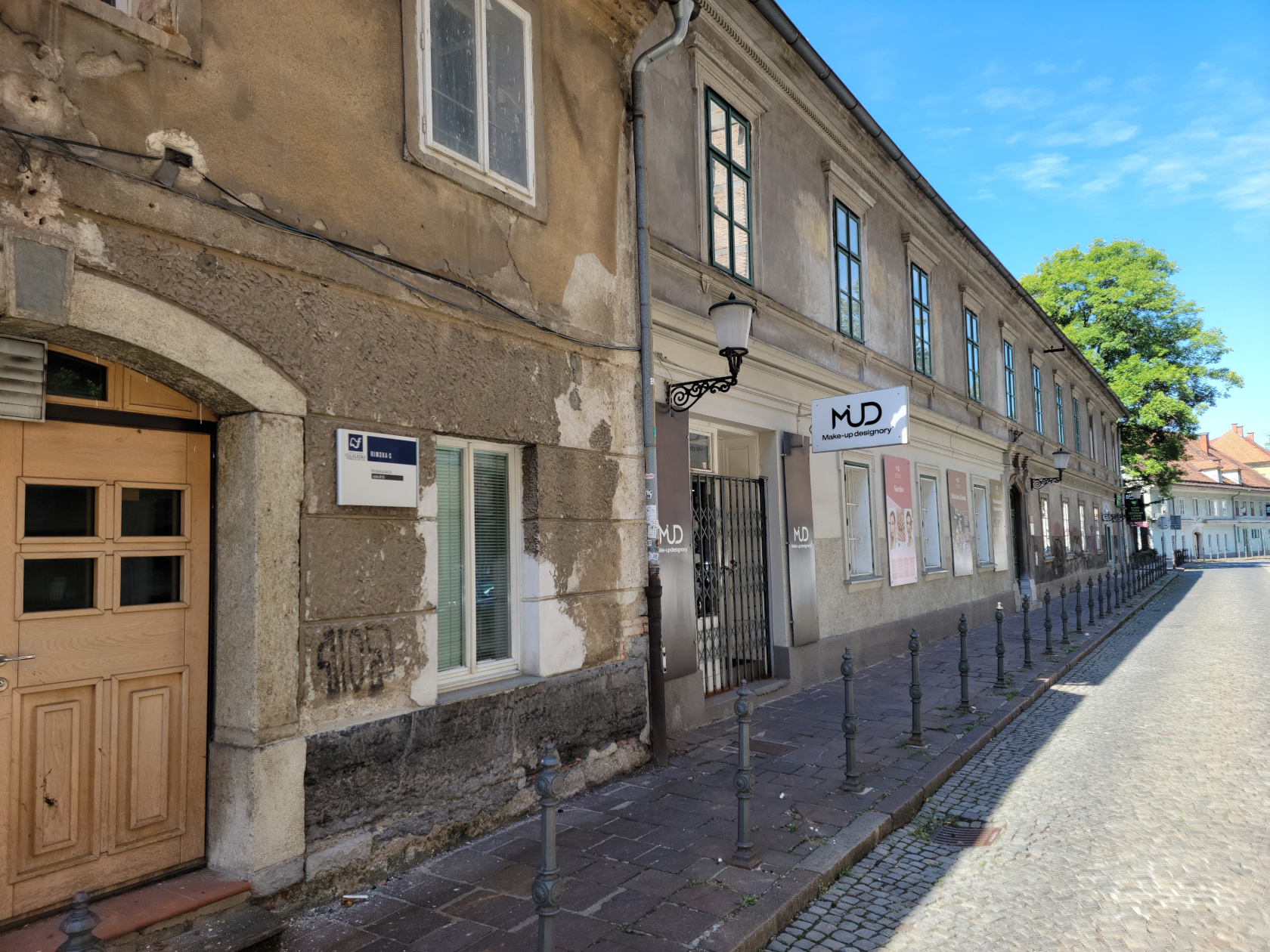
Ljubljana – Very old section of town, formerly Emona
Continuing our Summer Trip of eastern Italy and Slovenia, and after a two and a half hour train ride from Trieste, is the charming city of Ljubljana, Slovenia. Actually, much to my surprise, stepping off the train there was a noticeable cleanliness to it all which rarely, if ever, went away. We even noticed this in some of the more off-beat areas and in other towns, that we ventured to on our day trips.
The Slovenians are no doubt a very orderly, patient people. This can also be witnessed in their driving, since it is very rare, almost uncommon to hear the sound of a horn. When asked, “Why is this?”, most reply with the simple retort, “Well it’s simply rude, and in most cases, unnecessary.”
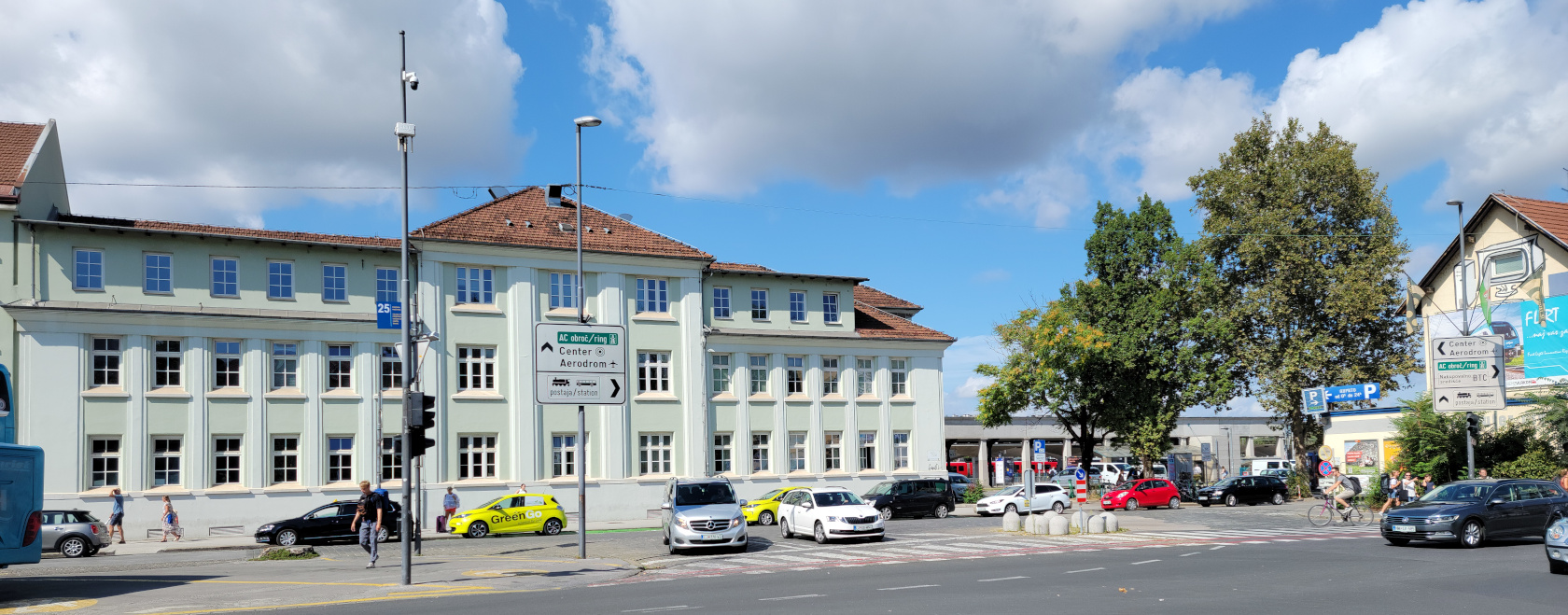
Ljubljana – The Main Train Station
Ljubljana, Lublana and Laybach
Ljubljana is a very old city, dating back to the twelfth and eleventh centuries, though a town called Emona stood here during Roman times. Myths and stories have linked it to Jason and the Argonauts and his struggles, and the killing of the great beast which inhabited the marsh nearby[1]This is where the metaphor of the dragon comes in., which apparently was responsible for the great floods that occurred frequently. It later became synonymous with Ljubljana in the mid-twelfth century.
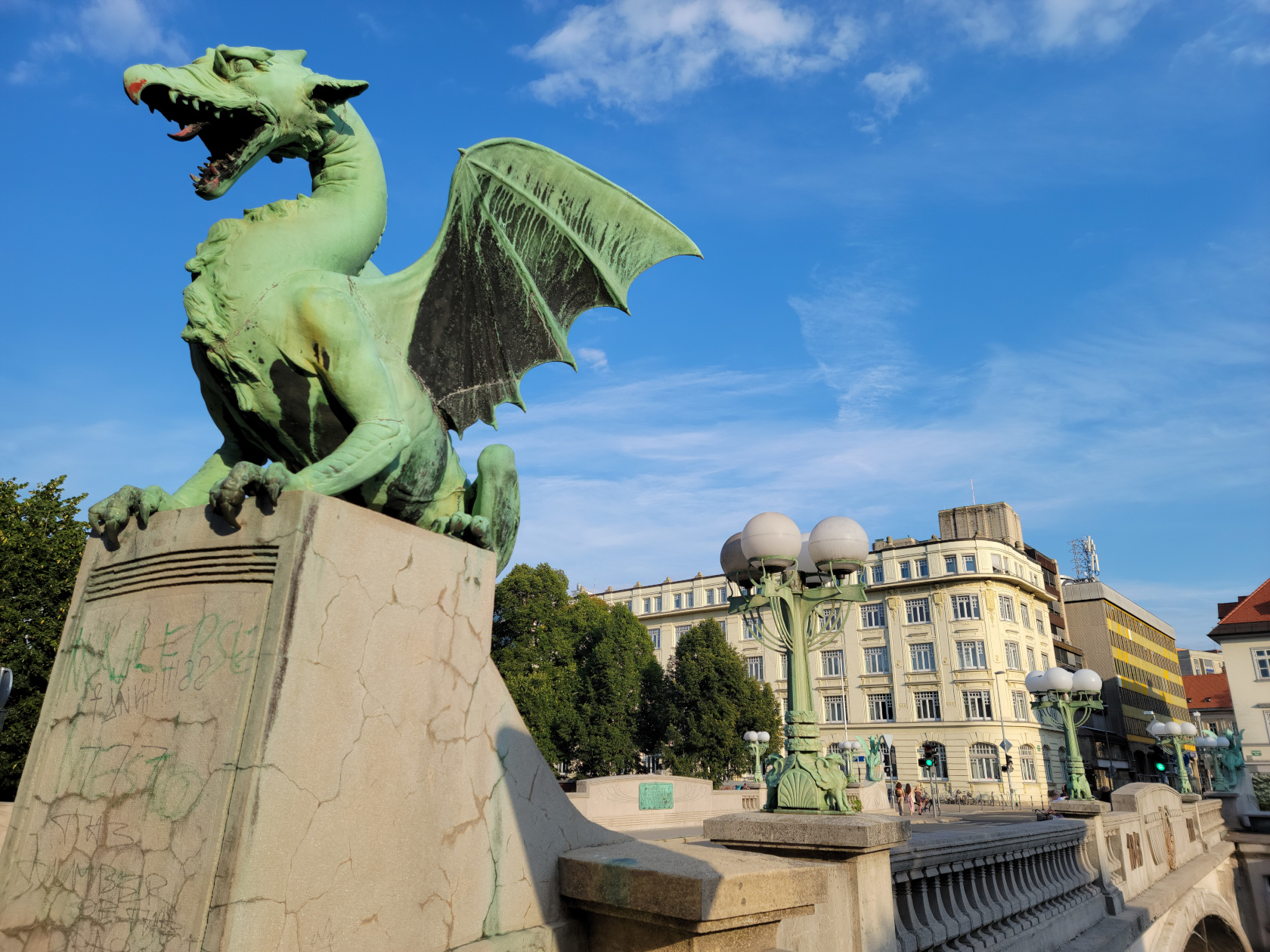
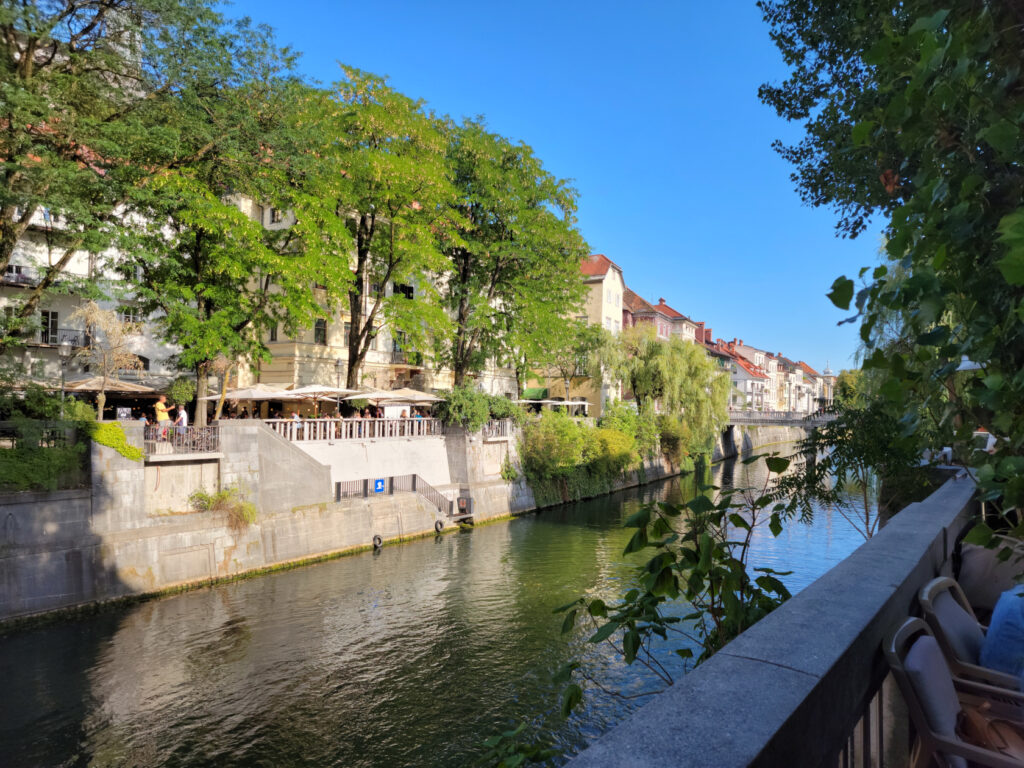
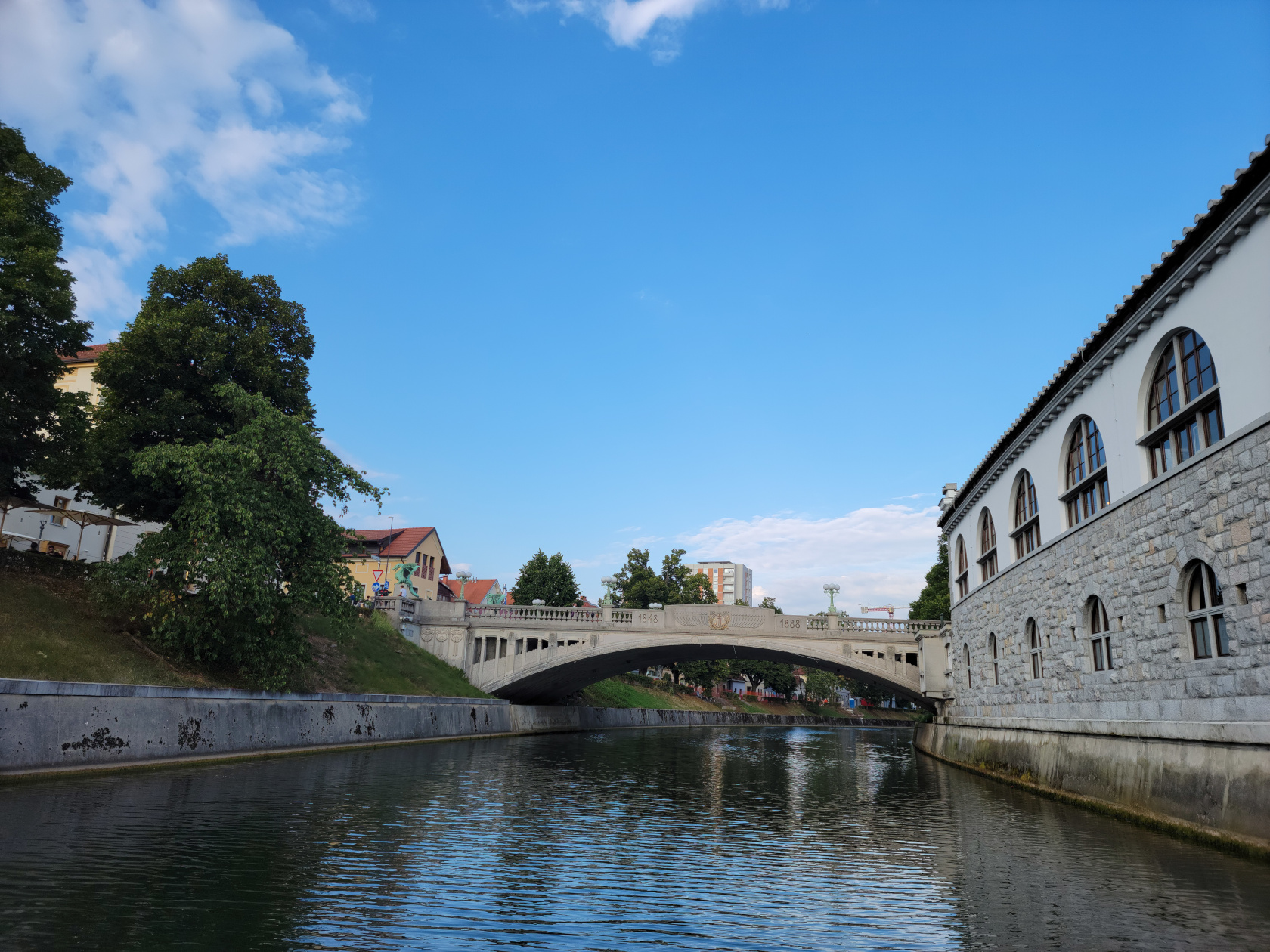
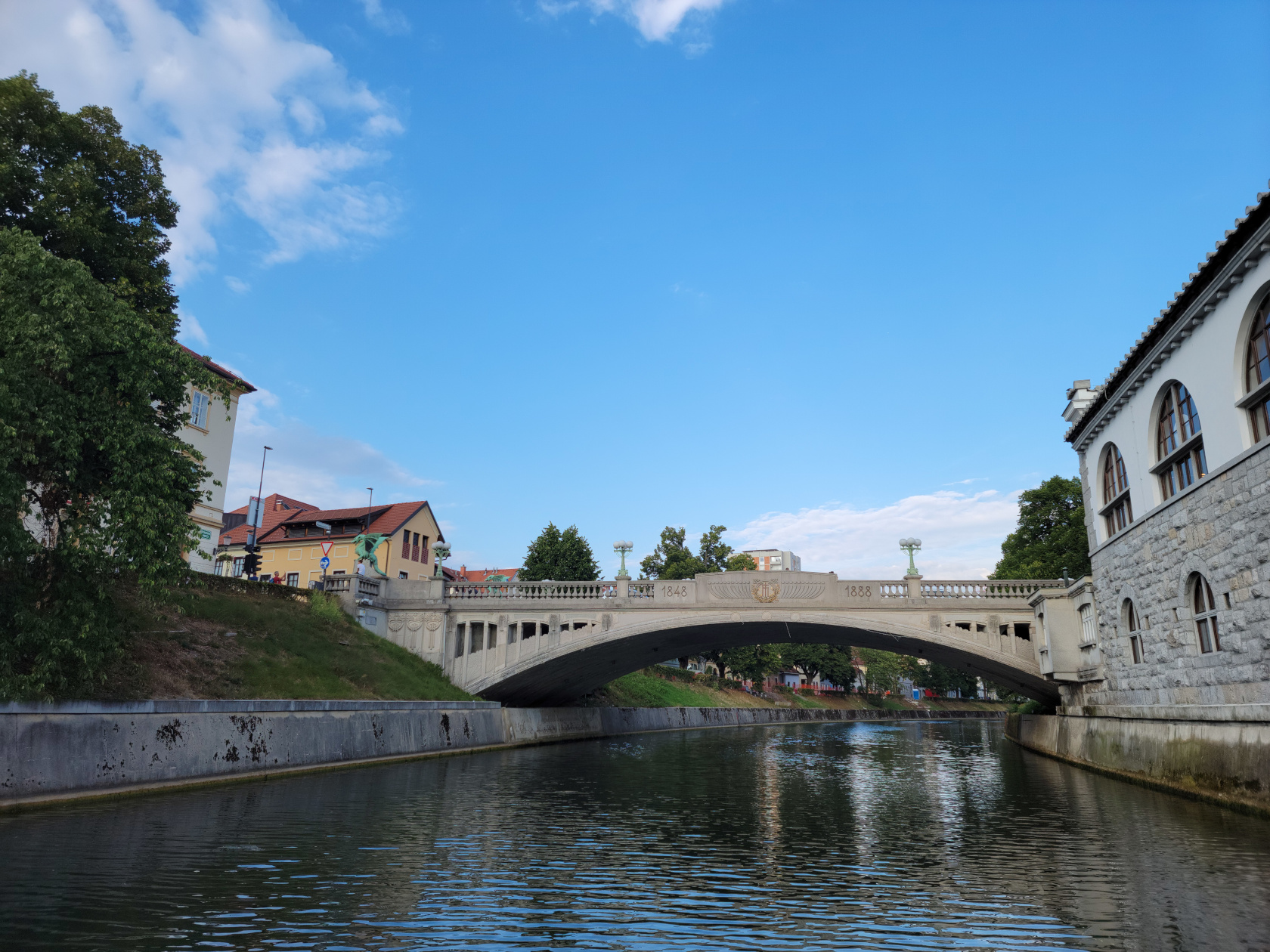
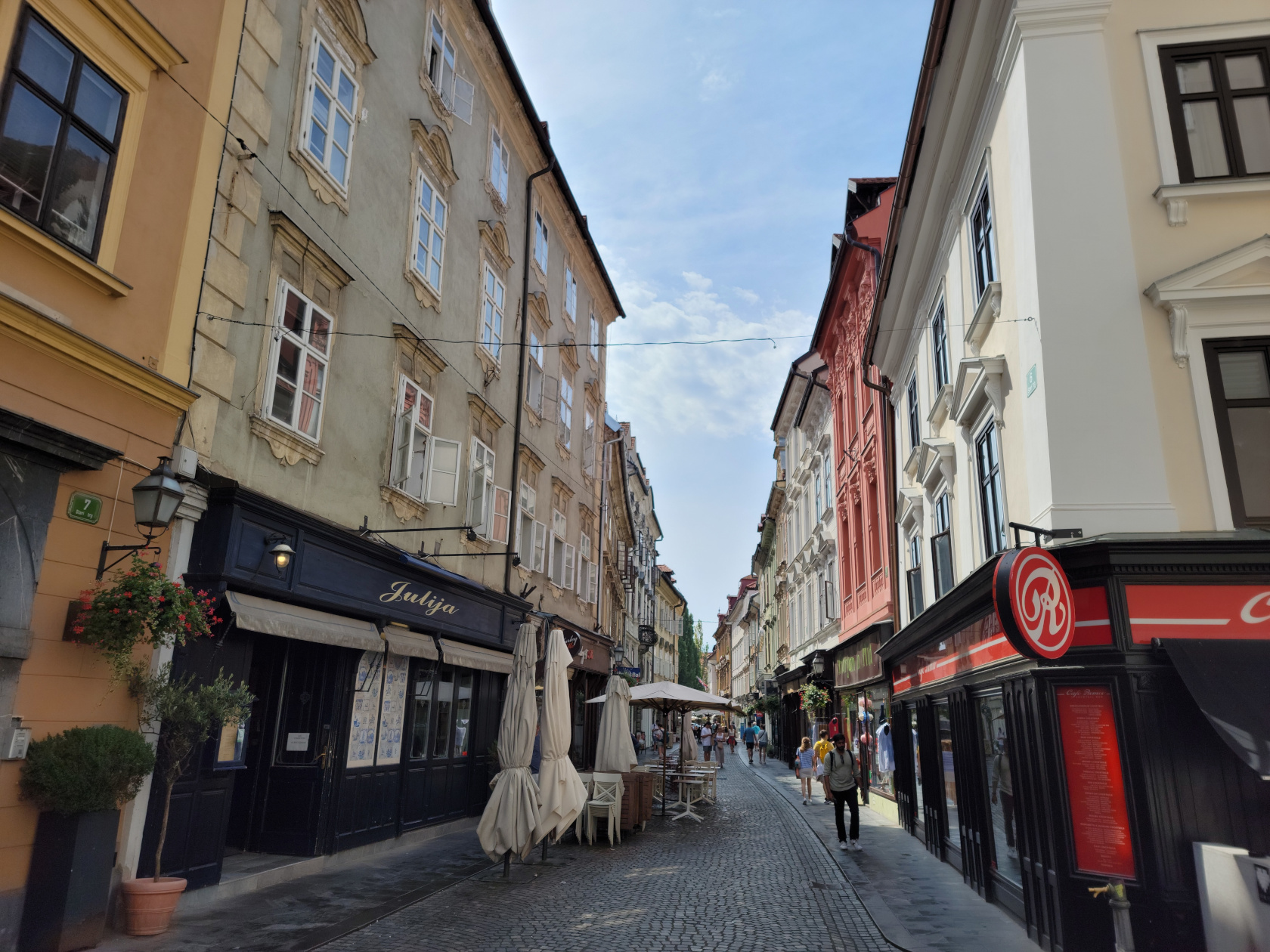
Ljubljana – Ljubljanica River – Dragons Bridge
Bridges In Lubljana
There are several noteworthy bridges in the city, the Dragon Bridge, the Triple Bridge, the Cobbler’s Bridge and the Butcher’s Bridge. There are several others, however these are the ones we spent the most time on and are the most remarkable.
The Dragon’s Bridge
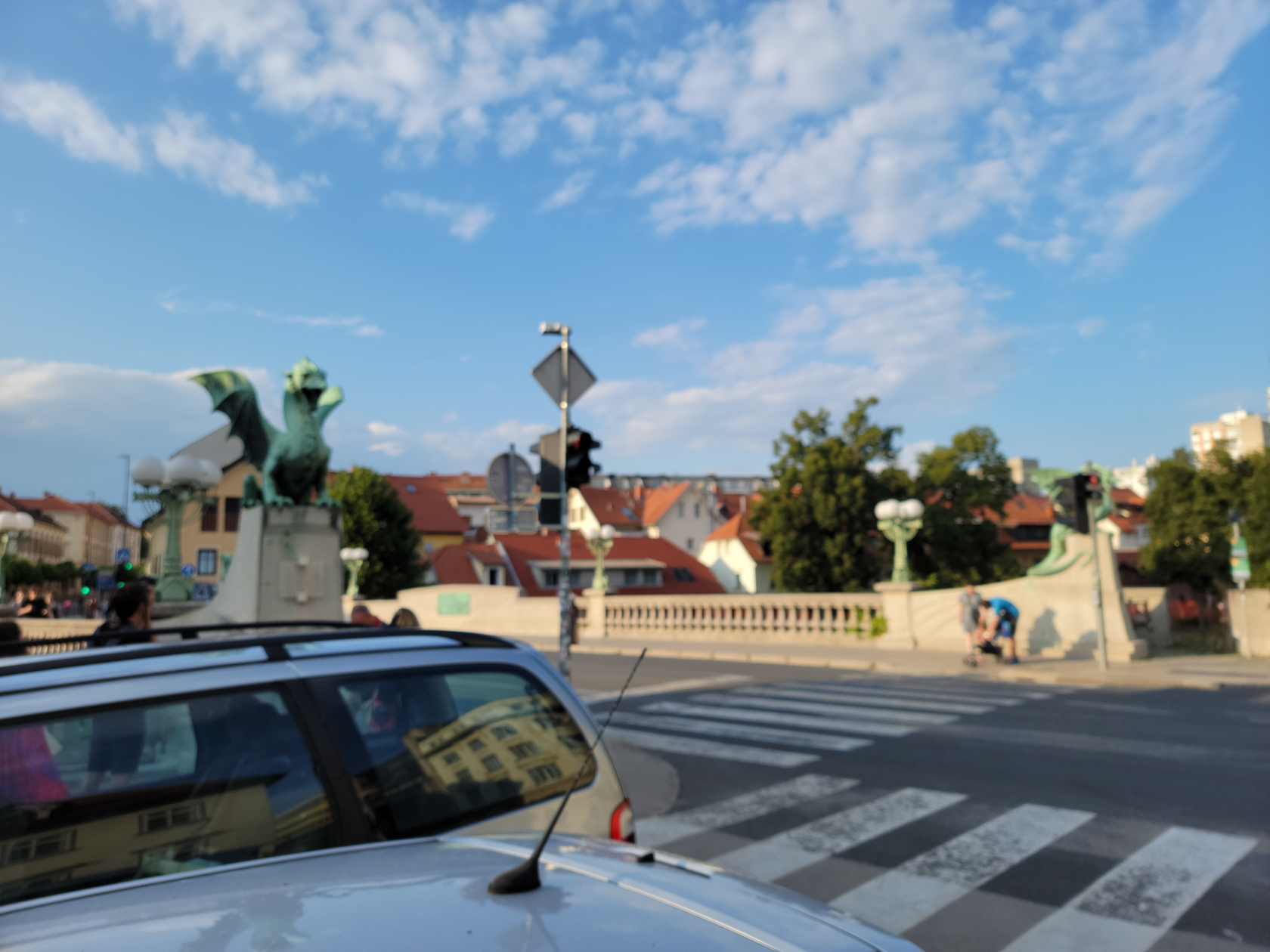
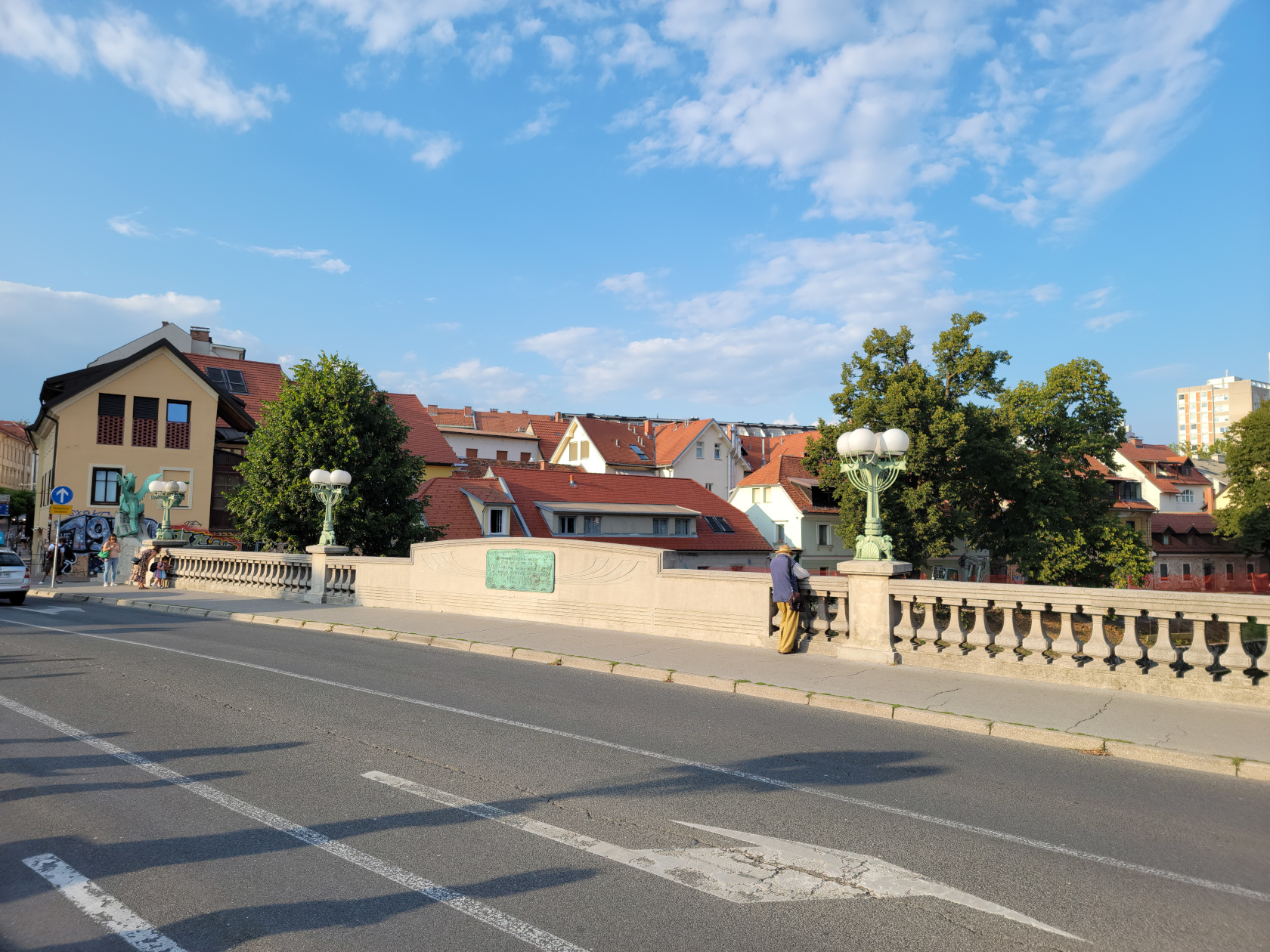
Due to the myth it is probably appropriate that the city have a dragon bridge, one not only to remember Jason’s deeds, but also the ever present danger of the river itself.
Ljubljana – Ljubljanica River – Dragons Bridge
Ljubljana – Ljubljanica River – Dragons Bridge
The Triple Bridge
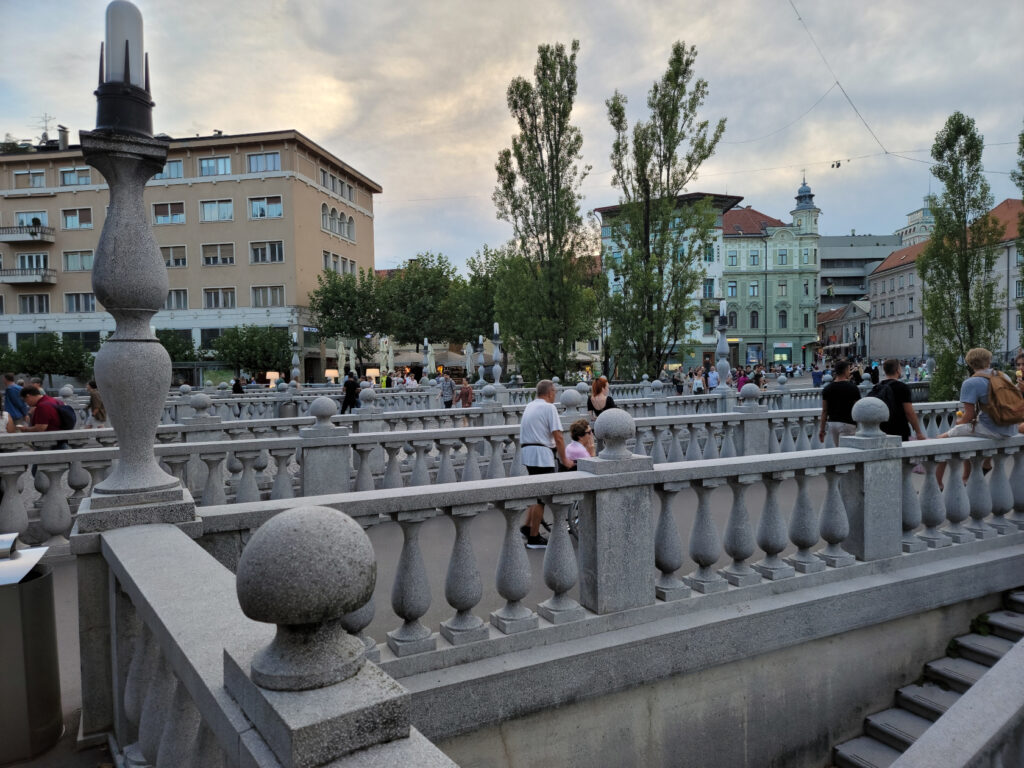
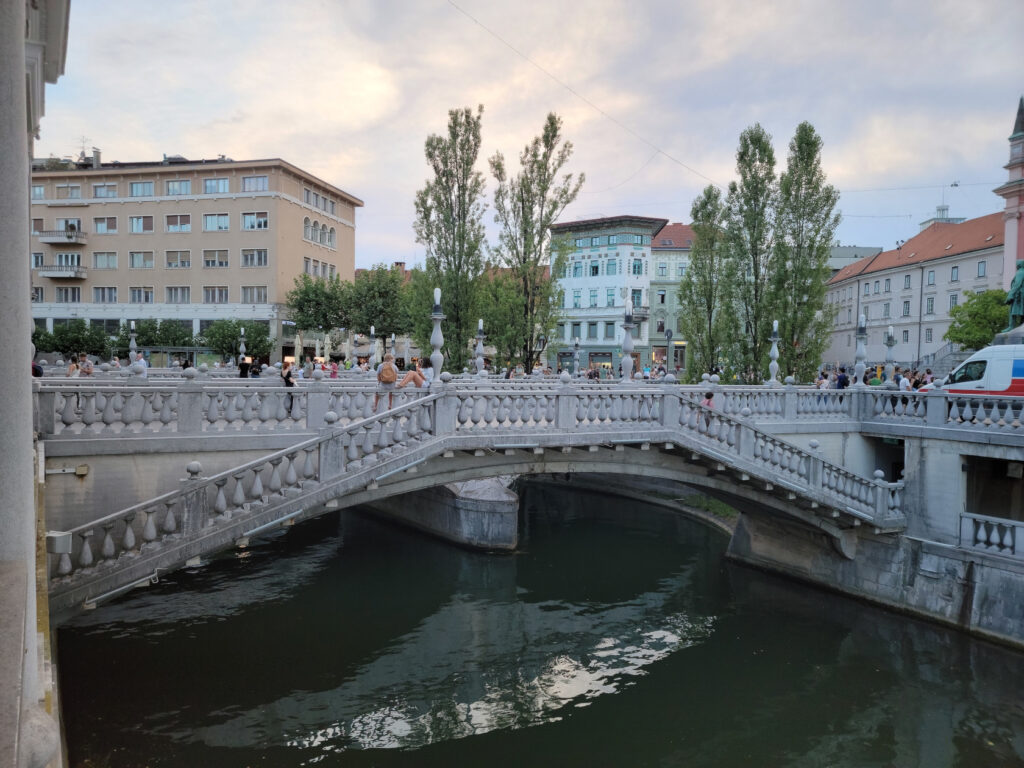
Not far from our hotel and adjacent to Prešeren Square is the Triple Bridge. It was originally one bridge, the central span, but as business and traffic increased the other two side bridges were added for pedestrian traffic.
Ljubljana – The Triple Bridge
Ljubljana – The Triple Bridge
The Cobbler’s Bridge
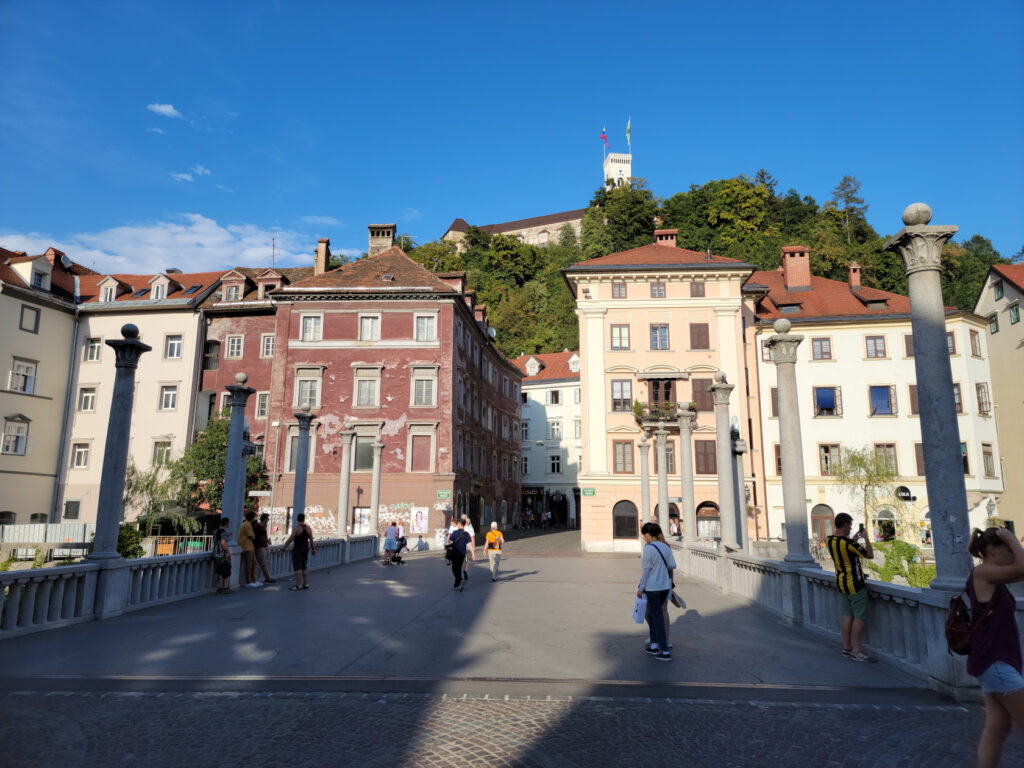
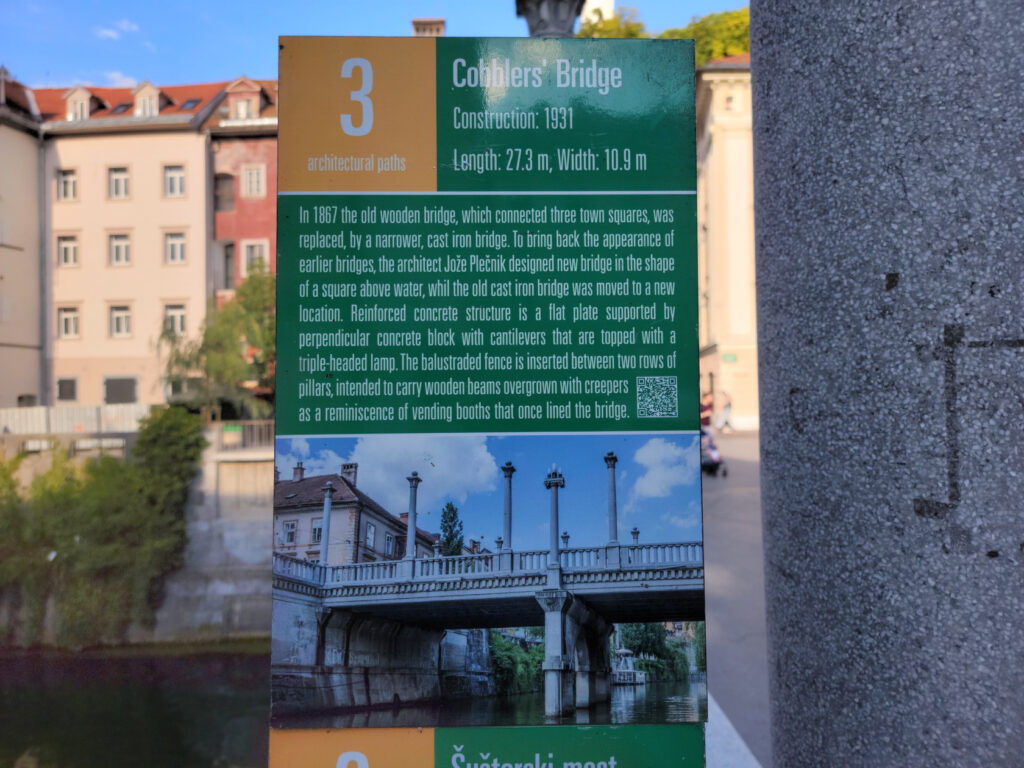
A quaint bridge that connects two important parts of the medieval city.
Ljubljana – Ljubljanica River – Cobblers Bridge
Ljubljana – Ljubljanica River – Cobblers Bridge
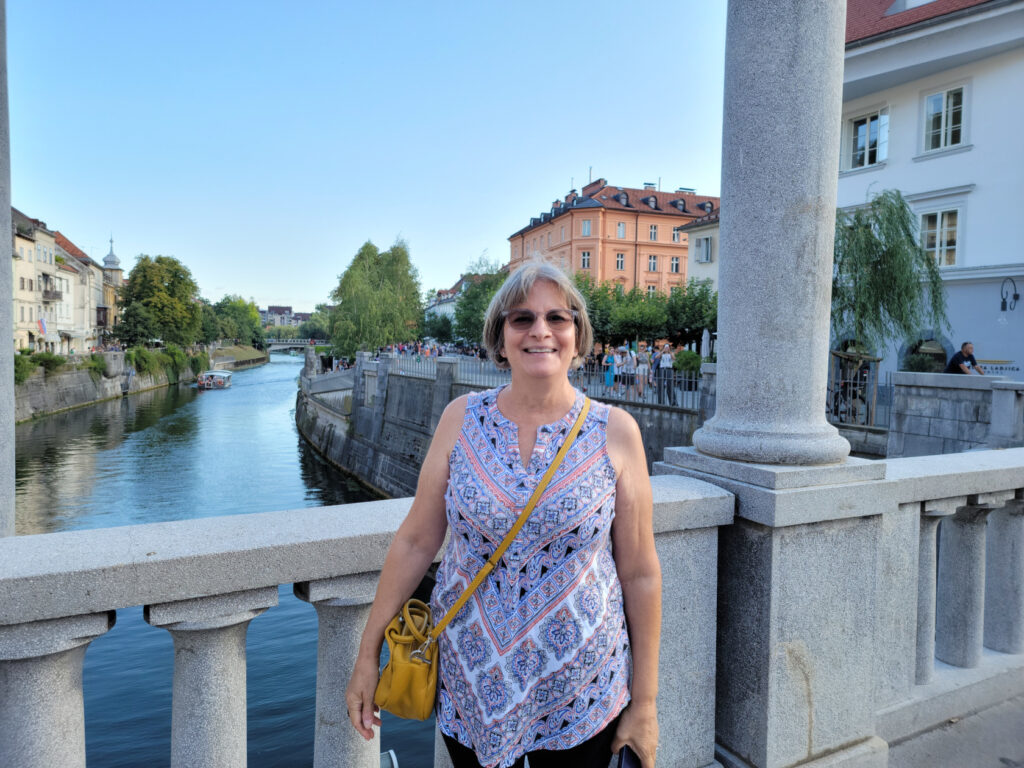
Ljubljana – Ljubljanica River – Patti on Cobblers Bridge
The Butcher’s Bridge
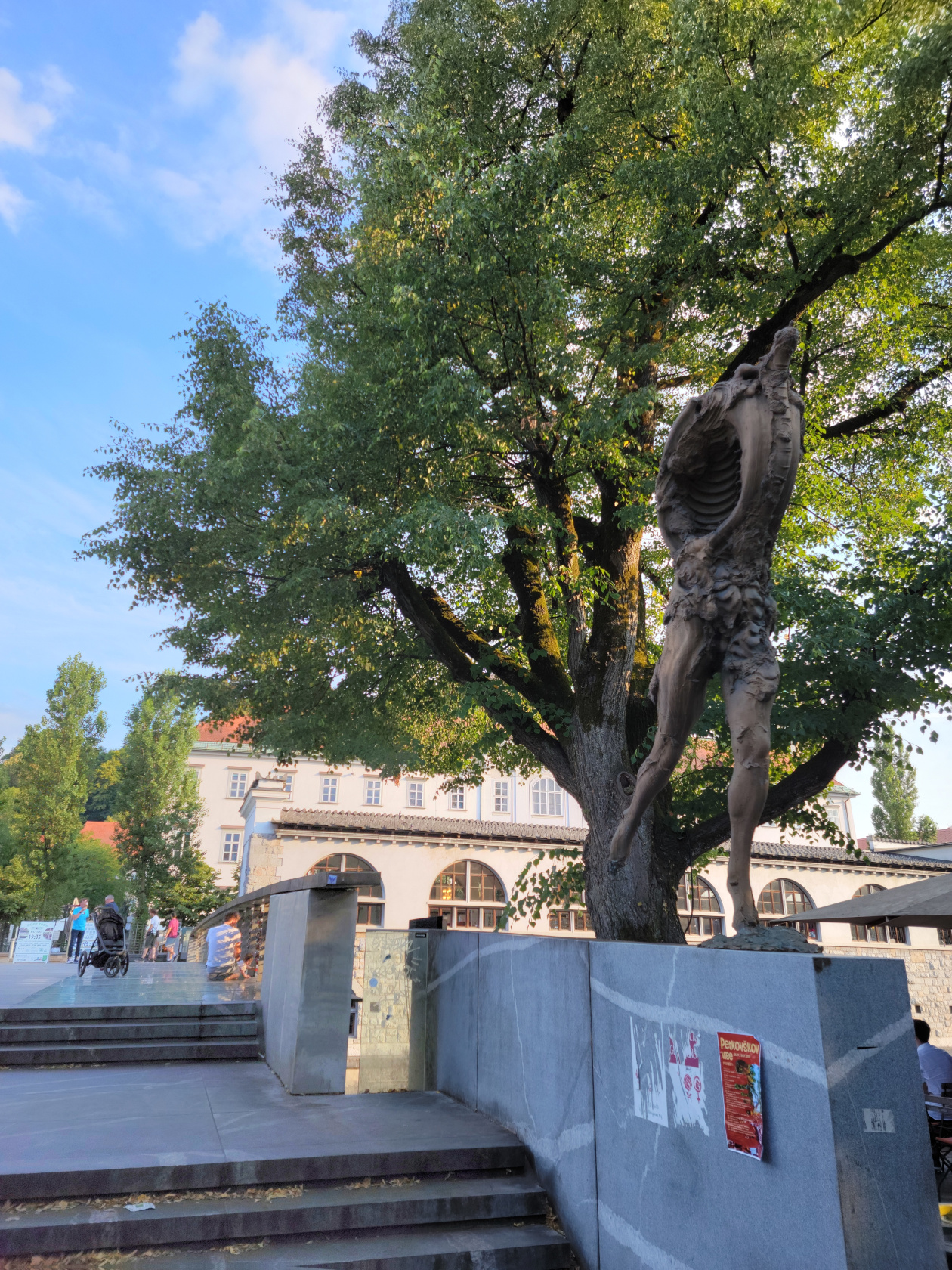
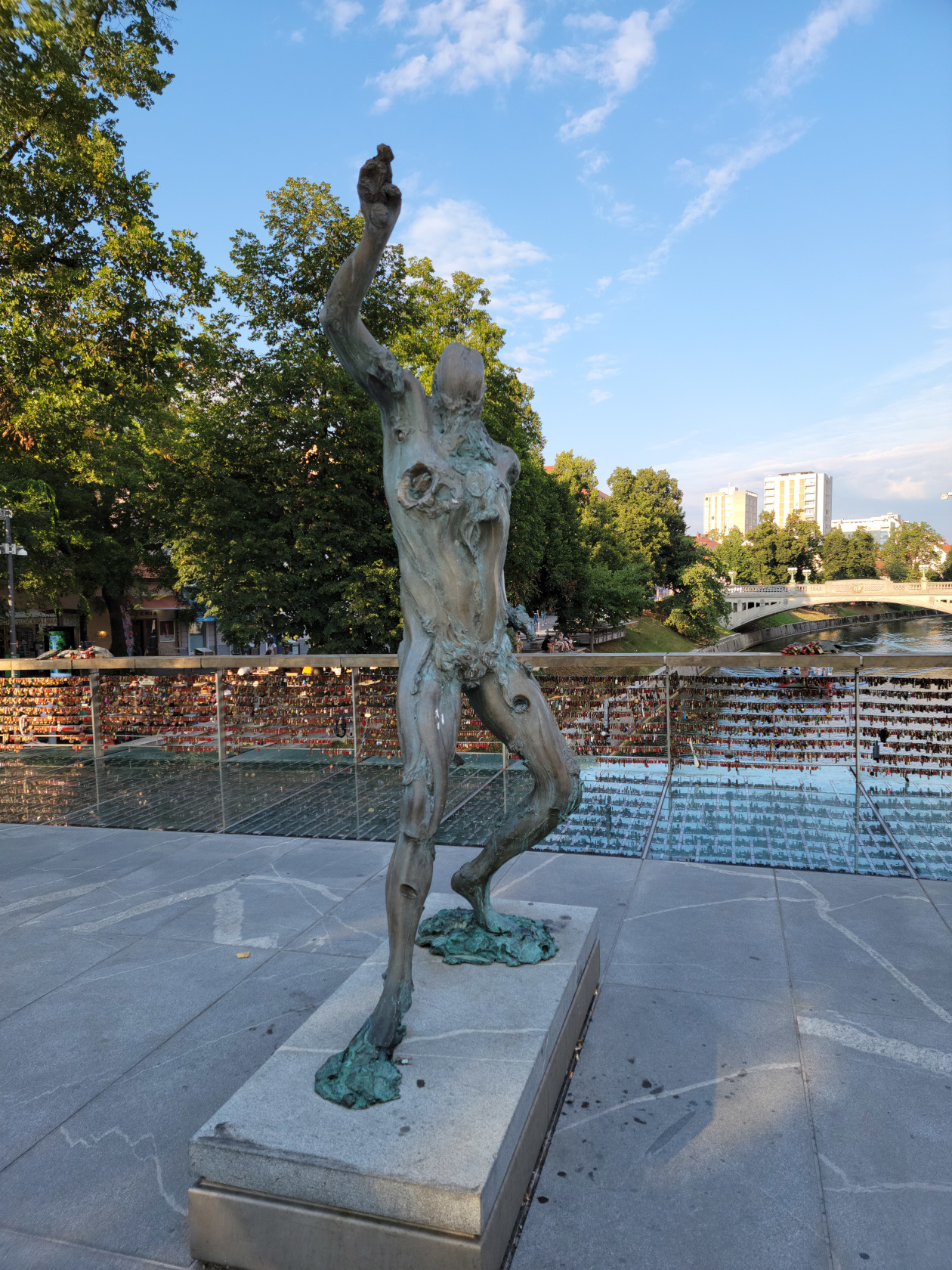
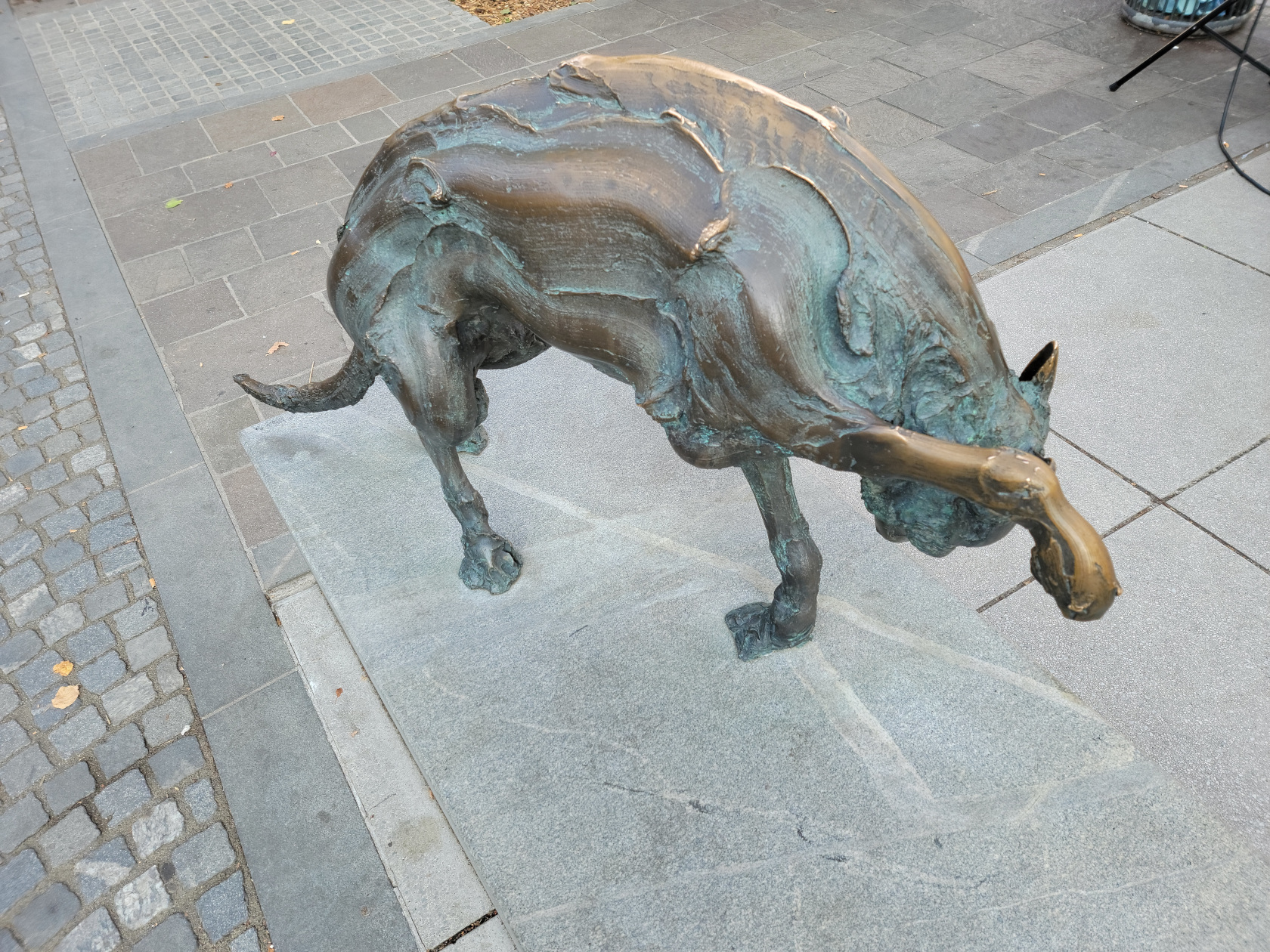
This bridge got its name, since it was near the place that the butchers of the city used to come and wash the carcasses of the animals. The blood and stench of rotting flesh this process brought down through the city must have been appalling. The practice was stopped soon after the residents had had enough of the smell. It is now decorated with locks and bronzes of mythological creatures.
Ljubljana – City Art – Bronze
Ljubljana – City Art – Bronze
Ljubljana – City Art – Bronze
Ljubljana – City Art – Bronzes
Castle Hill
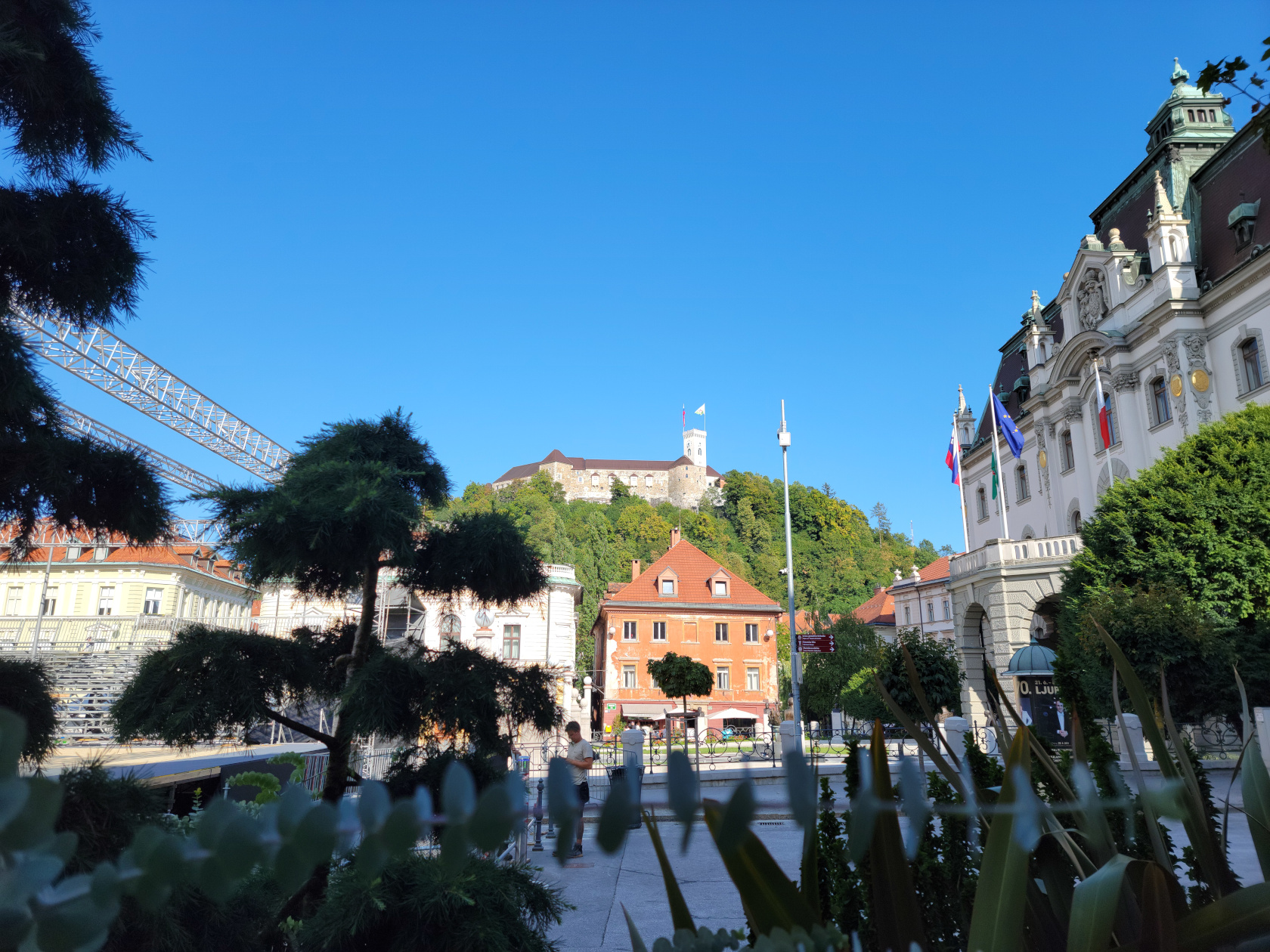
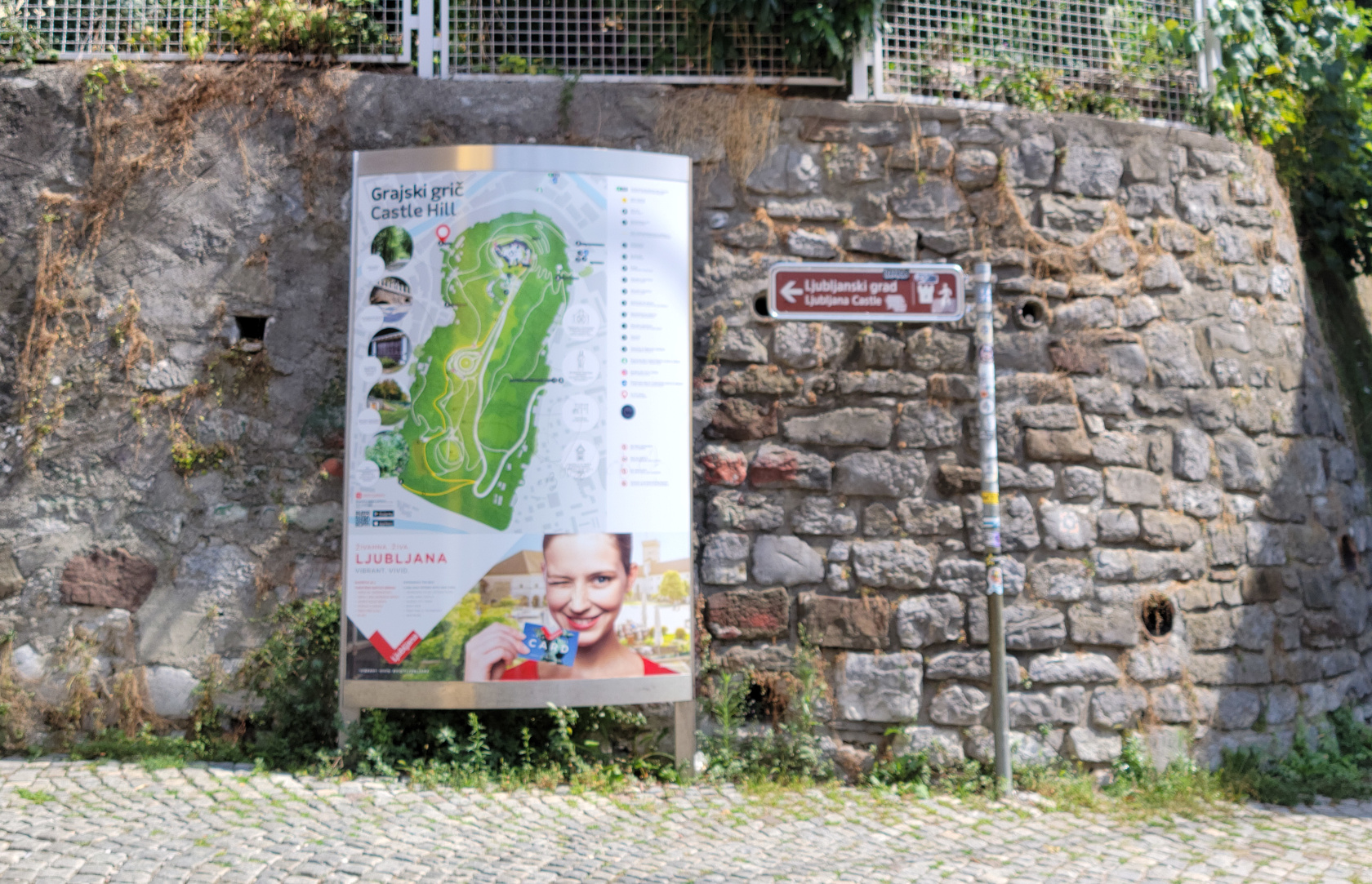
There are two prominent hills in Ljubljana, the one that contains Tivoli Park and Castle Hill, which contains the Ljubljana Castle.
Ljubljana – Ljubljana Castle
Ljubljana Castle
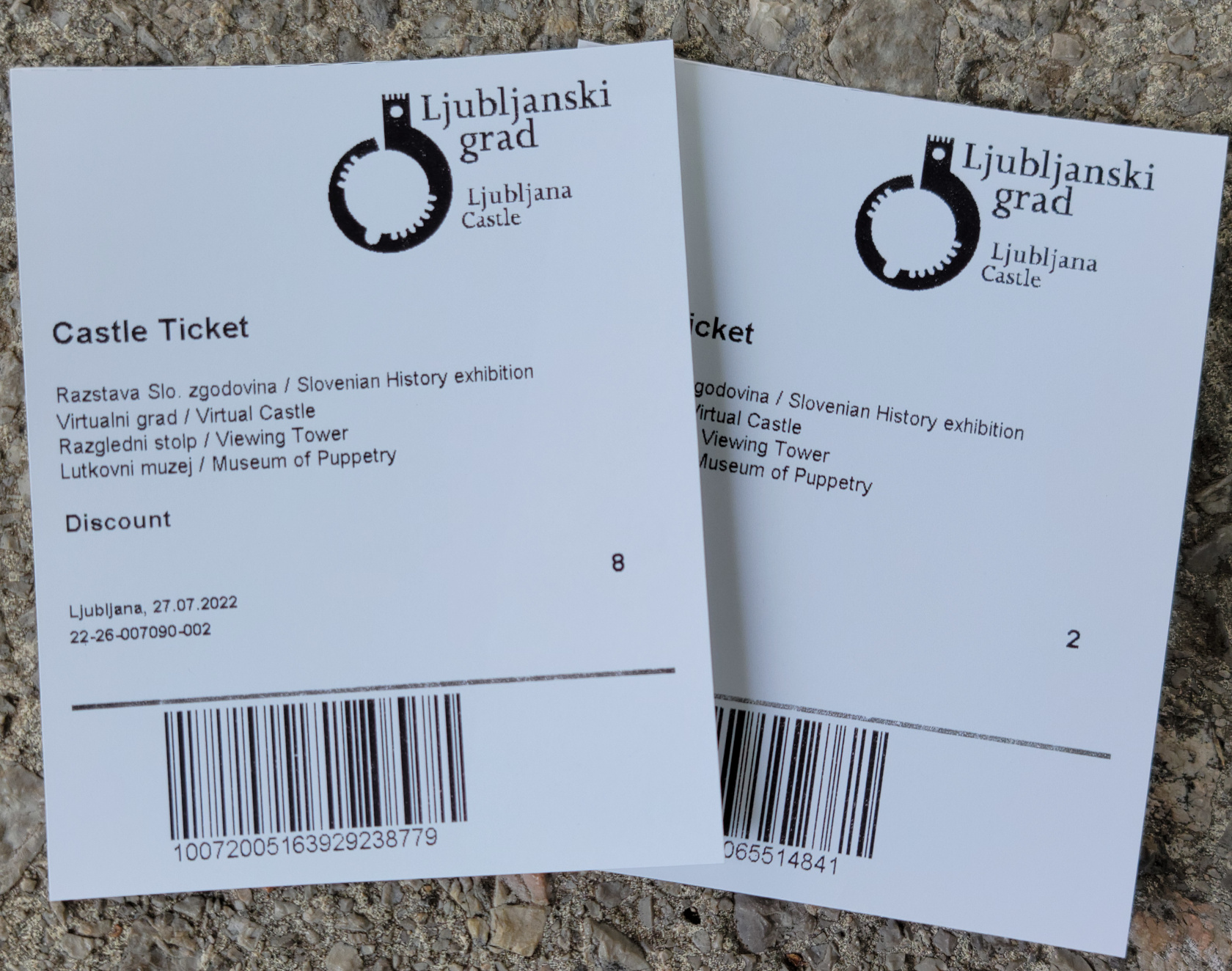
Ljubljana – Ljubljana Castle – Tickets For Two
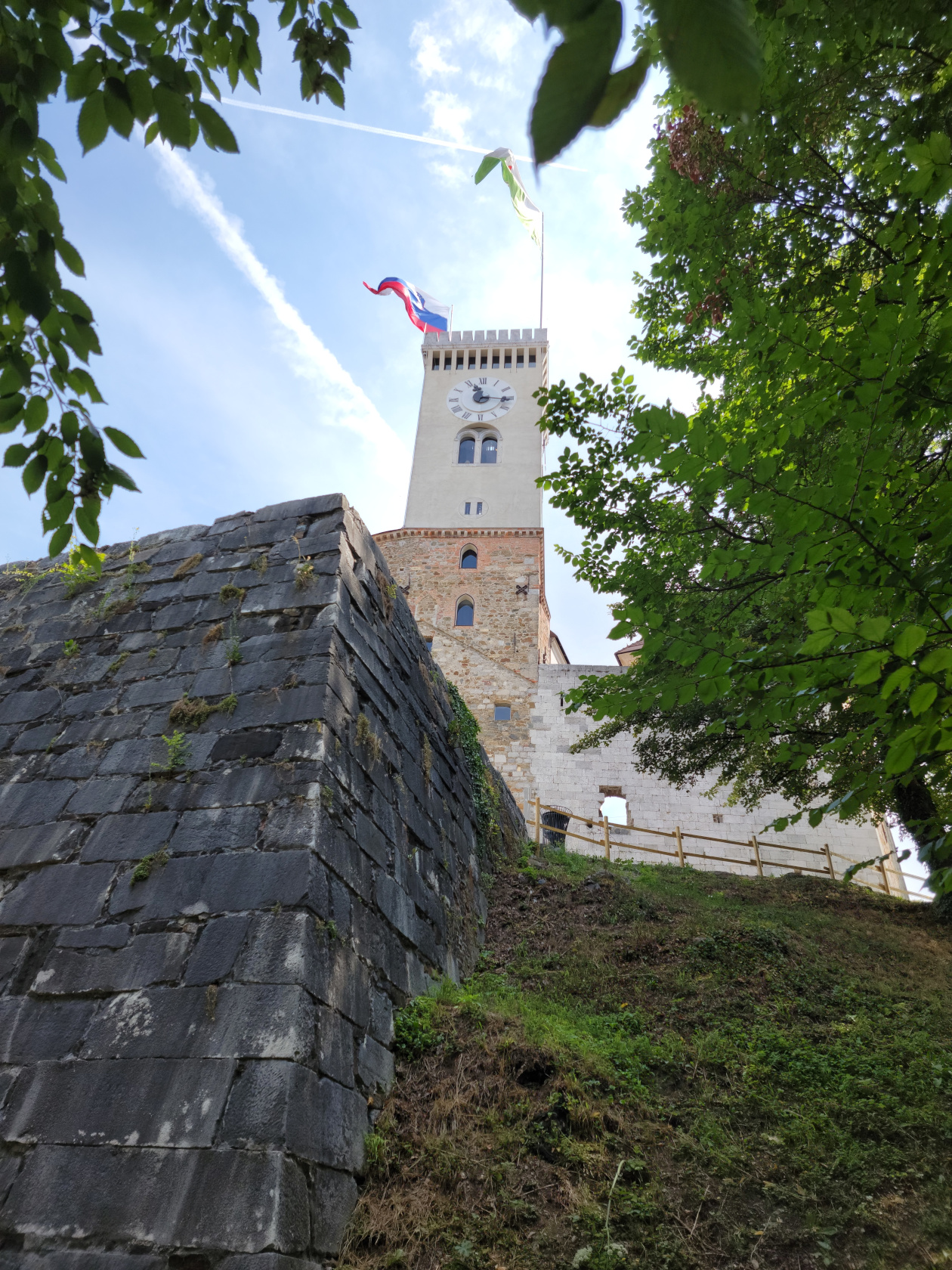
Perched above the city on the Castle Hill is the Ljubljana Castle. In 1679, Valvasor did an engraving of the Laybach Castle, as it was known in German at the time, showing the castle and many other landmarks of Lublana.[2]There are many spelling variations for this city, due to it being part of many different empires and countries throughout its history.
Ljubljana – Ljubljana Castle
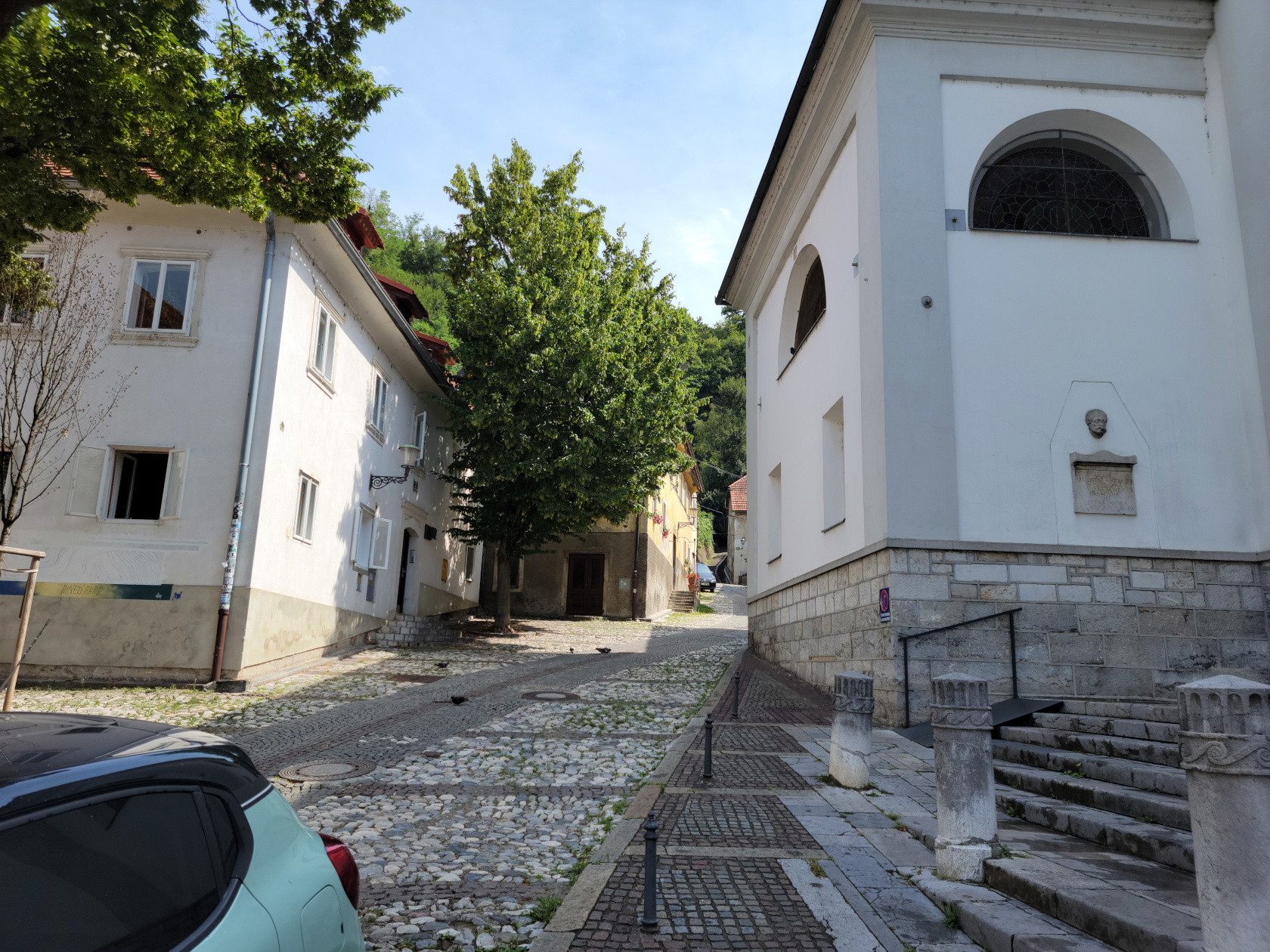
Ljubljana – Ulica na Grad
Ljubljana – Castle Hill – Ulica na Grad
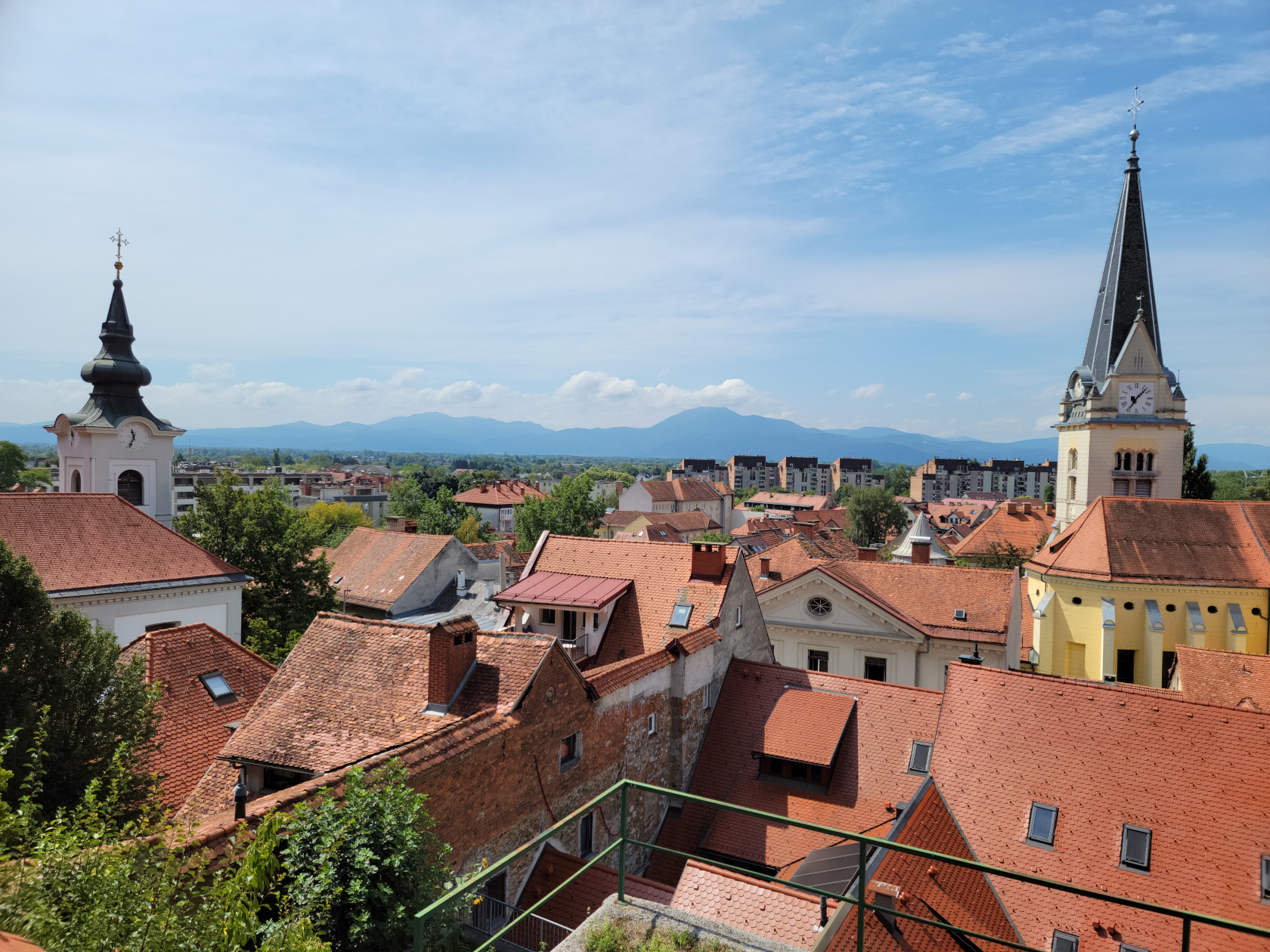
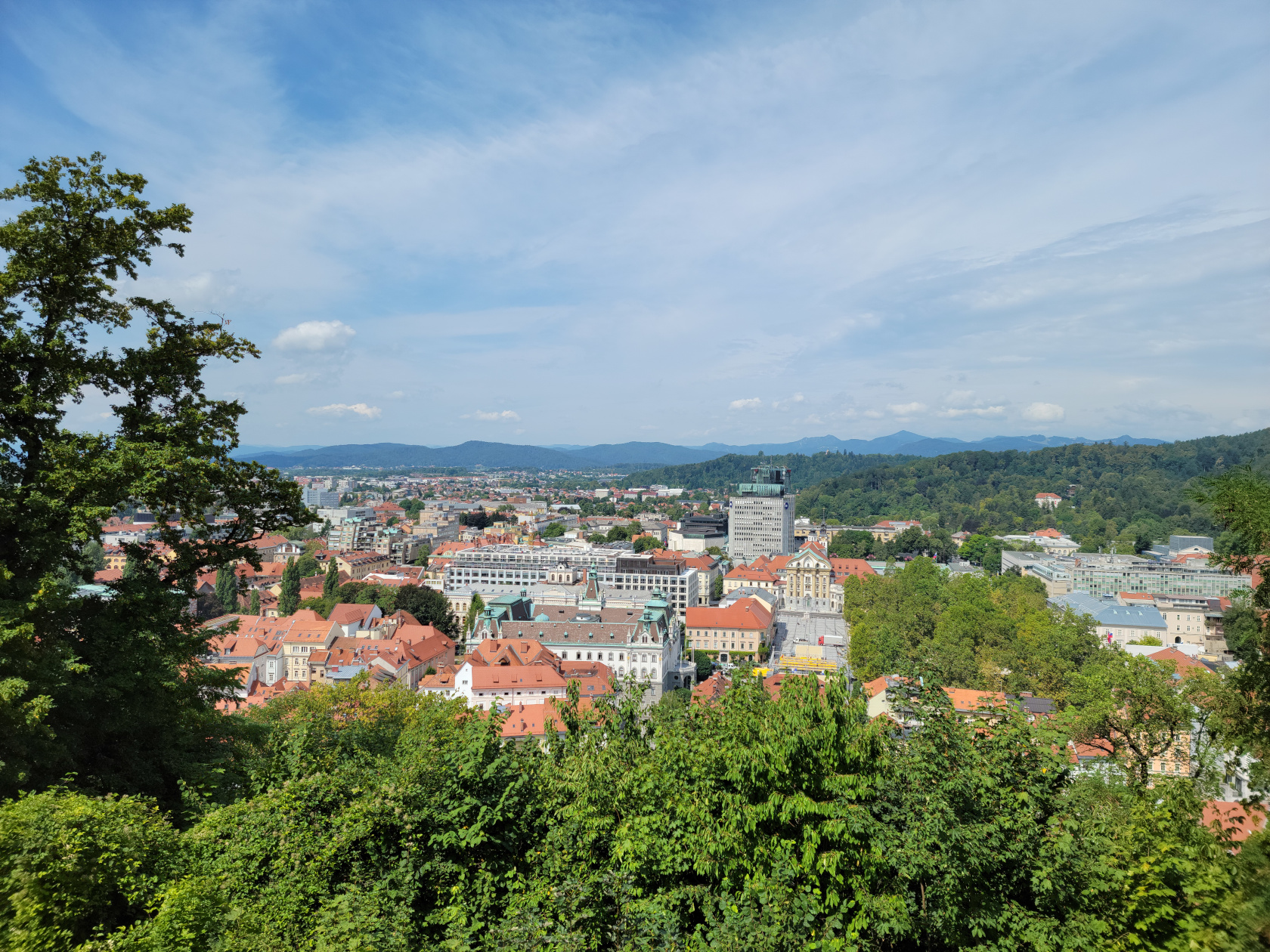
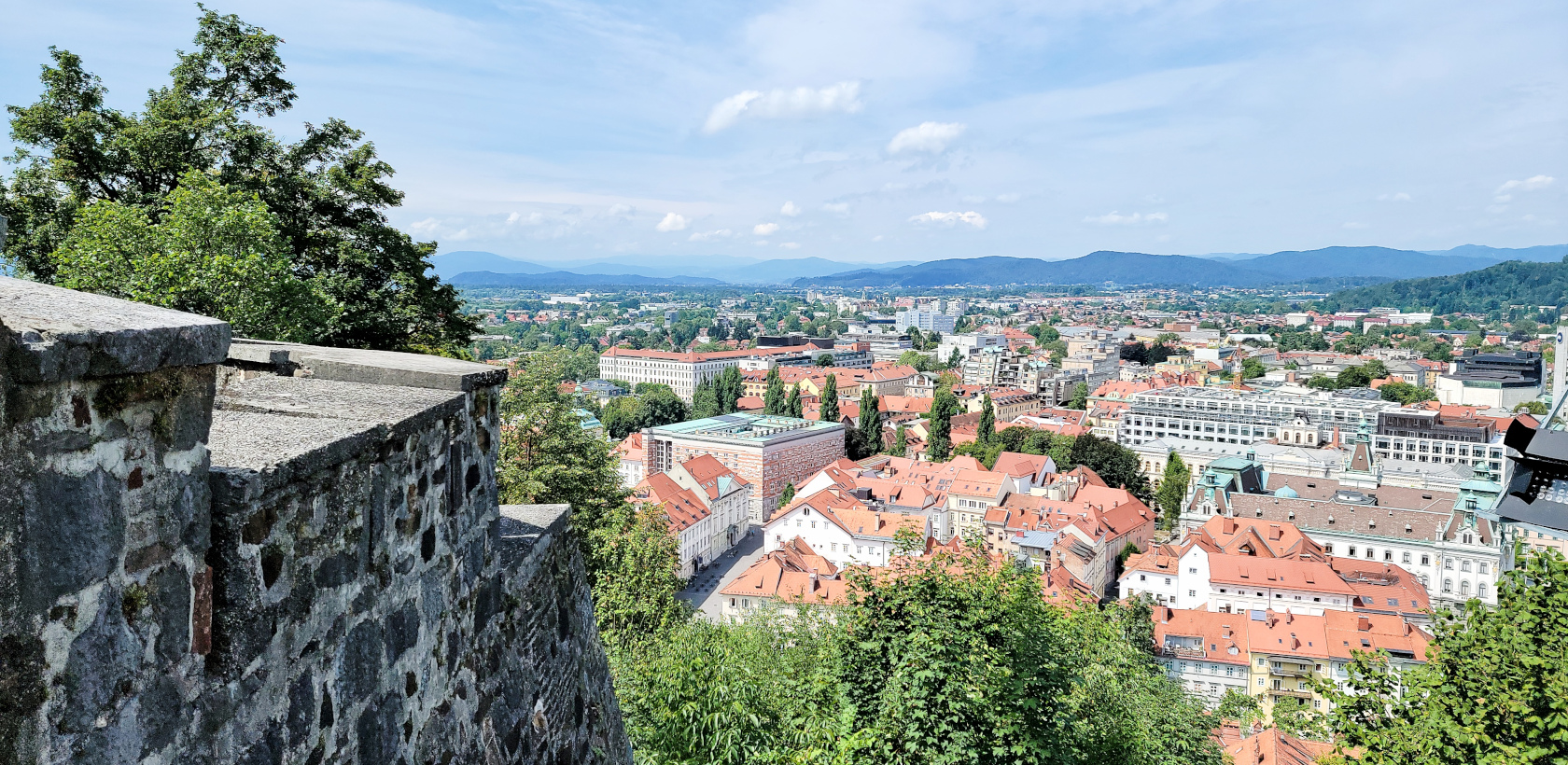
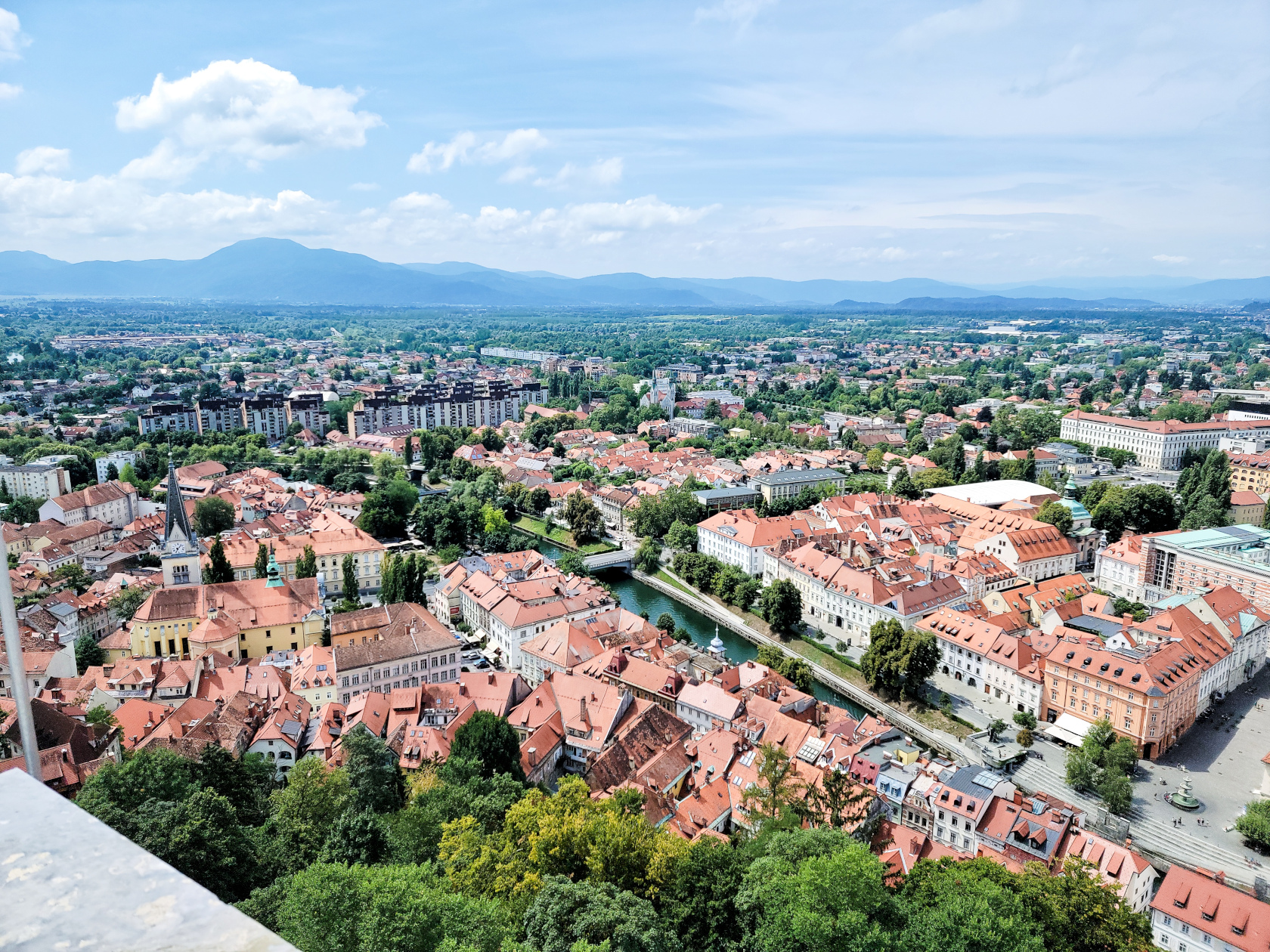
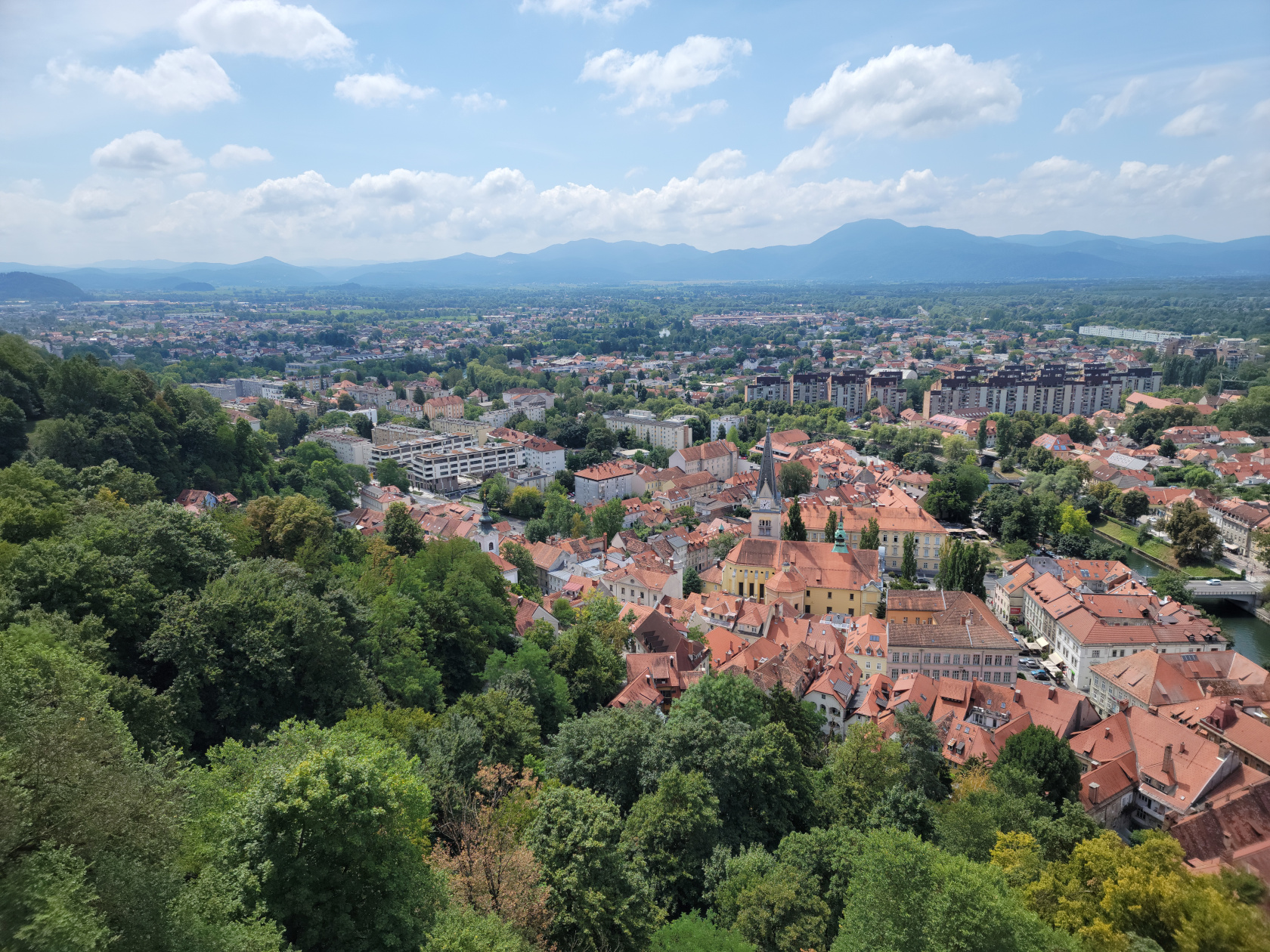
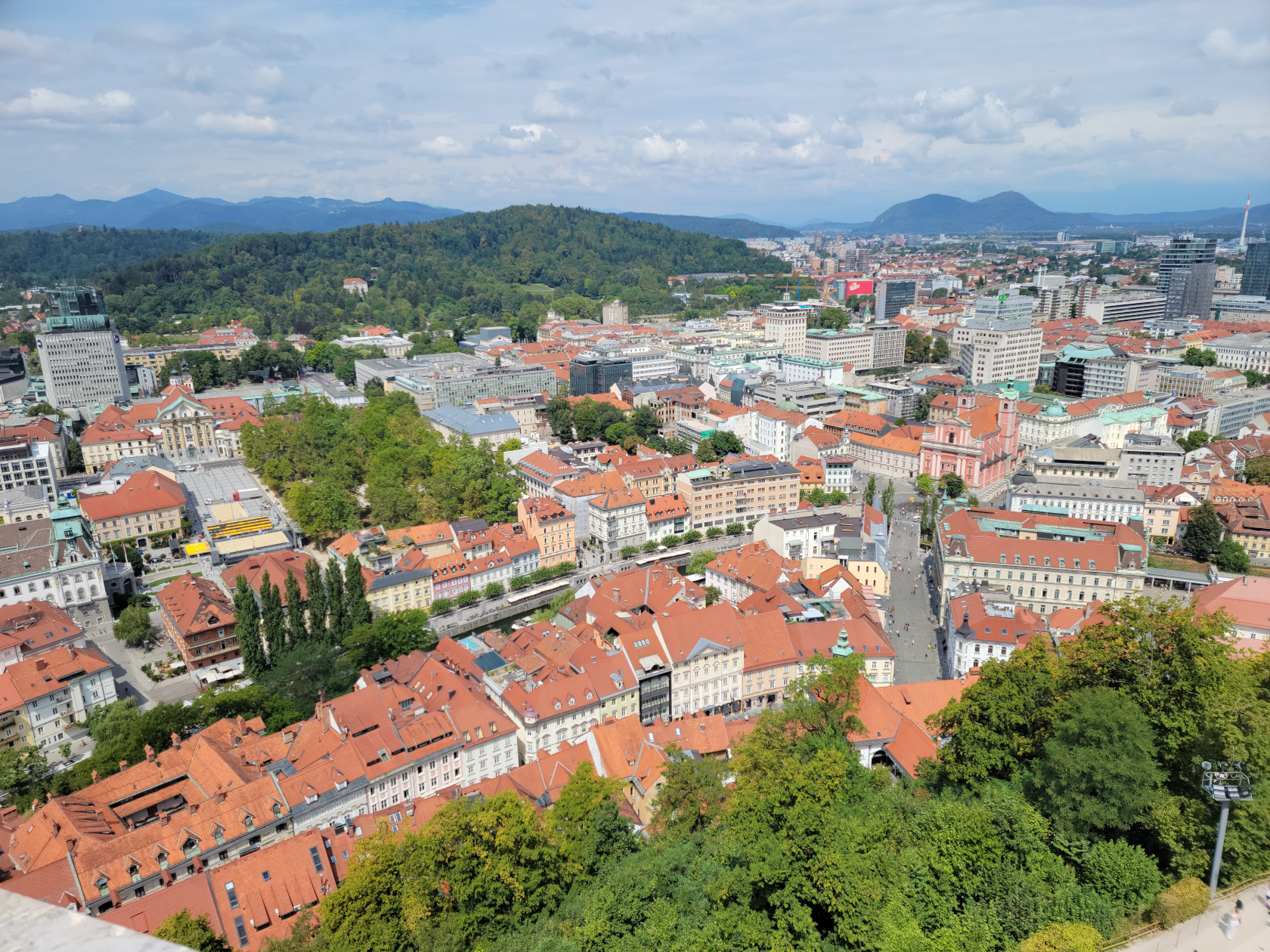
Ljubljana – From Castle Hill
Ljubljana – The Castle
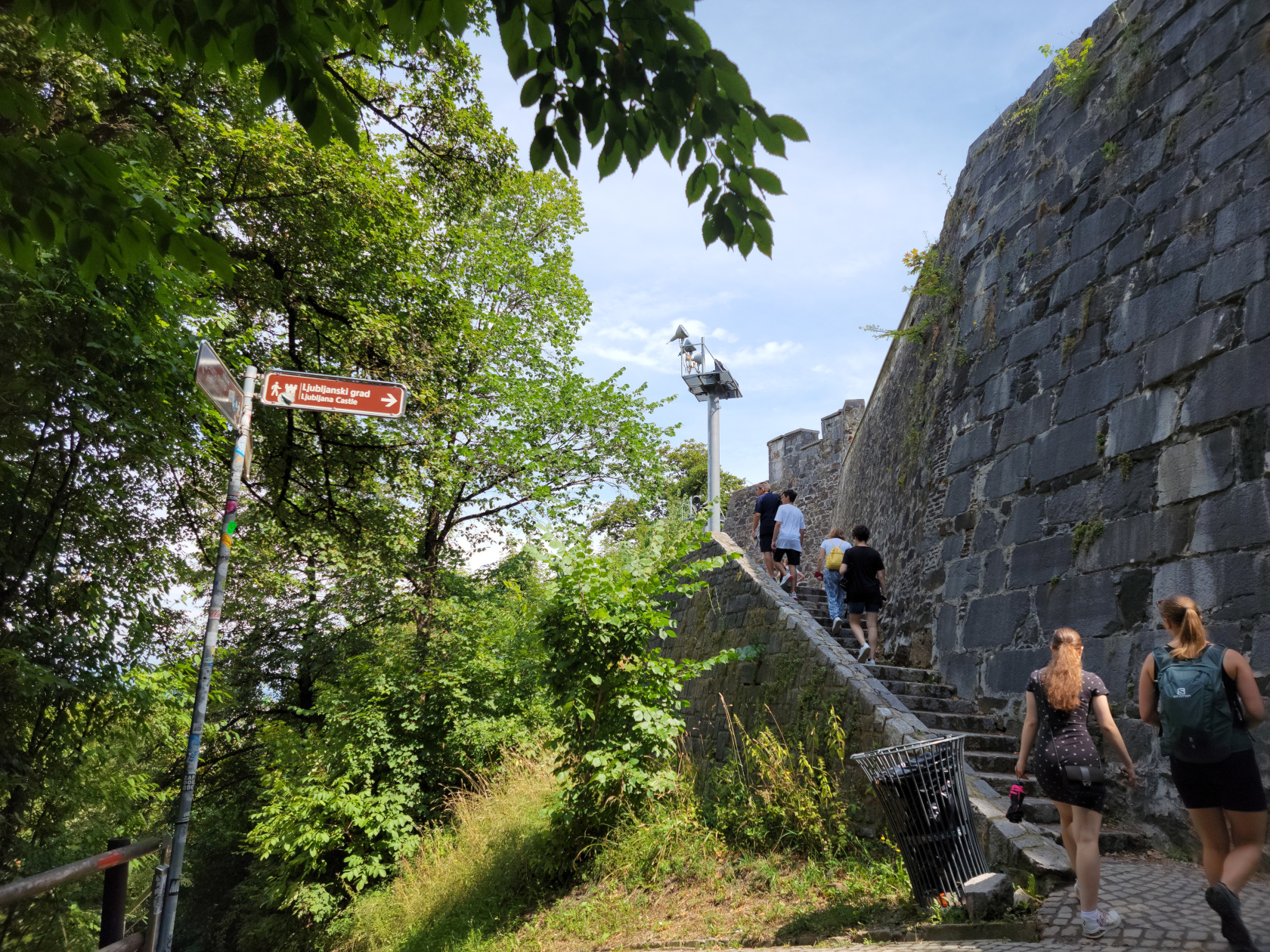
Ljubljana – Climb to Castle
Ljubljana – From Castle Hill
Ljubljana – From Castle Hill
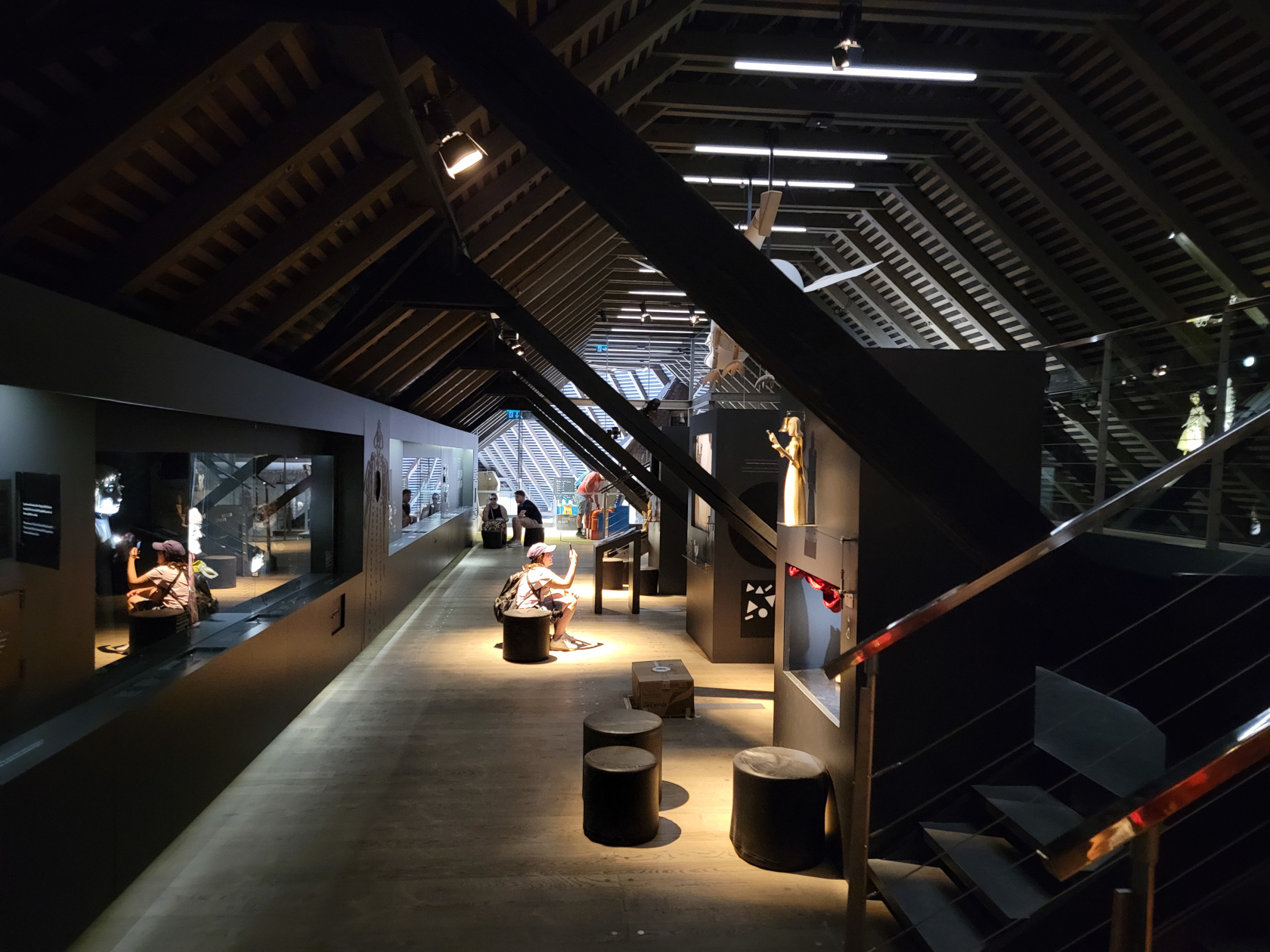
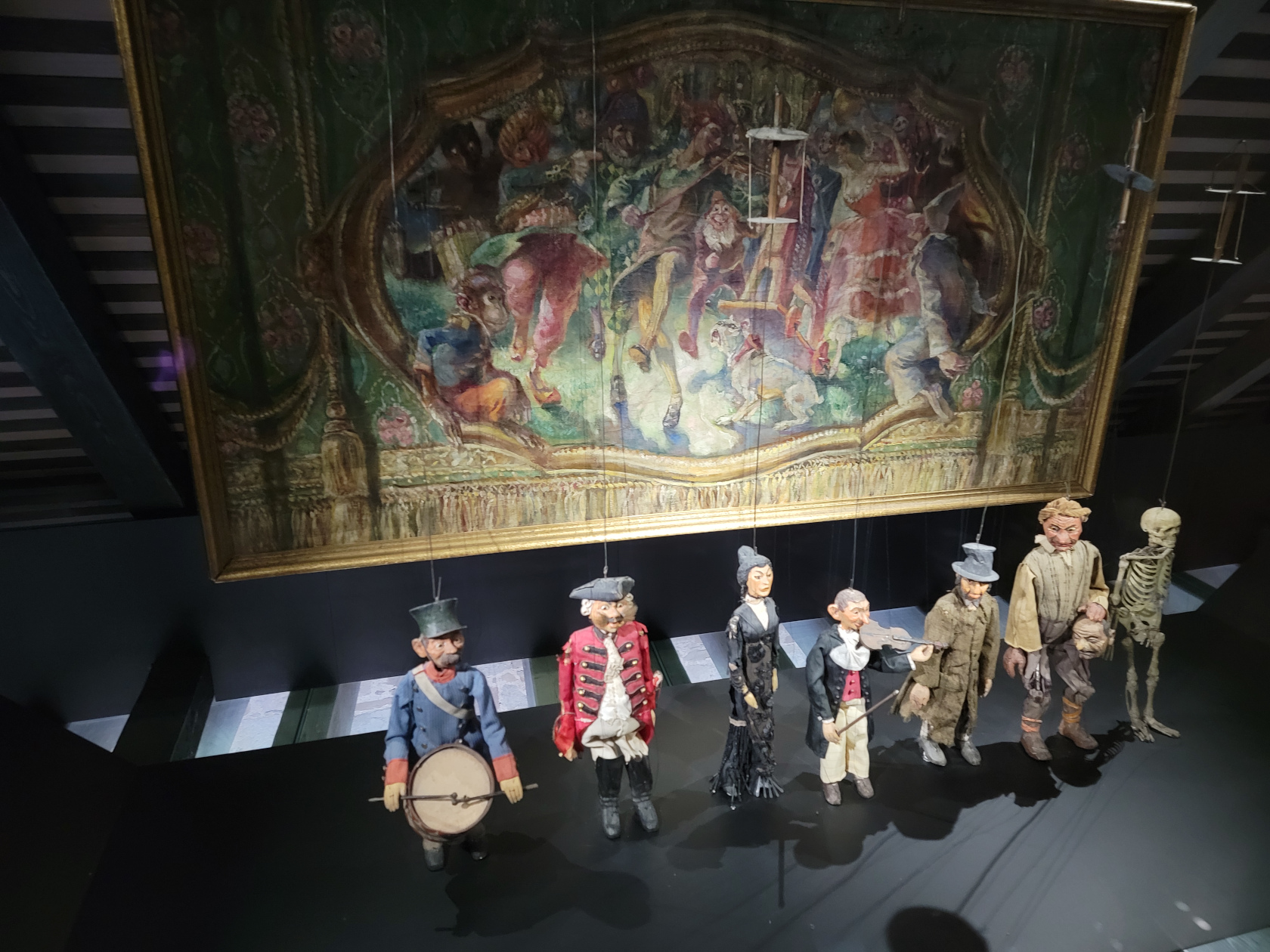
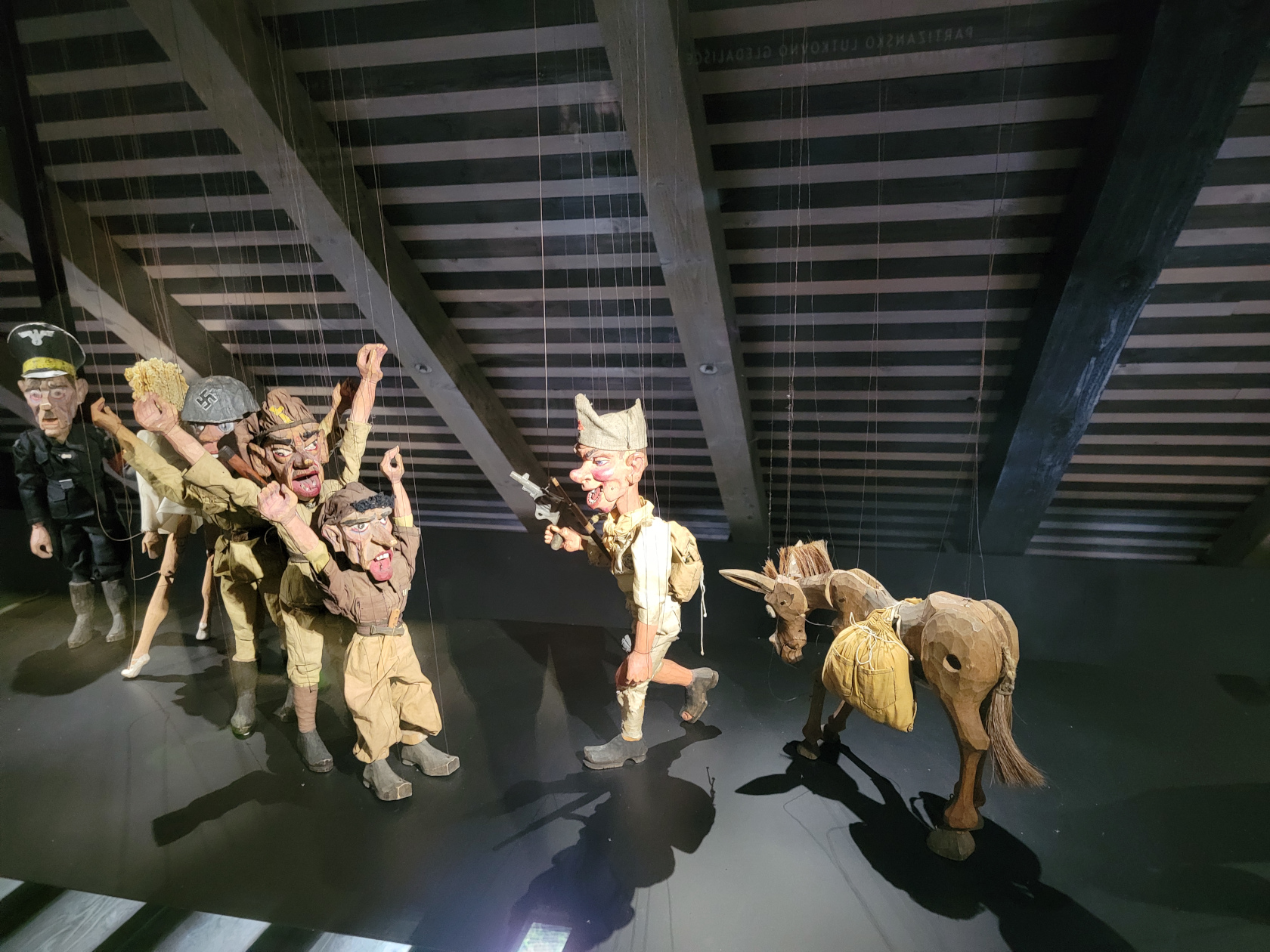
Ljubljana Castle – Puppet Museum
Ljubljana Castle – Puppet Museum
Ljubljana Castle – Puppet Museum
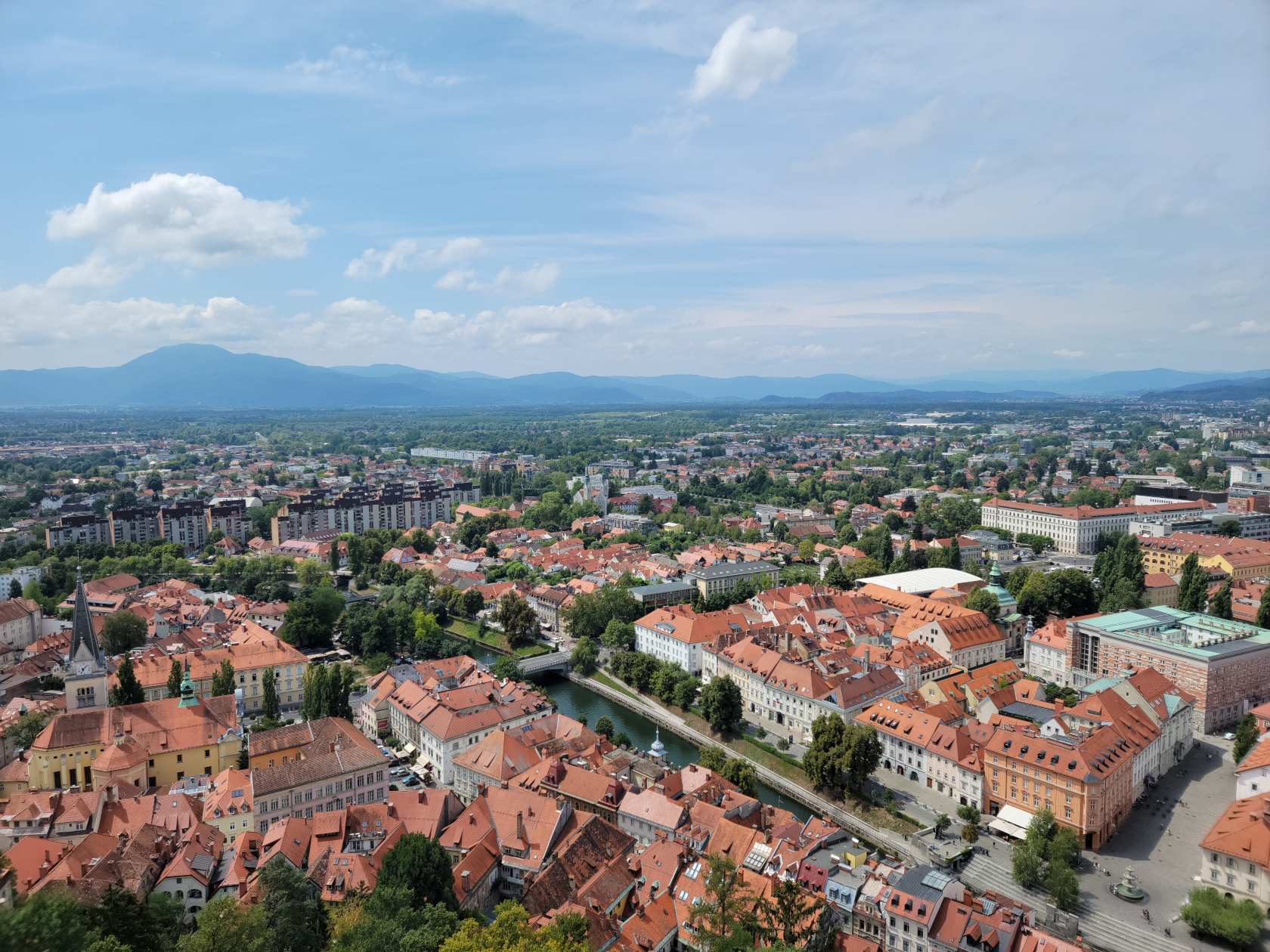
Ljubljana – From Castle Hill
Ljubljana – From Castle Hill
Ljubljana – From Castle Hill
Ljubljana – From Castle Hill
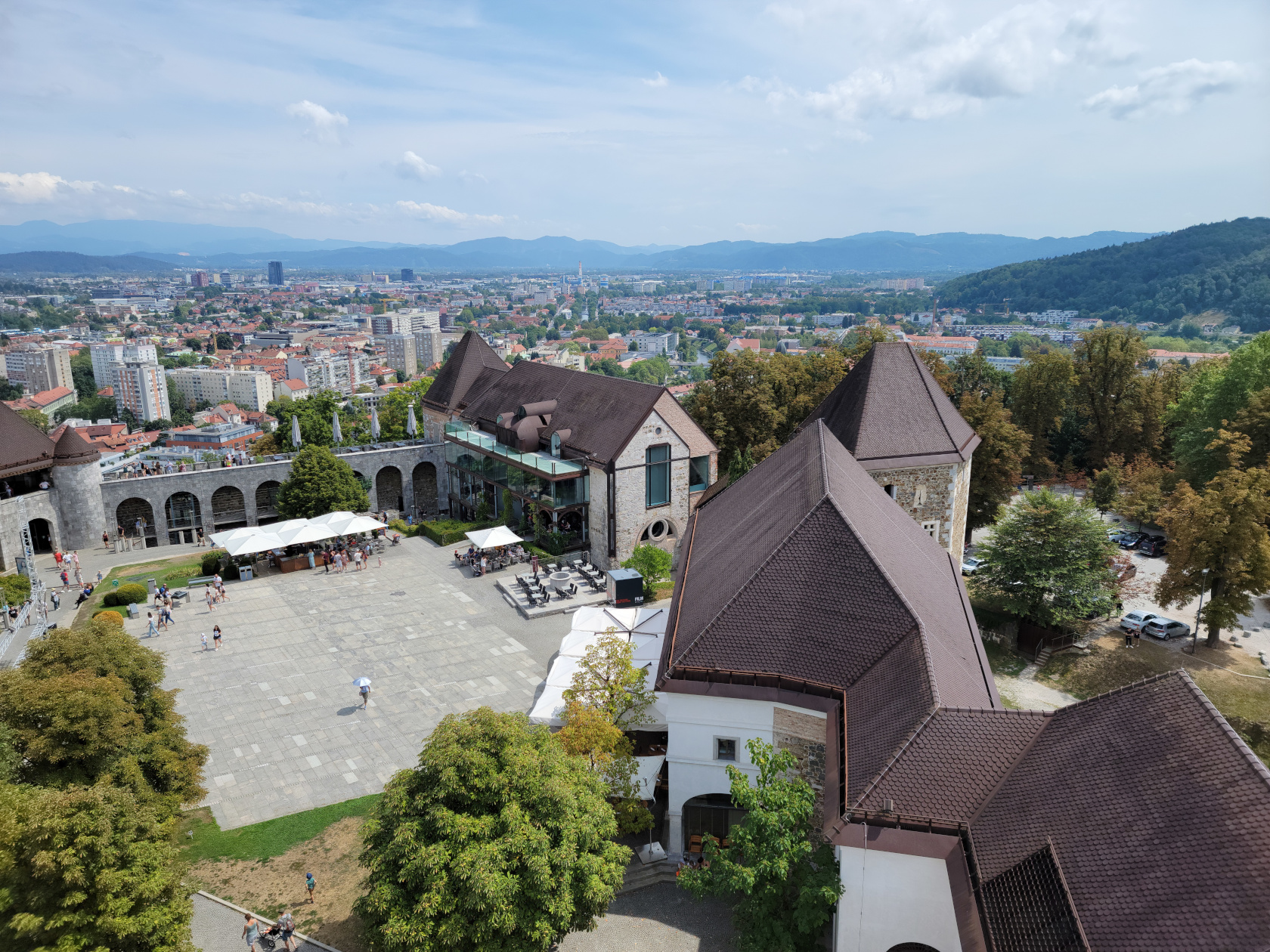
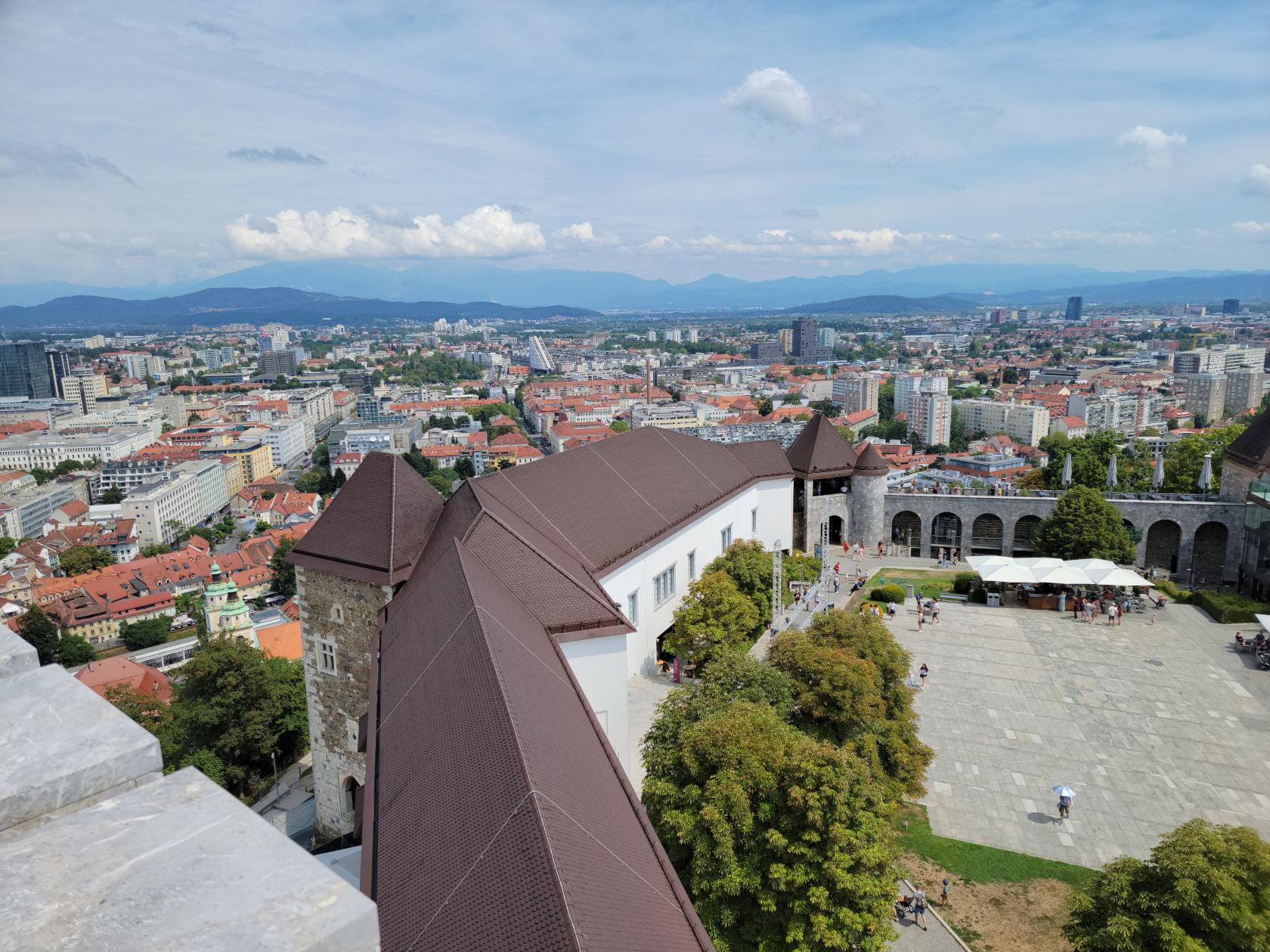
Ljubljana – Castle From Castle Tower
Ljubljana – Castle From Castle Tower
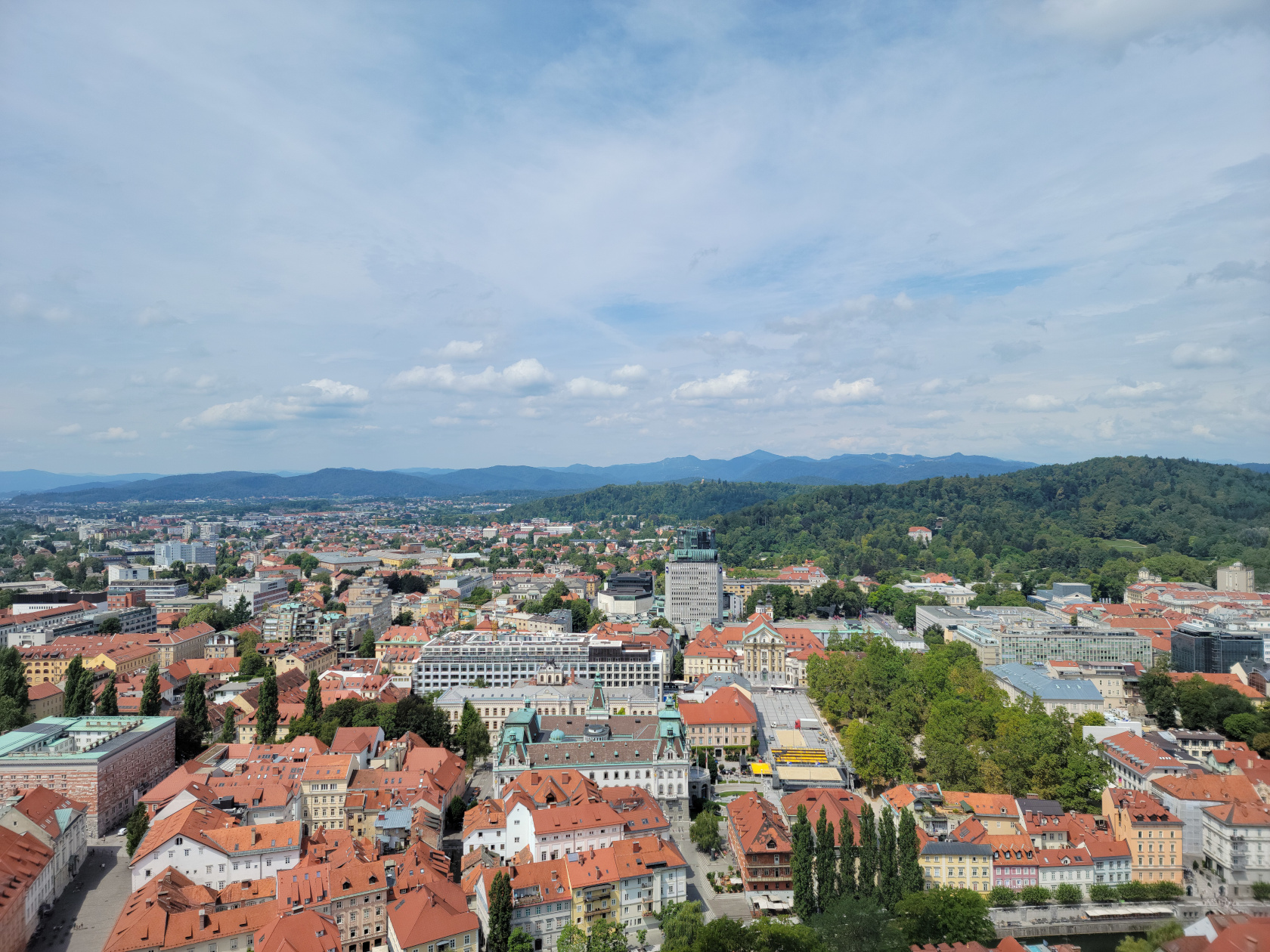
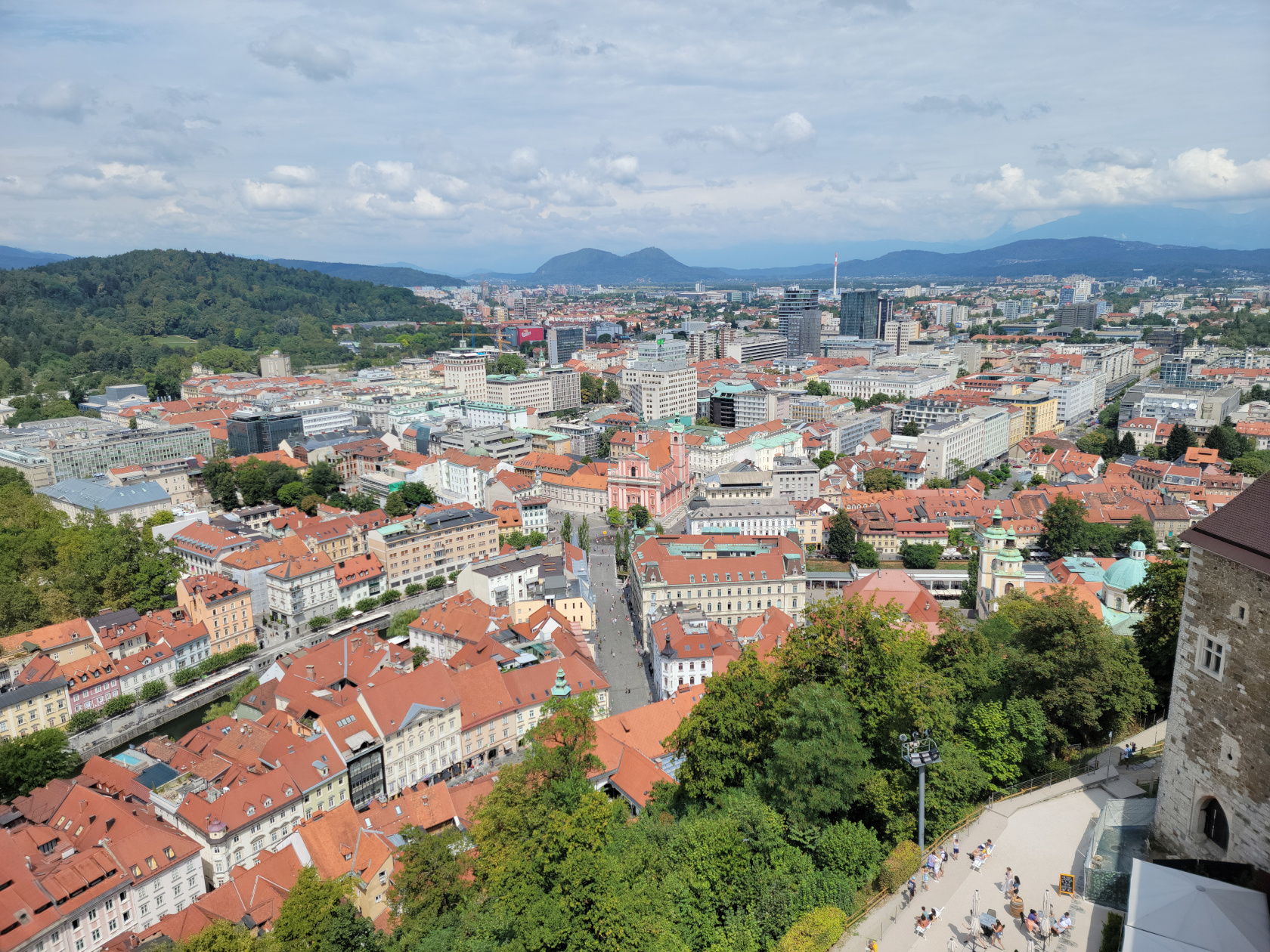
Ljubljana – Ljubljana and Castle From Castle Tower
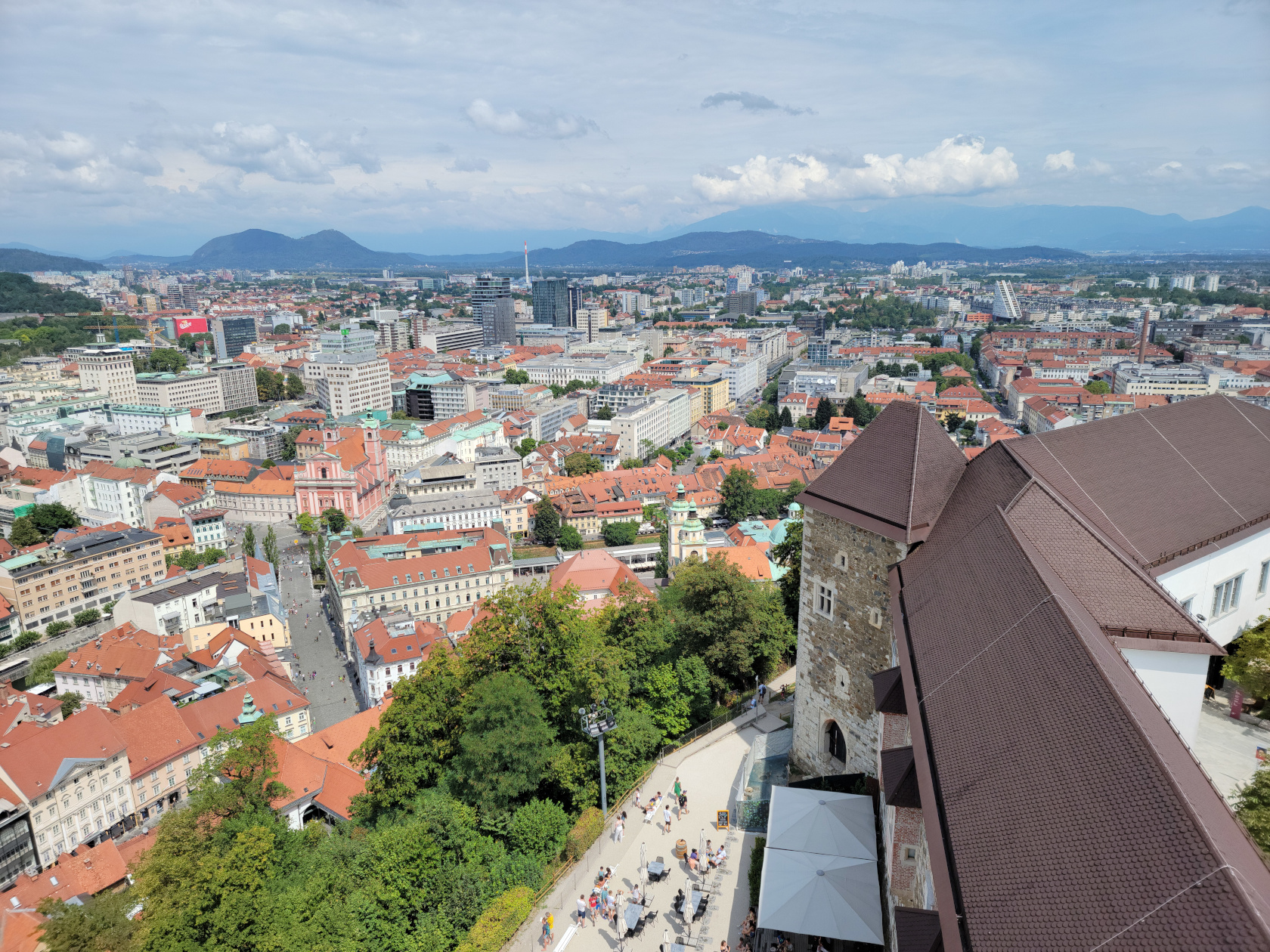
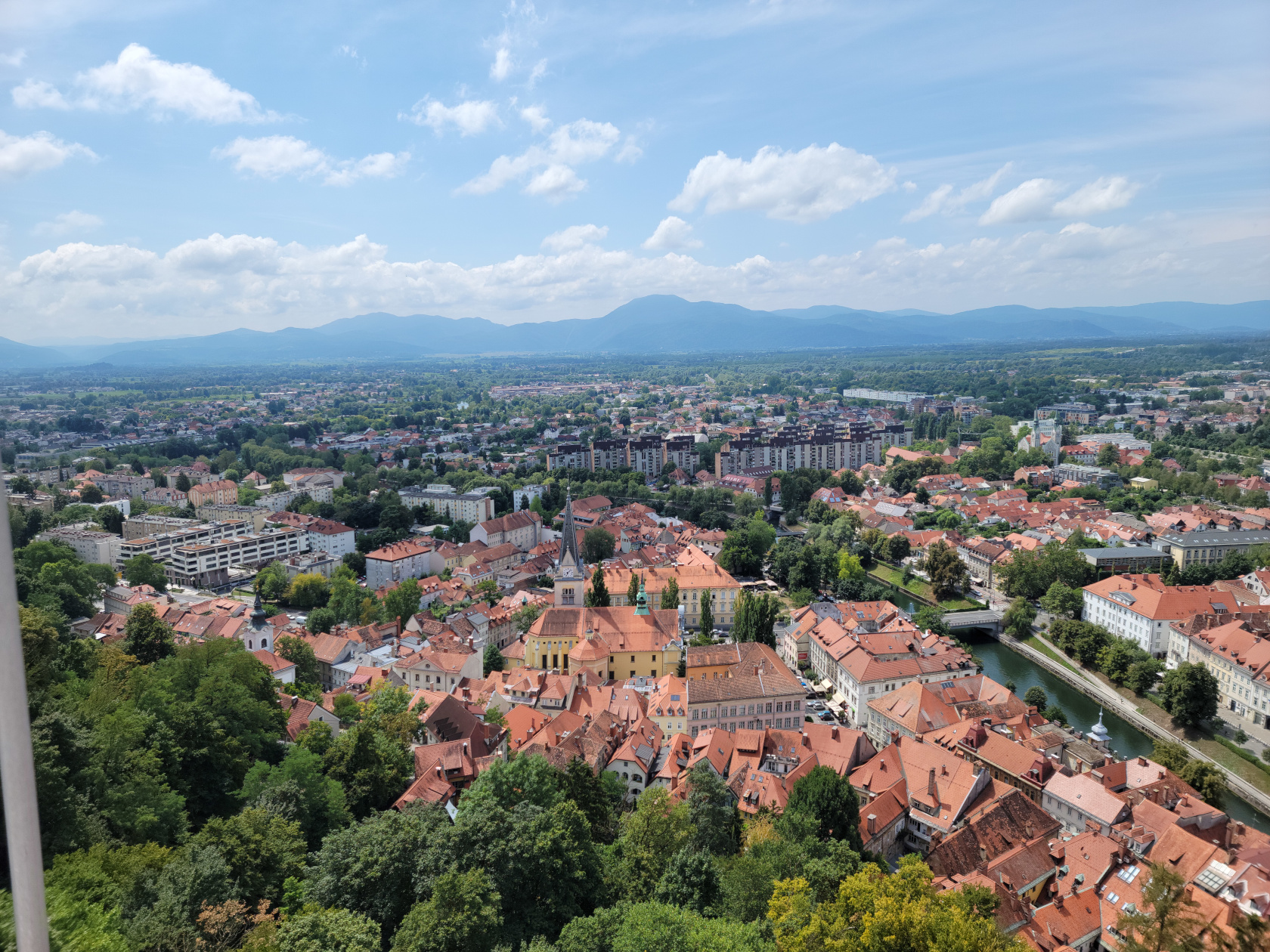
Ljubljana – From Castle Tower
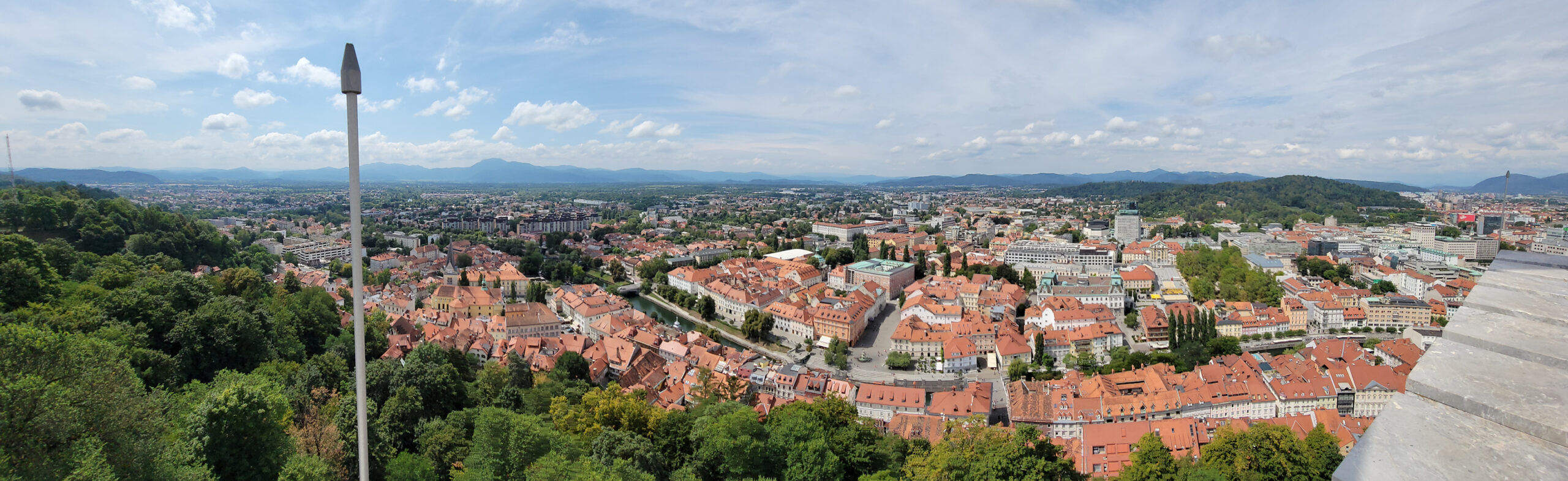
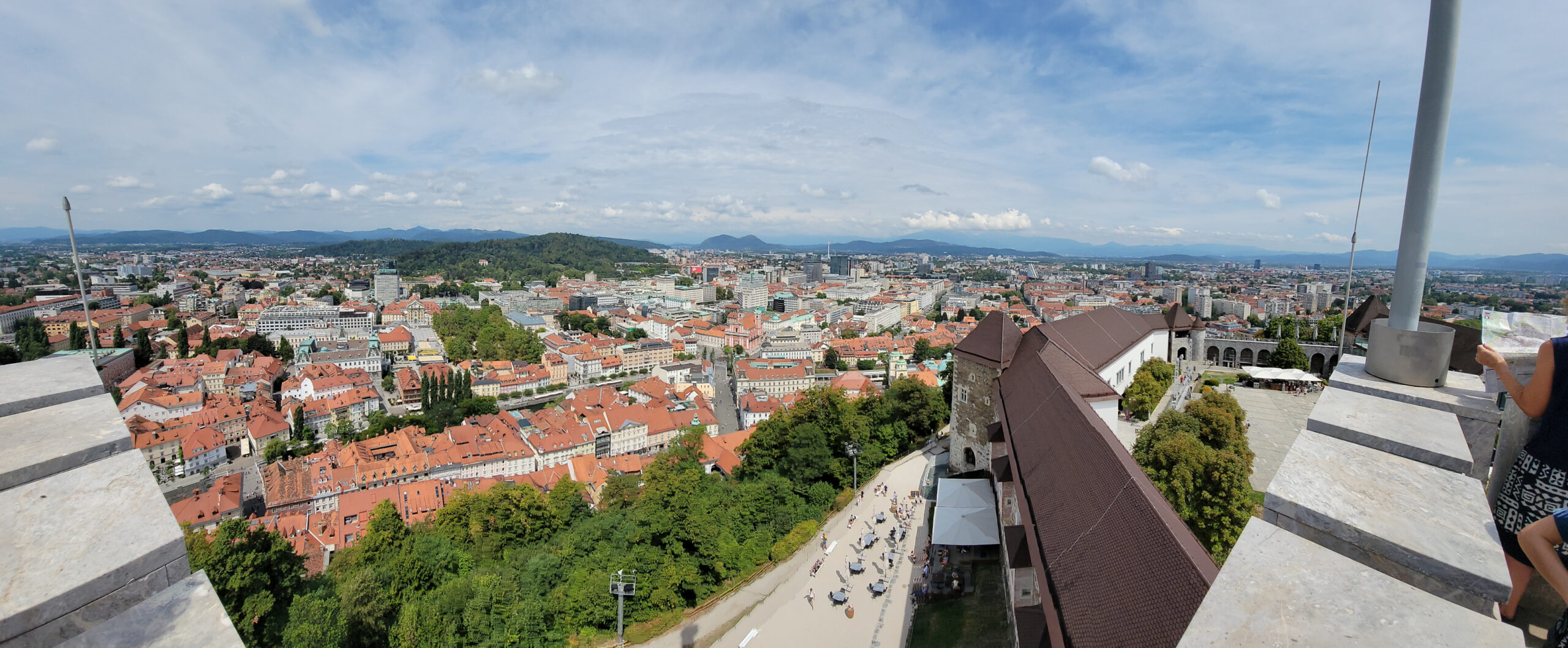
Ljubljana – From Castle Tower – Panorama
Ljubljana – From Castle Tower
Ljubljana – From Castle Tower
The Ljubljanica River
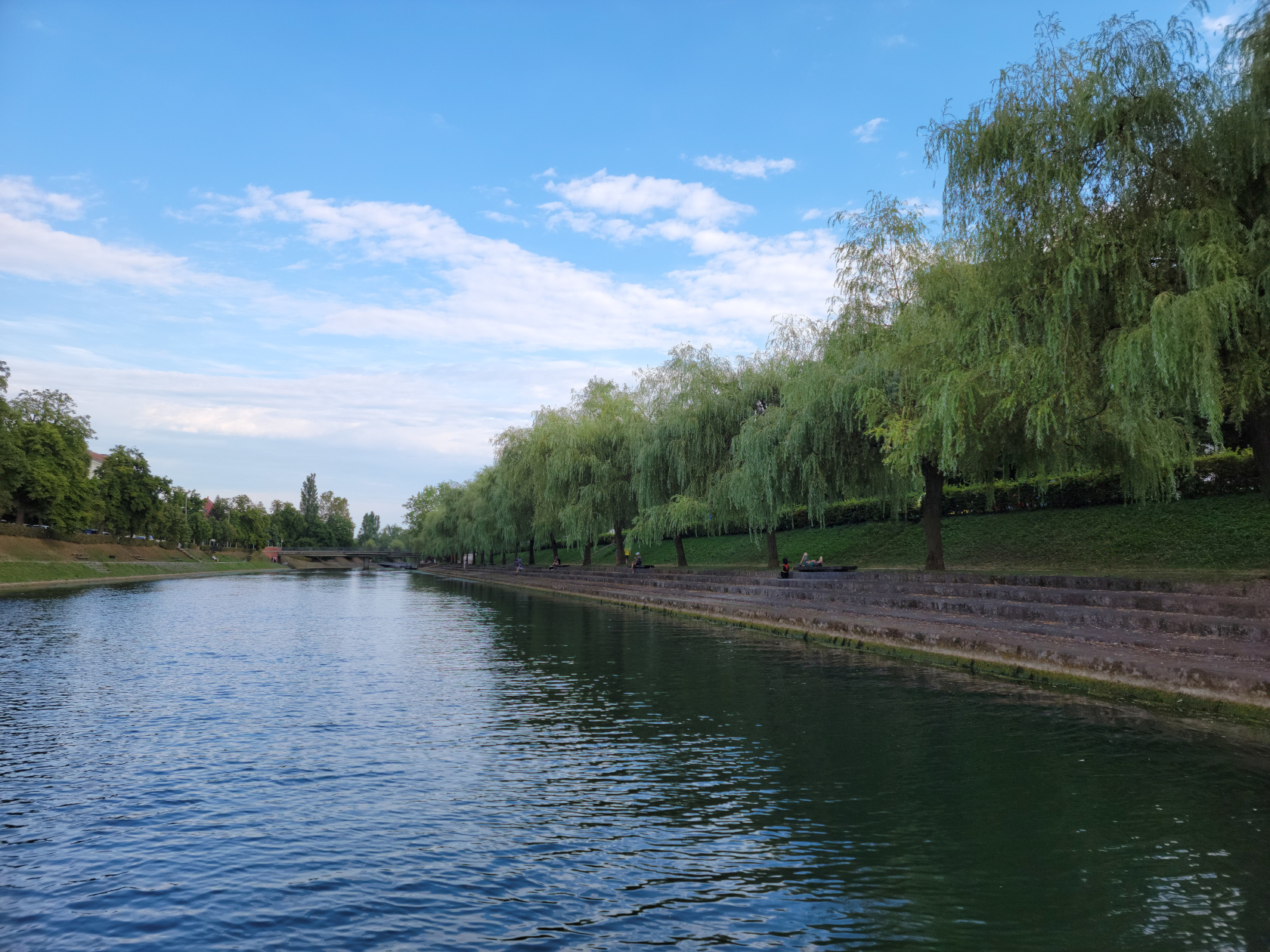
As it goes through the city the river is split into two. A major section goes directly through the old city, offering tourists the possibility of buying a ticket and traveling part of it, up to where it divides. The boats cannot venture too far however, since parts of the river are reserved for wildlife and cannot be entered.
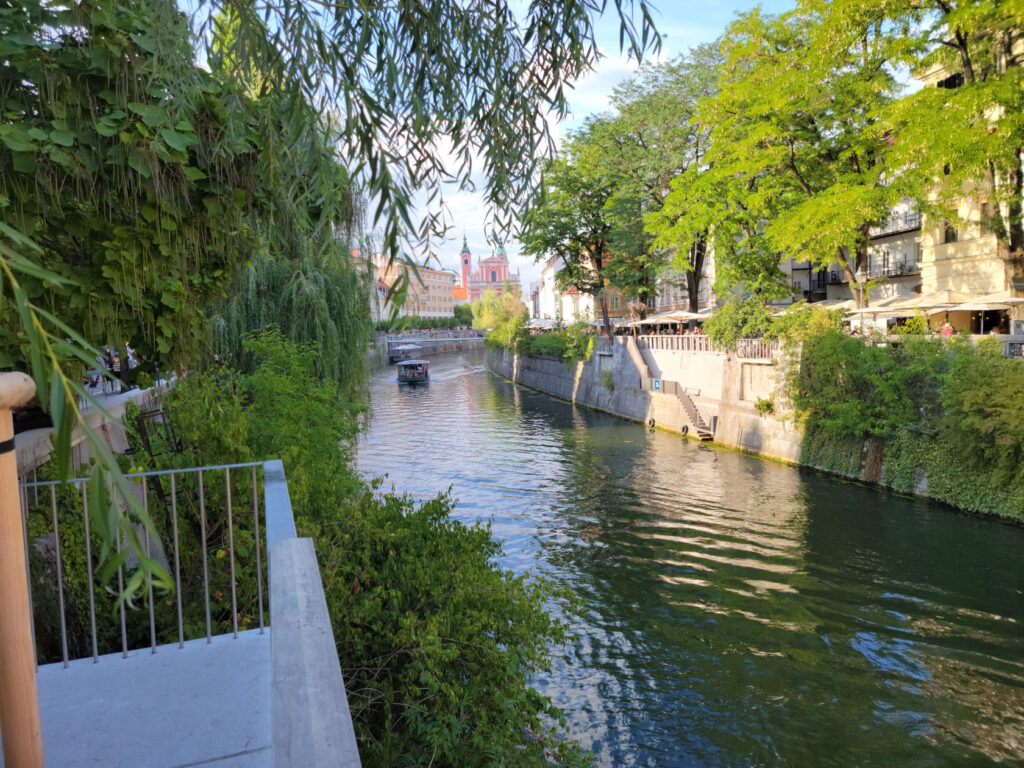
Ljubljana – Ljubljanica River
Sitting at one of the many cafes along the waterway, one can wile away the afternoon sipping a drink and just watching the boats meander along.
Ljubljana – Ljubljanica River
Ljubljana – Ljubljanica River – River Boats
Boat Tours
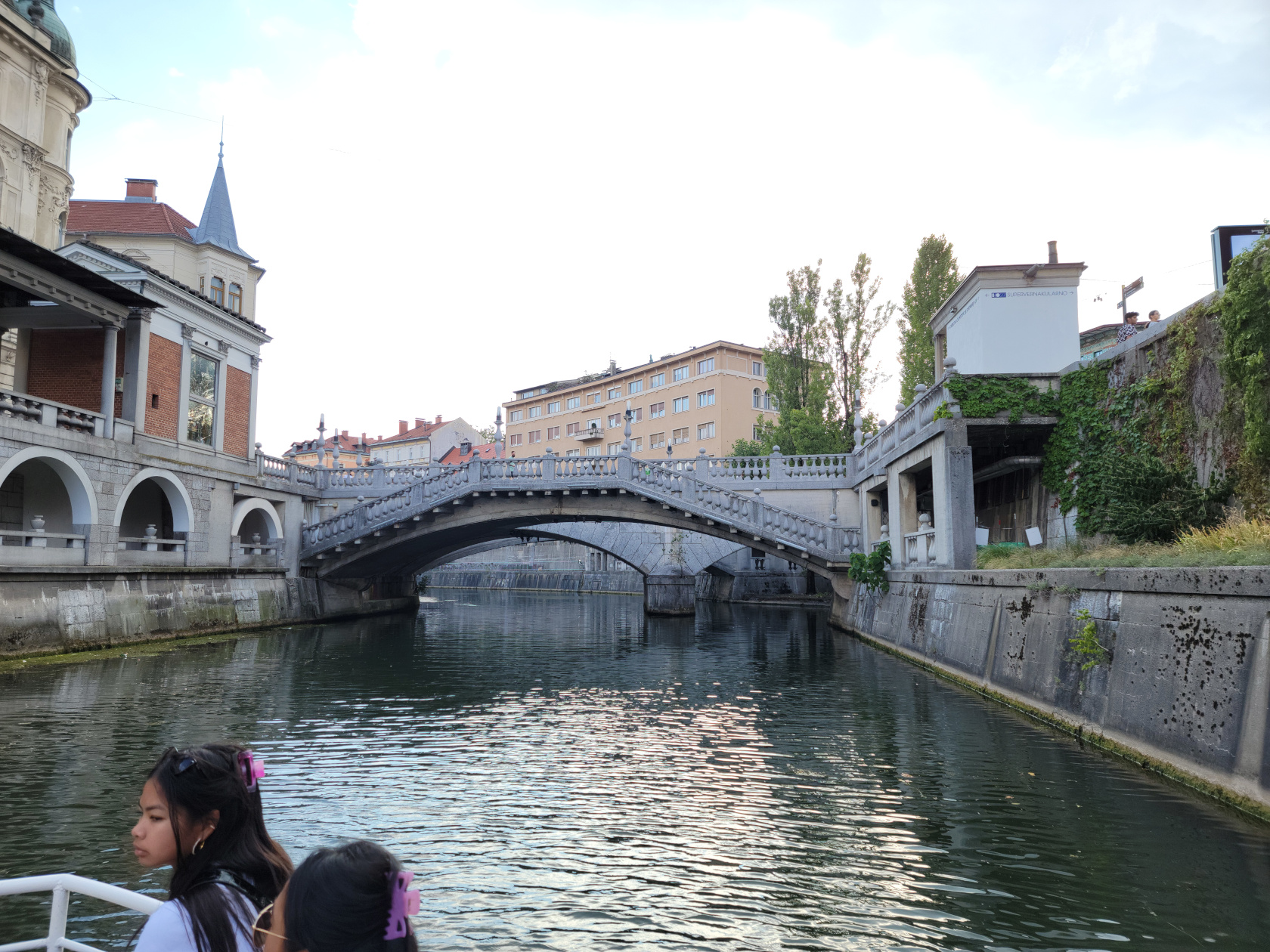
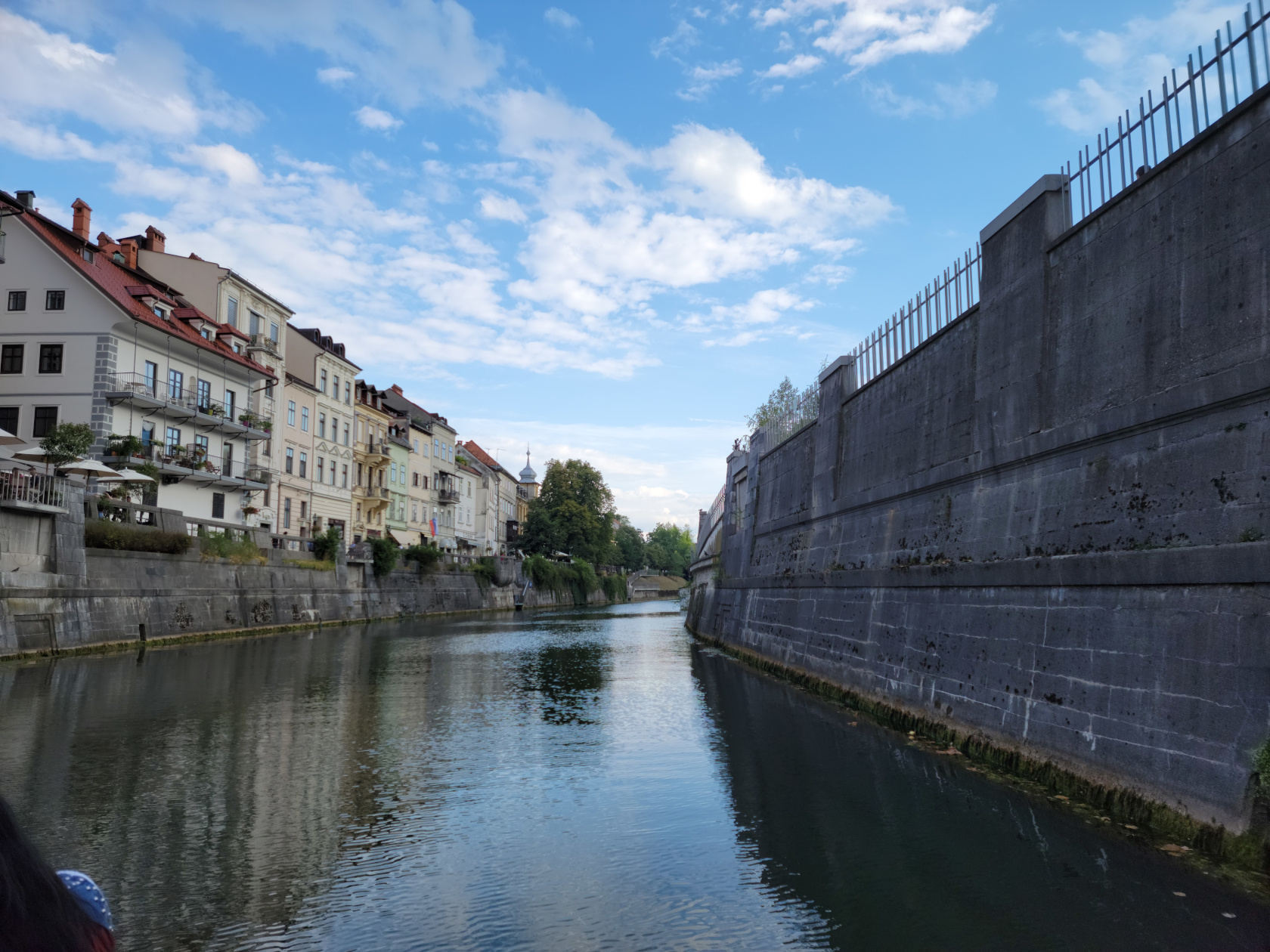
Both looking at the tour boats ply the water and actually taking a boat trip is both relaxing and very enjoyable. We decided one evening to take one and see where it actually goes and found it very interesting.
Ljubljana – Ljubljanica River – Boat Tour – Triple Bridge
Ljubljana – Ljubljanica River – Boat Tour
Ljubljana – Ljubljanica River – Boat Tour
Ljubljana – Ljubljanica River – Boat Tour
Ljubljana – Ljubljanica River – Boat Tour
Walking Tour Of The City
Here is a slideshow of some of the other sights in the city.
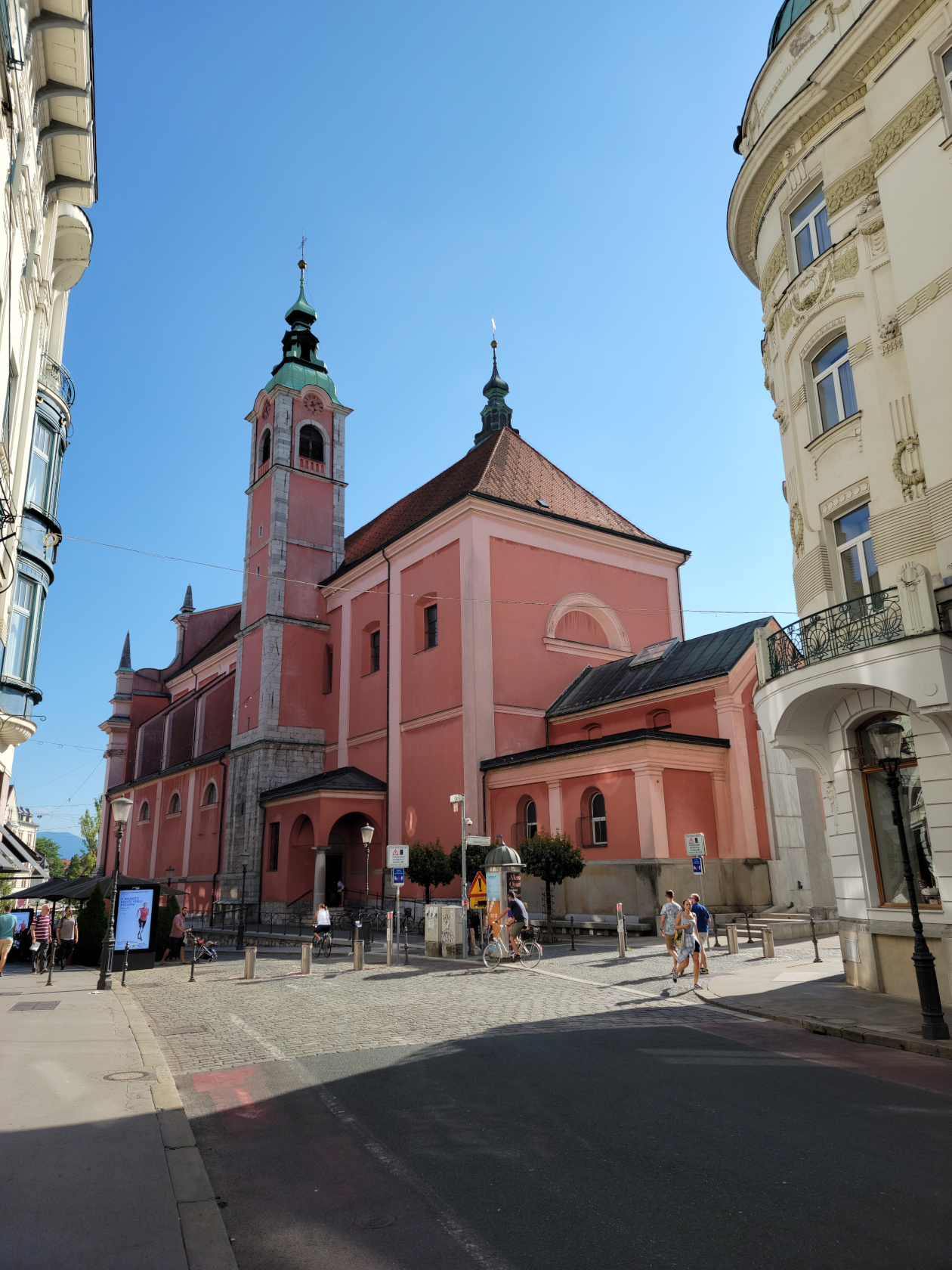
Ljubljana – Franciscan Church
Ljubljana – Prešeren Square
Ljubljana – Prešeren Square
Ljubljana – Prešeren Square
Ljubljana – Prešeren Square
Ljubljana – Zvezda Park
Ljubljana – Zvezda Park
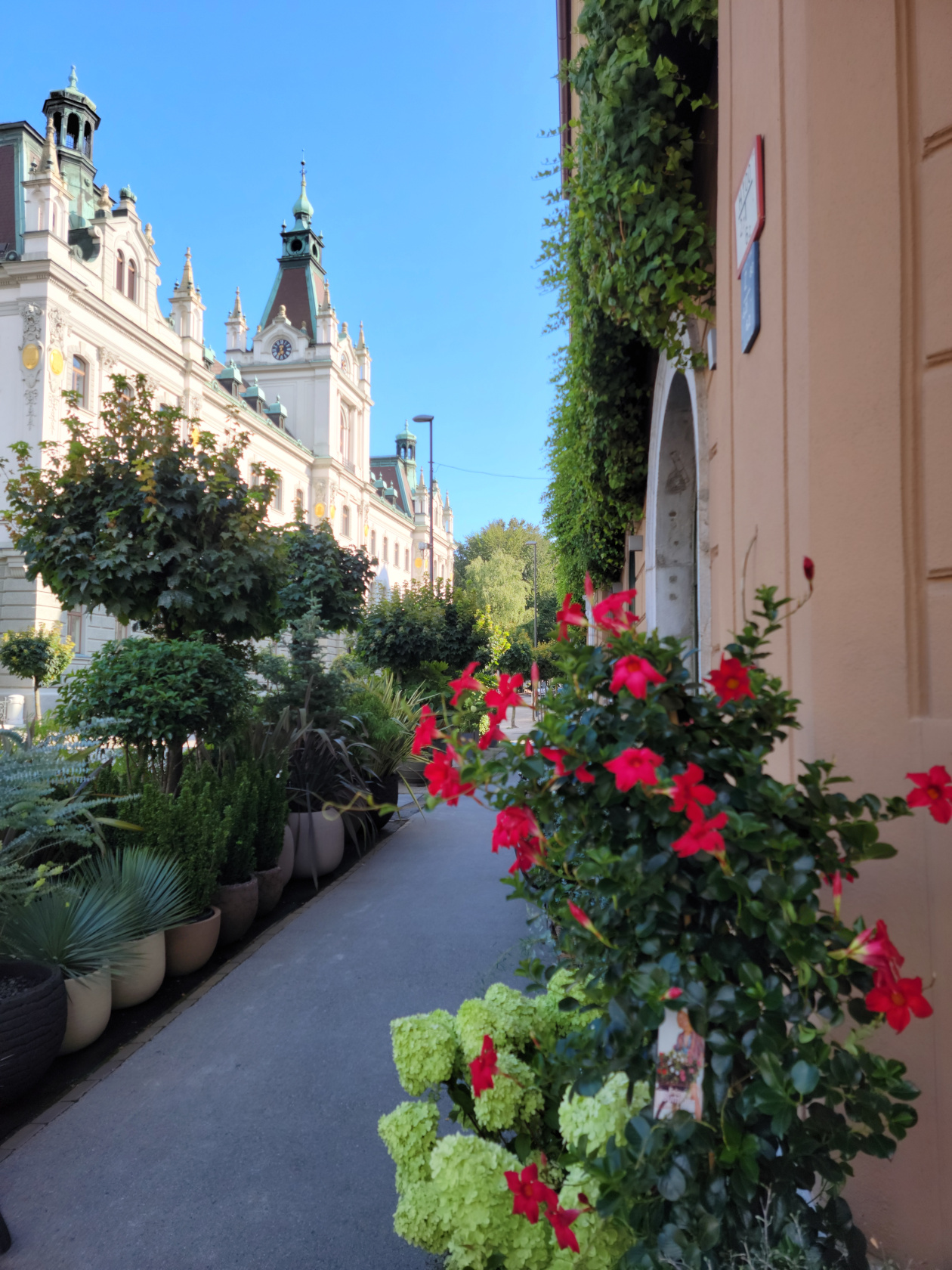
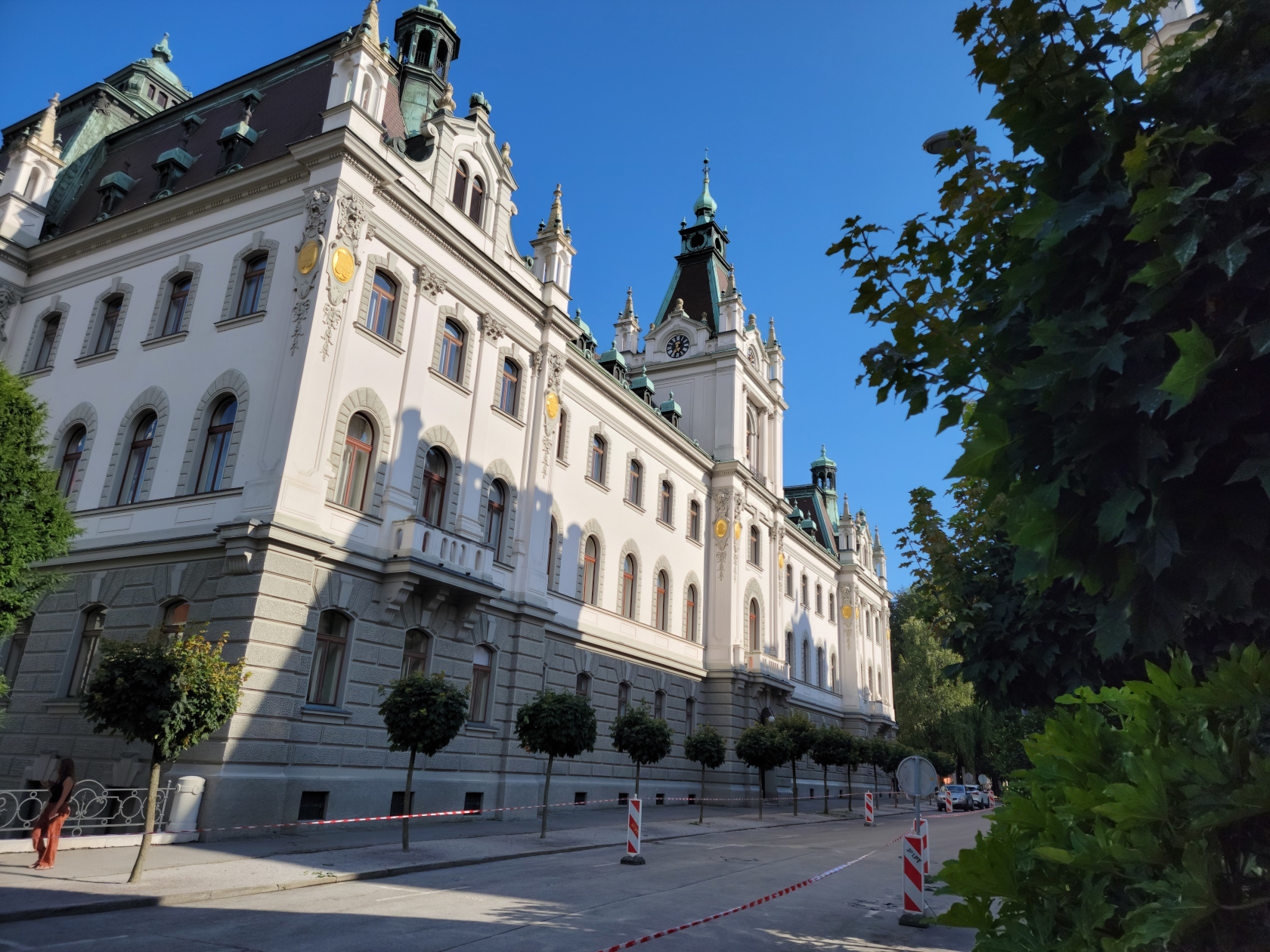
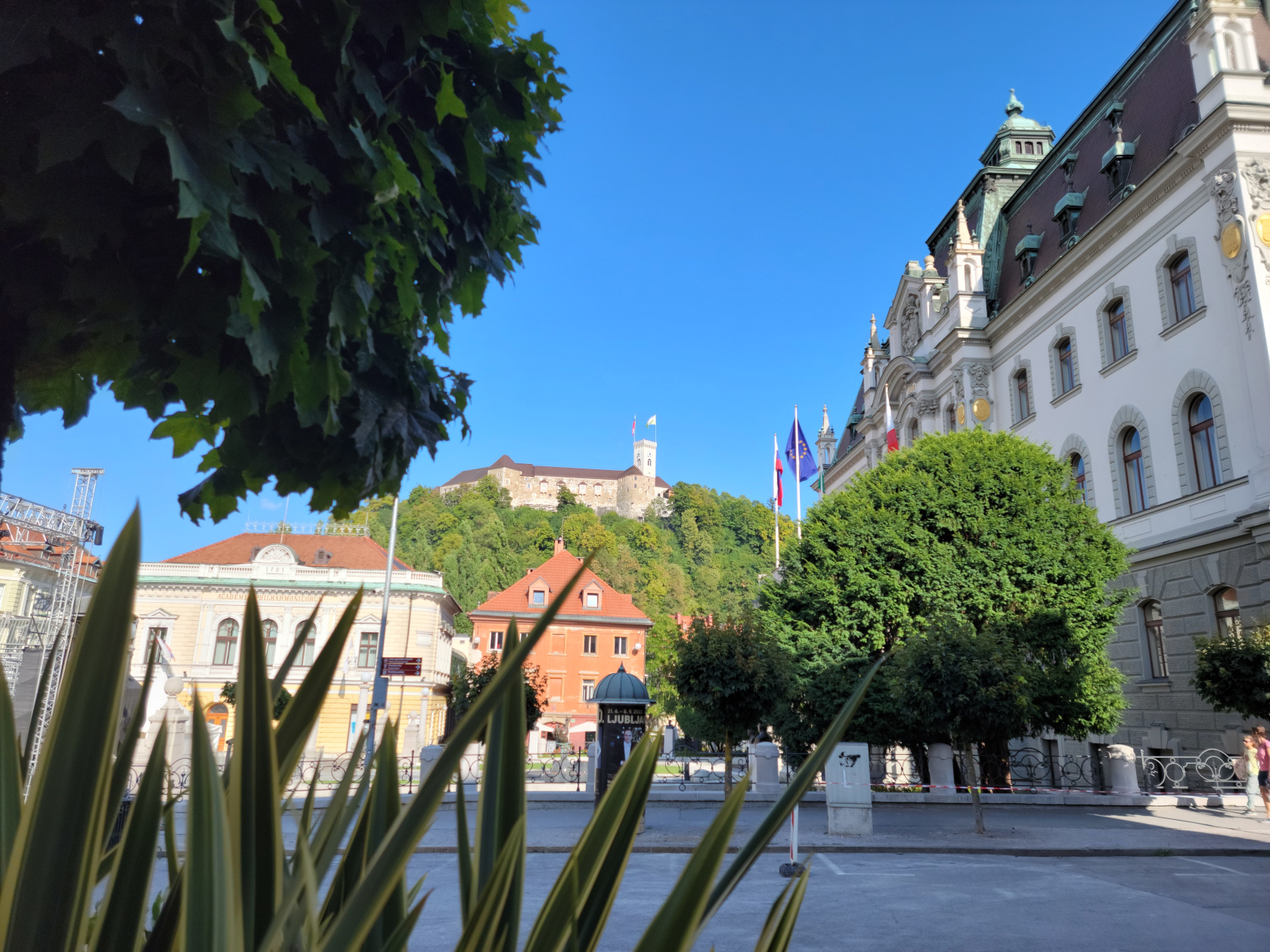
Ljubljana – Ljubljana University
Ljubljana – Ljubljana University
Ljubljana – Ljubljana University
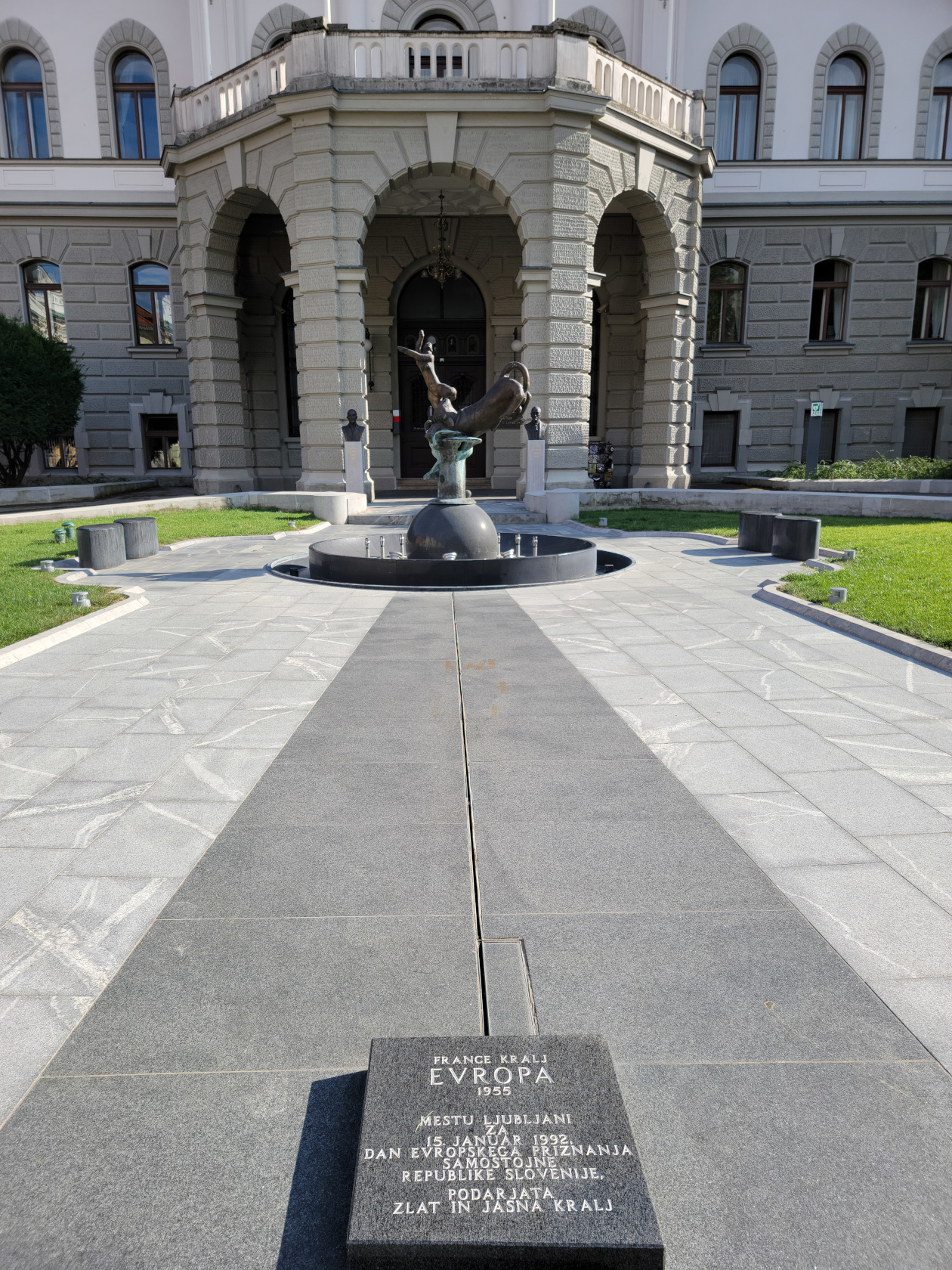
Ljubljana – Ljubljana University – Europa Fountain
Ljubljana – Ljubljana University
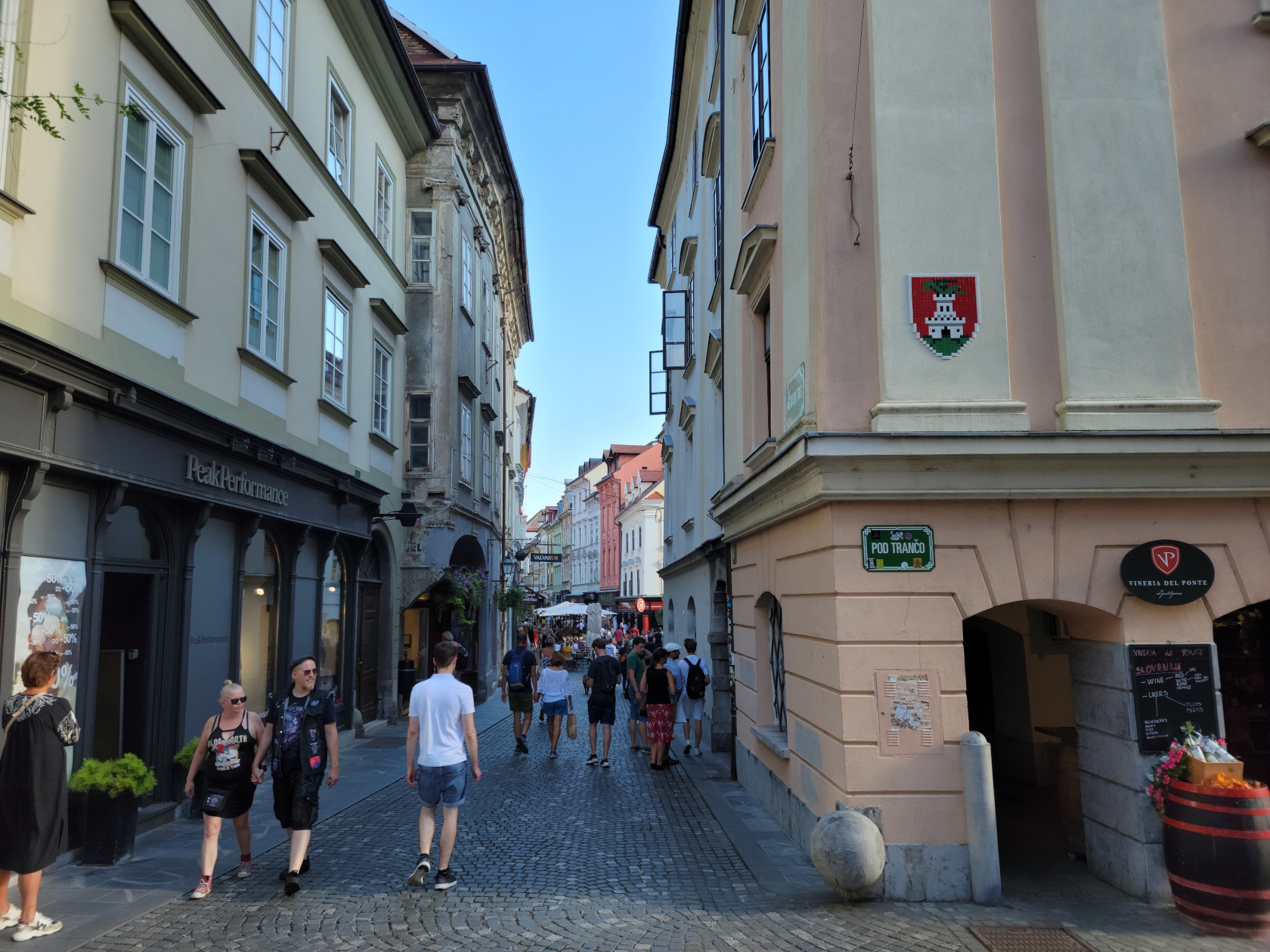
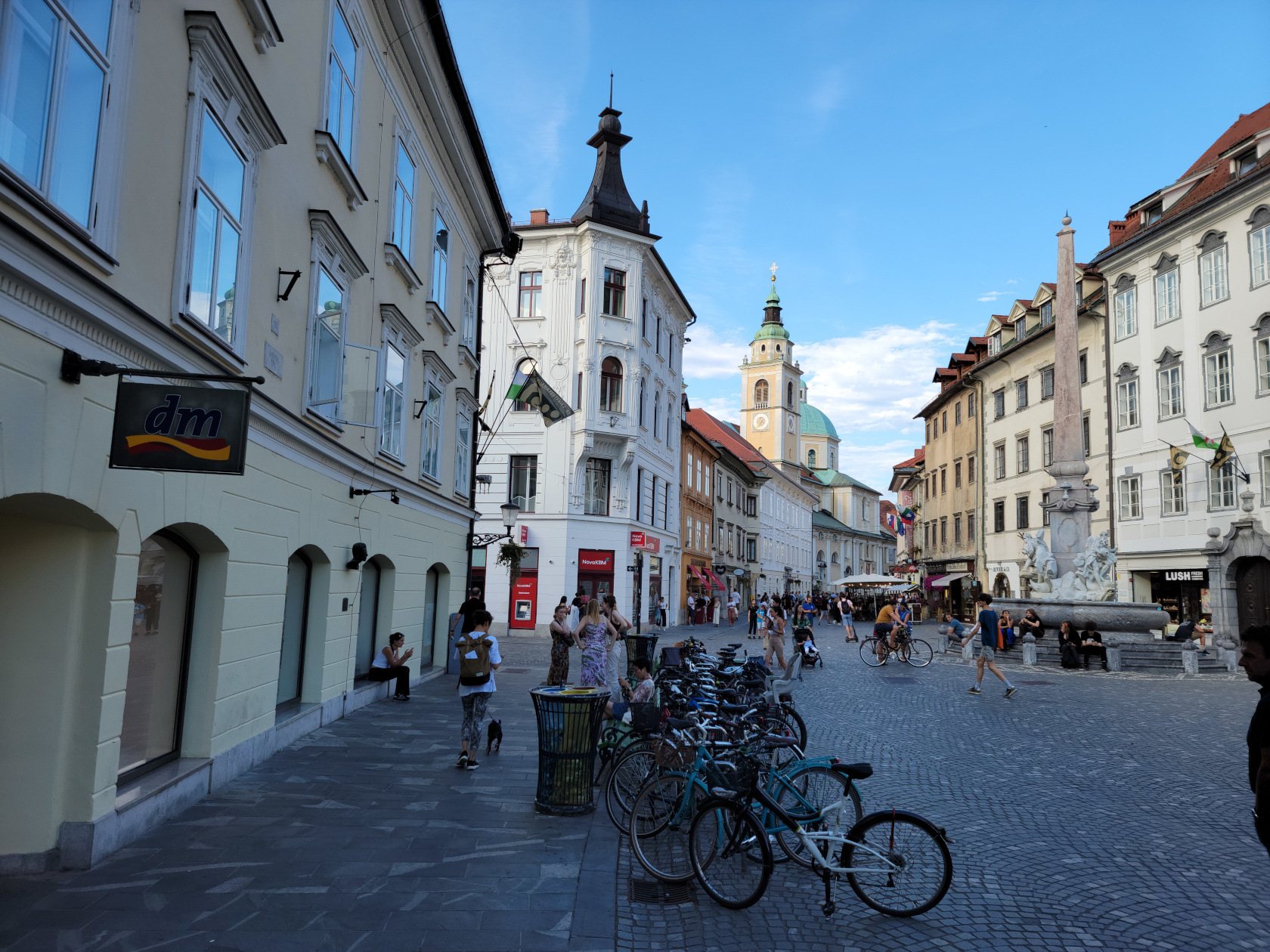
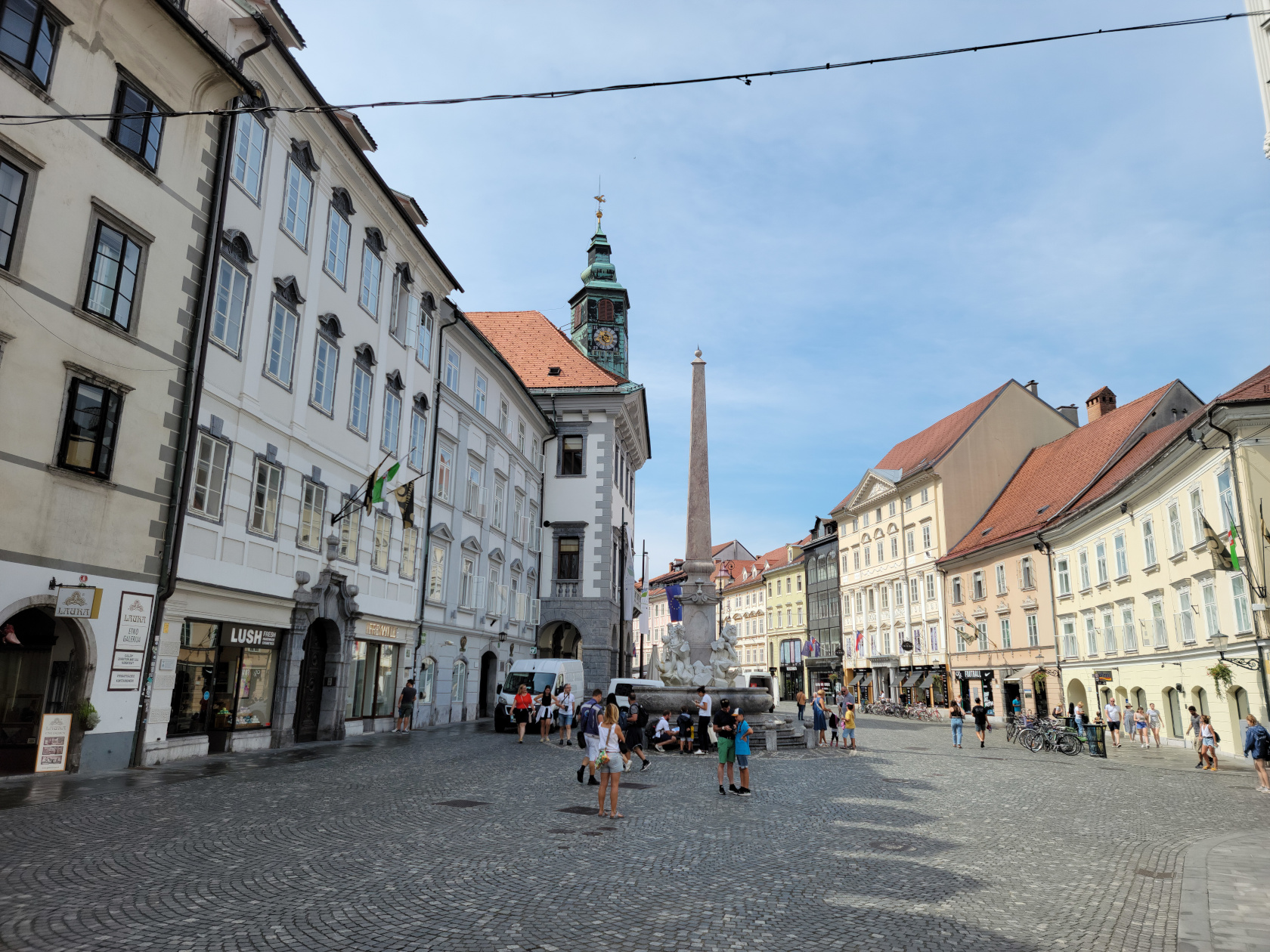
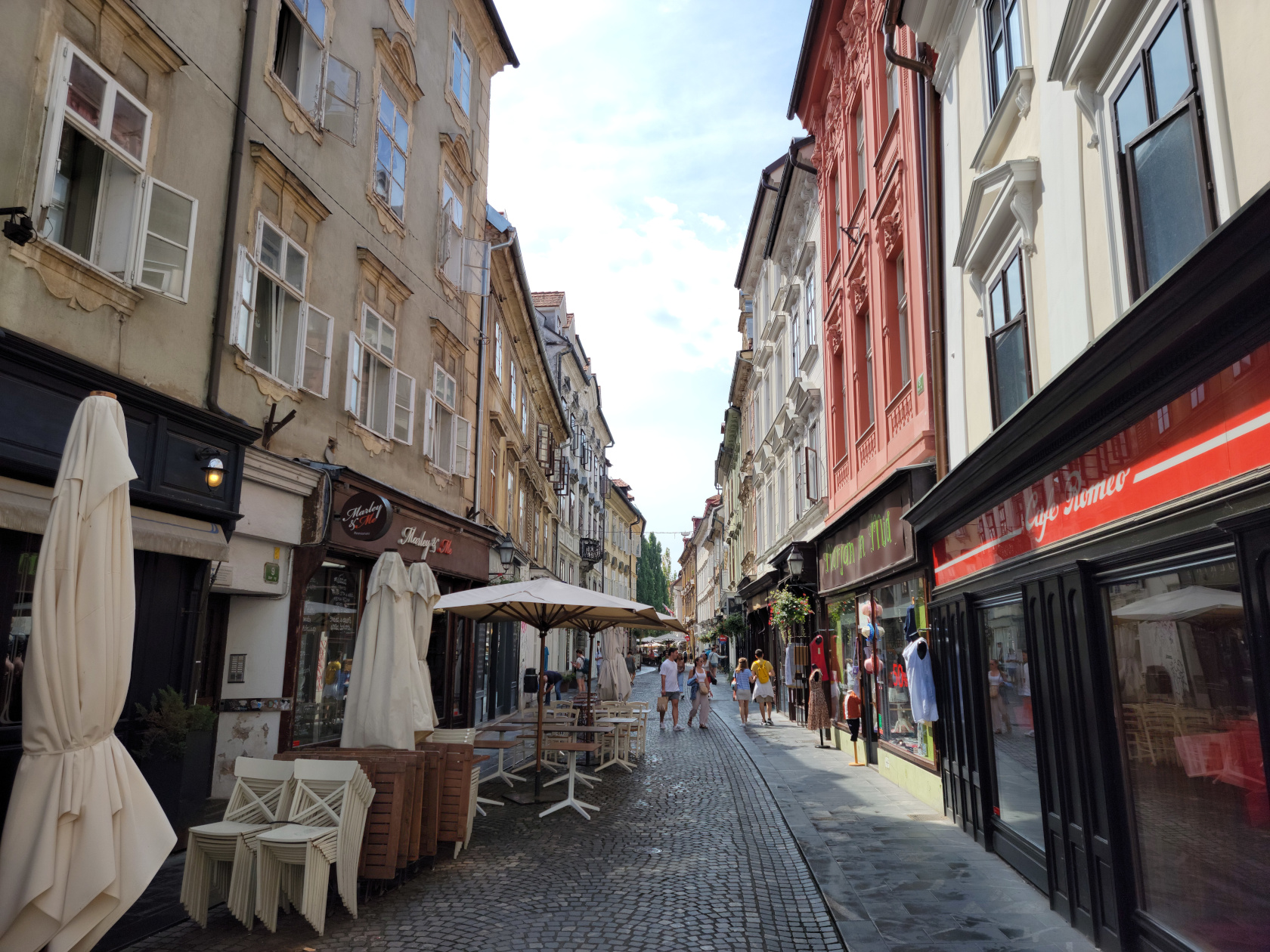
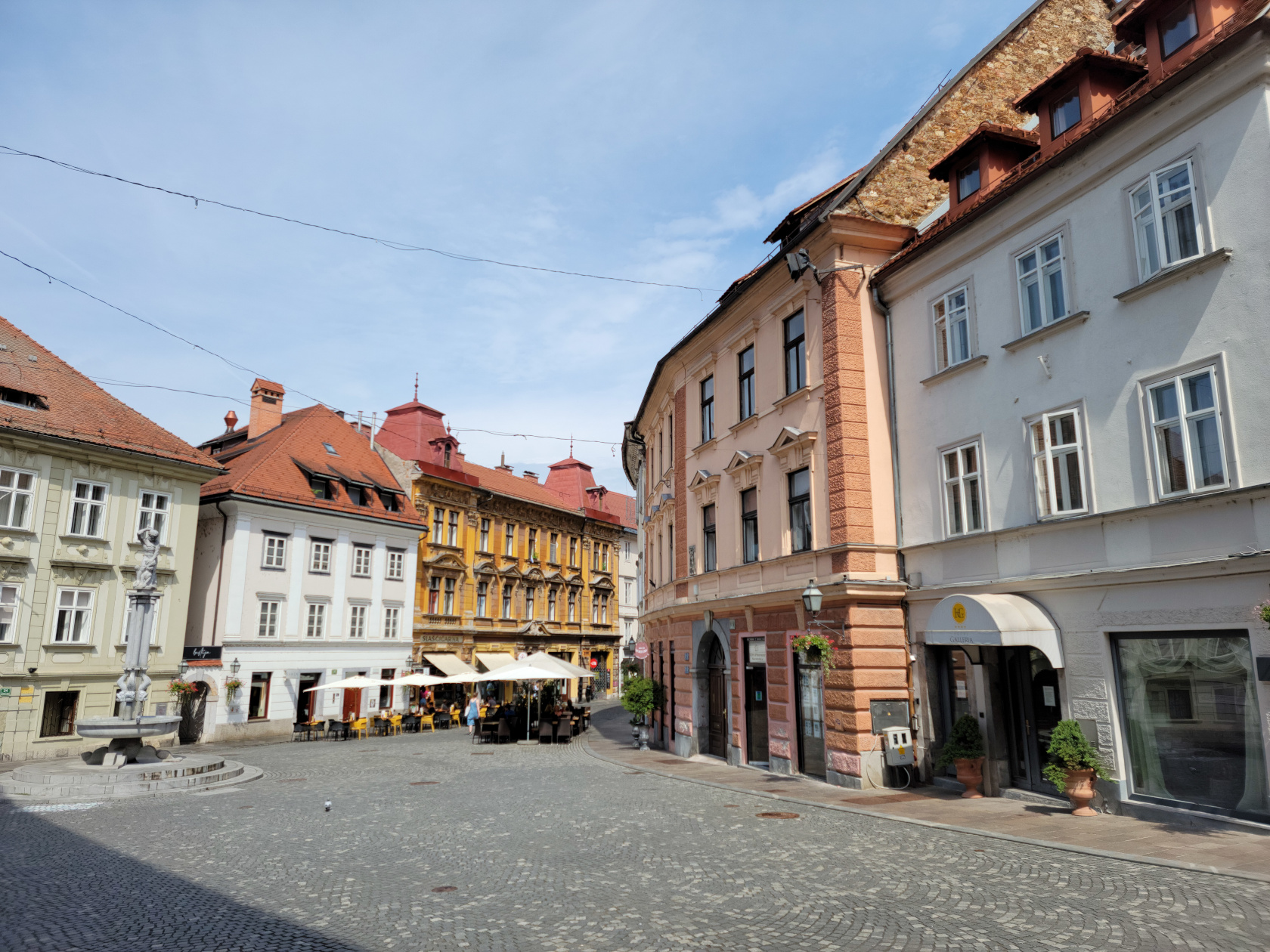
Ljubljana – Mestni Trg
Ljubljana – Mestni Trg
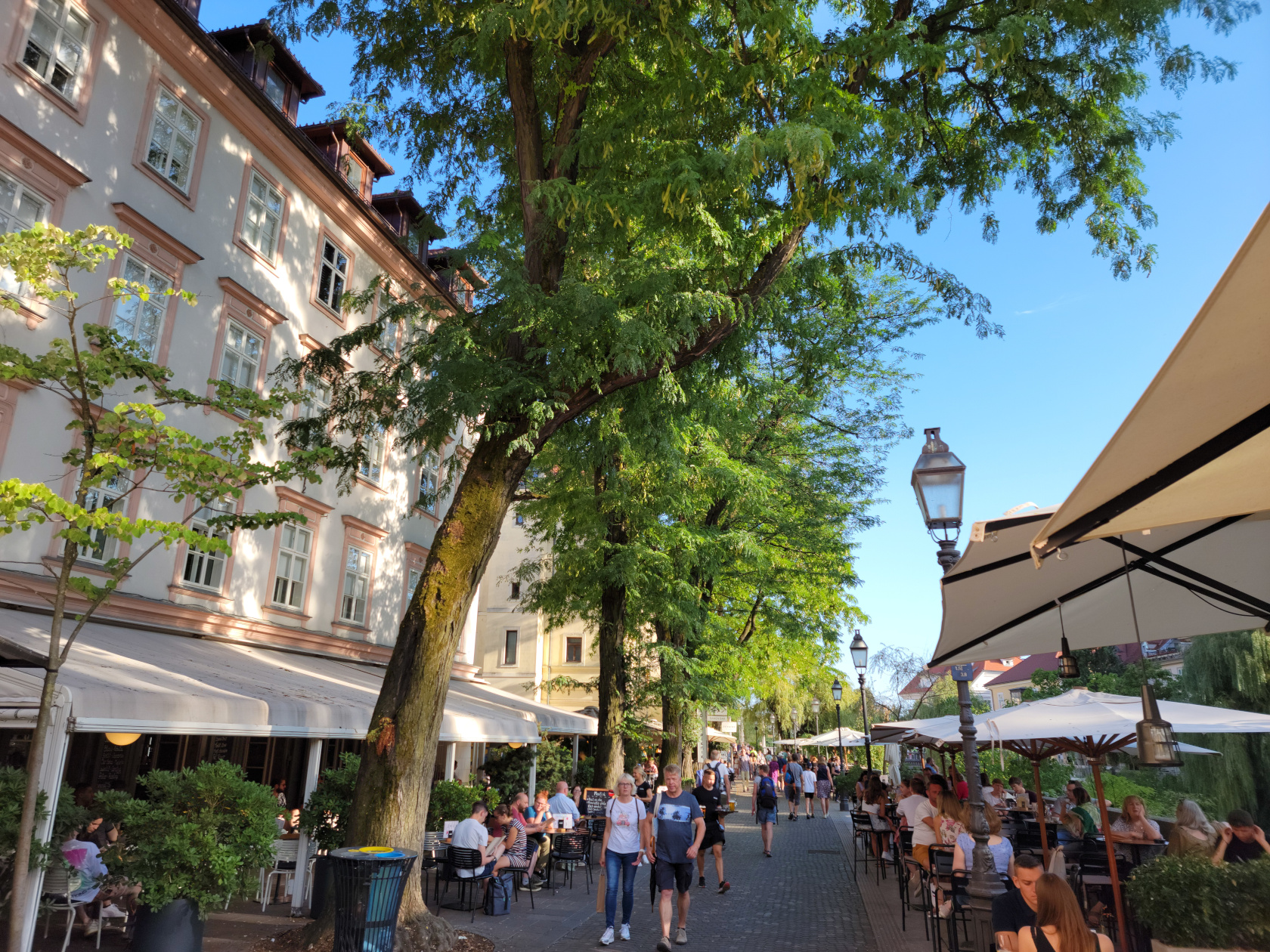
Ljubljana – Cafes along riverfront
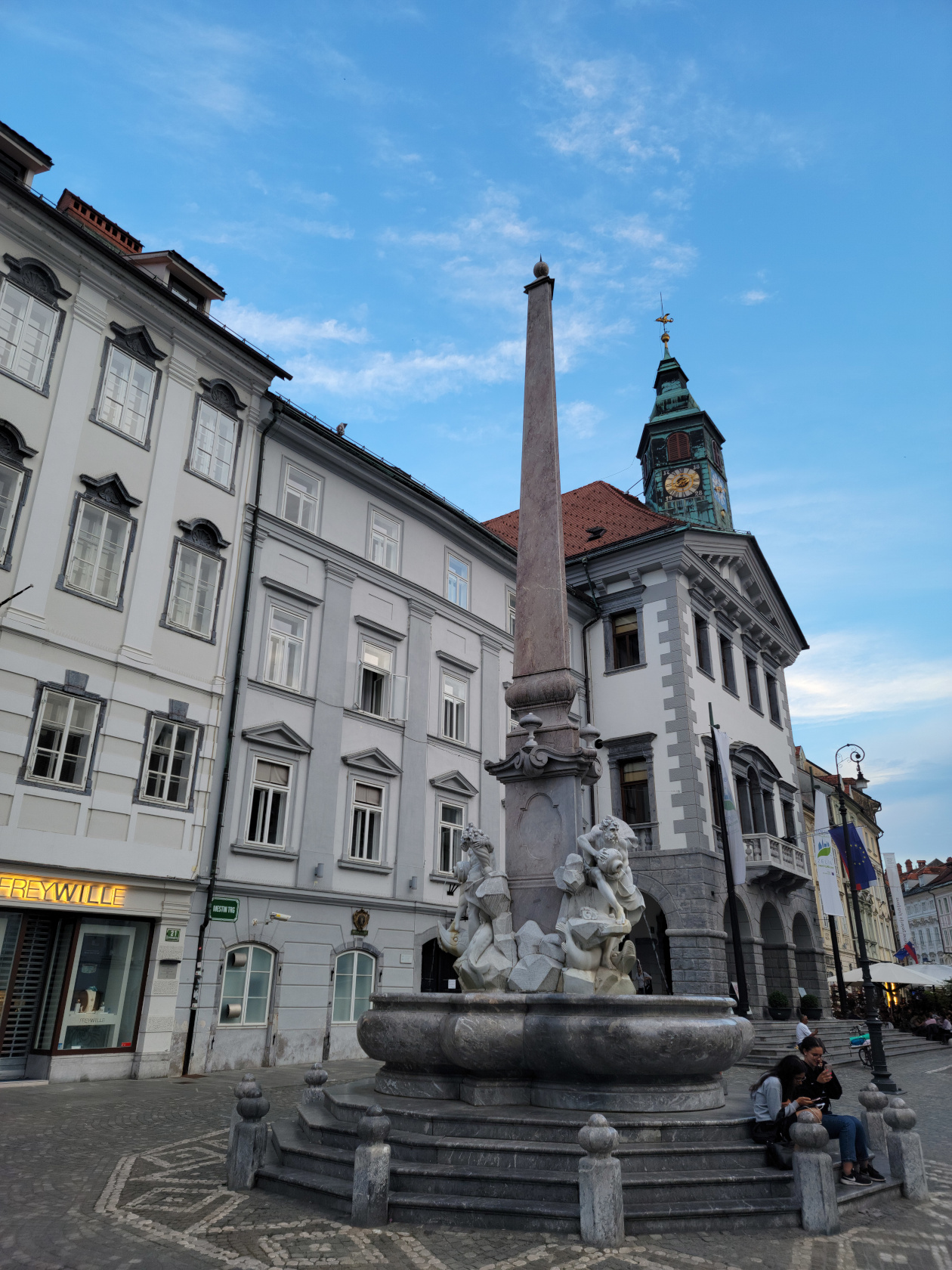
Ljubljana – Robba Fountain
Ljubljana – Robba Fountain
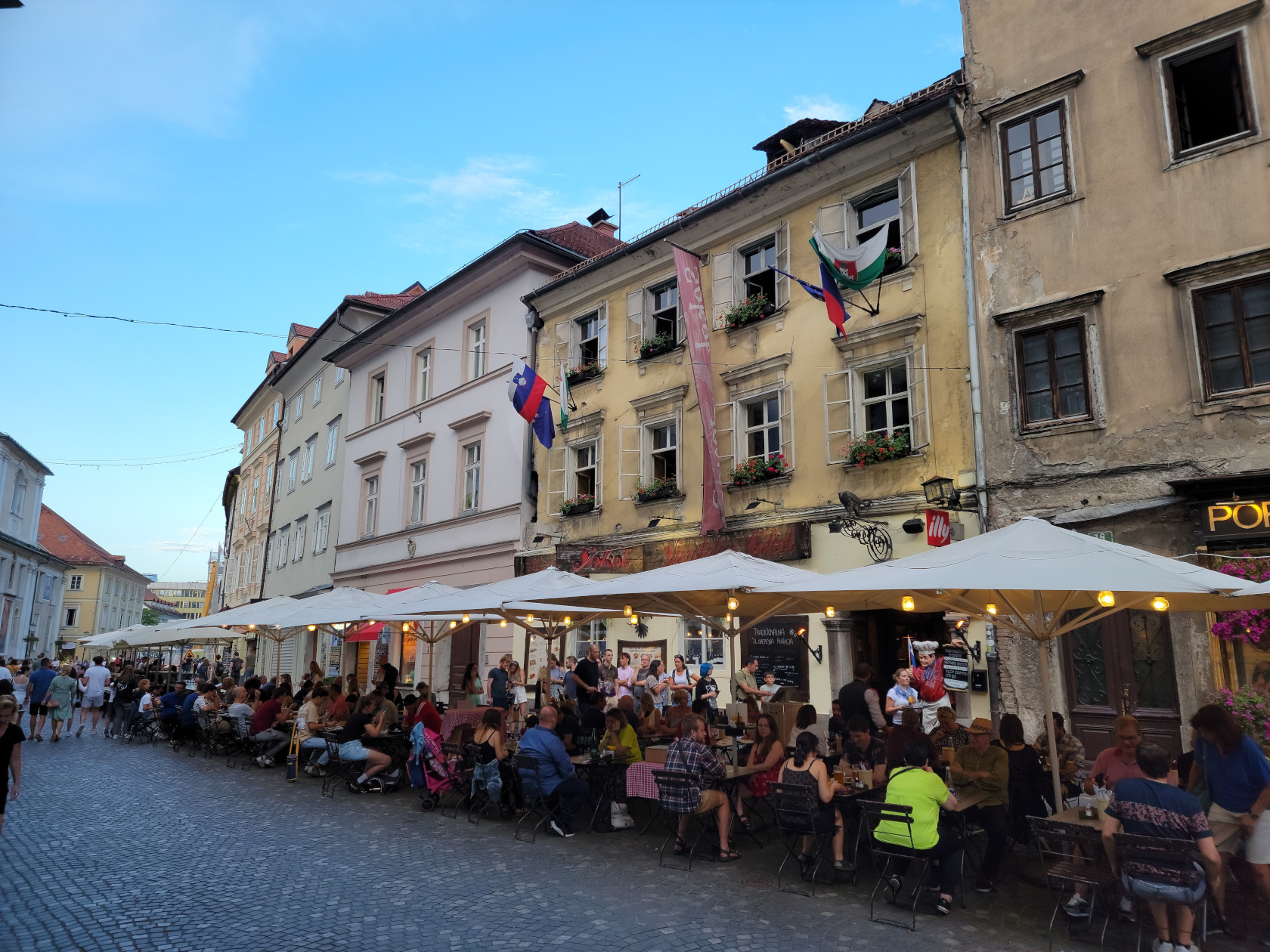
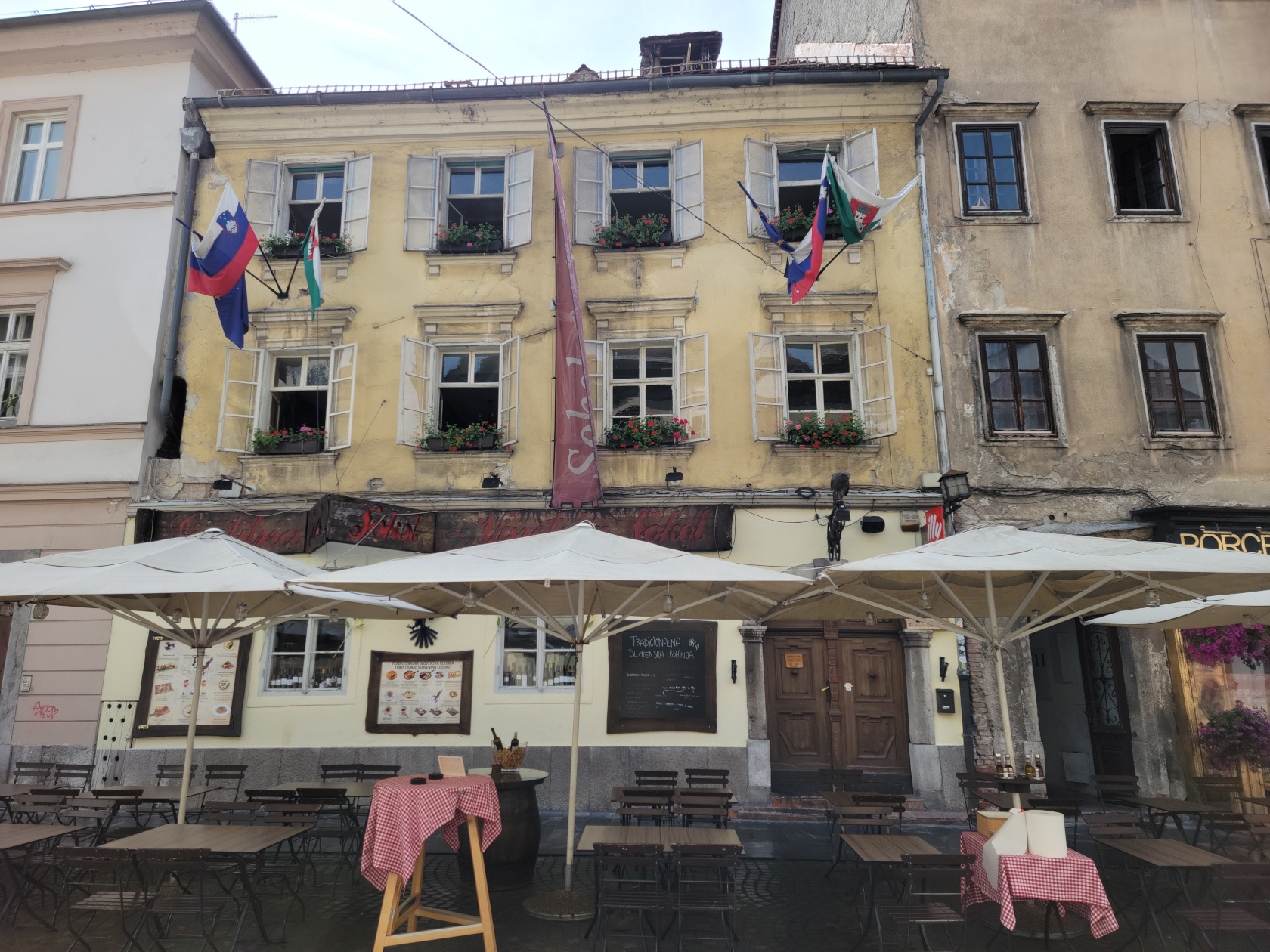
Ljubljana – Gostilna Sokol Restaurant
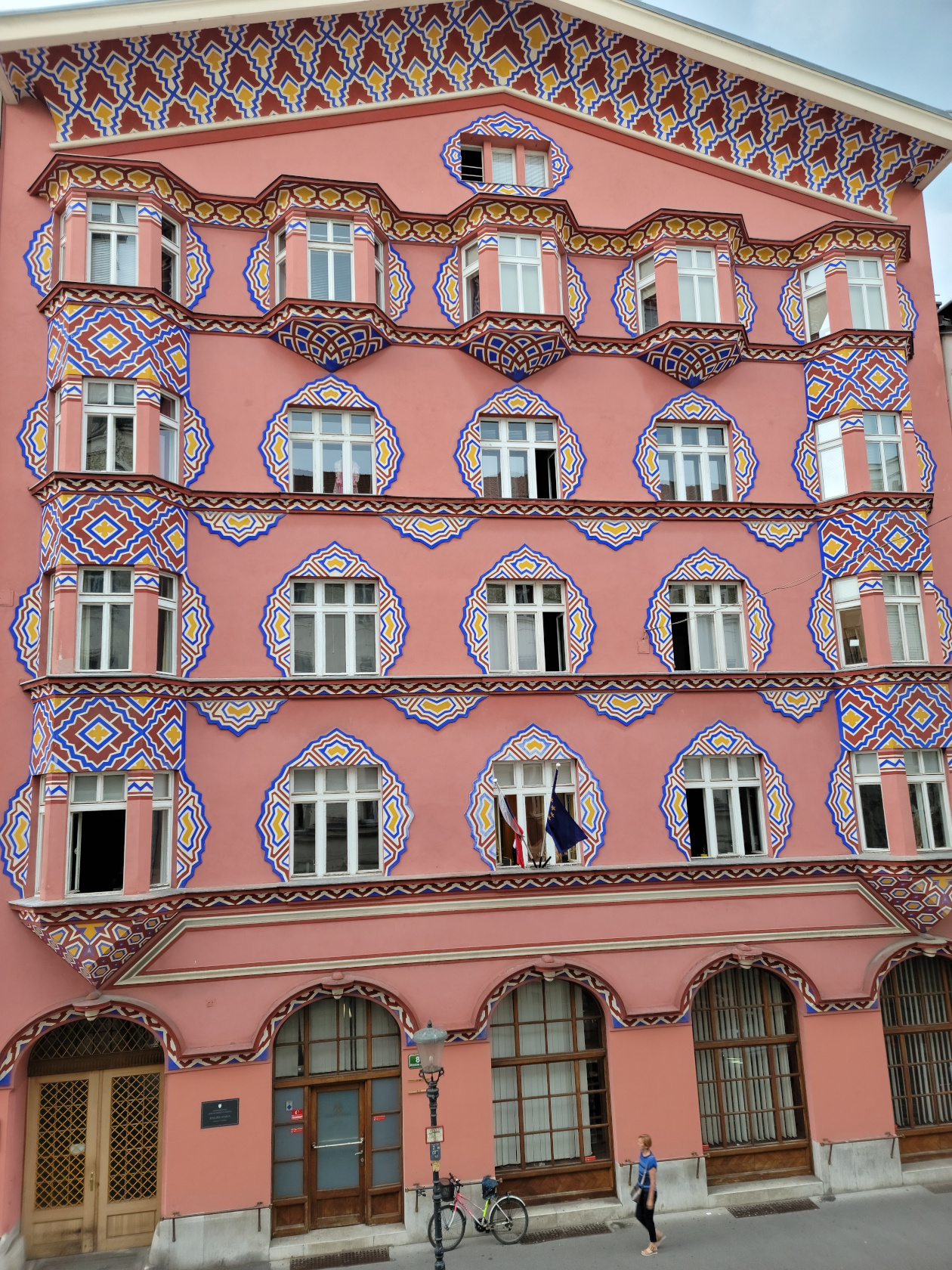
Ljubljana – The Vurnikoval House
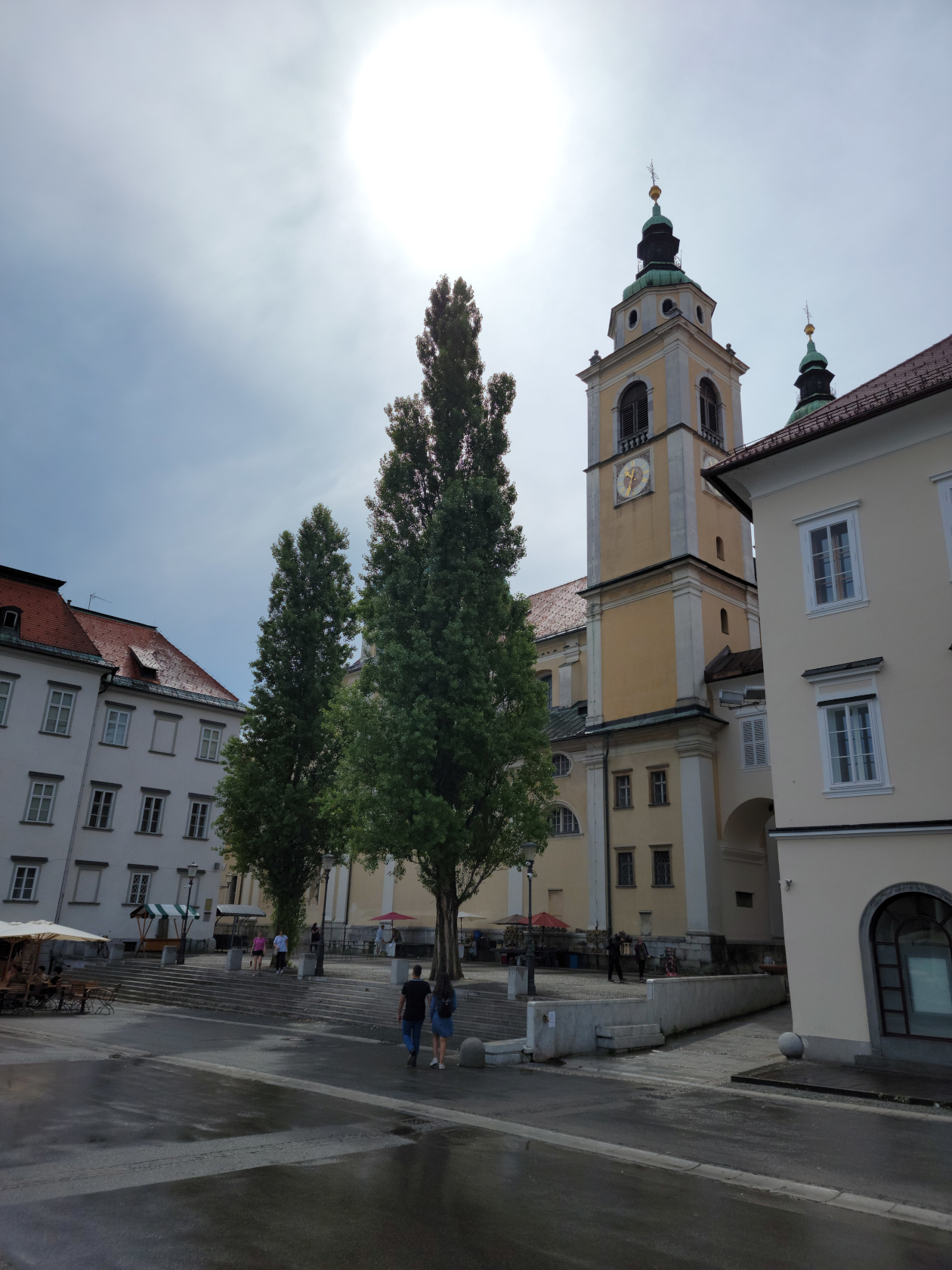
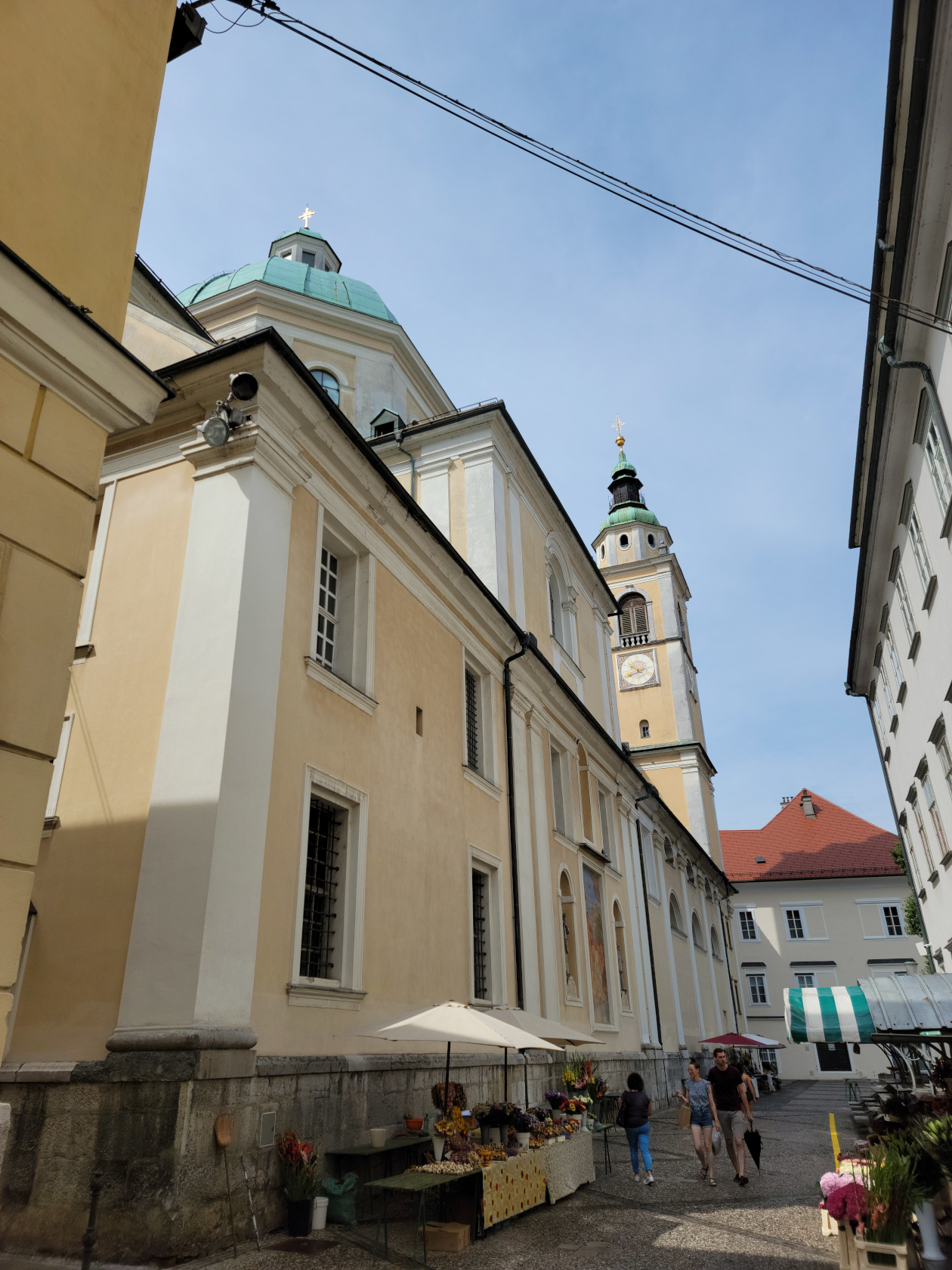
Ljubljana – Ljubljana Cathedral
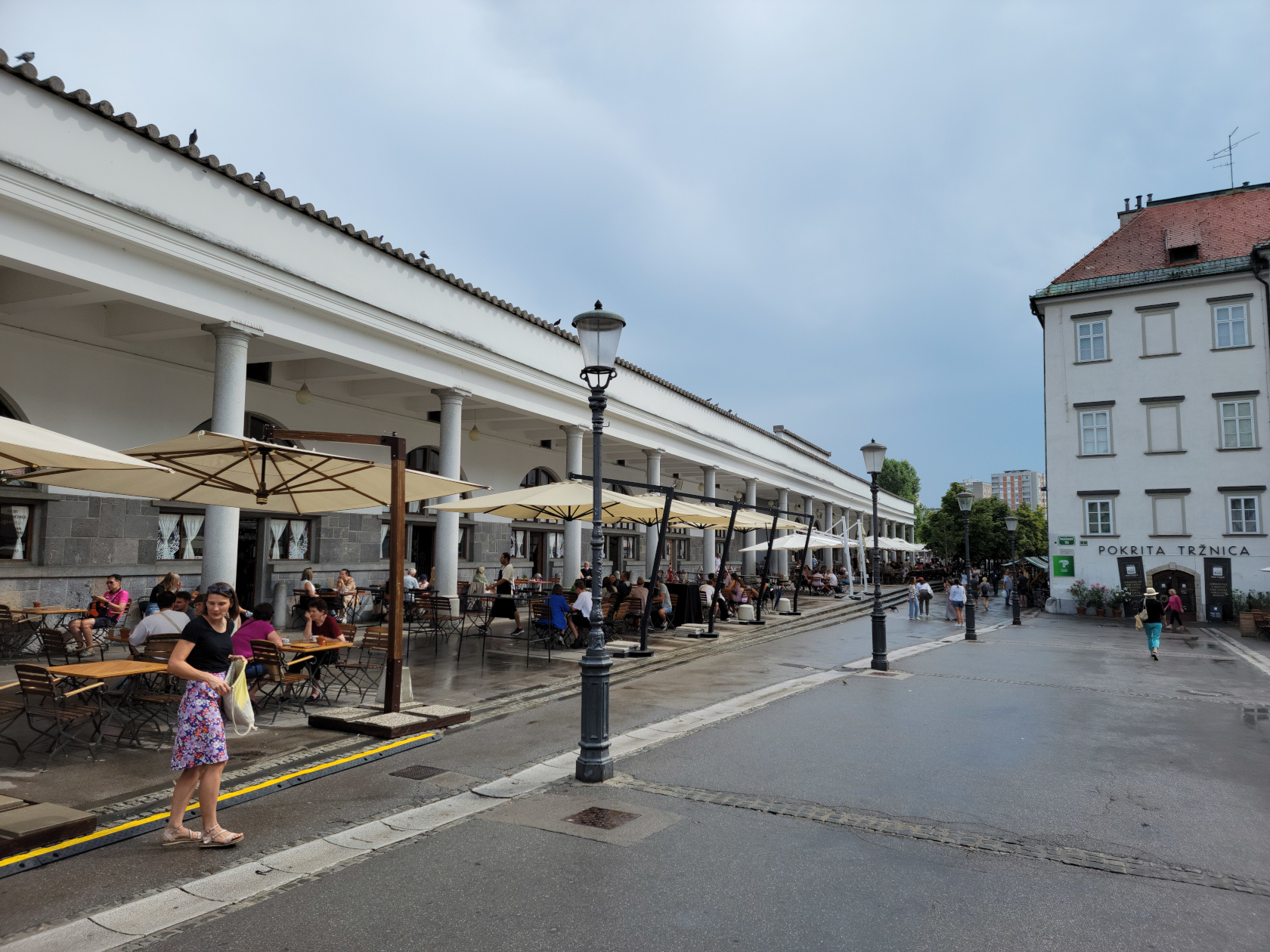
Ljubljana – Drevored na Adamič-Lundrovem nabrežju – Portico by the Market
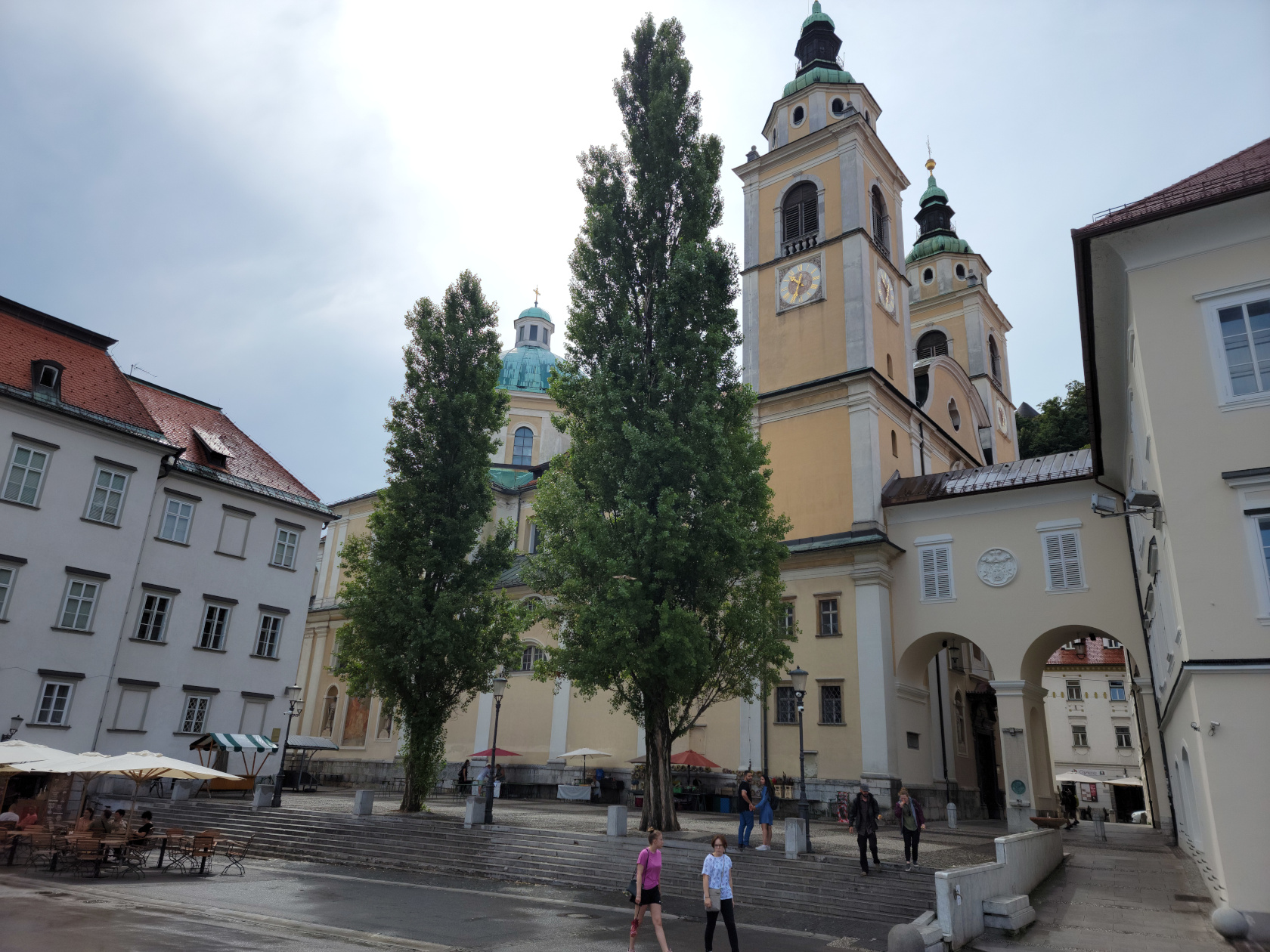
Ljubljana – Ljubljana Cathedral
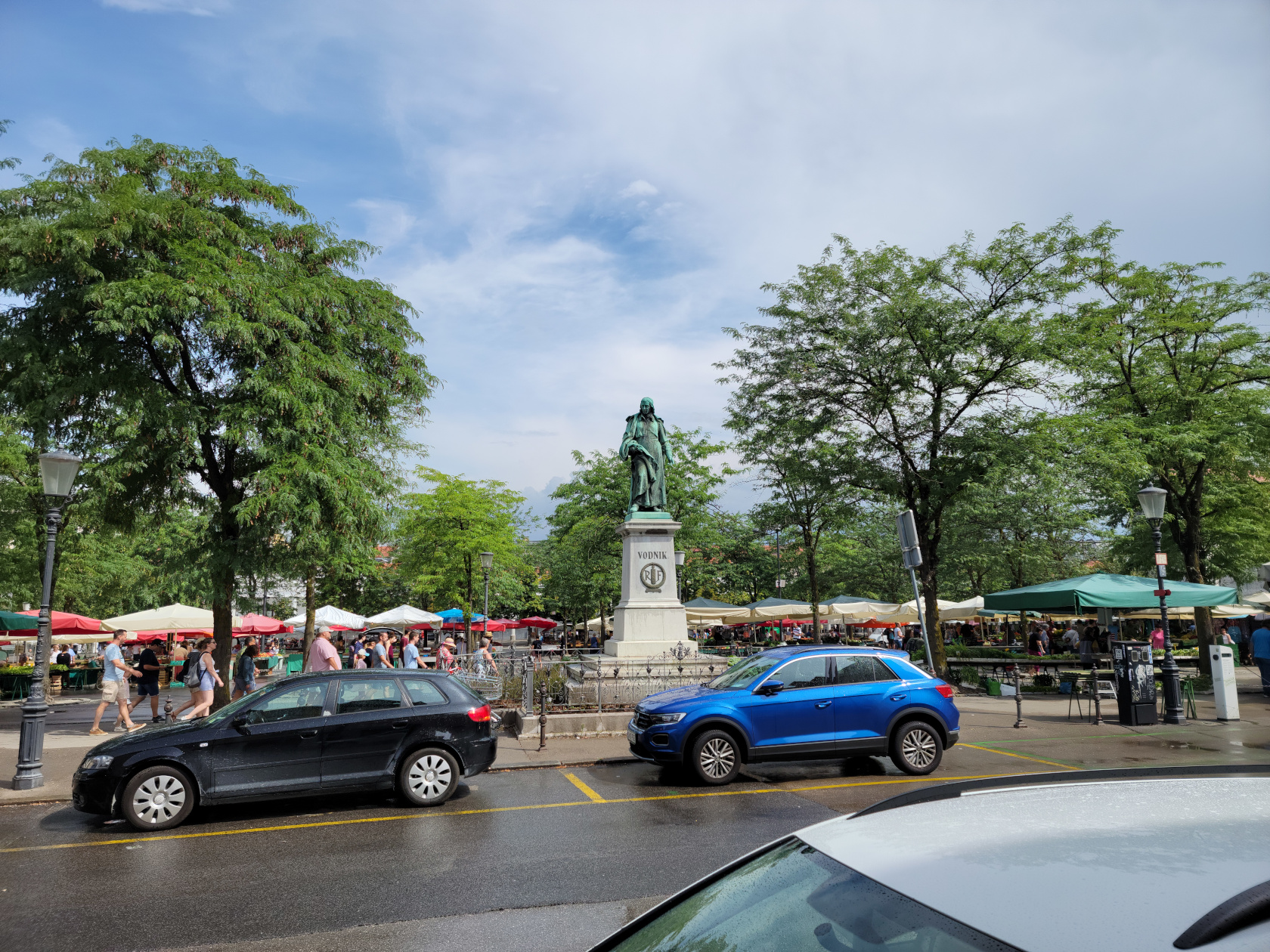
Ljubljana – Vodnik Monument
Ljubljana – Ljubljana Cathedral
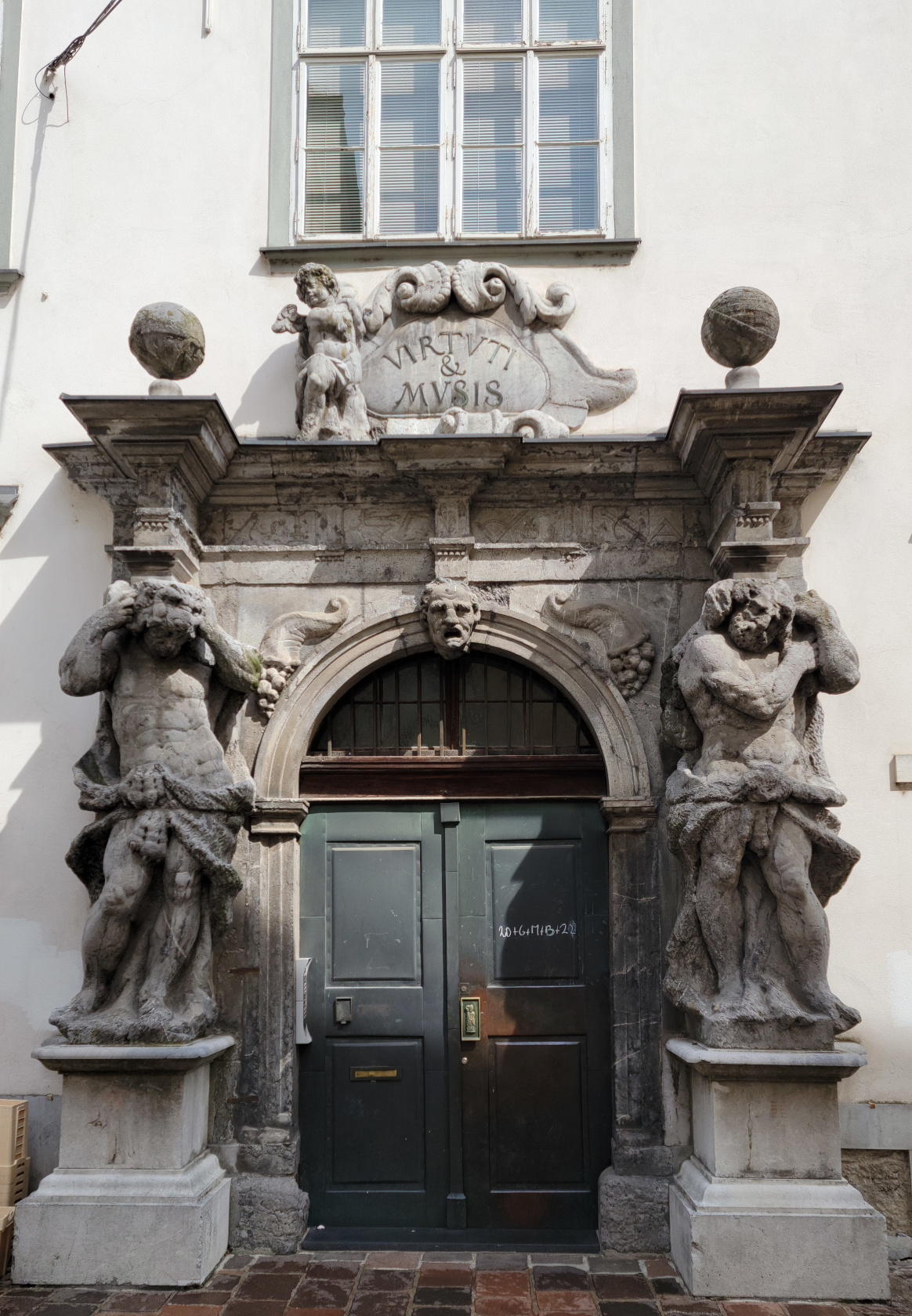
Ljubljana – Old Business Doorway
Ljubljana – Robba Fountain
Ljubljana – Mestni Trg
Ljubljana – Mestni Trg
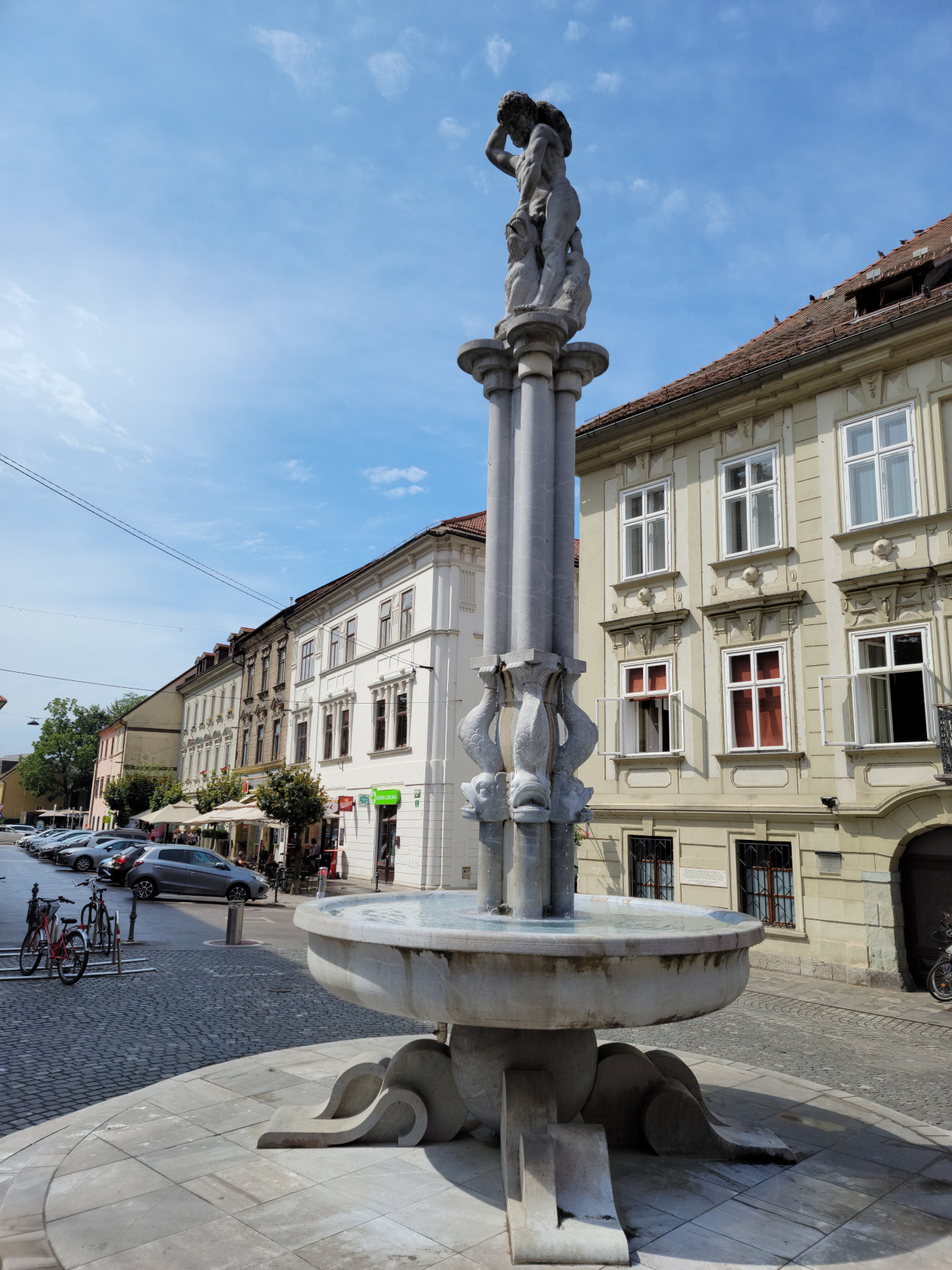
Ljubljana – Herkulov vodnjak – Hercules Fountain
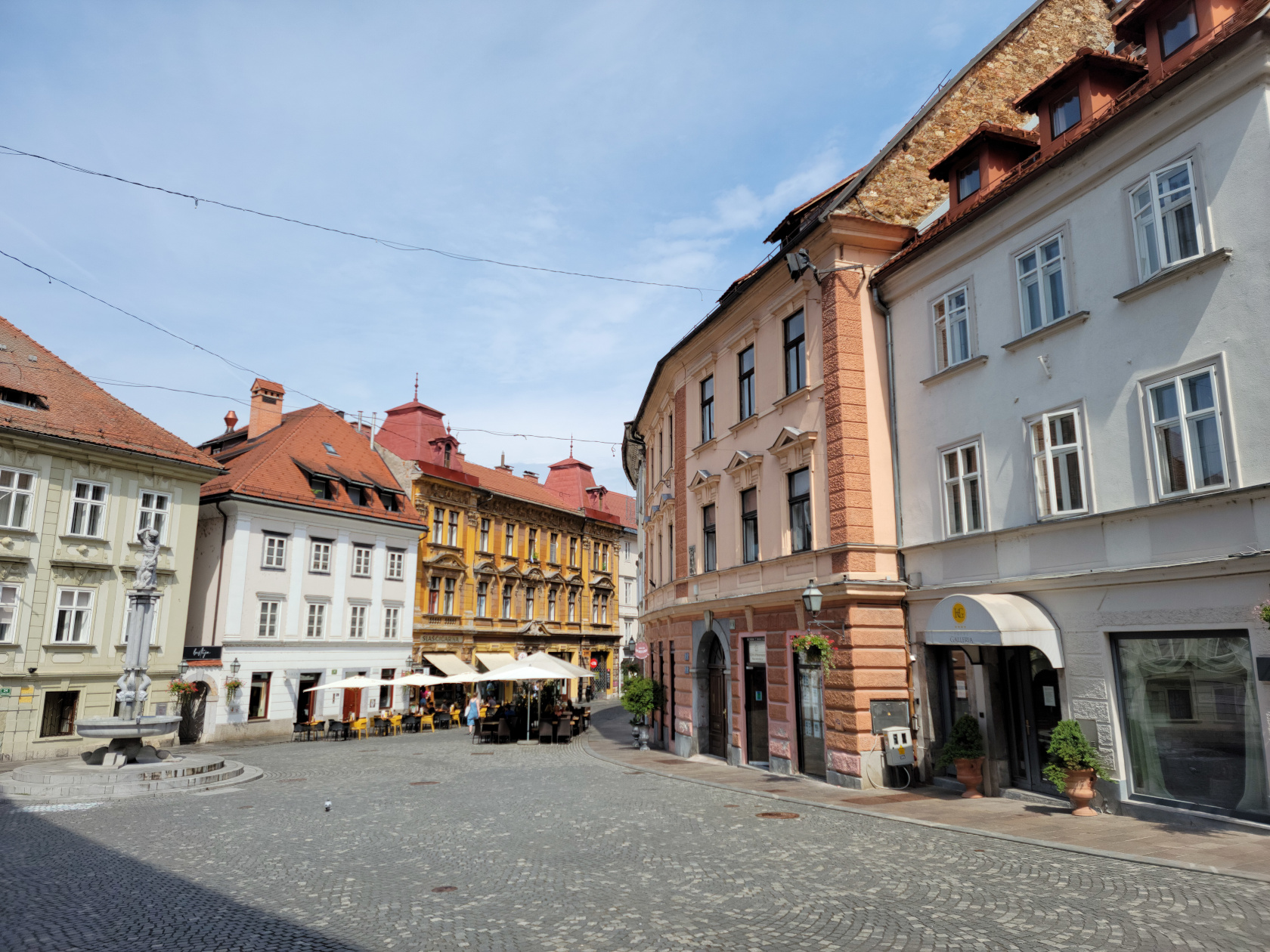
Ljubljana – Herkulov vodnjak – Hercules Fountain and Square
Ljubljana – Herkulov vodnjak – Hercules Fountain and Square
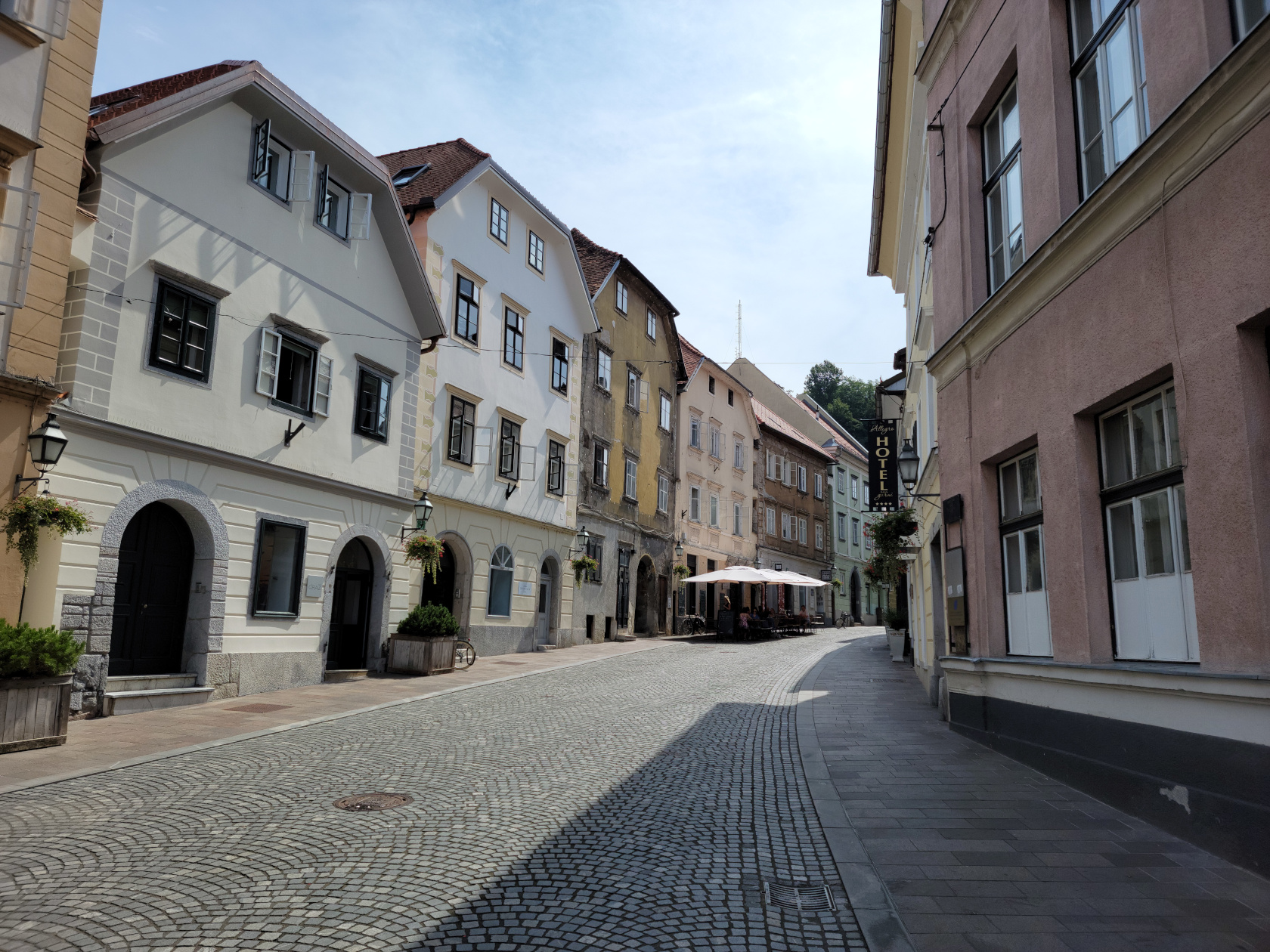
Ljubljana – Gornji Trg
Restaurants
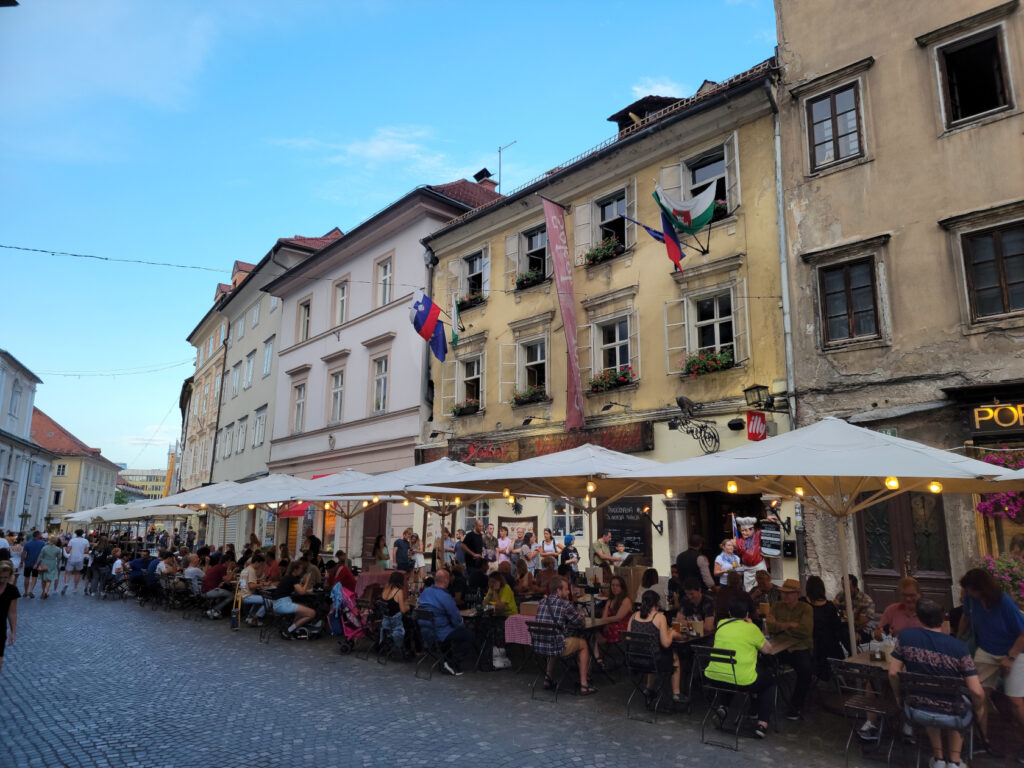
Gostilna Sokol Restaurant
Ljubljana – Gostilna Sokol Restaurant
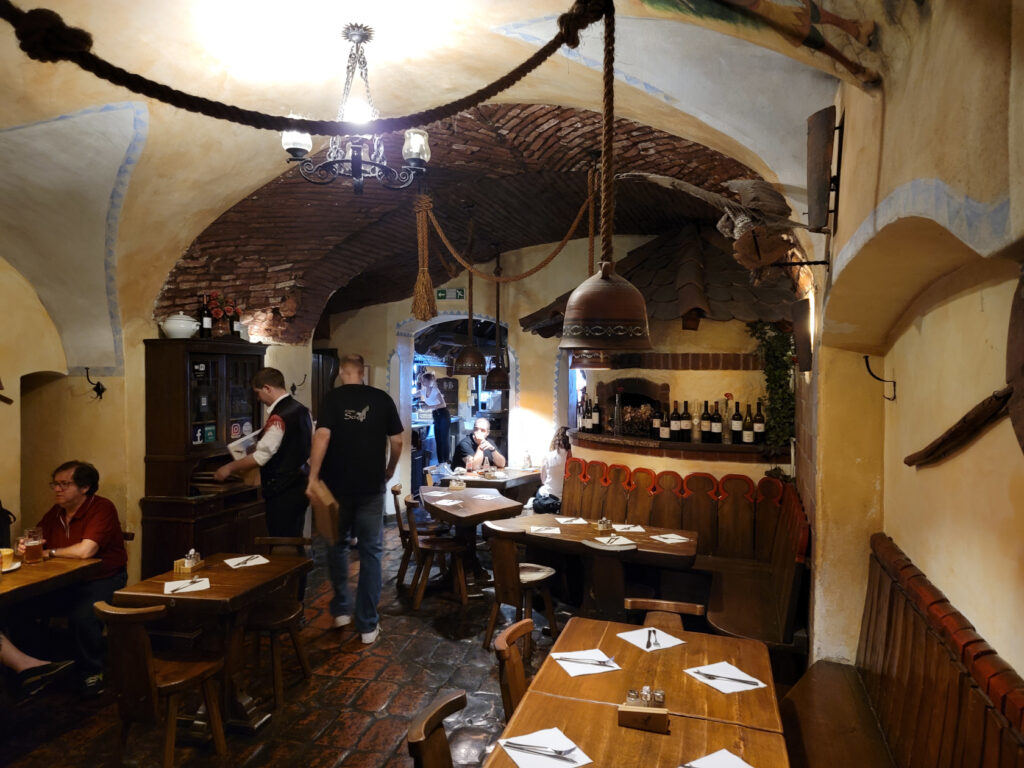
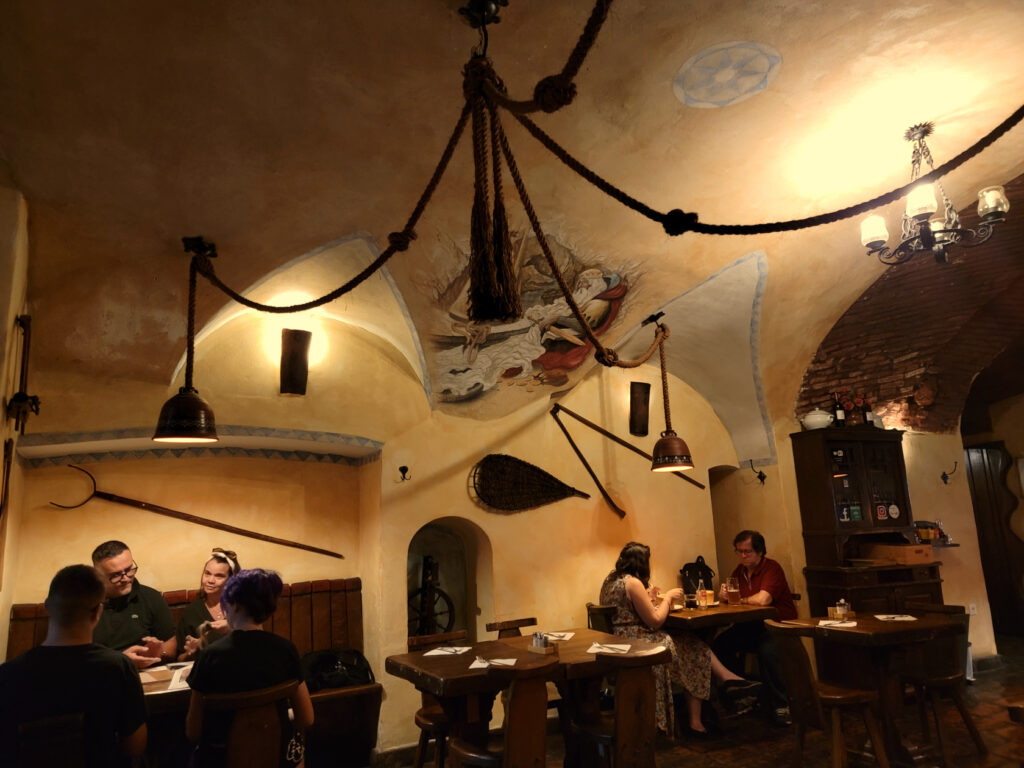
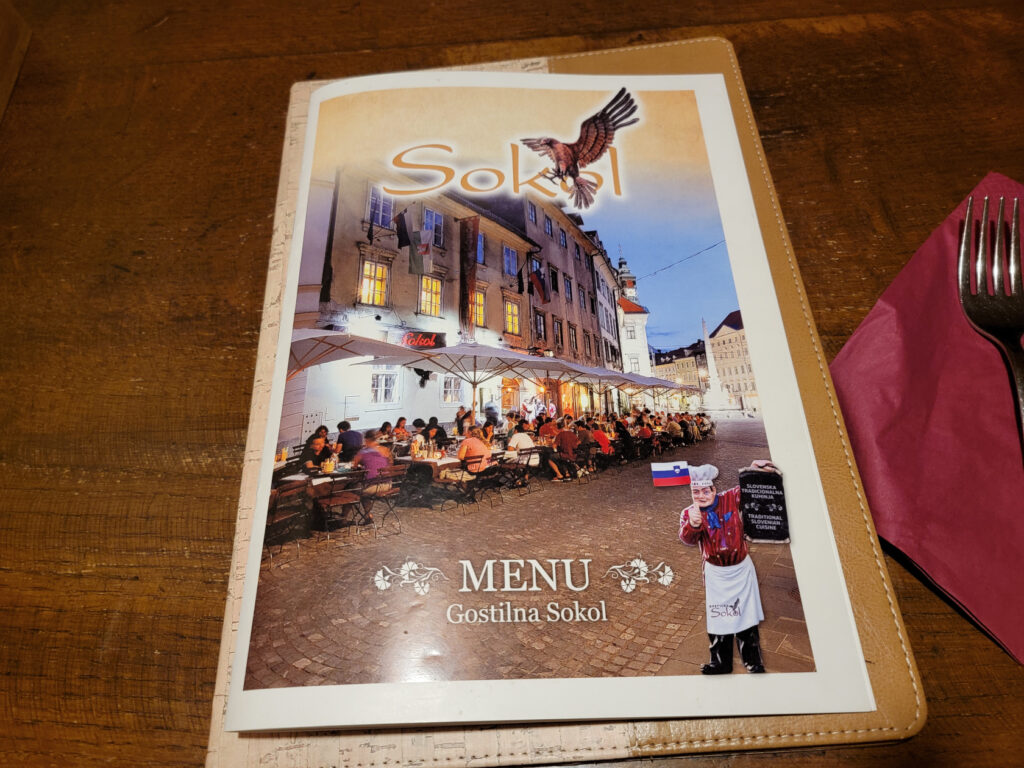
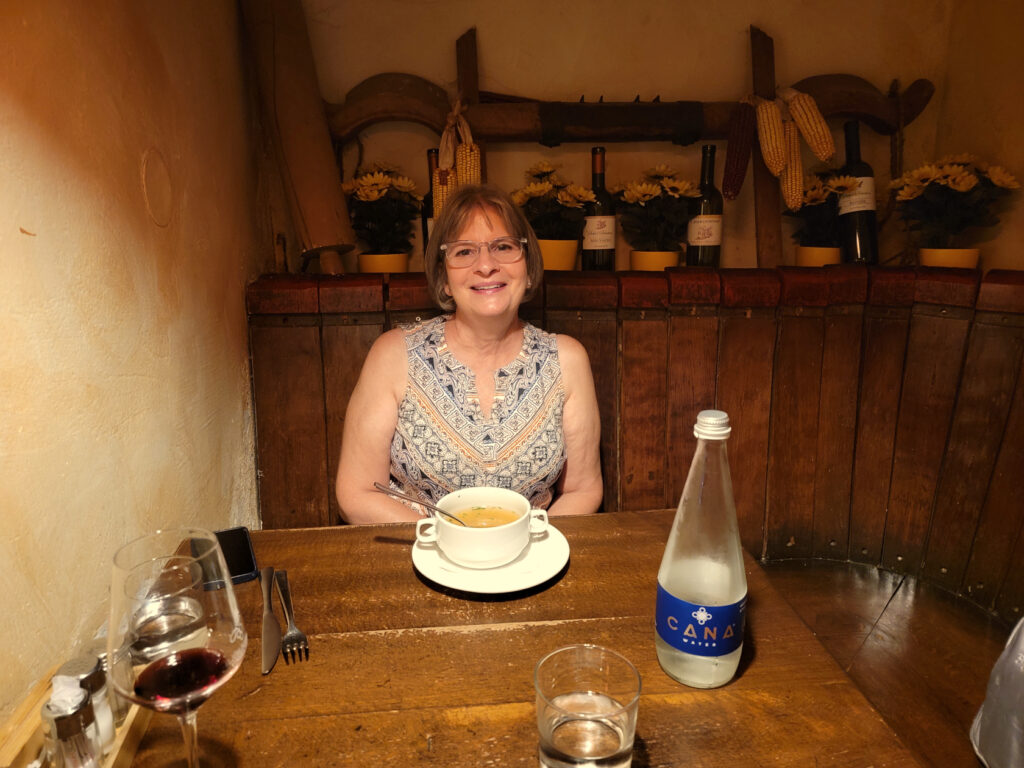
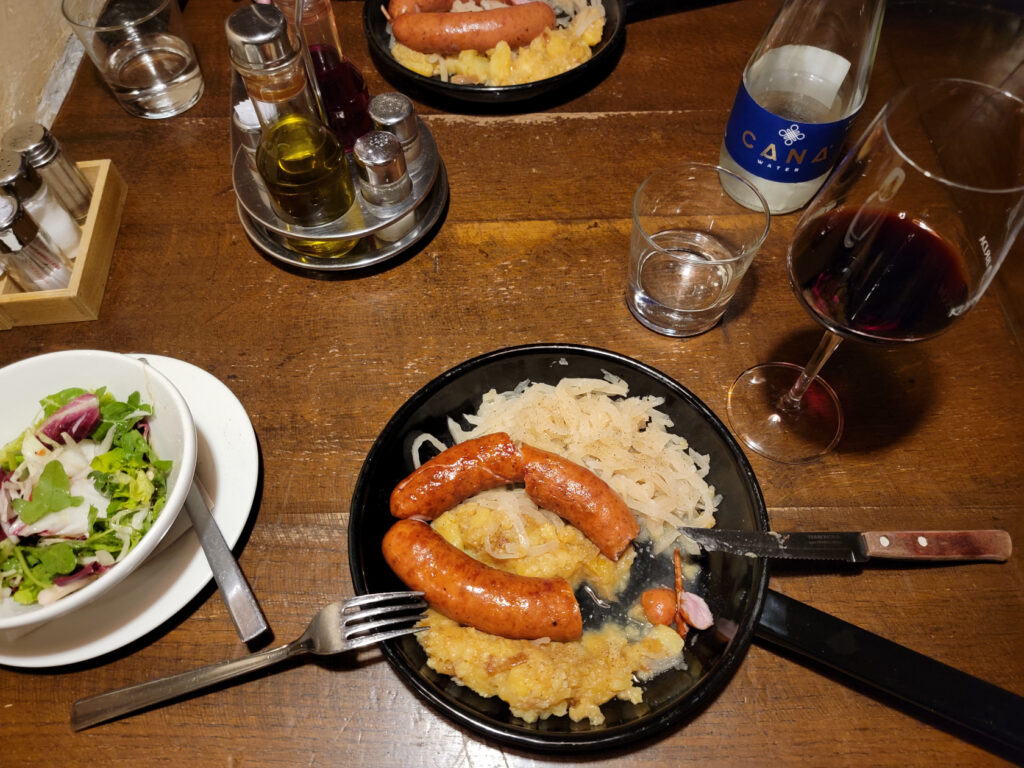
This is a traditional Slovenian restaurant, service many of the authentic dishes and also some non-Slovenian favorites, so anyone who visits can find something to eat. For us it was the traditional fried sausage, or Kranjska Klobasa with pickled turnips and roasted potatoes.
Ljubljana – Gostilna Sokol Restaurant
Ljubljana – Gostilna Sokol Restaurant
Ljubljana – Gostilna Sokol Restaurant
Ljubljana – Gostilna Sokol Restaurant
Ljubljana – Gostilna Sokol Restaurant – Patti
Ljubljana – Gostilna Sokol Restaurant – Fried Sausage with Pickled Turnips and Potatoes
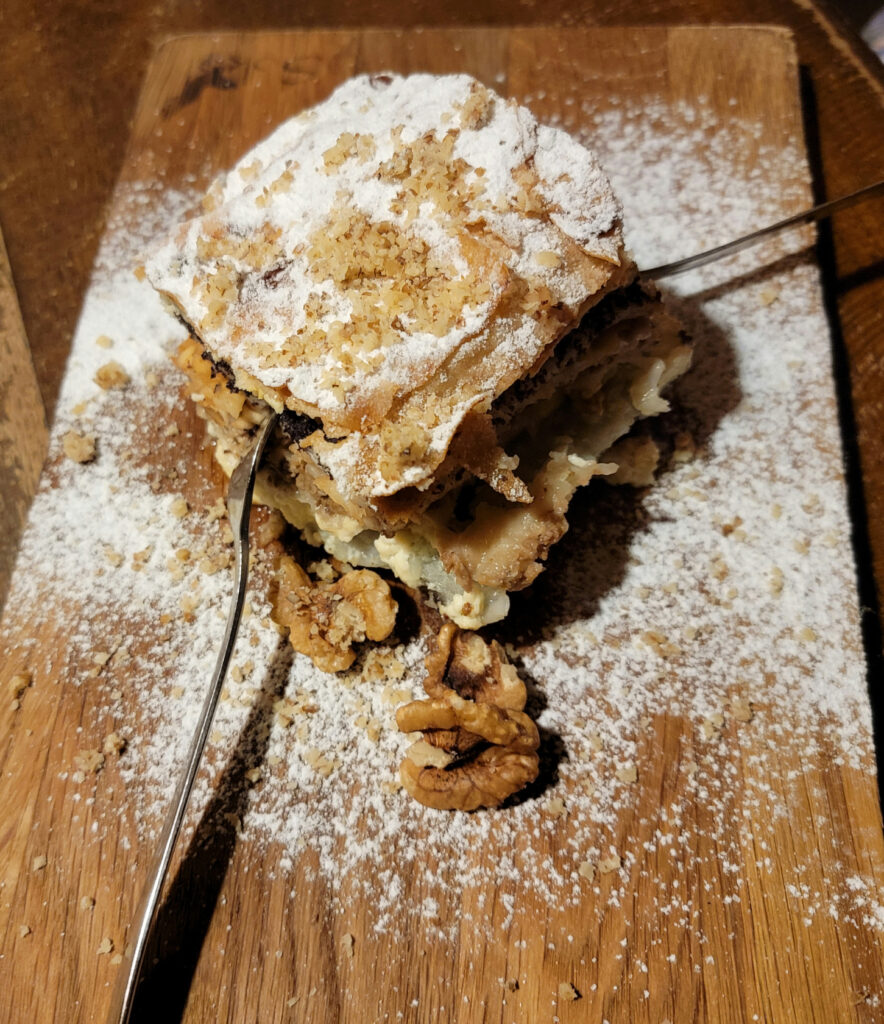
Ljubljana – Gostilna Sokol Restaurant – Hisna Gibanica
Ljubljana – Gostilna Sokol Restaurant
Cantina Mexicana Restaurant
Ljubljana – Cantina Mexicana Restaurant –
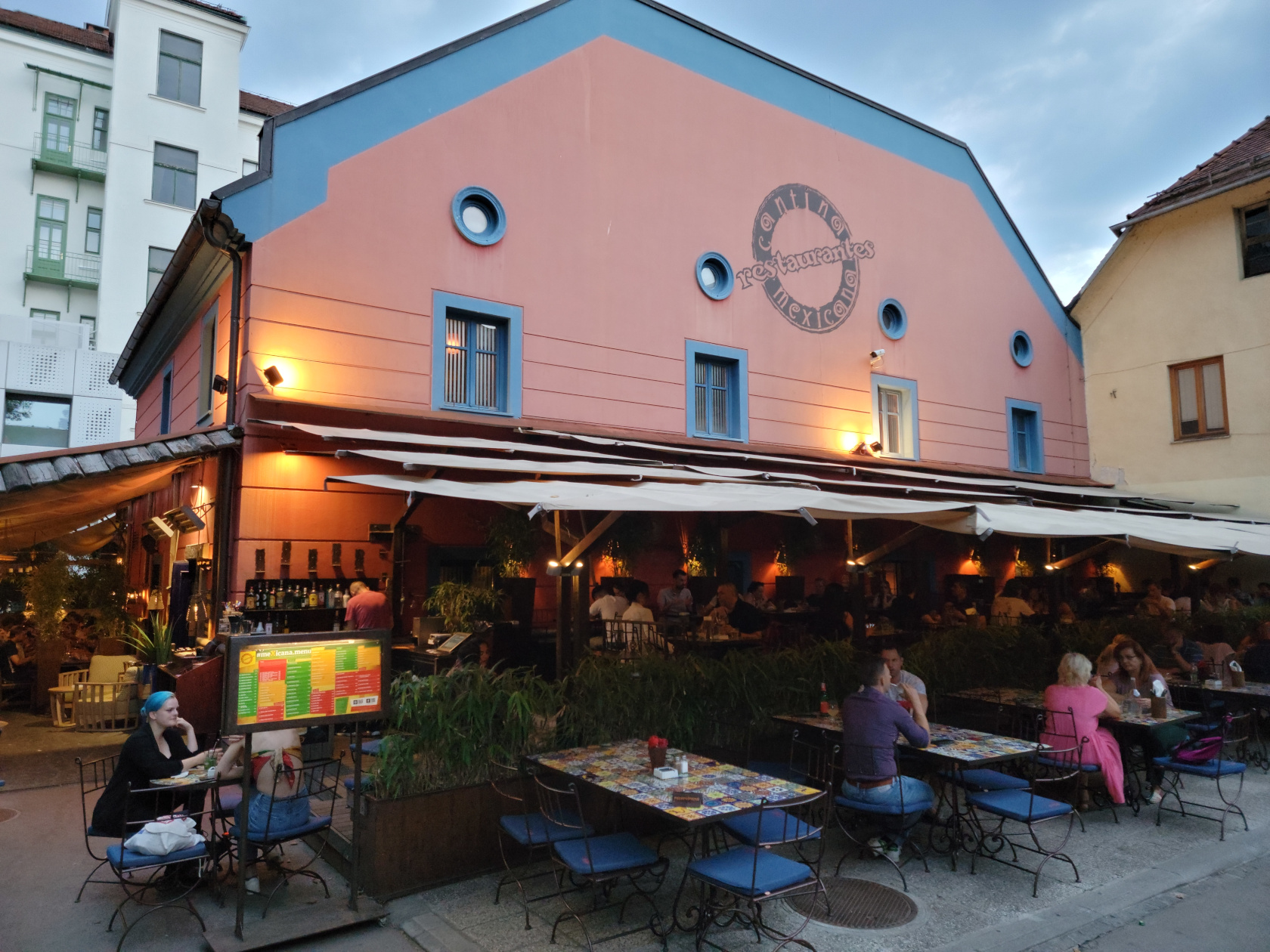
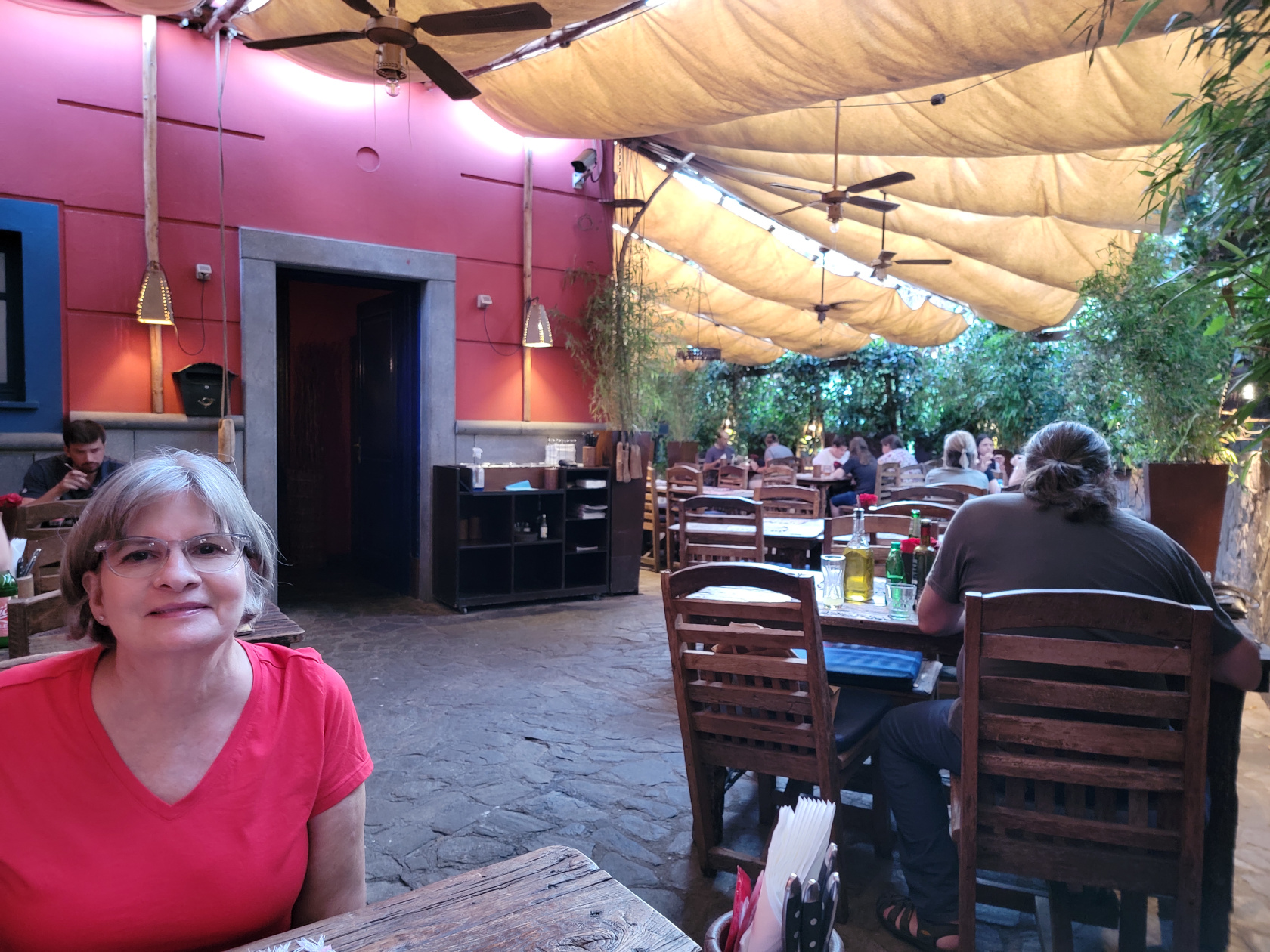
The Cantina Mexicana is a very good mexican restaurant that features both Mexican and Tex-Mex cuisine. It wasn’t too difficult to find something appetizing among the enormous selection of food they offer in their menu.
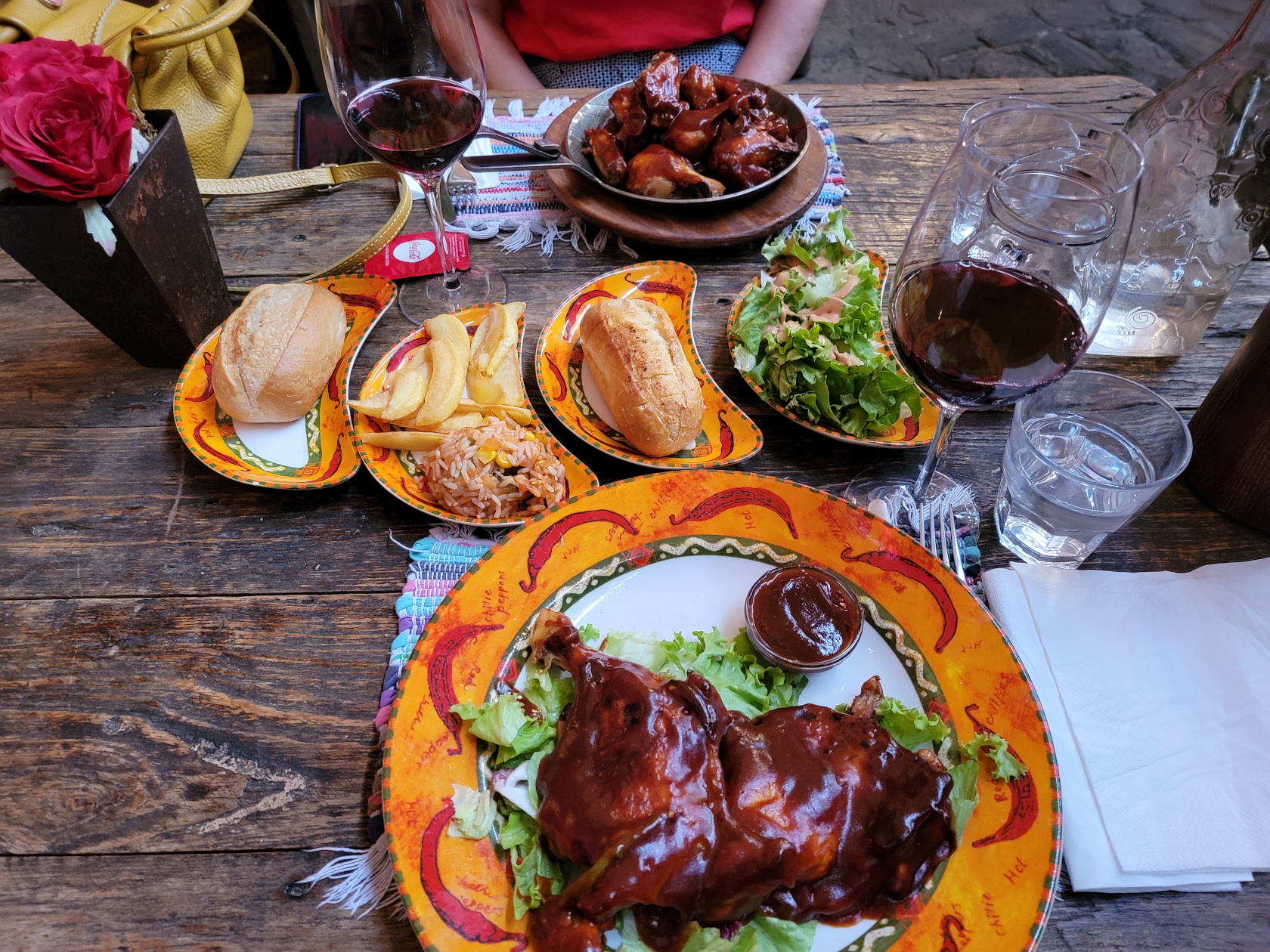
Ljubljana – Cantina Mexicana Restaurant – Barbecued Chicken
On our second day in Trieste we thought it appropriate to check out some local churches, visit the amazing fortress perched above the city and then visit the Grand Canal for lunch.
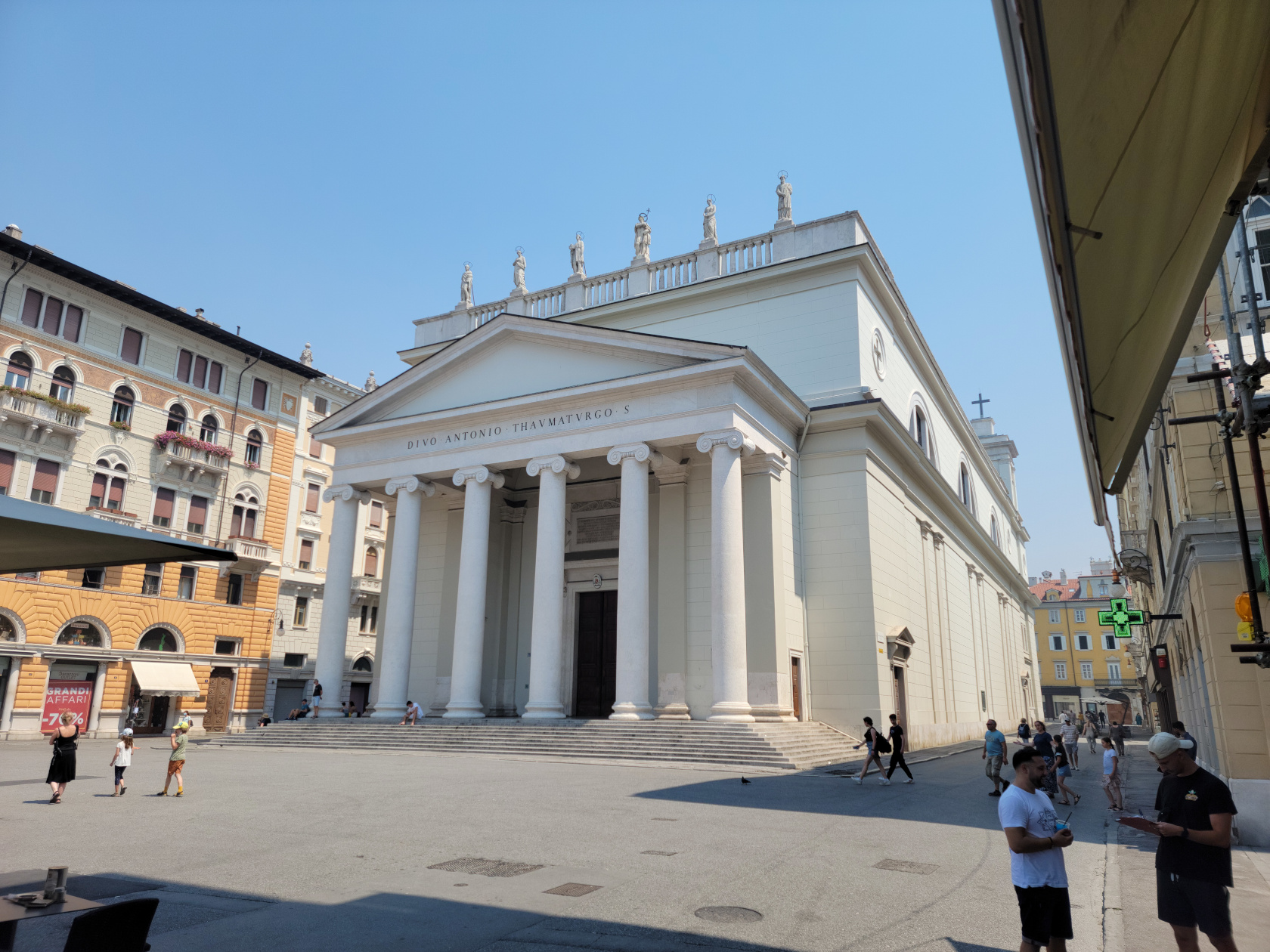
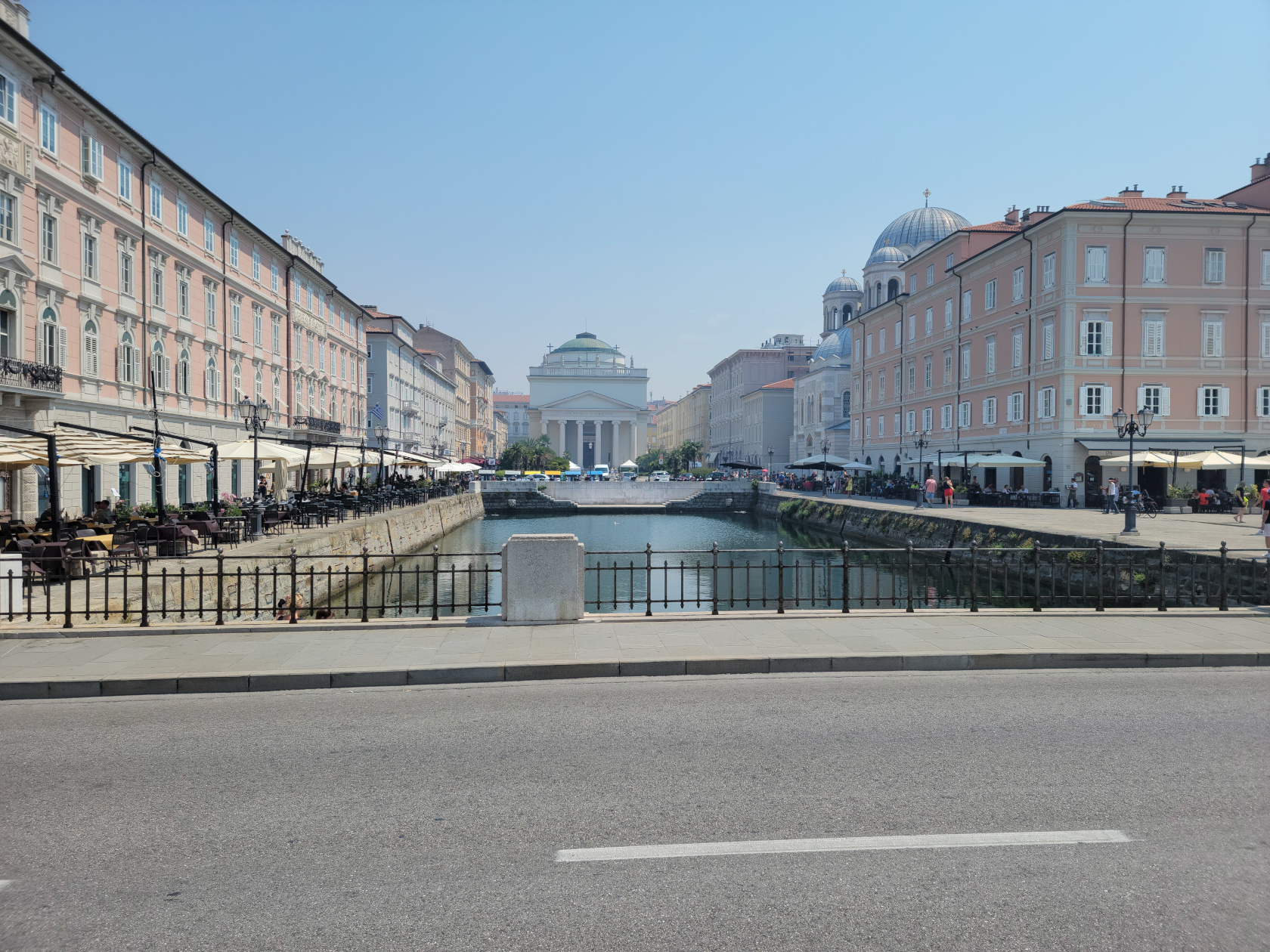
Trieste – The Grand Canal – Church of Sant’Antonio Nuovo
The Hill of San Giusto
A few blocks walk from our hotel and situated in the center of the old city is the hill of San Giusto, or Saint Justus. The following interesting sights can be seen by planning a day trip to see them all, with ample time for breaks and lunch!
Churches, Basilicas and Cathedrals
Trieste has a plethora of churches of all Christian faiths to visit. The following are noteworthy and some are actually no longer active nor Catholic.
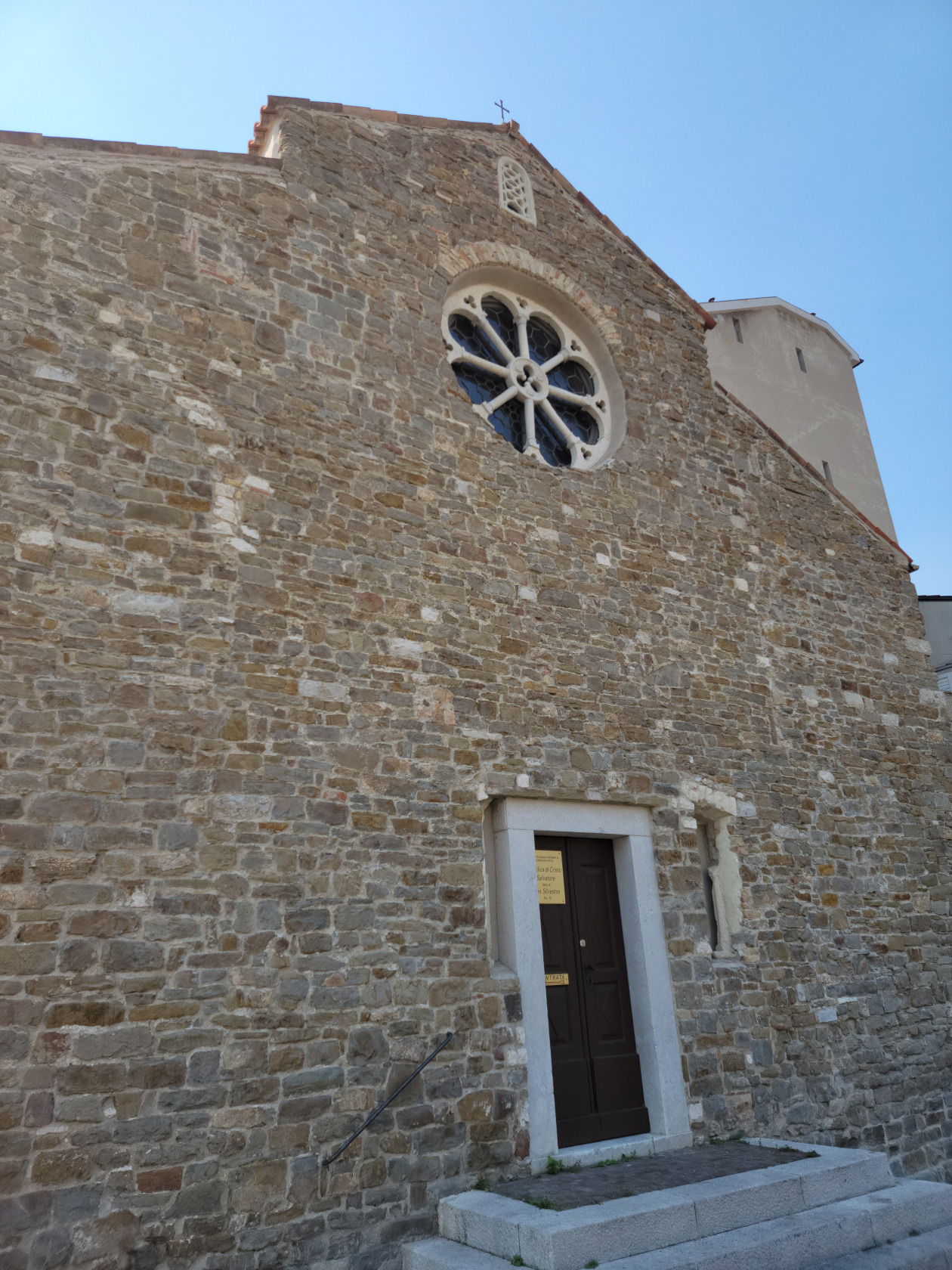
The Basilica of San Silvestro
The oldest church in Trieste, built in the twelfth century in Romanesque style, it contains many fourteenth century frescoes. It was closed when the Austro-Hungarian Empire conquered the area and converted into a church of Waldensians.
Trieste – Basilica San Silvestro
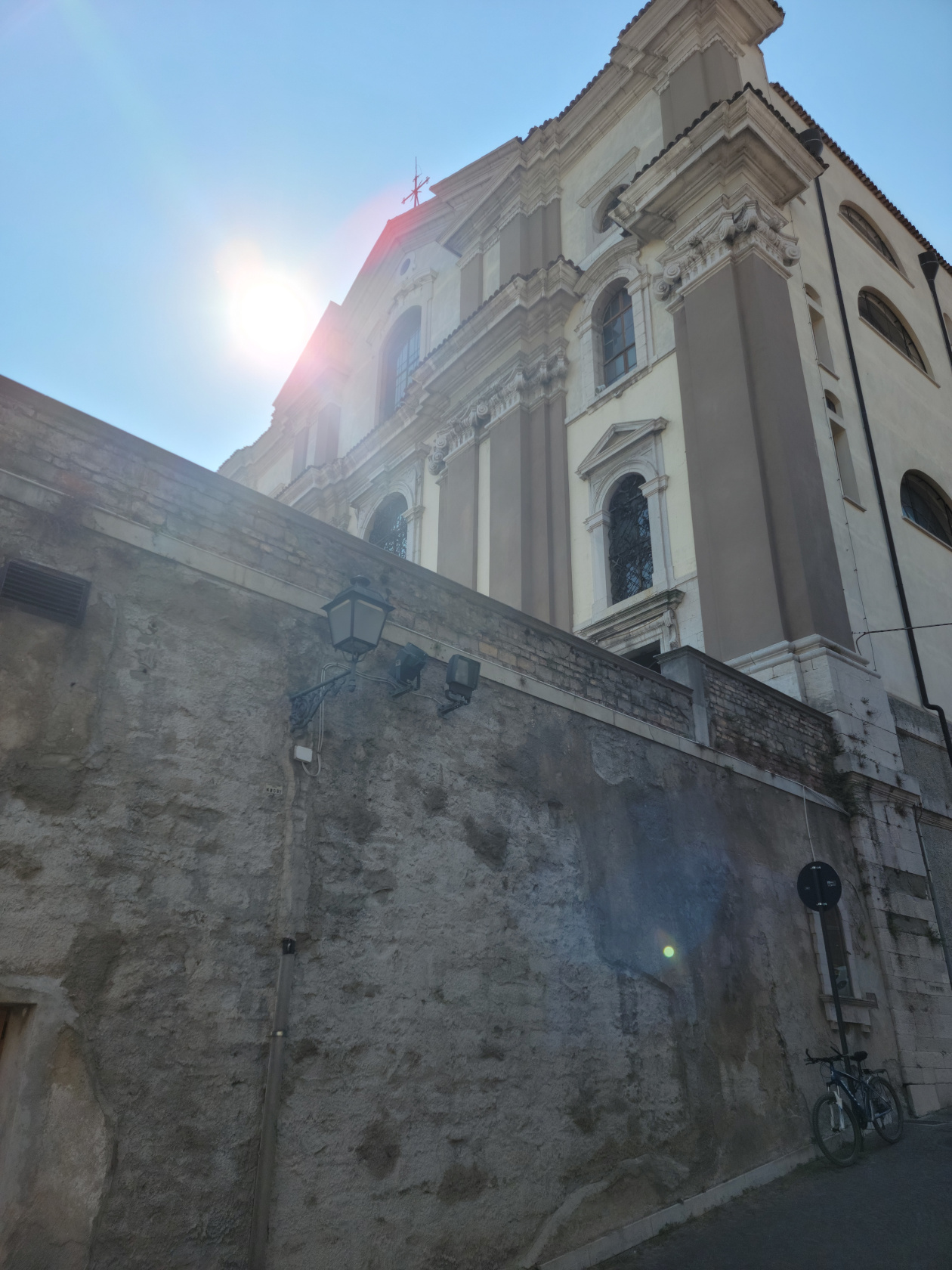
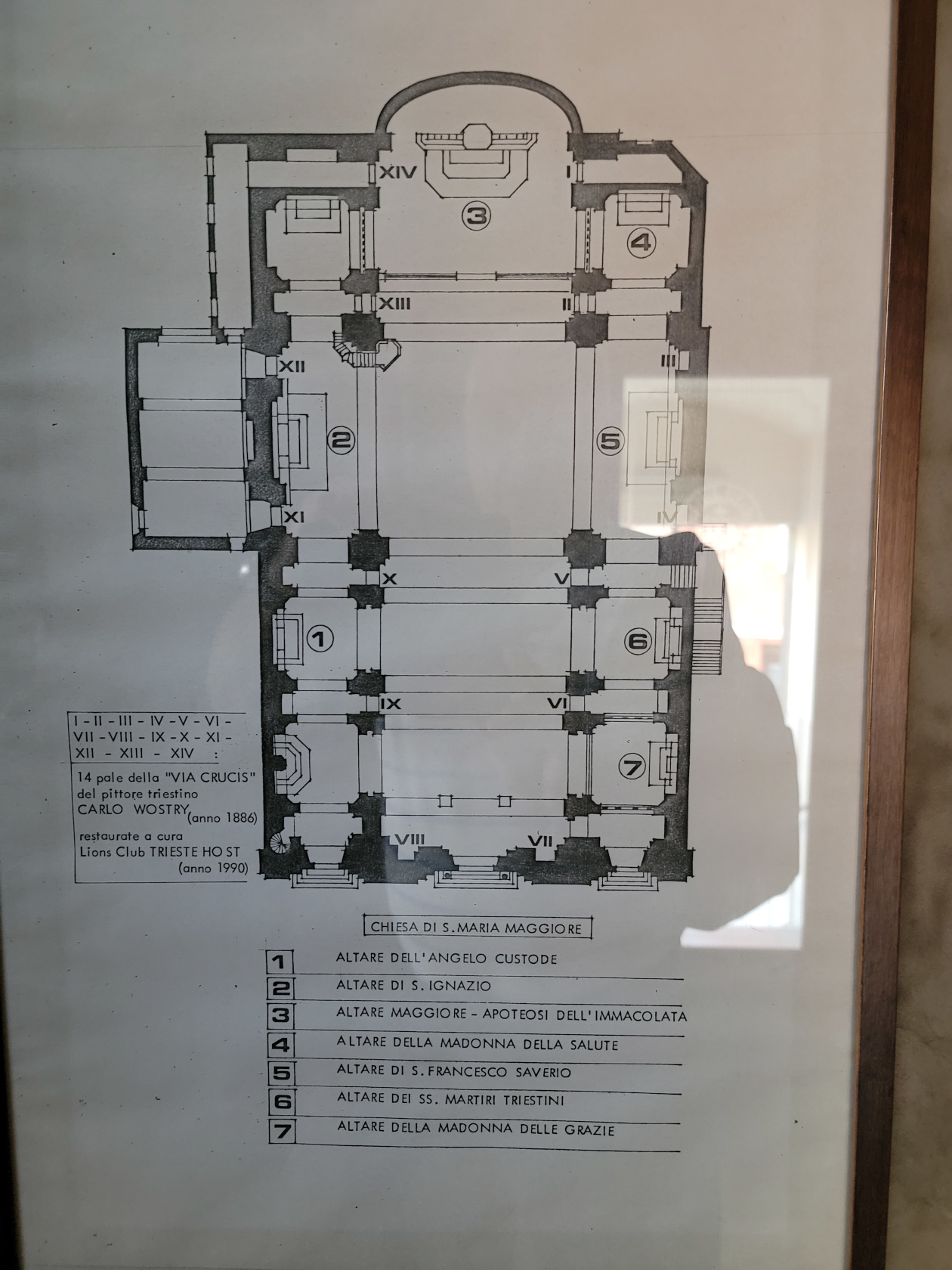
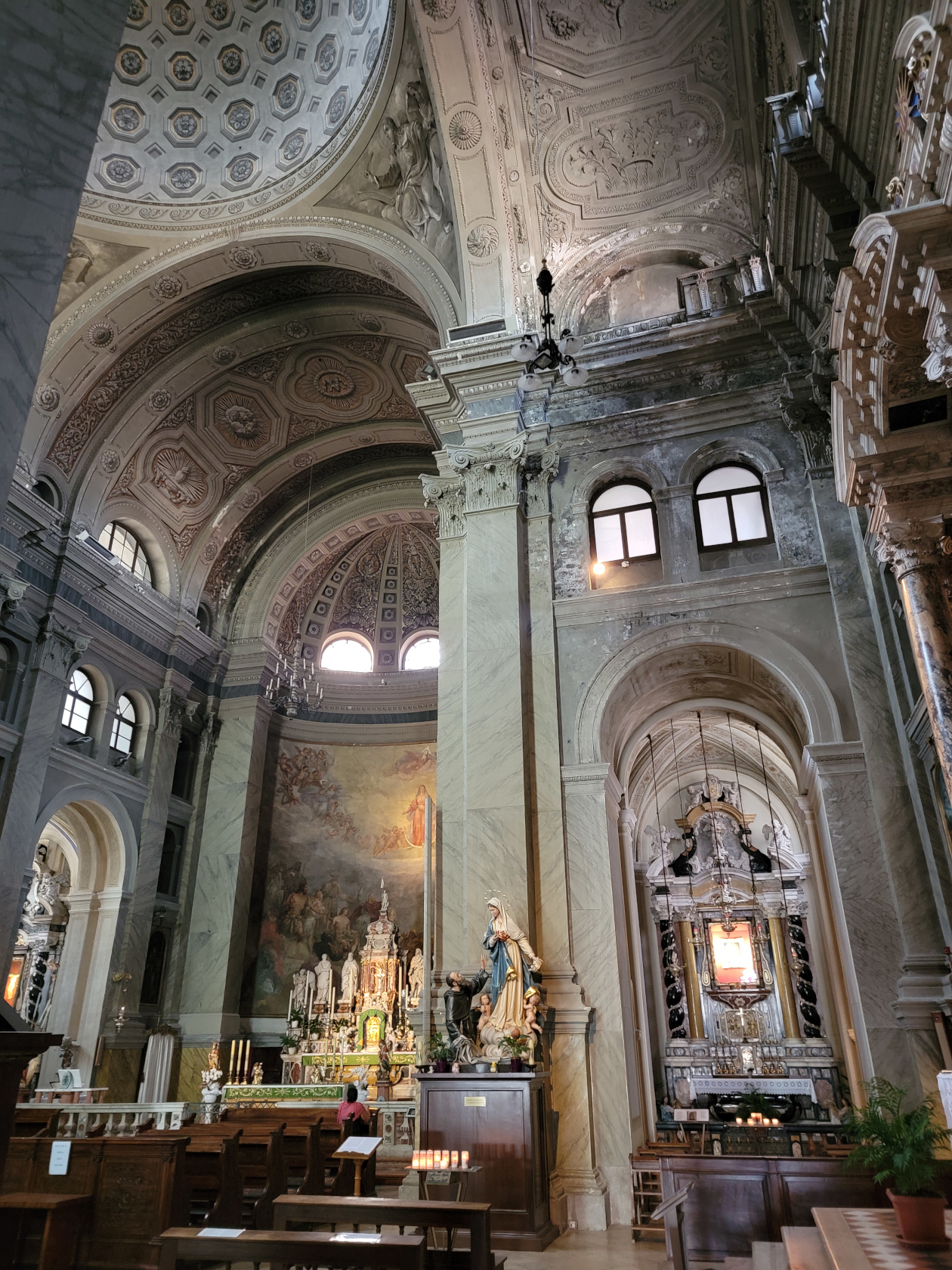
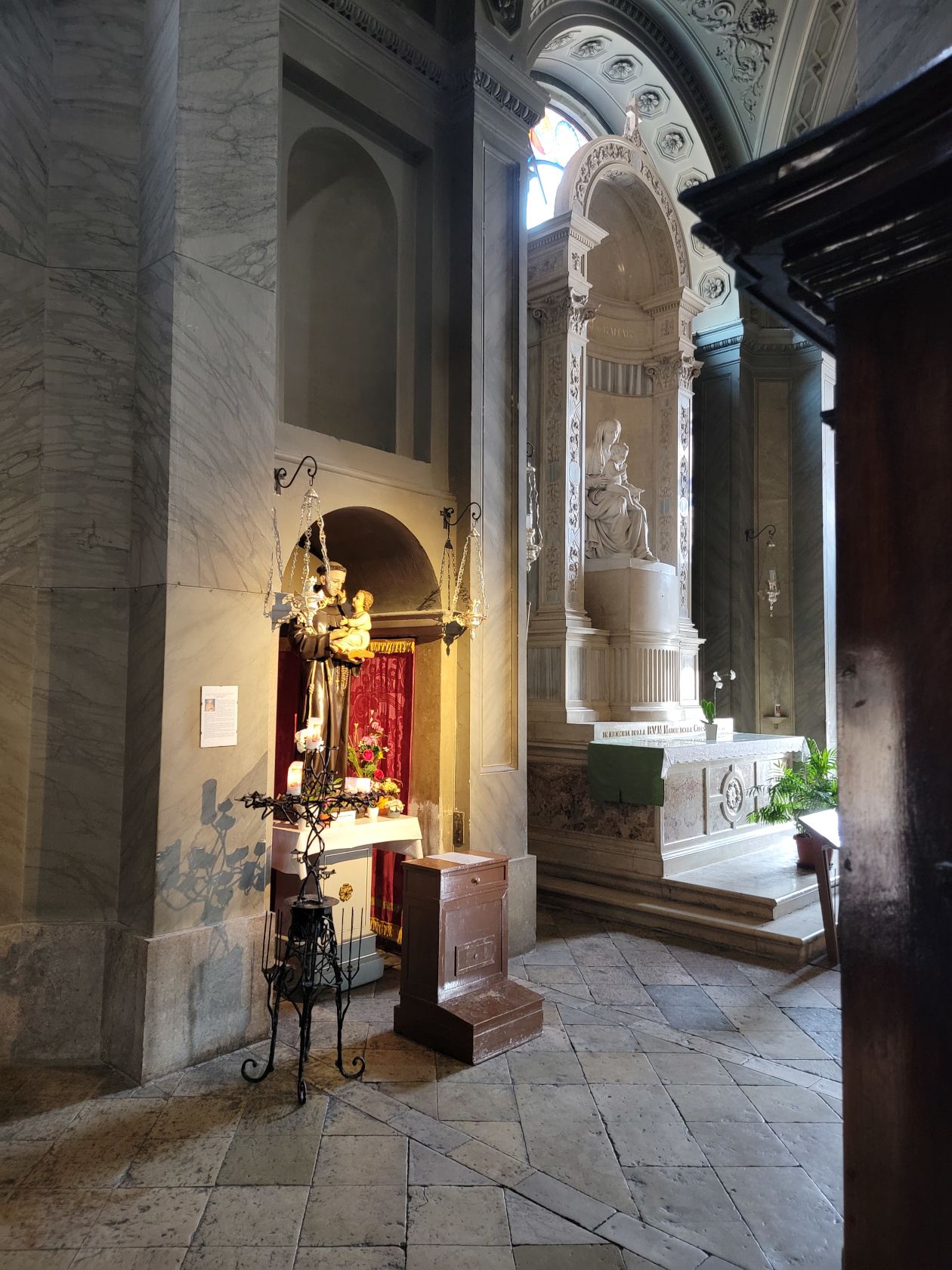
The Church of Santa Maria Maggiore
Currently owned by the region of Trieste, this once proud church was also a barracks and a prison. Now it is just a false collection place for Catholics dropping euros to light candles.
Trieste – Church Santa Maria Maggiore
Trieste – Church Santa Maria Maggiore
Trieste – Church Santa Maria Maggiore
Trieste – Church Santa Maria Maggiore
The Cathedral of San Giusto
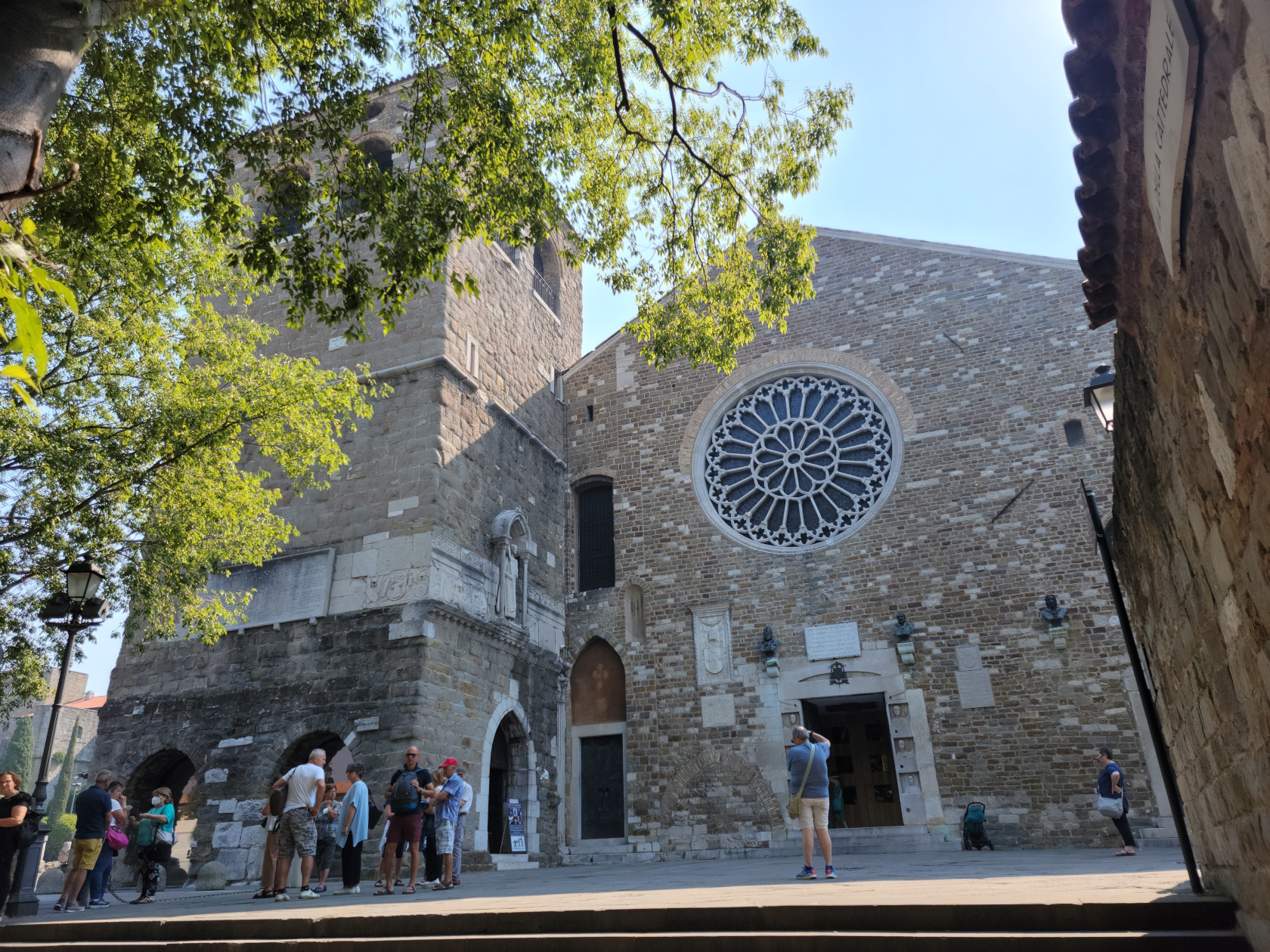
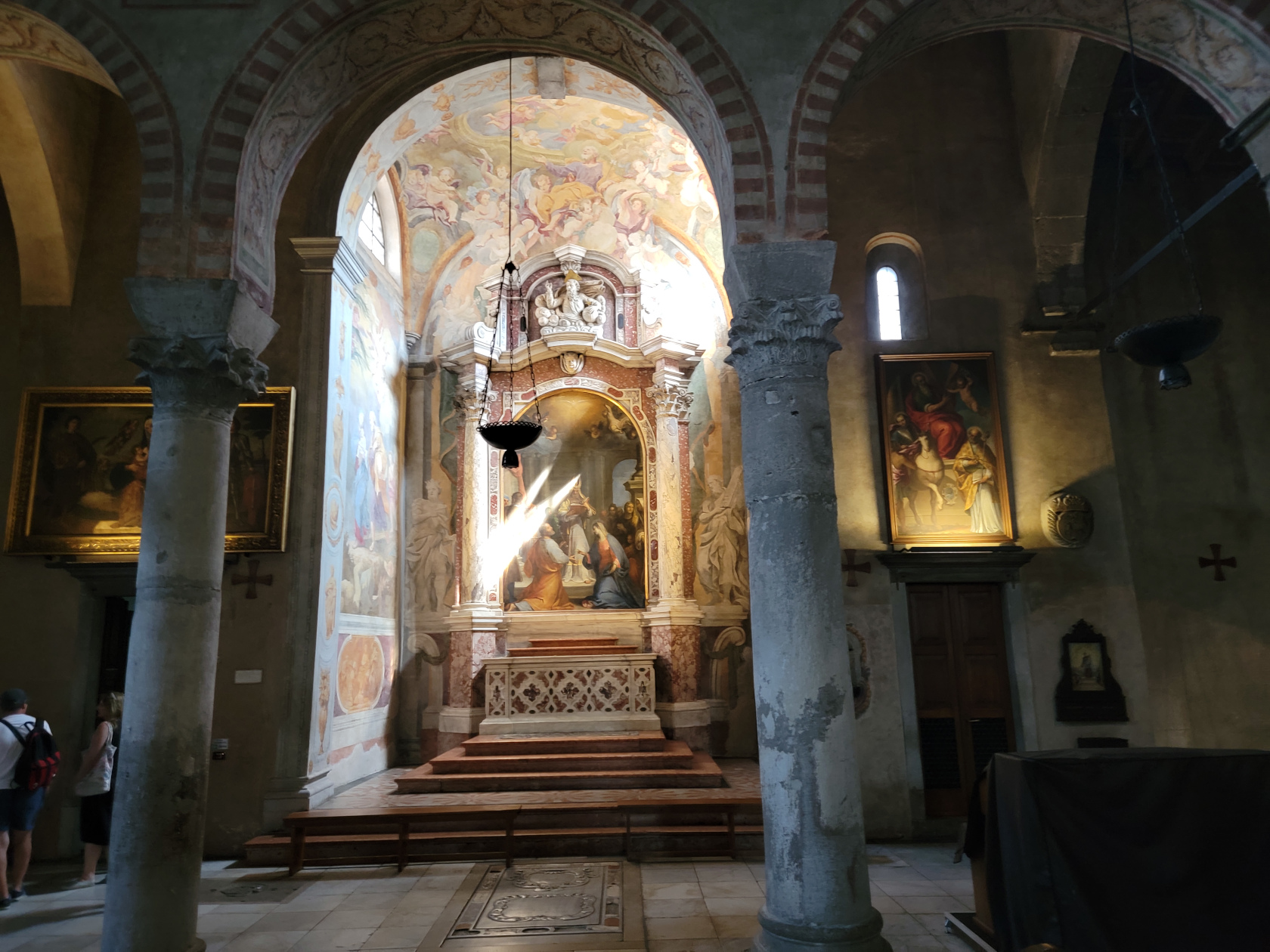
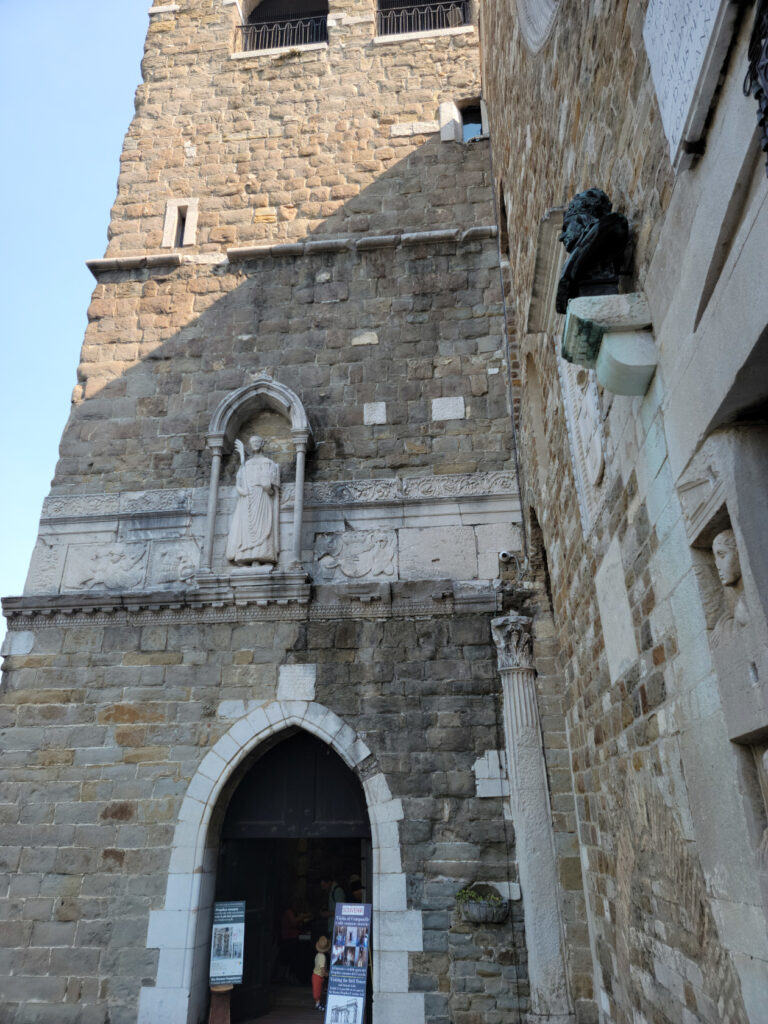
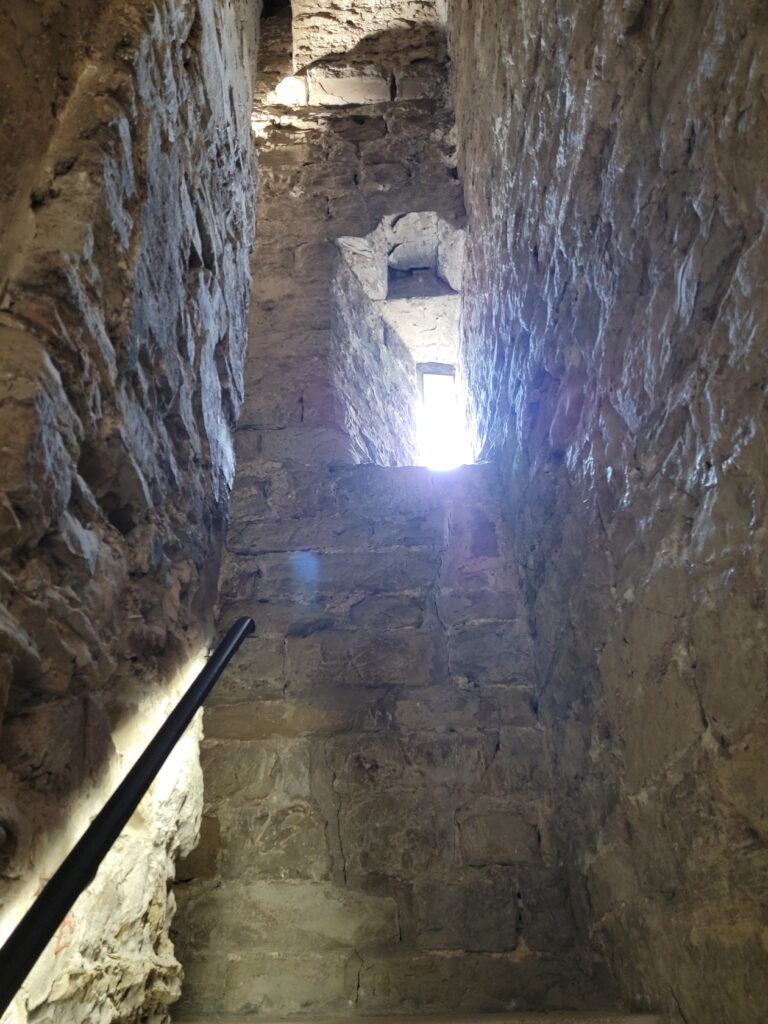
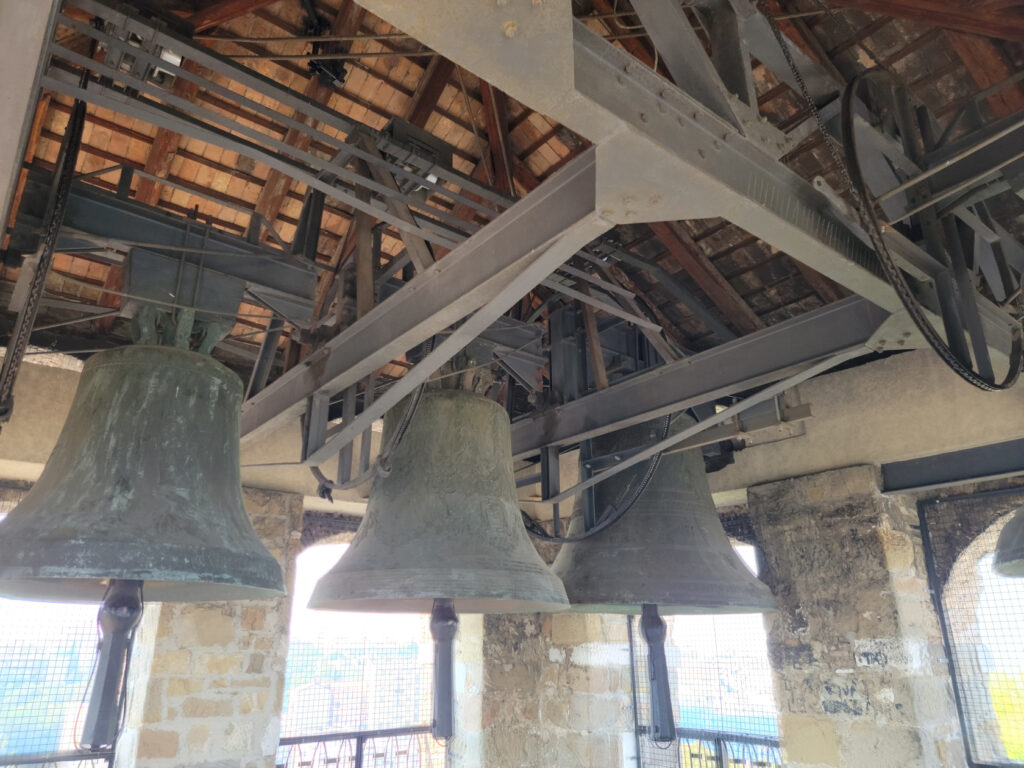
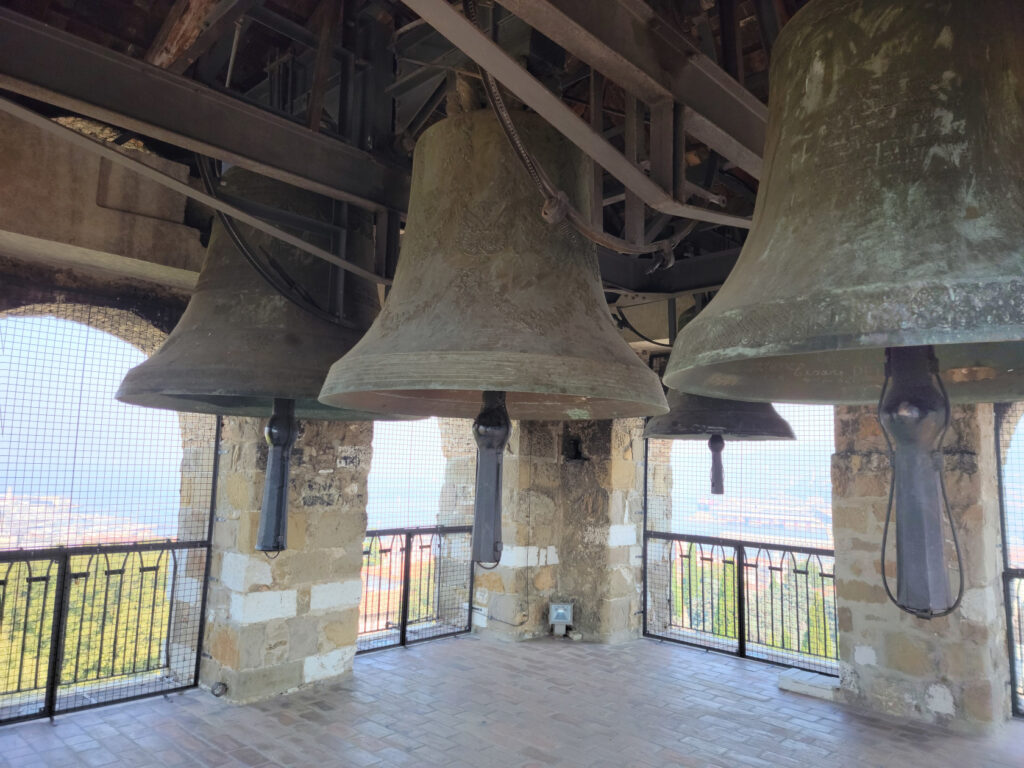
Situated on the San Giusto hill and the via della Cathedral is the cathedral of San Giusto, also known as the Trieste Cathedral. The cathedral is home to some very impressive bells and for a modest sum, one can visit them after climbing the 90 or so steps in the bell tower.
Trieste – Cathedral di San Giusto Martire
Trieste – Cathedral di San Giusto Martire
Ascending the bell tower also reveals an interesting secret, it is not one structure built for the purpose of worship, but rather three.
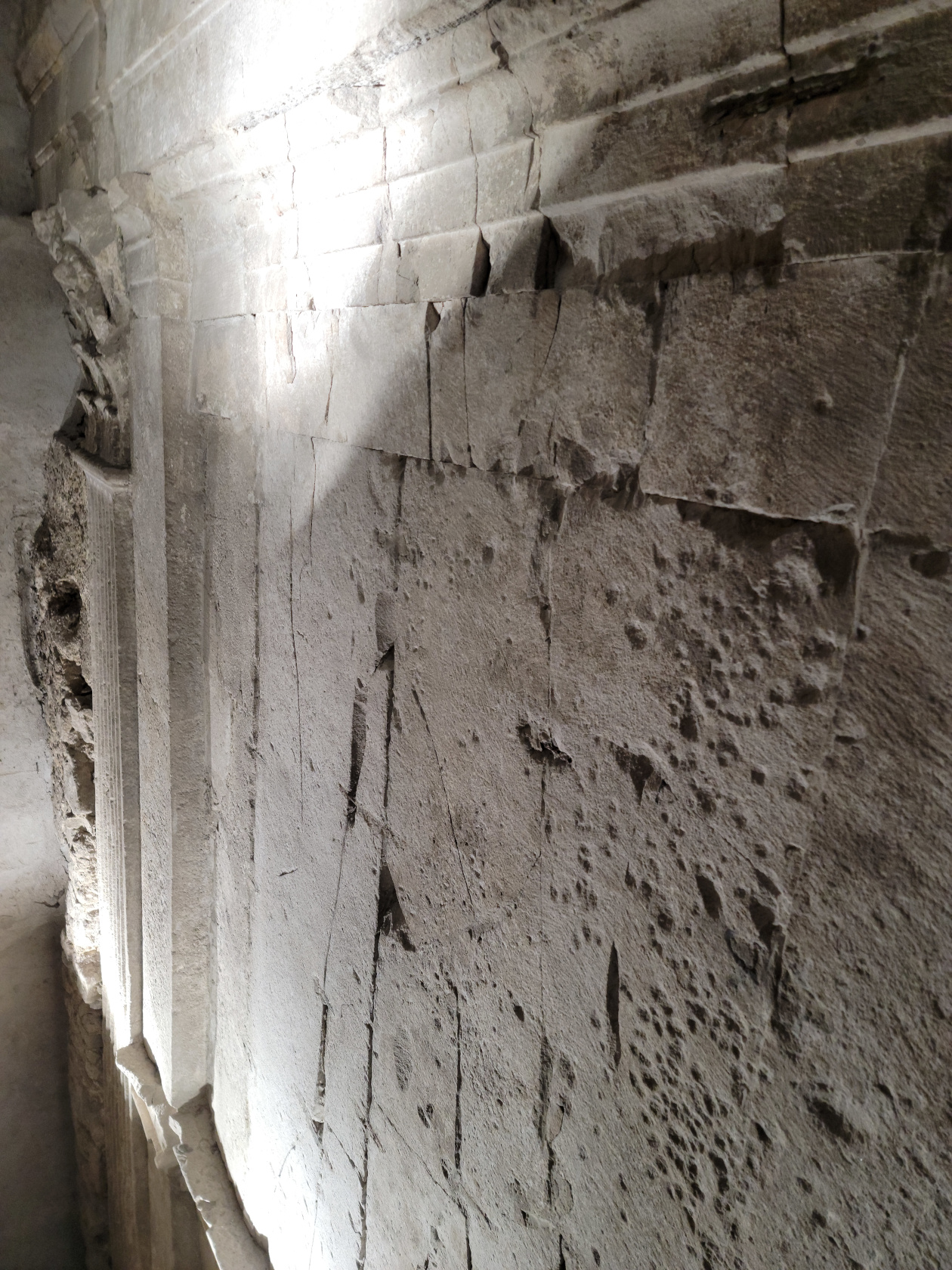
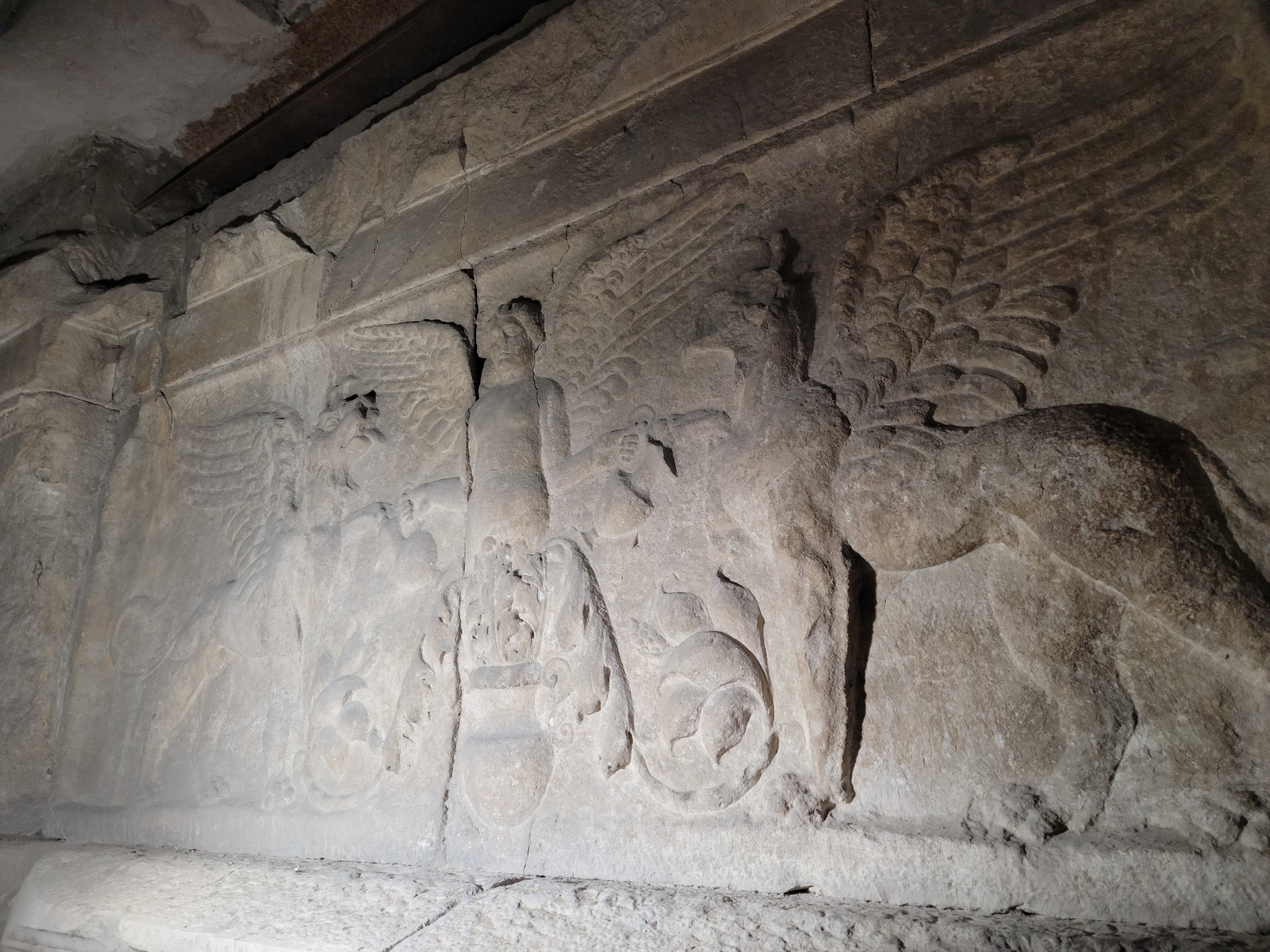
Trieste – Roman Reliefs in the Tower of the Cathedral di San Giusto Martire
Trieste – Roman Reliefs in the Tower of the Cathedral di San Giusto Martire
Evidence of its ancient roots can be found while climbing the stairs and its history can be found written in the books of the gift shop or other history books.
Trieste – Tower of the Cathedral di San Giusto Martire
Trieste – Tower Stairs of the Tower the Cathedral di San Giusto Martire
Trieste – Bells of the Cathedral di San Giusto Martire
Trieste – Bells of the Cathedral di San Giusto Martire
Adjacent to the cathedral is the Roman Propylaea. The view from the bell tower offers a great chance to see that layout of this important Roman structure from above.
Trieste – View from the Cathedral di San Giusto Martire
Trieste – Roman Propylaeum or Columns of the Cathedral di San Giusto Martire
Trieste – Roman Propylaeum or Columns of the Cathedral di San Giusto Martire
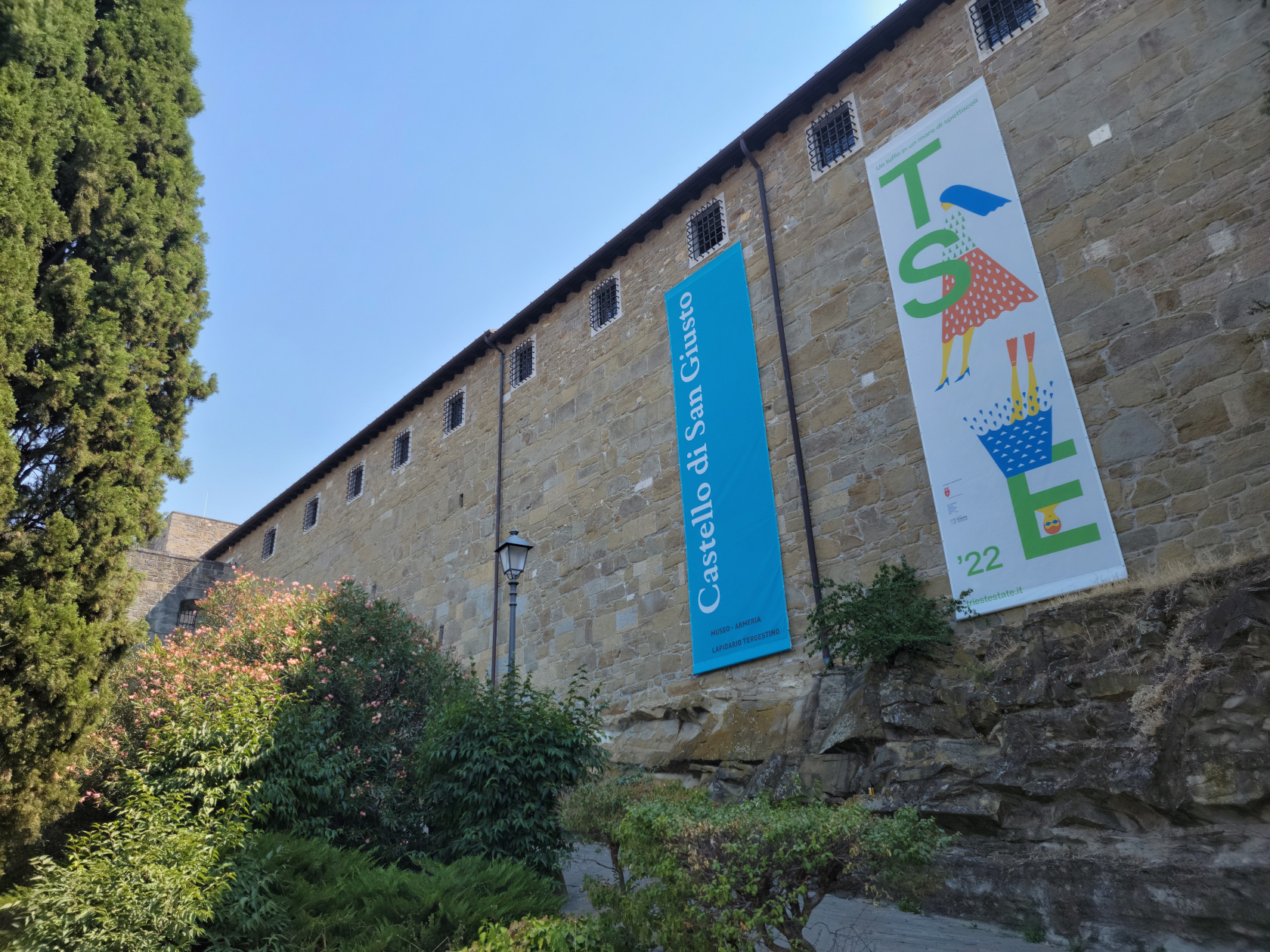
The Castle of San Giusto
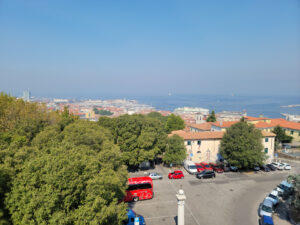
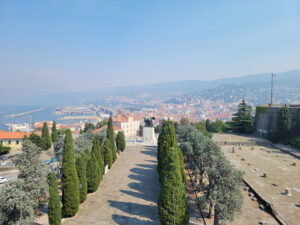
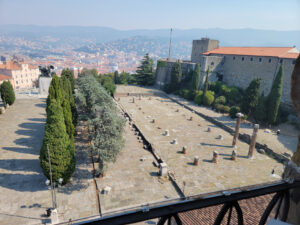
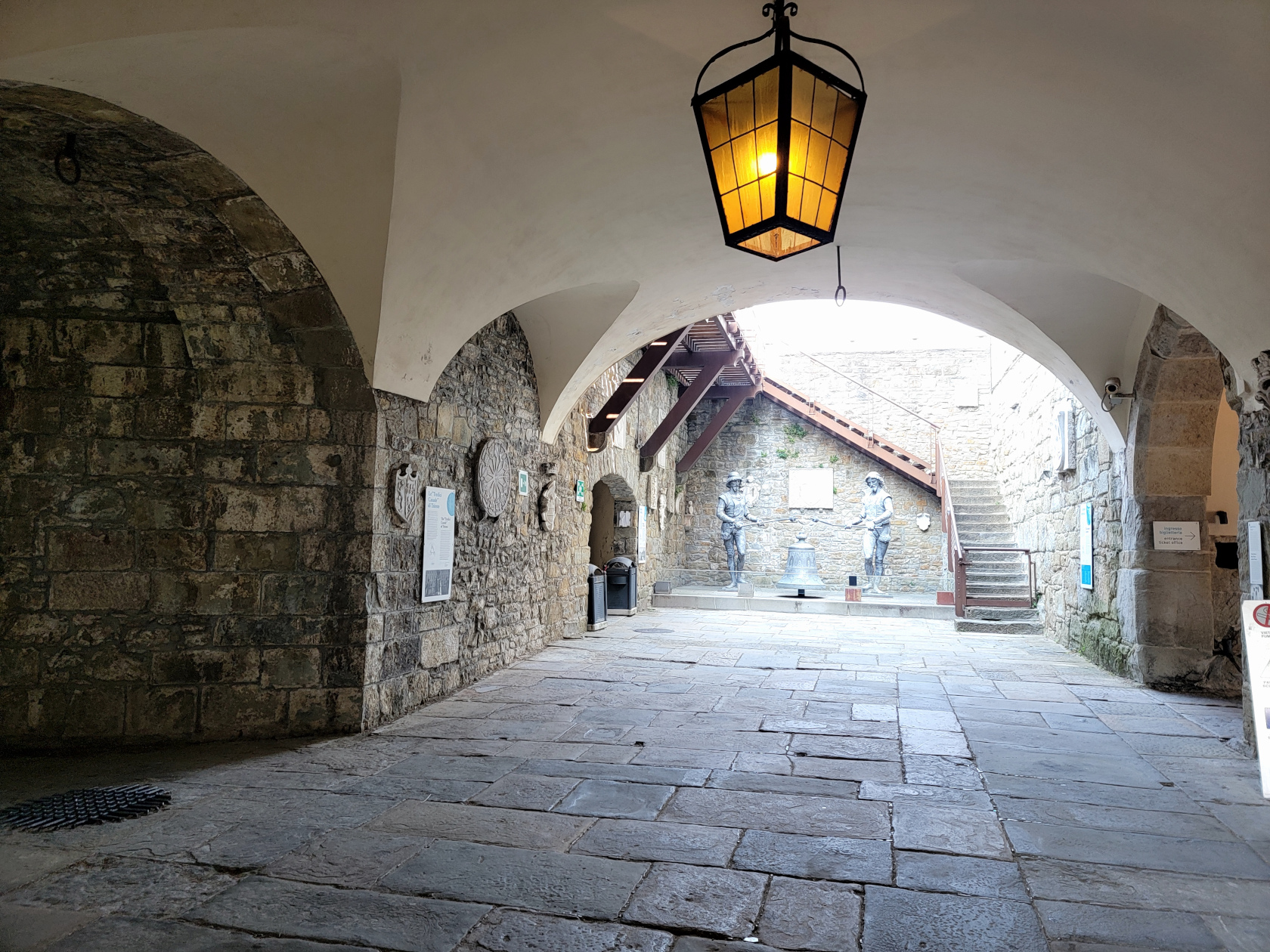
On this impressive hill and a short walk away from the Roman Propylaea and Cathedral also stands a castle, which was built on top of ancient remains of older castles.
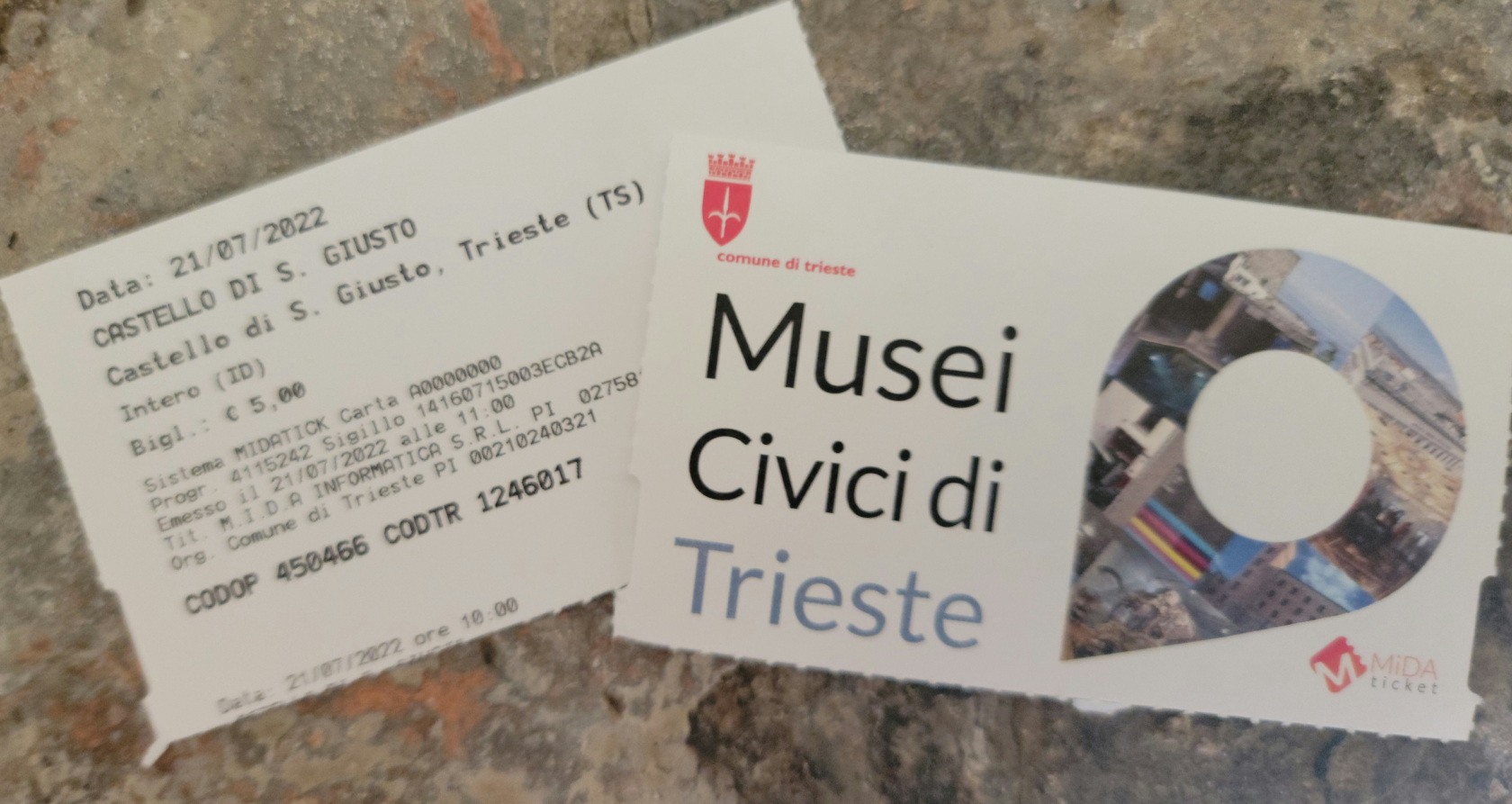
Trieste – Castle di San Giusto – Tickets for Two
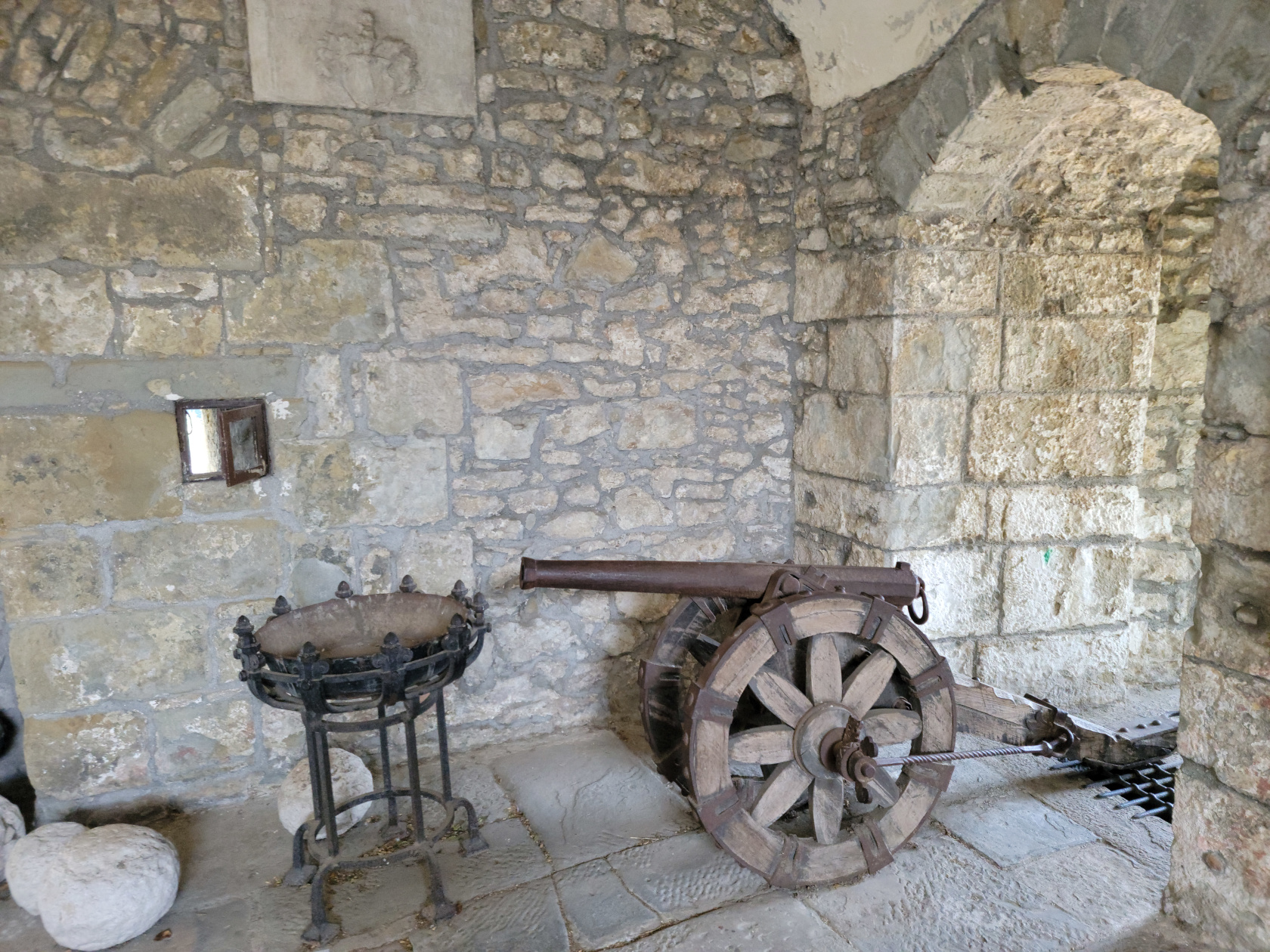
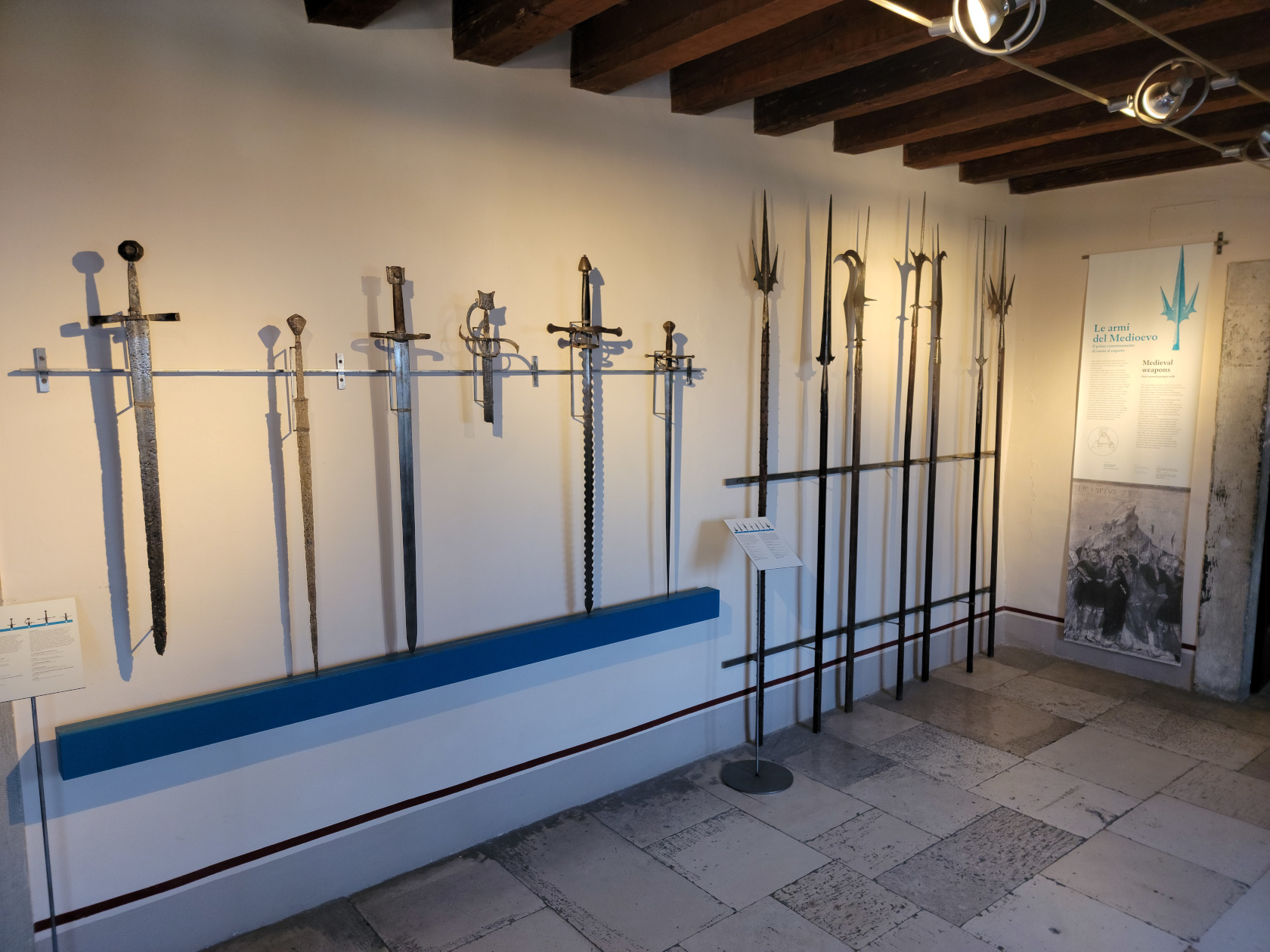
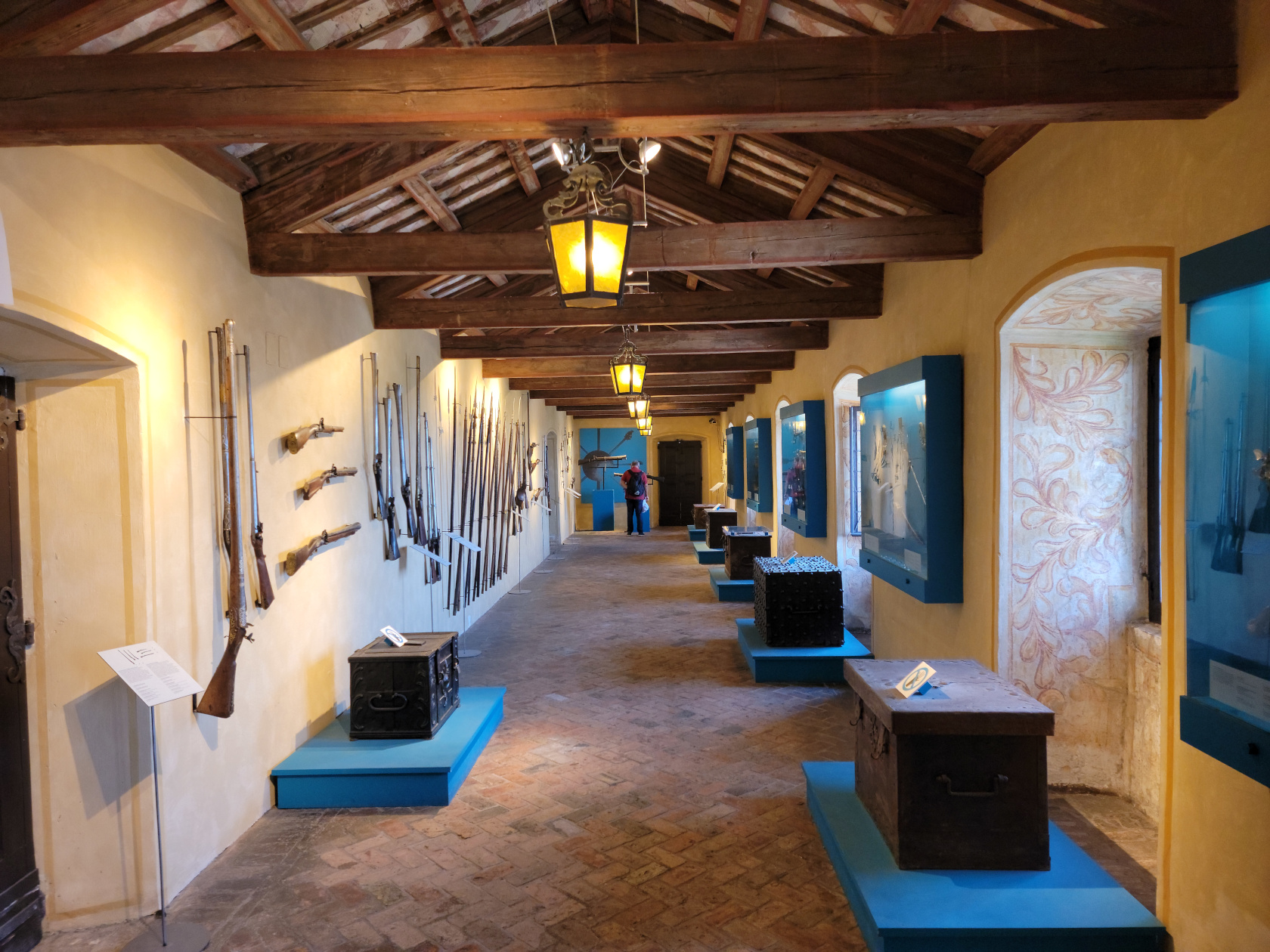
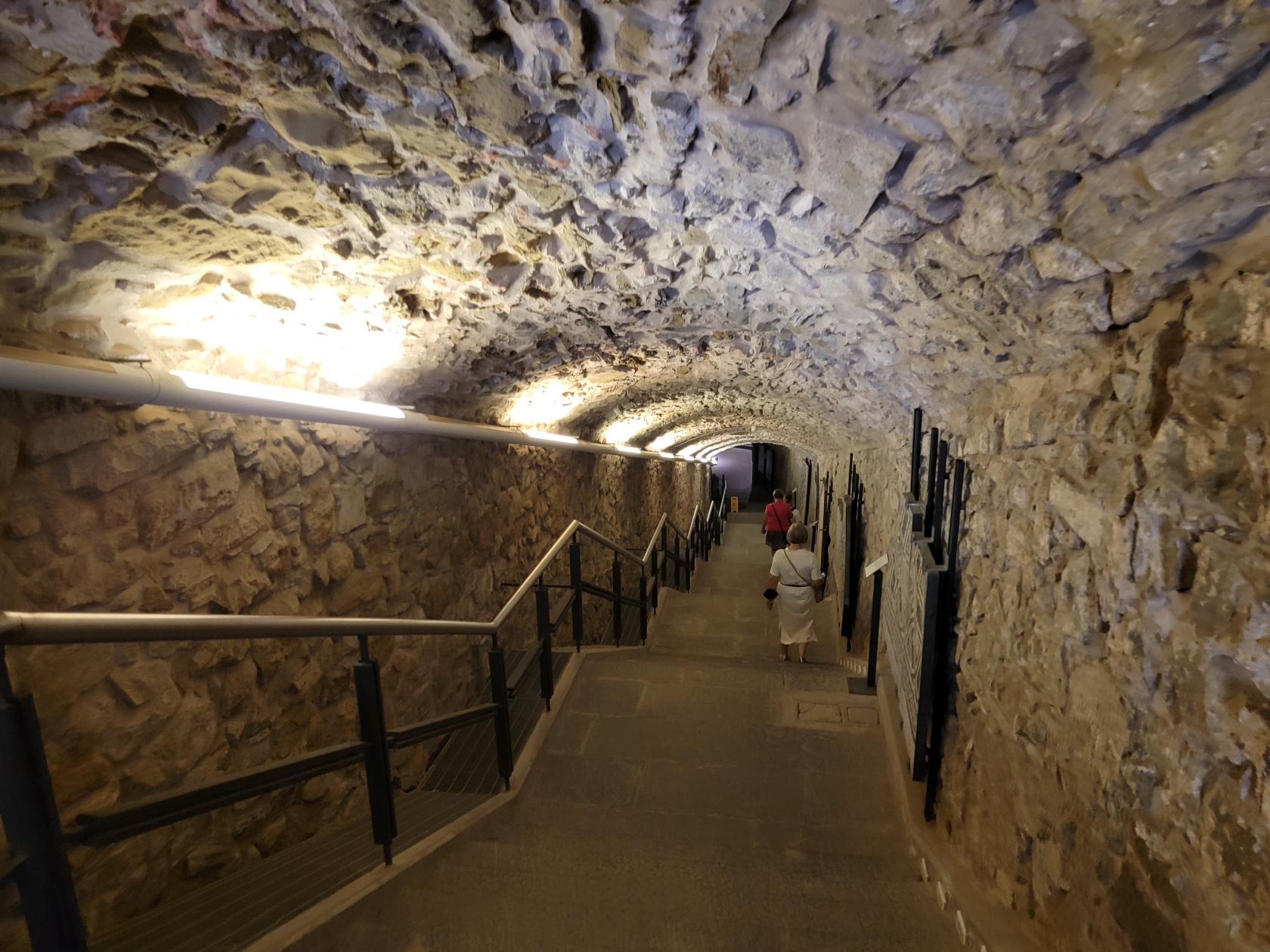
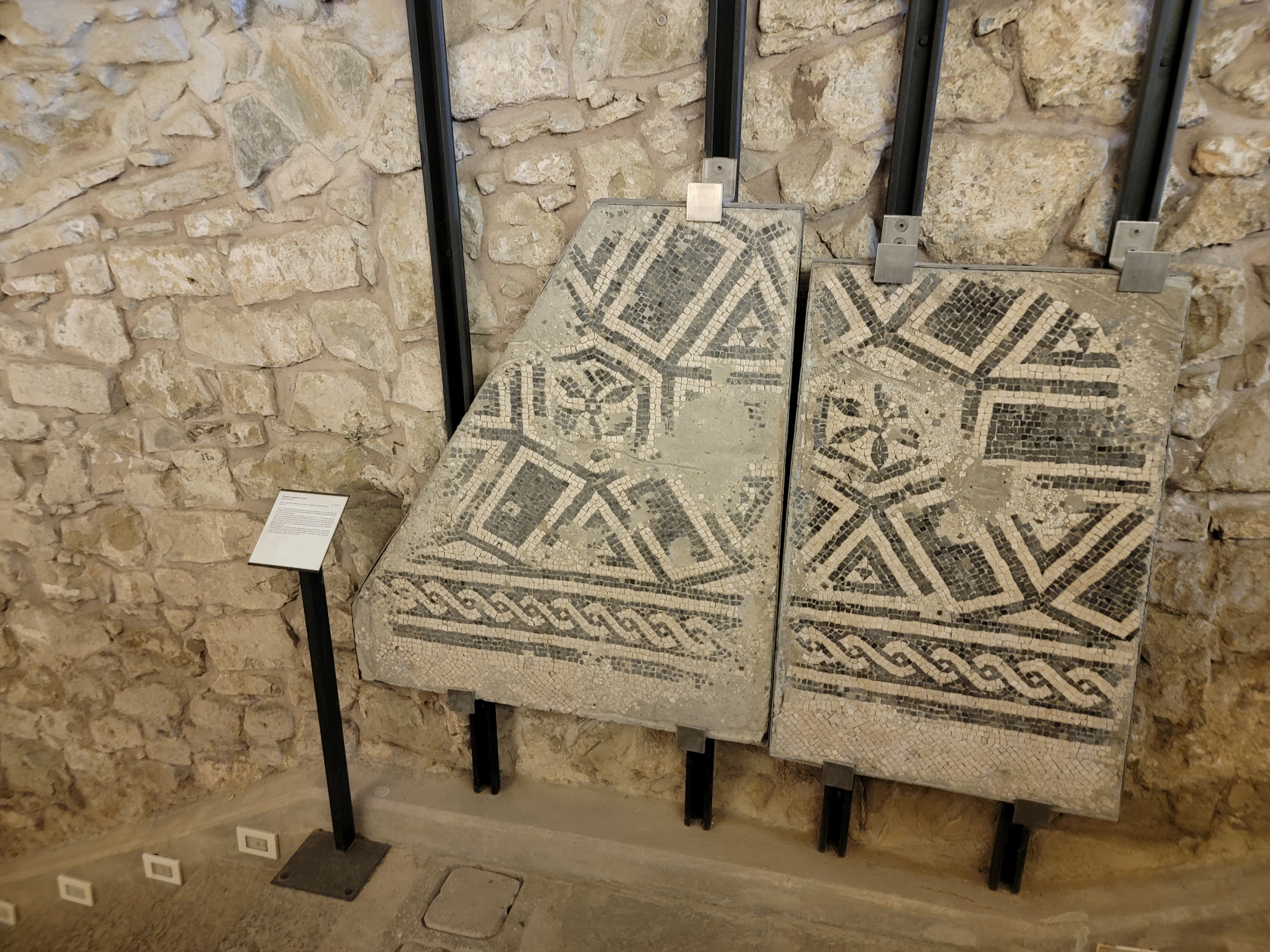
It has both an impressive armory museum and a Lapidary, which contains a myriad of ancient mosaic tiles and other artifacts.
Trieste – Castle di San Giusto
Trieste – Castle di San Giusto
Trieste – Castle di San Giusto – Entrance
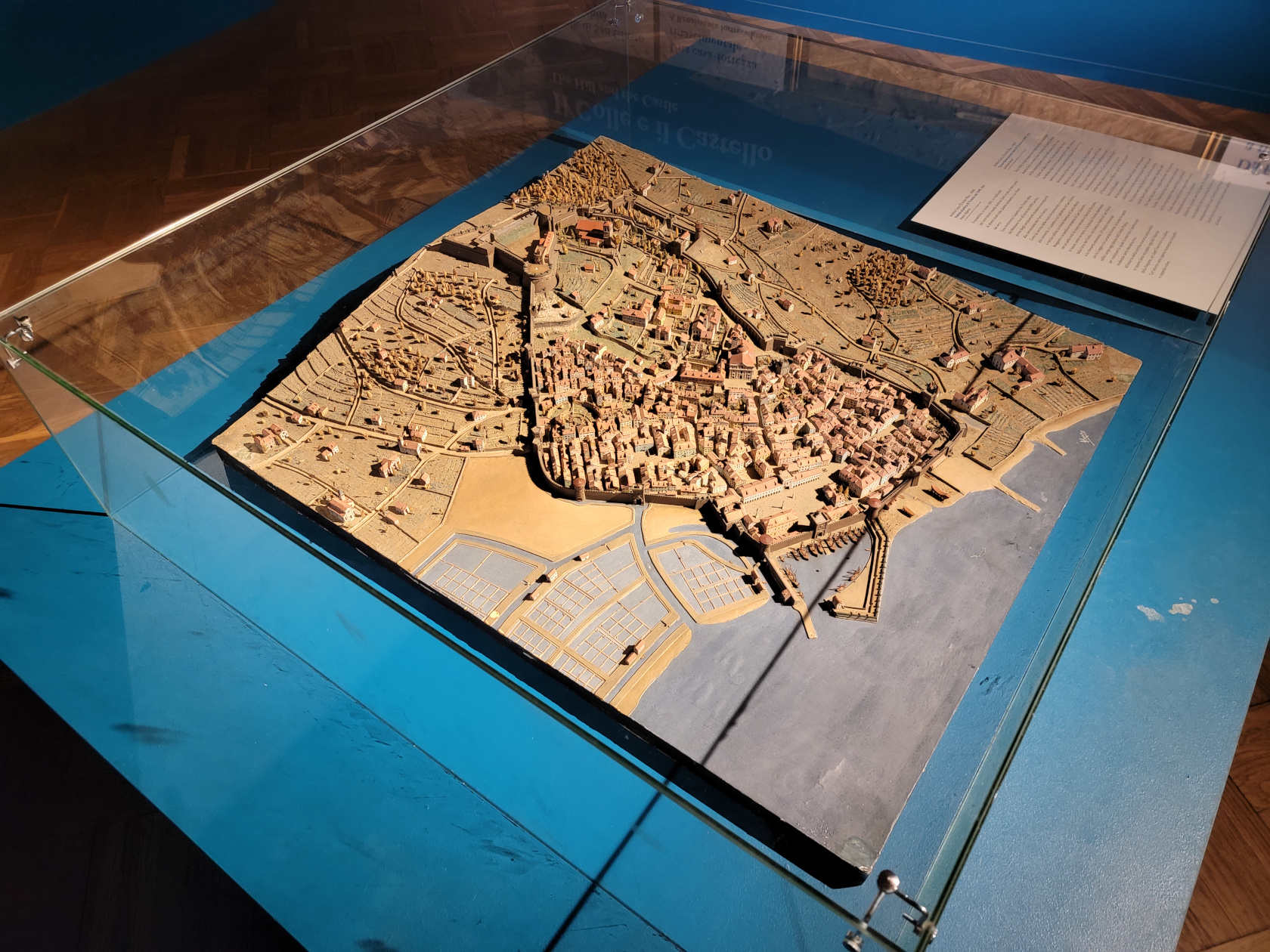
Trieste – Castle di San Giusto – Map of Trieste
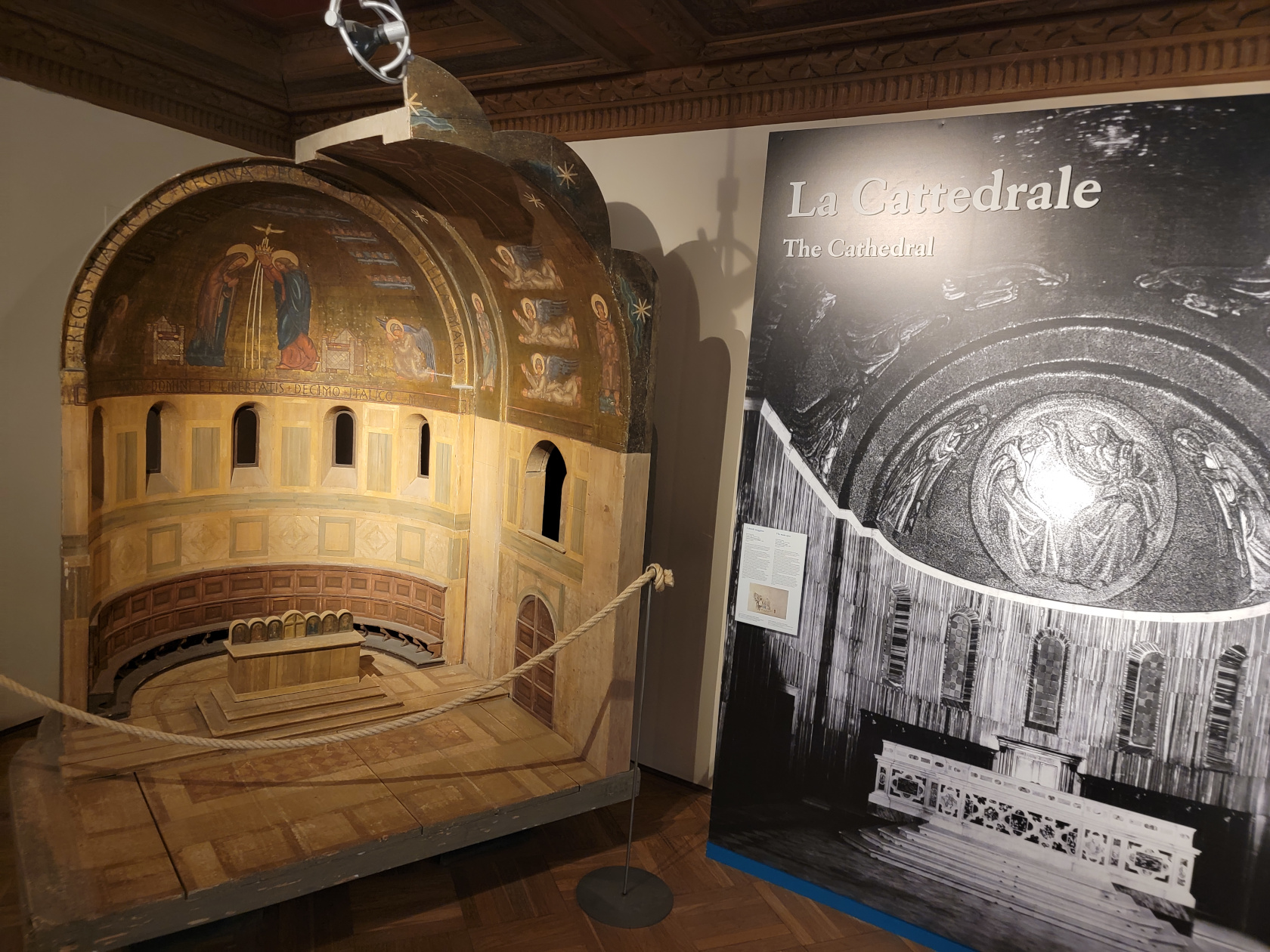
Trieste – Castle di San Giusto – The Cathedrale
Trieste – Castle di San Giusto – The Armory
Trieste – Castle di San Giusto – The Armory
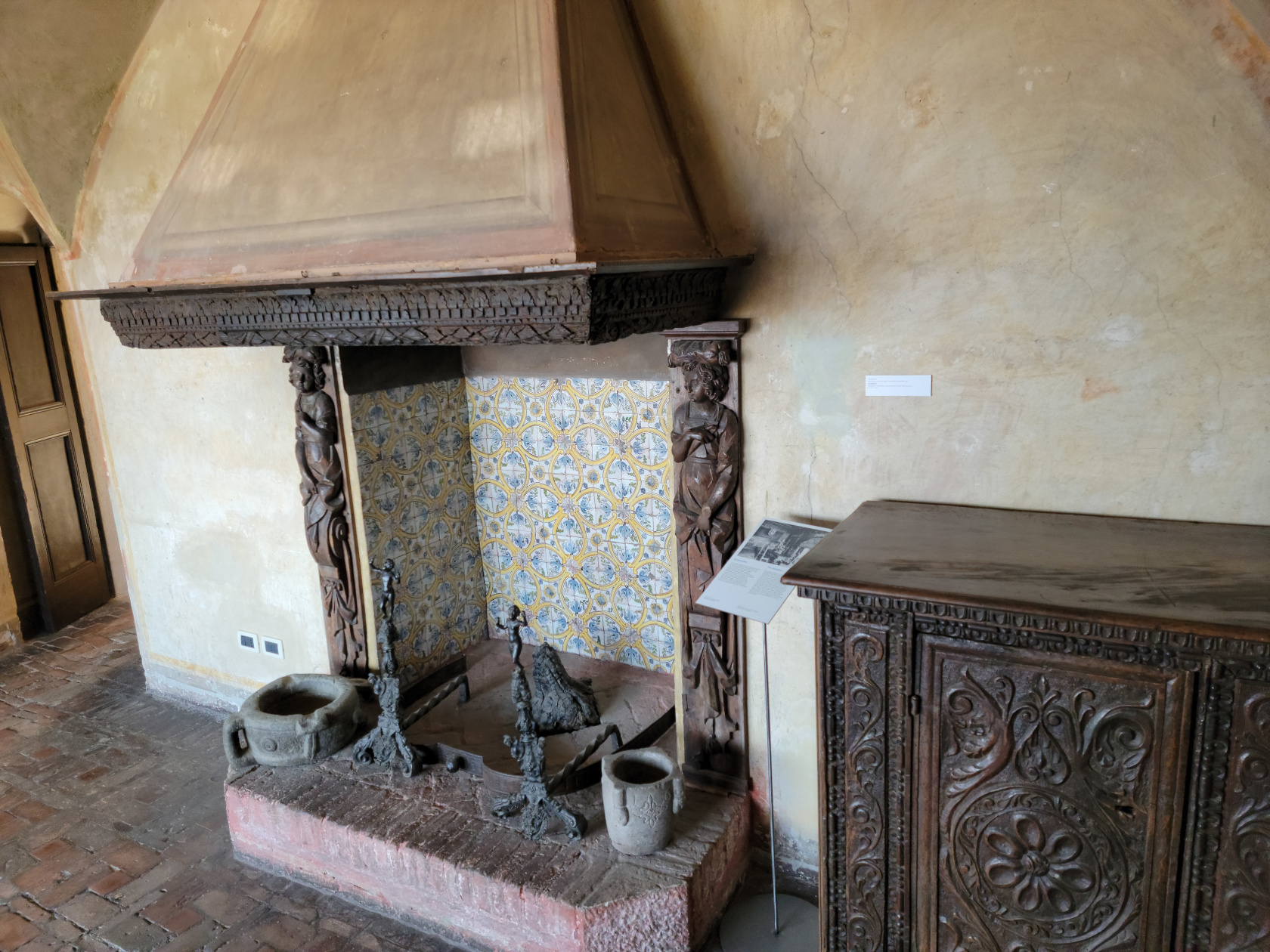
Trieste – Castle di San Giusto – Fireplace
Trieste – Castle di San Giusto – Elaborate Doorway
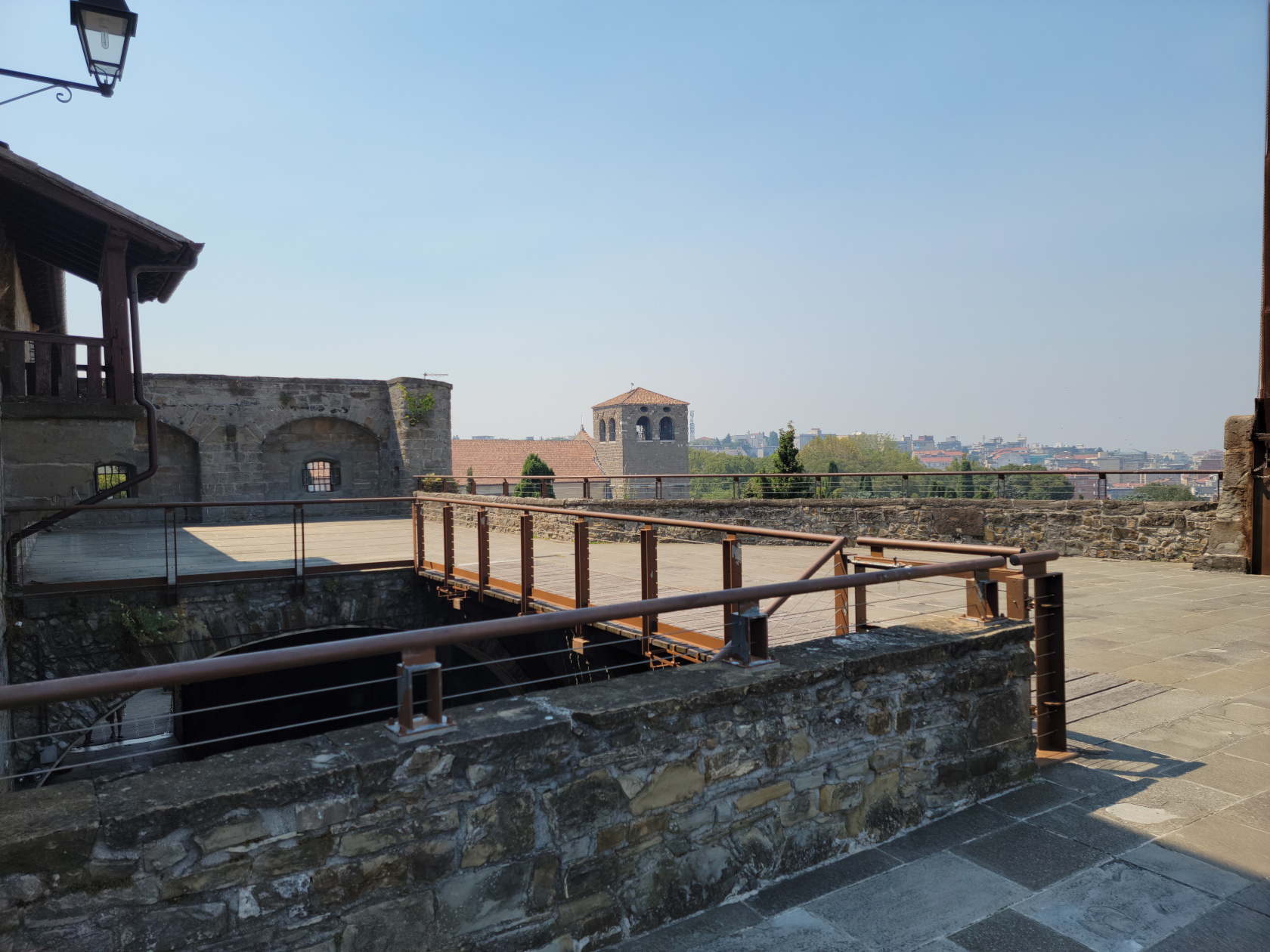
Trieste – Castle di San Giusto – Ramparts
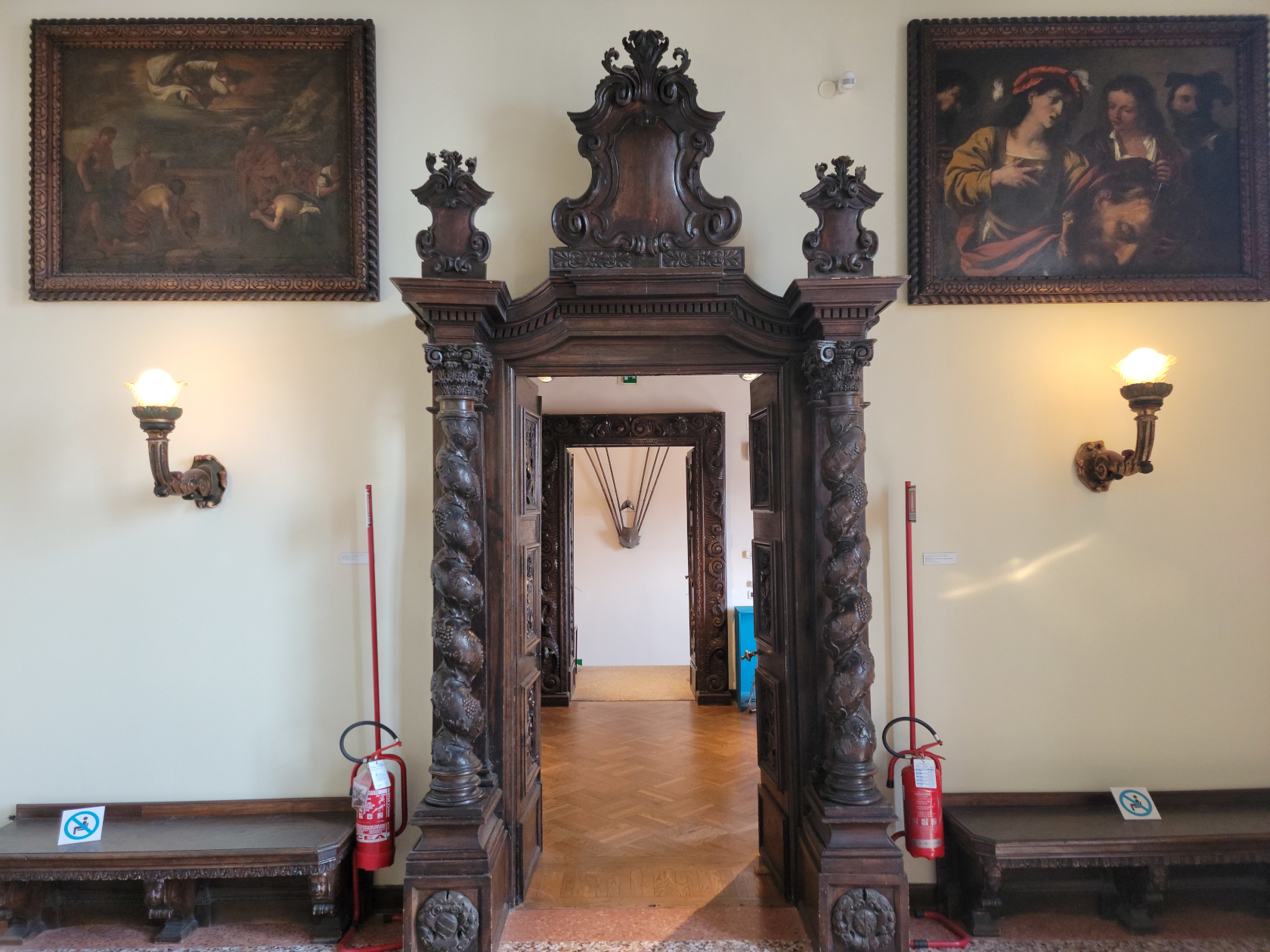
Trieste – Castle di San Giusto – Lapidary
Trieste – Castle di San Giusto – Lapidary – Mosaics
Trieste – Castle di San Giusto – Lapidary – Statues
Trieste – Castle di San Giusto – Lapidary – Statues and Reliefs
Trieste – Castle di San Giusto – Lapidary – Lintels
Trieste – Castle di San Giusto – Lapidary – Mosaics
Trieste Grand Canal
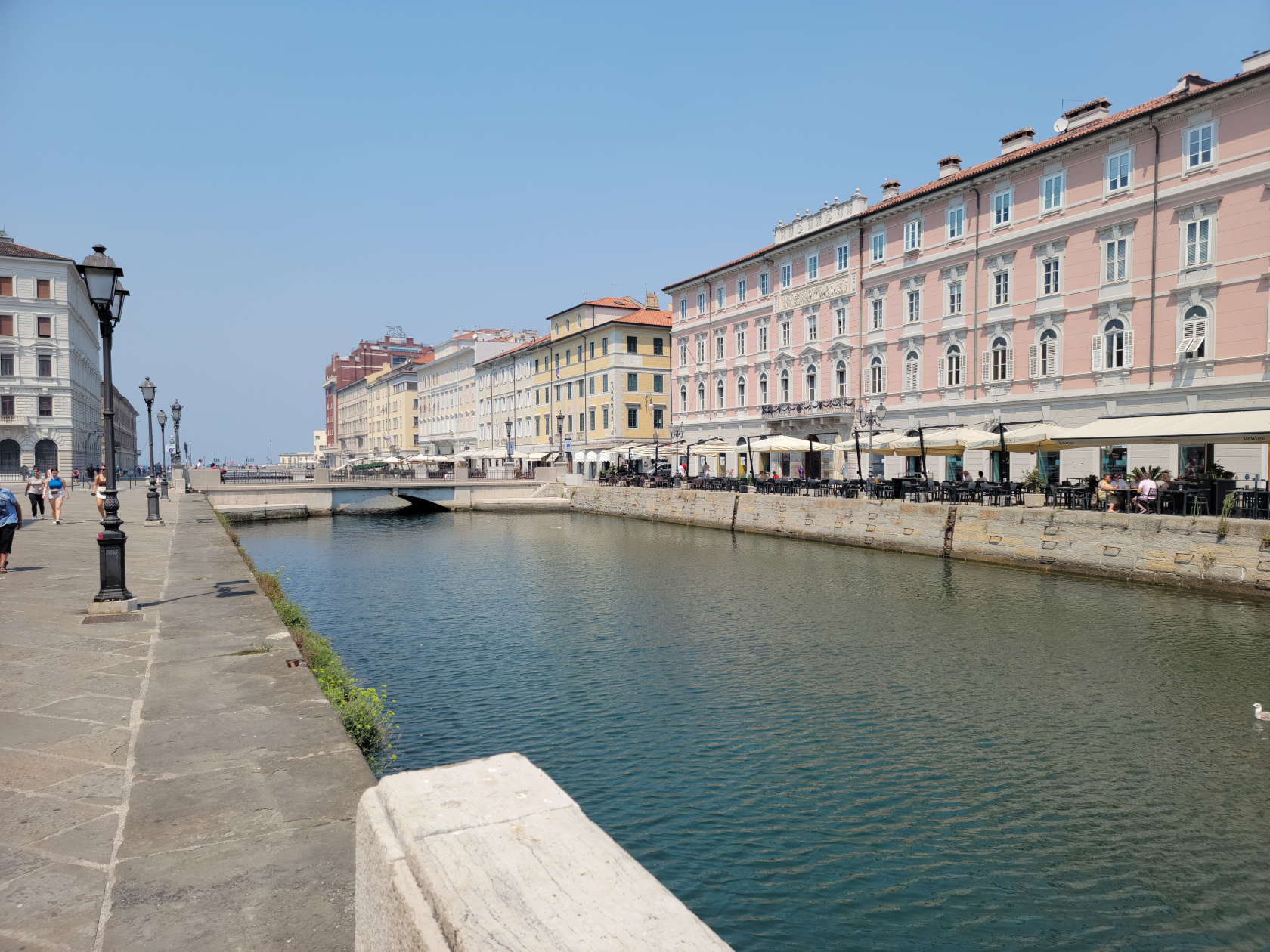
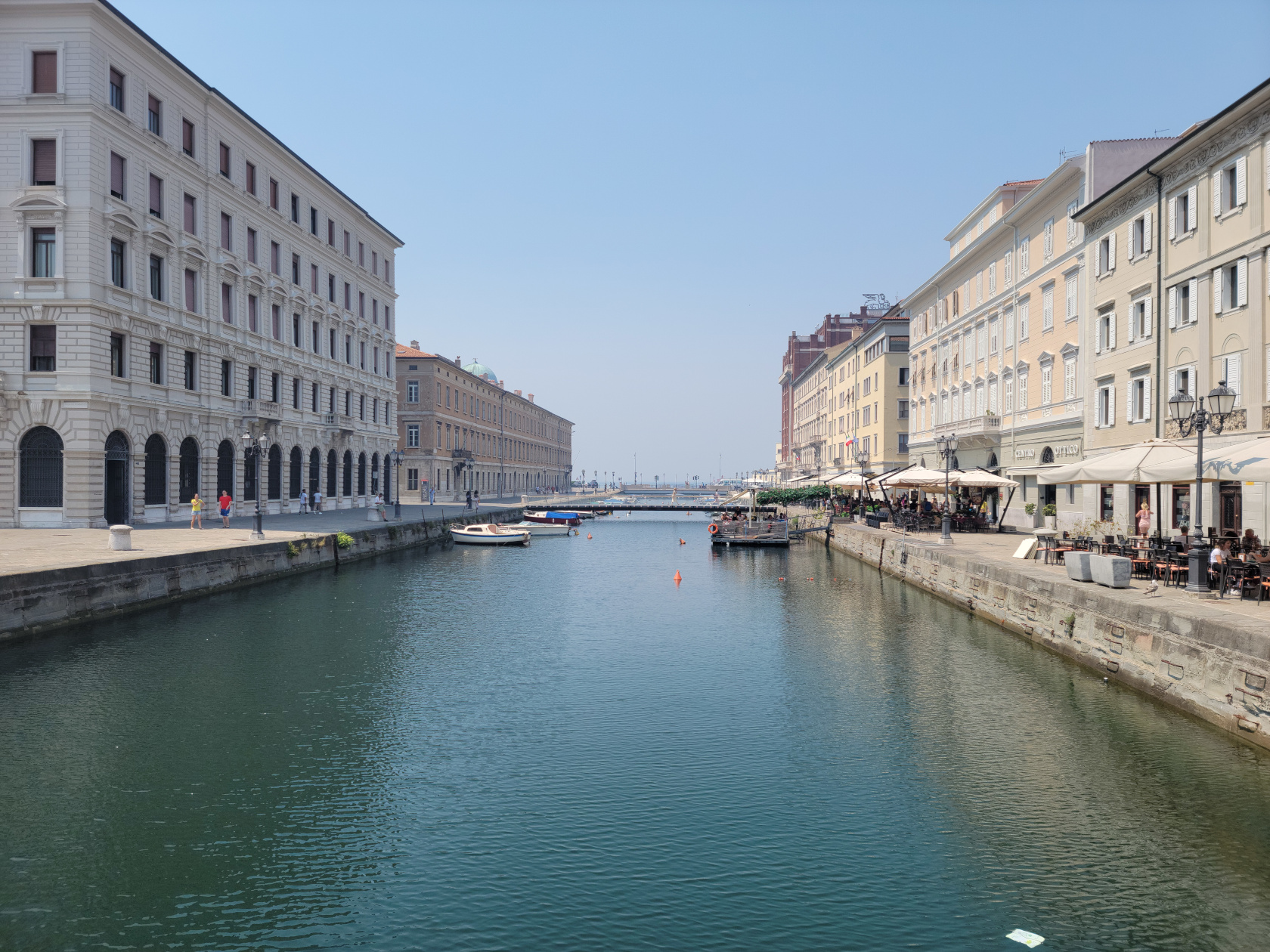
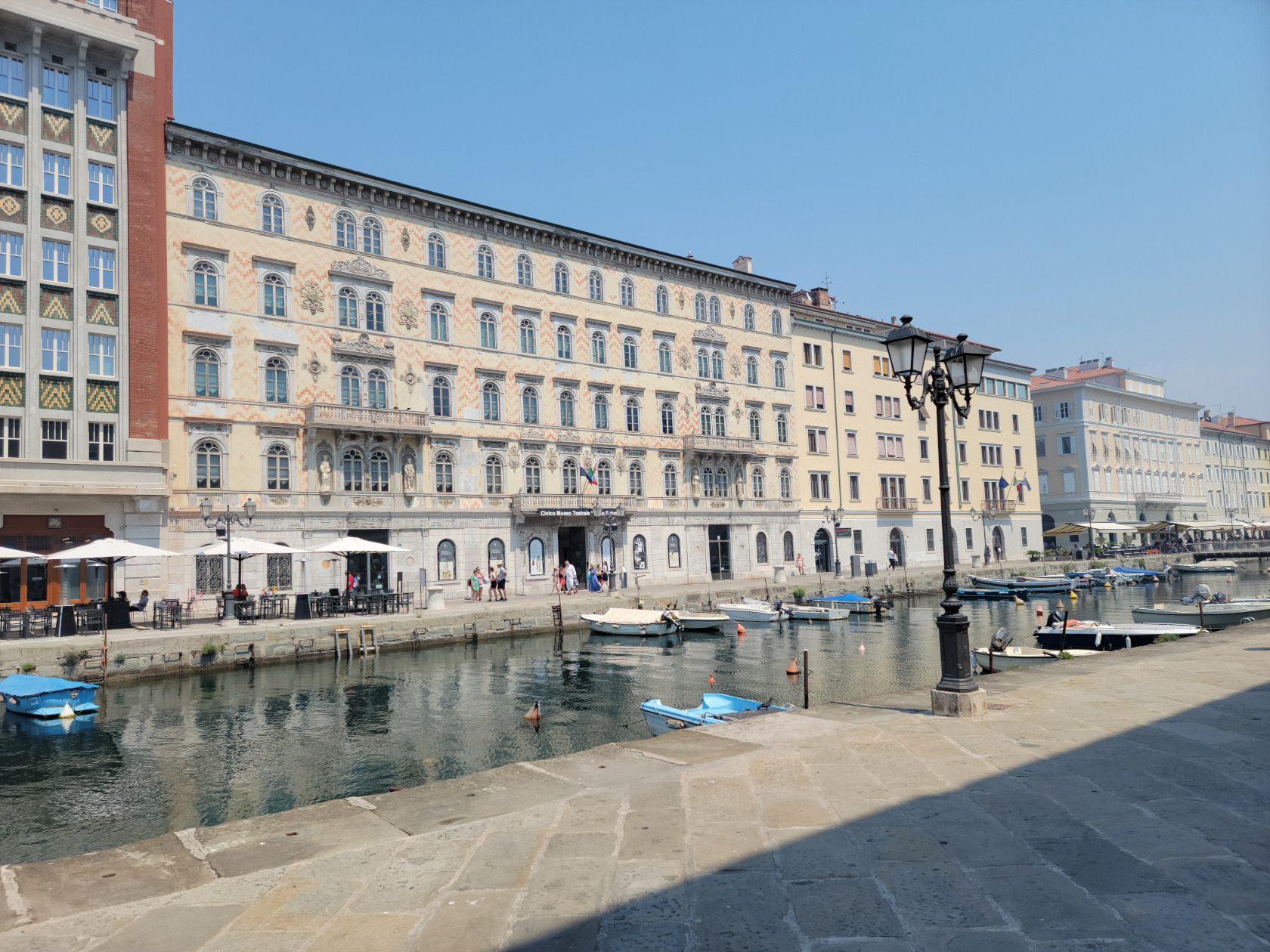
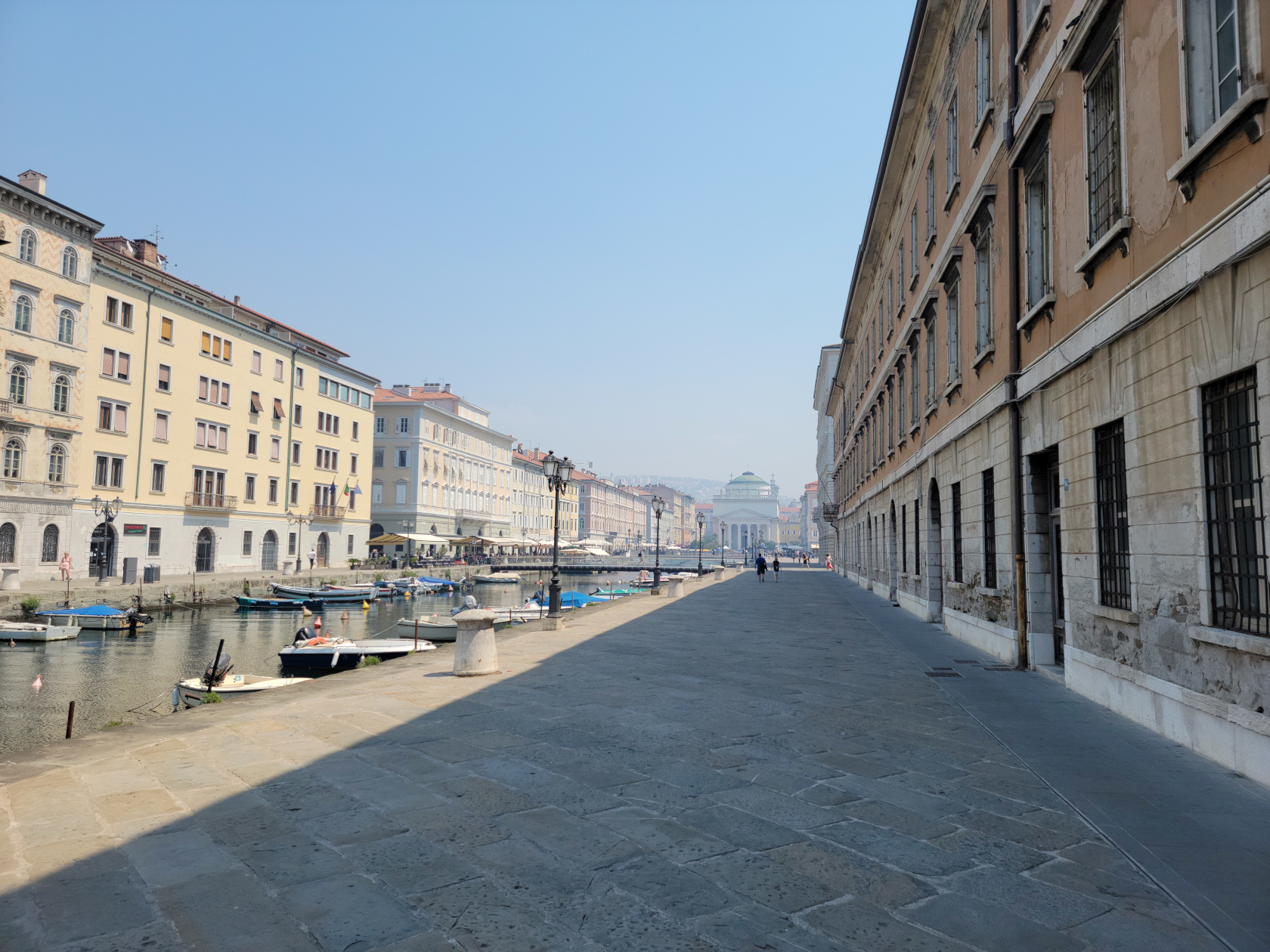
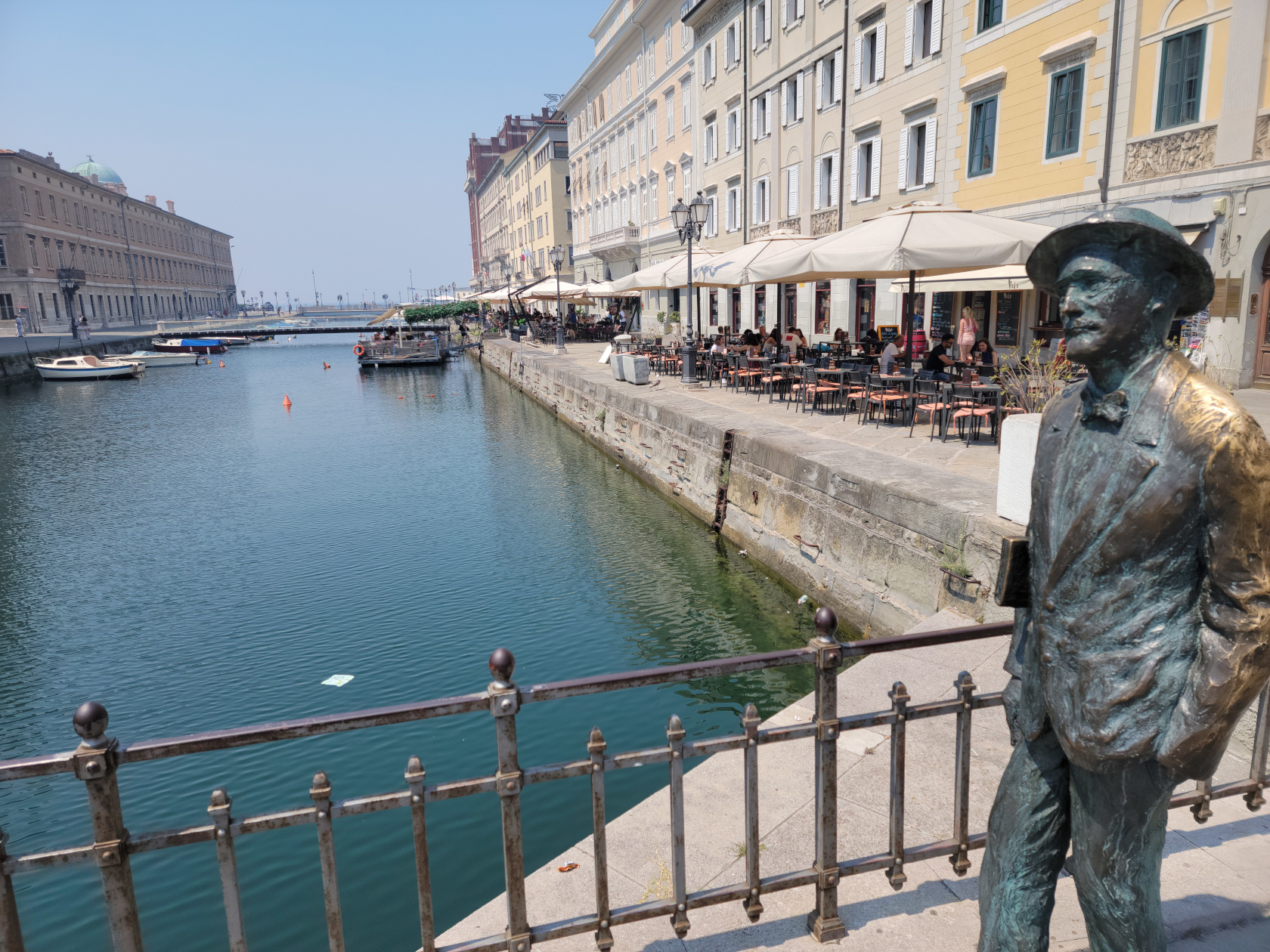
Being a port city, there are several things to see by the water, the Grand Canal is probably the first thing you will notice. It is actually a very nice place to have lunch, since there are a number of restaurants and cafes along the via Vincenzo Bellini, or the street where the Grand Canal is located.
Trieste – The Grand Canal – Church of Sant’Antonio Nuovo
Trieste – The Grand Canal – Restaurants
Trieste – The Grand Canal – Looking toward the Sea
Trieste – The Grand Canal – Boats
Trieste – The Grand Canal
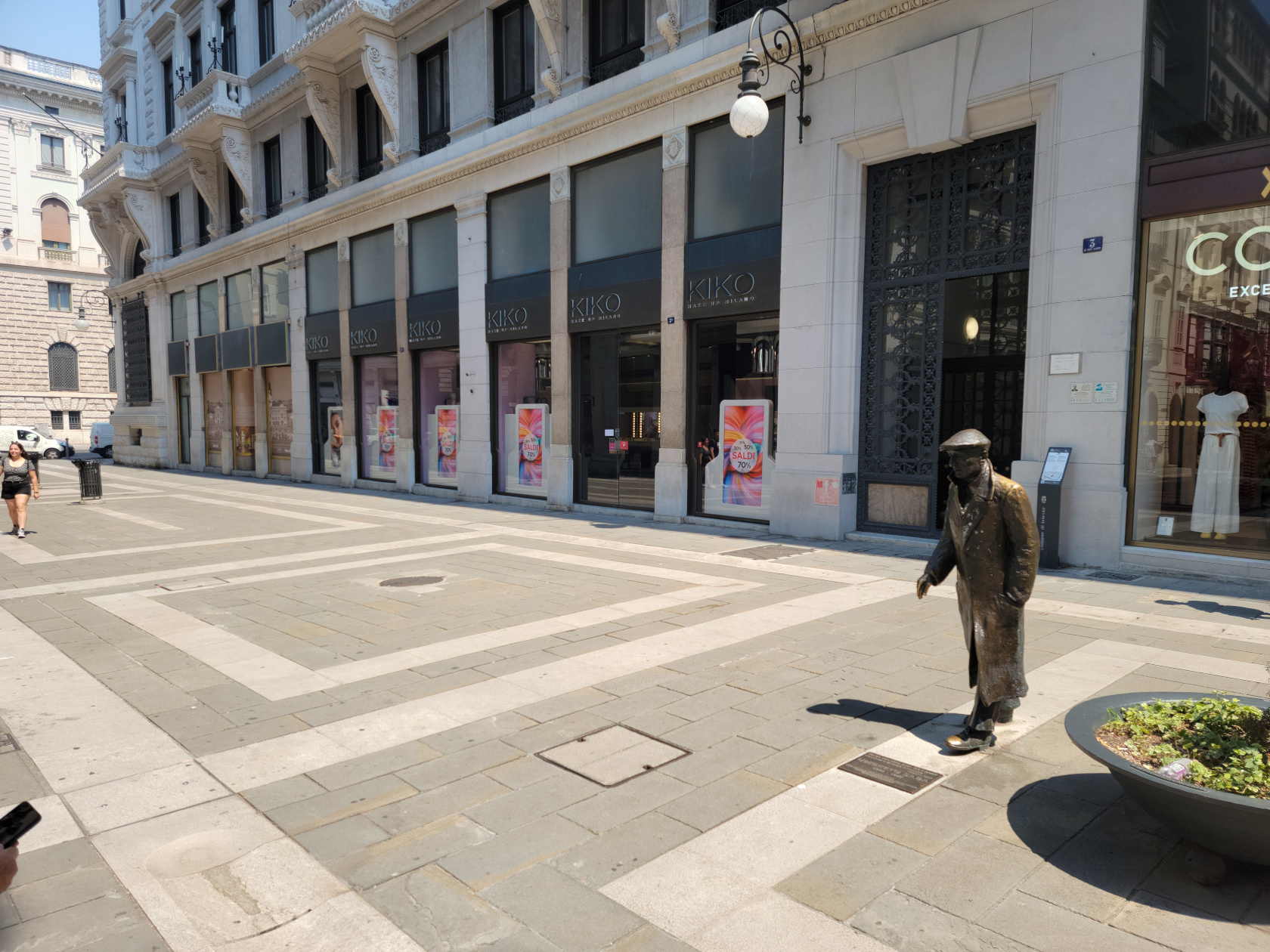
Bronze Statues
There are several bronzes throughout the city, most celebrating famous individuals who have lived here for a time. Here are a few.
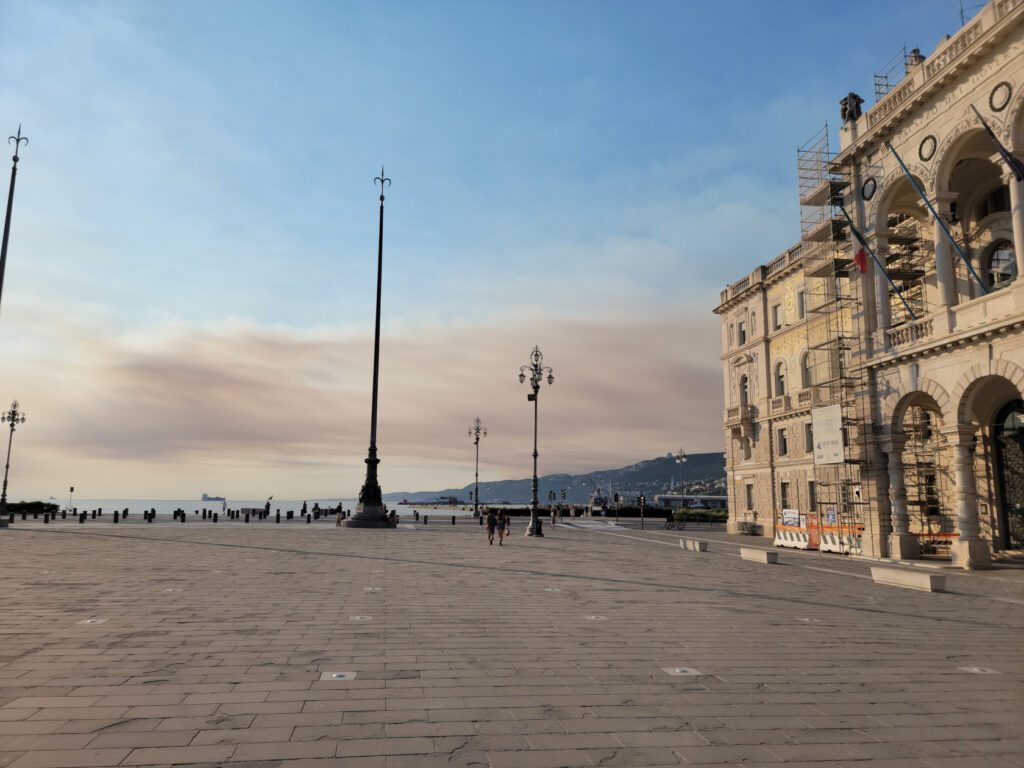
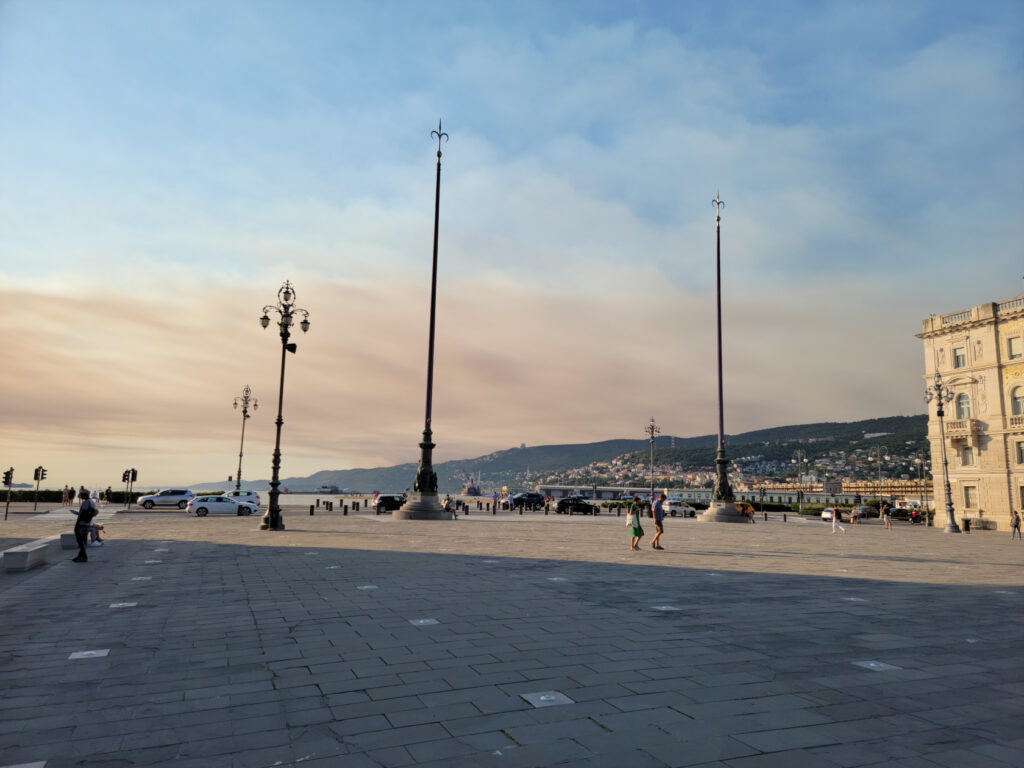
After months of planning, we finally arrived in Trieste after our seven hour train trip, which turned into a nine hour ordeal at the end. This was totally unforeseen because of the weather and a huge forest fire that started burning the day before in the Carso region. We were halted by Italian authorities in Monfalcone from using the train, which runs between Monfalcone and Trieste, due to the fire’s proximity to the train tracks. The E70 and the train line that runs along the coast here were closed out of an abundance of caution.
Trieste – Smoke From Carso Wildfire
Unity of Italy Square – Smoke From Carso Wildfire
We were all loaded onto buses and transported on local roads, all of which were backed up by re-routed traffic, extending our trips an extra hour. Only to be dropped off at the next available train station. We had assumed they were taking us all the way to Trieste by bus, but that was not in their calculus. Instead, we waited for the other buses to arrive at the next train station until the next train to Trieste left, which actually was only forty minutes later. So all-in-all, not as bad as some of the horror stories one hears about air travelers.
Trieste – Roman Veins
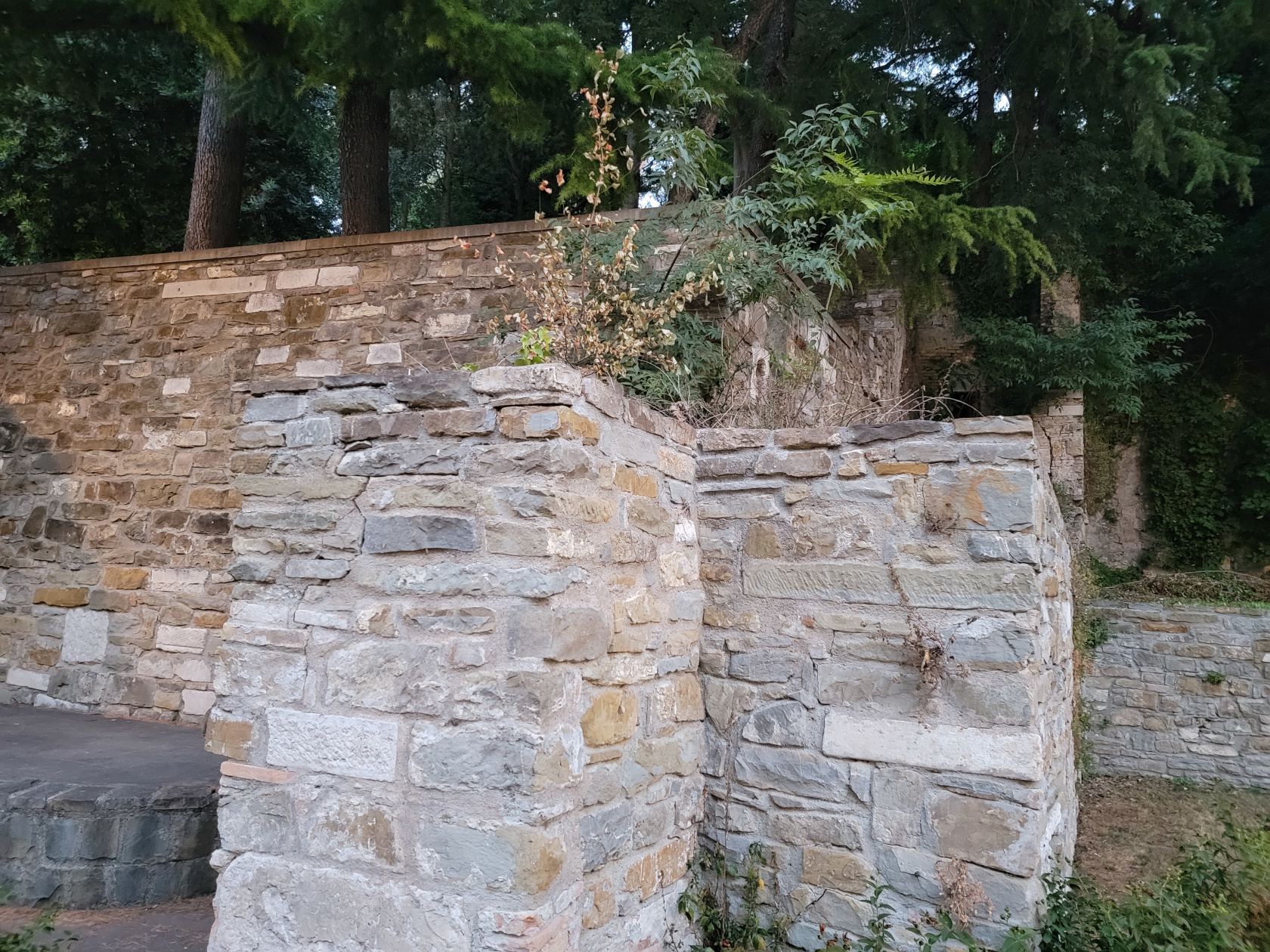
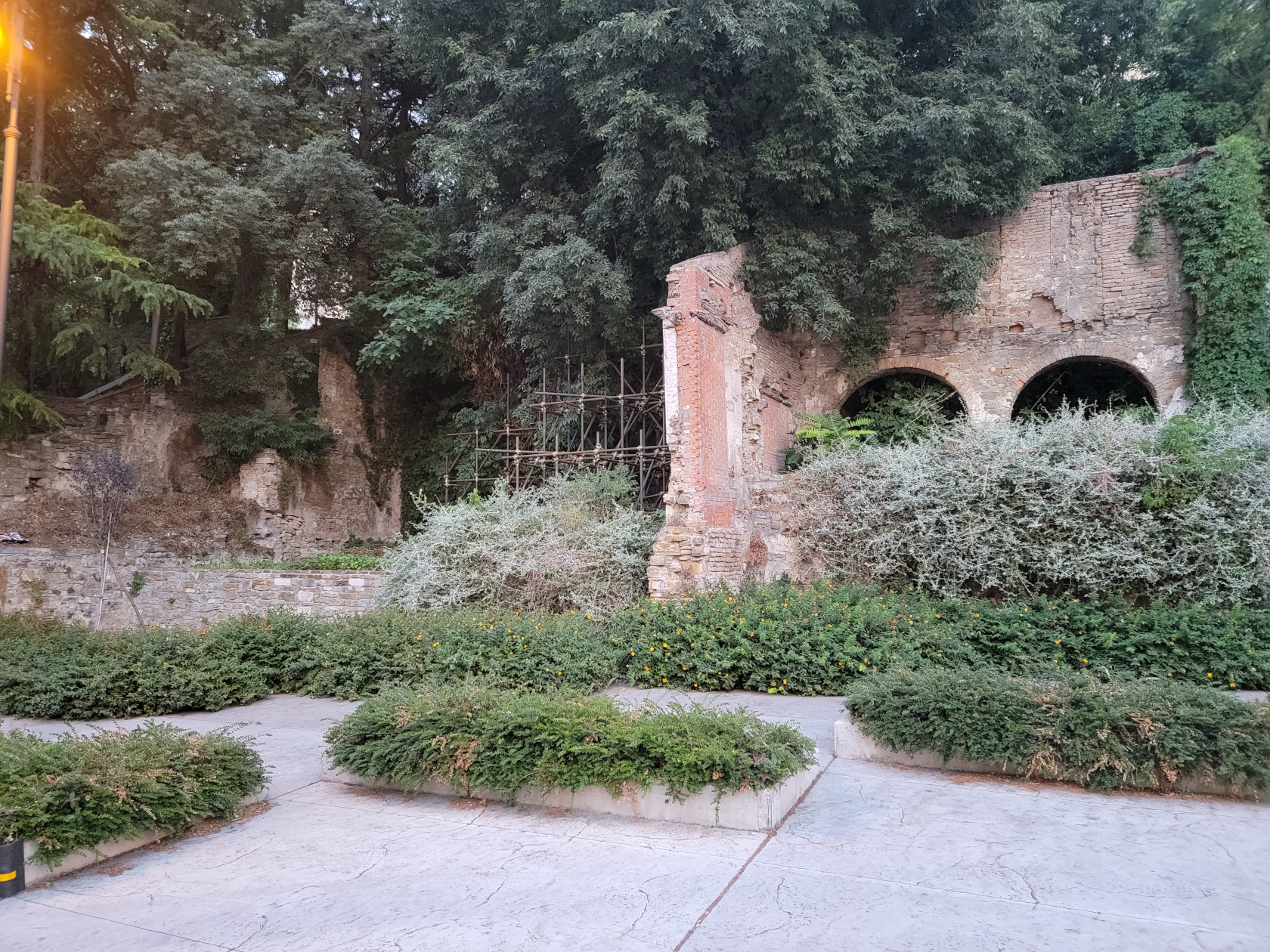
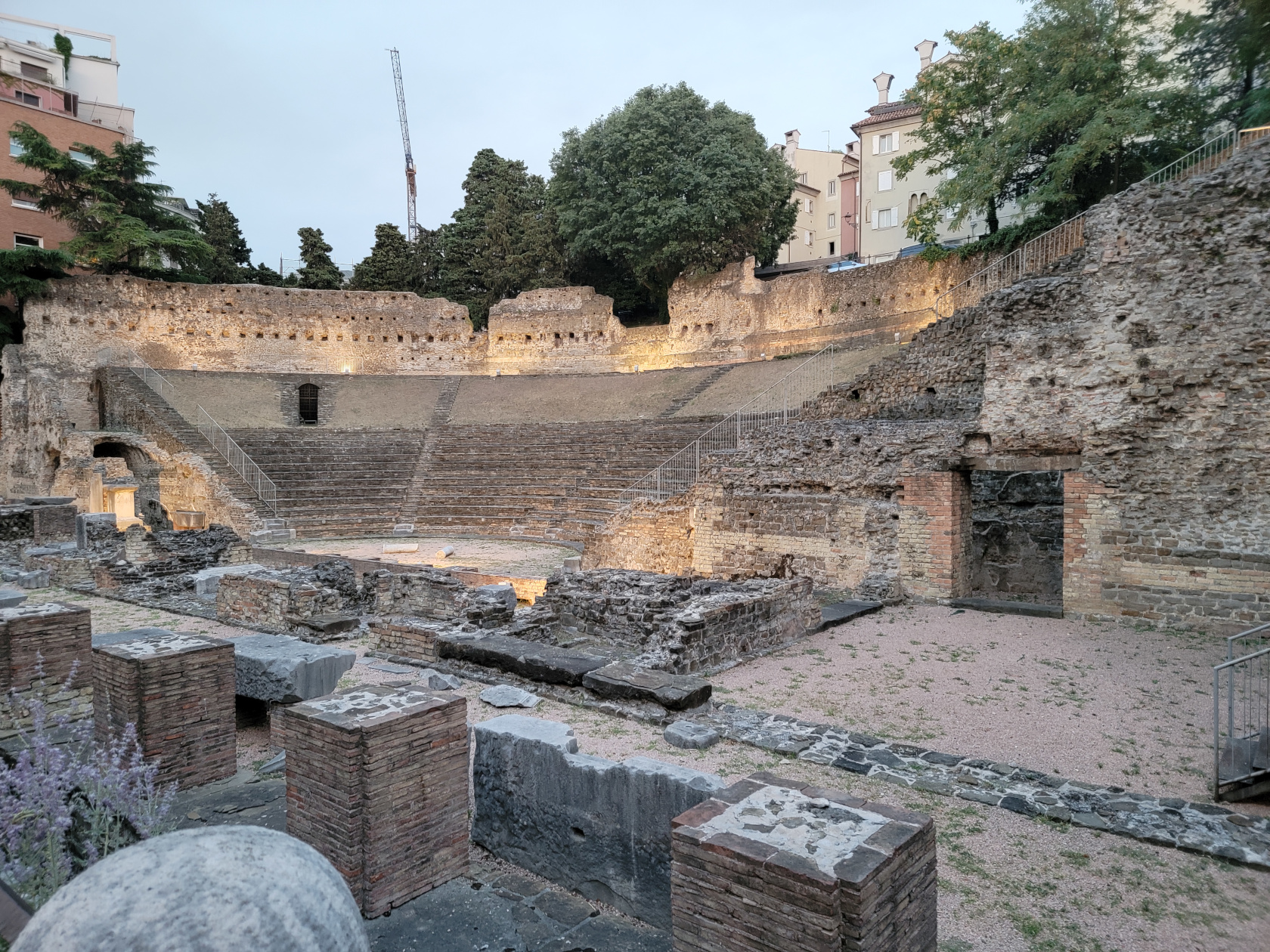
While walking the city, one can see that Trieste has some very deep cultural veins, when it comes to ancient Rome and the remains they left behind. From the Roman Theatre, to the aqueducts that brought water into the city, the Romans had a strong influence over the city.
Trieste – Roman Theatre
Trieste – Roman Theatre
Trieste – Roman Theatre
Trieste – The City
The city is very clean and pedestrian friendly. There are many open public spaces and a beautiful promenade along the waterway. Visitors will find it a very inviting and friendly place to walk and experience.
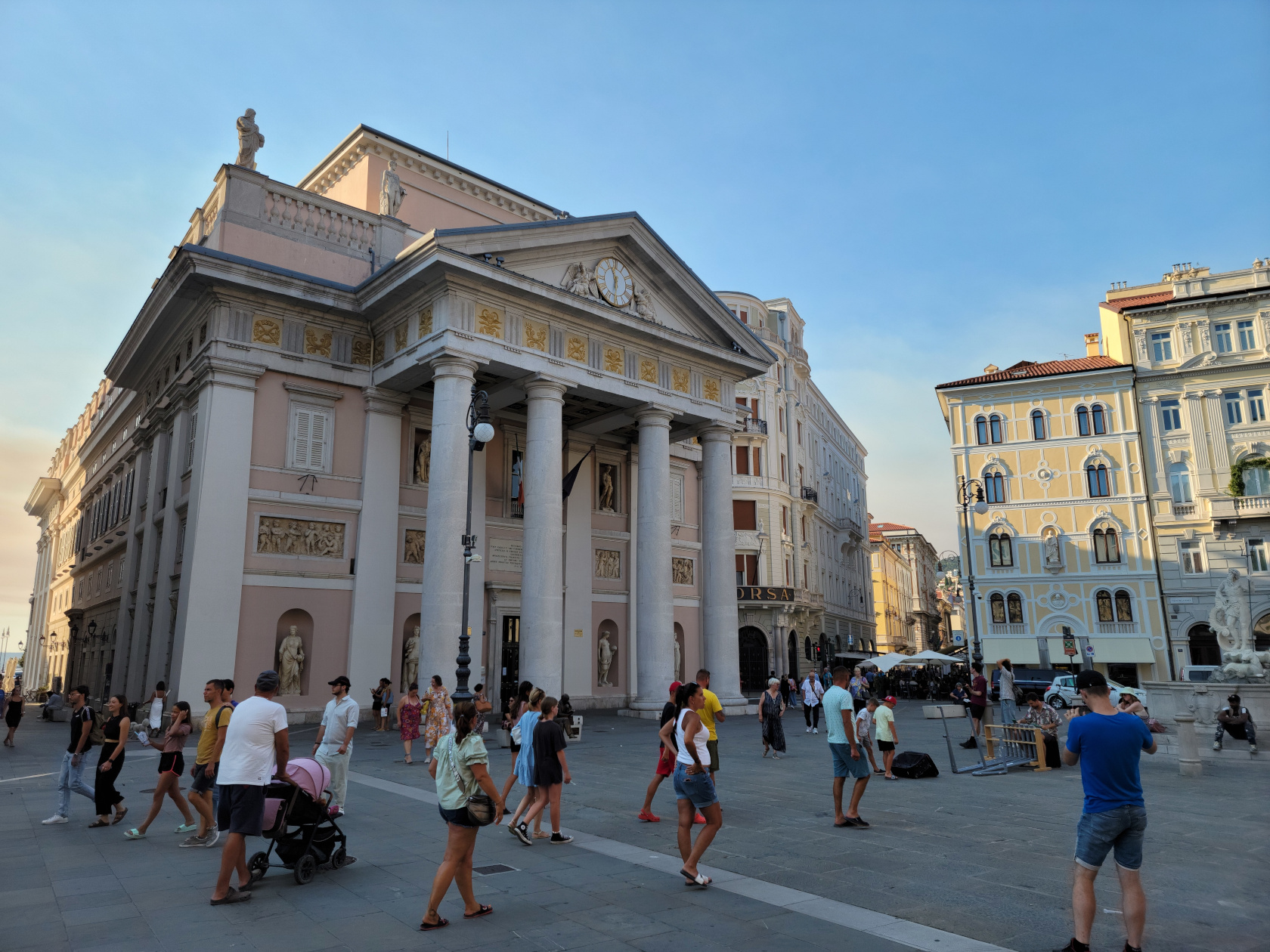
Piazza della Borsa
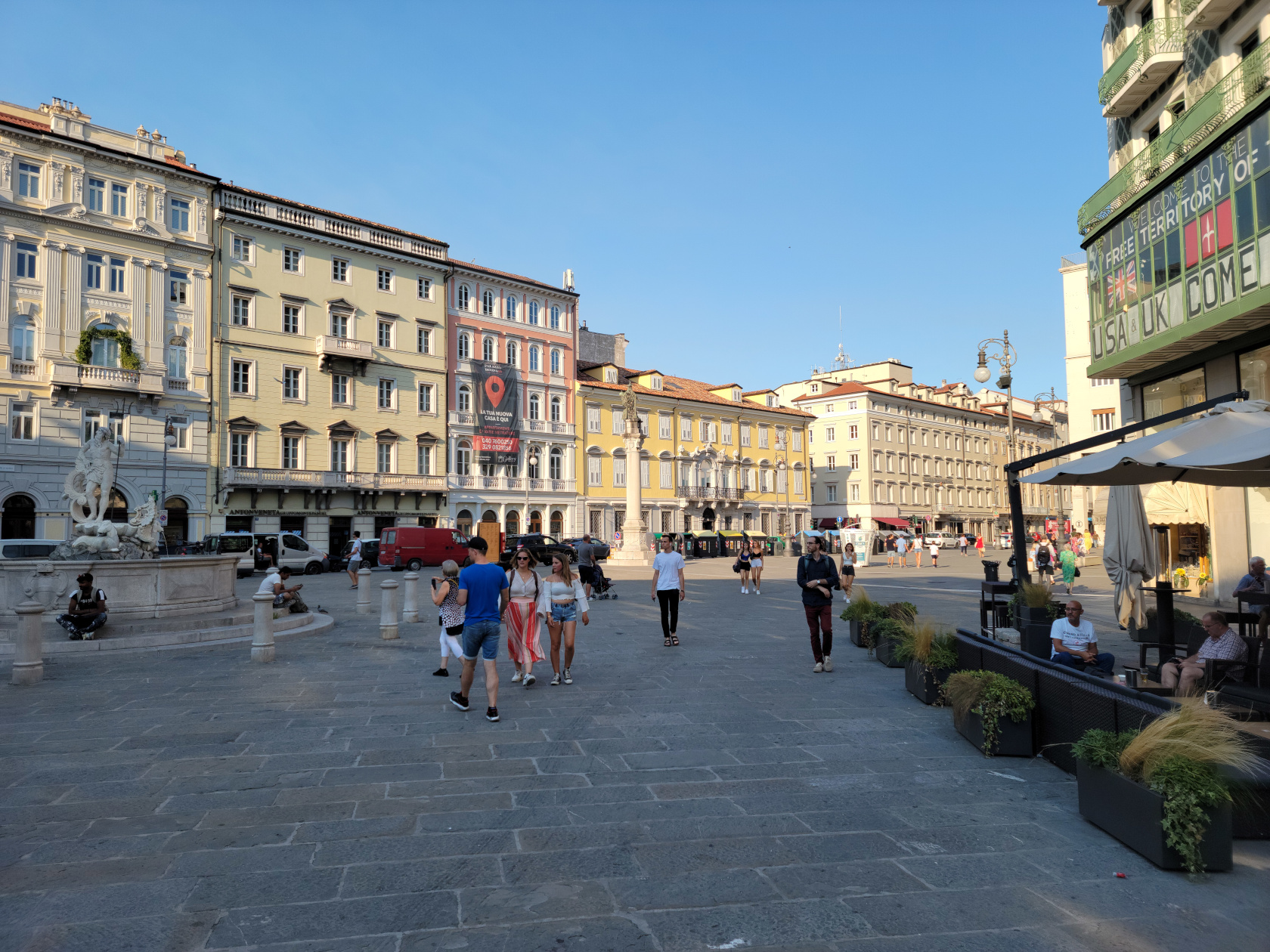
Piazza della Borsa – Neptune Fountain
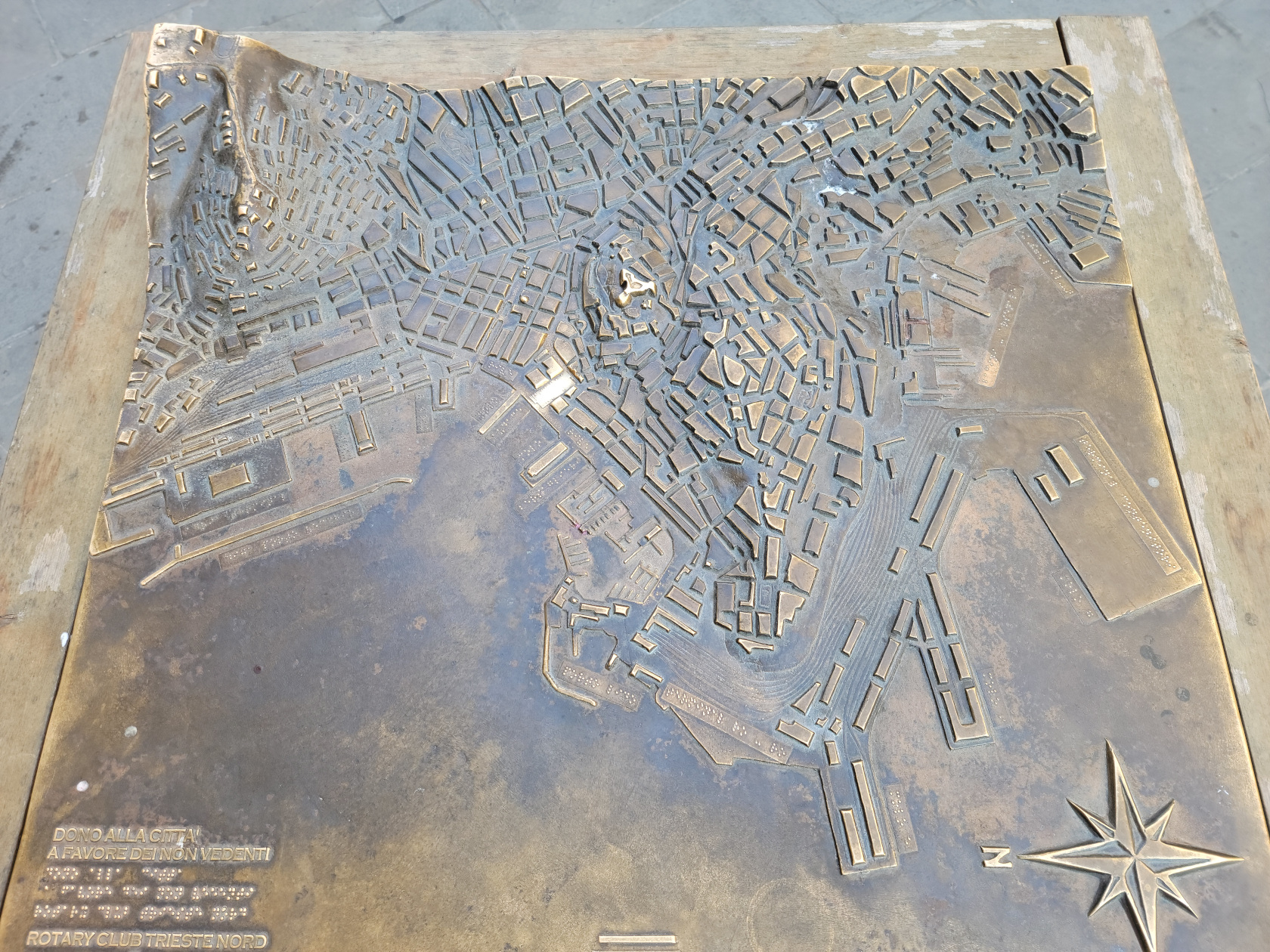
Bronz of Trieste City
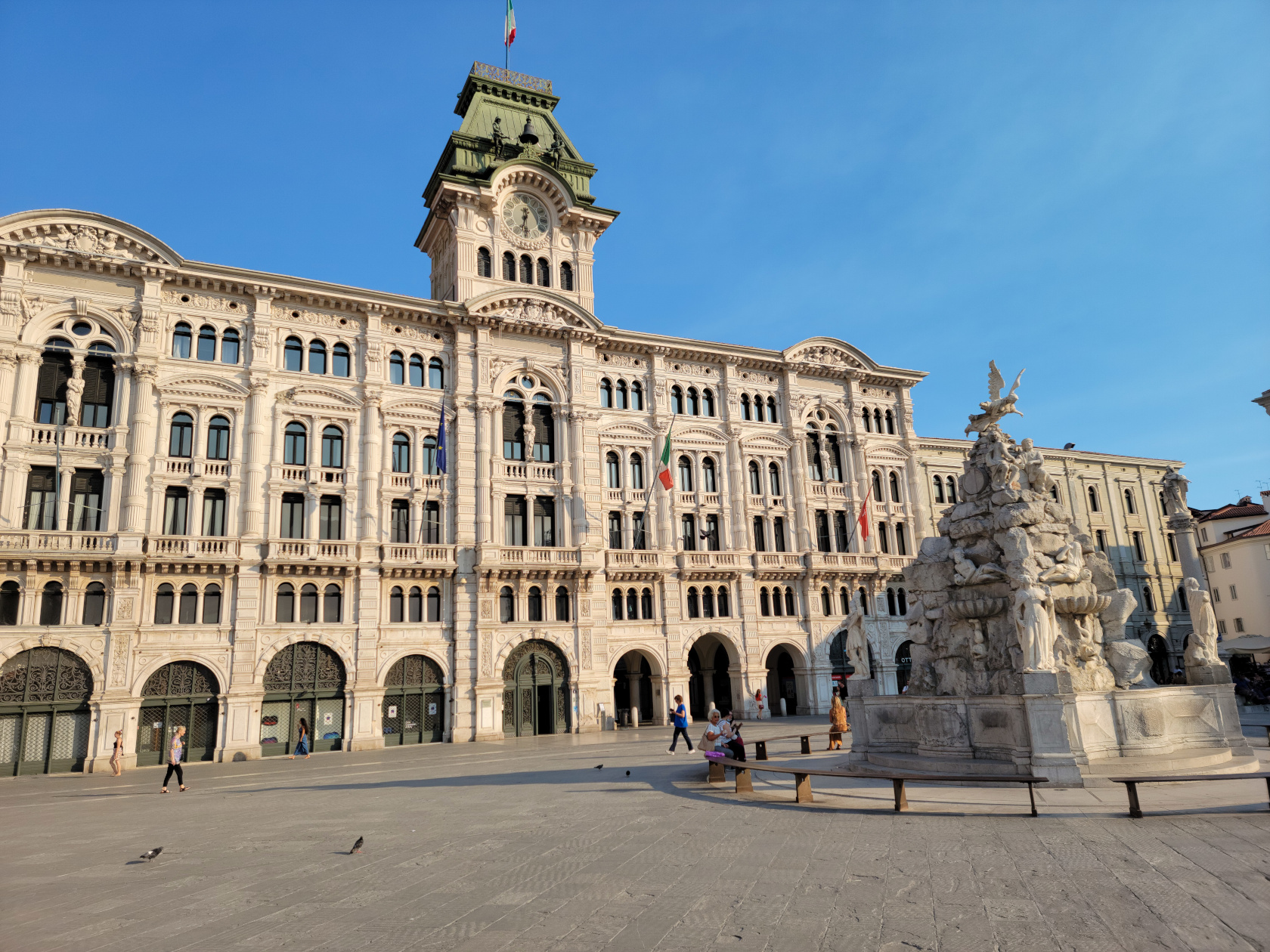
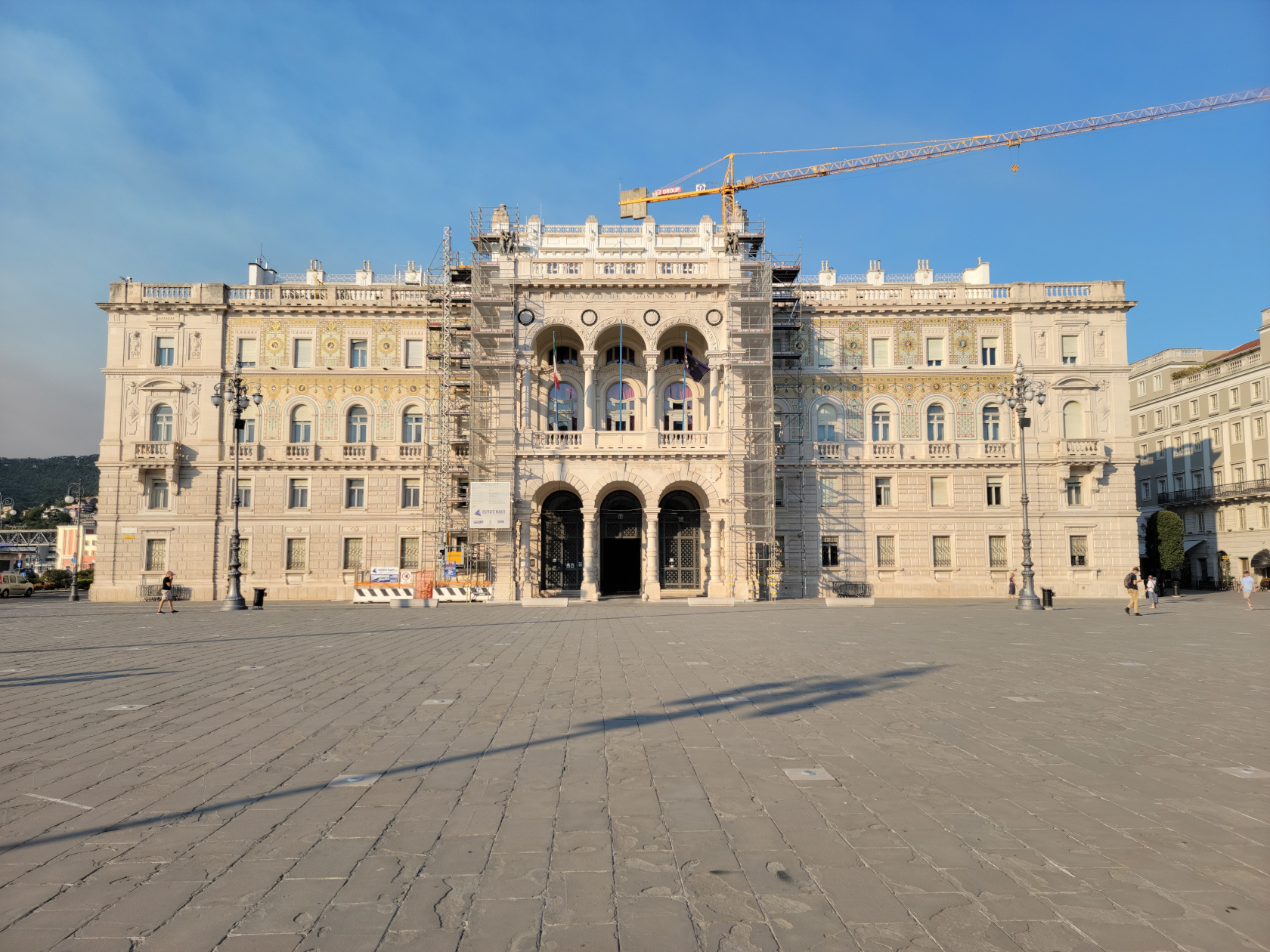
Unity of Italy Square
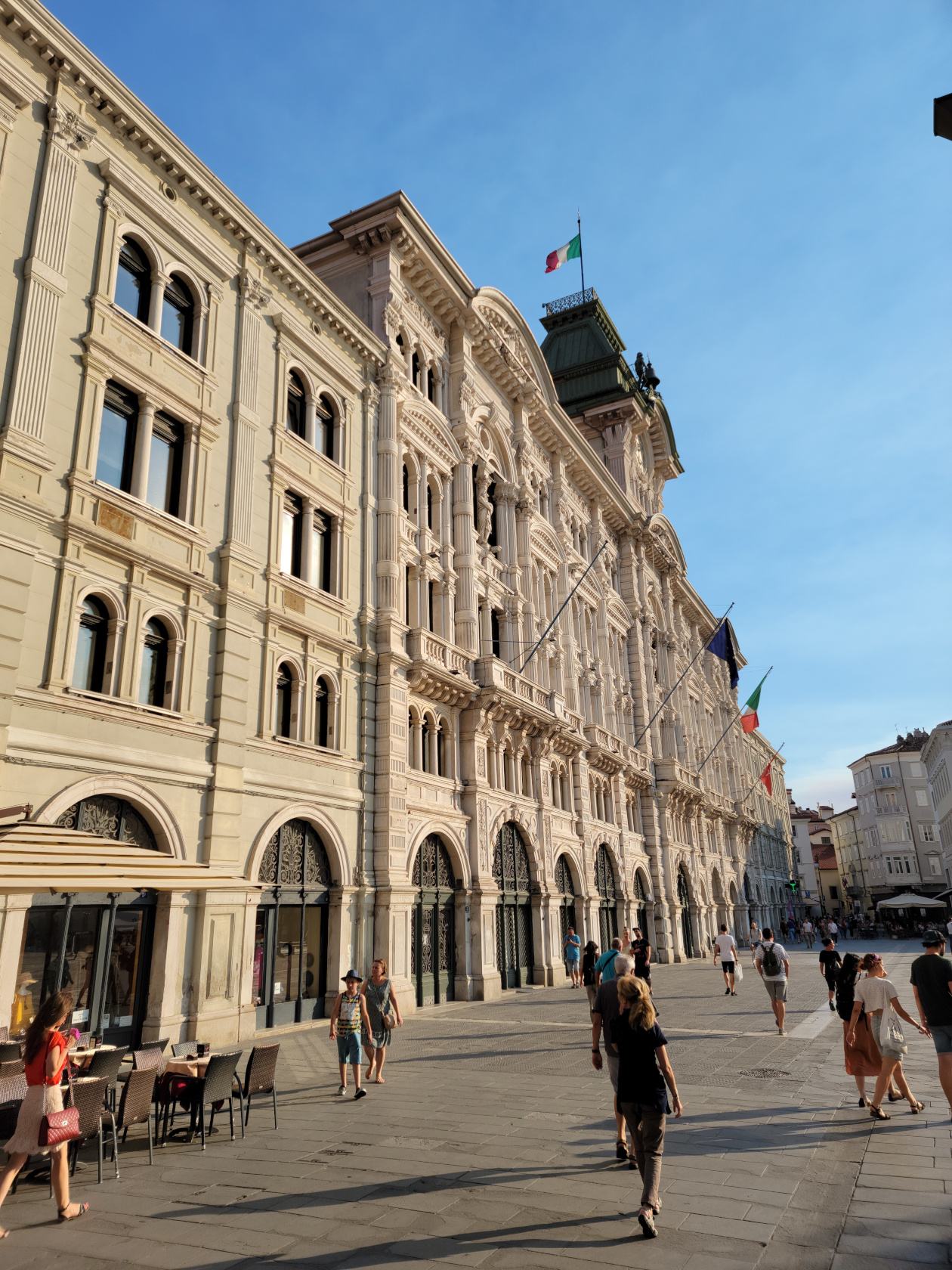
Unity of Italy Square – Palazzo del Municipio di Trieste
Unity of Italy Square – Prefettura di Trieste
Trieste – The Jewish Ghetto
Trieste – Casa Terni Smolars
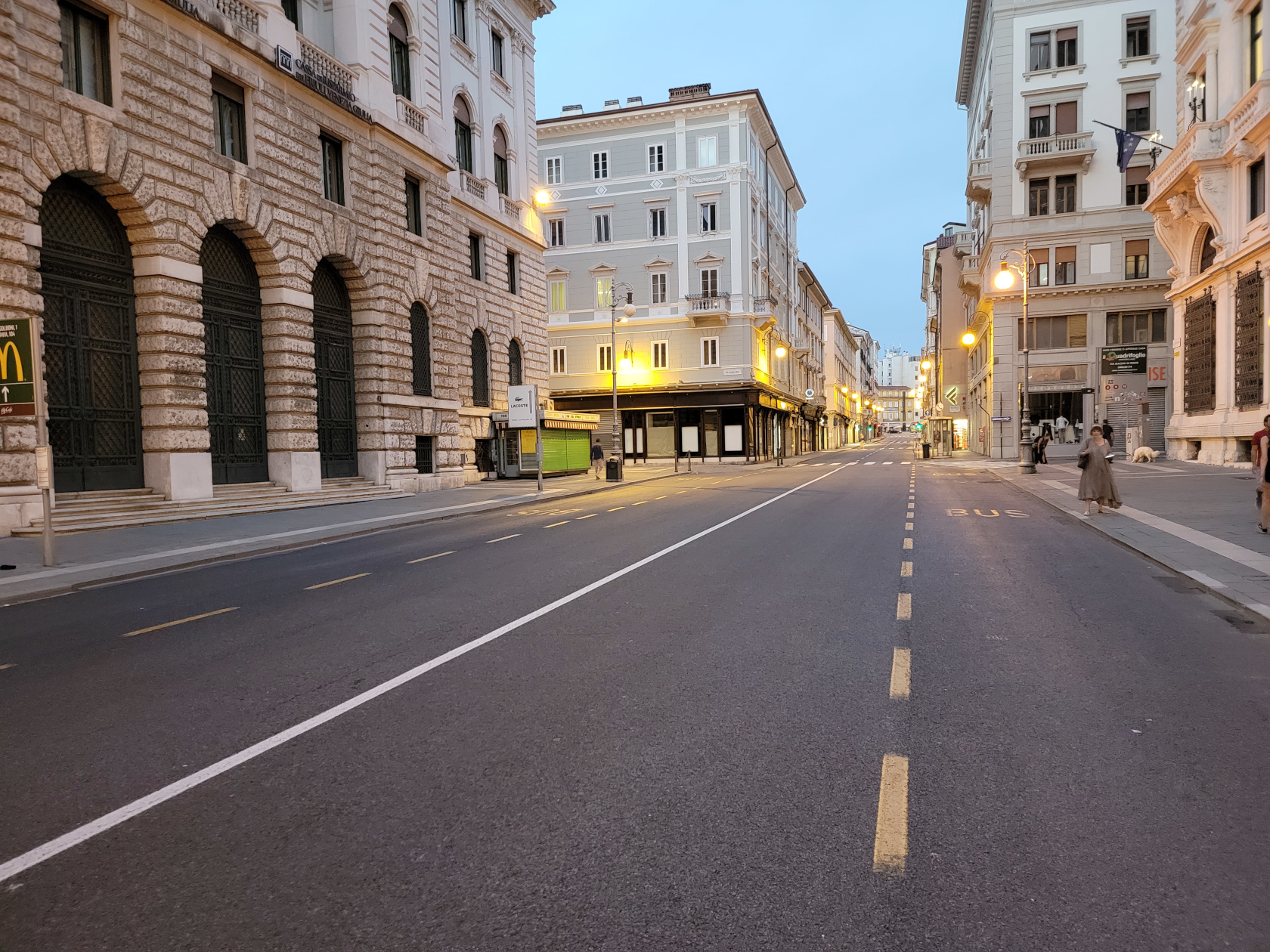
Trieste – Via Mazzini at 9PM – Empty
Trieste – Via Mazzini at 9PM – Empty
The Hilton Hotel DoubleTree
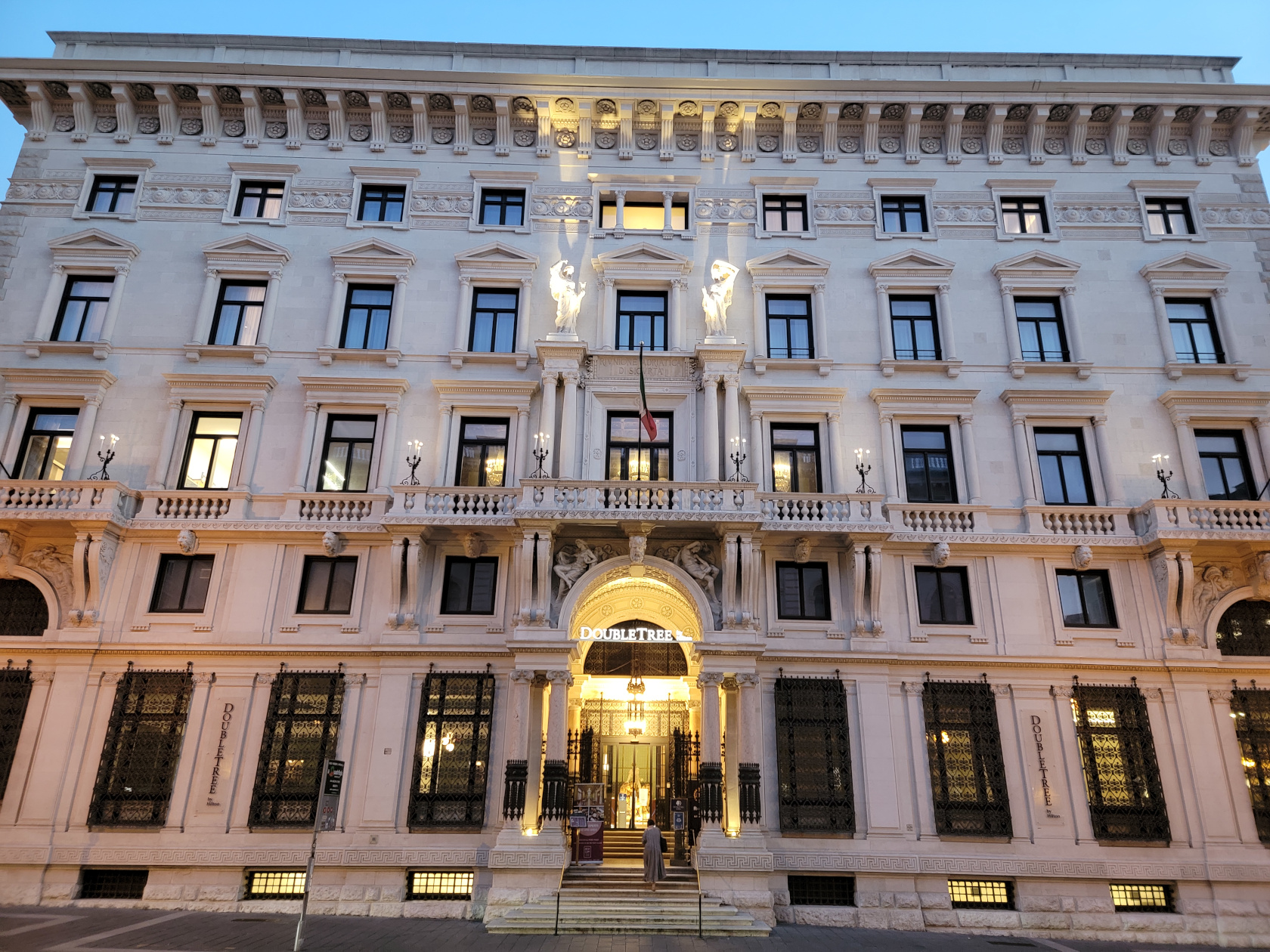
The hotel is situated at the Piazza Repubblica on via Mazzini and directly in front of a bus stop. It is within eight minutes of the train station and very close to public parking. So any form of transportation you use will get you quickly to the hotel.
Trieste – Piazza Repubblica – Hilton Hotel DoubleTree
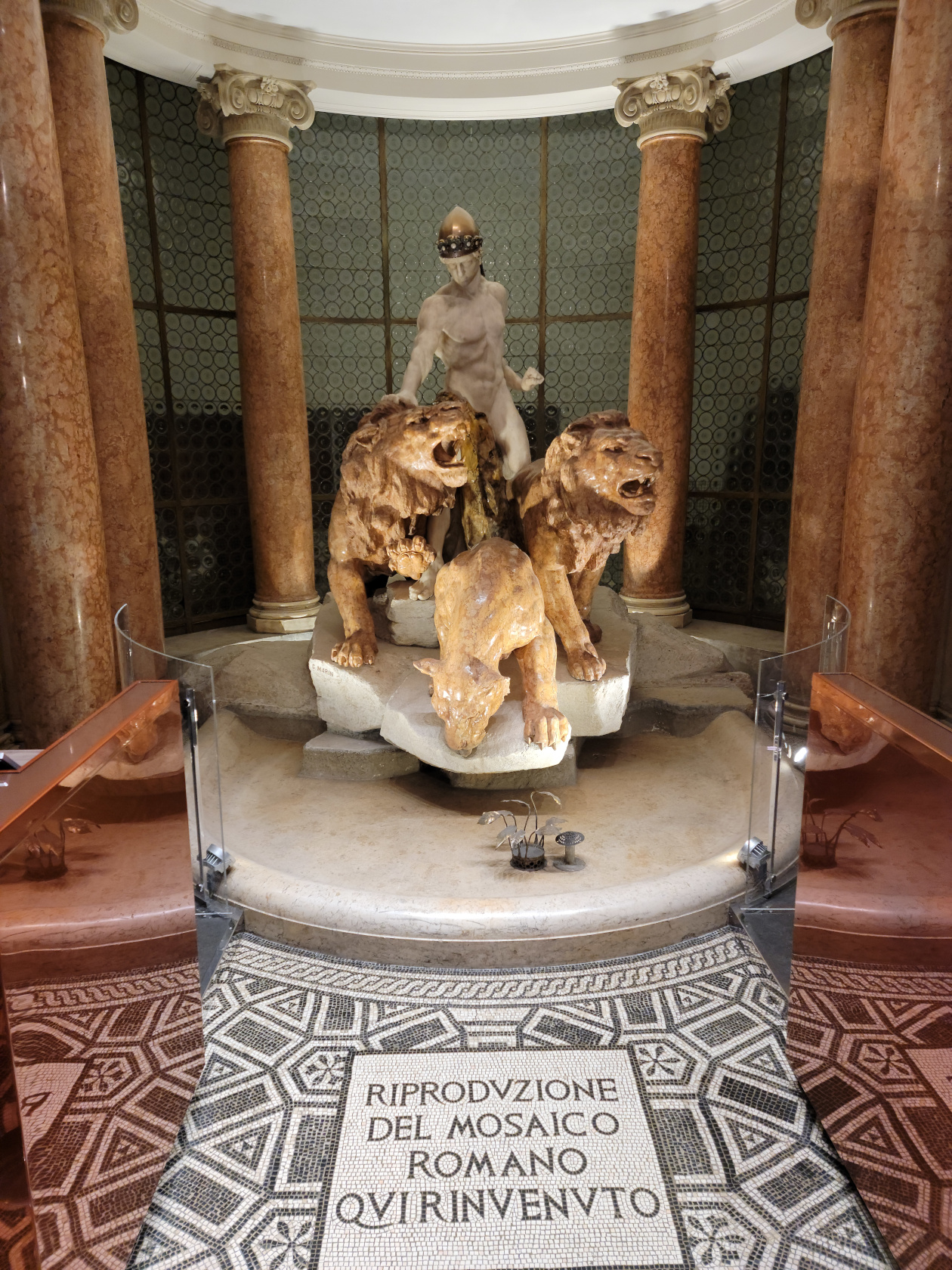
Trieste – Hilton Hotel DoubleTree – Foyer
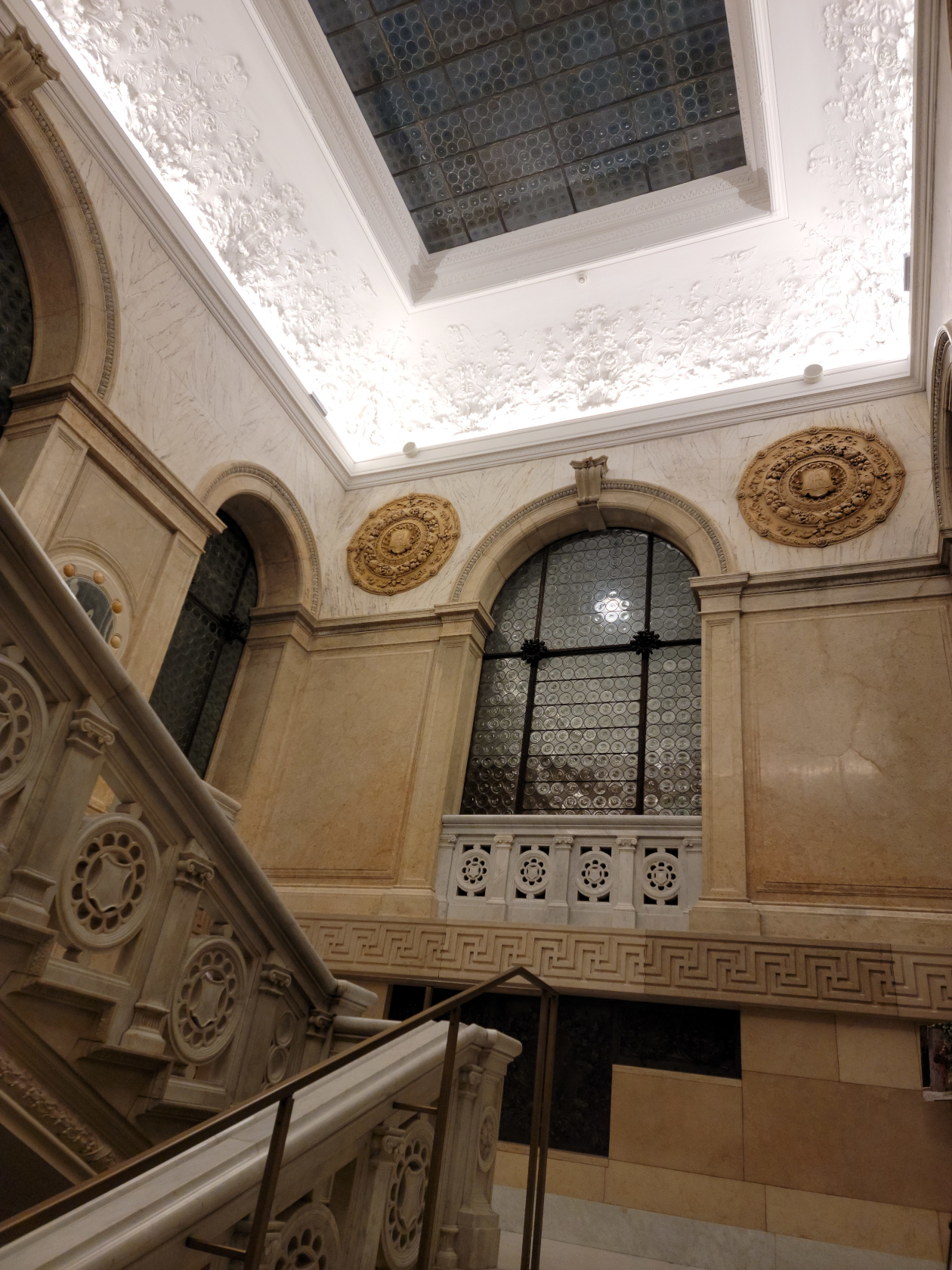
Trieste – Hilton Hotel DoubleTree
Trieste – Hilton Hotel DoubleTree
Restaurants
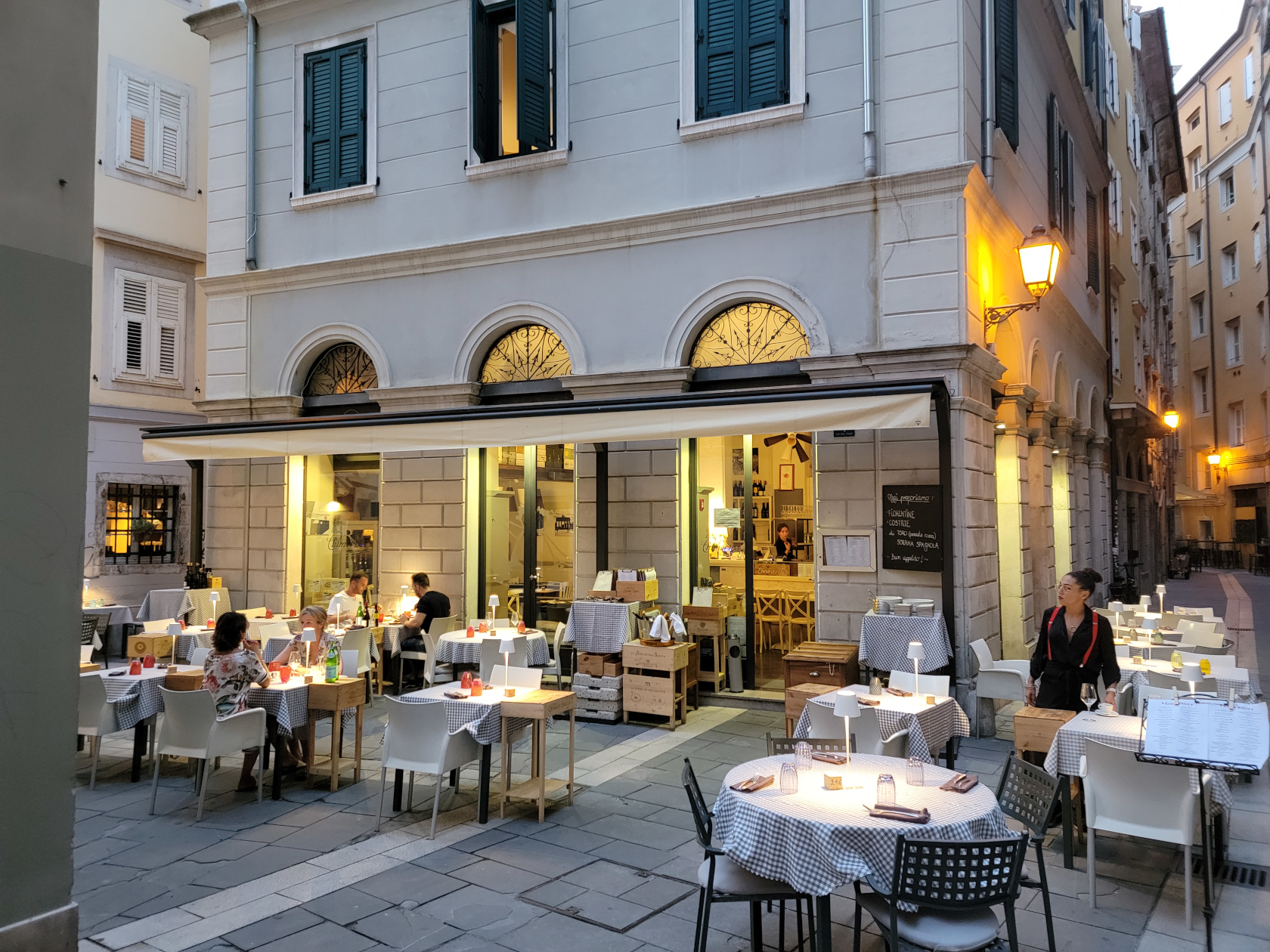
Chimerina Ristorante
We had a very nice meal at this restaurant. Its cuisine centers around seafood and just very good Italian food. It is located in the old Jewish Ghetto of the city and has that old town feeling. The food is excellent.
Trieste – The Jewish Ghetto – Chimerina Ristorante
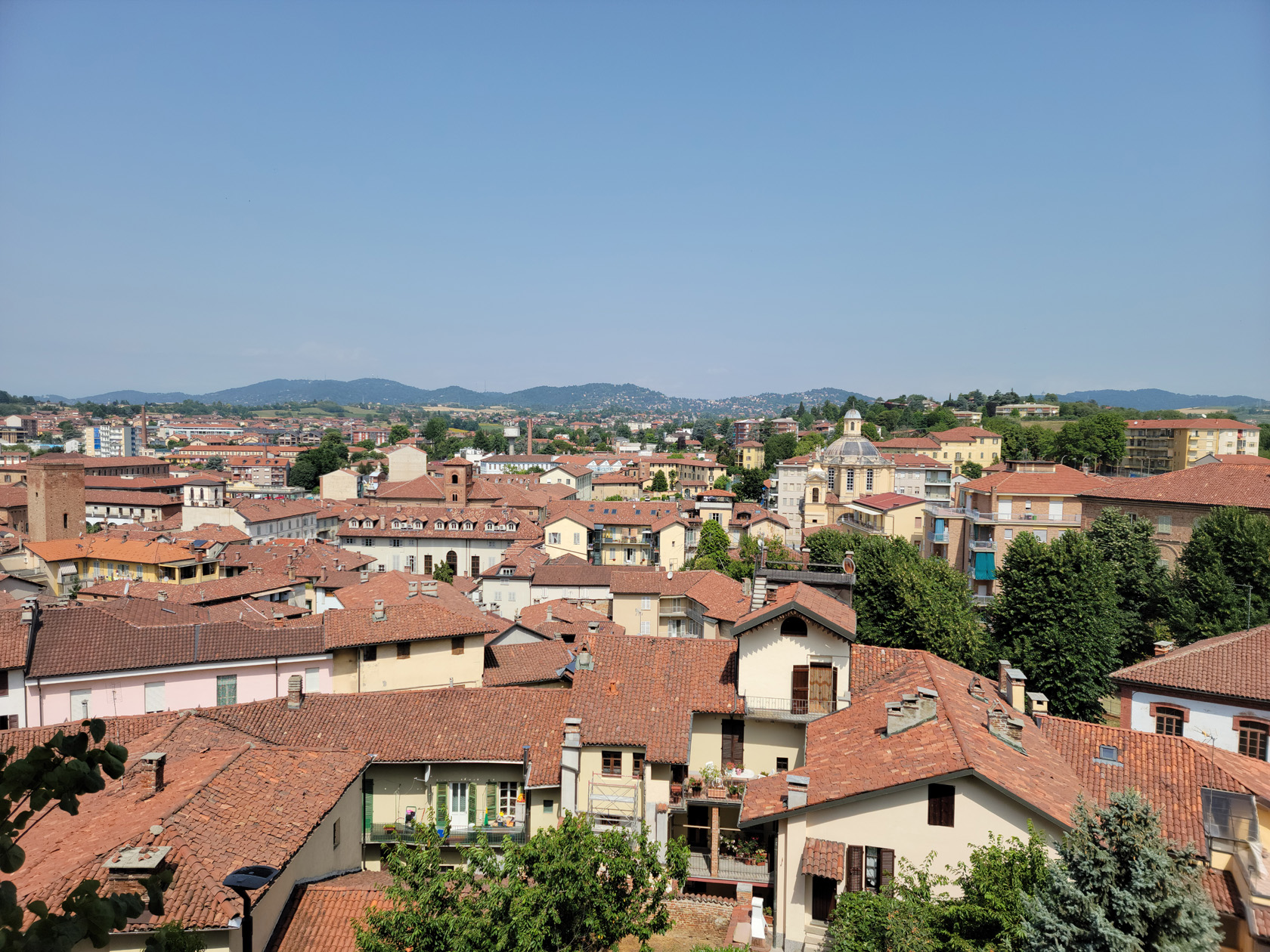
Surrounded on the three sides, by what are generally called the Hills of Piedmont (for which Superga Hill is one), sits the town of Chieri. A town that goes back to ancient times, due to the richness of the area and the Po river valley.
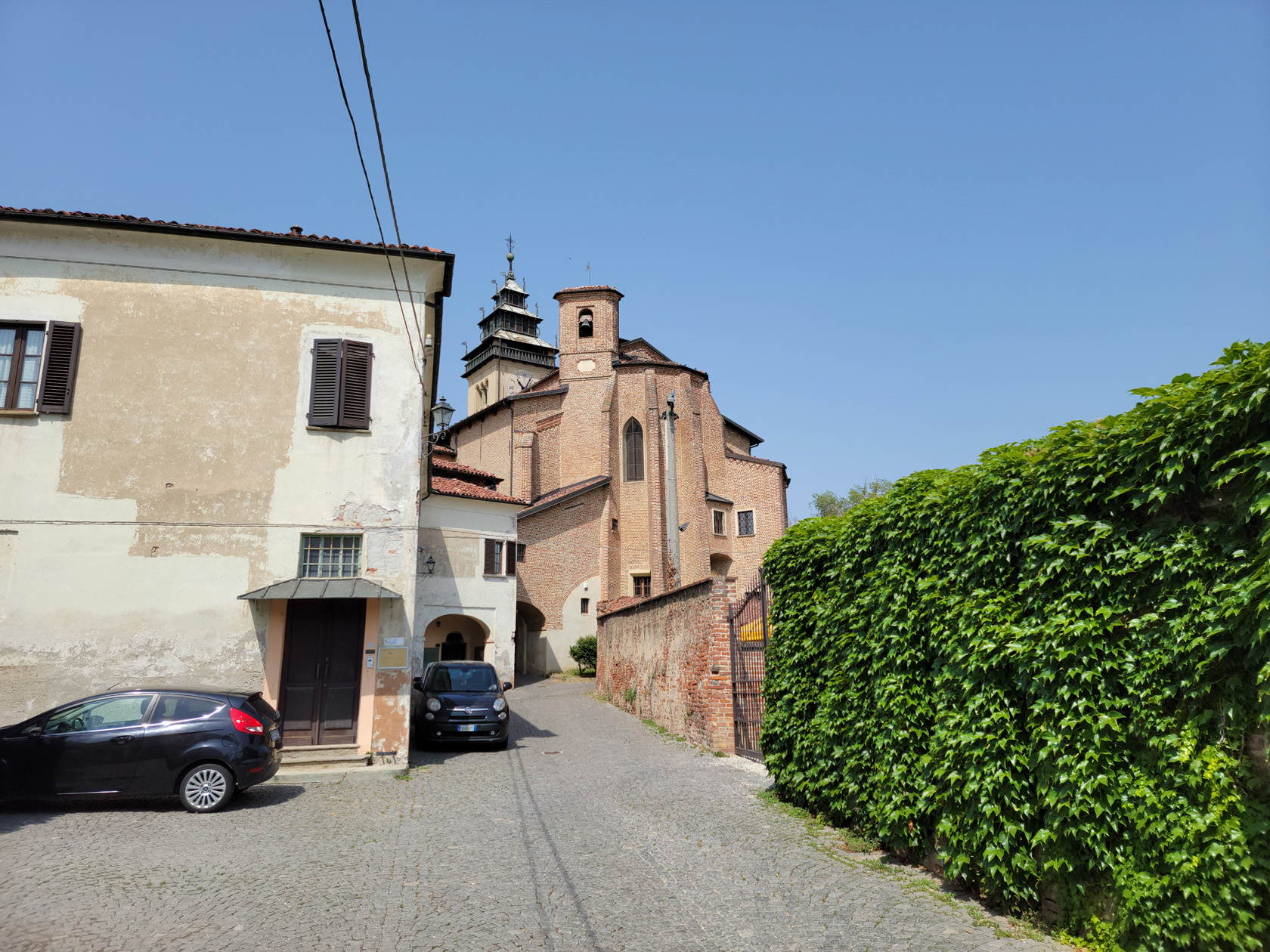
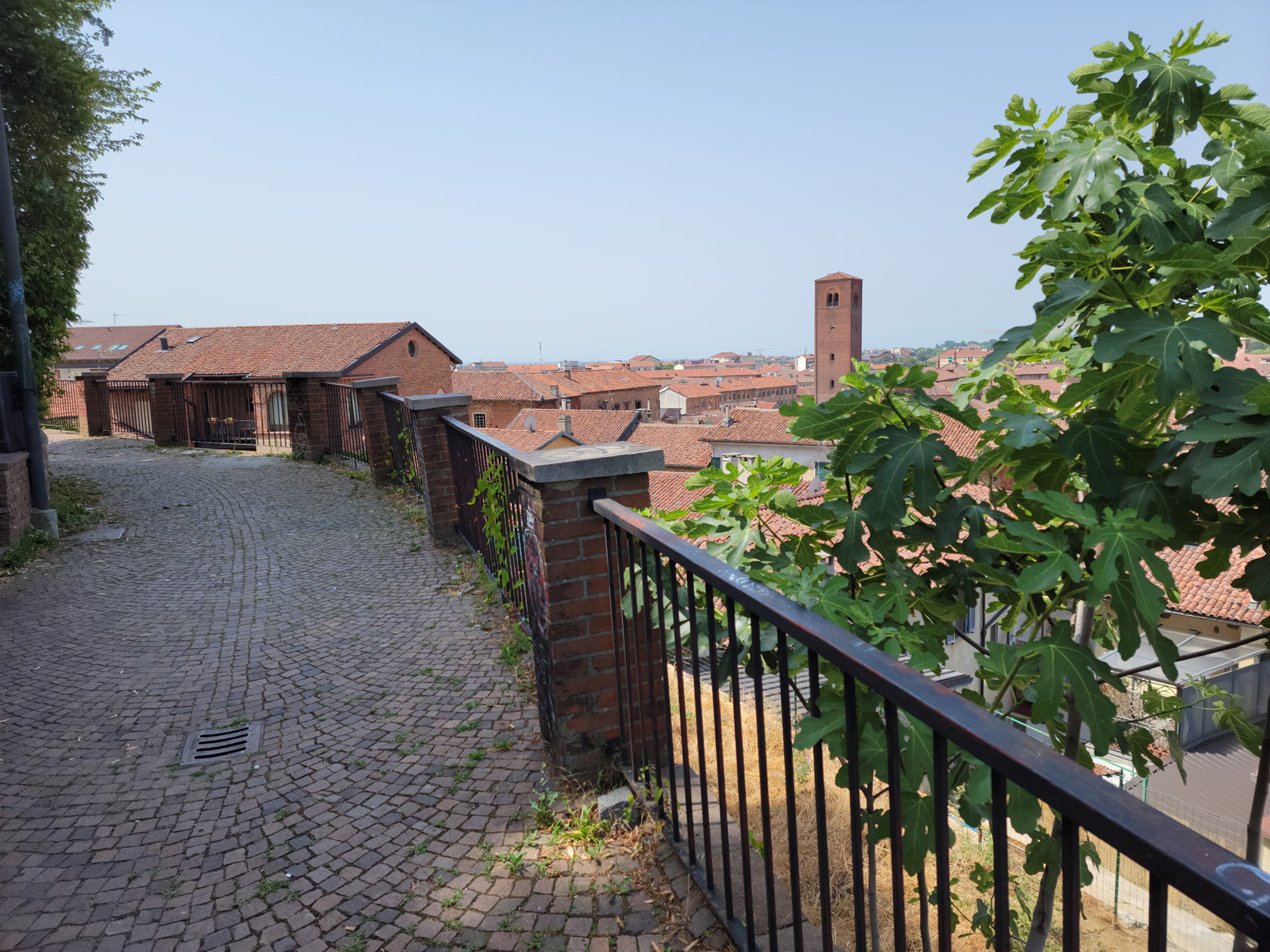
Chieri – Overlook from the Church of Sant Giorgio – Looking west toward Pino Torinese
From Turin it is easy to get to Chieri. One can either take a bus or take the Sfm1 train from Porta Susa, which runs about every thirty minutes, it is about a thirty minute ride to Chieri and the last stop for this train.
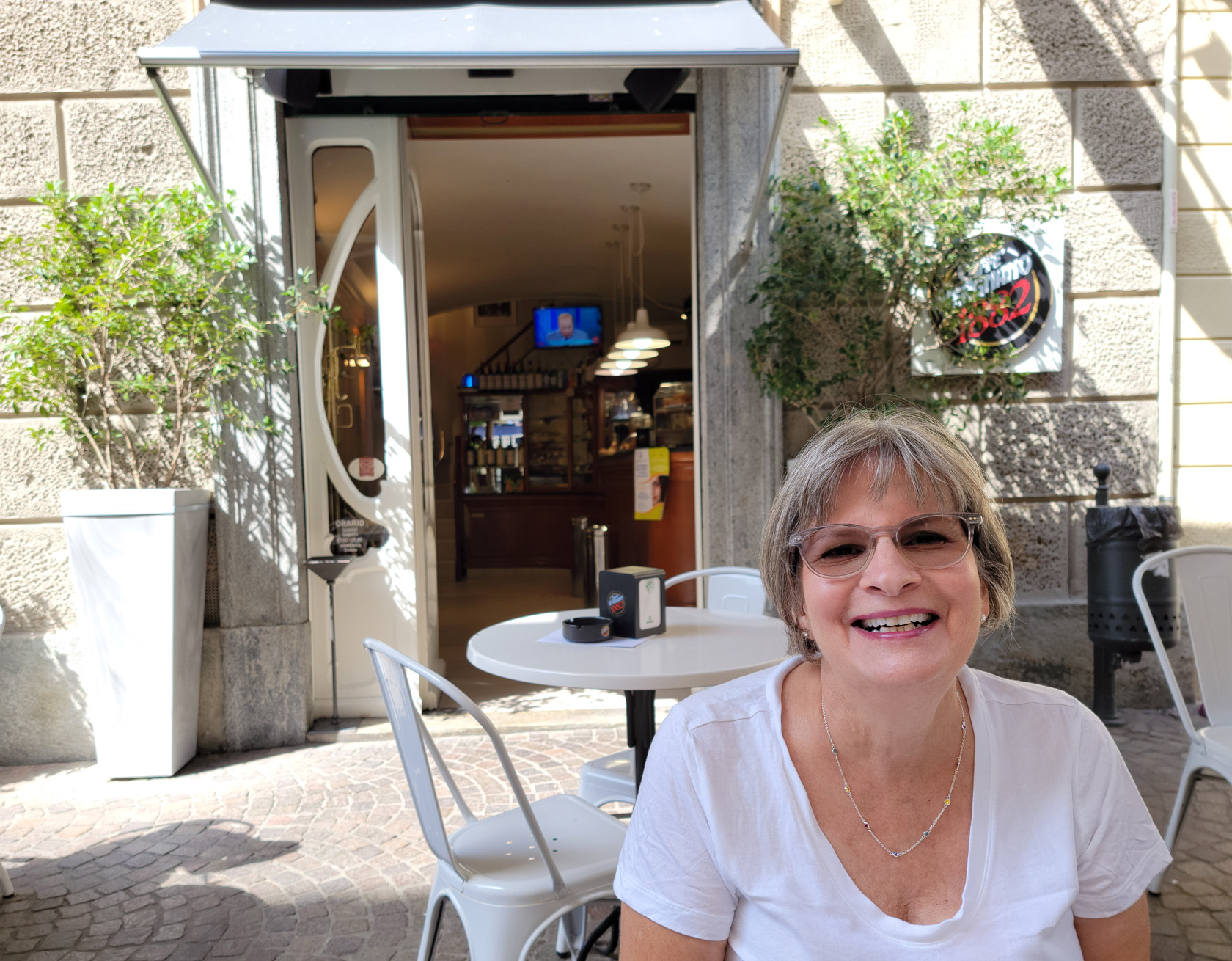
Chieri – Patti at the Tandem Bar on Vittorio Emanuele II
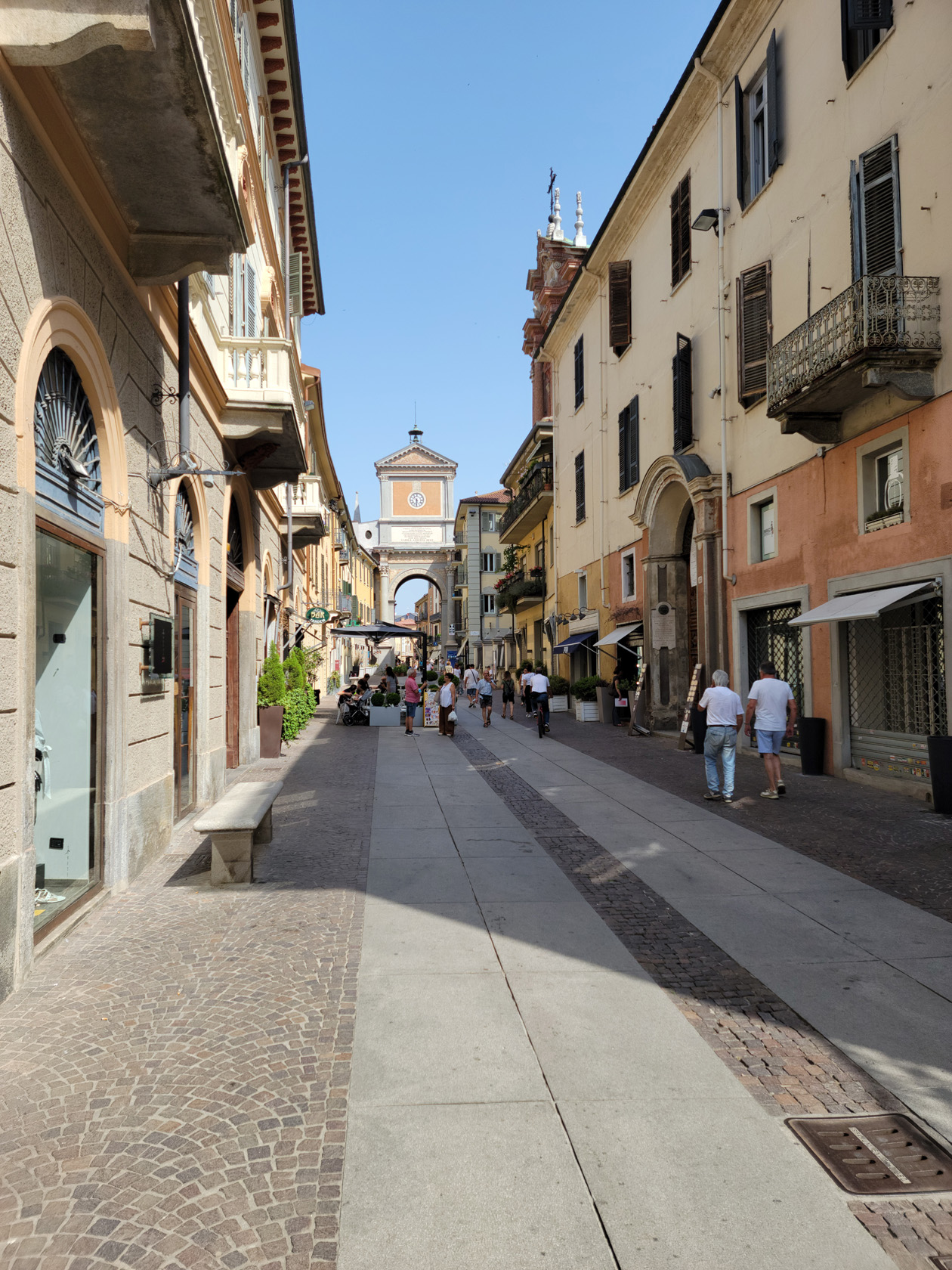
The main pedestrian way, via Vittorio Emanuele II, is a short walk from the train station and has numerous cafes and bars, here you can purchase a coffee or other drink, before you explore this quaint little town.
Town Of A Hundred Towers
During the early middle ages, the town once had numerous towers, especially built into the town wall, which were erected (like in many other towns in Italy) as defensive structures. Most of these were destroyed by Frederick Barbarossa’s army when they laid waste to the town in 1154. However, a few still remain, one of which can be seen below.
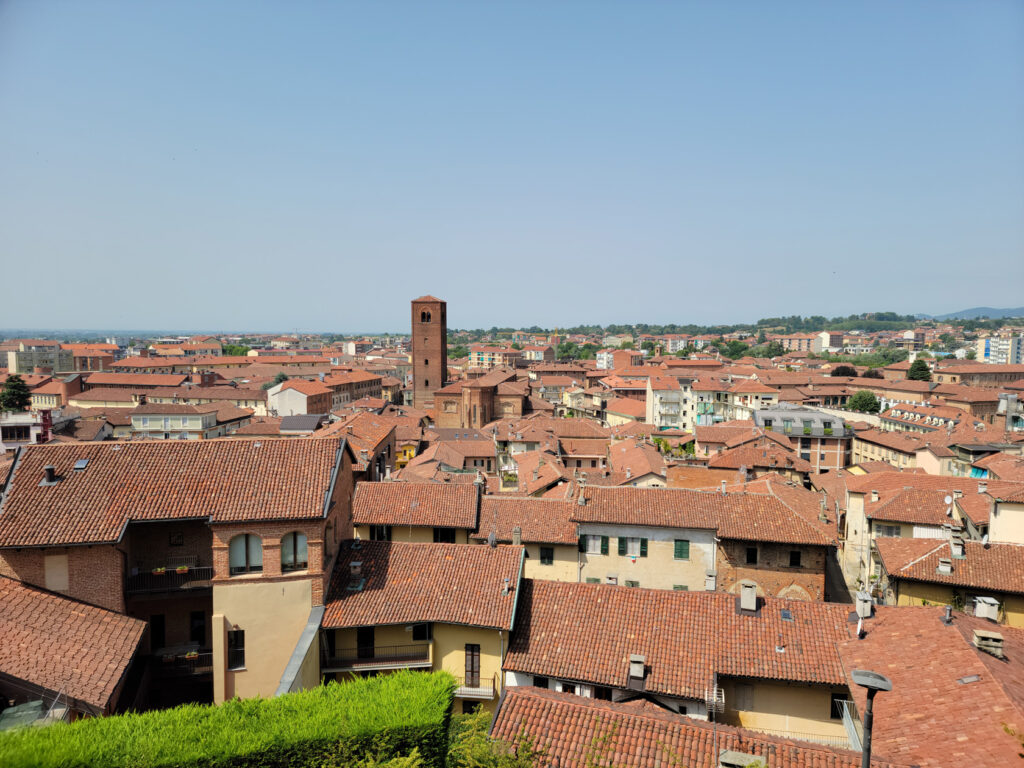
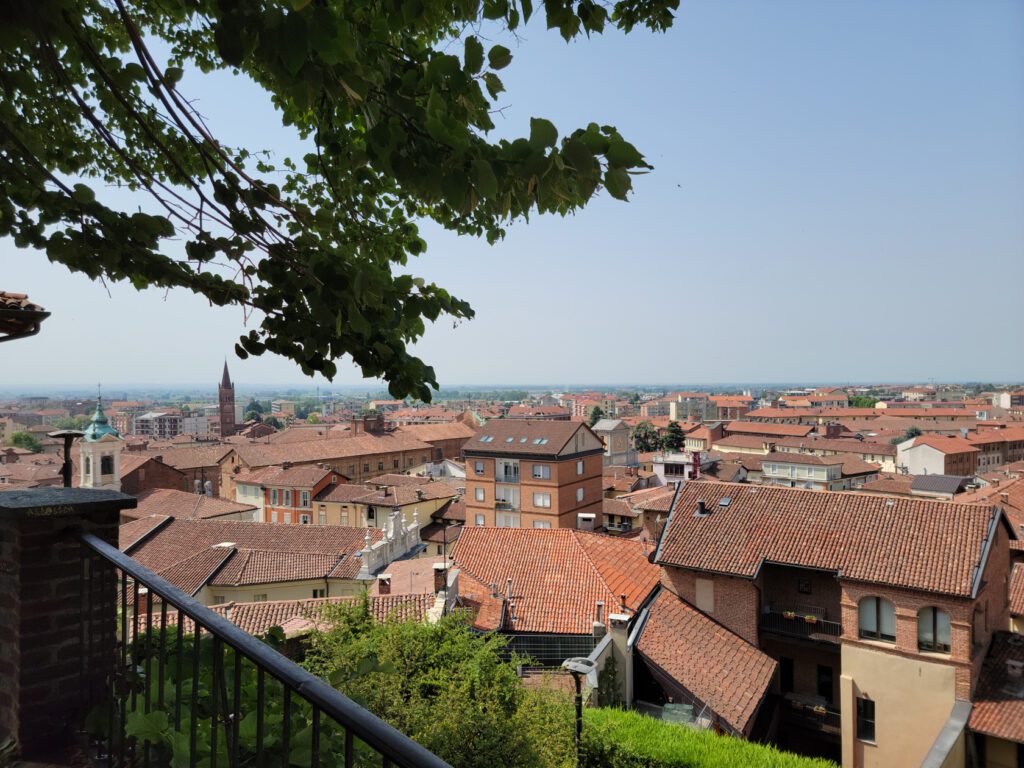
Chieri – Overlook from the Church of Sant Giorgio – Looking south and one of the remaining towers
Chieri – Overlook from the Church of Sant Giorgio – Looking southeast
Church of Sant Giorgio
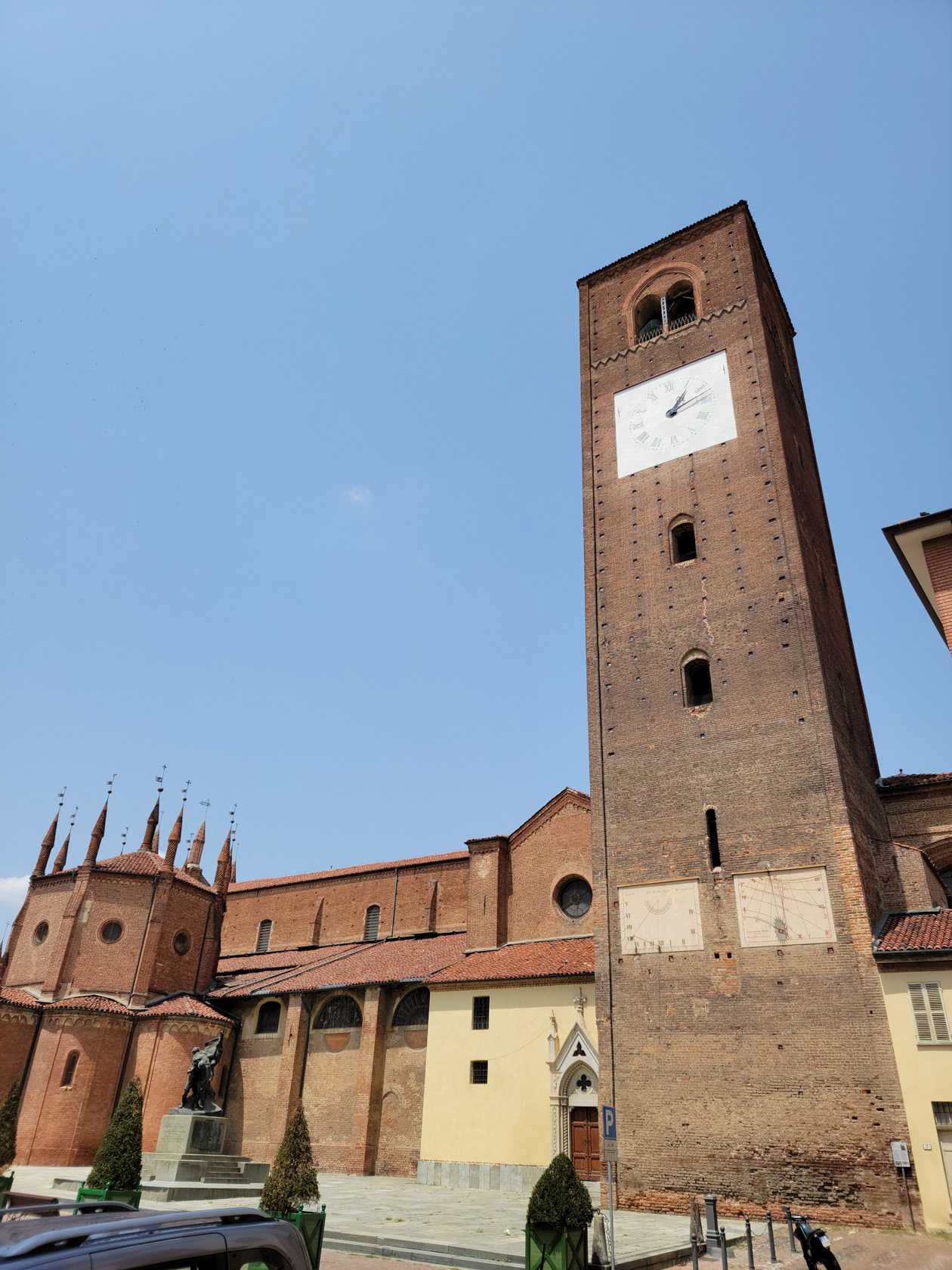
This is the highest point and from here you can get a commanding view of the town, as seen in the two photographs above and the beginning photograph.
Chieri – Church of Sant Giorgio on the hill
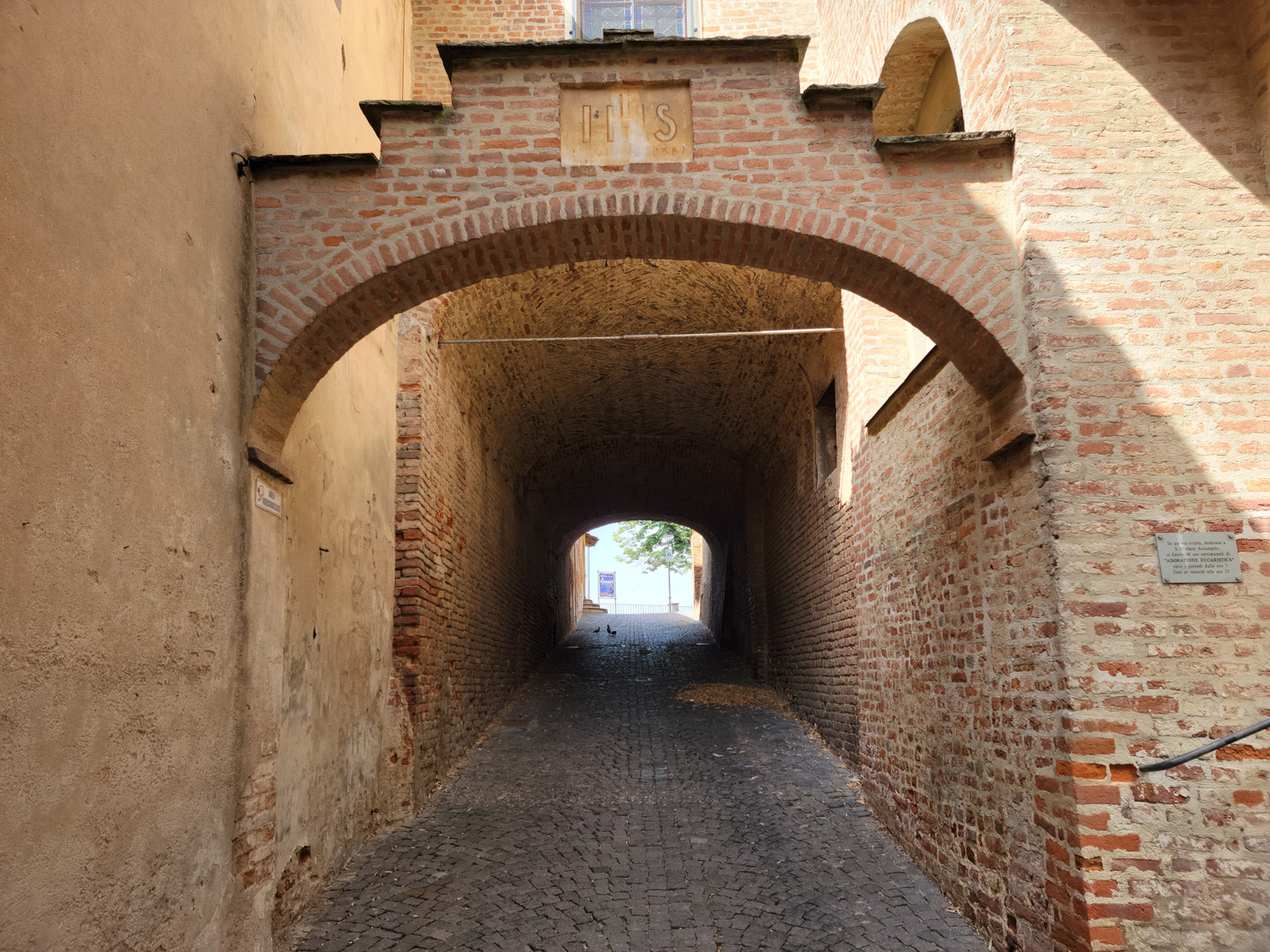
Chieri – Church of Sant Giorgio tunnel to overlook
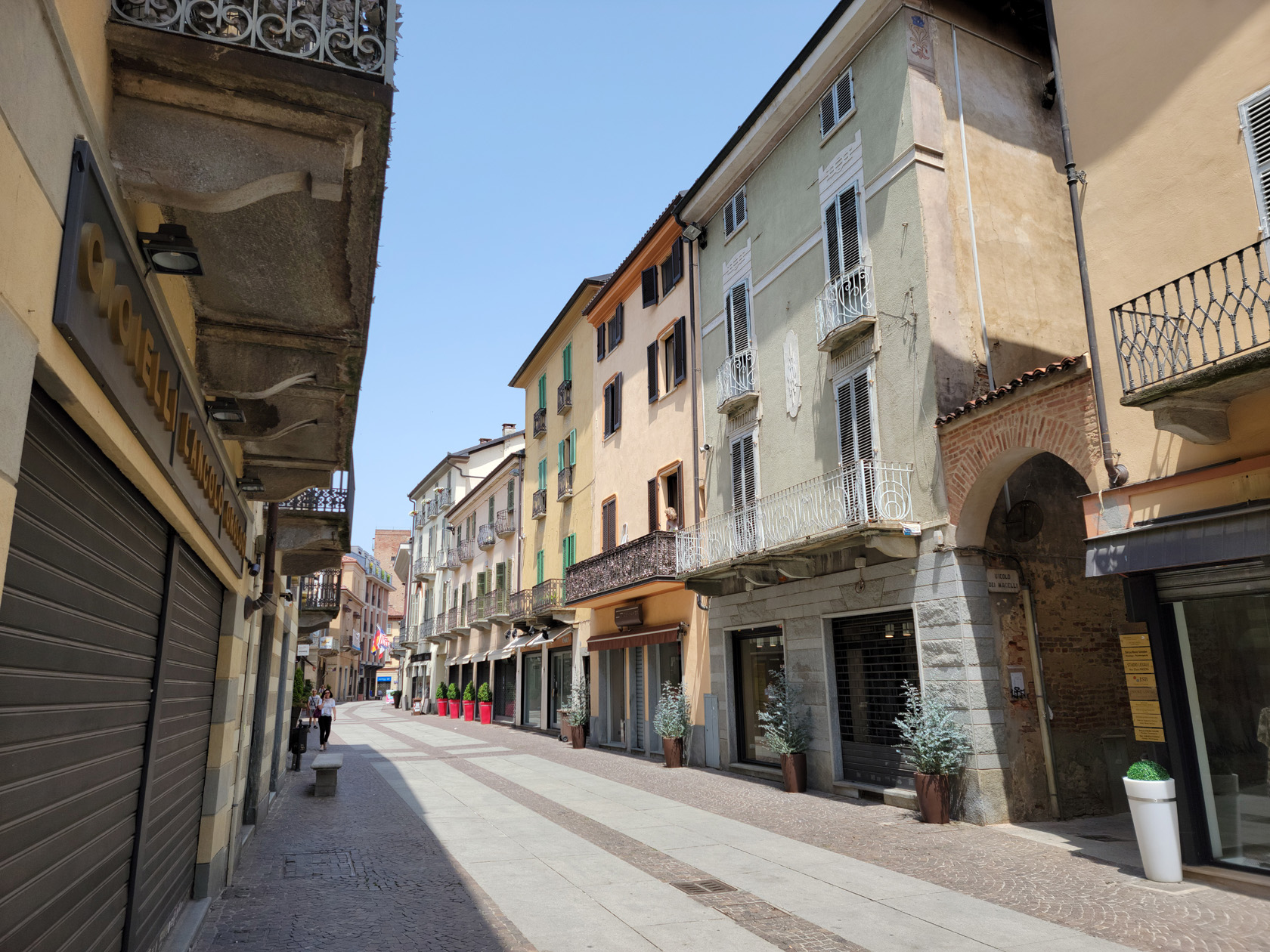
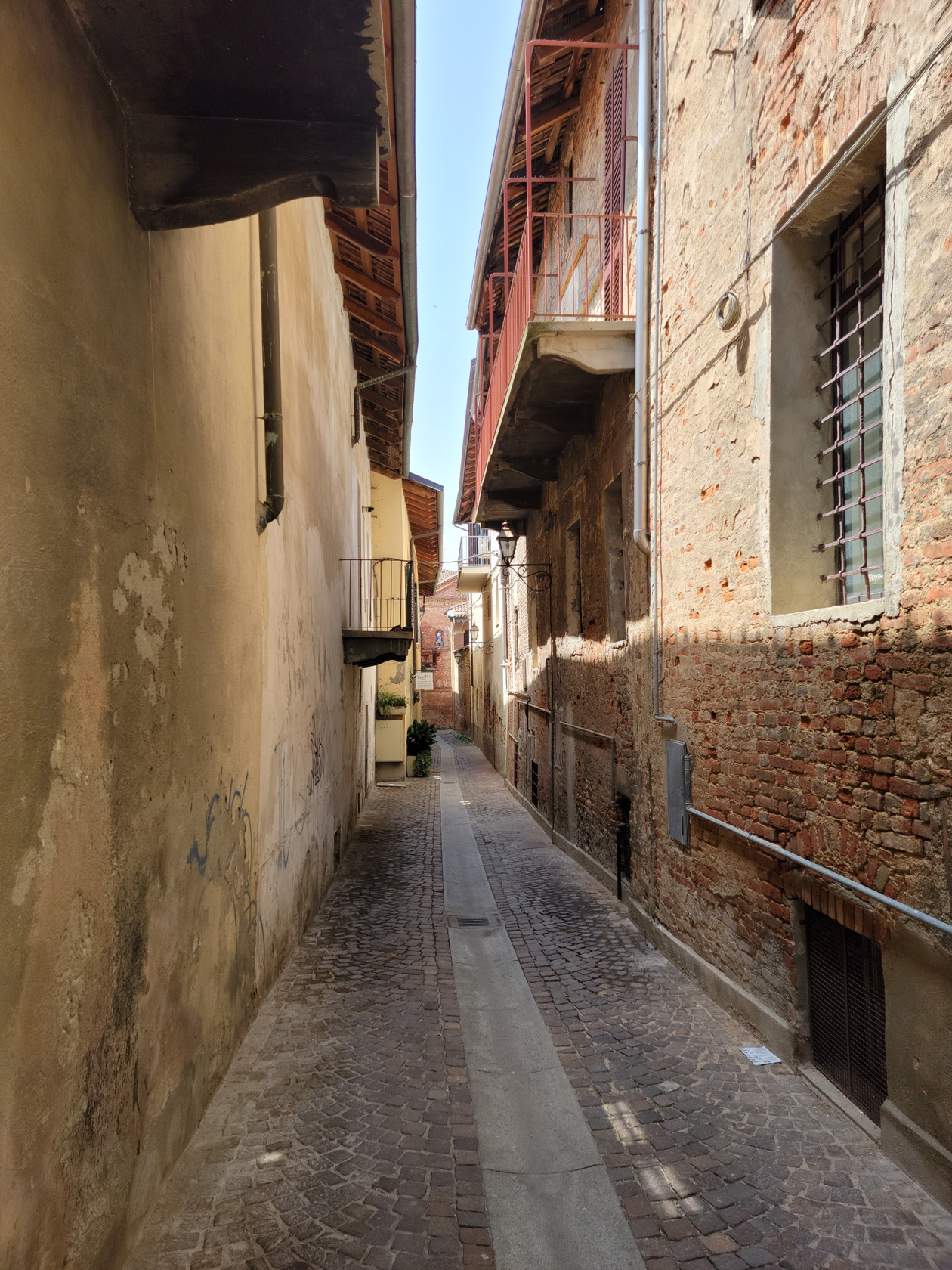
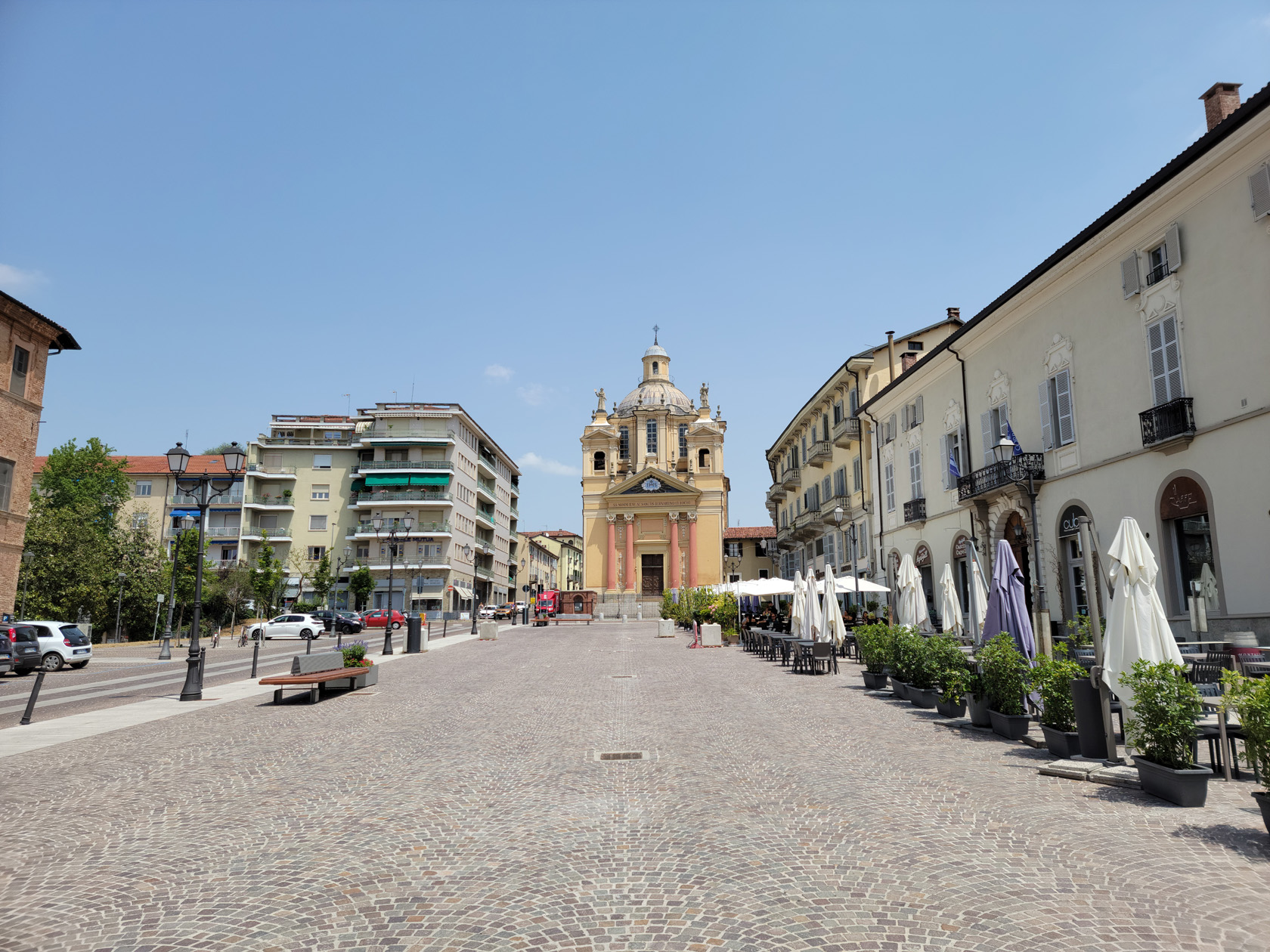
Other than that, there’s not much else to do in Chieri, except perhaps amble through its quiet streets and perhaps do some shopping. Here is a short slide show of some of the other things you can see while here.
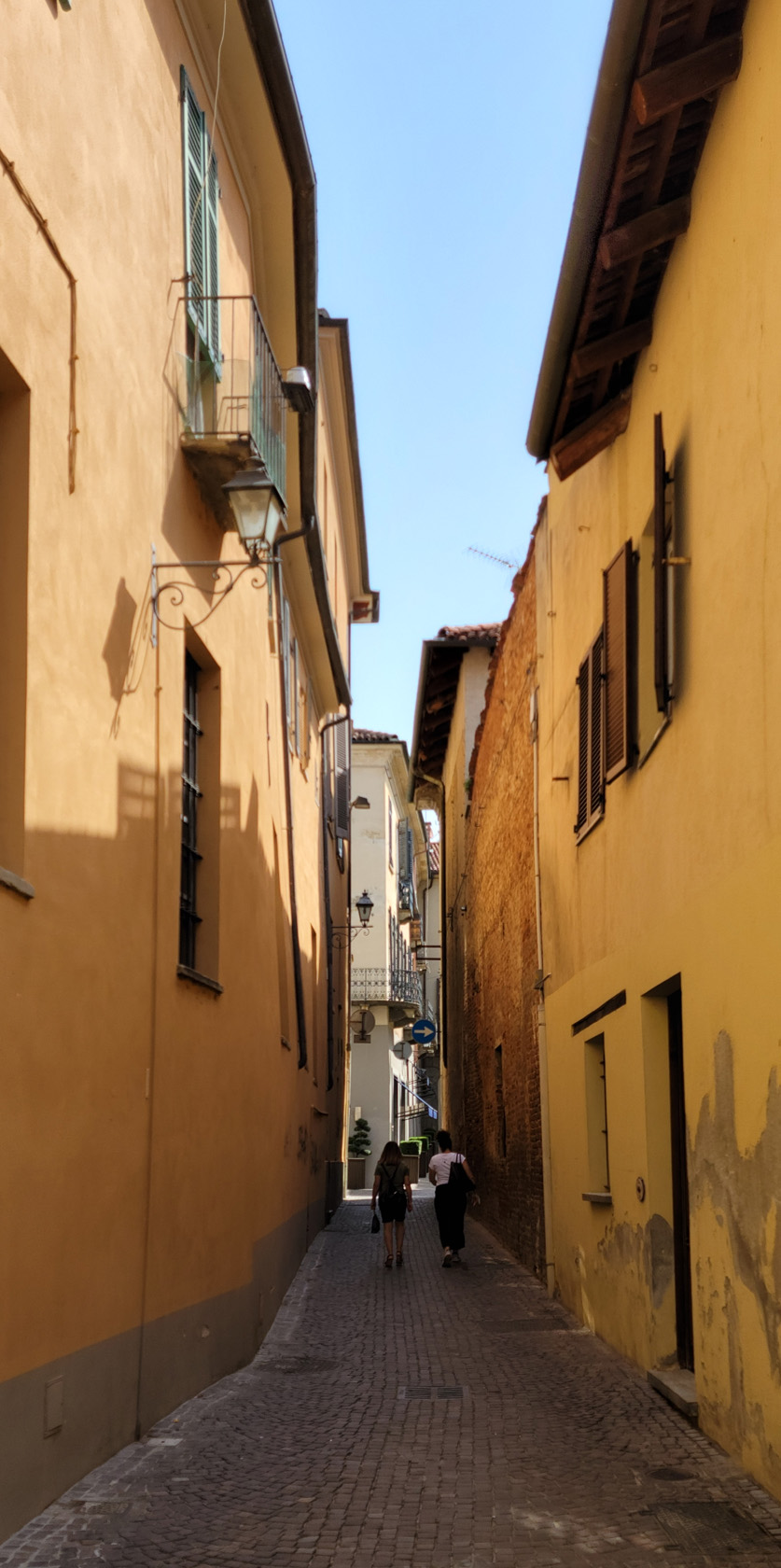
Chieri – Tiny Side Street
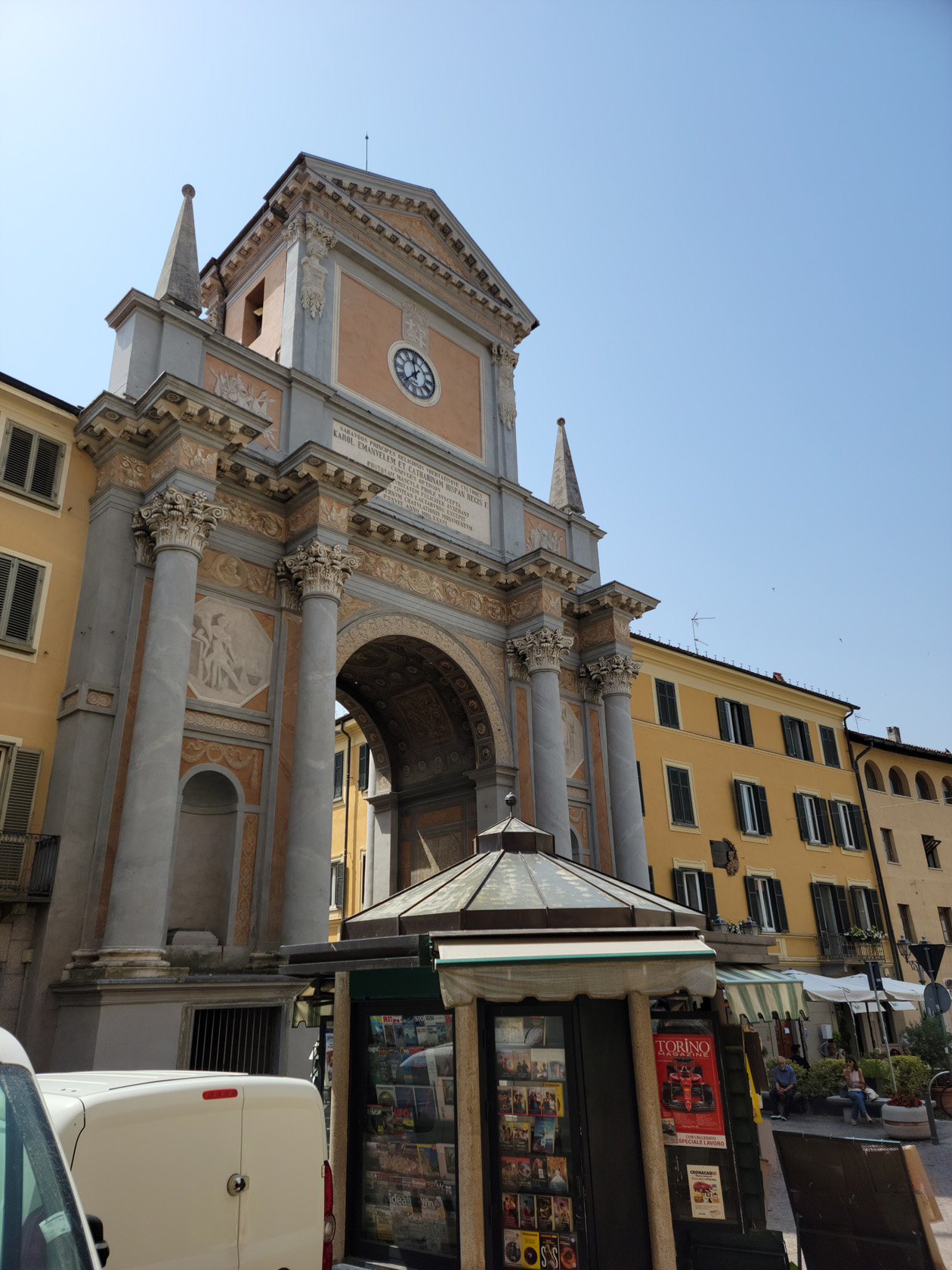
Chieri – via Vittorio Emanuele II and the Arco Trionfale
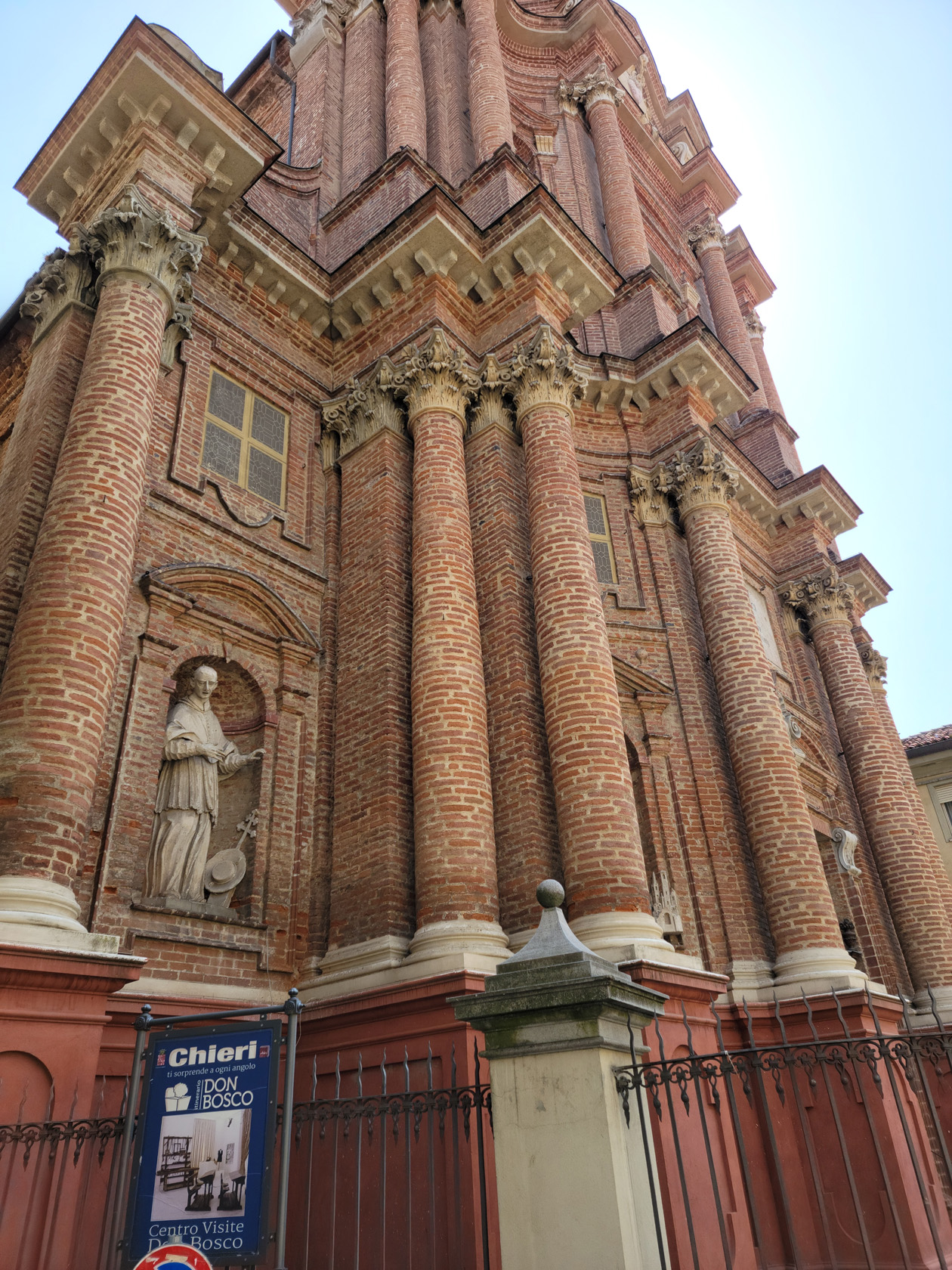
Chieri – Church Don Bosco
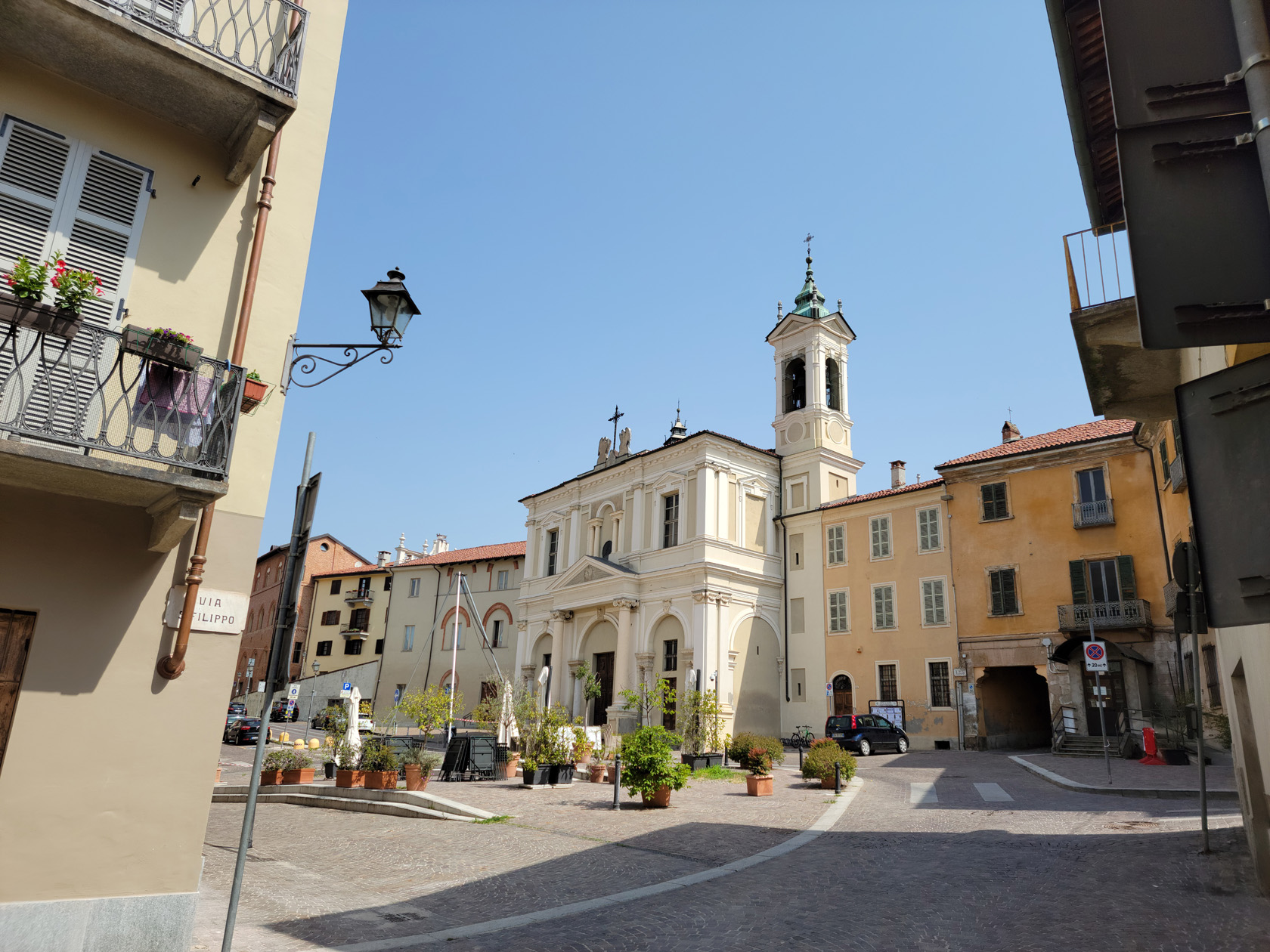
Chieri – Piazza Mazzini and the Church of Sant Guglielmo
Chieri – Belltower from pathway below the Church of Sant Giorgio
Chieri – Arco Trionfale di Chieri – from Piazza Umberto
Chieri – Torre campanaria del Duomo di Chieri
Chieri – pedestrian way Vittorio Emanuele II
Chieri – small alleyway
Chieri – Piazza Cavour and the Church Ss Nomini Iesi Ac Sanctis Bernardino Et Rocho
Restaurants
With limited time we were only able to visit one restaurant while here, though several that came up on our search were not open until the evening. However, you will find the choice below to be exceptionally good, if and when you have the chance to visit this charming little town in Piedmont.
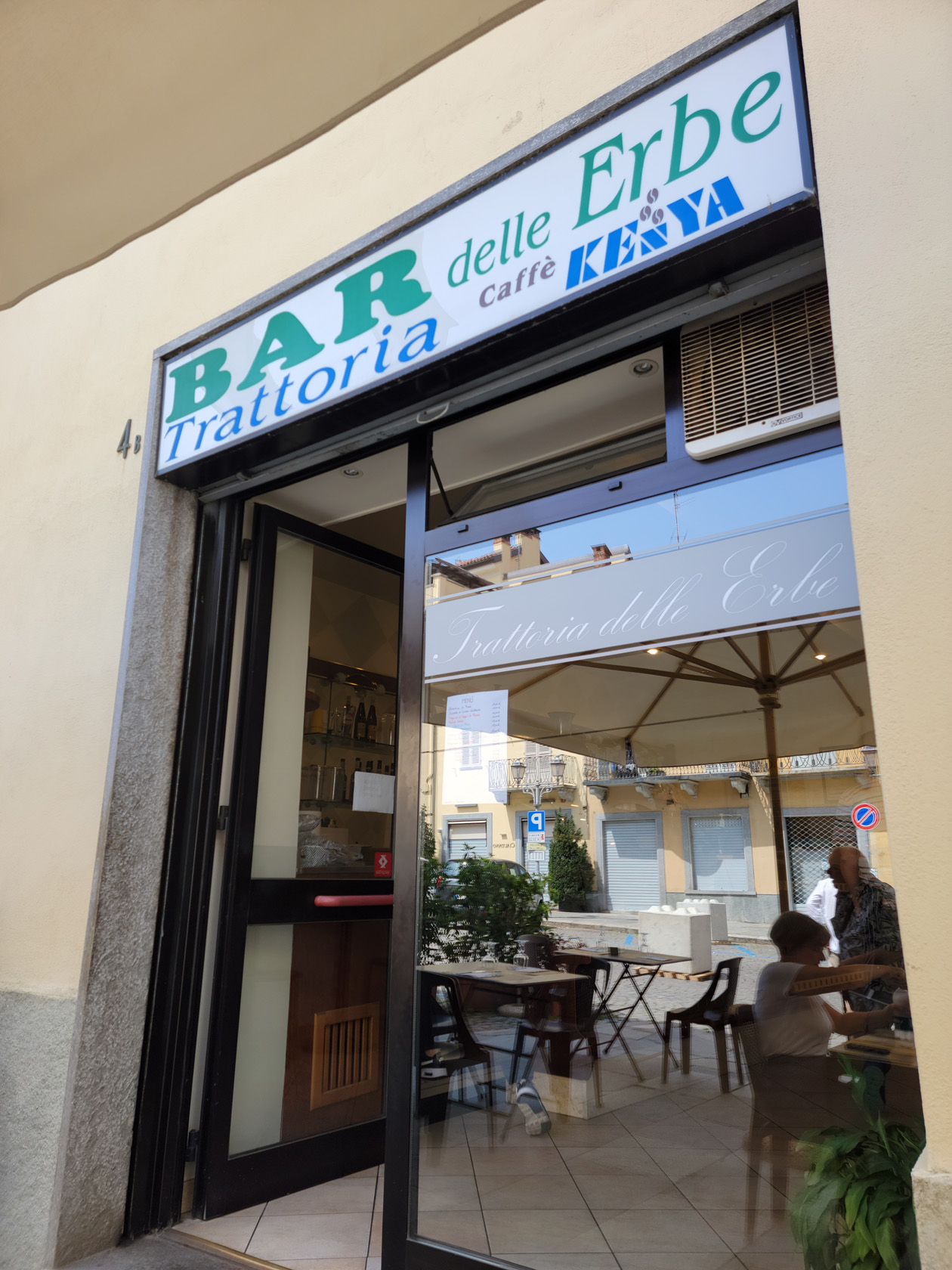
Trattoria della Erbe
Chieri – Trattoria delle Erbe
This trattoria sits on the corner of the Piazza Umberto I and via San Domenico, is fairly non-descript, but the food is authentic Sardinian and quite good.
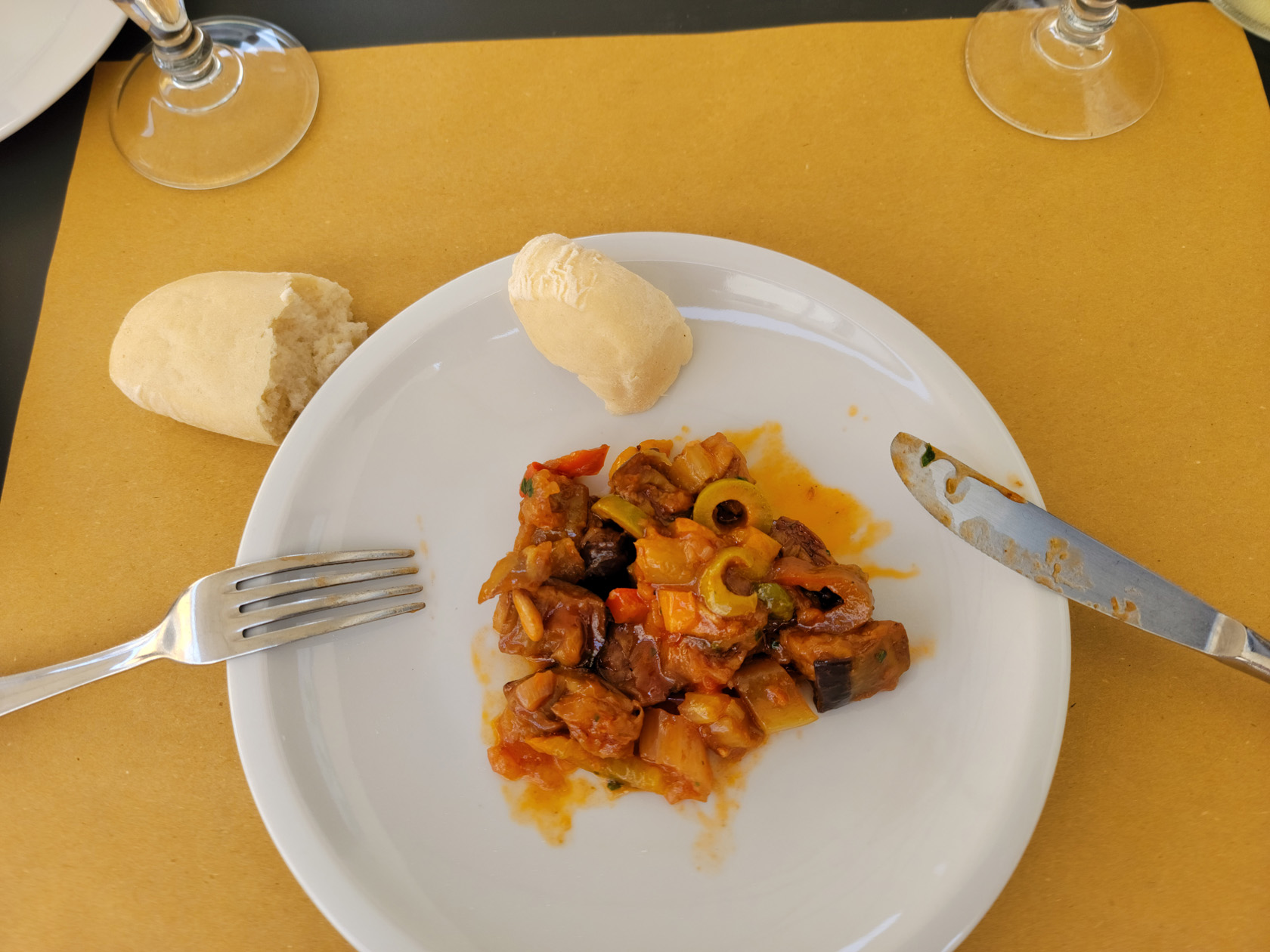
Chieri – Trattoria delle Erbe – Caponata Siciliana
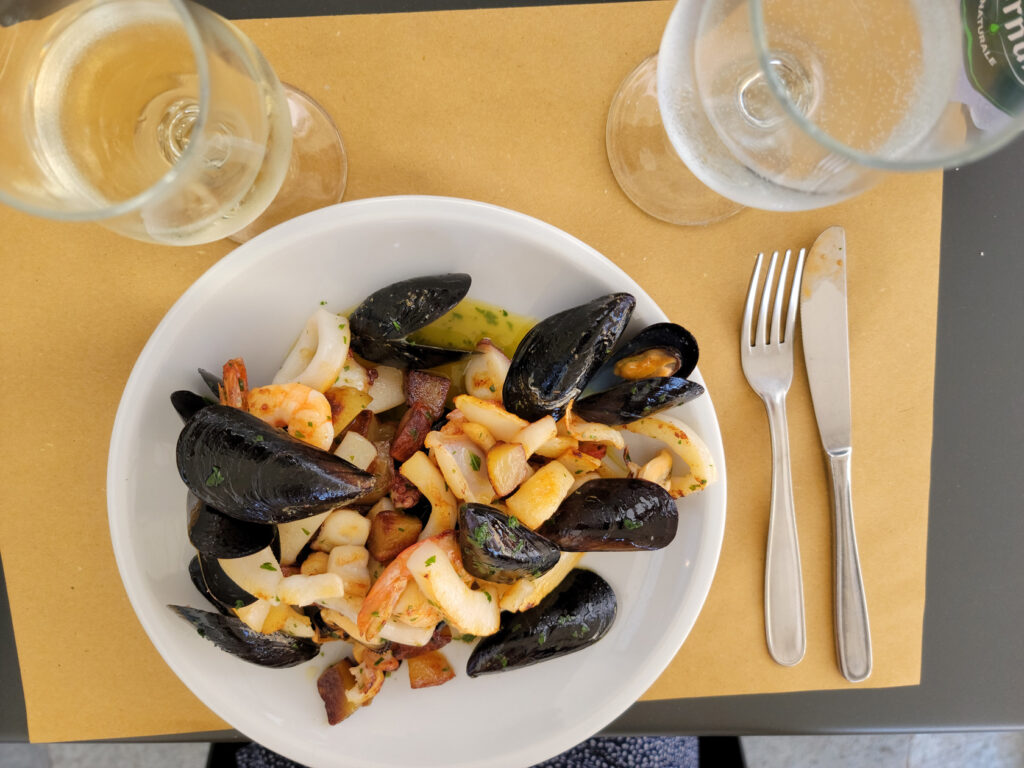
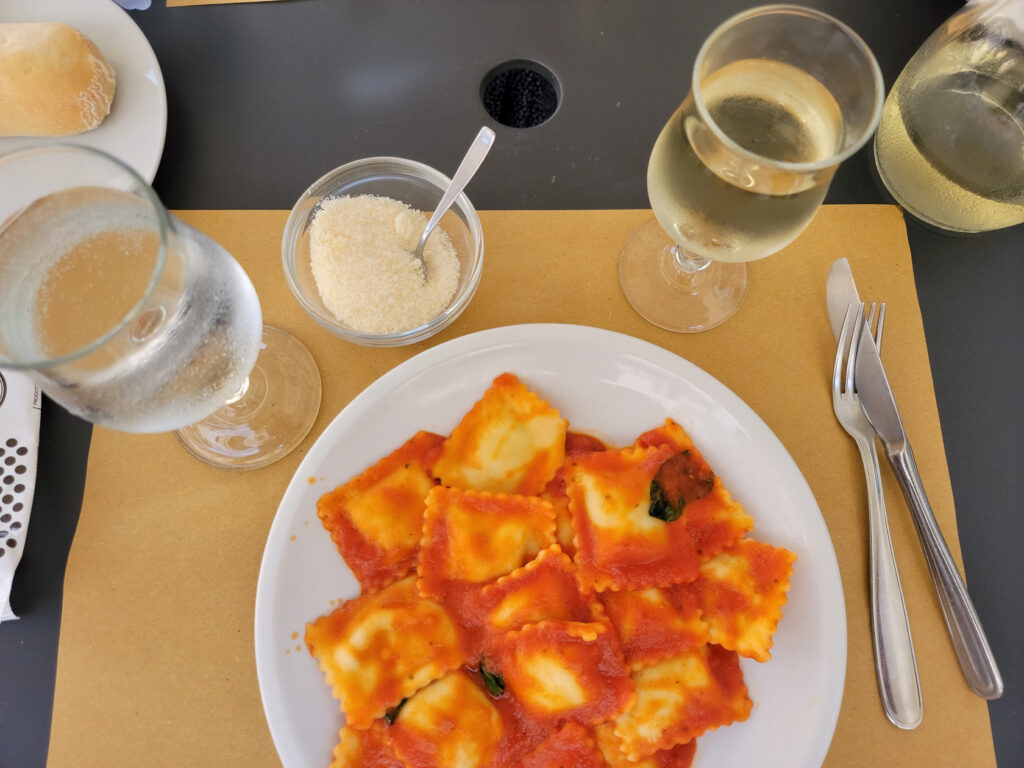
The menu changes daily and is posted on both a board outside and on the window next to the entrance. The menu is restrictive, as for most small establishments like this one, but everything we ordered was quite tasty and delicious. We started with some antipasti, a Caponata Siciliana, served with eggplant, onion, peppers, green olives and other goodies, not hot, but just warmed a bit. A slight tinge of vinegar mixed with the tomato based sauce was just right to get the taste buds to pucker for more. Our mains, or primis, came out a short time after and included the Levantine di Mare for Patti and for me, the Ravioli Sardi. Both were delicious and portioned correctly, just enough to leave a little room for dessert!
Chieri – Trattoria delle Erbe – Levantina di Mare
Chieri – Trattoria delle Erbe – Ravioli Sardi
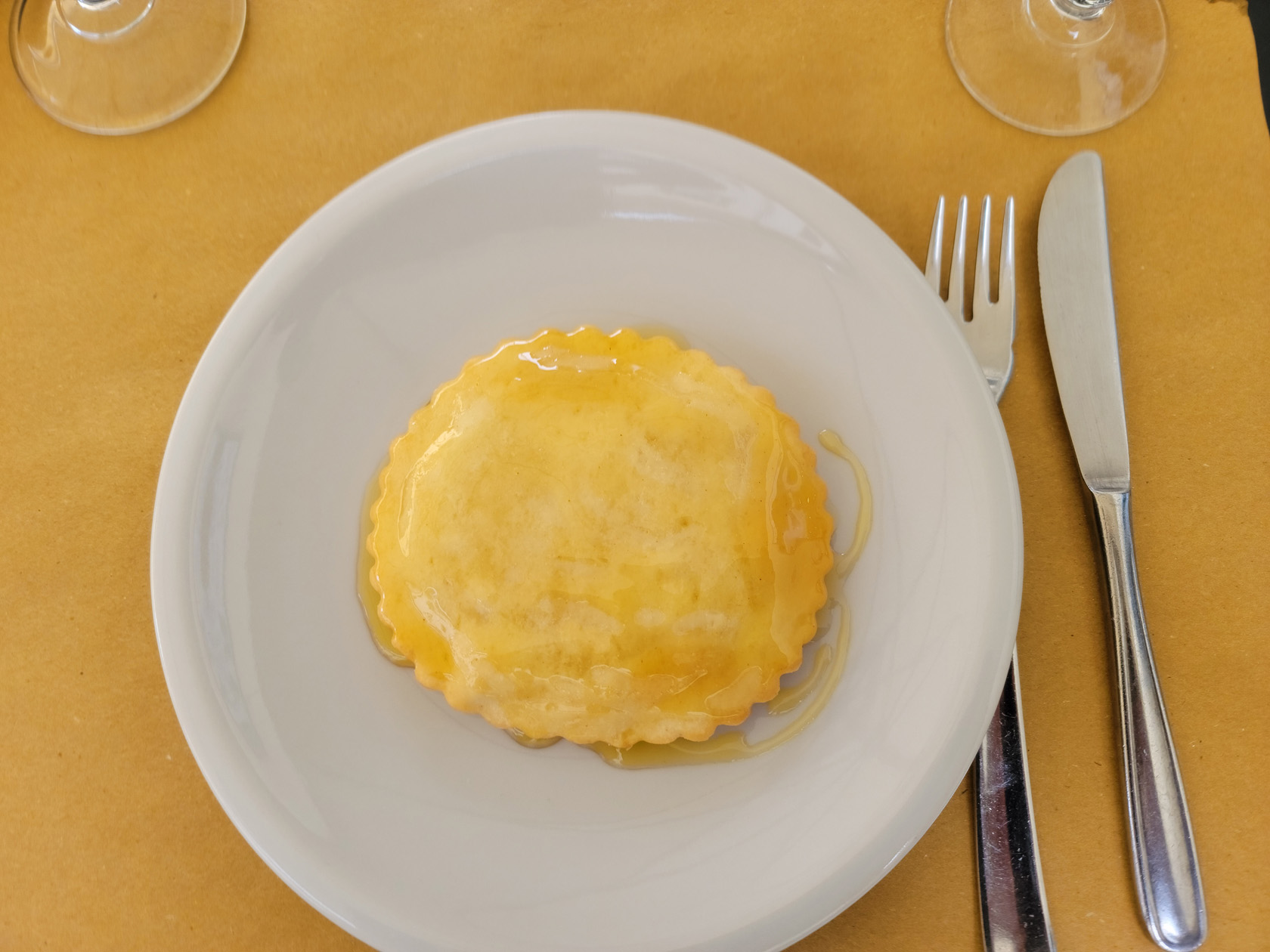
The dessert was actually unexpectedly delicious and savory. A Sardinian Seada or Seadas, that can only be explained as a kind of dough pocket filled with assorted cheese, heated and served with honey. The sweetness of the honey and the saltiness of the cheese make for an unexpectedly tasty treat.
Chieri – Trattoria delle Erbe – Seada or Seadas
Top that off later with a caffè and Sambuca (to make caffè corretto of course) and you have the culmination of the great lunch.
All in all, Chieri makes a great day trip, if only just to walk around and soak up its quiet stillness, after being in Turin for a few weeks. If only to experience some great Sardinian food at this trattoria!