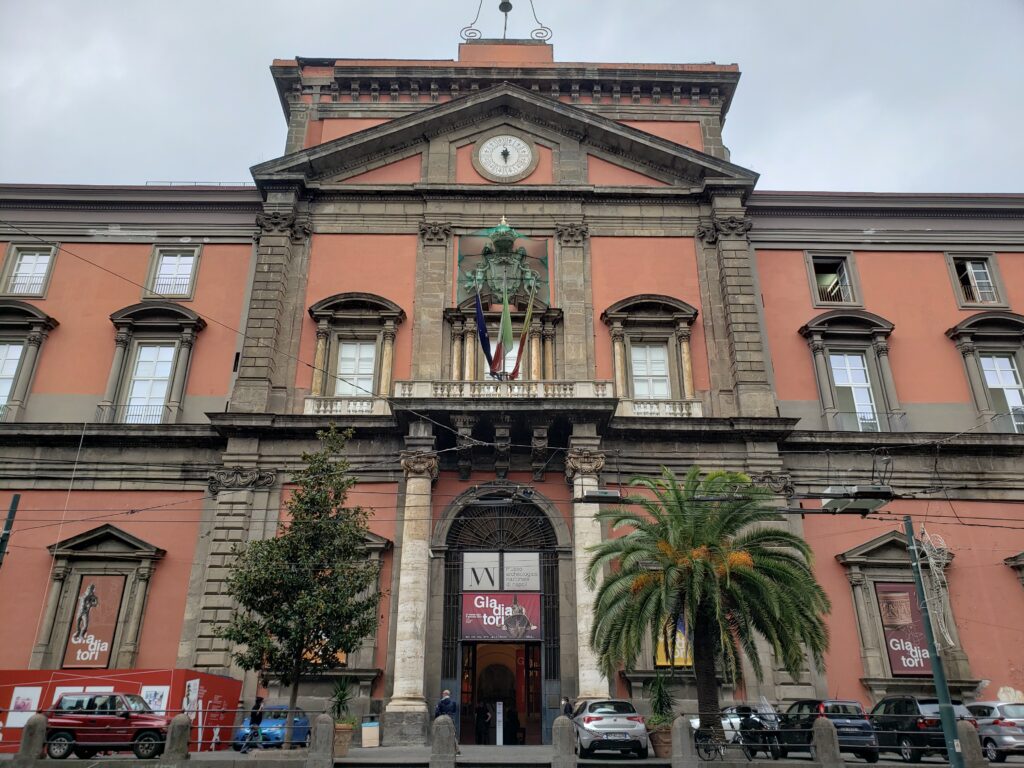
If you are an archaeological nut and ever have enough time to spend in Naples, you must visit the National Archaeological Museum. It houses an impressive collection from ancient Naples, from its ancient Greek roots through its Roman and Sicilian Empire phases, to the present. It also has a fabulous collection of artifacts from Pompeii and the Roman Period. It is found on the interesection of Piazza Cavour and Via Enrico Pessina. At the time of this writing, it can no longer be gotten to by the Museum Metro Stop, which has been closed for some time, but rather from the Piazza Cavour Metro Stop and then a short walk along that street.
National Archaeological Museum – Main Entrance
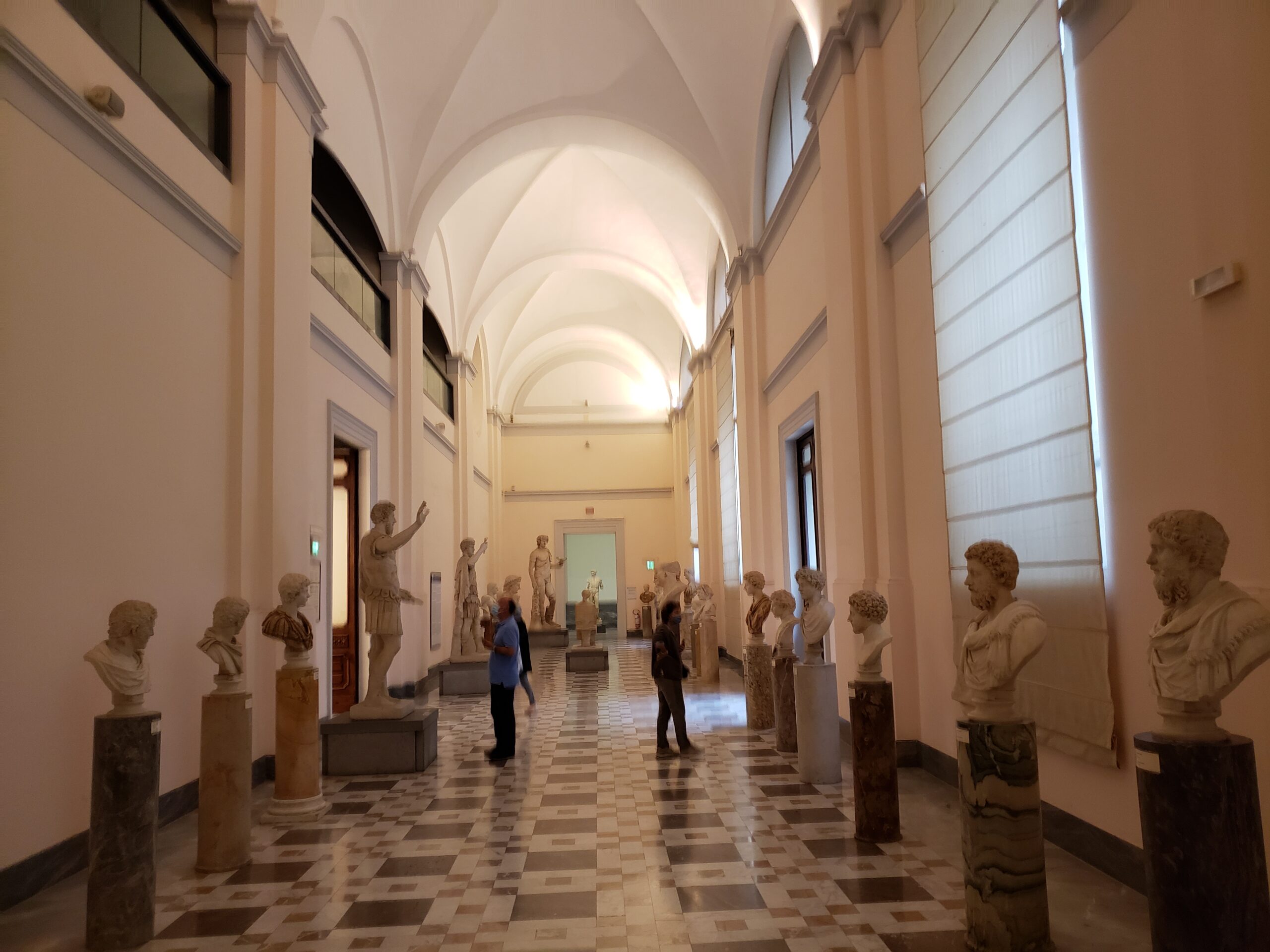
The Ground or First Floor – Main Gallery
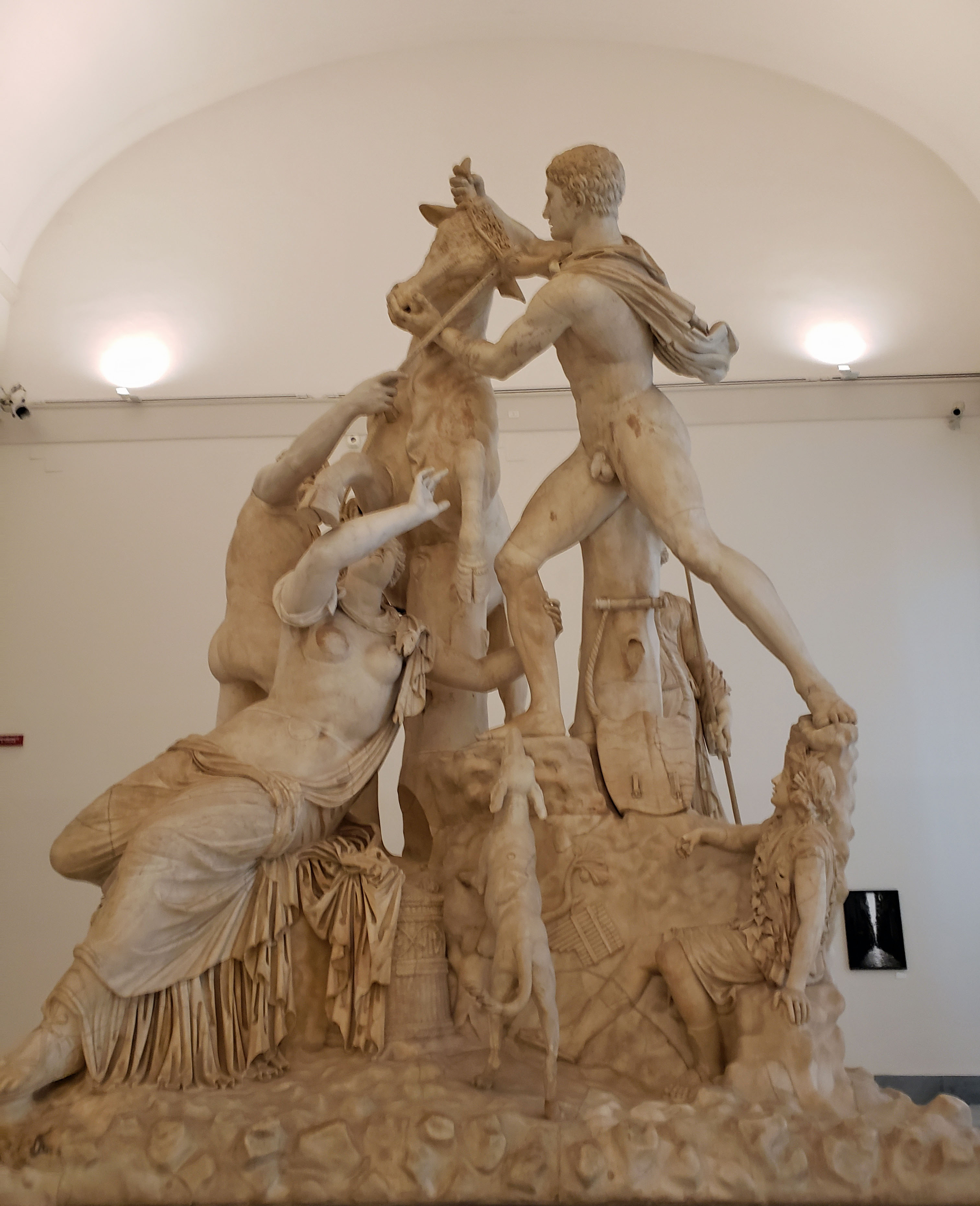
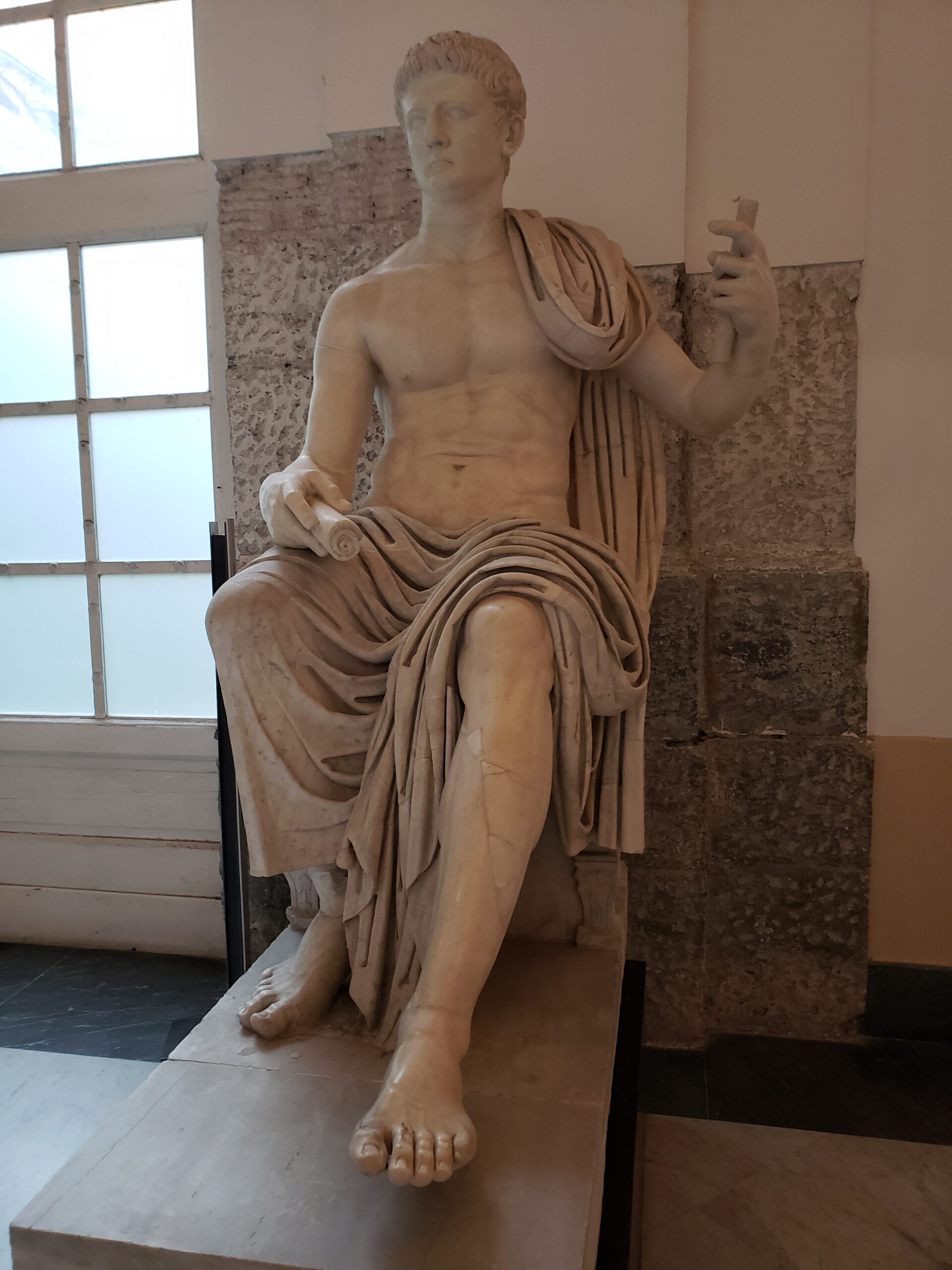
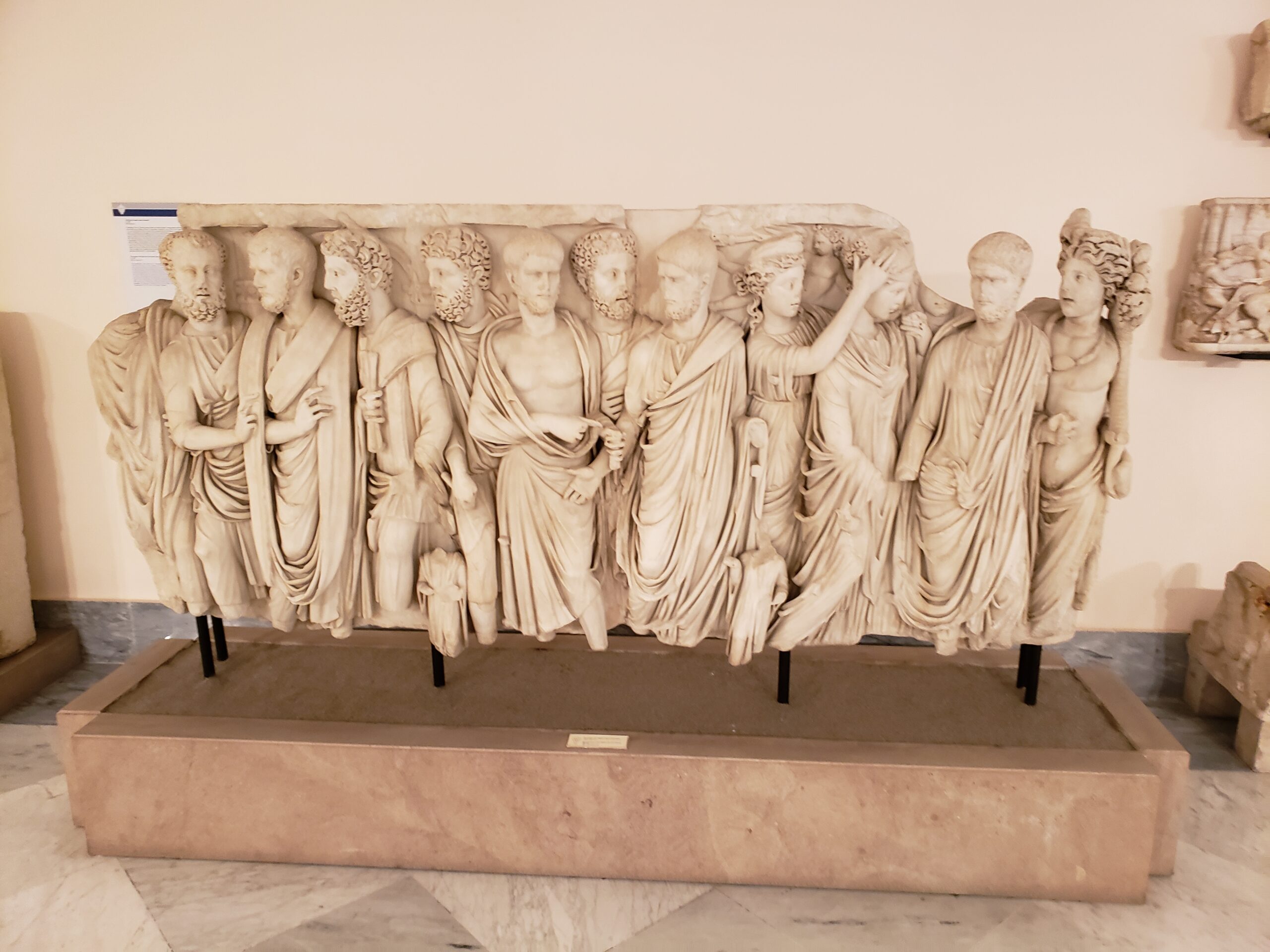
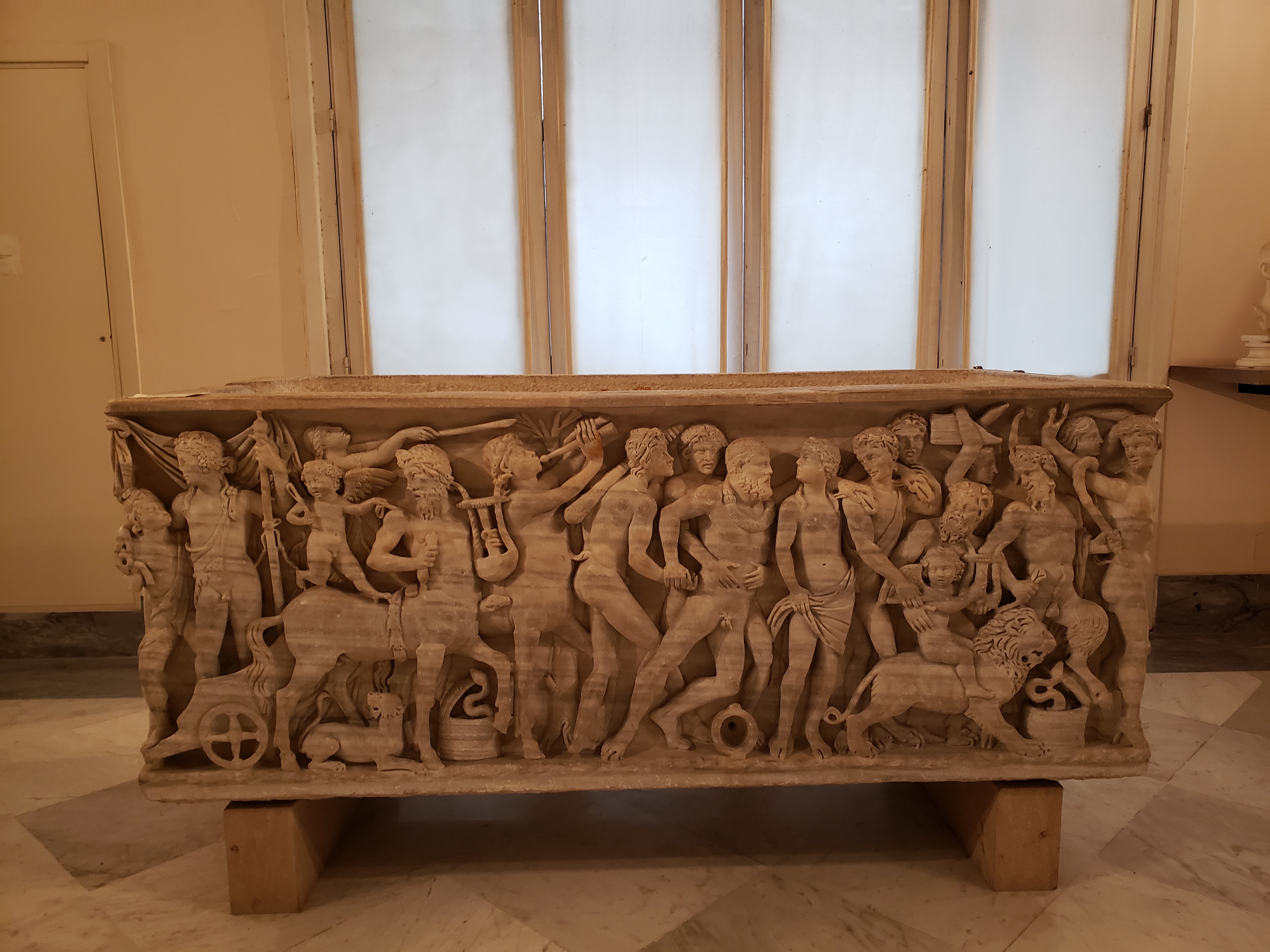
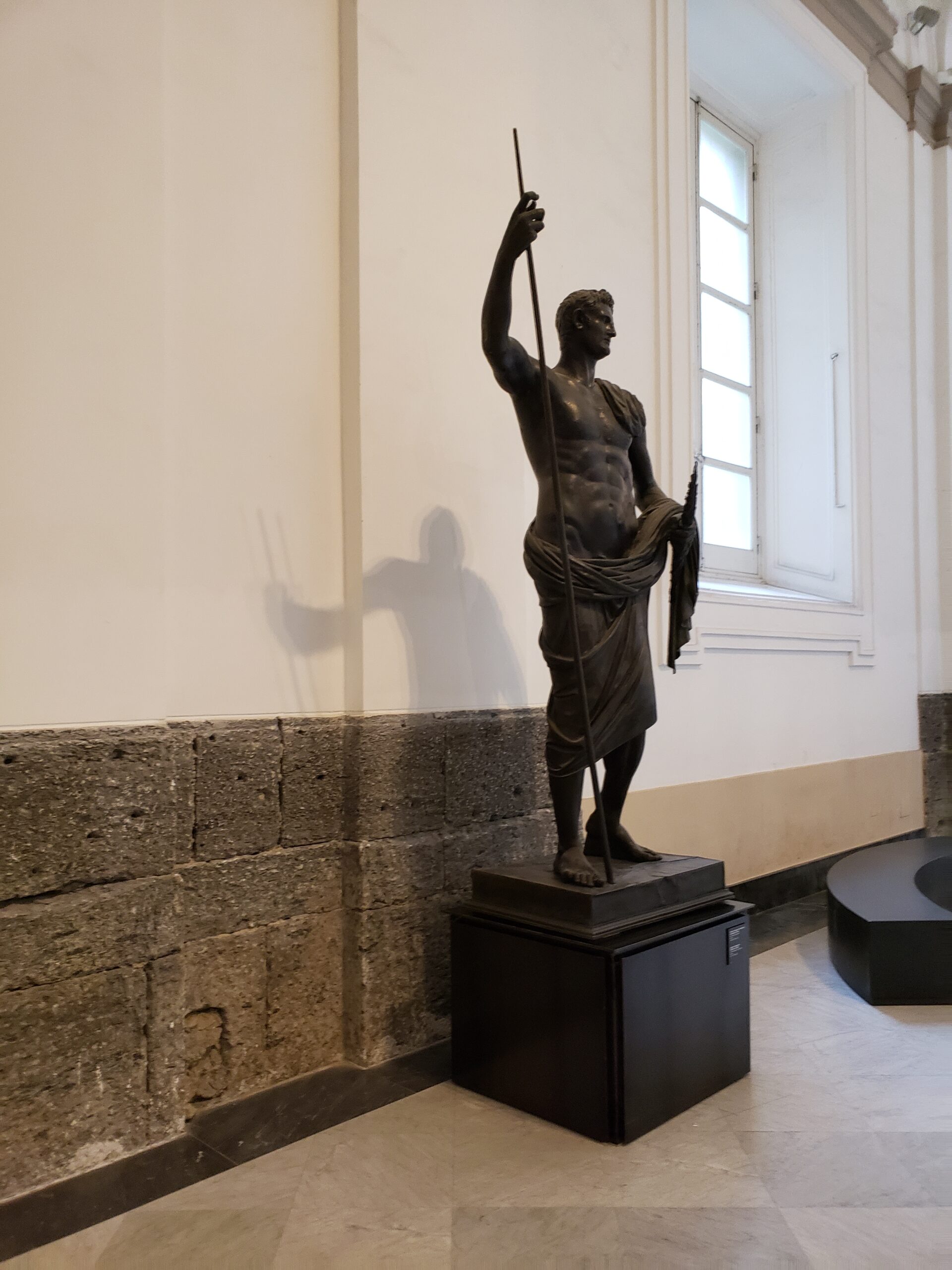
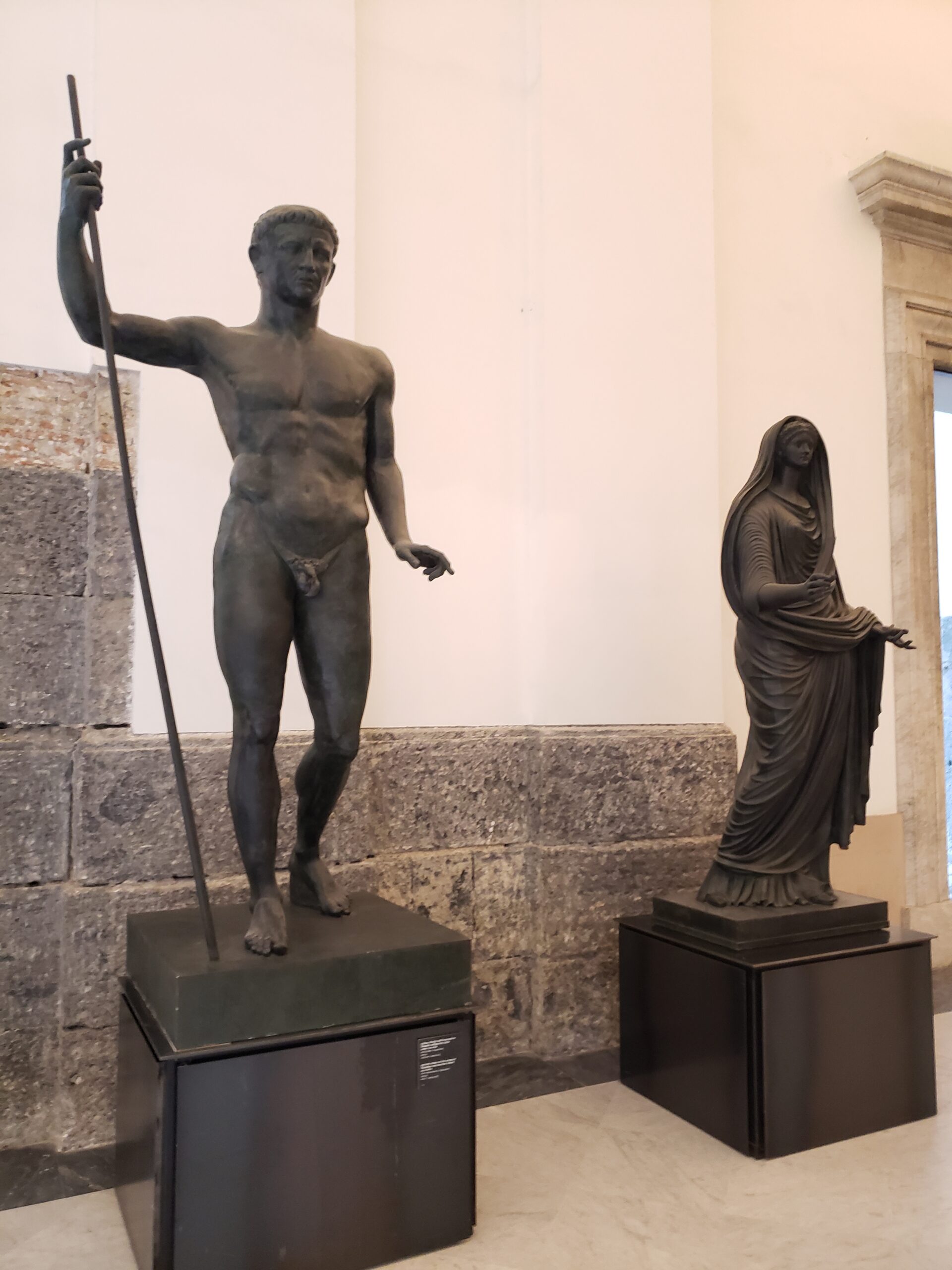
The main gallery on the ground floor has a unique and amazing collection of statues, mostly from the Roman Period, but there are also more ancient sculptures as well. It features in the back of the hall the Farnese Bull from Roman times.
National Archaeological Museum – Statue Hall – Bull – Farnese Collection – Largest Sculpture from Antiquity
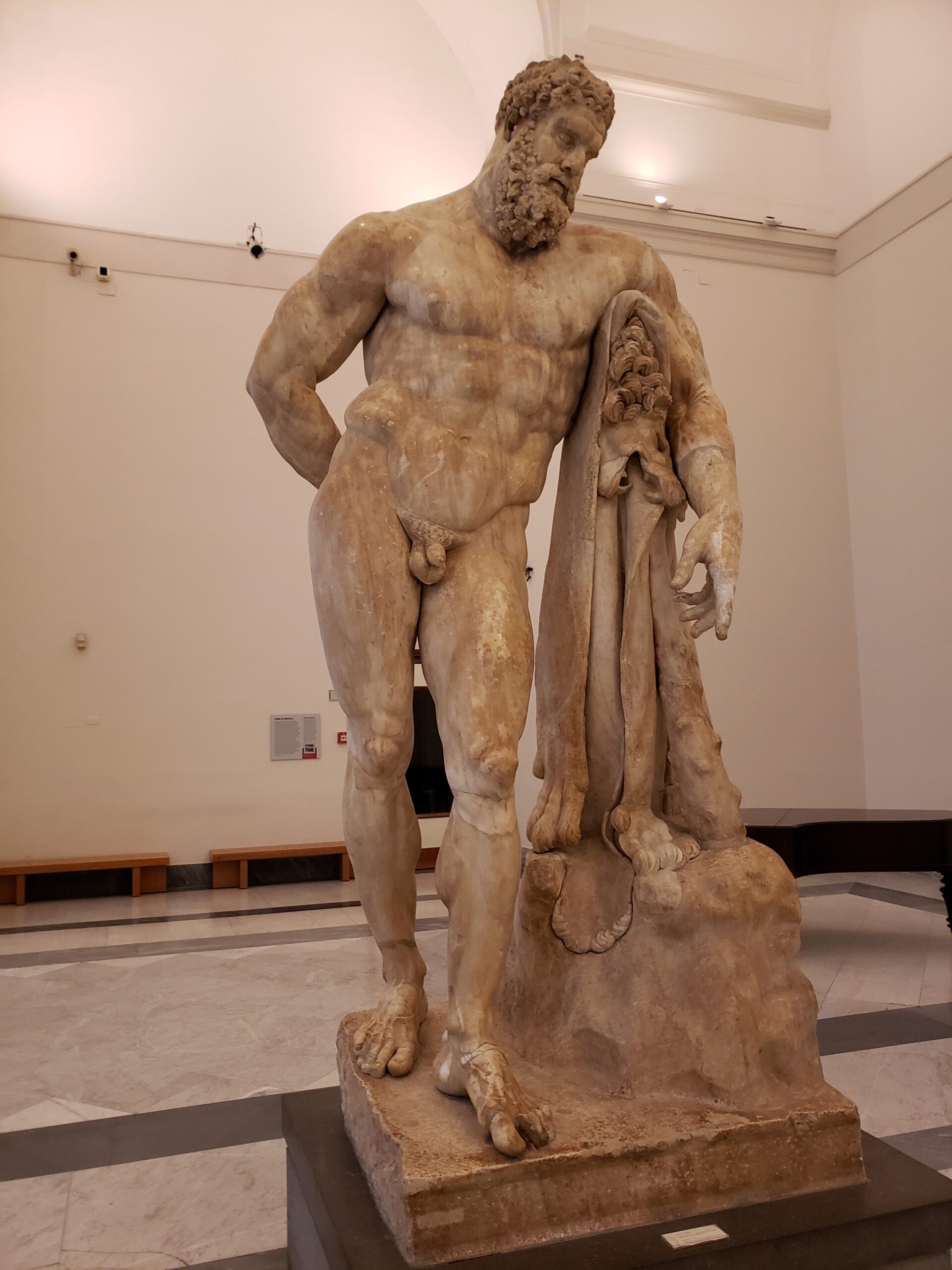
There are also a few other examples from the Farnese Collection, including Hercules and others. This section is definitely worth a quiet, long walk through with plenty of reading and afterthought. Examination of any one of these magnificent works reveal detail that someone in today’s day and age would think otherwise superfluous, and yet it would not be the work it is today without that fine attention to detail.
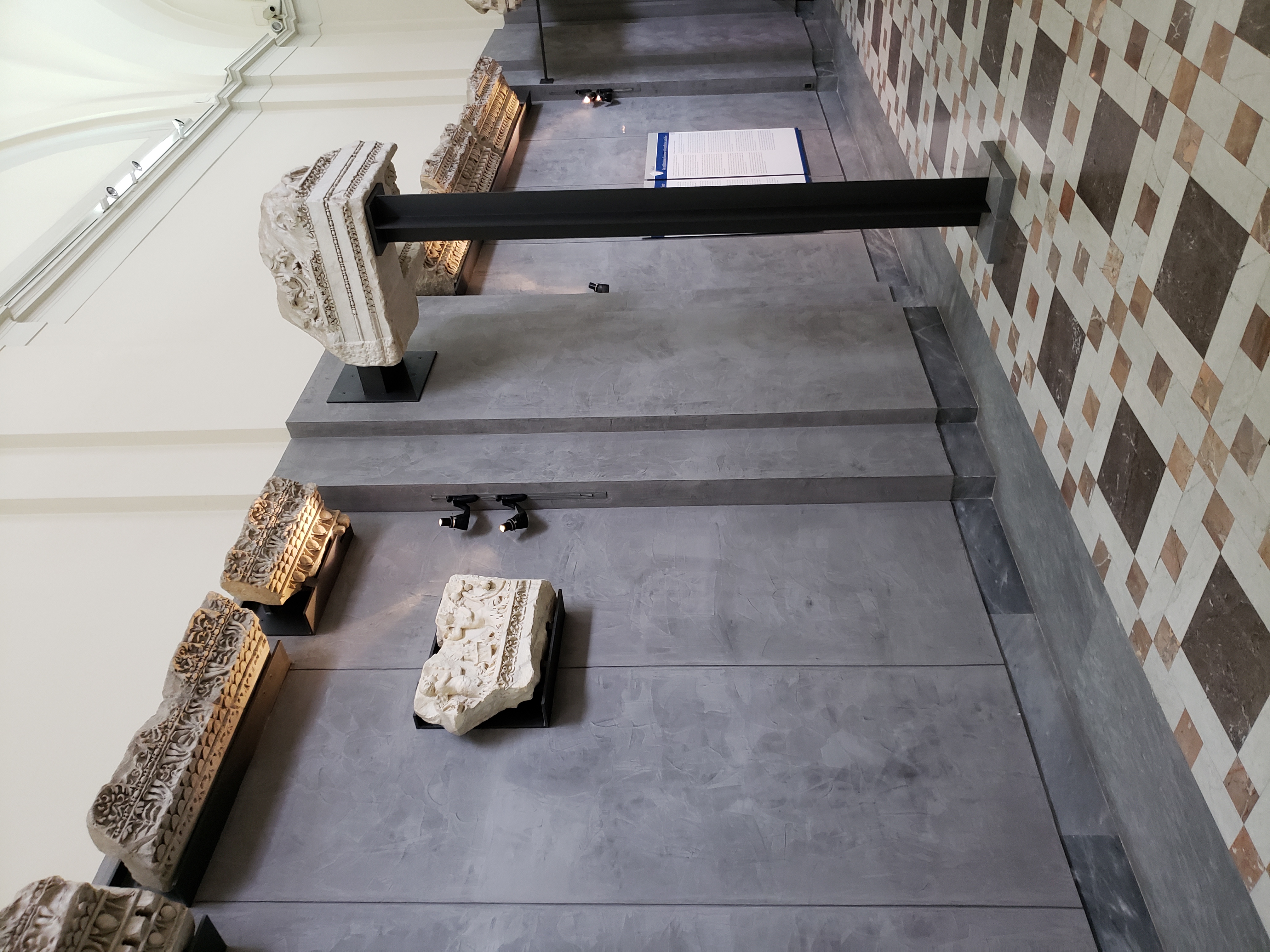
National Archaeological Museum – Statue Hall – Architectural Elements
National Archaeological Museum – Statue Hall – Large Statues – Roman
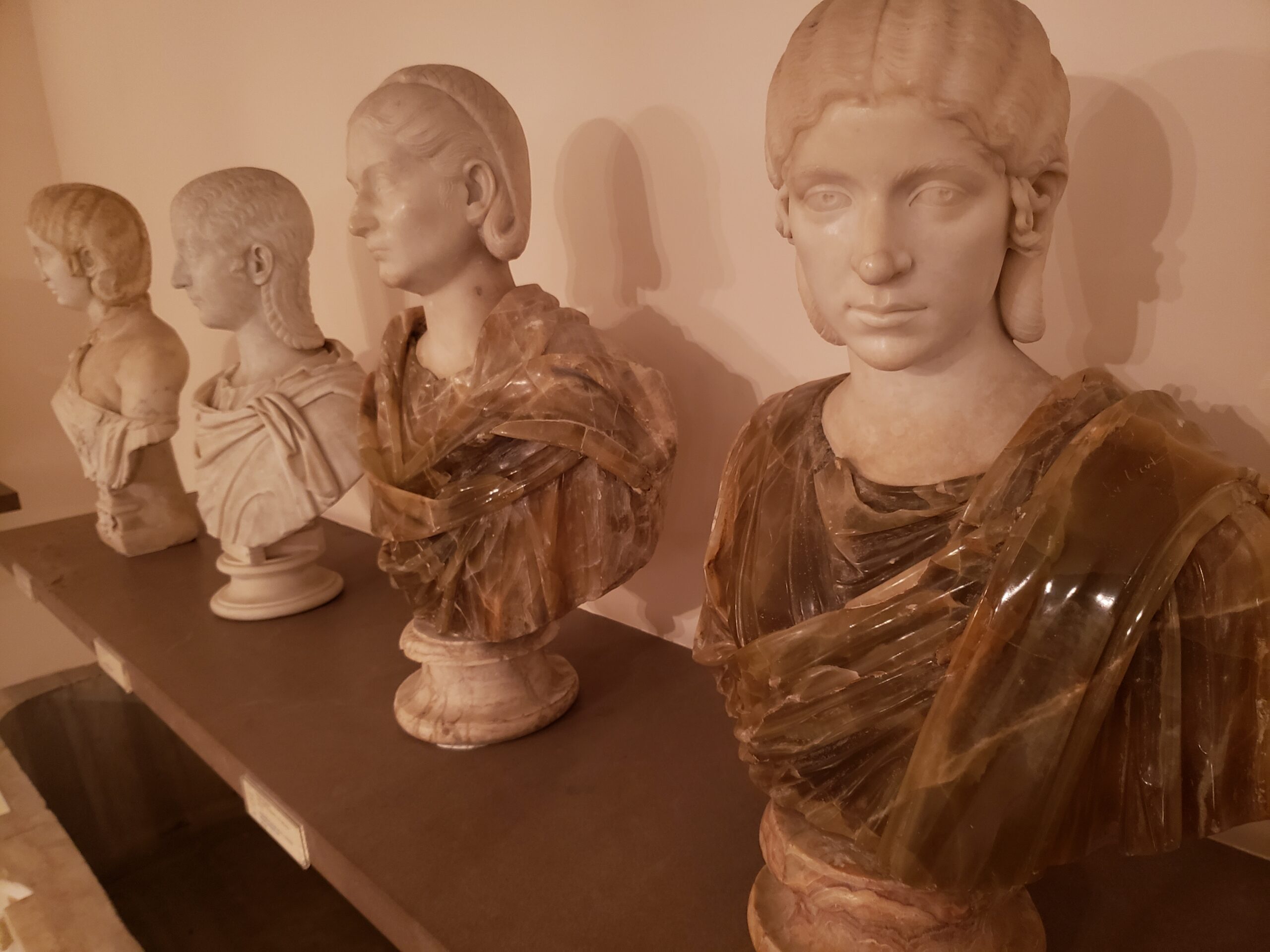
National Archaeological Museum – Statue Hall – Women Busts
National Archaeological Museum – Statue Hall – Hercules – Farnese Collection
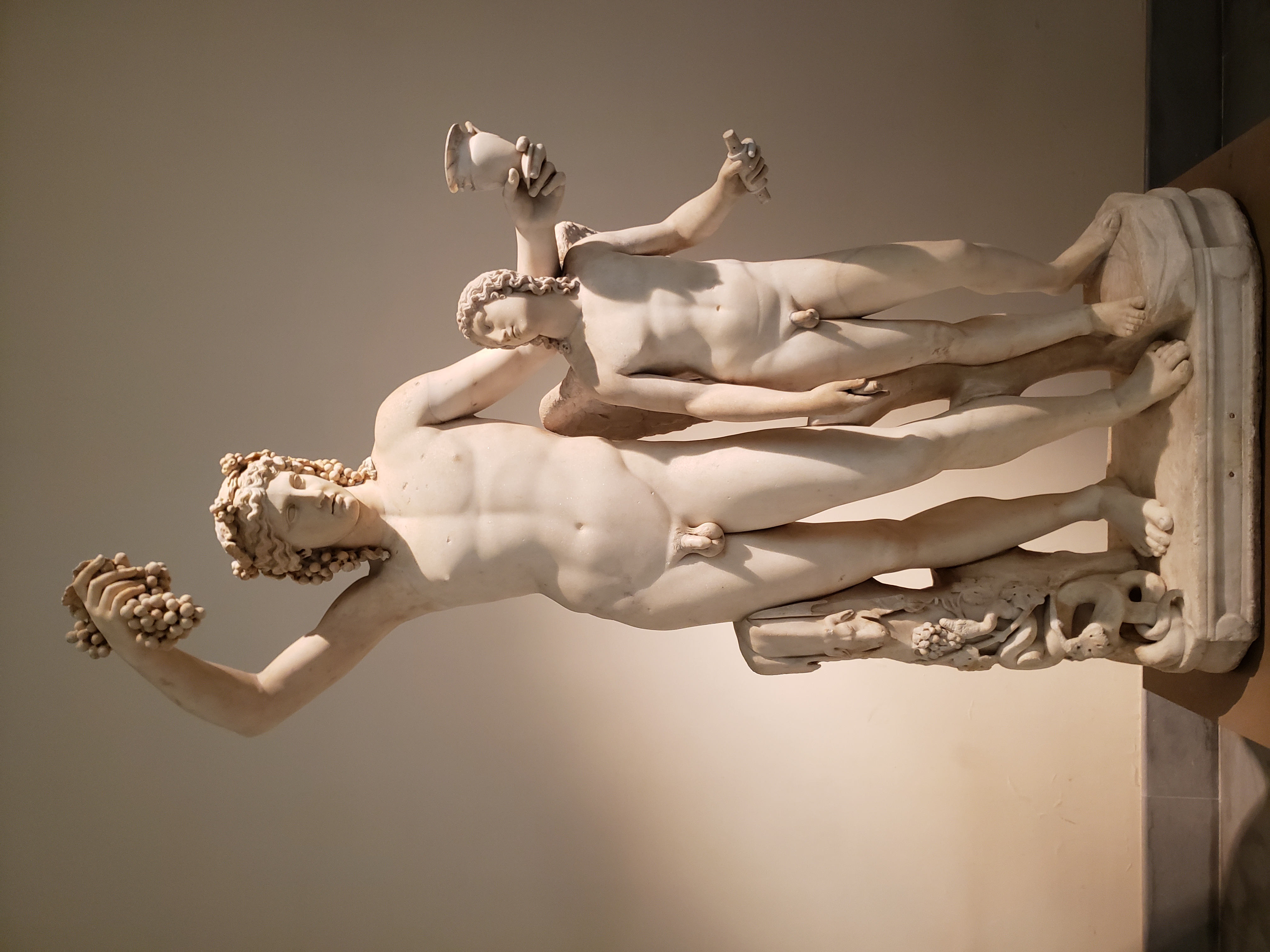
National Archaeological Museum – Statue Hall – Dionysus and Eros
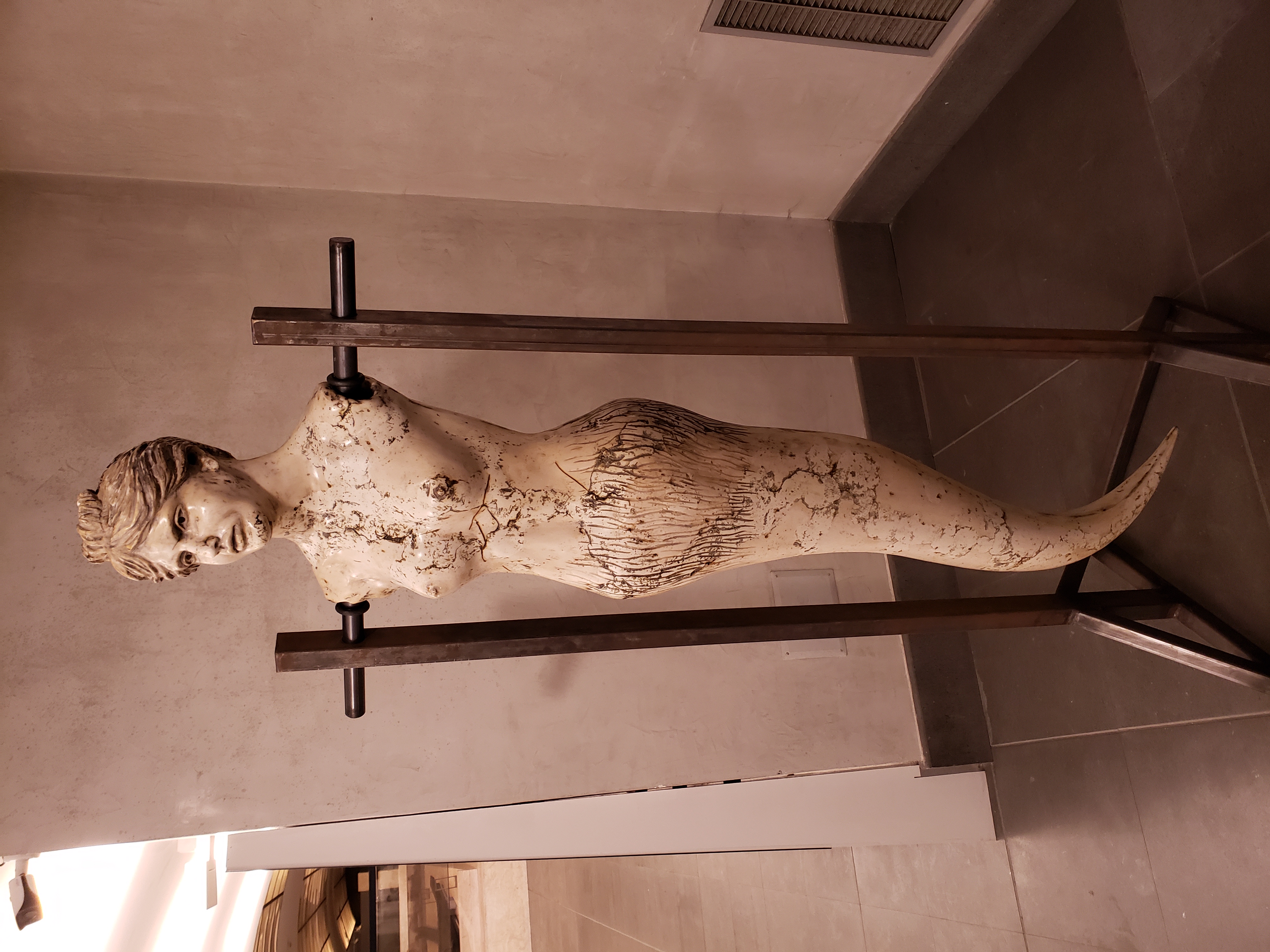
National Archaeological Museum – Statue Hall – Mermaid
National Archaeological Museum – Statue Hall – Busts of Leaders
National Archaeological Museum – Statue Hall – Relief
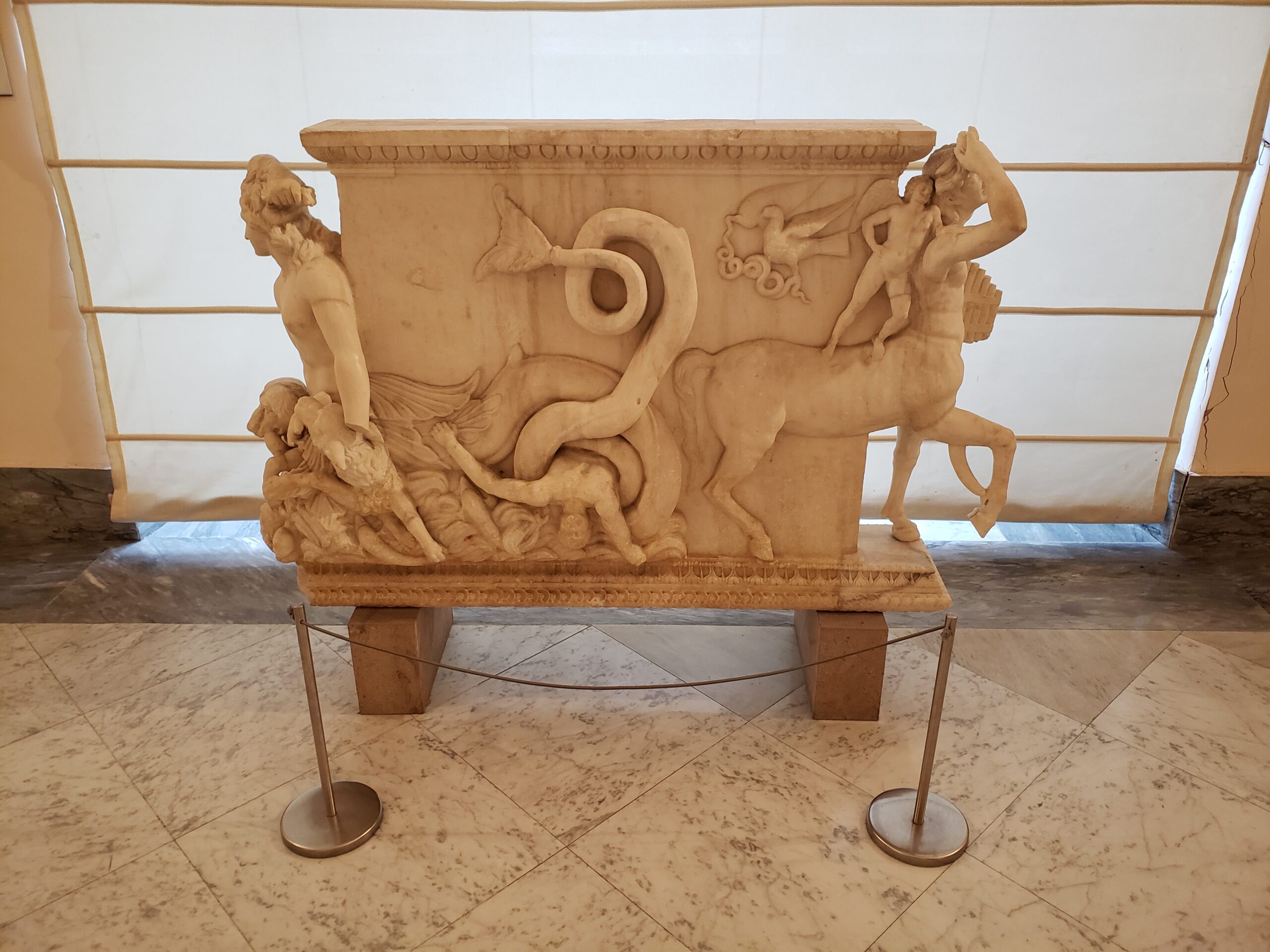
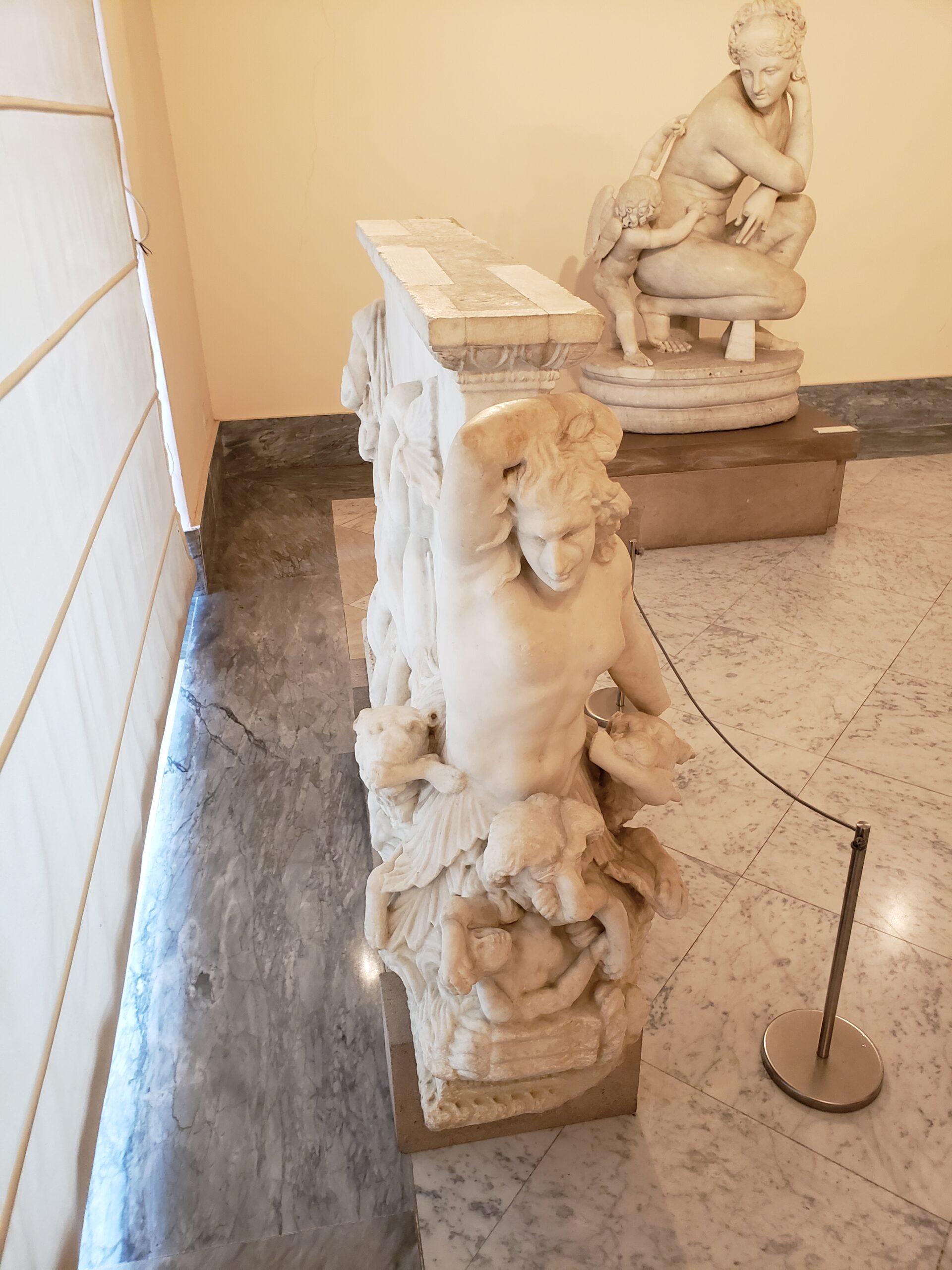
National Archaeological Museum – Statue Hall – Trapezium Table Support – Villa Madama – Homeric myth of Scylla gripping Ulysses’s sailors
National Archaeological Museum – Statue Hall – Relief
National Archaeological Museum – Statue Hall – Sarcophagus
National Archaeological Museum – Statue Hall – Large Statues
National Archaeological Museum – Statue Hall – Large Statues
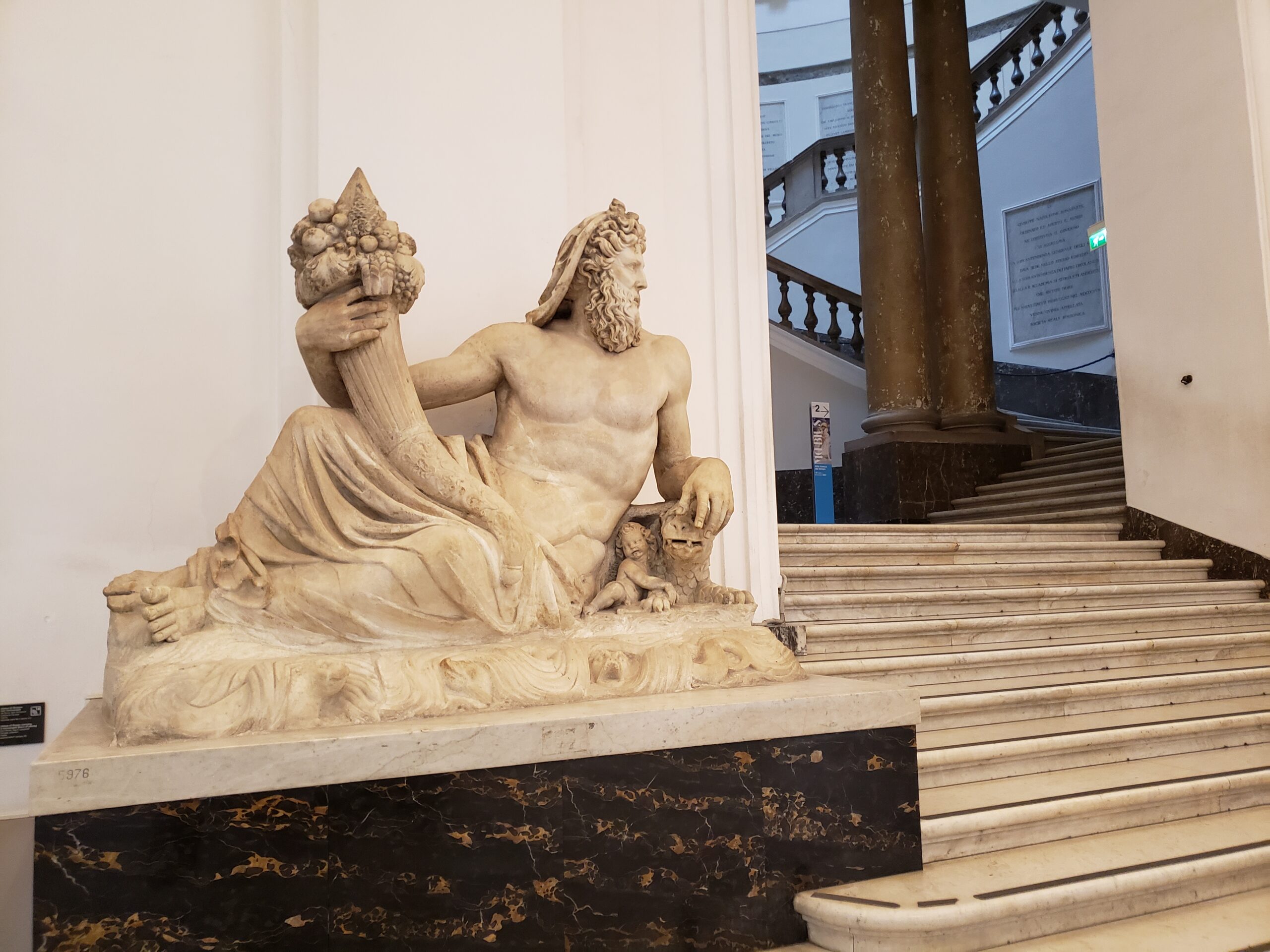
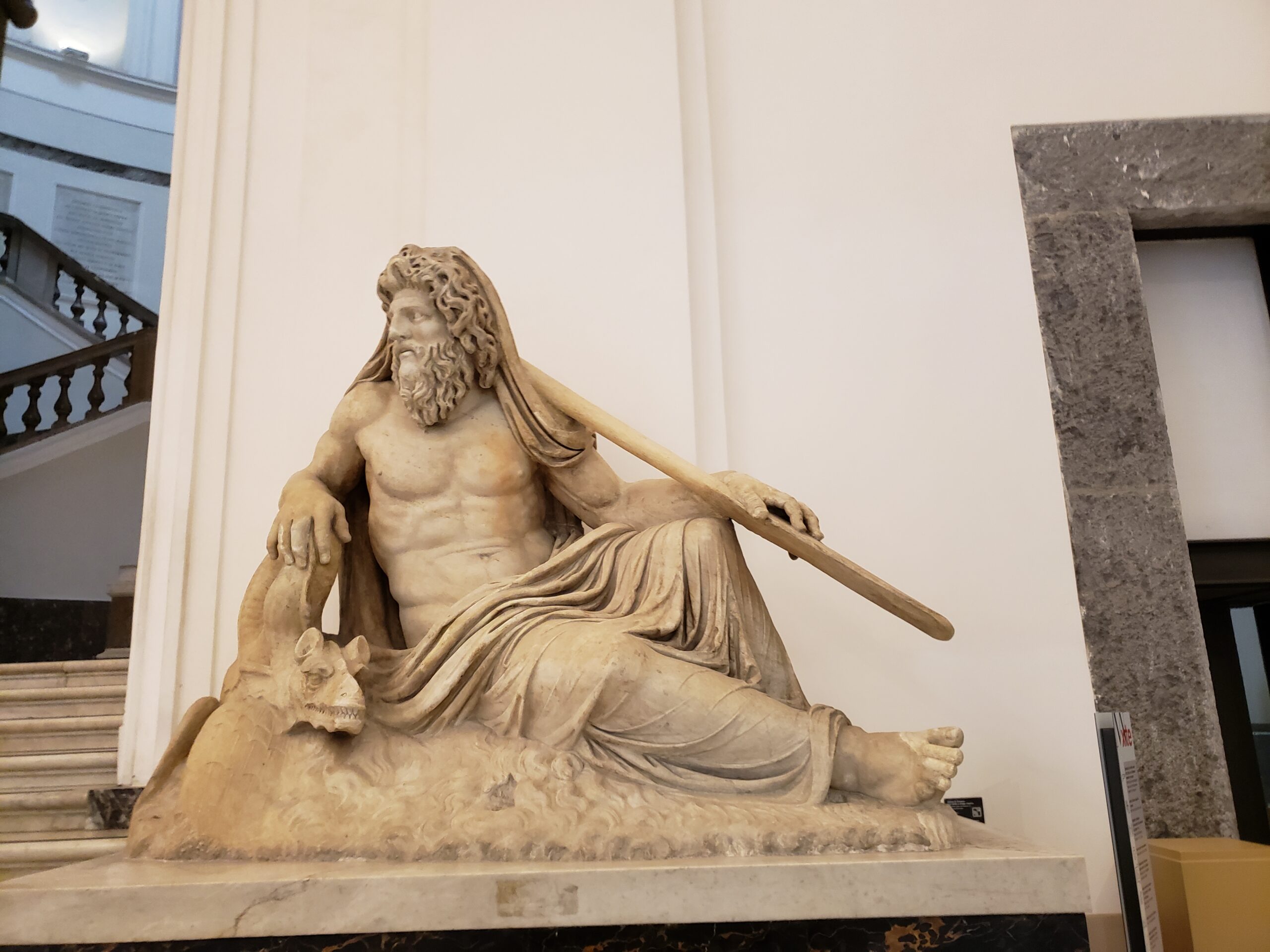
Leaving the main gallery and proceeding upstairs you pass the two dominant representations of Ocean or Oceanus, the god the ultimate river – the oceans. It is still not none precisely the etymology of this word and therefore it may not have any antecendents. However, one look at these two figures and you can tell that whomever this god represented, he was a very serious fellow, he had to be the dominate force for all water.
National Archaeological Museum – Statue Hall – Large Statue of Ocean holding a cornucopia – Entrance to Upstairs
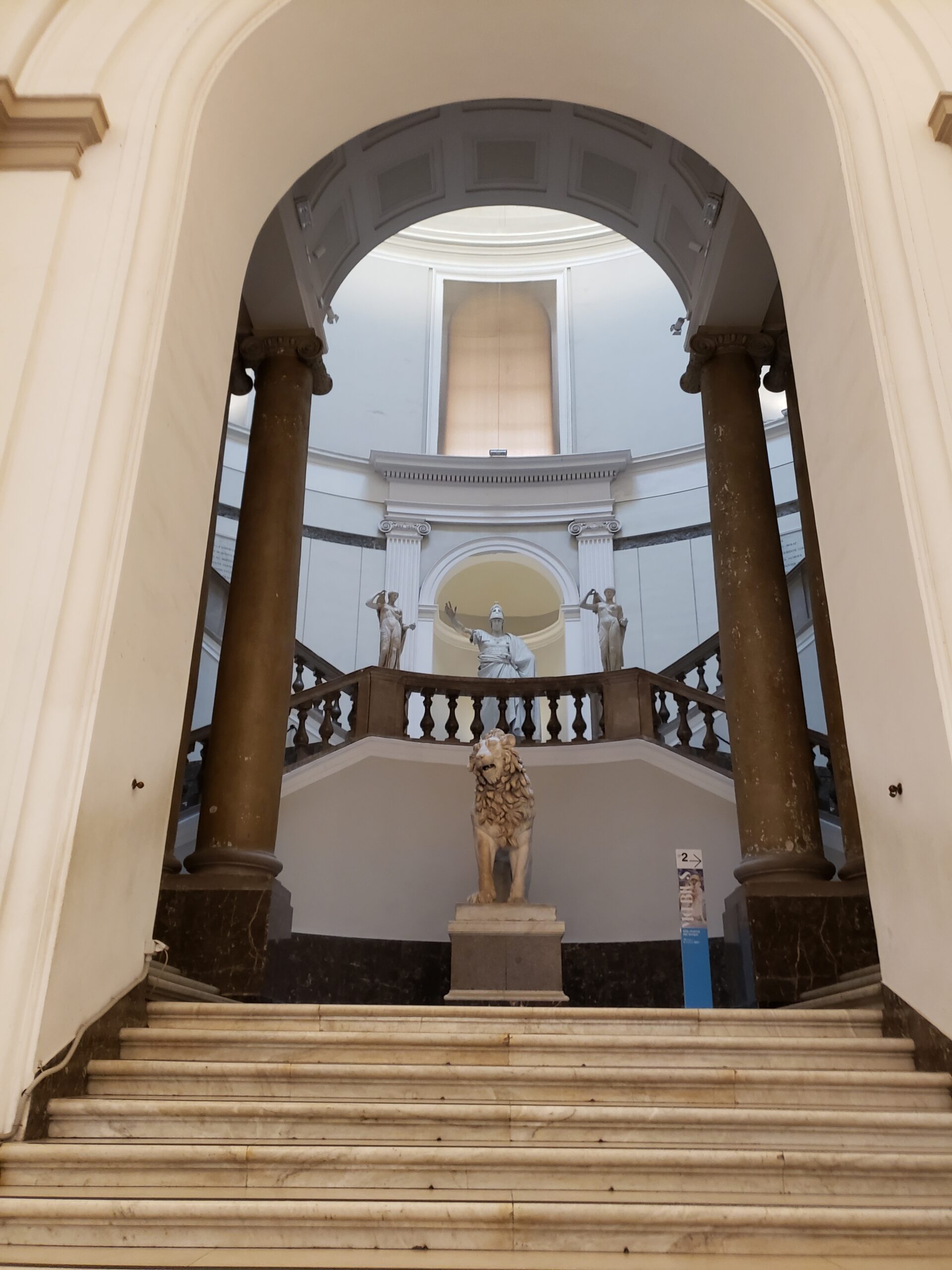
National Archaeological Museum – Statue Hall – Entrance to Upstairs
National Archaeological Museum – Statue Hall – Large Statue of Ocean holding an Oar and a Sea Dragon – Entrance to Upstairs
The First Floor – The Mosaic Gallery
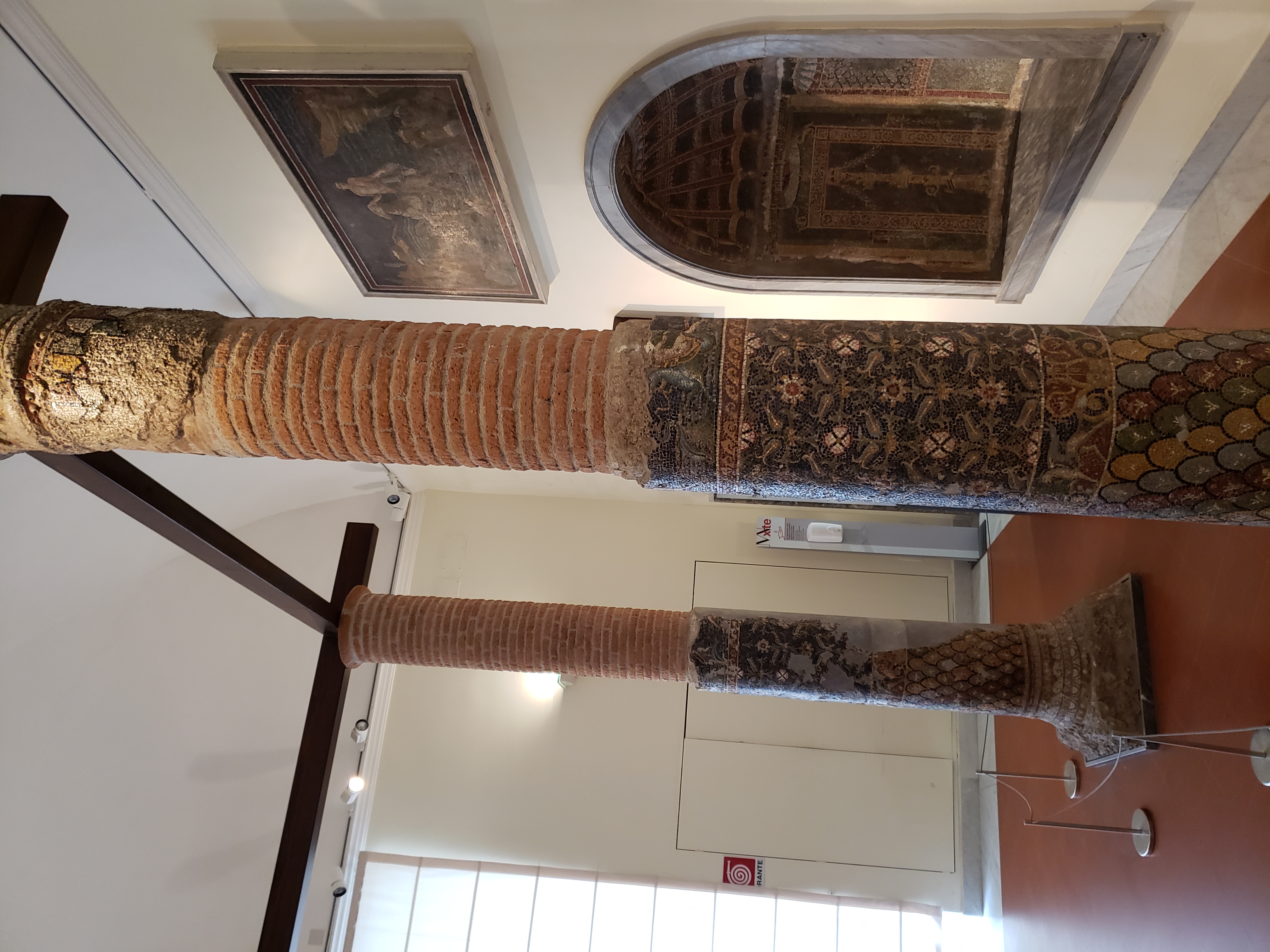
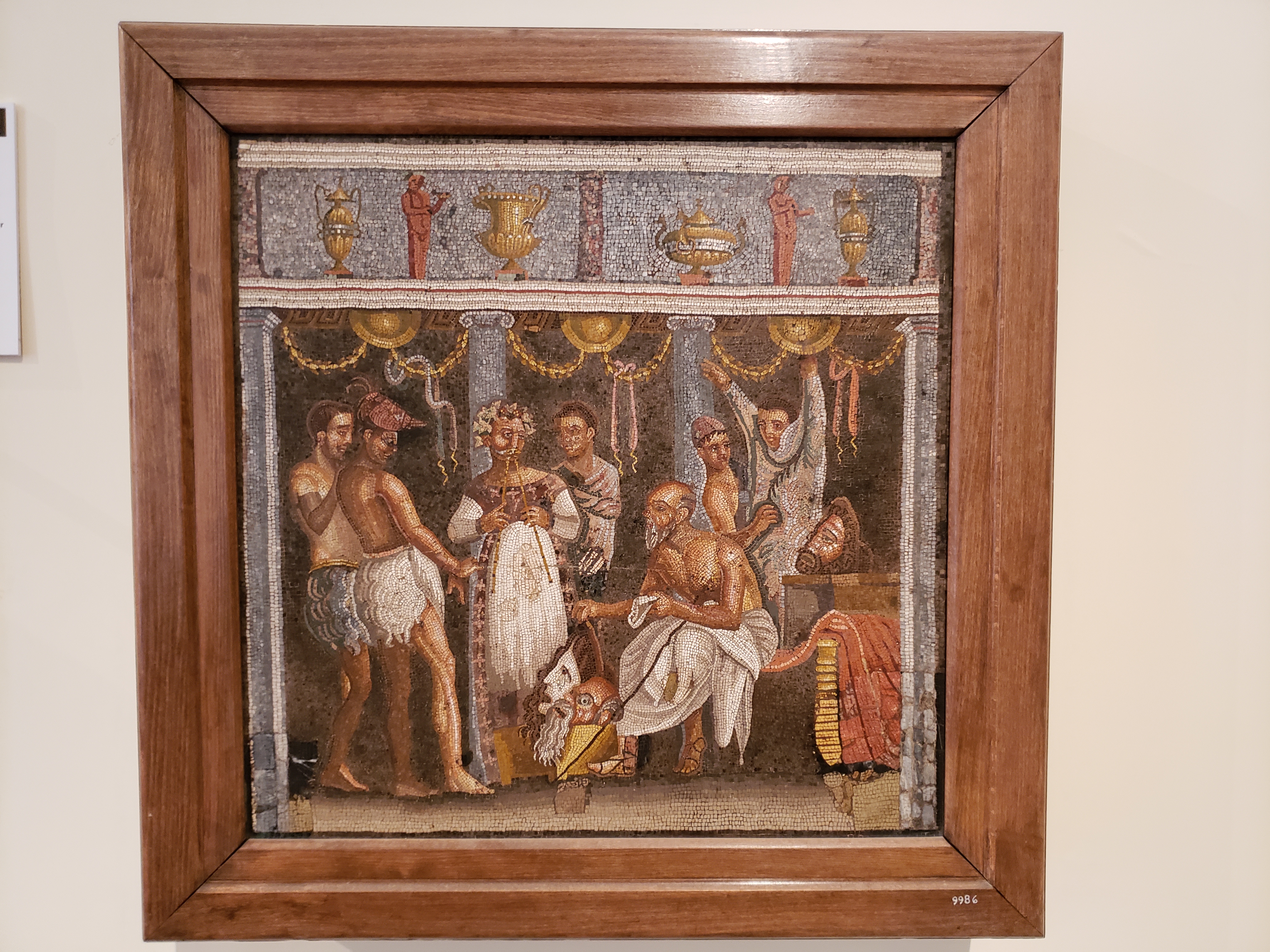
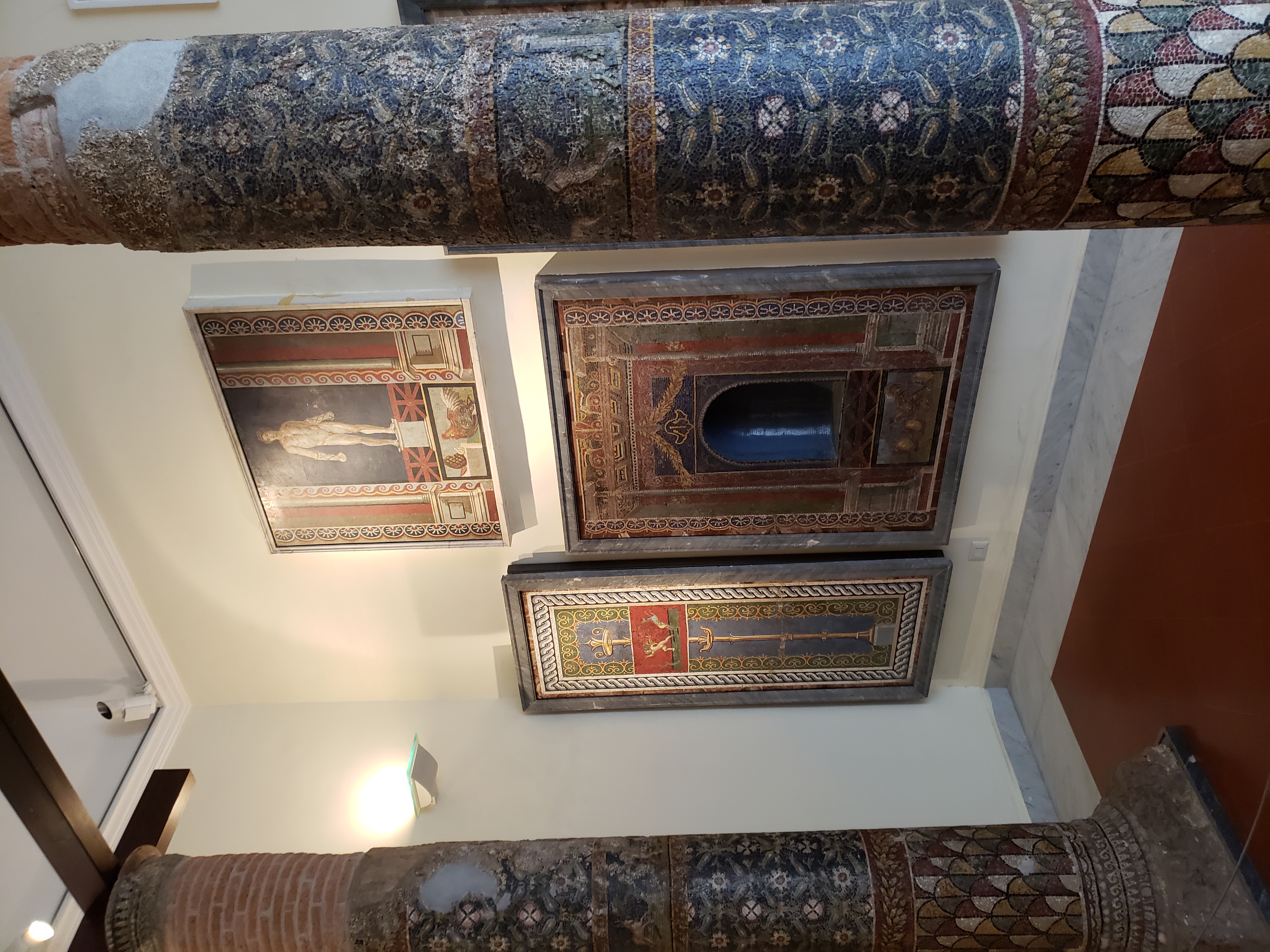
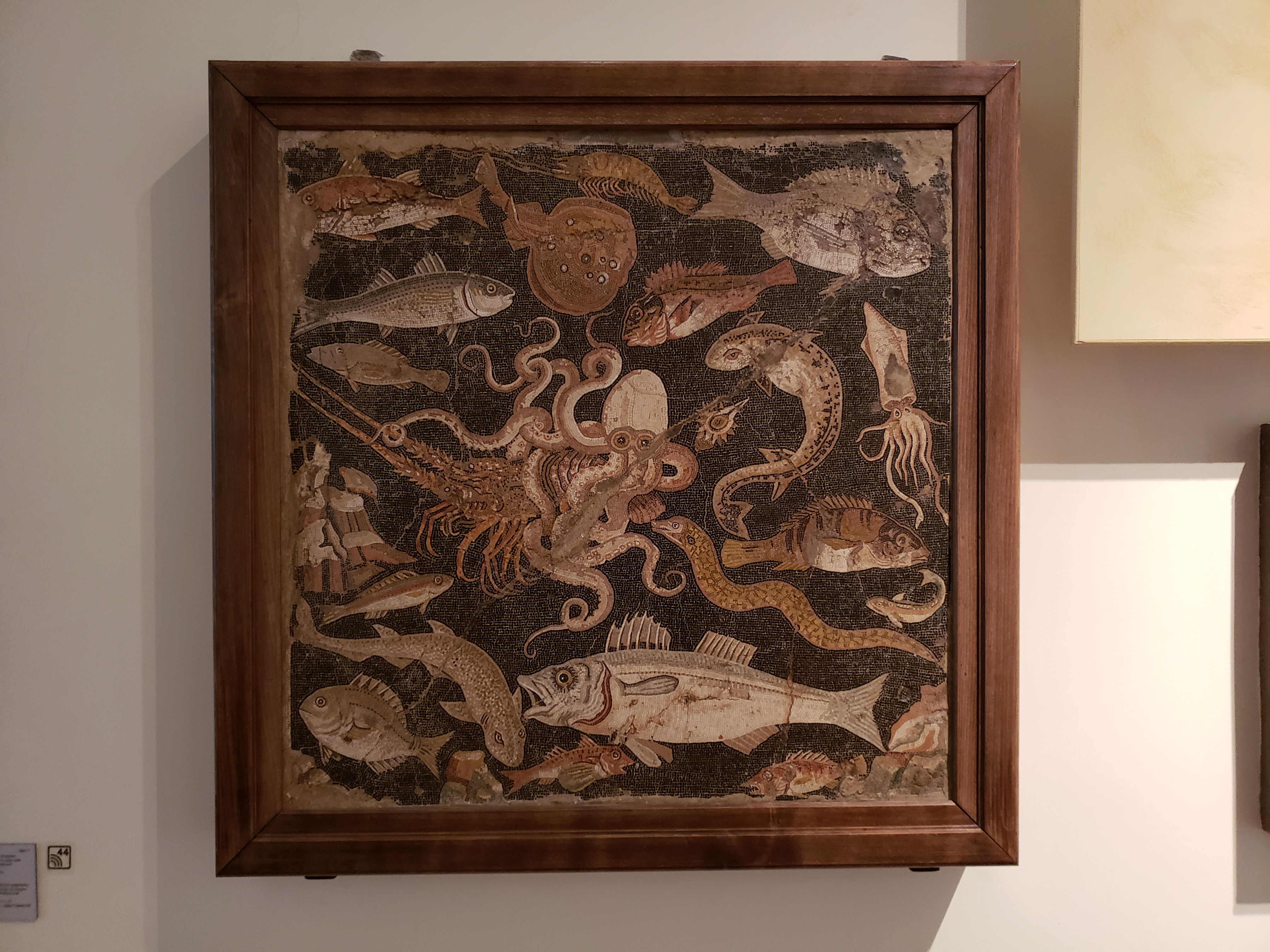
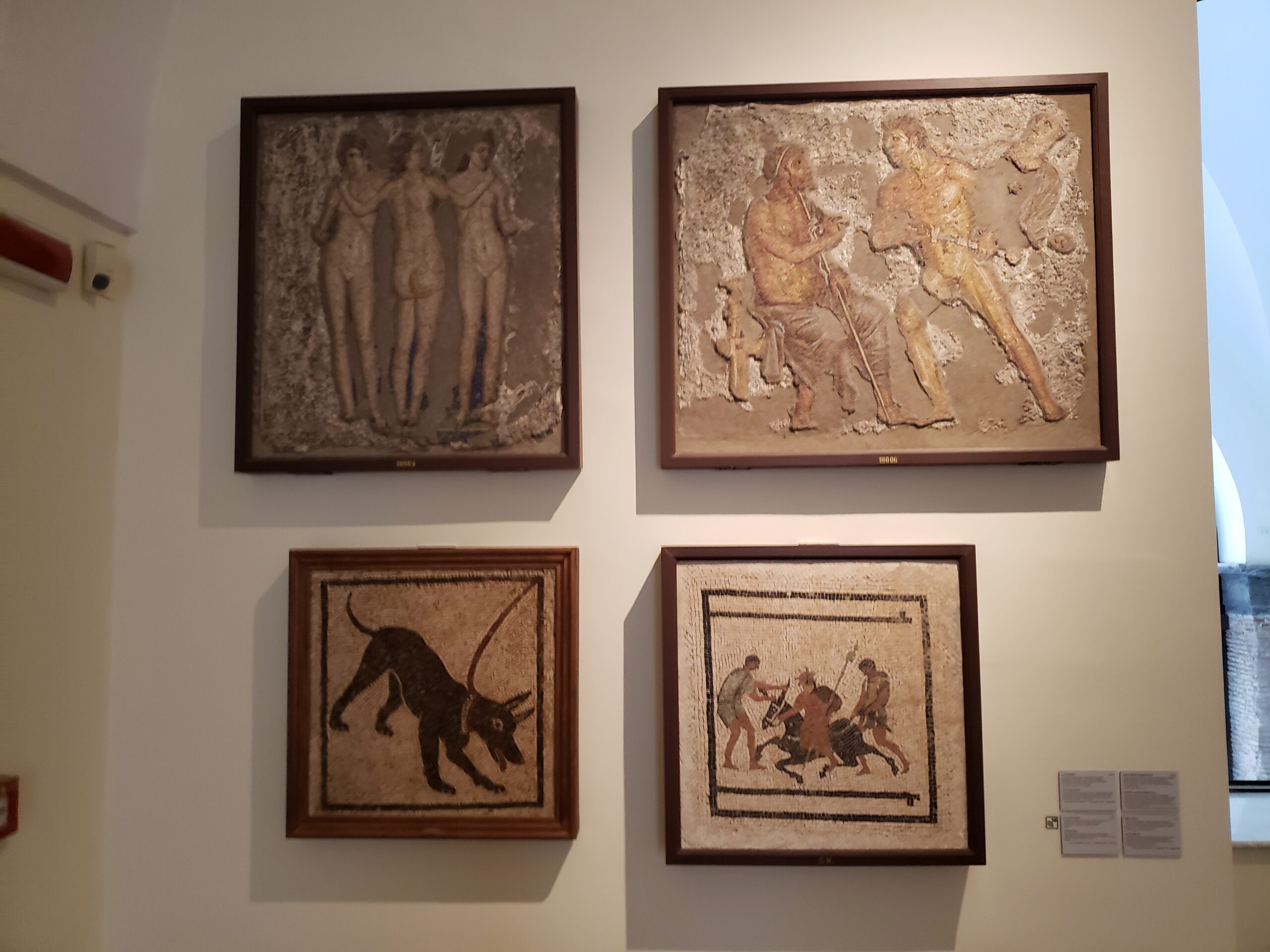
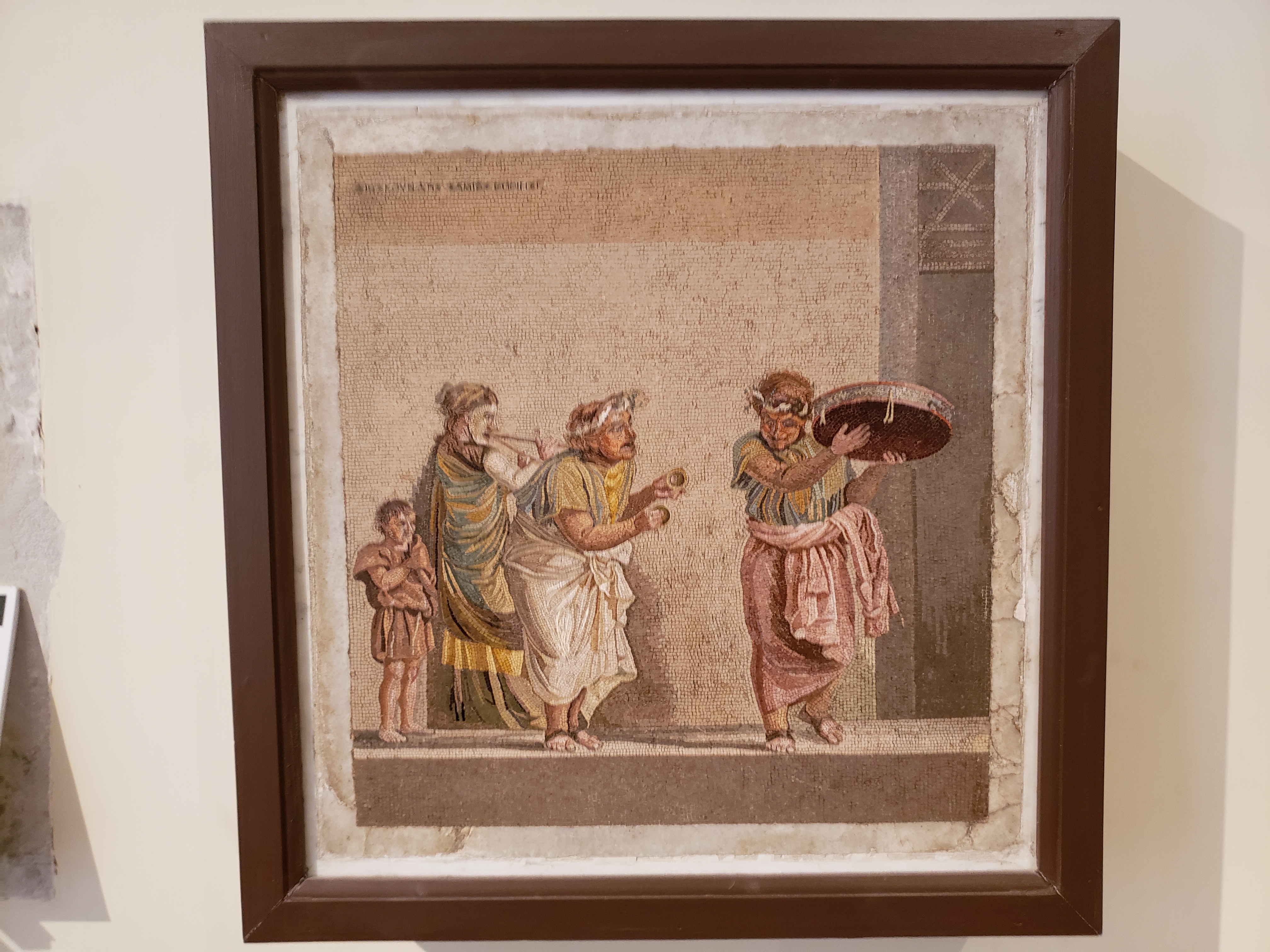
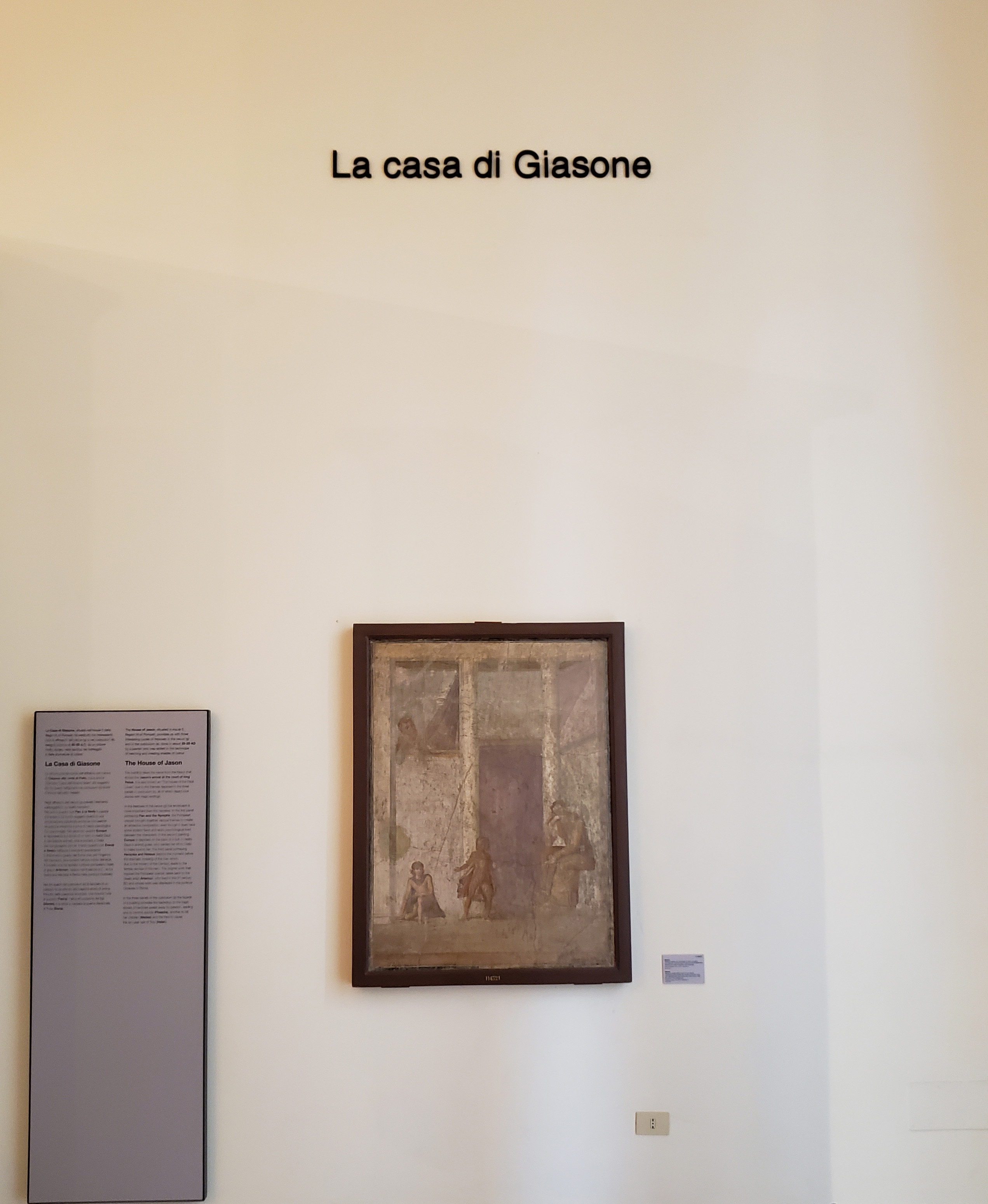
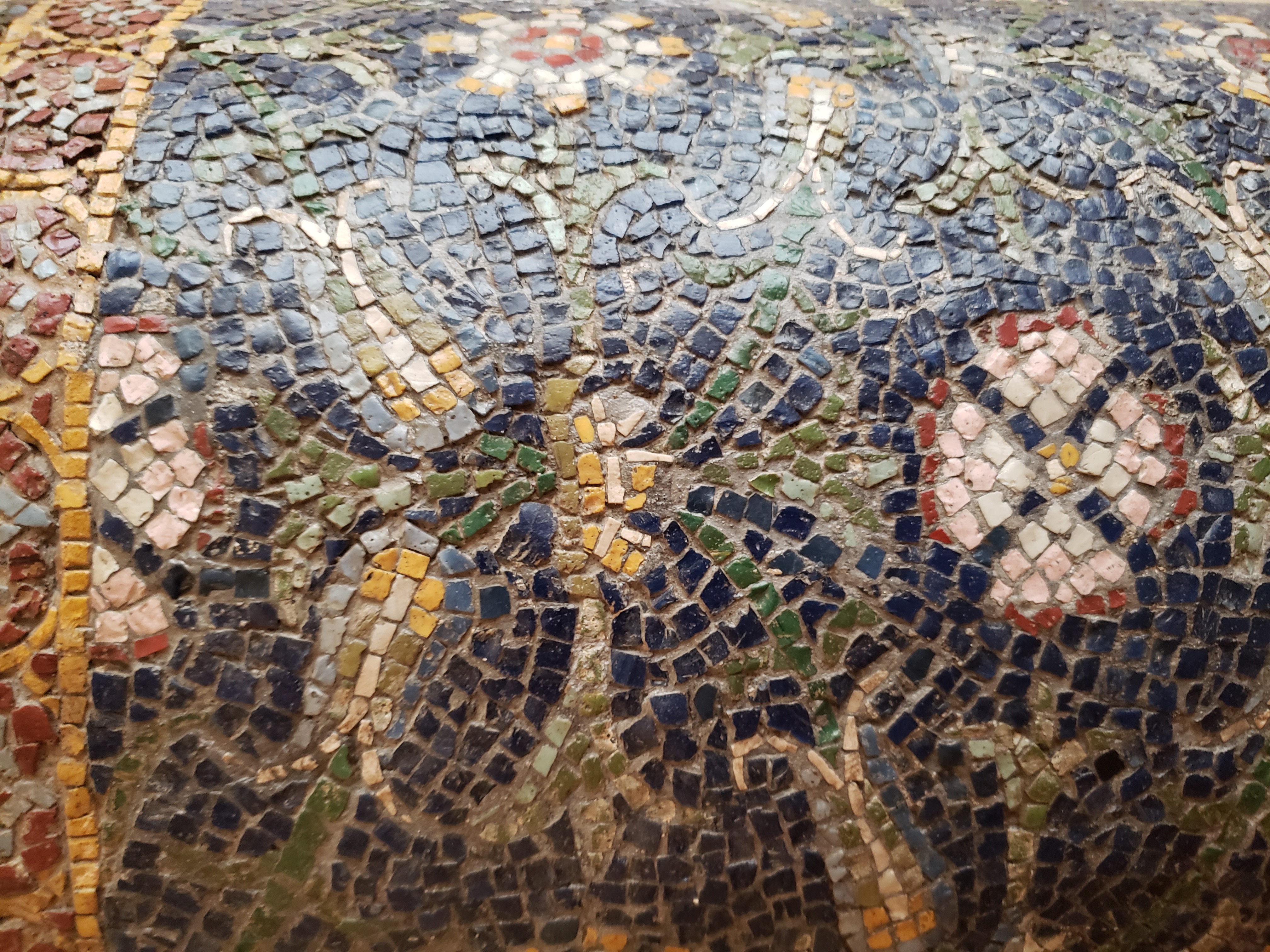
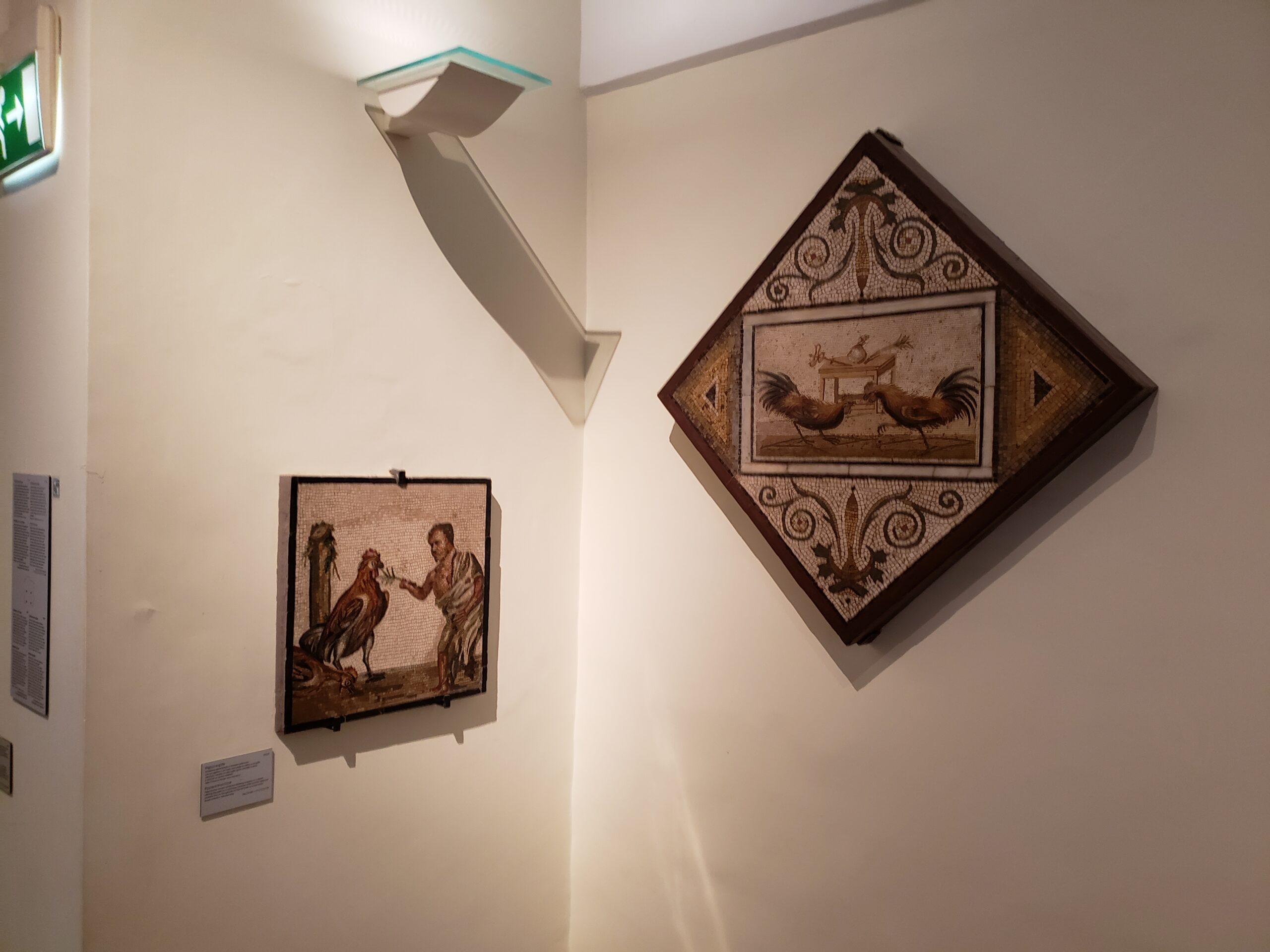
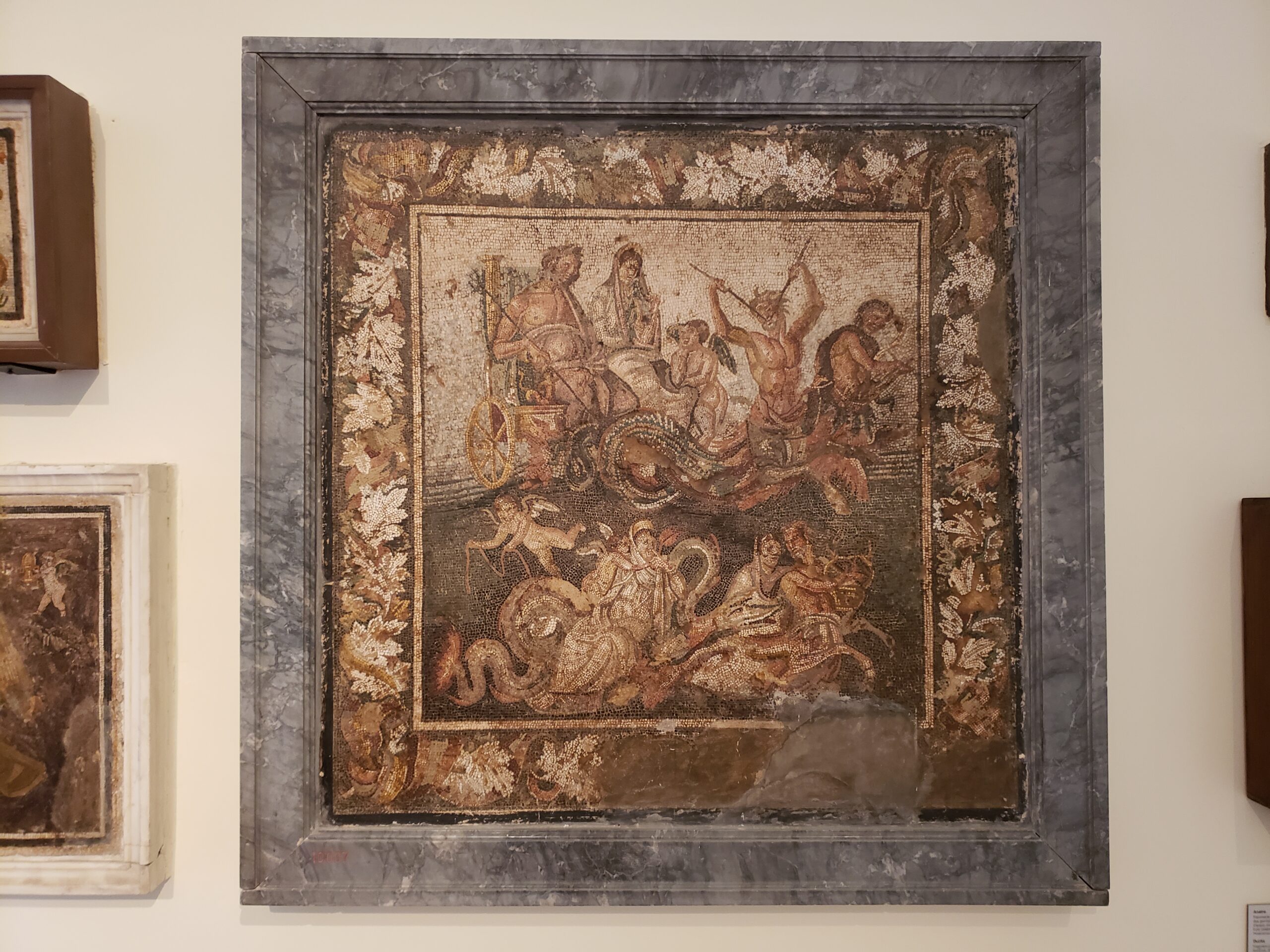
Here one can find all sorts of ancient mosaics, however most are from Pompeii. Made of paste and ceramic all are equisitely done in the form of a story to tell the onlooker.
National Archaeological Museum – Mosaic Hall
National Archaeological Museum – Mosaic Hall – Mosaics made with Glass and Paste
National Archaeological Museum – Mosaic Hall
National Archaeological Museum – Mosaic Hall – Mosaics made with Glass and Paste
National Archaeological Museum – Mosaic Hall – Numerous Household Examples
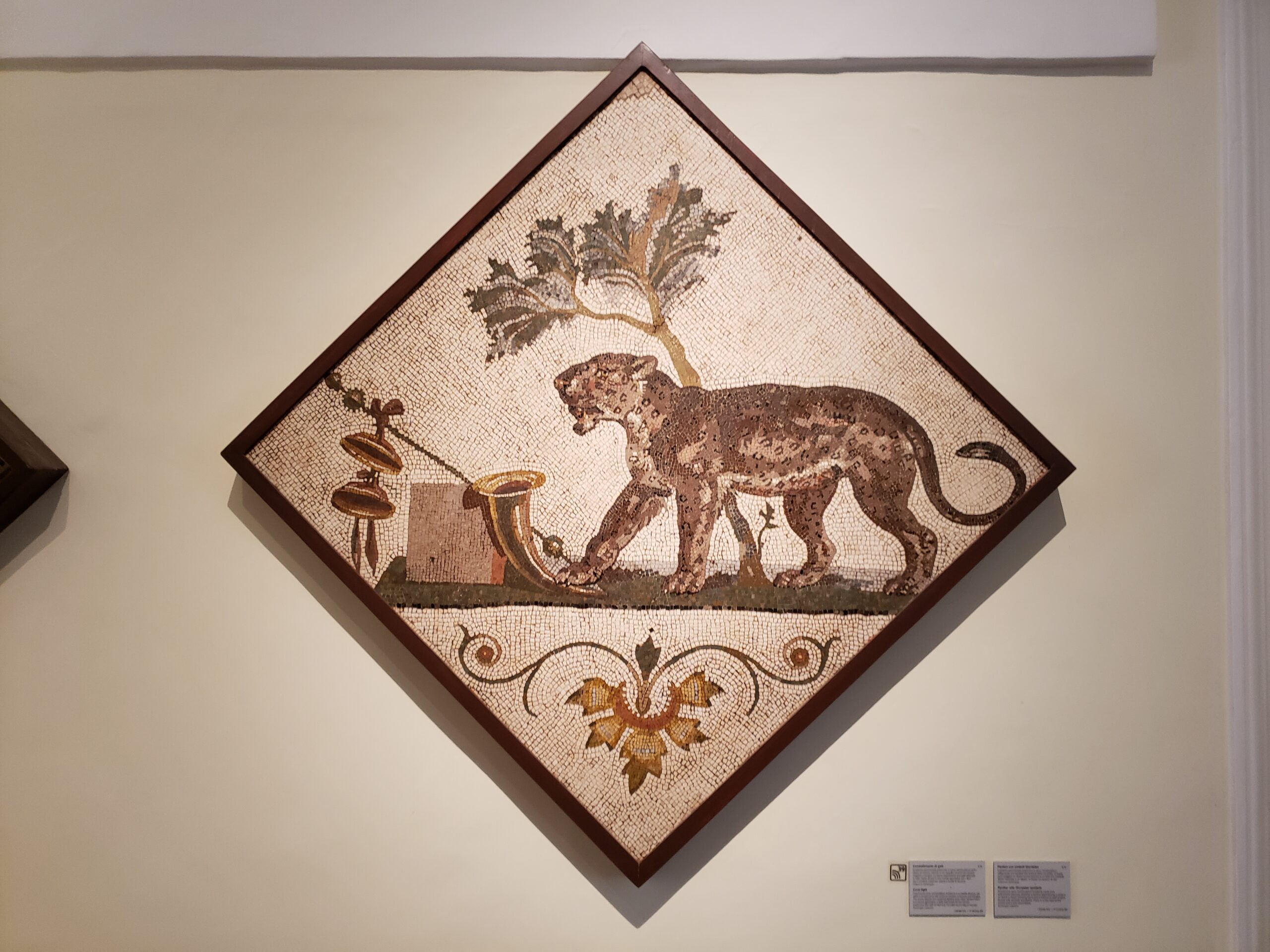
National Archaeological Museum – Mosaic Hall – Leopard
National Archaeological Museum – Mosaic Hall – Mosaics made with Glass and Paste
National Archaeological Museum – Mosaic Hall
National Archaeological Museum – Mosaic Hall – From Houses
National Archaeological Museum – Mosaic Hall – Mosaics made with Glass and Paste
The Third Floor – The Glass Gallery
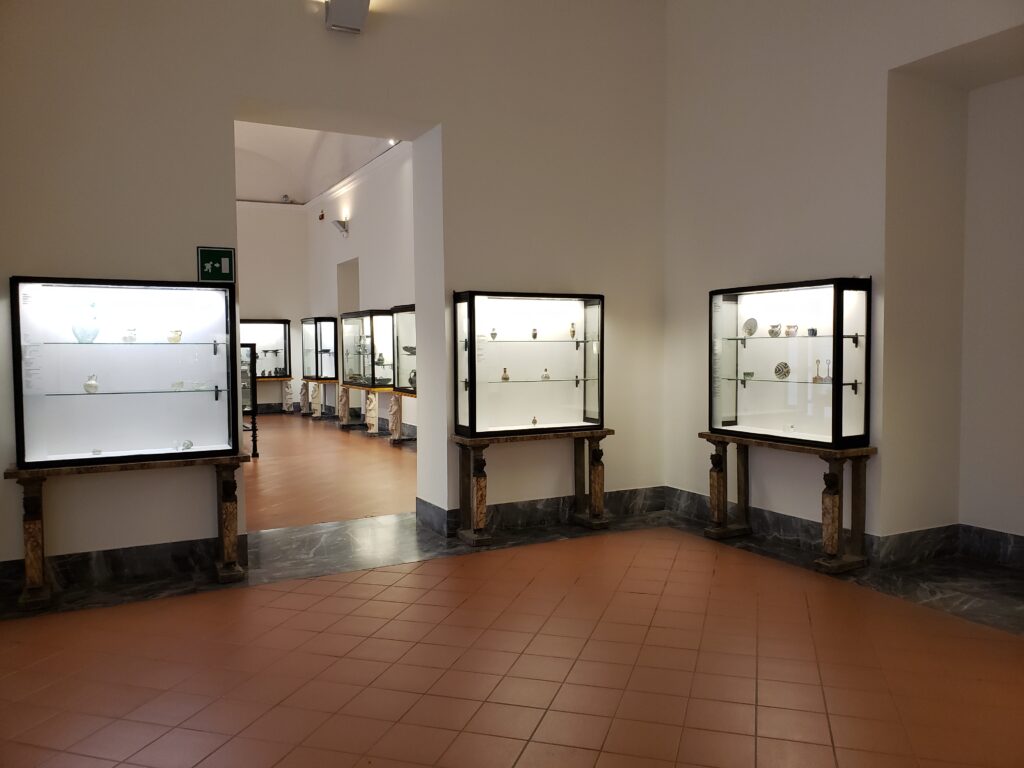
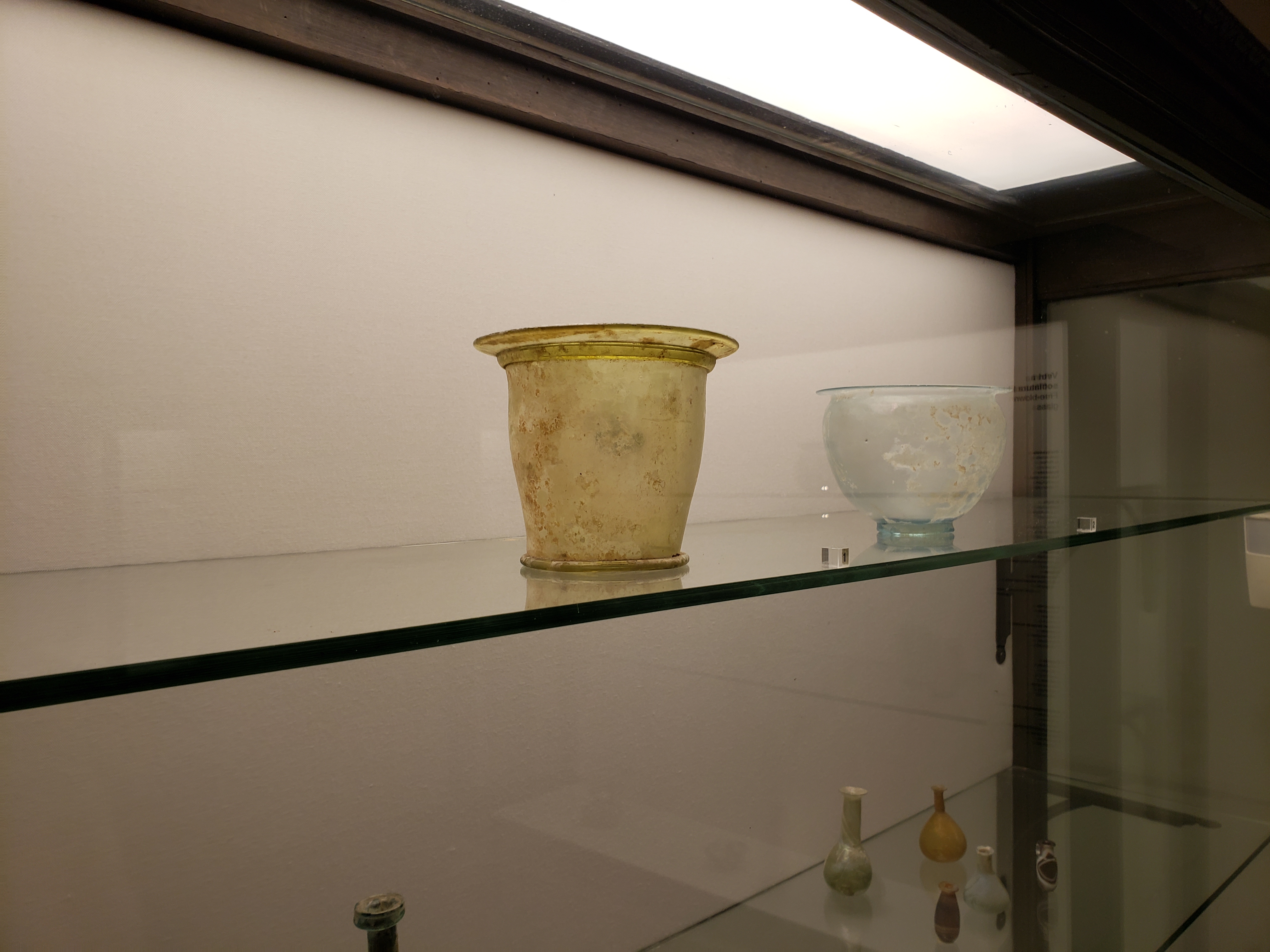
Has a small, succinct, but very important collection of ancient glass made during the Pompeiien and Roman periods. Some have handwork and detail that cannot be rivaled today.
National Archaeological Museum – Glass Gallery
National Archaeological Museum – Glass Gallery
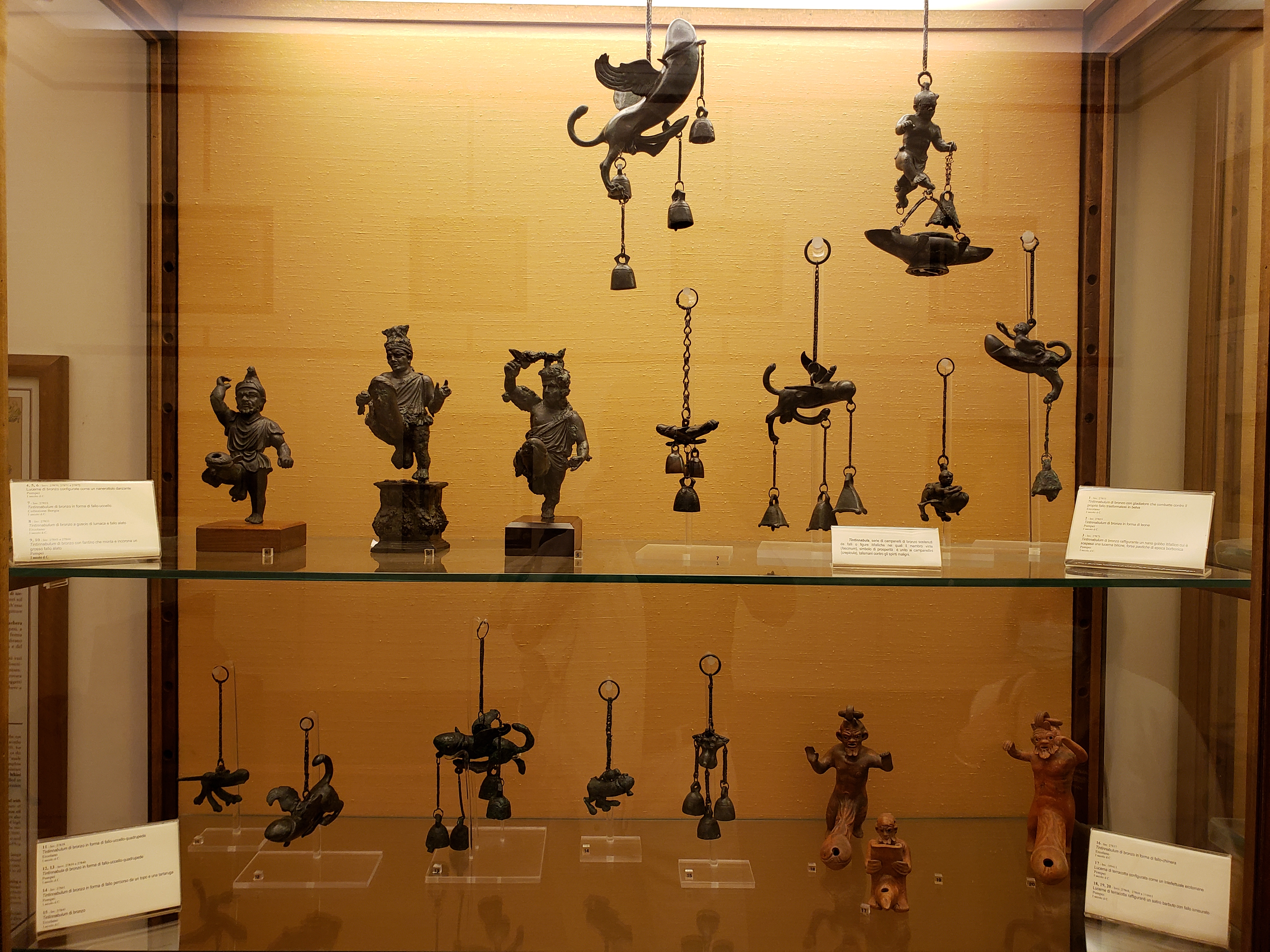
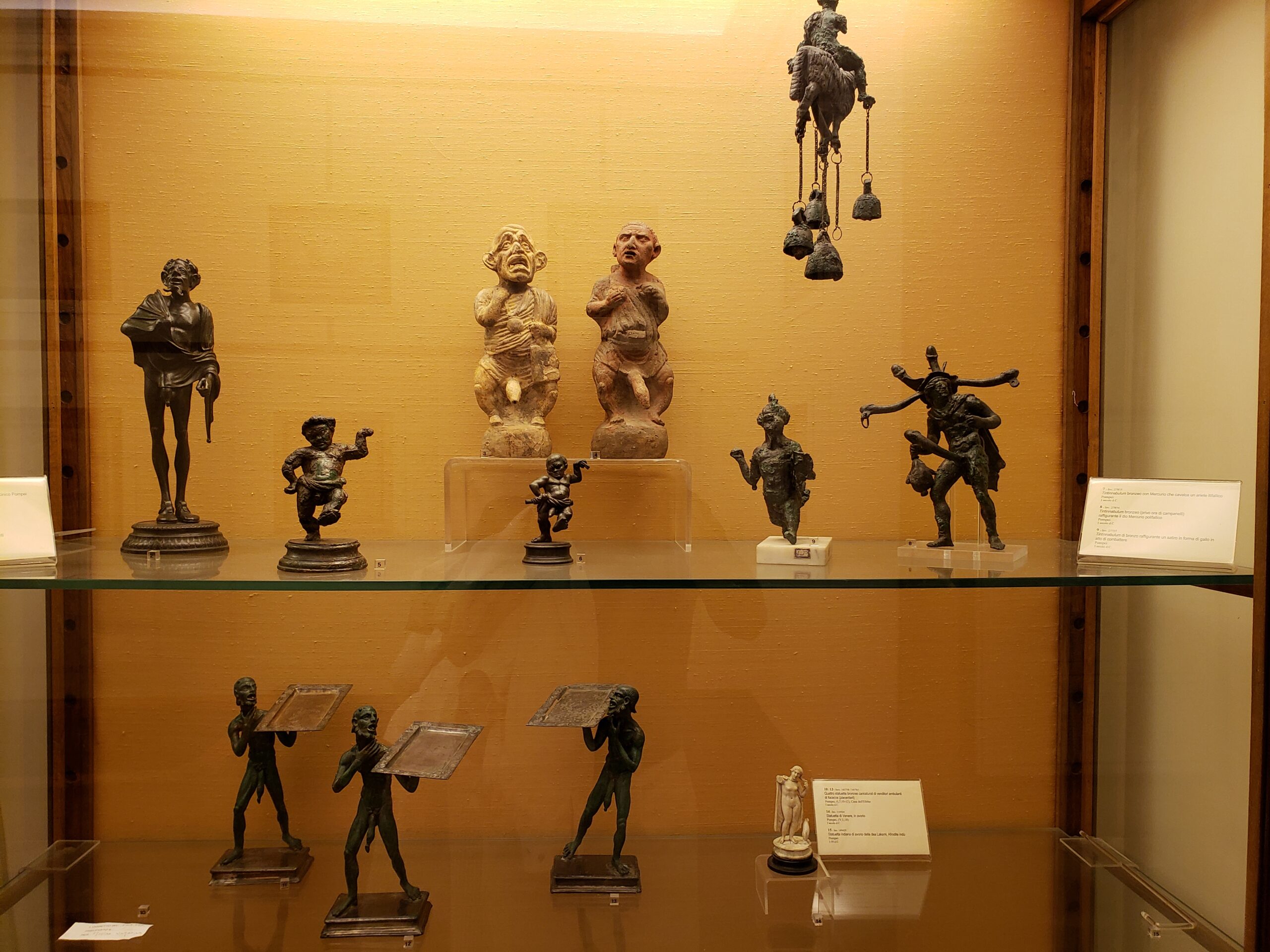
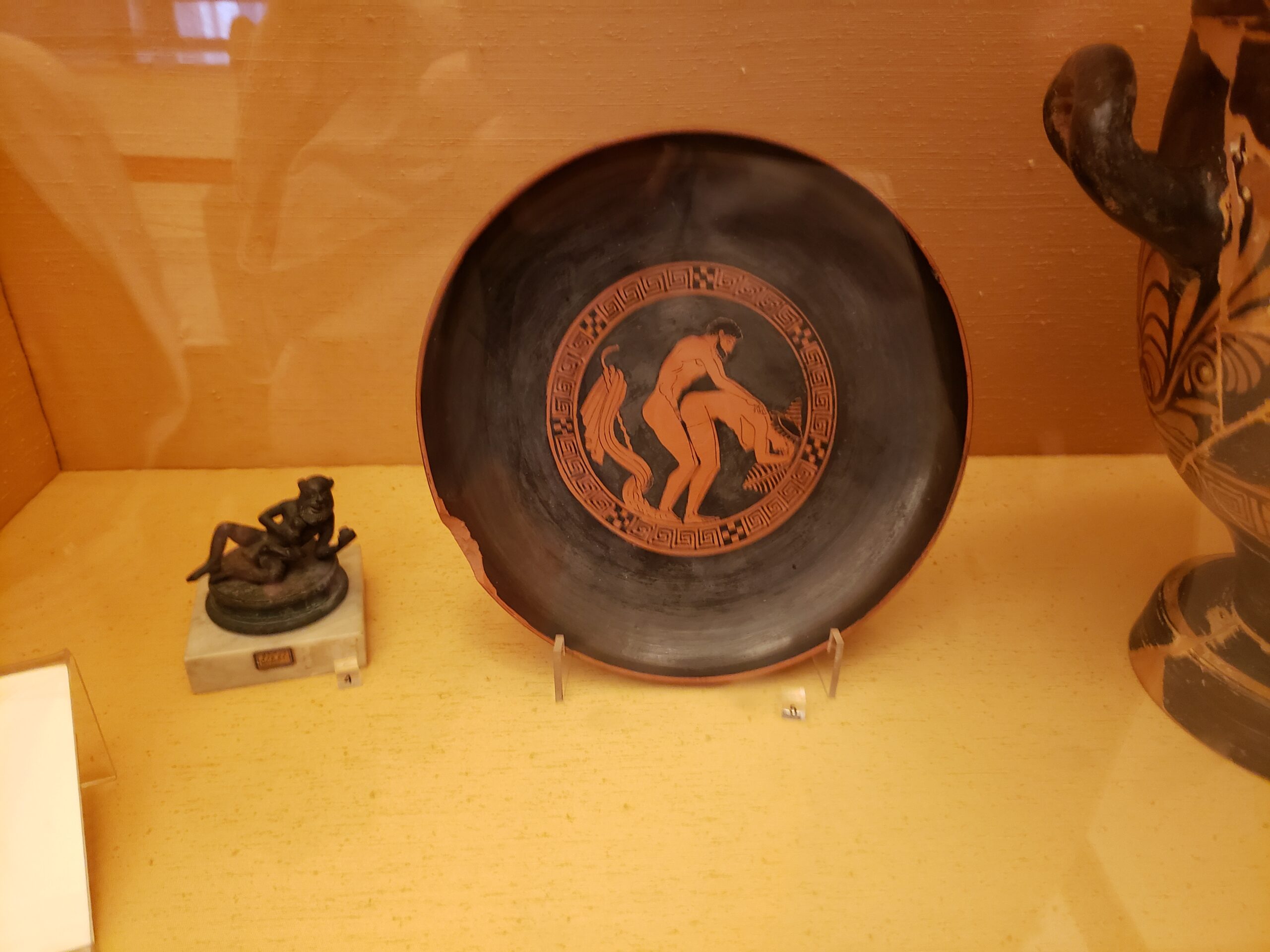
The Gallery of Pompeiien Erotica
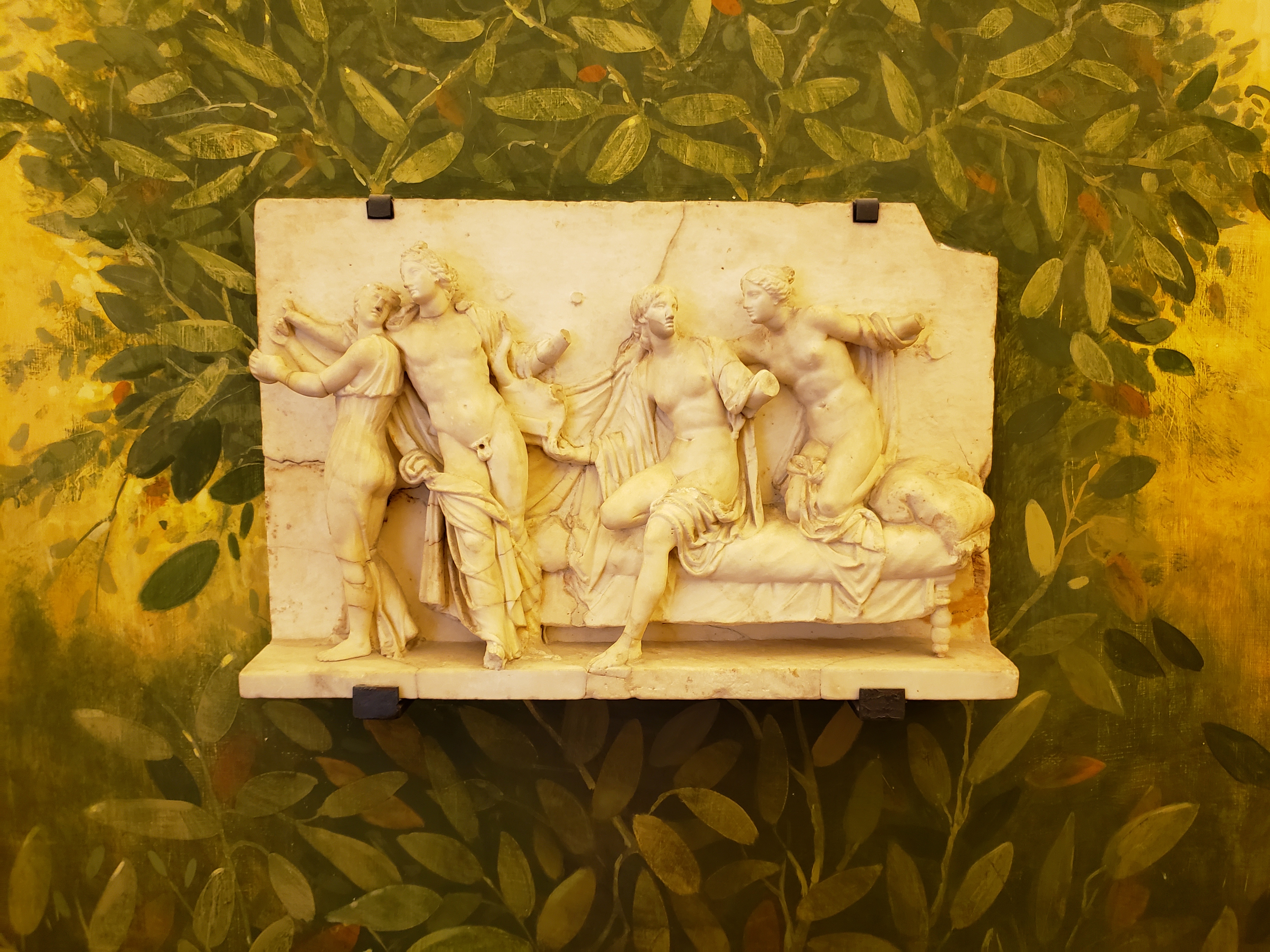
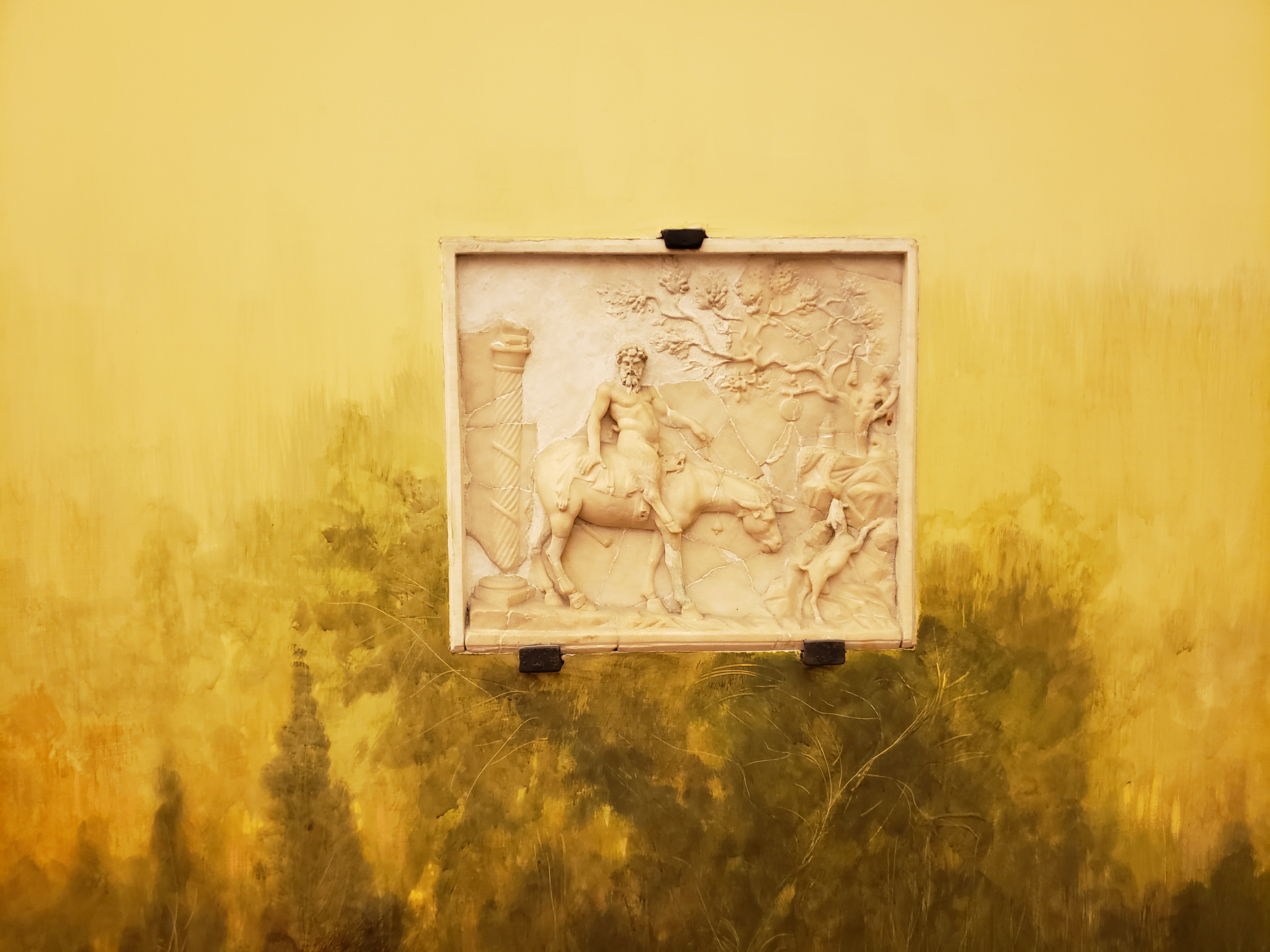
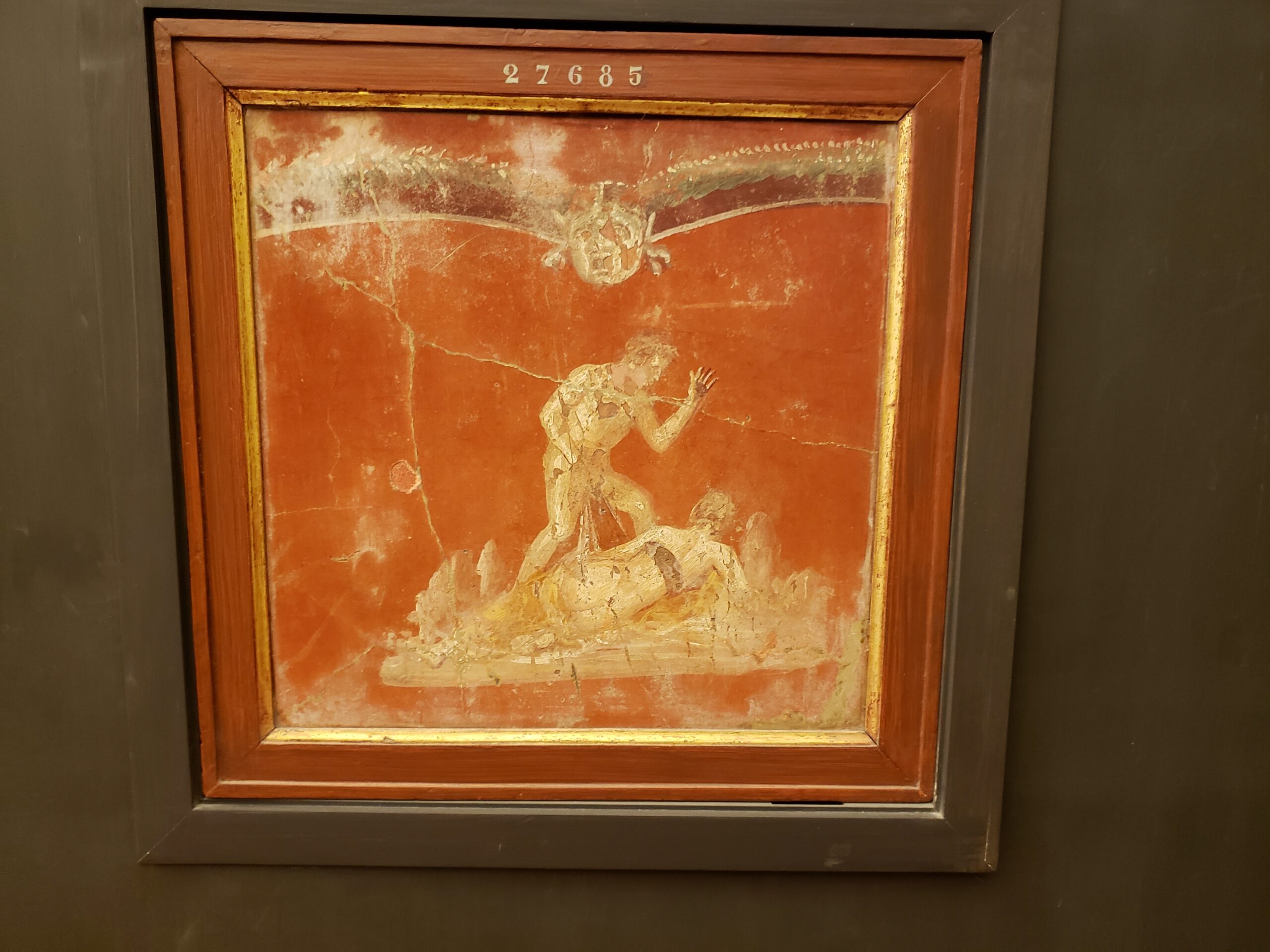
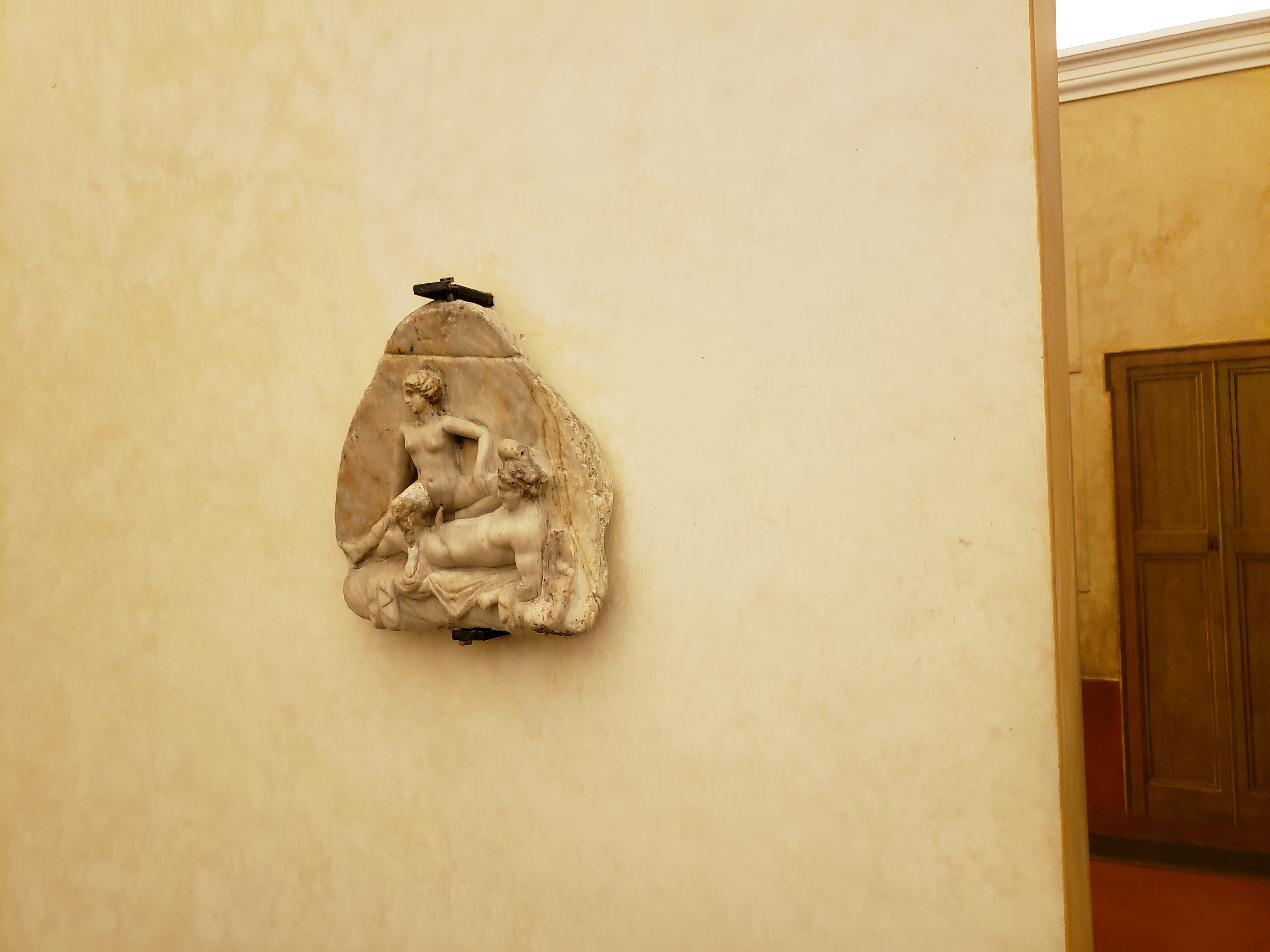
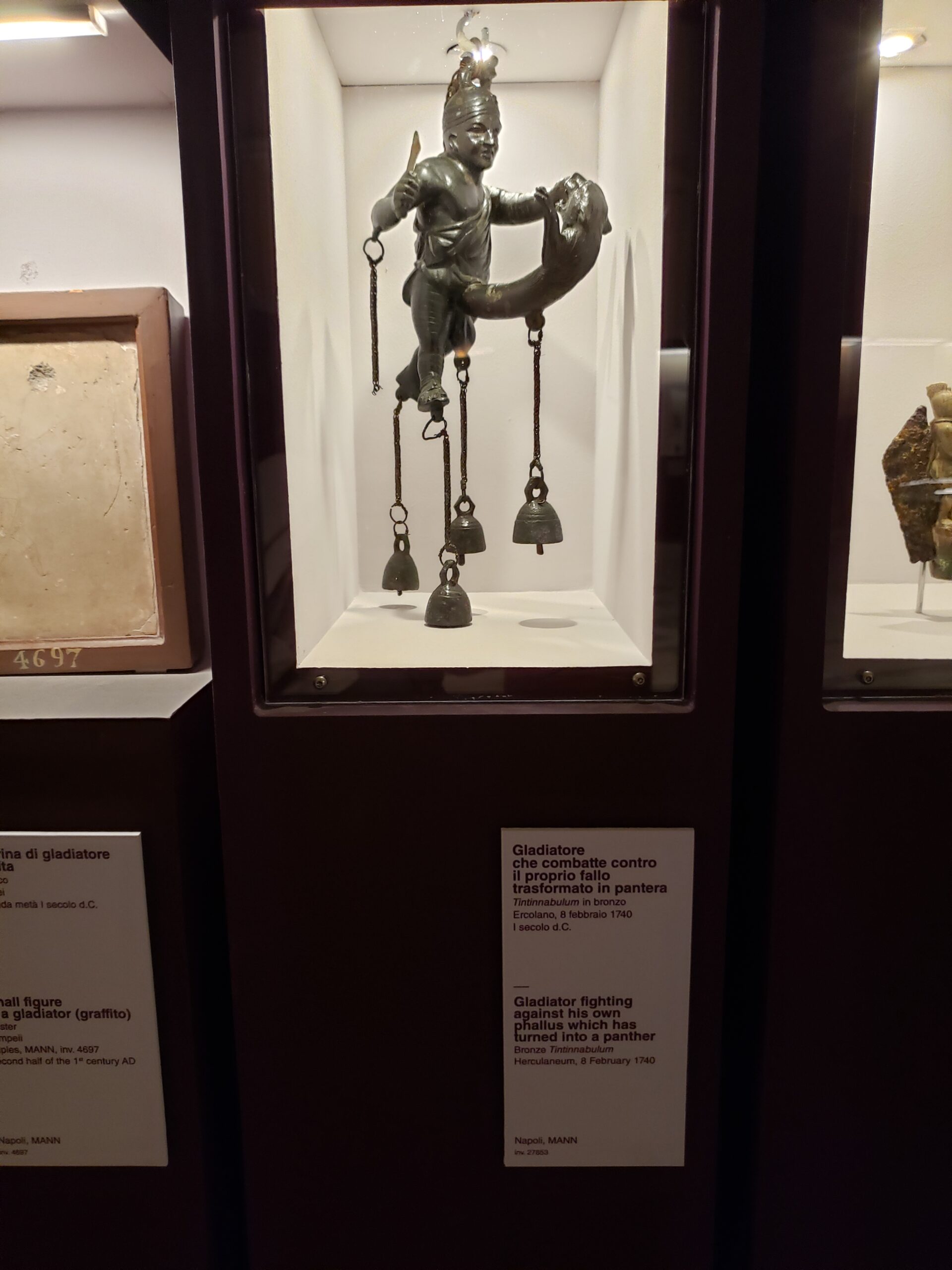
No visit would be complete without a visit to the erotic gallery, where all manner of erotica are on display from the dead city of Pompeii. The Quakers and the Puritans would have had a field day in this city at its peak. Not only was prostitution flaunted as an everday fact in everyone’s face, but the public had personal art created for display and enjoyment in their own houses. Without much else to say the following is shown as a slideshow, feel free to opt-out if you are not up to the intellectual and spiritual challenge.
National Archaeological Museum – Erotic Art
National Archaeological Museum – Erotic Art
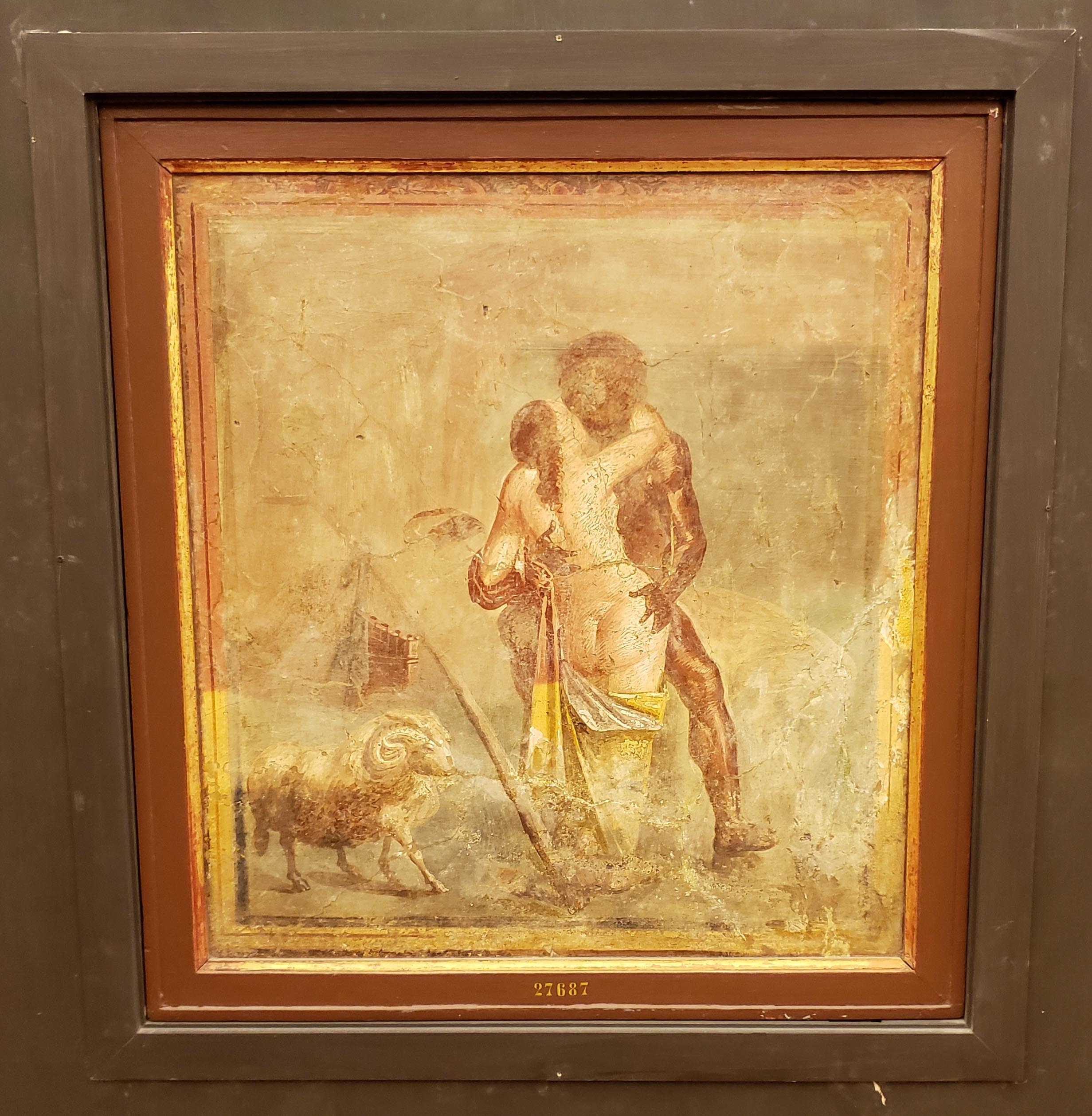
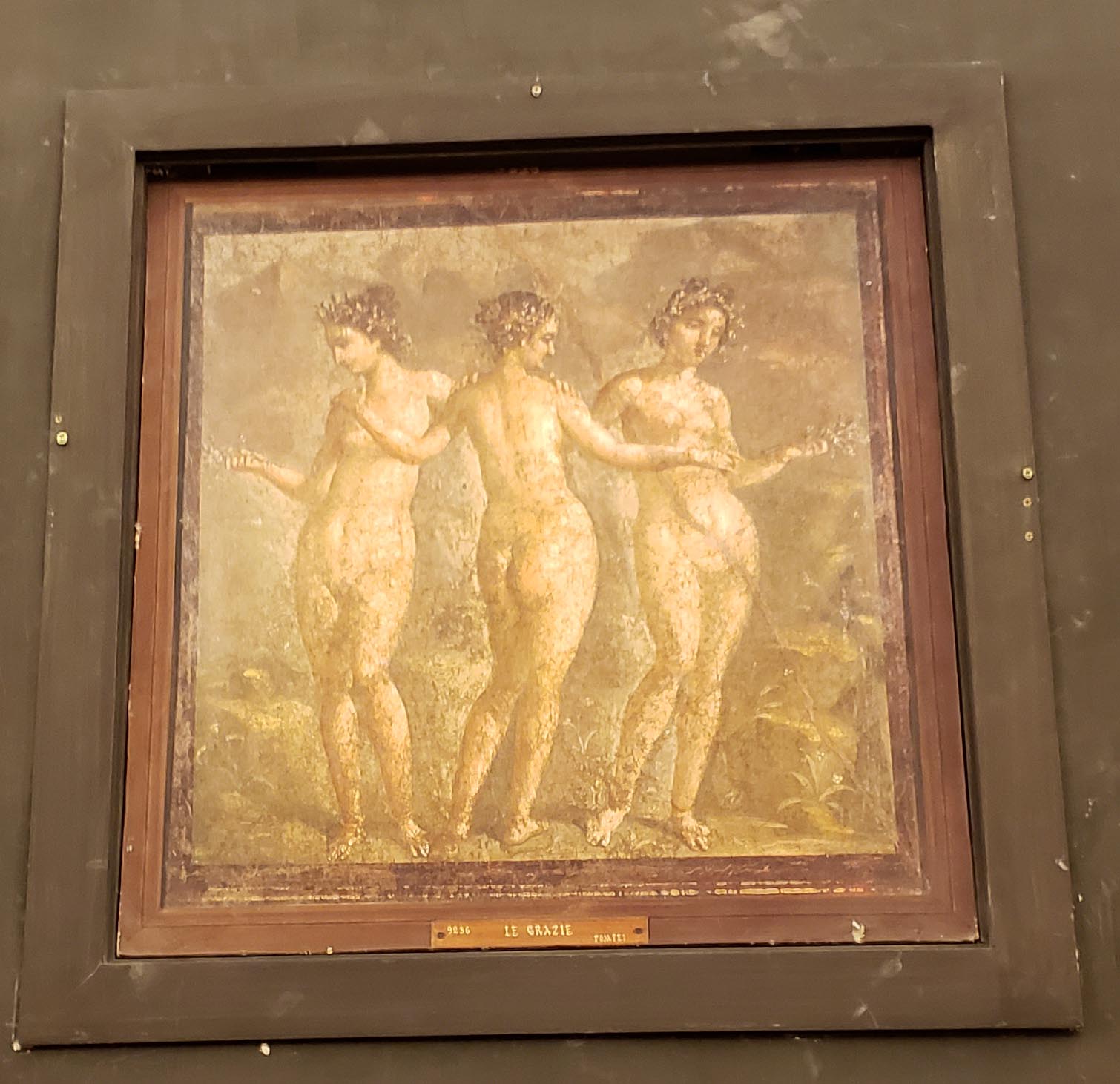
National Archaeological Museum – Erotic Mythological Paintings
National Archaeological Museum – Erotic Art – Household Items From Pompeii
National Archaeological Museum – Erotic Art – House Doorbells From Pompeii
National Archaeological Museum – Erotic Art – Household Items From Pompeii
National Archaeological Museum – Erotic Art – Household Items From Pompeii
National Archaeological Museum – Erotic Art – Dish and Small Bronze
The Basement Floor – The Maritime Archaeological Gallery
All things maritime are located in the basement floor. A wide collection of maritime artifacts and archaeological specific display can be found in this section. There are also displays from the escavations of Pompeii having to do with the city itself, including is ancient public plumbing.
National Archaeological Museum – Maritime Hall – Old Signs
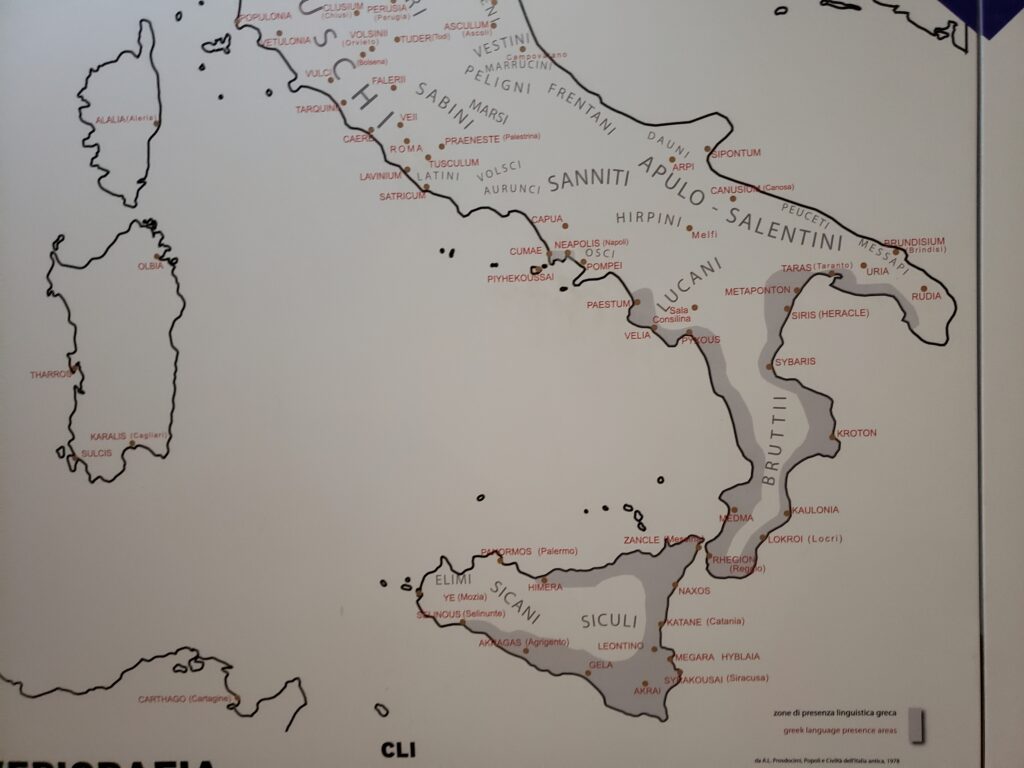
National Archaeological Museum – Maritime Hall – Ancient Trading Ports and Important Cities
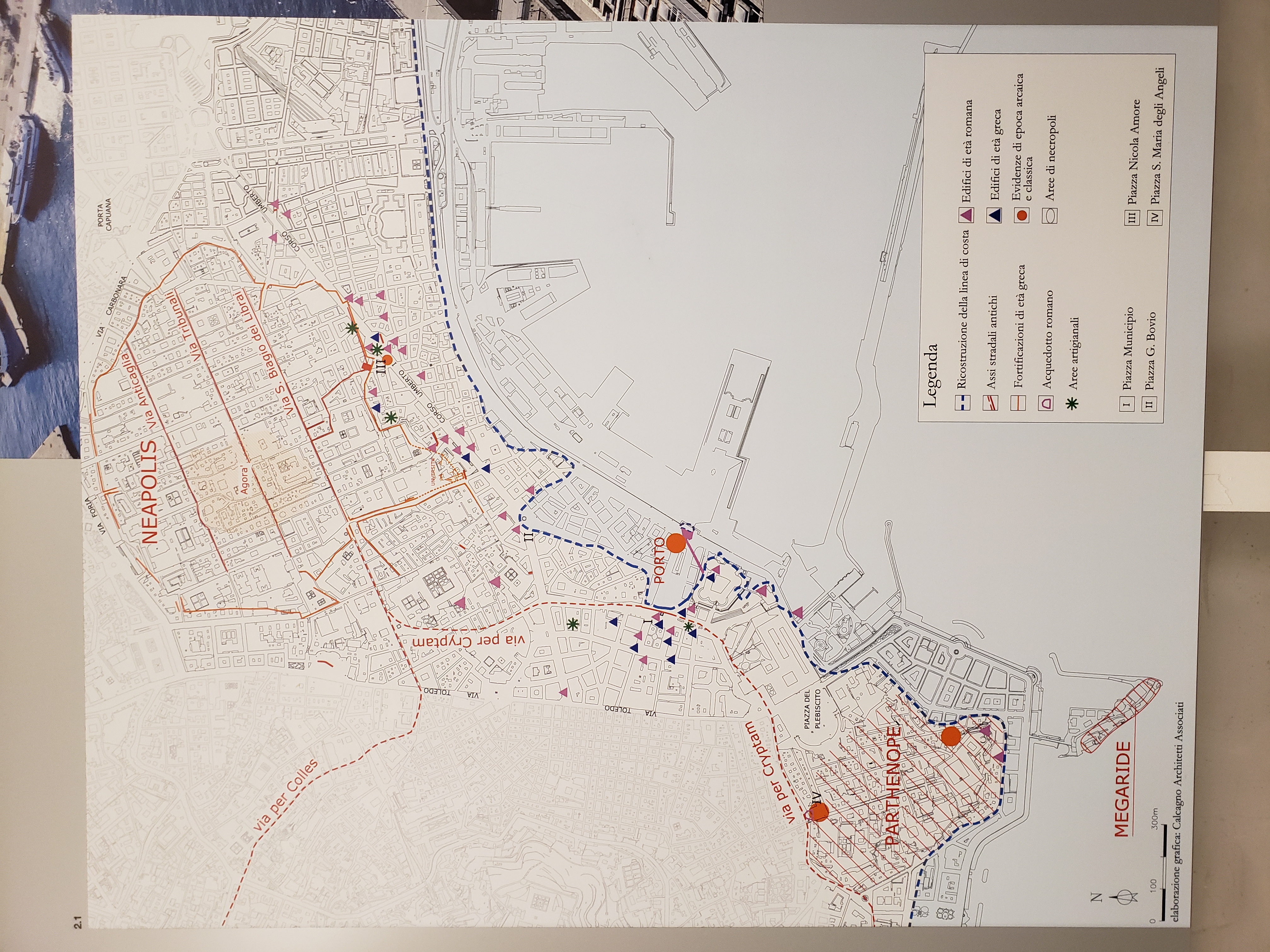
National Archaeological Museum – Maritime Hall – Archaeological Map of Parthenope
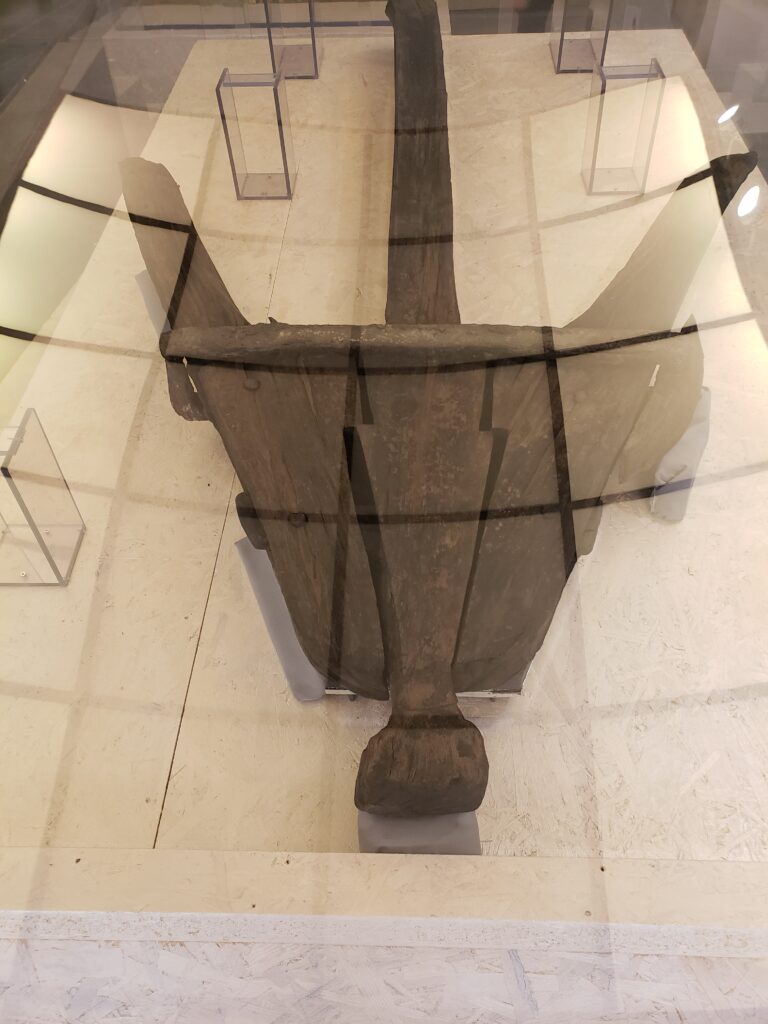
National Archaeological Museum – Maritime Hall – Large Anchor
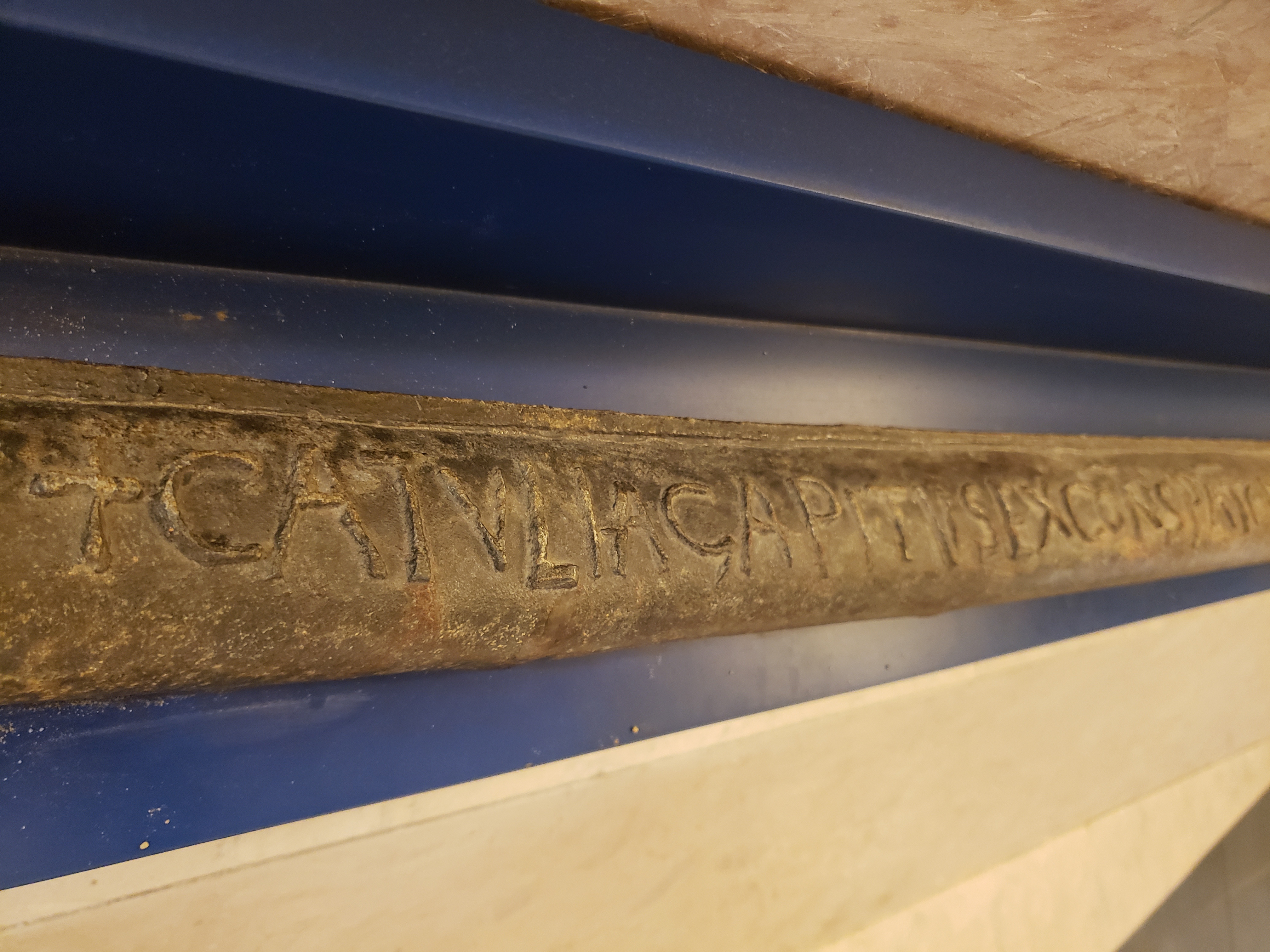
National Archaeological Museum – Maritime Hall – Old Lead Pipe
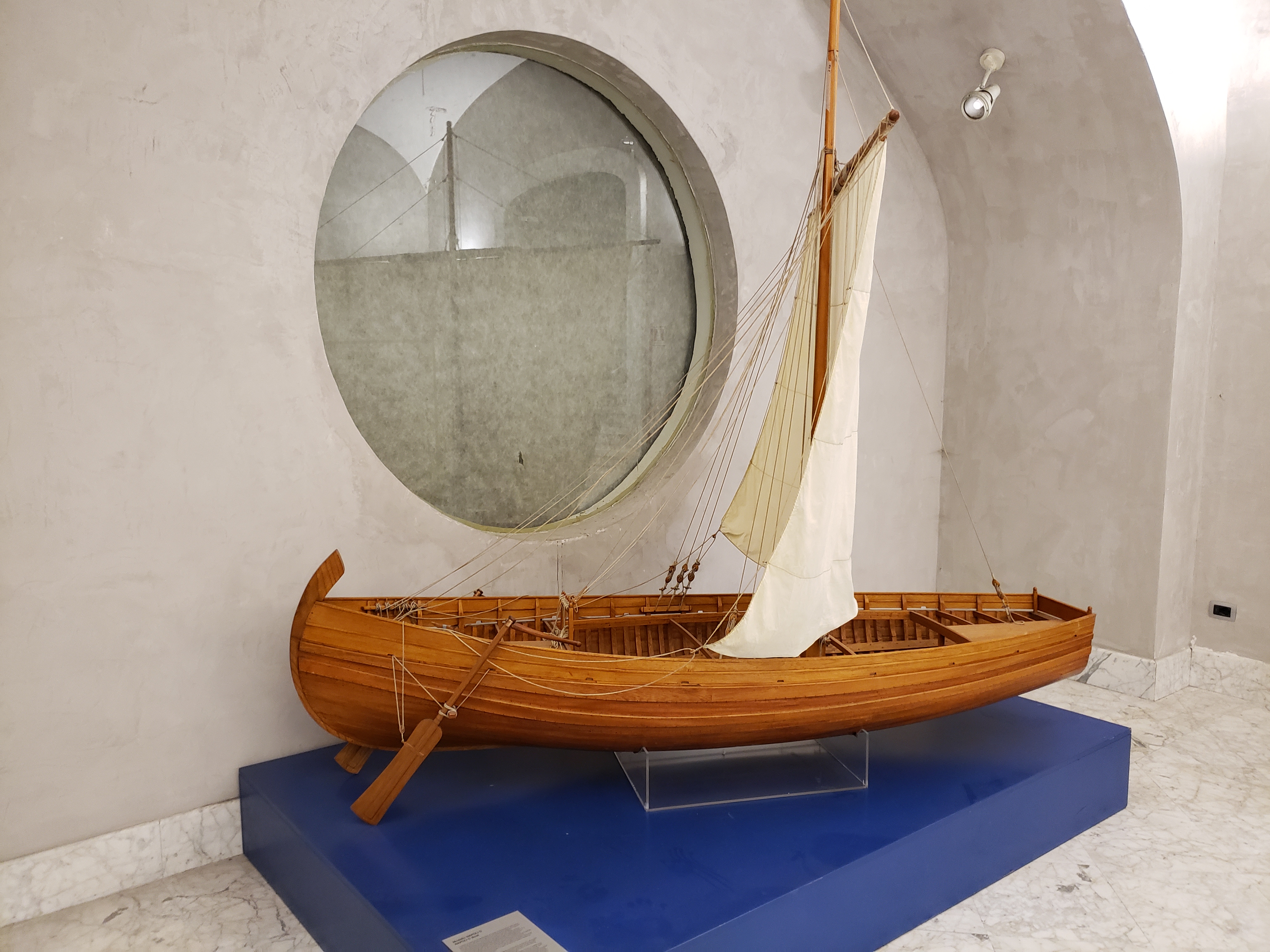
National Archaeological Museum – Maritime Hall – Reproduction of an Ancient Bark from Campania
Restaurants
Ristorante Demeter Ristotrattoria
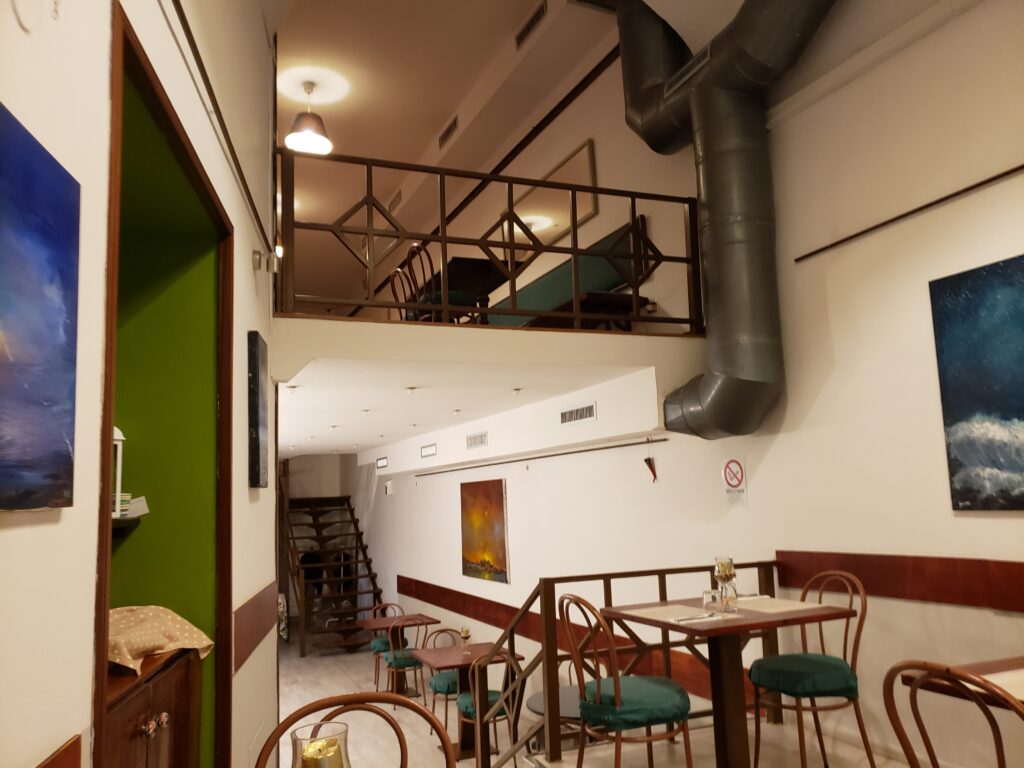
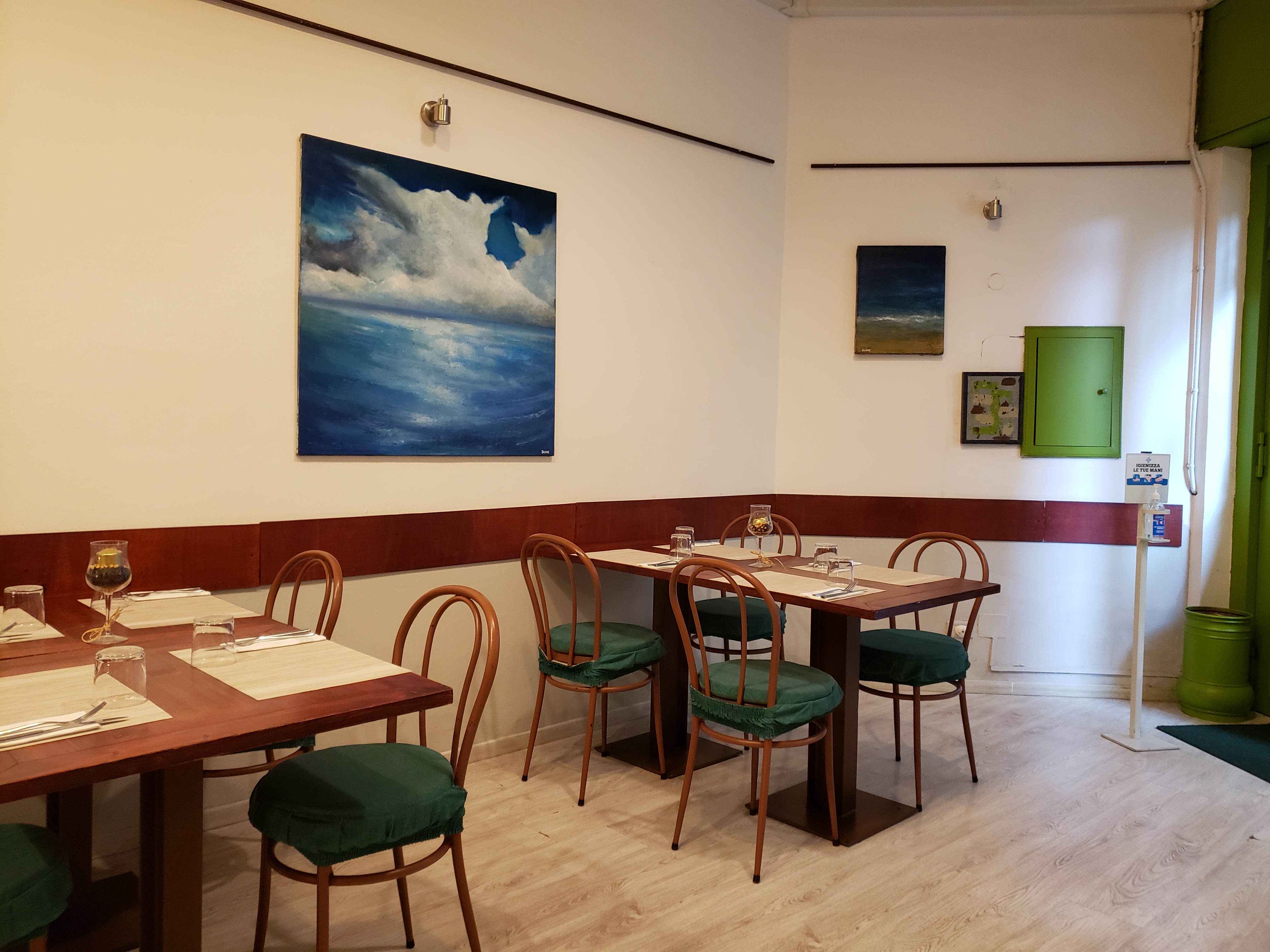
A short fifteen minute walk away from the museum, down the Via Santa Maria di Costantinopoli, Via San Sebastiano and Via Santa Chiara (all the same street mind you), you will find Ristorante Demeter Ristotrattoria. Another exceptional place with homemade creations to tempt most palettes. We entered this restaurant just before it started raining and were not disappointed, a fine place to visit with nice staff that is definitely NOT a tourist trap.
Naples, San Guiseppe – Ristorante Demeter Ristotrattoria – Inside
Naples, San Guiseppe – Ristorante Demeter Ristotrattoria – Inside
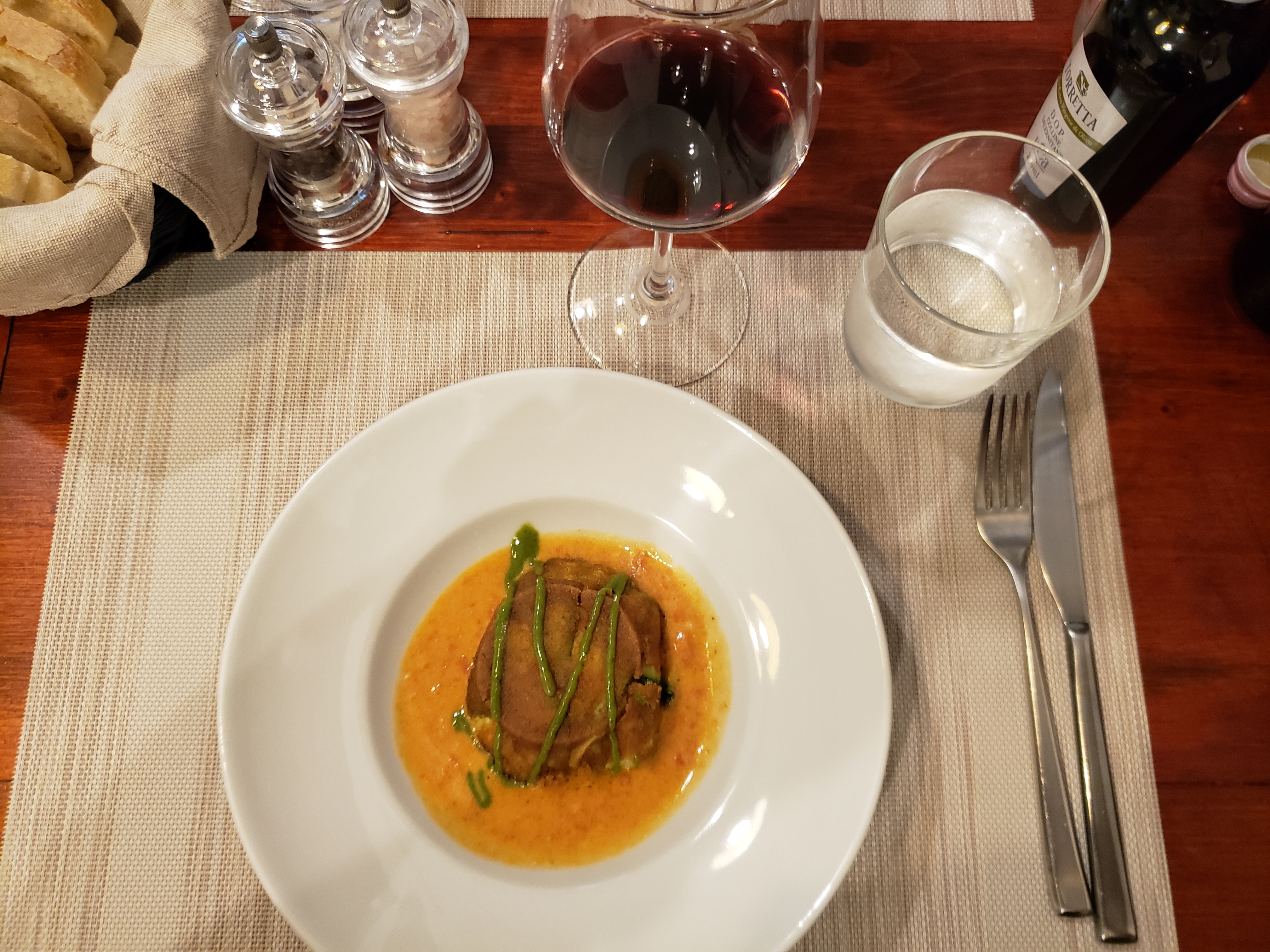
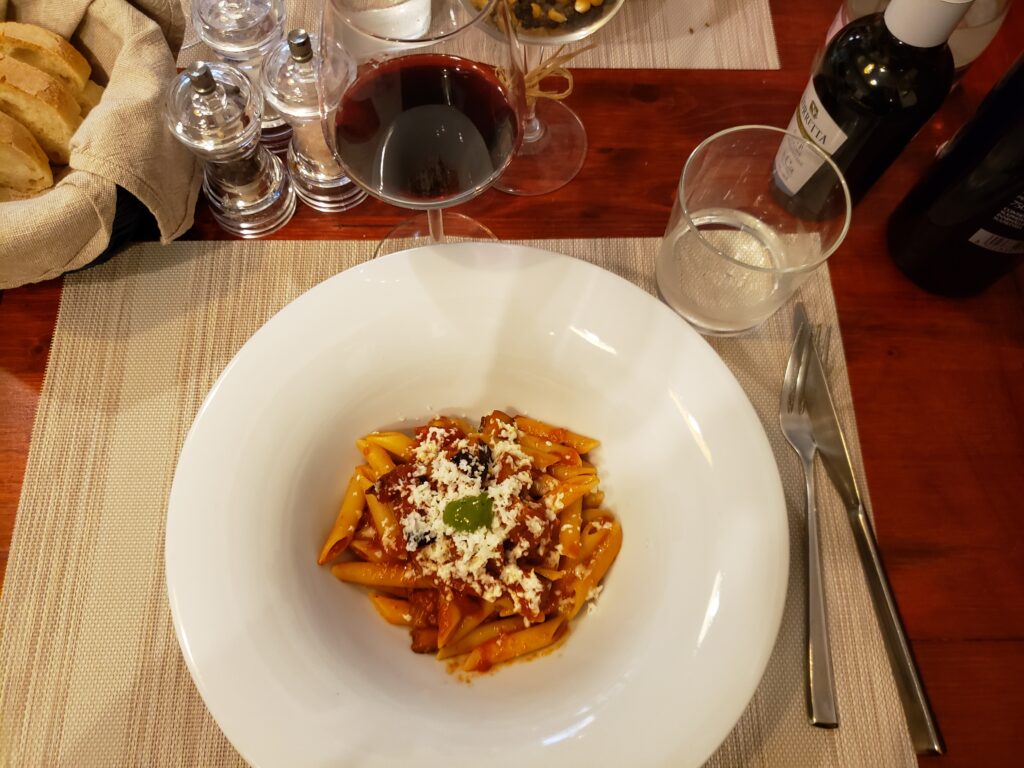
Naples, San Guiseppe – Ristorante Demeter Ristotrattoria – Fried Eggplant in a tomato reduction with pesto
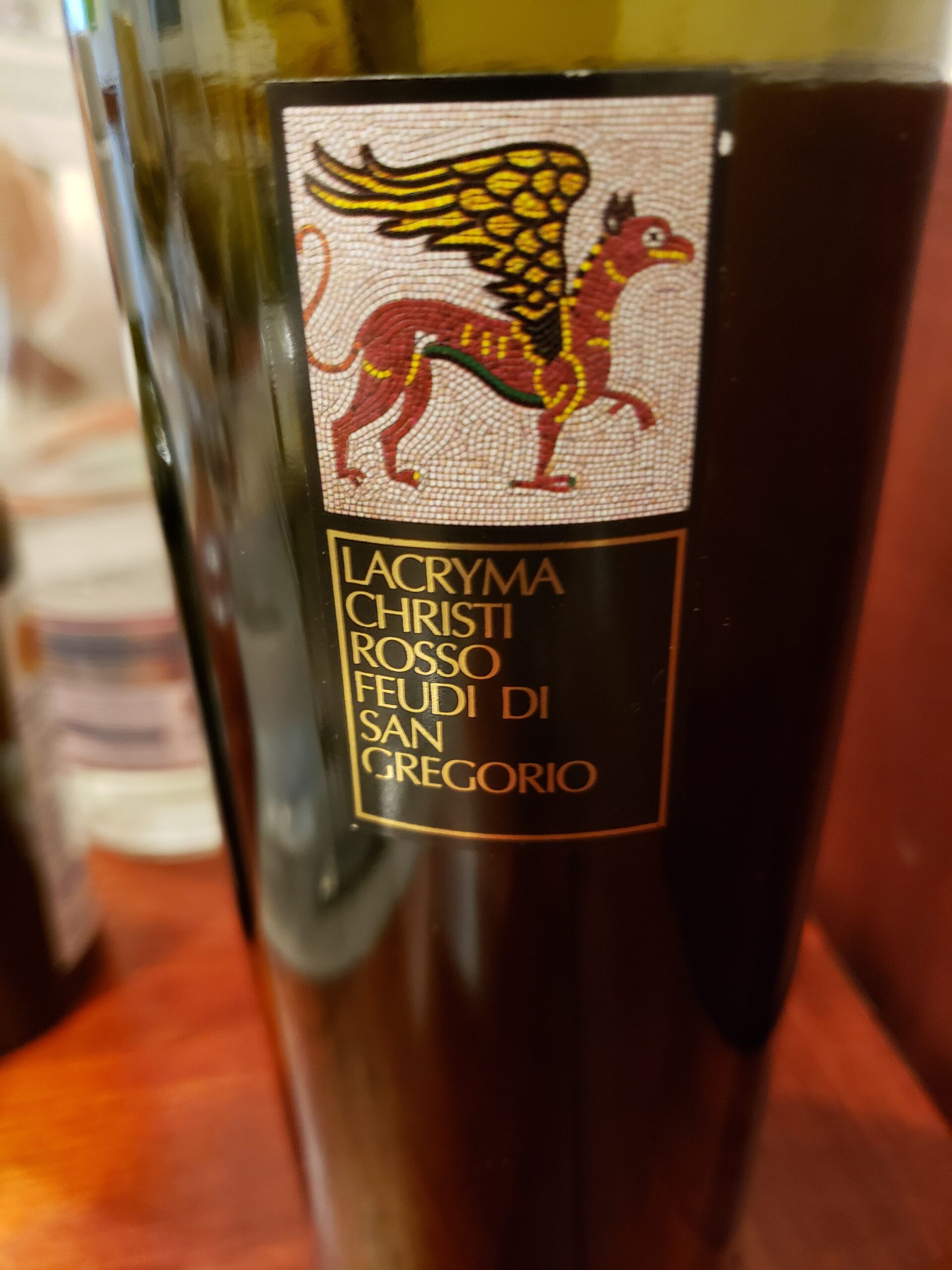
Naples, San Guiseppe – Ristorante Demeter Ristotrattoria – Lacryma Red
Naples, San Guiseppe – Ristorante Demeter Ristotrattoria – Pasta Norman
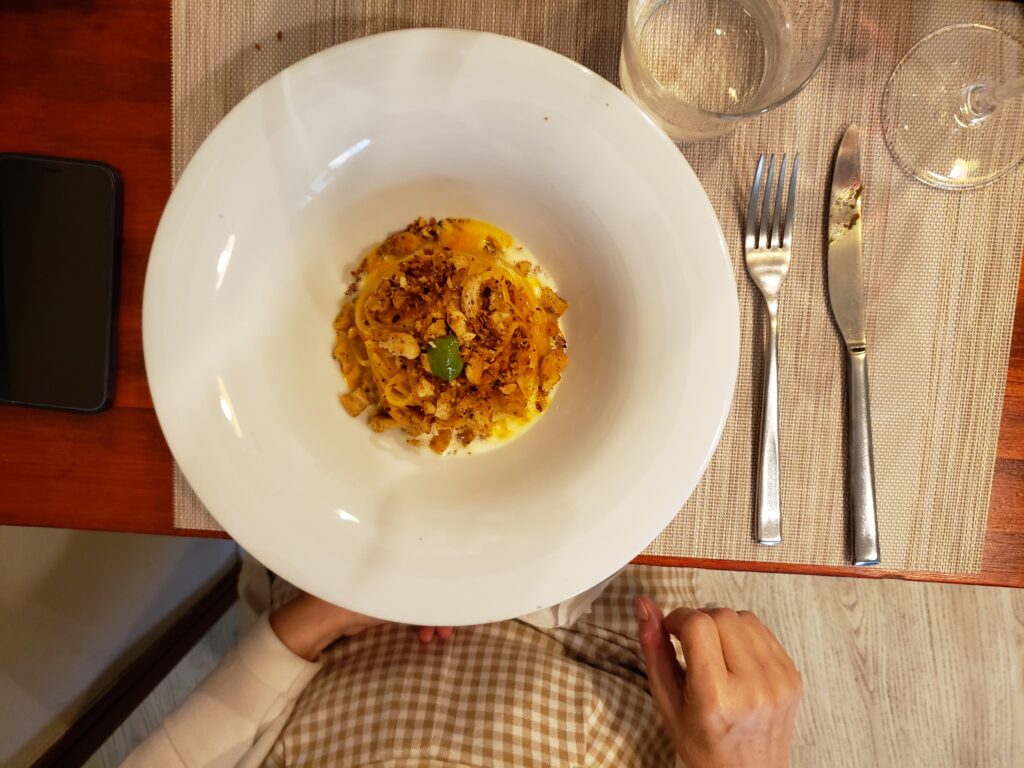
Naples, San Guiseppe – Ristorante Demeter Ristotrattoria – Pasta with Peppers and Taralli
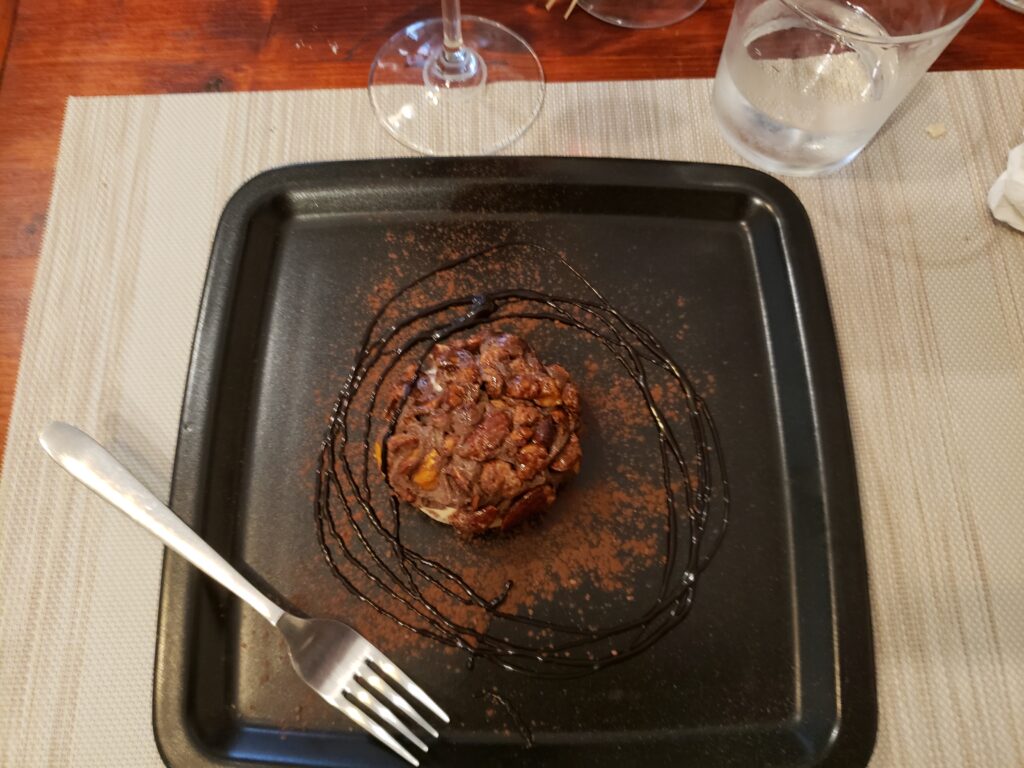
Naples, San Guiseppe – Ristorante Demeter Ristotrattoria – Tart with Pecans
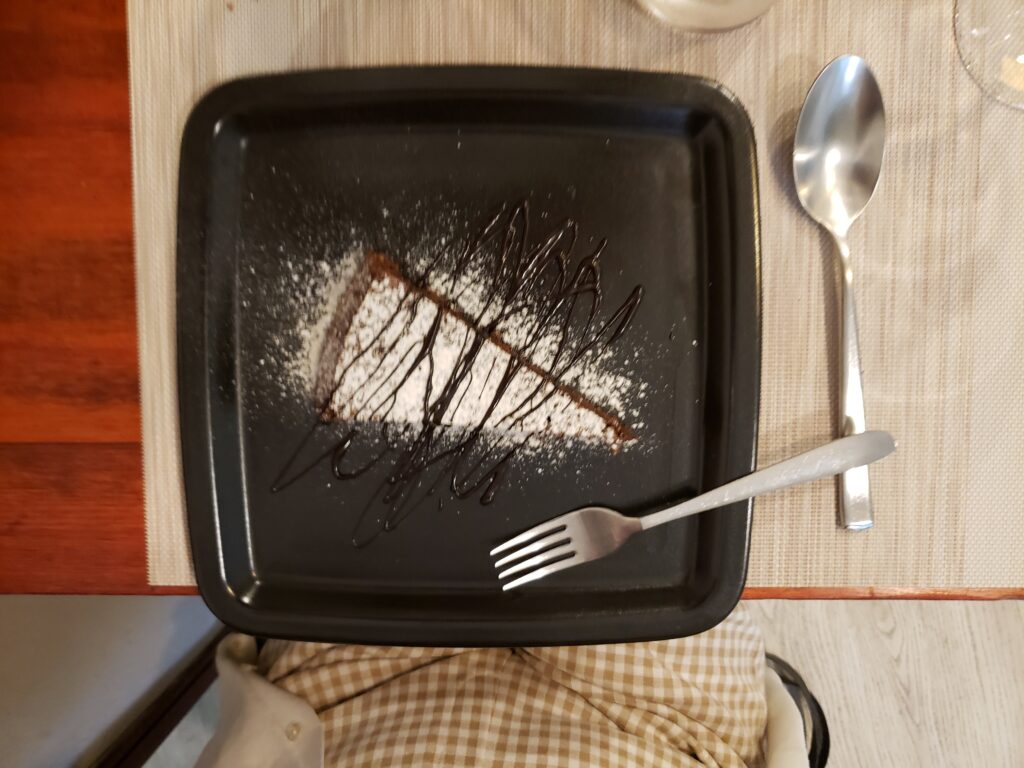
Naples, San Guiseppe – Ristorante Demeter Ristotrattoria – Chocolate Cake with powdered sugar
If one were to think of two words that exemplify Lyon, besides being known for its culinary heritage, it would be as the city of silk and murals. There are other sights to see of course, but these two are the ones that you will not forget if you visit this city in the heart of the Auvergne-Rhône-Alpes region.
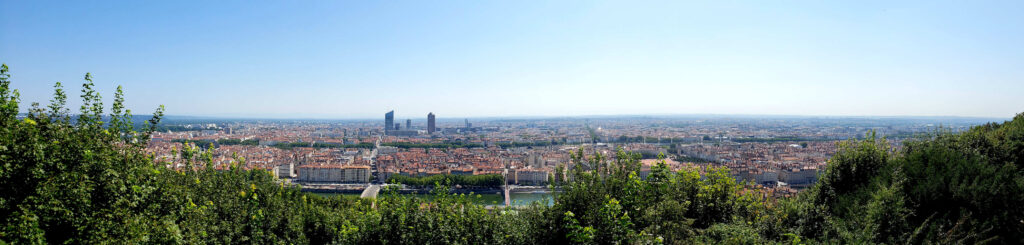
Lyon – Panorama of the city of Lyon, taken from the Basilica of Notre-Dame de Fourvière
During the week of the tenth through the twelfth of August, 2021 we were fortunate to travel through Lyon. Our expectations were mixed, having known or read little of the city in the past. In fact, until we visited we had no idea of the impact that Lyon had had on the silk or weaving business in the world.
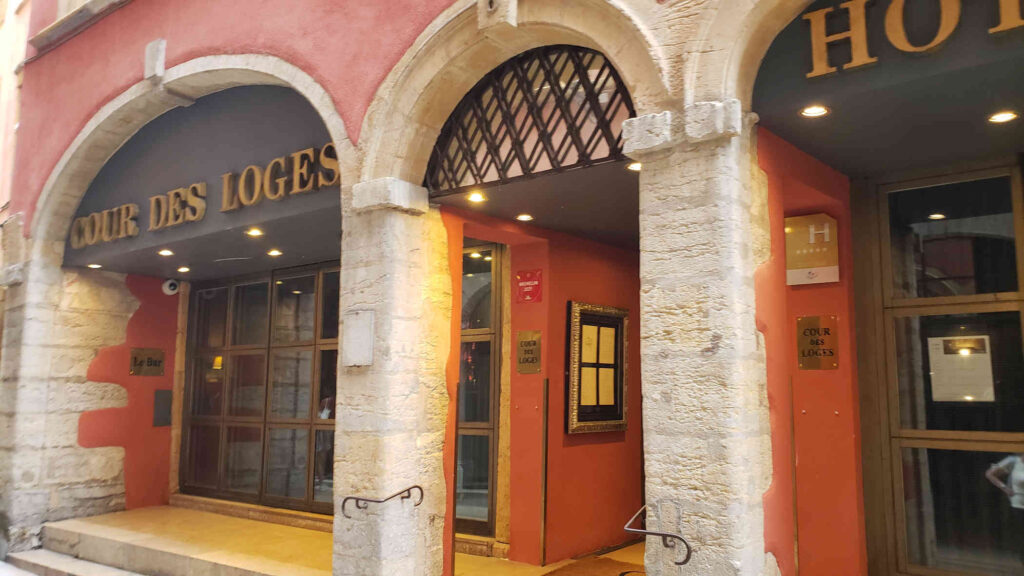
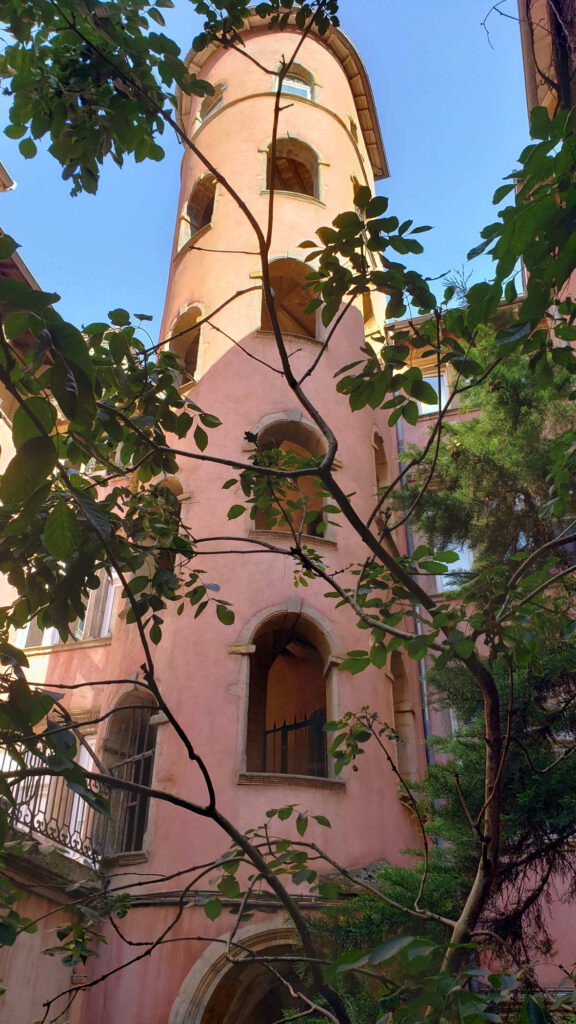
Lyon – Cour Des Loges
The Historic City Center
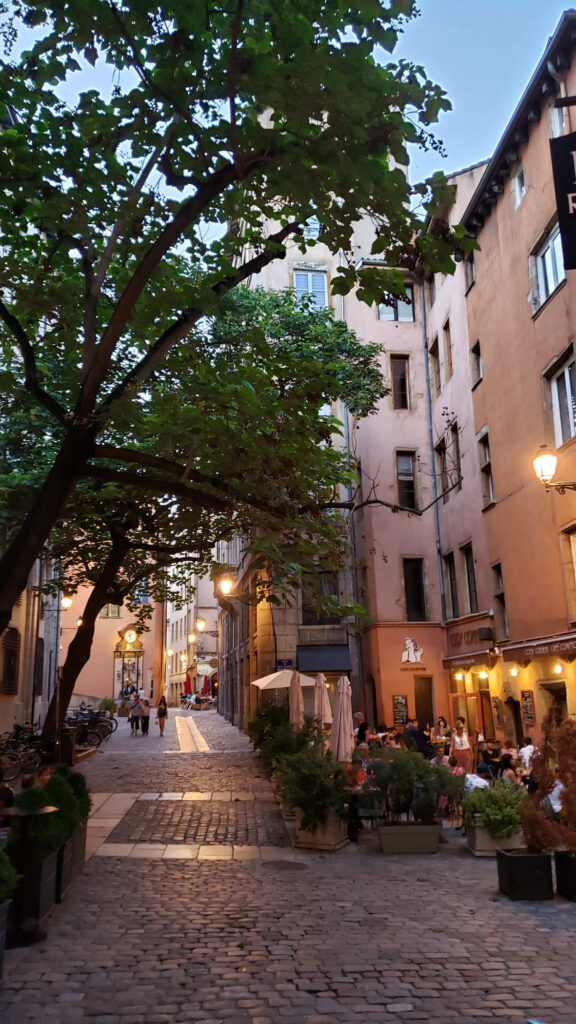
The historic part of the old city is backed up against the hill on the other side of the Saône below the basilica of Notre-Dame de Fourvière. Here you will find the old narrow streets paved in cobblestones and buildings fitting their age. The Place of the small college, right next to our hotel The Cour Des Loges, is an example of this as seen below. Though I must admit I am not a fan of walking on cobblestones and prefer the larger stoned walkways of Turin. Walking in one thunderstorm or shower will testify to their slipperiness.
Lyon – Place Du Petit College
Many of the old building date back to the fourteenth and fifteenth centuries and were deeply involved in the silk trade and fabric making. This included our hotel which has several stairwells within it similar to the one above. Though they are inside the hotel, they were customarily on the outside and almost always in the form of a helix.
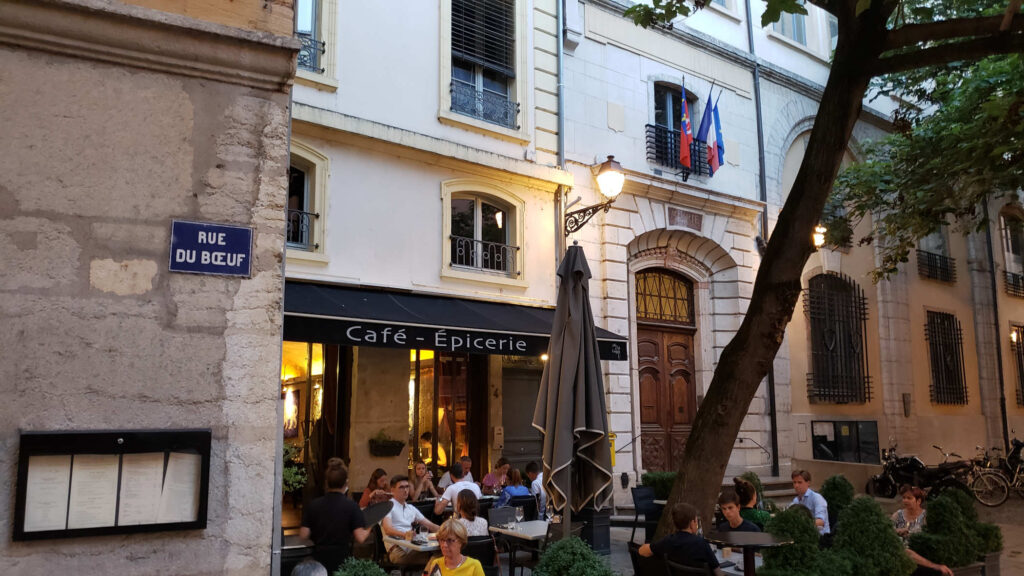
Rue Du Boeuf An Old Staircase
Bordering the Historic City Center to the east is the river Saône. There are many bridges that span the waterway and will bring you to other old parts of Lyon in the district in and around Bellecour.
The Saône
The Saône
The Rhone
The Place Du Bellecour sports the traditional statue of Louis XIV on a horse. Aside from a well architected space around it that serves as a park, the space seems to otherwise be devoid of purpose, it is not even paved well.
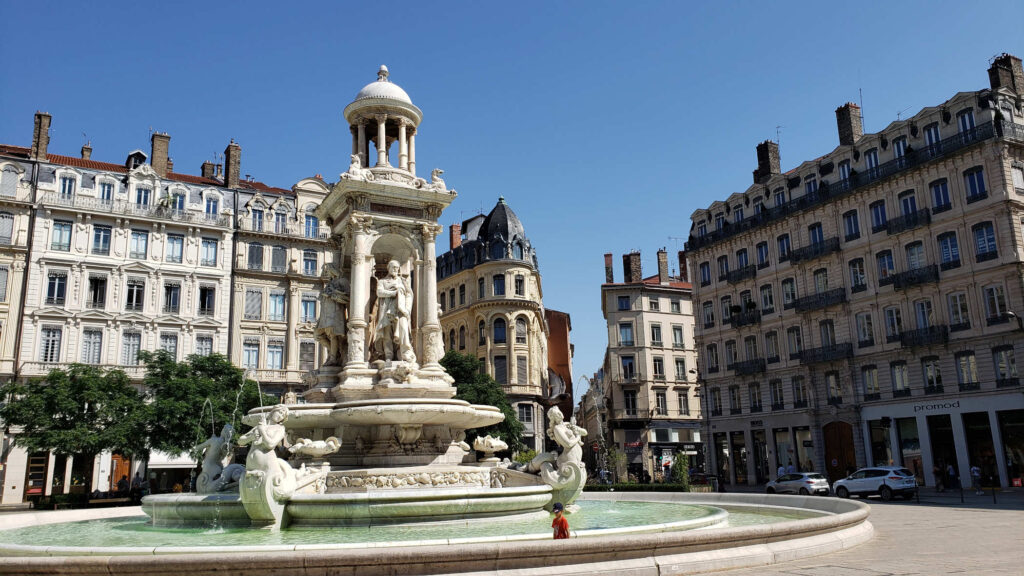
Fountain Of The Jacobins
However, the area in and around the Fountain of the Jacobins seems more impressive and well designed. It is situated closer to the buildings, including a ring of trees with a beautiful fountain at the center. The only thing it appears to be missing are cafe tables and people.
Roman Ruins
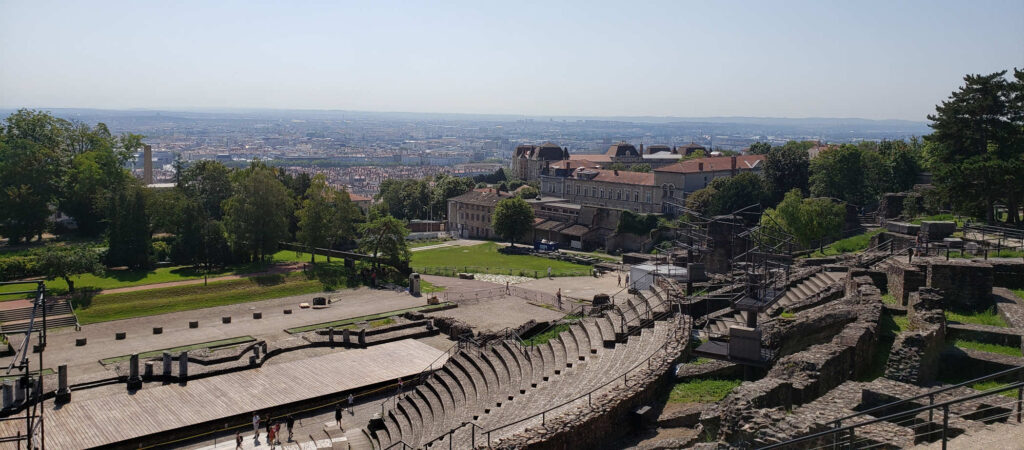
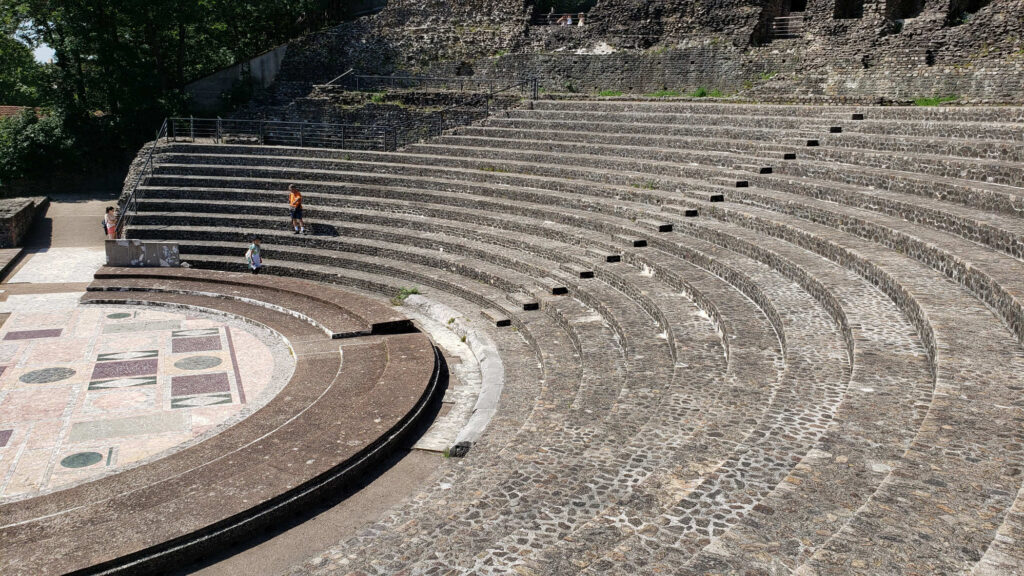
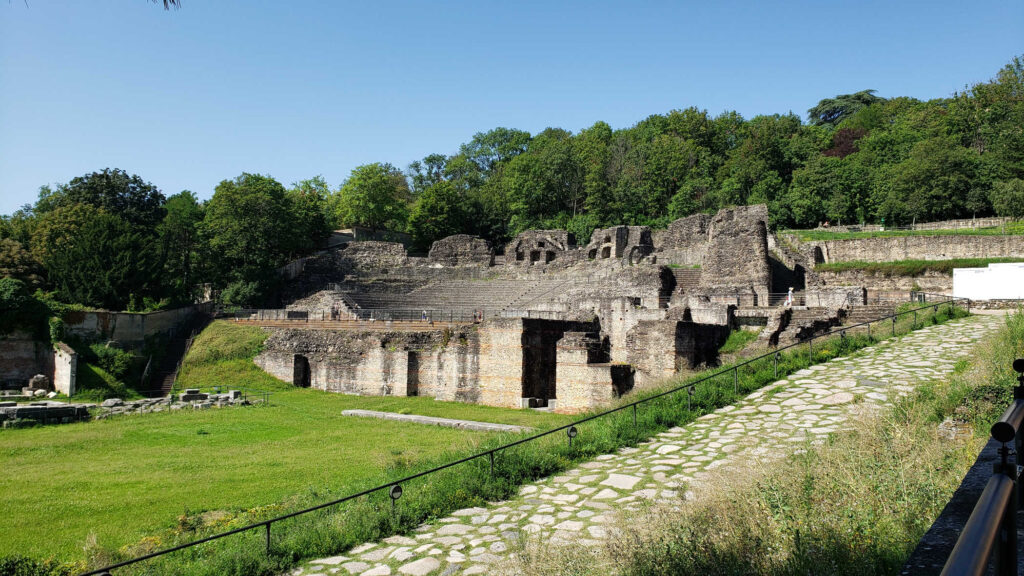
There are several roman ruins spread across the city. Most are comprised of amphitheater that we used by the local population for amusement. Lyon has at least one example of twin amphitheater, which frankly I have never seen before, even in Italy. The two are adjacent to one another on the hillside overlooking Lyon and just below and to the south of the basilica atop the hill. Both still appear to be used for special events and have wooden stages carefully erected over them.
The Odeon Amphitheatre
Towards the Larger Amphitheater
The Odeon Amphitheatre
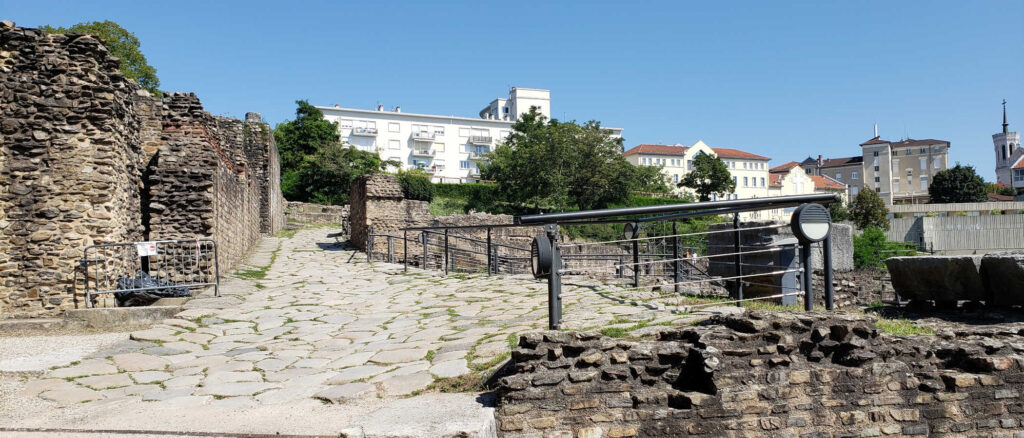
Old Roman Road to the Amphitheaters
We actually arrived at the amphitheaters quite by accident, trying to find our way up to the basilica. We both knew they were there, we were just both surprised that we happened upon them in that location.
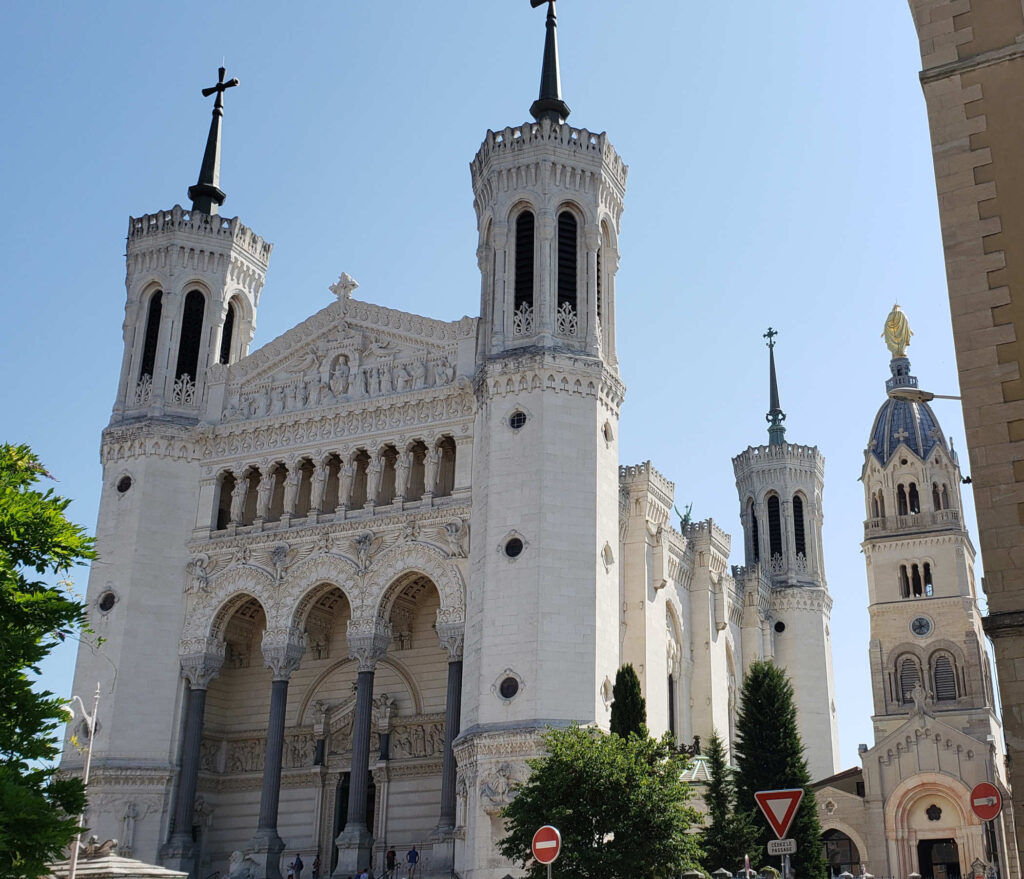
Basilica Of Notre-Dame De Fourvière
Continuing our walk up the hillside from the roman ruins you can easily see the basilica, so groping for directions on your phone is not such a big deal. The basilica is impressive, both inside and out. However, it appears to have been place on real estate where they allowed residential houses to encroach upon it. This takes away from one’s ability to get an actual appreciation of the scale of the structure from outside.
Basilica Notre-Dame de Fourvière
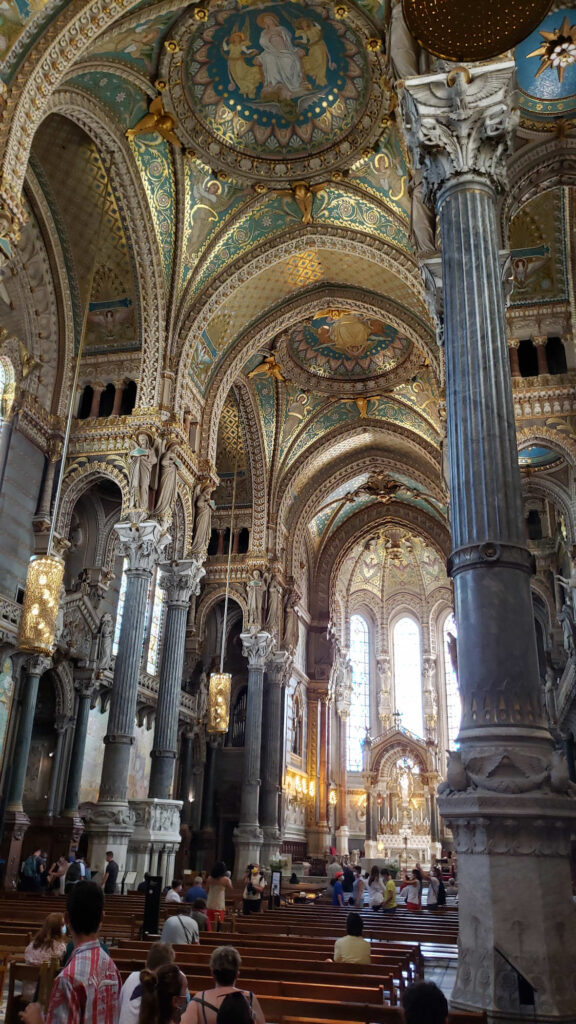
Inside is a totally different matter. There are actually two churches within the basilica, one above (the actual basilica) and one below in the crypt. Though the directions indicate crypt, in fact there numerous persons buried below, it appears to also function as a full church with pews and all.
Inside Notre-Dame de Fourvière
Croix Rousse
Across the river Saône from the historic district lies the district on the hill called Croix Rousse. This area is known for its historical ties to the Canuts and those who established and made the silk trade famous in Lyon.
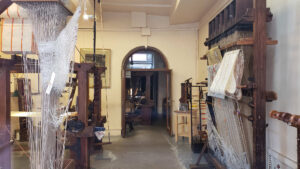
The Museum Of The Canuts
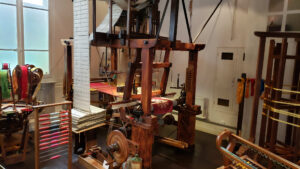
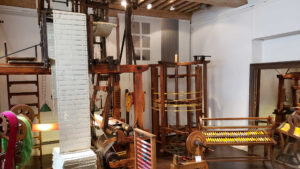
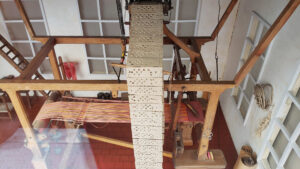
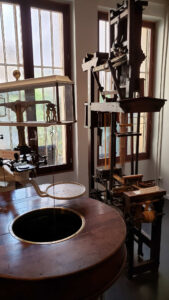
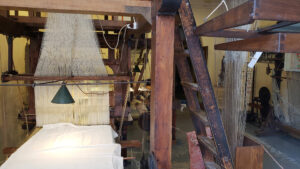
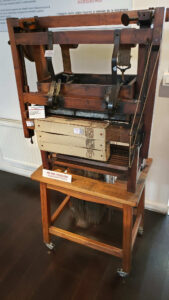
Anyone interested the history of weaving or silk, or anyone interested in old machines should probably put this somewhere on their list of places to visit. They have a small but authentic collection of old and rare machines dating back to the time the Canuts flourished in this area.
A canut was a master weaver of gold, silver and silk thread. The word has probable origins in the word canette, which in french means spool, for which they were responsible in changing out in order for the weave to be successfully finished. The start of the industry can be traced back to its start in and around the year 1536.
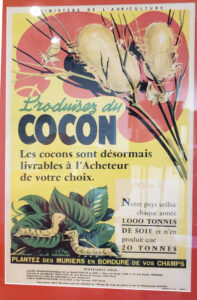
An Old Poster
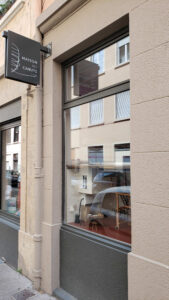
The Front of the Museum
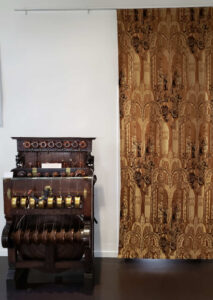
Old Punch Cards Used For Weaving
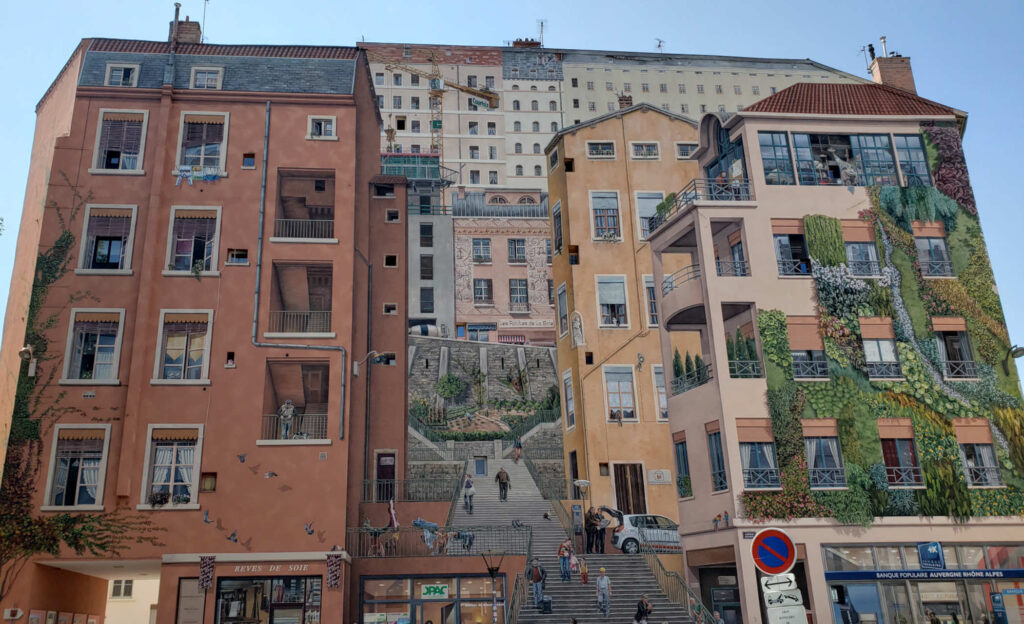
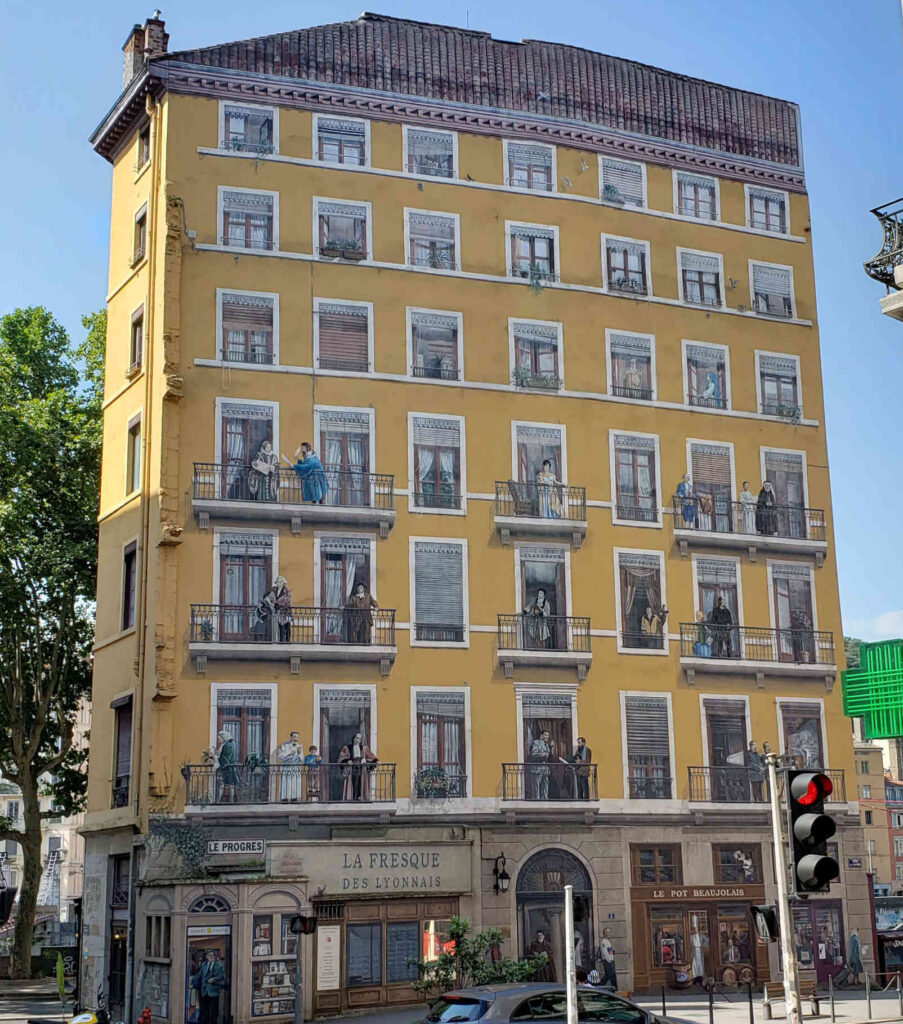
The Fresco Buildings
There are several buildings in this area that have been frescoes painted on them. Some of them have been done numerous times over, in order to keep the appeal up and to changed the theme slightly.
Mur Des Canuts – Croix RousseFresco of the Lyonnaise
Other Weird Points Of Interest
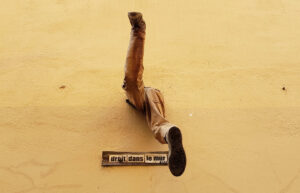
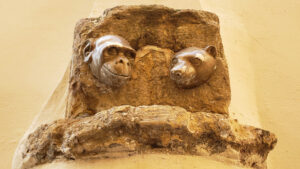
The are at least a few unusual points of interest, where artists apparently had a hand. Owing to a profound lack of graffiti in the city my wife and I thought them interesting. Here are a few.
Needs No Translation
A Chimp And Bear
Restaurants
Many of the restaurants here serve local food, or as close to traditional home cooking in these parts of France as you can get and are called Bouchon, it is sometimes spelled Buchon. They are similar to Italy’s Osteria or Trattoria and being in the Auvergne-Rhône-Alpes are very meat based establishments. Most menus include sausages from the region, both sliced as an appetizer and fully cooked served with a sauce or gravy. It is obviously interesting to try, but over the course of a few days can become tiresome.
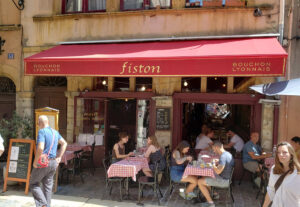
Buchon Fiston
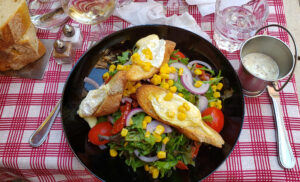
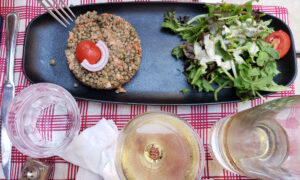
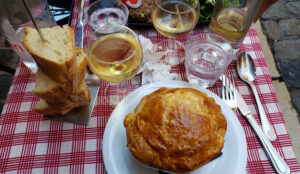
The second restaurant we tried with such fare was Bouchon Fiston, the first being of no particular note and right across the same street. Trying to mix it up a bit I went for a soup and salad. The onion soup came with a delicious filo dough top and the salad came with melted regional cheese on toasted bread. Patti ordered a lentil salad, which came as a combo of a lentil compote and green salad on the side.
Bouchon Fiston – Lyon, France
Erick’s Salad Lyonnaise
Patti’s Lentil Salad
Erick’s Onion Soup
Bistrot Des Cours Des Loges
Belonging to our hotel is a small bistrot that serves many good specialties from the region. Our second evening in Lyon found us visiting it, because the main restaurant normally served by a famous chef was closed for the holiday season.
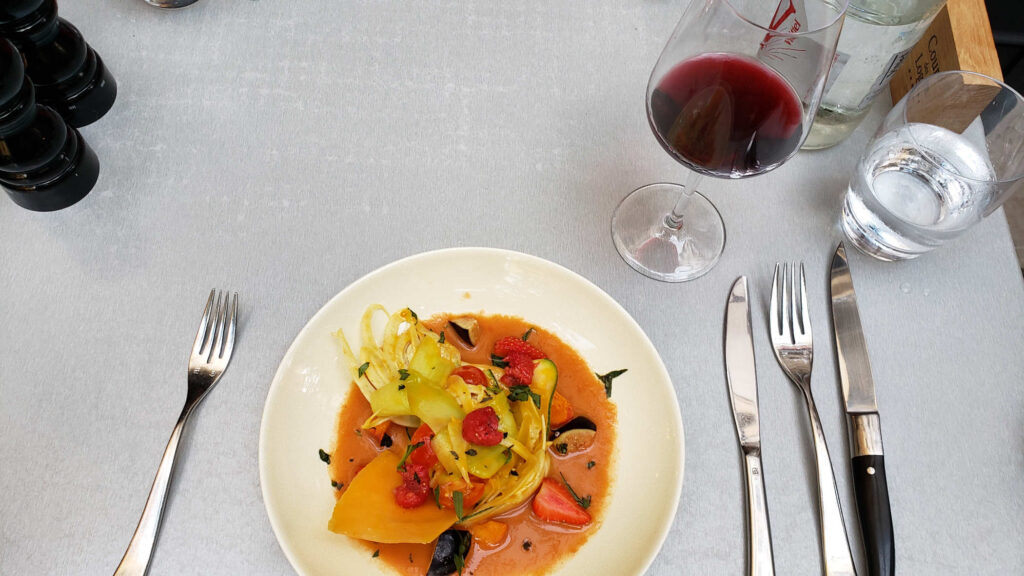
Cold Vegetable and Fruit Salad
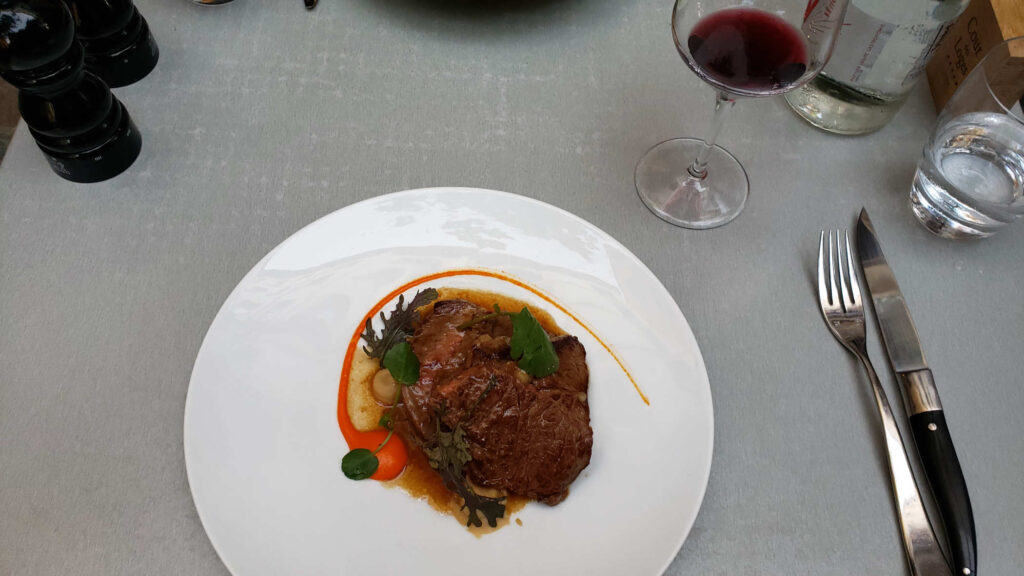
Erick’s Beaff with Burgundy Sauce
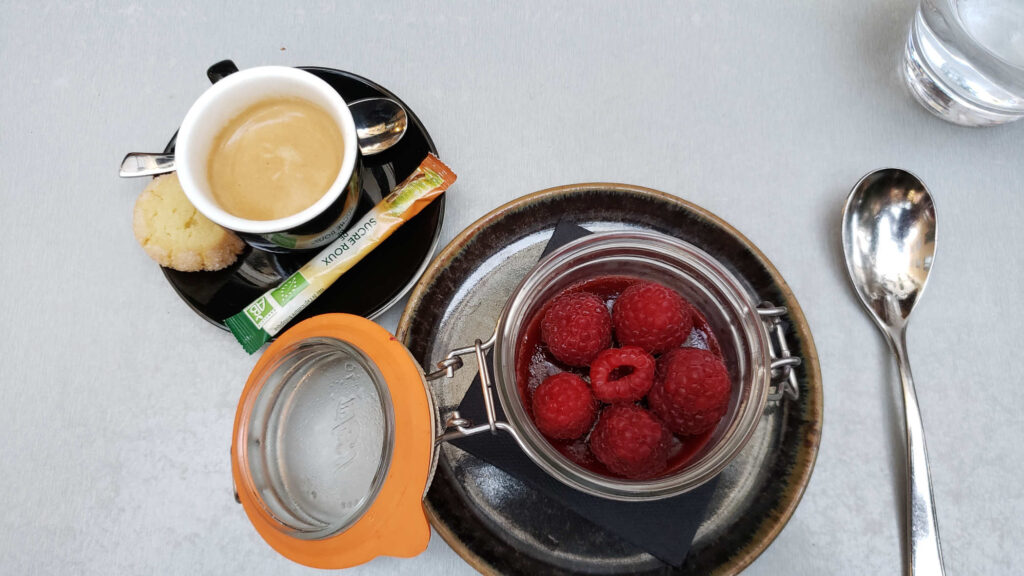
Raspberries with Raspberry Mousse
Bistro Des Cours Des Loges
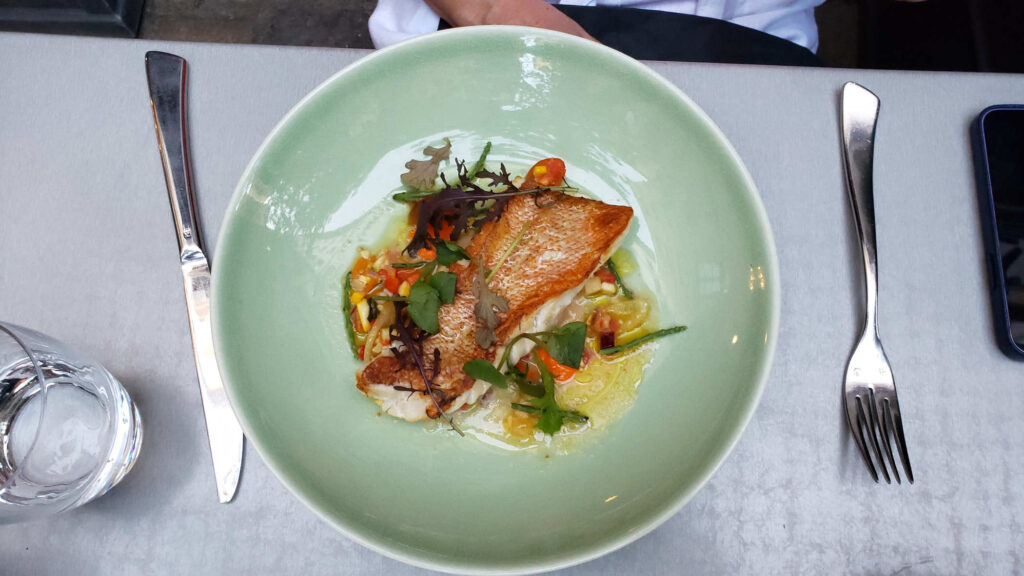
Patti’s Fish
The bistro offers outside seating under the amazing trees of the Place de Petit College. We had a most enjoyable evening sampling many fine dishes and enjoying the wine.
Le Cabaretier
Our last evening in Lyon found us dodging raindrops to make it to the Cabaretier for dinner. After a rather warm afternoon the thunderstorms would not be denied, but neither would we.
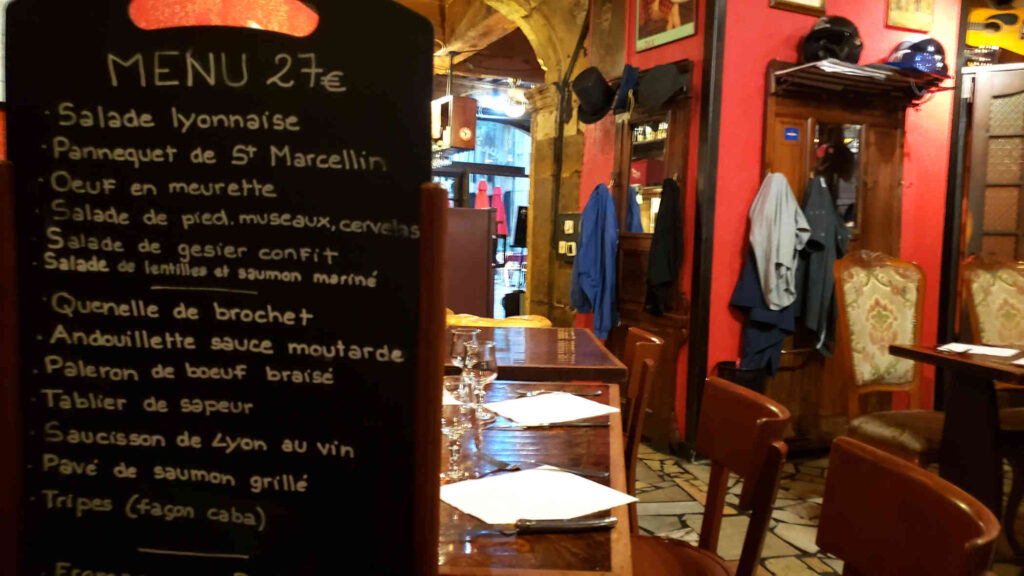
Le Carabetier – Lyon
The place was vacant for the most part, possibly owing to the rain, since most other places appeared equally bare. The owner and ostensibly the cook at this is a real character and listens to American music all the time. Once he learned we spoke English and were from the States, he was constantly buzzing around trying to help or playing songs he thought we would like to hear. If anything it made for an interesting evening.
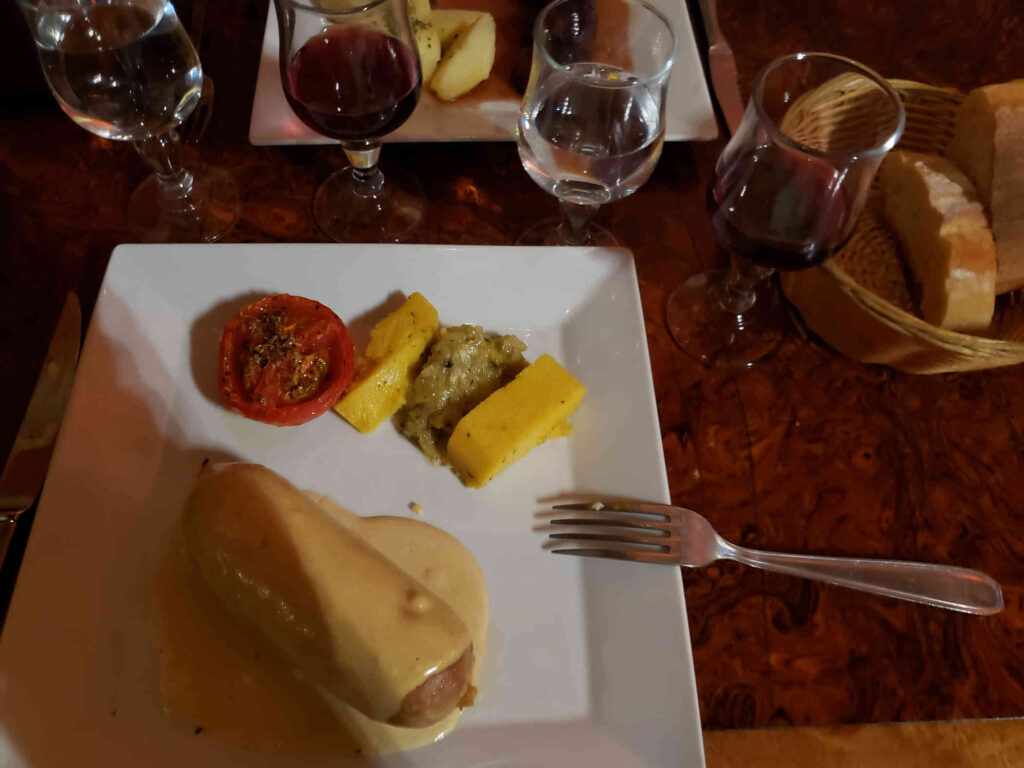
Yes, That’s Sausage, But I Had To Try It – Andouilette Sauce Moutarde
The inside looks as though it belongs as a Antiquariat and not a restaurant. But the eclectic furnishings did not take anything away from his authentic Lyonnaise food.
The tiny seaside city of Rapallo is remarkable in many ways, as a port, as a main stop on the Pisa to Genova train line, as a city that has many ancient Roman, Etruscan and other historical features, and as a tourist point of interest; where one can just relax and enjoy the sun while eating great Ligurian food.
The Hotel Astoria Rapallo
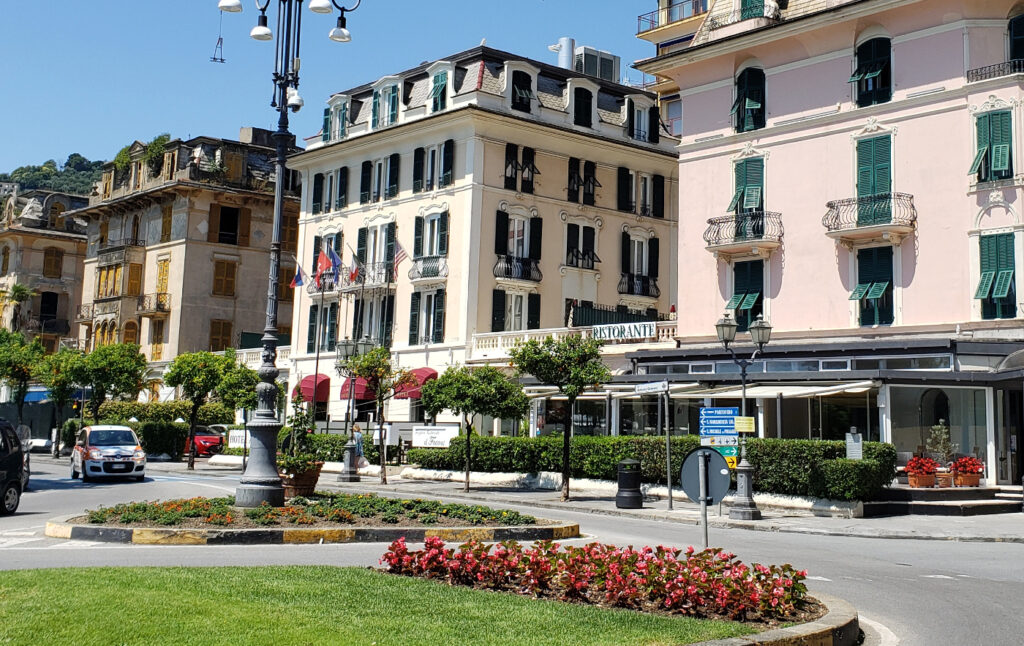
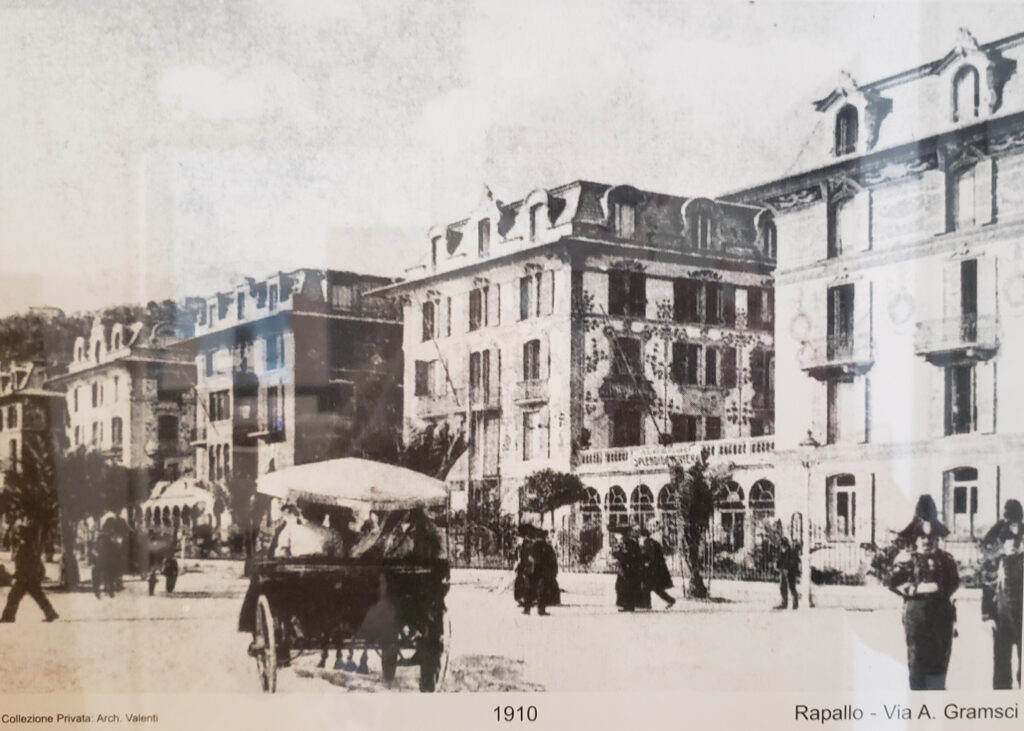
The Hotel Astoria Rapallo – 1903
We began our stay checking into the four star Hotel Astoria Rapallo along via Antonio Gramsci. Built in 1903 in the Victorian Liberty Villa style, it is well taken care of by its current owner and management couple, who cheerfully greeted us as we entered. The views from our seaside room were what we imagined, as were the cooling breezes that ran through the room when we open all the windows, clean and refreshing. Even though they come equipped with air-conditioning, it is always nice to open the windows to get fresh air, especially in the early morning.
Rapallo is an active port for fishing, leisure and travel (via ferry or other means to destinations along the coast.) Unfortunately, while we were here, the ferries were still not running, due to the restrictions in place on account of the virus. So, we were not able to visit Portofino as we had hoped.
The Historic Center
As with all older cities of any size, Rapallo has a historic center, albeit small, which one can wander through to shop or to catch a meal.
The only remaining gate of the ancient city walls is the Port of Salt, or Porta della Saline.
Porta della Saline
There are of course plenty of narrow and inviting streets in the old town that suck you in with their capillory action.
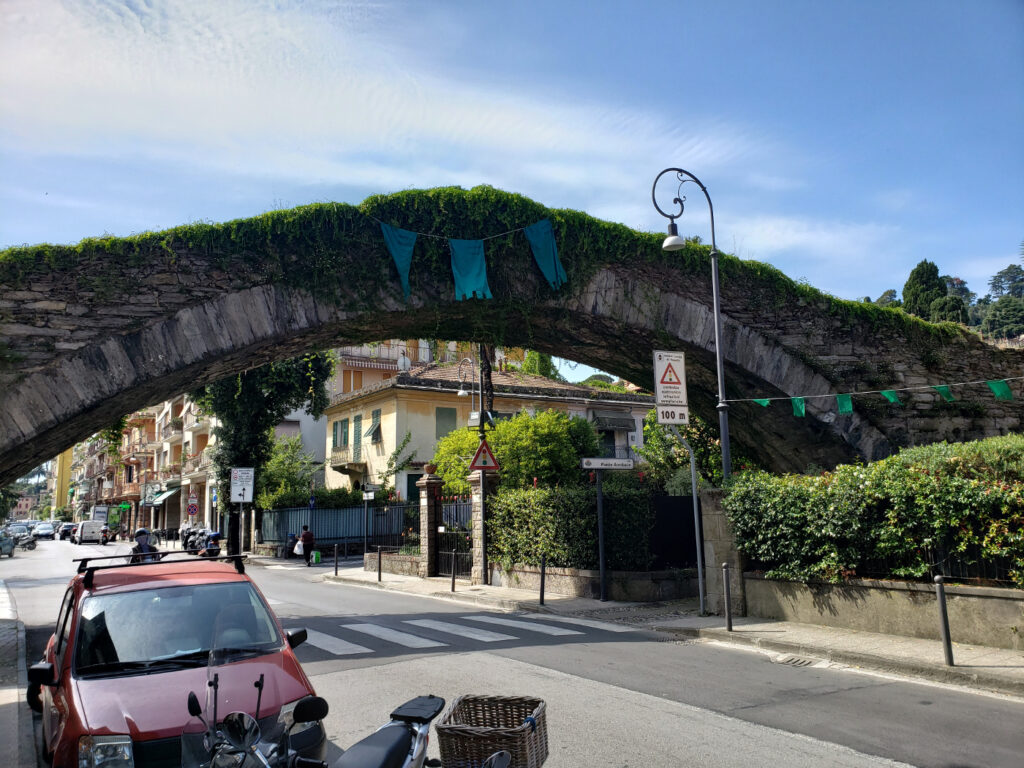
Hannibals Bridge
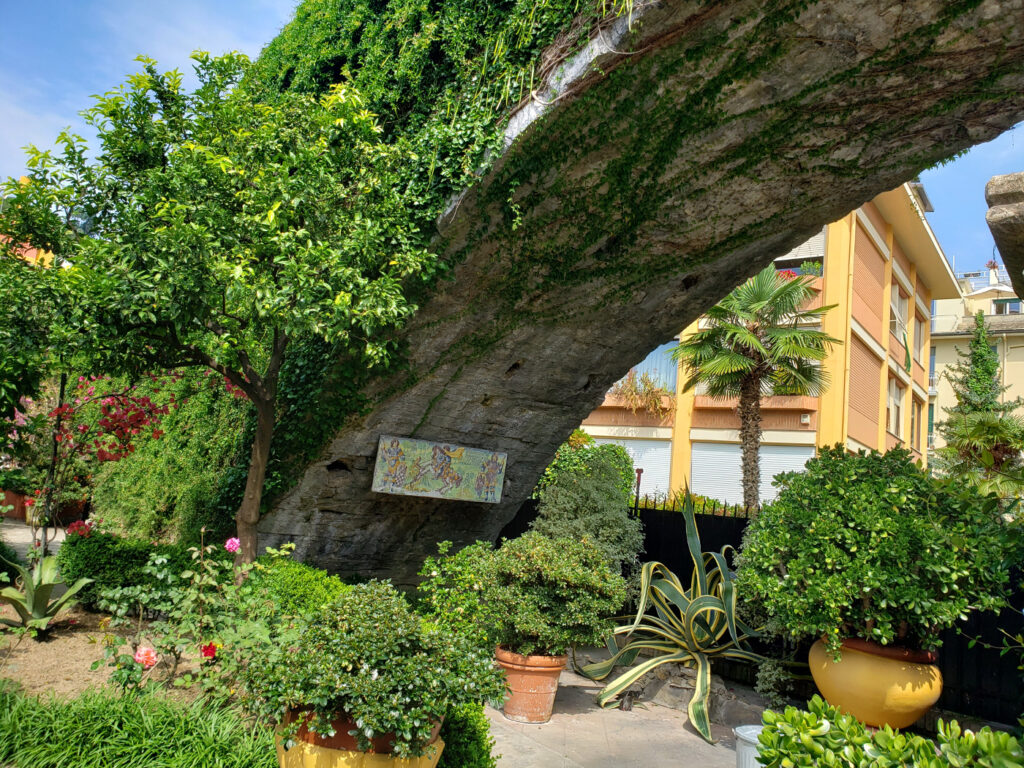
Built in the second century, the ancient bridge from the Roman period, called Hannibals Bridge, can still be seen and enjoyed. Though cordoned off to travel, it still is an imposing and impressive sign of the Roman’s architectural and construction abilities.
Hannibals Bridge Span
Hannibals Bridge Garden
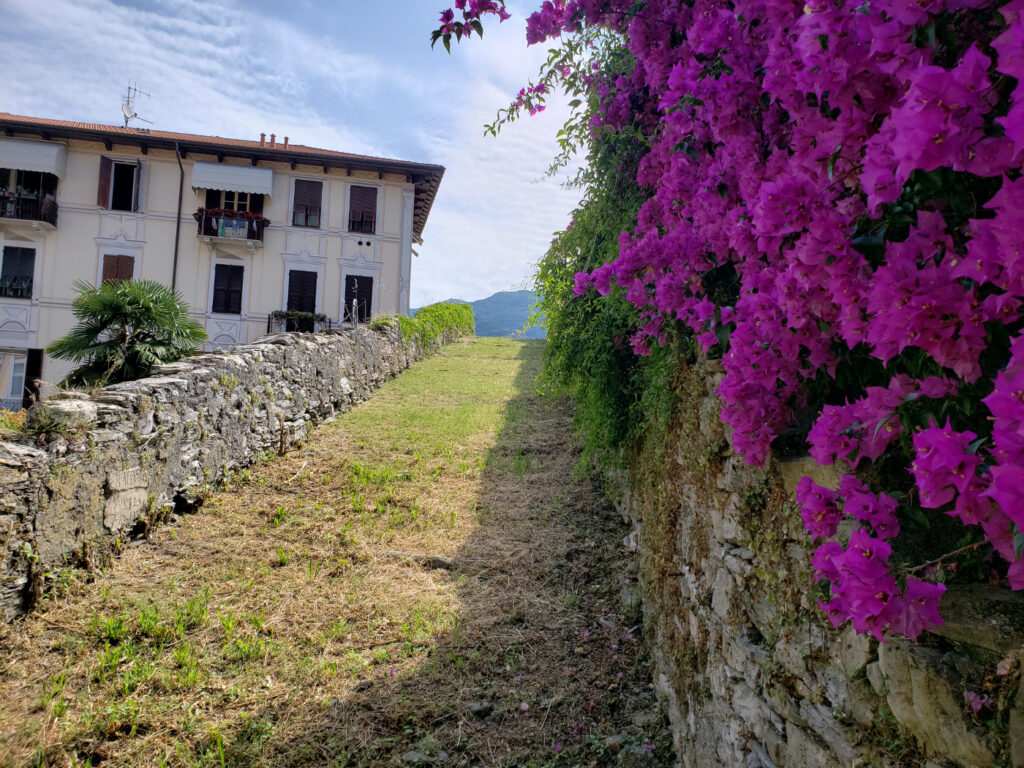
Hannibals Bridge with Flowers
Hannibals Bridge Gated
The Castle Of Rapallo
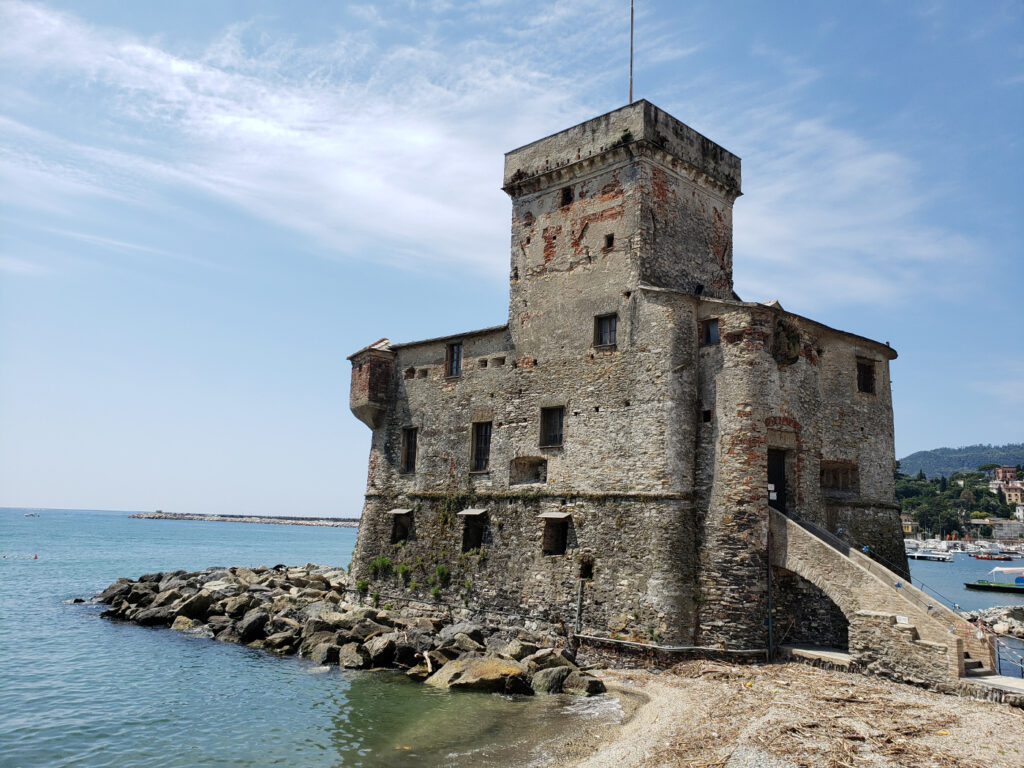
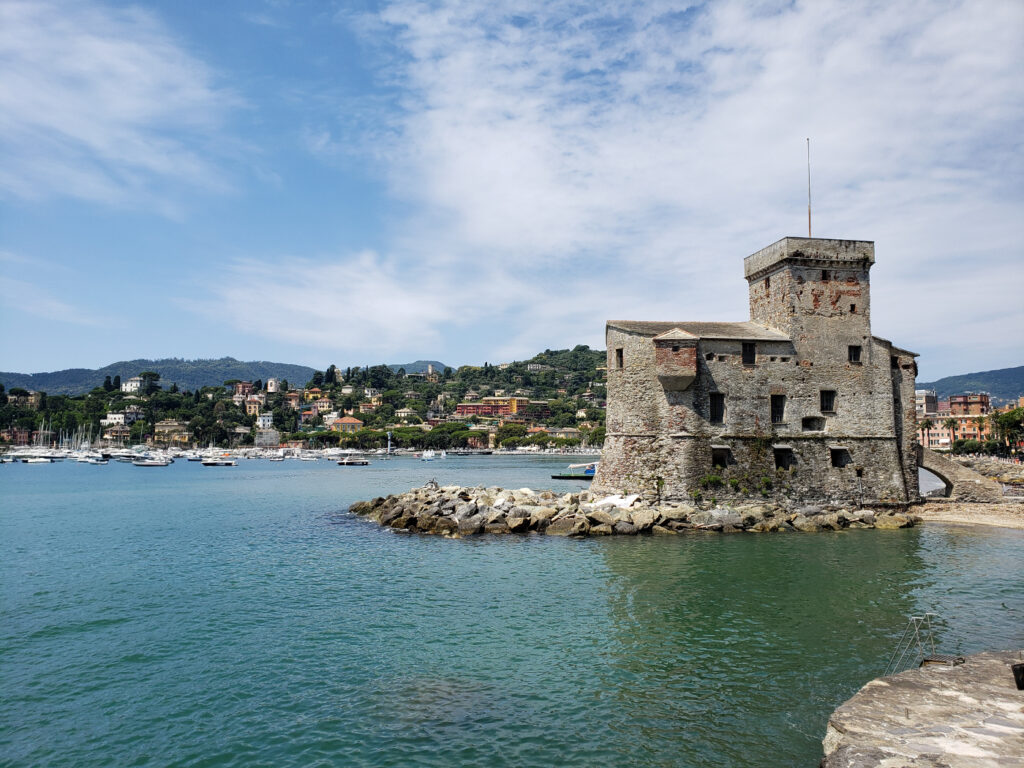
Anyone looking out into the gulf will sooner or later notice the small castle sitting off the coast directly in front of the traffic circle (or roundabout), Piazza Giovanni Battista Pastene. This is the Castello di Rapallo, an old castle built in the 1550s in response to attacks by Turkish pirates. It is still in fairly good shape, but while we where there, temporarily closed due to Covid restrictions and construction in the vicinity.
Castello di Rapallo
Castello di Rapallo
The Brotherhood Of White
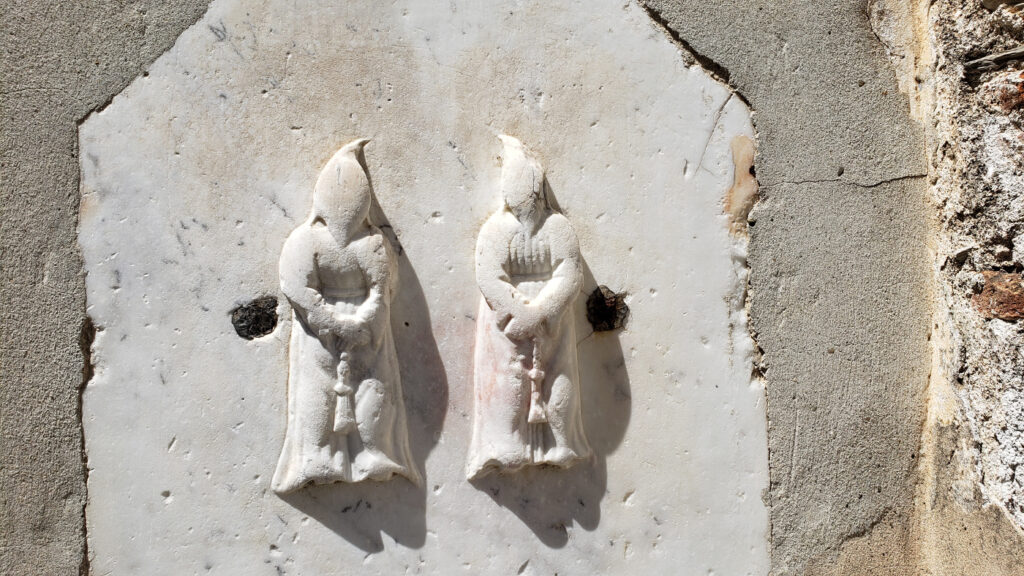
A Brotherhood of White, also known as the Great White Brotherhood and the Universal White Brotherhood, has a sect or presence in the city. In a part of the historic center, a structure exists that apparently houses this old eighteenth century order of people of enlightenment. The signs are there, if you are looking for them.
Order Of The White BrotherhoodSign Of The Great White Brotherhood
The Gulf Of Tigullio
The Gulf of Tigullio is very large and extends from Portofino to Zoagli. It is always nice to walk along the Port of Rapallo in the early morning or in the evenings to enjoy the fresh air and beauty of the gulf itself. There are many inlets, bays and coves that one can explore along the way, some with road access, others a bit more difficult.
The Gulf Of Tigullio And The Ligurian Hills
Rapallo To Montallegro
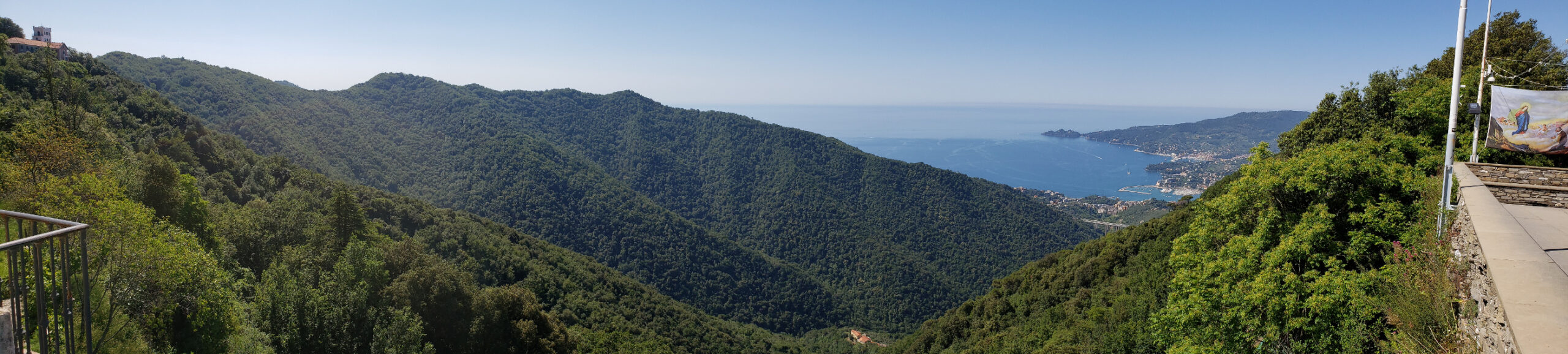
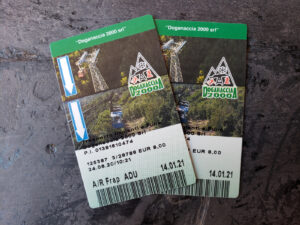
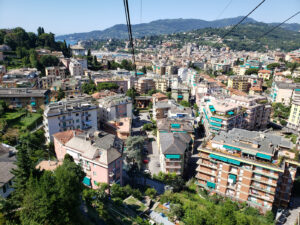
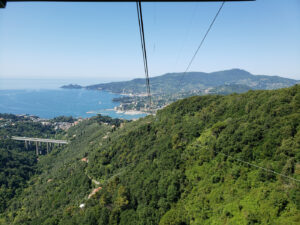
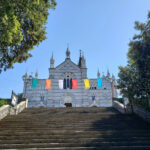
The cable car from Rapallo to Montallegro and back is a treat. Though some might consider it an expensive treat, at 8€ a piece for a round trip; we thought it a fair deal. The views in and of themselves are more than worth the ticket price. There is not only a basilica waiting for you at the top, but also a restaurant with amazing views of the city and surrounding countryside.
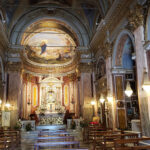
Basilica and Sactuary of Our Lady of Montallegro – Inside
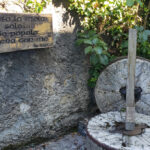
Old Millstone
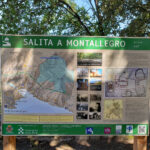
Map of Area
Basilica Seal In Stones – M
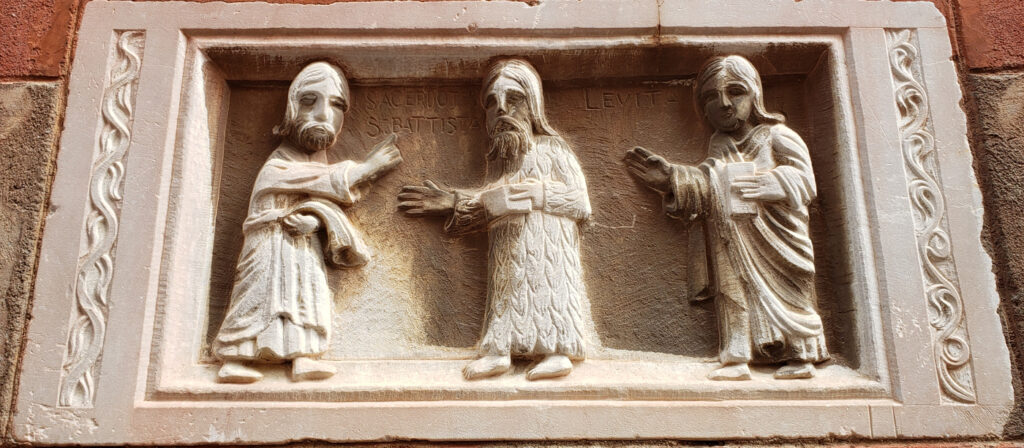
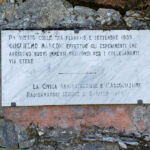
Old Inscription Behind Church
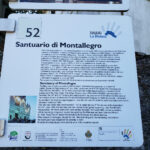
Sanctuary of Montallegro
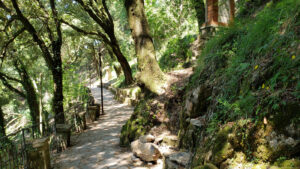
The Paved Path
Basilica and Sactuary of Our Lady of Montallegro
Casa del Pellegrino
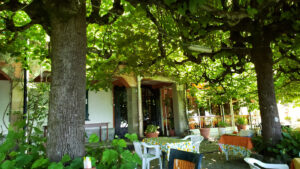
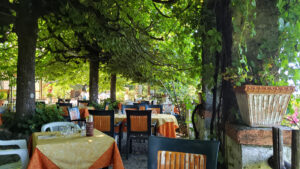
There is a cafe, bar and restaurant some ten or so minutes walk from behind the basilica. It is not only the start of one of the hiking trails that wanders through the area, but also provides an excellent view of the gulf and port of Rapallo. Since the cable car runs every thirty minutes or so, we took advantage and spent an hour here, taking on refreshment and admiring the view while enjoying the cool air coming up the mountain slopes.
The Path to the Restaurant
The Path to the Restaurant
The Restaurant Entrance
Outside Seating With Overlook
The View From Our Table
Another View
Cable Car From Montallegro Back To Rapallo
Here are a few videos of our trip back down the mountain. If you are ever there, a word of caution for those with any fear of heights, you will be suspended very high in the air. It may not be for everyone, unless you maintain your look inside the car on ascent and likewise on the return.
Close to a two-hour bus ride to the west-southwest of London is Winchester, just a mere twenty-minute train ride from the coast and Southampton.
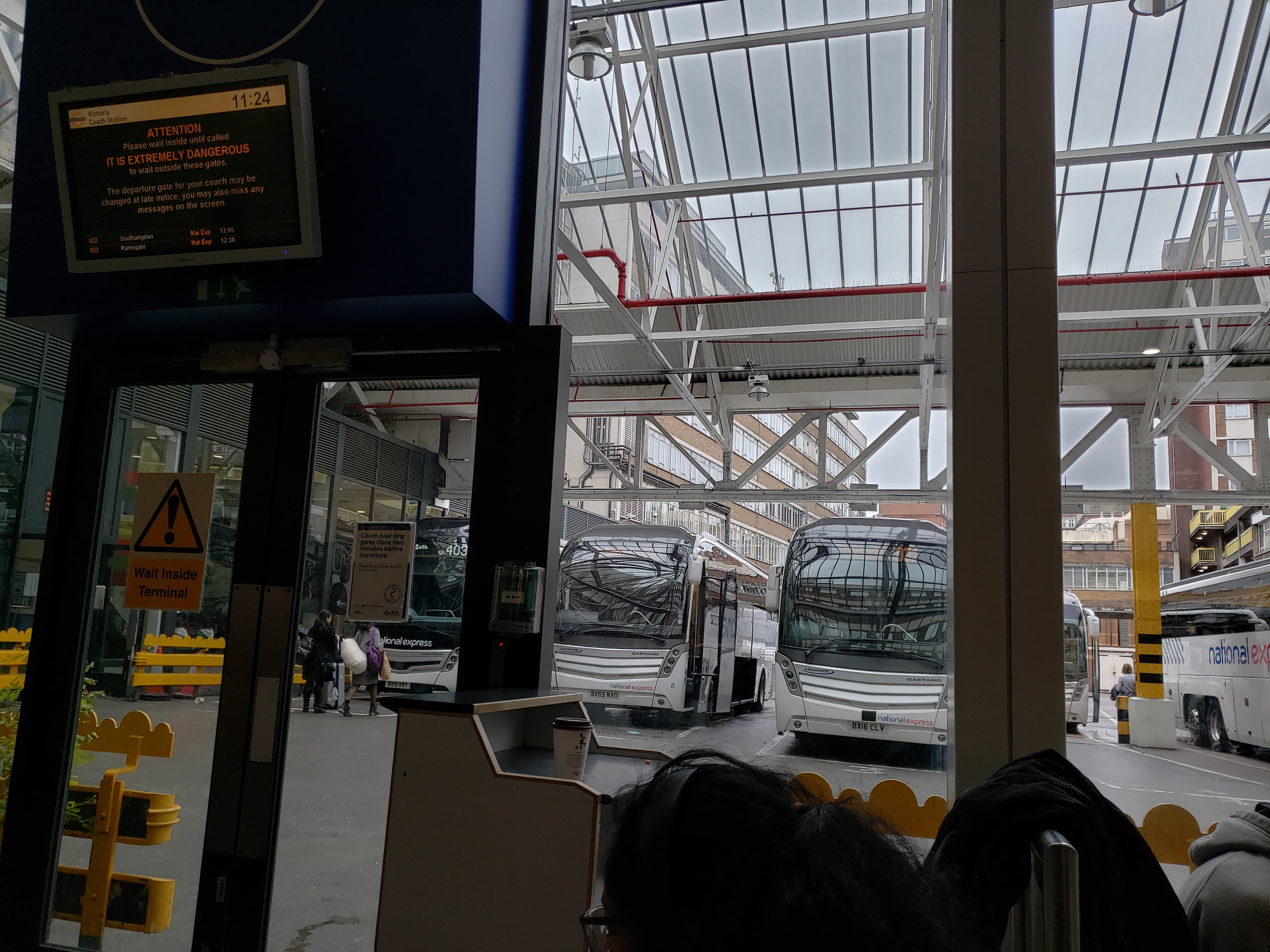
NationalExpress Bus 032 – Winchester, England
Though we attempted to take a train to this marvelous little town, we ended up scheduling a bus ride through NationalExpress, which provided a more direct albeit one more subject to the vagaries of traffic.
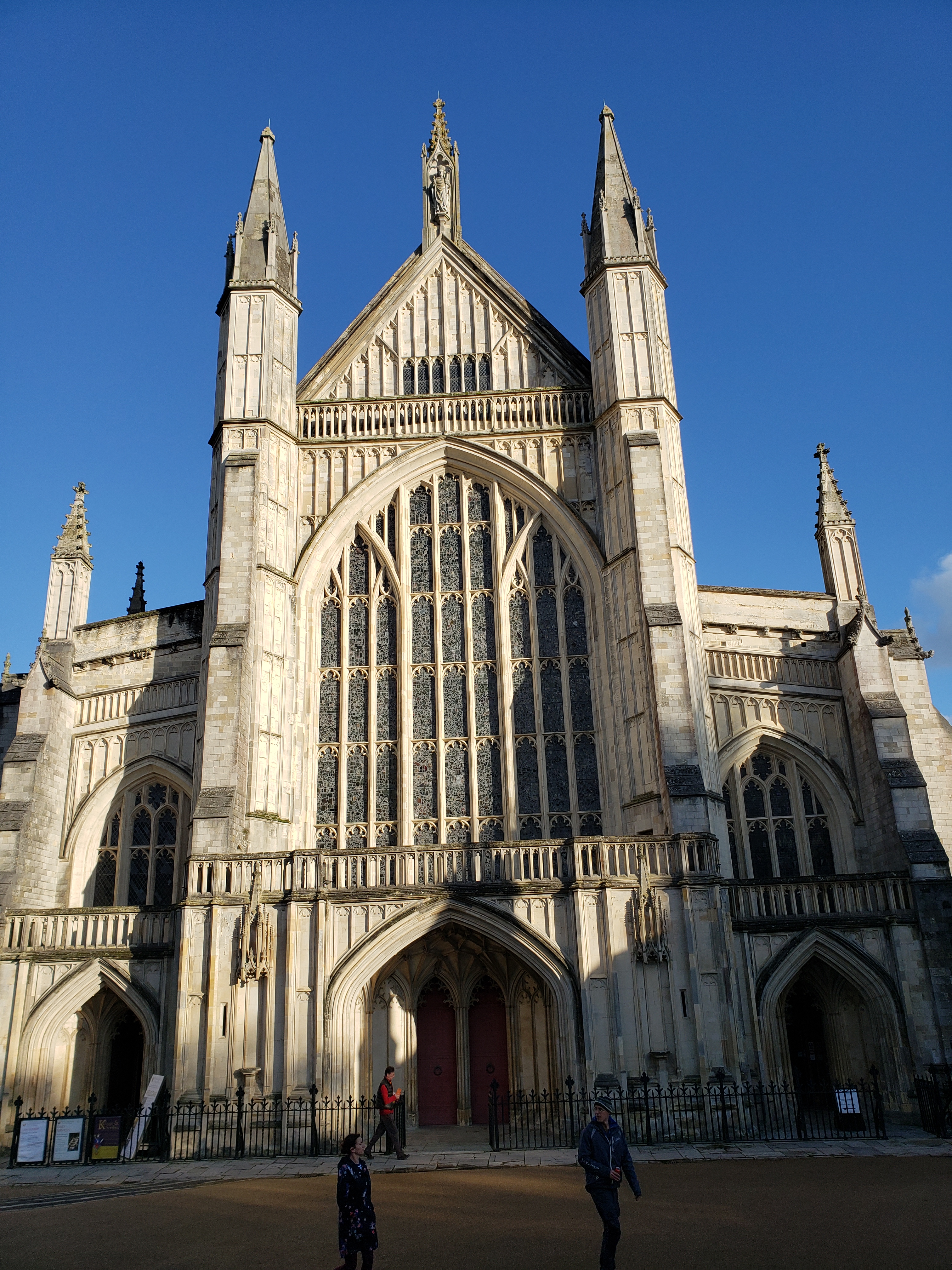
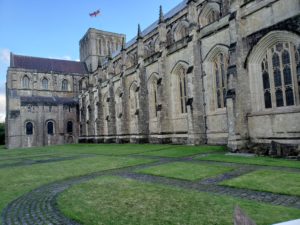
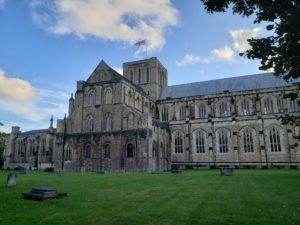
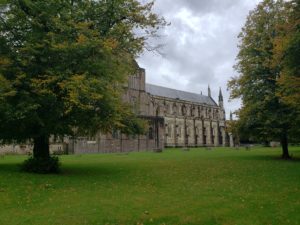
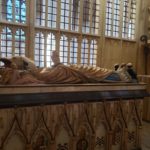
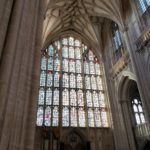
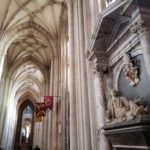
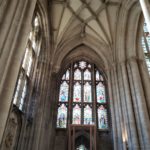
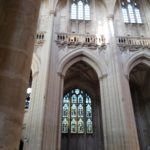
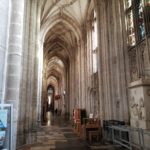
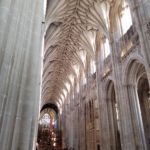
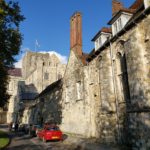
Winchester Cathedral
Winchester Cathedral – The Impressive Front Entrance
Just behind our hotel, the Mecure, stands Winchester Cathedral. Because it is no longer funded by the government, there is usually an entrance fee of 9£. But, if you go on a Sunday evening, when it is open for mass you may be lucky enough to enter for free.
Winchester Cathedral
Winchester Cathedral
Winchester Cathedral
As made famous by Frank Sinatra and other pop artist of the 60’s and 70’s, everyone my age probably knows the song “Winchester Cathedral”. Well here is the real thing and an impressive structure it is, along with its history.
Winchester – The Town
Winchester – Market Lane
Winchester – Market Lane
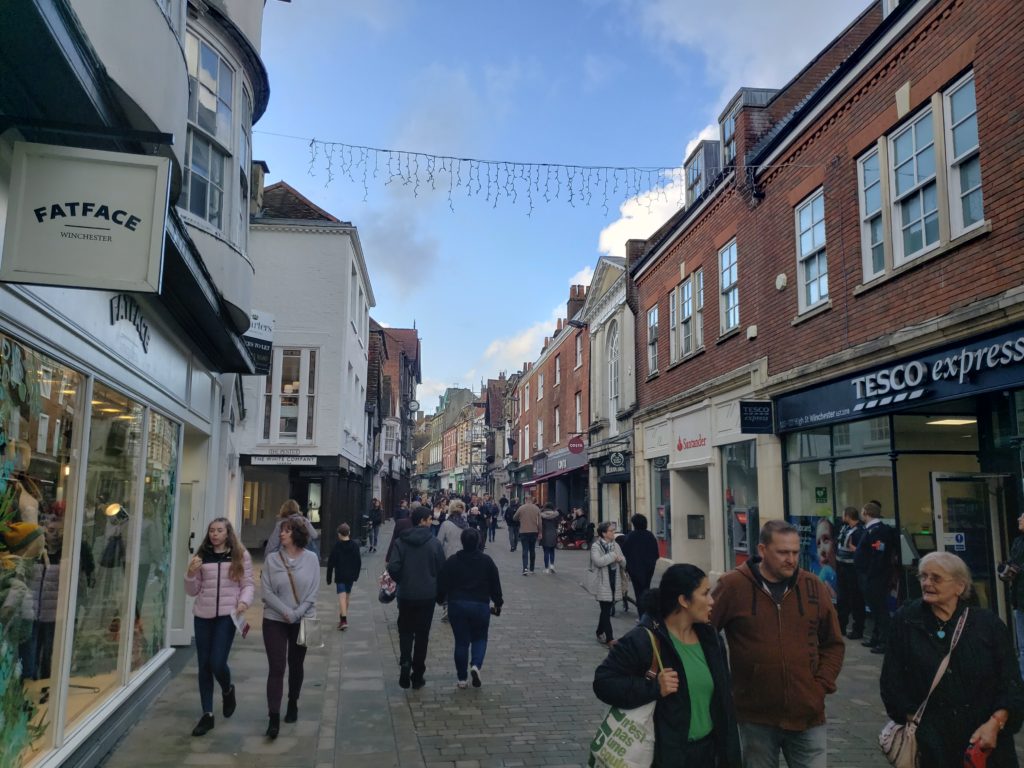
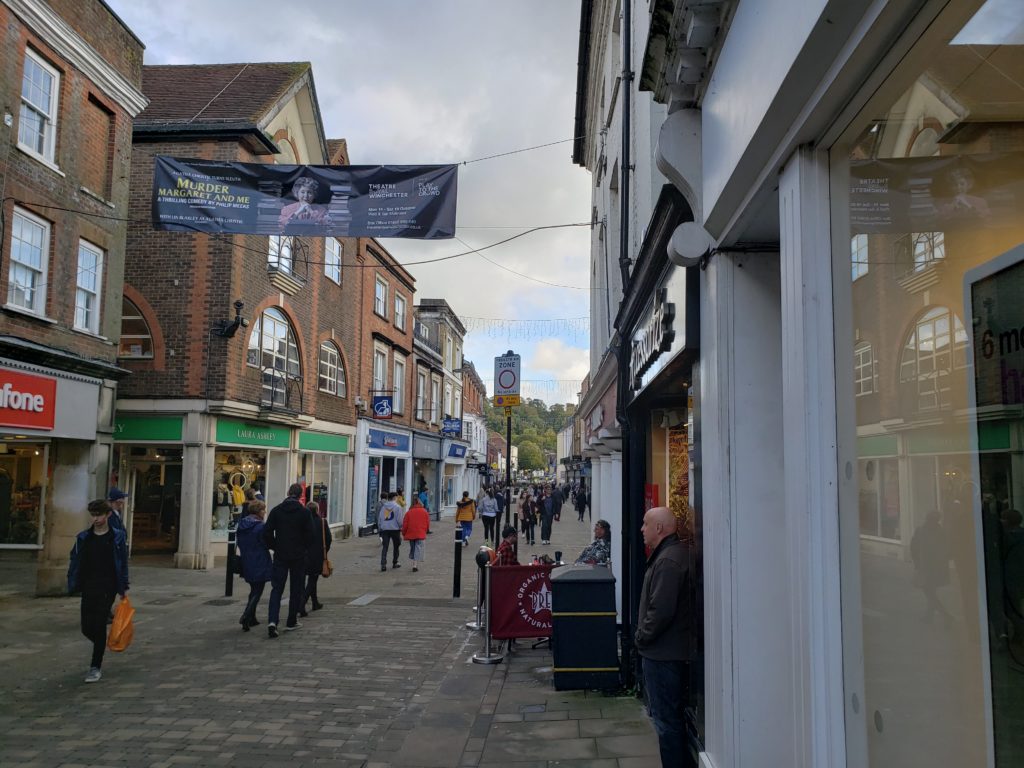
The town proper is a very nice place, with its own central shopping pedestrian street with plenty of trendy shops, cafés and restaurants.
Street Sign
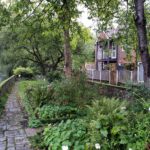
River Itchen
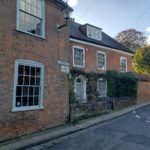
Winchester
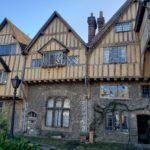
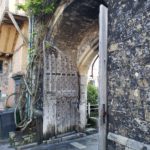
Winchester – Cathedral Gates by Dome Alley
Winchester
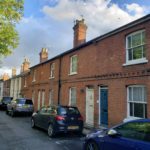
College Street
Winchester
Winchester
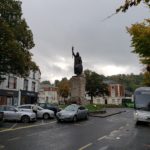
King Alfred Statue
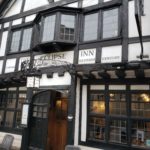
The Eclipse Inn – A Very Tiny Place Inside
College Street
Above one can see some additional photographs as we took them walking through this lovely little town.
Winchester City Museum
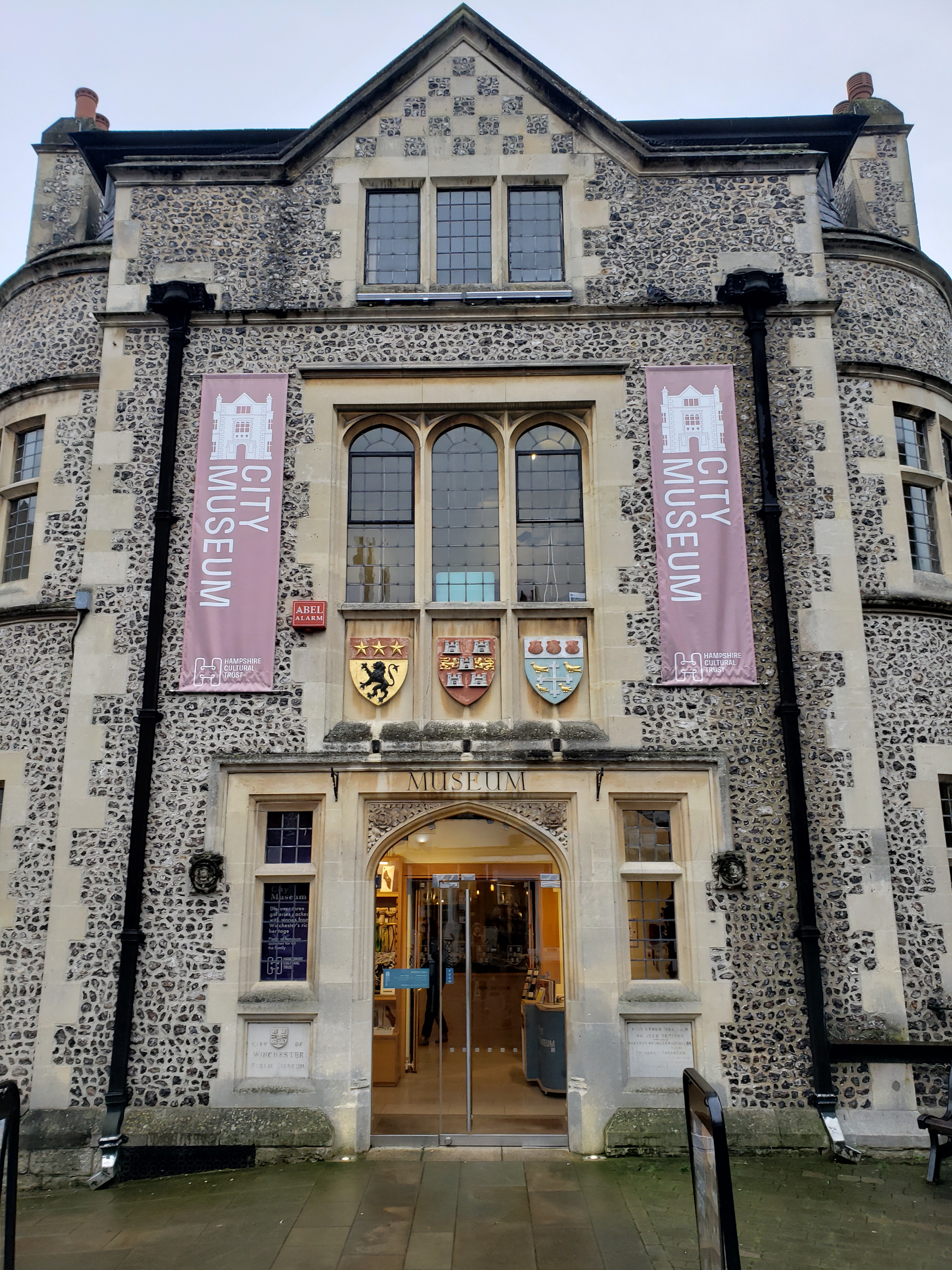
The City Museum
A free and very informative little museum sits almost directly in the middle of town, just a stone’s throw from The Eclipse Inn, called the City Museum.
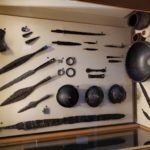
City Museum – Roman Period
City Museum – Roman Period
City Museum – Roman Period
City Museum – Roman Period
City Museum – Roman Period
City Museum – Roman Period
City Museum – Norman Period
City Museum – Norman Period
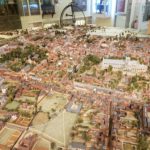
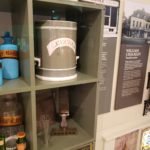
City Museum – Contemporary Period
City Museum – Contemporary Period
City Museum – Contemporary Period
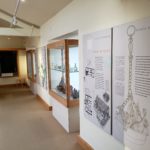
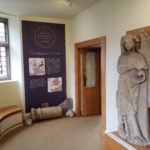
There are numerous exhibits which starts on the top floor with the Roman Period of Winchester, formerly known to the Romans as Venta Belgarum around 70 A.D. This is followed on second floor (that would be the first floor for Europeans) with an entire section on the Norman Period. And finally on the ground floor with contemporary history.
The Great Hall
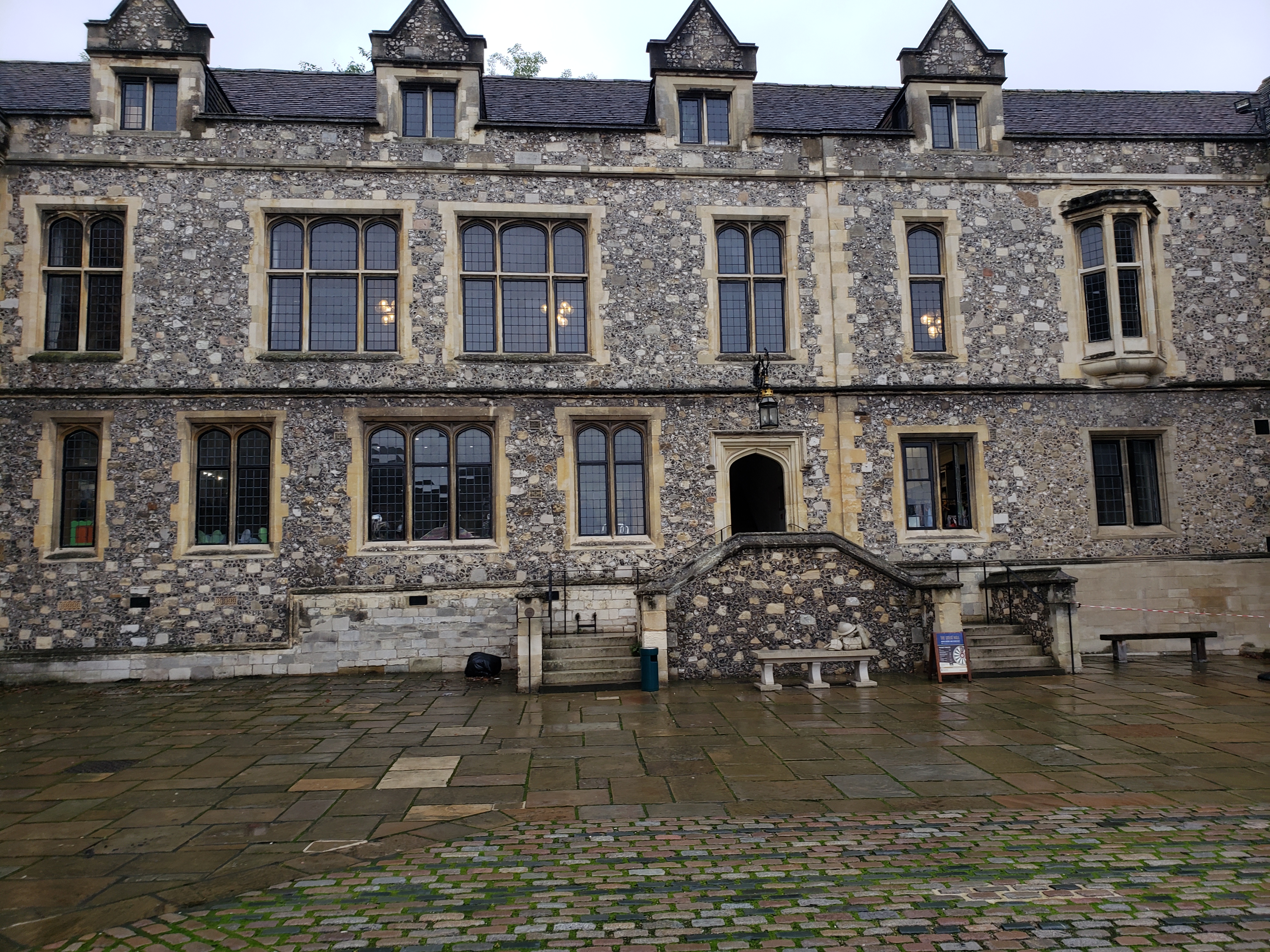
The Great Hall – Entrance
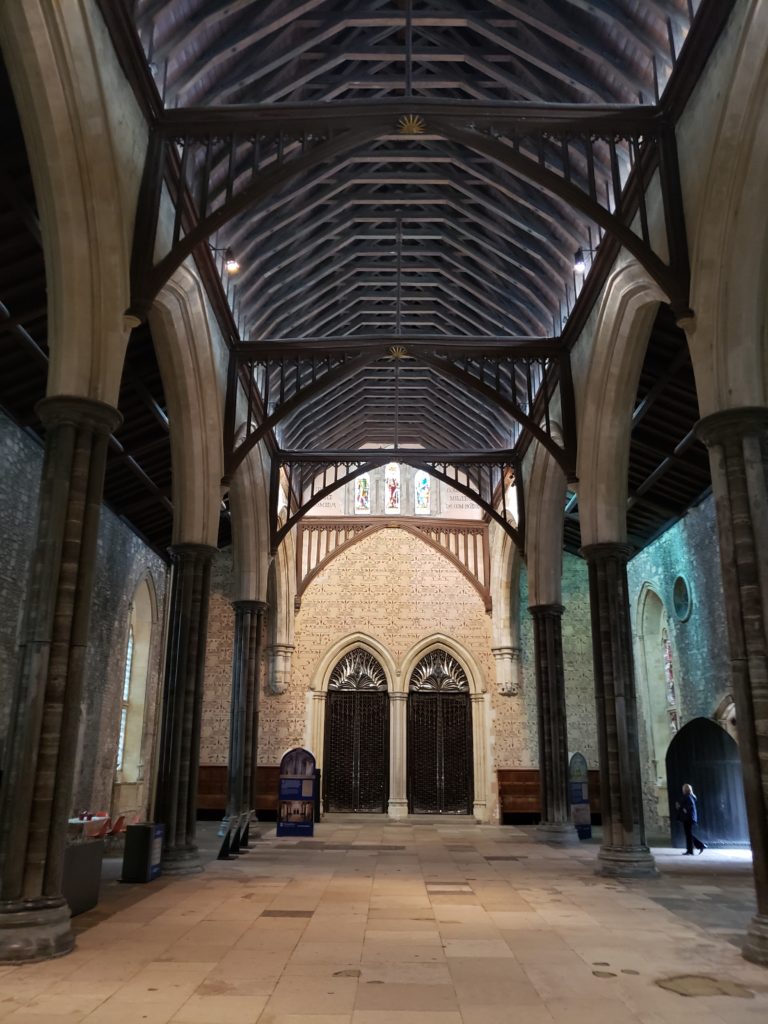
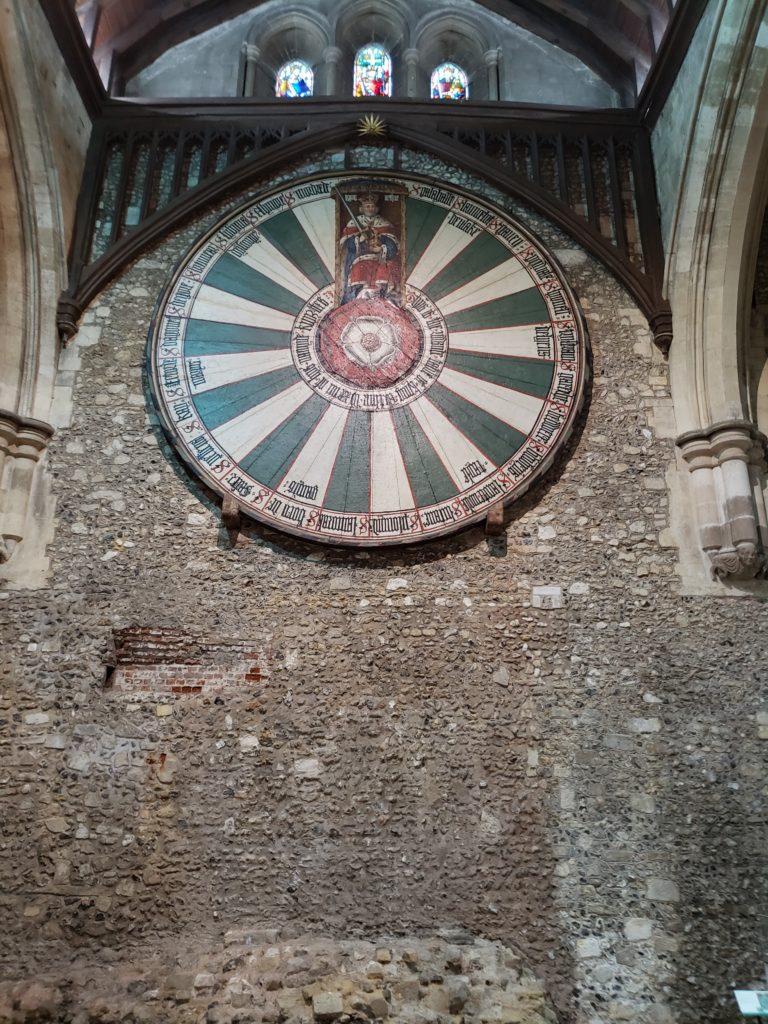
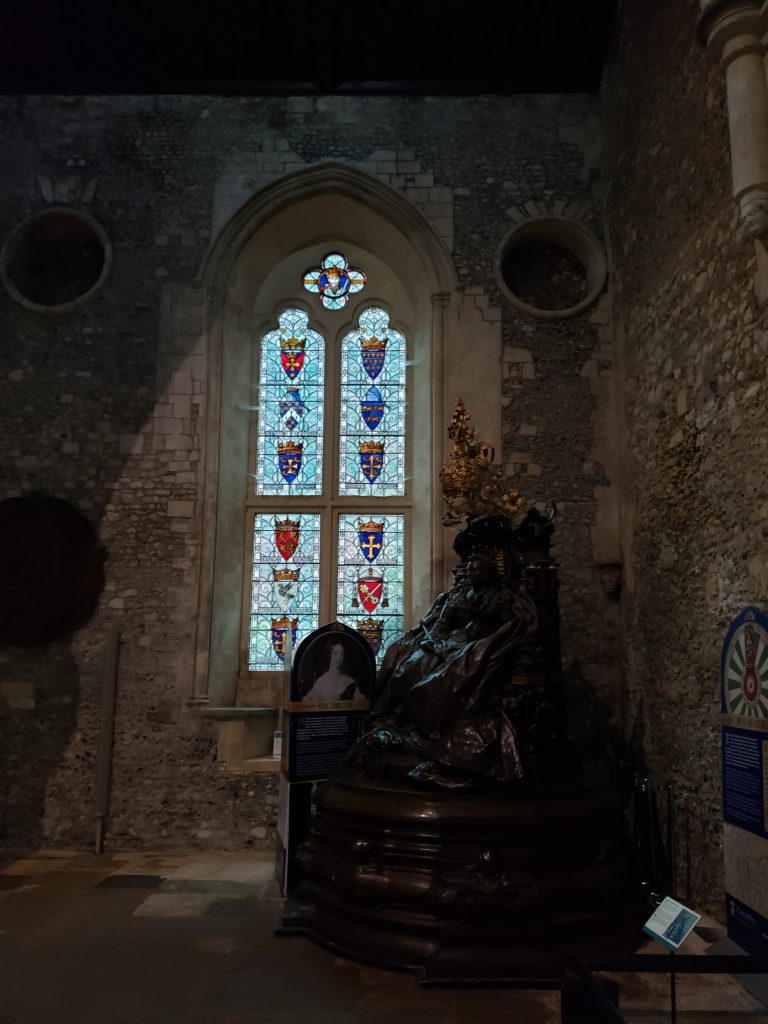
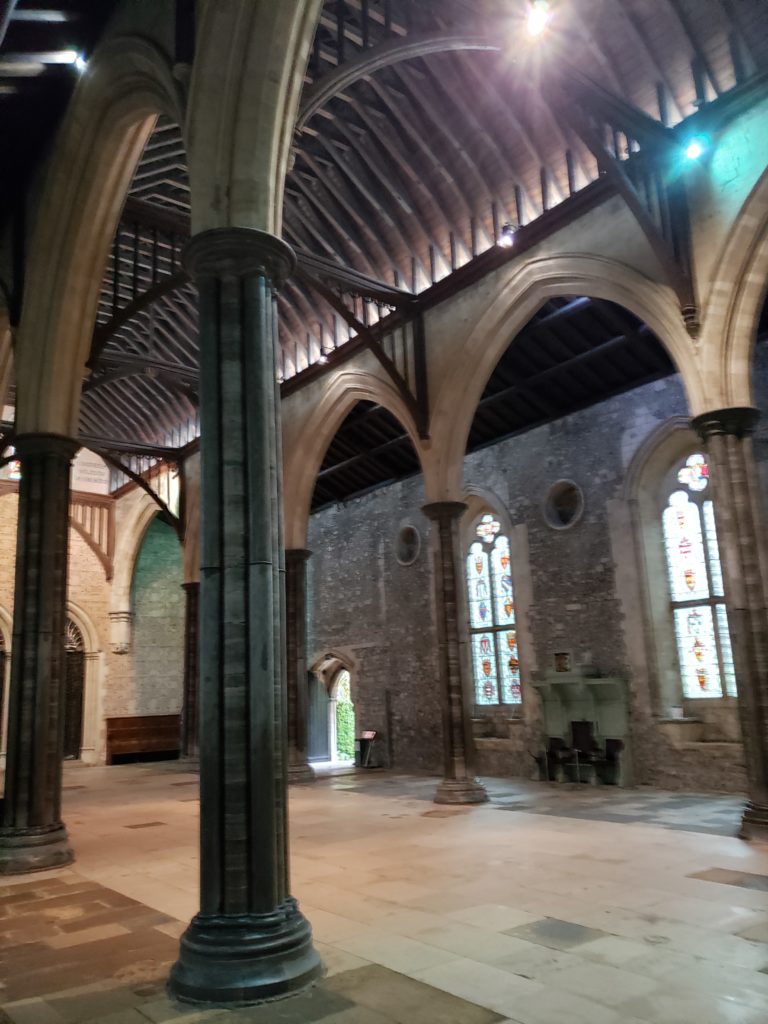
The Great Hall is a large 13th century hall that features King Arthur’s Round Table. It is the only building remaining of the Winchester Castle that used to reside here and has been turned into a museum.
The Great Hall
The Great Hall – King Arthur’s Round Table
The Great Hall – Stained Glass Added At A Later Date
The Great Hall
The City Mill
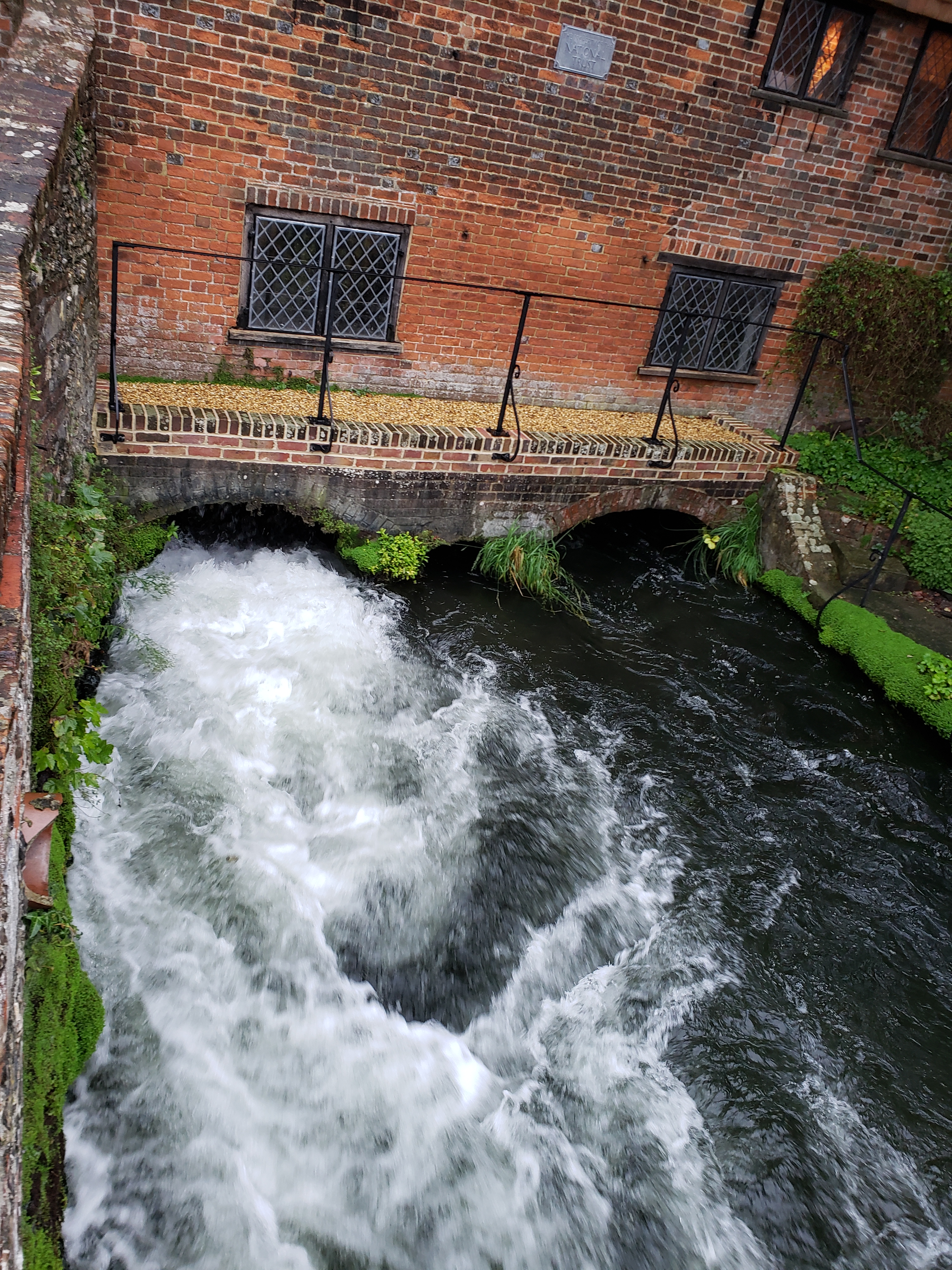
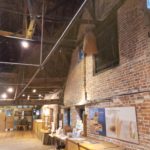
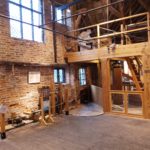
The Winchester City Mill is a restored and fully working water-mill that sits over the river Itchen.
Winchester City Mill – Water Coming Out of the Front of the Mill
It costs 6£ to enter and has audio-visual as well as hands-on displays for children. It is a one floor museum with access to the lower section in order to see the actual mill-wheel and transfer gears.
The museum also has a nice little park area where you can sit and enjoy the day, if it’s not raining!
City Mill – Front
City Mill – Inside Displays
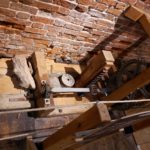
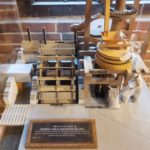
City Mill – Mill Mechanism
City Mill – Models
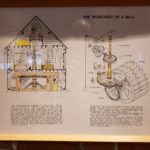
City Mill – Example of How the Power is Transferred
City Mill – Another Model
City Mill – Displays
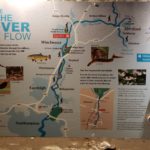
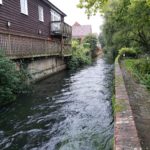
City Mill – The River Itchen
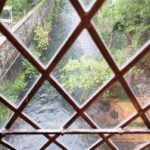
City Mill – Looking out of the Window
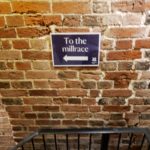
City Mill – Down to the Millrace and the Wheel
City Mill – Where the River Itchen goes in
City Mill – The River Itchen before it reaches the Mill
If you actually watch the entire video presentation you will find it most informative, since it goes into the mill itself, along with its historic ups and downs. The building was even used at one time as a hostel for cyclists and hikers!
If one were to take Trenitalia from Turin Porta Nuova west to its logical end, one would find Susa, a quiet little alpine town built by the Gauls sometime before the Roman Empire. Excited? You should be, we were and were not disappointed.
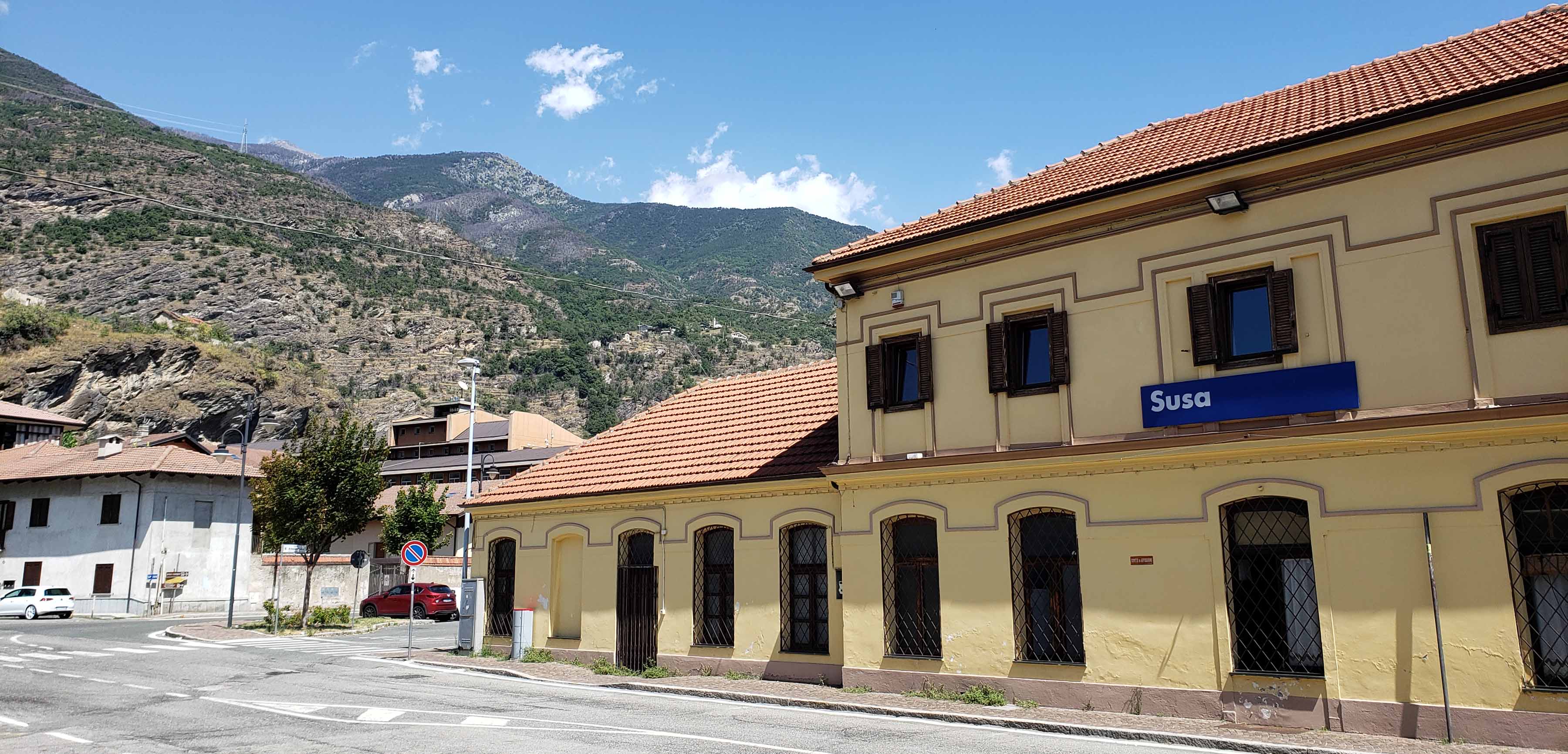
Susa Station
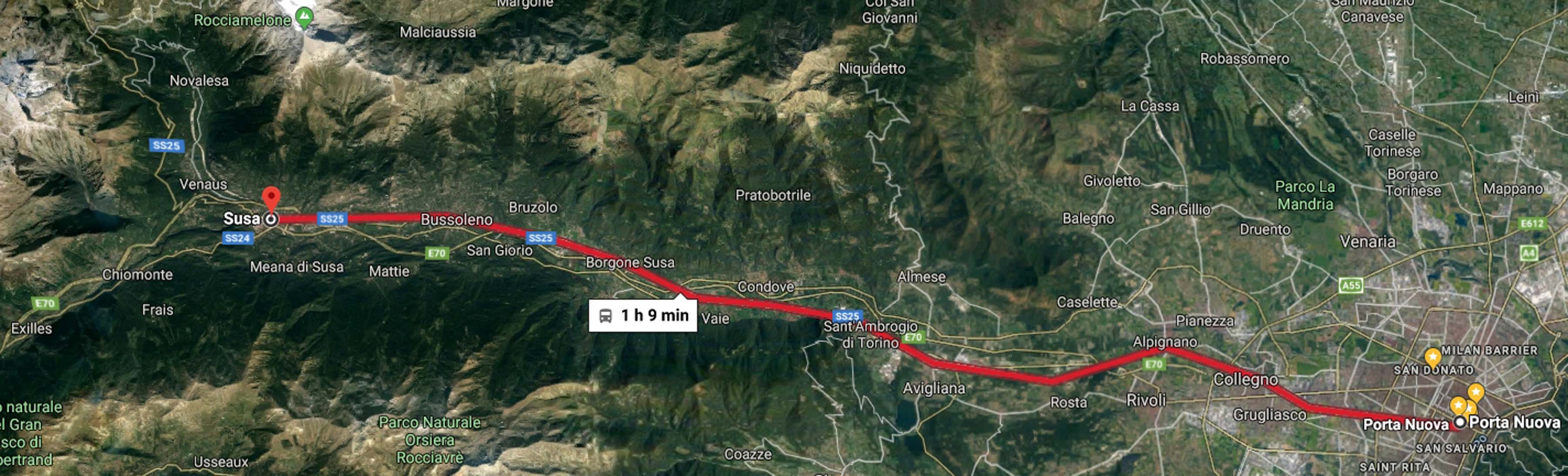
We entered the town via the train station, an hour’s ride from our main train station in Turin. As we traveled down the Susa Valley, somewhere starting around Avigliana, we slowly became surrounded by hills, then mountains.
Train route down the Susa Valley
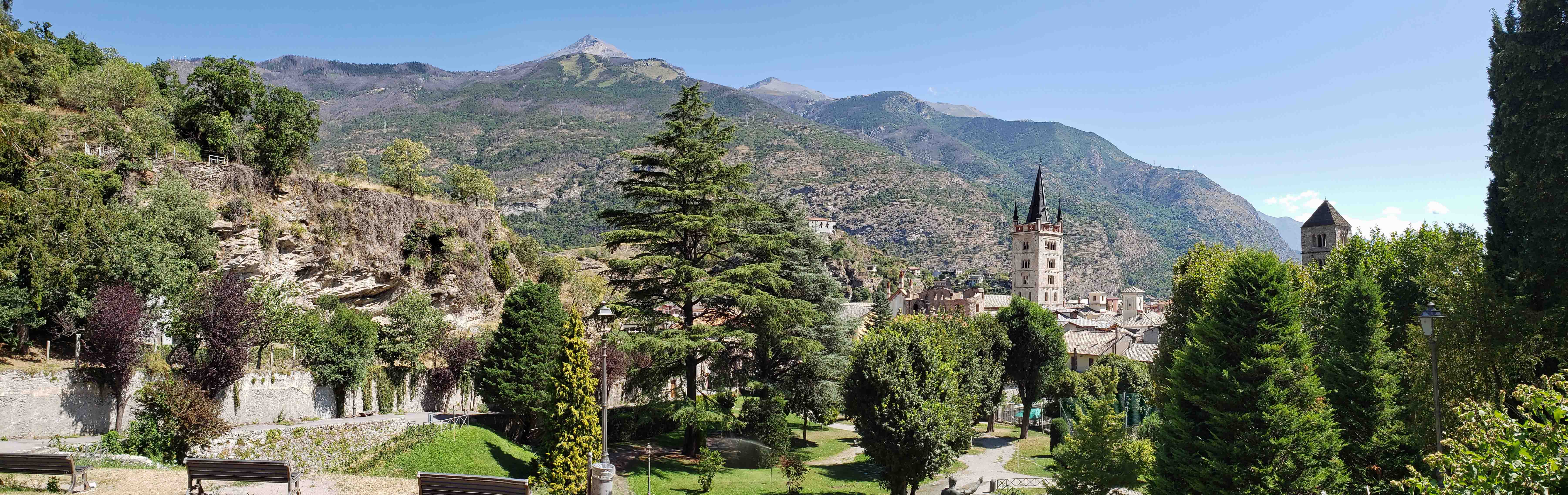
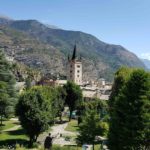
Upon reaching Susa, we were encircled by Graian Alps. , especially Rocciamelone which sits just due north of the town.
Overlooking the Park of Augusto, with Rocciamelone towering overhead
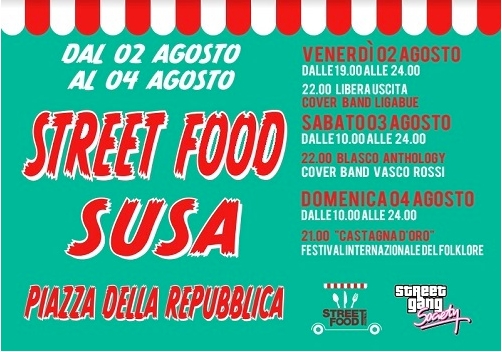
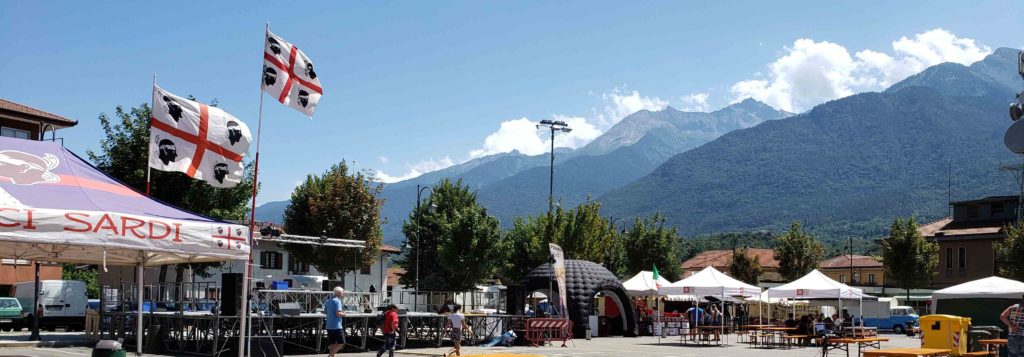
We had arrived around eleven o’clock in the morning, ready for some serious tourist trekking of the town and a peak at the food festival they were having this weekend.
Advertisement for the event
The food festival, just after opening
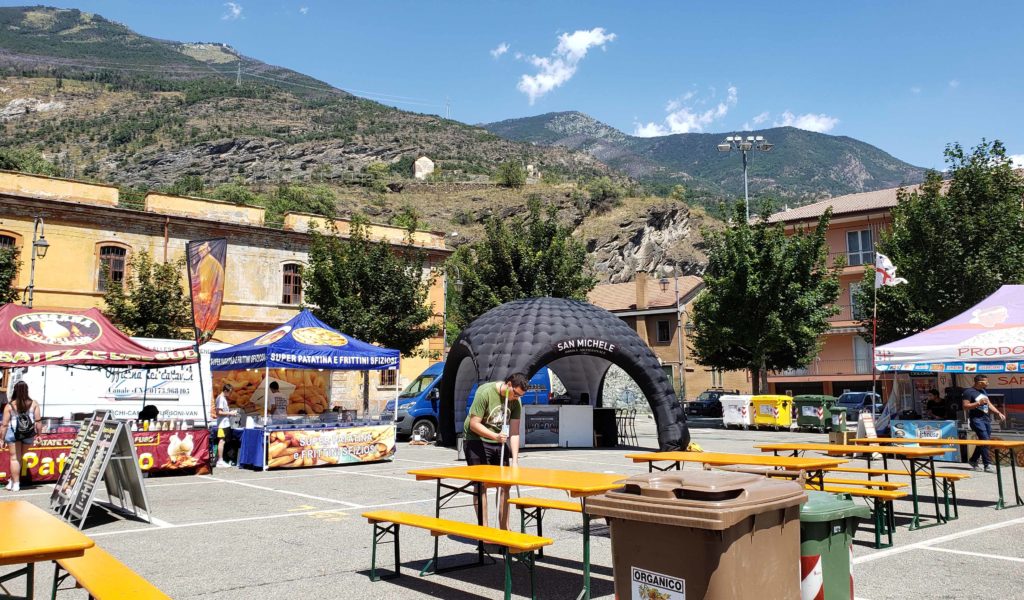
and before the massive food fight (tongue in cheek)
Gauls and Romans
The town, like many very old towns in Italy, enjoys a rich history dating back before and including the Roman Empire. When the Roman Empire ascended into existence after the Roman Republic, Susa became a voluntary part of it in the 1st century BC.
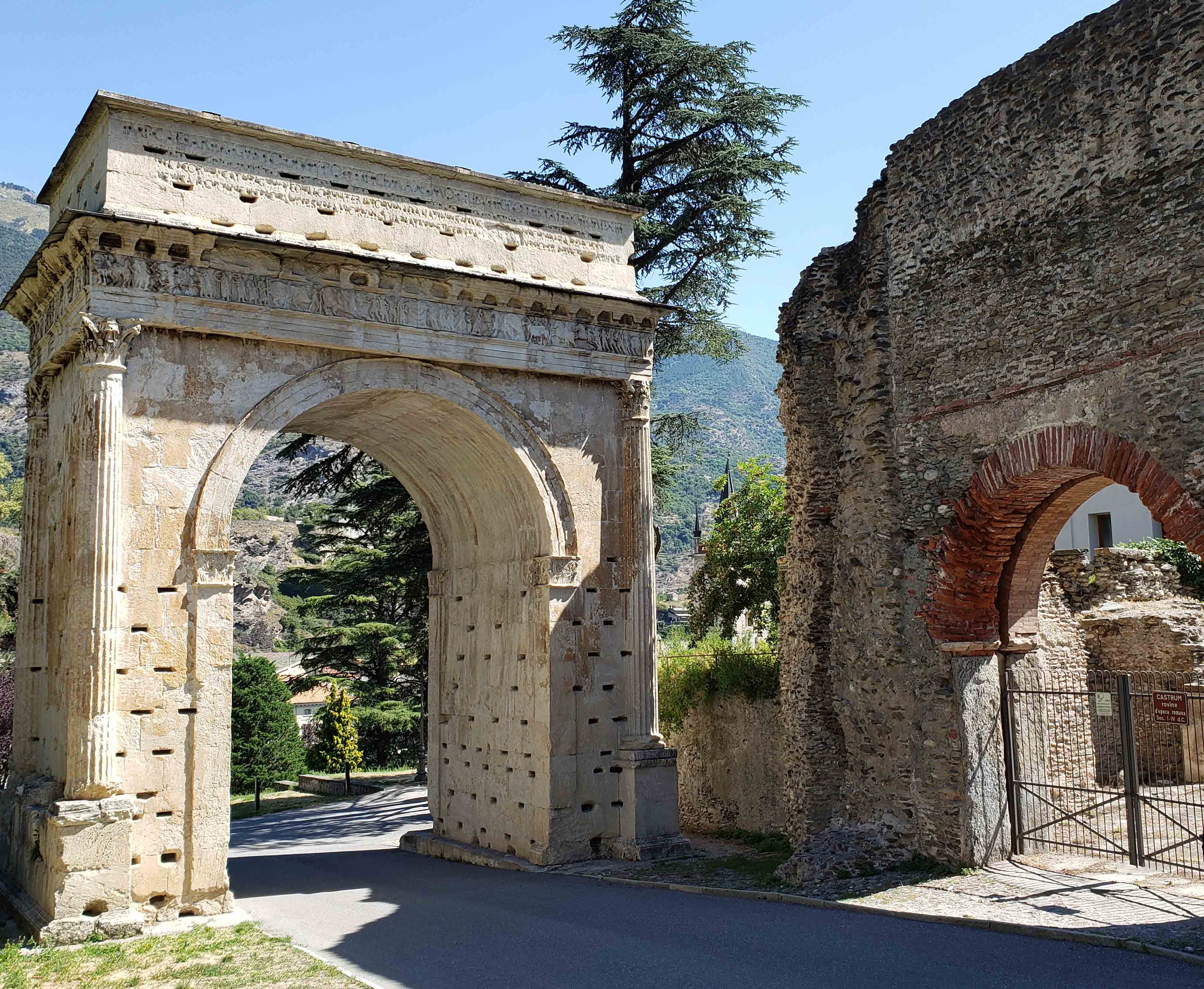
Ceasar Augustus Arch, Susa, 8 BC
The arch was positioned along the Via Cozia (today known as Via delle Gallie), the road that led to Gaul. Its age and architecture are impressive, it is also amazing that it has stood in such good shape for over two thousand years!
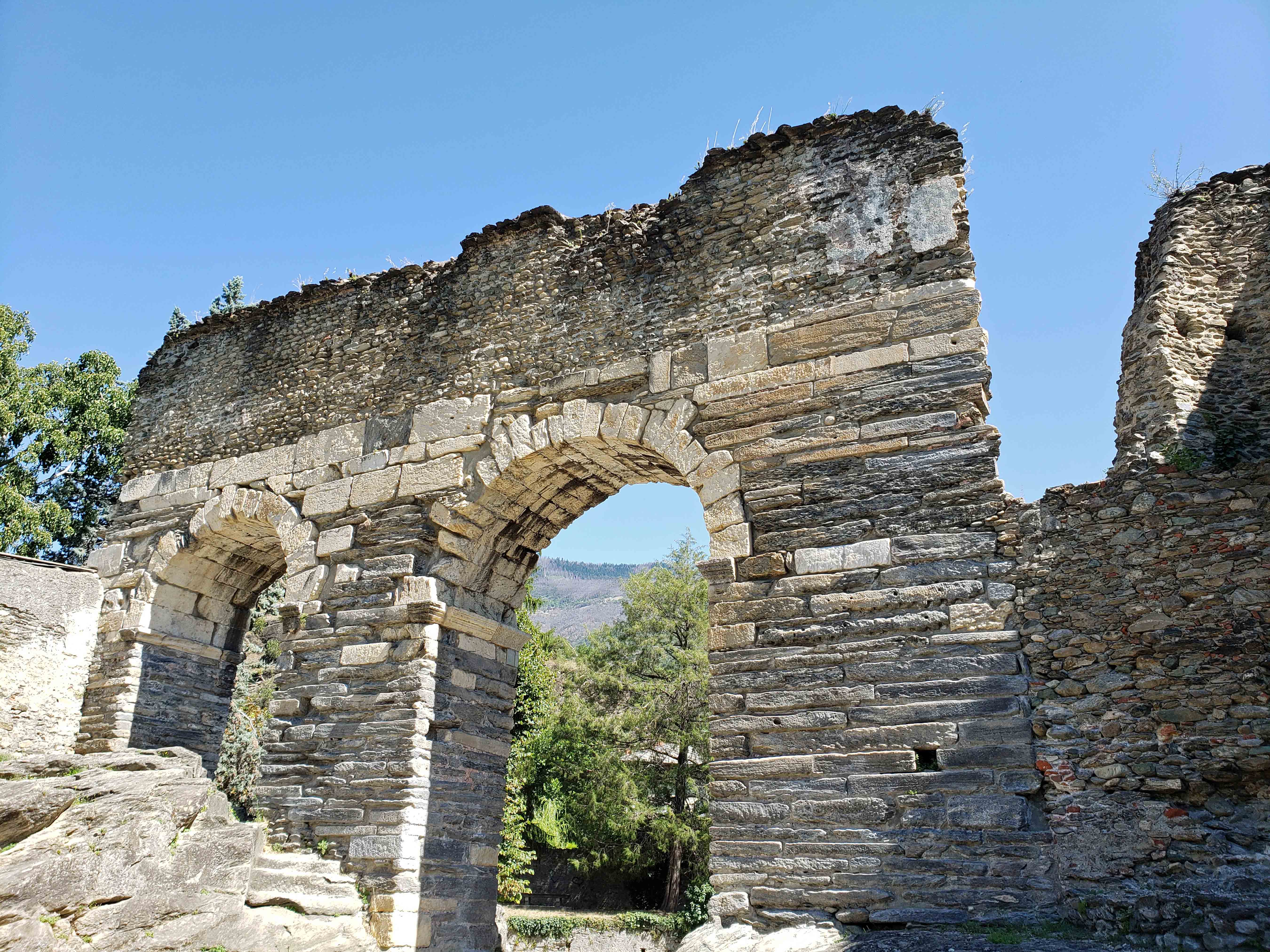
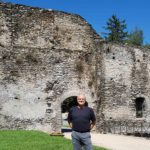
Roman Aqueduct Terme Graziane and Gates
The aqueduct above is impressive itself and was built to feed water to baths somewhere, however it actually disguises a dirty little Gaul secret. The wall that connects to it on the left masks a set of holes carved into the rocks that were supposedly used to collect blood from Gaul sacrifices. Nice right? Those Gauls knew how to party.
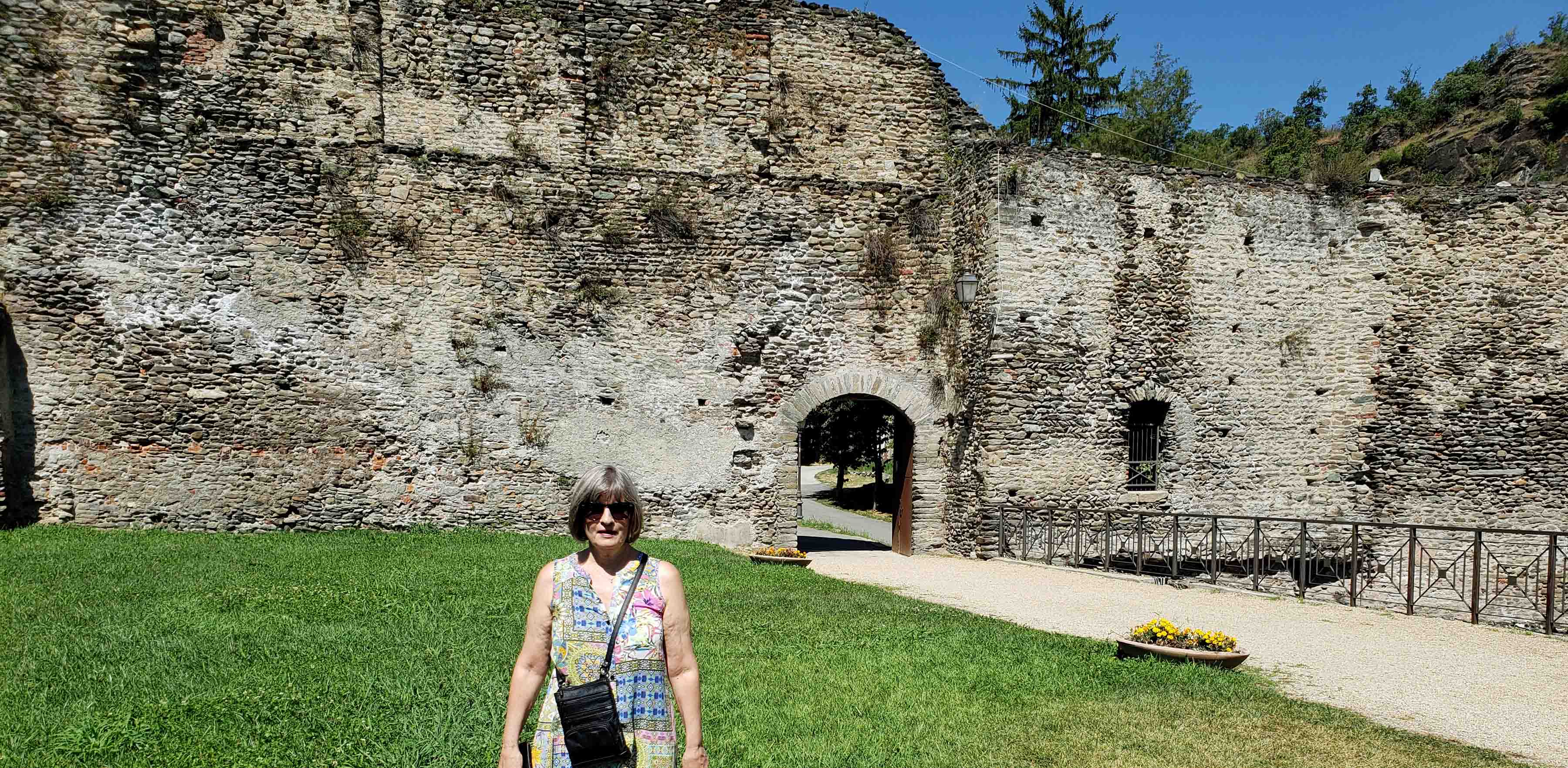
Patti on the grounds of the Civic Museum for Roman History
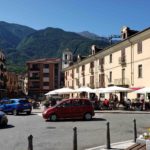
Susa Around Town
If you are not so inclined to delve deeply into the Roman history of the area, it is easy enough just to enjoy the town itself.
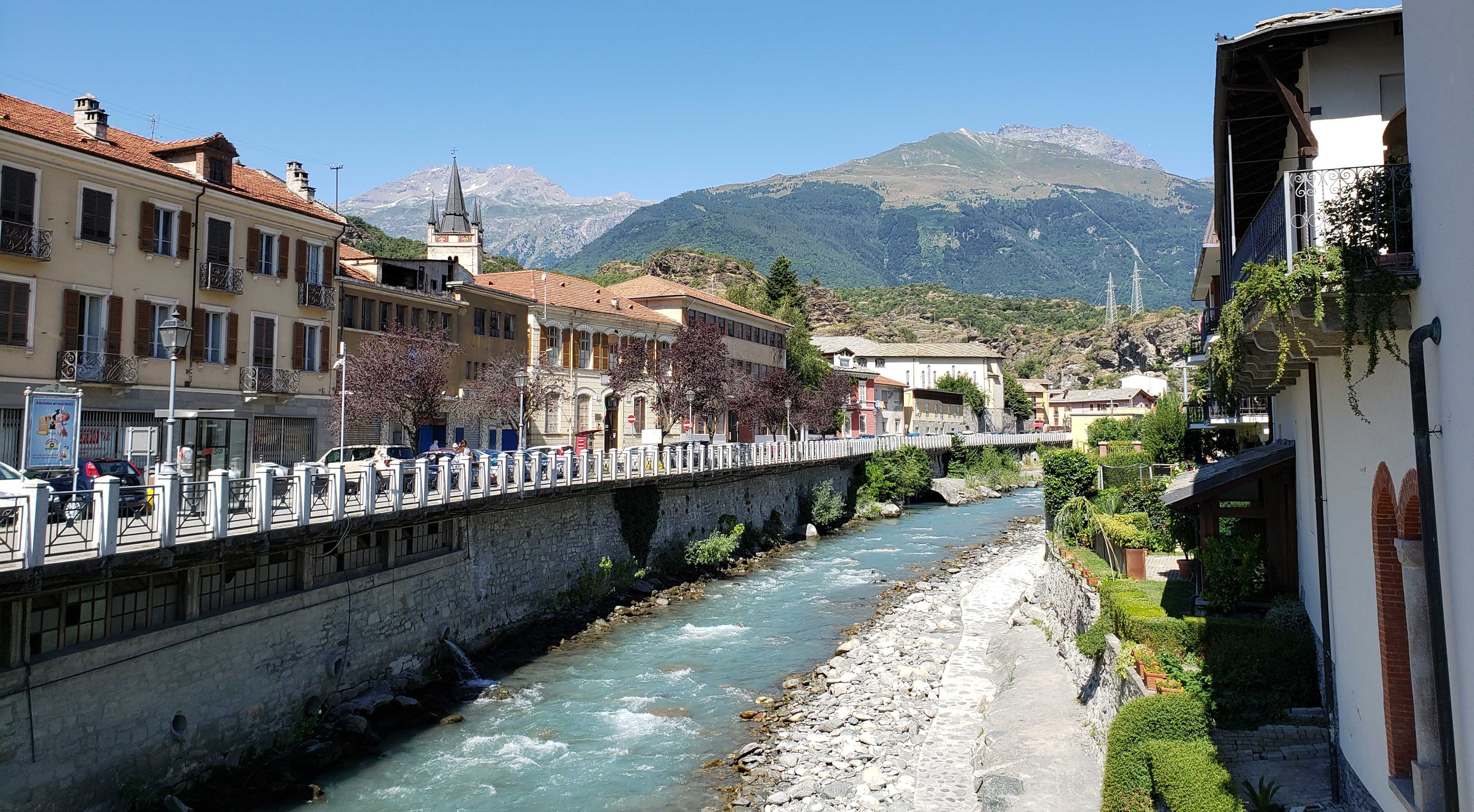
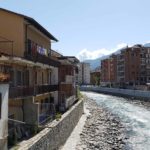
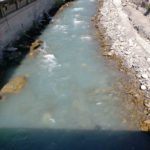
The Dora Riparia makes its trek through Susa carrying its aquamarine glacial waters. It eventually is joined by other tributaries, especially the Cenischia, before it reaches Turin and joins the river Po.
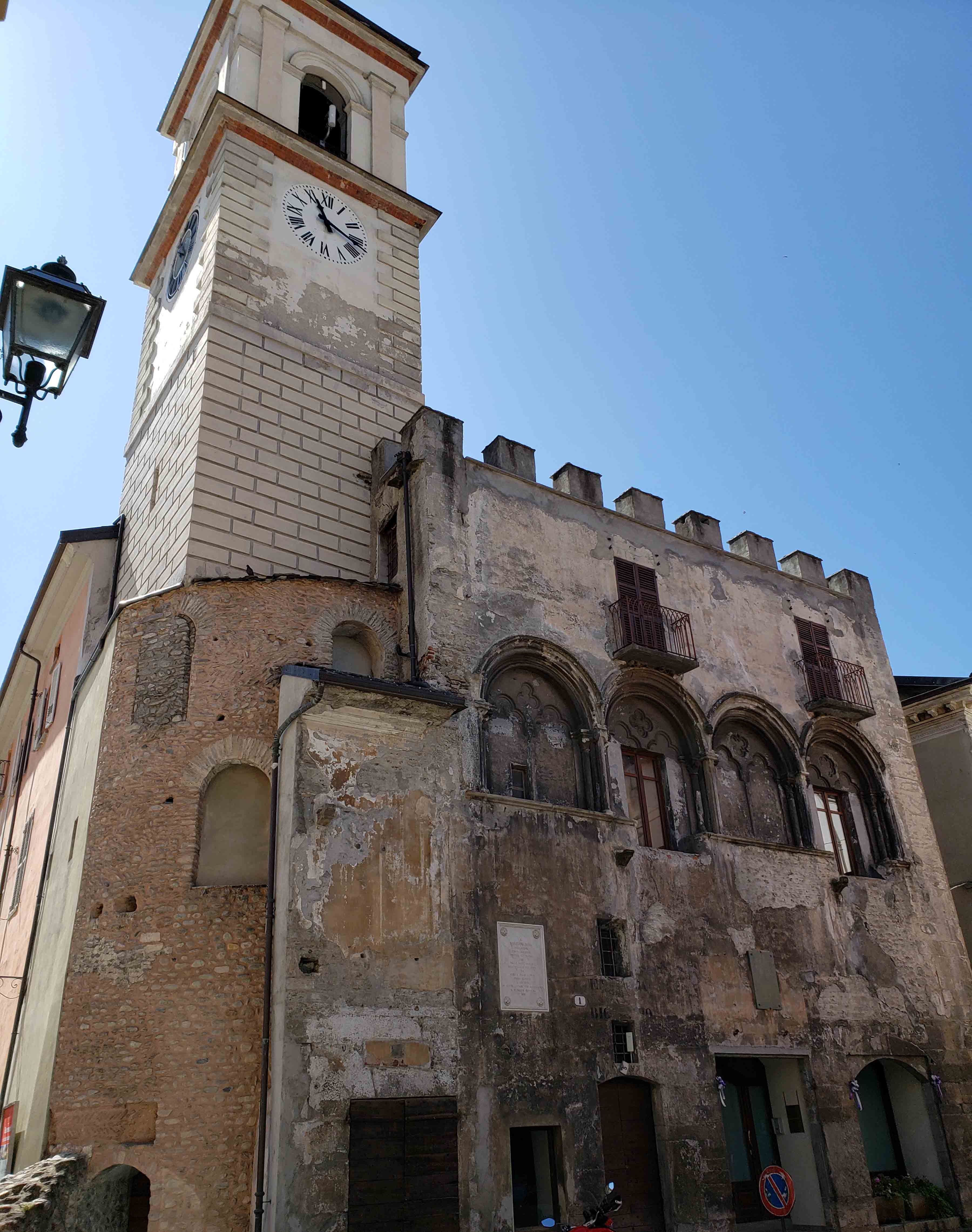
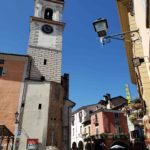
Susa Torre, Comune di Susa
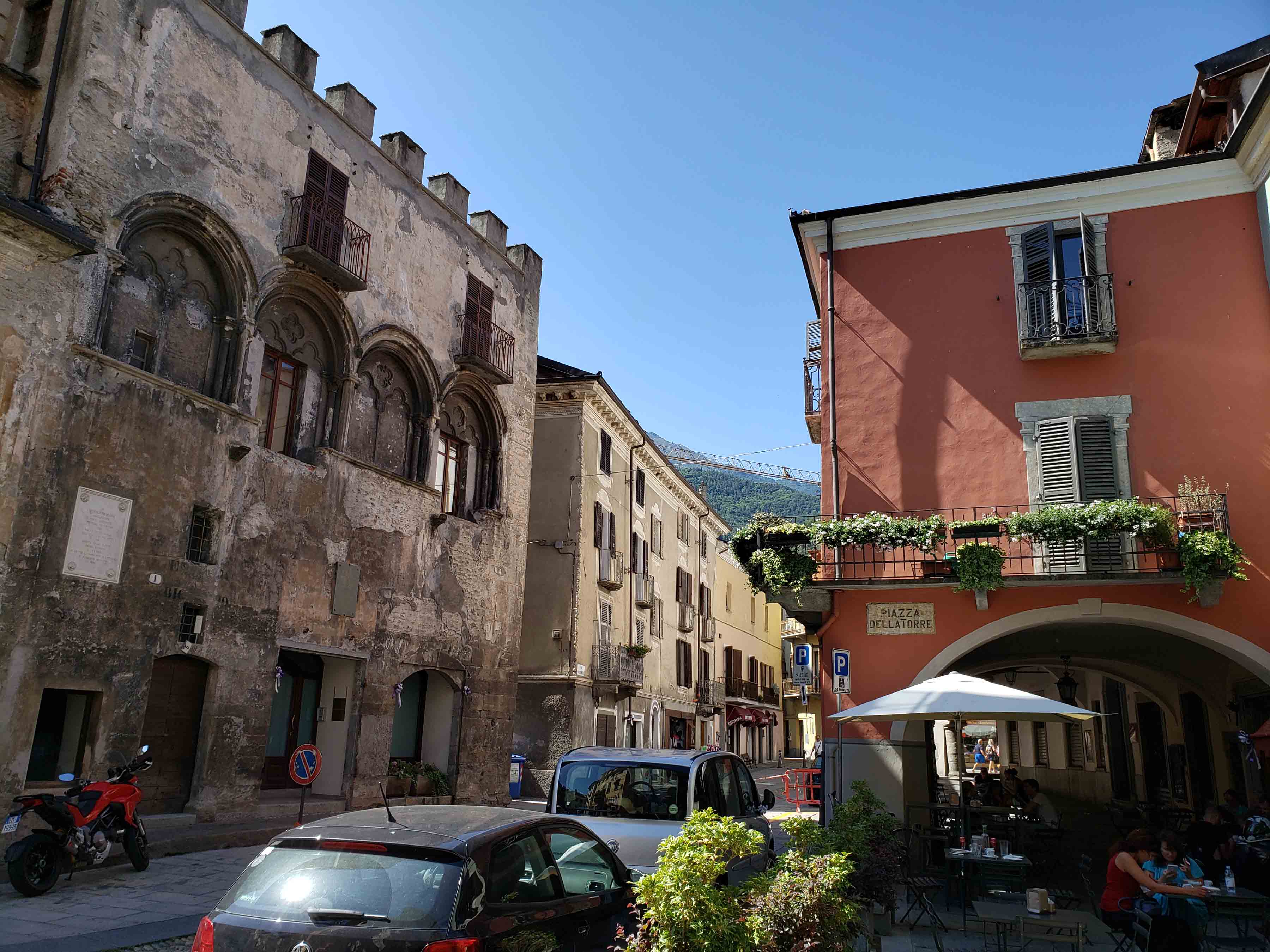
The Torre in Susa, a building obviously repurposed over the years.
Piazza della Torre, Susa
Pizzeria Ristorante Italia
Finally after a few hours enjoying the absolutely gorgeous weather and amazing scenery it was time for something to eat. We decided the street food we saw was not going to slake our thirst nor satiate us, so we ventured away from the center of town, which we also found much too noisy (they do allow cars to flow through it). From the Piazza Trento we walked down the via Francesco Rolando and found an obvious favorite, Pizzeria Ristorante Italia.
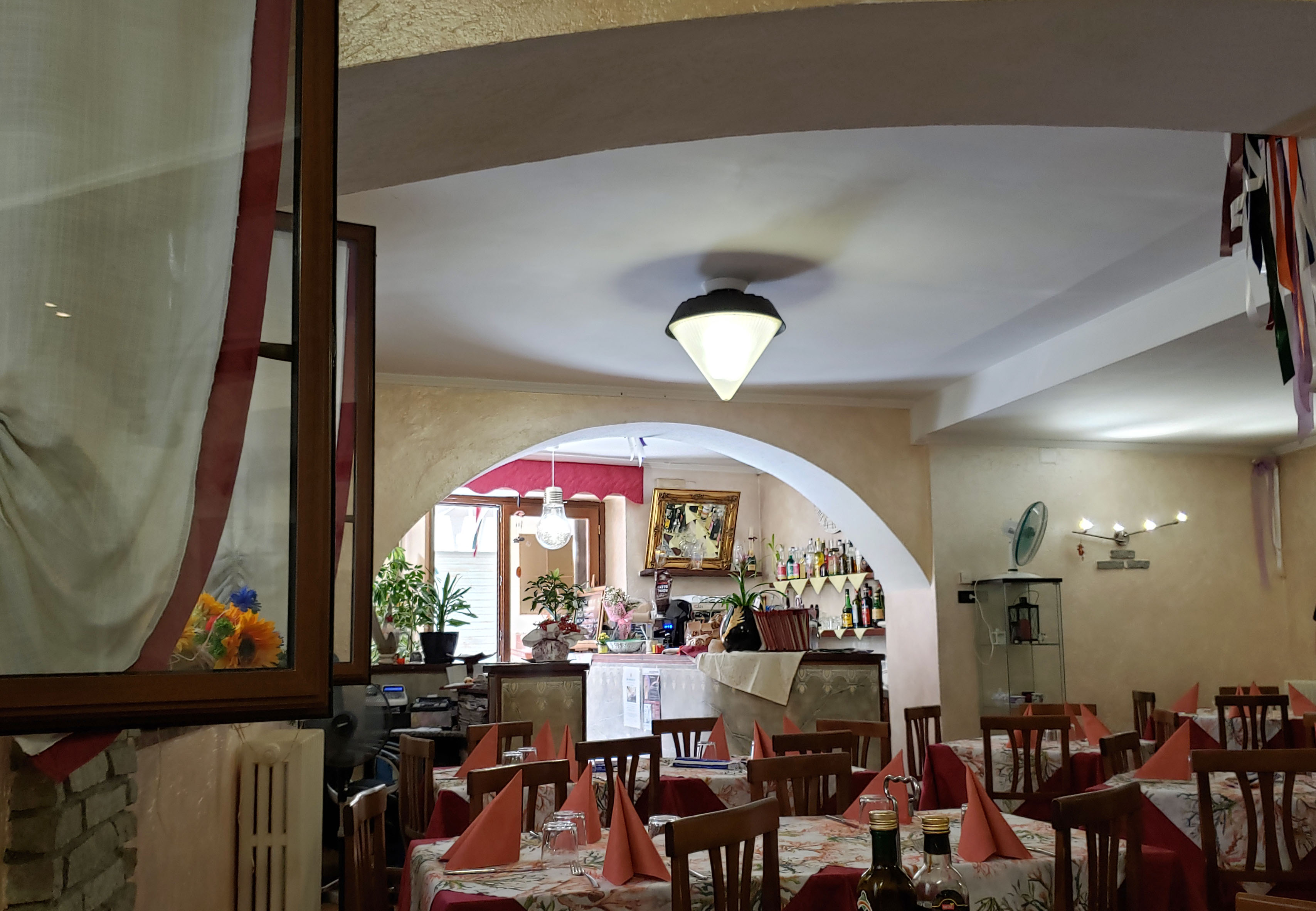
Inside Pizzeria Ristorante Italia
The restaurant was actually quite busy; the photograph above being taken before the mass of locals entered in small groups to eat their lunch. Many of which ordered the blue plate and much to our chagrin got served before ourselves. Oh well, it wasn’t like we were in a hurry, being retired is so nice…
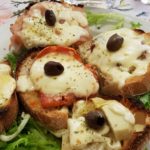
Patti’s Bruschetta
and Papadelle Al Ragú
Susa A Great One Day Adventure
We had a marvelous time in Susa and want to come back in the Fall and perhaps Winter to enjoy the change of season and their Christmas market respectively. So we encourage you, if you are ever in the vicinity of Turin, do not dismiss Susa as a possible day trip. Check their calendar first, just in case they have something special going on. Even if they don’t, a one day trip just for the history will be worth it. Until then, here are some extra photographs of Susa for your enjoyment.
Piazza 4th of November, Susa
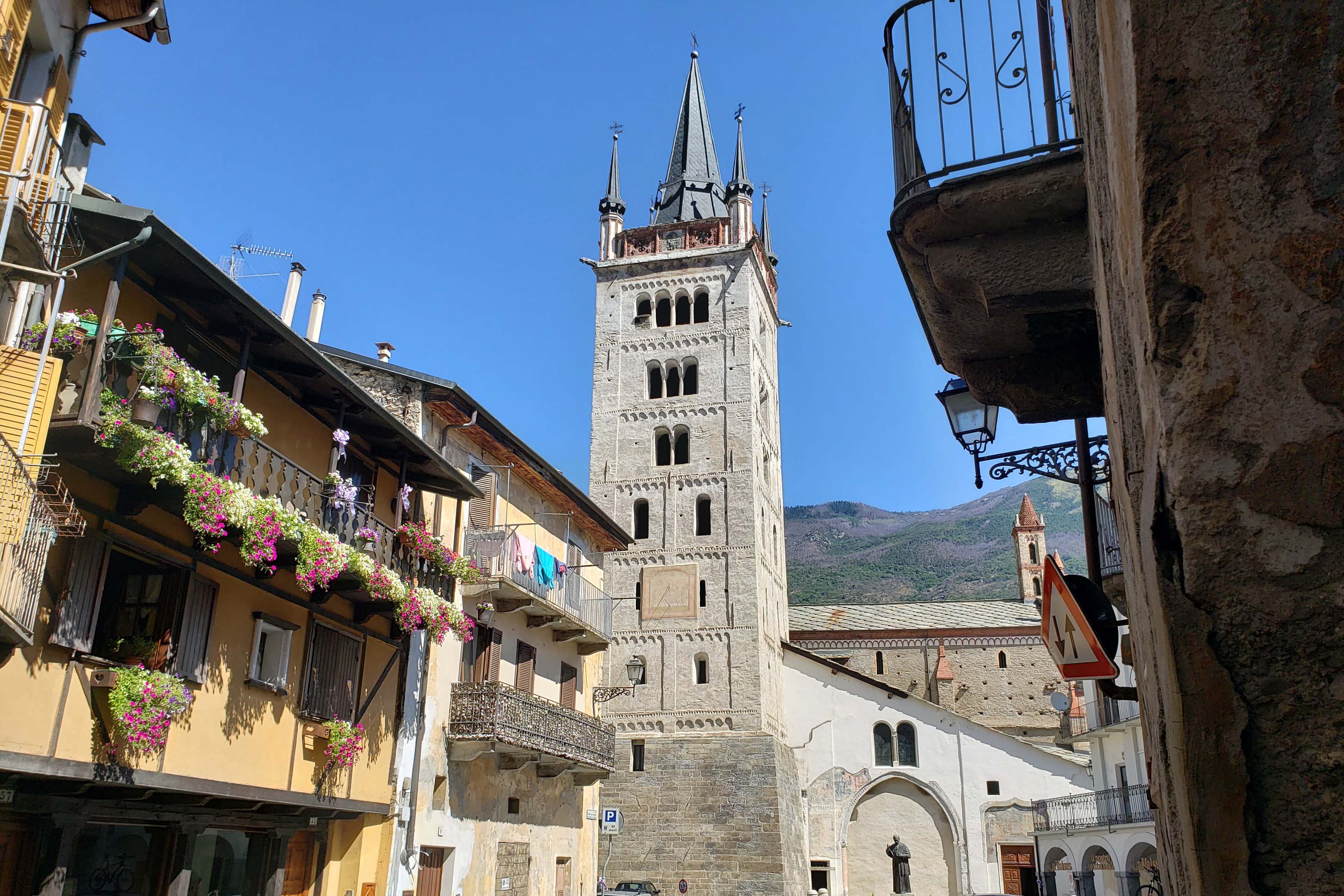
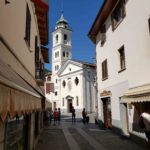
Patti going toward San Giusto Cathedral
Another overlook of Park Augustu
via Martin Della Liberta
Looking Southeast towards the Nature Reserve
Looking South towards the Nature Reserve
Dora Riparia looking towards France
Susa
Susa
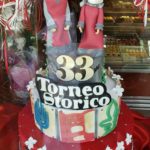
The 33rd Historical Tournament celebration party display
Dora Riparia looking East toward Turin
Dora Riparia and its blue waters
Susa
Susa
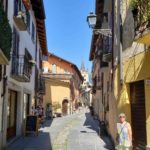
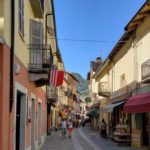
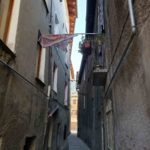
Narrow Alleys in Susa
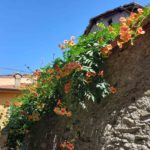
Flowers adorning a wall in Susa
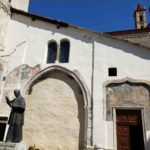
Fresco adorning the outside entry to the Cathedral
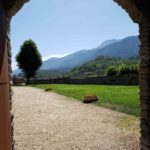
Image from doorway to the Museum looking towards the Nature Reserve and mountains